Shape Shifting and Art in Puerto Vallarta— or, On Becoming Your Favorite Animal

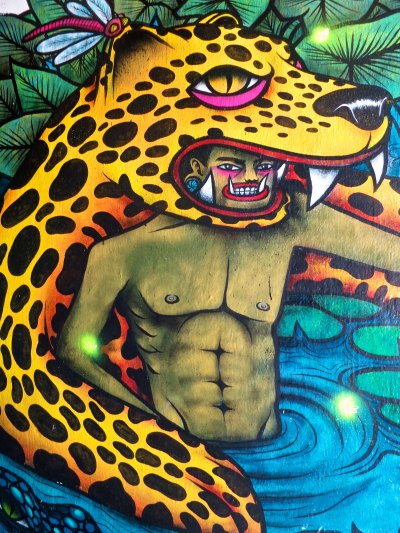
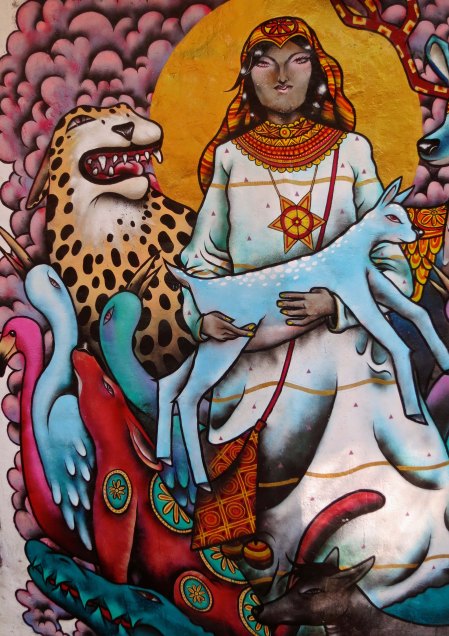
1. Mystical mural of animals in Puerto Vallarta

Shamans choose their animals to shape shift into based on certain characteristics. The Jaguar is powerful and dangerous, the deer and rabbit fleet of feet, the bird fleet of wing, and the coyote clever.

Shamanistic traditions around the world often involve shape shifting. The shaman enters a trance and adopts the form and/or spirit of an animal, for healing, travel to another world, or more sinister purposes. Often the switch is made with the aid of a hallucinogenic drug, such as peyote. This is the drug of choice among the Huichol Indians of Mexico and is frequently portrayed in their art. In addition to works produced by indigenous people for sale in Puerto Vallarta, I also found a number of murals that illustrated the indigenous tradition of shape shifting.

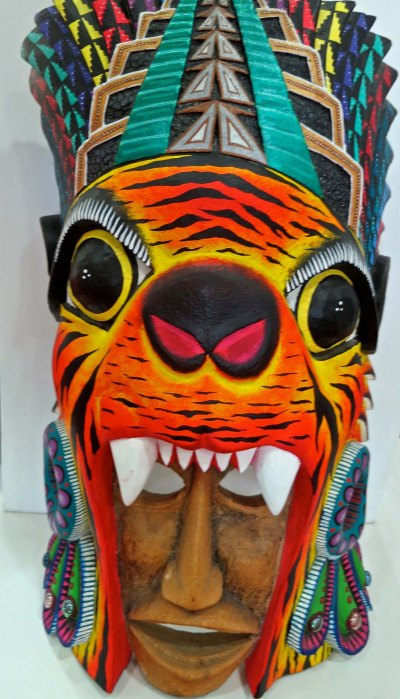
2. Shape shifting mural mask in Puerto Vallarta

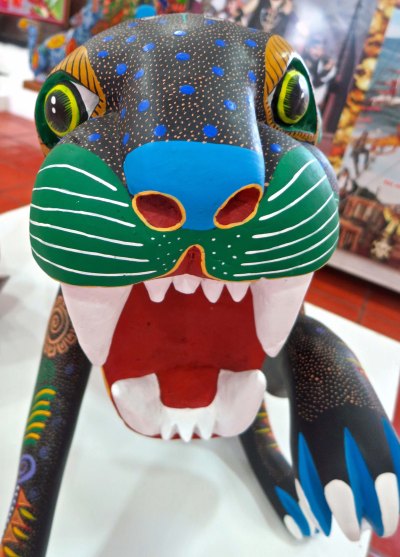
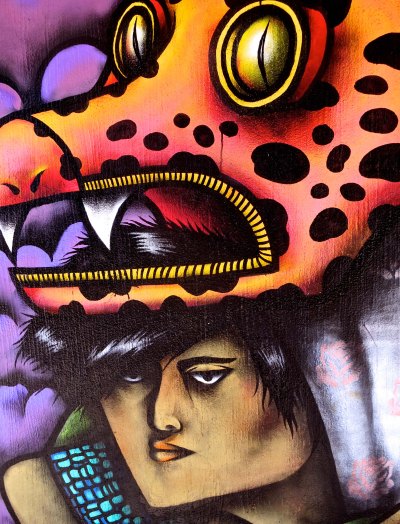
Masks are reflective of shape shifting. Jaguars are a common animal of choice, as in the Puerto Vallarta Mural, and…

This Oaxaca mask.

This Oaxaca mask.

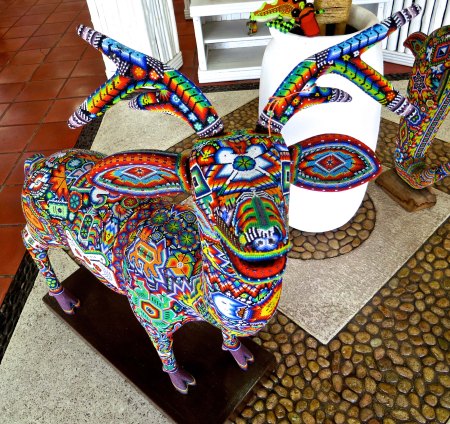
Deer are fast, a good choice if you have to get somewhere in a hurry. This Huichol deer is covered with beads that make up symbols that relate to the Huichol's belief system.

Deer are fast, a good choice if you have to get somewhere in a hurry. This Huichol deer is covered with beads that make up symbols that relate to the Huichol’s belief system. That’s peyote on his forehead.

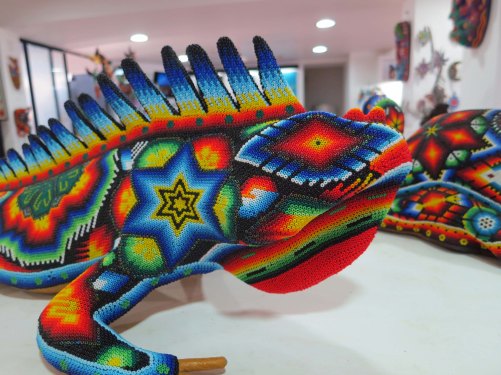
I haven't heard of iguanas being a choice for shape shifting. Maybe that's why this Huichol piece looks sad.

I haven’t heard of iguanas being a choice for shape shifting. Maybe that’s why this Huichol piece looks glum. Or is that my imagination working overtime?

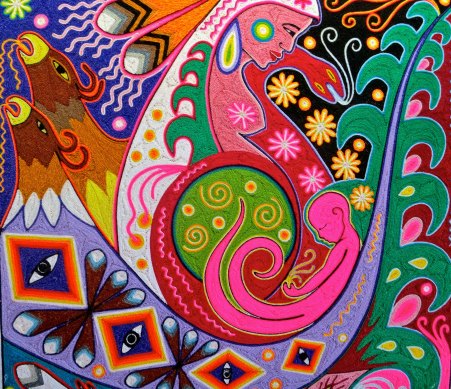
In this Huichol string painting, I couldn't help but believe that even the baby was shape shifting. A squid, perhaps?

In this Huichol string painting, I couldn’t help but believe that even the baby was shape shifting. A squid, perhaps? The mother-to-be seems to prefer a snake form.

While almost all Huichol creations reflect the tribe’s belief system, much of the art created in Oaxaca is created solely for the beauty and pleasure it brings, often with a sense of humor attached. The same can be said for Puerto Vallarta’s murals.

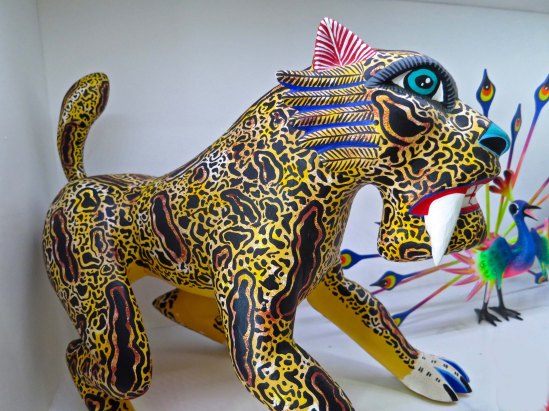
There is no apparent shape shifting in the Oaxaca saber toothed tiger. Or in the peacock behind it.

There is no apparent shape shifting in the Oaxaca saber toothed tiger. Or in the peacock behind it.

Another Oaxaca cat with big teeth.

Another Oaxaca cat with big teeth.

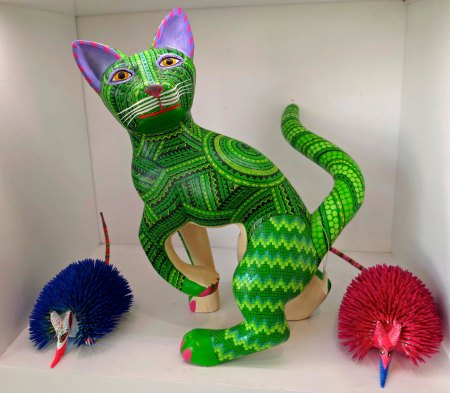
And here we have Felix Domesticatus.

And here we have the domestic version is his “feed me now” pose.

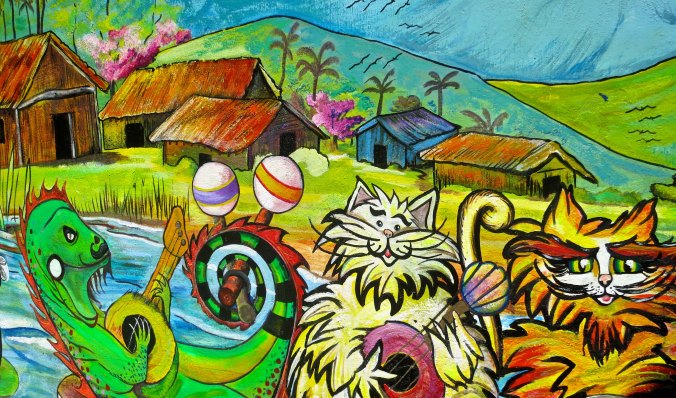
Cool cats, perhaps— as jazz musicians were once referred to as, and a musical iguana were the subject of this mural we found on the Rio Cuale.

Cool cats, perhaps— as jazz musicians were once called, and a multi-talented iguana, were the subject of this mural we found on the Rio Cuale.

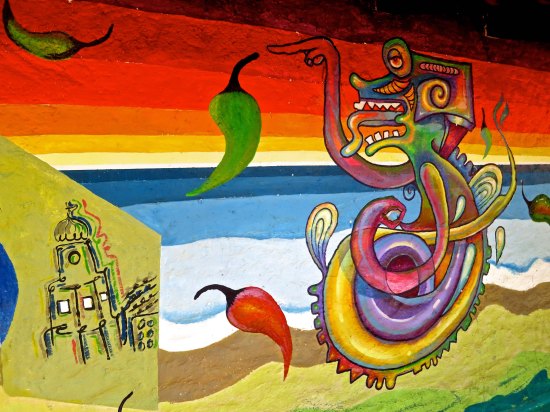
An iguana of a different stripe? This is one pointing to one of life's great pleasures: hot peppers.

An iguana of a different stripe? This is one pointing to one of life’s great pleasures: hot peppers. Apparently they are hot enough to shake Puerto Vallarta’s Cathedral.

Shape shifting is a thing of dreams in our minds as well. We imagine what it might be like to be a hawk soaring across the sky, or a cheetah running with the wind. I’ve been reading a book on lucid dreaming, just for fun. If you aren’t familiar with the concept, it has to do with consciously being aware that you are dreaming and doing things you can’t normally do in life, like walk through walls, or take off flying whenever you wish. Basically, you control what happens in the dream.

The book, A Field Guide to Lucid Dreaming, even has a section on shape shifting. “Before you go to sleep,” the book directs, “decide what person, beast, or object you want to transfer into.” Say you want to try being a tiger. Imagine it before you go to sleep. When you awake in your dream, “feel the sensations a tiger would feel. Stand on all fours and feel your teeth getting sharp.” Good advice (grin). Once you become a skilled Oneironautic, you might actually make it happen according to the book.

Feel your teeth growing and becoming sharper!

Feel your teeth growing and becoming sharp!

Now, I confess I am a little skeptical. At least I haven’t suddenly become awake in my dreams and decided to become a yappy Chihuahua. That’s not saying it isn’t worth a try. I do on occasion change the course of a dream from a bad ending to a good ending. I actually get up and run away from the monster instead of lying there in a semi-paralyzed stupor as he starts to devour me from the toes up. It’s a start, but not enough. I dearly want to be that hawk winging across the sky or the Cheetah charging along at 35 miles per hour. How about you?

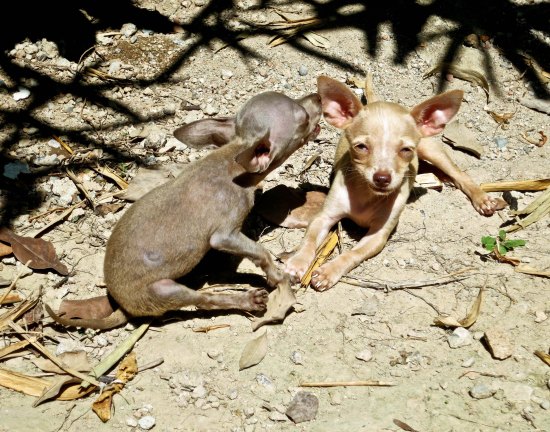
Is there a Chihuahua in your future. Even though Senior Pooch pretended to be deaf, he couldn't avoid having his numerous faults listed, again and again.

Is there a Chihuahua in your future. I found these guys playing along the Rio Cuale. My thought:  Even though Senior Perro pretended to be deaf, he couldn’t avoid having his numerous faults reiterated— again. Don’t you just love the look on his face?

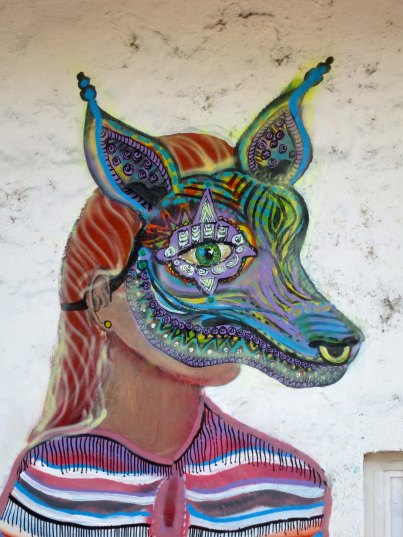
Or possibly you have something more elegant in mind, as reflected in this Puerto Vallarta Mural.

Or possibly you have something more elegant in mind with a ring in your nose, as reflected in this Puerto Vallarta Mural.

NEXT BLOG: Peggy and I say goodbye to Puerto Vallarta

The Markets of Puerto Vallarta— Where Hustle Is the Name of the Game

Beach vendor in Puerto Vallarta Mexico.

The old vendor’s face, wrinkled with decades of toil, was backlit by a strong sun.

The old man waved beaded bracelets and necklaces as us. We were having lunch at la Palapa and a tasty red snapper was demanding my attention. I couldn’t have cared less about the beads. In fact, I was irritated by the interruption— by the constant interruptions as one after another street/beach vendor rudely shook his or her wares at us, demanding our attention and dollars.

But the face of the old man— the deep wrinkles and lines, the scraggly whiskers, the cloudy eyes: the character— it caught me. I broke out my camera and ten pesos. I wasn’t going to buy trinkets; I was paying for a likeness, a reflection of life and how hard it can be, but also capturing a certain beauty, won by years of struggle.

2. Blanket vendor in Puerto Vallarta

A blanket vendor also insisted on showing us her wares as we ate lunch. The bright sun behind her made photography difficult but it helped capture the rich colors of her blankets.

Puerto Vallarta is a tourist town. Its primary source of income is the thousands of people who are disgorged weekly from airplanes and giant cruise ships. The challenge, from a purely economic perspective, is how to sort the visitors from their cash before they leave, to get a piece of the action. Hustle is the name of the game, from the small girl selling Chiclets for pennies to the timeshare salesperson selling future vacations for 25 thousand dollars. The small girl has only her haunted eyes to push her product; the timeshare salesman has a whole arsenal of half-truths and a tenacity that would put a tick to shame.

(While I write this post, I realize that it will be published on Black Friday, the day that America’s merchants are desperately hoping to sort Americans from their cash. When I turn the TV on, it is one continuous ad— marketers rudely shaking their products in our faces with half-truths that would put a timeshare salesman to shame.)

An hour of relaxing on the beautiful Banderas Bay beach in front of the Krystal Hotel is like an hour lesson in basic capitalism. Beach vendors are specialists. Whether you need a shirt, a dress, a hat, a ring, a necklace, a tattoo, a trip, a cigar, a massage, a woodcarving, a drink, dark glasses, a blanket, or food (or not), someone will be there to sell it to you. The hat man has hats perched on top of his head as high as they will go. The blanket sales vendor a stack of blankets a yard thick. The henna tattoo guy comes at you with a book of tattoos to pick from. Will it be a Harley or a harlot? A polite, no gratias, usually sends them all on their way, at least for the moment. But show a bit of interest and they descend like buzzards, ready to pick your wallet, if not your bones, clean.

Peggy is the shopper in our family. She bought a small turtle, iguana, and beaded eggs from a Huichol artist, two gorgeous tablecloths at the Municipal Market, and a silver necklace from a beach vendor. Peggy had recognized the beach vendor from years past.

3. Huichol artist ion the Rio Cuale in Puerto Vallarto

Ernesto, a Huichol artist, has a bright smile for us whenever we stop by. If he doesn’t have what we want, he makes it for us. The brightly decorated eggs (lower-center) are covered with Huichol symbols and will be decorating our son’s Christmas tree.

Peggy checks out a new table cloth she is buying. The day before we had checked it out and Peggy had mentioned she wanted the edges sewn. The young woman took the tablecloth home that night and did the work.

Peggy checks out a new table-cloth she is buying. The day before we had checked it out and Peggy had mentioned she wanted the edges finished. The young woman took the tablecloth home that night and did the work— on three table cloths. We ended up buying two.

5. Felix the beach vendor in Puerto Vallarta

Felix, as in Felix the Cat, displays his bracelets and necklace pendants on the beach in front of the Krystal Hotel.

“Do you remember my name?” he asked. “It’s Felix, like in Felix the Cat. Meow.” I particularly liked the meow and meowed back. While Felix was entertaining us with his patter, he had opened his box of silver jewelry. Peggy showed a spark of interest in two necklaces. “Which do you like?” Peggy asked, turning to me. Felix knew he had her. “I’ll sell you both for 1400 pesos,” he offered. “Too much,” Peggy responded. “How much will you pay?” he asked. We had entered the negotiation stage. The general rule of thumb is about 50% of the asking price. Vendors double the price, and add a bit for profit. We ended up only buying one and paying too much. Felix left with a large smile.

Large public markets are a step up from the beach in terms of sheer quantity. A walk through the Municipal Market (Mercado Municipal) will introduce you to dozens of vendors, each with his or her own space packed to the ceiling. All are trying to entice you in. “I make you good deal.” “Half price.” “Almost free.” “Look will cost you nothing.” “Two for one happy hour cost.” And on and on, over and over. One vendor on the Rio Cuale asked, “Want to buy some junk?” It was a welcome and humorous change.

6. Vendors stall at the Mercado in Puerto Vallarta

Vendors stalls at the Municipal Market next to the Rio Cuale are stuffed to the ceiling with items designed to capture a tourist’s attention. It quickly becomes overwhelming unless you are shopping for something specific.

The market is two stories high and must contain at least a hundred stalls… each with one or more vendors eager for you to check out their goods.

The market is two stories high and must contain at least a hundred stalls… each with one or more vendors urging you to check out their goods.

My friend Ken Lake and I were wandering through the market at the seaport while Peggy and Leslie were having massages when we received a different offer. Ken was using the line, “We have to wait for our wives,” to put off vendors.

A rather short and squat, older woman responded, “Who needs wives? I have a sister. Only $50. I have two sisters, one for each of you.”

“For $50,” I asked as Ken made a hasty retreat. “No, no. $50 each,” she insisted as the eyed the rapidly disappearing Lake. “You could have two at once. Much fun.” She said laughing. “Mañana,” I responded as I hurried to catch my friend before he disappeared.

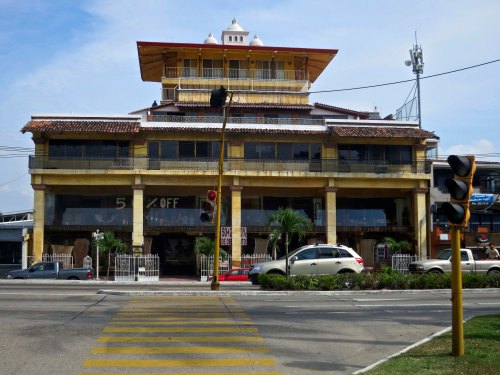
The most intriguing market, it turns out, was right across from our hotel. We had visited years earlier and I hadn’t been impressed. This time was different. Peggy, Ken and Leslie had gone across the road for a visit while I was working on a blog. She came back saying I had to go. Turns out, the place is a huge furniture market, with the furniture being made on site. But that’s only the beginning. It’s an interior decorators dream, packed with thousands of items. I walked around in awe for two hours, going from room to room. And there was no pressure to buy. Not one salesperson approached us unless we had a question. I was so appreciative I was tempted to buy a 20 foot table as a thank you.

The furniture store as seen across the street from our hotel. It must have has several thousand feet of display space.

The furniture store as seen across the street from our hotel. It must have has several thousand feet of display space.

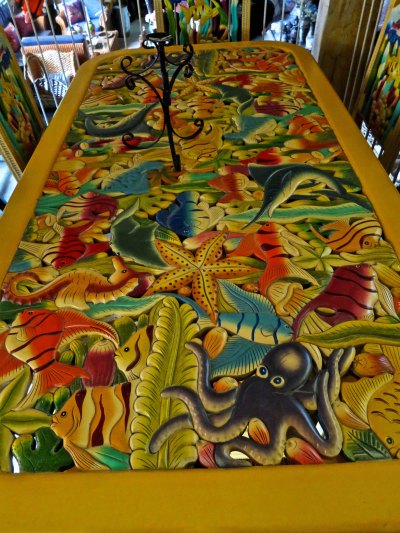
8. Large table at furniture store in Puerto Vallarta

This large slab of wood is destined to be turned into a table! Can you imagine the size of the house you would need to accommodate it? Do you own a castle?

I would love to have a table like this. You would never be at a lack for conversation when you had guests over.

I would love to have a table like this. You would never be at a lack for conversation when you had guests over. The chairs were equally delightful.

Peggy came and rooted me out of one of the rooms I was wandering through to look at this chest.

Peggy came and rooted me out of one of the rooms I was wandering through to look at this chest.

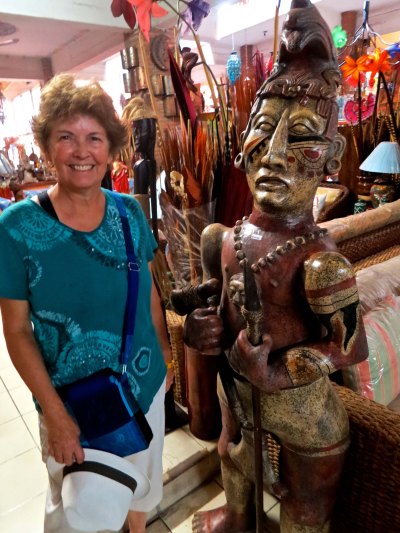
12. Peggy and scuplture at Puerto Vallarta furniture store

I took advantage of the break to have her pose in front of one of the warrior statues that were found throughout the store…

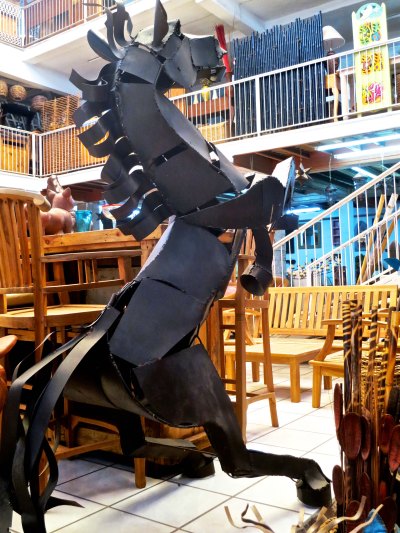
10. Life sized horse at Puerto Vallarta furniture store

There was also this full sized horse. It must have gone with the 20 foot table and the castle to put it in.

And these frogs.

Along with these musical frogs.

13. Old woman at furniture store in Puerto Vallarta

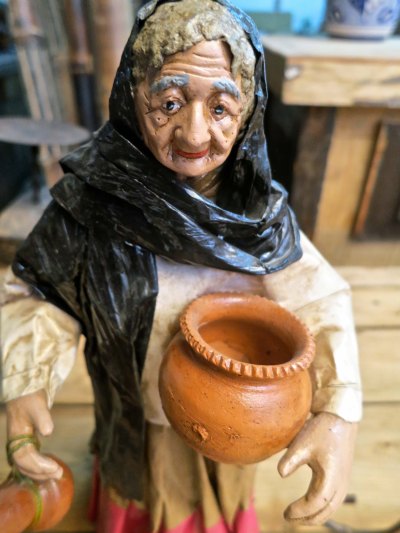
For all of the large pieces in the store, there were dozens of smaller works. This old woman with her wrinkles reminded me of the old vendor I kicked off this post with. It’s a fitting place to end.

NEXT BLOG: The fine art of shape shifting in Mexico. Jaguars are really popular when it comes to turning yourself into an animal. What would you become?


Strange Art, Wild Nature, and Bounteous Beauty… Puerto Vallarta’s Malecon

Unique, often humorous art, along Puerto Vallarta’s Malecon is one of several attractions that make the walkway appealing.

Unique, often humorous art, is one of several attractions that make a stroll along Puerto Vallarta’s Malecon a must-do activity each time I am in the city. How could anybody resist this flying/swimming whatever?

Puerto Vallarta’s Malecon, or walkway, along Banderas Bay is special. Most cities would offer up their top five attractions— or their Chamber of Commerce president, to have it. Beautiful sunsets, cascading pelicans, and waves rolling in from the Pacific are only part of the appeal. Interesting/fun art, views of the town, and the charm of the Malecon itself capture locals and visitors alike.

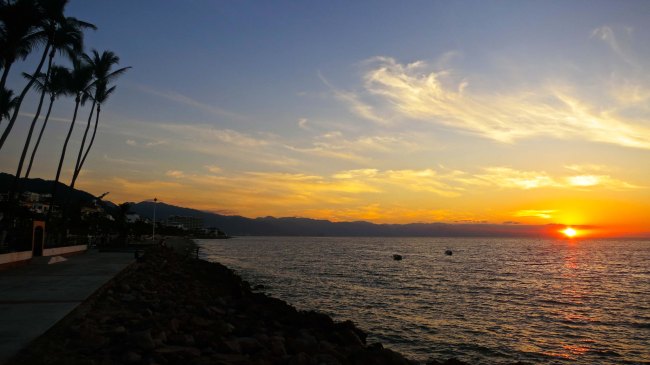
Looking south from the northern section of the Malecon as the sun sets over Puerto Vallarta and Banderas Bay.

Looking south from the northern section of the Malecon as the sun sets over Puerto Vallarta and Banderas Bay.

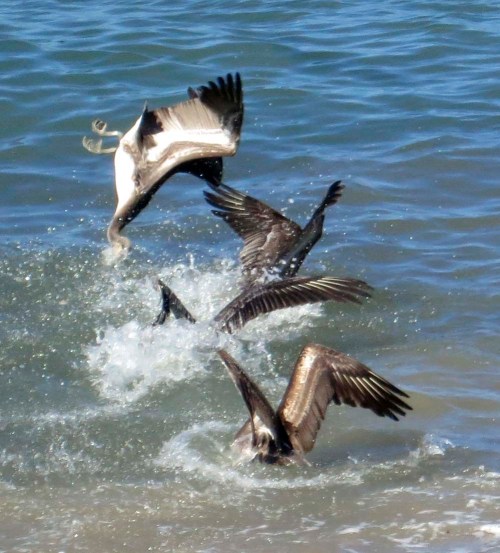
Pelicans join a feeding frenzy as they dive into Banderas Bay after a school of fish. The upside down guy made me laugh.

A photo of pelicans in a feeding frenzy from two years ago as they dive into Banderas Bay after a school of fish. The upside down guy made me laugh. Now that is dedication!

A number of sculptures adorn the walk including the Eggplant man…

A number of sculptures adorn the walk including the Eggplant Man, who just happens to be eating an eggplant. His substantial girth captured a bit of the Puerto Vallarta in reflection.

…Long Nose,

I wasn’t sure whether this was an octopus with one tentacle or a creature with a long nose that featured suction cups. “The better to smell you with, my dear.”

…this sea monster with a large mouth. (Check out his tongue and the hand pointing where food is supposed to go.)

This smiling sea monster with a large mouth featured a tongue with directions as to where it hoped tasty tourists might go.

…these graceful dancers,

A taste of the beauty and grace of Mexico…

and this beautiful sculpture that suggests that two heads are better than one.

…and a suggestion that two heads are better than one.

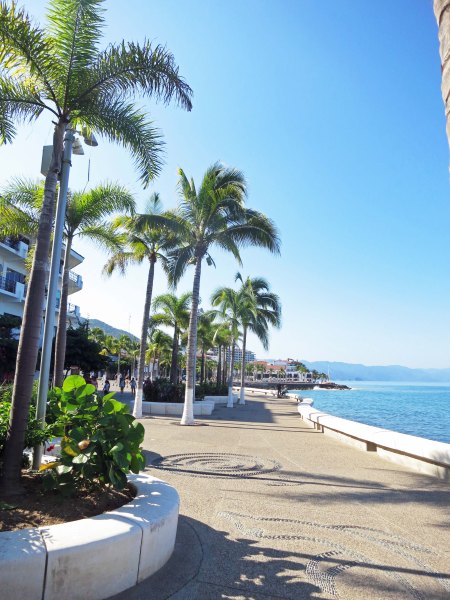
Even without the art and the bay, the Malecon is a very attractive walkway.

Even without the art and the bay, the Malecon is  very attractive. Note the designs built into the walkway.

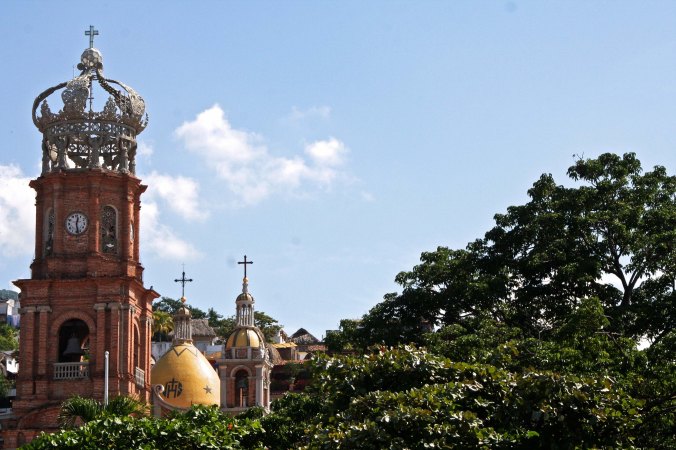
Puerto Vallarta’s iconic cathedral is one of many sights looking inland from the Malecon.

Puerto Vallarta’s iconic cathedral is one of many views looking inland from the Malecon.

For those more into partying or shopping, a walk on the non-ocean side of the Malecon provides countless opportunities for mischief. Senior Frogs and many other bars line the non-ocean side of the walkway. Shops selling everything from tourist trinkets to humorous folk art compete for your attention. Or, you can get serious and spend the kid’s inheritance on something large and silver.

Peggy has her photo taken with Senorita Frog on the landside of the walkway.

Peggy holds hands with Senorita Frog on the landside of the walkway.

A flying cow serves as an enticement to one of the many bars.

A flying cow serves as an enticement to one of the many bars. From the expression on her face, I doubt that she is drinking milk.

Anybody want to buy a great ape? This big fellow is decorated with thousands of beads, Huichol Indian style. The shop was packed full of Huichol art. Peggy bought a small turtle. Apparently the ape was a little large to carry home on the plane.

Anybody want to buy a great ape? This big fellow is decorated with thousands of beads, Huichol Indian style— and a Corona hat. The shop was packed full of Huichol art. Peggy bought a small turtle. Apparently the ape was a little large to carry home on the plane.

I found this three foot alligator in Old Town Puerto Vallarta, but similar silver gifts are available along the Malecon. Armed guards were outside and inside the store.

I found this three foot alligator in Old Town Puerto Vallarta, but similar silver gifts are available along the Malecon. Armed guards were outside and inside the store. And no, we didn’t spend the kid’s inheritance on it. That money goes to our travels. (grin)

Peggy and I usually choose to walk on the ocean side. The ubiquitous vendors found along the bay front of Puerto Vallarta apparently aren’t allowed to push their wares on the Malecon north of the town center. Normally the sales pitches don’t bother us. It comes with the territory, and the people are only trying to make a living. Still, an occasional break is appreciated. Our tolerance for hassling doesn’t extend to timeshare sales people, however. Their approach bares a striking resemblance to that of used-car salesmen.

South of town center as you approach the Rio Cuale and Old Town on the Malecon, your opportunity to obtain ‘bargains’ increases exponentially. Our friend Lesley Lake made the mistake of allowing a bracelet vendor put a bracelet on her wrist. She ended up buying four. These guys are good. When they get you, you’re got.

Our friend Leslie made the mistake of showing interest in a hawker’s bracelets on the lower Malecon and ended up buying four. He was one happy salesman.

The vendor has Leslie. She won’t get away.

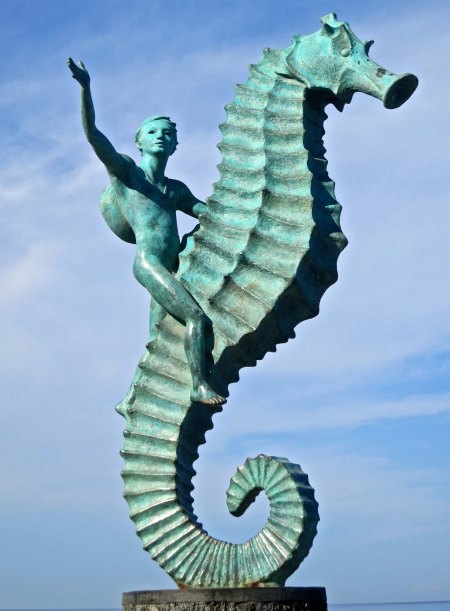
It is appropriate to end this blog on Puerto Vallarta’s Malecon with the statue of a boy on a seahorse, the symbol of Puerto Vallarta.

It is appropriate to end this blog on Puerto Vallarta’s Malecon with the adopted symbol of Puerto Vallarta, a statue of a boy wearing naught but a sombrero while riding a seahorse. Seems it might get a little rough, to me.

NEXT BLOG: Folks in Mexico take dead people seriously— sort of.

The Day of the Iguana… Adventures in Puerto Vallarta

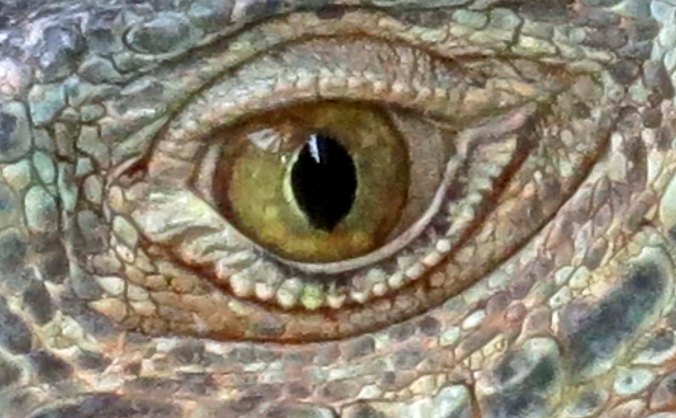
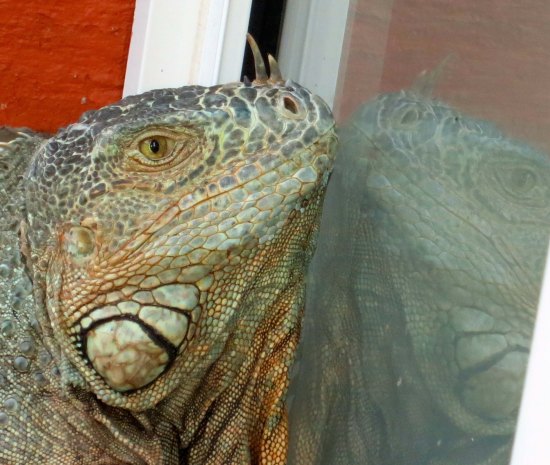
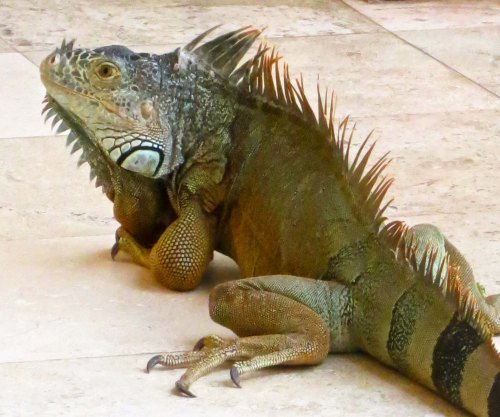
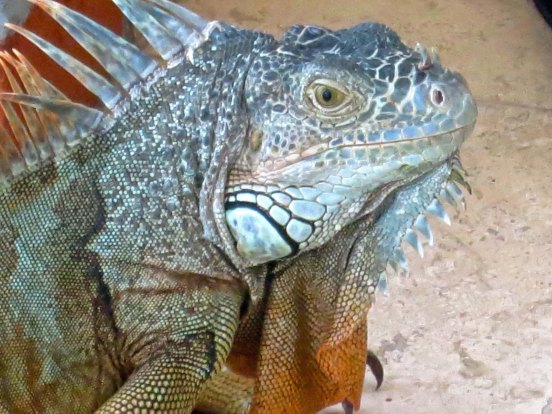
As the iguana stared balefully back at me, his eye seemed to grow.

As the iguana stared balefully back at me, his eye seemed to grow.


Peggy and I are in Puerto Vallarta, Mexico. While she works on her next Cotswolds post, I decided to slip one in on Puerto Vallarta.

I was home alone when I heard the scratching on our door. Peggy had gone off with our friends Ken and Leslie in hopes of finding Wi-Fi in the hotel lobby. I had wished them luck. The Internet is an on again/off again proposition here at the Krystal Hotel in Puerto Vallarta.

I looked up, thinking maybe the maid had come early, or the pool man. But usually they knock and shout “Ola.” No one was there. I went back to writing. I was editing Peggy’s blog on the villages of the Cotswolds.

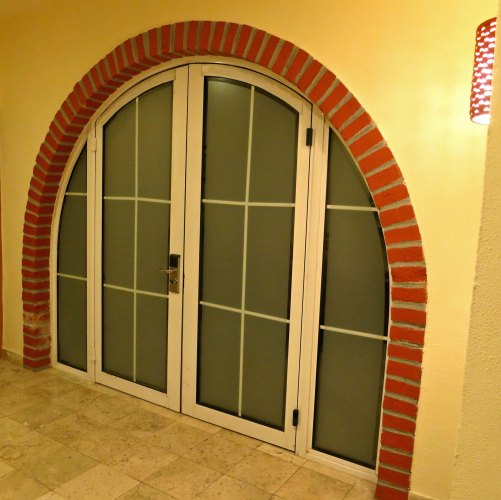
SCRATCH, SCRATCH, SCRATCH. “What the…?” I thought, looking up again. The villa has these large, arch-shaped doors made of frosted glass that let in light but not prying eyeballs. Off to the right I spotted what appeared to be large, scary head staring at me through the opaque glass. I recognized it.

The doorways to our villa in Puerto Vallarta were arched. The iguana appeared in the lower right window.

The doorways to our villa in Puerto Vallarta were arched. The iguana appeared in the lower right window.

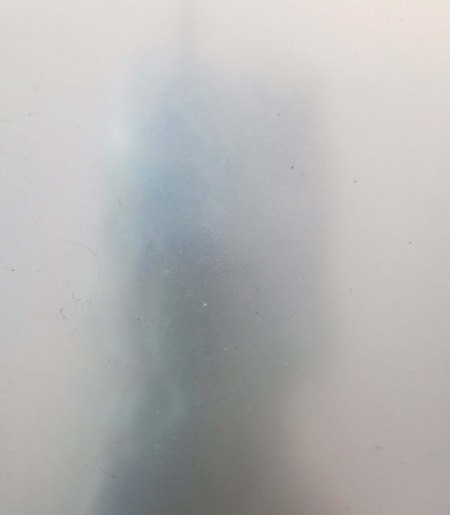
The head of the iguana appearing through frosted glass reminded me of the Creature from the Black Lagoon.

The head of the iguana appearing through frosted glass reminded me of the Creature from the Black Lagoon.

“Aha!” went racing through my mind, “Senior Iguana is here for a visit.” I rushed over to the door and opened it, wondering if he would come in. It would be amusing to watch Peggy, Ken and Leslie’s reaction to finding a large lizard hanging out on the floor of our living room. Maybe I could entice him up onto the couch with a banana.

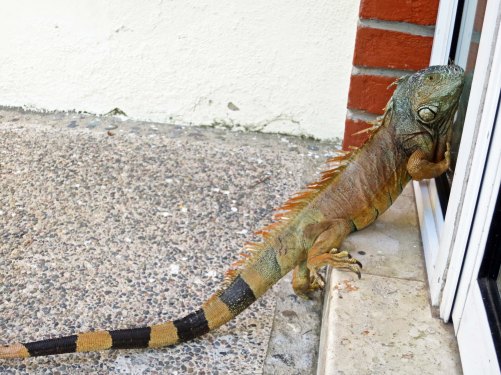
I found the Puerto Vallarta iguana outside scratching at our window. Was it asking to come in?

I found the Puerto Vallarta iguana outside scratching at our window. Was it asking to come in?

“Ola, Buenos Dias Senior Iggy. Welcome!” I proclaimed. Senior Iggy stared up at me balefully and said not a word. Maybe he didn’t like being called Iggy. He went back to scratching the window with his long claws.

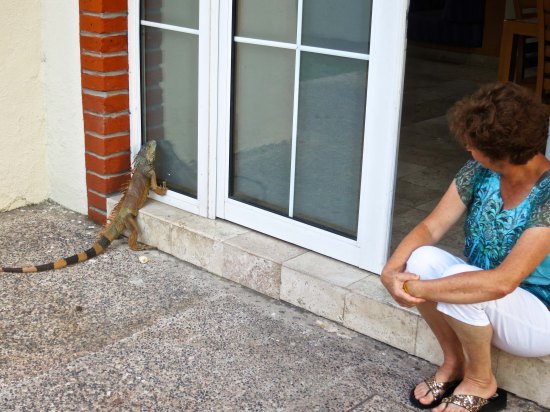
I went inside and retrieved a banana. Back outside I sat down on the porch step, peeled the banana, and tossed a piece to the iguana. He ignored it, like he was ignoring me. It was then that I noticed that Iggy was staring at the window, not through it. He had found true love in a perfect reflection of himself. What’s a puny banana in comparison?

I discovered the iguana was admiring its reflection in the window and wondered if it was breeding season and the large Puerto Vallarta lizard believed he had found true love— or possibly a rival.

I discovered the iguana was admiring its reflection in the window and wondered if it was breeding season and the large Puerto Vallarta lizard believed he had found true love— or possibly a rival.

I was still sitting on the doorstep when Ken, Leslie and Peggy returned. I heard them laughing with one of the gardeners when they spotted me sitting with the iguana. “They are good to eat,” the gardener told them. “They taste like chicken.” Naturally. My friends approached quietly, not wanting to scare Iggy.

“Don’t worry, the iguana is in love.” I doubt that a brass band would have disturbed him. Ken, Leslie, and Peggy each sat down on the porch step where I had been to admire our new best friend. We went inside with the iguana still staring at himself, deeply in love, or perhaps lust. He was still there when we left 45 minutes later, but had departed when we returned in four hours, undoubtedly heart-broken.

Peggy sat where I had and admired the iguana as he tried to reach his reflection.

Peggy sat where I had and admired the iguana as he tried to reach his reflection.

Two days later Peggy and I noticed that another iguana was outside, this time at the door leading to our pool. “Do you think he will come in if we open the door this time?” Peggy asked. “One way to find out,” I responded. Sure enough, a few minutes later we saw a head peaking in. And then the whole iguana followed. Peggy quickly jumped up and closed the door to our bedroom. We might find an iguana in our living room and kitchen amusing. Sleeping under our bed or in our shower would be another issue. He (I am assuming it was a male) wandered around looking for the beautiful girl iguana he knew lived in our villa. He stopped to eat a couple of mosquitos, his big tongue lashing out. (“Go big fellow!” we urged.) Finally, I opened the front door. Off he went.

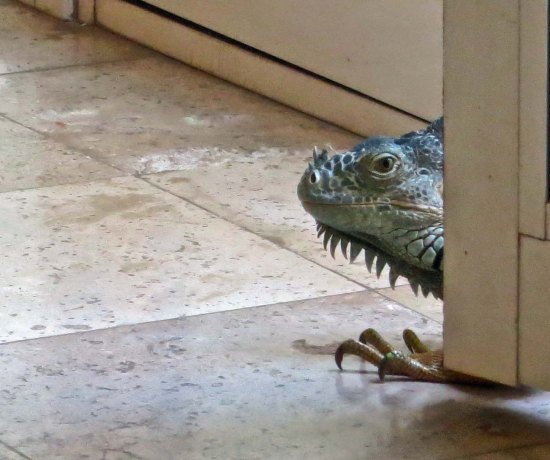
We left the door open to see if the iguana would come inside searching for the other iguana. We were thrilled to see his head appear…

We left the door open to see if the iguana would come inside searching for the other iguana. We were thrilled to see his head appear…

…Soon to be followed by the rest of the iguana.

…Soon to be followed by the rest of the iguana.

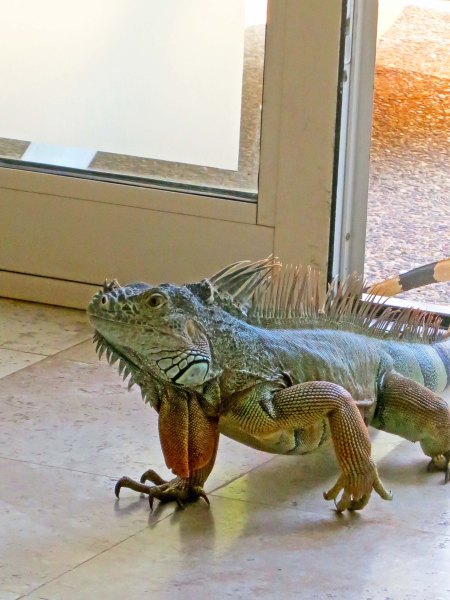
The iguana settled onto the floor and checked us our. He looked much less beat up than the first iguana that had come to visit. Note the size of the claws.

The iguana settled onto the floor and checked us out. He looked much less beat up than the first iguana that had come to visit. Note the size of the claws.

He was truly a handsome specimen.

He was truly a handsome specimen.

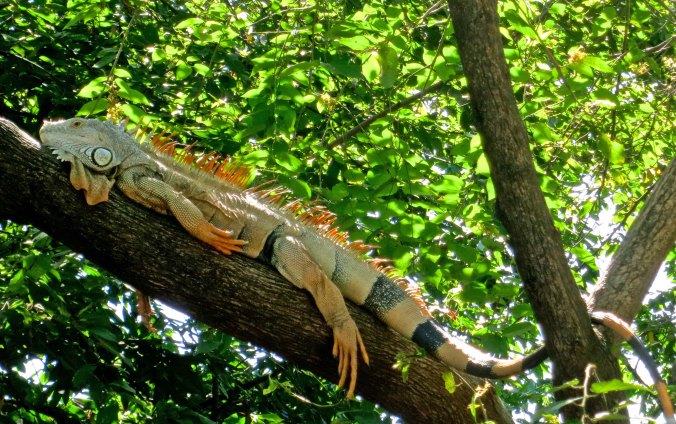
Iguanas are common in Puerto Vallarta. We often spot them on the Rio Cuale, big fellows hanging out in the trees above the river— and this isn’t the first time we have spotted them at our villa. Their images are captured in everything from tourist trinkets to expensive art. They even played a major role in Puerto Vallarta’s top industry: tourism.

This big fellow was taking his afternoon siesta in a tree next Puerto Vallarta’s attractive River Cuale.

This big fellow was taking his afternoon siesta in a tree next Puerto Vallarta’s attractive River Cuale.

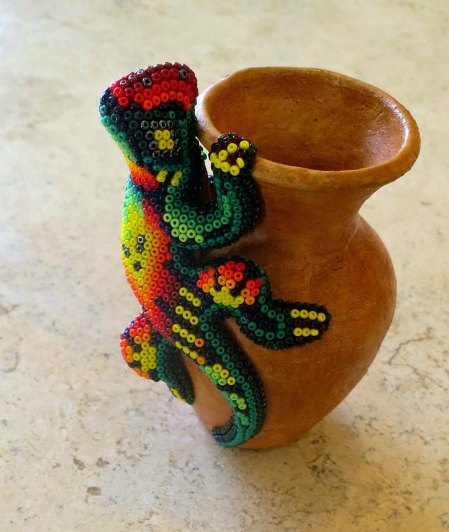
This small vase with a beaded iguana was made by our friend, Ernesto, a Huichol Indian, for our grandson Ethan whom he had met two years ago.

This small vase with a beaded iguana was made by our friend, Ernesto, a Huichol Indian, for our grandson Ethan whom he had met two years ago.

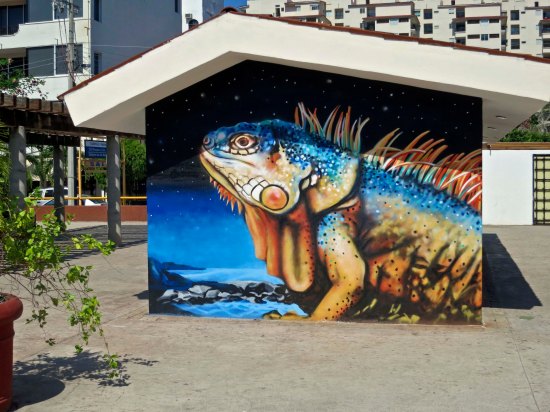
We found this large mural of an iguana in Old Town Puerto Vallarta.

We found this large mural of an iguana in Old Town Puerto Vallarta.

In 1964, Hollywood director John Huston brought his all-star cast of Richard Burton, Ava Gardner, and Deborah Kerr to the area to film The Night of the Iguana (thus the title of this blog), which was based on a play written by Tennessee Williams in 1961. To add a little spice, Burton, who was still married, brought along his future wife, Elizabeth Taylor. Hollywood had discovered Puerto Vallarta, and, because of the scandal between Dick and Liz, the world did as well.

Richard Burton and Elizabeth Taylor had adjoining houses connected by a bridge when they were in Puerto Vallarta for filming The Night of the Iguana in 1964.

Richard Burton and Elizabeth Taylor had adjoining houses connected by a bridge when they were in Puerto Vallarta for filming The Night of the Iguana in 1964.

The Grateful Dead Move to Olompali… Olompali Part III

The Grateful Dead leased Olompali for the months of May and June in 1966 and returned several times over the next three years. In 1969 they returned for a photo shoot for the back cover of their album, Aoxomoxoa.

The Grateful Dead leased Olompali for the months of May and June in 1966 and visited the ranch several times over the next three years. In 1969 they returned for a photo shoot for the back cover of their album, Aoxomoxoa. Pigpen is lying in front. Jerry Garcia is on the left with the tree trunk behind him. In addition to the band, members of the Merry Pranksters and the Chosen Family Commune were also included in the photo. The blonde girl in the left front and the blonde girl sitting next to Garcia are the daughters of my brother-in-law Jim Hagedorn’s cousin, Paula McCoy.


“The (San Francisco/Haight-Asbury) Summer of Love began one afternoon at Olompali.” Ken Kesey, author of One Flew Over the Cuckoo’s Nest.


In my last post on Olompali, I mentioned that the Burdells sold Olompali in the early 40s. The purchaser, Count Harrington, had made his money dredging Pearl Harbor, an activity that was brought to a dramatic halt by the Japanese bombing in 1941. Desperate for dredging equipment, the US military paid him a small fortune for his dredges. He then used this money to purchase Olompali. Harrington, in turn sold the property to the University of San Francisco in 1948.

USF wanted to use the property as a Jesuit retreat but quickly discovered that maintaining Olompali was an expensive proposition. So they decided to sell, which turned out to be somewhat challenging. Buyers kept defaulting. At one point, USF was desperate enough to dig up the brick sidewalks and sell the bricks. For a brief time in the early 60s, the property was turned into an exclusive club with $5000 memberships. This effort failed as well, but it left a great swimming pool for the next inhabitants, The Grateful Dead.


The Grateful Dead and other bands such as Quick Silver and Jefferson Airplane would set up in front of the Burwell Mansion and play free music for hours on end.

The Grateful Dead and other bands such as Quick Silver and Jefferson Airplane would set up in front of the Burwell Mansion and play free music for hours on end during their brief stay in May and June of 1966. (Archived photo.)

The mansion as it looked when I visited Olompali State Park in August. A fire gutted the building in 1969.

My photo of the mansion as it looked when I visited Olompali State Park in August. A fire gutted the building in 1969. I thought it was interesting that swallows still nested on the upper part of the mansion. (The dark dots.)

The best way to describe the Grateful Dead’s two month stay at Olompali in 1966 is to use a 60’s term: a happening. It was a continuous party that featured the early beginnings of rock music and a number of rock music legends. The Grateful Dead had formed a year earlier in 1965 from their initial band, The Warlocks, and Jerry Garcia was looking for a place where his group could hang out. A real estate friend turned him on to Olompali. The rent was reasonable and the property came with a large “Tara-like” house, a swimming pool, and gorgeous scenery. It was far enough away from everything that the band could play outdoors without disturbing any neighbors.

It was the type of place that demanded a party. An announcement sent out on May 22, 1966, invited the Dead’s friends from the Bay Area, “to an afternoon of inter-galactic travel, to a communion with the spirits of long dead Indians, to a dance celebrating mainly all of us.” It would be one of many parties. The ‘mainly all of us’ described a fascinating blend of musicians, promoters, poster artists, writers, film makers, beats, hippies and other alternative/creative types.
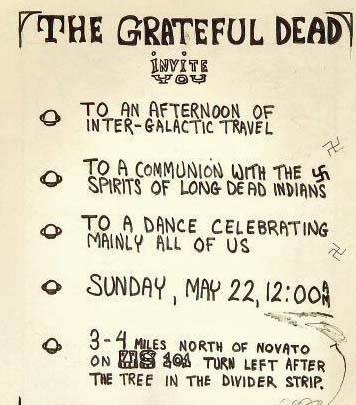
The original invitation to the Grateful Dead's party. The Swastica,

The original invitation to the Grateful Dead’s party. The swastika symbol, BTW, did not represent the Nazis. It was used by Native Americans to represent migration, thousands of years before it was picked up by Hitler. I’ve seen it on rock art throughout the Southwest.

Here’s how Garcia described the Dead’s stay at Olompali: “It was a great place. It had a swimming pool and barns and that sort of thing… We didn’t have that place very long, only about eight weeks. It was incredibly intense for everybody… Everything was just super-groovy. It was a model of how things could really be good… (It) was a firming up of the whole social world of rock and roll around here… The guys in Jefferson Airplane would get together with Quicksilver and different guys, 81 different players, would get together and get high and get loose and have some fun… That was when we started getting tight with Quicksilver… They came and hung out at our place in Novato when we had our parties. And a lot of people like the various filmmakers and writers and dope dealers. All the people who were into doing stuff. People who had seen each other at rock and roll shows…in that first year. Those parties were like a chance to move the whole thing closer, so to speak. It was good times – unselfconscious and totally free.”

Grace Slick dropped by, as did Janice Joplin, Santana, David Crosby, Moby Grape and even a five-year-old Courtney Love. But the gatherings went beyond musicians. Ken Kesey and the Merry Pranksters made their way to Olompali along with the LSD guru, “tune in, turn on, drop out,” Timothy Leary.

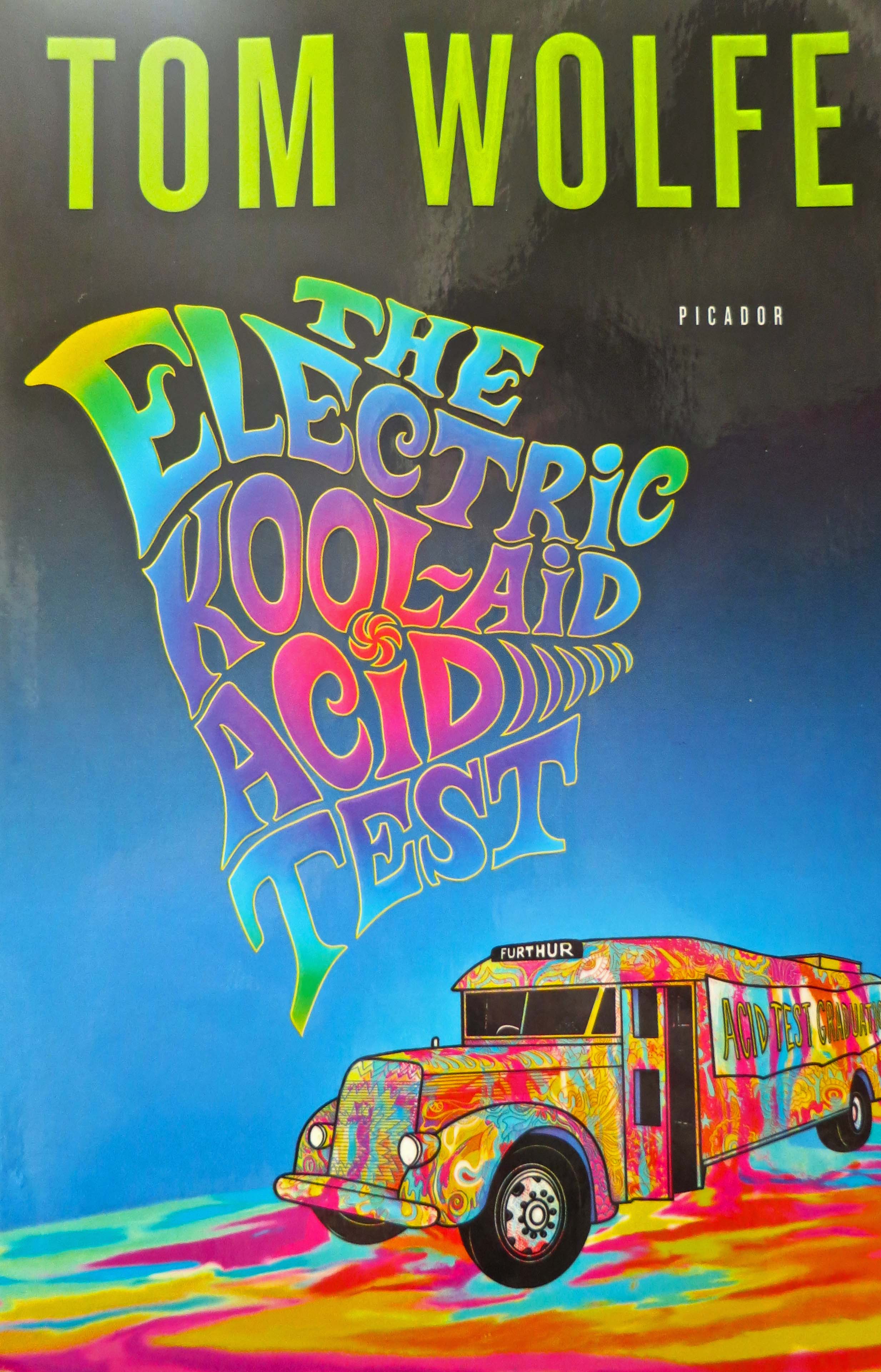
The cover of Tom Wolfe's book The Electric Kool-Aid Acid Test featuring the bus Further.

The cover of Tom Wolfe’s book The Electric Kool-Aid Acid Test featuring the bus Further.

The Merry Pranksters were known for their 1964 trip across America in their gaily decorated bus, Further— a trip made famous by Tom Wolfe’s book, The Electric Kool-Aid Acid Test. I had run into the Pranksters and Further at Berkeley in the spring of 1965 when they came tumbling off their bus to participate in one of the nation’s first anti-Vietnam War rallies. The Grateful Dead, in their earlier guise as The Warlocks, had played at several of Kesey’s “Acid Tests” in the Bay area designed to turn the world on with a concoction of LSD and Kool-Aid.

Garcia reportedly took his last acid trip at Olompali. “He developed three hundred-and-sixty-degree vision, died a few thousand times, and saw the word  “All” float into the sky before he turned into a field of wheat and heard “Bringing In the Sheaves.” Garcia would later note, “I unraveled every strand of DNA in my body. I felt both full and empty. I hardly spoke a word for two months, but it was worth it.”

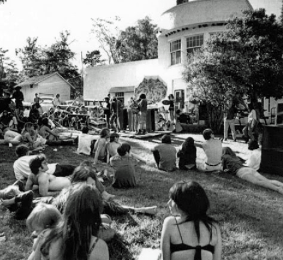
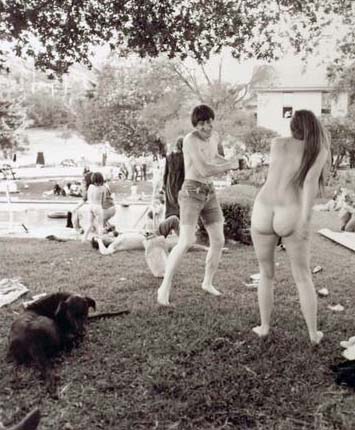
Visitors to the free concerts at Olompali would spread out on the lawn, jump into the pool, and get comfortable, which, on occasion, involved taking off their clothes. Minus the lawn and the swimming pool, I am reminded of Burning Man where Burners spread out in the dust, instead.

Band member Phil Lesh noted, “Bear and some of the Pranksters set up [speakers] in the living room and all over the grounds; there was food and drink for all, and the pool was wall to wall with mostly nude people… From the makeshift bandstand by the kitchen terrace, an ad hoc band composed of members of the Dead, Quicksilver, and the Airplane played some of the most startling music I’ve ever heard, a new kind of music no one had ever made before, a true synergy of spontaneity and structure, created on the spot.” (Bear was none other than Owsley, the LSD Cook, known for producing over one million doses of acid. He worked as a sound-man for the Dead in the early years and helped with financial support. His ashes were placed on the soundboard at the Grateful Dead’s 50th Anniversary show in Chicago this year.)

Clothing was optional at the parties held by the Grateful Dead at Olompali. The swimming pool is at the back of the photo.

Clothing was optional at the parties held by the Grateful Dead at Olompali. The swimming pool is at the back of the photo. The building on the right is now park headquarters. (Archived photo)

Neal Cassidy was another legendary visitor. Neal had hitchhiked across the country with Jack Kerouac in his epic journey described in On the Road. Later he would drive the bus Further across the country with the Merry Pranksters, thus serving as a bridge between the Beat Generation of the 50’s and the Hippie Generation of the 60s. George Hunter of the Charlatans’ band remembered, “the Dead would be playing and Neal Cassady would be doing this strange little dance— it was almost like breakdancing; very fluid. Out on the lawn there was this very far-out configuration of plumbing that was once part of a sprinkler system or something. It stuck out of the ground and stood maybe five feet high. I couldn’t figure out what the hell it was for. It was just a mess of pipes with faucets coming out of it that had been modified over the years. Very strange. So the Dead would be playing, and Neal would be dancing on the lawn with this bizarre metal partner. He’d dance around it, with it really. He had some pretty good moves, too. Neal was always in the thick of things.”

While only at Olompali for two months, Jerry Garcia would remember his time there as “idyllic.” And, he would come back several times over the next three years. His Haight-Asbury neighbor and friend, Don McCoy, was soon to lease Olompali for one of the most famous hippie communes of the 60s, The Chosen Family. The area’s wonderfully strange history would continue. It’s the subject of my NEXT BLOG.

Speaking of strange, or at least small world, Peggy’s sister Jane and her husband Jim were up this week visiting. Jane and I were talking about the 60s and Jane mentioned that Jim’s cousin Paula was mixed up in the San Francisco music scene in some way. Turns out that she was the wife of Don McCoy in his pre-commune period.
From Miwoks to Ewoks— Plus the Bear Flag Revolt… Olompali: Part II

I found this ancient fence at Olompali State Park. It was likely built by the Black/Burdell Families who owned the property between 1852 and 1940.

I found this ancient fence at Olompali State Park north of San Francisco. It was likely built by the Black/Burdell Families who owned the property between 1852 and 1940.

After 3000 years of relative stability under the Miwoks, the fate of Olompali entered a period of rapid change in the 1800s. Mexican Independence in 1821 signaled the beginning of the end for the mission system in California. By 1834, the Mexican government had decreed that the missions would be secularized. The priests would no longer control vast estates.

It was the intention of the Mexican government to give the mission land to the Native Americans, but this intention was quickly subverted. Californios, California born people of Spanish/Mexican descent, either bamboozled the Indians out of their land or seized it outright for their own use, and then initiated a campaign of terror, stealing whatever the Indians had left— including, on occasion, their freedom.

An interesting exception to the mistreatment of the Miwoks took place at Olompali where, in 1843, the Miwok chief, Camilo Ynitia, was awarded a Mexican land grant. (Ynitia was the only Native American in California to receive one.) His father had built the first adobe house north of San Francisco. Portions of the house, along with Camilo’s, still stand at the park.

Remnants of Camilo's adobe house, and that of his father, still stand at Olompali State Park.

Remnants of Camilo Ynitia’s  adobe house, and that of his father, still stand at Olompali State Park.

Ynitia’s Rancho would soon play a role in the Bear Flag Revolt. With encouragement from John C. Fremont, the explorer and future US presidential candidate, a small band of American settlers in Northern California revolted against Mexican rule in 1846. The revolt was short-lived and only one person was killed, which is hard to imagine in any revolution. The point here is that the person was killed at Olompali in a clash between the settlers and Californios.

With bloodless coups in San Francisco and Monterey, Fremont and his followers soon afterwards declared California a republic. A quick flag was created featuring a grizzly bear, a star, and the word Republic. The fledgling country lasted three weeks; the Mexican-American War made it irrelevant. All that is left of the revolution today is the flag. It still flies over California even though there is no republic— or grizzly bear for that matter. The last known grizzly in California was killed in 1922.

The California flag, adopted during the three week existence of the Bear Flag Revolt.

The flag from the three-week republic still flies over California as the California state flag. The hump back of the bear is a defining characteristic of the grizzly bear. I once had a guy like this stalk me in Alaska. It was sneaking through the brush when I spotted its hump.

In 1852 Ynitia sold most of his land to James Black, who was on his way to becoming one of the largest landowners in Marin County. Legend is that robbers killed Ynitia for the money he received, or that he buried the money on the Olompali property, or that members of his own tribe did him in the old-fashioned way, with an arrow. Whatever happened, our history of Olompali now leaves the Miwoks and Californios, and moves into modern times.

Before leaving the Miwoks, I did want to pass on one more bit of trivia I picked up doing research. George Lucas’s Skywalker Ranch is located in Marin County, not far from Olompali. Nearby redwood forests were used for some of the Star Wars scenes for the forest moon of Endor, where the Ewoks lived. Lucas reportedly used the Miwok name as inspiration for the Ewok name.

Sky Walker Ranch is appropriately located on Lucas Valley Road. (The road was there before George Lucas built his ranch there, however. Maybe the road inspired Lucas's choice.)

Skywalker Ranch is appropriately located on Lucas Valley Road. (The road was there before George Lucas built his ranch, however. Maybe the road inspired his choice.)

Black, and his family, through various convolutions, would own the land up to the 1940s. Black gave the land to his daughter Mary as a wedding present when she married Galen Burdell, a dentist. But when Black’s wife died in Burdell’s dentist chair, he reneged on the gift and took Mary and Galen out of his will. When Mary first saw the will after Black’s death, she allegedly ripped her dad’s signature off  with her teeth and ate it. Tough woman. She then hired a bevy of top lawyers and managed to obtain Olompali.

A barn built by the Burdells and other ranch structures still stand at Olompali Park. And I have a weakness for old barns. (grin)

A barn, built by the Burdells, still stands at Olompali Park.  I think the massive stump on the left  is from a eucalyptus tree. Old barns demand being photographed; I couldn’t resist…


A corner shot of the barn looking up for a different perspective.

A corner shot of the barn looking up for a different perspective.

This old, boarded up window on the barn had personality plus. Animals must have chewed away at the right side.

This old, boarded-up window on the barn had personality plus. Animals must have chewed away at the right side.

Reflections caught in one the barn's windows.

A reflection, caught in one the barn’s windows, showed the ‘salt block’ house next door.

This salt block house

Salt block houses like this with their steep and sloped roofs were commonly built throughout Northern California in the 1850s. With the exception of the adobe houses, this may be the oldest structure at Olompali.

Remnants of an extensive fruit orchard planted by the Burdells still remain. It was said that their oranges matched anything coming out of Southern California. Bananas— not so good.

Remnants of an extensive fruit orchard planted by the Burdells still remain. It was said that their oranges matched anything coming out of Southern California. Bananas— not so good.
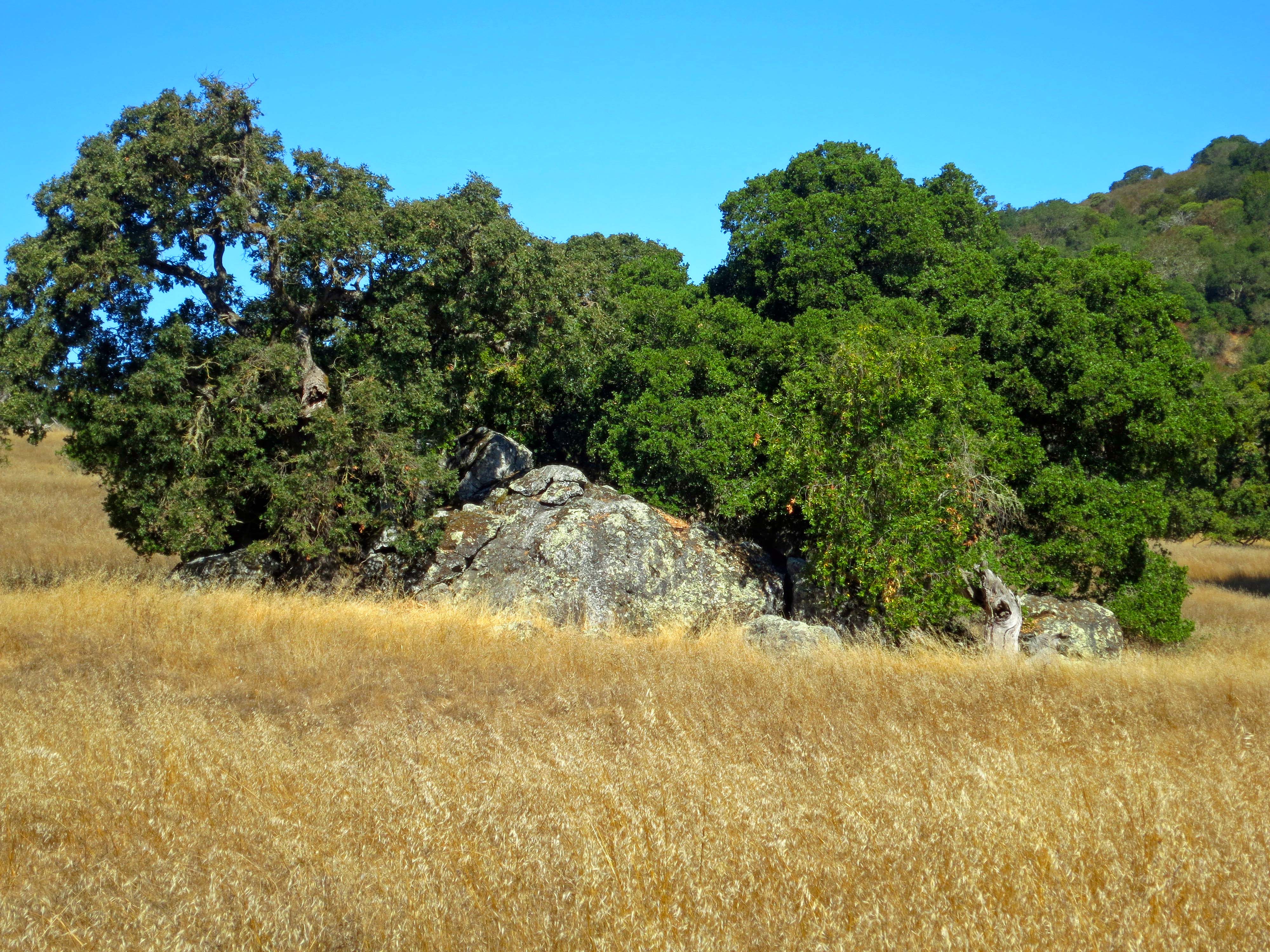
This large rock with its gorgeous backdrop above the barn caught my attention.
This large rock with its gorgeous backdrop was above the barn.

Camilo Ynitia, Miwok chief, received Olompali as a Mexican Land grant and in turn sold it to James Black.

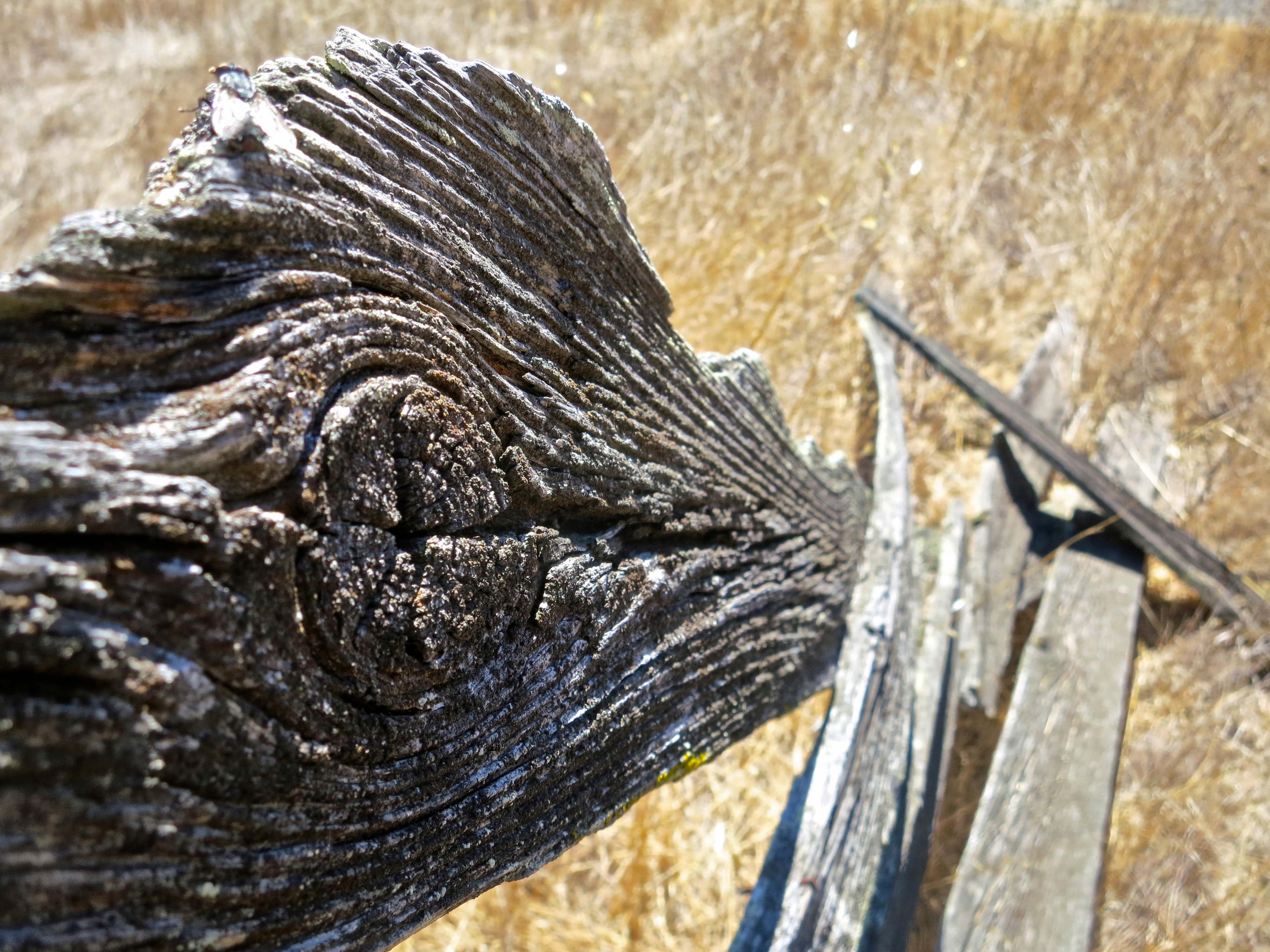
I thought I would conclude with this close up of the fence I featured at the top of my post…

And this aptly named Fence Lizard I found sunning itself on the fence.

…And this aptly named Western fence lizard sunning itself on the fence.

NEXT BLOG: By the late 40s/early 50s, the University of San Francisco had obtained Olompali with plans to turn the ranch into a retreat for Jesuits. The effort failed. Maybe the Jesuits didn’t go along with the plan. It was this lack of success, however, that eventually led Olompali to become a footnote in the history of the Grateful Dead, as well as a famous/infamous hippie commune: The Chosen Family. But that is a story for my next blog.


Home Invasion Part II— When a Rattlesnake Comes to Visit

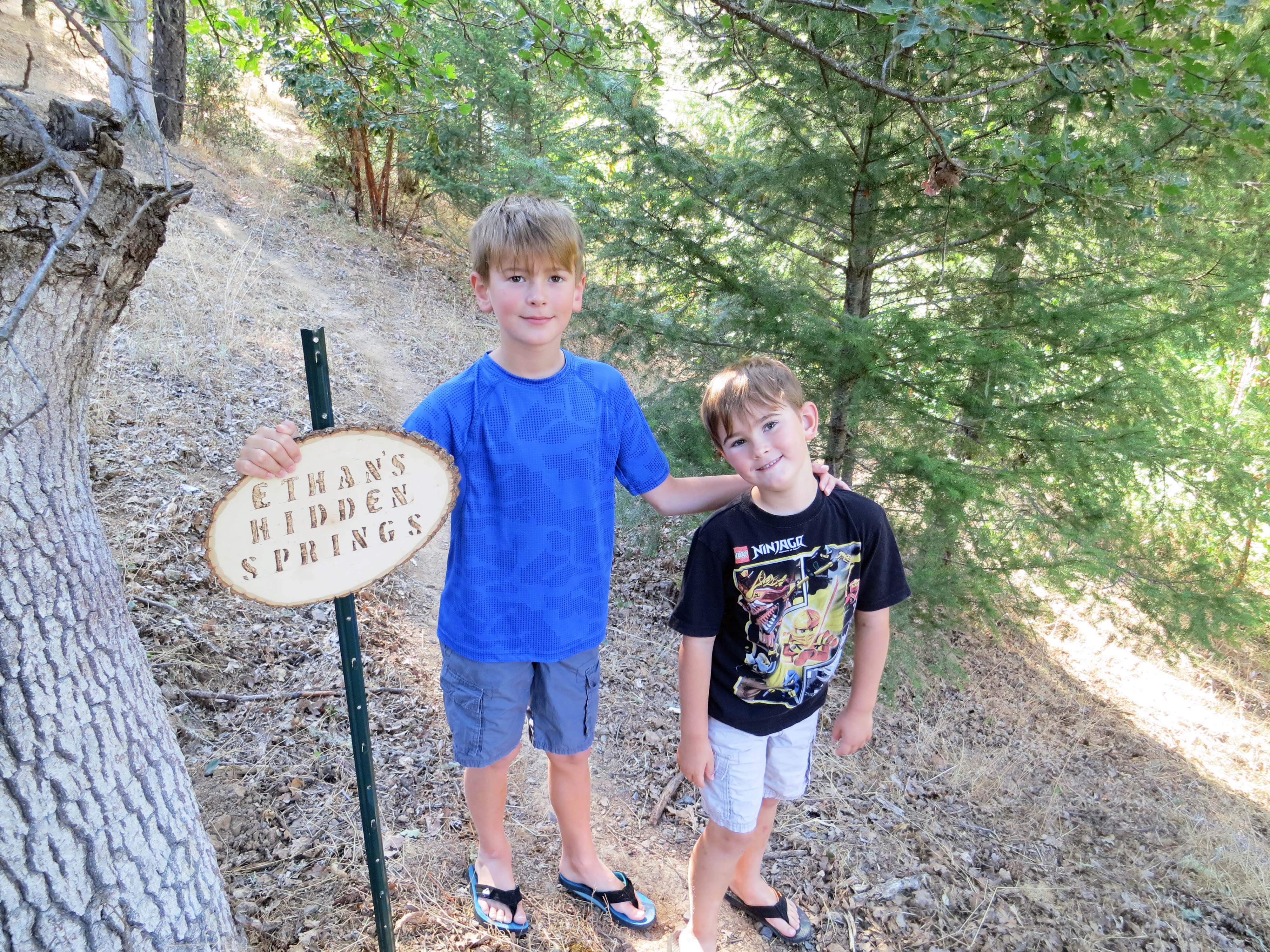
Each boy has his own trail on our five acres. And each trail is substantially different. Ethan's trail incorporates a spring. Ethan is standing next to the sign with his brother Cody.

Each boy has his own trail on our five acres. And each trail is substantially different. Ethan’s trail incorporates a spring. Ethan is standing next to the sign with his brother Cody.

This is a continuation of my previous blog.

I had a major task before the boys showed up: finish the hiking trails that cut back and forth across our five acres of forested property. It seriously resembled work. I ended up using my weed whacker, leaf blower, tree pruning shears, rake and a mattock. For those of you who don’t know what a mattock is, think really heavy hoe combined with a pick. The last time I had used one I was 18, fighting a forest fire in Northern California over terrain that was so steep that I had to hold on to brush with one hand while I chopped a fire trail with the other. Although I didn’t have a fiery inferno rushing down on me for inspiration, the hill I cut a trail across for the boys was equally steep. And, news flash, I am no longer 18. Peggy came out of the house frequently to look down the slope and make sure I was still alive.

Each boy ended up with his own unique trail with a special sign made by Peggy. There were Chris’s Mountain Trail, Ethan’s Hidden Springs Trail, Cody’s Bear Trail (it is the actual trail the bear uses when he comes in to check out our garbage can), and Connor’s Jungle Trail (chopped out through vines and blackberries). The two-year-old Cooper was too young for a trail, so I made him a secluded nook under some tall brush that could also accommodate his brothers and cousins: Cooper’s Hide-a-Way. When we took the boys down to check it out, a momma deer and her two fawns had adopted the hideout and were happily ensconced on the outdoor carpet I had put down.

I warned the boys to watch out for rattlesnakes since our neighborhood seemed to have an infestation of them over the summer.

I warned the boys to watch out for rattlesnakes since our neighborhood seemed to have an infestation of them over the summer. Peggy took this photo of a rattler in the spring when we were traveling through Death Valley.

The boys got a lecture before venturing out on their own. “This is what poison oak looks like. Watch out for rattlesnakes. If you go off the trails, your socks will be filled with burrs and the burrs will get in your underwear.” I added the latter for emphasis. And it is true; somehow doing the laundry automatically transfers burrs to places you definitely don’t want them— believe me. (Of course the boys went off of the trails.) As for rattlesnakes, I had to dispatch one with my mattock next to the water gun filling station at the side of our house the day before the boys showed up. It was a Diamond Back about three-feet long with ten rattles. Normally I would have just shooed it off, but I worried it might come back. “Look, Grandpa, a snake! Can we catch it?” (Our grandson Ethan is an expert at rounding up lizards. Why not snakes?)

There wasn’t a second of down time for the whole three weeks. There were games to play, swimming holes to explore, and must-see places to visit, such as the Railroad Park in Medford. In the middle of all of this, Peggy went paragliding and jumped off of a local mountain to celebrate her 65th birthday. Talk about a role model. Our daughter and son joined her. It was my responsibility to take photographs and survive. Can you imagine how warped the boys would be if I were put in charge of raising them?

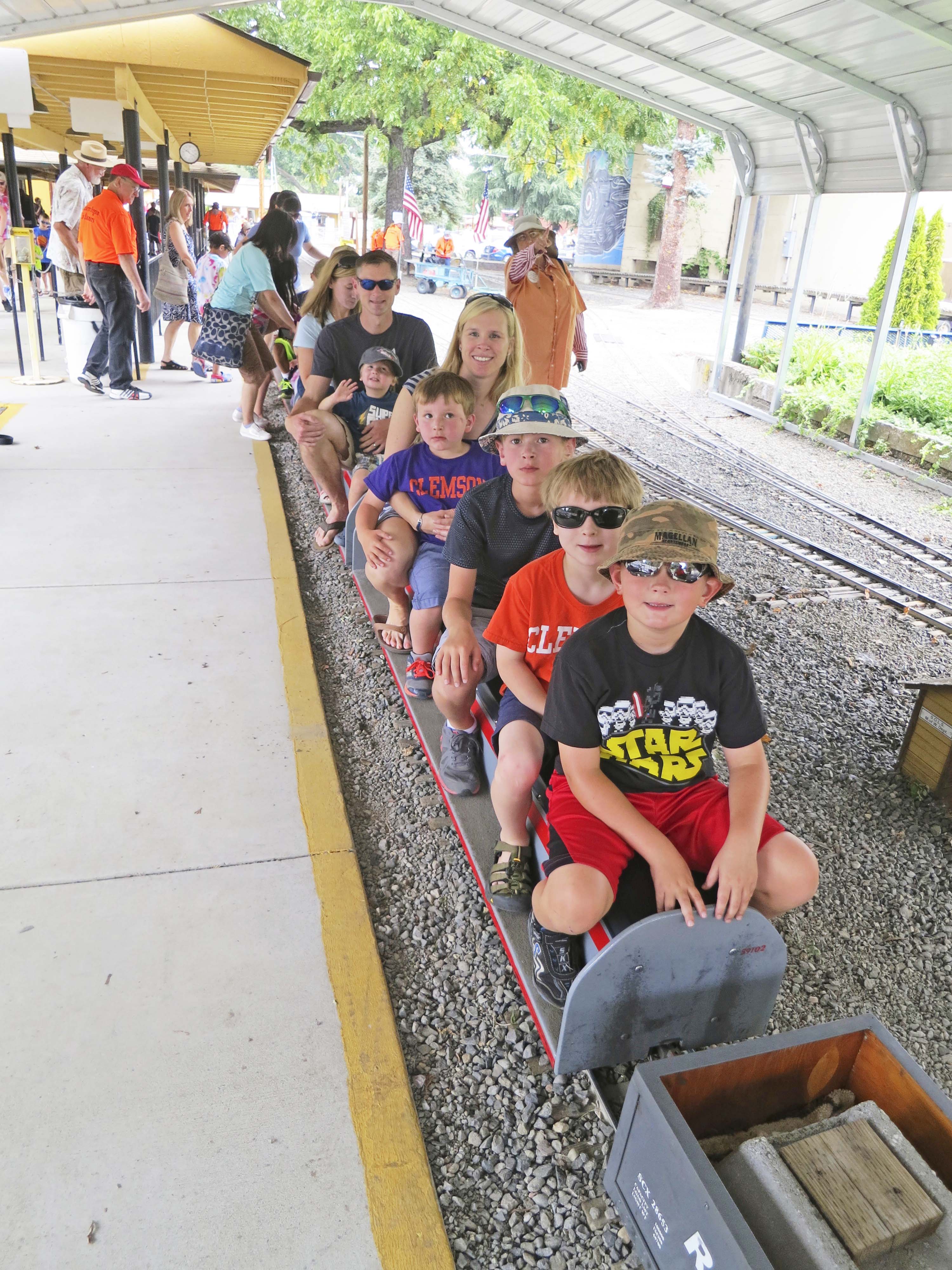
Everyone climbed on the train at the Medford Railroad Park.

Everyone climbed on the train at the Medford Railroad Park. Our daughter-in-law Cammie is number five in the row. Tony is behind her holding Cooper.

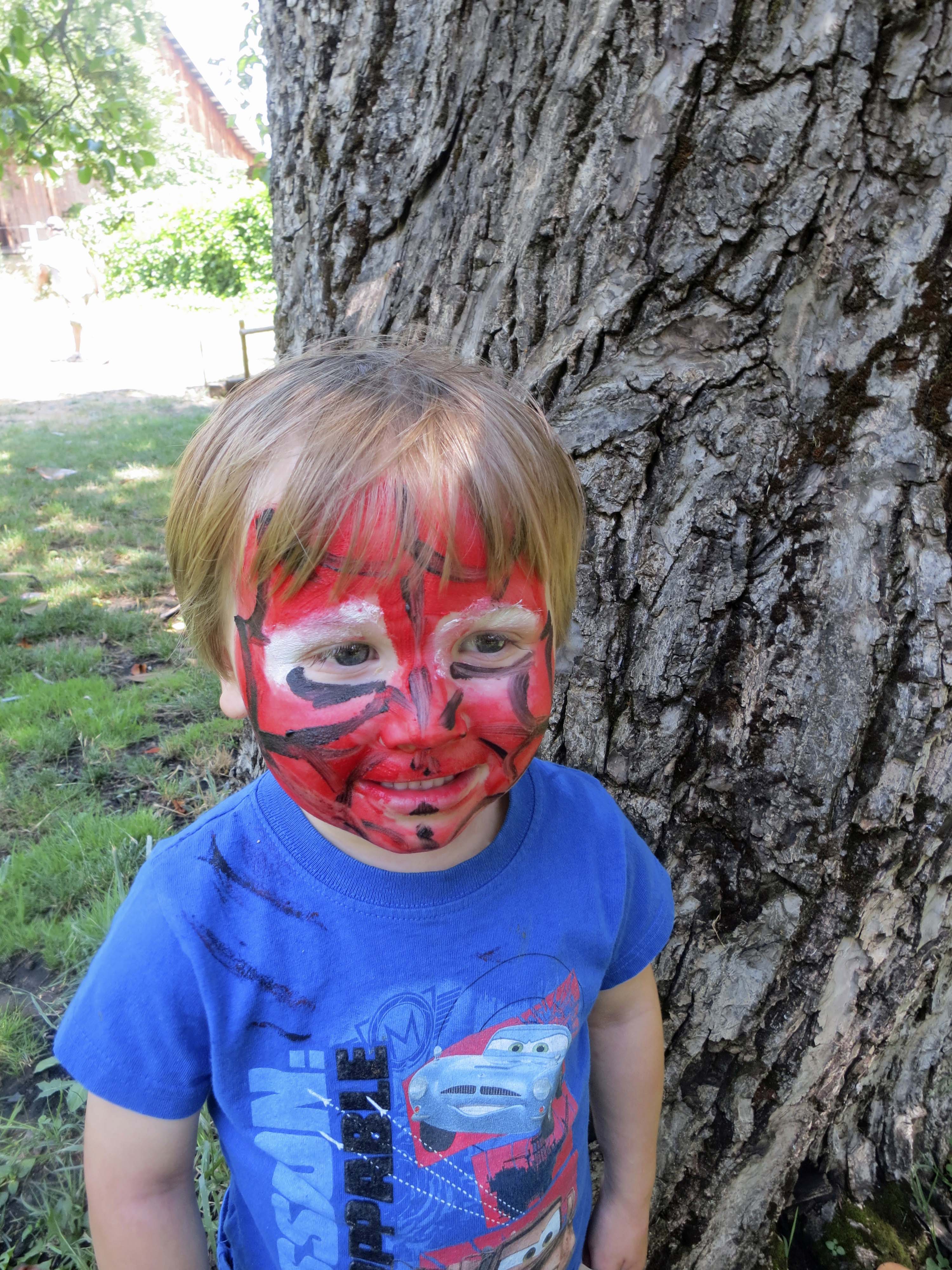
Cooper proudly displays his Spider face paint he picked up when we visited the Civil War reenactment camp. The boys were quite excited to see cannons fired.

Cooper proudly displays his Spider face paint he picked up when we visited the Civil War reenactment camp. The boys were quite excited to see cannons fired.

As you might imagine, the boys found burying dad in rocks, as Connor is doing here, to be quite amusing.

As you might imagine, the boys found burying dad in rocks, as Connor is doing here, to be quite amusing.

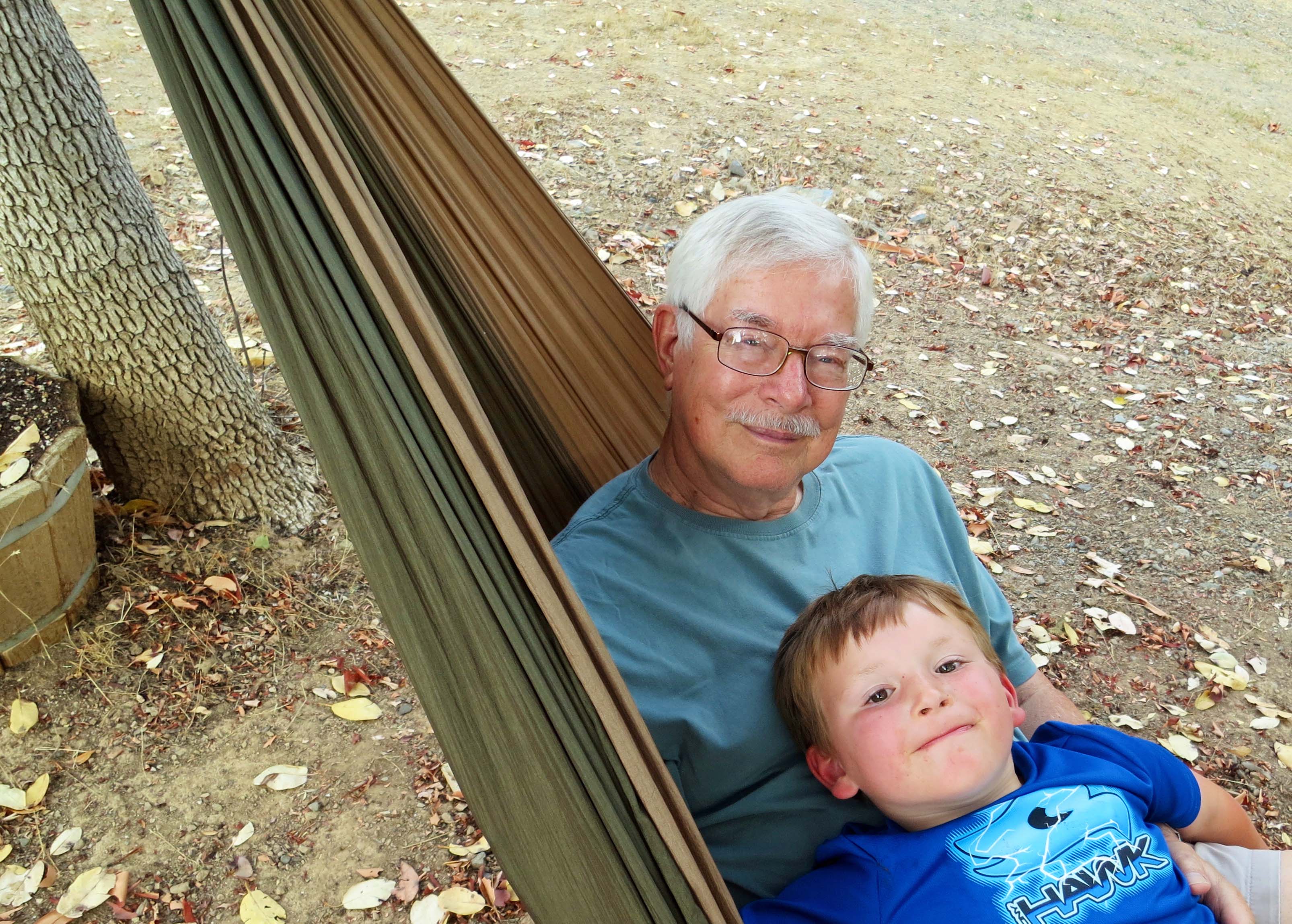
Chris found hanging out in a hammock with Grandpa and sharing secrets to be quite entertaining until the wasp stung Grandpa. Some new word were learned.

Chris found hanging out in a hammock with Grandpa and sharing secrets to be quite entertaining until the wasp stung Grandpa. Some new words were learned.

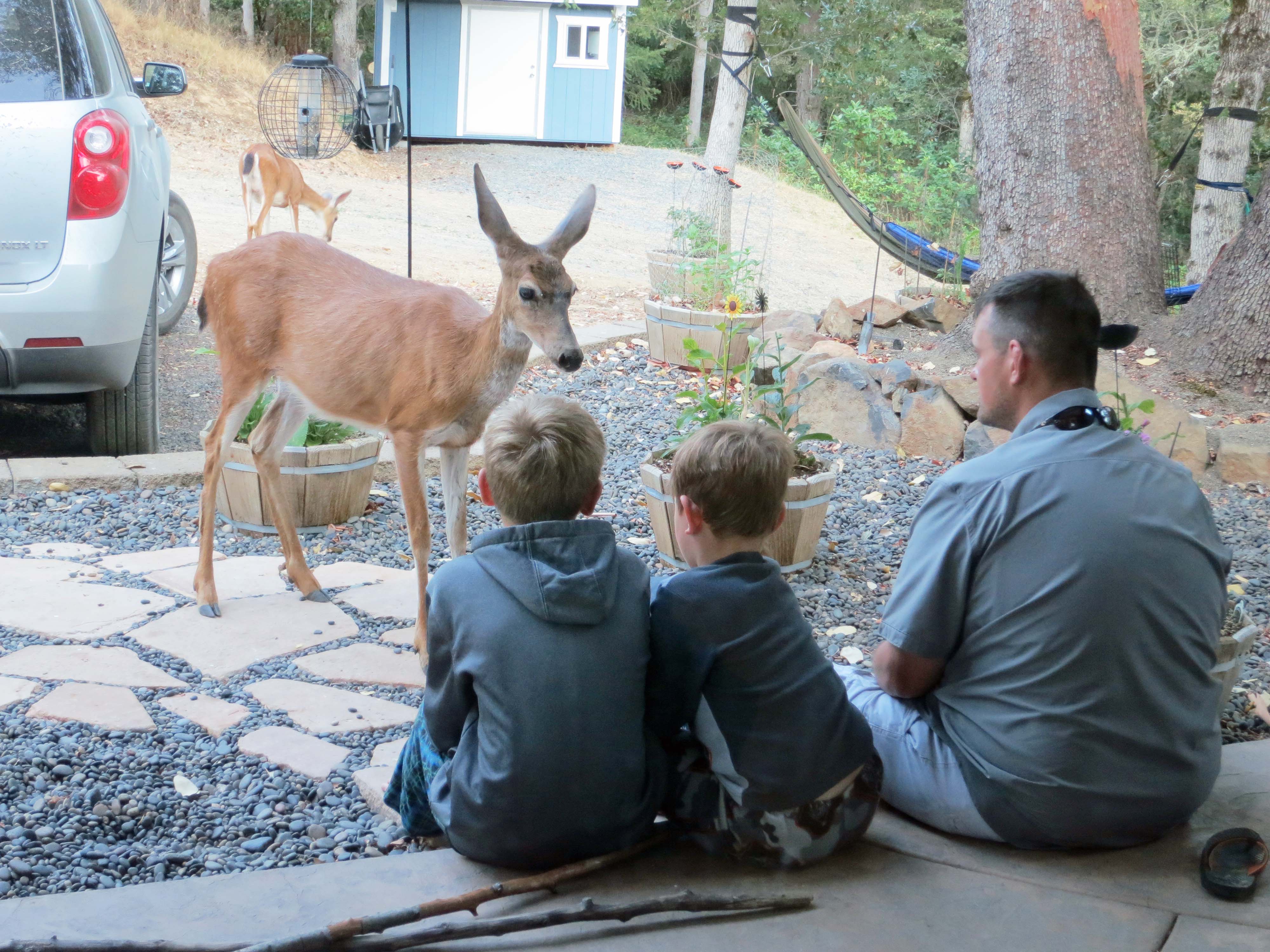
Missy the Deer made out like a bandit as soon as the boys— and Dad, Clay— discovered that she like to eat apples. Several times each day we would hear, "Missy is outside wanting an apple." Of course she was. Missy recognizes a soft touch when she sees one.

Missy the Deer made out like a bandit as soon as the boys— and Dad, Clay— discovered that she like to eat apples. Several times each day we would hear, “Missy is outside wanting an apple.” Of course she was. Missy recognizes a soft touch when she sees one.

One evening we enjoyed an incredible sunset (this is not photoshopped) followed by a thunderstorm, which is never welcome in the summer due to the danger from fires.

One evening we enjoyed an incredible sunset (this is not photoshopped) followed by a thunderstorm, which is never welcome in the summer due to the danger from lightning fires.

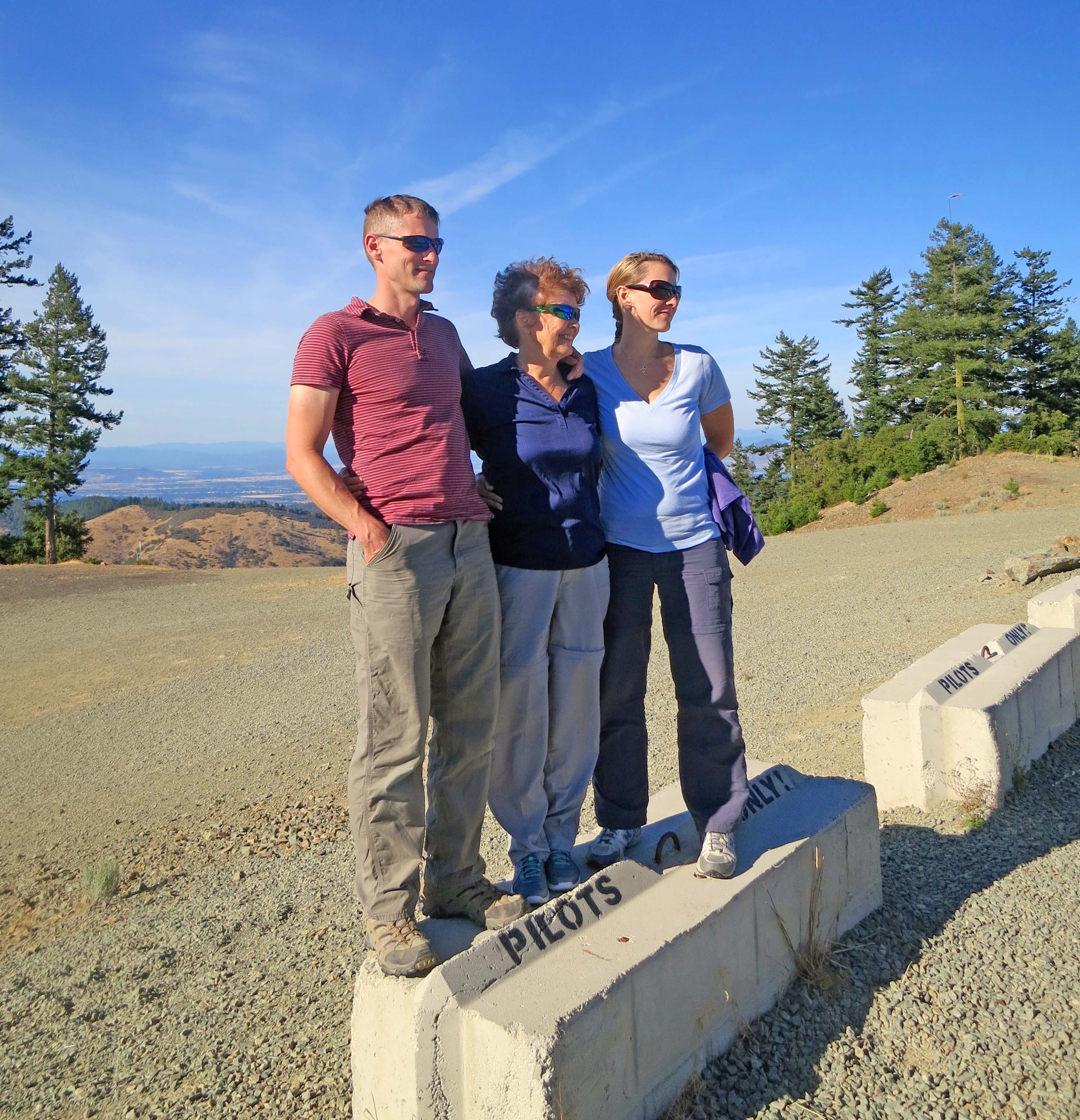
Tony, Peggy and Tasha stand on the pilots block and prepare for their assisted paragliding adventure.

Tony, Peggy and Tasha stand on the pilots’ block and prepare for their assisted paragliding adventure. Peggy was quite proud of the fact that she flew higher and longer than either of her two children.

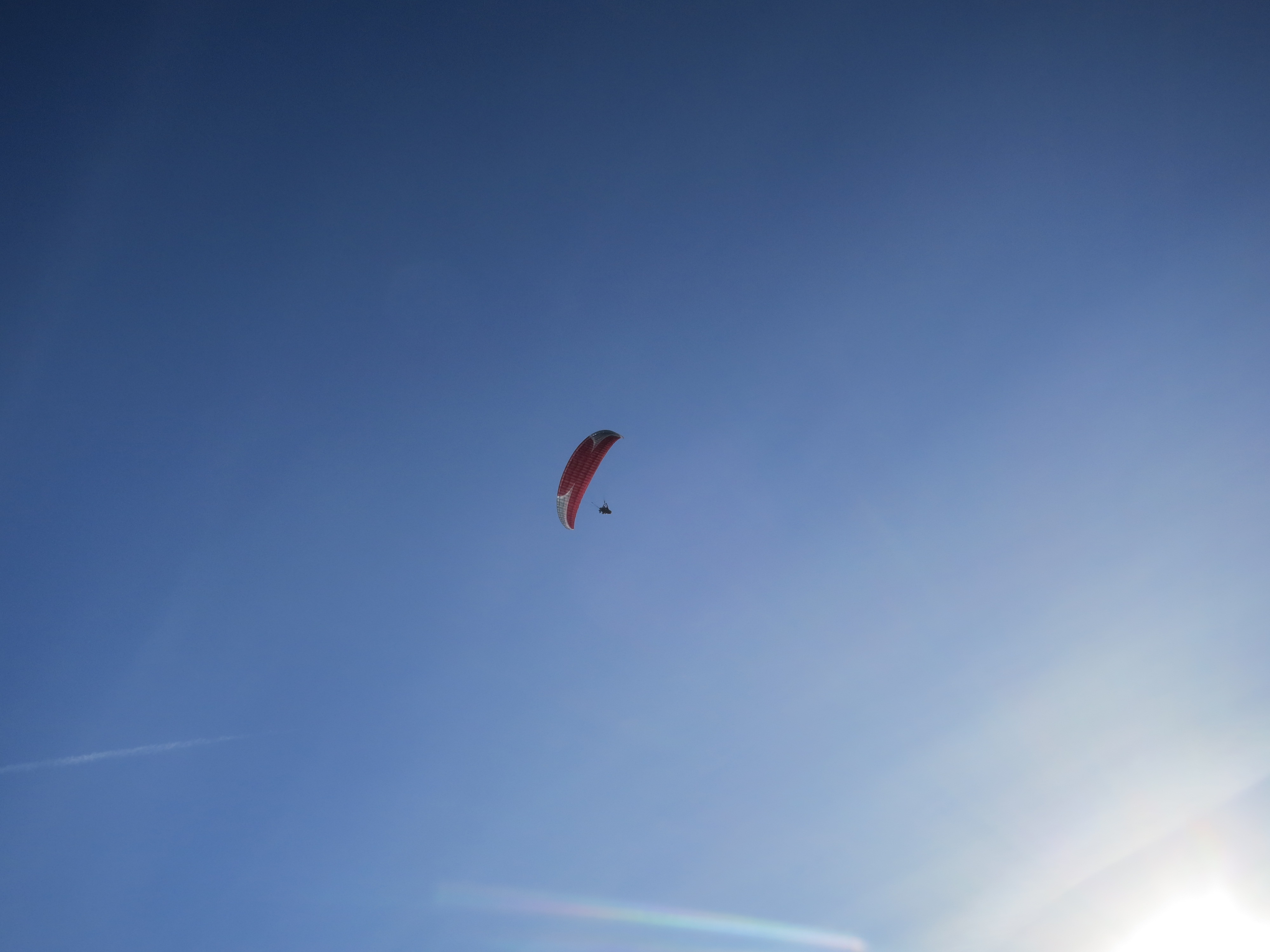
Peggy paragliding over the Applegate Valley.

Peggy paragliding over the Applegate Valley.

And climbing high into the sky.

And climbing high into the sky.

Our house was even more crowded than our time. Each room had a designated use. The Library, for example, became Lego Central. Even the outdoor patio and porch were drafted to house carefully gathered sticks and rocks, not to mention water guns. Our bedrooms and bathrooms were crammed with kids, grandkids, clothes, first aid supplies for stubbed toes (they hurt), and all of the other paraphernalia of daily life. Peggy and I retreated to our small RV each night to sleep.

Our library became Lego Central.

Our library became Lego Central. Tony grew up with Legos and many that the boys are using came from his original collection.

Among other things, our living room was give over to reading. Peggy has the boys full attention on this one.

Among other things, our living room was given over to reading. Peggy has the boys full attention on this one.

Eventually the last family was packed up and sent on its way. It was time to reclaim our house. While Peggy worked inside, I tackled the outside. Robota, our robot vacuum cleaner, joyfully scooted around on the floor and searched under couches, beds, chairs and tables for lost Legos, absent autos, and misplaced marbles.

Peggy and I had all of 12 days to reestablish our lives before heading off on our next adventures. Peggy went to England for a couple of weeks with her sister, Jane, on a garden tour that included, among other things, Downton Abby (Highclere Castle). She has offered to guest-write a few blogs on her experience and has been wrestling with how to pare down her thousand plus photos. (Welcome to my world, Sweetie.)

I packed up our pickup and drove over to the northern coast of California above San Francisco. It is one of my all-time favorite areas. I had enough adventures to fill a book, or at least several blogs. For example, I was taking photos of an old Nike Missile site by myself when I heard creaking doors and a Nike Missile came out of the ground. It was pointed directly at me. I raised my arms and surrendered.

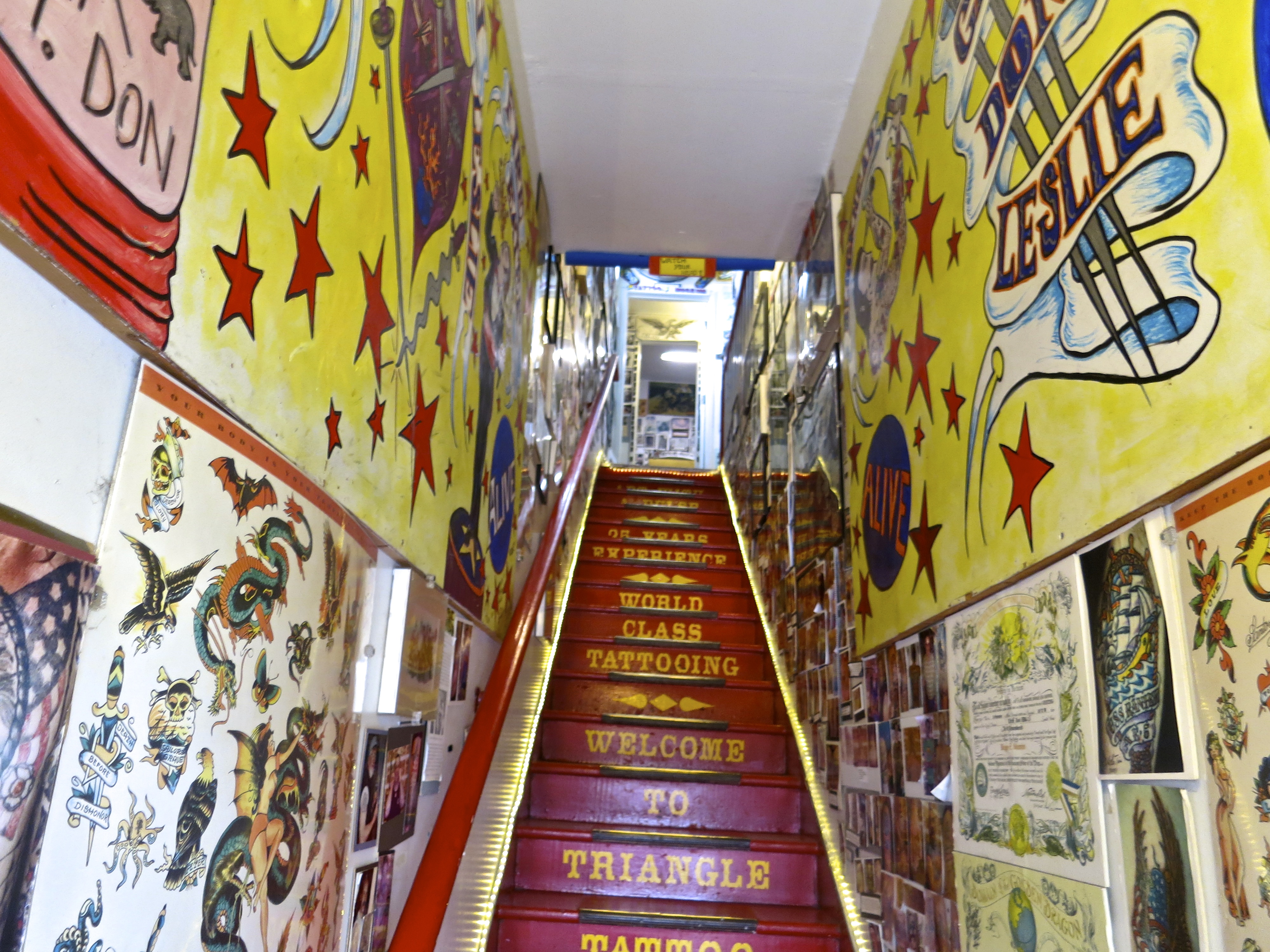
In Fort Bragg I discovered the very interesting Triangle Tattoo Museum and Parlor. None other than the divine Madame Chinchilla, a 69-year-old tattooed woman who looks like a grandmother, gave me a two-hour personal tour. It was fascinating. Her husband/partner, Mr. G, was busy tattooing his pharmacist. They were discussing side effects. “Are you talking about prescription drugs or tattoos,” I asked. “Both” was their mutual response. I bought a book Chinchilla had written about their best friend, now diseased, a world-renowned sword swallower: Captain Don Leslie.

Entrance to the tattoo museum in Fort Brag.

Entrance to the Triangle Tattoo Museum in Fort Brag.

And, there was more, of course.

  • I visited an old Grateful Dead hangout that morphed into a 60’s hippie commune
  • Stopped off at the Marconi telegraph site at Point Reyes where Morse code signals are still sent out to the Titanic (no answers yet)
  • Took photos of a church that Ansel Adams made famous
  • Rubbed shoulders with an Alfred Hitchcock mannequin in the small town of Bodega, which was made famous by the Hitchcock film The Birds
  • Wandered among the fascinating houseboats of Sausalito
  • Roamed the streets of the quaint seaside town of Mendocino
Some of the fun houseboats in Sausalito just north of San Francisco.

Some of the fun houseboats in Sausalito just north of San Francisco.

Returning home, I managed to score a ticket to Burning Man with the help of friends two days before the event was to start. So I made my annual journey out to the remote desert in northern Nevada. This past weekend I attended a conference on writing for change in San Francisco. Today I did an interview for a book about the international effort to get tobacco out of the movies, an effort I helped initiate 20 years ago.

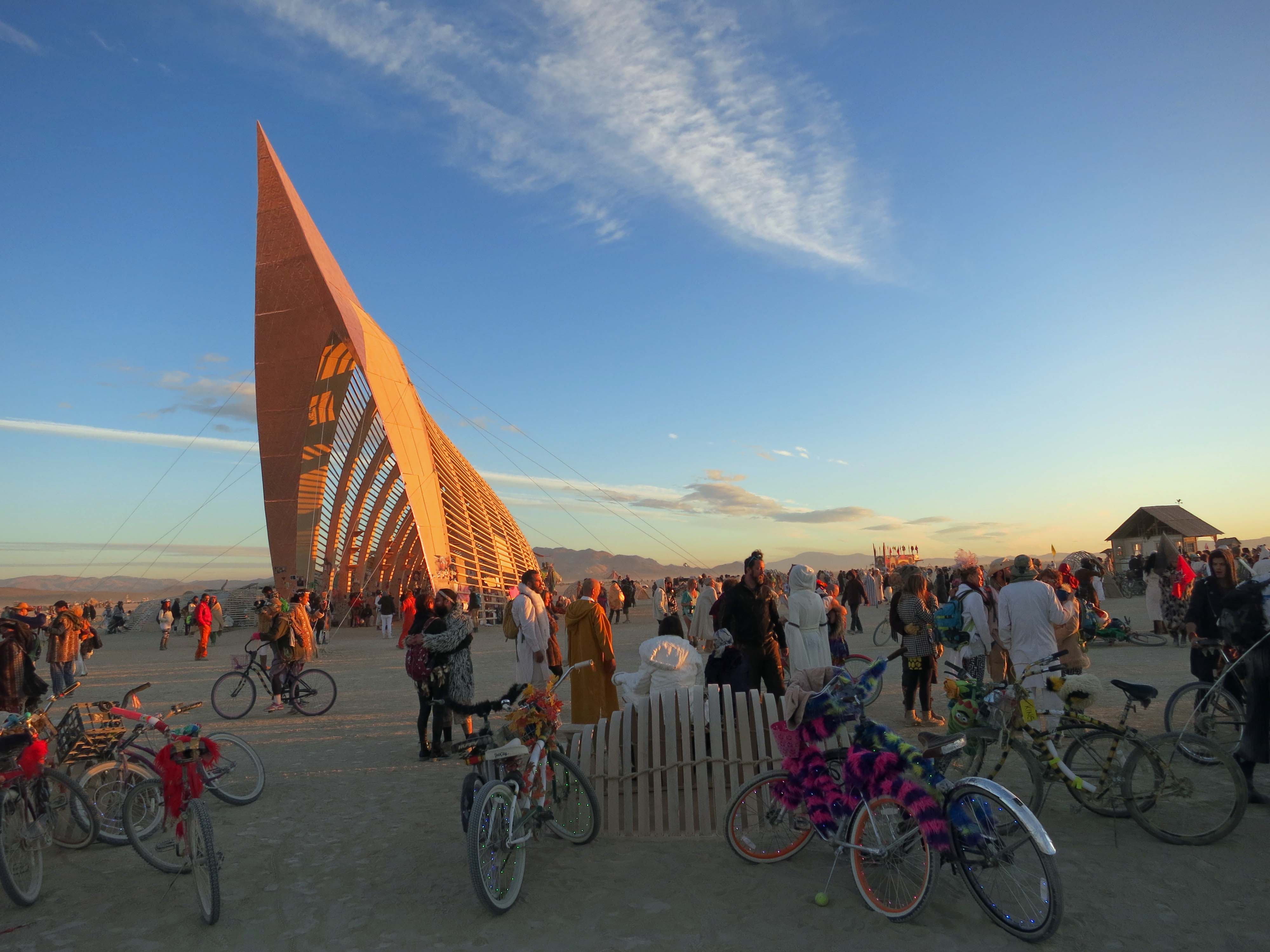
As I have each year, I will be doing a series of blogs on Burning Man. This is the 2015 Temple.

This is the 2015 Burning Man Temple at sunrise.

I’ll be blogging about all of these over the next few months. Stay tuned. 🙂

Seaside, Oregon… Caught between the Past and the Future


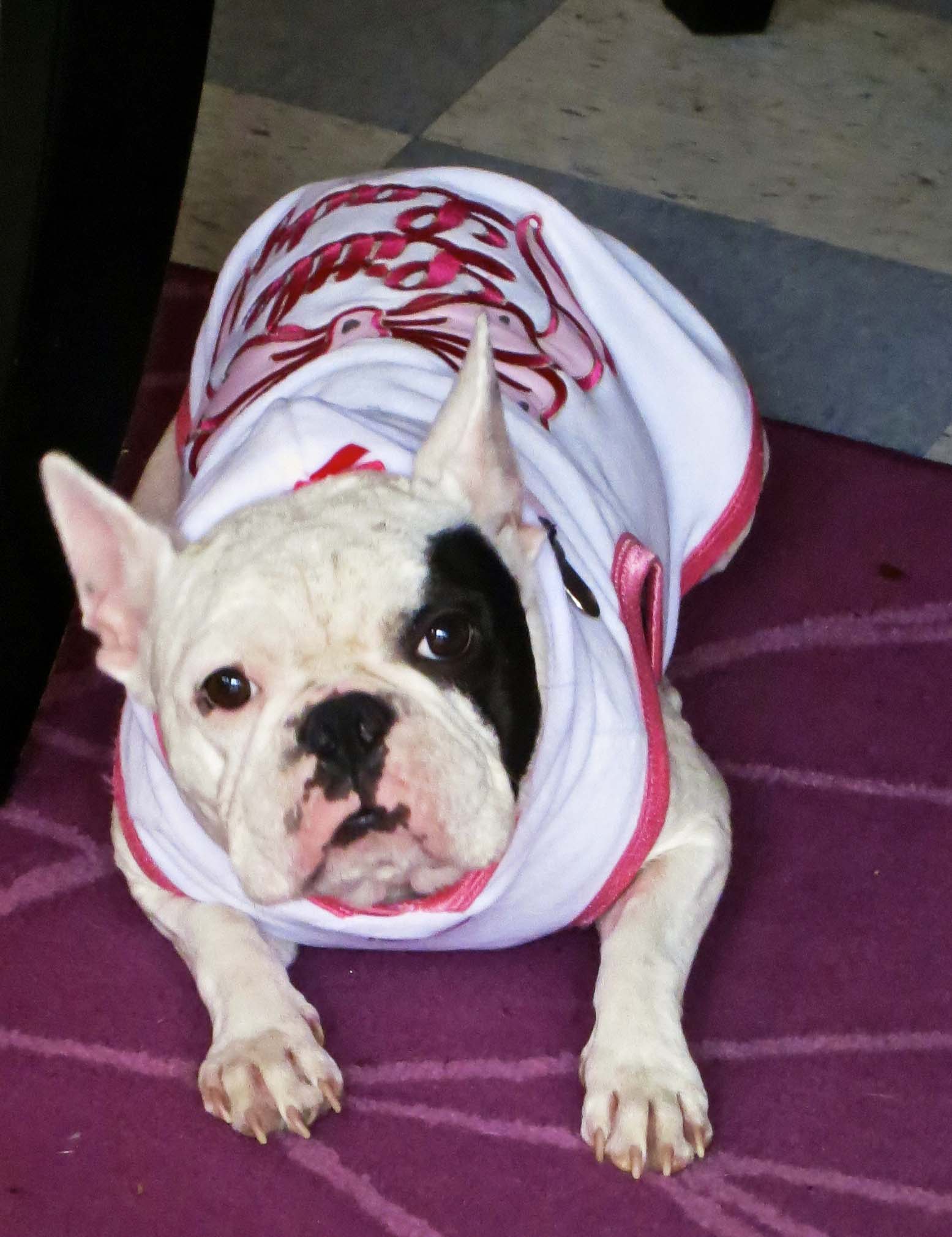
A fortune teller had a small shop on the main street in Seaside, Oregon. This dog rested under the table where fortunes were told.

A fortune-teller had a small shop on Broadway Street in Seaside, Oregon. This dog rested on a carpet under the table where futures were foretold. I suspect his future is that he will be well-loved.

There is a certain feel to coastal tourist towns that earned their glory in an earlier era. I’d define it as rundown charm. Shops are crammed full of made-in-China souvenirs. Taffy and ice cream tempt people off of the street. Occasionally, one can hear the unmistakable sound of carousel music as horses and lions and emus and giraffes go around and around to the echoing laughter of generations of children.

Coffee shops have a down-home, utilitarian atmosphere where you can buy a cup of steaming clam chowder, coffee and cherry pie for under ten dollars. The saltines are free. The waitress is likely to have a few thousand miles on her feet. She may even call you honey.

But I am being nostalgic. Such places are a dying breed on the edge of extinction. Boutique shops and upscale restaurants are now the rule. Yesterday’s $7.00 T-shirt has become today’s $200 blouse. Lunch for two can easily cost $50.00. And the ten percent tip (remember it?) is now twenty.

We can thank the yuppies of the 1980’s and 90’s for this. They rolled out of the major cities along the West Coast of America from San Diego to Seattle with money to burn. Sharp entrepreneurs quickly figured out ways to separate them from their cash. Ocean side property was scarfed up and prices skyrocketed. Old buildings were renovated and new buildings built. Everything was impacted. The closer a town was to a major city, the greater the impact.

I am not saying all of this is bad. Things change. I like my designer coffee and handcrafted beer as much as the next person. And I am glad that artists and artisans have profited by being able to sell their work in the upscale shops.

I found a bit of the old and a bit of the new when I visited Seaside, Oregon last fall. Seaside was one of the grand old resort towns, like Santa Cruz in California or Myrtle Beach in North Carolina. It was where you flocked to in the summer if you had money. You can still see the old buildings: now renovated, spruced up and repurposed— to use a modern term. For example, the old courthouse had morphed into a modern brewpub. The single jail cell that once housed Saturday night drunks, now houses kegs of beer. I ate my $12.00 hamburger there and washed it down with a decent porter.

Seaside Brewery in Seaside, Oregon.

The brick drunk tank in Seaside’s old jailhouse now serves as a cooling room for kegs of beer. The beer taps are built directly into the wall. I am not sure about the skulls. They may have been left over from Halloween.

After lunch I walked downtown. Midweek, clouds, and rain meant I had Broadway more or less to myself. A few tourists, locals, and I scurried between store entranceways, trying to stay dry. I admired the old buildings, checked out the local carousel, and stopped off to visit a dog that was lying under a table in a small shop where its owner sat and offered to read my palm. I opted out of fortune-telling but did buy a book on the future at the local bookstore. Watch out for robots.

I was pleased to find a carousel with its horses eager to be ridden. Peggy loves these things. Had she been along, I probably would have been forced to climb on.

I was pleased to find a carousel with its horses eager to be ridden. Peggy loves these things. Had she been along, I probably would have been forced to climb on and ride around with her and the little kids.

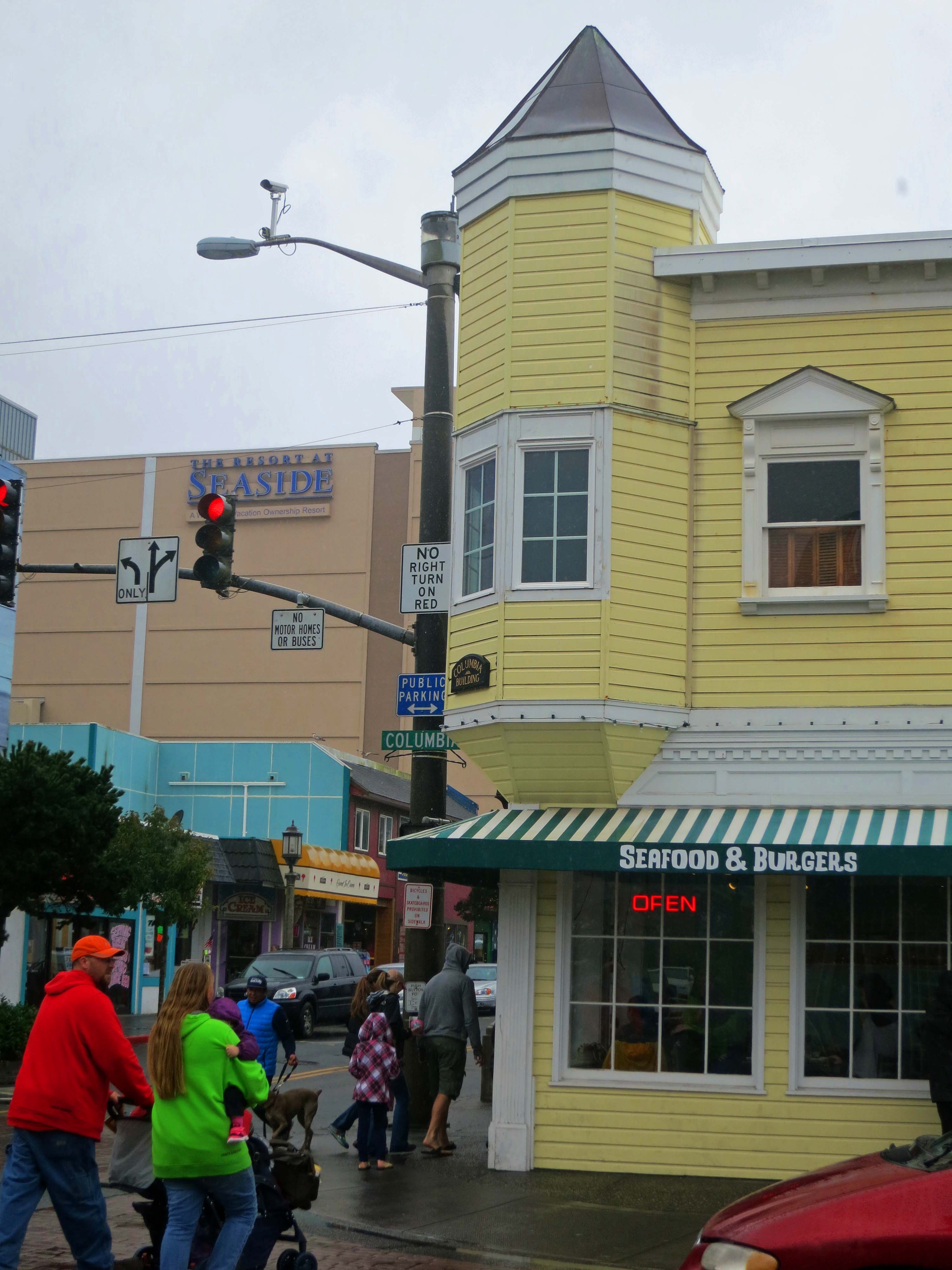
A touch of Seaside's glory days can be seen in these buildings along Broadway Street.

A touch of Seaside’s glory days can be seen in these renovated buildings along Broadway Street.

Had I walked downtown before stopping off at the Seaside Brewery, I probably would have eaten at the Pig and Pancake.

Had I walked downtown before stopping off at the Seaside Brewery, I may have eaten at the Pig ‘n Pancake.

This mural was as closes as I got to Seaside's famous beach. It was not a day for sunbathing.

This mural was as closes as I got to Seaside’s famous beach. It was not a day for sunbathing.

The sunshine was of the liquid type. Other tourists, locals and I went searching for awnings that protected us from the rain.

The sunshine was of the liquid type. Other tourists, locals and I went searching for awnings that protected us from the rain.

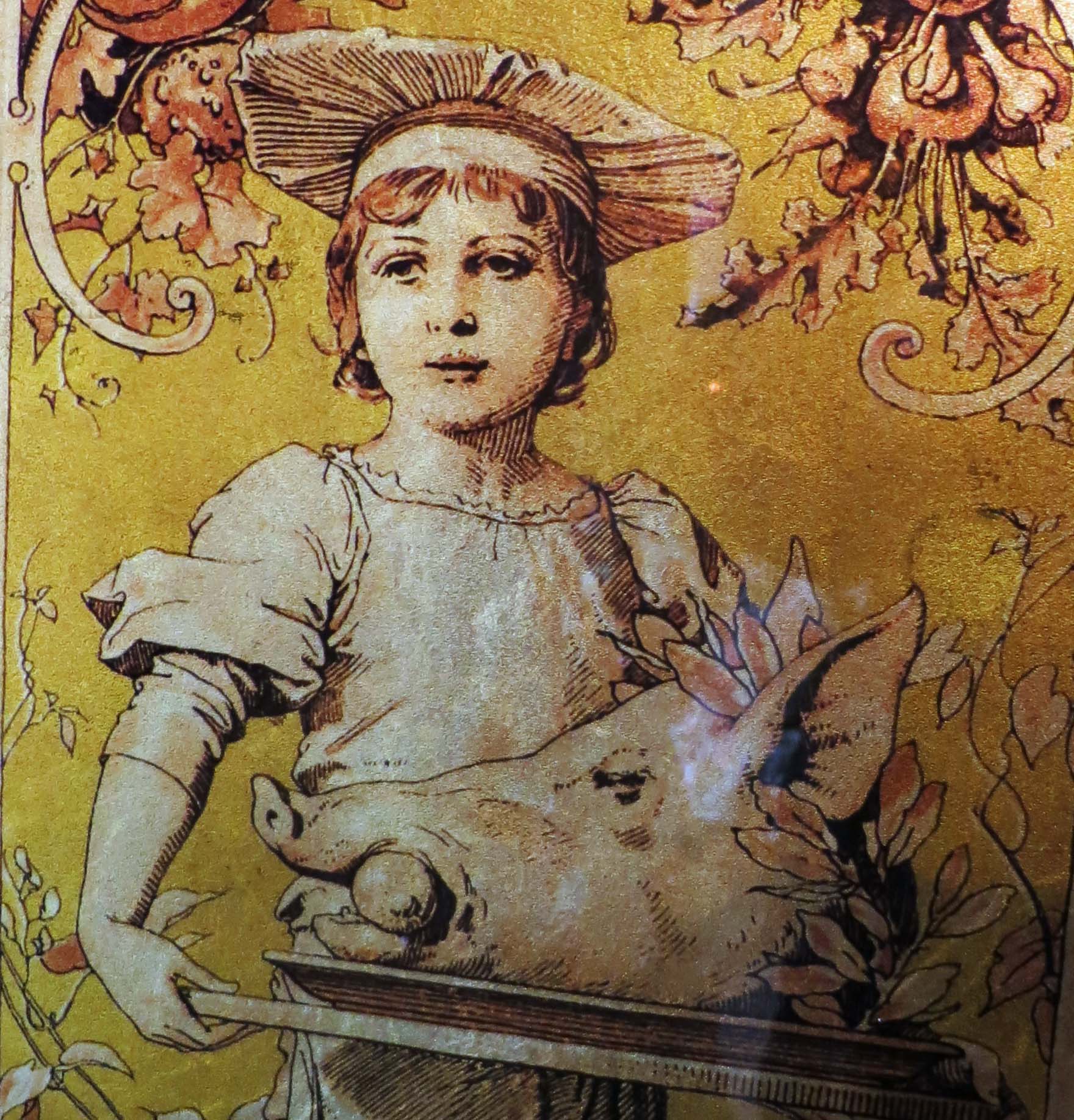
It was a good day for being inside, though and I always enjoy futzing around in antique shops.

It was a good day for being inside, though, and I always enjoy futzing around in antique shops, where I found this dead pig room divider.

And this Chinese foo dog statue.

And what I believe is  Chinese foo dog statue. (Or maybe it is a lion about to eat a horse).

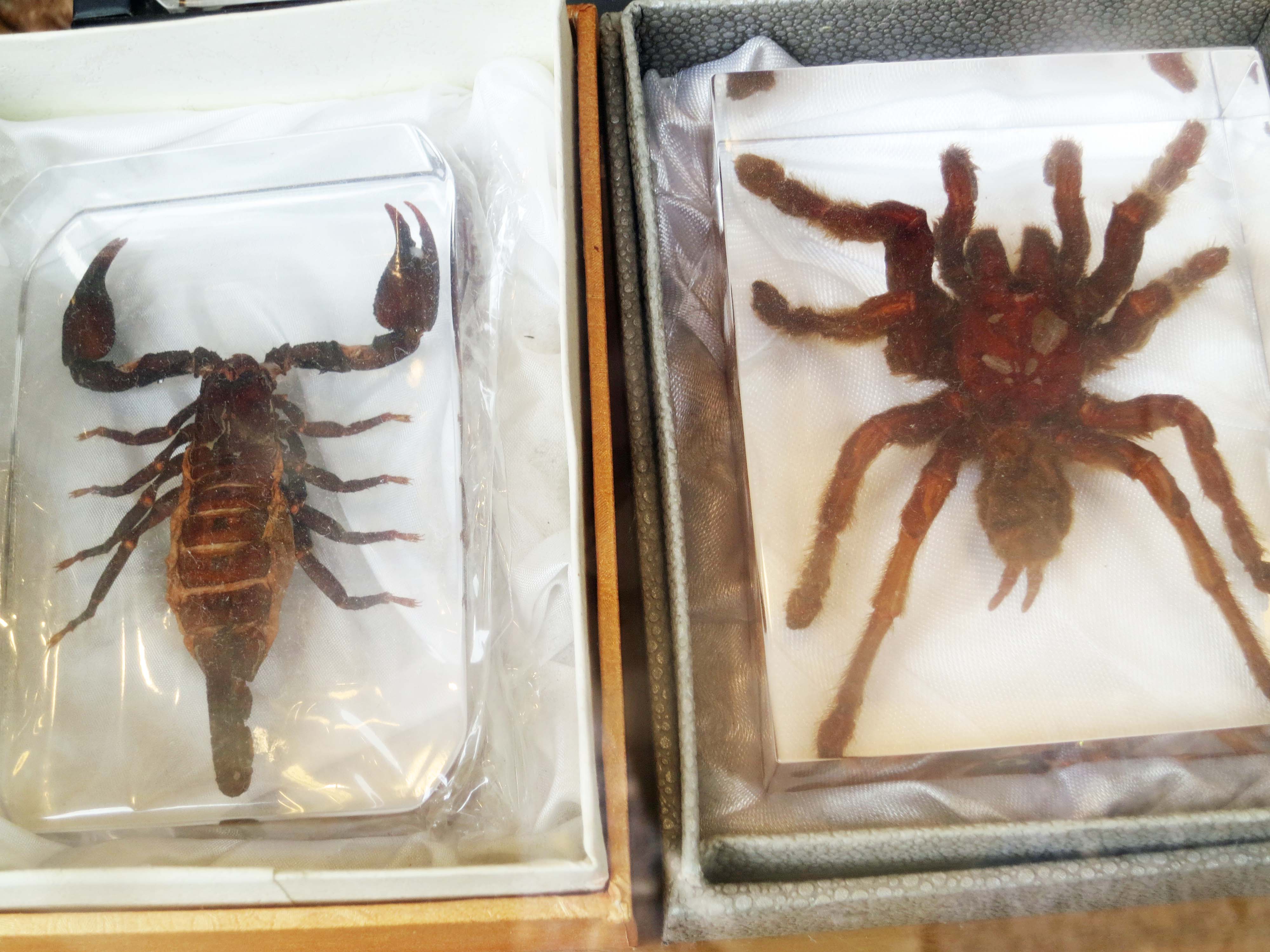
Another shop that caught my attention featured preserved scorpions and tarantulas.

Another shop that caught my attention featured preserved scorpions and tarantulas. I once caught a scorpion like the fellow on the left outside of my house in Liberia and kept it in a jar for a while. Maybe that is when my former wife first contemplated divorce.

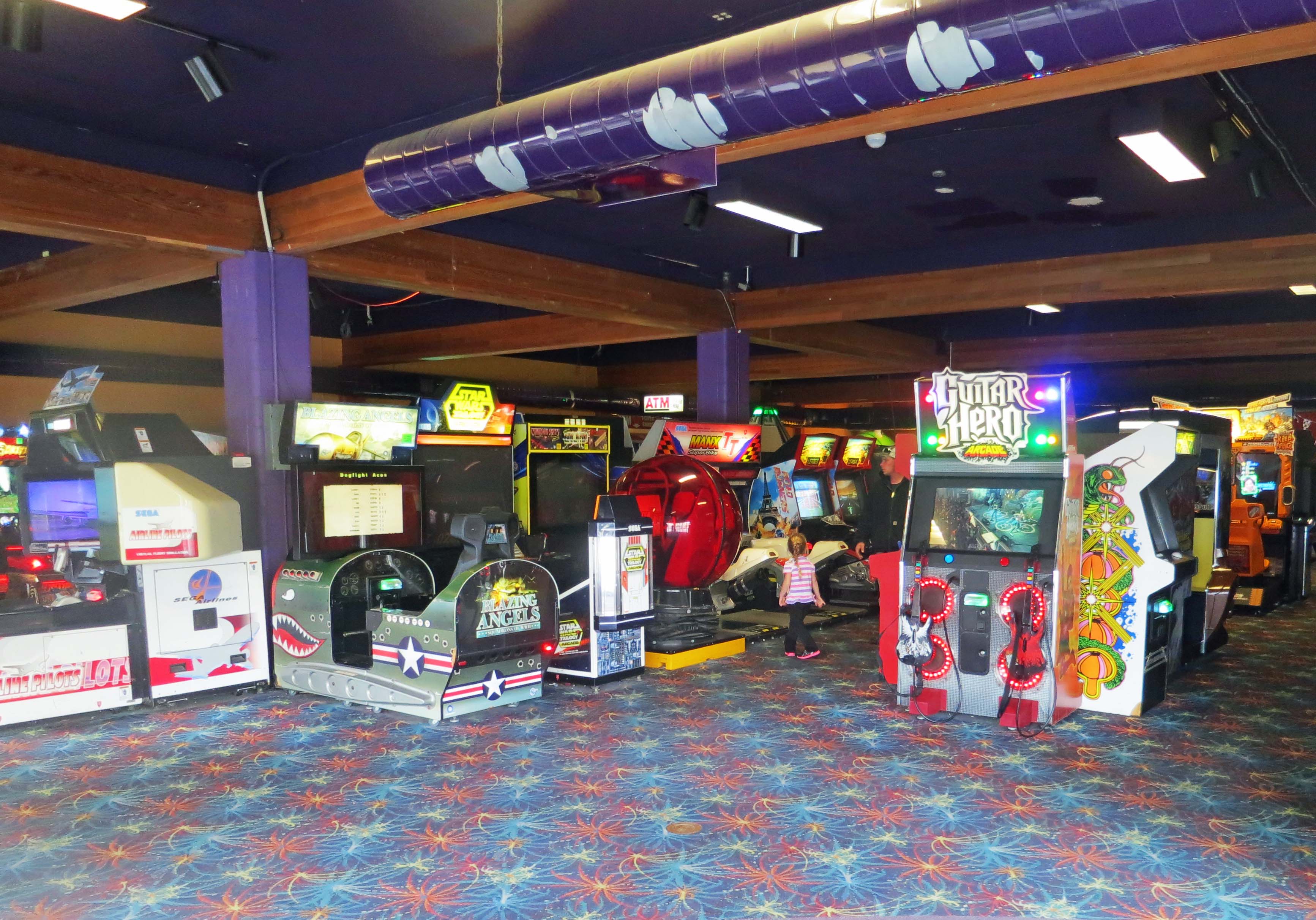
Another symbol of historic coastal resort towns was the Penny Arcade. Although the games and prices have changed, the purpose remains the same: capturing youth. It worked for me as a kid.

Another symbol of historic coastal resort towns was the Penny Arcade. Although the games and prices have changed, the purpose remains the same: capturing youth. It worked for me. I happily mis-spent many hours in such joints playing pinball machines.

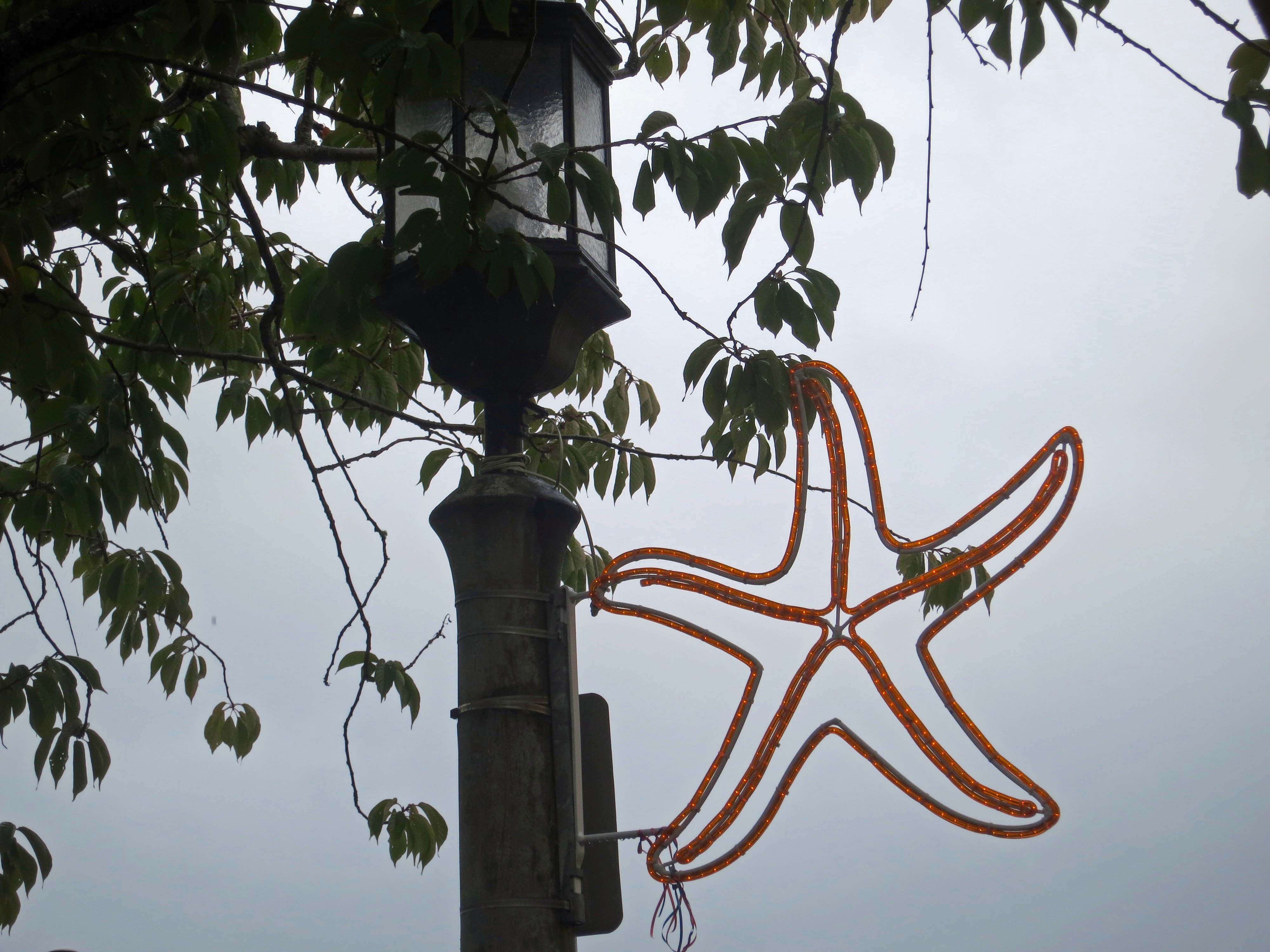
Historic street lamps with attached starfish were found along Broadway and seemed an appropriate symbol for Seaside.

Historic street lamps with attached starfish were found all along Broadway. They seemed an appropriate symbol for Seaside and a fitting end for this post. NEXT BLOG: A photo essay on the pregnant deer that has apparently adopted us. Maybe by Wednesday she will have had her fawn, preferably not on our back porch.


What Do You Get When You Cross a Sundial with a Bridge? Beauty.

Built to accommodate walkers, runners and bicyclists, the Sundial Bridge in Redding, California was constructed primarily with private funds.

Having written about the beautiful bridges found on the Oregon Coast and built in the 1930s, I now turn to a modern bridge with equal but different beauty built in 2004: The Sundial Bridge across the Sacramento River in Redding, California.

It seems like I have been driving through Redding, California forever— traveling back and forth between Southern Oregon and Northern California, heading into the beautiful Trinity Alps on backpacking adventures, and once, even starting a seven-day canoe trek down the Sacramento River from the town. I often stop for food or gas, but I have never considered Redding a destination.

That has changed.

In March, Peggy and I met our friends Ken and Leslie there to begin a week of wandering. We didn’t have anywhere we needed to be, so we decided to spend a day exploring the town and area, which Ken knows well. Our explorations led us to Turtle Bay Park and the incredibly beautiful Sundial Bridge. In addition to its architectural beauty, the bridge happens to be exactly what its name suggests, a sundial. In fact it is one of the largest sundials in the world.

The bridge, completed in 2004, spans the Sacramento River with a 700-foot deck that is made up of 200 tons of granite and glass. Graceful cables connect the deck with the bridge’s 217-foot tall sundial/pylon and provide suspension. The renowned Spanish architect, Santiago Calatrava, designed the bridge. Known for his work on bridges in Europe and numerous other structures around the world, the project was his first freestanding bridge in the United States.

Walkers, bicyclists, runners and one very large group of children on a school field trip were crossing the bridge when we arrived. Peggy, Leslie, Ken and I joined the crowd. I took out my camera and went to work while the others waited patiently. I think you will agree with me on just how spectacular the bridge is.

The Sundial Bridge in Northern California was designed by Spanish Architect Santiago Calatrava.

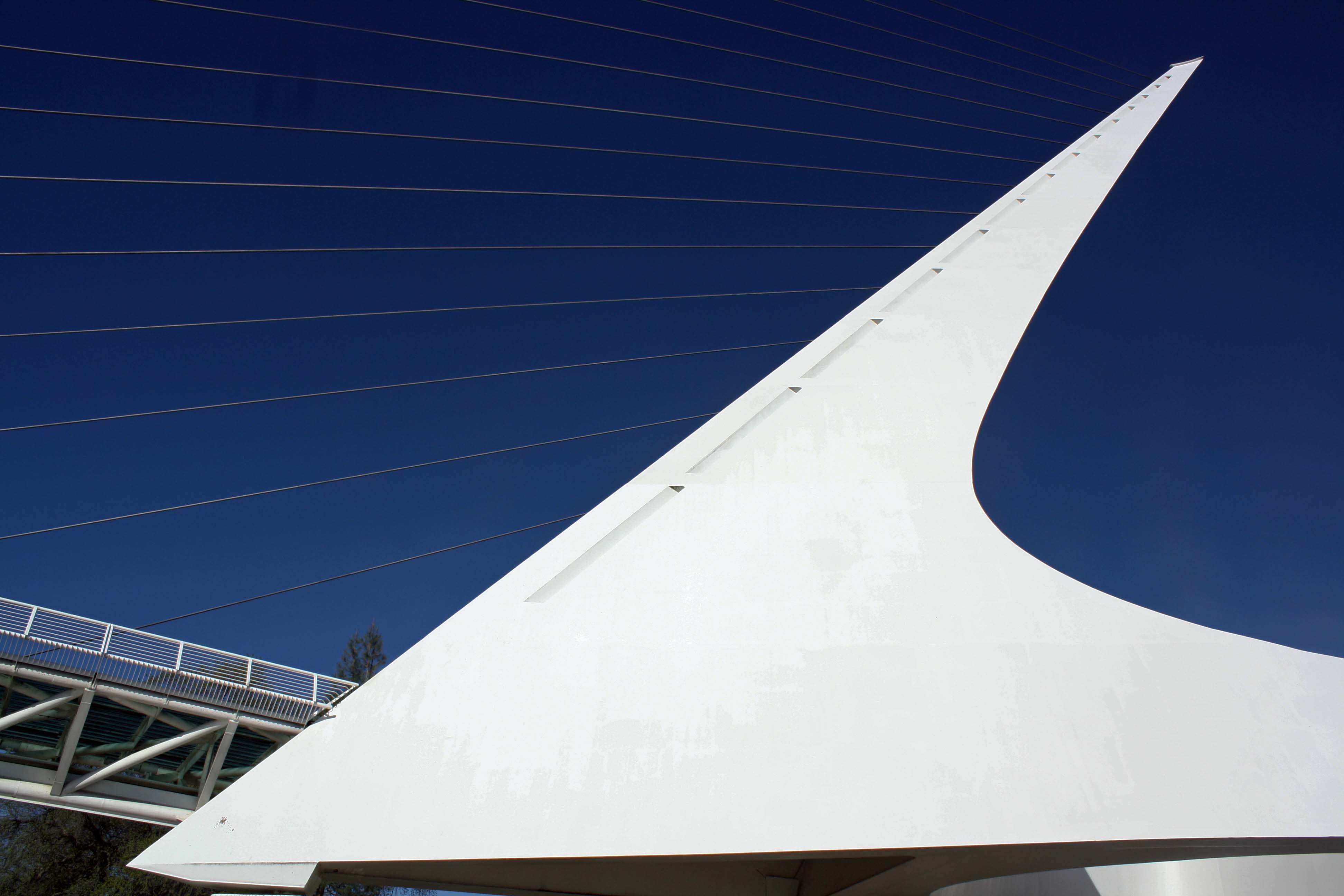
4300 feet of cable connect the deck with a 217 foot pylon, the sundial, and create a freestanding bridge. The deck is composed of glass and granite.

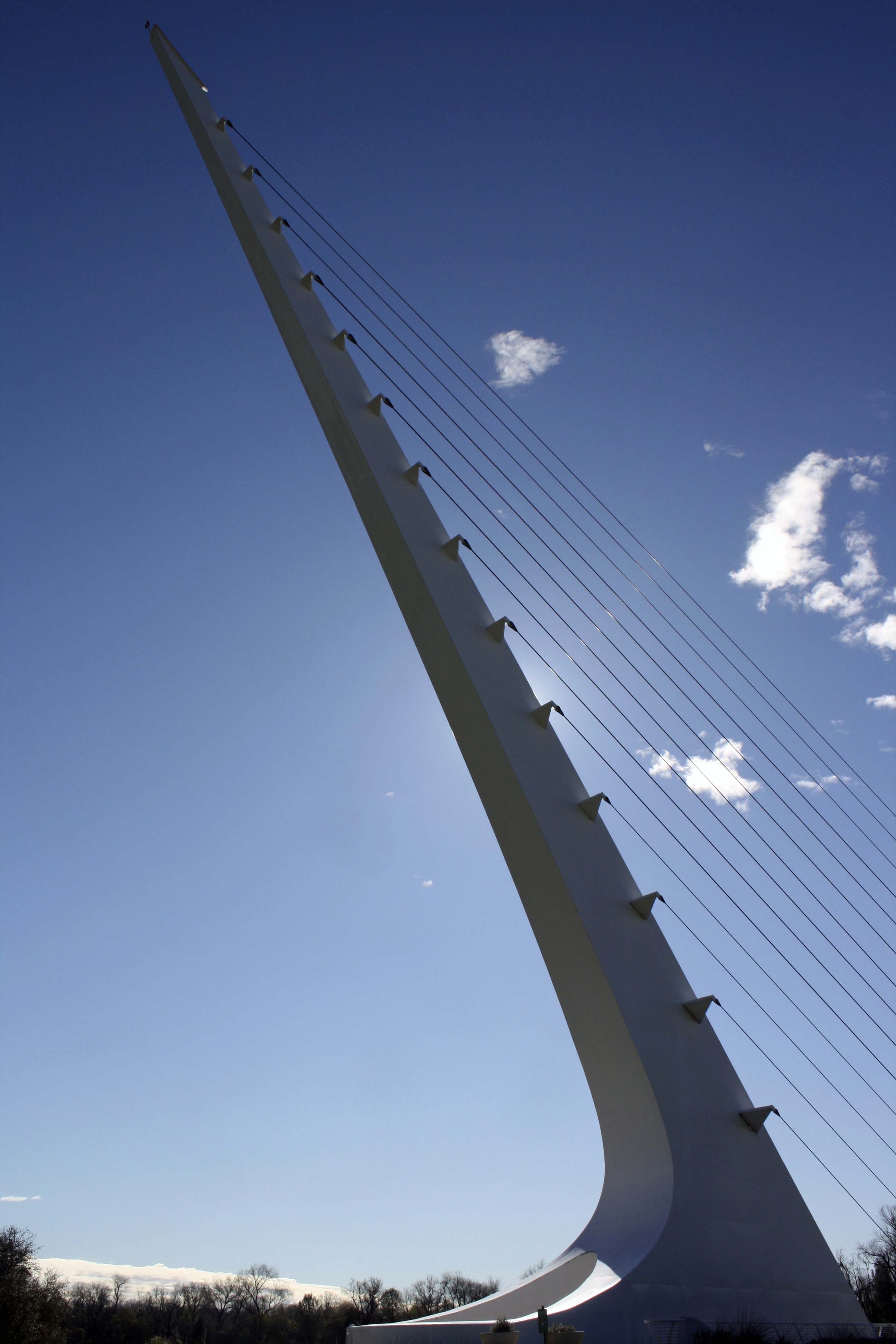
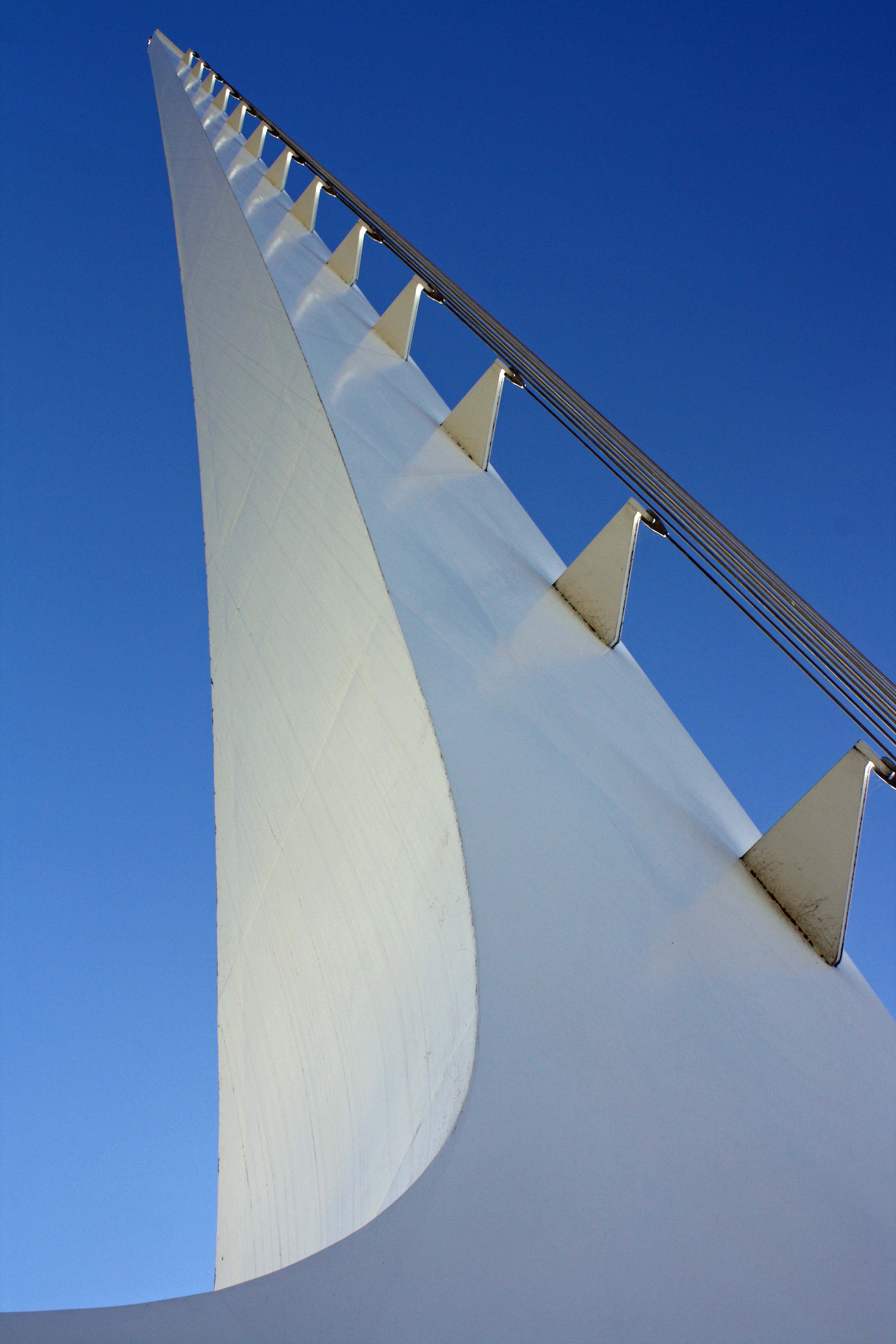
I was particularly struck by the elegance of the pylon that forms the sundial.

I was particularly struck by the elegance of the pylon that forms the sundial and took several photos from different angles.

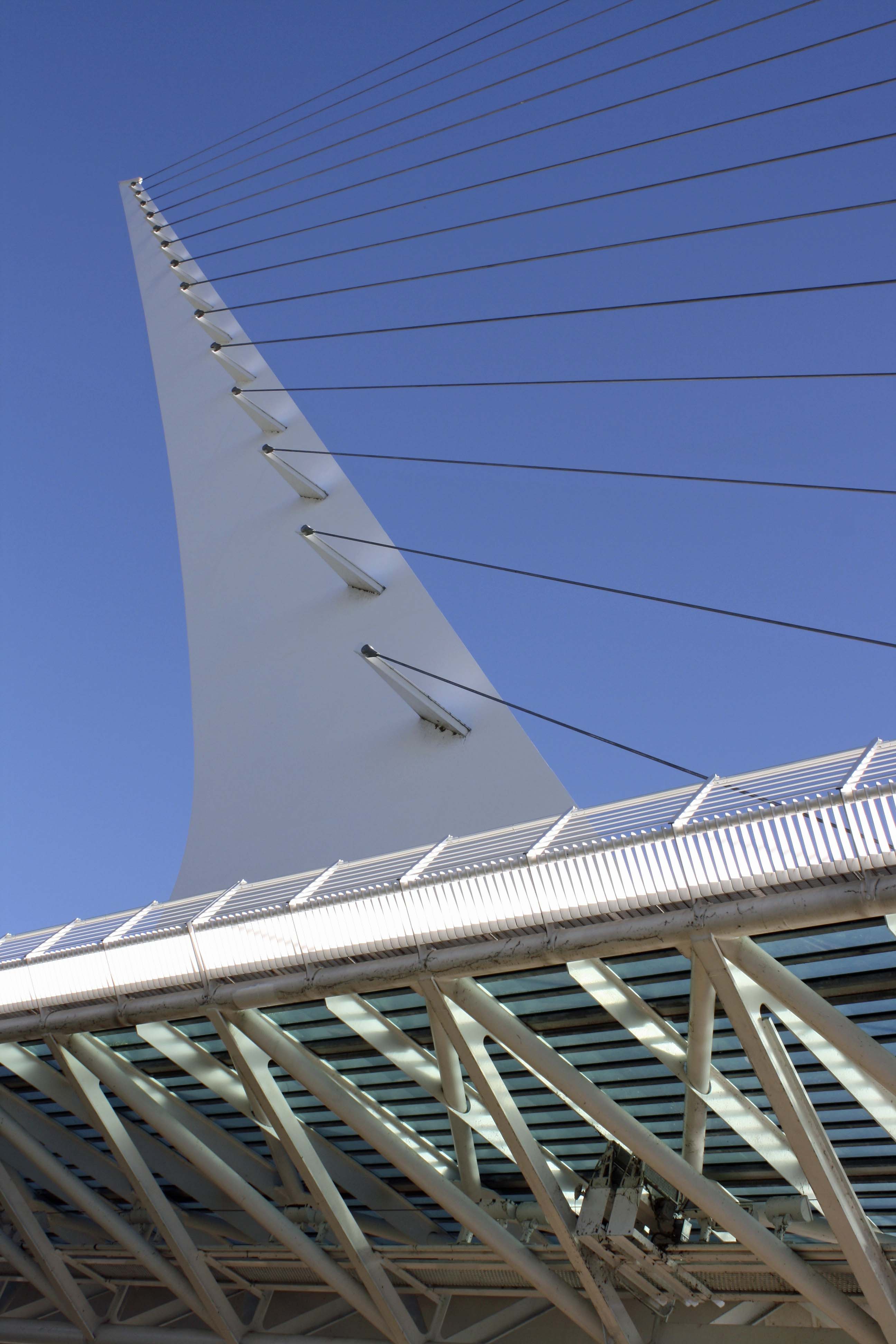
Sundial Bridge in Redding, California  photographed from beneath the deck.

I shot this photo of the pylon from under the bridge. It also captured the glass used in the deck.

From the base looking up.

From the base looking up.

Another perspective.

Another perspective.

View of Sacramento River from the Sundial Bridge in Redding California.

A view of the Sacramento River from the bridge. Coastal Ranges can be seen in the distance.

The Sacramento River is the main source of water for the Northern Sacramento Valley, one of the richest farmlands in the world. The river eventually flows into San Francisco Bay and out into the Pacific Ocean.

The Sacramento River is the main source of water for the Northern Sacramento Valley, one of the richest farmlands in the world. The river eventually flows into San Francisco Bay and out into the Pacific Ocean. The region is now suffering from a severe drought.

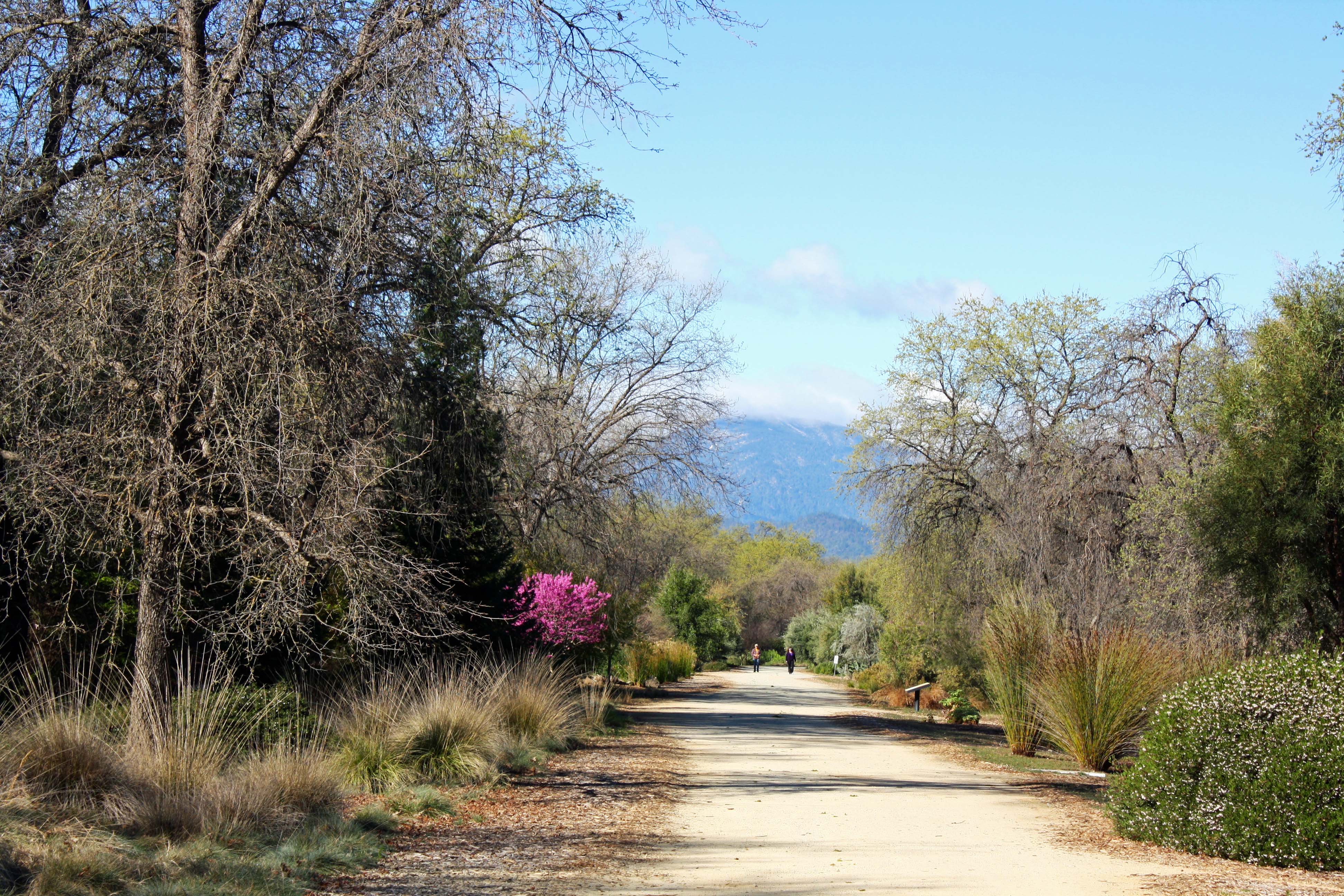
One of the reasons for the bridge is to connect the town of Redding with an extensive series of hiking and biking trails on the opposite side of the river, starting with the McConnell Arboretum.

One of the reasons for the bridge is to connect the town of Redding with an extensive series of hiking and biking trails on the opposite side of the river, starting with a trail through the McConnell Arboretum. Redbud can be seen on the left.

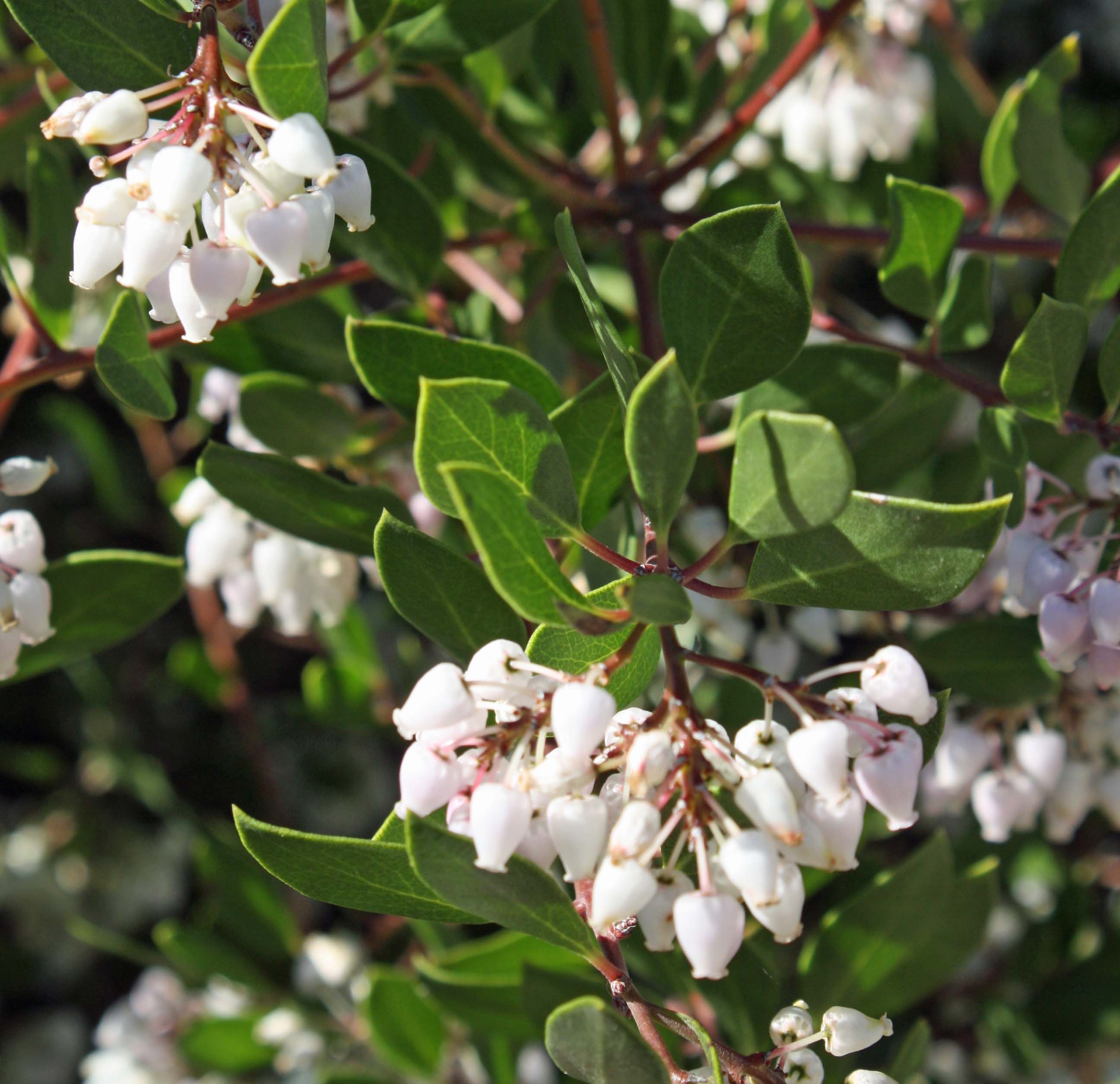
Manzanita was also in bloom with its sweet smelling flowers. This shrub also grows on our property in southern Oregon.

Manzanita was also in bloom with its sweet-smelling flowers. This shrub grows on our property in southern Oregon.

A final view of the pylon that captures its 'sundial' look. NEXT BLOG: Since we were in the area, we went for a hike along the Sacramento River. I'll feature photos.

A final view of the pylon that captures its ‘sundial’ look. NEXT BLOG: Since we were in the area, we went for a hike along the Sacramento River. I’ll feature photos.


Oregon’s Coastal Bridges… Where Engineering, Environment, and Art Meet

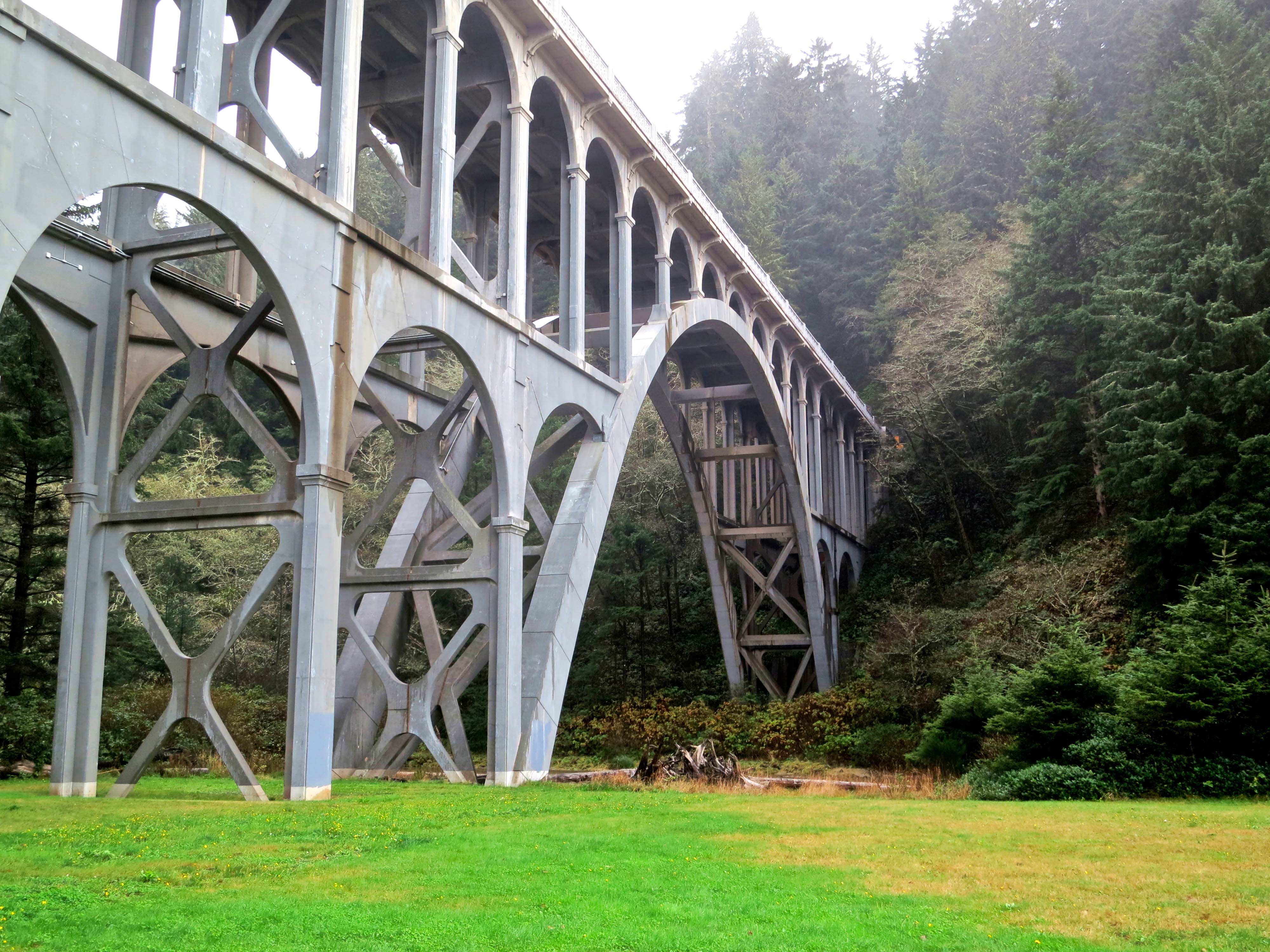
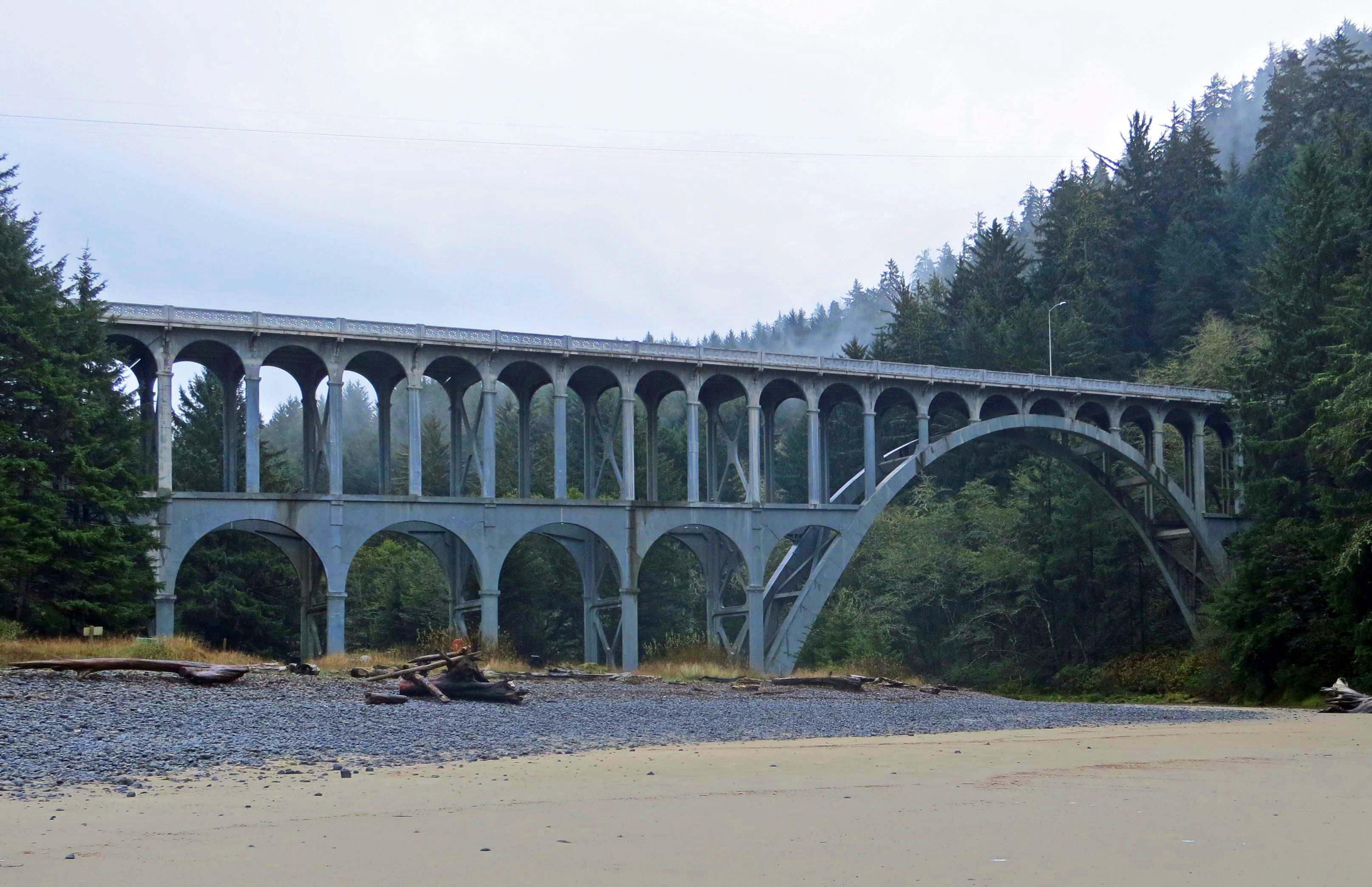
Cape Creek Bridge north of Florence, Oregon was designed by Conde McCollough and built during the early 1930s.

Combining form and function, Cape Creek Bridge in Oregon is an example of how highway bridges can move vehicles, provide beauty, and fit into the natural environment.

With Earth Day 2015 coming up on Wednesday, I stopped to think about the battles we fought during the 70s to protect the environment. One of the toughest was against the highway lobby—bankrolled primarily by the oil industry. “Build more highways!” it and its allies screamed. Buried under a burgeoning population of automobiles, local and state transportation agencies usually agreed. Moving cars and trucks, not people and goods, was the objective. Most traffic engineers believed that their sole task was to move vehicles from point a to b as quickly and efficiently as possible. And they did their job extremely well. Nothing got in the way, including established communities, farmlands and valuable natural habitats. It was the bulldozer era of ‘pave Paradise and put in a parking lot.’ (Joni Mitchell)

In the mid to late 70s, I was working with a community group called the Modern Transit Society (MTS) that was fighting to bring light rail transit to Sacramento, California. The City Traffic Engineer was adamantly opposed to the idea. More dollars for mass transit meant fewer dollars for highways, and the Engineer, along with his counterpart in the County, had roads and freeways planned everywhere. My role with MTS was to oversee political strategy. At one point, relations became so tense between the traffic engineer and me that he would walk out of a room when I walked in. Eventually we won. Today, Sacramento has light rail lines stretching throughout the city and county.

Bridges built at the time, and also during the 50s and 60s, reflected the mania for moving cars. Function, not form, was what mattered. As a result, large ugly concrete structures with minimal aesthetic appeal often dominated urban and even rural landscapes. Bridge construction hadn’t always been that way.

The coastal bridges of Oregon reflect an earlier era. Many were constructed in the 1920s and 30s when Highway 101 was being built to connect coastal towns. Oregon was extremely fortunate to have Conde McCullough at the helm of the highway department’s bridge division for much of this time. Part civil engineer, part architect, and part artist, he believed that bridges should be built economically, efficiently, and aesthetically. His vision lives on today, as any trip down the Oregon Coast quickly demonstrates.

Conde McCollough served as Oregon's state bridge engineer from 1919 to 1935, following which he spent a couple of years designing bridges along the Pan American Highway in Central America.

Conde McCollough served as Oregon’s state bridge engineer from 1919 to 1935, following which he spent a couple of years designing bridges along the Pan American Highway in Central America. (Photo from information sign on Highway 101.)

Today I am going to feature one of McCullough’s creations, the Cape Creek Bridge located on Highway 101 north of Florence, Oregon, and a small park that lies below the bridge. Later, I will do posts on two of his other bridges plus a modern pedestrian and bike bridge in Redding, California that is breathtaking.

Cape Creek Bridge north of Florence, Oregon on Highway 101.

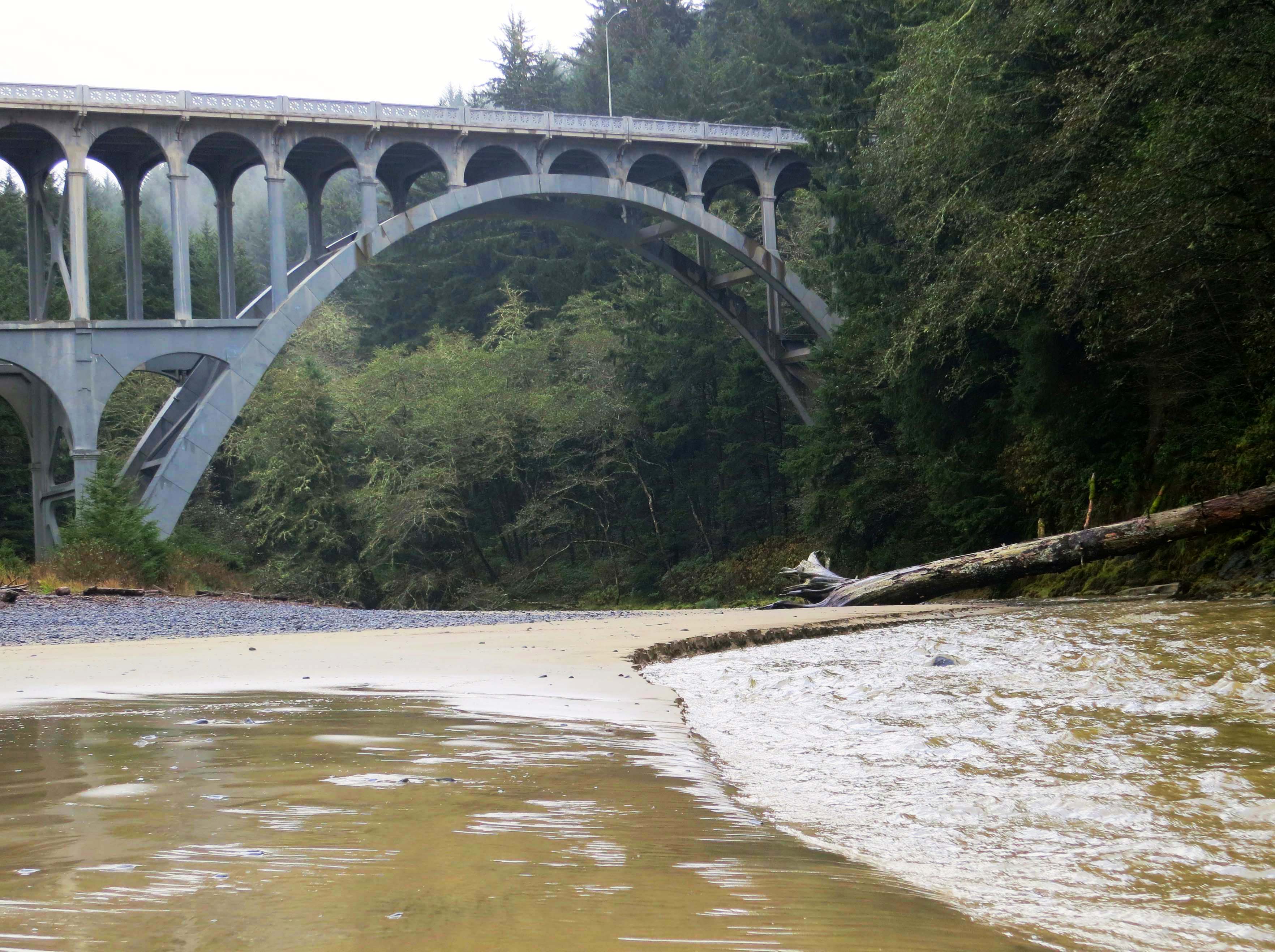
Another view of the Cape Creek Bridge, this time including Cape Creek. It had been raining hard, as reflected by the creek’s muddy waters.

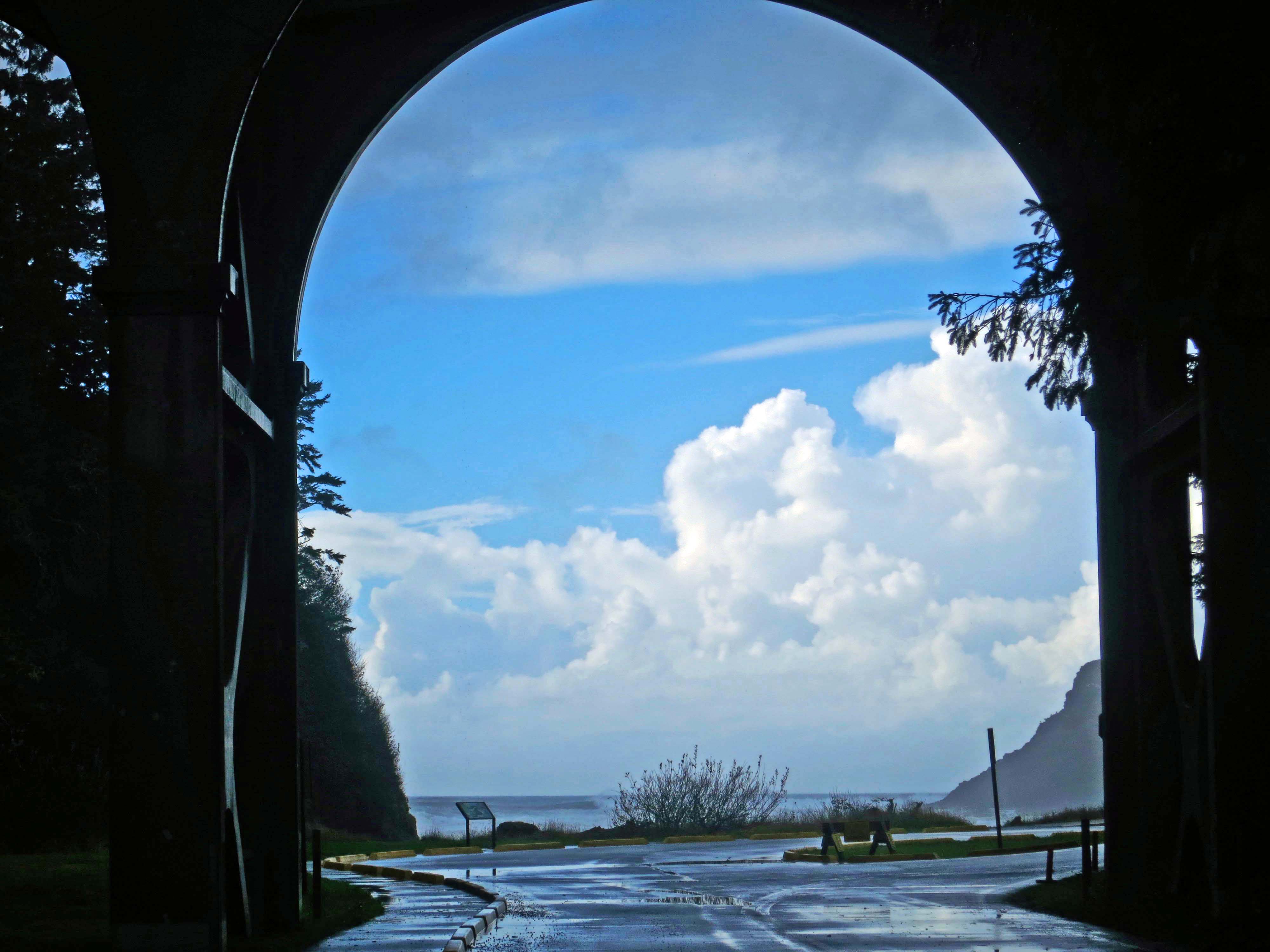
Looking out from a span of the Cape Creek Bridge onto the small ocean cove the creek empties into.

Looking out from a span of the Cape Creek Bridge onto the small ocean cove the creek empties into.

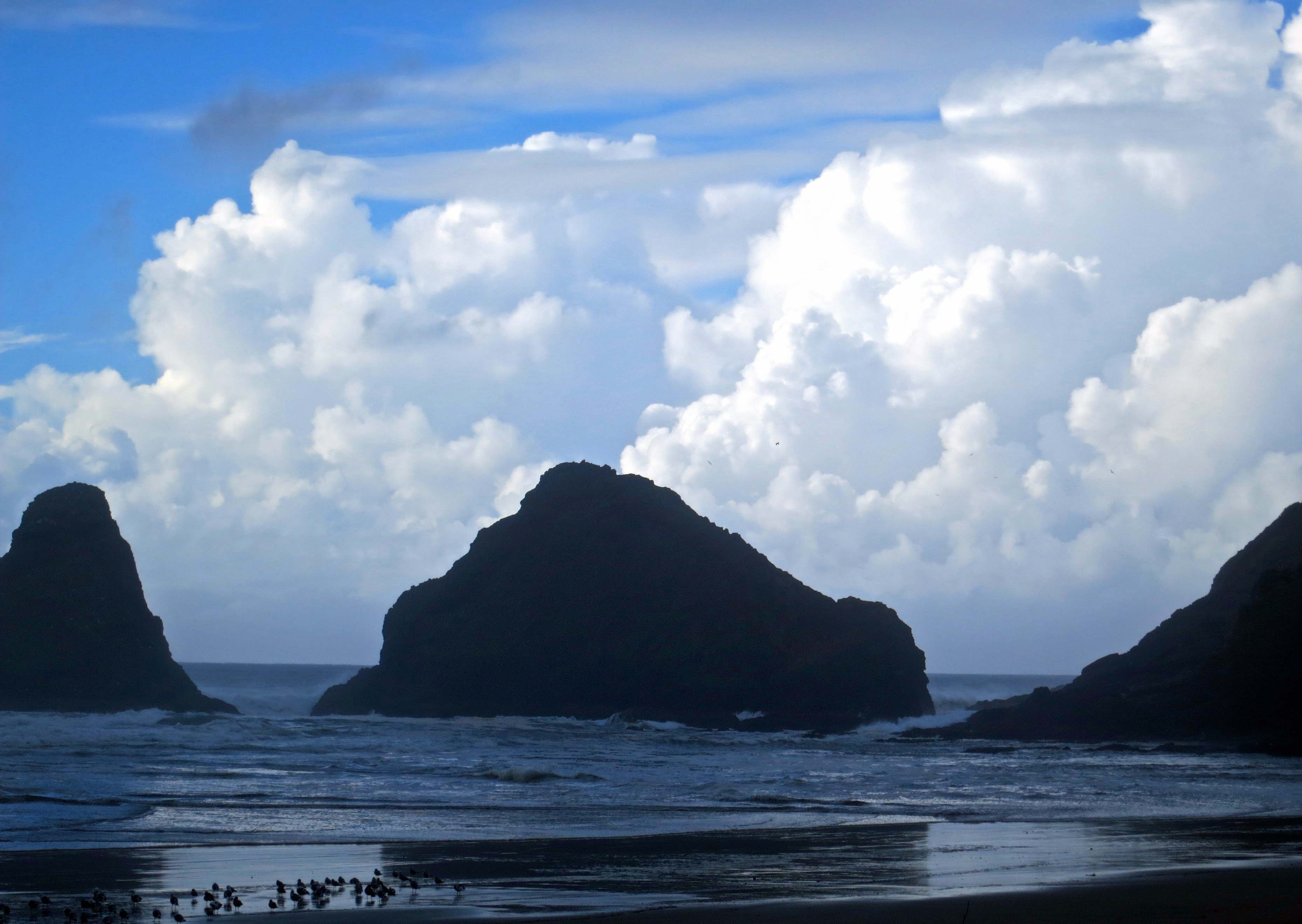
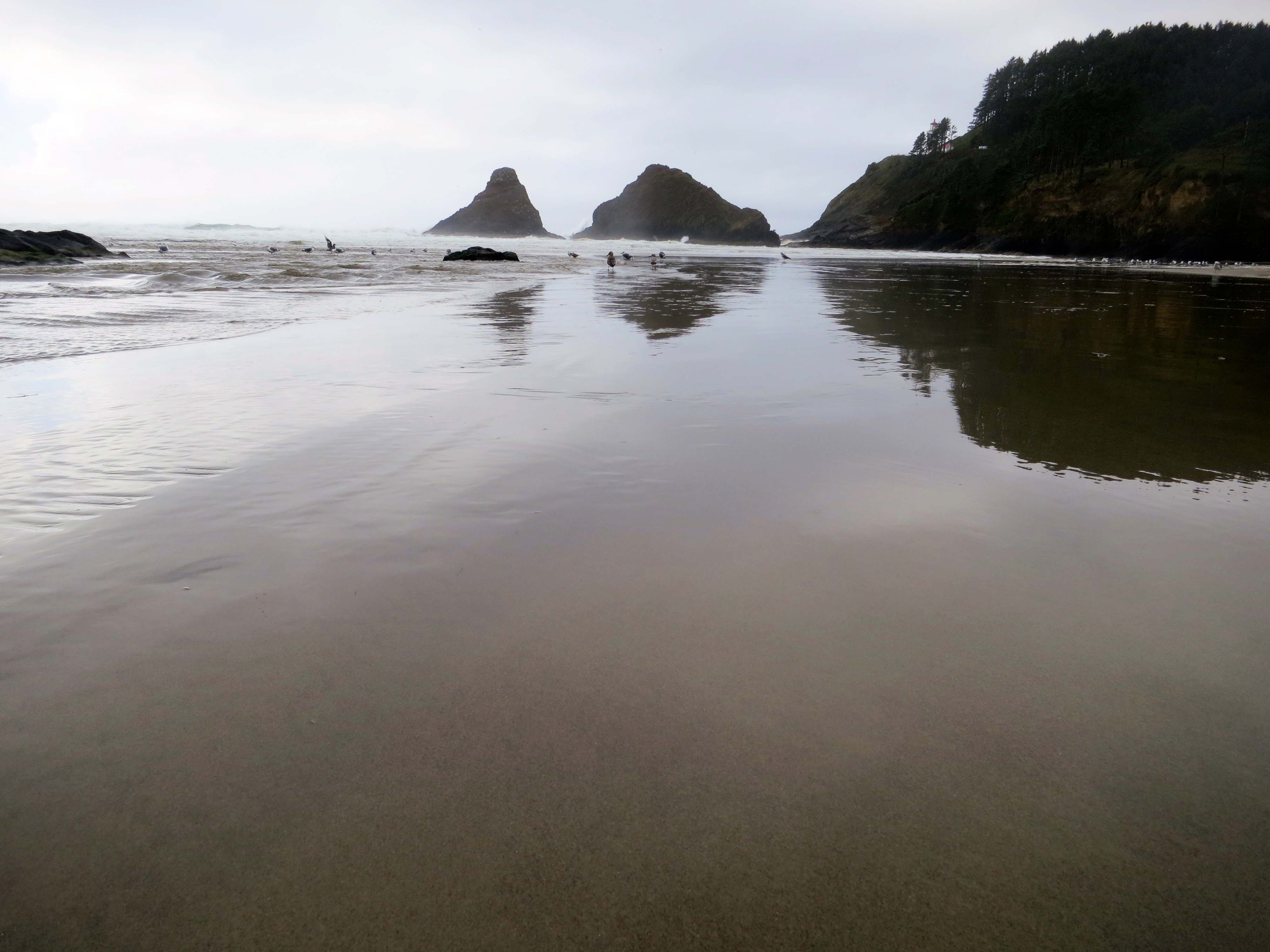
Cumulous clouds outline sea stacks in Cape Cove on the Oregon Coast.

Small islands in Cape Cove outlined by the dramatic sky. Sea gulls are gathered in the lower left corner.

One of the sea gulls takes flight. I was walking along behind it, posed to takes its photo when it flew.

One of the sea gulls takes flight. I was walking along behind it, poised to takes its photo when it flew. There are three things I like about the picture: the wings, the gulls left foot as it runs, and the reflection.

The tide rolls onto shore at Cape Cove on the Oregon Coast near Florence, Oregon.

The tide rolls in to Cape Cove.

Low tide exposes the beach at Cape Cove off of Highway 101 on the Oregon Coast.

And the tide rolls out.

Cape Creek Bridge in Lane County on the Oregon Coast.

A final perspective on the Cape Creek Bridge. The bridge is 619 feet (188.6 meters) long and was designed to look like a Roman aqueduct. NEXT BLOG: Earth Day