The Incredible Red Rock Country of Sedona— and a Chapel… Part 1

Sedona west

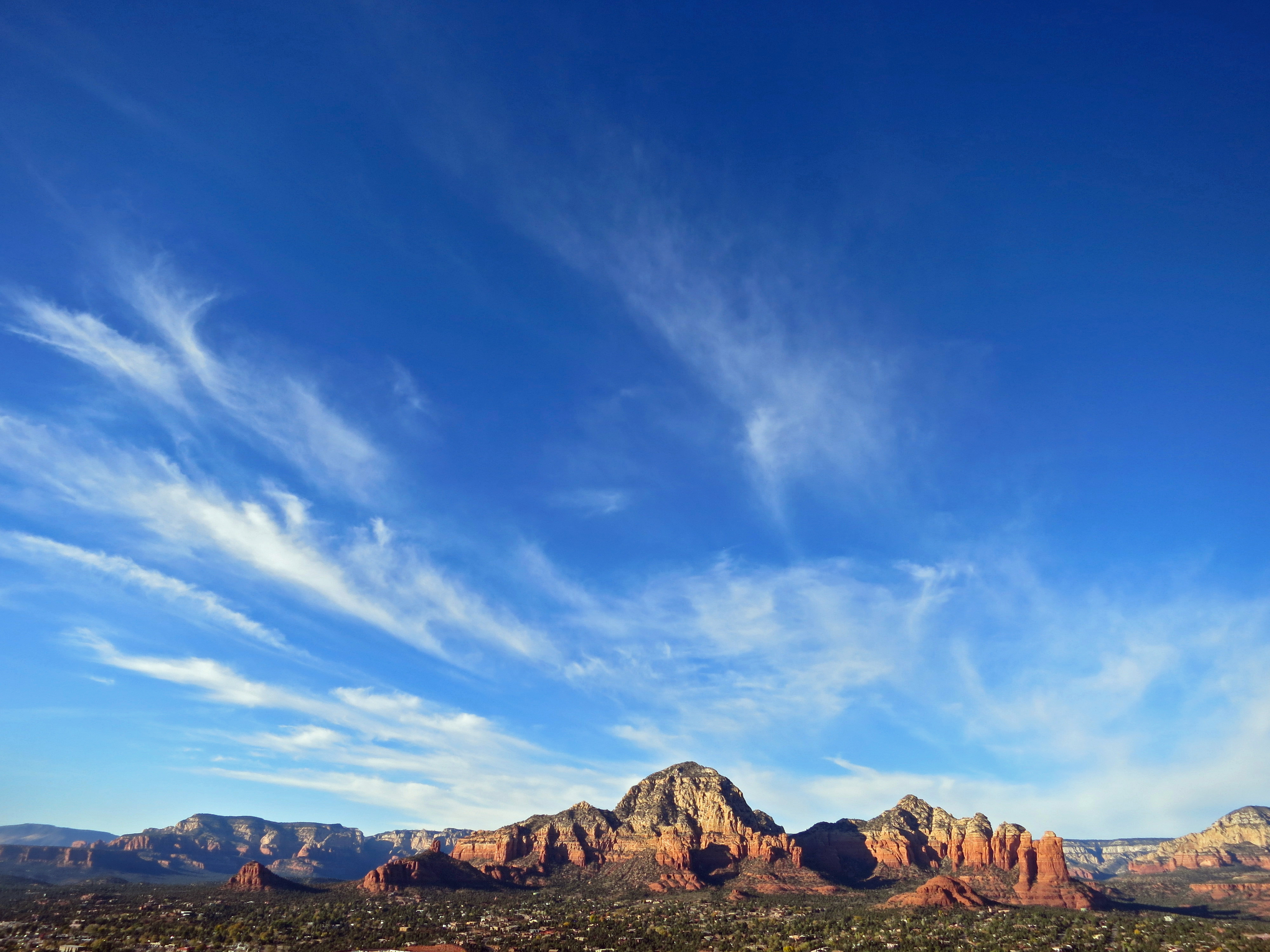
The town of Sedona (center photo) is surrounded by striking scenery. I took this picture from near the airport looking west.


It’s time again for the Wednesday Photo Essay. Today and next Wednesday, I will be featuring Sedona, Arizona.


I still remember the first time I followed Oak Creek Canyon down from Flagstaff, Arizona to Sedona. I had been up backpacking down in the Grand Canyon in 1986 and the side trip was something of an afterthought. I’d seen photos of the area’s striking red rocks and knew of the town’s New Age reputation. There were supposedly vortexes found there, psychic hot-spots that UFOs liked to visit. How could I resist? On the other hand, how could it possibly match my experience in the Canyon? Would I be disappointed?

The answer is a firm no; the detour was different— but very worthwhile.

I’ve been back several times since. The beauty of the red rocks calls to me and I find the New Age character of its inhabitants both interesting and amusing. I read recently that there are 176 New Age-oriented businesses in Sedona. I doubt that any other community in the world can claim such a concentration. The Age of Aquarius is alive and well!

Sitting on a vortex in Sedona, Arizona

Ommm. Here I am, sitting on a red rock vortex point below the Sedona airport practicing my meditation technique and waiting for a UFO. A heretofore unnoticed aura is wrapped around my head. Grin. (Photo by Peggy Mekemson.)

My last visit was three years ago when Peggy and I visited for a week in November along with our friends Ken and Leslie Lake. The pictures from this and next week’s Wednesday photo essays are from that trip. Today’s will be mainly from the east side of town. Next week I will post photos from the west side including a hike up Boynton Canyon. Enjoy.
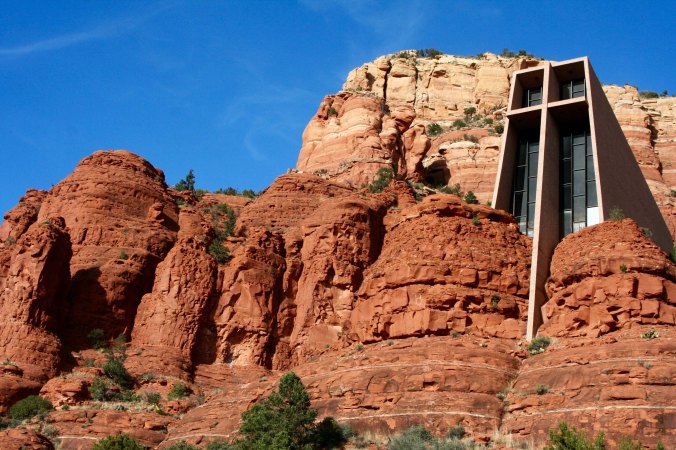
Chapel of the Holy Cross

One of Sedona’s most famous sites is the Chapel of the Holy Cross. (Photo by Peggy Mekemson.)
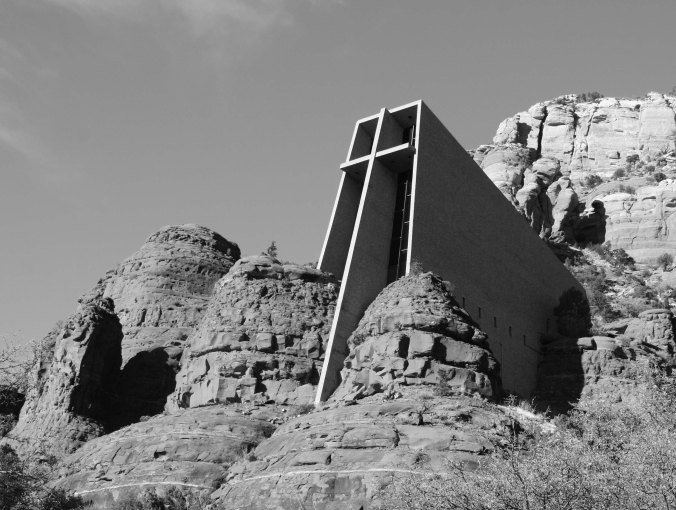
Chapel of the Holy Cross in Sedona

I decided that the chapel and its surroundings would do well as a black and white photo.

Chapel of Holy Cross in Sedona, Arizona photo taken by Curtis Mekemson

Another perspective.

Twin rocks in Sedona, Arizona

These striking rocks are located east of the chapel. We took several photos. This one was by Peggy. I think this pair is known as the Two Nuns.

Twin rocks in Sedona, AZ

I added a tree for contrast.

Sedona Cactus

Peggy caught this cactus just down from the chapel.

Cactus and twin rocks in Sedona

And I took a photo of its companion with the Nuns!
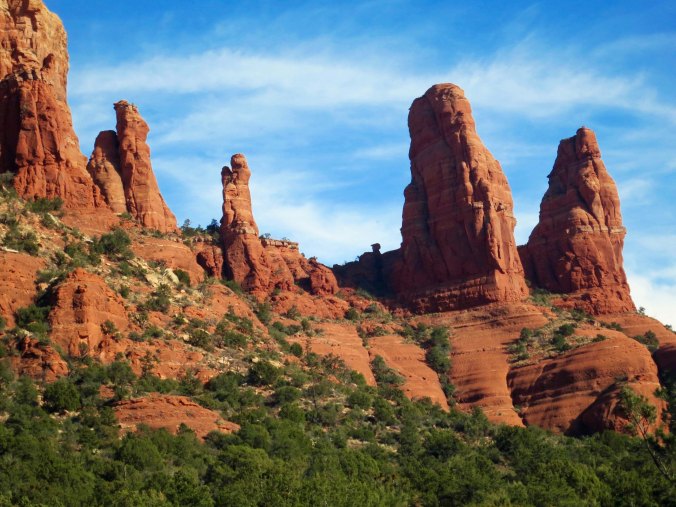
Twin rocks in Sedona

Several other towers were located above the Nuns…
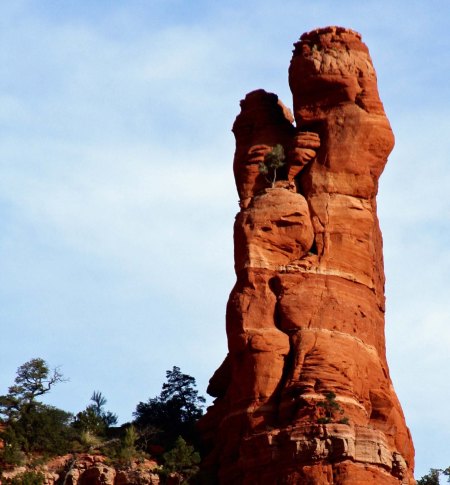
Sedona red rock column

Including this beauty. (Photo by Peggy Mekemson.)
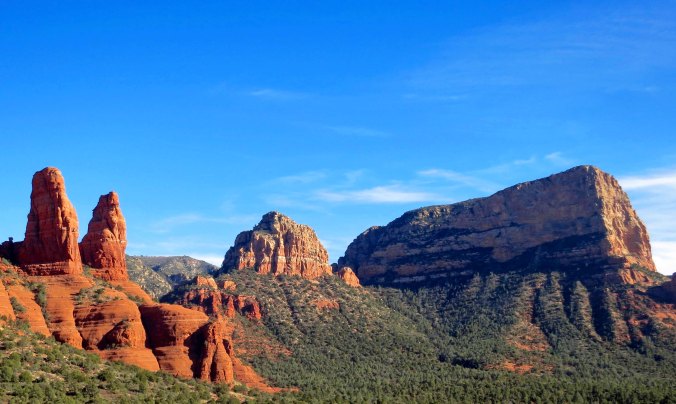
Sedona, Arizona

The view south wasn’t bad either!

Sedona Arizona rock

Bell Rock in Sedona

Most of the prominent rock formations around Sedona have been named. I’ll close today with Bell Rock. Be sure to check in next Wednesday for more of the red rocks of Sedona as we journey east of the town to the area featured at the top of this post.


FRIDAY’S POST: My sister Nancy Jo is attacked by the Graveyard Ghost. A very scary tale.

MONDAY’S POST: A trip through the Grand Canyon by raft on the Colorado River.

WEDNESDAY’S POST: We return to Sedona for more gorgeous red rocks.

SaveSave

SaveSave

SaveSave

A Big Bird Petroglyph and a 1.6 Million Gallon a Day Spring… The Sedona Series

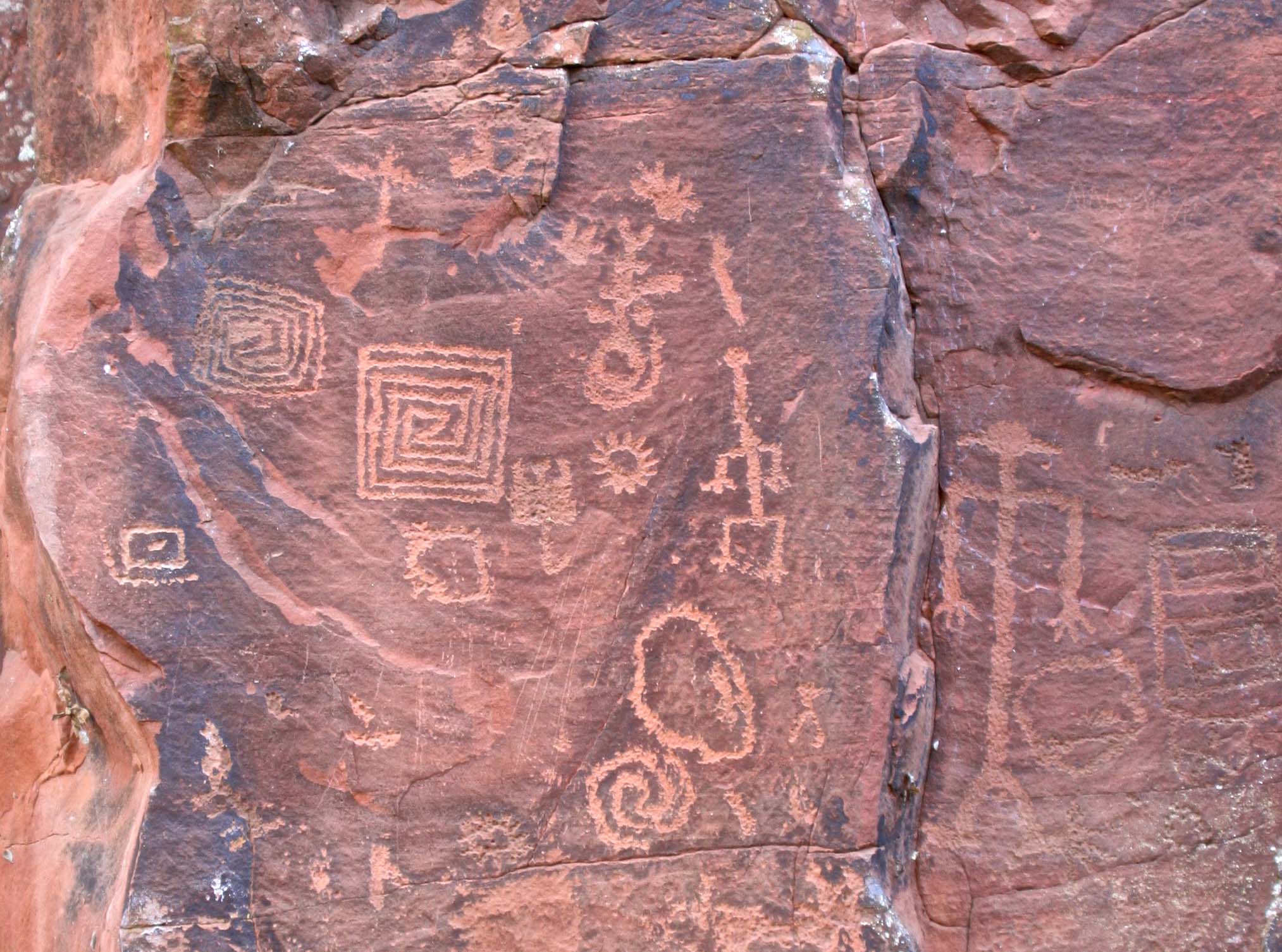
Big birds and camp dogs, four of !032 petroglyphs at the V-bar-V Heritage Site in the Verde Valley of Arizona.

Big birds and camp dogs, four of 1032 petroglyphs found at the V-bar-V Heritage Site in the Verde Valley of Arizona.

Sinagua rolls off the tongue easily, like so many Spanish words do. It is a name applied to Native Americans who lived in the Verde Valley between 500 and 1425 CE by the archeologist Harold Colton. Sinagua means ‘without water.’ The early Spaniards originally applied it to the San Francisco Mountains north of Flagstaff, the Sierra Sin Agua. I think they were disgusted that such beautiful mountains didn’t produce a river.

On our recent visit to Sedona, we visited two areas that did have water, however: the V-Bar-V Heritage Site and Montezuma’s well. The fact they had water made them important to the Sinagua. The V-Bar-V Heritage Site is known for its fine collection of petroglyphs— Native American rock art. Fortunately, the ranchers who had owned the V-Bar-V and ran their cattle along Beaver Creek both appreciated and protected the rock art.

V-Bar-V, by the way, reflects the ranches brand, V—V, that would have been burned onto the hide of its cattle. Branding helped identify the ranch’s cattle when they got mixed up with the neighbors. It also discouraged cattle wrestling, which was a popular way of supplementing your income in the Old West. Marketing gurus today apply the term branding to establishing your unique product, whether its potato chips or blogs.

If you been around my blog for a while, you are aware that Peggy and I really like rock art, both as an art form and for its historic context. I also find many of the petroglyphs humorous. Who know whether the Native Americans artists found them so. Most of what we know about rock art fits under the category of speculation.

The V-Bar-V site includes 1,032 petroglyphs on 13 panels, according to the archeologists who count such things. Most were created between 1150 and 1400 CE. The Sinagua packed their bags and abandoned the area in 1425 as part of a massive migration that impacted the whole Southwest for some unknown reason. Maybe a visionary shaman predicted that the Europeans were coming and would ruin the neighborhood. (Just kidding.) Anyway, the petroglyphs include zoomorphs, animal like figures, anthopomorphs, human like figures, and various geometric forms representing everything from maps to astronomy. While half listening to the volunteer led tour, Peggy and I were busy with our cameras.

Long neck or long body? I often fine a humorous side to rock art.

Long neck or long body? Check out the two human-like figures on the right. I often find something humorous about rock art. (Photo by Peggy Mekemson.)

Rock art at V-Bar-V Heritage Site near Sedona, Arizona

Love the tail.

Sinagua rock art at the V-Bar-V Heritage Site in the Verde Valley of Arizona.

Archeologists believe the circles represent the sun and serve as a planting calendar.

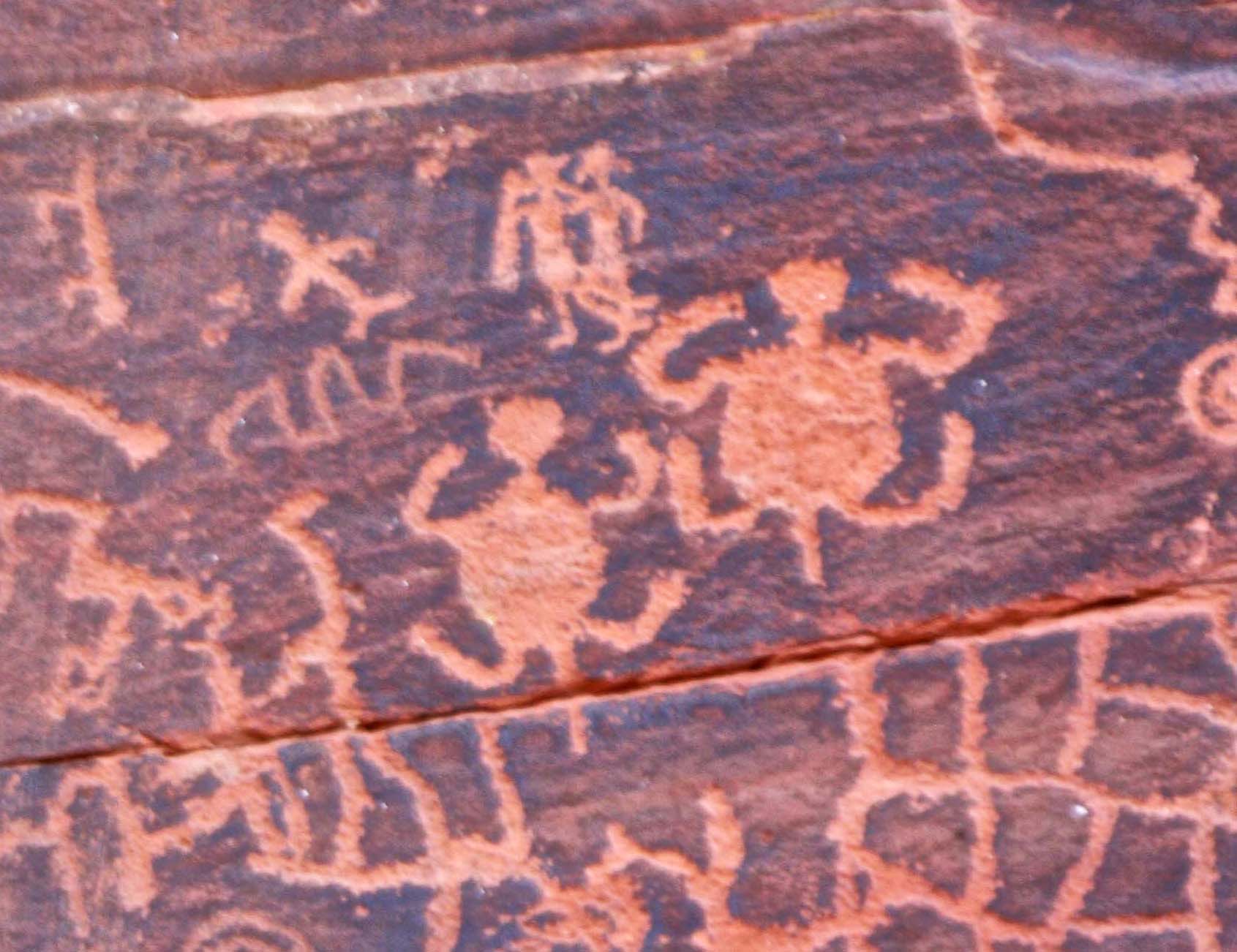
The two turtles are quite impressive. But what about the couple above the turtles. My imagination tells me they are dancing.

The two turtles are quite impressive. But what about the couple above the turtles. My imagination tells me they are dancing.

We found Montezuma’s Well a few miles away from the V-Bar-V Heritage Site. There is also a nearby Montezuma’s Castle that we didn’t get to. The so-called castle is a large cliff dwelling. Neither the Well nor the Castle has anything to do with Montezuma, however. Think profit. Early entrepreneurs believed that stealing the famous Aztec emperor’s name would attract more tourists. So here we are back to branding. They are lucky Montezuma didn’t wreak a little revenge on them for the theft. That could have gotten messy.

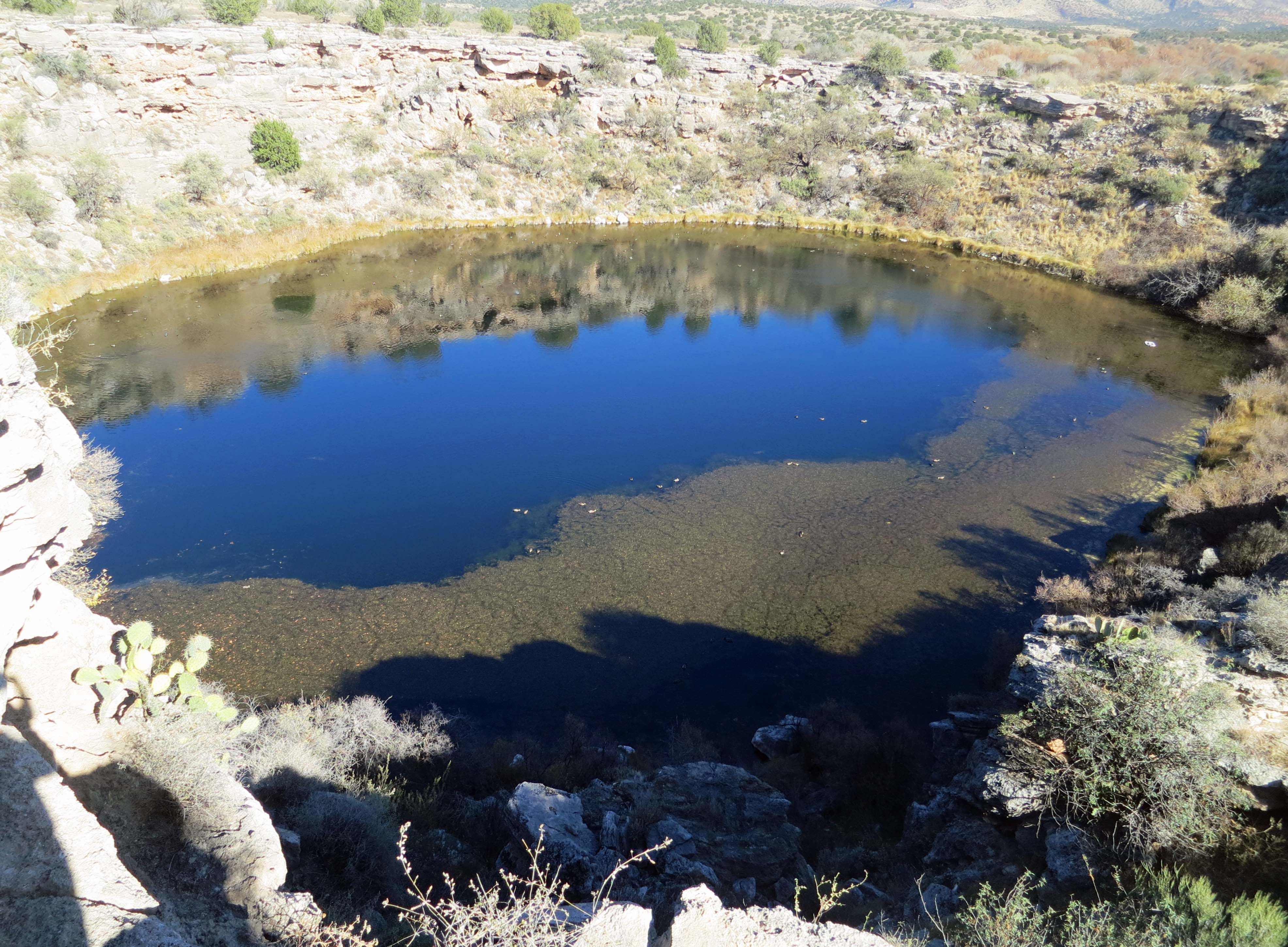
The Well is actually a large sinkhole with a very productive spring in the middle that pumps out some 1.6 million gallons (6 million liters) of water each day. Given that it manages to do this in the middle of a desert and has been for several thousand years, it is no wonder the Sinagua and other local natives found the spring so valuable. The Yavapai Indians even find it sacred; they believe that their ancestors emerged from the spring. Their legend contends that nothing can re-enter the hole once it has emerged. You can’t go home again.

Scientists have learned a lot about the spring. They have been studying it for decades. For one, they believe the water originates up on the Mogollon Rim where it percolates down through various rock layers until it hits the permeable Red Wall Sandstone, which it follows south until it reaches an impermeable volcanic dike, forcing it to the surface. Fish can’t live in the water, but leeches do, thousands of them. I was not tempted to go for a swim.

Not surprising, there is ample evidence including a number of dwellings that demonstrate the spring’s early use by the Sinagua and others. As for the name, I prefer the Hopi’s name for the spring, Tawapa, which means sun spring.

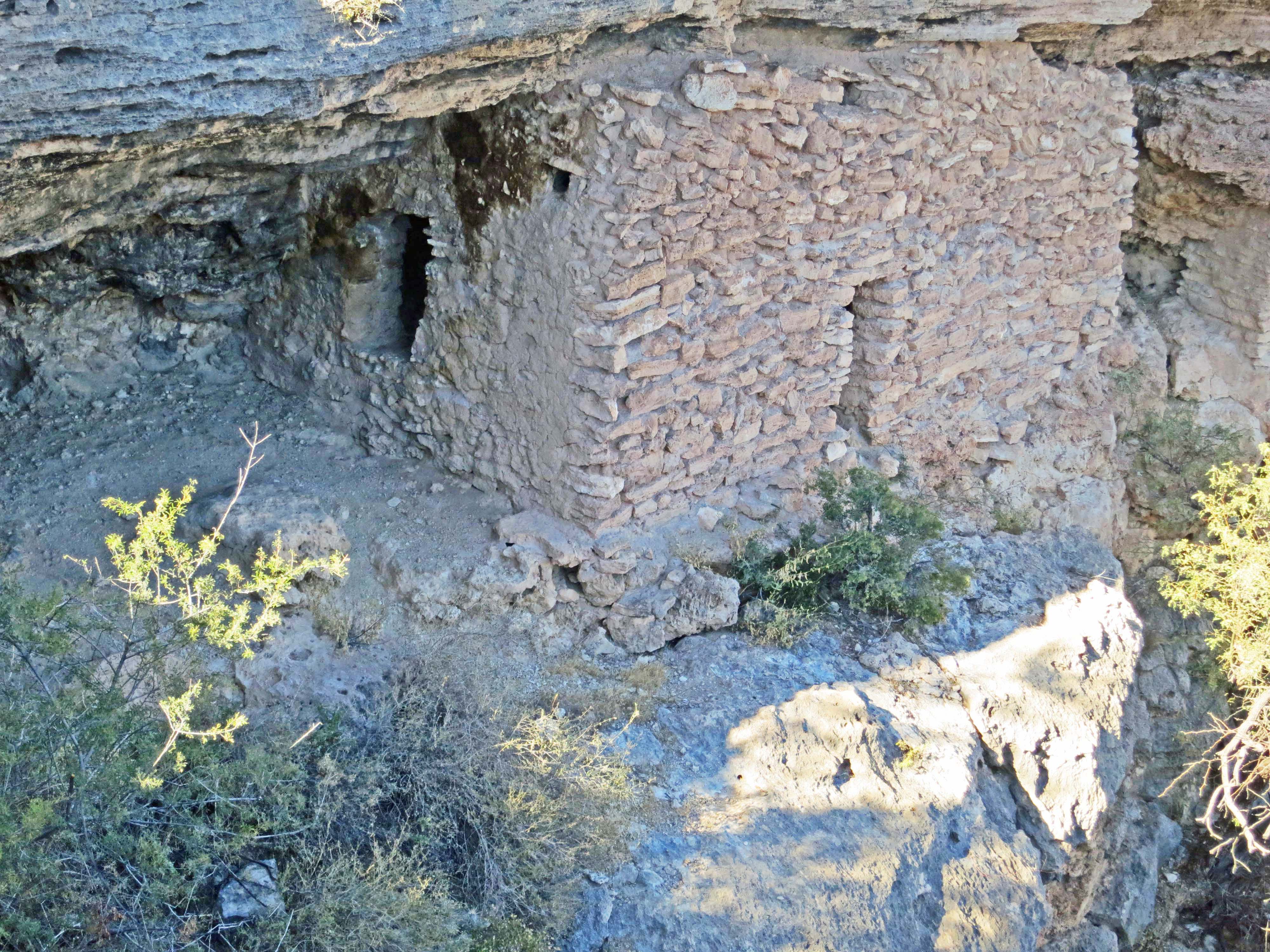
Montezuma's Well and cliff house in the Verde Valley of Arizona.

A cliff house perches above Montezuma’s Well. (Photo by Peggy Mekemson.)

The same cliff house from a different perspective.

The same cliff house from a different perspective. (Photo by Peggy Mekemson.)

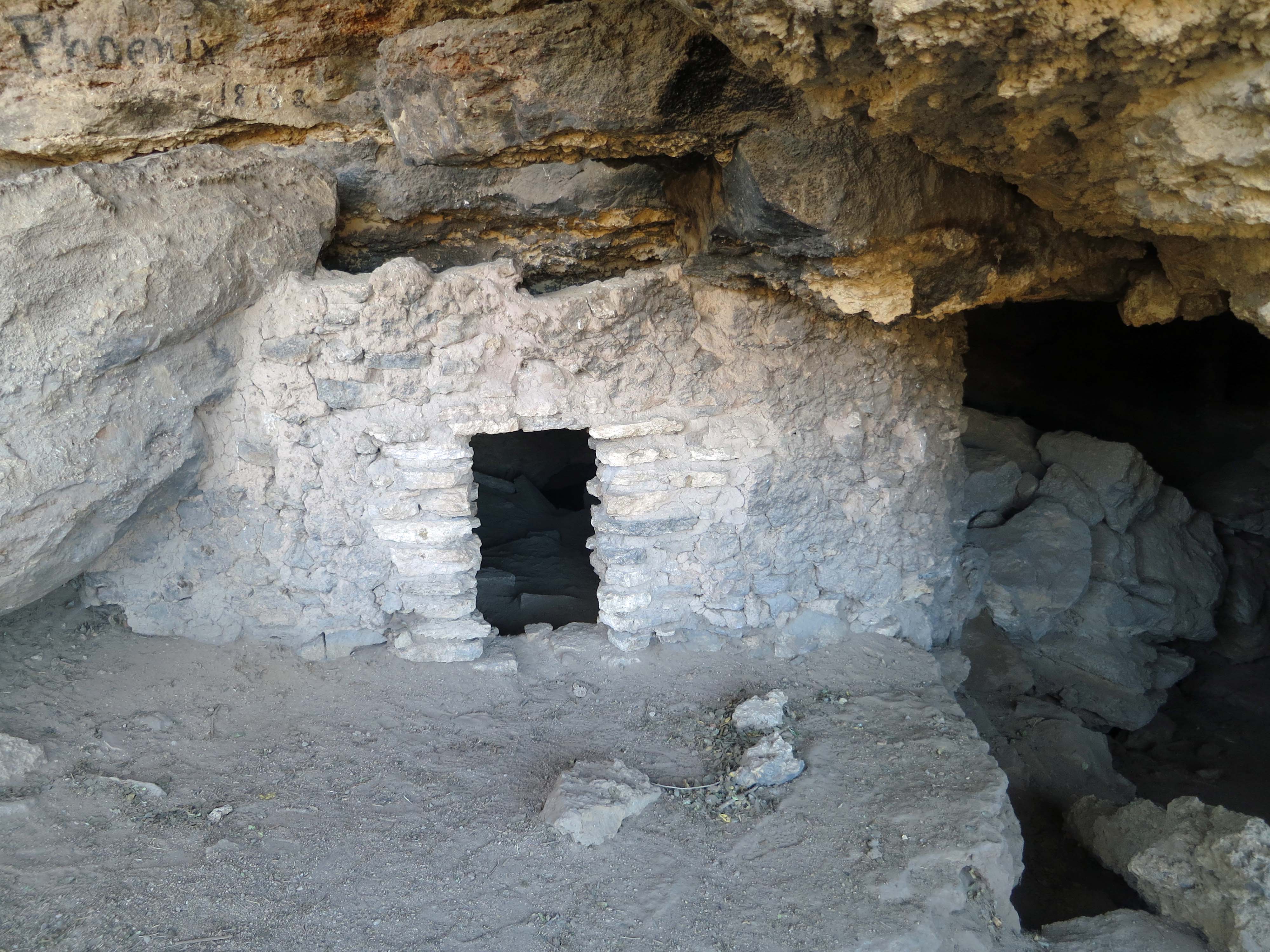
We found this shelter down next to the water, very well protected from the elements.

We found this shelter down next to the water, very well protected from the elements.

Inlet from Montezuma's Well in the Verde Valley of Arizona.

A small inlet from the spring ran next to the shelter and probably provided water. I liked the reflection shot it provided.

Ruins of Native American shelters found at Montezuma's Well in Verde Valley, Arizona.

Just down the trail from the shelter, we found more ruins.

A final shot taken down into Montezuma's Well. Next Blog: Burning Man 2015: the Theme.

A shot from the rim of Montezuma’s Well.

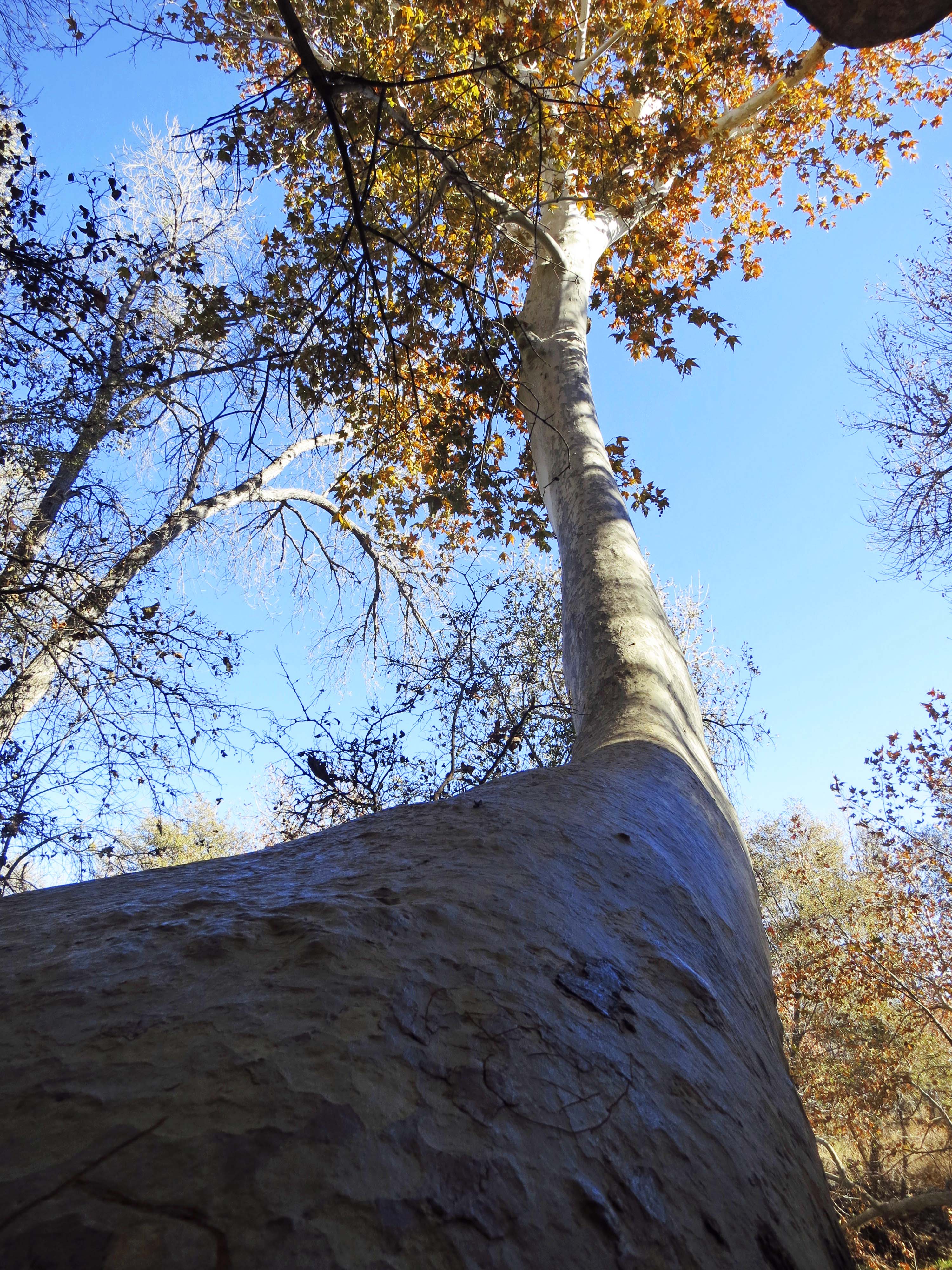
I found this tree growing  down in the valley. It demanded I take its picture.

I found this tree growing down in the valley below the Well. It demanded I take its picture. Native Americans farmed  in the valley with water from the spring.

More ruins are found above the well. Native Americans farmed some sixty acres in the valley below with water from the spring.

A final photo. This ruin was perched above the valley just down from the edge of the Well. NEXT BLOG: Burning Man… the 2015 theme.

Wandering the Far West in 2014… Interim 2

The cover: A tufa tower in Mono Lake with Sierra Nevada Mountains in Background. Eastern California.

The cover of our 2015 calendar: A tufa tower at Mono Lake with Sierra Nevada Mountains in background. Eastern California.

I am still working on my blog about Peg’s dad and his experience as a Hump pilot in World War II. In fact, Peggy’s brother, John Dallen Jr., is now helping. I’ve been learning a lot. For example, yesterday, I discovered the approximate location where the plane John Sr. was flying crashed in the Indian jungle. I find the new information fascinating, but the research is slowing down the post.

In the meantime, I decided to put up another interim post or two. Today is calendar day. Each year, Peggy and I create a calendar for our families using photos we have taken during the year. Family birthdays and anniversaries are included. This year we are mailing out 28 calendars, which include 80 birthdays and anniversaries.   It’s quite the production.

Since the photos we use on the calendar reflect this past year’s adventures and are among some of our favorites, I thought they would be fun to share on the blog. If you are a regular follower of Wandering through Time and Place, I am sure you will recognize several of them. All photos were taken by either Peggy or me. Enjoy.

January: Burney Falls. Northern California

January: Burney Falls. Northern California

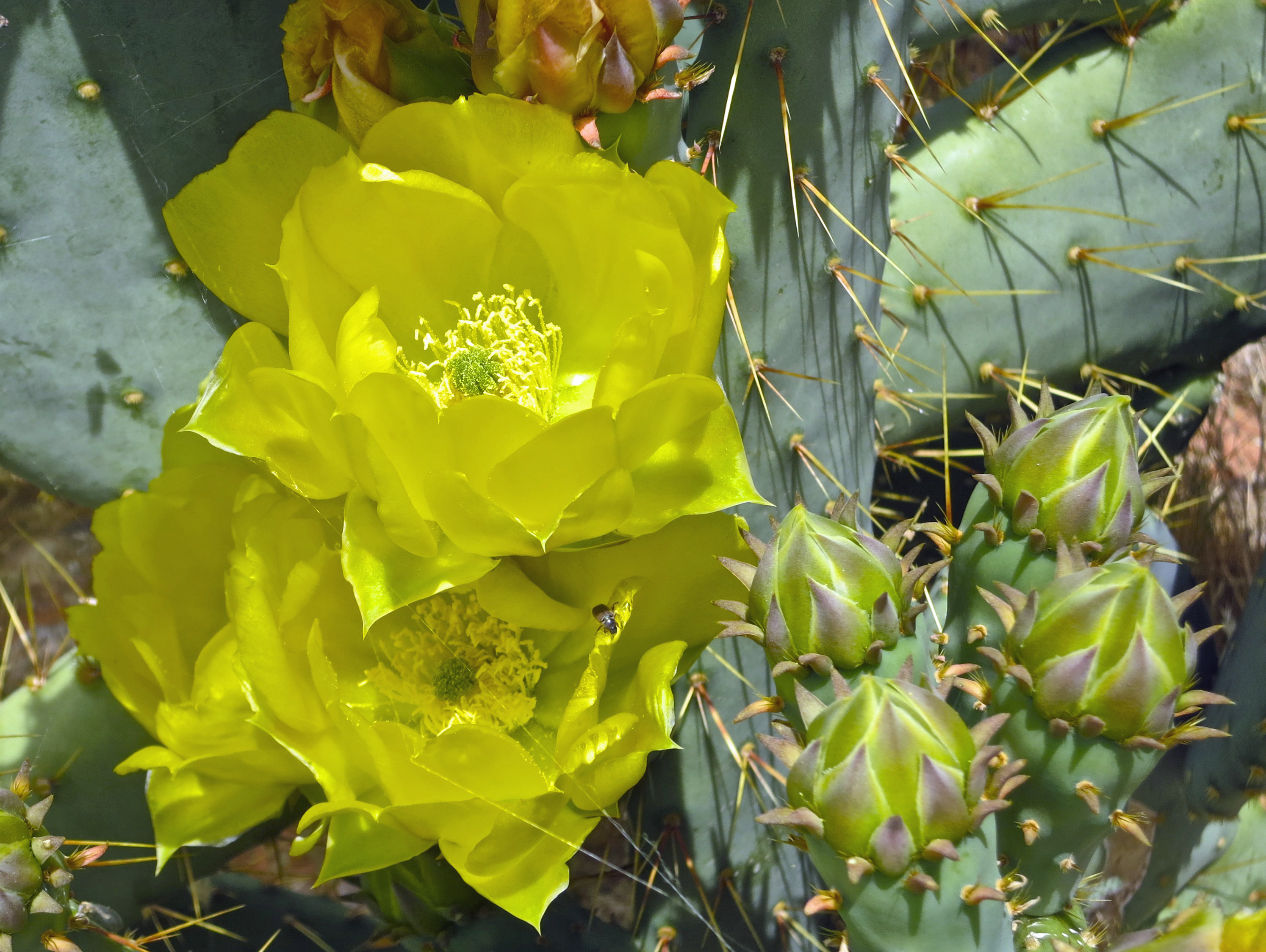
February: Cactus flowers. Valley of Fire State Park, Southern Nevada.

February: Cactus flowers. Valley of Fire State Park, Southern Nevada.

March: Red Rock Canyon National Conservation Area in southern Nevada.

March: Red Rock Canyon National Conservation Area in southern Nevada.

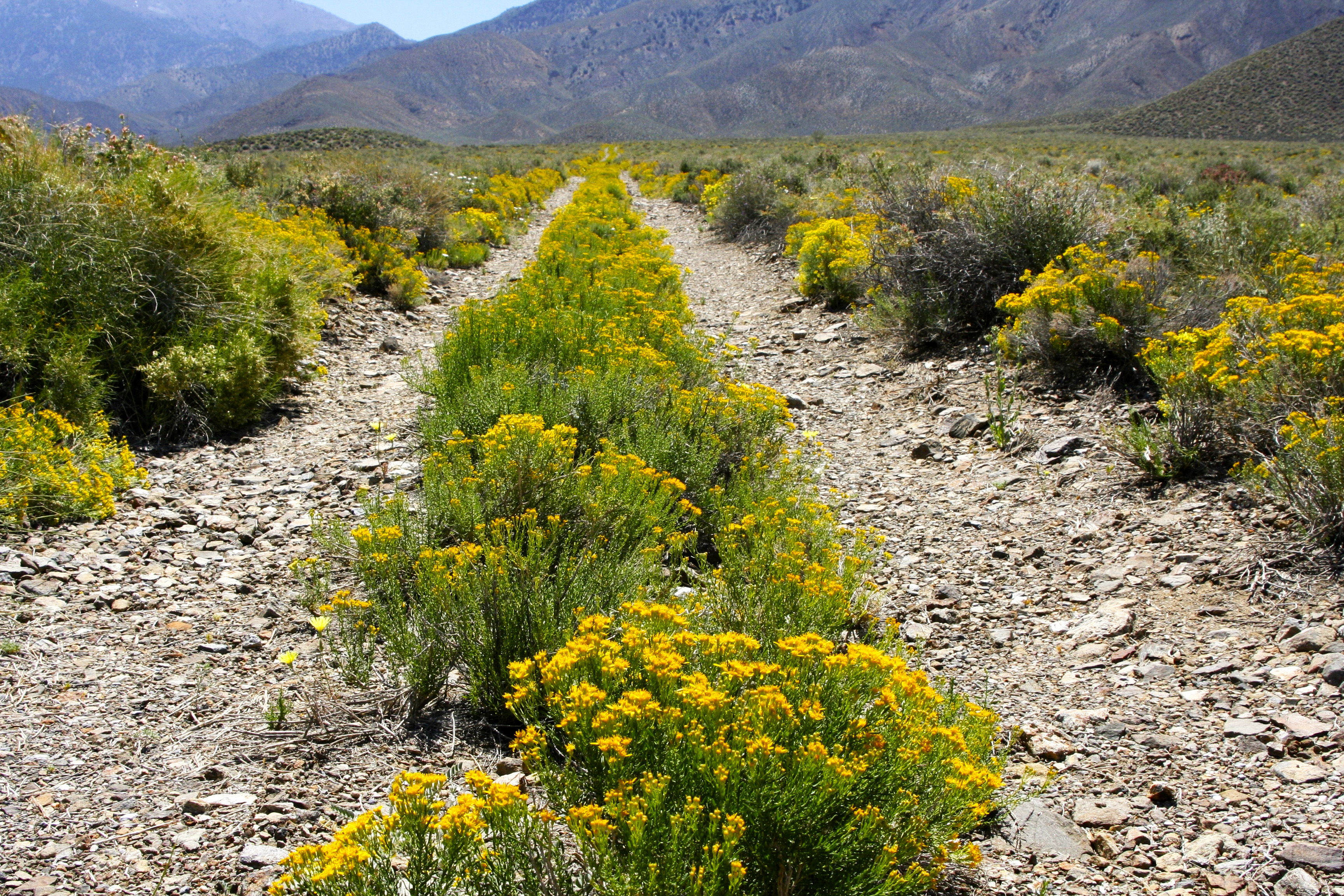
April: Old road with April flowers in Death Valley National Park. Eastern California.

April: Old road with April flowers in Death Valley National Park. Eastern California.

May: Weathered buildings at Bodie State Historical Park, a ghost town in Eastern California.

May: Weathered buildings at Bodie State Historical Park, a ghost town in Eastern California.

June: Sierra Nevada Mountains form the East. Peggy and I have backpacked through these mountains numerous times.

June: Sierra Nevada Mountains from the East. Peggy and I have backpacked through these mountains numerous times.

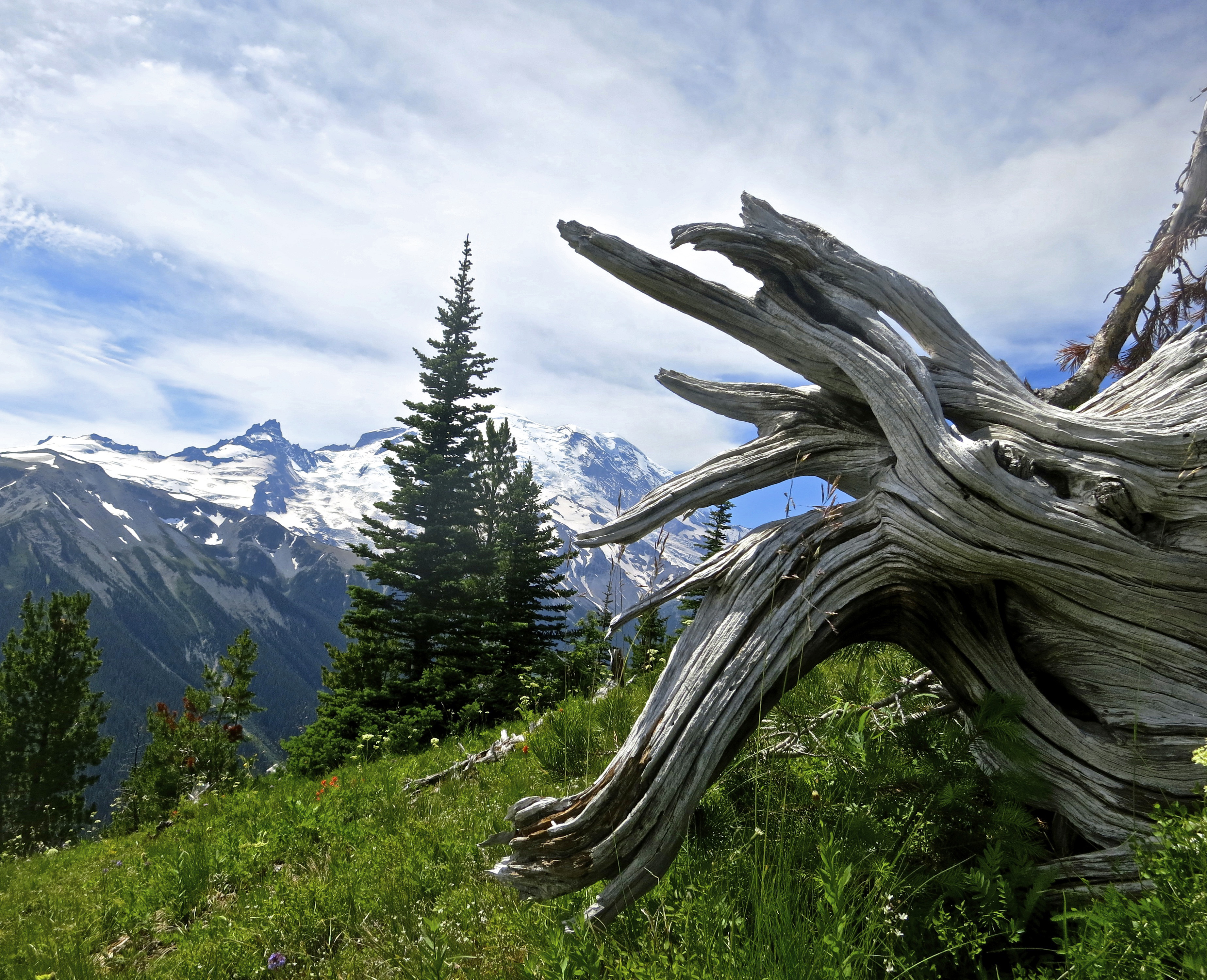
July:: Mt. Rainier National Park. Washington State.

July:: Mt. Rainier National Park. Washington State.

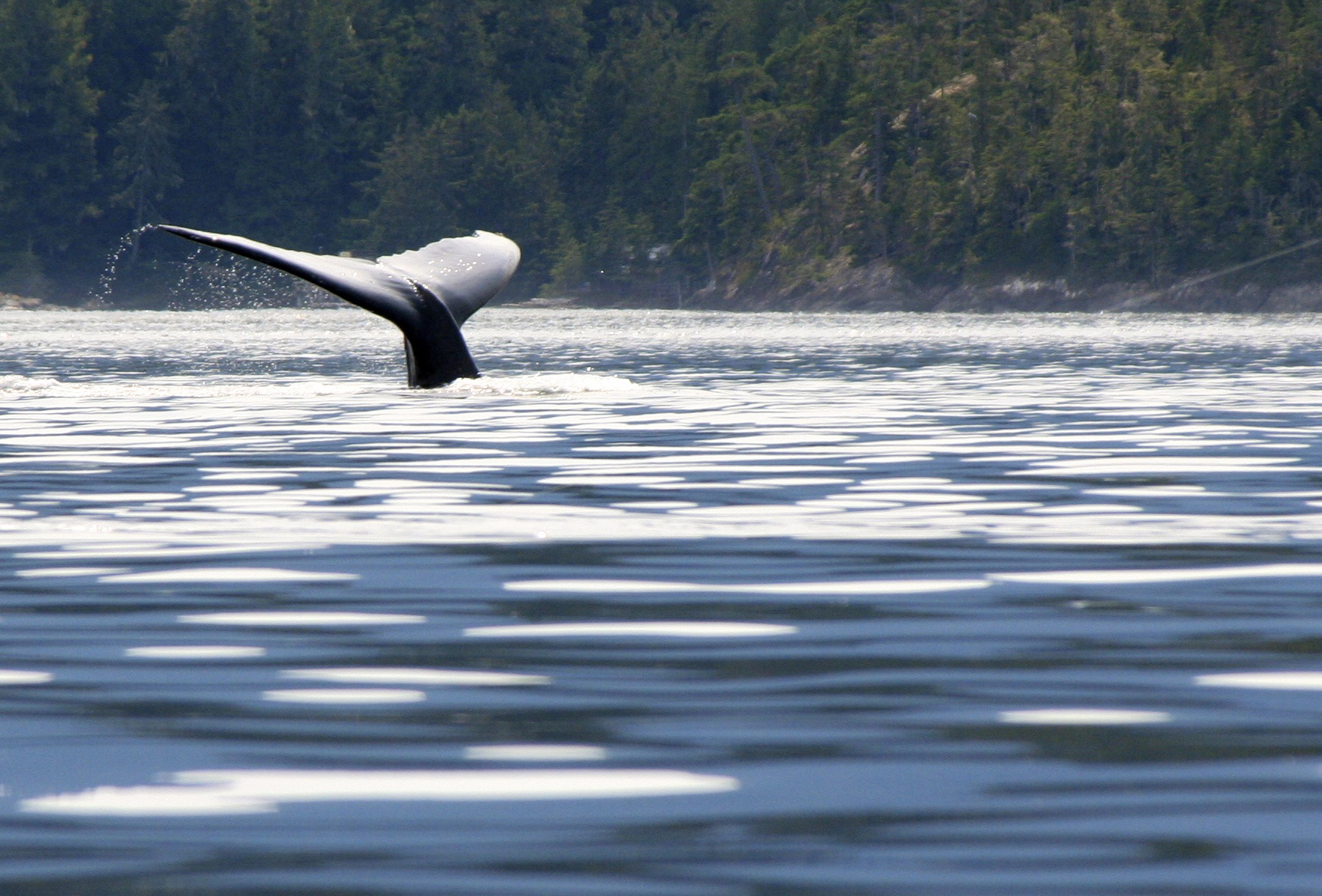
August: Humpback whale dives when Peggy and I are on kayaking trip off Vancouver Island.

August: Humpback whale dives when Peggy and I are on kayaking trip off Vancouver Island.

September: Burning Man in remote northern Nevada desert.

September: Burning Man in remote northern Nevada desert.

October: Rainbow caught in waves on Oregon Coast.

October: Rainbow caught in waves on Oregon Coast.

November: Sunset in Sedona, Arizona.

November: Sunset in Sedona, Arizona.

December: Bell Rock in Sedona, Arizona.

December: Bell Rock in Sedona, Arizona.