Quirky Berkeley— I Return to My Roots


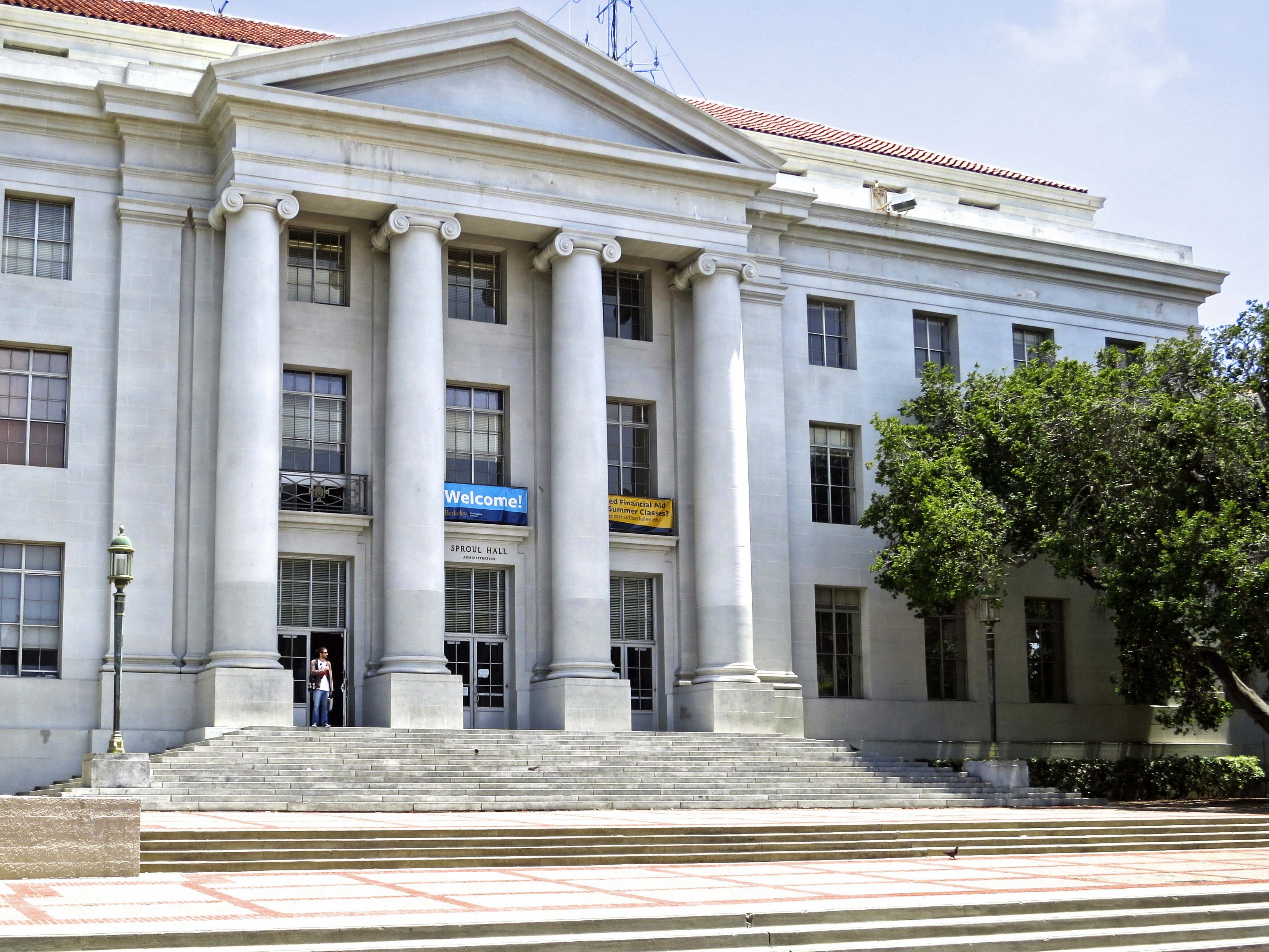
Sproul Hall

Sproul Hall, the administrative center of UC Berkeley, looks imposing. It comes with a welcome sign now but it wasn’t so welcoming when I gave a speech while standing on the Dean’s desk at the height of the Free Speech Movement in 1964.

Last week went on forever. By Sunday, the events at the beginning of the week seemed like ancient history. Maybe that’s not a bad thing; time slowed down. Lately it’s been zipping by like a hummingbird on sugar-water. Zoooooooom!

I began my week by being a guest lecturer in a writing class at Southern Oregon University where I talked about changes in the publishing industry. Mainly I discussed how authors are now responsible for marketing their own books. Grump. It is not my favorite activity. “Go start a blog,” I urged, “at least you can have fun. And it is great writing practice.”

Thursday found me keynoting an author’s day at a local community school. I had jumped from talking with seniors in college to kids. And how in the heck do you tailor a talk for a group with an age range from 7-14? Tell stories, I decided— and started with the tale from The Bush Devil Ate Sam about Rasputin the Cat and the Cockle Doodle Rooster. Afterwards I taught classes of fifth, sixth, seventh and eighth graders. My message was that we are all storytellers.

It was fun. The eight-hour drive to Berkeley immediately afterward wasn’t.

I drove down to attend a national conference of Returned Peace Corps Volunteers. I was one pooped pup when I arrived. It was lights out for Curt. I hardly even needed my noisemaker to drown out the clamor on University Avenue.
Berkeley is many things, among them a world renown center of education.

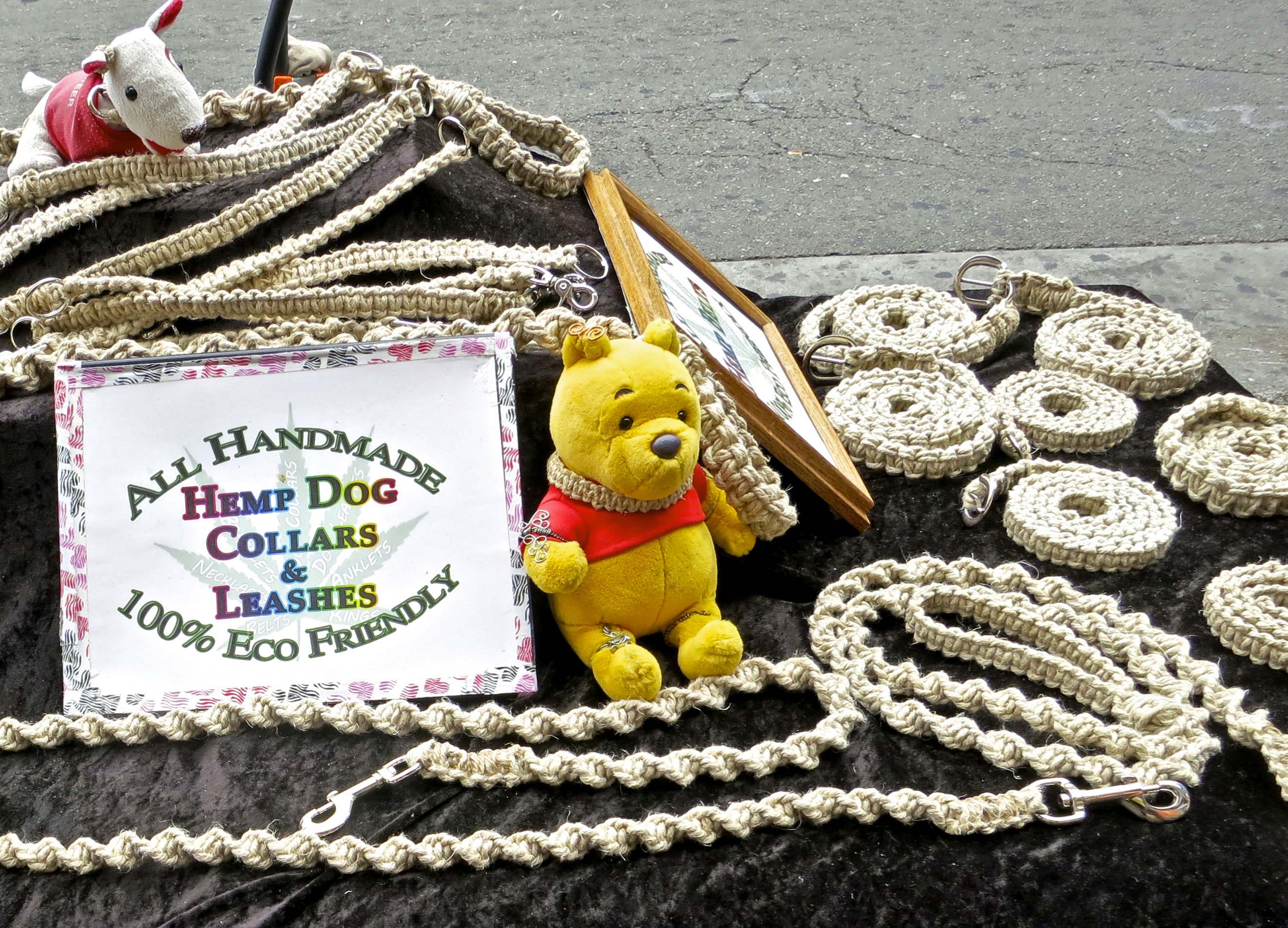
Speaking of tired puppies, I found these hemp collars and leashes on Telegraph Avenue. In addition to being home to one of the world’s greatest educational institutions, Berkeley can be a bit quirky.

I went to the conference to participate in some workshops relating to Peace Corps writers, of which there are legions. I also wanted to hear presentations by Congressman Sam Farr and Peace Corps Director Carrie Hessler-Radelet. Sam had been a Peace Corps Volunteer in South America in the 60s and, like me, worked in Peace Corps recruiting afterwards. He is known as “Mr. Peace Corps” in Congress for the strong advocacy role he plays for the organization.

He argued that Returned Peace Corps Volunteers also needed to become advocates. It’s budget time in Washington, and there are a lot more countries requesting Peace Corps Volunteers, and people who want to be Volunteers, than Peace Corps has money to fund. As usual, the money goes elsewhere. For example, we are spending a billion and a half dollars this year to keep Egypt happy— four times the total budget of Peace Corps.

On the good news side of the equation, Carrie announced that Peace Corps Volunteers would be back in Liberia this week. As you may recall, they were pulled out in the fall because of Ebola. Carrie also mentioned a major new initiative that Peace Corps is working on with Michelle Obama, Let Girls Learn. It is a worldwide effort to provide girls with the same education opportunities boys now have.
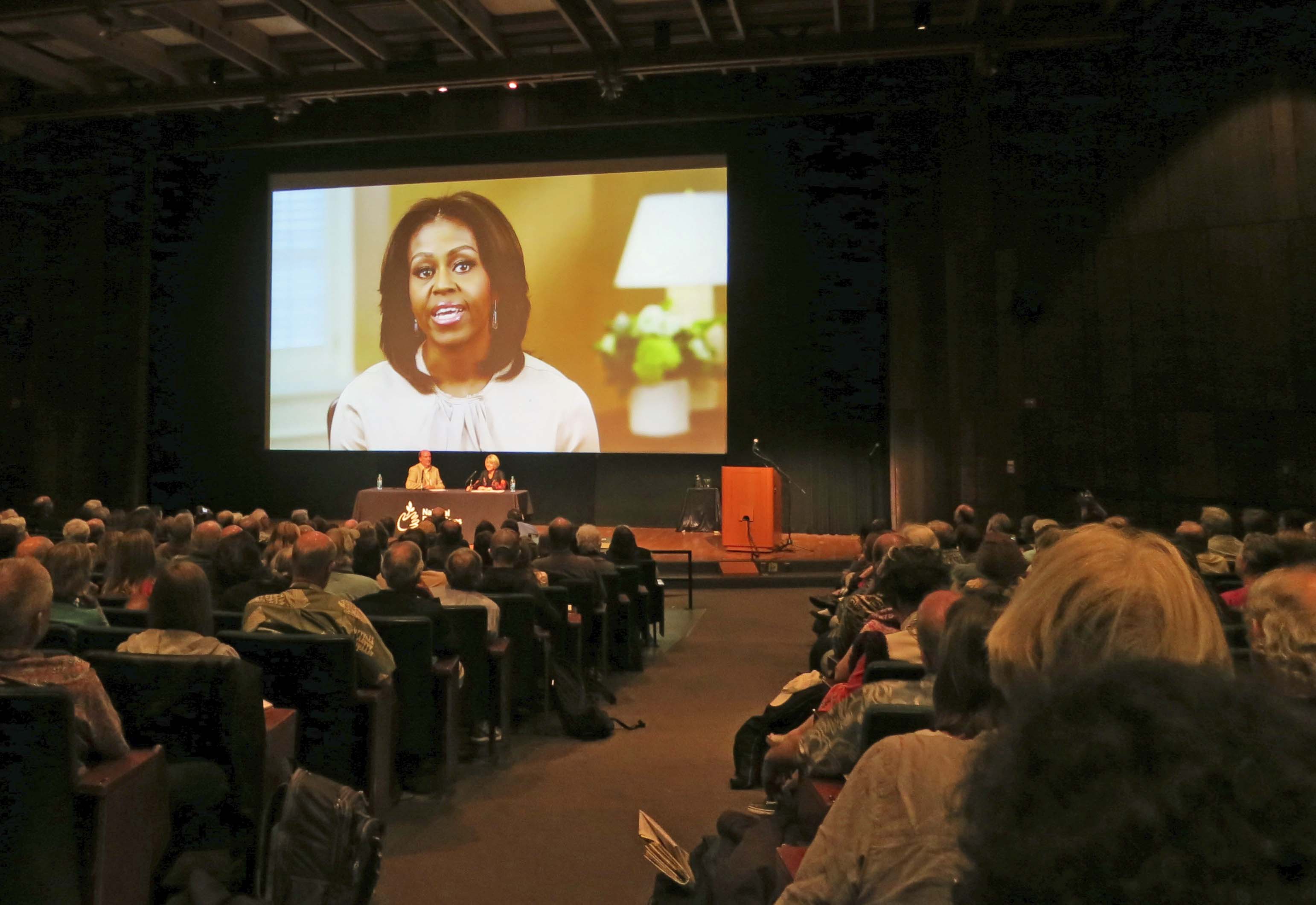
Michelle

We listened to a pre-recorded message on Let Girls Learn from Michelle Obama in Wheeler Auditorium, which was the site of my first class at Berkeley. I had walked right by the classroom, incapable of imagining that there would be over a thousand students in the class. Berkeley gave me a new understanding of mass education.

I must confess— I also had an ulterior motive for the trip. Any journey to Berkeley is a trip into the past for me. I think of it as a pilgrimage, a return to my roots. I still hear echoes from the 60s when I was caught up in Berkley’s Free Speech Movement. This time the echoes were real. A resounding expletive caught my attention. I turned around to see Cliff Marks descending on me. Cliff and I had shared an apartment during out senior year and Cliff had also served in the Peace Corps. The last time I had seen or talked with him was at his wedding in 1969. We had a grand time catching up. Now it is time to catch up on the blogs I have missed this past week and a half.

But first, let’s go on a tour of Berkeley.
Sather Gate

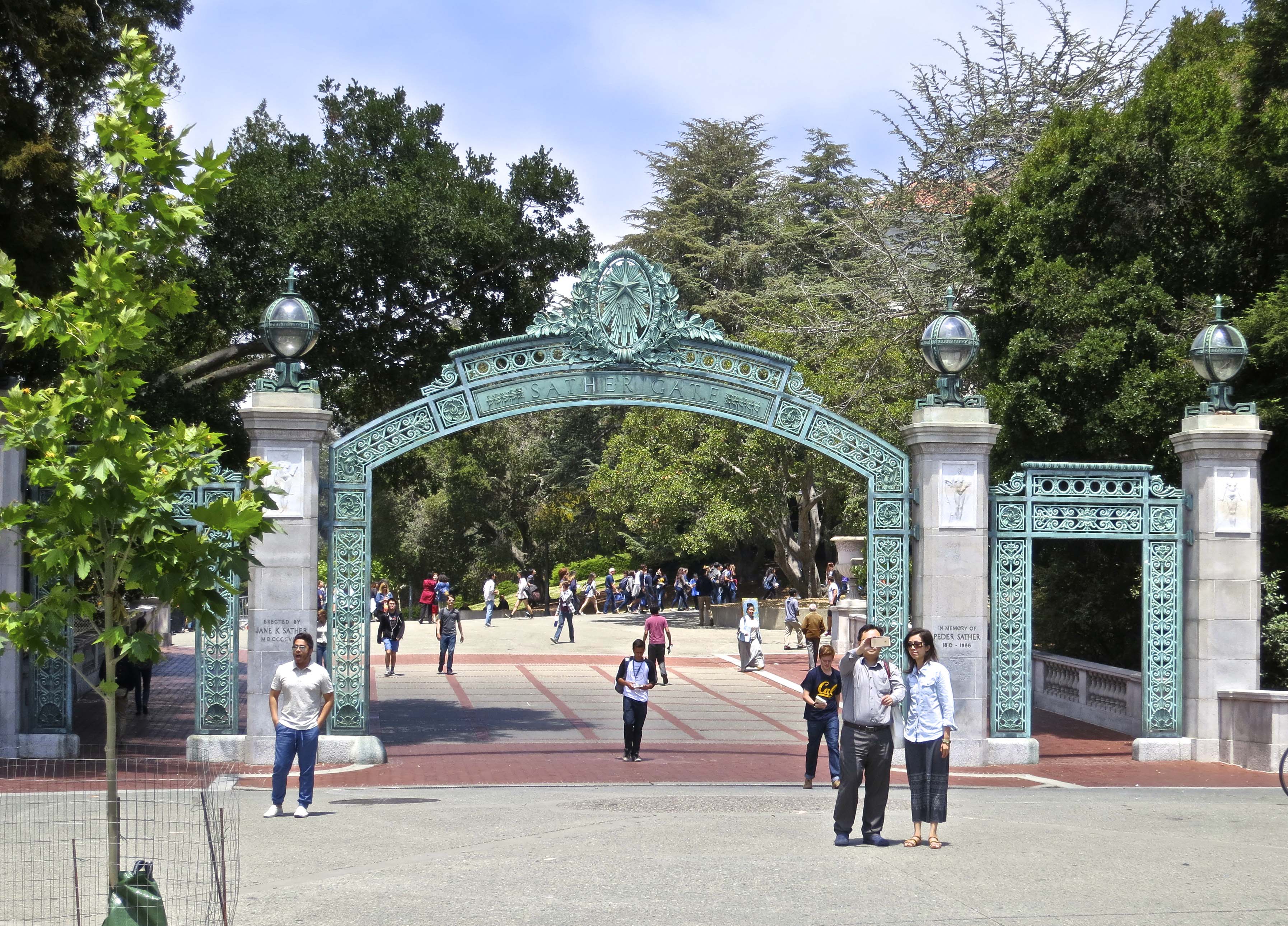
Every student who has ever been to Berkeley passes through Sather Gate…
Campanile

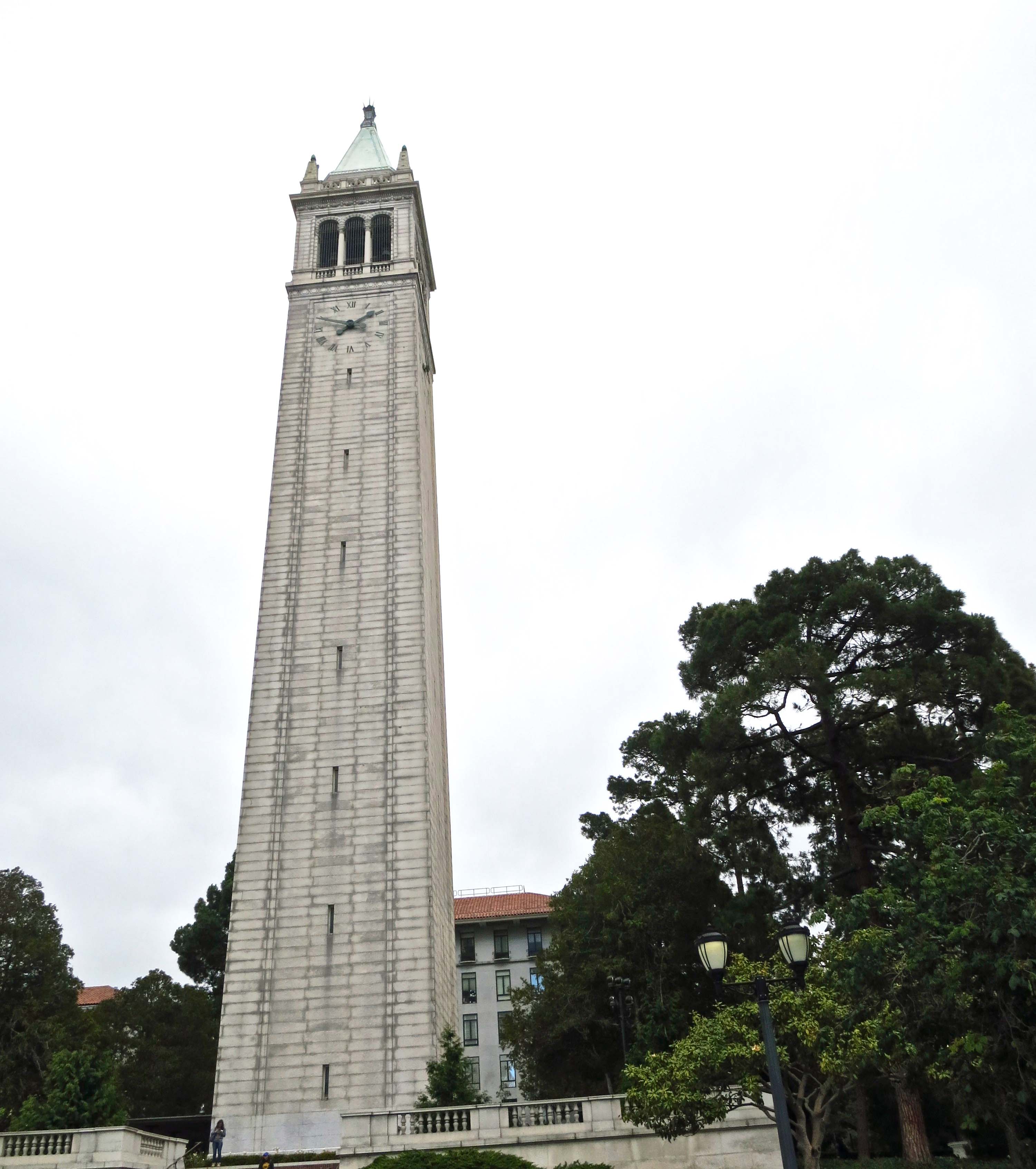
And at some point, stops to admire the Campanile, which is Berkeley’s best known landmark.
Bay Bridge

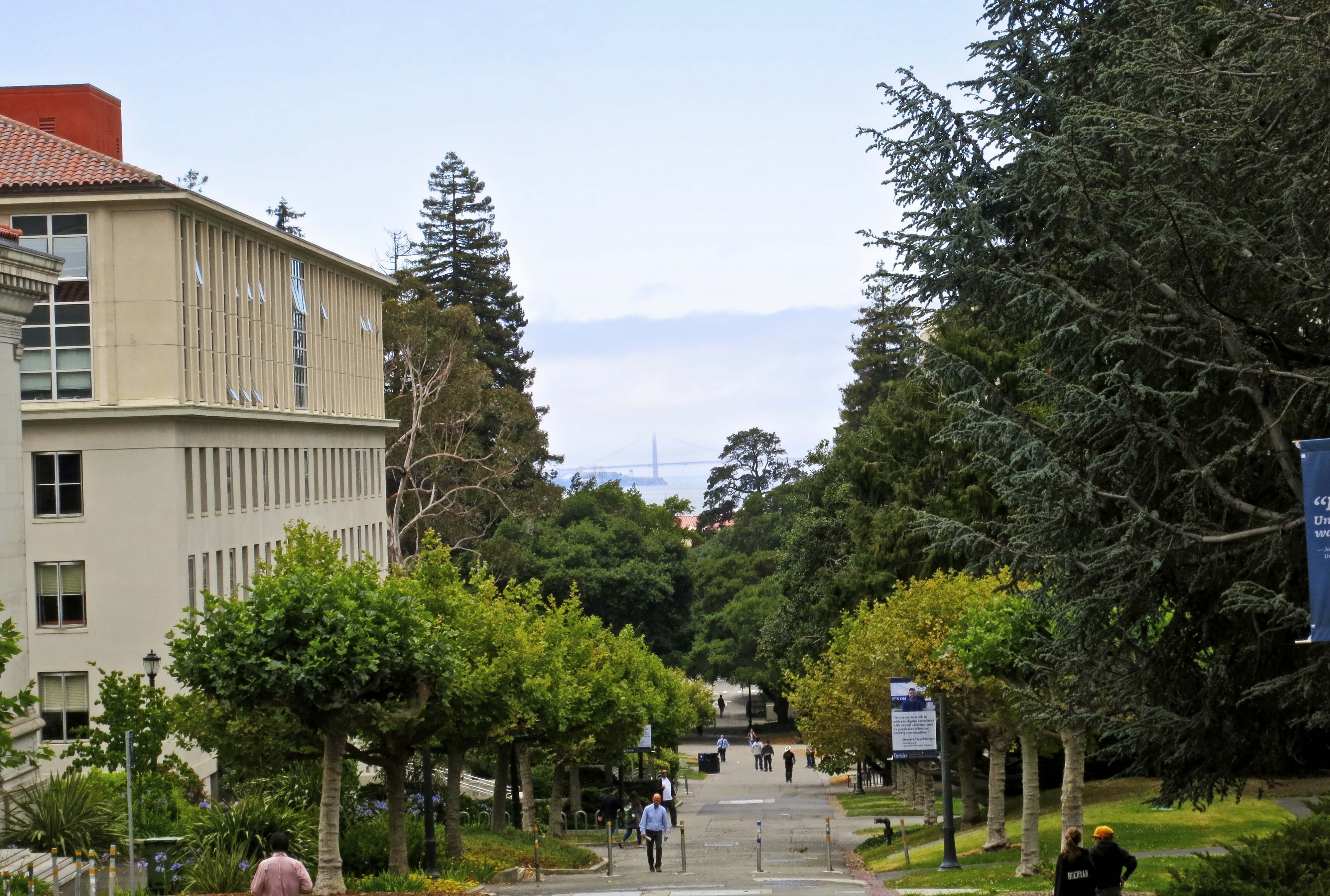
The campus looks out over San Francisco Bay. The Golden Gate Bridge can be seen in the distance.
Steps of library

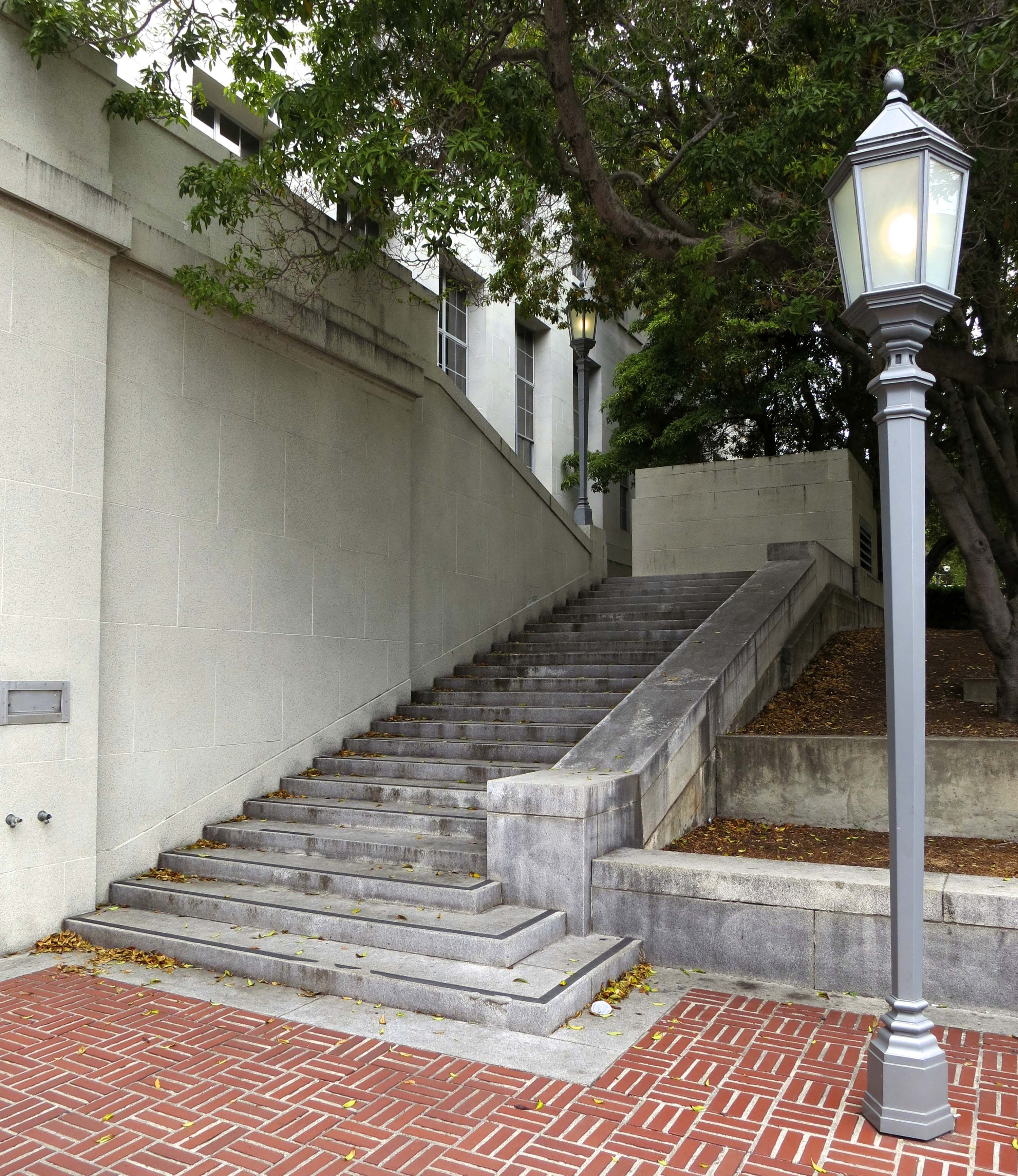
I had spent the day buried in the Bancroft Library and surfaced for a break when I found a young woman crying on these steps. The campus was deathly quiet. “What’s the problem?” I had asked. “They’ve shot the President,” she told me in a broken voice. It was November 23, 1963 and President Kennedy had been killed, shot down in the streets of Dallas.
Sproul Plaza

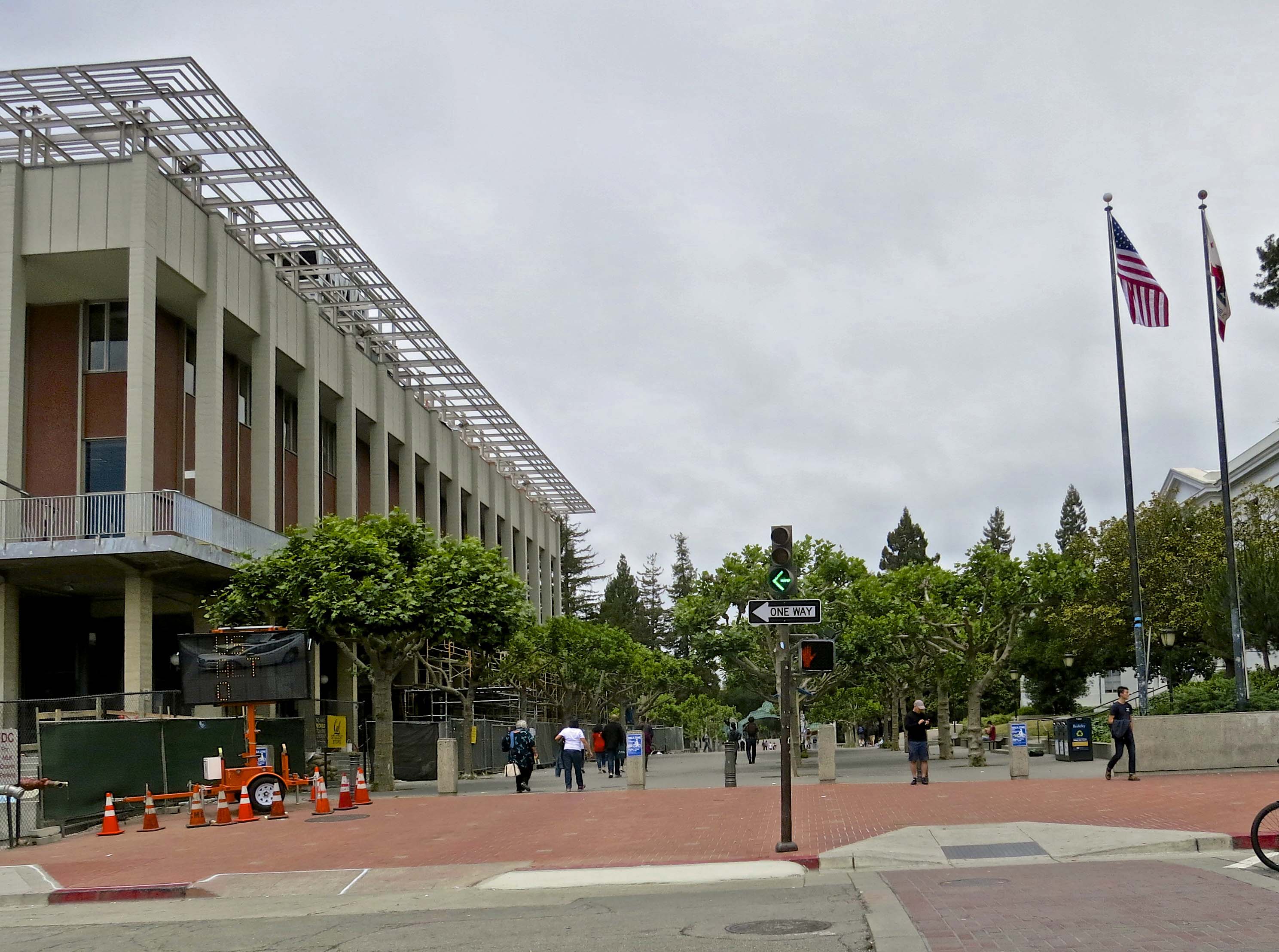
Sproul Plaza was a major location for student protests in the 60s. This entrance to the campus, at the intersection of Telegraph Avenue and Bancroft Avenue, was the location of Berkeley’s Free Speech Area that the University arbitrarily closed down in the fall of 1964, thus leading to the beginning of the Free Speech Movement.
Ludwig's fountain

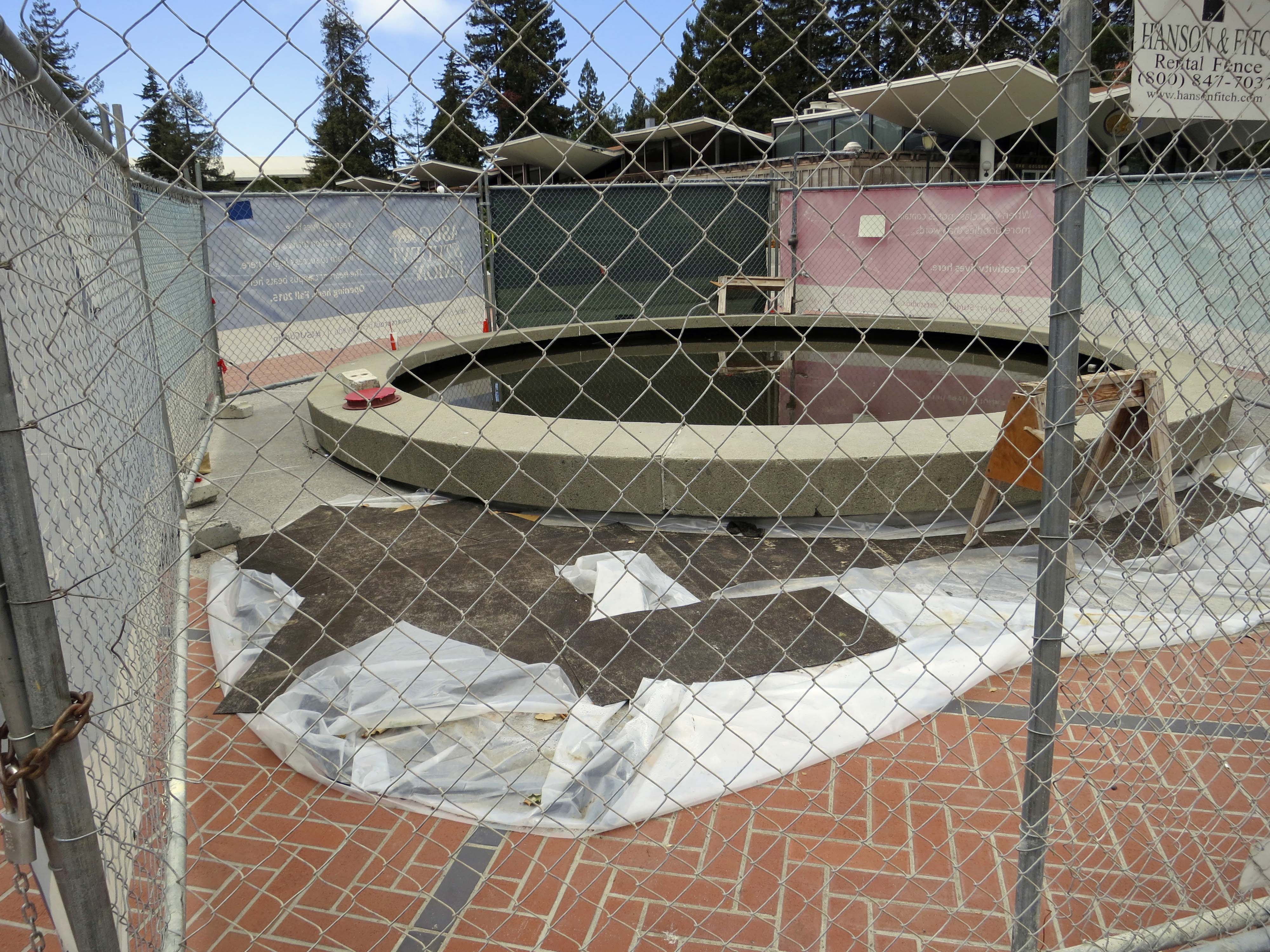
The Student Union and Ludwig’s Fountain are under renovation. Ludwig was a 60’s type dog who wandered wherever he chose. He came down from his house on the hill daily and frolicked in the fountain that would eventually bear his name. I petted Ludwig and watched as a police car was taken hostage and then used as a speaker’s podium. Jack Weinberg, a Civil Rights organizer, was being held in the car. It was Jack, now 75, who coined the phrase, “never trust anyone over 30.”
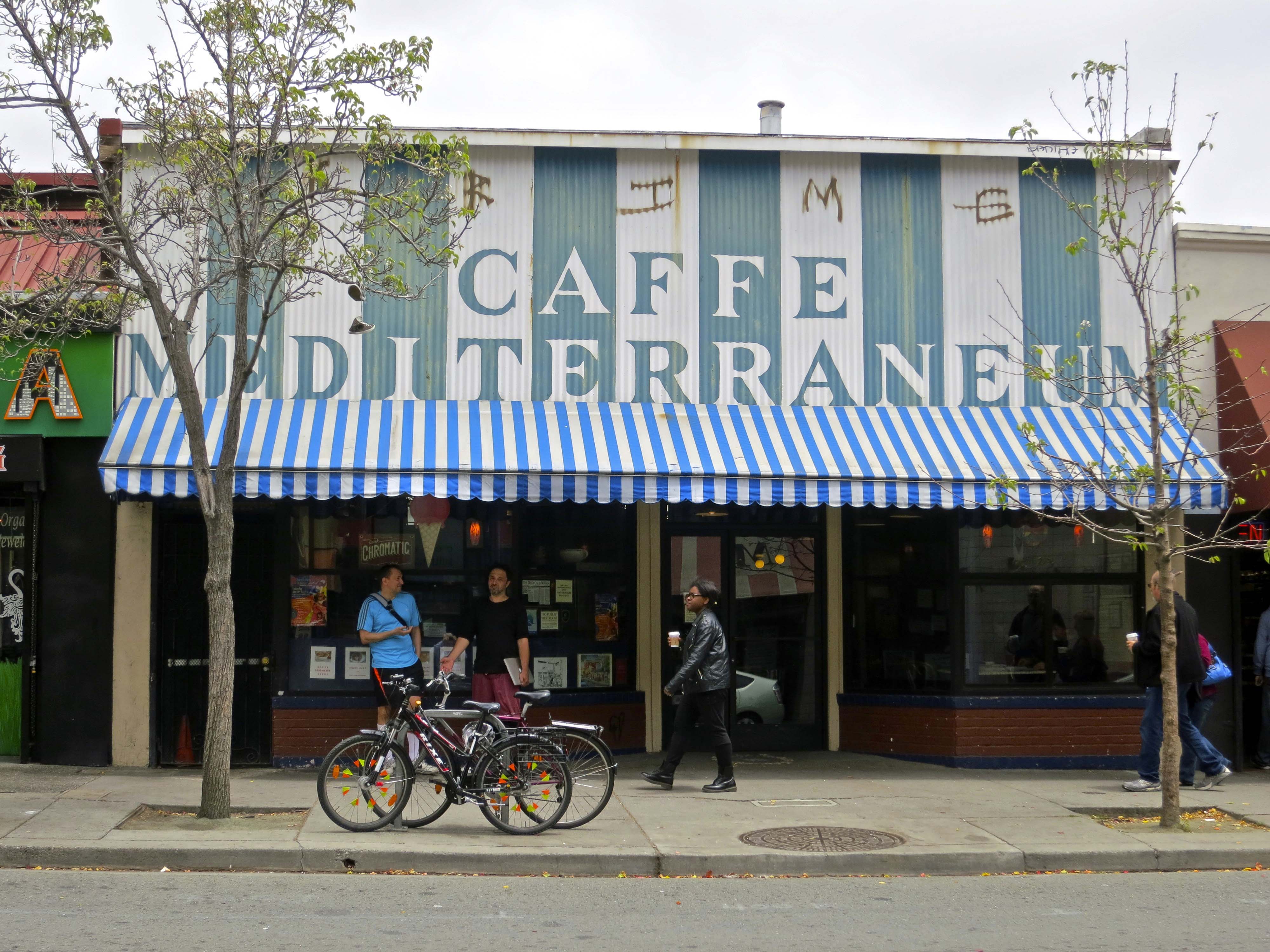
Cafe Mediterraneum

I learned as much outside of the classrooms as I did inside at Berkeley. The Cafe Mediterraneum on Telegraph Avenue was my main hangout. It was one of America’s first European style Coffee Houses in the 1950s and proudly claims to be the creator of the caffe latte.

Moe's

One of my primary forms of entertainment in the 60s at Berkeley was perusing bookstores. It still is today when I visit the city. Moe’s was and is one of the greats. Sadly, my favorite, Cody’s, is now closed.
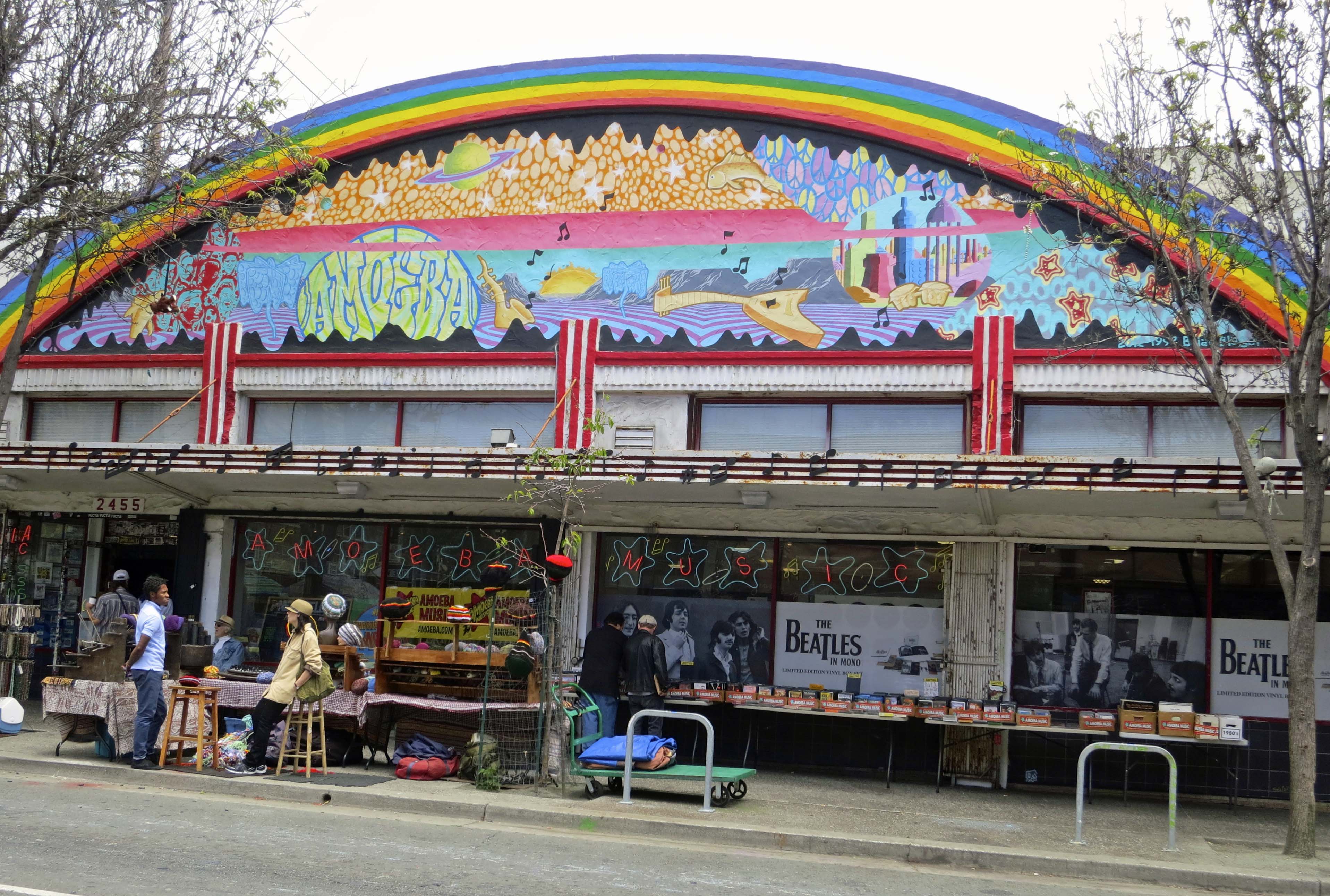
Amoeba Records

Amoeba Records is next to the Cafe Meditteraneum. Street booths, like those in front on the left, have become a permanent  fixture along Telegraph Avenue.
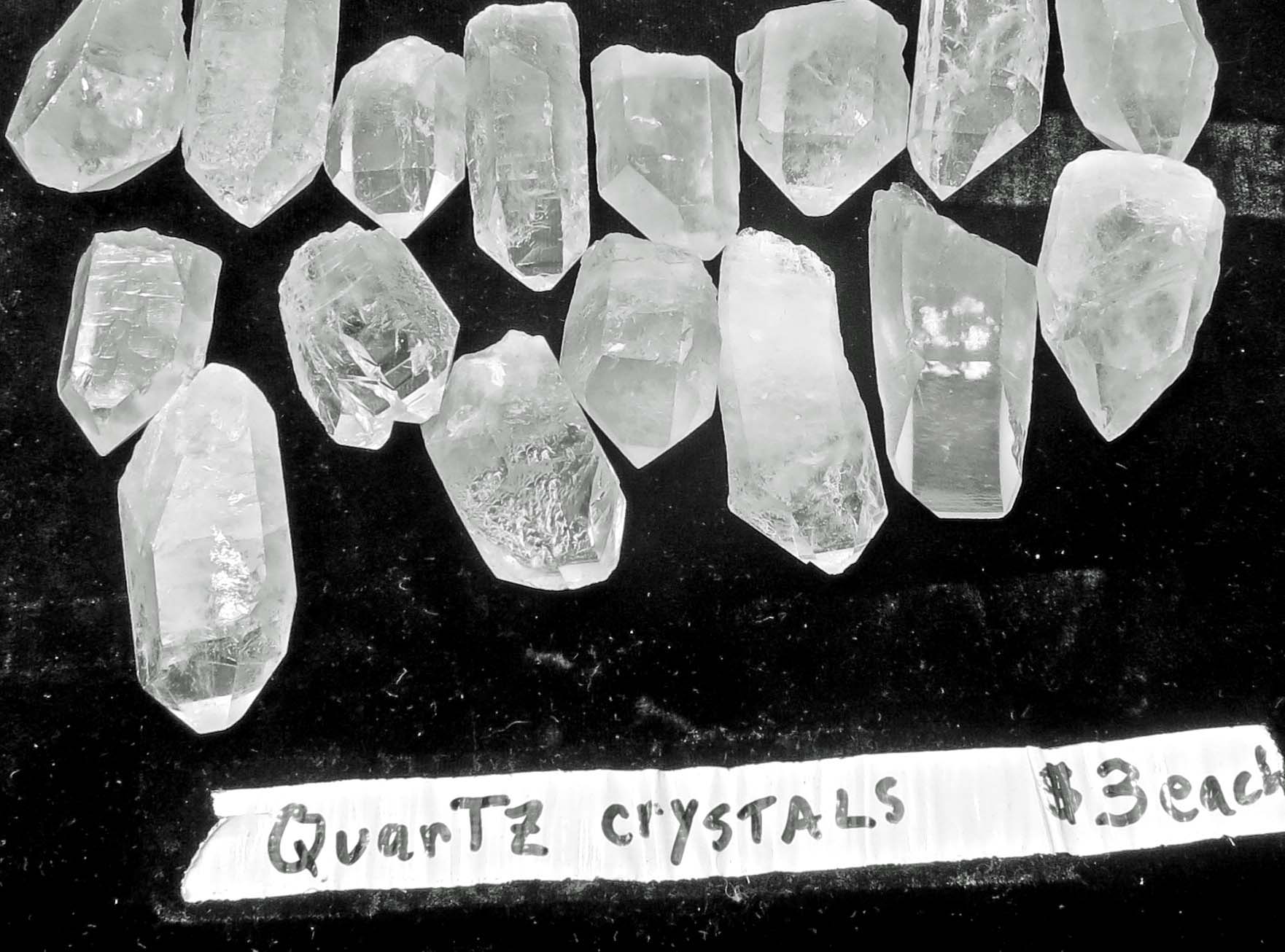
Crystals on Telegraph

As one might expect, many of the items for sale have a New Age connection, such as these ‘healing’ quartz crystals.
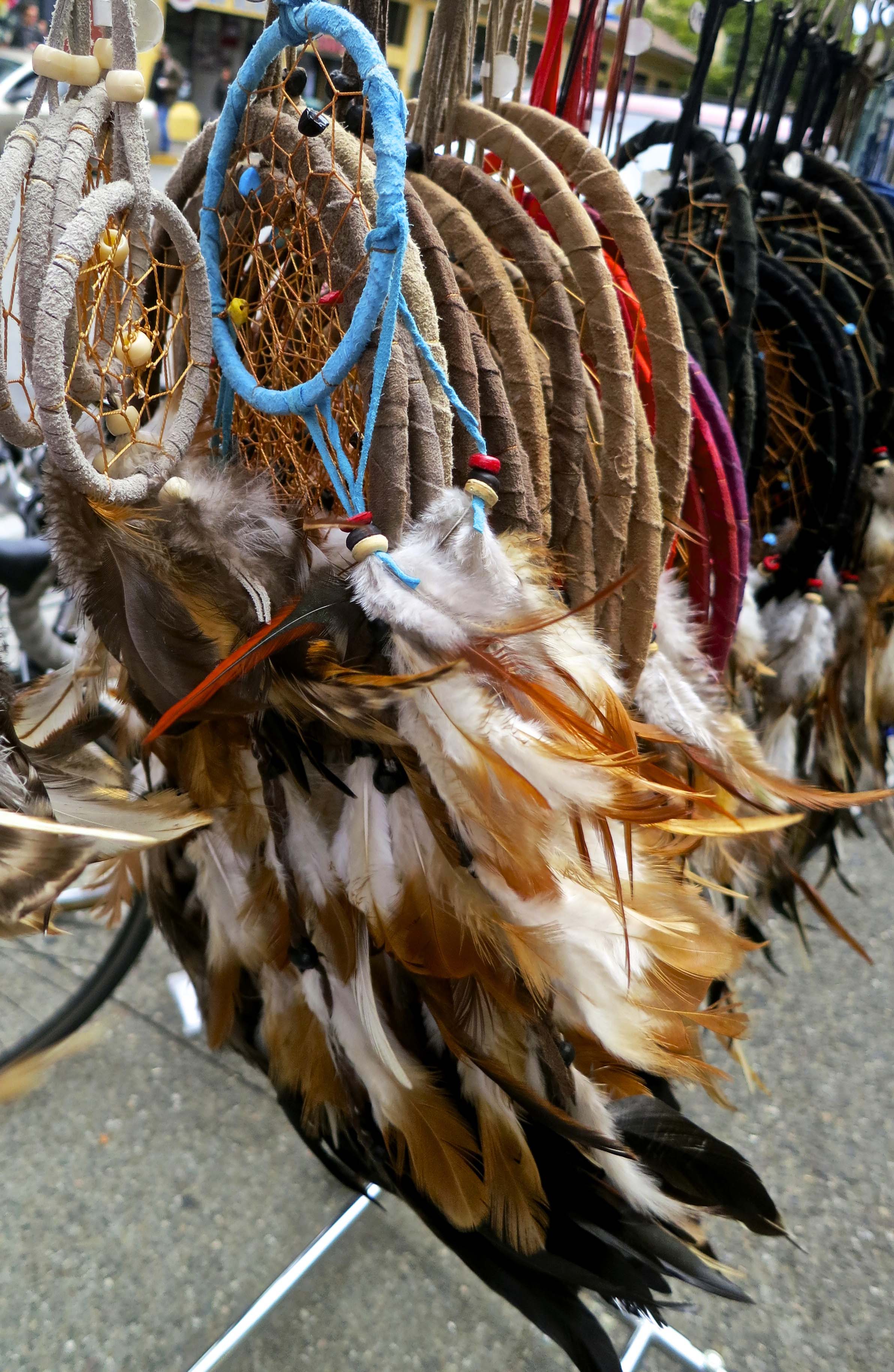
Dream Catchers

And these dream catchers.

People's Park

“If it takes a bloodbath, let’s get it over with.” –Ronald Reagan’s response as Governor of California to students who were protesting his closing down Berkeley’s People’s Park as a community garden in the late 60s. National Guard troops were sent in and local police were armed with shotguns loaded with buckshot. One student, apparently a bystander, was killed and another was blinded. The whole city was tear gassed from the air.
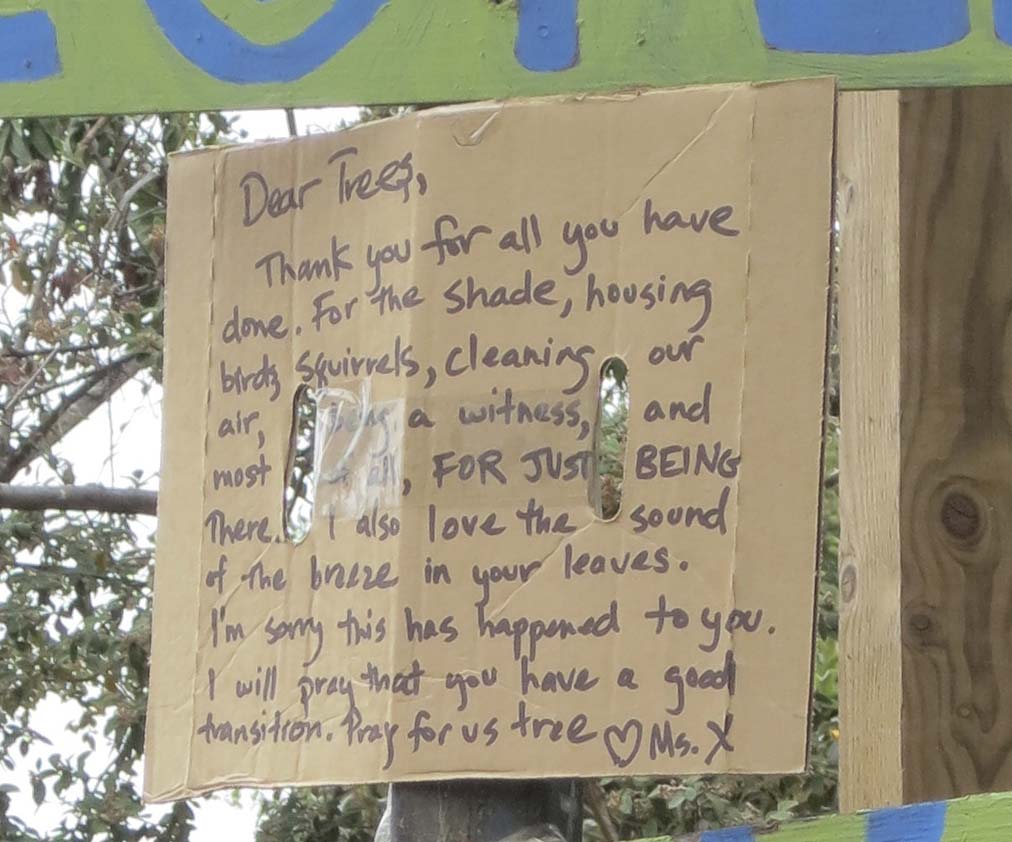
Tree sign

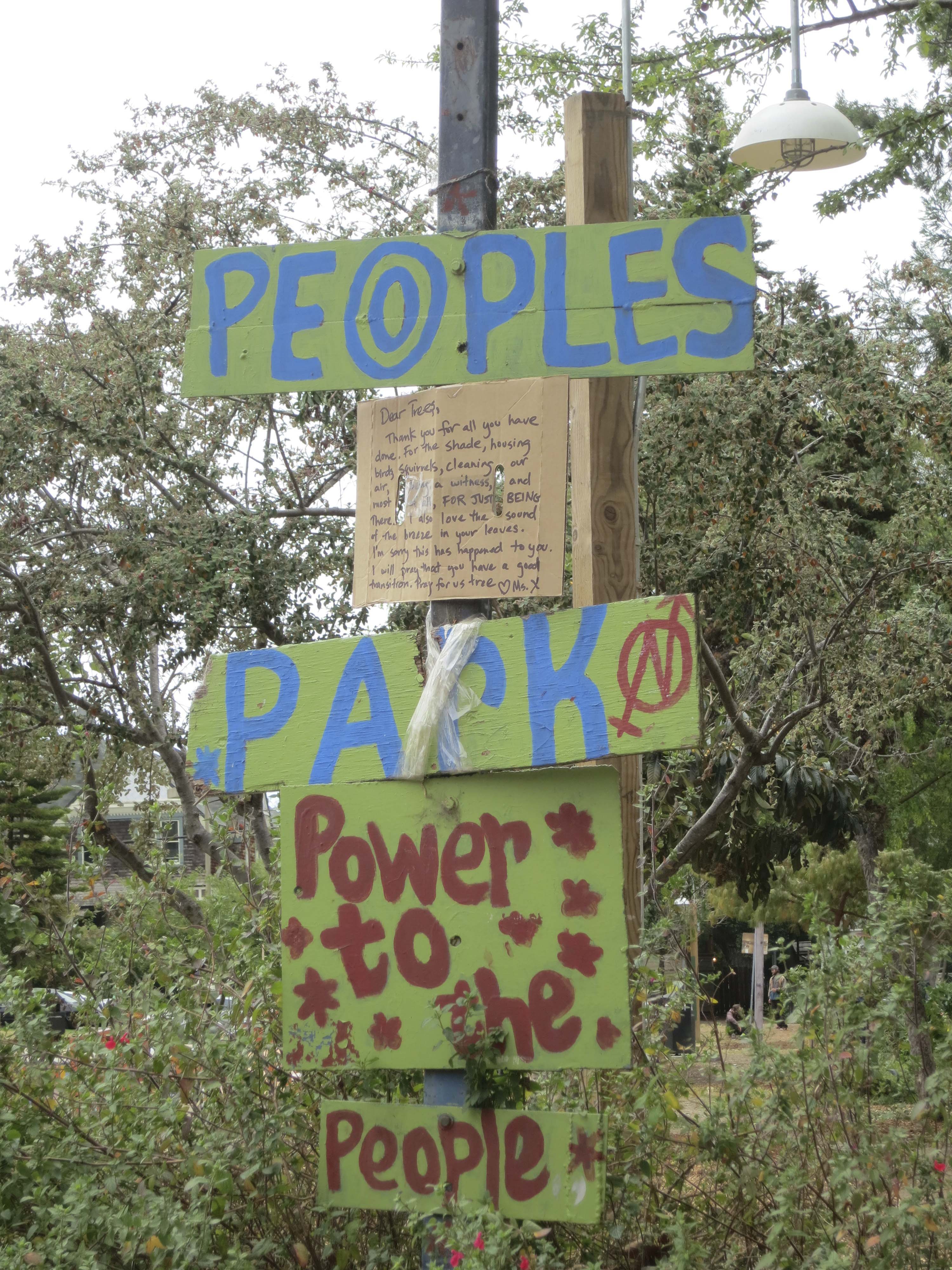
A sign thanking trees that live in the park today.
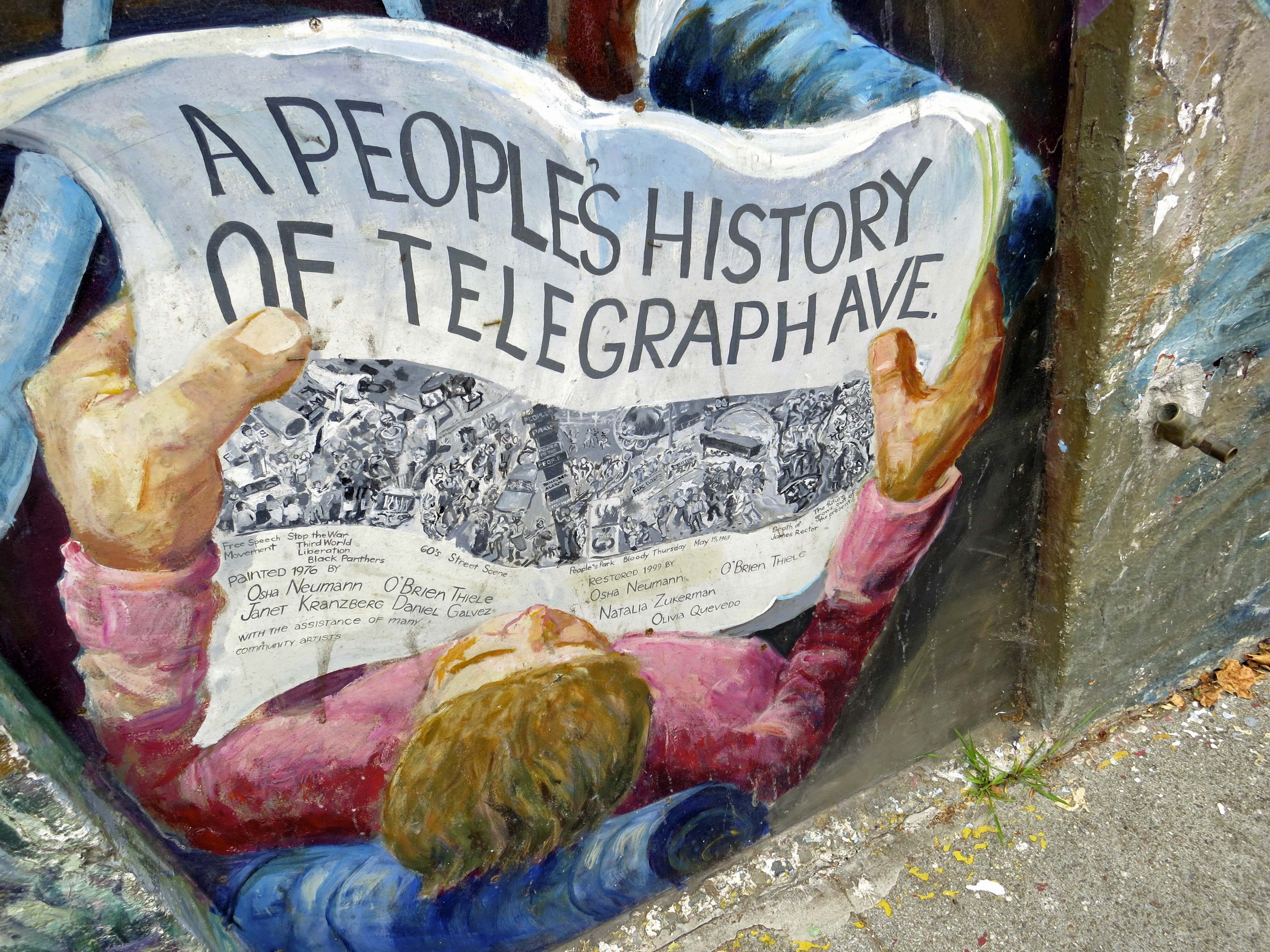
Mural

A mural on the side of the Amoeba record store depicts events surrounding People’s Park as well as other Telegraph Avenue happenings.
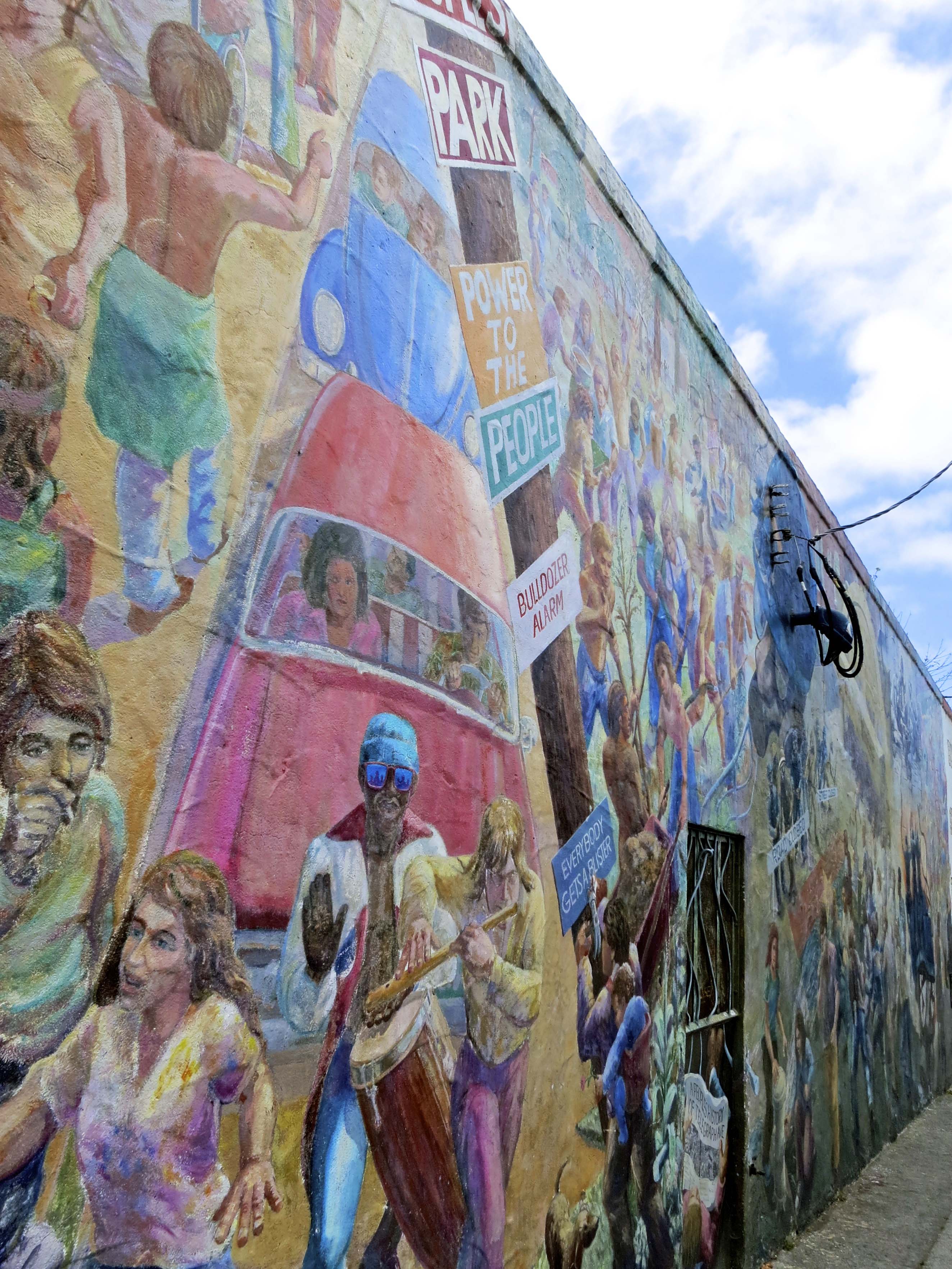
Mural

The mural.

Pan Handler

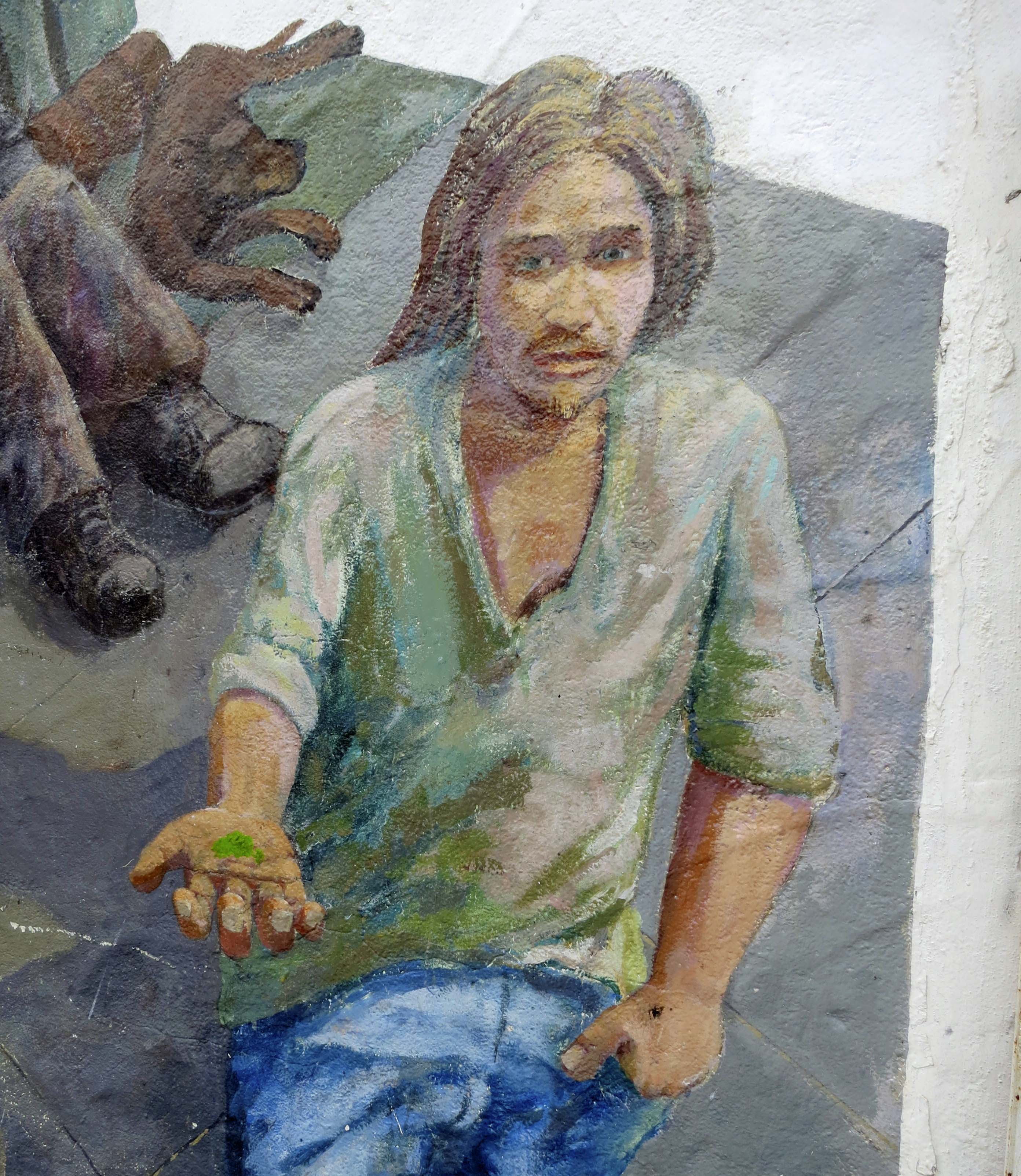
Berkeley has always been a mecca for young people,  both those seeking an alternative lifestyle as well as those seeking a first class education. Many who came looking for alternatives arrived without money, as this young man shown in the mural.
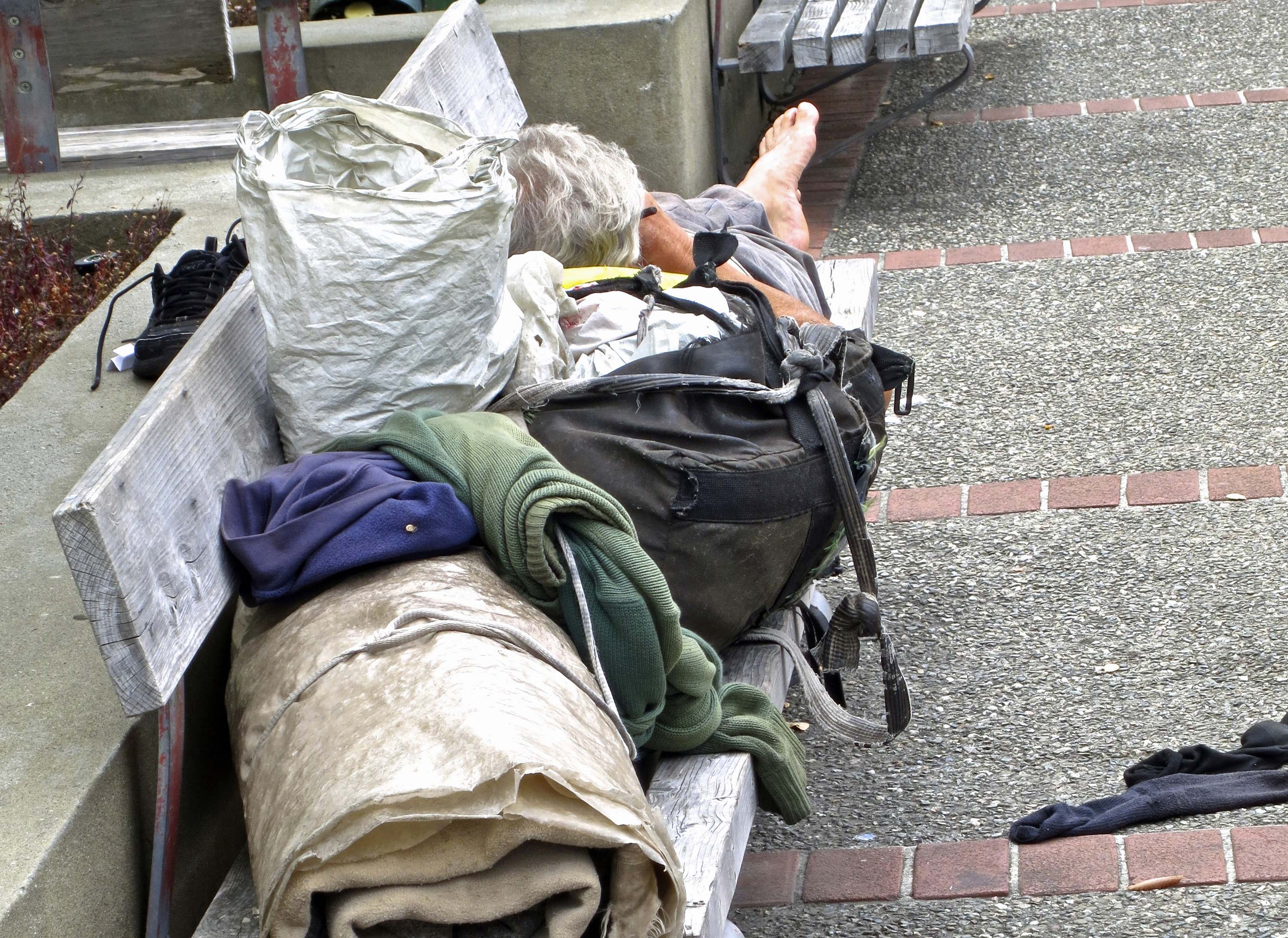
Homeless

Today, Berkeley is the ‘home’ for numerous homeless people. I took this photo on Dwinelle Plaza on campus.
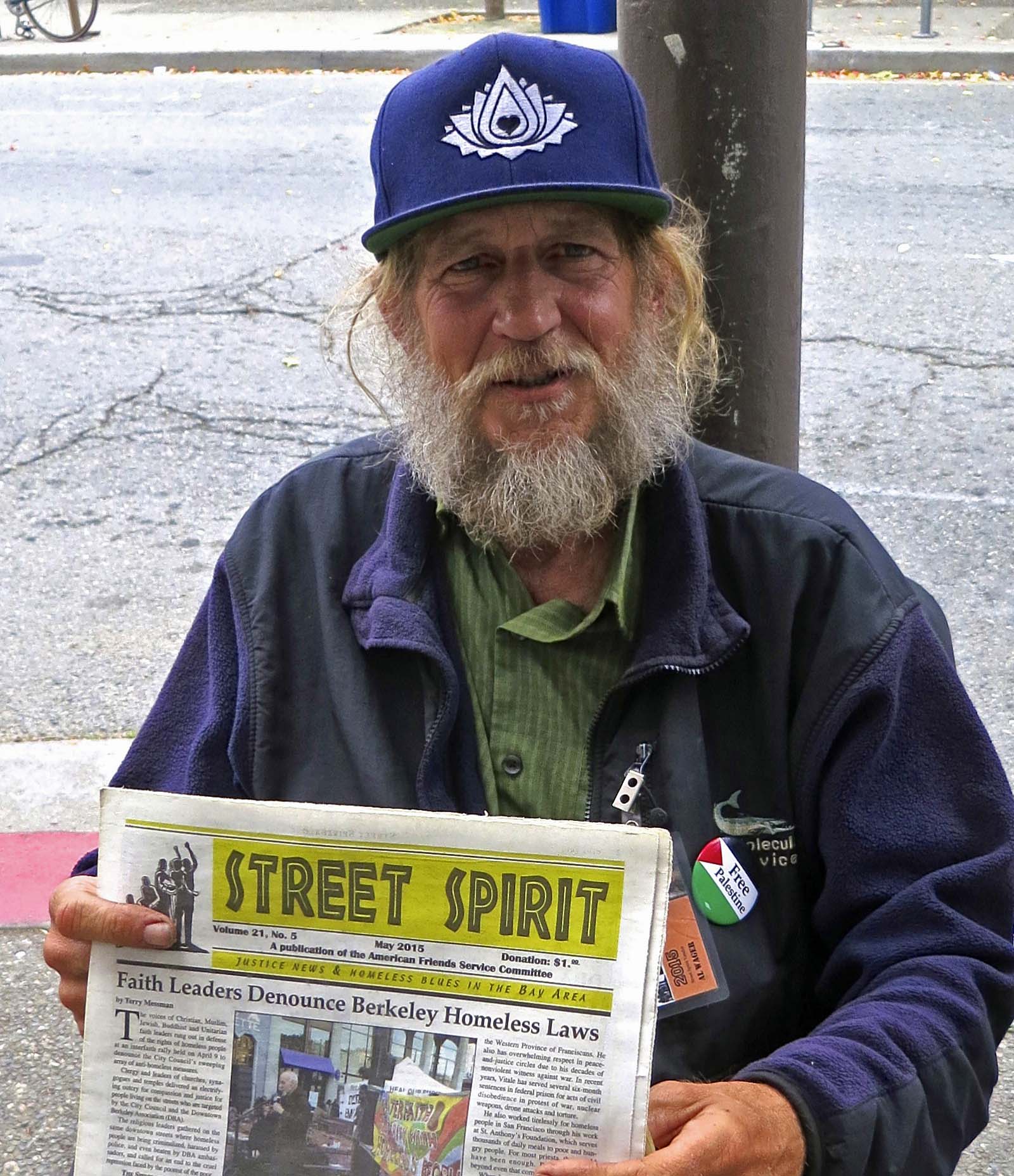
Street Spirit

This homeless man was selling the newspaper “Streetsmart” in front of Moe’s Bookstore. Headlines announced a recent protest that the community’s religious leaders including Christian, Muslim, Jewish and Buddhist representatives had made against the city’s efforts to criminalize homelessness as a means of driving homeless people out of town.
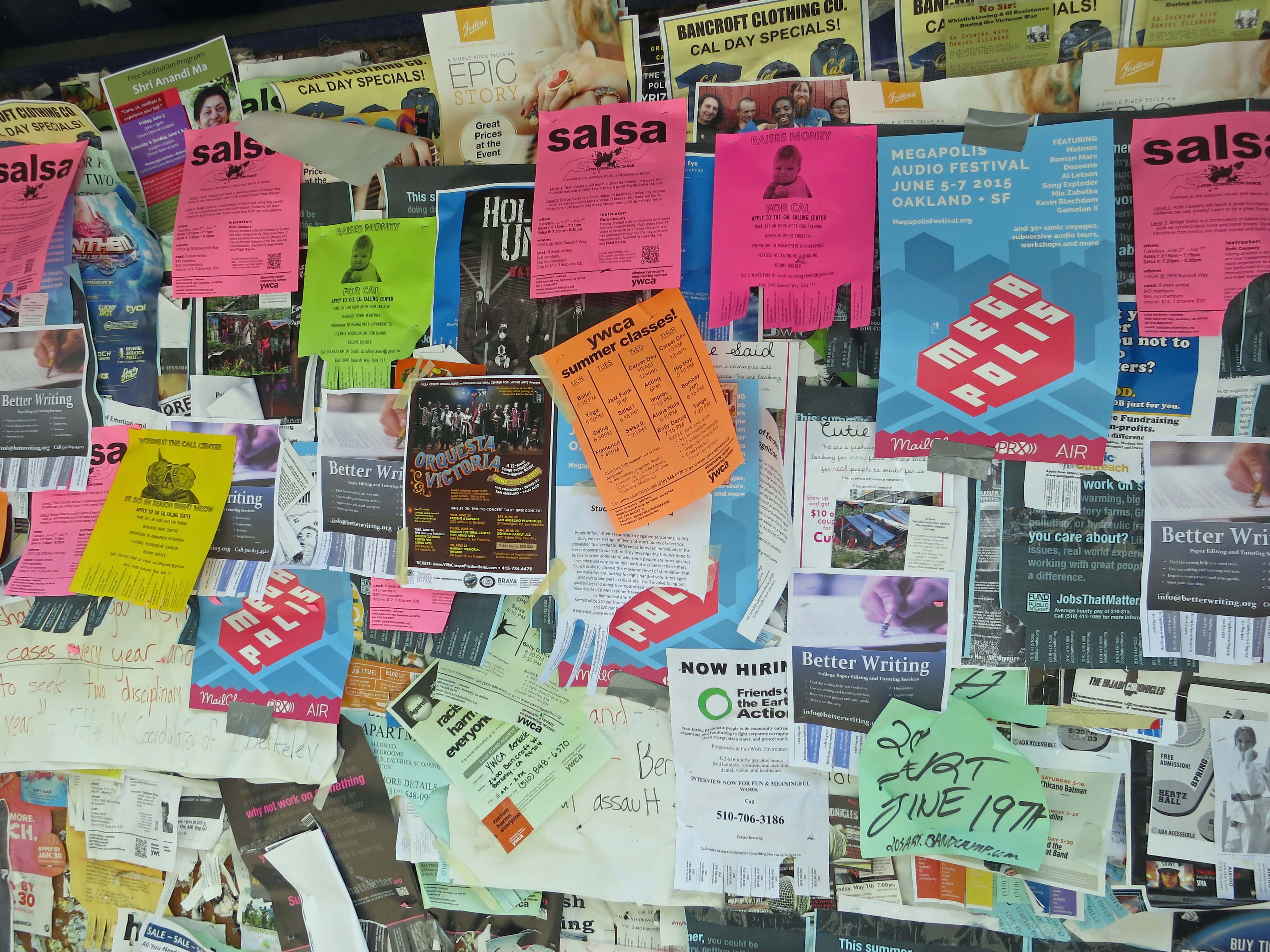
Berkeley sign board

A sign of the times? Not really. Berkeley’s sign boards have always been plastered with notices on top of notices. I was amused to find help wanted notices for Berkeley’s Call Center. I hear from these young people several times a year as they solicit money for Berkeley. I found it interesting that the University, who charges them $14,000 a year in tuition ($38,000 if out-of-state), only pays these kids $11 per hour.
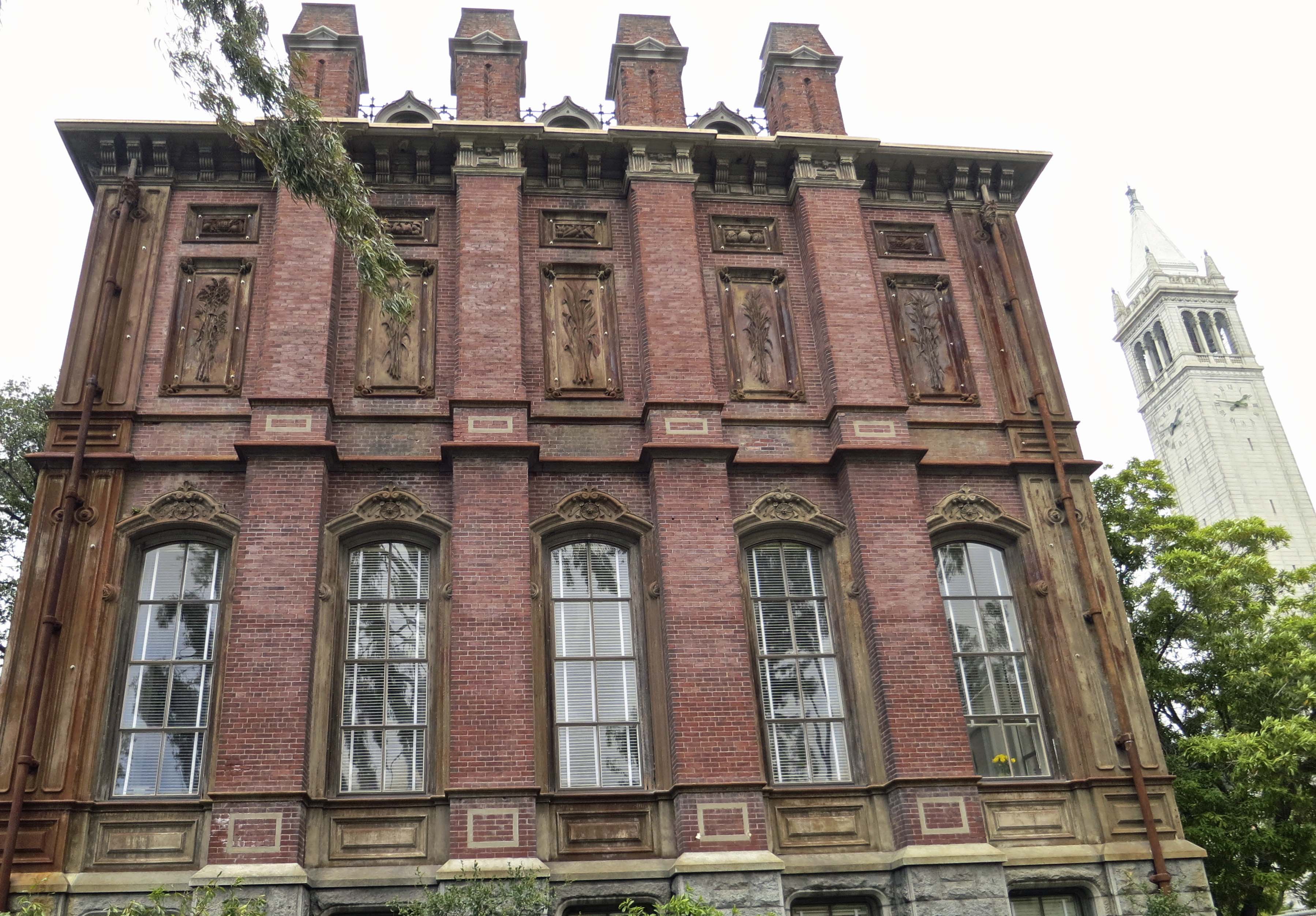
South Hall

South Hall, built in 1873, is the oldest building on the UC Berkeley Campus. It’s an appropriate photo to end this post, and also to raise a question about the future of public education in America. Tuition was free when I went to Berkeley and I was able to pay for my living costs by driving a laundry truck in the summer. I graduated debt-free. Today’s young people graduate with hundreds of thousands of dollars in debt. It’s close to tragic. All I can think of is how incredibly stupid our state and national leaders are when the future of our nation, and indeed the world, depends upon an educated and knowledgeable population. Germany can somehow find the money to provide a free college education. Why not America?


How 25 Cents Saved One Million Lives and 135 Billion Dollars in Health Care Costs: Introduction

In 1989 the tobacco industry would mount an "an unprecedented campaign," according to the Tobacco Institute, to defeat California's Proposition 99, an initiative effort to increase the tax on cigarettes by $.25 and devote a substantial portion of the funds to discouraging tobacco use.  The industry recognized that passage of the initiative would pose one of the greatest threats to tobacco use it had ever encountered.

In 1989 the tobacco industry would mount an “unprecedented campaign,” according to the Tobacco Institute, to defeat California’s Proposition 99, an initiative effort to increase the tax on cigarettes by $.25 and devote a substantial portion of the funds to discouraging tobacco use. The industry recognized that passage of the initiative would pose one of the greatest threats to tobacco use it had ever encountered.

Irritating people with power is an unfortunate talent of mine. I’ve burned enough bridges in my life to cross the Mississippi, Amazon, Congo and Nile Rivers combined— at flood stage. In the fall of 1986, I added Jay Michaels to the list of people annoyed with me. Jay was the Executive Director of the California Medical Society (CMA), one of the most powerful organizations in California, which made Jay one of the most powerful people in California. He and I were working together on an effort to increase the state sales tax on tobacco. But ‘working together’ was a misnomer. Jay didn’t like my allies, he didn’t like me, and he didn’t like how I proposed we spend the revenues.

One day I had a phone call from two of his staff members, wanting to take me to lunch.

“OK,” I had responded, more than a little curious— make that massively curious. I also admit I was amused about going to lunch on Jay’s dollar. They suggested we meet somewhere Jay was unlikely to frequent.

“First, Curt,” they explained when we sat down, “understand that we aren’t here. This lunch is not taking place. We’d be fired if Jay knew we were meeting with you.” CMA, apparently, wasn’t paying for the lunch.

Looking back, I think it took a great deal of courage for the two of them to do what they did. They shared several things with me. Although they had reservations about the environmental programs I was supporting, they were totally behind my primary objective for the use of the tax funds, which was the prevention and control of tobacco use. They told me they would be as supportive as they could be, given the circumstances. Just as we were wrapping up, they gave me a warning. I suspect it was their primary reason for meeting with me.

“Jay was talking about you at a staff meeting last week and he smashed the pencil he was holding into the conference table. He hit the table so hard the pencil shattered.”

“He can destroy your career, Curt,” they told me in all seriousness. I laughed; I couldn’t help myself. It wasn’t about the pencil, which was scary. It was about the career. I had none to destroy. Given the worst-case scenario, I would scoot off into the woods. It is what I do to celebrate, but it is also what I do to lick my wounds. In fact, any excuse for taking off into the wilderness works for me.

A few months earlier I had returned from a major wound-licking session of backpacking alone for six months in the wildest places I could find in the western United States. Part of my therapy afterwards was taking on the tobacco tax, doing penance so to speak. The story of how I became involved, the campaign, and the end results of the effort will be the subject of my Friday essays for the next several weeks. Some of the tales I have blogged about before, others, such as the confrontation with Jay, I am writing about for the first time.

So join me next Friday when, suffering from depression, I left my job as Executive Director of the Alaska Lung Association and fled down the Alaska Highway toward an effort that would eventually become one of the largest, most successful prevention programs in history. I’ll even take you backpacking.

Santorini: A Photographer’s Paradise… The Wednesday Photo Essay

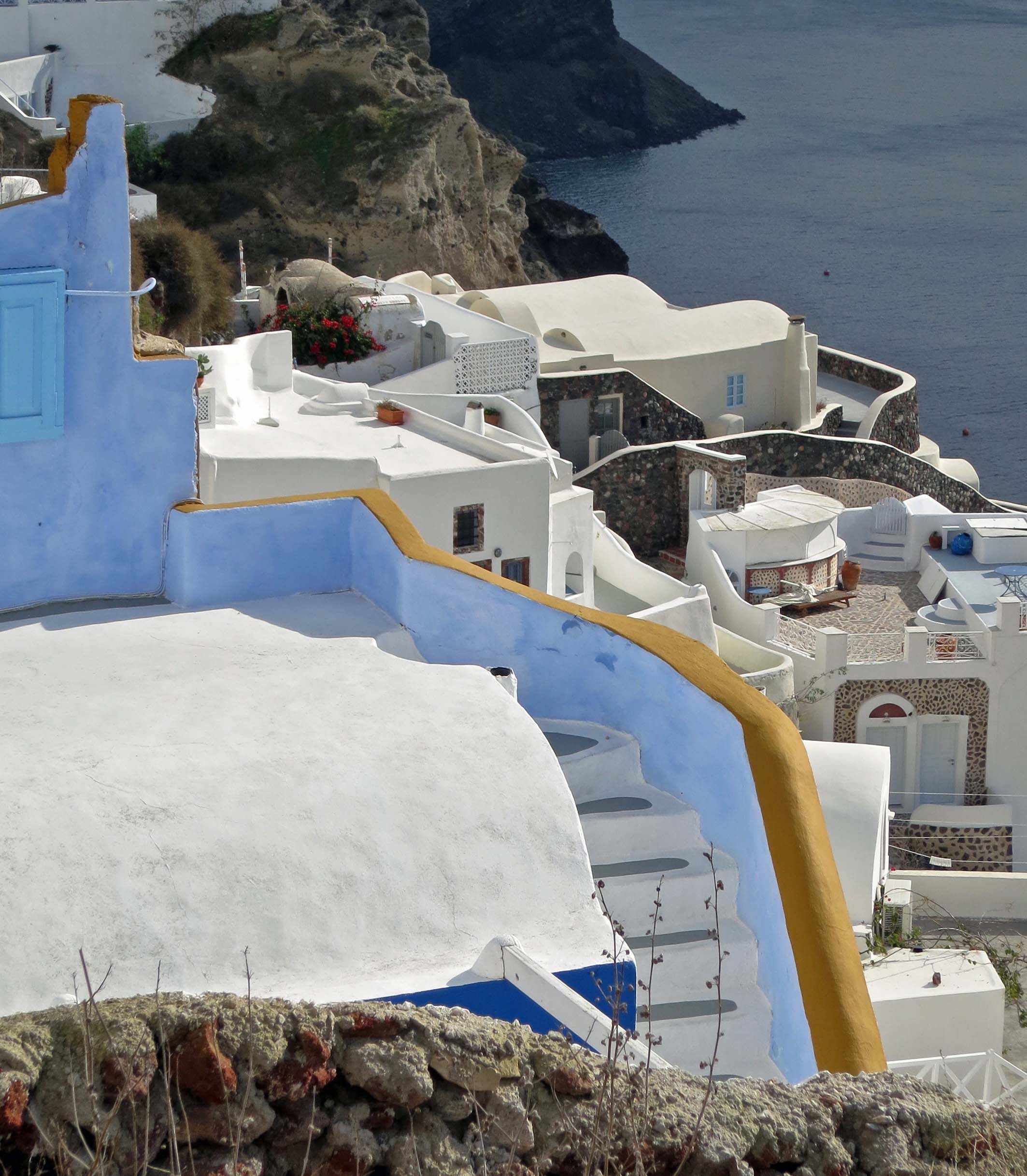
Perched on the remaining wall of an ancient volcano, the Greek town of Oia overlooks the Aegean Sea.

Perched on the remaining wall of an ancient volcano, the Greek town of Oia, Santorini overlooks the Aegean Sea.


Once again, it’s time for my Wednesday photo essay. This time my random search through iPhoto landed on Santorini. And that got me excited. It is one of the most photogenic places on earth. Almost any photo you take has postcard (or blog) potential. This post allowed me to revisit the island and once more enjoy its beauty. My challenge, I immediately discovered, was that Peggy and I had taken 400 plus photos. “Okay, Curt,” I said to me, “I have to do more than one blog.” So expect to find Santorini on my next 3 or 4 Wednesday posts. I think you will enjoy the journey.


The town of Oia overlooks the caldera of what was once a volcano and is now filled with the Aegean Sea.

The town of Oia cascades down the inner slope of a volcano toward the caldera that was left behind when the volcano exploded. The wall of the volcano recedes off into the distance. (Photo by Peggy Mekemson.)

Some basics: Santorini is a Greek island located in the Aegean Sea, 120 miles (200 kilometers) southeast of the Greek mainland. Once upon a time it was a huge volcano. 2600 years ago it blew its top in a dramatic fashion, destroying much of the Minoan Civilization and giving rise to the myth of Atlantis. All that remains is a large caldera filled with seawater and the weathered edge of what was once the volcano’s wall. Lime-white homes dug into the sides of the cliff perch high above the water and cascade down the mountainside, providing great views of the sea below.

This photo provides a perspective on how high the small communities of Santorini perch above the water. The layers represent different volcano flows that took place before the volcano erupted creating one of the largest explosions in written history.

This photo provides a perspective on how high the small communities of Santorini perch above the water. The layers represent different volcanic flows that took place before the volcano erupted, creating one of the largest explosions in written history. I took this photo from our ship as the sun was setting.

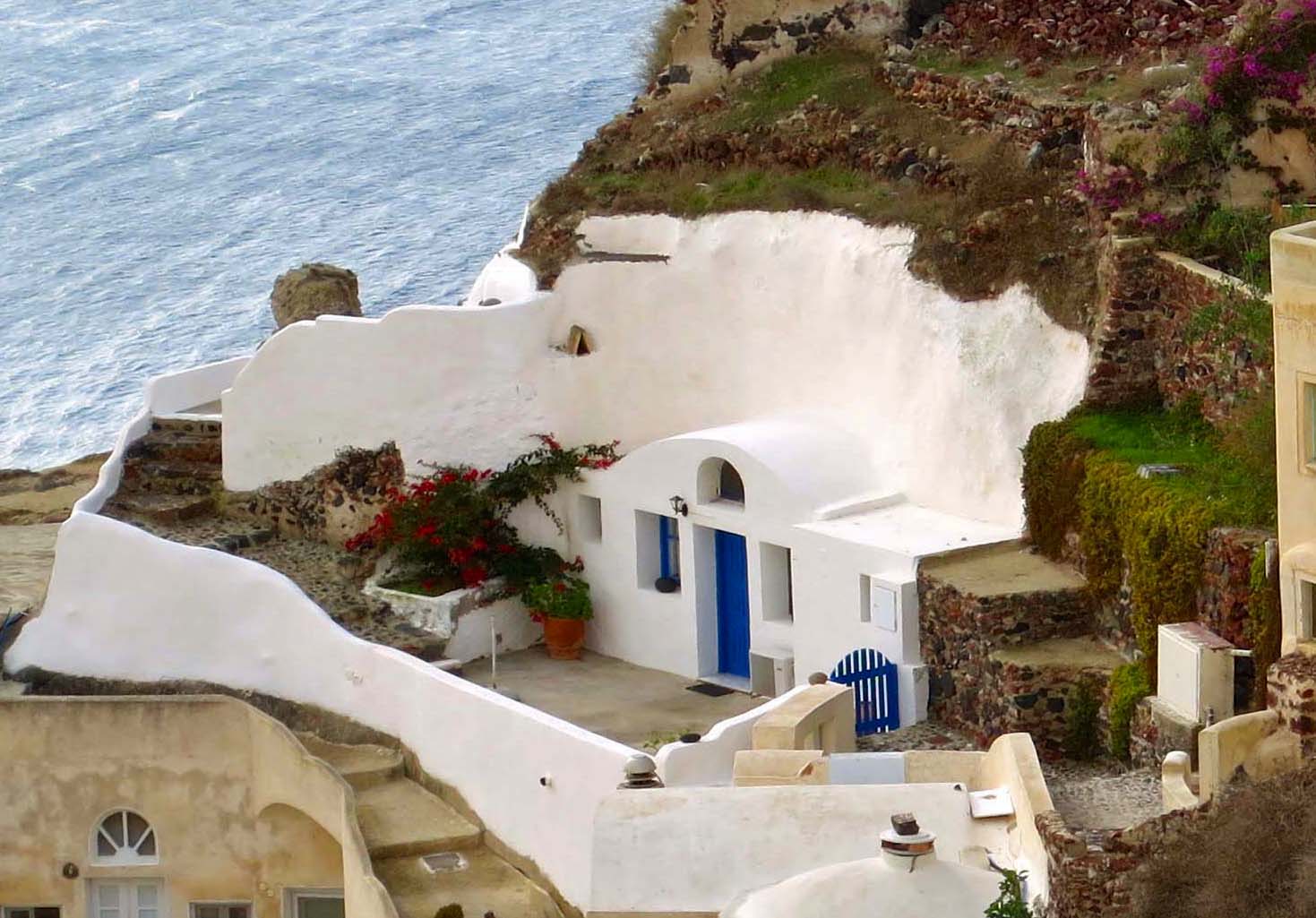
Homes are actually built into the volcanic cliff as this photo illustrates. The added insulation means the houses are cool in the summer and warm in the winter.

Homes are actually built into the volcanic cliff as this photo illustrates. The added insulation means the houses are cool in the summer and warm in the winter.

Forget elevators, escalators, or roads. You get to and from your home, motel, etc. by walking up and down stairs.

Forget elevators, escalators, or roads. You get to and from your home, hotel, etc. by walking up and down stairs.

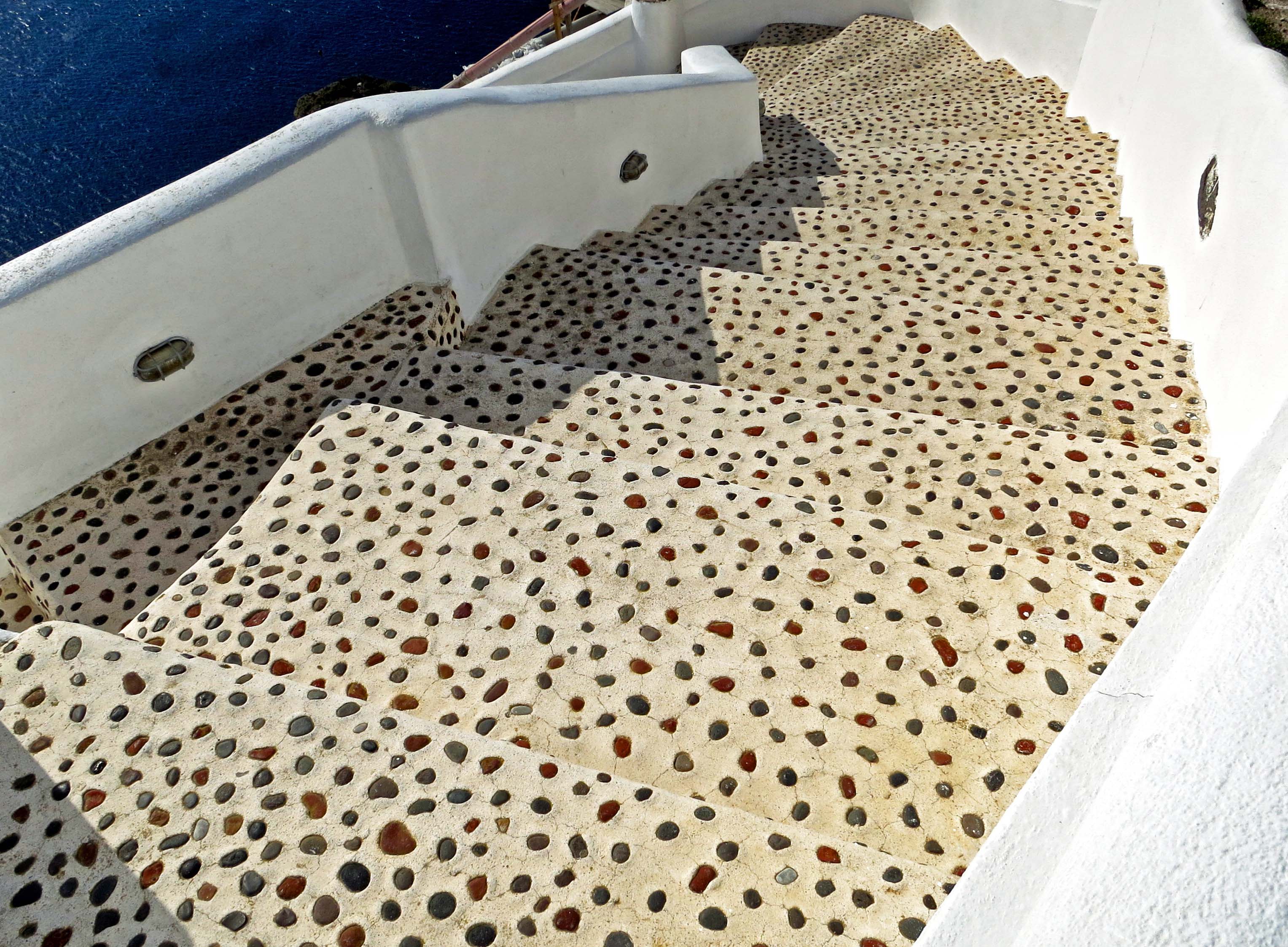
Stairways that come in a variety of shapes, sizes...

Stairways that come in a variety of shapes, sizes…

…and colors.

…and colors.

And lead to intriguing places such as this...

And lead to oh so many intriguing places such as this… (Photo by Peggy Mekemson.)

…leading to oh so many intriguing places.

…and this.

Most homes come with attractive patios, great for sitting out on an admiring a beautiful sunset, or...

Many homes come with attractive patios.

Your patio is your yard, and there isn't much space.

Your patio is your yard, but there isn’t much space.

There is always room for laundry, but for get privacy. What you do on your patio is defined as entertainment by your neighbors above you.

There is always room for laundry, but forget privacy. What you do on your patio is defined as entertainment by your neighbors above you.

When you live on the wall of a volcano, space is limited.

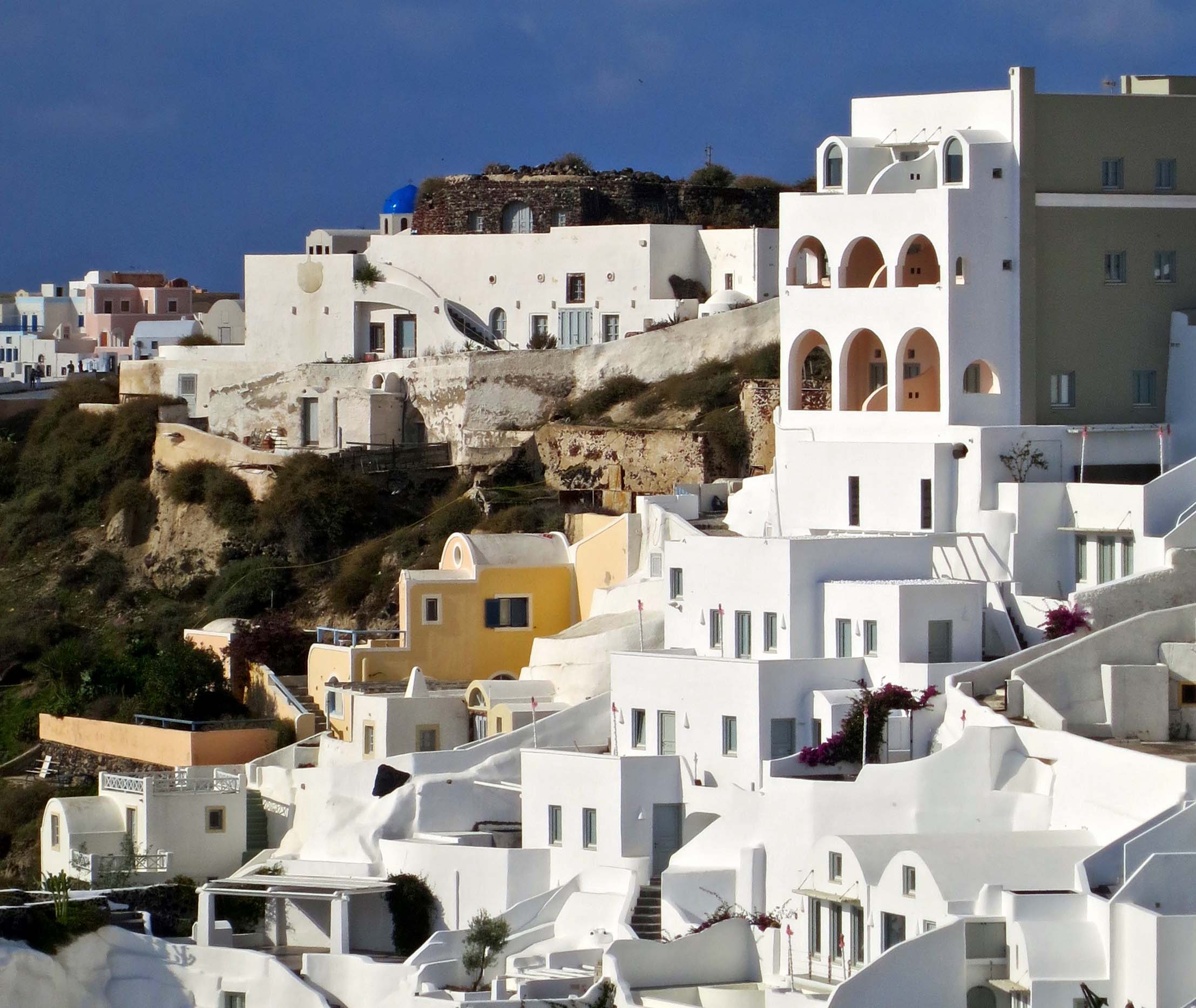
Every view of Oia, Santorini is different, and beautiful.

I really like the whites, pastels and bright blues of Oia. The blue dome is part of a church. NEXT BLOG: How 25 cents saved one million lives.

I really like the whites, pastels and bright blues of Oia. The blue dome is part of a church. NEXT BLOG: How 25 cents saved one million lives. (More on Santorini next Wednesday.)


The Baaa’d Goat Feast

Goat in Jackson County Oregon.

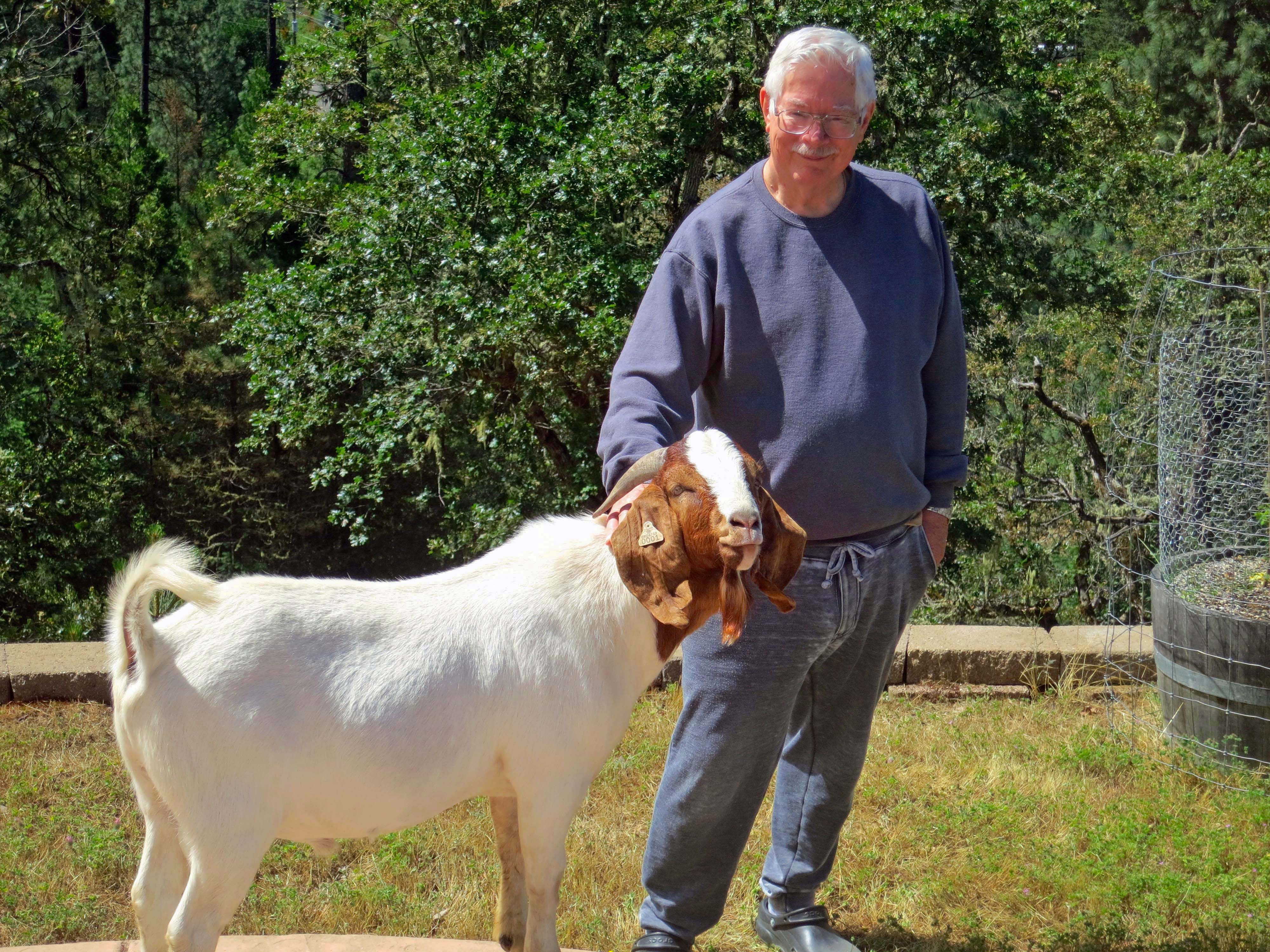
Billy Goat, aka Rambo, stood on our front porch and posed for Peggy. He was a handsome fellow.

“Curt,” Peggy hollered at me from the kitchen, “there is a goat running around in our back yard.” I looked out. Sure enough, a white billy-goat was dashing back and forth in the field above our house baaing like the Hounds of Hell were on its heels.

“Maybe tomorrow’s dinner has escaped,” Peggy suggested. Perhaps she was right. Our neighbors Margaret and Bryan were hosting a goat bar-b-que for Memorial Day. It’s something of a tradition, but normally they cook a lamb. This year, our next-door neighbor, Jim, had donated a goat. I could understand why it might want to get away.

While Peggy called Jim and grabbed a camera, I went out to have a discussion with Billy. I baaa’d at him. I often talk to Jim’s goats. And yes, they talk back. Sometimes we have extended conversations. This time Billy came rushing over to tell me his woes. I started scratching him behind the ears. It works for dogs, cats, and horses, why not for goats. Soon Billy was purring like a cat, or he would have been if goats purred. Jim arrived in his truck.

I scratched Rambo behind the ears and calmed him down.

I scratched Billy behind the ears and calmed him down. (Photo by Peggy Mekemson.)

“Come on Billy,” I suggested, “let’s go see Jim.” Billy dutifully followed along.

“His name is Rambo,” Jim informed me as he beat on a can filled with goat food to entice his errant ram. Rambo wasn’t buying it. He was obviously irritated. At a minimum, Jim had interrupted a good ear scratching.

“Are we looking at dinner, here?” I asked Jim. His last ram had ended up in stew.

“Oh, no,” Jim told me. “That’s Pinky.” Pinky had been a bad goat in the spring and caused the demise of two kids from another Nanny. That had irritated Jim, which isn’t a good idea. “Pinky was Rambo’s companion, however.” Jim explained. “And now he is mad.” Apparently Rambo had escaped from his pen to mount a rescue effort. Back in his pen again, he sounded like an angry bull elephant on a rampage. The whole neighborhood shook from his complaints. Jim retrieved another nanny to put in with him. Rambo shut up— immediately. So much for true love.

The next day…

“Stop that,” Bryan’s father Bernard urged when Jim referred to the goat that was roasting on the spit as Pinky. Obviously Jim was having fun, teasing. A fair-sized group of neighbors, friends, and a contingent from Southern Oregon University had gathered for the feast. Everyone had brought food to go with the goat meat and several had brought wine. Fred, the brewer from the Caldera Brewery in Ashland, had brought a generous supply of the brewery’s award winning beers. I considered it my responsibility to sample a few.

This Caldera IPA was quite tasty. So tasty in fact, that I had to drink another.

This Caldera IPA, Hopportunity Knocks, was quite tasty. So tasty in fact, that I had to drink another. I can honestly report that the brewery’s other ales were quite good as well.

Goat bar-b-que in Applegate Valley of Southern Oregon

Ex-Pinky roasting away over an open fire.

Spices and oil are bushed on the goat by Brian's brother-in-law Kieth. The brush is also made of spices such as rosemary and sage.

Spices and oil are brushed on the goat by Brian’s brother-in-law Keith. The brush is also made of spices such as rosemary and sage.

There is something primitive about carving your meat off of an animal that has just been roasted over an open fire. It’s enough to make squeamish folks hesitate. Throw in the fact that it was goat, and even more people opt out. The real gourmet challenge, however, was the Kokoretsi Bryan prepared. He had taken a portion of the goat’s intestine, stuffed it with cut up pieces of the goat’s lungs, heart and liver, trussed it up, and cooked it beside the goat. The meal required a bold palate.

Brian carves meat off the goat roast.

Bryan carves meat off the goat roast.

Bryan serves on neighbor Jim, who donated the goat for the feast.

And serves our neighbor Jim, who donated the goat for the feast.

Kokoretsi being grilled in the Applegate Valley of Southern Oregon.

The Kokoretsi all trussed up.

But the goat and the goat intestines were quite tasty. With the exception of a vegetarian or two (understandably), everyone lined up for goat meat and most people tried the Kokoretsi. I went back for second helpings of each. As for the vegetarians and the more dainty eaters, there were numerous options, including a delicious apple pie Peggy had baked for the occasion. No one went home hungry.

Bryan's father, Bernard, makes an annual trip down from Portland to oversee the cooking of the lamb/goat. It's a family affair.

Bryan’s father, Bernard, makes an annual trip down from Portland to oversee the cooking of the lamb/goat. It’s a family affair.

Margaret teaches at SOU and served as editor of my book, The Bush Devil Ate Sam.

Margaret, looking chirpy,  served as editor of my book, The Bush Devil Ate Sam.

It wasn't only people who had fun at the goat feast, This dog made quick work of some spilled beer.

It wasn’t only people who had fun at the goat feast. This dog made quick work of some spilled beer.

It was the Australian Shepherd puppies that stole the show, however. I don't know how many there were, but it seemed like there were plenty to go around.

It was the Australian Shepherd puppies that stole the show, however. I don’t know how many there were, but it seemed like there were enough to go around.

Like, how cute can you get?

Like, how cute can you get?

After all of that attention, this one needed a nap.

After all of the attention, this one needed a nap.

Peggy attests to just how good the goat meat was.

Peggy attests to just how good the goat meat was. NEXT BLOG: I’ll take you back to the magical Greek Island of Santorini on my Wednesday photo essay.


Speaking of Afterlife, Did Pop Actually Haunt Me?


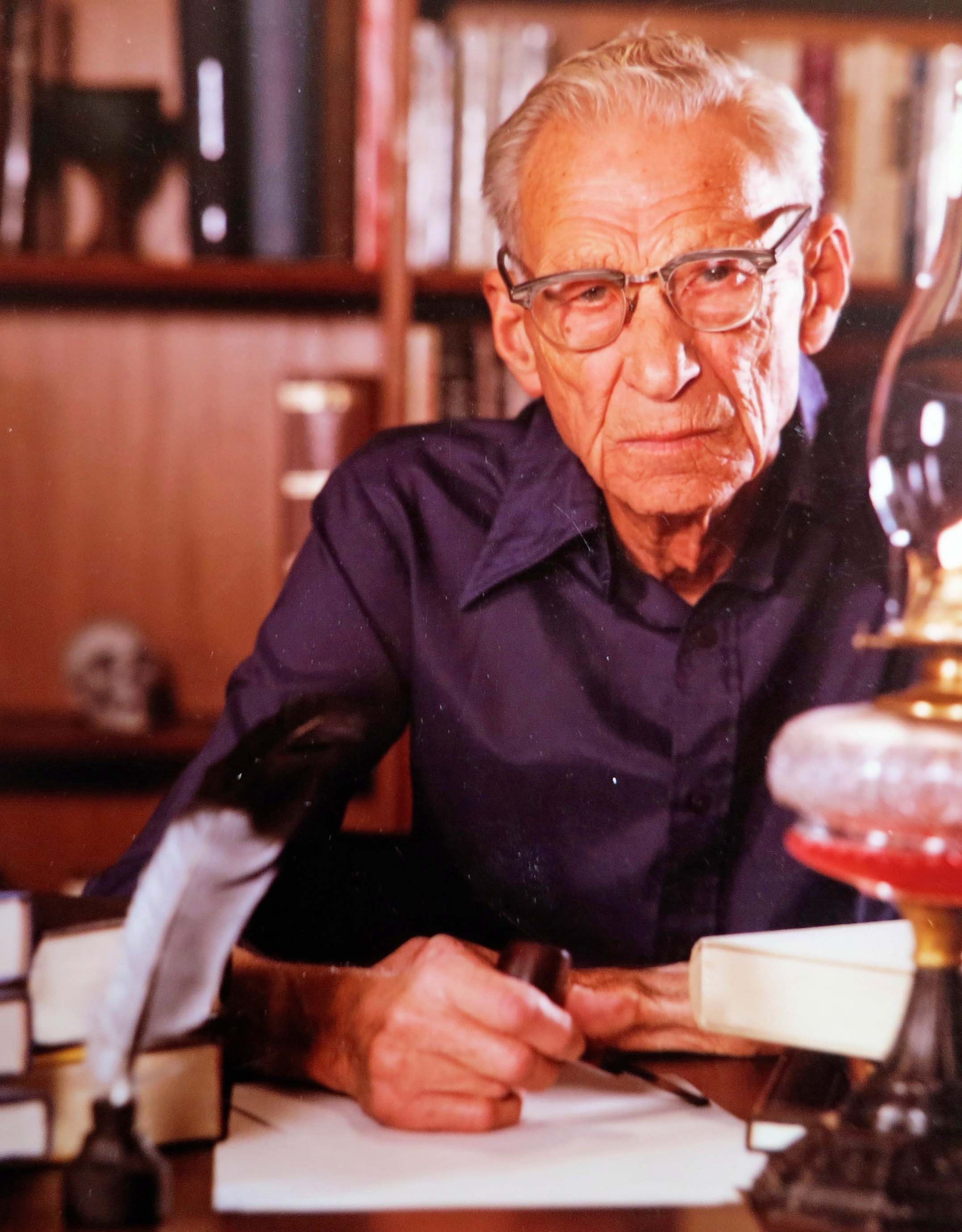
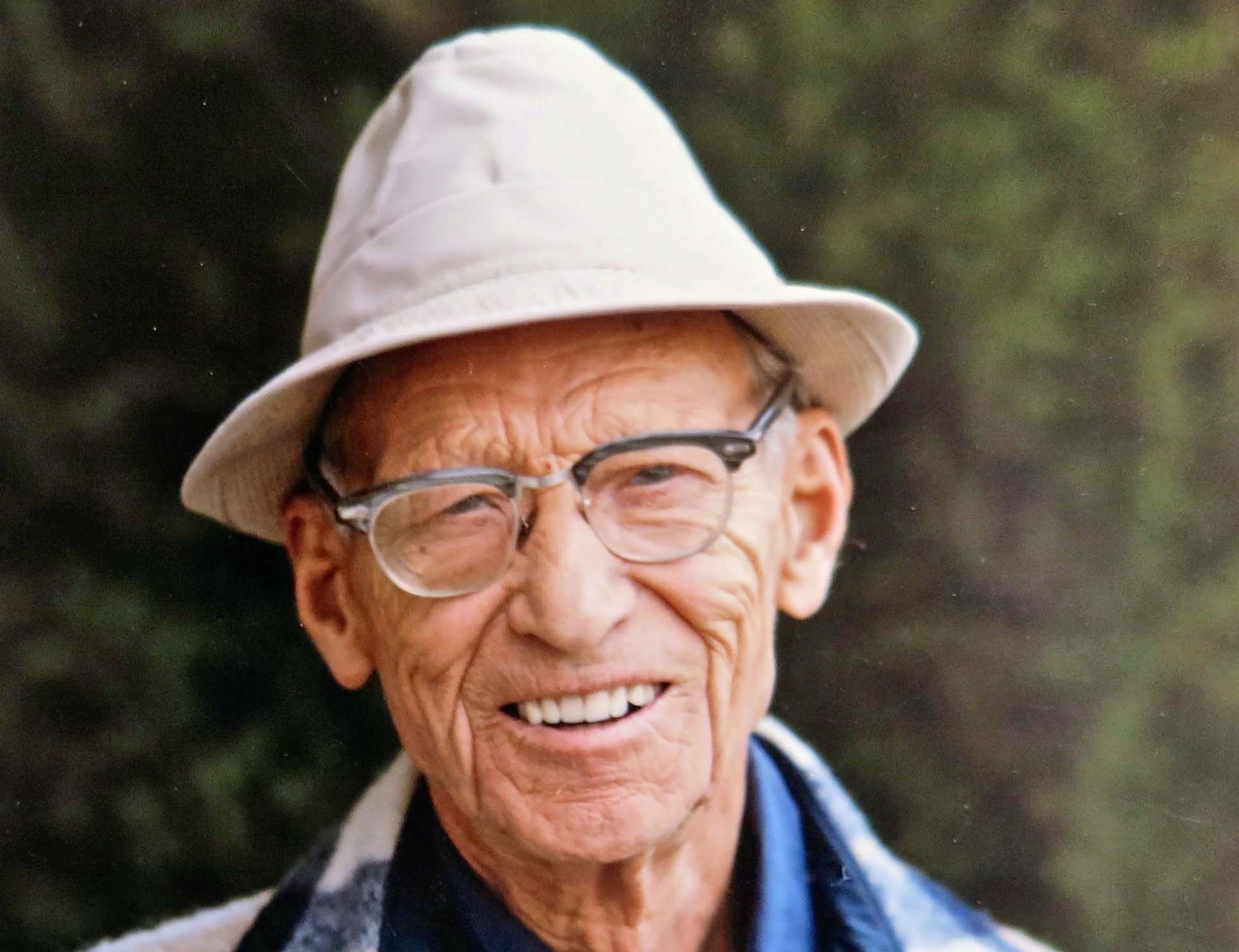
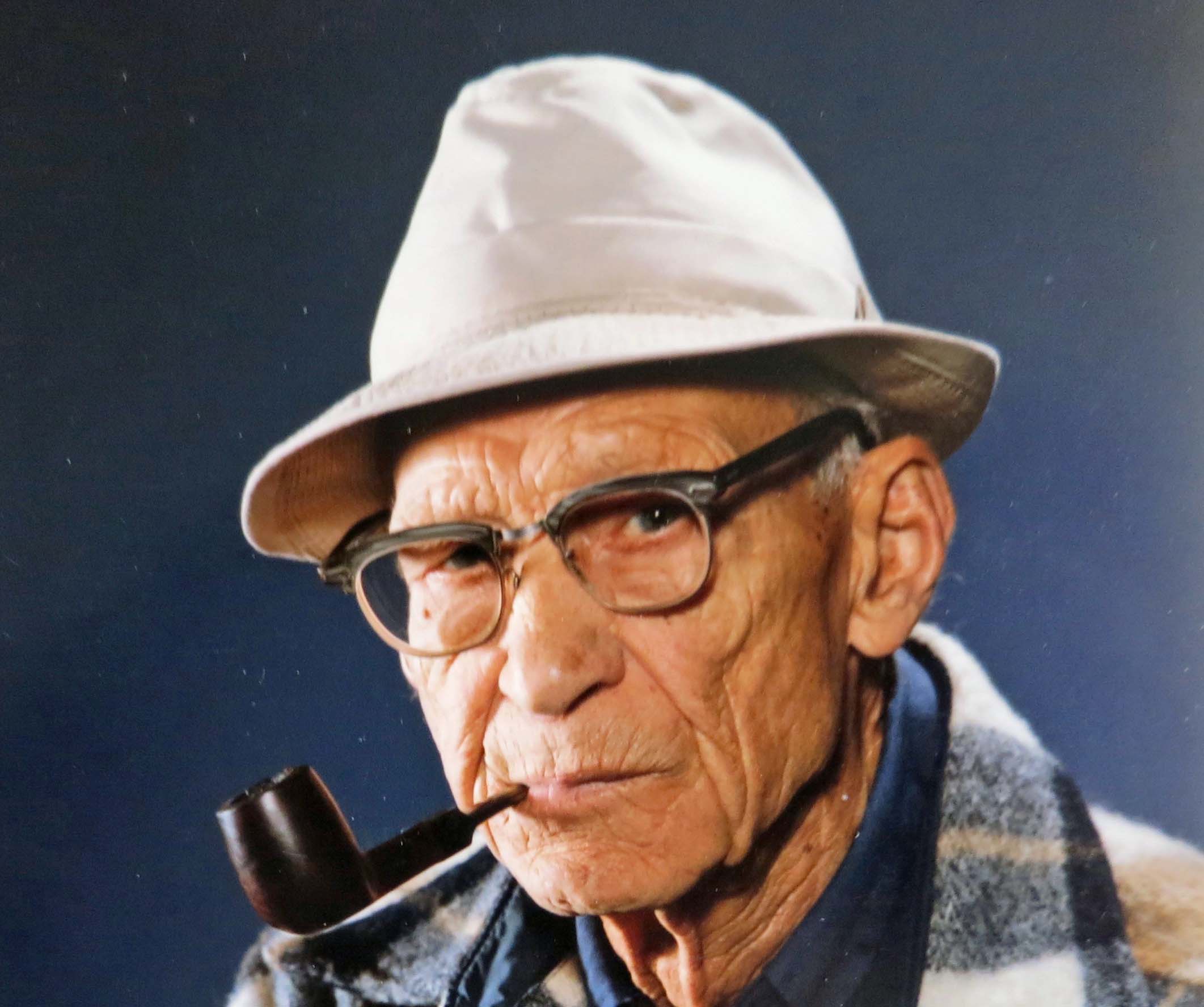
One of my favorite photos of my father taken by Glen Fishback at his studio.

One of my favorite photos of my father taken by Glen Fishback at his studio.

Do you believe in ghosts? I’d like to say I don’t. Their existence isn’t rational. There is no scientific evidence that supports their presence. And yet, I’ve had a couple of ghostly experiences that are hard to explain rationally, other than my mind playing tricks (a distinct possibility). But consider the following:

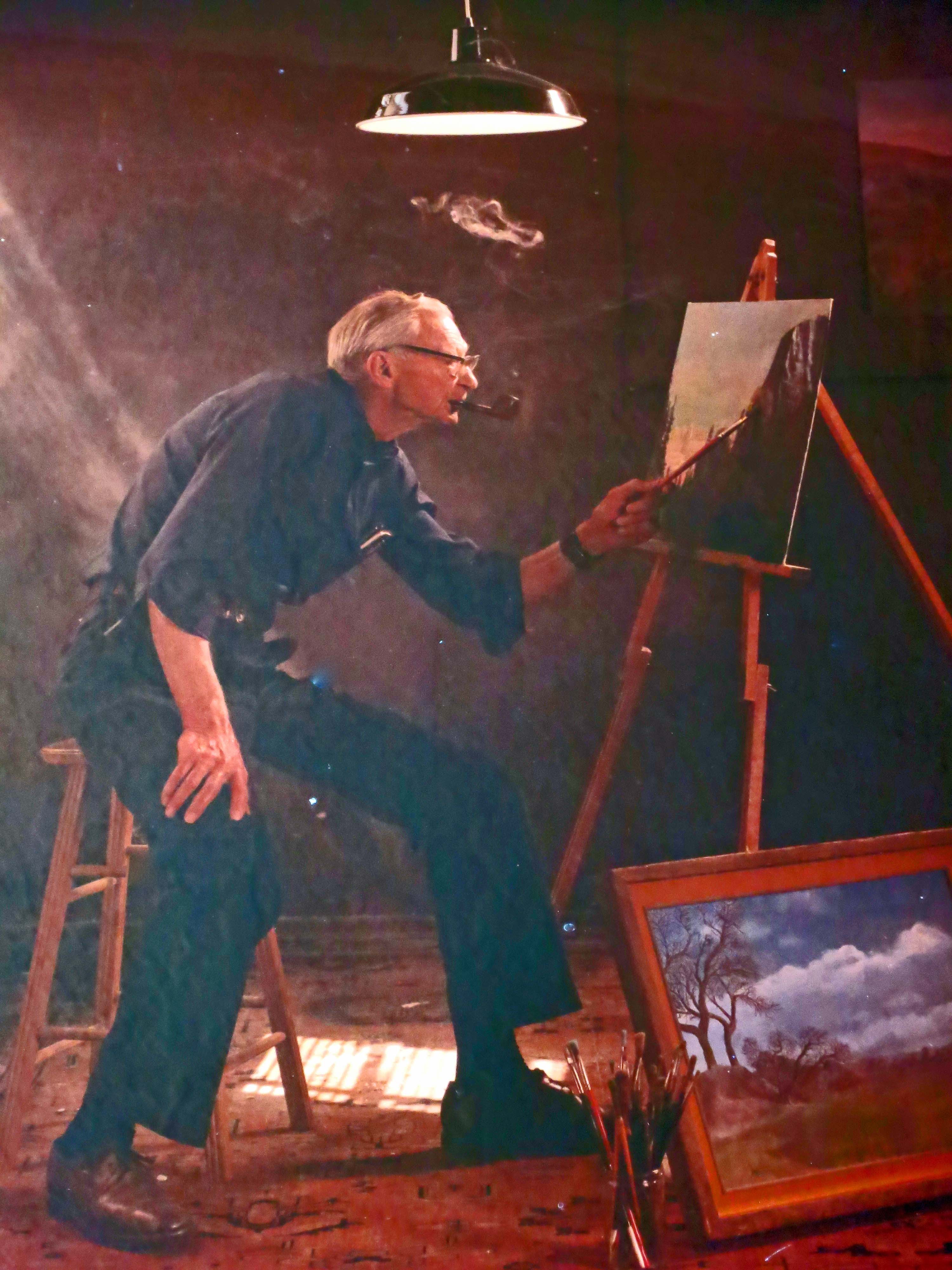
In my last Friday essay on religion, I took readers to Alaska and a campfire discussion with my father. Pop lived for another eight years— and they were good years. He continued to read his Bible, smoke his pipe, paint pictures, and entertain the elderly women in his retirement complex with the photographs he had taken over the years. We had lots of opportunities to talk. I learned a great deal of his past and he never gave up trying to convert me.

Pop painted up until he was 85 or so.

Pop painted up until he was 85 or so. (Photo by Glen Fishback.)

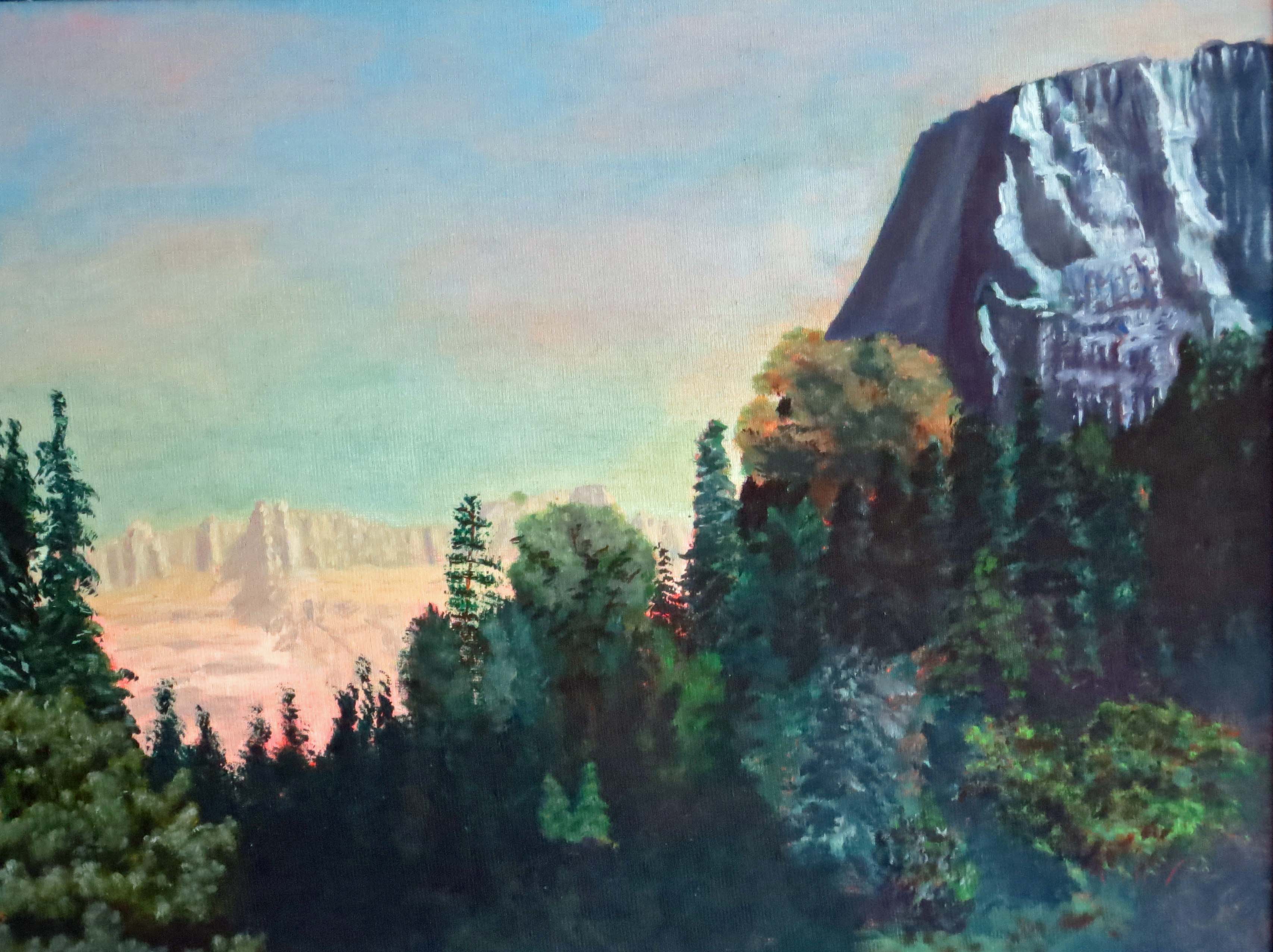
The painting that Pop was working on now hangs in our guest bedroom.

The painting that Pop was working on now hangs in our guest bedroom.

One night I had him over for dinner to meet my new friend and future wife, Peggy. She charmed him as much as she had charmed me. I had already told him I planned on marrying her if I could persuade her to say yes. When I took him home, we shook hands at his doorway and, purely out of instinct, I said, “I love you Pop.” He got one of his big grins and responded, “I love you, too, Curt.”

A week later I found him sitting naked on his toilet, dead from a massive heart attack.

Of course I was grief-stricken. His passing was the passing of one of the most significant parts of my life. And I also felt guilt. I had known he wasn’t feeling well when I left him that night. I’d called a couple of times and he hadn’t answered, but I had assumed he had just been out on one of his walks. I couldn’t help but think if I had stopped by that I might have made a difference. Still, he had lived a full and productive life, taken care of himself to the end, and gone out quickly. It’s hard to ask for more.

The next day I went over to clean things up. I probably shouldn’t have gone alone because I was so stressed. I was in the bathroom cleaning when a light in the front room went on. I went out, thinking maybe the building manager had come by. No one was there. I went back to the bathroom where I had left a faucet on. Just as I walked in it jumped from a trickle to full force. The errant light and faucet shook me up; I grabbed my things and departed, quickly. That night I left the lights on in my apartment. It had been ages since I feared things that go bump in the night, but why take chances.

Just as I was finally drifting off to sleep from exhaustion, I heard a voice in my head. It was Pop. “I am alright Curt,” he said. “It’s okay.” And then I saw a vision of the proverbial white tunnel. It wasn’t a light at the end of the tunnel; it was the complete tunnel, the whole shebang— Pop’s spaceship. Were the light in his front room, the faucet, and the voice results of natural causes and my overwrought imagination? Probably. But who knows? Who knows what awaits us when the final bell rings? Maybe it’s a one-way ticket through the Universe.

Afterwards, when I thought about the experience, I was a little amused that Pop hadn’t taken advantage of the moment to say, “Read your Bible, Curt.” I would have started immediately. But maybe it wasn’t necessary. Maybe other fuel drove his spaceship.

CONCLUSION

In this series of essays, I have not argued against religion, I have argued against the abuse of religion. I have contended that the ‘leap of faith’ required by religions, combined with the concept of exclusivity (there is only one way to get to heaven), make abuse possible and even likely. Holding the keys to eternal life provides the holder with tremendous power. It’s something to die for. This power is an almost irresistible magnet to those who crave and need power for any number of reasons ranging from the sublime to the outrageous, from serving the flock to fleecing it, from helping the helpless to offing the opposition. When combined with fanaticism and government support, this mixture can quickly become a dangerous and deadly brew.

Religion has the power to do much good. I used my own personal example of how the Episcopal Church helped me get through difficult teenage years. I have a minister friend, the woman who married Peggy and me, who is known as the Disaster Pastor. She devotes her life to helping out where help is most needed, and has the full support of her congregation. My fellow blogger friend Bill, at Practicing Resurrection, is using his faith to encourage wholesome and humane farming practices, and healthy eating. Pope Francis is undertaking a major environmental initiative. There are thousands of examples.

To me, the greatest role religion can play is to enable us to see beyond ourselves, to understand that on some deep level we are all connected, not only to other human beings but to all life. Our salvation as a species lies in realizing that all of life is sacred and acting accordingly. Few of us have the capacity for sainthood but most of us have the capacity to see a bit further beyond ourselves than we normally do, and think through the long-term implications of our actions— whether it is being unkind, marching off to war, or wiping out another species.

I believe that the easiest way to counteract the negative aspects of religion is to modify the concept of exclusivity. Simply put, it’s okay for us to believe that the path we have chosen will take us toward whatever afterlife has to offer, but we also need to recognize that someone else’s path may be equally valid. Religious tolerance would eliminate one of the primary causes of conflict in the world today. Freedom of religion and separation of church and state are essential to obtaining this objective. Maybe the day will come when people of different religious beliefs (or none), can live next to each other in peace and prosperity throughout the world.

I’ll let Pop get a final word in. He once told me that he regarded his extensive reading of the Bible as an insurance policy. If he were right, it was his key to the afterlife. If he were wrong, what’s the harm? I granted him that. But I countered with the opposite argument. What if he were wrong? What if this is all we have? Then life becomes incredibly important. Each moment is precious. Yes, practice your religion if it is significant to you— read your Koran or Bible or Bhagavad Gita— but live each moment as though it were your last. Be kind, make sure that your loved ones know that you love them, give back to the community, have adventures, expand your mind, practice tolerance, and be passionate.  If there is more after the curtain falls, wonderful. If not, you have lived your life fully and can die knowing that you achieved everything humanly possible from your brief time on this earth. What’s the harm?

NEXT WEEK: Monday’s Blog: A neighborhood goat feast. You’ll meet a clothed Rambo and a naked Pinky. Wednesday’s Photo Essay: I return to the magical island of Santorini. Friday’s Essay: How twenty-five cents saved one million lives and $134 billion in health care costs. Part I.

The Natchez Trace National Parkway, AKA— the Devil’s Backbone

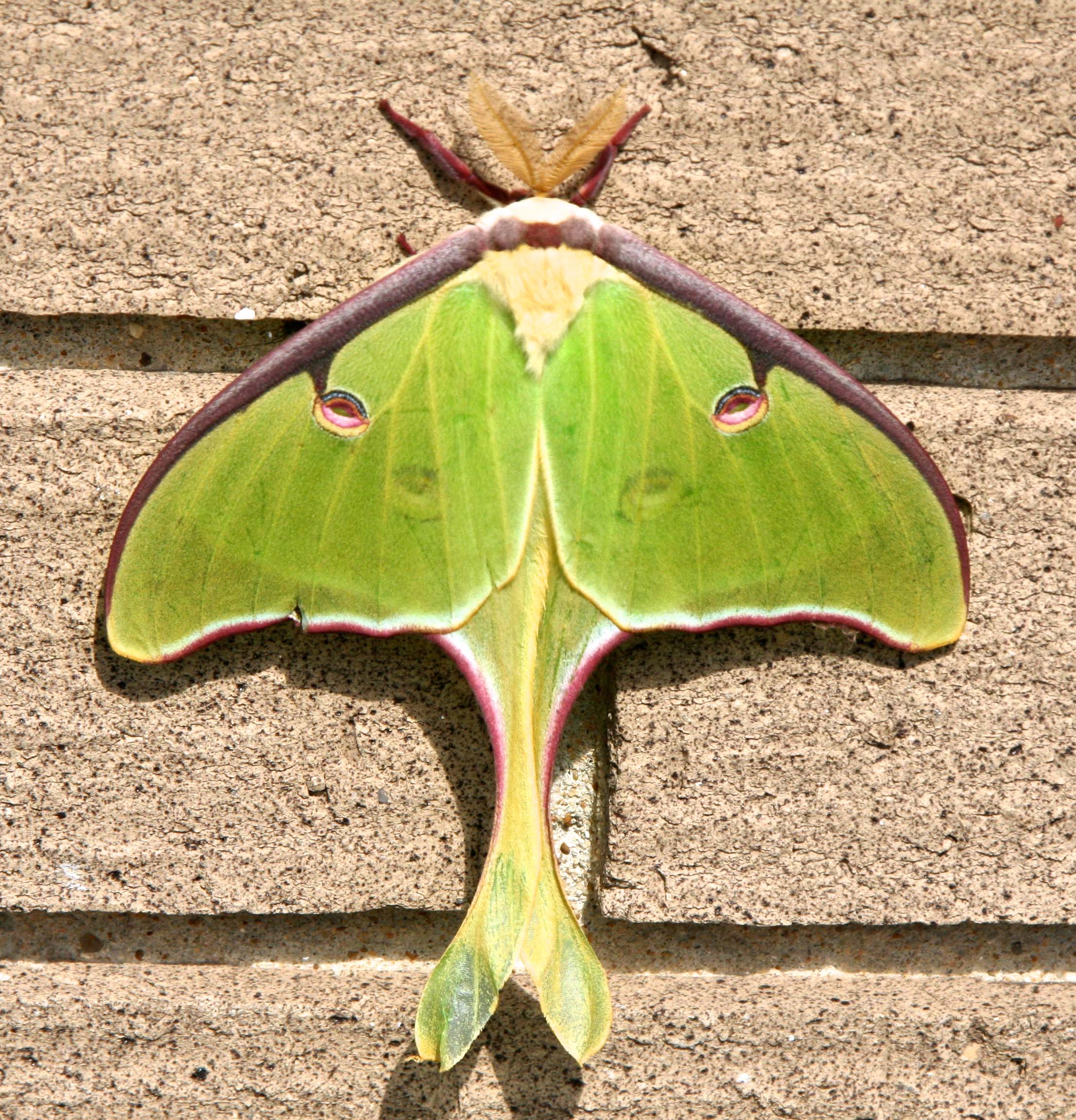
Peggy and I were driving down the Natchez Trace when we came on this beautiful Luna Moth with a wingspan of about four inches. It was one of many treasure we found along the way.

Peggy and I were driving down the Natchez Trace when we came on this beautiful Luna Moth with a wingspan of about four inches. It was one of many treasures we found along the way. (Photo by Peggy Mekemson.)

It’s Wednesday, time to scroll down through my iPhoto and find photos to feature. This time, my finger landed on the Natchez Trace, one of America’s premier drives— or bicycle trips. If you are ever wandering through Mississippi, Alabama or Tennessee, be sure to include it as part of your itinerary.

Large game animals, including buffalo, first used sections of what would become known as the Natchez Trace. Later it served as a major trade route for Native Americans. By the early 1800s, the Trace had been modified by a young United States into a 450-mile transportation corridor between Nashville, Tennessee and Natchez, Mississippi. Soldiers, highwaymen and missionaries travelled the route, but Kaintucks were its primary users.

Kaintucks were rough frontiersmen from Kentucky who operated flatboats on the Ohio and Mississippi Rivers. They would load their boats with merchandise in Nashville and then oar down the Mississippi to Natchez where they would sell their goods for a handsome profit. Getting the money home was the challenge. Rowing up the Mississippi was not an option. Kaintucks were faced with the 450-mile hike back up the Trace— and they were faced with a multitude of folks who wanted to separate them from their newfound wealth.

First came the gauntlet of booze, prostitutes, gamblers, and gangsters in ‘Natchez Under the Hill.’ Assuming the Kaintucks got out of town with fortune intact, they became fair game for highwaymen. It was open season on the rivermen and their cash. For this reason, the Natchez Trace became known as the Devil’s Backbone. Today the Trace is a beautiful National Parkway with no commercial traffic. I’ve driven it several times, and once, I bicycled 370 miles of it from Natchez into southern Tennessee.

A number of lakes and waterways are found along the Trace. We took this photo from our campsite. We also watched a beaver working.

A number of lakes and waterways are found along the Trace. We took this photo from our campsite. We also watched a beaver working while relaxing in our camp chairs.

I found this grass growing in the lake the next morning and enjoyed its reflection.

I found this grass growing in the lake the next morning and enjoyed its reflection.

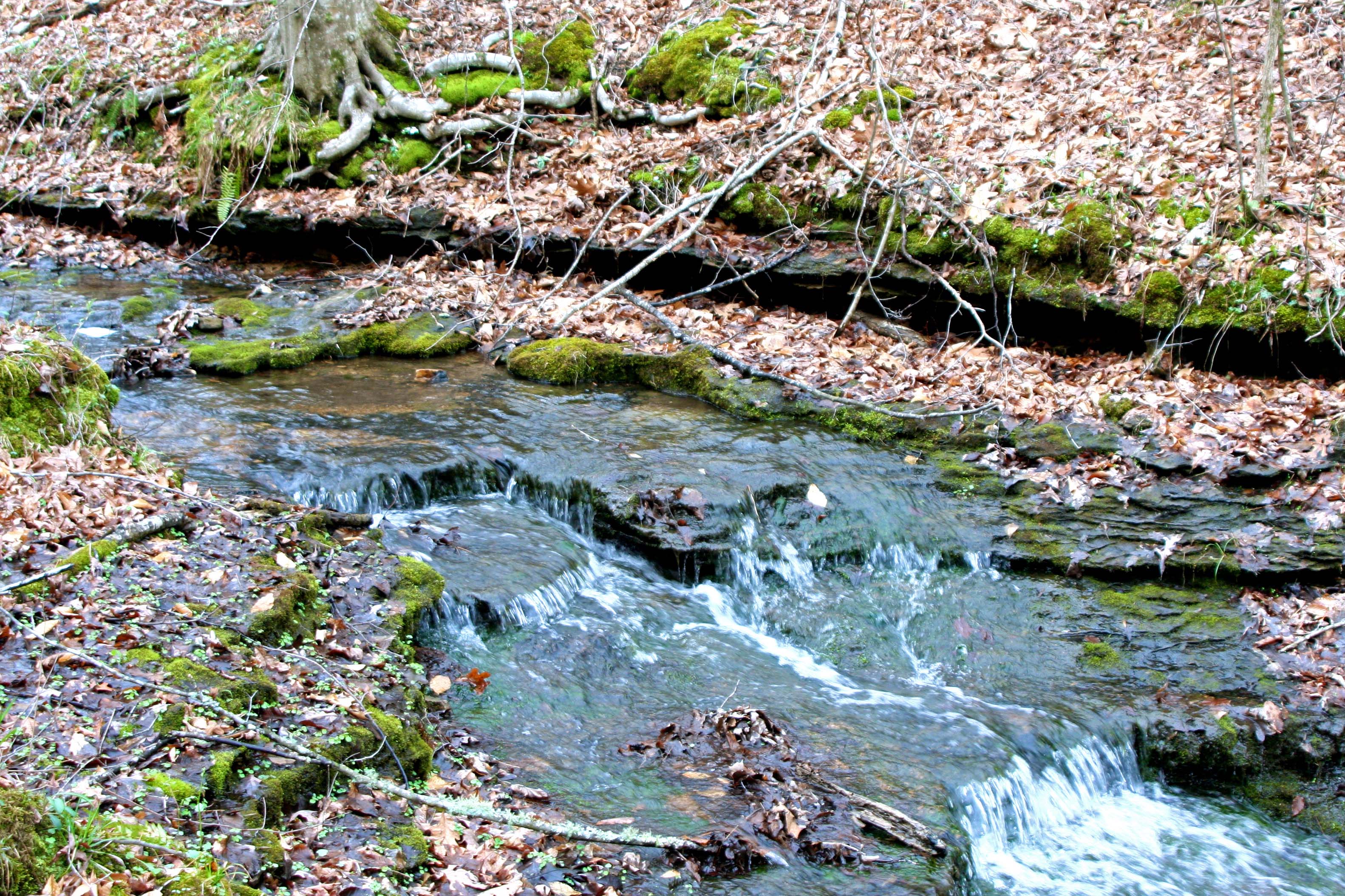
Numerous trails lead off of the Trace, often leading to babbling brooks.

Numerous trails lead off of the Trace, often leading to babbling brooks.

And lots of fungi, including this shelf fungus, which decorated a rotting log.

And lots of fungi, including this shelf fungus, which decorated a rotting log.

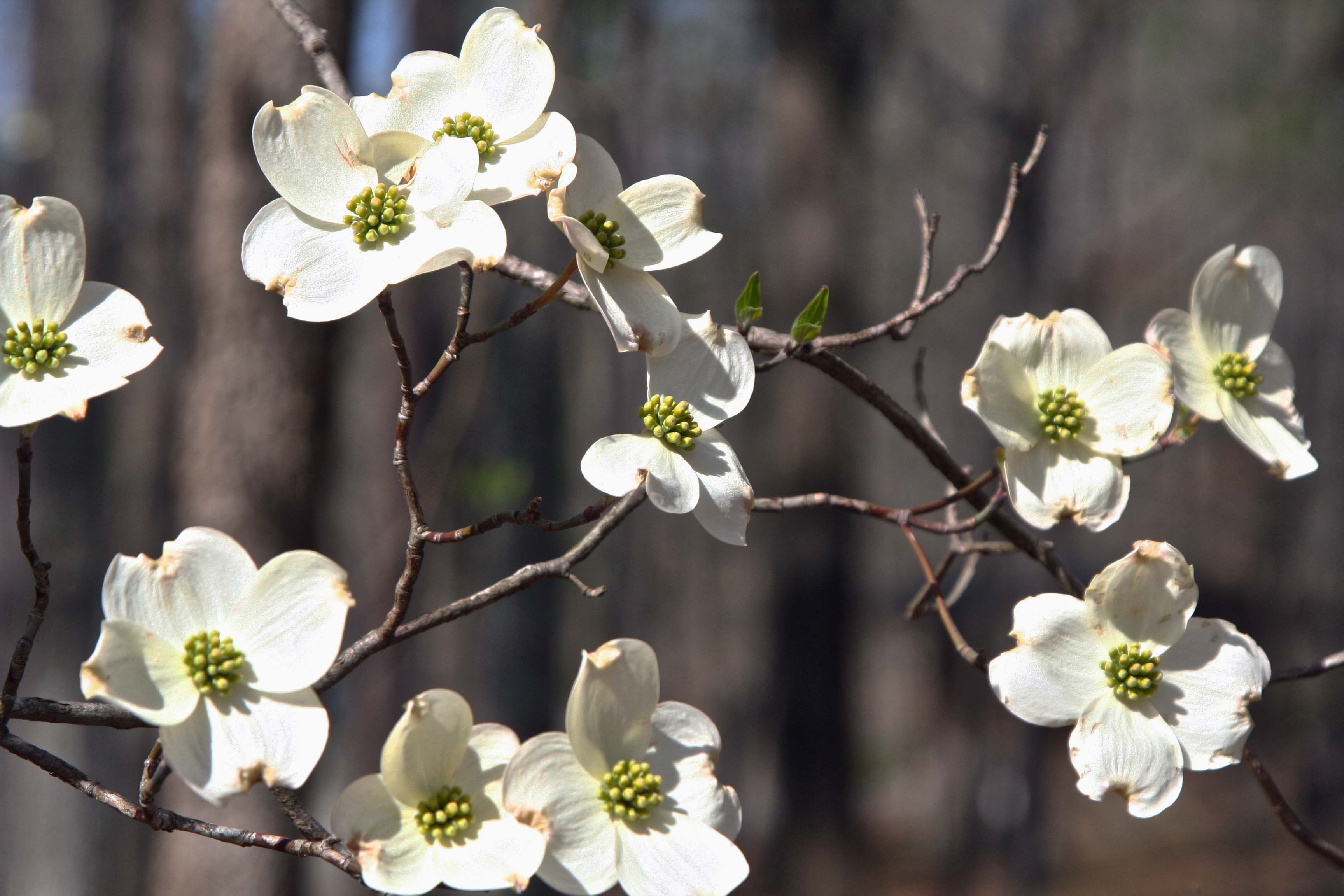
Miles and miles of dogwood bloom along the natchez Trace in Spring.

Miles and miles of dogwood bloom along the Natchez Trace in Spring.

Peggy and I also found these colorful violets.

Peggy and I also found these colorful violets.

Meriwether Lewis of Lewis and Clark was found dead in a hotel on the Trace. To this day it is debated as to whether he was killed or committed suicide while under the influence of opium.

Meriwether Lewis of Lewis and Clark was found dead in a house on the Trace. To this day it is debated as to whether he was killed or committed suicide while under the influence of opium. This monument stands over his grave.

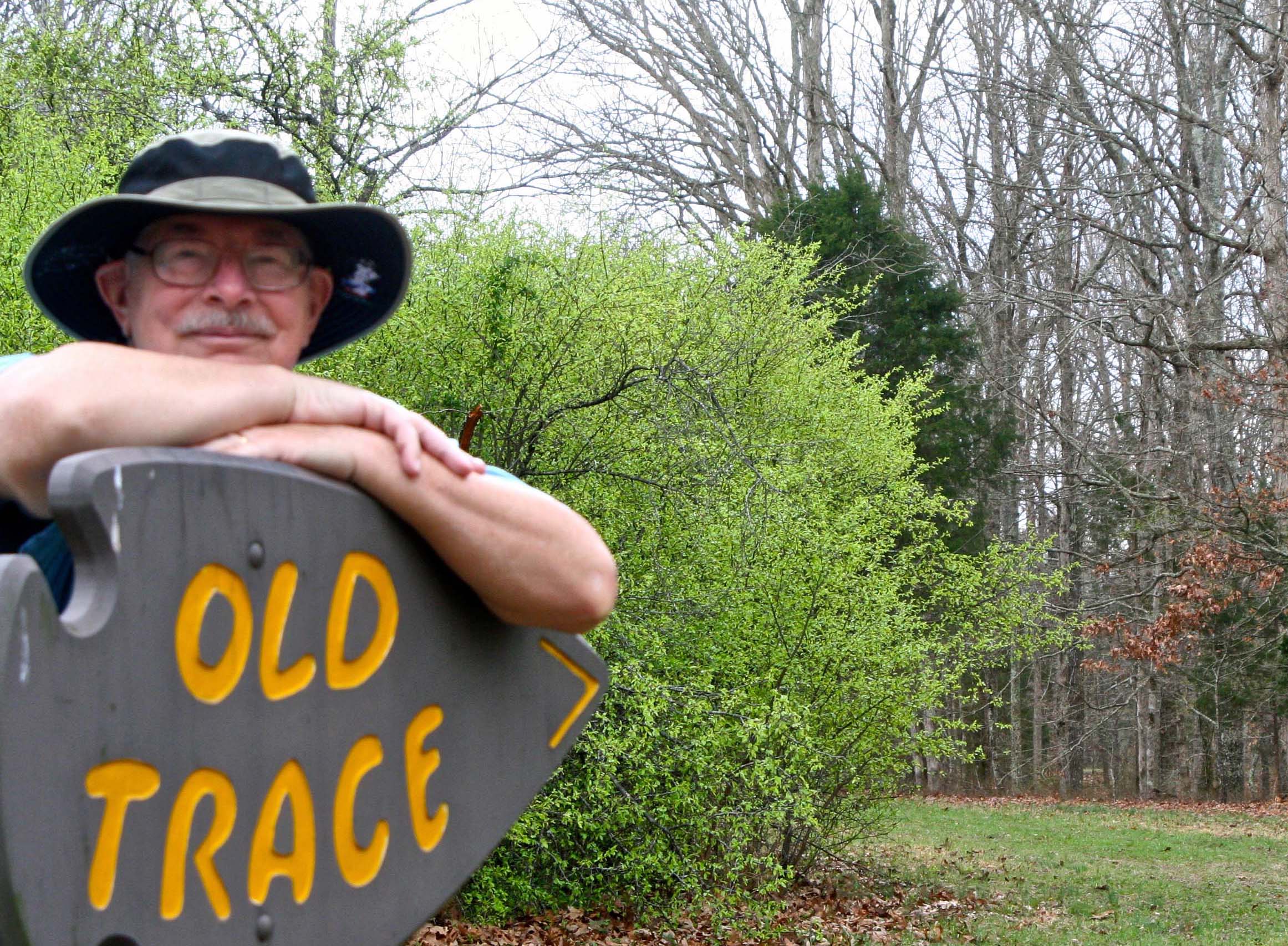
I wondered if Peggy had some type of message in mind when she asked me to pose for this photo. The sign is pointing toward portions of the historical Trace that are still found along the Parkway.

I wondered if Peggy had some type of message in mind when she asked me to pose for this photo. The sign is pointing toward portions of the historical Trace that are still found along the Parkway. (Photo by Peggy Mekemson.)

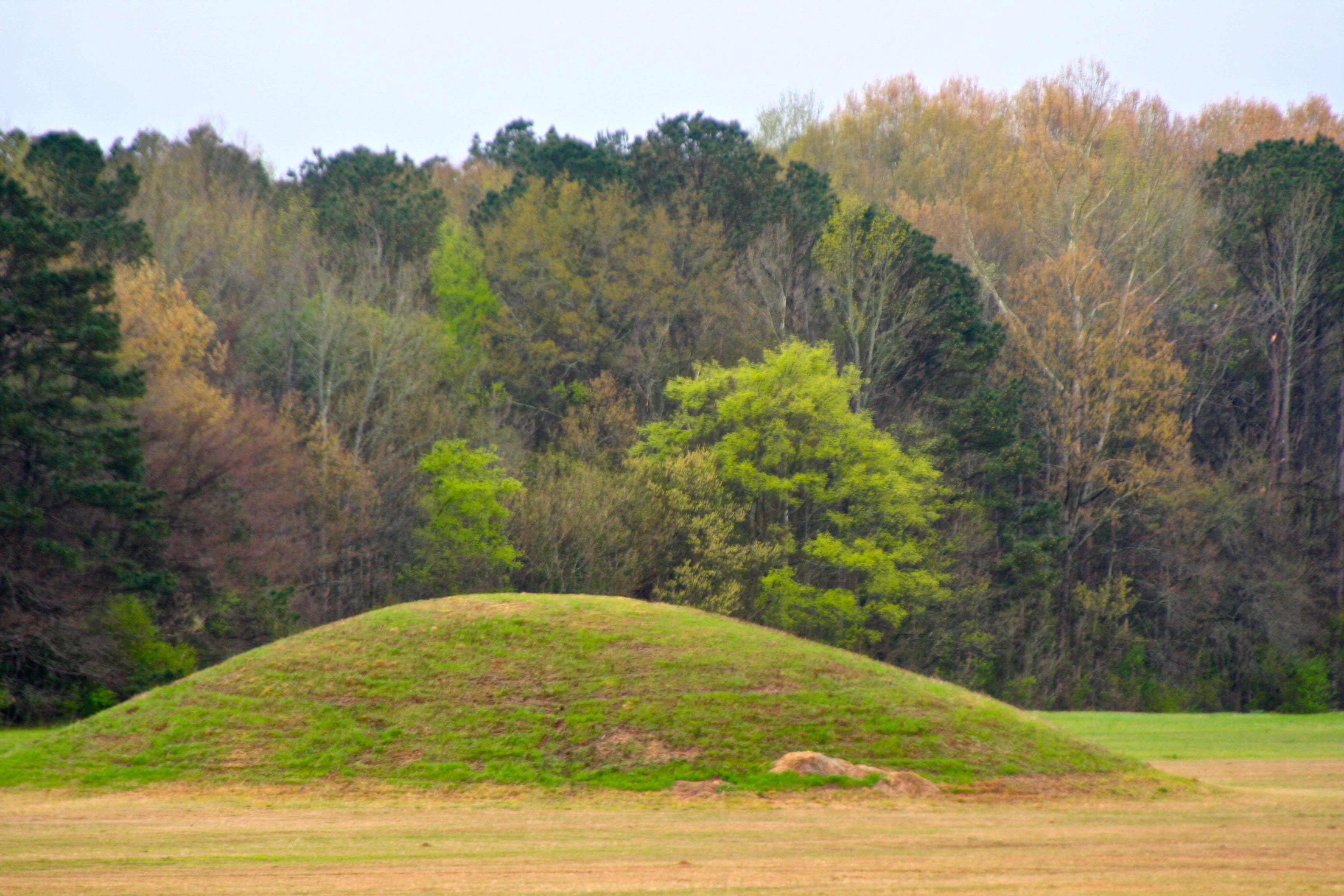
The Phar Mounds located north of Tupelo, Mississippi were left behind by nomadic Native Americans some where between 1-200 AD as burial mounds.

The Phar Mounds located north of Tupelo, Mississippi were left behind by nomadic Native Americans somewhere between 1-200 AD as burial mounds.

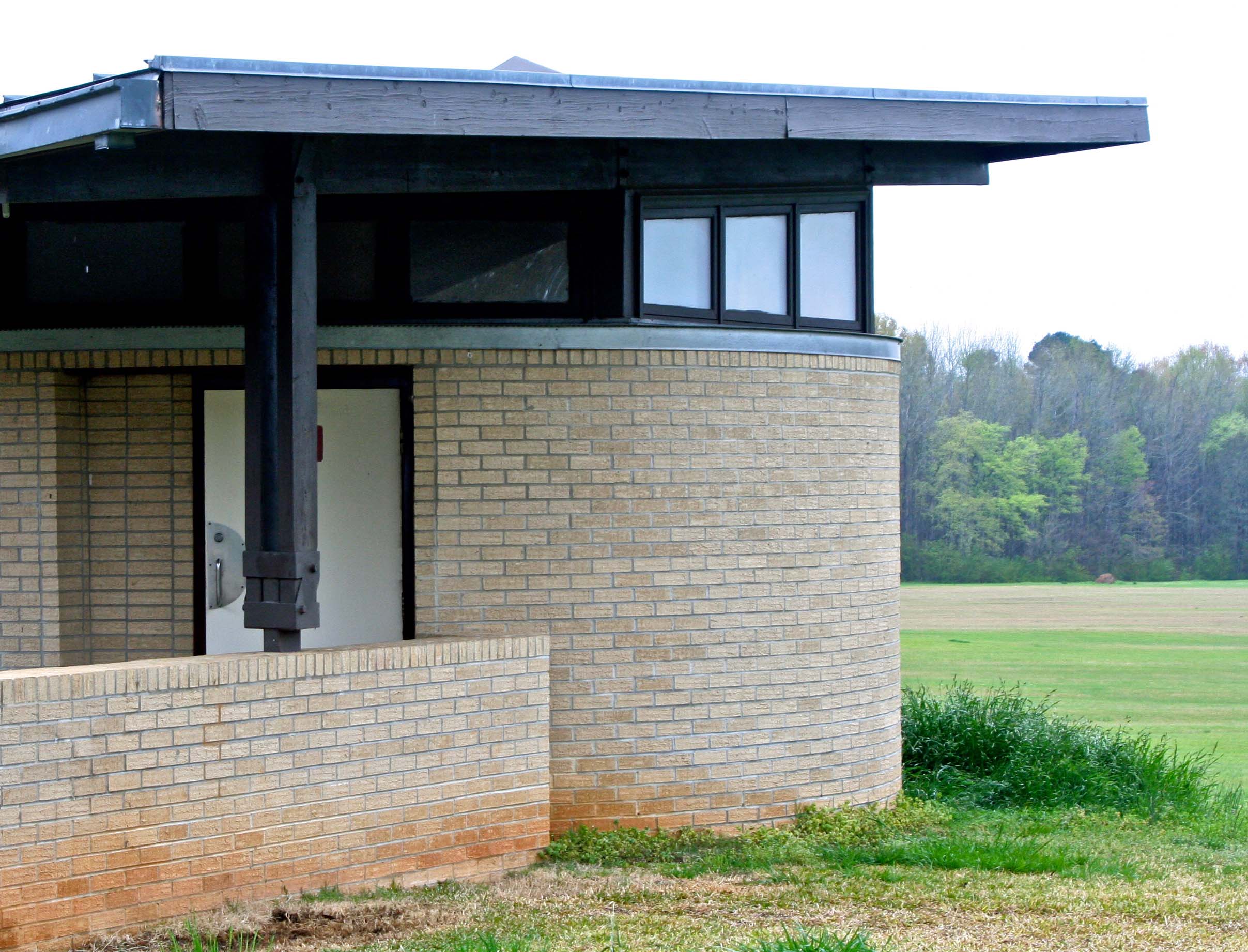
These are the brick restrooms at Phar Mounds. I am sure you are wondering why i've included them. They are my favorite restrooms in the whole world, bar none. I hid out in them when I was on my bike trip around North America as a tornado ripped apart the woods a quarter of a mile away.

These are the brick restrooms at Phar Mounds. I’ve included them because they are my favorite restrooms in the whole world, bar none. I hid out in them when I was on my bike trip around North America and a tornado ripped apart the woods a quarter of a mile away. My bike hid with me.

I'll conclude with a final photo of dogwood. NEXT BLOG: The Friday Essay: Just possibly a ghost is involved.

I’ll conclude with a final photo of dogwood. NEXT BLOG: The Friday Essay: Just possibly a ghost is involved.


Bush Devils, Juju, and Lightning Men

Liberian Bush Devil photo by Curtis Mekemson.

A Grebo Bush Devil, with his jaws open and teeth showing, was guest of honor at a Haight-Asbury party put on by Liberian Peace Corps Volunteers in 1967. I was quite surprised to find my photo from then being used by the Liberian Observer newspaper a few months ago. It is an interesting article.

The book about my Peace Corps experience in West Africa, The Bush Devil Ate Sam, is now available in printed as well as digital form on Amazon. It’s taken a while to get the print copy. To celebrate, I decided to post a sample chapter from the book and feature the story that gave the book its name. Every month or so, I will post another chapter.

Here is this month’s chapter:

Sam, the young man who worked for us in Liberia, was enamored with western culture. It fired his imagination. He spent hours listening to the Kingston Trio get Charlie off the MTA and dove into peanut butter and jelly sandwiches like a frog dives into water. Still, for all of his excitement about things modern, ancient African was an integral part of who he was. He had the scars to prove it. They marched down his chest in two neat rows.

“How did you get those,” Jo (my former wife) asked with ten percent concern and ninety percent curiosity.

“I can’t tell you,” Sam replied with obvious nervousness as Jo’s eyebrows rose. “But I can tell Mr. Mekemson.”

Aha, I thought, Sam and I belong to the same organization, the Men’s Club! Actually Sam belonged to a very exclusive men’s organization, the Poro Society, which I wasn’t allowed to join. Its functions were to pass on tribal traditions, teach useful skills, and keep errant tribe members in line. Everything about the organization was hush-hush. Tribal members who revealed secrets could be banned and even executed.

Political power on the local level was closely tied to membership in the Poro Society. On the national level, President Tubman assumed leadership of all Poro Societies in Liberia. Tribal women had a similar secret organization called the Sande Society, which prepared young women for adulthood and marriage. A controversial aspect of the Sande initiation ceremony was female genital mutilation— cutting off the clitoris.

Sam got off easy.

He had been to Bush School the previous summer and learned how to be a good Kpelle man. Graduation to adulthood consisted of an all-consuming encounter with the Poro Society’s Bush Devil. It ate him— metaphorically speaking. Sam was consumed as a child and spit out as a man. The scarification marks had been left by the devil’s ‘teeth.’ It seemed like a tough way to achieve adulthood, but at least it was fast and definitive. Maybe we should introduce the process to our kids in the US and skip the teenage years. Think of all of the angst it would avoid.

The Bush Devil was a very important tribal figure who was part religious leader, part cultural cop and part political hack. Non-Kpelle types weren’t allowed to see him. When the Devil came to visit outlying villages, a frontman preceded him and ran circles around the local Peace Corps Volunteer’s house while blowing a whistle. The Volunteer was expected to go inside, shut the door, close the shutters and stay there. No peeking.

We did get to see a Grebo Devil once. The Grebo Tribe was less secretive, or at least more mercenary. Some Peace Corps Volunteers had hired the local Devil for a Haight-Ashbury style African party. It was, after all, 1967, the “summer of love” in San Francisco and the “Dawning of the Age of Aquarius.” Along with several other Volunteers, we hired a money bus to get to the party. Had we been thinking, we would have painted the bus with Day-Glo, like Ken Kesey’s bus, Further.

The Devil was all decked out in his regalia. His persona was somewhere between a voodoo nightmare and walking haystack. Grebo men scurried in front of him with brooms, clearing his path and grunting a lot. We stayed out of the way and took pictures.

The Grebo men carefully tended the Bush Devil.

The Grebo men carefully tended the Bush Devil.

Another area where Sam showed his tribal side was his fear of the newly dead. A person’s spirit was considered particularly powerful and dangerous right after he or she died. Later, the spirit would move away into the bush and fade. But first it had to be tamed with appropriate mourning, an all-night bash. One didn’t take chances. When Sam worked late for us after someone had died, he would borrow a knife and a flashlight in case he had to fight off the malevolent ghost on his way home. I had grown up next to a graveyard and was sympathetic with his concern.

Juju, or African witch doctor medicine, was another area where African reality varied from modern Western reality. Late one evening, in the middle of a tropical downpour, one of my high school students appeared on our doorstep very wet and very frightened. Mamadee Wattee was running for student body president. His opponent had purchased ‘medicine’ from a Juju man to make him sick.

It was serious business; people were known to die in similar circumstances. Had the opposition slandered Mamadee or stuffed the ballot box, I could have helped, but countering a magic potion wasn’t taught at Berkeley, at least not officially. I took the issue to Mr. Bonal, the high school principal, and he dealt with it. Mamadee stayed well and won the election.

The use of Juju medicine represents the darker side of tribal culture. Human body parts derived from ritual human sacrifice are reputed to be particularly effective in creating potions. Cannibalism may be involved. On the lighter side, my students once obtained a less potent ‘medicine’ and buried it under the goal post on the football (soccer) field with the belief that it would cause the other team to miss goals. Apparently, it wasn’t potent enough; the other team won.

This is my senior class. Mamadee is second form the left. Later he would become an elementary school principal in New Jersey.

This is my senior class. Mamadee is second from the left. Later he would become an elementary school principal in New Jersey.

Mamadee was also the reason behind our introduction to the Lightning Man. When Jo and I went on vacation to East Africa, we left Mamadee with $50 to buy a 50-gallon drum of kerosene. When we returned there was neither kerosene nor $50, but Mamadee was sitting on our doorstep. Someone had stolen the money and Mamadee was extremely upset. Fifty dollars represented a month’s income for a Kpelle farmer. Mamadee’s father, a chief of the Kpelle tribe, was even more upset and wanted to assure us that his son had nothing to do with the missing fortune. It was a matter of honor. He offered to have Mamadee submit to the Lightning Man to prove his innocence.

The Lightning Man had a unique power; he could make lighting strike whoever was guilty of a crime. If someone stole your cow or your spouse, zap! Since we were in the tropics, there was lots of lightning. Whenever anyone was struck, people would shake their heads knowingly. Another bad guy had been cooked; justice had been served.

We didn’t believe Mamadee had taken the money, and even if he had, we certainly didn’t want him fried, or even singed. We passed on the offer. The Chief insisted on giving us $50 to replace the stolen money.

Another Liberian Peace Corps Volunteer in a similar situation chose a different path. Here’s how the story was told to us. The Volunteer had just purchased a brand new $70 radio so he could listen to the BBC and keep track of what was happening in the world. The money represented close to half of the Volunteer’s monthly income. He had owned his new toy for two days when it disappeared.

“I am going to get my radio back,” he announced to anyone who would listen and then walked into the village where he quickly gathered some of his students to take him to the Lightning Man. Off he and half the town went, winding through the rainforest to the Lighting Man’s hut. The Volunteer took out five dollars and gave it to the Lighting Man. (Lighting Men have to eat, too.)

“I want you to make lighting strike whoever stole my radio,” he said.

The Volunteer and his substantial entourage then returned home. By this time, everyone in the village knew about the trip, including, undoubtedly, the person who had stolen the radio.

That night, there was a tremendous thunder and lightning storm. Ignoring for the moment that it was in the middle of the rainy season and there were always tremendous thunder and lightning storms, place yourself in the shoes of the thief who believed in the Lightning Man’s power. Each clap of thunder would have been shouting his name.

In the morning the Volunteer got up, had breakfast and went out on his porch. There was his radio.

NEXT BLOG: Wednesday’s photo essay.

The Earth Is 6000 Years Old… Or So My father Told Me

My father, Herb Mekemson. I believe this photo was taken by Glen Fishback of the Glen Fishback School of Photography.

My father. I believe this photo was taken by Glen Fishback of the Glen Fishback School of Photography.

I invited my father, Herb Mekemson, up to Alaska for his 80th birthday. My brother Marshall put him on the airplane in Sacramento and I met him in Anchorage. He got off the plane grinning. We shook hands and embraced. He still had a strong grip.

“Curt, have you been causing problems again?” he asked. These weren’t the first words out of his mouth but they were close. There was a twinkle in his eyes, sort of.

“What do you mean, Pop?” I asked in mock innocence. He was gripping his pipe like it was the last life raft on a sinking ship.

“I got off of the plane and the first thing they announced was I couldn’t light up in the airport. I’ve needed a smoke since I left Seattle.” I had been an advocate for smoke-free areas in Sacramento and continued my efforts in Alaska.

I laughed. He and I had been through the tobacco discussion dozens of times. We had it down to a routine. I’d point out there was a direct correlation between his smoking and the heavy cough he had in the morning. He’d note that he had been smoking for over 60 years and was still going strong, thank you. I’d observe that somewhere his Scotch Presbyterian mother was rolling over in her grave, and so it would go. He liked his tobacco straight up. For years he had smoked unfiltered Camels but they lacked the kick he needed. In his words, he had switched to ‘roll-your-owns’ as opposed to the ‘new fangled tailor mades.’ As a result, most of his shirts were aerated from burning tobacco. Out of self-defense, he had switched to a pipe. He liked to tease me that most of my efforts in the tobacco wars were designed to thwart him.

“Well, Pop,” I announced, “in honor of your visit, you have been granted special dispensation. You can smoke in my truck.” He hurried me out of the airport, barely taking time to pick up his suitcase.

Pop, as in "don't you even think of taking my pipe away from me. (Photo by Glen Fishback.)

Pop, as in, “Don’t you dare think of taking my pipe away from me.” (Photo by Glen Fishback.)

We had quite the adventure planned but first there were social responsibilities. I took him over to meet my roommates Cyndi and Roger. Cyndi owned the house and Roger and I paid rent. It was a good arrangement. Cyndi was a slope worker, which meant she worked for two weeks up on the North Slope in the oil industry and then had two weeks off. Roger was in the vending machine business, which included cigarettes. Surprisingly, the three of us were quite compatible.

When Cyndi and I first met to interview each other over possible roommate status, I mentioned that I was Executive Director of the Alaska Lung Association. She became quite excited and announced she had a Lung Association connection.

“I was a Trek leader in Minnesota before I came to Alaska,” she said. When I informed her that I had created the American Lung Association’s Trek Program, we decided that fate had brought us together. As for Roger, he and I had a penchant for weird movies, the weirder the better. Strange Brew is an excellent example. Many a winter evening was spent happily vegging on the couch, drinking beer, and watching videos.

Once Pop had visited my home, our next responsibility was visiting the ‘girlfriend.’ I had been dating a pulmonary physician and we hung out a lot together. I had an open invitation to move in.

“Why don’t we get married,” she suggested. “You can stay home, write, and raise the children.” I liked the staying home and writing idea but wasn’t ready for the kids and married part. Her English Spaniel had a different perspective. I kicked him off of the bed when I was around. His response was to pee on my side of the bed and mark it as his territory. I would have gone and peed on his bed if he had one. Two can play the dominant male species game.

My friend cooked dinner for Pop and me, which was a little scary. Cooking was not her forte. Our meal was good though and the dog was on its best behavior. We had a very pleasant evening.

Pop liked the idea of me getting married and having kids. He had always wanted me to produce grandchildren and both our biological time clocks were ticking. At 40 plus, I was rapidly approaching the point where having children was impractical. At 80, he was rapidly approaching the point where he would never see them. Actually, Pop had three wishes for me. The first was the married with children bit. The second was that I would become a photographer and take pictures of all the beautiful sites I saw in my wandering. The third was that I would become a good Christian boy and return to the flock.

A few years later I would fall in love, get married, inherit two great kids— and take up photography. I always figured that two out of three weren’t bad.

The next day we headed off to Denali. I had a permit for camping in the Park. Pop went crazy with his camera and the Alaskan scenery; we had to stop every 20 minutes or so for photo ops. Even a moose waited patiently beside the road to have its picture taken. By the time we reached camp, heavy black clouds were swirling overhead and a cold wind was reminding us that summer had yet to arrive. I hurried in setting up the large Coleman tent I had brought along while Pop, who insisted on being part of the action, went in search of firewood. A few minutes later I noticed that he had disappeared.

“Oh damn,” I thought to myself, “how do I explain to my sister and brother that Pop had become lost in the Alaskan wilderness gathering firewood.”

Then I spotted him off in the distance on top of a hill taking pictures.

“I saw some mountain goats up on the opposite mountain and I wanted to get closer for pictures,” he explained to me after descending.

“Do you know there are grizzly bears wandering around up there,” I said pointedly. He just smiled. At 80 he was ready to meet his maker. If it happened with the help of a grizzly bear, so be it. But it wasn’t going to happen on my shift, if I could help it.

After dinner we sat by our crackling campfire and talked for a couple of hours as snowflakes danced around the perimeter. Our family, his past and my future were all topics of discussion. There was something magical about the setting and Pop was obviously enjoying himself tremendously. Sitting in the Alaskan wilderness in the midst of a swirling snowstorm at age 80 was something that he had never envisioned for himself. I had him bundled from head to toe and he insisted he was toasty warm. Eventually the topic got around to one of his favorite subjects, religion.

“You know, I’ve been reading the Bible a lot,” he started. The Pearly Gates were beckoning and Pop wanted to be sure his credentials were in order. He was about to jump in to his ‘You should read the Bible too, Curt’ lecture. To forestall the inevitable, I asked a question out of curiosity.

“Assuming you make it to heaven, what do you think it is like?”

He laughed. “I am afraid my view’s a little unusual. I see myself as a spacecraft hurtling through space. I am not in the spacecraft. I am the spacecraft and I am exploring the universe and seeing all of the glorious sights it has to offer.” Apparently there would be no jewel encrusted buildings and streets paved with gold for him.

While I was contemplating this rather wondrous view of the after-life, I took too long in coming up with my next question.

“You should read the Bible too, Curt,” Pop began. “I’ve been listening to a radio minister and he is going through each Book in detail and explaining what it means. There’s a lot of great stuff. I’ve bought a complete set of his tapes.”

The radio minister part hoisted a red flag for me. Marshall and I had cut our religious eye teeth on a slippery southern radio preacher in the 1950s and I had recently been tuning in to Jim and Tammy Baker. They were prime time in Alaska. It was quite clear to me that they were bilking their flock and the process fascinated me. This didn’t mean that I believed all radio preachers or televangelists were frauds. It seemed reasonable to me that sincere religious people would want to take advantage of modern communication opportunities to share their views. Still, I decided to gently pursue where Pop’s radio minister was taking him.

“Um, what do you mean by great stuff?” I inquired.

“The stories, the history, the messages,” he replied enthusiastically, giving me a catalog to choose from. He was prepared to wax eloquently on the subject, to convert me on the spot. It wouldn’t be easy. I had read the Bible, and found it interesting, educational, and meaningful. But I wasn’t about to accept it as literal truth. I was curious as to where my father stood on the religious continuum between liberal interpretation and fundamentalist dogma. He had always been deeply religious but somewhat tolerant of other perspectives.

“So, Pop,” I queried, jumping to a litmus test of Christian fundamentalism, “do you believe that the world is 6,000 years old?”

“Yes,” was his simple reply and it was immediately clear where the radio minister was leading him: it was over the foaming falls of fundamentalism where a leap of faith assures a righteous landing. On one level this didn’t bother me. Life can be rather short and brutish as Hobbes noted, and full of suffering as the Zen Buddhists like to point out. We find our comfort where we can find it. If Pop’s belief helped him deal with the present and face his future, then it had value for him. Who was I to say otherwise? It wasn’t exactly like he was being misled, either. The Mekemson side of my family comes from a long line of true believers dating back to John Brown the Martyr of Scotland in the 1600s— and undoubtedly beyond.

I have my own share of spiritual genes. I’ve spent a lot of time over the years considering different religious traditions and pondering imponderables. Crass materialism, in and of its self, seems to be a poor reason to exist. I tend to believe that there is a deep, underlying unity in the universe and that all of life on earth is connected. It’s hard to get much more mystical than that.

I was a little concerned that Pop had paid several hundred dollars for the tapes. He lived off of his Social Security pension and the amount represented a lot of money. Bilking came to mind. I was more concerned with the implications of his beliefs as we chatted into the night. It wasn’t enough that he believed the earth was 6000 years old. I, too, should believe it. School systems were wrong for teaching evolution and should be required to teach creationism. He also expressed a strong bias against homosexuality and gay people that he had picked up from the radio preacher. The latter made me particularly sad.

The best man at my first wedding and a friend from childhood, Frank Martin, was gay. When my mother was dying of cancer while I was at Berkeley, Frank would often stop by and visit her, bringing whatever comfort he could. Later, when my former wife and I returned from serving as Peace Corps Volunteers in Africa, Frank and his partner hosted several anniversary parties for us in San Francisco. He was always generous and kind to our family. Now, my father was being taught that Frank was a sinful man, condemned to be burned in Hell.

Beyond expressing my disagreement as gently as I could, I mainly listened. My point of view wasn’t going to change what my father believed. Besides, the old fellow may have expired from hypothermia listening to me. We put out the fire, retired to the warmth of our down sleeping bags, and dreamt we were spaceships hurtling through space.

Over the next few days, Pop and I covered a good bit of Alaska, ending up in Homer. His sister Francis had raised her children there and he wanted to see the town. Afterwards, I drove him back to the airport and made sure his pipe was out before taking him inside and seeing him off. It took months for my truck to stop smelling like tobacco smoke.

NEXT FRIDAY’S BLOG: A final story about Pop. Did he really leave me a message after he passed away or was it the invention of my over-wrought imagination? Plus— My final thoughts on religion.

Bruneau Dunes State Park, Idaho… The Wednesday Photo Essay

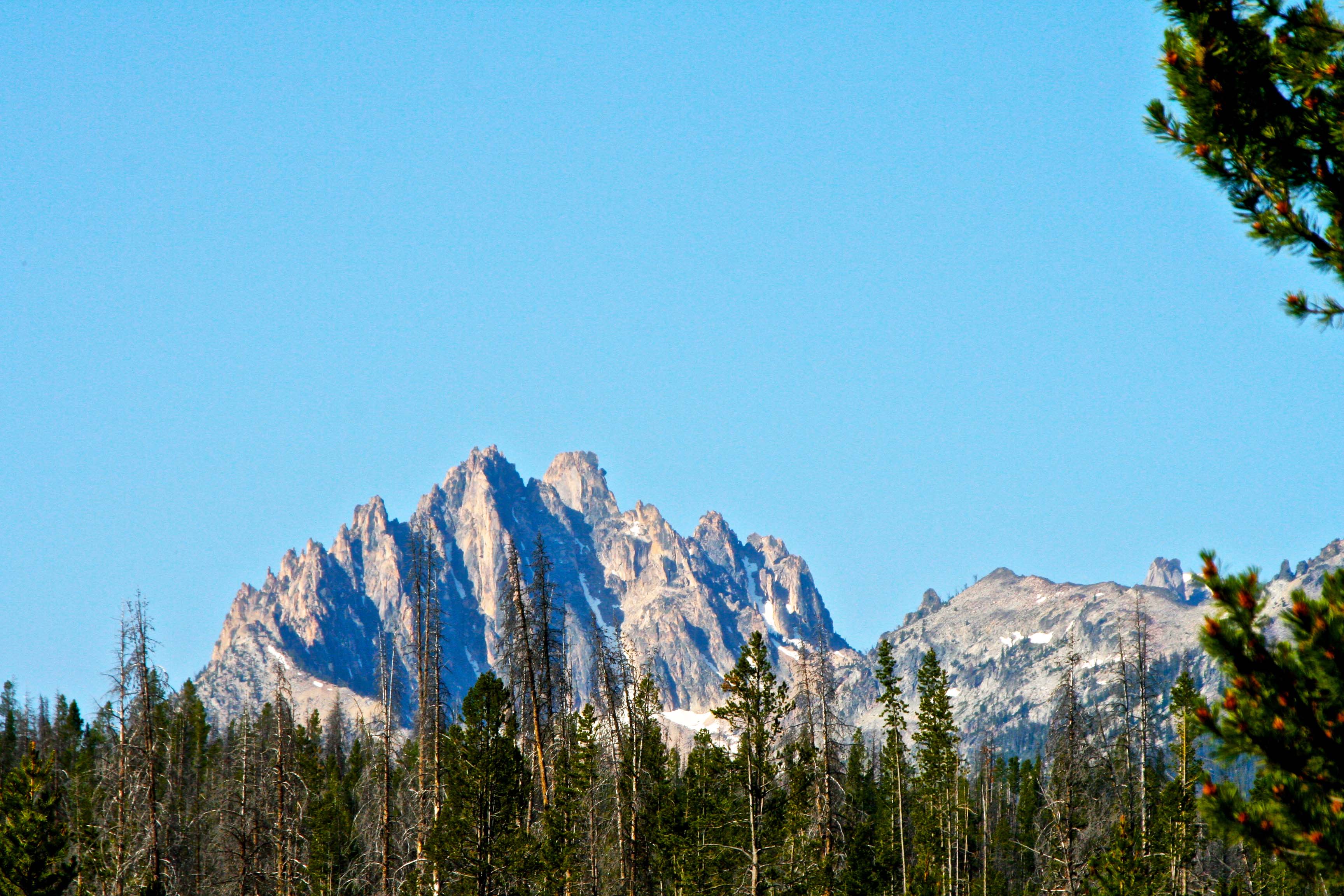
Peggy and I discovered Bruneau Dunes State Park after we had been up in Central Idaho admiring the Sawtooth Mountains.

Peggy and I discovered Bruneau Dunes State Park after we had been up in Central Idaho admiring the Sawtooth Mountains.

It’s Wednesday. That means I let my fingers do the walking down through my 20,000 pictures to come up with today’s photo essay. I closed my eyes, scrolled down through iPhoto, and randomly stopped.

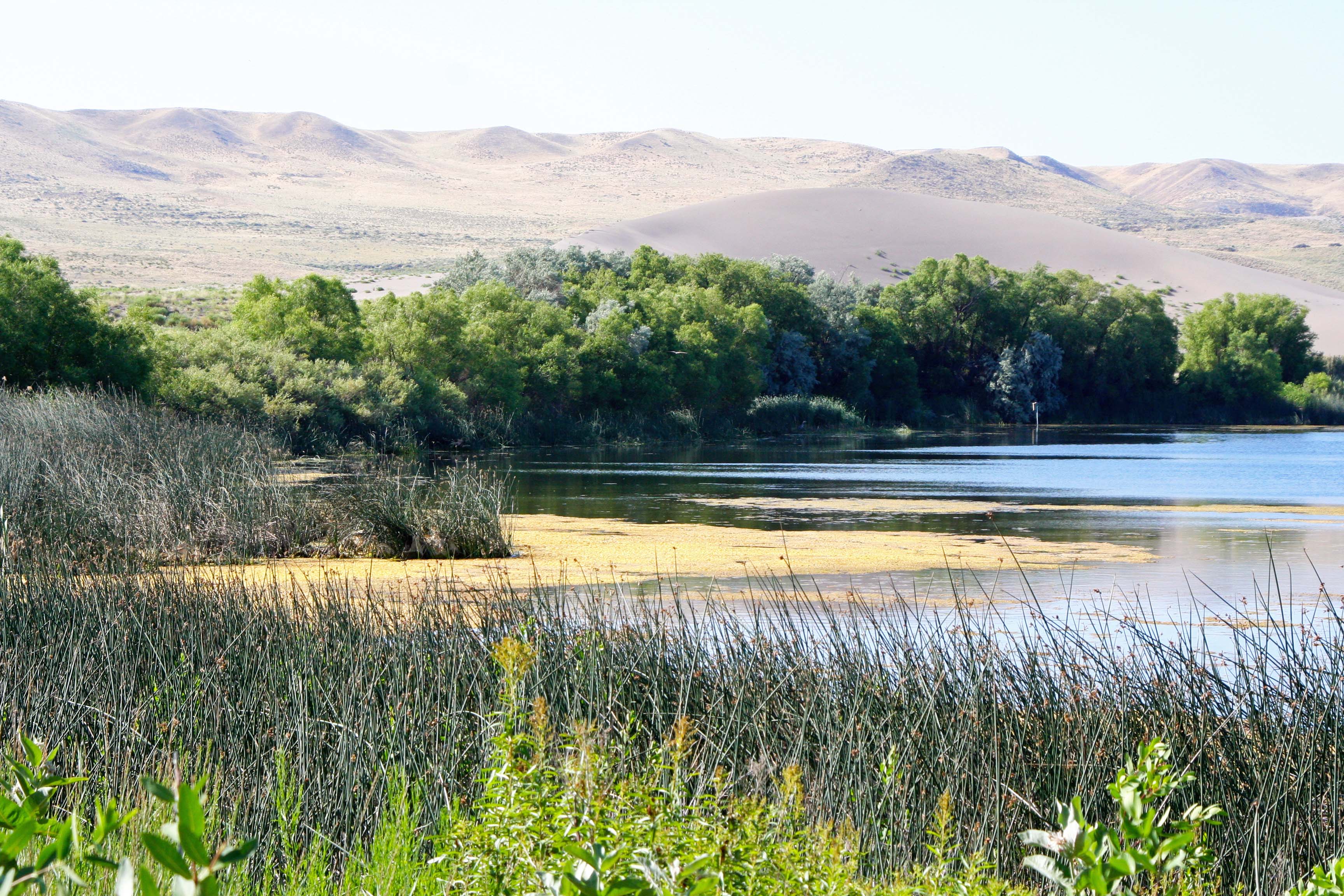
I landed on Bruneau Dunes State Park in southwestern Idaho. It’s a gem. Driving south on Idaho 51 heading toward Elko, Nevada, Peggy and I found the park pretty much the same way I found it on iPhoto— randomly. This 4800 acre state park features sand dunes and a small lake that gives the area an oasis feel. It’s noted for having the tallest single-structured sand dune in North America— 470 feet above the surrounding desert. (Photos by Curtis and Peggy Mekemson.)

Peggy and I had been up in central Idaho admiring the Sawtooth Mountains and were on our way to Nevada when we found Breneau Dunes State Park.

Peggy and I had been up in central Idaho admiring the Sawtooth Mountains and were on our way to Nevada when we found Bruneau Dunes State Park.

The small lake backed up by the 470 high Dune gives the area an oasis feel.

The small lake backed up by the 470 high dune gives the area an oasis feel.

Moving around the lake provided different perspectives on the dune.

Moving around the lake provided different perspectives on the dune.

This view provided a reflection of the dune.

This view provided a reflection.

A view of the lake.

A view focused on the lake.

Having hiked around to the opposite side the lake, we were rewarded with a view of the dune.

Having hiked to the opposite side of the lake, we were rewarded with a closer view of the dune.

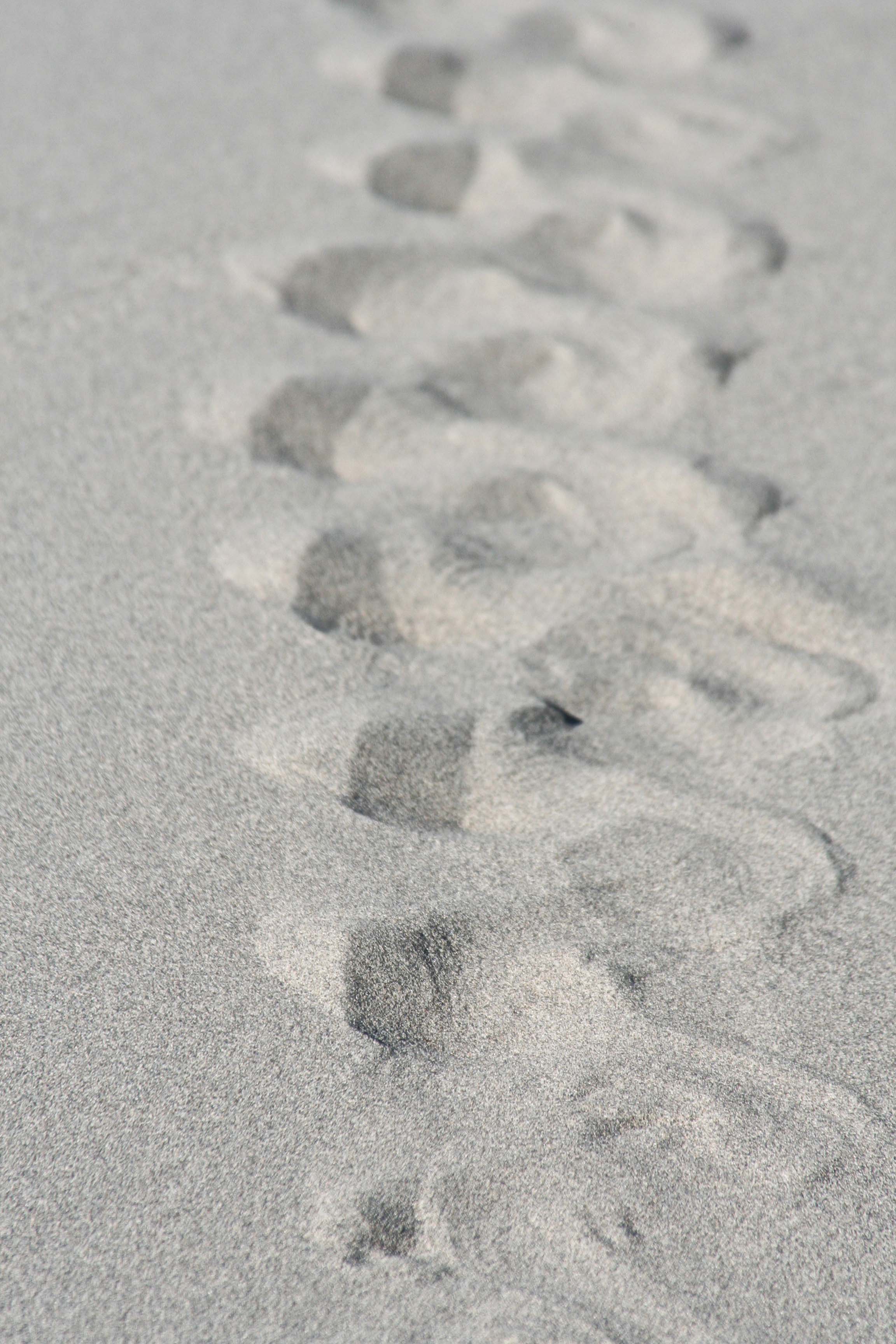
And lots of animal tracks.

And lots of animal tracks. Coyote possibly.

Bird tracks

Bird tracks

Your guess. I am thinking sidewinder rattlesnake.

Your guess. I am thinking sidewinder rattlesnake.

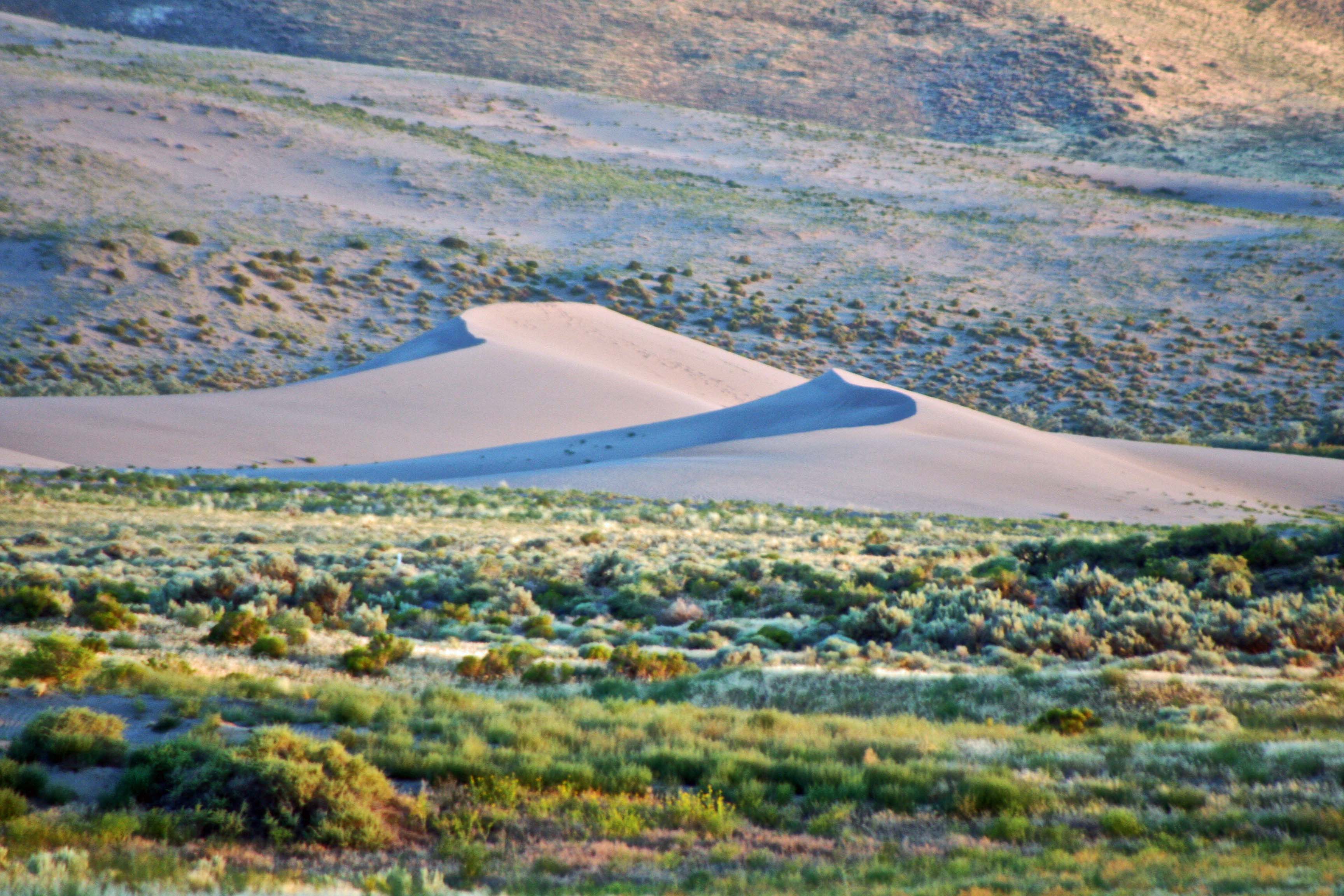
Later in the day, the dunes took on an almost purple tint as the sun went down.

Later in the day, the dunes took on an almost purple tint as the sun went down.

I liked the sage and other shrubs in this photo.

I liked the sage and other shrubs in this photo caught in the glow of the late afternoon sun.

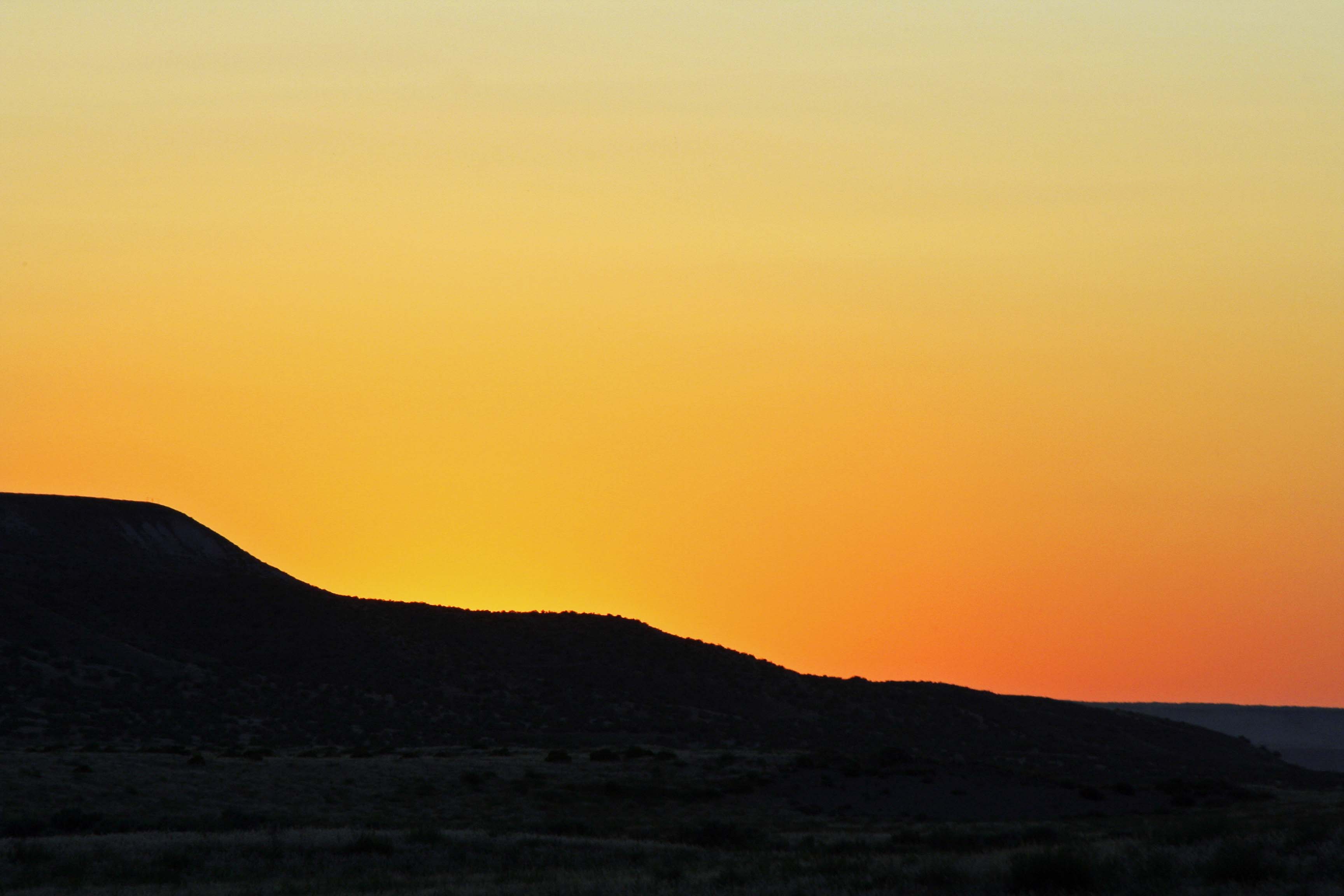
The sun was almost down.

The sun was almost down.

Good night.

Good night.

We Visited Jackson, California and Bought a Giraffe. Help!

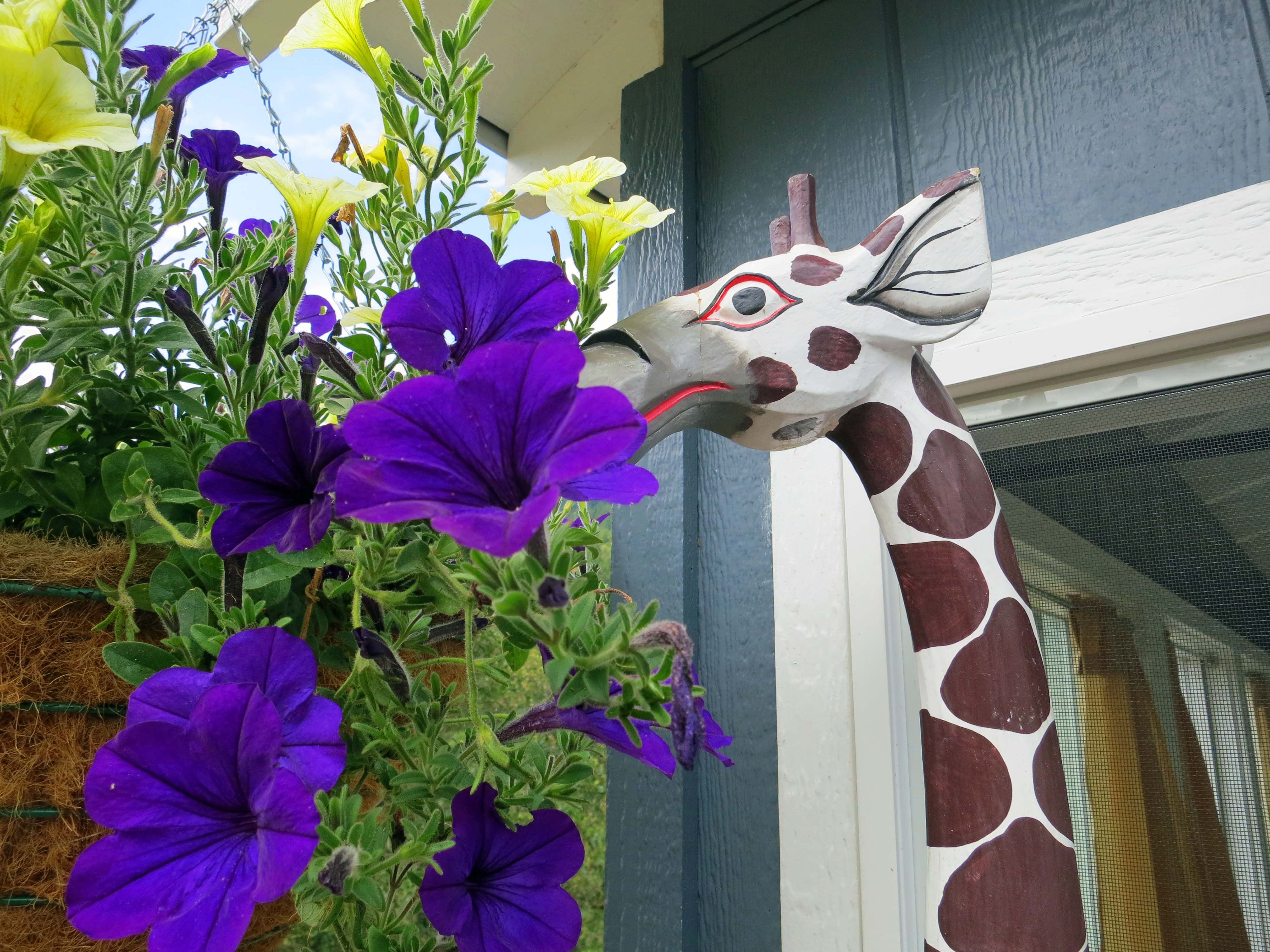
Peggy fell in love with this balsa wood giraffe we found in Jackson, California. So the giraffe came home with us. Little did we think it would have a taste for petunias.

Peggy fell in love with this balsa wood giraffe we found in Jackson, California. So the giraffe came home with us. Little did we think it would have a taste for petunias.

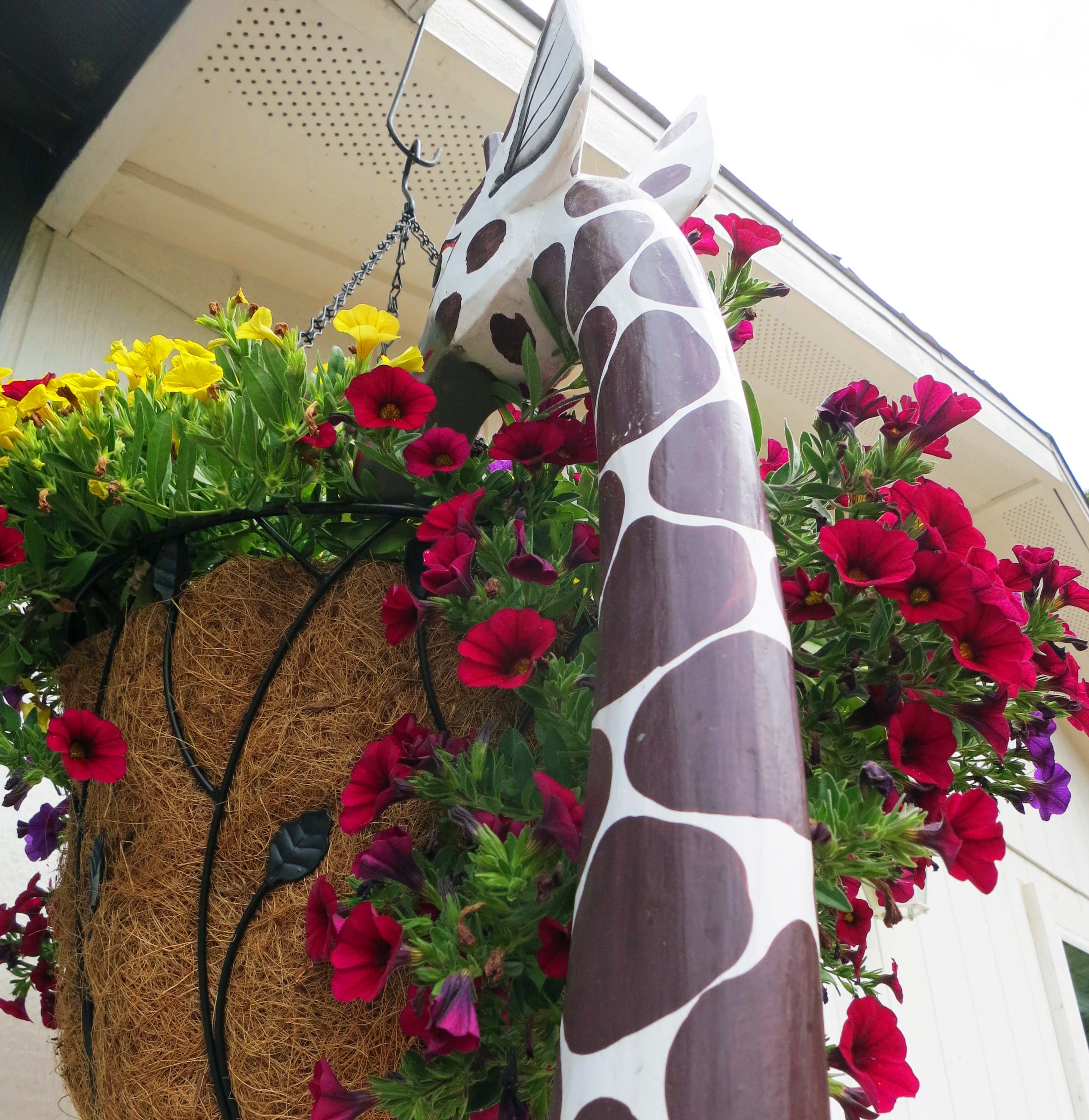
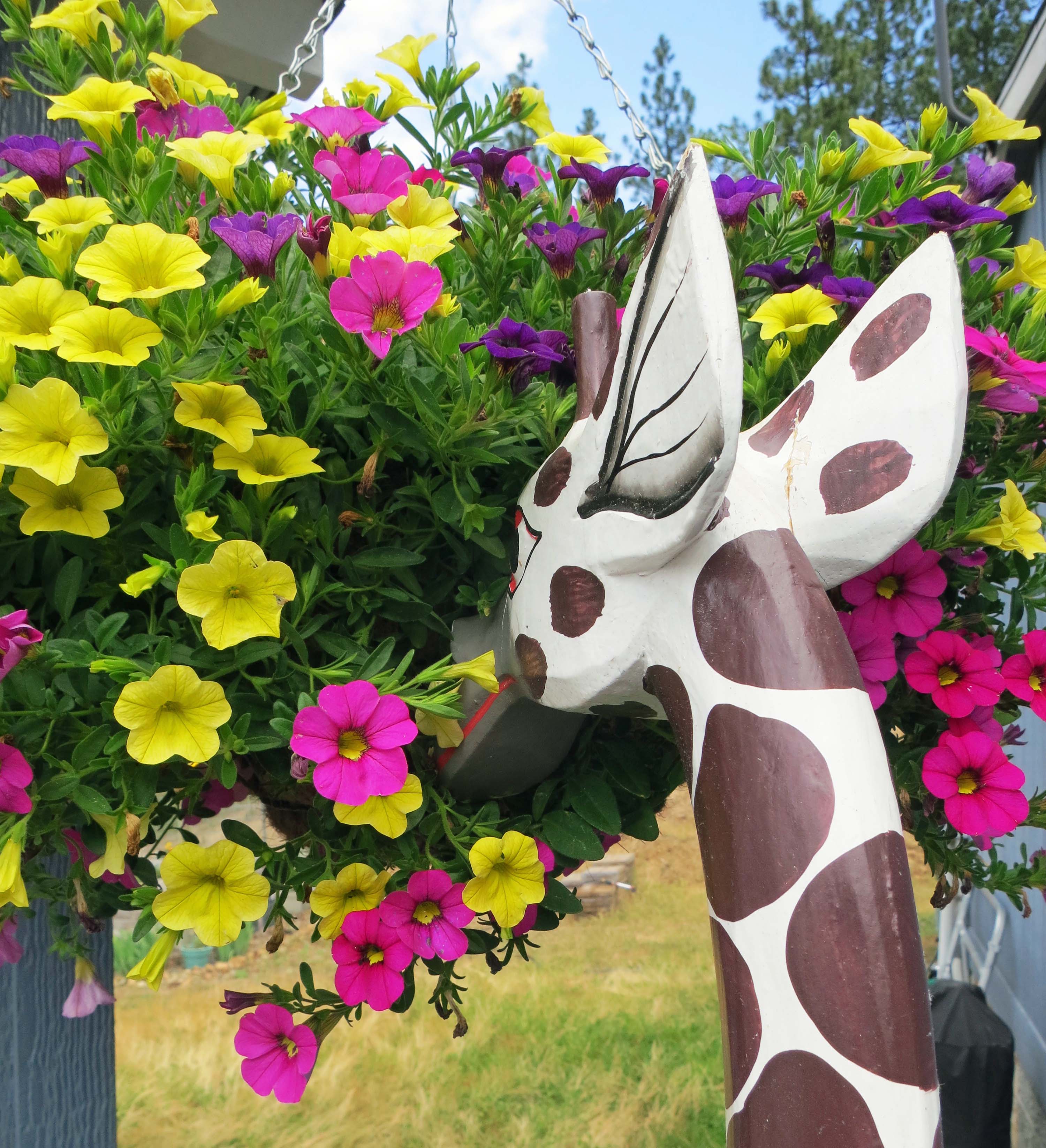
And here I thought our deer herd with its greedy appetite was bad. At least they couldn’t reach our hanging plants. It may be our imagination, but it seems that the wooden giraffe we bought in Jackson, California is poaching on Peggy’s petunias! We pretended to drive up the road and then I snuck back with the camera to see what the long-necked marauder was up to.

Aha! He was eating Peggy's petunias.

Aha! He was eating Peggy’s hanging petunias that the deer couldn’t reach.

Aha! He was eating petunias.

I caught the culprit purple lipped.

And apparently he was helping himself to all of our other hanging plants.

And apparently he was helping himself to all of our other hanging plants.

He was as much a glutton as the deer were.

He was as much a glutton as the deer were.

There was no stopping him!

There was no stopping him!

I confronted the giraffe with the photos. “I was not eating Peggy’s potted posies,” the giraffe replied indignantly. “I was sniffing them.” Yeah, right.

Jackson, California is an old gold rush town located on Historic Route 49 in the California foothills of the Sierra Nevada Mountains. It’s about 30 miles away from where I was raised in another old gold rush town, Diamond Springs. Highway 49, with its logging trucks and cattle drives, fronted our property. Jackson was a long ways off. I’ve driven back and forth across the country a lot more times that our family visited Jackson when I was growing up— seriously.

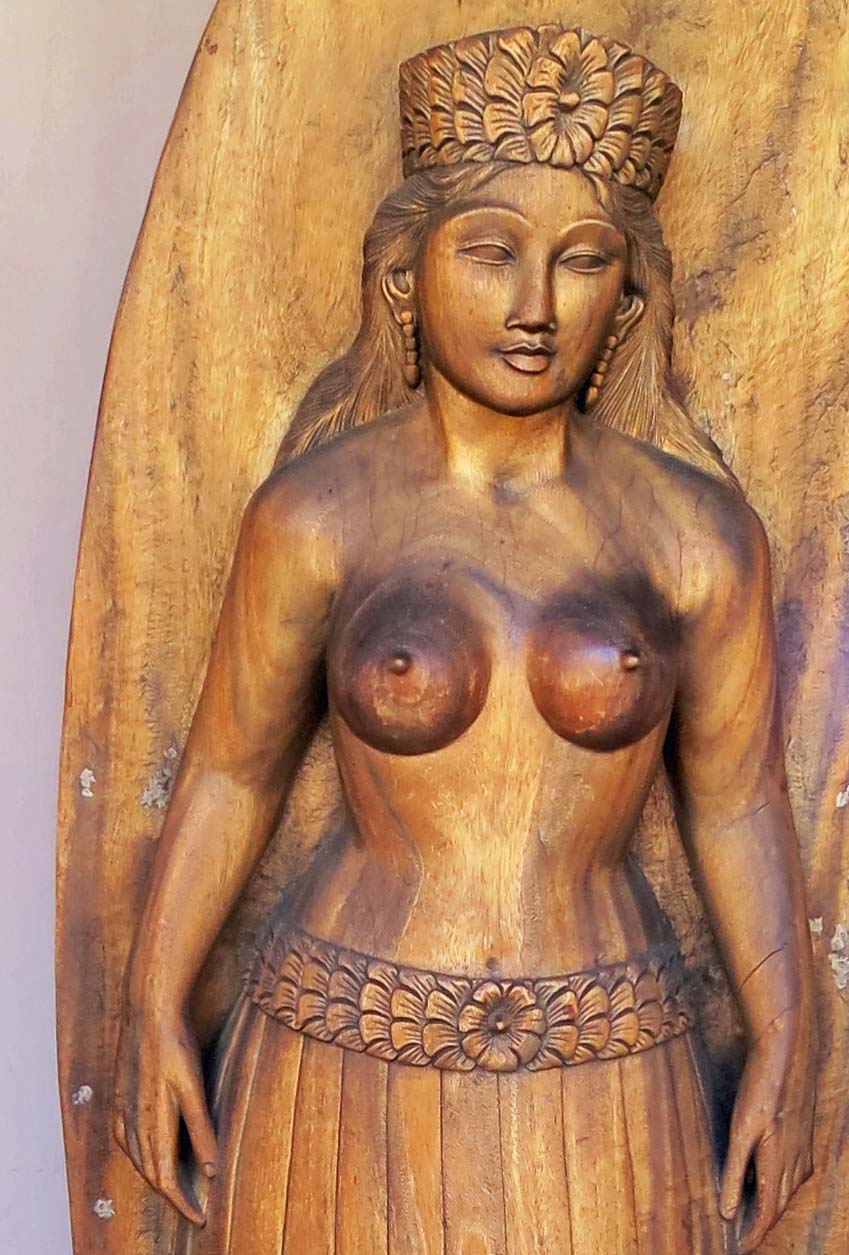
We also found other wonderful creatures in Jackson on our March visit including a frog, a Hindu monkey king, a topless hula dancer, and a wildebeest. Fortunately we didn’t bring any of them home even though I lobbied for the hula dancer.

I like frogs. And let me assure you, they can get their mouths open this wide when going after tasty morsels such as flies.

We found this marvelous frog at the same shop we found the giraffe, Richard and Sherry’s Collectables.   Were you ever told by your mother, “close your mouth or you’ll catch a fly.” Now you know where that come from.

I was also impressed with this monkey king with his pet snake.

I was also impressed with this Monkey King with his pet snake. I assume he is Hanuman from the Ramayana.

I remembered this, um, hula princess and her surf board from another visit to Jackson. She hangs out, so to speak, on main street and is kind of hard to forget.

I remembered this, um, hula princess and her surf board from another visit to Jackson. She hangs out, so to speak, on main street and is kind of hard to forget.

Wilbur the Wildebeest lives in the Book Store.

Wilbur the Wildebeest lives in a book store.

Apparently he has lived there a while.

Apparently he has lived there a while.

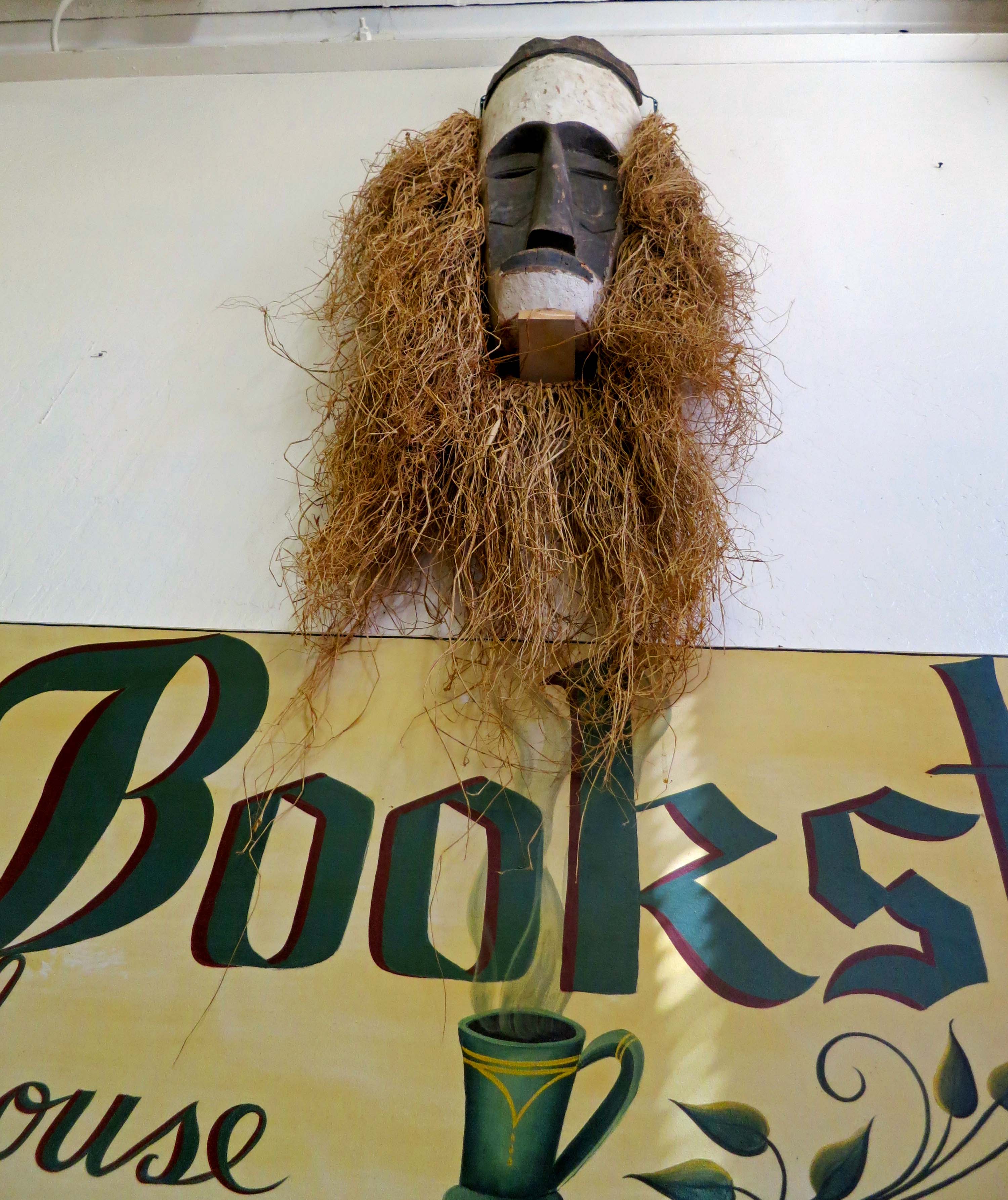
Wilbur the Wildebeest lived in the Hein and Company Bookstore along with a cat, strange masks, columns of books, and a number of other unusual items. It may be the most interesting used bookstore I’ve ever been in. Be sure to put it on your itinerary if you visit Jackson.

In addition to Wilbur, the Hein and Co Bookstore in Jackson is packed full of used books and

In addition to Wilbur, the Hein and Co Bookstore in Jackson is packed full of used books and numerous unusual/interesting items. Or do I mean weird?

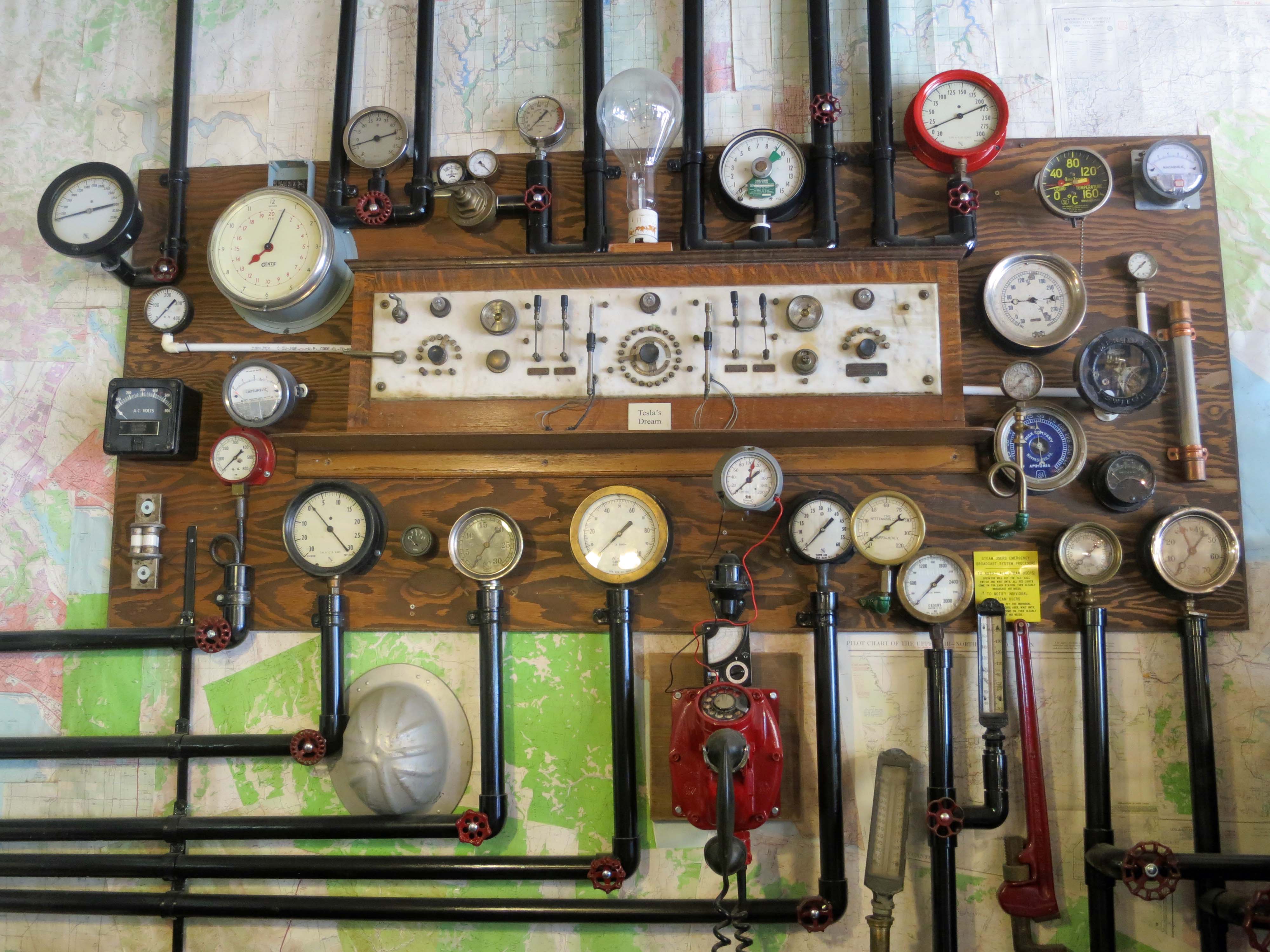
Such as this. Need a gage for anything?

Such as this en-gage-ing collection

Who knows what you might find around the next corner?

Who knows what you might find around the next corner?

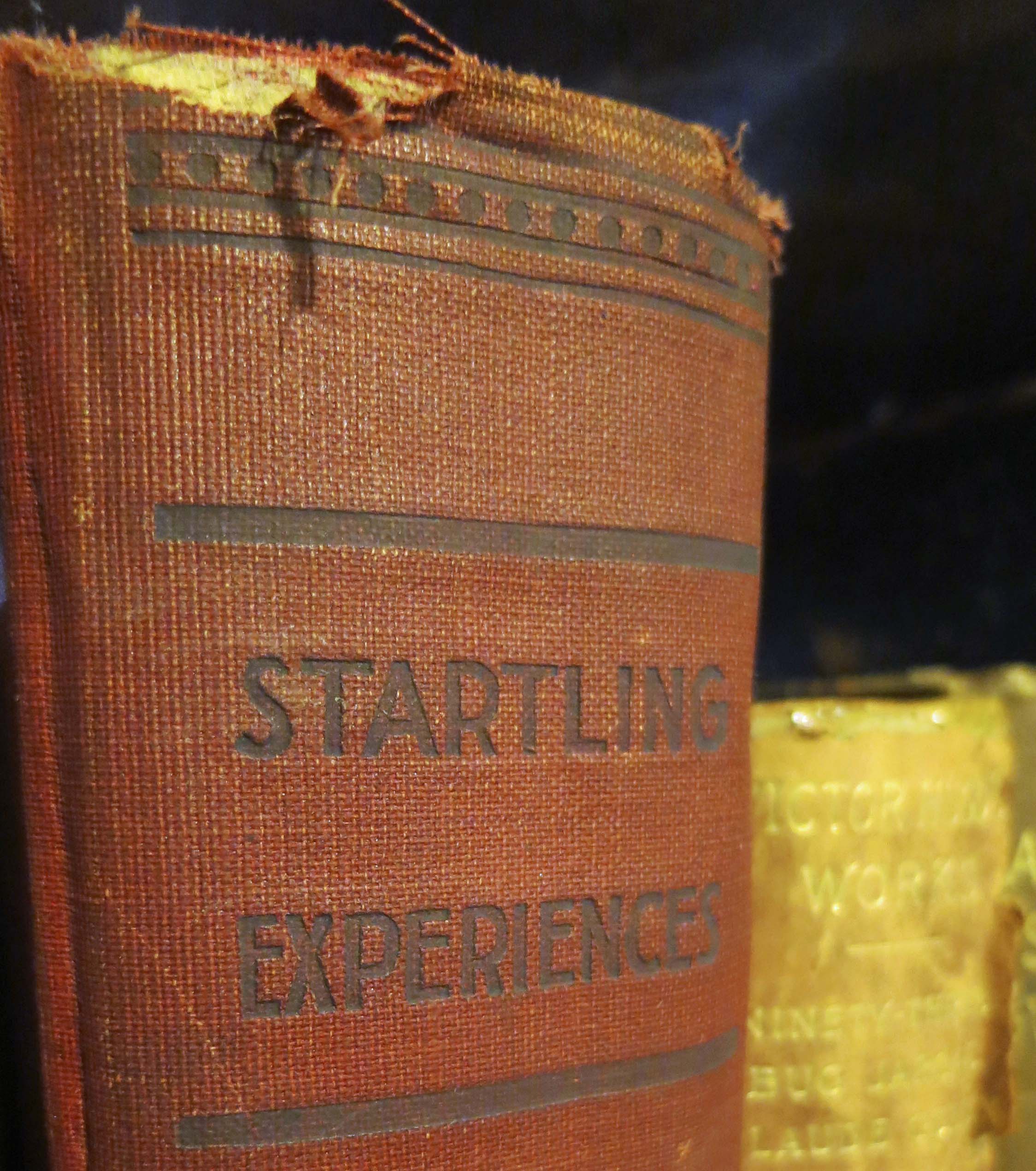
Certainly made me want to go upstairs and check out books...

Certainly made me want to go upstairs and check out books…

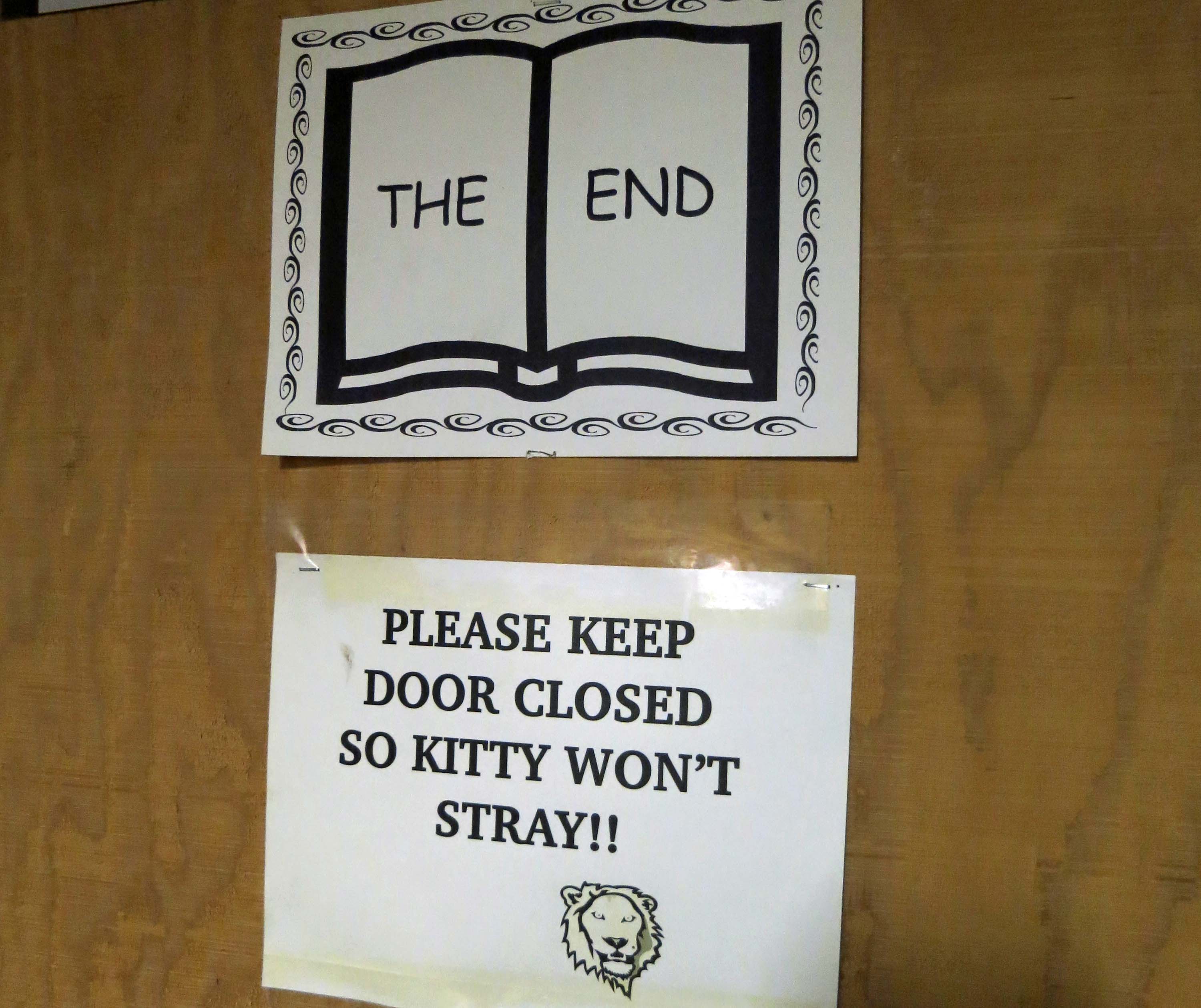
Where we found a virtual maze of book shelves and long corridors with mysterious doors and signs.

Where we found a virtual maze of book shelves and long corridors with mysterious doors and signs. I couldn’t resist walking down to the door to read the sign.

And found the end. Wouldn't you be slightly tempted to open the door and meet kitty?

And found the end. Wouldn’t you be slightly tempted to open the door and meet kitty?

Kitty?

Kitty?

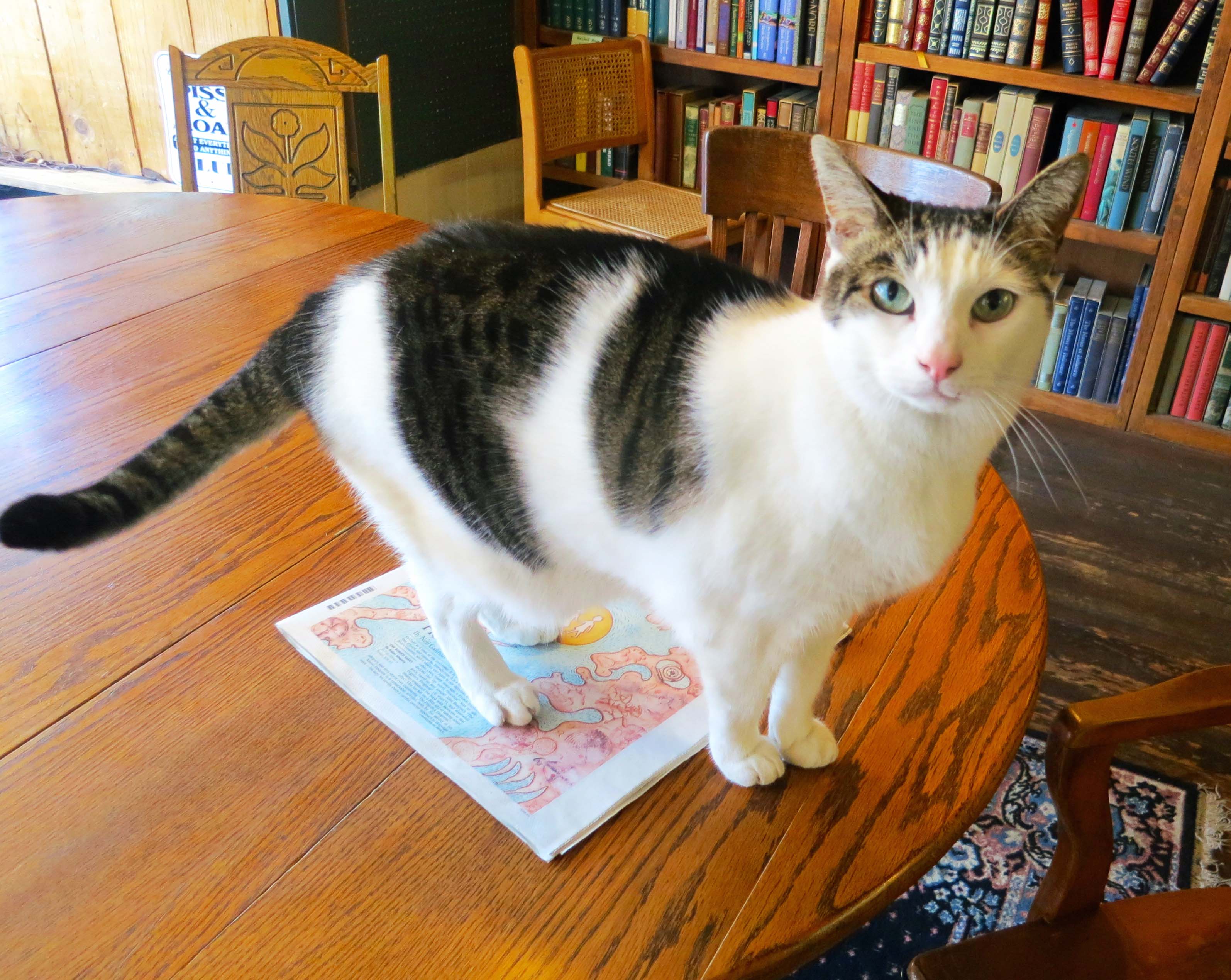
No, this was kitty. Most good bookstores have one.

No, this was kitty. Many good bookstores have one.

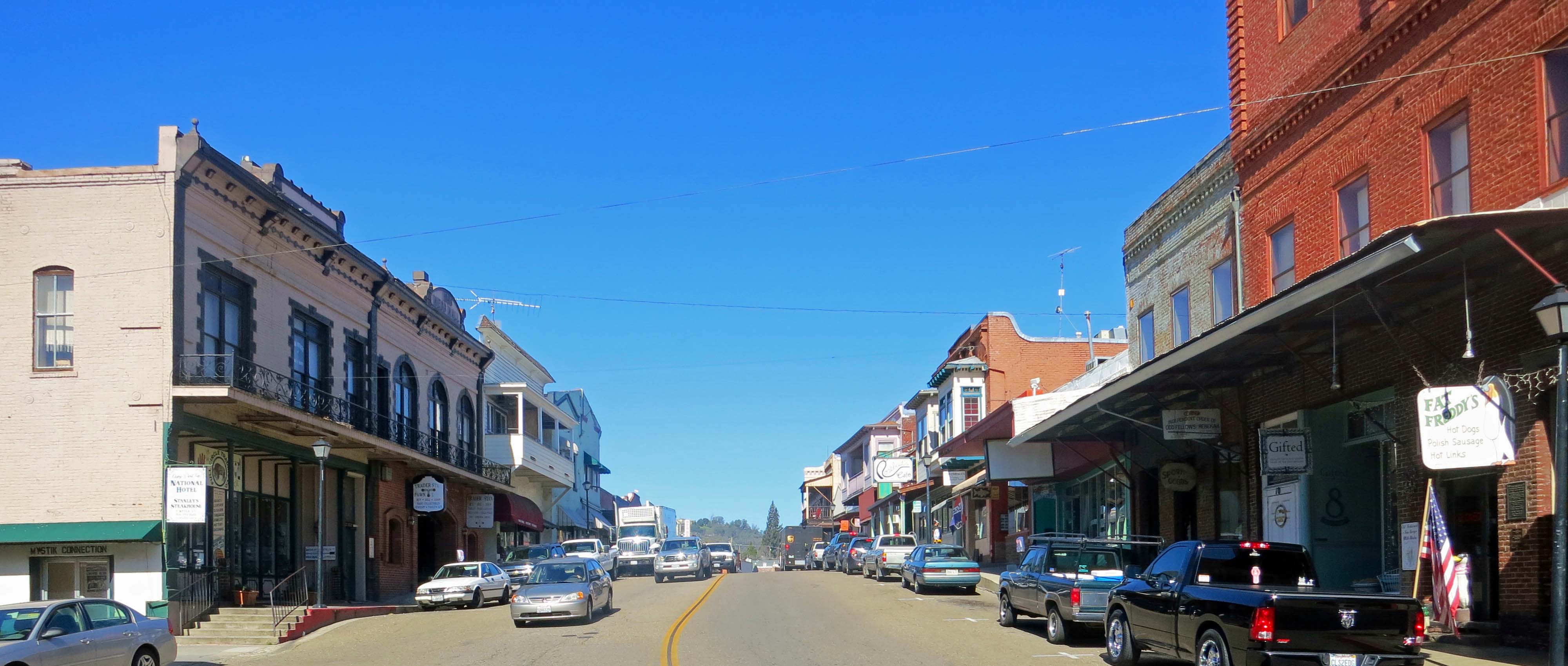
Our visit to the town also included a walk up and down the main street and dinner at the National Hotel, which also dates back to gold rush times. Ladies of the evening made liberal use of the hotel in its early days. They say you can still hear their ghosts giggling at night. Black Bart, the infamous gentleman bandit who robbed stages on foot (he hated horses) and occasionally left behind a poem, reputedly stayed here. As did Mark Twain, Chester Garfield, Herbert Hoover, and John Wayne. Wayne lost $43,000 in a 1933 game of poker at the hotel. His check bounced and the local sheriff hunted him down and made him pay in cash.

A look up main street, jackson.

A look up main street, Jackson.

The community has done a great job of renovating and maintaining its historic buildings.

The community has done a great job of renovating and maintaining its historic buildings.

The National Hotel that has entertained every one from US Presidents, to outlaws, to movie stars— and possibly ghosts.

The National Hotel that has entertained every one from US Presidents, to outlaws, to movie stars— and possibly ghosts.

We finished off our visit to the Jackson area by checking out several local wineries. I was looking for wine to feature at my book-signing event in Sacramento. By the end of the day, they all tasted pretty good. And no, I wasn’t driving.

Grapevines. Amador County has become an important wine producing area.

Grapevines. Amador County has become an important wine-producing area.

We visited several wineries looking for wine to use at my book-signing in Sacramento.

We visited several wineries looking for wine to use at my book-signing in Sacramento.

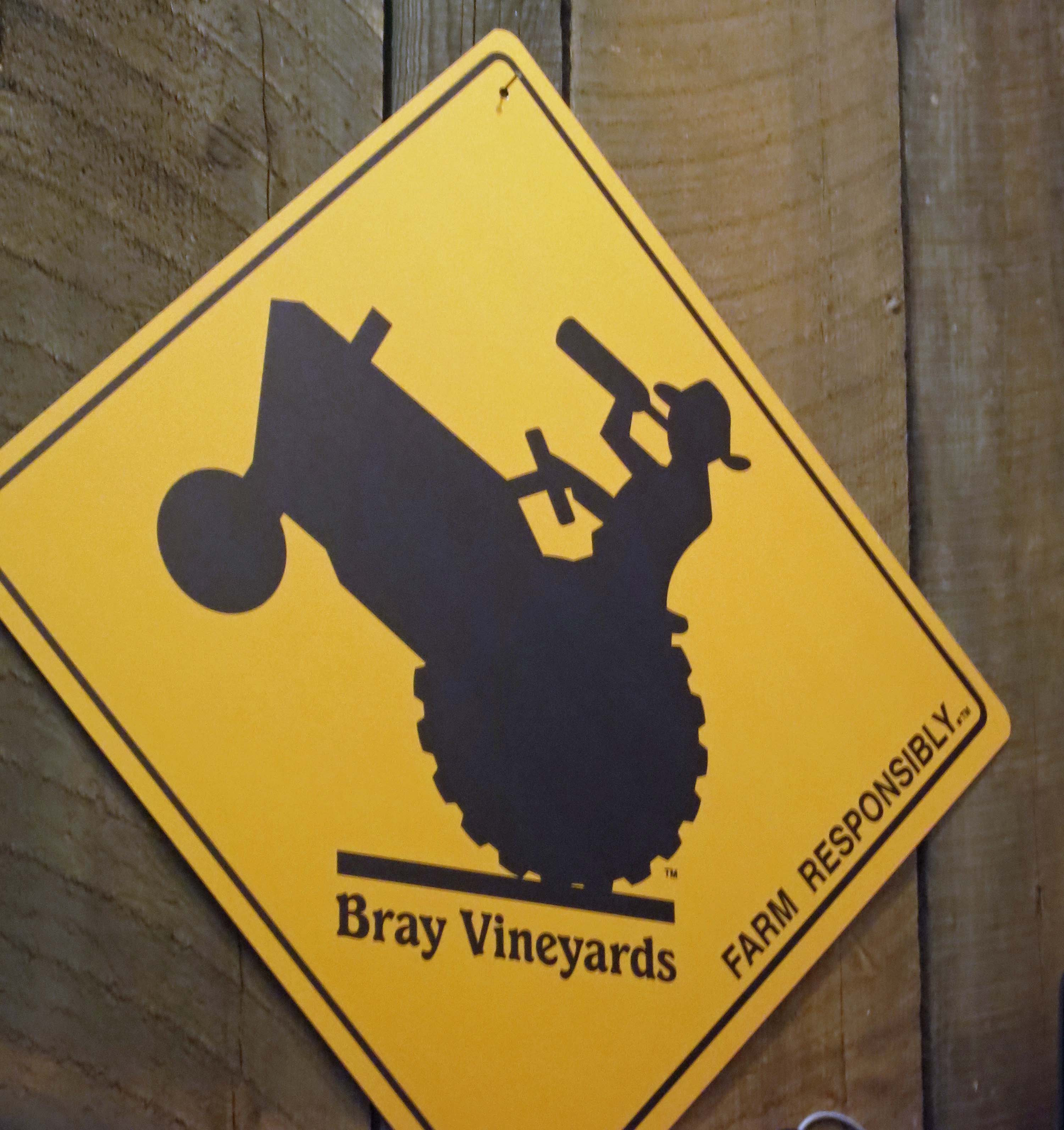
I thought my fellow bloggers who are into farming would appreciate this sign.

I thought my fellow bloggers who are into farming would appreciate this sign.

I'll conclude with a final photo of the giraffe munching flowers. Guilty.

I’ll conclude with a final photo of the giraffe munching flowers. Guilty.