Home Invasion— With Enough Guns to Turn Back Attila the Hun: Part I

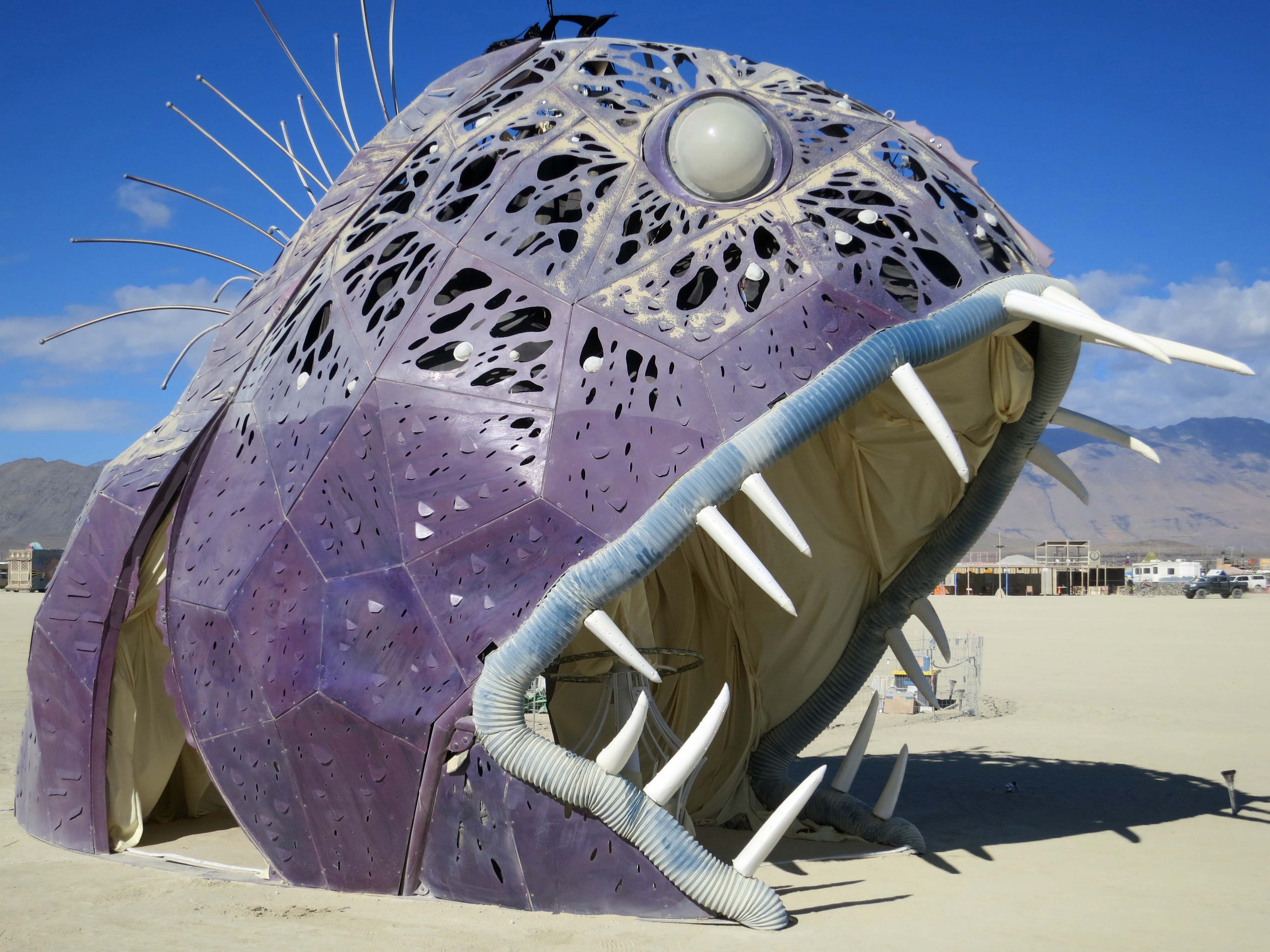
Do you think this Burning Man fish is scary...

Do you think this Burning Man fish showing up at your house would be scary?
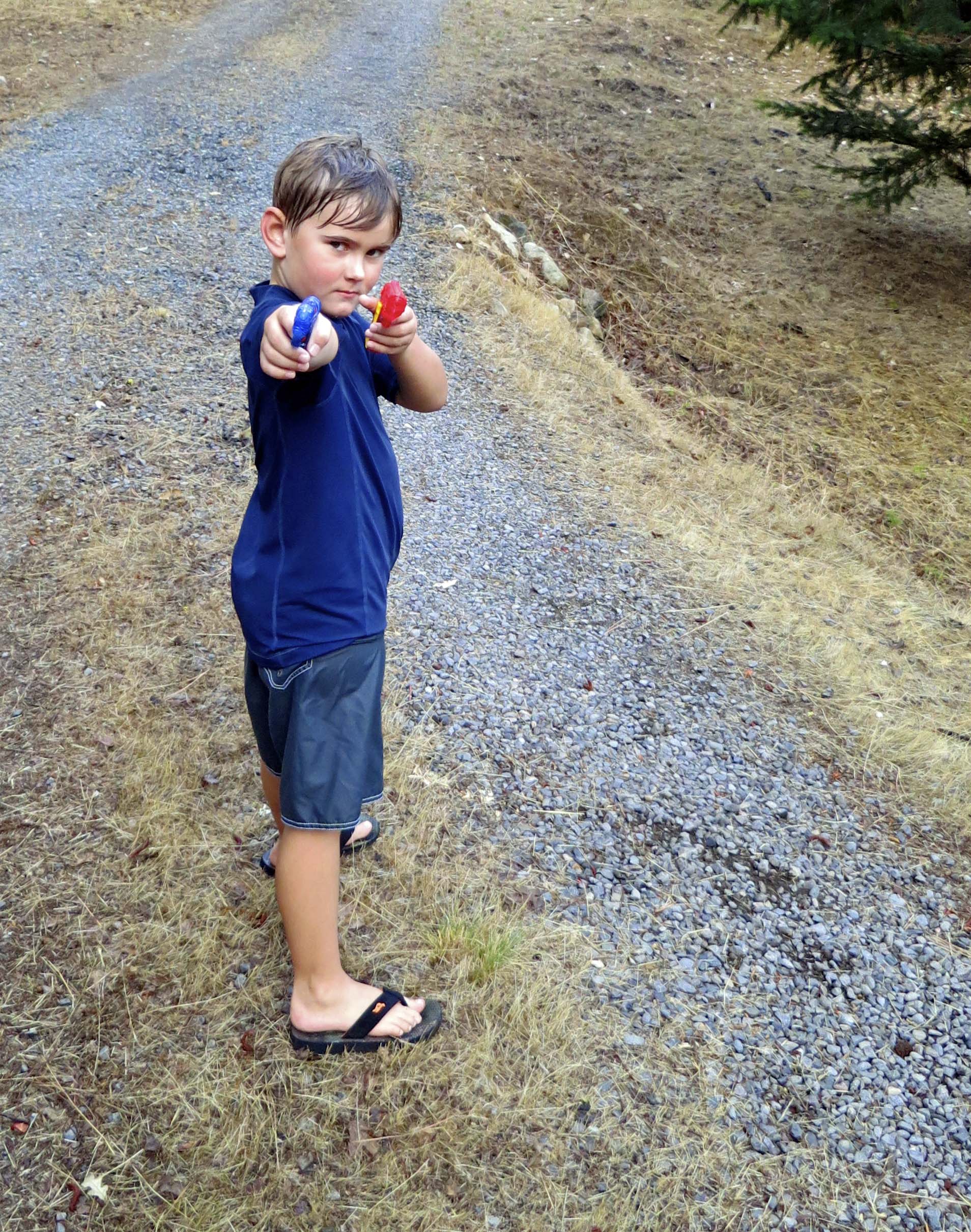
Then imagine five grandsons, aged two to ten, with water guns.

Then imagine five grandsons, aged two to ten, with water guns showing up— and you are the target. Cody demonstrates his form, here. Each boy was normally outfitted with two pistols.


Hello my friends. Welcome back to Wandering through Time and Place.

I’ve been hesitant to write these words. Why? Because they mean I have to go back to work. I have been out playing and having adventures for the past couple of months, or so. Don’t get me wrong; I love to write and I’ve missed checking in on your blogs. But I haven’t missed the discipline of knocking out two to three blogs a week and working on my next book. (“I’m supposed to be retired,” he whined.)

But enough on that: What have I been doing? First up, Peggy and I had a major home invasion in Oregon. Our house, our time, and our lives were totally taken over. There were enough weapons around to turn back Attila the Hun. So what if they were all water guns. Can you imagine the devastating impact such weaponry can have in the hands of five, two-to-ten-year-old boys? And these were not the small, wimpy, colored plastic pistols of our youth, no way— they were full-scale WMDs (Weapons of Mass Destruction): water cannons, pump-action rifles, and macho pistols with large, pressurized air chambers to assure a steady stream of water.

Each evening Grandpa was invited out to the patio for his nightly drowning. And each night he would return inside, soaked to the bone. But I want to report, somewhat proudly, that I gave as good as I got. Grandpa is a crafty dude. (I’ve been learning to speak in the third person from The Donald.) I made sure that my weapon shot further and held more water than any of the grandkids. This advantage didn’t help much, however, when our son Tony, former marine captain that he is, entered the fray with three massive water cannons tied together with duct tape. Water is still draining out of my ears.
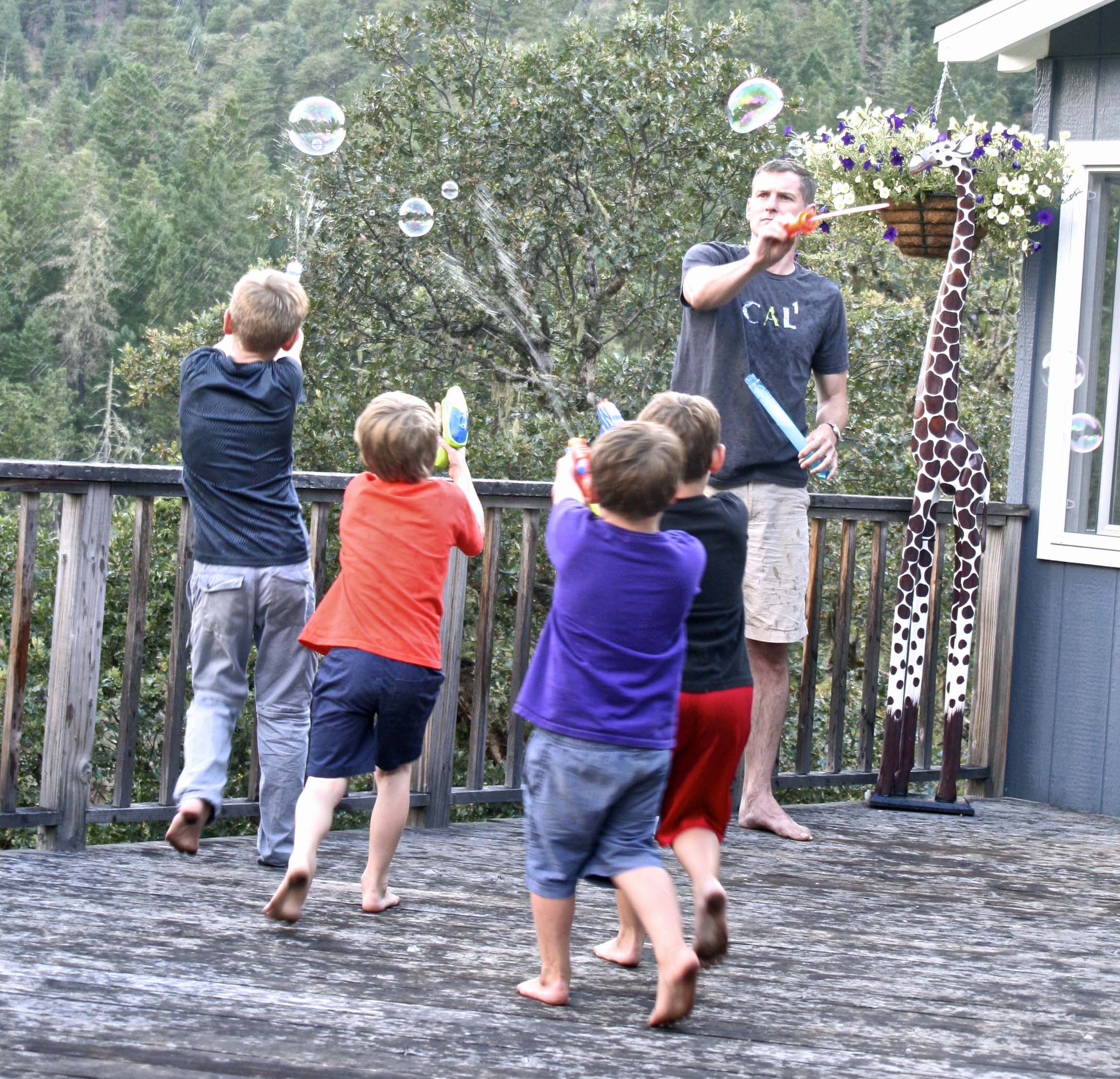
Shooting water guns accurately was practiced nightly before the big water gun fight. Four of the boys go after bubbles that Tony is creating.

Shooting water guns accurately was practiced nightly before the big water gun fight. Four of the boys go after bubbles that Tony is creating. Giraffe does his best to stay out of the way.

Tasha joins Tony in the bubble making business while the two you old Cooper takes a photo break.

Tasha joins Tony in the bubble making business while the two you old Cooper clutches his pistol and stares at the camera.

Bubbles escape from the fray.
Bubbles escape from the fray.

Connor leads the attack with a frontal assault.

Connor leads the attack with a frontal assault.

Chris proves to me that his water pistols are functioning and ready for action.

Chris proves to me that his water pistols are functioning and ready for action.

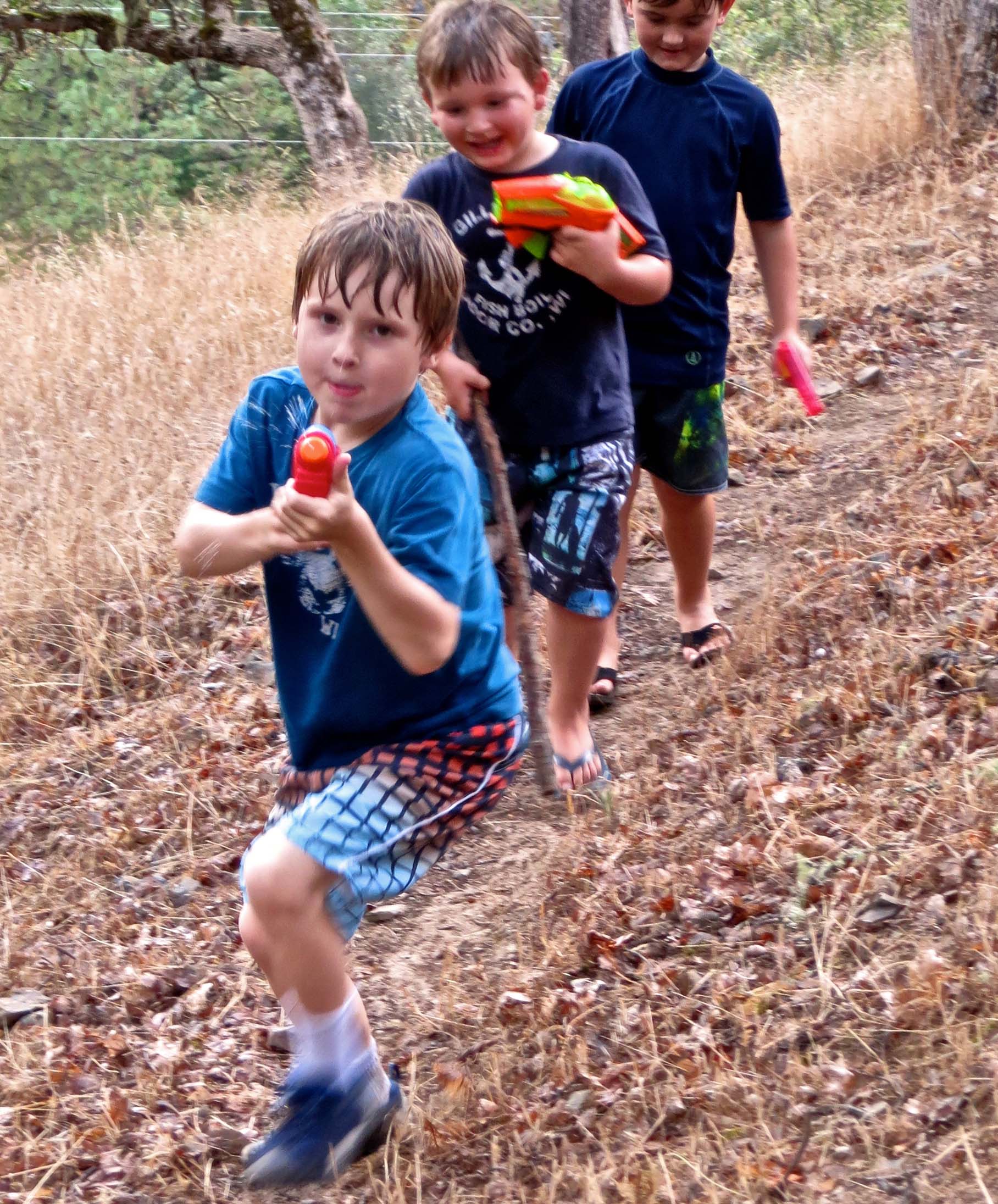
The view I normally had of Ethan as he dashed by me with both guns blazing.

The view I normally had of Ethan as he dashed by me with both guns blazing.

Peggy started pushing for a family get-together months ago. “Wouldn’t it be great if we could get our kids and their children here all at once for three weeks this summer?” I could only whimper in agreement. Any concerns I raised about the wisdom of having five grandsons and six adults in our 1500 square foot house for three weeks were met with a steely eyed gaze. It was the look. Every husband in the world would recognize it for what it was. And know to keep his mouth shut.

It was a long three weeks, Peggy. (Grin) But, I confess, it was good to see the kids— and I had fun. It was the little things like when five-year-old Chris whispered in my ear, “Grandpa, can I share a secret?” “Sure, Chris, what is it?” “You and I are going to steal a handful of Knox-blocks from the refrigerator.” That is one clever kid. Of course we made the raid and quickly scarfed down the evidence. And then there was seven-year-old Cody and the water fights. “I am on your side, Grandpa Curt,” he declared stoutly at the beginning and stuck with me through thick and thin. Toward the end I told him, “Cody, you have been so loyal, you get a free shot at me.” I lowered my super-duper-pump-action water rifle so he would see I was serious. “Oh, I couldn’t do that Grandpa,” he declared.

Cody is something of a hero of mine. When he was two, he saved me from the bear that lives under our bed. I was down on the floor demonstrating how far one had to stay away from the bed to avoid the bear when I got too close and it grabbed my leg. Did Cody run away screaming? No. As my leg started disappearing under the bed, he grabbed me by my arm and began pulling in the opposite direction with all of his considerable two-year-old might.

“For that little trick,” my son-in-law Clay told me, “I am going to get you out of bed tonight to sit with Cody if he can’t go to sleep.” Apparently, Cody slept well.

Next Post: Home Invasion Part II— A rattlesnake comes to visit.

Grand Canyon Odyssey, Part I… The Wilderness Cure

The Grand Canyon is a world treasure. I've backpacked into it several times and rafted the Colorado River through it. Once I even rode a mule into the Canyon.

The Grand Canyon is a world treasure. I’ve backpacked into it several times and rafted the Colorado River through it. Once, I even rode a mule into the Canyon. The mule carried me over the trail you can see right front center.
I followed Highway 50 east out of Sacramento, cut off at Pollock Pines and picked up the Mormon-Emigrant Trail. Soon I was on Highway 88 climbing up and over Carson Pass. Newly dressed aspens, snow-covered mountains and frothy creeks reminded me that summer was still two months away.

Kit Carson came through here in February of 1844 along with John C. Fremont. The snow was deep and food was limited. They ended up dining off of their horses, mules and the camp dog. The dog apparently went quite well with pea soup. Later, the trail they discovered would become a major entry point for the 49ers and run through the foothill town of Diamond Springs where I was raised.

By evening I had driven down the east side of the Sierras and made my way into Death Valley. I was setting up my tent under a convenient Mesquite tree when the sun sank behind the Panamint Range. Coyotes howling in the distance lulled me to sleep.

I walked out from my campsite in Death Valley as the sun set and listened to coyotes howl in the distance.

I walked out from my campsite in Death Valley as the sun set and listened to coyotes howl in the distance.

By ten thirty the next morning I was in another world, investing quarters in a video poker machine at Circus Circus on the Las Vegas Strip. Luck was with me. Two hours later found me crossing over Hoover Dam with an extra hundred dollars in my wallet. It represented two weeks of backpacking food. I zipped across the desert, picked up Interstate 40 at Kingman and cut off toward the Grand Canyon at Williams.

Circus Circus Clown.

A little treat for those of you with Coulrophobia, the Circus Circus Clown. No wonder people fear clowns.

I wasted little time checking in at Mather Campground. The Canyon was waiting. An unoccupied rock off the trail near Yavapai Point provided a convenient spot for dangling my legs over the edge. Nothing but several hundred feet of vacant space existed beneath my hiking shoes. A slight breeze on my back reminded me of my mortality.

Sitting on the edge of the Canyon isn't for the faint-hearted. One can fall hundreds of feet.

Sitting on the edge of the Canyon isn’t for the faint-hearted. One can fall hundreds of feet.

My musings were interrupted when a fat Golden-Mantled Ground Squirrel poked his furry head up next to me and demanded payment for my front row seat. I recited the Park’s rule on feeding animals and told him to go eat grass. He flipped his tail at me and squeaked an obscenity as he scrambled off in search of more gullible victims.

Twilight was painting the Canyon with a purplish tinge but I could still make out the distinctive colors and shapes of the rocks. While my right-brain admired the beauty, my left-brain was busy considering eons upon eons of earth history. The dark, tortured walls of the inner canyon, now obscured by evening shadows, reached back over a billion years to the very beginnings of life on earth when our ancient ancestors had frolicked in even more ancient seas.

While the sun still touched the rim of the Canyon, the inner walls turned a dark purple. (Photo by Peggy Mekemson.)

While the sun still touched the rim of the Canyon, the inner walls turned a dark purple. (Photo by Peggy Mekemson.)

Erosion had given these Precambrian rocks a flat top, shaving off some 500 million years of earth’s history and creating what is known as the Great Unconformity.  Since then vast seas, Saharan size deserts, lakes and rivers had patiently supplanted one another as they marched through Paleozoic time depositing layer upon layer of the canyons walls.

My present perch was made of Kaibab limestone created by an inland sea some 250 million years ago. Dusk slipped into dark and my thoughts turned to my impending backpack trip.

I had backpacked into the Canyon several times. My objective this time was to explore the Tanner Trail on the eastern end of the South Rim road.

The next day was devoted to careful preparation. Seventeen years of backpacking in all kinds of terrain and climate had taught me that there was no such thing as being too careful. I approach compulsive when it comes to backpacking alone. Had I resupplied my first aid kit? Was my stove still working? Did I have adequate fuel? Did I have my flashlight, signaling mirror, whistle, compass and maps? Did I have enough but not too much food, water, reading material, etc. etc. etc.?

Safety, comfort and even entertainment are important but weight is always an issue.

Having satisfied myself that I could survive seven to nine days in the Canyon, I headed off to the backcountry permit office. The more environmentally inclined within the Park Service are seriously into minimizing impact and promoting safety. Requiring wilderness use permits is their primary tool in achieving these goals.

I patiently waited behind six other would-be canyon explorers and had memorized the minimum impact lecture by the time my turn was up. The ranger frowned when I mentioned the Tanner Trail.

“The trail is poorly maintained, rarely used, 10-12 miles long and arduous,” she cautioned strongly.

“And that,” I replied, “is exactly what I want.”  I was especially enamored with the ‘rarely used’ part.  I had no desire to share my experience with dozens of other people, much less armies of cantankerous mules that leave lakes of fowl smelling pee on the trail. If I had to face a particularly tough physical challenge and be extra careful to avoid a tumble into the Canyon, it was a price I was happily willing to pay.

I was leaving the office when a skinny guy wearing a short-sleeved khaki shirt, blue shorts and hiking boots stopped me.

“Excuse me,” he announced, “I am with the Sierra Club and I couldn’t help but hear you are headed down the Tanner Trail. Given your condition, I would strongly advise against it. You should hike down the Bright Angel Trail. It’s a lot easier and there are lots of other people hiking it in case you get in trouble.”

Now I confess that having just emerged from nine months of hibernating in Alaska I was pasty white and pudgy. I will also allow that the guy was operating under good intentions.

But his arrogance, especially in announcing his Sierra Club membership as somehow making him a wilderness expert, irritated me. Over the years I had known and worked with lots of Sierra Club folks. I am a strong supporter of their efforts to protect the wilderness. I have even run into some who have had more wilderness experience than I. John Muir, the Sierra Club founder, is one of my all time heroes.

Had my unofficial advisor started off with something like, “I have been up and down the Tanner Trail several times, would you like some suggestions?” I would have been quite willing, even eager, to hear what he had to say. But his uneducated assumptions about my lack of knowledge absolutely turned me off. It was everything I could do to maintain a civil tone of voice as I thanked him for his advice and politely told him to screw off.

At 8:30 the next morning my pasty white pudgy body was having an animated discussion with my mind over why I hadn’t listened more carefully to the Sierra Club ‘expert’ the day before. I had started my day by splurging for breakfast at the elegant El Tovar Hotel and then driven out to Lipan Point.
I was now poised to begin my descent into the Canyon. It looked like a long way down. I gritted my teeth and banned any insidious second thoughts.

They came rushing back as I struggled to hoist my 60 plus pound pack. It was filled with seven days of food, extra water and all of my equipment. I had cursed the day before as I struggled to find room for everything. Now I was cursing I hadn’t left half of it behind. I had the irrelevant thought that my journey down would either kill me or cure me.


Sorry to leave you hanging here as I begin my descent down into the Canyon, but I am going to take a break from blogging for a couple of months. It’s going to be tough. I love blogging and I enjoy keeping up with all of my Internet friends. It’s a special group. But five grandsons are descending on our house and I think Peggy and I will be a little busy (understatement). After that I am going to do some traveling— who knows where? (Peggy will be off in London with her sister Jane.) I also need to spend some time marketing my book. Time simply hasn’t allowed me to put in the effort I should.

And finally, I received two notices from Word Press this past week. One congratulated me on my fifth anniversary with Word Press. The second congratulated me on posting my 500th blog. I realized I hadn’t taken a break from blogging since the beginning. So it’s time I did. I will be off Word Press until the second week in September when I will once again be posting blogs, catching up with the folks I follow, and making comments. Have a great summer and thanks ever so much for following me. —Curt

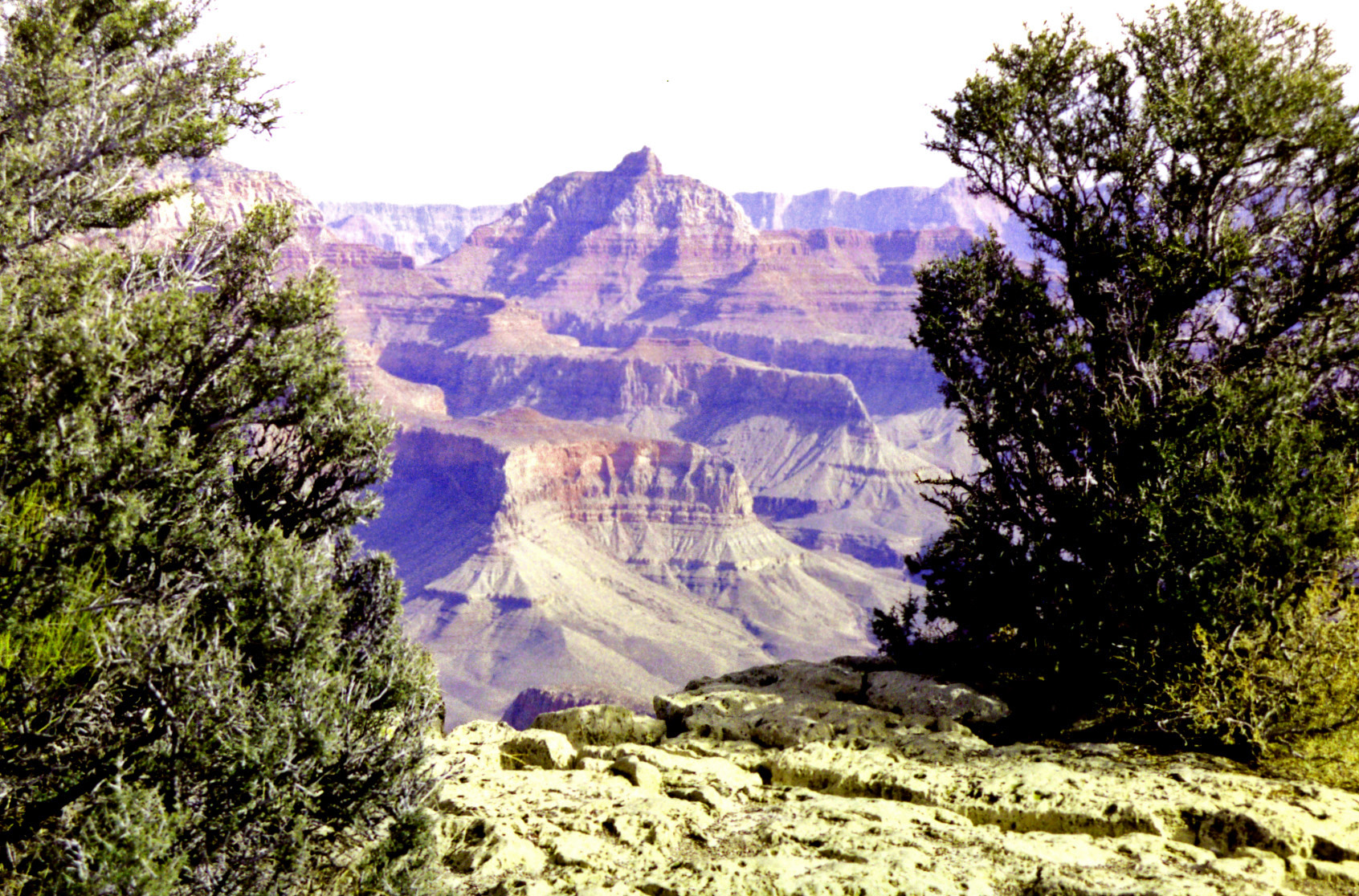
A final view of the Canyon with its multiple layers that represent deposited from oceans, deserts, rivers and lakes.

A final view of the Canyon with its multiple layers that represent deposits from oceans, deserts, rivers and lakes over hundreds of millions of years..

Where Glass Borders on Fantasy… The Work of Dale Chihuly

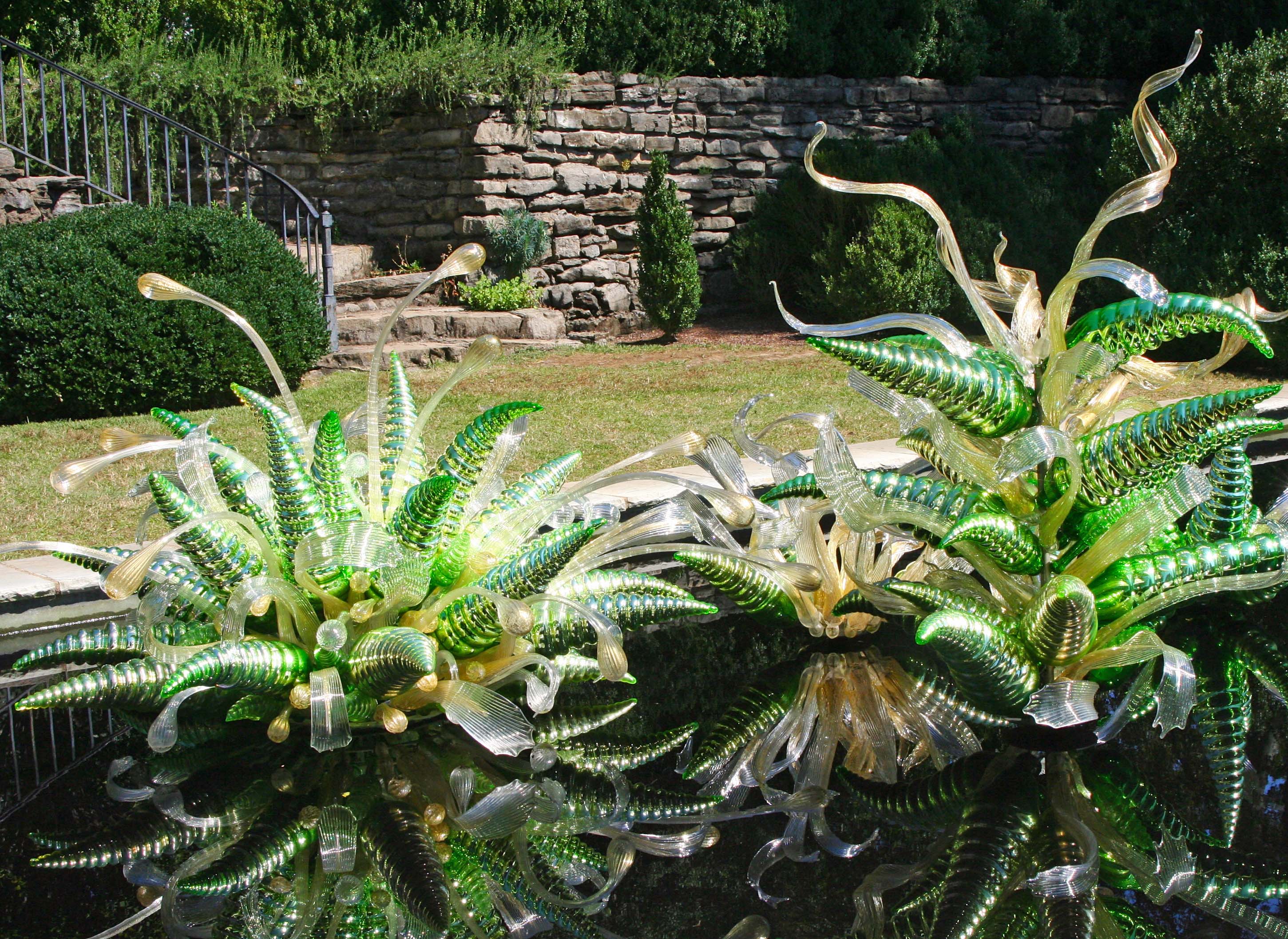
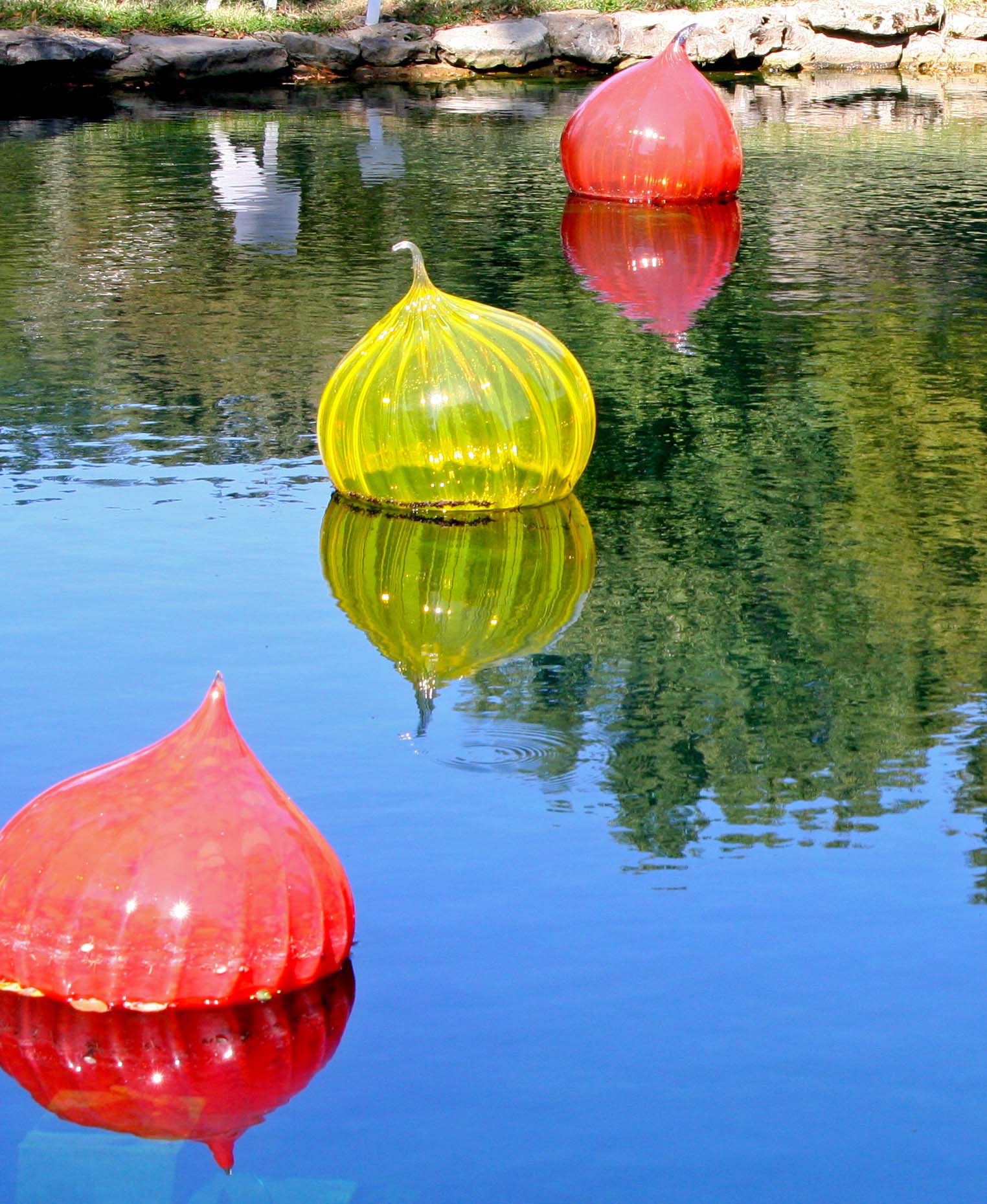
I had the feeling that this sculpture by Dale Chihuly, set off by a reflecting pool should be waving its tentacles.

I had the feeling that this sculpture by Dale Chihuly, set off by a reflecting pool, should be waving its tentacles. (This and the following photos are taken by Peggy Mekemson.)

When I closed my eyes and scrolled through my iPhoto collection to come up with today’s photo essay, I landed on a series of photos featuring Dale Chihuly’s imaginative glass sculptures.

It seems like Chihuly, the world’s most prolific creator of glass blown sculpture, is everywhere these days. His works are found worldwide. Peggy was in Tennessee with our daughter Natasha five years ago when a Chihuly exhibition was held at the Cheekwood Botanical Garden in Nashville. Fortunately, Peggy took lots of photos so I could enjoy the show as well. I found a flock of flamingos that Peggy captured on her camera at the botanical garden to be equally fascinating.

I thought of this creation as a fruit basket.

I thought of this creation as a fruit basket.

Chihuly is an expert at placing his work in natural settings.

Chihuly is an expert at designing his pieces to complement natural settings.

Another example how his work complements a natural setting.

Another example how his work complements a natural setting.

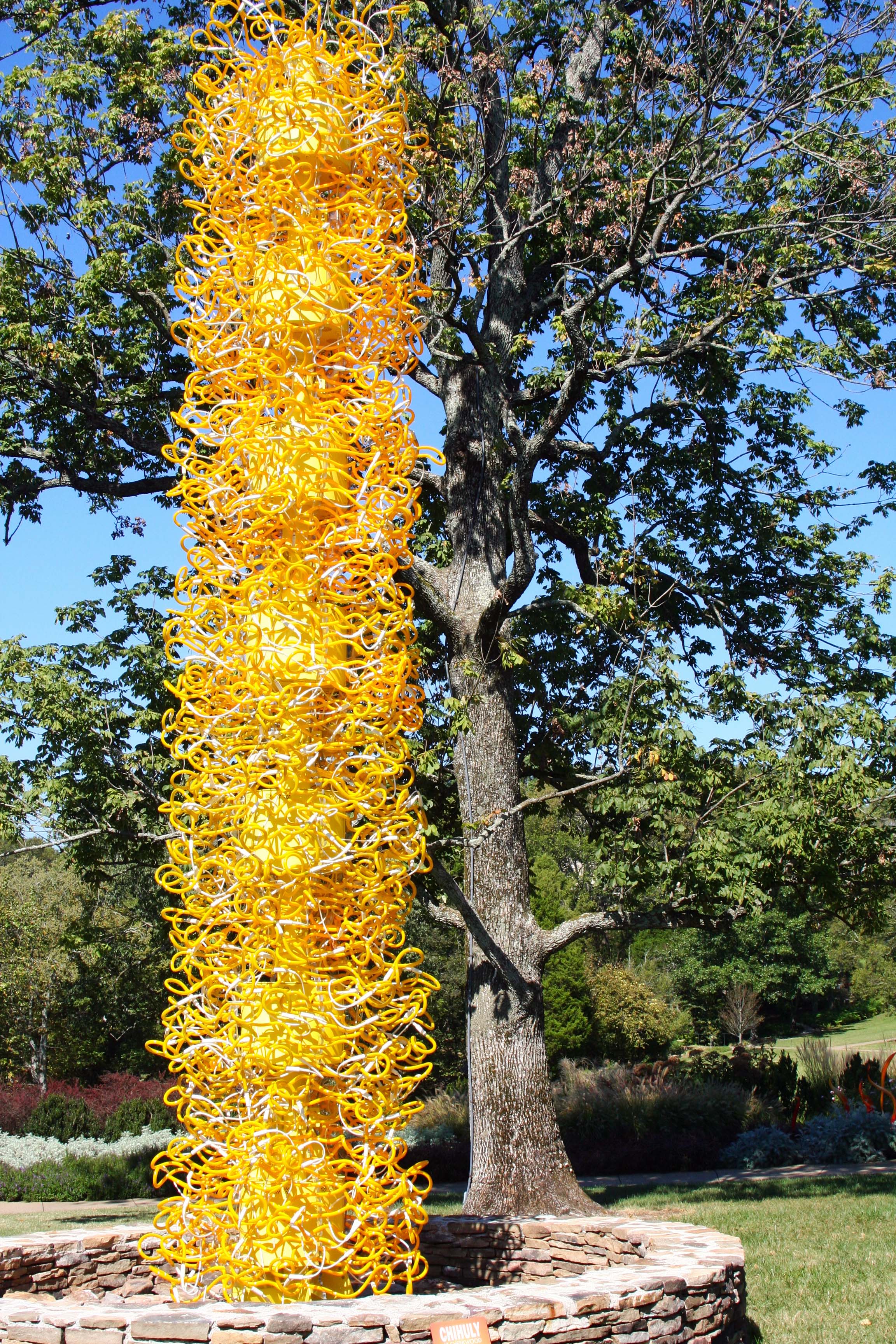
And how about this towering glass sculpture next to the tree?

And how about this towering glass sculpture next to a tall tree?

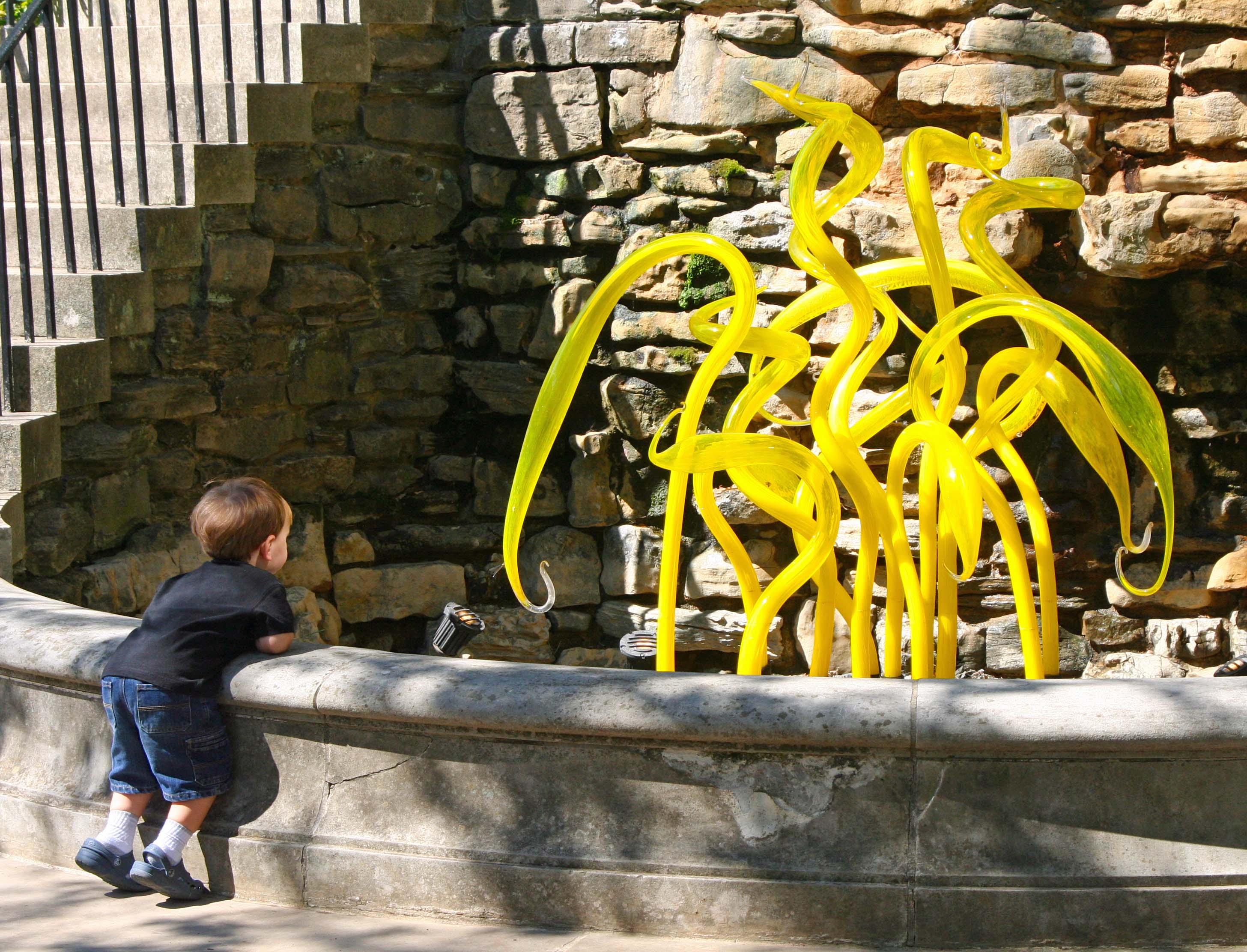
My grandson, who was two at the time, checks out one of Chihuly's sculptures. I wonder what was going through his mind?

My grandson, who was two at the time, checks out one of Chihuly’s sculptures. I wonder what was going through his mind?

A new take on a Zen garden?

A new take on a Zen garden?

I thought colorful garlic here.

These reminded me of colorful cloves of garlic.

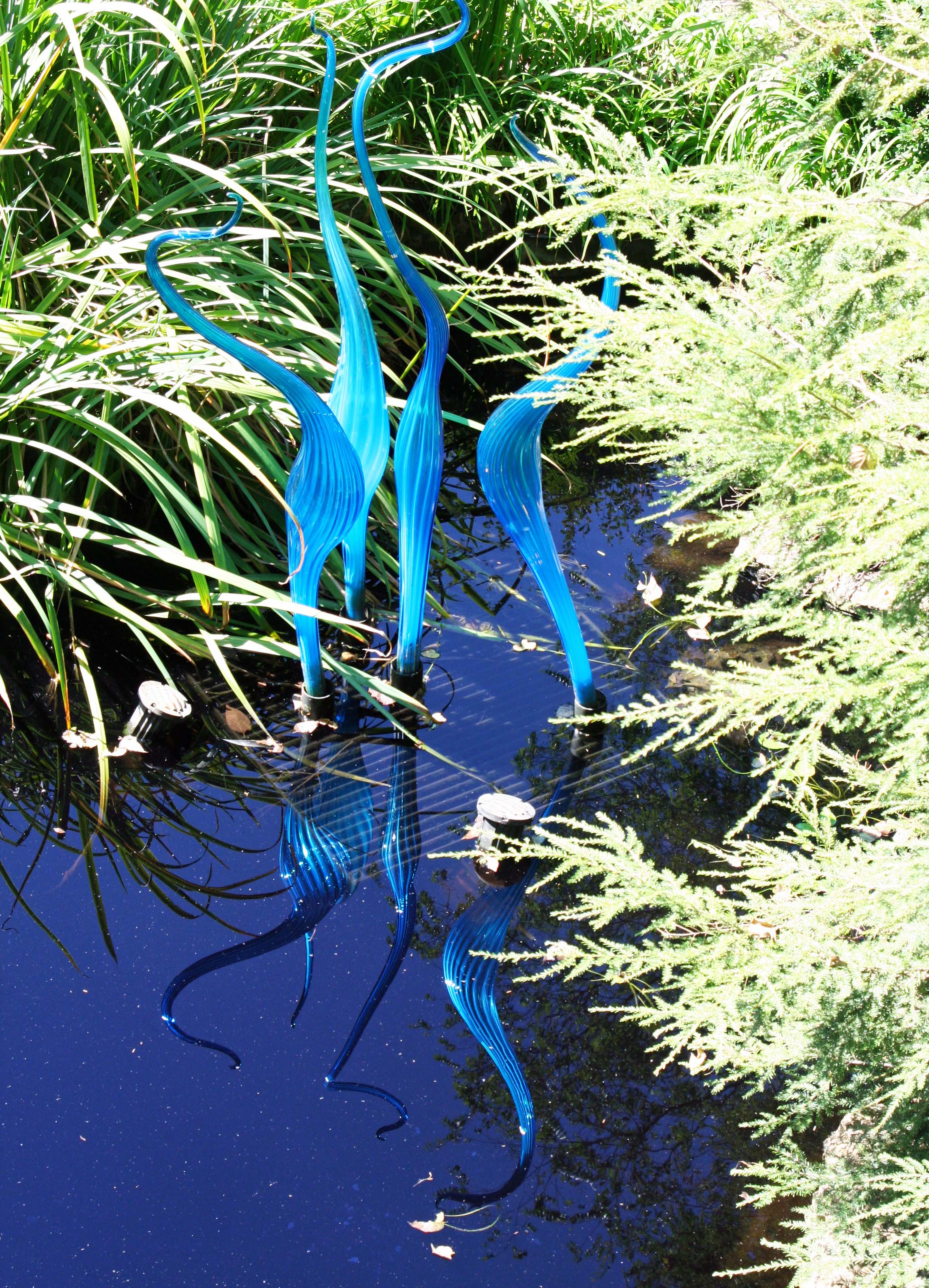
These gracefull birdlike sculptures reminded me of Peggy's Flamingos.

These graceful birdlike sculptures with their interesting poses reminded me of Peggy’s Flamingos.

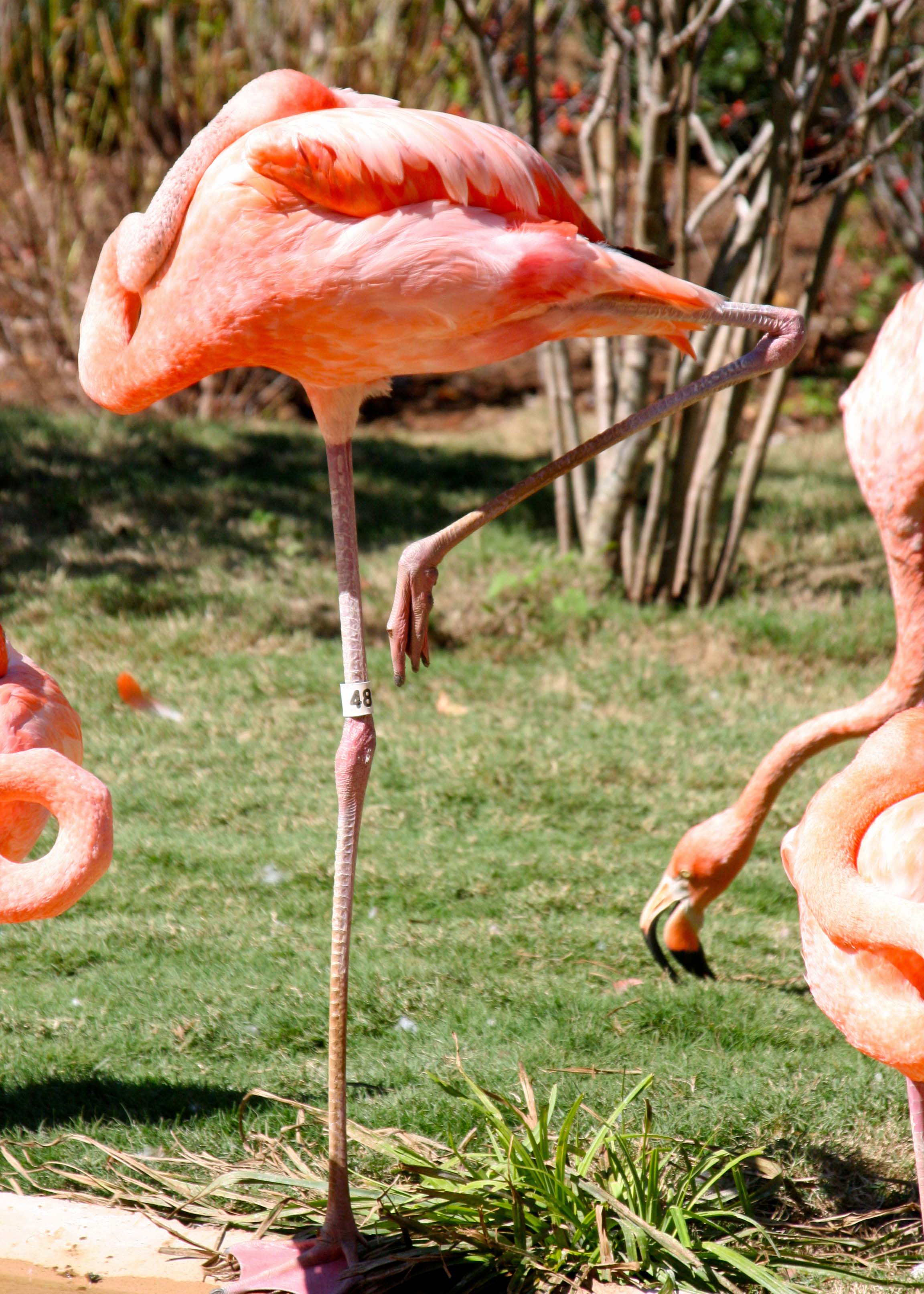
Flamingos can assume some interesting one legged positions but this one went above and beyond

Flamingos can assume some interesting one-legged positions but this one went above and beyond. Check out the shadow.

Another interesting pose.

Another interesting pose for both kids and adults.

A final contortion of Flamingos.

A final contortion of Flamingo parts.

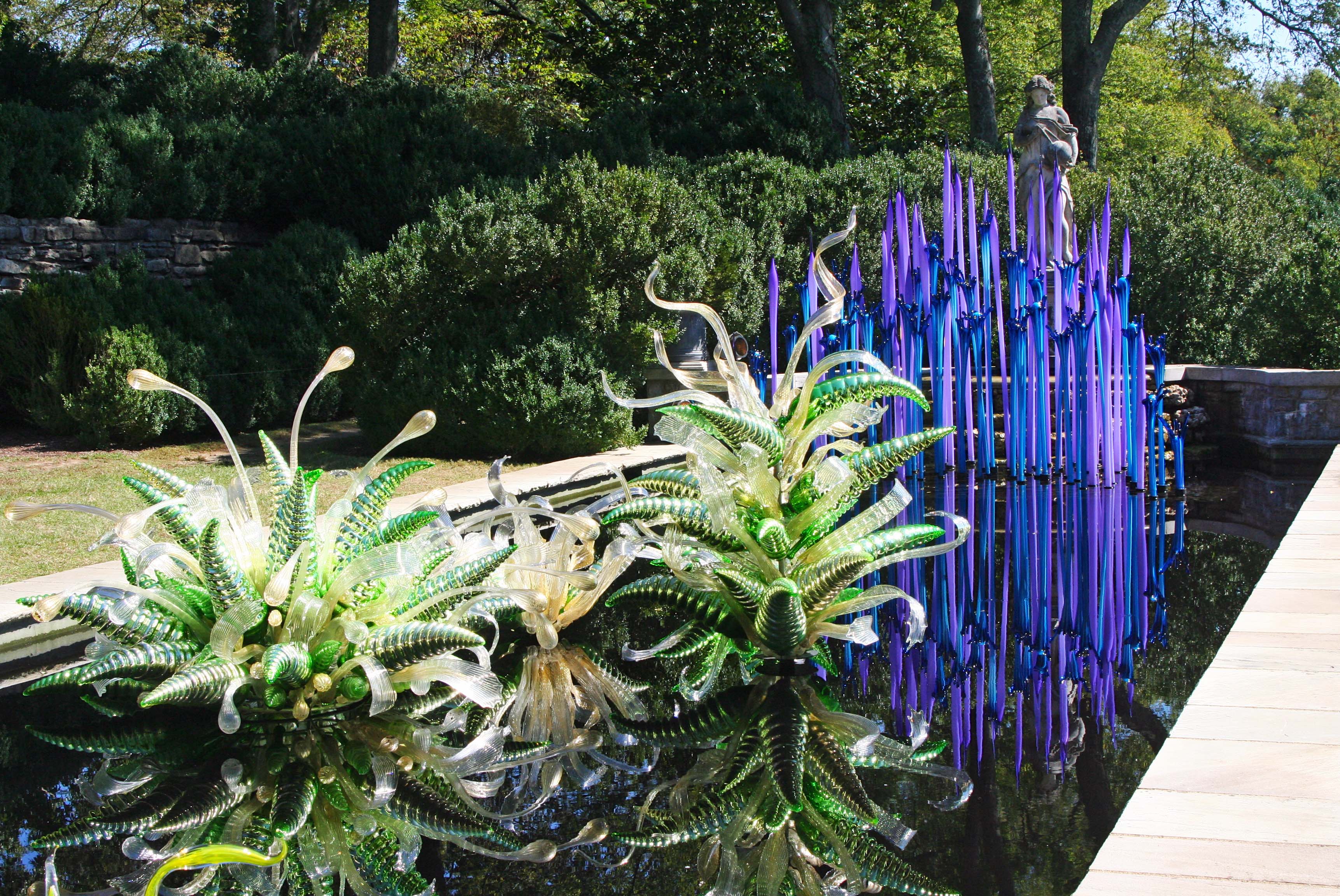
I'll use this blue and green contrast by Chihuly to end this post. NEXT POST: On the way to He Grand Canyon and a two month break from blogging.

I’ll use this blue and green contrast by Chihuly to end this post. NEXT POST: A continuation of my Friday Essays. The Grand Canyon trip. Also, Friday marks the beginning of a two month break from blogging.


Friends of Liberia… Working to Improve the Nation’s Future— by Stephanie Vickers


Laundry Day. Stephanie Vickers in her first month as a Peace Corps Volunteer in Liberia during 1971.

Stephanie Vickers does her laundry during in-country training in her first month as a Peace Corps Volunteer in Zorgowee, Liberia during 1971.

I asked Stephanie Vickers, the president of Friends of Liberia (FOL), to do a guest blog today outlining the work that the organization does in Liberia and her connection to that work. If you are a regular follower of my blog and/or have read my book, “The Bush Devil Ate Sam,” you are aware that I once served as a Peace Corps Volunteer in Liberia and have maintained an active interest in the country since. You can obtain a copy of the book on Amazon. Half of the profits from the sale of the book go toward supporting FOL projects in Liberia.

Education is a key ingredient to improving life in Liberia, as it is in all third world nations. During the civil war that raged in the country for over a decade from 1990 to 2000, education efforts ceased to exist. They suffered a similar fate this past year during the Ebola crisis. A 2012 study revealed that there were 571,555 school-aged children out of school and over 400,000 at the risk of dropping out. According to UNESCO in 2014 (before the Ebola crisis), only 26.7% of school-aged children were attending school. 

Friends of Liberia, Peace Corps and other non-government organizations are working in partnership with the Liberia government to once more make education a national priority. I was particularly excited to learn about FOL’s Family Literacy Project, a new program that is designed “for situations where parents with low literacy levels want to become involved in their children’s education.” It is literally a case of helping parents to help their children at a point in their lives when such help is critical to their future educational success.

Stephanie brings a high level of expertise to this effort and over 17 years of experience in working with the people of Liberia (three as a volunteer and fourteen as a member of FOL). Her words:


Friends of Liberia began in 1986 at a National Peace Corps Association conference as an alumni group for Returned Peace Corps Volunteers (RPCVs) from Liberia.

At the outbreak of the civil war in 1990, the organization changed its mission to advocating for Liberian peace, which it did so aggressively. It also turned to actively helping organizations addressing problems in Liberia. By necessity, FOL evolved over the next decades to be far more inclusive in its membership, welcoming Liberians who live in America and many others who had worked in Liberia. Today, it is open to anyone who cares about Liberia and her people. To read more about the early days of the organization, go to http://fol.org/history/.

My connection with Liberia started with the Peace Corps. I grew up in the Bay Area and graduated from UC Berkeley in 1967, and grad school in 1968. I was hired to teach in the Berkeley Public Schools until I joined the Peace Corps in 1971.

I was originally recruited to work as a teacher trainer in Sanniquellie, Liberia with counterparts that traveled to schools to train and support teachers. Unfortunately, the program was loosely organized and I wanted to work more, so I requested a transfer to St Mary’s School (7-12 grades) where I taught Reading/English, Liberian and World History and Economics.

At the end of my two-year assignment, I spent a third year in Liberia helping train new Peace Corps Volunteers. I was responsible for arranging cultural activities to introduce new trainees to the Liberian culture. I also served as an education trainer for new groups of teacher volunteers. My responsibilities allowed me to travel extensively throughout the country.

Stephanie in her role as Peace Corps Trainer in Liberia, 1973.

Stephanie in her role as Peace Corps Trainer working with Roosevelt Harris and Dan Goe in Tapita, Liberia, 1973.

After 30 years spent teaching and administering education programs in the U.S, I was drawn back to Liberia in 2001 as a volunteer in FOL’s early childhood education teacher-training project, called the Liberian Education Assistance Project (LEAP). Ironically, I actually got to do teacher training, the original assignment I had as a Peace Corps Volunteer in 1971. Professionally, it was very exciting. I went on to serve as the Administrator and Language Arts instructor of LEAP for 14 years.

FOL Trip to Liberia May 2009: Literacy lesson with first graders at the Ganta Mission School

On an FOL Trip to Liberia in May 2009, Stephanie shared a literacy lesson with first graders at the Ganta Mission School.

Working directly with Liberian early childhood educators just emerging from the war years, I discovered that many of these teachers and principals had serious gaps in their education and had not had professional development since the 1980s. The small difference I could make as a Language Arts trainer in our methodology sessions was not enough to combat a serious literacy crisis.

Partly due to FOL’s advocacy over all those years, the Ministry of Education has taken up the cause for early childhood education and is addressing it with teacher training and creating model schools. We have yet to determine the full effect of the recent Ebola epidemic that caused schools to close for most of the year on this and other education programs.

I am part of FOL’s “education working group” (EWG), which has decided to take a more holistic approach to improving the literacy rate among adults and children. The FOL Family Literacy Project is in its design stage but aims to be implemented in the next year.

The goal is to improve the academic success of children by improving adult parenting and literacy skills and child literacy skills through a program developed in Israel and widely in use in the U.S and a half-dozen other countries. Home Instruction for Parents and Preschool Youngsters (HIPPY) http://www.hippy-international.org was designed for situations where parents with low literacy levels want to become involved in their children’s education. FOL will partner with organizations in Liberia to implement the project.

I hope Curt’s fascinating stories and my own experience might generate interest in others to get involved in helping Liberia. The Family Literacy Project will need major support to get started and prove itself effective in some of Liberia’s poorest communities. We will continue to keep you updated on www.FOL.org and appreciate your interest.

I would like to close by urging you to follow Stephanie’s link to learn more about FOL and its programs. Please hit the donate button. Reducing illiteracy and empowering people to take charge of their lives is in all of our interests. It’s a small world and getting smaller. –Curt

Escape from Alaska… Part II: The Friday Essay

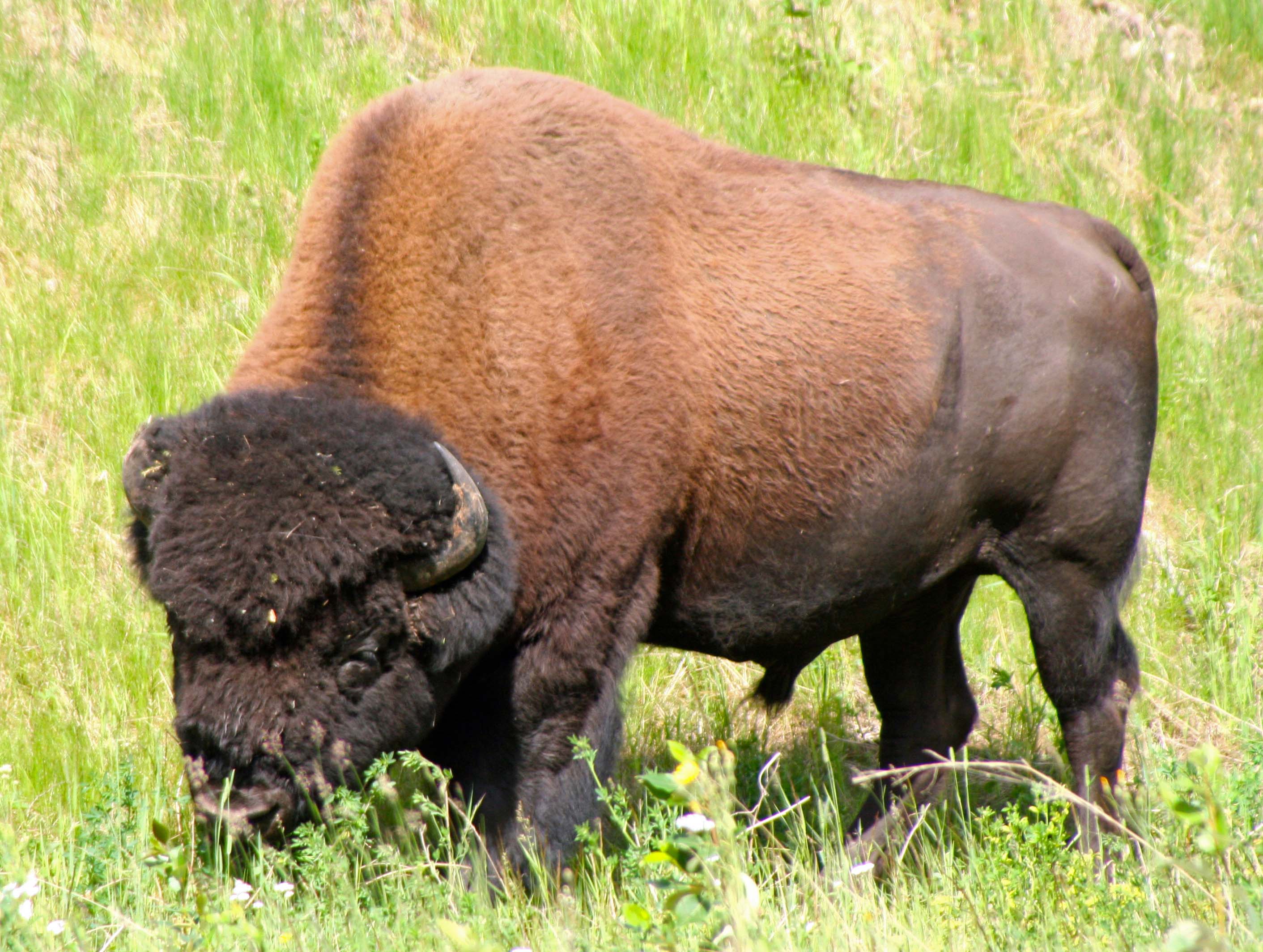
Woodland buffalo have become fairly common when driving through portions of the Yukon Territory. As noted in my last Escape from Alaska blog, Peggy and I took these photos two years ago when we drove the Alaska Highway in the summer.

Woodland buffalo like this guy have become fairly common when driving through portions of the Yukon Territory. As noted in my last Alaska blog, Peggy and I took these photos two years ago when we drove the Alaska Highway in the summer.

The next day after my encounter with the Trooper (see here), I zipped down the Alaska Highway through the Yukon Territory to White Horse. With the exception of gigantic trucks on their way to the North Slope, I saw few other vehicles. Snow still covered the surrounding wilderness and the road was frozen solid. The annual migration of tourists traveling north was months away.

That night I chose to stay in a campground, preferring not to repeat my previous night’s experience. I also avoided wasting away in Margaritaville— instead I broke out the brownies.

As a going away present, some friends had given me a gallon Zip Lock bag of Alaska’s finest pot. At first sight, it might seem that they were involved in a criminal activity, but marijuana was legal in Alaska. You could grow your own and somebody had obviously grown a lot. Giving me the grass had been the Alaskan equivalent of sending me off with a bottle of 25-year-old single malt Scotch whiskey, or several bottles.

In honor of lung health, I promised not to smoke it. I practiced my baking techniques on my last night at my friend’s house. The cat, the two dogs and I tested the results. It was a mellow evening and the whole menagerie was allowed to sleep on the bed. We purred, wagged our tails, and had wild dreams.

Here’s some advice to the uninitiated that Alice B. Toklas didn’t provide: go easy on brownies. They have a way of sneaking up on you. The problem is physiological. Long before your body has done its job and processed the herb, you are thinking, ‘this stuff has absolutely zero impact, I should have stuck with wine.’ So you eat another brownie, and then another. By the time you realize the error of your ways, it’s too late and you are wacko.

Luckily, I had already been there, done that. I ate a small piece and waited patiently. Then I broke out an ounce of Swiss cheese. I was all moderation. Marijuana enhances flavor and encourages gluttony. I once watched a woman down a quart of ice cream in one sitting and demand more.

A friend had slipped me a fat letter to read on the way. I opened it as an option to eating the other 15 ounces of cheese. She had offered to pinch hit if my other Alaska relationship didn’t work out.

“We can run off to Mexico and open an orphanage for homeless children, Curt,” she had suggested. She was serious about the orphanage. It was a dream of hers. It made the suggestion of my staying home, writing, and raising one or two kids look like a ride on a merry-go-round. I had declined her generous proposal. The gist of the letter was that the offer was still open.

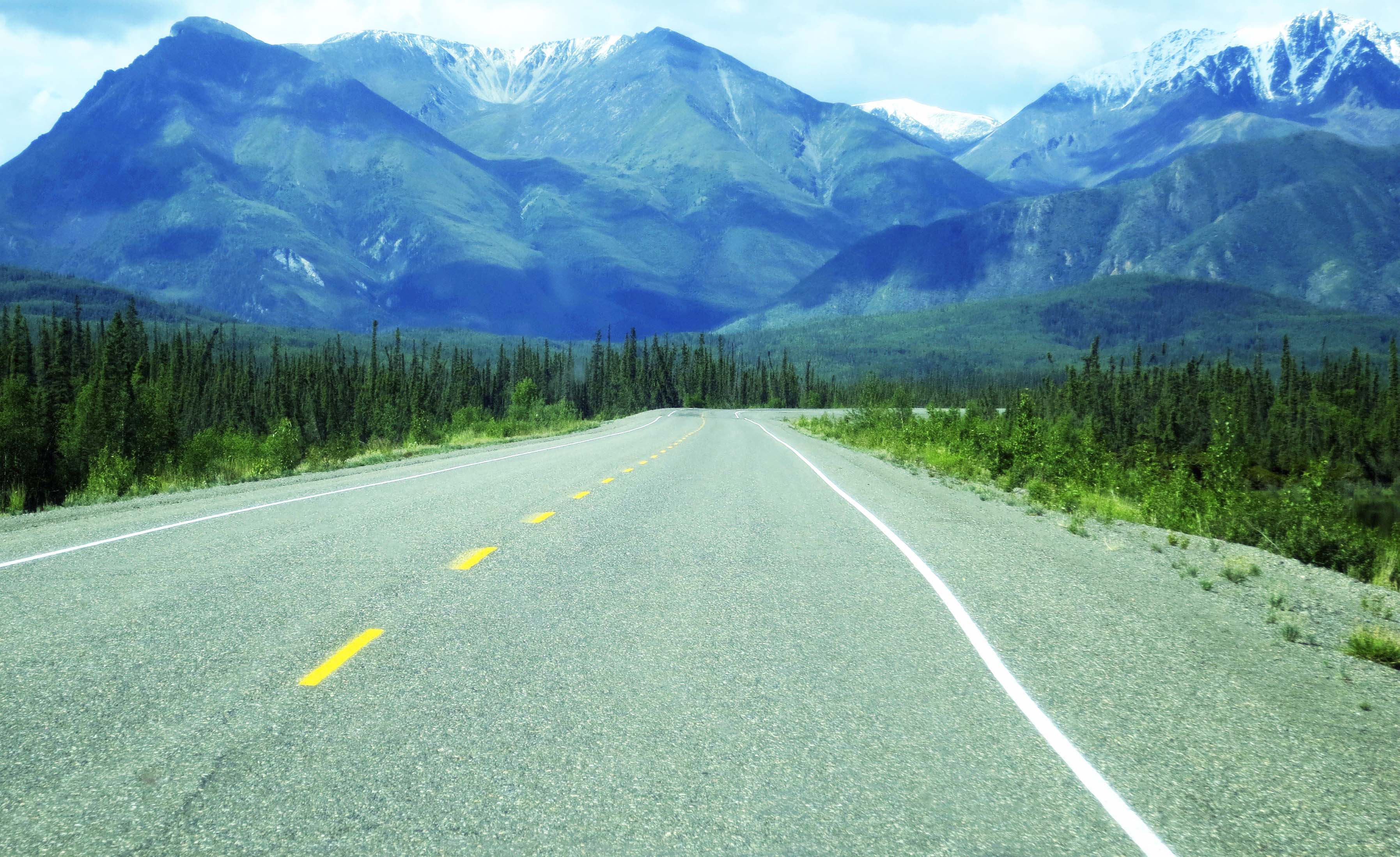
Sights along the the Alaska Highway include towering mountains...

Sights along the Alaska Highway include towering mountains…

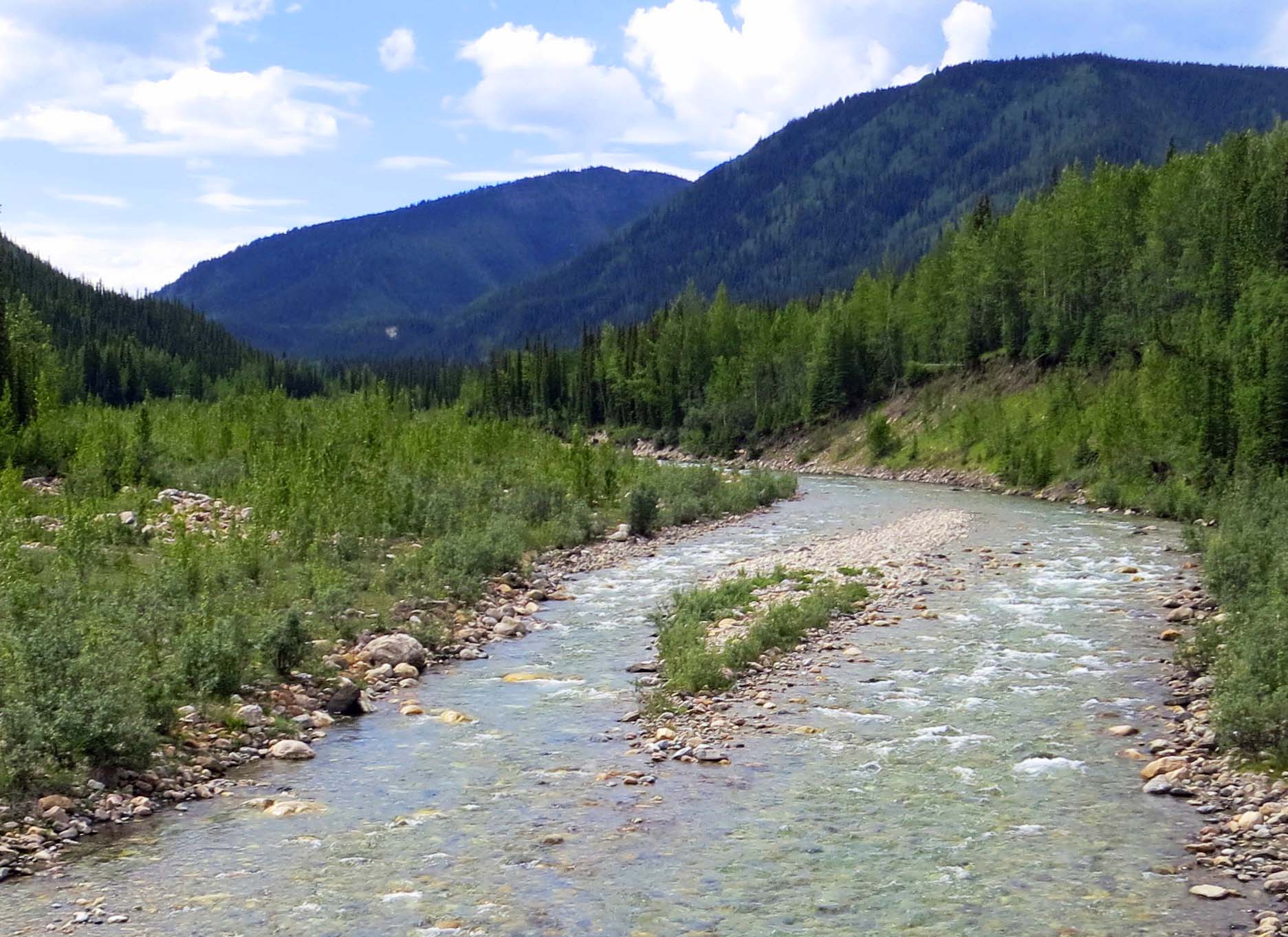
Wild rivers...

Wild rivers…

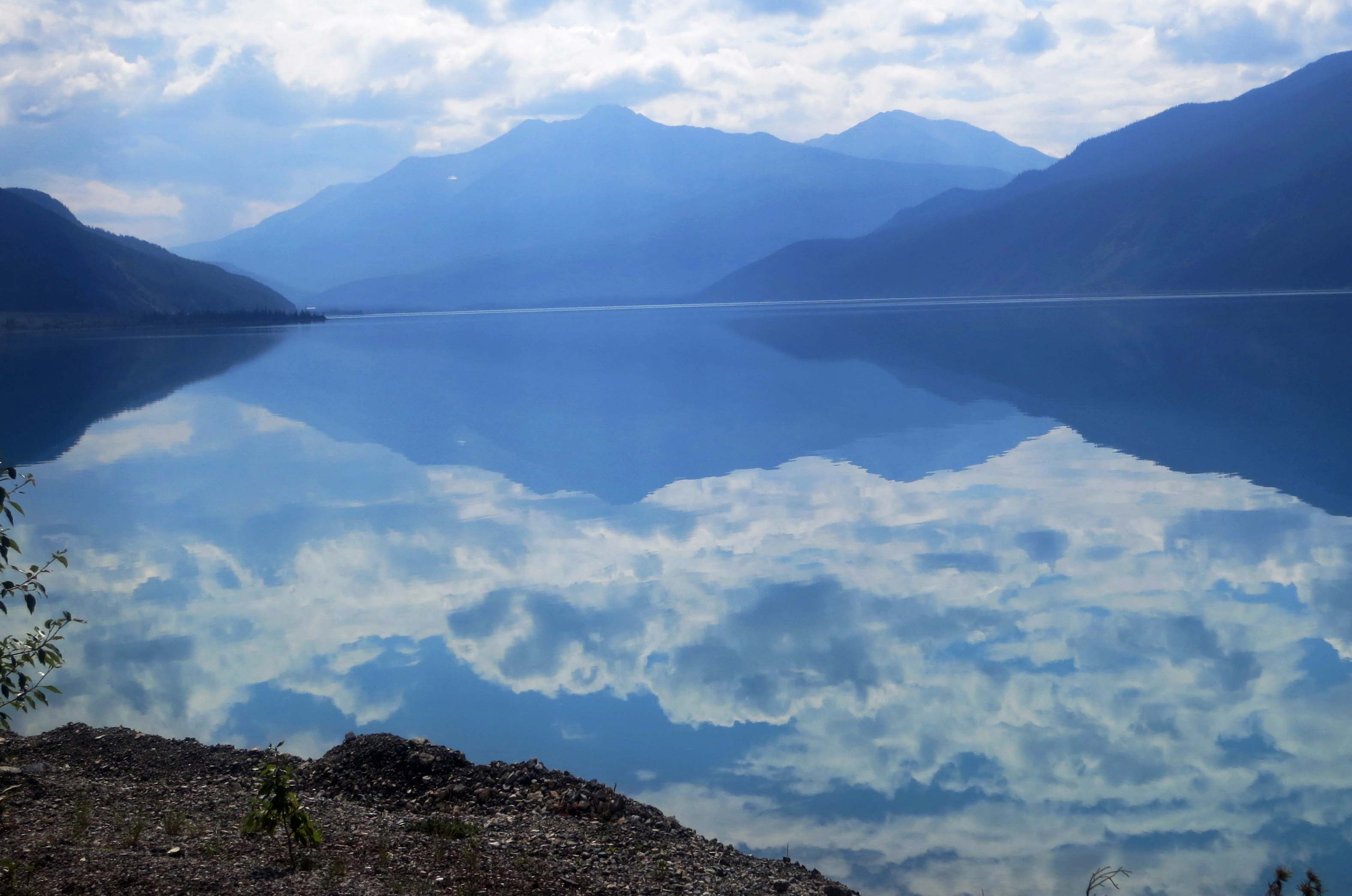
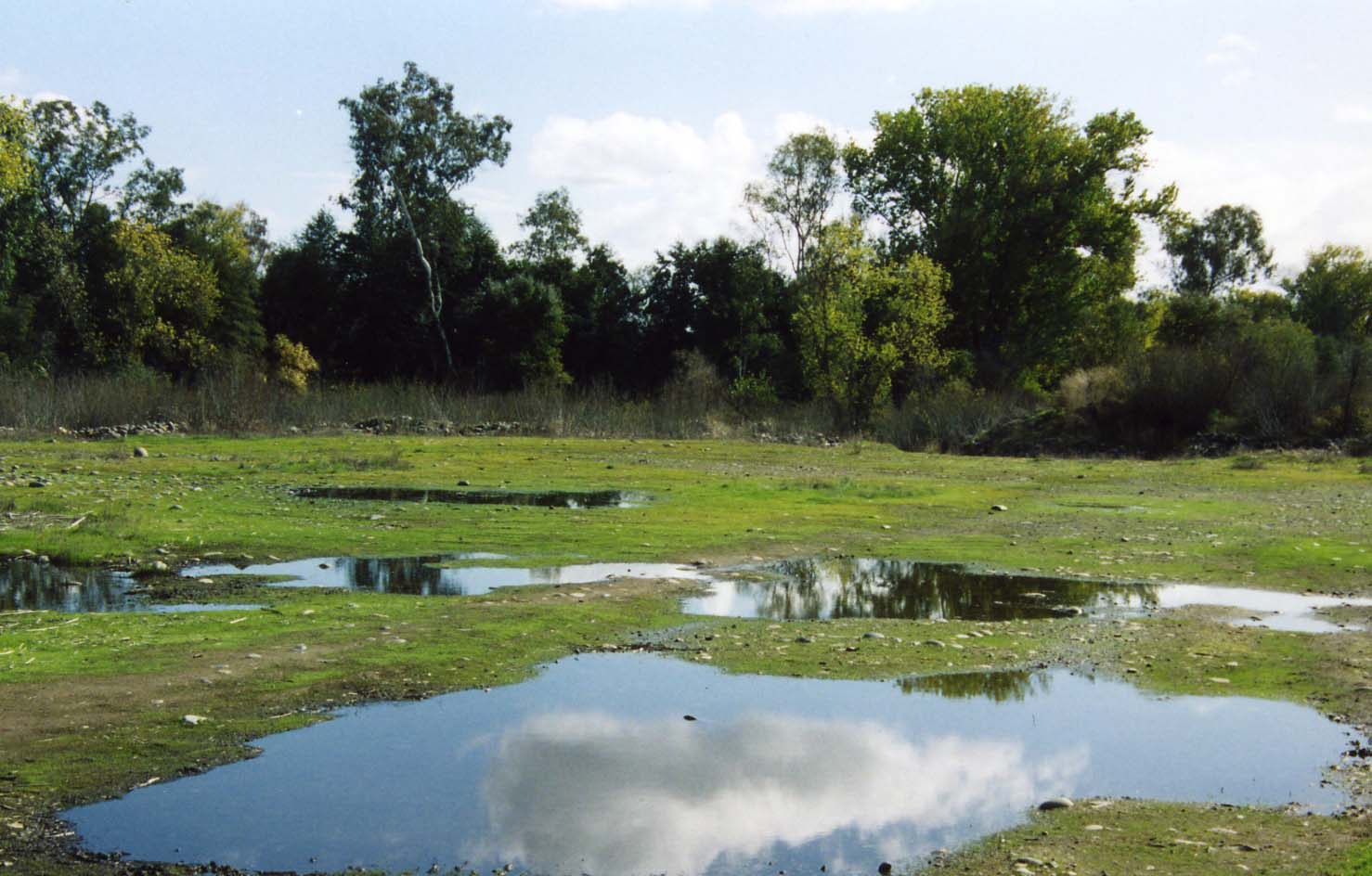
Reflecting lakes...

Reflecting lakes…

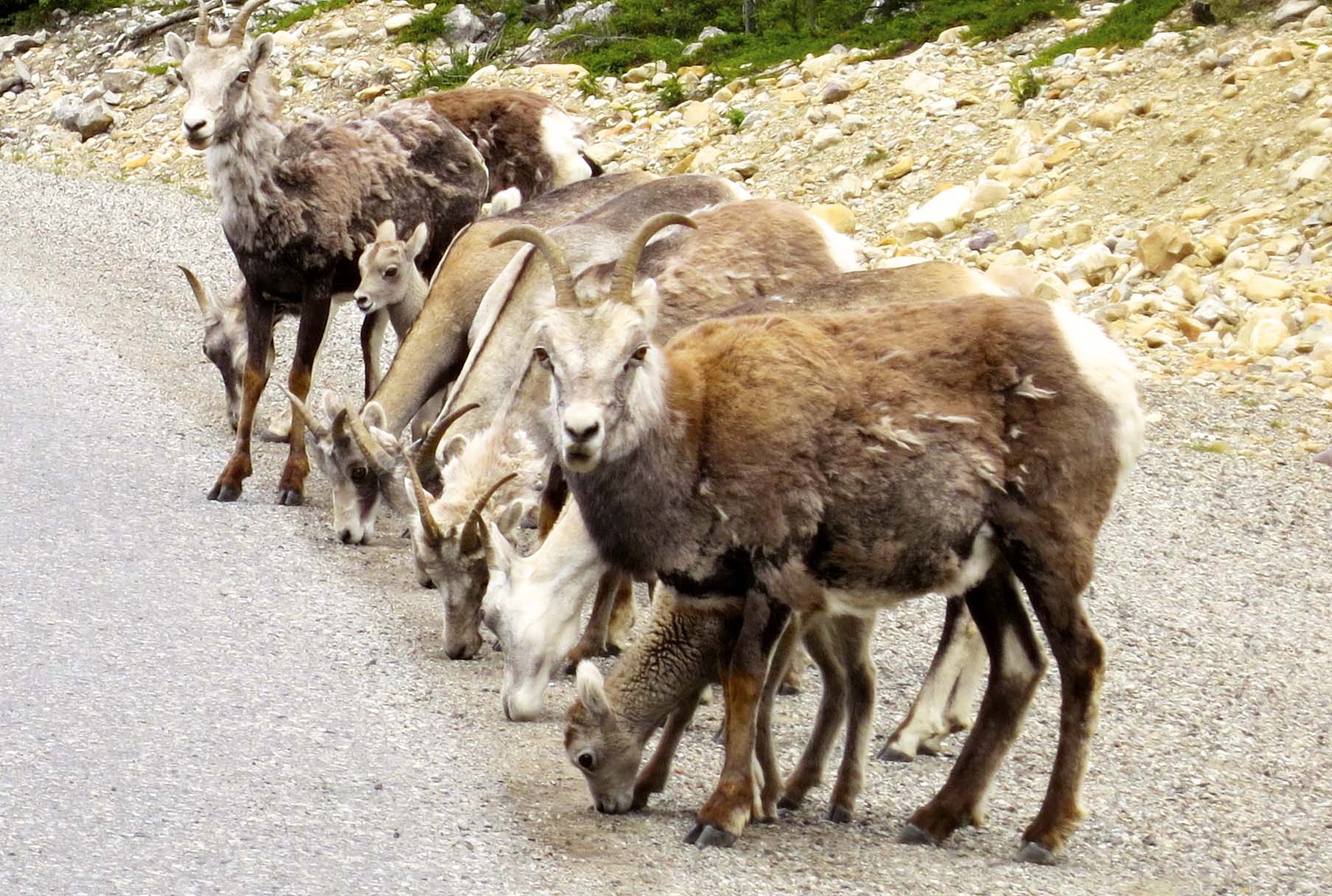
And Dall Sheep...

And Dall Sheep…

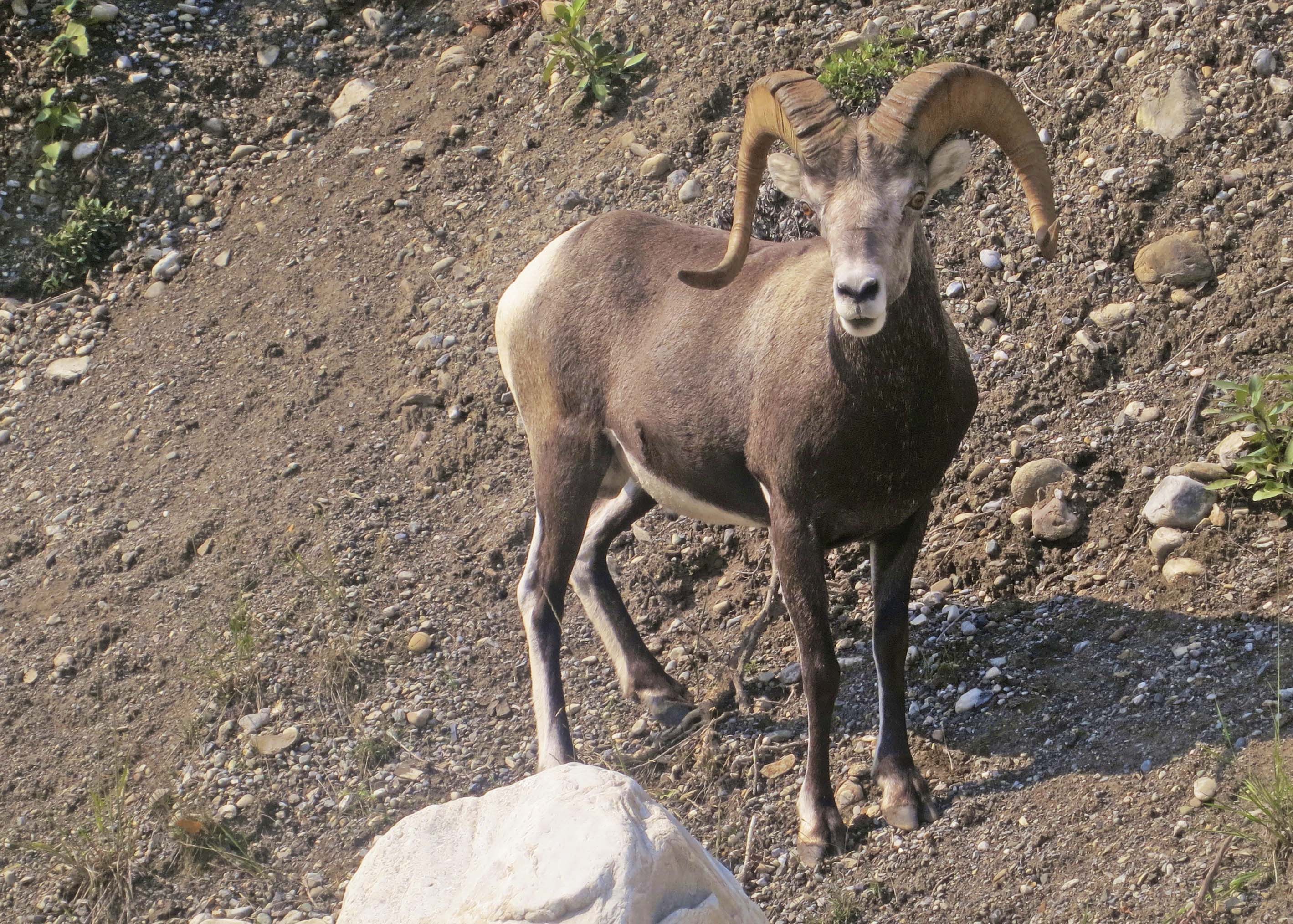
Including this ram...

Including this ram…

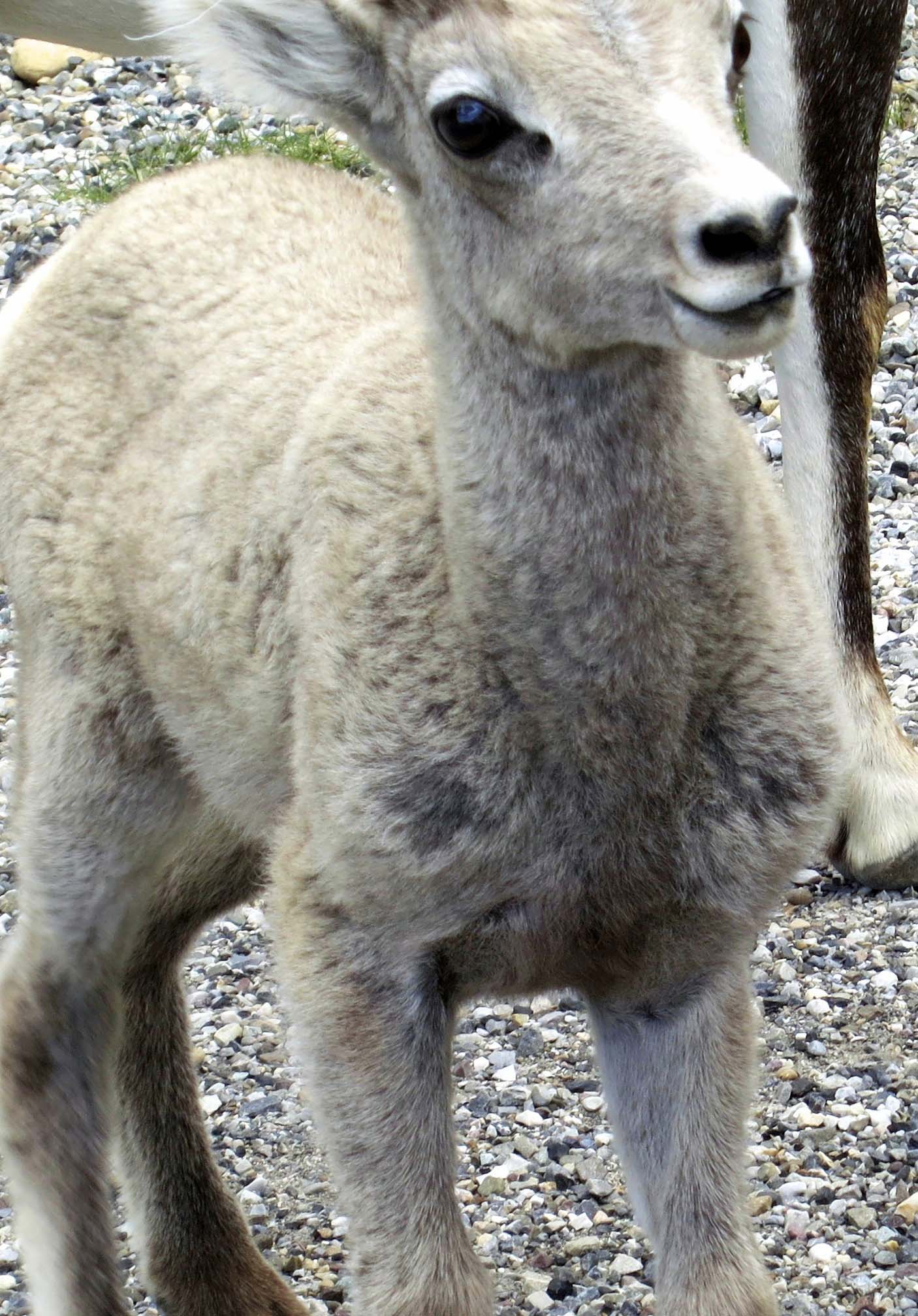
And this curious kid.

And this curious kid.

Five days later I drove into Sacramento. The grass was green and flowers were blooming even though a major flood had threatened the region in February. I planned on spending a few days visiting my father and some friends before taking off for the woods. As part of my itinerary I stopped by to see Jane Hagedorn at the Sacramento Lung Association. Jane is a fierce friend. Every time I had tried to escape, she had reeled me back in, frustrating my desire to become a happy wanderer by making me offers I couldn’t refuse.

I found my green grass in Sacramento.

I found my green grass in Sacramento.

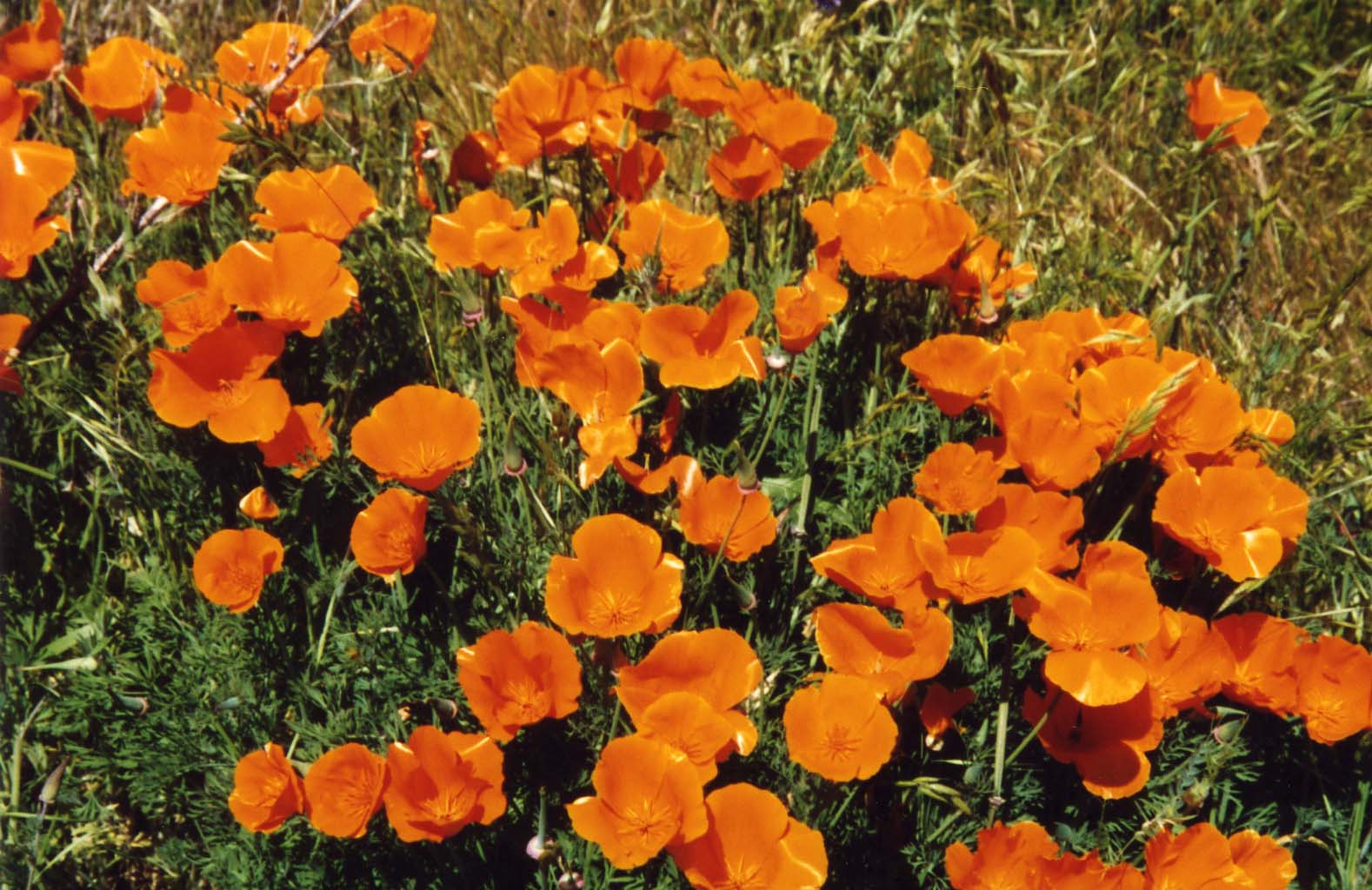
And California Poppies, plus two job offers.

And California Poppies— plus two job offers.

“You will come back to Sacramento and work for Lung when you are done playing,” she informed me and then dangled the Trek Program in front of me for bait. As I usually do, I tentatively agreed. It’s not wise to cross Jane. As I was leaving the Lung Building, I ran into Jerry Meral, the Executive Director of the Planning and Conservation League of California. Along with the Sierra Club, PCL is the main lobbying group for environmental groups in California.

“Curt,” Jerry said with his always-high level of enthusiasm, “I have a job for you.”

“I’m not looking for a job, Jerry,” had been my reply. “I am going backpacking for six months.”

Jerry, who is even worse than Jane at taking no for an answer, continued on, “But this job is perfect for you. I want you to work on raising California’s tobacco tax by five cents so we can use the money for buying parks.” I knew that Jerry and his crew at PCL had successfully done more at raising money for parks than anyone else in California and probably the world. If Jerry was behind the concept, it was legitimate.

“Interesting Jerry, but I am going backpacking.” I figured that took care of it.

“OK and have fun,” said Jerry, “but see me as soon as you get back.”

I half nodded my head in agreement. So here I was, desperate to free myself from any major commitments, and already agreeing to think about taking on two significant tasks— one that was monumental. But they could wait. The next day, I was on my way to the Grand Canyon. And who knew what I would be doing in six months.

NEXT BLOG: The wilderness cure begins. It’s off to backpack the Grand Canyon via Death Valley and Las Vegas.


Santorini Potpourri… The Amusing and the Picturesque

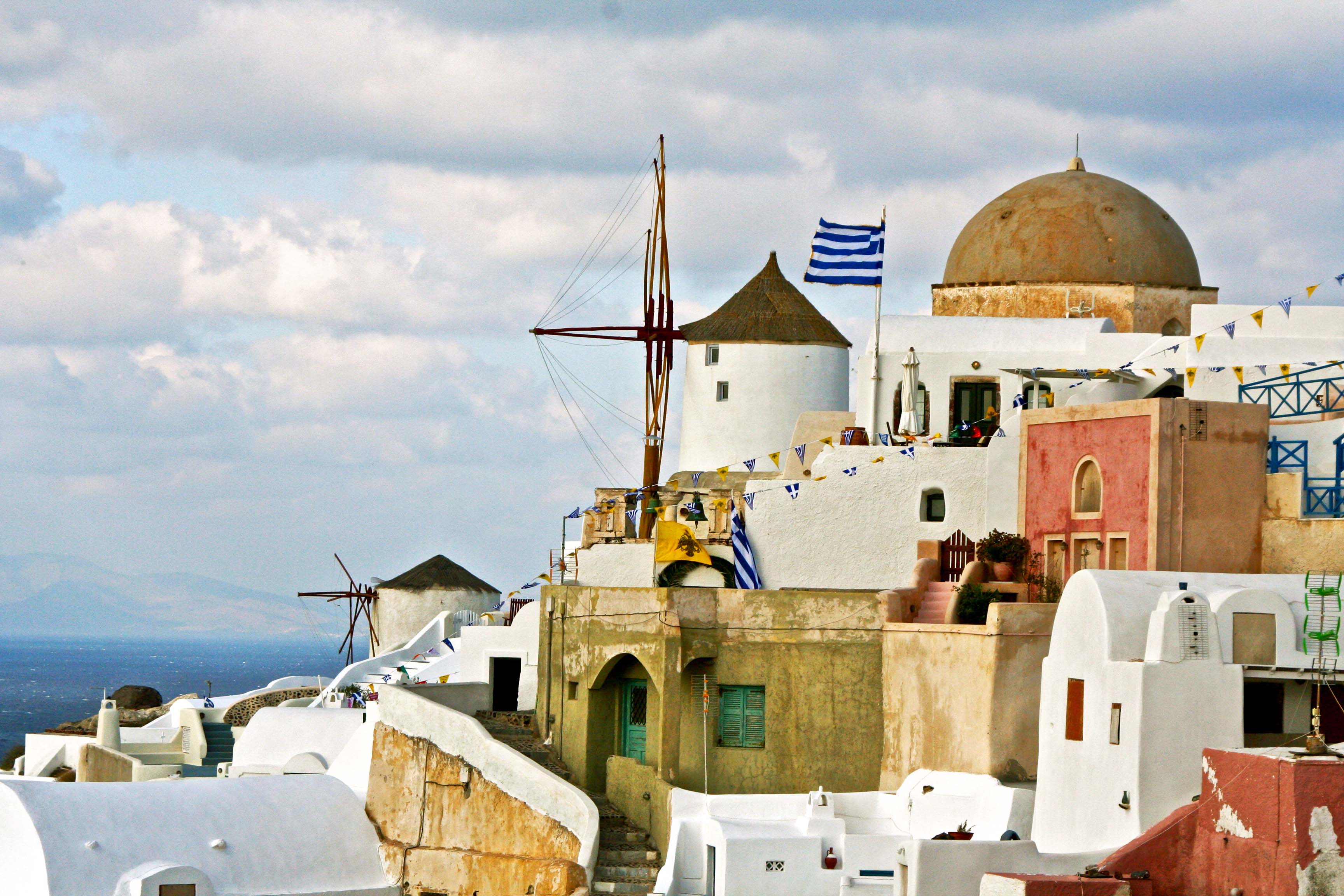
Peggy caught this photo of an old Santorini windmill that I found quite stunning. We found similar windmills won other Greek islands.

Peggy caught this photo of an old Santorini windmill that I found quite striking outlined against the horizon. The blue striped flag belongs to Greece.

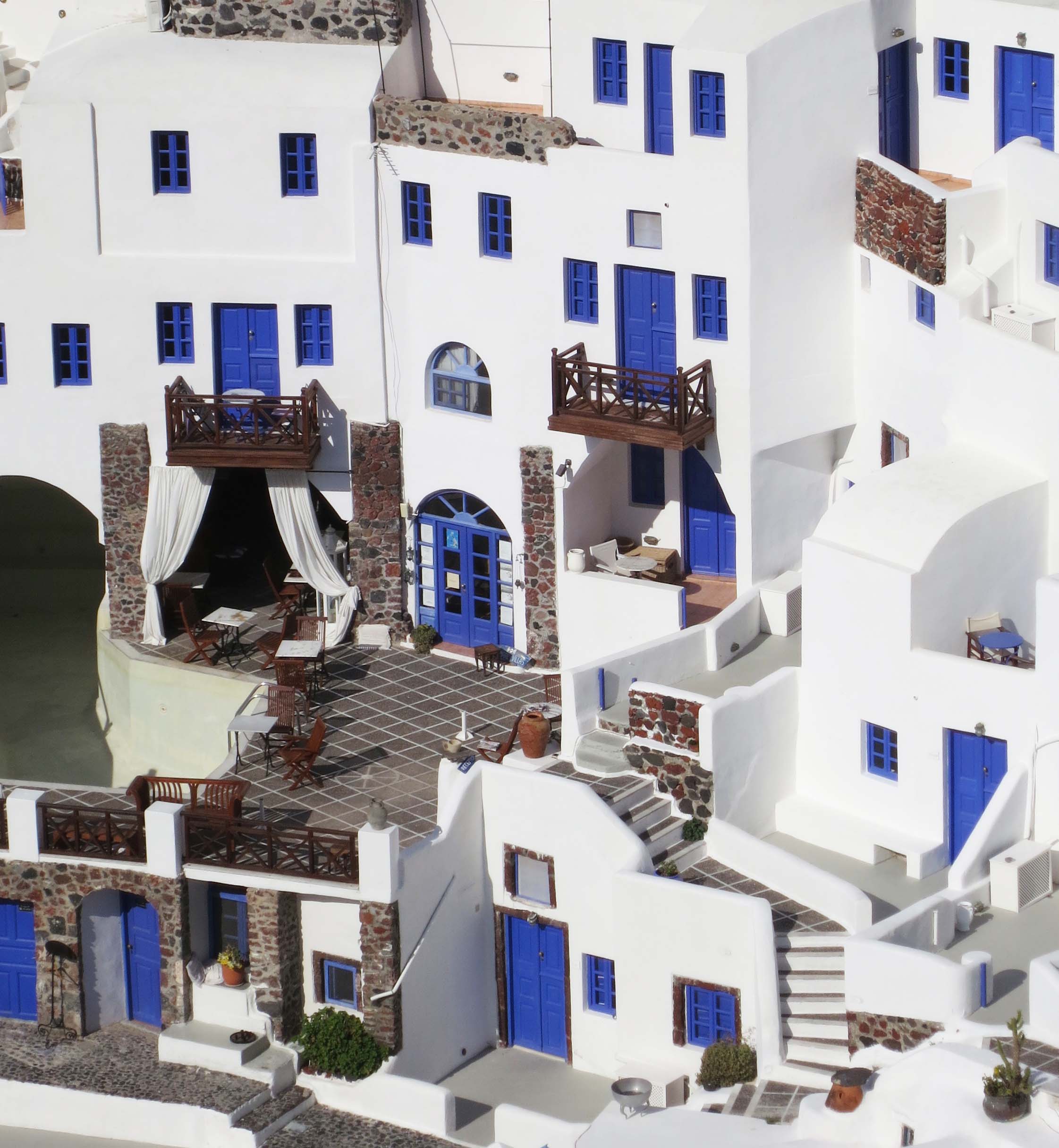
Wrapping up my Wednesday photo essays on Santorini, I thought I would go for a potpourri of things that either amused Peggy and me, or that we found interesting and picturesque. Enjoy. Next Wednesday I will randomly pick another selection from my collection of 20,000 iPhotos. Who knows where we will land…

We found this dog admiring the Aegean Sea while perched on a rock. In our travels through the Mediterranean we often found cats and occasionally dogs that seemed owner free or at least wandered at will.

We found this dog admiring the Aegean Sea while perched on the end of a rock. In our travels through the Mediterranean we often found cats and occasionally dogs that seemed owner free or at least wandered at will.

He and I shared a common perspective on the value of an afternoon nap.

He and I shared a common perspective on the value of an afternoon nap.

For get modern excavation equipment when it comes to building on the sides of the volcano. How are you going to get a back hoe and dump trucks down a narrow star way?

Forget modern excavation equipment when it comes to building on the sides of the volcano. How are you going to get a backhoe and dump trucks down a narrow stairway? Dirt and rock dug out of the mountainside has to be bagged up and shipped out another way.

By mules.

By mules. (Photo by Peggy Mekemson.)

You quickly lean red you had to get out of the way or get stepped on. There was no posing for photos by these heavily laden mules.

You quickly learned that  you had to get out of the way or get stepped on. There was no posing for photos by these heavily laden mules.

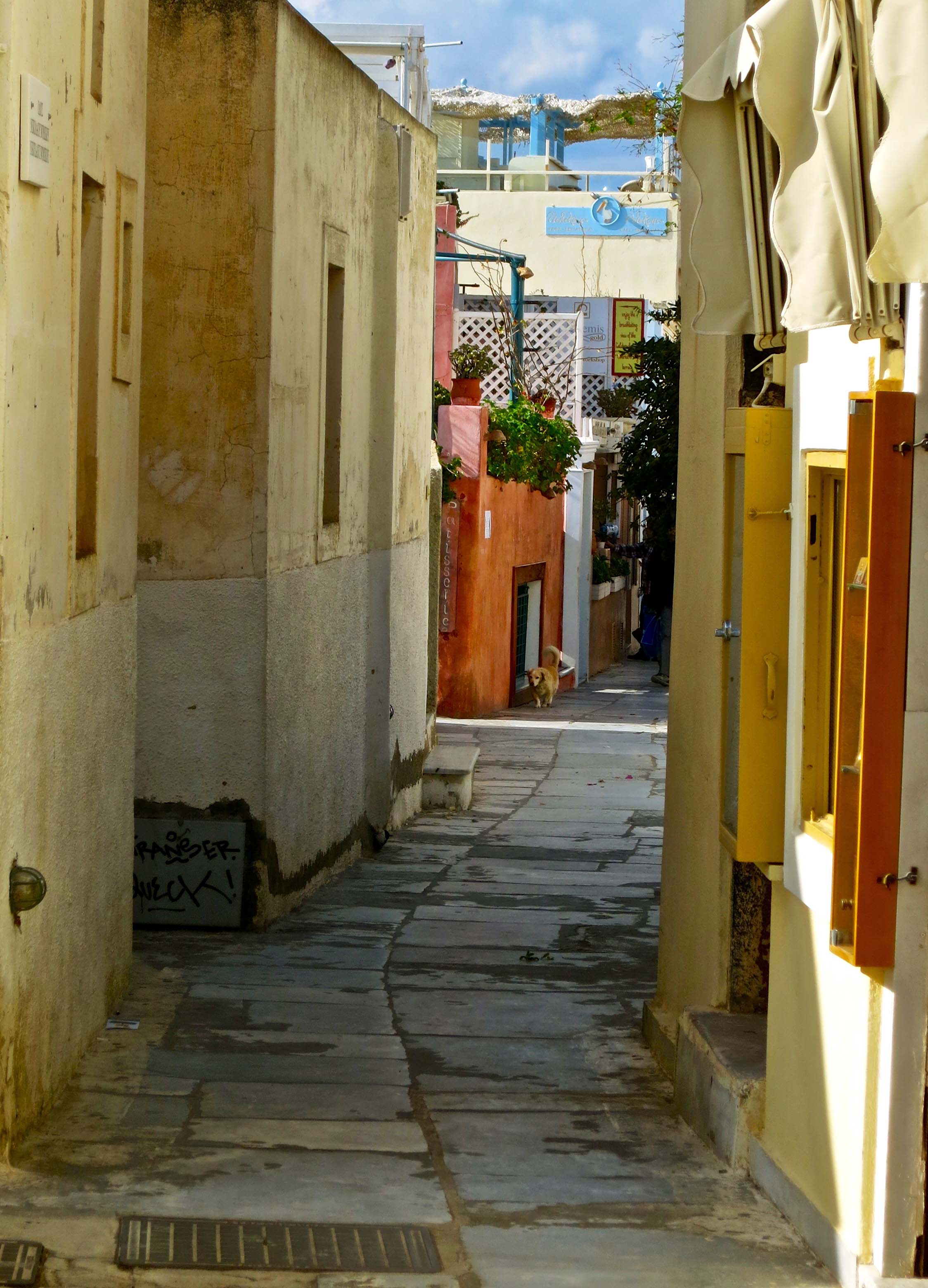
There were numerous small walkways to explore. During the height of tourist season these walkways would be packed with people.

There were numerous small walkways to explore. During the height of tourist season these walkways would be packed with people.

Several of the people who follow my blog like murals. This one is for you. I really liked the way its tentacles wrapped around the door.

Several of the people who follow my blog like murals. This one is for you. I really liked the way its tentacles wrapped around the door.

I am sure you've all had the experience of slow food. (grin) This restaurant apparently made an art out of it. And how could you complain. You had been warned.

We’ve  all had the experience of food that takes forever to be delivered. (grin) This restaurant apparently made an art out of it.

Peggy has wild, naturally curly head, that has a mind of its own. It seemed to me in this photo that it was attacking her head.

Peggy has wonderfully wild, naturally curly hair, that has a mind of its own. It seemed to me in this photo that it was attacking her head. I kept my distance.

This amusing sculpture was propped up against the wall. I don't think this guy was a fireman or that he had rescue on his mind.

This amusing sculpture was propped up against the wall. I don’t think this guy was a fireman or that he had rescue on his mind.

Normally I avoid tourist souvenirs, and I did this time. I did think these plates and vases did a good job of representing the color of Santorini.

Normally I avoid tourist souvenirs, and I did this time. These plates and vases did do a good job of capturing the colors of Santorini, however.

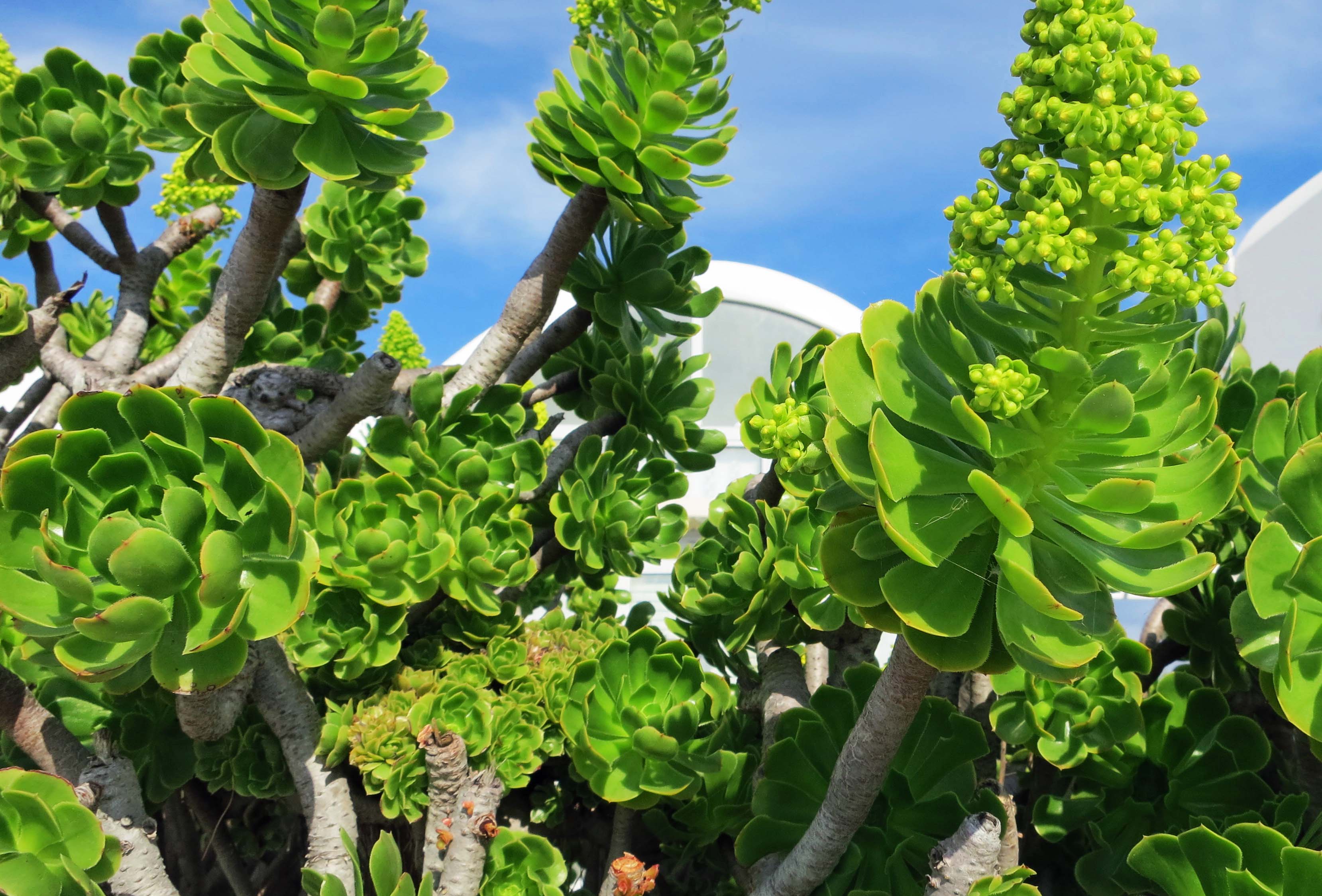
Green plant

Speaking of color, this green was vivid.

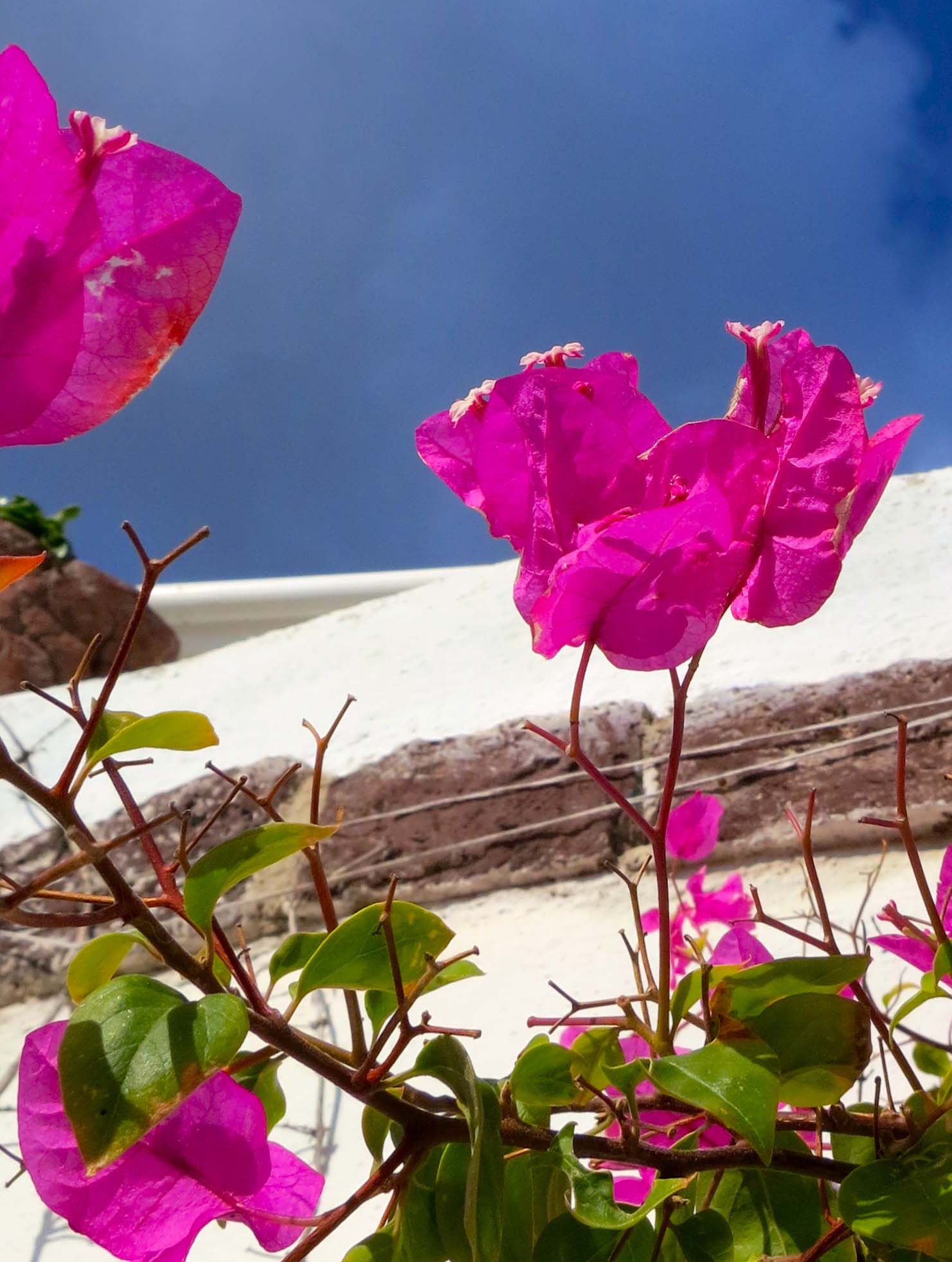
The flowers were also colorful, including this bougainvillea.

As was the pinkish red of these Bougainvillea.

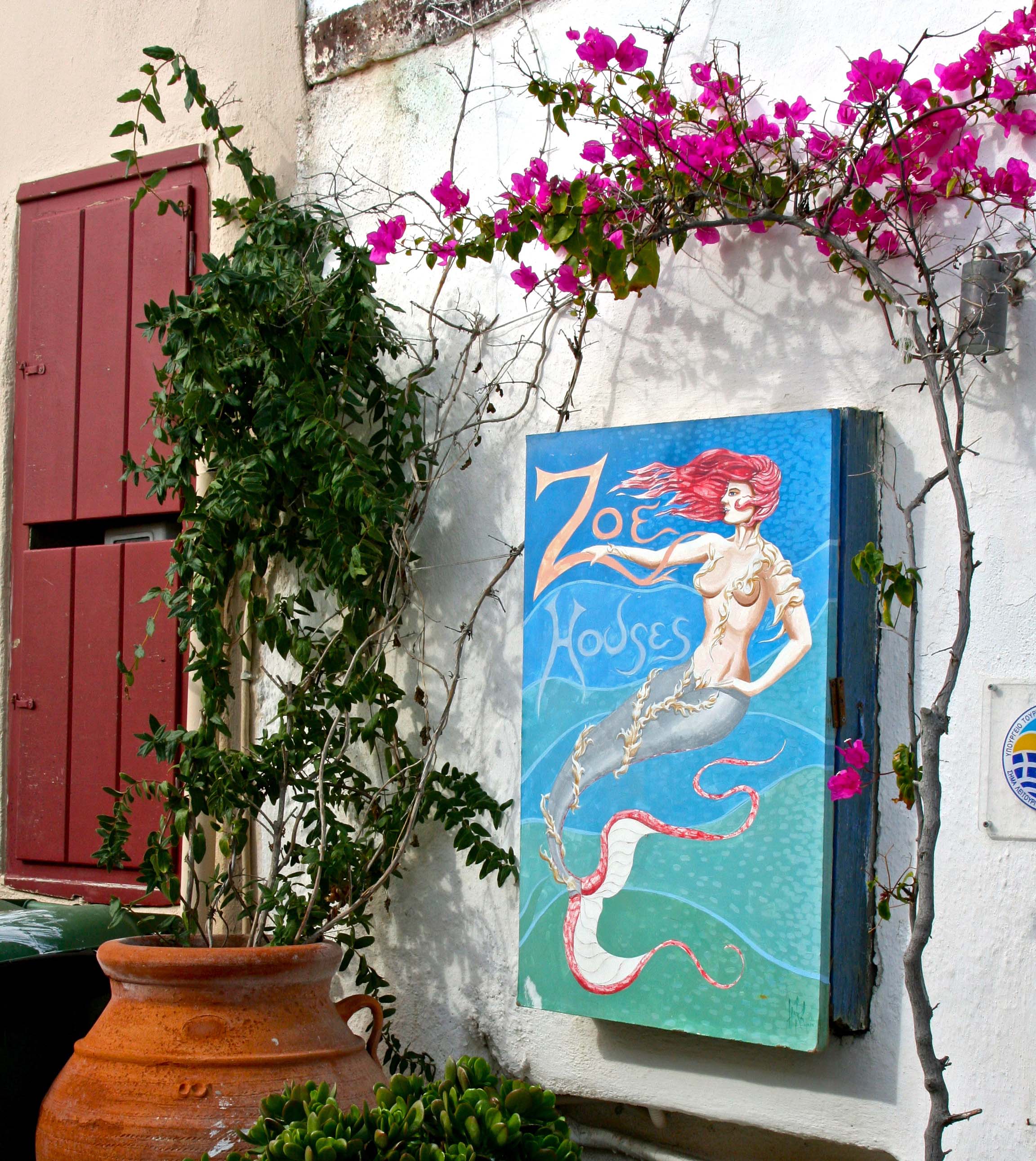
Certainly one would expect to find mermaids lulling around on the rocks off of Santorini. The bougainvillea  made a nice frame.

Certainly one would expect to find mermaids lulling around on the rocks off of Santorini. The Bougainvillea provided a colorful  frame.


I really like painted doors.

I was impressed with this blue door.

Lots of blue doors.

And found lots more like it. (Photo by Peggy Mekemson.)

And then we found a door to nowhere.

And then we found a green door to nowhere.

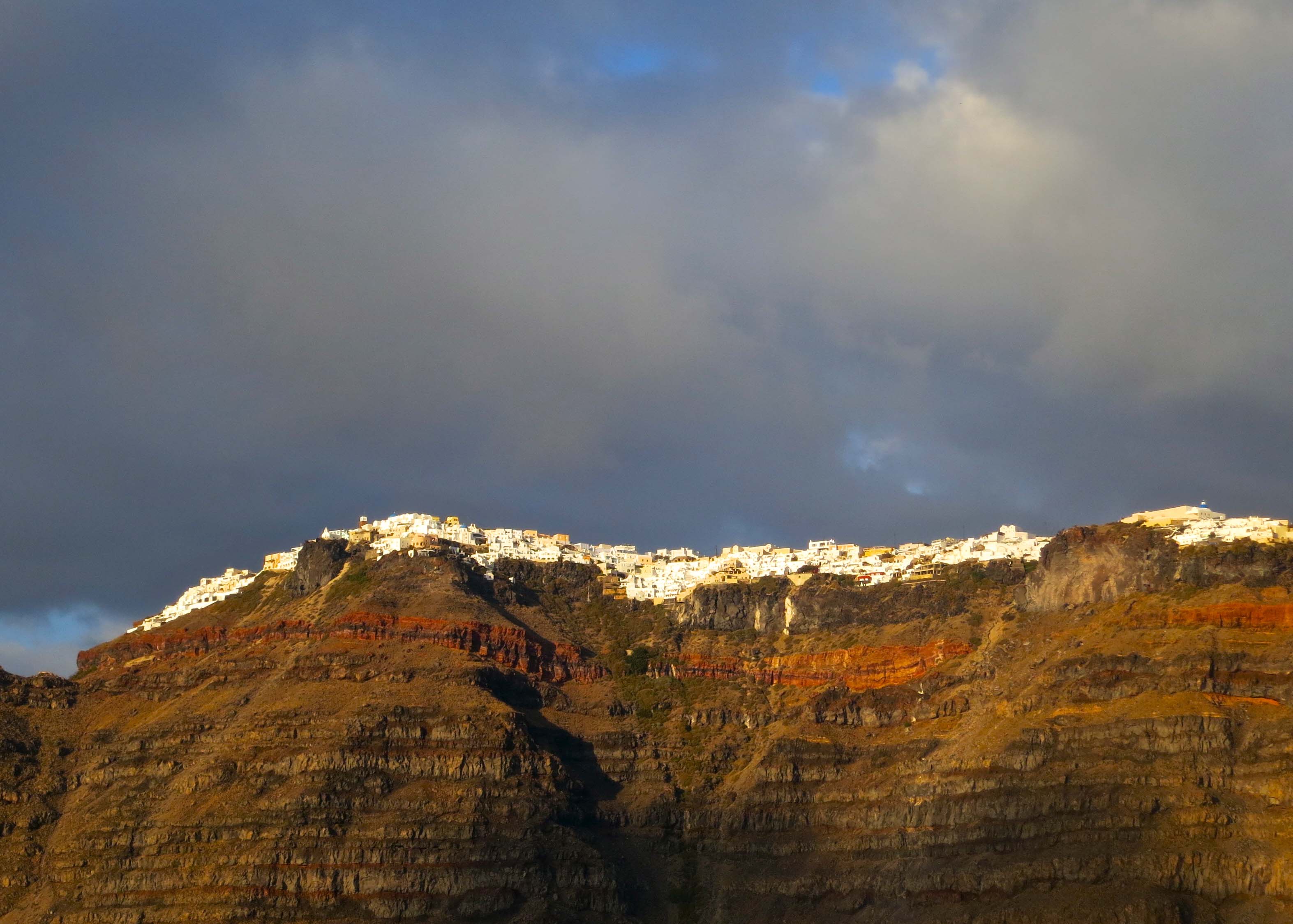
As we sailed away at sunset, we caught a final view of Santorini.

As we sailed away at sunset, we caught a final view of Santorini’s towns perched up on the high cliffs.


Oh, Deer! We Live in a Zoo.

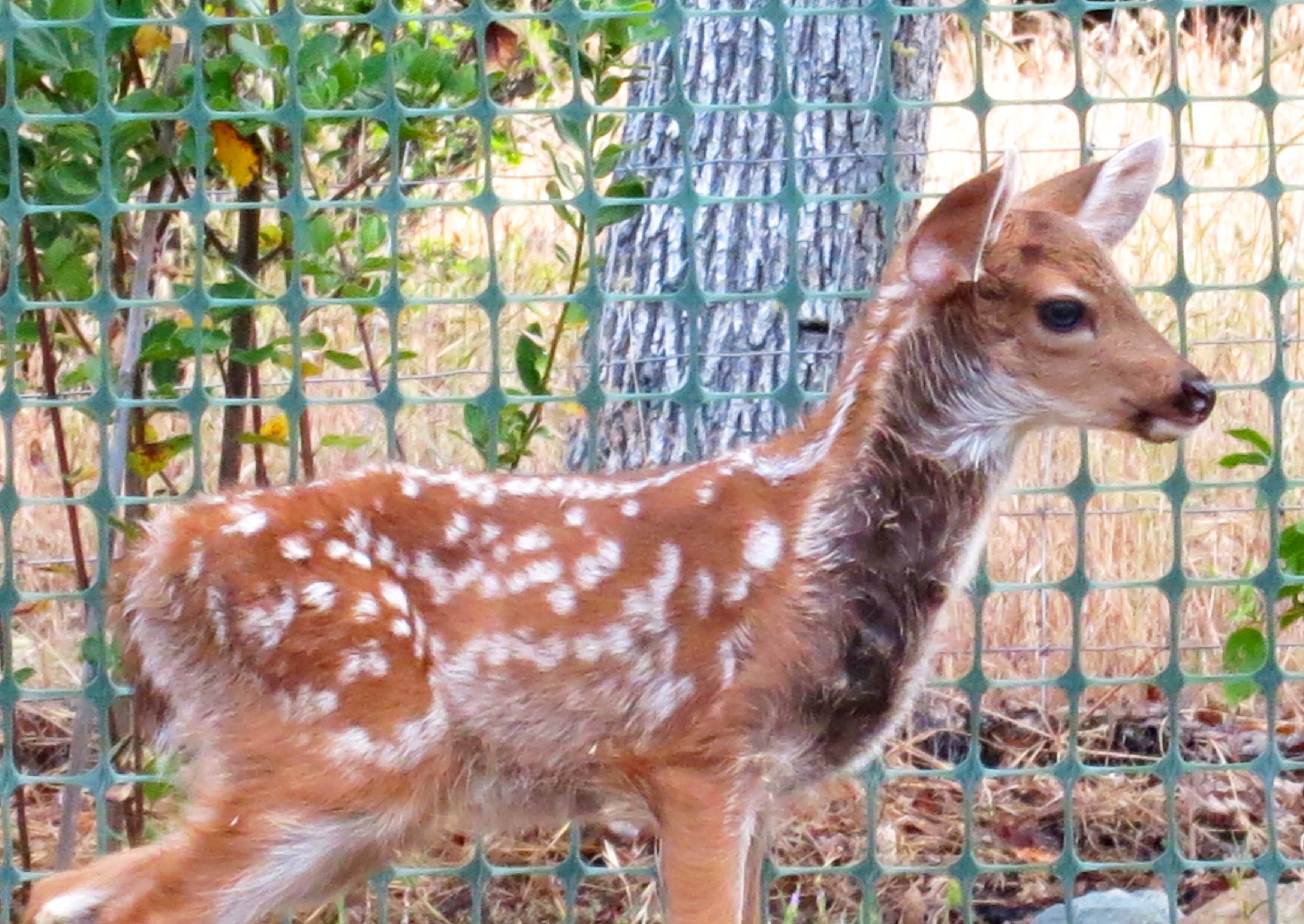
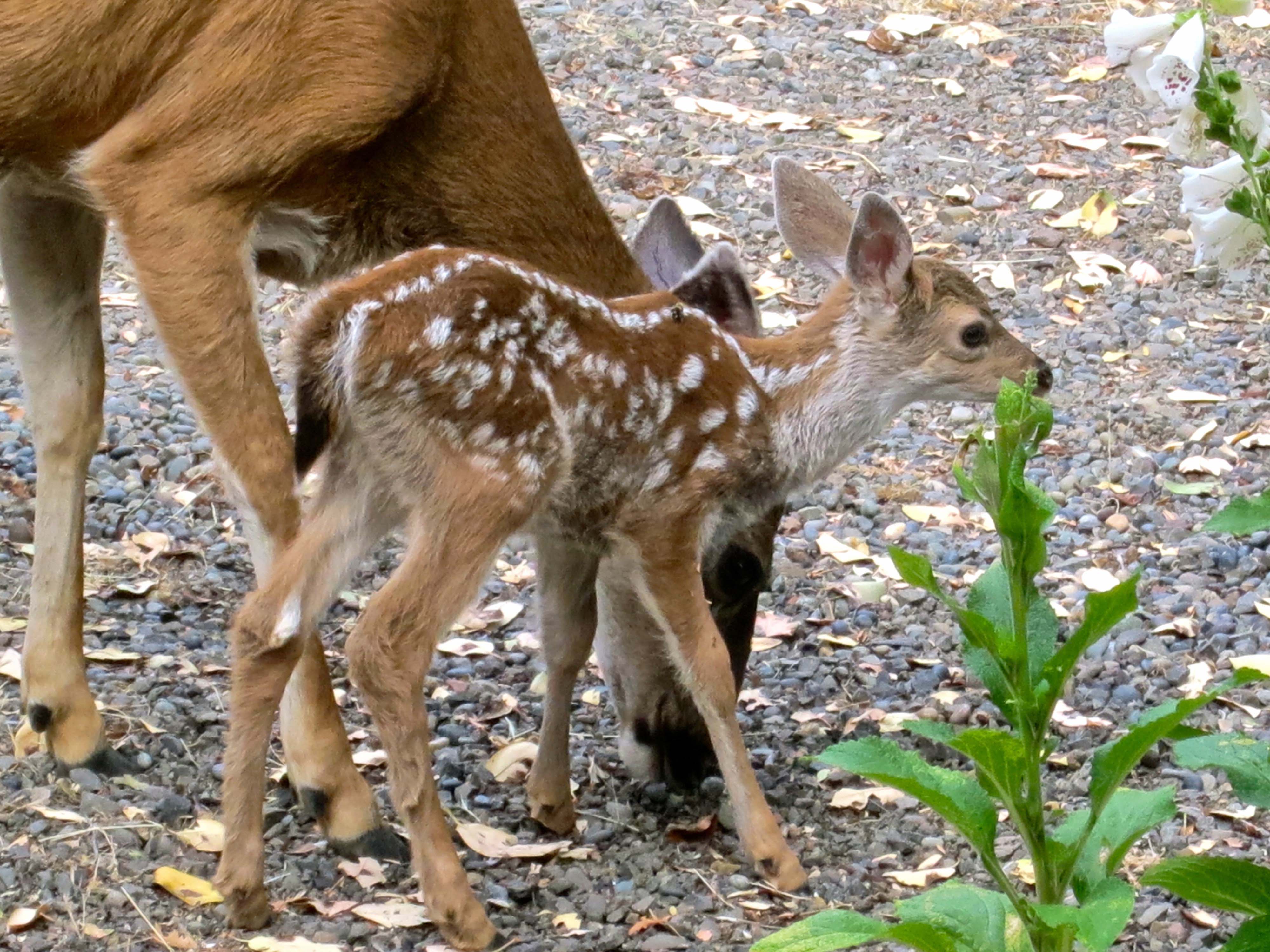
One of the two fawns, the most recent additions to animals that call our property home.

One of the two fawns, the most recent additions to animals that call our property home. It’s a cutie.

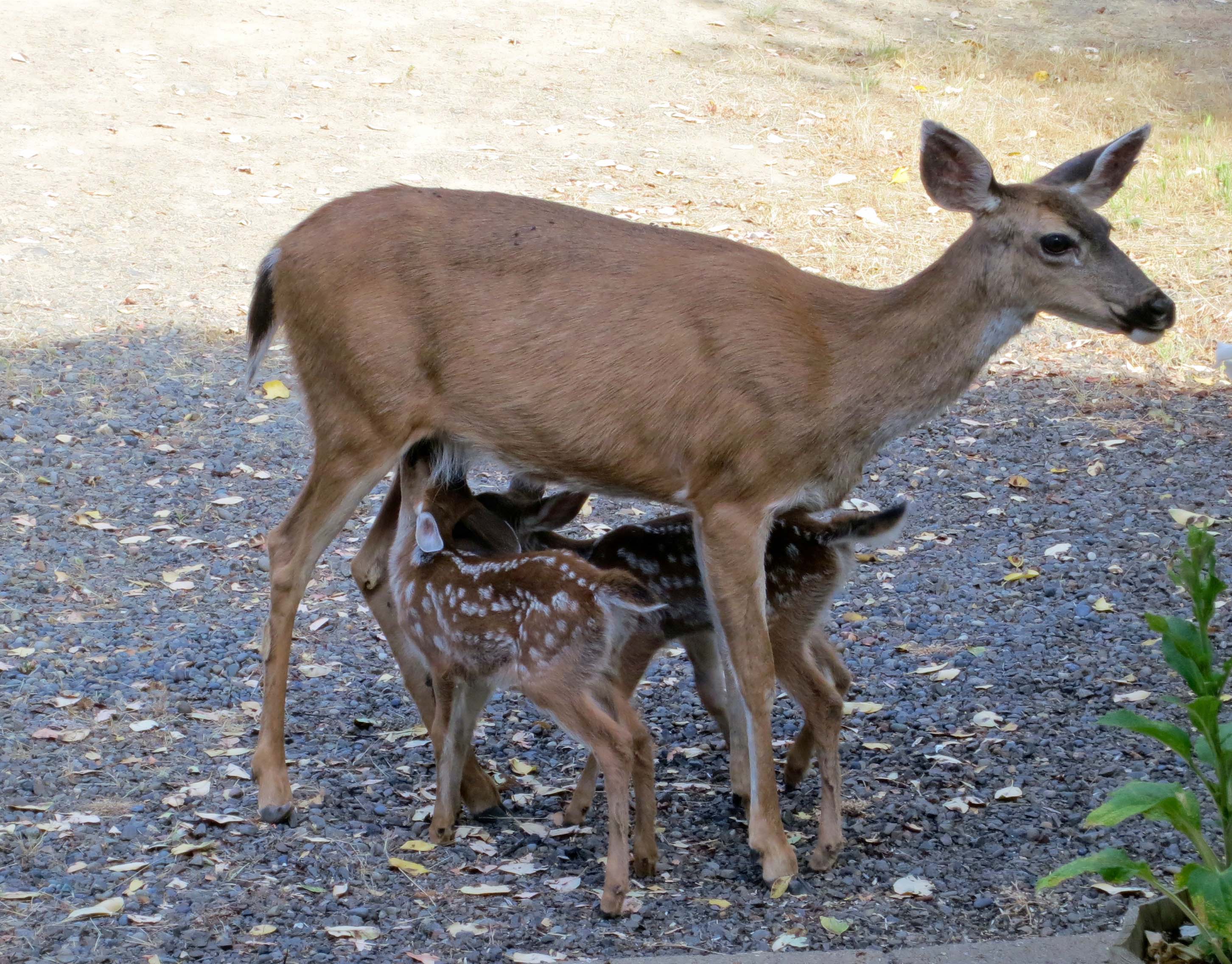
A few weeks back I blogged on the pregnant black-tailed deer that had taken up residence on our back porch. See here. (Bucks are hanging around now.) Several of you commented that you hoped mom would bring by her babies and introduce them. Well, she did, yesterday. Twins. I think Peggy may have bribed her with an apple.

While Mom searched for apple quarters, the kids checked us out. We were about 15 feet away.

While Mom searched for apple quarters, the kids checked us out. We were about 15 feet away.

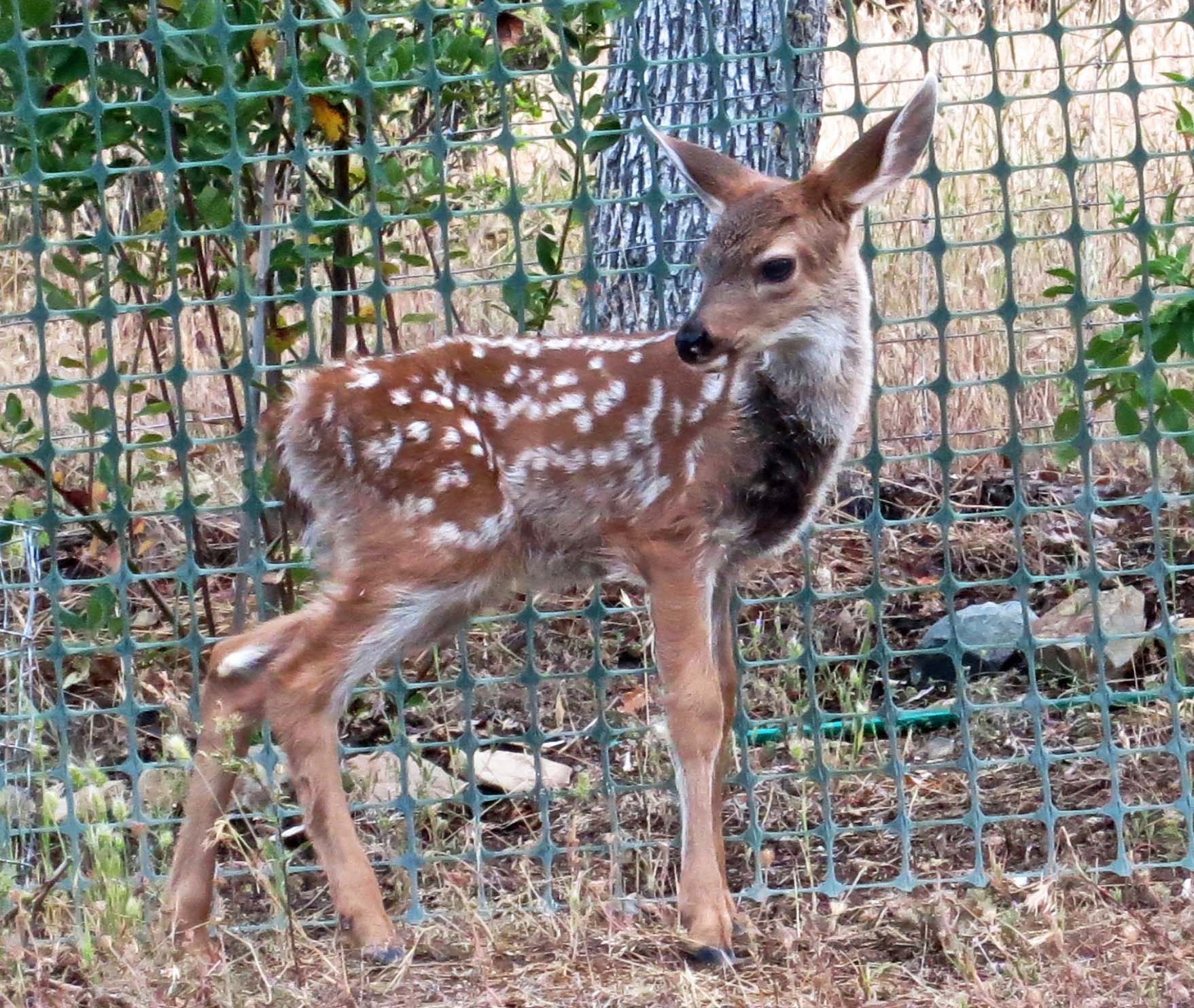
I like this shot because it demonstrates just how small these fawns are. They are less than one month old.

I like this shot because it demonstrates just how small these fawns are. They are less than one month old.

Snack time for two.

Snack time.

Check out the length of the legs! (Photo by Peggy Mekemson.)

Check out the length of the legs! (Photo by Peggy Mekemson.)

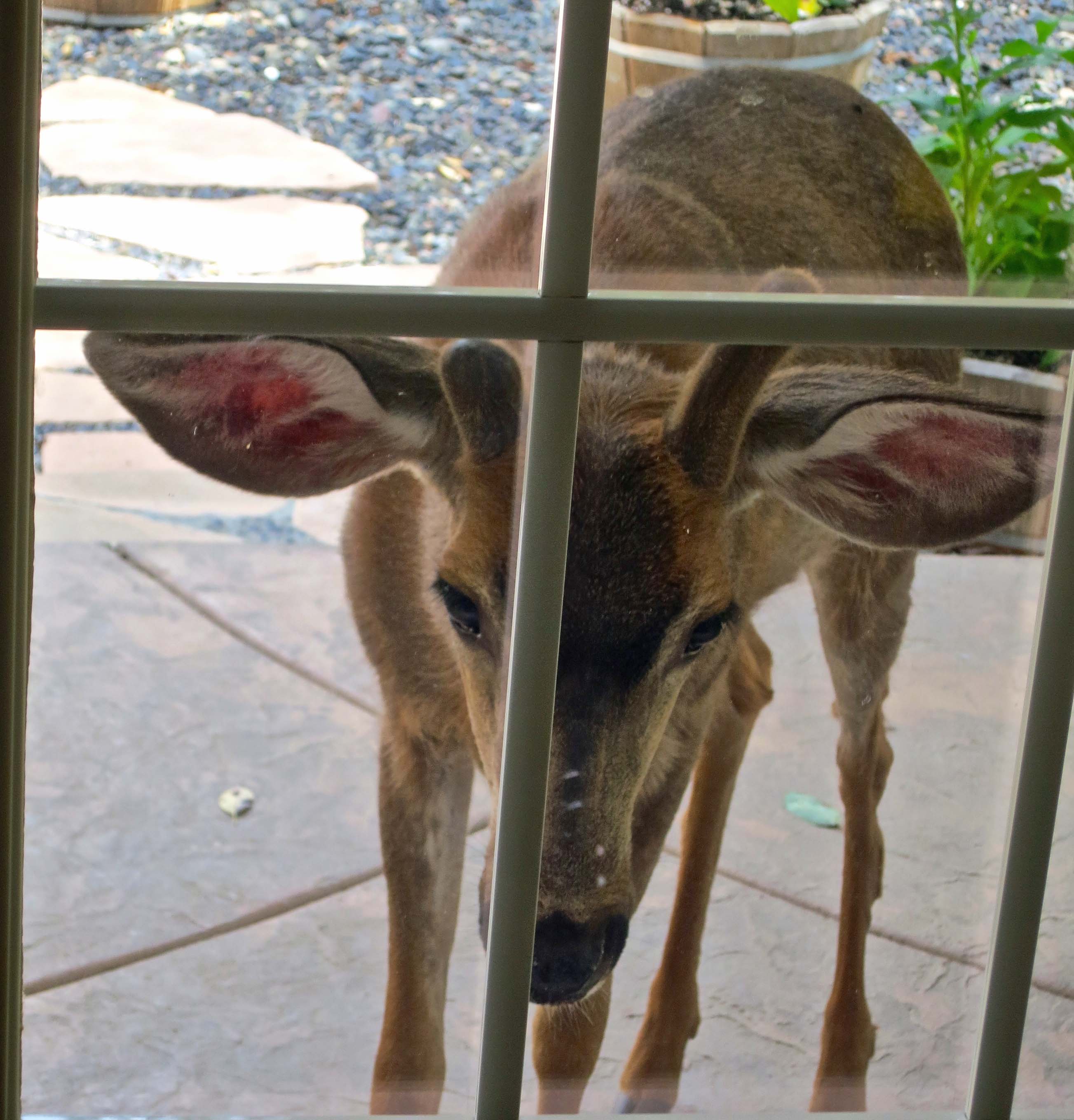
Remember how Mom looked in our windows? Now the bucks are doing it.

Remember how Mom looked in our windows? Now the bucks are doing it.

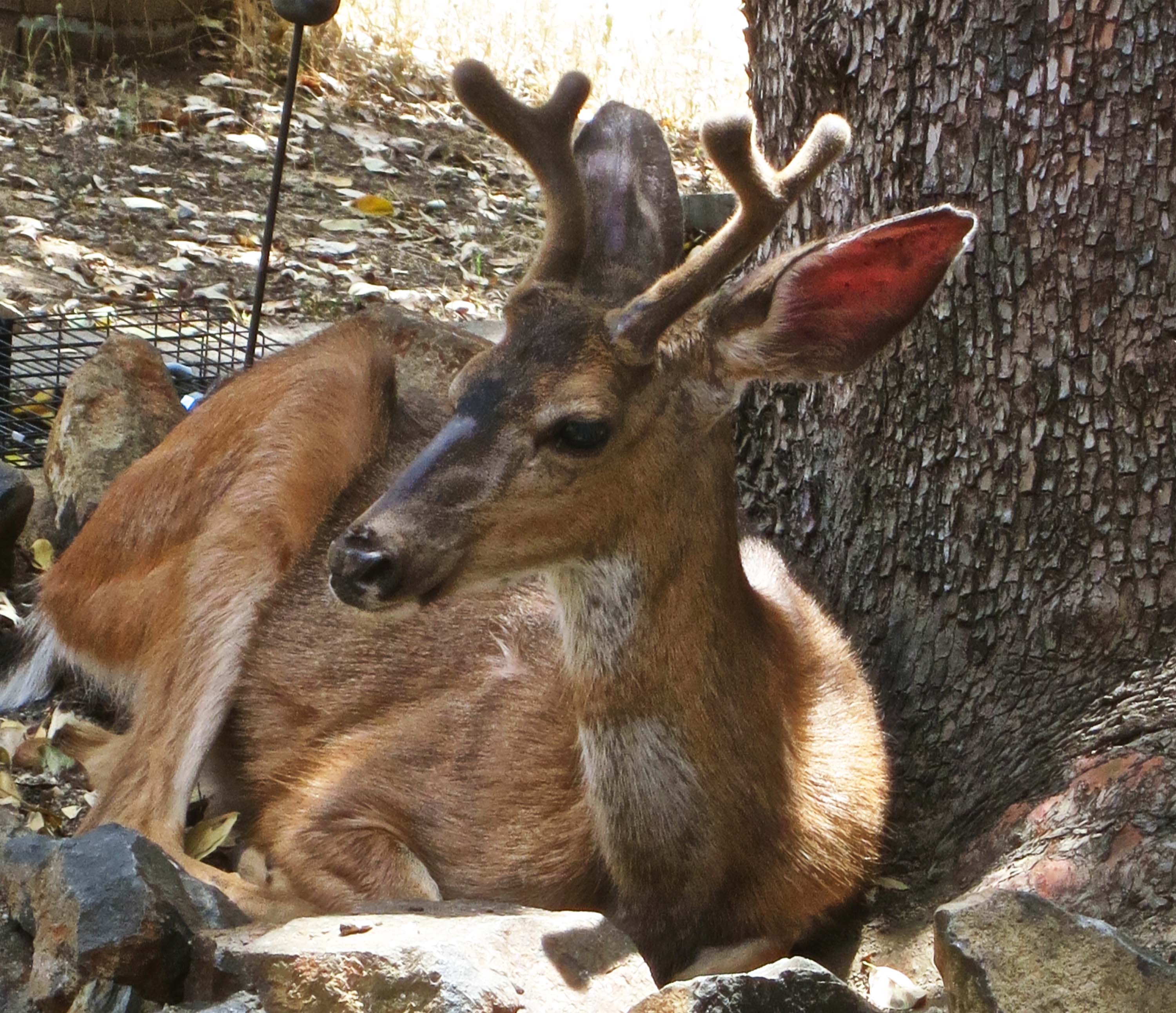
And bed down in the madrone next to our house— a favorite hangout for the deer.  Note: the bucks are still in velvet.

They also bed down in the madrone next to our house— a favorite hangout for the deer. Note: The bucks are still in velvet. This guy will be a three pointer and possibly a four pointer when his antlers stop growing.

Mom had hidden the fawns until they could run. I guarantee they can. They were cavorting all over our yard, like kittens or puppies. Peggy and I sat out on our back porch and watched. A young buck that was hanging out didn’t know how to relate to the babies, especially when they decided he might be a source of milk. It was pretty funny. He gently suggested that they go play elsewhere.

"No, I am not your daddy." Bucks can be fairly aggressive but they are amazingly gentle when it comes to fawns.

“No, I am not your daddy.” Bucks can be fairly aggressive but they are amazingly gentle when it comes to fawns.

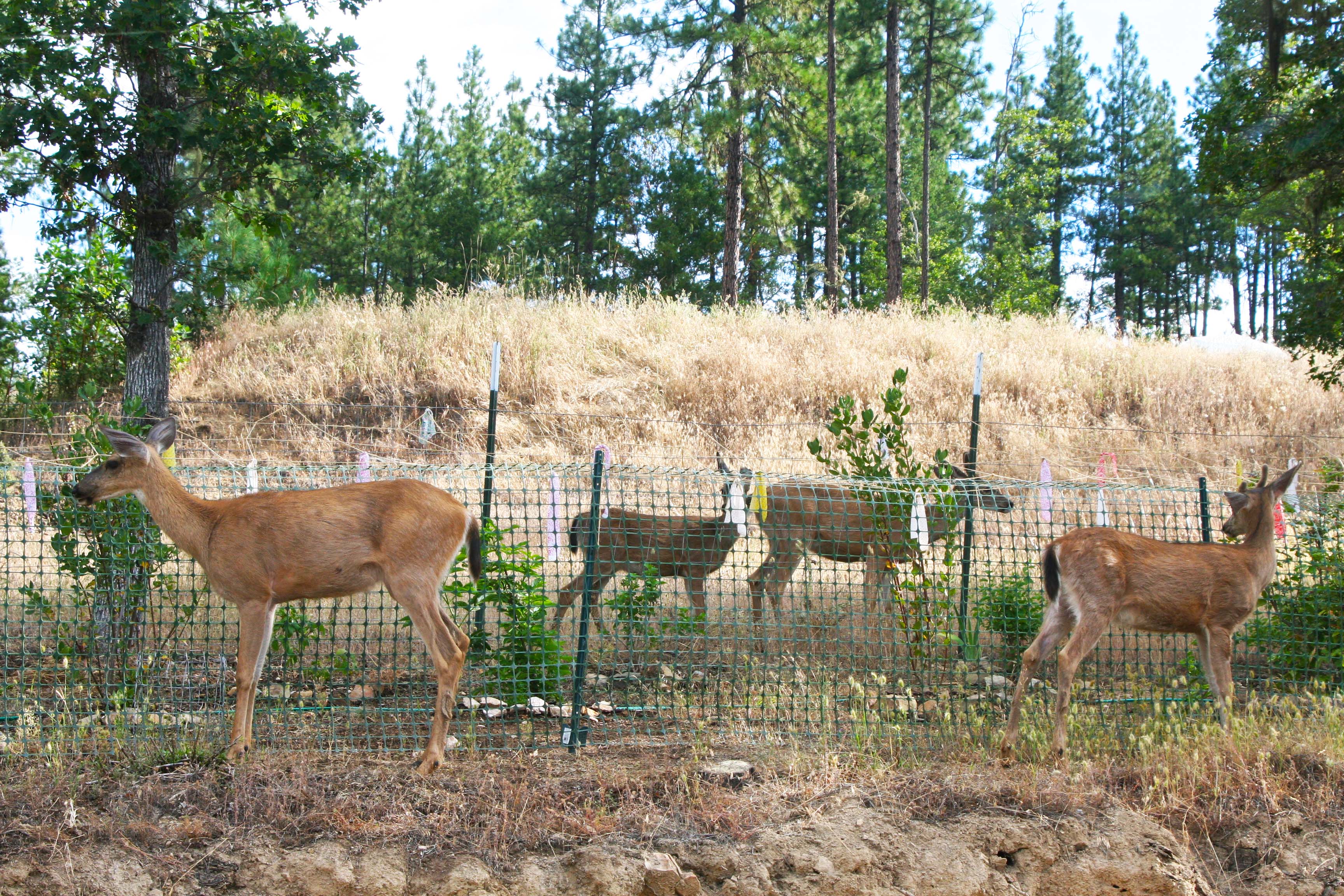
This morning, a herd of deer, the downhill crowd, gathered around some shrubs Peggy and I had recently planted. They circled the fence I had built, looking for a way in. It drives them crazy that they can’t get to all of those succulent young green leaves. Finally they gave up and bedded down next to the fence. At one point we had four in a row.

The deer circled the fenced in shrubs, looking for a place to get in. Each day they check the area out to see if something has changed.

The deer circled the fenced in shrubs, looking for a place to get in. Each day they check the area out to see if something has changed. I have strings tied across the top with flags attached. (Photo by Peggy Mekemson.)

Finally they gave up and bedded down next to the fence, ready for a nap.

Finally, they gave up and bedded down next to the fence, ready for a nap.

At one point, there were four sleeping in a row along the fence. This is tow of them. (Photo by Peggy Mekemson.)

At one point, there were four sleeping in a row along the fence. This is two of them. (Photo by Peggy Mekemson.)

There is no question about it; we live in a zoo. Our phone has been buzzing. The neighbors are reporting that another bear has come down off the mountain to check out our neighborhood as a possible food source. We hear the dog telegraph each night. They have a special bark for bears. It’s horrendously loud and goes on and on. But we welcome the warning. When I was away at Berkeley last week and Peggy was home alone, the bear came by and took out our garbage can. The can is now living in our shed. If I see the bear, I will advise it, however, that it isn’t wise to mess with Peggy. I don’t.

On the other end of the scale we have the lizards. We park our outdoor shoes next to the backdoor and the lizards think of them as mansions. Given the fact that I wear size 14, maybe they are. Anyway, it is important that we turn the shoes over and give them a sharp rap before we put them on. Peggy failed to do that once. She was painting our shed and her toe had a continuous twinge. Concerned, she pulled her shoe off to see what was wrong with her foot. Out popped a lizard. Boy did it disappear fast.

A lizard duplex.

A lizard duplex.

And ground squirrels, I swear they breed like rabbits. Not even the snakes, foxes, hawks and coyotes can keep up with their burgeoning population. Three years back I bought a Have-A-Heart trap and began transferring them across the river to Bureau of Land Management property, one at a time. It was slow work. This year I wised up and bought a Squirrelinator, a special trap that can accommodate several squirrels at once. I’ve had as many as four.

The first squirrel of the day caught in the squirrelinator trap. He was working hard at getting out but not before he stuffed his cheeks with all of the birdseed I had put in the trap. He spit it out when I came up to take his photo, like he didn't want to get caught with the evidence.

The first squirrel of the day caught in the trap. He was working hard at getting out but not before he stuffed his cheeks with all of the birdseed I had put in the trap. He spit it out when I came up to take his photo, like he didn’t want to get caught with the evidence. He was still getting rid of it. Check his fat cheeks.

The squirrels growl and chirp at me when I pick up the trap to put it in my truck— but I sing to them: “Over the river and through the woods, to Grandmother’s house we go.” Odds are they may meet their grandmother or grandfather, not to mention brothers, sisters, cousins, parent, aunts and uncles. I’ve transported lots of squirrels, 15 this last week alone. It’s never dull here. Just wait until next week when five grandsons descend on us.

A final photo of the twins by Peggy.

A final photo of the twins by Peggy.

Escape from Alaska… Part I

I was drawn to Alaska by its incredible wilderness. Lisa Murkowski, one of Alaska's Senators, recently introduced legislation to sell off all of America's public lands including national forests, wilderness areas, national historic sites and national seashores (everything except National Parks) to private developer so they can make money off of the lands.

The Wrangell-St. Elias Mountains. I was drawn to Alaska by its incredible wilderness. It may not be there for our children. Lisa Murkowski (R-Alaska) recently introduced a non-binding budget amendment to the US Senate that would allow states to sell off all of America’s public lands including national forests, wilderness areas, national historic sites, etc. (everything except National Parks) to private interests so they could turn our national heritage into profit.

The story of my involvement with California’s Proposition 99 tobacco tax campaign began on my 43rd birthday when I escaped from Alaska— and escape is the appropriate term.

My three years in Alaska had been a great adventure. I had explored the state’s magnificent wilderness areas and accomplished a fair amount in my role as Executive Director of the Alaska Lung Association. The organization had a great board and staff. We had taken a sleepy organization and turned it into a powerhouse on air quality and tobacco issues. I had led backpack, bike, and cross-country ski trek fundraisers, substantially increasing the organization’s income, not to mention giving myself an excuse to play in the woods. (As if I needed an excuse.)

But I am not cut out for the Executive Director business— or any other long-term, high stress job, for that matter. I only know one speed: fast forward. In time, the job starts to feel like I am locked in a steel cage, which just happens to be dangling from a frayed rope, hanging over a dark abyss. If that sounds to you like an imaginative description of depression, you are right. It is something of a curse on my mother’s side of the family, or to be more scientific, call it a genetic disposition.

Unfortunately, I am a slow learner. I had been executive director of several environmental and health nonprofits, done my job, and moved on. It seemed like a natural fit; so I persisted. But each time, it was like I was flirting with the dark side of my mind. I had learned I made a better ‘consultant,’ where I created the jobs I would work on. For example, I developed the wilderness trek program as a fundraiser and then became the American Lung Association’s national trek consultant. The consulting work was intense, but it had a definite beginning and a definite end. Afterwards, I would go play.

Alaska had sounded really good, however. And it was. There was all of that great outdoors (over 50% of America’s wilderness area), important issues to address on the environmental and tobacco front, and a relationship in Sacramento that needed a serious time-out. So I had taken the bait when Alaska had called— hook, line and sinker.

"It's time to pack your bags, Curt." (Peggy and I took the photos of Alaska and the Alaska Highway two years ago when we visited the state.)

“It’s time to pack your bags, Curt.” Alaskan Brown Bear. (Peggy and I took the photos of Alaska and the Alaska Highway found on today and next week’s post two years ago when we visited the state.)

By the end of the first year, I was climbing the walls. It was time to leave. Except I had made a commitment to myself, and to the organization that I would stay for three years. I struggled my way through the second year, barely keeping my head above the water. But we accomplished some good things— like forcing Tesoro to clean up the air pollution from its oil refinery, creating one of the first state-wide non-smoking laws in the nation, leading an effort to double the state tobacco tax with money going toward prevention, and bringing automobile inspection and maintenance to Alaska. But I was coming to the end of my tether. It was a short rope.

The stress at the back of my head was palpable. Even now, as I write about the experience, I can feel it gathering. It influenced my decision-making. Instead of coasting and turning more work over to my staff, I jumped feet first into the fire. It wasn’t necessary; my board and staff were good folks. They would have been eager to help. But asking for help assumes a rational mind. Mine wasn’t. I started making mistakes— and I started increasing my nightly consumption of alcohol, from two, to four, to six cans of beer. Alcohol was singing its seductive song.

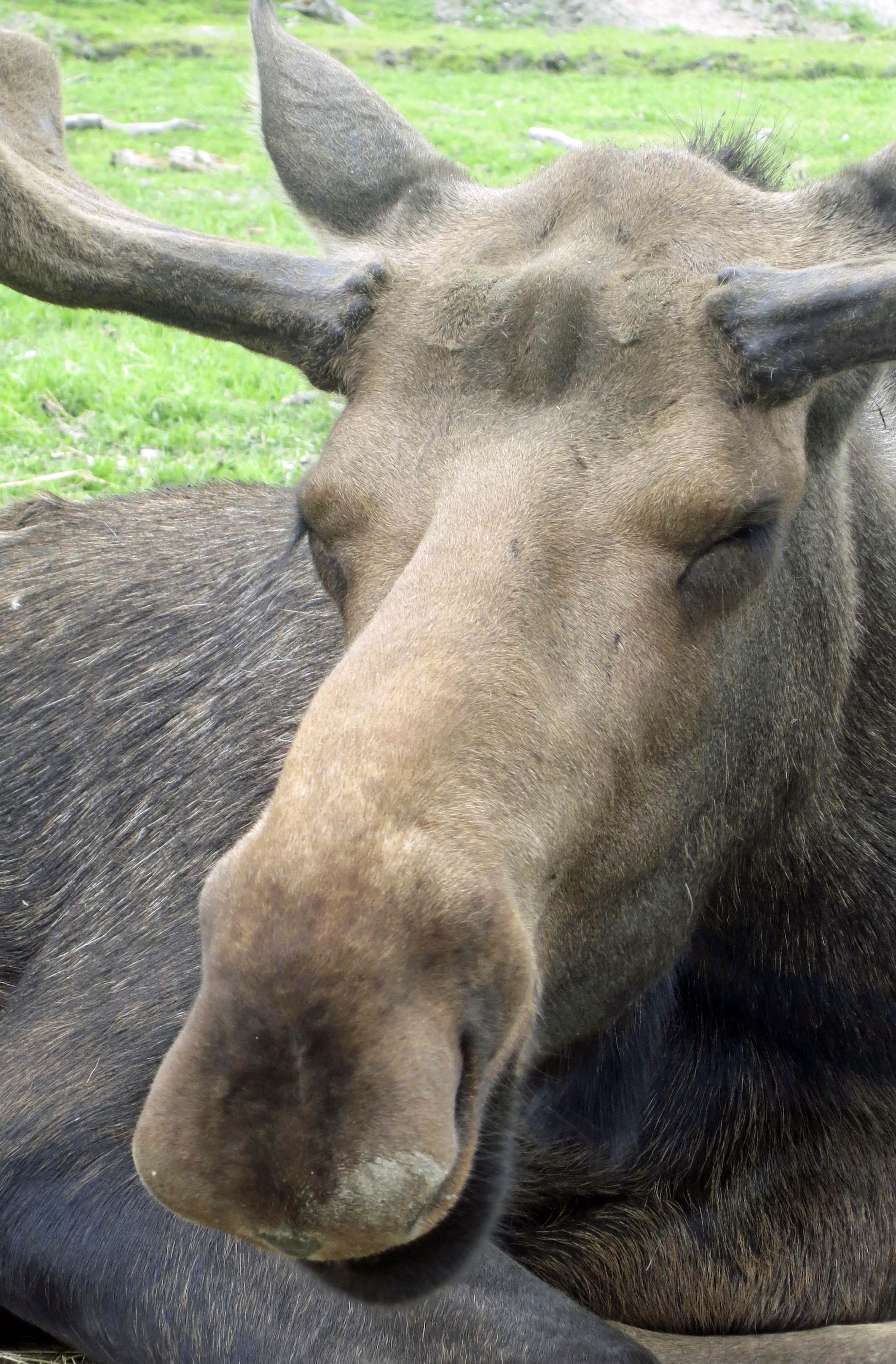
Had I learned to be laid back like this moose, there never would have been a problem.

Had I learned to be laid back like this moose, there never would have been a problem.

Over Christmas, I took a break by myself and drove down to Homer on the Kenai Peninsula. There’s a motel that sits out at the end of the Homer Spit providing panoramic views of Kachemak Bay. I got a room and spent hours staring out at the water and distant mountains. And I made a decision. I would return to Anchorage and give a three-month notice that I was leaving. When the time was up, I would disappear into the woods for several months of backpacking. I would take the wilderness cure.

I spent my last day packing the things I wanted to take: a few books and camping gear. I would leave Alaska like I had arrived, with what I could fit in the back of my pickup. I spent the night at a friend’s home, but she wasn’t there. She had disappeared into the lower 48 states so she wouldn’t see me drive away. I had passed on her offer to get married, stay home, write, and raise kids. Her two dogs and cat kept me company.

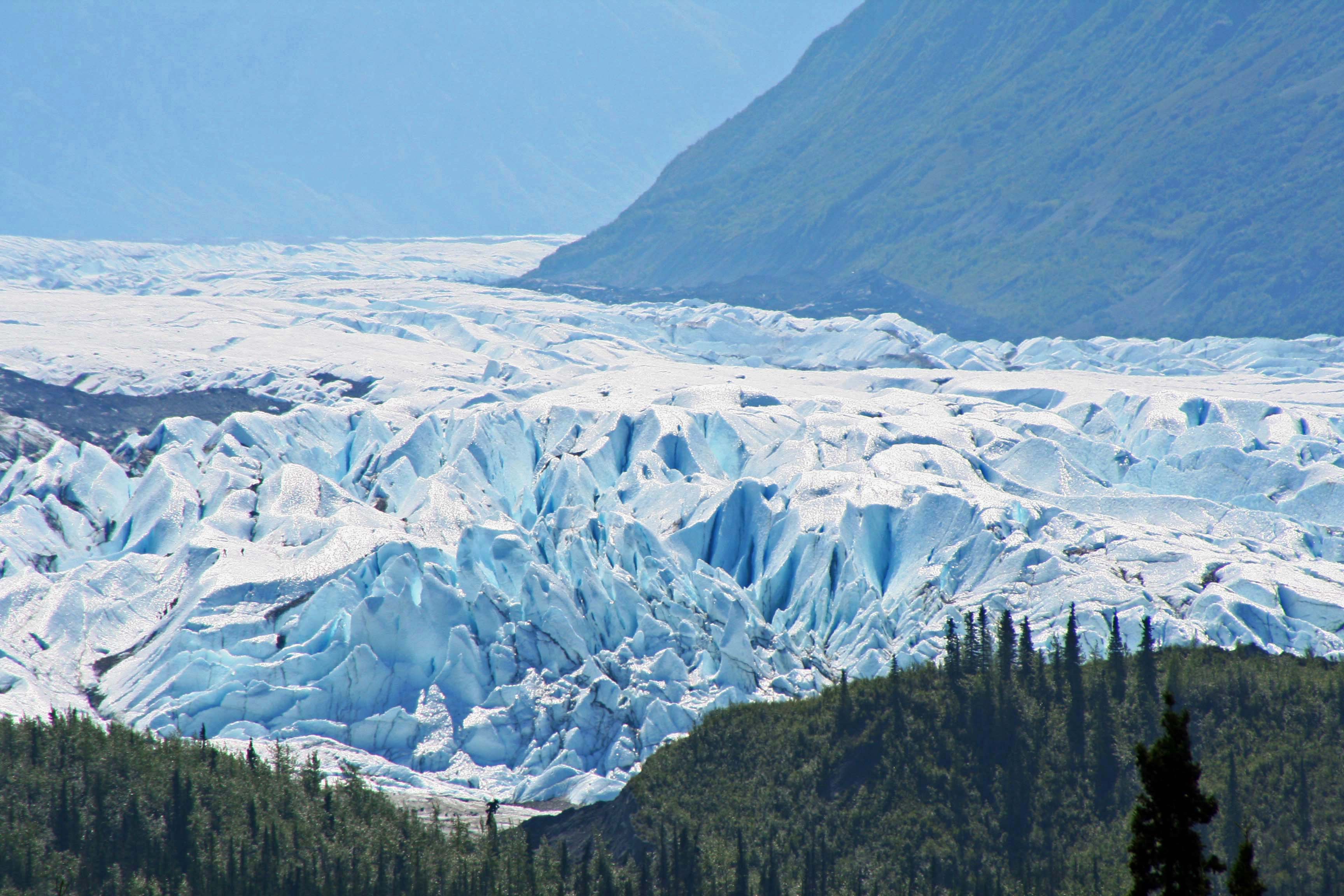
The views along the highway between anchorage and the lower 48 states are incredible— not that I paid much attention is my mad dash for the border.

The views along the highway between Anchorage and the lower 48 states are incredible— not that I paid much attention in my mad dash for the border. This is the Matanuska Glacier.

These mountains were near the Matanuska Glacier, easy driving distance from Anchorage.

These mountains were near the Matanuska Glacier, easy driving distance from Anchorage. 30 minutes from my house, I could be hiking in similar terrain.

Another view of the Wrangell-St.Elias Mountains that I would have passed.

Another view of the Wrangell-St.Elias Mountains shown in the top photo.

I flew down the Alaska Highway the next morning, exhausting myself, searching for green grass and flowers. I almost made the Canadian border the first night. Too tired to move on, I pulled into a closed truck inspection point and crawled into the back of my pickup.

Once I had arranged my sleeping bag on top of my few possessions, I broke out some liquid refreshment to scare off the banshees that were nipping at my heels. My truck was packed with more guilt than goods, a lot more. Some old friends from California— Tom Lovering, Jean Snuggs and a new friend of Tom’s, an irrepressible minister by the name of Jeanie Shaw, had put together a South of the Border Care Package to ease my way toward California. It consisted of several ripe avocados, salsa, chips and a gallon of pre-made margaritas, heavy on the tequila. I held a little party with my staff before leaving. We did serious damage to the guacamole but hardly touched the margaritas.

I knocked off a water-sized glass of the latter. It put me well on the way to oblivion but it wasn’t enough to let me sleep through the horrendous racket of someone trying to break into my camper shell. I sat up with a start and yelled, banging my head against the top. A flashlight with enough candlepower to light up Las Vegas was shining directly into my eyes.

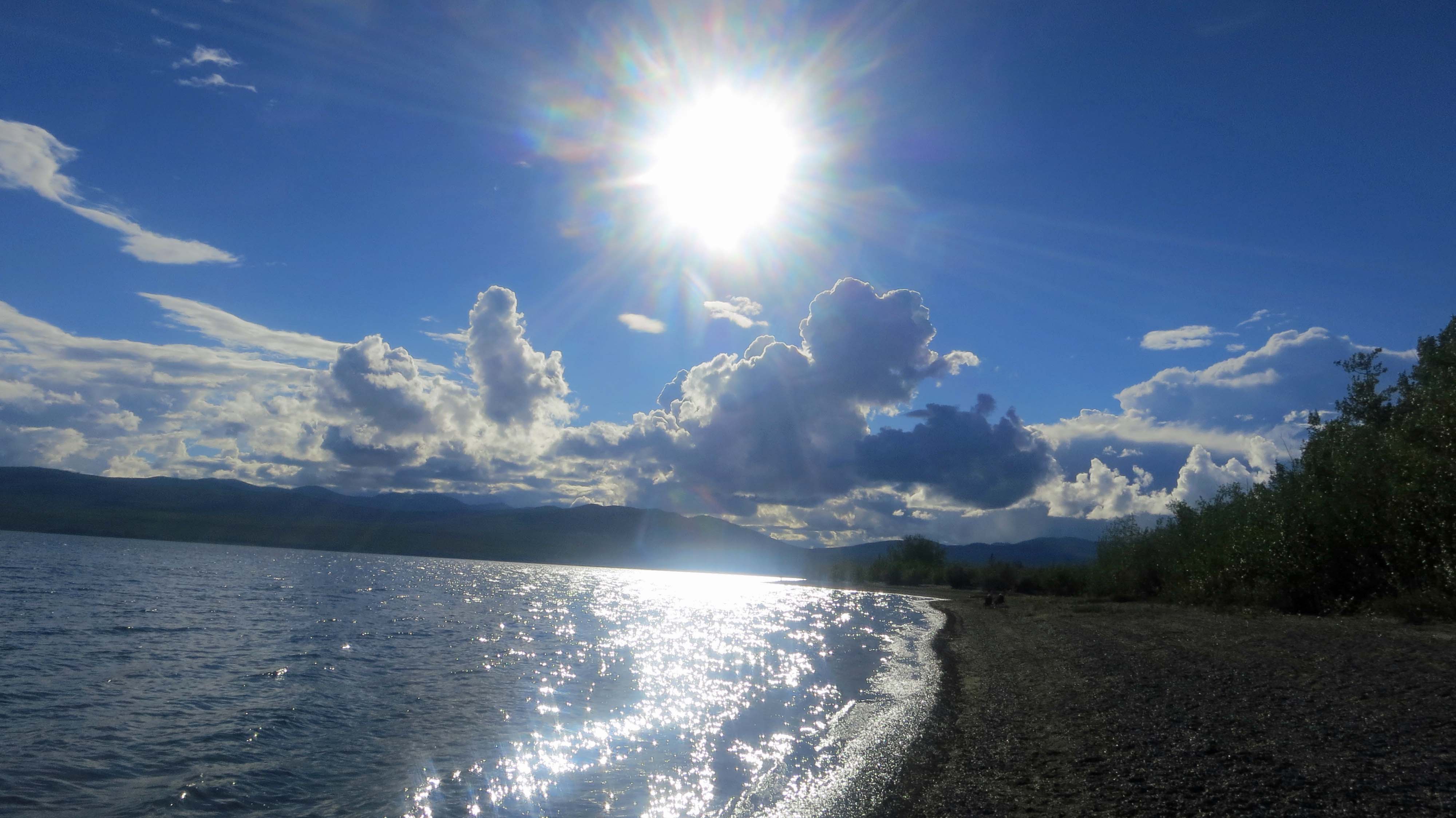
The Troopers flash light had about the same intensity as the sun on this lake that is located close to the Alaska-Canada Border.

The flashlight had about the same intensity as the sun on this lake that is located close to the Alaska-Canada Border.

“You in the truck, what are you doing here?” It was the voice of Authority. An Alaskan State Trooper had been banging on my camper shell with his baton. I thought it was quite obvious what I was doing but wisely decided to refrain from the obscene comment that was perched on the tip of my tongue. I chose a mildly sarcastic response.

“Uh, sleeping?” I hazarded a guess.

“You are not supposed to sleep here,” the disembodied voice behind the flashlight responded. “Why didn’t you go to a motel?” I was obviously a suspicious character, having chosen not to support the Alaskan economy. I was also being interrogated with the bright light of the law shining in my eyes. It was time to think fast.

“I fell asleep behind the wheel,” I exaggerated slightly. “I was afraid I might do serious damage to myself or someone else on the highway.”

That put a serious crimp in his nightstick. I could tell he was pondering my answer by the slowness of his response. He was torn between his job to roust out suspected vagrants and his responsibility to save lives. His good sense won.

“Go back to sleep,” the voice said. It was a lot easier for him to say than it was for me to do.

NEXT FRIDAY’s ESSAY: I reject an offer to run off to Mexico and open an orphanage for homeless children, decide what I should do with a gallon bag of pot I was given as a going away present, and finish my journey to Sacramento— where I am immediately asked to put together a statewide campaign to increase California’s tobacco tax. Instead, I go backpacking.

The Striking Churches of Oia, Santorini…

It is a combination of the blue domes, unique architecture, magnificent setting and Mediterranean light that make the many churches in Oia so outstanding. (Photo by Peggy Mekemson.)

It is a combination of the blue domes, unique architecture, magnificent setting and Mediterranean light that make the many churches in Oia so outstanding. (Photo by Peggy Mekemson.)

I’ve blogged about the churches on Santorini before, but their beauty, surroundings, and unique architecture are such that they are worth revisiting— often. Most of these photos are from the village of Oia and the surrounding area that contains some 70 churches.

The obvious question here is ‘Why so many?’ One or two large churches could easily accommodate the population, especially since the majority of the population is Greek Orthodox. The answer lies in the fact that Oia is a fishing village and the life of a fisherman is filled with danger.

When things become iffy, religious folks, and even not so religious folks start talking to God and making promises. “Get me through this and I’ll do so and so…” There is a long list of options. In Oia, for those who could afford it, the offering became “I’ll build you a church.”

To make things a little more personal, the fishermen dedicated their churches to whatever saints they thought were looking out for them. The saint was their go-to guy (or gal), their direct line to God. And even today, the feast day of the saint is a big thing at the various chapels.

One final note: many of the churches are privately owned, passed down within a family for generations from the original builder.

Another photo of the same church that I took. This one from a different angle. A separate post could easily be made on each church in Oia.

Another photo of the same church. I took this one from a different angle. A separate post could easily be made on each church in Oia.

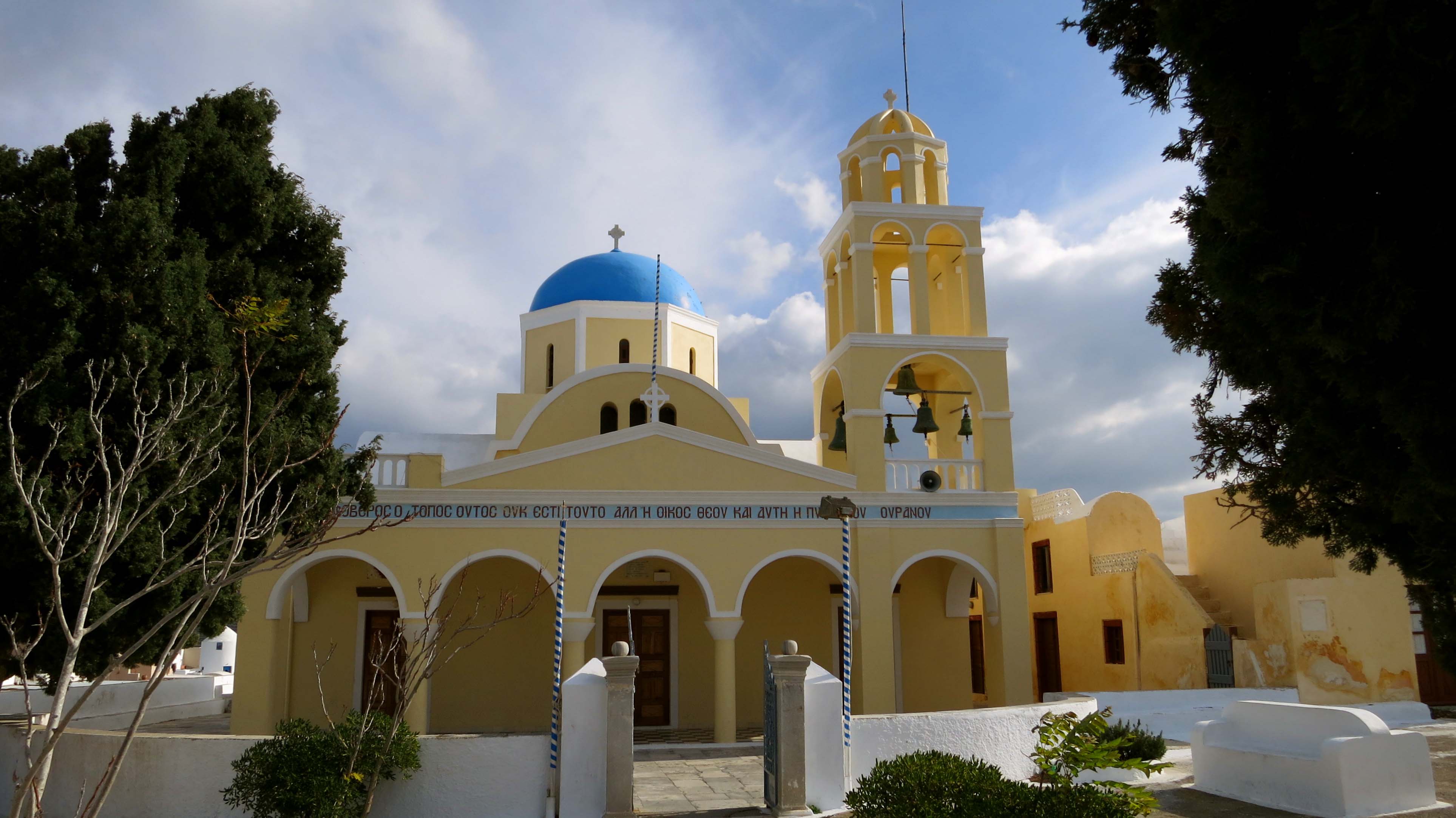
The Church of St. George, set off by dramatic clouds occupied my camera for 30 minutes.

The Church of St. George, set off by dramatic clouds, occupied my camera for 30 minutes.Lightning rods also adorn the church.

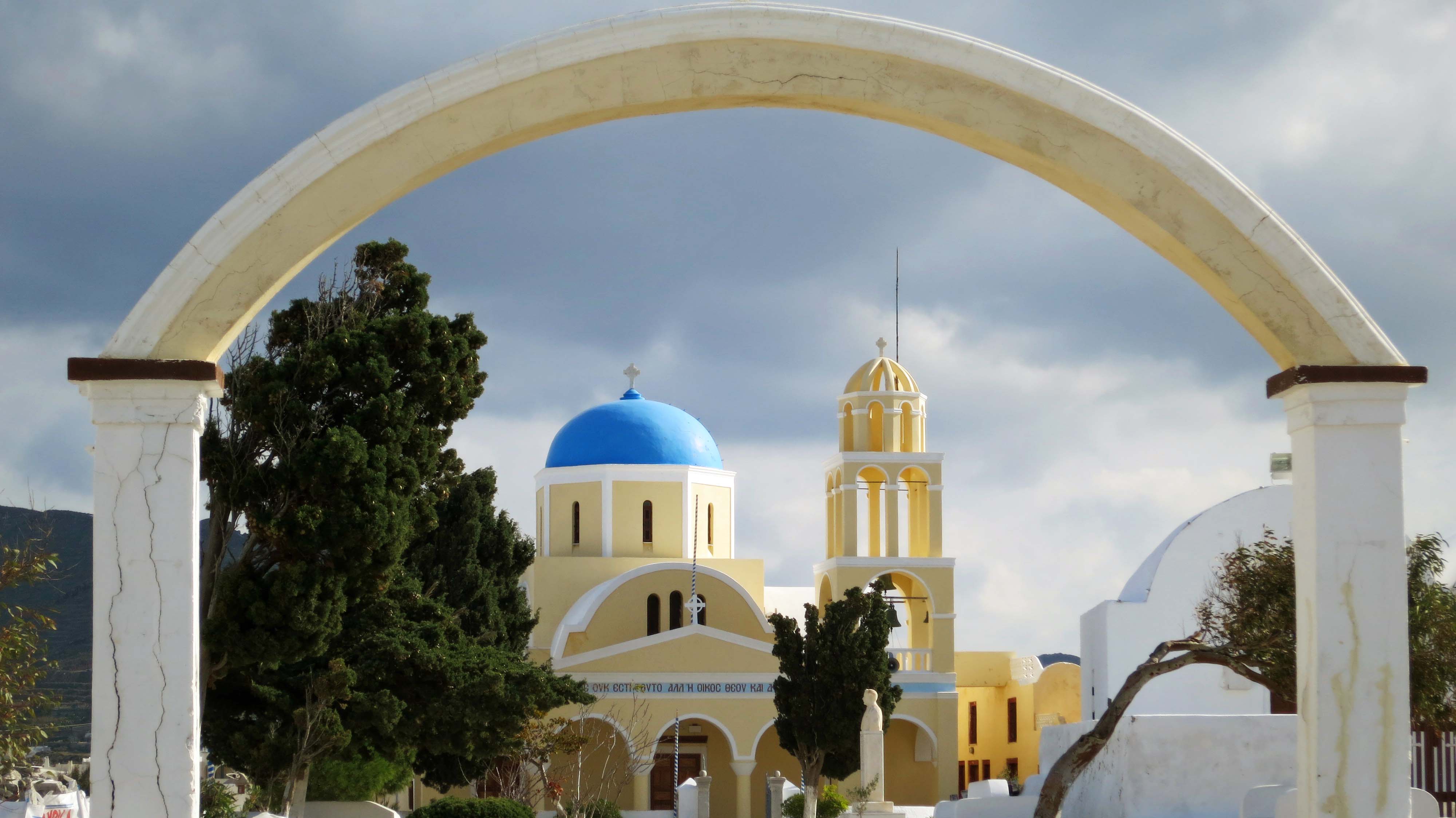
Moving back, this arch provided a fun composition for the church. I suspect it has been used for the same purpose thousands of times. (grin)

Moving back, this arch provided a fun composition for the church. I suspect it has been used for the same purpose thousands of times. (grin)

A side view of the church.

A side view of the church.

A view of the dome...

A view of the dome…

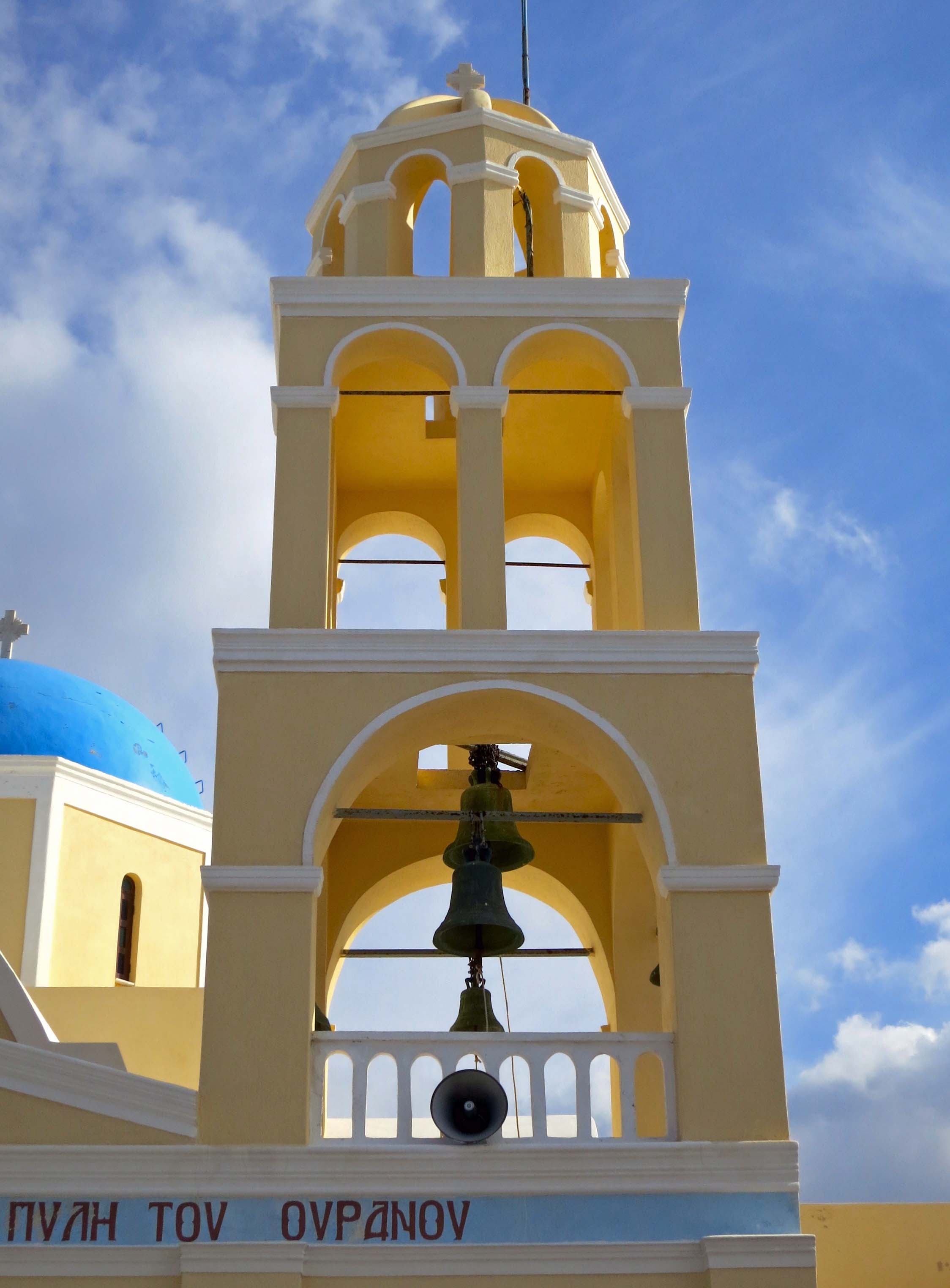
And the bell tower. The walls seemed to be glowing.

And the bell tower. The walls seemed to be glowing.

Many of the churches are smaller and more personal, built by families as thanks for surviving sea journeys and passed down to family members over generations.

Many of the churches are smaller and more personal, built by families as thanks for surviving sea journeys and passed down to family members over generations. Love the salmon pink.

I always appreciate it when nature provides a convenient frame for my photos.

I always appreciate it when nature provides a convenient frame for my photos.

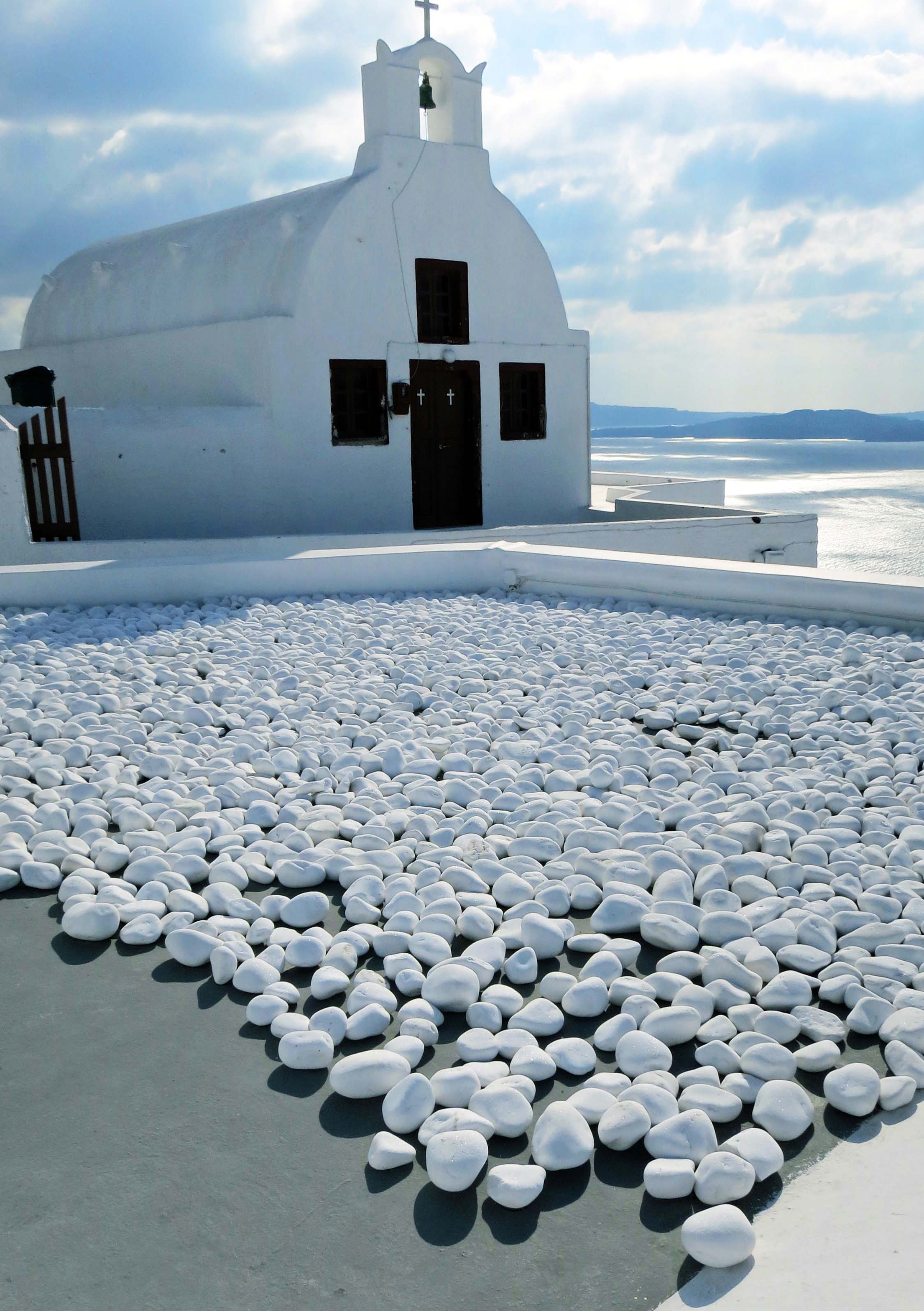
Think of the imagination that went into the decision to put white rocks in front of this white church.

Think of the imagination that went into the decision to put white rocks in front of this white church.

A back view of the church with Oia, Santorini stretching out in front.

A back view of the church with Oia, Santorini stretching out in front.

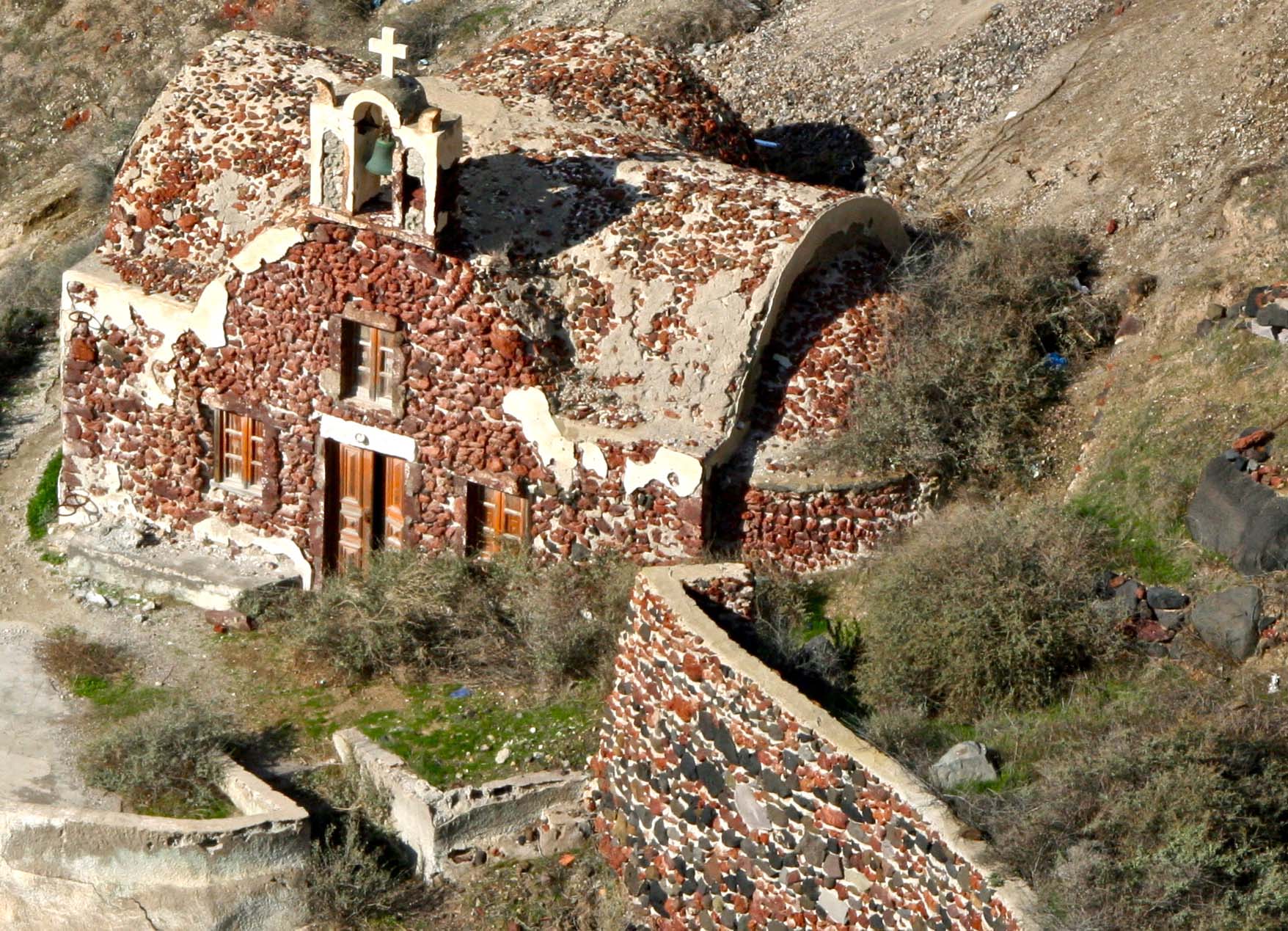
This looked like a very old church to me. Notice how it is built into the cliff. (Photo by Peggy Mekemson.)

This looked like a very old church to me. Notice how it is built into the cliff. (Photo by Peggy Mekemson.)

The Anastasis Church in Oia provides a striking view of the Aegean Sea.

The Anastasis Church in Oia provides a striking view of the Aegean Sea.

Another view of the church.

Another view of the church.

The Church of Panagia Platsani is the first church we encountered in Oia. (Photo by Peggy Mekemson.)

The Church of Panagia Platsani is the first church we encountered in Oia. (Photo by Peggy Mekemson.)

The church's bell tower. (Photo by Peggy Mekemson.)

The church’s bell tower. Again, the sky provided a dramatic backdrop. (Photo by Peggy Mekemson.)

I don't have the name for this church but thought it was quite striking.

I don’t have the name for this church but thought it was quite striking.

A final view looking out into the Aegean and the walls of the caldera that forms Santorini, a solemn reminder that this is earthquake country. NEXT BLOG: Friday's essay— Escape from Alaska

A final view looking out into the Aegean and the walls of the ancient volcano that form Santorini, a solemn reminder that this is earthquake country. NEXT BLOG: Friday’s essay— Escape from Alaska


Back to Buncom… At Home in Oregon

You never know who or what might show up for the parade, but everybody is invited to participate. No entry form required.

You never know who or what might show up for the Buncom Day parade, but everybody is invited to participate. No entry form is required. Just step out in the road. I thought the peace sign was a nice addition.

Normally there are more ghosts than people hanging out in the Buncom. All it takes is three flickering apparitions. The situation changes dramatically on Buncom Day in late May when the annual Buncom Day Parade takes place and the town’s population soars to 500. I’ve now been three times. If I am not off gallivanting, I’ll be there again next year. Guaranteed.

Where else could I step onto the street and become part of a parade, buy a scrumptious pulled pork sandwich from the local Lion’s Club, or bet a buck on where a pullet is going to poop?

But there was more this year— I had responsibility. The Friends of Ruch Library (FORL) was having a book sale and my wife Peggy has become president of the organization. Being First Man meant I had duties, heavy duties like carrying boxes and tables. Brawn, not brains, was what Peggy required (that, and our pickup truck).

Peggy and fellow board members staffed the Friends of the Ruch Library book sale. One of Ruch's three buildings, the long abandoned Post Office was their venue.

Peggy and fellow volunteers from Friends of the Ruch Library staffed the book sale. One of Ruch’s three buildings, the long abandoned Post Office, was their venue.

Inside books were neatly arranged on the tables I had delivered. Check out the prices!

Inside books were neatly arranged on the tables I had delivered. Check out the prices! Paperbacks were going at five for a dollar, current hardbacks for a dollar fifty.

For the uninitiated, Buncom is located in the Applegate Valley of southern Oregon about 20 miles west of Medford. It was a booming gold rush town during the 1850s and later became a regional supply center. But that all ended with the advent of the automobile, or horseless carriage as it would have been known then. All that remains today are three vacant buildings, and, of course, the ghosts.

BTW, it’s weed-whacking time here at the ranch. Each day I march forth bravely with my weed-whacker. This morning Peggy gave me a bright pink water bottle to carry.

“So it won’t get lost,” she said. It sounds so much better than, “So you won’t lose it.” We’ve learned to blame inanimate objects rather than each other when things disappear. Keys hide and glasses mysteriously show up when they are ready to show up. But back to the pink bottle…

“But people will think I’m a princess,” I complained. I won’t report Peggy’s response.

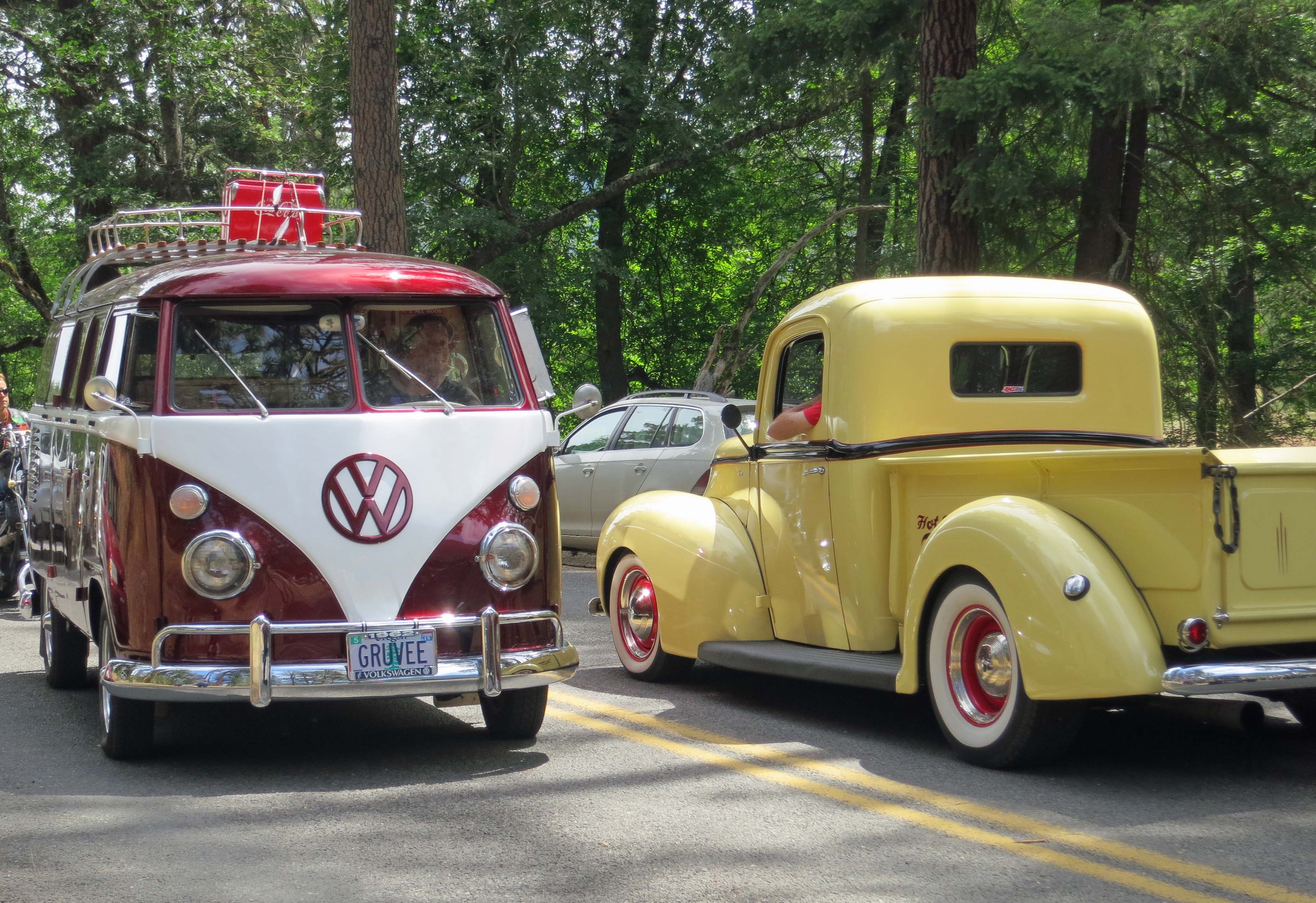
Mini-VW Van had it's adult equivalent, painted exactly the same. And yes the 200 yard parade goes in both directions.

Mini-VW Van had its adult equivalent, painted exactly the same. Maybe it’s Mom. And, yes, the 200 yard parade goes in both directions.

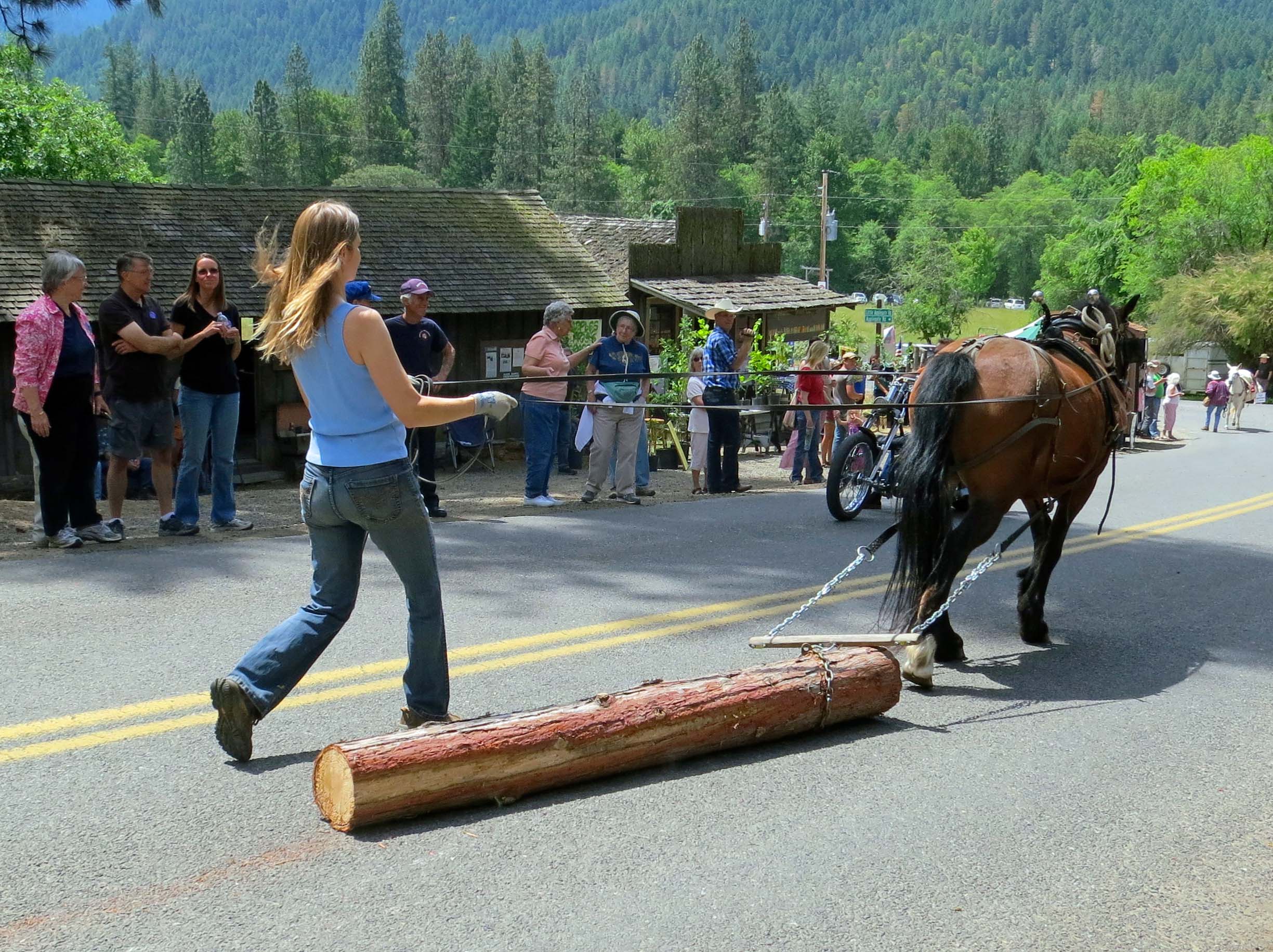
Horses used to help harvest timber.

Whoa, horsey. You can hire horses to help you harvest timber on your property. Or enter them in a parade.

You saw horsey going. Here it is coming, looking rather proud, I might add.

You saw horsey going. Here it is coming, looking rather proud, I might add.

The parade is also a good excuse to walk your dog, and show off your orange hair.

The parade is also a good excuse to walk your dog, and show off your red hair. Small horses bring up the rear.

There was even a white mule that carried a sign urging people to take a hike.

There was a white mule with freckles that carried a sign urging people to take a hike.

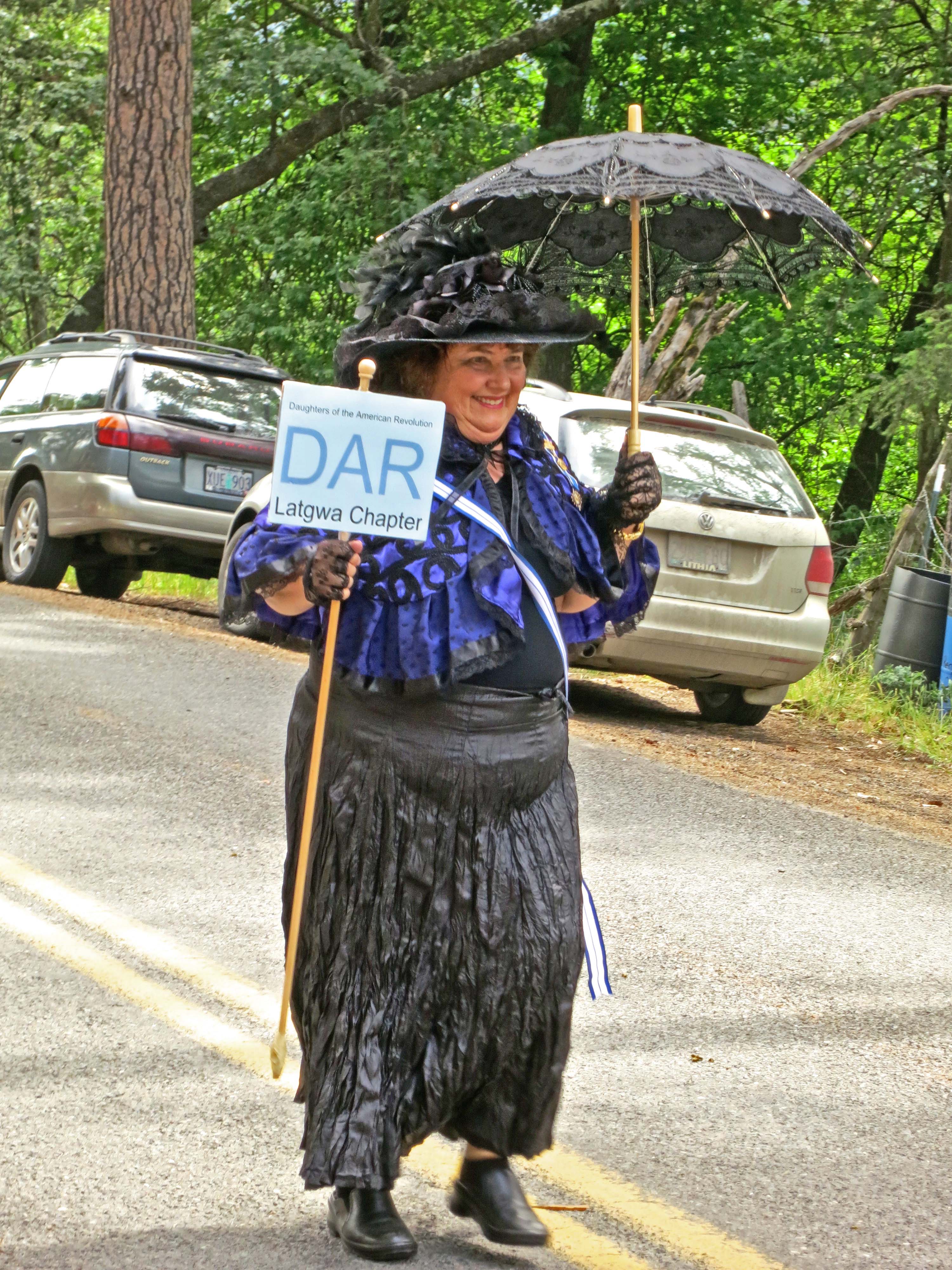
Daughters of the American Revolution participating in a southern Oregon parade.

Even the DAR  had a representative, this one from the Latgwa Chapter. With her lacy black umbrella, I thought she would  fit right into a Mardi Gras celebration.

Every parade needs a Grand Marshall. She even carried a handmade sign announcing who she was. A writer for the Medford Tribune was along for the ride.

Every parade needs a Grand Marshal. Peggy Dover filled the position. Sitting on the right and carrying a handmade sign announcing her name, Peggy is a writer for the Medford Tribune.

Old cars galore participate in the parade. This caddy featured a panda.

Old cars galore participate in the parade. This caddy featured a panda who waved at me as the car drove by. Or maybe he was trying to escape.

When the old cars weren't parading, they were parked for one and all to admire. There is a class to these cars that their modern equivalents just can't seem to match. Or am i just showing my age?

When the old cars weren’t parading, they were parked for one and all to admire. There is a class to these cars that their modern equivalents just can’t seem to match.

Here's a side view of the REO Hotrod which would have been produced in Lansing Michigan.

Here’s a side view of the REO Hotrod, which would have been produced in Lansing Michigan.

And check out this beauty. To my auto hobbyist friends… is this a Model A or a Model T?

And check out this beauty. I believe it is a Model A, but I am sure my internet friend who are old car enthusiasts will correct me if I am wrong. (grin)

This guy could decorate my yard anytime, if I didn't have to do the work that went along with it. These antique autos are truly labors of love.

This guy could decorate my yard anytime, if I didn’t have to do the work that comes with it. These antique autos are truly labors of love.

In case you are wondering, Buncom is out in the country. You know you are 'out West' when you see the barbed wire.

If you needed a break from the Buncom Day festivities, all you needed to do was glance at the surrounding countryside. The barbed wire says that you are ‘Out West.’

Or stop and smell the wild roses...

Or stop and smell the wild roses…

Last year I featured the Chicken Splat contest on my post about Buncom Day, so I will close with it this year. Numbered squares are placed in the bottom of the chicken cage. You bet on which square the chicken will poop on. NEXT BLOG: Back to Santorini.

Last year I featured the Chicken Splat contest on my post about Buncom Day, so I will close with it this year. Numbered squares are placed in the bottom of the chicken cage. You bet on which square the chicken will poop on. High stake’s gambling, it isn’t. NEXT BLOG: Back to Santorini.