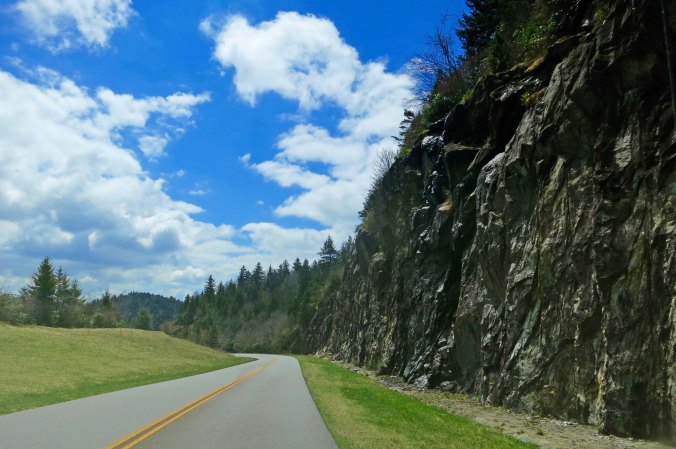
A Detour to Prince Edward Island… The 10,000-Mike Bike Trek

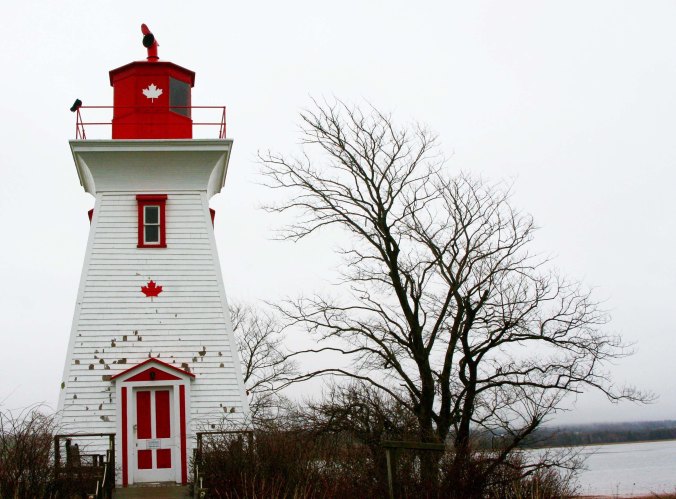
Grey skies detracted from the "picture postcard" look this lighthouse in Victoria, Prince Edward Island is supposed to have, but provided a powerful backdrop for the tree that seems to lean toward it.

Grey skies detracted from the “picture postcard” look this lighthouse in Victoria, Prince Edward Island is supposed to have, but provided a powerful backdrop for the tree that seems to lean toward it. A crow sits on the railing, looking down toward us.

I bicycled past Prince Edward Island (PEI) on my 5000-mile marathon bike ride home— and had regretted it ever since. It was a bucket list item for me, and I was ever so close, merely a ferryboat ride away. But the clock was ticking.

They have built an 8-mile (12.9 k) bridge between New Brunswick and PEI since, and proudly point out that it is the longest bridge in the world— over ice— an interesting clarification that suggests cold and snowy winters. Peggy and I decided we could zip across the bridge, spend a day, and check out what I had missed. Fortunately, it was neither cold nor snowy and the ice had melted, but it was windy and rainy.

A stormy day limited our visibility when we crossed the 8-mile Confederation Bridge to PEI from New Brunswick.

A stormy day limited our visibility when we crossed the 8-mile Confederation Bridge to PEI from New Brunswick. I was ever so glad I wasn’t on my bicycle.

High winds greeted us on the way back. Adjust your speed indeed. To a bicyclist this would be equally worrisome if not more so than the rainy day. I learned that bicyclists and walkers are required to take a shuttle across the bridge— regardless of the weather.

High winds greeted us on the way back. Adjust your speed indeed! To a bicyclist this would be equally worrisome if not more so than the rainy day. I learned, however, that bicyclists and walkers are required to take a shuttle across the bridge— regardless of the weather.

PEI is named after Prince Edward (1767-1820), the Duke of Kent and Strathearn, son of King George III, and the father of Queen Victoria, which is quite a legacy. The French initially named the island Île Saint-Jean and the English followed suit, calling it St. John’s Island. There were too many other St. John’s floating around the Atlantic Provinces, however. Thus Edward got his chance. I don’t have anything against the Prince, or the long-dead Saint for that matter, but I prefer the First Nation, Mi’kmaq name, Abegweit, which translates into land cradled in the waves. It is so much more poetic.

I often find that First Nation or Native American names for places have more magic and power than the current names we have given them. Mt. Denali, the highest mountain in North America, is another example. Originally named Mt. McKinley, after a little-remembered American President, the name has recently been changed back to its Athabascan name, Denali, which means the high one. (See my post on the train trip from Anchorage to Fairbanks, Alaska that Peggy and I made this past spring.)

The names for Prince Edward Island reflect its history, which is quite similar to its neighboring Atlantic Provinces, moving from First Nation to Acadian French to English and finally, expelled Scots. The Gaelic for PEI, by the way, is Eilean a’ Phrionns: the Island of the Prince.

The day we had allowed for our visit led us to focus on one place. We chose the small, south-coast town of Victoria. We couldn’t resist the description by Stephen Kimber, “The Trans-Canada Highway bypassed Victoria. So did the shopping centers and tourist amusement parks. And that— along with its independent-minded citizens— is what makes Victoria the enchanting, picture post card place it is today.” It sounded like our kind of town.

We arrived under dark clouds that were threatening a deluge but somehow held off for our visit. Given the bad weather and the fact that we had arrived before the summer crowds, it appeared that we were the only people in town. Most shops were closed and the “enchanting, picture post card” look was dampened somewhat by the lack of sunshine. Still, Peggy and I found much of interest.
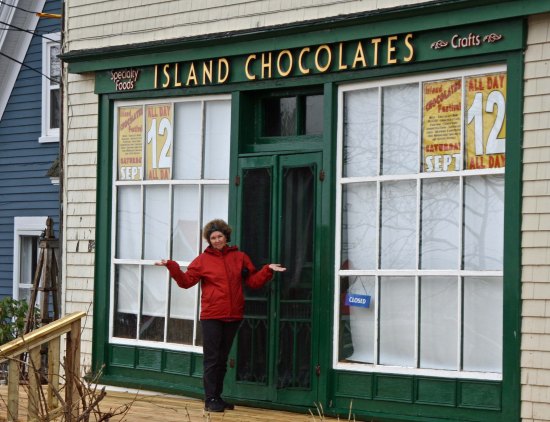
"Where's the chocolate?" Peggy seems to be asking.

“Where’s the chocolate?” Peggy seems to be asking the locked door. Her taste buds had been prepped for it. “Brain food,” she always declares. Fortunately, we were able to find some equally delicious and sinful lobster. Otherwise, it could have been a long night.

Victoria had once been a bustling seaport doing trade with Europe, the West Indies, and the East Coast of the US. Peggy and I walked through the village of precisely laid out streets and Victorian homes that spoke to the earlier times. We were admiring the town’s lighthouse when a man came hurrying out of one of the homes and crossed the road to greet us.

Colorful homes greeted our walk around the town.

Colorful homes punctuated our walk around the town.
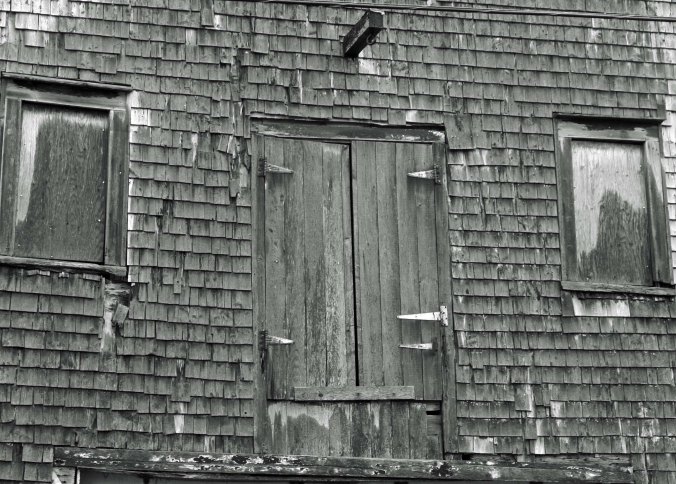
I found these old barn loft doors intriguing.

I found these old barn loft doors intriguing…
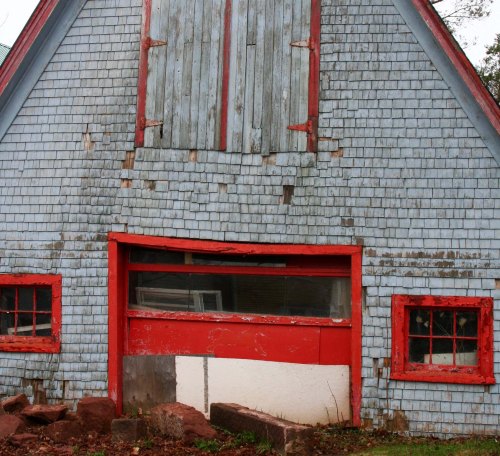
And I admired the imagination of the person who had added red trim to this building of by-gone days.
And I admired the imagination of the person who had added red trim to this building of by-gone days.

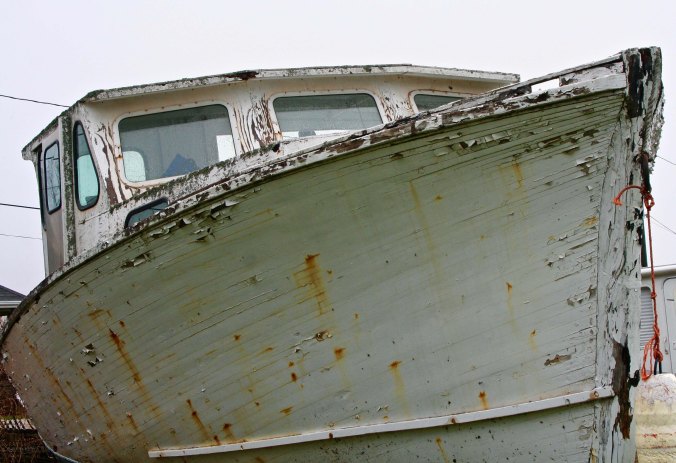
Appropriate to Victoria's seagoing past, we found and admired this retired fishing boat.

Appropriate to Victoria’s seagoing past, we found and admired this retired fishing boat. (Fishing, BTW, is still carried on out of Victoria’s small port. That’s where our lobster came from.)
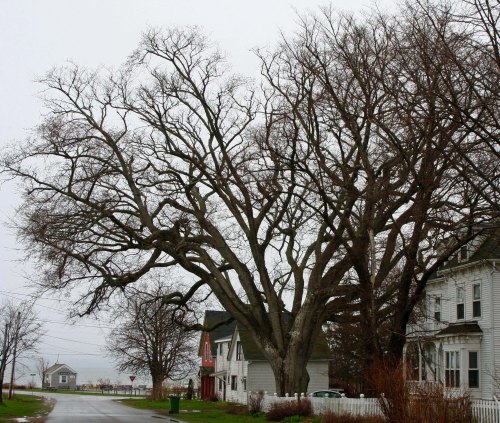
A sign proclaimed that this was the largest tree on Prince Edward Island.
A sign proclaimed that this was the largest tree on Prince Edward Island.

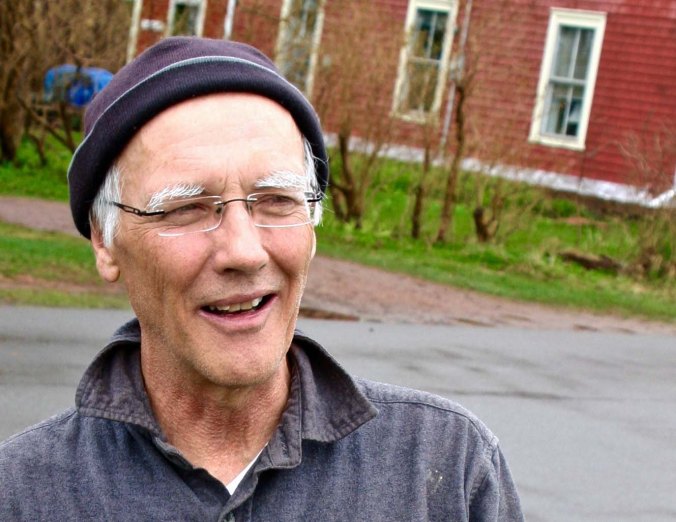
Ben Smith

Ben Smith the “town greeter” of Victoria came bursting out the door of his house and made a beeline for us.

“Would you like to go in the lighthouse?” he asked in a voice that almost demanded we say yes. Naturally we agreed. Of course we wanted to see the lighthouse. He introduced himself as Ben Smith. He was apparently the town greeter, unofficial mayor, and a candle maker— a virtual one-man chamber of commerce, not to mention crow-master. They seemed to be following him.

“Ah yes,” he allowed, “I feed them. Sometimes they go for walks with me, hopping along behind.” We pictured this strange parade walking/hopping down the streets of Victoria and laughed. As Ben hurried off to get the keys, the crows stayed with us, making sure we didn’t slip away.

We were checking out the lighthouse when a man came hurrying across the street and asked if we would like to see in side it.

While Ben went to retrieve the lighthouse key, a crow stood guard on the railing.

Ben turned out to be as knowledgeable as he was nice. We got the A+ Tour, which included climbing into the top of the lighthouse up narrow, steep stairs to check out the light and then butt-scoot around a precipice to go outside for a view of the small town and its harbor. Ben took our photo and provided an ongoing lecture on the area’s history. After all of this, we insisted on seeing his candle shop and bought one as a thank you. We also sat in his ‘lucky chair.’

The light that warned and guided sailors approaching Victoria.
The light that warned and guided sailors approaching Victoria.

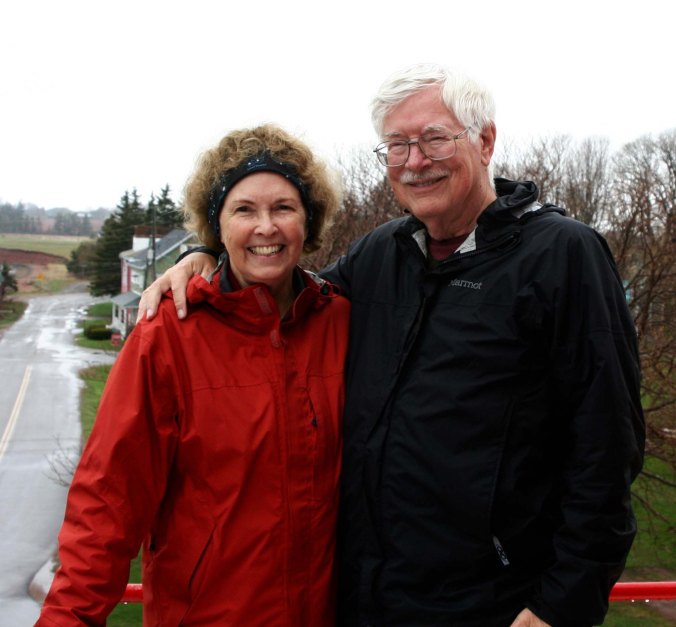
Peggy and I standing on the lighthouse look out.

Peggy and I standing on the lighthouse lookout. (Photo by Ben Smith.)

Entering Ben's candle shop...

Entering Ben’s candle shop. Note the horse shoe over the door for luck.

And sitting on the 'lucky chair.'

Peggy sits in the ‘lucky chair.’ Some of Ben’s candles are resting on the table beyond her.

“The man who made this chair and gave it to me was struck by lightning on three different occasions and survived,” he explained. Peggy and I took turns sitting in the chair, just in case. Ben walked us back to our van and insisted we buy a lobster roll from the Lobster Barn restaurant on the dock. It was delicious.

Leaving Victoria, we made our way over to the New Glasgow Highlands Campground in the center of the island, which proved to be quite lovely. Along the way, we got something of a feel for the rural nature of PEI and more of a sense of the island’s beauty. But we knew we were missing a lot. One day is far too short of a time to visit the island. We’ll be back.
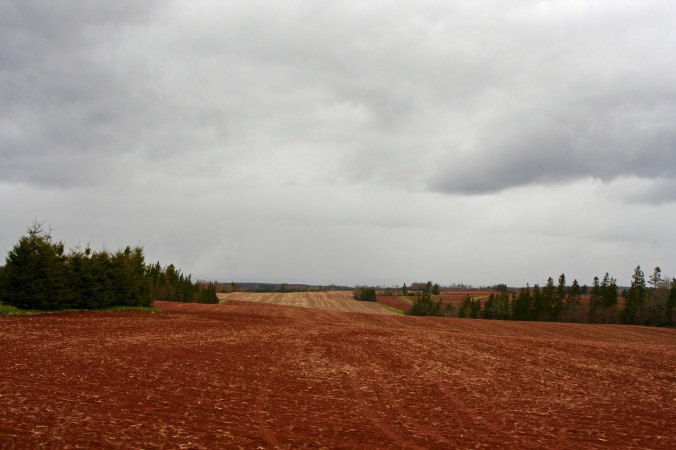
Prince Edward Island thrives off of its small farms where crops such as potatoes are raised. The island is noted for its red soils.

Prince Edward Island thrives off of its small farms where crops such as potatoes are raised. The island is noted for its red soils. Wind breaks surround most farms.
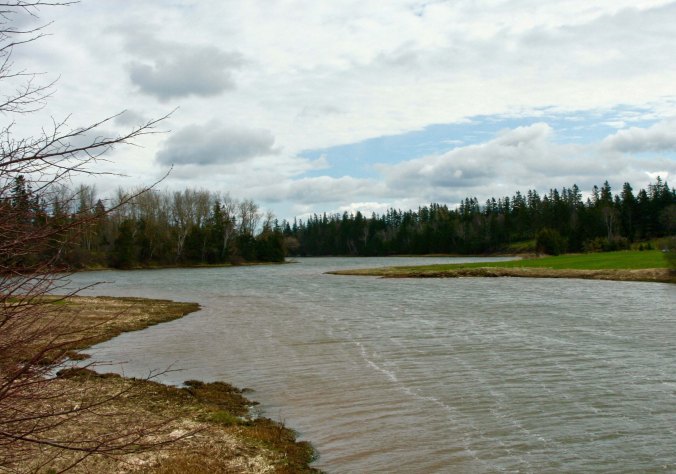
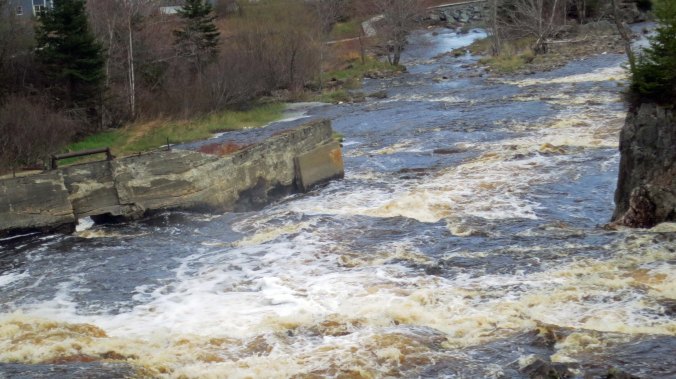
This river reflected the rain the island was receiving. Interestingly, drinking water is primarily ground water pumped up from wells.

This river was brimming with the rain the island was receiving. Interestingly, drinking water is primarily ground water pumped up from wells.

A small bit of sunlight broke through the clouds and illuminated these birch trees.

A small bit of sunlight broke through the clouds and illuminated these birch trees at the campground.
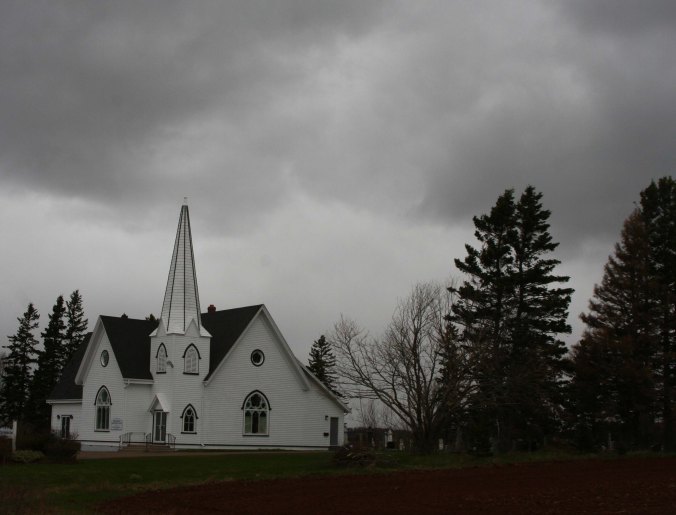
The dark, stormy skies were back the next morning. I liked the drama they created in this photo of a church.
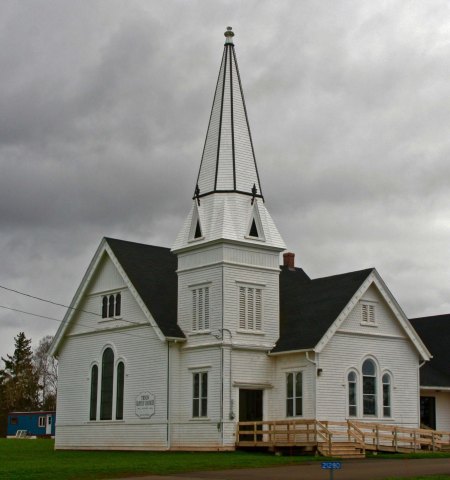
The dark, stormy skies were back the next morning. I liked the drama they created in this photo of a church.

Check this out. Note how similar the church looks to the one above. The other church I photographed was laid out in the same way. I believe the churches were different denominations. Was a common architect involved?

Check this out. Note how similar this church looks to the one above. I believe the churches were different denominations. Was a common architect involved? Does PEI have an agreement on how churches are supposed to look? (Kidding, I think.)
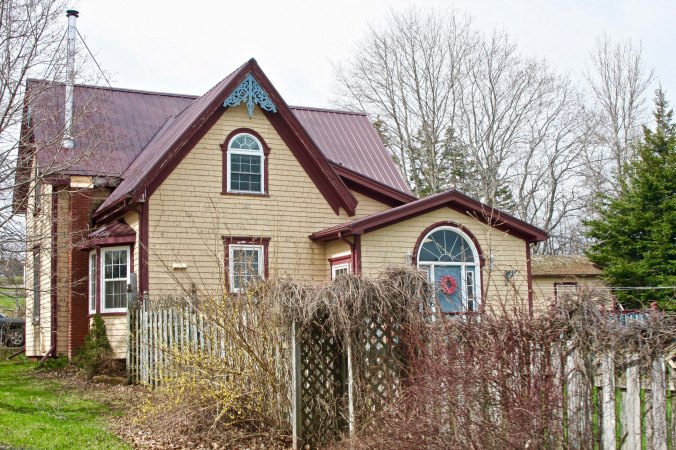
Peggy and I really fell for the charm of the houses we found on PEI.

Peggy and I really fell for the charm of the houses we found on PEI.

Another...

Another…

And a final one.

And a final house, the last photo for this post.

NEXT POST: I am back on my bike route crossing New Brunswick, entering Quebec, climbing up and over the Gaspe Peninsula, and crossing the St. Lawrence Seaway.

 

Was It the Toughest Climb on the Journey… The 10,000 Mile Bike Trek

I found this spray painted bicycle at the top of Cape Breton's toughest climb and laughed. (photo by Jean Snuggs.)

I found this spray painted bicycle at the top of Cape Breton’s toughest climb and laughed. (Photo by Jean Snuggs.)

Gearing ratios on bicycles are complicated beyond my normal interest in things mechanical. Let’s just say there are high gears for scurrying down mountains, medium gears for flat road travel, and low gears for climbing mountains and fighting headwinds. The more gears you have, the greater your options and ease of travel. The goal is to bike at a speed that is comfortable for your level of physical conditioning while keeping undo pressure off your knees. (Trashed knees can ruin the most pleasant bike trip.) Maintaining cadence, which is the speed you pedal, and knowing when to shift are critical parts of keeping your knees happy. Beginners have to struggle through a steep learning curve, especially in climbing hills and mountains— and yes, I recognize the potential pun.

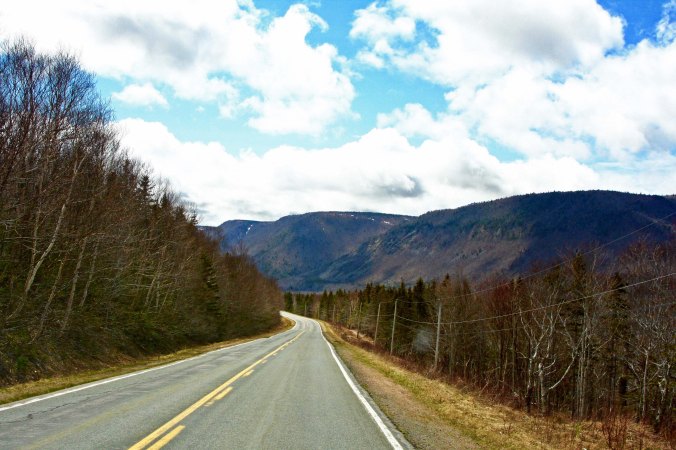
The reason for this discussion about gears is that it relates to the substantial mountain that Jean, Lindell and I faced when we left our camp at Cape North in Nova Scotia and cycled back up into the Cape Breton Highlands. It was a doozy. We could see it looming in front of us as we cycled through the canyon carved out by the Middle Aspy River. The closer we came, the more it looked like something a mountain climber might enjoy.

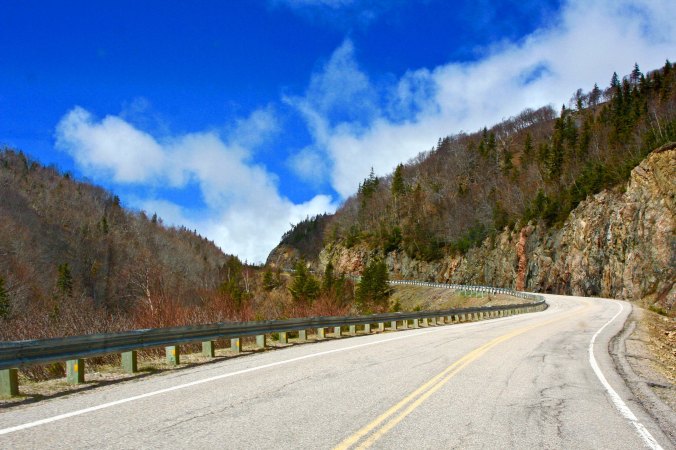
One of the steepest climbs along the Cabot Trail in Nova Scotia was climbing up this hill into the Highlands.

The hill loomed in front of us. It was obvious we were in for a climb.

Was it the toughest hill I climbed on my journey? No. It wasn’t nearly as steep as my climb over the Panamint Range in Death Valley. And I had pedaled up several others that were much longer on the Blue Ridge Parkway. What made it so damnably difficult were my low gears— they weren’t as low as Jean’s and Lindell’s! While I was out of the saddle pushing down on my pedals with knee-punishing grit, Jean and Lindell were sitting down and merrily teasing me about my inability to keep up. Talk about a challenge. (grin) Had I been by myself, I would have simply noted the difficulty, complained to the universe, and pedaled on. And I wouldn’t have stopped at the first bike shop I came to and added more gears!

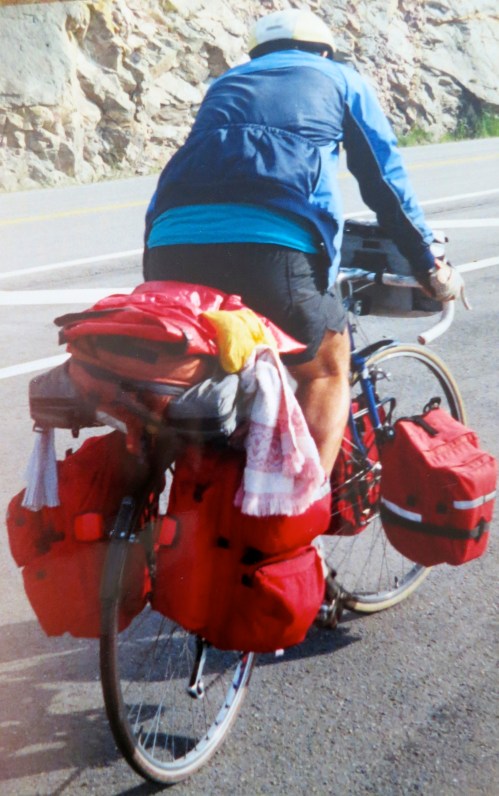
Here I am biking up a mountain in Nova Scotia with 60 pounds of gear.

I posted this photo at the beginning of the series. Jean took it as we crested the mountain. Note the bulging leg muscles that couldn’t keep up with two slight women— even with 5,000 miles of travel.

One of my happiest sights on the 10,000 mile trip: the top of the hill.

One of my happiest sights on any steep climb: the top of the mountain.

Let me note here that Lindell and Jean had a lot more going for themselves than low gears. They had both graduated from the University of Illinois with top honors in physical education and gone on to become highly successful community college track coaches. They had just completed a bike trip that was all about climbing hills. In addition to being bright and competitive, they were as tough mentally as they were physically. They had managed to keep up with me on the flats and downhills as well as busting my butt going up the hill.

Topping the ridge, we came across a bicycle outline that a cyclist had spray painted on the shoulder with the words, “Why?” We laughed in sympathy. Continuing on, we followed the Cabot Trail across the Cape Breton Highlands and down to the small town of Chéticamp on the Gulf of St. Lawrence, leaving the highlands with their Scottish influence behind for flatter, coastal lands with French influence. France had originally named Cape Breton, Île Royale, and had considered the island part of Acadia. We cycled down the coast though villages and cut inland to Margaree Forks where we said goodbye to the Cabot Trail and picked up NS Highway 19 known as the Ceilidh Trail, which we followed for 60 miles back to the Canso Causeway.

A very fast downhill (brakes advised) brought us to this traditional Scotch cabin known as Lone Scheiling. We had flashed by it on our bikes but Peggy and I stopped to admire it.

A very fast downhill after our climb (brakes advised), brought us to this traditional Scottish cottage known as Lone Scheiling. We had flashed by it on our bikes but Peggy and I stopped to admire it.

I took this photo out the window.

I took this photo out the window.

It was surrounded by yellow birch.

The cottage was surrounded by yellow birch.

One of which featured this colorful knot.

One of the trees featured this colorful knot.

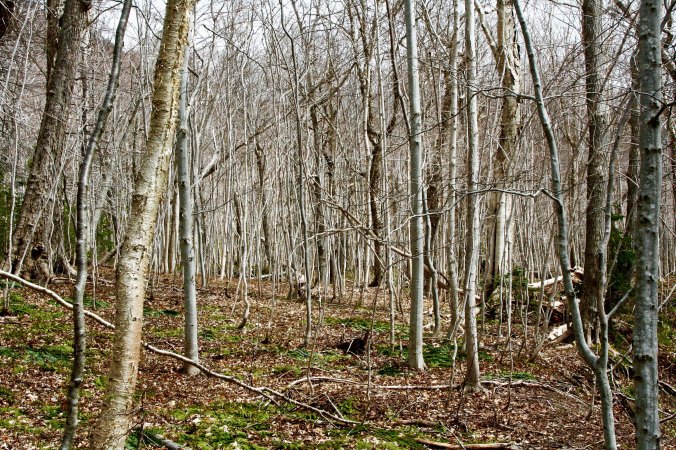
A few ghost leaves still flung to branches, waiting for spring growth to push them off.

A few ghost leaves still clung to branches, waiting for the budding spring growth to push them off.

And this creek burbled along beside the cottage.

And this creek burbled along beside the cottage.

Climbing again, we came on this view of the west coast of Cape Breton looking out toward the Gulf of St. Lawrence.

Climbing again, we came on this view of the west coast of Cape Breton looking out toward the Gulf of St. Lawrence.

Signs along the road had been warning us about moose...

Signs along the road had been warning us about moose…

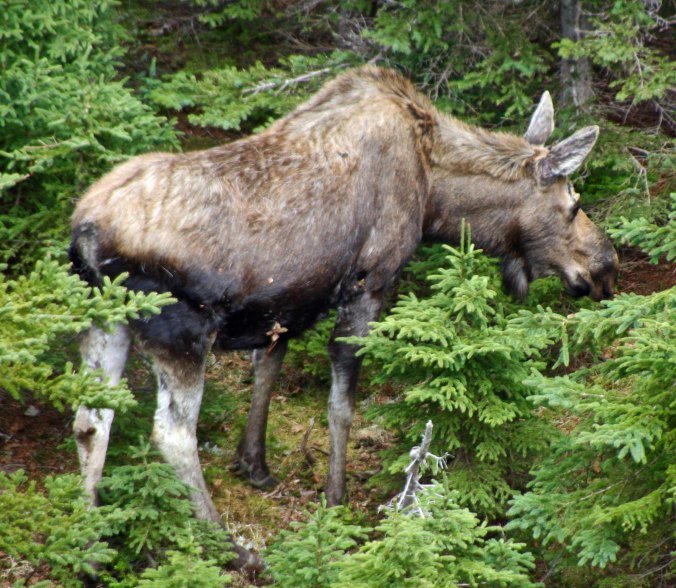
Finally, we got to see one.

Finally, we got to see one. These wonderfully humorous animals can be quite dangerous. You don’t want one chasing you down the road when you are on a bicycle. When I lived in Alaska, a cyclist came around a blind curve on a bike trail and ran smack into one! Fortunately, the surprised moose decided to run away.

The Cabot Trail often requires road work after a rough winter.

The Cabot Trail often requires road work after a rough winter. Peggy and I were entertained by this effort at a traffic stop. Don’t you wonder they got the earth mover up on the hillside?

This impressive cliff was near the road work.

This impressive cliff was near the road work.

Leaving the Highlands, we came on several small communities along the coast where fishing is a major industry. Whale watching is also popular off the coast.

Leaving the Highlands, we came on several small communities along the coast where fishing is a major industry. Whale watching is also popular off the coast.

The Cabot Trail heads inland across much flatter country. Spring waters still flooded this field.

The Cabot Trail heads inland across much flatter country. Spring waters still flooded this field and the grass had yet to turn green. Last year’s cattails can be seen in the left foreground.

I'll finish off my Cape Breton photos with this rather lovely stream.

I’ll finish off my Cape Breton photos with this stream, which spoke to me again of the wild aspect of the island.

Our exploration of Cape Breton was over and my time with traveling companions was drawing to a close. We picked up highway 104 back through Antigonish and on to New Glasgow where Jean and Lindell said goodbye and biked south toward Halifax and their plane. I continued on my lonely journey west, following Highway 6 back to the coast and through towns with wonderful names like Tatamagouche and Pugwash. New Brunswick and new adventures were waiting.

NEXT BLOG: Peggy and I detour to Prince Edward Island, meet the mayor of Victoria, and eat a scrumptious lobster roll.

The Journey Home: Only 5000-Miles left! The Ten Thousand Mile Bike Trek

The road goes ever on. At least it seemed like it on my 10,000-mile bike journey around North America. As I left Nova Scotia and started my journey west, I knew that there would be mountain ranges in my future.

The road goes ever on. At least it seemed like it on my 10,000-mile bike journey around North America. As I started my journey west, I knew that there would be mountain ranges in my future— several of them. This is the Rockies.


“It’s a dangerous business, Frodo, going out your door. You step onto the road, and if you don’t keep your feet, there’s no knowing where you might be swept off to.” J.R.R. Tolkien

I had left my home in California without a clue of what it meant to bicycle 10,000 miles. Like Frodo, I had no idea where I might be “swept off to.” There was even a chance when I reached the East Coast, I might decide to head for Europe and bicycle around the world. Why not? My personal commitments were limited and my job was a maybe. Other people would eagerly step in if I didn’t return.

By the time I reached Nova Scotia, I had gone about as far as I could go east in North America, however, and had enough adventures to last a lifetime— or at least a year.

I had bicycled through rainstorms and hailstorms and snowstorms. I had been up and over three mountain ranges. I had crossed through deserts, swamps, farmlands and forests. I’d been on remote, lonely roads and on highways clogged with traffic. I’d had close encounters with 18-wheelers, cars, dogs, and a coiled rattlesnake. I had met a lot of good folks, and a few not so good. And I had toughened up. I could now bicycle 100-miles in a day with much more ease than I had bicycled 30 miles on my first day out of Diamond Springs.

So I had decided it was okay to head home. Besides, I still had 5,000 miles to bicycle! More adventures waited.

From Nova Scotia, my plan was to bicycle across New Brunswick and into Quebec. (Would my high school French suffice?) I would bike up and over the Gaspe Peninsula, cross the St. Lawrence Seaway by ferry, and then head up into remote northern Quebec before cutting south across Ontario. At Thunder Bay on Lake Superior, I would return to the US and bicycle across Minnesota. I would then bike through North Dakota, Montana, Idaho, and Nevada before finally crossing the Sierra Nevada Mountains again, having gone full circle.

Here are some photos and a map to introduce my homeward journey.

I had been working my way east and north for close to four months. I now had two months of traveling west and south to return home.

I had been working my way east and north for close to four months. I now had a little over two months for traveling west and south to return home if I wanted to renew my contract of running long distance backpacking and bicycle treks. My days of lollygagging were over.

This is the route I followed through the US and Canada. I began and ended my trip in Northern California.

This is the map I originally posted to show my bike trek route around North America. At this point in revisiting my 1989 journey, I am at my farthest point east, ready to head west.

I could depend upon the weather continuing to keep my journey interesting.

One thing I knew for sure about the second half of my trip, I could depend upon the weather to keep my journey interesting…

There would be numerous towns to pass through that promised I would meet interesting people and enjoy unique architecture.

And the people. Whether it would be in the communities I visited, the people I met…

And unique art ranging from murals to this desert sculpture.

Or in the unique art they created.

And history...

I would also continue to be fascinated by the history, as represented by this old barn…

This sculpture of a mountain man...

A mountain man statue…

Or the way people live their mark.

And this hill where high school classes had painted their graduation years for over a century.

And other in distance vistas.

I also knew that the next 5,000 miles would bring unending, beautiful scenery— whether it would be in distant vistas such as this snow-covered mountain range…

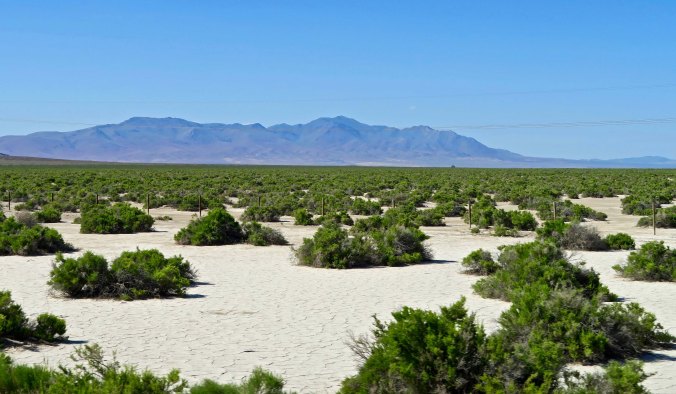
Or this desert scene in Nevada.

Or this desert scene…

I had seen much beautiful country in my first 5,000 miles. Much more was to come.

Or in closer views such as this forest of birch,

Some would be up close...

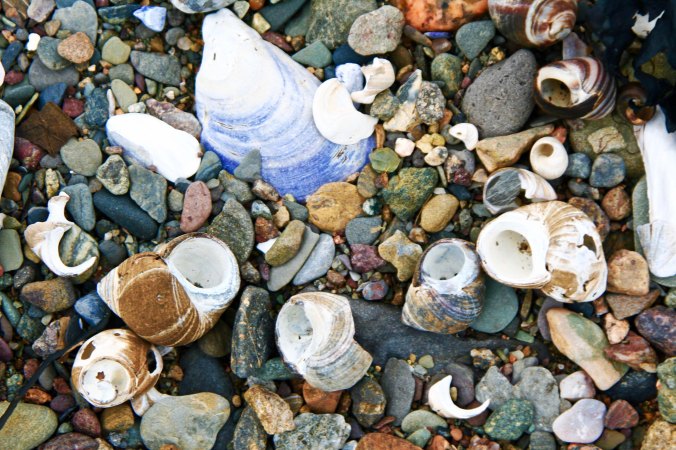
These seashells in New Brunswick…

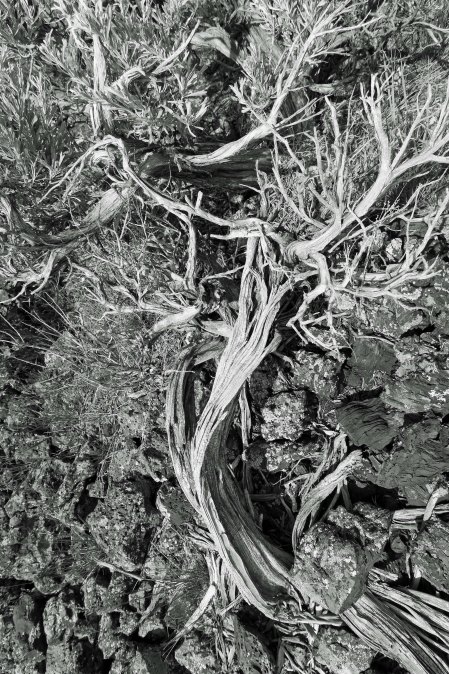
And in these limbs.

A desert shrub…

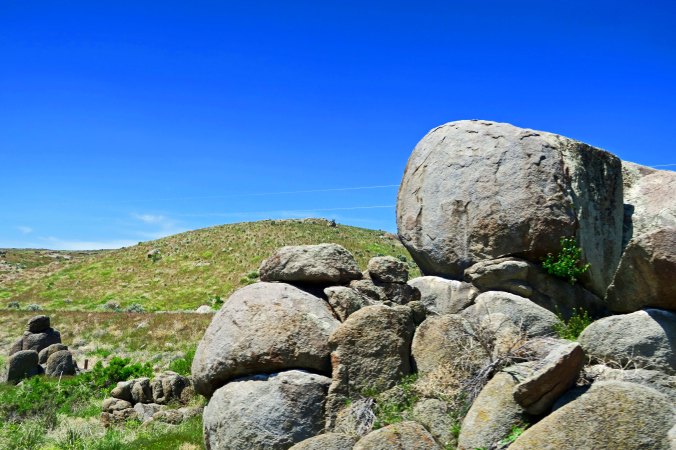
Nevada boulders

These boulders in Nevada…

And rivers...

And numerous rivers…

Idaho river

Idaho River

Montana stream

Snake River, Idaho

Road shot

The road would pull me on through all of it, eager to see what was over the next hill, and never tiring of what I found.

NEXT BLOG: I will finish my trip through Nova Scotia and include a detour Peggy and I made to Prince Edward Island.


Beautiful Canada: Cape Breton and the Cabot Trail… The 10,000 Mile Bike Trek


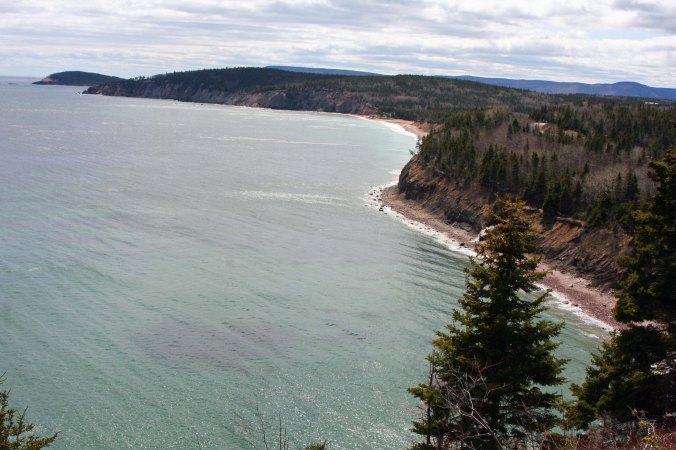
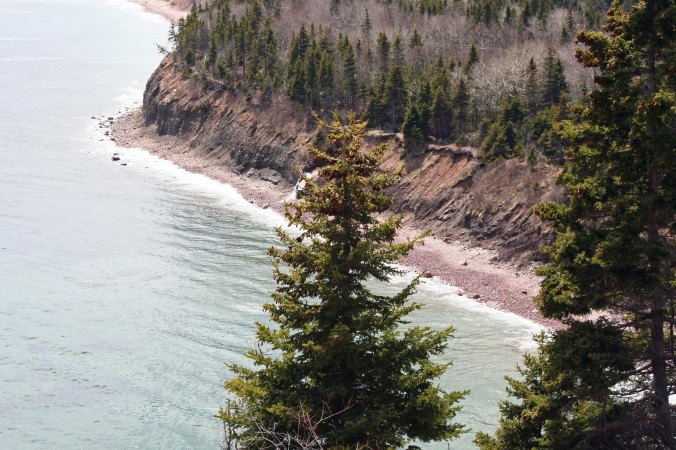
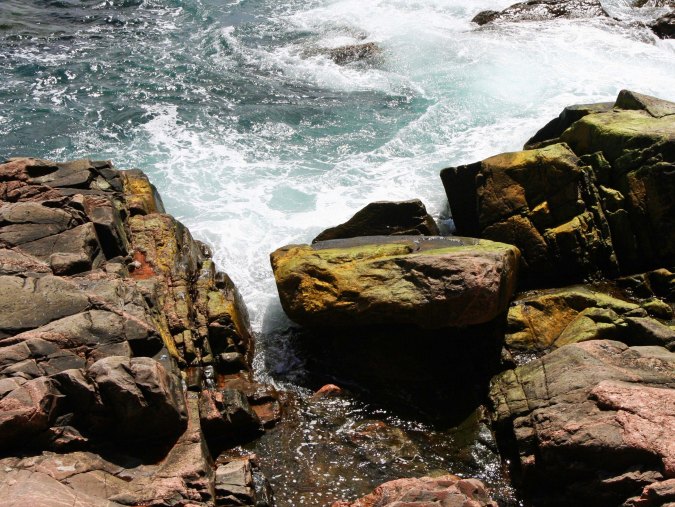
Rocky shores touched by the Atlantic Ocean are a key element in the scenic beauty of the Cape Breton Highlands along the Cabot Trail.

Rocky shores touched by the Atlantic Ocean are a key element in the scenic beauty of the Cape Breton Highlands along the Cabot Trail.

Cape Breton is a big island: the 77th largest in the world and the 18th in Canada if you are a detail-oriented type of person. Once upon a very long time ago, before the continents got divorced and started drifting away from each other, it was snuggled up to Scotland and Norway on the ancient continent of Pangaea. I feel a certain amount of affinity since my ancient ancestors drifted away from Norway and Scotland, some 300 million years later.

It’s an island of superlatives and you will be hearing a fair number on this post. The tourist bureau should hire me. I’m not alone in my praise. The pretty-picture travel magazine Condé Nast considers Cape Breton to be one “of the best island destinations in the world.” Numerous other magazine and newspaper articles agree.

The Cape Breton Highlands on the northern part of the island are the primary reason for the acclaim. Considered a northern extension of the Appalachian Mountains, the Highlands are noted for their steep ups and downs. I agree; they provided me with some of the most challenging bicycling on my 10,000-mile trip. I was amused when doing research for this post to find a Cape Breton website recommending to motorists, “You may want to check your brakes.” Indeed.

The road around the Highlands is known as the Cabot Trail. It was named after the 15th Century explorer John Cabot who was searching for a way to China on behalf of King Henry VII. (Rumor has it that the King was seeking a new place to send his many wives. Just kidding— the reality is that he wanted to spice up his life, and Asia was the place to go for spices.) Cabot may or may not have landed on the island, but locals are eager to claim him. Most experts believe his landing site was more likely Newfoundland.

There is much more to Cape Breton Island than the Cabot Trail, but the scenic highway is the primary reason that visitors flock to the island.

There is much more to Cape Breton than the Cabot Trail, but the scenic highway is the primary reason that visitors flock to the island. This post and my next one will focus on views along the Trail.

A view form the beginning of the Cabot Trail looking not toward the Cape breton Highlands.

A view from the beginning of the Cabot Trail looking out toward the Cape Breton Highlands.

The Cabot Trail is world-famous. The sign says so. The highway is what I remember most about Nova Scotia. After crossing over the Canso Causeway, I, and my two bicycle-travelling companions, Jean and Lindell, had made a beeline for it. Peggy and I did as well, following the Trans-Canada Highway 105. Since the 185-mile scenic byway travels in a circle (more or less), we had a choice of whether to travel clockwise or counter-clockwise. The travel guides recommend clockwise since going in the opposite direction puts travelers on the outside of the road as it winds along towering cliffs with scary drop-offs. The theory is that most people prefer safety to death-defying edges. But what’s the fun in that? We chose the outside with its dramatic views of the Atlantic Ocean on the east side of the Highlands and Gulf of St. Lawrence on the west. (Besides, I am a veteran of Highway 1 on the California coast, which is much scarier.)

In addition to natural beauty, Cape Breton features both its Celtic and Acadian heritages. Some 50,000 Highland Scots migrated to the area between 1800 and 1850 as a result of the Highland Clearances where small farmers in Scotland were replaced by sheep, i.e. the hereditary aristocratic owners of the land found a better way to make money. Colaisde na Gàidhlig, the Gaelic College, was founded to promote and preserve the Scotch-Irish Gaelic Culture in Nova Scotia. Located on the Cabot Trail shortly after it leaves the Trans-Canada Highway, the college offers courses in Gaelic language, crafts, music, dance and history. Visitors are invited to stop by and see a ceilidh, a traditional Scottish dance, or even buy a kilt.

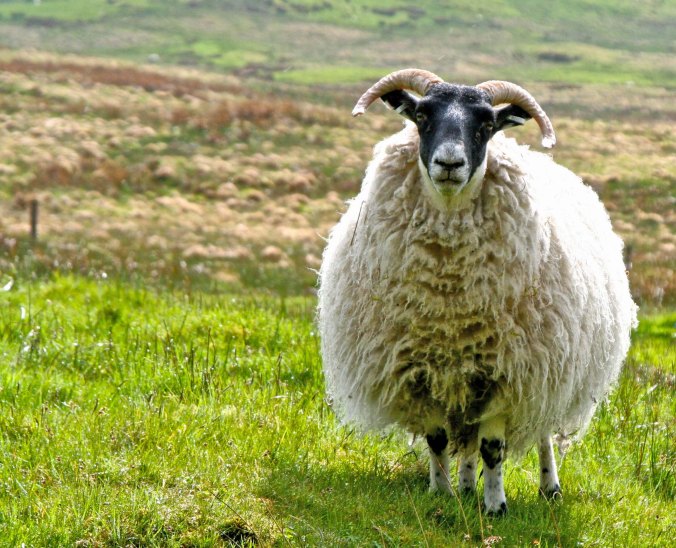
Scottish sheep photo by Curtis Mekemson.

Furry fellow. An ancestor of the sheep that replaced the Highland farmers. We were happily lost on a remote Scotland road when this guy greeted us. (Photo by Peggy Mekemson.)

The Gaelic College located along the Cabot Trail on Cape Breton Island.

The craft shop of the Gaelic College where everything Gaelic is promoted including the language.

St. Andrew’s Presbyterian Church, located several miles beyond the Gaelic College, reminded me of my own Scotch-Irish (Ulster Scot) family’s heritage— and our journey to the New World in the 1750s. We were Lowland Scots as opposed to the Highland Scots. The Mekemsons had been serious Presbyterians all the way back to the 1600s when Scottish Presbyterians had declared that God and not the King of England was their ruler. This had upset the King considerably. One of my ancestors, John Brown, was even a martyr to the cause. Peggy and I visited his gravesite in Scotland and I did a blog on him. Our family had remained Presbyterians right up until my father had become an Episcopalian (the American equivalent of the Anglican Church), a move that undoubtedly sent generations of our Presbyterian ancestors rolling over in their graves.

St. Andrews Presbyterian Church.

St. Andrews Presbyterian Church.

A close up of the grave of John Brown, the Scottish Martyr shot down in fron of his family in the late 1600s.

The lonely grave of John Brown, the Scottish Martyr shot down in front of his family in the late 1600s.

This shot of Peggy captures the isolation of John Brown's Grave, the white speck on the upper left of the photo.

This shot of Peggy captures the isolation of John Brown’s Grave, the white speck on the upper left of the photo.

Anyway, a series of religious, political, and economic factors had sent my ancestors first to Northern Ireland and then on to Pennsylvania and Maryland.

One third of the Cabot Trail runs through the Cape Breton Highlands National Park, which captures the ocean and highland scenery of the area as well as protects the wildlife and plants that call it home. Moose signs along the highway warn motorists of potential automobile-moose confrontations, which are not good for either man or moose. While Peggy and I are always aware of the potential danger, mainly we think of the signs as suggestions we may get to see a moose, always a plus. But that is a story for my next blog, along with the second toughest climb of my 10,000-mile trek and a visit to the Acadian side of the island. Following are several photos I took on the first half of the Cabot Trail.

St. Andrews Provincial Park in the Cape Breton Highlands.

Regional parks, such as St. Ann’s, demanded that we stop and admire them.

Looking the other direction at St. Ann's Provincial Park along the Cabot Trail.

Looking the other direction at St. Ann’s Provincial Park along the Cabot Trail.

Once again Peggy and I found ourselves looking at scenery that sported an early spring look.

Once again Peggy and I found ourselves looking at scenery that sported an early spring look.

Our day along the Cabot Trail varied between sunshine and threatening skies.

Our day along the Cabot Trail varied between sunshine and threatening skies.

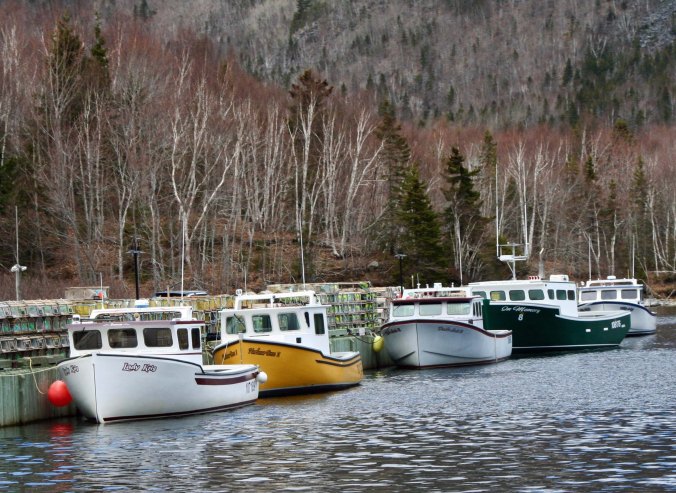
We found these boats near the small town of Ingonish.

We found these fishing boats near the small town of Ingonish. Lobster traps are located on the pier.

I liked this lonely structure, which looks like a great place for a picnic.

I liked this lonely structure, which looks like a great place for a picnic.

And these quiet waters.

And these quiet waters.

Climbing up into the Highlands provides scenic views of the Atlantic coast.

Climbing up into the Highlands provides scenic views of the Atlantic coast.

A close-up.

A close-up.

Blue skies color the Atlantic Ocean blue.

Blue skies color the Atlantic Ocean blue.

The Cabot Trail moves between the Highlands and Coast. Give a choice between long sandy beaches and rocky coasts I will always prefer the rocky coasts, unless I happen to be on a tropical island.

The Cabot Trail moves between the highlands and coast. Given a choice between long sandy beaches and rocky coasts, I will always prefer the rocky coasts, unless, of course, I happen to be on a tropical island.

Another view.

Another view.

The cool, windy day fluffs Peggy's hair

The cool, windy day fluffs Peggy’s hair

The road leading down to Cape North, which will be the farthest point east I reach on my bike trip.

The road leading down to Cape North, the farthest east I would travel.

This church at North Bay marked my turning point. After this, I would be heading home.

This church at Cape North marked the turning point in my 10,000 mile trek. After this, I would be heading home.

Shortly after we left the church, Peggy and I came on these two bicycle tourists. How appropriate, I thought. The dark cliffs looming in the background would provide the second hardest climb in my whole trip, but that's a story for my next blog.

Shortly after we left the church, Peggy and I came on these two bicycle tourists. The dark cliffs looming in the background would provide the second hardest climb in my whole trip, but that’s a story for my next blog.

The Quiet Beauty of Nova Scotia… The 10,000-Mile Bike Trek

Cove on East Coast of Nova Scotia

Nova Scotia has a quiet beauty that grows on you. I took this photo along the East Coast’s Marine Drive.


This is the forest primeval. The murmuring pines and the hemlocks. From Evangeline by Henry Wadsworth Longfellow

The beauty of Nova Scotia isn’t tied to towering mountains or vast open spaces. It makes a quieter statement— a combination of water and coves and forests and highlands and valleys and villages that grows on you until you realize that you have arrived somewhere that is very special. Long after I had completed my 10,000-mile journey around North America, Nova Scotia continued to exist in my mind as one of the highlights. Our recent drive around the province as Peggy and I retraced my bike trek route reinforced this original impression.

Nova Scotia is Latin for New Scotland, which seems appropriate to me in that I find the beauty of the two areas similar in nature. Before it became Nova Scotia, however, it was known first as Mi’kma’ki reflecting the First Nation people who lived there, the Mi’kmaq. Afterwards the French settled the area and called it Acadia. In 1755, the British expelled most of the French as a consequence of their ongoing wars with France. Longfellow’s poem, Evangeline, is based on that expulsion. Many of the people who were deported eventually ended up in Louisiana where they became known as Cajuns (Cajun derives from Cadia).

After the Acadians were expelled, numerous Scots arrived from New England to help repopulate the area. They also came from Scotland where British policies were driving them out of the Highlands. Gaelic became a common language. Following the Revolutionary War, a number of people who had remained loyal to England during the conflict resettled in Nova Scotia. Included among them was a small population of blacks who had joined Britain’s cause as a way out of slavery. What all of this means is that Nova Scotia has several distinct cultures, which, it seems to me, coexist side by side in relative harmony.

Other than a day of bicycling in Death Valley, Nova Scotia was the only place on my bike trip where I had travelling companions. Jean Snuggs and Lindell Wilken had both gone to college together in Illinois before moving out to California. I met Jean on one of the 100-mile backpack trips I led in the Sierra Nevada Mountains of California. We had become good friends and eventually lived together. That arrangement had ended but we remained good friends. Both Jean and Lyndell were college track coaches and in excellent shape. If I recall correctly, they had also just finished bicycling the Oregon Coast. I was extremely glad I had a few thousand miles of bicycling behind me! Otherwise, it could have been a long and humbling seven days.

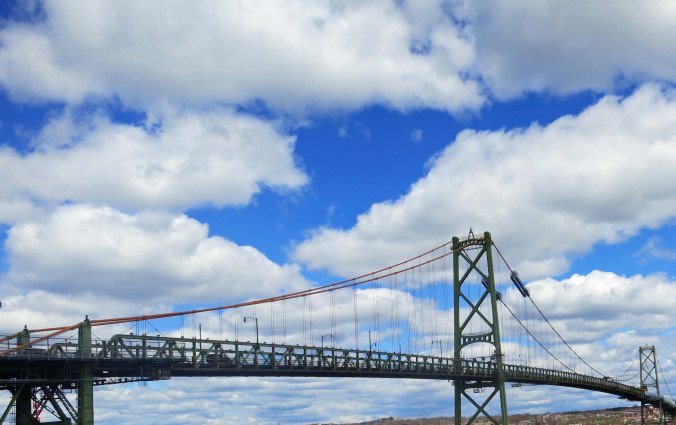
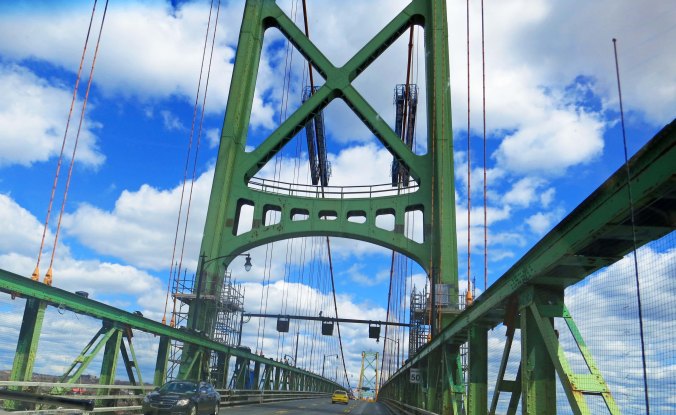
We didn’t linger in Halifax, which was too bad since it is a lovely city. But the open road called. We crossed over the Angus L. Macdonald Bridge, picked up Highway 7 and followed it up the East Coast to Liscomb, a distance of 100 plus miles. Highway 7 is known as the Marine Highway in tourist promotions for good reasons. It closely follows the Atlantic Ocean. Inlets, coves, small rivers and towns provide an endless kaleidoscope of scenery.

The Angus

The Angus L. MacDonald Bridge in Halifax.

Crossing the Angus L. MacDonald Bridge in Halifax, Nova Scotia.

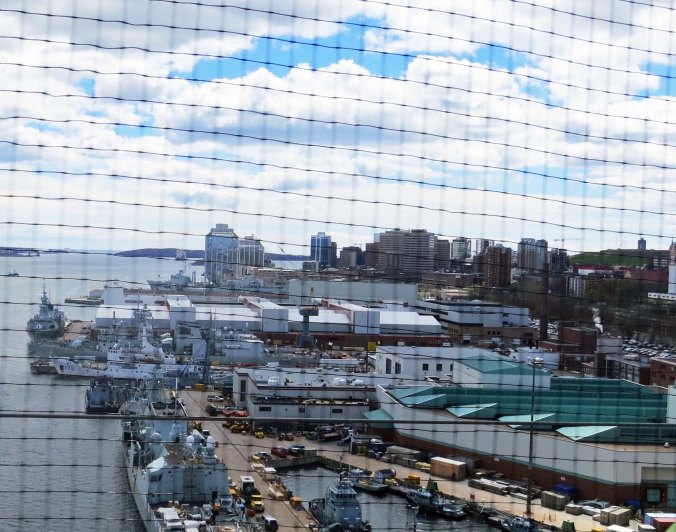
Crossing the bridge. Note the screens on the side. There is no jumping off of the bridge!

Looking back at Halifax through the screened fence on the bridge.

Looking back at Halifax through the screened fence.

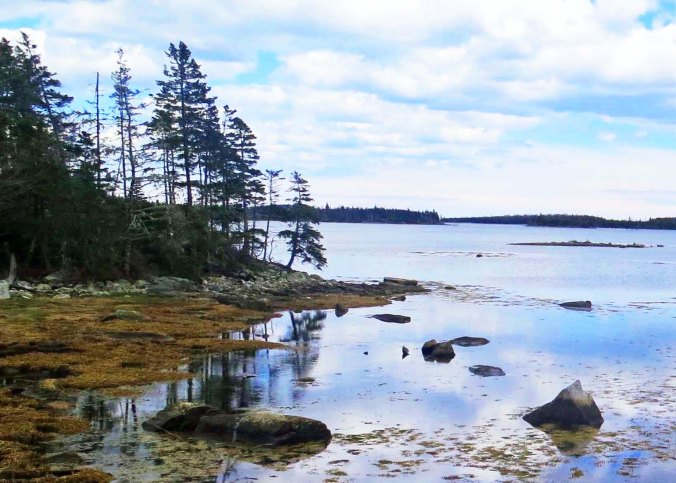
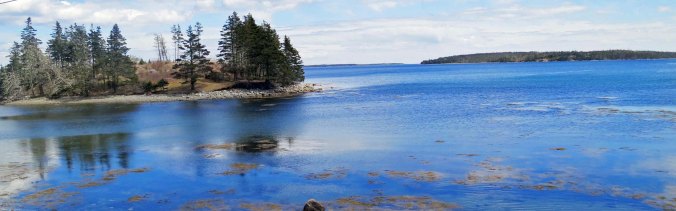
Numerous islands, such as this, are scattered along Nova Scotia's East Coast.

Numerous islands, such as this, are scattered along Nova Scotia’s East Coast.

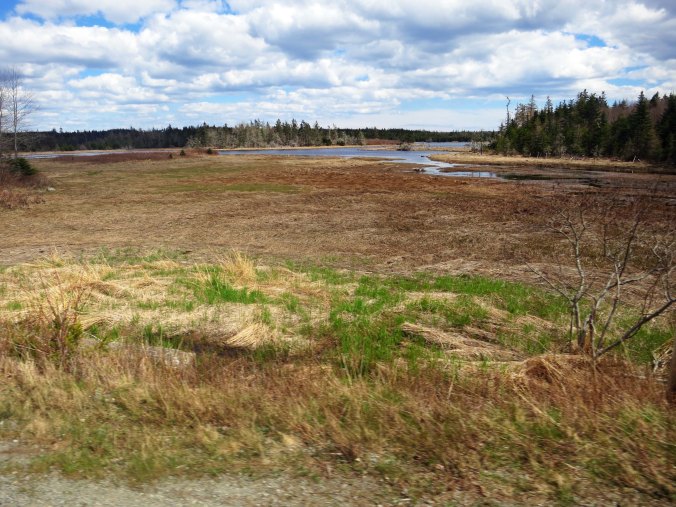
Flats like this one added another element of variety.

Flats like this one added another element of variety along the coast.

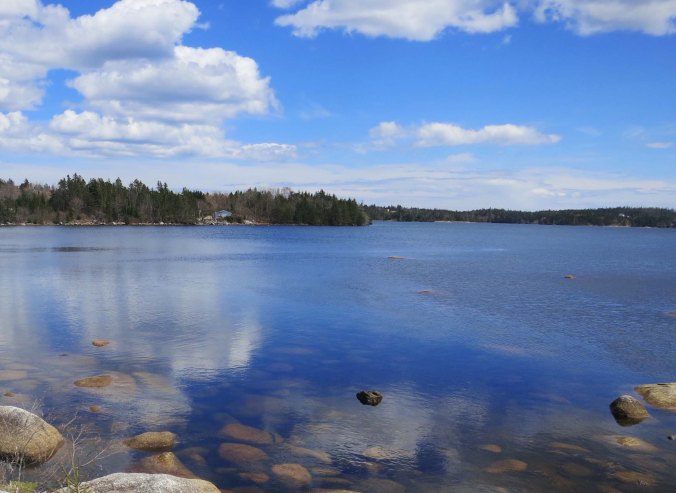
Numerous islands fill the coves along Marine Drive.

Winter storms along the Atlantic Ocean must change this incredibly calm water along Marine Drive.

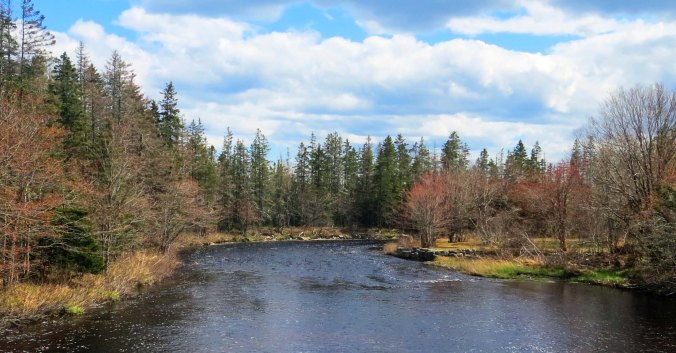
We passed over several river on the East Coast ranging form calm...

We passed over several river on the East Coast ranging from calm…

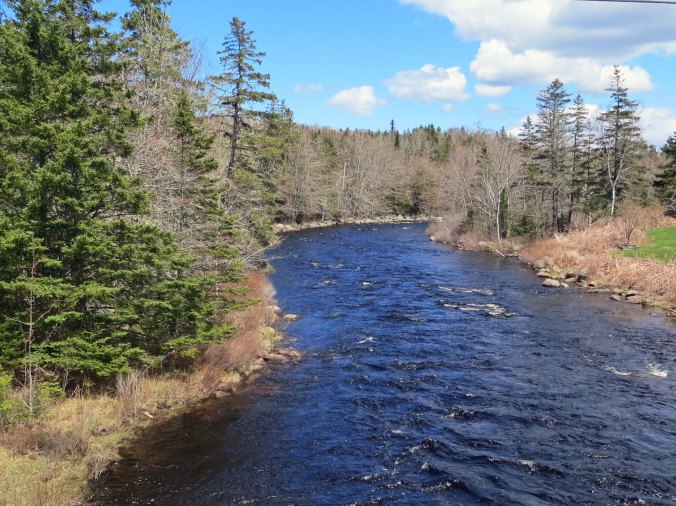
Riffled river on East Coast of Nova Scotia

To slightly riffled…

To roaring. The West River flows into Sheet Harbor.

To roaring. The West River flows into Sheet Harbor. Sheet Harbor, BTW, was one of the areas that Loyalist refugees from America’s Revolutionary War settled in Nova Scotia.

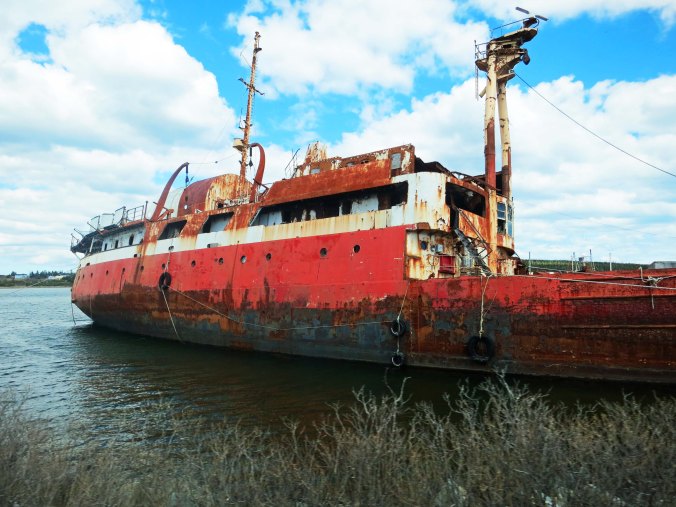
We found what appeared to be a large derelict along the coast.

We found what appeared to be a large derelict stranded along the coast.

At Liscomb, Highway 7 took us inland across the peninsula to Antigonish. I have only a vague memory of Antigonish on my bike trip, which may mean that the lure of the renowned Cape Breton pulled us on past it. Peggy and I stopped, however, and the town with its St. Francis Xavier University was definitely worth the visit, as university towns often are. From Antigonish we picked up Highway 4 to Auld and the Canso Causeway. The Causeway, a 4500 foot engineering achievement that took some 10 million tons of rock to build, connects mainland Nova Scotia with the island of Cape Breton. It is where I will end today’s post. Next up: the fabulous Cape Breton and the Cabot Trail into Cape Breton Highlands’ National Park.

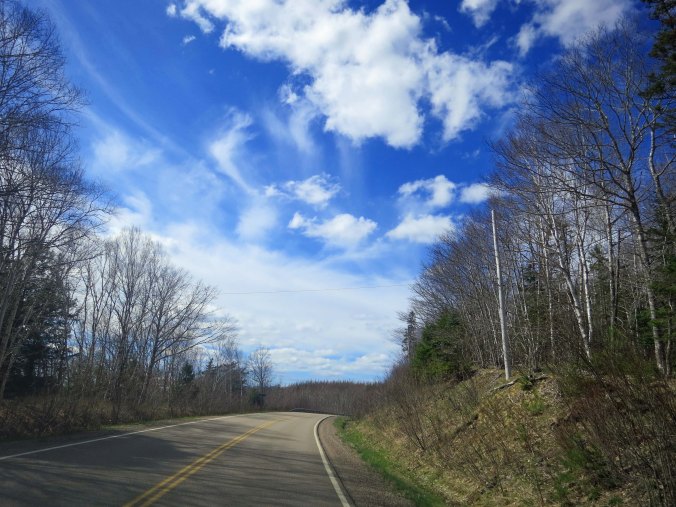
A road shot of Highway 7

A road shot of Highway 7 between Liscomb and Antigonish.

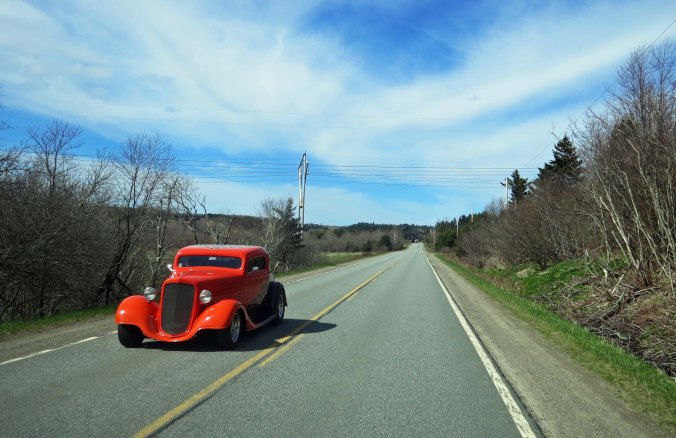
This guy provided some color, and class.

This guy added both class and color to the road.

St. Francis Xavier University in Antigonish is recognized as one of Canada's top colleges.

St. Francis Xavier University in Antigonish is recognized as one of Canada’s top colleges.

Antigonish is an attractive town with a number of eating establishments.

Antigonish is an attractive town with a number of eating establishments. Peggy and I had a tasty lunch here.

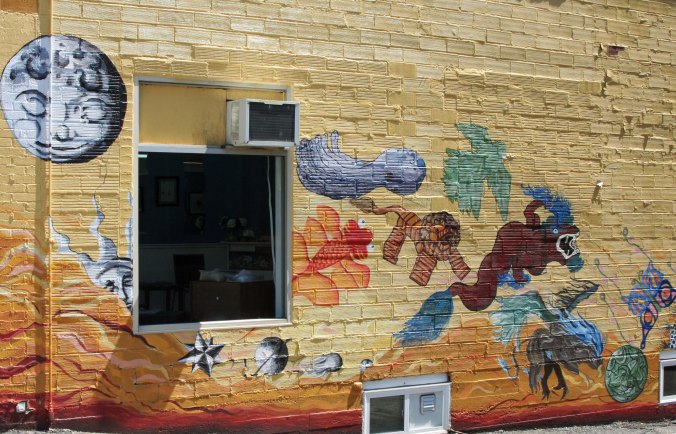
A number of murals decorated the downtown. This was my favorite.

A number of murals decorated the downtown. This was my favorite, given that I always like weird animals.

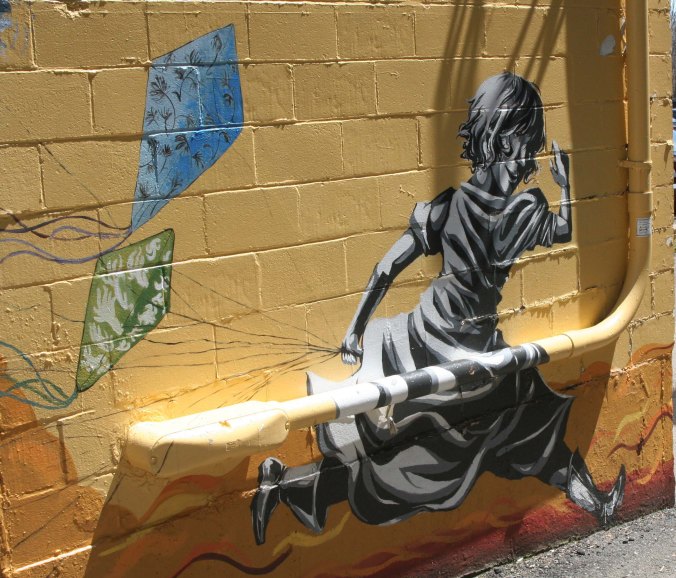
The mural also included this girl flying a kite.

The mural also included this girl flying kites.

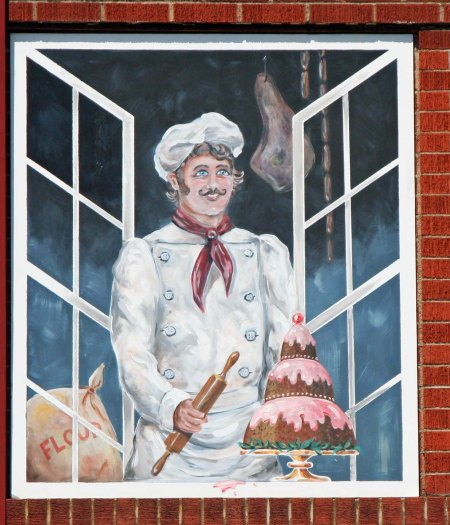
Bricked in windows across the road also featured fun murals.

Bricked in windows across the road also featured fun murals such as this baker.

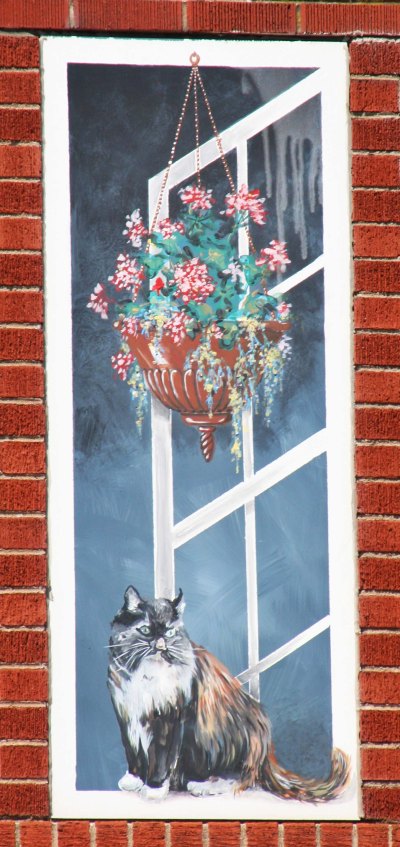
This cat looking out of a window also caught my attention.

And a cat looking out the window..

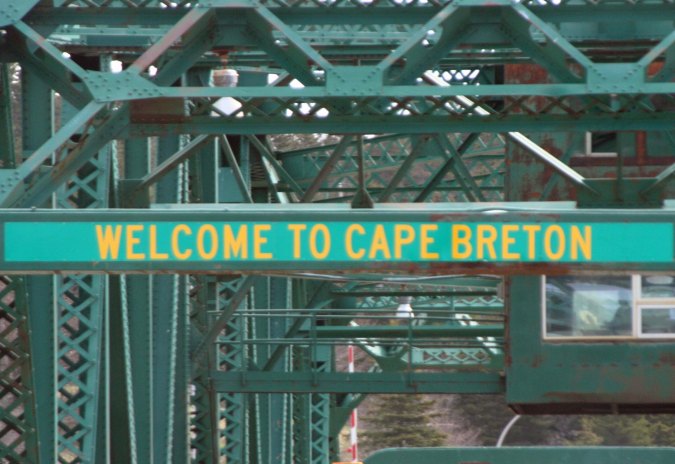
This sign is located at the end of the Canco

This sign was featured at the end of the Canso Causeway. I’ll use it as an introduction to my next two blogs on Cape Breton, a world-class tourist destination.

From Winchester, Virginia to Halifax, Nova Scotia… The 10,000-Mile Bike Trek

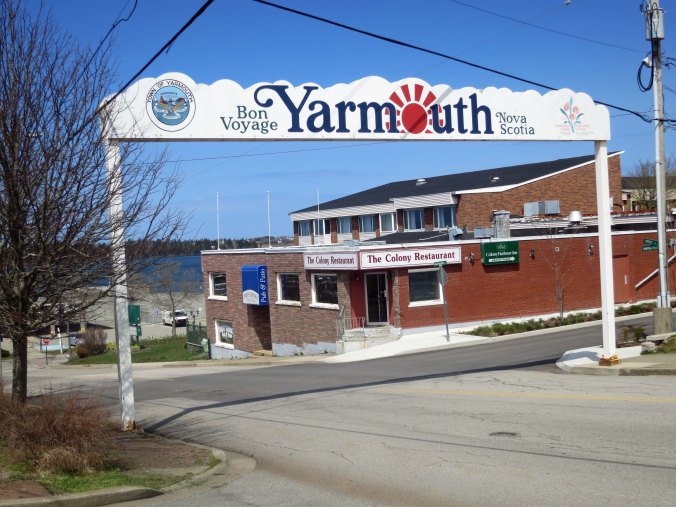
After three months of bicycling, I left the US and entered Canada. This is a photo of the Consulate Building in Yarmouth, Nova Scotia.

After three months of bicycling, I left the US and entered Canada. This is a photo of the Consulate Building in Yarmouth, Nova Scotia.

In my last post, I had arrived in Winchester, Virginia on my 1989 bike trek and decided I needed to make up for some lost time and give myself a break from bicycling by taking the Greyhound bus to Bangor, Maine.

I was lucky to find the Greyhound bus depot, a motel, and a bike shop all within a few blocks of each other in Winchester. The bicycle shop gave me a bike box, which I hauled back to my motel room. I recruited a trashcan newspaper to cover the floor. Motels have little tolerance for bicycle grease (understandably), and I had a bike to dismantle. Handlebars, pedals, seat, and front wheel had to come off.

While spreading the newspaper, a headline caught my attention. Zsa Zsa Gabor had been arrested for slapping a Beverly Hills motorcycle policeman who had stopped the 66-year-old in her $215,000 Rolls Royce. Apparently Jack, as in Jack Daniels, had been involved in the altercation.

I’ve traveled by Greyhound several times in my life, starting as a child. There was a local bus we had used a few times that connected Diamond Springs and Placerville (three miles away). The bus driver’s name was Pat, which I remember because I named a stray dog after him. The dog had been wandering our neighborhood for weeks, catching an occasional jack rabbit or ground squirrel for food. My mother had watched the stray grow thinner and thinner until one day she stopped the family’s well-used car, opened the door, and invited it home for a meal. Since the dog was part greyhound, I promptly named her after the bus driver. Pat was happy with the name, eternally grateful for her food bowl, and became my faithful companion for several years. I am not sure how the bus driver felt about his namesake.

I wish I had taken more notes about my bus trip from Virginia to Maine. Traveling by Greyhound is always an experience. But I was so happy for the break from peddling, I just sat back and watched the scenery fly by. Going uphill faster than five miles per hour seemed almost unreal. I do remember that I had a layover in Washington DC that I used to visit the National Art Gallery. I was lost for several hours among the Van Gogh’s, Picasso’s, Rembrandts, and Dali’s.
I also remember I had a four-hour layover in New York City from 1:00 a.m. to 5:00. Being in any Greyhound station in the middle of the night is memorable. Multiply that by 10 for downtown NYC. I watched in awe as homeless people, hookers, beggars, and, quite possibly, vampires, zombies, and an alien or two claimed the station as their own. I was careful to mind my own business and kept my gear within easy reach. Other than distributing ‘spare change,’ and passing on an offer from a scantily dressed lady, I was left alone to wonder about the nature of my fellow denizens of the night.

Morning found me on my way to Boston, Massachusetts through Connecticut and then through New Hampshire into Maine. Having stayed awake at the NYC bus station, I was in desperate need of a nap, but New England was far too interesting for sleep. Strong coffee helped keep my eyes open for most of the journey. Arriving in Bangor, Maine I quickly found a motel and slept for 12 hours.

New England has great beauty.

New England has great scenery as demonstrated by this gently flowing stream…

And this dark beauty.

And this dark beauty.

Houses, especially older ones, tend to be big. Imagine yourself cooped up with a large family over winter.

Houses, especially older ones, tend to be big. Imagine yourself cooped up with a large family over winter. These three structures are all connected and are part of the house.

I wonder how many Christmas Cards over the years have featured a New England church like this one surrounded by snow and a small village.

I wonder how many Christmas cards over the years have featured a New England church like this one surrounded by snow and a small village.

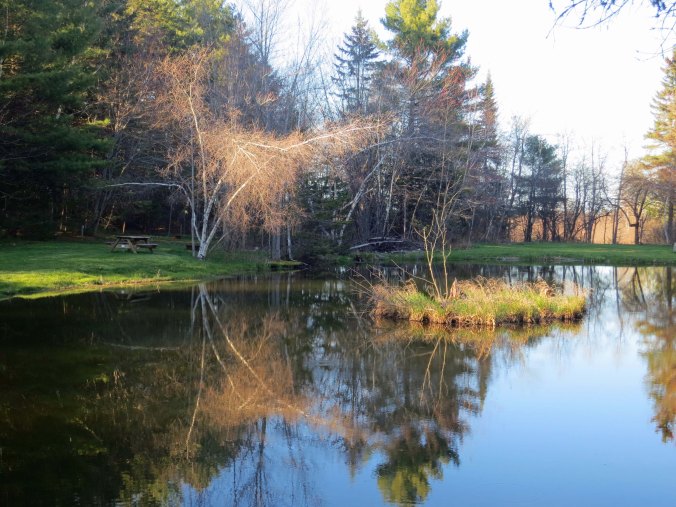
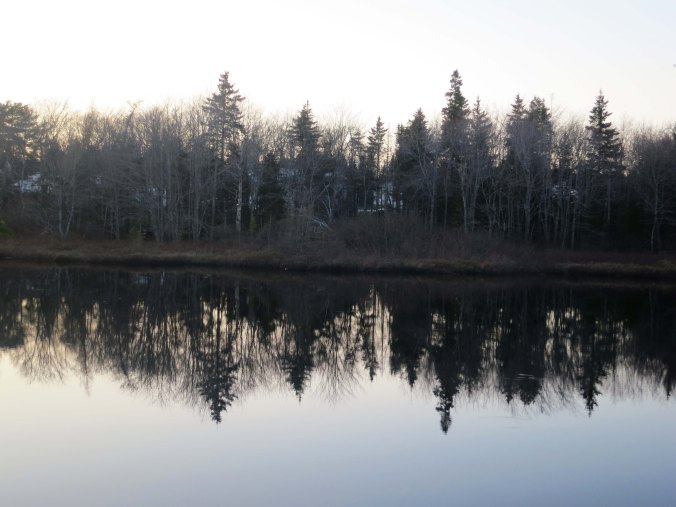
A small pond in Bangor provided me with a reflection shot.

A pond in Bangor provided me with a reflection shot.

I had been in Maine once before. In 1976, my first wife, Jo Ann, and I had taken a year off to travel through the South Pacific and Asia. But first we had bought a VW Camper Van and made a leisurely trip across the US with our Basset Hound, Socrates. My friend Morris had volunteered to keep the dog while we traveled overseas. After dropping Soc off with Morris and his wife Marianna, we had hung around for another week and backpacked on the Appalachian Trail in Maine. I wanted to make sure that Morris and the dog were compatible.

It had been a long week for us with 24/7 rain, muddy trails, black flies, mosquitoes and no-see-ums. It was much easier for Morris and Socrates. They had bonded instantly and apparently had a grand time. Upon our return from the backwoods, we had received a couple of wags from Soc before he returned to drooling over whatever treats Morris was offering him. Food had always been an important factor in determining the dog’s loyalty.

I had thought about Socrates when I woke up from my 12-hours of sleep in Bangor and put my bike back together. Shortly after breakfast, I was on Highway 1 making my way toward Bar Harbor, Maine and Acadia National Park. It was a short trip, hardly longer than 50 miles. I was there by early afternoon and settled into a campground.

You might wonder why I would feature this Dunkin' Donuts sign I found outside of Bangor on the way to Bar Harbor. The reason is I never passed up a donut shop on my trip!

You might wonder why I would feature this Dunkin’ Donuts sign I found outside of Bangor on the way to Bar Harbor. The reason is I never passed up a donut shop on my trip! I’d look like an elephant if I did that now.

I promised myself I would do absolutely nothing for a week while I waited for my friends Jean Snuggs and Lyndell Wilken who were going to bicycle around Nova Scotia with me. It almost worked— and would have except for two things. One, I had a responsibility to catch mosquitos with my hands and squash them before they landed on me and started to suck my blood. Given how numerous and hungry they were, I pursued this responsibility with passion.

Second, I discovered David Eddings’ series of five fantasy books on the Belgariad in a small bookshop a few miles from my camp. I’d picked up the first one and become hooked. I found I could hold a book in my left hand while squashing mosquitos with my right. Needless to say, the days passed quickly and soon Jean and Lyndell had arrived at my campsite, smiling and eager to catch the ferry to Yarmouth, Nova Scotia, which we did. Since our goal was to bike the northern part of the Province, we took a bus into Halifax. The Canadian part of my bicycling adventure was about to begin.

Ferry terminal entry in Yarmouth Nova Scotia.

The entry to the ferry terminal in Yarmouth.

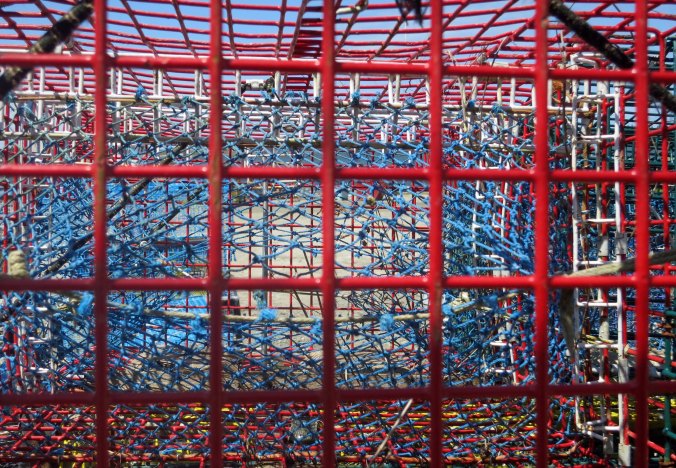
Crab fishing is important off of Nova Scotia and there must be thousands of crab traps such as this in Yarmouth.

Crab fishing is important off of Nova Scotia and there must be thousands of crab traps such as this in Yarmouth.

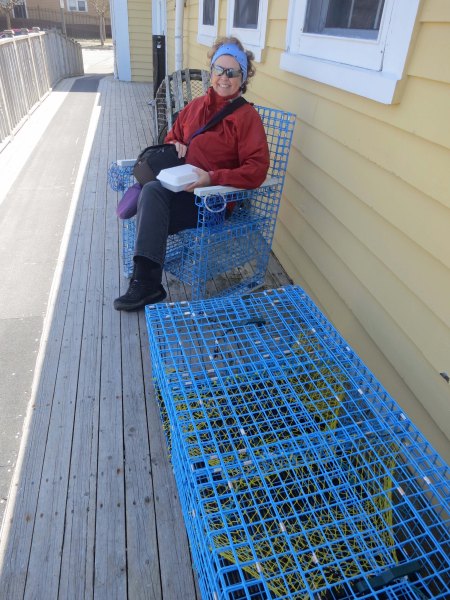
Peggy makes herself at home on furniture made out of crab traps next to a restaurant where we had dined on crab.

Peggy makes herself at home on furniture made out of crab traps next to a restaurant where we had dined on crab.

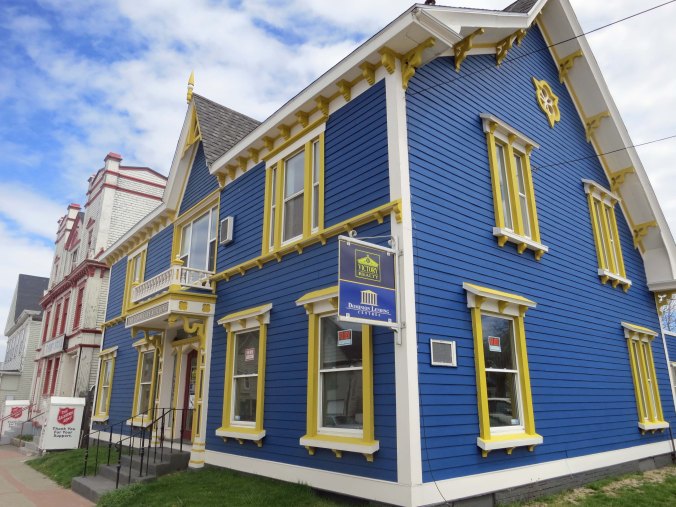
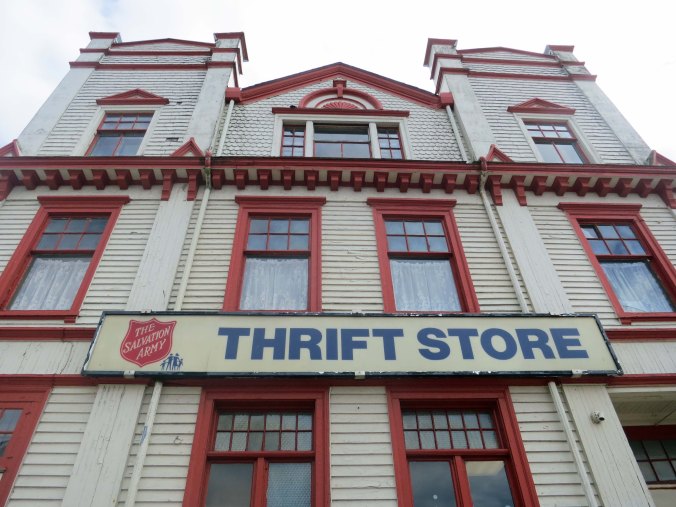
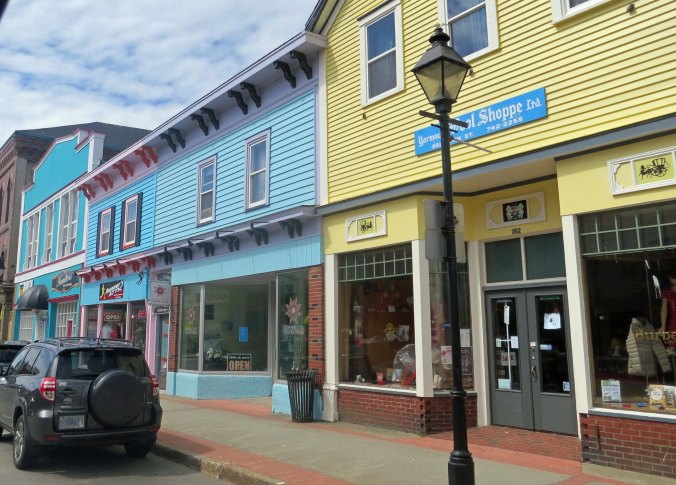
Salvation Army building in Yarmouth, Nova Scotia.

Yarmouth has done a good job of renovating historical buildings. This may be the fanciest Salvation Army Thrift Store I have ever seen. It is next to the Consulate building I featured at the beginning of the post.

More fun buildings in Yarmouth.

More fun and colorful buildings in Yarmouth.

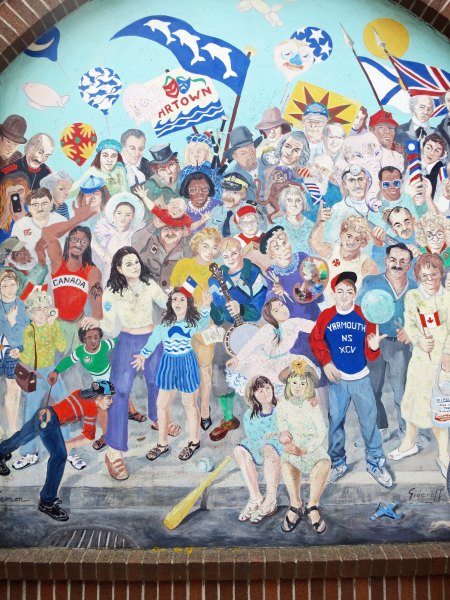
This mural featured a number of inhabitants in the town.

This mural featured a number of inhabitants in the town.

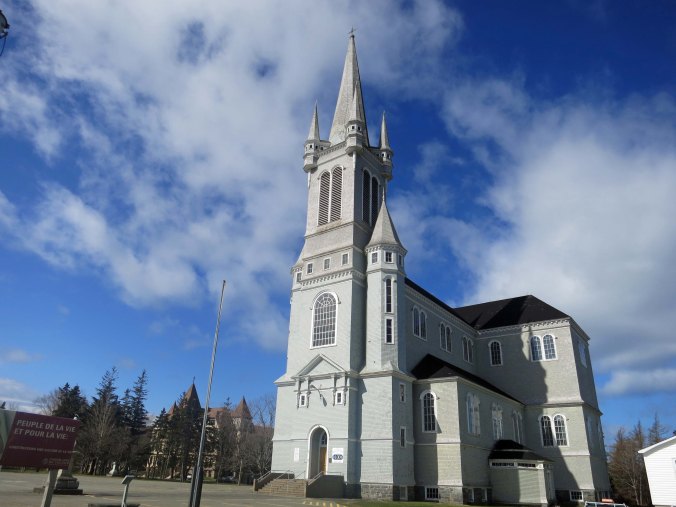
While my bike journey took us southeast toward Halifax, Peggy and I also explored the west coast of Nova Scotia along what is known as the Evangeline Trail. A number of impressive catholic Churches reflect the French Acadian history of the area.

While my bike journey took us southeast toward Halifax, Peggy and I also explored the west coast of Nova Scotia along what is known as the Evangeline Trail. A number of impressive Catholic Churches reflect the French Acadian history of the area. The road, which travels along the Bay of Fundy, noted for its extreme tides, is well worth a side trip.

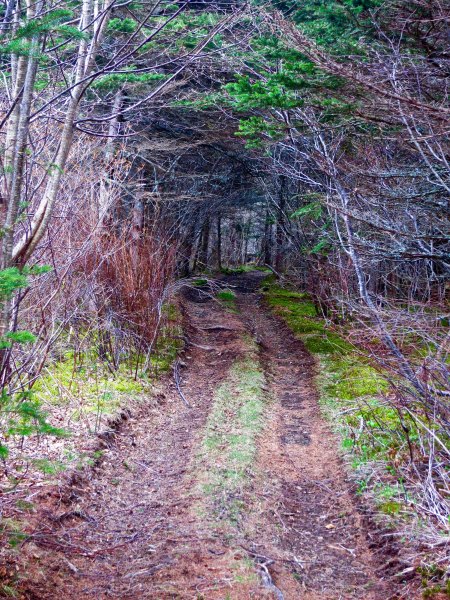
We found this mysterious 'road less traveled' along the Evangeline Trail.

We found this mysterious ‘road less traveled’ along the Evangeline Trail.

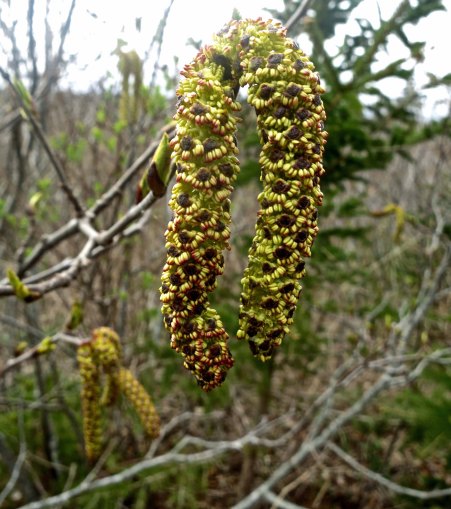
And this impressive Catkin.

And this impressive Catkin.

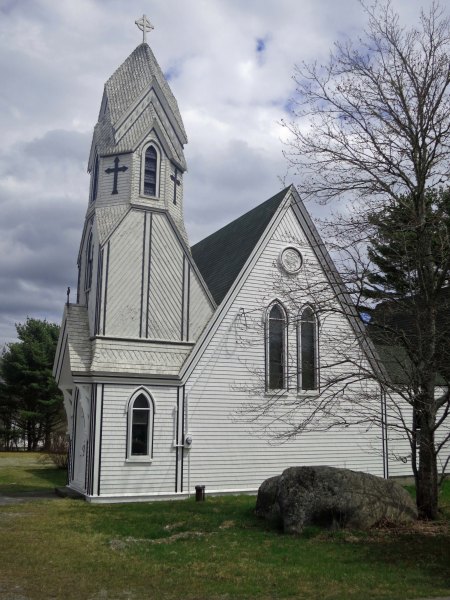
Back on track, following the coast south out of Yarmouth, we came on this unusual Anglican Church, which represented Nova Scotia's English heritage for me.

Back on track, following the coast south out of Yarmouth, we came on this unusual Anglican Church, which represented Nova Scotia’s English heritage for me.

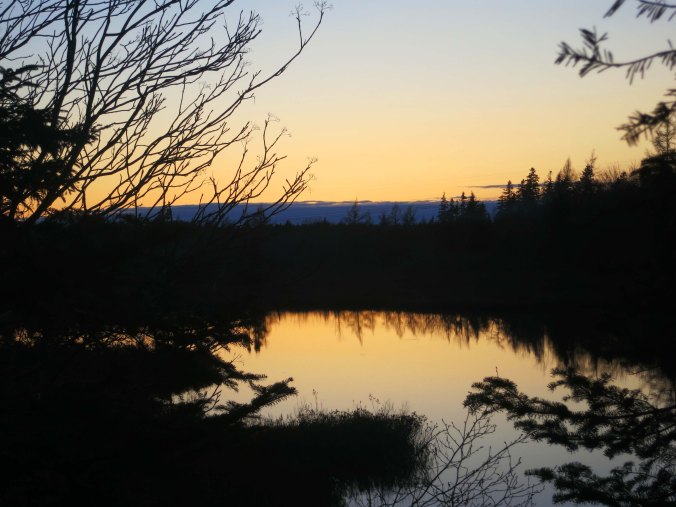
A small lake near Halifax provided a sunset shot...

A small lake near Halifax provided a sunset shot…

A small lake just west of Halifax provided this reflection shot...

…And a late evening view, which is an appropriate place to end today’s post.

NEXT BLOG: Bicycling north from Halifax toward Cape Breton Island.


A Foggy Day in Shenandoah National Park… The 10,000-Mile Bike Trek

Regulations on the Blue Ridge Parkway and Skyline Drive understandably recommend that bicyclists not travel on foggy days. The fog does present some good photo ops, however.

Regulations on the Blue Ridge Parkway and Skyline Drive understandably recommend that bicyclists not travel on foggy days. The fog does present some good photo ops, however.


“Oh Shenandoah, I long to see you/Away you rolling River/Oh Shenandoah, I long to see you/Away, I’m bound away/Cross the wide Missouri.”

There are songs that you hear as a child that bury themselves deep in your brain and are forever being replayed. Oh Shenandoah was one such song for me. It had a yearning that even my 9-year-old soul understood. I longed to see the Shenandoah River, and return to it— even though I had never been there.

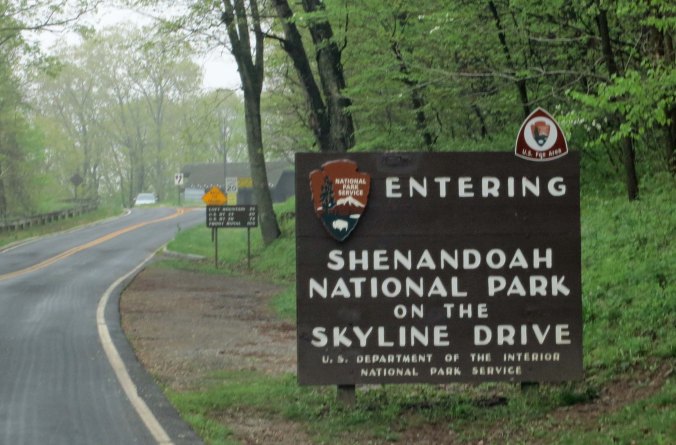
It isn’t surprising then that Shenandoah became my song of the day as I wrapped up my bike tour of the Blue Ridge Parkway and entered Skyline Drive and the Shenandoah National Park. I often sang on my bike. It helped wile away the hours. But this time I sang with the same longing I had felt as a fourth grader.

Peggy and I woke up to a foggy morning on our last day of retracing my bike route along the Blue Ridge Parkway. I was glad I wasn't riding my bike.

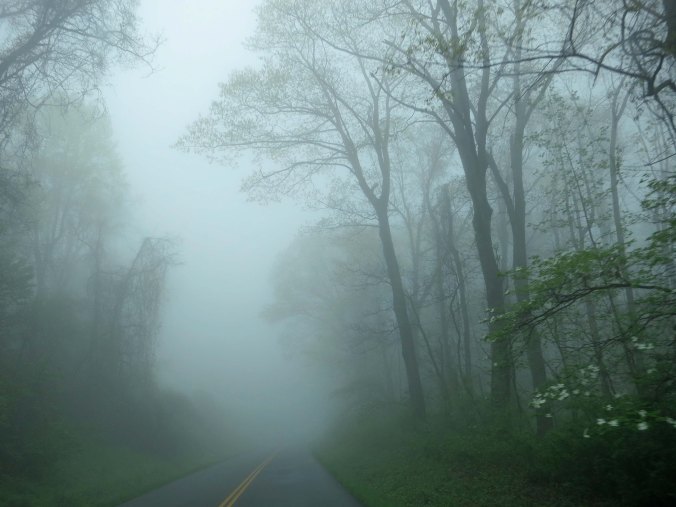
Visibility can be a real issue when the fog sets in for bicyclists as well as motorists.

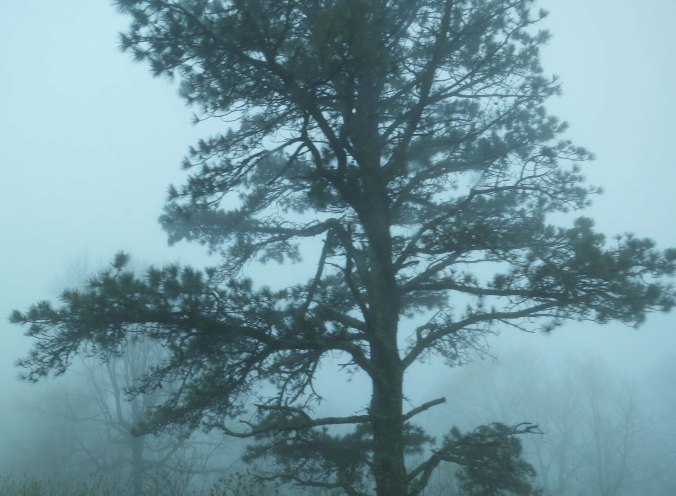
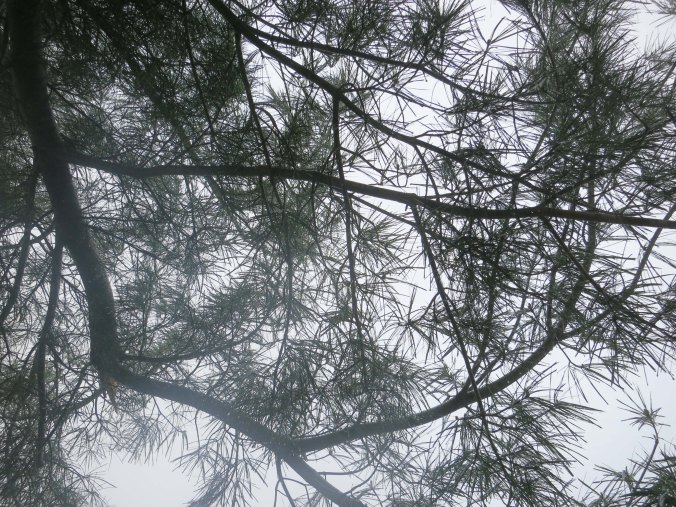
A pine tree stands out in the fog along the Blue Ridge Parkway.

But fog has a way of shrouding everything in mystery.

Skyline Drive provides the same beauty, lack of commercial traffic and slow speed limit as found on the Blue Ridge Parkway, without the severe ups and downs.

Skyline Drive starts where the Blue Ridge Parkway ends when you are riding south to north. It provides the same beauty, lack of commercial traffic, and slow speed limit as found on the Parkway, without as many ups and downs.

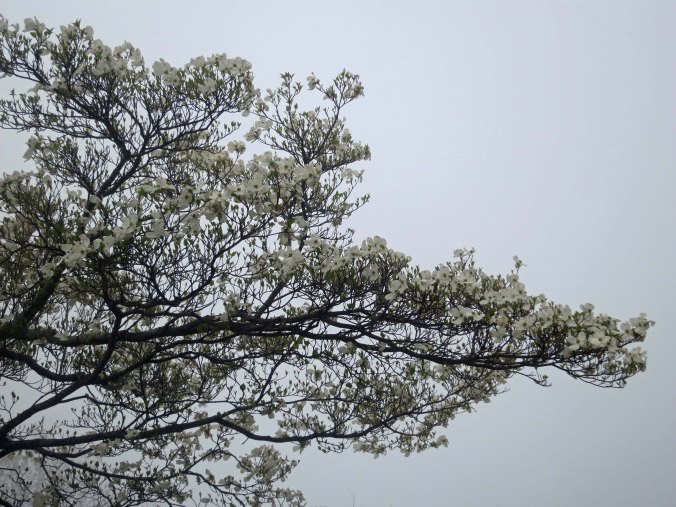
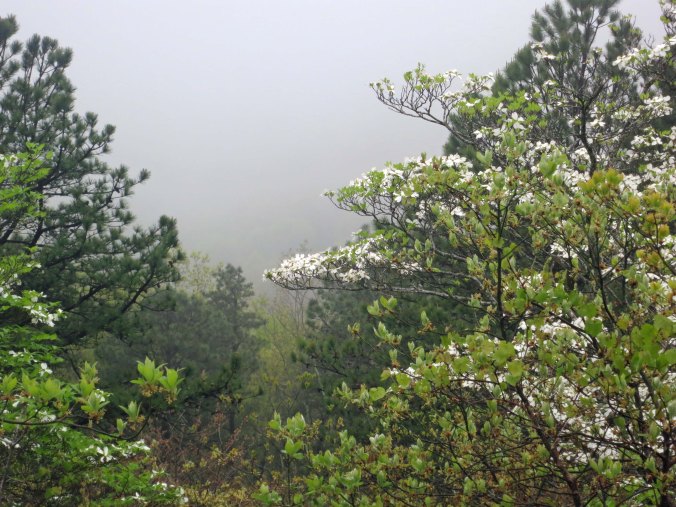
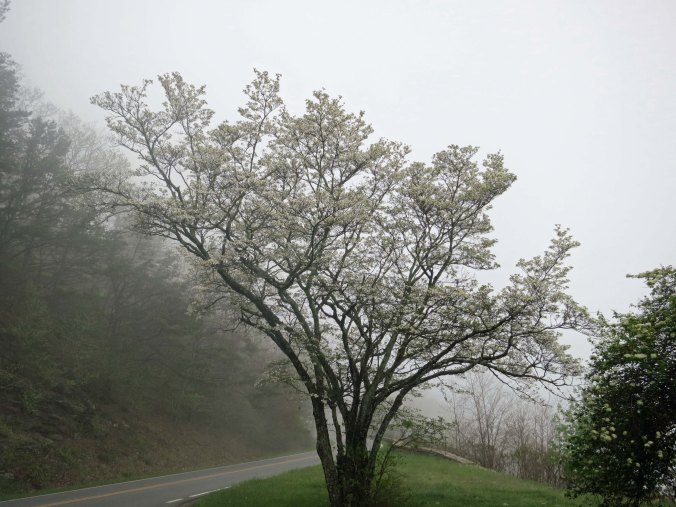
Dogwood in fog along Skyline Drive in Virginia.

Distant vistas disappear in the fog. The traveller is left with views closer to the road…

A tree of dogwood blooming along the Skyline Drive in Virginia.

That bring their own beauty…

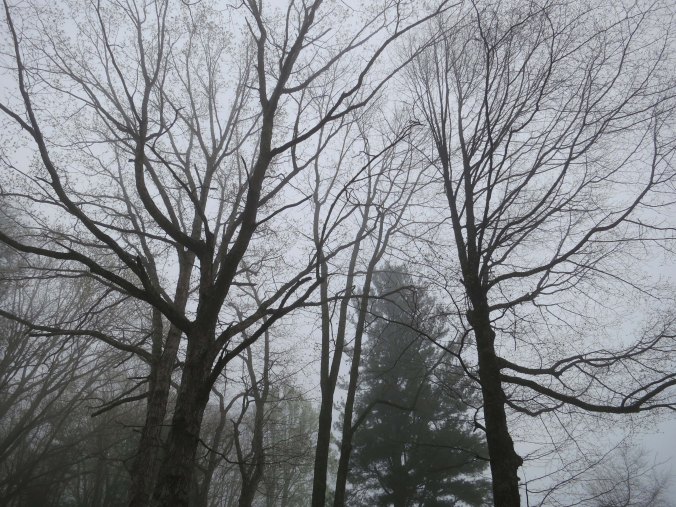
Trees along the Skyline Drive in Shenandoah National Park.

With a different perspective.

Pine needles provided an interesting pattern in the fog.

The grey backdrop made these pine needles stand out.

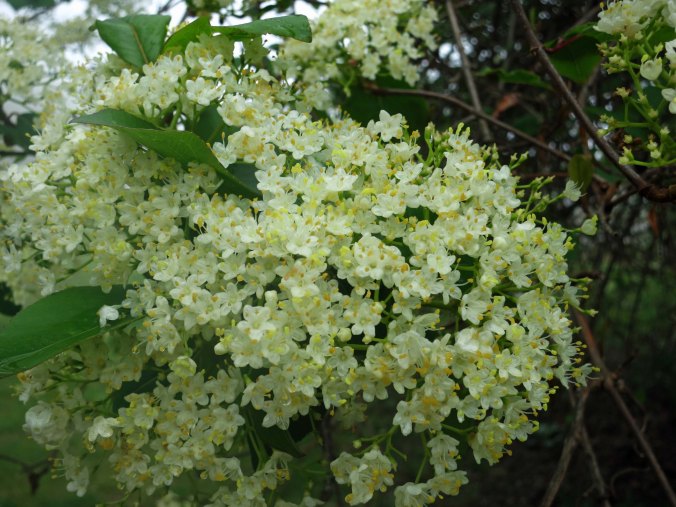
Not sure what these flowers were, but I found their green hue appealing.

Fog or not, I always like close-ups. The yellow-green hue of these flowers, and their abundance, caught my attention.

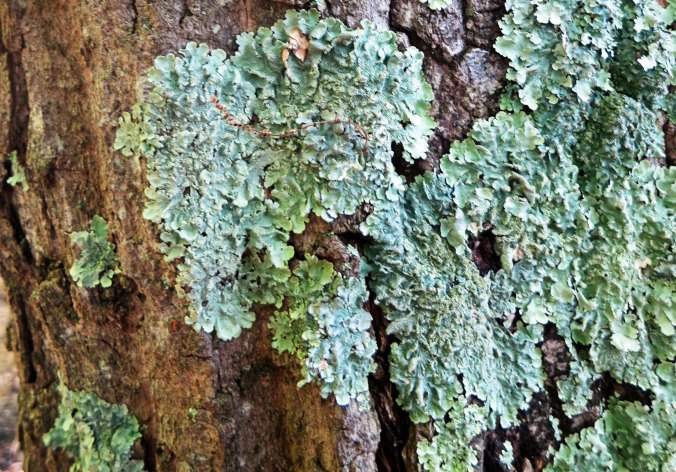
Tree lichens caught the attention of my camera.

Lichens are always worth a closer look..

Riding along the Skyline wasn’t enough for me, however. Oh Shenandoah was about the river and I had to see it! I reached US Highway 33 and made a snap decision. Instead of following Skyline Drive the rest of the way to Front Royal, Virginia, I would turn left and drop down into the Shenandoah Valley where I could sing to the river. And that is what I did. In Elkton, I picked up US 340 and followed it along the south fork of the Shenandoah River to Front Royal.

A cow and her calf welcomed me to the Shenandoah Valley.

Peggy and I followed the same route in our van as we retraced my route. A cow and her calf welcomed us to the Shenandoah Valley.

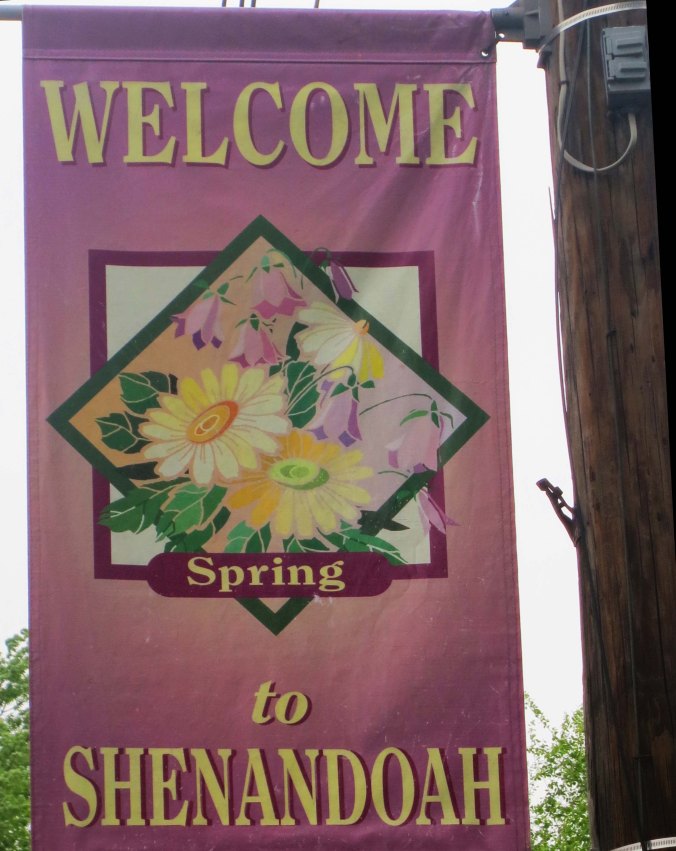
Welcome sign to Shenandoah.

As did this sign.

As this pasture land demonstrates.

Spring was bursting out all over!

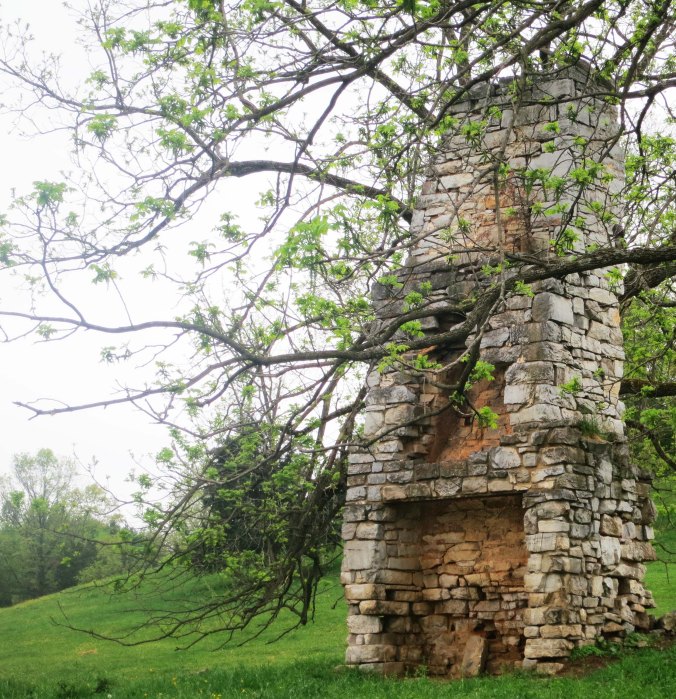
This old fireplace was all that remained of an earlier Shenandoah Valley home.

This old fireplace was all that remained of an earlier Shenandoah Valley home. It isn’t unusual to find fireplaces standing alone, the one thing that wouldn’t burn when pioneers lost their homes to fires. This one would have gone with a large home.

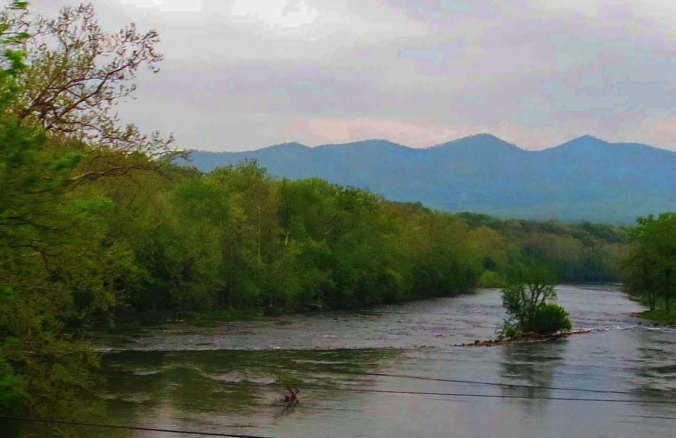
And yes, I did find the Shenandoah River with its mountain backdrop.

And yes, I did find the Shenandoah River with its mountain backdrop.

From Front Royal I biked on to Winchester where a billboard announced I was entering Patsy Cline’s hometown. I had another decision to make, this one more dramatic than my quick decision to check out the Shenandoah River. I had been bicycling for three months and I needed a break. A friend was supposed to meet me in two weeks in Maine and join me in bicycling through Nova Scotia. I could make it, just barely, maybe. But I would have to push hard through urban areas with urban traffic. Finally, I had developed a sore on my inner thigh in Mississippi and a sore on your inner thigh when you are bicycling is not a good thing. It would not go away.
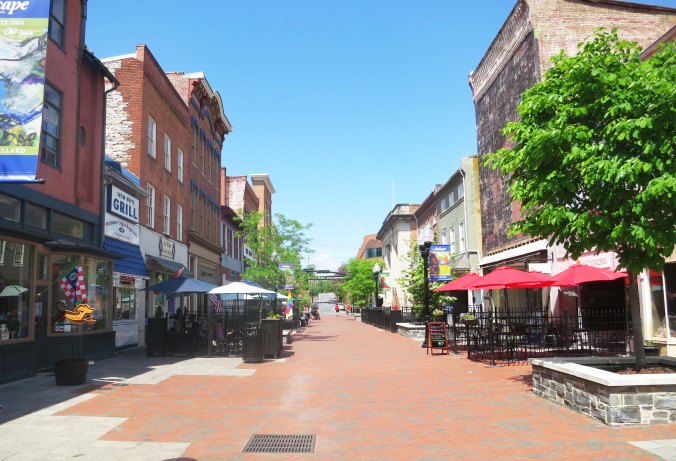
Old Town in Winchester Virginia has bee turned into a pleasant and attractive auto-free zone. Patsy Cline would recognize the buildings.

Old Town in Winchester, Virginia has been turned into a pleasant and attractive auto-free zone. I think that Patsy Cline would like it..

So I decided to become good friends with the Dog. I would take the Greyhound from Winchester up though Washington DC, New York City, Boston and New England to Bangor, Maine. It would drop the total distance of my trip to around 10,000 miles, but I could live with that— and I would have a two-week break.

Next Blog: I make it to Maine and begin my exploration of Nova Scotia.

Back When Having a Baby Cost Six Bucks… The 10,000-Mile Bike Trek

Mary Mill on the Blue Ridge Parkway in Virginia.

Mabry Mill is one of the most photographed sites on the Blue Ridge Parkway. (Photo by Peggy Mekemson.)
I continued my roller coaster ride along the Blue Ridge Parkway as I crossed into Virginia. The highlands weren’t as high but the lowlands were lower so my overall impression of the Parkway didn’t change. I was growing more used to the ups and downs, however. I won’t say I didn’t notice them— the 6000-foot elevation change involved in dropping into and climbing out of the James River guaranteed that, but the beauty of the ride, combined with the interesting history, was enough to divert my mind away from the work my legs, lungs and heart were doing.

View of Blue Ridge Mountains and meadow along the Blue Ridge Parkway in Virginia.

The beauty of the Parkway helped me forget I spent much of my time bicycling up mountains.

Dramatic clouds along the Parkway added to the scenery.

Dramatic clouds along the Parkway added to the scenery.

Tree silhouette backed up by clouds on the Blue Ridge Parkway in Virginia.

This tree silhouette also caught my attention.

Bridge on the the Blue Ridge Parkway in Virginia.

Man made structures such as this double arched bridge also add to the beauty.

Besides, the only person that I had to complain to about the difficulty of the climbs was myself, and he’s a stickler for pointing out that I am responsible for 99.9% of the difficulties I get into. You would think he would be more sympathetic, maybe even lie a little. But noooo, he has to be disturbingly honest.

Plus, there was Orlena Puckett. She put things into perspective. There is a sign next to her sister’s cabin on the Parkway. Orlena was born in 1837 and spent the first 50 years of her life trying to have children. She actually had 24, but they all died, most in stillbirth. Given everything I’ve ever heard about the pain involved in having a baby, I would have sworn off sex after the first three.
The Plackets cabin on the Blue Ridge Parkway in Virginia.

The Puckett’s cabin.

Orlena spent the second 50 years of her life as a midwife, helping other women have children. She is said to have delivered some 1,000, the last when she was 102. The tools of her trade were soap, water, and a nip of whiskey. When times were good, she charged six dollars; when they were bad, one— or a few chickens. Legend has it she would drive nails through her shoes in winter so she could travel over icy trails to help women who needed her services. Imagine that with today’s medical care system, even a nip of whiskey would cost $100!
This photo of Orlena, looking 102 and holding the last child she helped be born, is next to her sister's cabin.

This photo of Orlena, looking 102 and holding the last child she helped deliver, is on display next to her sister’s cabin.

Groundhog Hill is located a couple of miles away from the cabin. I am assuming there were a lot of them there. They were also called whistle pigs, which I get. I’ve often encountered their marmot cousins in western mountain meadows. These large, fat squirrels whistle at you in irritation when you disturb their afternoon naps in late August. They’ve chowed down all summer so they can sleep all winter. Folklore tells us that groundhogs appear on February 2 to predict how long winter will last. (This custom originated with European badgers, who, as far as I know, would consider it great luck to find a tasty groundhog out and about on February 2, regardless of whether you could see its shadow or not.)

Today, Groundhog Hill is topped off by a fort-like looking structure that the forest service once used for spotting fires. The area also features the various types of chestnut split-rail fences the pioneers used to keep their cattle from wandering off and being eaten by bears.

The Groundhog Mountain fire lookout tower on the Blue Ridge Parkway in Virginia.

The Groundhog Mountain fire lookout tower with a dramatic display of clouds.

Groundhog Mountain on the Blue Ridge Parkway in Virginia.

Peggy caught this photo with clouds, a dogwood tree, and two of the fence types. (Photo by Peggy Mekemson.)

Pioneer fence on display at Groundhog Mountain on the Blue Ridge Parkway in Virginia.

We saw this type of fence on the Natchez Trace as well. Easily constructed, it requires no fence posts.

Fence at Groundhog Mountain on the Blue Ridge Parkway in Virginia.

The fourth type of pioneer fence on display at Groundhog Mountain.

Further along, I came to Mabry Mill (featured at the top of the post), said to be the most photographed site on the Parkway. It is quite striking in its pond setting. The water wheel driven mill was built by Ed Mabry in the early 1900s and served as both a gristmill and a sawmill. During the summer months now, park volunteers offer demonstrations on a number of pioneer crafts practiced in the area. It’s a busy place. Several hundred thousand people stop by to visit each year.

The 13 mile ride downhill to the James River was quite a thrill; I practiced not using my brakes. When I passed an auto, I decided it was time to slow down. At the bottom, I stopped to admire the river. At 649 feet, it is the lowest spot on the Parkway. Further east, Virginia slaves once toiled on farms along the river producing what was considered some of the finest tobacco of the time. I first heard about it when I was backpacking in the Wind River Mountains of Wyoming and had stopped at a Fur Rendezvous site where early traders bought beaver pelts from mountain men.

The James River tobacco had been an important trade item. The mountain men smoked it on lonely winter nights when they were back in their trapping cabins. Lower quality tobaccos were mixed with whiskey in cooking kettles and consumed on the spot, out of the kettles. Drunken debauchery is a fairly good description of the results. Early journals described a rabid wolf wandering through camp and biting people at will. Another image that stuck in my mind was a group of men using a dead man as a poker table. Now it will probably be stuck in your mind as well. (Grin)

Reflection shot of the James River as see from the Blue Ridge Parkway bridge.

The James River looking calm on a cloudy day.

Otter Lake on the Blue Ridge Parkway in Virginia.

Pretty little Otter Lake is just a couple of miles beyond the James River going north on the Parkway.

Spillway to Otter Lake along the Blue Ridge Parkway in Virginia.

The spillway for Otter Lake is also quite picturesque.

Otter lake spillway along the Blue Ridge Parkway in Virginia.

Another perspective of the spillway.

Otter Creek along the Blue Ridge Parkway in Virginia.

Otter Creek below the spillway.

Further up the Parkway, the historic remnants of the Irish Creek narrow gauge railway caught my interest. Logging had once been the dominant industry of the region until most of the virgin forests had been cut down. Over 100-million board feet of lumber had passed over the Irish Creek line alone. My dad had worked as the electrician for a lumber company that had a narrow gauge railroad when I was a child. I remember watching the long trains of logs come rolling into town. I’d stand by the tracks with my friends and wave at the engineers. On a good day, they would throw candy out the window to us.

Railroad bridge for the Irish Creek railroad found along the Blue Ridge Parkway in Virginia.

Bridge on the Irish Creek narrow gauge railroad. (Photo by Peggy Mekemson.)

Irish Creek Railroad next to the Blue Ridge Parkway in Virginia.

The Irish Creek Railroad.

Small creek along the Irish Creek Railroad next the the Blue Ridge Parkway in Virginia.

A final view of the small creek.

Next Blog: We’ll say goodbye to the Blue Ridge Parkway and head into Shenandoah National Park on the Skyline Drive.

Things that Go Bump in the Night… The 10,000-Mile Bike Trek

I decided that my title today called for this 'ghost tree' I found along the Parkway. Imagine it at night with a full moon behind it and a black cat sitting on the lower branch.

I decided that my title today called for this ‘ghost tree’ I found along the Parkway. Imagine the tree at night with a full moon behind it and a black cat sitting on the lower branch.


From ghoulies and ghosties / And long-legged beasties / And things that go bump in the night, / Good Lord, deliver us! —An old Scottish Prayer

Having spent a considerable amount of time out in the woods at night, including a fair amount by myself, I’ve had my share of nighttime encounters. To say they can be disconcerting is understatement at its best. Even a cow walking through your camp can send your heart racing when you wake up from a deep sleep.

I’ve written about some of my encounters before. Why not? They make great blog material. For example, there was the time I found myself nervously loading a 357-magnum pistol because I had heard a loud bang outside my tent. A doctor friend had insisted I carry his gun in backcountry Alaska. I was damned lucky I didn’t shoot myself in the foot. I was amused (or was that embarrassed) to discover it was only a beaver that had slapped its tail against the water. He had discovered me in his territory and was protesting.

And then there was the time I woke up with a bear standing on me, his snout inches away from mine. I screamed. So much for being manly. Truth is, the smallest twig cracking out in the dark night can lead brave souls to become hyper-alert, or maybe just hyper.

Camping out in the woods away from established campgrounds on my bike trip added another level of concern, being faced with the most dangerous animal of all— the two-legged type. I’ll take a bear anytime. Breaking twigs in the night become even more menacing. As I mentioned before, I was always careful to select a place where I was hidden from the road, or any other human observation, as far as that goes.

The Blue Ridge Parkway has a policy on not camping outside of designated campgrounds. For the most part this isn’t a problem, but I had decided to have my bike tuned in Asheville and didn’t get out of the town until late in the afternoon. (Having learned my lesson on dark tunnels, I had also bought a new bike light.) A considerable hill outside of Asheville had slowed me down, and the sun had started to slip behind a mountain.

Being tired and a bit grumpy, I decided a couple of hours of bicycling were sufficient. So I pulled off the road and went looking for a flat spot in the steep terrain, one that wouldn’t have me rolling down hill all night. Eventually I found a place that was only slightly askew. There was just enough room for my tent. Blue, my bike, had to be satisfied with leaning against a tree. Tossing and turning because a rock insisted on poking me in the back, it took a while to fall asleep.

Having crested one long climb with an even longer one ahead, I decided to camp out in the woods. The steep terrain made finding a flat spot difficult.

Having crested one long climb with an even longer one ahead, I decided to camp out in the woods. Finding a flat spot other than the road was the challenge.

I woke up to someone/thing stamping outside my tent. Make that several things. I am sure you can see where this might be a bit alarming. I lay there wondering whether I should jump out of my tent or pretend that no one was home. Sometimes ignored problems go away. Sometimes they don’t. I had decided on the latter course when the problem started hissing. Stamping is one thing; hissing is another. Had the Appalachian ghosts of Tom Dooley and his mistresses come to haunt me?

This sign along the Parkway describes the origin of the Kingston Trio Song, "Hang Down Your Head Tom Dooley."

This sign along the Parkway describes the origin of the Kingston Trio Song, “Hang Down Your Head Tom Dooley.” Their song was the PG version, however. Tom was living with a much older guy who had a younger wife. With mutual consent from all parties, Tom started sleeping with the wife. When a cousin of the wife showed up, he added her to the mix, often at the same time. Another cousin appeared on the scene and Tom once more sacrificed himself for the good of all. She brought syphilis into the mix, however. Eventually, one of the cousins killed another one with Tom’s help. Being a gentleman, Tom confessed to the murder and she went free. Tom was hung. At least I think that’s how it went. I became distracted with the appearance of the first cousin. Undoubtedly, the event left some ghosts hanging around.

This was the point where I started wishing my backpacking flashlight had a ton more of candle power. I unzipped my tent and pointed the dim light up the hill where several large things went crashing off into the brush. There’s a point here. It is always better to have large things crashing away from you instead of toward you, even more so on a dark night. Anyway, I recognized the thump, thump, thump as they disappeared. A herd of several deer had discovered my hiding place, and like the beaver, been surprised and irritated. I had simply never heard deer do their stamping and hissing routine before. (I have since.)

I went back to sleep, woke up refreshed (sort of), and resumed my journey. Today’s blog photos along the Blue Ridge Parkway will take you from Asheville to Little Glade Mill Pond, a distance of approximately 170 miles. Enjoy.

The ultra modern Park Headquarters in Asheville includes all of the latest environmental friendly designs, including plants growing on the roof.

The ultra modern Park Headquarters in Asheville includes all of the latest environmental friendly designs, including plants growing on the roof.

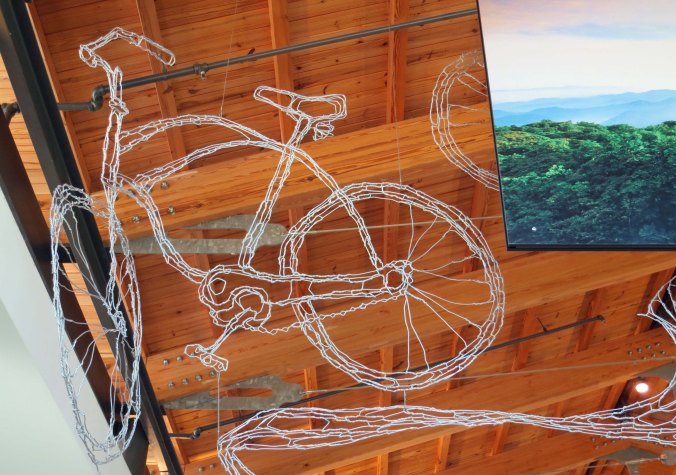
Bike sculpture in Blue Ridge Park Headquarters, Asheville, North Carolina.

I enjoyed the bike sculpture at the headquarters.

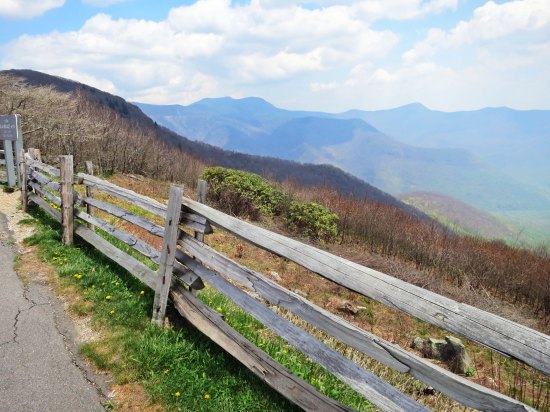
My first stop the next day was at the Craggy Garden's Visitor's Center. It's high location provided a great scenic view of the Black Mountains. The fence was a plus.

My first stop the next day was at the Craggy Garden’s Visitor’s Center. Its high location provided a scenic view of the Black Mountains. The fence was a plus.When I bicycled through the area in June of 1989, the area was covered with blooming Rhododendrons. Peggy and I were too early for the display on our redrive of the route this spring.

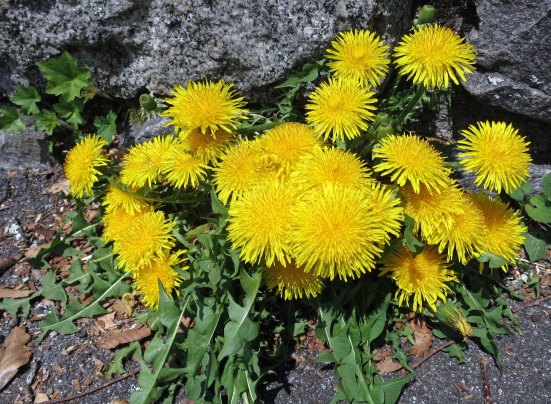
Dandelions had no problem with spring. Peggy and I found them happily blooming away throughout our trip.

Dandelions had no problems with spring. They were happily blooming away throughout our trip.

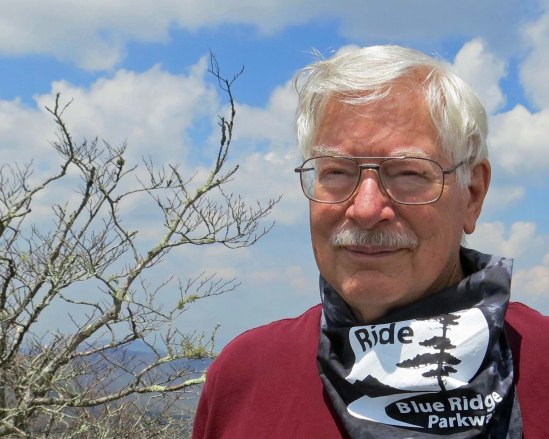
Peggy insisted on buying me a neckerchief at the Visitor's Center, which featured biking the Parkway.

Peggy insisted on buying me a neckerchief at the Visitor’s Center. It featured biking the Parkway. Like the bushy look? I was honoring my bike trek where I had three haircuts in six months.

One of numerous tunnels along the Parkway. I found the stone work quite beautiful. Sone masons from Europe were brought in during the 1930s to help.

One of numerous tunnels along the Parkway. I found the stone work quite appealing. Stone masons from Europe were brought in during the 1930s to help.

This is the twin to the tree I featured at the beginning of the blog.

This is the twin to the tree I featured at the beginning of the blog. It was actually standing next to the other tree.

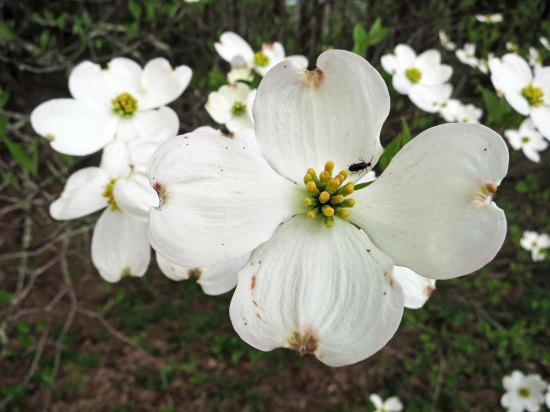
Dogwood is another plant that enjoys spring and was blooming in profusion all the way along the Parkway.

Dogwood is another plant that enjoys spring and was blooming in profusion all the way along the Parkway.

A close up of the dogwood.

A close up of the dogwood complete with beetle.

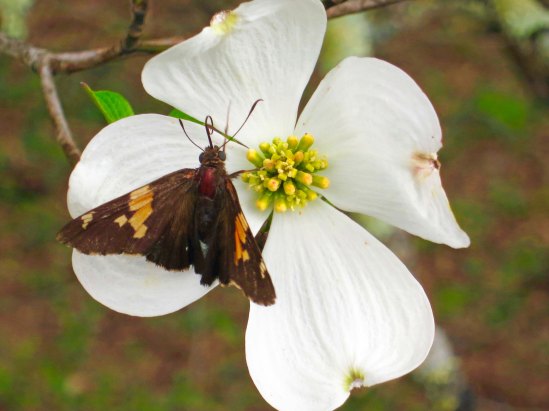
Dogwood on Blue Ridge Parkway with butterfly.

And a  butterfly.

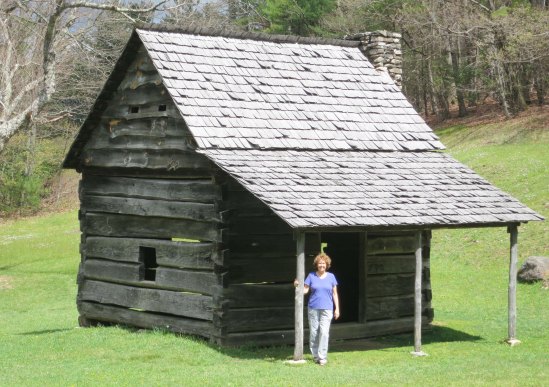
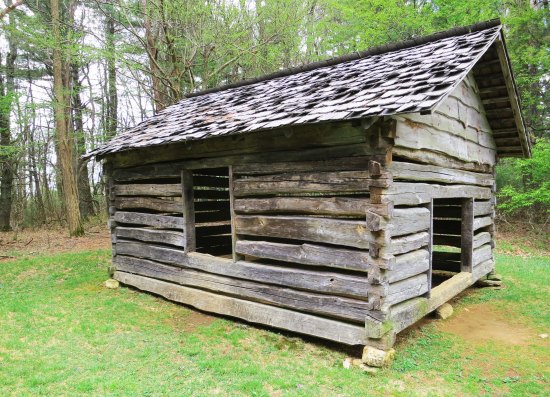
Jesse Brown's cabin on the Blue Ridge Parkway.

Peggy provides perspective on Jesse Brown’s pioneer cabin.

Cool Spring's Batist Church on the Blue Ridge Parkway.

The Cool Spring’s Baptist Church was next door to Jesse Brown’s cabin. Usually, services were held outdoors. There wasn’t much difference.

And the cool spring.

And the cool spring. The wooden channel carries water into the spring house.

I doubt the early pioneers would have seen this Scottish cow in the mountains.

I doubt the early pioneers would have seen this Scottish bull in the mountains.

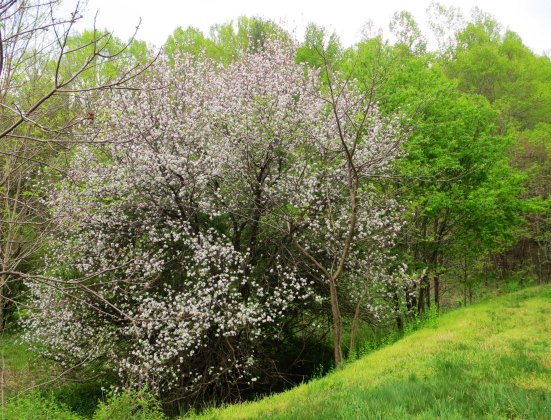
Apple tree on the Blue Ridge Parkway.

Apple trees, on the other hand, were quite common. Hard cider was a pioneer staple.

Farm on Blue Ridge Parkway.

Farm lands add as much to the beauty to the Parkway as forests and mountains.

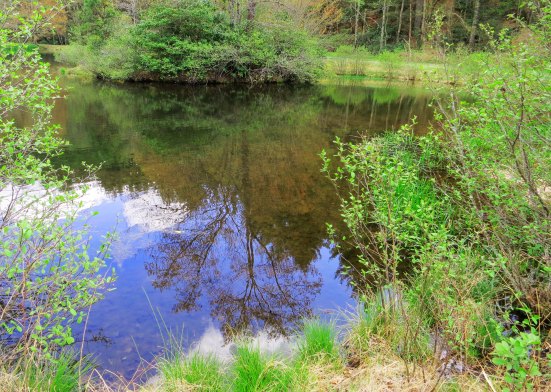
Little Glade Mill Pond on the Blue Ridge Highway.

Little Glade Mill Pond provides a great lunch stop. While Peggy whipped up sandwiches, I hiked around the pond.

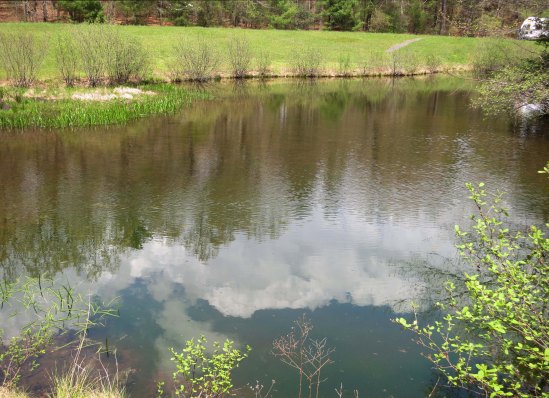
Reflection shot on Little Glade Mill Pond on the Blue Ridge Parkway.

Naturally, I had to focus on the reflection shots. Our van is off to the right. Lunch is being prepared! Breakfast is my responsibility.

I'll complete today's post with this final shot of Little Glade Mill Pond. Next Blog: We'll continue out journey along the beautiful Blue Ridge Parkway.

I’ll complete today’s post with this final shot of Little Glade Mill Pond. Next Blog: We’ll continue out journey along the beautiful Blue Ridge Parkway.


48,722 Feet of Climbing on the Blue Ridge Parkway… The 10,000-Mile Bike Trek

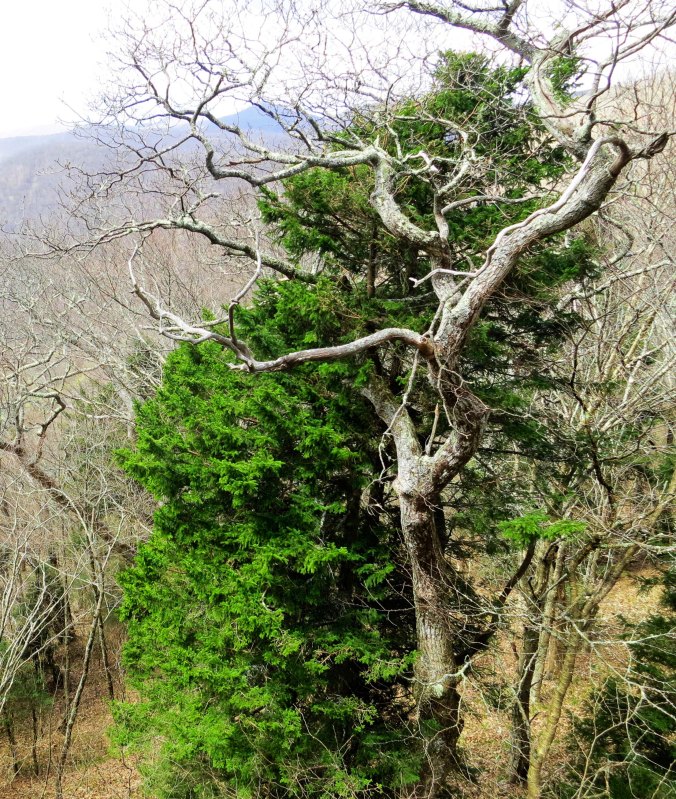
Every turn in the road on the Blue Ridge Parkway brings gorgeous views. Some are in distant vistas but many are up close and personal, like these two trees.

Every turn in the road on the Blue Ridge Parkway brings gorgeous views into sight. Some are in distant vistas but many are up close and personal, like these two trees.

There are two primary directions on the Blue Ridge Parkway: up and down. It’s a good thing I had gotten used to this idea while crossing the Cumberland Plateau and the Smokies because as soon as I passed the entrance sign to the Parkway, I started climbing. I quickly got used to the idea that I would be granny-gear-crawling my way up a mountain for 3-4 hours followed by a glorious 30-minute downhill run, followed by another 3-4 hours of climbing. If it wasn’t always like that, it certainly felt like it.

I took this graphic from the book by Elizabeth and Charlie Skinner featured below.

I took this graph from the book by Elizabeth and Charlie Skinner featured below. It represents about half of my first day of cycling the Parkway, starting at the Southern Terminus on the right. I thought it did a good job of summarizing my perspective on the climb.

The elevation change reflected by these ups and downs is impressive. In one week I would climb 48,722 feet and drop a similar amount, having an elevation gain and loss of over 97,000 feet! (I was amused by the Parkway’s specific claim of elevation gain right down to 22 feet. It definitely represents a biker or hiker’s perspective. Those 22 feet are important.)

It could have been worse.  Remember, in my last post, I mentioned that the Appalachians were much higher in their youth. Think 40,000 feet tall (12,192 Meters), 10,000 feet higher than Mt. Everest. The air would have been a bit thin up on top for cycling but can you imagine the downhill run! Wheeeeeeeeeeeee!

Other than the ups and downs, or maybe because of them (grin), the Blue Ridge Parkway is one of the premier destinations for bicyclists in the US. Like the Natchez Trace, there is great beauty and no commercial traffic. An added plus for the Blue Ridge is that the speed limit for vehicles is even lower than the Trace, 45 MPH (72.4 K) as compared to 55 MPH (88.5 K).

The number of T-shirts, scarves, patches, bumper strips and other memorabilia you can buy that feature bicycling on the Parkway speaks to its popularity today. There are also detailed brochures, maps and books to help you plan your trip, not to mention the Internet. It wasn’t always so. In 1989, the National Park Service gave me a mimeographed sheet. I didn’t see another bicycle tourist until I was close to the end of my 469-mile trip in Virginia.

The mimeographed sheet on bicycling the Blue Ridge Highway that the National Park Service handed out to me in 1989

The mimeographed sheet on bicycling the Blue Ridge Highway that the National Park Service handed out to me in 1989.

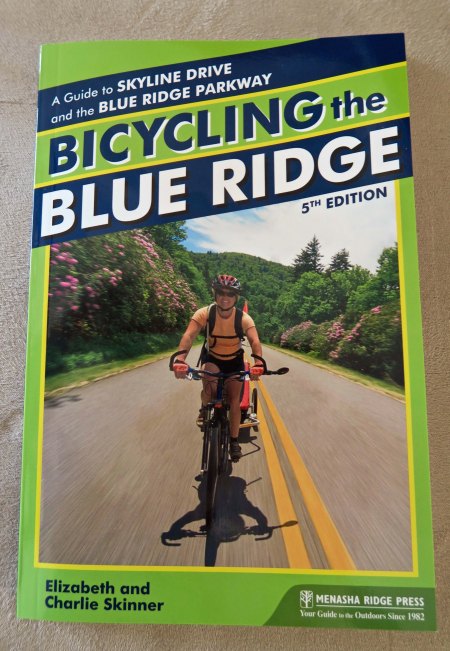
This information packed book by Elizabeth and Charlie Skinner is the type of information you can find today on cycling the Parkway.

This information packed book by Elizabeth and Charlie Skinner is the type of information you can find today on cycling the Parkway.

The final segment of the Parkway was finished in 1987, only two years earlier than my trip. Its inception dates back to the 1930s, however, when a number of people including Franklin Roosevelt and Senator Harry F. Byrd of Virginia decided that a parkway connecting Shenandoah National Park in Virginia with the Great Smoky Mountain National Park in North Carolina was a good idea. (Byrd, BTW, served in the US Senate from 1933 to 1965. His son succeeded him in his seat and held the position until 1982, giving the Byrds 50 continuous years in the Senate.)

My next four posts will cover my journey over the Blue Ridge Highway and be more in the nature of photographic essays. Photos will be from the trip Peggy and I took this spring. Today, I am covering the section between Cherokee and Ashville, North Carolina. Next Blog: A creature comes to visit me in the night.

When biking the Blue Ridge Parkway, you can start in the north, in the south, or at several points along the way. Wherever, you will be greeted by this sign.

When biking the Blue Ridge Parkway, you can start in the north, in the south, or at several points along the way. Wherever, you will be greeted by this sign.

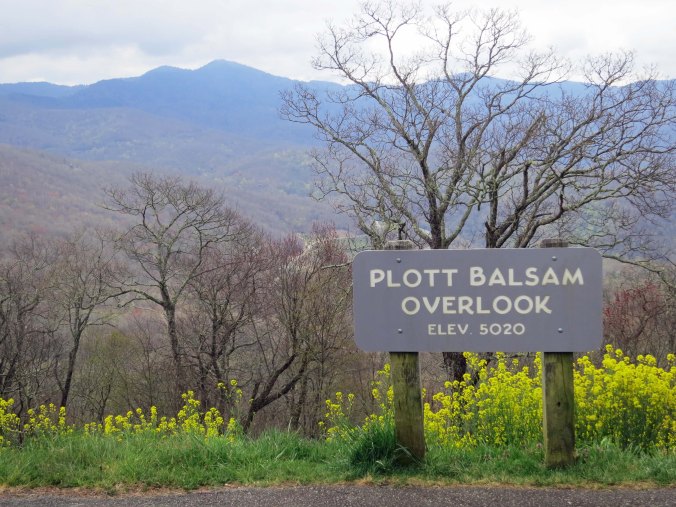
The Blue Ridge Mountains provide numerous opportunities to pull off the road and admire the scenery. Plot was an early pioneer who became famous for breeding bear hunting dogs. Once, according to legend, his dogs cornered a bear in a small cave. Lott went in after the bear with his knife. He won the encounter but the bear clawed him extensively. It was the last time Lott went after a bear with his knife.

The Blue Ridge Mountains provide numerous opportunities to pull off the road and admire the scenery. Plott was an early pioneer who became famous for breeding bear hunting dogs. Once, according to legend, his dogs cornered a bear in a small cave. Lott went in after the bear with his knife. He won the encounter but learned that chasing after bears with a knife is not a good idea.

On the higer parts of the Parkway, flowers were just starting to come out.

On the higher parts of the Parkway, flowers were just starting to bloom.

This photo reflects how the Blue Ridge Mountains obtained their name.

I like this photo because it reflects for me how blue ridge after blue ridge after blue ridge gave the Blue Ridge Mountains their name.

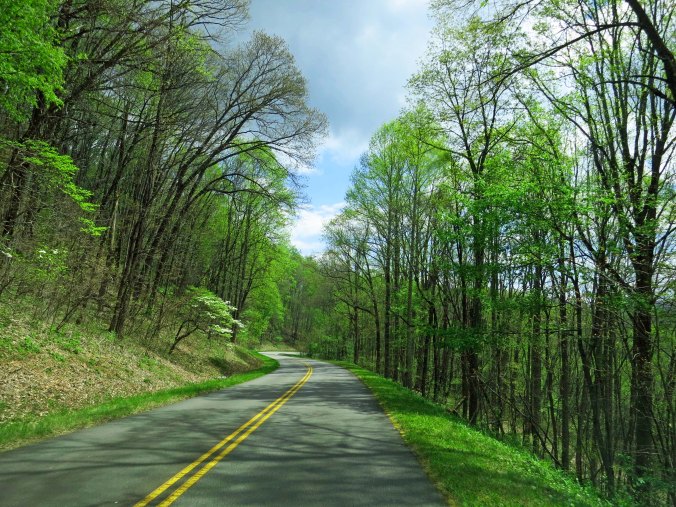
A tunnel of trees along the Blue Ridge Parkway leafing out in early spring green.

A tunnel of trees along the Blue Ridge Parkway leafing out in early spring green. Dogwood is blooming along the left side.

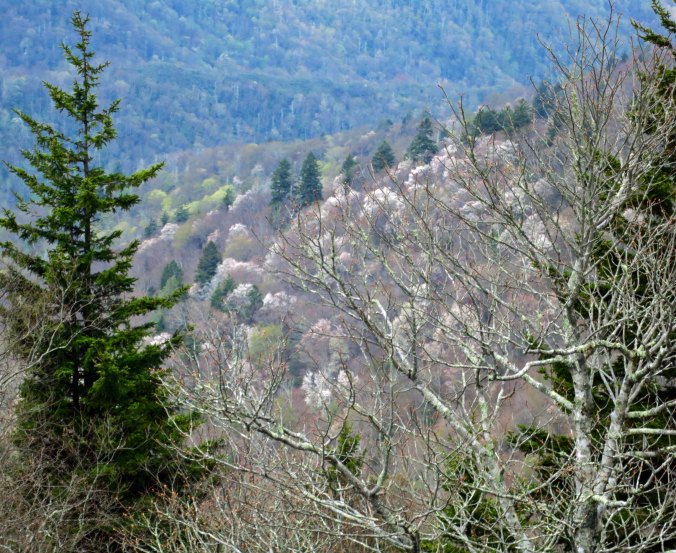
Some of the canyons along the Parkway were filled with blooming dogwood.

Some of the canyons along the Parkway were filled with blooming dogwood.

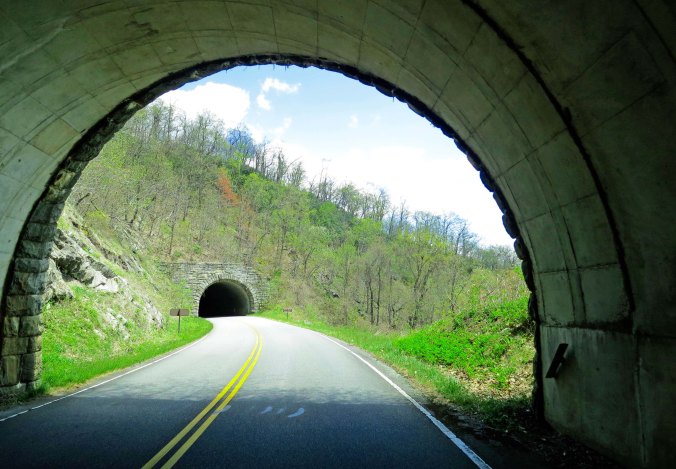
And highway tunnels. There are 26 along the Blue Ridge Parkway ranging in length from 150 feet to 1434 feet.

Twin highway tunnels. There are 26 tunnels along the Blue Ridge Parkway ranging in length from 150 feet to 1434 feet. Bicycling through them can be a bit scary, especially the longer tunnels. Going through the 1434 feet Pine Mountain Tunnel, my light chose to die, leaving me in the pitch dark. I immediately climbed off my bike, blindly found the right side of the tunnel, and walked the bike until I could see again. As you can see, there is no shoulder. Fortunately no cars came along.

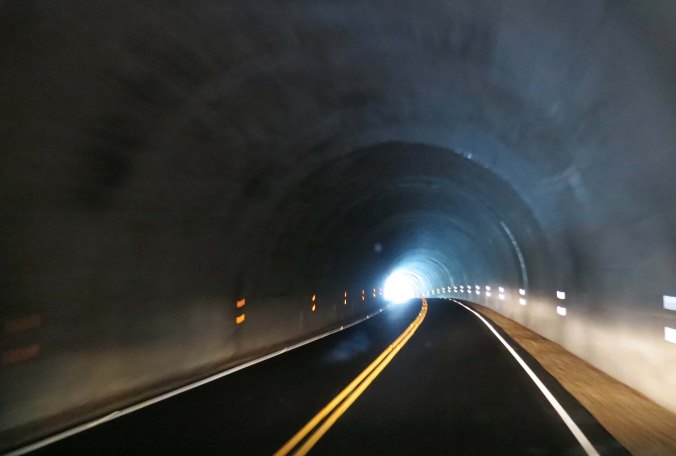
The lights from our van lit up the tunnel. Imagine your perspective from a bicycle. This was one time when I was ever so glad to see the light at the end of the tunnel.

The lights from our van lit up the tunnel. Imagine your perspective from a bicycle. Pushing my bike with no lights at all, I was ever so glad to see the light at the end of the tunnel.

I climbed to the highest elevation along the Parkway on my first day out. I celebrated by thinking 'well, that's behind me.'

I climbed to the highest elevation along the Parkway on my first day out. I celebrated by thinking ‘well, that’s behind me.’

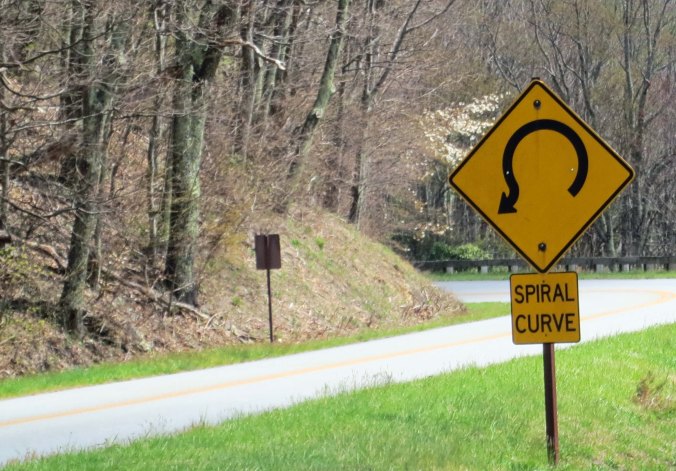
More fun going down than up!

More fun going down than up!

They call this outcrop the Devils Courthouse but I was hardput to see much that was devilish about it. Maybe on a foggy day...

They call this outcrop the Devils Courthouse but I was hard put to see much that was devilish about it. Maybe on a foggy day…

Looking Glass Rock was once a giant pluton of molten volcano rock located far under the surface. Early morning light reflects off of the rock, giving it the name.

Looking Glass Rock on the right was once a giant pluton of molten volcano rock located far under the surface. Light reflects off of the rock, giving it the name. This time, the sun chose to light up the trees in the foreground instead.

I'll conclude today's section of the Blue Ridge Parkway with this impressive road cut.

I’ll conclude today’s section of the Blue Ridge Parkway with this impressive road cut.