A Lizard With a 3rd Eye, Floppy Gets Svelte, And a Wren Talks— and Talks: Nature Tales Continued

It’s time for more nature tales brought to you by the wild animals that live on our property and entertain us continually by doing what comes naturally.

Let’s start with a very pregnant Floppy. This is what she looked like last week when she was grabbing a snack. I’d meant to catch her with a mouth full of oak leaves, but she’s fast when it comes to scarfing down food. It seems that the twigs sticking out of her mouth were dessert. She waddled off searching for more.
Here she is on Monday! Notice the difference! Our very pregnant deer had become svelte! She has had her fawn, or fawns. Don’t expect to see it for a couple of weeks, however. It is carefully hidden away in our canyon. Babies are born virtually odor-free so predators can’t smell them. Ask a coyote. They also know how to freeze in place. I’ll do one of those ‘cute’ posts if and when Floppy brings her fawn or twins around.

Our property is a regular herpetarium. We have wall to wall lizards ranging in size from tiny babies that have hit the ground running up to foot-long alligator lizards that can scare the heck out of you. We also have skinks, beautifully iridescent lizards with bright blue tails.

Fence lizards dominate, however. You can’t go outside without seeing dozens at this time of the year. They are fun to watch as they scamper across our yard in search of bugs. And they are even more entertaining when they try to impress another lizard by doing push-ups and puffing up their bodies to almost twice their normal size.

They are also quite curious. Or at least they seem to be. Anytime I am outside working around the house, they show up and watch me, often choosing a high perch for a better view. If I do something that chases them away, they’re back in a minute or two. The fellow below came out to watch me when I was building a brick planter around our yellow rose bush earlier this week.

I was curious about the white spot on the back of its head and did some research. I learned that it is called the parietal or third eye. While the lizard can’t ‘see’ out of the eye, it is light sensitive. When a hawk flies over, it skedaddles! A kid’s hand poised to catch it has the same result. The eye is connected to the pineal gland and helps control circadian and seasonal rhythms.

I think we have seen all of one wren since Peggy and I moved here. But a couple of weeks ago, a pair showed up looking for a home. It was pretty funny. The male wren, it turns out, is responsible for house hunting and nest building. The location may be a tree cavity, a birdhouse, a drain pipe, etc. Even an old shoe will do in a pinch. Once he finds what he considers the ideal site, he fills it with twigs and invites his lady love over to check it out. She’s the one that makes the ultimate decision about his nest finding abilities. I can see where she might be concerned if he has picked an old shoe. The poor guy may find himself building 3 or 4 nests before she finally says yes. 

I think ours must have been on number four— or maybe five— when he showed her our bird house. He seemed very eager, or maybe he was nervous, like a real estate agent about to close or lose a big sale. He talked and talked and talked. Finally, she hopped in to take a look. And immediately hopped out with a feather in her mouth that she spit out. I could almost hear the discussion. “You are trying to sell me a used house!” “No, no sweetie. Think of it as an already feathered nest.” Whatever he said, she went back inside and came out with another feather. This time she ate it! Apparently that meant yes because the little guy started hopping around and talking twice as fast. Then he zoomed off to pick up some grass to add to the nest. Soon, they were both busy at work.
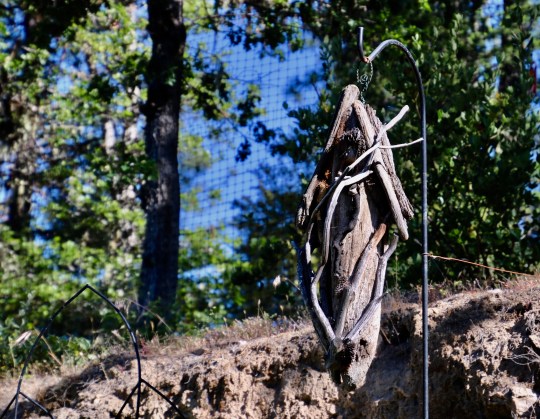
Here’s the new home. BTW, the fence you can see in the background was what the fox was climbing up.
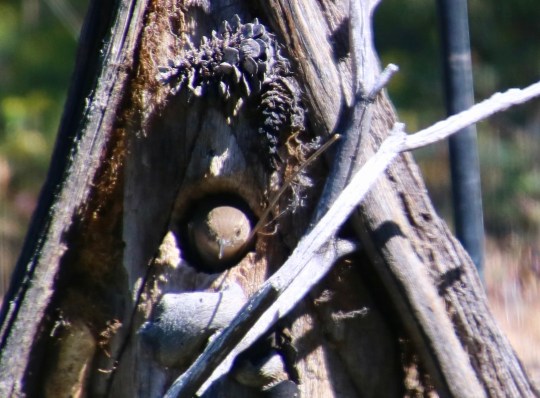
The female pokes her head out to take a break from sitting on the eggs.
And the male drops by to visit with a typical wren tail flip. Soon he will be busy helping with feeding responsibilities.
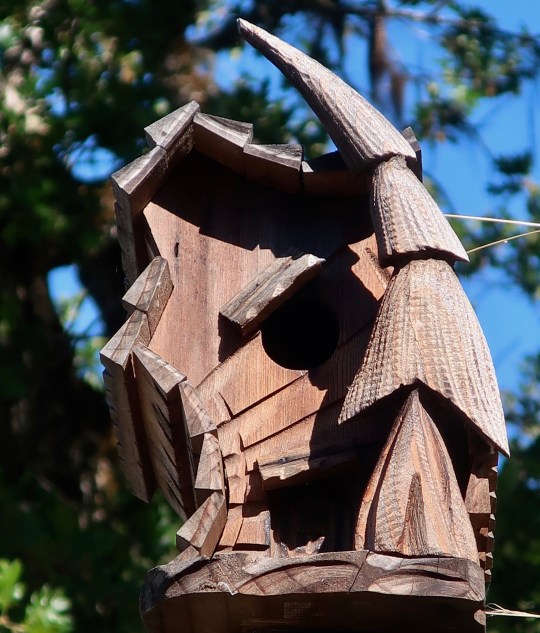
Peggy put this unique bird house on top of one of the 10-foots posts surrounding our garden. She thought of it as a decoration…
But a pair of tree swallows thought otherwise! Now, Peggy is scolded any time she works in her garden. I could watch these birds forever as they perform their incredible aerial acrobatics. They arrive here in March and will leave once their babies can fly. (Photo by Peggy Mekemson.)

I’ll close today with a few more photos of the deer herd. Do you remember when I did the post on young buck and his fearless leaps over a wall and a fence to get at our honeysuckle and native shrub garden? Well, it turns out he isn’t so young…

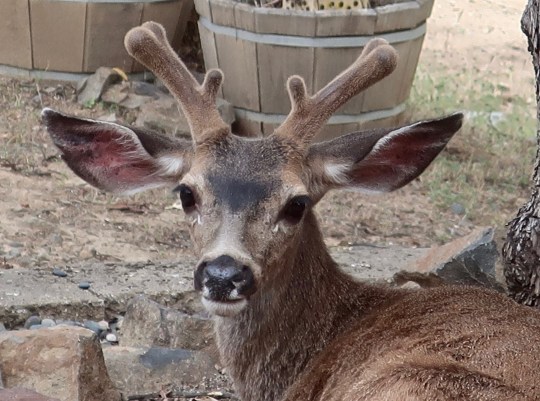
You have to have some years behind you to grow a rack like this. He will be at least a three pointer and possibly a four pointer. If you have ever had the feeling that someone or something is watching you…
Here he is under the madrone in our backyard. His antlers will be in velvet and continue to grow for at least a couple more months. The rounded knobs suggest that each of the top four antlers may split again. If so, he could be a five pointer!
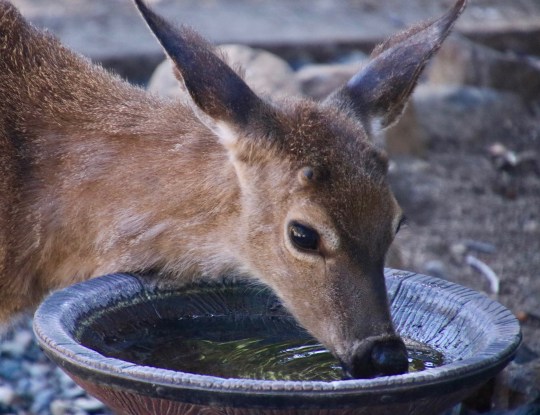
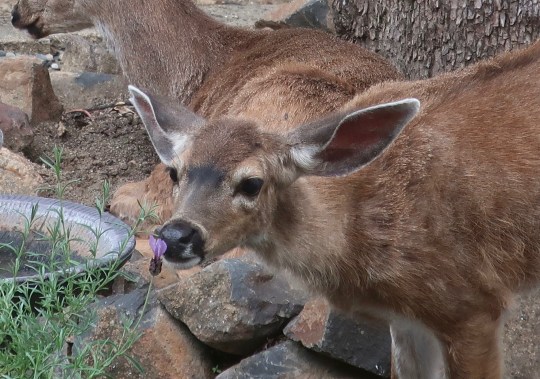
The bucks hang out together at this time of the year. While the older fellow stretched out beneath the madrone, the kid stopped for a drink of water in the bird bath. He also had a message…
Be sure stop and smell the flowers.

Tomorrow’s post: Who knows? Not me. (grin)
Where the Gods had Affairs and Drank too Much: Pompeii… Armchair Travel

A while back I posted a photo essay on Pompeii that many of you would have seen. This post will include some of those photos but the focus will be on the Roman gods (adopted and adapted from Greek gods) that were a daily part of Pompeian life before Mt. Vesuvius blew its top. Once again, I am traveling back in time and pulling up a post from my archives for my armchair travel series in the time of Covid-19.

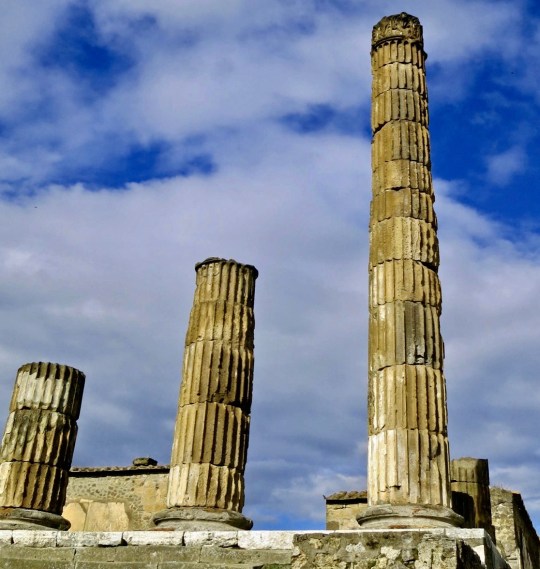
I liked this view of the Temple of Jupiter in Pompeii with its stair-step columns. A massive earthquake had destroyed the temple in 62 AD. It was still being rebuilt in 79 AD when Mt. Vesuvius erupted.

It is impossible to visit the ancient cities of the Mediterranean without thinking about the importance of the all-too-human early gods.

Back before they were relegated to the status of myths, they were as alive and real to the people as say Christ might be to today’s faithful Christians. A primary difference was their misbehavior. They became involved in feuds, had affairs, became jealous, drank too much, etc. Other than the fact they were immortal and extremely powerful, they might be your neighbor.

If they liked you, they could be your best buddy. Make you healthy, wealthy and wise. But if they disliked you, watch out! They were like the little girl who had a little curl right in the middle of her forehead. “When she was good, she was very, very good, but when she was bad, she was horrid.” (From a poem by Henry Wadsworth Longfellow)

So it isn’t surprising that the ancient folks of the Mediterranean spent a great deal of energy and money trying to stay on the good side of their gods. Some of the world’s greatest art was created in their honor and whole herds of castrated animals were sacrificed and cooked to keep them smiling. Interestingly, the smoke from the cooking meat seemed to satisfy the gods. Mere mortals consumed the flesh. As the old saying goes, “Man is nothing, if not practical.”

The Romans, who lacked Greek creativity, obtained their gods wholesale from Greece, only changing their names to sound more Latin. Zeus with his fiery lightning bolt became Jupiter, his wife/sister Hera, became Juno, and his daughter Athena, who sprang fully armed from his head and gave him a headache, became Minerva. And of course there was a whole pantheon of other gods.

Each of these gods had a role to play. If you wanted to kick someone’s tail, Zeus was your ‘man.’ Juno could help you through a difficult childbirth. If you needed more wisdom, and who among us doesn’t, Minerva was there for you. There was no one stop shopping like today’s church goers enjoy.

The gods did gain more power as they aged, however. They took on the roles, and sometimes personalities, of the earlier gods they replaced. Juno, for example, was responsible for both “loosening a bride’s girdle” and protecting the money of the Roman Empire. In her latter role she was the patron Goddess of the Royal Mint.

Mt. Vesuvius provides the background for this photo of Jupiter's Temple, which he shared with Juno and Minerva.
Mt. Vesuvius provides the background for this photo of Jupiter’s Temple, which he shared with Juno and Minerva. The arch on the left was built to honor the Roman Emperor Tiberius (14-37 AD) (Photo by Peggy Mekemson.)
This view of the right side of Jupiter's Temple in Pompeii shows the arch of the the Roman Emperor Nero, known for fiddling around while Rome burned.
This view of the right side of Jupiter’s Temple in Pompeii shows the arch of the Roman Emperor Nero, known for fiddling around while Rome burned. (Photo by Peggy Mekemson.)
A final photo of Jupiter’s Temple, which I liked because of the massive, almost brooding feel, it gave to the columns.

Jupiter, Juno and Minerva were worshipped as a triad in both Pompeii and Rome. Possibly it saved time and money. There was also a temple to Mercury in Pompeii. His earlier persona had been that of the super fast Greek God Hermes who carried messages for the gods and had wings on his feet. He was also the god of getting rich, luck, trickery and thievery. Hmmm. Sometimes a fast get-a-way is critical.

Dark clouds hover above Apollo's Temple caught in the sunlight. (Photo by Peggy Mekemson.)
Dark clouds hover above Apollo’s Temple caught in the sunlight. (Photo by Peggy Mekemson.)
I’ll close today with this fun perspective by Peggy. Apollo seems to reach out and grasp one of the columns in his temple. (Photo by Peggy Mekemson.)

Face Masks During the Plague— Plus Window Shopping: Venice… Armchair Travel

Another post from my armchair travel series during Covid-19. This time I’ll take you on a window shopping tour of Venice with an emphasis on glassware, including face masks that come with a long nose…

Venice is known for the creative glass masks made there. What is particularly interesting about this one is that it is a replica of what plague doctors wore in the 1600s. At the time, doctors believed that the plague was spread by the bad smell generated by the disease. The nose of the mask was packed with herbs or flowers such as lavender that would counter the smell, and, so the doctors believed, counter the disease. If nothing else, possibly they would scare the plague away!

I promised a window-shopping trip in Venice so window-shopping we will go. Staring in store windows is fun. Like people watching, it falls under the category of vicarious pleasure. And it’s free. Of course the shop owners have other objectives in mind.

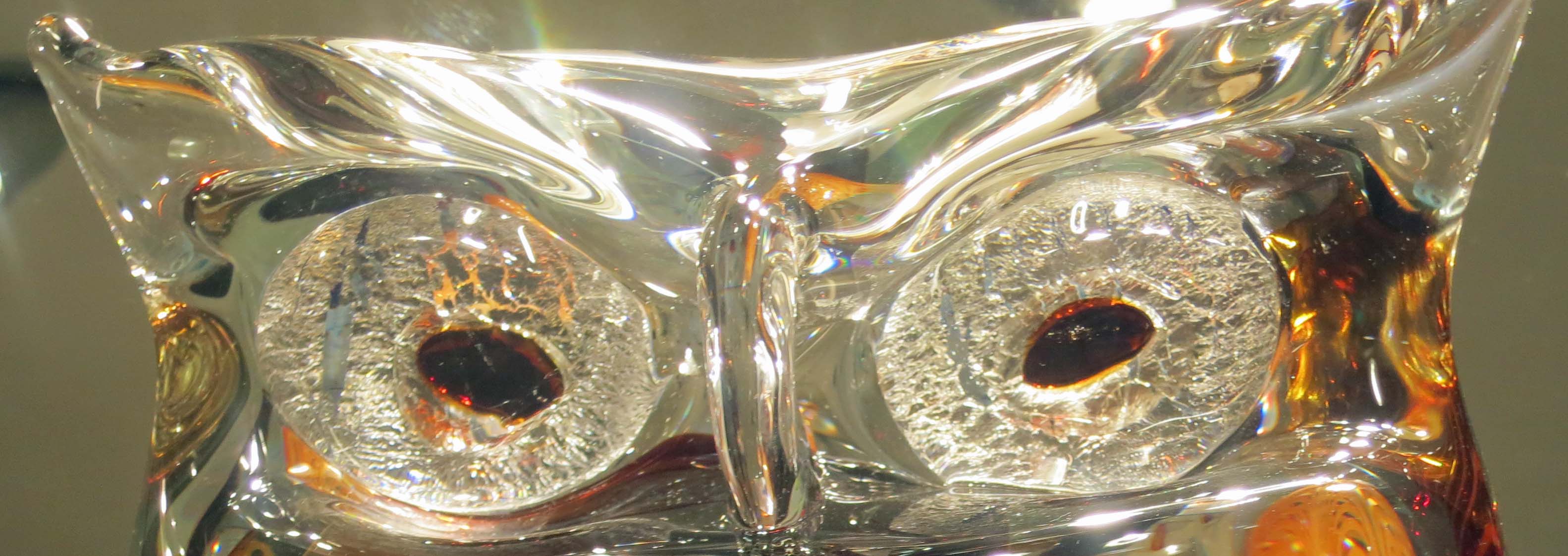
Window shopping in Venice is one treat after another. Noted for its masks and glass work, I thought this owl caught both.
Window shopping in Venice is one treat after another. Numerous windows display masks or glass work, I thought this owl caught both.

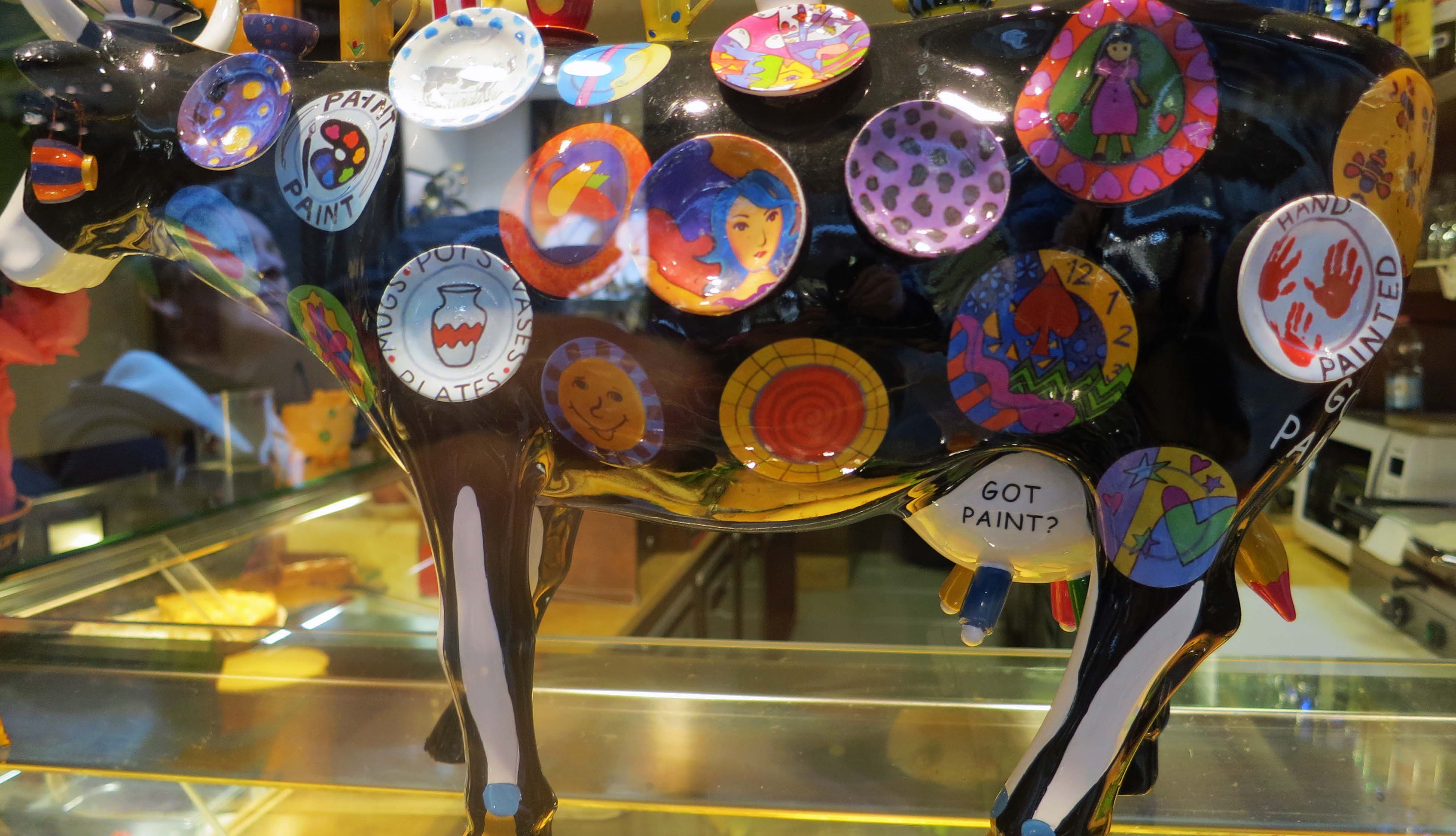
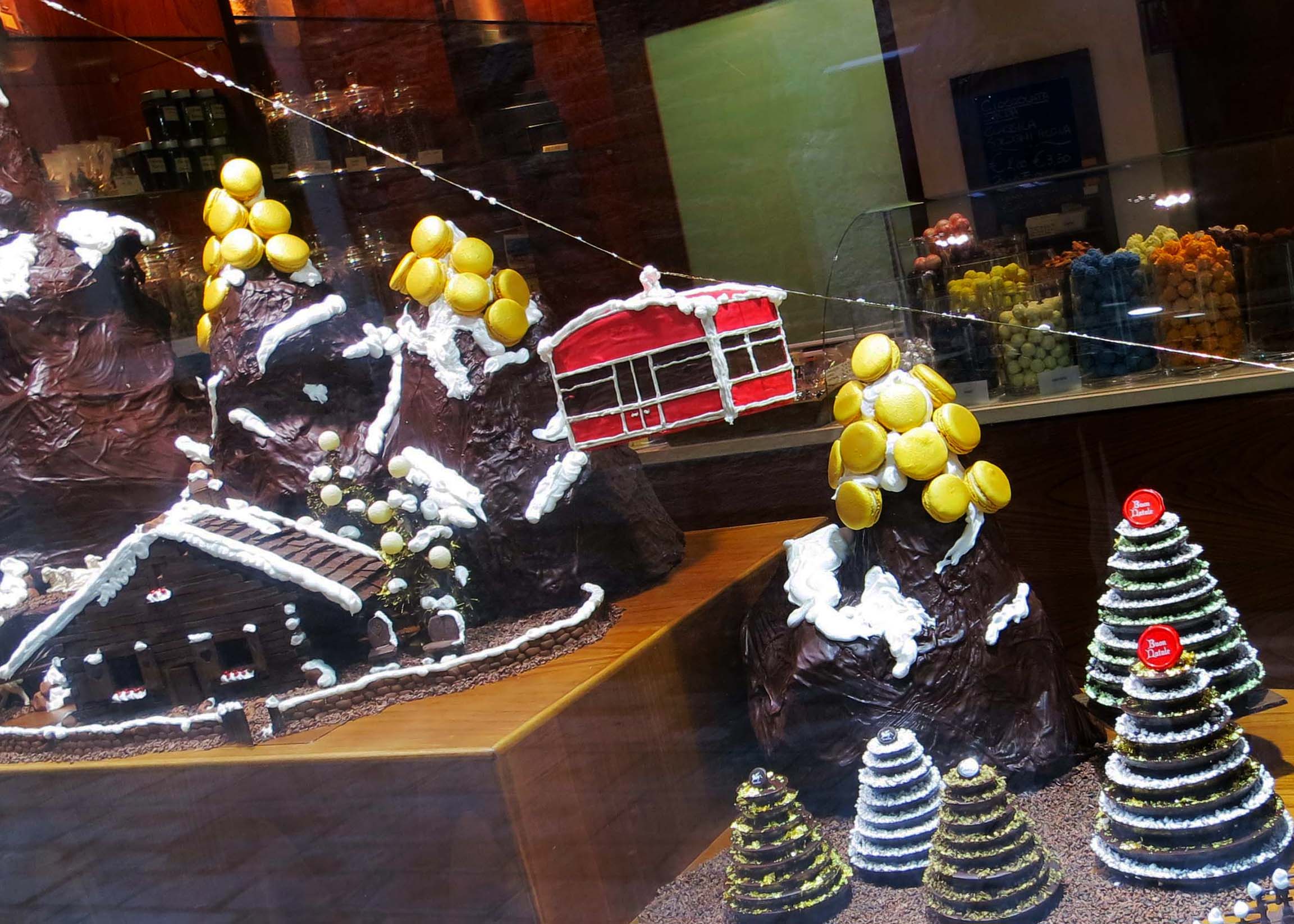
Venice does a fabulous job with window displays. We saw mouth-watering pastries, chocolate fantasies, clunky shoes, a bejeweled rear end, and an interesting ceramic cow.

I am sure these clunky shoes are stylish but I confess to not getting it.
I am sure these clunky shoes are stylish even though I don’t get it. I do get that I would hesitate to get in an argument with the woman wearing them.
This 440 euro sculpture of a butt challenged my imagination like the shoes above. I did find the glass beadwork fun, however.
As ads go, this ceramic cow in Venice was quite creative. Got paint?
As ads go, this ceramic cow in a Venice shop was quite creative. Got paint?
A Venetian chocolatier created a ski scene from his product in his window.  I almost lost Peggy...
A Venetian chocolatier created a ski scene in his window. I almost lost Peggy. “Chocolate!” she exclaimed. Of course we had to go in. And left a few hundred calories later.

What impressed me the most about the window displays in Venice were those featuring glassware and masks. Both reach back into the city’s ancient history.

How many places can claim they have been “supplying quality glass products since 1291”? That’s the year that a Venice made of wood required all of its glass makers to move to the island of Murano in the Venice Lagoon. Community leaders feared that the glass making process would burn the city down. Venice quickly became the center of Europe’s trade in beautiful glass objects.

The upside for the glass makers was that they were invited into the highest ranks of Venetian society. The downside was they were threatened with having their hands chopped off or assassination if they moved and took their talents elsewhere.

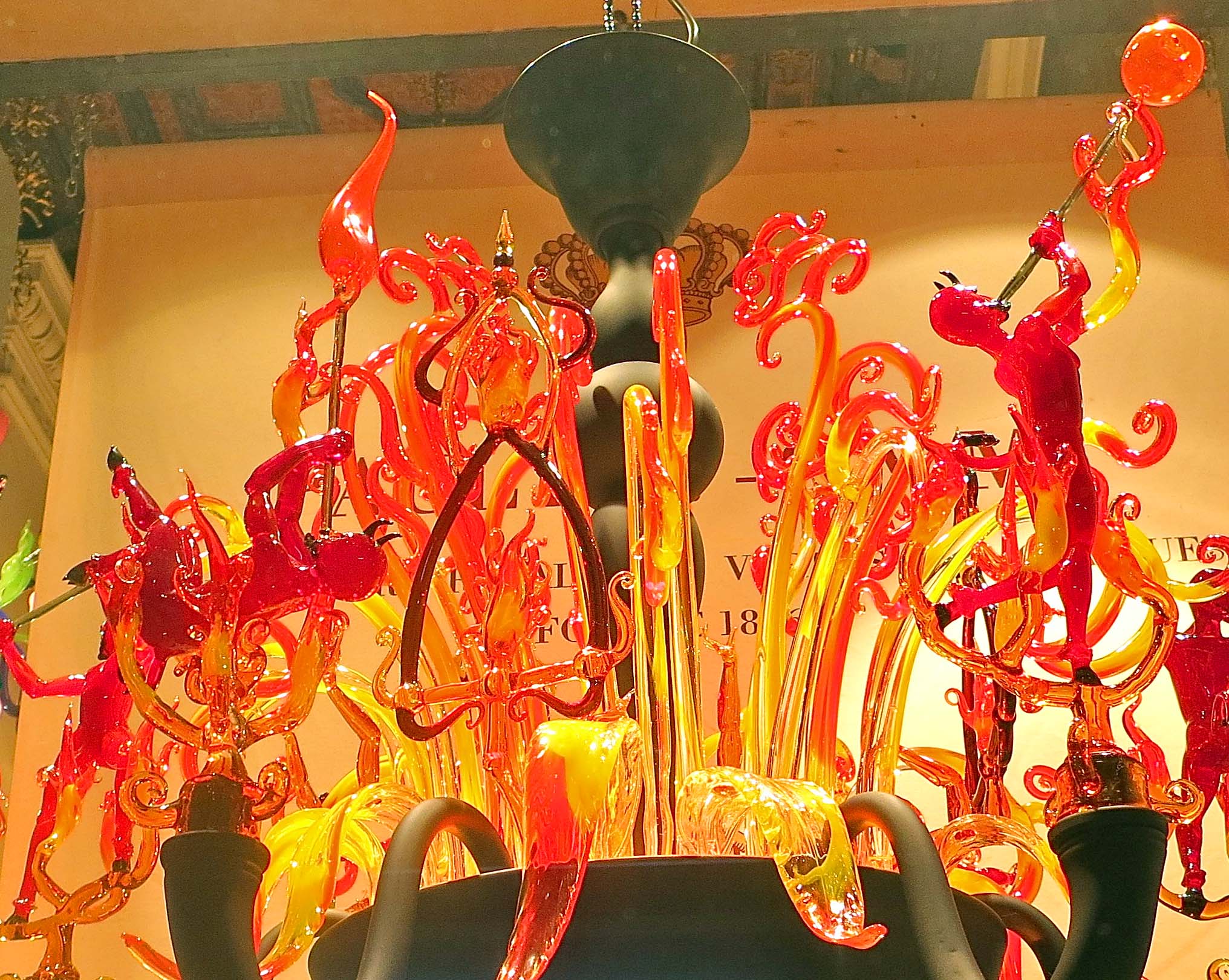
I suspect the artist who created this sculpture of glass blowers had devilish fun with his work.
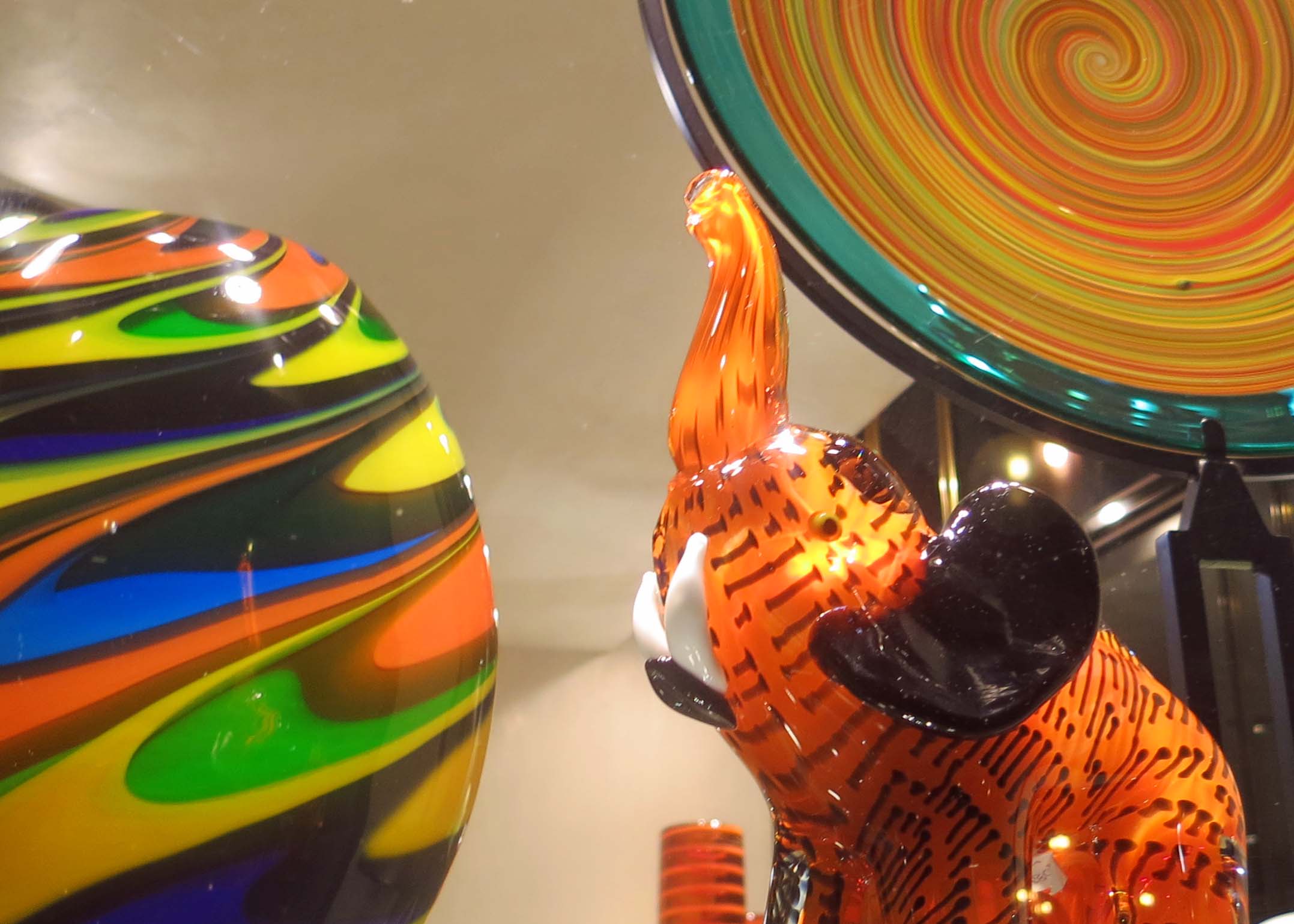
I liked this Venice window display because it captured different types of glass work including the elephant.
I liked this Venice window display because it captured different types of glass work including the elephant and shows off various techniques of coloring glass.

Venetians apparently carried out numerous activities they felt were best done while wearing masks. For example, in 1339 Venice passed a law that forbade inhabitants from visiting convents while wearing masks. One can only wonder. During plague times doctors wore long nose masks they believed protected them from the disease. Today masks are a central part of the Carnival of Venice that ends on Shrove Tuesday (Mardi Gras).

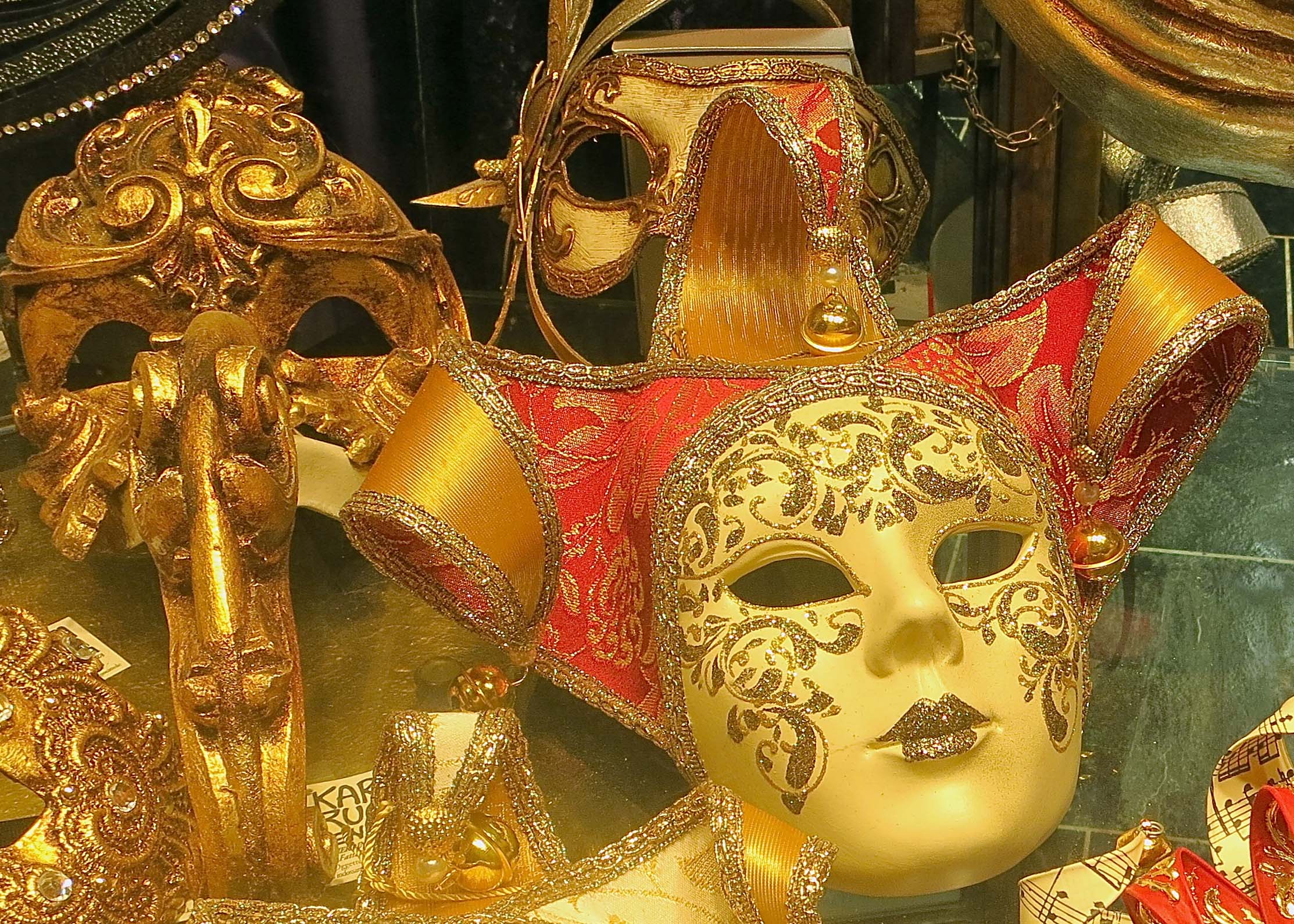
The Venetian masks displayed in shops can be quite beautiful and elaborate.
The Venetian masks displayed in shops can be quite beautiful and elaborate. A “plague” mask is on the left.
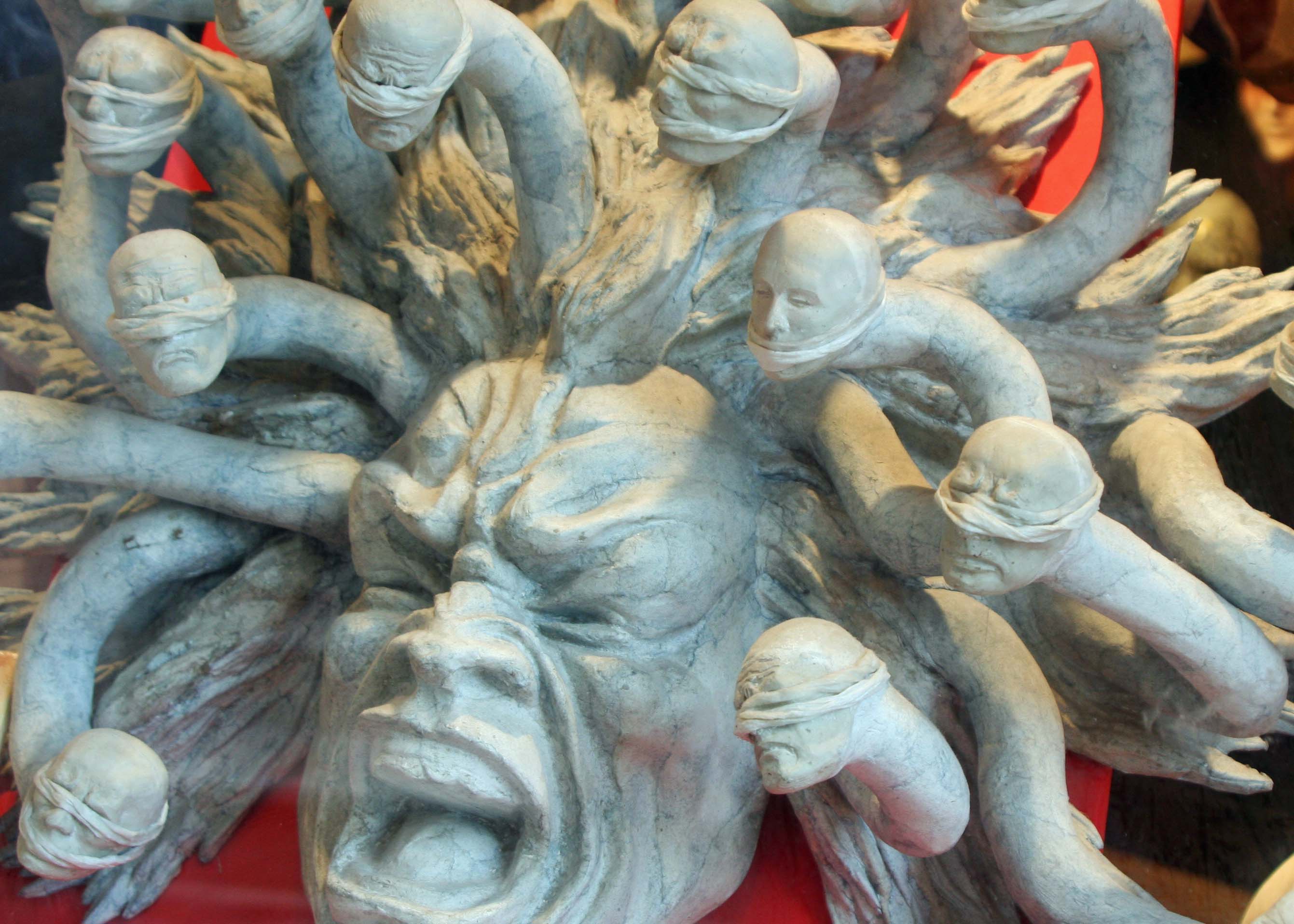
The masks of Venice can also be a bit on the scary side such as this mask of Medusa. Note the masks covering the eyes on the snake heads. (Photo by Peggy Mekemson.)
The masks of Venice can also be a bit on the scary side such as this mask of Medusa. Note the masks on the snake heads. See no evil, hear no evil, smell no evil, speak no evil? (Photo by Peggy Mekemson.)
This mask making shop had their creations lined up assembly line style. Their eerie see through character made me think of them as ghost masks.
This mask making shop had their creations lined up assembly line style. The eerie see-through look of the masks made me think of ghosts.
I’ll conclude with modern mask featuring a steam punk theme. It made me think of Burning Man.

NEXT POST: Continuing on our armchair journey during Covid-19, it’s off to Pompeii to visit with the gods.

A Fox Climbs Our Fence, A Coyote Trots By, a Bumble Bee Bites Plants and Other Tales of Nature: Part 1

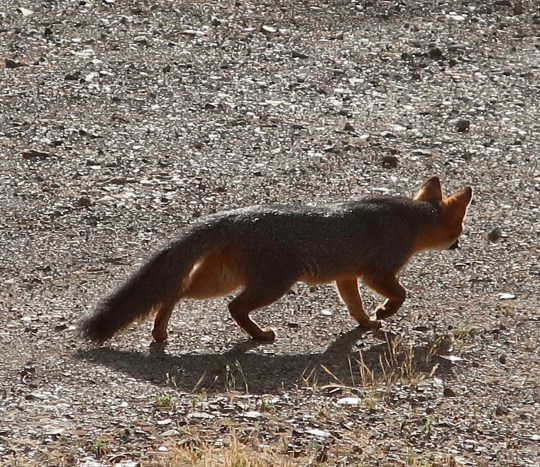
Peggy and I were sitting in our library downing an English muffin and a bowl of fruit on Friday morning when a movement outside caught my attention. A fox was climbing our eight-foot deer fence after a Stellar jay that was hassling it. Once again we found ourselves in a zoo looking out from our comfortable cage. The fox climbed down, made its way through our shrub garden, and climbed under the fence. I took this photo right after it climbed under the fence.

We weren’t fast enough with our cameras to catch the fox climbing the fence. We sat there in awe for too long. But fortunately, the fox was having a leisurely morning and hung around for a few minutes..

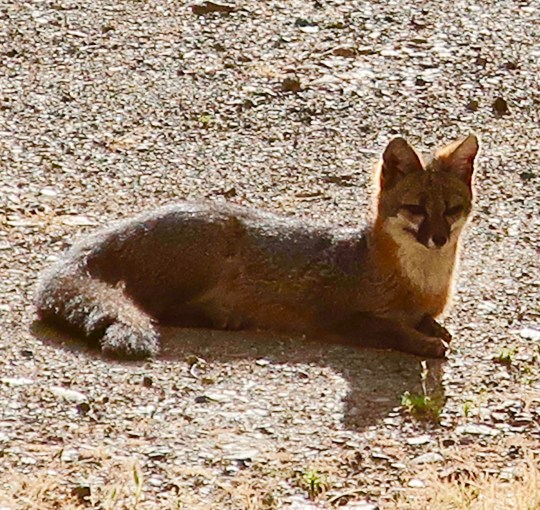
Given its reddish color, my first thought was red fox, but its black capped grey tail and climbing ability quickly identified it as a grey fox. Grey foxes are the only ones that climbs trees (and apparently deer fences). They have even been known to raise their families in tree dens high above the ground. We catch glimpses of them occasionally on our property but normally they are secretive. One time, we watched a doe stalk one, following along behind, carefully raising and placing each hoof. That was neat.

My guess is that they have a den (or dens) on our property. The male and female raise the kits together. For the first couple of weeks the mother tends to her babies while the male hunts and supplies food. Our experience is that they form a close bond. A few years ago a fox was run over on the highway below our property. Each night we would hear its partner howling down on the road. Only when I went down and buried the fox did the howling end.

The fox plopped down in our driveway for a brief rest. I suspect he was on his way home after an early morning hunt. (Photo by Peggy Mekemson.)
He then looked up at us. Note the short legs. The literature says that’s what allows foxes to climb trees.
And then he was off on the hunt again.

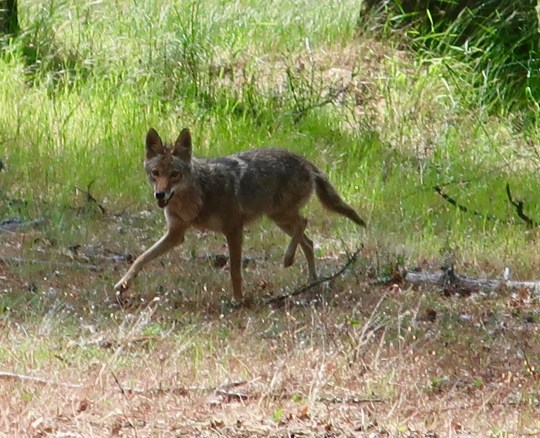
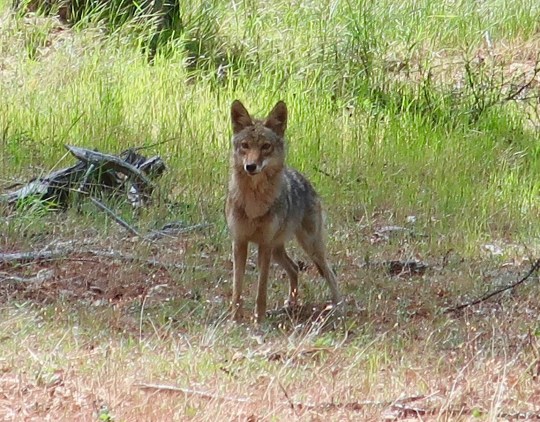
Having enjoyed the fox, it was only appropriate that we would see a coyote as well. We met up with it last week as we were hiking in the forest behind our house. It seemed as curious about us as we were about it.

It came trotting up through the forest and didn’t see us at first.
Then he stopped and checked us out. I thought it looked quite regal. The coyote stared at us for a couple of minutes. I thought it might continue up toward us but it headed off in the other direction, stopping every few feet to look back at us.

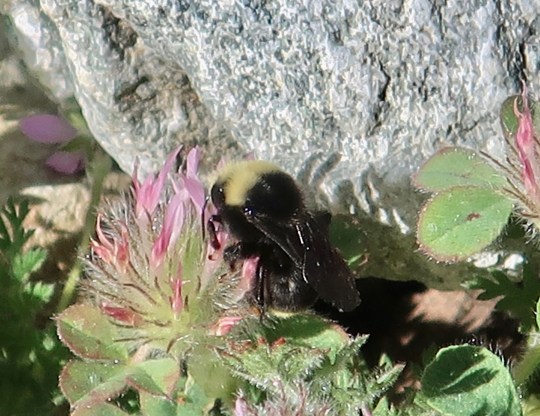
This is hot off the press, and it isn’t about Covid-19. Woohoo! I was skimming through Apple News this morning and I came across an article that bumble bees bite plants. How could I not read the article? Had the plants somehow irritated the bees. Was there a bee-plant war going on? No, there wasn’t a war. The bees depend on the pollen from the plants for their survival. But they were irritated. The plants weren’t blooming and providing the pollen. So the bees bit the plants to speed up the process. Apparently it cuts two to three weeks off the wait period. I rushed outside to see if I could spot a bumble bee biting a plant. No luck, the flowers were already blooming. I did catch a couple of photos of bumble bees harvesting pollen, however. I conclude my post with them. Bzzzzzzz.

Bumble bee harvesting pollen from the clover that grows in our back yard.

NEXT POSTS: Tomorrow I’ll take you window shopping in Venice. Thursday: Part 2 of nature tales. Among other things, you will meet a Buddhist lizard.

When Getting Lost Is a Treat: Venice… Armchair Travel

This is number four in my armchair series on Venice where Peggy and I visited in 2013. Again, I have pulled it from my archived posts to revisit in the time of Covid 19. Enjoy.

Walking through Venice allowed us to enjoy what was unique about the city, such as this lamp.

I have always felt the best way to learn about a city is to walk its streets. Fortunately, I was traveling in Europe with companions who also loved to walk. For the most part, we skipped the tours. It isn’t that the tours are bad, you can learn a lot from them, but they are regimented and often expensive. There is no wandering off on your own, or taking longer to enjoy a particular site than the tour leader allows.

Venice is a great walking city— if you don’t mind getting lost. Streets have a tendency to take you somewhere you weren’t planning to go and come to abrupt ends. Street signs are rare. What the city does do, however, is post signs that will eventually lead to major monuments. And of course, you are on a relatively small island. How lost can you get? Besides, it isn’t like getting lost in the Alaskan wilderness. I was always very careful not to.

A good map is an important tool when walking off the beaten path (or main tourist routes). We didn't always agree on where we were or the proper route to take, however... and we all considered ourselves something of experts in map reading.
A good map is an important tool when walking off the beaten path (or main tourist routes). We didn’t always agree on where we were or the proper route to take, however. And we all considered ourselves experts in map reading. Our companions caught many photos of us studying and ‘discussing’ maps. Where’s the GPS phone ap when you need it?  (Photo by Peggy Mekemson.)

Common sense is important.  Wandering down dark, lonely alleys can be risky at times, regardless of where you are. But in restricting your journey to major streets and walkways, you limit your opportunities to have adventures and develop a true sense of the communities you are visiting.

It is important to look around and notice the small as well as the large, the seemingly insignificant as well as what is featured in the guidebooks. Photography helps once you get beyond ‘we were there snap shots’ and allows your mind to feast on the wonderful variety that any area offers. It teaches you to see new things and to seek out what is unique. Following are various locations and objects that Peggy and I found of interest.

This photo provides a good example of our wandering off the main tourist routes of Venice without a clue where we were.
Of course, you can always stop and ask for directions…
I don't remember where I came upon this friendly looking, gargoyle-type of lion, but he was definitely worth a photo.
I don’t remember where I came upon this friendly looking, gargoyle-type of lion in Venice, but it was definitely worth a photo. It seems to have something to say. Now as I look at it again, it appears to have wings, which means it represents Venice’s patron saint, St. Mark. Look around, and you will find these fellows everywhere. If you ever find yourself in Venice with kids, you could probably keep them busy by challenging them to see how many they could find.
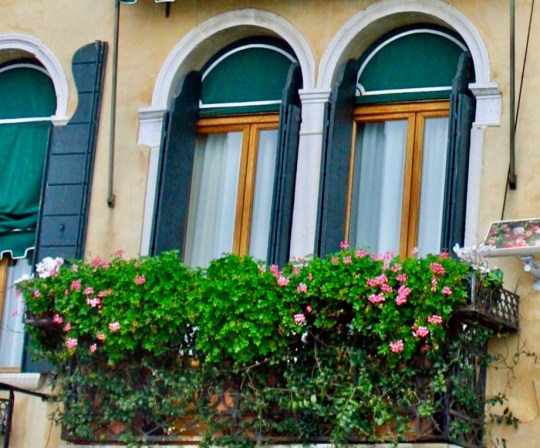
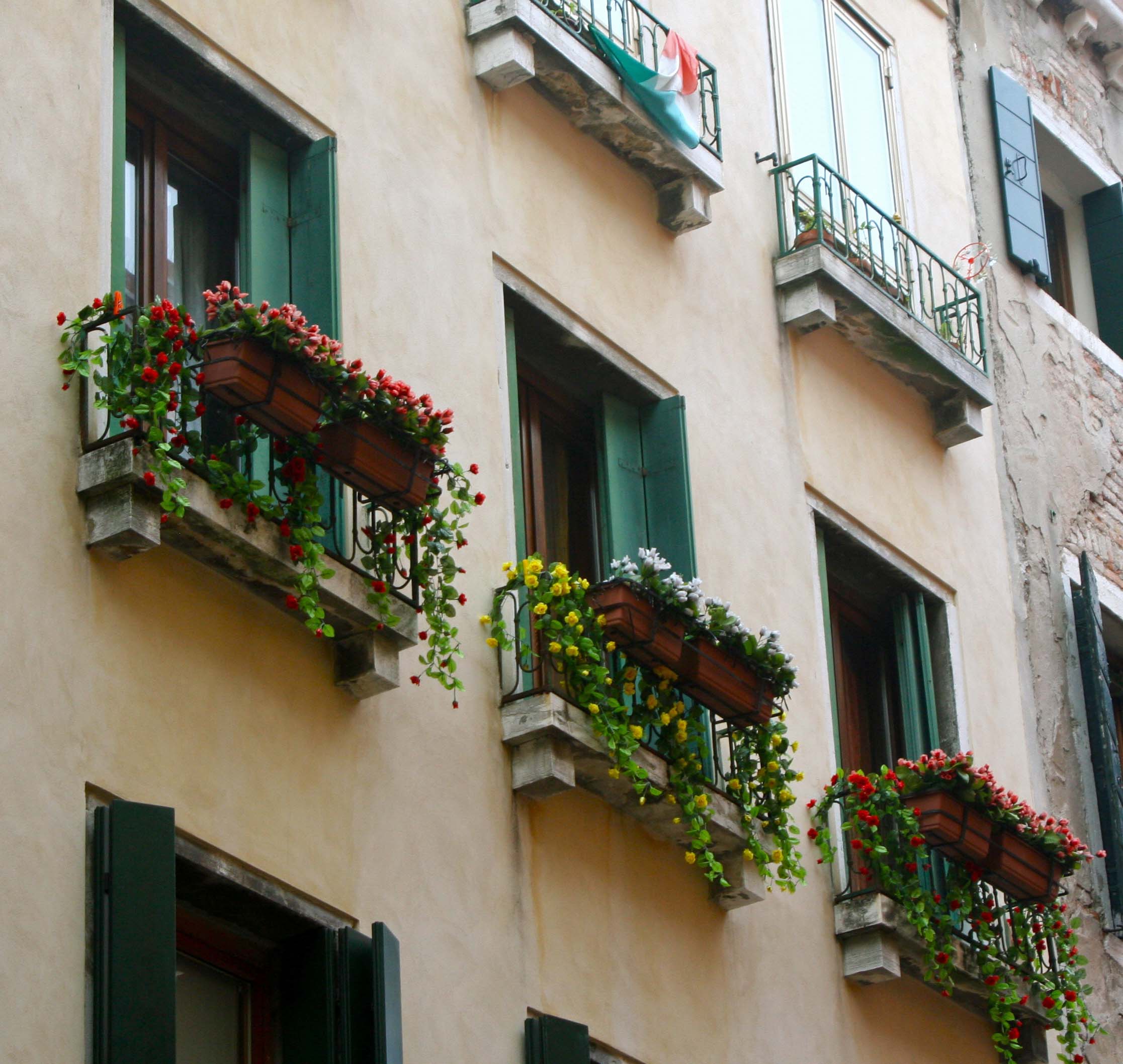
Venice street scene showing colorful buildings and flower boxes.
I felt this photo captured the colorful buildings and flower boxes of Venice streets. Also note the green pharmacy sign and green pharmacy lamp on the lower left.
Window flower boxes are common in Venice, Italy.
One thing you find much more of in Europe than in the US are flower boxes. (Photo by Peggy Mekemson.)
Peggy caught this photo of a large flower box. (Photo by Peggy Mekemson.)
Here’s my photo of another large flower box— without flowers. But the green was as dramatic with its striped orange backdrop.
The Hotel Iris is definitely not one of your more swank hotels in Venice... and it knows it. I looked it up online and its website headline proclaimed: Hotel Iris: A Cheap hotel in Venice. Cheap was capitalized by the hotel. I consider that truth in advertising. In the US it would be "affordable lodging."
The Hotel Iris is definitely not one of the more swank hotels in Venice— and it knows it. I looked it up online and its website headline proclaimed: Hotel Iris: A Cheap hotel in Venice. Cheap was capitalized by the hotel. I consider that truth in advertising. In the US it would be “affordable lodging.”
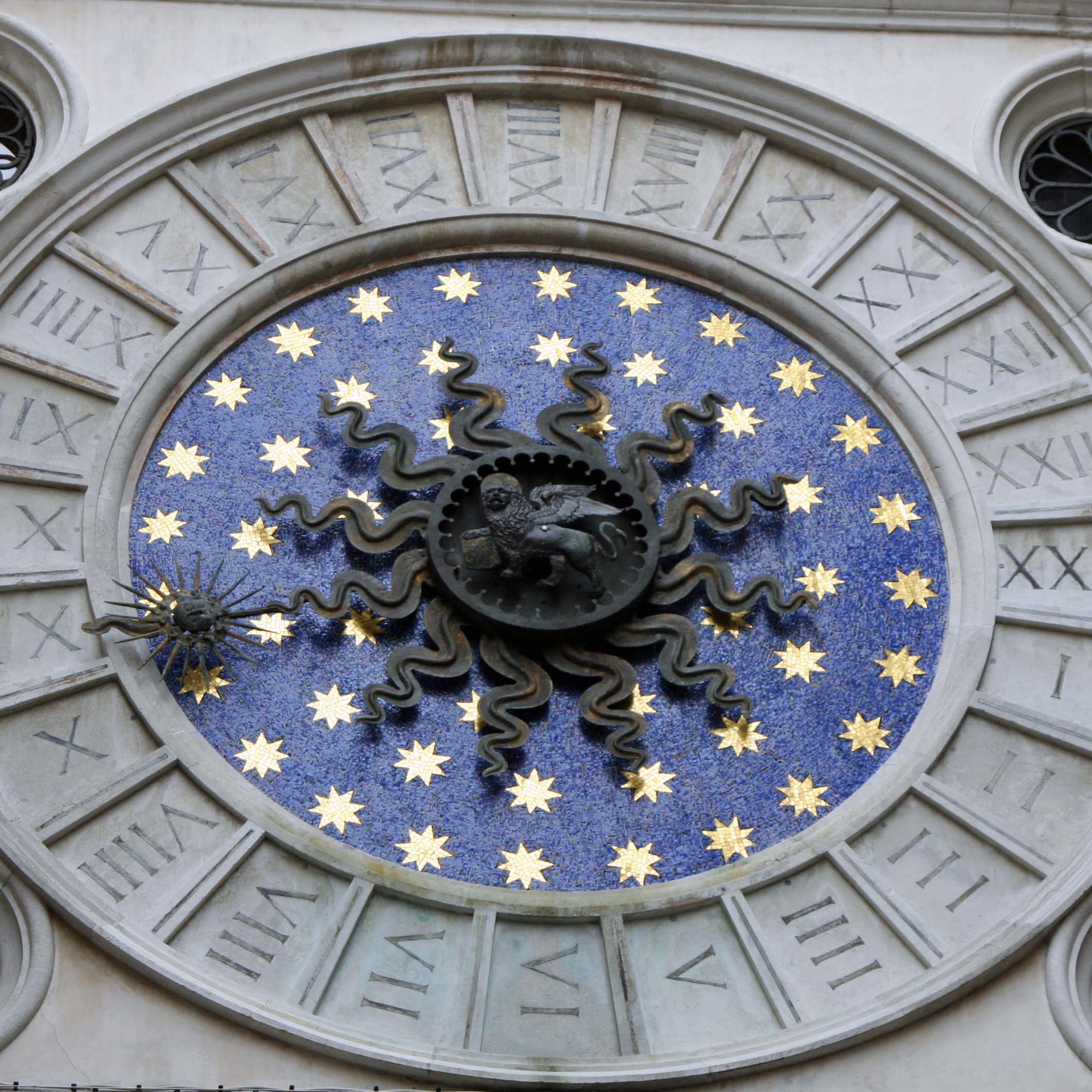
Starry roman numeral 24 hour clock found off of St. Marks Square in Venice Italy.
One of the advantages of a telephoto lens is it allows you to capture details you can’t normally see. I doubt we would have spotted the wild hour hand of this starred 24 hour Roman numeral clock found off of St. Mark’s Square. There’s another winged lion in the center, BTW. (Photo by Peggy Mekemson.)
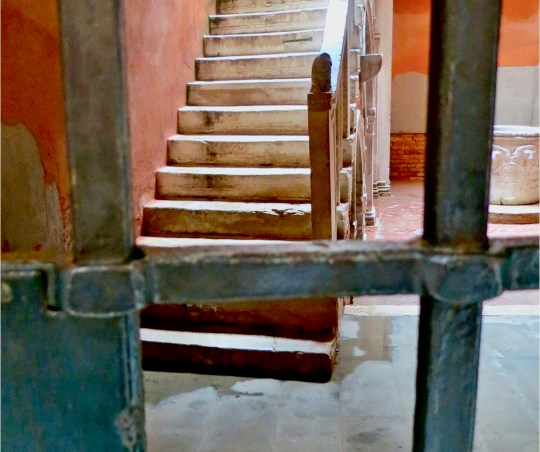
I am always intrigued by what I consider as invitations, such as this stairwell in Venice. It’s saying “Come and climb up. See what’s up here.” Unfortunately, the locked iron fence said something else.
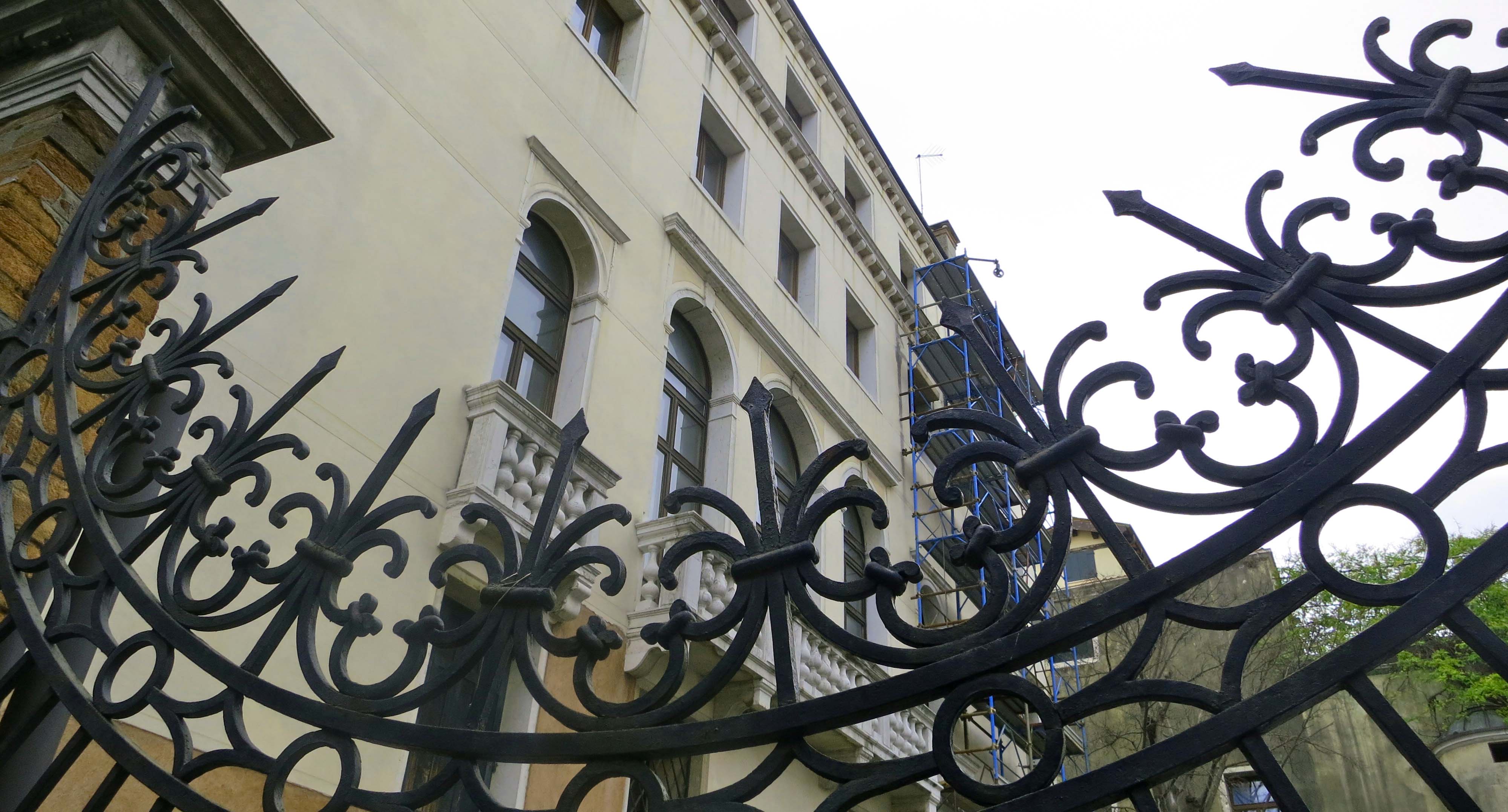
Iron gate in Venice.
Speaking of iron fences in Venice, was this one saying “Take my picture.” or “Don’t even think about climbing over!”? That’s it for today. Next up, we go window shopping in Venice and discover the long-nosed face masks that Venetian’s wore during the plague of the 1600s.

Venice’s Storied Canals, Gondolas and Bridges… Armchair Travel

I am continuing to dip back into my archives for armchair travel in the time of Covid-19. This is my third post in a series of five on Venice where Peggy and I travelled in 2013.

Remember the old Frank Sinatra hit song “Love and Marriage Go Together Like a Horse and Carriage.” Venice’s canals and gondolas are like that. It is hard to imagine one without the other. Also, it is hard to imagine gondolas without tourists. I suspect that most of them are docked in this time of Covid-19. In fact, satellite photos show the canals to be surprisingly clean. Even jellyfish have returned to take advantage of the tourist free waters! While Venetians may miss the tourist dollars, they, too, are appreciating their tourist free city. The government is searching for ways to reduce the dependence on tourist dollars— and the number of tourists. Gondolas aren’t about to go away, but there may be far fewer of them in the future.

I shot this photo from the Rialto Bridge looking down on the Grand Canal.

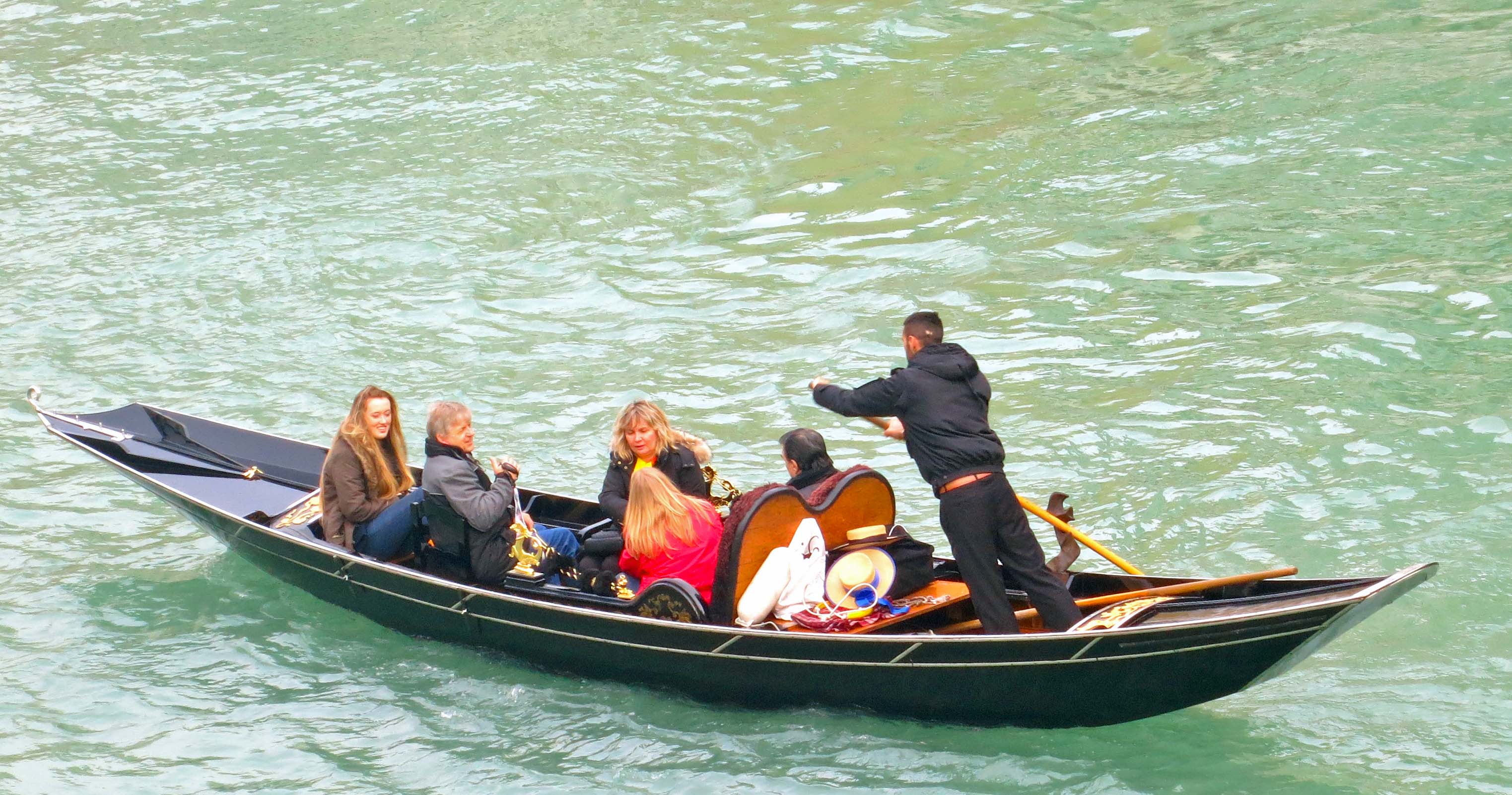
It is impossible to think of Venice without thinking of canals and romantic gondolas with singing gondoliers. Or possibly your vision of Venice is of fast boats with roaring engines and good guys/bad guys chasing each other with guns blazing as depicted in any number of movies.

A gondolier works his boat on cold, rough waters in the Grand Canal as his passengers enjoy the ride, bundled up in warm clothes.

We were in off-season, however. Only a few hardy tourists braved the cold for gondola rides and no movies were being made. The canals had reverted to their primary role as transportation corridors, a role which they have played for a thousand years.

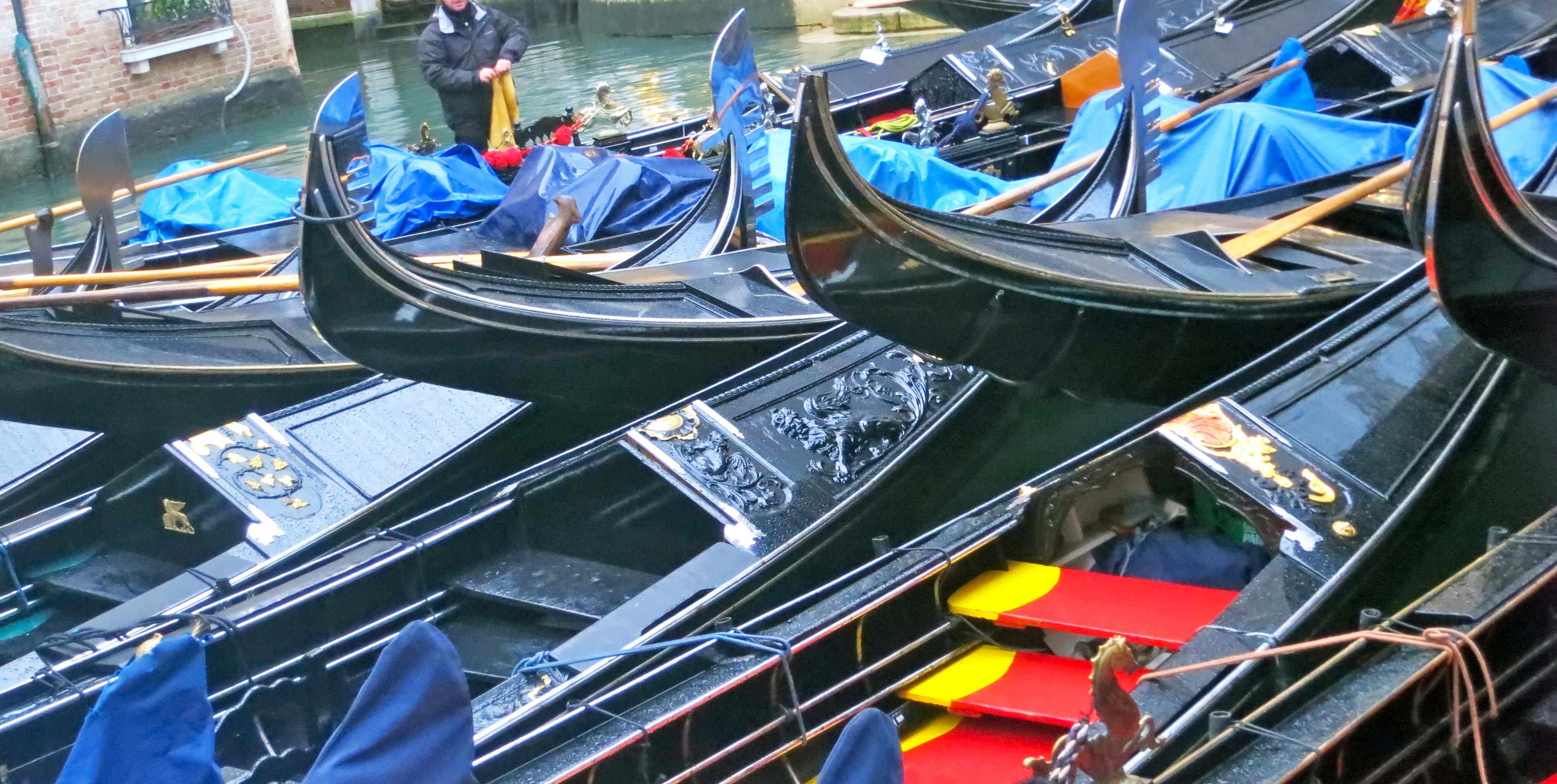
This is a sight you wouldn't see during the summer when these gondolas would be filled with tourists. I thought of the gathered gondolas as a gondola parking lot.
This is a sight you wouldn’t see during the summer when these gondolas would be filled with tourists. I thought of the gathered gondolas as a gondola parking lot. You may note that they are all black. You can thank a 17th Century Doge for that. He mandated that they all be painted the same color.
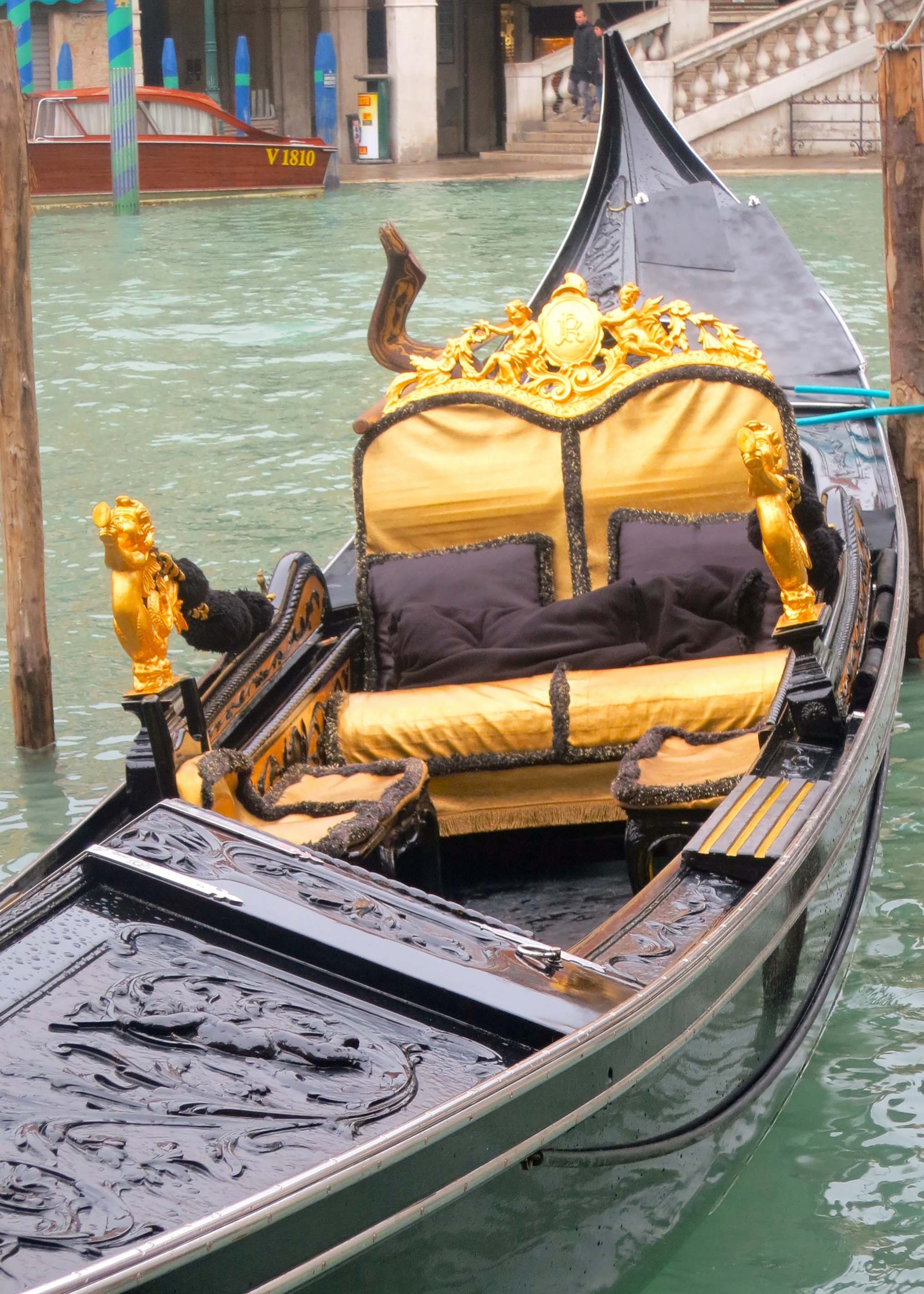
Luxury accommodations gondola style.
Luxury accommodations gondola style. Expect to pay big bucks/euros for a ride in this one.
Peggy took this photo of parked gondolas looking from Venice proper across at the island of La Giudecca
Peggy took this photo of parked gondolas looking from Venice proper across at the island of La Giudecca. (Photo by Peggy Mekemson)

We chose to walk on the carless streets that parallel the canals and cross over them on bridges that have as much personality of the canals and provide intriguing glimpses of life along the canals. The highlight of our journey was the famous Rialto Bridge and the Grand Canal but the smaller canals, known as rivers, provided more intimate views.

This photo shows the famed Rialto Bridge that served for centuries as the only bridge across the Grand Canal, which snakes its way through Venice as the major transportation corridor.
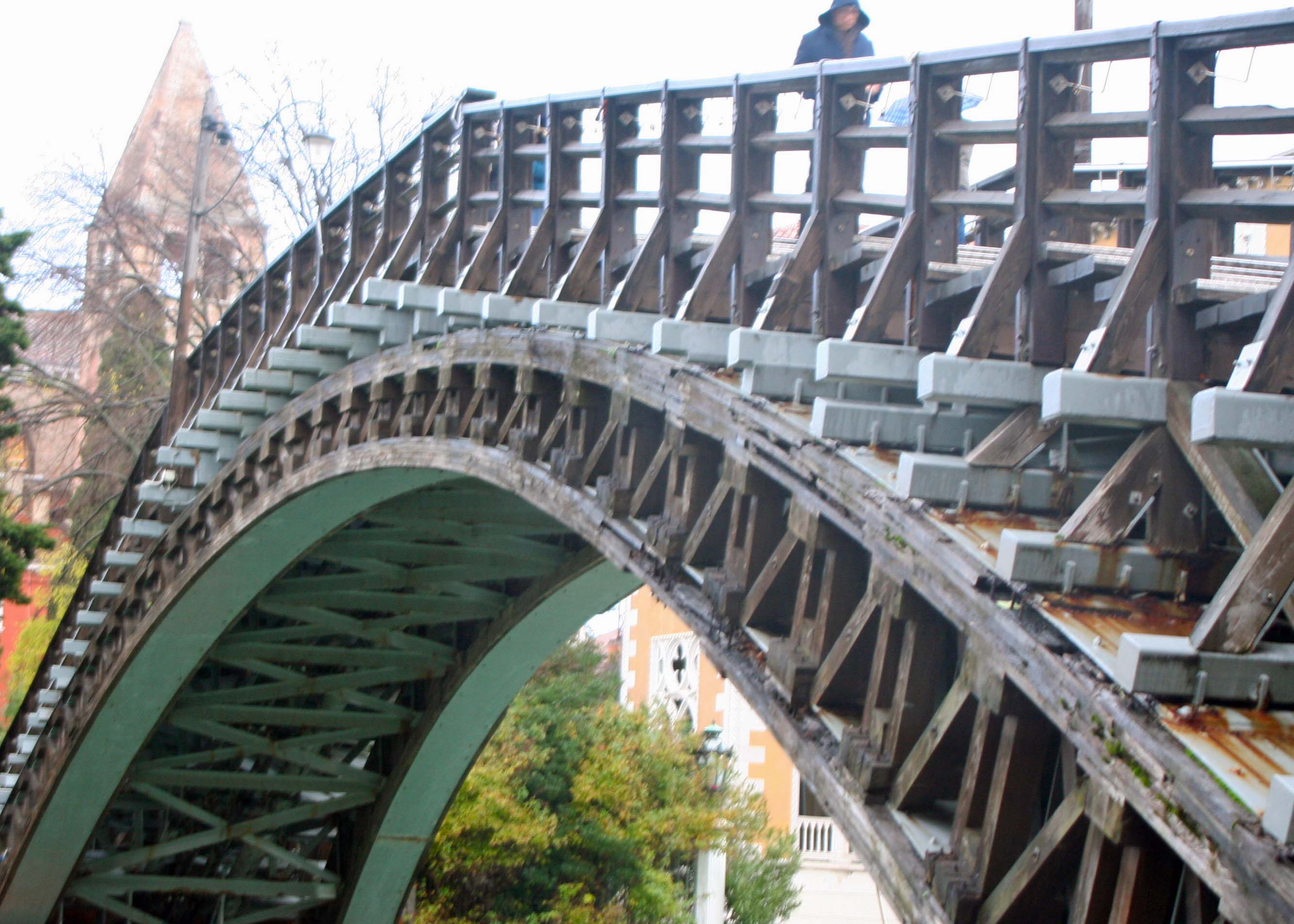
The more recent Accademia Bridge across the Grand Canal has a totally different look and construction.
The more recent Accademia Bridge across the Grand Canal has a totally different look and construction. (Photo by Peggy Mekemson.)
I took this photo from the other side of the Accademia Bridge to capture the parked gondolas and the boat taxi that is crossing under the bridge.
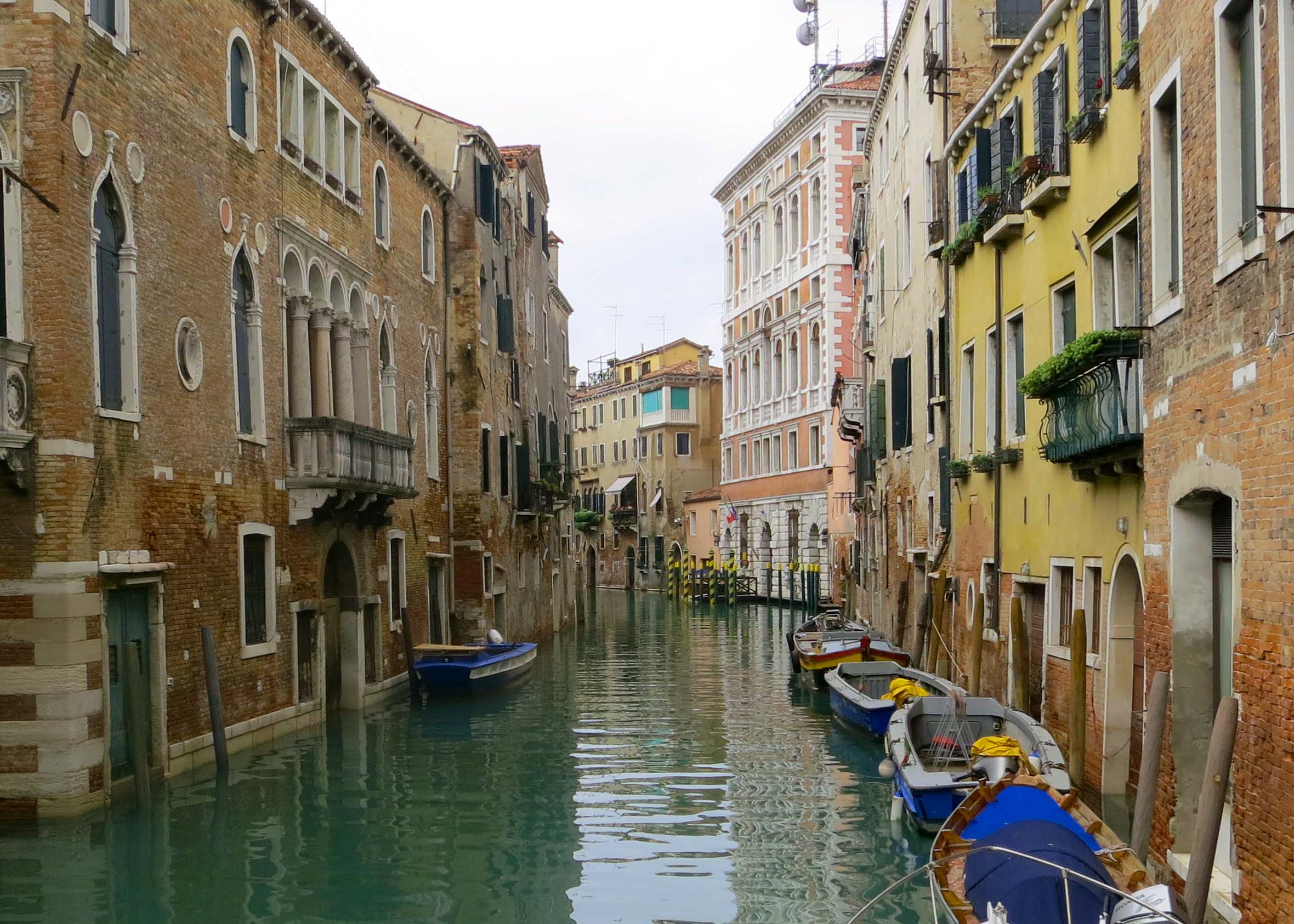
Smaller canals, known as rivers in Venice, provide a more intimate view of life in the city. The buildings here were built by wealthy Venetians when Venice was a major world power controlling trade between the East and the West. Houses then, as now, were a symbol of wealth and power.
Peggy captured this interesting entrance way. I assume it would have been taller in the early years before sinking and global warming.
Flower/plant boxes are found throughout the city. I liked how these were next to the canal.
I'll conclude with this reflection shot. (Photo by Peggy Mekemson.)
I’ll conclude with this reflection shot. Think of this as how Venice might look with far fewer tourists. (Photo by Peggy Mekemson.)

NEXT POST: We get lost in Venice.

St. Mark’s Square, Walking on Water, and a Pork Barrel Saint: Venice… Armchair Travel

Peggy and I return to Venice today as part of our Armchair Travel in the Time of Covid-19 series. Among other things we walk on water, check out a winged lion, and learn about the Saint who was shipped to Venice in a pork barrel. Again, this is adapted from earlier posts I did when visiting the Mediterranean in 2013.

St. Mark's Basilica is a beautiful church that dominates St. Marks Square in Venice.
St. Mark’s Basilica is a beautiful church that dominates St. Mark’s Square in Venice.

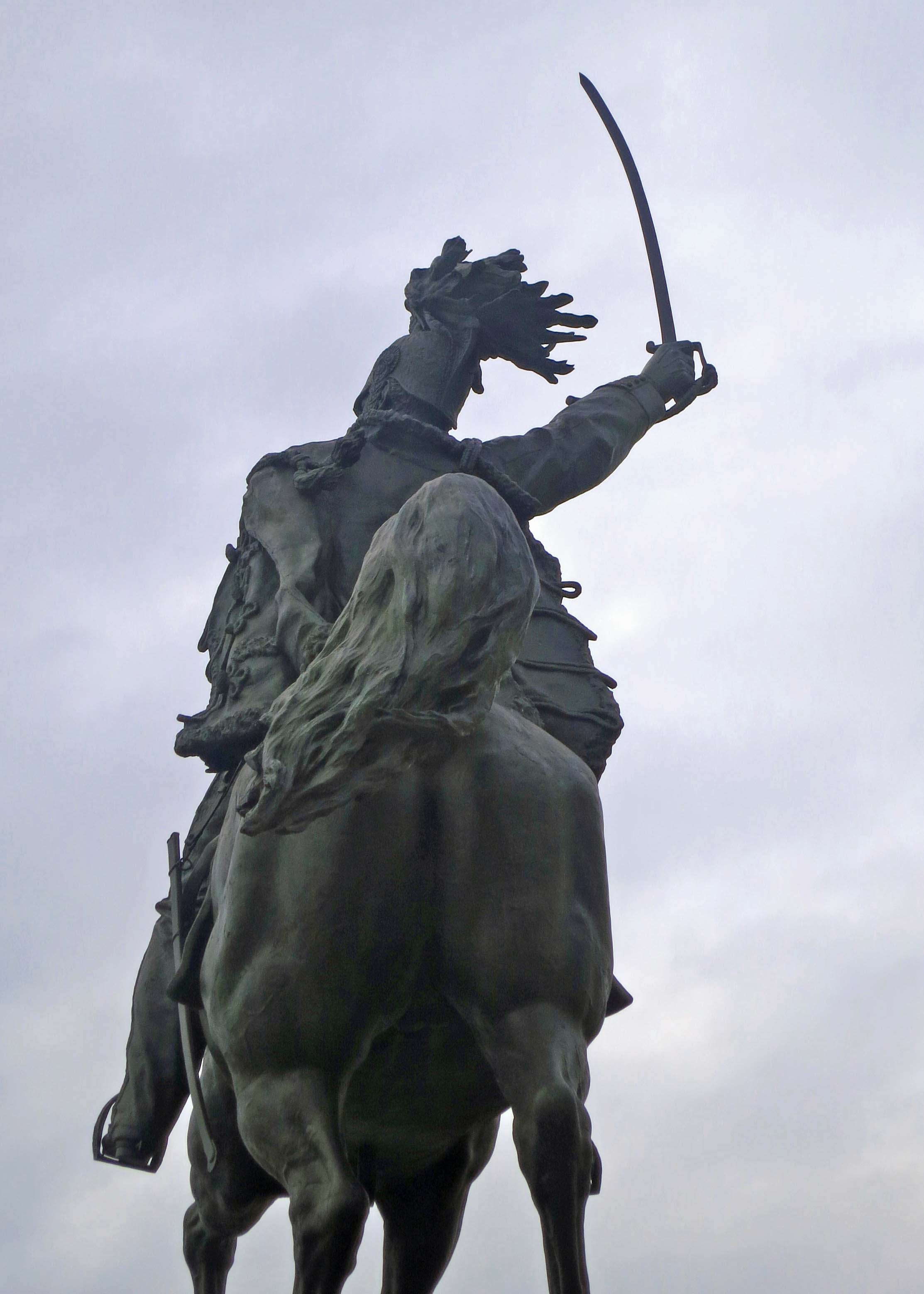
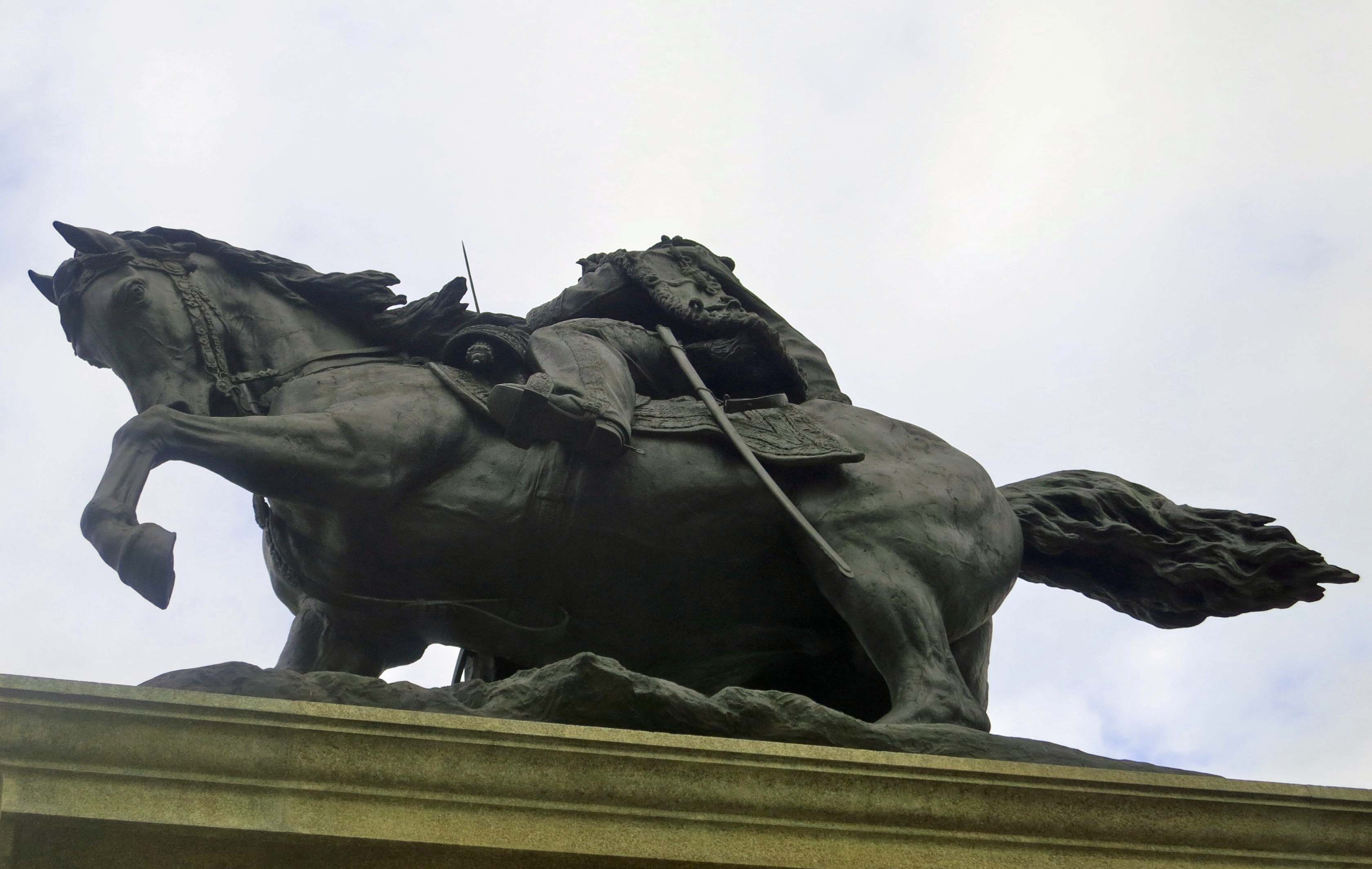
Being eager to begin our exploration of Venice we picked up a water taxi from the cruise port. It retraced our earlier route from a sea-level perspective and deposited us near a large statue of Victor Emmanuel. He served as the first king of Italy when the various Italian city-states were united in the mid 1800s.

I took this photo of King Emmanuel charging into battle with his sword raised and horse's tail flying.
I took this photo of King Emmanuel charging into battle with his sword raised and horse’s tail flying.
Another photo of Emmanuel's imposing horse in the waterfront monument in Venice.
Another photo of Emmanuel’s imposing horse on the waterfront monument in Venice.

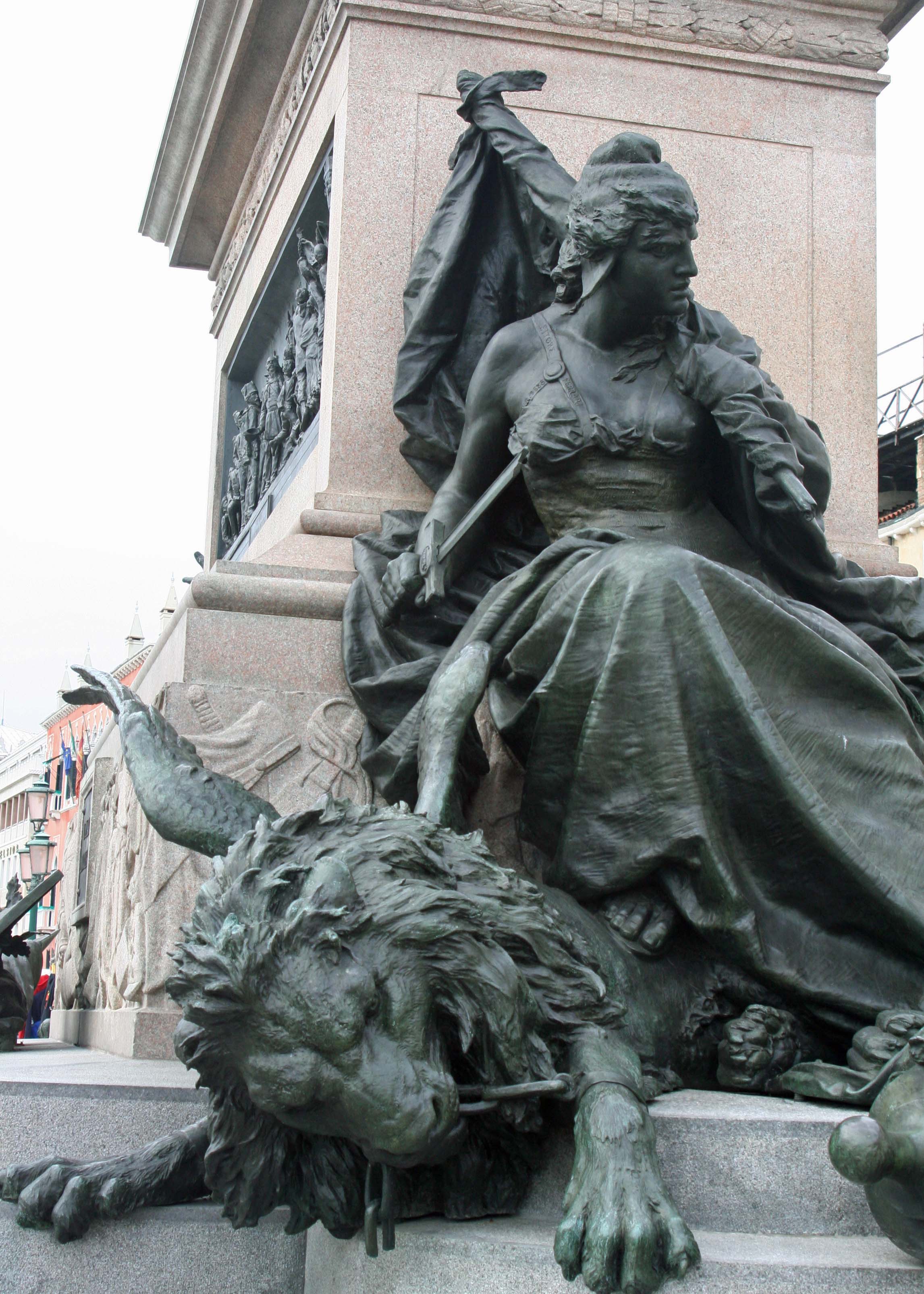
In addition to an imposing horse and Victor, the statue features Venice, represented as a woman, and St. Mark, represented as a winged lion, book-ending the monument. On one end, the lion bites through the chains of Austrian oppression while Venice looks on in a tattered dress; on the other end he roars in victory and Venice is clothed in an expensive dress.

While St. Mark the lion chews through the chains of Austrian oppression,Venice looks depressed and disheveled in this photo of the Victor Emmanuel statue in Venice. (Photo by Peggy Mekemson.)

St. Mark, with his representational lion, is the protector of Venice. The lion can be found almost everywhere. Mark— of Matthew, Mark, Luke and John— supposedly came through the region when it was a swamp and gave his blessing. This justified two Venetian merchants turning into grave robbers and stealing the body from Alexandria in 828 AD. They slipped Mark into a pork barrel for transport. Muslims consider pork unclean so the barrel was unlikely to be checked by the local officials.

Mark made it safely to Venice in his smelly container, was presented to the Doge of Venice, and was subsequently buried under what would become St. Mark’s Basilica located on St. Mark’s Square, which was our objective for the day.

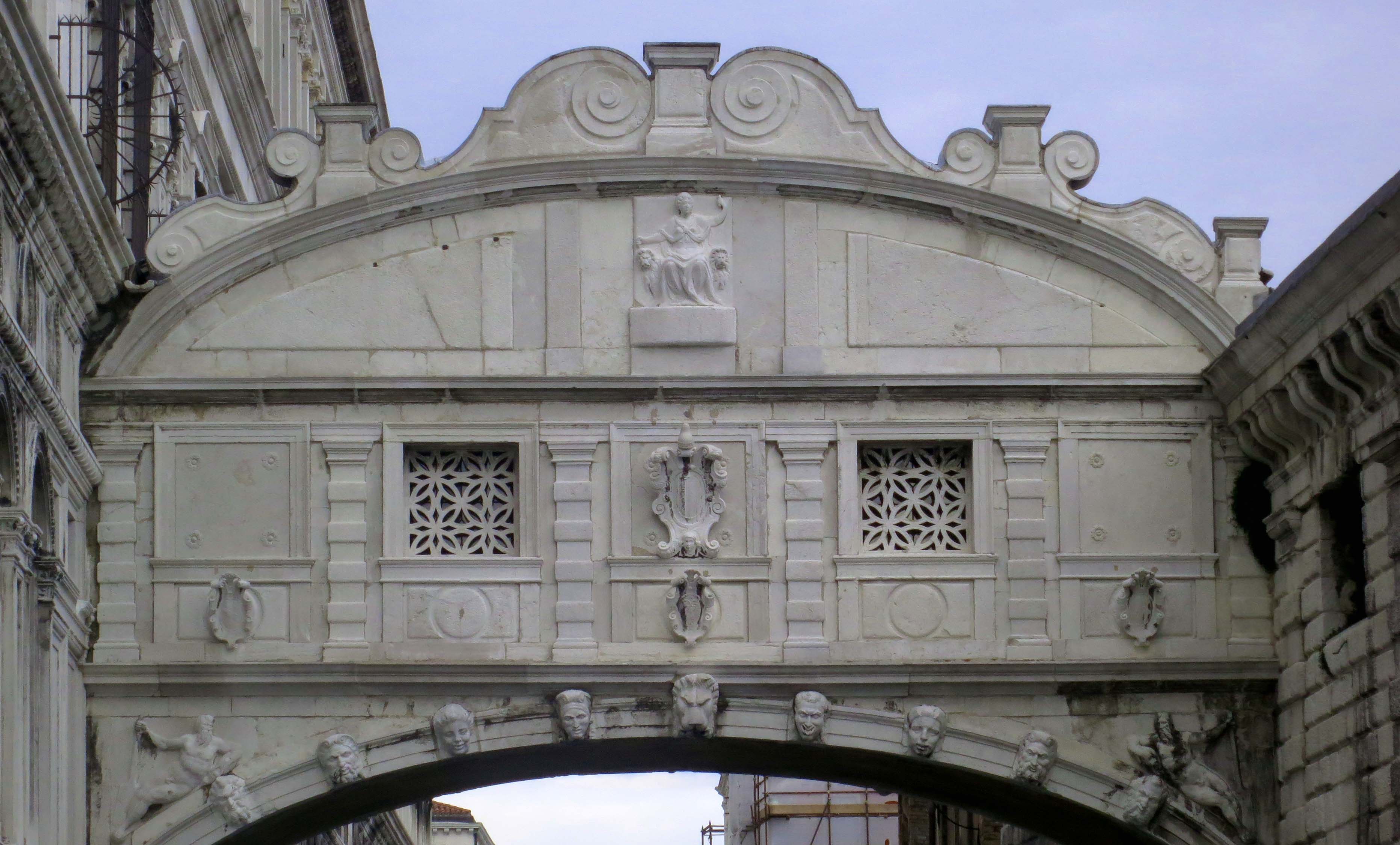
Along the way we would pass by the Bridge of Sighs and the Doge’s Palace. We would also walk on water. Actually we walked on tables that are placed in the square to help people avoid the Adriatic Sea, which is a regular visitor. Between Venice sinking some nine inches per century, high tides, and global warming, floods have become a serious problem for the city.

Peggy, Kathi Saage and Frances Dallen pose in front of the Bridge of Sighs. They aren't sighing but they are cold. A gondola lurks in the background. I suspect he was cold as well.
Peggy, Kathi Saage and Frances Dallen pose in front of the Bridge of Sighs. They aren’t sighing but they are cold. A gondolier lurks in the background. I suspect he was cold as well.
The Bridge of Sighs was so named because prisoners, condemned in the Doge's Palace, could have their last look at freedom as they crossed the bridge from the Palace to the prison. Everybody who is anybody and has visited Venice has stopped for this view.
The Bridge of Sighs was so named because prisoners, condemned in the Doge’s Palace, would have their last look at freedom as they crossed the bridge from the Palace to the prison. Supposedly they sighed. It took a poet, Lord Byron, to give the bridge its name.
The Doge's Place once served as the center of government for Venice and was home of the Doge, the most powerful man in Venice at the time and therefore one of the most powerful men in the western world. Today the palace is a museum filled with magnificent art.
The Doge’s Palace once served as the center of government for Venice and was home of the Doge, the most powerful man in Venice at the time and therefore one of the most powerful men in the western world. Today the palace is a museum filled with magnificent art. (Photo by Peggy Mekemson.)
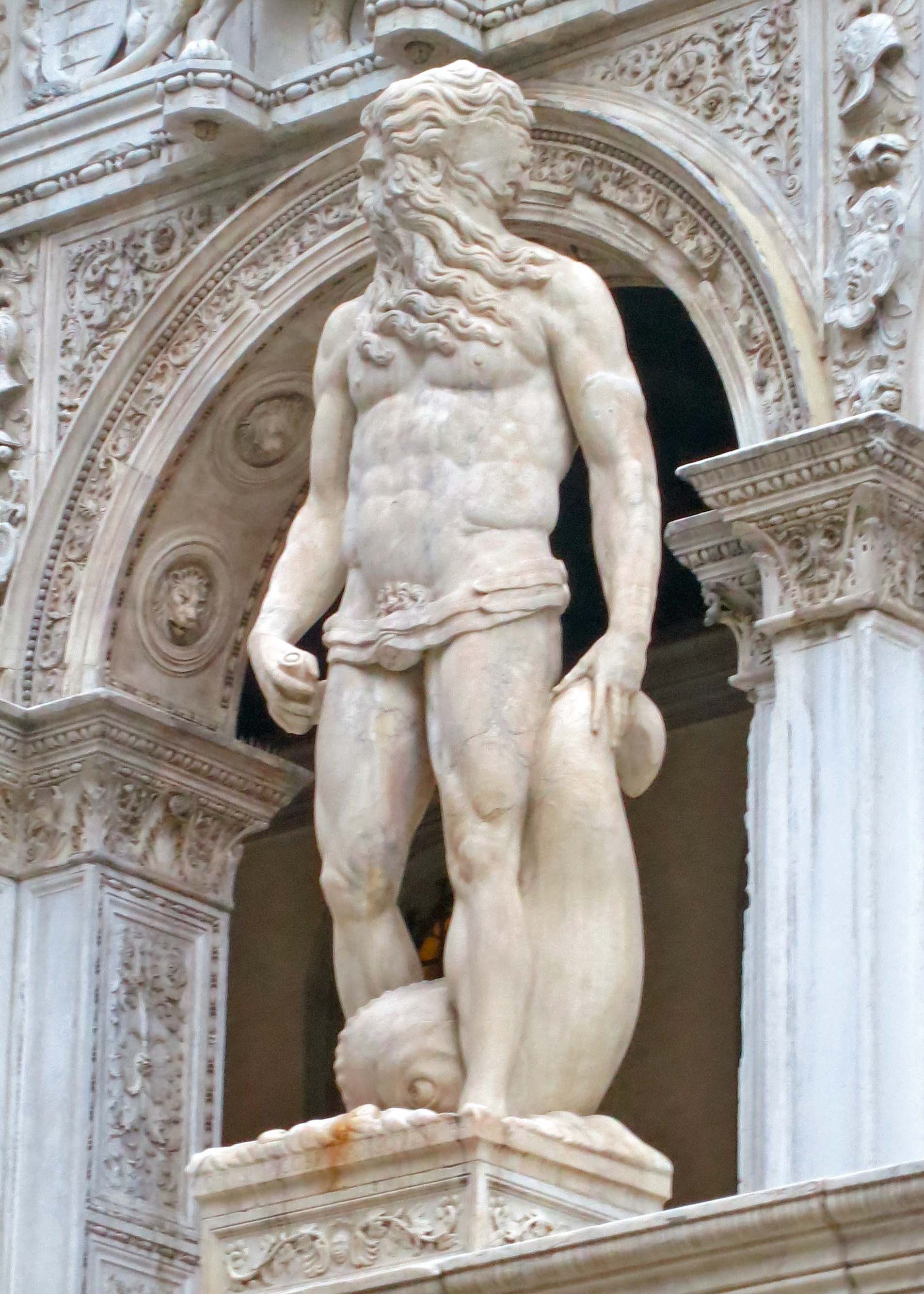
Neptune, symbol of Venice's seapower, welcomes visitors to the Doge's Palace.
A rather furry Neptune, symbol of Venice’s sea power, welcomes visitors to the Doge’s Palace.
A view of the inner courtyard of the Doge's Palace in Venice.
A view of the inner courtyard of the Doge’s Palace in Venice.
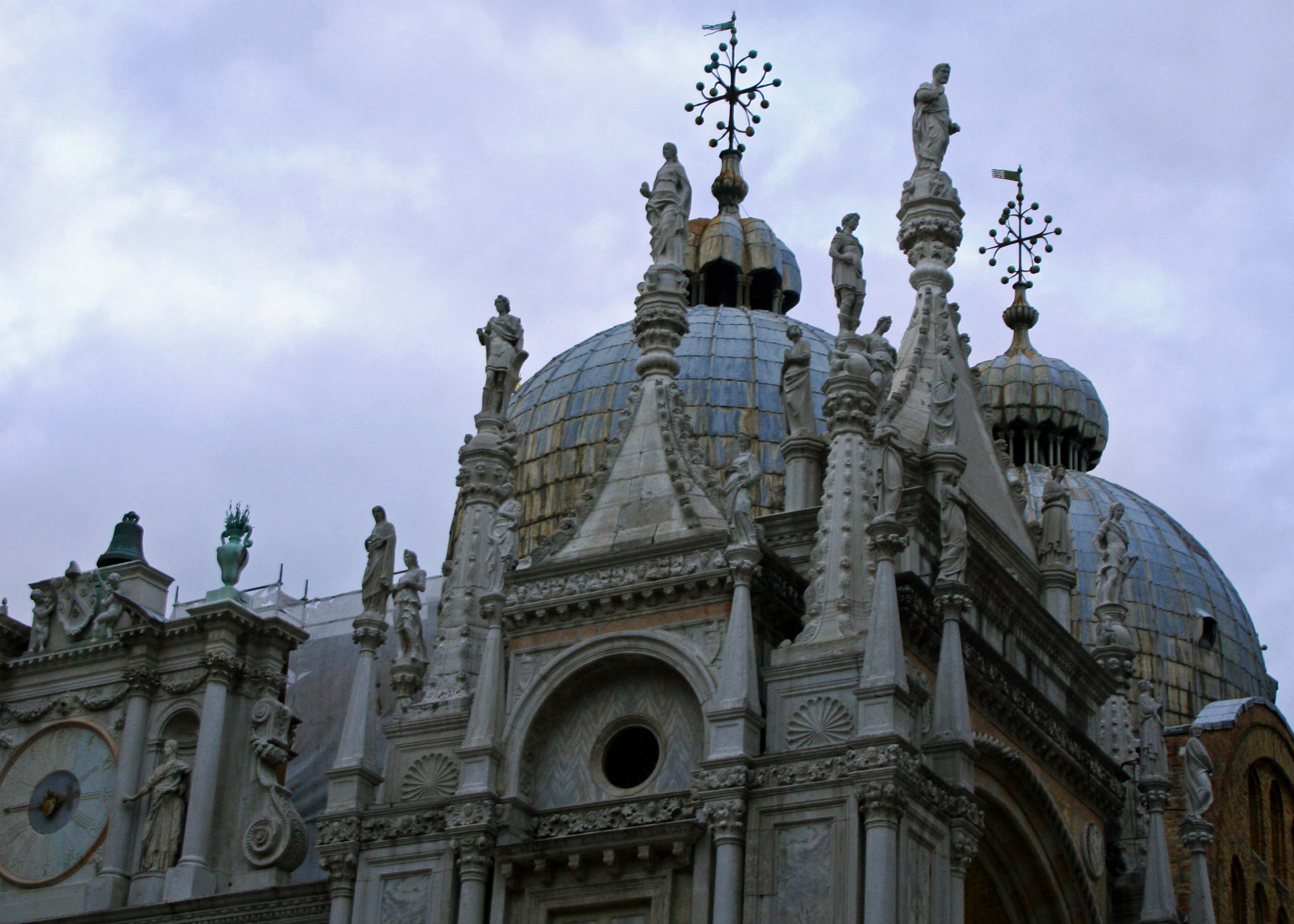
St. Mark's Basilica with its domed top is almost Byzantine in appearance.
St. Mark’s Basilica, located next to the Doge’s Palace is  Byzantine in appearance. (Photo by Peggy Mekemson)
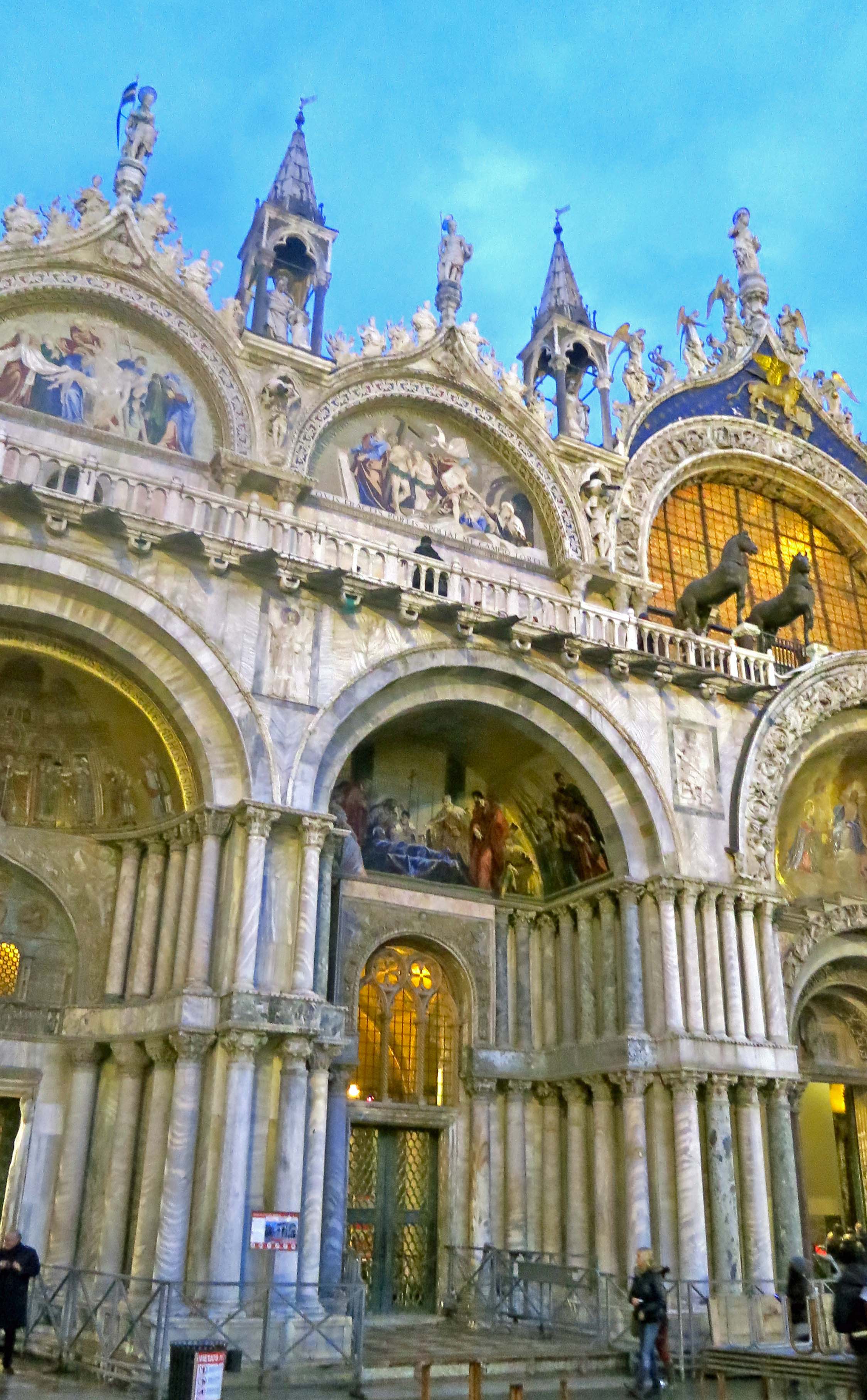
An evening view of the colorful St. Marks Basilica in Venice. The bronze horses on the upper right were stolen from Constantinople during the Fourth Crusade when Venice was supposed to be helping Constantinople, not plundering it.
An evening view of the colorful St. Mark’s Basilica in Venice. The bronze horses on the upper right were stolen from Constantinople during the Fourth Crusade when Venice was supposed to be helping Constantinople, not plundering it. But then, if your church is built on the stolen bones of a Saint, why not? (grin)
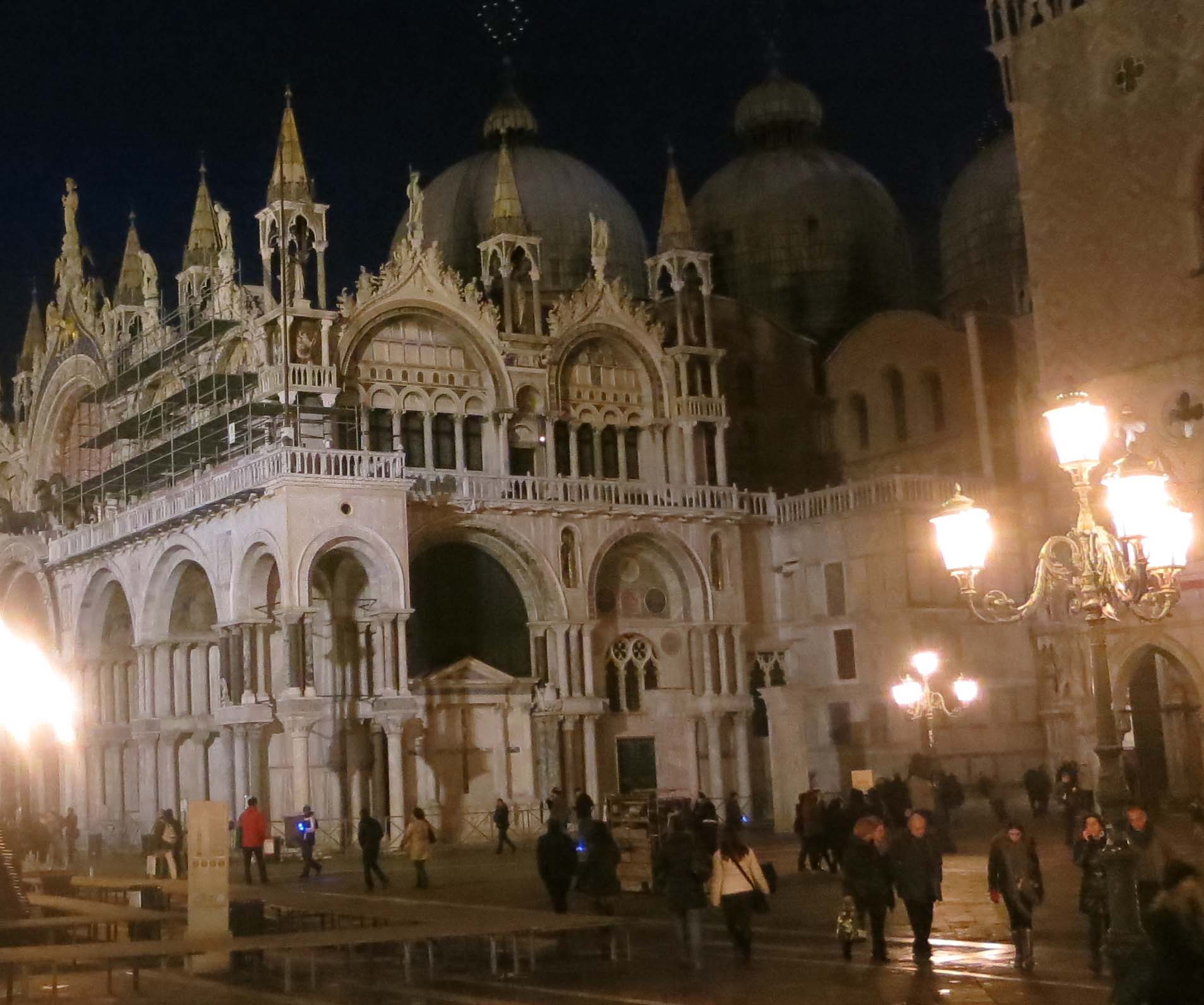
St. Mark's Basilica and street lamps by night.
St. Mark’s Basilica and street lamps by night.
The Campanile is a prominent St. Mark's Square and Venice landmark. In 1902 it came tumbling down and had to be replaced.
The Campanile is a prominent St. Mark’s Square and Venice landmark. In 1902 it came tumbling down and had to be replaced.
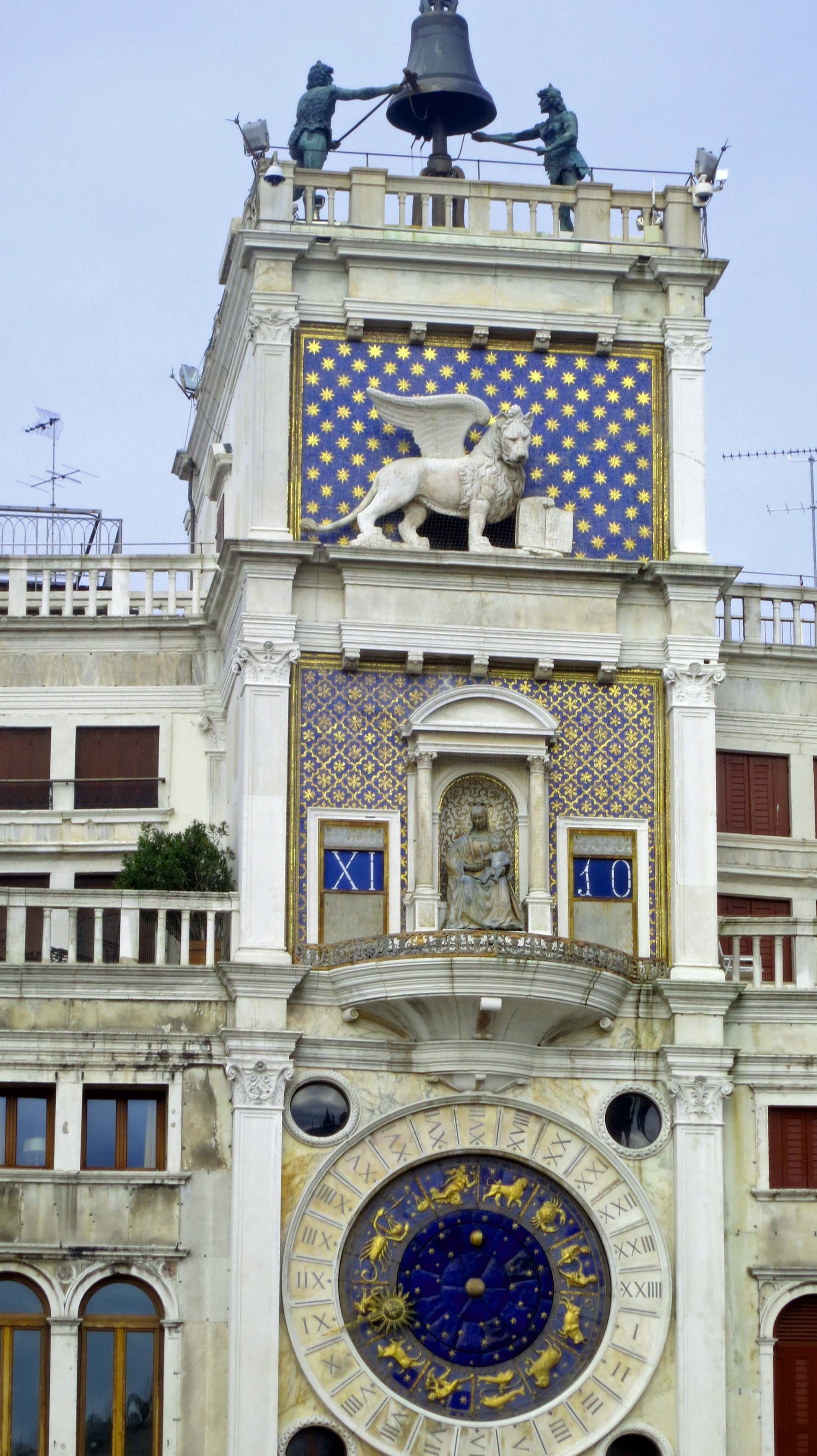
This clock tower is another prominent land mark. Note the winged lion and the digital clock with Roman Numerals.
This clock tower is another well-known  landmark in St. Mark’s Square. Note the winged lion and the digital clock with Roman Numerals. The bronze bell ringers on top and the astrological clock at the bottom are also impressive.
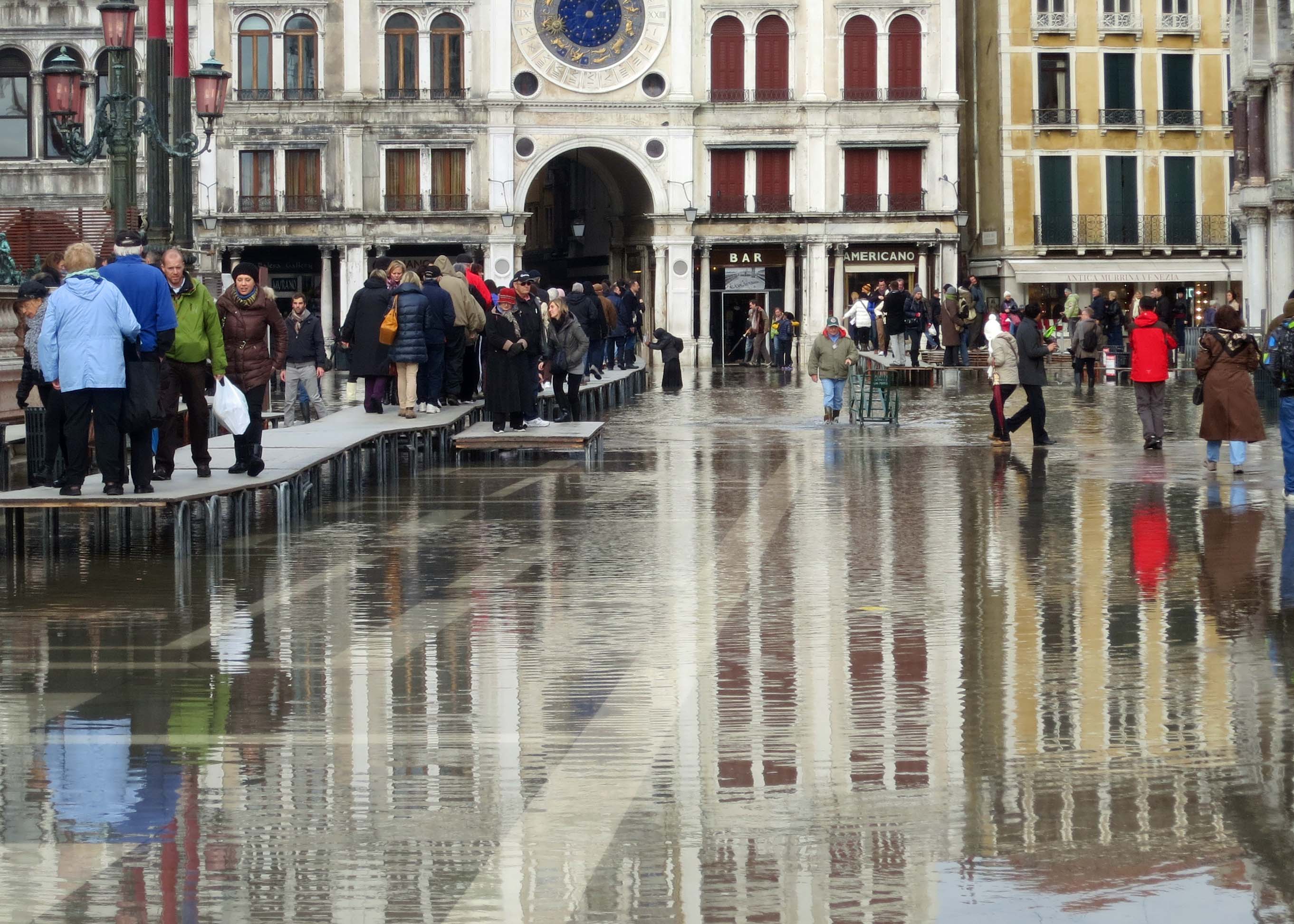
As I mentioned, Venice is subject to frequent floods. Global warming has added to this problem. This shot, taken just below the Clock Tower in St. Mark's Square, shows people using the table walkways and walking through the water.
As I mentioned, Venice is subject to frequent floods. Global warming has added to this problem. This shot, taken just below the Clock Tower in St. Mark’s Square, shows people using the table walkways and walking over the water.
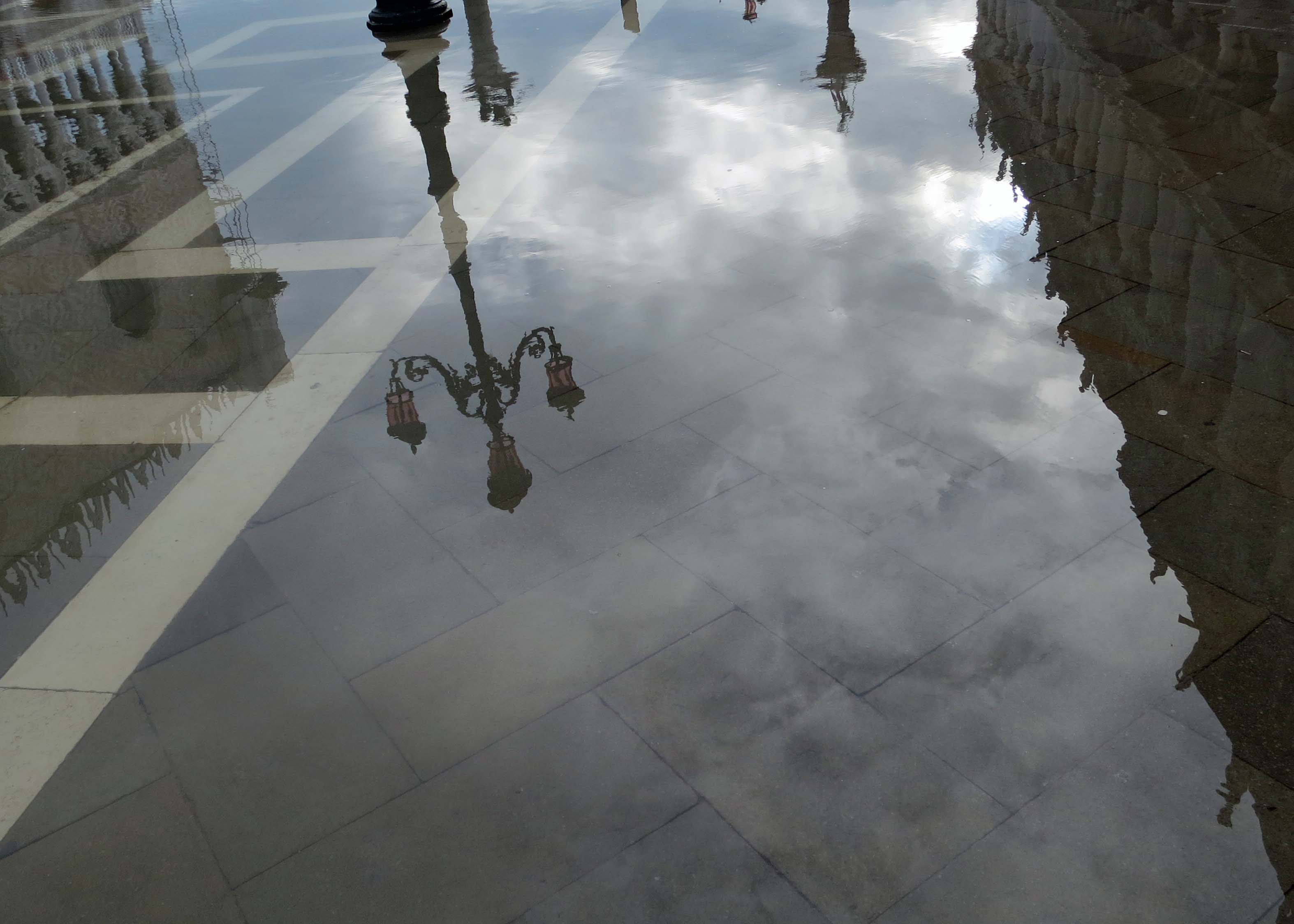
I'll close with this flood photo I took in St. Mar's Square that reflects both lamp posts and walls located in the Square.
I’ll close with this flood photo I took in St. Mark’s Square that reflects both lamp posts and walls located in the Square.

FRIDAY’S POST: We will visit the famed canals of Venice.

40 Years Ago, Mt. St. Helens Exploded… I Just Missed It

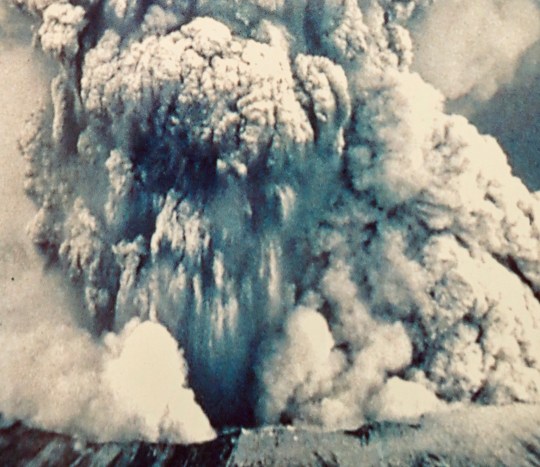
A photo of Mt. St. Helens erupting on display at the National Monument.

In 1980, the American Lung Association of Washington invited me to help plan a 500 mile bike trek to Mt. St. Helens as a fund raiser. At the time I was serving as the national consultant to the American Lung Association on long distant backpacking and bike treks as fundraisers. I had created the concept and written the how-to manual. I flew up to Seattle and worked with the staff in planning the trek. As often happened with events I helped organize, they invited me to go along. Tempting. The trek covered a lot of beautiful country and looked like great fun, but I was supposed to be in Alaska helping to organize a backpack trek across the Kenai Peninsula around the same time. The rest is history.

On May 18, several weeks before the trek was to take place, Mt. St. Helen’s blew her top. It was fortunate that it hadn’t happened in the middle of the event! ALA Washington quickly arranged another route. This isn’t the end of the story, however. I was flying to Alaska six weeks after the explosion and the pilot flew us over the mountain. The devastation was incredible. It has lived in my mind ever since. In 2013, Peggy and I took another trip up to Alaska, this time driving the Alaska Highway. On the way back we stopped off at Mt. St. Helens. I did a post at the time. In honor of the 40th Anniversary of the eruption, I am reposting it today.

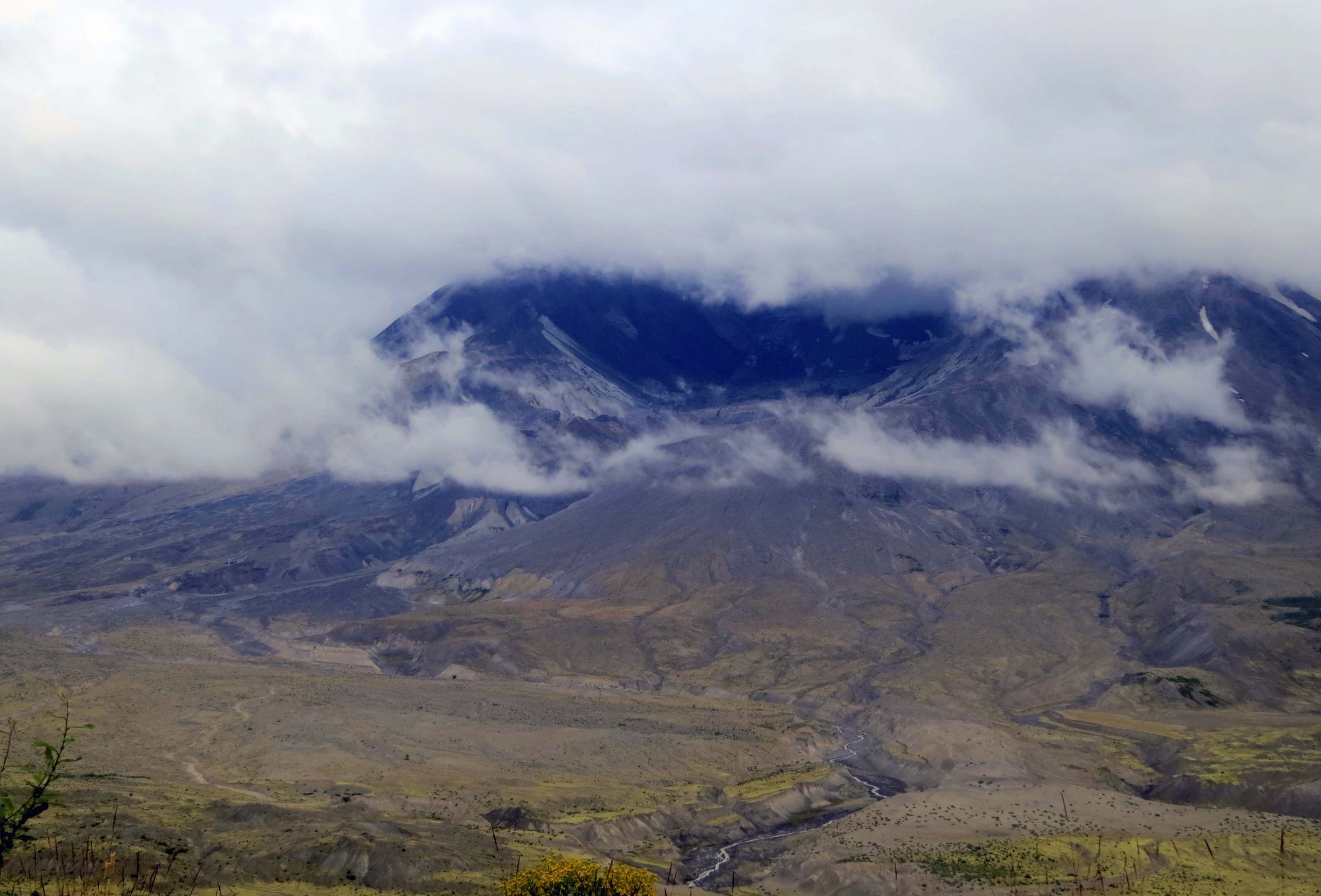
Mt. St. Helens in August, 2013. Peggy and I were looking down into the crater from the Johnston Ridge Observatory.

It was in early July 1980 and I was flying north to help plan a hundred-mile fundraising backpack trek in Alaska. The pilot deviated from his route to show us Mt. St. Helens.

It was total devastation, a scene from Dante’s Hell.

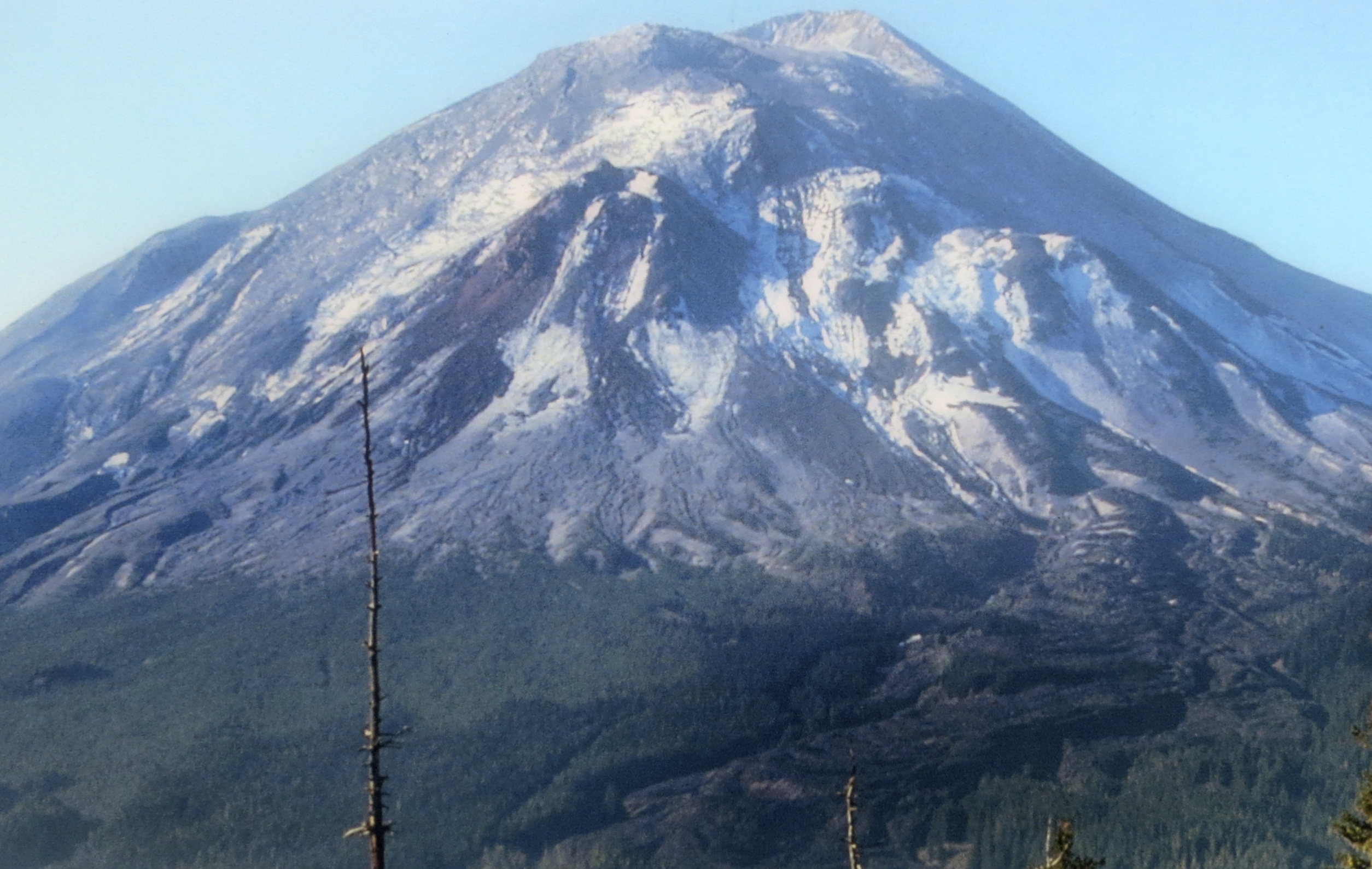
A month and a half earlier, on May 18, Mt. St. Helens had blown her top, literally. On May 17 the mountain had stood 9677 feet tall; on May 19 it stood at 8,364 feet. The mountain had a history of being the most active volcano in the Cascade Range of volcanoes— mountains that dominate the skyline of the northwestern part of the US and are part of the ring of fire that stretches around the edges of the Pacific Ocean.

This photo on display at the Mount St. Helens National Monument shows the mountain before the explosion.
Another photo at the Monument shows Mt. St. Helen four months after the eruption.

Peggy and I call the Cascade Range home, now. In fact I have climbed two of the mountains, Shasta and Lassen, and we see a third, Mt. McLoughlin, every time we drive the 30 miles into town for groceries. Normally we think of the mountains as dormant and a beautiful addition to our region. But all are capable of awakening. And all are capable of spewing disaster.

Weeks before Mt. St. Helens blew up, she had been showing signs of an imminent explosion. Couched between the two major urban areas of Portland and Seattle, the area had become a mecca for tourists, volcanologists and, of course, the media. Worldwide attention was guaranteed.

The explosion, when it came, was much more devastating than had been expected. A huge, lateral blast sent a cloud of dense, super hot steam filled with debris rolling down the mountain at 300 miles per hour and devastating an area of 230 square miles. Next to the volcano nothing was left. Starting at about seven miles, thousands of trees were snapped off at their base and laid down pointing outward. Further out, a narrow zone of trees had been left standing but the trees were scorched beyond recovery.

The side of the mountain that was blown away added to the disaster. Crushed rock and melted glacial ice joined with downed trees and rushed into Spirit Lake and down the Toutle River travelling at speeds up to 150 miles per hour. Hummocky deposits between 150 and 620 feet high were left behind.

Today, Mt. St. Helens stands as a National Monument to educate people about volcanoes and the recuperative power of nature. Three visitor centers tell the story extremely well. Peggy and I have driven by the area several times and promised ourselves each time that we would visit. Finally, on our trip back from Alaska, we succeeded.

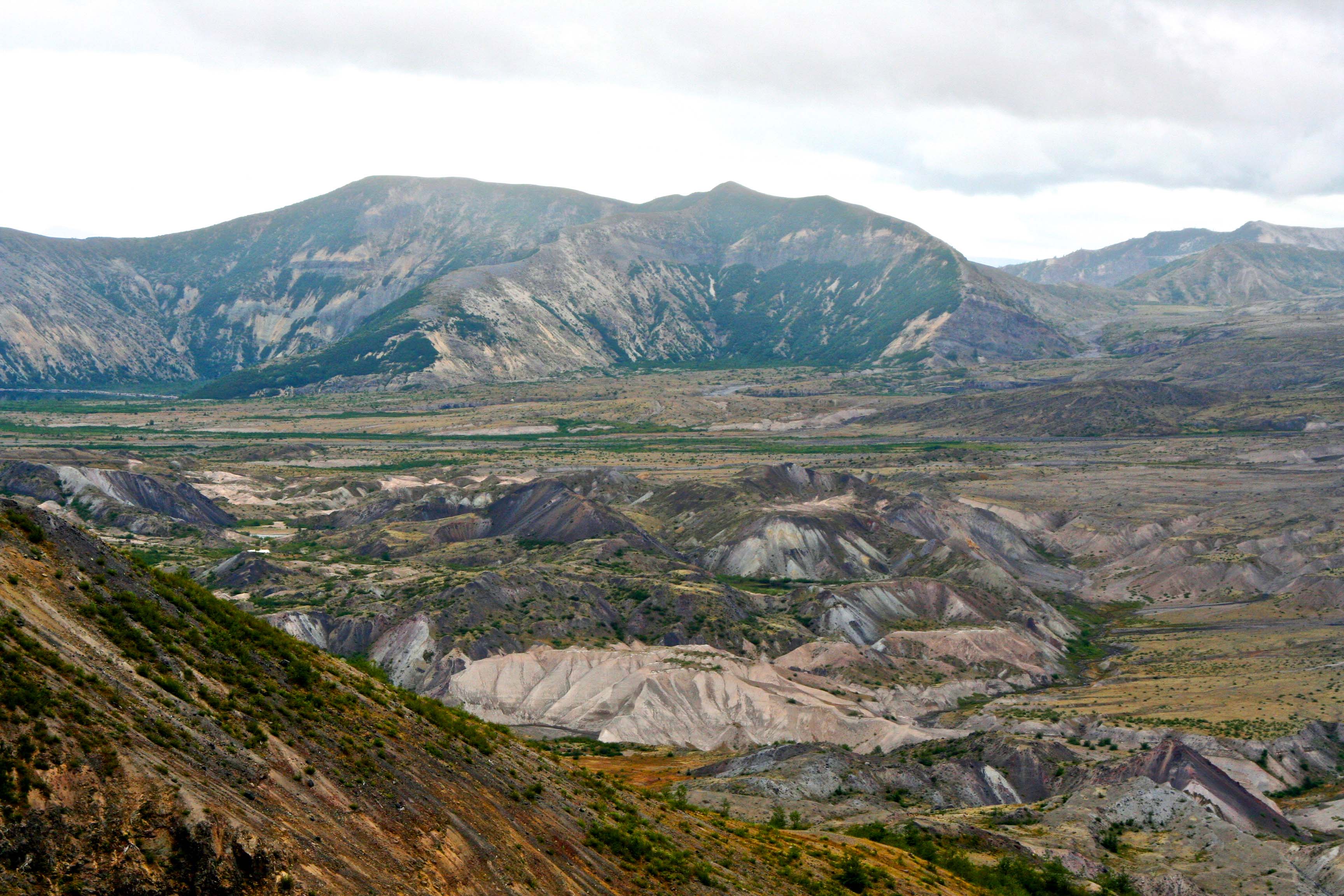
Looking down at the valley floor in front of Mt. St. Helen, the Toutle River carves through debris left behind by the eruption which reaches a depth of over 300 feet in places.
Looking down at the valley floor in front of Mt. St. Helen, the Toutle River carves through debris left behind by the eruption. The debris reaches a depth of over 300 feet in places. (Photo by Peggy Mekemson)
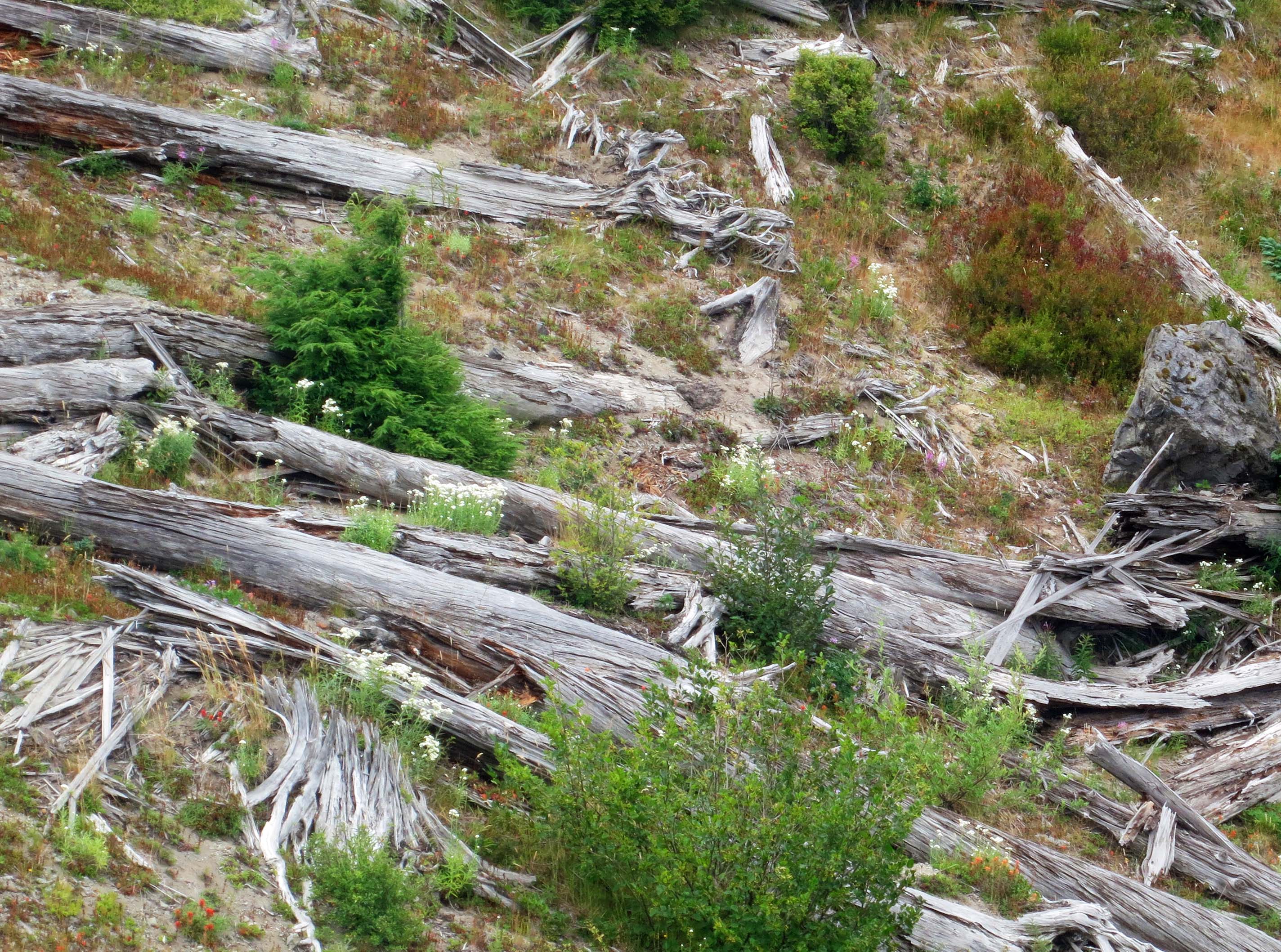
Thousands of trees were literally blown down by the eruption. Many can still be seen today.
This stump shows how the trees were ripped off from their bases by the blast.
Looking northeast (left) from Johnson Ridge, a small sliver of Spirit Lake can be seen at the base of another ridge. Once, it was a beautiful resort area. One of the biggest stories about the explosion was how Harry Truman, an elderly man who owned a lodge at the lake, refused to leave and died when the avalanche buried the lake.
Looking northeast (left) from Johnson Ridge,  Spirit Lake can be seen at the base of another ridge. Once, it was a beautiful resort area. One of the biggest stories at the time of the explosion was how Harry Truman, an elderly man who owned a lodge at the lake, refused to leave and died when the avalanche buried the lake.
Looking Northeast from Johnson Ridge, a small sliver of Spirit Lake can be seen at the base of the ridge. Once, it was a beautiful resort area. One of the biggest stories about the explosion was how Harry Truman, an elderly man who owned a lodge at the lake, refused to leave and dyed there.
Jimmy Carter, who was President at the time, flew over the area in a helicopter and described it as a moonscape. I flew over it in a passenger jet and came to the same conclusion. (Photo by Peggy Mekemson.)
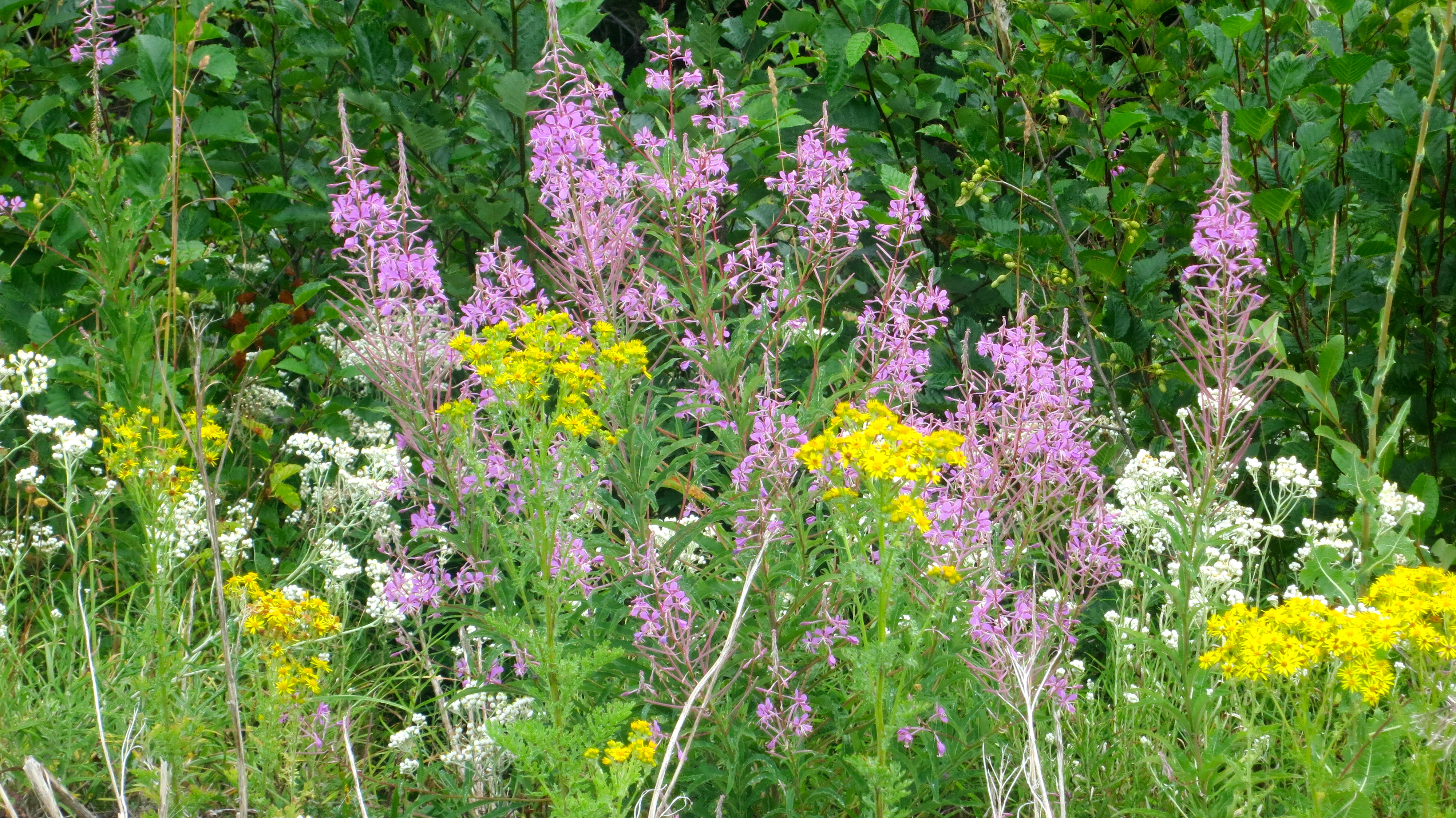
The recuperative power of nature is half the story about Mt. St. Helens 30 years after the explosion. It is said that fireweed, the pinkish red flower here, was said to be growing out of the ash 20 days after the explosion.
The recuperative power of nature is half the story about Mt. St. Helens. It is recorded that fireweed, the pinkish red flower here, was growing out of the ash 20 days after the explosion.
I felt the young tree growing out of a stump at Mt. St. Helens provided the best example of nature on the rebound. (Photo by Peggy Mekemson.)
As we drove off down the ridge into the mist, I couldn't help but wonder when Mt. St. Helens would choose to explode again. It will happen. (Photo by Peggy Mekemson)
As we drove off down the ridge into the mist, I couldn’t help but wonder when Mt. St. Helens would choose to explode again. It will happen. (Photo by Peggy Mekemson)

NEXT POST: Tomorrow we return to Venice.

Sinking into the Sea: A Crow’s Nest View of Venice… Armchair Travel

As I pulled this post up from my archives for today’s post, I couldn’t help but wonder, ironically, if the dramatic drop in 22.5 million tons of tourists (assuming 30 million tourist times 150 pounds) visiting Venice because of the pandemic will slow the city’s date with destiny as it sinks into the sea at the rate of nine inches per century. Peggy and I arrived by cruise ship, a mode of travel I had religiously avoided for most of my life. But the opportunity to visit many locations in the Mediterranean at one time was a temptation I couldn’t resist.

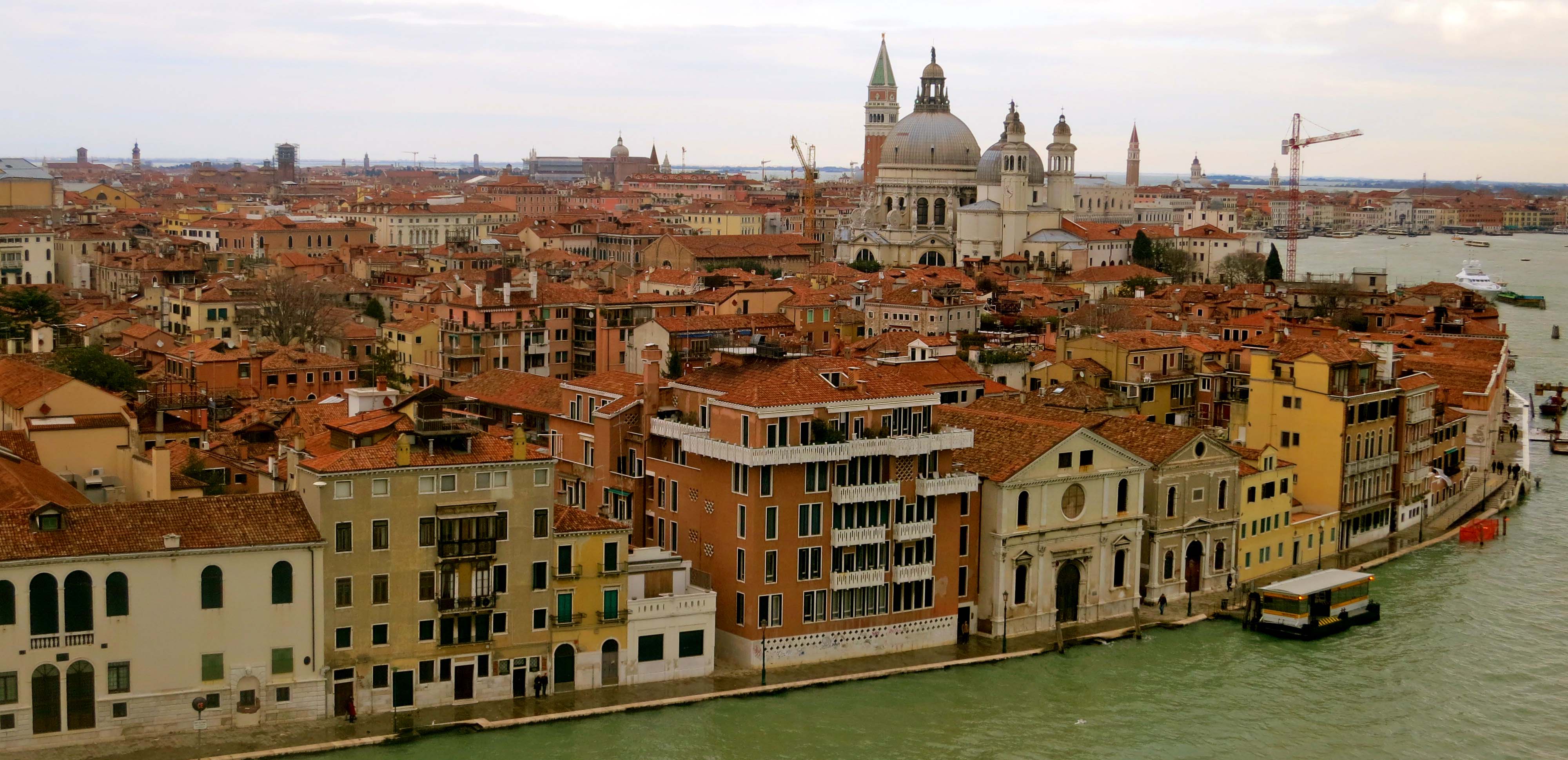
Perched on the top deck of the Crown Princess, it was easy to see that Venice is an island, a relatively small island. Plopped down on a marsh, it is sinking into the sea at about 9 inches per century. Vivaldi, BTW, once offered music lessons at the Hotel Metropole on the right.
Perched on the top deck of the Crown Princess, it was easy to see that Venice is an island, a relatively small island. Built on a marsh, it is sinking into the sea at about 9 inches per century. Vivaldi, BTW, once offered music lessons at the Hotel Metropole on the right.

We approached Venice by sea, as mariners have for the past thousand years. I was perched on the top deck of the Crown Princess looking down on the fabled island city. Icy winds turned my traveler’s curiosity into a minor act of courage. A warm bar beckoned. But I was motivated. There were photos to be taken and adventures to plan. My next five blogs will be devoted to the city. Today’s blog is on my crow’s nest view. I will then write about visiting the area around St. Mark’s Square, admiring the city’s famed canals, getting “lost” among Venice’s confusing streets, and going window shopping.

Venice is justly famed for its canals... and for the bridges over the canals. Each seems to have a different personality.
Venice is justly famed for its canals… and for the bridges over the canals. Each seems to have a different personality.
Altogether, There are some 25 miles of canals. Each one invites exploration. The building just visible on the right is the city's naval museum. Venice was once one of the world's greatest sea powers.
Altogether, there are some 25 miles of canals. Each one invites exploration. The building just visible on the right is the city’s naval museum. Venice was once one of the world’s greatest sea powers. The lack of crowds reflects that tourist season was drawing to a close as winter approached.
The presence of gondolas suggested we were getting near the center of Venice's greatest tourist attraction. The statue in the foreground is that of  Garibaldi, the man responsible for uniting the various city states of Italy in...
The presence of gondolas suggested we were getting near the center of Venice’s greatest tourist attraction…
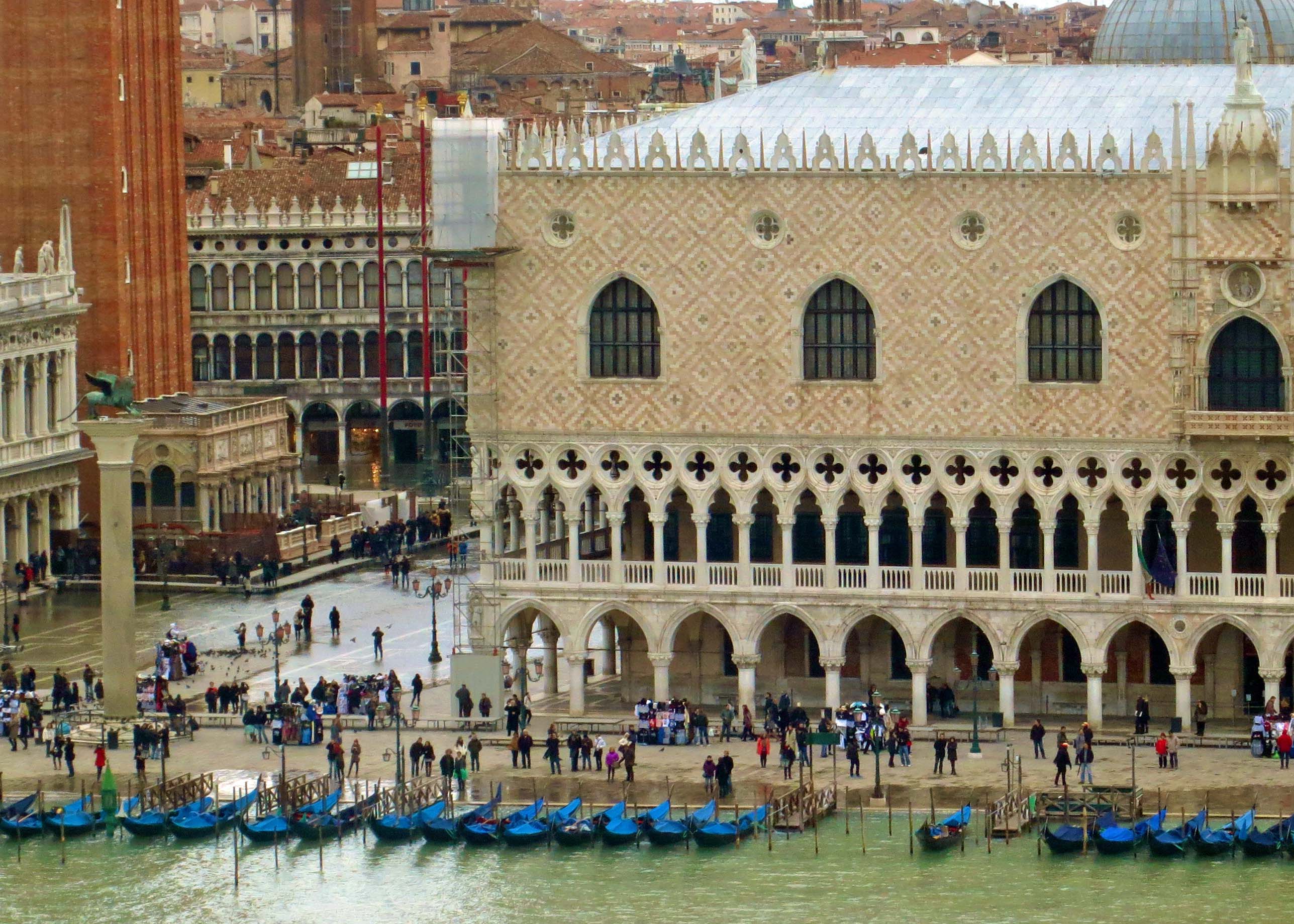
And we arrived. The building on the right is the Doge's Palace. Next to it is the beginning of St. Mark's Square... the center of Venice.
And we arrived. The building on the right is the Doge’s Palace. Next to it is the beginning of St. Mark’s Square… the center of Venice.
Looking down on St. Mark's Square. The Campanile is on the left, St. Mark's Basilica is on the right behind the Doges Palace.
Looking down on St. Mark’s Square. The Campanile is on the left reaching toward the sky and St. Mark’s Basilica is on the right, behind the Doge’s Palace. Snow capped mountains are in the distance. Walkways kept people’s feet dry as water covered the square.
I found this building, the Emporio Dei Sali, interesting. Once it housed salt. Now it is home to one of Venice's best rowing clubs.
I found this building, the Emporio Dei Sali, interesting. Once it housed salt. Now it is home to one of Venice’s best rowing clubs.
This photo looks back toward the Campanile. The opening on the right is the beginning of the Grand Canal. The church is La Salute, which was built as an offering of thanks at the end of the plague of 1630 when one third of the City's population died.
This photo looks back toward the Campanile. The opening on the right is the beginning of the Grand Canal. The church with the onion dome is La Salute, which was built as an offering of thanks at the end of the plague of 1630 when one-third of the City’s population died.
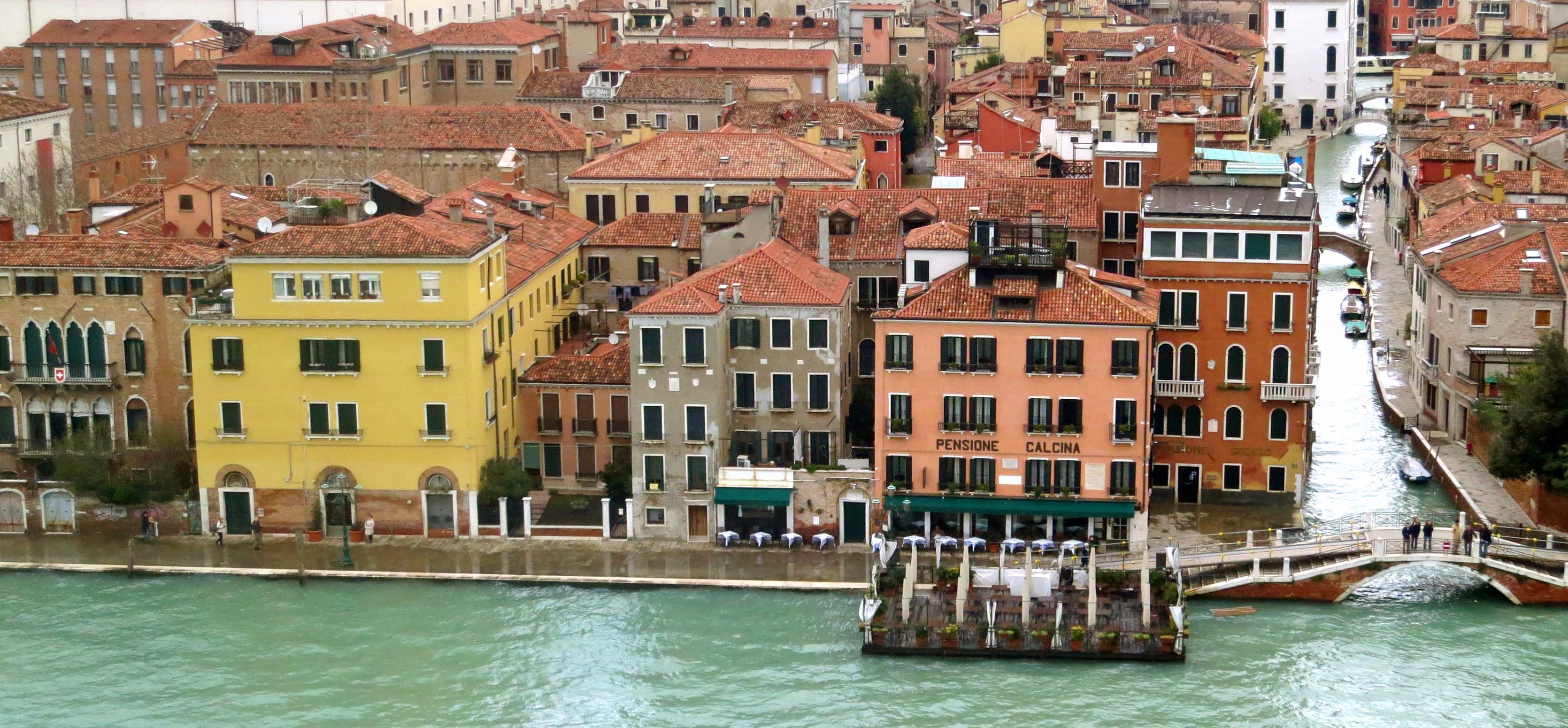
A final view from my crow's nest perspective. The hotel Pensione Calcina was once home to limestone sellers.
A final view from my crow’s nest perspective. The hotel Pensione Calcina was once home to limestone sellers.

NEXT BLOG: The many attractions of St. Mark’s Square (which we admire from walkways as it floods).

Eeyore Is So Tired of Wearing His Face Mask, He Has Started Using It as a Feed Bag…

I’ve been avoiding writing about Covid-19 directly. There is more than enough out there without me adding my two cents worth— to say the least. But an incident happened to Peggy and me the other day when we were out shopping while wearing our masks that deserves a brief post.

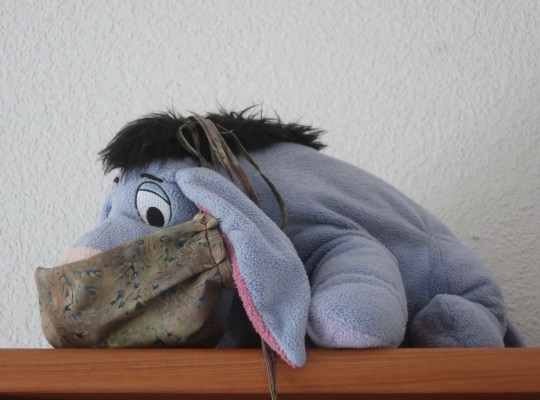
Eeyore demonstrates how to turn a face mask into a feed bag. After I carefully explained to him that its purpose was to protect others from Covid-19— not himself— he plaintively asked if he couldn’t do both. I told him to go for it. The poor fellow has to eat. Lots. I understand.

Peggy and I were shopping at Home Depot a couple of days ago, buying what I needed to make a gate for our shrub garden. We had worn our face masks while we shopped and then worn them back to the truck while we were loading our purchases into the back. A man in his 60s was parked next to us and digging through his car trunk. It was stuffed to the brim and looked like it hadn’t been cleaned or organized in 10 years. He spotted us and quickly started sifting through the mess and came up with a black sweatshirt. He held it over his nose and mouth and pretended to shoot us.

Peggy was stunned and I was angry. I was sorry I didn’t have my black cowboy hat along so I could slap it on my head and pretend to shoot him back.

But I didn’t have my hat and wouldn’t have done it anyway. What we don’t need during this pandemic is more tension and confrontations. For all I knew, he had a gun in his trunk and may have pulled it out. It was probably an irrational fear— odds are, he was just being a smart ass— but people have been shot lately over the mask issue. And I thought of the armed men who invaded the Michigan Statehouse a couple of weeks ago demanding that the state be reopened. People marching around with military-grade, semi-automatic weapons and screaming, or just standing silently, are scary. And they mean to scare us and to intimidate us. They aren’t freedom fighters, or true patriots, or heroes; they are bullies.

The real heroes are the men and women working in hospitals and serving as first responders in the fight against Covid-19.

We all want to see America up and running again. We all want to see the world up and running. It has to happen. The point is: It can be done in a reasonable and relatively safe way. We have all the information we need. It involves widespread testing, identification of those who have the disease, voluntary isolation with support, and tracing the contacts of the people with Covid-19. For the effort to work effectively in the US, it needs to be carried out on the national level with national funding. A small portion (estimated around 5%) of the two-plus trillion dollars voted by Congress for economic relief will cover the cost. Countless lives saved and a healthy economy will be the likely results. With true leadership, we can return to a relatively normal life while we wait for the more permanent solution of a vaccine. Prevention works.

Eeyore and Bone, both true patriots (and citizens of the world), prepare to ride across the country for a discussion with the President on how to cope with Covid. (Red, white and blue masks courtesy of Peggy Mekemson.)