MacKerricher State Park… and Moving On

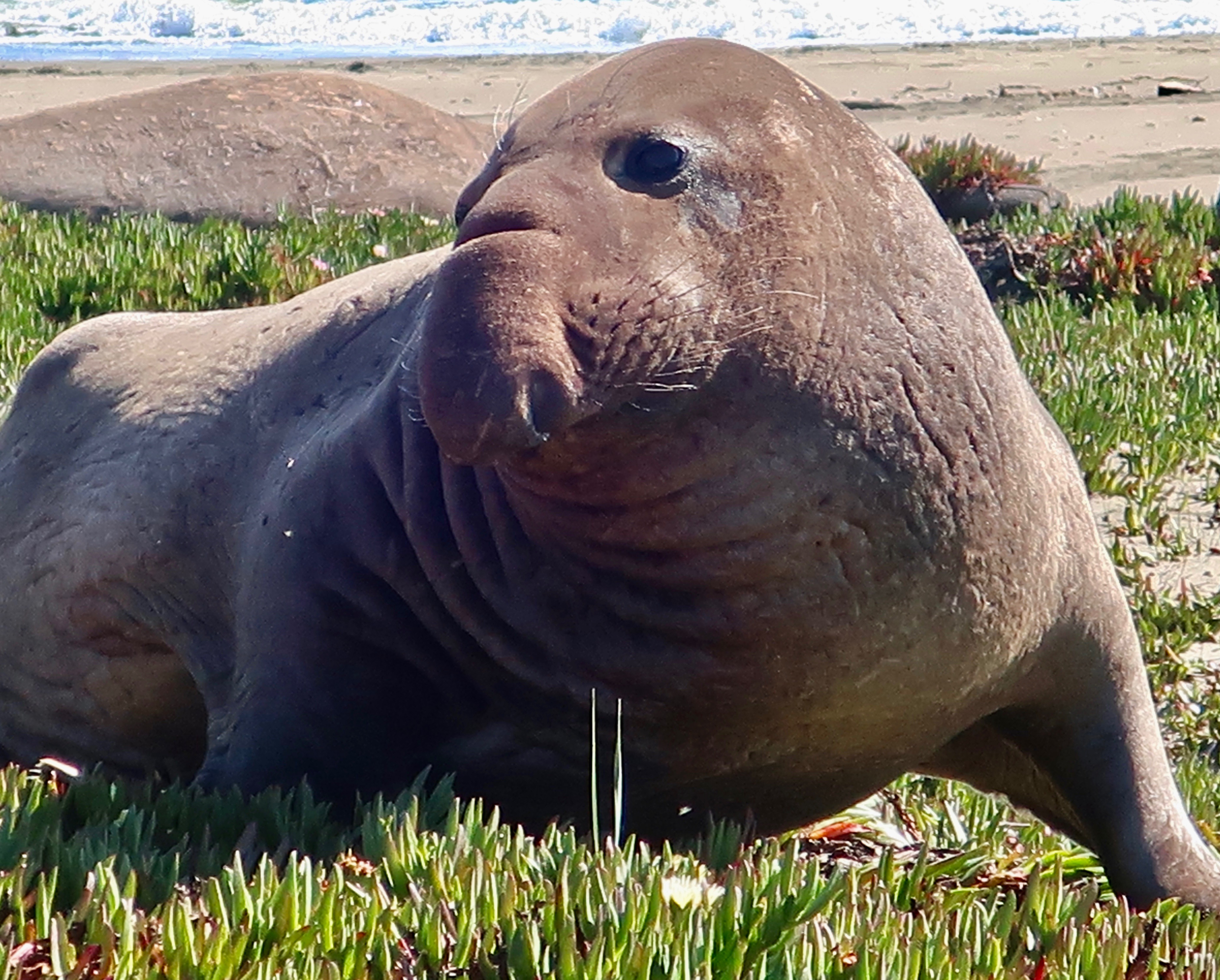
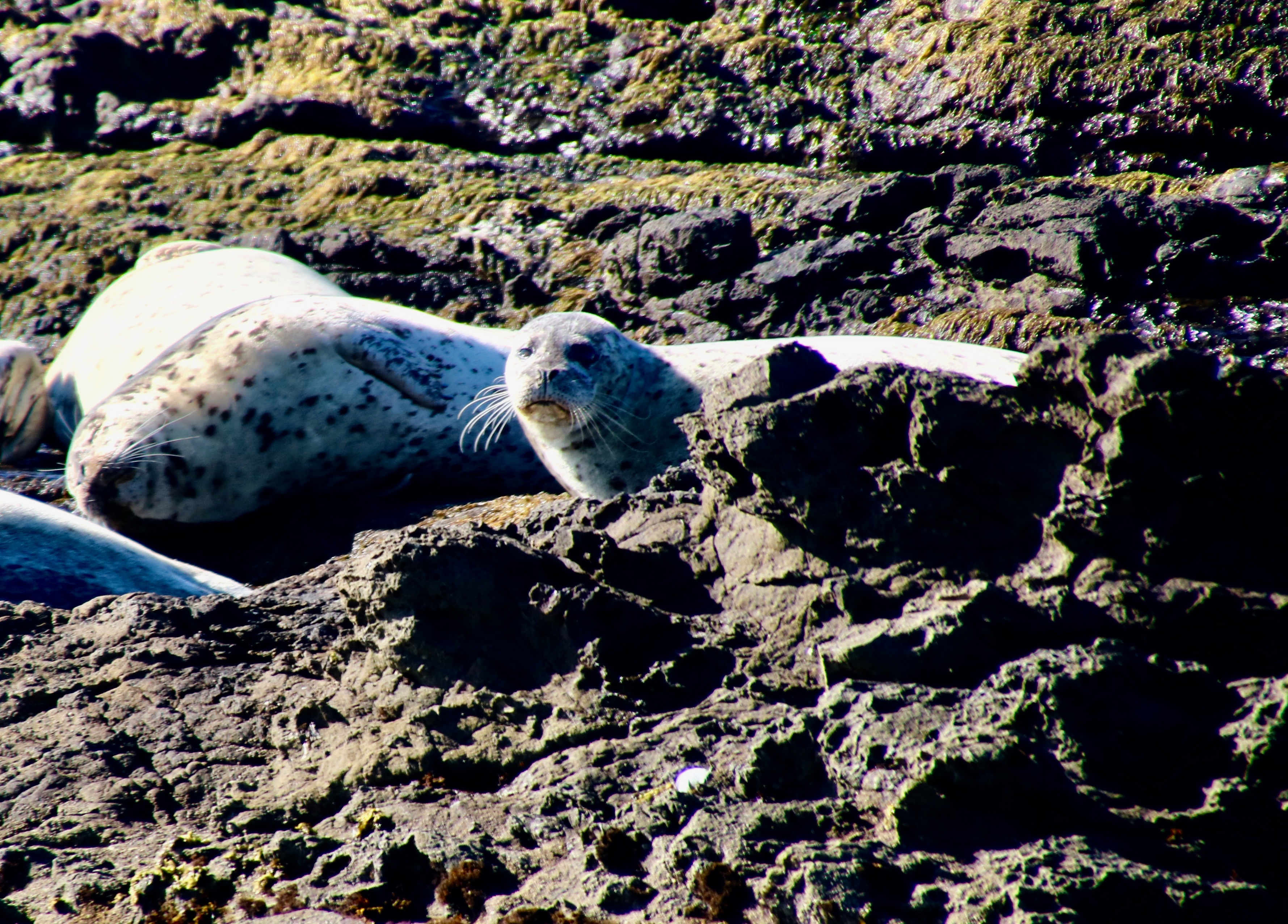
Peggy and I were ‘getting the look’ when she snapped this photo at MacKerricher State Park just north of Fort Brag, California. The concern the seal had was whether we would come closer and disturb his snooze in the warm sun, i.e. would he have to get up and jump in the icy ocean? The answer was ‘of course not.’ I’m not happy when someone disturbs my afternoon siesta. So why should I disturb his. You know, “do unto others…”

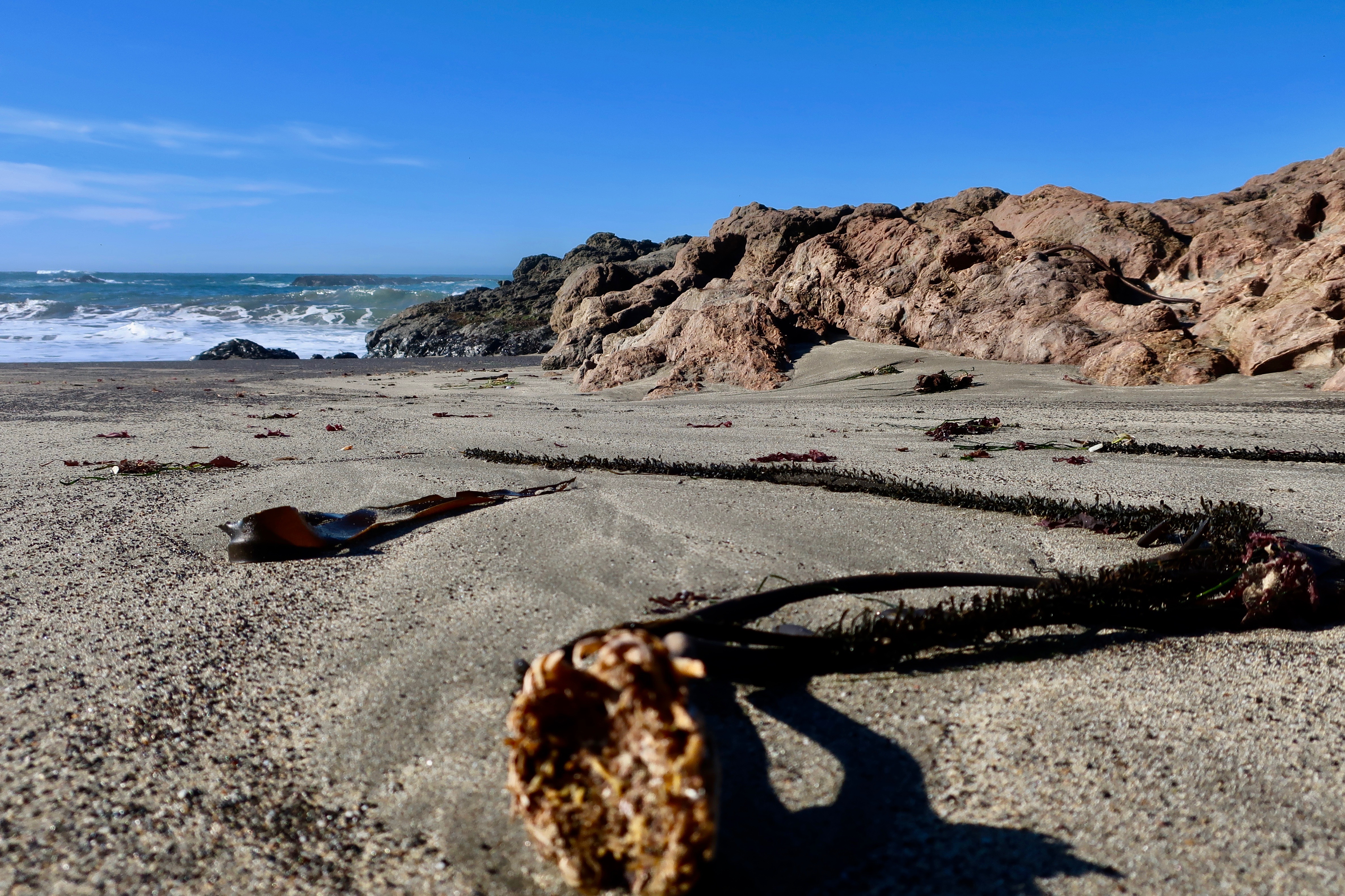
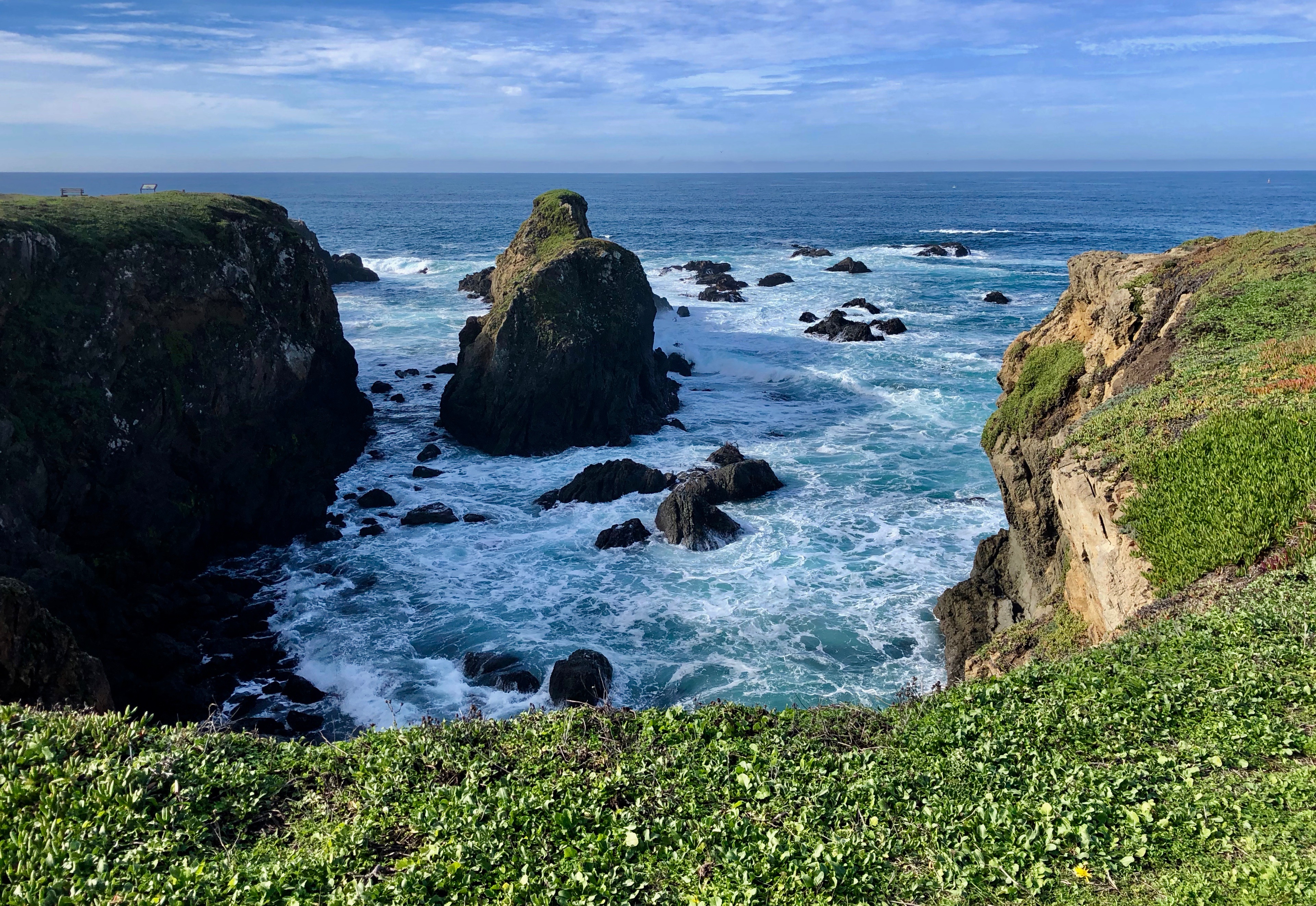
This is the last post from our not-so-recent trip to the North Coast of California last November. Tempus Fugit. Indeed. My posts have been so rare lately they are close to being put on the endangered species list. But more on that later. MacKerricher State Park begins 3 miles north of Fort Bragg, California and continues for 9 miles up the coast. It features a wide variety of habitats ranging from sandy beaches to rocky headlands. There are tide pools, wetlands, a fresh water lake, and even a sea-glass beach. The ocean took an ugly dump and ground the glass up into attractive baubles that people like to collect. Our daughter-in-law Cammie used to turn sea glass she gathered in Alaska into beautiful jewelry.

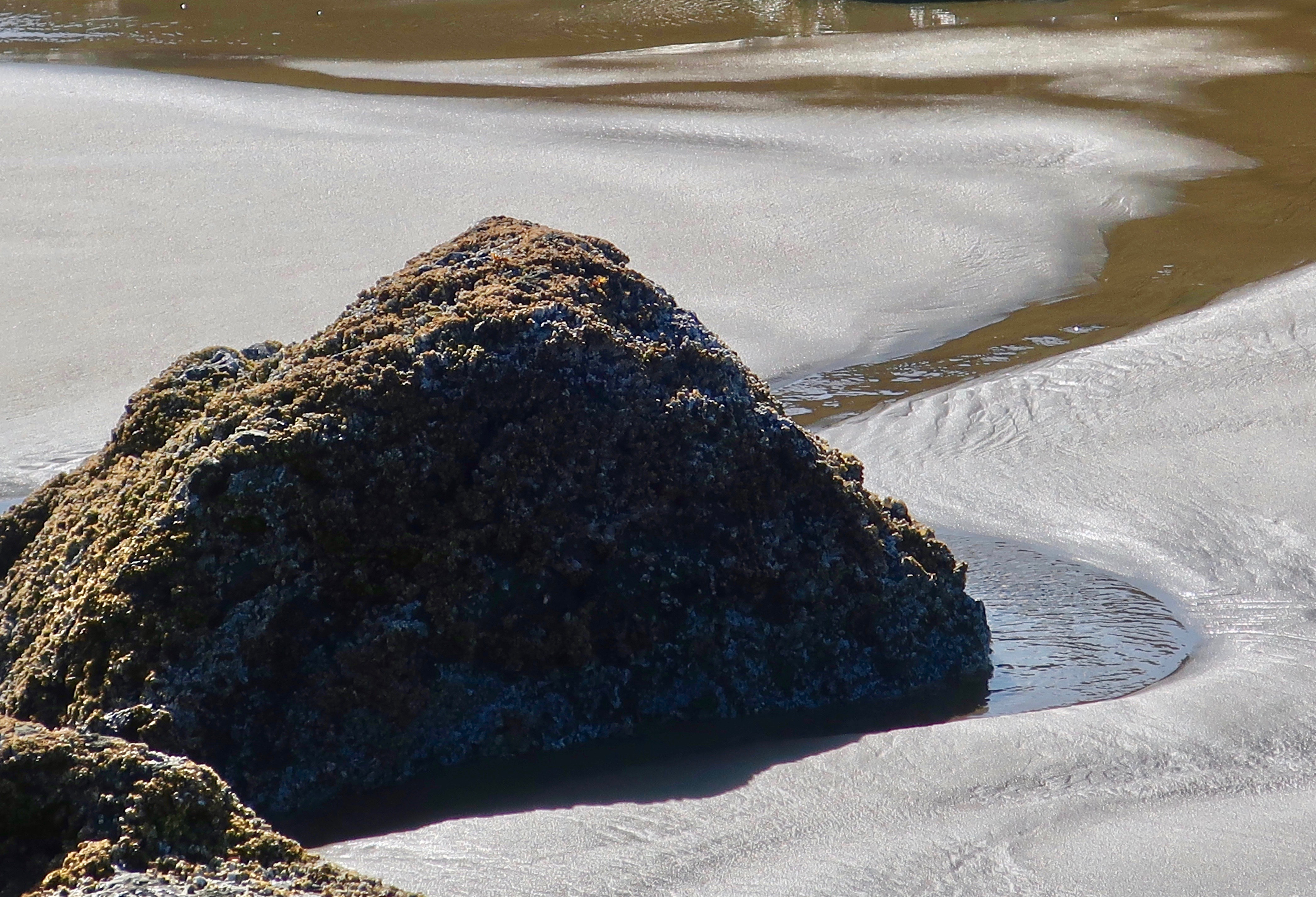
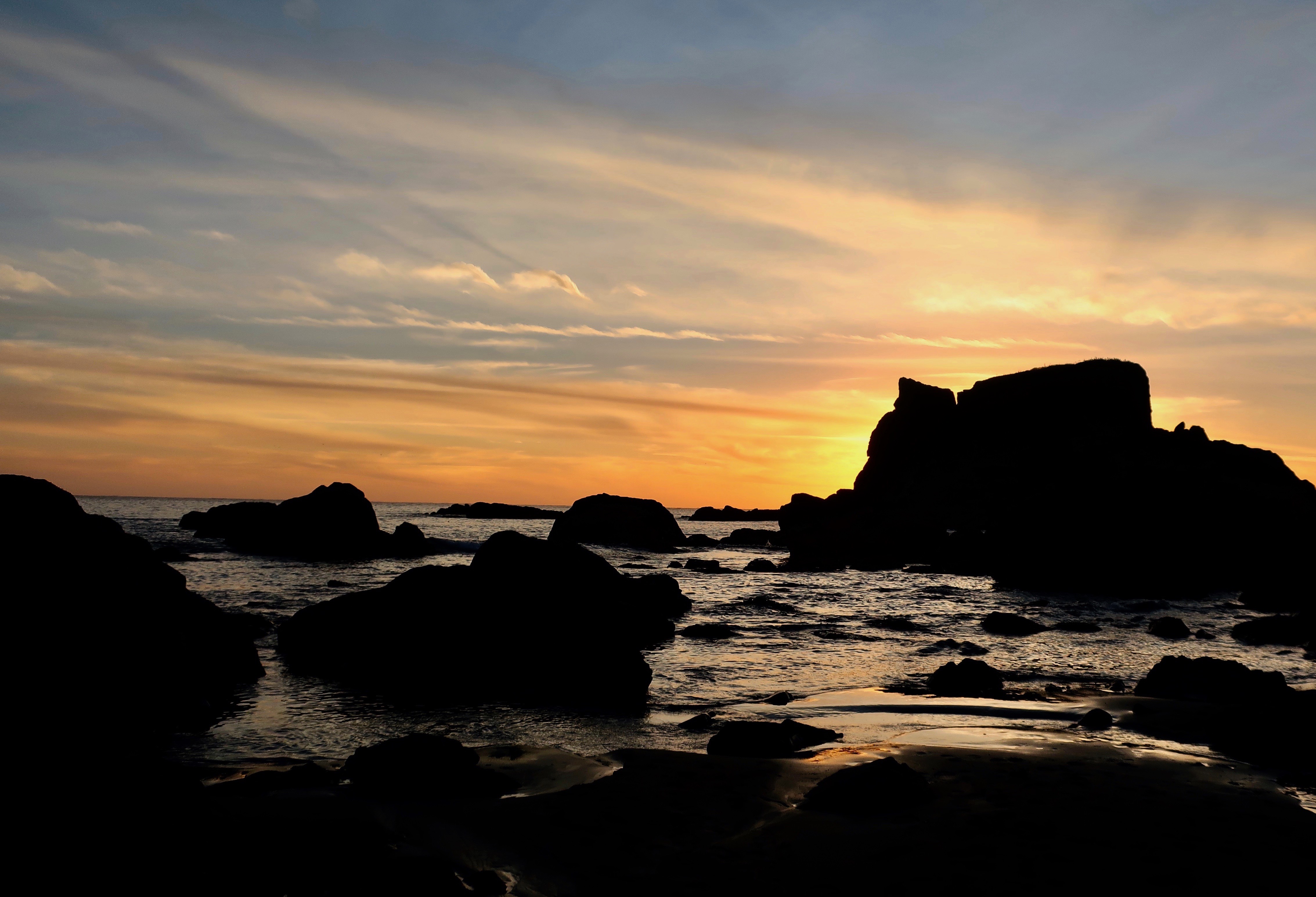
We were at the park for a couple of hours and only walked a mile or two along the 9 mile beach. We were impressed, however. The area deserves much more of our time. I’ll let the photos that Peggy and I took speak for it. I included some of the these in an earlier post.
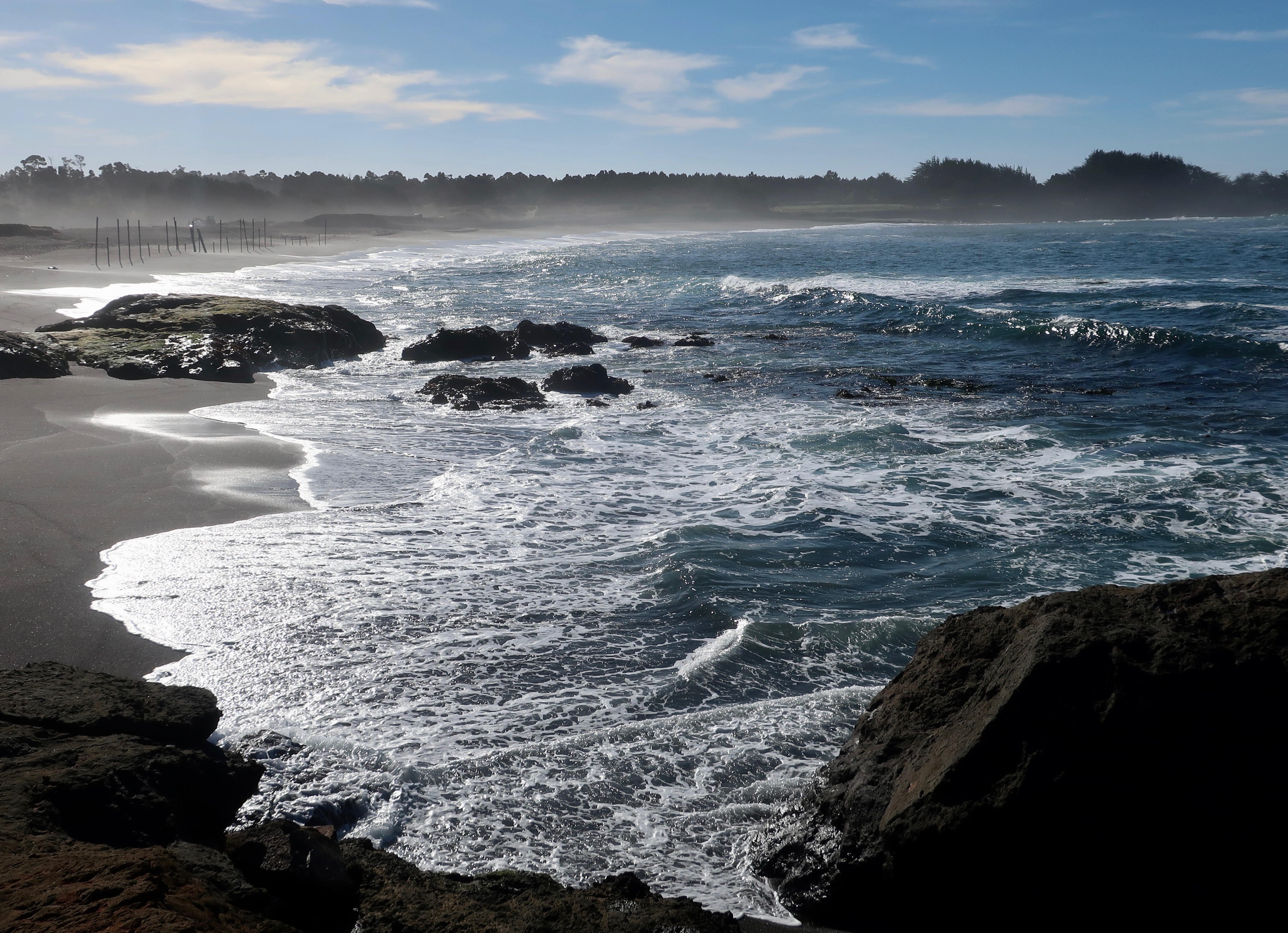
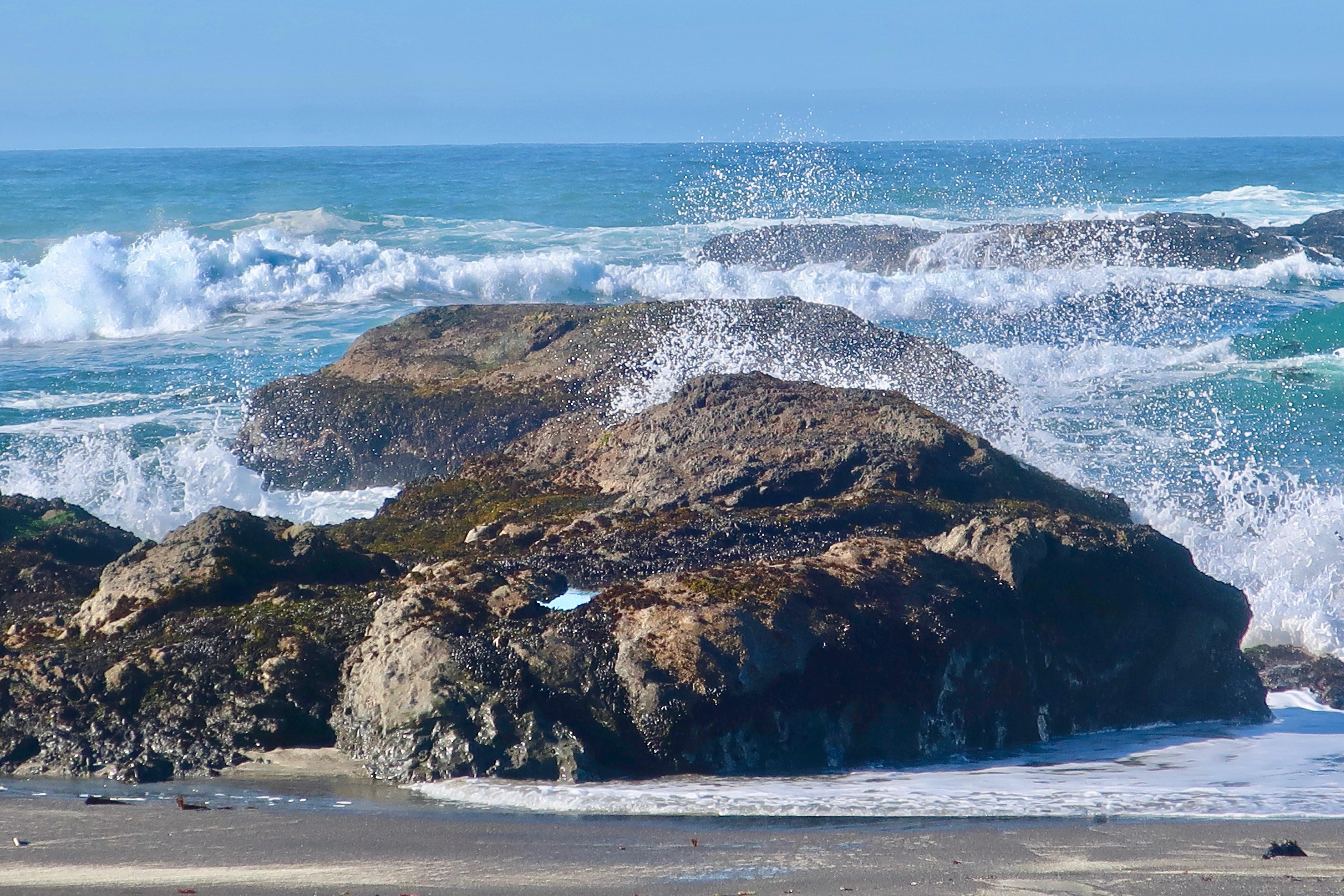
Looking south and capturing the sun reflecting off of the incoming tide.
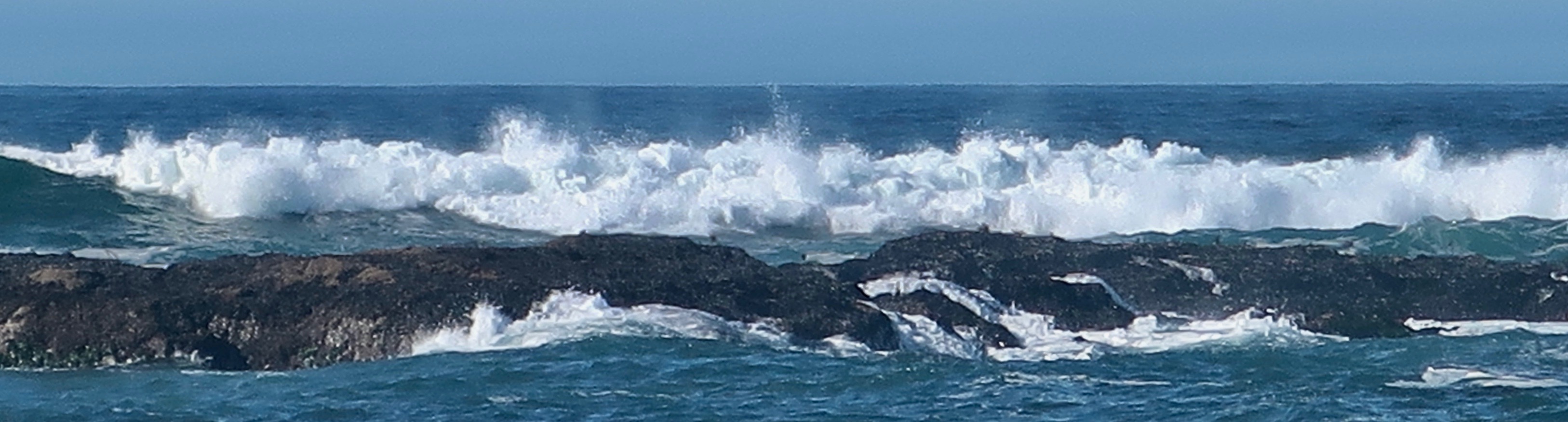
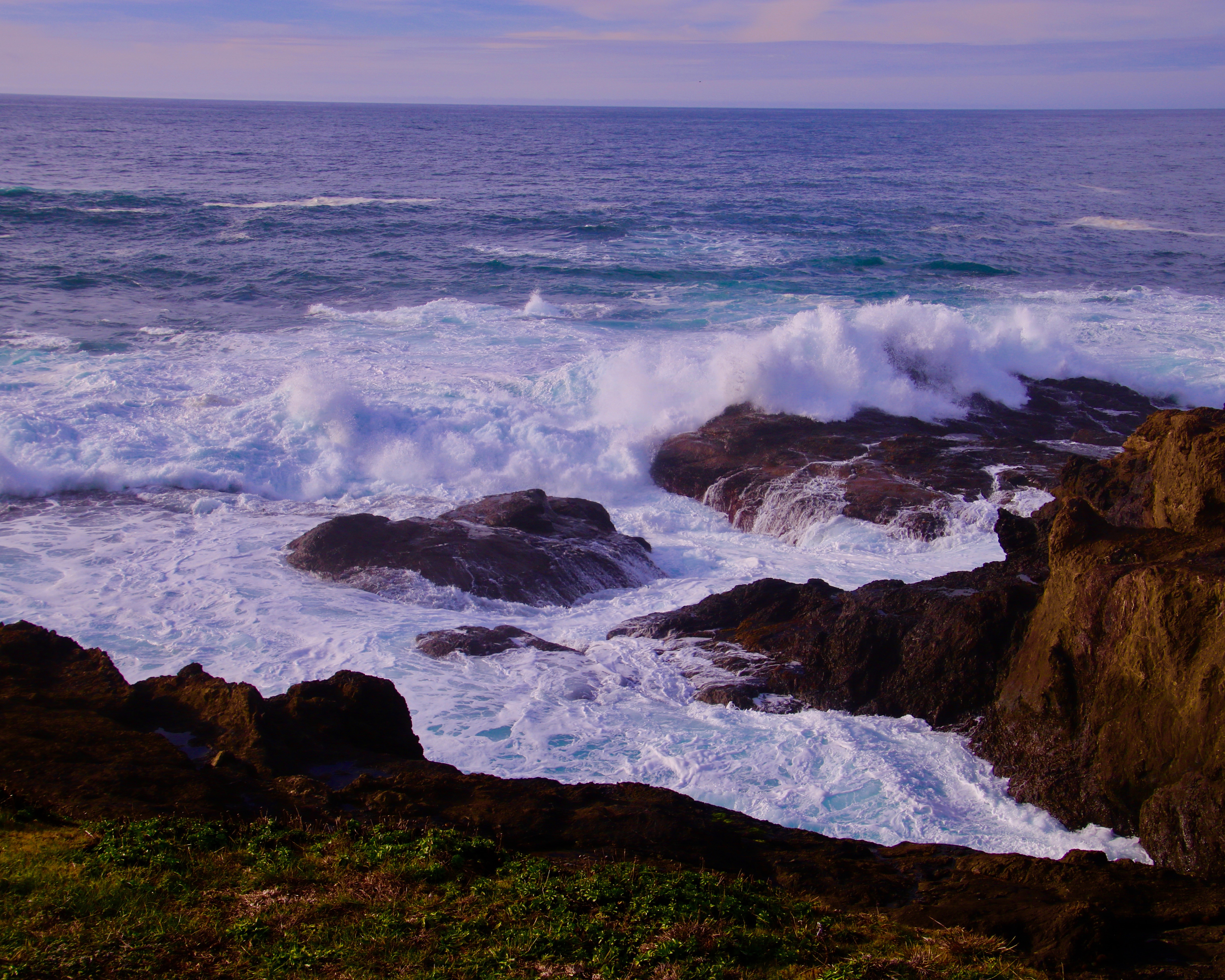
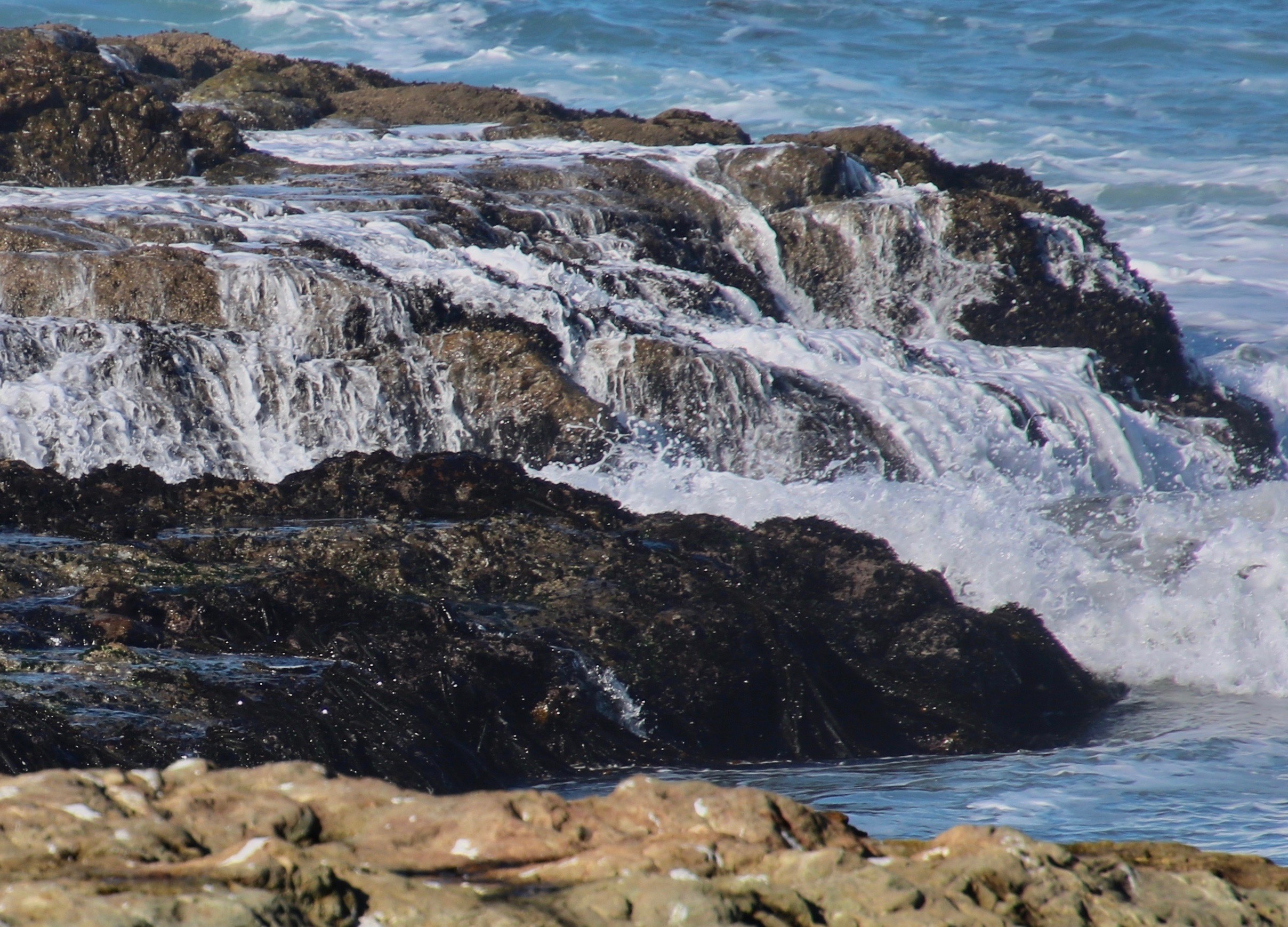
There was plenty of action as the waves rolled in.
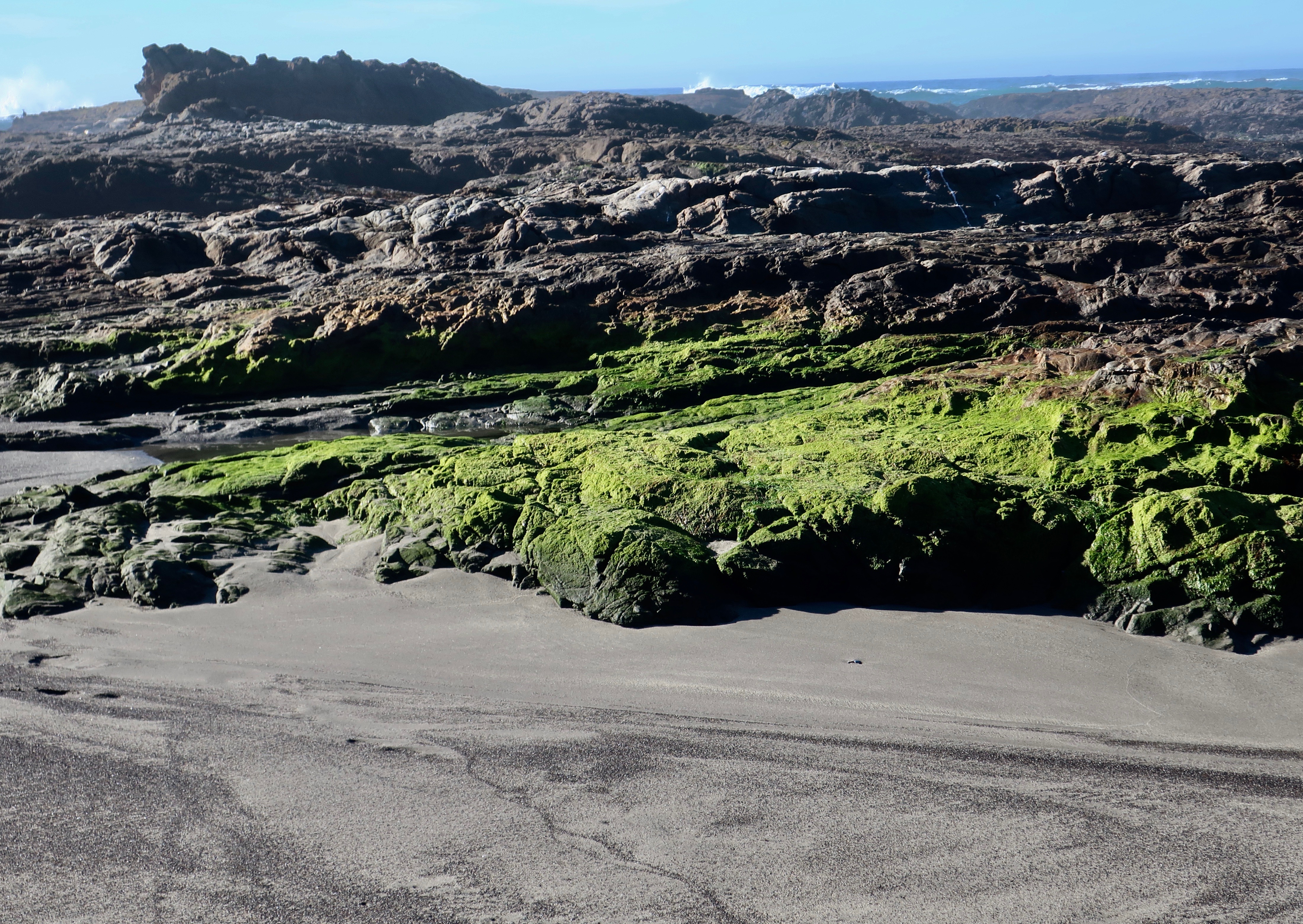
The bright green moss captured our attention…
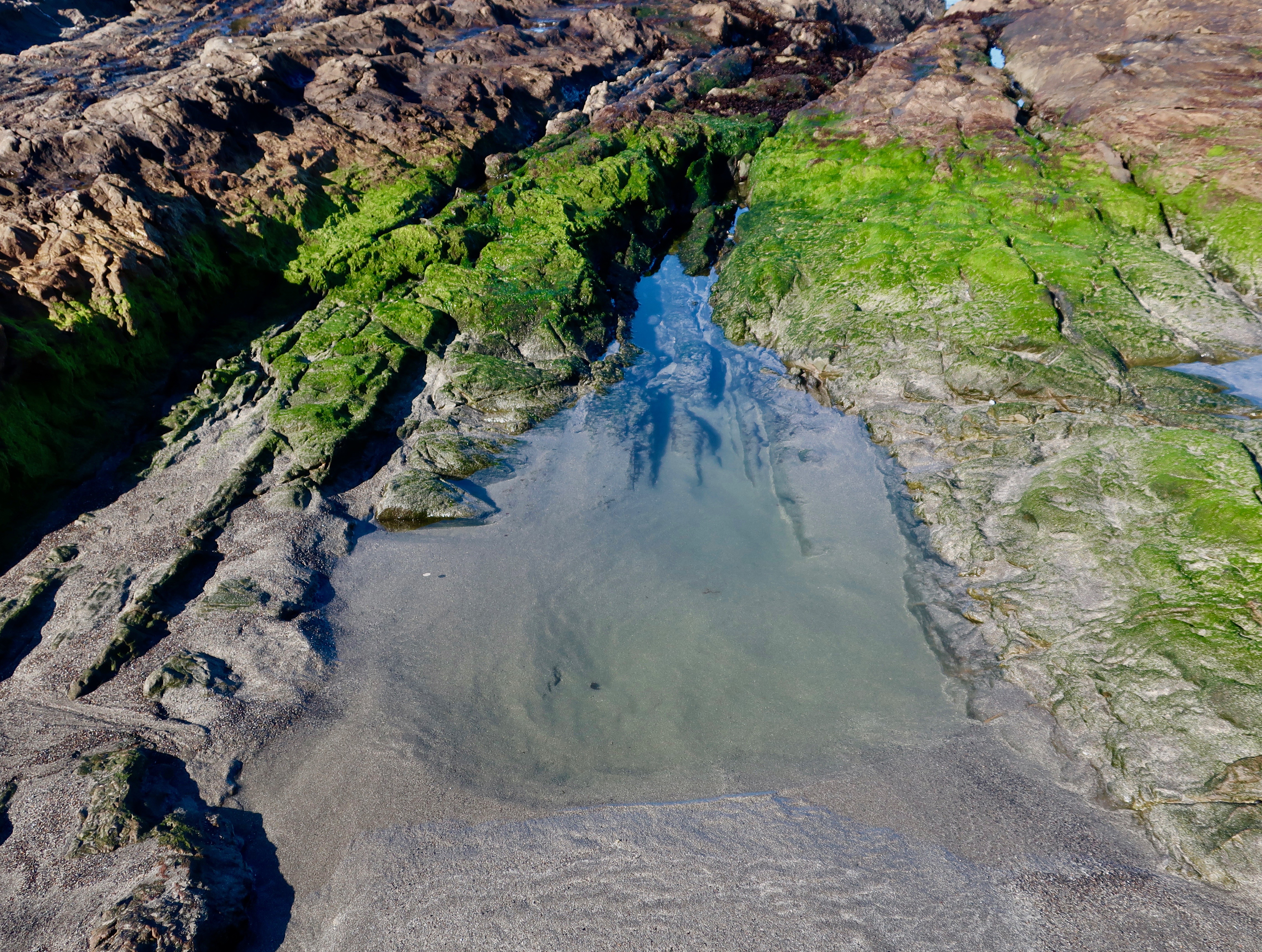
As did this tide pool outlined in green
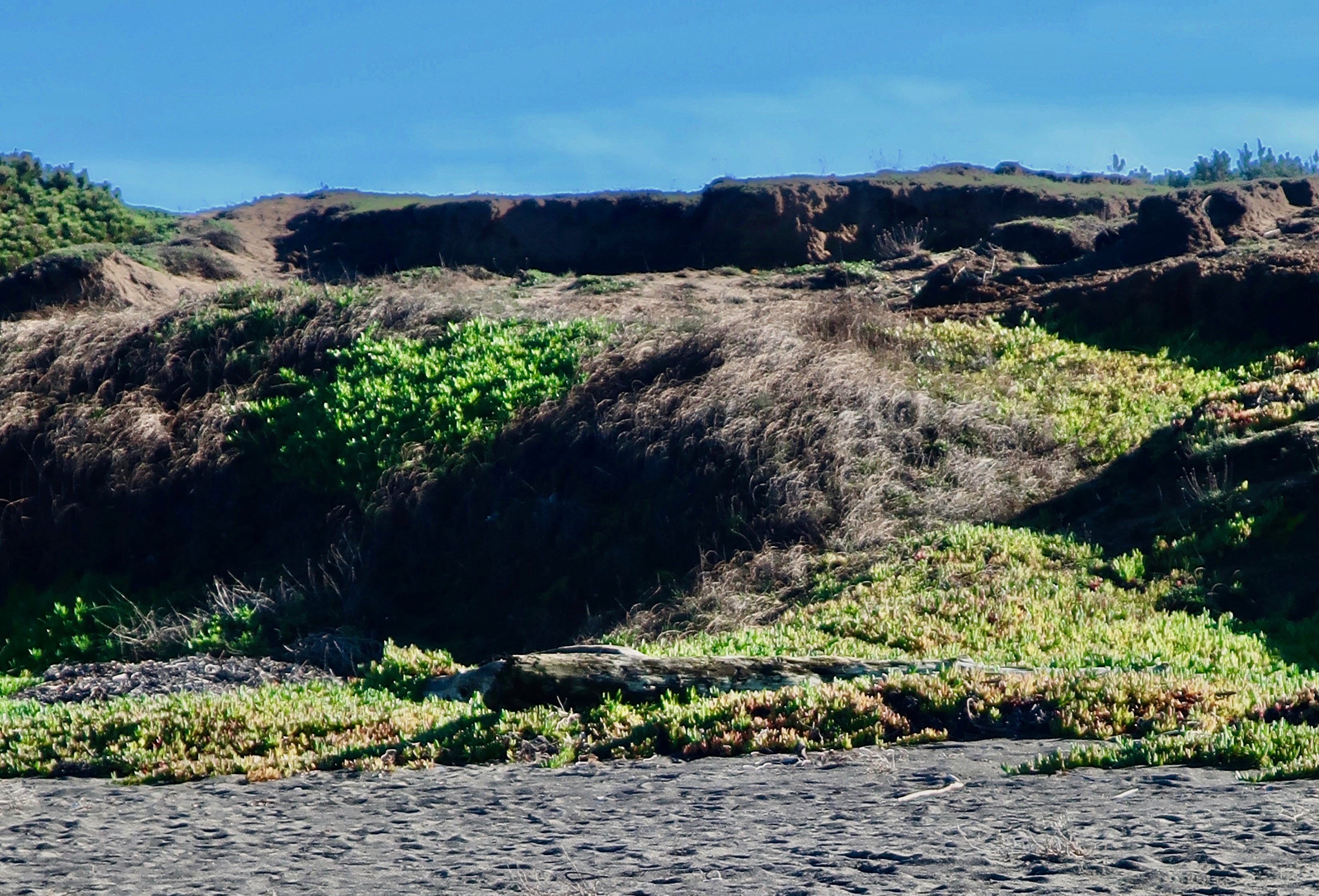
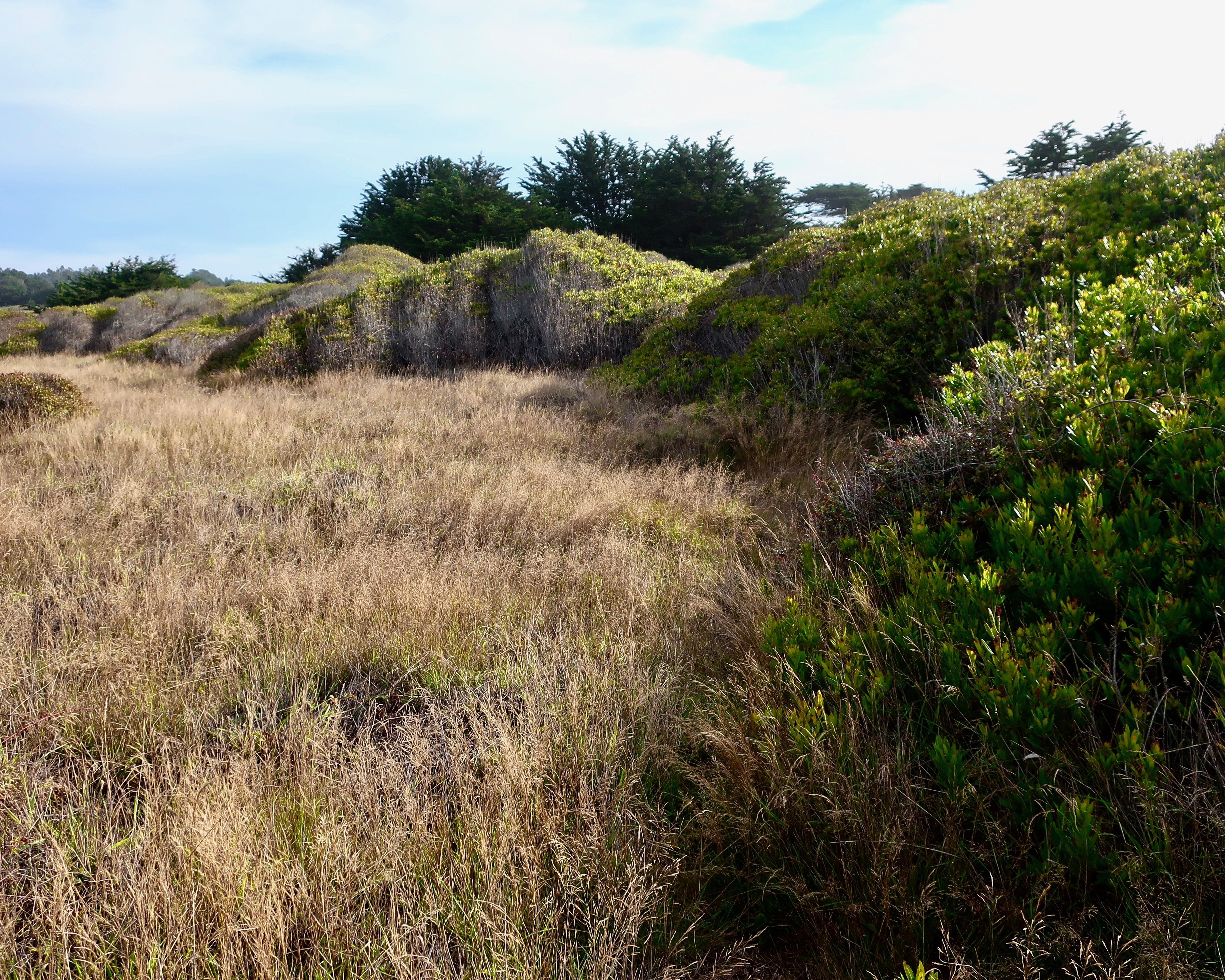
The ever-present ice plants continued the green-theme as they climbed up the ancient sand dunes in their unceasing effort to replace native plants. And be pretty.
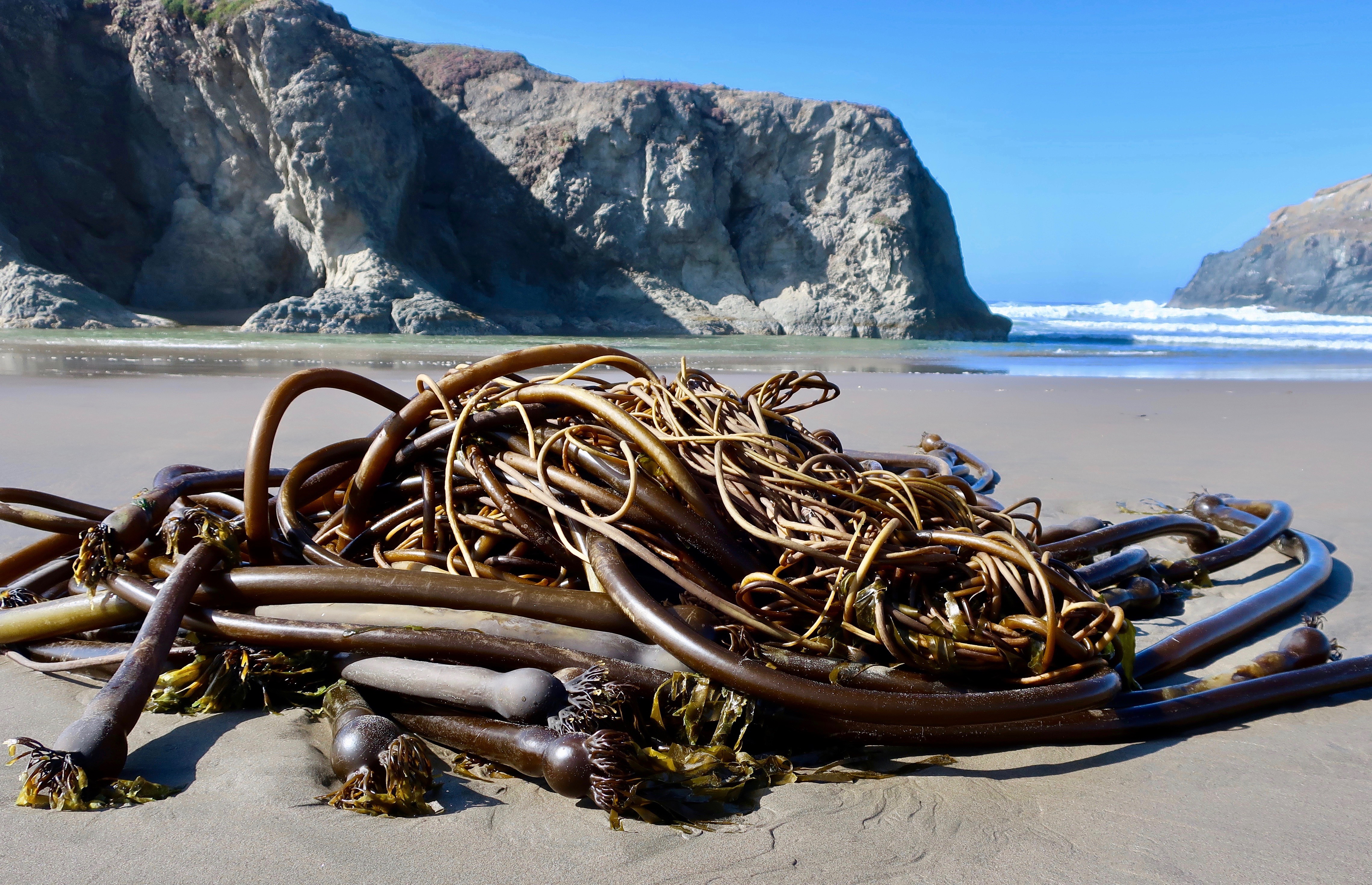
Plus there was seaweed to admire and wonder about. I’m thinking that this would make a great whip for the Devil.
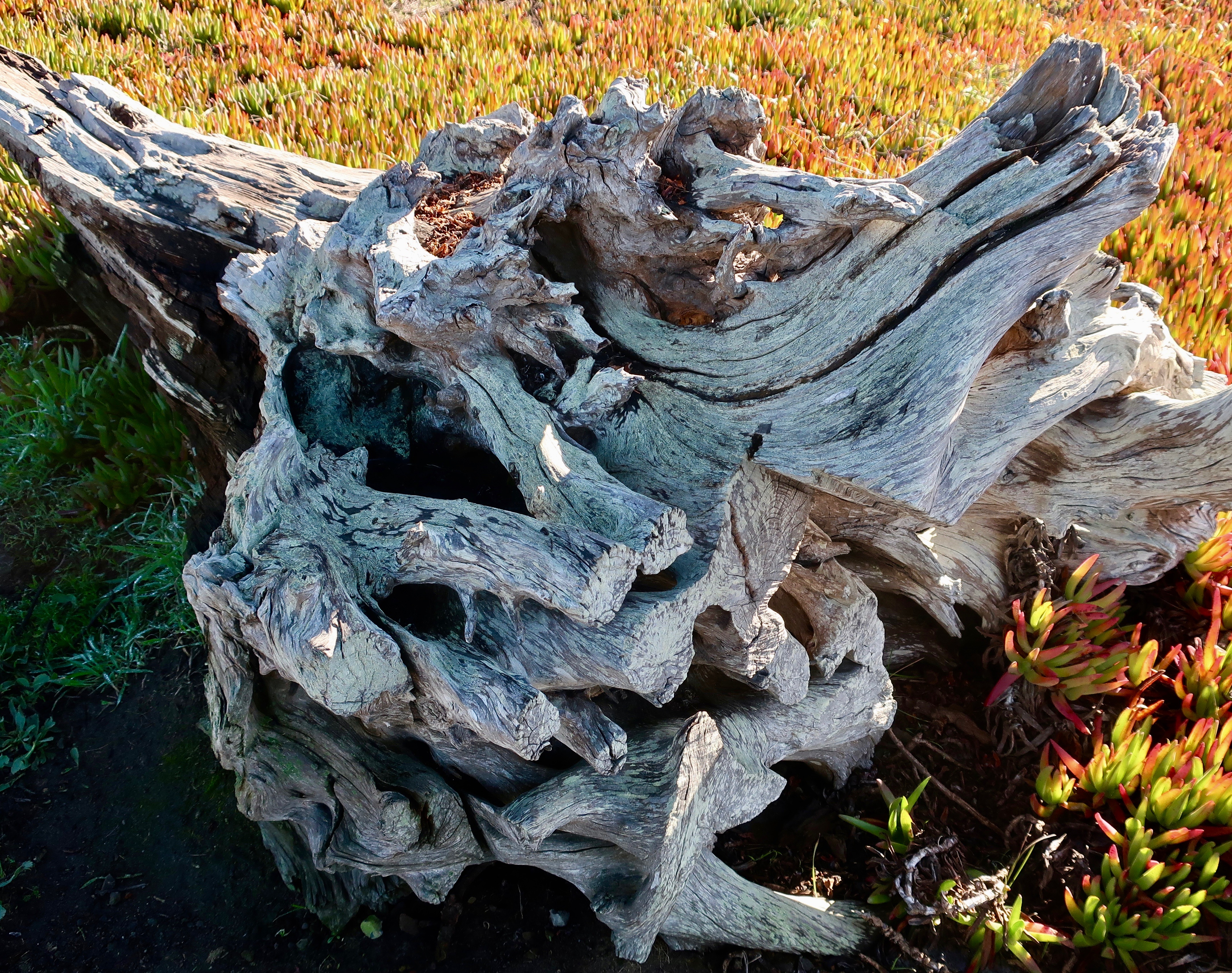
I wondered why someone had trimmed the roots off of this gorgeous driftwood.
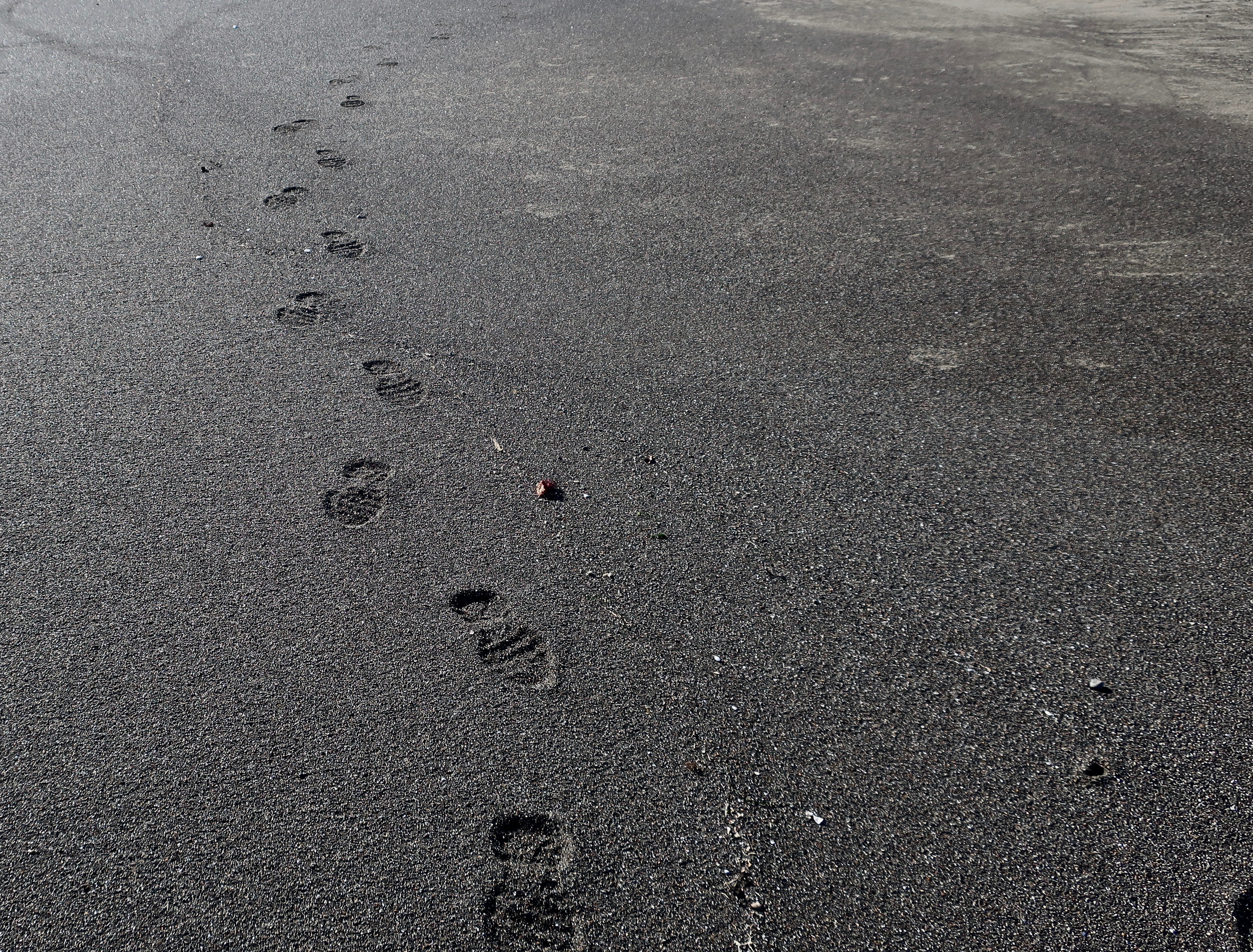
All too soon, it was time for us to leave. For a brief moment, my footprints were captured by the sand before the next wave rolled in. I was amused to see how they wandered, never traveling in a straight line, always willing to detour toward anything that was of interest, always ready for a new adventure— wherever it might lead. Like Peggy and I are. And that’s my next subject.

MOVING ON

As you may recall, Peggy and I are preparing to hit the road full-time in mid to late March. That’s one reason why my posts have been so few and far between. But there is more. We are also selling our house and moving East. Our daughter has an empty apartment in Virginia that we will be using for our base as we travel North America. She and her husband Clay have been lobbying for years that we should move closer to them. The apartment is small, however. We are using it as a reason to seriously downsize. It’s called donate, give away and toss. If we haven’t touched something in a couple of years, it goes. (Books and heirlooms are the exception— and even they are subject to scrutiny.) A moving pod sits outside our backdoor to collect what remains. In a few weeks it will arrive on our kid’s doorstep. We’ll take three months to get there.

We will miss our cozy home with its great views and entertaining wildlife. No doubt about it. Living out in the woods had always been a dream of mine. But it is time to move on. I turn 79 in a couple of weeks. While not necessarily old (from my perspective), it is definitely not young. My sense of humor on doing all of the work involved in maintaining five acres isn’t what it once was. And, there are more serious reminders of our age: the passing of family members and friends.

My sister died a couple of weeks ago, leaving me with a thousand happy memories and a large blank spot. She was my first baby sitter and forever friend. While we didn’t see each other often, we were always close. You may recall the posts I did on our annual pumpkin carving contests. They started in the late 90s and went on for 15 years. And you may also remember my blog on Nancy Jo and the Attack of the Graveyard Ghost, a prank my brother Marshall and I played on her when we were kids. Marsh passed away couple of years ago while staying in his RV at our house. I was with him when he died. I am now the last living member of our family. It’s a strange feeling.

A number of friends have passed on as well over the past few years. I attended a memorial/life celebration in Sacramento last weekend for one of my early backpacking Trekkers, Don Augustine. I first met Don in 1981 when he went on a hundred mile trek I was leading through the Sierras. It was a tough year with lots of snow still on the ground. I was kicking footsteps in it over a steep pass leading into the Granite Chief Wilderness when he hustled up to where I was working and offered to help. He would continue to offer a hand whenever needed for the next 40 years as both a trekker and as a volunteer. His generosity was close to legendary. His specialty was encouraging newbies as they struggled to meet the challenges of long distance backpacking and bicycling. I told a story about it to the some 200 people who had gathered to wish Don goodbye.

At the time, I had gone to Alaska as the Executive Director of the Alaska Lung Association. Don and a couple of other good friends had come up to join me on a backpacking trek I was leading across the Alaska Range. We had a particularly difficult young woman along who was always last getting into camp and whined a lot. It was the unpleasant job of our trail sweep/rear guard to walk with her and bring her in. I took my turn and by the end of the day my patience was running thin. That’s when she threw her pack on the ground and declared, “I am not going another step. I am camping right here!” I responded, “Do you see that hill crest? “Yes,” she pouted. It was maybe a quarter of a mile away. “The Trekkers are setting up camp on the other side. We can be there in 15 minutes.” “I don’t care,” she answered. “Okay,” I said, “pull out your whistle.” (We required that all of our trekkers carry one.) “I have to hike over the hill and check on the group. I saw a grizzly bear about a mile back. If you see him heading your way, blow loudly on your whistle three times and I’ll come back.” She was up in a flash, had thrown her pack on, and was leading me over the hill at a hefty pace.

I took Don aside in camp and asked if he couldn’t use a bit of his magic on the young woman. “I’ve got you covered, Curt,” he said. “I’ve got candy.” He reached into his pack and pulled out a gallon ziplock filled to the brim. (There were reasons why Don always had the heaviest pack in the group.) And Don was right. On being introduced to Don’s ziplock and his charm, the girl’s attitude improved immensely and she started hiking faster to keep up with him and his candy. It was a much better solution than my making up grizzly bear stories.
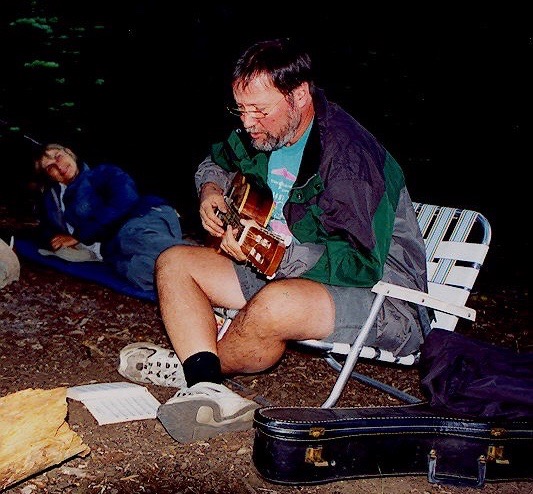
Don playing his guitar on one of our Sierra Treks. He often carried his guitar and the camp chair he is seated in. And Pop Tarts. Nancy Pape, lying down and listening, was also at the memorial.

It’s always hard to lose a family member or friend, and even more so when he or she has been close. It is like closing a chapter in your life— the laughter and good times, the tears, the adventures and so much more. But it is also an important reminder that life is short, whether you are 79 or 29. Life should be lived to the fullest whatever your age. Peggy and I believe this totally. That’s why we moved to Oregon and that’s why we are now moving on now, doing what we love to do, wandering to our hearts content. Until it is time to do something else.

We will be sharing our adventures on this blog. As always, you are invited to join us. We hope you do.

My next post on Friday will be different: It will serve as a detailed description of our house, property and the surrounding region for those who may be interested in having their own ‘home in the woods.’ –Curt and Peggy

The Point Cabrillo Lighthouse, a Poet, and a Bookstore Cat

Most people love lighthouses. And what’s not to love? They are usually found in beautiful locations, feature attractive buildings, and include an element of romance. Their location is part of the romance, but even more so, I find the life of lighthouse keepers romantic. I picture them living on the edge of the ocean, facing ferocious storms with towering waves, and working heroically to save lives in areas that are often remote, far removed from the lives most of us lead. While such a life might not seem attractive to most, I like remote. I’m not so sure about the long hours, repetitious work, and being tethered to a 24/7 job.

I’ll never have the opportunity to find out, however.

The possibility of being a lighthouse keeper in the US today is close to zero. Of the 700 lighthouses presently functioning in the country, only one has a lighthouse keeper. It is located on Little Brewster Island overlooking Boston Harbor and has been in operation since being repaired after the British blew it up during the Revolutionary War. It had originally been built in 1716 on a pile of rubble stone with candles providing the light.

The rest of America’s lighthouses have become automated. When our son, Tony, was flying helicopters for the Coast Guard off of Kodiak Island in Alaska, one of his jobs was servicing the lighthouse in Cordova. As I recall, the salmon fishing was great in the area. He loved the assignment. And we benefited at Christmas with yummy halibut and salmon. (BTW… this past week he was flying a helicopter over Antartica in his new job.)

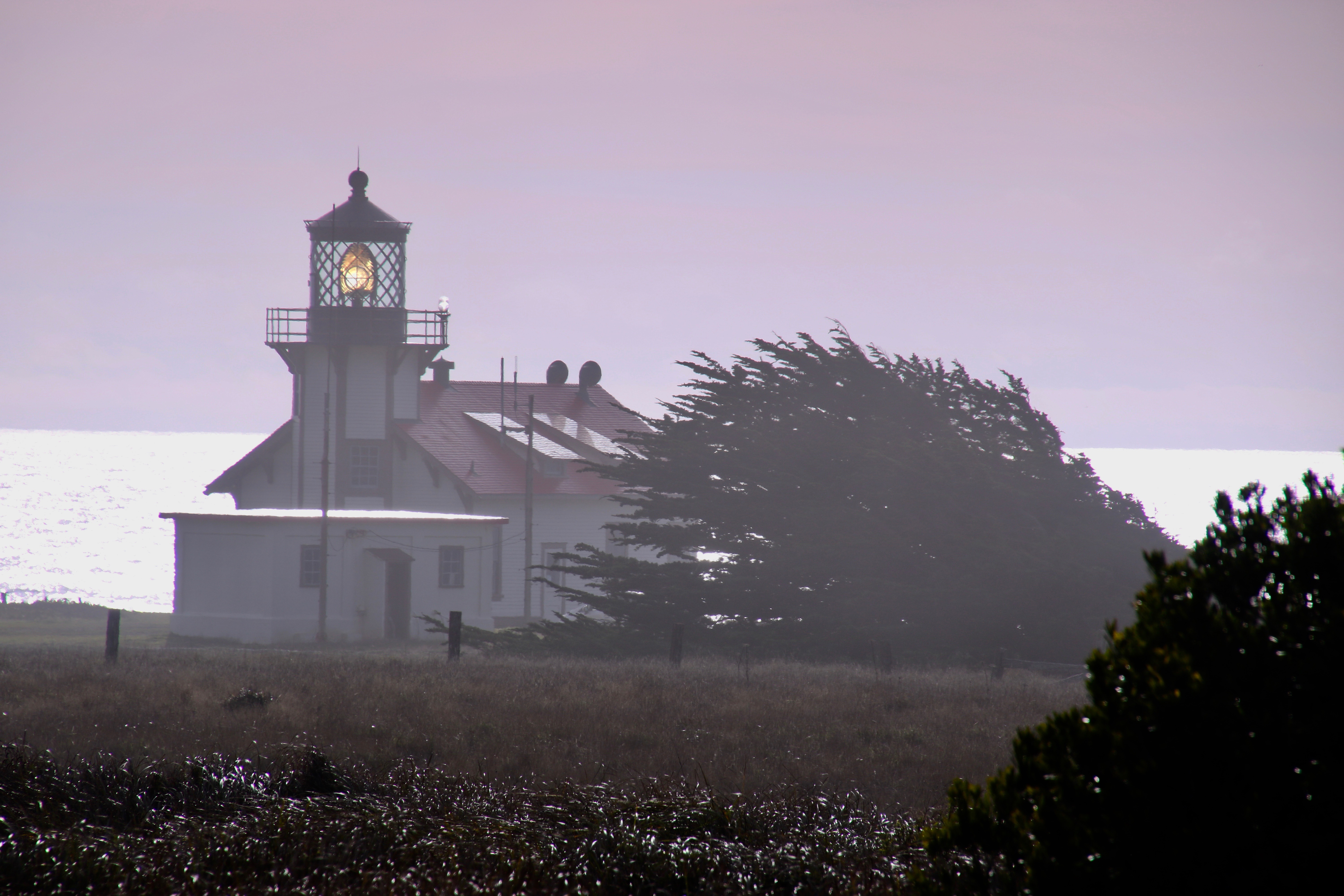
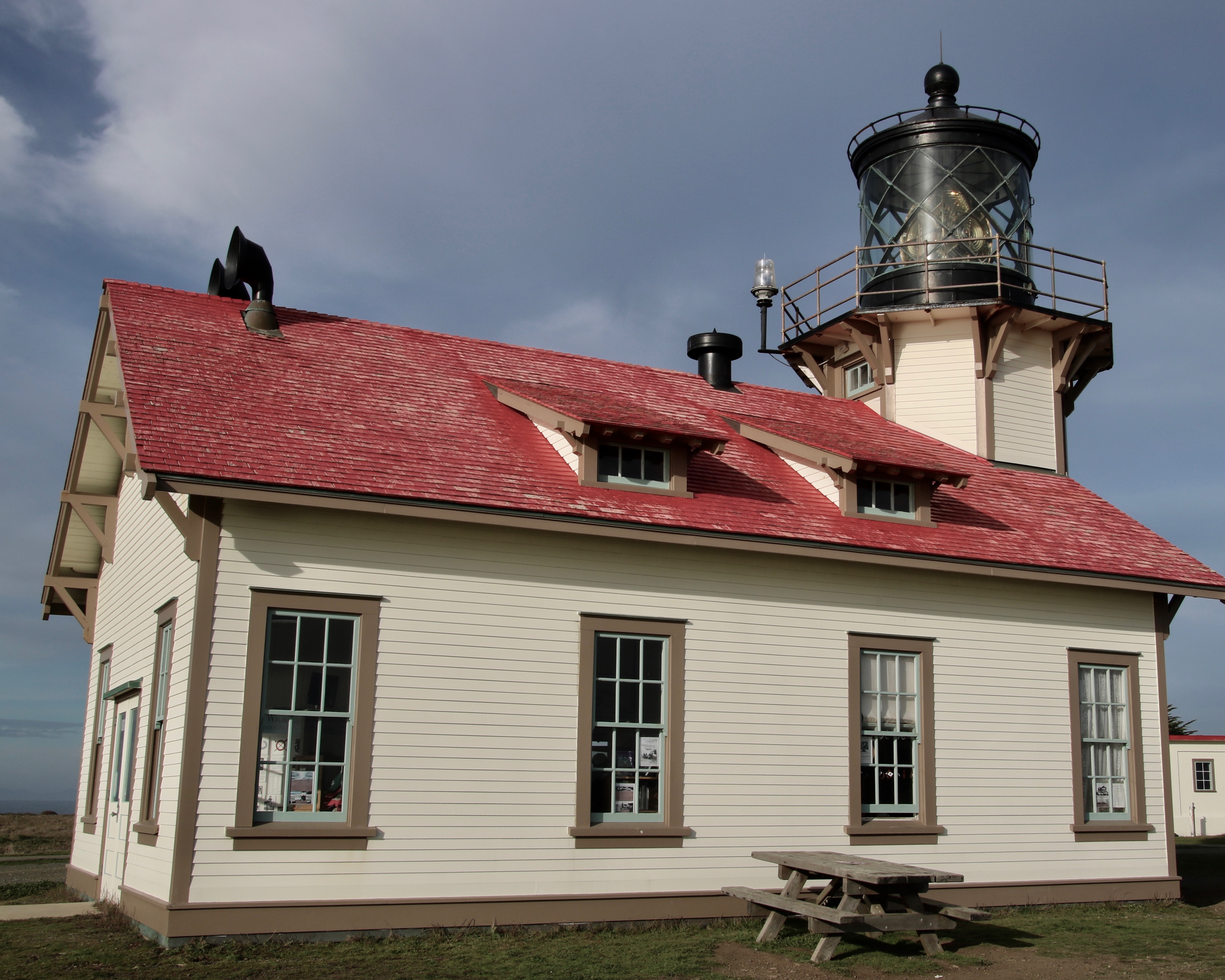
Today, many of the original lighthouses have been turned into museums. That’s the situation with the Point Cabrillo Lighthouse which is now part of the California State Park system. The lighthouse got its official start with a party in 1909. The head lighthouse keeper invited all of the neighbors within a mile over for its official opening at midnight. It was a pea soup night with the fog so thick that the light couldn’t escape. That wasn’t a problem for the loud new fog horns that started blasting out their warning on the dot at 12, probably waking up everyone who lived further away and wasn’t invited to the party. The lighthouse operated happily until 1961 when one of the towering waves I mentioned above rolled over the top. The third order Fresnel lens wasn’t damaged, however, and the lighthouse was returned to working order until 1973 when the US Coast Guard replaced it with a rotating beacon on a metal stand and the original lens was covered.

It was volunteers that brought the lighthouse back to life. With permission from the state and approval from the Coast Guard, they rebuilt the lighthouse and other structures including the homes of the lighthouse keeper and the assistant back to their 1930 condition when electricity was brought in. The Fresnel lens was cleaned, updated, and returned to service, being one of 70 that still operate in the US.

An attractive trail leads from the right side of the parking lot to the Lighthouse. You can also hike the road, but why would you? This is a view of wind-sculpted brush along the way.
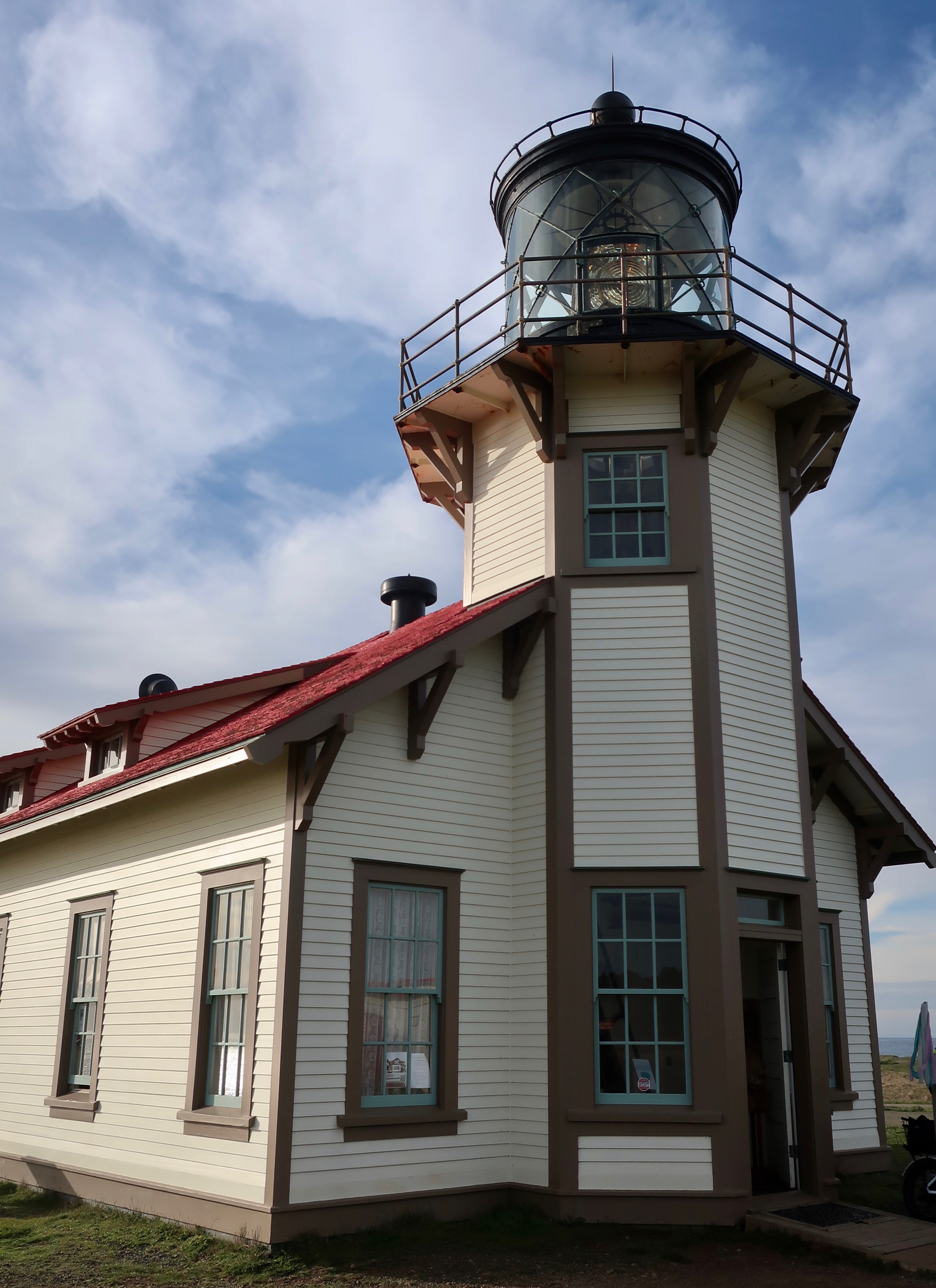
Our first view of the Lighthouse. A bit of morning fog still hung over it. The Fresnel lens was shining. (Photo by Peggy Mekemson.)
It didn’t last long. A few minutes later the sun came out and burned the fog away. (Photo by Peggy Mekemson.)
The trail took us over to the ocean on our way to the Lighthouse. Sun lit up the waves.
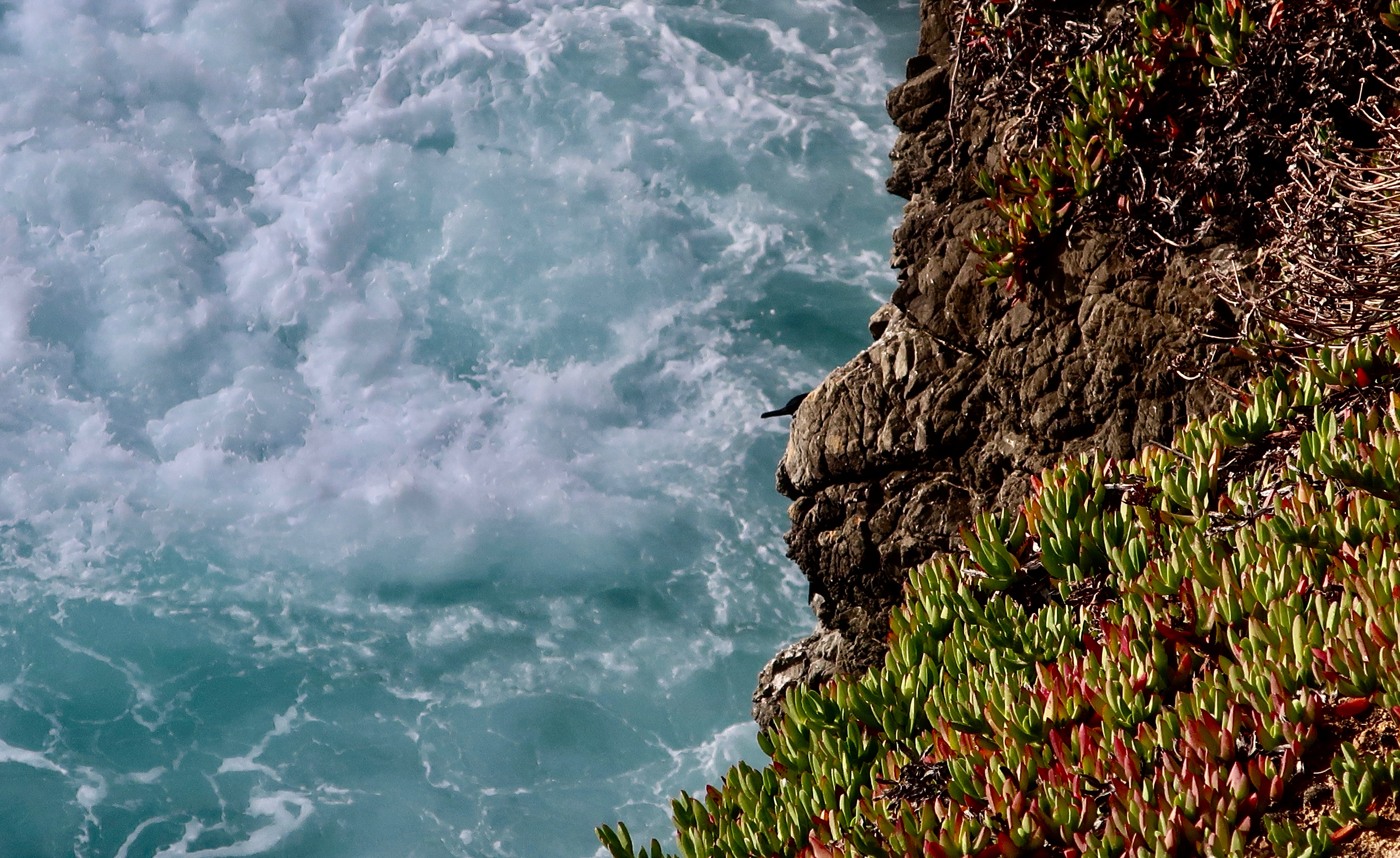
The Pacific Ocean crashed into an inlet. Can you spot the Cormorant?
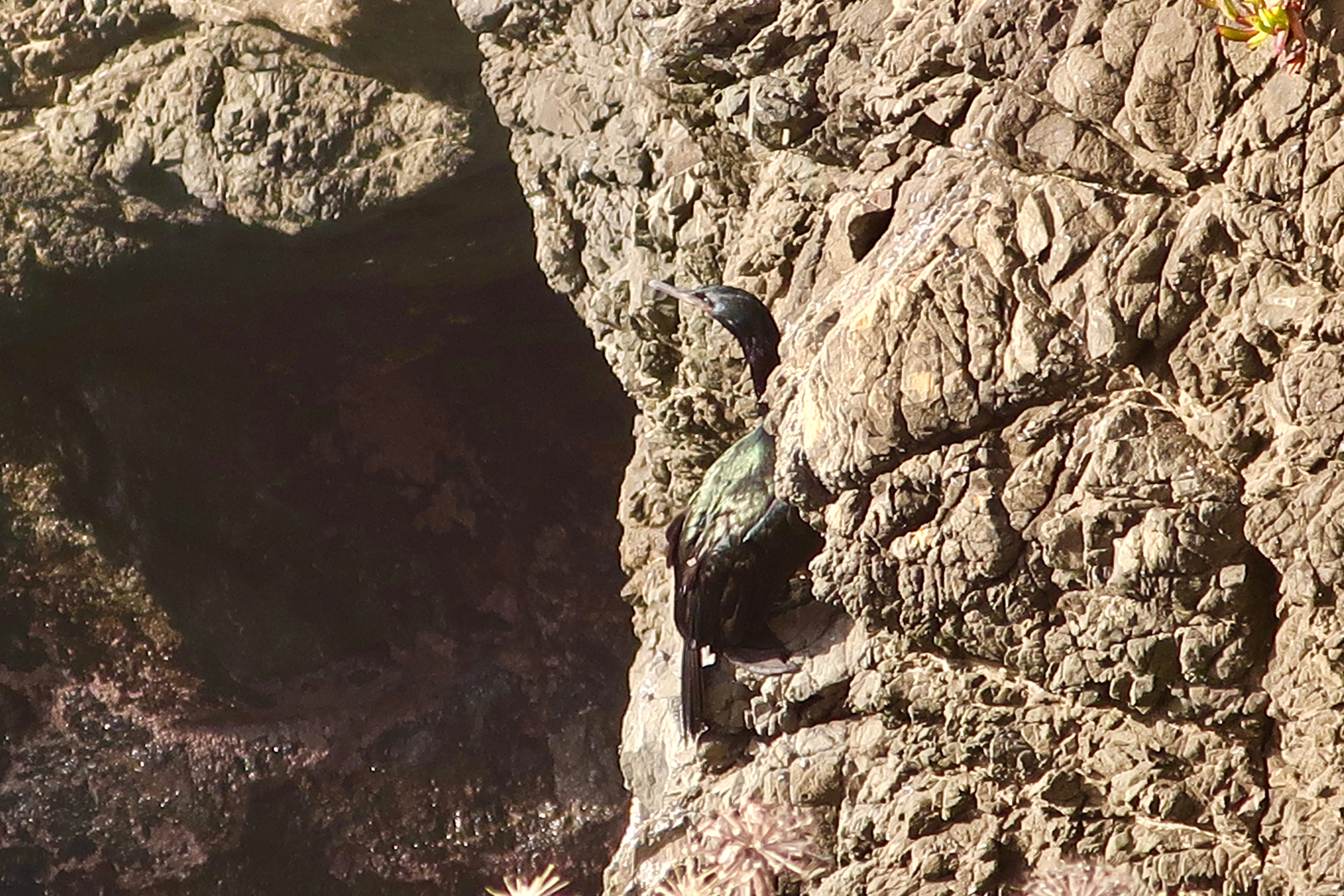
It was hiding down among the rocks. (Photo by Peggy Mekemson.)
We wandered around the lighthouse, admiring it.
A side view included the fog horns located on the back. (Photo by Peggy Mekemson.)
Peggy focused in on the lens. It can be seen 22 nautical miles out to sea. The third order Fresnel lens is made up of four panels which contain 90 lead glass prisms and weighs 6800 pounds. It is maintained by the volunteer Point Cabrillo Lighthouse Keepers’ Association. (Photo by Peggy Mekemson.)

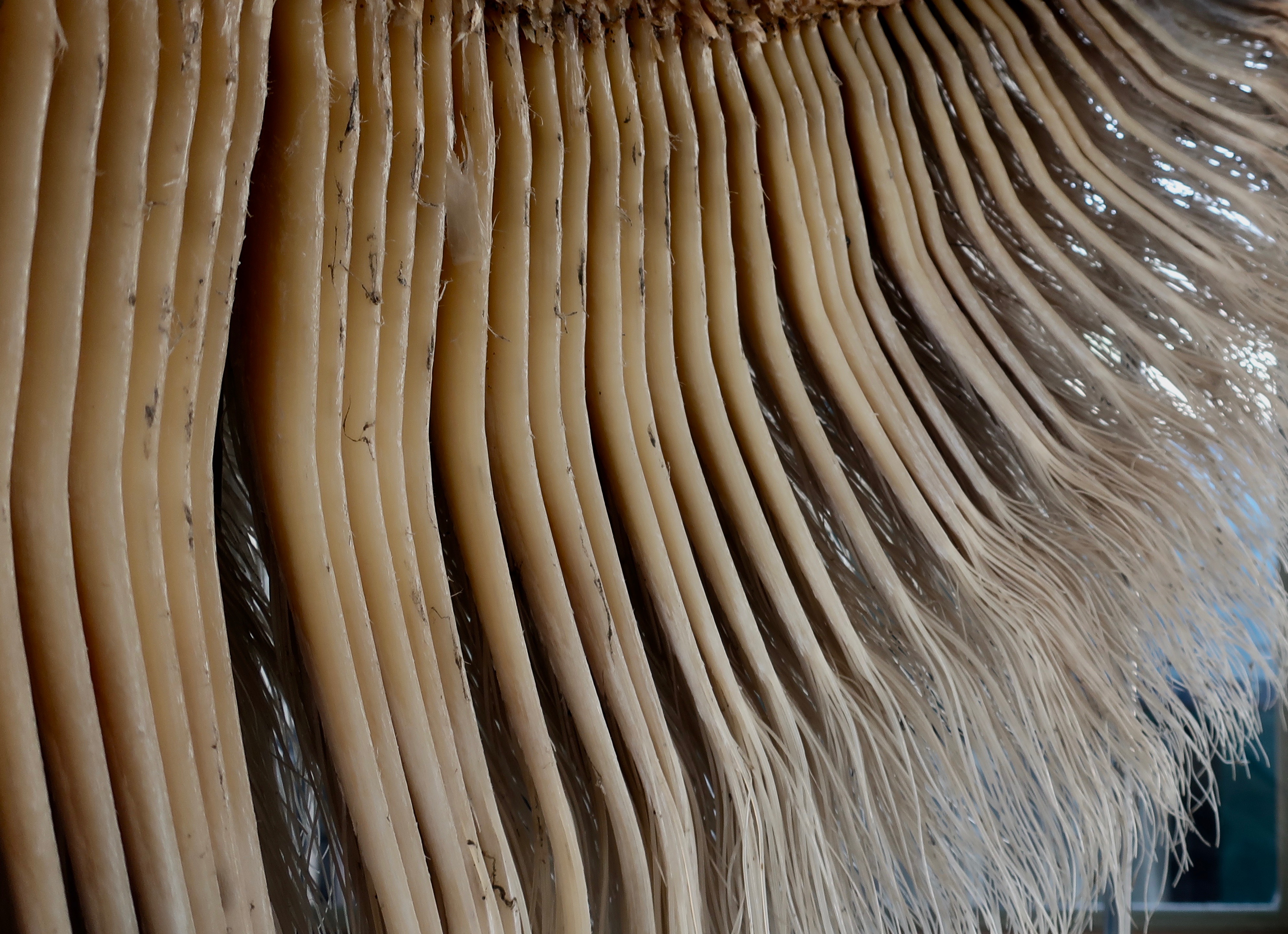
We entered the small store and museum at the lighthouse and found this. Do you know what it is? It is whale baleen that whales use to strain their food out of ocean water.
We followed the road out since it led by the attractively refurbished lighthouse keepers’ homes. One serves as a museum. Visitors can rent the other for an overnight stay.

And this brings us to the bookstore cat. The attractive, historic town of Mendocino is located a mile and a half south of Point Cabrillo. It is another one of our favorite coastal towns. One of the reasons is its excellent bookstore: The Gallery Bookshop. The store’s logo is a cat reading a book. We went there to buy books, meet friends, and visit with the cat.

Every nook and cranny of the bookstore is filled with quality books. We could spend hours there.
The owner’s philosophy was posted in the window…
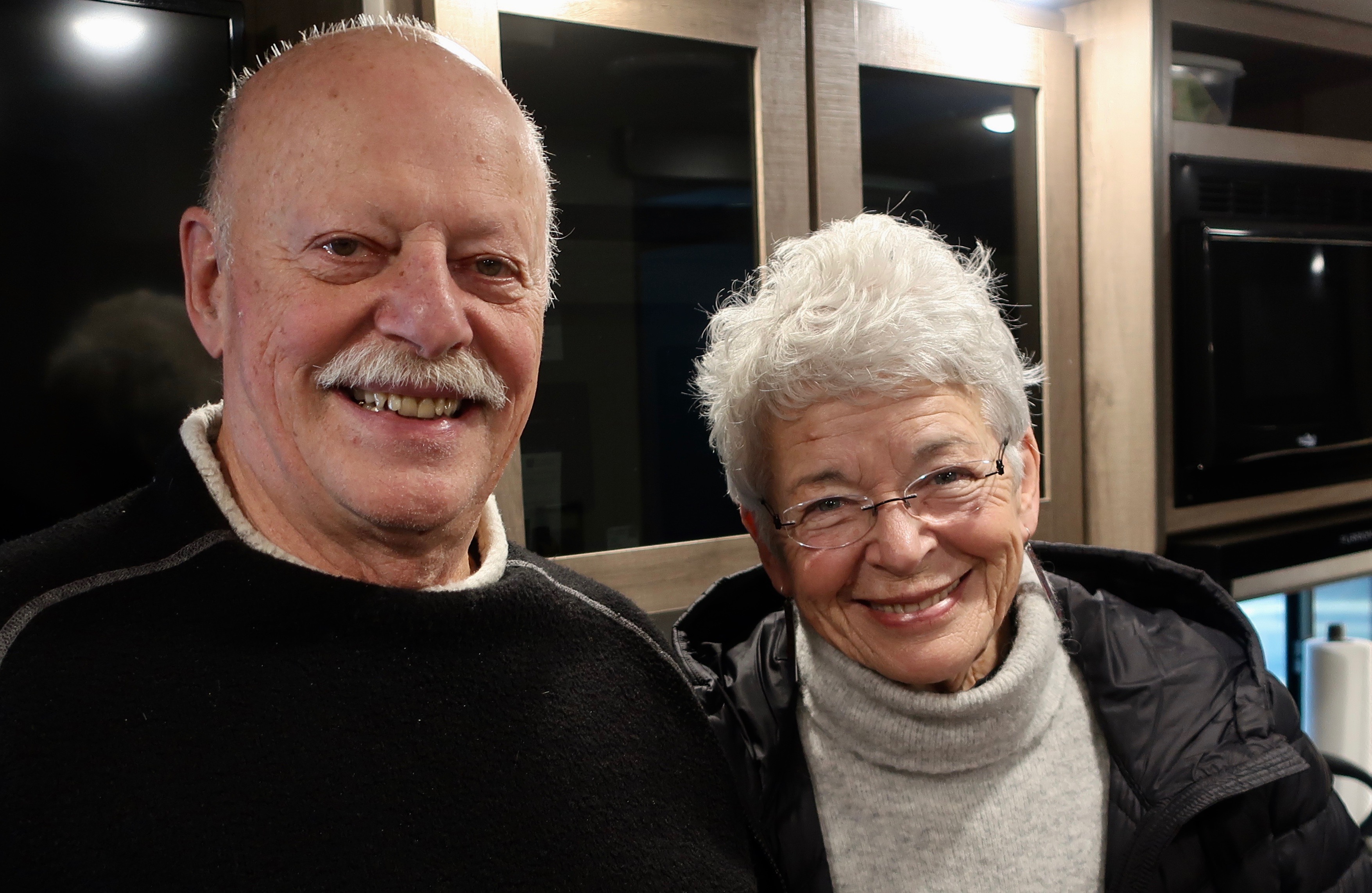
We hadn’t seen our friend David McElroy for quite some time. David is an Alaska bush pilot and a talented poet, a combination that has always fascinated me. He was traveling with his friend Susan, who among her many accomplishments, had been the first director of the Nature Conservancy in Alaska. They originally met in 1979 when Susan had hired David to fly her while she filmed the Iditarod, the first film of the event to ever be televised nationally. They met again after David’s wife of many years (and one of Peggy’s best friends from high school, Edith Barrowclough) passed away from cancer. Susan and David were on their way to Paris and then Portugal for a few months.
This sign greeted us at the bookstore door.
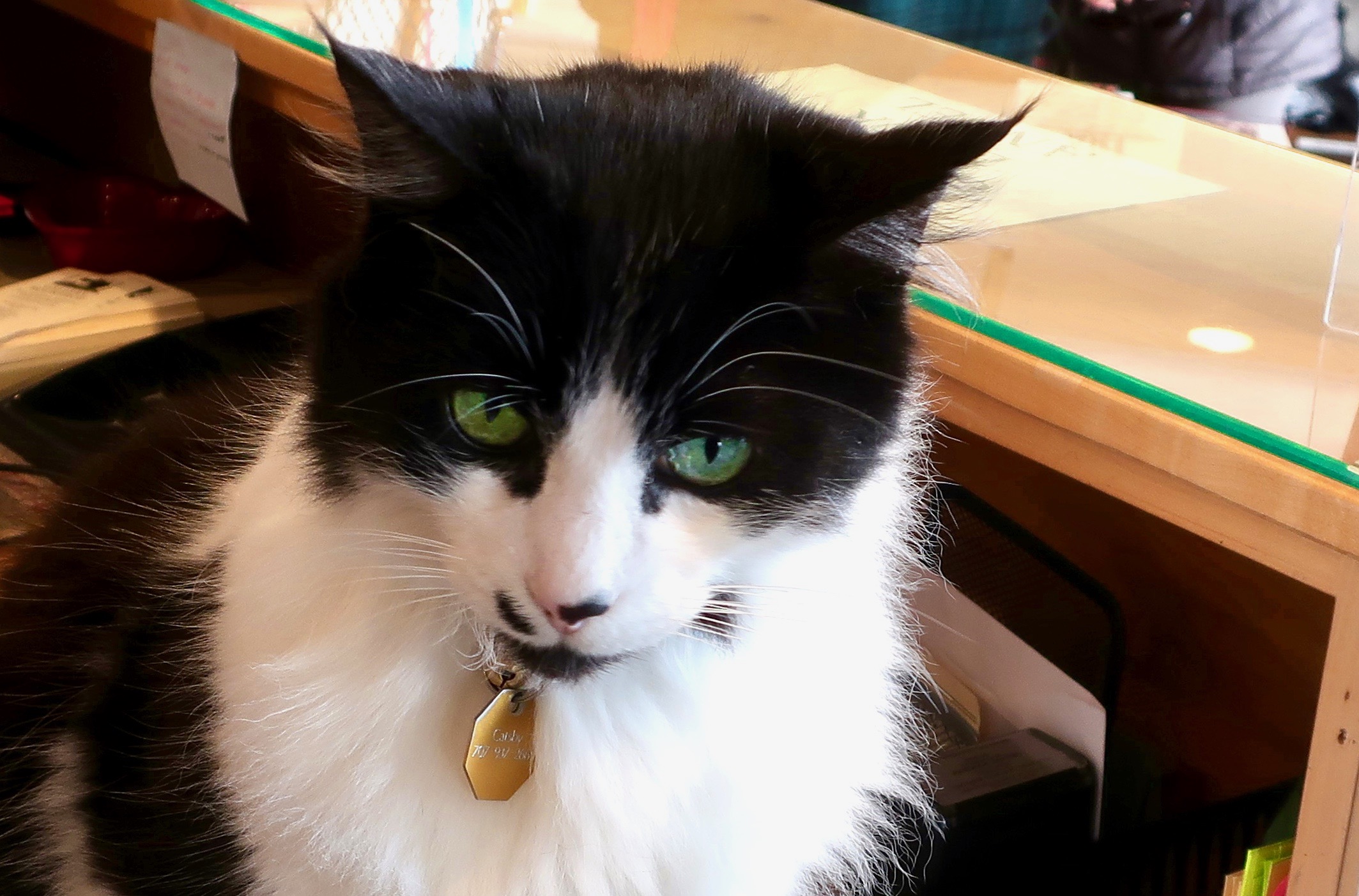
Catsby was sitting on the counter next to the cash register when I snapped his photo.

As I have noted before when I have blogged about my favorite independent bookstores, many of them have cats. I think that they all should. Here’s what the Gallery Bookshop’s website has to say about Catsby:

“The Great Catsby joined Gallery Bookshop in the fall of 2012. He was seen wandering on the streets of a neighboring town, darting in and out of businesses. One day, he found a car with an open window and hitchhiked (without the driver’s knowledge) to the village of Mendocino. There, he was picked up by a friend of the bookshop and offered the job of bookstore cat. His duties include sleeping atop card racks, greeting dogs with a glare and a flick of his tail, and occasionally allowing customers to scratch him behind the ears. He can usually be found sitting in the window, warming himself in a patch of sunlight.”

That does it for today. My next post will be on MacKerricher State Park, which is located just north of Fort Bragg. I should note: When I find time to do it. Our life continues to be insane as we rush into creating a new lifestyle for ourselves. More on that after the post on MacKerricher.

Is It Pomo Bluff— or Chicken Point… Fort Bragg, California

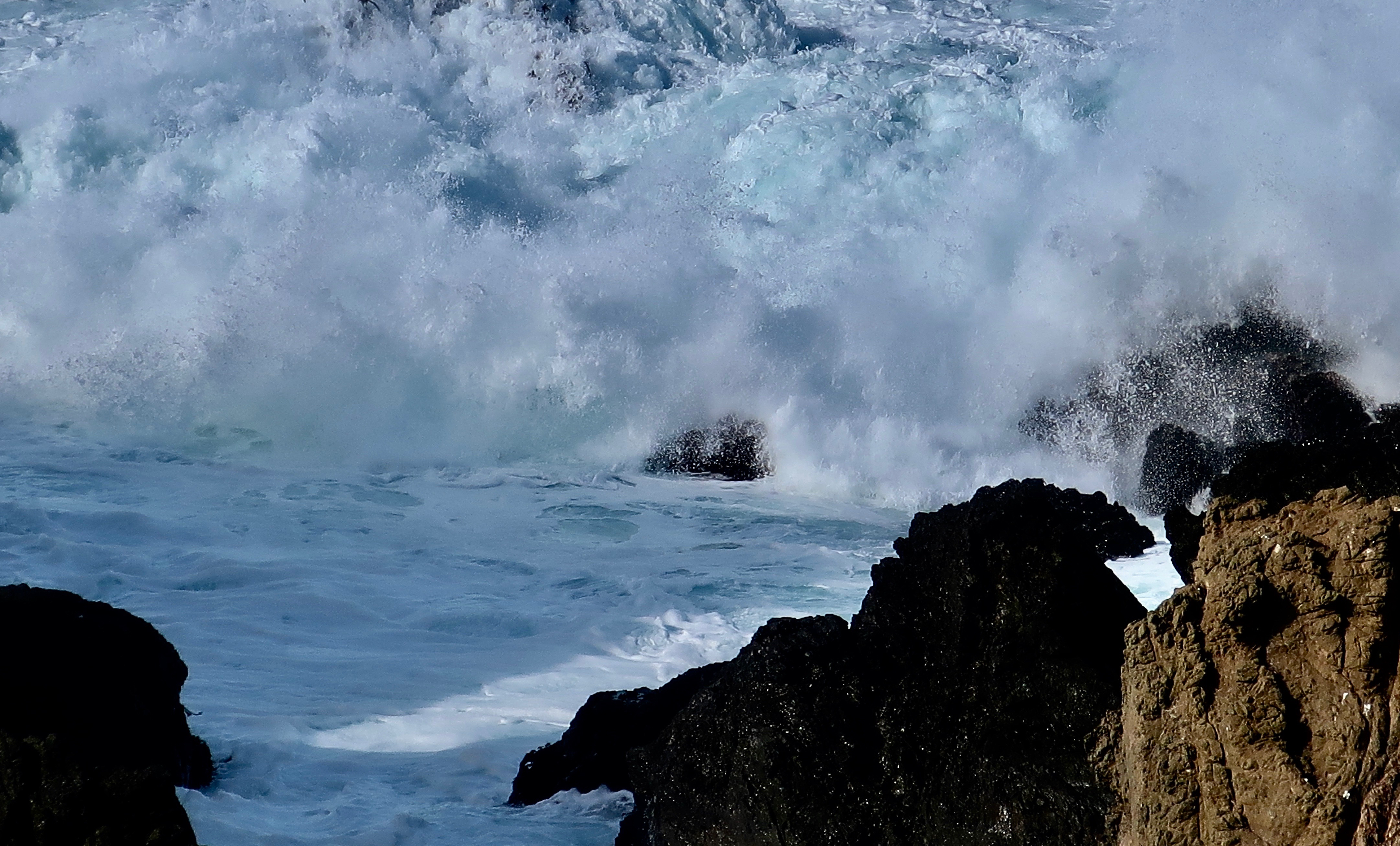
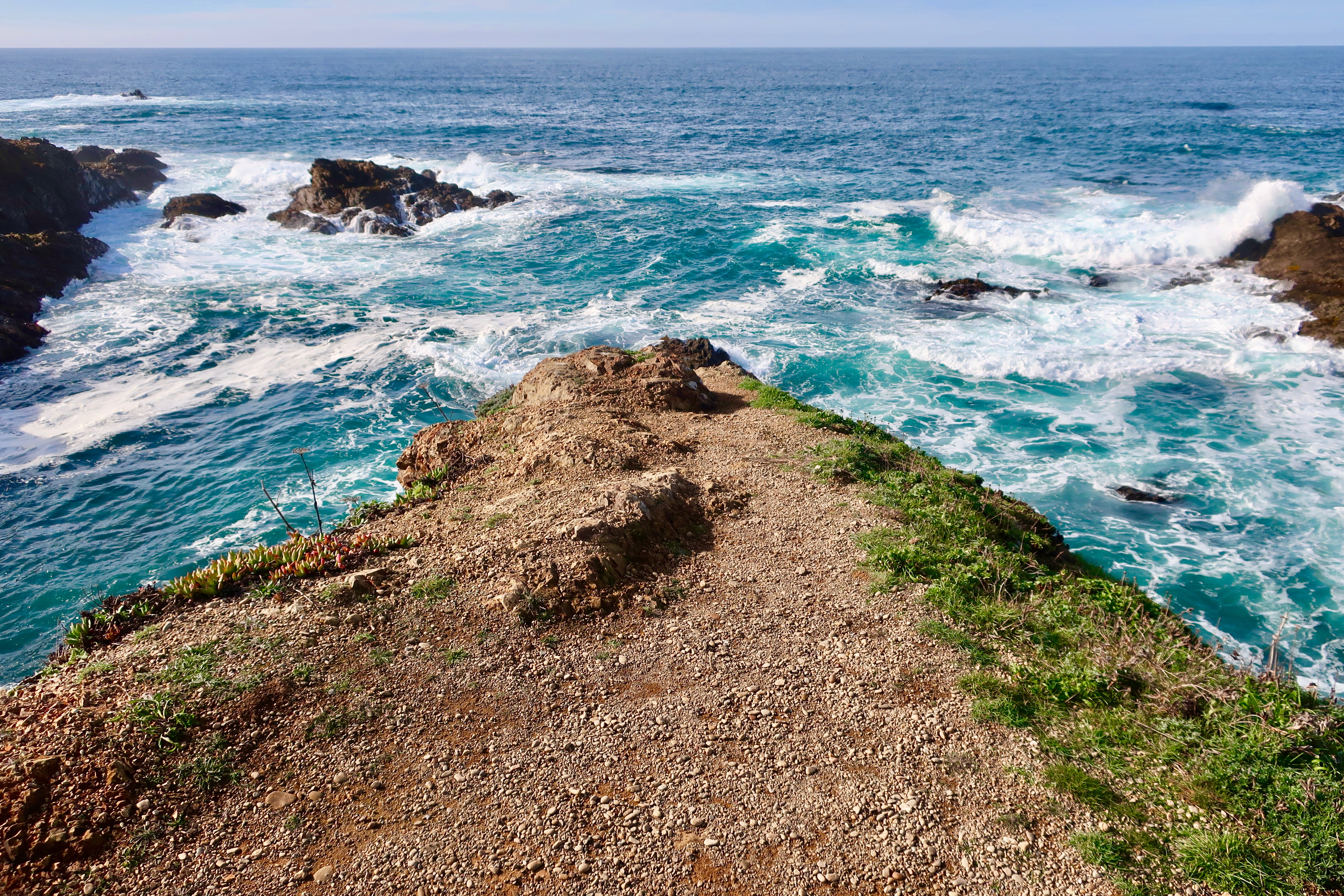
I see a massive wave like this and I remember the wise advice of old sailors: Never turn your back to the ocean. Even now when I look at this photo, I think, run! Fortunately, I was happily ensconced on a high cliff at Pomo Bluff when this big fellow came rolling in.

I laughed when I read the information sign posted up on Pomo Bluff in Fort Bragg. Sailors, fisherman, and other boaters of yore making their way out of Noyo Harbor would go out on the overlook to check how the Pacific Ocean was behaving. It could be calm and welcoming or it could be ferocious and dangerous. Checking was an opportunity to chicken out, to remember there was a cold beer that required quaffing at the local pub. Thus the name. Modern technology and weather forecasting have reduced the need to do a visual check.

We wandered around on the Bluff, admiring the ocean, checking out ice plants, watching rowdy crows, and wondering who owned the mansion hidden behind a tall fence.

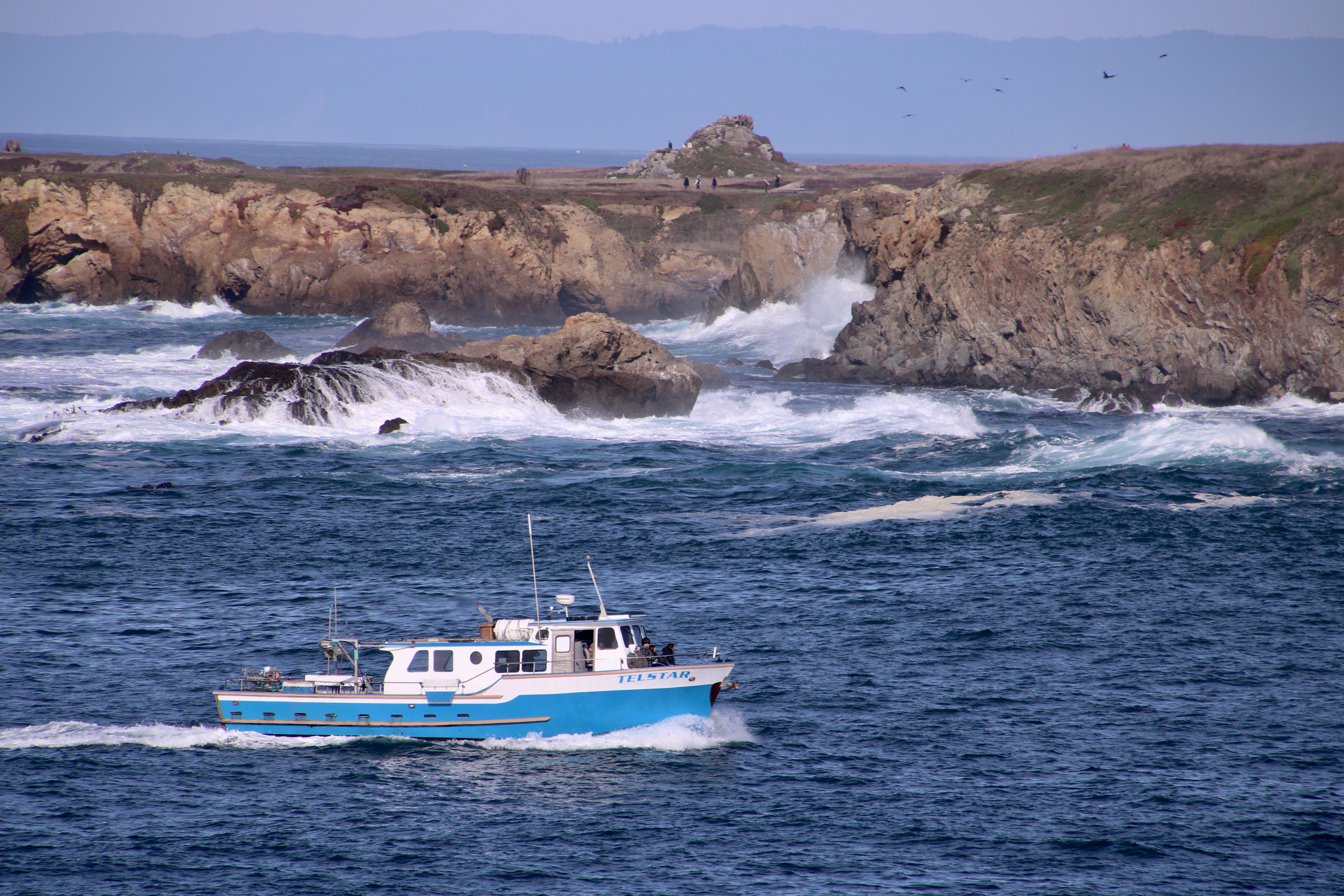
In spite of the big waves, it was a beautiful day on the ocean. We watched as the charter boat, the Telstar, made its way back into Noyo Harbor. It’s available for sport fishing and whale watching. Apparently some folks had been out to try their luck. We didn’t wonder about what they caught or saw, we wondered how their stomachs had tolerated the rolling sea. (Photo by Peggy Mekemson.)
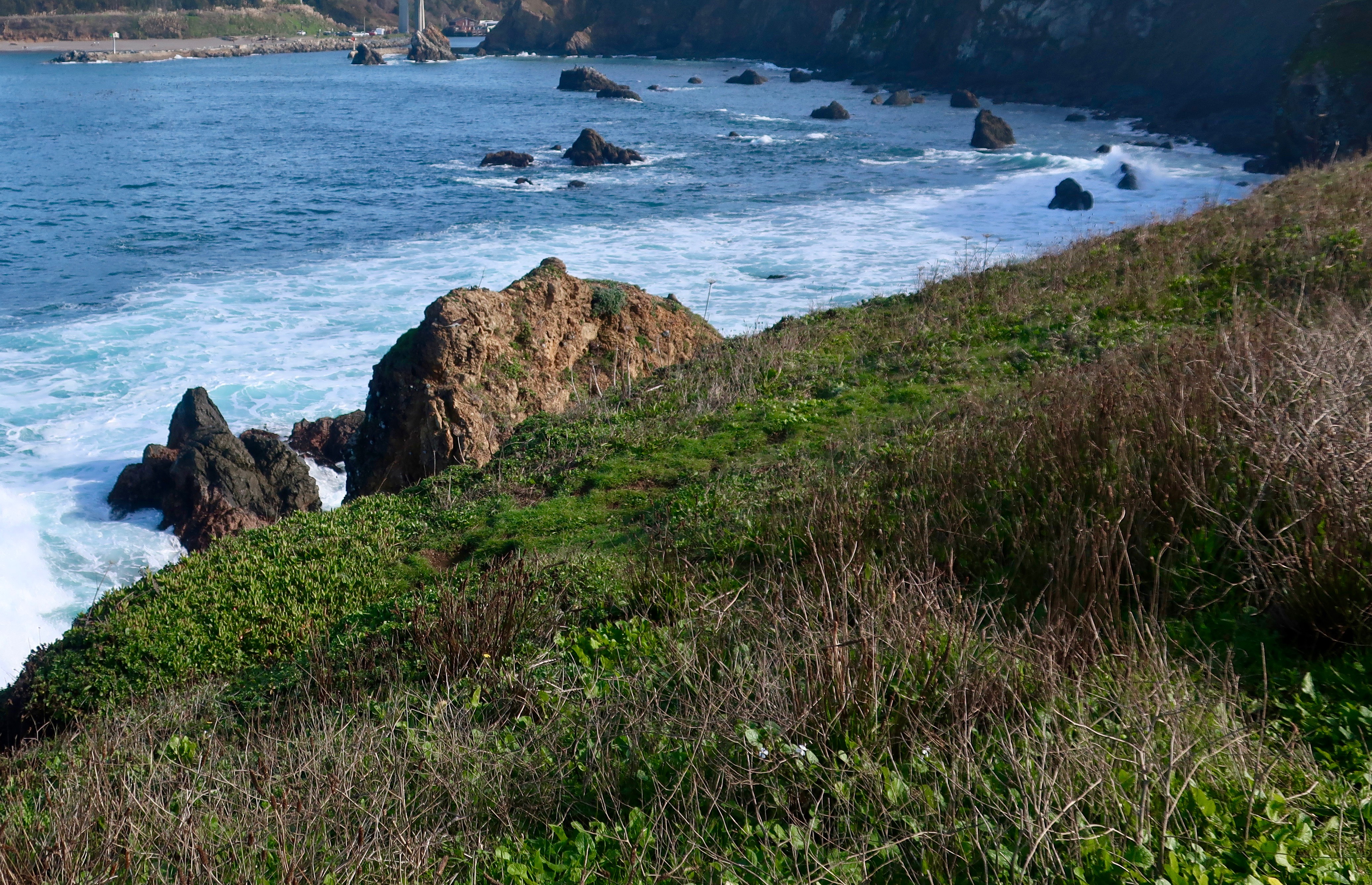
Looking back toward the entry into the protected Noyo Harbor.
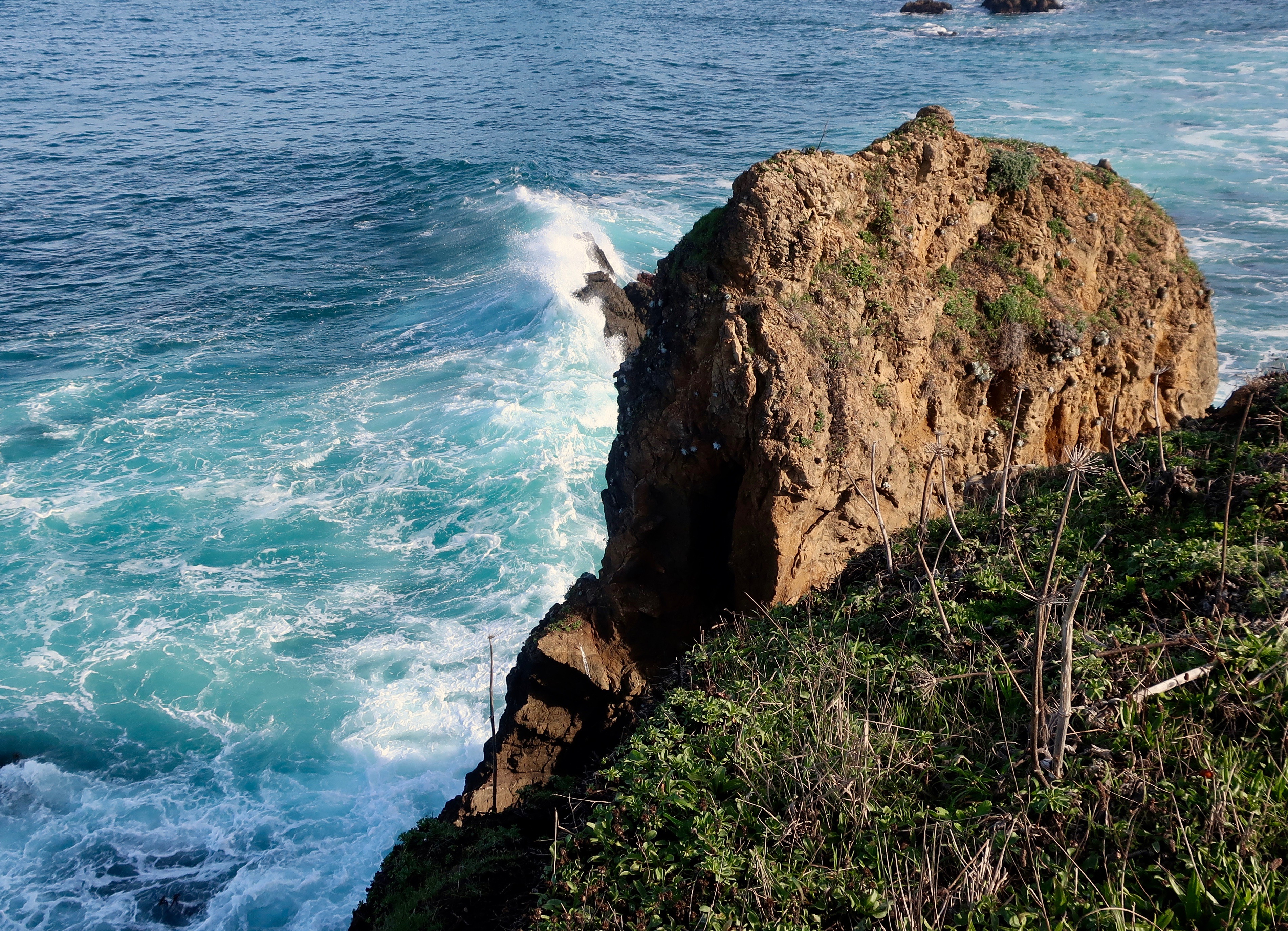
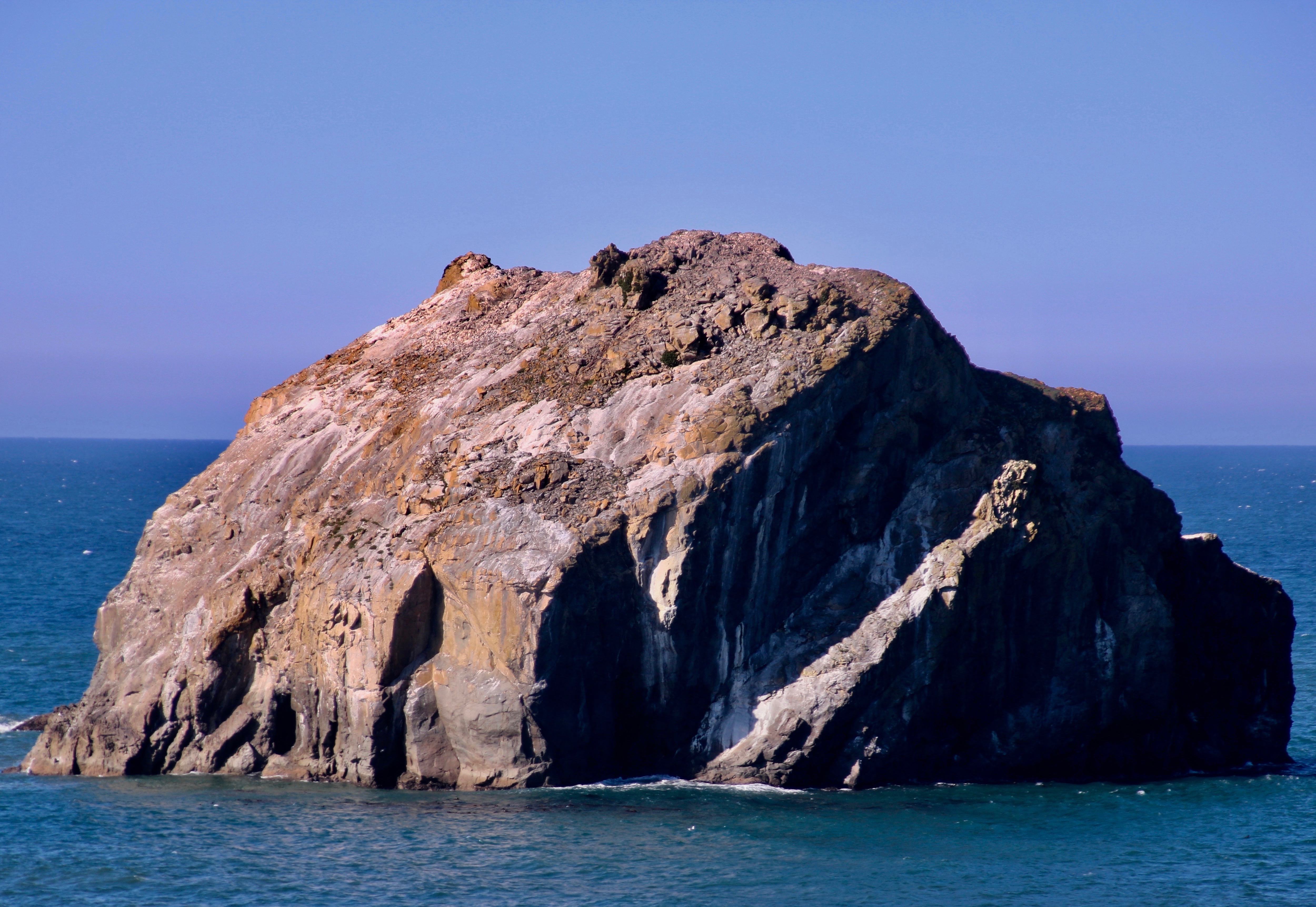
A close up of the sea stack seen above.
Looking out to sea from Pomo Bluff. Go far enough and you will end up in Asia.
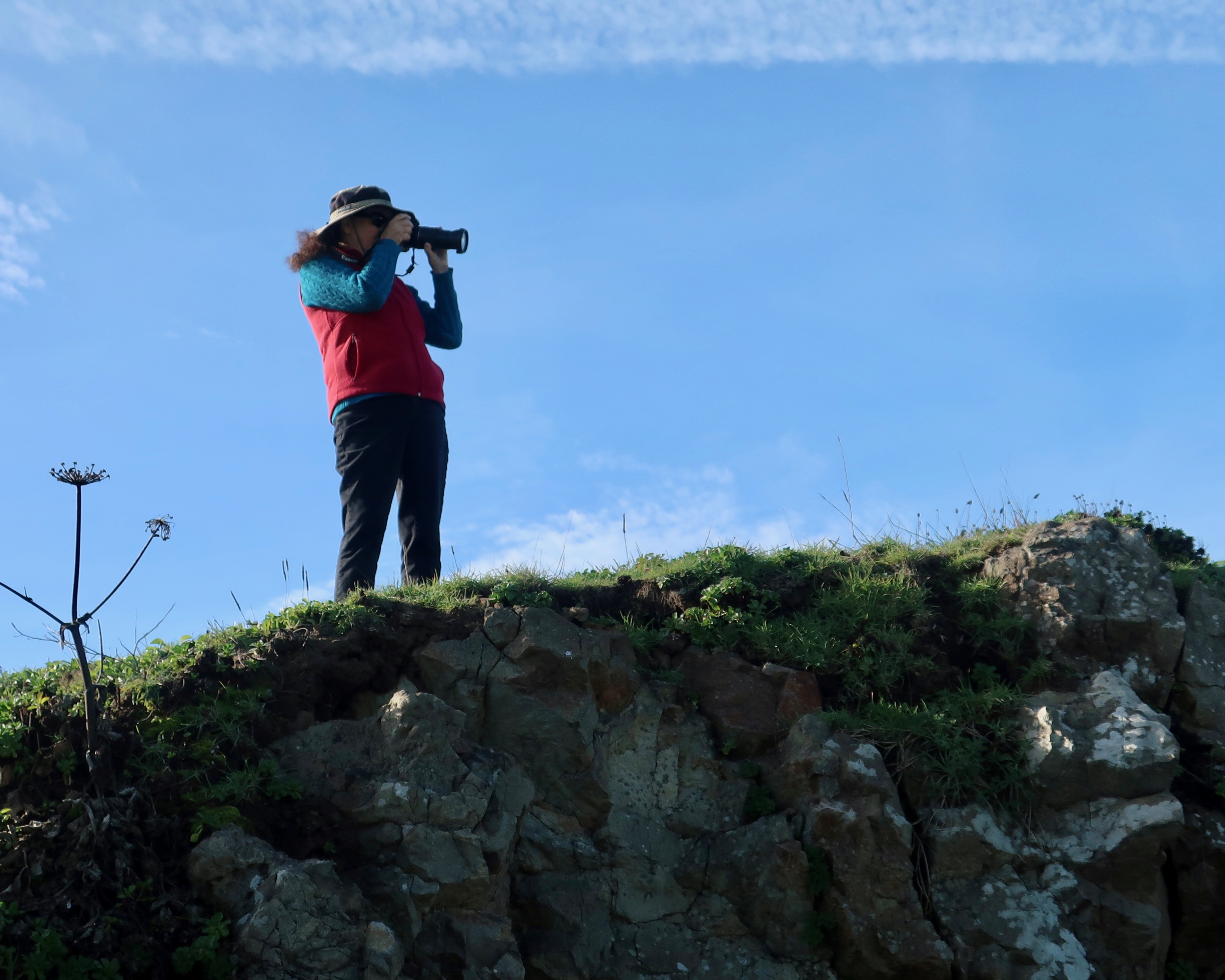
Peggy captures a photo.
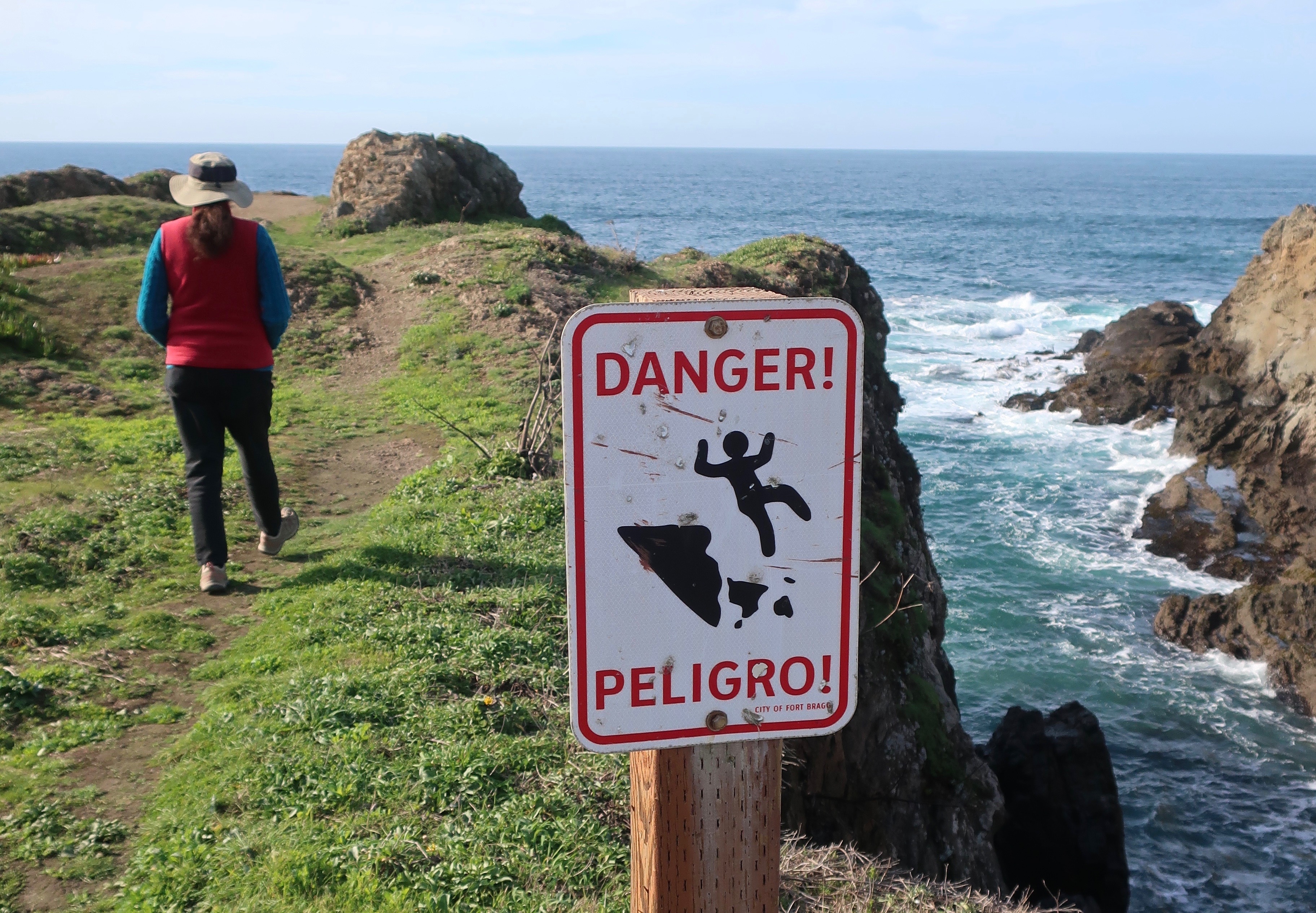
And then goes in search of another. The sign is a common one along the coast, warning of the dire consequences of getting too close to a cliff’s sheer drop. But does this woman casually strolling along seem worried?
How can one resist when the best photos are often on the edge?
Such as this. (Photo by Peggy Mekemson.)
Ice plants provide an attractive foreground for photos on the coast. But there is a problem. It is an invasive species that replaces native plants.
I was surprised to find that the ice plant had adopted fall colors, something that I had never noticed before.
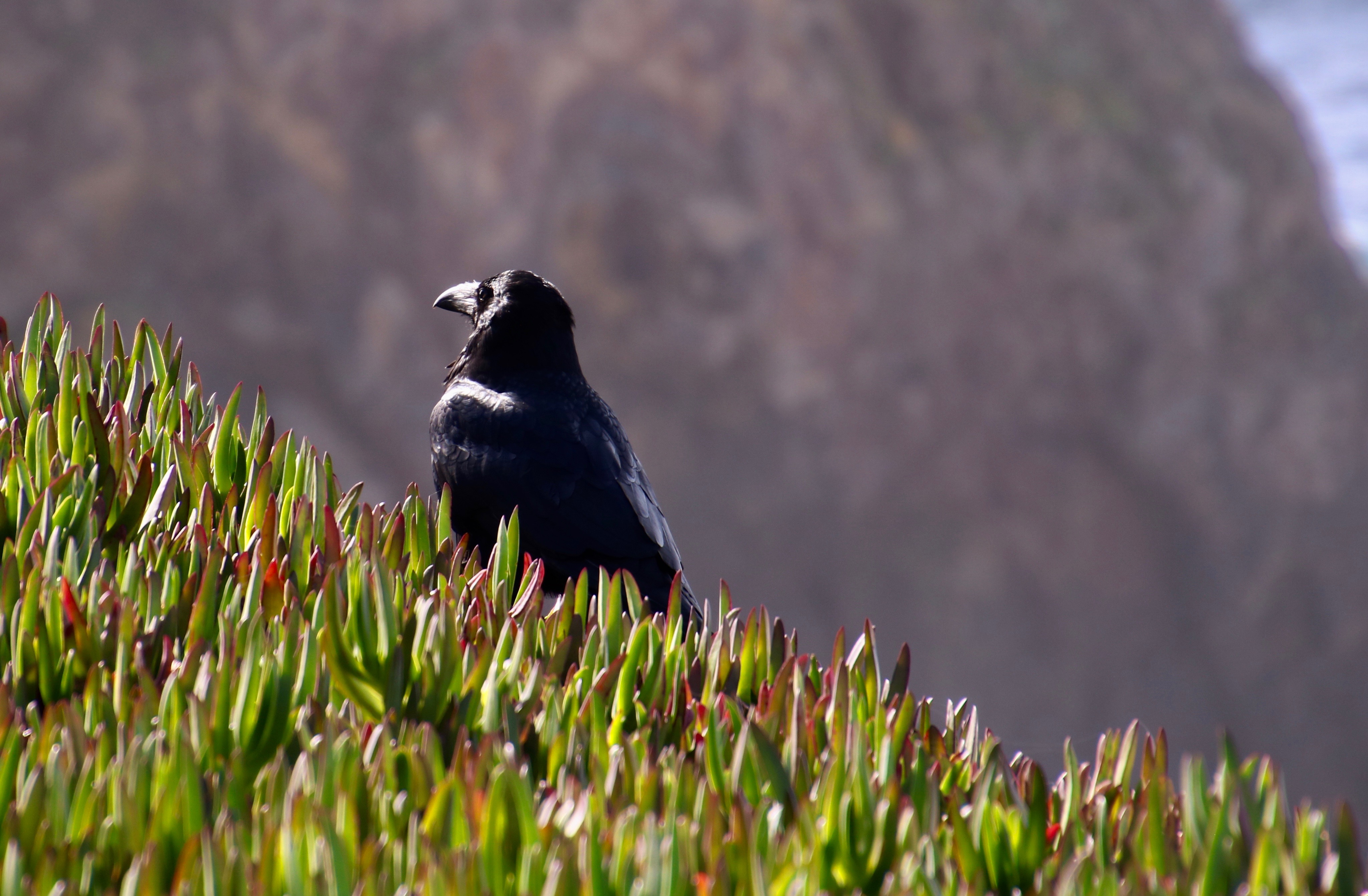
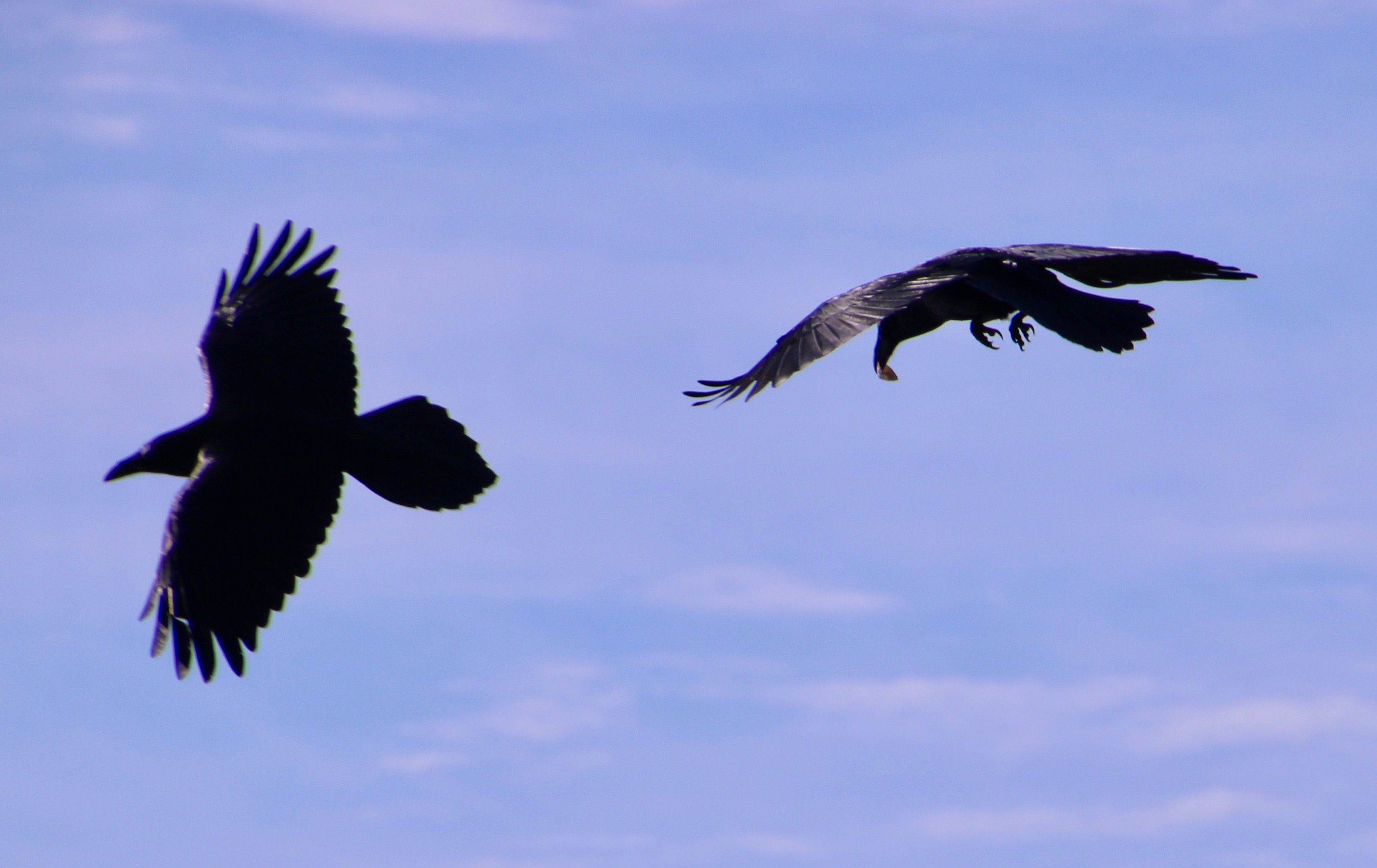
This crow took a break from its aerial display of chasing other crows to steal their food, to rest among the ice plants.
Peggy captured one carrying something delectable, like a long dead snail. (Photo by Peggy Mekemson.)
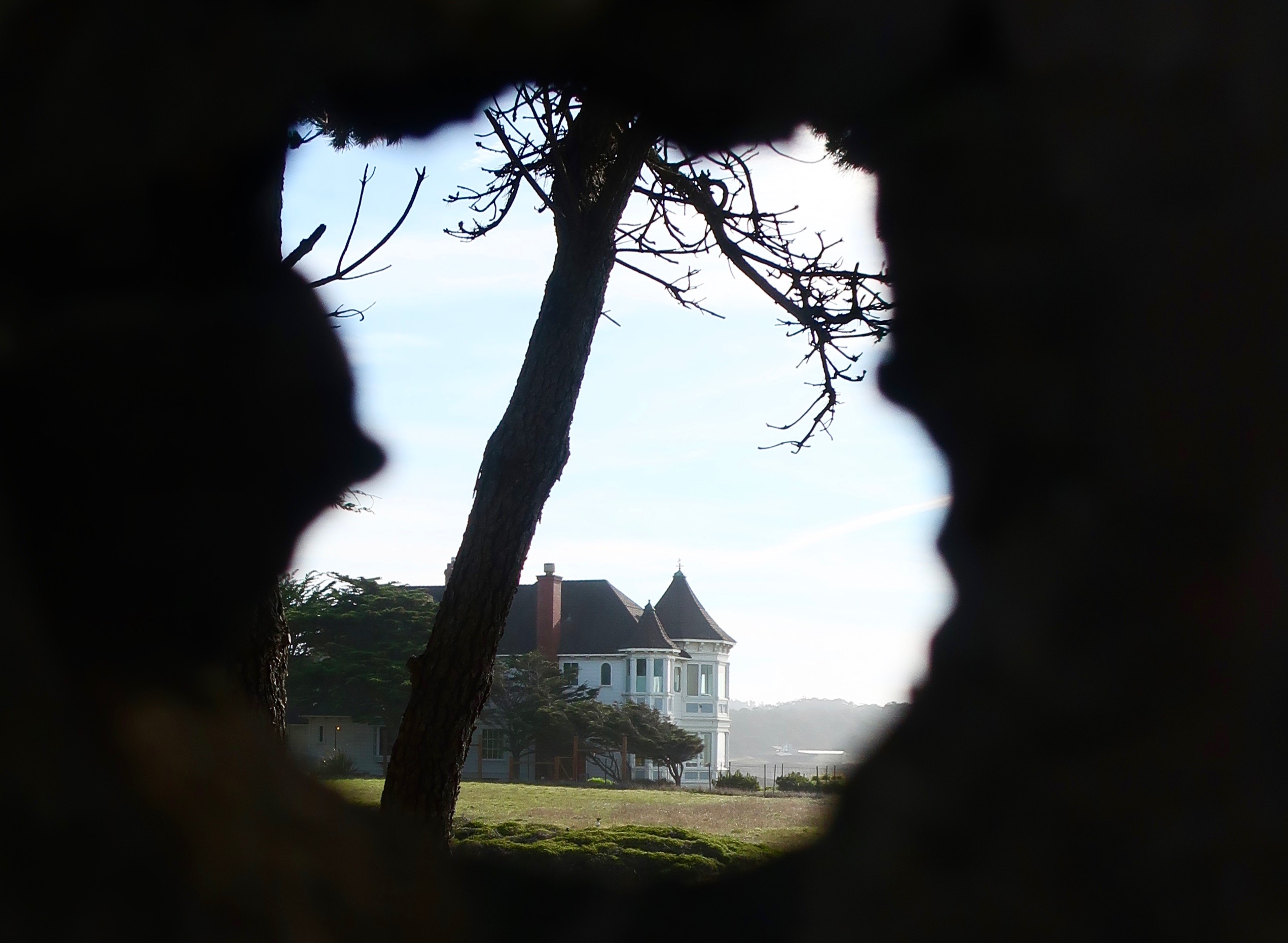
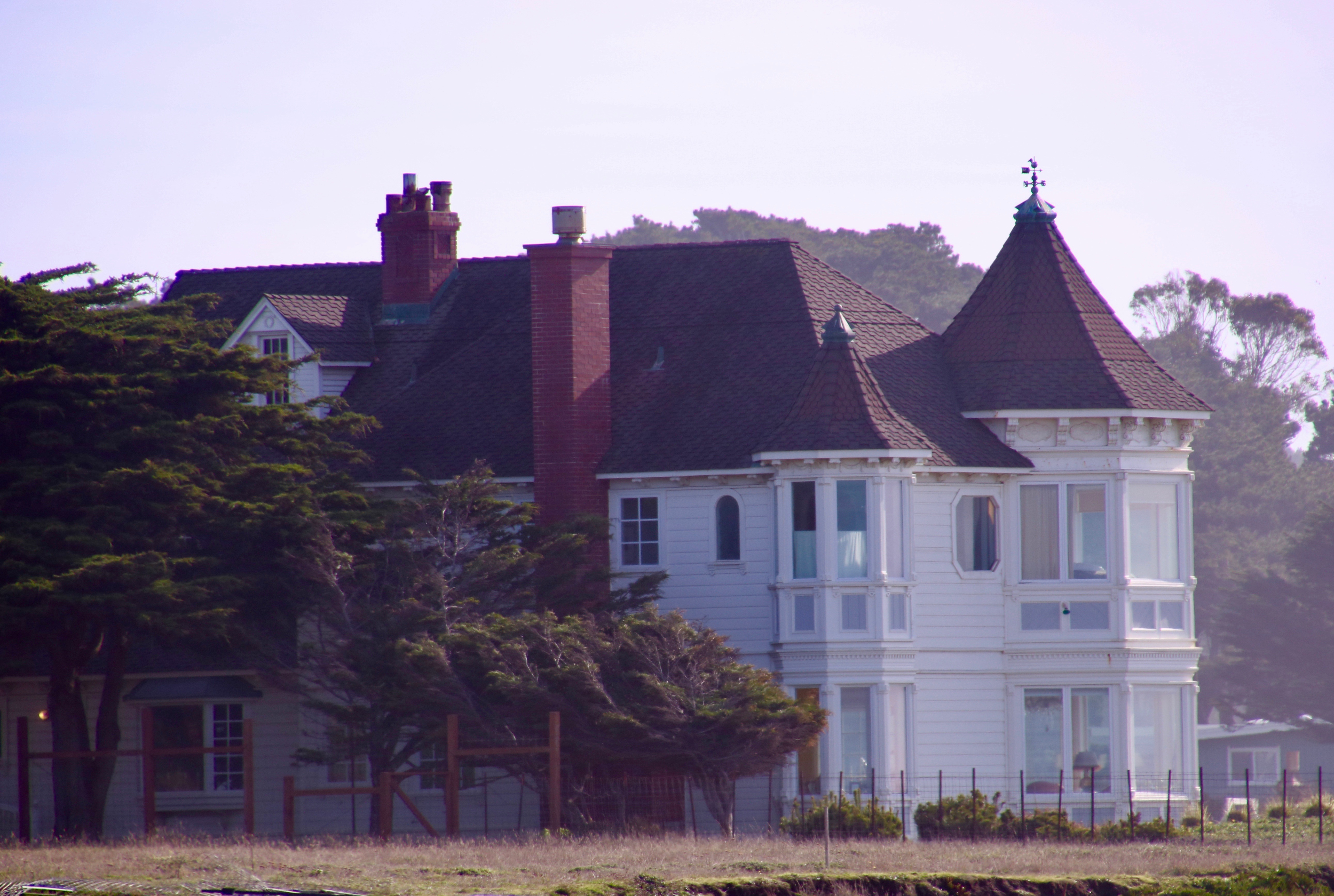
From her perch out on the point, Peggy was also able to catch a photo of this mansion. Otherwise, it was hidden behind a tall fence.
So I took a photo of it through a knothole.
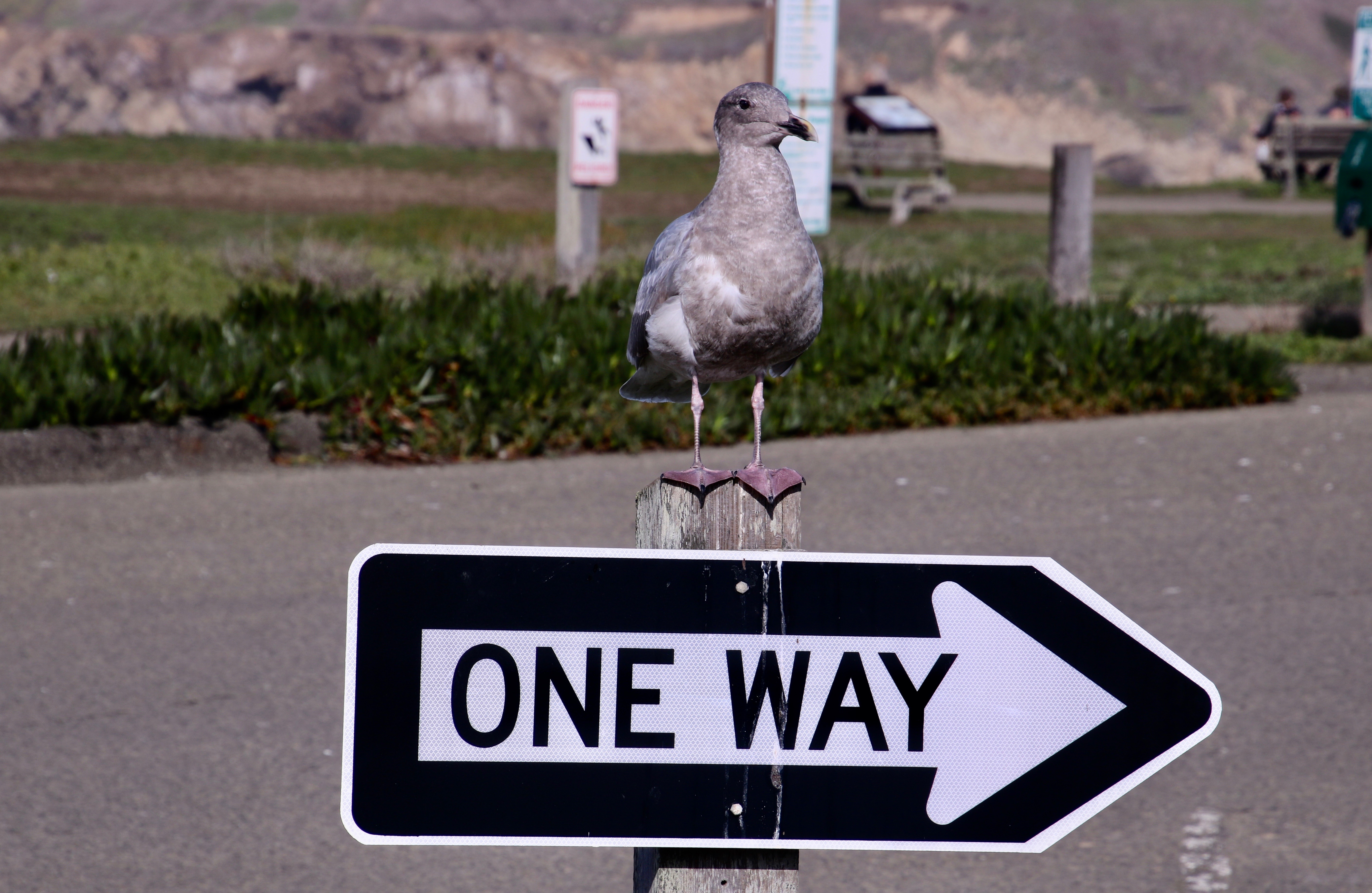
A seagull showed us the way. I liked its feet. (Photo by Peggy Mekemson.)
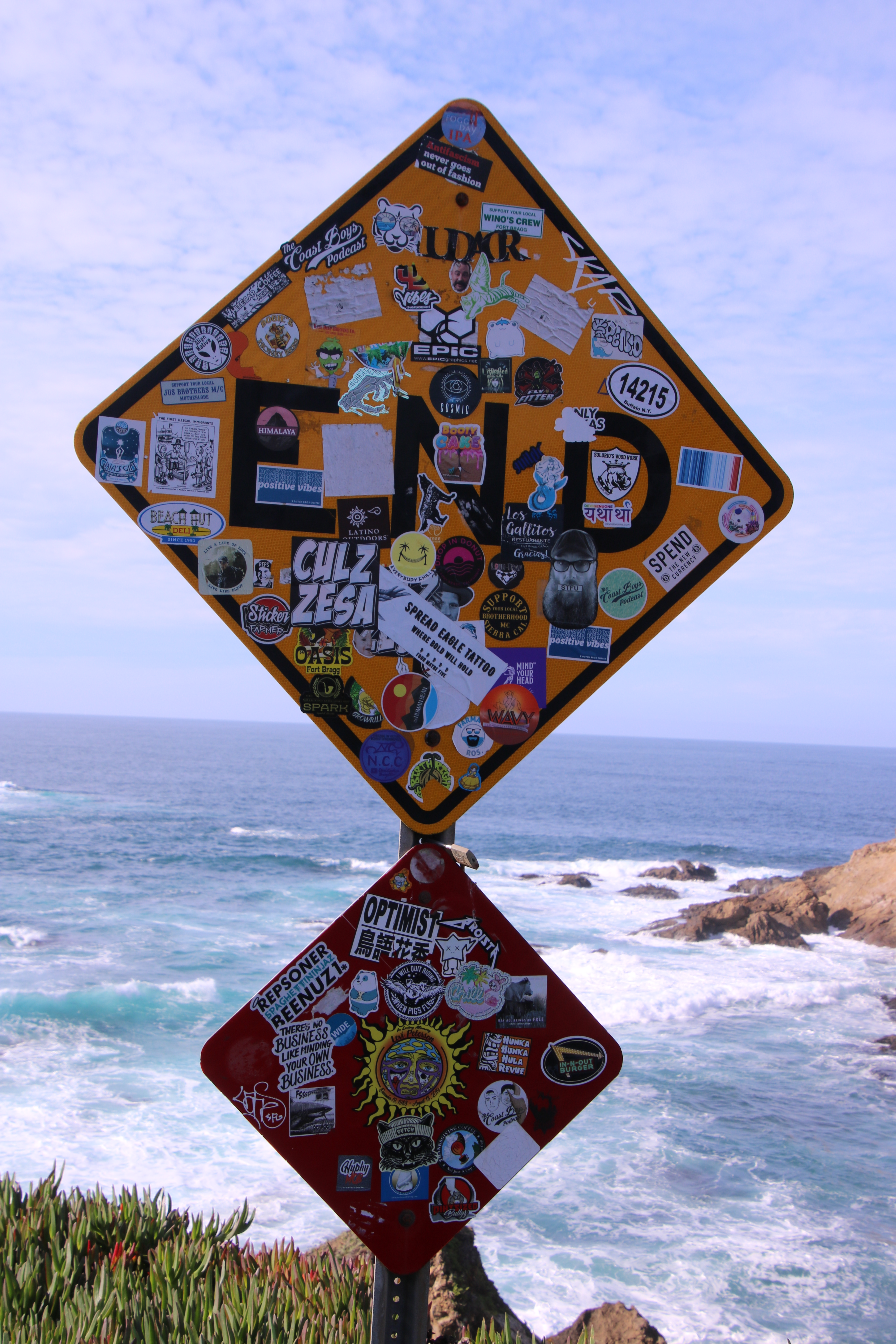
And finally we came to the end. It was time to head on to our next adventure and my next post: The Point Cabrillo Lighthouse.

The World’s Biggest Snowball…

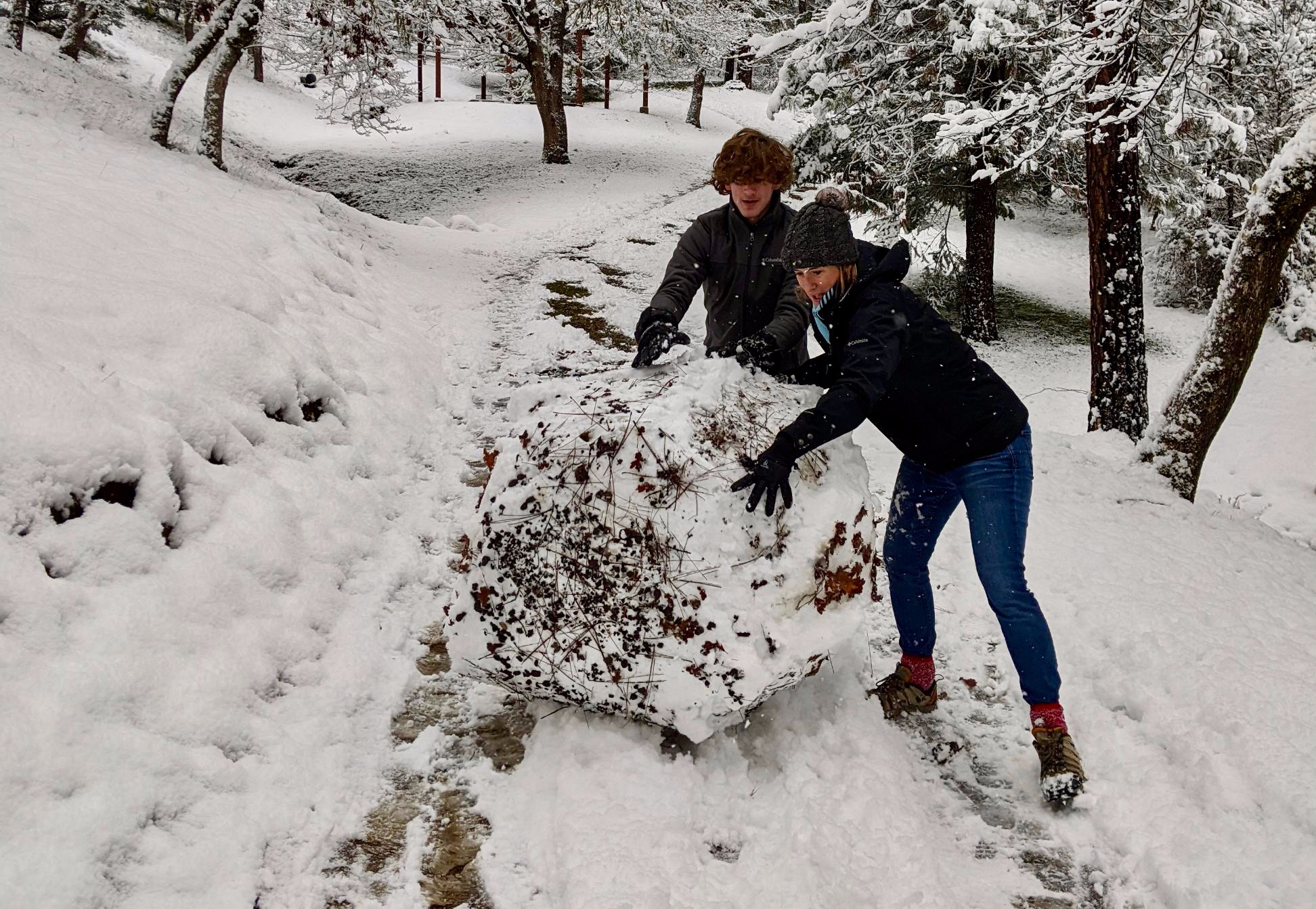
I looked up our road and saw our grandson Ethan( aided and abetted by his mom, Tasha, and Peggy) was rolling a mega snowball down the road. They were about to hit a steep part. Iorek, the truck and Serafina, the trailer were in the line of fire. (Photo by Peggy Mekemson.)

Our daughter Tasha, her husband, Clay, and their two sons, Ethan and Cody, joined us for Christmas. We met them in Medford at the airport in a rip-roaring snow storm at 9:00 p.m. on Christmas Eve. With visability occasionally dropping to a few feet and the road disappearing under the snow, it was a long drive to our home in the mountains 30 miles away. Everyone agreed I had earned the stiff shot of rum I poured for myself immediately on arrival. And the second.

The visit was all play after that. We hadn’t been home for more than 30 minutes when our neighbors Bryan, Margaret and William with 10 or so relatives showed up on our doorstep to sing Cristmas Carols. Peggy raided our cookie stash to reward them, which was a good thing since she had baked enough to last a month and Tasha was eager to bake more, a mother-daughter tradition.

Two days later, I took Bryan and his family on a snow walk over the trail I had built in the National Forest behind our house. When I got back, Peggy, Ethan and Tasha were missing. That’s when I looked up the road and saw the snowball.

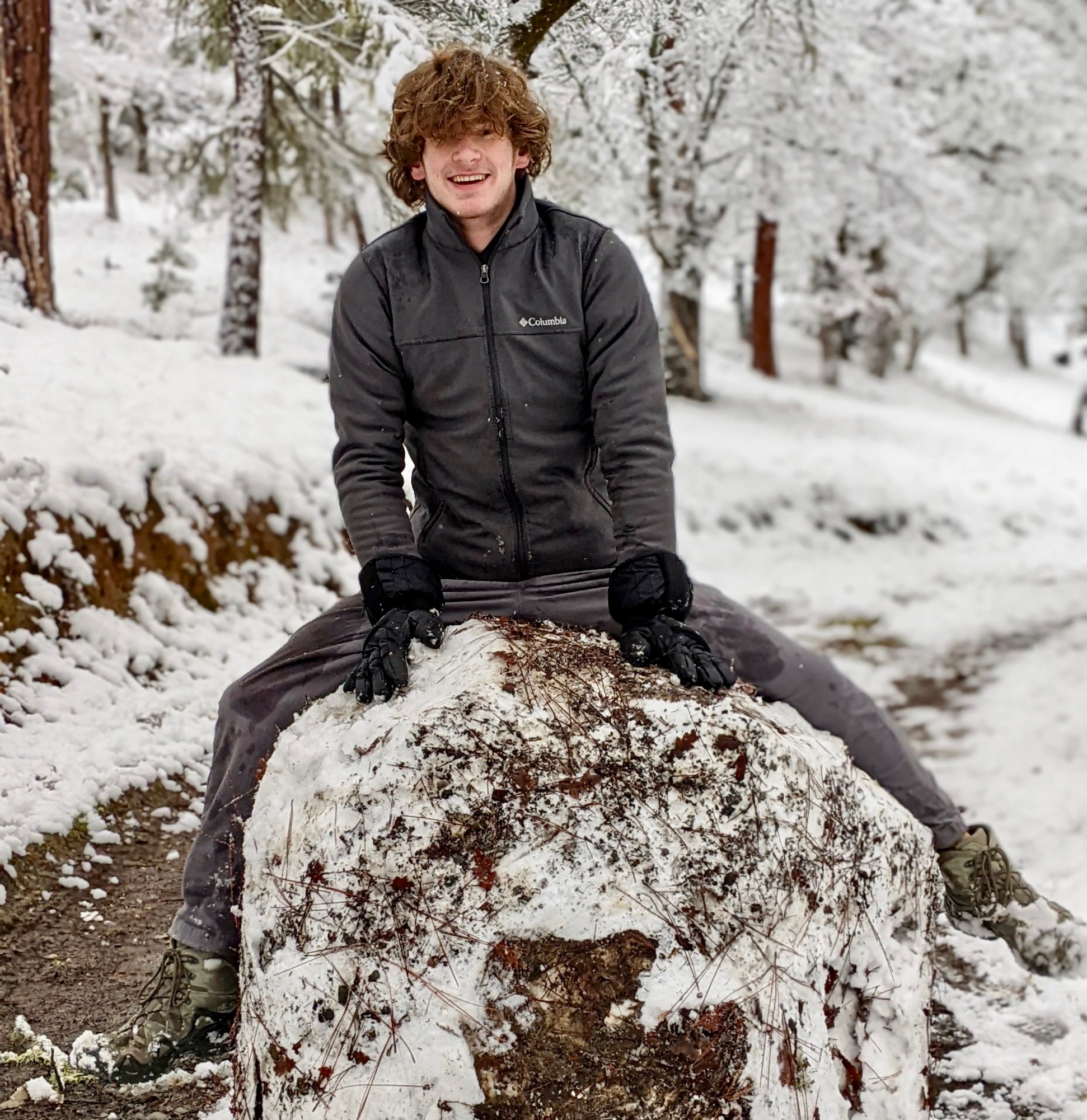
By the time I got up the hill, Ethan was sitting on top of his snow ball and Peggy had persuaded him that rolling it down into our canyon was a better idea than rolling it down the road. Serafina and Iorek breathed a huge sigh of relief. Ethan, btw, at 16 is now more than six-feet tall! (Photo by Peggy Mekemson.)

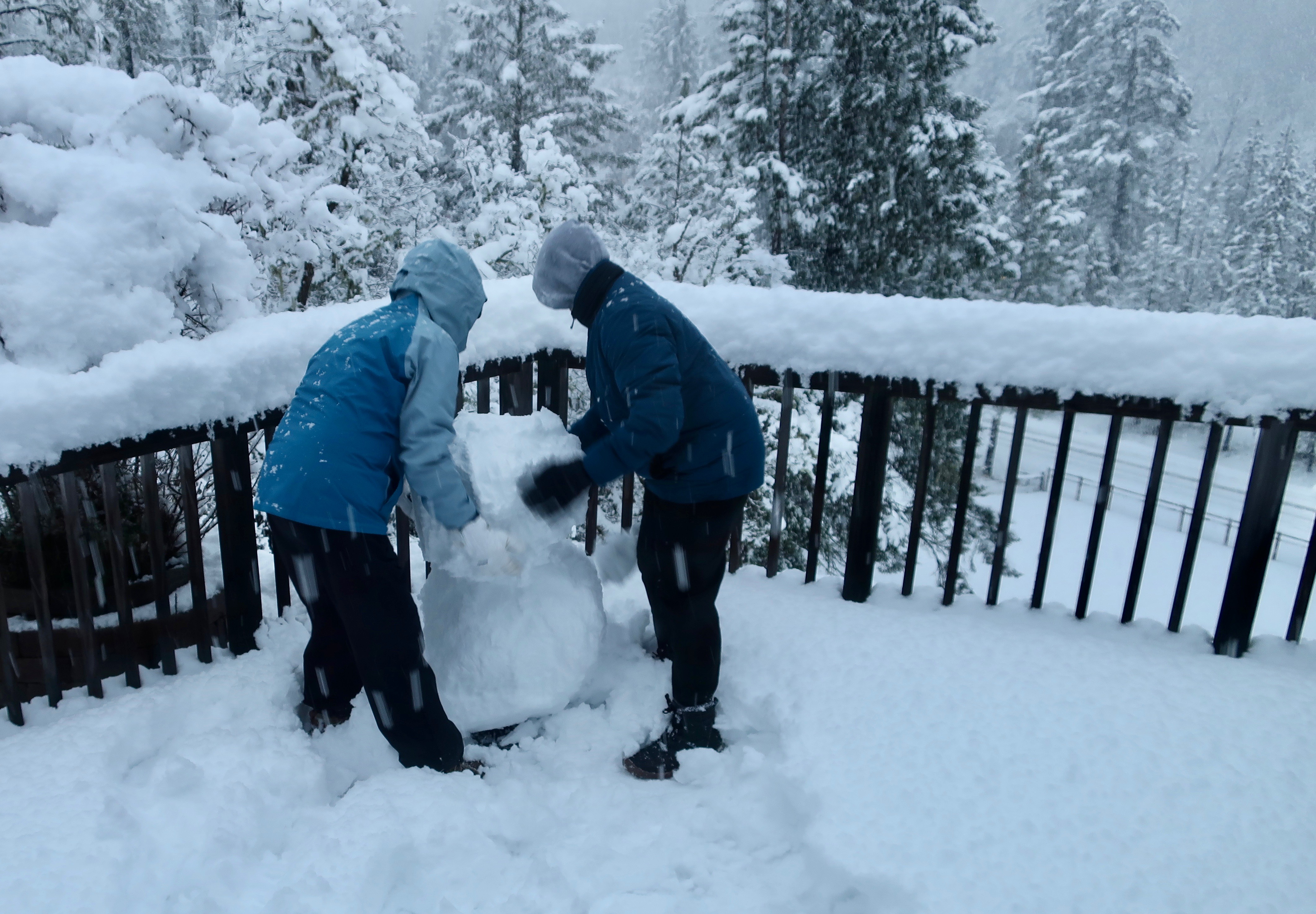
Since our other grandson, Cody, had missed out on creating the snowball, Peggy took him out on our deck to build a snowman.

Peggy and Cody working on their masterpiece.
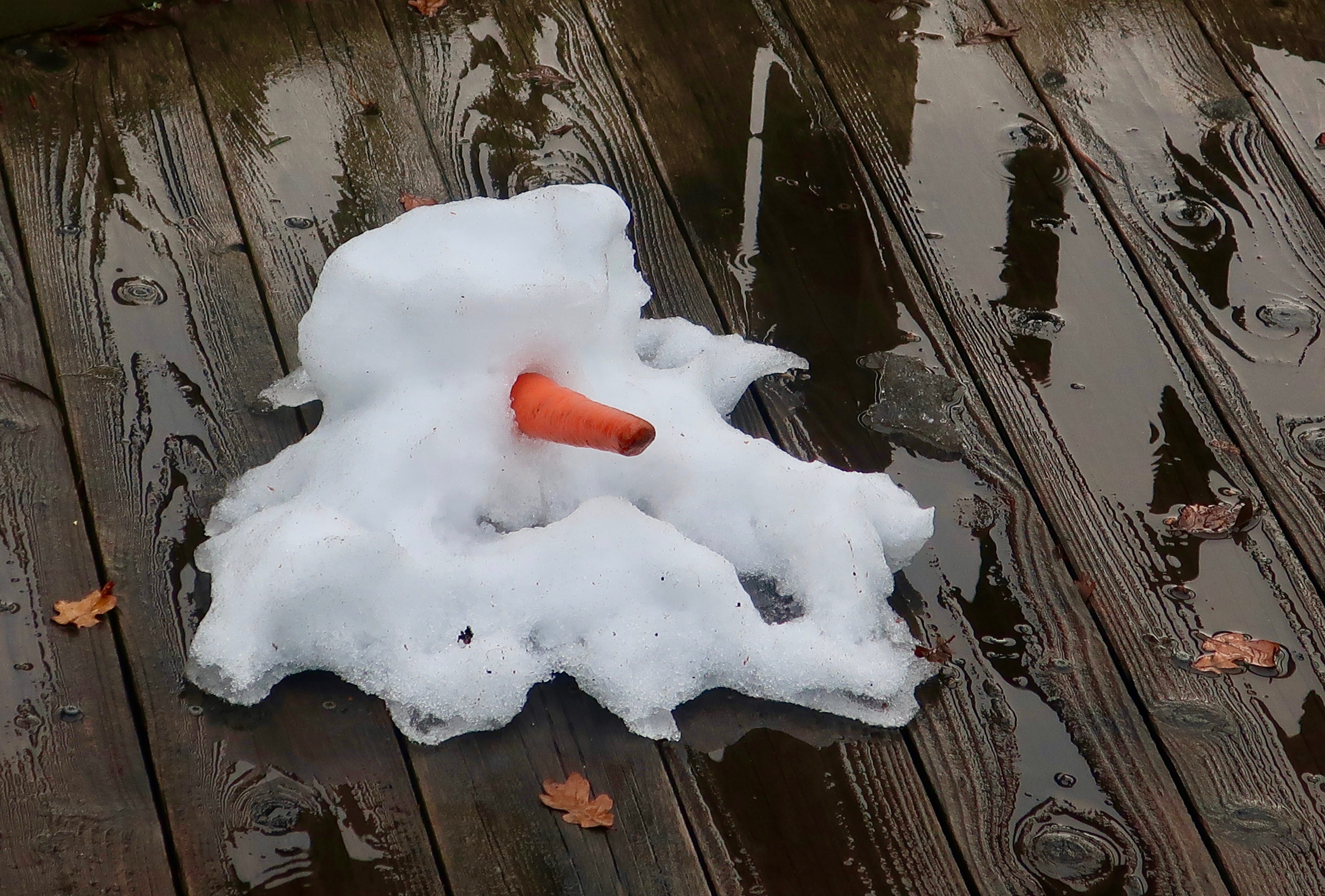
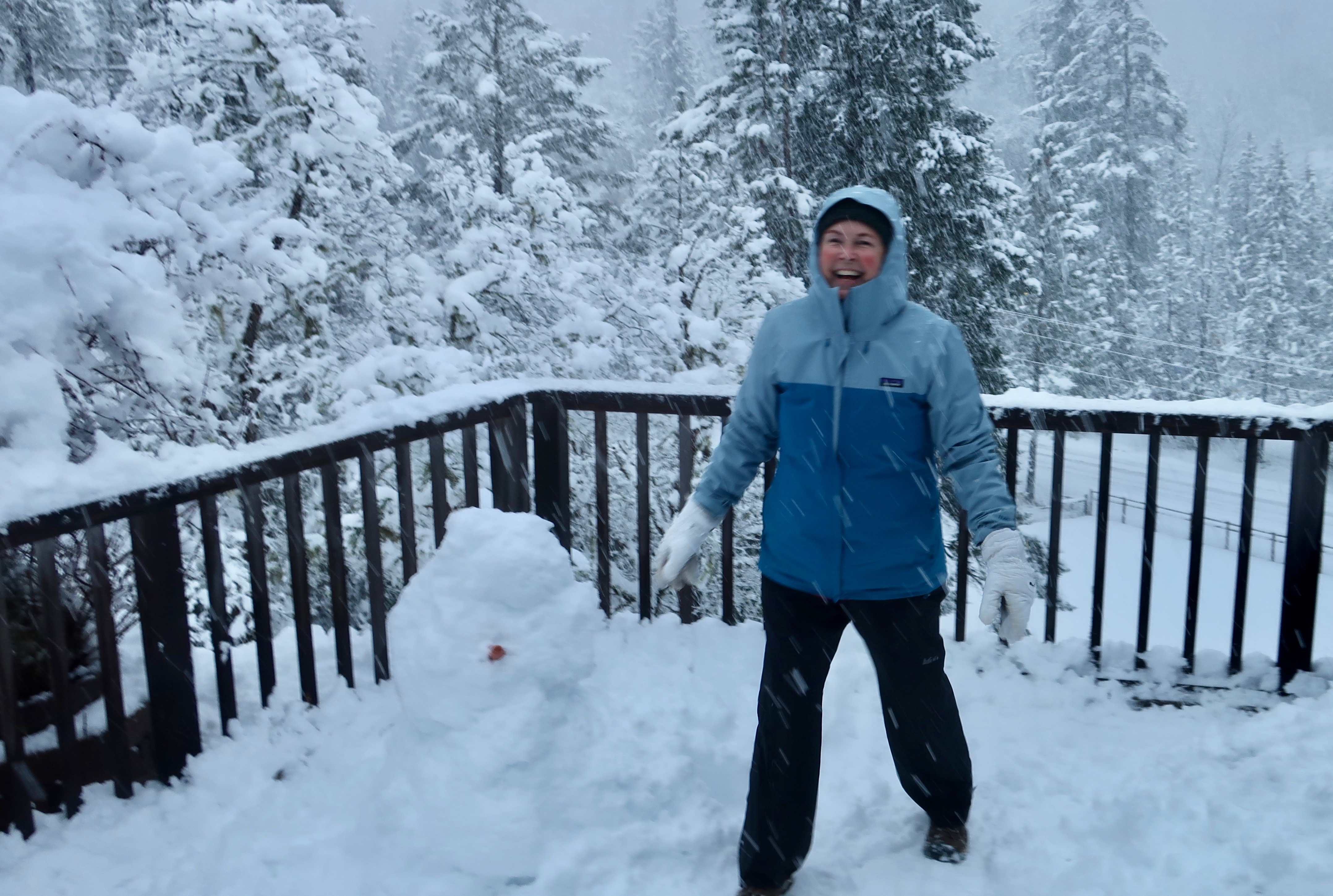
Unfortunately, the snow was really dry. Great for skiing; not so much for building a snowman. Frosty immediately fell apart. Peggy grabbed a carrot, shoved it into the remaining pile, and declared the effort a success.
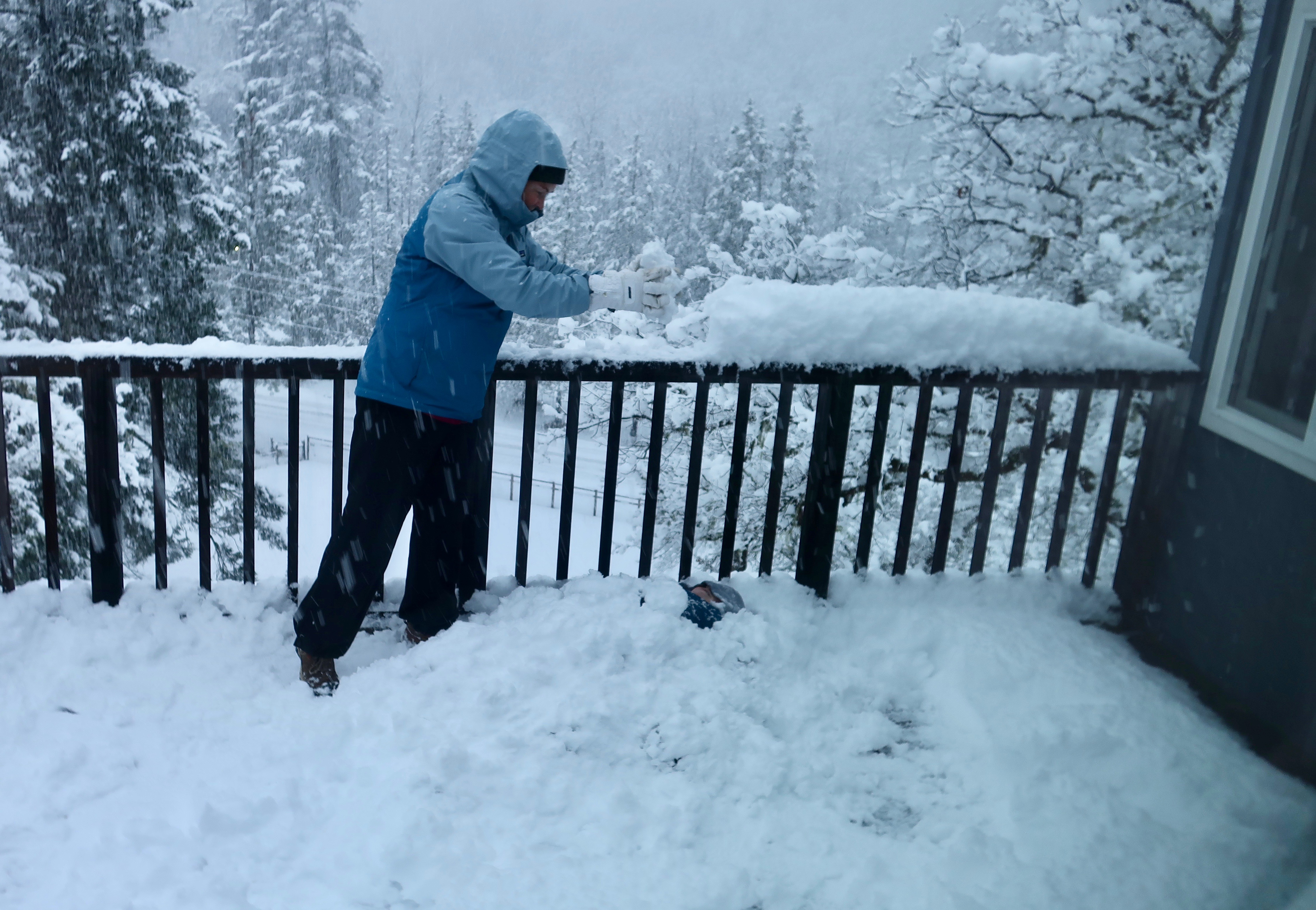
You’ve undoubtably heard of people being buried in the sand. Cody wanted to be buried in the snow. Peggy, being a good grandmother, quickly agreed. Here, she is ready to drop a large snowball on his head, finishing the job!
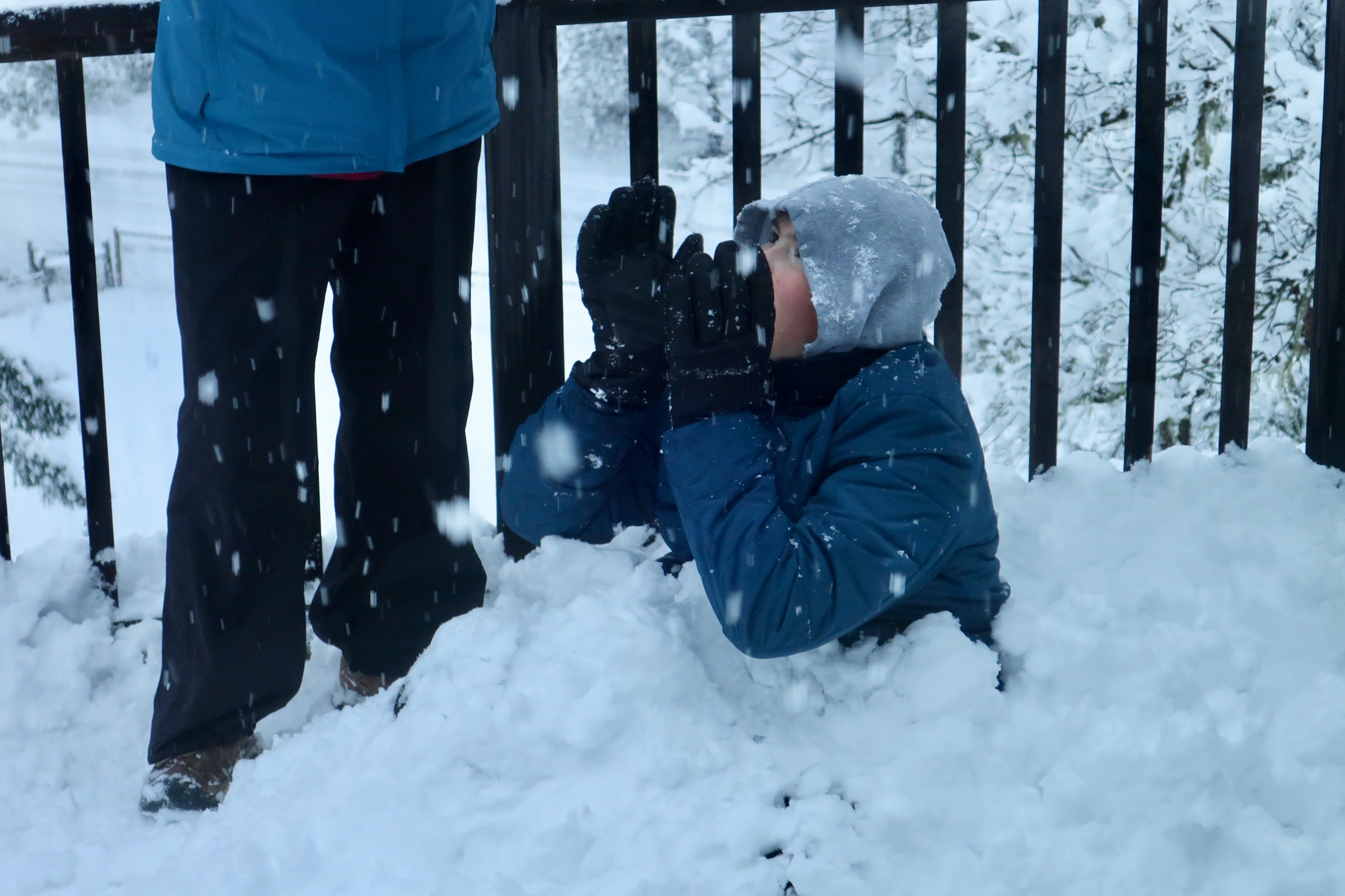
Cody had enough. He sat up and held out his hands for Peggy’s snow…
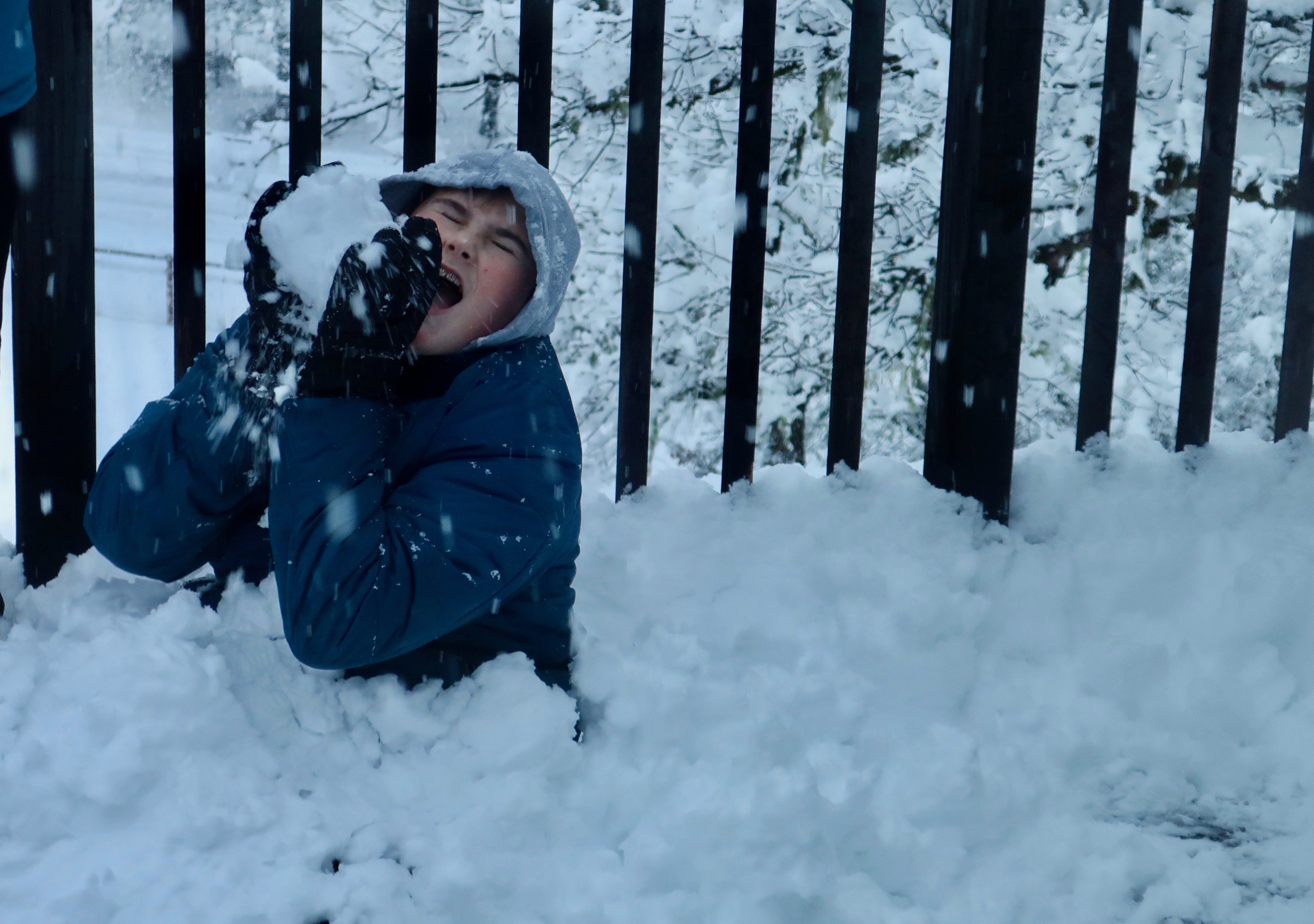
And naturally, grandma accommodated him!

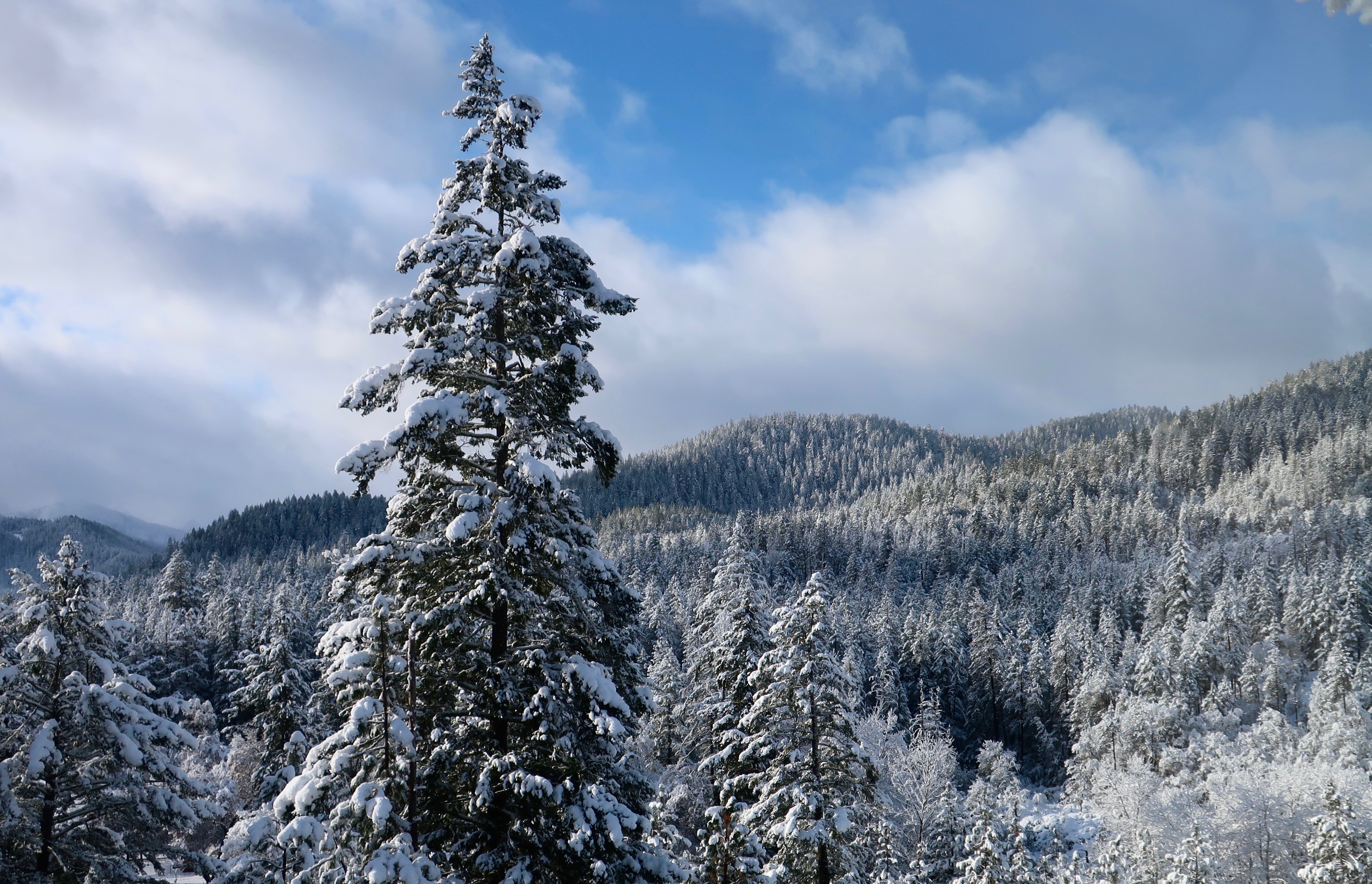
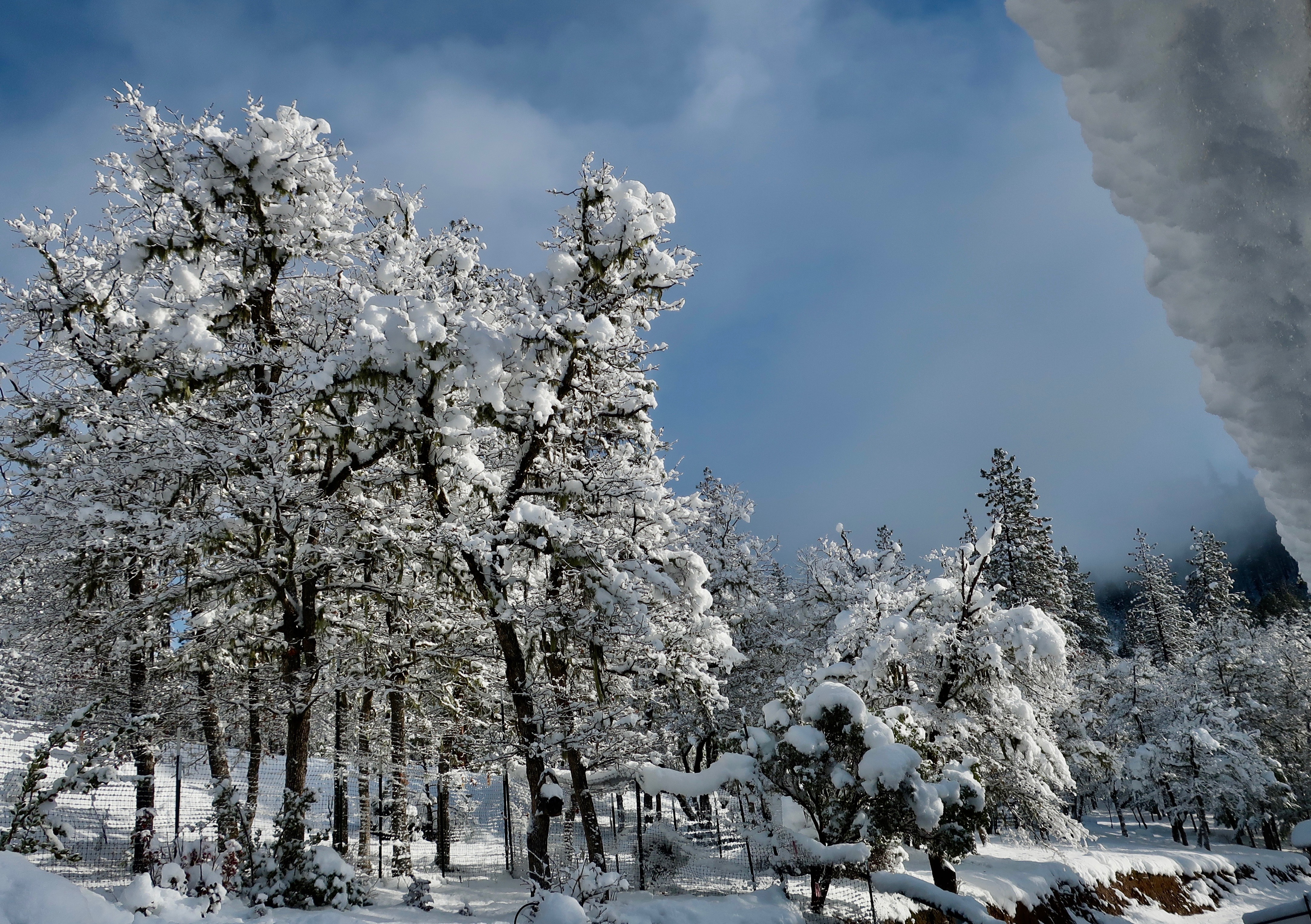
My fun was recording the action, getting in a snowball fight, and taking photos of the snow. We had over a foot by the time the storm was finished.

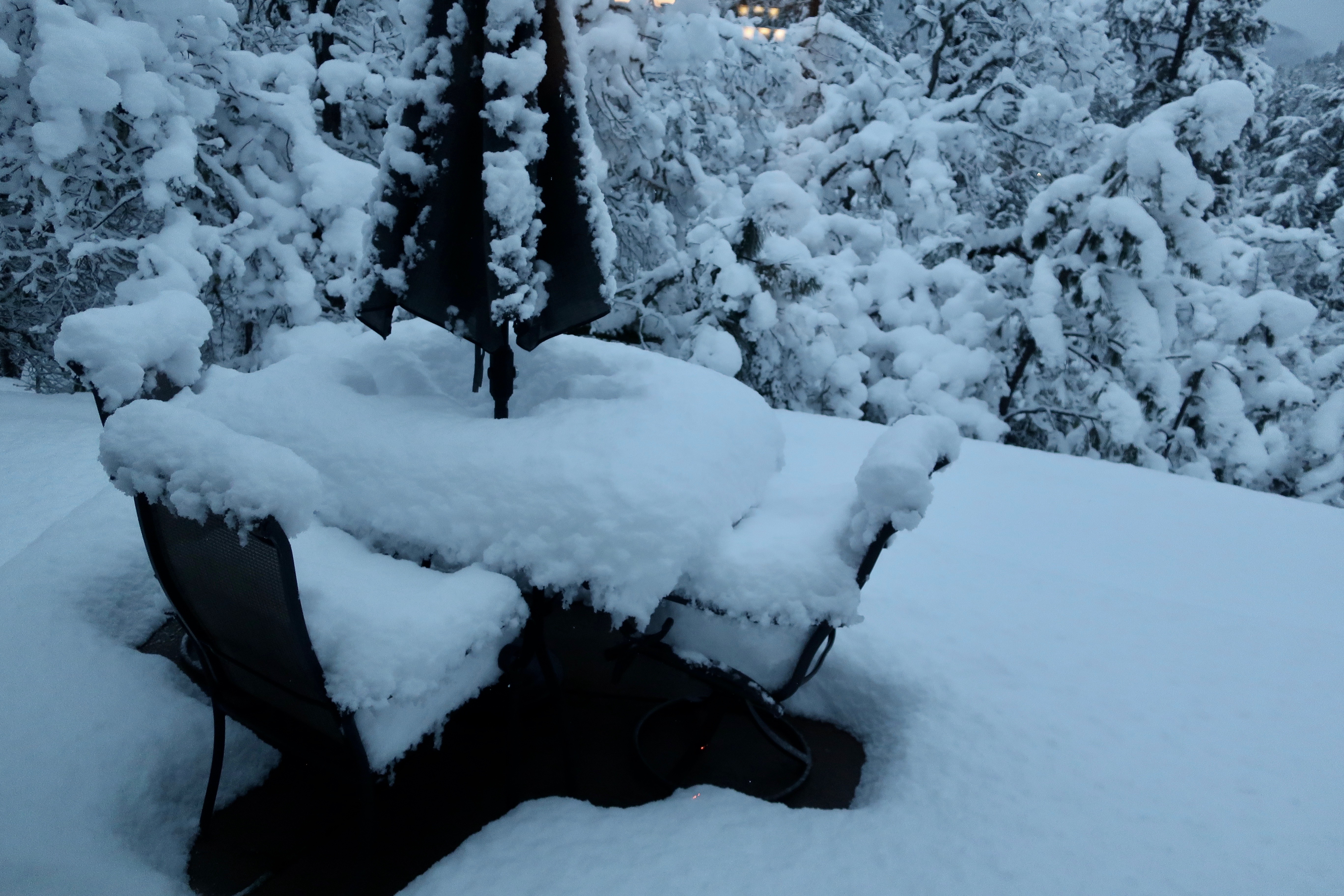
We wouldn’t be sitting out on our patio!
Our rose bush had morphed into some kind of snow monster.
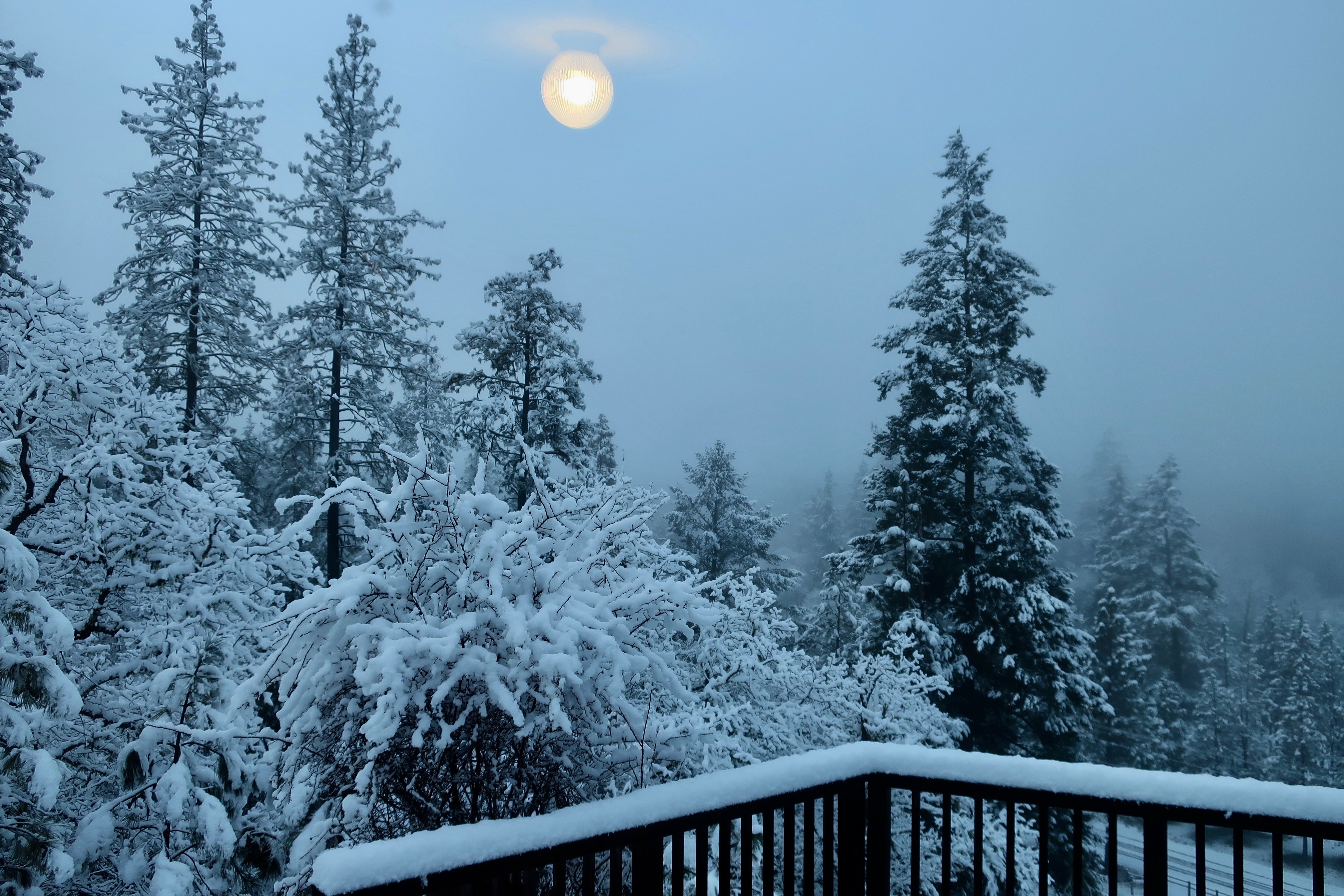
I saw this and thought “What the…?” Were we being invaded by aliens? On closer inspection I determined is was a reflection of a light from inside our house.
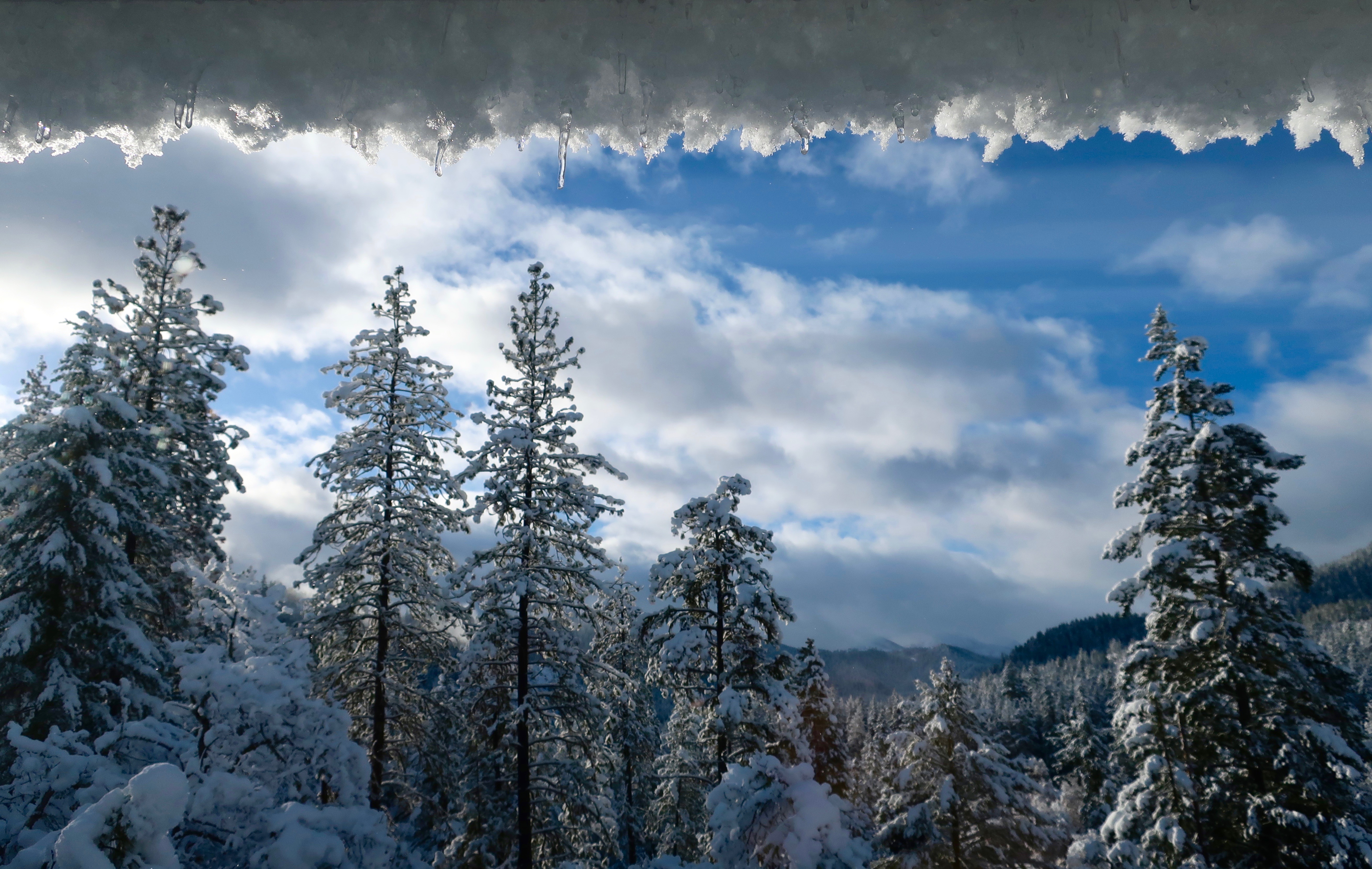
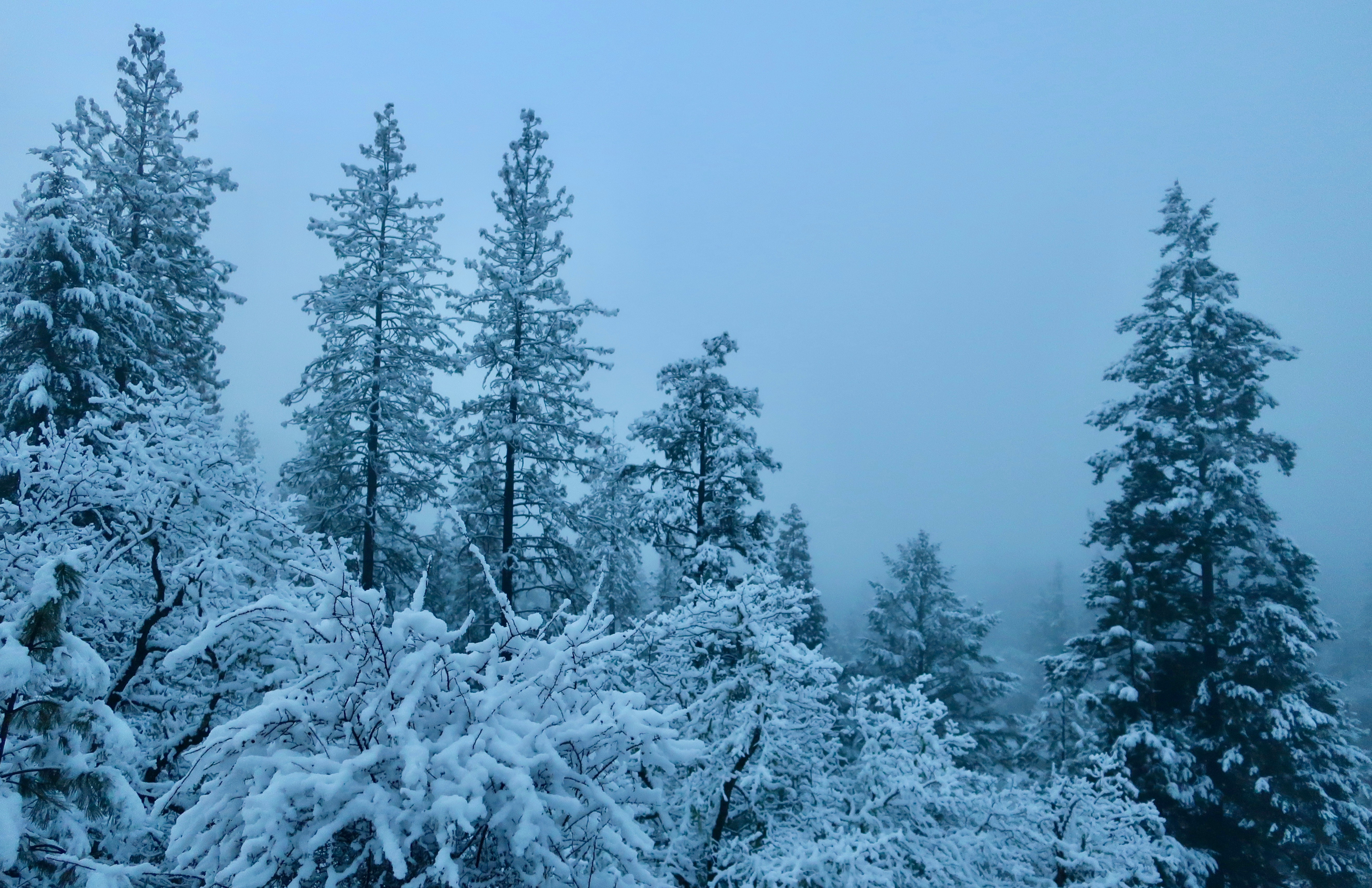
Mainly, I was awed by the beauty of the snow on the trees. I framed this with snow coming off our roof.
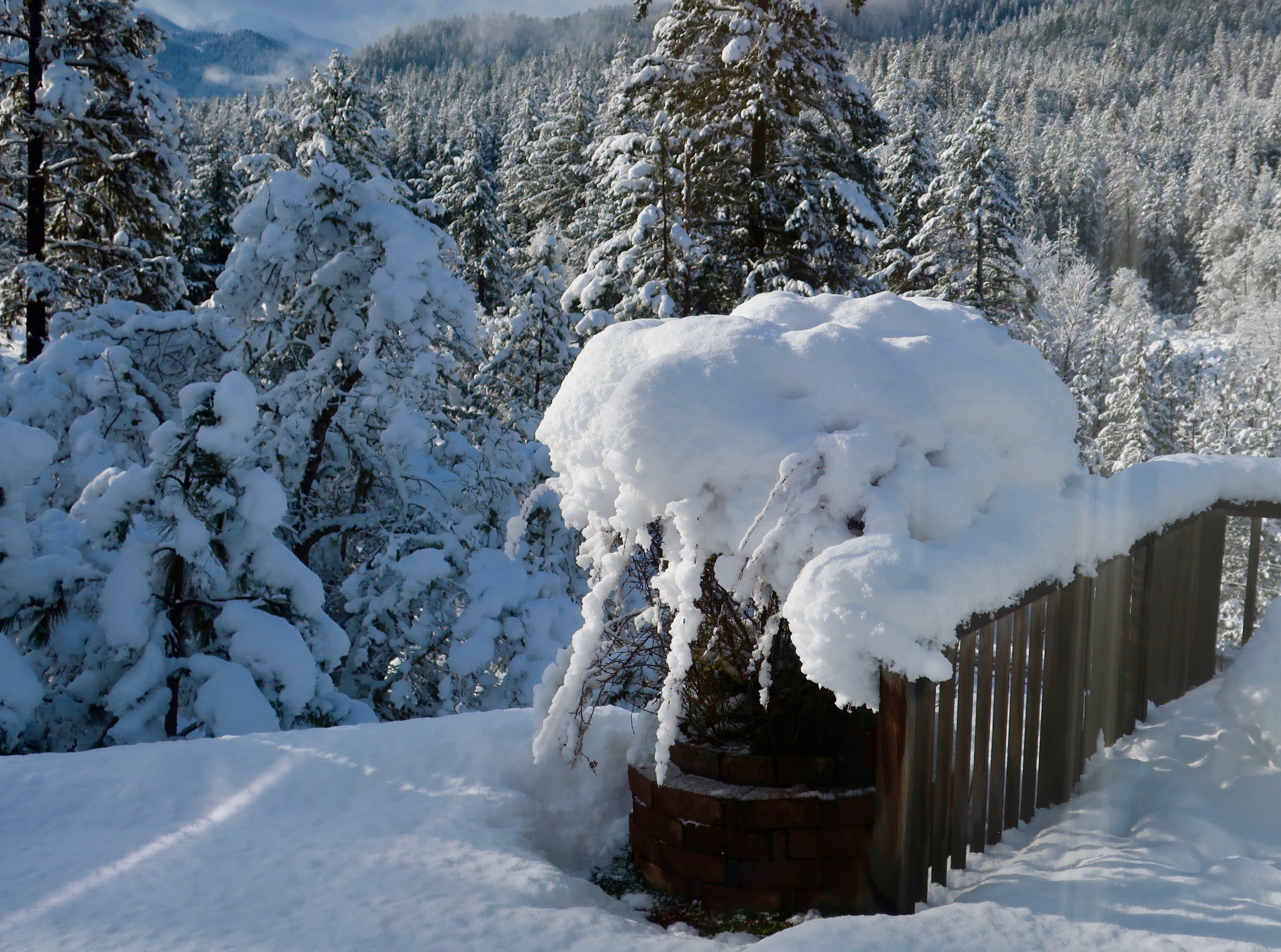
My favorite tree, a Douglas fir, and the forest beyond it.
A view from the other side of our house.
As you can see, the snow has now melted, which is just how we like it to behave. A few days of beauty and play, and then on its way! (Photo by Peggy Mekemson.)
I’ll conclude with this. It is the Ghost of Xmas Past! Snowman style.

Escapism: Or Is the Word— Balance… Happy New Year

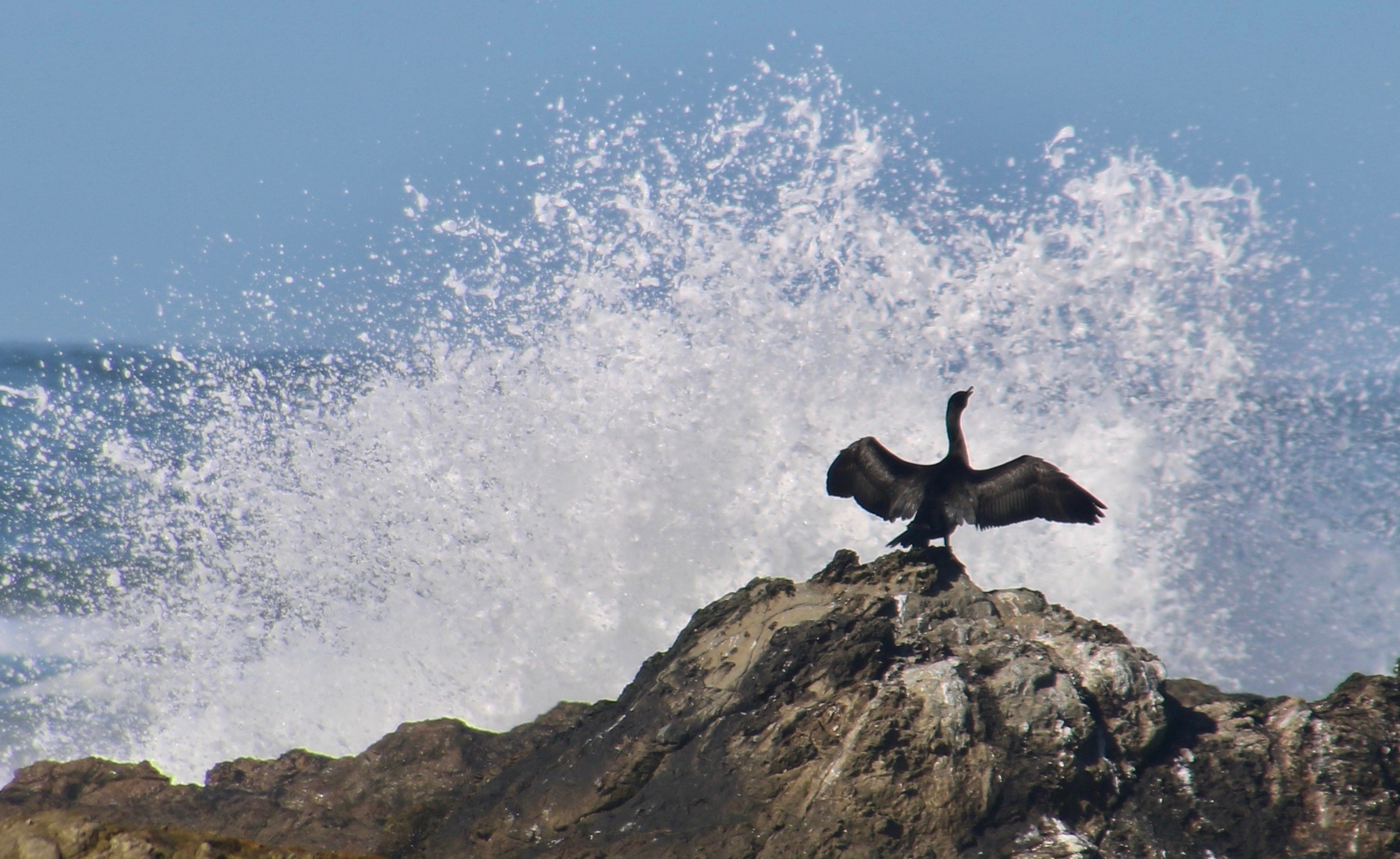
This cormorant at MacKerricher State Park near Fort Bragg, California seems to be saying, “Bring it on! Show me what you’ve got!” It’s a New Year’s type of message. (Photo by Peggy Mekemson.)

When Peggy and I were seeking an escape in 2021, we headed for the Oregon and Northern California Coast. It seemed like a reasonable answer to what was happening in the world. There is something calming about the ocean, a balance if you will— a reminder of the past, a welcome to the present, and a glimpse of the future. The waves continue to roll in. Worries tend to fade away under such circumstances and the spirit is renewed. Bring it on. Show us what you’ve got.

With this in mind, I decided to dedicate my first post of 2022 to the beauty and the wildness of the ocean using photos that Peggy and I took in 2021.

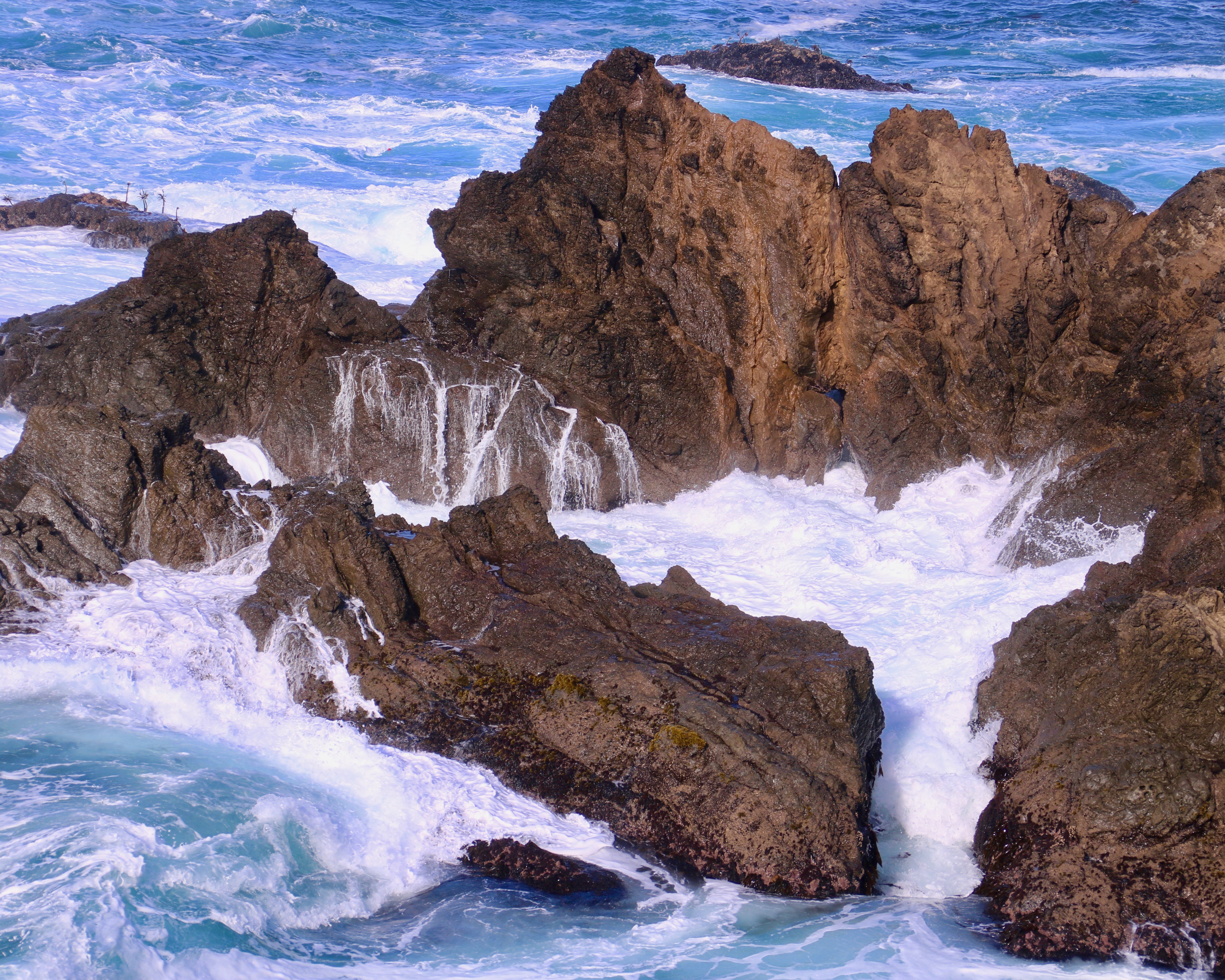
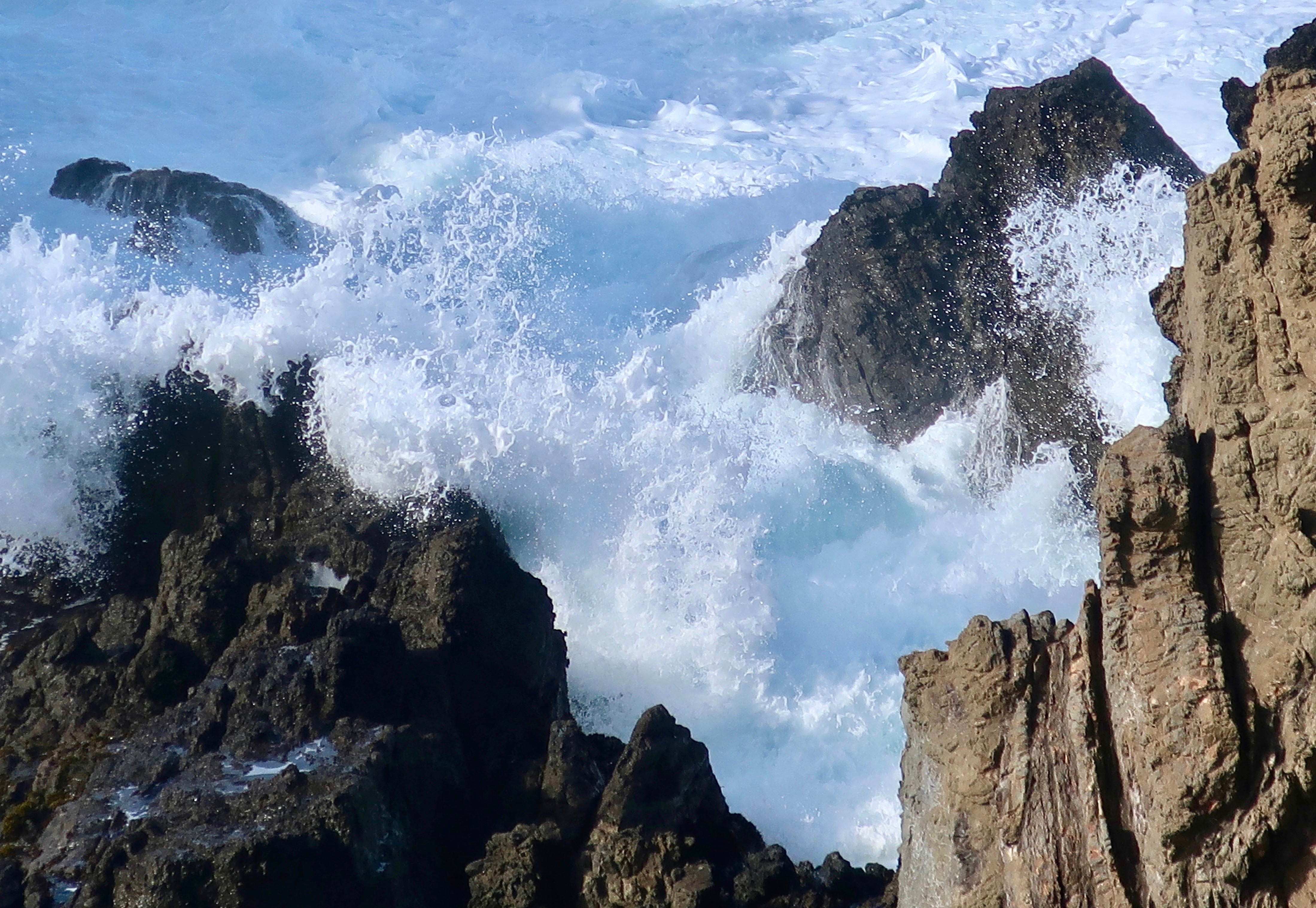
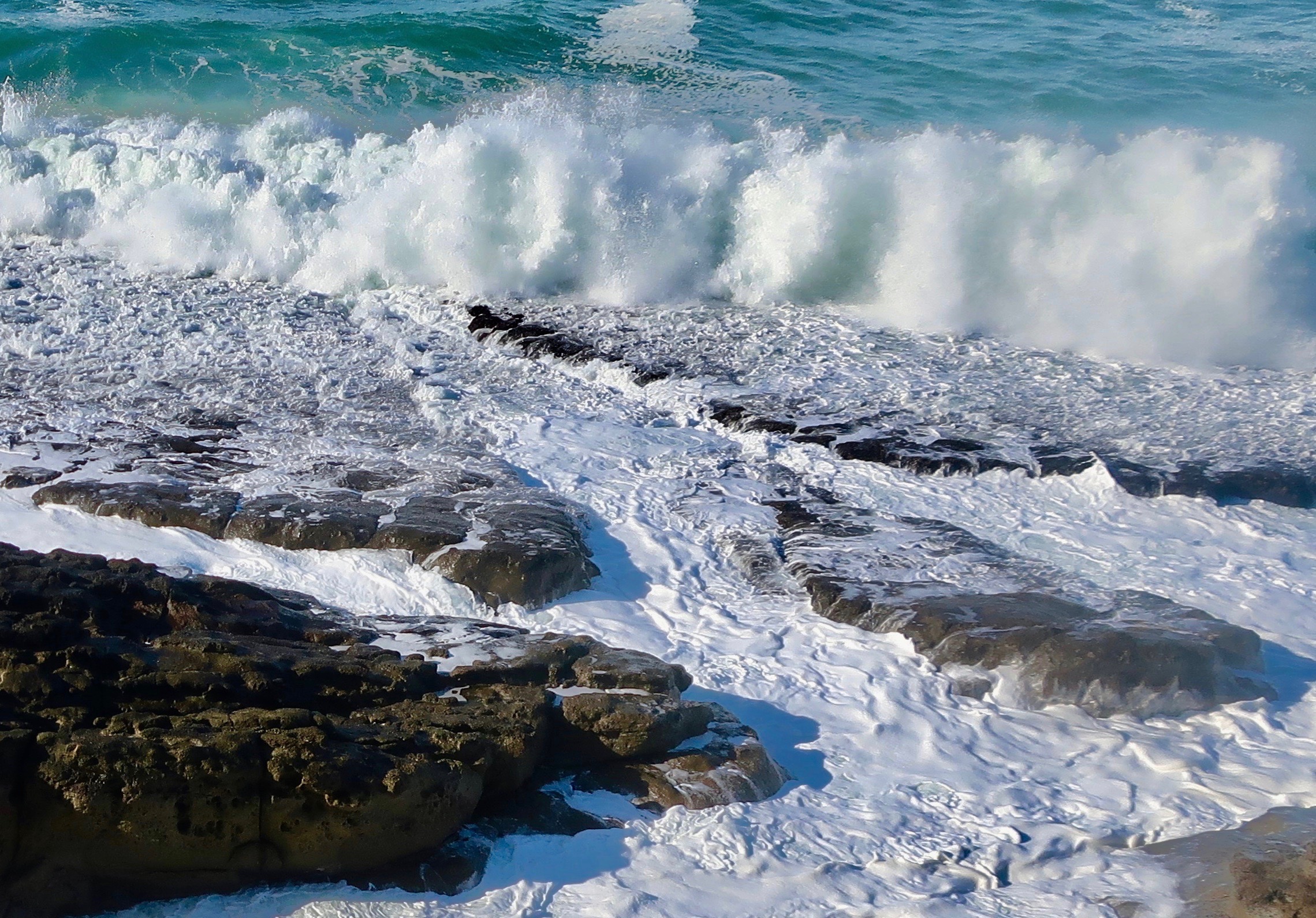
The sheer power of the ocean can make you stop, and say “ahhh.”

The ocean is much more than crashing waves, however. There is incredible beauty…

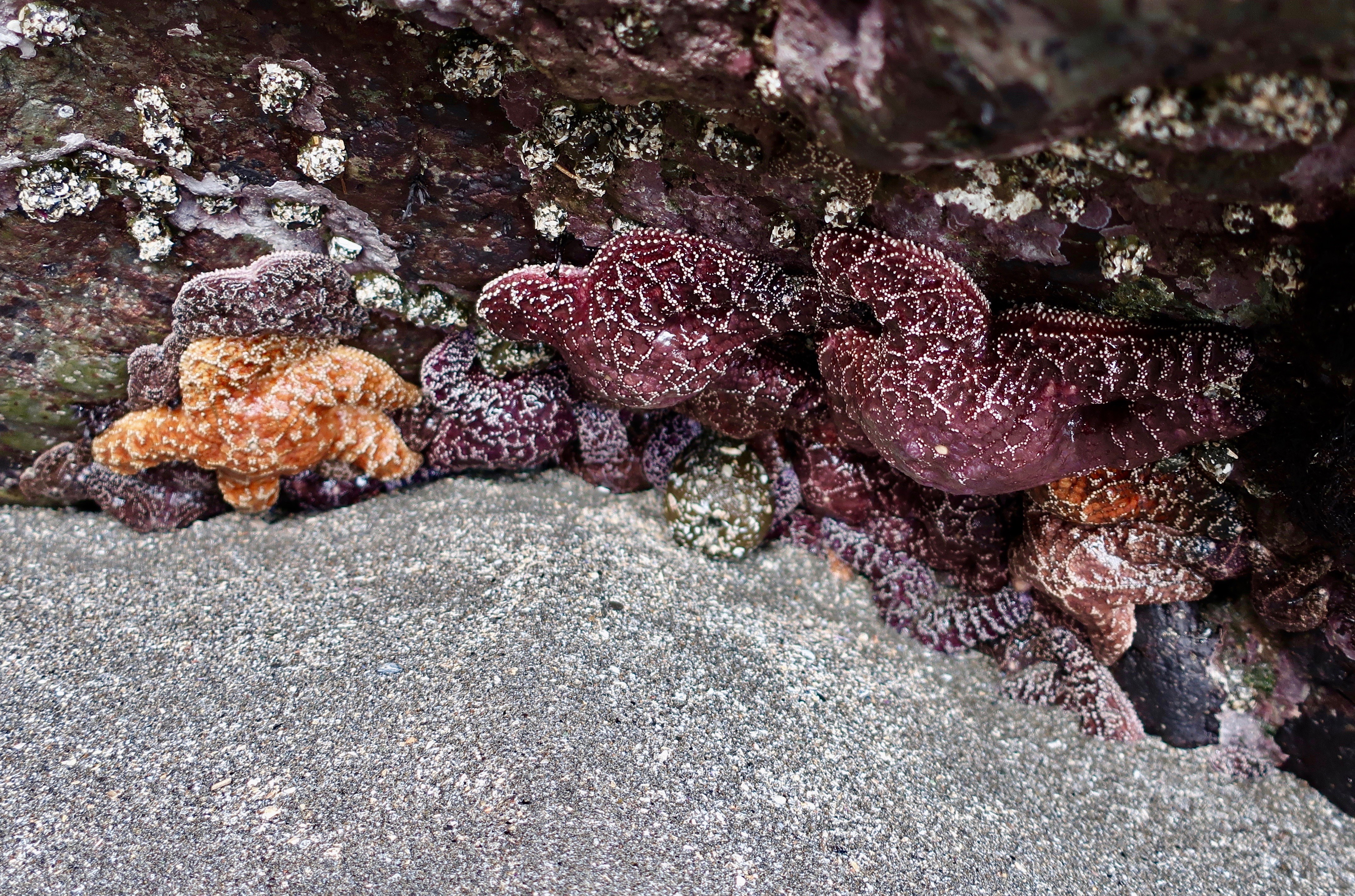
And an abundance of plants and animals uniquely adapted to life on and in the ocean.

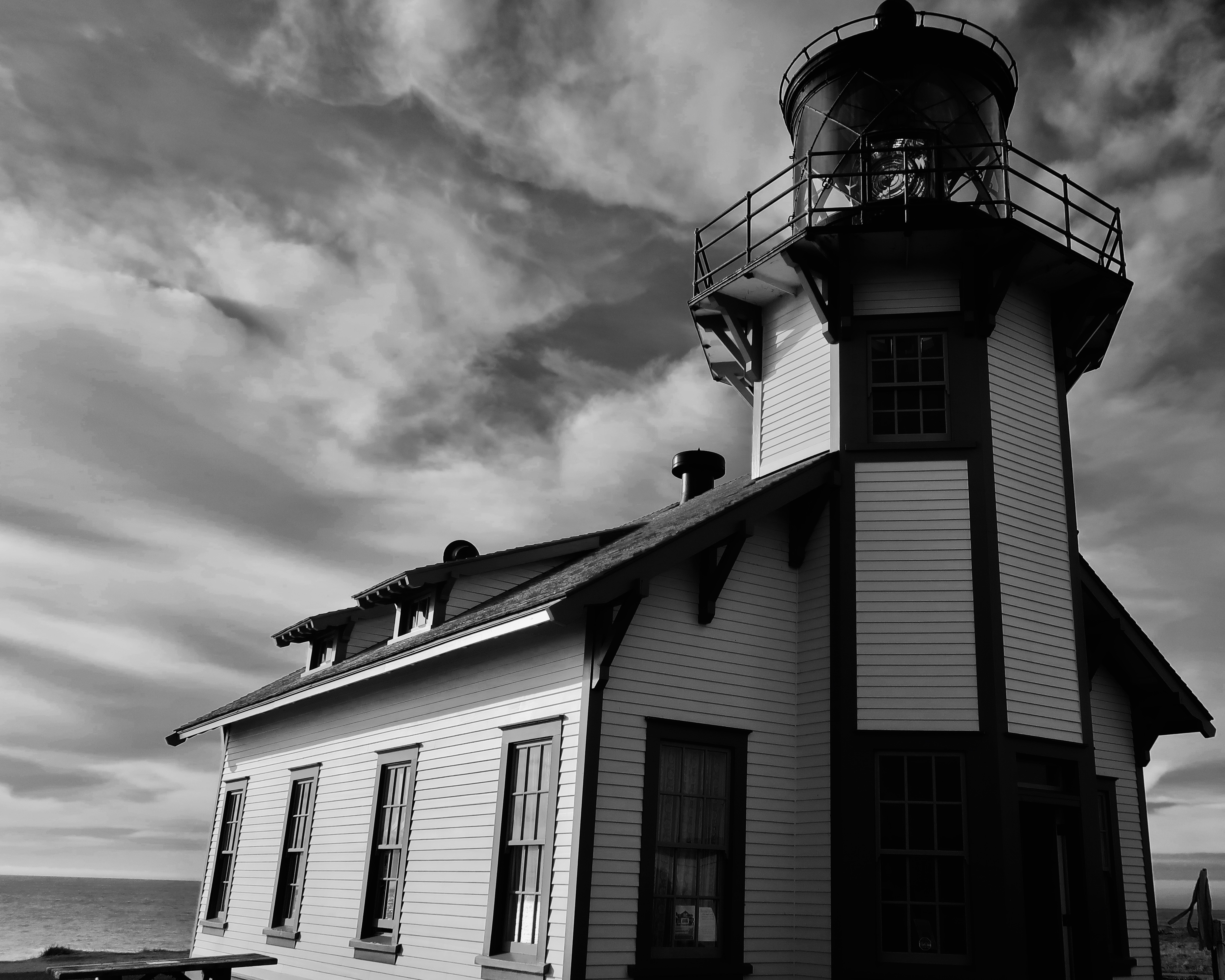
I’ll conclude this first day of 2022 with a photo of the Cabrillo Point Light House, which has a beauty of its own. I rendered the lighthouse in black and white to reflect historical photos found in the lighthouse museum.

HAPPY NEW YEAR— Curt and Peggy
T’is the Season… for Glitches :)

With Christmas a mere three days away, it’s time for my annual Christmas post. (Shamelessly borrowed from the weird Christmas cards and letters I create for family and friends— plus past posts.)

Have you heard? There are some glitches in the Christmas present supply chain this year!

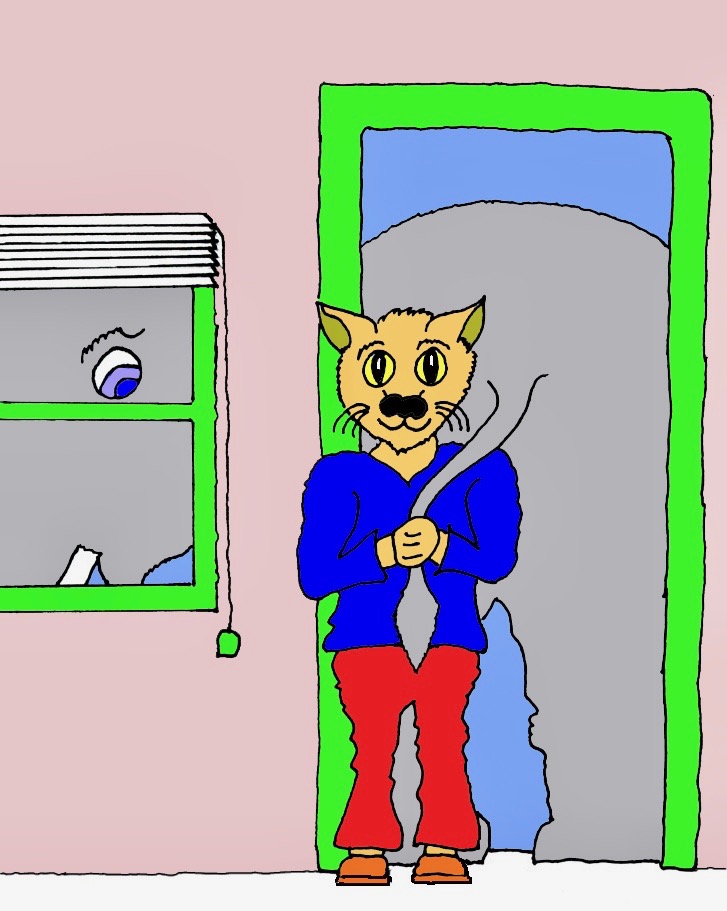
They started with us. Our kids are coming to join us for the holidays, which means we have been pressed for time. We decided to send Old Tom the Cat out to buy presents. What could possibly go wrong?

Lots. You never know what the cat will drag home! Not only was the gift too big for the door; he wasn’t housebroken. And the zoo refuses to take him back.

Meanwhile, more serious trouble is brewing at the North Pole. Blitzen was plying his red-nosed friend with eggnog and rum to make his red nose shine brighter when suddenly Rudolph had a coughing fit. Blitzen leapt six-feet away, donned his face mask and whipped out his vaccination card, waving it around like people use crosses to scare away vampires. (Does that work?) Millions of children were depending on his flying companions and him to deliver Santa and his bag of gifts to their roofs. This was no time for risks!

Santa was even more worried. He might lose his guide. The last time that happened on a foggy night, he had depended on GPS and ended up on Mars. He decided on a back-up plan…

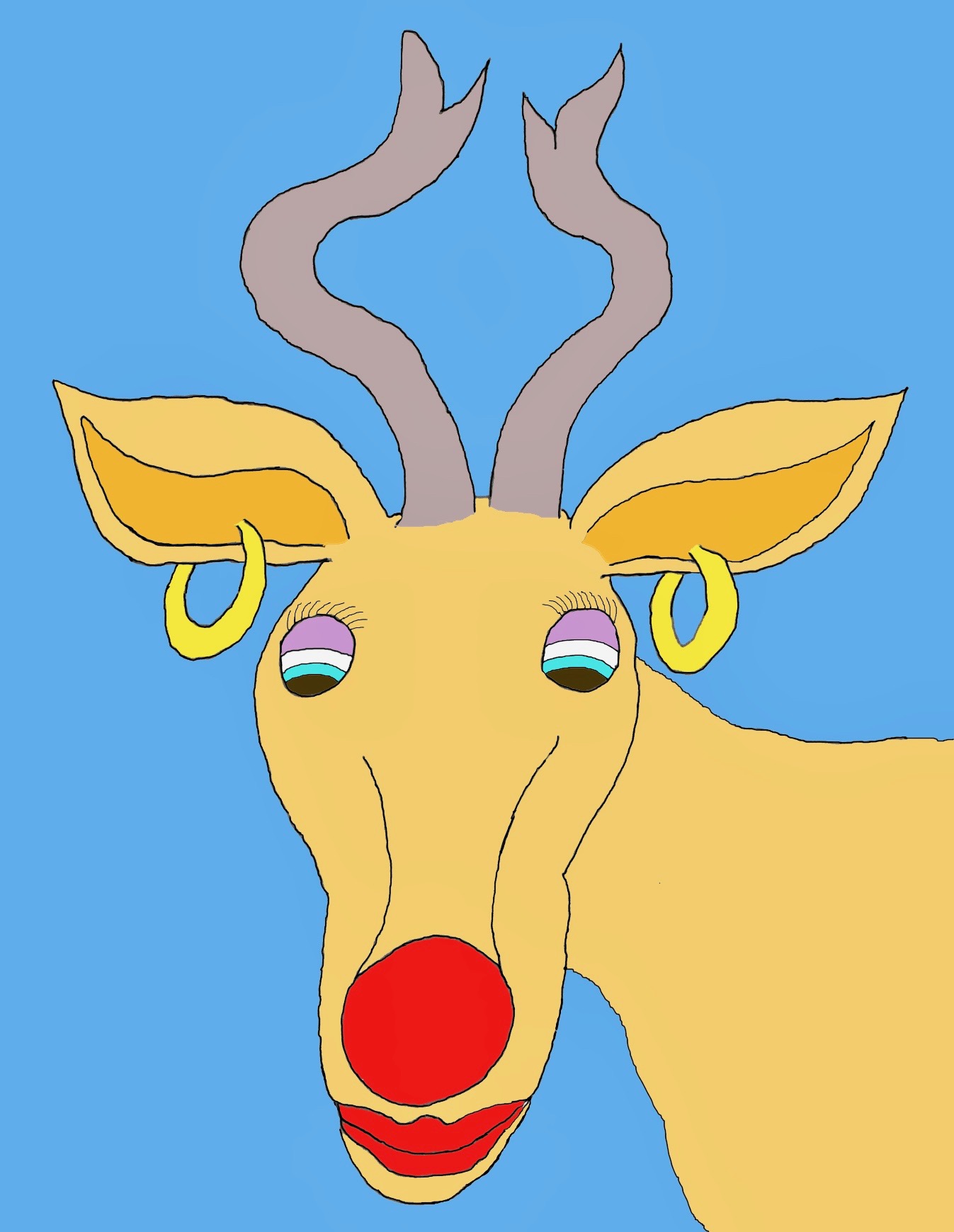
He asked Rudolph’s girlfriend, Rudette, to be the backup for Rudolph. She was excited! She would be the first ever female reindeer to guide Santa. She would strike a blow for equality. Little girl reindeer the world over would look up to her.

Even that didn’t resolve Santa’s concerns. Rudette and Rudolph are quite close. They even share the same stall and who knows what else. When one gets sick; the other is likely to as well. Santa decided to be 100% safe. He would recruit a back up to the back up. He searched the Northlands far and wide for someone to guide his sleigh. And got lucky…

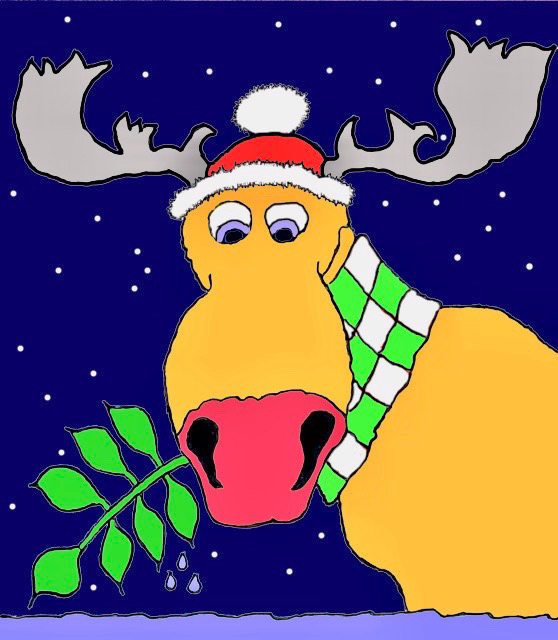
Monty the Mauve Nosed Moose volunteered his services if needed.

So rest assured kids, Santa and his eight reindeer plus someone with a shiny nose will deliver your presents this year. In Santa’s immortal words:

HO! HO! HO!

Oh yeah, and Merry Christmas to All and to All a Good Night… Plus a Happy and Healthy 2022!

CURT and PEGGY

Going on a -.-. — .– Walk at Pt. Reyes… Plus: Peggy Snuggles up to a Police Horse

The cows had a hungry look in their eyes. We were thankful they were vegetarians.

Peggy and I had decided to revisit an old favorite of ours, the Palomarin Trail that enters Pt. Reyes National Seashore from the south. We had driven down to Bolinas and were on our way out the narrow, pothole-filled road that leads to the trailhead when we saw a series of poles, lined up like they were standing at attention in ranks. I knew immediately what they were. 

The poles were part of the historic Marconi wireless radio station near Bolinas. At one point, they had been connected by wires.

In 1914, decades before the likes of Elon Musk and his techie cohorts started working on worldwide wireless technology, Guglielmo Marconi, the inventor of the wireless radio, had built a huge, wireless radio station near Bolinas to send Morse Code messages flying across the Pacific Ocean, setting up the first-ever communication system between ships at sea and land. A small parking lot was connected to a walking trail that wound its way past the historic poles and toward the ocean. We were easily diverted from our original intent of hiking the Palomarin Trail.  

The pole-filled field was doing double-duty as a cow pasture and a herd of cattle insisted on checking us out— up close and personal. It was lunch time and they may have thought we were sneaking alfalfa past them. The Morse Code in the title, BTW, spells C -.-. O —, W .–, in case you were wondering. And boy, that takes me back to my Boy Scout days in the 50s when memorizing Morse Code was essential to working your way up through the ranks.

We checked out the poles, talked with the cattle, and had a pleasant walk out to the coast with both Peggy and me taking photos. 

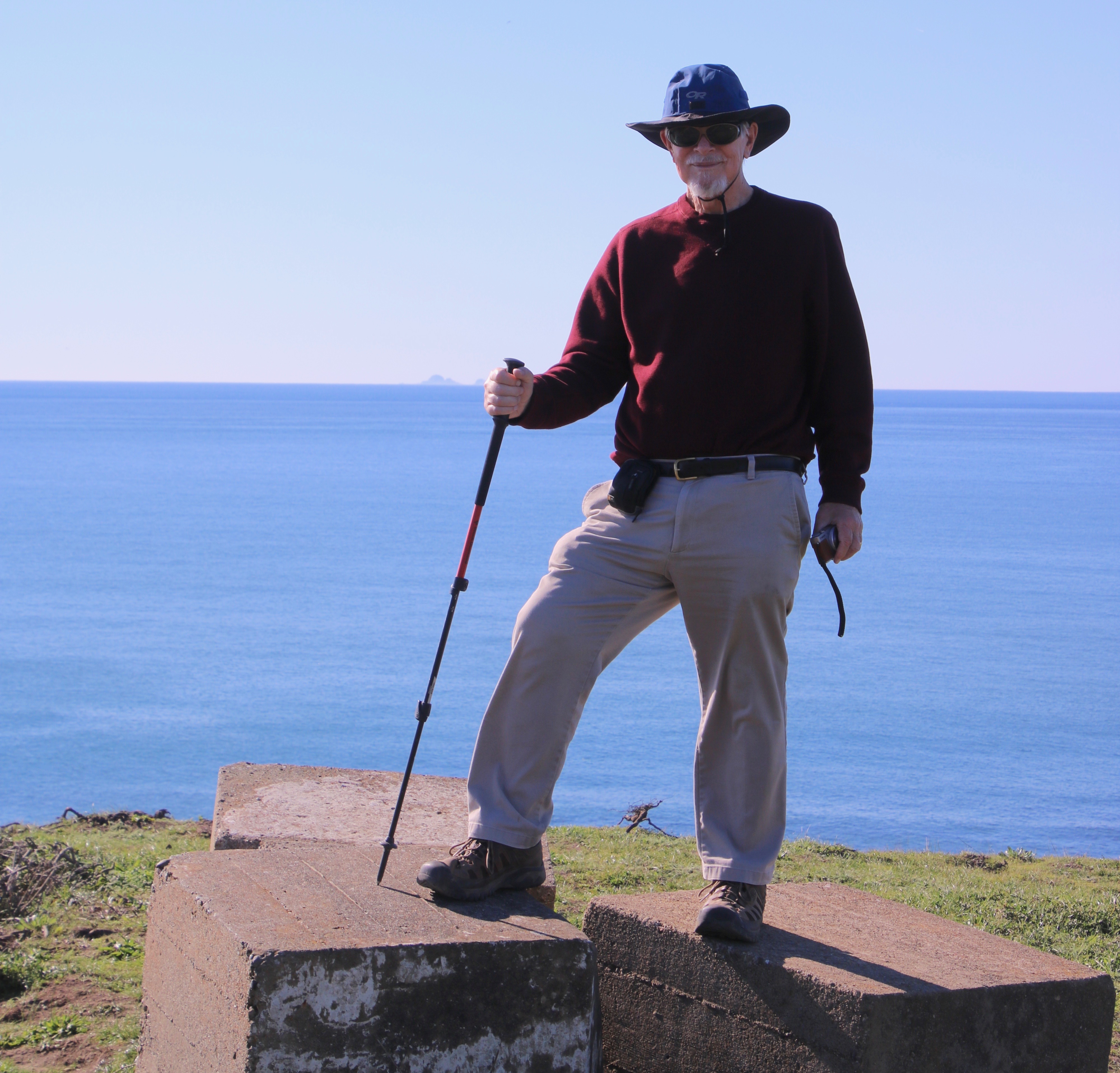
Not quite Mt. Everest, but I was still willing to pose for Peggy. We found large cement blocks throughout the area. At first, I though they might have been part of the coastal fortifications the US built along the Pacific Coast in WW II. Then we decided they were used to anchor the poles and wires. (Photo by Peggy Mekemson.)
A whole herd of cattle was lined up along the road. They remained on the road, not budging as we walked by.
I thought this young fellow munching on grass was quite handsome.
Peggy stopped to admire a lone tree on our walk. The brush had a soft, welcoming look to it. But looks can be deceiving!
It was close to impenetrable.
As we approached the coast, the Pacific Ocean stretched off into the distance. The Farallon Islands can be seen as bumps on the horizon. They were once known at ‘The Devil’s Teeth’ for their ability to rip the bottoms out of sailing ships. In the 1800s, millions of birds’ eggs were taken from the islands to feed San Francisco’s growing population. Today the islands are a designated wilderness area and are part of a marine sanctuary. The birds no longer have to worry about their babies being stolen.
Looking north, we saw some of the towering cliffs found along the Pt. Reyes National Seashore. Sir Frances Drake, the renowned English hero and buccaneer (fancy name for pirate), apparently admired these cliffs on his visit to the area in 1579. (Photo by Peggy Mekemson.)
Looking south we could see the giant Sutro Tower that dominates the San Francisco skyline. Herb Caen, the well known and beloved columnist of the San Francisco Chronicle, once described the tower as a “giant erector” that was stalking and planning to eat the Golden Gate Bridge. I read Caen religiously when I was growing up. It was back when newspapers still had a sense of humor, before they adopted their Doomsday, Penny Henny view of the world. (Photo by Peggy Mekemson.)

Afterwards, we stopped off in Bolinas for lunch. It’s another favorite coastal town of mine. One reason is the fact that the locals refuse to have signs leading into the town from Highway 1 for tourists to follow. Whenever Cal Trans puts one up, it’s torn down. I think that Cal Trans has finally given up. At least I didn’t see any signs. It has always been a fun, quirky town with its own unique cast of characters. Last time when Peggy and I visited with our friends Ken and Leslie Lake, we came on a bookstore without staff. A sign said “Take any book you want and leave whatever you think the book is worth to you in the cash box.” It was a very Bolinas type of thing.

While I’m on Bolinas stories, I’ll mention that it was also the site of my first ‘Hippie’ experience. I’d stopped in the town in 1968/69 and decided to do a little sunbathing on its infamous nude beach, which I had read about in the San Francisco Chronicle. It was a time before Google listed “The Best Nude Beaches in Marin County,” a time when the Protestant ethic still reigned supreme among America’s middle class. I confess I was a little nervous about getting naked, but it was the sunburn that left a lasting memory!

A sign of the times in Bolinas. As we were walking through the town in search of lunch, we came across a car with a ladder on top that included a sign that set me to laughing. I could identify with it.

Having featured cattle today, it is only right that I should feature a horse as well. It’s a requirement of the Old West. The day after our Bolinas walk found Peggy and I hoofing it along the Bear Valley Trail. It connects the Visitor’s Center with the ocean in an 8-mile round trip. We were feeling our oats, so to speak, when we came across a pair of real hoofers, i.e. horses. A woman was walking one and stopped to chat. As it turns out the horses were part of ‘San Francisco’s Finest.’ It was a police horse, a proud member of the mounted patrol that can often be found patrolling Golden Gate Park. They’ve been at it continuously since 1864. The horses were out for a play day on the Bear Valley Trail. 
Peggy, who likes horses, insisted on snuggling up to it and I dutifully snapped a photo on our iPhone. I, on the other hand, am not a horse person. It isn’t their size, their looks, or their personality, all of which I find pleasing. It’s their smell, and the fact that they often leave prodigious piles of poop along hiking trails. Have you ever seen a sign that says “Clean up after your horse?” I’m not sure what it is about their smell, but it clings to you. I wonder if cowgirls and cowboys think of it as perfume? 

Peggy snuggles up with the horse along the Bear Valley trail.
That does it for today. I’ll wrap up our recent visit to Pt. Reyes in my next post. Then it will be off to Fort Bragg and Mendocino.

When the Big One Strikes… A Hike Along Earthquake Trail: Pt. Reyes

At 7.9 on the Richter scale, the 1906 San Francisco Earthquake wreaked massive damage both in structures destroyed and lives lost. This photo is from the National Archives.

I was wrapping up my day at the Lung Association in Sacramento when the building started moving shortly after 5 p.m. on October 17th, 1989. Peggy and I were at the very beginning of our relationship. You might say, it was off to a shaky start. “Is this the big one?” leapt into my mind as I ran outside. But buildings weren’t falling or people screaming. “Not this time,” we thought, relieved. 
Had you been one of 62,000 baseball fans crammed into Candlestick Park for the World Series, or worse, commuting home from work in the Bay Area, your perspective would have been substantially different. A major 6.9 earthquake had ripped into the Santa Cruz Mountains along the San Andreas Fault south of the stadium. Nearby freeways collapsed including a section of the Bay Bridge, numerous buildings were destroyed or damaged, 63 people were killed and 3,757 injured by what became known as the Loma Prieta Earthquake.

A number of faults are located under the Bay Area. The next big earthquake is projected to be along the Hayward Fault. The Pt. Reyes National Seashore is the land jutting out to the left of the San Andreas fault at the top of the diagram.

Eighty-three years before the Loma Prieta earthquake, an even greater one shook the Bay Area. Blame plate tectonics. The San Andreas Fault, marks a distinct boundary as the Pacific Plate grinds its way north past the North American Plate, building pressure until an earthquake erupts.  At 7.9 on the Richter Scale, the energy released from the 1906 San Francisco Earthquake equaled blowing up an estimated 6,270,000 tons of TNT! 

Earthquake Trail, found next to the Visitors’ Center at Pt. Reyes National Seashore, commemorates the event. Peggy and I were there last week and went for a walk along the trail. Like San Francisco, Pt. Reyes felt the full fury of the earthquake as portions of the land moved north as much as 20 feet.
With arms stretched out, Peggy points to two sections of a fence that were separated during the San Francisco Earthquake. They have been rebuilt to demonstrate the power of the earthquake. The lower fence had moved 16 feet north. The San Andreas Fault is located directly under Peggy’s feet.
The trail is easy to hike and is well marked with information signs. Its bucolic, serene beauty makes the damage done by the 1906 earthquake hard to imagine, however. 

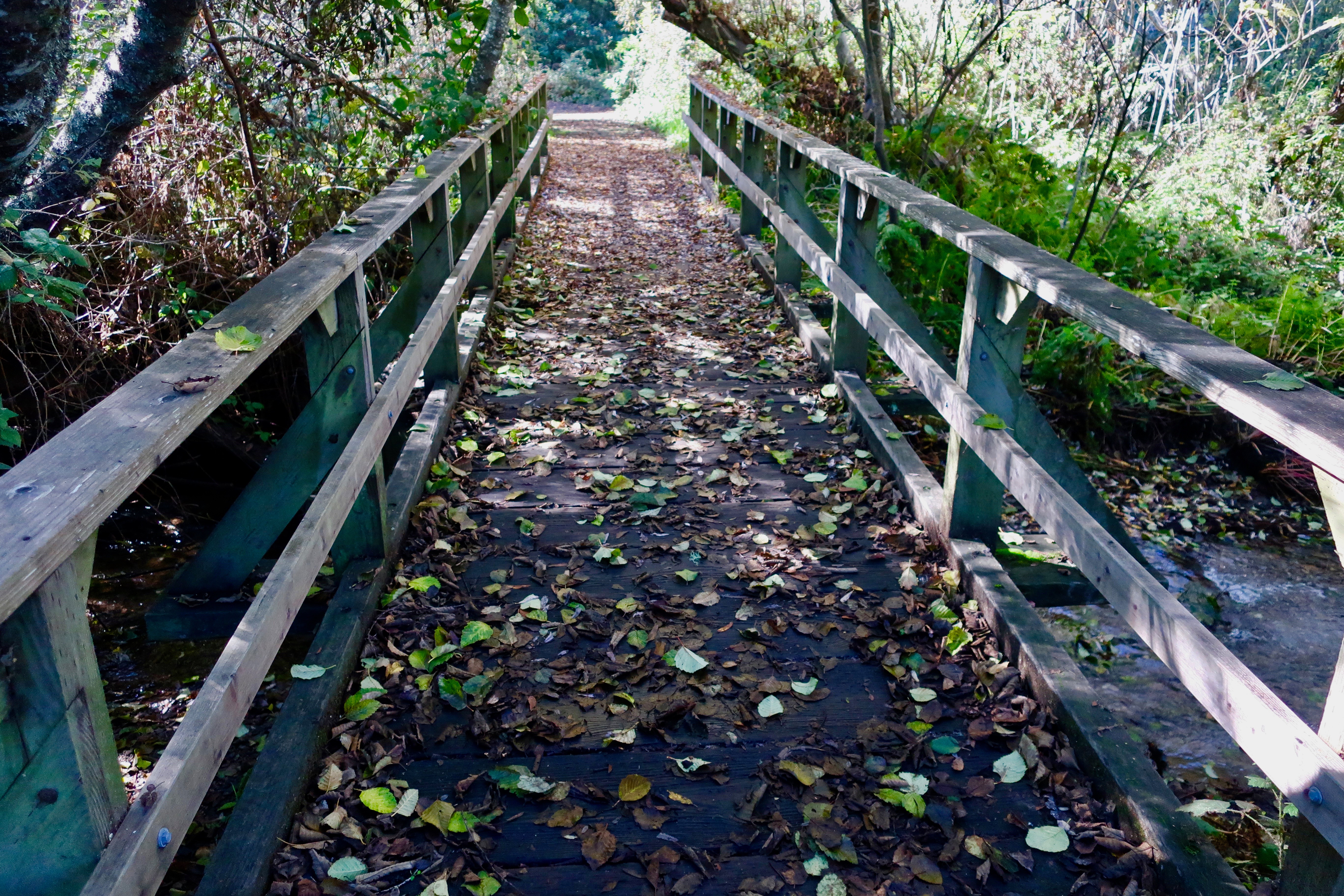
A bridge along Earthquake Trail at Pt. Reyes National Seashore. Photo by Curt Mekemson.
The peaceful beauty found along the Earthquake Trail at Pt. Reyes belies the potentially destructive force that lies just beneath it. Fall leaves added color.
While the trail is short and easy to hike, it provides a variety of scenery, like this meadow…
Interesting trees are perfect for little people to explore… (Photo by Peggy Mekemson.)
A fun stump found along the trail.
Peggy took an interesting closeup. She saw a dragon, a monster, and more….oh, my.
Birch.
Moss
Various Conifers…
And in conclusion, a bit of sunshine.

NEXT POST: More photos from around Pt. Reyes National Seashore and our maiden three week voyage with Iorek the Truck and Serafina the trailer.

What’s in a Name…

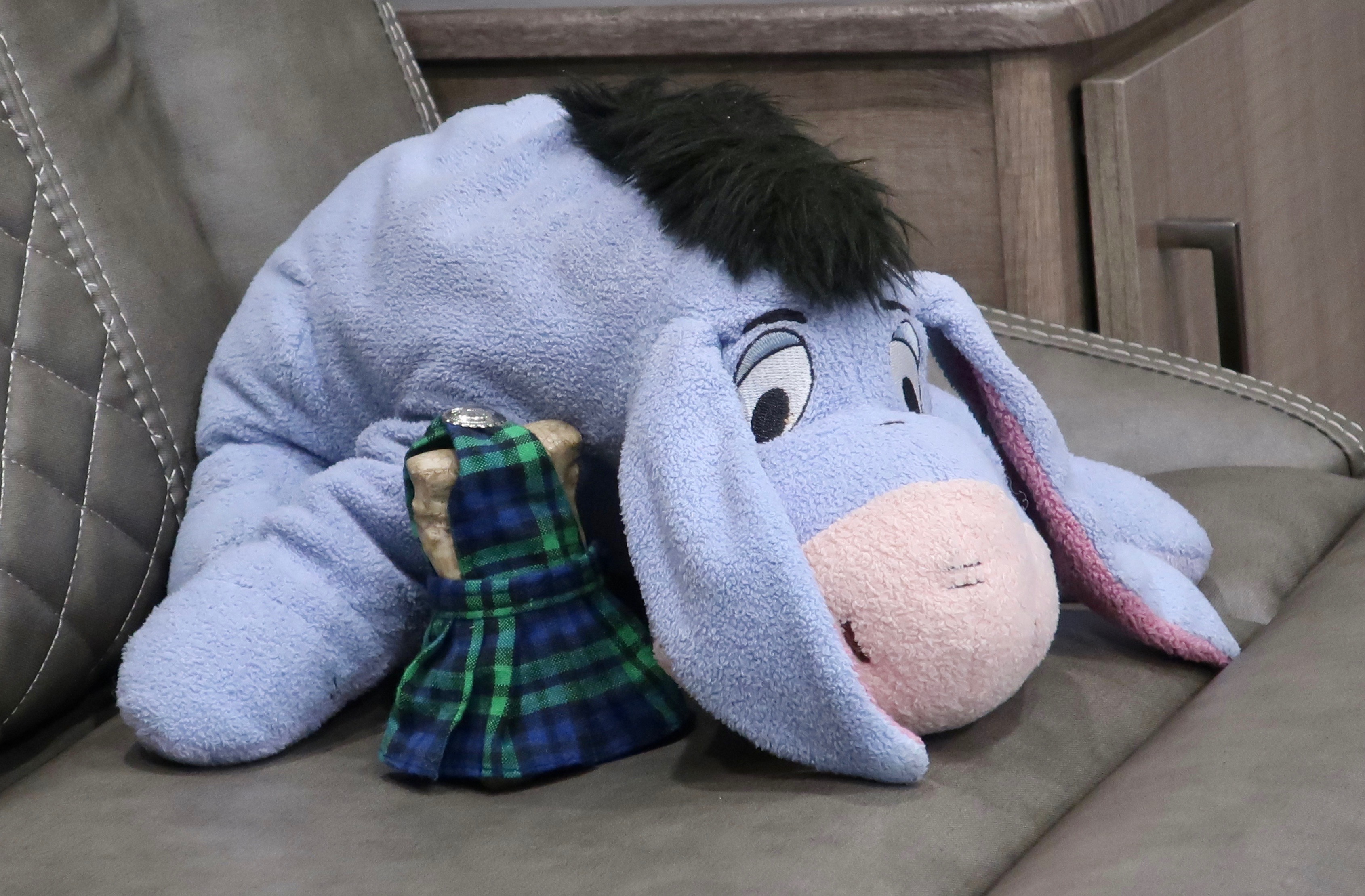
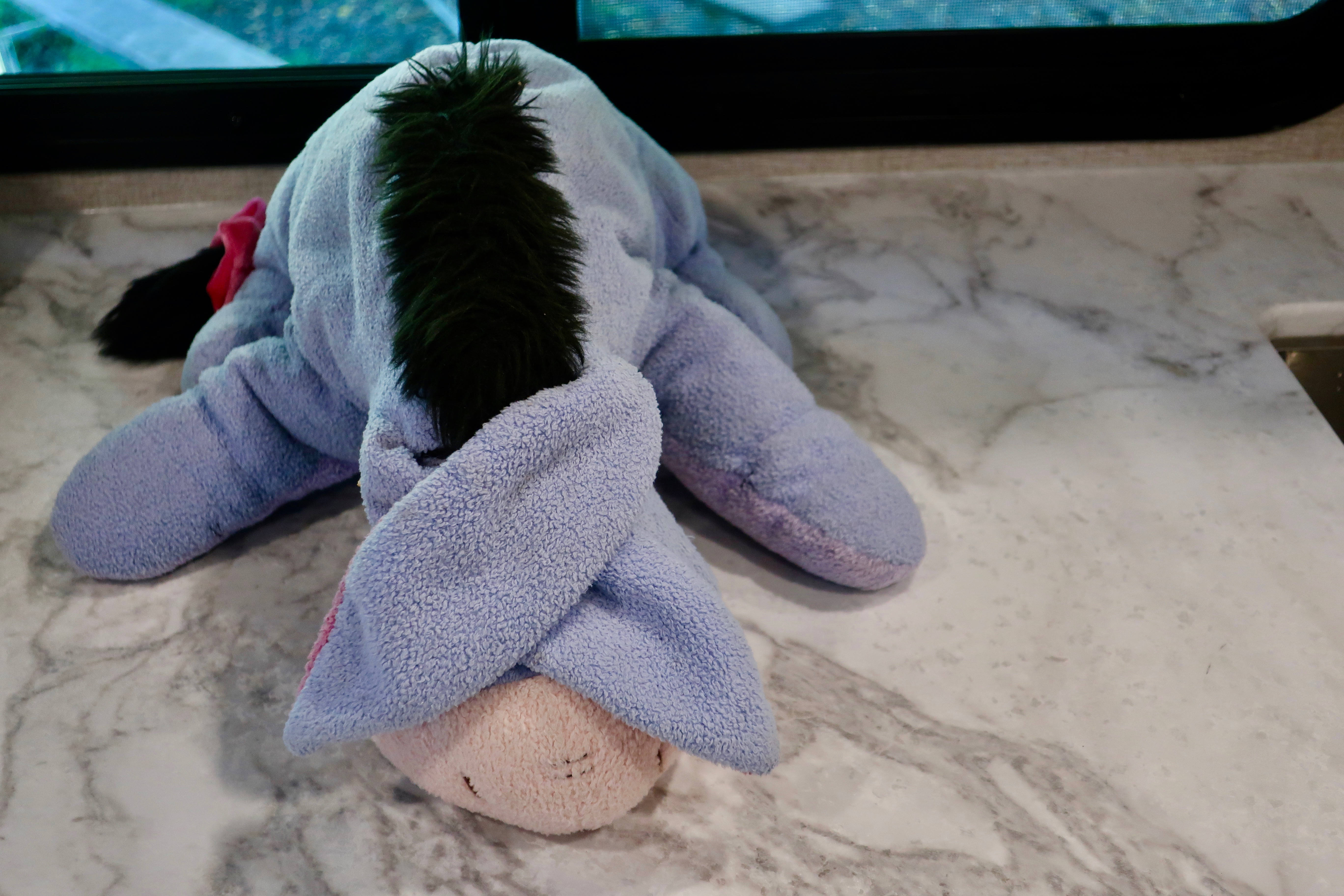
Names are important. Almost everyone knows Eeyore the Donkey. If you read this blog, you also know Bone. He’s being a bit sartorial here, all dressed up in his kilt. He’s also known for running around naked.

I’ve been tardy in the world of blogging lately. My apologies. Other things have demanded my attention: Important things like learning to back up a trailer (a work in progress), or make the trailer’s hotspot work so we can have decent internet, or figure out what the hundreds of buttons (a slight exaggeration) in our new Ford 150 do.  And a gazillion other things. Like the naming of the trailer…

I asked Eeyore to help me back up the trailer last week in my first ever campground backup spot at Pt. Reyes National Seashore. This was his reaction. The Olema campground host was hardly more helpful. “I’ll be glad to come out and yell at you when your wife gets tired,” she told me.
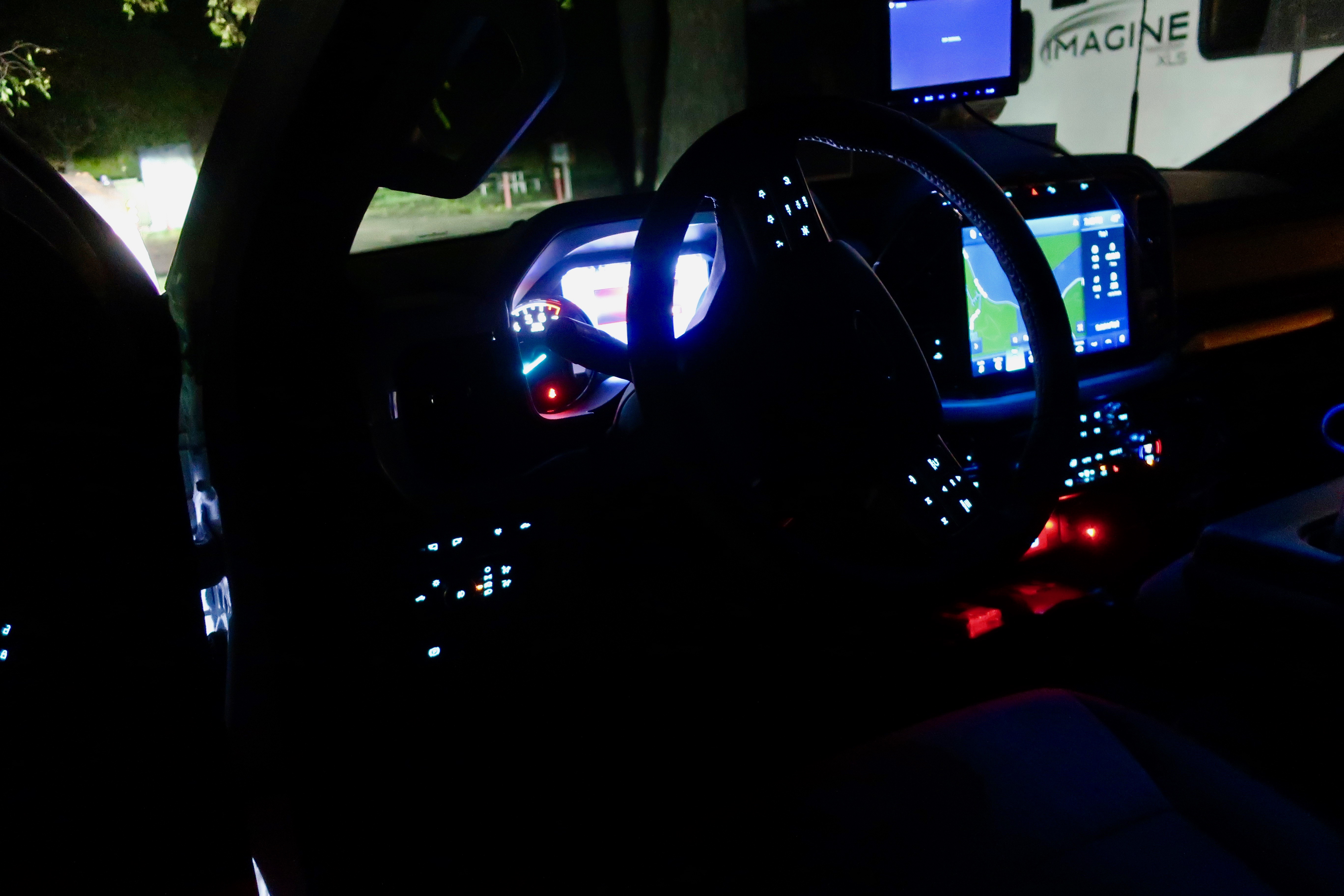
A partial view of the buttons on our truck, lit up at night. They are hard enough to figure out in the day when you can see their labels.

Names are important, right? They provide recognition. Everyone, or just about everyone, recognizes Eeyore, for example. And if you read this blog, the odds are, you know Bone. But did you know Bone and Eeyore are the best of buddies? They’ve been traveling with us together for over a quarter of million miles on North America’s highways and byways over the past 20 years. They became good friends when Eeyore saved Bone from hanging in Tucson. He’d robbed a bank, cheated at cards and hung out with ladies of the night.

Naming characters like Eeyore and Bone is natural, but how many of you also name your vehicles? We always have and recently we were faced with the challenge of naming two: our new Ford 150 pickup and our new Imagine trailer. The truck was easy. It is big, strong, and white like a polar bear. Iorek (pronounced Yorek), a king of the polar bears in The Golden Compass, immediately popped into our minds.

Iorek the bear in a free, downloadable photo from his role in “Golden Compass.” He was also quite gentle in his role when it came to Lyra.

The trailer has proven to be more difficult. We wanted something that suggested wandering. After all, this blog’s title is Wandering Through Time and Place. My Pacific Crest Trail backpacking name was Wanderer. One thing was clear. The name for the trailer had to represent a strong, independent female personality who loves roaming to provide a fitting partner for Iorek. The two of them are hitched.

Peggy suggested that maybe we should just go with Wanderer. But we wanted something more exotic. Remember, our first travel van was named Xanadu after the ancient summer capital of Kublai Khan. The second was Quivera, in honor of a mythical Native American city of gold that the Spanish Conquistadors could never find because it moved around— a lot, apparently.
“Go for a character out of Greek (or Roman) mythology,” our son Tony urged. And certainly there were strong Roman/Greek goddesses who wandered. Think of Diana, the Roman Goddess of the Hunt (Artemis in Greek Mythology), who spent a lot of time traipsing around in the woods. Like Peggy. My kind of woman. Or Persephone, who split her time between Hades and the outer world, creating the seasons as she moved. Then there was Medusa. But her nasty habit of turning people to stone disqualified her. She was a sweetheart in comparison to Pandora, however, who opened her box and set free all of the horrors of the world. What are a few stoned people in comparison to that? The treasure trove of Greek and Roman mythology encouraged me to check out mythological figures in other cultures. I found a number of promising leads but none quite clicked with us.

We were also open to historical figures. A ‘legendary but possibly historical character’ out of Ireland’s ancient history caught my attention. Muirisc was given land by her father, the 66th high king of Ireland, between 300 and 200 BCE, in what is now County Mayo.  According to Wikipedia, “She was known as a sea captain and a warrior who ‘ruled o’er hardy sailors and great men’ and was famed as much for being ‘daring’ and ‘bold’ as she was for her beauty.”

A wandering sea captain queen famed for her beauty, daring, and boldness— How could Iorek help but be charmed? But I don’t think “being ruled o’er’ was part of his agenda. (I’ve never been much on that, myself.) And he had someone in mind. “Serafina” we heard him whisper. She too was a queen, the queen of a clan of witches that live around Lake Enara in Finland. Like Iorek, she knows about extreme cold weather, and also like him, is a character in the Golden Compass. Both shared responsibility for helping and protecting young Lyra in her battles against totalitarian evil. They were a team.

It was hard to argue against Iorek’s logic. He’s the one, after all, who has to pull her along the highways and byways of North America. Plus, I like the way her name rolls off the tongue: srr-aa-FEE-na.   And maybe, just maybe, she will jump on her broom and park herself in campground spots that are particularly tight!

Imagine Serafina.