Port Angeles… The Vancouver Island Adventure Begins

As we prepared for our trip to Vancouver Island in British Columbia, our sunroom in Southern Oregon wasn't looking so sunny. I wondered what the weather would be like in Canada.

“Um, is that really smart?” a friend asked when he learned we had traded our time share in sunny Puerto Vallarta for one on Vancouver Island still in the grip of winter?

We weren’t sure but such thoughts rarely stop us. The first week in March is my birthday week and I had a tradition to uphold. I always escape. For years I have taken one day off for each decade I have lived. And those are workdays, mind, you; weekends are a bonus.

On a snowy March 1st we packed up our Toyota Tacoma pickup and hit the road. We couldn’t help but wonder… if it was snowing in Southern Oregon, what would it be like in British Columbia?

While not being overly inspired to hit the road, I was inspired to make a George Bush Snowman.

We arrived in Port Angeles, Washington a day later without having to use four-wheel drive once. Luck was riding with us. Since our timeshare in Parksville wasn’t available for two days, we decided to explore Port Angeles. After all, Bella of Twilight fame came here from Forks and played with her vampire boyfriend; why shouldn’t we play in Port Angeles too.

We lucked out. This was the view out our window from the Olympic Lodge when I woke up on my birthday in Port Angeles. The snow covered Olympic Mountains provide a striking contrast to the green grass on the Lodge's golf course.


Like many communities, Port Angeles features a Farmers' Market on Saturdays. Fresh vegetables and bright colors are hard to resist, whether you plan to eat them or photograph them!


This wood sculpture with masks embedded in it provides further proof of the good weather. Port Angeles gets good grades for the art it has scattered throughout the community.


This mask in particular caught my attention. I've heard of buggy eyed and beady eyed, but people eyed...?


I also liked this dragon. It reminded me of my trips to Burning Man.


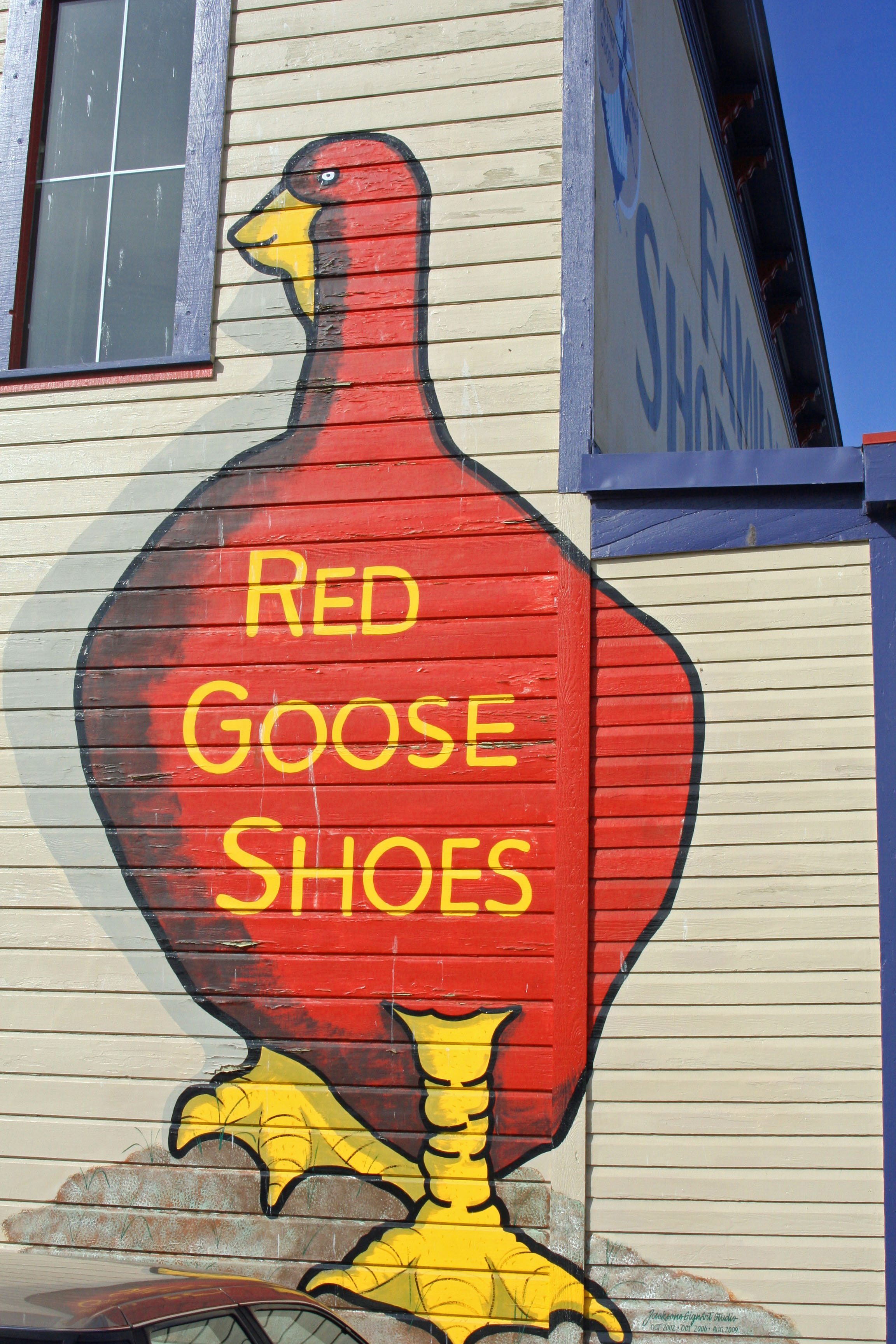
Wandering the streets, we came across this large red goose advertising Red Goose Shoes. It looks like his next step will be on to the roof of the car seen in the foreground, crushing it like a movie monster would.


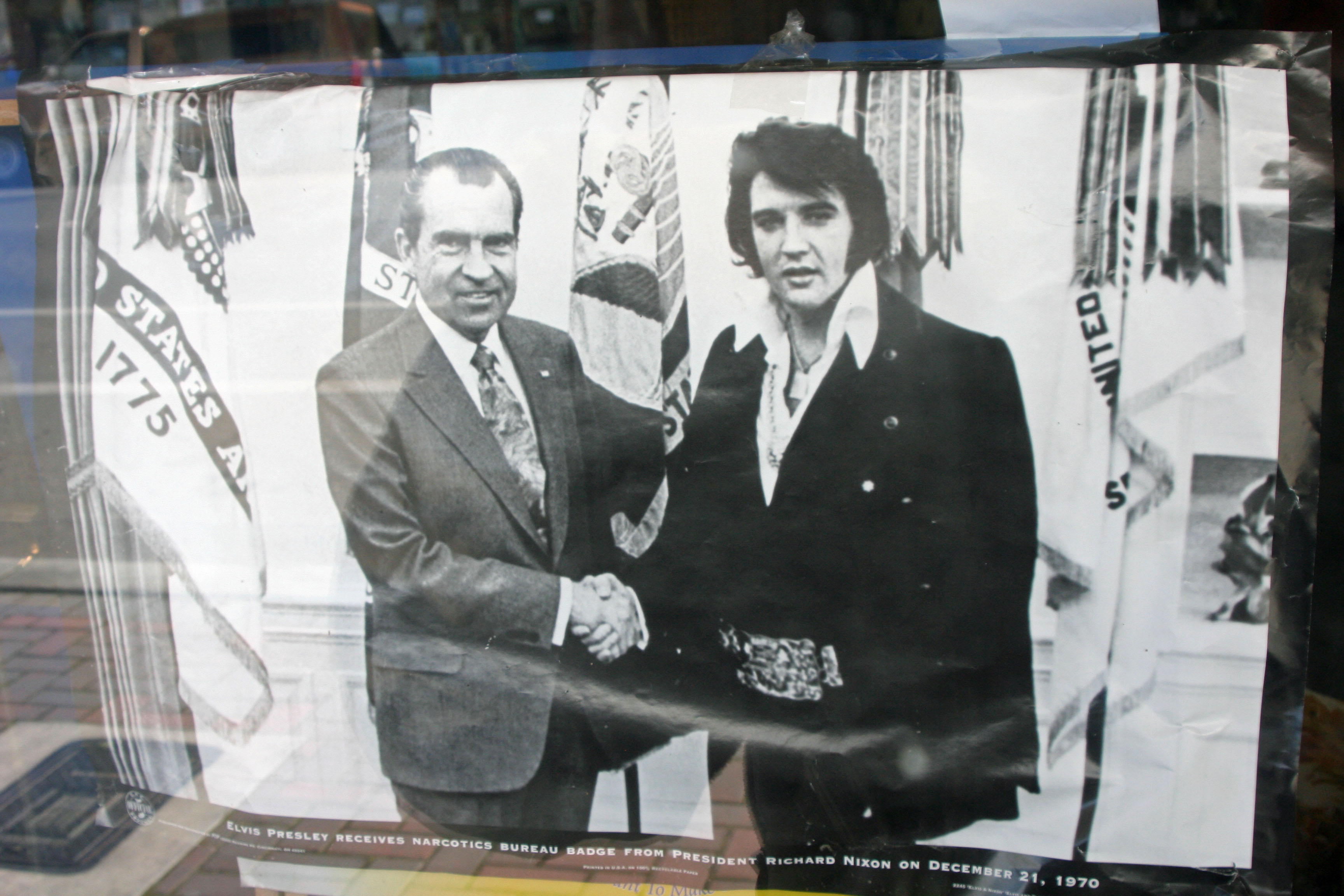
Peggy and I always enjoy unique window displays. This one featuring Richard Nixon presenting Elvis Presley with an anti narcotics award redefines ironic. Presley is reported to have consumed some 12,000 prescription pills in the 20 months before his death.


Visiting Port Angeles almost requires you retrace the steps that Bella of Twilight fame took on her shopping trip from Forks. One stop Bella made was to find a book that would tell her if her boyfriend Edward bites. Here, Peggy, a dedicated Twilight fan, poses with a bag of books in front of the Odyssey Book Store. A shadowy Bella, Edward and Jacob are reflected in the window. Edward is looking down like he might bite Peggy.

The Shadowy World of Burning Man

I loved the personality of this goat sculpture at Burning Man. Its shadow also has a great deal of character. Note the tail and ears.

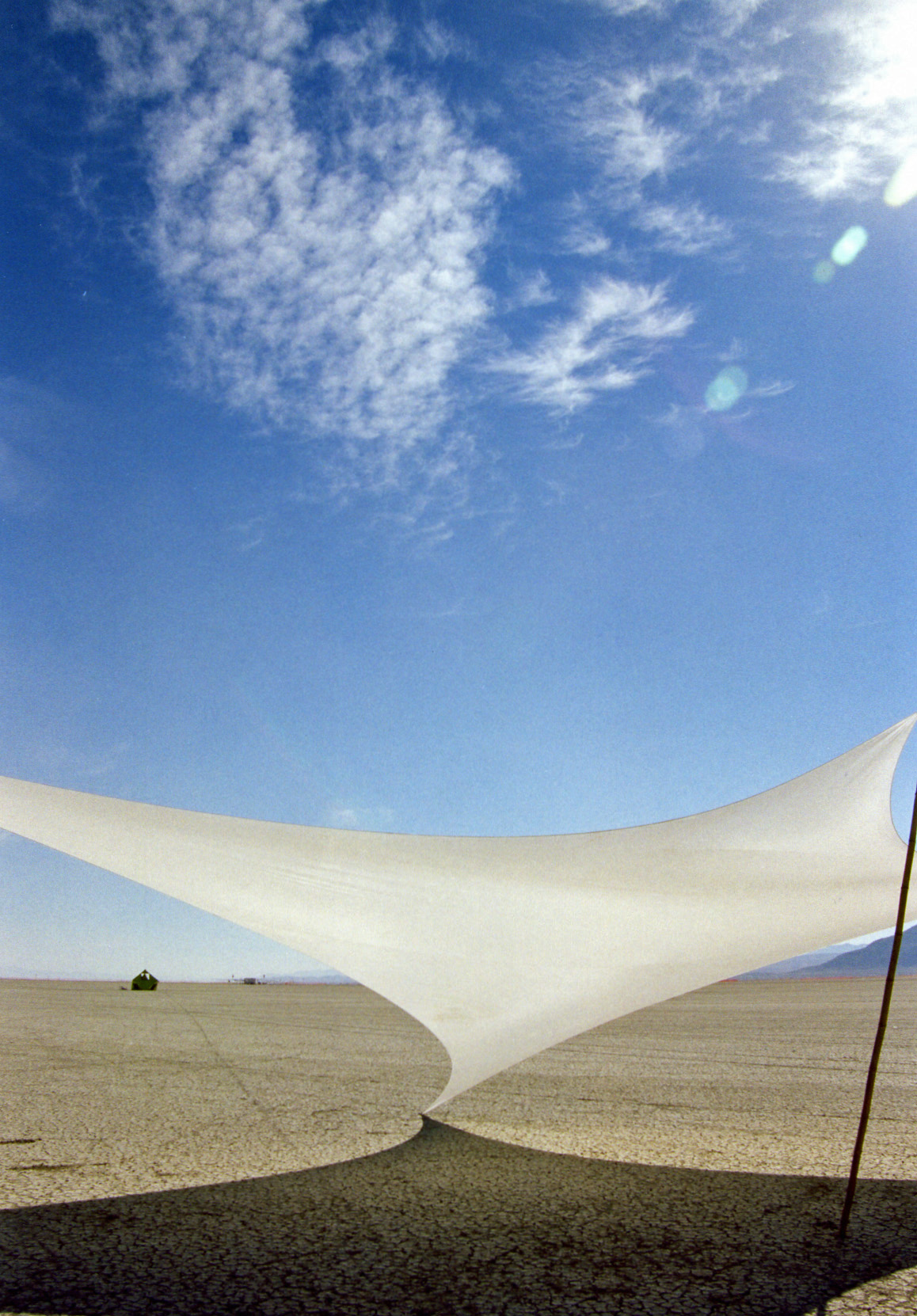
OK, I admit to a slight play on words for this blog. What I am talking about is photographing shadows. At Burning Man, or anywhere else for that matter, focusing on shadows provides a different, and I think interesting, perspective. The bright sun combined with the light brown of the playa provides a unique opportunity for shadow photography. Following are some of my favorites.

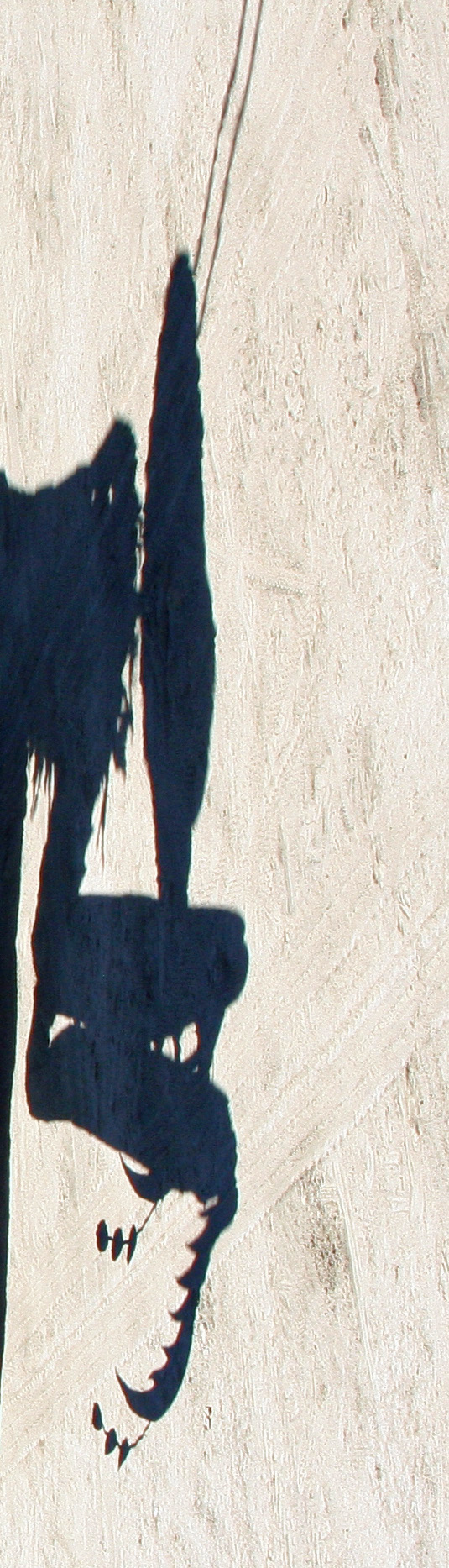
The mutant vehicles of Burning Man provide great subjects for shadow photos. This one, obviously, was from the Praying Mantis vehicle.


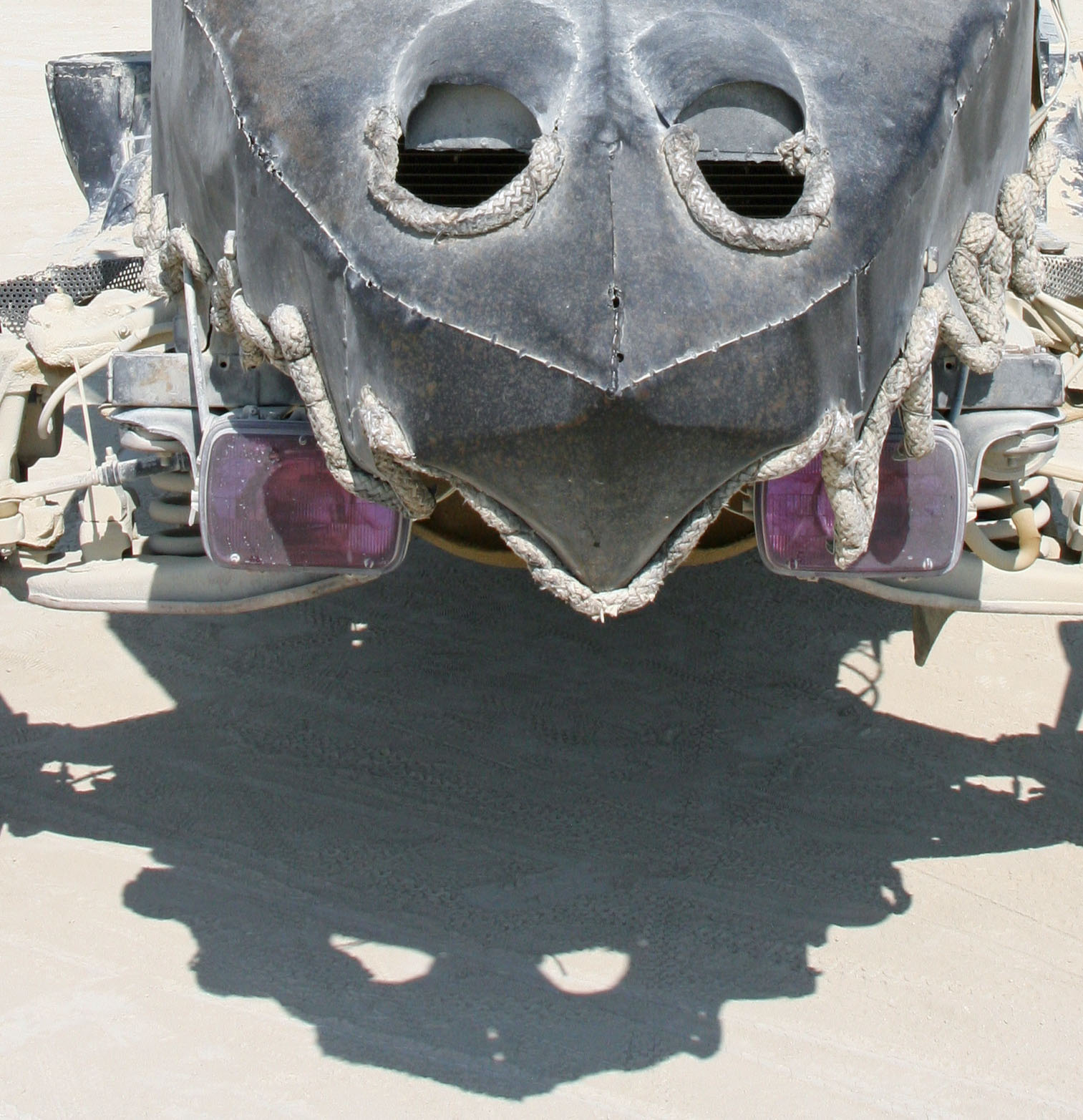
Another mutant vehicle of Burning Man. The question here is which is more scary: the vehicle or its shadow?


Speaking of scary shadows, this guy is from a spider 'mount' on a Burning Man merry-go-round. Little kids might view it as a 'night-mare.'


I liked the complexity of this shadow reflecting a Death Guild Chopper. Is this the shadowy side of Burning Man?


Bicycles, rather than choppers, are the chosen mode of transportation at Burning Man. Out of respect for participants, I've never posted a photo of the CT parade where over a thousand women joyfully ride topless. This is my first. Was I discreet enough?


The shadow of the Man is feeling a little fuzzy in this photo. Maybe he is contemplating the 2012 ticket sale.


Shadows can also enhance the art of Burning Man as this sculpture of flight demonstrates.


This young woman in her Burning Man costume has a lovely pair of wings but I found the shadow of the wings equally interesting.


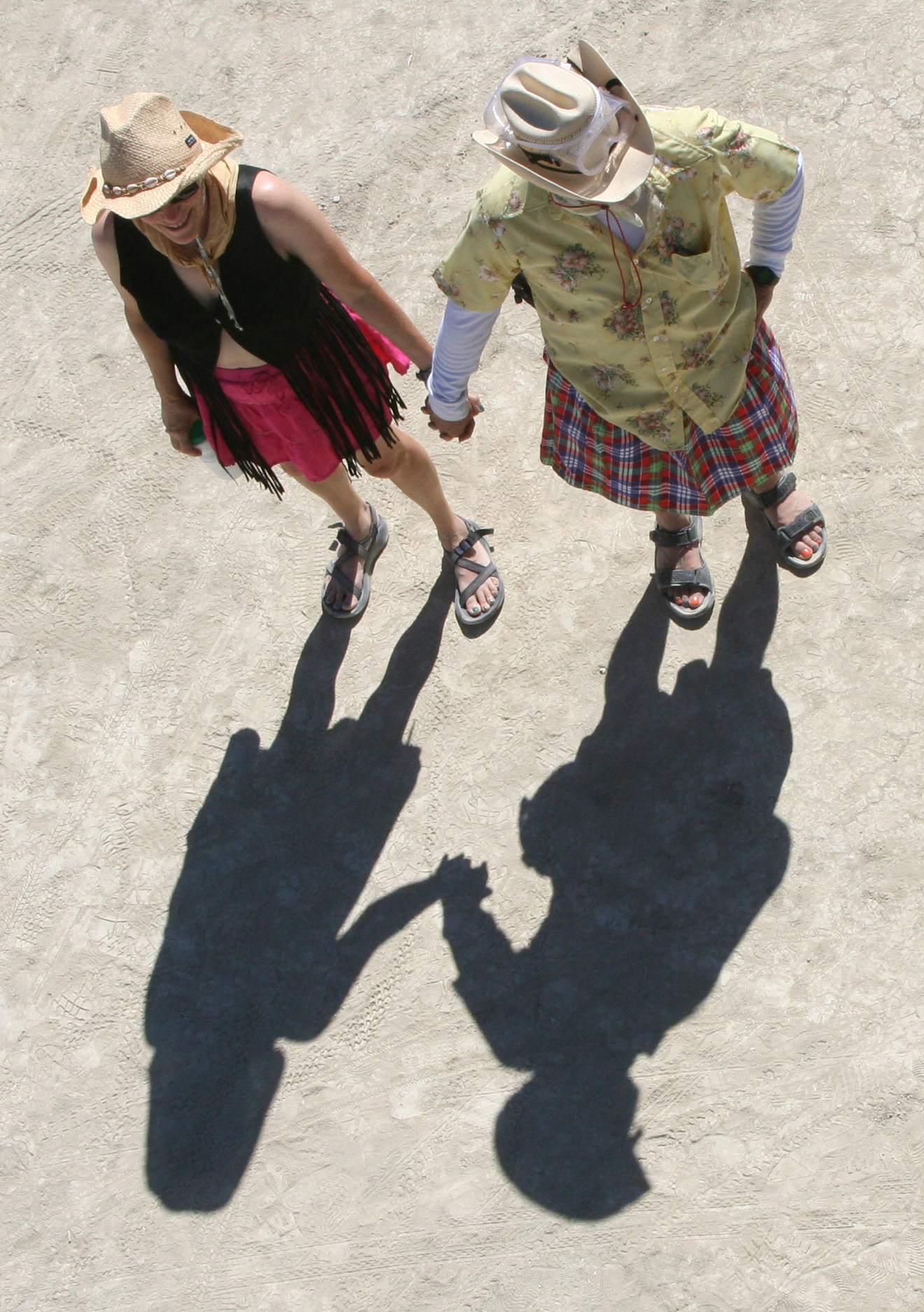
Looking down from the Man, these shadows are more solid than the Burners.


My friends, Ken and Leslie Lake at Burning Man with their shadows, holding hands, holding hands.

The Case of the Errant Urinalysis… From Free Speech to the Peace Corps


In addition to whatever mischief I had been up to during the Free Speech Movement at UC Berkeley, the Peace Corps wanted to know about my health.

I was directed to show up at the Army Induction Center in Oakland for a physical. I lined up with a bunch of semi-naked men to be poked and prodded. It was an experience not worth repeating.

“Turn your head and cough.”

I took it like a man and escaped as soon as the opportunity presented itself. A couple of days later I came back from class and there was a note from my other roommate, Cliff, who was also going into the Peace Corps.

“The Induction Center called,” he wrote, “and there is a problem with your urinalysis.” I was to call them.

“Darn it,” I thought. “Why is this so difficult?” So I called the Induction Center and resigned myself to having to pee in another jar. With really good luck I might avoid the naked-man-line.

I got a very cooperative secretary who quickly bounced me to a very cooperative nurse who quickly bounced me to a very cooperative technician who quickly bounced me to a very cooperative doctor… none of whom could find any record of my errant urinalysis.

They didn’t see any problems and they didn’t know who had called. They suggested I call back later and be bounced around again. More than a little worried, I rushed off to my next class.

That evening I reported my lack of success to Cliff. He got this strange little smile on his face and asked me what day it was.

“April 1st,” I replied as recognition of having been seriously screwed dawned in my mind. “You little twerp!” I screamed, as Cliff shot for the door with me in fast pursuit. It took me four blocks to catch him. The damage wasn’t all that bad, considering.

The FBI Hears I Run a Communist Cell Block…

Next on my to-do list for joining the Peace Corps was the dreaded FBI security check.

I had been up to mischief at Berkeley, hung out with the wrong people, been seen in a few places where law-abiding people weren’t supposed to be, and had my name on a number of petitions.

“And where were you Mr. Mekemson the night the students took over the Administration Building?”

Maybe there was even a file somewhere; maybe it was labeled ‘Radical!’ J. Edgar Hoover saw Red whenever he looked at Berkeley.

Soon I started hearing from friends. The man with the badge had been by to see them. The background security check was underway. One day I came home to the apartment and found my roommate Jerry there, looking very nervous.

“I have to talk to you Curtis,” he blurted out. “The FBI was by today doing your Peace Corps background check and I told them you had been holding communist cell block meetings in our apartment.”

Jerry wasn’t joking; Jerry was deadly serious; Jerry was dead.

“What in the hell are you talking about?” I had yelled, seeing all of my hopes dashed. I knew that Jerry disagreed with me over my involvement in Berkeley’s Free Speech Movement and probably disagreed with me over the Vietnam War, but I didn’t have a clue on how deep the disagreement went. Or what he based his information on.

My degree in International Relations had included a close look at Communism. I found nothing attractive about the system.

The closest I had come to joining a leftist group had been the Free Student Union. Yes I had held a committee meeting at our apartment but I had also severed my relationship with the organization. The folks behind the Union were more interested in radicalizing the student body than serving it. That was not my interest.

I was not happy with Jerry that night or for some time after. I assumed the Peace Corps option was out and begin thinking of alternatives. They were bleak.

As it turned out, a few weeks later we received final notification from the Peace Corps. We were accepted. The people who said good things about me must have outweighed the people who said bad things. Either that or Jo Ann looked so good they didn’t want to throw the babe out with the bath water.

Or possibly the majority of other students signing up for the Peace Corps from Berkeley in 1965 had rap sheets similar to mine. I suspect that was the case.

Next Blog: If this is the Peace Corps, what am I doing in the naked man line at the Army Induction Center?

Burning Man… The Great Ticket Fiasco

Burning Man tickets have become scarce, Burners are upset, and scalpers are taking advantage.

Burning Man ran out of tickets last year. People panicked. Scalpers had a field day.

Let me say this about scalpers; they are the scum of the earth. Scalpers and other speculators of their ilk make their fortunes by driving prices up and taking advantage of people. They are driven by greed and contribute nothing to society.

Burning Man decided the fairest way to deal with the limited ticket issue this year was to run a lottery. To deal with the scalpers, controls were placed on the number of tickets anyone could buy. Scalpers undoubtedly figured out ways of getting around the controls. They always will if the profits are substantial. But that’s not the major issue.

Burning Man forgot the major maxim of good business practice: Don’t Screw Your Best Customers. This was not Burning Man’s intent, but it was the result.

Suddenly, Burners who had been faithfully buying tickets and attending the event for 5, 10, or even 15 years are ticketless. What’s worse is that many of these people are critical to the Burning Man experience. They are the contributors, people who share their musical and artistic talent, people who volunteer for the many tasks it takes to run Burning Man and people central to building and maintaining the communities that give Burning Man its unique flair.

What were you thinking guys?

To give credit to the Burning Man organization, it is now struggling with how to right the wrong. A less than satisfactory solution will be jury-rigged this year. The result will still be lots of seriously bummed, or should I say burned, Burners.

As a six-year-veteran here are my thoughts regarding a solution to Burning Man’s ticket sales.

  1. Do away with the tier system. It’s a form of scalping in itself. Figure out what a fair price is to run the event, make your ‘profit,’ and support the other causes/efforts you believe in. Charge everyone the same amount but retain your program for subsidized tickets for people who need them. You can encourage people to make donations to support valuable programs such as the Black Rock Arts Foundation and Burners without Borders.
  2. Limit sales to twice a year. The first sale will be for the total number of spaces available and be on a first-come first-serve basis. Make it in January so you have time to do your own planning. The total upfront cash should be good for Burning Man. It’s as fair as you can be in terms of distribution.
  3. Make the second sale one month before the event to sell refunded tickets from people who can’t go. (Closer to the event would be better but the logistics might be a nightmare.)
  4. To make this work and to eliminate scalpers, people will have to have numbered tickets tied to their name and a personal photo ID. That’s how participants will get in and that’s how they will obtain refunds if they can’t go. I know this will take extra effort on the part of Burning Man and that veterans may complain, but it is the only way to keep ticket control in Burning Man’s hands. An increased price is justified here to cover Burning Man’s refunding and processing costs. People will have to make a go/no go decision by a certain date. Otherwise they are out the price of their ticket.

This is a much simpler approach than Burning Man uses now. It is fair and will be easily understood by participants.

An Offer to Teach in Africa: From Free Speech to Peace Corps

In the spring of 1965 Uncle Sam pointed his finger at me. He wanted warm bodies to fight a colonial war in Southeast Asia the French had already lost. Being a 22-year-old male about to graduate from college, I was a prime candidate.

If drafted, I would go.

I couldn’t imagine burning my draft card, running off to Canada or joining the Texas Air National Guard. I actually believe some type of mandatory two-year national service ranging from the military to the Peace Corps would be good for young men and women and good for America.

But fighting in a war I didn’t believe in and killing people I didn’t want to kill was at the very bottom of my bucket list. And there’s more. I am allergic to taking orders and can’t stand being yelled at. I’d make a lousy soldier. I saw a court martial in my future.

Luckily, a temporary solution popped up. Peace Corps Recruiters were coming to UC Berkeley.

John Kennedy had first proposed this idealistic organization to a crowd of 5,000 students during a campaign speech at he University of Michigan on October 14, 1960. He was running four hours late and it was two in the morning but the response was overwhelming. One of his first acts as President was to create the agency.

Peace Corps service would not eliminate my military obligation but it might buy time for the Vietnam War to sort itself out. Of more importance, I felt the Peace Corps provided a unique opportunity to travel and possibly do some good. I also believed I would be serving my country.

My fiancé and I sat down and talked it out. Jo Ann was excited. We would go together as a husband and wife team. When the Peace Corps recruiters opened their booth in front of the Student Union at Berkeley, we were there to greet them, all dewy-eyed and innocent.

“Sign us up,” we urged.

Of course there were a few formalities: small things like filling out the umpteen page blue application and taking a language aptitude test, in Kurdish. We also needed letters of recommendation.

Apparently we looked good on paper. In a few weeks, the Peace Corps informed us that we had been tentatively selected to serve as teachers in Liberia, West Africa. We were thrilled. The age-old question of what you do when you graduate from school and enter the real world had been answered, or at least postponed.

Uncle Sam with his growing hunger for bodies to fight the Vietnam War would have wait.

Next Blog: My roommate tells the FBI I am running a Communist Cell Block.

48 Years Later… The 1964 Free Speech Movement at UC Berkeley

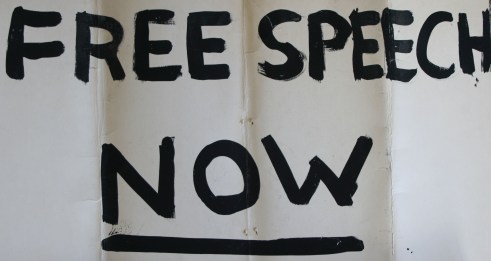
This is the original sign I carried in the Free Speech Movement during the December 1964 police occupation of UC Berkeley and arrest of 800 students participating in the Sproul Hall Sit-in.

I’ve been rooting thorough my old Free Speech Movement files, digging for treasure. Buried between aging, yellow copies of the Daily Cal and mimeographed handouts calling for action, I found the picket sign I carried when the police invaded UC Berkeley and arrested 800 students on December 3, 1964.

There are numerous sources covering FSM and its impact including an excellent book, “The Free Speech Movement,” edited by Robert Cohen and Reginald Zelnik. FSM even has its own website, fsm@a.org. I visited the site and found pictures of aging white-haired men and women looking remarkably like me. 1964 is now ancient history.

In preparation for this series of posts I also returned to UC Berkeley. Sitting on the edge of Ludwig’s fountain under a fine mist, I stared at the steps of Sproul Hall while searching my memory for ghostly reminders of past demonstrations.

I actually found one. A long-haired African American was distributing protest arm bands. His effort would have been illegal in the fall of 1964.

A stroll down Telegraph Avenue brought me to the Café Med, one of my favorite student hangouts. I stopped for an obligatory cup of cappuccino. I wrote notes in my journal and listened in on conversations. It seemed that neither the coffee house nor my behavior had changed much.

Back on campus I visited the Free Speech Café in the Moffitt Undergraduate Library. Every seat was full so I wandered around and looked at photos. Mario Savio, who died in 1996, was there in spirit. A picture captured him in a characteristic pose, haranguing a sea of upturned faces. It was a fitting memorial.

In hindsight, the Free Speech Movement has become an important part of Berkeley’s history, honored even by an Administration that once characterized it as a Communist inspired plot. And what about my hindsight; have the years blurred or substantially modified my vision of what took place?

I tried, in writing this series on UC Berkeley’s Free Speech Movement, to be faithful to what I felt and experienced at the time. I feel now, as I did then, that it didn’t have to happen. The attitude the Administration demonstrated in the 1963 student leadership meeting I attended and described in an earlier post went beyond naïve to dangerous.

If the more radical students found ground for ‘revolution,’ it was a ground fertilized and plowed by the Administration. The desire to protect the campus from outside influence became a willingness to limit the rights of students to participate in the critical issues of the day and, in so doing, take the side of powerful elites whose vested interest was in maintaining the status quo on civil and other human rights issues.

What changed as a result of the Free Speech Movement?

Certainly the concept of in locus parentis took a major hit. Students at Berkeley and other colleges across America would have much greater freedom in the future, on both a personal and political level. We had graduated from being older teenagers needing guidance to young adults capable of and responsible for our own decisions.

While we were still a part of the future so popular with Commencement speakers, we were also a part of the now, helping to shape that future. Human rights and equality including women and gay rights, the anti-Vietnam campaign, and the environmental movement would all benefit. Berkeley students had participated in one of America’s great transformations.

The New Left considers the Free Speech Movement as an important source of origin. A similar claim might be made for the New Right, the so-called Neo Cons.

The outer fringes of liberal and conservative politics are two cats of the same color, feeding off of the same plate and necessary to each other’s success. Each functions with the tunnel vision of being right and with the belief that the ends of their particular vision justify whatever means necessary to get there. Not surprisingly, both the Left and the Right saw the unrest on the Berkeley Campus as an opportunity waiting to happen.

The message was not lost on Ronald Reagan. Following the Free Speech Movement, he would exploit the student protests at Berkeley and other California colleges as a launching pad for his career in politics. One of his first moves as Governor was to fire Clark Kerr for being too soft on the students. There is a picture from the early 70s of Reagan turning around and flipping off student protestors at a U.C. Regent’s meeting. It was a clear message of intent.

It may be somewhat instructive that his future Attorney General, Edwin Meese, was the Deputy District Attorney in Oakland at the time of the Free Speech Movement. Meese’s role had been to oversee the Sproul Hall arrests and serve as liaison with the FBI.

There is a story, which may be apocryphal, that it was Meese who persuaded Governor Pat Brown to send in the troops on the night of the Sproul Hall sit-in by claiming students were tearing up the Dean’s office. If so, it was a deliberate lie or at least an exaggeration. The worst vandalism I witnessed was my standing on the Dean’s desk in my socks so I wouldn’t scratch the surface.

My speculation is that the forces on the right, like the forces on the left, wanted a confrontation. Kerr was planning to address the sit-in the next day in an effort to persuade the students to leave the building. A peaceful solution would not have served the agenda of Meese, Knowland, Hoover, etc. Serious head bashing leading to a full-scaled riot was called for. If it took lies to bring it about, so be it.

Or am I just being paranoid?

Later, when I chaired a committee for the Free Student Union, I witnessed a similar attitude on the part of the Left. A confrontation with students getting their heads bashed was good. It would radicalize moderates and lead to further violent confrontations.

While both the Left and Right worked to subvert what happened at Berkeley for their own objectives, I believe that the Free Speech Movement was what it claimed to be: a fight for free speech, the right to assemble, and the right to participate in the critical issues of the day. It was a fight that still rings true today.

On Being Labeled a Radical… The 1964 Free Speech Movement at UC Berkeley


The Press, Governor of California and UC Administration labeled participants in the Free Speech Movement as a small group of radical revolutionaries bent on destroying law and order. Were we?

I was curious about the background of the students who were arrested during the Sproul Hall sit-in, considering I had almost been one. A sociologist was doing a study on who was involved so I volunteered to take part.

We were given extensive questionnaires, trained and told to hit the streets. I seemed to inherit some of the more elusive, fringe types who always hang around Berkeley. Just finding them was an adventure.

When our data was analyzed, we found that a quarter or so of the participants were relatively hard core in terms of having been actively involved in the Civil Rights movement. Most of the participants resembled me: students and grad students who were somewhat on the idealistic side, angry at the Administration, in sympathy with the Civil Rights Movement, and committed to our right to participate in the political process.

Were there truly radical students on campus who saw the protests as a way to radicalize students and achieve objectives beyond retrieving the basic rights that had been taken away?

Yes. I met some when I decided to help create a Free Student Union. A union made sense to me. The student government, by its very nature, was tied closely to the Administration. A union would go beyond the temporary, nonrepresentational nature of the FSM and give us ongoing power and representation that we lacked as individuals.

I participated in two or three meetings including one I hosted at our apartment. Chaos was good, I quickly learned. Policemen dragging students down stairs and bashing an occasional head was to our advantage. It created solidarity among the ranks and radicalized the student body.

We needed to goad the Administration into further action, the more outrageous the better.

It did not reflect who I was or my goals. After sharing my opinion on what I thought about the chosen strategies, I parted ways with the Free Student Union. Apparently, most students shared my perspective. The union, to my knowledge, did not get off the ground.

The focus shifted temporarily in the spring and maybe this shift reflected a more radical strategy. We had our so-named Filthy Speech Movement. People would get up in the free speech area and see how many obscenities they could mouth in the name of free speech.

From my perspective it was inane and counterproductive, a non-issue designed to infuriate the Administration and garner media coverage.  Rather than serve a positive purpose, it degraded our efforts of the fall and was utilized by the Oakland Tribunes of the world and their allies as justification for their condemnation of the campus.

More typical was a return to what some would define as an accepted activity of college life. I was amused to read a Junior Class party announcement in the “Daily Californian” one Friday.

“Everyone is welcome at our TGIF party, especially the FSM: it will give them a chance to quench their thirst.” Dennis O’Shea, Junior Class Activities Chairman was quoted. “It promises to be the hell raiser of the year – lots of girls, a screaming rock and roll band that frequently plays for the Hell’s Angels, and 150 gallons of liquid refreshments.”

I can imagine that the Administration was praying for a return to the good old days when a ‘hell raiser’ was defined as an ocean of beer and a screaming rock and roll band.

Next Blog: Looking back at the FSM: What did we accomplish?

UC Berkeley on Strike… The 1964 Free Speech Movement

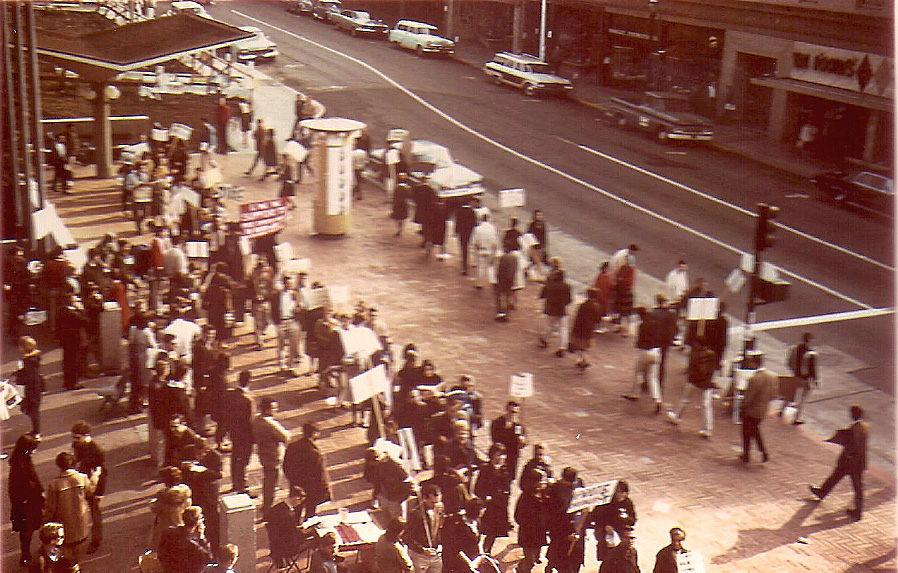
When police occupied the UC Berkeley Campus in early December of 1964 and arrested the protestors in Sproul Hall, the University went on strike. I joined a picket line on the edge of Telegraph Avenue next to Sproul Plaza.

My bed was indeed much softer that the marble floors of Sproul Hall.

After a quick breakfast I hurried back to campus to rejoin the sit-in. I was too late.

Armed men in uniforms formed a cordon around the Administration Building where students were being dragged down the stairs and loaded into police vans. Windows had been taped over so neither protestors or media could not see what was transpiring inside.

We had an occupied campus.

The great liberal governor of California had acted to “end the anarchy and maintain law and order in California.”

Whereas Jack Kennedy had used troops to protect civil rights in the South, Pat Brown was using them to stifle civil rights in the West. Of course Brown didn’t see it that way; he was taking a courageous stand against anarchy, the anarchy I described in my last blog.

I am sure Laurel and Hardy would have seen something to laugh about. Dragging kids down stairs on their butts while their heads bounced along behind could easily have been a scene in one of the old Keystone Cop films. The Oakland police weren’t nearly as funny as the Keystone Cops, however.

As for Clark Kerr, President of the University, he felt we were getting what we deserved and argued that the FSM leaders and their followers “are now finding in their effort to escape the gentle discipline of the University, they have thrown themselves into the arms of the less understanding discipline of the community at large.”

The campus came to a grinding halt and a great deal of fence-sitting ended. Whole departments shut down in strike. Sproul Hall plaza filled with several thousand students in protest of the police presence. When the police made a flying wedge to grab a speaker system students were using, we were electrified and protected the system with our bodies.

It was the closest I have ever come to being in a riot; thousands of thinking, caring students teetered on the edge of becoming an infuriated, unthinking mob. Violence and bloodshed, egged on by police action, would have been the result. Kerr, Brown, Knowland and company would have had the anarchy they were claiming, after the fact.

A few days later we were to come close again.

Kerr, in a series of around the clock meetings with a select committee of Department Chairs, had arrived at a compromise he felt would provide for the extended freedom being demanded on campus while also diffusing the outside pressure to crack open student heads.

Sit-in participants arrested in the Sproul Hall would be left to the tender mercies of the outside legal system and not disciplined by the University. Rights to free speech and organization on campus would be restored as long as civil disobedience was not advocated.

Kerr and Robert Scalapino, Chair of the Political Science Department, presented the compromise to a hastily called all-campus meeting of 15,000 students and faculty at the Greek Theater. There was to be no discussion and no other speakers.

When Mario Savio approached the podium following the presentation, he was grabbed by police, thrown down, and dragged off the stage. Apparently he had wanted to announce a meeting in Sproul Plaza to discuss Kerr’s proposal. Once again, Berkeley teetered on the edge of a riot. We moved from silent, shocked disbelief to shouting our objections.

Mario, released from the room where he was held captive, urged us to stay calm and leave the area. We did, but Kerr’s compromise had become compromised.

A full meeting of the Academic Senate was to be held the next day and all of us waited in anticipation to hear what stand Berkeley’s faculty would take.  We knew that most faculty members deplored the presence of police on campus and the violent way they had responded to the nonviolent demonstrators. Dragging Mario off the stage had not helped the Administration’s case.

Some departments such as math, philosophy, anthropology and English were clearly on the side of FSM while others including business and engineering were in opposition.

My own department of political science was clearly divided. Some professors believed that nonviolent civil disobedience threatened the stability of government. Others recognized how critical it was for helping the powerless gain power. To them, having large blocks of disenfranchised, alienated people in America seemed to be a greater threat to democracy than civil disobedience.

The Senate met on December 8 in Wheeler Hall, ironically in the same auditorium where Peter Odegard had lectured on the meaning of democracy to my Poly Sci 1 class during my first day at Berkeley. Some 5000 of us gathered outside to wait for the results and listen to the proceedings over a loud-speaker.

To the students who had fought so hard and risked so much, and to those of us who had joined their cause, the results were close to euphoric. On a vote of 824-115 the faculty voted that all disciplinary actions prior to December 8 should be dropped, that students should have the right to organize on campus for off-campus political activity, and that the University should not regulate the content of speech or advocacy.

Two weeks later, the Regents confirmed our hard-won freedom. We had won the battle but not necessarily the war.

Next Blog: Looking back at the long-term results of the Free Speech Movement

Occupy Sproul Hall… The 1964 Free Speech Movement at Berkeley


The release of the hostage Police Car did not bring peace to the UC Berkeley Campus. Each time a solution seemed imminent, the Administration would renege or the FSM would increase its demands.

In addition to the right to organize on campus, the disciplining leaders of the Free Speech Movement became a central issue.

Demonstrations took place almost daily and were blasted in the press. I learned a great deal about media sensationalism and biased reporting.

One day I would sit in on a democratic and spirited discussion of the pros and cons of a specific action and the next day I would read in the Oakland Tribune or San Francisco Examiner that I had participated in a major insurrection of left leaning radicals who were challenging the very basis of law and order. (It was documented later that the FBI was paying a reporter to write the Examiner stories.)

Older adults in suits taking photos looked suspiciously like plain-clothes policemen or FBI agents. It was easy to become paranoid.

If we signed a petition, demonstrated, made a speech or just stood by listening, would our pictures and names end up in some mysterious Washington file that proclaimed our disloyalty to the nation? These weren’t idle thoughts. A few years earlier people’s careers had been ended and live ruined because someone had implied they were soft on communism.

J. Edgar Hoover was known for tracking Civil Rights’ leaders and maintaining extensive files on every aspect of their lives. While we weren’t up against the KGB, caution was advisable. Hoover considered Berkeley a hotbed of Communism.

We looked warily at those who didn’t look like us. One day a small dog was making his way around the edge of the daily demonstration, sniffing people.

“See that Chihuahua,” a friend whispered in my ear. I nodded yes. “It’s a police dog in disguise. Any moment it is going to unzip its front and a German Shepherd will pop out.”

The wolf in sheep’s clothing was among us. It was a light moment to counter a serious time. And we were very serious. I sometimes wondered when the celebrated fun of being a college student would kick in.

One day I was faced with a test more serious than any I had ever faced in the classroom. On December 2, 1964, FSM leaders called for a massive sit in at Sproul Hall, Berkeley’s administration building. Once again communication had broken down and the Administration was back peddling, caught between students and faculty on one side and increasing pressure from the outside on the other.

I thought about the implications of the sit-it and decided to join. I needed to act. For three months I had listened to pros and cons and watched the press blatantly misrepresent what was happening on campus. I was angry, knowing that the public had little option but to believe that a small group of radicals was preaching anarchy.

It was not wrong to utilize an edge of campus for discussing the issues of the day, or for organizations to raise funds for supporting various causes, or even to recruit students for participating in efforts to change the community.

It didn’t disrupt my education. I was free to stop and listen, to join in, or pass on. What it did do was irritate powerful, established members of the community. And for that reason, our freedoms had been curtailed.

Maybe if enough students joined together, the Administration would listen and the press would dig deeper. I told my fiancé I was going inside and then joined the thousand or so students who had made similar decisions.

It was early in the afternoon and we were in high spirits. I believed it would be hard for the Administration to claim 1000 students were a small group of rabble-rousers bent on destroying the system. And I was right. It claimed we were a large group of rabble-rousers bent on destroying the system.

Inside I was treated to a unique experience. The sit-in was well organized. Mario Savio and other FSM leaders gave us directions on what to do if the police arrived. There were clear instructions that we were not to block doorways. The normal business of the University was not to be impeded and we were not to be destructive in any way.

Floors were organized for different purposes. The basement was set aside as the Free University where graduate students were teaching a variety of classes. These included normal topics such as physics and biology and more exotic subjects such as the nature of God. One floor was set aside as a study hall and was kept quiet. Another featured entertainment – including old Laurel and Hardy films, which seemed particularly appropriate.

After administrators left, a desk in the dean’s office became a podium for speech making. I felt compelled to add my dimes worth. Each speaker took off his or her shoes so the top of the desk would not be damaged.

The real treat though was an impromptu concert by Joan Baez. I joined a small group sitting around her in the hallway and sang protest songs. The hit of the night was “We Shall Overcome.” It provided us with a sense of identification with struggles taking place in the South. I felt like I belonged and was part of something much larger than myself.

Mainly I walked around and listened, taking extensive notes on what I saw and felt. Later I would sit in the Café Med on Telegraph Avenue and write them up. They would become the basis of talks I would give back home over the Christmas break. I also turned them over to Father Baskin, an Episcopal minister who wanted to use them for a sermon at his church in Placerville.

Along about midnight the un-radical part of my nature took over. I started thinking about my comfortable bed back in the apartment. The marble floors of Sproul Hall did not suggest a good night’s sleep and it appeared the police weren’t coming, at least in the immediate future. Yawning, I left the building and headed home.

I would come back in the morning to chaos and an occupied campus.

Next Blog: Berkeley on Strike. (See below for the story about Jack Weinberg and the police car.)