Fishing for Piranhas on the Amazon… The Passport Series

The piranha is indeed a fearsome creature.

Hollywood loves piranhas. They make great movies. Take one cow, throw her in the Amazon, and watch with horror as Bessie is reduced from a surprised moo to a pile of bones in mere minutes by a school of frenzied fish with big teeth. PETA does not approve of this activity.

“Today we are going fishing for piranhas,” the captain of our boat, the M/V Amazon Clipper informed us. “Watch your fingers.”

We were chugging up a tributary of a tributary of the Amazon River in Brazil and it was time to replenish the refrigerator.

We dutifully boarded the canoe and were issued hand lines with hooks and a ration of raw chicken. There were no cows or fishing poles. When we arrived at what the guide considered prime piranha water, we baited our hooks and threw them over the edge.

Bam! I got a hit… and a fight. My flesh-eating fish was not happy to have the tables turned. Ever so carefully I pulled him over the side of the boat and was greeted with the snapping jaws of death. My wife Peggy dutifully took a picture and our guide firmly grabbed the piranha and yanked out the hook.
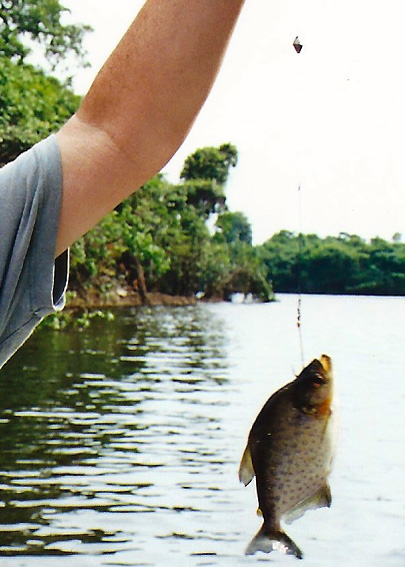
Peggy took a photo of the piranha I caught. I was careful to hold it far away from me.

Fish are slippery characters however and mine slipped out of the guide’s hands, landed on the bottom of the boat, and immediately went looking for someone to eat.  Eight pairs of feet shot up into the air.

Eventually we got things under control and caught several more fish. That night we would feast off piranhas. But first, the itinerary said, we were supposed to go swimming. Why anyone would want to go swimming in piranha-infested water, I didn’t have a clue. The little buggers would be out for revenge.

“They don’t come in here,” the guide assured us when we reached a white, sandy beach. I looked around. It was all part of the same river. There were no signs warning the fish to stay out and there was no fence to keep them out. As far as I could tell the clear water and the white sand would make it easier for the piranhas to find toes.

There is always someone willing to test the waters and jump in feet first, though. Usually it’s Peggy. This time was no exception. I volunteered to take photos. She returned with toes intact.

Peggy went swimming in the Amazon, which was supposedly free of piranhas.

The piranhas were waiting for us at dinner, tastefully cooked. The jaws were on a separate platter, grinning up at us with dentist white teeth. In the age-old question of who eats whom, we had won, at least this time. The fish tasted, uh, fishy with a slight hint of chicken and something else. Was it cow or toe?
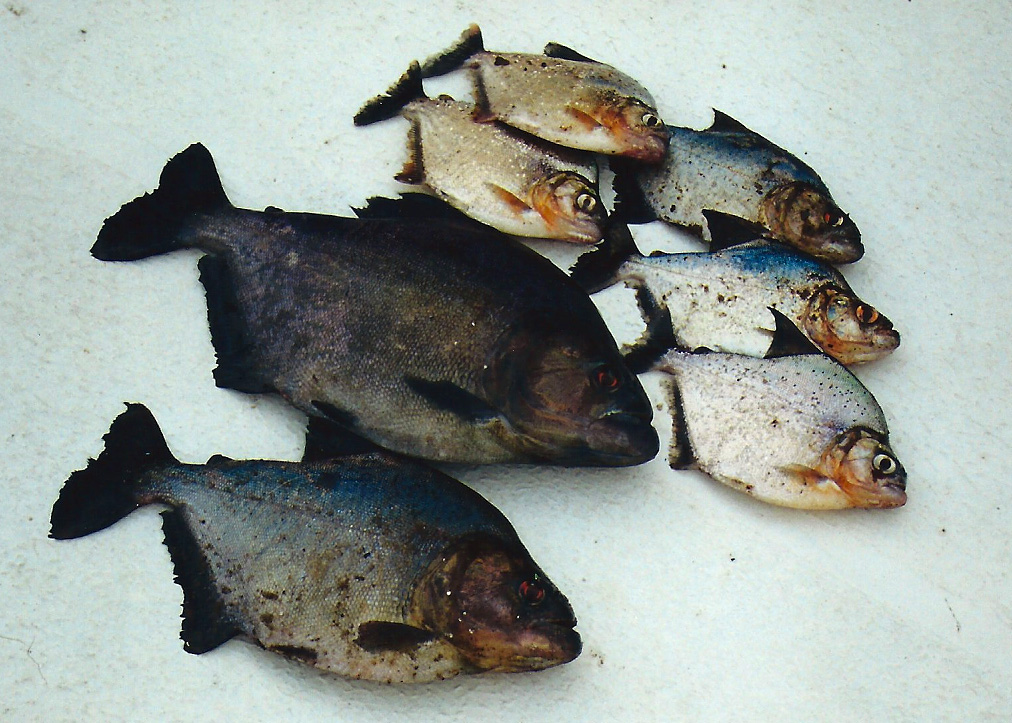
Our catch of piranha, ready to face the cook.

An Amazon Boa Went Slithering by… The Passport Series

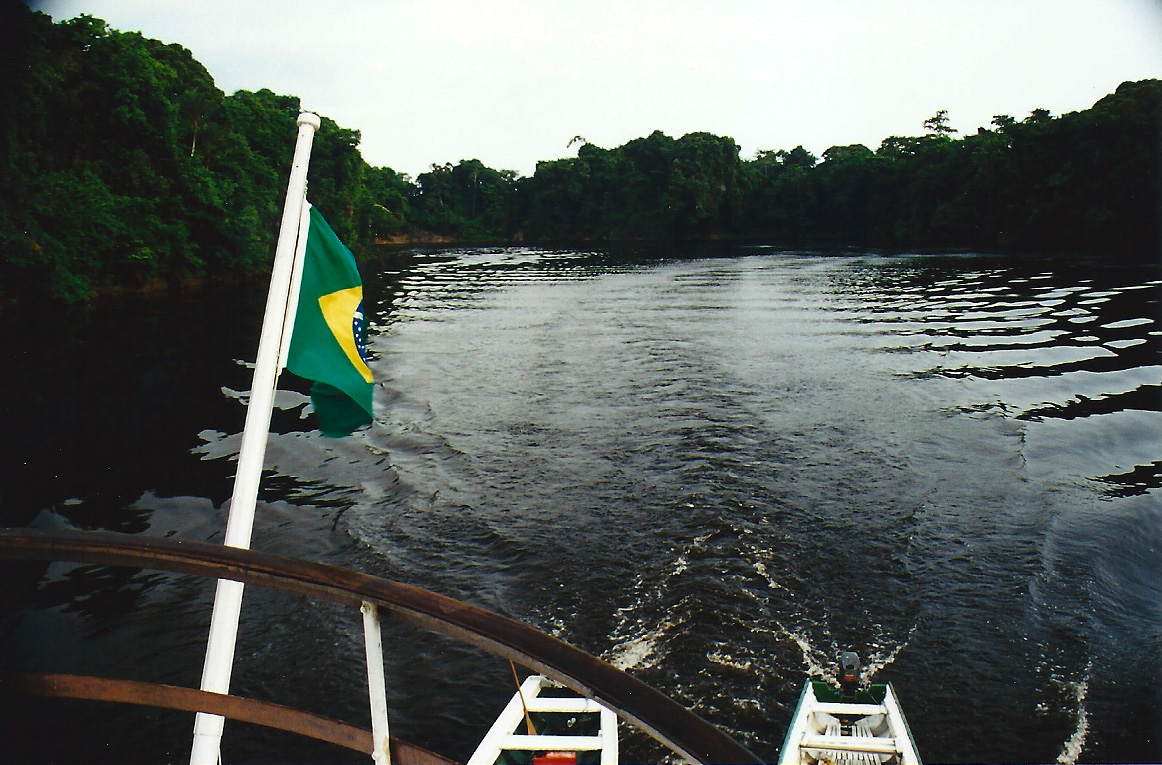
Our boat, the Amazon Clipper, docked for the evening deep in the rainforest on a tributary of the Rio Negro River, Brazil.

Peggy and I sat on the upper deck of the M/V Amazon Clipper, sipped a cold beer and watched the Rio Negro River hurry along on its journey to the Amazon.

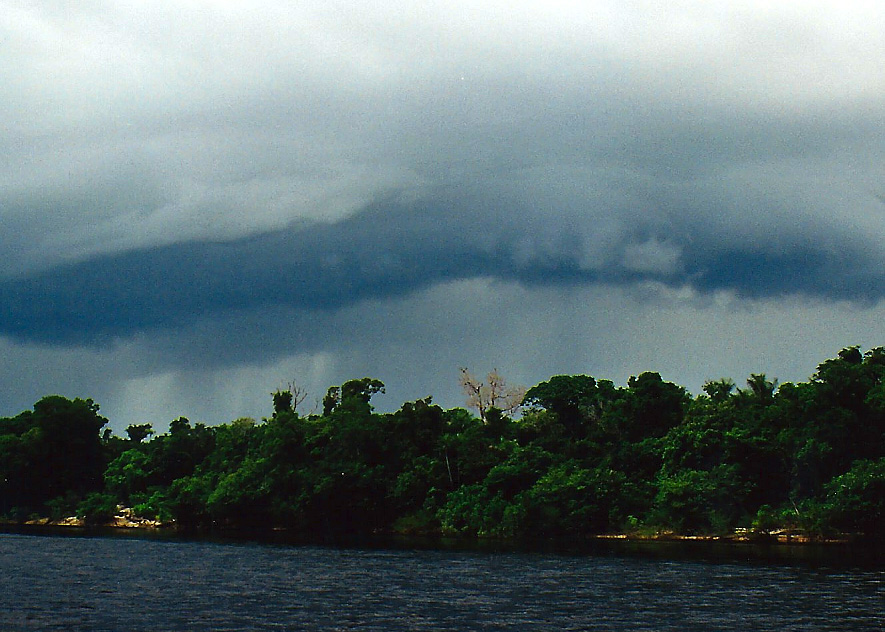
Dark clouds dumped buckets of rain on the forest and threatened our cocktail hour.  Thunder and lightning upped the ante. One thousand one, one thousand two, one thousand three… I counted to determine how close the lightning was in a ritual dating back to my childhood. Seven seconds equals a mile. When the flash and the boom arrive together, it’s time to worry. Lots.

Dark clouds and rain predicted a stormy cocktail hour in the Amazon rainforest.

Between watching the river and watching the storm, we scanned the rainforest for wildlife. A flock of parrots flew by heading for its evening roost. Our guide informed us that the dark blob we spotted hidden in the trees was a three-toed sloth, a creature famed for sleeping four fifths of the time and pooping once a week. He makes a rare trip to the ground to accomplish the latter and digs a hole with his short, stubby tail.
Peggy and I clinked our beer cans, toasted the sloth and toasted another adventure. Two days earlier we had been buried in work. An 18-hour day out of Sacramento California via Los Angeles and Sao Paulo had eventually deposited us at Manaus, Brazil in the heart of the Amazon. Now we were chugging up a tributary of the Amazon River on a small boat with six fellow passengers and a crew of three.

The Amazon Clipper chugs up the Pagodo River, a tributary of the Rio Negro. Our ‘canoes’ trail behind. The afternoon’s storm has passed by. Soon we will be experiencing the Amazon night.

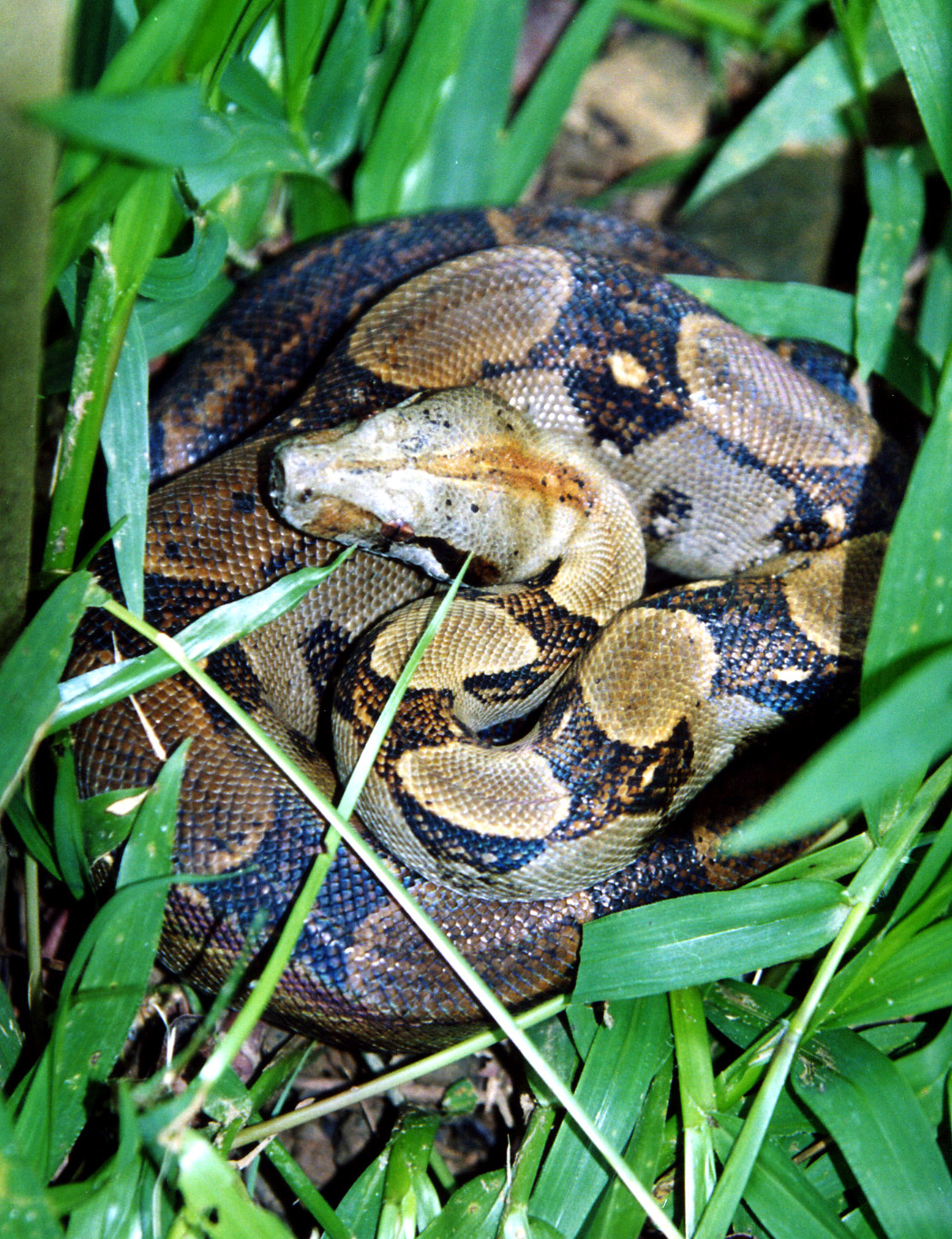
The Amazon is a world of the BIG: big rivers, big forests, big storms and big snakes. We had met the river, forest and a storm during the afternoon. That evening we met one of the snakes. Our crew took us out in a large canoe to experience the Amazonian night. An eight-foot boa went slithering by us in the river and checked out our boat.

“It’s a baby,” the guide teased. Right. The boat came equipped with a large spotlight for peering into the jungle. Bright, shiny eyes peered back at us along the shore. They were Caiman, small alligator like reptiles. The crew caught one for us to examine more closely back on the Clipper and then turned off the spotlight.

It was don’t see your hands dark. Something plopped in the water. A creature went crashing off through the brush. It wasn’t particularly scary, the guides are expected to return their guests unharmed, but it was interesting, especially the sounds our imaginations turned into bone crushing snakes and ferocious jaguars.

Back on the deck of the Clipper, the Caiman was turned loose. It dutifully whipped its head around and snapped at us before escaping back to the river.

Peggy and I retired to our small room with its bunk beds and porthole window. High humidity and heat had us sleeping on top of the covers with the porthole window open and hopes of no nighttime visitors. Fortunately our bodies had been pumped full of protection to foil disease carrying mosquitoes and other tropical maladies.

We slept fitfully and dreamed of our next adventure, fishing for the legendary sharp toothed Piranha.

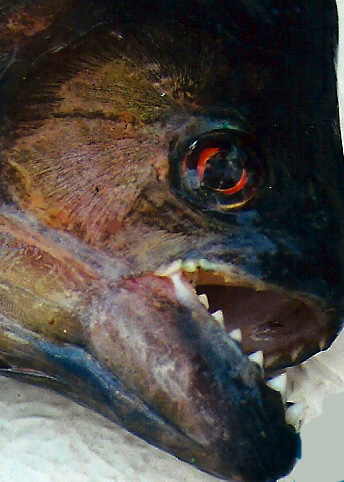
This Amazon piranha was hardly a dream. I caught him on a hand-line. Check out the teeth.

Wandering through Time and Place… A Writer’s Perspective

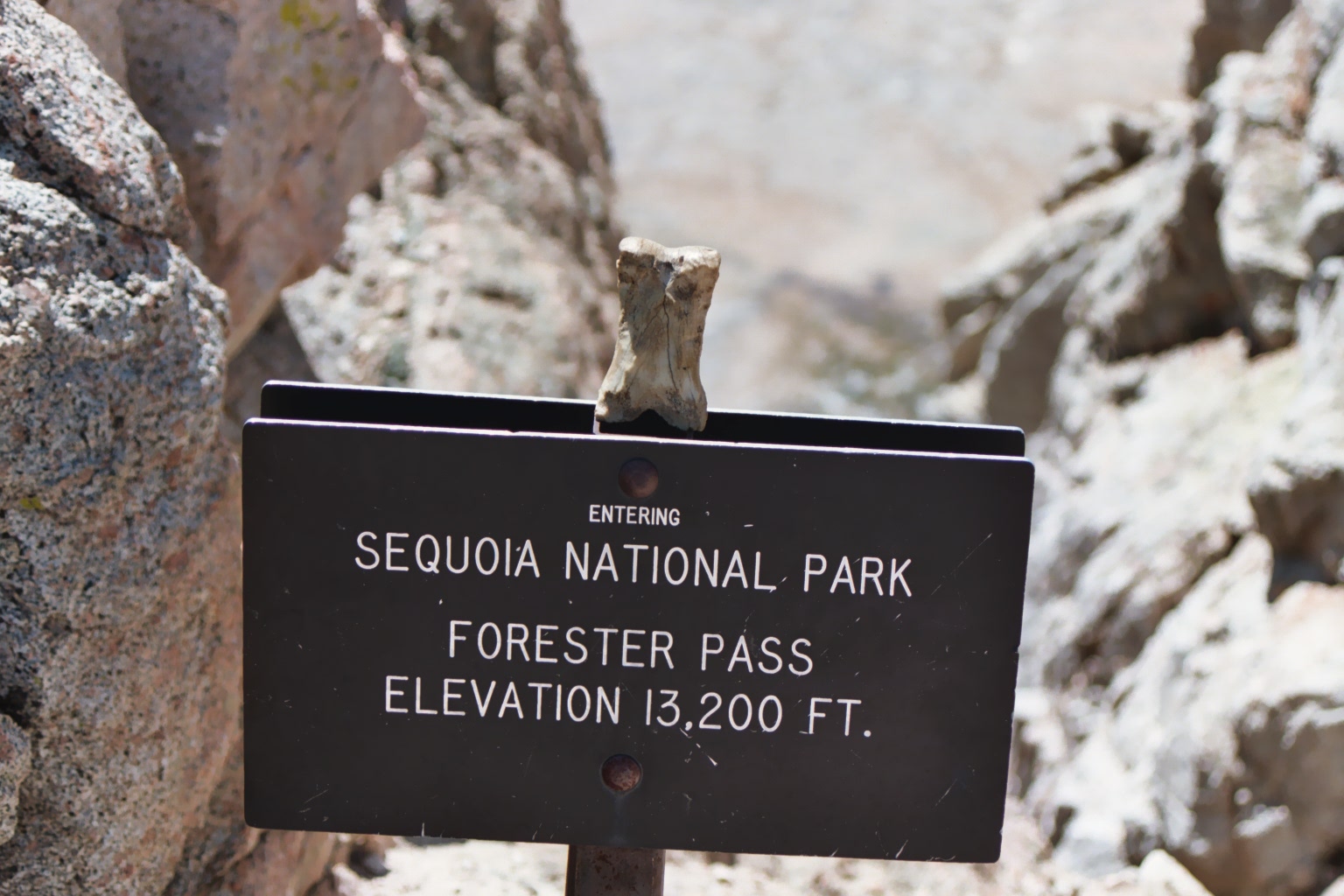
Bone has wandered the world for 35 years doing strange things. Here he rests on the Mayan god Chacmool in the place where sacrificial hearts once resided.

After two years of blogging under the title of Peripatetic Bone, I’ve decided to make changes. Bone, as you may know, was found in the Sierra Nevada Mountains in 1977 and has been travelling the world ever since. He has visited over 50 countries, climbed mountains, gone deep-sea diving, been blessed by the Pope and had many epic adventures.

When I started this blog, my wife Peggy and I were travelling around North America full-time in a 22-foot van. Bone rode up front where he could see the world go by. Introducing him to strangers was a weird but great way to begin conversations. We would do a photo shoot with him and wait for people to start asking questions.

It seemed natural to name my blog The Peripatetic Bone. Times have changed, however. We are now settled in Southern Oregon and Bone has retired, at least temporarily, to his Bone Cave.

Also, from the beginning, I wrote about many non-Bone related subjects. He wasn’t around when three British Warships used Andrew Mekemson for target practice during the Revolutionary War, nor was he with me when I served as a Peace Corps Volunteer in Africa. He even missed Berkeley’s Free Speech Movement.

“Wandering through Time and Place” is my new title. This will allow me to continue my travel focus plus incorporate stories from the past. I also plan to expand my grass-roots solution series with an emphasis on the future. Presently I am reorganizing my blogs to fall under three categories: Looking Back in Time, Wandering the World, and Creating the Future

My new tagline, “A Writer’s Perspective,” is what this blog is primarily about and always has been… story telling. Plus I have another motivation. Presently I am pulling my Africa Peace Corps stories into a book that I will publish digitally this year and in print format next year. Some time in the next few weeks I will create a new WordPress blog linked to this one that will feature a new chapter each week.

None of this means Bone is going away. He will still have his own page on this blog and will appear frequently in my travel tales. Thanks again to all the people who read this blog and make the writing of it fun and worthwhile.

Bone contemplates the future of Bad Bones in Tombstone Arizona.

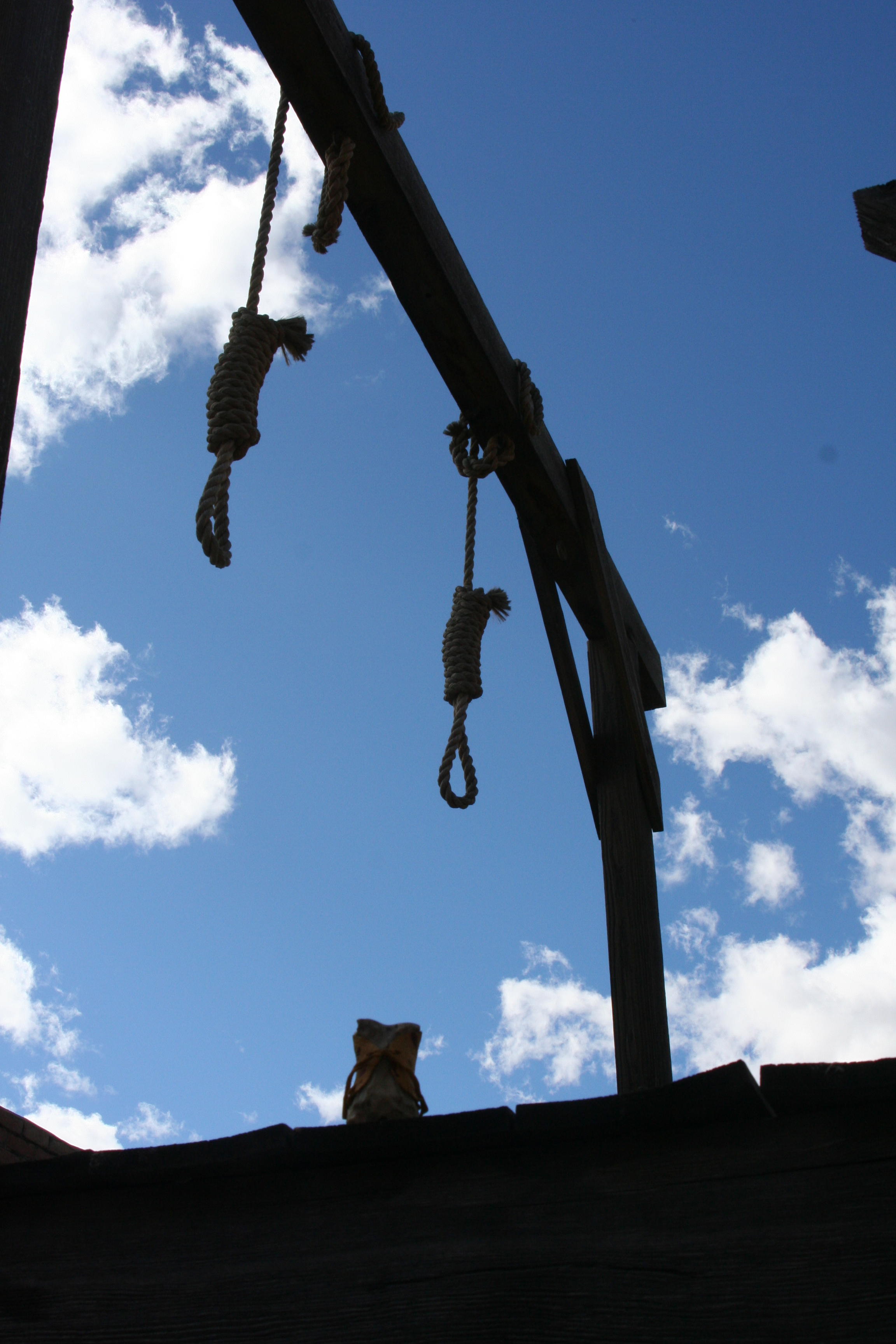
But not to worry… Bone is a good bone and he is not about to be hanged by mistake.

Nor is he likely to fall into any dark, bottomless pits.

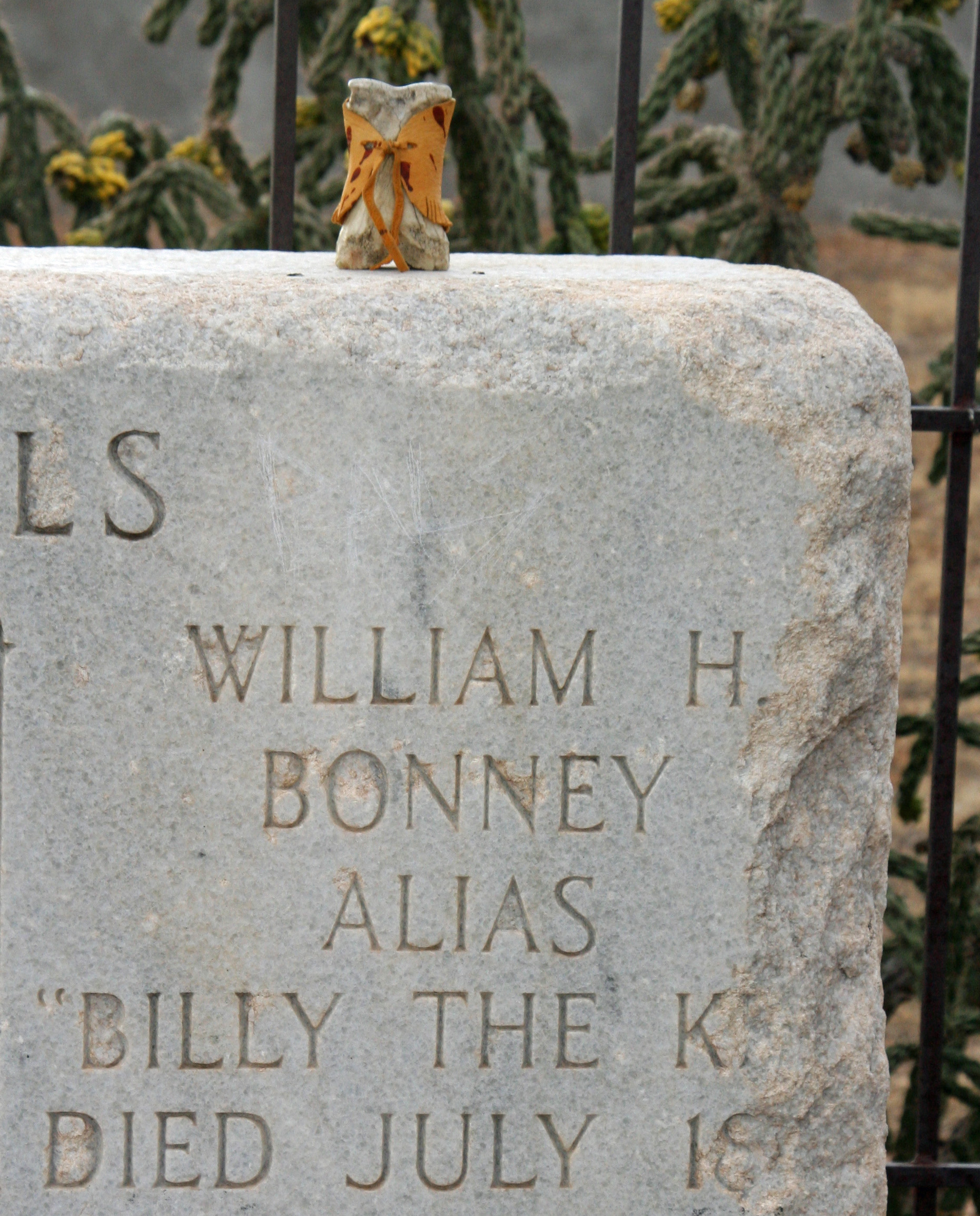
Nor be shot down by a desperado such as Billy the Kid.

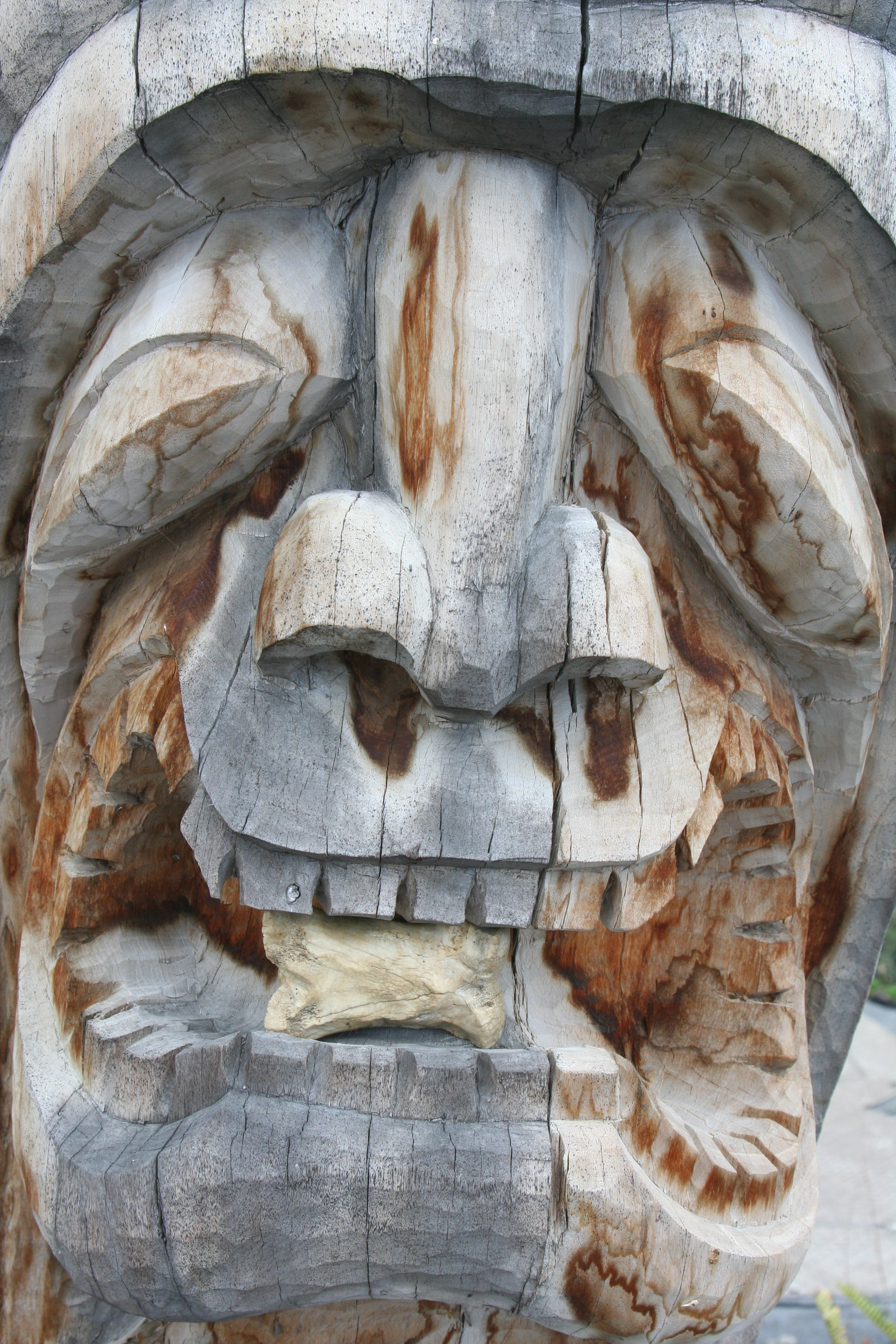
Nor is his fate to be chomped down by an ancient Hawaiian deity.

Or become iguana food.

Instead Bone will continue to wander the world.

And have adventures that most people only dream about.


The Missing Turtles of Tortuga… The Passport Series

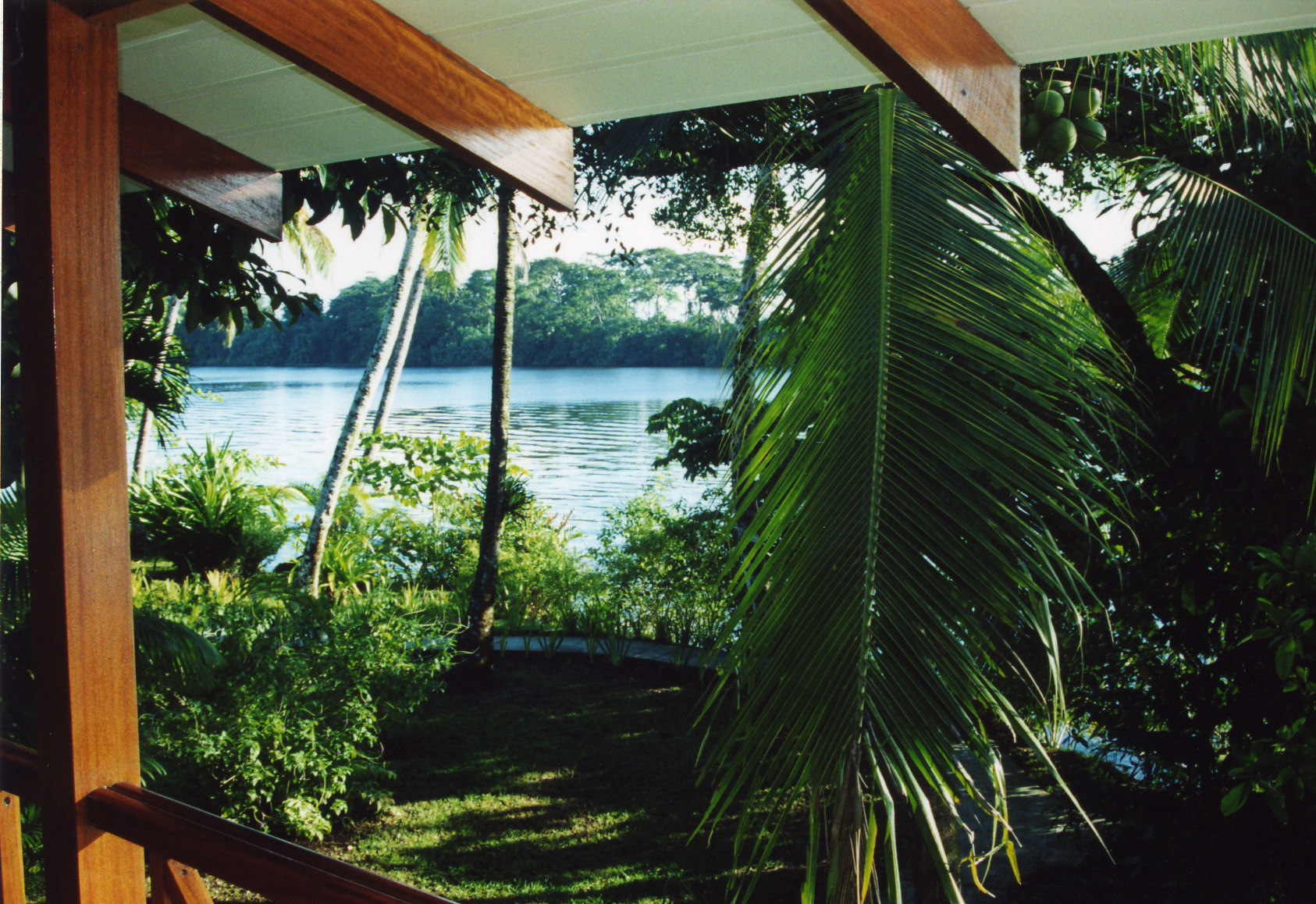
The view from our balcony at Tortuga Lodge on the edge of Tortuguero National Park on the Caribbean side of Costa Rica.

We missed seeing the giant 300 pound Green Sea Turtles and their prodigious effort of laying 80-100 eggs on our trip to Tortuga Lodge in Costa Rica. The large females go into a trance during the process. It sounds like a good idea when you are having 100 babies. Once mom has dug her hole in the sand and settled in, visitors can walk up and watch the process.

Seven weeks later the eggs hatch and the baby turtles instinctively scurry for the ocean. They’re tasty. Scurrying is good. On shore, sea gulls and crabs think feast. Jaguars also hang out in hopes of crunching down their share.

The ocean is hardly safer. Last fall I watched a flock of Brown Pelicans off of the coast of Puerto Vallarta discover a swarm of baby turtles heading out to sea. It was like Armageddon.

Of the hundred or so babies who hatch, one may be lucky enough to make it to adulthood… not good odds. If you are one of the lucky ones, however, you can expect to survive for 80 years. Your only enemies are men and sharks. Of course that’s enough. By the mid 1900s Green Sea Turtles were on the edge of extinction. Sharks were not the problem.

People found the meat tasty and behaved like the Pelicans when the turtles came ashore.  Possibly even worse, they believed the eggs had an aphrodisiac quality. They killed the mamas and dug up the babies.

Tortuguero National Park on the northern Caribbean Coast of Costa Rica was established in 1970 as a sanctuary for the turtles. Tortuga Lodge sits on the edge of the park and offers a “gourmet dining opportunity” to view egg-laying mamas. I checked to make sure turtle soup wasn’t on the menu. Dinner by candlelight in the wilderness and the private viewing sounded good but I was wary of the last sentence, “You might get back to the lodge around 11 pm.”

What was with the might? It implies there is a might not. Could the jaguars somehow be involved? “Let’s see. I can eat this 2-ounce turtle or that 200-pound person. Hmmm.”

Anyhow, we arrived in late November, well past the egg-laying season. Turtles and jaguars were not on our agenda. Instead, we watched giant iguanas climb trees during the day and listened to howler monkeys howl at night. We ventured out on a tour of the regions dark, murky streams and then took out canoes on our own. Crocodiles lurked along the banks, bright butterflies went flitting by, and a Jesus Christ Lizard walked across the water.

Tortuga Lodge, like Monteverde Lodge, is owned and operated by Costa Rica Expeditions. Rooms were quite attractive, the food excellent and the guides knowledgeable. Getting there from San Jose involved travel by both van and boat. We flew back from a small airstrip located near the lodge.

Crocodiles lurk along the edges of canals located in Tortuguero National Park.

The eye of a Cayman.

We found an unusual beetle crawling across the lawn at Tortuga Lodge.

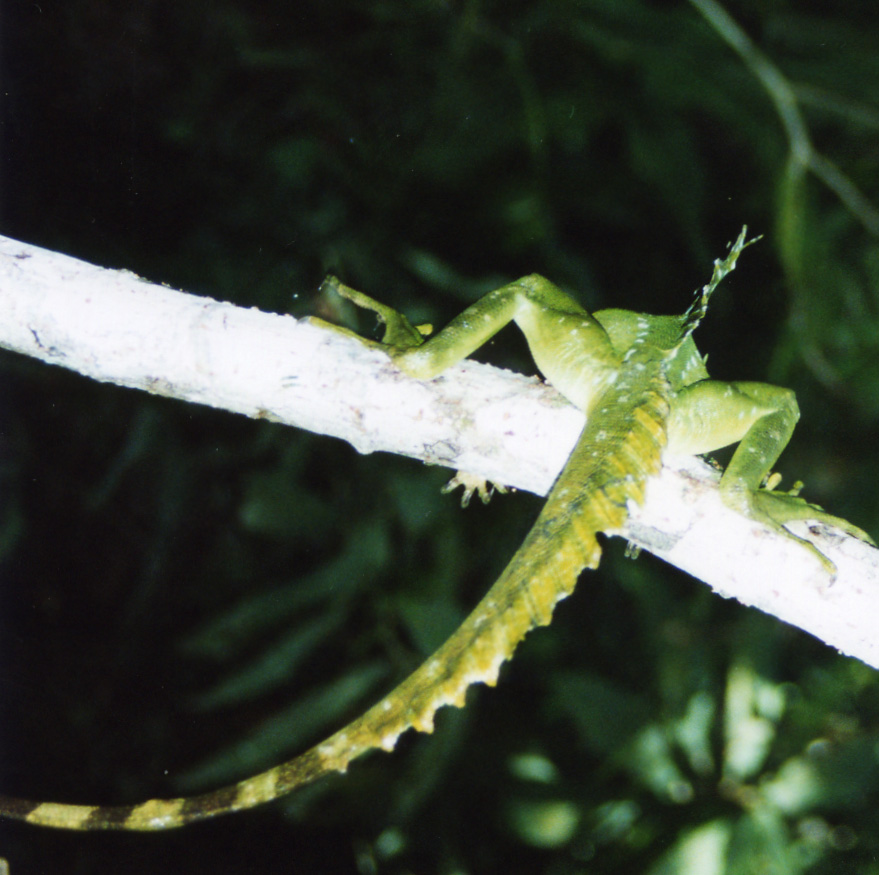
This lizard provided a colorful rear end view.

Monteverde Cloud Forest, Costa Rica… The Passport Series

The Monteverde Cloud Forest Reserve in Costa Rica is filled with tall trees and massive vines. These Strangler Vines once surrounded a tree. As their name implies, they strangled their host. Now only the vines remain.

The drive from San Jose, the Capital of Costa Rica, to the Monteverde takes around 3½ hours. Our guide and driver from Costa Rica Expeditions picked us up at our hotel. He was funny and knowledgeable, which made the journey pass quickly. We learned and laughed a lot.

Monteverde’s claim to fame is its cloud forest where mists hang out in mythical proportions. Luxuriant plant growth and abundant animal life have turned the area into a major tourist destination as well as a center for ecological study.

The area has an interesting history dating back to the 1950s when a group of Quakers and other pacifists out of Alabama arrived. They had moved from the US to avoid being drafted into the Korean War. Eventually a portion of the land they farmed became the base for Monteverde Cloud Forest Reserve.

We climbed some 4000 feet to reach the Montverde Lodge, the hotel where we were staying. The lodge perches on the edge of the rainforest and its rooms provide a front row seat to whatever action is taking place. I kept expecting a Howler Monkey to appear on our window ledge. The Lodge also features attractive gardens.

Leaving the valley floor, we climbed over 4000 feet up into Costa Rica’s central mountains to reach Monteverde. This photo is looking back over the way we came.

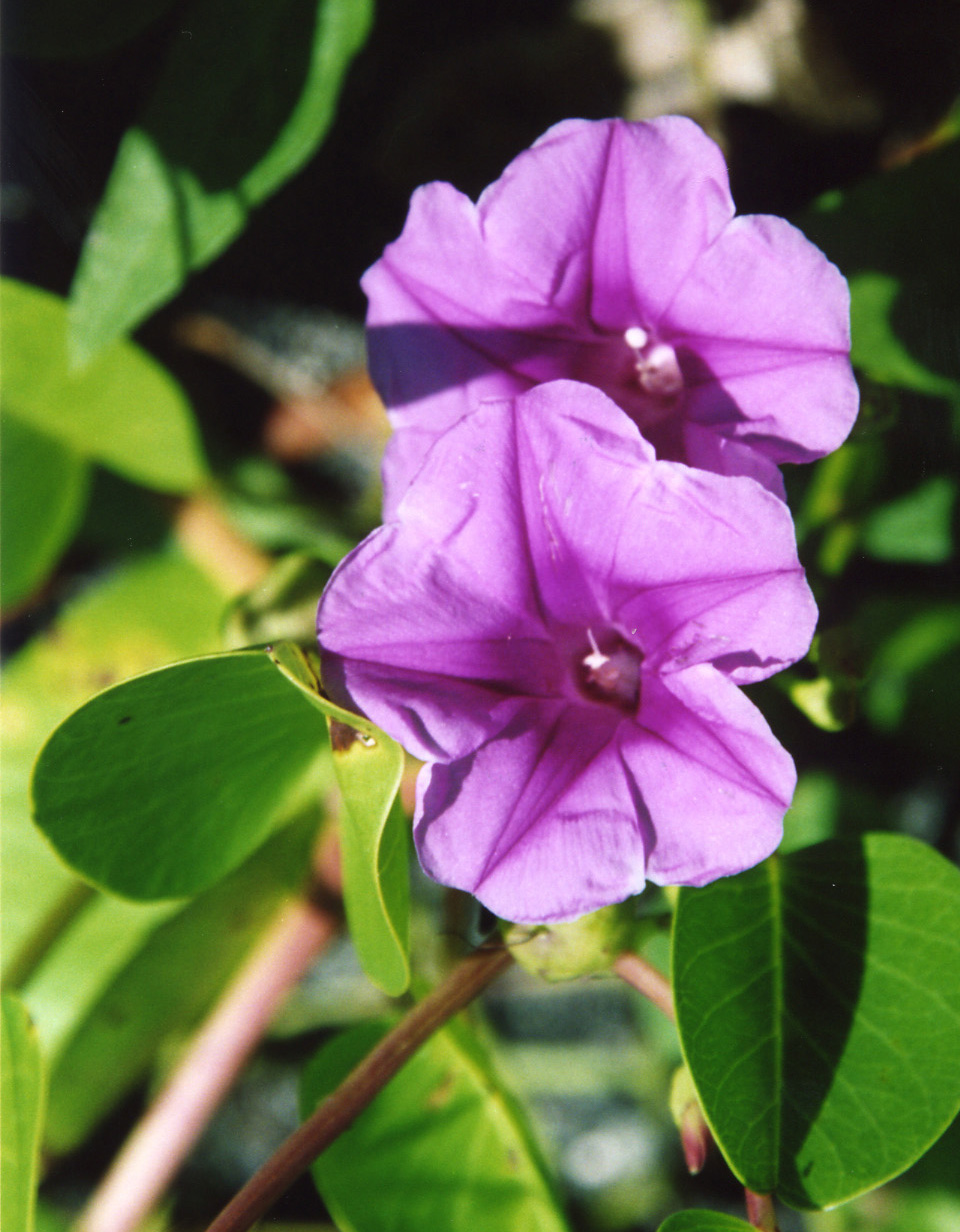
The Monteverde Lodge features a flower filled garden including this beauty.

I also found this pair of flowers at the Monteverde Lodge quite attractive.

This fern at the lodge.was particularly interesting. it made me think of gears within gears.

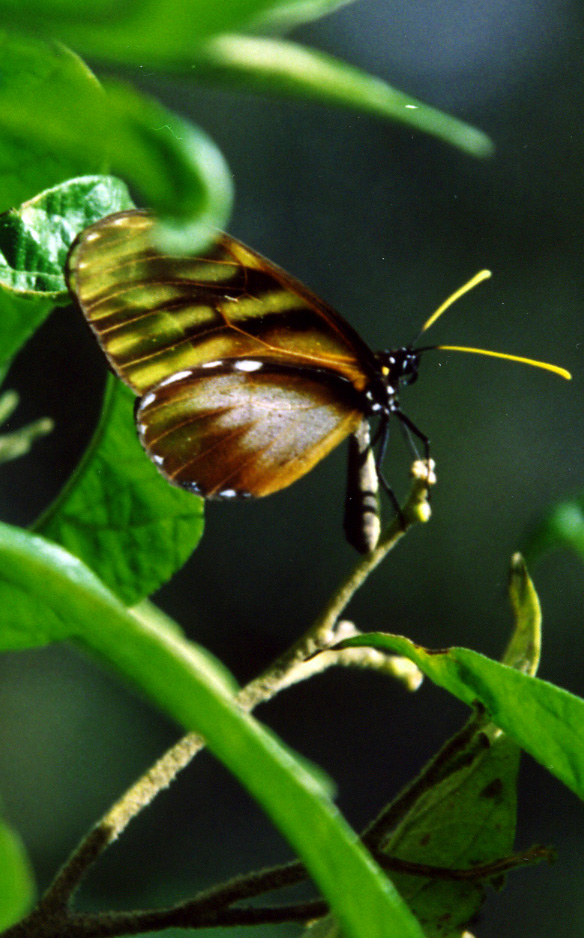
This butterfly we found at the Monteverde Lodge is a member of the Clearwing Family.

Our objective was to explore the rainforest, however. We went on several hikes including one at night and another that took us to a platform high in the forest canopy. The pitch-black night tour was quite interesting, especially when we turned our flashlights off.

On one of our hikes, we climbed to a platform high in the canopy of the Monteverde Cloud Forest. I think Peggy is smiling because we made it to the top.

This is a view of the Monteverde Cloud Forest looking down from the platform we climbed up to.

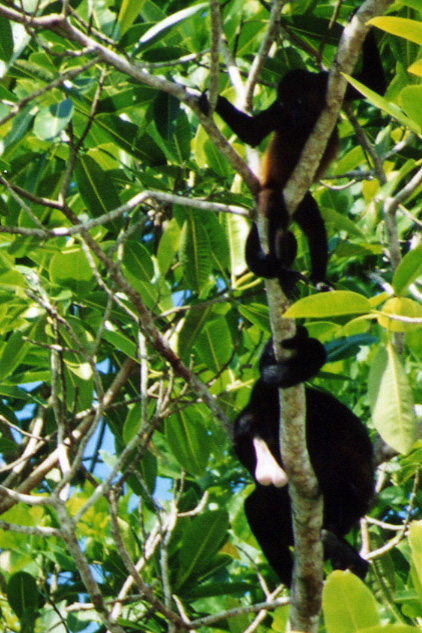
We spotted a pair of Howler Monkeys up in the trees. The one on top is all limbs and tail. The lower Howler looks like he is gnawing on a thigh bone… Hmmm.

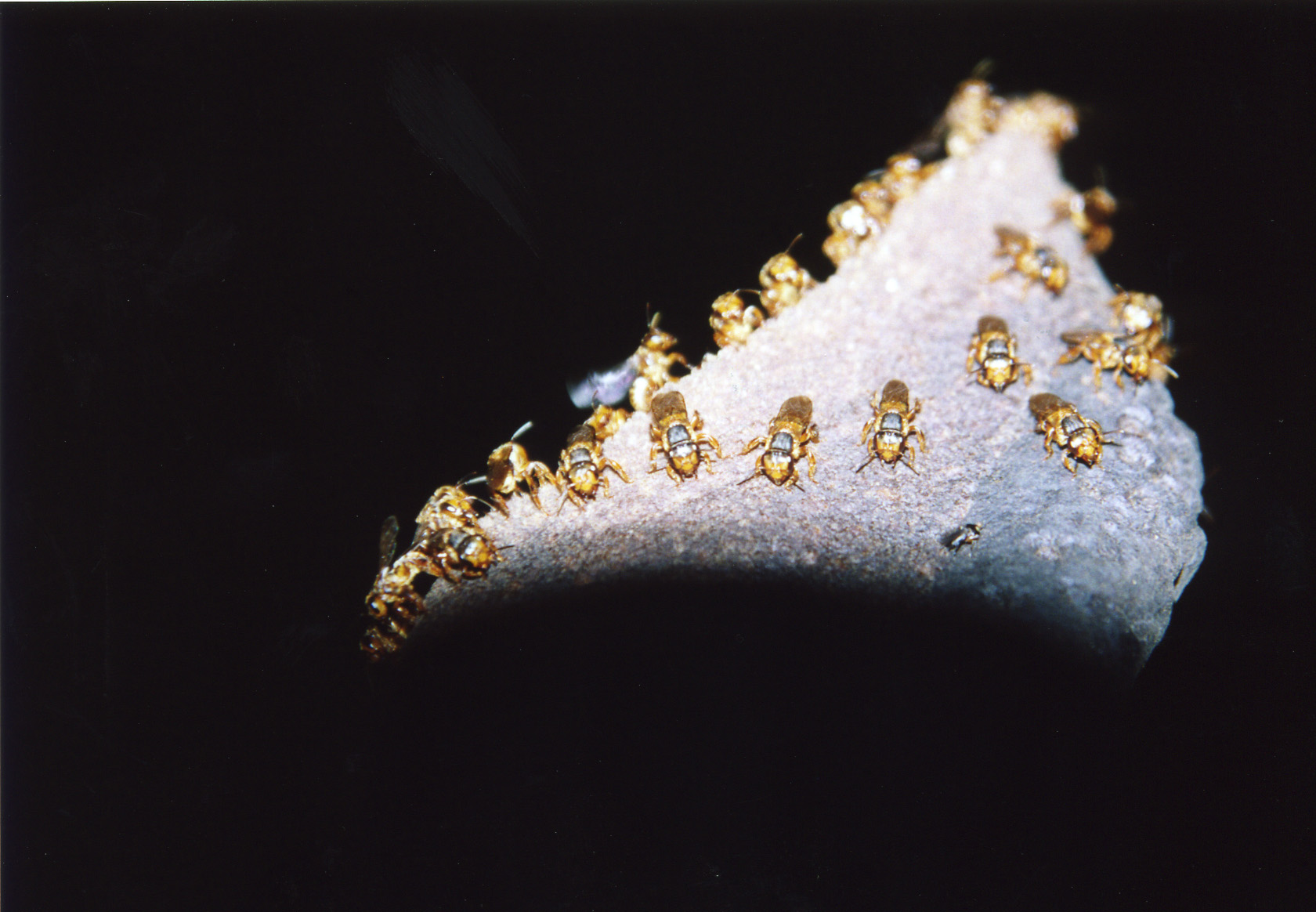
We came across this strange army of insects about to take flight on our night walk. The look ant-like but my guess is they are termites because of their thick bodies.

This colorful fungus was another denizen of the Monteverde Cloud Forest we came across on our night walk.

Corcovado National Park, Costa Rica… The Passport Series

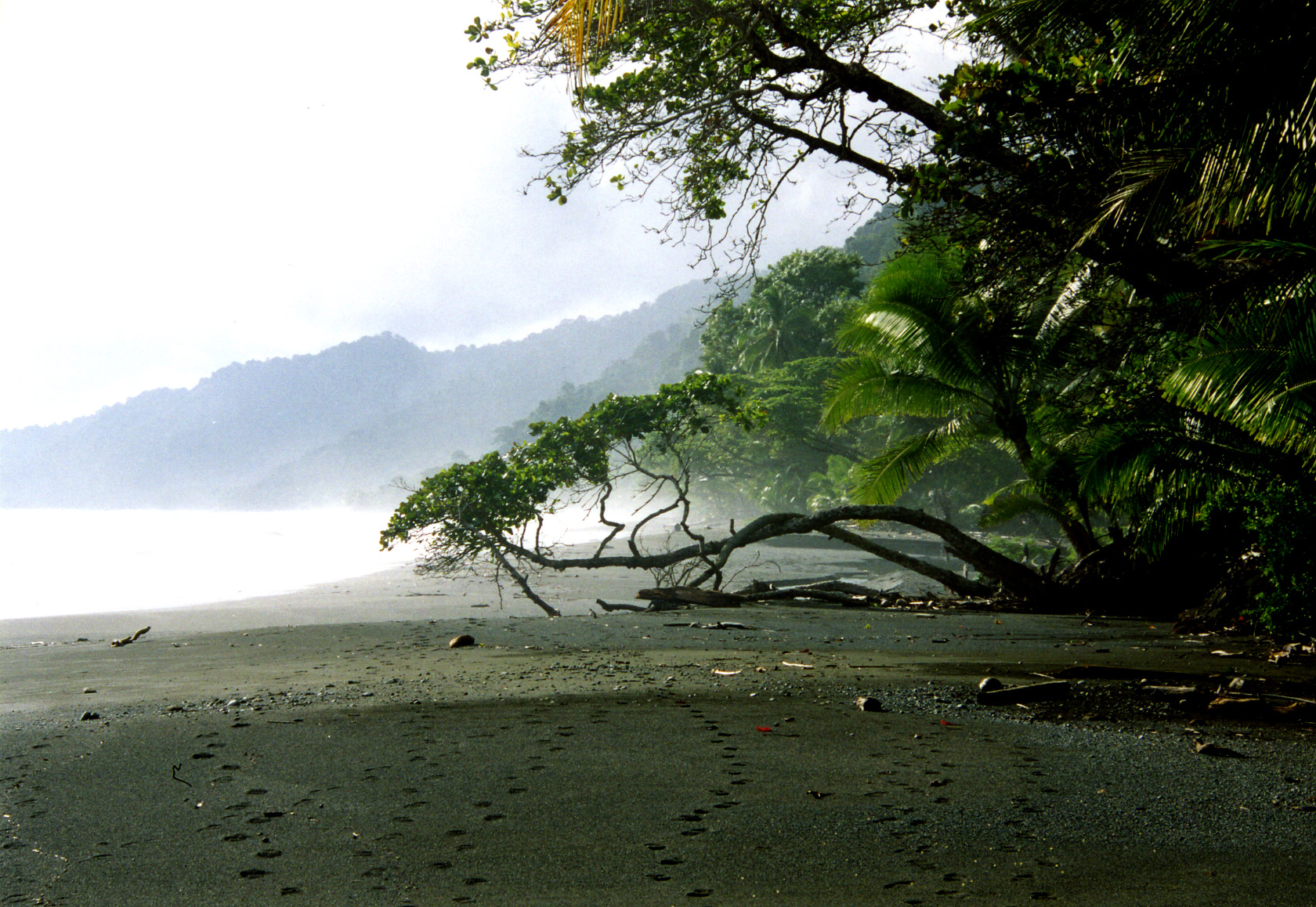
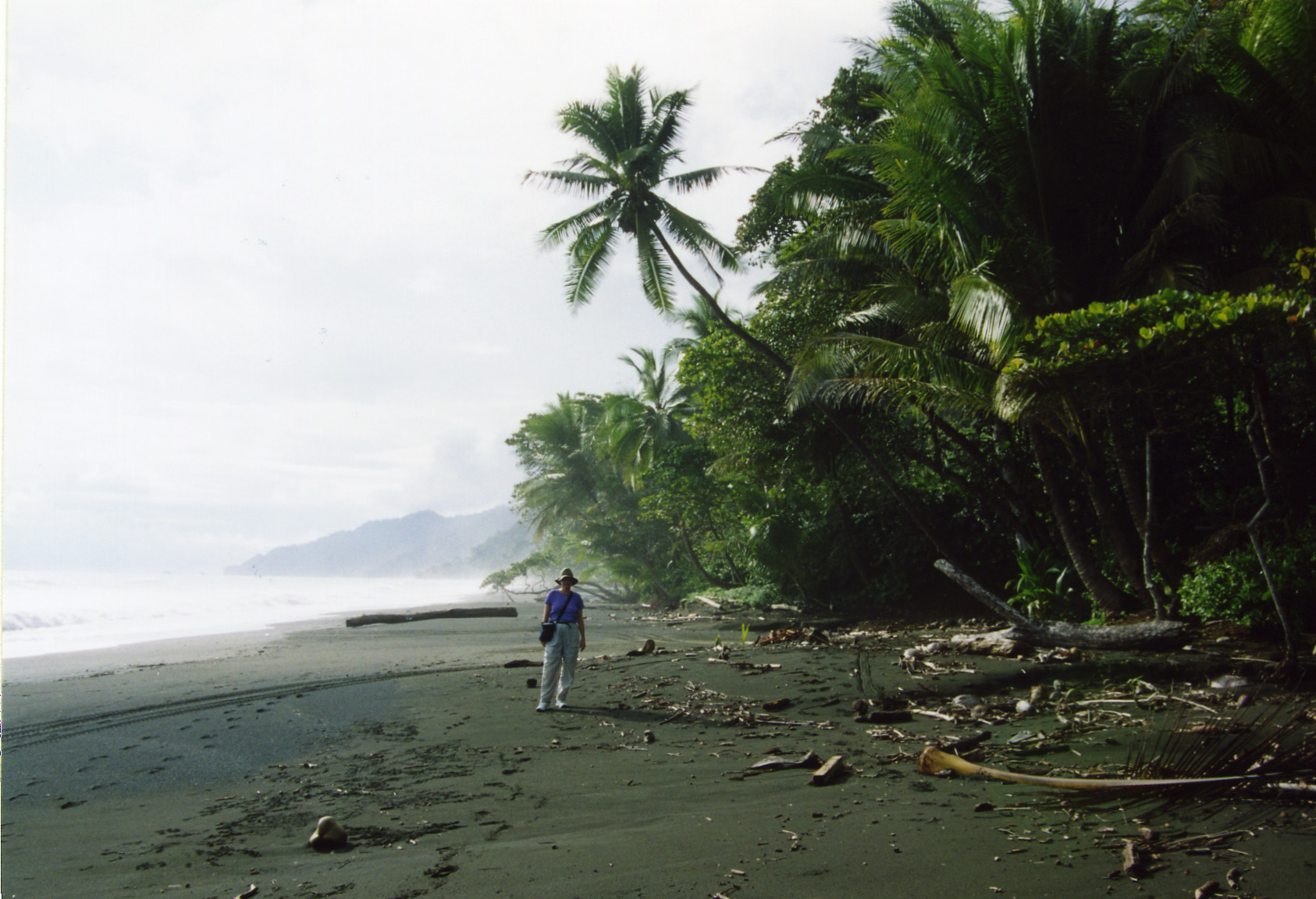
Miles and miles of scenic Pacific Ocean beach greet the visitor to Corcovado National Park in Costa Rica.

Vacation was two weeks away and I hadn’t made any plans. “Let’s go to Costa Rica,” I suggested to my wife, Peggy. “Why not,” she responded. Peggy is used to my procrastinating ways. Sometimes they even pay off.

I jumped on-line and lucked out. Costa Rica Expeditions had tours to fill at last-minute bargain basement prices. We could go to three great places for a cost we would normally pay for one. The company, by the way, did an excellent job.

Our itinerary included the Tortuga Lodge on the Atlantic Coast, Monteverde Lodge in Costa Rica’s central highlands, and La Leona Lodge on the edge of Corcovado National Park on the Pacific Coast. It was an ecotourist’s dream.

Today I am going to feature Corcovado, an area that National Geographic has described as “the most biological intense place on earth in terms of biodiversity.” The National Park is located on the Osa Peninsula in southwest Costa Rica. It teems with life including some 375 species of birds, 125 species of mammals, 500 species of trees and over 10,000 species of insects. The insects win.

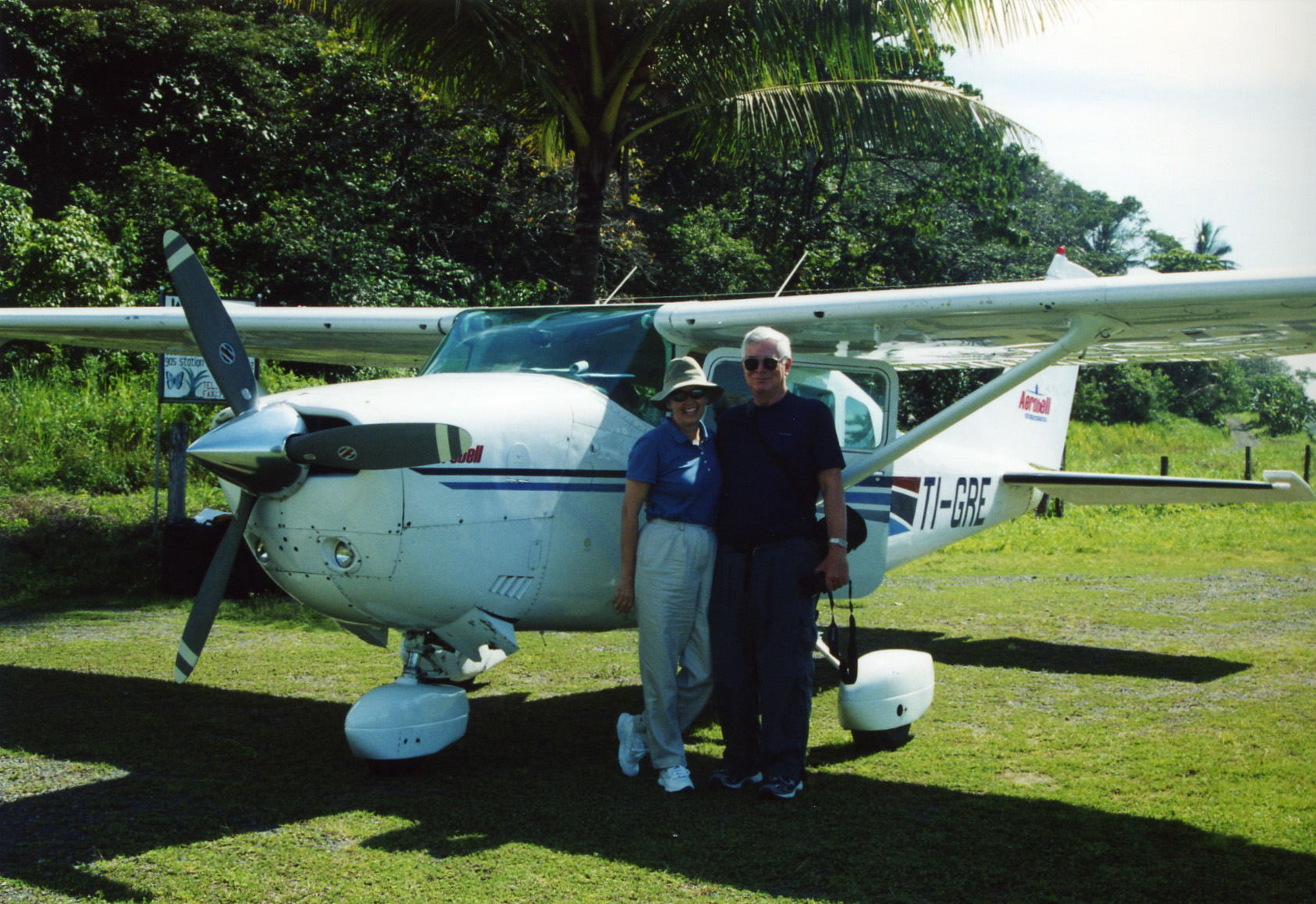
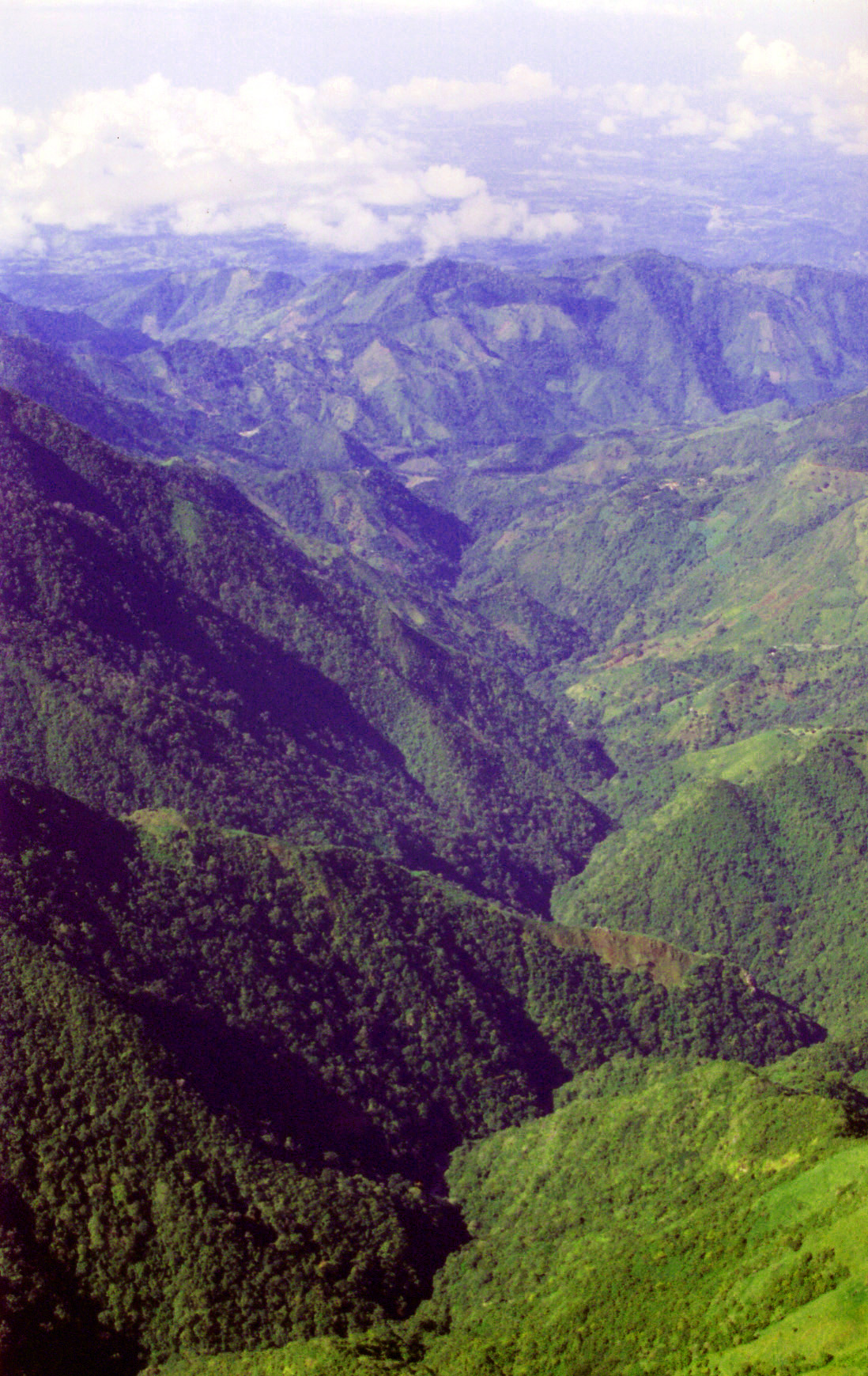
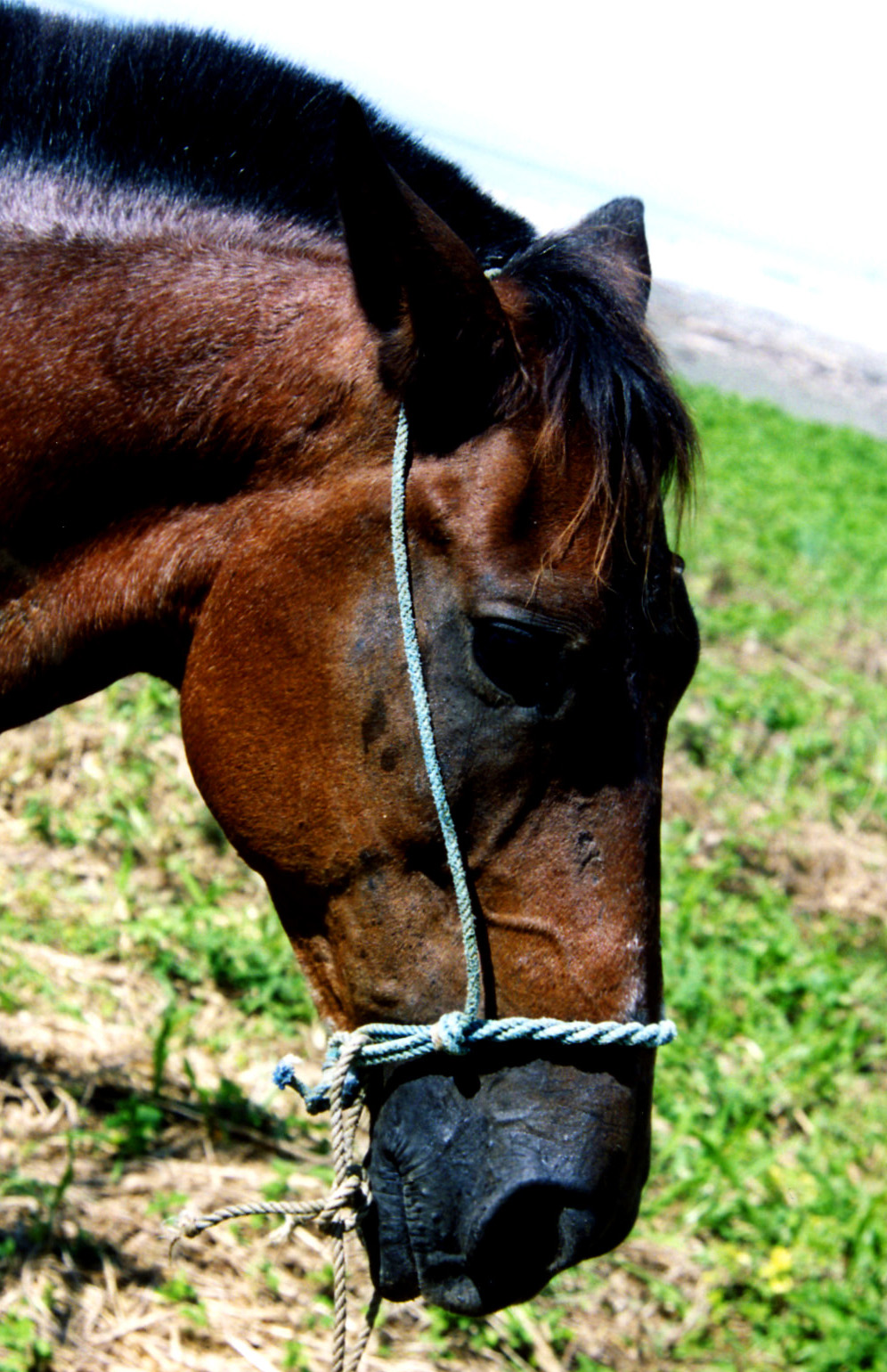
We flew down from San Jose, Costa Rica’s capital, in a small 6-seater prop plane that skimmed over the country’s tropical-green mountains, jungles and rivers to a landing strip next to the small community of Carate. A one-horse cart was waiting to carry our bags to the La Leona Lodge. Guests are expected to make the 45-minute walk on their own. There are no roads. We strolled down the beach, waded in the ocean and enjoyed the scenery.

Peggy, I and the plane we flew in to Corcovado National Park.

The plane skimmed over Costa Rica’s tropical-green mountains.

A one-horse cart waited to carry our luggage. I can’t say the horse was particularly excited about the prospect.

La Leona features comfortable tent camping, great meals, miles of beaches and a fascinating tropical rainforest. Each tent has a porch facing the Pacific Ocean. Waves lull you to sleep at night and at least a dozen of the regions 375 species of birds wake you each morning.

Our tent cabin at La Leona Lodge, Corcovado.

We spent our days hiking along the coast with detours into the rainforest. We also took advantage of the hammocks the Lodge has strung under the palm trees next to the beach. In the evening we would sit on our porch and watch the waves roll in or enjoy a cold beer at the Lodges open-air bar.

Peggy and I spent hours exploring the deserted beaches of Corcovado.

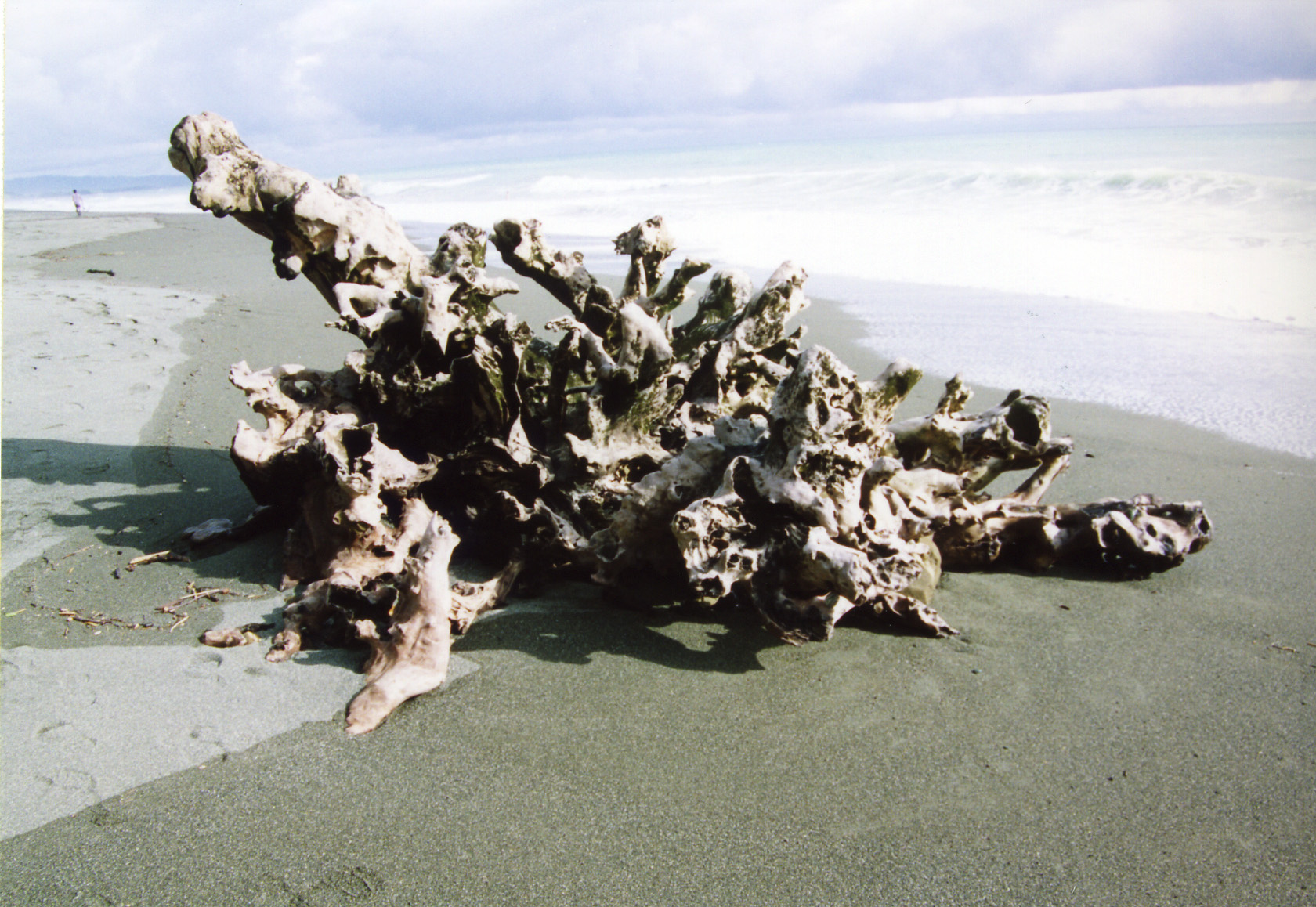
At one point we came across an impressive bit of driftwood.

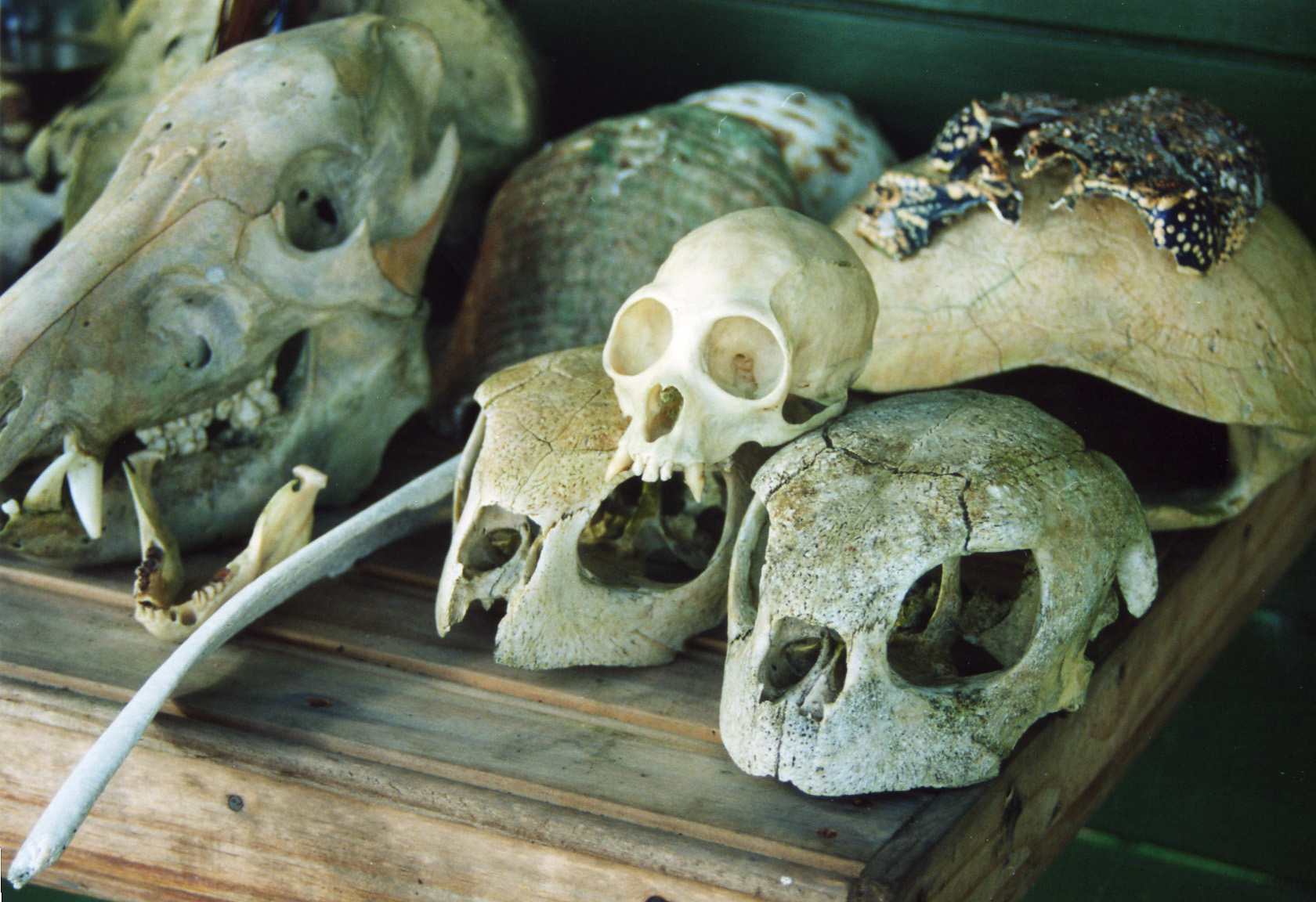
A Corcovado National Park ranger had gathered skulls of several park animals. A jaguar is on the left. The small human-like skull comes from a monkey. I believe the large smooth skulls are from dolphins… either that or aliens.

One time a troop of monkeys came swinging in through the trees and entertained us. Another time a boa constrictor went slithering by. All too soon, it was time to pack up our bags for the horse cart and walk back to the landing strip. We will return to La Leona Lodge and Corcovado National Park.

A boa came slithering through camp and then coiled up when I tried to take its photo. I kept plopping down about a foot in front of him trying to get an action shot and he became irritated.

A pair of Coatis were more amenable to having their photo taken. I love the way their tails appear to be entwined. The tail of a third Coati can also be seen.

A final reason why you should add Corcovado National Park in Costa Rica to your bucket list.

Bryce Canyon… The National Park Series

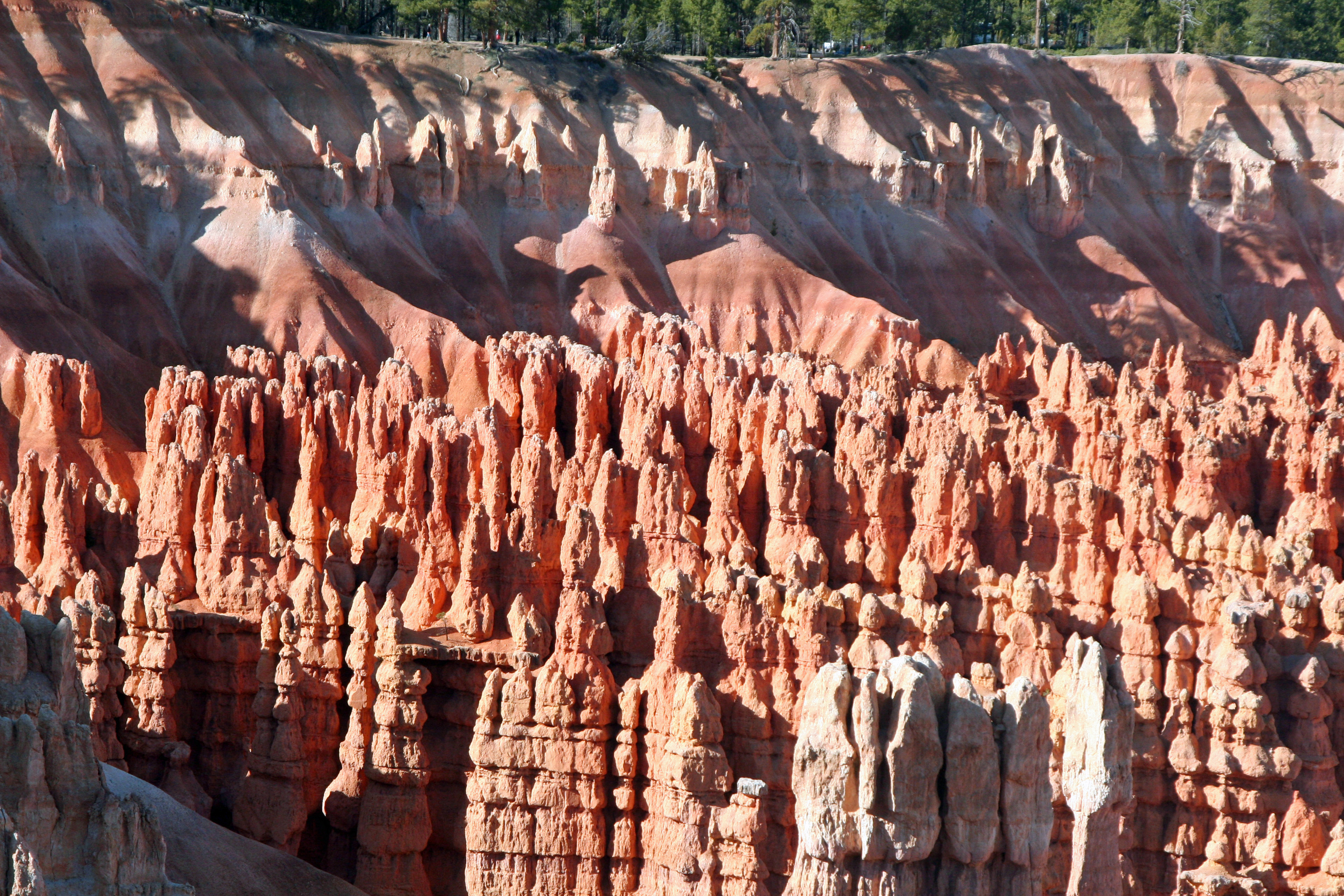
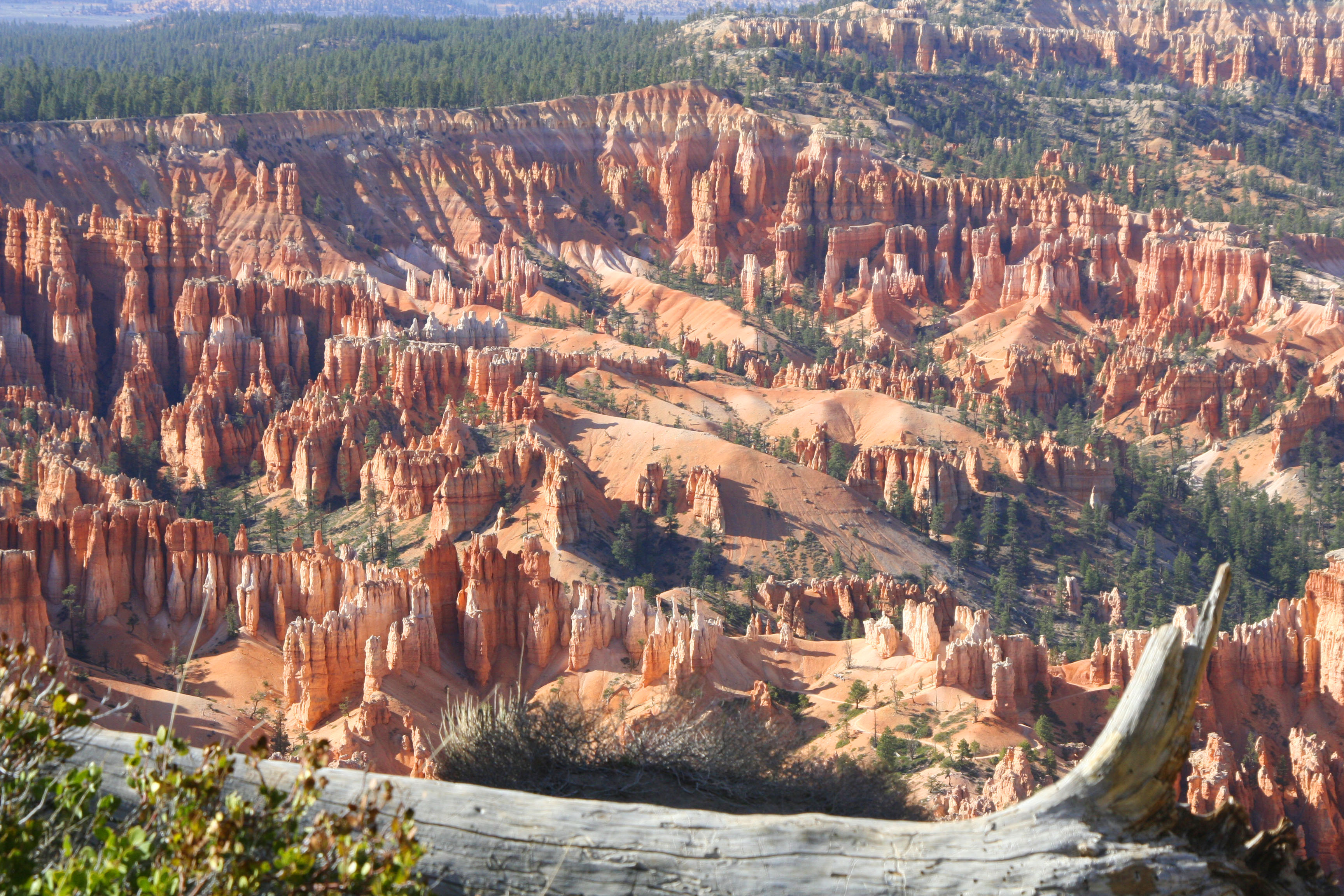
Bryce Canyon National Park in Utah is a fantasy land of rocks guaranteed to impress visitors.

The first time I came across a group of hoodoos, I stopped and stared. Then I grabbed my camera. But I didn’t have to rush. Hoodoos are strange rock formations of arid regions. They don’t go anywhere. They just stand there for centuries as nature and erosion do their work, carving whimsical statues of stone.

Bryce Canyon National Park is a superb location for hoodoo watching. They come in a multitude of shapes, forms and colors creating a fantasy land that even the wildest of imaginations can appreciate.

Hoodoos are created in Bryce Canyon through the erosion of sandstone, which eventually creates whimsical statues.

Carved from sandstone of the Paunsaugunt Plateau, Bryce Canyon drops some 2000 feet in altitude to the valley below. Trails ranging from easy to challenging provide the visitor with numerous opportunities to meet the hoodoos up close. Or you can stroll along the rim trail. Be sure to check the park out at sunrise and sunset.

Bryce Canyon is located off of Highway 89 in Southwestern Utah. An easy day’s drive can take you to either Capitol Reef or Zion National Parks and through millions of years of geological history. I consider Utah’s Highway 12 that connects Bryce National Park with Capitol Reef to be one of the most scenic roads Peggy and I found in our 200,000-mile exploration of America.

A family of Hoodoos hidden in a canyon.

Following one of the many trails into Bryce Canyon will bring you face to face with one of the National Park’s unique sculptures.

Another sandstone hoodoo. This one reflects the warm colors of the setting sun.

Erosion created a box canyon here. I saw it and thought immediately it would have made a great corral for cattle stolen by outlaws of the old west.

A final view of Bryce Canyon National Park.

Arches National Park… The National Park Series

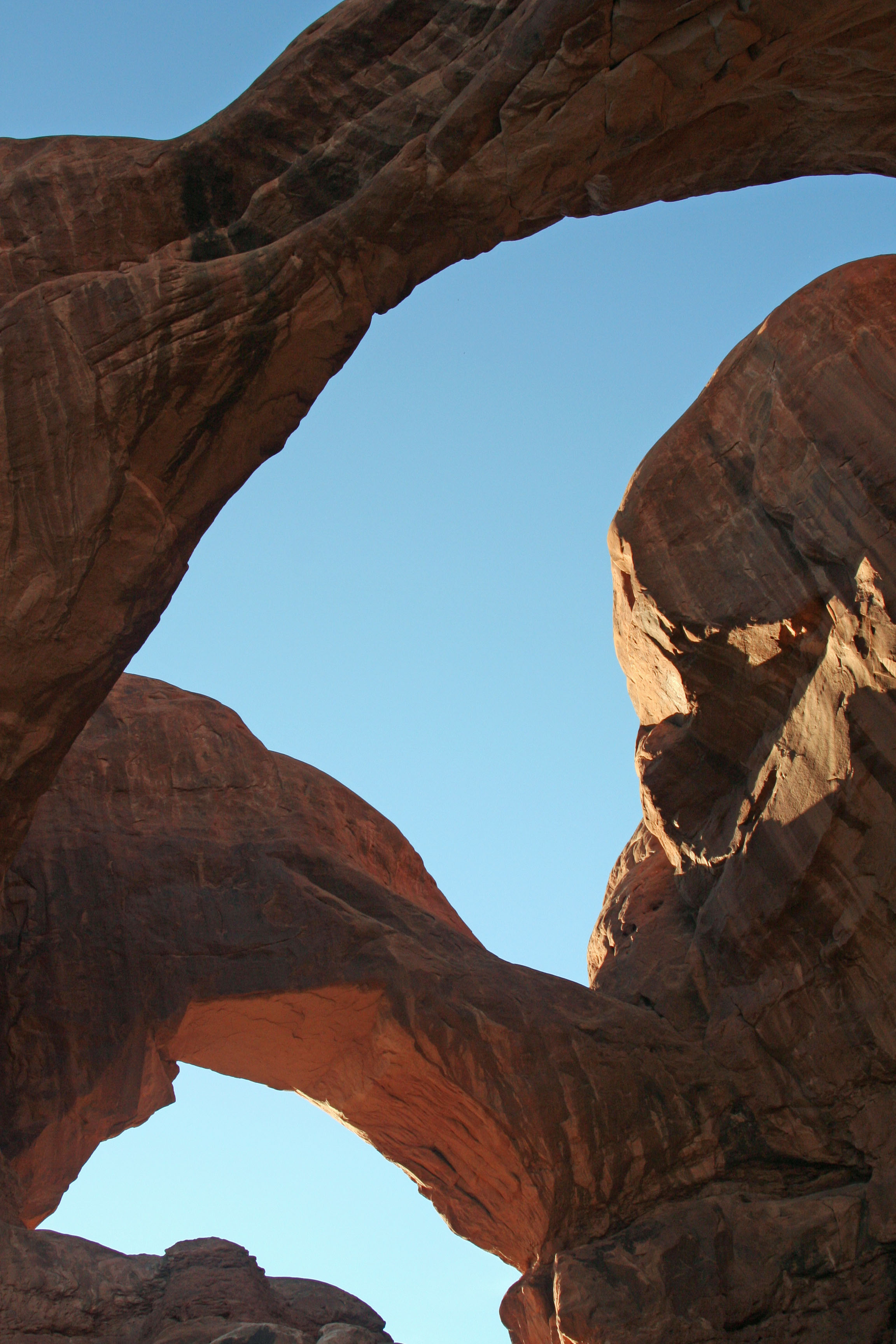
The soaring arches of Arches National Park create magnificent scenery.

I added Arches National Park to my must see list when I read Edward Abbey’s book “Desert Solitaire.” I highly recommend both. The Park is located just north of Moab in the scenic state of Utah. You can pick up Abbey’s book by following my link, or better yet, visiting your local bookstore.

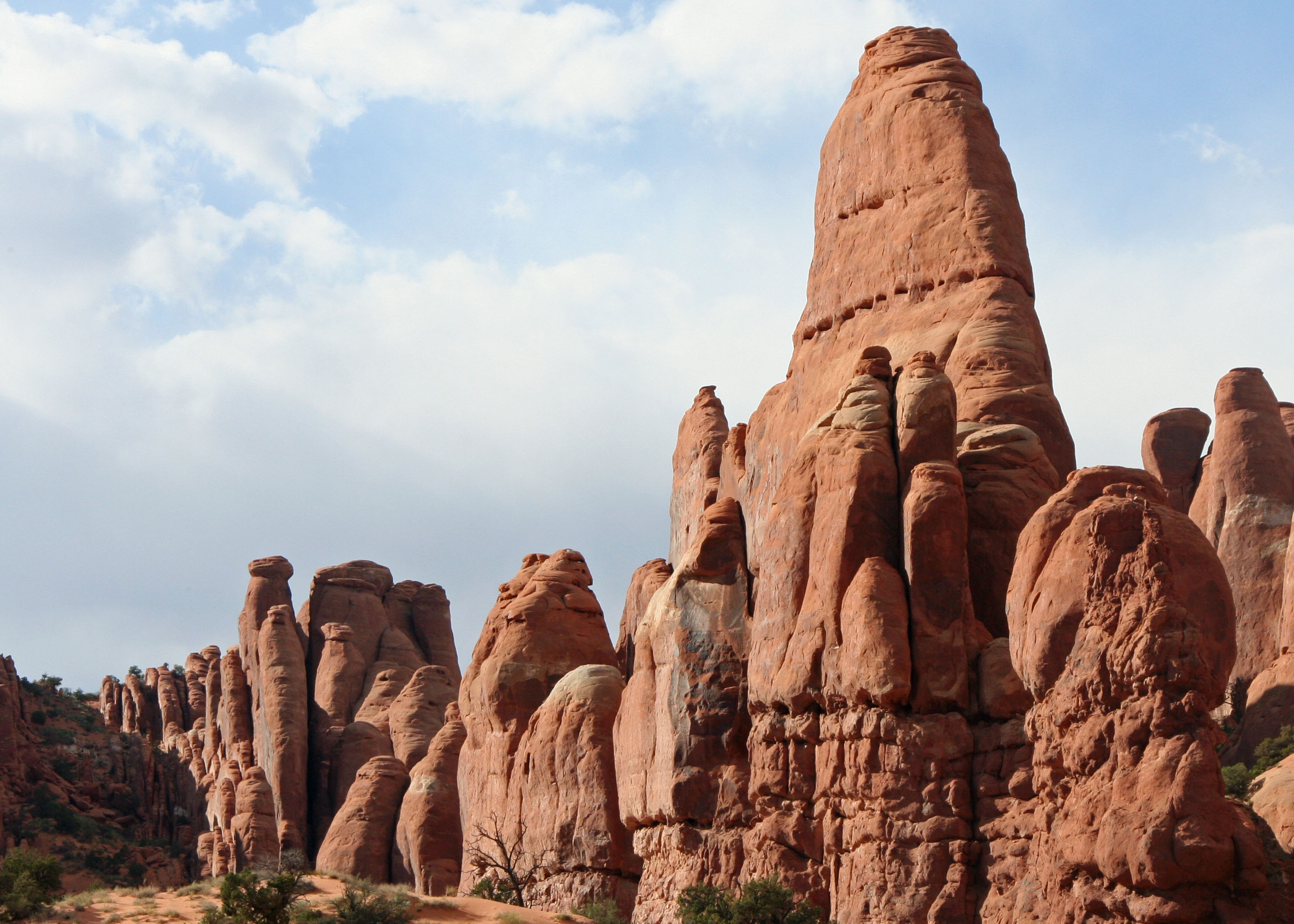
The eroded sandstone of Arches National Park forms some of the best stone sculptures in the world. Its claim to fame, of course, is arches, some 2000 of them, but I was equally impressed with its soaring pinnacles, massive balanced rocks, groupings of sculptures and long, thin ridges.

There are also Desert Bighorn Sheep in the area, often seen near the Visitors’ Center. Check out my blog on these magnificent animals.

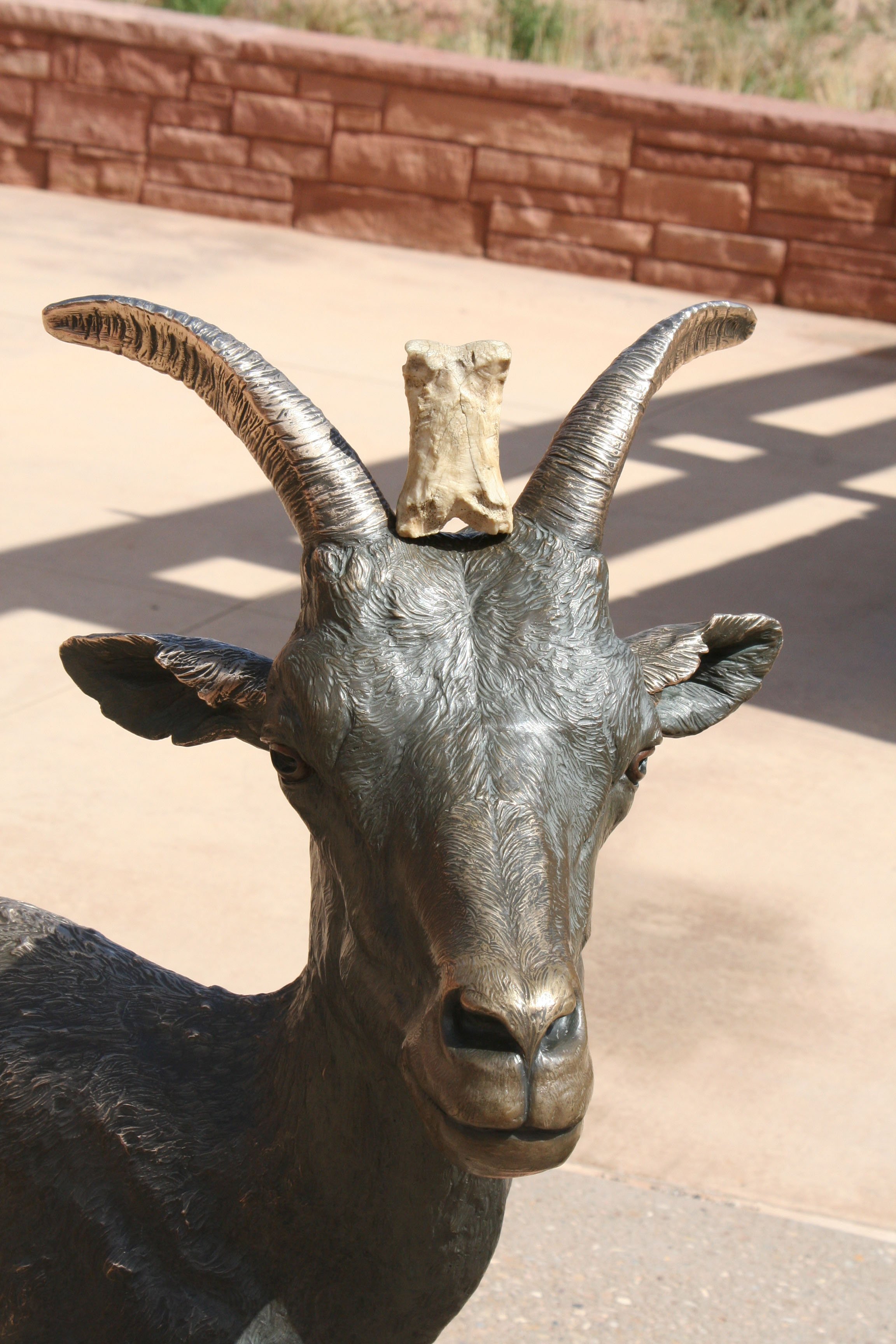
Desert Big Horn Sheep are frequently seen near the Visitors’ Center at Arches National Park. The Peripatetic Bone decided to join a sculpture of the Big Horn Sheep at the Center.

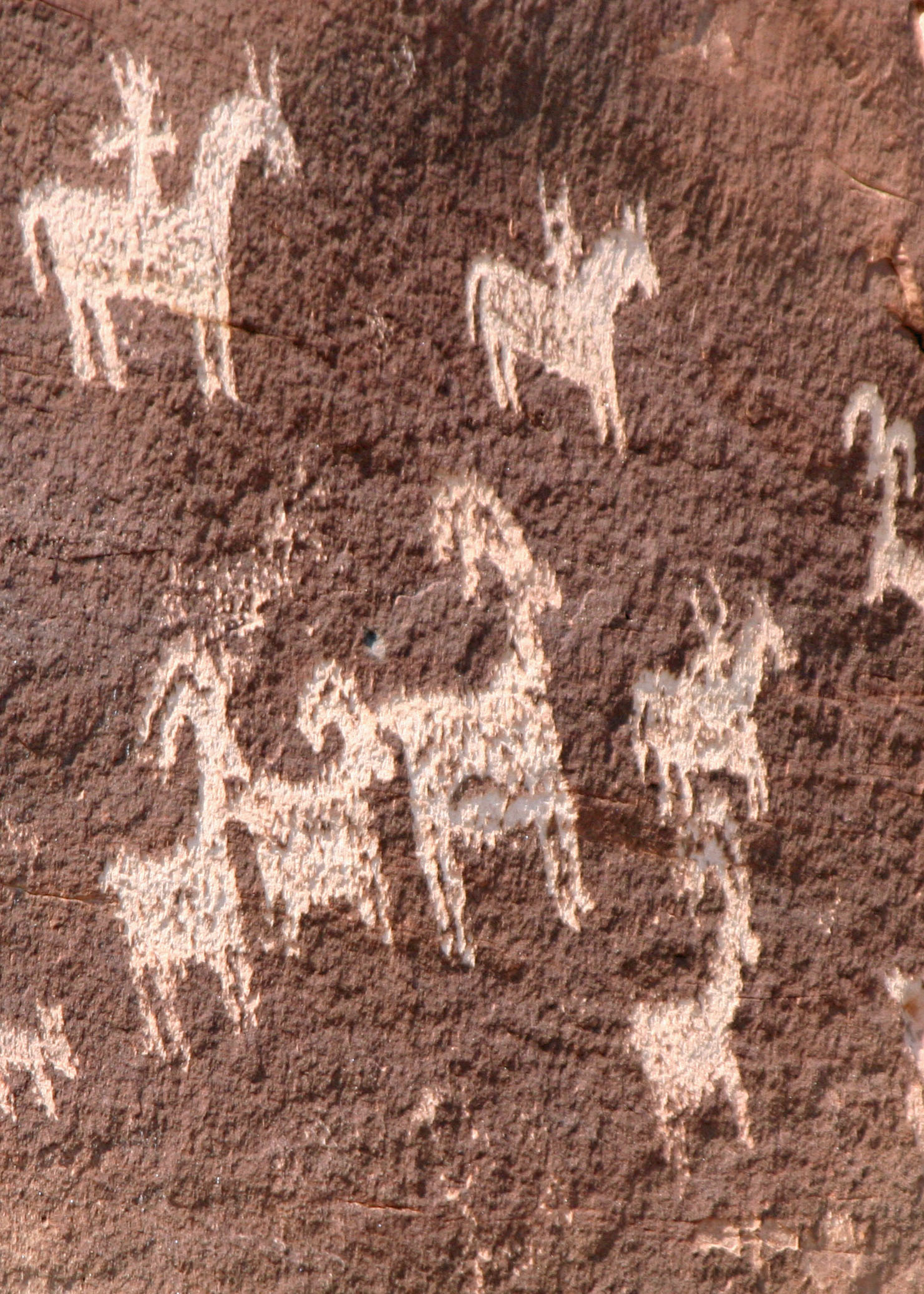
Ancient Native American Petroglyphs are found throughout the West and often feature Big Horn Sheep. This petroglyph is found in Arches National Park. Note the Indians on horses.

Utah has several other National Parks that I will feature in future blogs including Canyonlands, Capitol Reef, Bryce and Zion. You can visit these parks in a week but spending more time is definitely better. Each is worth a week itself!

I’ve been back to Arches National Park twice and have every intention of going again. Enjoy the photos.

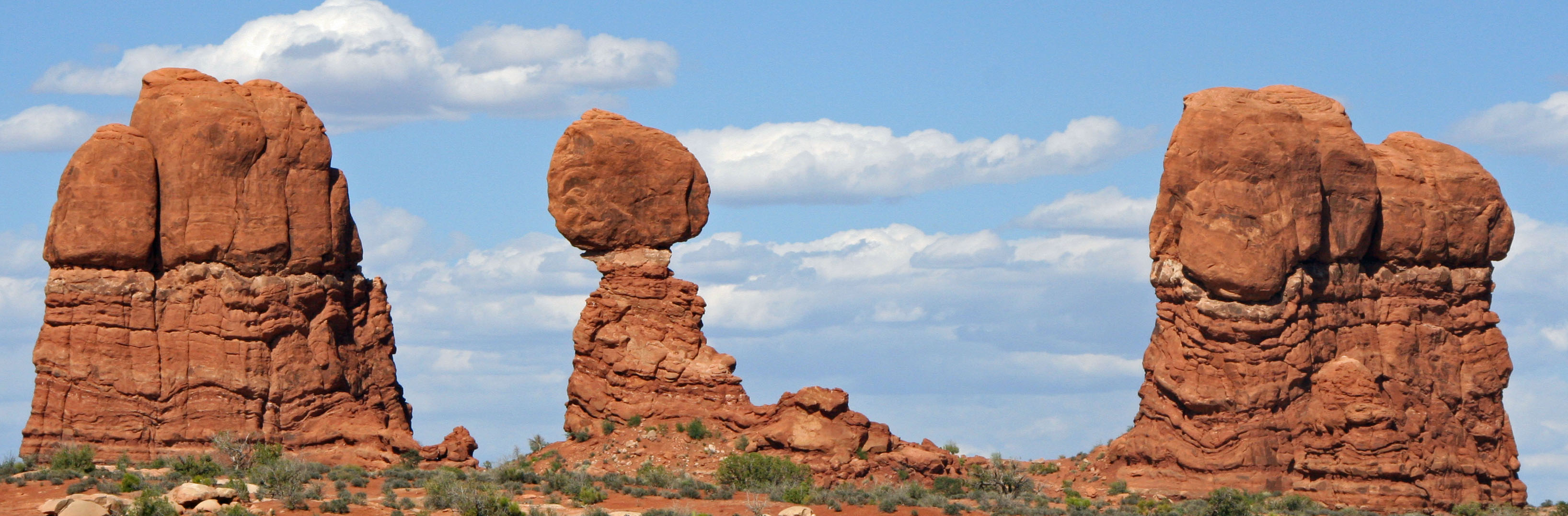
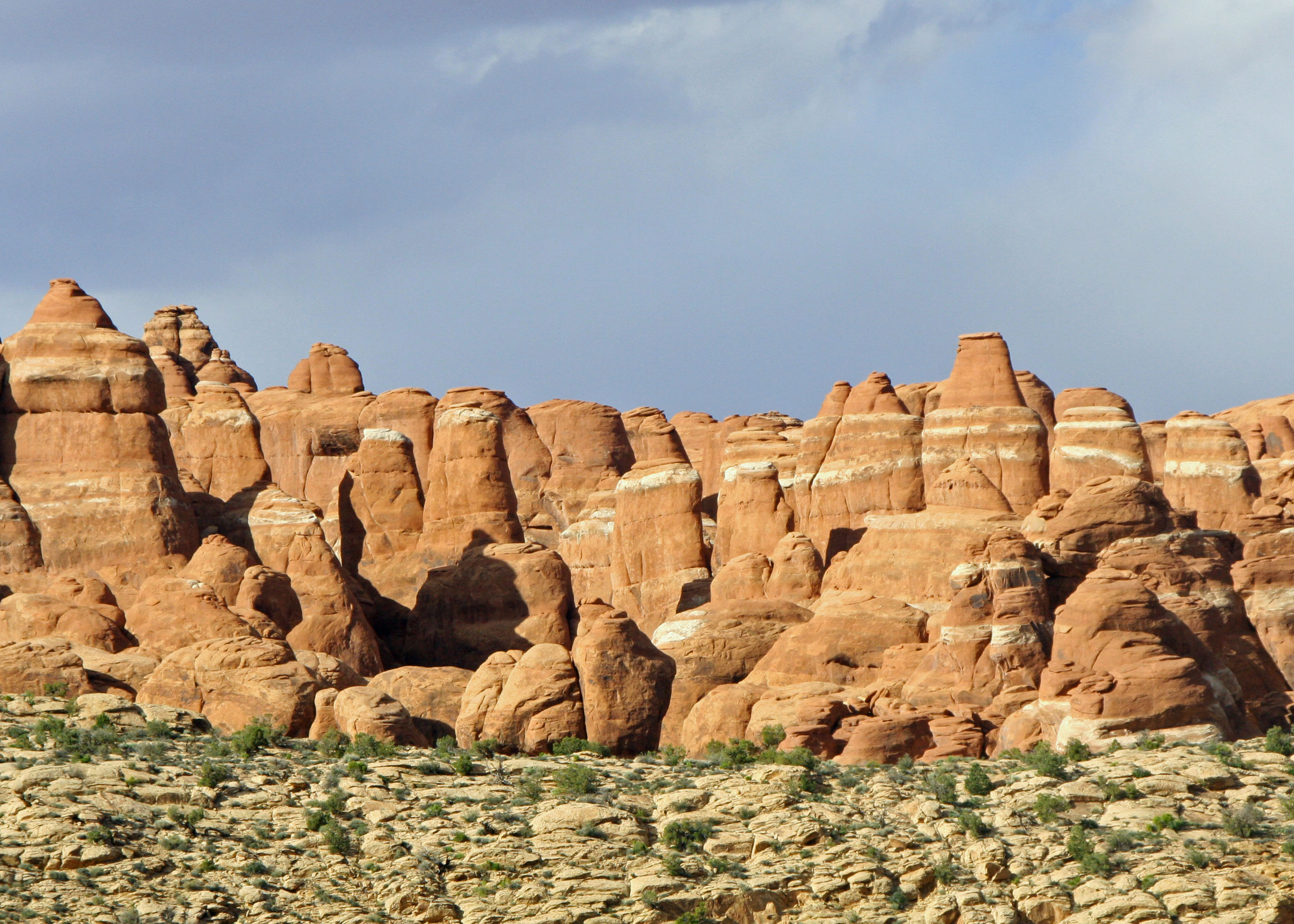
Rock sculptures come in all shapes and sizes at Arches National Park. At one time arches would have connected these sculptures.

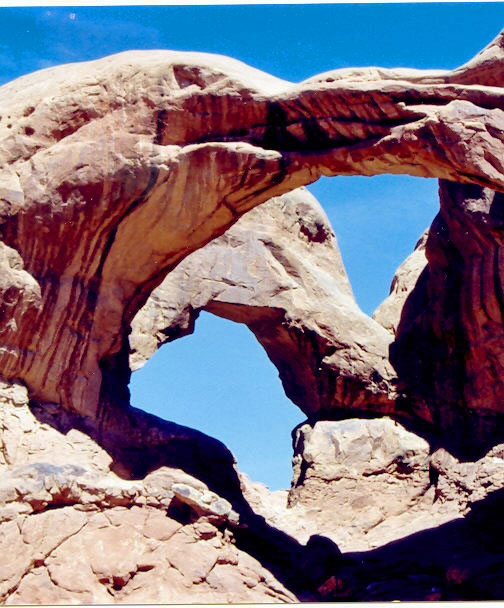
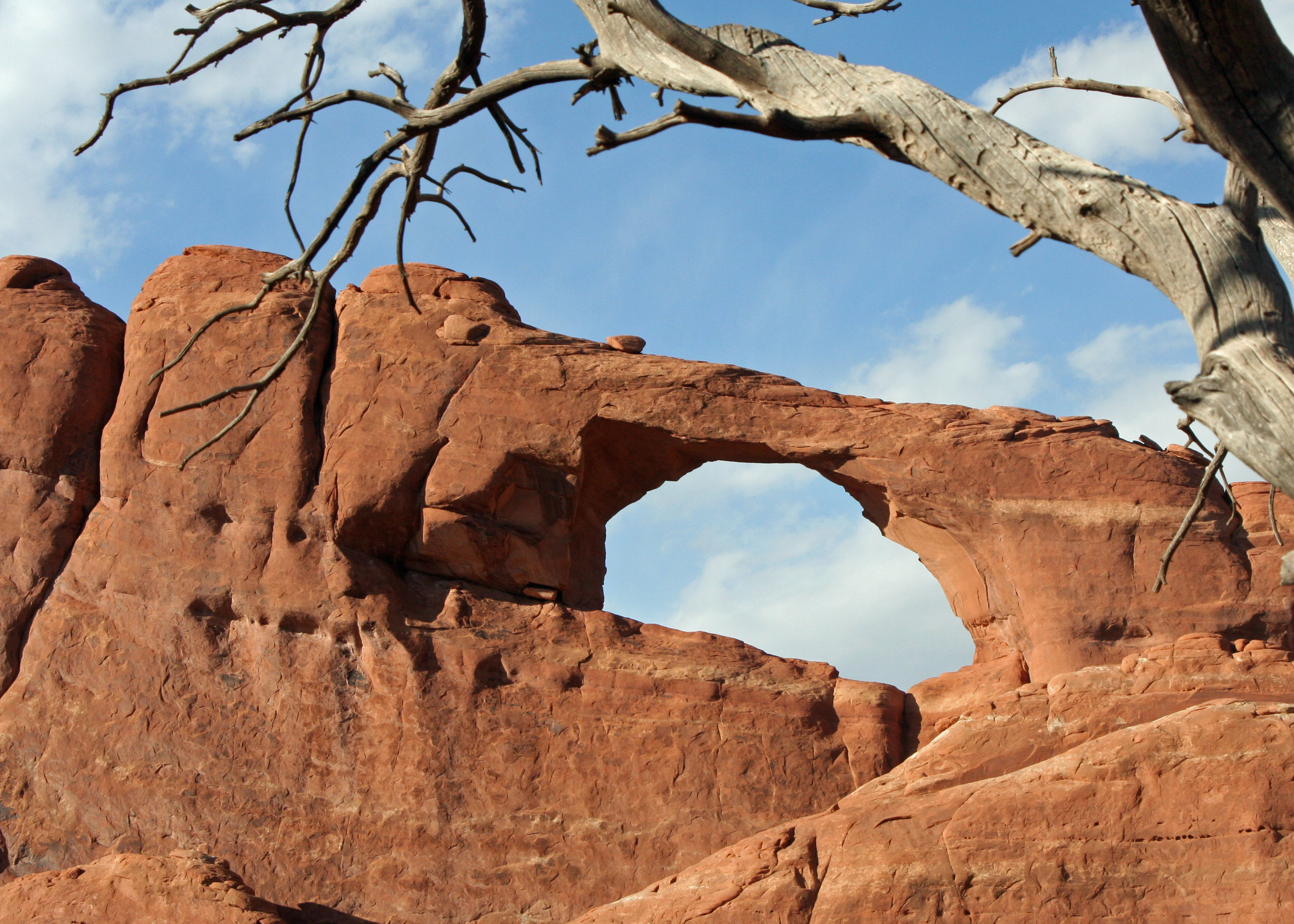
I took this photo on my first visit to Arches National park. The two arches are the same as I featured in my photo at the beginning of the blog.

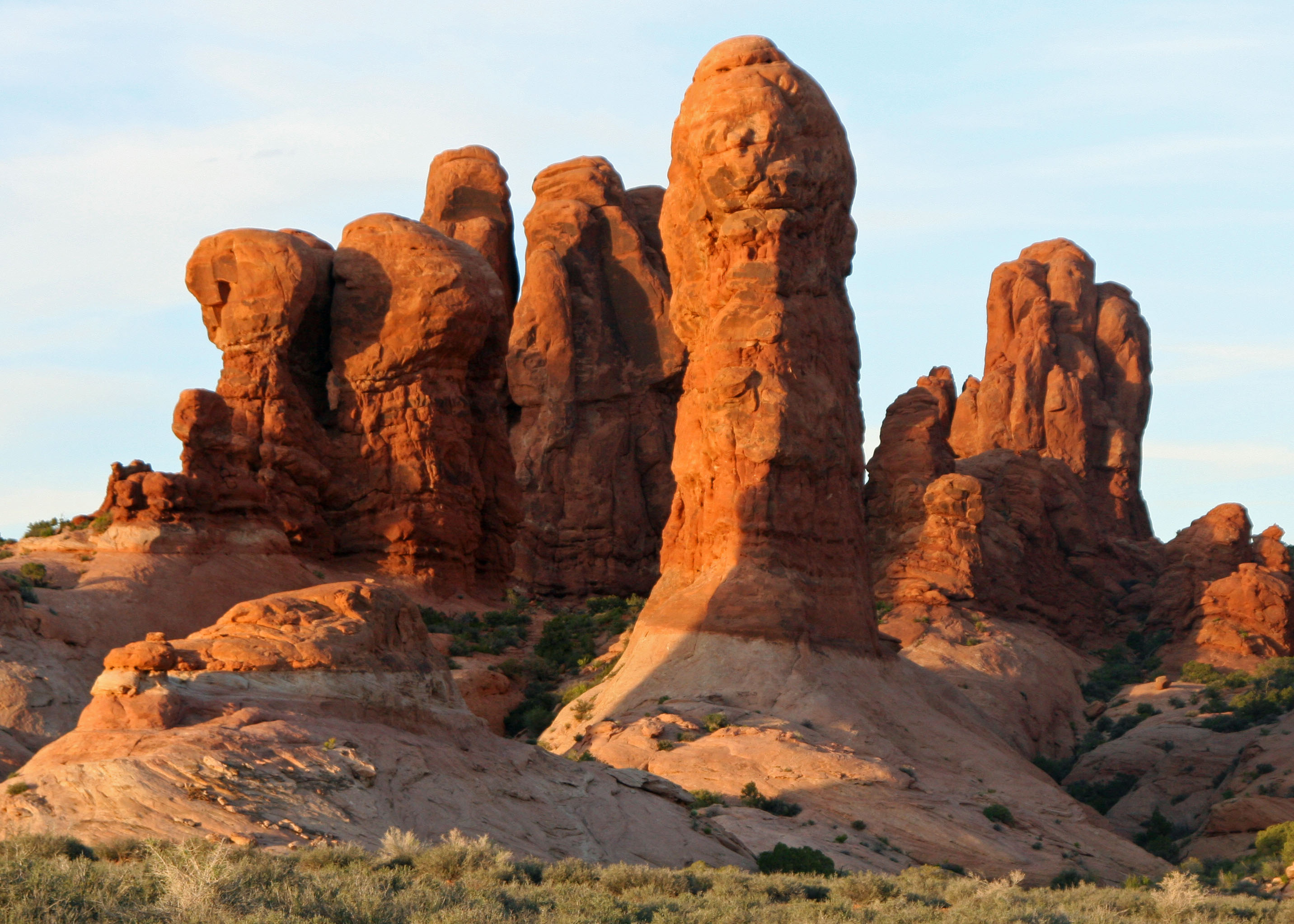
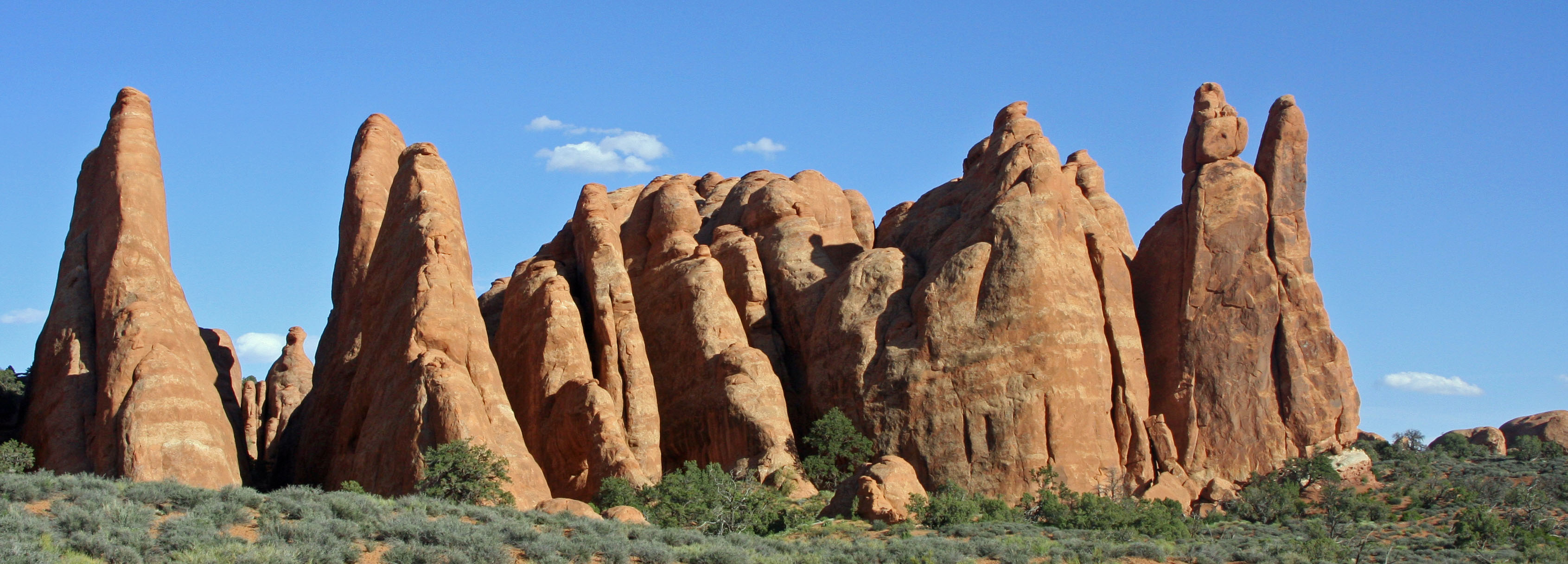
The stone sculptures at Arches National Park often form interesting groupings as demonstrated by the picture above and next three below.

I thought teepees when I saw these sculptures.

The dark sky above these sun-lit rocks added drama to this view.

Parent with lots of kids?

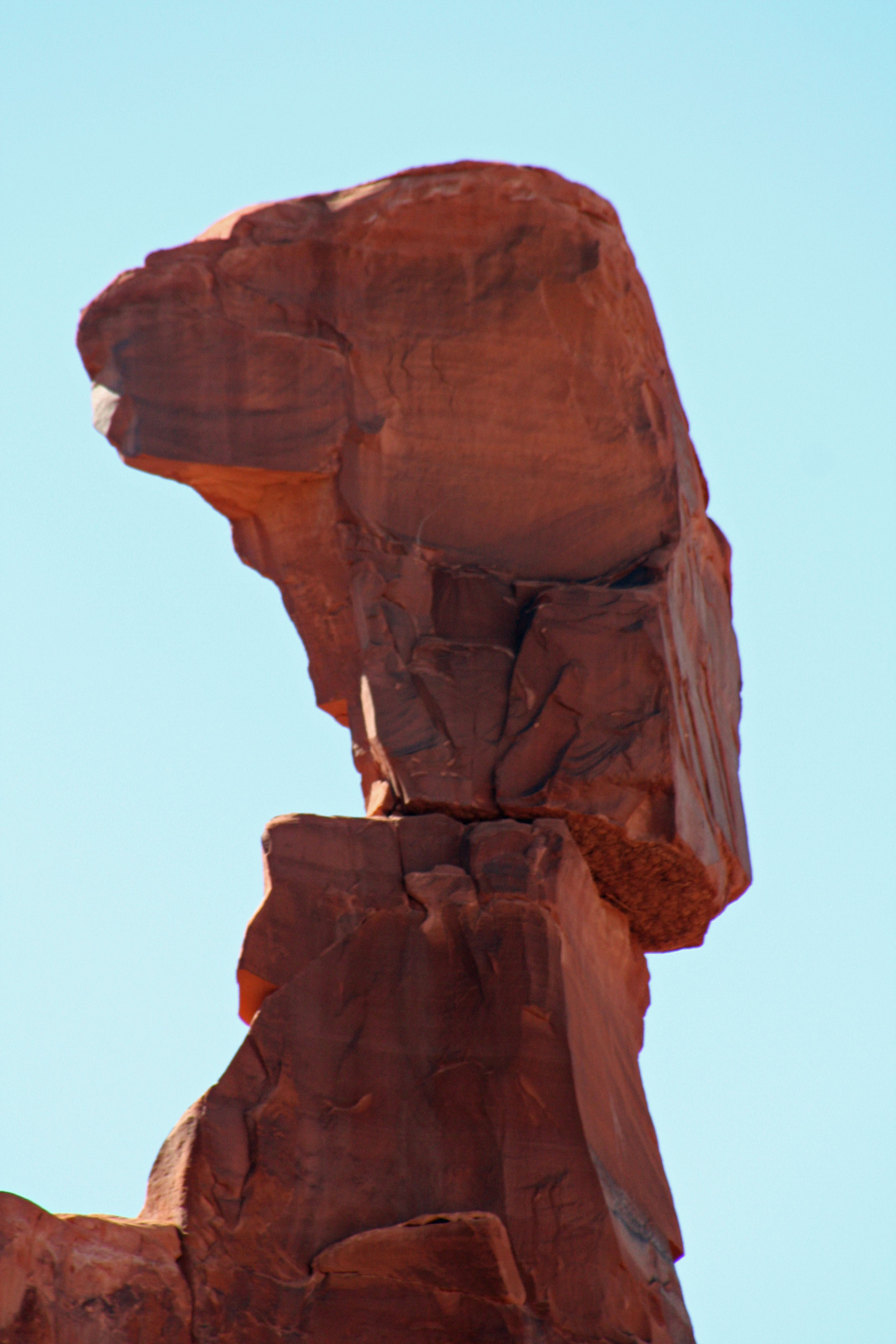
Erosion often leaves rocks precariously balanced at Arches. I wonder how long this rock will remain on its perch. it could fall tomorrow, or in a thousand years.

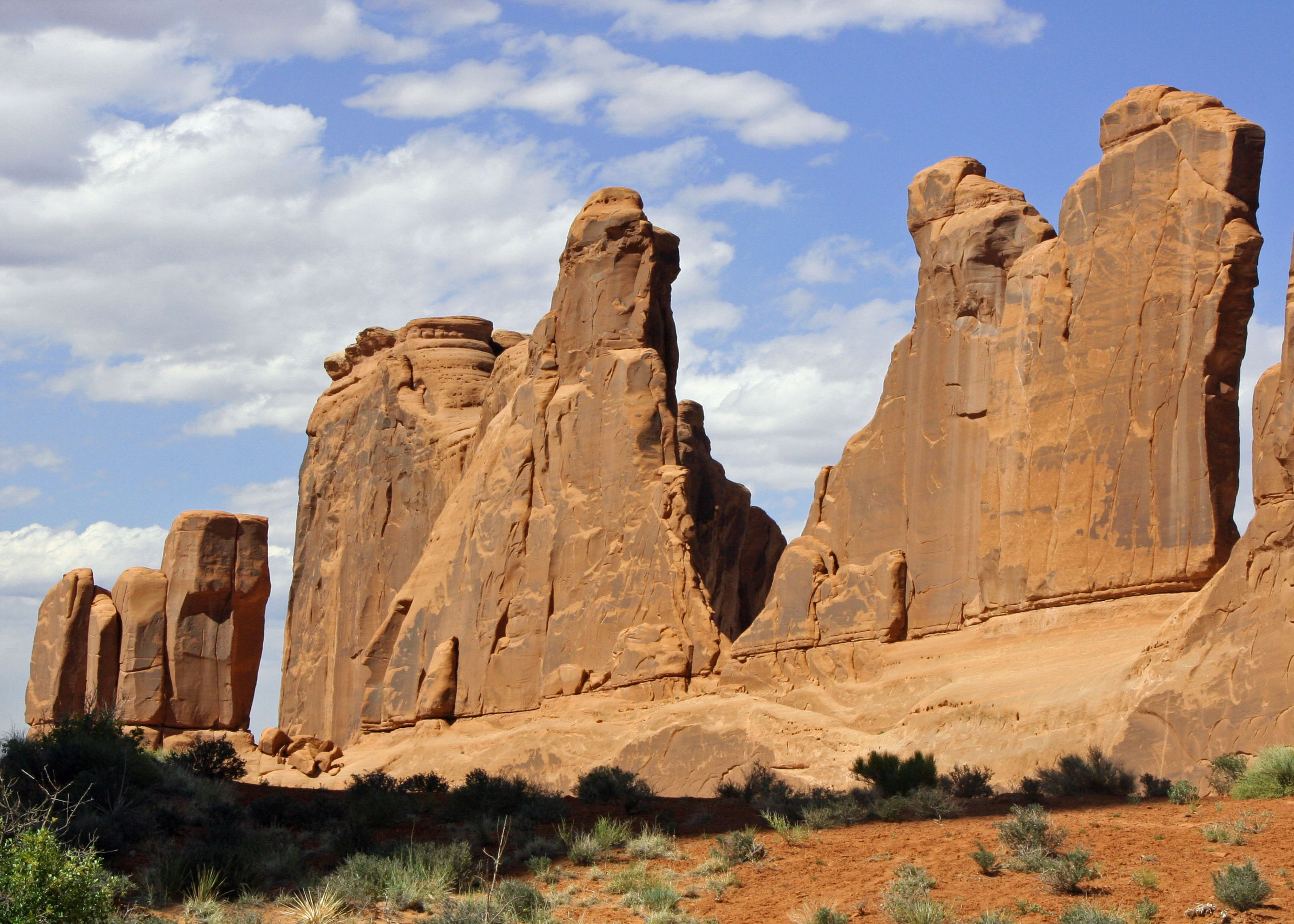
This impressive structure at Arches National Park is called the Courthouse. I call it V.

A final arch…

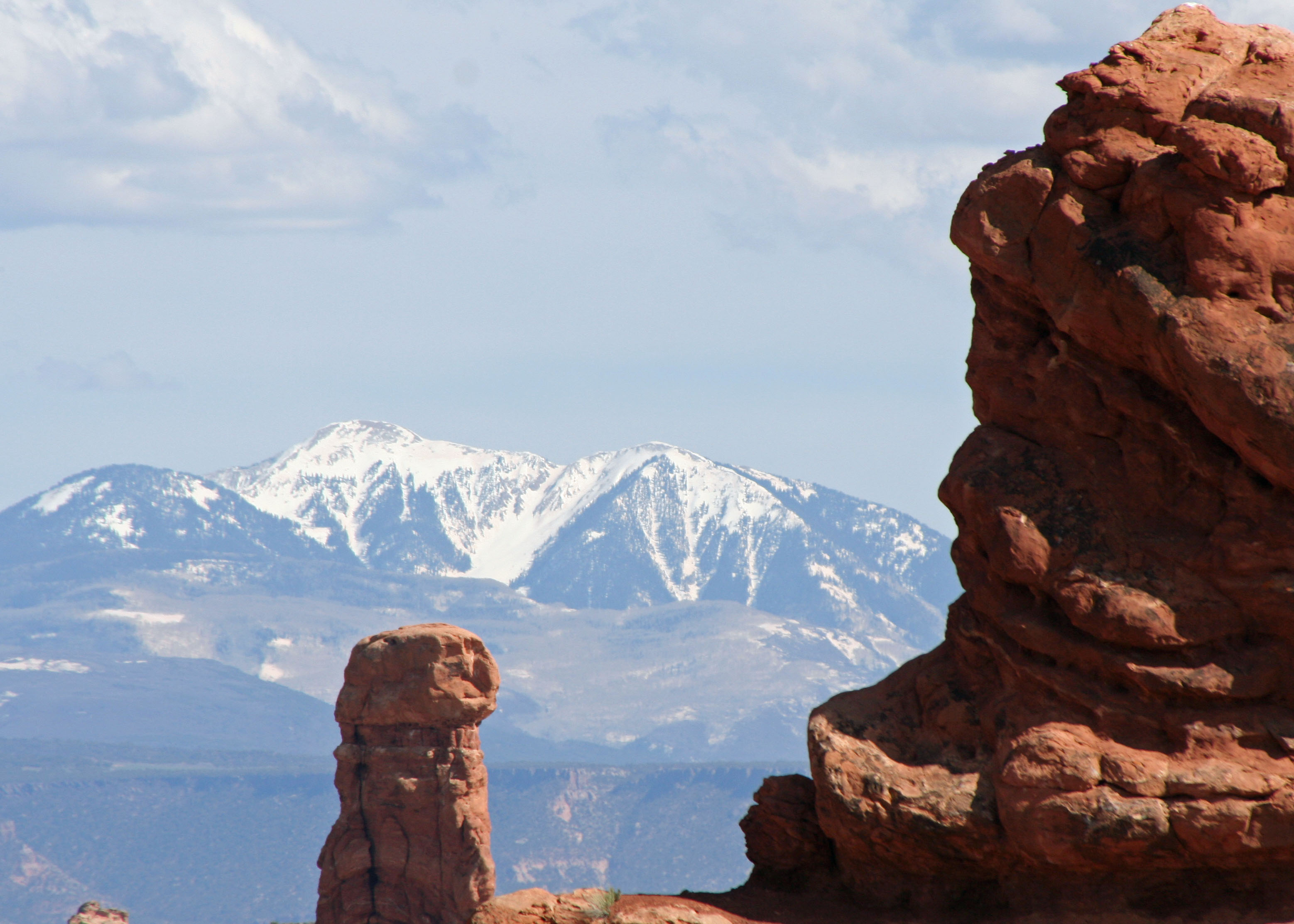
Distant snow-covered mountains add to the beauty of Arches National Park.

Desert Big Horn Sheep… On the Road

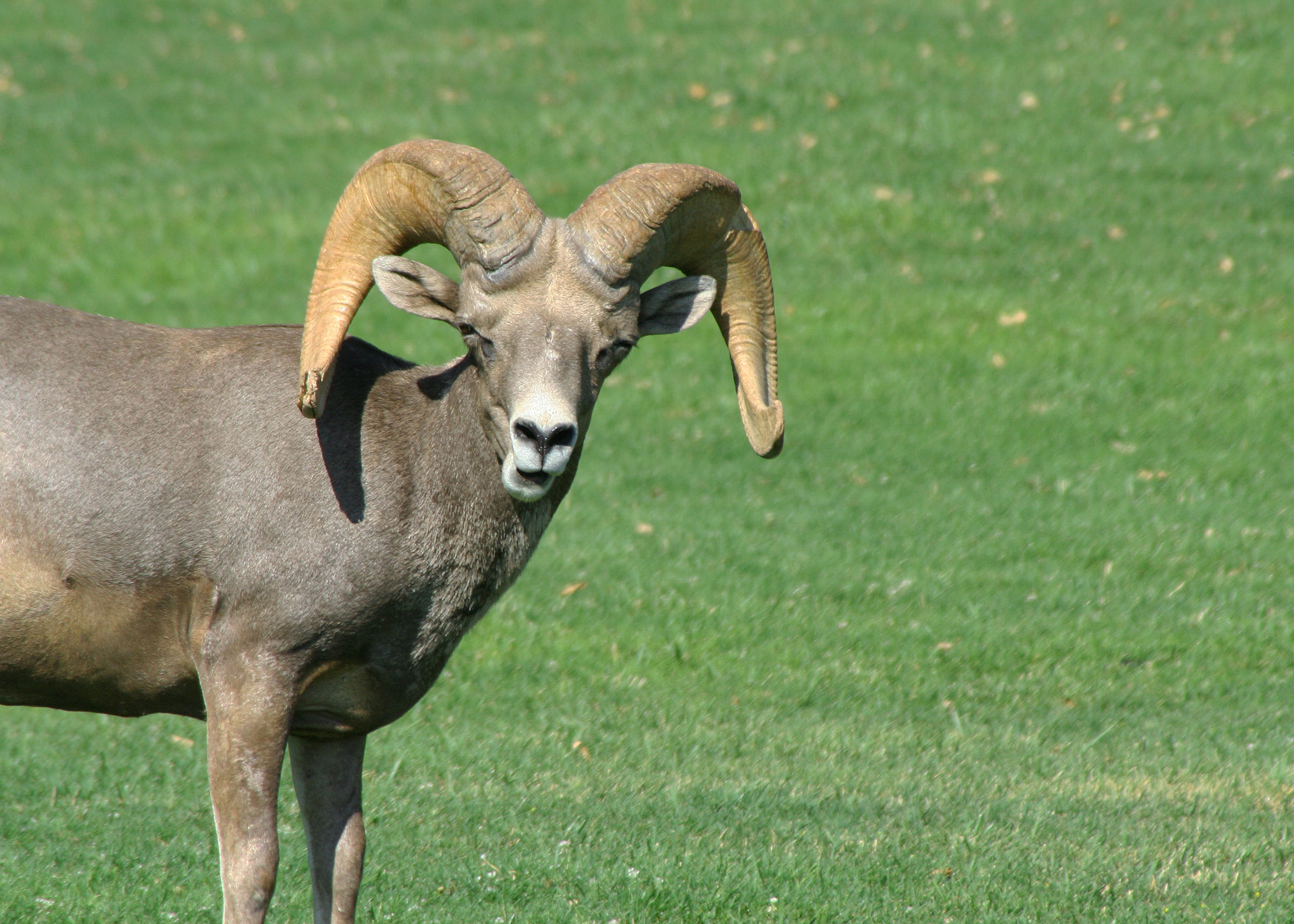
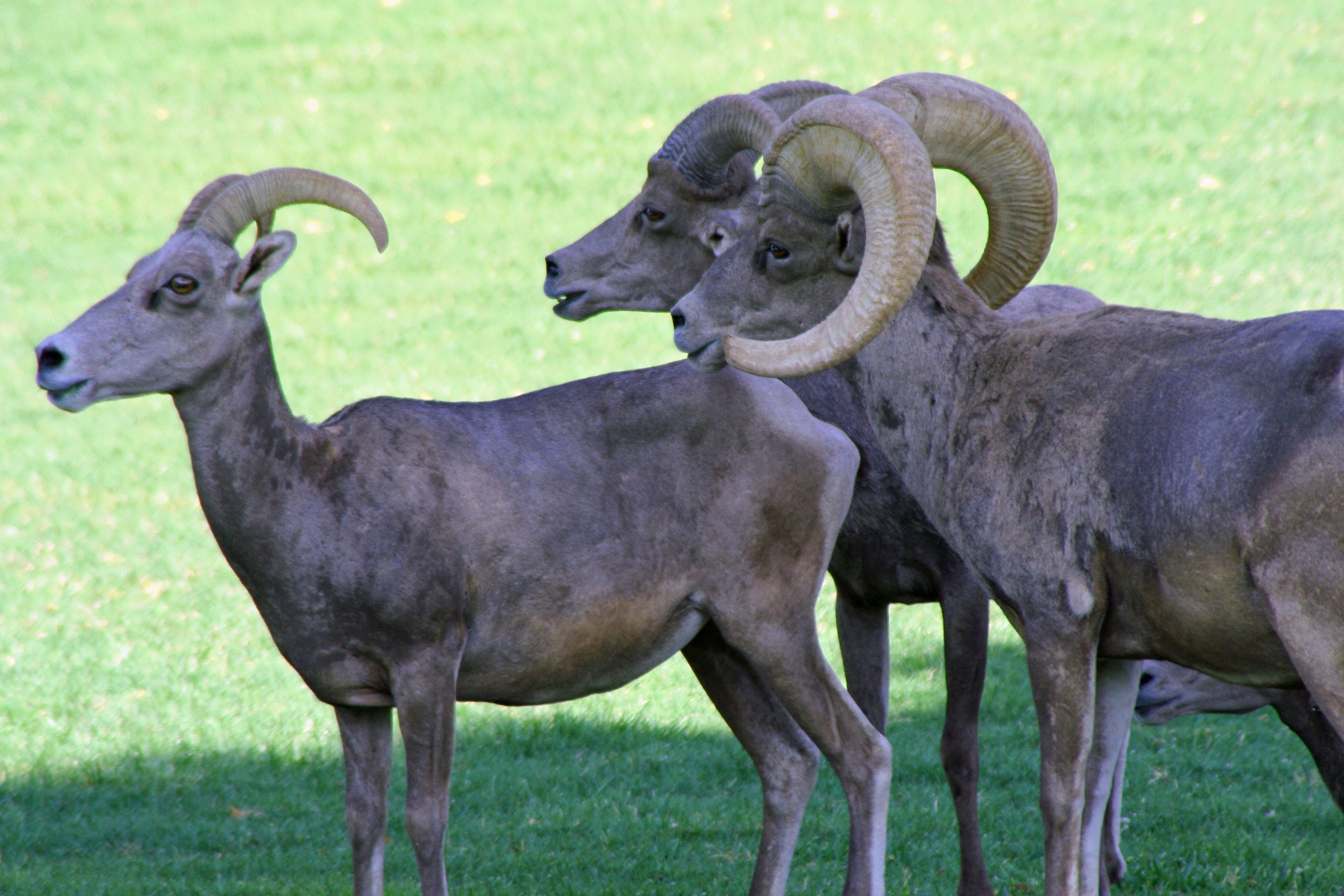
The Desert Bighorn Sheep of the southern Nevada desert calmly eyed me.

He stood there with his magnificent rack of horns, eyeing me and idly chewing on grass. Normally this shy creature of the Southwest deserts would have been hunkering down in the shade on a remote cliff, hiding out from the intense summer sun of southern Nevada and avoiding people and other likely predators.

The greenery of a small park had seduced him and his companions, however. Each day they made a pilgrimage down from their hidden mountain retreat to graze on the tender foliage and contemplate the good life. Unfortunately, two-legged animals came with the territory. We had to be tolerated.

He did not have to tolerate the large Bighorn Sheep that waited for him on the edge of the park, challenging his right to the green grass and threatening to steal his lovely ewes. In a ritual dating back to ancient times, he reared up and charged full speed ahead, smashing into his enemy’s horns time and time again until the intruder was driven from the path. But the rival was as tough as he was stubborn. The next morning, he was there again, waiting…

It was a beautiful location for a new home. A green park placed just below the house provided relief from the parched desert. Surrounding mountains offered glorious picture window views. The man and his wife felt they had found heaven on earth. The loud crash that jarred them out of their bed changed their perspective. Their insurance agent refused to believe their story.

To get their money they had to have photos of the Bighorn ram that challenged his reflection on their metal garage door each morning. (A neighbor of the homeowner related the above story to us.)

It was easy to understand how the Bighorn could do serious damage.  An adult male weighs over 200 pounds and sports 30-pound horns. Plus he can clock out at 30 mph on level ground. Big Bang. Big Dent. His head is specially designed to absorb the shock. Rams have been known to crash horns for up to 24 hours to win a ewe.

Prior to my visit to the small park near Lake Meade I had only seen Desert Bighorn Sheep as small specks on high cliffs or along side canyons of the Colorado River. They are ideally suited for their mountainous, desert environment. Their hooves allow them to perch on two-inch ledges. They are capable of making prodigious leaps of up to 20 feet to land on another ledge, scrambling over difficult terrain at 15 mph. They can also go several days without drinking water, living off of the water they process from plants.

I spent a pleasant morning photographing the sheep doing what sheep do.

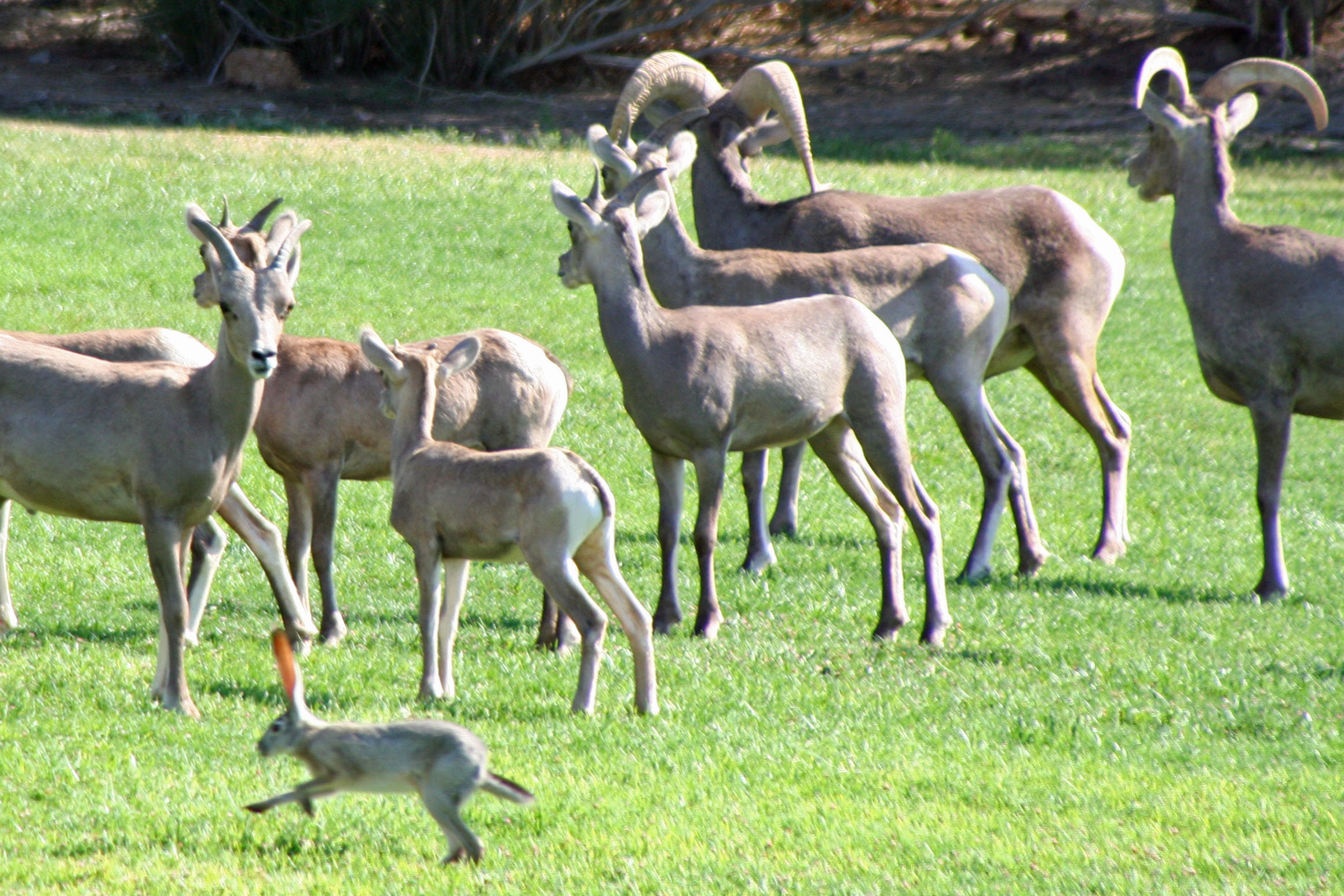
The Desert Bighorn Sheep totally ignored a jack-rabbit hopping by.

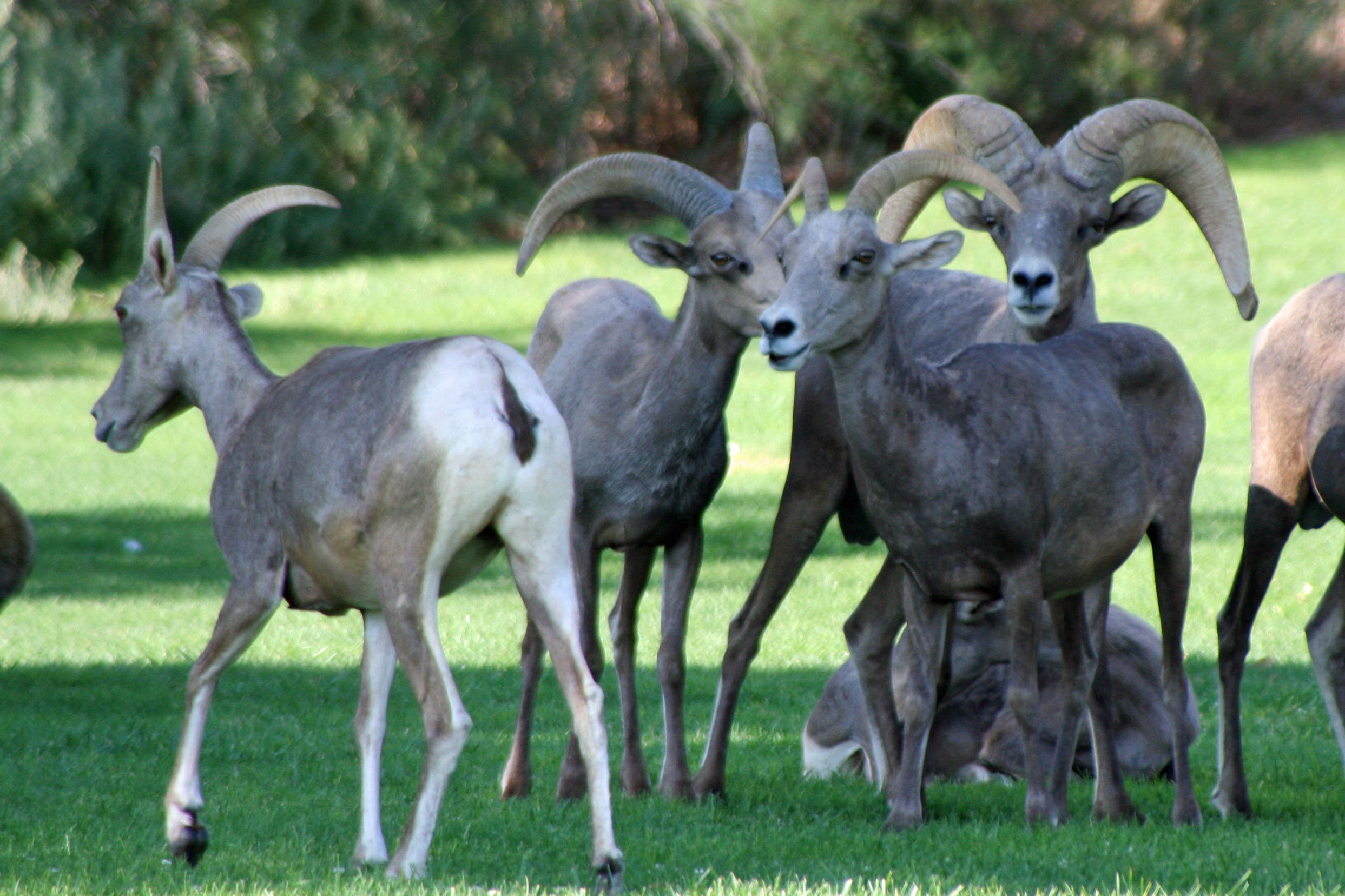
It would be hard to sneak up on these Bighorn Sheep. Note how each one is checking out a different direction. Predators include mountain lions, golden eagles and man. At one point, they were almost hunted to extinction.

I thought mowing machine when I watched these three rams munch their way across the park.

Both male and female Bighorn Sheep grow horns but the horns of the males curve all of the way around and can weigh up to 30 pounds. I was amused by this guy sticking his tongue out.

Who gets the girl? During mating season the two large rams would be charging each other from 20 feet away and crashing their horns together to determine who wins the lovely ewe. Battles have been known to go on for 24 hours.

I liked this photo because of the perspective it provided on the different size horns.

Regal is how I would describe this impressive pose by a Bighorn Sheep ram.

The (not so) Wild Burros of Oatman Az. and Route 66… On the Road

Oatman Arizona is noted for its history, location on Route 66 and its wild burros. As this photo suggests, its burros are not very wild, but they are characters.

Oatman, Arizona would be a ghost town if it weren’t for its wild burros and location on Route 66. Peggy and I stopped there on one of our explorations of the historic highway and were immediately greeted by the burros.

A ten million dollar gold strike in 1915 gave Oatman its initial growth spurt. Travel on Route 66 during the highway’s days as a major east-west road maintained its existence. Clark Gable and Carole Lombard spent a honeymoon night there and Clark returned occasionally to gamble with the miners.

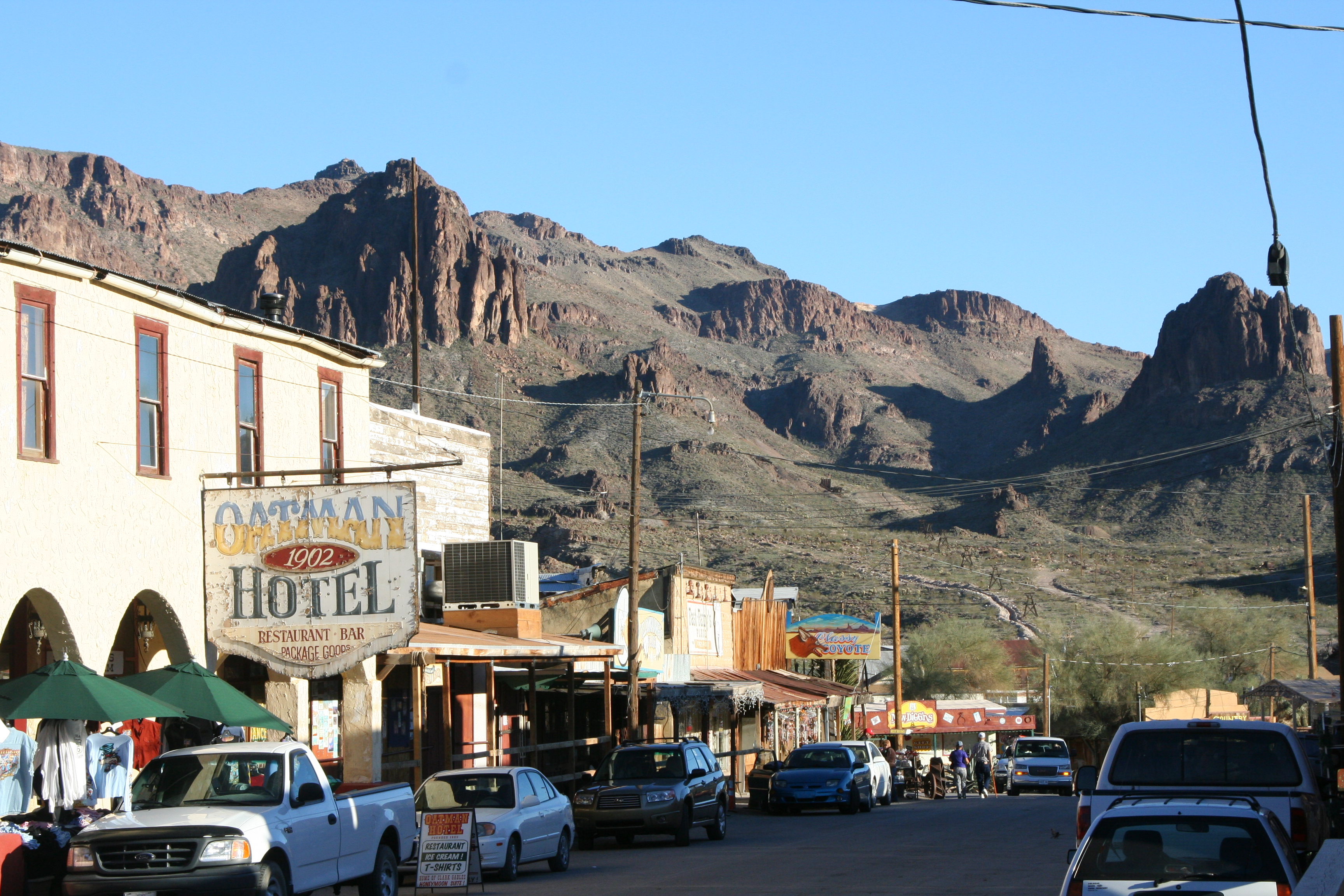
A view of main street Oatman in its desert setting with its historic buildings.

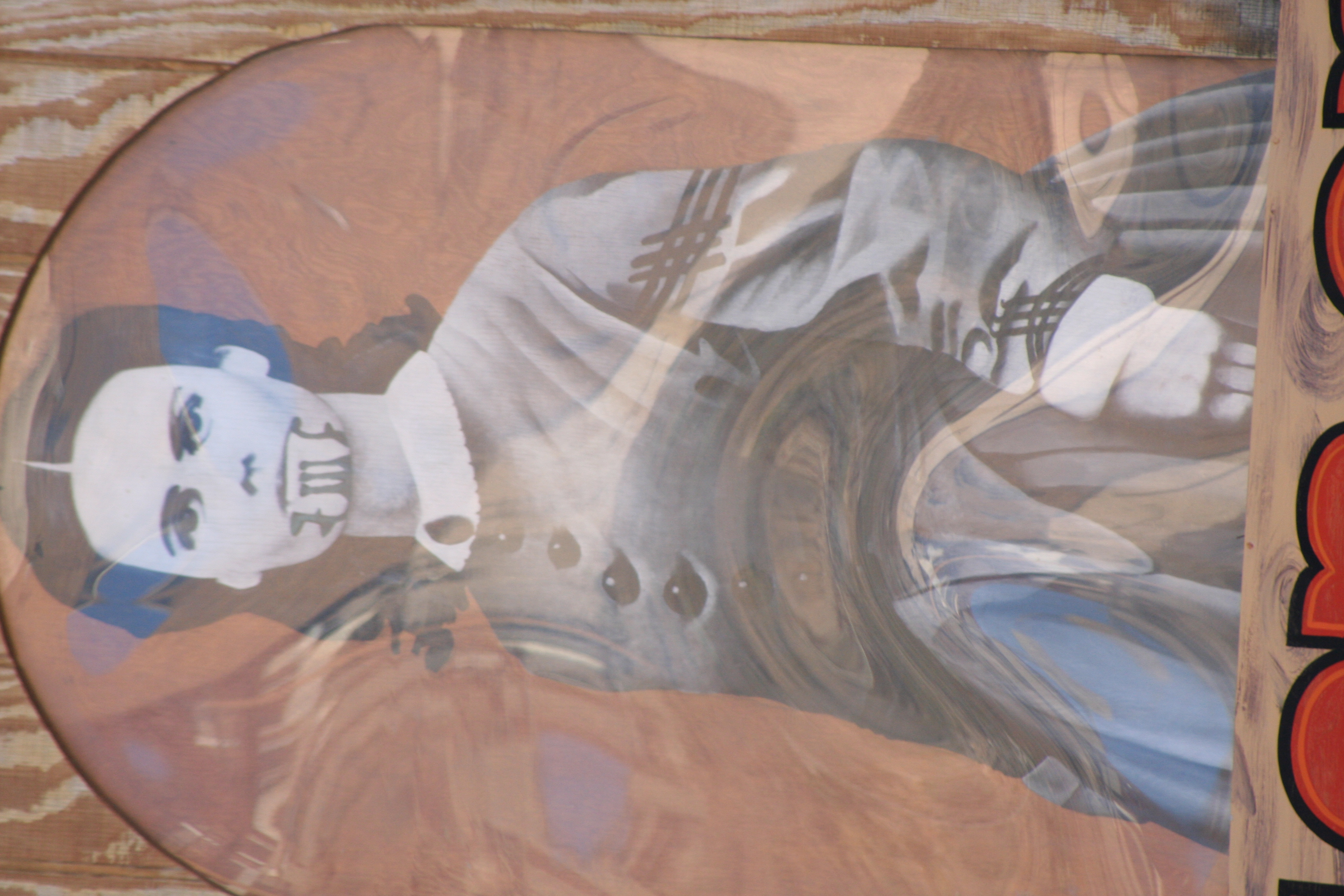
The town received its name from Olive Oatman who had been kidnapped by the Yavapai Indians, rescued and tattooed by the Mohave Indians and eventually released near the town.

Olive Oatman with her tattoos that were applied by the Mohave Indians.

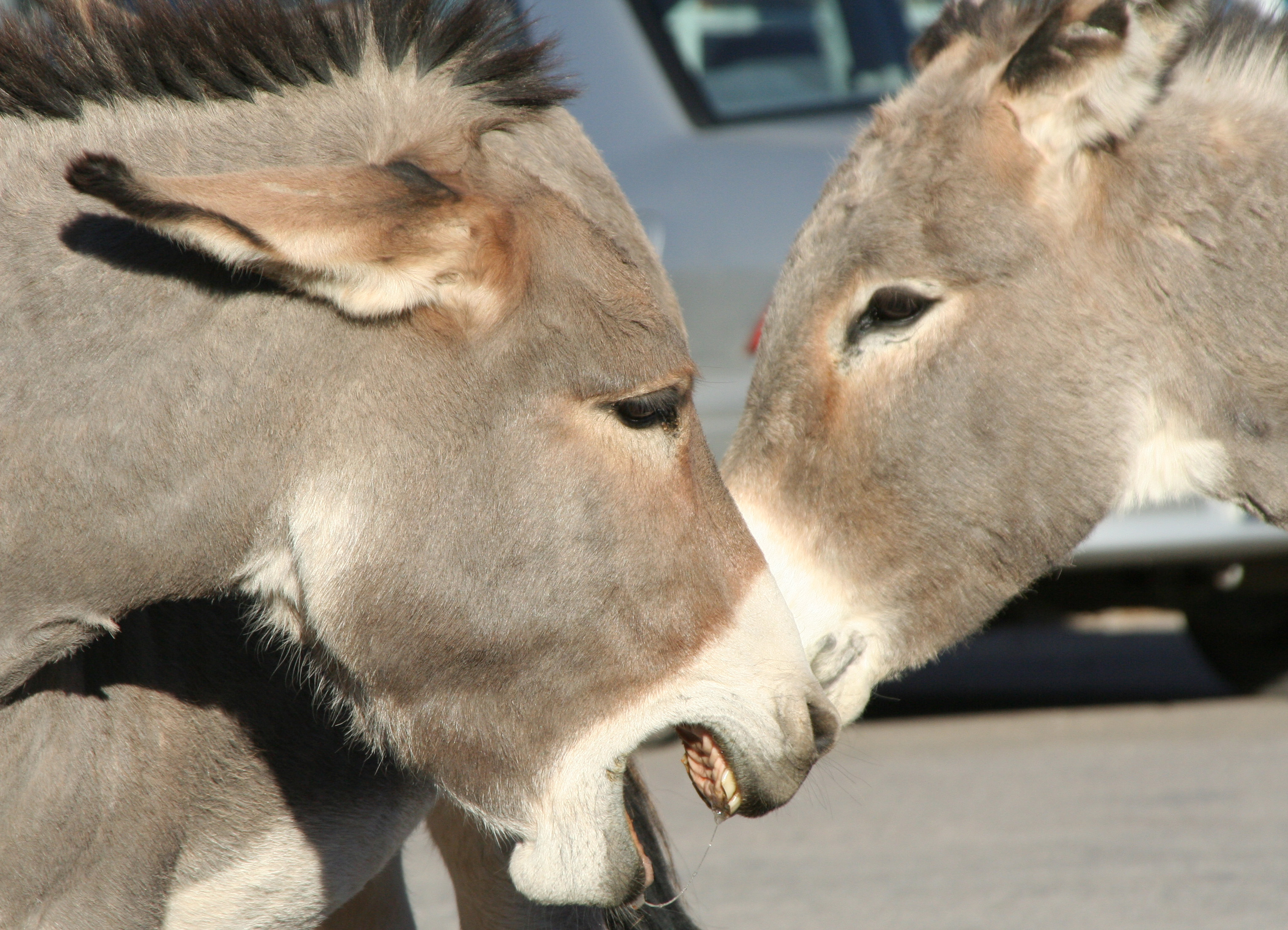
The wild burros, or donkeys, are a legacy of early prospectors who used the burros to carry their gear as they wandered in search of gold and other valuable minerals. Today they can be found throughout the desert Southwest. The burros of Oatman hit tourists up for carrots, provide lessons on donkey mating practices, and leave their calling cards on the streets of the town.

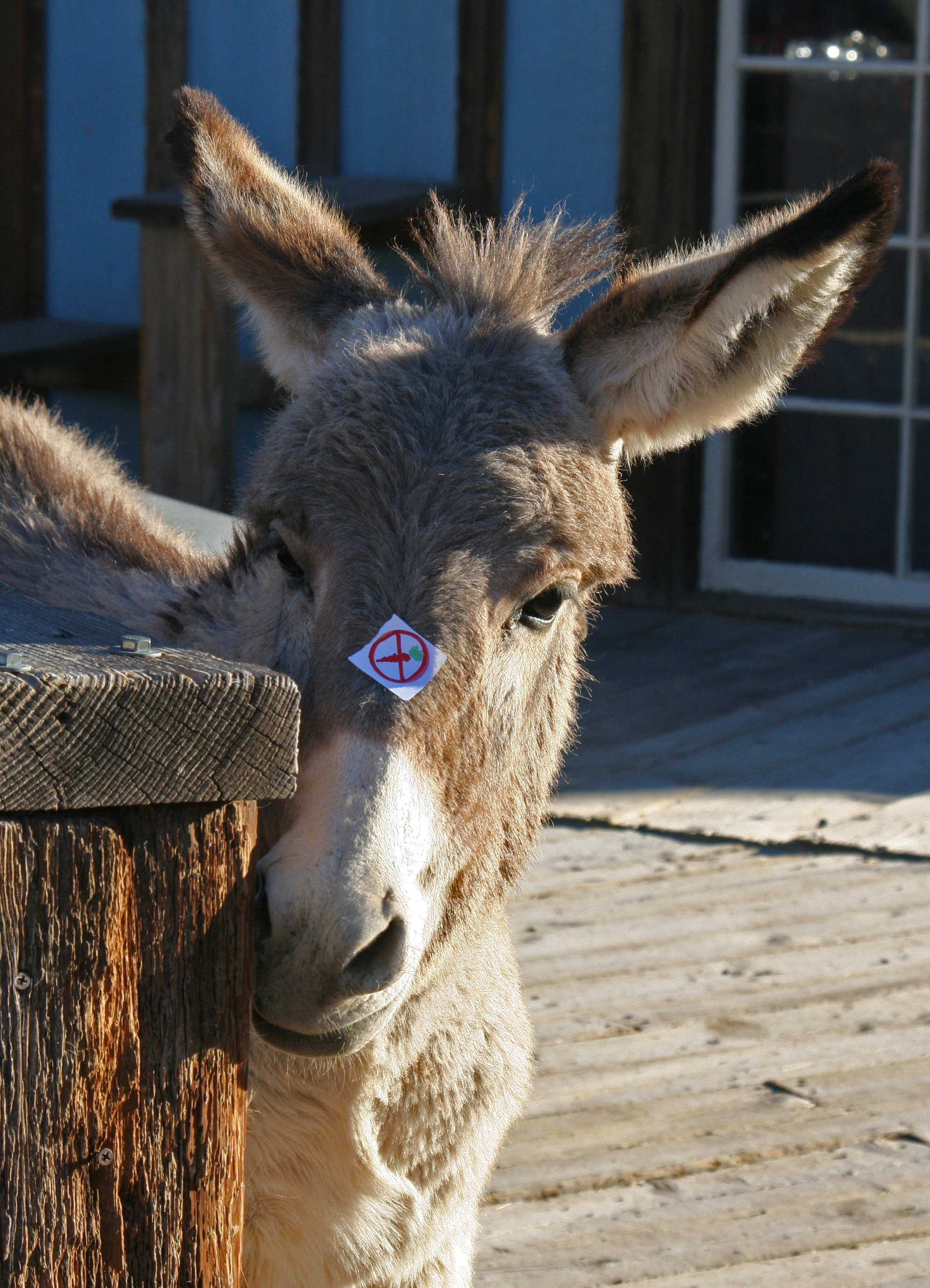
This cute little fellow had a no carrot sticker on his nose. Apparently young burros can choke on the carrots.

By 1960 the gold was gone and the highway was rerouted. Oatman was on its way to ghost town status. Fortunately the energy of the town’s citizens, the rebirth of Route 66 as a national historic treasure, and the desire of the burros for carrots have given Oatman reasons to prosper. It’s definitely worth a visit.

Oatman is located in northwestern Arizona off of Highway 95 on Historic Route 66 between Bullhead City and Needles.

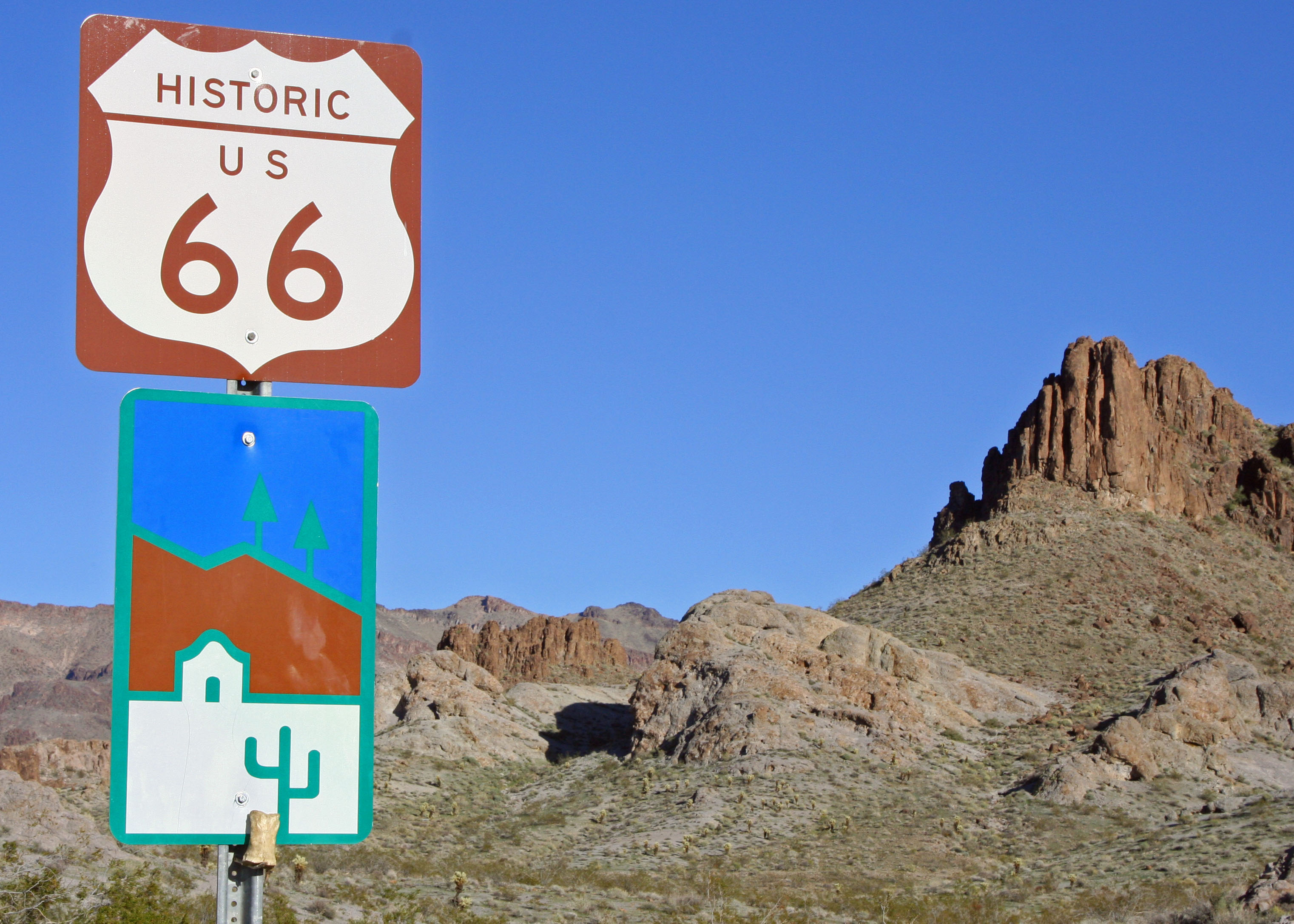
The Peripatetic Bone joins an historic Route 66 sign on the edge of Oatman.

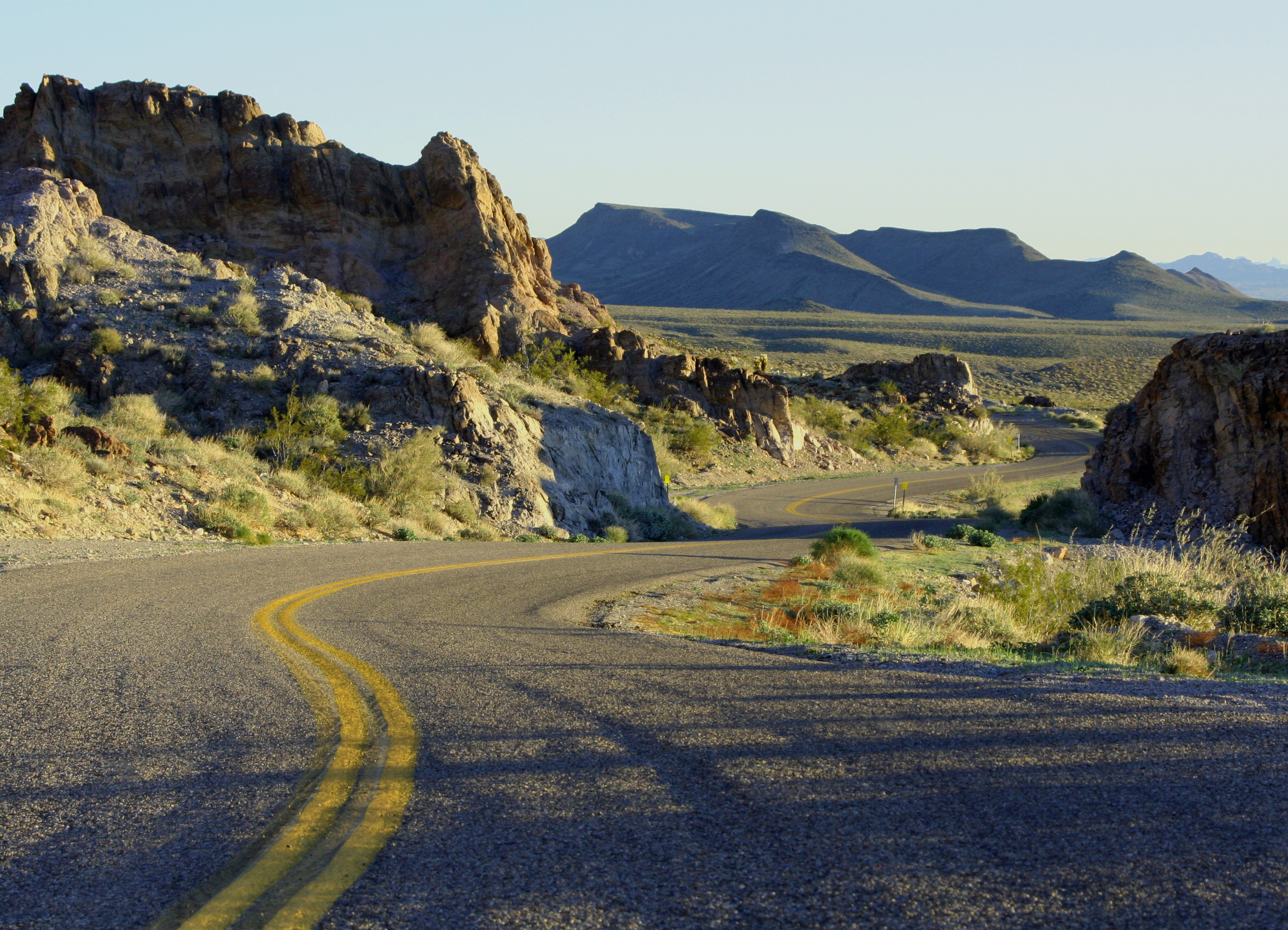
Historic Route 66 a few miles south of Oatman reminds travelers of another time and invites them onward.

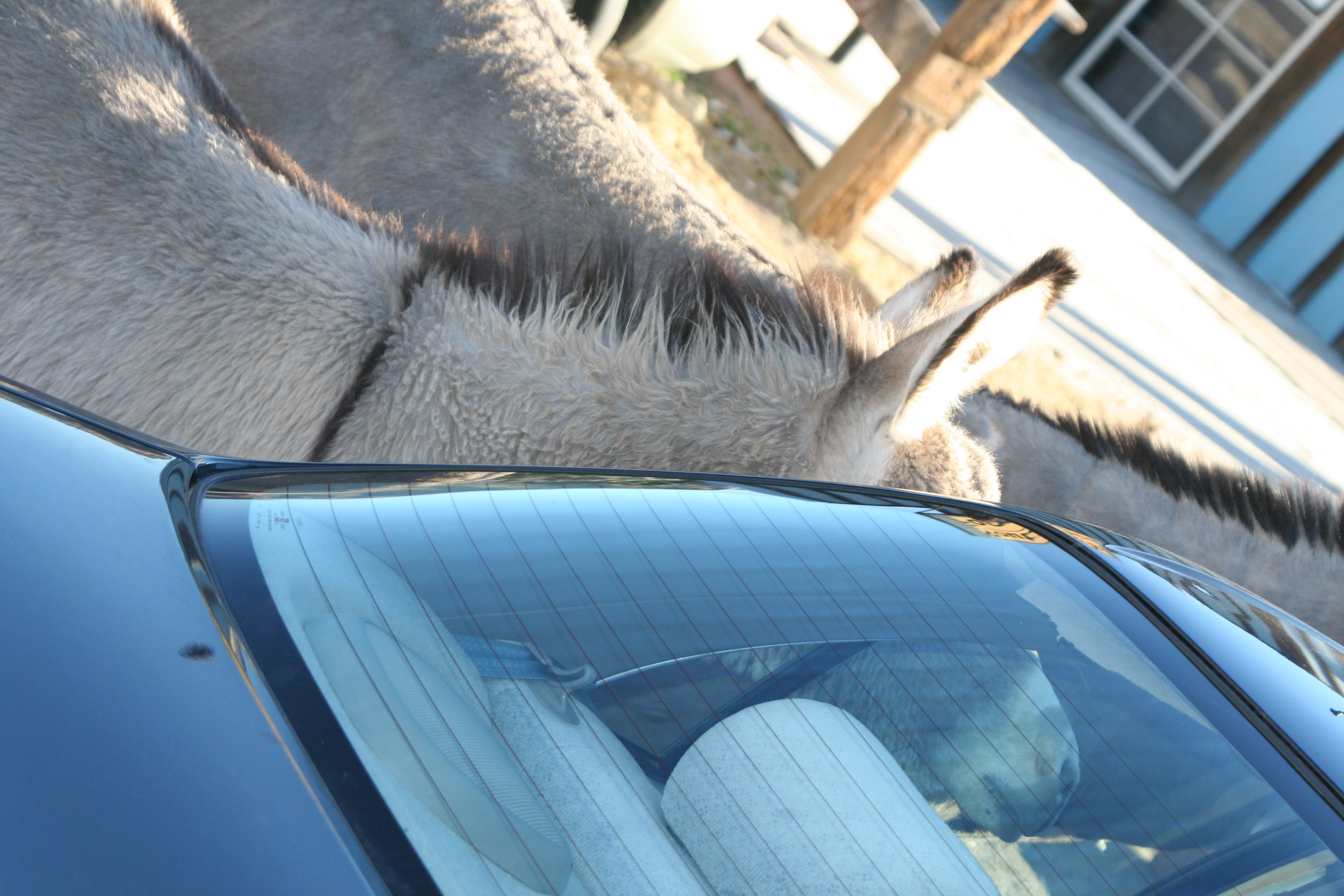
A good reason to leave your windows up when visiting Oatman Arizona.

This photo deserves a caption. Mine would be, "Watch what you're sniffing, Mr.!"

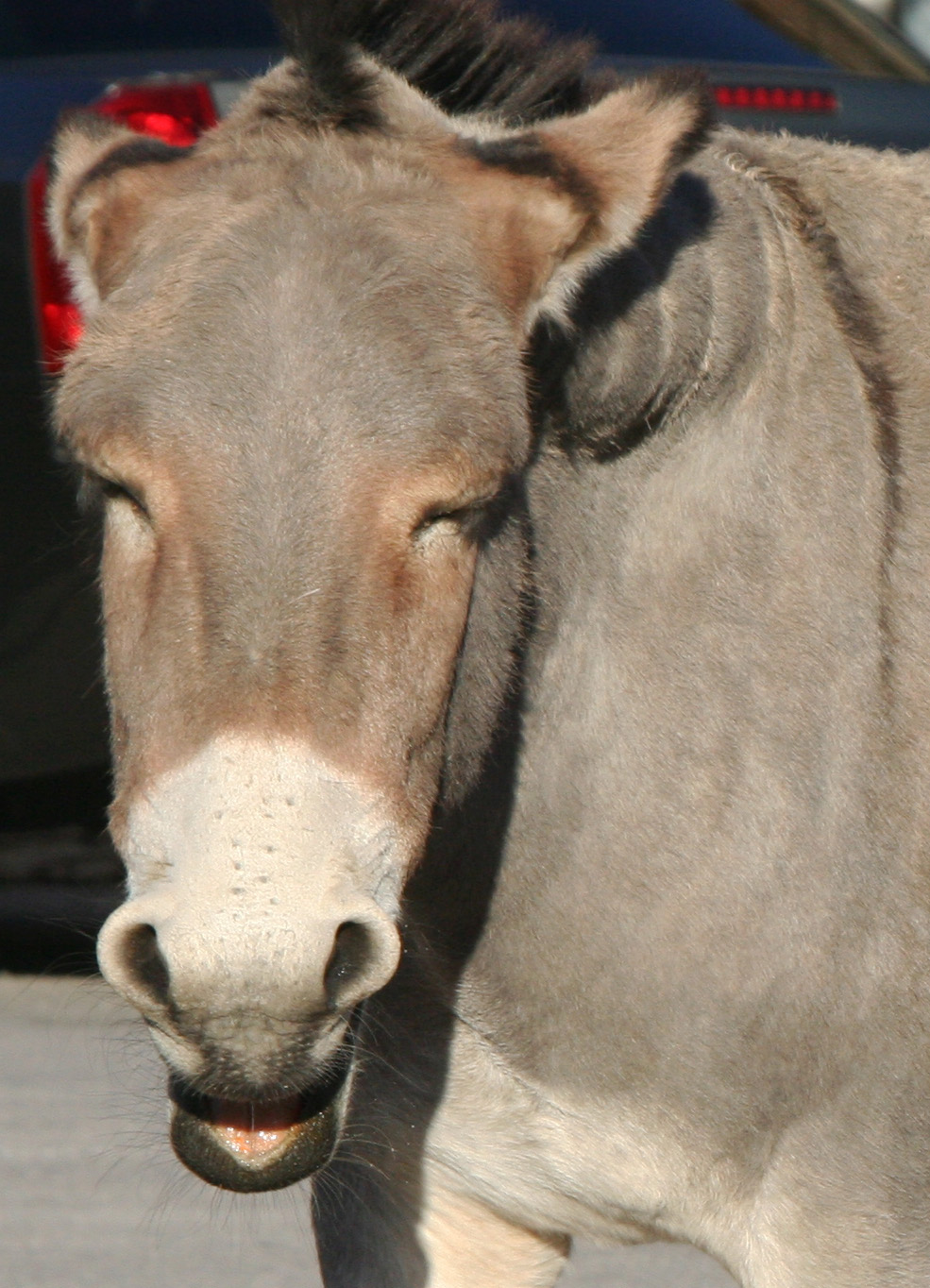
Sheer pleasure?