Getting Lost on the Greek Island of Mykonos… The Mediterranean Cruise

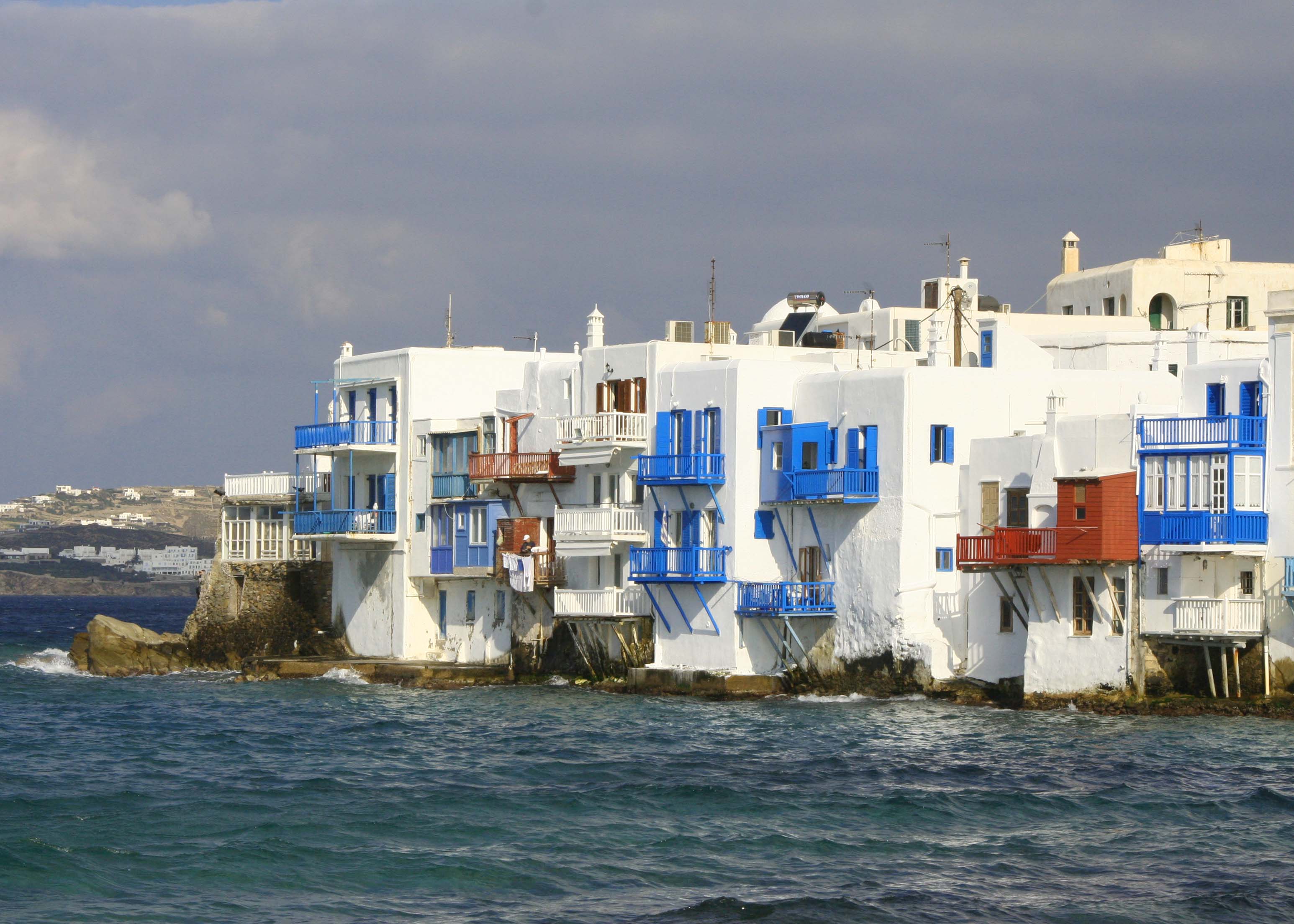
The area known as Little Venice is one of many charming sites on Mykonos.

The area known as Little Venice is one of many charming sites on Mykonos. (Photo by Peggy Mekemson)

The maze-like town of Mykonos (Chora) was designed to discourage invasion. It was easy for invaders to get lost in the narrow, winding streets that ran into other narrow, winding streets that ran into other narrow, winding streets.

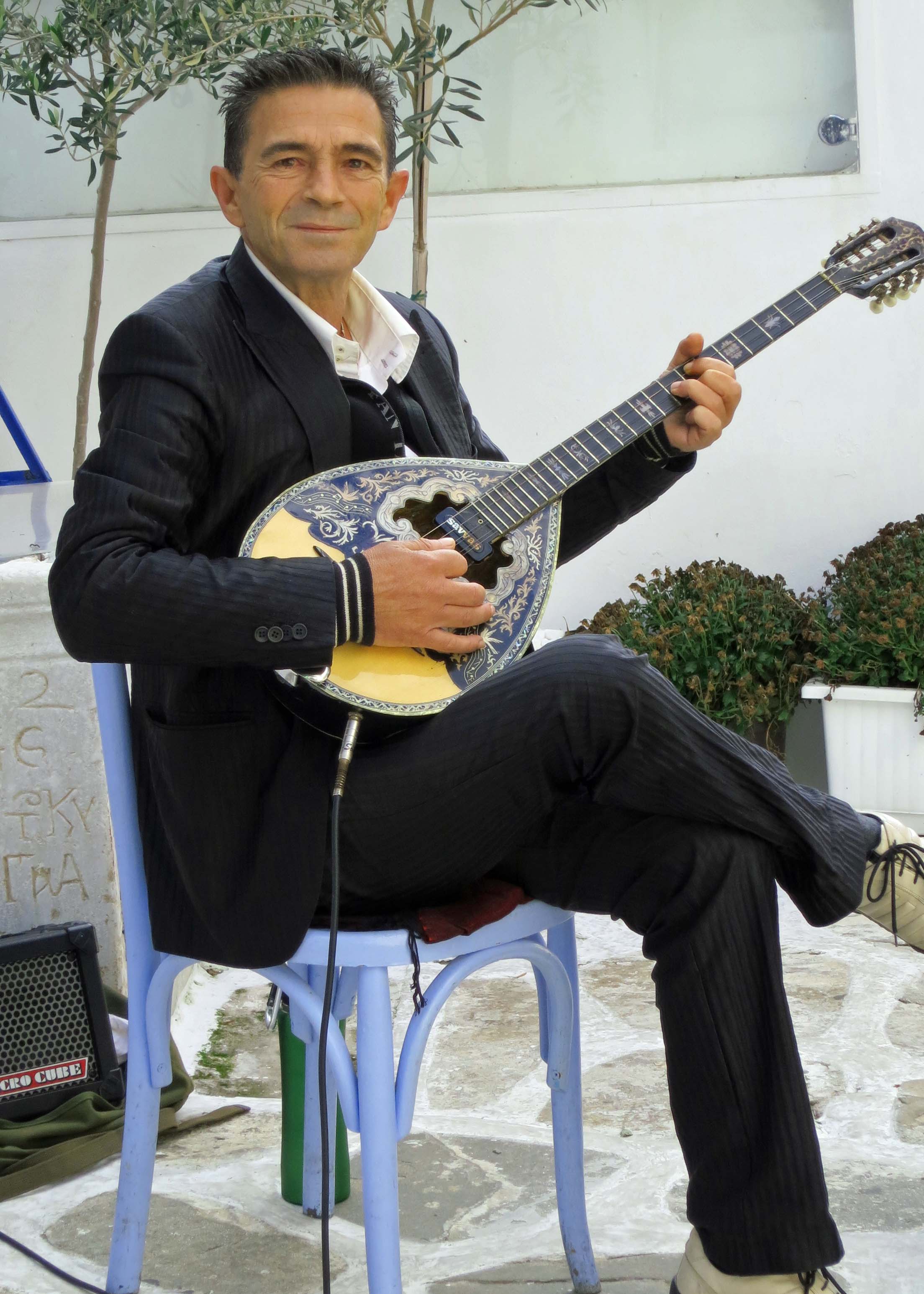
Modern day invaders, otherwise known as tourists, also find it easy to get lost. But that’s half the fun. Except for finding a restroom when you really, really need it, there is no danger. You can easily spend an hour or several wandering along the town’s crooked roads and paths. There are beautiful white buildings slathered in stucco to admire, shops to explore, and cats to photograph. You may even find a Greek musician playing the bouzouki, a mandolin-like instrument that produces what most people think of as Greek music.  Picture Zorba dancing.

White is the common color for buildings on Mykonos, Santorini and other islands of the Cyclades in the Aegean Sea.

White is the common color for buildings on Mykonos, Santorini and other islands of the Cyclades in the Aegean Sea.

One of the main streets in Myconos.

One of the main streets in Mykonos. This road is freeway size in comparison to most routes through the town.

Routes through Mykonos are much more likely to look like this.

Routes through Mykonos are much more likely to look like this. Note the blue trim used to add color to windows and doors.
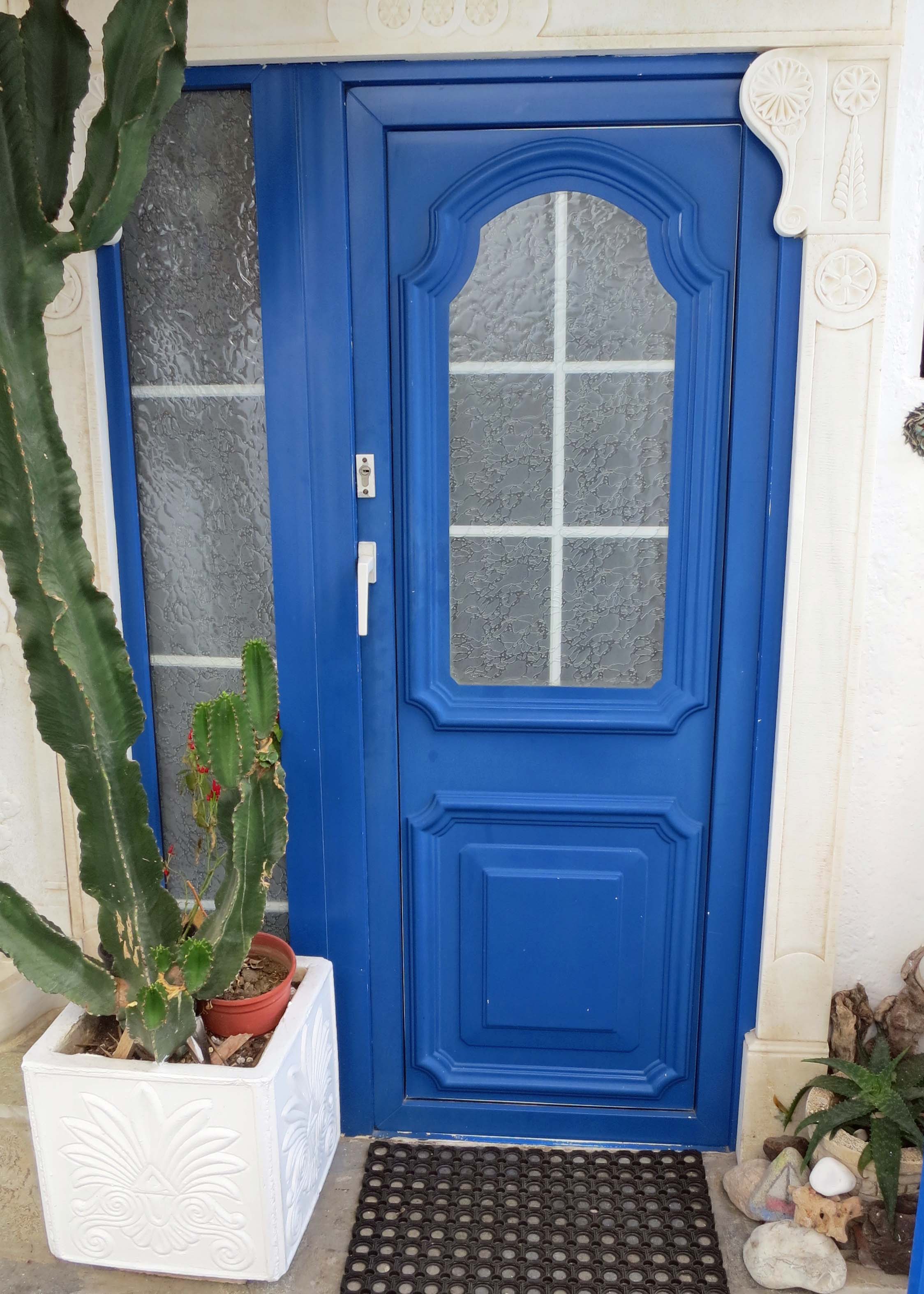
This blue Mykonos door is decorated by a cactus.
This blue Mykonos door is decorated by a cactus.

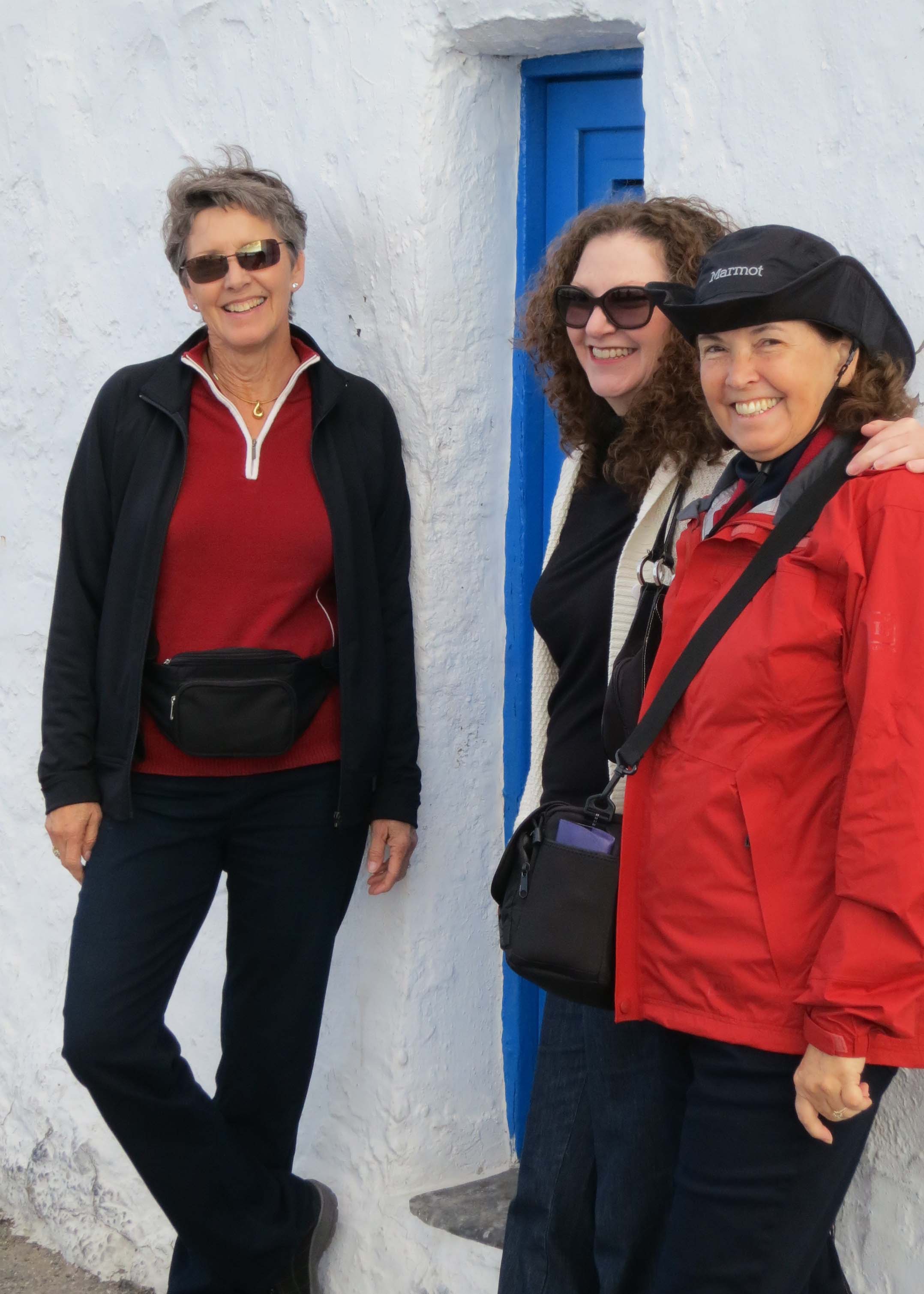
My wife Peggy on the right and two of our traveling companions, Kathi and Frances stand in front of another blue door.

My wife Peggy on the right and two of our traveling companions, Kathi and Frances stand in front of another blue door.

Bougainvillea seems to be the flower of choice in Mykonos.
Bougainvillea seems to be the flower of choice in Mykonos.

A street musician entertained us by playing his

A street musician entertained us by playing his bouzouki…

And a cat confiscated a cafe chair for its mid day snooze.

And a cat confiscated a cafe chair for its mid day snooze.

We managed to get both lost and separated. There was no hope of finding each other in the labyrinth, but fortunately we had a plan. We would meet at the island’s famous windmills. Long since retired, five of them remain hunkered down on a ridge south of town. Mykonos is noted for its winds. The locals even have names for them based on their intensity: bell-ringer, chair thrower, and knock you off your horse. We experienced a brief example of chair thrower but fortunately missed knock you off your horse.

The windmills used cloth sails to capture the winds and run mills for grinding grain. Local bakeries then turned the grain into sea biscuits, aka hardtack, which is flour and water baked several times into a consistency of hardness just this side of rock. The value of sea biscuits is they are basically indestructible. Before modern refrigeration, they were used on long sea voyages. Throw in a lime plus a generous dollop of rum and it was dinner. Producing these ‘delicacies’ was the island’s main industry.

One of the windmills of Mykonos. Dark clouds brought brief rain and a "throw a chair" wind.

One of the windmills of Mykonos. Dark clouds brought brief rain and a “chair thrower” wind. (Photo by Peggy Mekemson)
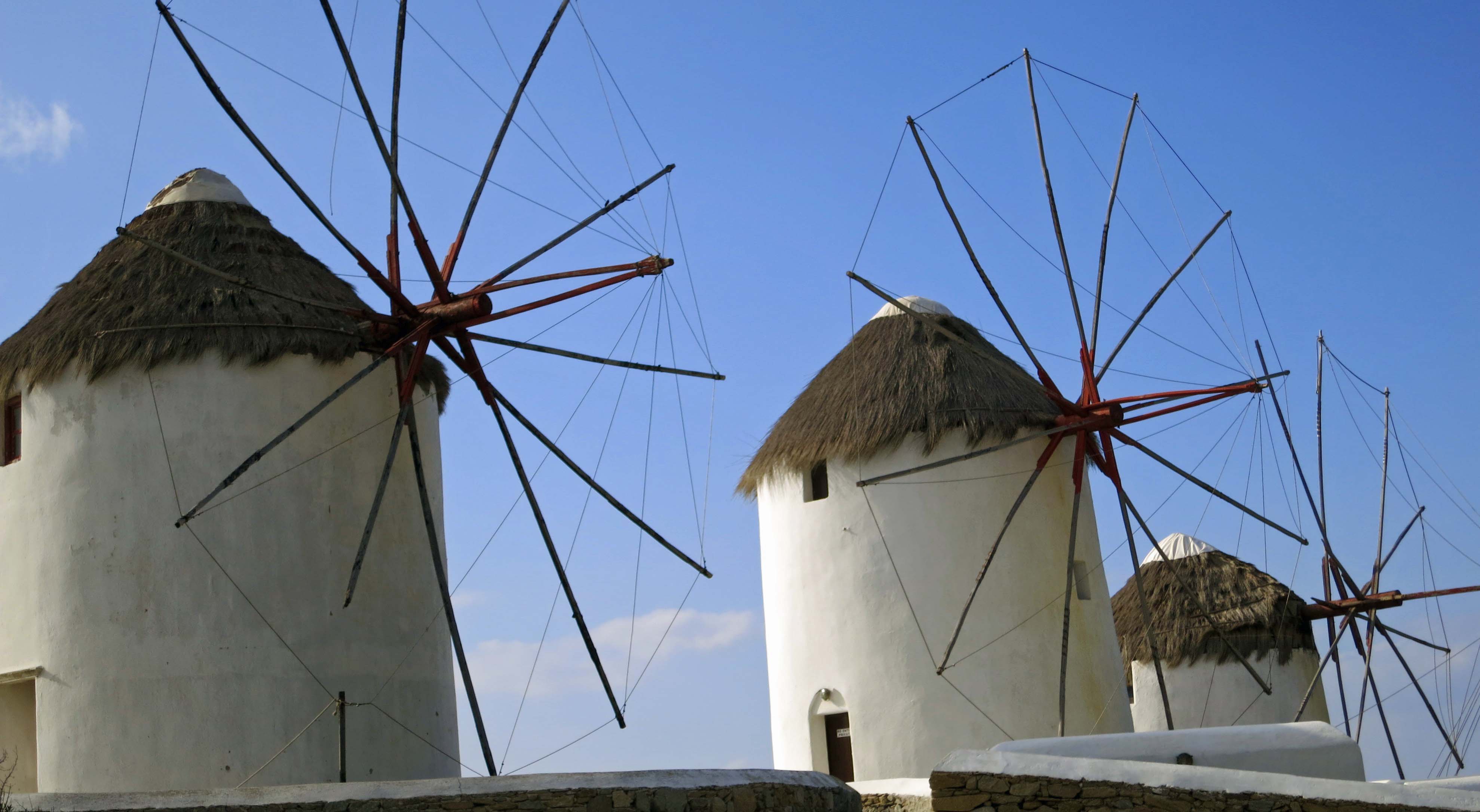
Three of the five windmills.

Three of the five windmills.

Following the coastline back into town we came upon Little Venice (pictured above), a community where sea captains of yore built mini-mansions perched on the ocean edge. Since it neither looks like Venice nor has canals, my thoughts are its name derived from its proximity to water. Either that or a real estate agent was involved. The community is quite colorful, however. I’d be glad to call it home.

Mykonos has some 70 churches to meet the needs of its 7000 residents, which seems a little like a lot. I am reminded of the number of Baptist churches found in the rural South of the United States. I once estimated there was one for each family. The Mykonosians had a unique use for their churches, however. They enshrined the bones of their dead relatives in the walls. I doubt the Baptists do this but it might give new meaning to the old saying, “the family that prays together, stays together.”

Scrunched between Little Venice and the harbor is the Church of Panagia Paraportiani, the most unusual church on the Mykonos. Once upon a time five different chapels existed side by side. Then they morphed together into what has become one of the most photographed sites on the island, with reason. We contributed our share of picture-taking.
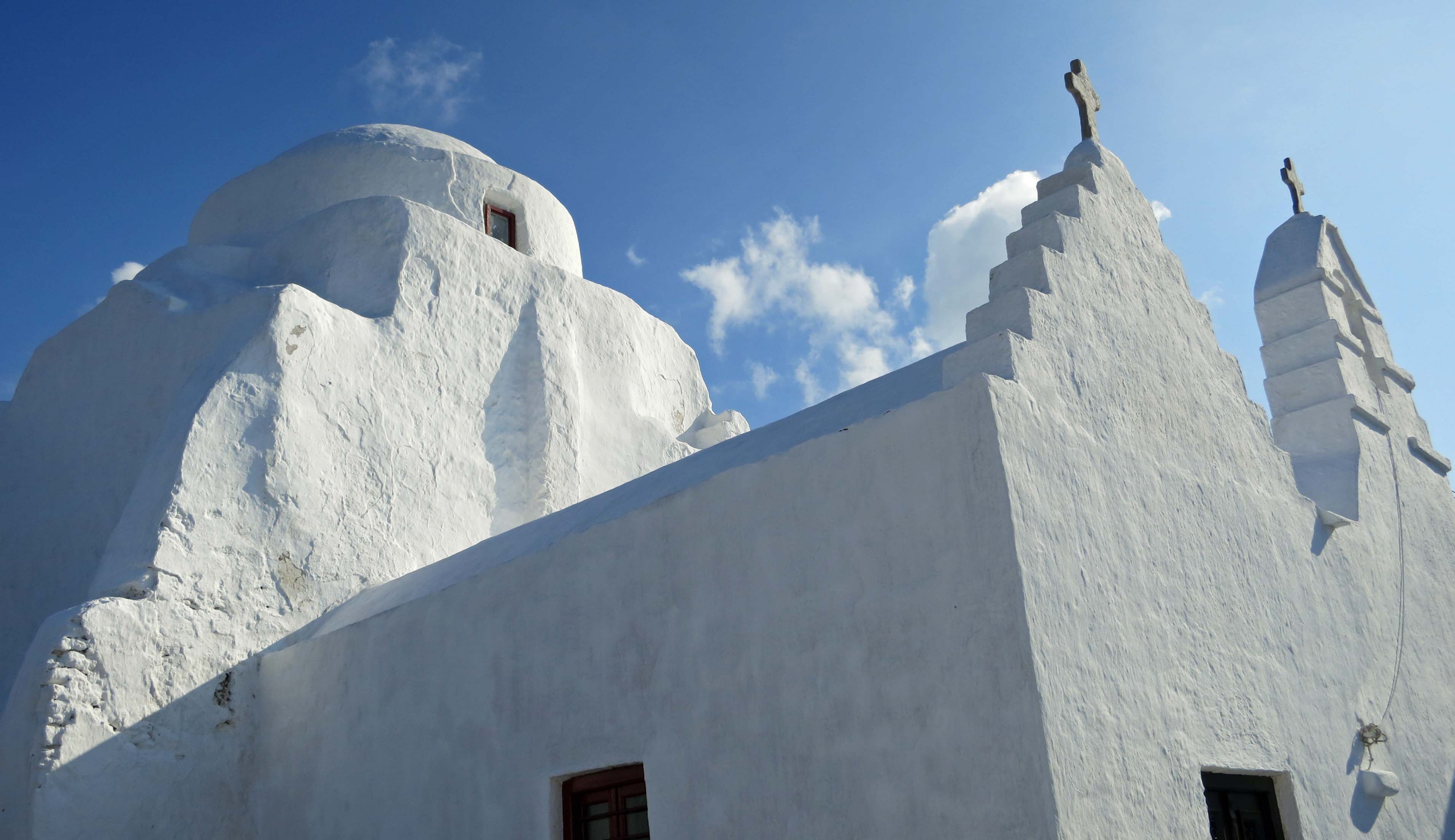
The Church of

The Church of Paraportiani of Mykonos.

Another view of the church.

Another view of the church.

The small harbor area of Mykonos definitely fits the description of picturesque. It was our last stop (except for lunch) on our way back to the ship. That’s where we met Petros the Pelican that I wrote about in my last blog. Unfortunately, it was Sunday and the local fishermen had taken the day off. We satisfied ourselves with admiring the boats. The area also features a small beach that would be crammed with sun worshippers in the summer. Now all it featured was golden sand and blue sea.

Idle fishing boats in the Mykonos harbor.
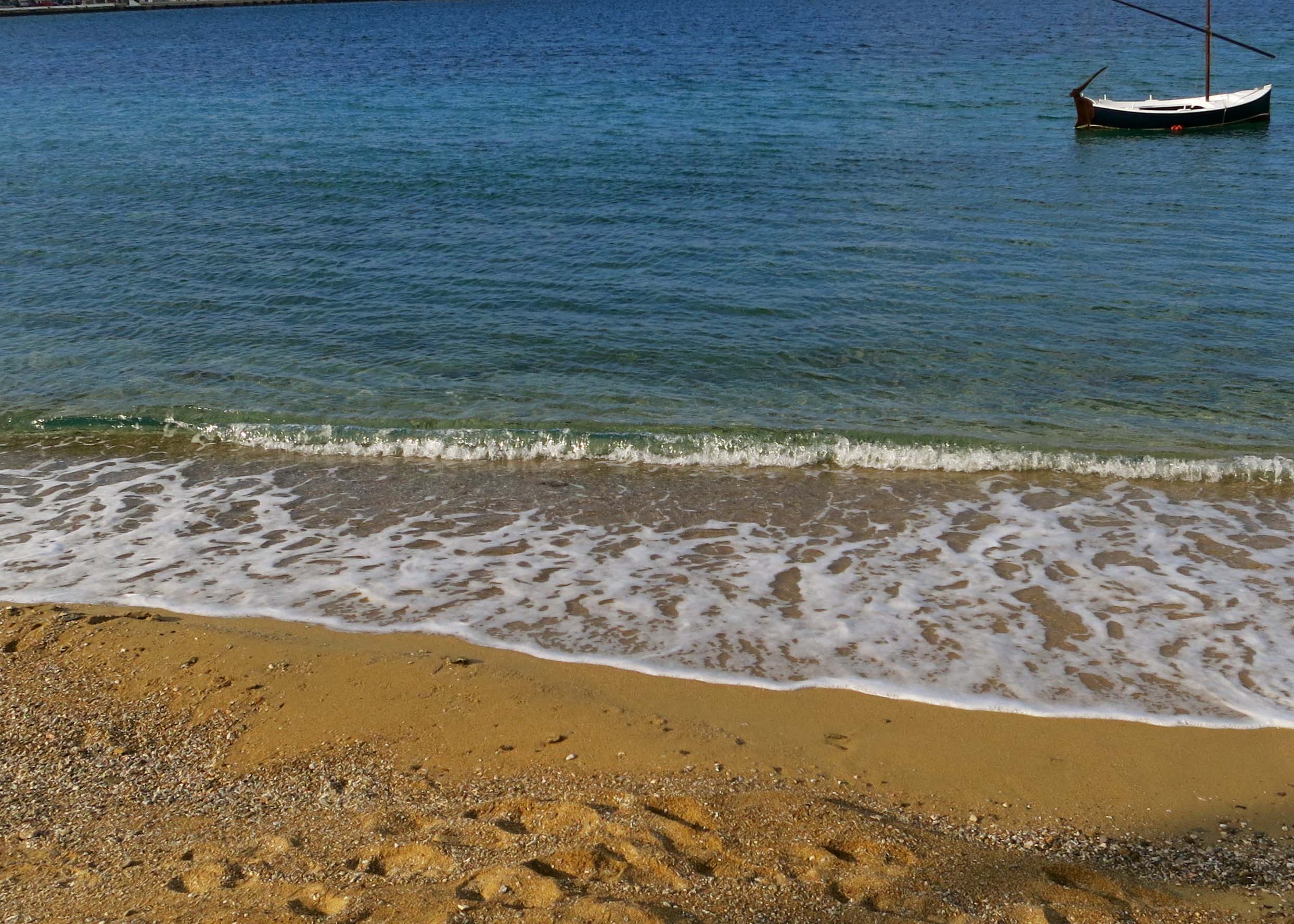
Idle fishing boats in the Mykonos harbor.

The golden sands and blue waters of the Aegean Sea of the small beach in Mykonos.

The golden sands and blue waters of the Aegean Sea of the small beach in Mykonos.


NEXT BLOG: We continue our Mediterranean cruise adventure and visit Athens, Greece.

Petros, the Magnificent Pelican of Mykonos… The Mediterranean Cruise

"What a wonderful bird is the pelican, whose beak can hold more than his belly can." Pelicans are my absolute favorite bird and I have never met a more impressive specimen than Petros of Mykonos.

“What a wonderful bird is the pelican, whose beak can hold more than his belly can.” Pelicans are my absolute favorite birds and I have never met a more impressive specimen than Petros of Mykonos.

One sight you are almost guaranteed to see when you visit the Greek island of Mykonos in the Aegean Sea is Petros, the Great White Pelican. He’s easy to locate. Look for a large flock of camera-pointing tourists.

I googled Petros to see what I could discover about this magnificent bird. Sorting through the various “facts” was challenging. Here’s what I learned. In 1954 or 1955 or 1958 a fisherman found a wounded or exhausted Pelican and nursed it back to health. He then freed the bird so it would return to his wild ways of summering in Europe and wintering in Africa. The pelican, however, had discovered that life in Mykonos was quite sweet. Why spend all that energy flying thousands of miles, swooping over the waves, and diving for dinner when he could waddle around town and have people toss him fish? He decided to stay.

The Mykonosians fell in love with the big bird and named him Petros after St. Peter or maybe after Petros, a popular World War II Greek hero. Once, a neighboring Island stole him. It almost caused a war. In 1986… or there about, he was run over by a car. The driver was lynched. (Actually the driver wasn’t lynched. I just made that up. But look at it my way. With all of the misinformation floating around on the Web about Petros, how could one more piece hurt?) Anyway, Jackie Kennedy Onassis felt for the grieving Island and found them a new pelican that was promptly named Petros. Or, more likely, Jackie contributed a mate for Petros before he was run over and the Hamburg Zoo in Germany provided the replacement (or two, or three).

Whatever the truth about Petros, there is no doubt that the Mykonosians love their mascot, that he continues to enjoy his life of leisure, and that tourists flock to take his picture. In fact Petros has become a major tourist attraction in his half-century on Mykonos and a community that depends on tourism can never have enough tourist attractions. Petros is worth his weight in gold, or at least Hungarian Goose down.

Petros seemingly enjoys cool water dripping down onto his beak.

Petros seemingly enjoys cool water dripping down onto his beak.

Petros playing ghost? Or possibly drying his wings cormorant style.

Petros playing ghost? Or possibly drying his wings cormorant style. (Photo by Peggy Mekemson)

Ah, that feels good.

Ah, that feels good. (Photo by Peggy Mekemson)

A final cose up of Petros, the White Pelican of Mykonos.

A final close up of Petros, the White Pelican of Mykonos. If you have enjoyed these photos of Petros, I would highly recommend that you check out the blog of my friend FeyGirl at  Serenity Spell out of Florida who is producing some of the most beautiful bird photography to be found on the Web..

NEXT BLOG: Continuing our exploration of Mykonos on our Mediterranean Cruise adventure, we get lost in the town’s confusing, narrow streets, find windmills, and discover a church to match the beautiful churches of Santorini.

“Psst, you want to buy a fine rug?” Kusadasi, Turkey: The Mediterranean Cruise

Dozens of Turkish rugs were scattered on the floor in Kusadasi, Turkey, thrown out in a frenzy of encouraging us to buy.

Dozens of Turkish rugs were scattered on the floor in Kusadasi, Turkey, thrown out in a frenzy of encouraging us to buy.

The rugs were flying, quite literally, and landing on the floor in front of us. Twenty minutes earlier they had been neatly rolled up at the back of the room. Now five Turkish Rug salesmen were expertly flipping them out onto the floor, a new one every ten seconds. We had been wined; we had been dined; we had been educated. Now the final push was on, the push to get us alone in a room where more multi-thousand dollar rugs would be thrown at us and we would eagerly pull out our credit card with the highest limit.

Part of the show was an interesting demonstration on how carpets are made. Hundreds of hours are involved.

Part of the show was an interesting demonstration in the craft of carpet weaving. Fine rugs can take over a year to complete.

Peggy was ready. The falling rugs had hypnotized her. Her eyes were glazing over and she was levitating out of her seat as a handsome dark-eyed Turk wooed her with fine words. The last time I had seen that look we had ended up with a timeshare in Mexico. This time I was fortified, however. When the salesmen was passing out drinks to soften us up, I was one of two from our tour group of 30 who ordered arak or raki, the unsweetened Middle-Eastern anis drink with the smell of turpentine and the kick of a mule.

I admit the rugs were beautiful works of art, but I was arak strong. Our cabin in the woods of Southern Oregon did not need a Turkish carpet. “I’m sorry,” Peggy explained to her new best friend. “My husband doesn’t want a rug.” I was truly the bad guy in this scenario and the salesman gave me the look to prove it before he sidled off to corner another victim… oops I mean client.

Buying a rug in Kusadasi is reputedly the quintessential Turkish experience and a whole industry is set up to make sure you have it. The cruise industry is a major partner in this endeavor. Lectures on bargaining and quality are given on board the ship before arrival. Lists are provided of safe, preferred shops (i.e. those that share their profit with the ship). Our tour guide hurried us through ancient Ephesus sergeant-like to make sure we would make it to the shop on time. Tours are tightly scheduled. Each tourist needs the opportunity to buy a carpet.  Everyone profits. For the cruise ship this can mean a 50-60 percent kickback.

I hurried Peggy out with the promise of lunch and the opportunity to buy presents for the grandkids. Her brother John and his wife Frances stayed to buy a carpet, however, and ended up with two. Later we celebrated with them in their rambling Texas home as they rolled their children’s inheritance out on the floor.

Dozens of small shops were located in a modern Turkey bazaar near the port. It was touristy but fun. Since we were one of the last ships of the season, we found true bargains.

Dozens of small shops were located in a modern Turkish bazaar near the port. It was touristy but fun. Since we were one of the last ships of the season, Peggy found numerous bargains to make up for carpet we didn’t buy.

I was amused by this shop that offered genuinely fake watches... truth in advertising.

Truth in advertising. (grin)

As we wandered through the shops of Kusadasi I was attracted by the rich colors.

As we wandered through the shops of Kusadasi I was attracted by the wealth of colors.

This plate was another example of the rich colors found in the shops of Kusadasi.

This plate closeup is another example of the rich colors and intricate patterns found in the shops of Kusadasi.

Francis unrolls John and her new silk carpet in their Texas home.

Frances eagerly unrolls John and her new silk carpet in their Texas home.

A closer look at the carpet. It really is beautiful and John assured me they bargained for a good price.

A closer look at the family heirloom. It really is beautiful and John assures me they bargained for a good price.
NEXT BLOG: We visit the Greek Island of Mykonos on our Mediterranean cruise adventure and meet the island’s famous Pelicans up close and personal.

Santorini’s Akrotiri: An Impressive Ancient City… but Is It Atlantis?

This piece of pottery is one of my favorites on display at the museum. I like to believe that the Minoans of Akrotiri had a sense of humor.

This piece of pottery is one of my favorites on display at the Museum of Historic Thira on Santorini. I like to believe that the Minoans of Akrotiri had a sense of humor. Note the red lips.

The small Museum of Historic Thira is definitely worth a visit if you are on the Greek island of Santorini. Located in the town of Fira, it’s mission is to trace the development of prehistoric Thira from 3000-1600 BC by displaying artifacts found in the ruins of ancient Akrotiri. Before Santorini blew its top in a massive volcanic explosion around 1600 BC and buried the city under a sea of volcanic ash, Akrotiri was a center of a Bronze Age Minoan Culture second only to Knossos on Crete.

Picture hot and cold water running water, indoor bathrooms, two and three-story buildings, beautiful frescos, intriguing pottery, weights and measures, and a fleet of ships that delivered cargo throughout the known world of the time. We are fortunate that many of these artifacts have been preserved under the volcanic ash, which makes Akrotiri similar to Pompeii. Unlike Pompeii, no bodies have been found in the ruins. Apparently the Minoans were given ample warning to escape.

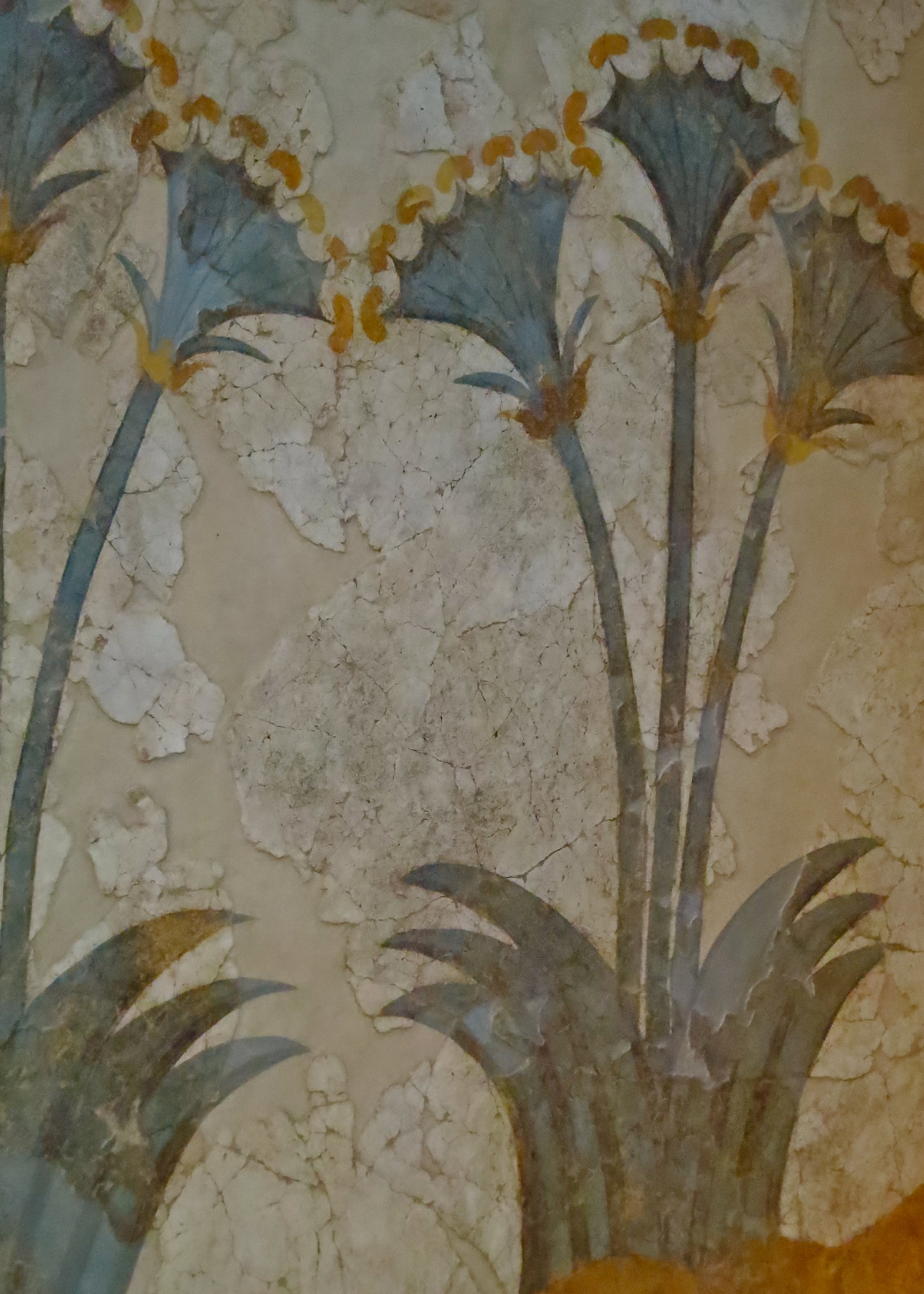
This fresco is one of many that lined the walls of buildings in Akrotiri, Santorini is close to 4000 years old.

This fresco is one of many that lined the walls of buildings in Akrotiri, Santorini is close to 4000 years old.

Excavations of the ruins, which are located on the southern part of Santorini, began in 1957 and continue today. Only a small portion of the city has been uncovered. Because of its level of civilization combined with the fact that it disappeared, there is speculation that Akrotiri may have served as the inspiration for the myth of Atlantis.

Plato mentioned the fabled city around 360 BC. He described it as an ancient civilization existing some 9000 years before his time that was buried under a flood of water. Modern archeologists suggest that the 9000 years may have been mistranslated from earlier Egyptian accounts and actually be 900 years, which would put the destruction of Atlantis right around the time Akrotiri met a similar fate. Substitute an ocean of ash for a sea of water and there is ample room for the speculation. Buried is buried. We will probably never know the truth.

The volcanic activity that brought Akrotiri to its spectacular end continues to be a fact of life on Santorini, however. “Santorini Bulges as Magma Balloons Underneath” a September 12, 2012 article in National Geographic news reported. Somewhere between 13-26 million cubic yards of molten rock were filling the magma chamber located directly under the sea where our cruise ship was anchored! The Crown Princess did not cover the bulge in its newsletter. Apparently, there is no imminent danger… at least to speak of.

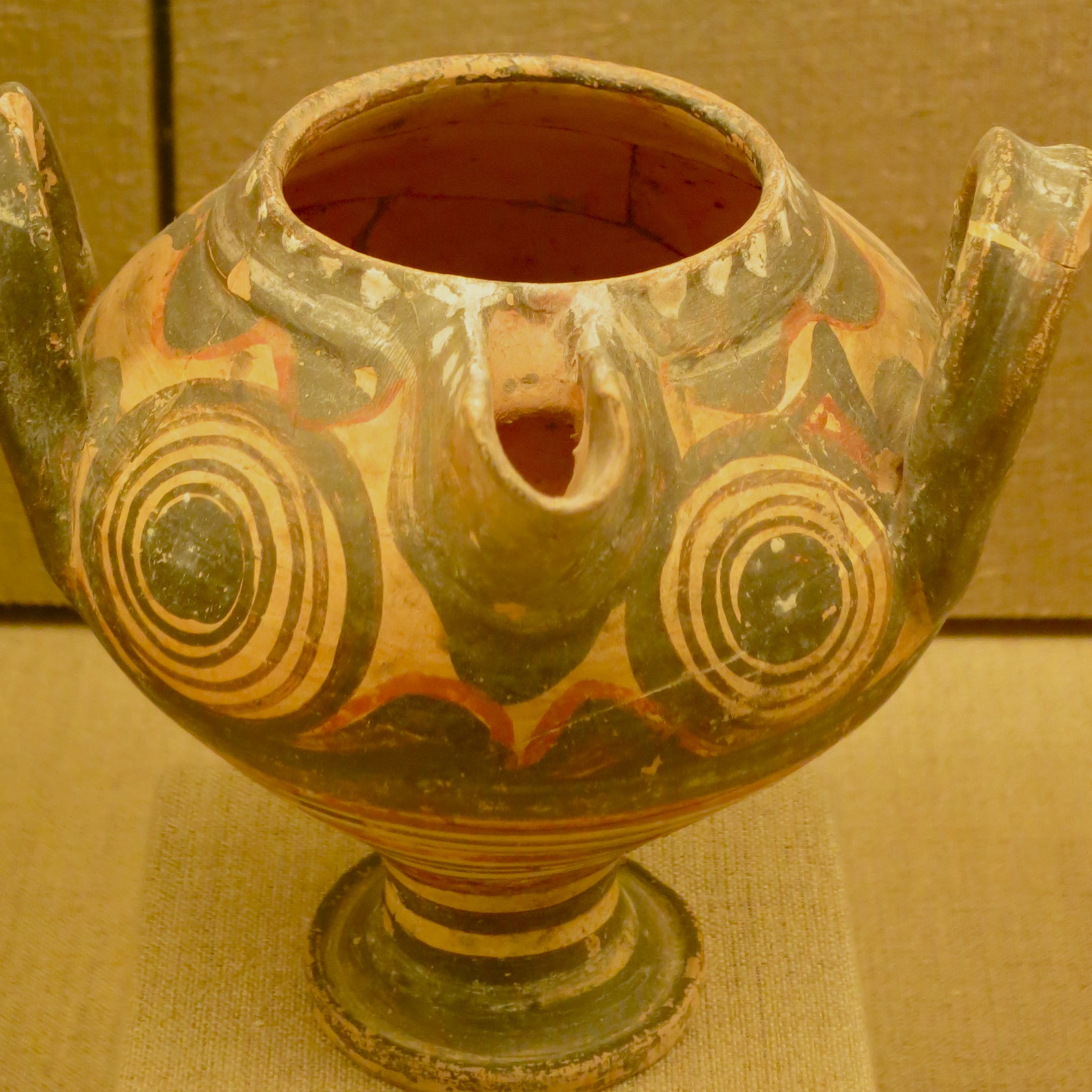
Here's another favorite Akrotiri artifact of mine. It's called a nipple ewer (or pitcher) for obvious reasons. This one comes with tiny breasts, ear rings and a beak. Archeologists speculate that the ewer may have had religious significance. My wife Peggy, always practical, suggests that may have been used like baby bottles.

Here’s another favorite Akrotiri artifact of mine. It’s called a nipple ewer (or pitcher) for obvious reasons. This one comes with tiny breasts, ear rings and a beak. Archeologists speculate that the ewers may have had religious significance. My wife Peggy, always practical, suggests that may have been used like baby bottles.

Another nipple ewer. This one featured a swallow. Both wild and domestic animals were featured prominently on Akrotiri artifacts. The yellow color, BTW, is because of the lights used by the museum to protect the ancient works of art.

Another nipple ewer. This one featured a swallow. Both wild and domestic animals were featured prominently on Akrotiri artifacts. The yellow color, BTW, is because of the lights used by the museum to protect the ancient works of art.

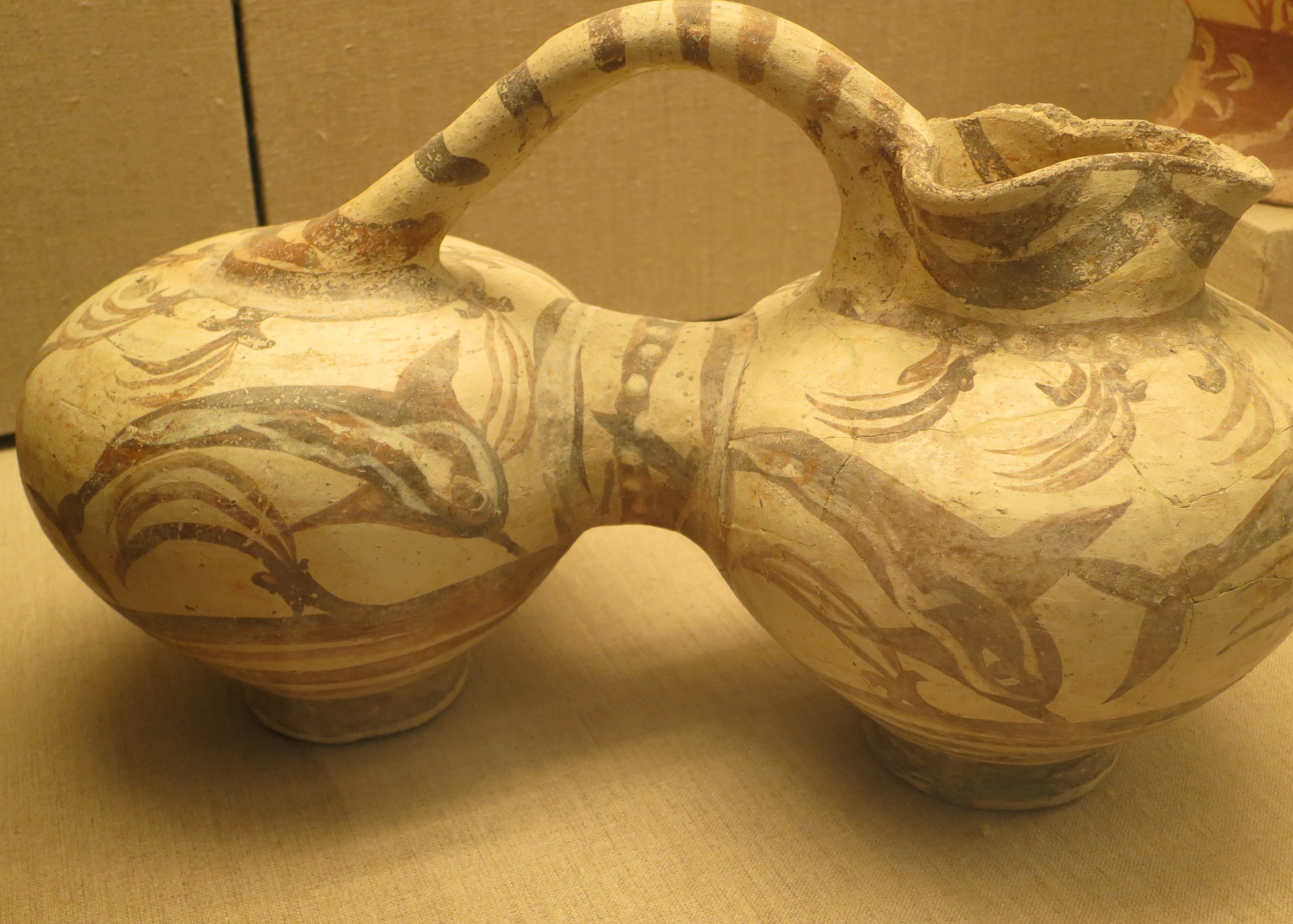
I found this elongated double pitcher with its leaping dolphins to be quite graceful.

I found this elongated double pitcher with its leaping dolphins to be quite graceful.

This reconstructed storage container features a bull that appears to be mooing quite loudly.

This reconstructed storage container features a bull that appears to be mooing quite loudly.

Much of the pottery found in Akrotiri also featured common crops grown by the Minoans. The grapes reflect the wine industry that has been in existence on Santorini for over 4000 years.

Much of the pottery found in Akrotiri also features common crops grown by the Minoans. The grapes on this jar reflect the wine industry that has been in existence on Santorini for over 4000 years.

The Museum of Historic Thira also displays a number of small figurines such as this bull.

The Museum of Historic Thira also displays a number of small figurines such as this bull.

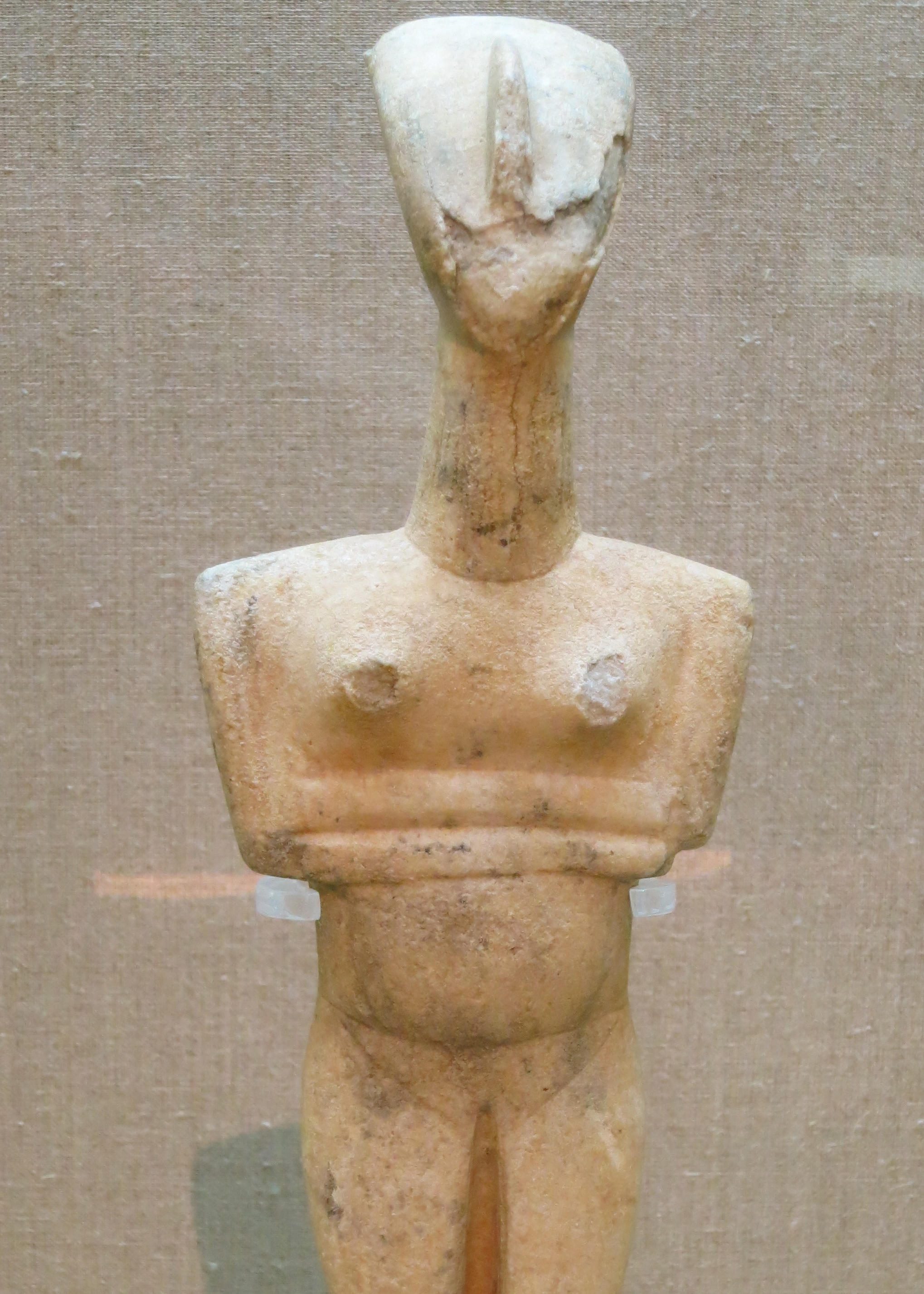
For those who like to attribute alien influence to the development of Atlantis, I will end my photos from the museum with this piece, possibly as old as 2700 BC. (grin)

For those who like to attribute alien influence to the development of Atlantis, I will end my photos of artifacts from Akrotiri with this piece (grin), possibly as old as 2700 BC.

As we returned to our ship, which was anchored above the bulging lava chamber, we had a final look at the towering cliffs of Santorini and their beautiful white villages.

As we returned to our ship, which was anchored above the bulging lava chamber, we had a final look at the towering cliffs of Santorini with their beautiful white villages perched on top.

A beautiful sunset greeted our ship as we headed out to sea and our next adventure.

A beautiful sunset greeted our ship as we headed out to sea and our next adventure.

NEXT BLOG: I continue my travel blog on the Mediterranean with a visit to the second largest city in the Roman Empire, Ephesus, which is located on the Turkish mainland.

The Stairs, Doors and Gates of Santorini… Personality Plus!

Stairways of all shapes and sizes went snaking down off the cliff in Oia, Santorini. This one was rather grand.

Stairways of all shapes and sizes went snaking down off the cliff in Oia, Santorini. This one was rather grand.

When I was growing up in Diamond Springs, California, significant stairways were few and far between. Most of our homes were single floor western style ranch homes. Our climbing was more or less relegated to trees and lumber stacks, the latter much to the dismay of the grumpy watchman at Caldor Lumber Company who could never catch us. We learned a number of interesting words from him, however.

I’ve always been fascinated with stairs, particularly stairs that disappear around corners. They almost beg exploration, like a trail in the woods. Doors share a similar characteristic, especially interesting doors. I’m convinced that people who live behind interesting doors lead interesting lives. Unfortunately, doors tend to be very private affairs; they hide secrets.

Gates are different.  They don’t say ‘stay out’ in the same way a door does… even when they sport a no-trespassing sign. Gates in Diamond Springs tended to be low on design and high on barbed wire. We climbed over with impunity except for being chased by dogs or yelled at. Old Tony Pavy was an exception; he had a shotgun that he was quick to pull when he caught kids gigging frogs in his pond or plunking squirrels out of his trees, especially the time I hit one of his pigs by mistake with a ricocheting bullet. The man had zero sense of humor. “Get my gun Mama!” he roared to his wife as we disappeared over the hill.

They have to have stairways in the town of Oia, Santorini. Houses are built right down the cliff and there are no elevators. People must be in great shape from all of the hiking. And here’s the fun part, all of the stairs are different and I think quite attractive. Peggy and I kept our digital cameras busy. We also found our share of interesting doors and two very attractive gates to photograph.

Another set of stairs with unique personality works its way down toward the Mediterranean in Oia, Santorini.

Another set of stairs with unique personality works its way down toward the Mediterranean in Oia, Santorini.

This set of stairs on Santorini added a touch of color.

This set of stairs on Santorini added a touch of color.

Our traveling companions, the Dallens from Austin and Saages from San Francisco look down on  several sets of stairs. It reminded me of an Echer painting.

Our traveling companions, the Dallens from Austin and Saages from San Francisco look down on several sets of stairs. It reminded me of an M.C. Escher painting.

Mules working down on the cliff used these stairs for carrying construction debris up to the top. These were definitely one-way stairs: the one-way being whichever way the mules were traveling.

Mules working down on the cliff used these stairs for carrying construction debris up to the top. These were definitely one-way stairs: the one-way being whichever way the mules were traveling.

The ultimate stairway on Santorini... the one that takes you from the old port up a thousand feet to the town of Fira.

The ultimate stairway on Santorini… the one that takes you from the old port up a thousand feet to the town of Fira.

Blue was about as close as it got to being a common door color on Santorini.

Blue seemed to be the most common door color on Santorini.

This halfway hidden door in Oia on Santorini caught my imagination. I wanted to go up and knock.

This halfway hidden door with its plant in Oia,  Santorini caught my imagination. I wanted to go up and knock.

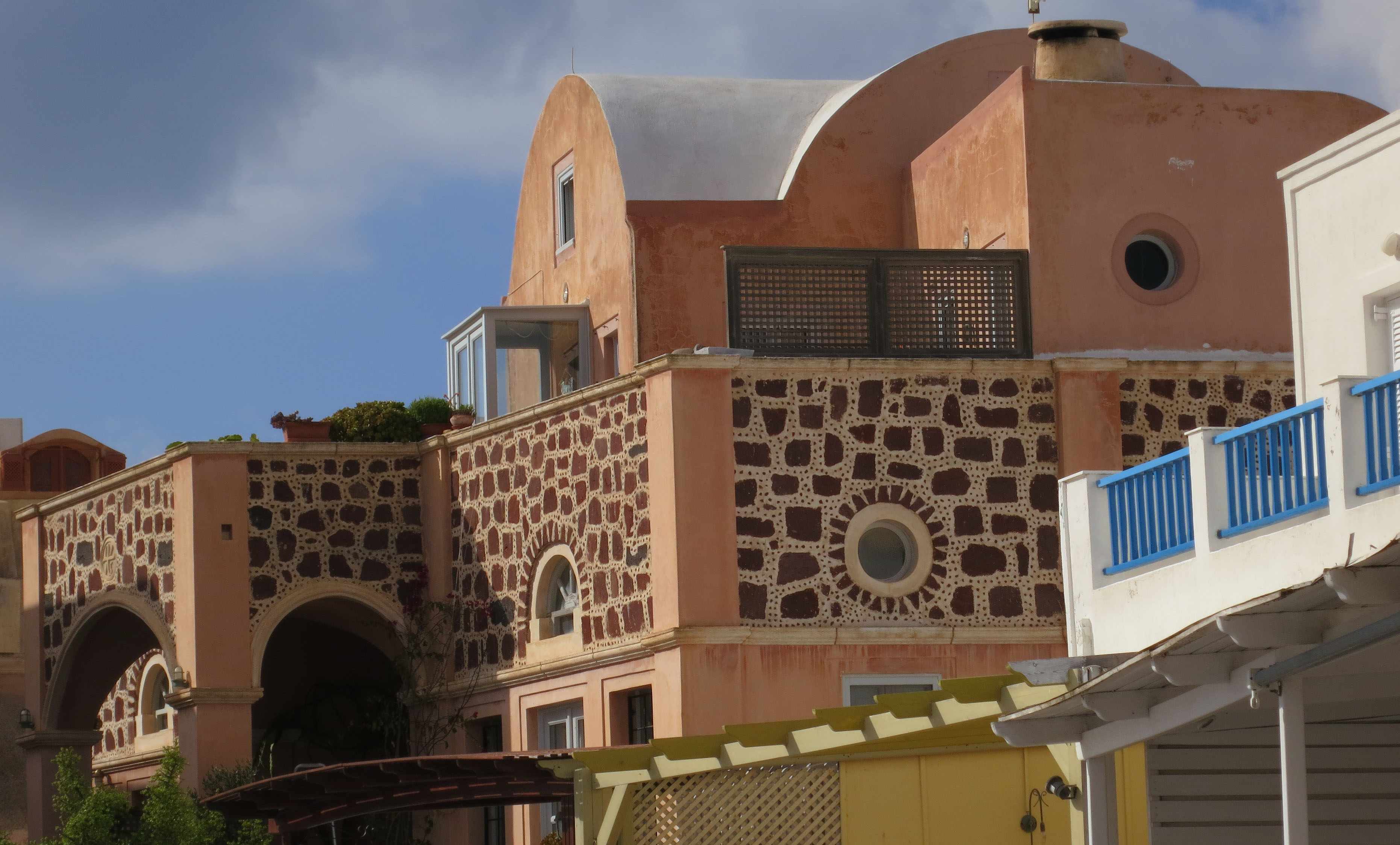
This house in Oia displayed an interesting choice of colors.

This house in Oia displayed an interesting choice of colors.

The most secretive of doors are old ones like this one in Oia.

The most secretive of doors are old like this one in Oia. It must have a thousand stories to tell.

This simple gate in Oia with its dramatic shadows was quite beautiful.

This simple gate in Oia with its dramatic shadows, white pillar and Mediterranean background was quite beautiful. (Photo by Peggy Mekemson.)

The door/gate to nowhere? Peggy shot this photo in Fira, Santorini. There was nothing behind it except open space... and a set of stairs that went downward.

The door/gate to nowhere: Peggy shot this photo in Fira, Santorini. There was nothing behind it except open space… and a set of stairs that went downward to a restaurant.


NEXT BLOG: We travel back in time 4000 years to Santorini’s ancient civilization of Thira. Could there be an Atlantis connection?


The Beautiful and Unique Churches on the Greek Island of Santorini

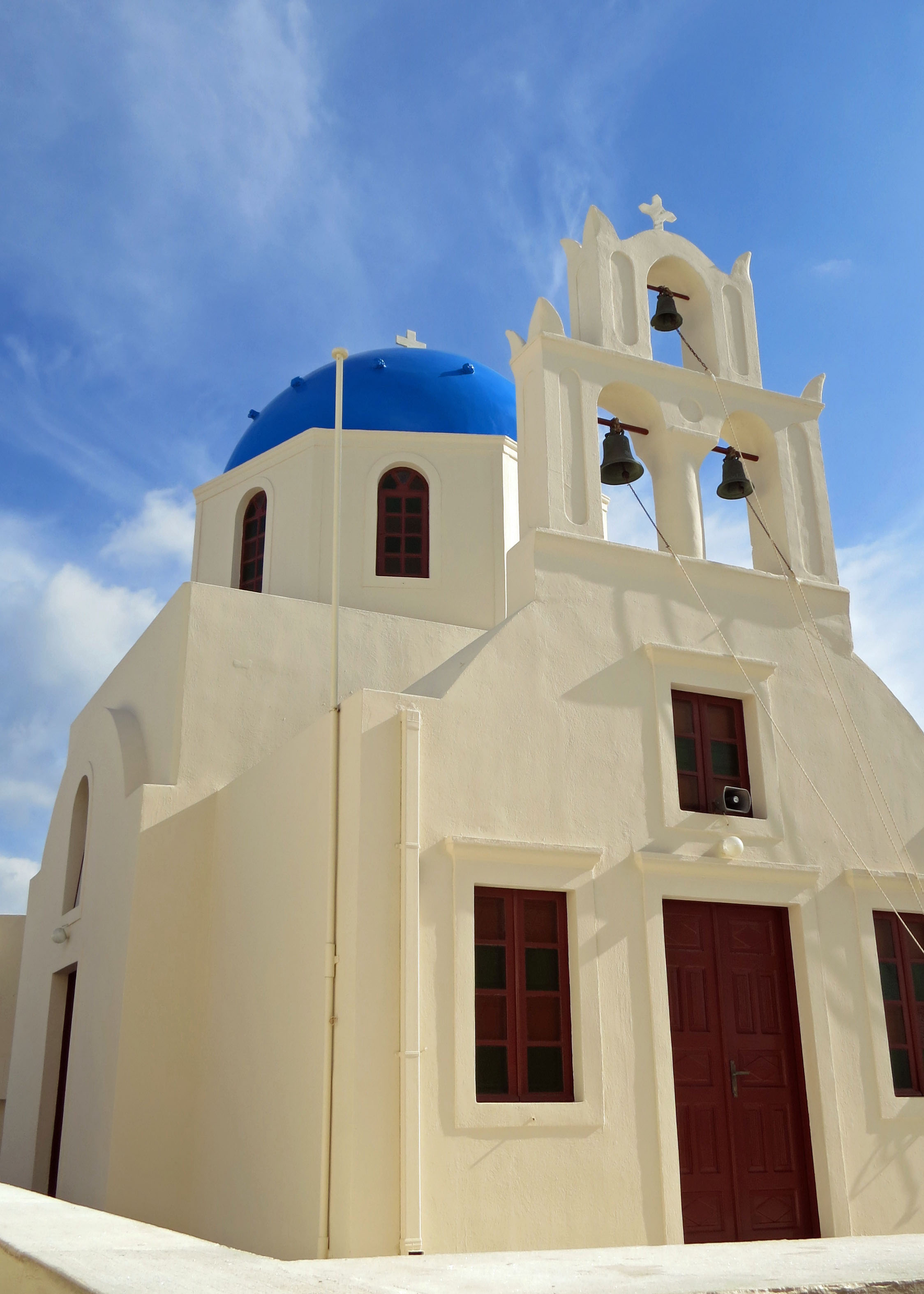
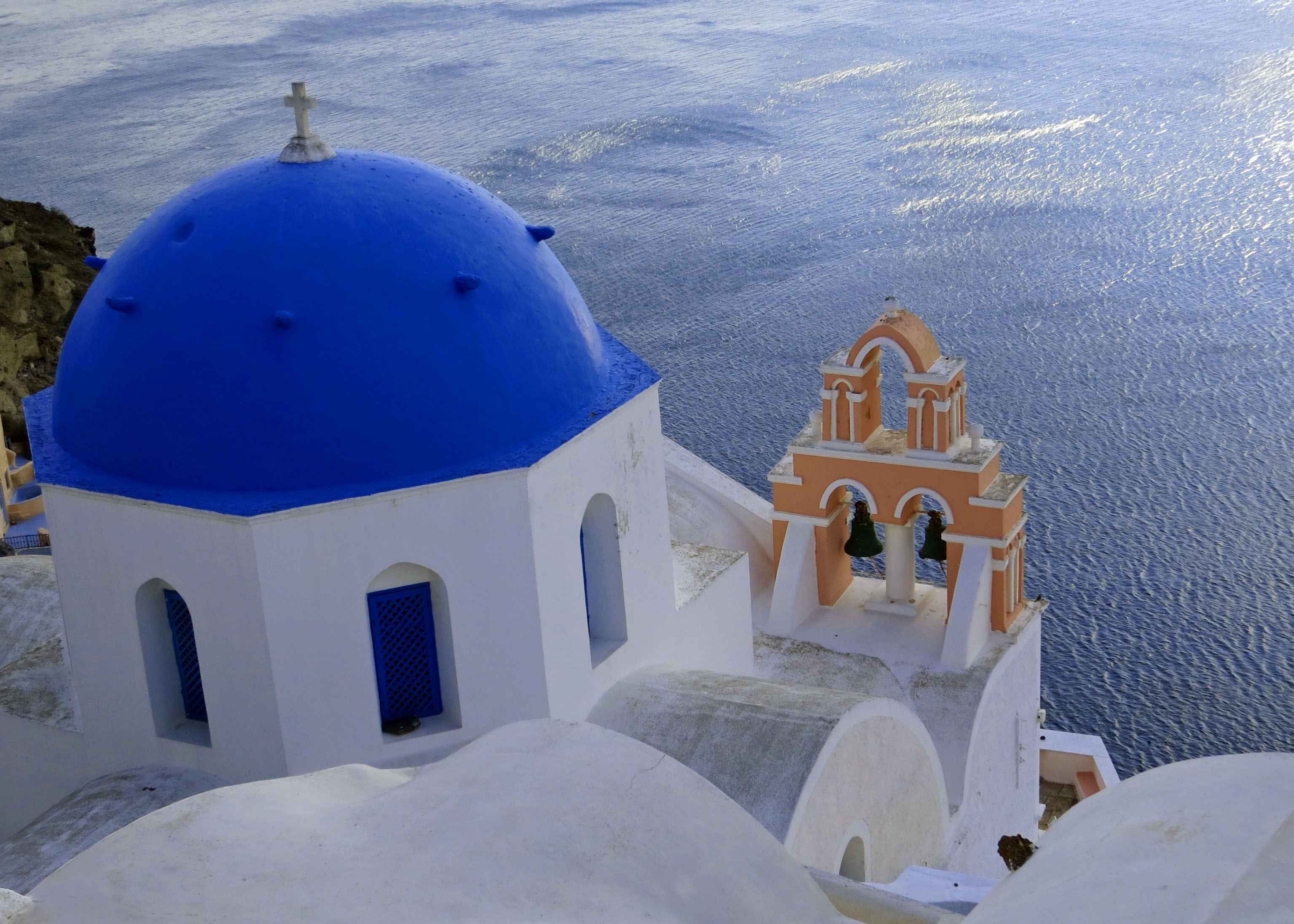
The Church of St. George in Oia, Santorini. Most, but not all of Santorini's churches featured a blue dome.

The Church of St. George in Oia, Santorini. Most, but not all of Santorini’s churches featured a blue dome.

Europe is filled with great churches that are known as much for their art and architecture as they are for religion. Our cruise through the Mediterranean would take us to some of the world’s most renowned cathedrals. While the churches on the Greek Island of Santorini are no match for the splendor of what you find in Venice, Rome or Florence, they have a subtle beauty and uniqueness of their own.  The following photos are meant to capture something of their beauty.

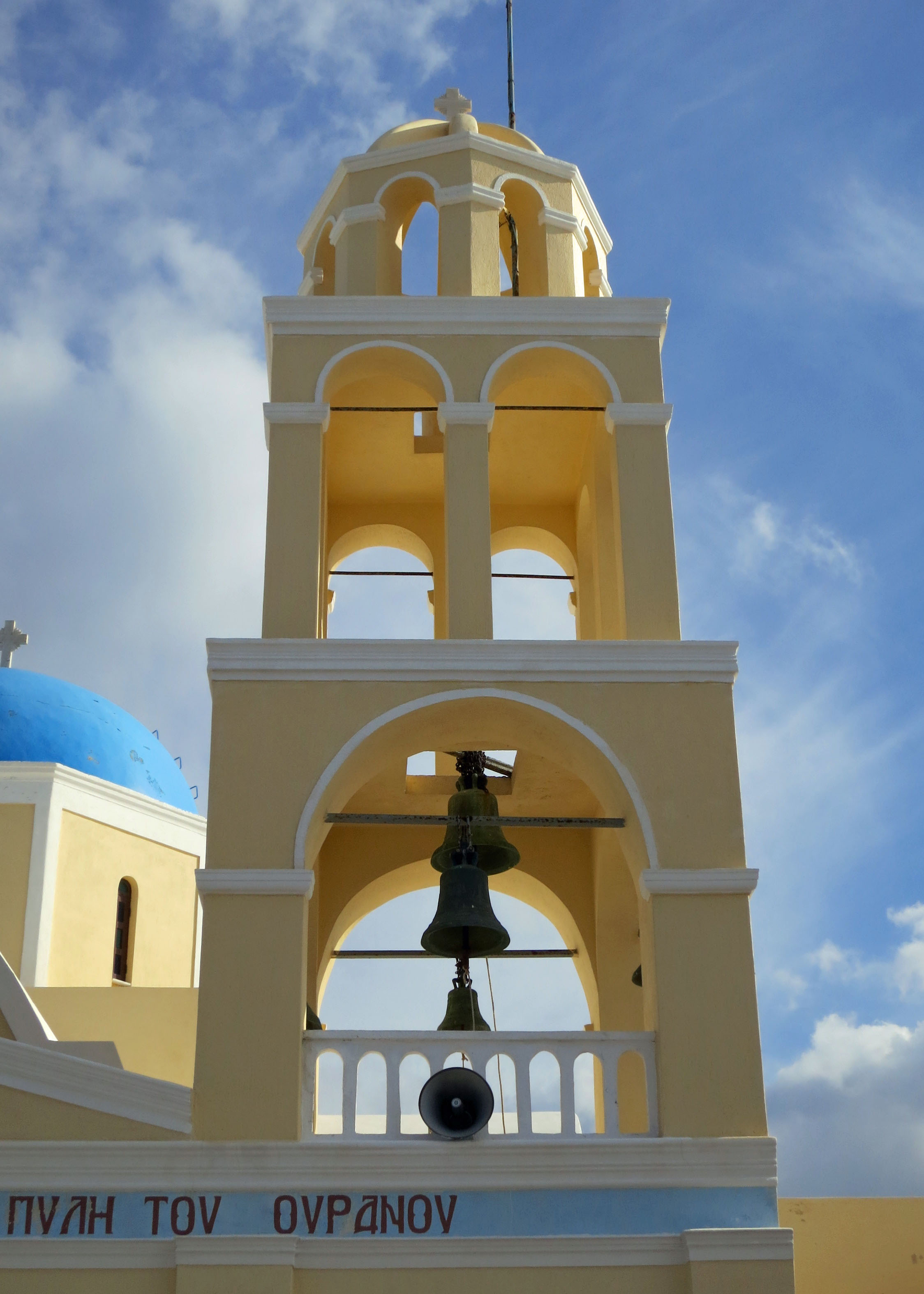
This is a close up of the bell tower on the Church of St. George in Oia, Santorini. The bell towers throught the town were as unique as the churches.

This is a close up of the bell tower on the Church of St. George in Oia, Santorini. The bell towers throughout the town were as unique as the churches.

I found this church with its white rocks surreal.

I found this church with its white rocks surreal.

A view of the same church seen in the photo above from behind.

A view of the same church seen in the photo above from behind.

This church provided and interesting backdrop for the homes in front.

This church provided an interesting backdrop for the homes in front. I also liked the fun play of light and shadow.

The Church of Panagia provides a gateway into Oia on Santorini. Once again, dramatic clouds added interest to our day of photography.

The Church of Panagia provides a gateway into Oia on Santorini. Once again, dramatic clouds added interest to our day of photography. (Photograph by Peggy Mekemson)

The bell tower of the Church of Panagia in Oia, Santorini.

The bell tower of the Church of Panagia in Oia, Santorini.

Another of Santorini's uniquely beautiful churches.

Another of Santorini’s uniquely beautiful churches.

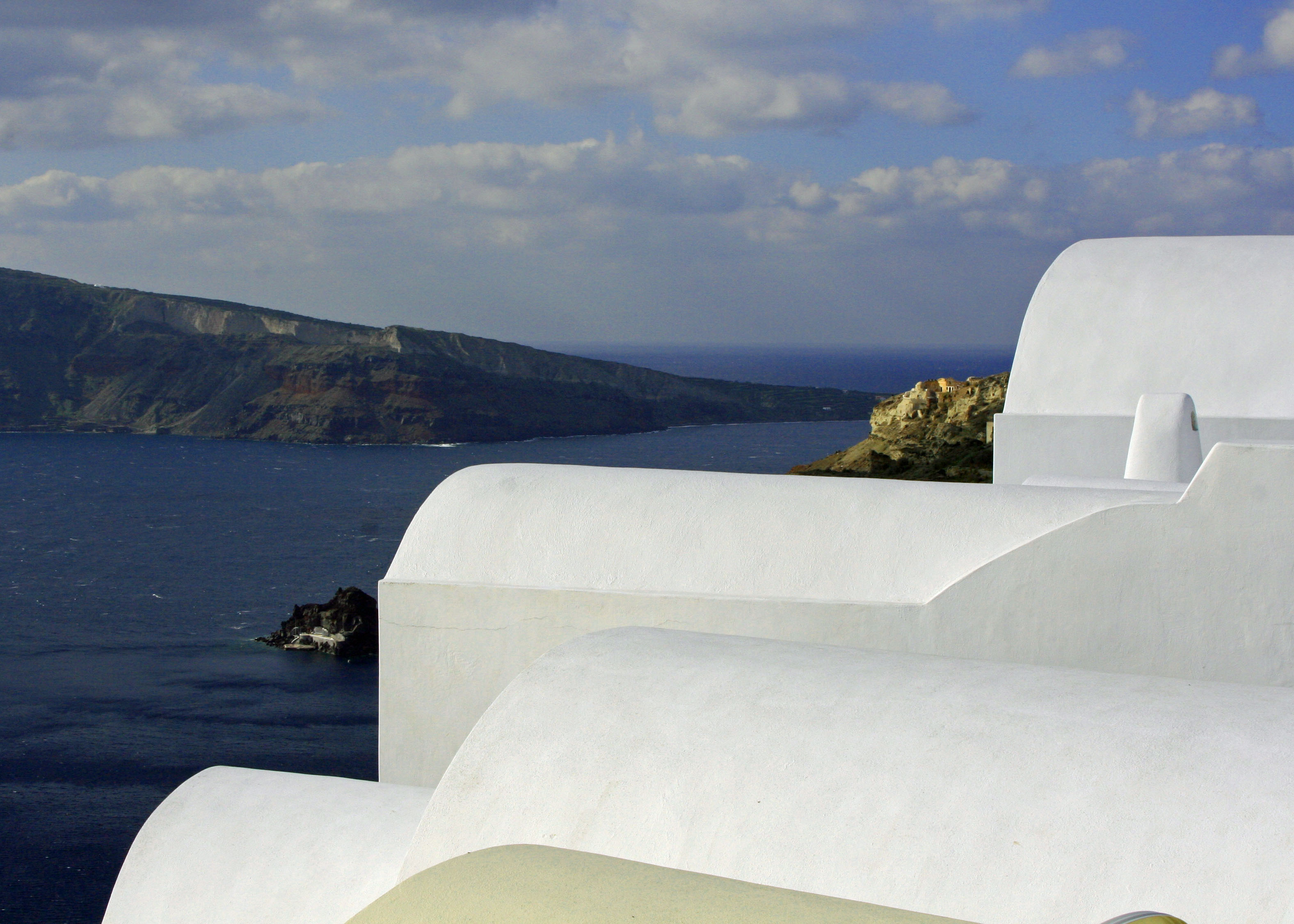
I like this church on Santorini because of its almost sensuous lines. Can a church be sensuous? Having the Mediterranean for a backdrop didn't hurt either.

I like this church on Santorini because of its almost sensuous lines. Can a church be sensuous? Having the Mediterranean for a backdrop didn’t hurt either.

This is another perspective on the Santorini church shown above featuring its salmon colored bell tower.

This is another perspective on the Santorini church shown above featuring its salmon colored bell tower.

My concluding photo on the beautiful and unique churches found on the Greek island of Santorini.

My concluding photo on the beautiful and unique churches found on the Greek island of Santorini.

NEXT BLOG: Join me as I explore the picturesque stairways and doorways of Santorini.


Oia, Santorini… A Photographer’s Paradise

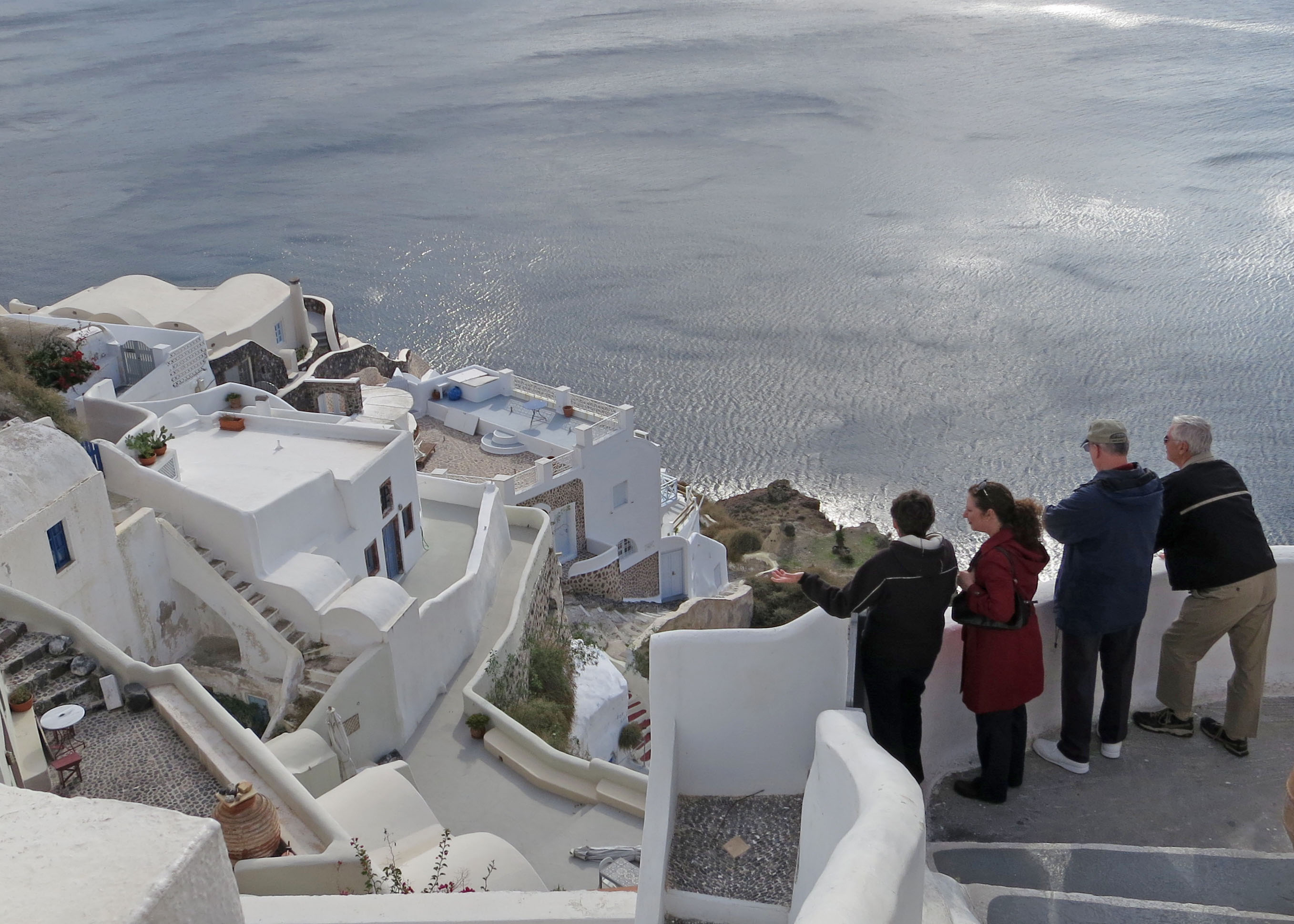
Oia is built on a cliff that drops off a thousand feet into the Mediterranean Sea. Its colorful buildings with their unique architecture and the beauty of the area combine to make the town truly unique.

Oia is built on a cliff that drops off a thousand feet into the Mediterranean Sea. Its colorful buildings with their unique architecture and plunging stairways combine with the beauty of the area to make the town truly unique.

Fira, the administrative center of Santorini, is a pleasant town and definitely worth wandering through. It is filled with shops selling everything from cheap souvenirs to fine jewelry, all of which are designed to separate tourists from their euros. But that’s OK, Santorini makes much of its living off tourists. What most impressed me about the town was its small but excellent Museum of Prehistoric Thira. I’ll blog about the museum next week.

What I am going to do now is make the short trip from Fira to Oia, which is arguably one of the most attractive towns in the Mediterranean, or anywhere. Oia, BTW, is pronounced EE-ah. As the daughter of a friend reminded me, it sounds like something Eeyore might say minus the donkey emphasis.

My recent blogs about my Peace Corps experience in Africa have been long on words and short on photos. That’s about to change as I make why way through the Mediterranean. Oia is best enjoyed by being there, but if you can’t be, the next best thing is through the eye of a camera.

Each of my next three blogs will provide a different perspective on the community. First, I am going to provide a general overview including buildings, animals, flowers and other miscellaneous items that caught our attention. (Peggy took several of the photos.) Next I will focus in on Oia’s unique churches. I’ll finish by looking at stairways and doors, which might seem strange… but don’t miss it. Enjoy.

Another view of the town that provides a perspective on how it clings to the cliff. The whitewashed buildings reflect heat from the intense summer sun.

Another view of the town that provides a perspective on how it clings to the cliff. The whitewashed buildings reflect heat from the intense summer sun.

The rounded roof of this home is typical. Once these homes provided housing for poor sailors. Now they provide housing for millionaires. Another note on these downward trending homes. One person's patio becomes another person's roof.

The rounded roof of this home is typical. Once these homes provided housing for poor sailors. Now they provide housing for millionaires. Another note on these downward trending homes. One person’s patio becomes another person’s roof.

While the sailors lived in their homes on the cliff, sea captains built mansions on top.

While the sailors lived in their homes on the cliff, sea captains built mansions on top.

I would have happily bought this colorful home. Darn, where's my million dollars when I need it.

I would have happily bought this colorful home. 

Peggy captured this artistic shot from Oia looking down on the Mediterranean.

Peggy captured this artistic shot from Oia looking down on the Mediterranean.

I mentioned the unique doors found in Oia. These are color coordinated.

I mentioned the unique doors found in Oia. These are color coordinated.

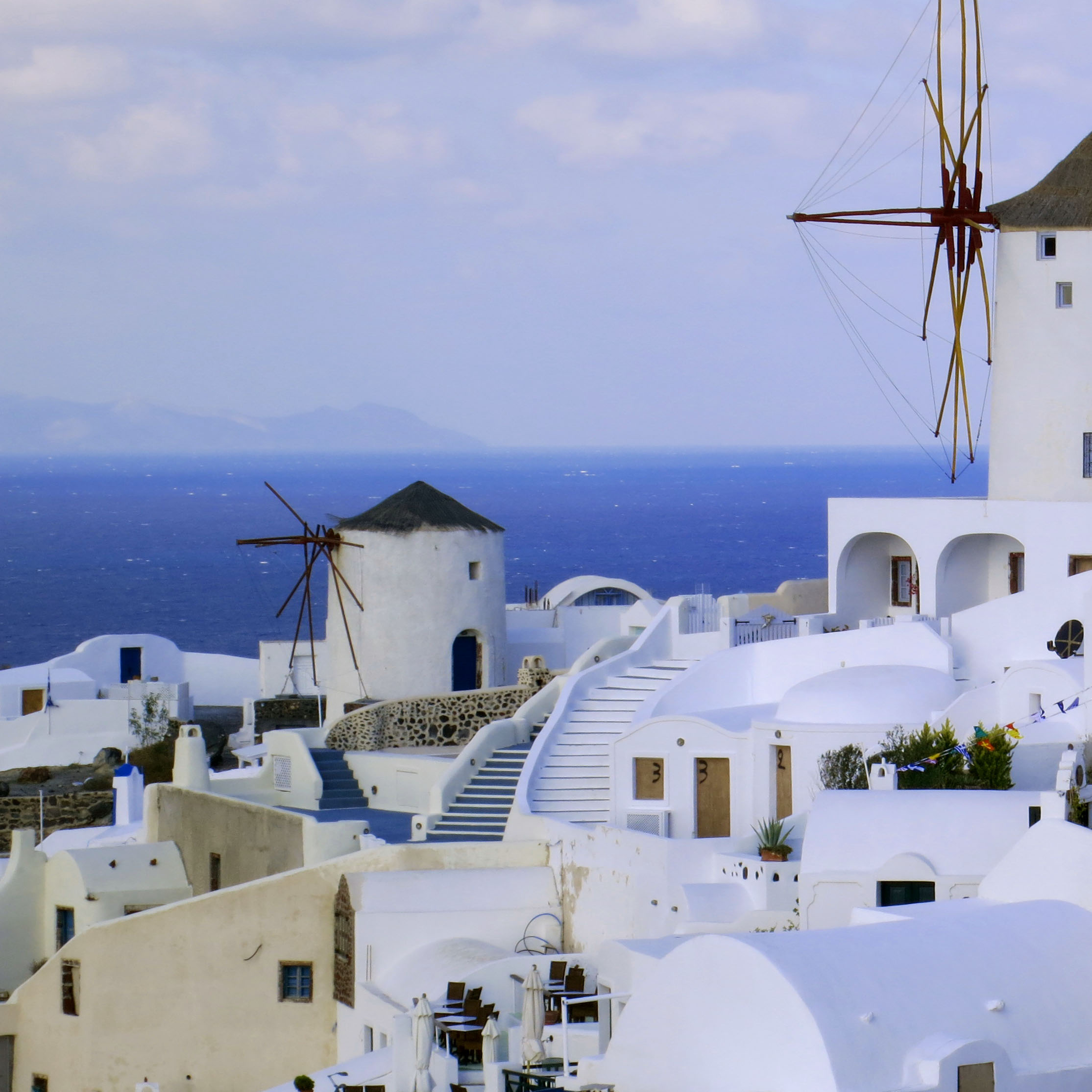
Retired windmills are found on both Santorini and the island of Mykonos.

Retired windmills are found on both Santorini and the island of Mykonos.

This sphinx in Oia provided an artistic touch and seemed right at home.

This sphinx in Oia provided an artistic touch and seemed right at home.

Peggy discovered this sculpture on the side of a building in Oia. Everyone should have a goal in life.

Peggy discovered this sculpture on the side of a building in Oia. Everyone should have a goal in life.

This restaurant sign promised a leisurely meal.

This restaurant sign promised a leisurely meal… or was that poor service?

Dogs ran free in Oia. We found this one climbing about on walls before he settled in for a nap. All of the animals seemed well fed and happy...

Dogs ran free in Oia. We found this one climbing about on walls before he settled in for a nap. All of the animals seemed well fed and relaxed around the tourists…

Maybe too relaxed. (grin)

Maybe too relaxed. (grin)

There was no relaxation for this mule. He and his buddies were carrying debris being generated by a construction site down the cliff. These guys literally ran us off the road.

There was no relaxation for this mule. He and his buddies were carrying debris being generated by a construction site down the cliff. These guys literally ran us off the road.

I discovered this colorful plant and couldn't resist taking its picture.

I discovered this colorful plant and couldn’t resist taking its picture.

Event the souvenirs featuring Santorini were colorful.

Even the souvenirs featuring Santorini were colorful.

One of the narrow walkways we followed through town. The lack of people was indicative of the fact we were traveling off season. Instead of 3 or 4 cruise ships in port, there was only ours.

One of the narrow walkways we followed through town. The lack of people was indicative of the fact we were traveling off-season. Instead of 3 or 4 cruise ships in port, there was only ours.

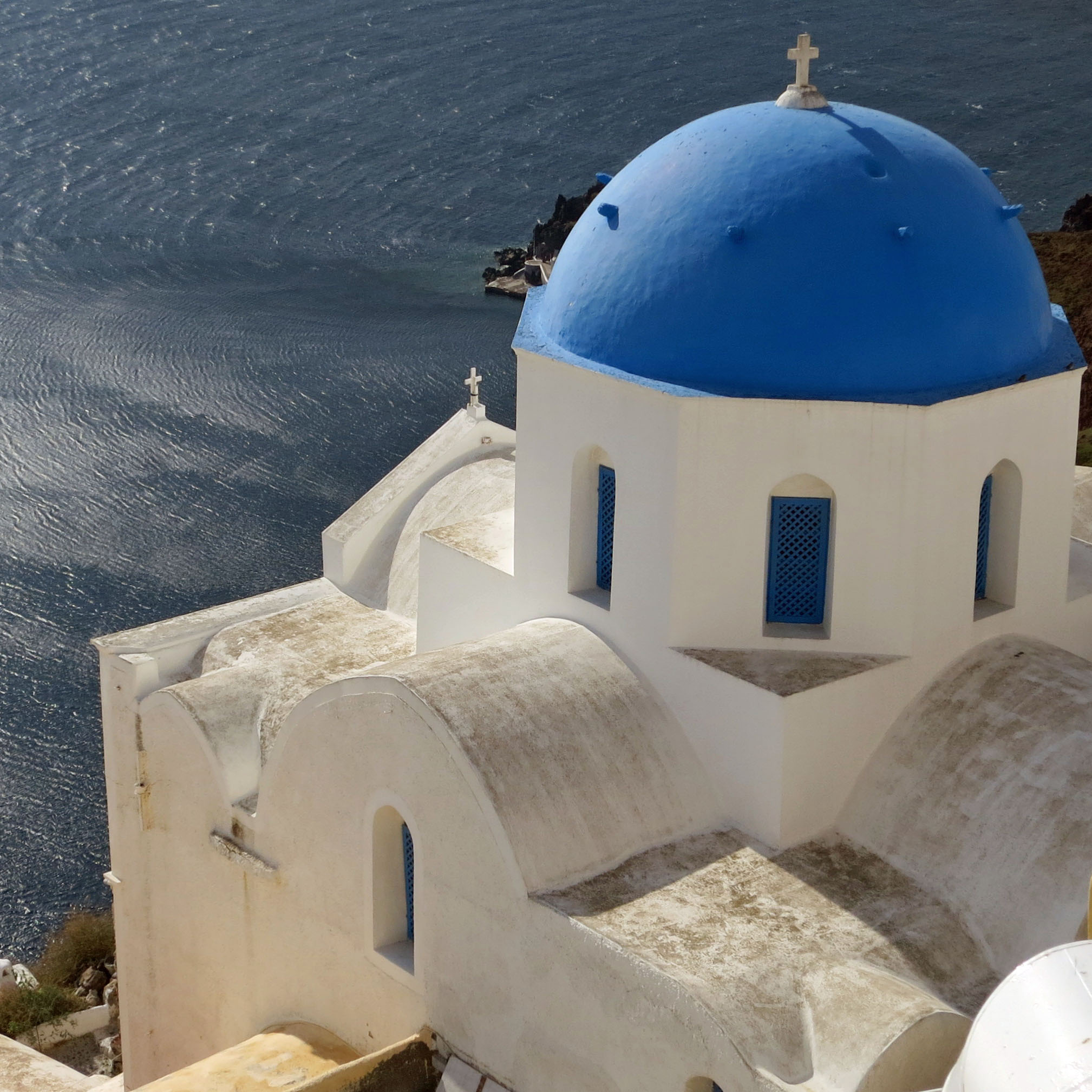
I'll close this blog with a final shot of Oia. The blue domed building is one of the towns many beautiful churches, which I will feature in my next blog.

I’ll close this blog with a final shot of Oia. The blue domed building is one of the towns many beautiful churches, which I will feature in my next blog.


Let the Cruise Begin: Santorini… A Magical Greek Island

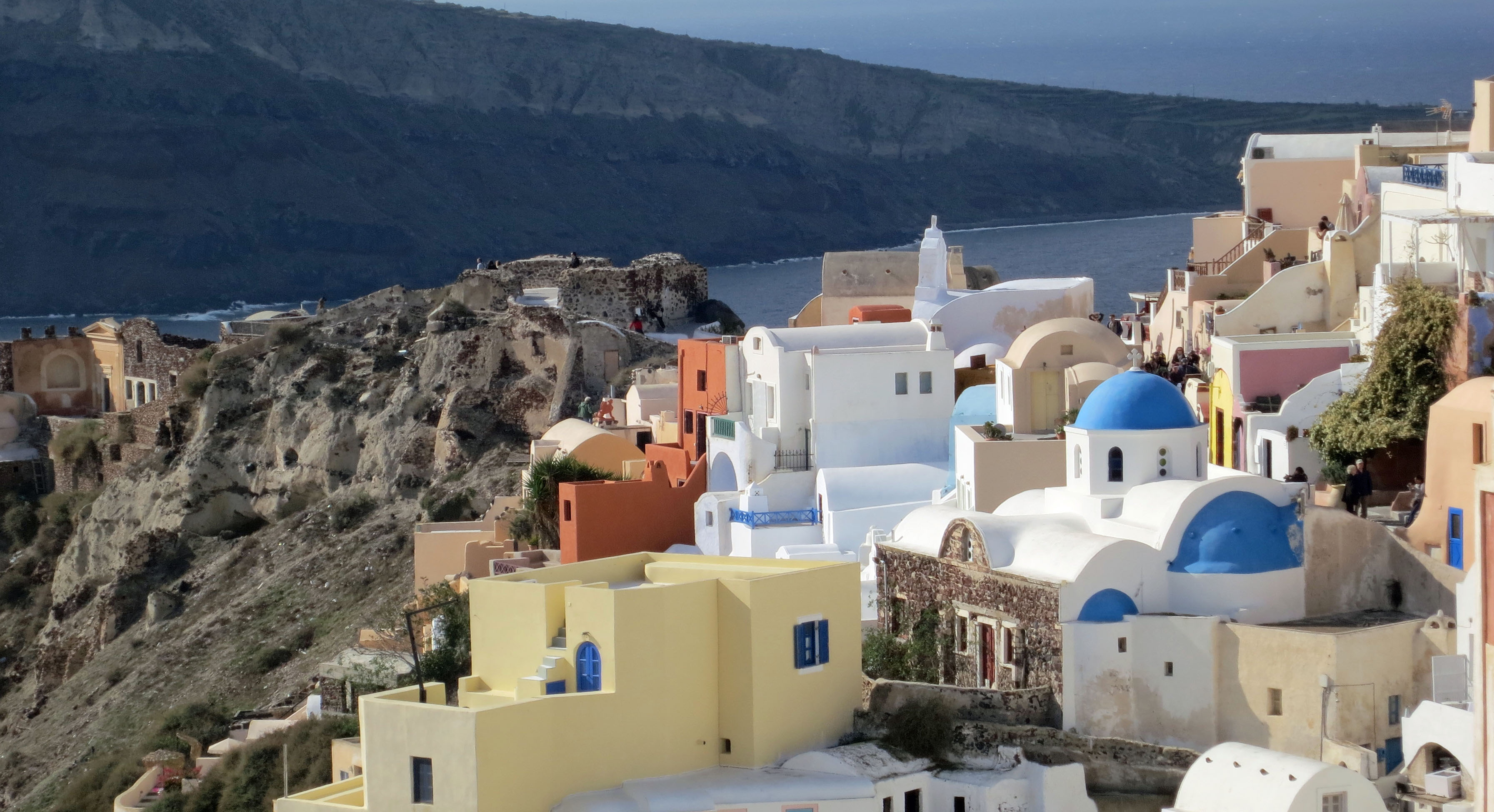
Buildings cascade down the cliffs on the Greek island of Santorini located in the Aegean Sea.

Churches, homes, shops and hotels cascade down the cliffs on the Greek island of Santorini located in the Aegean Sea.

I am normally not the cruising type; it’s too social, crowded and regimented for the part of me that demands solitude, wide-open spaces, and independence. Still, when my brother-in-law, John Dallen, sent my wife Peggy and me an itinerary of a 32-day repositioning cruise he was planning to take with his wife Francis, I was intrigued.

The cruise included visits to a number of Mediterranean ports I had always wanted to see and a voyage across the Atlantic I had never made. It sounded like an adventure. It also took place during our Twentieth Anniversary and Peggy, unlike me, loves to cruise. It seemed like a great way to celebrate. We signed on the dotted line and sent off our deposit.

Our ship, the Crown Princess, anchored in the caldera located off Santorini.

Our ship, the Crown Princess, anchored off Santorini. The island behind it is a small volcanic island.

Over the next couple of months I will blog about the journey we just completed. Join us as we visit the Greek islands of Santorini, Mykonos and Corfu, stop off at the historic sites of Pompeii and Ephesus, scale the walls of Dubrovnik, and explore the cities of Athens, Venice, Rome, Florence, Barcelona, Cannes and Lisbon. I’ll conclude with our brief stopover on the Azores Islands and trip across the Atlantic.

I will also describe shipboard life where food was served 24/7, our bed was always made, and entertainment was just a few floors away. Be warned, though, the trip wasn’t all four-course meals plus dessert; there was also the Noro-Virus that reached red alert status and forced employees to wear rubber gloves, rolling seas that threatened to dump us out of our bed, the guy who dropped dead in our dining room, and the daring Coast Guard rescue off of Louisiana.

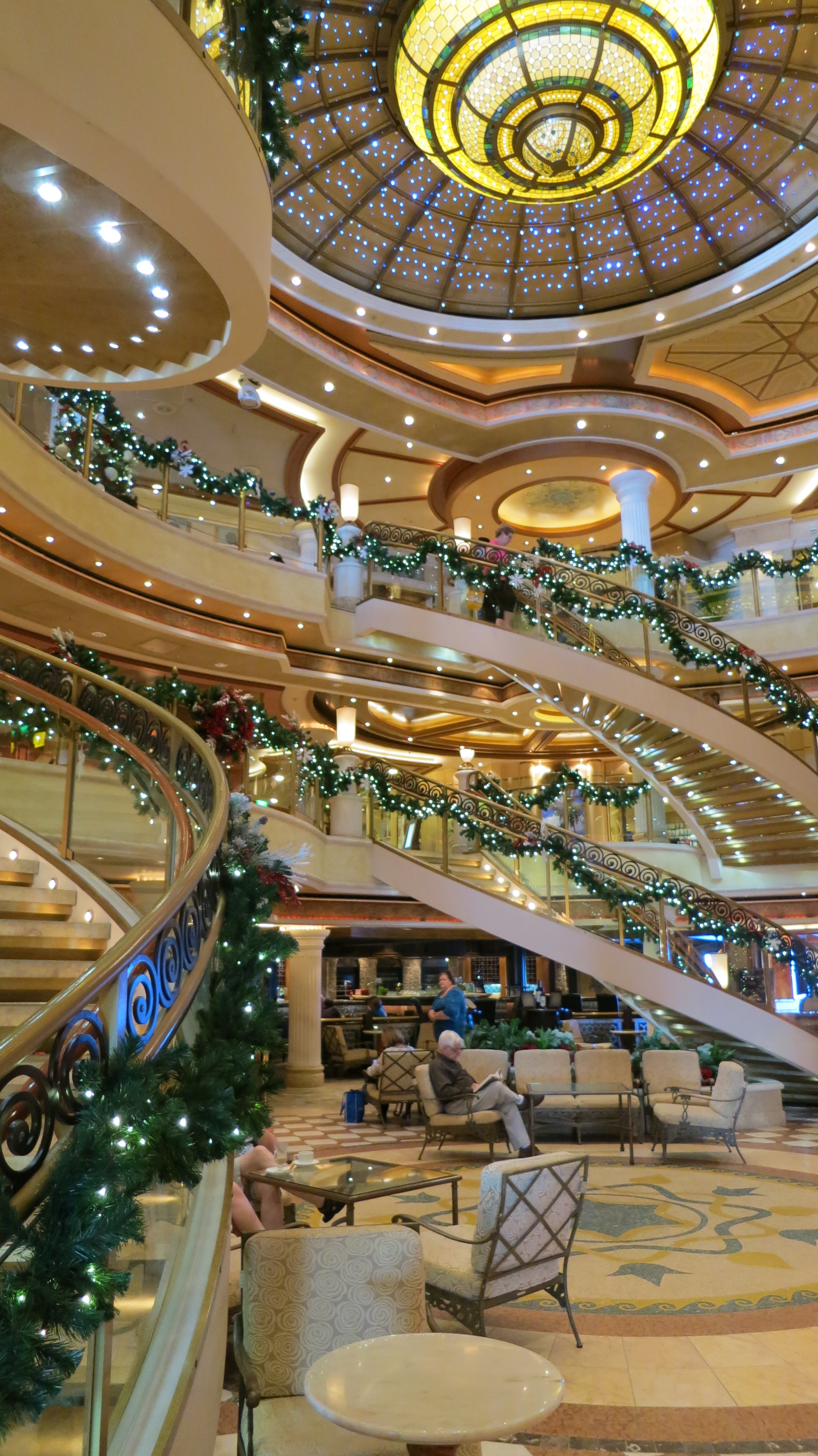
Cruise ships sell luxury and visits to exotic locations. This is an inside view of the Crown Princess.

Cruise ships sell luxury and visits to exotic locations. This is an inside view of the Crown Princess.

I am going to start this series with the Greek island of Santorini rather than Rome where we began our cruise. Santorini is more personal, easier to comprehend, has an intriguing history, and is exactly what I imagined a Greek island to be. In 2011 Travel and Leisure magazine declared it the World’s Best Island. Rick Steves, the renowned travel expert on Europe, said, “If you can’t snap a post-card quality photo here, it is time to retire your camera.”

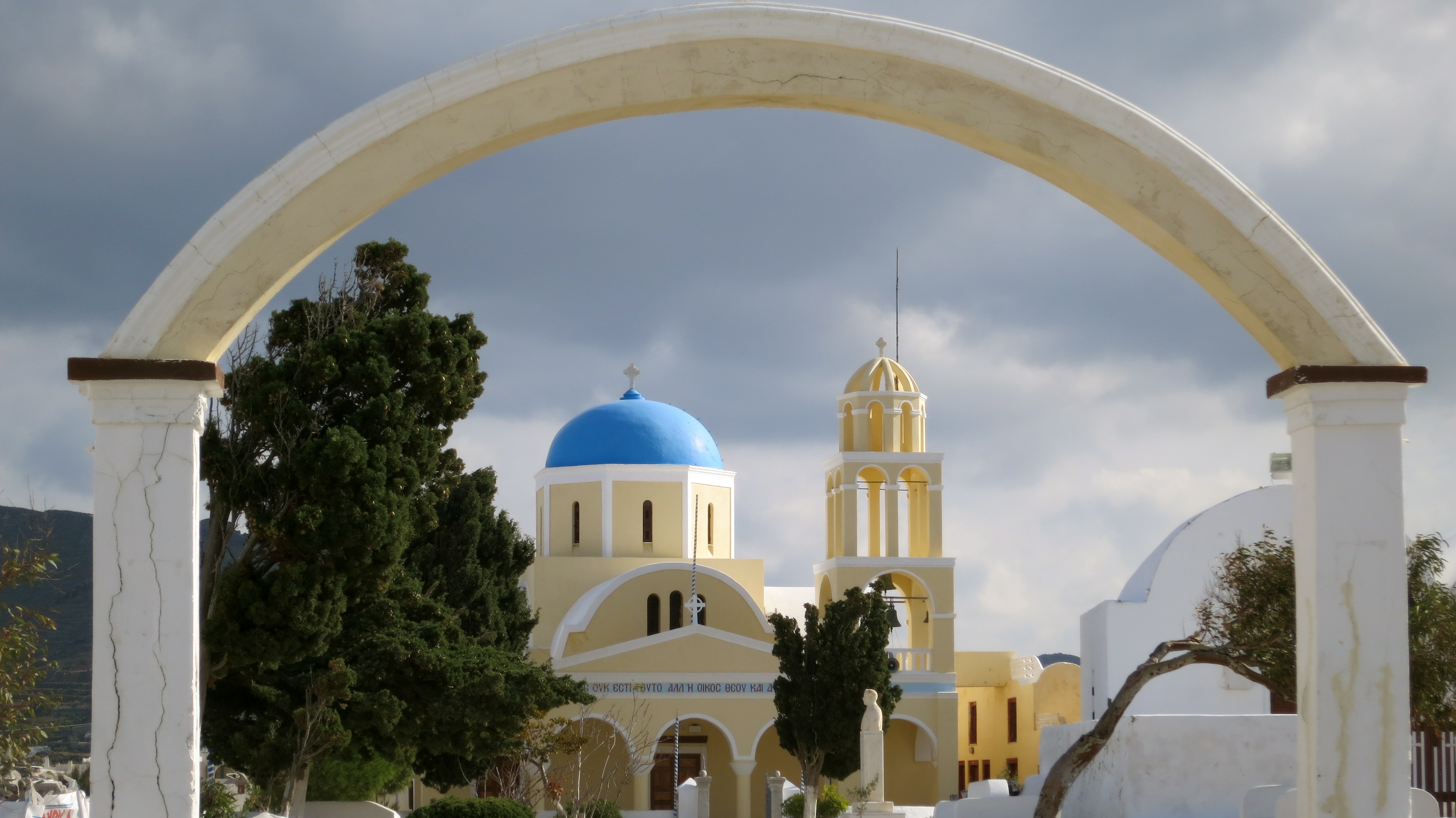
A post card type photo of a church in the town of Oia on Santorini

A post card type photo of the Church of St. George in the town of Oia on Santorini

Santorini is located in the southern part of the Aegean Sea southeast of Athens. Once upon a time it was a huge volcano, now the island is part of a large caldera. When Santorini blew its top somewhere around 1600 BC, it was one of the largest volcanic explosions in the last 5000 years. Effects were felt as far away as China where crops withered. The resulting tsunami destroyed much of the Mediterranean’s Bronze Age Minoan civilization. Legend is that this destruction included Atlantis. In fact, the ruins of Akrotiri on Santorini are considered a prime candidate for being the Lost City.

Excavated ruins of the ancient city of Akrotiri on Santorini are a candidate for the lost city of Atlantis. If so, this mural taken from the ruins may show a resident of the Lost City.

Excavated ruins of the ancient city of Akrotiri on Santorini are a candidate for the lost city of Atlantis. If so, this mural taken from the ruins may show a resident of the Lost City.

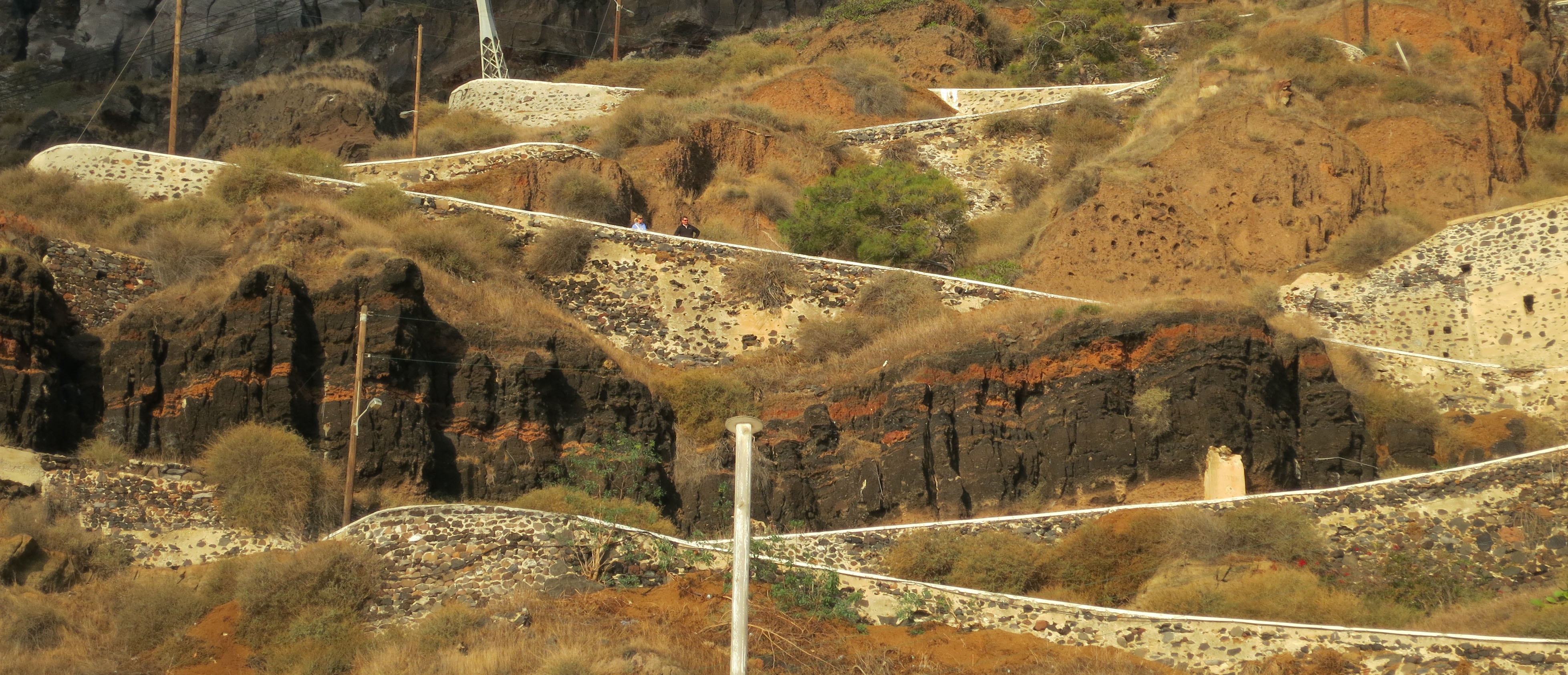
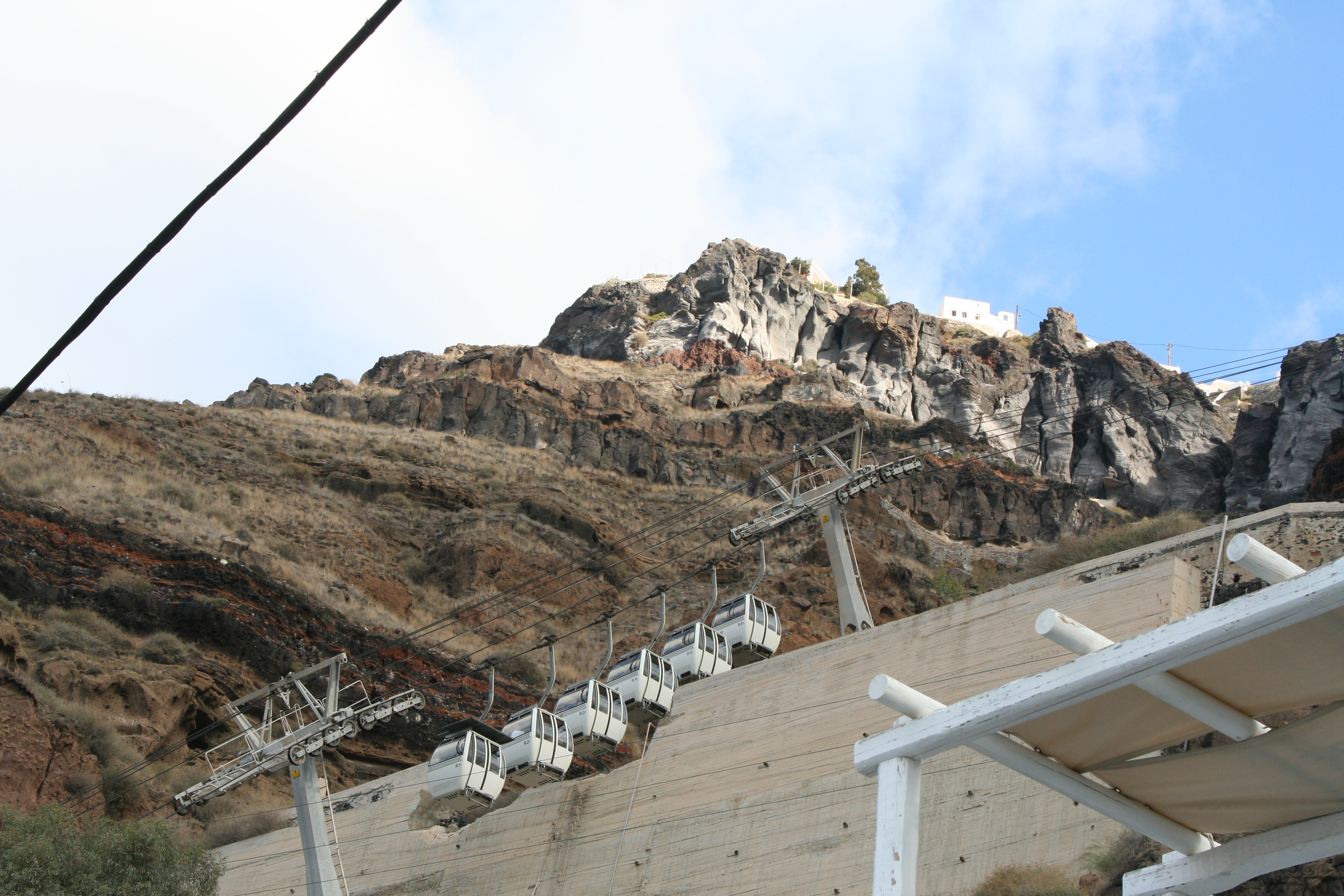
Arrival in Santorini by ship quickly reinforced that we had sailed into a caldera.  Everything was up. Fira, the islands administrative center, was perched above us on top of daunting cliffs a thousand feet high. Getting to the top involved hiking, riding a donkey or taking a tram. Riding the donkeys sounded romantic except we would end up smelling like donkeys and not able to sit down for a day. Walking had more appeal but then we would be dodging Donkey poop. We opted for the tram. Once on top, we were prepared to explore.

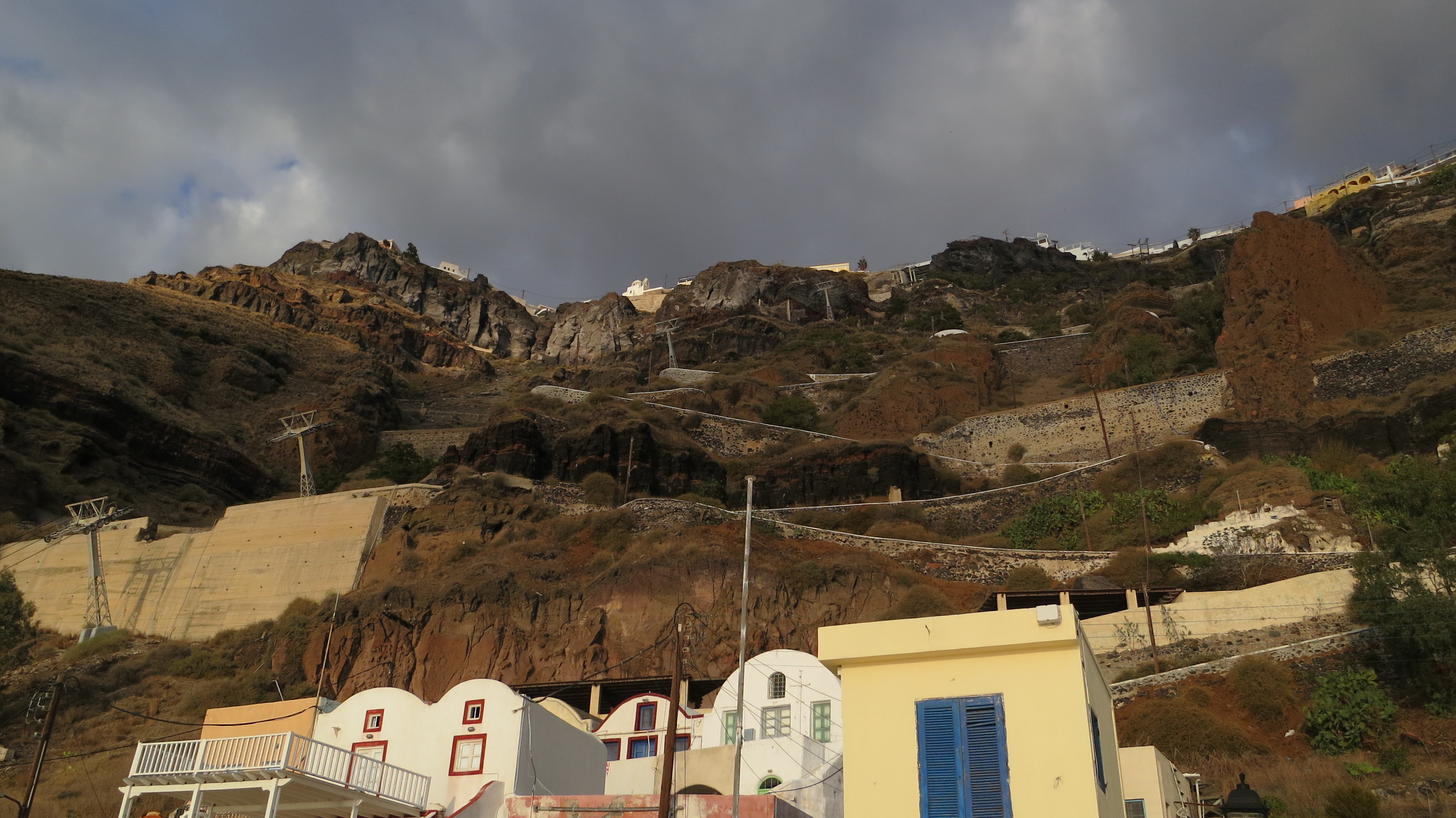
Looking up toward Fira our options were to take the tram or follow the zigzag trail.

Looking up toward Fira our options were to take the tram on the left or follow the zigzag trail in the center of the photo.

We wisely chose the tram.

We wisely chose the tram.

Looking back down the donkey trail toward the dock from the tram.

Looking back down the donkey trail toward the dock from the tram.

NEXT BLOG: The Santorini town of Oia, a photographer’s paradise.

Chapter 36: Goodbye Liberia…

My Senior Class from Gboveh High School, took top honors in the National Social Studies Test.

My Senior Class from Gboveh High School took top honors in Liberia’s National Social Studies Test.

When we returned from East Africa, a shift had taken place; Jo Ann and I had become grizzled, respected veterans. Peace Corps V had left the Country and Peace Corps VIII had come in. With a year and a half under our belts, we were the folks to go to for sage advice. We were even entitled to reminisce about the old days. I was, after all, 24 years old.

Cuttington College sent student teachers to learn from me while the fame of Jo’s choir continued to increase. My seniors took top honors in the national social studies test… competing against the best public and missionary high schools in the country.

What seemed most surprising to us was that Peace Corps requested we spend our last six months touring the country and working in different schools as master teachers. We quickly declined. Our skill level may have fooled Peace Corps but not us. We thought it best to keep our little secret. We also had several projects going at the school we wanted to complete.

Jo and I, along with other selected PCVs, were also asked to help develop a manual for future Volunteers coming into the country. I chaired the section on Liberian culture. According to staff, my experience in doing research for the second grade reader qualified me for the task. (Grin) I had my doubts but took the job seriously. I was fortunate to have several Volunteers working with me who came from different sections of the country and added depth about their regions and tribes.

Apparently our effort caught the attention of the American Embassy in Monrovia. A State Department official was sent to interview me about my views on tribal culture and Liberian politics. At least I hoped he was from the State Department. Embassies also housed CIA agents and a careful line was drawn between the Peace Corps and the CIA. Our mission was based upon trust and that trust could be severely damaged if it was found we worked with the CIA. Whatever my visitor’s affiliation, he came bearing a six-pack of Heineken. We talked way into the night drinking his Heineken and then doing serious damage to my supply of Club Beer.

I shared three concerns. The first was about tribalism. The government’s efforts to put the nation first and tribes second had barely scratched the surface. The influence of tribal identification had been dramatically driven home to Jo and me during our first months in the country. One day we were walking home from the elementary school and found a very sick child sprawled out on the road. Rather than stopping to help, our students were detouring around him. They hardly seemed to notice that he was there. Jo Ann ripped into them. I had never seen her so angry.

“Why aren’t you helping this sick child?” she demanded. The question seemed to confuse them.

“He’s not Kpelle,” was the response. Why should they help him? He was from another tribe. He was less than human. My sense was that the vast majority of tribal people put their tribe first, other tribes second, and the country a very distant third in terms of identity and loyalty. There was very little glue to hold the nation together.

Second, I had been deeply disturbed by the effort to make Mamadee Wattee sick during the student body election. Our students were highly educated from a tribal perspective and becoming president of the student body was hardly a great prize. And yet, here they were willing to use ‘dark magic’ with the potential of killing a friend. It was all out of proportion, a form of insanity that might cause great damage if not held in check.

Finally, I believed that Liberia was headed for a revolution unless dramatic changes were made in the relationship between Americo-Liberians and the tribal populations. President Tubman talked about bringing more tribal people into the government but it was a tortuously slow process. Americo-Liberians were clinging desperately to their power and prestige. The paranoia that I had personally experienced was a prime example of that desperation. On one level, I could understand the government’s reaction to the student body elections. But the reaction to the second grade reader I had written was ridiculously stupid. At some point tribal Liberians would run out of patience and all hell would break loose. I was not optimistic that Americo-Liberians would ever willingly share power.

But the future of Liberia was not in my hands. Jo and I had done what we could as Peace Corps Volunteers though our positions as teachers and efforts in the community. We had gained tremendously from our experience in Gbarnga and hoped our students had as well.

Time flew and the reality of going home could no longer be ignored. Our last days came and we said our goodbyes to friends, the school, our house and the countryside. We found a good Peace Corps Volunteer home for Rasputin and packed up our African treasures. Sam had already left to attend Liberia’s top boarding school and we were helping pay costs. A school assembly loaded us down with gifts and good wishes. It was sad to be leaving, but bearable. New adventures waited.

On the last morning I arose early to go outside and to have my last cup of coffee while sitting on our old jeep seat couch. A Doo-Doo bird plaintively issued his comment on the world, “doo, doo, doo” and I found myself agreeing. The sun hit the rain forest and then the school. The first students were making their way up the hill. They waved.

Do Your Part came trotting over. Do Your Part who was my dog but wasn’t. Do Your Part who followed me wherever I went. Do Your Part who had exquisite manners and never jumped up on me, climbed onto my lap and looked into my eyes. She was shivering; she knew I was leaving and her knowing made it real. It almost broke my heart. I said my final goodbye.

This ends my series of blogs on my time as a Peace Corps Volunteer in Liberia, West Africa. I hope you have enjoyed the stories. Presently I am working with an editor to get the blogs ready for self-publishing this spring. There will be both electronic and printed versions. I am also adding several chapters. After my experience as a Volunteer, I worked as Peace Corps staff in the Southern United States and the West for three years. There are many more stories to tell. I also want to address the devastating war that took place in Liberia. I will finish by looking at Liberia, and Peace Corps Liberia, today.

NEXT: Join me on Tuesday when I begin a photographic exploration of the Mediterranean Sea. Just prior to Christmas, my wife Peggy and I spent a month traveling from Turkey to Portugal while stopping off in such great places as Ephesus, Santorini, Mykonos, Athens, Corfu, Dubrovnik, Venice, Naples/Pompeii, Rome, Florence, Barcelona, Cannes, Lisbon and the Azores. I will begin with one of my top favorites: Santorini.

Chapter 35: Teacher

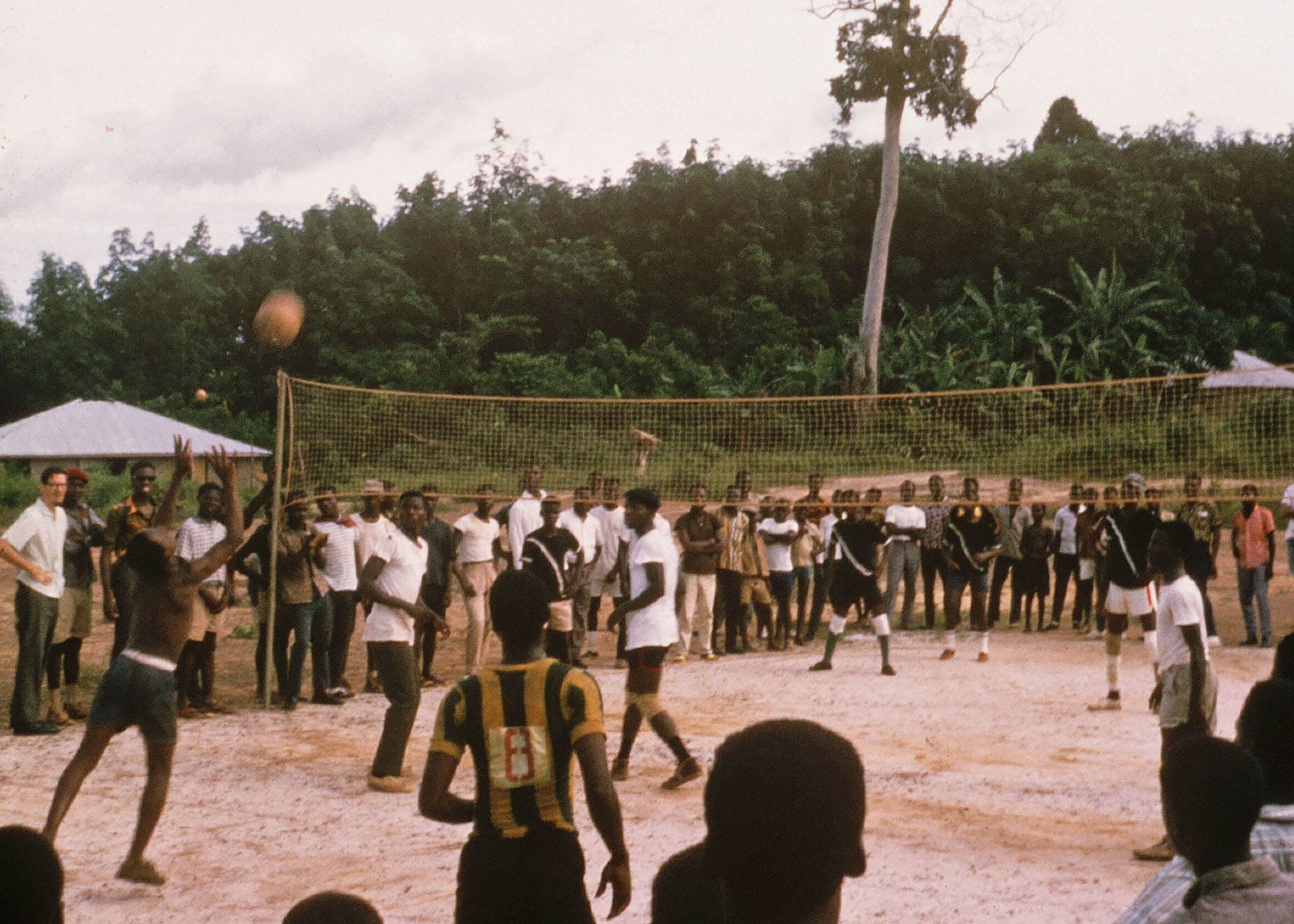
Good teaching involves capturing the imagination of students and encouraging them to become active participants in the classroom. Often it also involves participating in extracurricular activities. In this 1966 photo I am coaching Gboveh's High Scool volleyball team in Gbarnga, Liberia.

Good teaching involves capturing the imagination of students and encouraging them to become active participants in the classroom. Often it also involves participating in extracurricular activities. In this 1966 photo I am coaching Gboveh’s High School volleyball team in Gbarnga, Liberia.

I am not sure I earned the title of teacher at the elementary school, even though I put in the time and occupied the chair. I did learn that teaching was hard work and developed a life-long respect for elementary school teachers. I like to believe, had to believe, that I had some impact on the life of my students.

High school was different. From the beginning I was teaching subjects I truly enjoyed: World History, World Geography, African History and African Geography. I had never understood how history and geography could be boring. The best of my teachers had brought the subjects to life and made them exciting and relevant. I was determined to do the same for my students. We debated, did projects and made maps.

As strange as it may seem, my high school African History course was a first for Liberia. We travelled back in time starting with the exciting discoveries being made at Olduvai Gorge in East Africa about the early beginnings of humanity. We looked at the major West African kingdoms such as the Songhai and Mali. We explored the impacts of slavery, Colonialism, Islam and Christianity on Africa.

In geography we started locally and moved outward, from Gbarnga to Liberia to Africa and the world. Like their elementary school counterparts, the high school students found it almost impossible to accept that Liberia occupied such a small part of the African Continent. They became incensed, like it was my fault.

I wisely opted out of teaching Liberian History. It’s likely that I would have deviated from the Americo-Liberian version and been run out of the country. How could I teach the kids that Matilda Newport was someone they should idolize when her claim to fame was blasting their great-great-grandfathers with a cannon? I even had to be careful what I taught my World and African History classes. The students were bright and would draw their own conclusions.

“Gee Mr. Mekemson, the way the white minority in South Africa controls things is a lot like Americo Liberians control things here.”

“Oh really?’’ was about as far as I dared go in response. Things had a way of getting back to the authorities. Favors could be earned by reporting supposedly seditious comments to paranoid government officials and I had already earned enough black marks from the second grade reader and Boy’s appetite for Guinea Fowl.

But I didn’t stay out of trouble. During our second semester at Gboveh, I decided that creating a student government would help our students prepare for the future. I argued that the best way to prepare for democracy was to practice it. Everyone, including students, teachers and Mr. Bonal, agreed. We pulled together interested students, worked through developing by-laws, and set up elections. The students even decided they would organize and run for office on party tickets. Why not? It sounded like fun.

It never entered my mind that this relatively innocent gesture would strike terror in the hearts of Americo-Liberians. Once again, I had failed to comprehend just how paranoid the Liberian government was. Within 24 hours we had been accused by the Superintendent of Bong County of setting up competing political parties to the Government’s True Whig Party.

Student leaders were told to cease and desist or they would be arrested and thrown in jail. Mr. Bonal called me in and suggested I should start packing my bags. There was no way that he was prepared to take responsibility. I didn’t blame him. At a minimum he could lose his job… and that would be a stroll through the rainforest in comparison to rotting in a Liberian jail.

On one level, the government’s paranoid behavior made sense. The True Whig Party was how the Americo Liberians maintained control of the government and, more importantly, their privileged positions. The Kpelle Tribe was the largest tribe in Liberia and my students were becoming the elite of the tribe through education. A political party set up at high school might indeed morph into a political party of the Kpelle, given time.

So we eliminated the tickets and names. We were then allowed to proceed but I have no doubt we were closely monitored. I couldn’t help but wonder which of my students or fellow faculty members reported regularly to the Superintendent on my treasonable behavior.

Somewhat on the lighter side was the business of keeping the names of my students straight. It wasn’t that I had a lot to remember; there were five students in the 12th grade, ten in the 11th and sixteen in the 10th. Most teachers would kill for that student-teacher ratio. The problem was that the students changed their names frequently.

John Kennedy was big in Liberia at the time so there were several John Kennedys. Moses was also popular. Five trillion missionaries made sure of it. Kids would also take the name of whomever they were living with. Most of them had left villages and were trying to survive life in the big town. By adopting the name of the family taking care of them, they encouraged better care. Sam even told me he considered becoming Sam Mekemson, our African son. Finally, as students became more aware of their heritage, some switched back to their tribal names. What a unique thought that was.

Roll call was often a challenge. Students wouldn’t answer if I didn’t use their name of the moment. I finally adopted a rule that students could change their names but only at the beginning of a semester. It worked, sort of.

My school activities increased as time went on. I chaired the social studies department from the beginning. This wasn’t too significant since I was the social studies department and my primary responsibility involved keeping me in line. (Some misguided people claim that is not an easy task.) I also took on more work for Mr. Bonal and eventually came close to functioning in the role of vice principal. Daniel Goe had returned to the U.S. for further education.

Jo created a high school chorus that became so good the County Superintendent wanted her to create a Bong County Chorus. She gracefully declined. This was, after all, the same man who wanted to throw us in jail when Boy ate his Guinea Fowl and was ready to kick us out of the country because we dared to develop a student government.

Jo Ann directing her Gboveh High School chorus. At Berkeley, she had belonged to the University's elite Glee Club.

Jo Ann directing her Gboveh High School chorus. At Berkeley, she had belonged to the University’s elite Glee Club.

There were a multitude of other activities. I developed a library for the school by raiding departing PCVs book collections. For some reason I was roped into coaching the school’s football/soccer team, a task I quickly traded for volleyball.  (There were four-year olds in town who knew more about soccer than I did.)

I also created a local Boy Scout troop. I taught them how to tie knots and they took me for great jungle walks. Jo Ann contributed by sewing Patrol flags. All in all, we kept busy carrying out the same type of work being done by thousands of Peace Corps Volunteers around the world.

One of my many activities as a Peace Corps Volunteer was serving as a scout master. My scouts took me on outdoor adventures.

One of my many activities as a Peace Corps Volunteer was serving as a scout master. My scouts took me on outdoor adventures.