Renaissance Florence (Firenze)… Born Again Culture

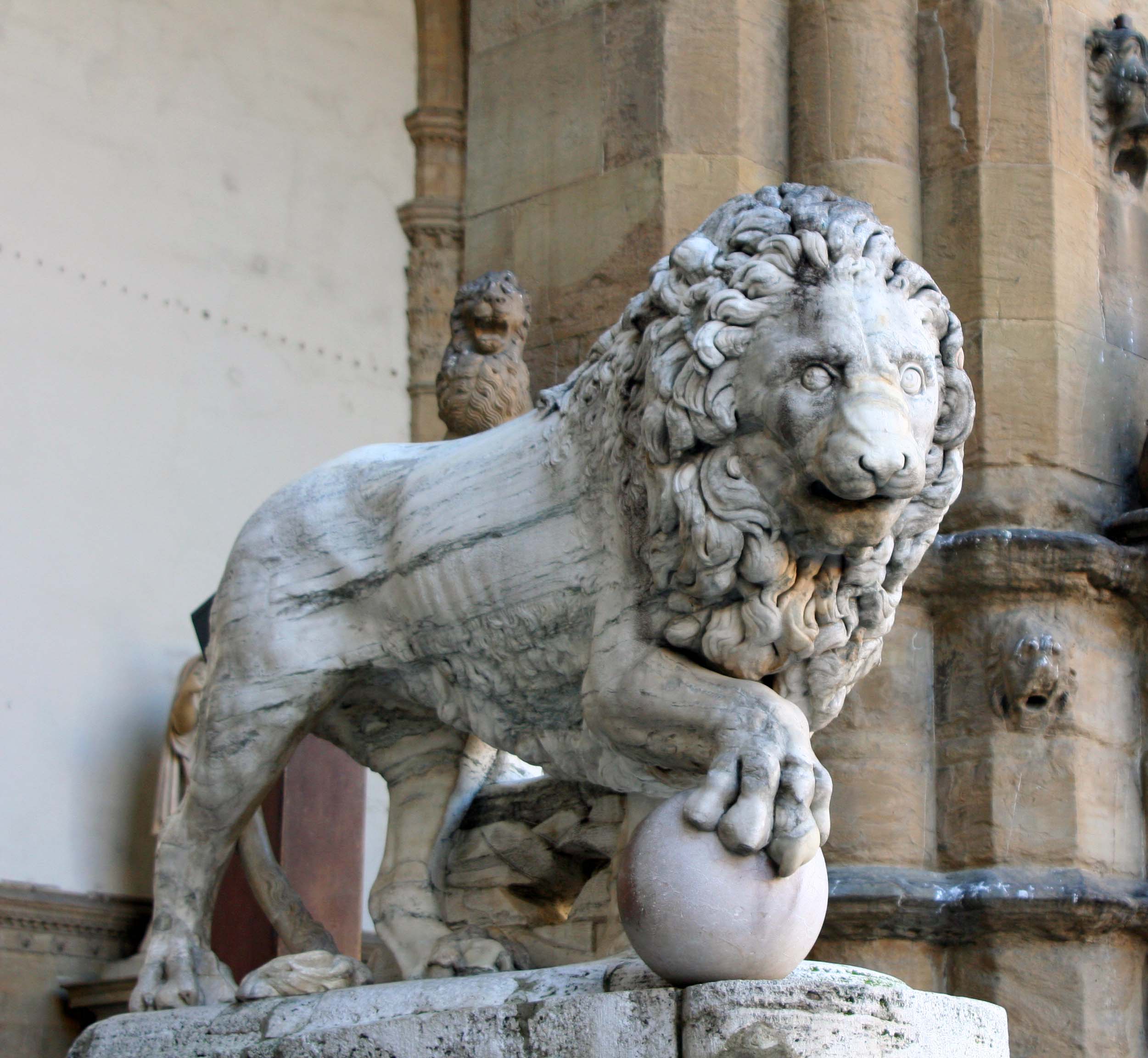
This nice kitty with his finger like paws greeted us on the Piazza del Signoria... along with several other sculptures.

This nice kitty with his finger like paws greeted us on the Piazza della Signoria… along with several other sculptures. (Photo by Peggy Mekemson)

I made the point in my last blog–I am returning to Florence. The two-hour trip to Florence from the Port of Livorno where our ship was docked, and the two-hour trip back, seriously sucked up what little time we had to enjoy the legendary Renaissance city.

Our first act upon arrival was to plot out our plan of attack, which we did over café lattes and scrumptious Italian pastries. Why suffer? I really, really hate to eliminate treasures, however. Florence is where the birth of the Renaissance took place and is chock full of art.
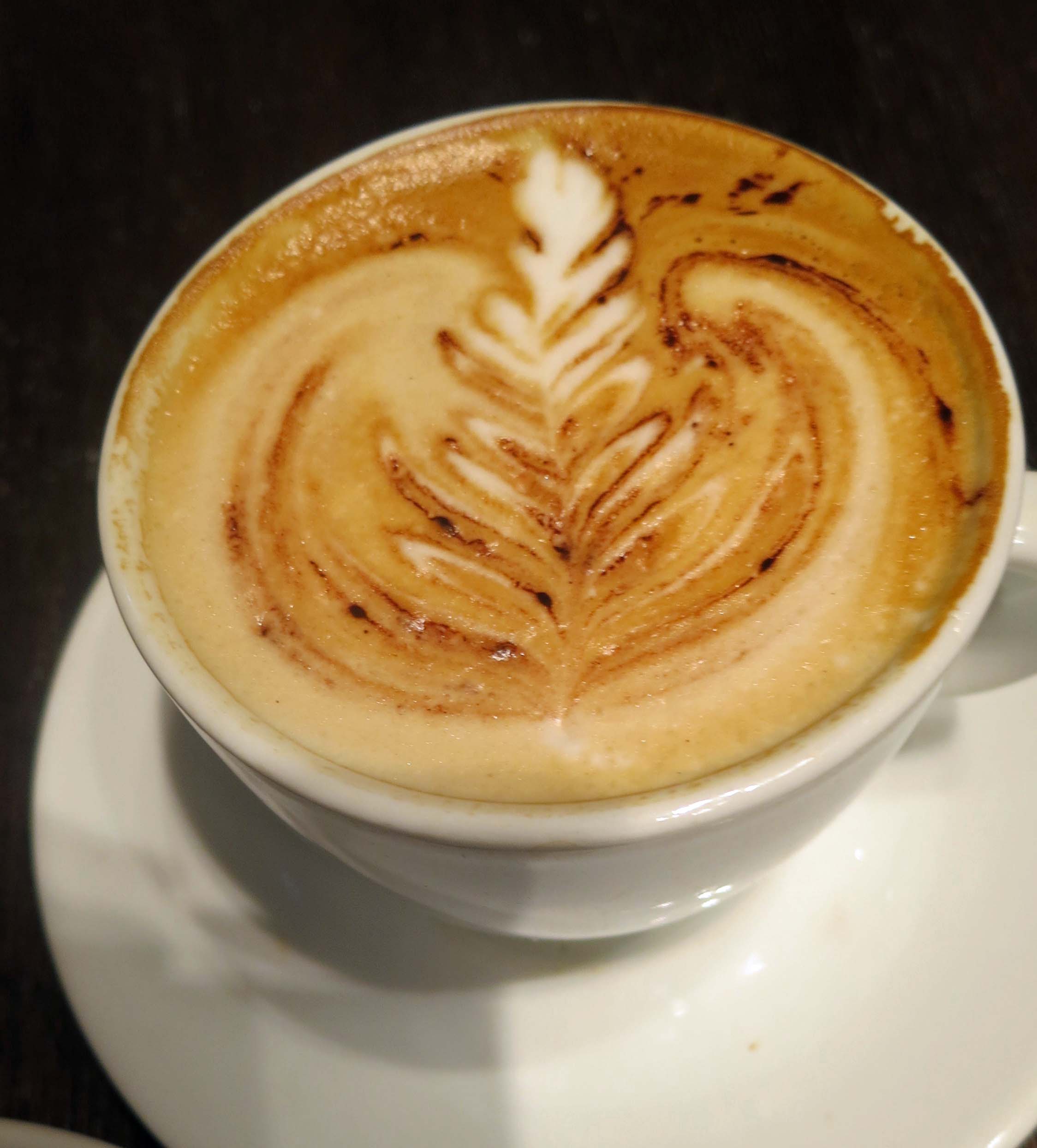
Florence Cafe Latte

While our day in Florence was short, it wasn’t so short we couldn’t enjoy a Cafe Latte.

The Uffizi Gallery alone, with its world-class art including masterpieces by Sandro Botticelli and Leonardo da Vinci, would take up half out time. Beyond that we plotted out a walk that would take us to the Duomo Basilica and then back to Santo Croce Basilica, where we were to catch our bus. Sadly, I crossed off the Accademia Gallery, which includes Michelangelo’s original David.

But not to worry… there was a magnificent copy of David in front of the Uffizi Gallery in Piazza della Signoria. It was in this square, BTW, that the infamous priest Savonarola (1452-98) held his ‘Bonfire of Vanities’ and encouraged the good citizens of Florence to bring their art treasures and books to be burned.  Somewhat ironically, Savonarola, who was quite vain in his own way, was also burned in the square.
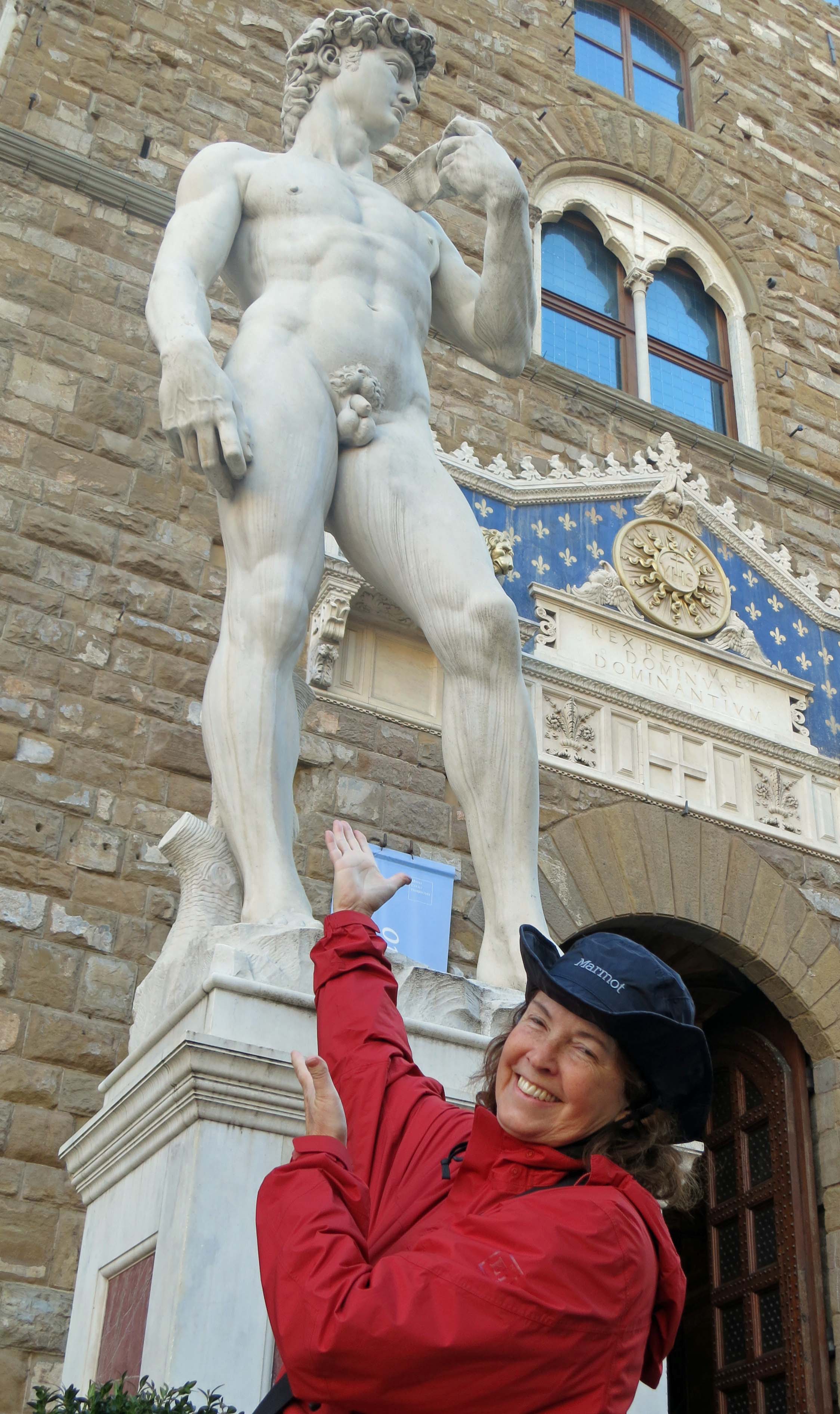
Copy of Michelangelo's David standing in front of the Uffizzi  Art Gallery.

Michelangelo’s David has always been Peggy’s favorite sculpture. How’s a guy supposed to compete? This copy stands in front of the Uffizi Gallery on Piazza della Signoria where the original David stood.
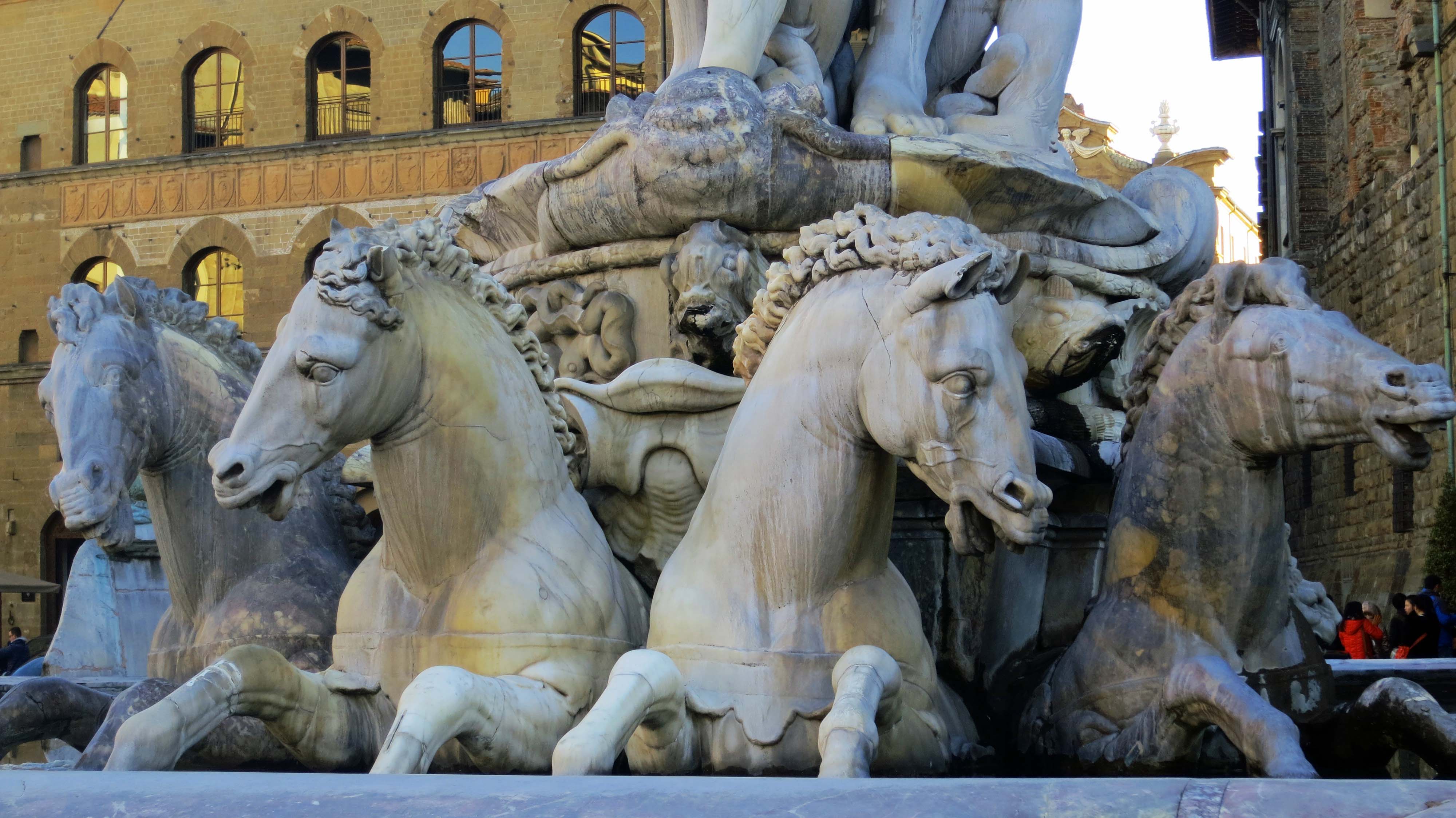
Neptune sculpture by Ammannati.

I enjoyed these charging horses pulling Neptune’s chariot on Piazza della Signoria in Florence. The horses were carved by the Sculpture Ammannati.

This sculpture by Benvenuto Cellini shows Perseus holding up the head of Medusa, which he had just lopped off. Hopefully her eyes are closed. Otherwise you would be turned to stone.

This sculpture by Benvenuto Cellini shows Perseus holding up the head of Medusa, which he had just lopped off. Hopefully her eyes are closed. Otherwise you would be turned to stone. I am thinking the stuff flowing out of the neck is a little weird.

The most dynamic sculpture on the Piazza del Signoria is the Rape of the Sabine Women by the sculpture Giambologna.  The story goes that Romulous needed more women for his new city of Rome, so he went to the nearby town of Sabine and kidnapped them.

The most dynamic sculpture on the Piazza della Signoria is the Rape of the Sabine Women by the sculpture Giambologna. The story goes that Romulus needed more women for his new city of Rome, so he went to the nearby town of Sabine and kidnapped them. See the close up below.
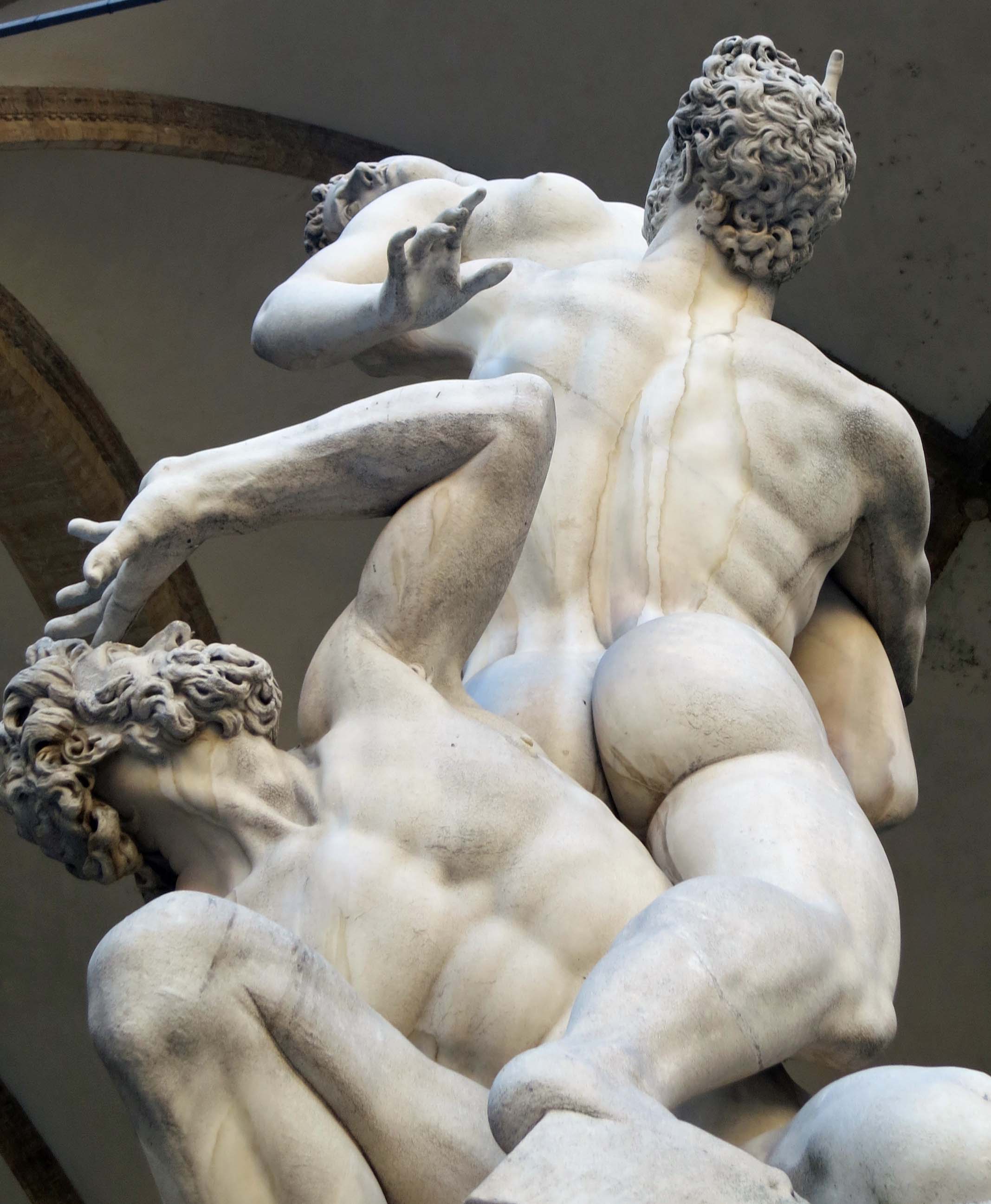
Rape of the Sabine Women by Giambologna

A close up of Giambologna’s sculpture, which he carved from a single block of marble.

They didn’t allow photos to be taken in the Uffizi Gallery, but when we came out, a short walk took us to Florence’s most famous bridge, the Ponte Vecchio.

Florence's most famous bridge

A view of the Ponte (bridge) Vecchio crossing the Arno River in Florence.
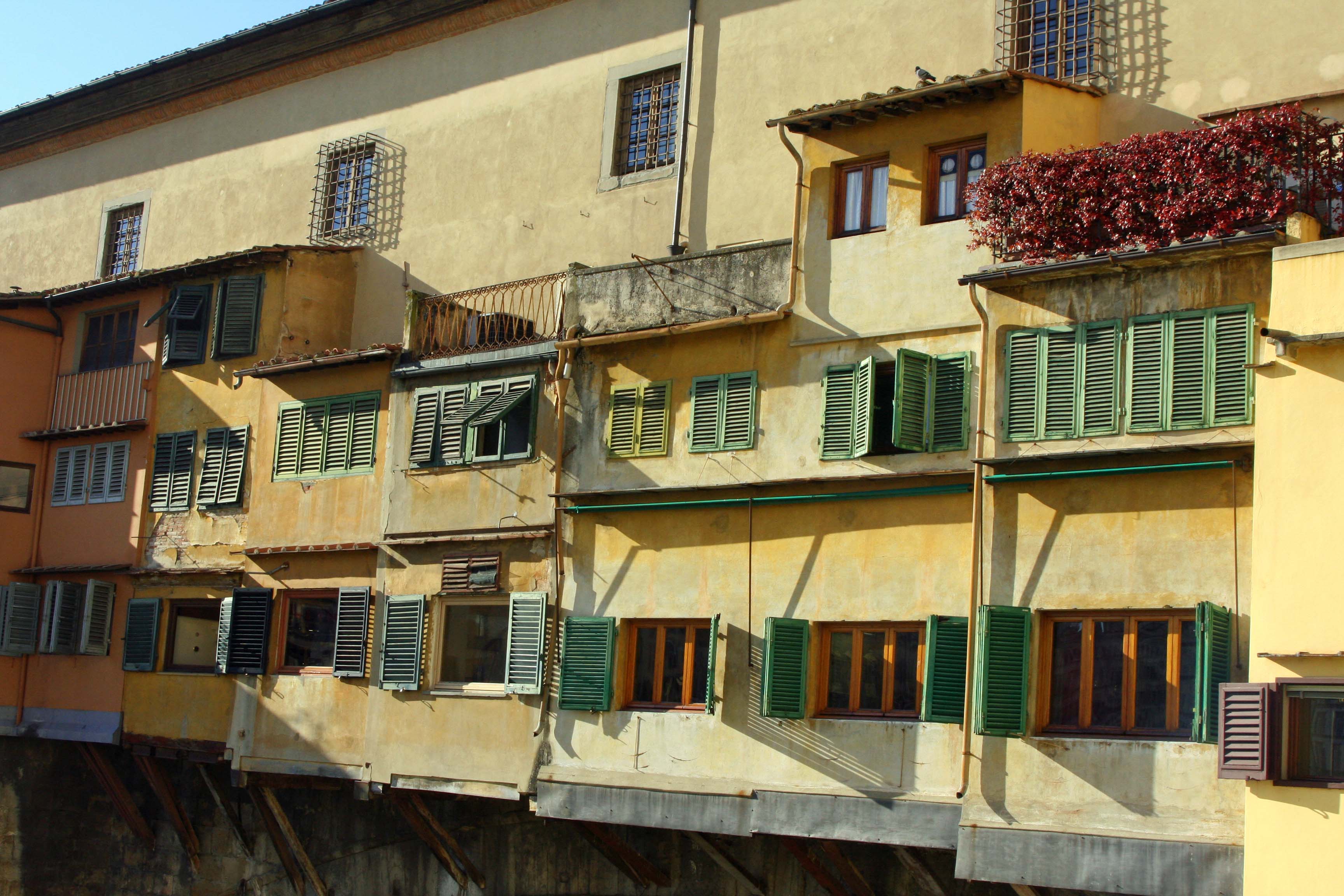
A close up of the Pont Vecchio in Florence. (Photo by Peggy Mekemson)

A close up of the Pont Vecchio in Florence. (Photo by Peggy Mekemson)

For my final picture today, I selected this view looking down the Arno River from the Pont Vecchio.

For my final picture today, I selected this view looking down the Arno River from Pont Vecchio.

NEXT BLOG: We will visit two of Florence’s great churches: the Duomo and Santa Croce. Prepare to be dazzled.

There’s This Pig in Florence…

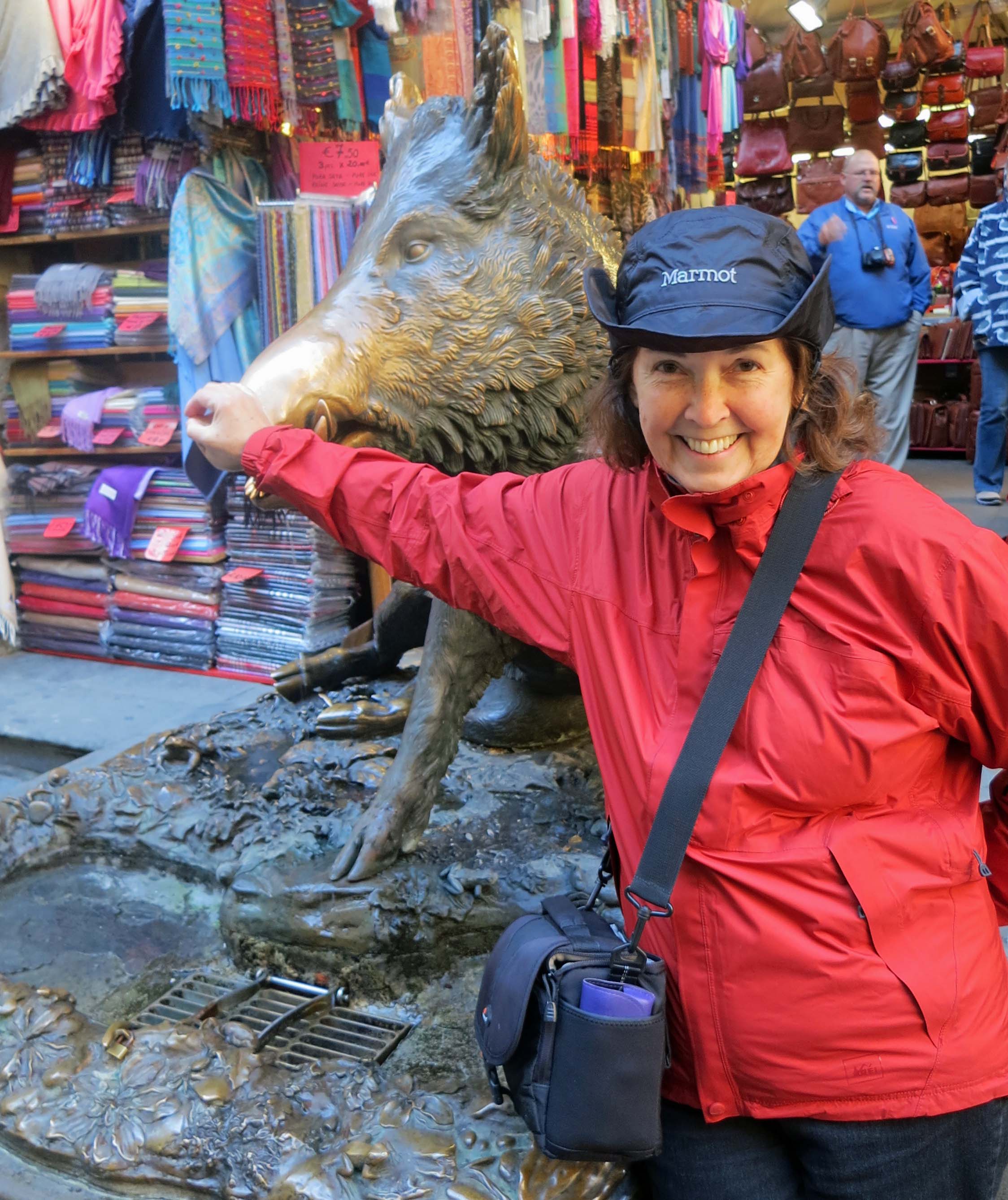
Kathi Saage and I rub the nose of Il Porcillino in hopes of returning to Florence.

Kathi Saage and I rub the nose of Il Porcellino in hopes of returning to Florence.

So, here’s a serious question: With all of the beautiful art in Florence, why in the world would I kick off my Florence series with a pig?

I’ll be brief. I was told if I rubbed the nose of the pig, or the snout of the boar if you prefer, I would come back to Florence.  Considering I had six hours to explore everything Florence had to offer, I looked on my nose polishing effort as a guarantee of a return trip.

Peggy, also wanting to return to Florence, eagerly rubs Little Pig's nose.

Peggy, also wanting to return to Florence, eagerly rubs Little Pig’s nose.

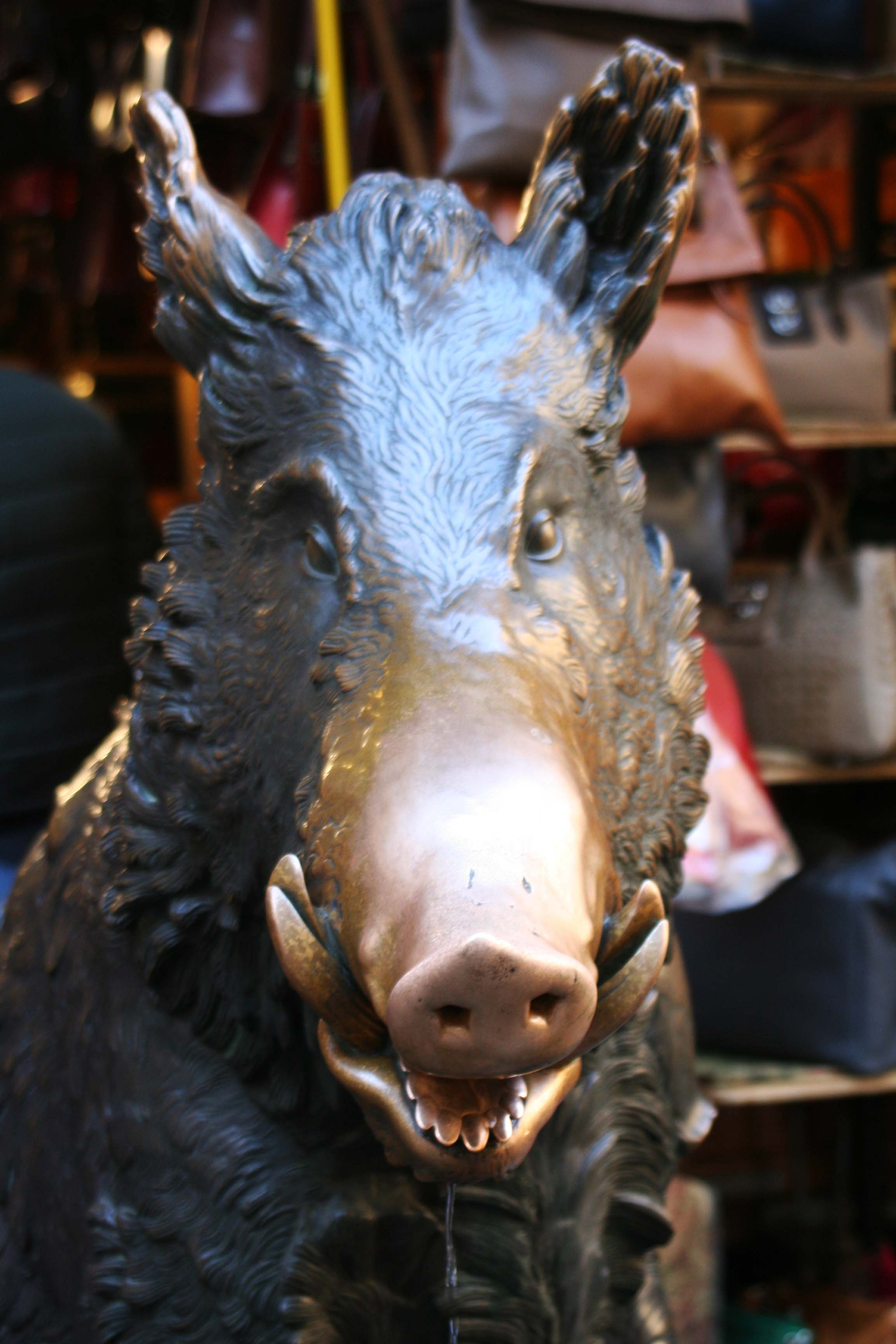
Porcellino, the little pig of Florence

A close up of Porcellino’s well-rubbed nose.

Il Porcellino, or Little Pig, as he is known, was sculpted way back in 1612 and was based on an original marble pig of Greek origin dating back to who knows when. The present pig is a copy of the copy. You can tell by his shiny nose that lots of people share my desire to come back to Florence. Apparently rubbing his snout for a return trip dates back to the 1700s.

Little Pig is housed in an attractive marketplace that was built by Cosimo de’ Medici between 1547-1551. Bad merchants, who had the misfortune of going bankrupt, were spanked here before being sent off to prison. I couldn’t find a description on what the spanking entailed.
The overflowing Mercato Nuovo or the Straw Market where bad merchants were once spanked.

The overflowing Mercato Nuovo or the Straw Market where bad merchants were once spanked.
One more fact: There are copies of Little Pig found throughout the world, including one at the University of Arkansas representing the school’s mascot, a Razorback hog. I wonder if the students realize the origin of their statue?
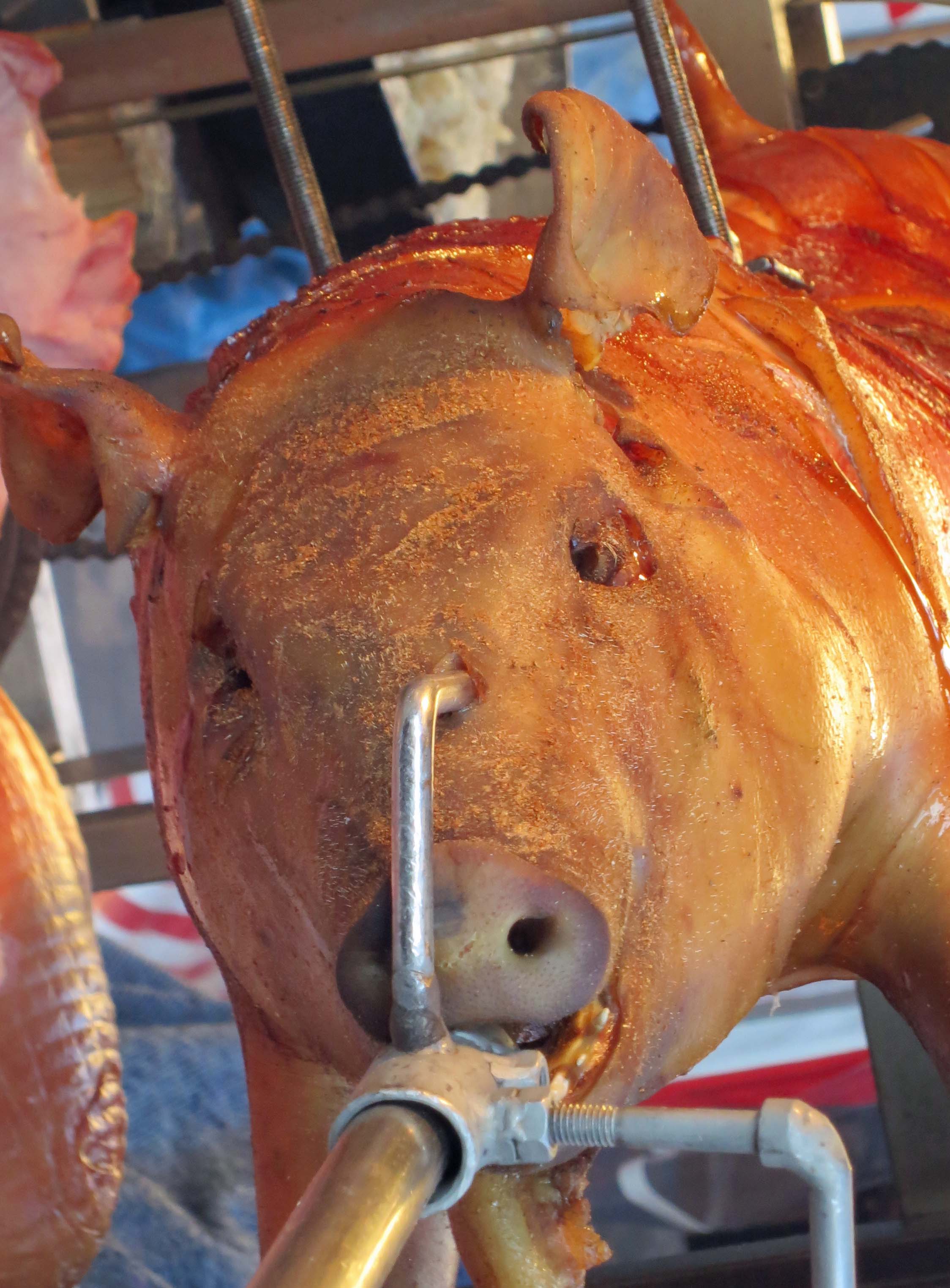
I finished off my trip to Florence by admiring a real pig being roasted at the Christmas Fair being held in Piazza Santa Croce. He smelled yummy. Unfortunately, we were under strict orders from our tour guide to be on time for the trip back to our ship… or be left behind, so I didn’t get to try a sample.

The roasting pig at Florence's Christmas Fair.

The roasting pig at Florence’s Christmas Fair on Piazza Santa Croce.

NEXT BLOG: We will check out Michelangelo’s David, Peggy’s all time favorite sculpture.

Rome Walk-About: When Pickpockets Strike… Mediterranean Ports

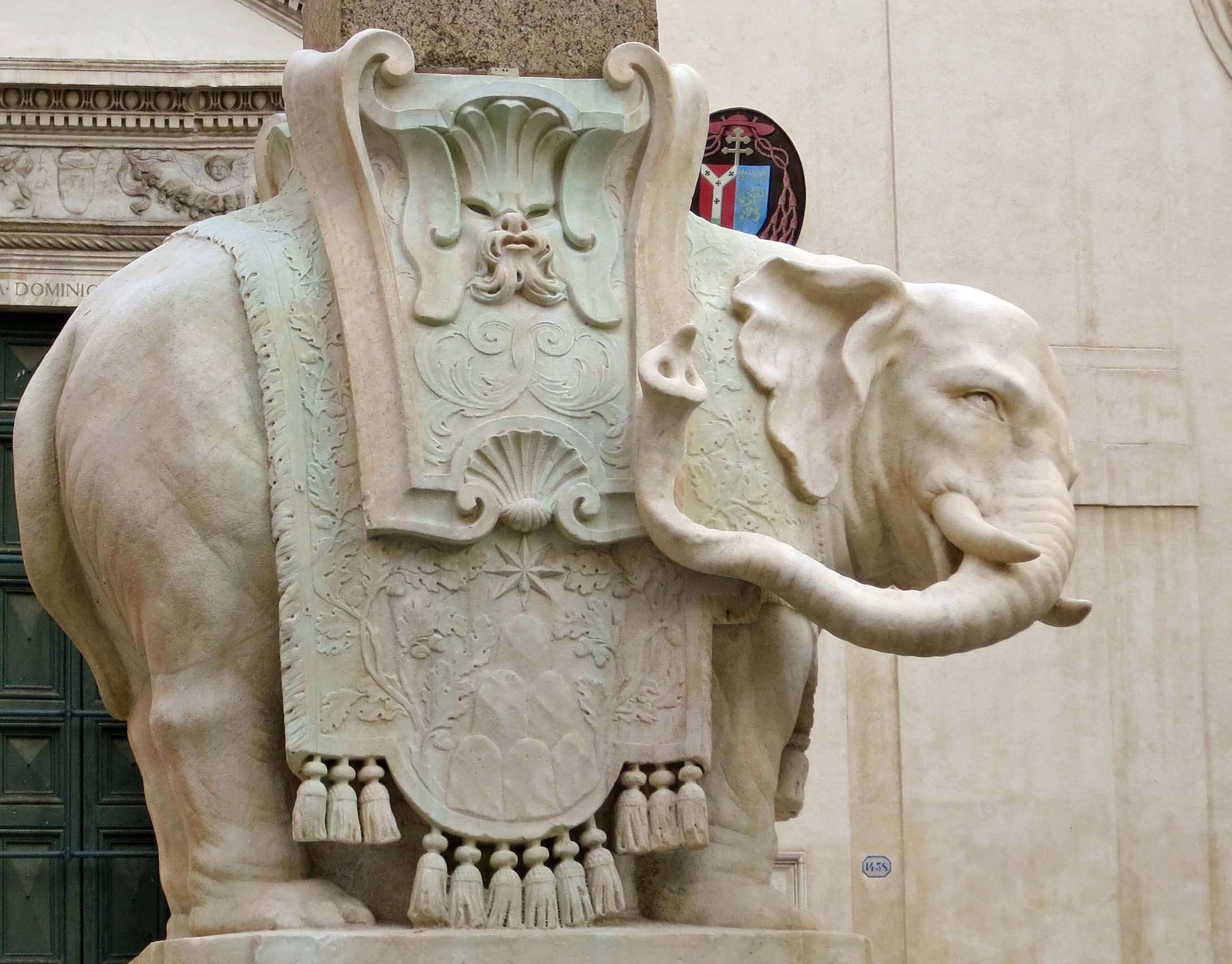
One of the joys of walk-about is you come on treasures you might not see otherwise. This delightful elephant carved by Bernini is located near the Pantheon. It serves as the base for an obelisk.

One of the joys of walk-about is you come on treasures you might not see otherwise. This delightful elephant carved by Bernini is located near the Pantheon. It serves as the base for an obelisk.

If you’ve been following this blog, you know we like to walk extensively when visiting a new city. It’s a good way to become acquainted with the region and its people. Plus it’s great exercise. While Rome is huge, the historic section is confined to a relatively small section. It was large enough, however, that we used mass transit for longer distances.

There were two challenges. The first was figuring out the where and when of catching a train in a language we didn’t speak. The second was that the subway is a great place for pickpockets, especially during rush hour. Rick Steves, in his book on Mediterranean Ports, was constantly admonishing us to be on theft alert.

Peggy, who is more paranoid than I, is always urging me to transfer my wallet to my front pocket when we are in a crowd. Sometimes I even comply. Once, she didn’t even have to ask. We were in Amsterdam and the city had put up huge banners across the streets warning people about thieves.

Neither did I require urging in Rome. Folks in Southern Europe were suffering from serious Euro Deficit Dysfunction. Times were tough. We both wore money belts.

The stories are legion about various scams. Travelers love to share tales. One of my favorites is a woman will ask you to hold her baby while her compatriots grab your wallet. No way was I going to hold a stranger’s baby. Heck, I’ll hardly hold the baby of a woman I know. Babies are known to burp and pee on you. Can you imagine the insult added to injury if a baby was burping and peeing on you while someone was stealing your wallet?

While the stories are fun, the problems are real. A man staying at our hotel lost 2000 euros. A woman on the ship told us she was waiting at the airport when a nicely dressed couple told her something was sprayed all over the back of her jacket. The woman took it off. Sure enough, the jacket was covered with green goop. While her husband took the jacket to the restroom to wash, the couple kept her company. They left when her husband returned. Only later did she realize that her purse left with them.

We were at the Termini, a major transfer point, when our turn came. It was at the peak of rush hour and the train was crammed full. John, Peggy’s brother, and his wife Frances had climbed on first. Four little kids, maybe eight years old, jumped on in front of us. Peggy and I were squeezing in when John shouted. He had felt someone reaching in his back pocket. Meanwhile, the four little kids were trying to jump off the train. Peggy, being the ex-elementary school principal she is, thought the kids were confused and tried to shove them back on. The little pickpockets, of course, thought she was trying to collar them. They managed to escape just as the doors were closing. Fortunately, John was also wearing a money belt. He kept his euros and we had a story to tell.

Besides our experience with the pickpockets, we had managed to visit Trajan’s Column, the Trevi Fountains and the Pantheon on our day’s walk-about.

Victor Emmanuel Monument in Rome Italy

This monument to Italy’s first King, Victor Immanuel, is huge, measuring 200 feet high by 500 feet wide. The statue of King Emmanuel, in the middle, is the largest equestrian statue in the world.

The emperor Trajan apparently had lots to say about his victorious Dacian campaign circa 103 AD. He told it on this column.

The emperor Trajan apparently had lots to say about his victorious Dacian campaign circa 103 AD. He told it on the bas-relief making its way up the 140-foot column. See below for detail. (Photo by Peggy Mekemson)

Trajan's Column Rome, Italy

This photo shows how much detail is included on Trajan’s Column. (Photo by Peggy Mekemson)

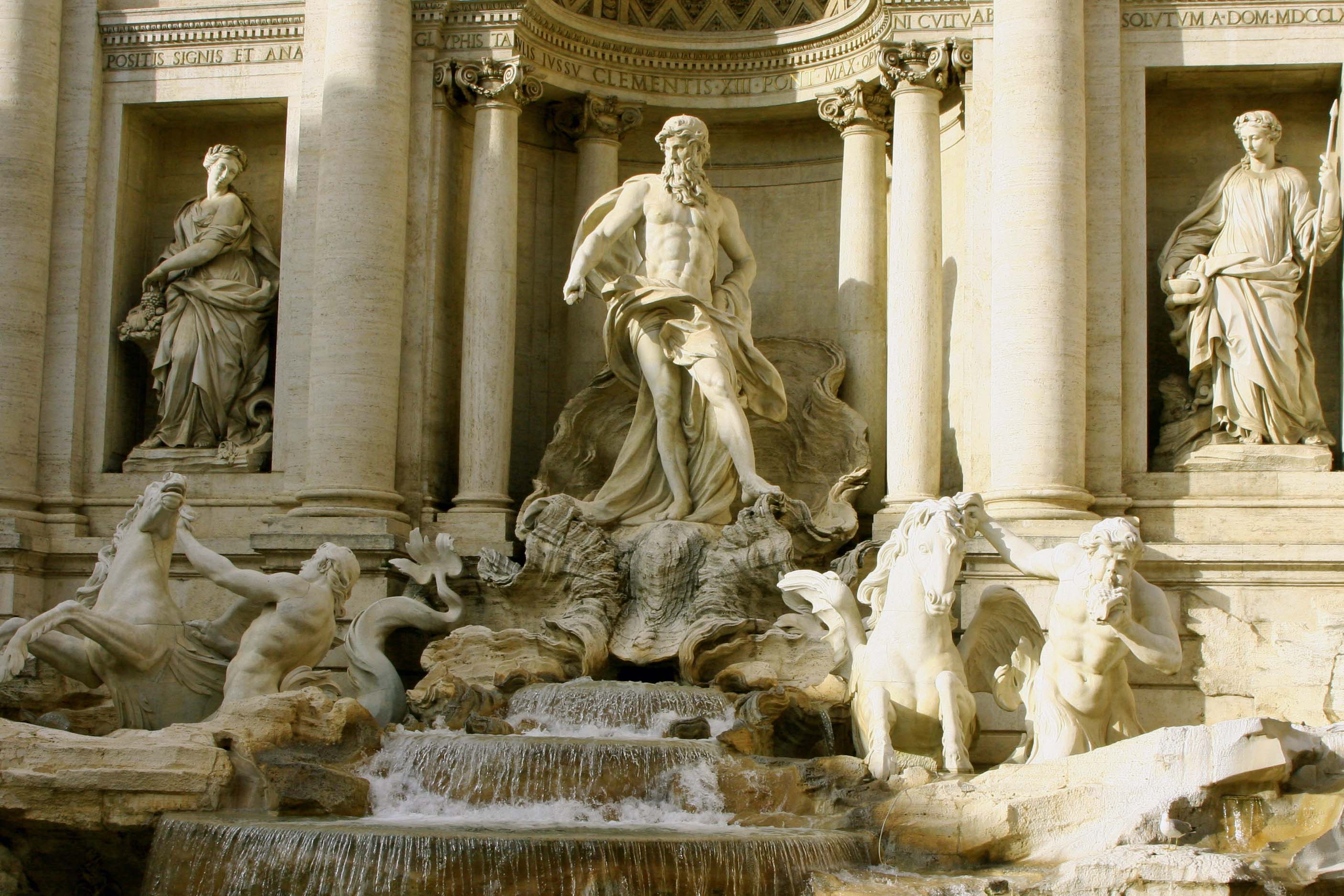
Remember the song, "Three Coins In A Fountain?" Maybe not. Anyway, it was about Trevi Fountain, one of the must-sees on most tours of Rome.

Remember the song, “Three Coins In A Fountain”? Maybe not. Anyway, it was about Trevi Fountain, one of the must-sees on most tours of Rome.

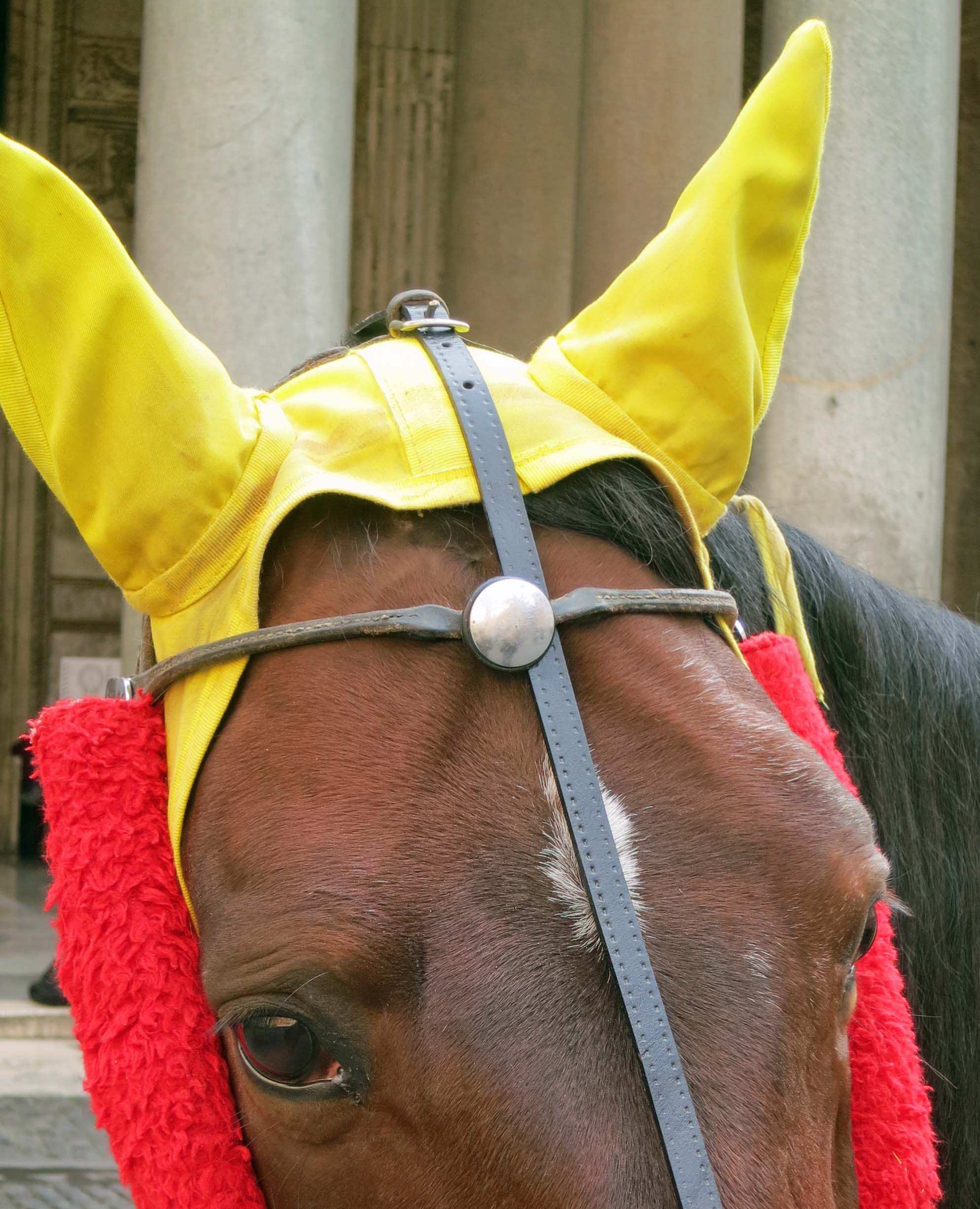
Horse with yellow ears in Rome

I found this horse with its yellow ears waiting patiently outside the Pantheon. I took the photo for my cousin Alice who lives in Ohio and is a great horsewoman. I figured the ear-covers might be appreciated  by horses living through cold Ohio winters.

The Pantheon, built to honor all of Rome's gods, there were a lot, is one of the world's most famous structures. It's dome served as a model for domes ranging from St. Peter's Basilica to the US Capitol building.

The Pantheon, built to honor all of Rome’s gods, there were a lot, is one of the world’s most famous structures. Its dome served as a model for domes ranging from St. Peter’s Basilica to the US Capitol building.

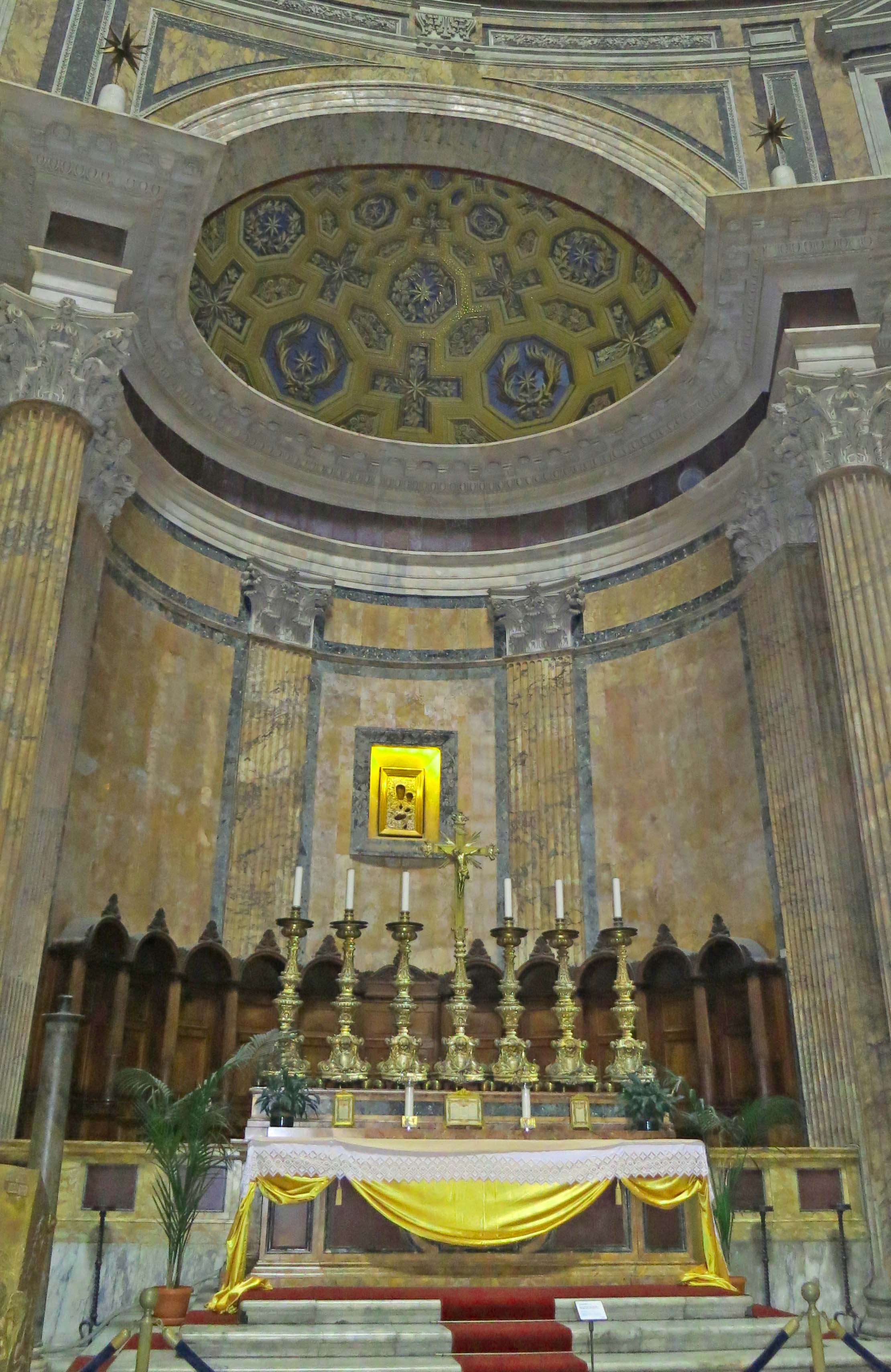
This is a view of the Pantheon's interior.

The interior of the Pantheon is quite striking.

It was common practice for the Catholic Church to take over sites that had been used to worship Roman gods. The Pantheon was many.

It was common practice for the Catholic Church to take over sites that had been used to worship Roman gods. The Pantheon was one of many.

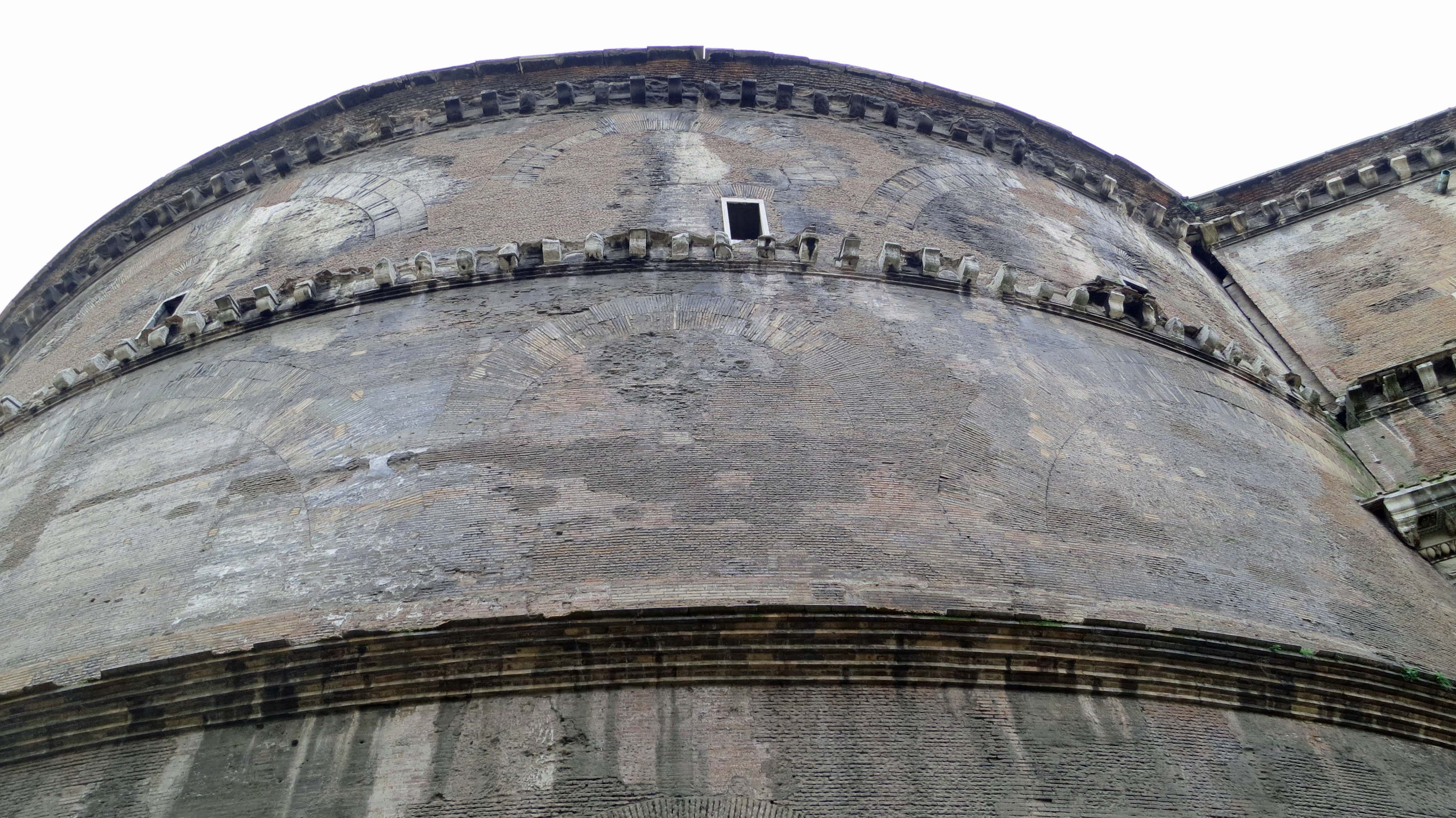
Rome's Pantheon from the back.

Another perspective of the Pantheon from outside.

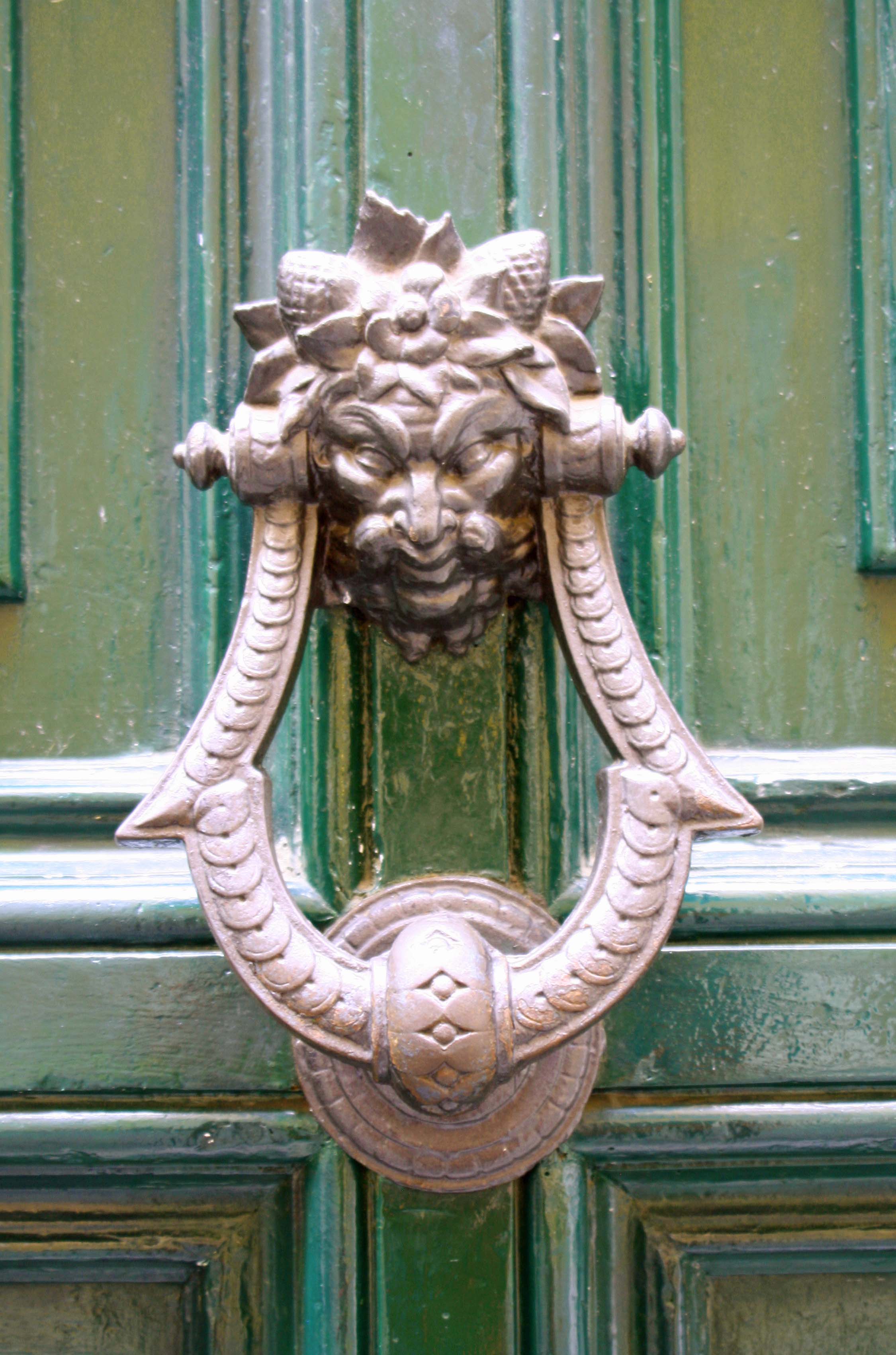
Peggy caught this wonderful knocker on our Walk-About... (Photo by Peggy Mekemson)

Peggy caught this wonderful knocker on our Walk-About… (Photo by Peggy Mekemson)

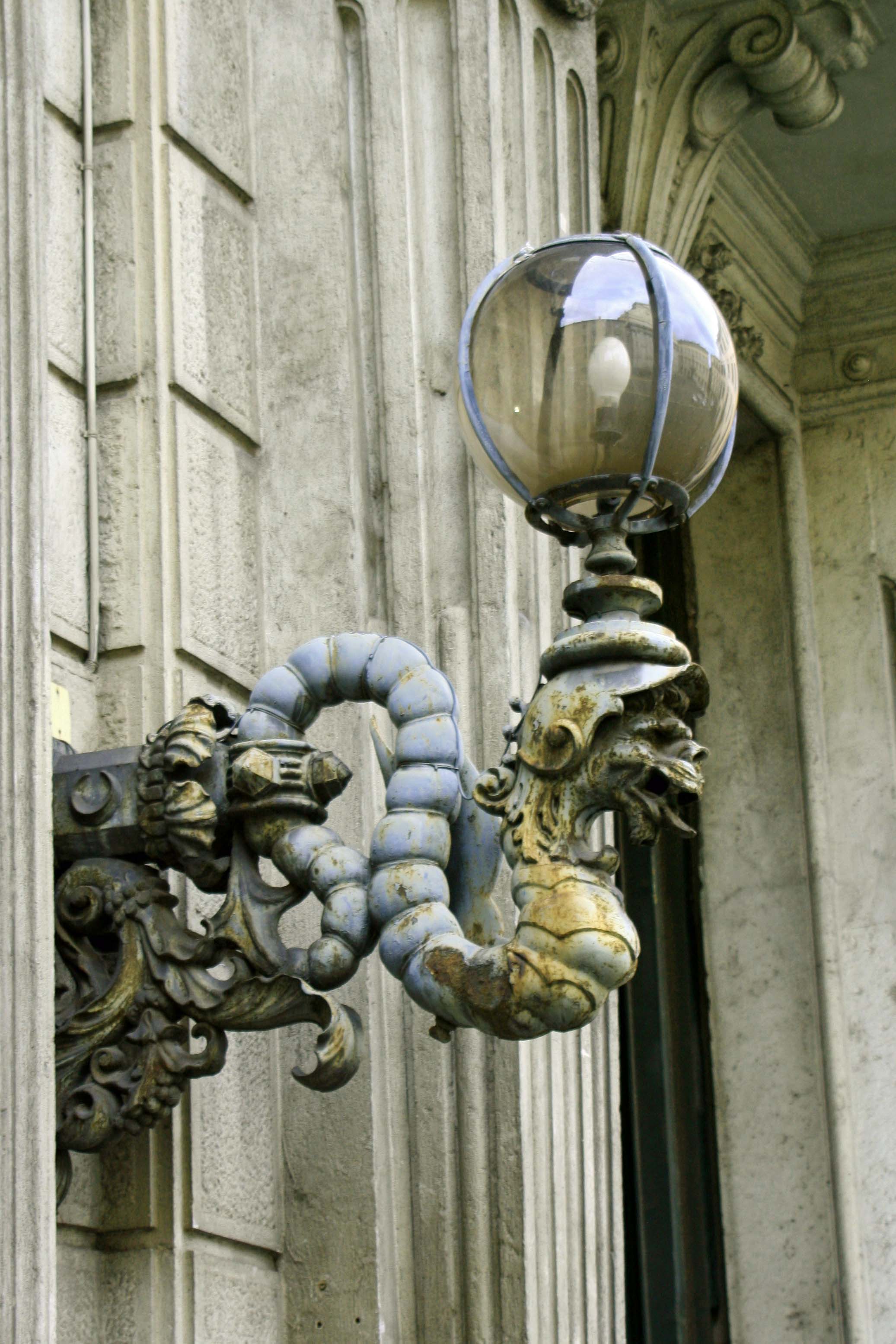
Rome lamp

As she did this dragon lamp near the Pantheon.

I will conclude with these colorful buildings... again part of our fun walk-about.

I will conclude with these colorful buildings and narrow street… again part of our fun walk-about.

NEXT BLOG: On to Florence.

The Forum… Where Rome Ruled the (known) World

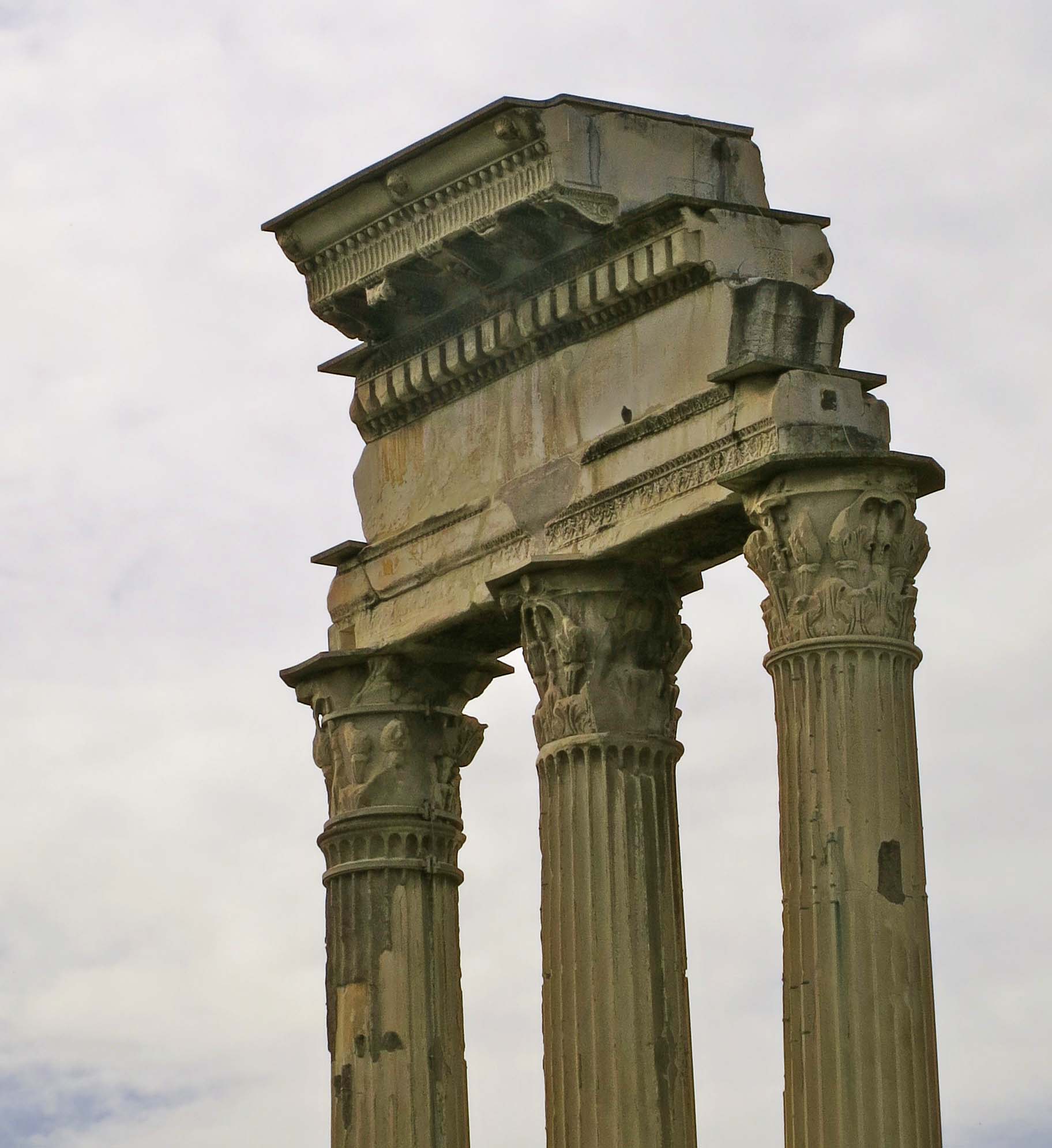
While much of the Forum today is in rubble, the temple of Antonius  and Faustina still stands proudly.

While much of the Roman Forum is in rubble, the temple of Antonius and Faustina still stands proudly… fortunately. The striations around the columns were caused by someone trying to cut them down.

At the height of the Roman Empire, around 100 AD, Rome ruled from England to the Persian Gulf. The Mediterranean Sea was considered a Roman pond. The Forum, located next to the Colosseum, was the site of Rome’s government. Julius Caesar was killed here on the Ides of March, after which Mark Anthony gave his famous speech: “Friends, Romans and Countrymen, lend me your ears.” We included the Forum as part of a very long walk-about through historic Rome that included stopping by Trevi Fountain, visiting the Pantheon, fighting off pickpockets, and a heck of a lot more. I’m still tired. The following photos are from the Forum.

Archeologists work at the Roman Forum

Excavating the Roman Forum is still very much a work in progress, as this photo shows.

Corinthian Column in Roman Forum

I found the simple elegance of this single column outlined against a cloudy sky to be quite beautiful.

Ruins of Caligula's Palace in the Roman Forum

These columns were once part of Caligula’s Palace. Caligula, who enjoyed torturing people, built his horse a house and planned to appoint him as a Consul. It was around that time that Romans decided to assassinate the infamous emperor.

The building on the lower left, I believe, covers the site where Julius Caesar was assassinated. Above it, to the right, was the Temple of the Vestal Virgins. Their job was to stay chaste for 30 years and attend the eternal flame. Being bad got you buried alive.

The building on the lower left covers the site where the body of Julius Caesar was burned. Above it, to the right, was the Temple of Vesta, attended by the Vestal Virgins. Their job was to stay chaste for 30 years and attend the eternal flame. Being bad got you buried alive. Flings were few and far between. Palatine Hill, where the wealthy lived and cavorted, is in the background. (Photo by Peggy Mekemson)

The Arch of Titus commemorated the Roman victory over Judaea in 70 AD.

The Arch of Titus commemorated the Roman victory over Judaea in 70 AD. (Photo by Peggy Mekemson)

While Peggy was capturing photos of important historical sites, I was busy with the local cat.

While Peggy was capturing photos of important historical sites, I was busy with the local cat.

Temple of Constantine in the Roman Forum

What remains of the massive temple of Constantine, the Emperor who made Christianity the official religion of Rome. (Photo by Peggy Mekemson)

This impressive six-story arch commemorated the victory of the African born emperor Septimius Severus in far off Mesopotamia.

This impressive six-story arch commemorated the victory of the African born emperor Septimius Severus in far off Mesopotamia.

Arches in the Roman Forum

I like this photo of arches that Peggy took. (Photo by Peggy Mekemson)

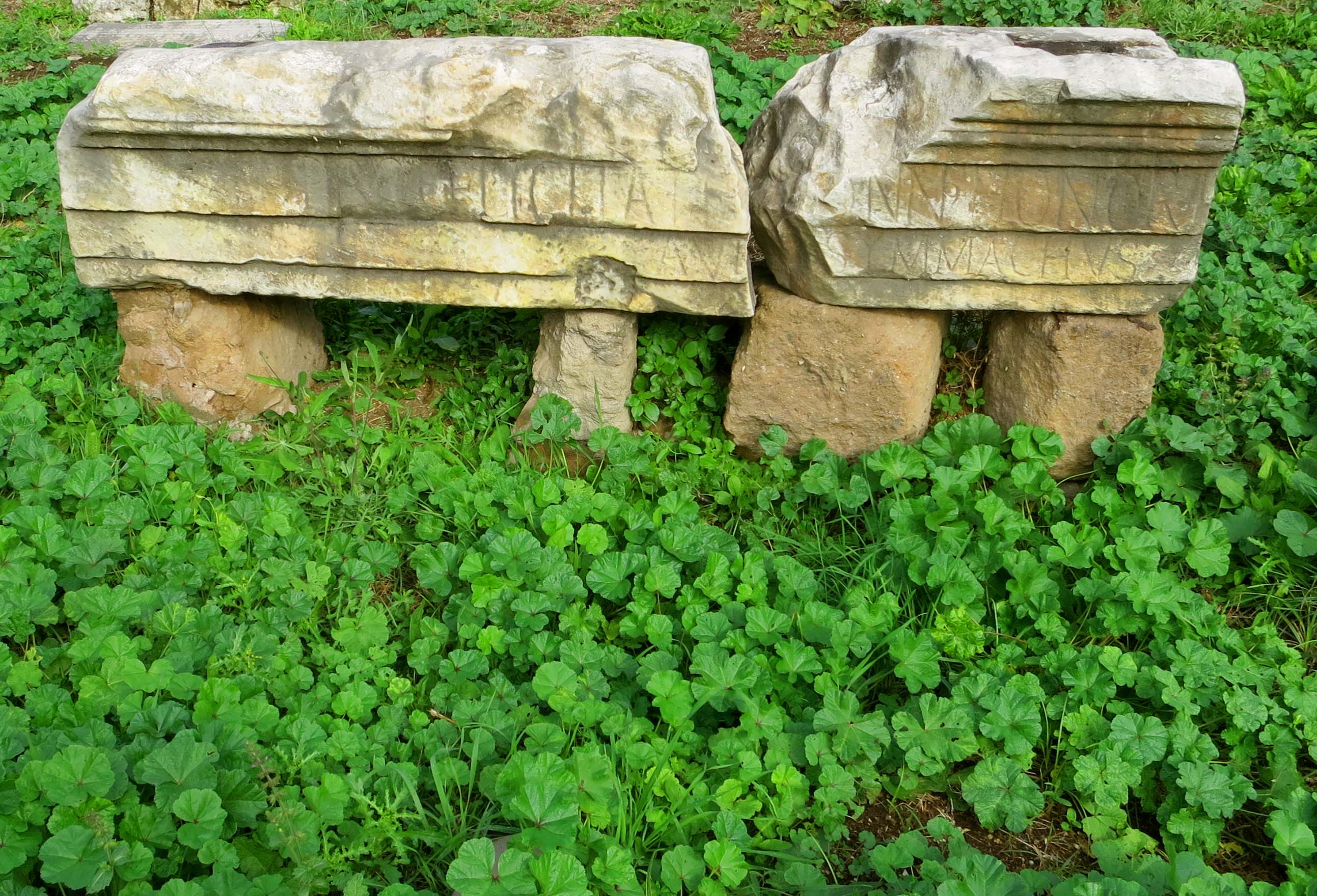
Do you think the Latin says park bench? I was tempted.

Do you think the Latin says park bench? I was tempted.

For my last photo, I chose this magnificent boar. (Photo by Peggy Mekemson)

For my last photo, I chose this magnificent boar. (Photo by Peggy Mekemson)

NEXT BLOG: We go on a walk-about through Rome and have a run in with pickpockets.

It’s National Park Week 2013… April 20-28

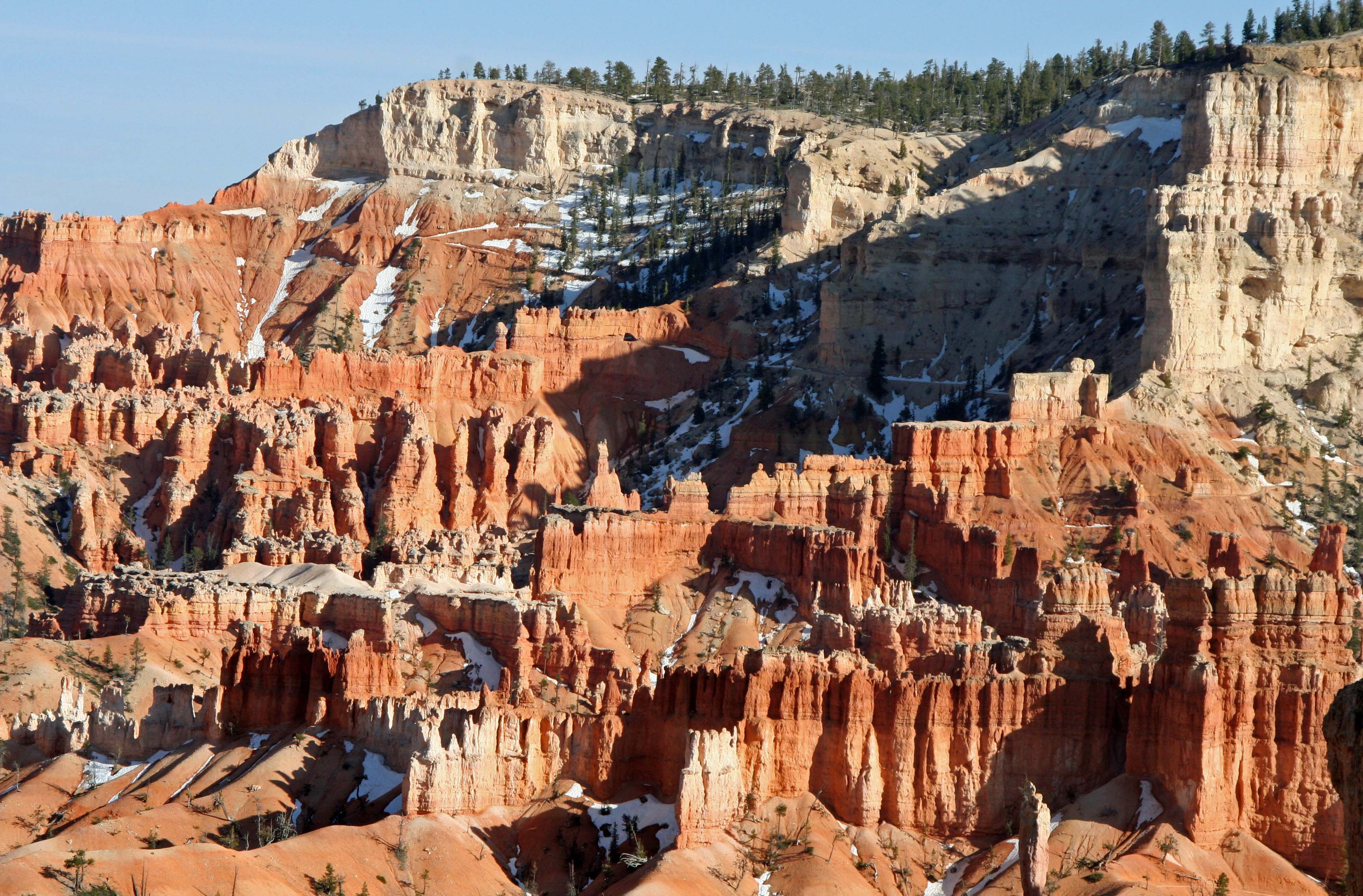
Bryce Canyon

Bryce Canyon National Park, Utah

It’s National Park Week. One of my blogging friends reminded me. Somehow I lost track of time and became so wrapped up in the minutia of life that the week had arrived before I realized it was happening. Shame on me.

The United States and many other nations around the world have done a magnificent job of setting aside national parks. We owe it to ourselves to go out and explore these treasures. And, we owe it to our great, great, great, great-grandchildren to protect these sites of rare natural beauty for future generations.

It won’t be easy. There will always be people who believe financial gain outweighs any other consideration. Why save thousand-year-old redwood trees when they can be turned into highly profitable redwood decks?

Redwood

This 1500 year old redwood is located in Redwoods National Park on the northern coast of California.

Several years ago, Peggy and I set a goal to visit all of America’s National Parks. With the exception of Kobuk Valley and Lake Clark in Alaska, we’ve succeeded. It has been an incredible journey. Our travels have taken us from Denali National Park in Alaska to the Dry Tortugas National Park off the Florida Keys.

In addition to driving through and hiking in these parks, I have also backpacked in 13, biked through five, and kayaked or rafted in three. Once I even organized a winter ski trek into Denali National Park where we slept out in minus 30-degree weather and listened to wolves howl. That was a learning experience…

Since I couldn’t escape to a national park this week, I did the next best thing; I went through photos of parks Peggy and I have taken. All I could think of was wow– what incredible beauty!

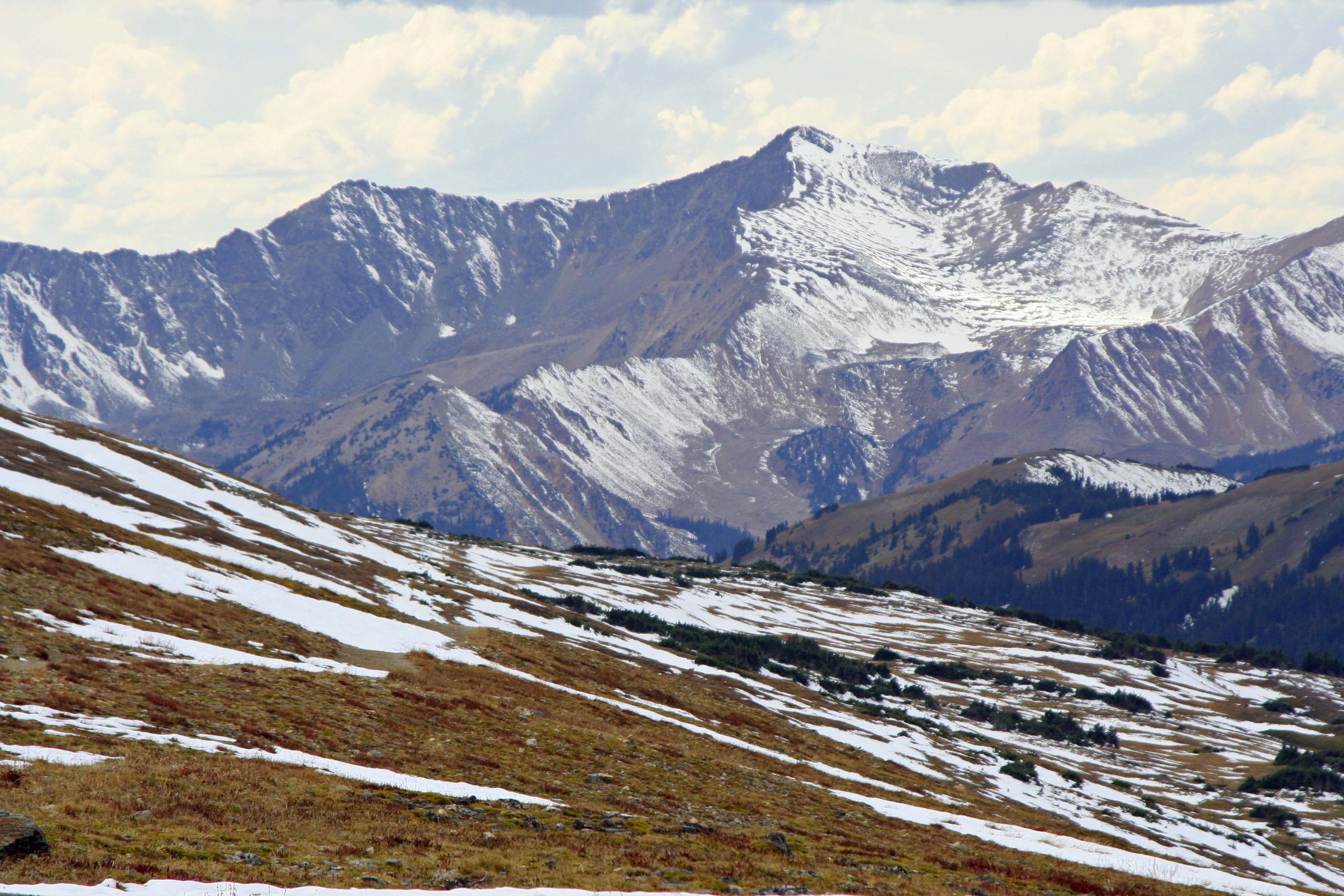
Rocky National Park in Colorado.

Rocky Mountain National Park in Colorado.

Hawaii Volcanos National Park.

An active volcano in Hawaii Volcanos National Park on the Island of Hawaii.

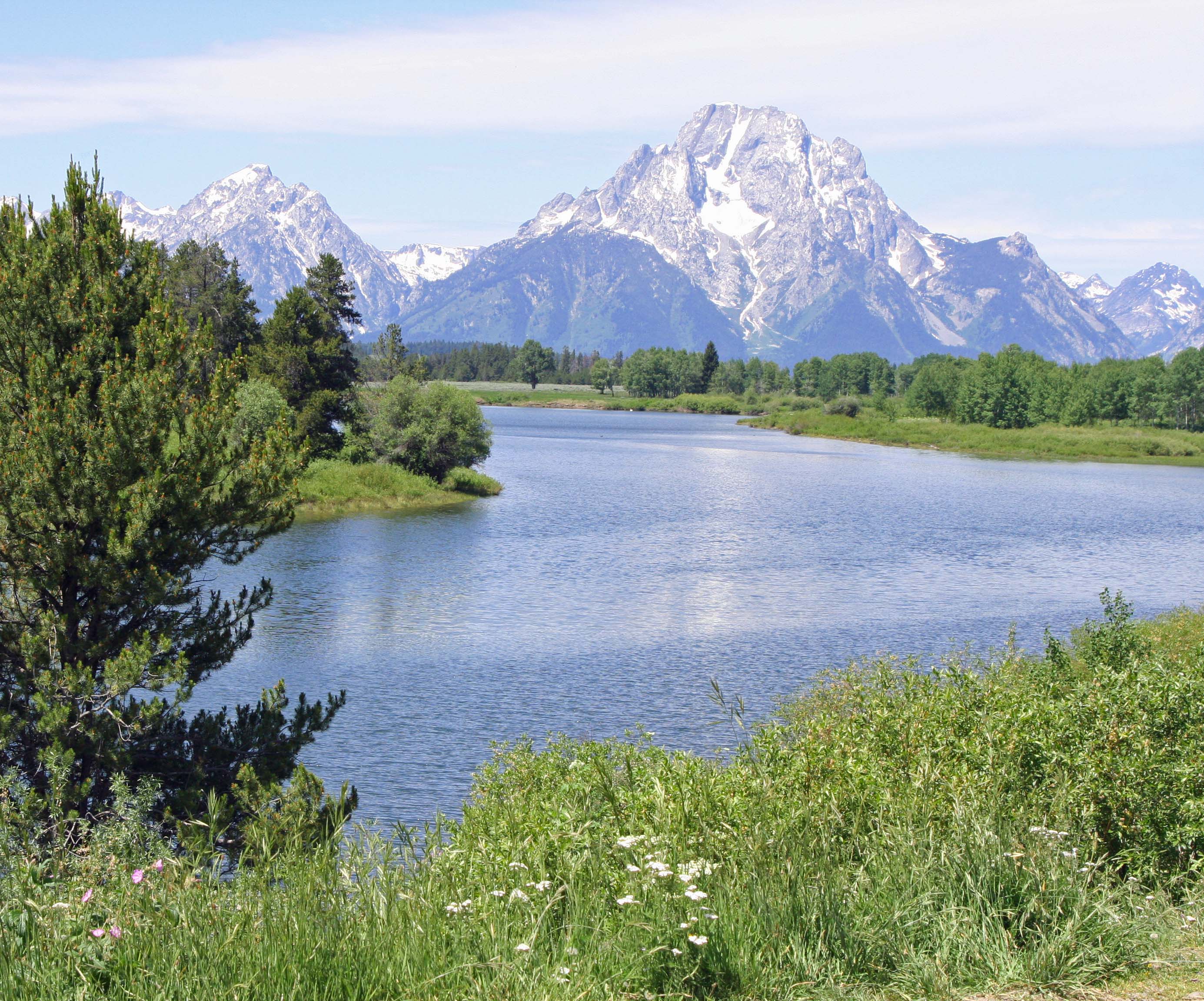
Grand Tetons National Park in Wyoming.

Grand Tetons National Park in Wyoming. A sign warned us to look out for an active grizzly bear.

Arches National Park, Utah

Arches National Park, Utah

Tuolumne Meadows, Yosemite National Park, California

Tuolumne Meadows, Yosemite National Park, California. I once woke up near here with a bear standing on top of me.

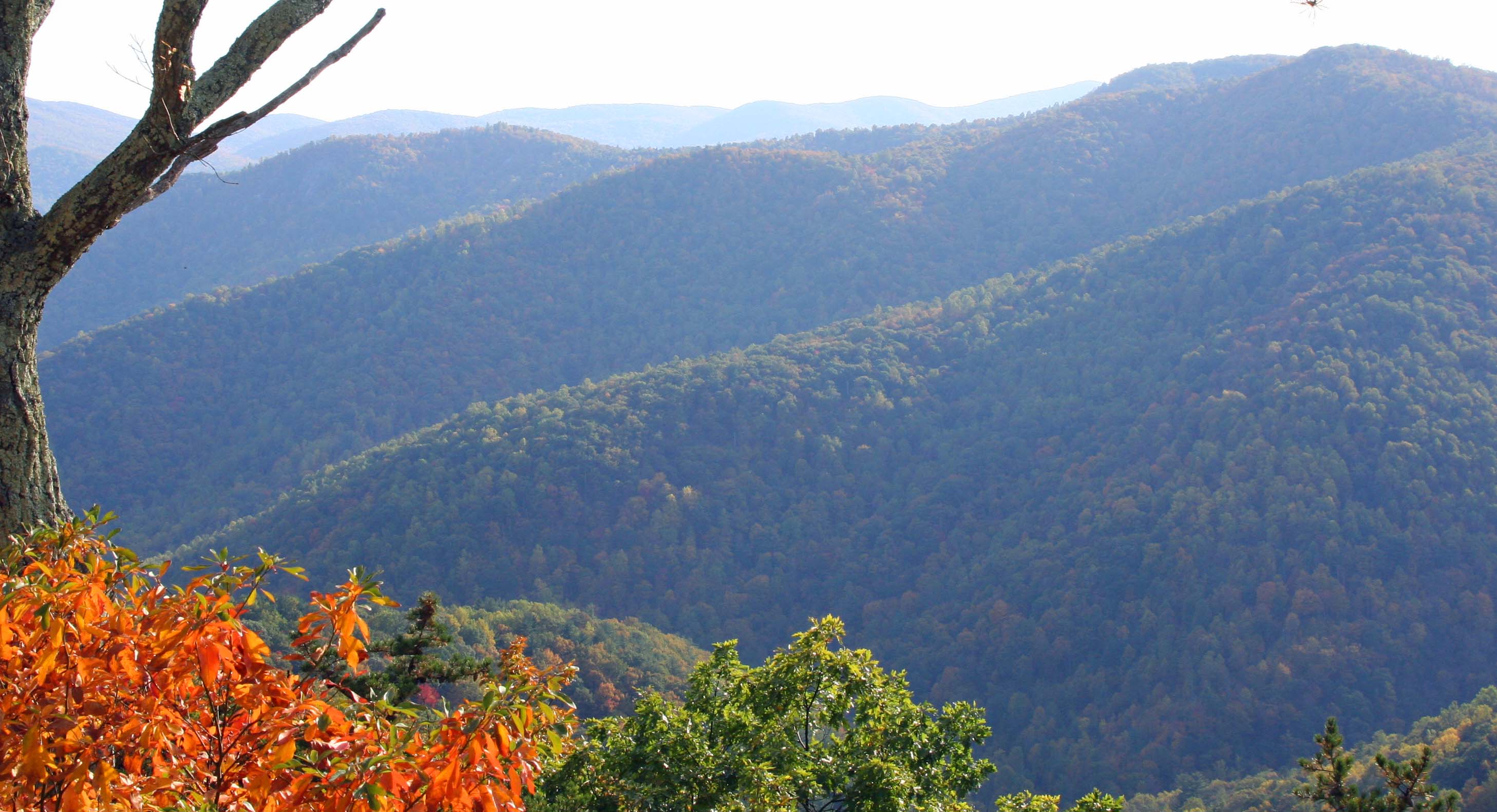
Fall colors of Shenandoah National Park in Virginia

Fall colors of Shenandoah National Park in Virginia.

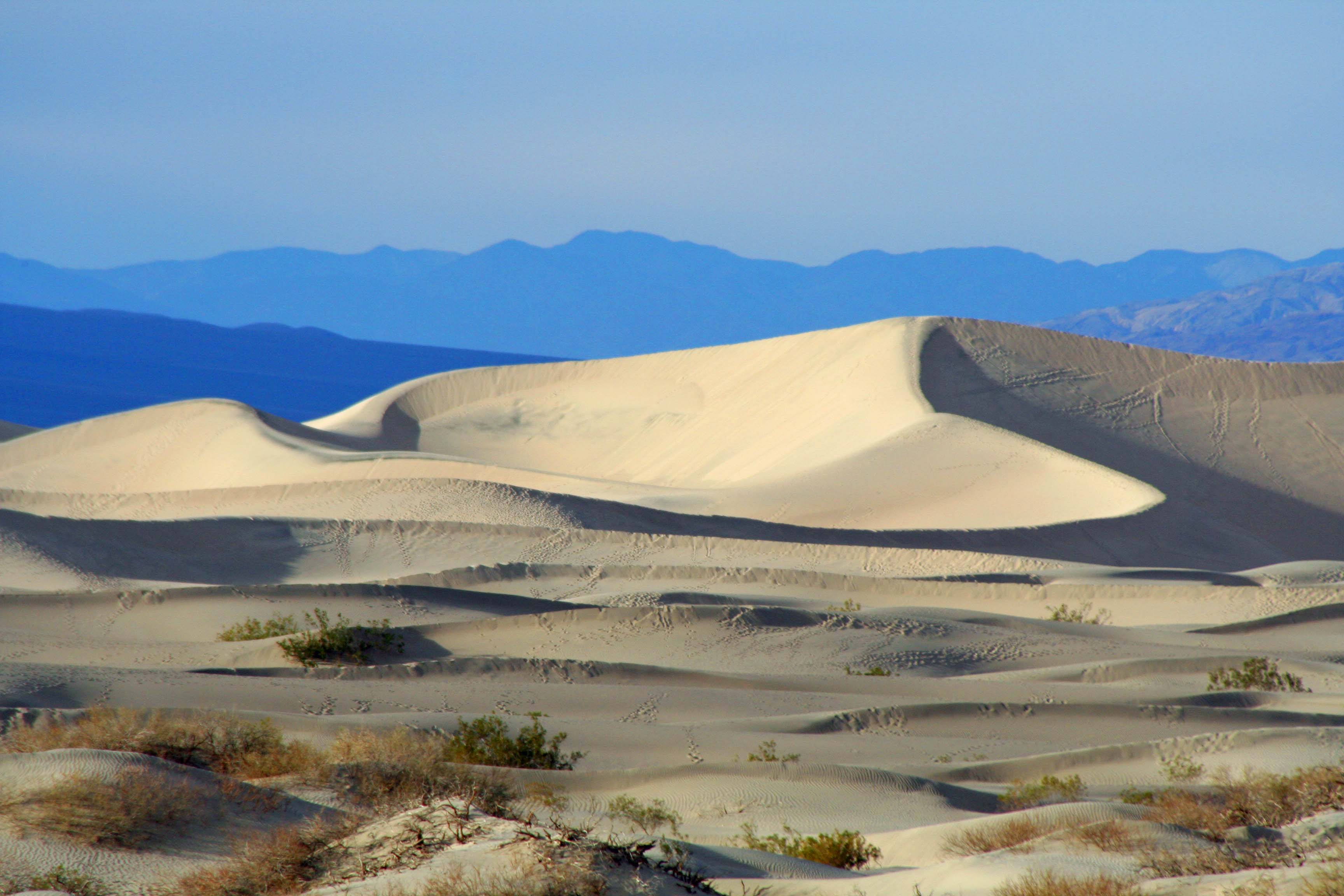
Sand Dunes in Death Valley National Park.

Sand dunes in Death Valley National Park.

The green of Olympic National Park in Washington.

The green of Olympic National Park in Washington.

Lesser known National Parks such as Great Basin in Nevada also hold great charm and beauty. This photo features the van Peggy  and I travelled in for four years as we travelled around North America.

Lesser known national parks such as Great Basin in Nevada also hold great charm and beauty. This photo features the van Peggy and I travelled in for four years as we wandered around North America.

Spectacular scenery is only part of the national park story. Wildlife, birds, insects, reptiles, flowers and history add to the experience.

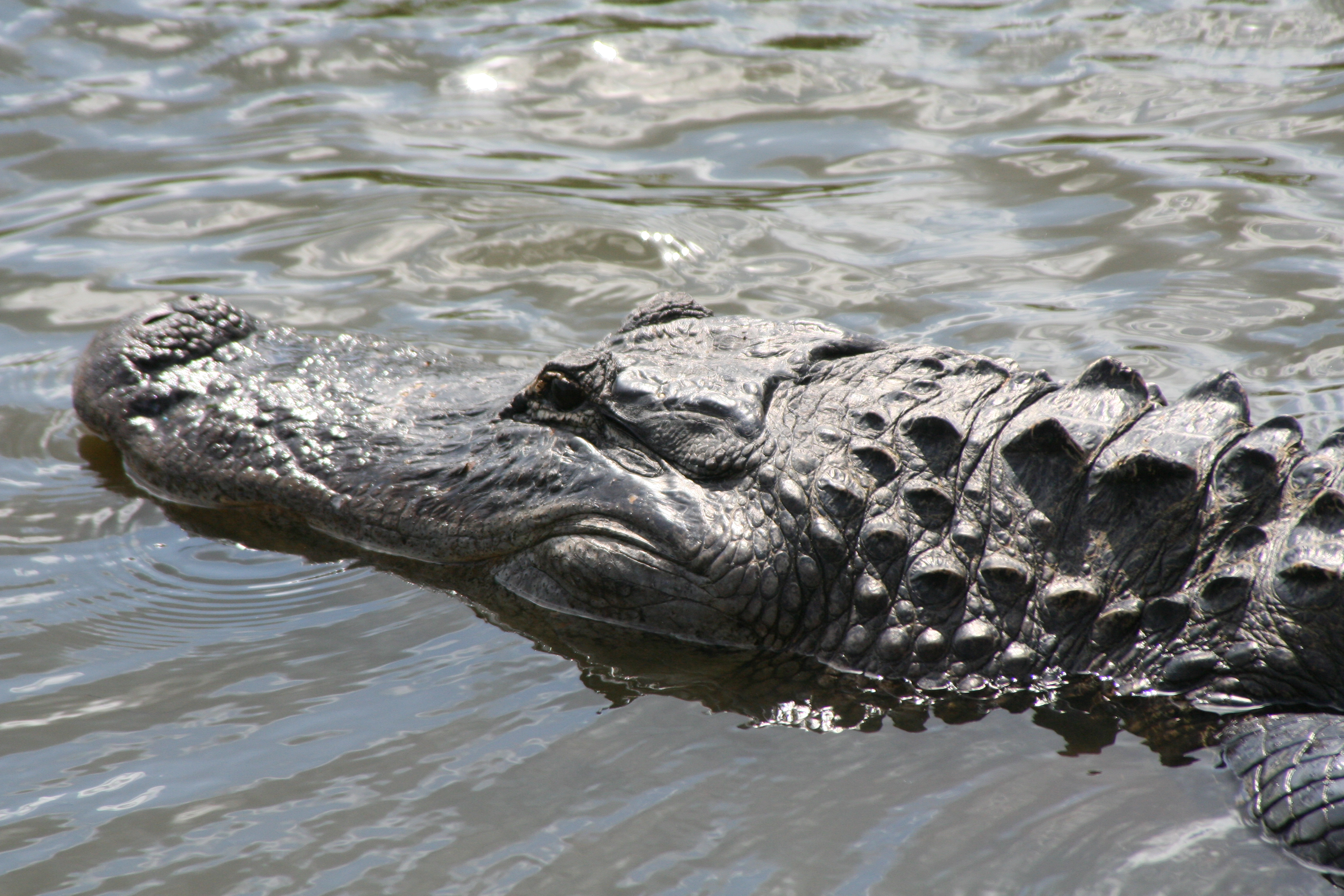
Peggy and I found this beauty swimming through the water at Everglades National Park in Florida.

Peggy and I found this beauty swimming through the water at Everglades National Park in Florida.

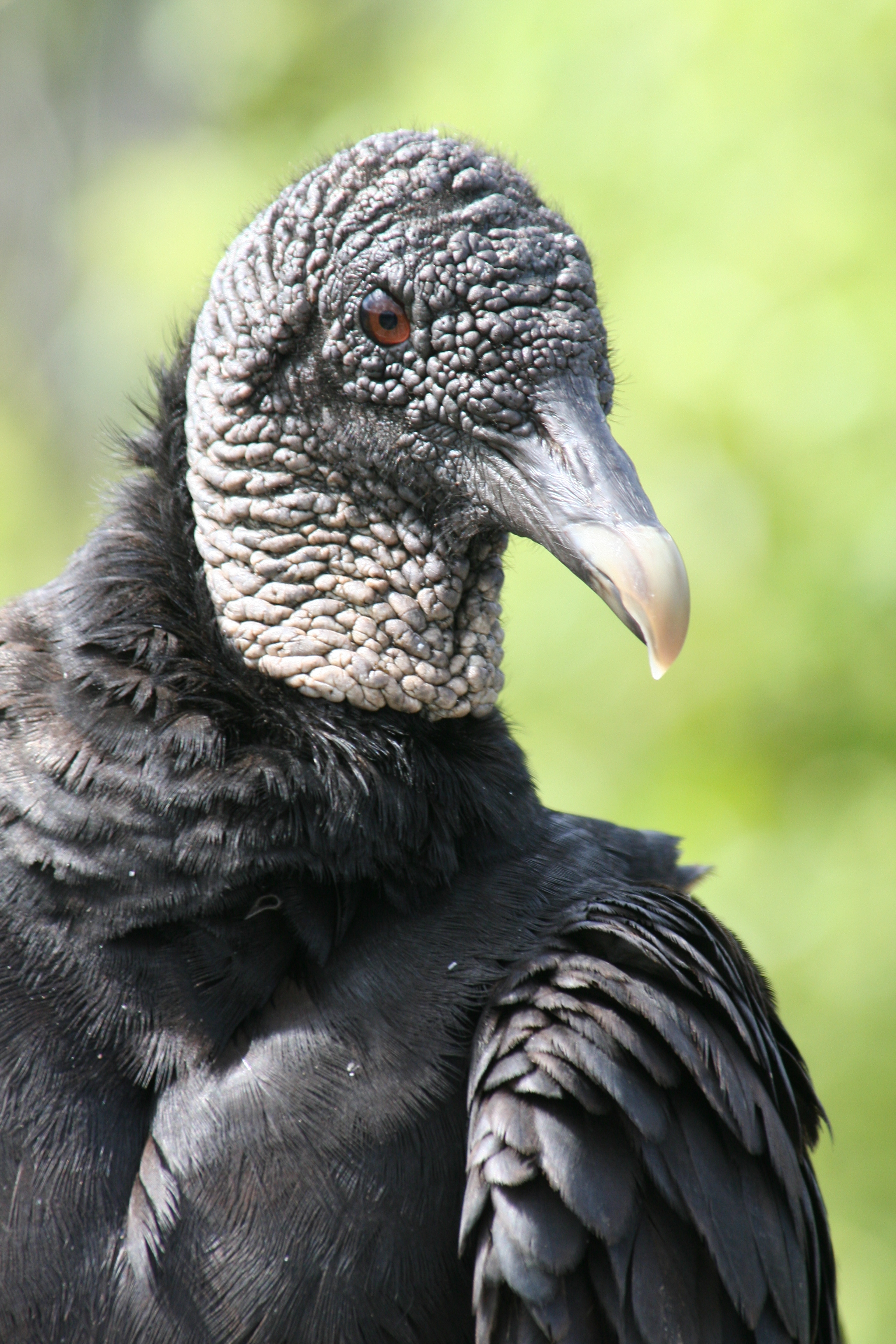
And this striking Black Buzzard was another Everglades resident.

And this striking Black Buzzard was another Everglades resident.

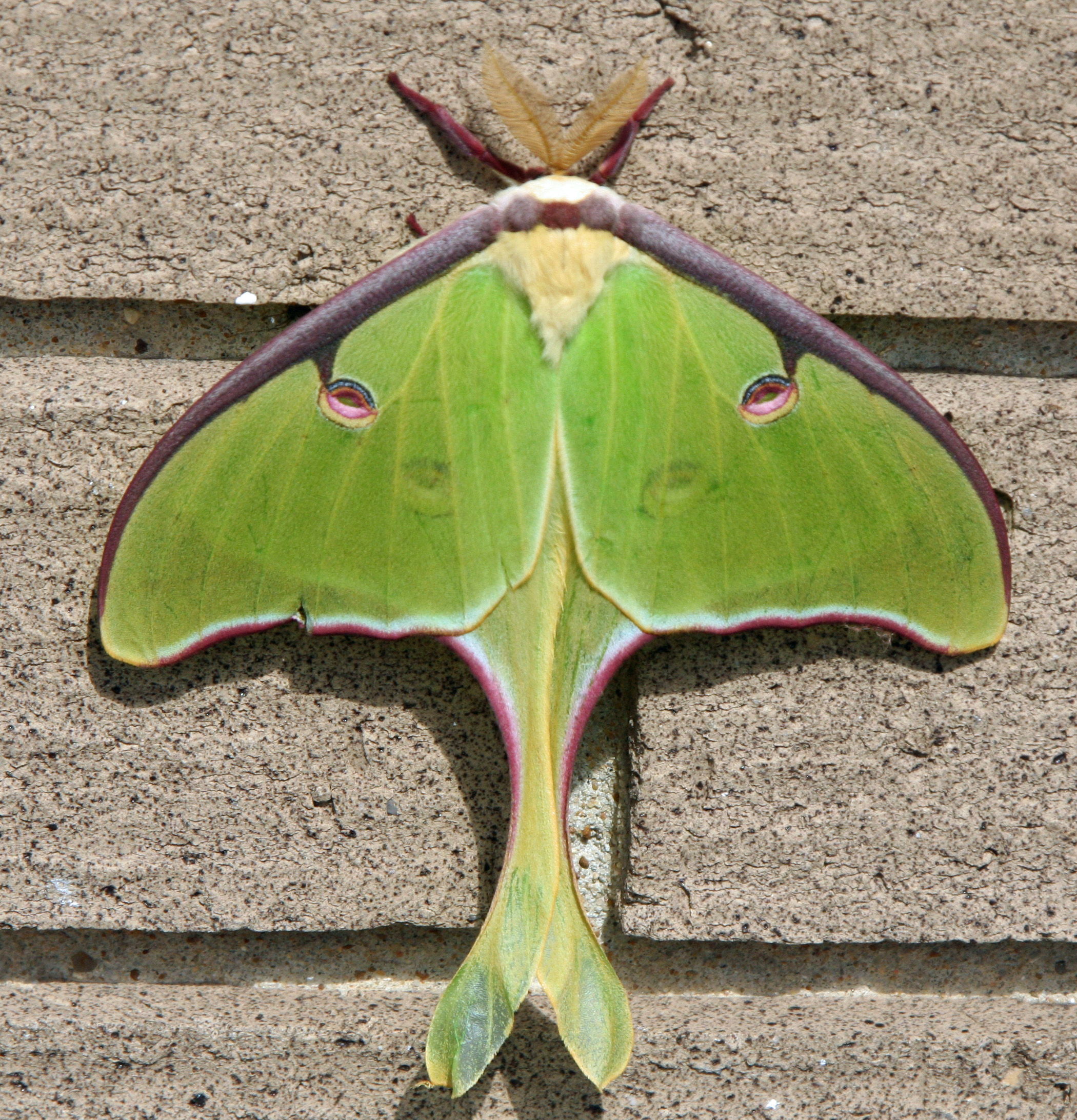
We found this Luna Moth on the Natchez National Parkway.

We found this Luna Moth on the Natchez Trace National Parkway.

Brown Pelicans are a common visitor at Pt. Reyes National Seashore.

Brown Pelicans are common visitors at Pt. Reyes National Seashore.

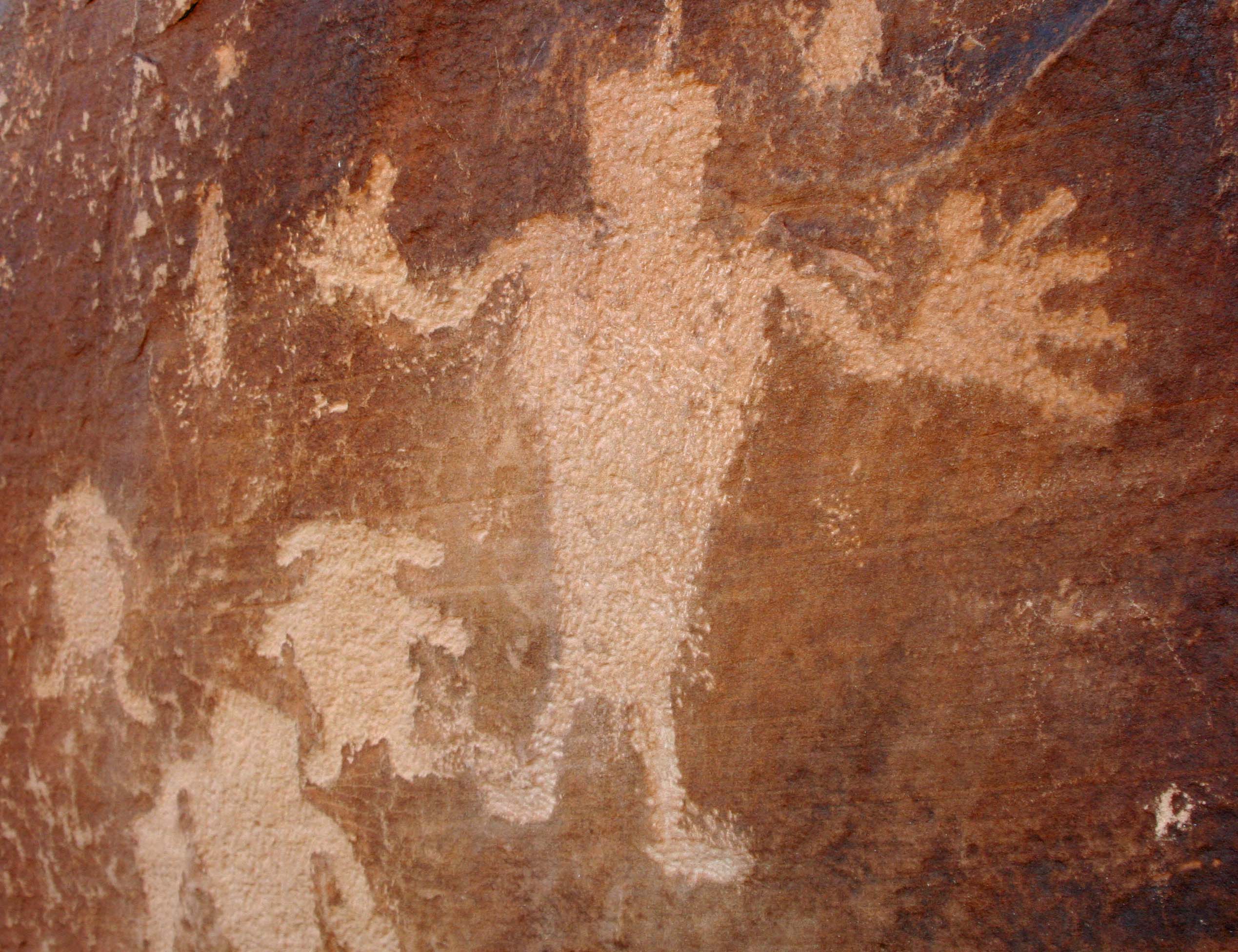
Peggy and I are great fans of Native America rock art, much of which is protected in National Parks and at National Monuments. This man with his big hands and fat little dogs has always been one of my favorites.

Peggy and I are great fans of Native America rock art, much of which is protected in national parks and at national monuments. We have several thousand photos from different sites. This one from Dinosaur National Monument in Colorado/Utah has always been a favorite because of the big hands and fat little dogs.

It never hurts to complete a blog with a pretty flower. We found this Foxglove growing in Olympic National Park.

It never hurts to complete a blog with a pretty flower, even if it goes on and on. (grin) We found this Foxglove growing in Olympic National Park.

NEXT BLOG: I hope you have enjoyed my two diversions over the past week because of Earth Day and National Park Week. On Monday I will return to Europe and Rome’s historic Colosseum.

St. Peter’s Basilica… Indulge Yourself

Seeing Michelangelo's Pieta on its own is worth visiting St. Peter's Basilica.

One of the world’s best-loved works of art, Michelangelo’s Pieta, is located in  St. Peter’s Basilica.

St. Peter’s Basilica in Rome is one of the world’s great churches. It is simply breathtaking. Walk inside and you are ready to join the Faith… whether you are faithful or not. The church was built during the Renaissance utilizing the greatest artists of Italy when Italy had the greatest artists in the world.

Visiting, you might say, is an indulgence of the highest order. In fact the church was built on indulgence… or, more correctly, indulgences: lots of them. Let’s say you committed a very, very BIG sin. No problem, if you were very, very wealthy. The church was willing to sell you forgiveness, an indulgence if you will. It was a guarantee you’d make it through the Pearly Gates.

The practice was so widespread, and so profitable, and so corrupt in fact, that it led a relatively unknown monk by the name of Martin Luther to tack up a list of 95 demands on the doors of a German church and kick off the Protestant Reformation.

But that is all far behind us in the very distant past. I, for one, am glad that the Pope found a way to pay for his splendid monument. And, I suspect, given a few minutes alone with Michelangelo’s Pieta, the most protesting of Protestants would agree.

Bernini's bronze canopy in St. Peter's Basilica

Bernini’s ornate seven story high bronze canopy oversees the simple altar where the Pope holds Communion.

Looking up past Bernini's Canopy at Michelangelo's dome, which towers 448 feet from the floor.

Looking up past Bernini’s Canopy at Michelangelo’s dome, which towers 448 feet from the floor.

This photo of the nave of St. Peter's Basilica gives an idea of just how big the church is. 60,000 people standing shoulder to shoulder could stand inside.

This photo of the nave of St. Peter’s Basilica gives an idea of just how big the church is. 60,000 people standing shoulder to shoulder could stand inside.

If St. Peter’s isn’t enough to pull you into the Vatican, its magnificent museum with over four miles of art should. The tour ends with the Sistine Chapel where Michelangelo spent four years on his back filling 5900 square feet with art, and where a gaggle of Cardinals recently elected the new Pope Francis. I know, I know, gaggle goes with geese.

Our tour of St. Peter’s Basilica and the Vatican Museum was far too short. Even cutting out half of the museum, I felt like an Olympic sprinter. Give yourself a couple of days to explore these outstanding treasures.

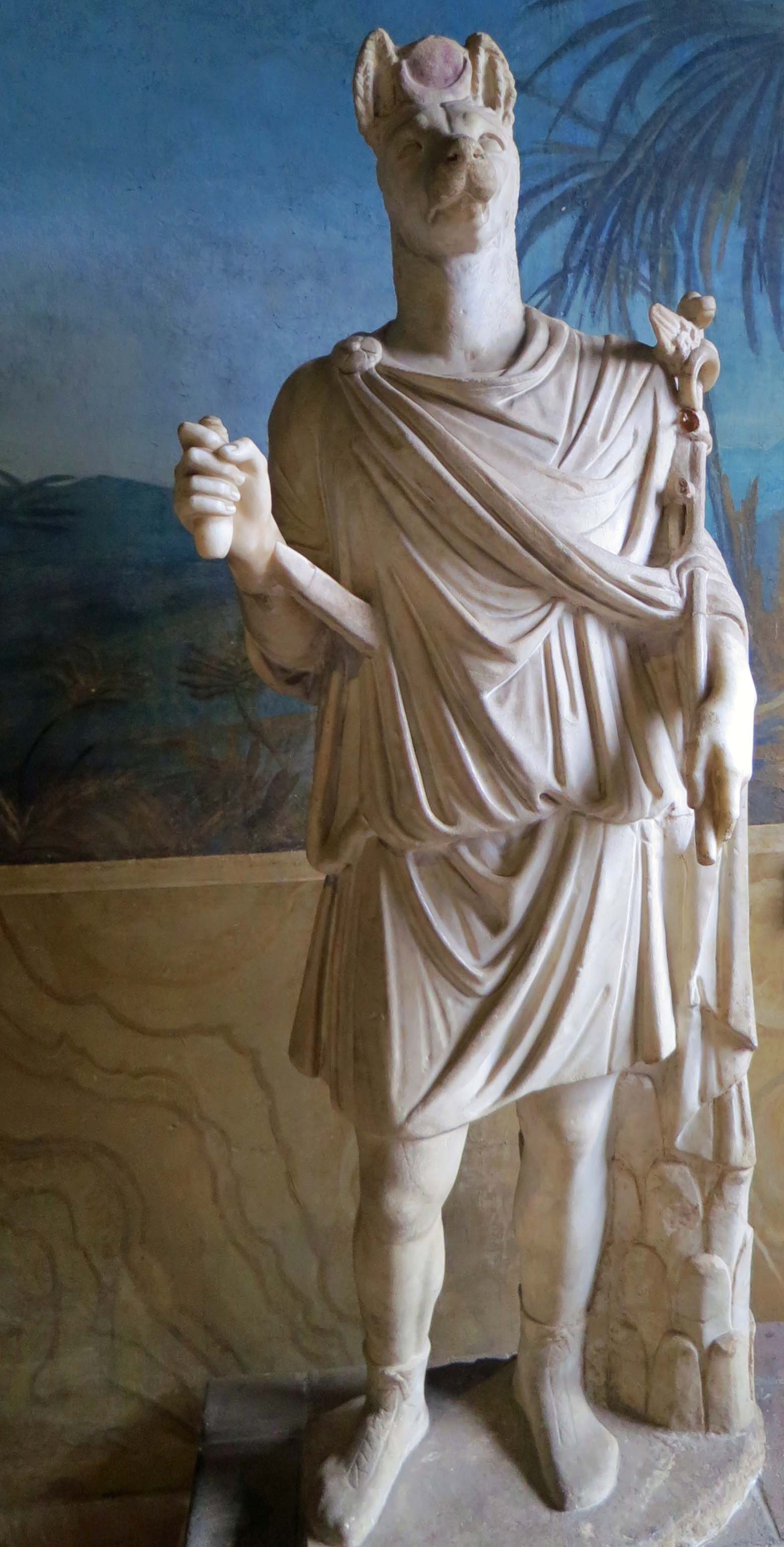
The collection of the Vatican Museum ranges from ancient Egypt to modern times. This is a statue of the Egyptian God Anubis.

The collection of the Vatican Museum ranges from ancient Egypt to modern times. This is a statue, I believe, of the Egyptian God Anubis who had the body of a man and the head of a jackal.

I was quite taken with this lion in the Vatican museum.

I was quite taken with this lion in the Vatican museum. Note the eyes. Mmmm, what a great tasting horse.

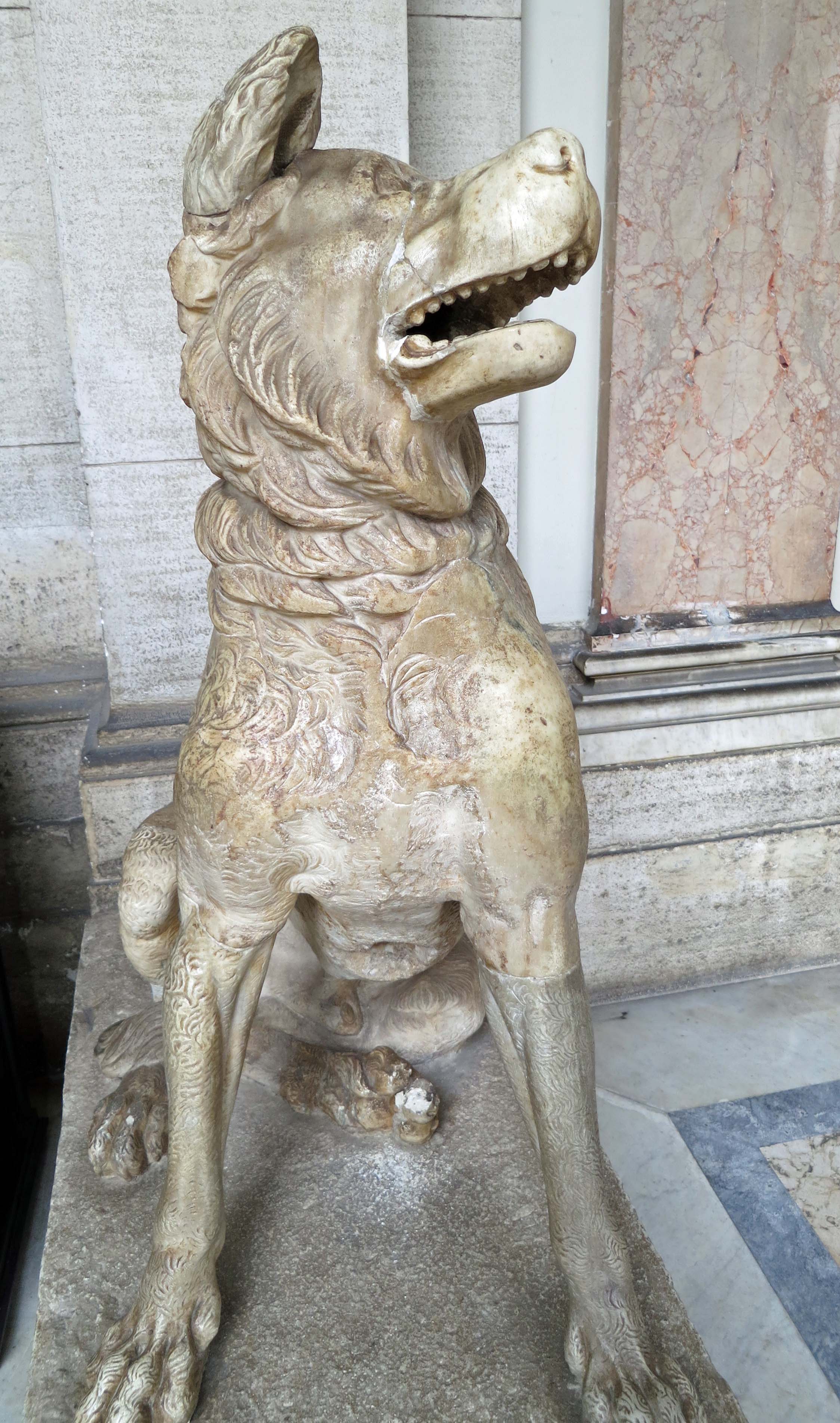
Finally, I can never resist man's best friend.

Finally, I can never resist man’s best friend.

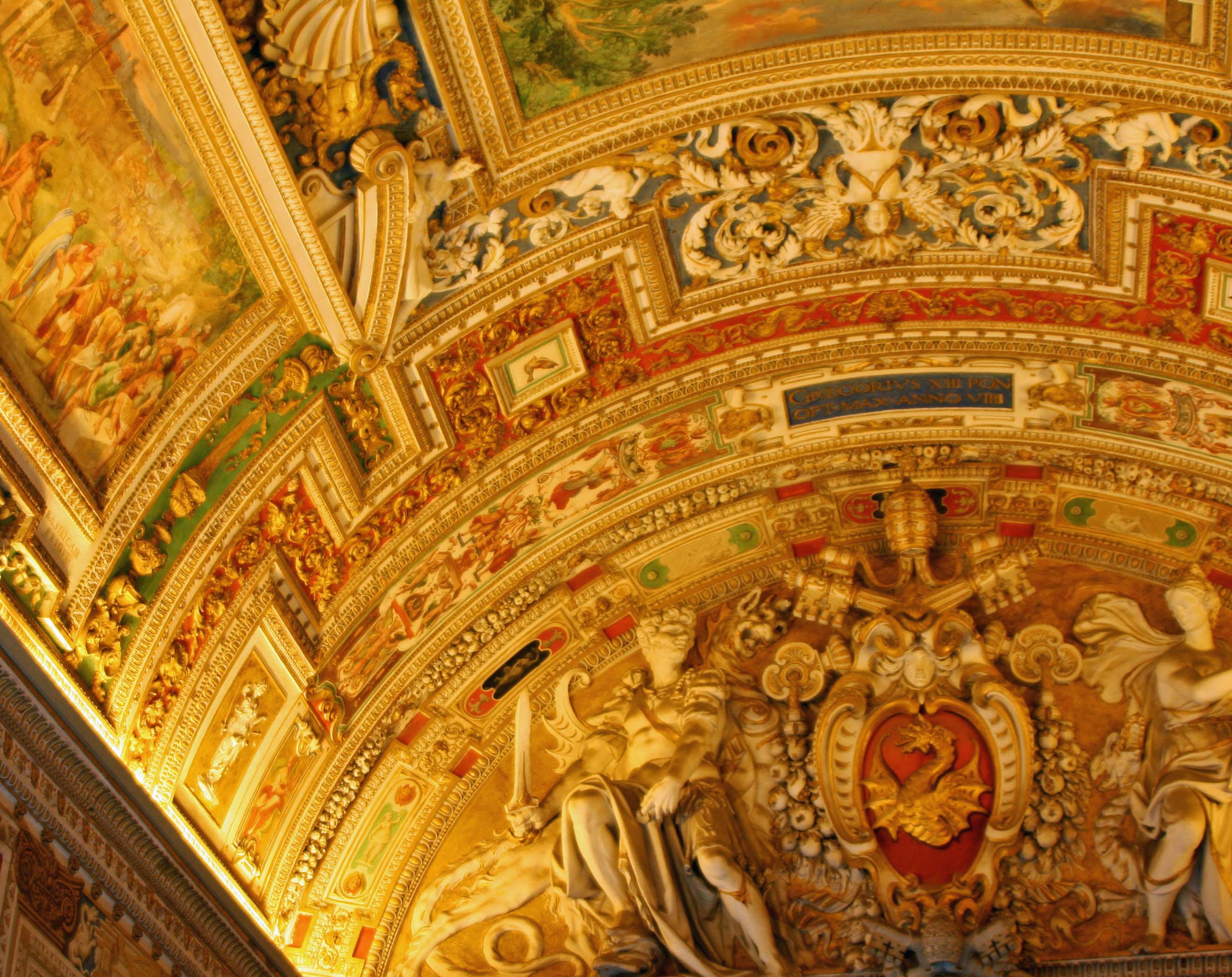
Ceiling of Map Room in Vatican Museum

Finally, I wanted to emphasize how incredibly ornate portions of the Vatican are. This was the ceiling of the map room in the Vatican Museum. (Photo by Peggy Mekemson)

NEXT BLOGS: In Rome we will be traveling to a site I guarantee you will recognize, the Colosseum. Since it is National Park Week, I also plan to do a blog featuring several of America’s beautiful national parks that Peggy and I have visited.

Earth Day 2013

The Sierra Nevada Mountains of California have always reminded me how precious our wilderness areas are. To celebrate my 60th birthday, I backpacked 360 miles from Lake Tahoe to Mt. Whitney, the hunch baked mountain behind me.

The Sierra Nevada Mountains of California have always reminded me how precious our wilderness areas are. To celebrate my 60th birthday, I backpacked 360 miles from Lake Tahoe to the top of Mt. Whitney, the hunch-backed mountain behind me. At 14,500 feet, it is the highest mountain in the contiguous United States.

In the wilderness is the preservation of the world – Henry David Thoreau

Forty three years ago I was recruiting for Peace Corps Volunteers at the University of California at Davis when Earth Day I took place. It was a beautiful spring day so I took a break and walked around campus visiting various booths featuring everything from recycling to wilderness protection. It changed my life.

Within a month, I was Executive Director of the Ecology Information Center in Sacramento, one of the nation’s first environmental centers, working seven days a week for a hundred dollars per month. While I would go on to spend a significant portion of my life fighting public health battles and wandering the world, I never travelled far from my environmental roots.

For 30 years I had the privilege of leading weeklong wilderness backpack trips through the High Sierra Nevada Mountains, following the same paths that the great naturalist John Muir hiked. Today, in honor of Earth Day 2013, I would like to share photographs from a 360-mile backpack trip I took from Lake Tahoe to Mt. Whitney to celebrate my sixtieth birthday.

These are the views that inspired Muir to begin his crusade to save the natural areas of America and the world. We owe him a deep vote of thanks for his efforts. More importantly, we owe it to ourselves, and future generations, to continue his efforts. As John Muir said so eloquently, “The clearest way into the Universe is through a forest wilderness.”

The beauty of the Sierra Nevada Mountains is found in its distant vistas…

The beauty of the Sierra Nevada Mountains can be found in its towering granite peaks...

Sierra Nevada lakes

Sierra Nevada Mountains

In its stately trees…

It's towering trees...

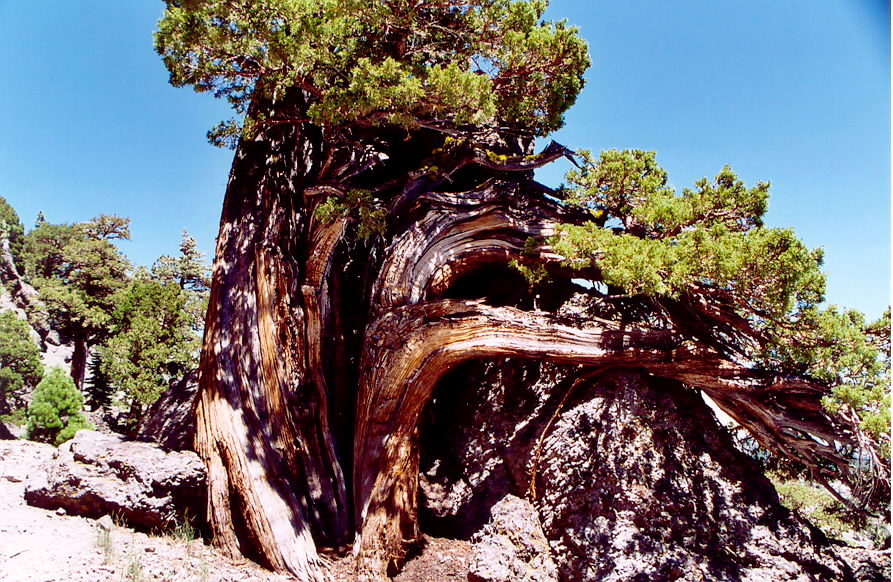
Juniper

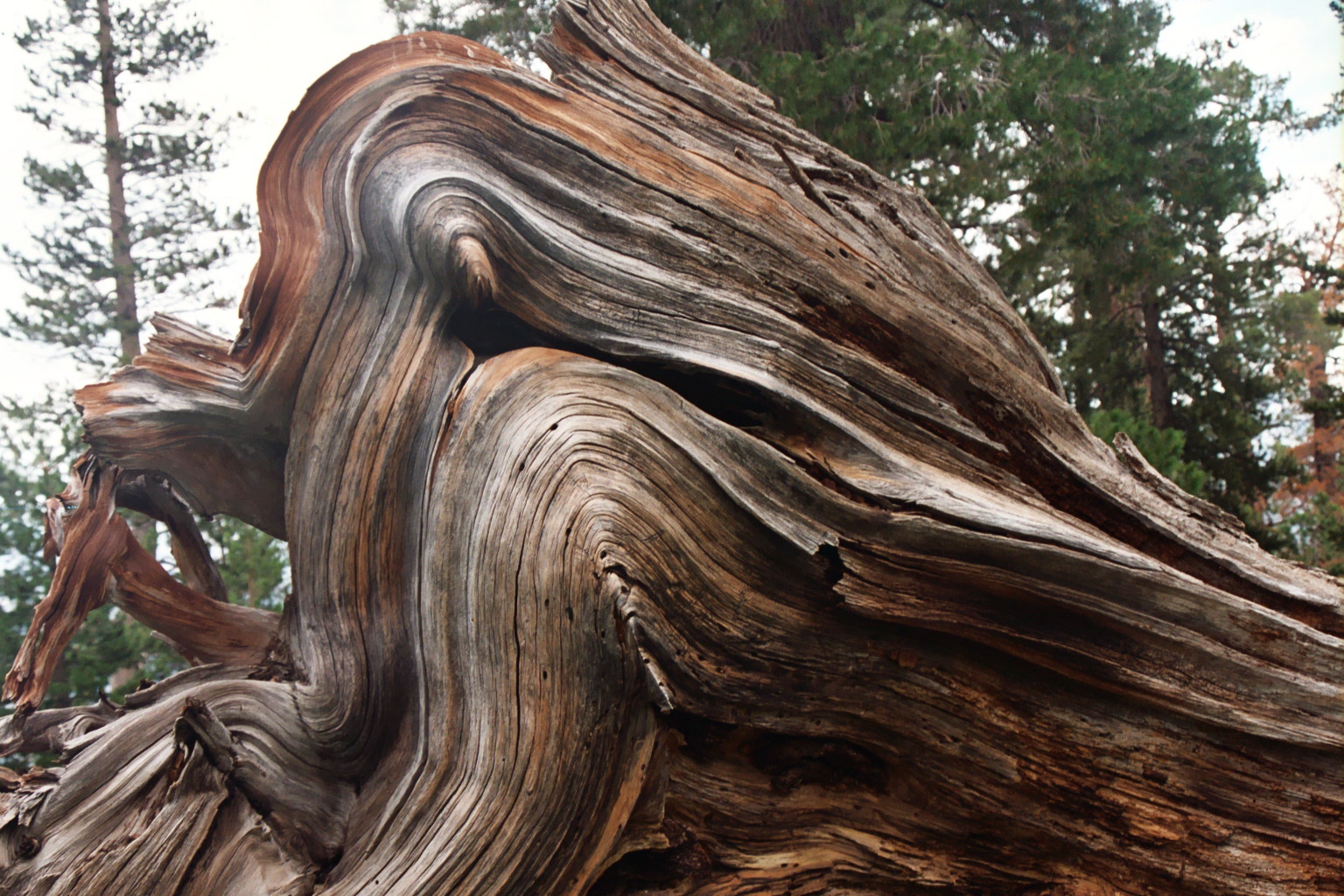
tree stump

In its sparkling water…

Falls on Tuolumne River

Sierra Stream

Sierra pool

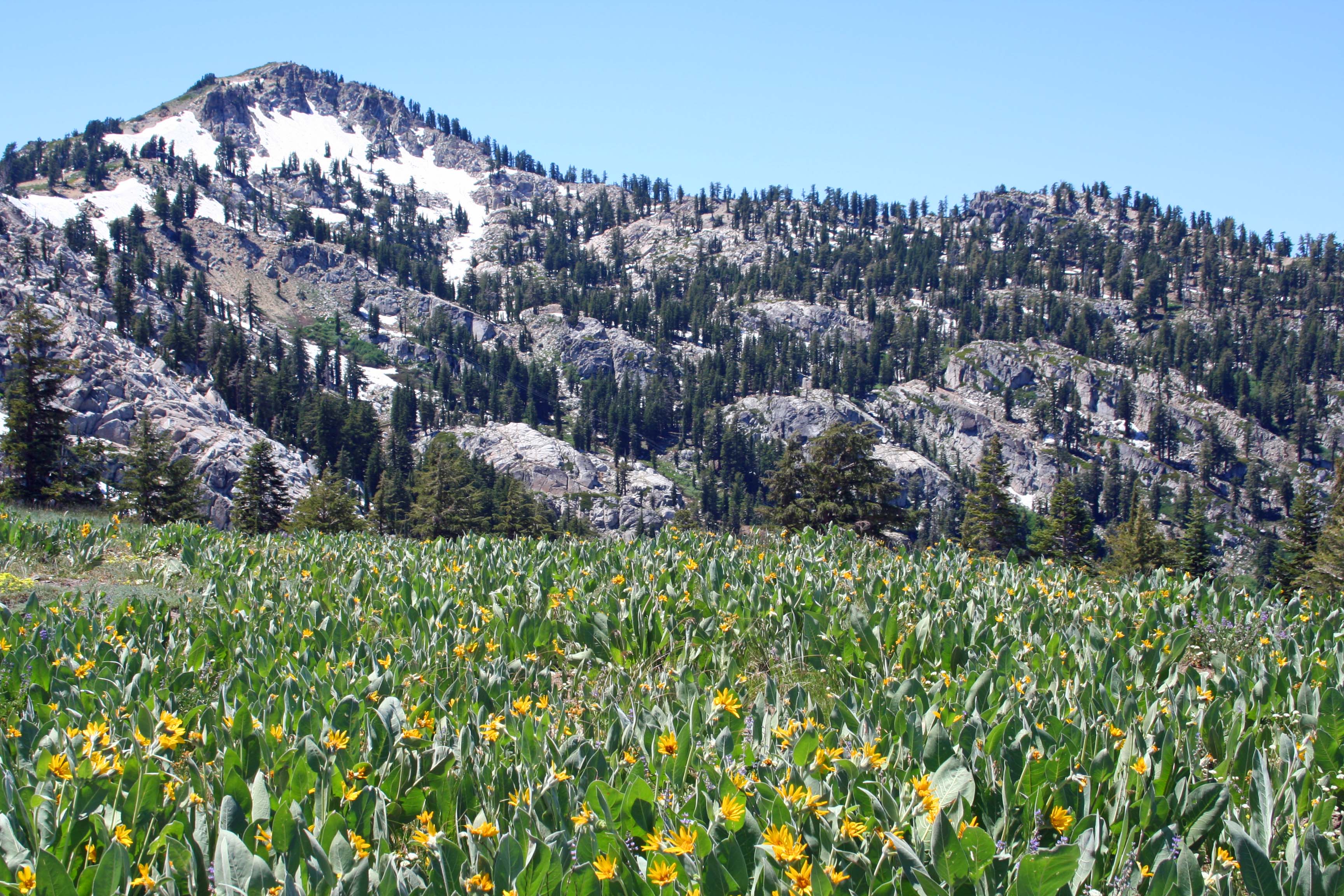
And in its carpets of flowers.

Sierra Nevada Mountains

Sierra flowers

Monkey flowers

Happy Earth Day… Earth. May you maintain your beauty, wilderness and quiet places for the soul as long as humankind wanders the world.

Rome’s Vatican… The Hundred Acre Home of One Billion Catholics

Cloudy skies provide a dramatic backdrop for St. Peter's Basilica with its magnificent dome designed by Michelangelo.

Cloudy skies provide a colorful backdrop for St. Peter’s Basilica with its magnificent dome designed by Michelangelo. This photo is taken while standing in St. Peters Square. Look closely, and you will see ant-like people waiting to enter.

I felt awe when I entered St. Peter’s Basilica. The massive dome designed by Michelangelo is higher than a football field is long. Bernini’s bronze, seven-story canopy looms over the altar where the Pope holds services. Every nook and cranny is filled with world-renowned art such as the Pieta. All combine to inspire a sense of the sacred.

Our hotel in Rome, the Giulio Cesare, was within a mile of the Vatican. We walked over twice, getting mildly lost both times. It didn’t matter. Rome is chock-full of fascinating architecture and tantalizing history.

The first time we went via the Tiber River, passing by the Castle St. Angelo and its neighboring bridge, the Pont St. Angelo. Eventually this brought us to the broad avenue leading up to St. Peter’s Square and Basilica. Mussolini built the avenue to provide visitors with a better view of the church. He also gave the 100-acre Vatican its independent nation status. Today the Vatican serves as the religious center for some one billion Catholics.

The Victor Immanuel Bridge reflected in the Tiber River of Rome.

The Victor Immanuel Bridge reflected in the Tiber River of Rome.

Peggy, her brother John and his wife Frances stand in front of the Tiber River and the Pont St. Angelo (the Bridge of Angels)

Peggy, her brother John and his wife Frances stand in front of the Tiber River and the Pont St. Angelo (the Bridge of Angels). The bridge was once the Bridge of Emperor Hadrian and dates from the Roman Empire.

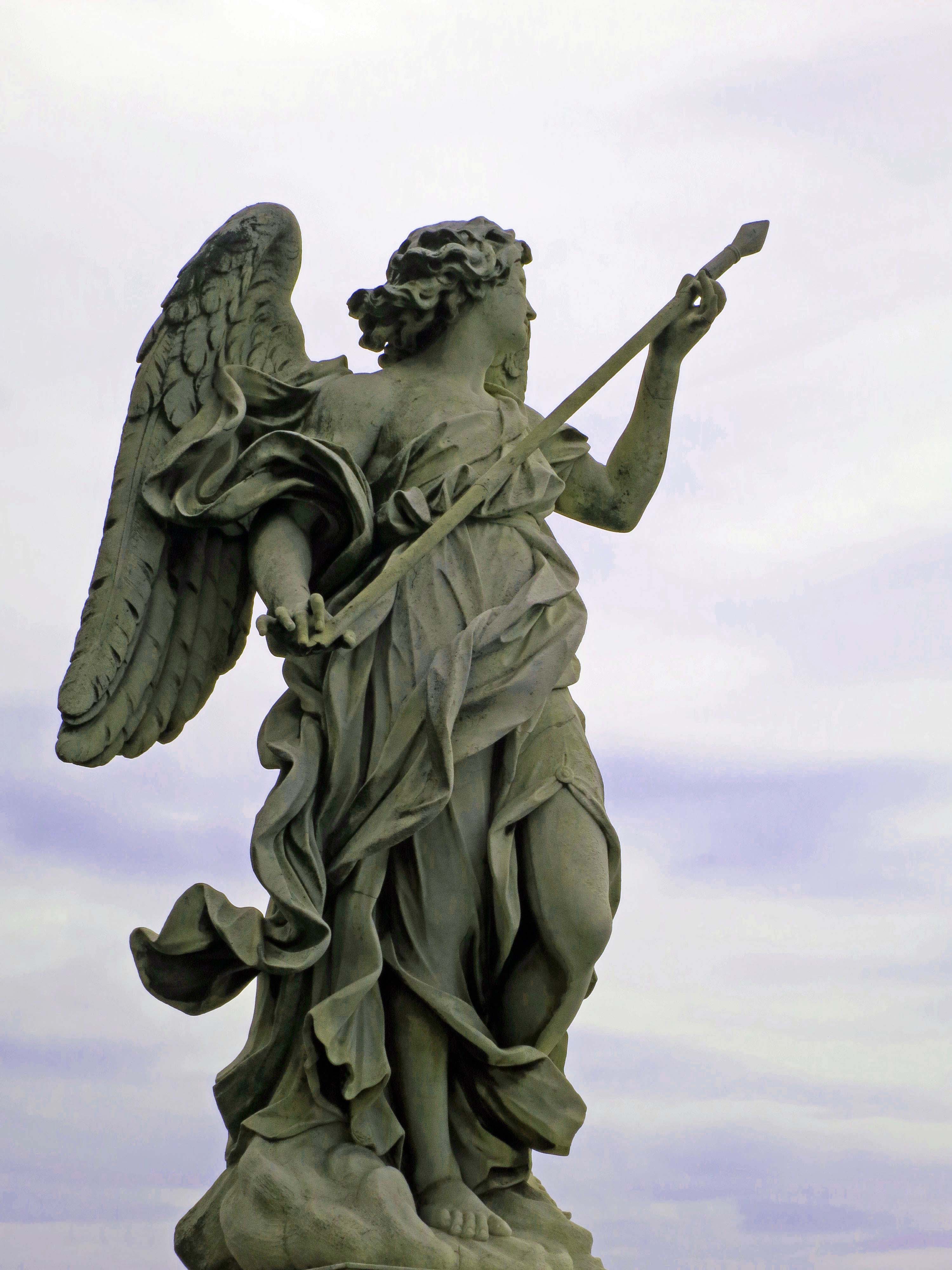
The Pont St. Angelo received its name during the Renaissance when Bernini oversaw a project to line it with angels representing Christ's crucifixion.

Pont St. Angelo received its name during the Renaissance when Bernini oversaw a project to line the bridge with angels reminding the faithful of Christ’s crucifixion. This one carries a lance representing the spear used by a Roman Soldier to jab Christ in the side. 

The rounded Castle St. Angelo stands next to the bridge. Built originally as a mausoleum for Emperor Hadrian, it would later become a prison and then fort. Today it serves as a museum.

The rounded Castle St. Angelo stands next to the bridge. Built originally as a mausoleum for Emperor Hadrian, it would later become a prison and then fort. Today it serves as a museum. St. Michael stands on top of the castle with sword drawn to fight off the plague. (Photo by Peggy Mekemson.)

A view of St. Peter's Square featuring Bernini's columns that enclose the square.

A view of St. Peter’s Square featuring a portion of Bernini’s Colonnade. Statues of 10 foot tall saints line the top.

Another perspective of St. Peter's Square. This is taken from the Basilica looking back. The boulevard built my Mussolini is in the distance. Bernini's Colonnade opens out, welcoming the faithful.

Another perspective of St. Peter’s Square. This is taken from the Basilica looking back. The boulevard built by Mussolini is in the distance. Bernini’s Colonnade opens out, welcoming the faithful.

OObelisk in St. Peter's Square

This obelisk, seen in the previous picture, dominates St. Peter’s Square. Once upon a time it resided in Egypt, but its home in Rome predates that of the Vatican when it stood over Nero’s race track where Christians were persecuted and Peter was crucified upside down.

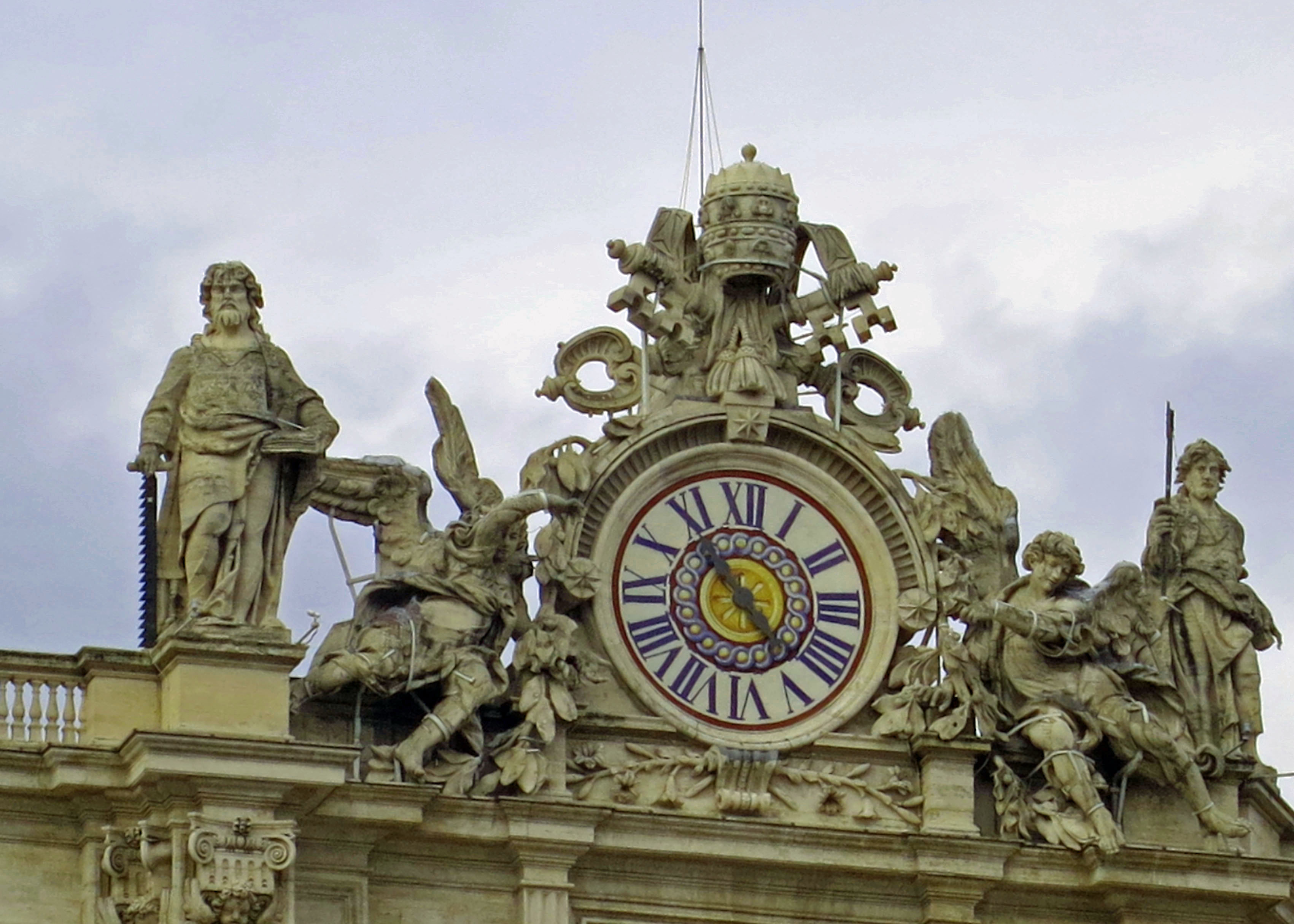
The top of St. Peter's Basilica, like Bellini's Colonnade, features saints, and each side of the Basilica has a large clock. The saint on the left is Simon the Zealot. You can tell your saints by the tools they carry. Simon was a carpenter and is show with his saw. Peter is always shown with his keys to Heaven. The keys, BTW, are found throughout the Basilica. Check out the top of the clock.

The top of St. Peter’s Basilica, like Bellini’s Colonnade, features saints. The saint on the left is Simon the Zealot. You can tell your saints by the tools they carry. Simon was a carpenter and is shown with his saw. Simon was called the Zealot because he left his wife and kids to follow Jesus. (Photo by Peggy Mekemson)

No blog on the Vatican would be complete without showing the changing of the Swiss Guard, the Pope's mercenaries.

No blog on the Vatican would be complete without showing the changing of the Swiss Guard with their pikes and colorful uniforms. (Photo by Peggy Mekemson.)

Lamp on St. Peter's Square.

This lamp from St. Peter’s Square is here because I like it. You’ll see it peeking out on the left hand corner of St. Peter’s Basilica at the beginning of this blog.

I conclude this blog with this shot I took of the massive columns on the front of St. Peter's Basilica. I felt it provided an interesting perspective on the size of the church.

I will conclude with this shot I took of the massive columns on the front of St. Peter’s Basilica. I felt they provided an interesting perspective on the size of the church.

NEXT BLOG: I will take you inside of  St. Peter’s Basilica and provide a brief tour of the Vatican Museum.

The Wolf, the Woodpecker and Rome… Mediterranean Ports

Romulus and Remus, the mythological founders of Rome, chow down on breakfast.

Romulus and Remus, the mythological founders of Rome, chow down on breakfast. I found this particular bas-relief near the Forum in Rome.

What better place to start my blogs about Rome than its founding? The story of Romulus and Remus has something for everyone. Think about this, but not too hard. (Grin)

Romulus and Remus were born of a Vestal Virgin who was impregnated by Mars. (It’s always good to have a convenient god around when ‘Who’s your Daddy?’ is in question.) Mom, knowing she is going to be punished… Vestal Virgins were supposed to stay virgin, places the babies in a basket and sends them floating down the Tiber. So far we are we are on familiar ground, or make that water.  Think Moses. Then things get a little weird.

A she-wolf named Lupus finds the twins and carries them off to her den, indubitably by the nape of their necks. She opts not to eat them and soon the greedy little guys are slurping away. Picus, the Woodpecker, helps out. It makes for a more balanced diet. Picus, unfortunately, rarely gets credit for his help. I found dozens of images on Google of Lupus feeding the kids but none of Picus flying in with a bug.

Eventually, life returns to normal. A poor shepherd finds the two twins in Lupus’s den and raises them as his own children. (How Lupus and Picus felt about this change of fortune is not reported. I suspect they appreciated not having to get up several times a night.) As these myths usually go, the kids grow up, discover their heritage, and hurry off to punish the person responsible for doing in mom.

Justice is served and the twins decide to found Rome. But things get nasty. They argue over which hill to build the city on. Romulus solves the problem by killing Remus and naming the city after himself. Otherwise, Rome might be Reme. After many more adventures, Romulus dies and ascends to Heaven, thus ending the story.

Bronze relief of Romulus, Remus and Lupus in Venice.

I took this photo of the well-fed kids in Venice. SPQR, by the way, stands for the Senate and the People of Rome. Mom does not look happy in either of the two photos.

NEXT BLOG: We go for a walk on the Tiber and find the Vatican. It wasn’t lost.

The Tombs of Tarquinia: An Etruscan City of the Dead… Mediterranean Ports

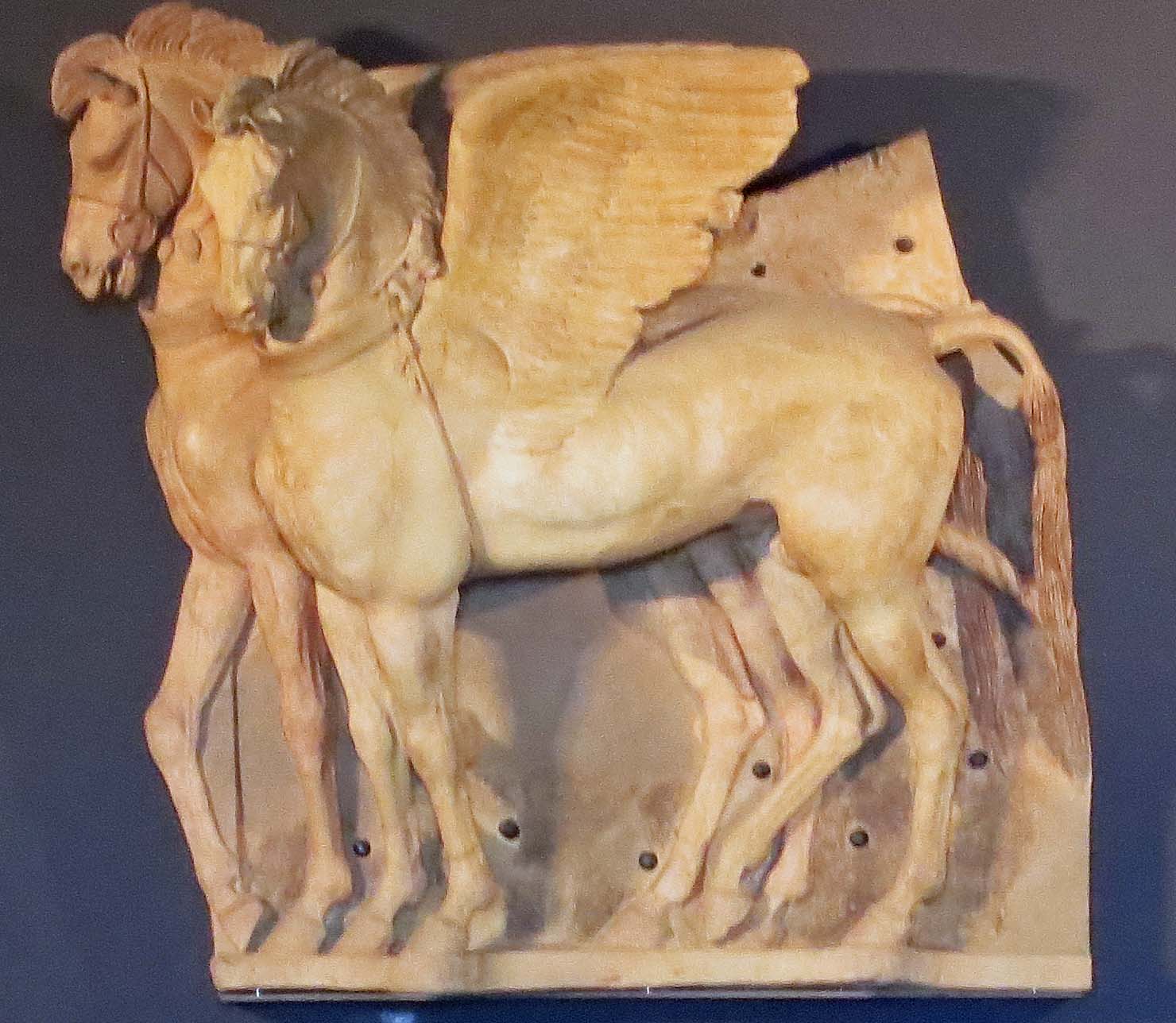
Winged Horses of Tarquinia

This beautiful pair of winged horses was found in a temple near the Etruscan tombs of Tarquinia. They are housed in the National Museum of Tarquinia. I immediately thought of Pegasus, the winged horse of Greek Mythology.

The Crown Princess sailed through the Tyrrhenian Sea into Rome’s port of Civitavecchia during the night. We had to make a decision; would we explore the region around the port or would we take the train into Rome.

Since we had flown into Rome at the beginning of our trip and already visited the major sites, Peggy and I, along with her brother John and wife Frances, decided to stay local. Our other two travelling companions, Kathi and Lee, opted for the hour train ride into Rome.

I had read in Rick Steve’s book on Mediterranean Ports about the Etruscan town of Tarquinia with its necropolis of 6000 tombs dating from 700-200 BC. I was eager to explore it. The Etruscans were precursors to the Romans… i.e. ancient. Also, in this age of movie vampires, werewolves and other creatures of the night, how could we resist visiting a city of the dead?

We scarfed down a quick breakfast onboard, grabbed the shuttle to town, and were soon knee-deep in cab drivers offering tours. Ninety euros bought the four of us a trip to the tombs and a visit to the National Museum of Tarquinia. Thirty minutes later we had made the short trip north of the port and were preparing to visit our first tomb.

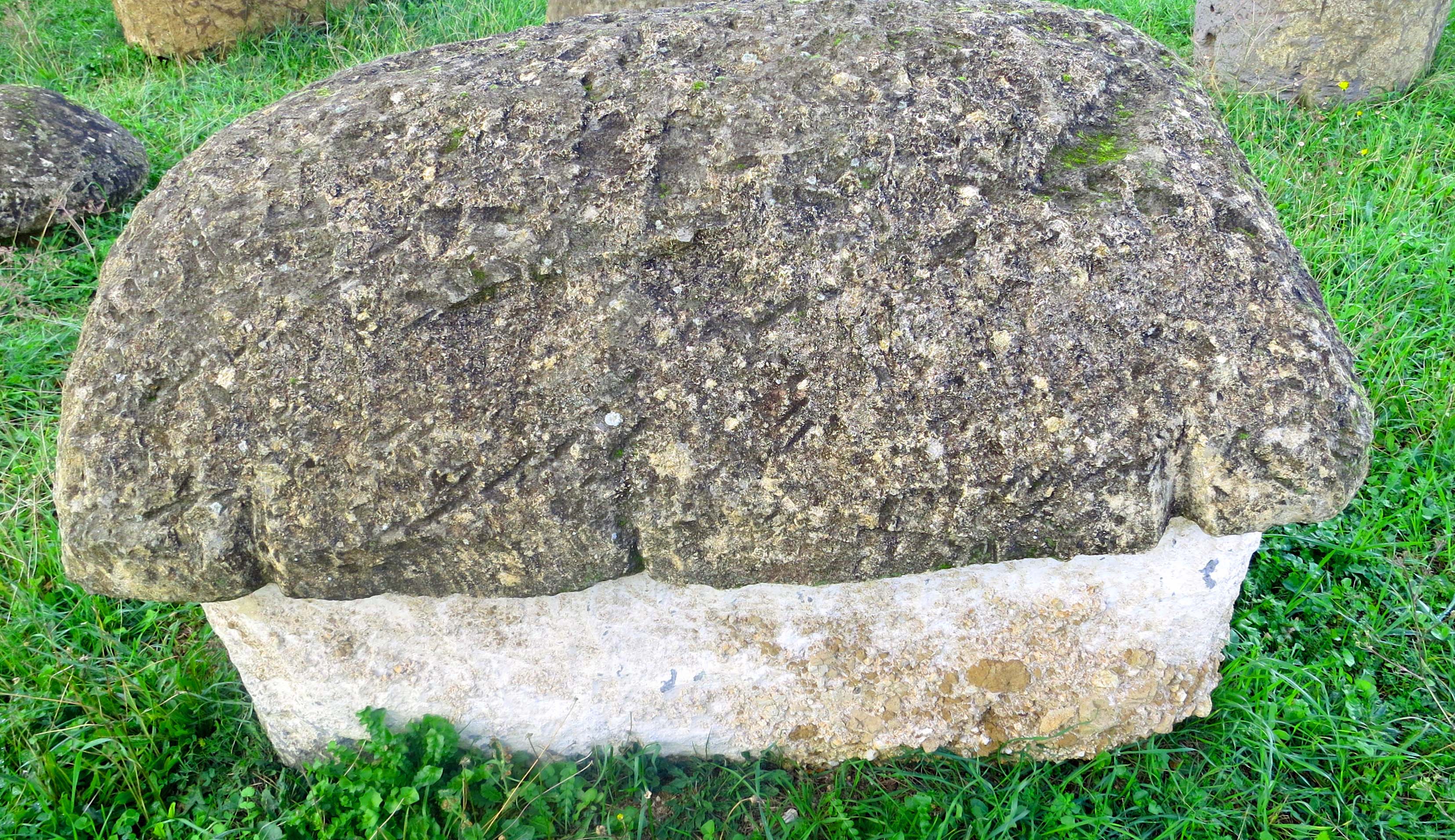
Walking out to the site, we passed a number of large mushroom and hut shaped stone objects that had served as funerary urns for cremated bodies. Apparently these strange-looking urns, as well as more sophisticated sarcophagi (coffins), were found buried in the tombs.

These funerary urns found in Tarquenia were used for cremated remains and buried in tombs. The contrast of the green grass, dark clouds and bright sun made a colorful photo.

These funerary urns found in Tarquinia were used for cremated remains and buried in tombs. The contrast of the green grass, dark clouds and bright sun made a colorful photo.

This type of funerary urn shaped like a house was apparently for the remains of women.

This type of funerary urn shaped like a house was apparently for the remains of a woman. The more ‘mushroom’ shaped urns were for men.

The tombs were dug into stone and covered by small mounds, creating what might best be described as a bumpy hill. A number of the burial sites contained elaborate paintings.  Small, modern buildings covered the stairs leading down into tombs. We switched on lights for our trip into the darkness. The tombs were sealed to protect the paintings. Miniature windows provided viewing for one person at a time. It was best to be first in line, rather than last and left alone with the dead… especially when the automatic lights shut off.

This photo shows one of the 2500 year old mounds beside the small modern that covers the stairs down to the tomb.

This photo shows one of the 2500 year old tomb mounds beside the small modern building that covers the stairs leading down into the tomb.

Stairs into an Etruscan tomb in Tarquinia

Peggy and Frances follow the stairs leading down into an Etruscan tomb.

The paintings provided a fascinating look into early Etruscan life. The Etruscans, it seems, believed that the soul remains with the body after death.  The dead were stuck in their tombs for a long, long time. Make that eternity. With this in mind, people did what they could to make the tombs pleasant places to live. Family and friends were painted on the walls, as were parties and dancing and music and feasts and sex. Who could ask for more? At least that’s what the living hoped. The dead were dangerous if they started wandering around outside. Best they have fun in their own little underground houses.

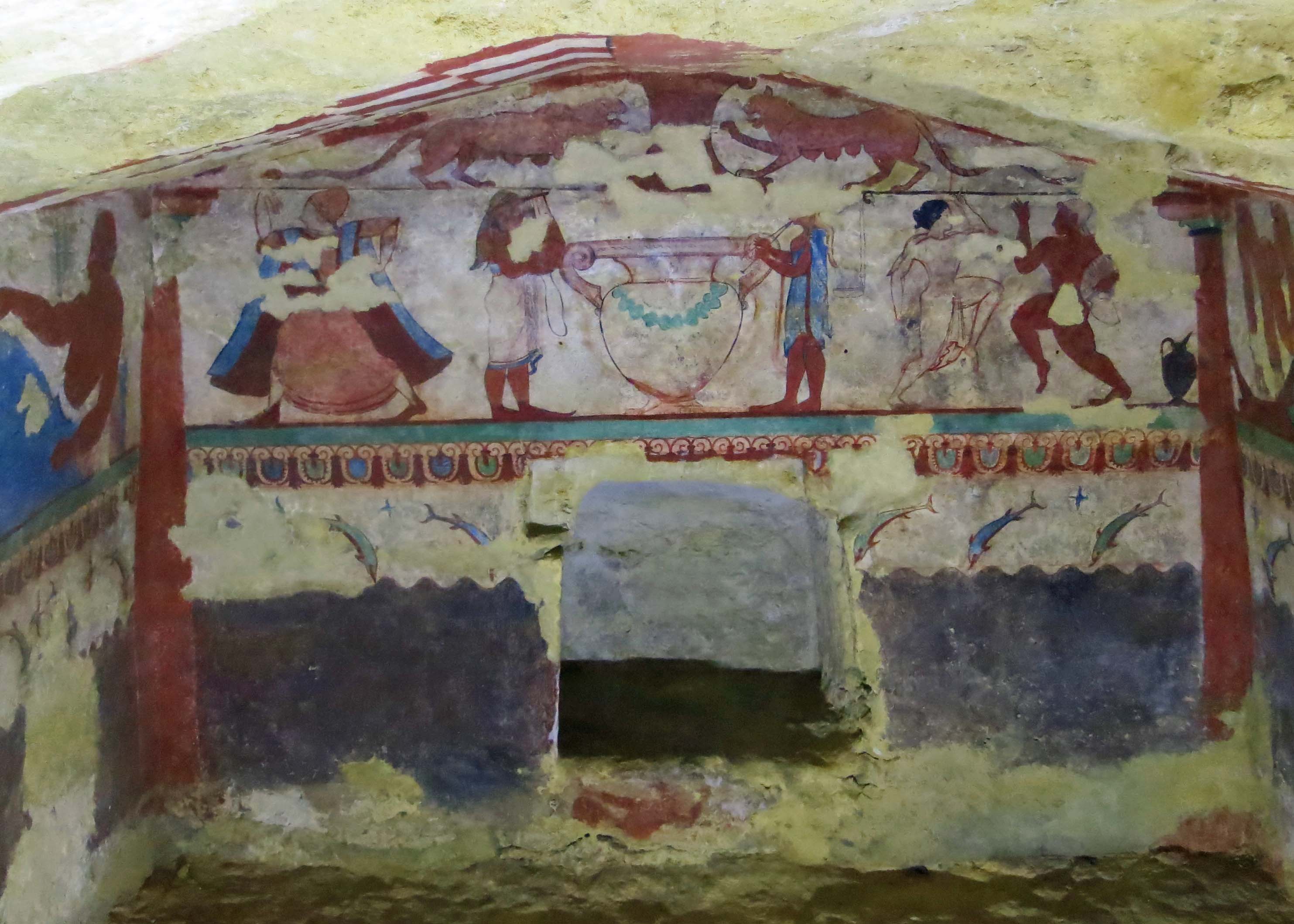
The following examples are from the Lioness House.

This photo is taken looking at the tomb of the Lions through the small window proved for visitors. Note the musicians, dancers and lions.

This photo is taken looking at the tomb of the Female Lions through the small window provided for visitors. Note the musicians, dancers, dolphins, lions and door to a second room.

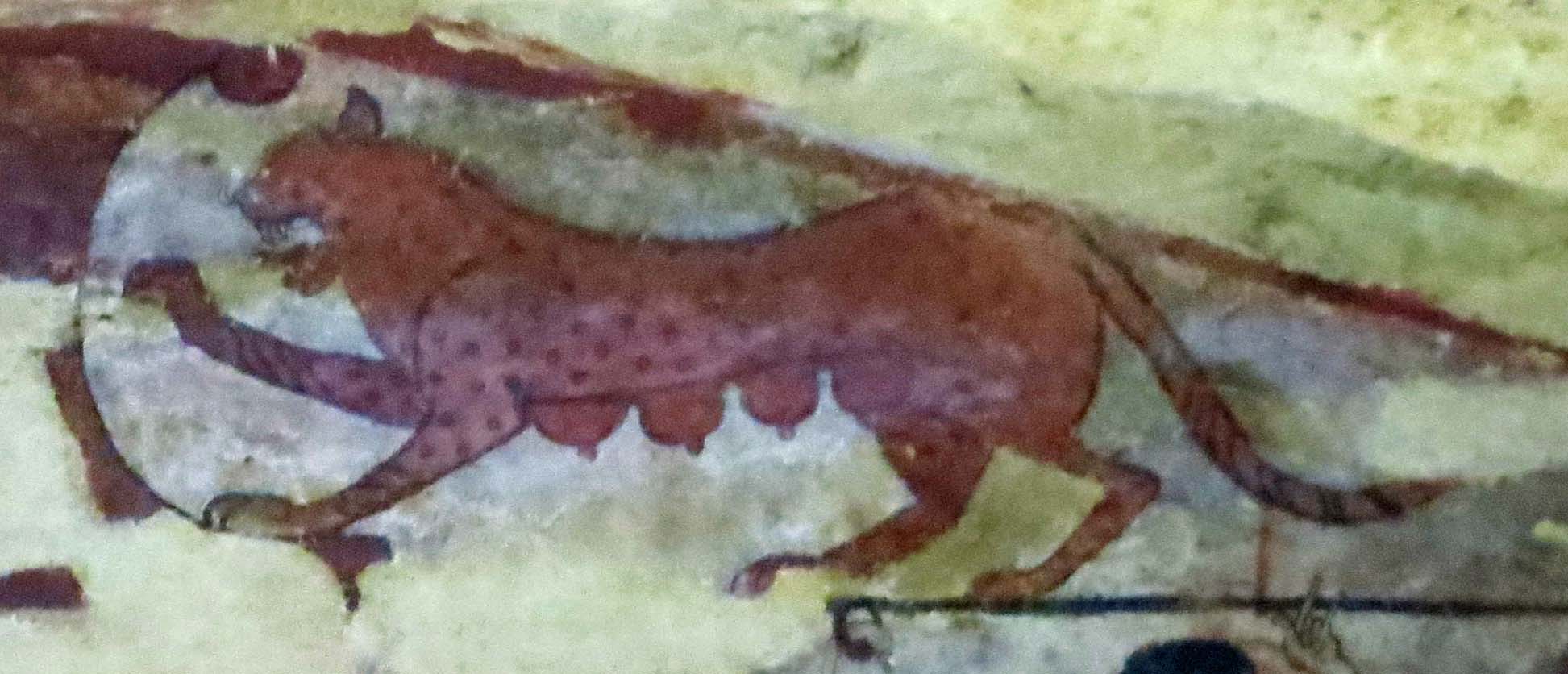
A close up of the lioness. The lioness obviously has nursing cubs. I would call her a Leopard.

A close up of the lioness. Hopefully, she has nursing cubs. I would call her a leopard because of her spots.

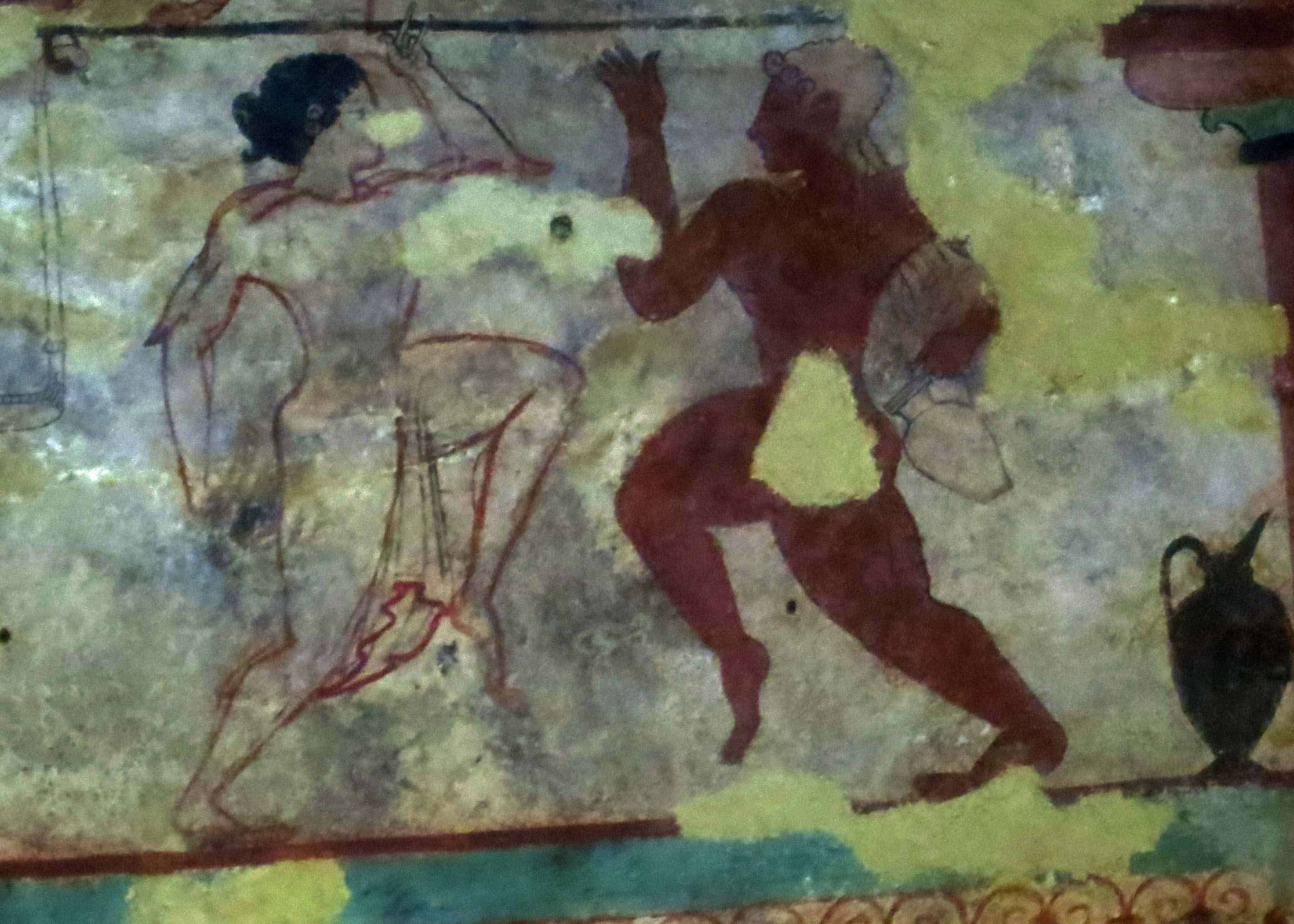
Dancers in Tarquinian Tomb

One of my favorite subjects in the tomb painting is the two dancers on the right. They seem to be having a great time.

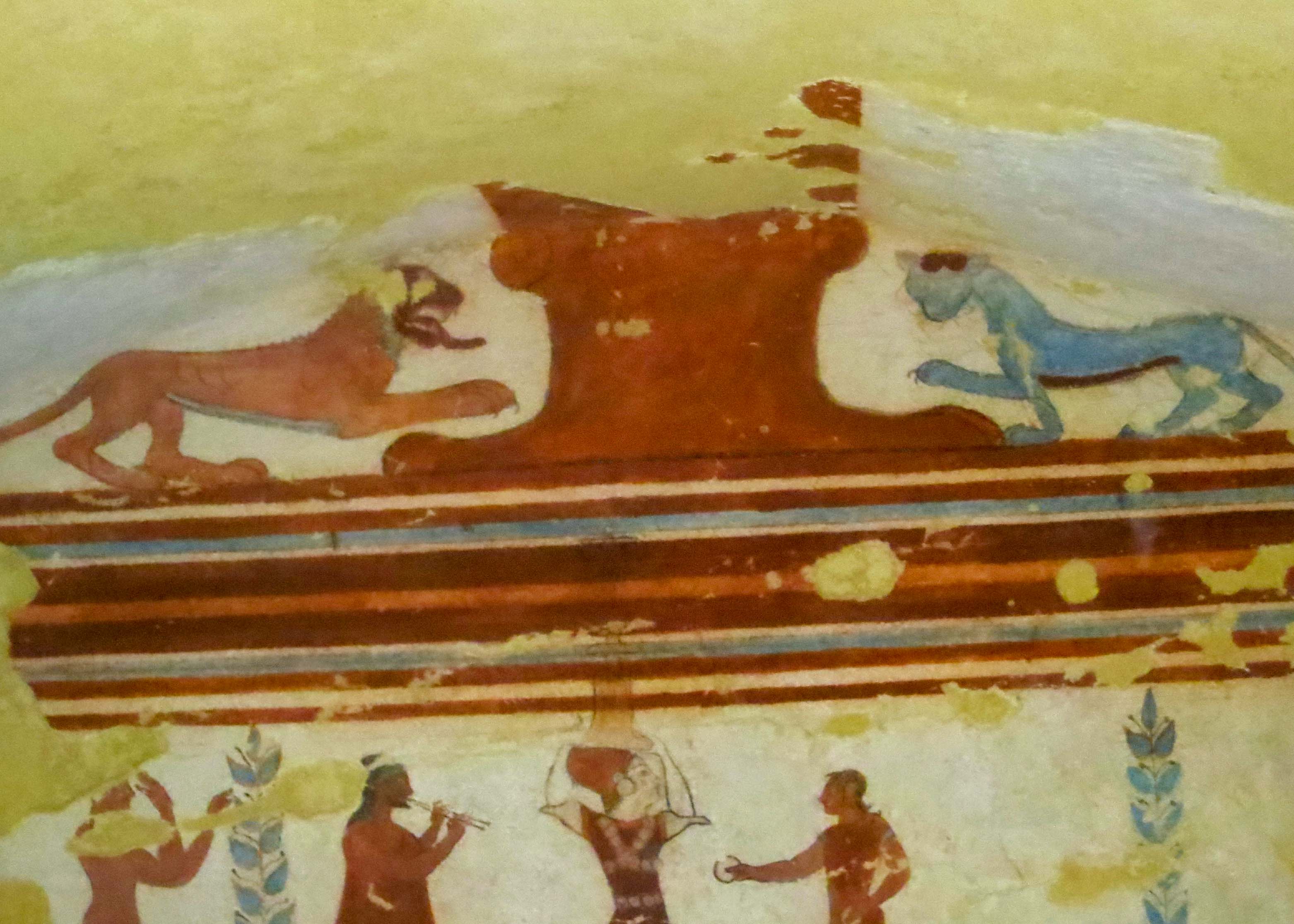
I found this painting from another tomb particularly amazing. It looked like the lion on the right was wearing shades... a cool cat.

I found this painting from another tomb particularly amusing. It looked like the blue lion on the right is wearing shades; he is one cool cat.

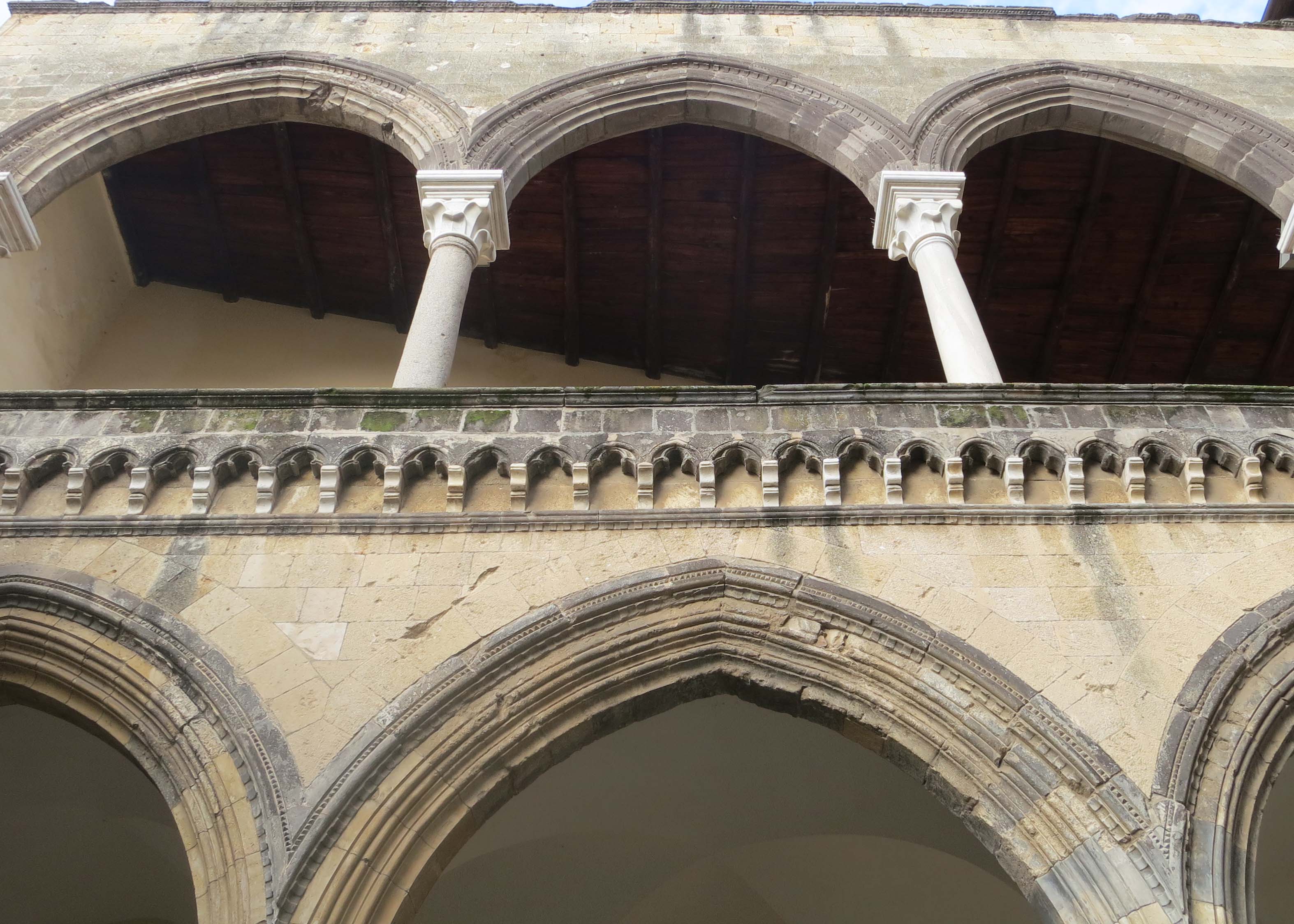
Visiting the National Museum of Tarquinia finished off our tour. It is housed in a handsome building, the Palazzo Vitelleschi, which was begun in 1436 and completed around 1490.

The National Museum of Tarquinia is housed in the which was built between

The National Museum of Tarquinia is housed in the Palazzo Vitelleschi which was built between 1436-1490.

This Etruscan sarcophagus from the Tarquinian tombs was one of many at the National Museum. (Photo by Peggy Mekemson)

This Etruscan sarcophagus from the Tarquinian tombs was one of many at the National Museum. The person on top supposedly looked like the dead person inside. Also check out the winged guys on the side and the feet on the bottom. (Photo by Peggy Mekemson)

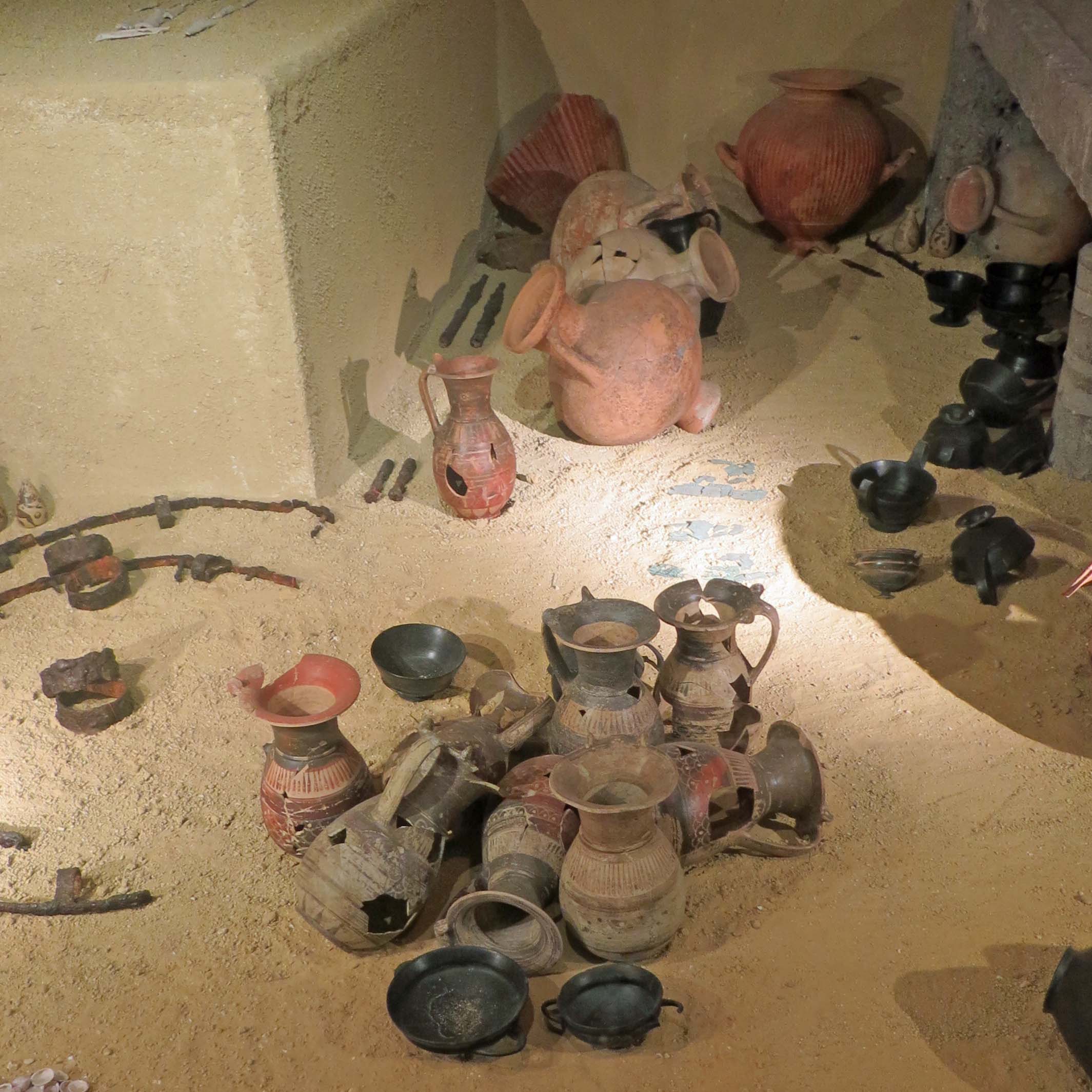
This pottery taken from an Etruscan Tomb was on display at the National Museum of Tarquenia.

This pottery taken from an Etruscan Tomb was on display at the National Museum of Tarquinia.

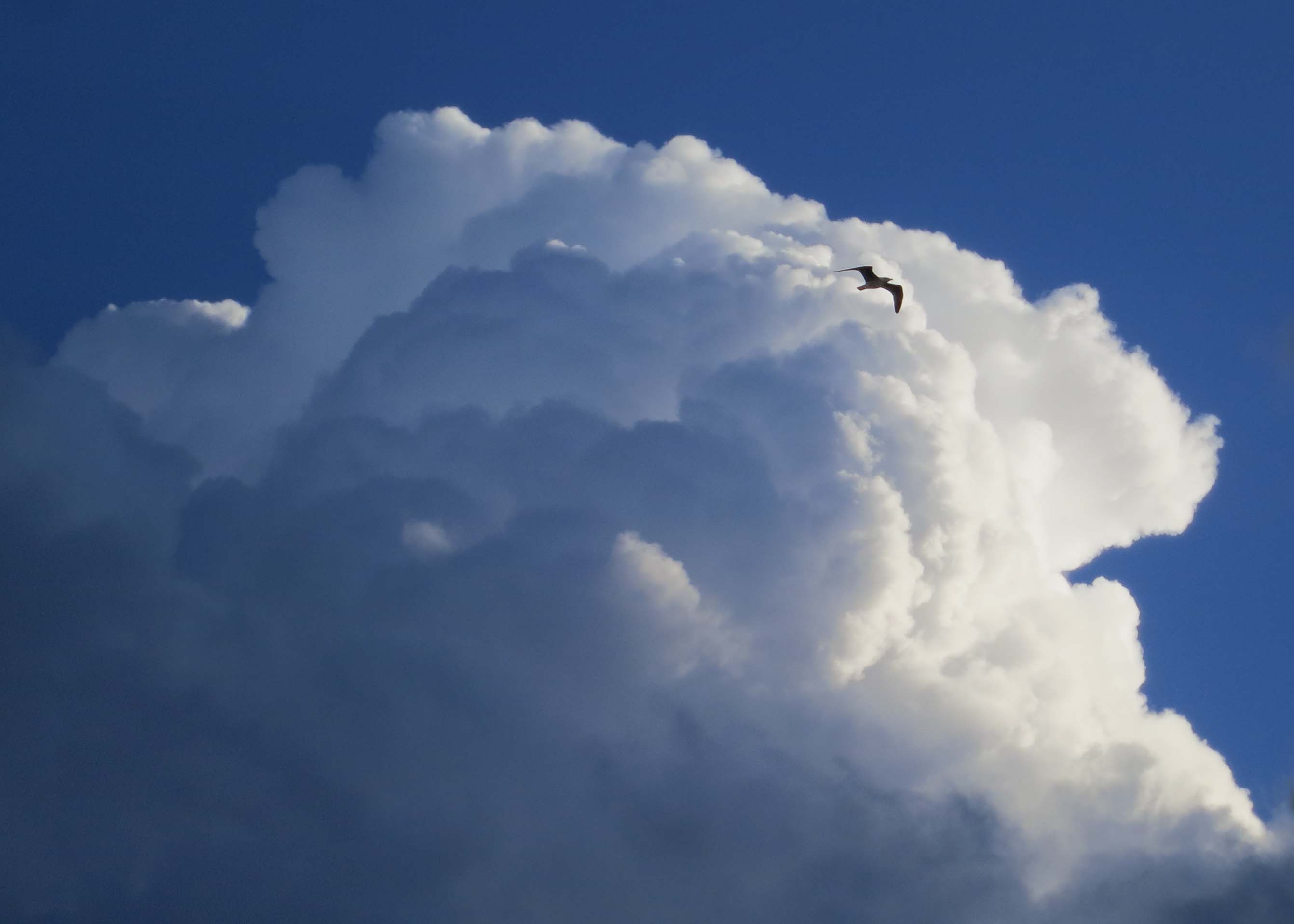
Back on ship we were treated to a beautiful display of clouds highlighted by seagulls.

Back on ship we were treated to a beautiful display of clouds highlighted by soaring seagulls.

NEXT BLOG: We begin our visit to Rome by walking along the Tiber River and stopping off at the Vatican.