Albion Manor: One of Canada’s Top Ten B&Bs… A Delightful Interlude

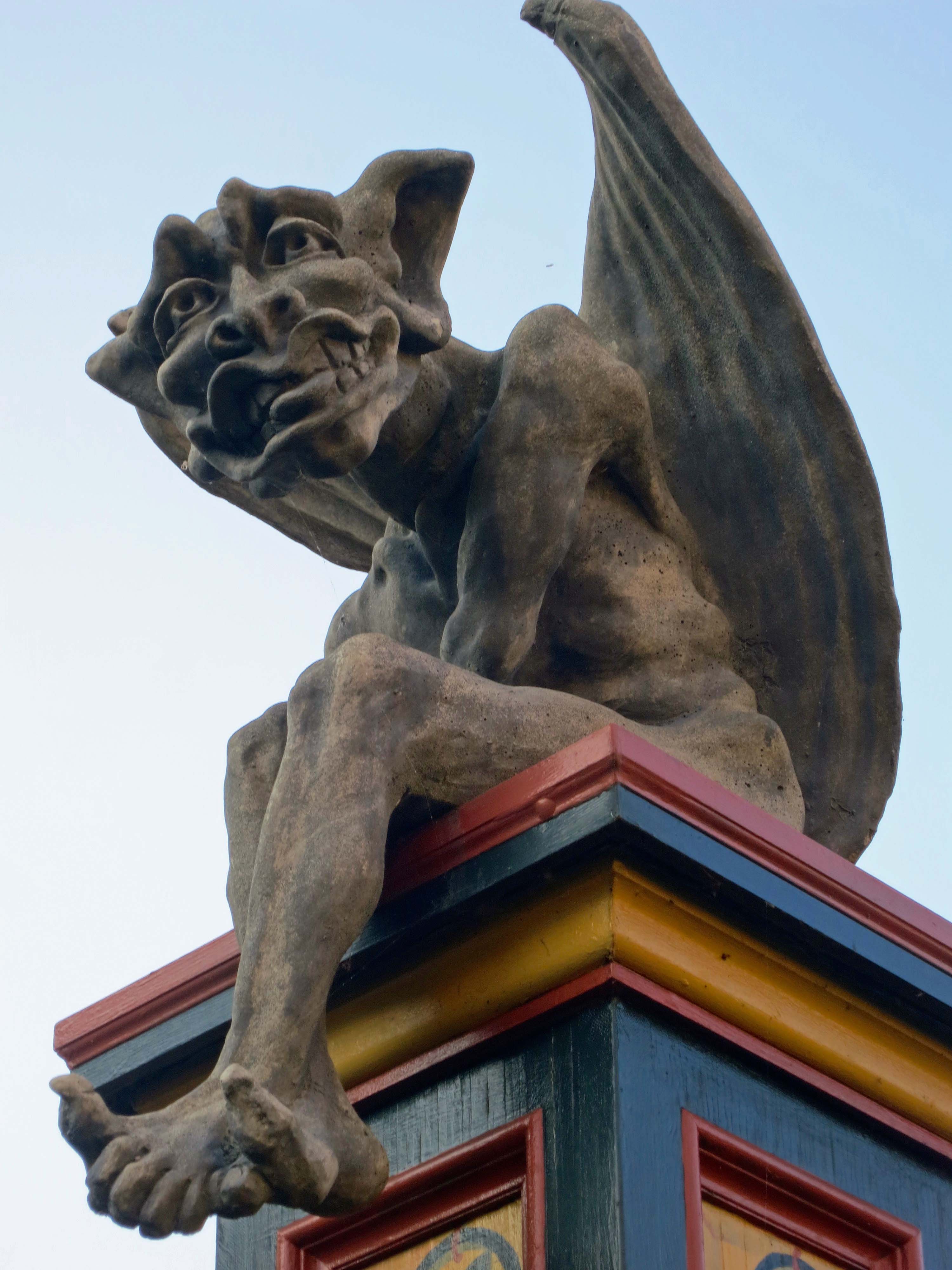
Gargoyle at Albion Inn in British Columbia. Photo by Curtis Mekemson.

We stayed at the Albion Manor in Victoria, British Columbia following our kayak adventure. This character was perched on top of our cabin, the Gargoyle Cottage. I felt he was representative of the unique nature of the B&B.

I was saving this blog for the end of our kayak adventure, which is where it fits. But Peggy and I are heading for the Bay Area this weekend for our book club. And that would mean no new blog until Tuesday or even Wednesday. Can’t have that, right? (The BSBC, or Bigger Sacramento Book Club, by the way, has been meeting for a quarter of a century and has read over 250 books. It consists of the same five couples who have been members since 1989.)

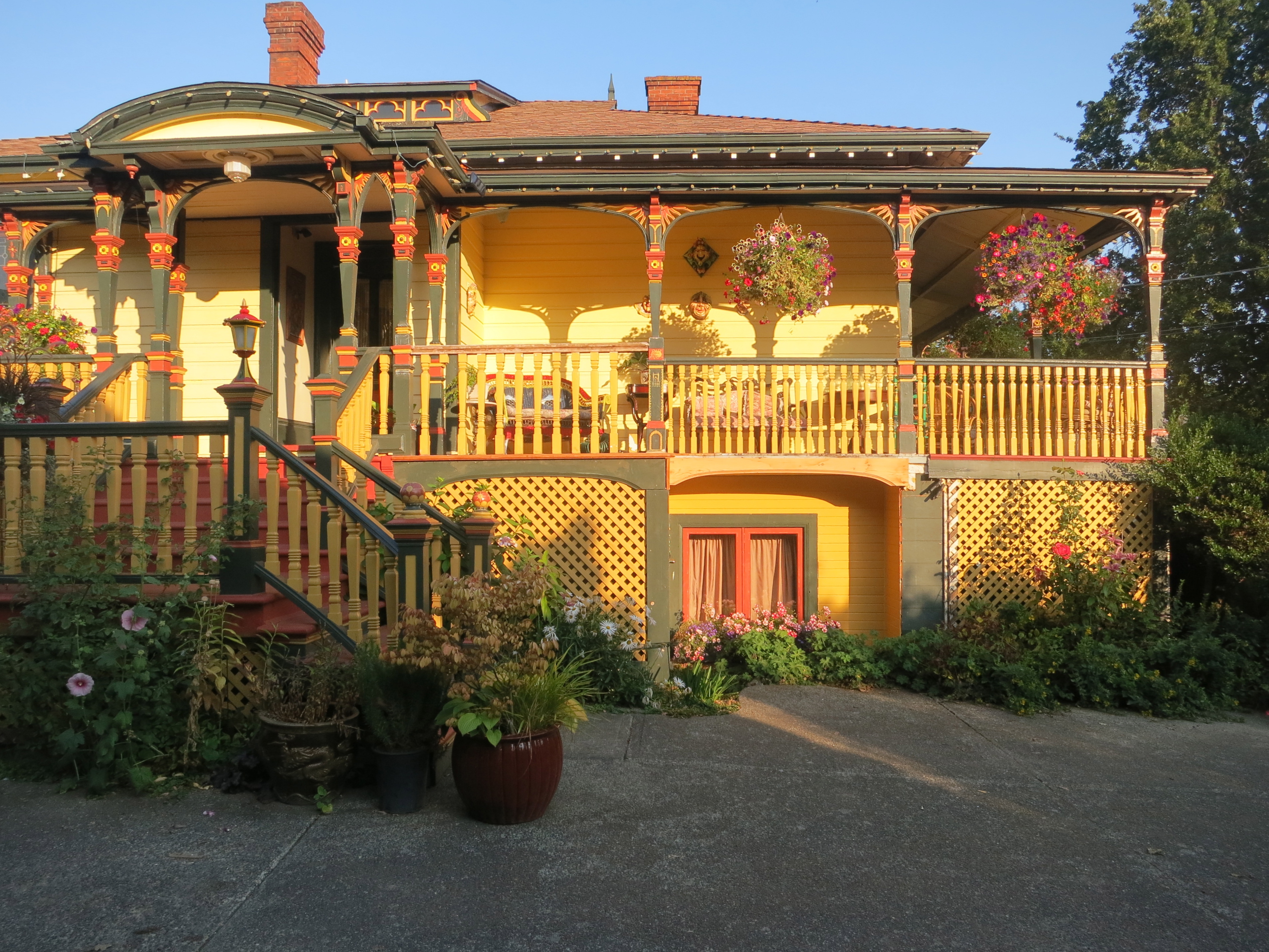
Welcome to the Albion Manor in Victoria, British Columbia. It is considered one of the top ten B&Bs in Canada. Our fellow kayakers and friends, David and Edie from Alaska, had made the arrangements for the four of us to stay at the Manor to celebrate the end of our adventure. We quickly discovered why it is so highly recommended. To start with, the inn is a beautiful Victorian, and it is located within easy walking distance of Victoria’s beautiful downtown. We found a colorful collection of house boats nearby. What really captured us, however, were the flowers and artwork. The story is best told in photos, enjoy.

An outside shot of the Albion Manor.

An outside shot of the Albion Manor.

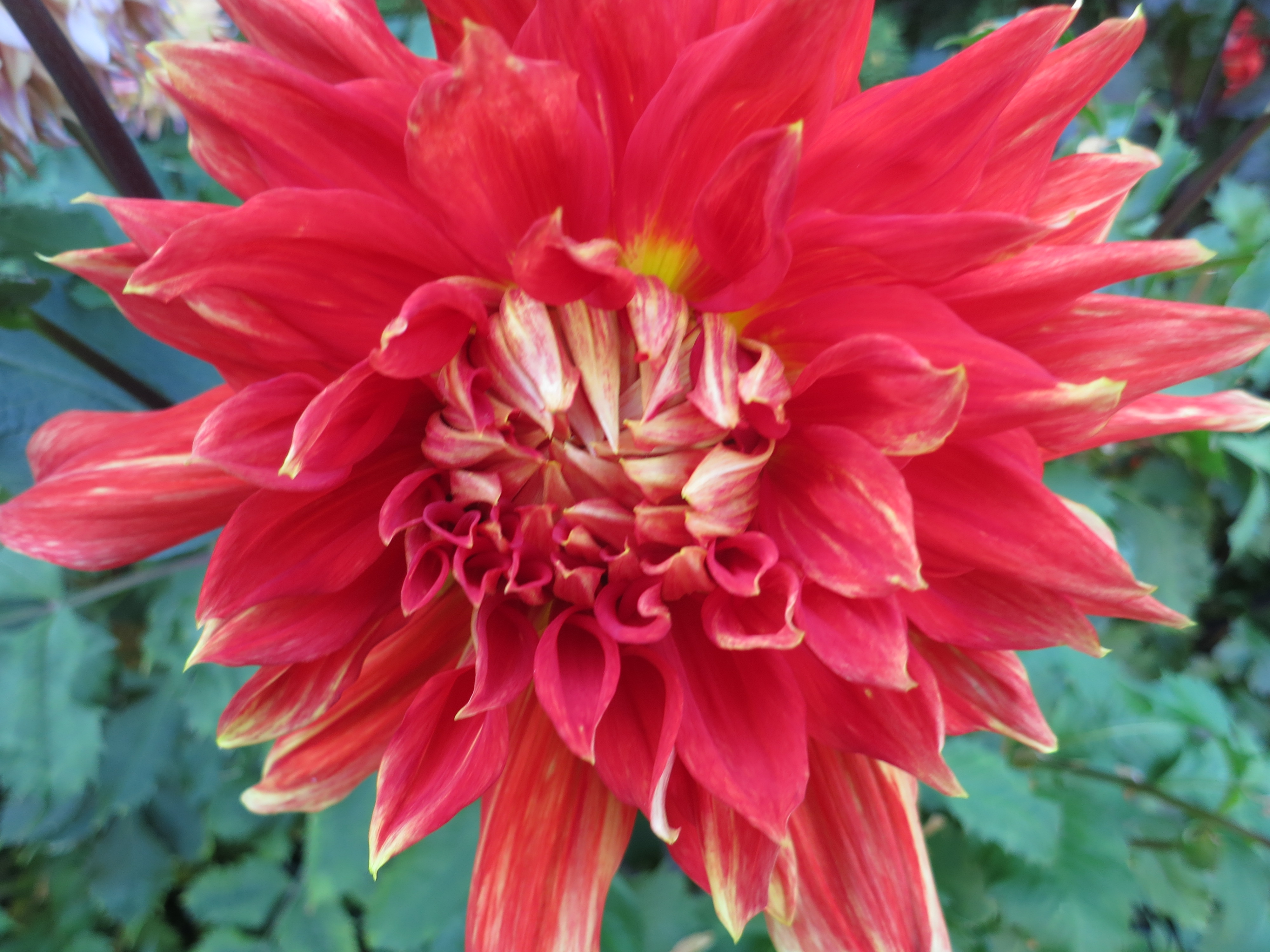
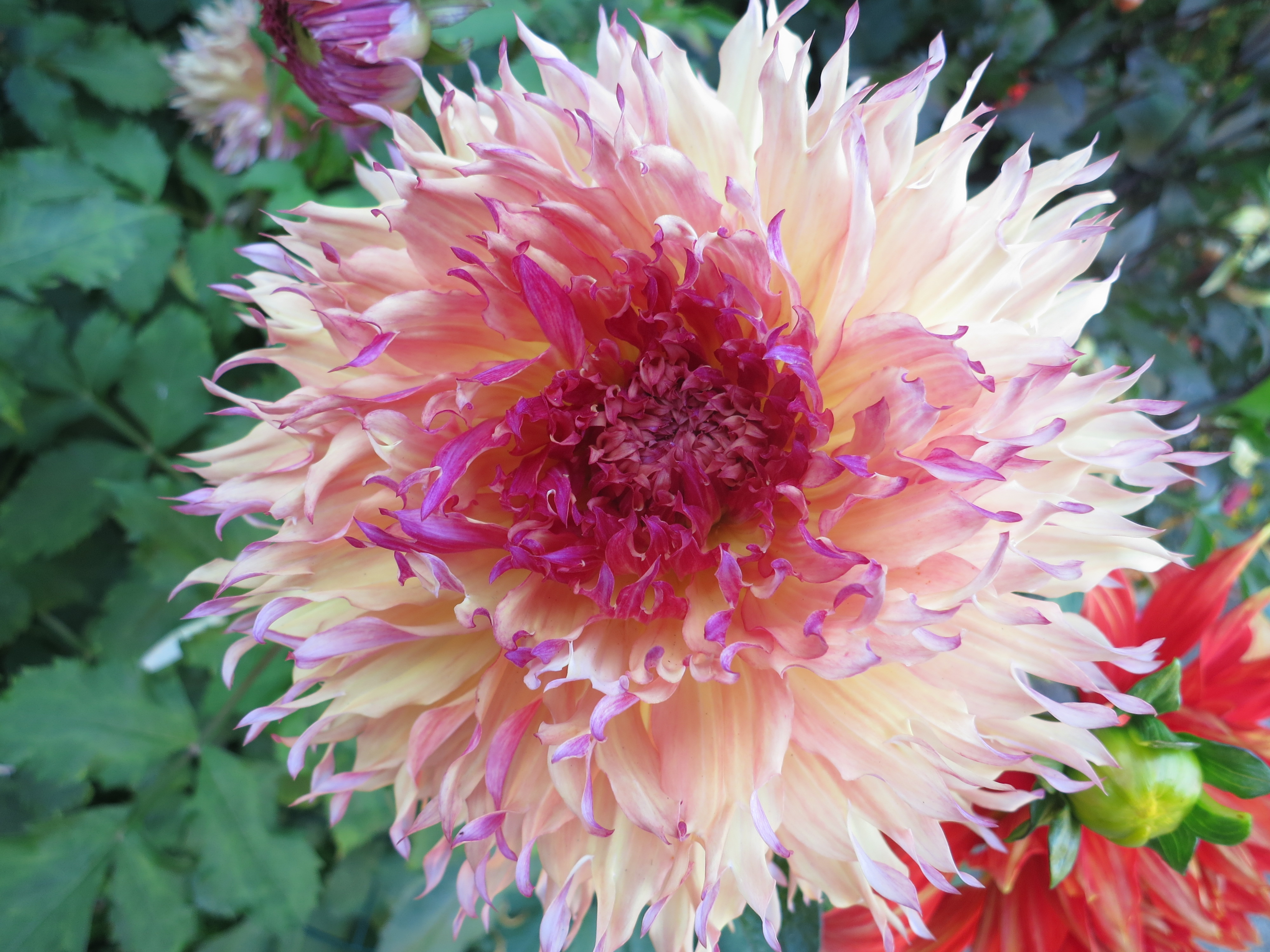
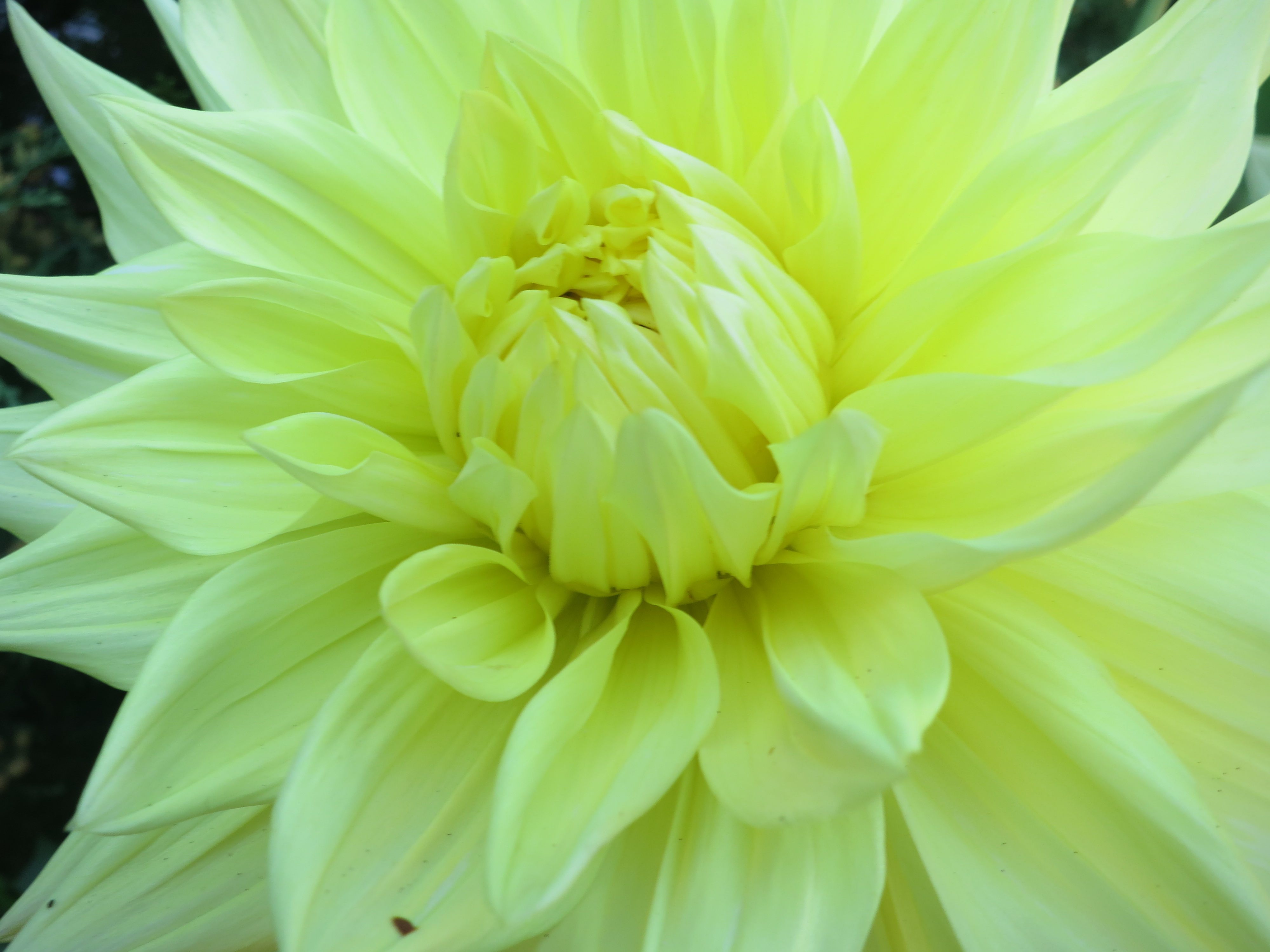
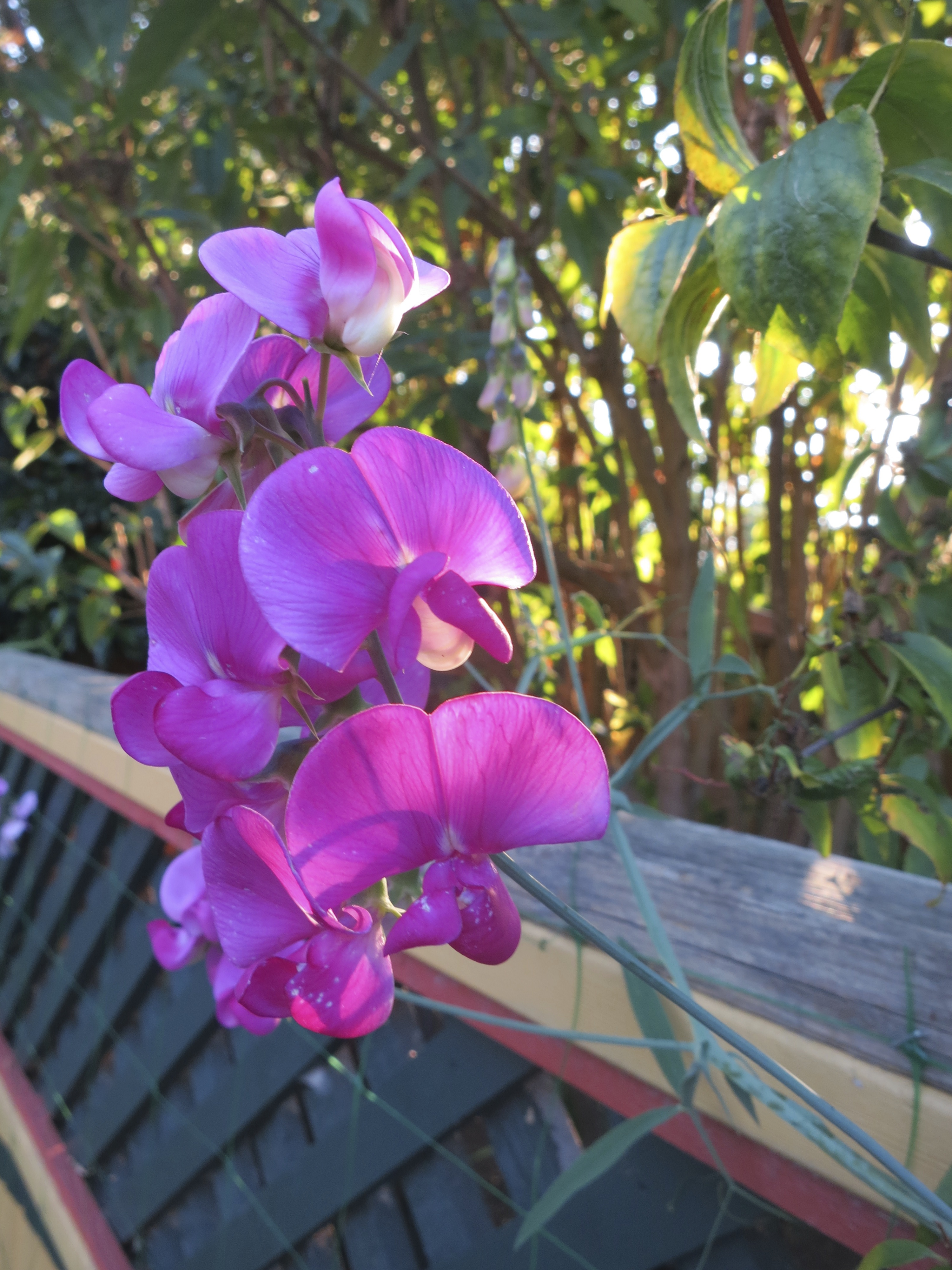
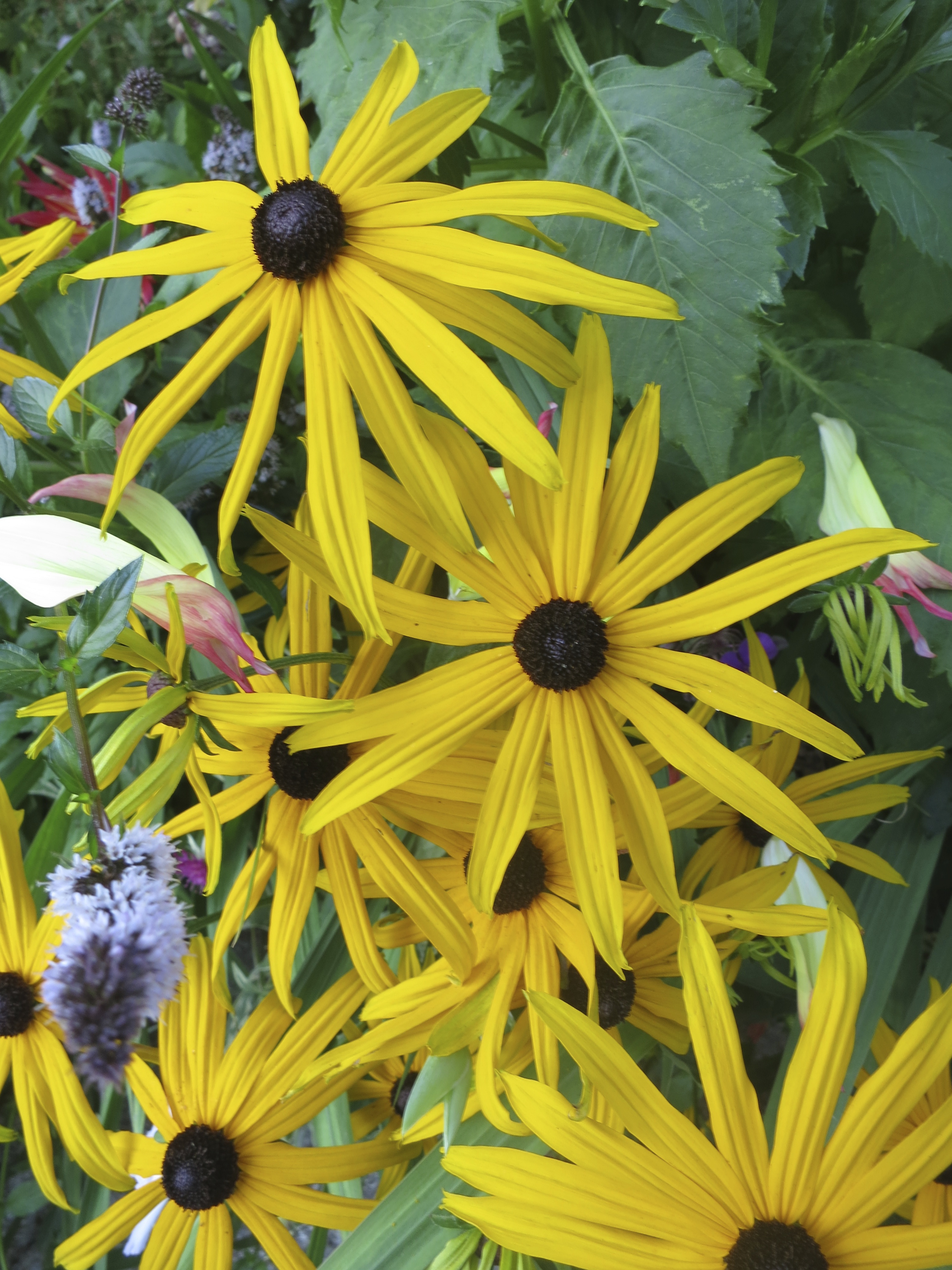
Here are some of my favorite flowers I photographed at the B&B.

Flowers at Albion Manor in Victoria British Columbia.. Photo by Curtis Mekemson.

Flower at Albion Manor in Victoria, British Columbia. Photo by Curtis Mekemson.


Flower at Albion Manor in Victoria, British Columbia. Photo by Curtis Mekemson.

Flowers at Albion Manor in Victoria, British Columbia. Photo by Curtis Mekemson.

Flowers at Albion Manor in Victoria, British Columbia. Photo by Curtis Mekemson.

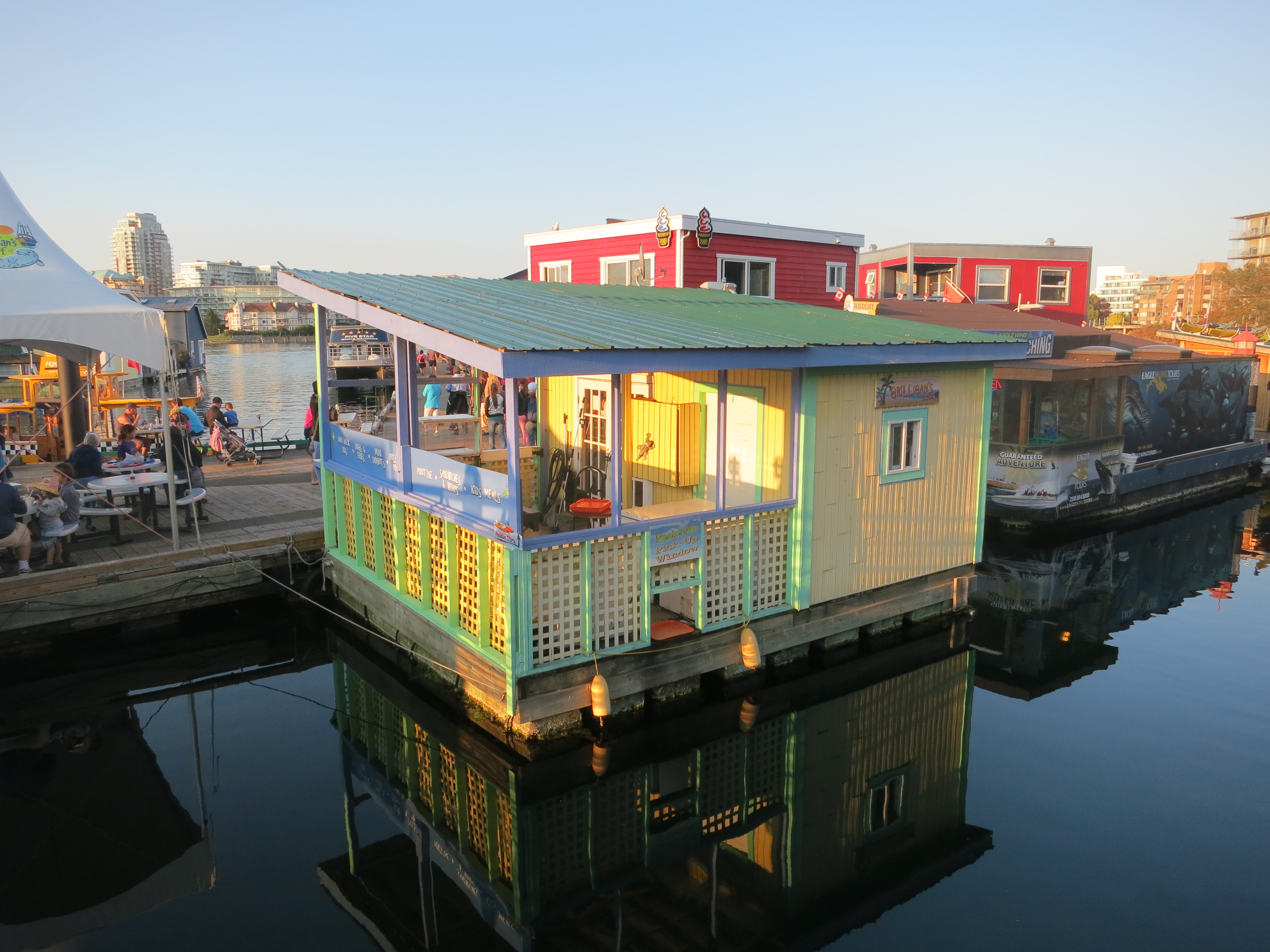
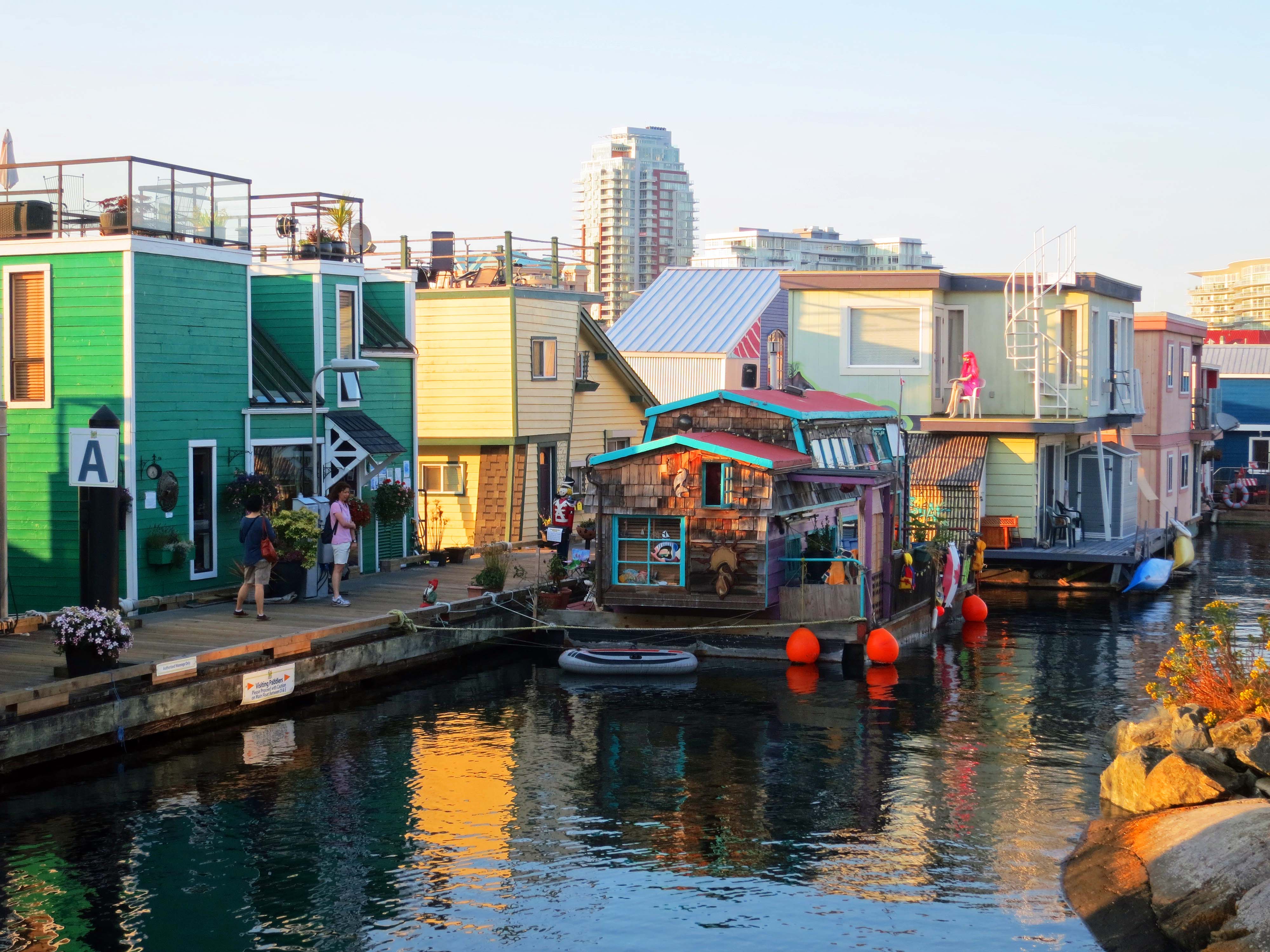
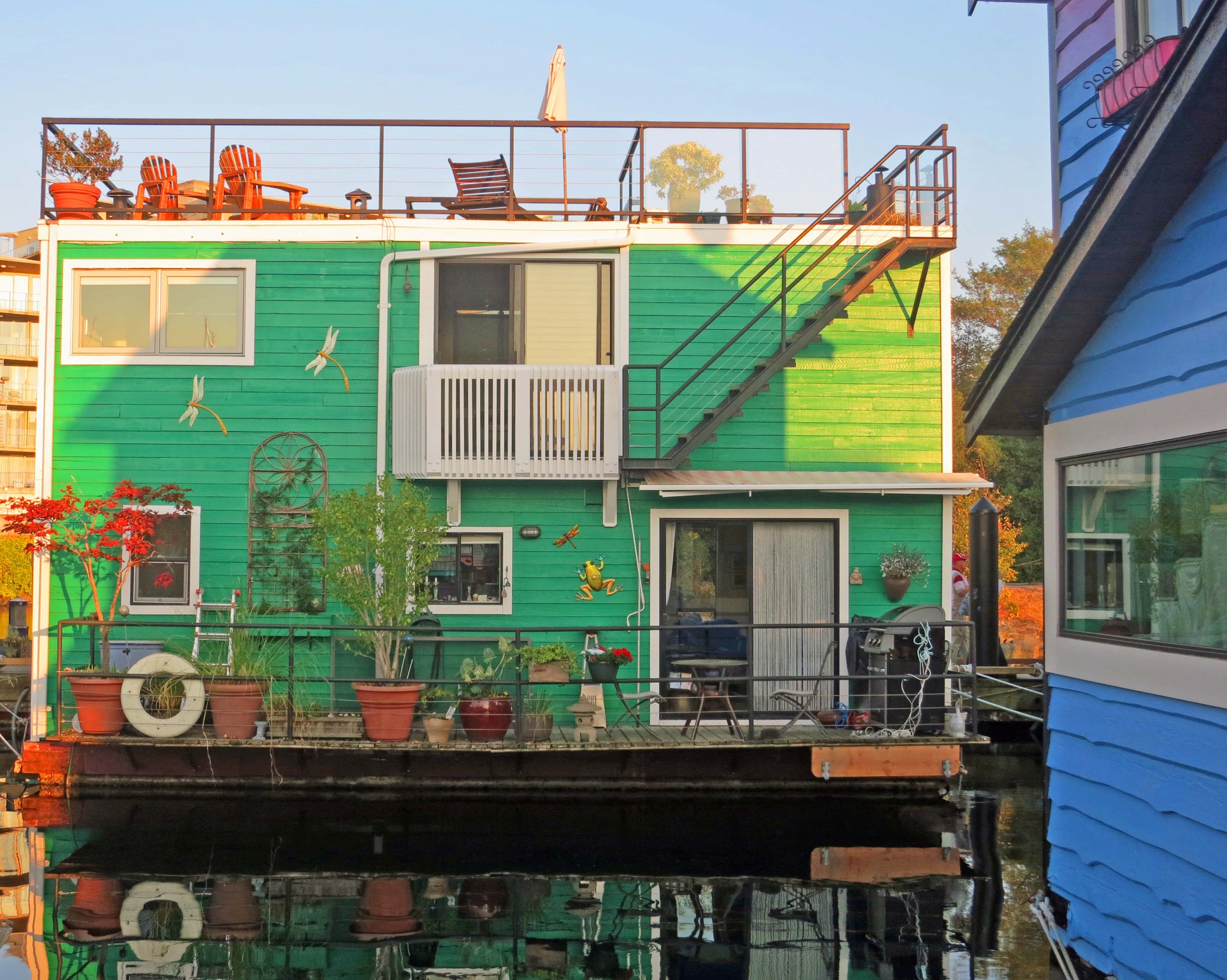
Searching for dinner, a ten minute walk from the Albion Manor brought us to a village of house boats at Victoria’s Fisherman’s Wharf. Peggy took these photos.

Houseboat at Fisherman's Wharf, BC. Photo by Peggy Mekemson.

Houseboats at Fisherman's Wharf in Victoria, BC. Photo by Peggy Mekemson.

Houseboats at Fisherman's Wharf in Victoria, BC. Photo by Peggy Mekemson.

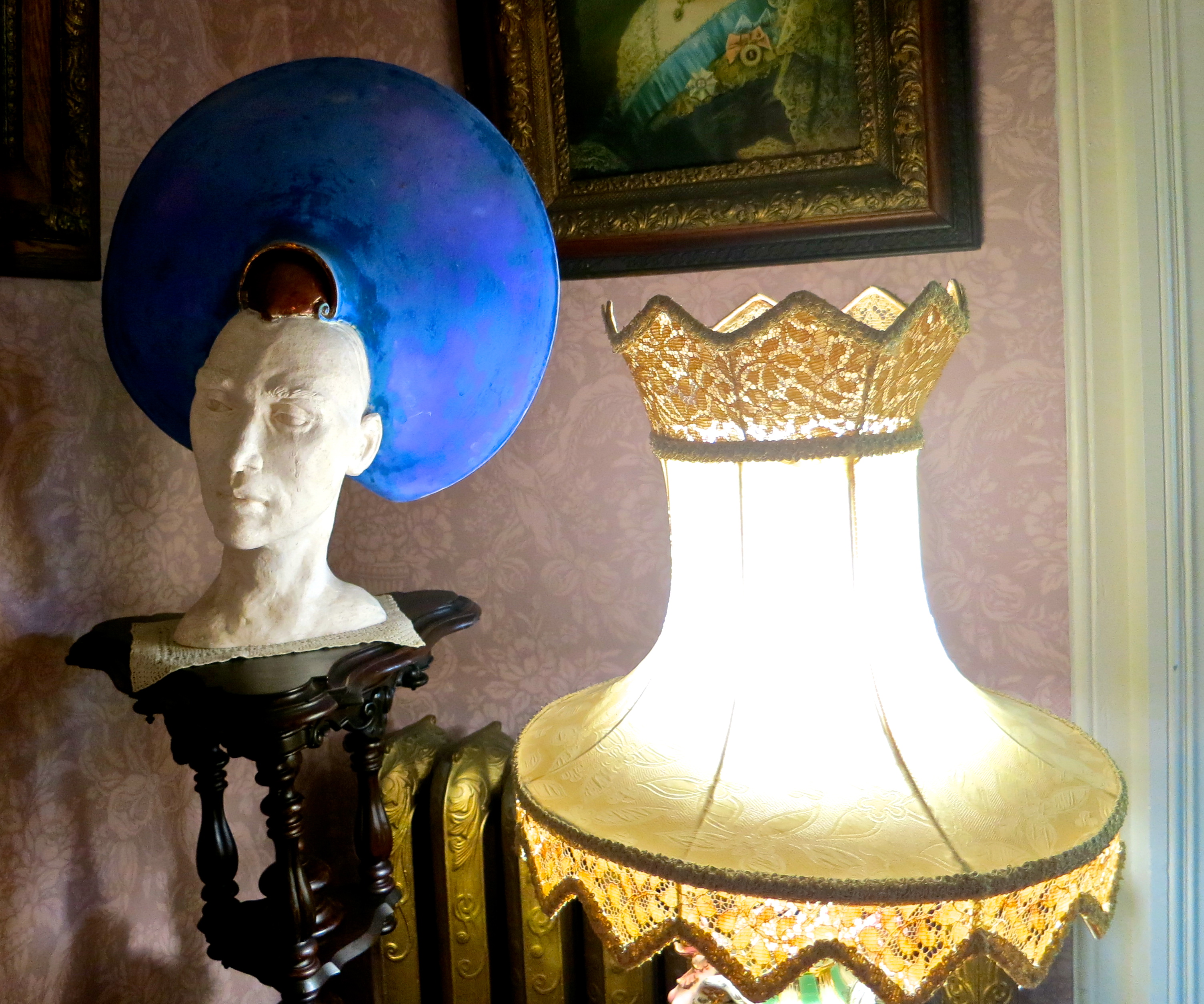
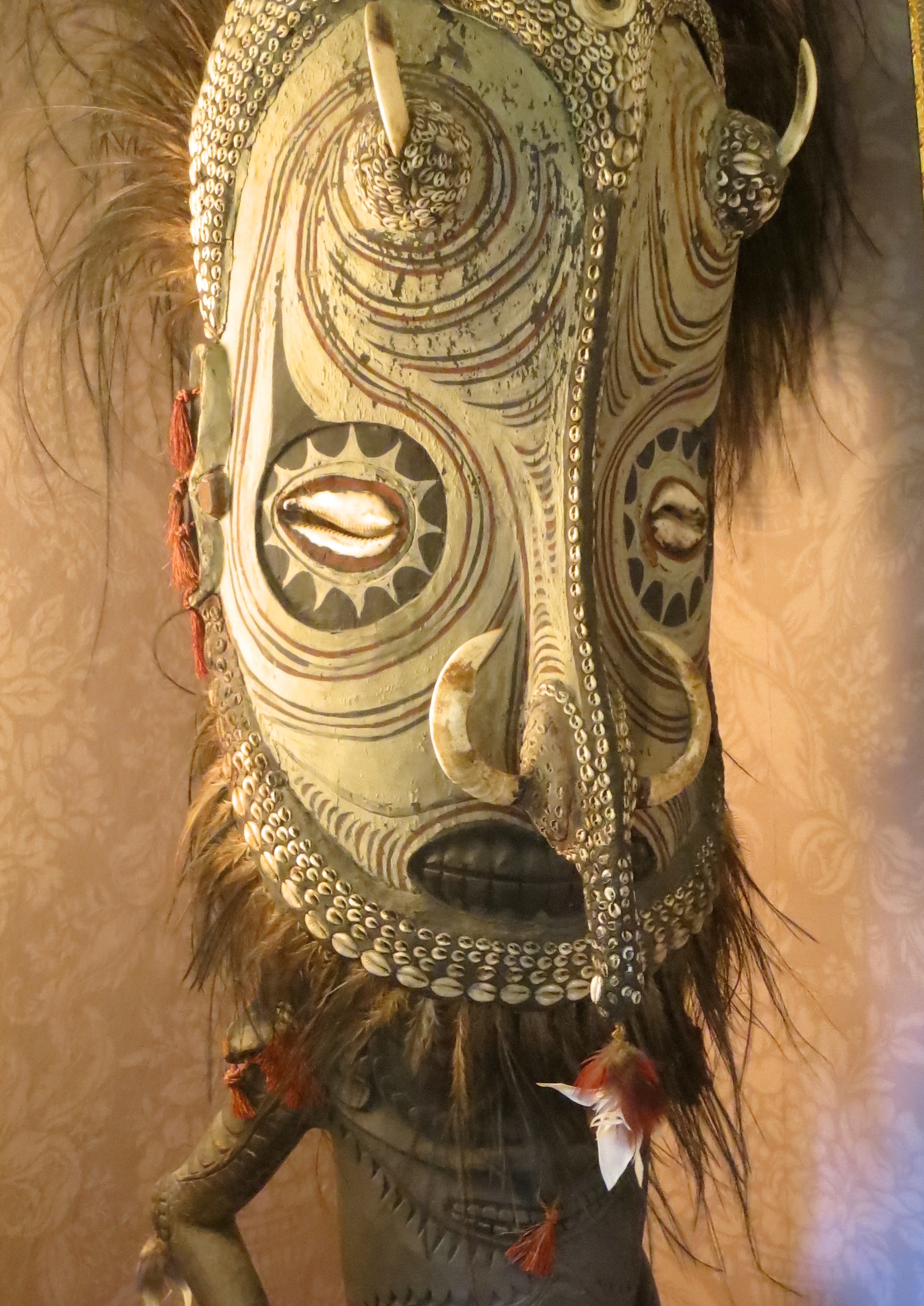
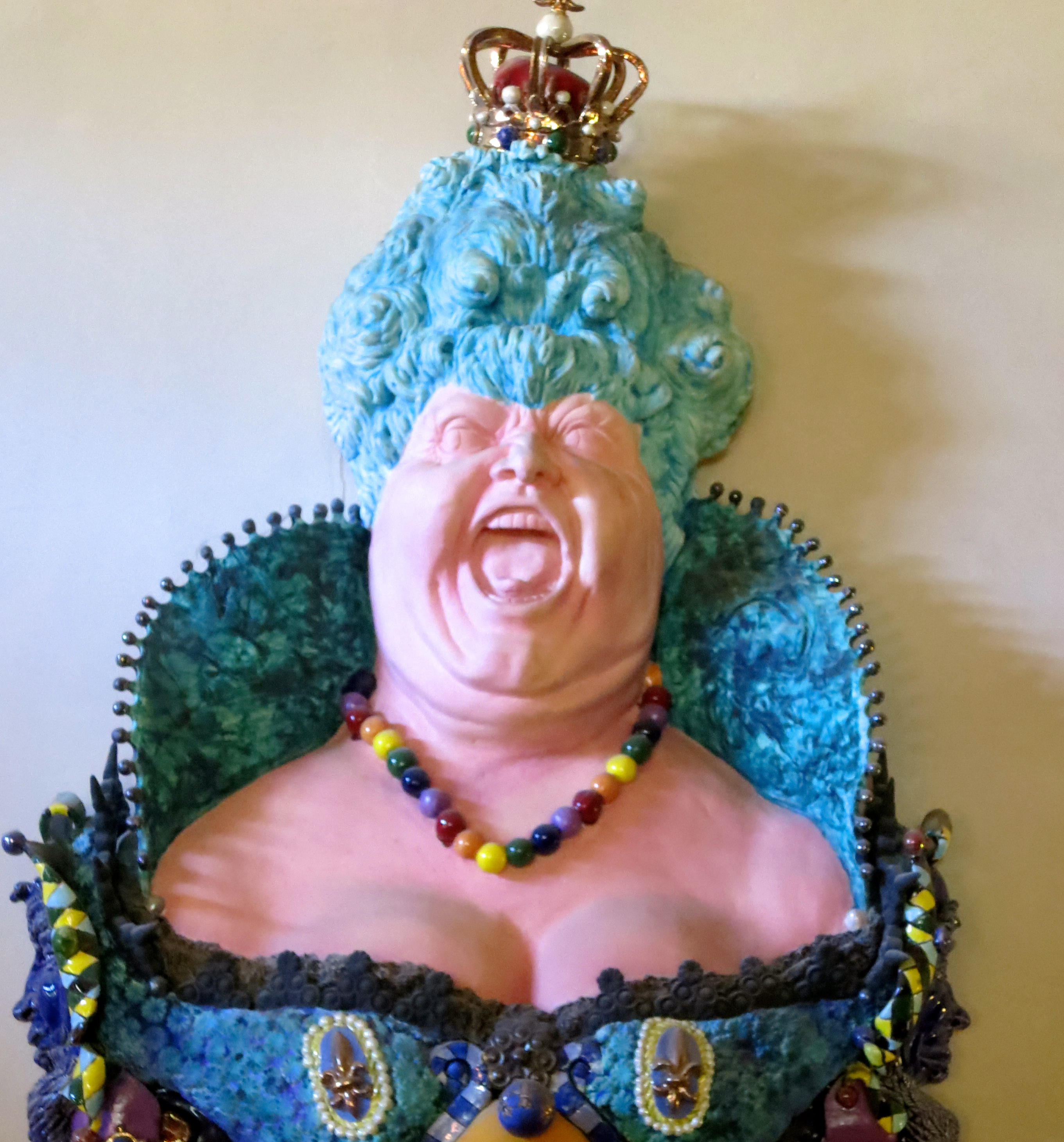
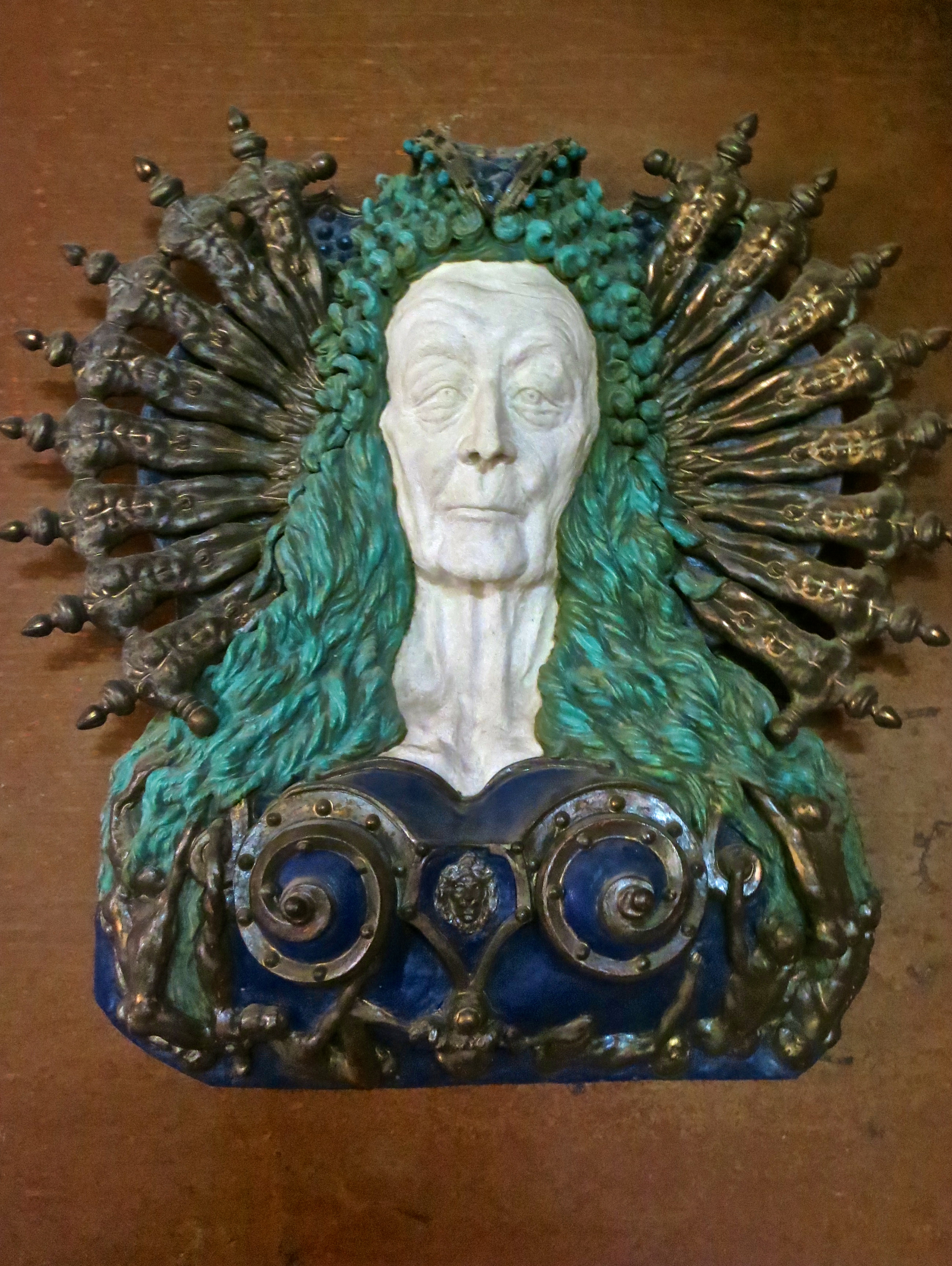
Art is located everywhere at Albion Manor, both inside and out. It’s humorous, offbeat nature, captured me immediately. Much of the work is done by Fernando Garcia, one of the two co-owners of the Manor.

The unique art of Albion Manor in Victoria, British Columbia. Photo by Curtis Mekemson.

African mask at Albion Manor in Victoria, BC. Photo by Curtis Mekemson.

The fat lady sings. Art at Albion Manor in Victoria, BC. Photo by Curtis Mekemson.

Art at Albion Manor in Victoria, BC. Photo by Curtis Mekemson.

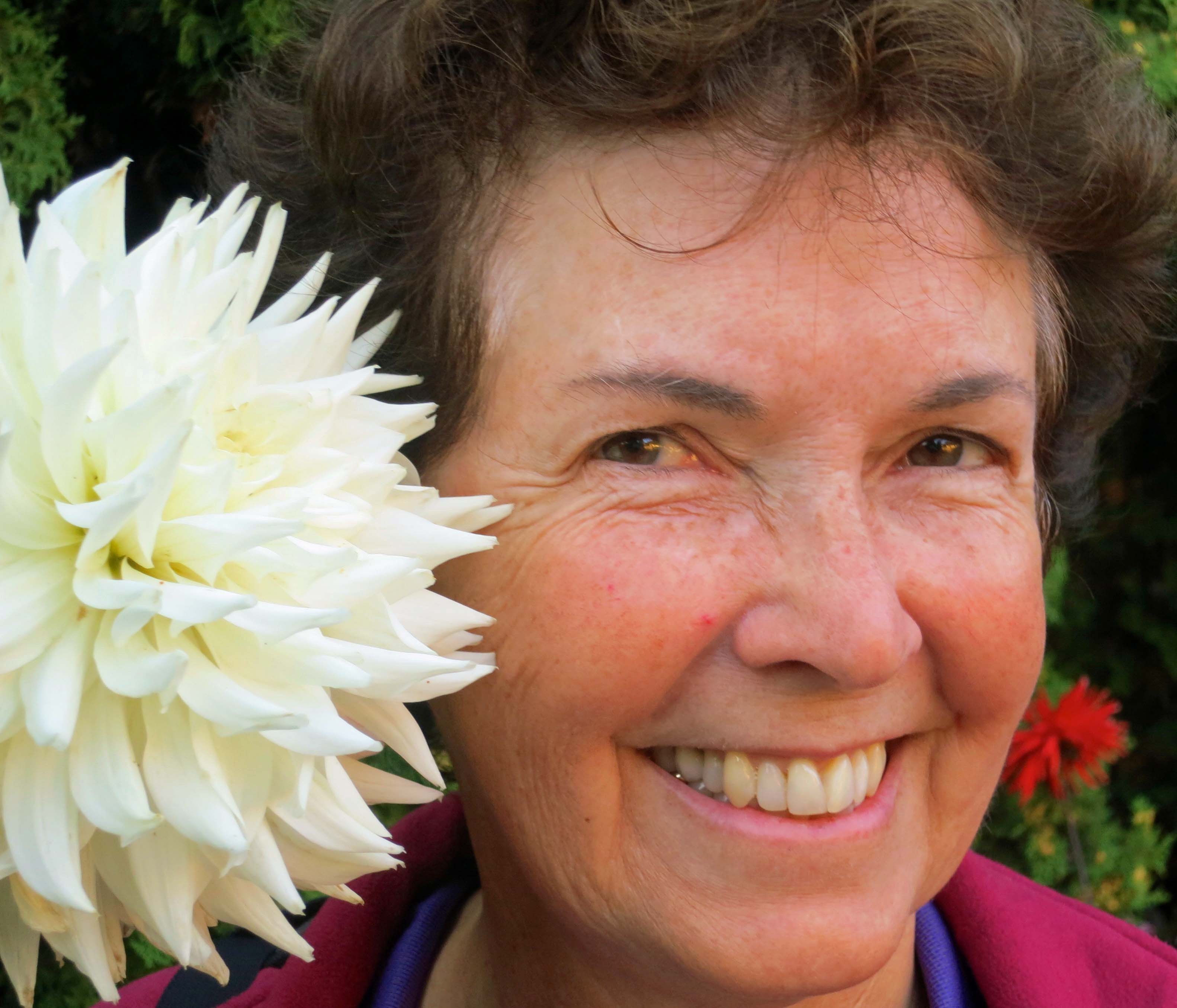
I'll conclude with a photo of  Peggy snuggling up to one of the flowers at the Albion Manor. Next Blog; I will return to our kayak adventure off of the northeast coast of Vancouver Island.

I’ll conclude with a photo of Peggy snuggling up to one of the flowers at the Albion Manor. Next Blog; I will return to our kayak adventure off of the northeast coast of Vancouver Island.


Who Needs A Barber When You Have a Starfish? British Columbia Sea Kayak Adventure: Part 3

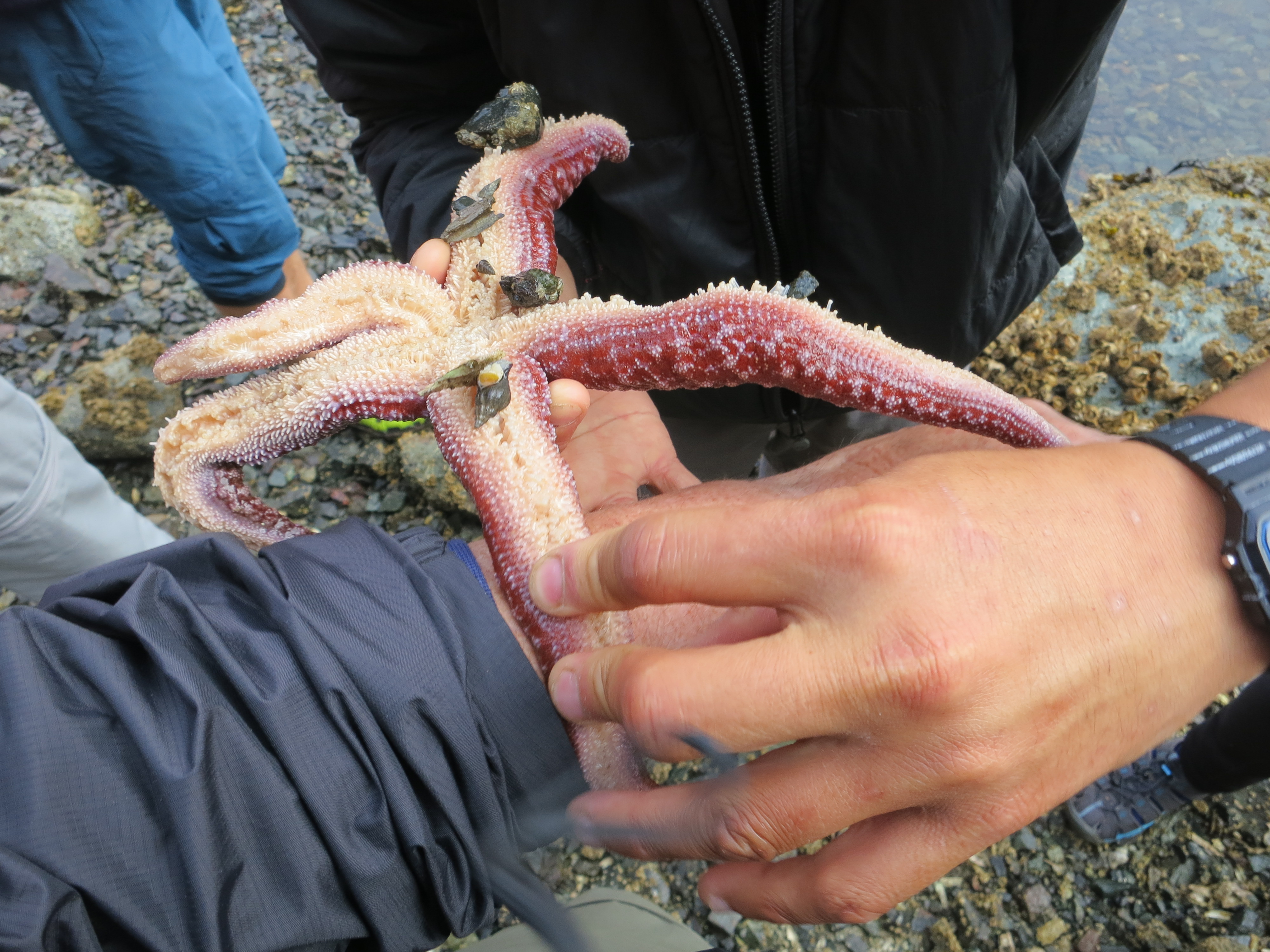
Starfish pedicellariae can clip the hair off an arm. Photo by Curtis Mekemson.

Quy bent the starfish over my wrist, and it clipped hair off my arm while I took a selfie of the process.

I’ve never been much of a with-it type guy. When there is a fad, I try to do the opposite. But I confess I’ve tried a selfie or two. And I just had to take a picture of the starfish clipping hair off of my arm. When Quy picked up a starfish on our six-day, British Columbia sea kayak adventure and offered to demonstrate pedicellariae at work, I was the first to volunteer. Pedicellariae what, you say?

While you are probably stumbling over the word like I did, I’ll explain how it works. Starfish have a defense mechanism for destroying tiny parasites that land on their skin. They have tiny claws that cut the bad guys in half. If you put these claws under a microscope, they look like your worst nightmare. (Check this out.)

Quy, however, assured us that while the pedicellariae would define our hairs as enemy invaders and clip them off, there would only be a slight pulling sensation with no harm done to us. Easy for him to say, right. But that’s what happened. Quy bent the arm of the starfish over my wrist and I felt the pulling sensation. When he removed the starfish, my arm was bare. Peggy was up next.

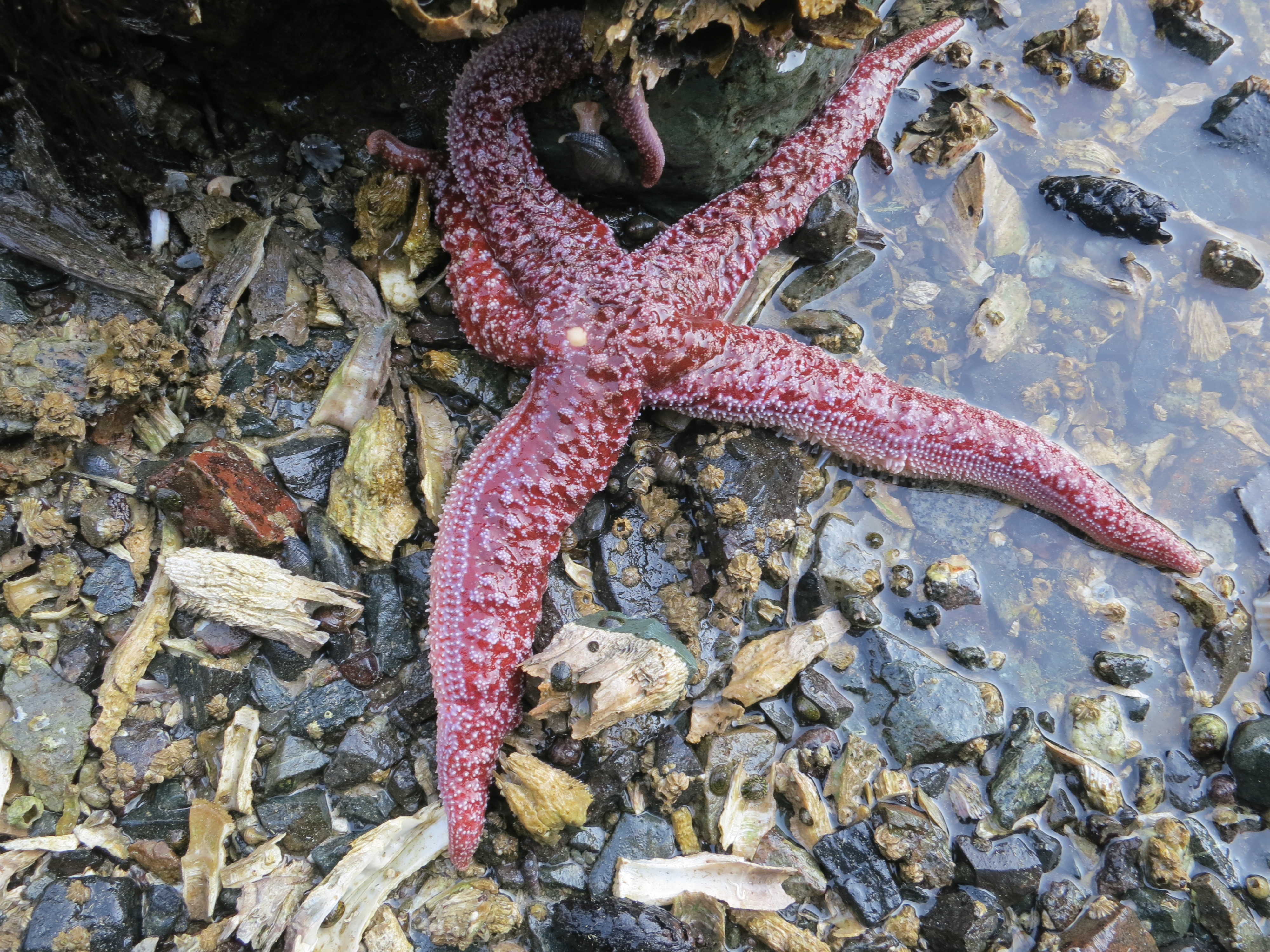
Here is the starfish happily at home in Johnstone Strait before Quy picked him up to clip hair.

Here is the innocent starfish, happily at home in Johnstone Strait before Quy picked him up to clip hair.

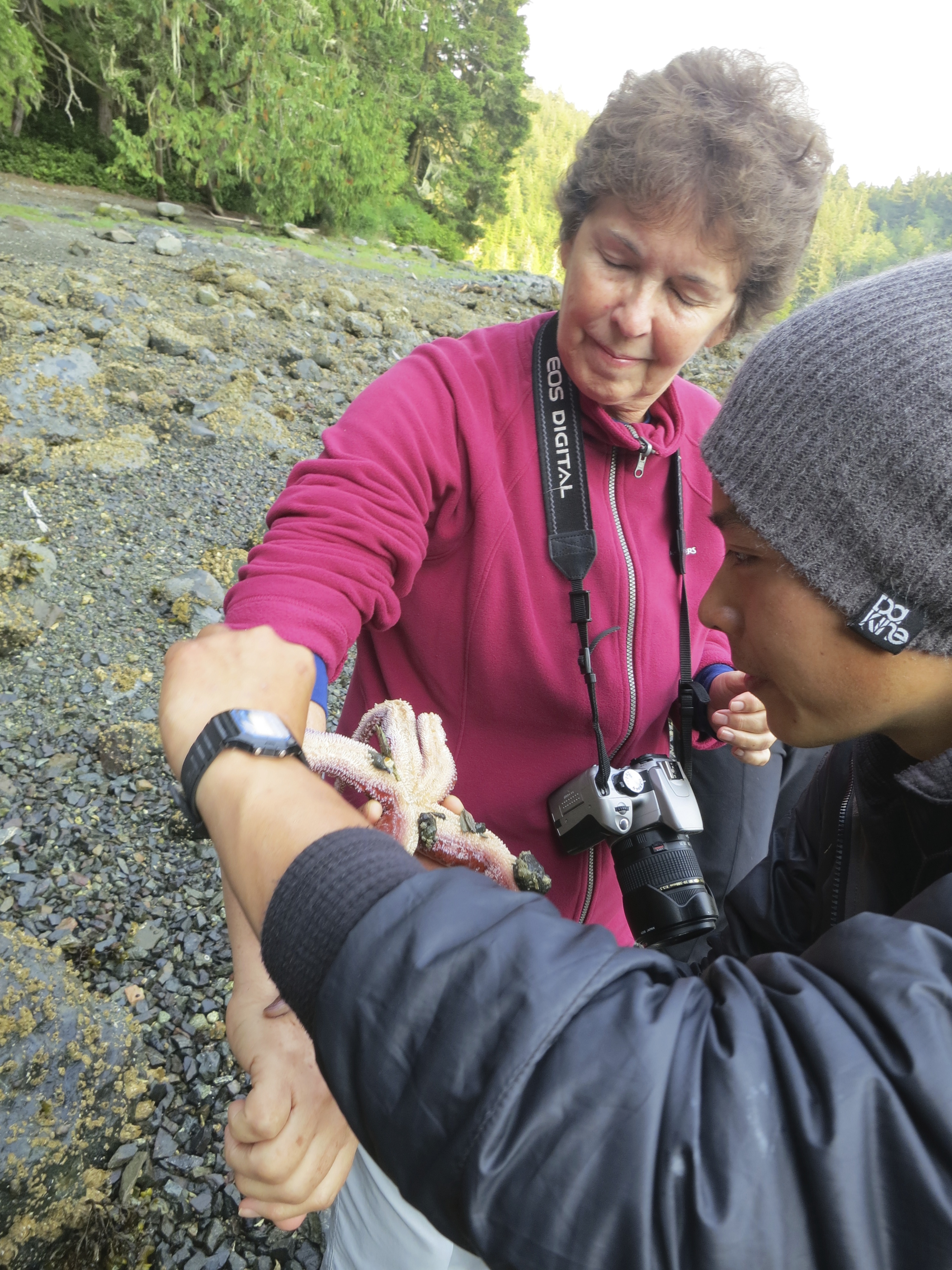
And here, the starfish goes to work on Peggy. Is that a smile or a grimace on her face?

And here, the starfish goes to work on Peggy. Is that a smile or a grimace on her face?

I expected whales and striking scenery on our Sea Kayak Adventures’ trip, but hair-removing starfish, no way. The pedicellariae were only a small part of our second day, however. We kayaked from our campsite on Hanson Island to Compton Island on Blackfish Sound. Along the way we watched humpback whales and were once again awed by the beauty of the region. At Compton Island, we got to play with our food….

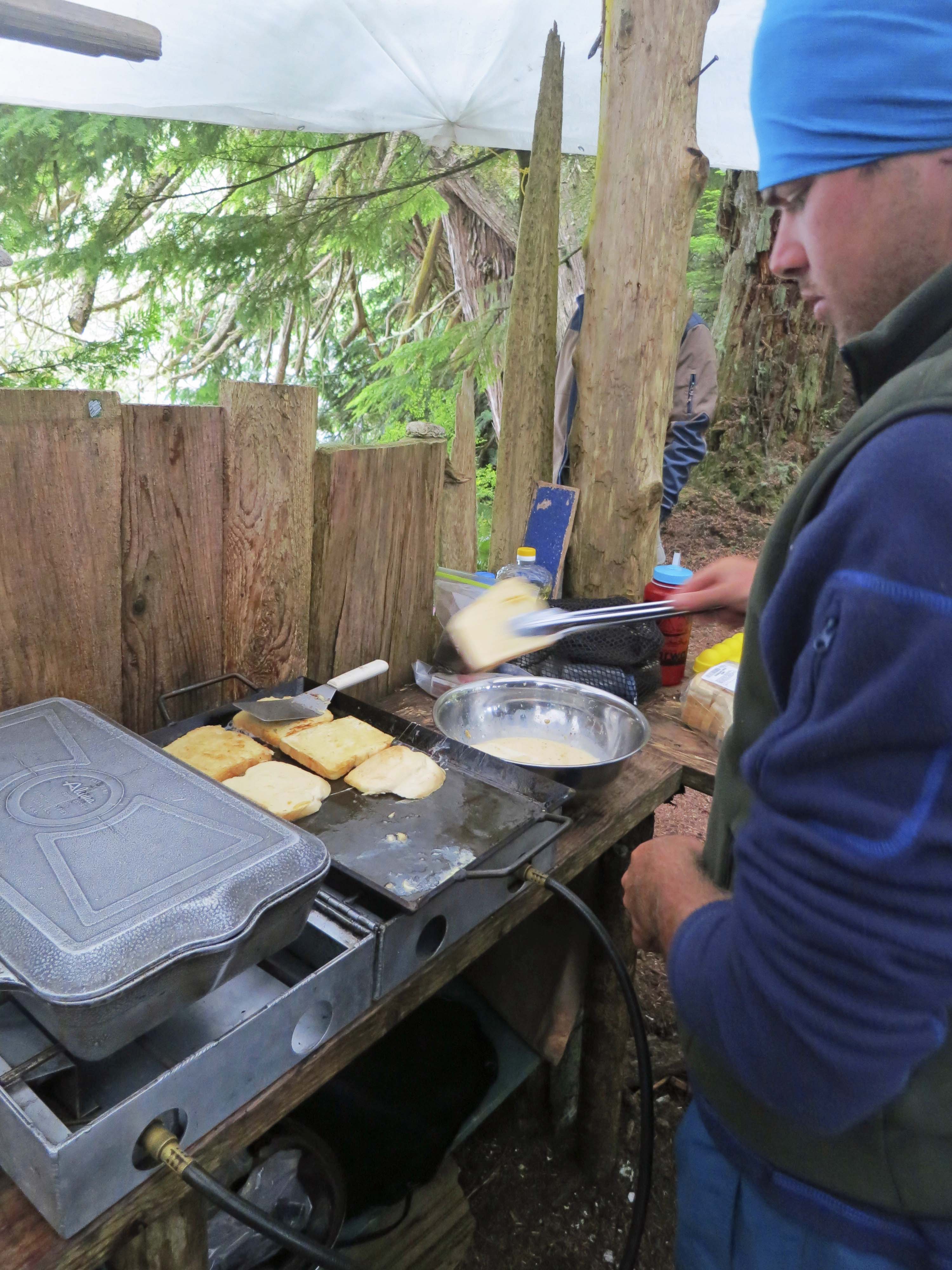
Sea Kayak Adventures provides a hearty breakfast to its sea kayakers.

Coffee would be waiting when we got up each morning— to be followed by a hefty breakfast. Here, our guide, Nick, whips up French toast in the make-shift kitchen.

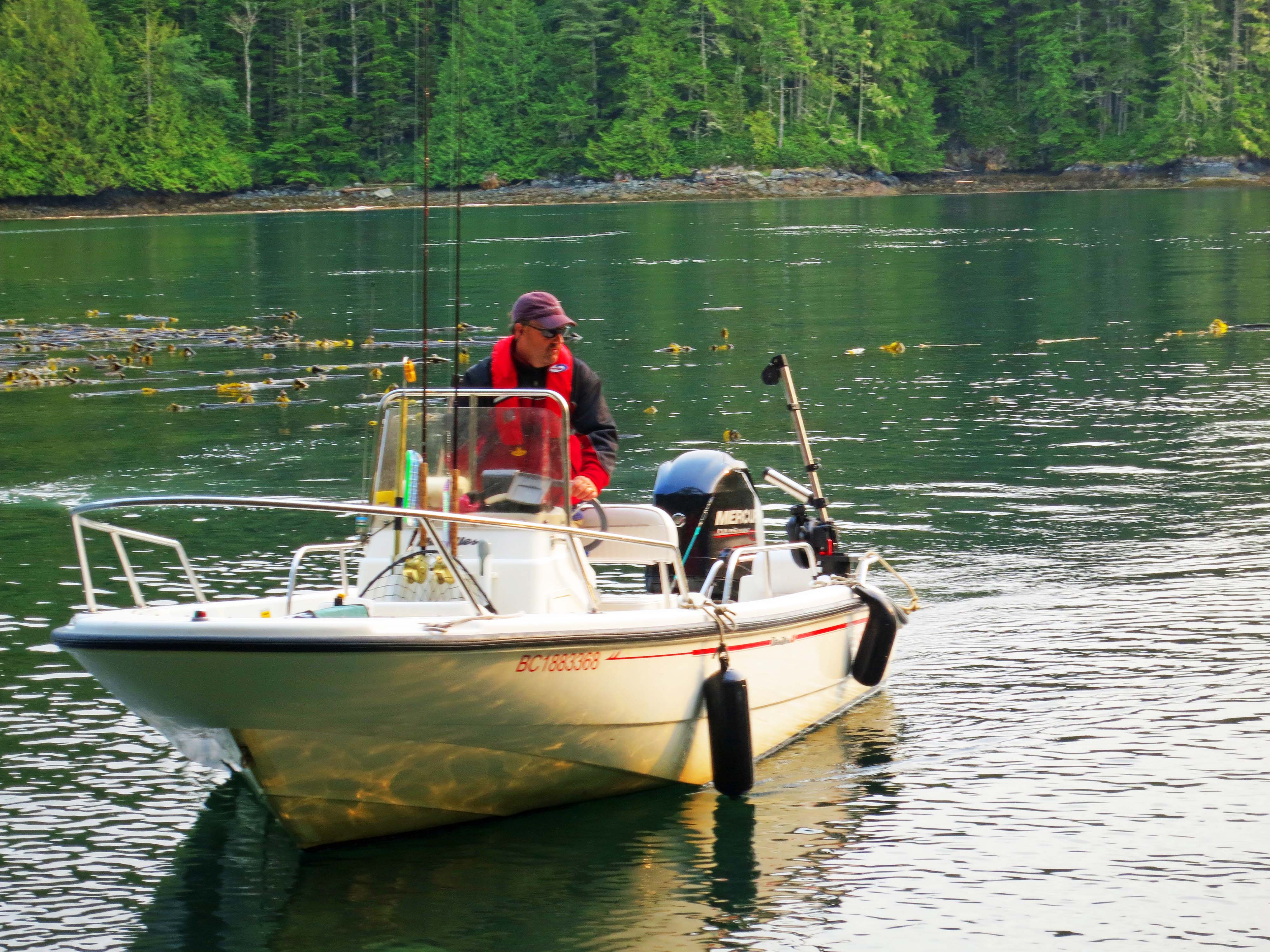
Fishing boat in Johnstone Strait off of Hanson Island. Photo by Curtis Mekemson.

After breakfast, we had time to go for a brief walk. A fishing boat moves between islands on  Johnstone Strait looking for salmon.

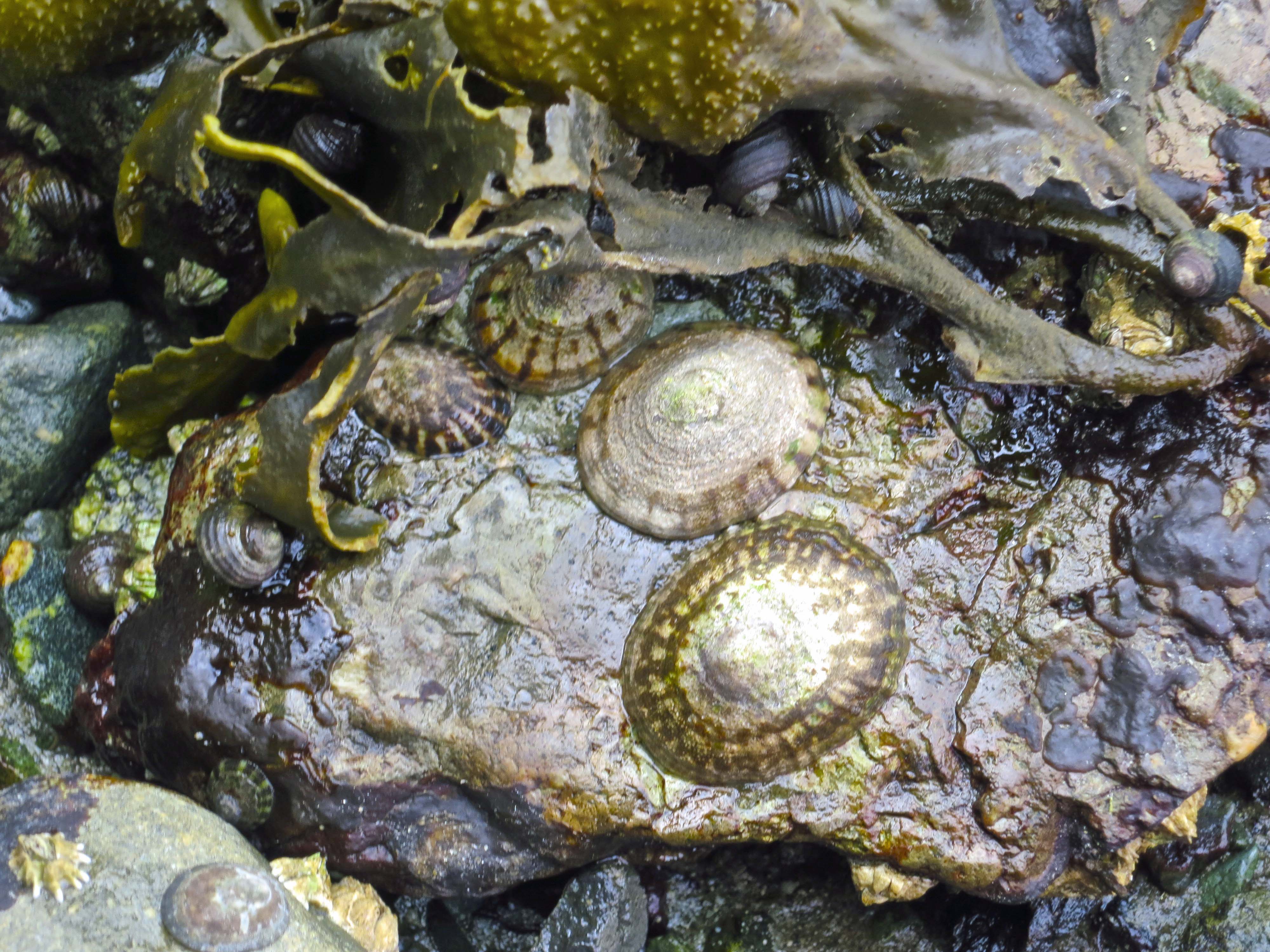
Limpets and snails are exposed by low tide on Hanson Island British Columbia off of Johnstone Strait. Photo by Curtis Mekemson.

Low tide exposed theses limpets and snails.

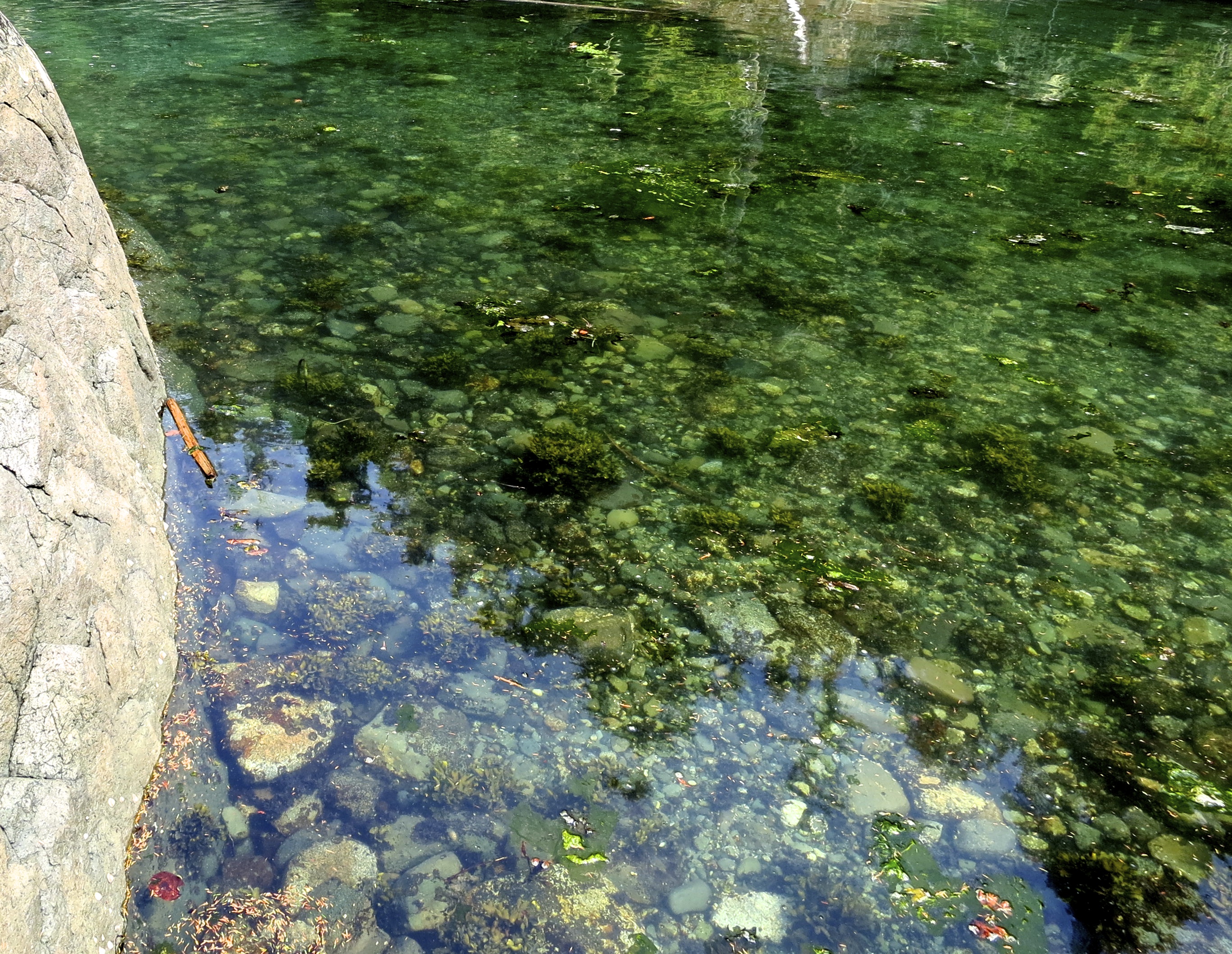
Green waters of a small bay on Hanson Island on Johnstone Strait off of Vancouver Island. Photo by Curtis Mekemson.

We peered in to the green waters of the small bay we were camped on.

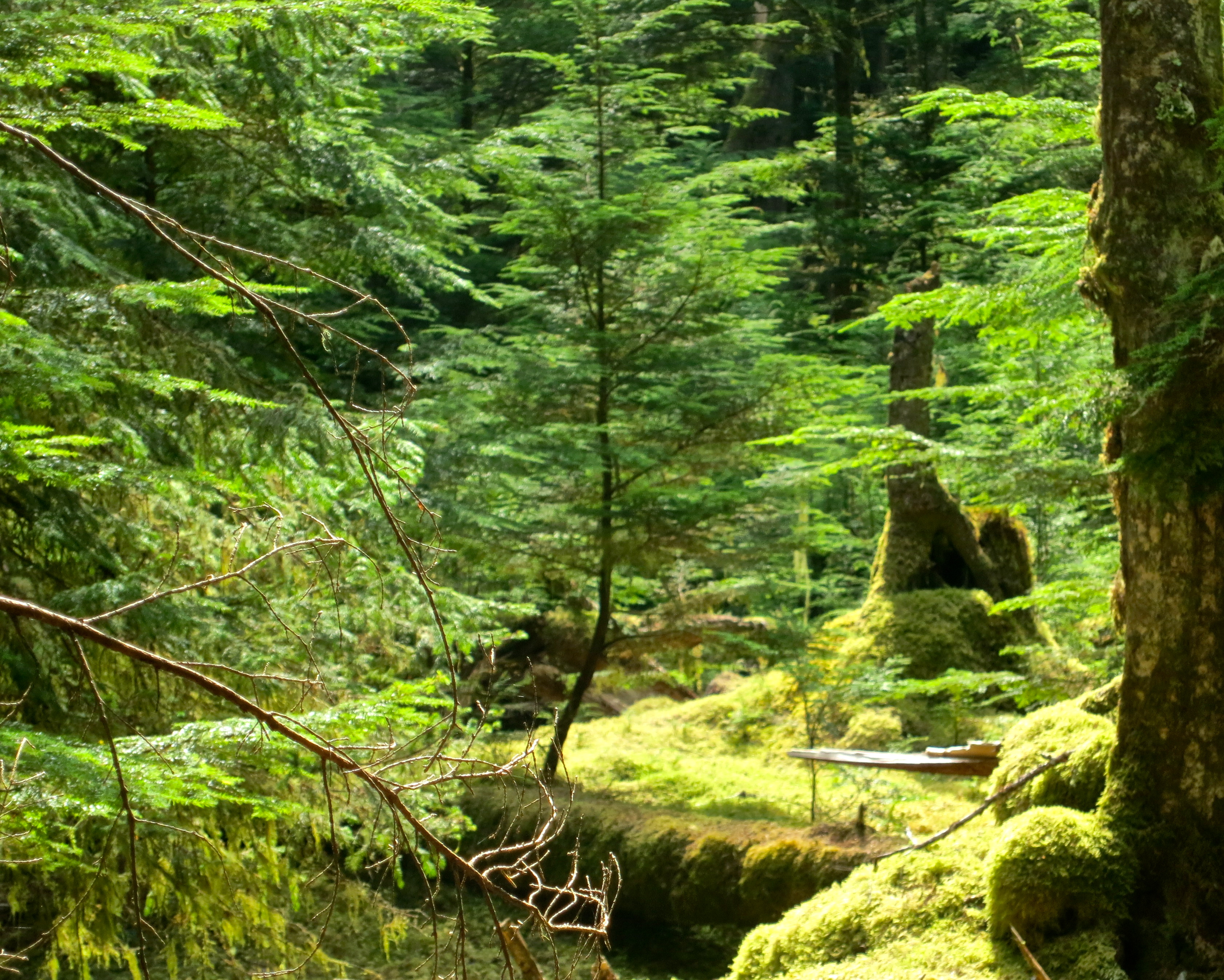
Sunlight illuminates a very green forest on Hanson Island in British Columbia. Photo by Curtis Mekemson.

And were dazzled by the sun illuminated green of the forest.

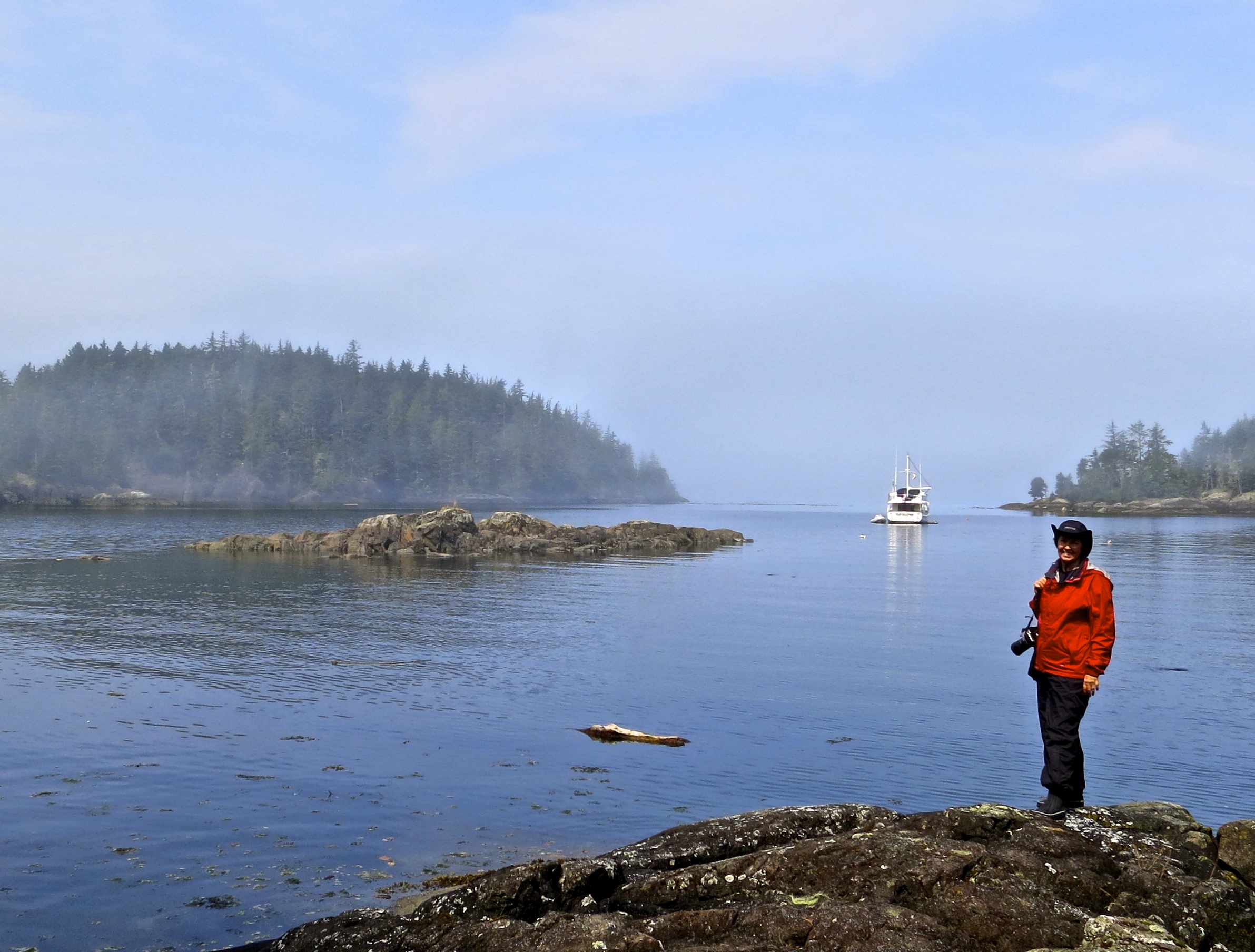
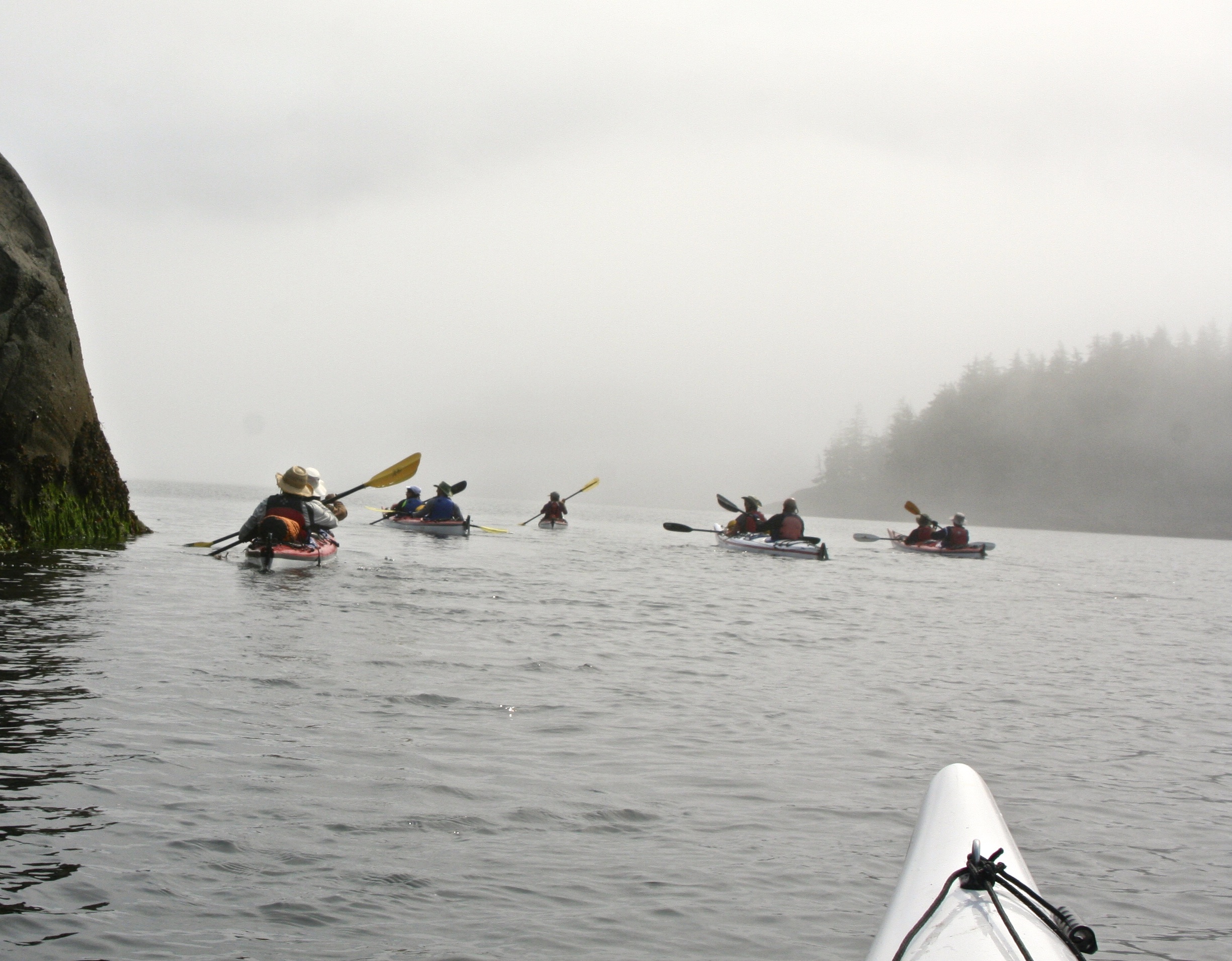
Sea Kayak Adventure group works its way around Hanson Island, British Columbia in the fog.

Morning fog greeted us as we worked our way around Hanson Island and into Blackfish Sound. (Photo by Peggy Mekemson.)

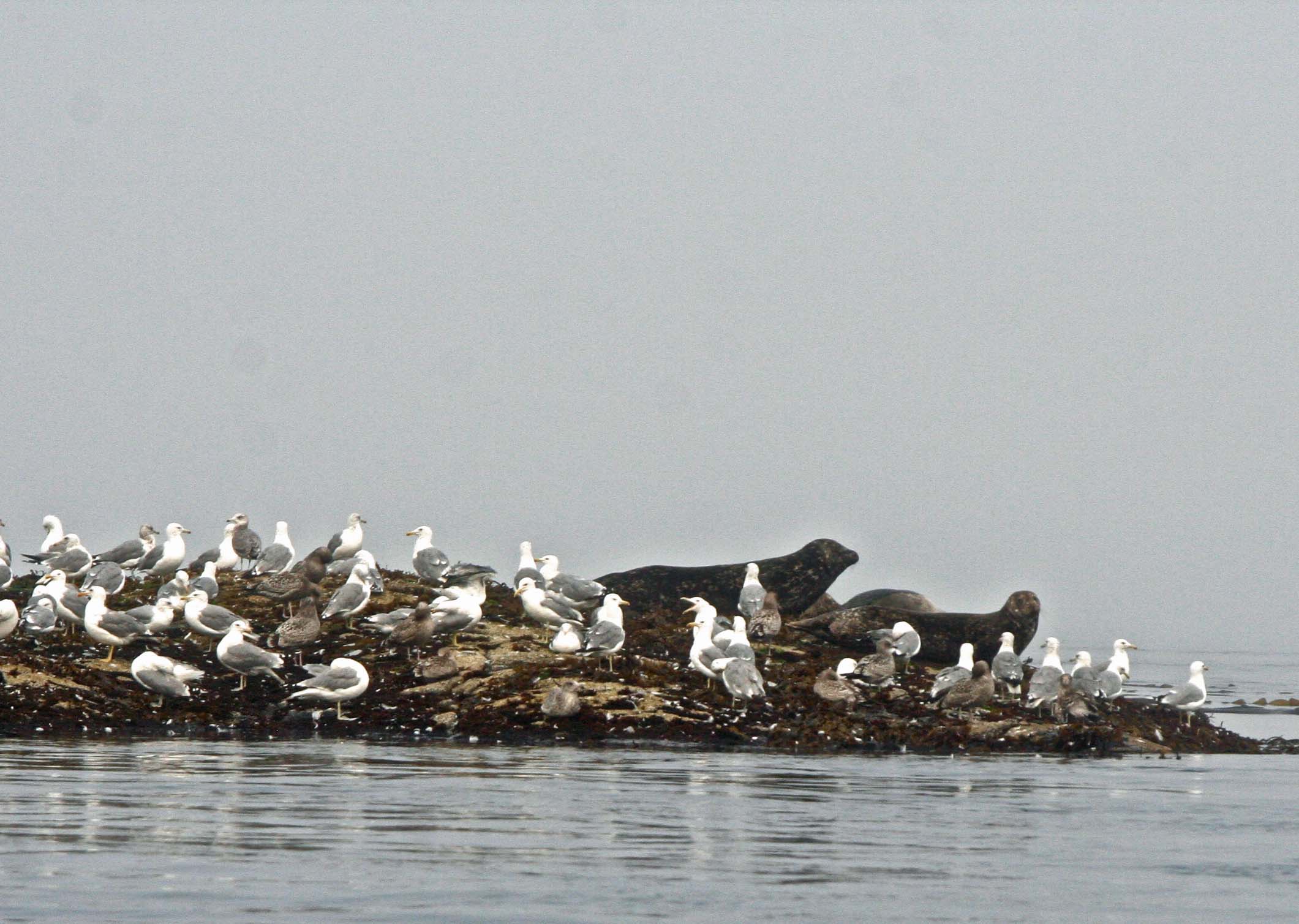
Seals and seagulls on an island in Blackfish Sound, British Columbia.

We checked out these seals and seagulls on a small island. Or were they checking us out? (Photo by Peggy Mekemson.)

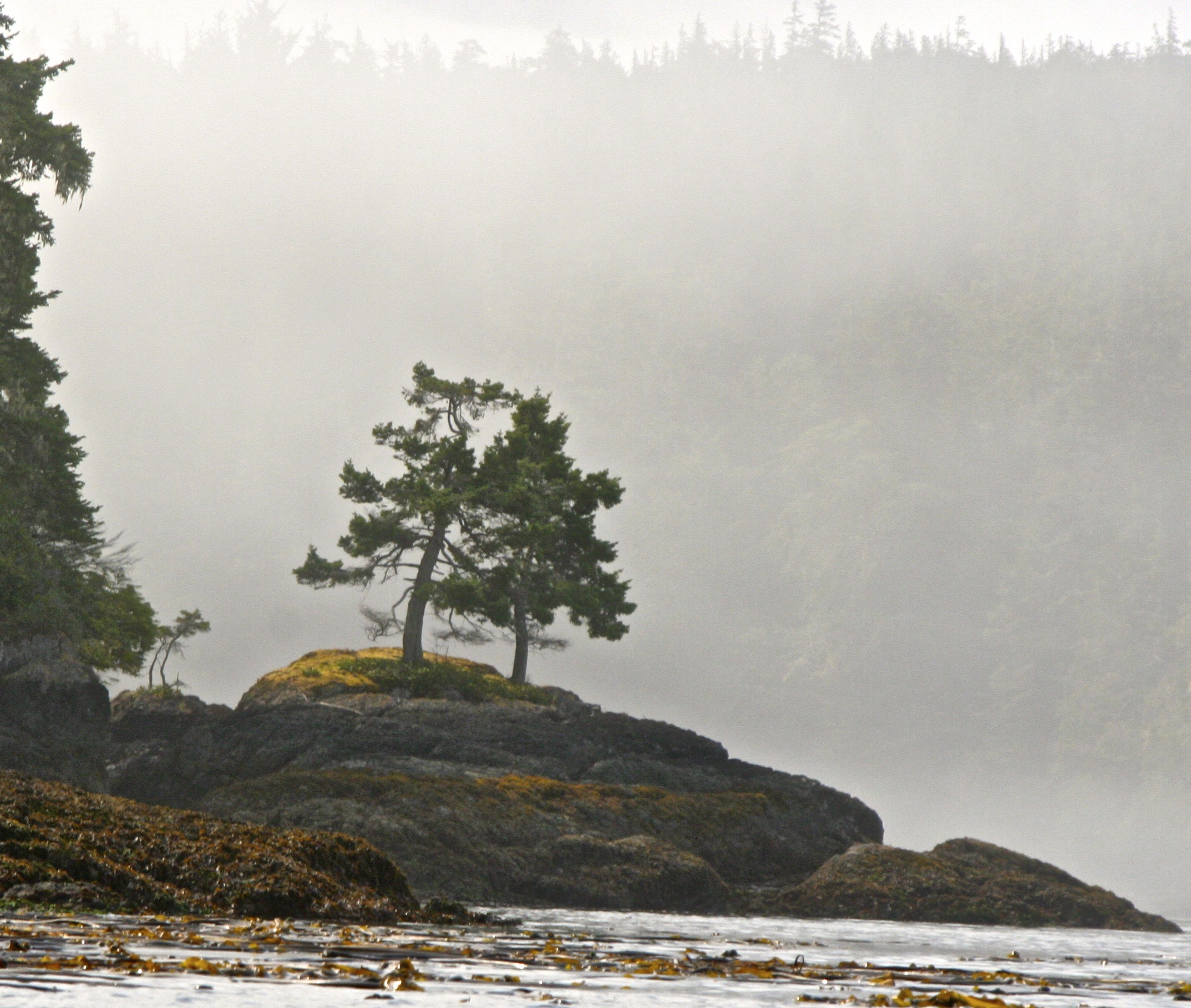
By the time we had worked our way around the end of Hanson Island, the sun was beginning to peak through. (Photo by Peggy Mekemson.)

By the time we had worked our way around the end of Hanson Island, the sun was beginning to peak through. (Photo by Peggy Mekemson.)

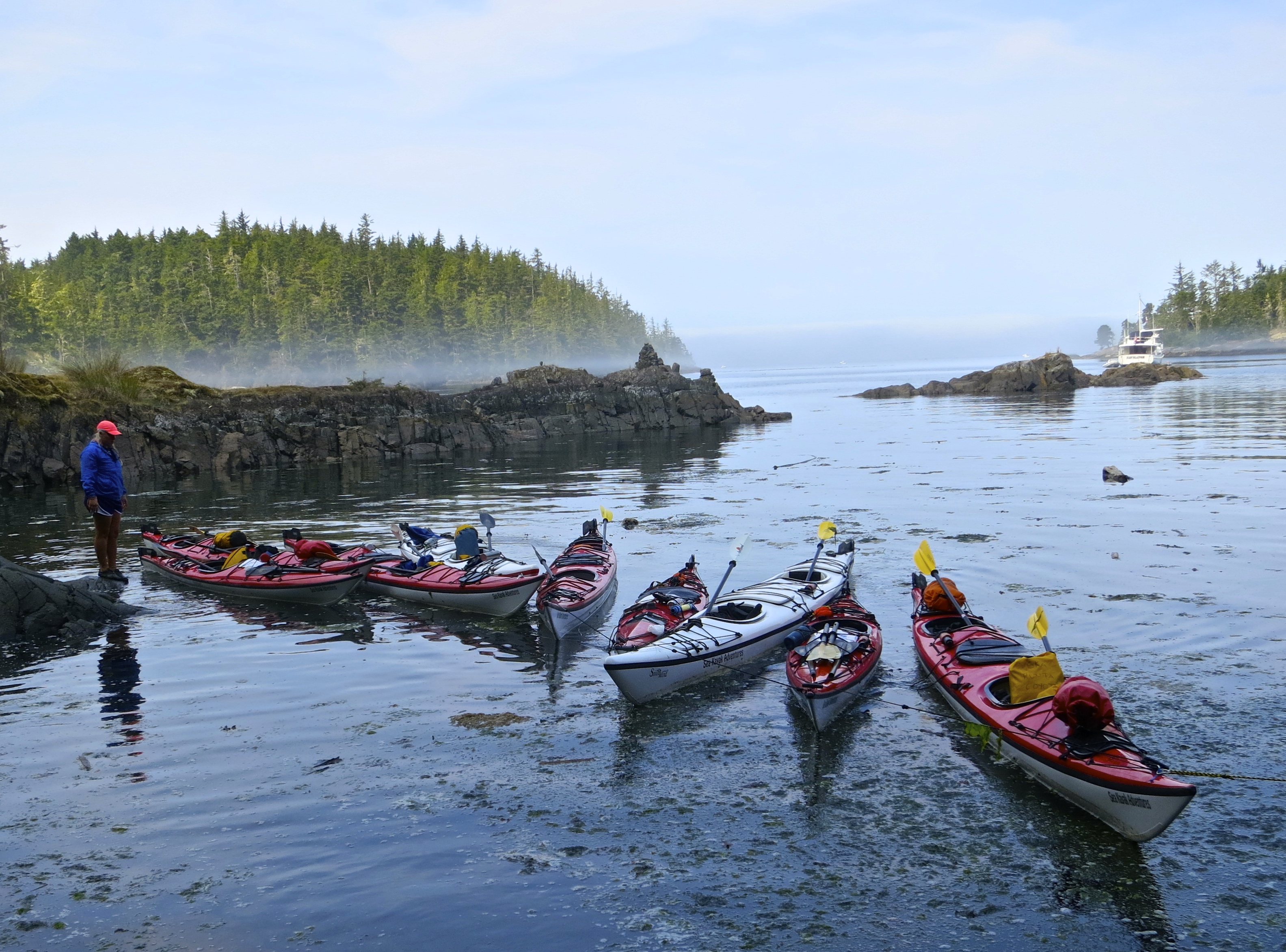
Sea Kayak Adventure kayaks roped together in small inlet on Hanson Island. Photo by Curtis Mekemson.

I took this picture of our kayaks at lunch. They were roped together so they wouldn’t stray.

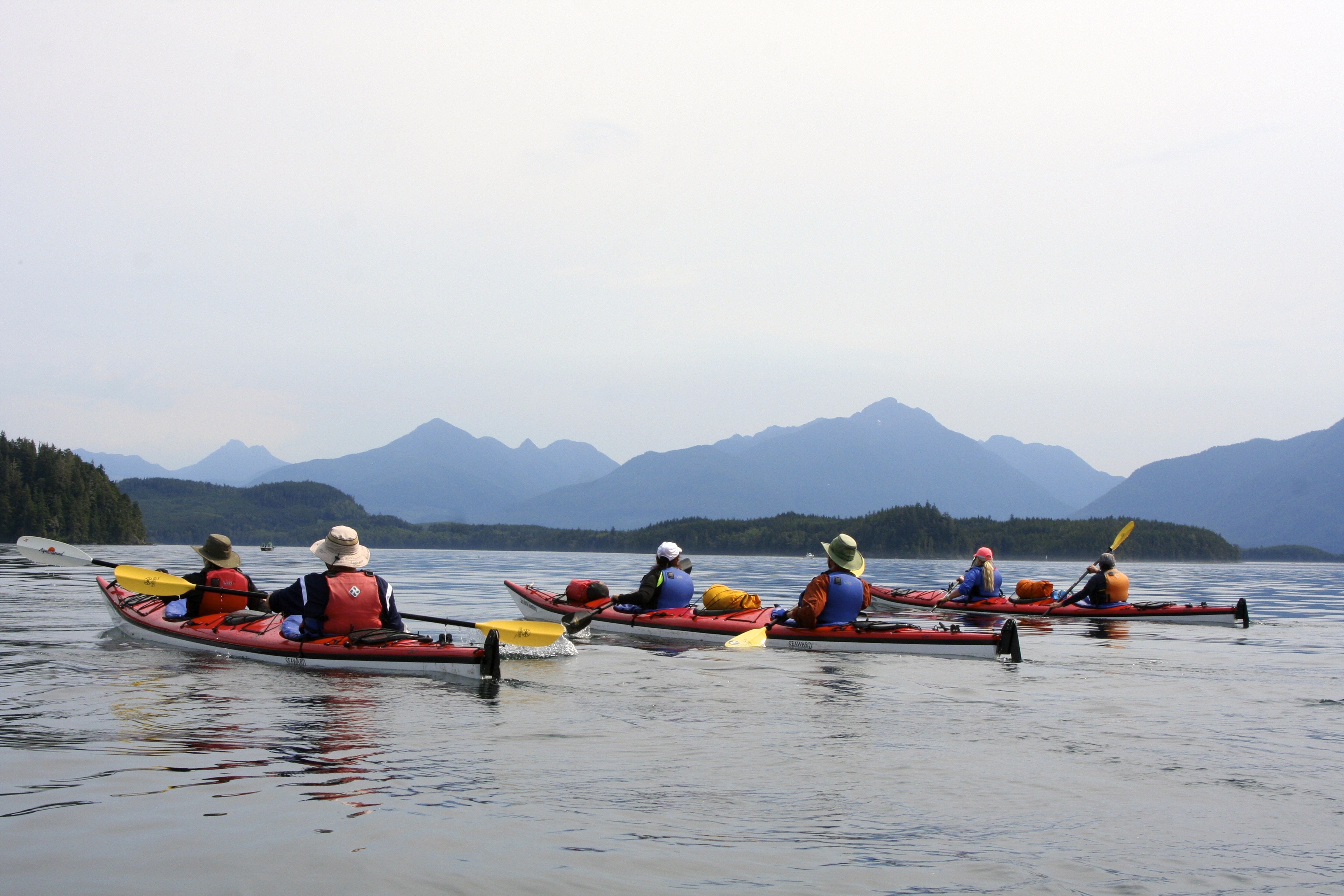
After lunch, we followed out trip leader, Julia, out into Blackfish Sound. As you will note, most of our on-water photos are taken by Peggy. I was busy paddling. (grin) (Photo by Peggy Mekemson.)

After lunch, we followed out trip leader, Julia, out into Blackfish Sound. As you will note, most of our on-water photos were taken by Peggy. I was busy paddling. (grin) (Photo by Peggy Mekemson.)

A whooshing sound caused us to stop and search for whales. (Photo by Peggy Mekemson.)

A whooshing sound caused us to stop and search for whales. (Photo by Peggy Mekemson.)

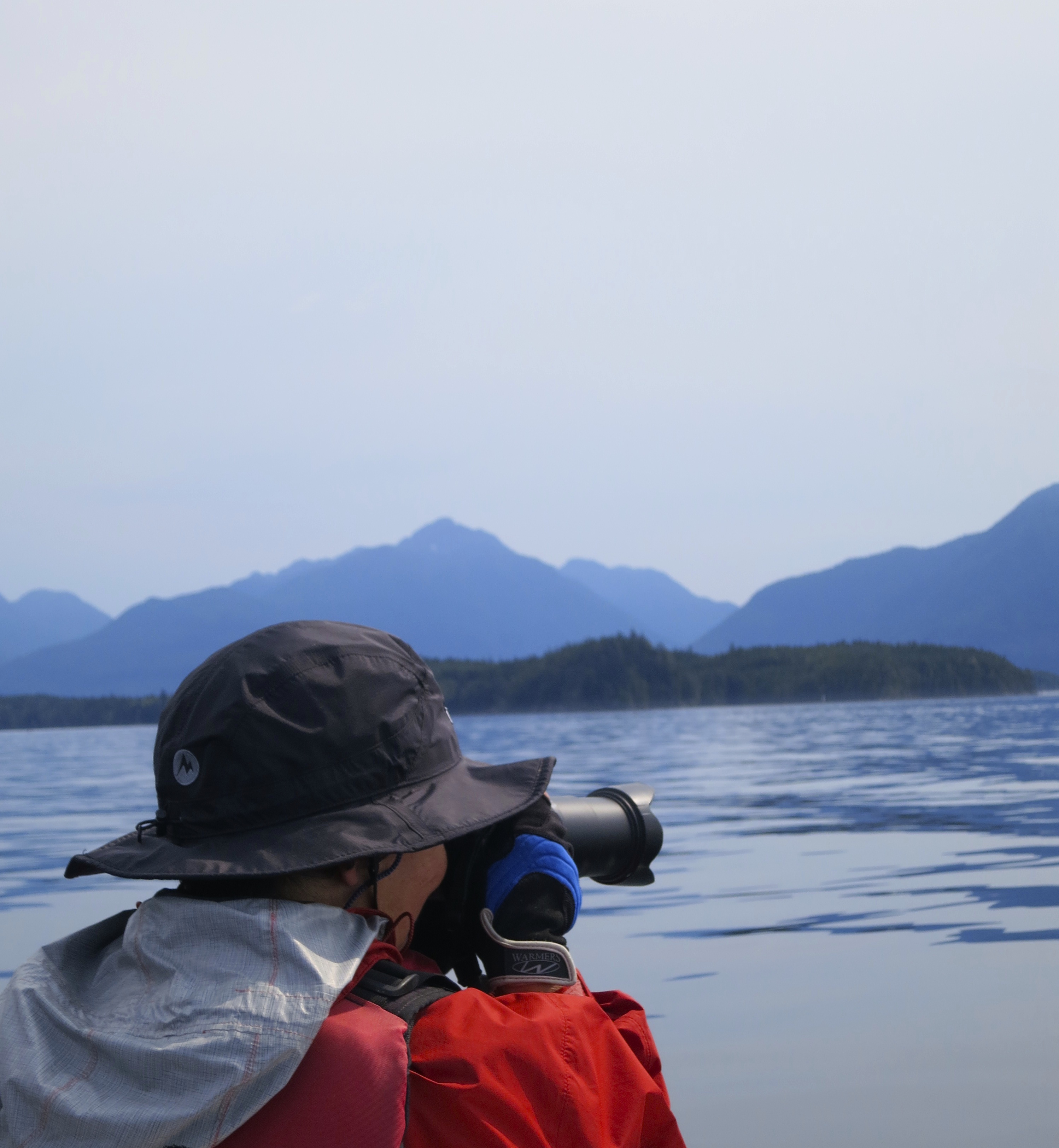
Peggy Mekemson prepared to photograph whales in Blackfish Sound, British Columbia. Photo by Curtis Mekemson.

I took this photo of Peggy poised to capture a picture of the whale with her telephoto.

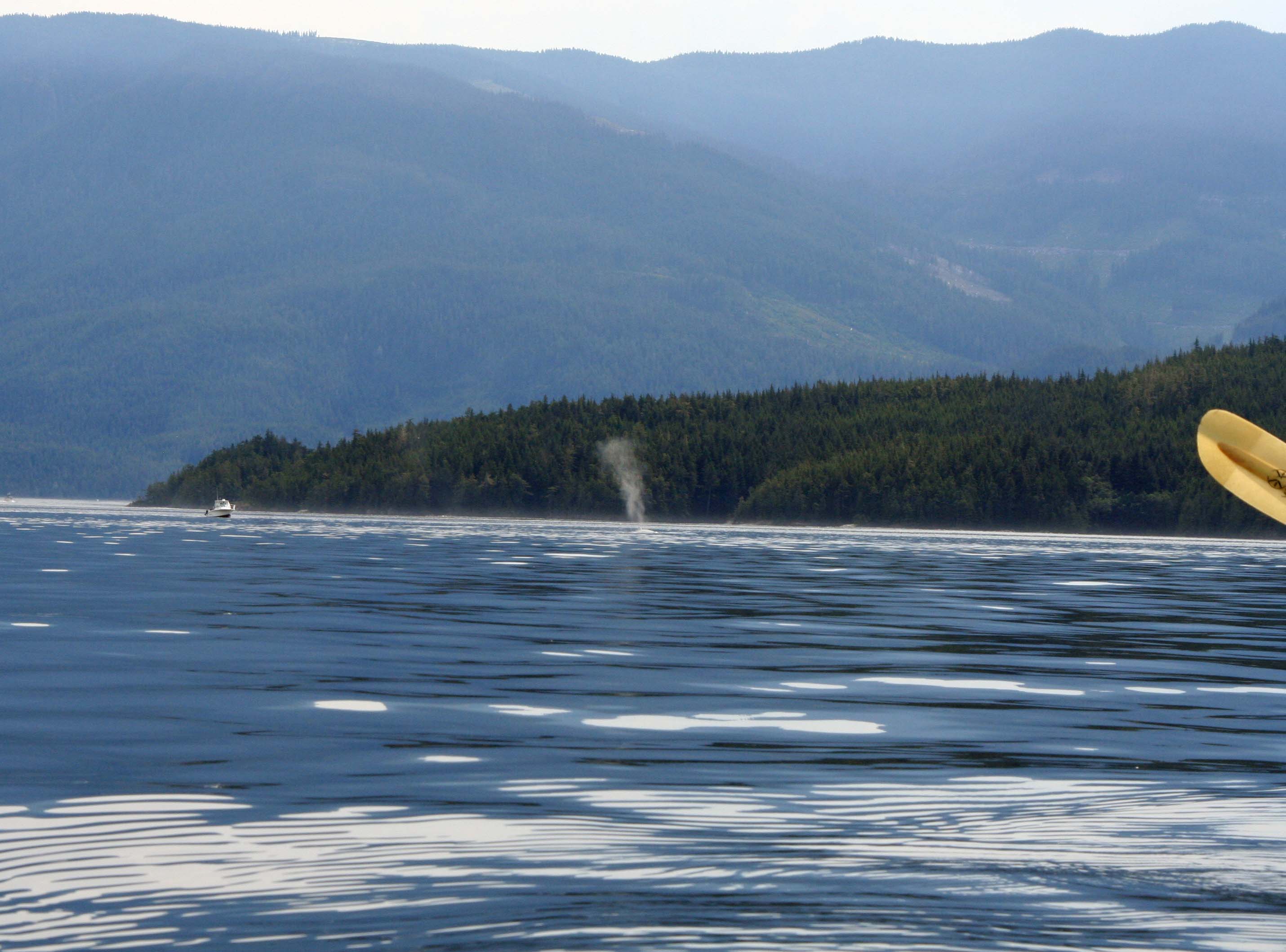
Thar she blows! We spot the tell-tale spume of a humpback whale as it surfaces. (Photo by Peggy Mekemson.)

Thar she blows! We spot the tell-tale spume of a humpback whale as it surfaces. That’s a kayak paddle on the right.(Photo by Peggy Mekemson.)

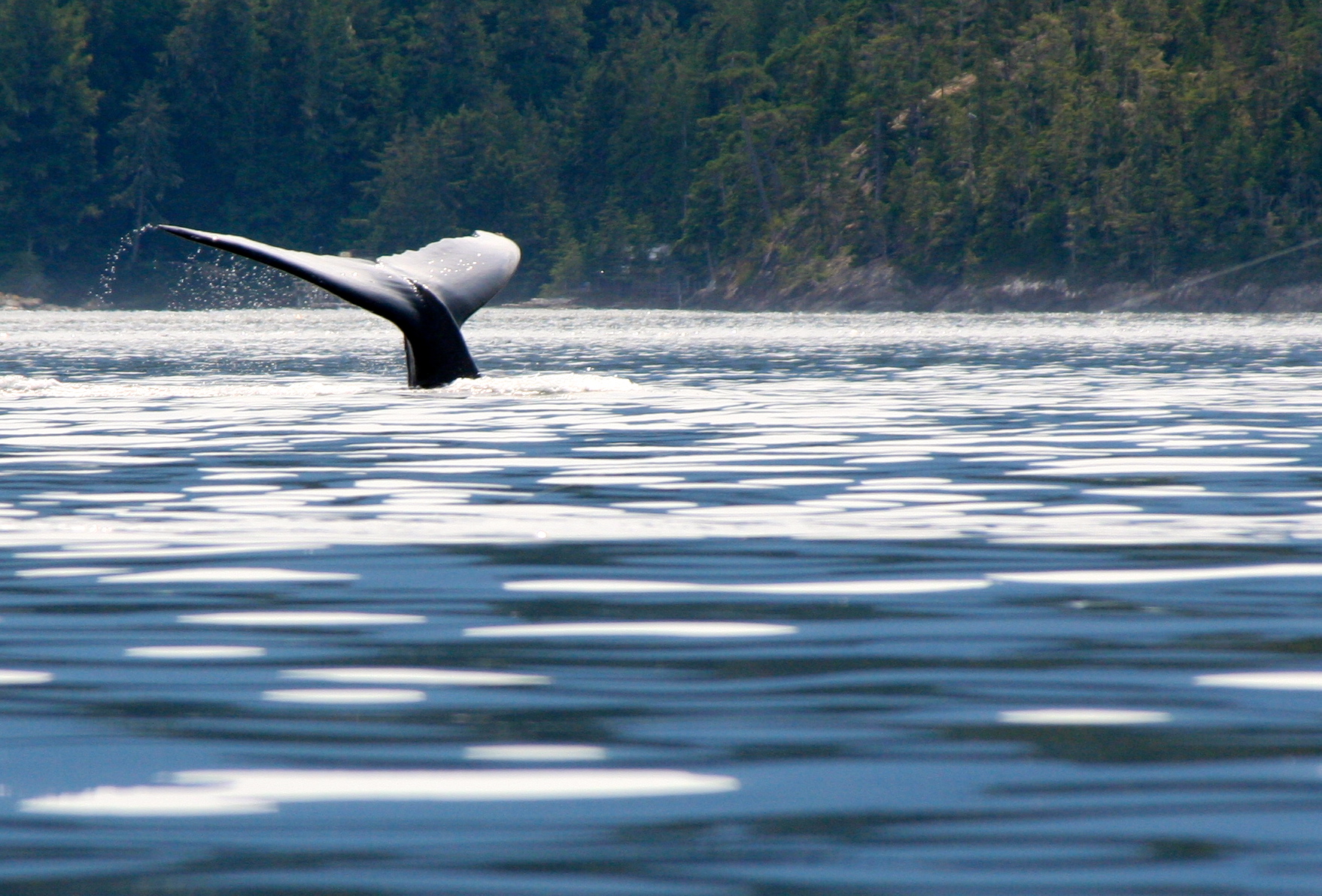
The humpback, brought in closer by Peggy's telephoto, dives back under the water. (Photo by Peggy Mekemson.)

The humpback, brought in closer by Peggy’s telephoto, dives back under the water. (Photo by Peggy Mekemson.)

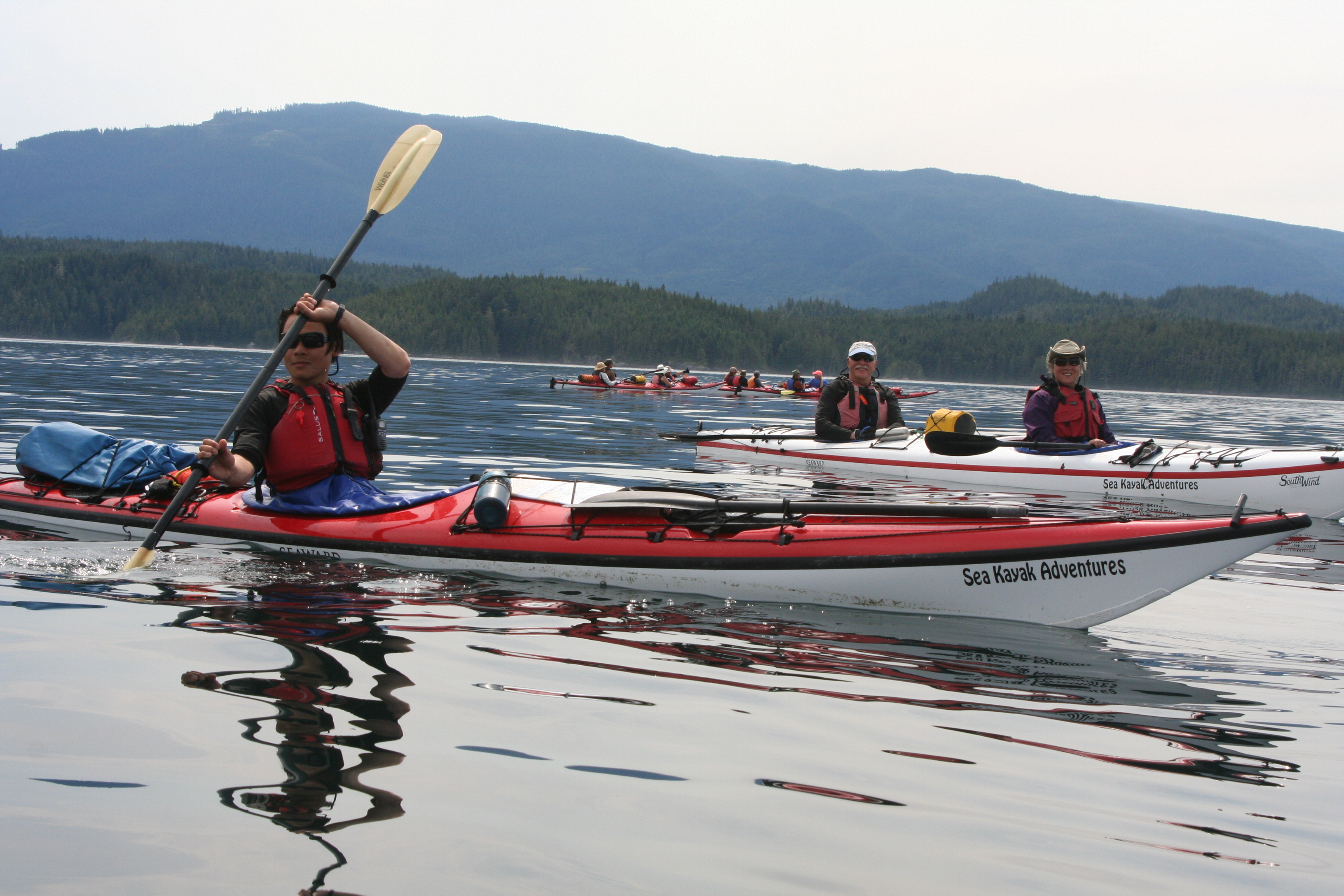
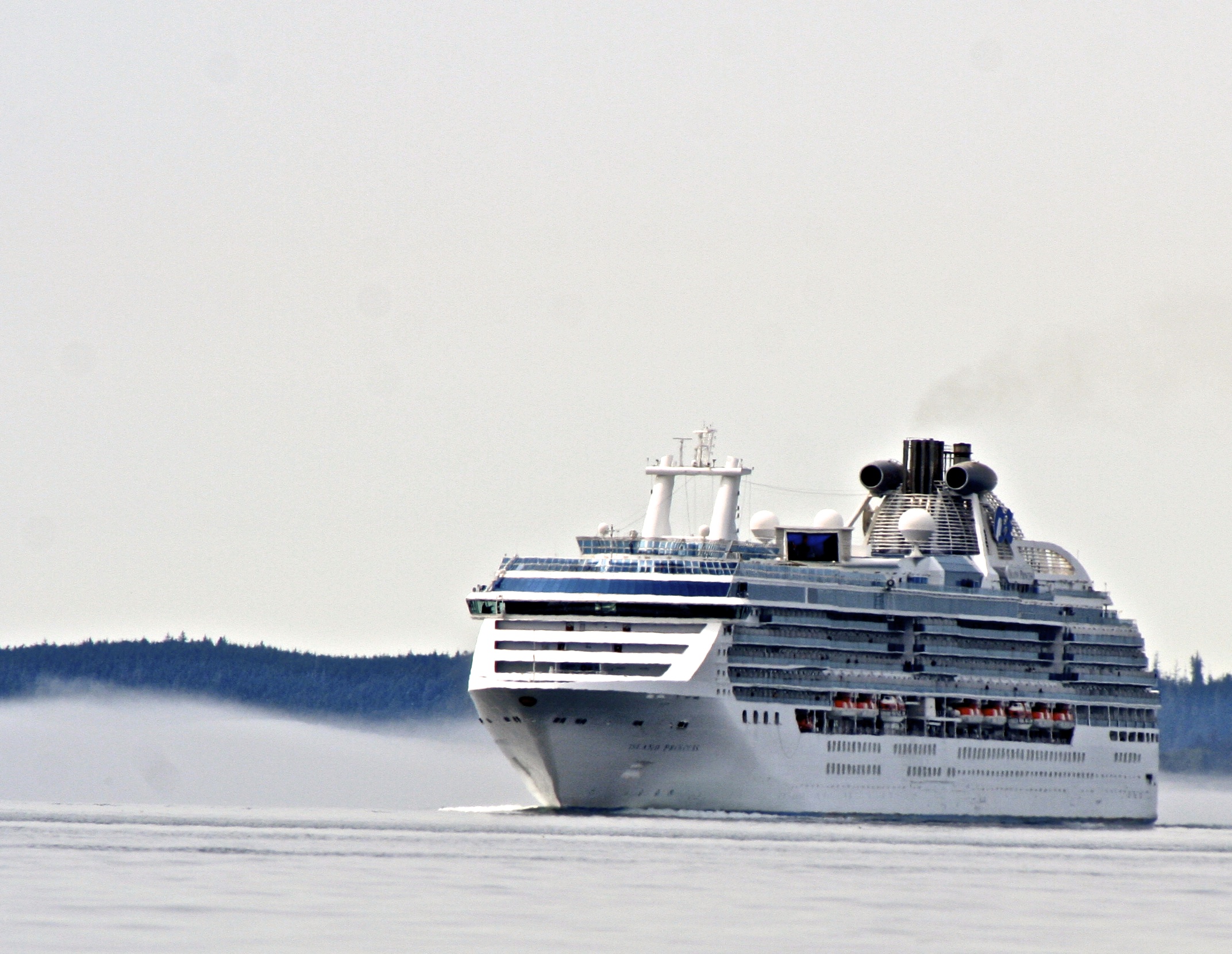
I liked the watch the waves distorted the reflection of Quy in the water. Edie and Dave look on. The other kayakers are watching the approach of a cruise ship. (Photo by Peggy Mekemson.)

I liked the way the waves distorted the reflection of Quy in the water. Edie and Dave look on. The other kayakers are watching the approach of a cruise ship. (Photo by Peggy Mekemson.)

The cruise ship. You can imagine how big the ship seems from the perspective of a kayak. You do not want to get in the way. (Photo by Peggy Mekemson.)

The cruise ship. You can imagine how big the ship seems from the perspective of a kayak. You do not want to get in the way. (Photo by Peggy Mekemson.)

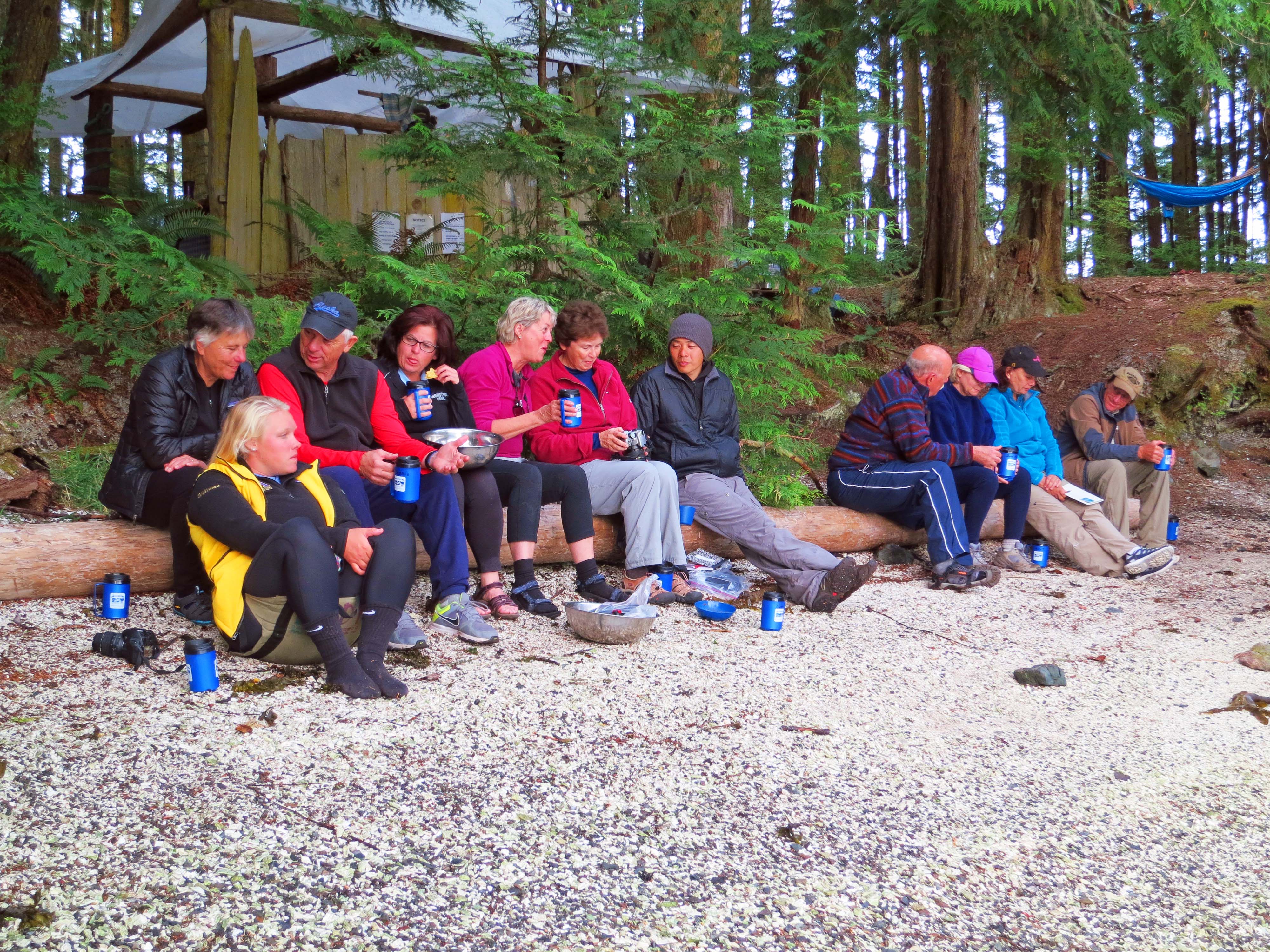
Sea Kayak Adventures group relaxes on beach at campsite on Compton Island, British Columbia.

Our group, having safely navigated through the whales and the cruise ships, relaxes at cocktail hour in our campsite on Compton Island. It was right about then that a fishing boat approached the beach.

"Would you like a salmon?" he asked— and to our enthusiastic  yes, threw it overboard.

“Would you like a salmon?” he called out— and to our enthusiastic, yes!, threw it overboard.

Coho salmon caught in Blackfish Sound, British Columbia. Photo by Curtis Mekemson.

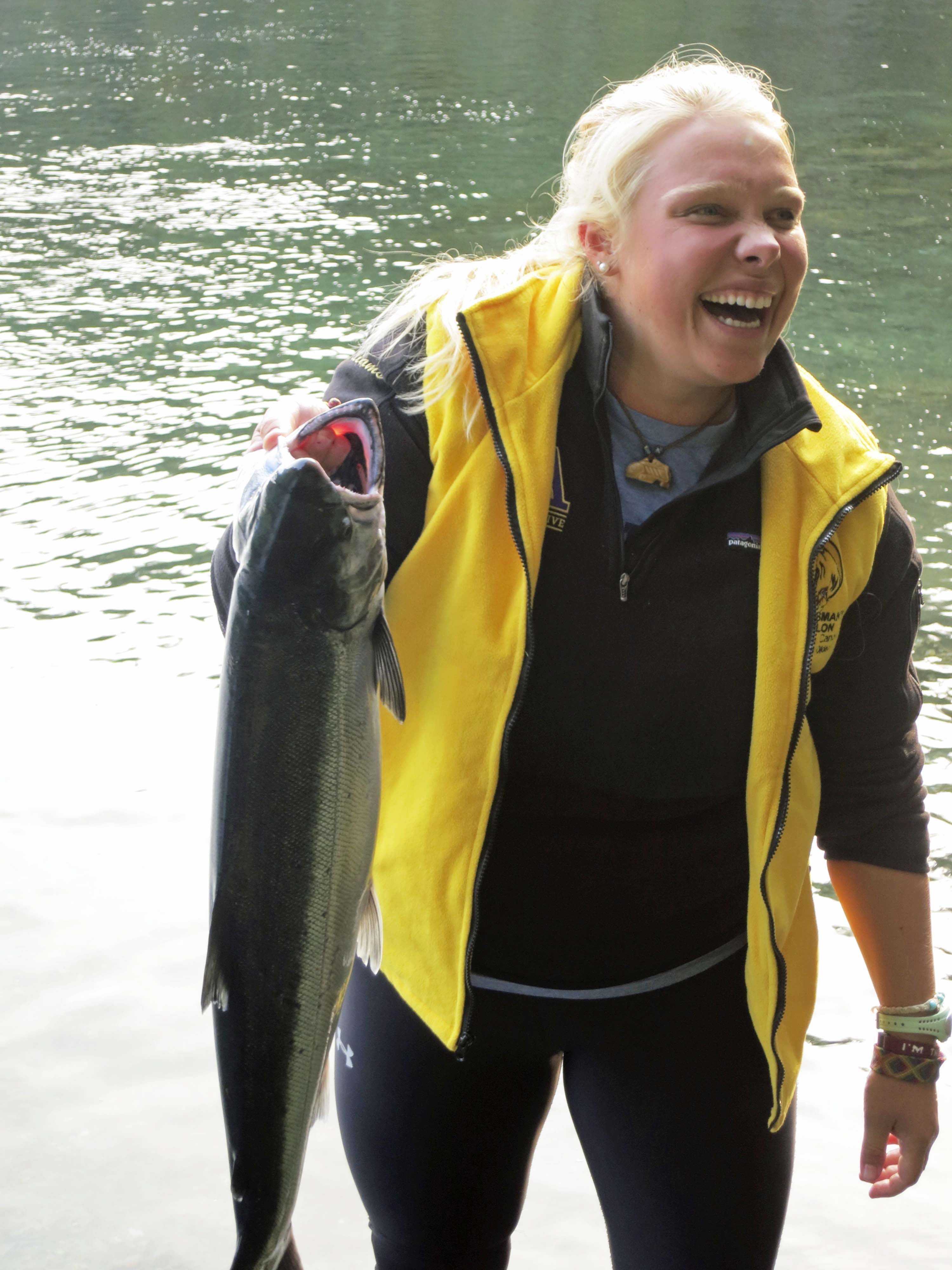
The ever energetic and vivacious Lindy retrieved the salmon and handed it off to Quy.

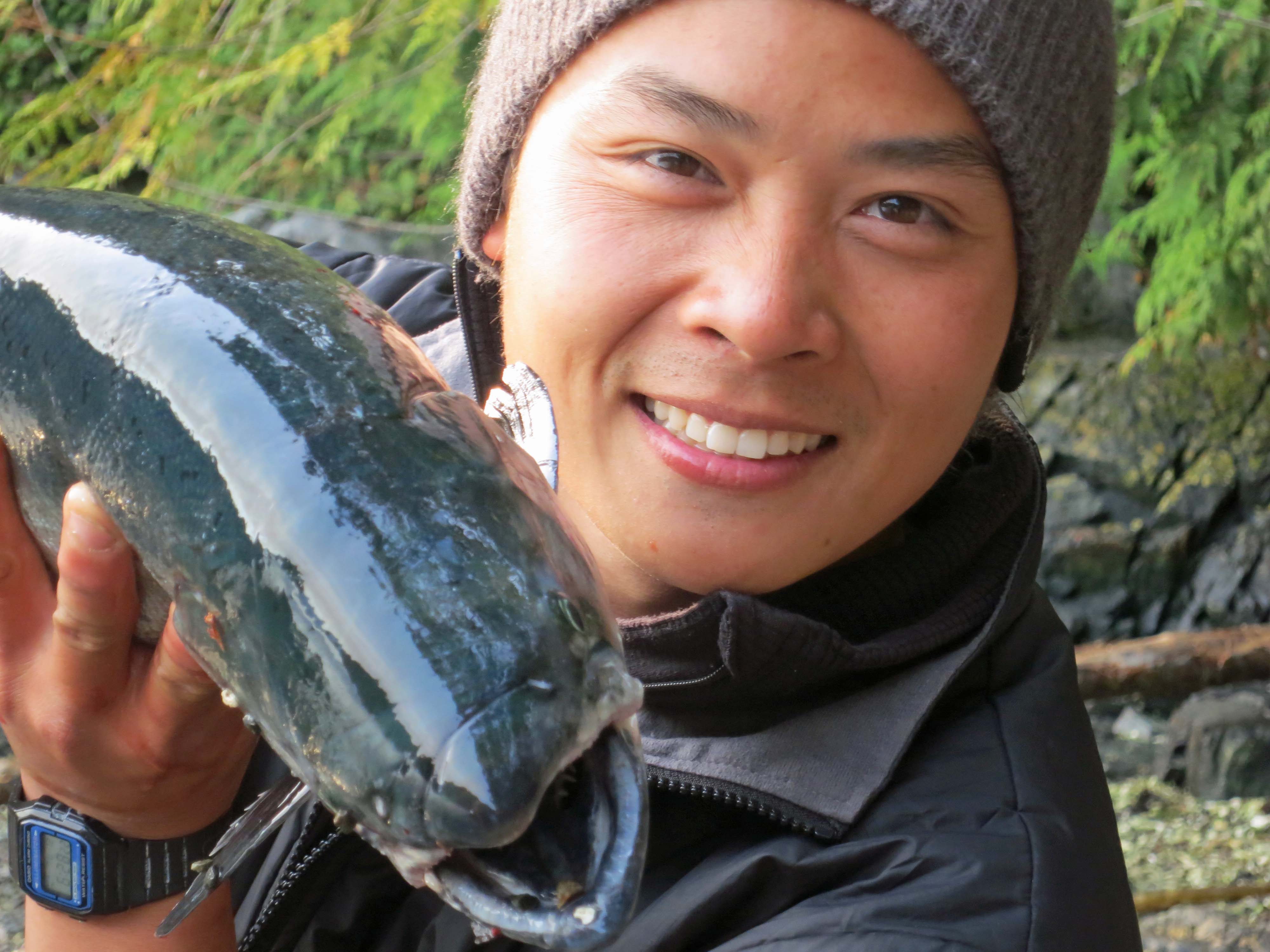
Quy was happy to pose with the salmon, until...

Quy was happy to pose with the salmon, until…

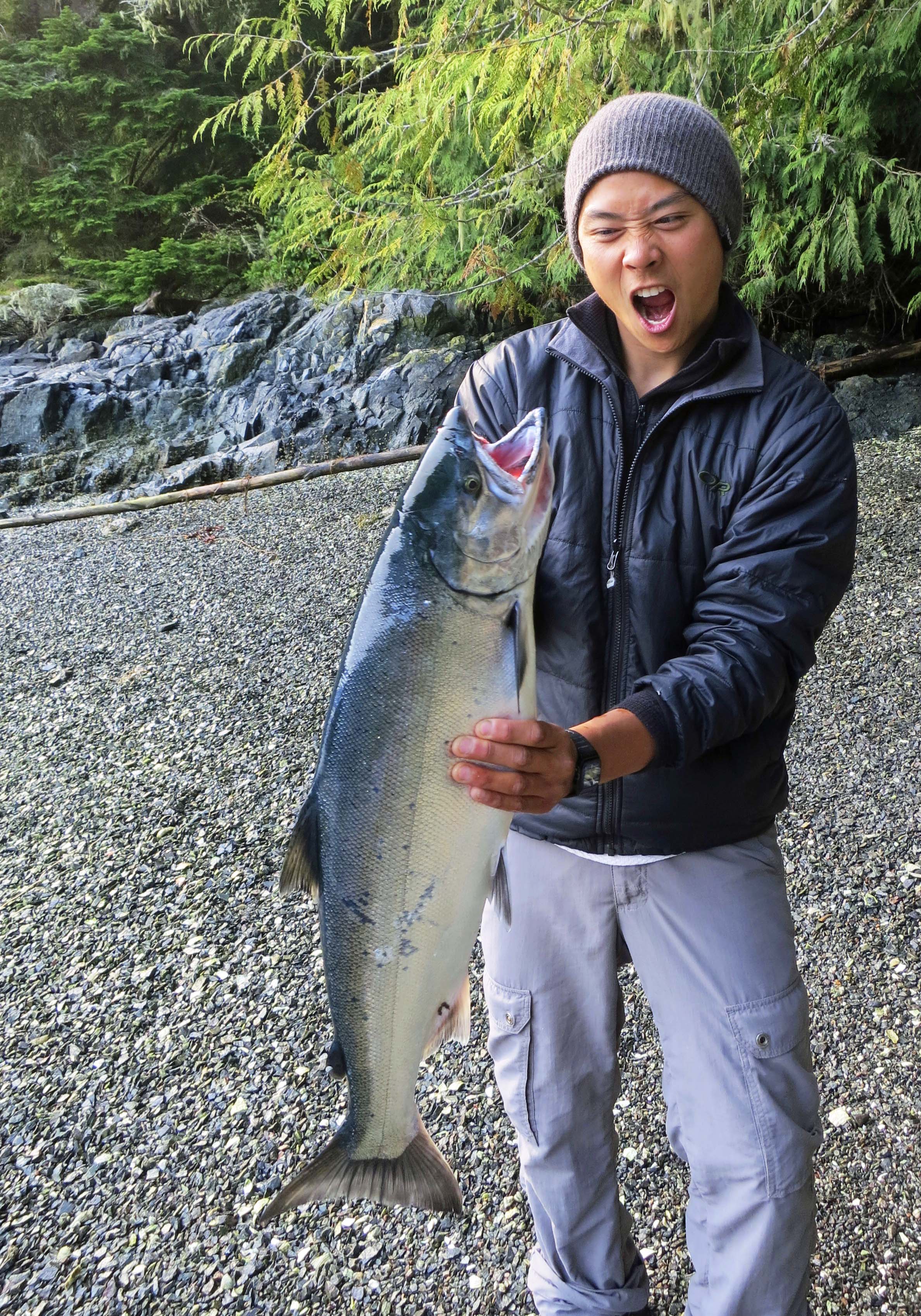
Sea Kayak Adventures guide reacts to wiggling salmon he thought was dead.

… it wiggled.

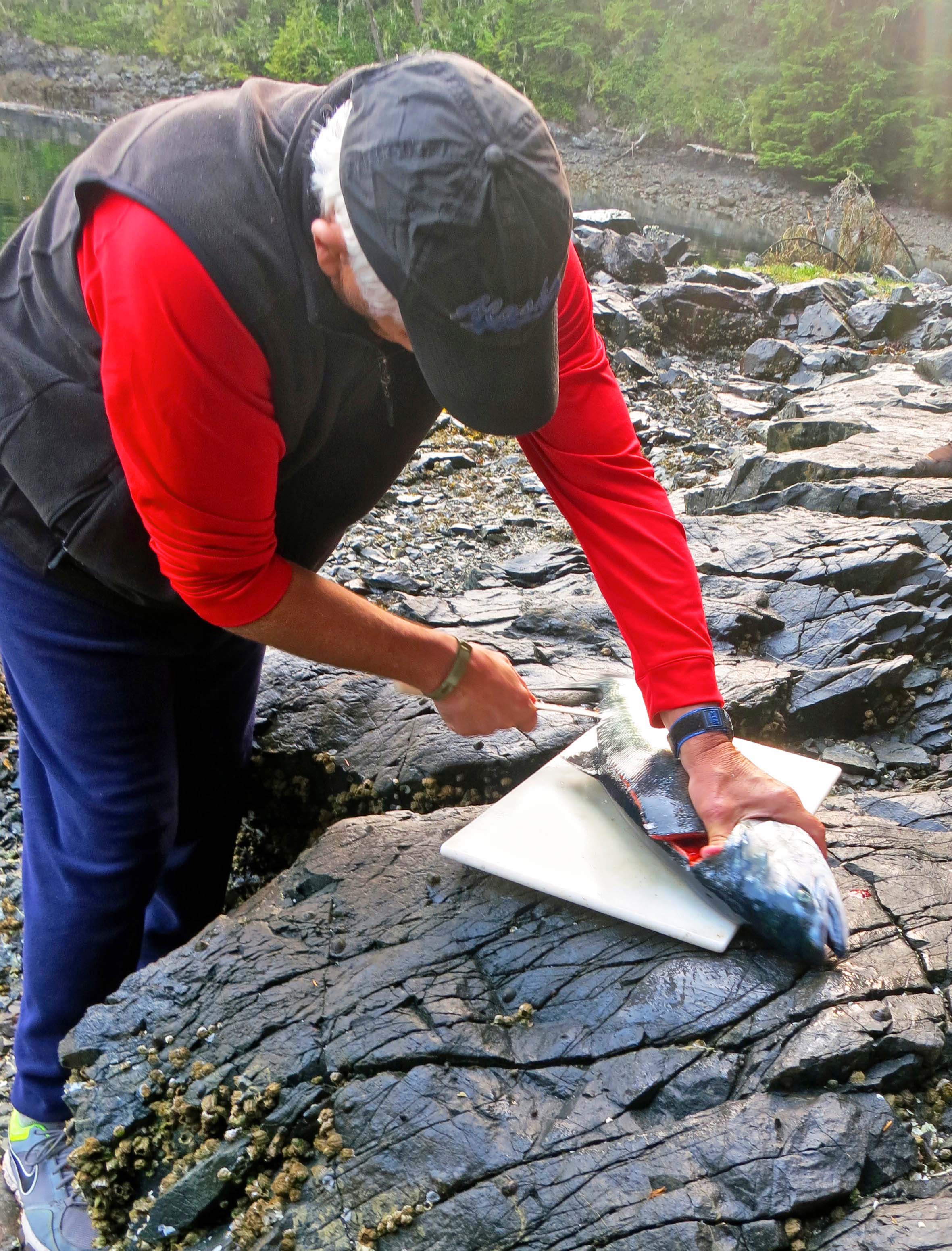
The true hero of the day was Dennis who now lives in Idaho but has fished extensively off of Alaska. He offered to fillet the fish.

The true hero of the day was Dennis, who now lives in Idaho but has fished extensively off of Alaska. He offered to fillet the fish.

Here, Dennis goes to work.

Here, Dennis goes to work.

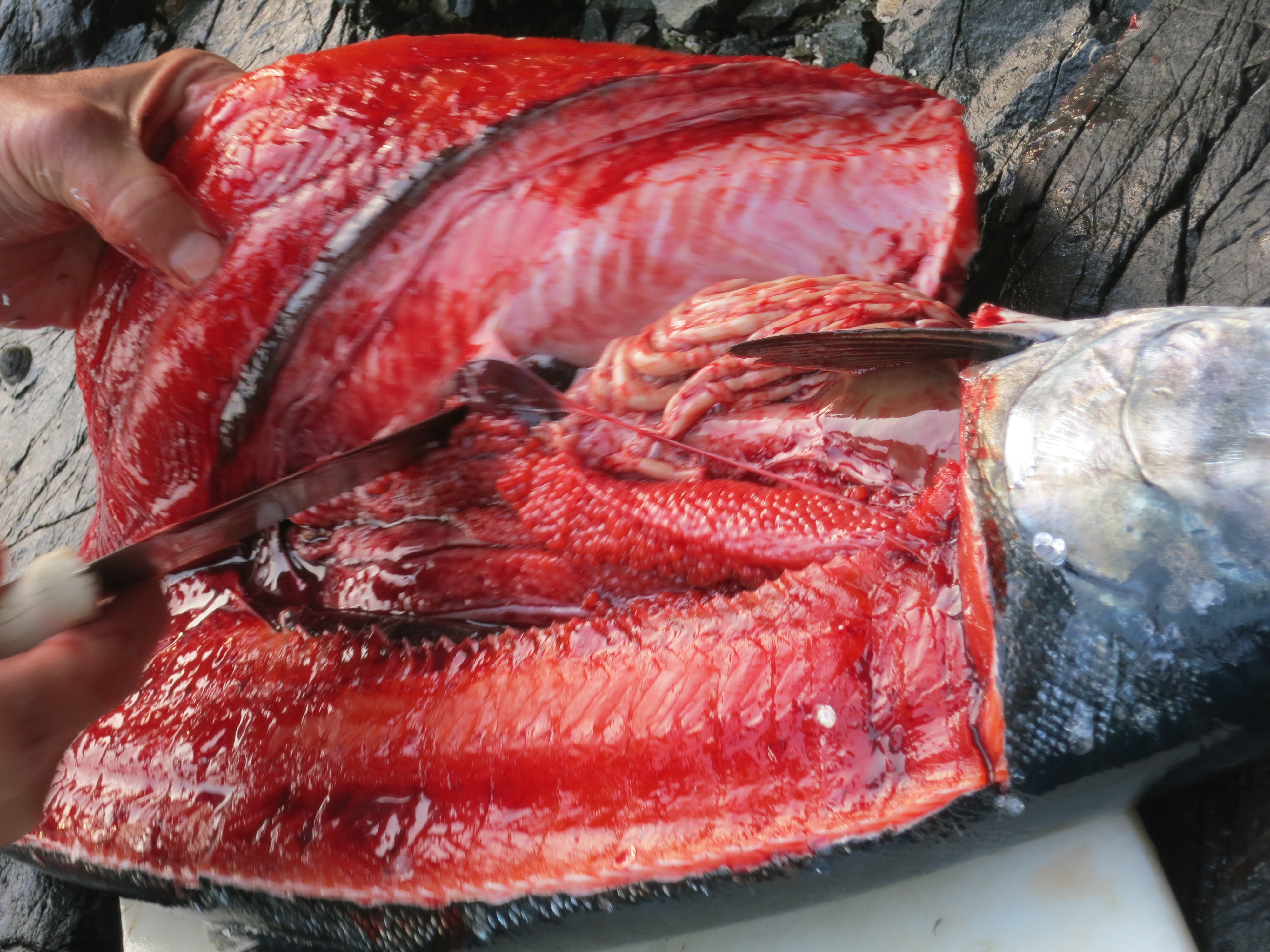
A filleted coho salmon displaying roe. Photo by Curtis Mekemson.

And displays the rich red meat, roe, and innards of the salmon. The salmon made a delicious lunch the next day, easily feeding all of us.

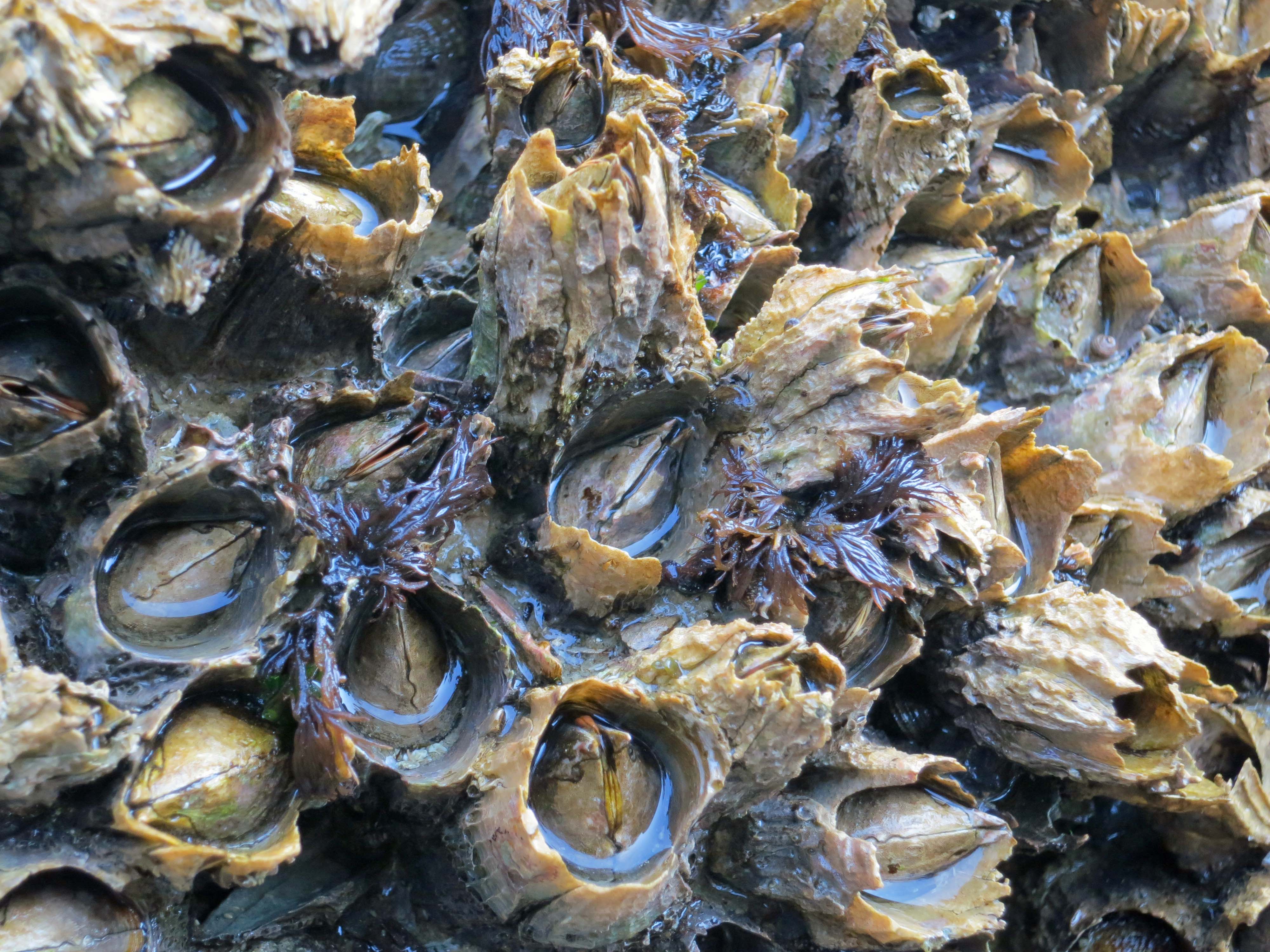
Photo of barnacles off of Compton Island in Blackfish Sound, British Columbia. Photo by Curtis Mekemson.

It was after all of the salmon excitement that we discovered the starfish, and these barnacles.

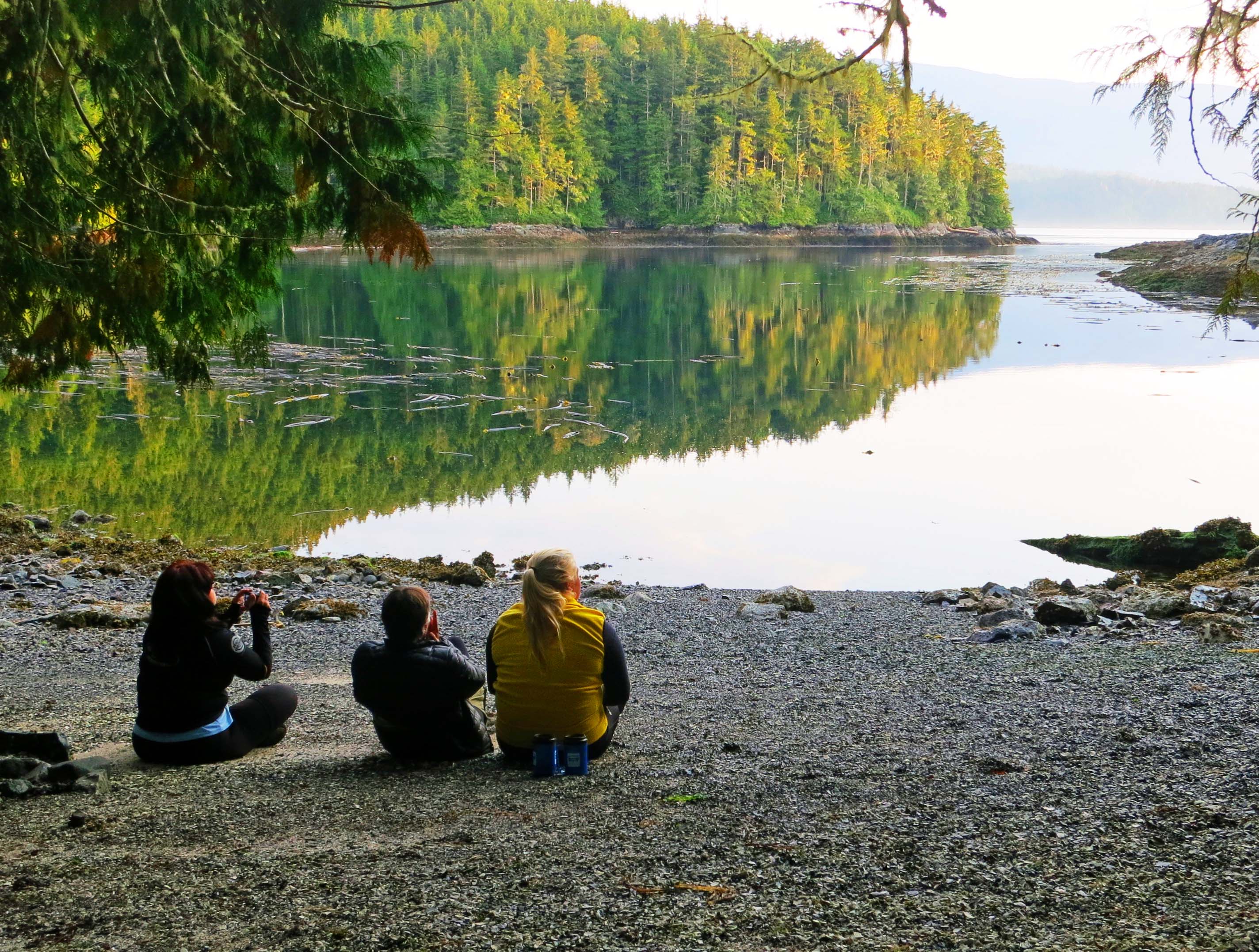
Members of our group enjoy a quiet moment at the end of the day, hoping for a whale to appear. Next blog: we kayak to Berry Island and hear a tale about Bigfoot.

Members of our group enjoy a quiet moment at the end of the day, hoping for a whale to appear. Next blog: we kayak to Berry Island and hear a strange tale about Bigfoot.

The Day of the Dead… A Brief Interlude

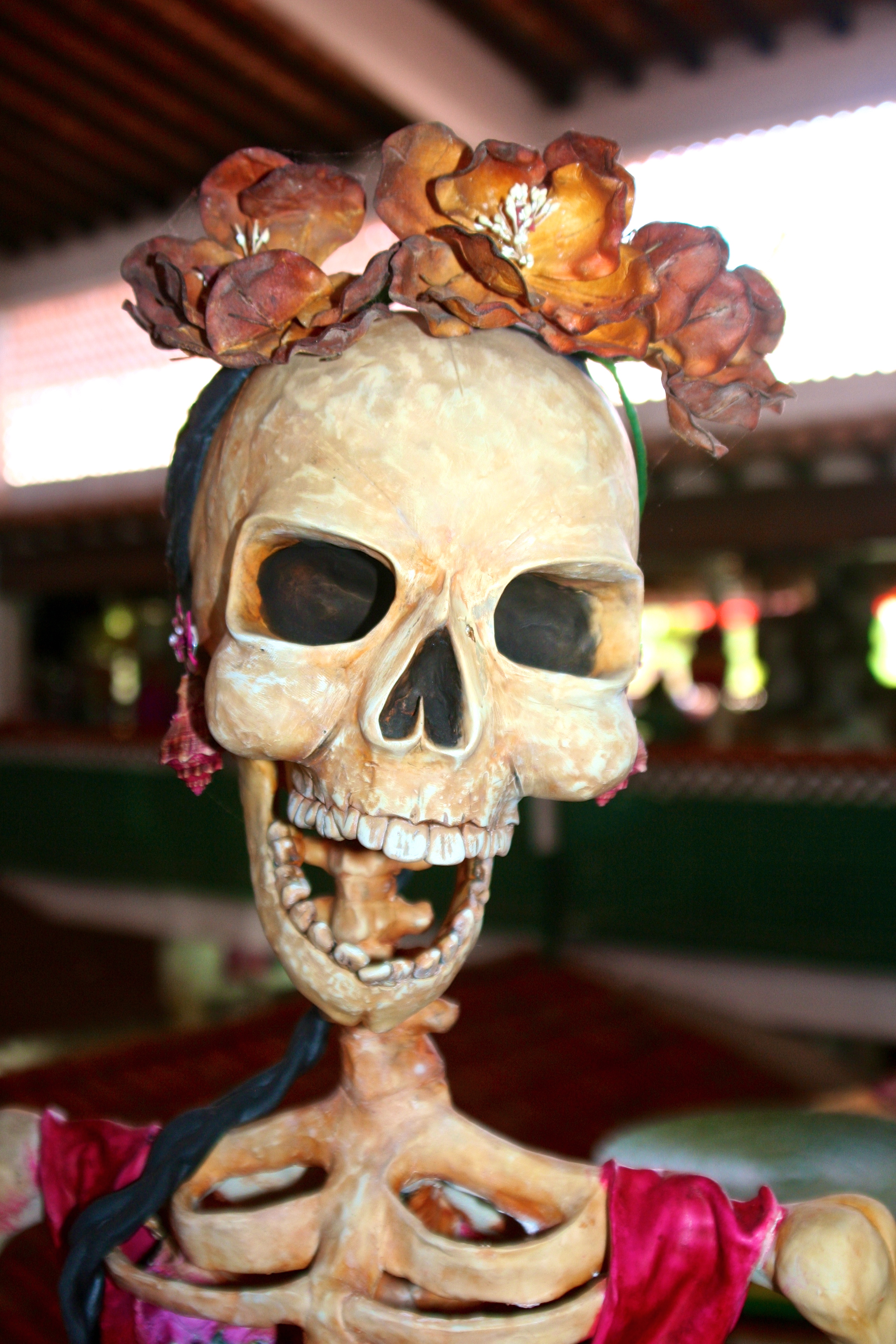
Day of the Dead skeleton in Puerto Vallarta, Mexico.

This girl was all decked out for the Day of the Dead

It’s the Day of the Dead, or Día de Muertos in Spanish. My blogging friend, James at Gallivance, and Google inspired me to post my favorite Day of the Dead skeleton as a quick break from my kayak series. (I’ll get back to kayaking in my next blog.)

Peggy and I found this beauty at the public market in Puerto Vallarta, Mexico. The purpose of the day is to remember friends and family who have passed on. It’s big in Mexico. And Mexicans have made a fortune in selling representative statues to tourists.

Today, Día de Muertos is a Catholic festival, but it owes its beginning to the Aztecs. People often take the favorite foods of the deceased out to the gravesite so the dead person can feast. Got to keep those ghosts happy. Trick or treat comes to mind.

May all your ghosts be happy ghosts. –Curt

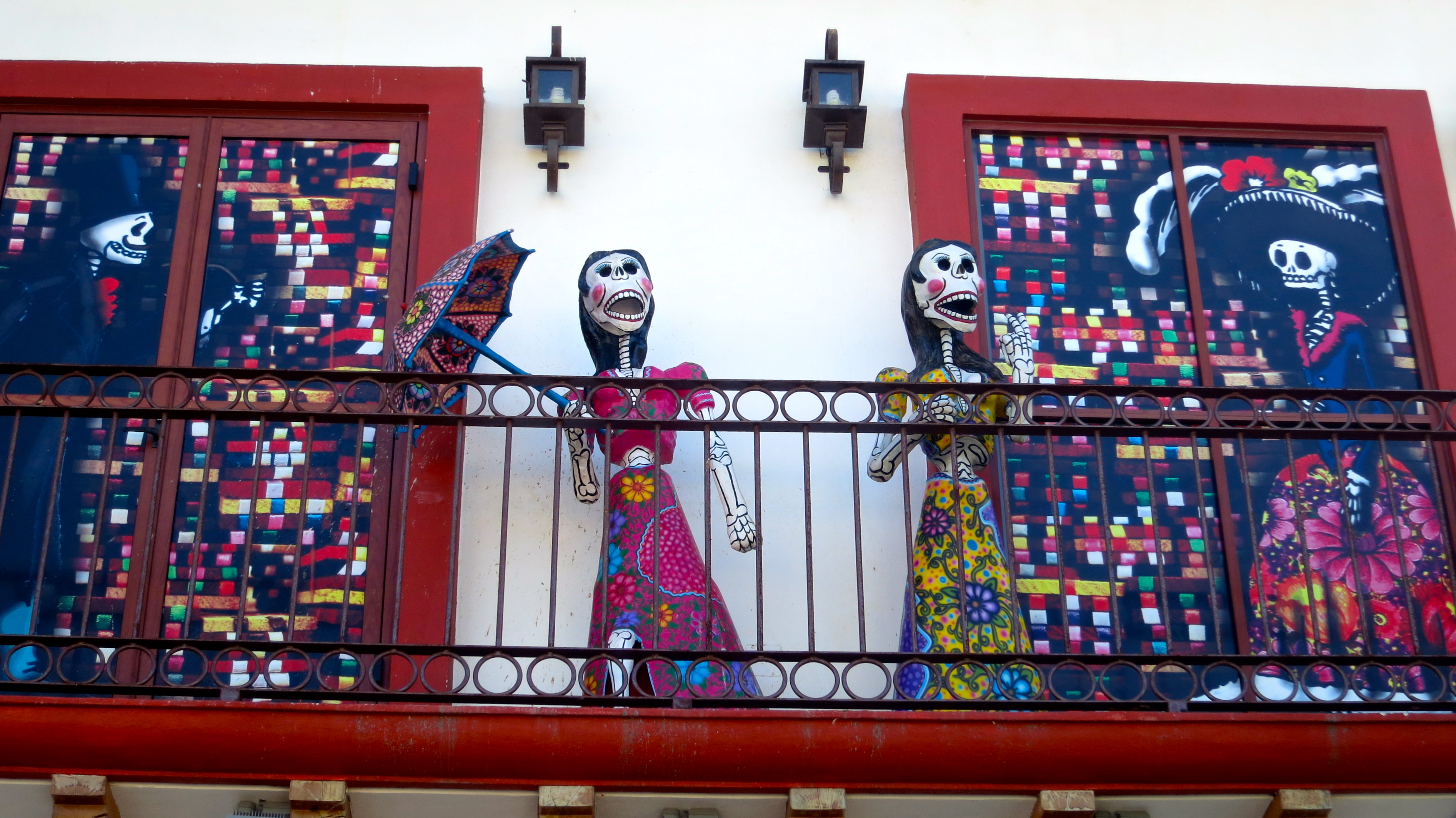
A popular restaurant in Puerto Vallarta features these to singing cuties on its balcony.

A popular restaurant in Puerto Vallarta features these two singing cuties on its balcony.

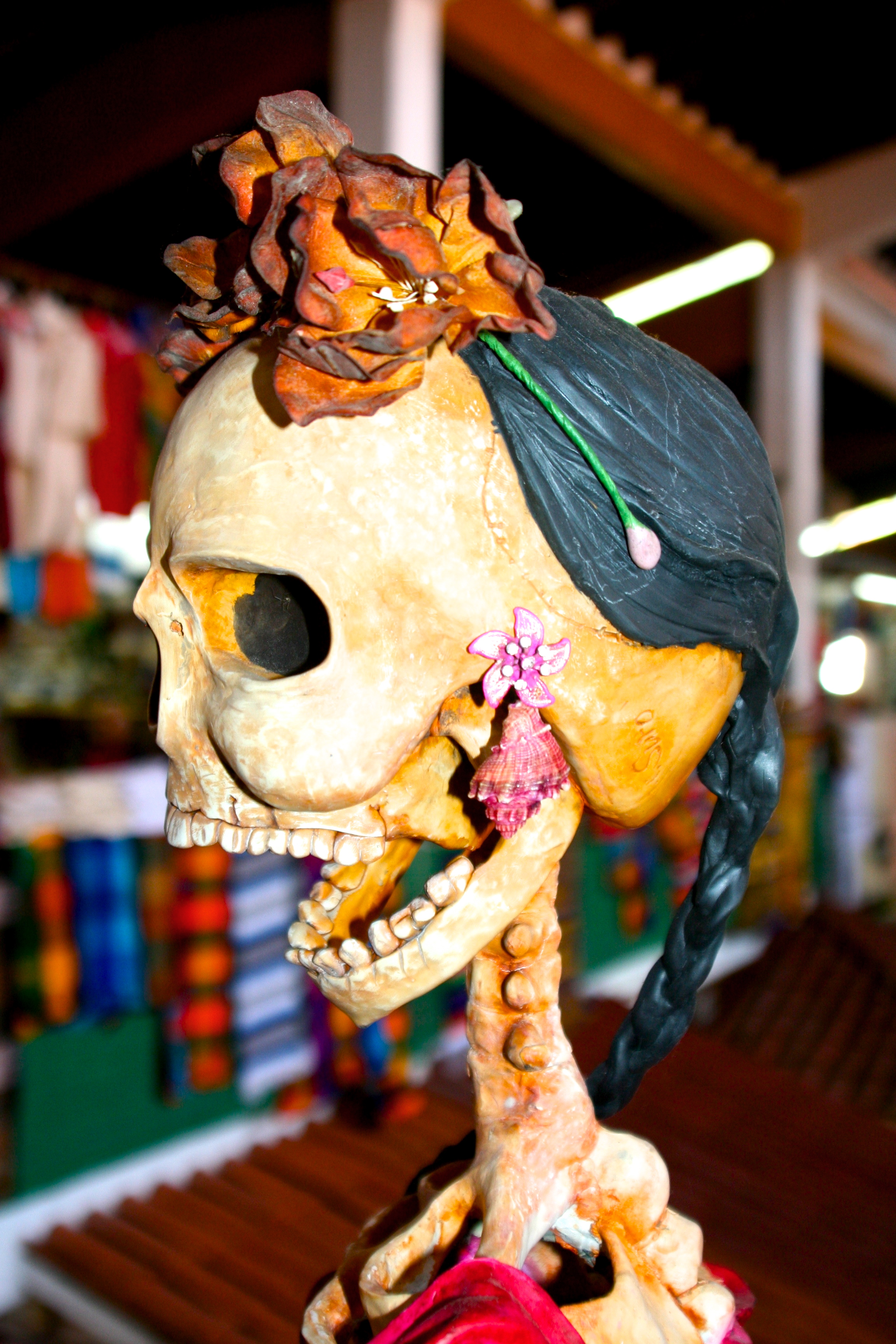
A side view of my favorite. Check out the earrings!

A side view of my favorite. Check out the earrings!

A Gorgeous Sunset and a Breaching Killer Whale… British Columbia Sea Kayak Adventure: Part 2

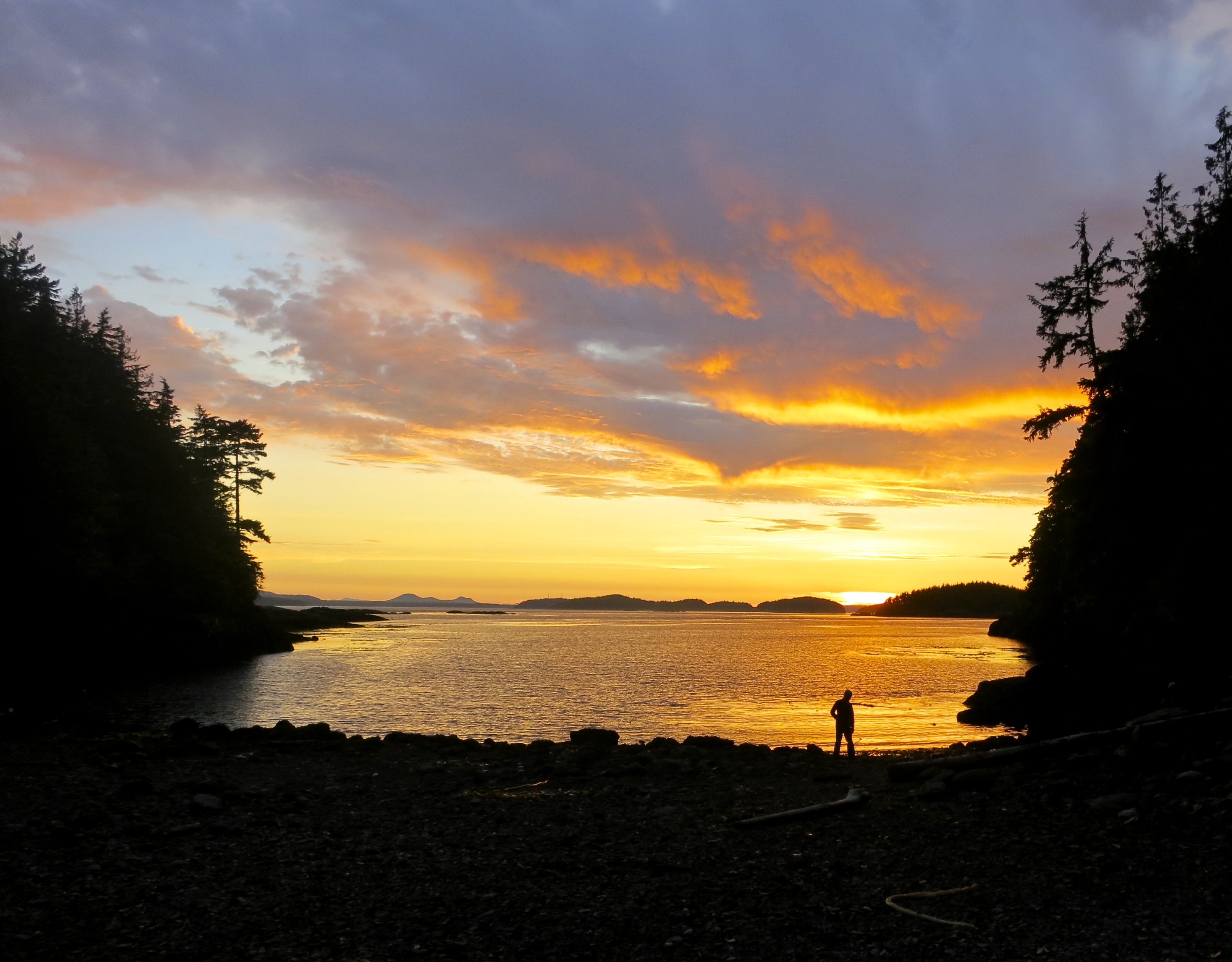
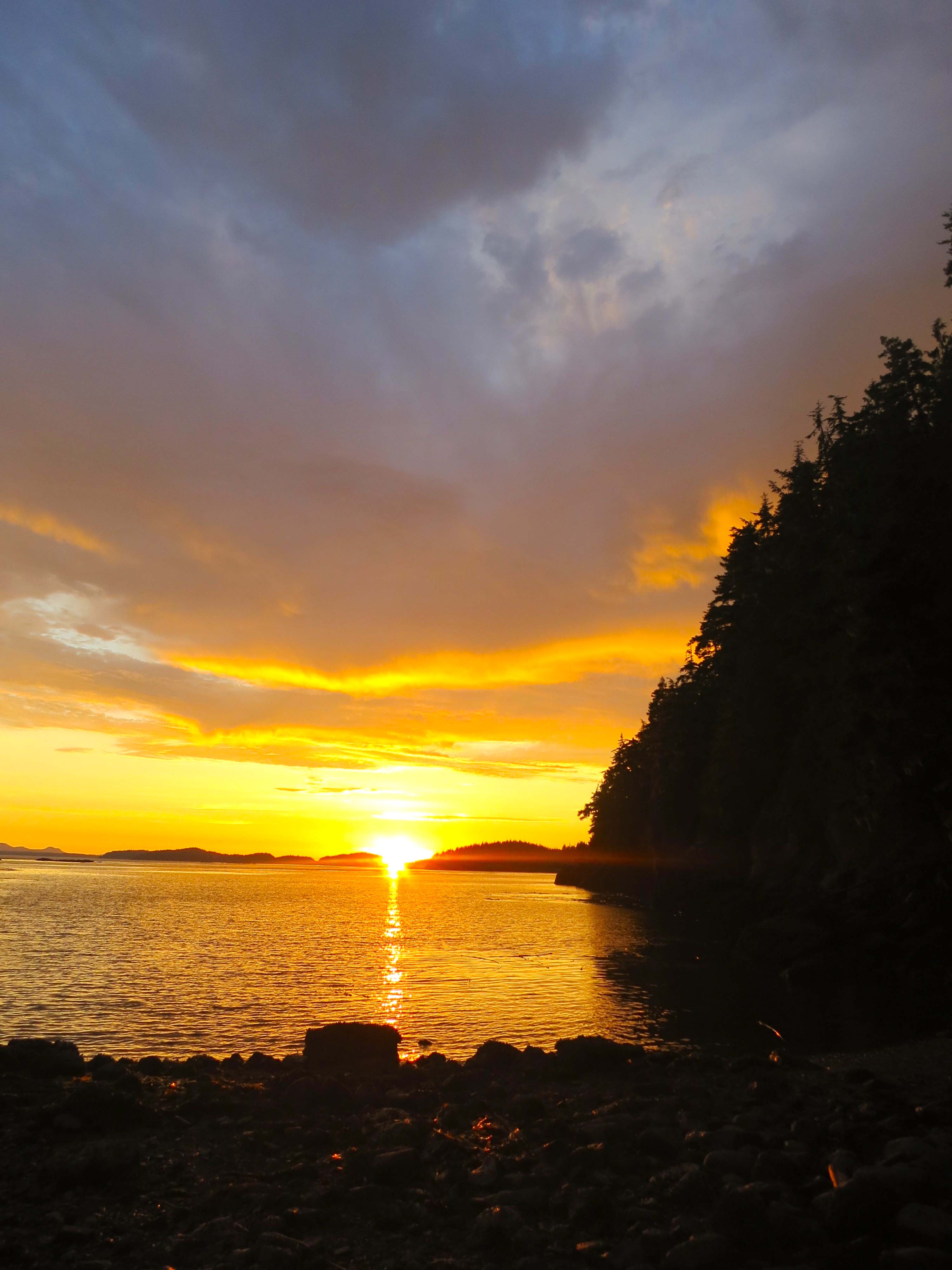
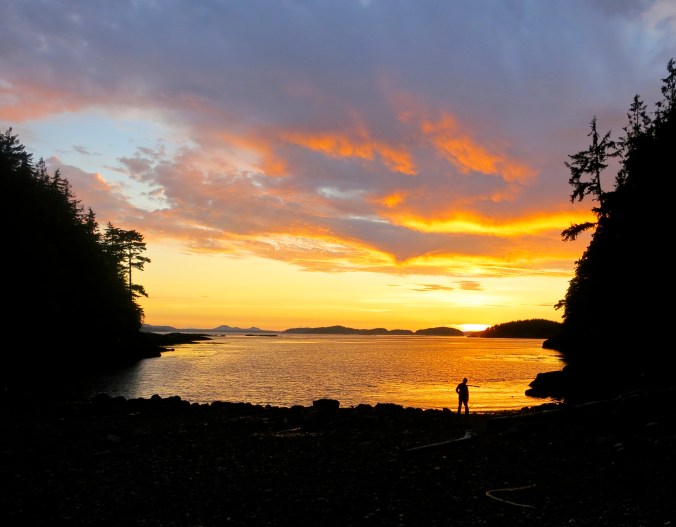
Sunset at Sea Kayak Adventure's campsite on Hanson Island in Johnstone Strait. Photo by Curtis Mekemson.

As the day ends, one of our kayakers takes a moment to enjoy the sunset from our campsite on Hanson Island.

A post-card-glorious sunset marked the end of Monday, our first day of kayaking on Johnstone Strait off the northeast coast of Vancouver Island. Morning seemed long ago and far away— and my body spoke to just how long ago and far away that was. It had passed 71 earlier in the year and was wondering when the fabled golden years were going to start. “They are here,” I told it with a grin. It grumped. My mind and body aren’t always in agreement.

The guides and group, including Peggy and I, were in high spirits. We had successfully completed our first day of kayaking, seen stunning scenery, and watched an orca breach. We were in a beautiful setting. Our guides had just fed us a gourmet meal, and our tents were set up, promising a good night’s sleep. What was there to complain about?

We had all met for the first time on Sunday night. The session had started with the usual meet and greet. “Tell us something about yourselves.” We half listened as we composed whatever we were going to say. There were the Canadian guides, a contingent from Idaho, three mid-westerners, one Californian, and our friends David and Edie from Alaska. Peggy and I are from Oregon. We also had a family of Asians until they figured out they had come to the wrong meeting. Everyone had at least some kayak experience. David and I, along with our child brides, were the elders.

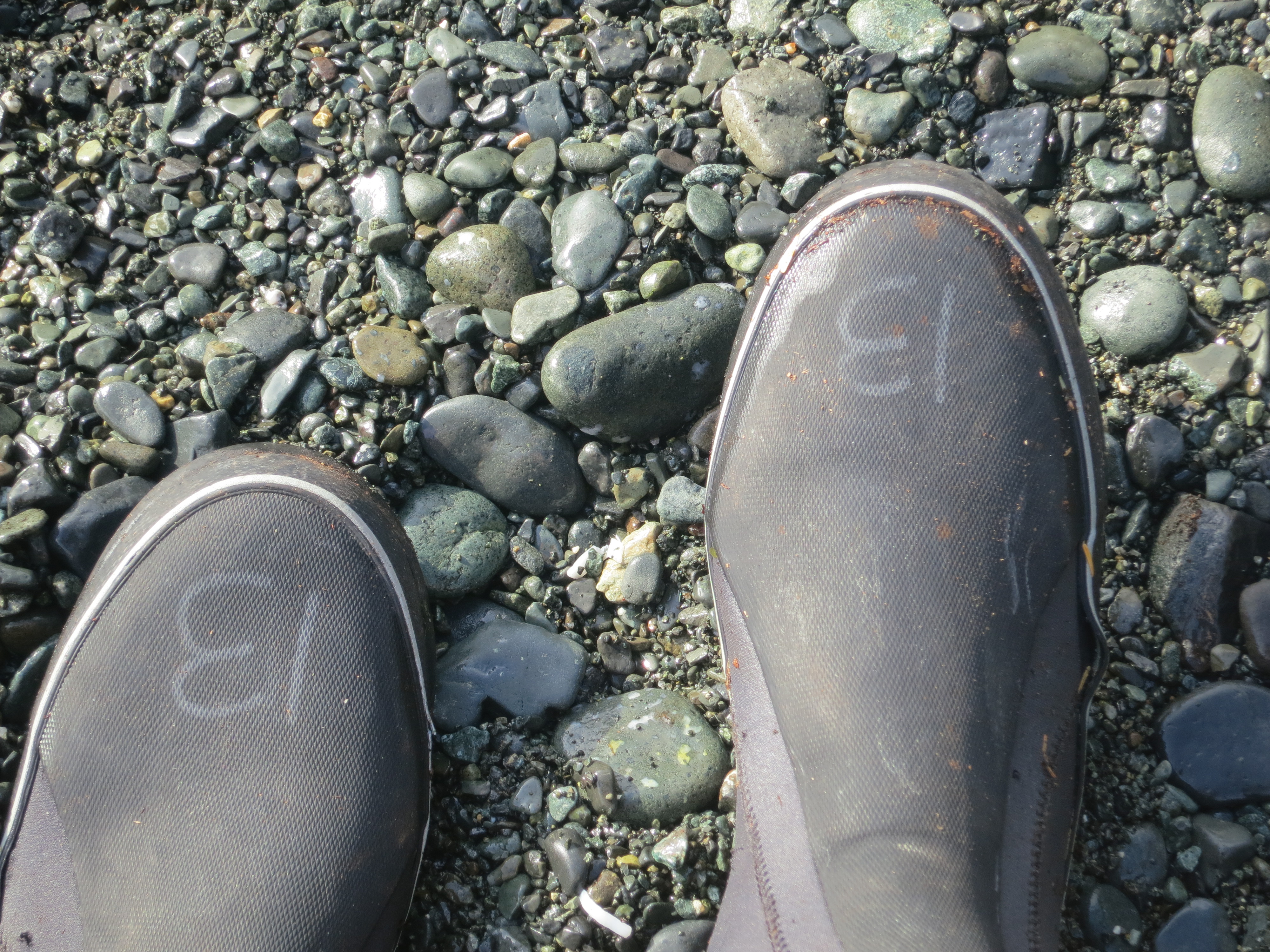
Our guides gave us an overview of the journey and then distributed dry bags and rubber boots. I debated between size 13 and 14. The 14s were a little loose, the 13s a little snug. I went with snug and wondered how my large feet would work in the tight confines of the kayak. Carefully, I presumed. Peggy and I retired to our rooms and begin the packing process— what to take and what to leave. Sea Kayak Adventures had recommended a lot and our guides had suggested less. Everything had to fit in the boats. There were important decisions to make.
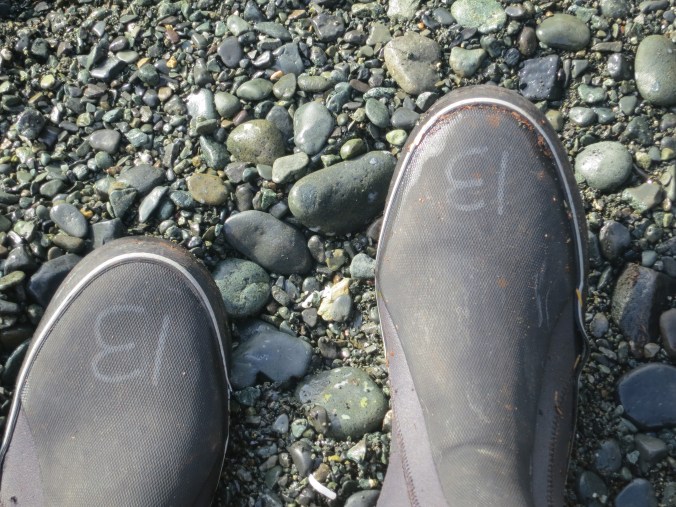
Rubber boots issued by Sea Kayak Adventures.

My size 13 boots, clearly marked for all to see. I wondered how they would relate to the small rudder pedals in the Kayak.

The next morning we were up early, went through our gear for the umpteenth time, had a quick bite, and caught the taxi hired to take us to Telegraph Cove. It was time to break out the cameras.

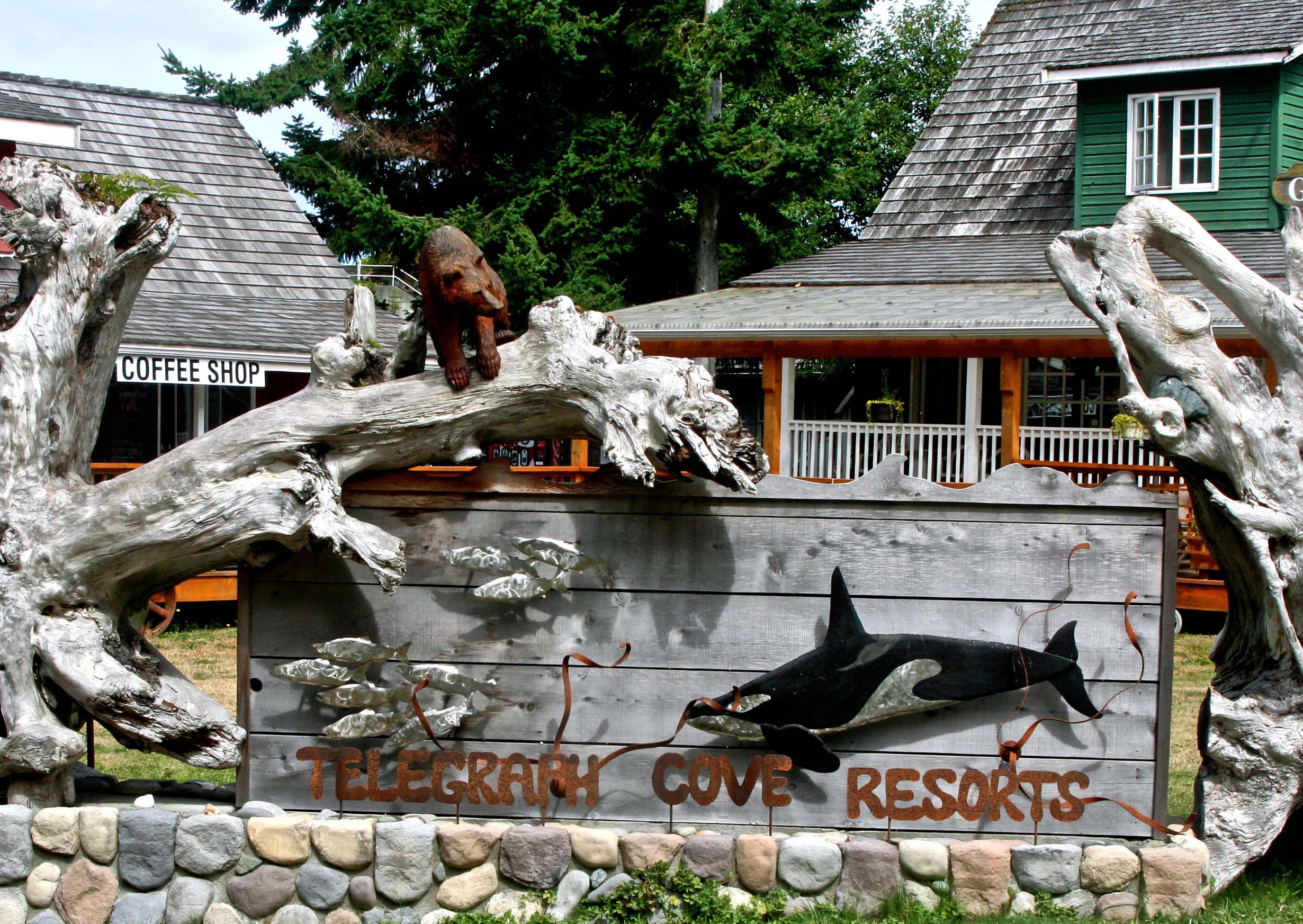
Telegraph Cove started life as a lumber mill. Nowadays it is an eco tourism center. A couple of hundred thousand people visit in the summer for whale watching, kayaking, fishing and checking out grizzlies. In the winter, its population drops to 20. The town has done a great job of preserving historical buildings from its past.
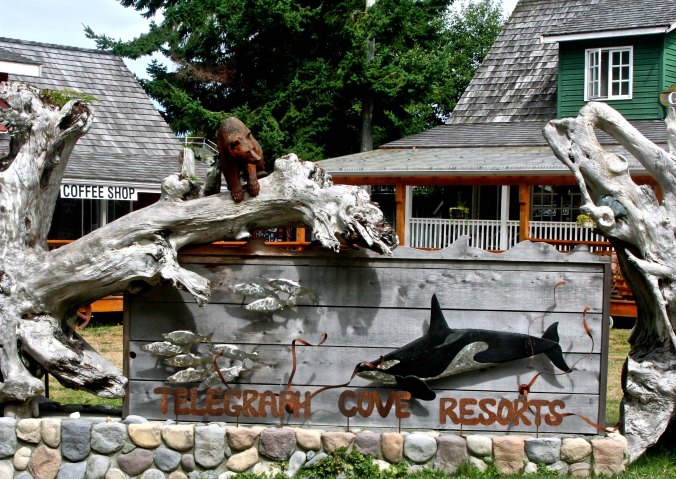
This sign, featuring an Orca, grizzly and salmon welcomes visitors to Telegraph Cove.

This sign, featuring an orca, grizzly and salmon, welcomes visitors to Telegraph Cove. Also note the impressive drift wood. We were to find some on our trip. (Photo by Peggy Mekemson.)
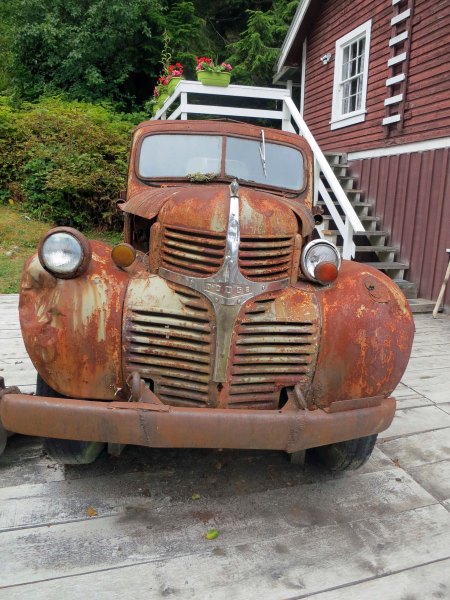
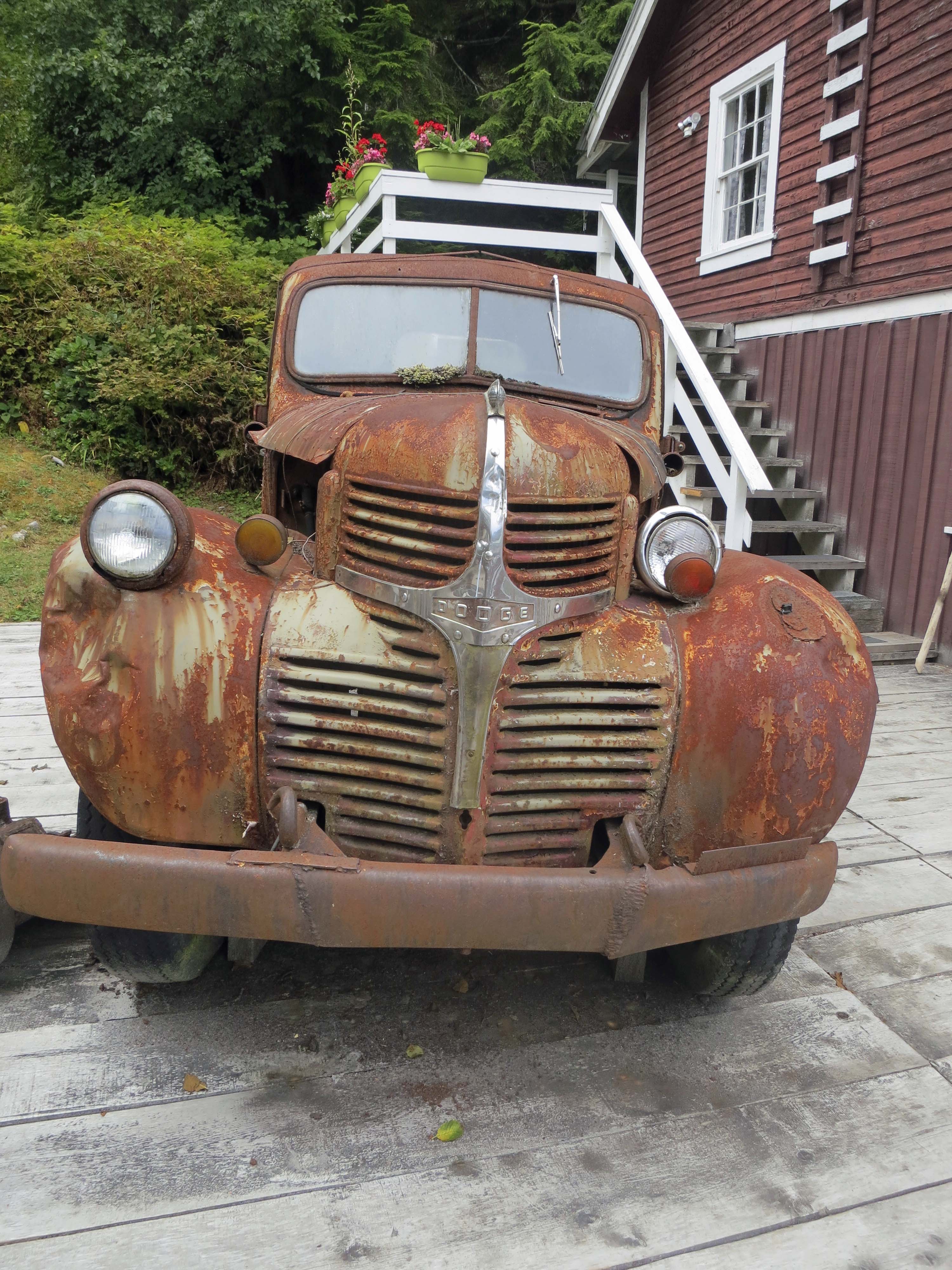
Old Dodge Truck at Telegraph Cove on Vancouver Island. Photo by Curtis Mekemson.

Part of the appeal of Telegraph Cove is its preservation of the past, as with this old Dodge truck. I think the truck was confused about where its lights should be. Or maybe it was so old it needed bifocals.
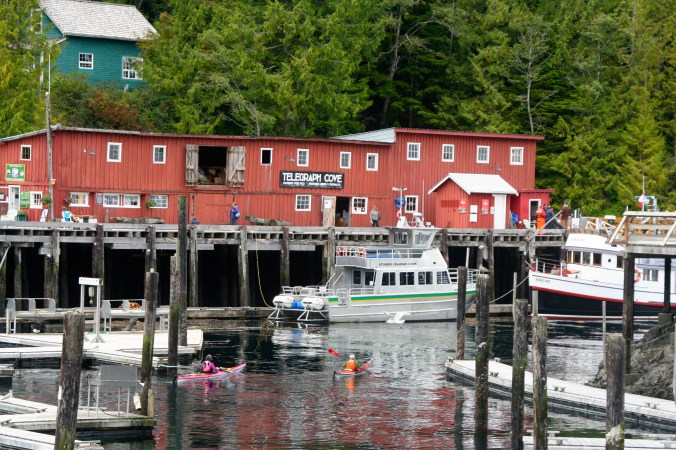
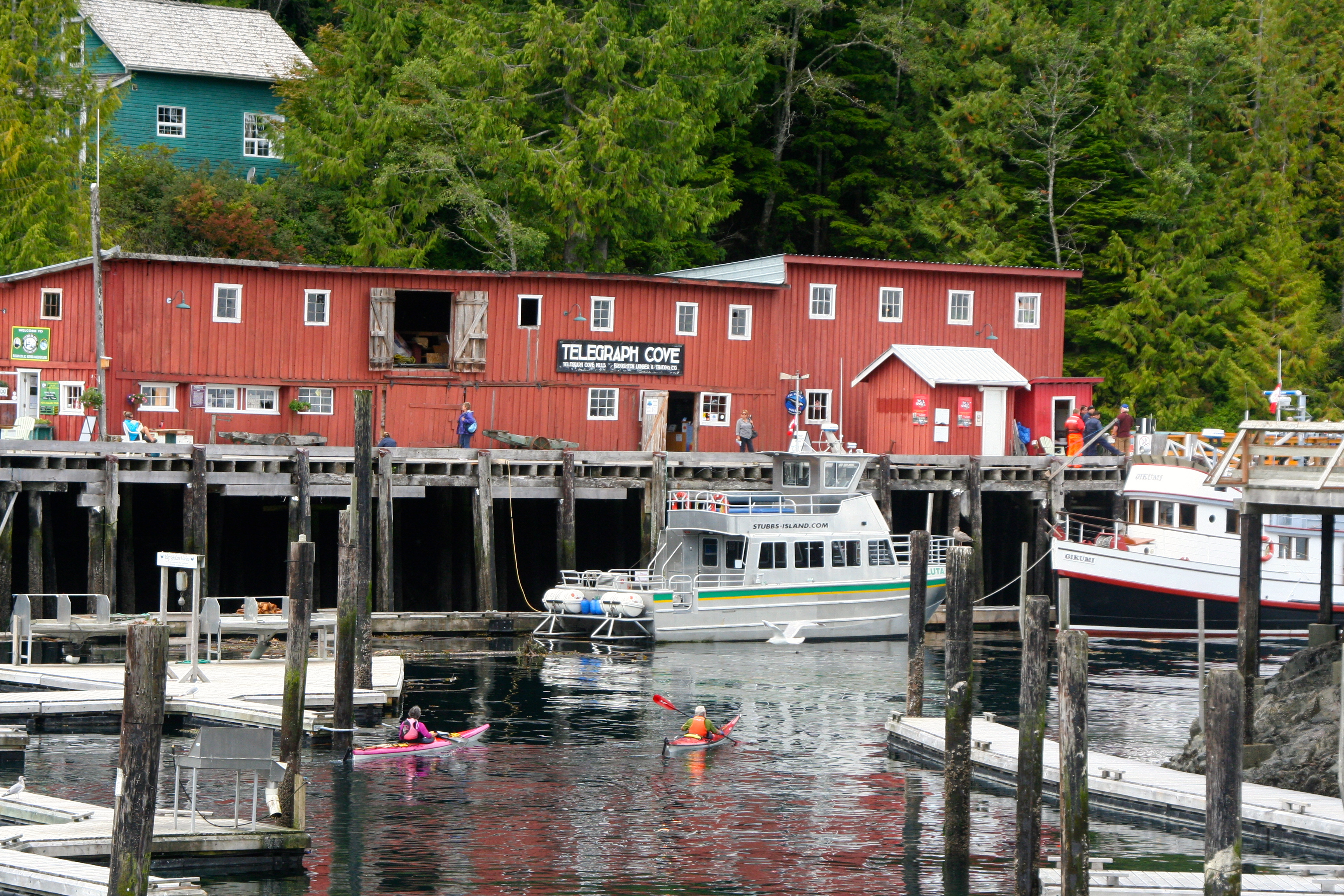
Telegraph Cove is all about water as this photo suggests. Here we see the Whale Interpretive Center, a fishing boat, and kayakers. (Photo by Peggy Mekemson.)

Telegraph Cove is all about water as this photo suggests. Here we see the Whale Interpretive Center, a fishing/tour boat, and kayakers. (Photo by Peggy Mekemson.)
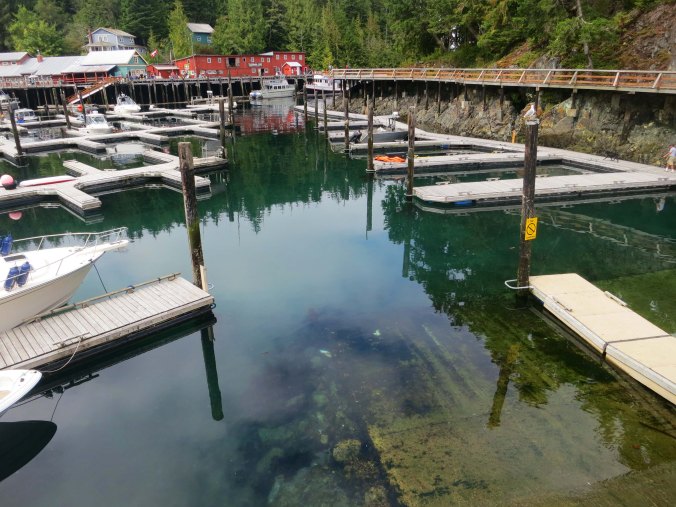
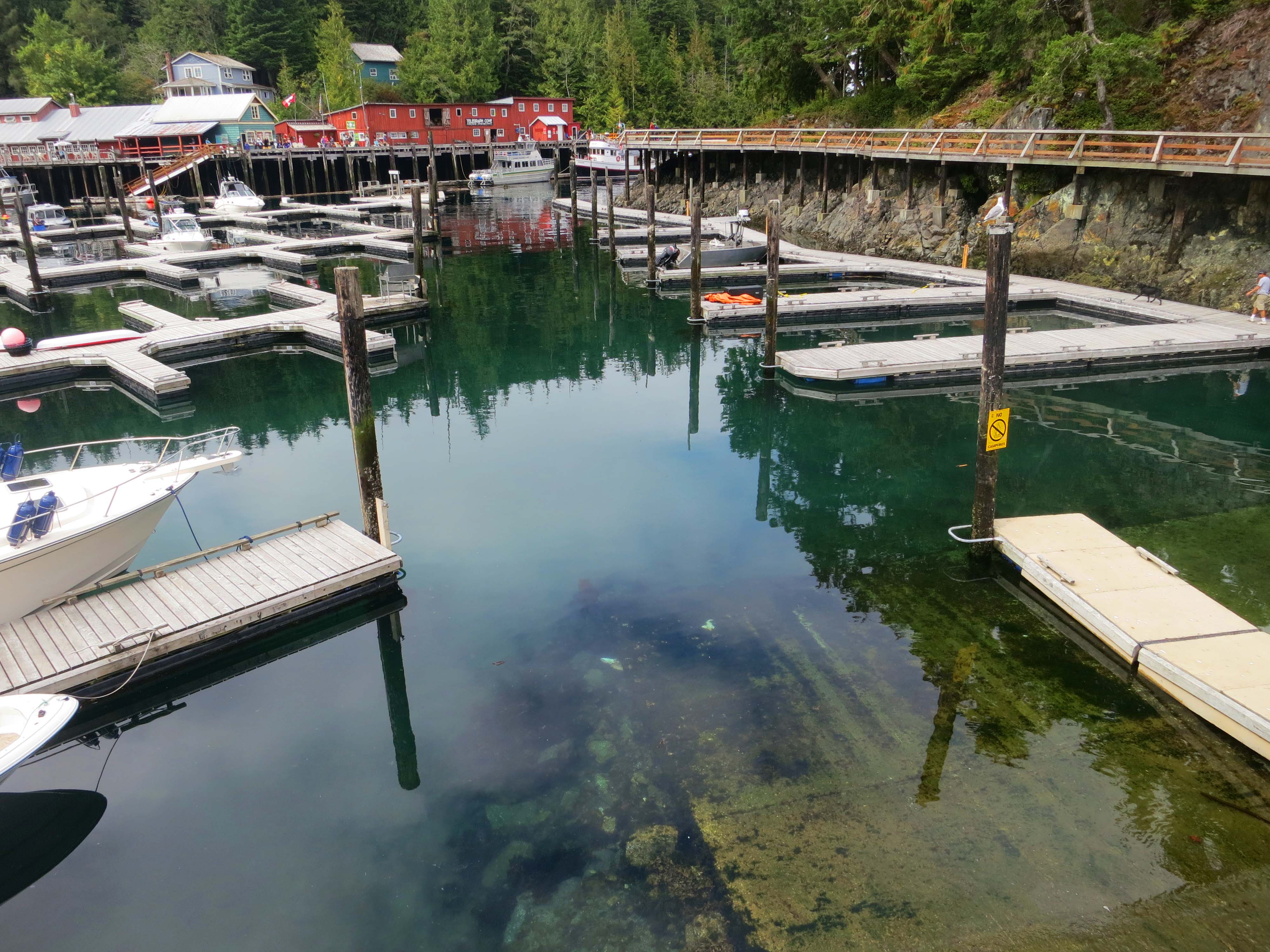
Empty docks at Telegraph Cove suggests all of the tours and fishing expeditions are already out on Johnstone Strait. Photo by Curtis Mekemson.

The empty boat docks tell a tale. We would not be the first to leave Telegraph Cove that morning for the Johnstone Strait. Our route took us right down the row and made a right at the Whale Interpretive Center.

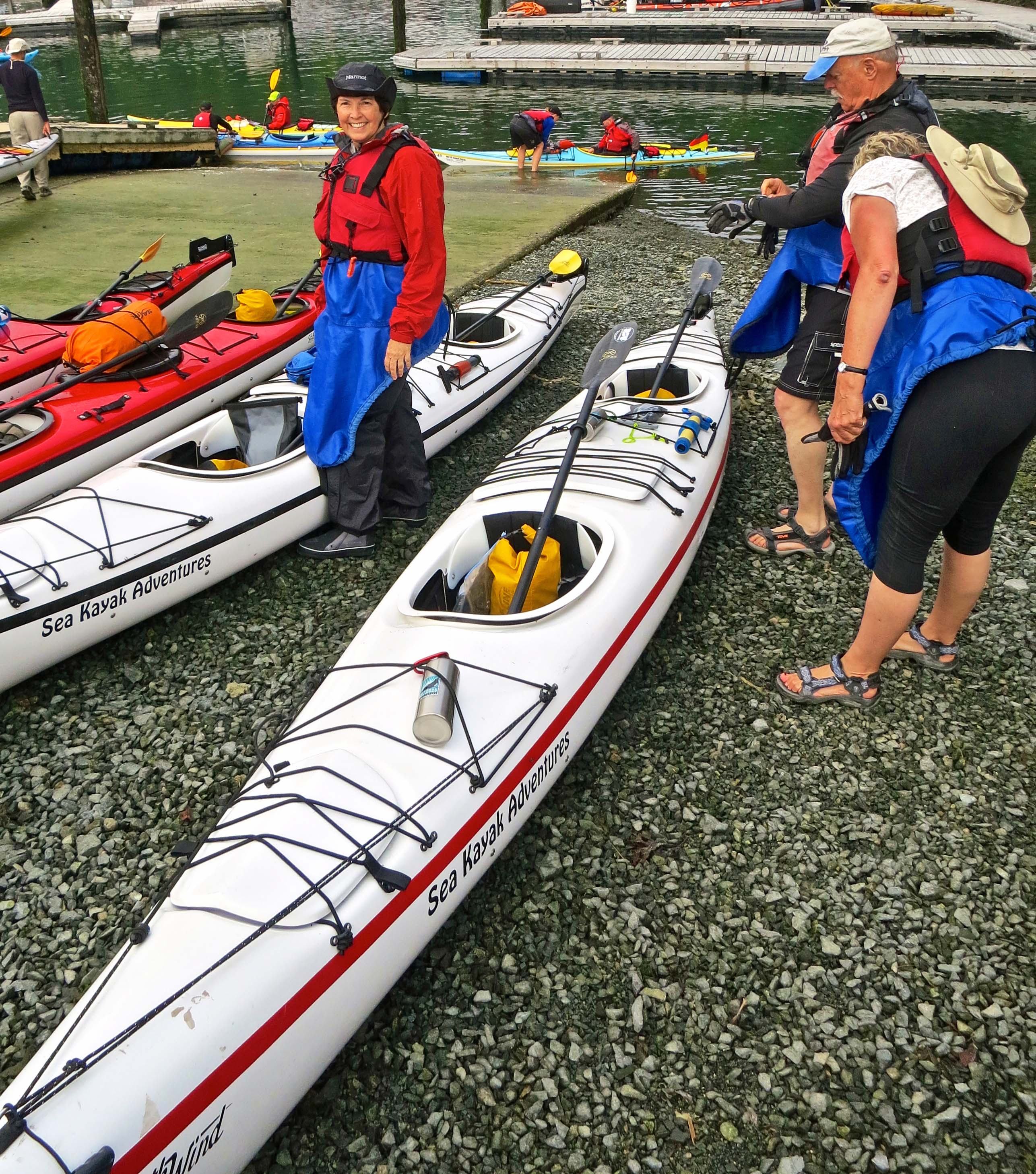
Once our taxis dropped us off at Telegraph Cove, it was time to get busy. There were kayaks to pick, gear to load, life vests to fit, and last-minute instructions, such as which side of our paddle was up.
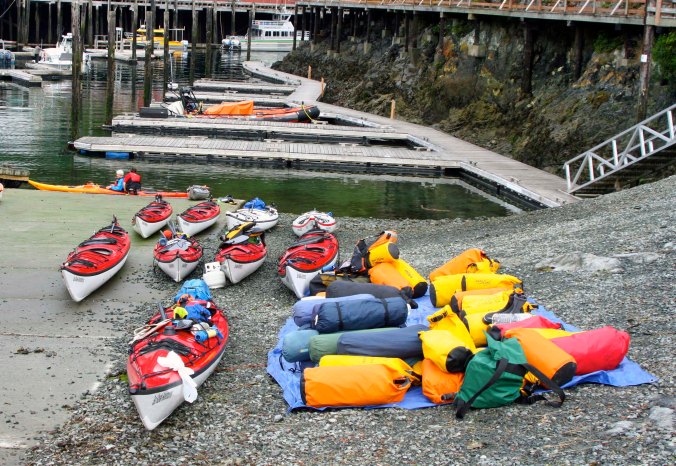
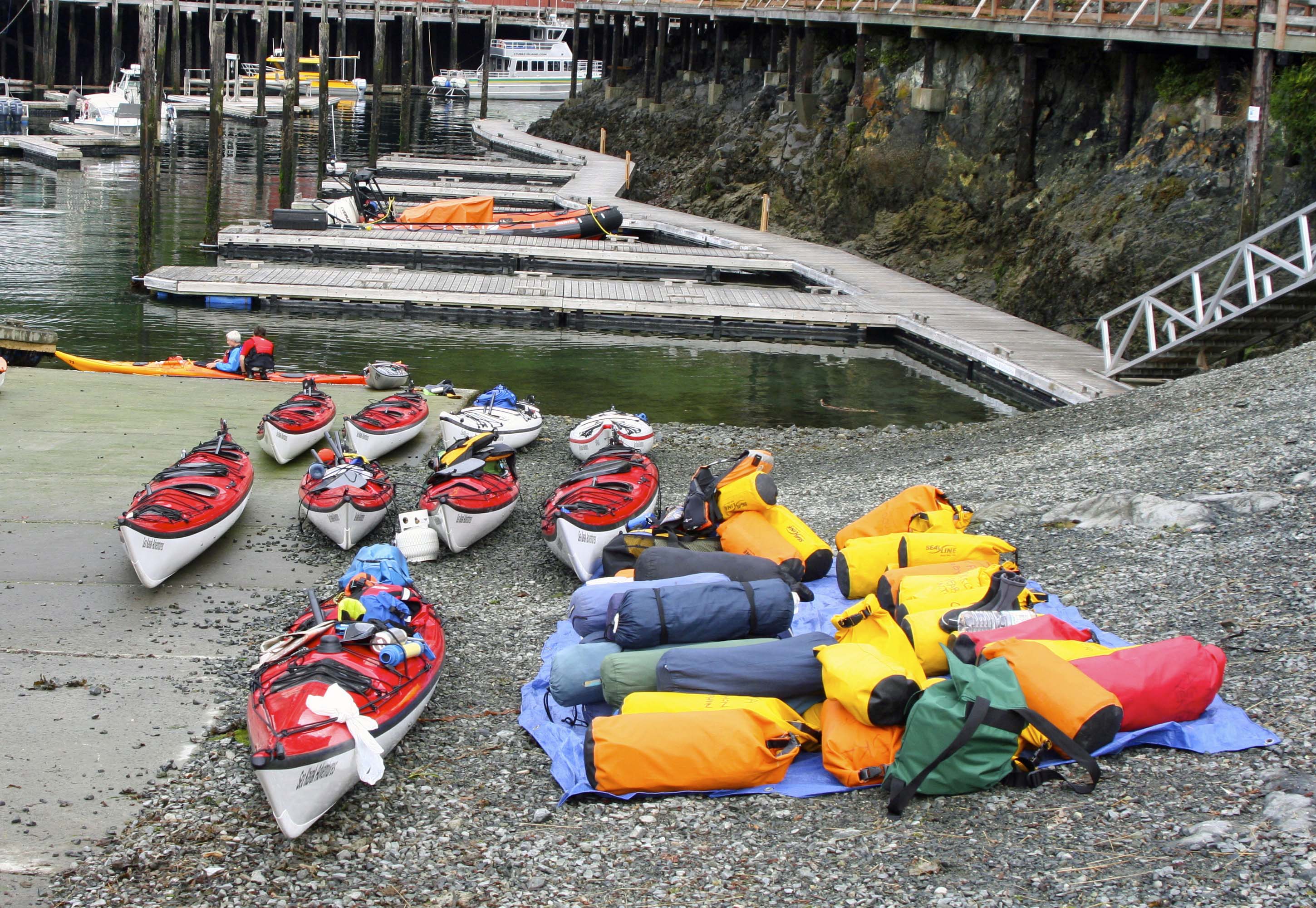
Sea kayaks wait for the next Sea Kayak Adventure tour group in Telegraph Cove.

Our guides, Julia, Nick and Quy, had been up  before dawn getting ready for us. Kayaks, life vests, and sleeping pads were waiting. Group gear had already been packed. Our first chore was to pick out our kayaks. (Photo by Peggy Mekemson.)

The white boats are more stable, the guides told us. Being the oldest, David, Edie, Peggy and I decided we could use the most stability. What the guides failed to mention in the fine print was that the white kayaks were also the largest, the heaviest, and could carry more of the group gear.Translation: they would be slower and harder to move.

The white boats are more stable, the guides told us. Being the oldest, David, Edie, Peggy and I decided we could use the most stability. What we failed to think through was that the white kayaks were also the largest, the heaviest, and carried more of the group gear.Translation: they would be slower and harder to row.
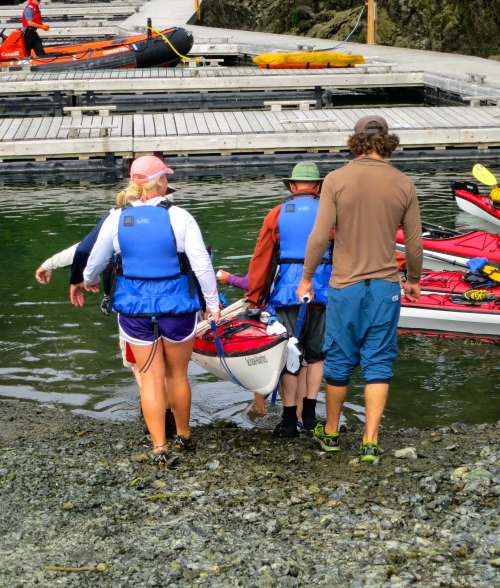
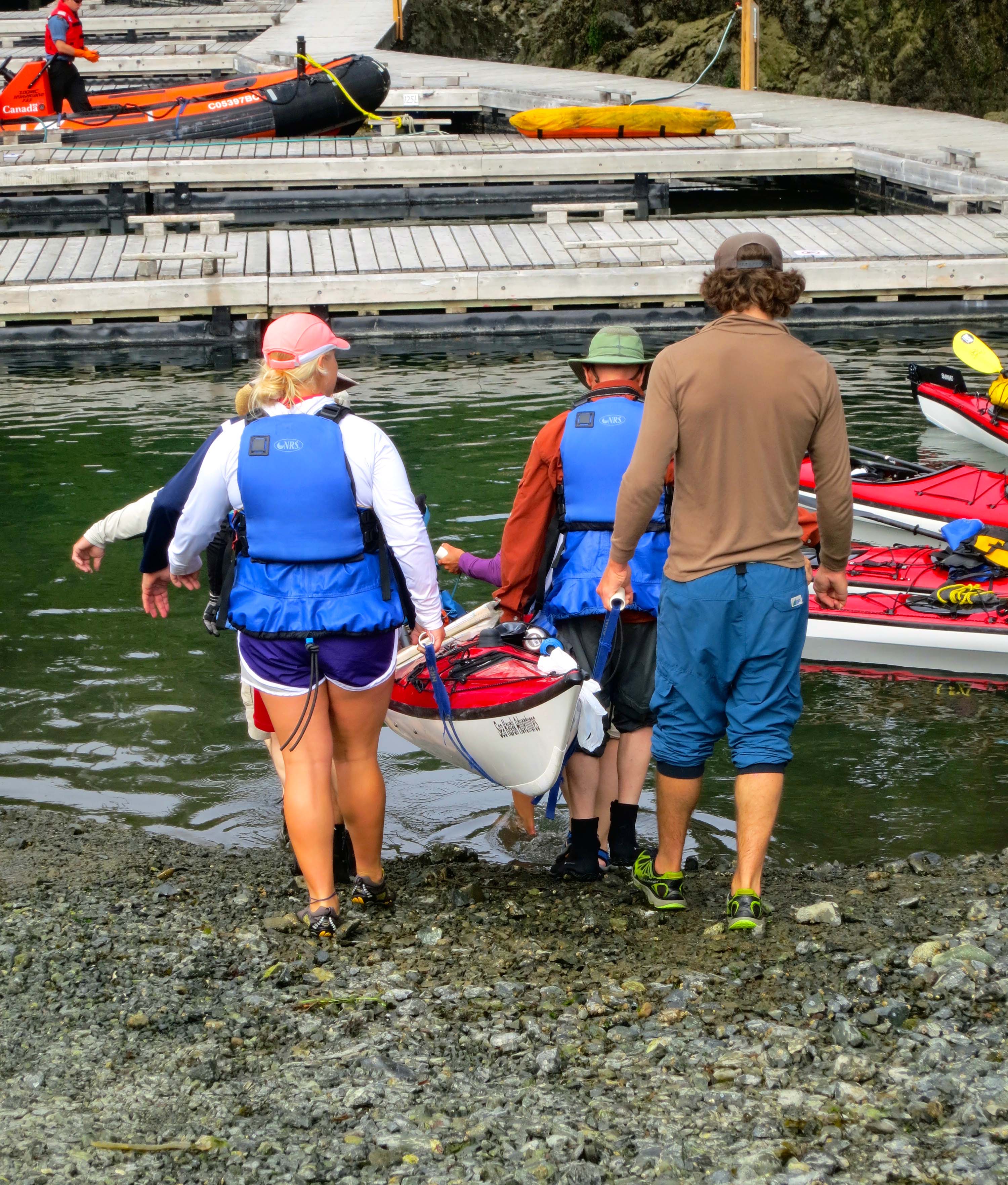
Kayaks are placed in the water at Telegraph Cove. Photo by Curtis Mekemson.

And then the moment arrived. It was time to put our kayaks in the water and start paddling. Put in and take out were always a group effort.

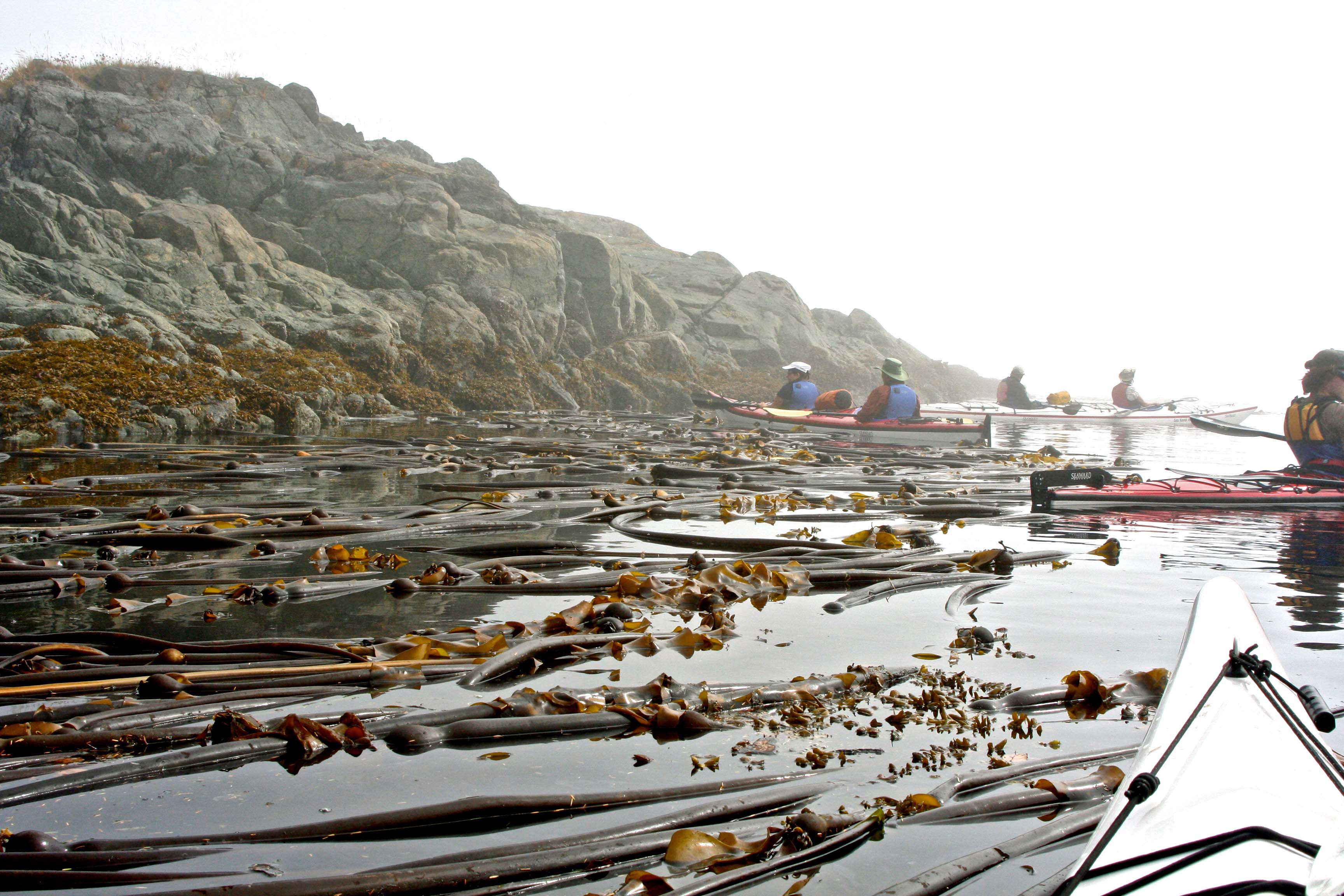
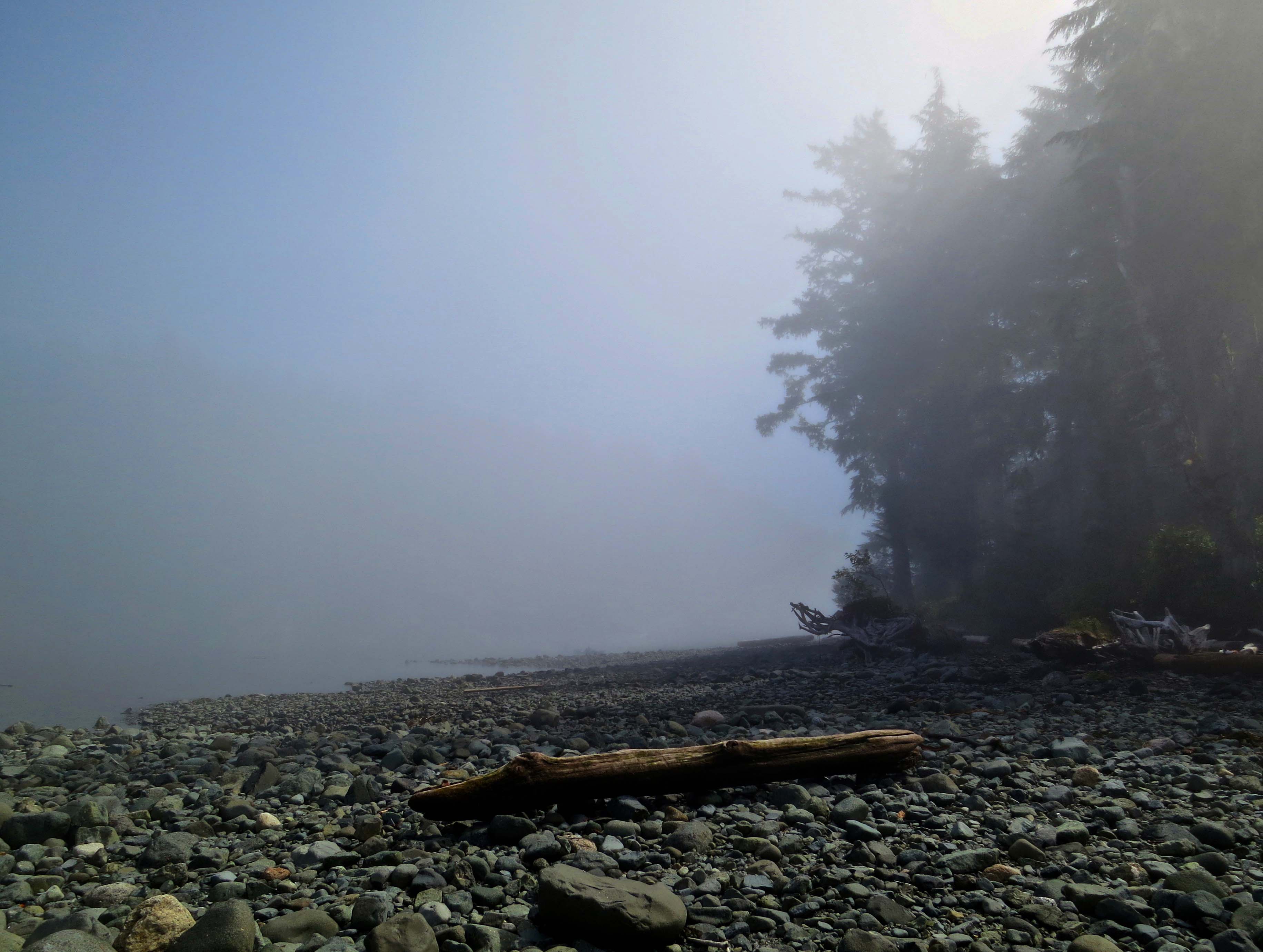
Heavy fog hung over Johnstone Strait and along the shore. We moved slowly, keeping each other in sight and waiting for the fog to clear. Large boats, including cruise ships, use the Strait. You want to be damn sure you can see them— and that they can see you. At one point, Nick, who was on rear guard duty, decided my seat needed adjusting. I was too laid back. By the time the adjustments were made, the other kayakers had disappeared into the fog. They waited patiently. We stopped and had a leisurely lunch. Then the sky turned a bright blue and we were off across the Strait. Orcas were waiting.
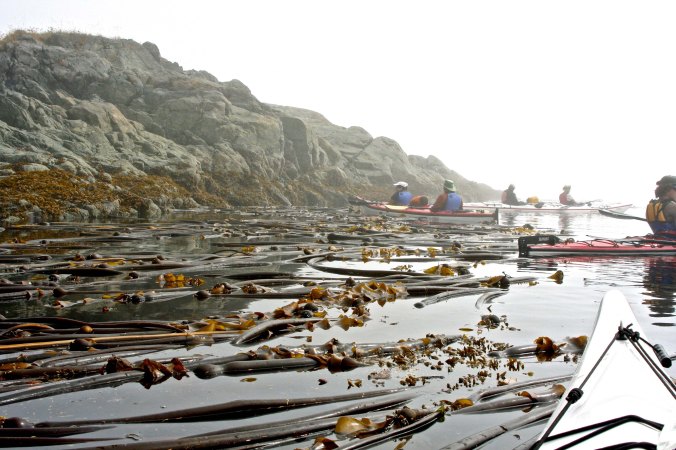
Kayakers work their way through kelp beds and fog in the Johnstone Strait of British Columbia.

Kelp beds and fog slowed us down. Here, we maneuvered our way through the kelp. Some of our group had almost disappeared into the mist— and they weren’t that far away. (Photo by Peggy Mekemson.)
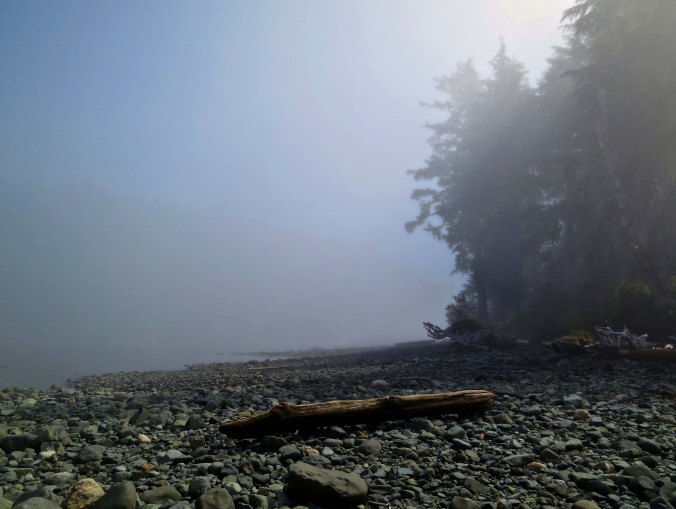
Vancouver Island cast on Johnstone Strait near Telegraph Cove. Photo by Curtis Mekemson.

Working our way along Vancouver Island, Julia decided to stop for lunch and wait the fog out. The bright sun was already creating a patch of blue.
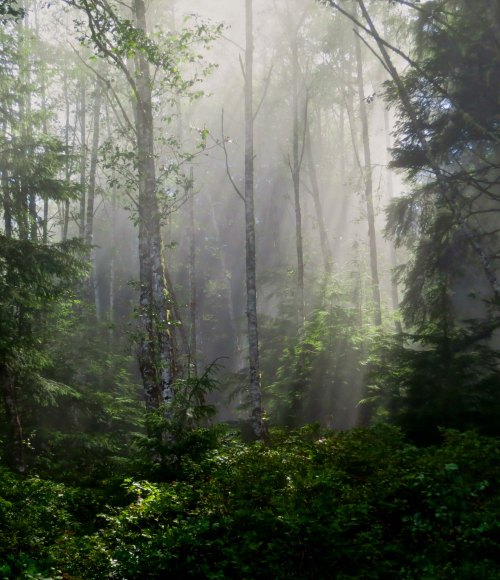
Sun illuminates forest during kayak trip on Johnstone Strait, BC. Photo by Curtis Mekemson.

Everywhere we went, the beauty of the forests matched the beauty of the waterways.
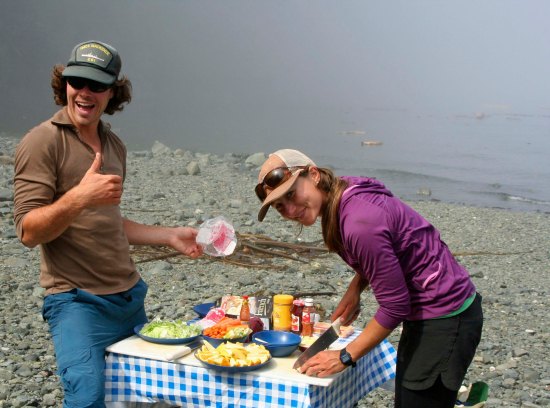
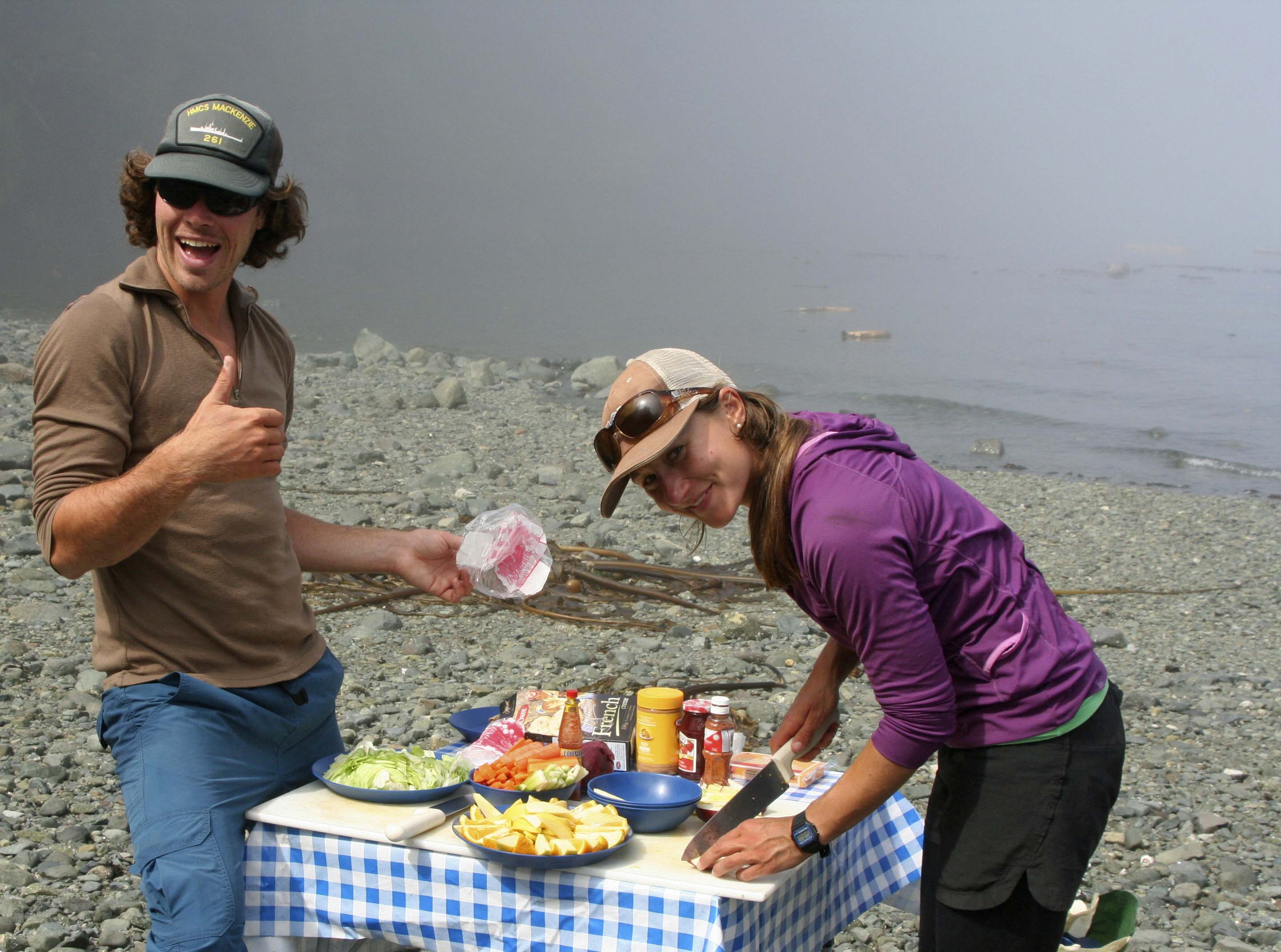
Lunch on Sea Kayak Adventures tour on the Johnstone Strait in British Columbia.

“Come and get it.” Julia and Nick announced that lunch was ready. (Photo by Peggy Mekemson.)
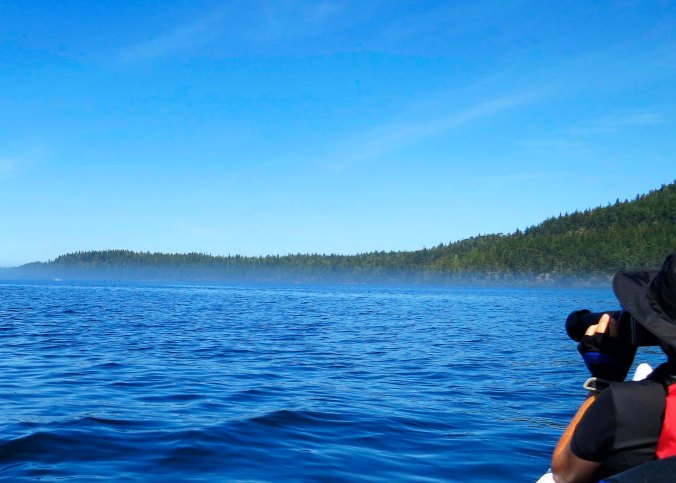
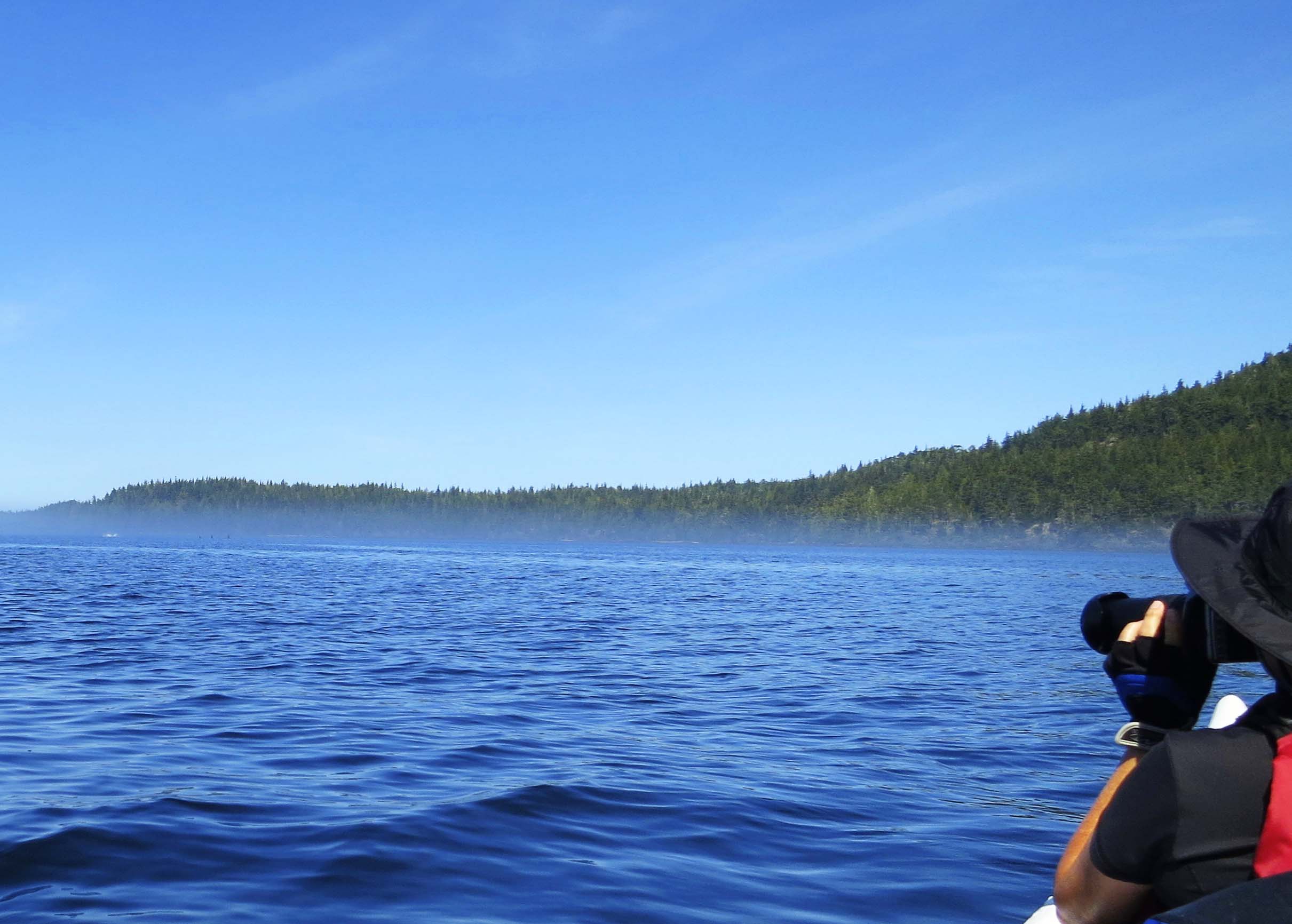
Peggy Mekemson searches for Killer Whales while kayaking across Johnstone Strait off of Vancouver Island. Photo by Curtis Mekemson.

With lunch over and the fog lifted, we made our way across Johnstone Strait. Peggy searched the water for orcas/killer whales.
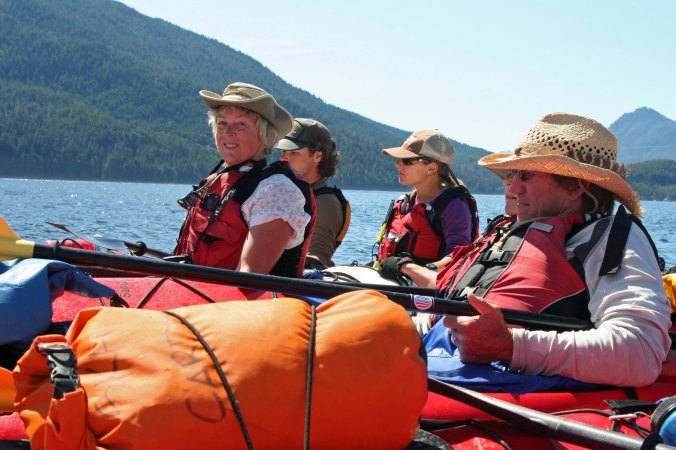
Kayakers with Kayak Adventure Tours raft up on Johnstone Strait in British Columbia when seeing a Killer Whale.

The distinctive whoosh made by a whale when it surfaced and blew caused our group to raft up, where we held on to each other’s kayaks. Edie gave us a smile while we waited, hoping to catch sight of the whale. (Photo by Peggy Mekemson.)
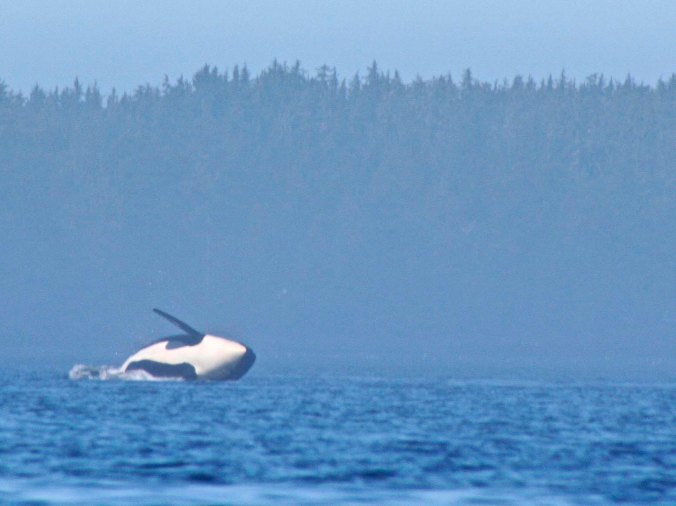
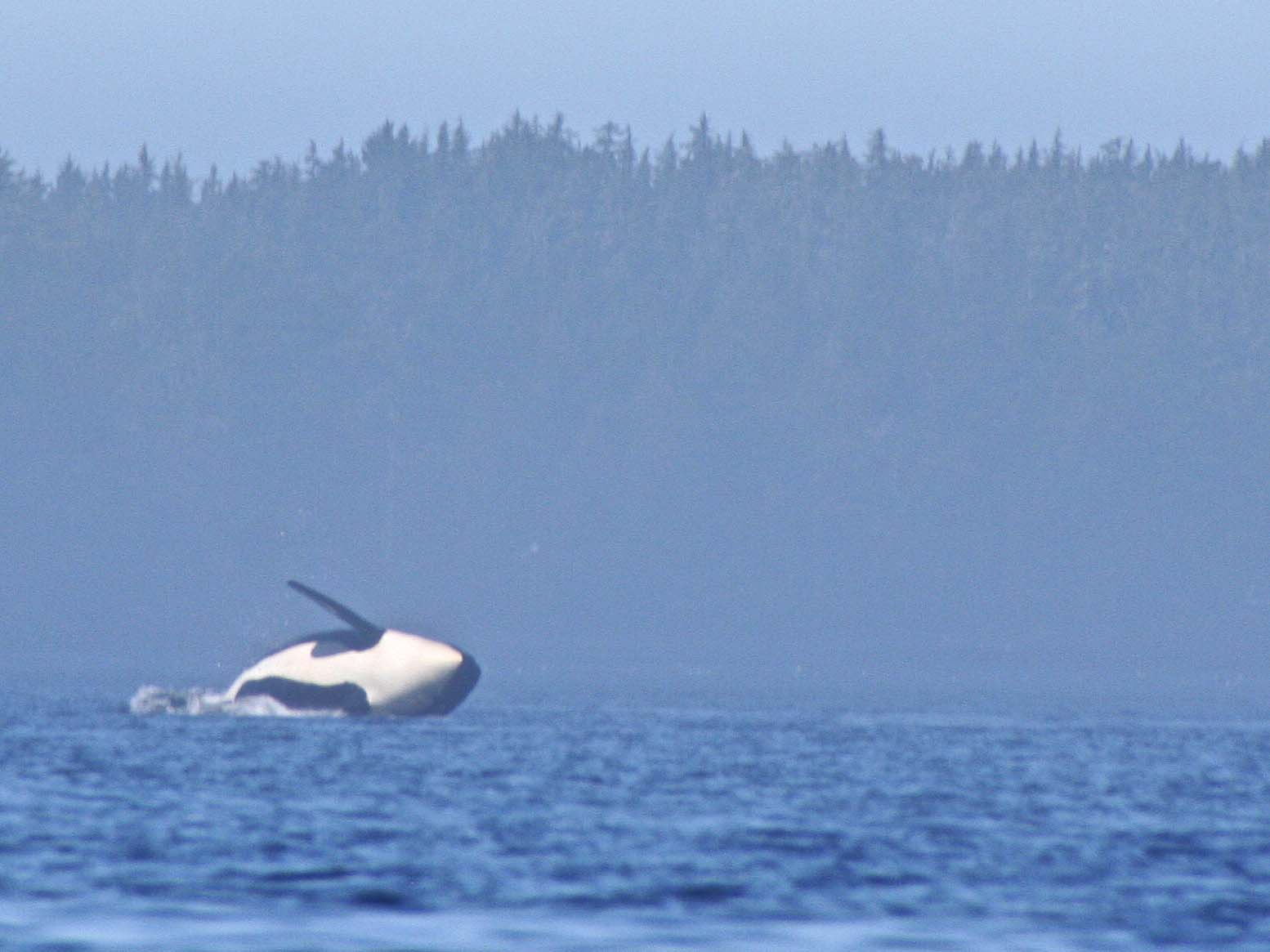
Orca breaches in the Johnstone Strait.

And were rewarded by one breaching in the distance. (Photo by Peggy Mekemson.)
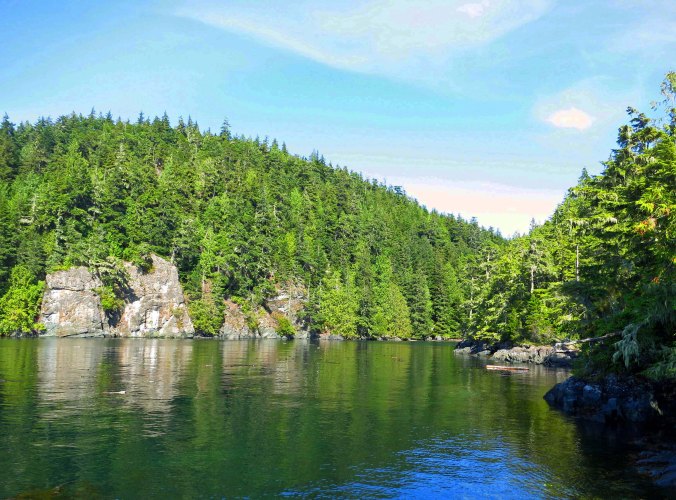
Sea Kayak Adventures campsite on Hanson Island in the Johnstone Strait, British Columbia.

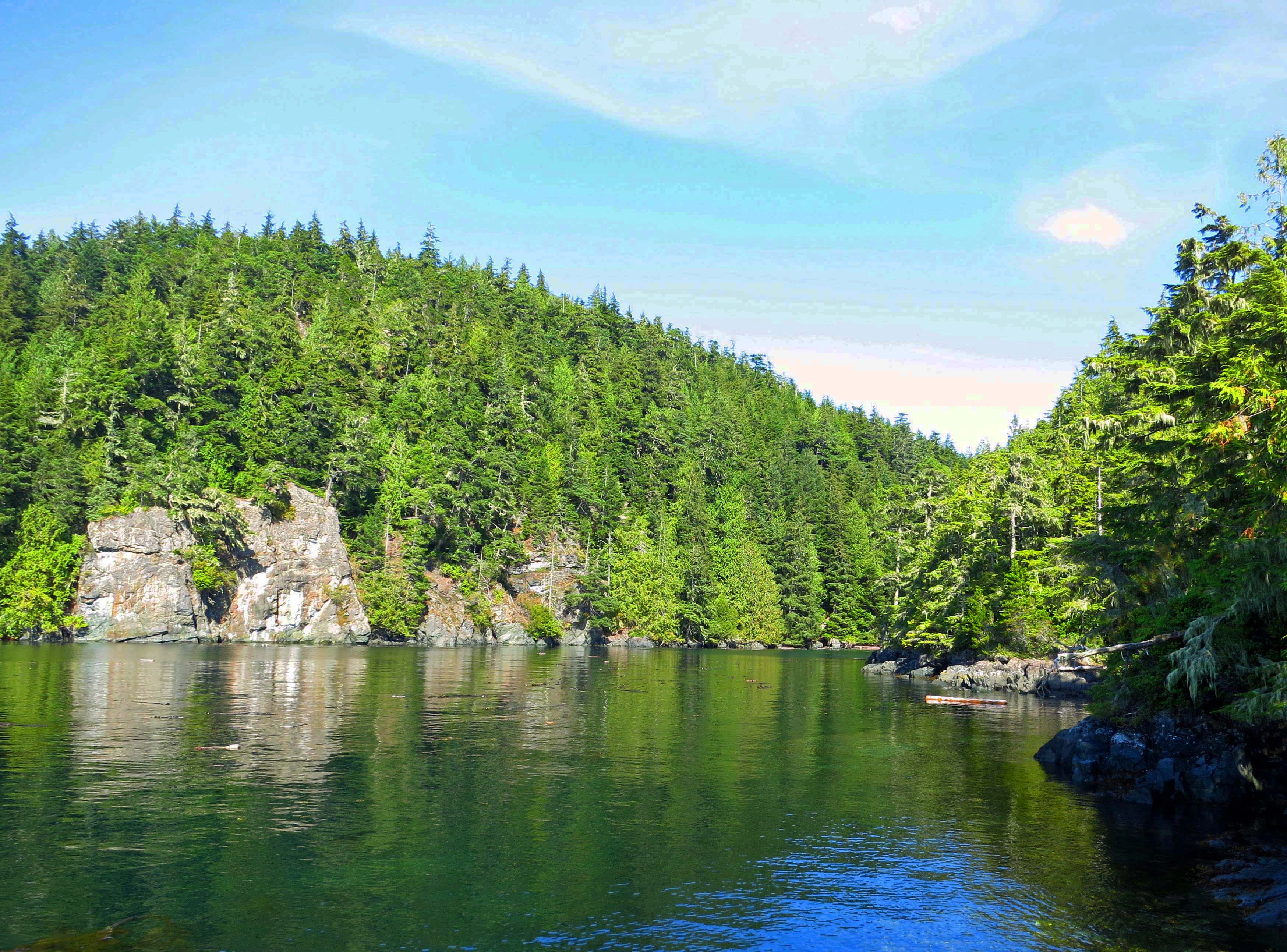
Having also been slowed down by a pod of dolphins, we finally made it to our first night’s campsite on Hanson Island. The camp is to the right of the rocks, back in the cove.

Sea Kayak Adventures leases its sites from a First Nation tribe. Each site is chosen for its beauty and its natural setting.  Camps are pre-set up with tents, a cooking area, and a primitive but comfortable and private open-air restroom. We carried our kayaks up into the camping area, selected tents, packed away gear, and then went for a hike. Afterwards it was time for cocktail hour and dinner. We finished off our evening watching the sunset— and a gorgeous sunset it was.
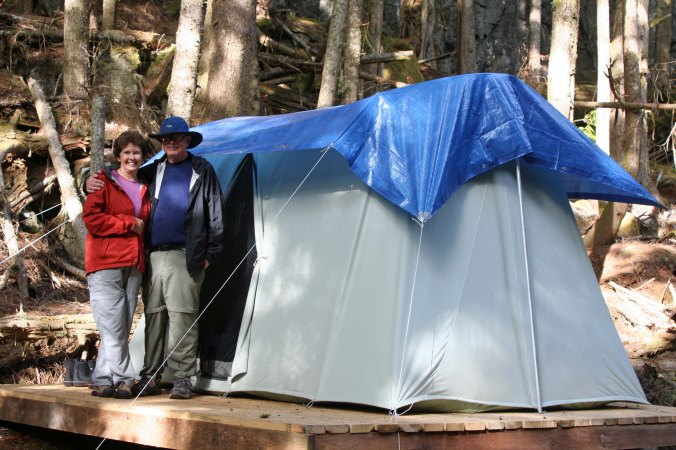
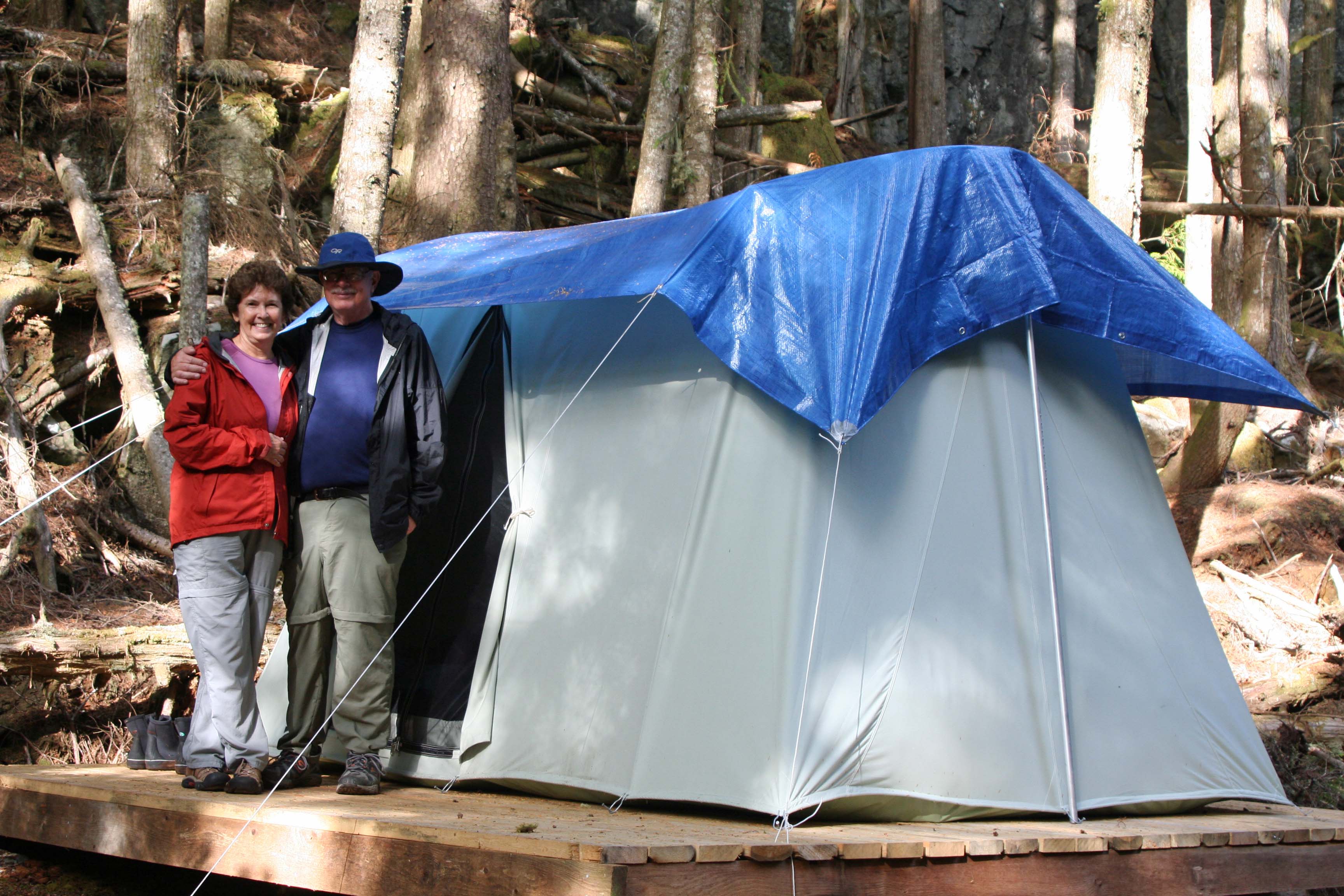
Sea Kayak Tours sets up comfortable tents for  guests to use while on their tours.

Peggy and I stand next to our home in the woods for the night.
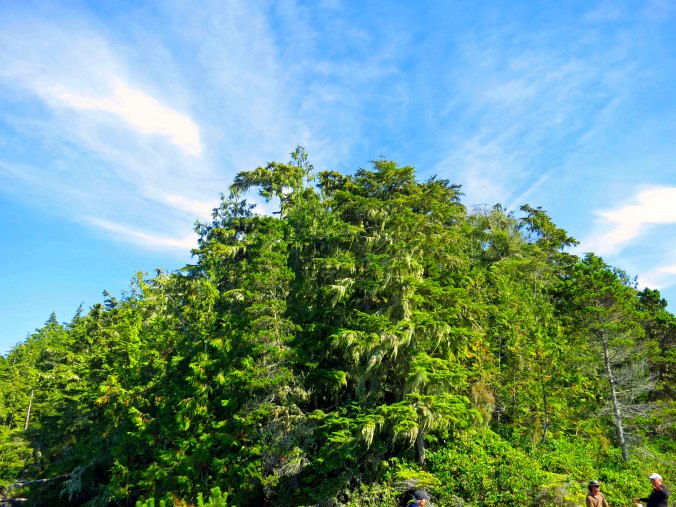
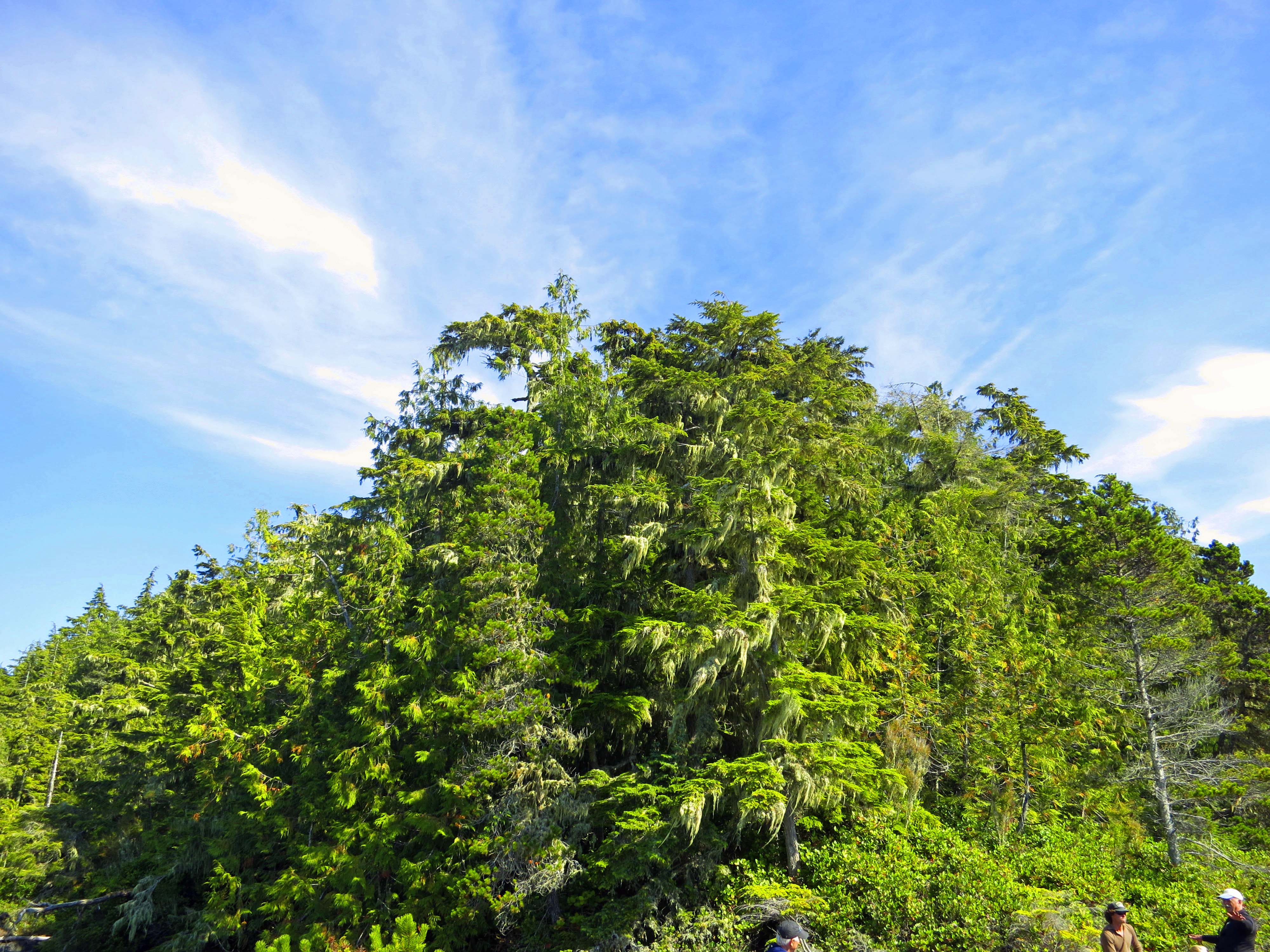
Sky and clouds meet forest on Hanson Island in the Johnstone Strait of British Columbia. Photo by Curtis Mekemson.

Our walk provided this fun photo where the sky and clouds met the forest…
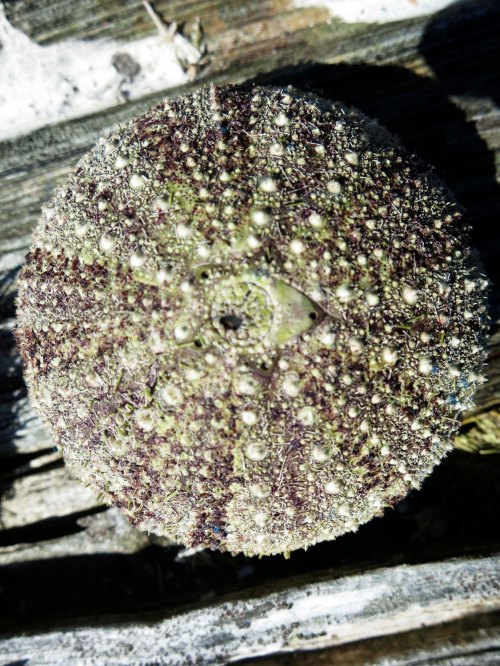
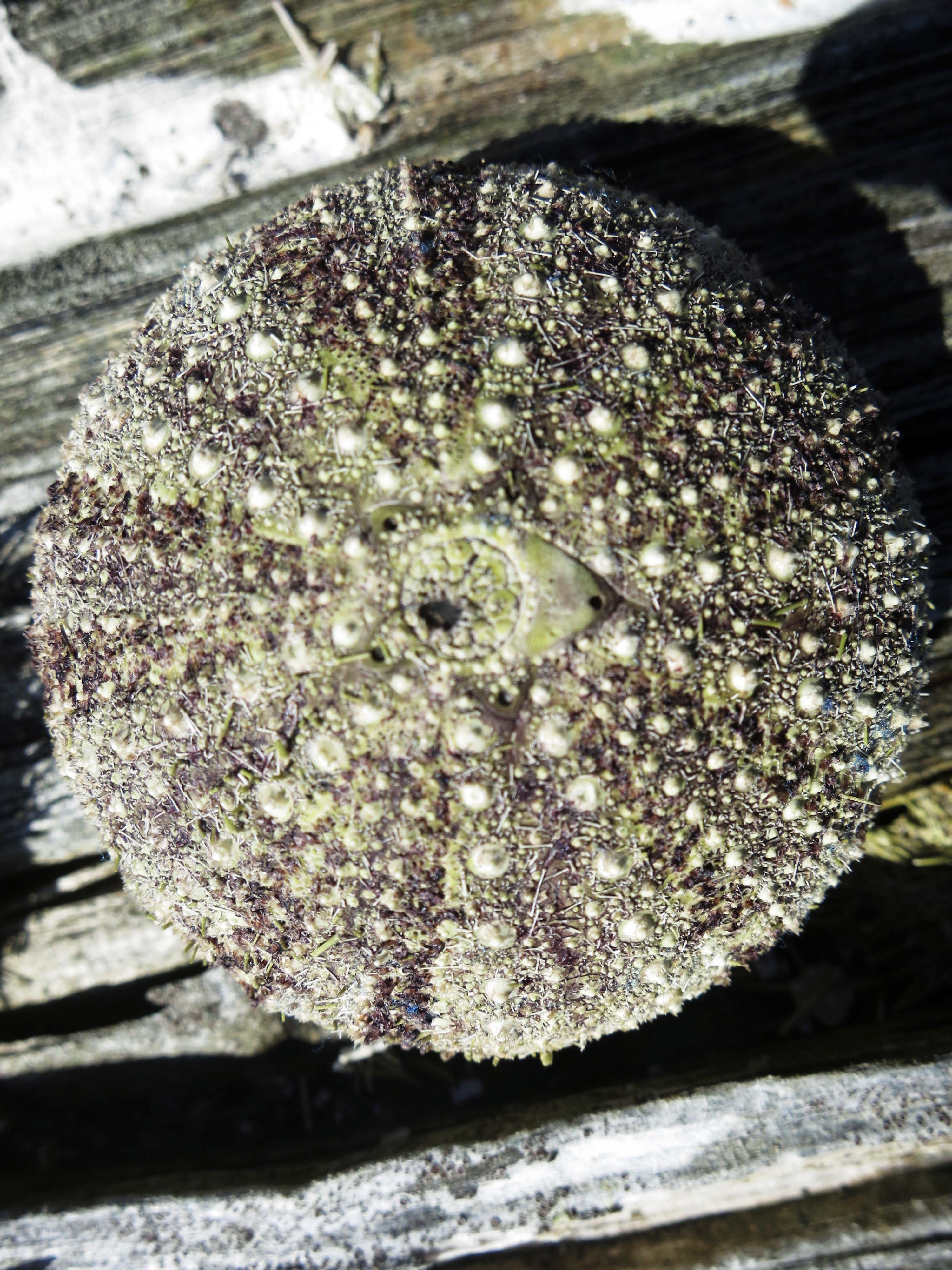
Urchin shell found on Hanson Island in Johnson Strait. Photo by Curtis Mekemson.

We found this jewel of an urchin shell…
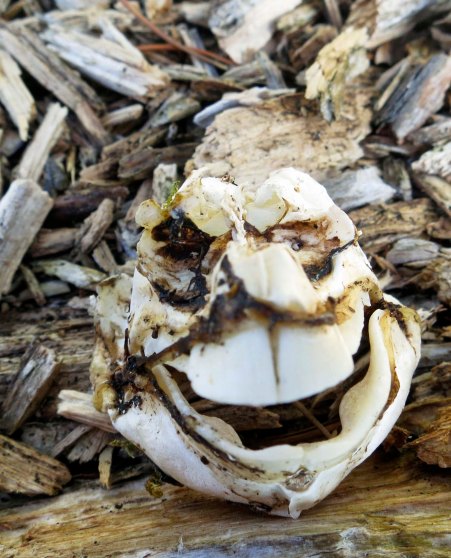
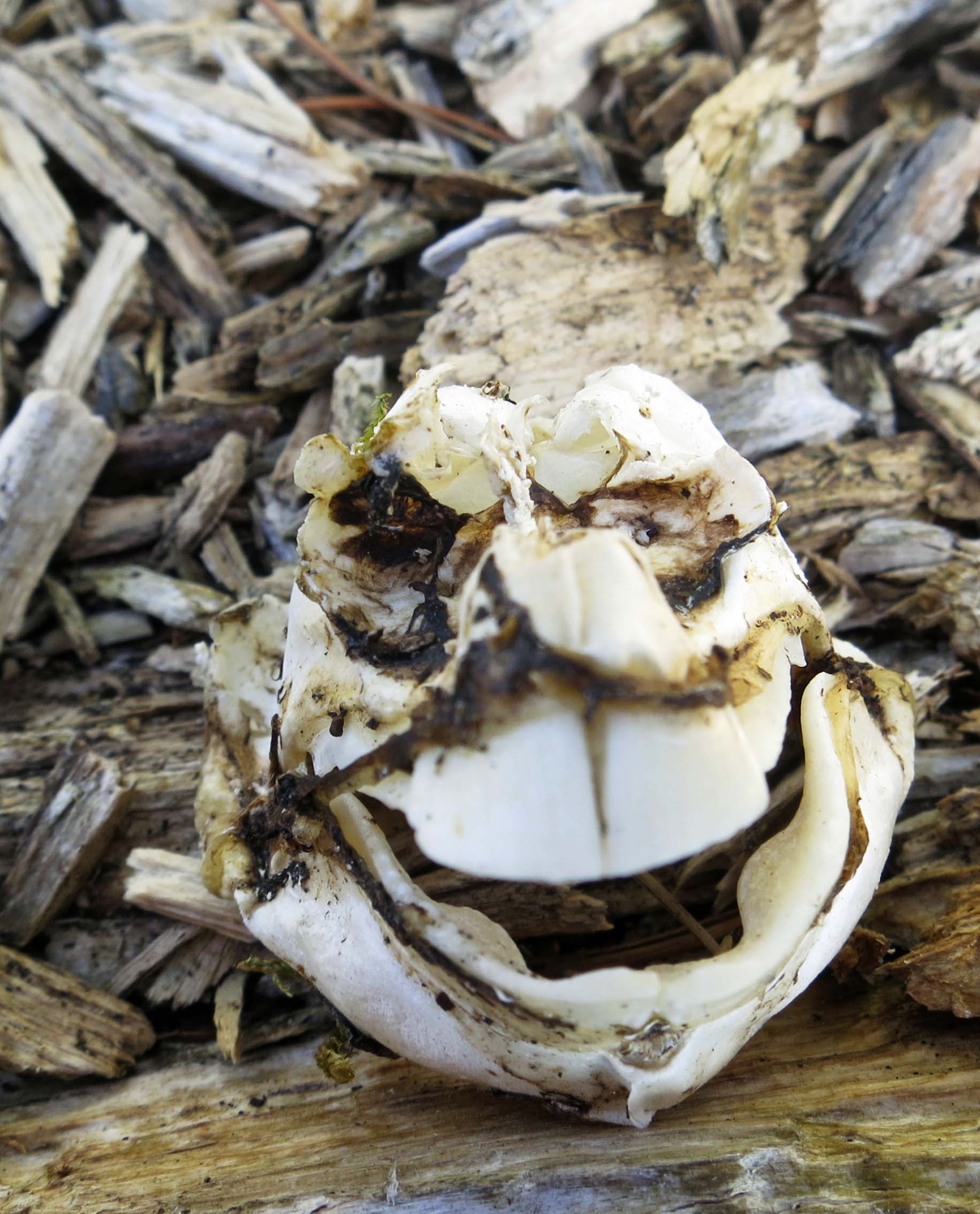
And this rather odd shell/skeleton that our experts debated over. Considering this post is going up on October 30th, I am going with Happy Halloween.

And this rather odd shell/skeleton that our experts debated over. Check out the buck teeth. This guy would put a beaver to shame. Considering this post is going up on October 30th, Peggy, the creature, and I would like to wish all of you a Happy Halloween.
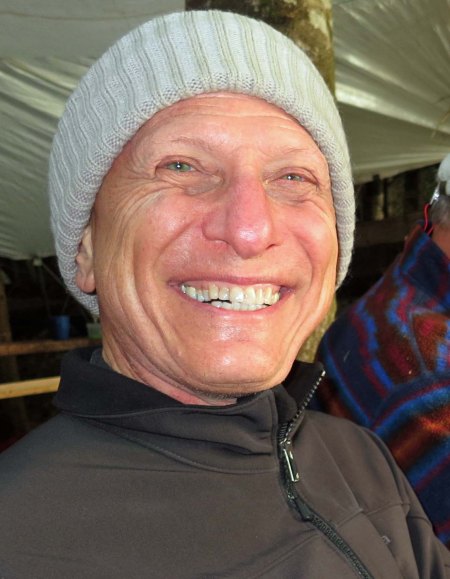
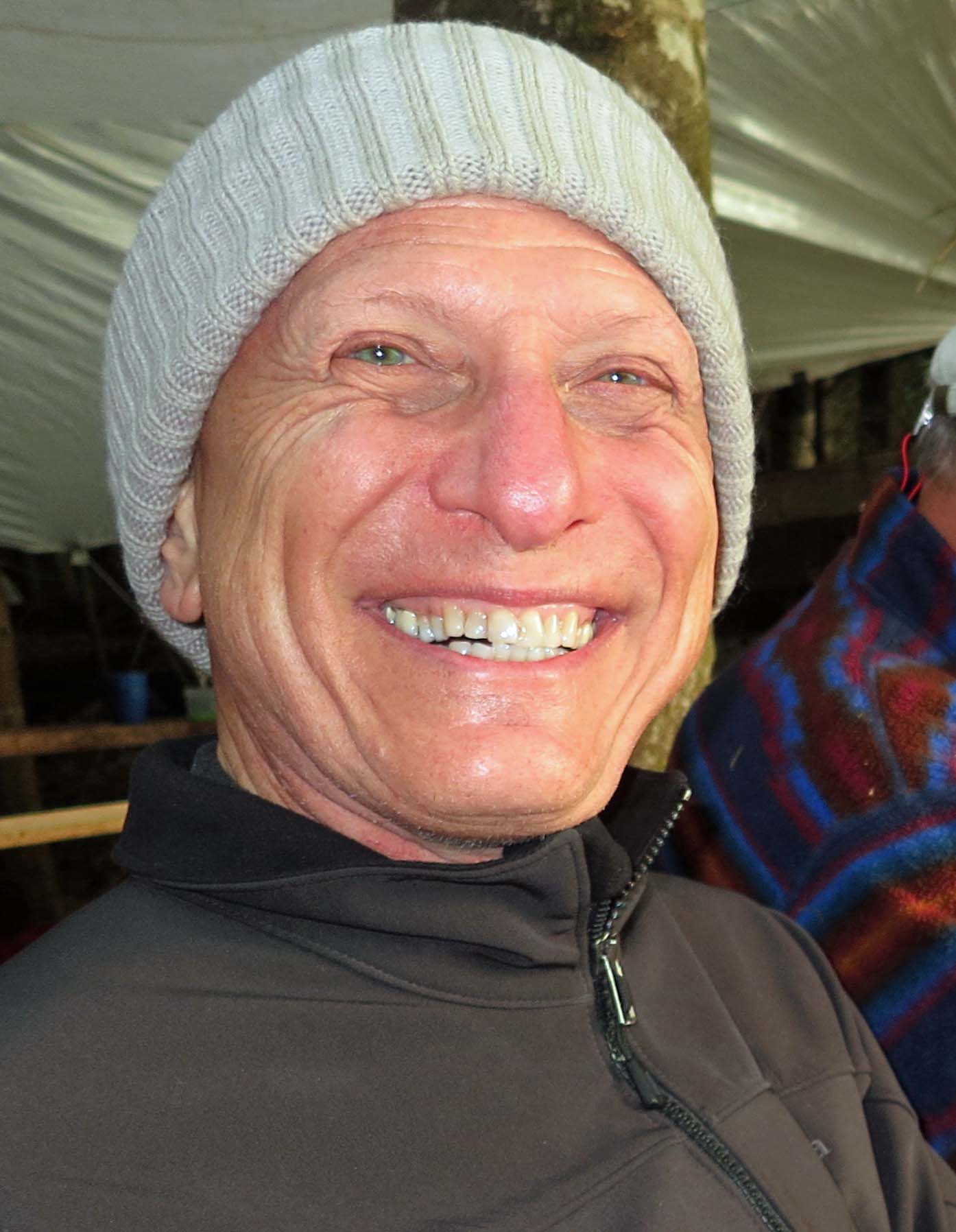
Back in camp, I got a happy, toothy grin from Dennis...

Back in camp, I got a happy, toothy grin from David…
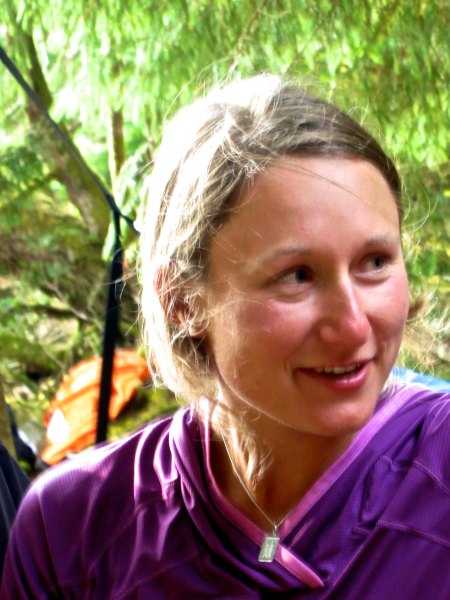
And a shy smile from Julia.
And a shy smile from Julia.

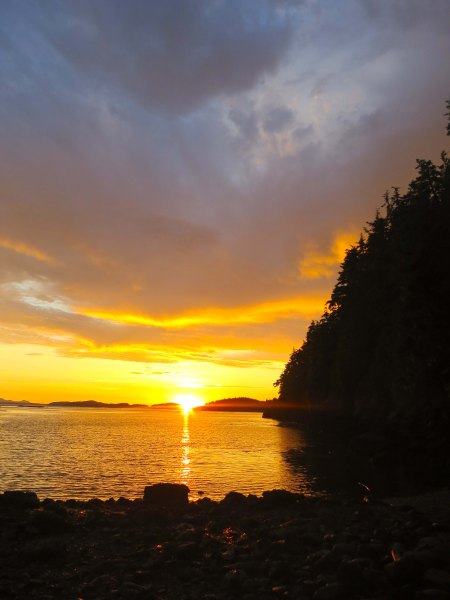
Sunset over Johnstone Striait off of Hanson Island. Photo by Curtis Mekemson.

We finished off the day by watching the sunset over Johnstone Strait. Next blog: We kayak onward to our next island.
From Kayaking the Cool Pacific to Bicycling the Hot Desert of Burning Man

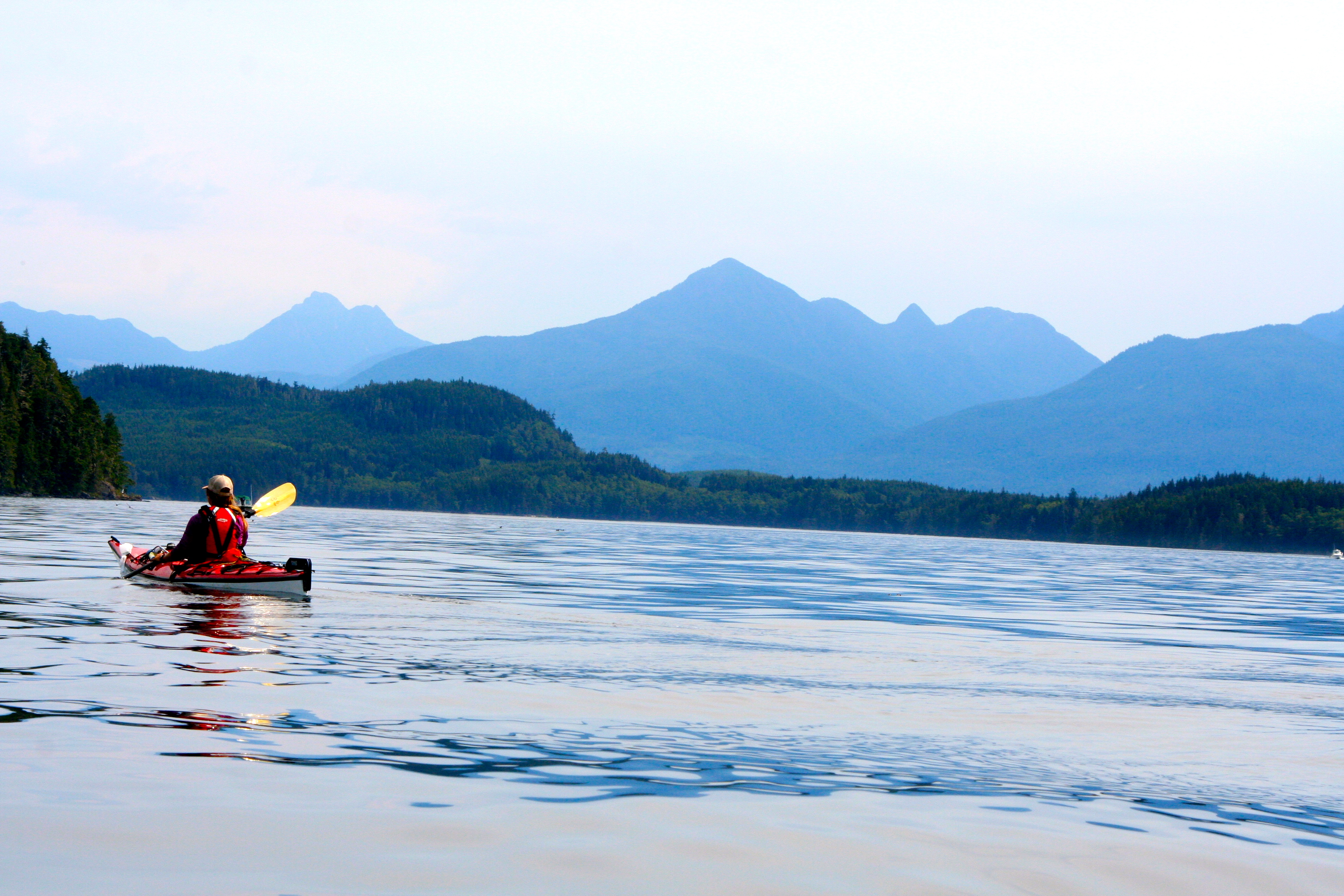
One of our guides leads the way as we make our way between islands off the we make our way off the northwest coast of Vancouver Island, British Columbia.

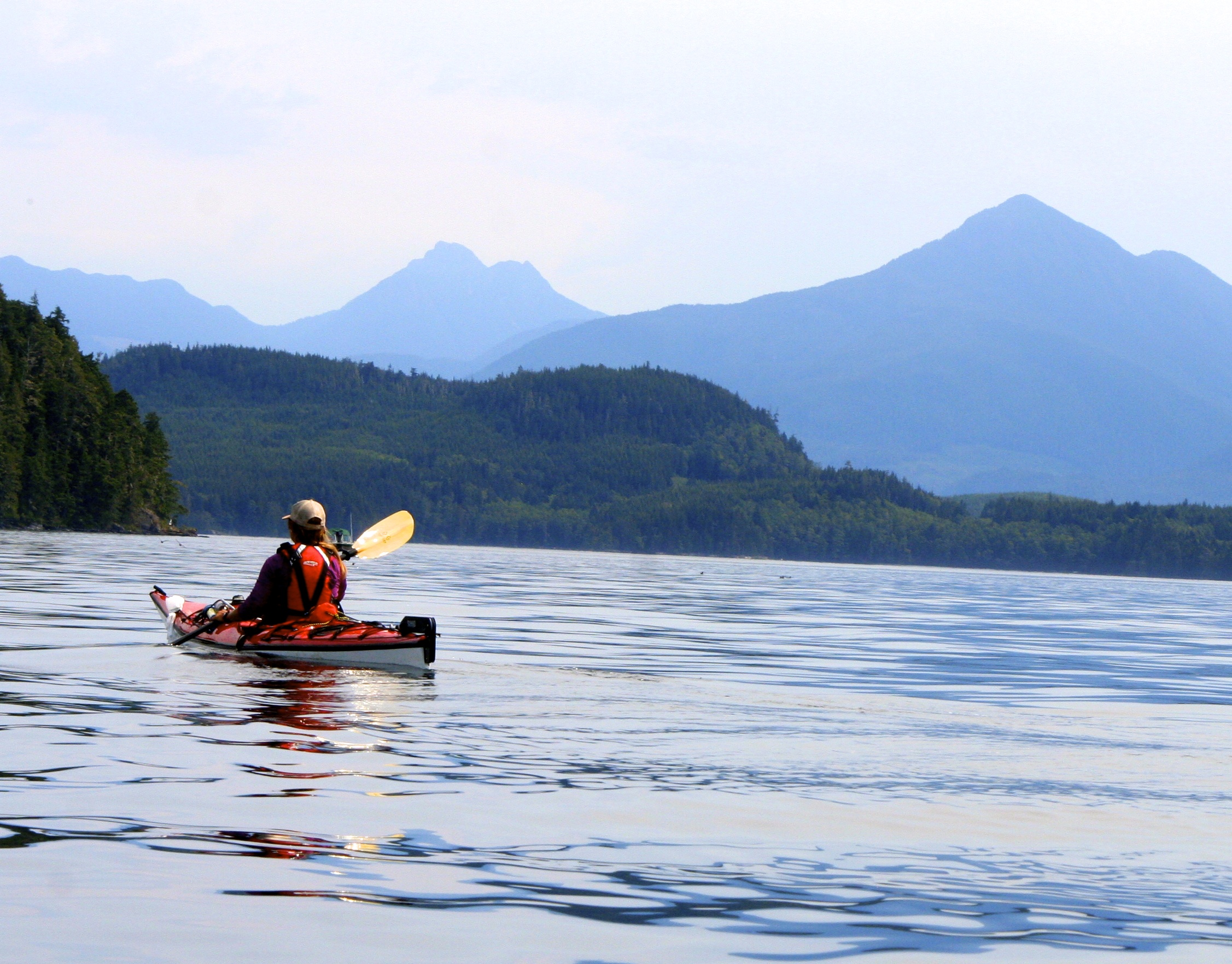
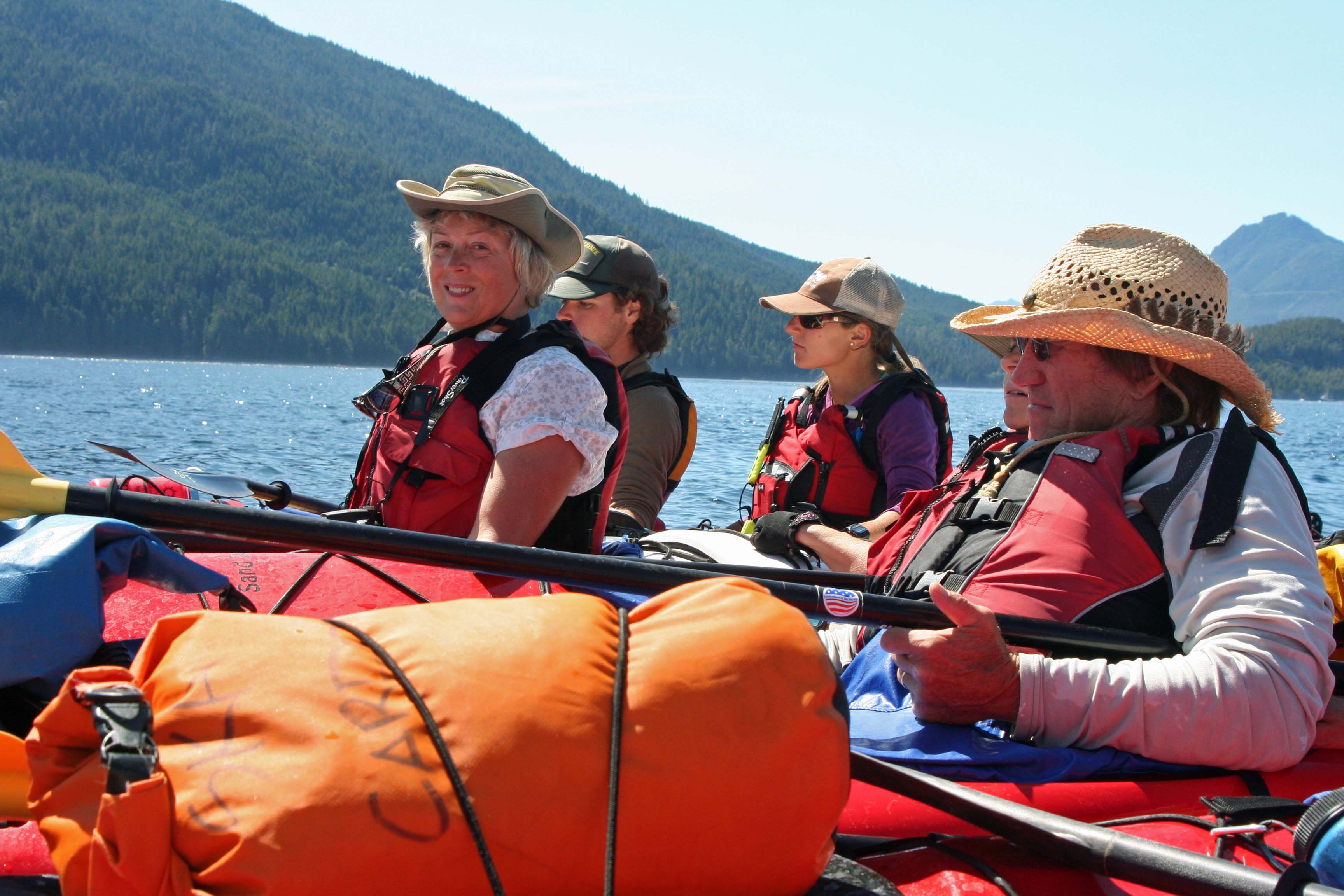
One of our guides, Julia, leads the way as we make our way between islands off the northwest coast of Vancouver Island, British Columbia. (Photo by Peggy Mekemson.)

Peggy and I just came off our kayaking adventure out of Fort McNeil on northwestern Vancouver Island. It was a great trip, complete with Orca Whales, good folks, and great food. I am sure there will be several blogs on the experience (grin). But now we are madly preparing for Burning Man. We take off today. Imagine jumping from kayaking in the cool waters of the Pacific Ocean to bicycling in the hot desert of Northern Nevada. Woohoo!
The burning of the Man gives Burning Man its name.

The burning of the Man gives Burning Man its name.

The annual event held in the Black Rock Desert of Northern Nevada ranges from wonderfully whacky to….  (Photo by Tom Lovering)

The art at  Burning Man ranges from wonderfully whacky…. (Photo by Tom Lovering)

…to magnificent.

…to magnificent.

To fill in on the missed blogs, I thought I would repost some stories on Bone. He is going with us to Burning Man. I suspect many of you have yet to meet him even though he figured prominently in my early posts.

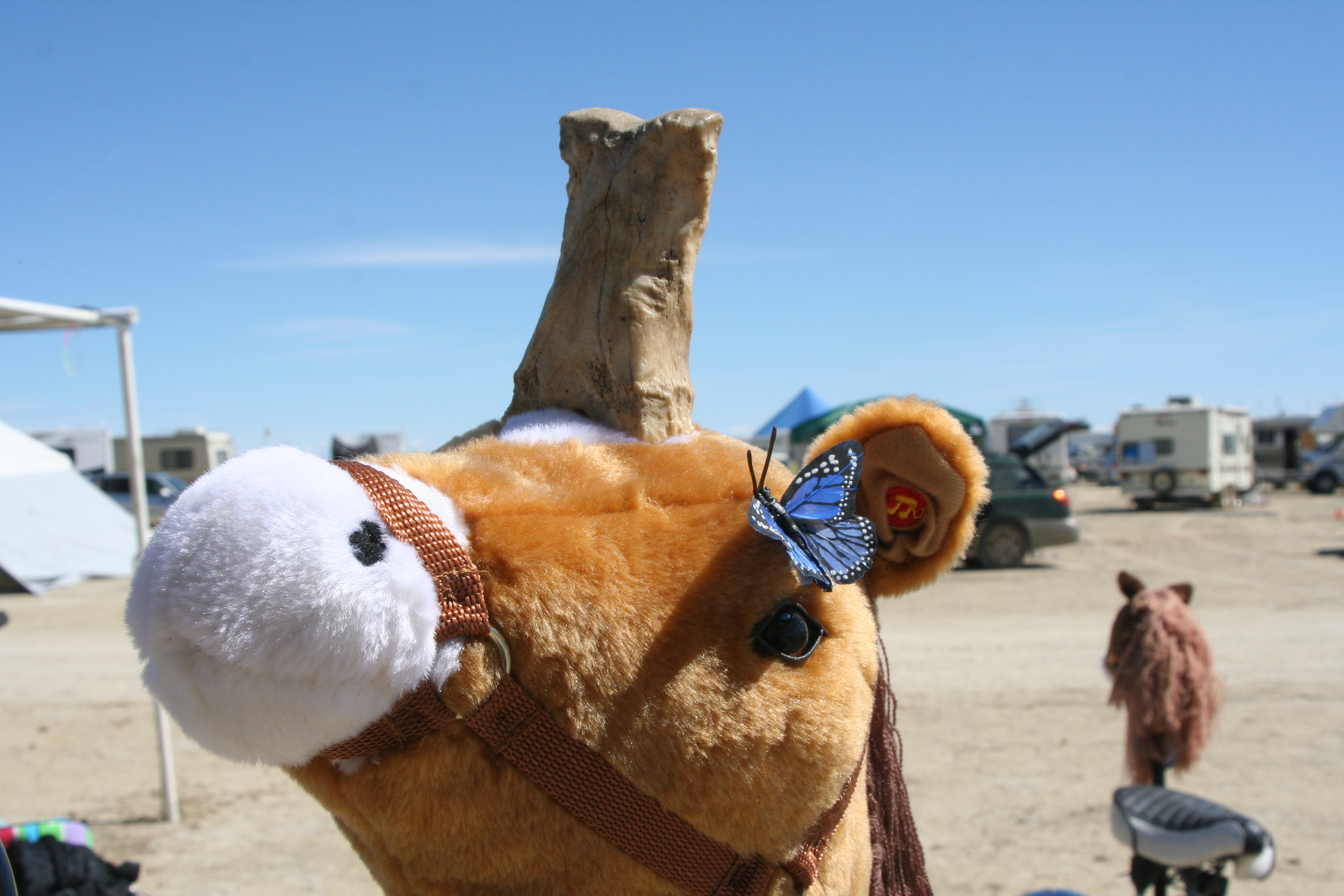
Bone hitches a ride on a willing horse at Burning Man.

Bone hitches a ride on a willing horse at Burning Man.

Bone is a diminutive character four inches high and two inches across. Once he was part of a horse, just above the hoof. Now he is free and has an attitude.

Tom Lovering and I found him lounging in a mountain meadow above Lake Tahoe when we were backpacking the Tahoe-Yosemite Trail in 1977. He has been wandering the world ever since. He began his travels with Tom on a two-year exploration of Asia, Africa and Europe in the early 80s and then joined me on my six month 10,000 mile solo bicycle trip around North America.

And that’s just the beginning.

In 1990 the International Society of the Bone was created in Mazatlan, Mexico and Bone began wandering with others. He traveled with a women’s group to the top of Mt. Kilimanjaro in Africa and the base of Mt. Everest in Nepal, went deep-sea diving in the Pacific and Caribbean, attended a Presidential Press Conference with Bill Clinton (Is that a bone in your pocket?) and was blessed by the Pope in St. Peter’s Square. He had a close encounter with Piranhas on the Amazon, was kidnapped in Mexico and was seized by a custom agent in New Zealand. He has been to Burning Man 9 times.
Bone looks out on Mt. Everest in Nepal.

Bone looks out on Mt. Everest in Nepal.

And poses perilously on the railing of a boat traveling up the Amazon River. I caught him just as he was about to fall into the Piranhnah infested waters.

And poses perilously on the railing of a boat traveling up the Amazon River. I caught him just as he was about to fall into the Piranha infested waters.

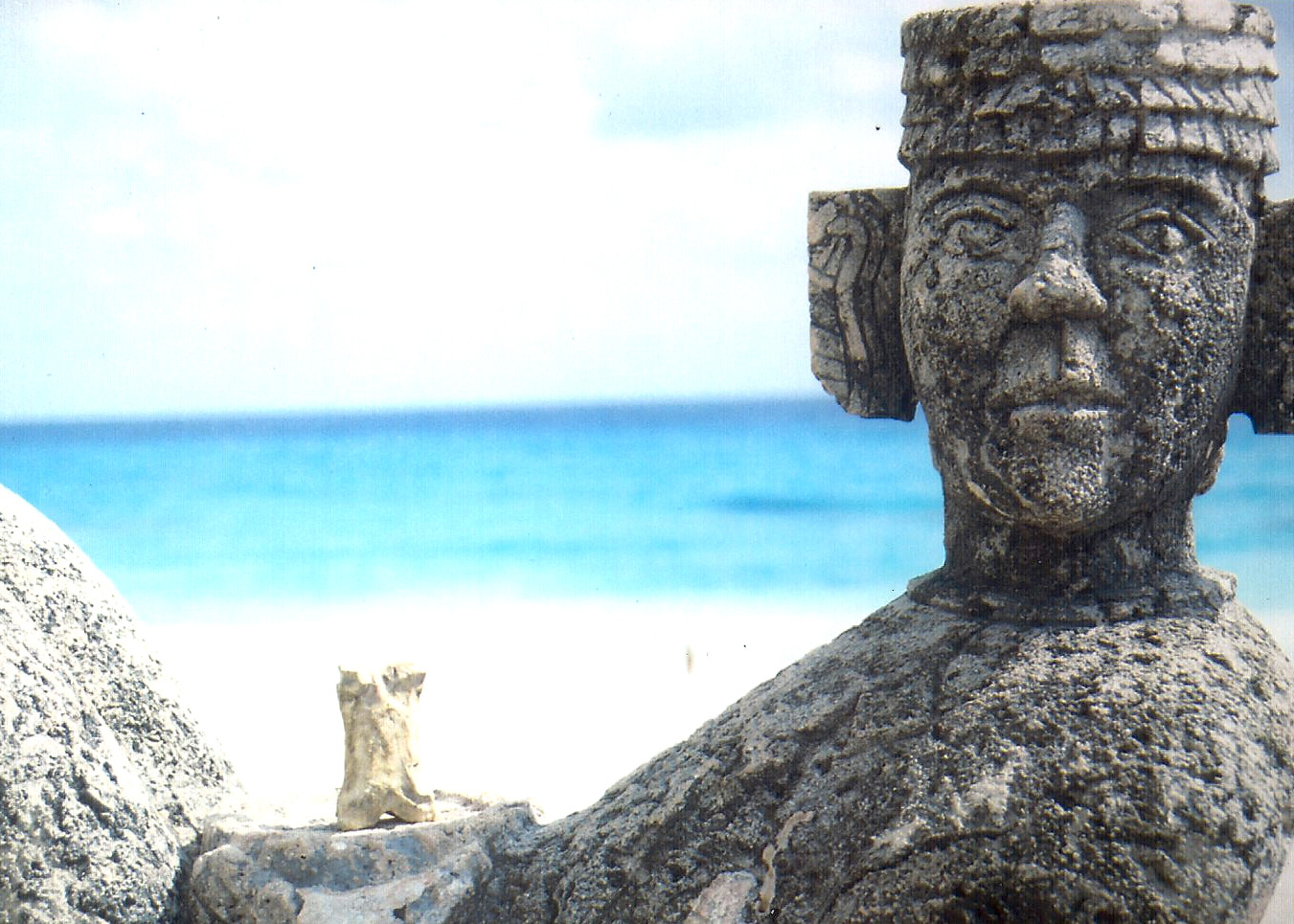
Traveling to Mexico, Bone takes a break by resting on Chacmool, where hearts were once offered up as sacrifices.

Traveling to Mexico, Bone takes a break by resting on Chacmool, where hearts were once offered up as sacrifices.

Checking out the rapids of the Little Colorado River as part of an 18 day trip down the Colorado through the Grand Canyon, Bone wears his life vest for safety.

Checking out the rapids of the Little Colorado River as part of an 18 day trip down the Colorado through the Grand Canyon, Bone wears his life vest for safety.

Tom Lovering goes native and wears Bone in his hair on the Colorado River trip.

Tom Lovering goes native and wears Bone in his hair on the Colorado River trip.

The Bone stories I will blog about this week are about how Tom and I found him. I wasn’t into photography at the time, so sorry, no photos.

The Murals that Saved Chemainus… The Vancouver Island Adventure

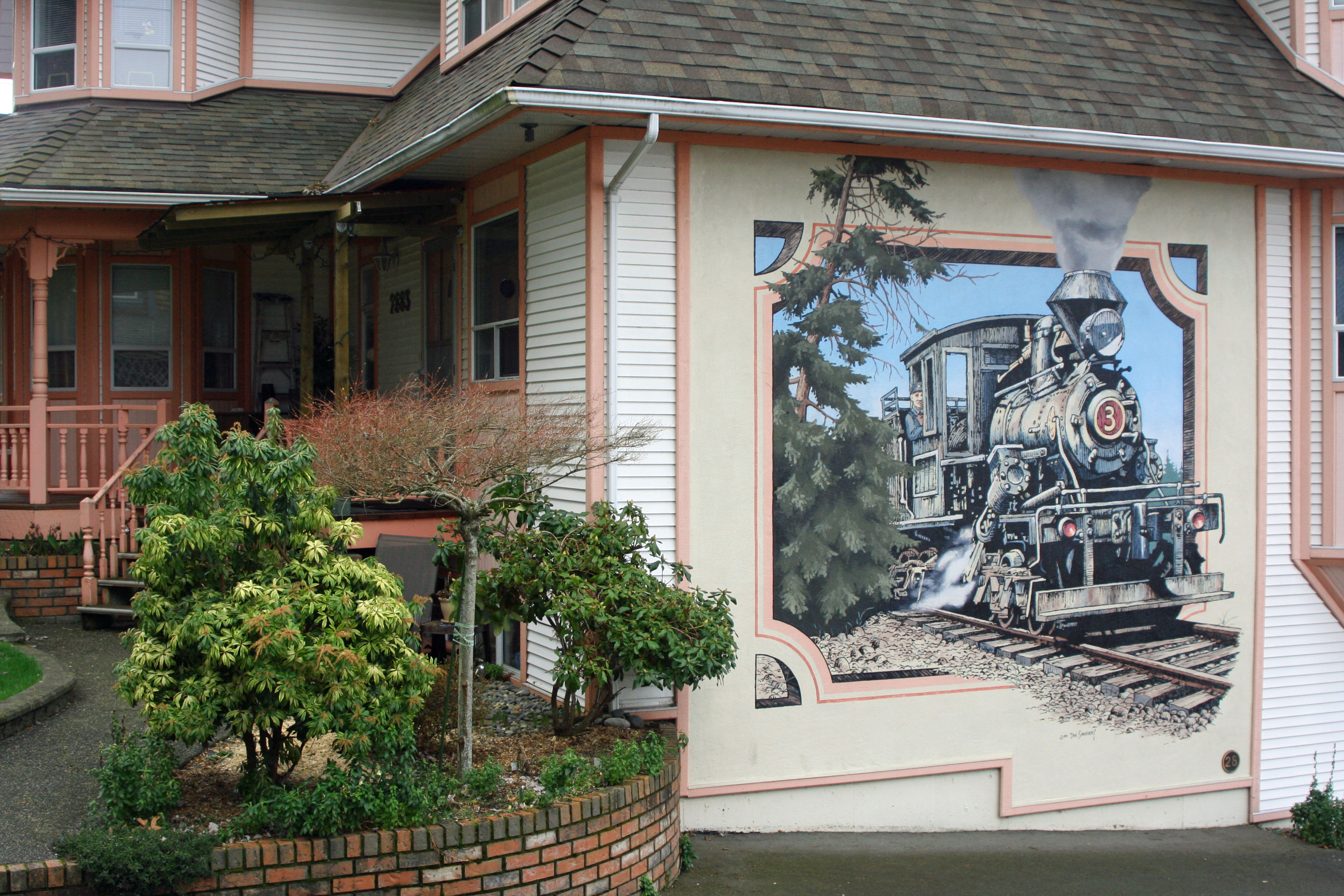
Homeowner and muralist Dan Sawatzky painted this 3D steam engine chugging out of his house/studio in Chemainus on Vancouver Island, British Columbia. The Number 3 engine was used for hauling logs and is symbolic of the town’s historic lumber industry.

This is another reposting of an earlier Vancouver Island blog. Again, Peggy and I still involved in our kayak trip among the Orcas. I know many of my followers enjoy murals and Chemainus has some great ones. I’ll catch up on comments when Peggy and I get back home– before we zip off to Burning Man. –Curt

“You have to visit Chemainus and see its murals,” the woman from Qualicum Beach urged. We were on the Black Ball Ferry between Port Angeles, Washington and Victoria, British Columbia. While I hunkered down and read, Peggy made new friends. Fortunately, one of us is much more social than the other.

Qualicum Beach is next to Parksville, which was our destination. A thirty-minute conversation generated a long list of restaurants to visit and places to see. I was yanked out of my book to take notes.

Chemainus is an excellent recommendation. This thriving community is located in the Chemainus Valley on the east coast of Vancouver Island about an hour north of Victoria. In 1983 it came close to dying. The primary place of employment, a lumber mill, shut down. 700 of the town’s 4000 residents were thrown out of work.

This is the point where most communities give up. Business and political leaders spend their energy assigning blame instead of seeking solutions. Not so with Chemainus.

“Let’s cover the walls of our town with historic murals,” Karl Schultz urged. It would capture the community’s history, develop local pride, and hopefully encourage tourism. As always, there were naysayers, but Karl’s enthusiasm won out. Today Chemainus is world-famous for its murals and tens of thousands of tourists visit the town annually.

Since it was on our way and we had the time, Peggy and I decided to stop. Good decision. First, I love the story of the small community that has adopted the motto of  “The Little Town that Did.” Second, I really like murals. Following are some our favorites out of the 39 (and increasing). For a complete tour visit www.chemainus.com/arts/murals/Chemainusmurals.htm.

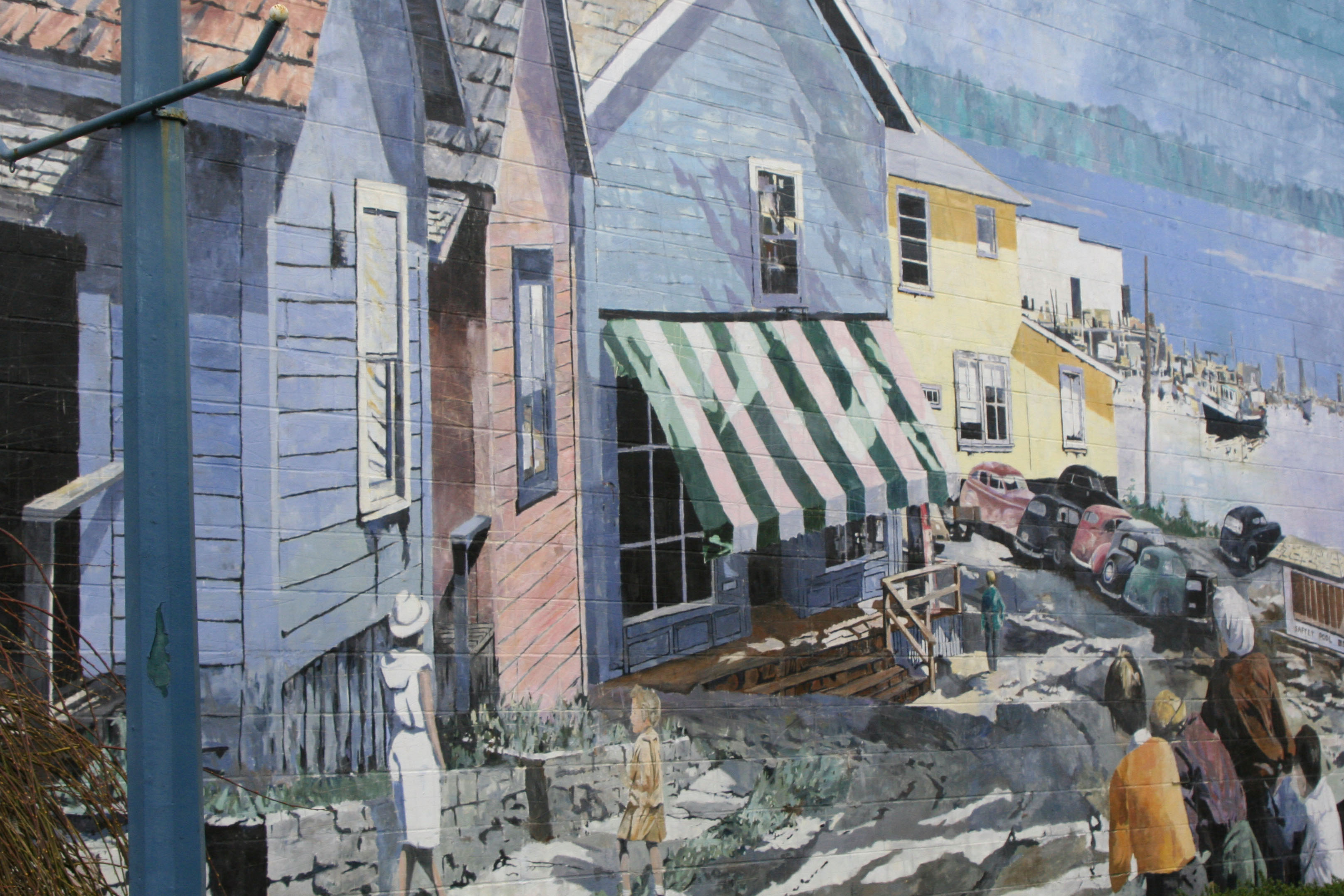
A colorful 1948 view of Chemainus looking down Mill Street toward the bay.

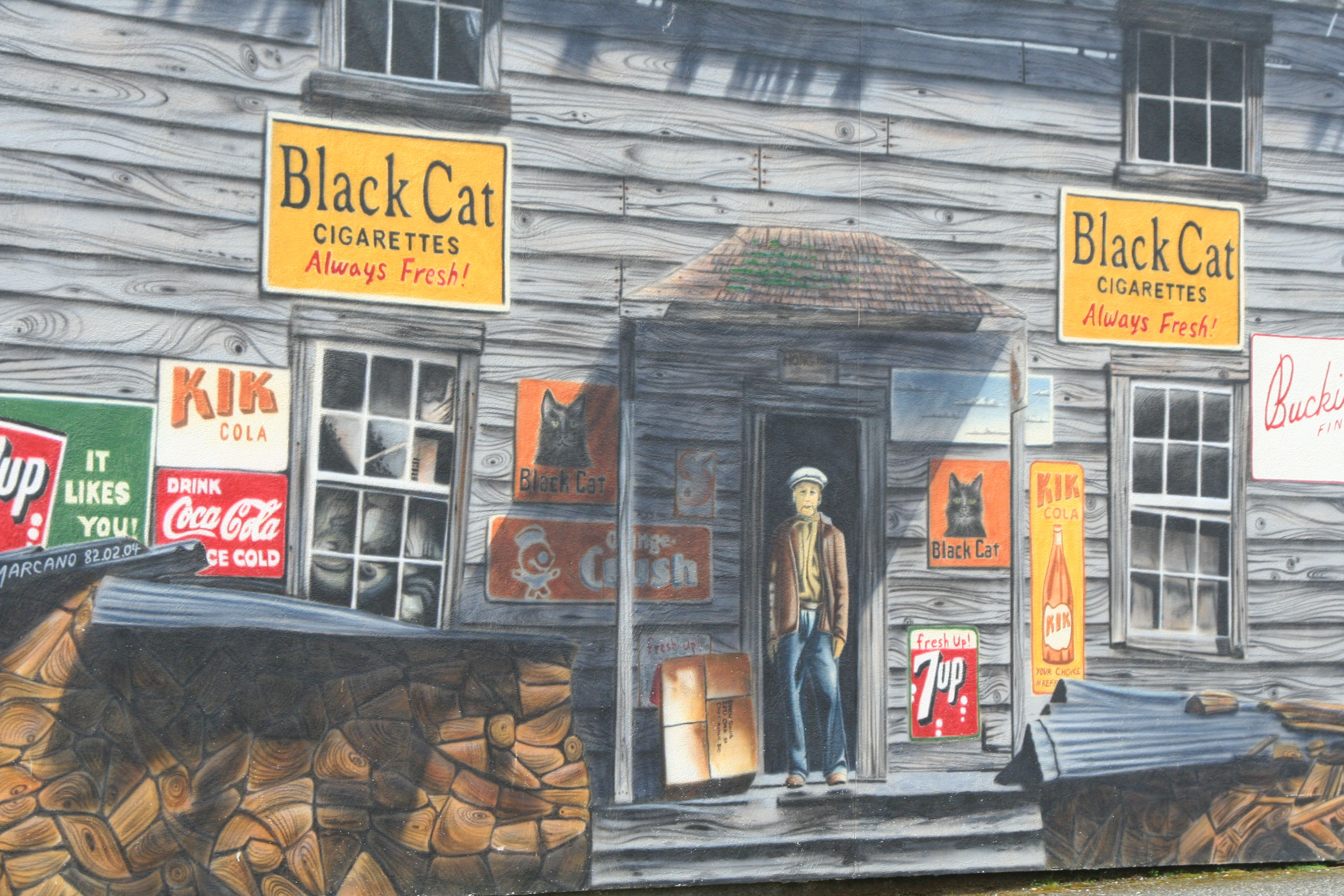
Hong Hing arrived in Chemainus in 1915 and opened his waterfront store. Over time his store would serve as a laundry, grocery store, second-hand store, bootlegging establishment and gambling den. Declining business led him to close his store in 1950 and return to China where he married a younger woman and produced an heir. Black Cat, by the way, is an extinct brand of British/Canadian tobacco.

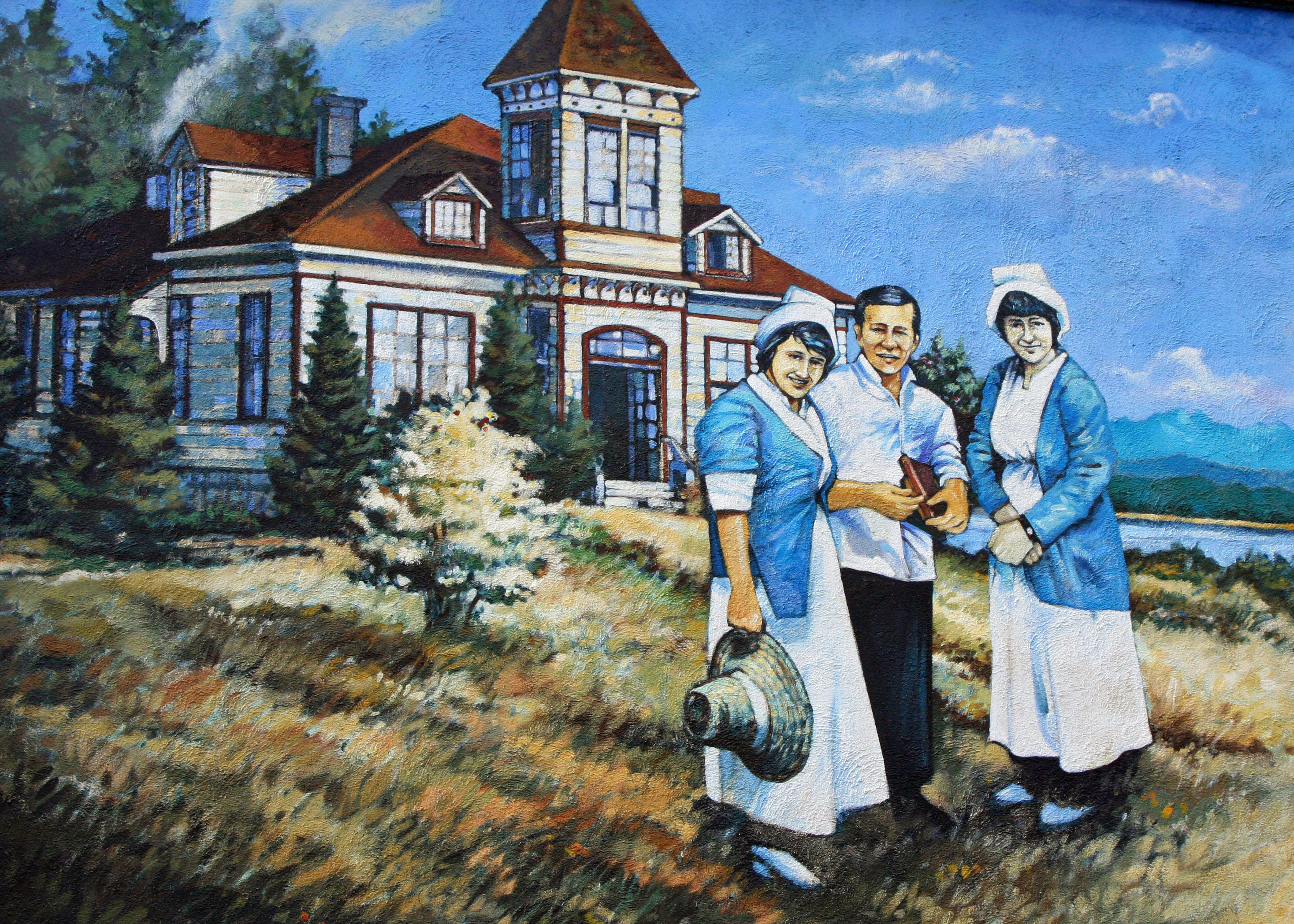
This mural captures the Chemainus Hospital in 1904 along with two nurses and the hospital cook.

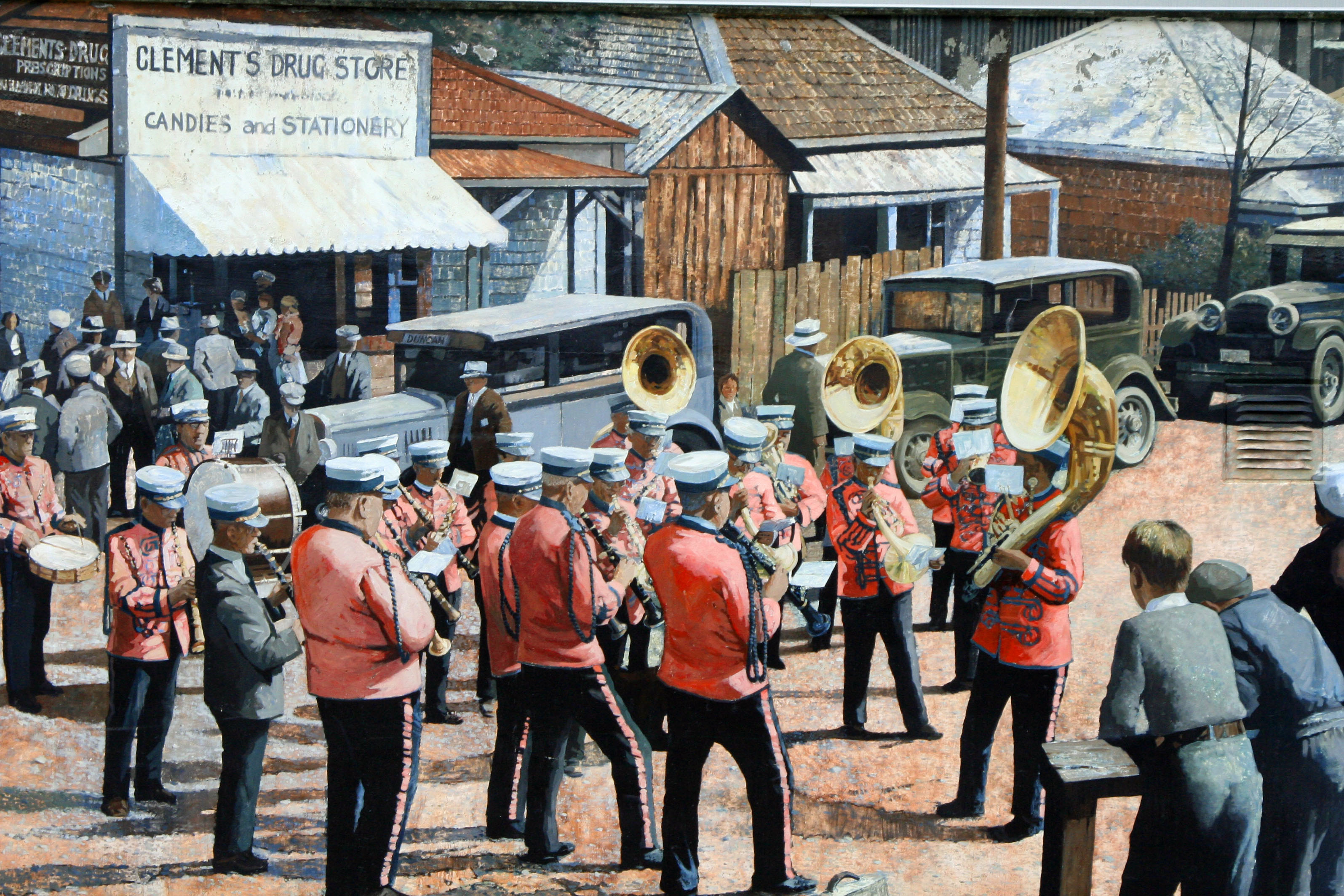
What’s not to love about a band concert?

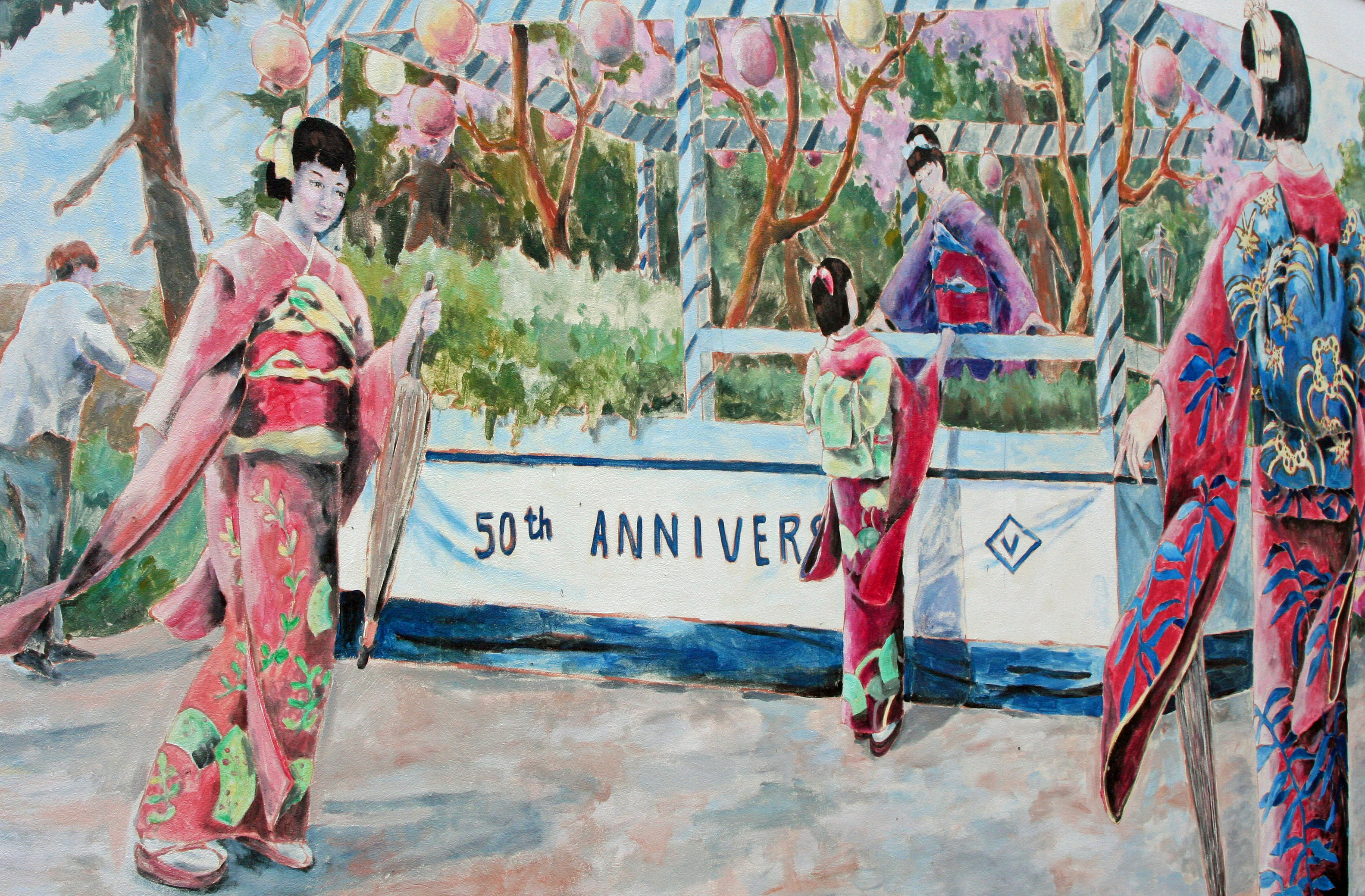
I’ve included this mural because of its history. In 1939 Chemainus celebrated its 50th anniversary. The float entered by the local Japanese-Canadian Community won first prize. By 1942 all of the community’s Japanese had been removed to Internment Camps. It is one of the darker pages of Canadian (and US) history.

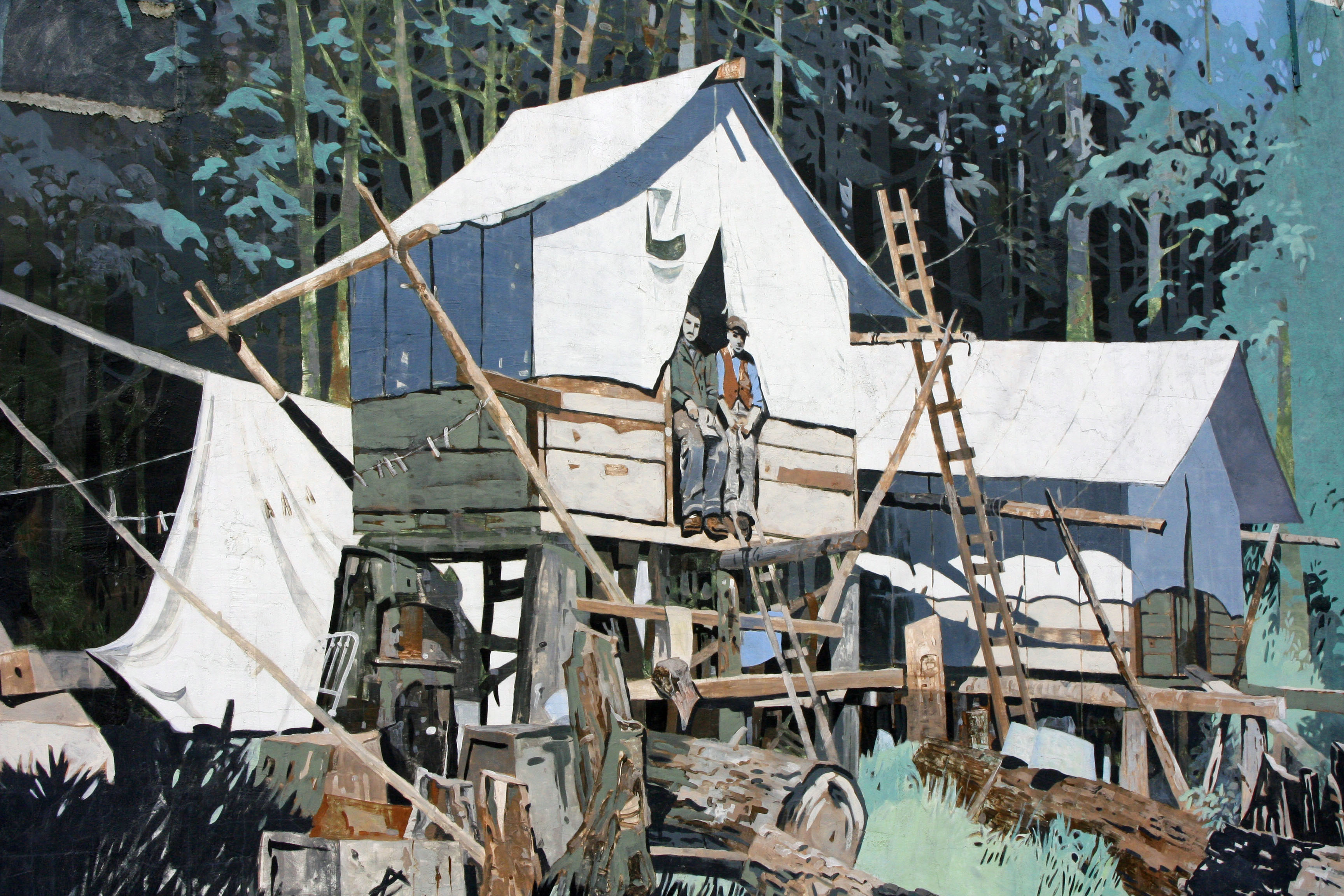
Tent houses provided quick, inexpensive housing for the early loggers, fishermen and miners of Chemainus. When I was growing up in Diamond Springs California, one of my mother’s friends lived in a tent house. As a seven-year old, I was jealous.

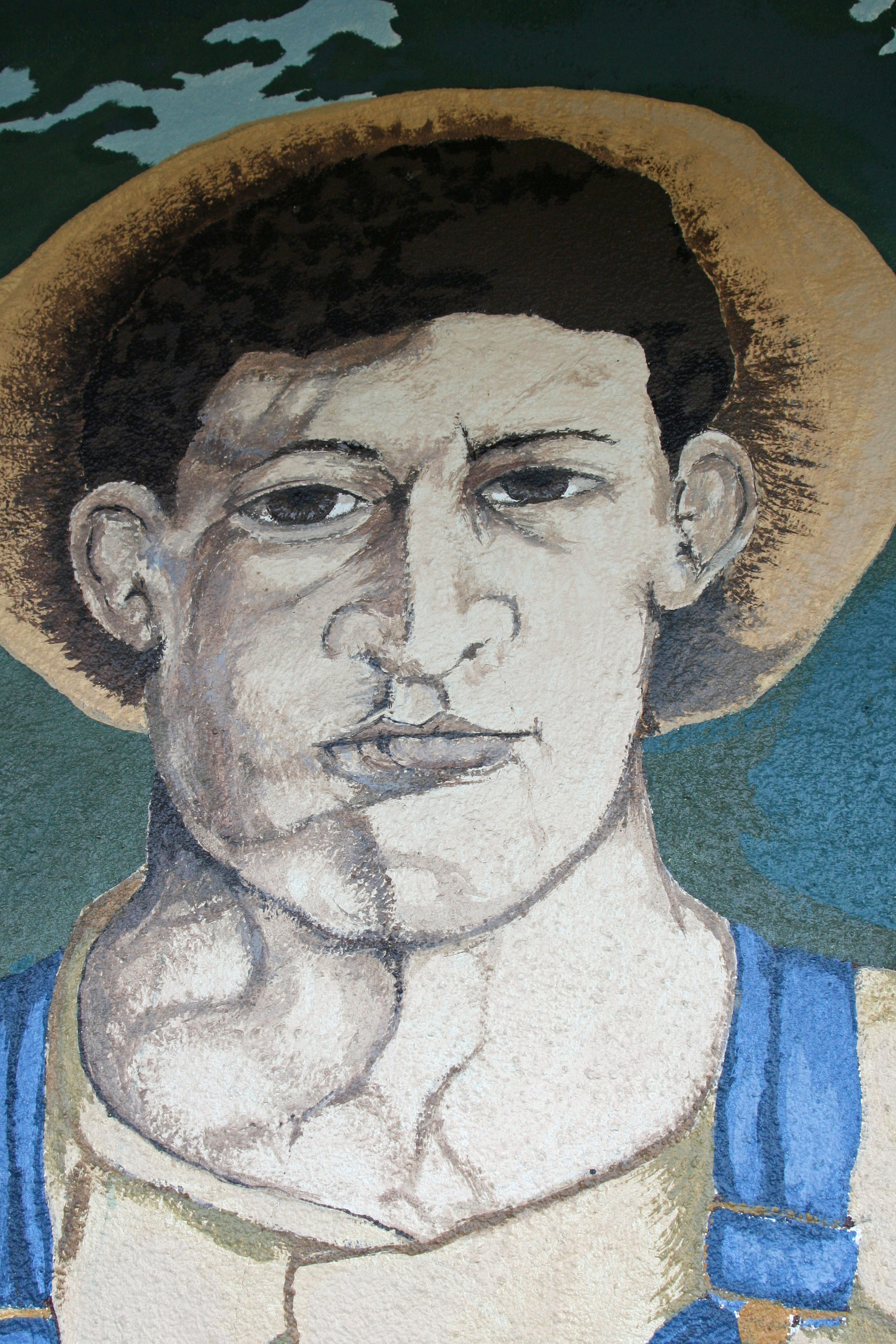
This big guy’s face captures both the simplicity and the power of the mural art in Chemainus.

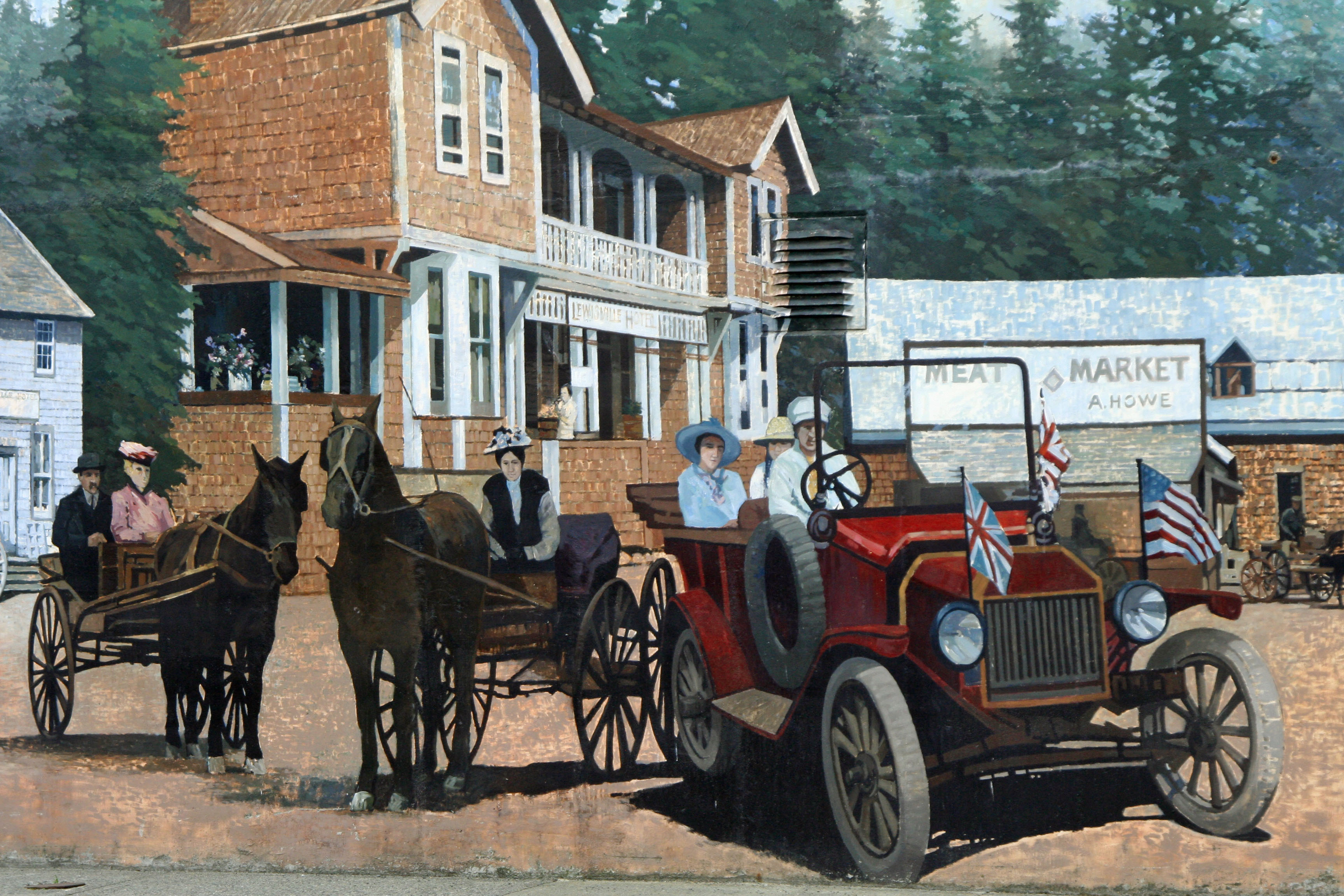
Dressed in their Sunday best, these early residents of Chemainus reflect a time when horses competed with ‘horseless’ carriages as the primary mode of transportation.

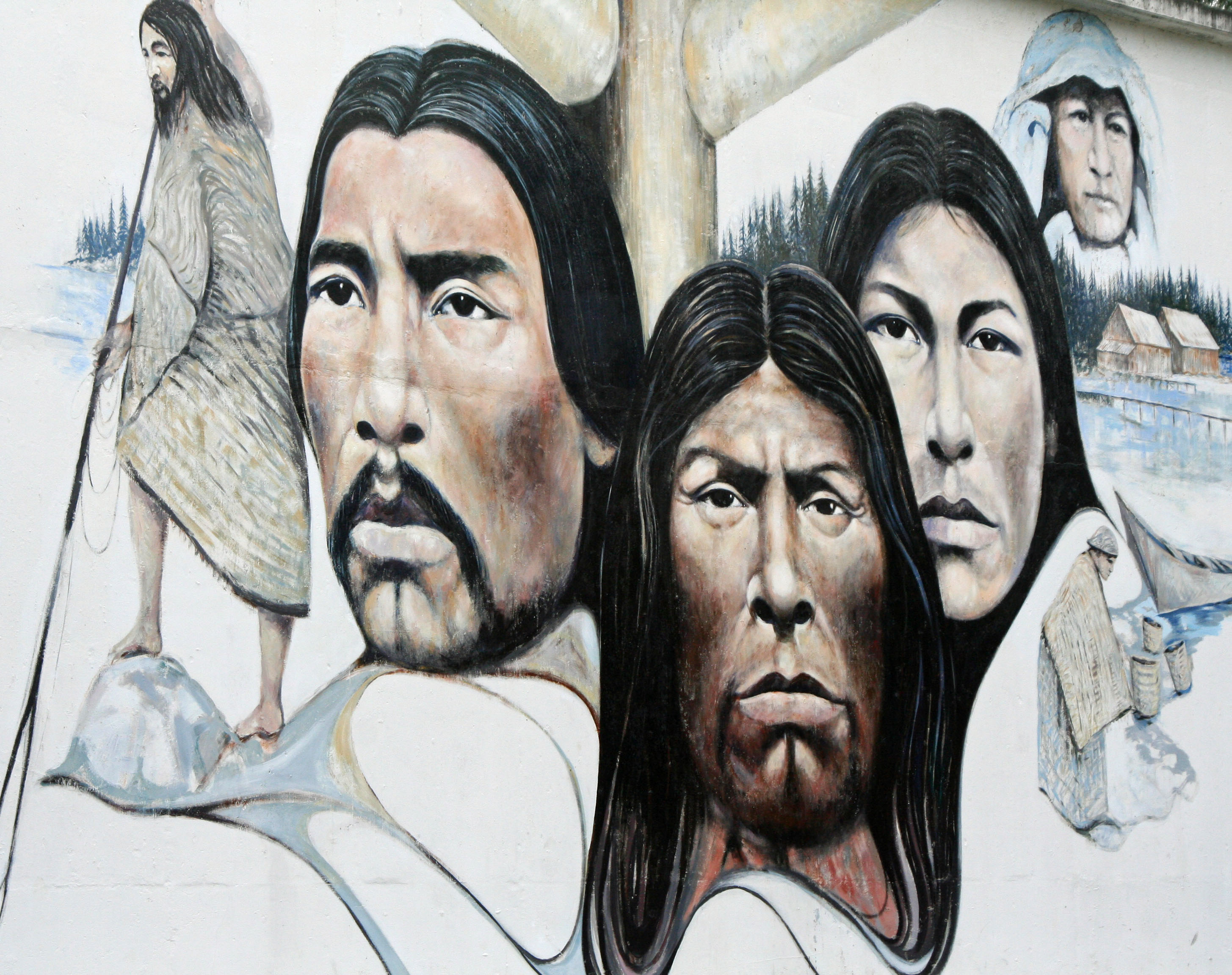
This Chemainus mural of First Nation people captures both the original inhabitants of Vancouver Island and their renaissance today. Peggy and I were both impressed and moved by the quality and quantity of First Nation Art during our visit to British Columbia. 

First Nation Totem Poles… North to Alaska

The totem pole of Thunderbird and the Wild Woman of the Woods found in Duncan, British Columbia on Vancouver Island.
Third times a charm. Right? Peggy and I are out kayaking among the Orca whales up off the northern tip of Vancouver Island as this blog is posted. Or I should say reposted for the second time. It’s appropriate given our trip, however. We are in First Nation country and we once again drove through Duncan. And, as many of you know, I am a big fan of First Nation and Native American art. –Curt

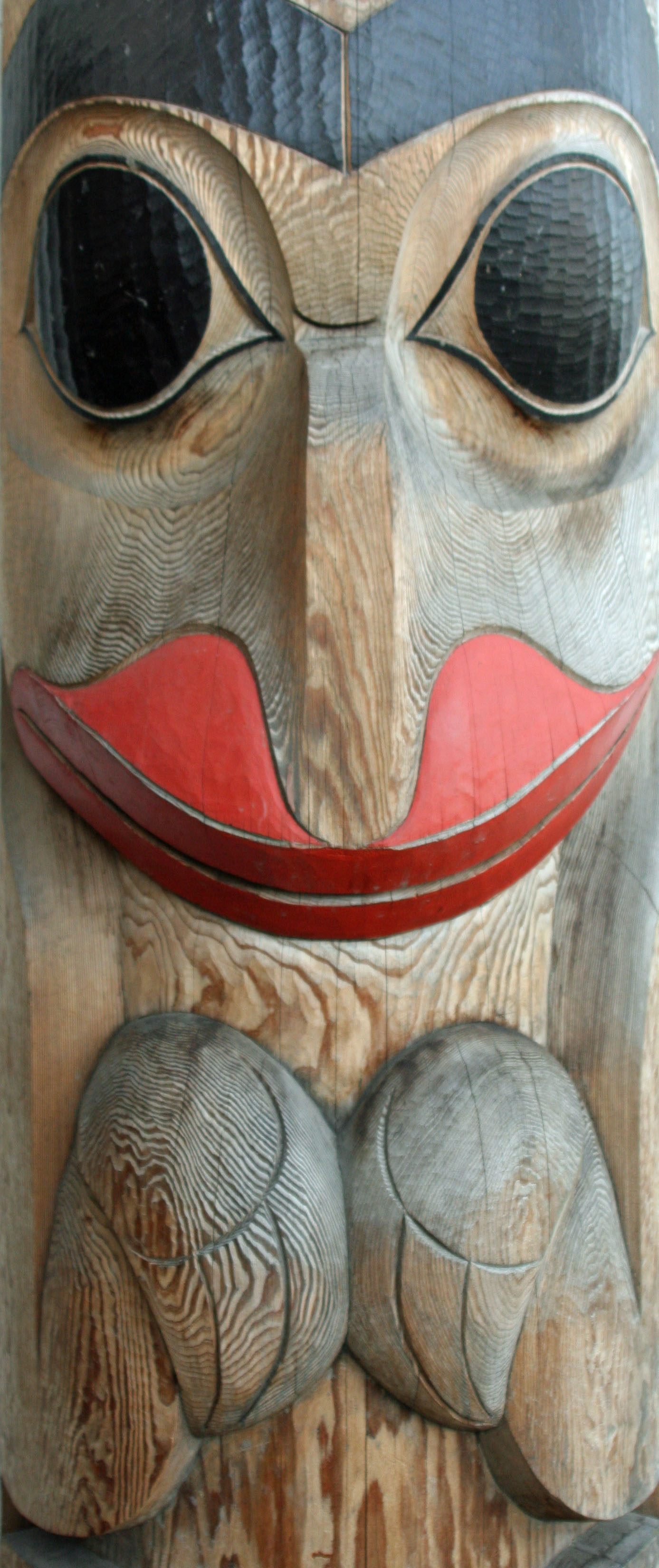
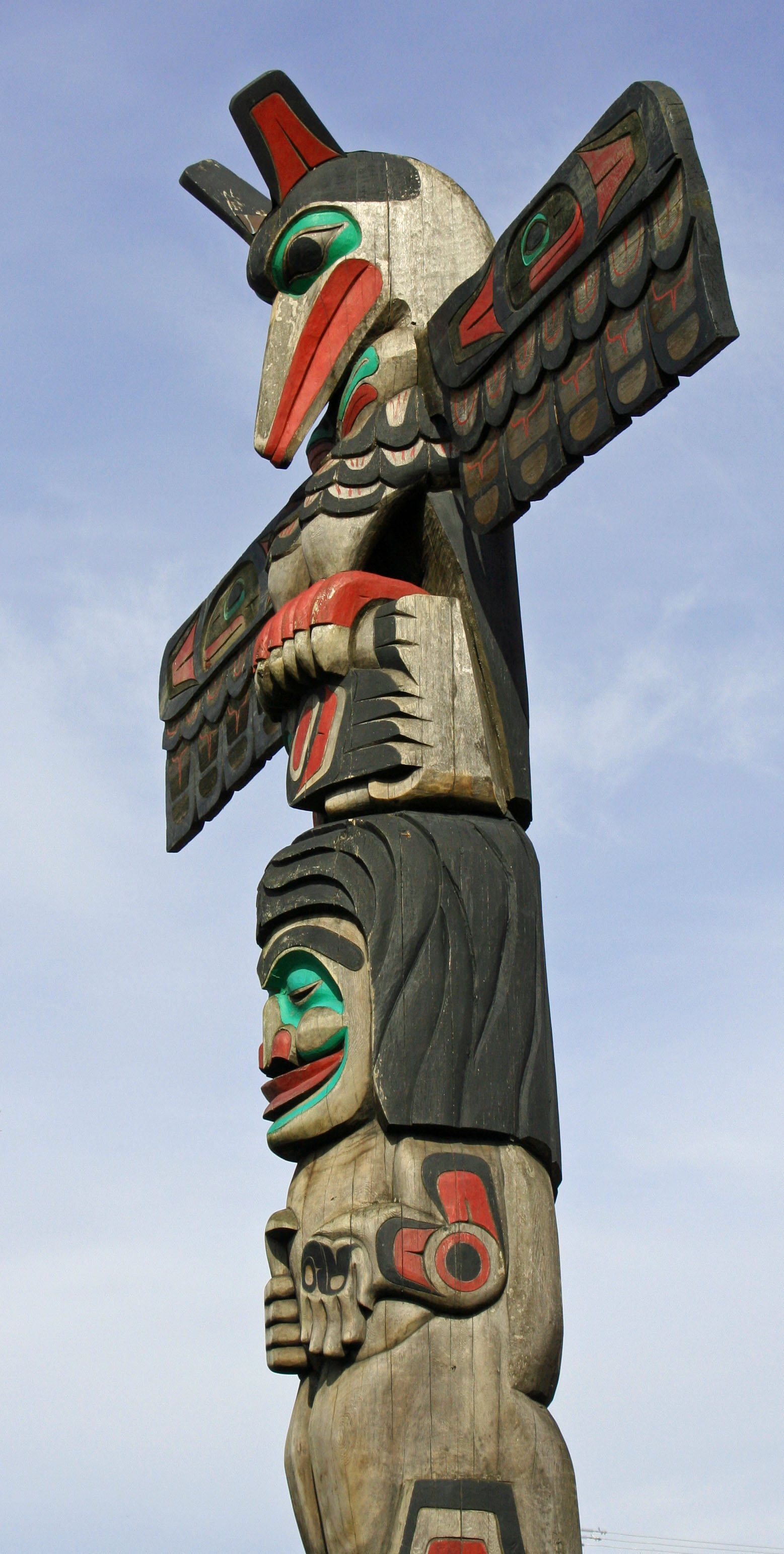
Dzonoqua comes sneaking through the woods, hands outstretched, red lips pursed and whistling, “ooh, ooh” to attract small children who have wandered into the forests. Some stories say she eats the whiny ones. She is also known as the Wild Woman of the Woods or Mrs. Bigfoot. Her large, dangling breasts capture the spirit of Salmon. Thunderbird perches on her shoulders. His wings crash together and make thunder; his eyes shoot out lightning.

Peggy and I, along with our friends Ken and Leslie Lake, visited Duncan BC on Vancouver Island to check out the numerous totem poles carved by First Nation artists and placed throughout the town.

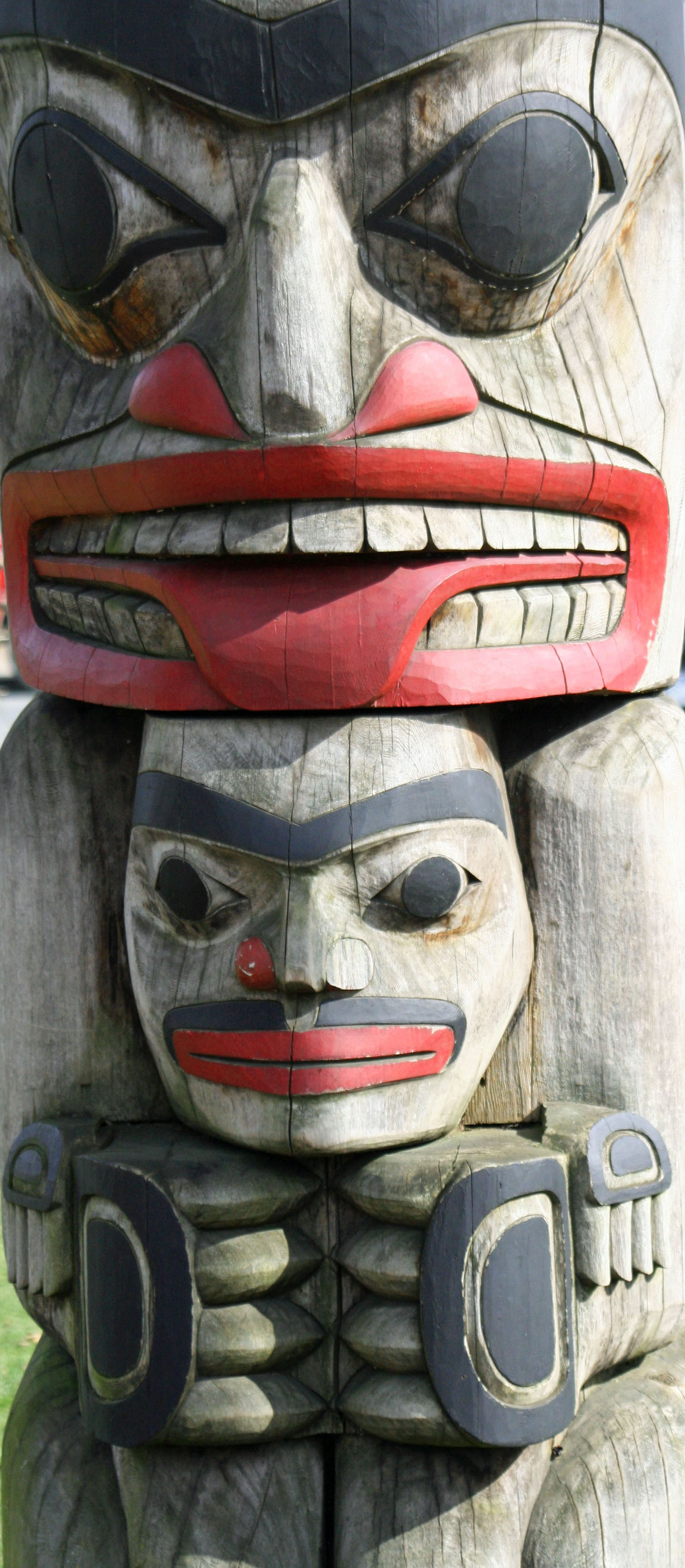
The close relation of First Nation people to Bear, Eagle, Raven, Whale, Owl, Wolf, Beaver, Salmon, Otter and other animals stretches back to ancient times. Families would adopt particular animals as their totems and then carve these animals into totem poles. The poles would serve to both protect and instruct the families. Some families were even known to shape shift into their totem animal. (Jacob, morphing into a wolf in the Twilight series, is a modern example.)

The arrival of whites in the Northwest had a devastating impact on the people and culture of the First Nation tribes. Disease wiped out whole populations. The practice of native religion and the carving of totem poles were prohibited. It wasn’t until the 1930s that the art of totem pole carving was revived.

It thrives today. Native artists continue to carve traditional themes but they have also extended their interpretations and honed their skills. While the totem poles and masks still serve as important mythic symbols to First Nation people, they have also become a source of pride to all who live in BC and the Northwest. I might add they have also become an important attraction for tourist dollars.

Duncan BC and native artists have done an excellent job of displaying totem poles representative of the north coast. Visiting the town, located on the Trans-Canada highway halfway between Victoria and Nanaimo on Vancouver Island, is well worth the stop.

To enhance your visit, I highly recommend stopping by the Visitor’s Center and picking up the book, “The Totem Walk of Duncan” written by Joan Chisholm and illustrated by Crysta Bouchard and R. Howe. For more information go to: http://www.downtownduncan.ca/duncan_totem_tourNEW.html

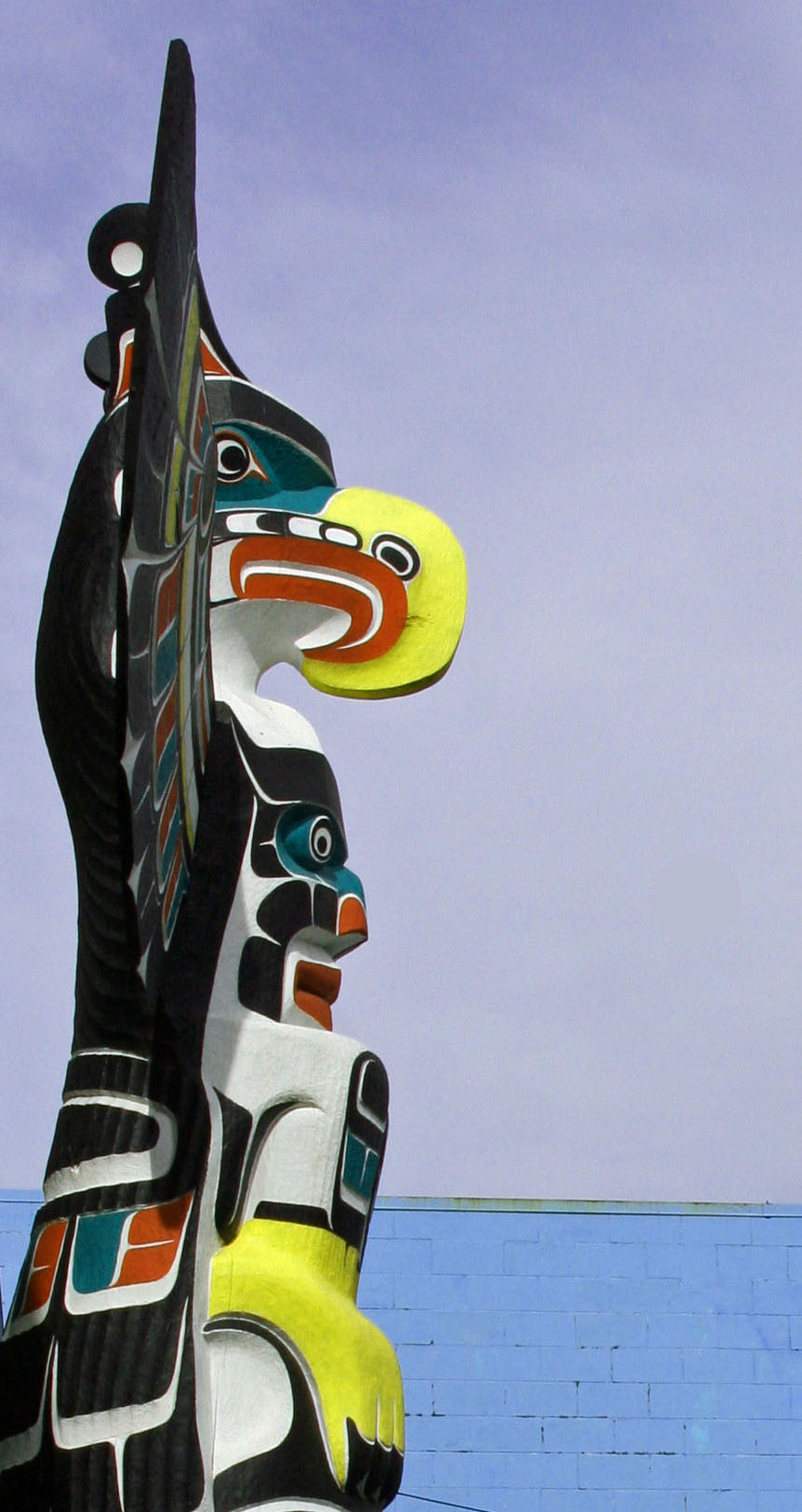
Thunderbird in flight. I loved the bright colors of this totem pole in Duncan BC.

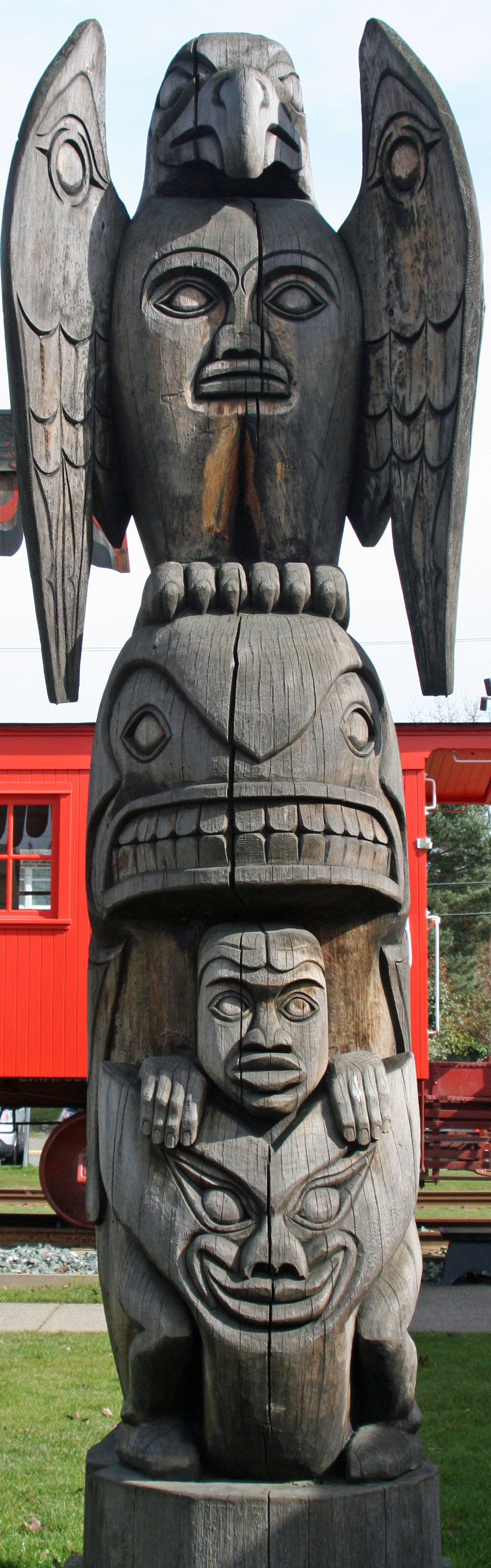
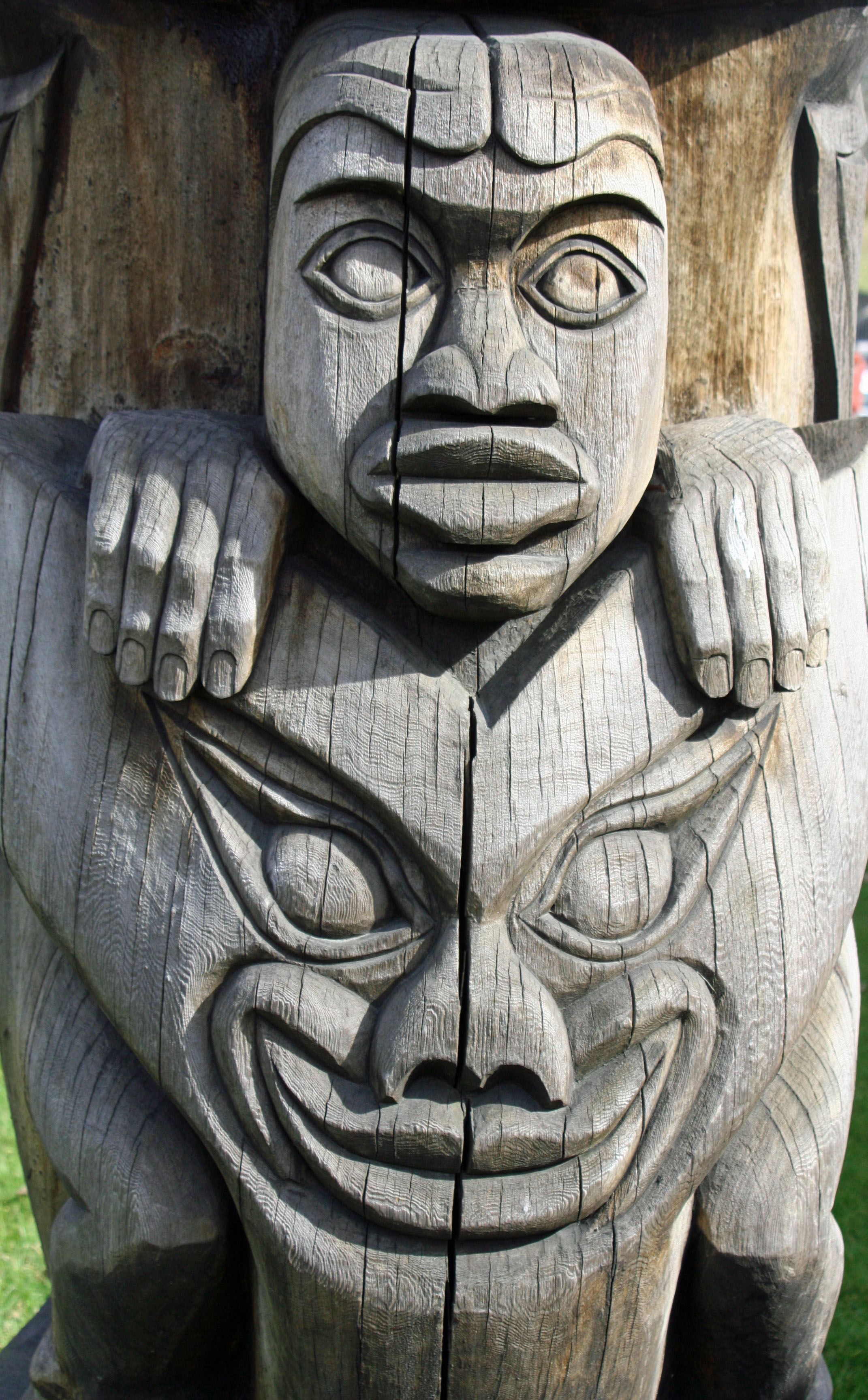
This totem pole in Duncan BC shows the spirit of the First Nation artist in the eagle’s chest. Eagle rests on Whale and has Wolf carved on his flukes. Both Whale and Wolf provide powerful protection for the person resting his hands on the flukes.

This photo provides a detail of the totem pole above. Note the fine detail of the carved fingers.

This totem pole was meant as a thank you from one chief to another. Raven perches on top and delivers the pole. Eagle is under Raven and represents the power of the chief, a member of the Eagle Clan. The chief’s son is next. His open hand symbolizes “thank you.” Raven, like Coyote of the Southwest, is a trickster. Both are among my favorite mythological animals.

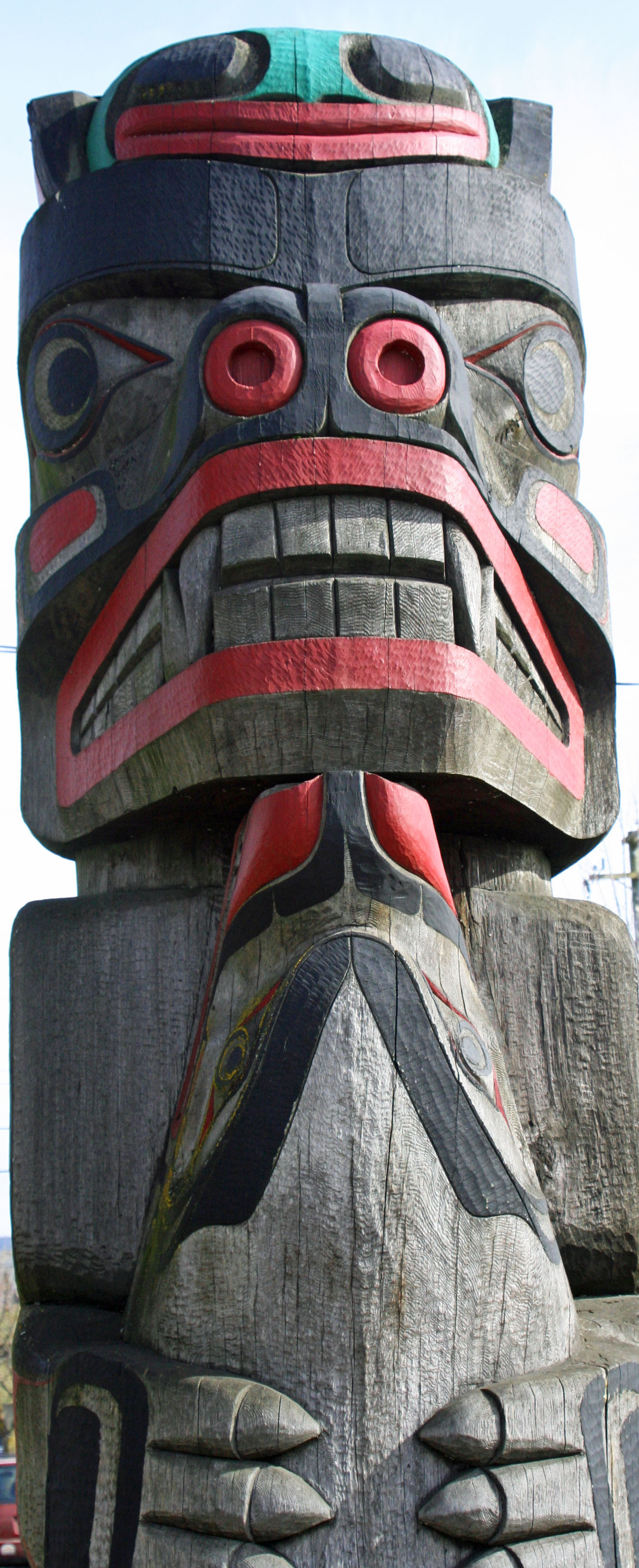
Most totem poles are highly symbolic. This is a heraldic pole. The frog on top represents wisdom, the bear below power and courage, and the seal a spiritual being that can travel easily between spiritual and physical realms. The red and black mean strength and protection. I see it as one pole accomplishes all.

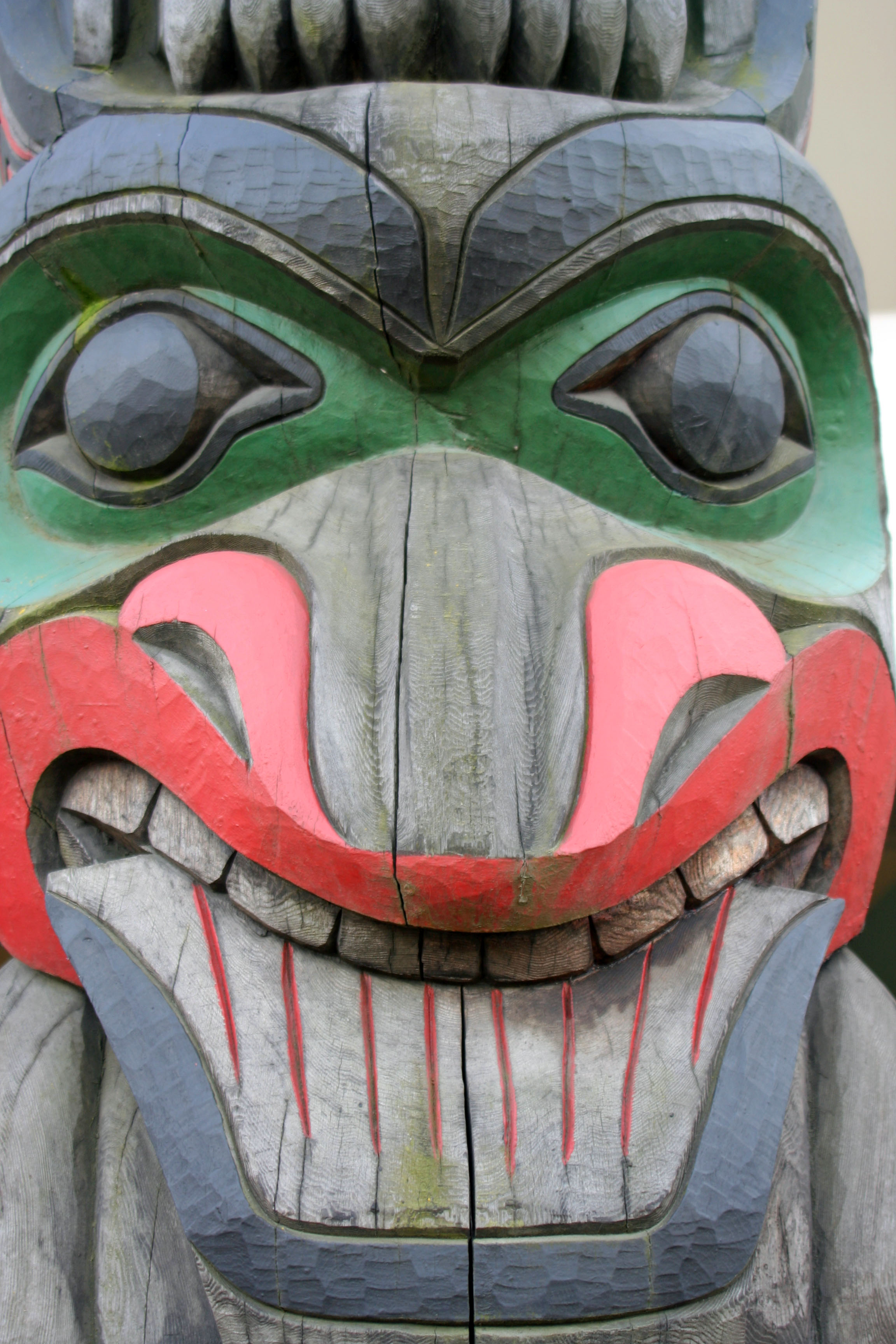
The bear’s tongue and wide grin caught my attention in this Duncan BC totem pole. I thought at first he might be sampling the guy he is holding in his paws. Apparently it means he is about to shape shift.

I am struck by the sheer power captured in some of Duncan BC totem poles. This eagle is an excellent example.

A different perspective on Bear. I enjoyed looking at and photographing the specific faces seen on the Duncan BC totem poles.

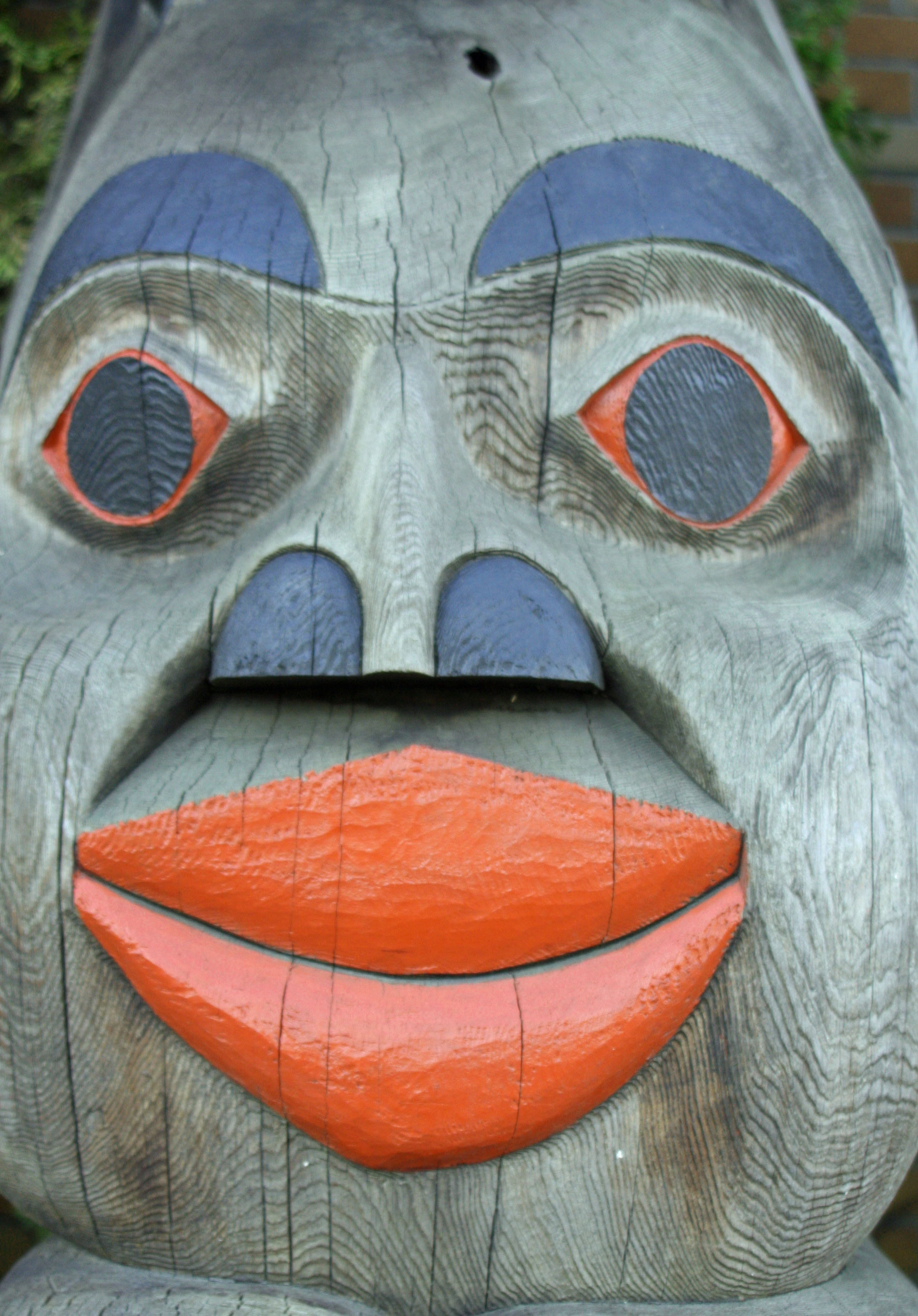
If it weren’t sacrilegious, I’d name this totem pole face smiley.

And finally, a Duncan BC totem pole I simply couldn’t resist. How could anyone say no to a pose and eyes like this?

NEXT BLOG: We cross the border into Canada and are reintroduced to the delicate art of carving with a chainsaw.

A Whale of a Tale– or has Nessie Migrated… Gone fishing in Puerto Vallarta

Photo of Pacific Ocean outside of Banderas Bay, Mexico. Photo taken by Curtis Mekemson.

The ocean is both beautiful and mysterious, filled with marvelous creatures of the deep. I took this photo outside of Banderas Bay, Mexico.

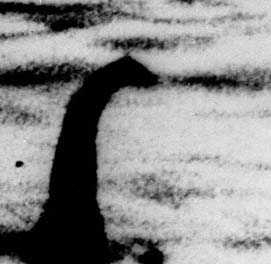
You have all seen the grainy photos of Nessie, the want-to-be monster that hangs out at Loch Ness in Scotland. I, too, have stood on the shores of the fabled lake with eyes peeled and camera poised. Unfortunately, Nessie didn’t bless me with her presence. Sigh. Neither fame nor fortune was to be mine.
One of the more famous photos of Nessie, the Loch Ness Monster. This is an AP photo.

One of the more famous photos of Nessie, the Loch Ness Monster. This is an AP photo.

But what if I were to discover Nessie in Banderas Bay off the coast of Puerto Vallarta. Or at least something that looked like Nessie. So what if a little help from Photoshop was called for. Would people believe me? Maybe my photos would appear on CNN… or glory of glories, even FOX News, which, as every one knows, is fair and balanced. I suspect I could at least count on support from the local chamber of commerce. Monster sightings are always good for tourism. Anyway, consider the following:

Nessita, Nessie's daughter looks across the Bay of Banderas in search of a fat tourist who as eaten too many tacos.

Nessita, Nessie’s daughter looks across the Bay of Banderas in search of a tourist who has eaten too many tacos.

Having spotted her prey, Nessita dives beneath the water, coils unfulring as she goes.

Having spotted her prey, Nessita dives beneath the water, coils unfurling as she goes.

And disappears beneath the waves.

And disappears.

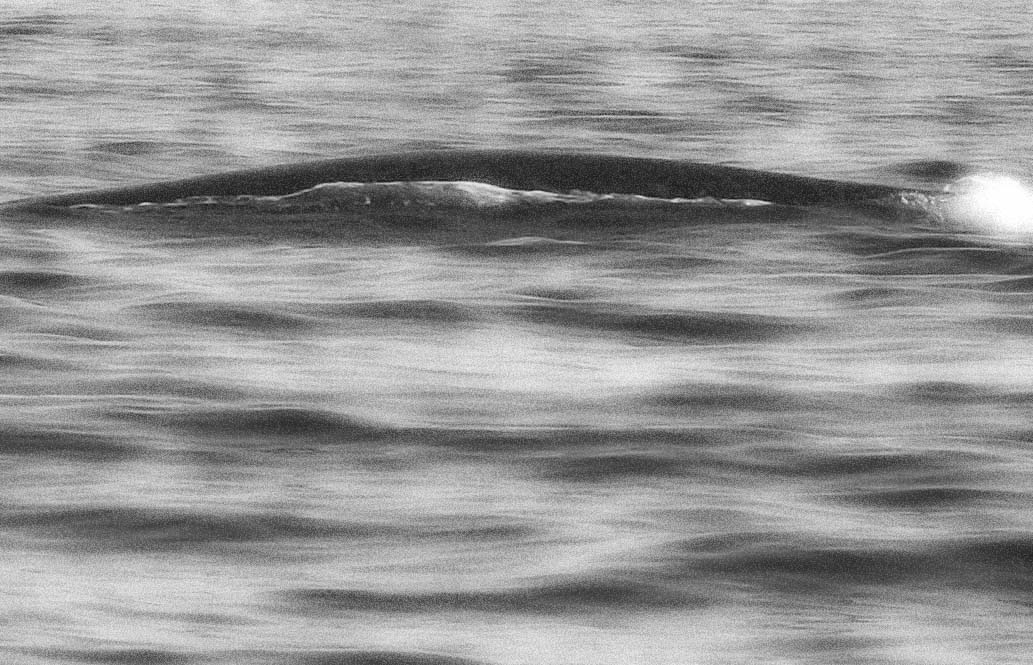
I am basically an honest guy, however. Otherwise I’d be rich or in jail. Right? Plus, all of you good folks who follow me, not to mention Word Press, might get a little excitable if I deliberately misled you. I am already under suspicion for reporting on ghosts and Bigfoot. So, I have to confess. What my son-in-law Clay, grandson Ethan, and I came across while fishing were humpback whales frolicking in Banderas Bay. But even they were wonderful, and strange.

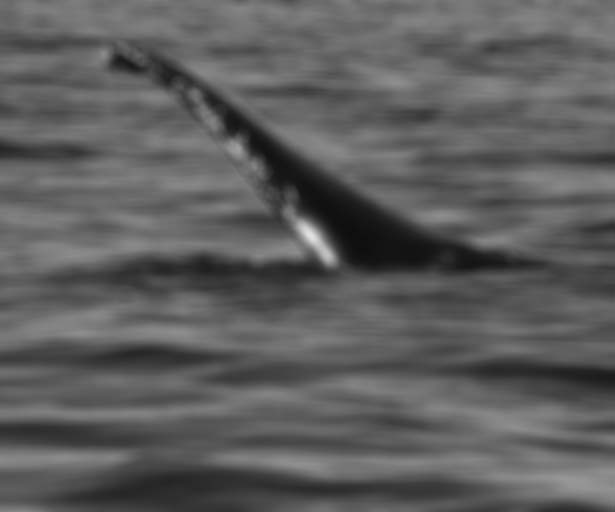
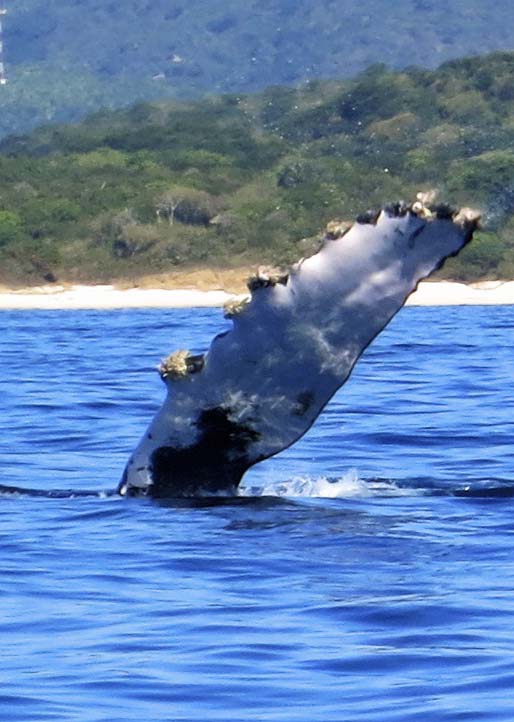
Dorsal fin of humpback whale taken off the coast of Puerto Vallarta. Photo by Curtis Mekemson.

Dorsal fin of humpback whale in the Bay of Banderas.

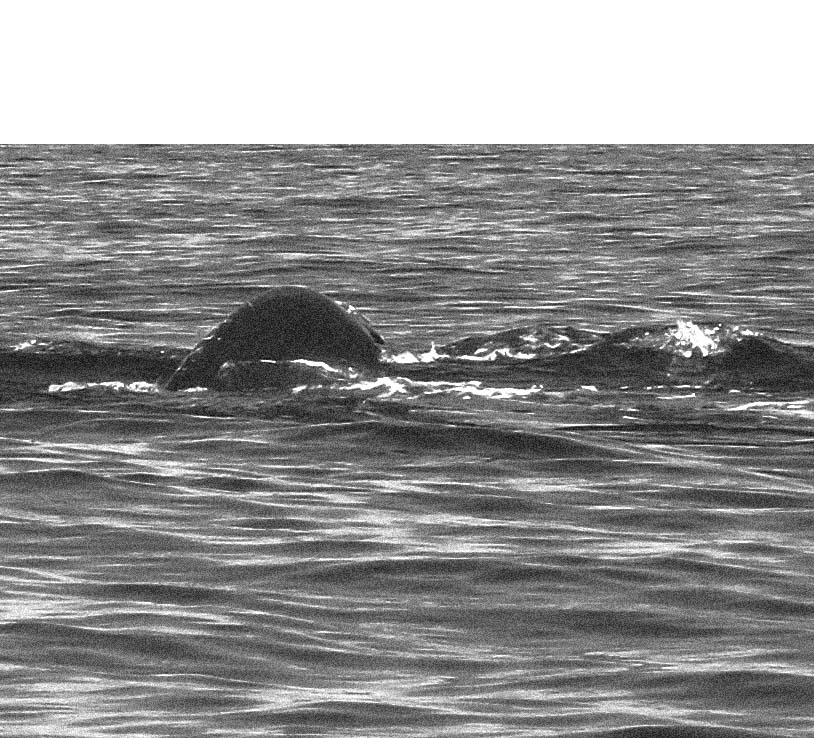
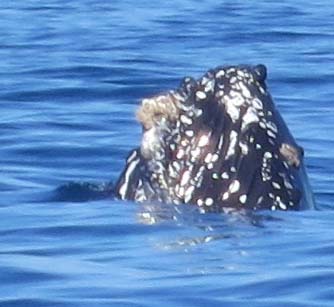
Head of humpback whale in the Bay of Banderas. Photo by Curtis Mekemson.

And the whale’s head.

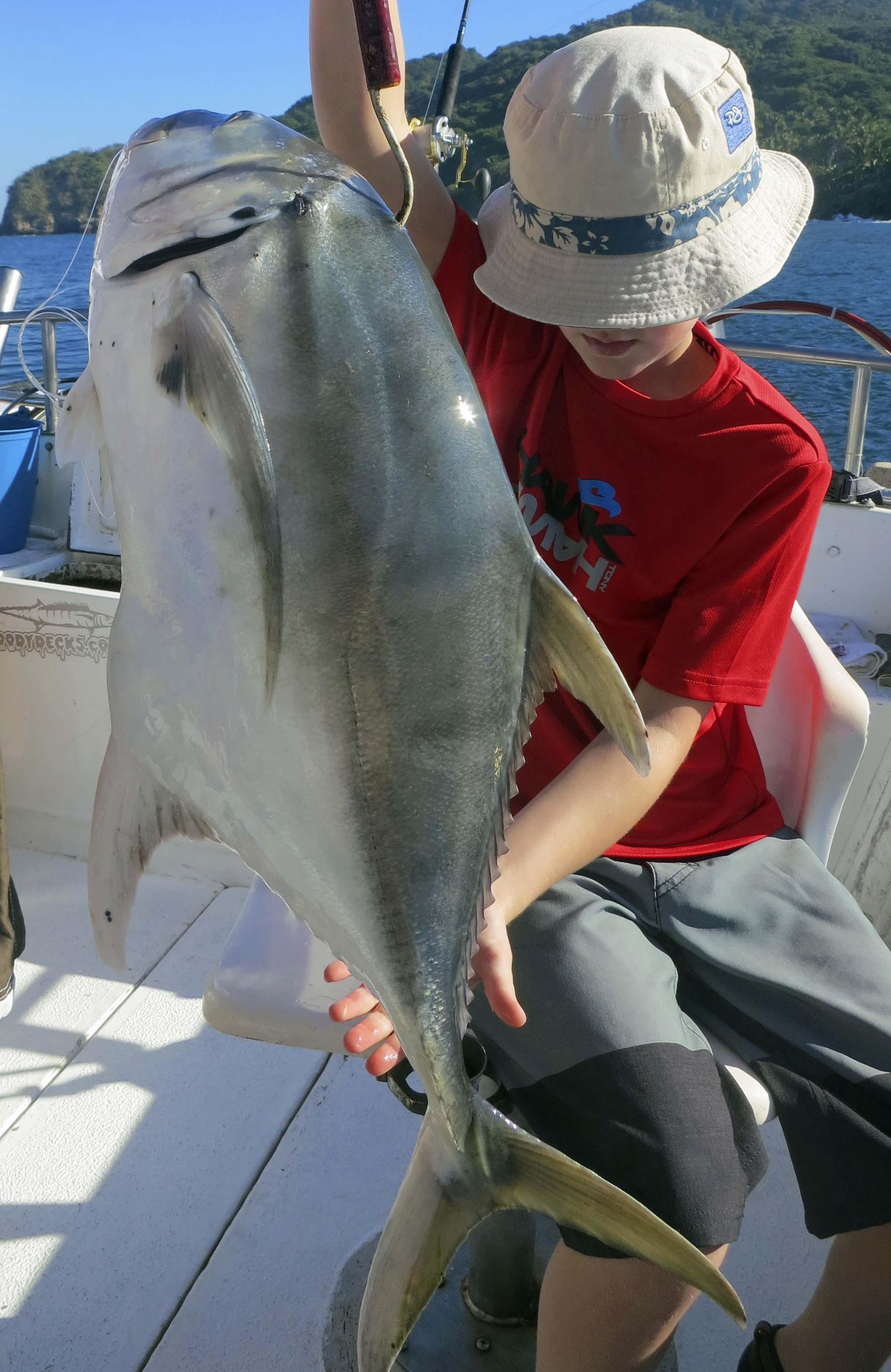
How was the fishing? At least fair to middling, as the old timers say. Consider it from Ethan’s perspective. Any time you can catch a fish almost as big as you are, it’s a BIG fish. Imagine the tales that Ethan had to tell when he returned to school in Tennessee.

Fishing in the Bay of Banderas. Photo by Curtis Mekemson.

Our grandson Ethan displays his catch, a jack crevalle.

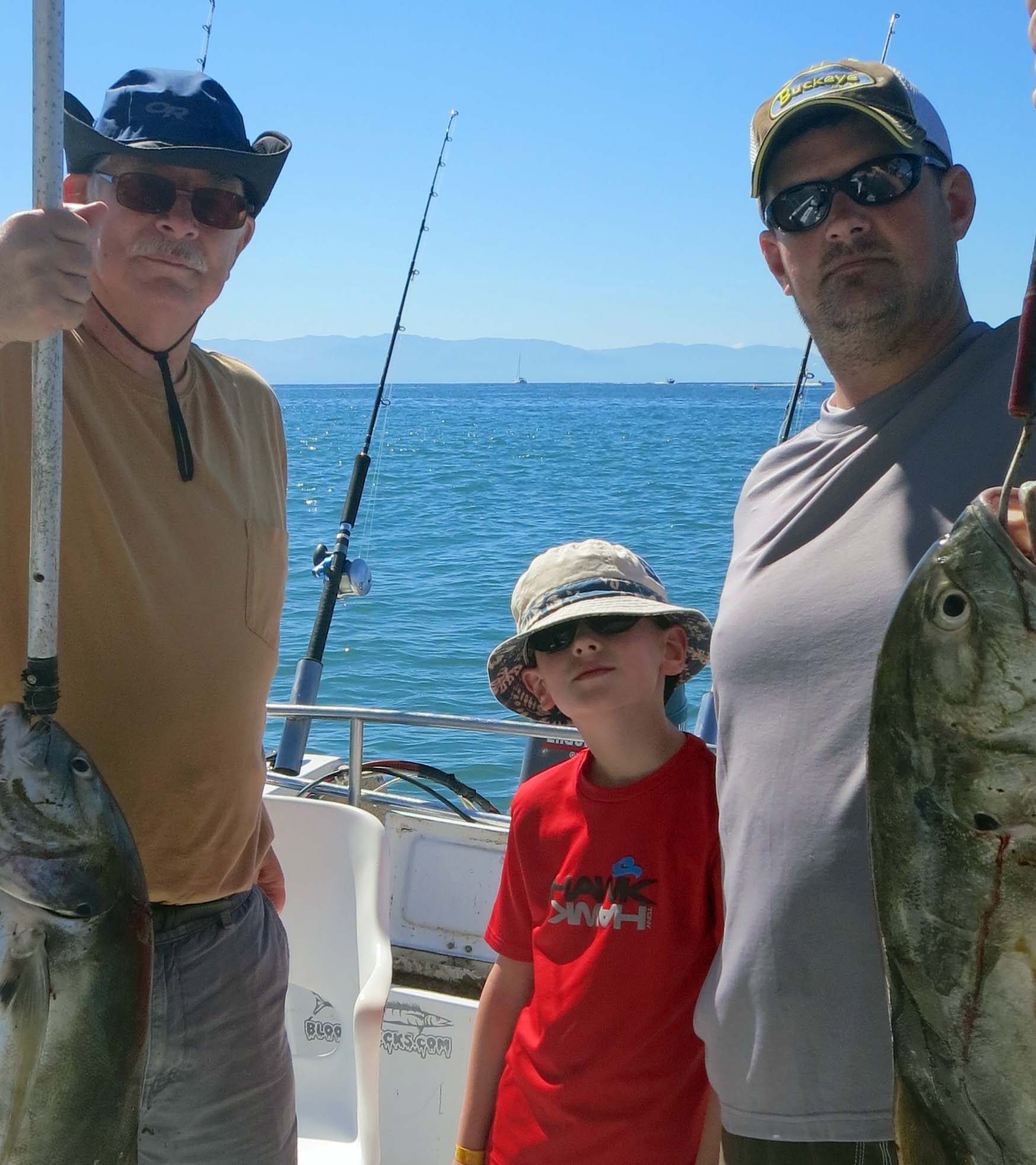
Even Clay and I got lucky.

Nice fish, but would you invite this motley crew into your house?

Nice fish, but would you invite this motley crew into your house?

NEXT BLOG: 2014 Burning Man tickets go on sale in February. I give you five reasons you might want to purchase one.

The Beautiful Sunsets of Banderas Bay, Puerto Vallarta

Sunset over Bandaras Bay, Puerto Vallarta. (Photo by Peggy Mekemson.)

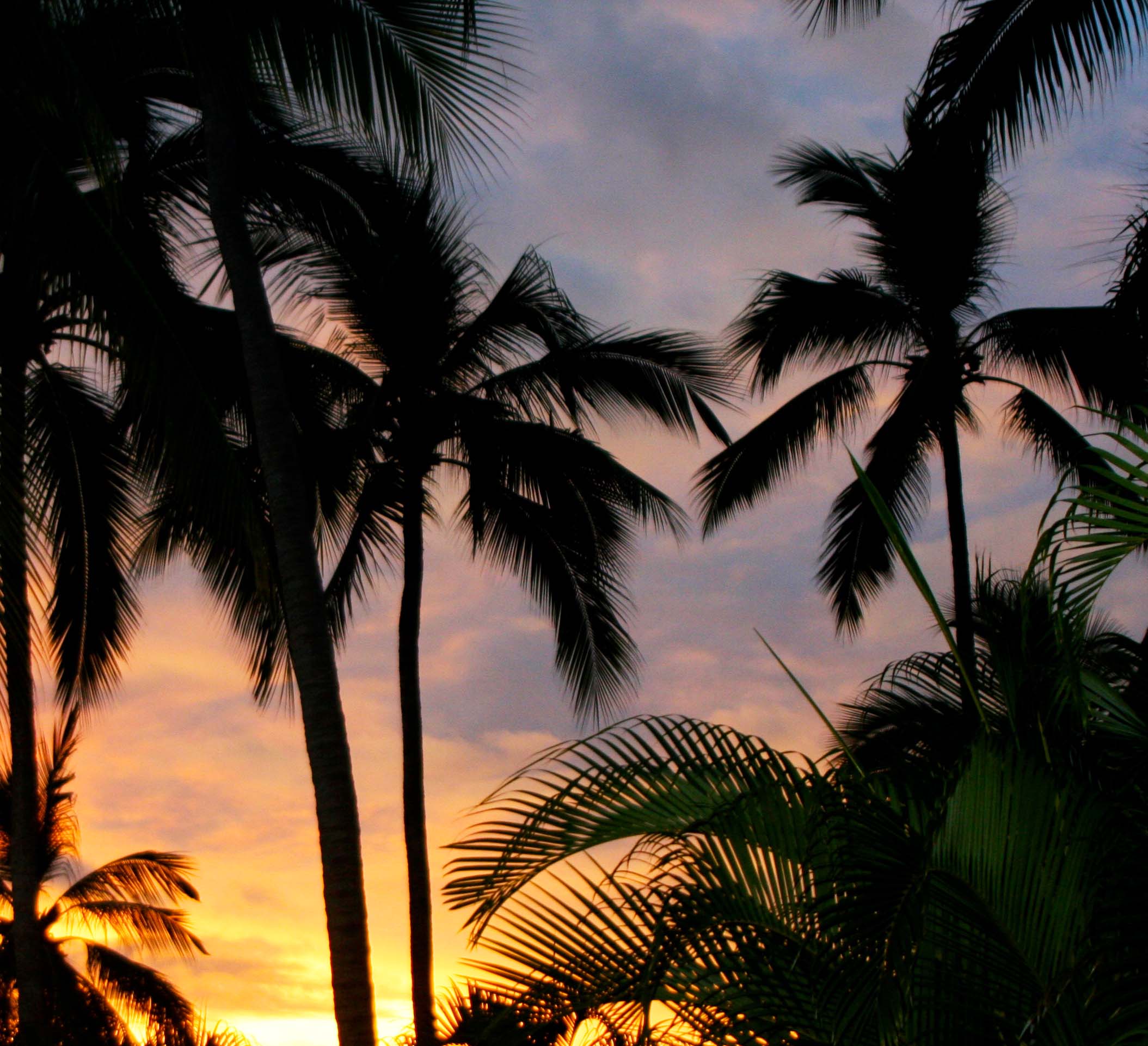
Palm trees and sunsets seem to be made for each other. (Photo by Peggy Mekemson.)

My father, who was a talented landscape photographer and painter, always discussed sunsets with a certain disdain. “Post card art,” he would sniff.  When I sorted through his thousands of slides after he passed away, however, what did I find: dozens if not hundreds of sunset photos. Apparently, the old fellow had been as addicted to sunsets as I am.

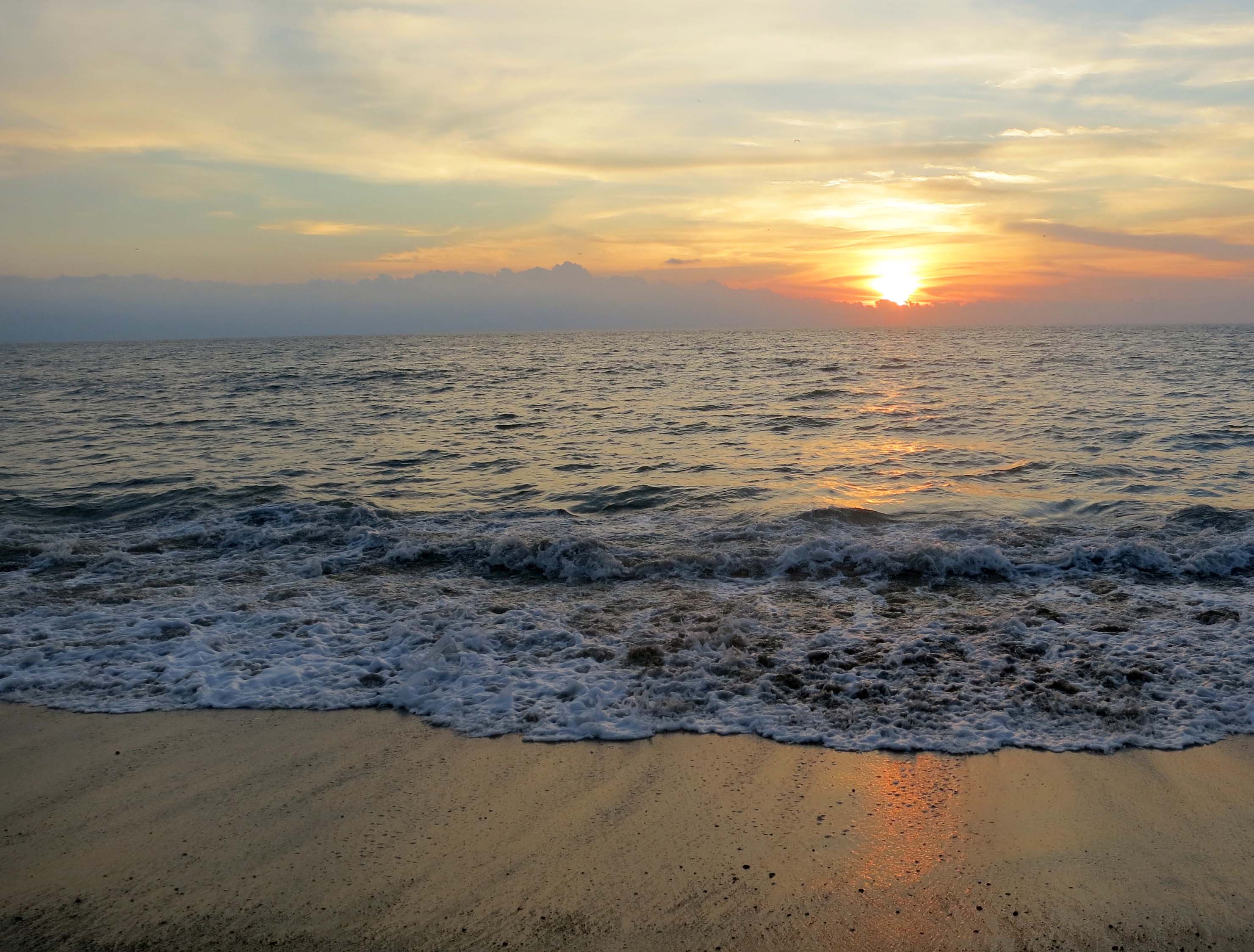
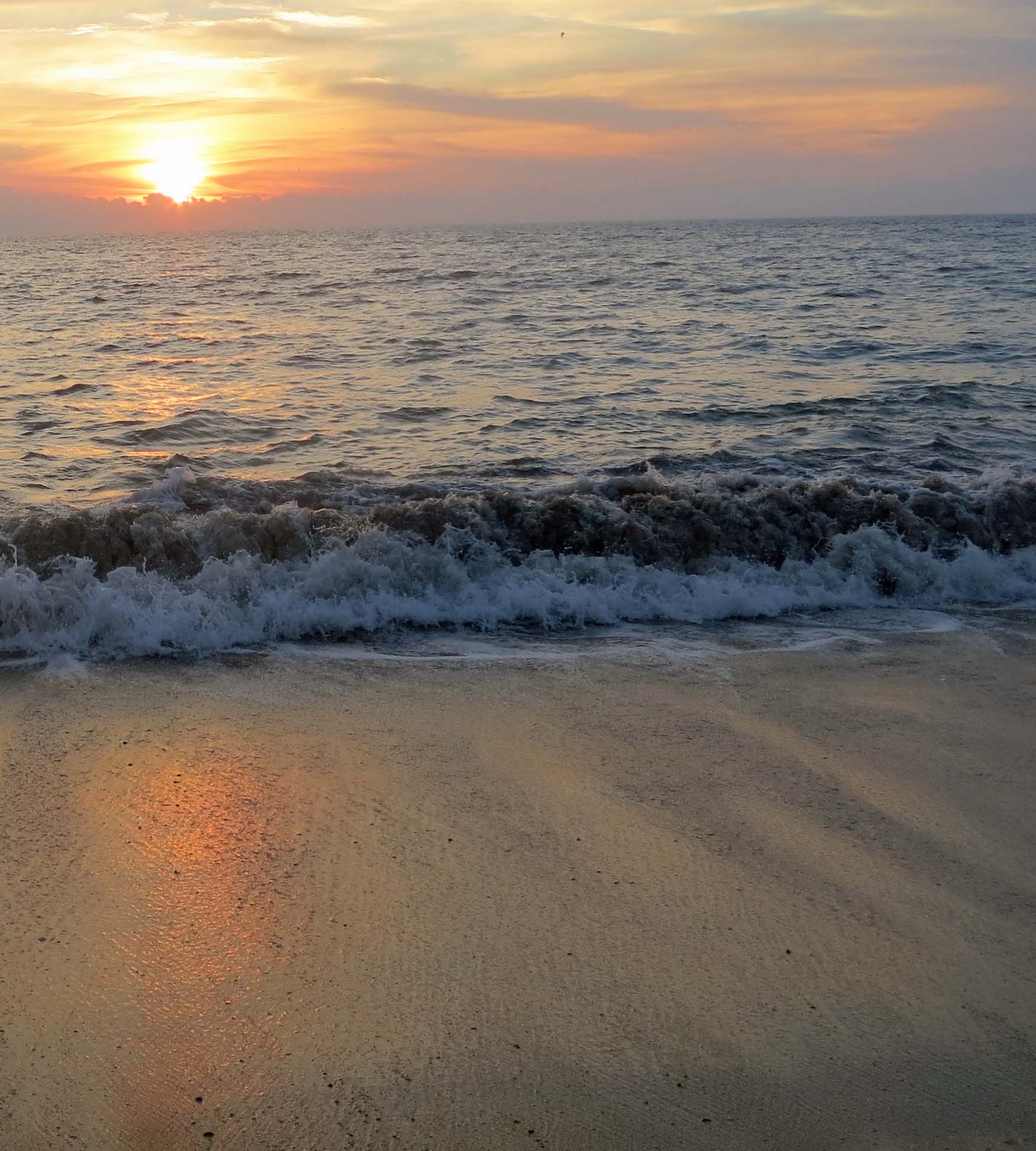
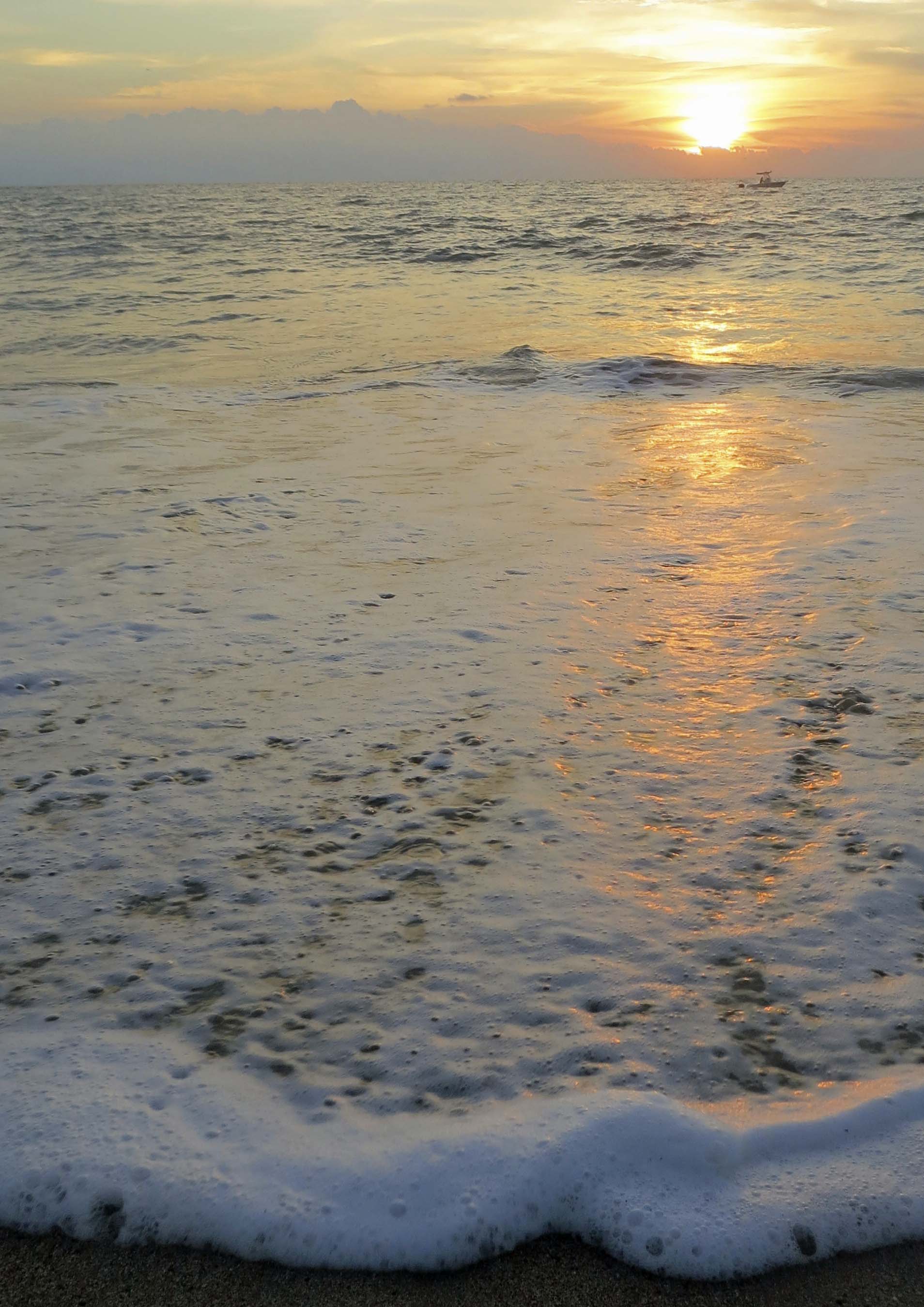
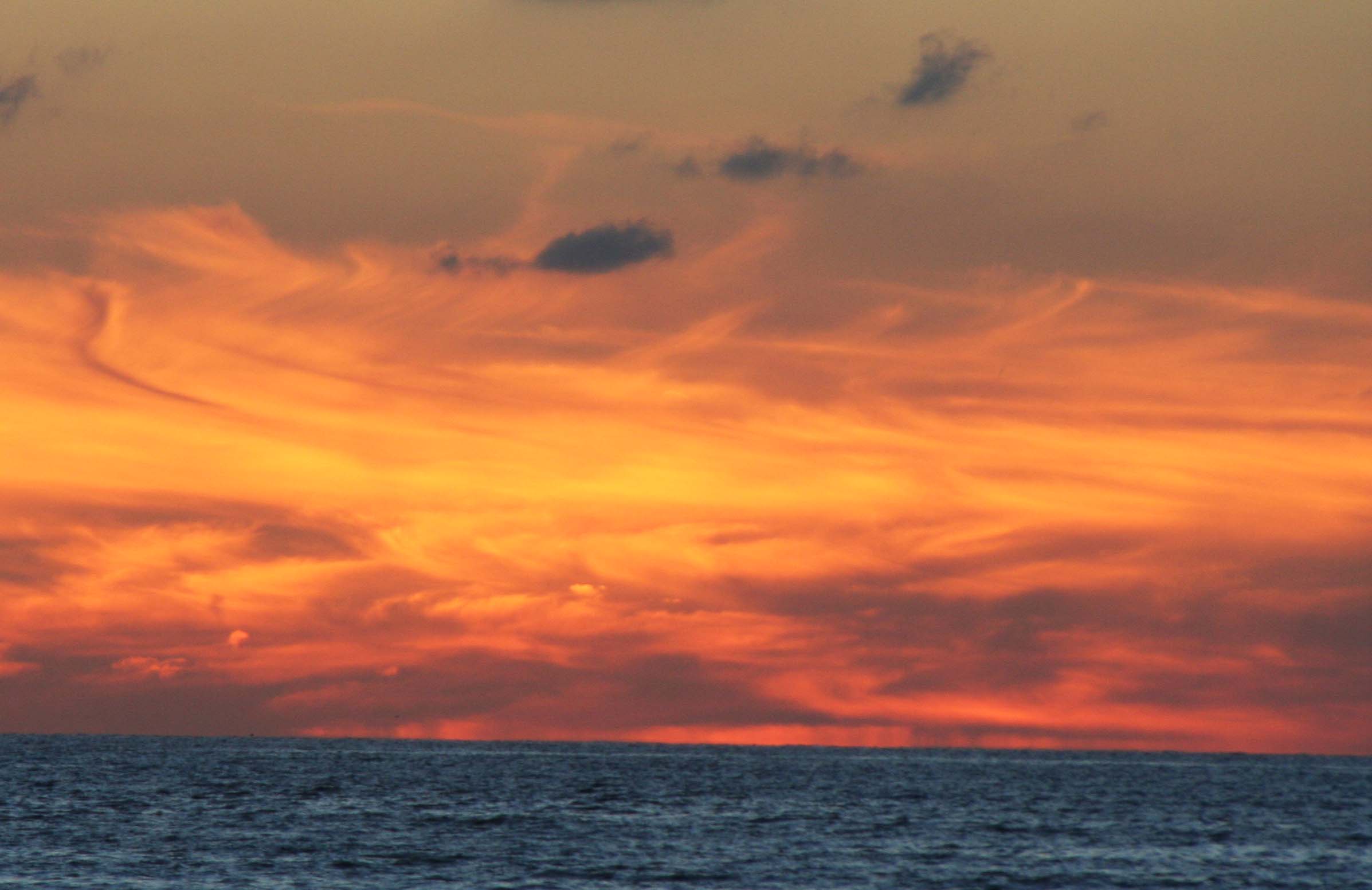
Scenic sunsets beg to be photographed… even more so when warm tropical breezes and palm trees are involved. Peggy and I found ourselves out on the beach every evening in Puerto Vallarta waiting for the show to start, and we were never disappointed. I’ll let the photos tell the story.

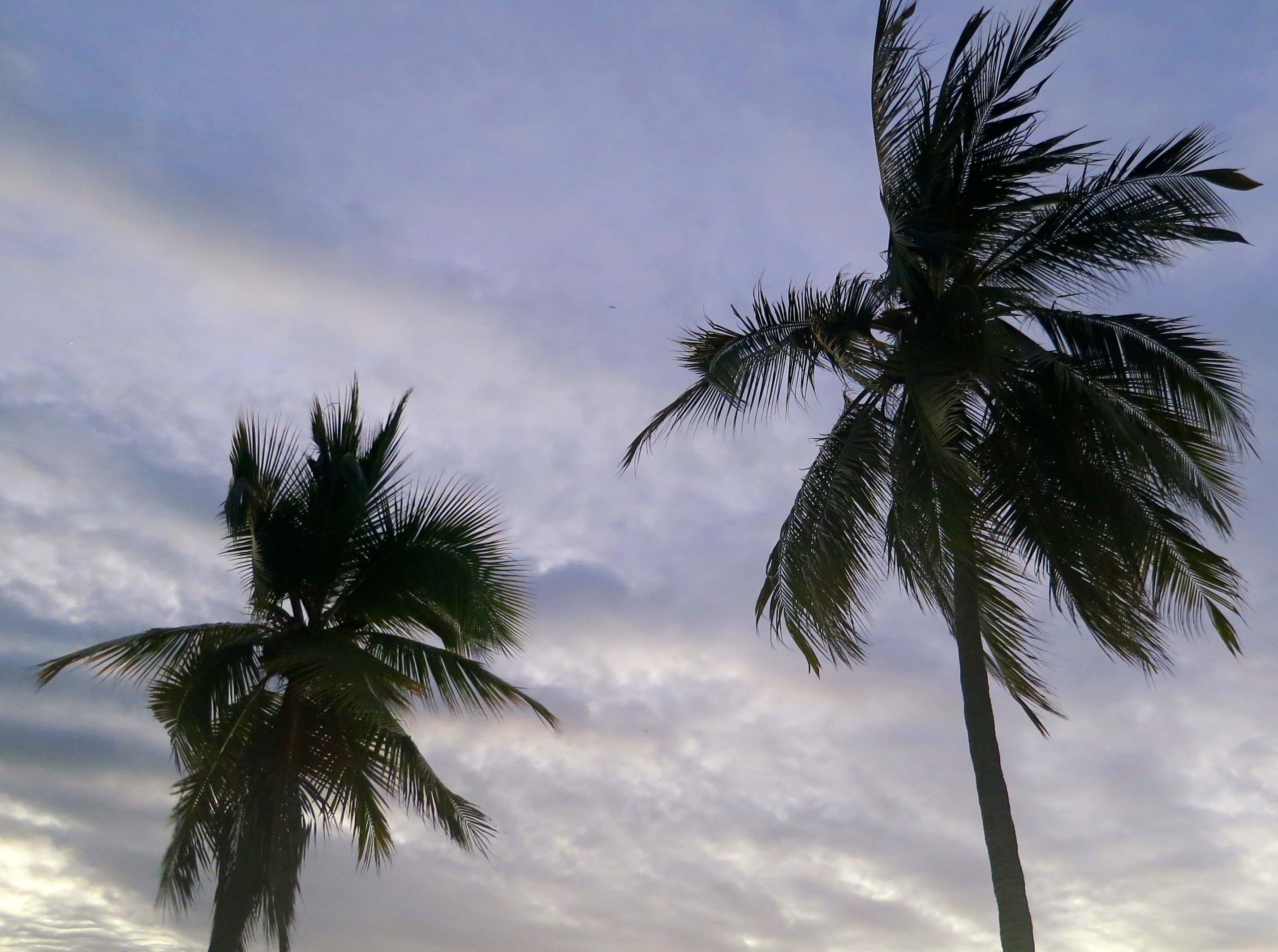
Palm trees outlined against the sky in Puerto Vallarta. Photo by Curtis Mekemson.)

I caught these two palms outlined against the sky with just a hint of color in the clouds.

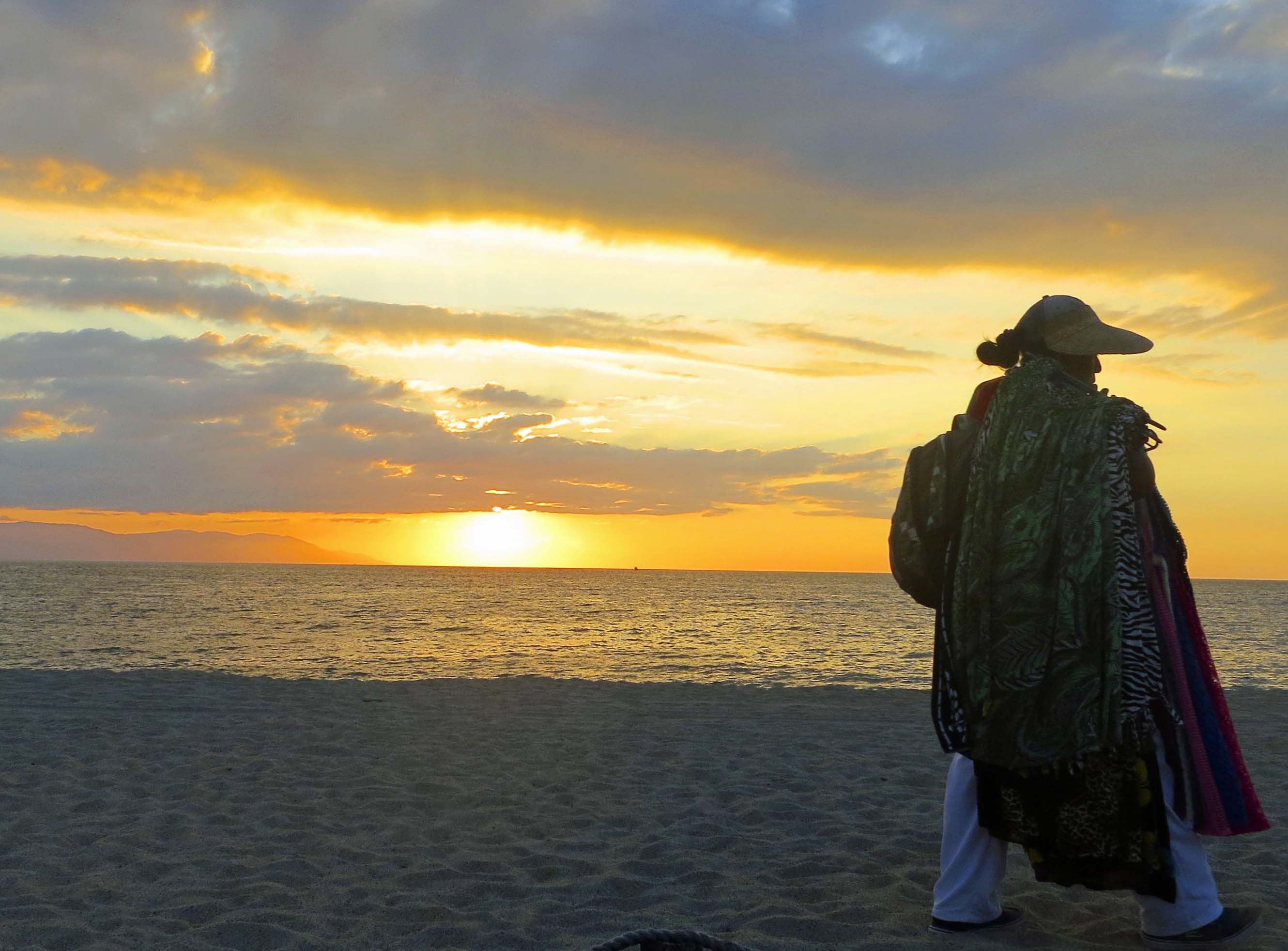
Puerto Vallarta beach vendor outlined by setting sun. Photo by Curtis Mekemson.)

After a long day of work, a beach vendor heads home just as the sun drops behind the horizon.

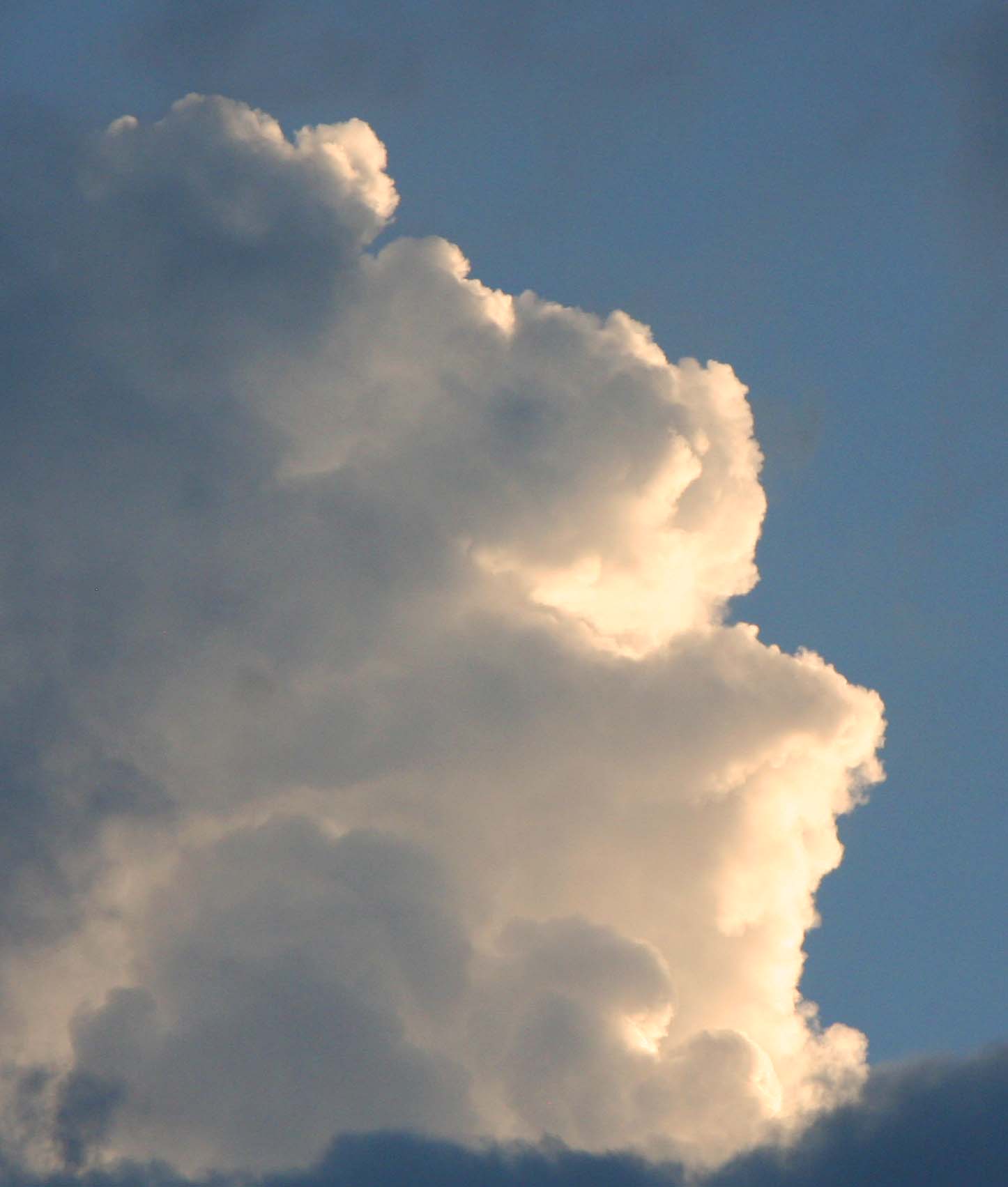
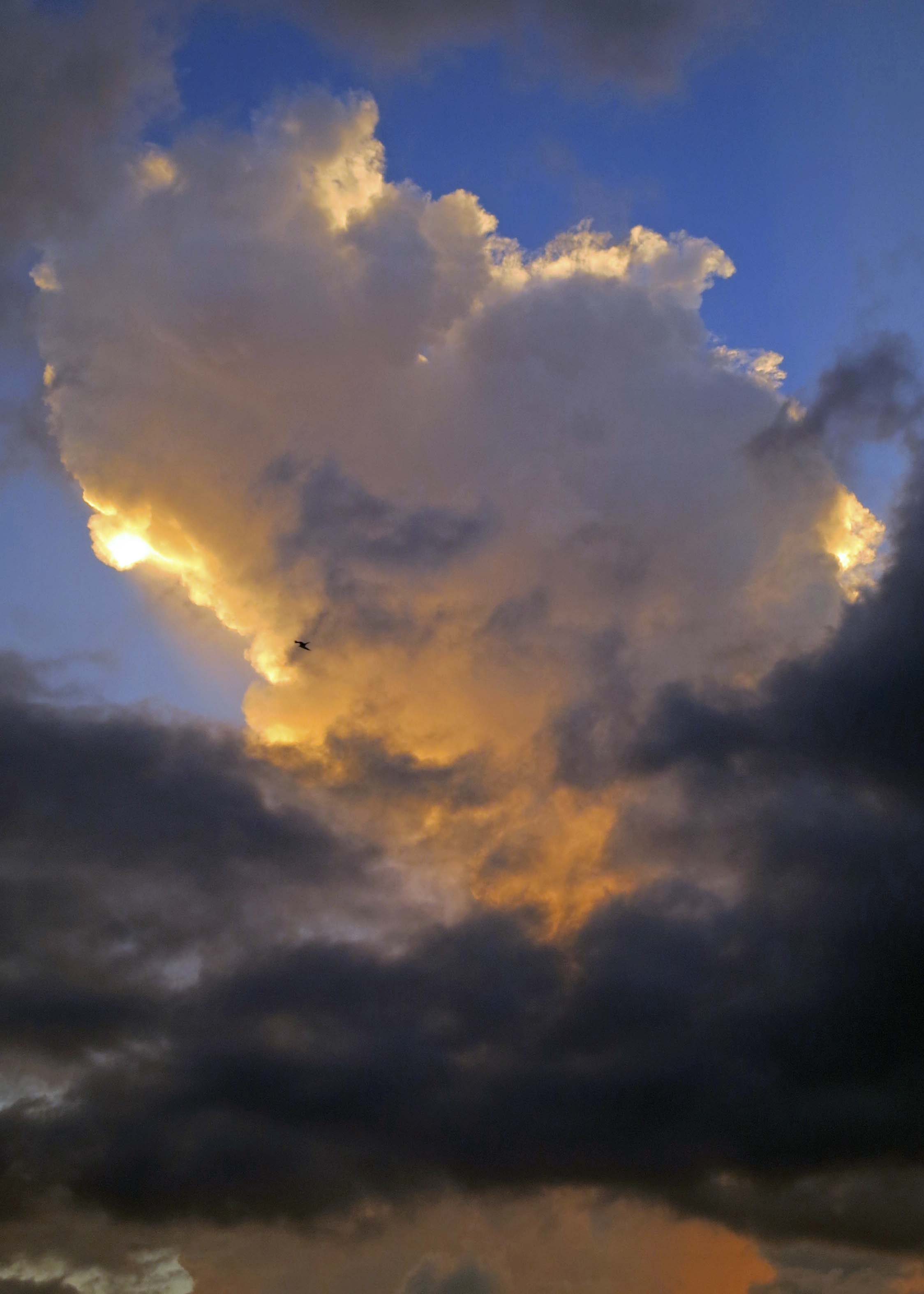
Clouds always add drama to sunsets. We watched as this impressive cumulous cloud changed from white, to golden, to pink. (Photo by Peggy Mekemson.)

Clouds always add drama to sunsets. We watched as this impressive cumulus cloud changed from white, to golden, to pink. (Photo by Peggy Mekemson.)

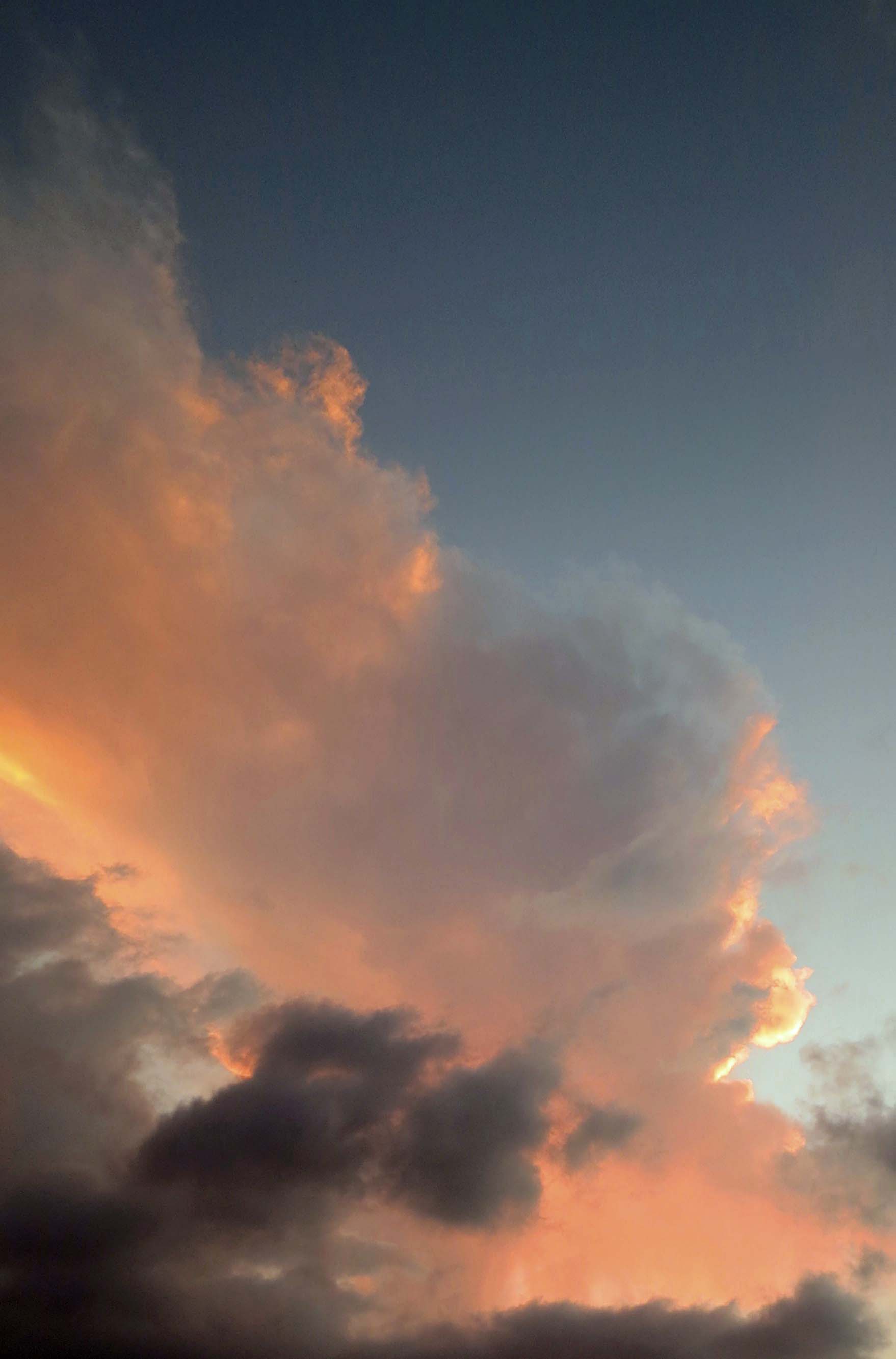
Cumulous cloud in Puerto Vallarta. (Photo by Curtis Mekemson.)

Cumulous cloud in sunset at Puerto Vallarta. (Photo by Curtis Mekemson.)

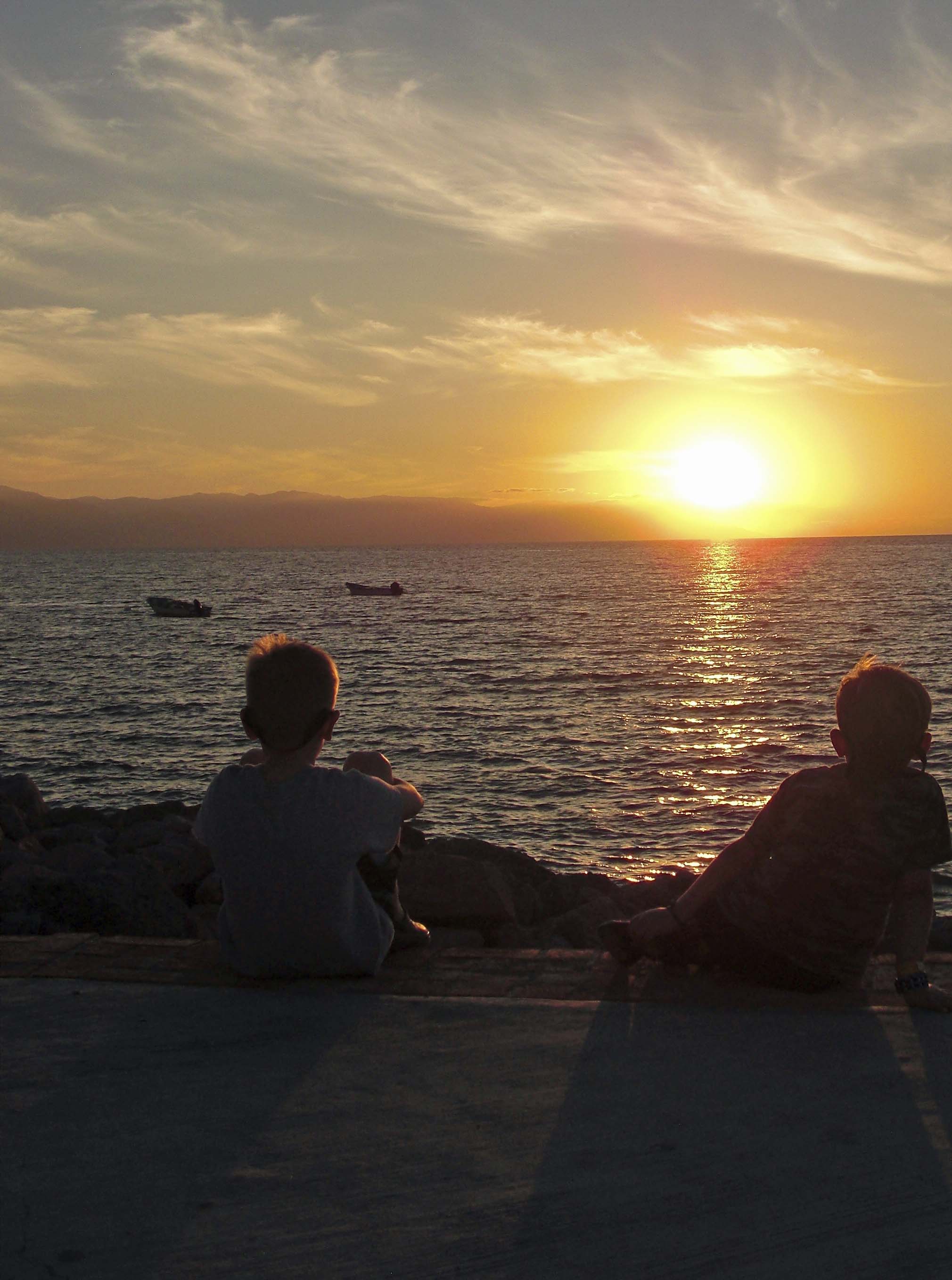
Our grandkids Ethan and Cody joined us in downtown Puerto Vallarta to catch the sunset. (Photo by Natasha Cox.)

Our grandkids Ethan and Cody joined us in downtown Puerto Vallarta to catch the sunset. (Photo by Natasha Cox.)

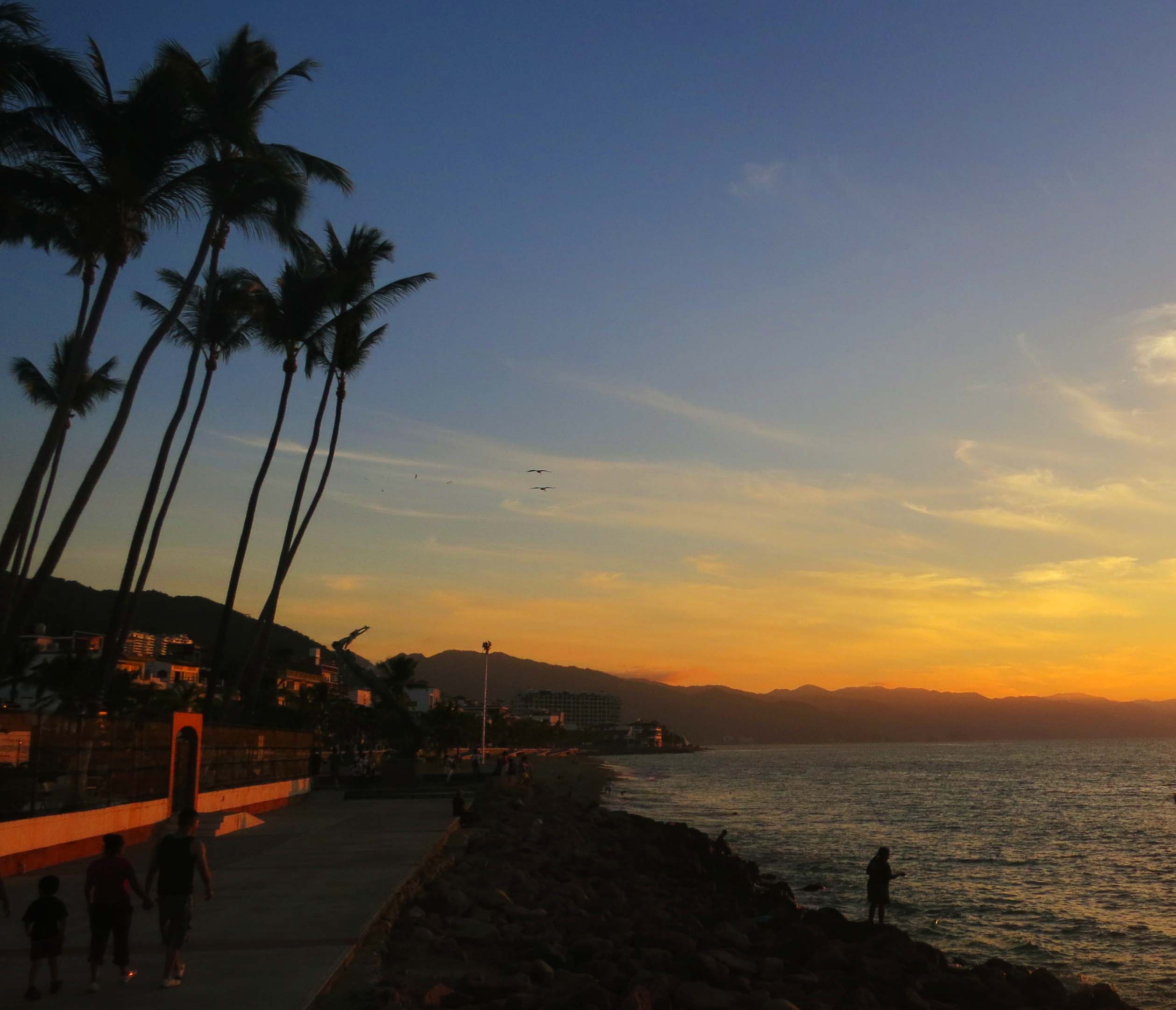
Sunset along Malecon in Puerto Vallarta. (Photo by Curtis Mekemson.)

Another shot from the same perspective looking down Puerto Vallarta’s beach front across Banderas Bay.

Puerto Vallarta beach sunset. (Photo by Curtis Mekemson.)

I took this photo with my camera inches above the sand. Think of it as a crab’s perspective on the sunset.
Sunset photo capturing sand, sea and sky in Puerto Vallarta. (Photo by Curtis Mekemson.)

Another view.

Puerto Vallarta sunset photo on Banderas Bay. (photo by Curtis Mekemson.)

Sea foam adds its own twist to sunset photos on the beach.

Sometimes the colors of a sunset are so vivid they seem unreal. (Photo by Peggy Mekemson.)

Sometimes the colors of a sunset are so vivid they seem unreal. (Photo by Peggy Mekemson.)

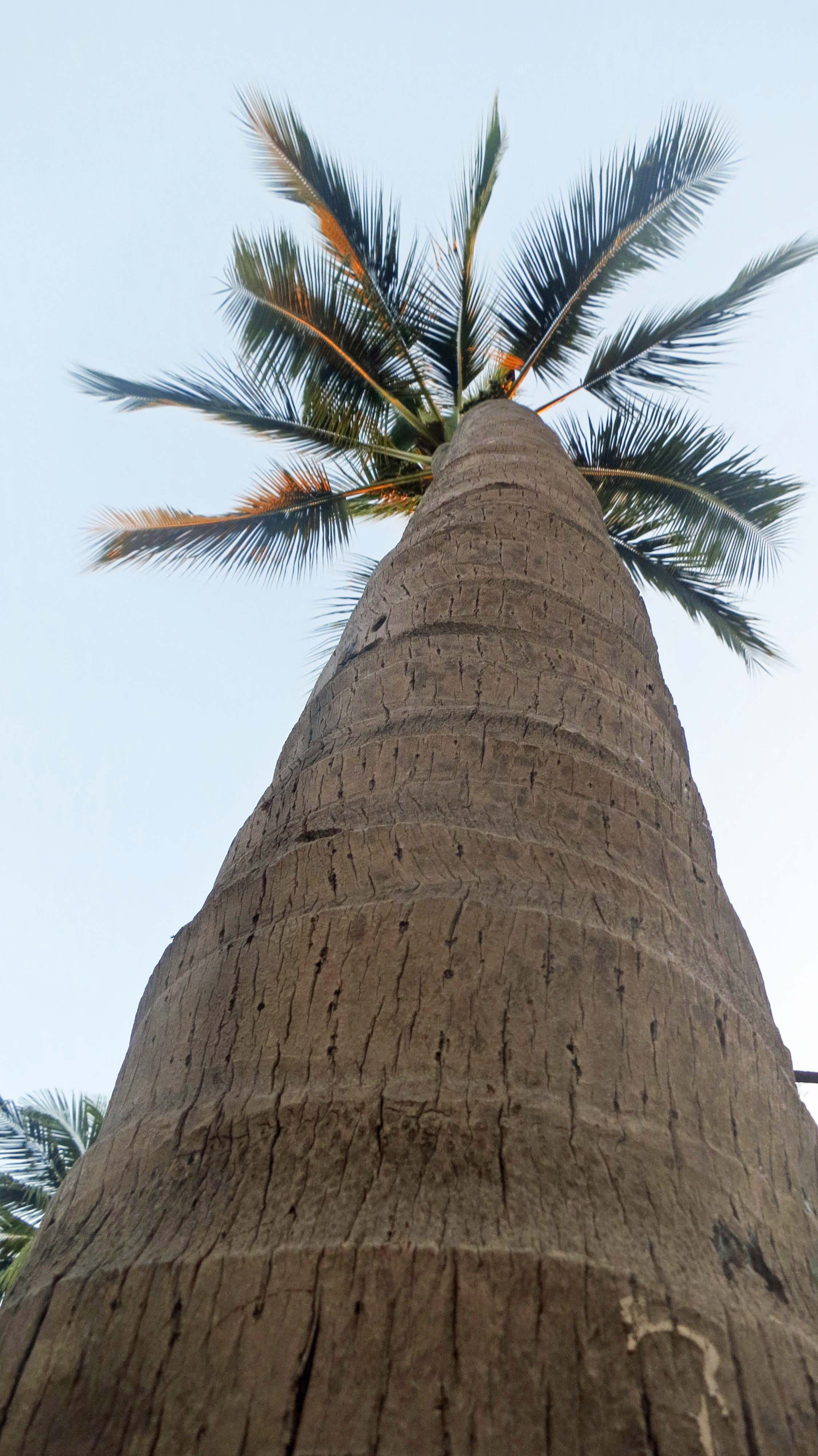
Palm tree view in Puerto Vallarta. (Photo by Curtis Mekemson.)

Just for fun, I’ll conclude this post with a non-sunset photo. I gave you the sea from the perspective of a crab. This is a palm tree from the perspective of an iguana.

NEXT BLOG: I will wrap up my Puerto Vallarta series with a few photos I couldn’t fit into my posts including a whale and one small boy catching a very big fish.

Puerto Vallarta’s Iconic Church… Our Lady Of Guadalupe

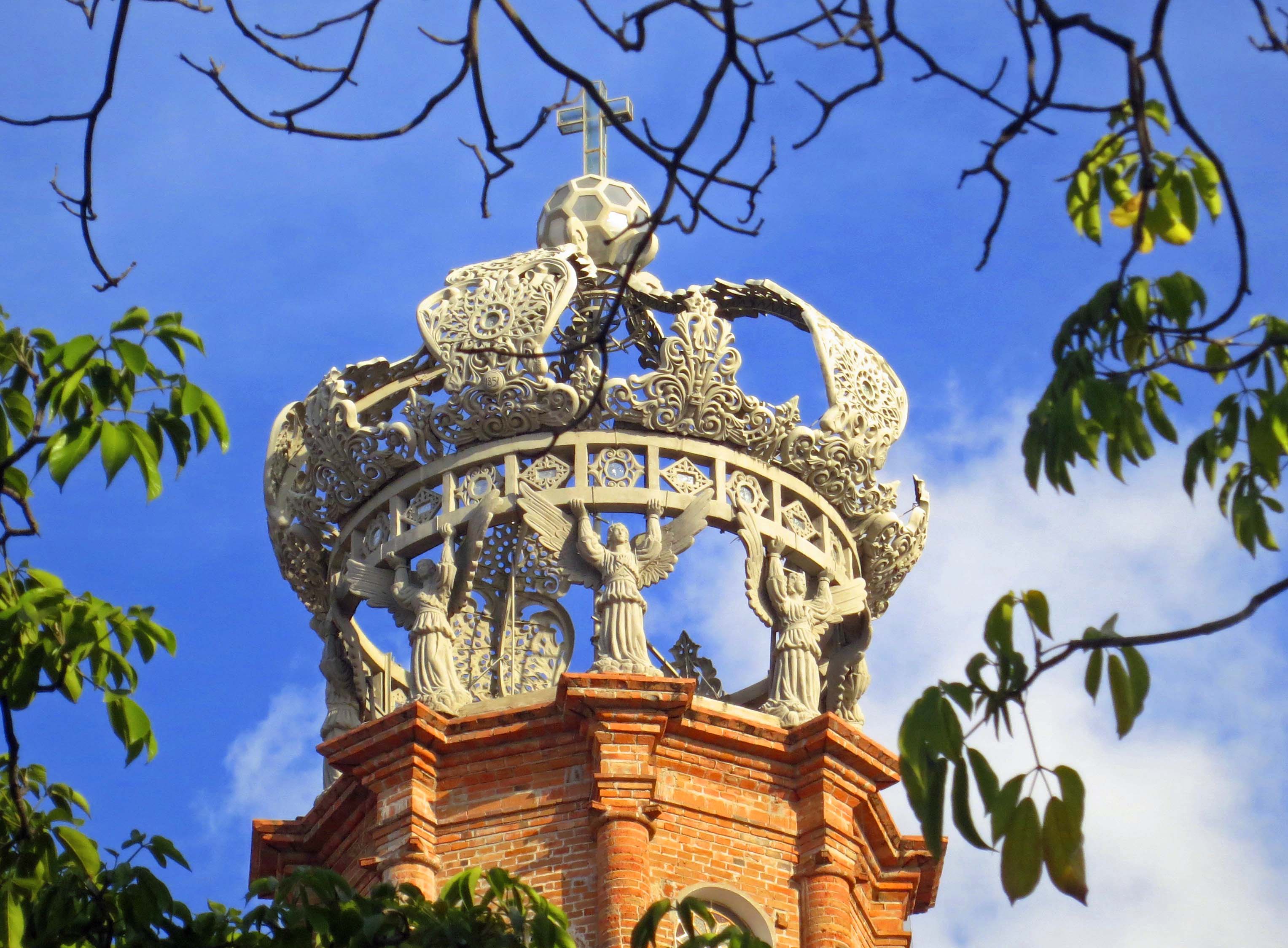
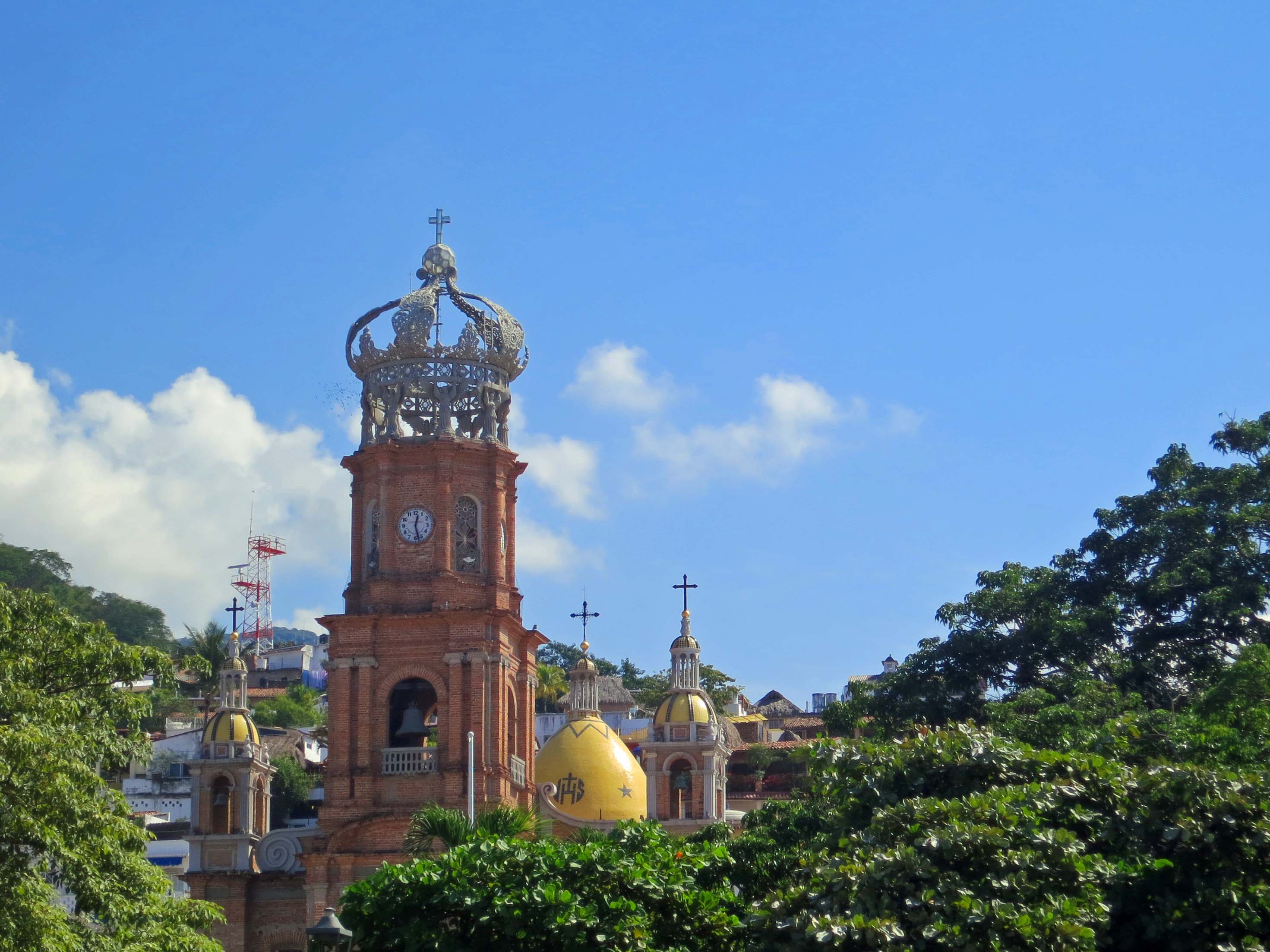
Photo of crown of the Church of Our Lady of Guadalupe in Puerto Vallarta,  Mexico. Photo by Curtis Mekemson.

The crown of Puerto Vallarta’s iconic Church of Our Lady of Guadalupe.

Juan Diego had a vision on December 9, 1531 according to the Catholic Church: the Virgin Mary, i.e. Our Lady of Guadalupe, met him on a hilltop near Mexico City and asked that a church be built on the site to honor her. To prove her identity, she cured Juan’s uncle of an incurable disease and had him take flowers bundled in his cloak to the local bishop. When Juan opened the cloak for the bishop, an image of the Virgin was embedded in it.

The Virgin got her church and Our Lady of Guadalupe has been big in Mexico ever since. Pope John Paul II declared her the Empress of Latin America in 1999. Juan Diego was canonized in 2002. He’s now a saint. As for the cloak, it is enshrined in the Basilica of Our Lady of Guadalupe in Mexico City. It is the most visited shrine to the Virgin Mary in the world. Millions of people stop by to pray and ask for blessings.
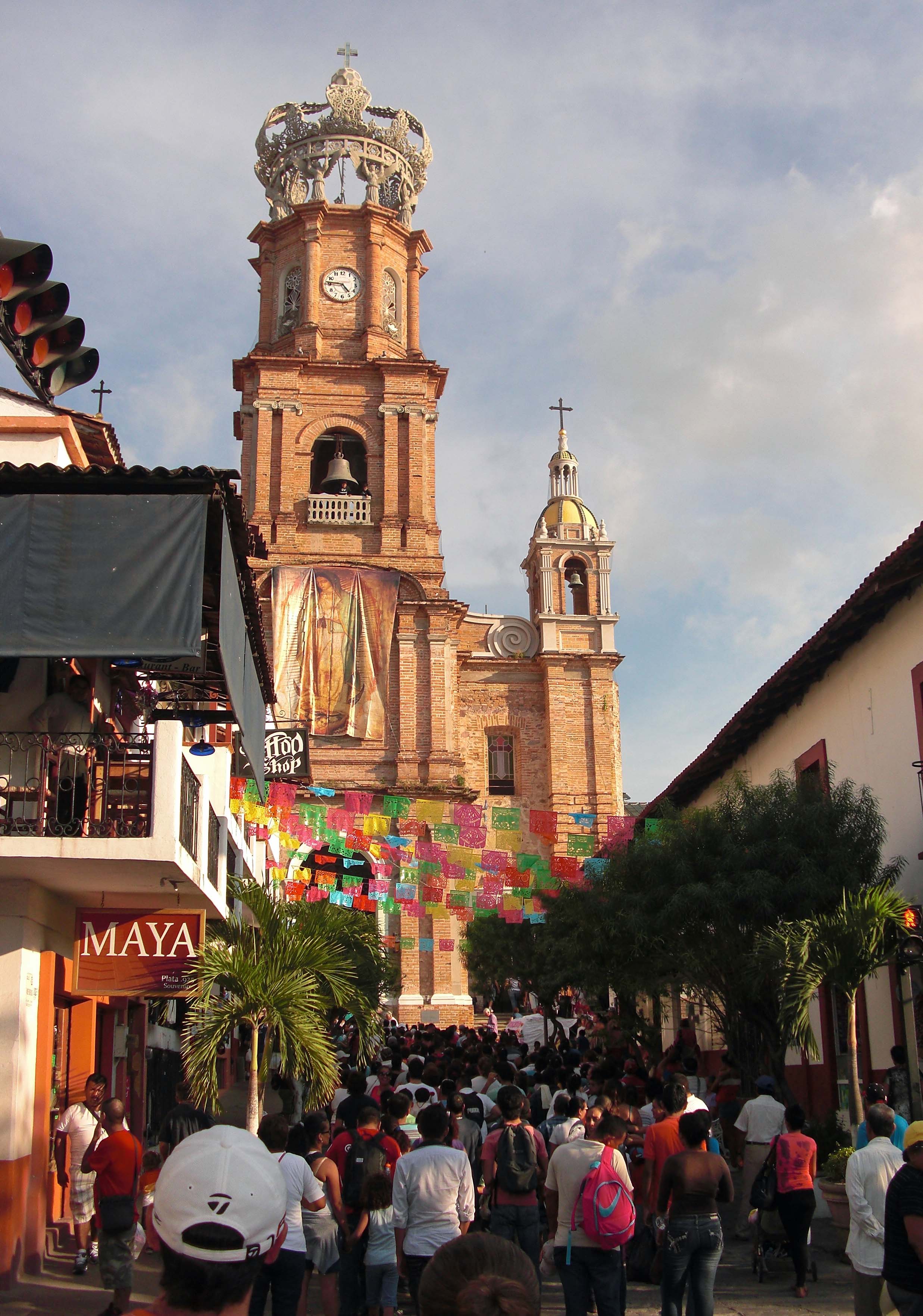
Thus it isn’t surprising that the people of Puerto Vallarta decided to name their church after the Lady when they built it in the early 1900s. The beautiful structure has become an icon for the city of Puerto Vallarta. We were there in early December for Our Lady of Guadalupe’s Feast Day. The church was packed with events and people.

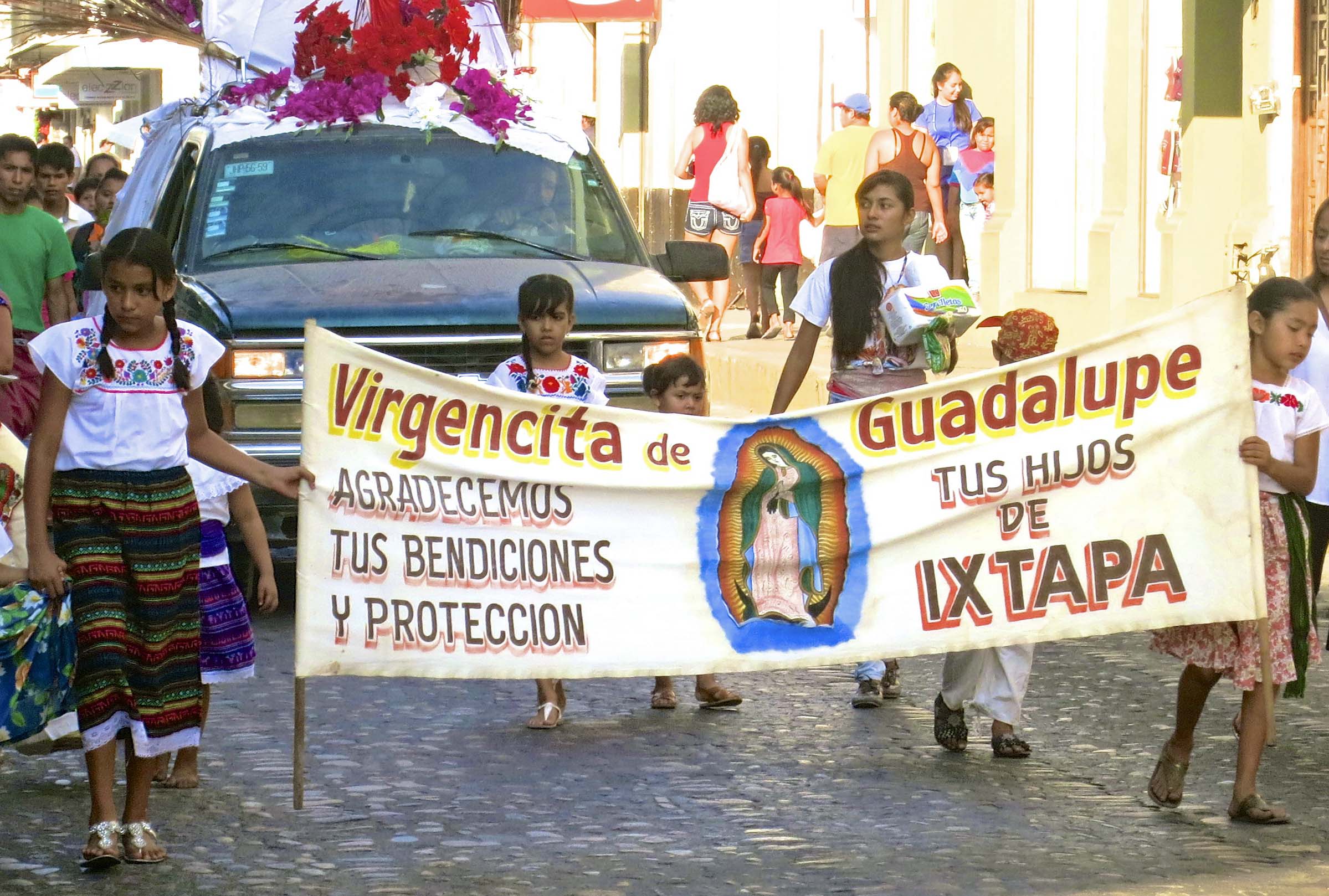
Parade to honor Our Lady of Guadalupe in Puerto Vallarta, Mexico. Photo by Curtis Mekemson.

A number of activities were planned around the feast day of Our Lady of Guadalupe including this parade. The painting in the middle depicts the image on Juan Diego’s cloak.

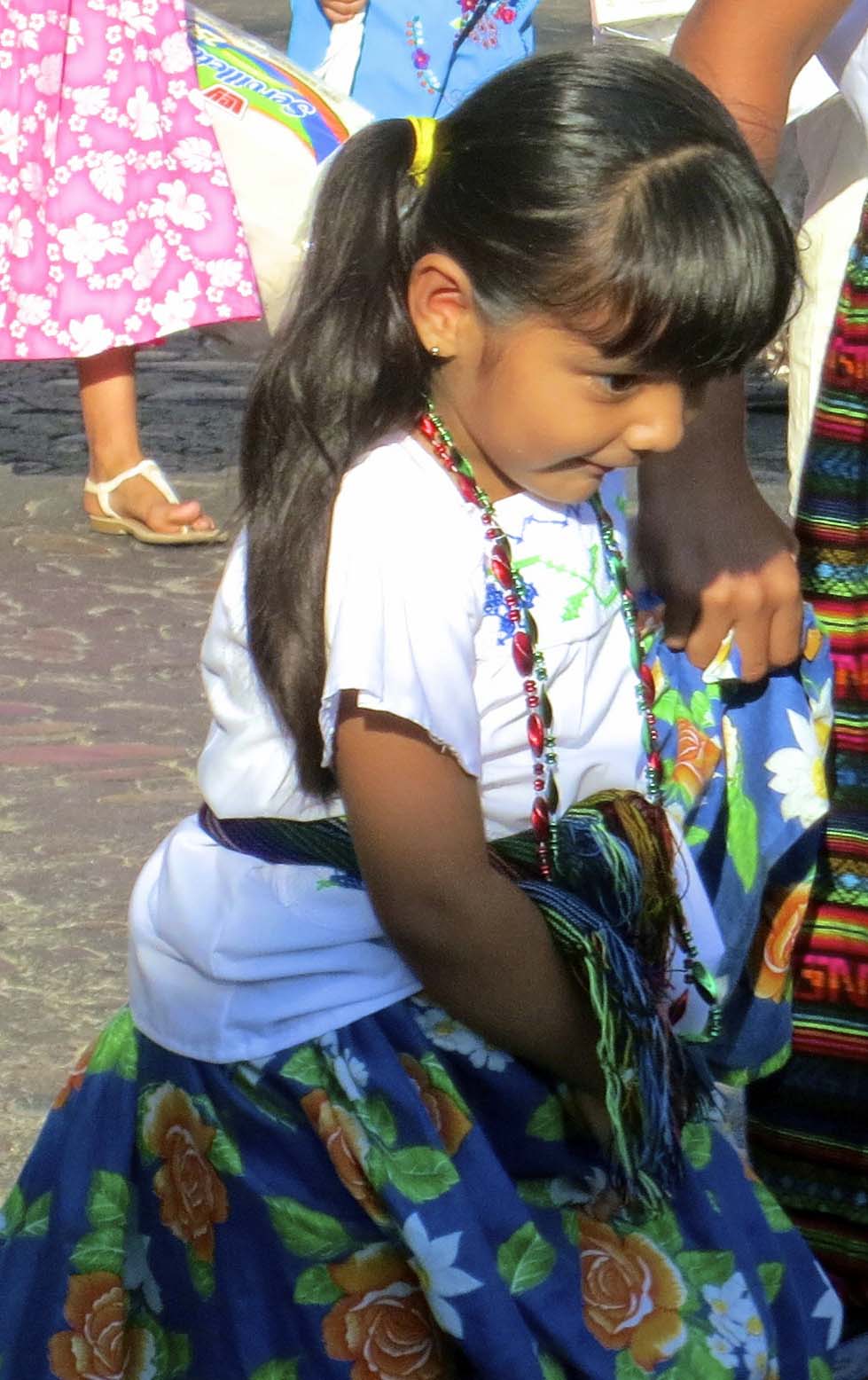
This young lady was part of the parade. She seemed to take her role quite seriously.

This shy young lady was part of the parade. She seemed to take her role quite seriously. But is that the beginning of a smile?

The parade turned the corner and made its way up to the church. (Photo by our daughter Natasha Cox.)

The parade turned the corner and made its way up to the church. (Photo by our daughter Natasha Cox.)

Bell ringer at Our Lady of Guadalupe Church in Puerto Vallarta Mexico. Photo by Curtis Mekemson.

The church bell-ringer did his job, calling the faithful to church.

Inside Church of Our Lady of Guadalupe in Puerto Vallarta. Photo by Curtis Mekemson.

The number of events made it difficult to get inside and photograph the church. The first time I stopped by, a hearse was parked outside. I thought, um no, not a good time. This photo was of a Quinceanera, I believe, a 15-year-old girl’s coming out celebration.

Following are several more photos of the church.

Peggy caught this photo. (Photo by Peggy Mekemson.)

Peggy shot this photo. (Photo by Peggy Mekemson.)

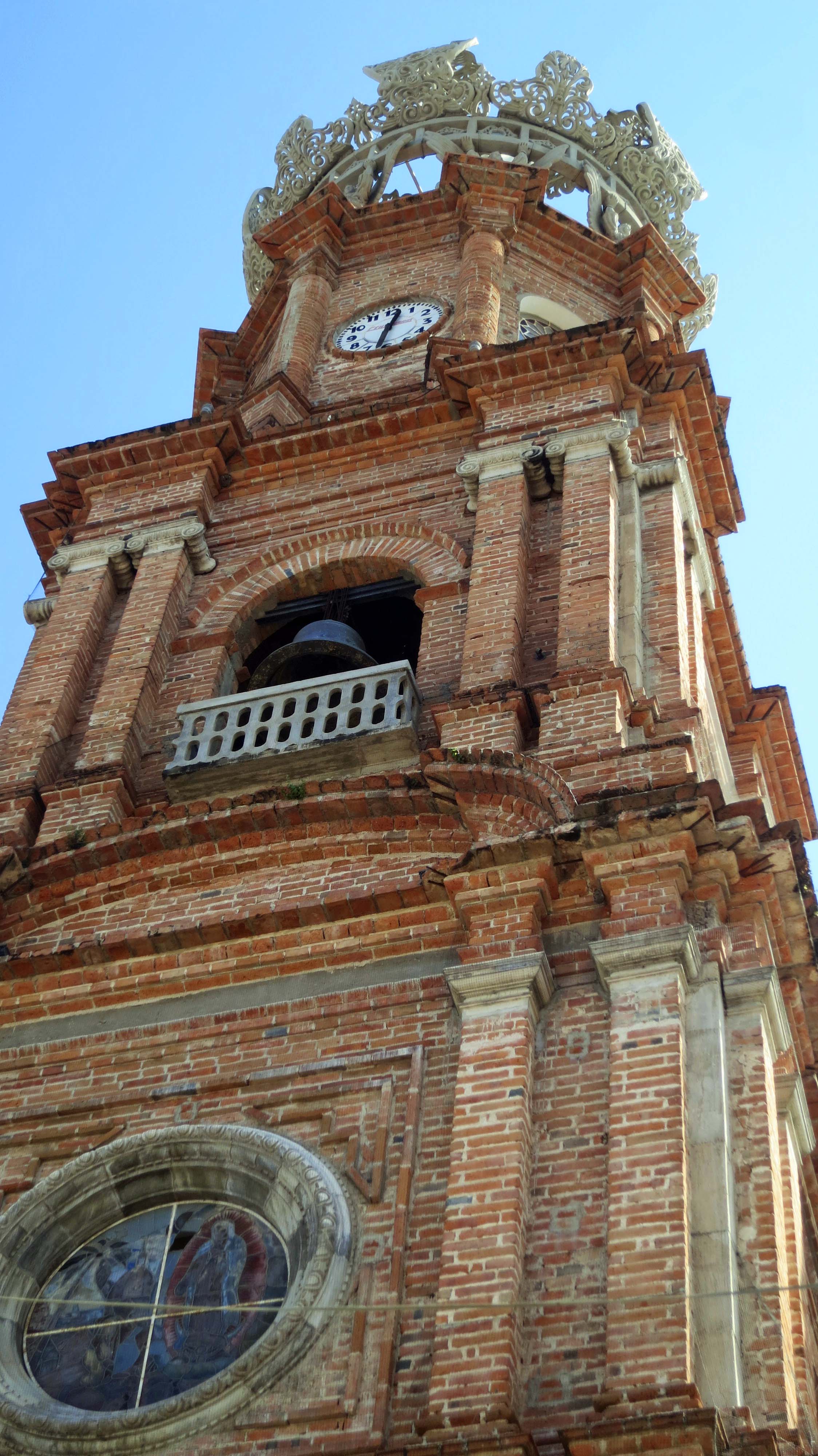
Looking up at the Church of Our Lady of Guadalupe in Puerto Vallarta, Mexico. Photo by Curtis Mekemson.

Looking up at the Church of Our Lady Of Guadalupe.

Puerto Vallarta mural depicting Our Lady of Guadalupe Church in Puerto Vallarta, Mexico.Photo by Curtis Mekemson

One of many depictions we found of the church in Puerto Vallarta murals.

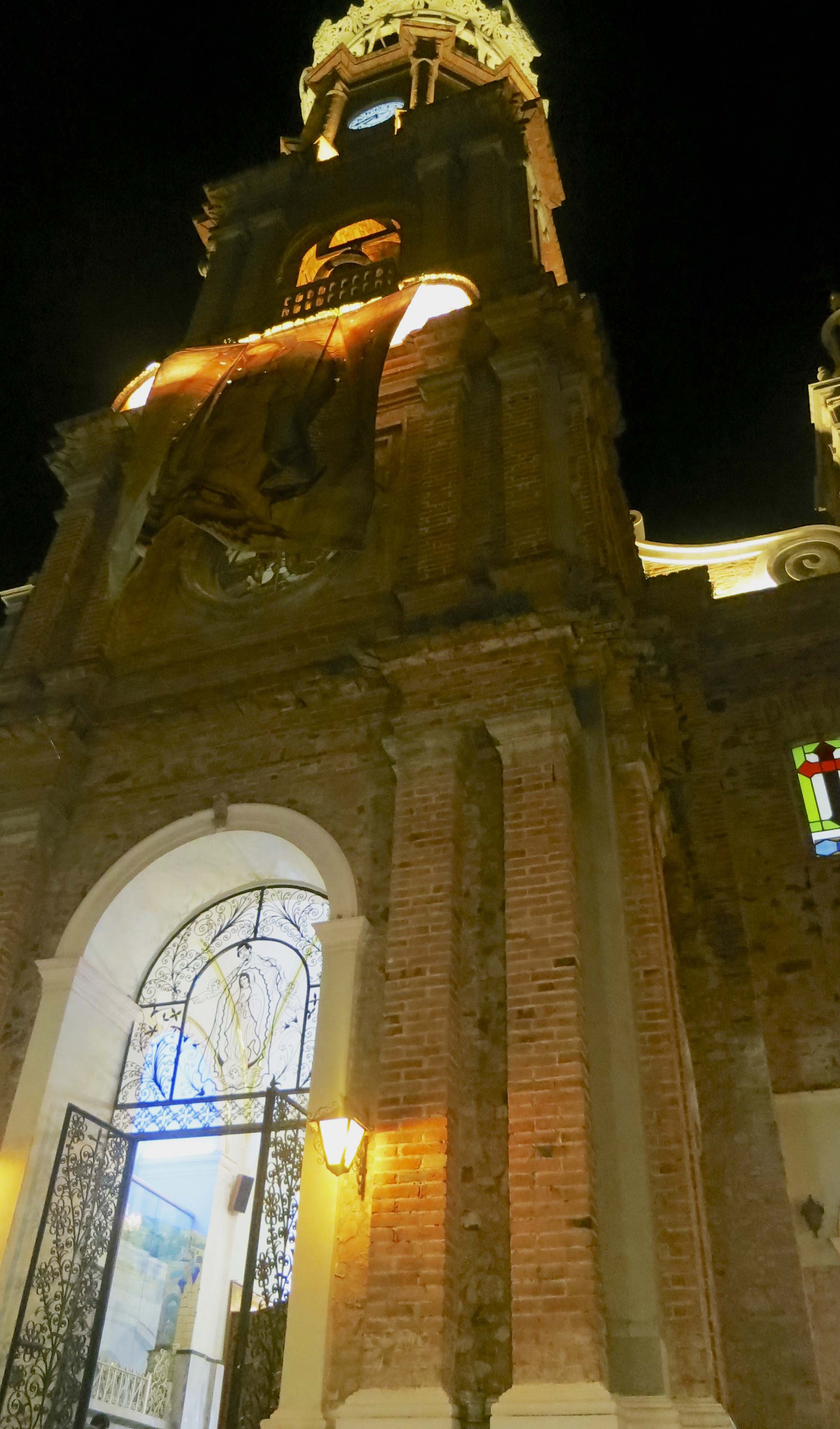
The Church of Our Lady of Guadalupe in Puerto Vallarta, Mexico at night. Photo by Curtis Mekemson.

The church at night.

A view of the Church of Our Lady of Guadalupe through stree decorations in Puerto Vallarta. Photo by Curtis Mekemson.

Looking up at the church through street decorations.

View of the Church of Our Lady of Guadalupe in Puerto Vallarta, Mexico through the trees. Photo by Curtis Mekemson.

A final view of the church through the trees.

NEXT BLOG: The tropical sunsets of Banderas Bay and Puerto Vallarta.