Things that Go Bump in the Night… The 10,000-Mile Bike Trek

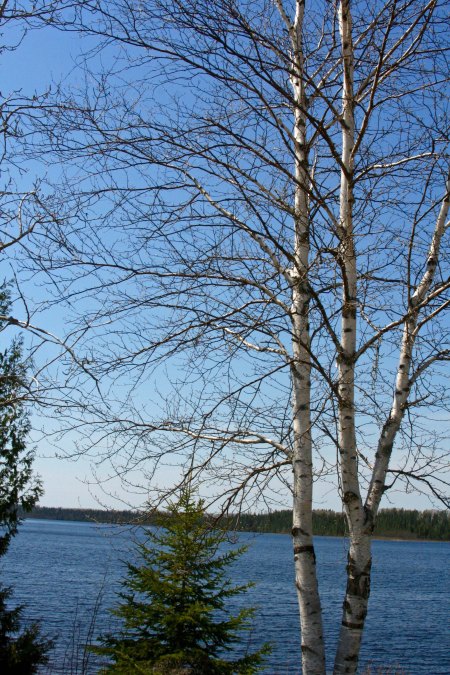
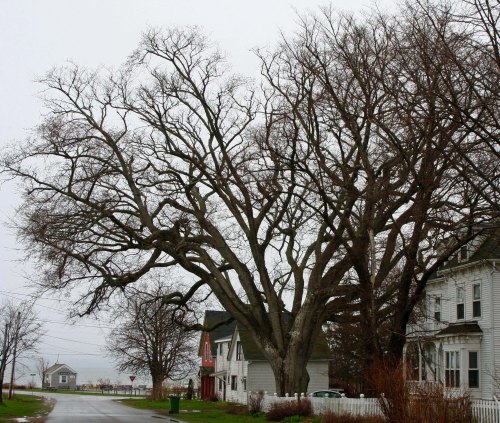
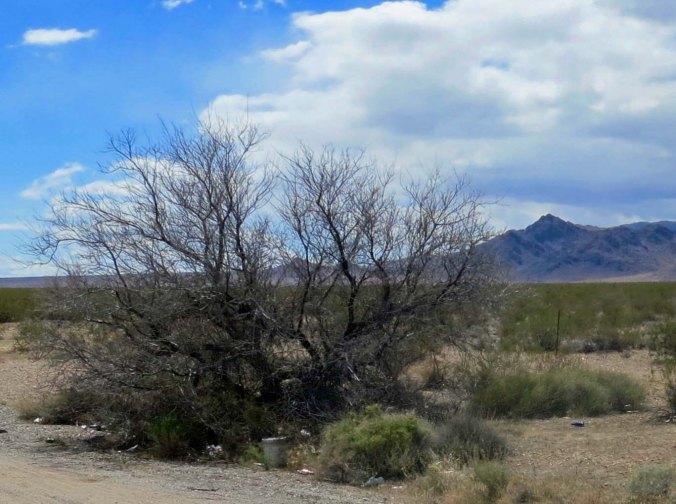
I decided that my title today called for this 'ghost tree' I found along the Parkway. Imagine it at night with a full moon behind it and a black cat sitting on the lower branch.

I decided that my title today called for this ‘ghost tree’ I found along the Parkway. Imagine the tree at night with a full moon behind it and a black cat sitting on the lower branch.


From ghoulies and ghosties / And long-legged beasties / And things that go bump in the night, / Good Lord, deliver us! —An old Scottish Prayer

Having spent a considerable amount of time out in the woods at night, including a fair amount by myself, I’ve had my share of nighttime encounters. To say they can be disconcerting is understatement at its best. Even a cow walking through your camp can send your heart racing when you wake up from a deep sleep.

I’ve written about some of my encounters before. Why not? They make great blog material. For example, there was the time I found myself nervously loading a 357-magnum pistol because I had heard a loud bang outside my tent. A doctor friend had insisted I carry his gun in backcountry Alaska. I was damned lucky I didn’t shoot myself in the foot. I was amused (or was that embarrassed) to discover it was only a beaver that had slapped its tail against the water. He had discovered me in his territory and was protesting.

And then there was the time I woke up with a bear standing on me, his snout inches away from mine. I screamed. So much for being manly. Truth is, the smallest twig cracking out in the dark night can lead brave souls to become hyper-alert, or maybe just hyper.

Camping out in the woods away from established campgrounds on my bike trip added another level of concern, being faced with the most dangerous animal of all— the two-legged type. I’ll take a bear anytime. Breaking twigs in the night become even more menacing. As I mentioned before, I was always careful to select a place where I was hidden from the road, or any other human observation, as far as that goes.

The Blue Ridge Parkway has a policy on not camping outside of designated campgrounds. For the most part this isn’t a problem, but I had decided to have my bike tuned in Asheville and didn’t get out of the town until late in the afternoon. (Having learned my lesson on dark tunnels, I had also bought a new bike light.) A considerable hill outside of Asheville had slowed me down, and the sun had started to slip behind a mountain.

Being tired and a bit grumpy, I decided a couple of hours of bicycling were sufficient. So I pulled off the road and went looking for a flat spot in the steep terrain, one that wouldn’t have me rolling down hill all night. Eventually I found a place that was only slightly askew. There was just enough room for my tent. Blue, my bike, had to be satisfied with leaning against a tree. Tossing and turning because a rock insisted on poking me in the back, it took a while to fall asleep.

Having crested one long climb with an even longer one ahead, I decided to camp out in the woods. The steep terrain made finding a flat spot difficult.

Having crested one long climb with an even longer one ahead, I decided to camp out in the woods. Finding a flat spot other than the road was the challenge.

I woke up to someone/thing stamping outside my tent. Make that several things. I am sure you can see where this might be a bit alarming. I lay there wondering whether I should jump out of my tent or pretend that no one was home. Sometimes ignored problems go away. Sometimes they don’t. I had decided on the latter course when the problem started hissing. Stamping is one thing; hissing is another. Had the Appalachian ghosts of Tom Dooley and his mistresses come to haunt me?

This sign along the Parkway describes the origin of the Kingston Trio Song, "Hang Down Your Head Tom Dooley."

This sign along the Parkway describes the origin of the Kingston Trio Song, “Hang Down Your Head Tom Dooley.” Their song was the PG version, however. Tom was living with a much older guy who had a younger wife. With mutual consent from all parties, Tom started sleeping with the wife. When a cousin of the wife showed up, he added her to the mix, often at the same time. Another cousin appeared on the scene and Tom once more sacrificed himself for the good of all. She brought syphilis into the mix, however. Eventually, one of the cousins killed another one with Tom’s help. Being a gentleman, Tom confessed to the murder and she went free. Tom was hung. At least I think that’s how it went. I became distracted with the appearance of the first cousin. Undoubtedly, the event left some ghosts hanging around.

This was the point where I started wishing my backpacking flashlight had a ton more of candle power. I unzipped my tent and pointed the dim light up the hill where several large things went crashing off into the brush. There’s a point here. It is always better to have large things crashing away from you instead of toward you, even more so on a dark night. Anyway, I recognized the thump, thump, thump as they disappeared. A herd of several deer had discovered my hiding place, and like the beaver, been surprised and irritated. I had simply never heard deer do their stamping and hissing routine before. (I have since.)

I went back to sleep, woke up refreshed (sort of), and resumed my journey. Today’s blog photos along the Blue Ridge Parkway will take you from Asheville to Little Glade Mill Pond, a distance of approximately 170 miles. Enjoy.

The ultra modern Park Headquarters in Asheville includes all of the latest environmental friendly designs, including plants growing on the roof.

The ultra modern Park Headquarters in Asheville includes all of the latest environmental friendly designs, including plants growing on the roof.

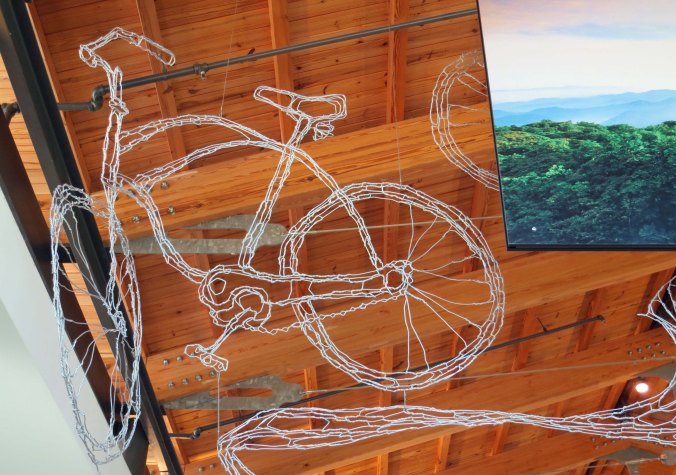
Bike sculpture in Blue Ridge Park Headquarters, Asheville, North Carolina.

I enjoyed the bike sculpture at the headquarters.

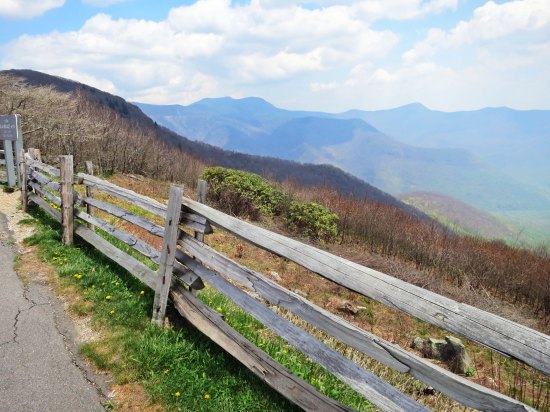
My first stop the next day was at the Craggy Garden's Visitor's Center. It's high location provided a great scenic view of the Black Mountains. The fence was a plus.

My first stop the next day was at the Craggy Garden’s Visitor’s Center. Its high location provided a scenic view of the Black Mountains. The fence was a plus.When I bicycled through the area in June of 1989, the area was covered with blooming Rhododendrons. Peggy and I were too early for the display on our redrive of the route this spring.

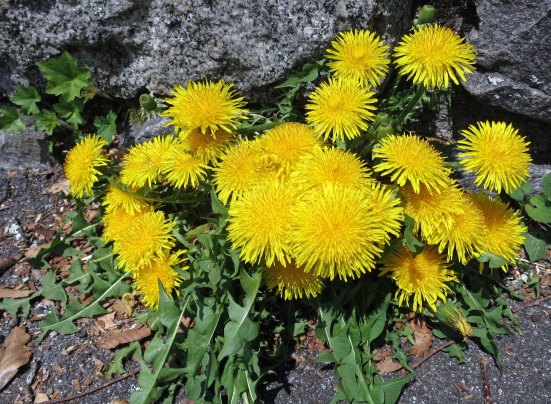
Dandelions had no problem with spring. Peggy and I found them happily blooming away throughout our trip.

Dandelions had no problems with spring. They were happily blooming away throughout our trip.

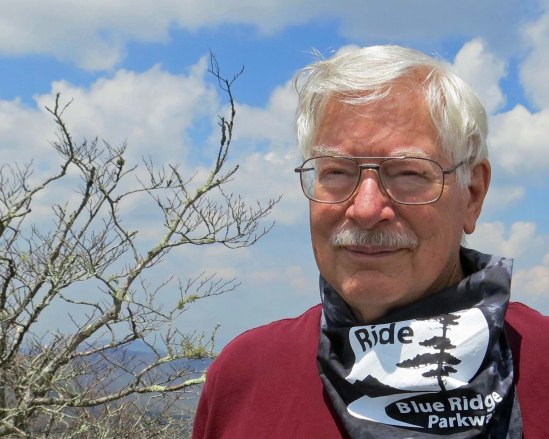
Peggy insisted on buying me a neckerchief at the Visitor's Center, which featured biking the Parkway.

Peggy insisted on buying me a neckerchief at the Visitor’s Center. It featured biking the Parkway. Like the bushy look? I was honoring my bike trek where I had three haircuts in six months.

One of numerous tunnels along the Parkway. I found the stone work quite beautiful. Sone masons from Europe were brought in during the 1930s to help.

One of numerous tunnels along the Parkway. I found the stone work quite appealing. Stone masons from Europe were brought in during the 1930s to help.

This is the twin to the tree I featured at the beginning of the blog.

This is the twin to the tree I featured at the beginning of the blog. It was actually standing next to the other tree.

Dogwood is another plant that enjoys spring and was blooming in profusion all the way along the Parkway.

Dogwood is another plant that enjoys spring and was blooming in profusion all the way along the Parkway.

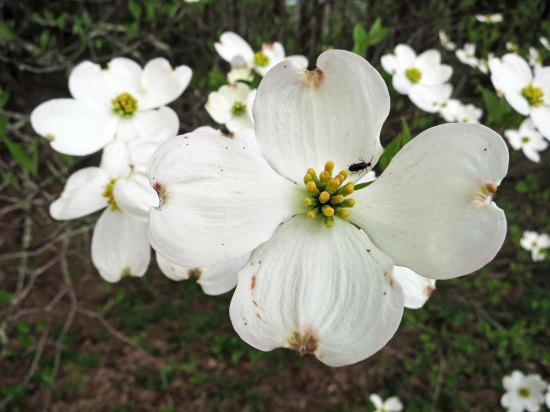
A close up of the dogwood.

A close up of the dogwood complete with beetle.

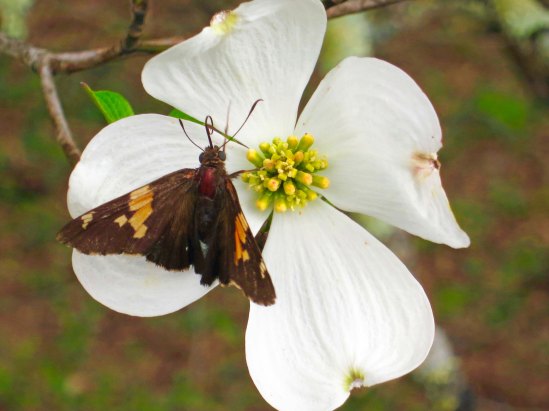
Dogwood on Blue Ridge Parkway with butterfly.

And a  butterfly.

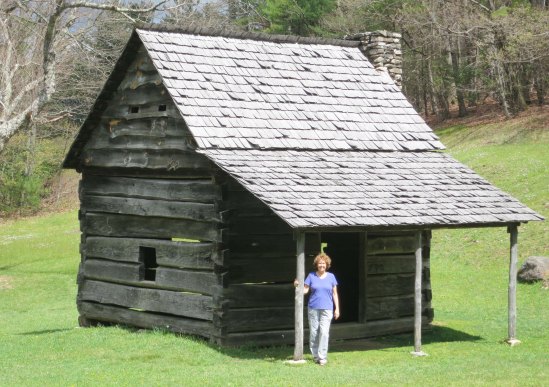
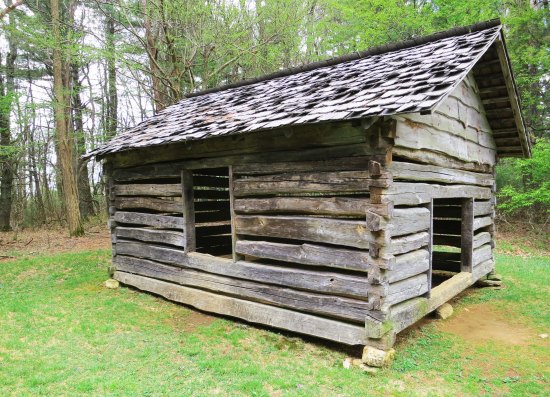
Jesse Brown's cabin on the Blue Ridge Parkway.

Peggy provides perspective on Jesse Brown’s pioneer cabin.

Cool Spring's Batist Church on the Blue Ridge Parkway.

The Cool Spring’s Baptist Church was next door to Jesse Brown’s cabin. Usually, services were held outdoors. There wasn’t much difference.

And the cool spring.

And the cool spring. The wooden channel carries water into the spring house.

I doubt the early pioneers would have seen this Scottish cow in the mountains.

I doubt the early pioneers would have seen this Scottish bull in the mountains.

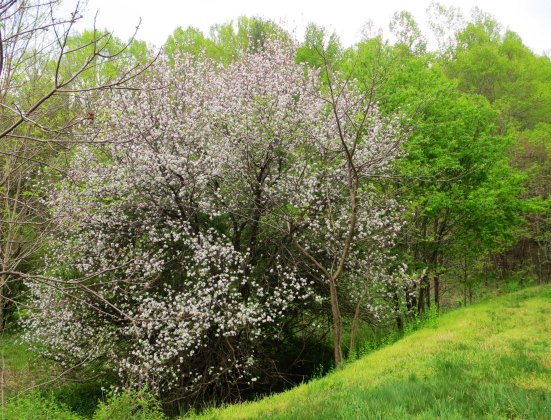
Apple tree on the Blue Ridge Parkway.

Apple trees, on the other hand, were quite common. Hard cider was a pioneer staple.

Farm on Blue Ridge Parkway.

Farm lands add as much to the beauty to the Parkway as forests and mountains.

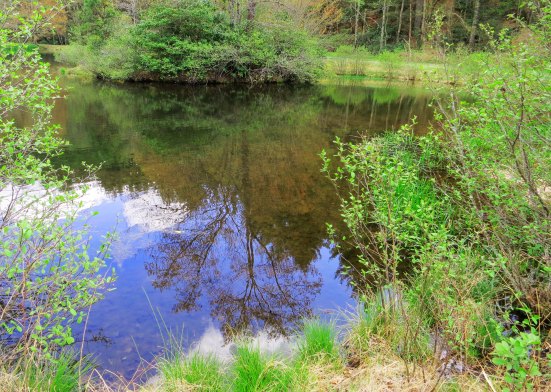
Little Glade Mill Pond on the Blue Ridge Highway.

Little Glade Mill Pond provides a great lunch stop. While Peggy whipped up sandwiches, I hiked around the pond.

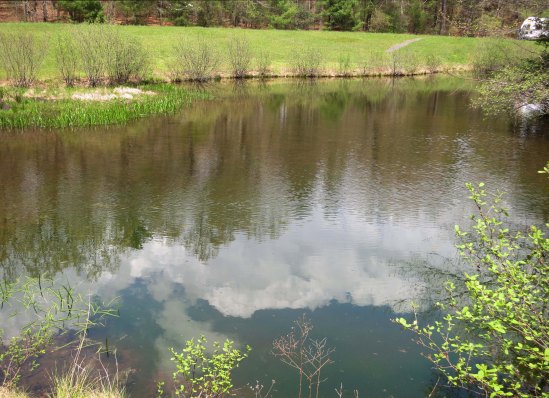
Reflection shot on Little Glade Mill Pond on the Blue Ridge Parkway.

Naturally, I had to focus on the reflection shots. Our van is off to the right. Lunch is being prepared! Breakfast is my responsibility.

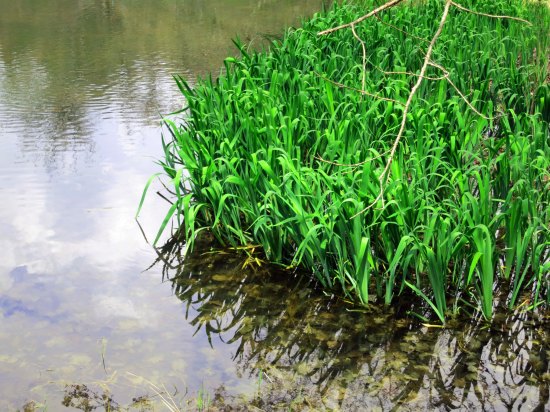
I'll complete today's post with this final shot of Little Glade Mill Pond. Next Blog: We'll continue out journey along the beautiful Blue Ridge Parkway.

I’ll complete today’s post with this final shot of Little Glade Mill Pond. Next Blog: We’ll continue out journey along the beautiful Blue Ridge Parkway.


Route 66: A Journey Back in Time… The 10,000 Mile Bike Trek

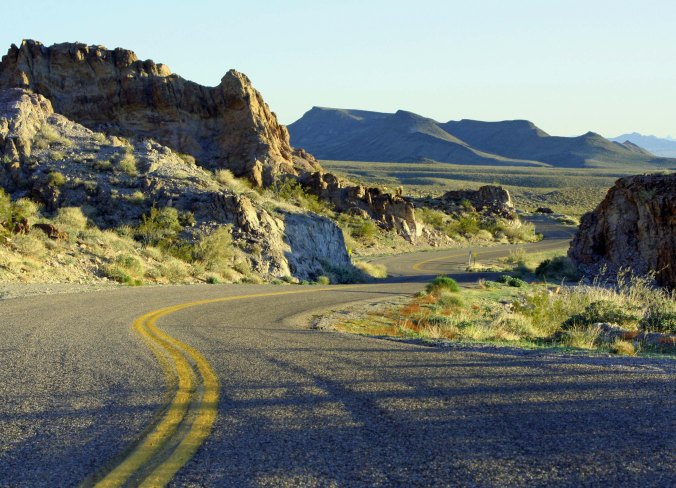
While historic Route 66 travels through six states and numerous climate zones, I always think of it as being in the desert, a prejudice I developed from reading my grandfather's Arizona Highways as a child.

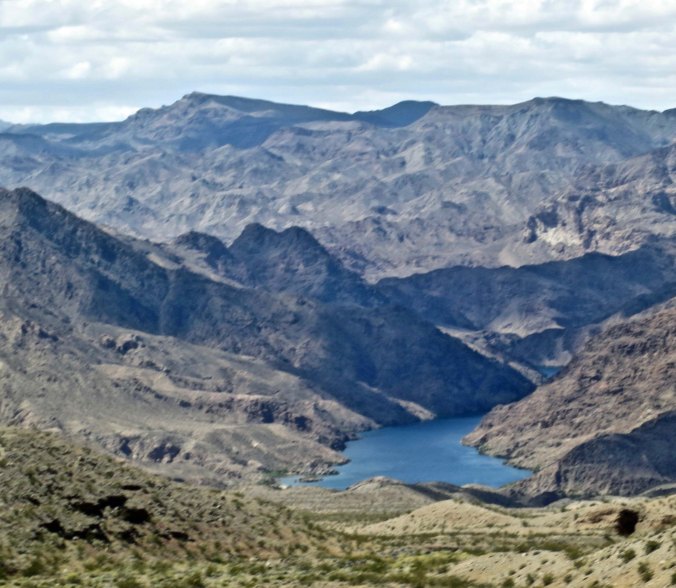
While historic Route 66 travels through eight states and numerous climate zones, I always think of it as being in the desert, a prejudice I developed from reading my Grandfather’s “Arizona Highways” as a child. This photo I took a couple of years ago near Oatman, Arizona would have been the same 60 years ago.


Nostalgia: Pleasure and sadness that is caused by remembering something from the past and wishing that you could experience it again. — Merriam-Webster Dictionary

Route 66 represents nostalgia in mythic proportions. It harkens back to an earlier era— back before the hustle and bustle of modern-day freeways, back before the advent of McDs, BKs, and numerous other fast food restaurants, and back before cell phones insisted that we keep in contact with anyone and everyone all the time, even when on the open road.

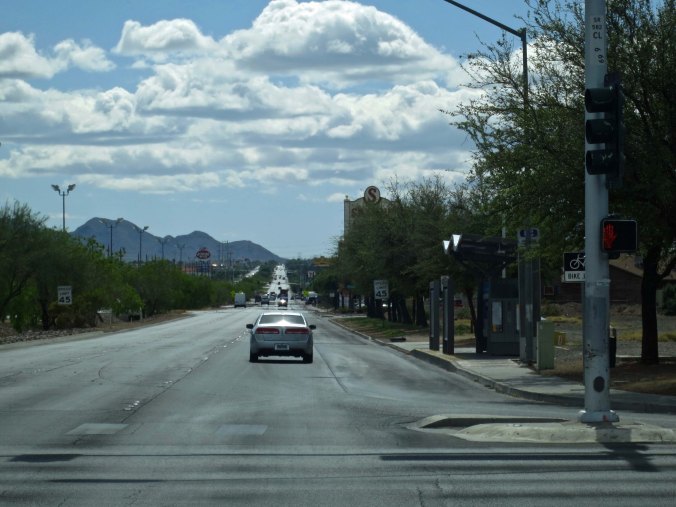
It is a blue highway incarnate, and, as I am sure you have figured out, I am a blue highway kind of guy.  When I was planning my bike trip, I designed it to follow some of the loneliest, bluest roads in the US and Canada. Of course there were compromises, Las Vegas being a glaring example. And there were times when my only option was to climb onto a freeway. As I followed busy Boulder Highway up and out of Las Vegas, however, it was Route 66 and North America’s other historic byways that I was dreaming of.

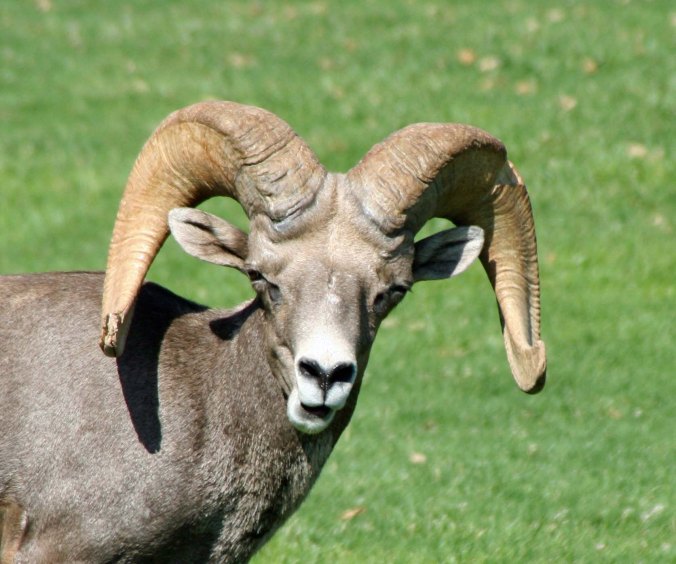
I worked my way up to Railroad Pass, which marks the dividing line between Las Vegas/Henderson and Boulder City. It had been a long haul out of Vegas so breakfast at the Railroad Casino seemed in order. The casino has been there forever and lacks the glamor of its Las Vegas cousins. It even came with an old-fashioned café. I ordered one of my favorites: sausage, two eggs over medium, hash browns, whole wheat toast and coffee. It cost four bucks. I left with a happy tummy and a smile on my face, retrieved my bike from the post it was locked to, and headed for Hoover Dam, keeping an eye out for the Desert Big Horned Sheep that hang out in the mountains above the highway.

Boulder Highway as it looks today... not much different than it looked in 1989.

Boulder Highway as it looks today… not much different from it looked in 1989.

“Watch the road, Curt!” I admonished me. Do you talk to yourself? I always have. Riding on a bike for six months by myself made me much more fluent, or maybe the word is verbose.

There is a fun story about the Big Horn Sheep in the area that I related in an earlier blog but is worth repeating here. A small park is located just off the road that bypasses Boulder City to Hoover Dam. The bright green grass beckons to the sheep up on the mountainside during Nevada’s hot, dry summers and down they come. I’ve stopped by a couple of times to photograph them. An acquaintance of my friend Ken Lake lives across the road from the park and related this tale.

The path the sheep follow down to the park passes right by a house that has a shiny, aluminum garage door. One day the herd ram noticed another large ram in the door— staring back at him, challenging him. Here was competition for his lovely ewes! This wasn’t to be allowed, of course, so he reared up and charged the door full tilt, crashing into it with his mighty horns. But the other ram was still standing, albeit a bit beat up. So he charged again and then again. The door was trashed. Apparently the owner had a hard time persuading his insurance agent how the damage was caused.

The herd ram determining whether my taking his photo was something he should be objecting to.

The herd ram determining whether my taking his photo was something he should be objecting to.

Peggy and I have a similar problem at our home in Oregon. The big tom turkeys that live in the forest like to parade their harems through our yard. The largest of the toms has discovered the turkey that lives in the bumper of our Toyota Tacoma pickup. He is not happy. I’ve seem him stand in front of the bumper for thirty minutes at a time, fluffing out his feathers, sticking out his neck in a loud gobble, and pecking the bumper. The other turkey fluffs his feathers, sticks out his neck and pecks right back. All of this would just be humorous except the big tom goes looking for the other turkey. He flies up, lands in the pickup bed… and poops. Admittedly, turkey poop isn’t as traumatic as having your garage door trashed, but it is copious and messy. The tom and I have had several discussions about my love of roast turkey.

I was yet unaware of the Big Horn Sheep and a long way off from owning a wilderness retreat in Oregon when I cycled by the park on my bike trip. I made my way down to Lake Mead and crossed over Hoover Dam. Looking out over the lake and the distant drop on the far side from a bicycle was quite an experience. If I were to cross the dam today on my bike, TSA would stop me at its check point and make me empty out my panniers to determine whether I was a mad bomber. Why else would someone bike across the dam— and up the other side?

The climb out was hot and steep, filled with hairpin turns, autos and large RVs. I sweated all of them, so to speak. Reaching the top, I was faced with another challenge, miles and miles of sizzling, desolate desert with minimal facilities. My kind of country.

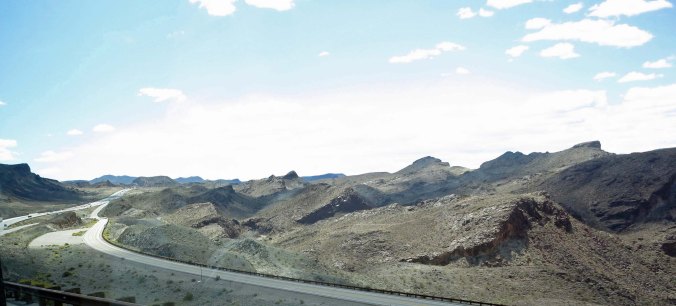
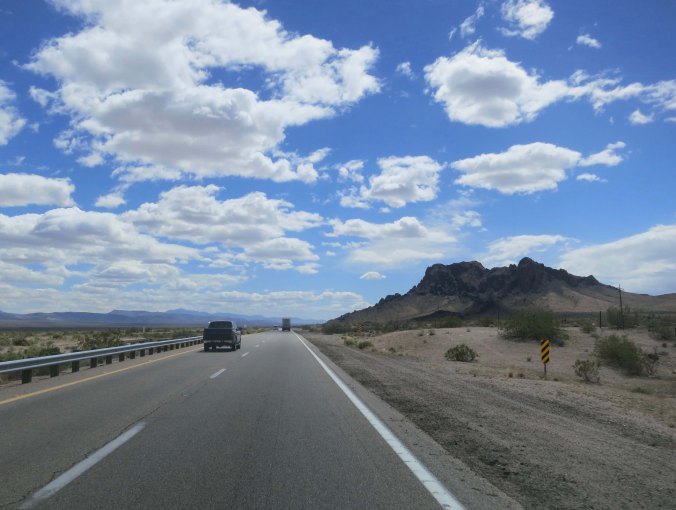
A high four multi-lane bridge has replaced crossing over Hoover Dam when traveling between Nevada and Arizona. This shot looks down on the old highway I was following after climbing out of the canyon.

A high, multi-lane bridge has replaced crossing over Hoover Dam when traveling between Nevada and Arizona. This shot looks down on the old highway I was following after climbing out of the canyon.

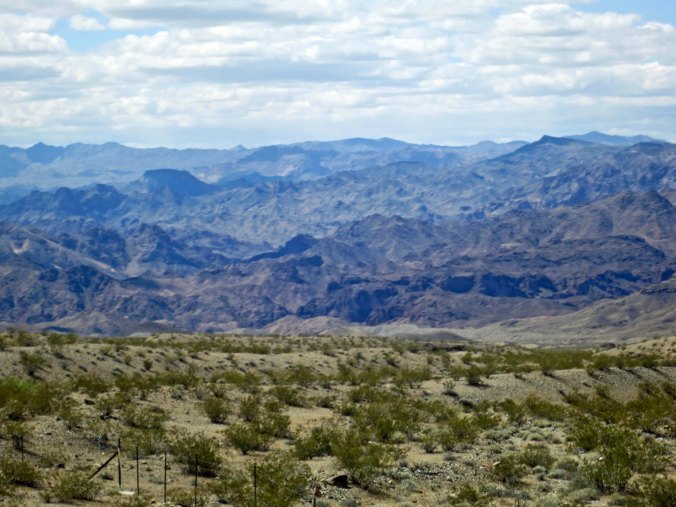
A bit farther up the road looking south. Dante would have found this site suitable for his concept of hell.

A bit farther up the road looking south. This photo could have served as an illustration for Dante’s Inferno.

I biked on, catching far off views of the Colorado River and then picking out a distant mountain to bike toward. As I reached my goal, the sun began to set, and warm breezes turned slightly cool. It was time to search for a home. Unfortunately, a sturdy fence blocked easy access to the desert. I wasn’t particularly interested in being caught climbing over. There are a lot of guns in Nevada. A kindly dirt road came to my rescue. I took advantage of a break in traffic and zipped down it and into a dry gulch, the perfect hiding place— as long as it didn’t rain and the local rattlesnake was elsewhere. I fired up my backpacking stove, made a cup of coffee, added a dash of 151 proof rum, and downed a granola bar. Life was good. Coyote music lulled me to sleep.

Looking down on the Colorado River from a viewpoint on the Las Vegas-Kingman road.

Looking down on the Colorado River from a viewpoint on the Las Vegas-Kingman road.

I used this mountain as a marker to determine my progress.

I used this distinctive mountain as a marker to determine my progress.

Looking out toward my home for the night.

Looking out toward my home for the night. Not bad, eh? Or is it that 151 proof rum improves how everything looks?

I was up early in the morning and out before the traffic. Fifty-miles later I was in Kingman, Arizona, a town bursting with pride about its Route 66 heritage, and hoping to harvest a bundle of tourist dollars because of it. I grabbed a room in a beat up old motel that claimed Route 66 vintage and prices. Following a much-needed shower, I headed out to follow the road through the town and absorb some of its ambience.

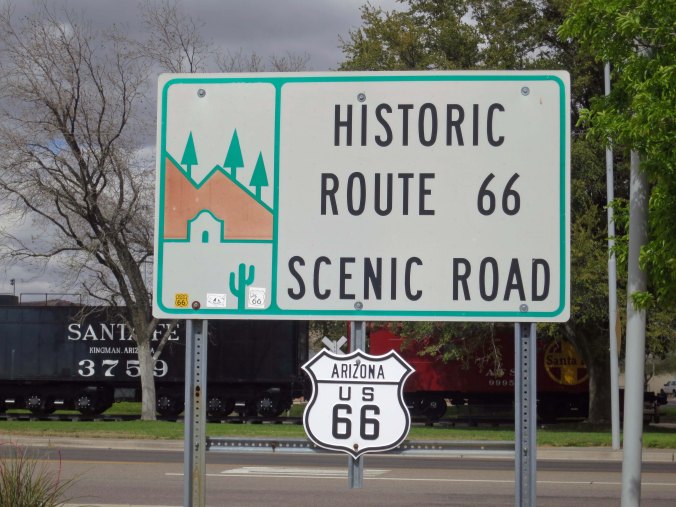
Kingman, Arizona is quite proud of its connection to Route 66. Two different museums in town feature Route 66 themes.

Kingman, Arizona is quite proud of its connection to Route 66. Two different museums in town feature Route 66 themes.

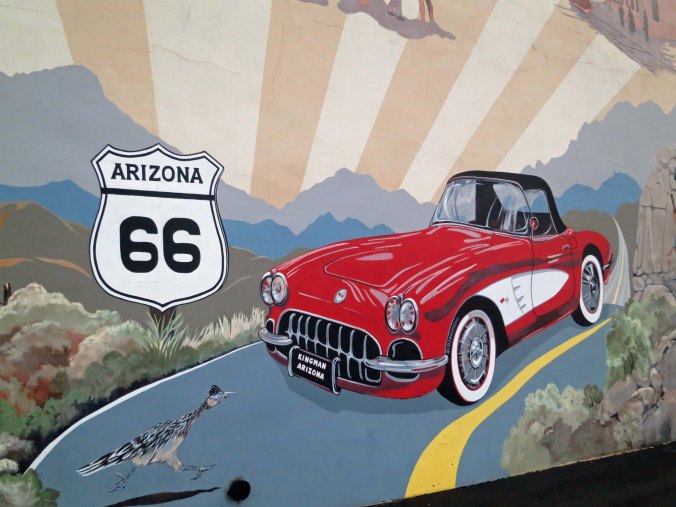
A number of murals depict a romanticized view of travel on the highway.

A number of murals depict a romanticized view of travel on the highway.

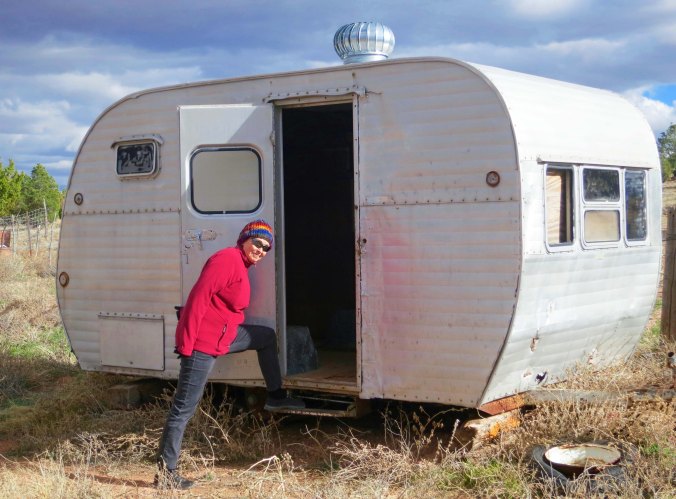
When I talk about the inexpensive motels I found along my bike route, this is what Peggy assumes they looked like.

When I talk about the inexpensive motels I found along my bike route, this is what Peggy assumes they looked like.

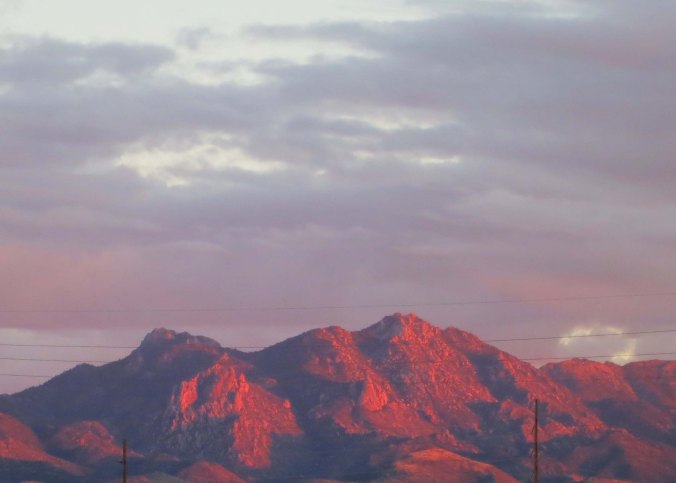
A beautiful desert sunset as seen from Route 66 in Kingman.

A desert sunset as seen from Route 66 in Kingman.

The next day found me absorbing much more as I left the town behind and made my way east on what was once one of America’s main cross-country routes. Today it is a quiet road. The majority of the people traveling east and west are zipping by on Interstate 40, rushing toward whatever destination/destiny awaits them.

When I think of Route 66, I think desert. When I was a small boy, I was enthralled by my grandfather’s subscription to “Arizona Highways.” It often featured Route 66, and it featured deserts. My first acquaintance with the highway was when I was driving west from Atlanta in 1968 and followed portions of it through Arizona, including the one I was biking on.

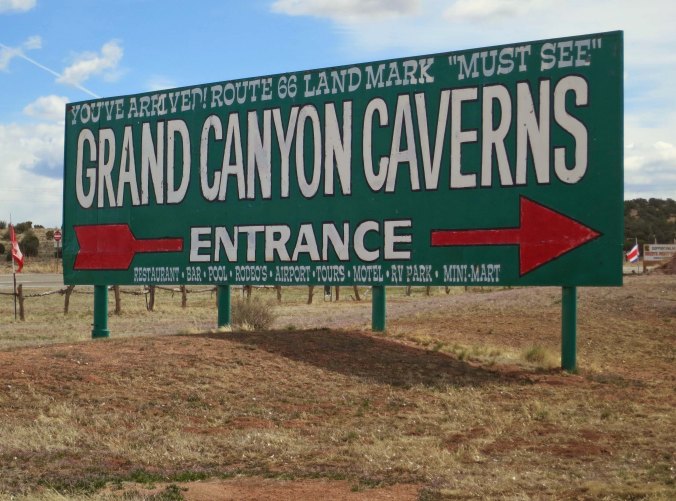
My route for the day took me on a gentle climb up through arid lands with views of mesas along the way. Occasional creeks were teaming with life that was seeking the desert’s most treasured commodity, water. I passed by ramshackle old buildings that had seen their heyday in the 40s and 50s. I waved at the few cars that passed me, either locals going about their business, or romantics like me, seeking a taste of a bygone era. A train whistle receding into the distance fit right in. I ended my day at the Grand Canyon Caverns, a tourist attraction of the early Route 66 that still pulls in visitors today.

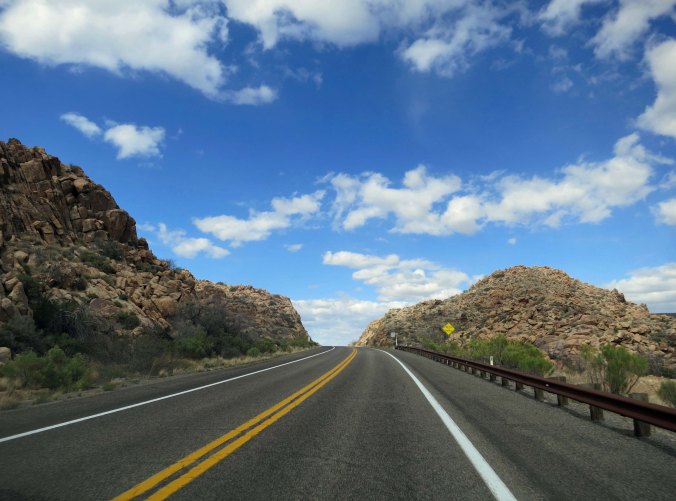
Route 66 above Kingman.

Route 66 above Kingman.

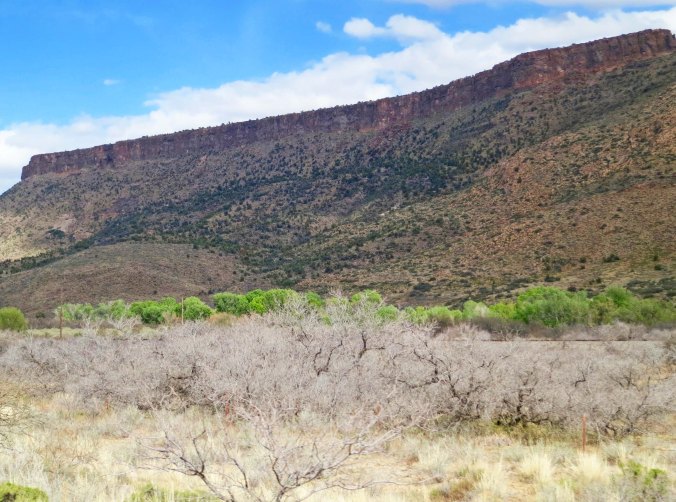
A mesa above the highway. Traveling over the mets and beyond will bring you to the Grand Canyon.

A mesa above the highway. Traveling over the mesa and beyond will bring you to the Grand Canyon.

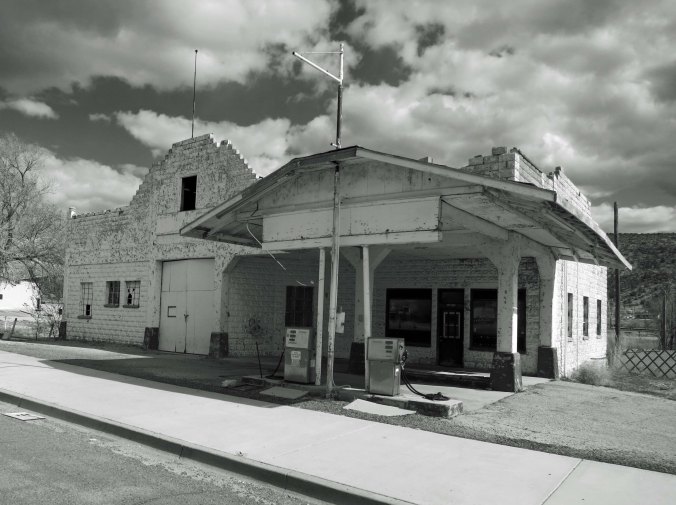
An old building that served as a gas station and garage during the heyday of Route 66. The gas pumps had been updated, but even they were no longer in use. I rendered the photo in black and white to represent the era.

An old building that served as a gas station and garage during the heyday of Route 66. The gas pumps had been updated, but even they were no longer in use. I rendered the photo in black and white to represent the era.

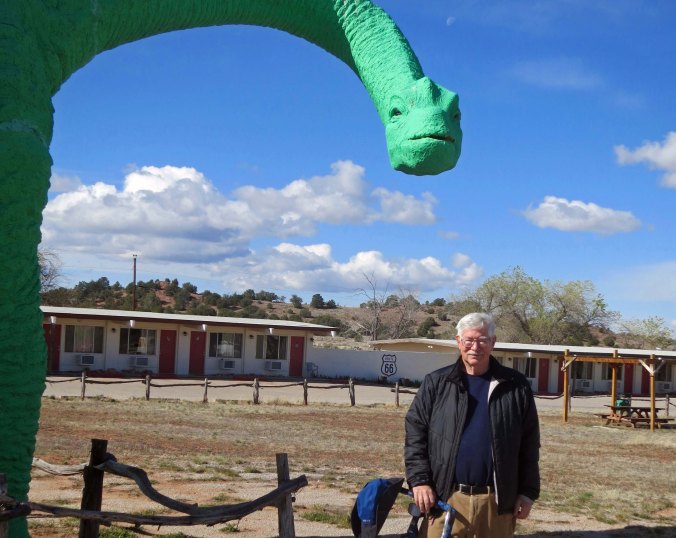
My campground for the evening with a typical Route 66 sign.

My campground for the evening with a typical Route 66 sign.

The campground/motel and caverns also featured dinosaurs. (Photo by Peggy Mekemson.)

The campground/motel and caverns also featured dinosaurs. (Photo by Peggy Mekemson.)

The restaurant featured Betty Boop.

The restaurant featured Betty Boop.

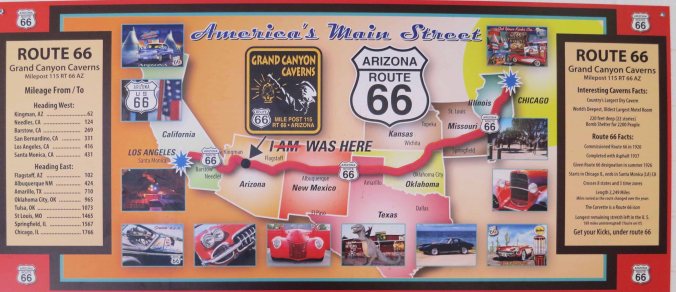
And this map showing historic Route 66.

And this map showing historic Route 66. The arrow points to the Grand Canyon Caverns.

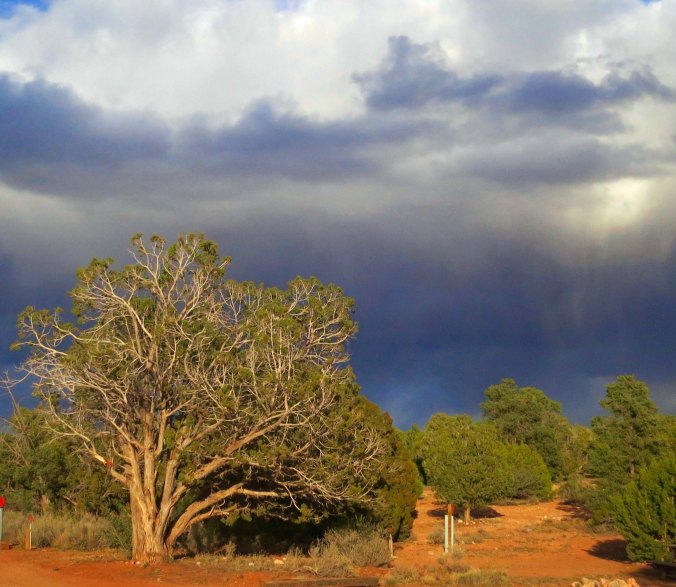
Sunshine lights up dark clouds that were promising rain at the campground.

Sunshine on the juniper trees provides an interesting contrast to the dark clouds that were promising rain at the campground.

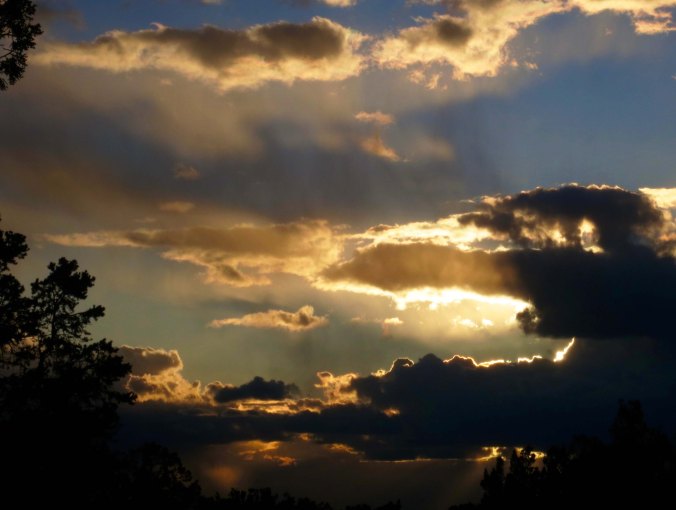
Sunset at the Grand Canyons Cavern Campground.

I’ll conclude this post with sunset at the Grand Canyons Cavern Campground.

Note: If you are new to this series, my wife Peggy and I are retracing my 1989 bike route, this time in our van. Most of the photos come from our present trip.

NEXT BLOG: I will feature the rest of my bike trip across Arizona, including a very scary one a.m. invasion of a motel room I was sleeping in.


Hostile Spirits from another Realm… A Return to the Grand Canyon

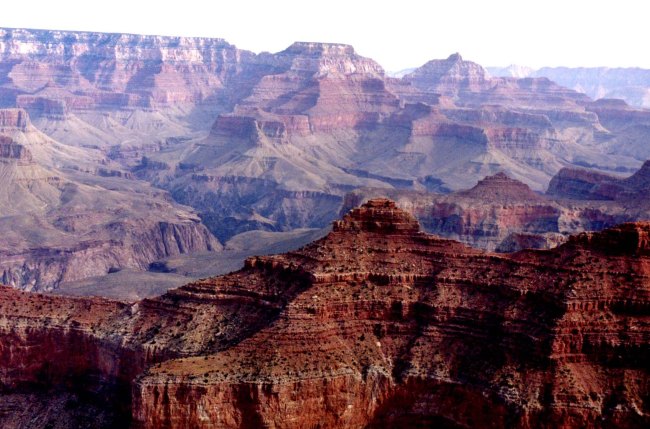
The Grand Canyon is filled with spectacular rock wales that constantly take your breath away. But do they harbor hostile spirits?

The Grand Canyon is filled with spectacular rock walls that constantly take your breath away. But do they harbor hostile spirits?

It’s time for another blog on my backpacking adventures. This one concludes my Grand Canyon series. In my last tales about the Grand Canyon I journeyed several thousand feet into the Canyon and then several thousand feet out with a 60-pound pack on my back. I confessed to having doubts about the journey along the way. My trips in and out of the Canyon weren’t over yet, however…

A friend was to join me on my next trip into the Canyon but wouldn’t be flying in for several days. (This was in my pre-Peggy days.) I took advantage of the time to explore the volcanic mountains that loom over Flagstaff. Seventeenth Century Franciscan missionaries had named the San Francisco Peaks in honor of the Order’s founder. I put my Ford Ranger in four-wheel drive and followed a winding dirt road up the tallest one, Humphreys Peak, until I found a suitable place to pull off and set up camp.

White fir provided shade and shelter while a small creek gurgling down the mountain provided water. Humphrey’s Peak tops out at over 12,633 feet and can be seen from much of Northern Arizona. Native Americans from the surrounding areas consider it sacred. I spent a week wandering around exploring on foot.

I kept an eye out for bad weather, though. Occasional spring snowstorms in the area have been known to catch and kill unwary hikers and campers. The Hopi have another explanation for these unfortunate incidents. Kachina spirits, Hopi Gods, are said to appear during such storms. Apparently, their intentions aren’t friendly.

Fortunately I saw neither snow nor malicious Kachinas during my brief stay and dutifully appeared at the Flagstaff airport on time to pick up my friend M. She was all smiles and stylishly dressed like an LL Beam model. I could see she was a little nervous. Backpacking isn’t exactly her thing and packing into the Canyon can be rather daunting, even for veterans— as I have noted. M is always game for a new experience though, so she threw her shiny new equipment into the back of my pickup and off we went.

We drove out to the trailhead at Hermit’s Rest and prepared for our descent. A large sign warned that thieves had been breaking into cars. We were supposed to take our valuables with us and lock up our vehicle. It was not the type of sign that encourages confidence. I locked the doors and camper shell, checked twice, and wished my truck well.

This wasn’t the first time outlaws had worked the area. Hermit Trail in its earlier guise had been known as Horse Thief Trail. Apparently for good reason. Stolen horses would disappear down the trail never to be seen again. The Santa Fe Railroad improved on the path in the early 1900s and turned it into a tourist route. Fleecing local ranchers turned to fleecing out-of-state tourists. But those days are history. Bright Angel is today’s trail of choice into the Canyon and the horse thieves have long since ridden off into the sunset. The Hermit Trail is now simply one more minimally maintained route.

While it doesn’t match the Tanner Trail in terms of difficulty, it was still a challenging descent. I must say that M managed her first day much better than I had. At the end of the day we discovered one of the Park Services solar and wind outhouses that guaranteed to fossilize your leavings. We camped up wind and out of sight.

I was eager to share the beauty and isolation of some of the side canyons the next morning. We took a short hike and soon found ourselves in the midst of towering, awe-inspiring cliffs. M’s reaction was much different from what I expected. Dangerous spirits inhabited the area and we were disturbing them. We needed to leave quickly.

On one level, I could understand her unease. In our twenties, we had both been significantly influenced by Carlos Castaneda’s journeys through the Sonoran Desert. Don Juan had taught his young apprentice that mysterious and powerful beings from different realms inhabit remote regions. Some of these beings were really bad dudes, prepared to pounce on the unwary. Given my own pantheistic views, it wasn’t hard to populate the Canyon with spirits. But I had spent years wandering in isolated wilderness areas and had yet to meet a spirit that had caused me any damage, or for that matter, even stopped to chat.

I shared my perspective and was met with a rather cool response. Apparently I lacked the necessary perception to understand the danger. I had the irreverent thought of ‘out of sight, out of mind’ but kept it to myself. M was serious. After her bout with Castaneda, she had moved from Iowa to Texas where she was introduced to the work of George Gurdjieff and his pupil, Peter Ouspensky. Gurdjieff was an early 20th Century mystic who taught that the vast majority of humanity is asleep, little more than robots. Given proper training, however, individuals can awaken and reach higher levels of consciousness. I assumed that it was at these higher levels that one became aware of the evil spirits. Gurdjieff called his training the Fourth Way in honor of Buddhism. He, Ouspensky, and other followers set up esoteric schools to teach people the path to awakening.

One such follower was Robert Burton. Burton was working as an elementary school teacher in the San Francisco Bay Area during the 60s when Gurdjieff and Ouspensky caught his attention. In 1970 he persuaded a number of his acquaintances that he was a person of higher conscious, the stuff that gurus are made of. By 1973 he and his group had purchased property near the small town of Oregon House in the Sierra Nevada Foothills and were clearing land to establish a Fellowship to propagate Gurdjieff’s teaching and grow wine grapes. M and her husband moved from Texas to California to join Burton in his efforts.

By the time I met M in the late 70s she had left her husband and Oregon House, but was still an avid follower of Gurdjieff and Ouspensky. I suspect she was continuing to financially support and participate in the Fellowship. When she learned of my interest in Castaneda, she gave me a couple of books on the Fourth Way and suggested that there was a local discussion group I might enjoy joining.

In some ways, I was a good candidate for what Burton was offering. Eastern traditions, especially Zen Buddhism, had a strong appeal. Meditation gave me the same sense of wholeness and connection that wandering in the woods did. I wanted to believe that humans were capable of reaching higher levels of consciousness, of becoming more civilized in the broadest sense of the word. Self-actualization, to utilize Maslow’s term, seemed like a highly desirable goal and I always had myself on some self-improvement plan or the other. I need lots.

Burton had drawn a number of bright, well-educated, and accomplished individuals around him. In ways, his success at recruiting followers was quite similar to that of Bhagwan Shree Rajneesh who had set up shop in Oregon. Both had strong appeal to people who were seeking meaning in life that they weren’t finding in post Vietnam, post Watergate, super-materialistic America. While M had been finding answers with Burton, another friend of mine had placed herself at the feet of the Bhagwan.

The acceptance of a teacher or guide is a legitimate and time-honored tradition in many Eastern oriented practices. Ultimately, however, I lack the capacity of becoming a true believer. Regardless of the appeal, I am not willing to commit the trust required to place myself in another person’s hands. This means I can never quite understand the value that people derive from joining someone like Burton or the Bhagwan. You have to go there to get it and I won’t make the trip.

Anyone interested in gaining significant control over my mind frightens me, regardless of his or her motivation or whatever benefits will supposedly accrue. The best of folks, from my personal experience and historical reading, have flaws. Assigning someone god-like status hides these flaws. Rational, humanistic justification of action is not required. God or Whatever wills it. A multitude of bad things can hide out under this umbrella. Every day brings new examples.

So I had passed on M’s original suggestion to join a discussion group on Gurdjieff and Ouspensky and now found myself unable to recognize dangerous spirits from another realm. I honored M’s concerns, though, and we returned to camp. Our afternoon was spent capturing the beauty of the Canyon with watercolors.

As we hiked out the next day I found myself fretting over another type of bad spirit, the very corporeal local type that breaks into unattended vehicles. Cresting the Rim, I expected to see window glass strewn all over the ground next to my pickup. There was none. It turns out in my paranoia about locking the truck, I had forgotten to roll up my windows. Fortunately, nothing was missing and nothing had been disturbed. I returned M to the Flagstaff Airport and drove southeast. It was time for another adventure— encountering elk and the spirit of Geronimo while backpacking through the Gila Wilderness of southern New Mexico.

NEXT BLOG: I’ll get to the Gila Wilderness eventually, but next up, I am returning to my recent trip up the Northern California Coast. And I answer a serious question… What do you do when someone points a Nike missile at you?

Rancho Olompali: “The White House of Hippiedom”

It was quiet and peaceful when I visit Olompali. But this platform was once alive with laughter, music and work as members of the Chosen Family made bread to be distributed by the Diggers in San Francisco.

It was quiet and peaceful when I visited Olompali. But this platform was once alive with laughter, music and bread as members of the Chosen Family commune made thousands of loaves to be distributed by the Diggers for free in San Francisco during the late 60s.

Today marks the end of my series on Olompali. Originally, I had planned to write one blog. This is my fifth, and each post has been relatively long. The truth is, I got caught up in the subject, and the more research I did, the more caught up I became. I lived through the 60s and spent considerable time in the Bay Area where these tales took place. I became an activist, committed to change, but I missed the early rock scene, didn’t do LSD, and steered clear of communes. None-the-less, I shared many of the values of those who did travel down these paths. 

The 60s were a time when a significant number of young people rebelled against the world of their parents and went seeking something else. As Don McCoy, the founder of the Chosen Family would say, to “create a new way of life, a new way of doing things, a new way of living together, getting along in a peaceful world.” Looking back, this perspective seems almost Quixotic to me. We were tilting at windmills.

But the windmills were real— and scary. America and Russia had accumulated enough nuclear weapons to wipe out the world several times over. Minorities, women, and gays were buried under a suffocating blanket of discrimination that limited who they were and what they might become. Leaders that promised change, John Kennedy, Martin Luther King, and Bobby Kennedy, were shot down, one after another by people who may have been insane— but were reflective of something deeper and darker. A far-off war in Southeast Asia was sucking us into a quagmire that was tearing our nation apart. And last, but far from least, we were awakening to the fact that our desire for more and more of everything was polluting the planet, literally poisoning our home. “We have met the enemy, and he is us,” Pogo proclaimed.

In spite of all of this, or maybe because of it, change was in the air. People across the country felt it. In the Bay Area it was so palpable you could almost taste it. (Listen to the Age of Aquarius here by the Fifth Dimension to get an over-the-top sense of its idealistic flavor.)

Those of us who got caught up in optimism and passion of the 60s believed we could make a difference. Our solutions varied tremendously. For some, like me, it meant joining groups like the Peace Corps and Vista, and working from within the system to achieve change. Others believed more radical solutions were called for. Massive protests and even violence resulted. And some people opted out, either by focusing inward with the aid of meditation or drugs such as LSD, or, more directly, by simply removing themselves from every day society and establishing a new life.

Don McCoy represented the latter. He and a few friends, plus their children, moved to Rancho Olompali in November of 1967 to establish the Chosen Family commune. “God chose us to be family with each other, and also, we chose each other for family,” he said. McCoy was aided in his vision by a $350, 000 inheritance, which is the equivalent of close to 3½ million dollars today.

By most accounts, McCoy was a generous man. One story that reflects his generosity relates to Alan Watts, the Zen philosopher, who was living on a houseboat in Sausalito (possibly one of Don’s). When the Indian musician, Ali Akbar Khan, told Watts he wanted to start a music college for teaching Indian music in Northern California and needed money, Alan immediately called Don. Within an hour, McCoy had shown up and given Khan a check for $20,000. (Khan, along with Ravi Shankar, was instrumental in introducing Indian music to the West. His college still exists today in San Rafael.)

As for Rancho Olompali, McCoy picked up the full tab. He started by leasing the property around the house and barns, including the swimming pool. When neighbors, who ran a riding school business on another section of the property, complained about seeing nude people in the swimming pool, he leased the whole ranch and kicked out the neighbors.

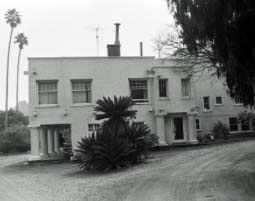
Olompali provided an excellent location for the Chosen Family and Included this 20 plus room mansion.

Olompali provided an excellent location for the Chosen Family. It included this 20 plus room mansion, beautiful landscaping and an Olympic-size swimming pool. (Archival photo.)

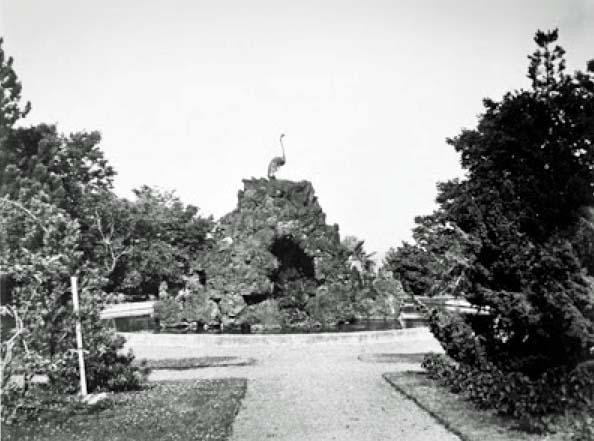
This large fountain with a blue heron sculpture on top was part of the landscaping.

This large fountain with a blue heron sculpture on top was part of the landscaping. (Archival photo.)

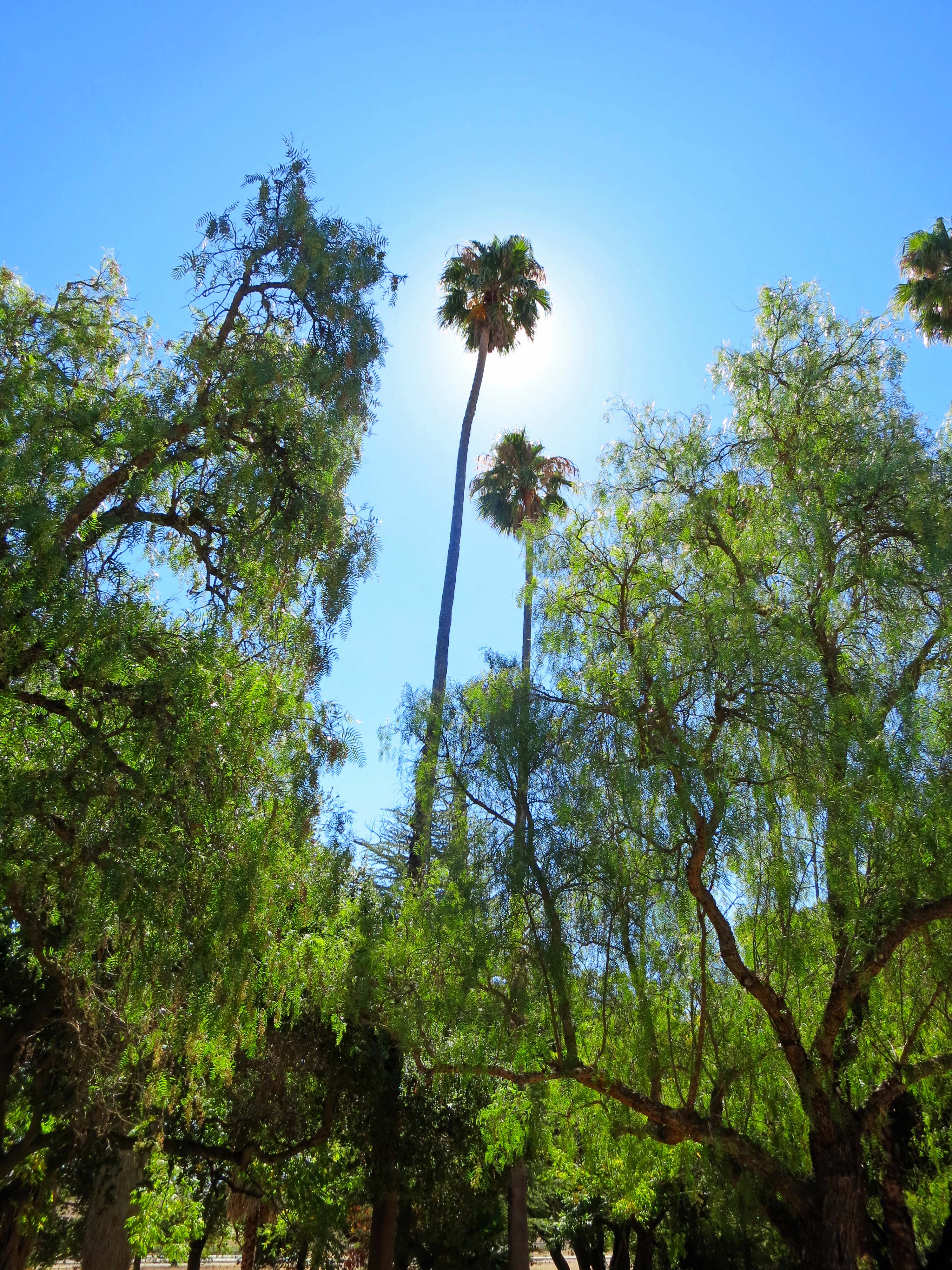
The palms seen on the left side of the mansion as they appear today.

The palms seen on the left side of the mansion as they appear today.

Leasing the rest of the property open up several hundred acres for the commune members to wander through.

Leasing the rest of the property opened up several hundred acres of beautiful country for the commune members to wander through.

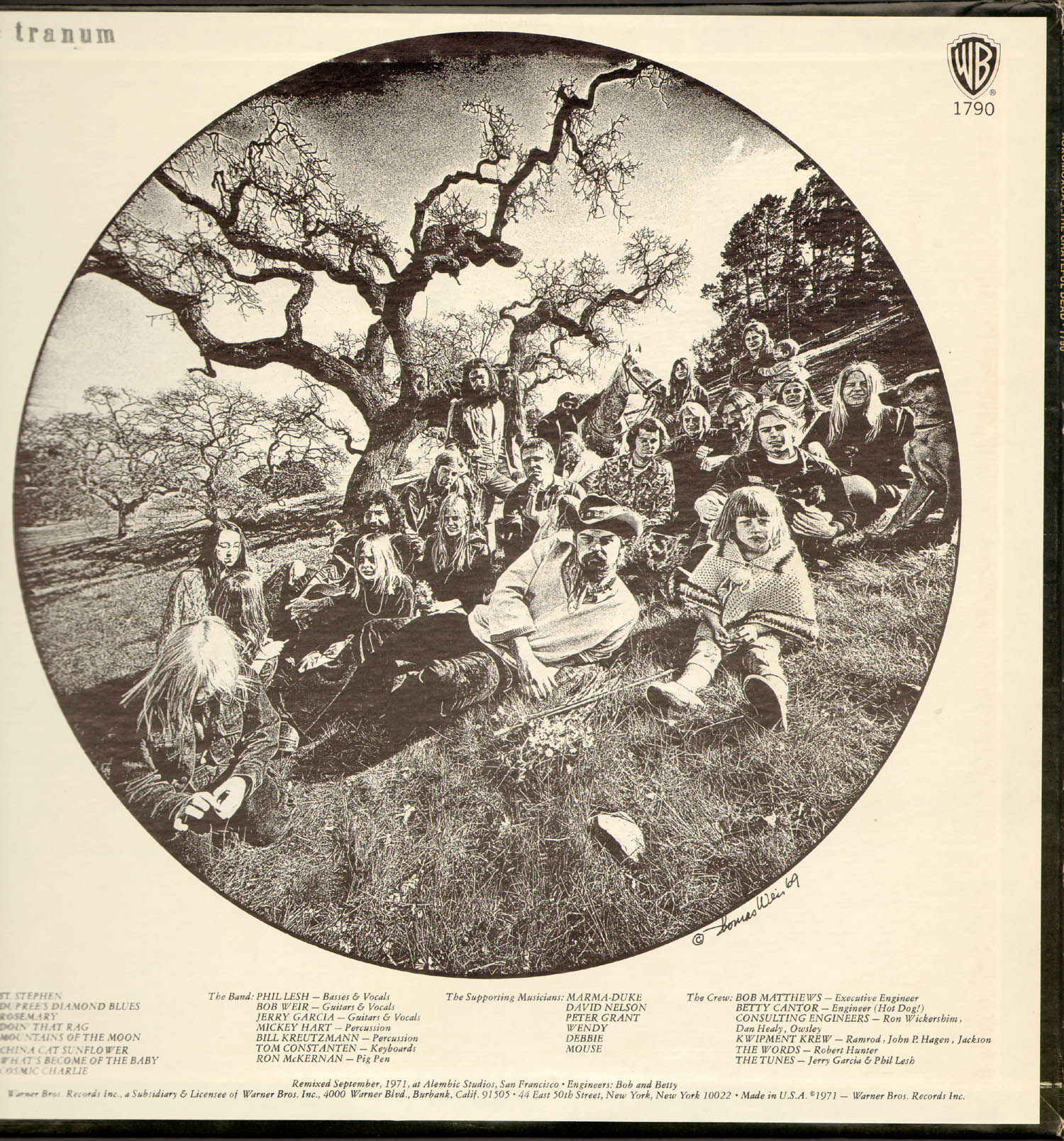
McCoy insisted that the adults who came to live at Olompali give up their day jobs. The commune was to be the center of their lives. Food, transportation, health care, and even entertainment were to be supplied, everything necessary to live. And McCoy would pay for it. This didn’t mean that commune members didn’t work. There was food to grow, meals to cook, dishes to do, cows to milk and horses to care for. The property had several horses, including one boarded by Mickey Hart, the Grateful Dead percussionist. Snorty, the horse, even made it into the group photo taken at Olompali that appeared on the back of the Dead’s album, Aoxomoxoa.

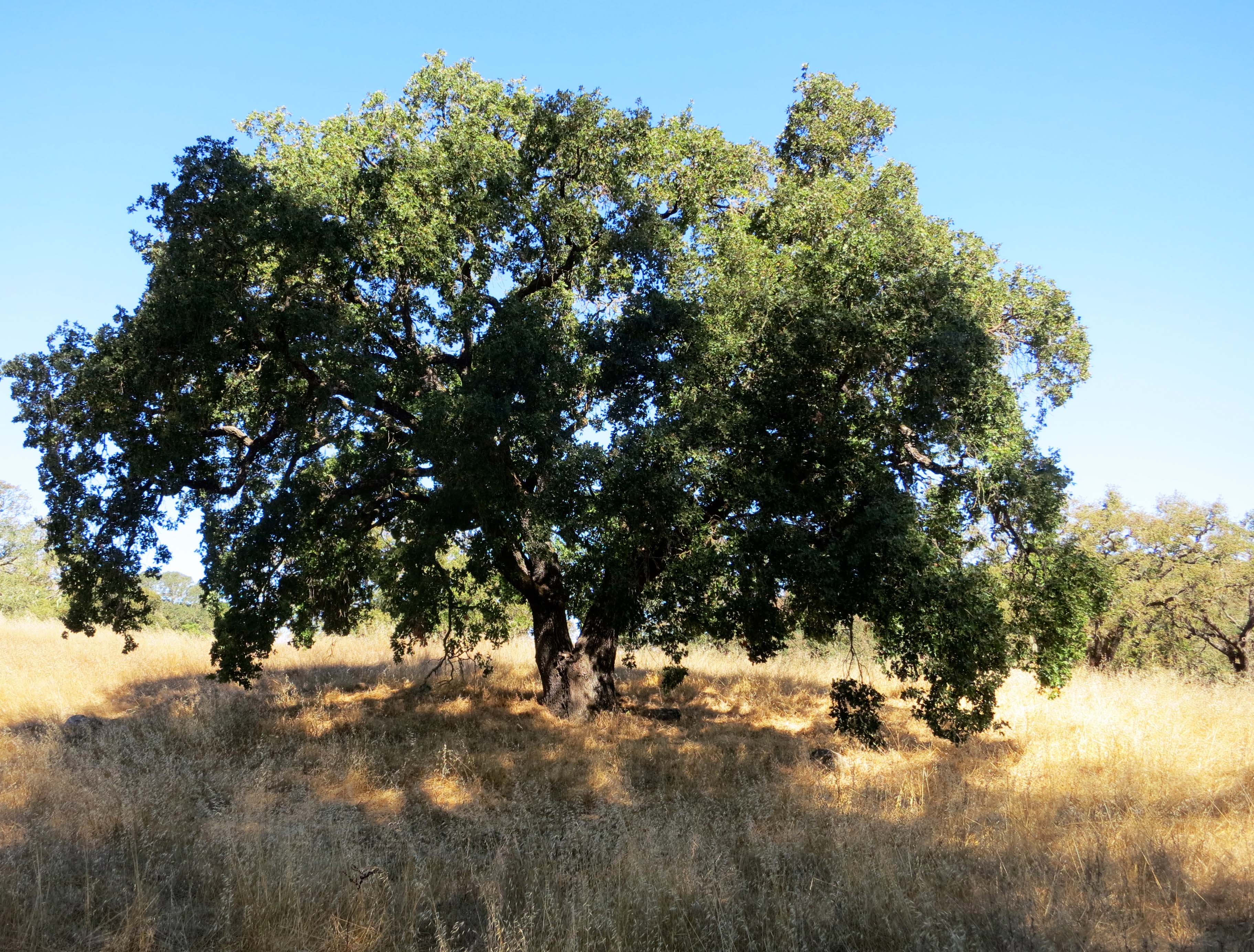
Snorty is in the back of the photo.

Snorty is in the back of the photo to the right of the oak tree.

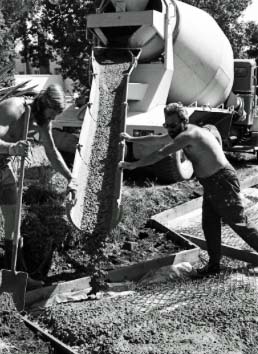
All of the commune members, including the children, were expected to chip in when it came to chores. One of the biggest was cooking bread. A bakery owner had gone out of business and donated his equipment to the commune. A seven-sided cement pad was poured (it still stands at the park as shown in the top photo), and the equipment installed. Commune members then went to work. Clothing was optional. Twice a week they would bake several hundred loaves of bread in coffee cans. The bread was then turned over to the Diggers to distribute for free in San Francisco.

Pouring concrète for the cement pad.

Pouring concrète for the cement pad. (Archival photo.)

Chosen Family members making bread at Rancho Olompali that will be distributed by the Diggers for free in San Francisco. Clothing was optional. (Photo from the Berkeley Barb.)

Chosen Family members making bread at Rancho Olompali that was distributed by the Diggers for free in San Francisco. Clothing was optional. The bread was put in coffee cans as seen in foreground and rose over the top, giving it the name mushroom bread. (Photo from the Berkeley Barb.)

There was also a side business known as The Garden of Delights where commune members would put on light shows for the various rock groups performing at venues in the Bay Area.

Children were regarded as a communal responsibility. On Mondays, their names were placed in a hat. Adults would then draw names and adopt the child he or she drew for the week. If you had issues as a child, you took them to your adopted parent, not Mommy or Daddy.

A decision was made to educate the children on site rather in local schools. (Otherwise, how could you instill the proper hippie values?) An ex-principal/teacher from the Nicasio Elementary School, Garnet Brennan, was recruited into the commune as the teacher. Brennan had been fired from the Nicasio School District after a thirty-year career in education because she had admitted to smoking pot when she was testifying on behalf of a young man who faced a five-year to life sentence for selling marijuana. She had noted that she knew marijuana wasn’t harmful because she had smoked it for 18 years on a daily basis without any notable damage to herself or anyone else. The issue received national attention including an article in Life Magazine.

Brennan set up a Montessori-type school that the children named Not School. Children were encouraged to pursue subjects that captured their imagination. Education was slipped in as part of the process. “We had displays, supplies, books, and tests,” Maura McCoy remembers. “She was a professional educator and a great person to have there.” Brennan had been known as a “beloved teacher” at the Nicasio School according to the Life magazine article.

Extensive freedom was granted to the children. If you wanted to skip school or go to town, okay. If you wanted smoke pot or try LSD, okay. If you wanted to ride horses, go swimming, or go for a walk in the woods, it was your choice. You were even allowed to pick your own bedtime. (After all, how could you go to sleep with the Grateful Dead playing music in your front yard or living room?) And, if you wanted to run around naked— well that was okay, too. Understandably, some people would and did condemn the freedom, lack of structure and use of drugs as a form of abuse. For the most part, however, the children who spent two years of their life growing up at Olompali remember the experience as fun and filled with loving support. They even took delight in going into Novato and being the “Hippie Kids.”

Not surprisingly, the media pounced on the commune. It was big news: pot-smoking hippies ran around naked and baked bread while grooving out to music produced by the Grateful Dead. They labeled Rancho Olompali as the White House of Hippiedom and Don was their guru, the supreme Hippie. They also recorded the bad times. A horse escaped, ran out on Highway 101, and caused an accident that killed a trucker. There were two raids to seize drugs. Faulty wires caused a fire that gutted the mansion.

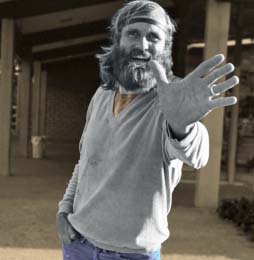
Don McCoy. (Archival photo.)

Don McCoy. (Archival photo.)

Don’s family, concerned about how life on the commune was affecting the children, obtained a conservatorship that took away custody of his children and stopped the flow of money. He ended up in the hospital suffering from physical and mental illness.

The final straw for the Chosen Family was that two of the commune’s children, cycling around the half empty swimming pool, fell in and died. With the death of the children, the commune died as well, its utopian dream snuffed out. The University of San Francisco, who still owned the property, evicted the Chosen Family and set about selling it to a developer who was planning on turning Olompali into condos and a trailer park, an inglorious ending to a fascinating history. But it wasn’t the end of the story.

Olompali was saved by a coin, not just any coin, but an English sixpence found on the property that traced the area’s history all the way back to the initial contact between the Miwoks and Sir Francis Drake. Plans for the trailer park were dropped. Marin Open Space, working with the State of California, obtained the property in 1977 and turned it into Olompali State Park.

Final Notes: Maura McCoy, along with another former member of the commune, Noelle Olompali-Barton, is now making a documentary about the commune. As Noelle says, “We have a lot of colorful history.” Their Facebook page is worth a visit. Scroll down and check out the trailer for the documentary.

NEXT BLOGS: Peggy (my wife) will do several guest blogs on her recent trip to England where she visited a number of gardens and estates, starting with Downton Abbey (Highclere Castle.)

Searching for God In All the Wrong Places

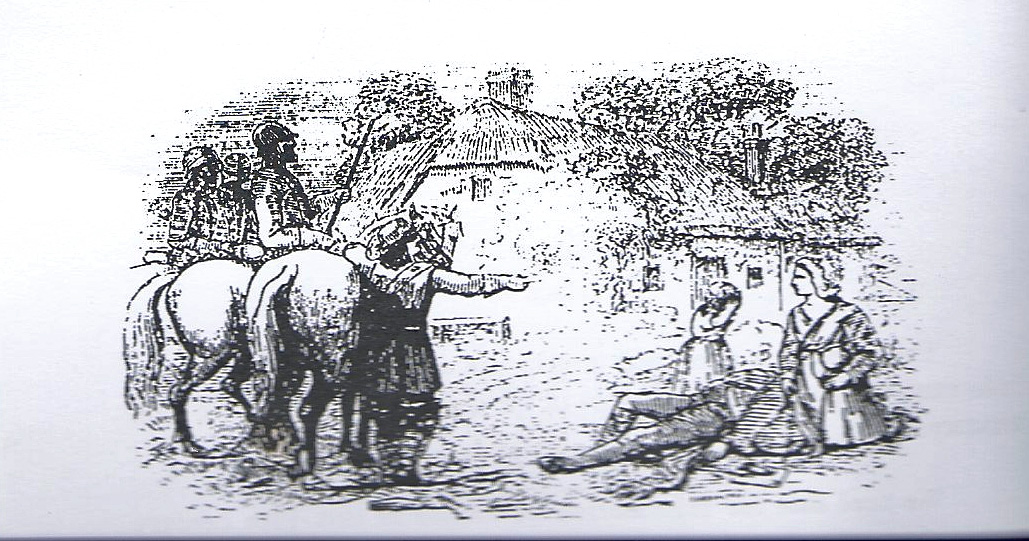
An early sketch of John Brown the Martyr of Priesthill Scotland being shot down by Bloody Clavers.

My family’s religious foundation runs deep. My father’s side traces its religious history back to John Brown the Martyr of Priesthill, Scotland. An early sketch shows Brown being shot down for his beliefs in front of his wife and children.

Note: Today marks the beginning of a series of Friday essays where I plan to explore issues that concern me. For the record, I tend to be liberal on social and environmental issues, a tad more conservative when it comes to economics, and a wee bit libertarian when it comes to personal matters. Does that make me confused?

I thought I would jump right into the fire, so to speak, and tackle religion. Let me make it clear from the beginning, I am not anti-religion. I believe it can be a powerful force for good. I know many people, including Internet friends, who have strong faith and are dedicated to making the world a better place to live. I like to think if Jesus, or Buddha, or Mohammed or any of the other the world’s great religious leaders were around, they would say, yes, these people get it. They understand the message.

But religions also have the power to do great harm. Look around. And this isn’t particular to any one religion. All of the world’s major religions have had violence in their past and have the potential for violence in their future. The same faith that gets people through the dark night, that can inspire great art and humanitarian efforts, can be twisted by ambitious people to obtain both wealth and power. 

I am planning a series of three Friday essays on this topic, primarily based on my own experience ranging from being a six-year-old skeptic, to a teen-age believer, to the agnostic I am today.


You Can’t Get Absolution from a Tree— Father Bill

My adult daughter Natasha visited me once after she had told her minister that I considered walking in the forest a spiritual experience.

“You can’t get absolution from a tree,” he had admonished her with implications that I was flirting with the devil and better get my butt into a real church before all was lost.

“Why not?” was my immediate, if admittedly flippant response. With a little more thought, I would have replied that I had never actually asked a tree for absolution. I did apologize to a tree once for breaking its limbs when I was picking pears, however, and maybe that’s the same thing. We can all use a touch of forgiveness for the injuries we cause as we stumble through life, whether they are to our fellow human beings, nature or ourselves.

But I don’t think that is what the good Father had in mind. He was referring to forgiveness of Original Sin, for the stain on our soul we supposedly inherited from Adam and Eve fooling around in the Garden with Snake. If so, he may be right. I have yet to meet a tree that seemed overly concerned with the issue. Nor, for that matter, am I. But I have been concerned with matters of the spirit all of my life.

At some point in my childhood, I developed a curiosity about God and Heaven. Perhaps it was natural for my age. Or maybe it came from all of the time I spent communing with dead people in the Graveyard next to our house. Certainly old Mr. Fitzgerald’s death left me pondering the Imponderable. But I suspect it was the hours I spent wandering alone in the woods. If you devote enough time to watching mud turtles sunbathe or jackrabbits graze, you can acquire a sense of wonder and even awe about the world and its mysteries. It doesn’t take much to turn this awe into a spiritual experience. Mystics have been doing so for thousands of years.

I am sitting with my mother and my dog Tickle in front of the overgrown graveyard that was just outside our back door.

I am sitting with my mother and my dog Tickle in front of the overgrown graveyard that was just outside our back door.

Most religions prefer a more structured approach to finding God. It’s called going to church and accepting the True Faith, whatever it happens to be. Left alone in the woods, people often come to the ‘wrong’ conclusions. Of course kids don’t think these thoughts. I was young, trusting and impressionable; I was ready for some Old Time Religion.

I Hear You Knocking Lord

My family’s religious foundation runs deep. The Mekemsons trace their heritage back to John Brown the Martyr of Priesthill, Scotland. Brown was a Covenanter in Scotland’s Killing Times from 1680-85. The Covenanters refused to accept the King of England as head of the Presbyterian Church and were paying in blood. When John Graham of Claverhouse (aka Bonnie Dundee or Bloody Clavers depending on your perspective) rode in to Brown’s farm on May 1, 1685, religious strife had reached a peak. Claverhouse gave Brown a choice, accept the King or die. Brown refused and Claverhouse shot him in the head before his wife and children. Legend has it that Claverhouse would see a bloody apparition of Brown the night before he was killed in battle. (Peggy and I had our own ‘ghostly experience’ when we went to visit the grave.)
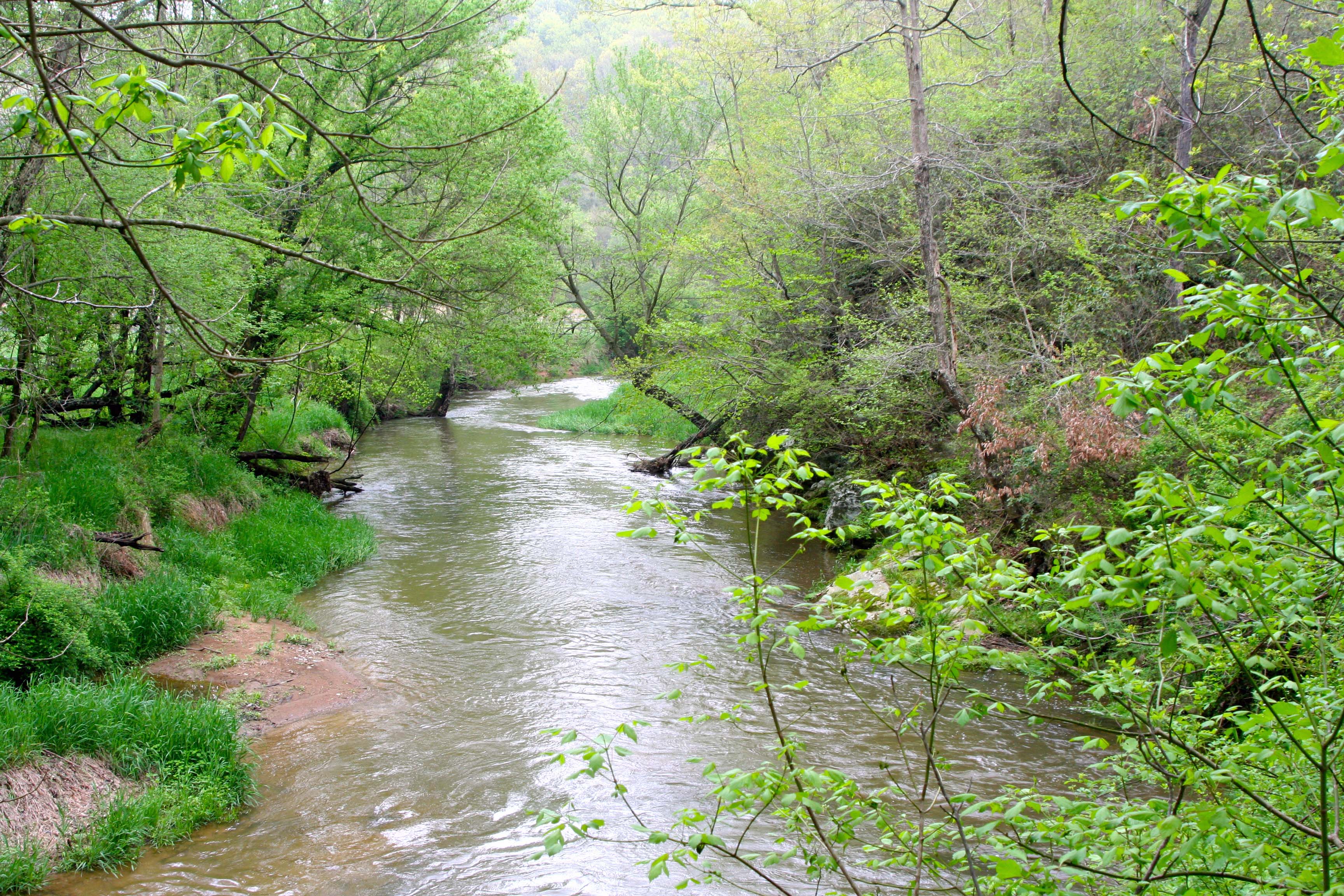
The Mekemson side of the family arrived in America in the 1750s. By the Revolutionary War, they were living alongside Deer Creek in Maryland. (Shown above)

The Mekemson side of the family arrived in America in the 1750s. By the Revolutionary War, they were living alongside Deer Creek in Maryland. (Shown above)

The Marshall family also had difficulties with the King of England. They came to America as Puritans in the 1630s and gave their kids such names as Elijah, Sarah, Josiah, Noah, and Eliakim. These were folks who took their religion seriously and persecuted so-called witches. I will note, however, that my Great Grandfather times six had one of the first licenses in America to sell liquor. Later one of the Marshall’s would head off to the Georgia wilderness and help establish the Southern Baptist Church.

My mother's side of the family arrived in the 1630s as Puritans. This is the grave of an early Marshall in Windsor Connecticut where the family was settled by 1650.

My mother’s side of the family arrived in the 1630s as Puritans. This is the grave of an early Marshall in Windsor, Connecticut where the family was settled by 1650.

Pop, my father, inherited most of the religious fervor in our family. According to my mother, his mom was a hard-line Scotch Presbyterian with a sense of humor to match. One didn’t drink, cuss, smoke or perform any of the other nefarious deeds the devil so cunningly uses to capture wayward souls. Fortunately, Pop missed some of the thou-shall-nots his mother preached, but he did inherit a sense that church was “good for you,” and this meant it would be doubly good for his kids. While Mother had more doubts about religion, even she felt that a little God wouldn’t hurt us. Or, at least she recognized kid-free summer time when she saw it.

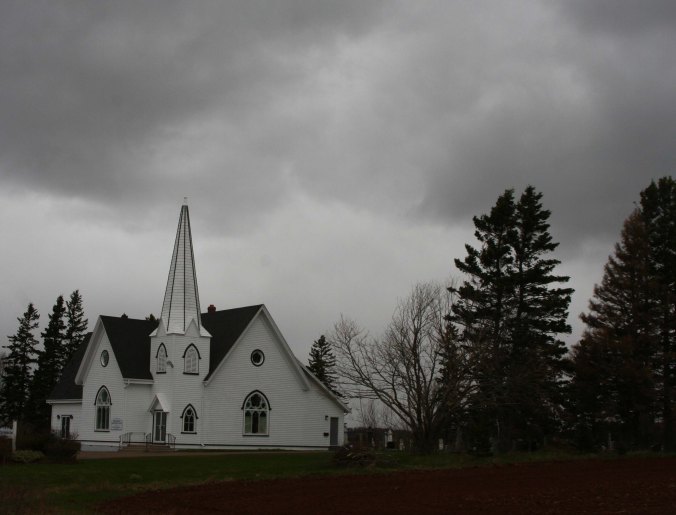
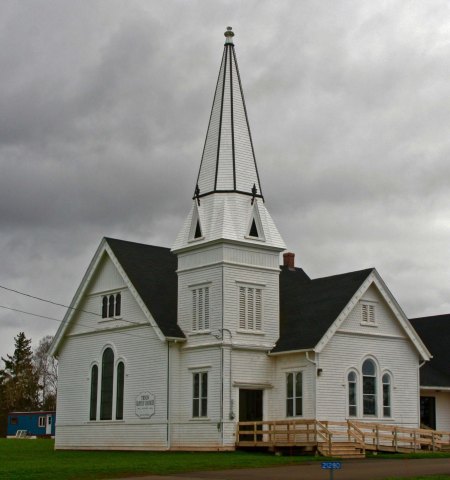
Eventually this led to the three Mekemson kids being spiffed up and marched off to Vacation Bible School. My brother, Marshall, and I got a rare midweek bath, clean clothes and the lecture: no shoving, shouting, fighting or farting. Our older sister, Nancy, bathed regularly and didn’t need the lecture. In those days, going to church in Diamond Springs meant going to the Community Church, a small, white, box-shaped building that came with a straight steeple and fundamentalist leanings.

Other than the fact that Bible School seriously interfered with my spending quality time with my dog Tickle, it wasn’t all that bad. At five, I was encouraged to color lots of sheep and no one seemed to mind that they were purple or that they ended up looking like pincushions. But the real fall-on-your-knees thing that grabbed my attention was all the stuff about miracles. I was fascinated to know how Noah got all of those animals on one boat, what he did with the poop, and how Christ walked on water. I had so many ‘hows and whys’ the Bible School teacher stopped calling on me. I went back to coloring sheep.

One day we were privileged to witness a true miracle in progress. Somehow we had escaped from Vacation Bible School only to be corralled into attending an actual kids’ service. I think it was a graduation ceremony meant to put the exclamation point on our lessons. It came complete with hymns, prayers, a sermon and lots of Amens. Then the big moment arrived.

“Would you like to hear the Lord knocking at your heart?” the Minister asked.

“Oh yeah!” “Wow!” “Really?” What little kid could resist? I hadn’t been so excited since the neighbor’s house had burned down. The minister instructed us to bow our heads and close our eyes. He was quite insistent on the eye part.

“None of you little kids open your eyes until I tell you to,” he ordered. Apparently you can’t witness miracles with your eyes open.

Twenty little children dutifully bowed their heads and screwed their eyes shut. Three didn’t. If there was to be a miracle, the Mekemson kids wanted to see it. So we watched the preacher with eagle-eyed attention. He glared back at us. Whoa, this was getting interesting. Next he tiptoed from the pulpit to the back of the church. What was he up to?

Bang, bang, bang. He was up to pounding on the back door. Yes indeed, the Lord does work in mysterious ways. We watched the minister tiptoe back to his pulpit.

“OK,” he said, “you can open your eyes now. Did you hear the Lord knocking?”

Twenty little sets of big round eyes popped open and twenty little mouths started gabbing all at once. The minister smiled smugly until his eyes fell on us. You could almost hear him thinking and I didn’t think ministers were supposed to think those kinds of thoughts.

“Vacation Bible School is over,” he announced abruptly. “I want you all to think about what you learned today. You can go home now.” We jumped up for a quick escape.

“Nancy, Marshall and Curt, I want you to stay.”

Uh-oh. We were about to learn that the devil had reserved a special place for us. The Mekemson kids were very bad and downright sinful. We had better change our ways or we were going to spend eternity in a very hot place. We were also being held hostage until the other kids left. It wouldn’t do to have us spread malicious rumors.

After being pummeled by twenty minutes of non-stop haranguing, we were finally turned loose. It was pushing 100 degrees outside and Mother was waiting impatiently in one of our ancient cars. She lit into us with an intensity that would have made the Minister cry “uncle.” I wondered if our punishment had already begun. But Nancy straightened things out quickly with all of the righteousness of a 12-year-old girl and forever became my hero. Not only was the minister a ‘lying, deceitful, old so and so,’ she was never coming back to that church again. Ditto.

Marshall, who was seven, sought his own peculiar form of revenge. Our friend, Lee Kinser, lived next to the church and had an old outhouse up behind his home. In-door plumbing had long since replaced its primary use and the daily deposits had turned to dust. The outhouse’s appeal to Marshall was that if he sat on the seat and left the door open, he had a straight shot at the church’s bell. All Marshall needed was his BB gun and a Sunday service. Actually, I think he enjoyed several services from his box seat. In my imagination, I can still hear the minister saying to his Sunday congregations, “Do you hear the Lord pinging?”

Brother Jones and a Glowing Jesus

And that was my introduction to religion. Almost. Another fine tutor was Brother B. Allen Jones, or some such name long since forgotten. He was a southern radio preacher par excellence in an era when radio still dominated the airwaves. At least it did in Diamond. There was only one TV in town and it certainly didn’t belong to us.

Normally, Marshall and I focused our radio listening time to standard kid fare like the Lone Ranger, Sergeant Preston of the Yukon and the Shadow. We would sit glued to the radio with all the concentration of later TV generations and listen to such immortal words as “Who was that masked man?” “I don’t know but he left a silver bullet behind.” And then an awed, “That was the Lone Ranger,” as off in the distance you heard “Hi O Silver away!” We knew that Sergeant Preston and his faithful dog King would always get their man, just like we knew the Shadow would open his program with the question, “Who knows what evil lurks in the heart of man?”

The Shadow knew. And so did Brother Jones. He also knew how to ream it out. On Wednesday nights, we belonged to him. I am sure the devil quaked in his hooves to know that he had such a ferocious opponent. Brother Jones was more than fire and brimstone, however. He could cure anything. After his show the lame would walk, the blind would see and the deaf would hear. Even hardened criminals would fall on their knees and start sobbing. It was at the conclusion of the show that Jones was at his finest, though. It was time to go for the gold.

“I can see you now. I can see you sitting in front of your radio.” The good Brother would start out in his most hypnotic voice, repeating himself so people would get the message right.

“I can see you reaching in your back pocket. I can see you reaching in your back pocket and taking out your wallet. Praise the Lord! I can see you opening your wallet. I can see you opening your wallet and taking out a ten-dollar bill. Hallelujah! Now you are taking your ten-dollar bill and laying it on the radio. I am blessing you and your ten-dollar bill. Lay your hand on the radio. Feel my blessing coming through. Do you feel it? Do you feel it? Hallelujah and Amen Brothers and Sisters! Now I can see you getting out an envelope and a pen. You are addressing the envelope to me, Brother B. Allen Jones. You are now taking the ten-dollar bill and placing it in the envelope. Thank the sweet Lord! You are closing the envelope and stamping it. The first thing you will do in the morning is mail it to me. Blessed are those who give! In return, I will mail you a fine gift, a genuine picture of Jesus Christ that glows in the dark.”

I always wanted the genuine picture of Jesus, but I was a little concerned about its glow in the dark qualities. Marshall and I had been given a cross that glowed in the dark at Vacation Bible School and Marshall kept it on our dresser. It scared me, like the tombstones in the Graveyard. I’d wake up in the middle of the night and there it would be, glowing at me. You couldn’t turn it off and Marshall wouldn’t let me shove it in a drawer. My only solution was to hide under the covers. Can you imagine the trauma of growing up with a glowing cross that forces you to hide under the covers? Who knows what damage a glowing Jesus might have caused.

As you might imagine, by this early point in my life I had already developed a somewhat warped view of religion, not to mention a frustrated pair of parents. But they weren’t about to give up. Their savage little beasts would be tamed. Join me next Friday when Tarzan shows me the light.

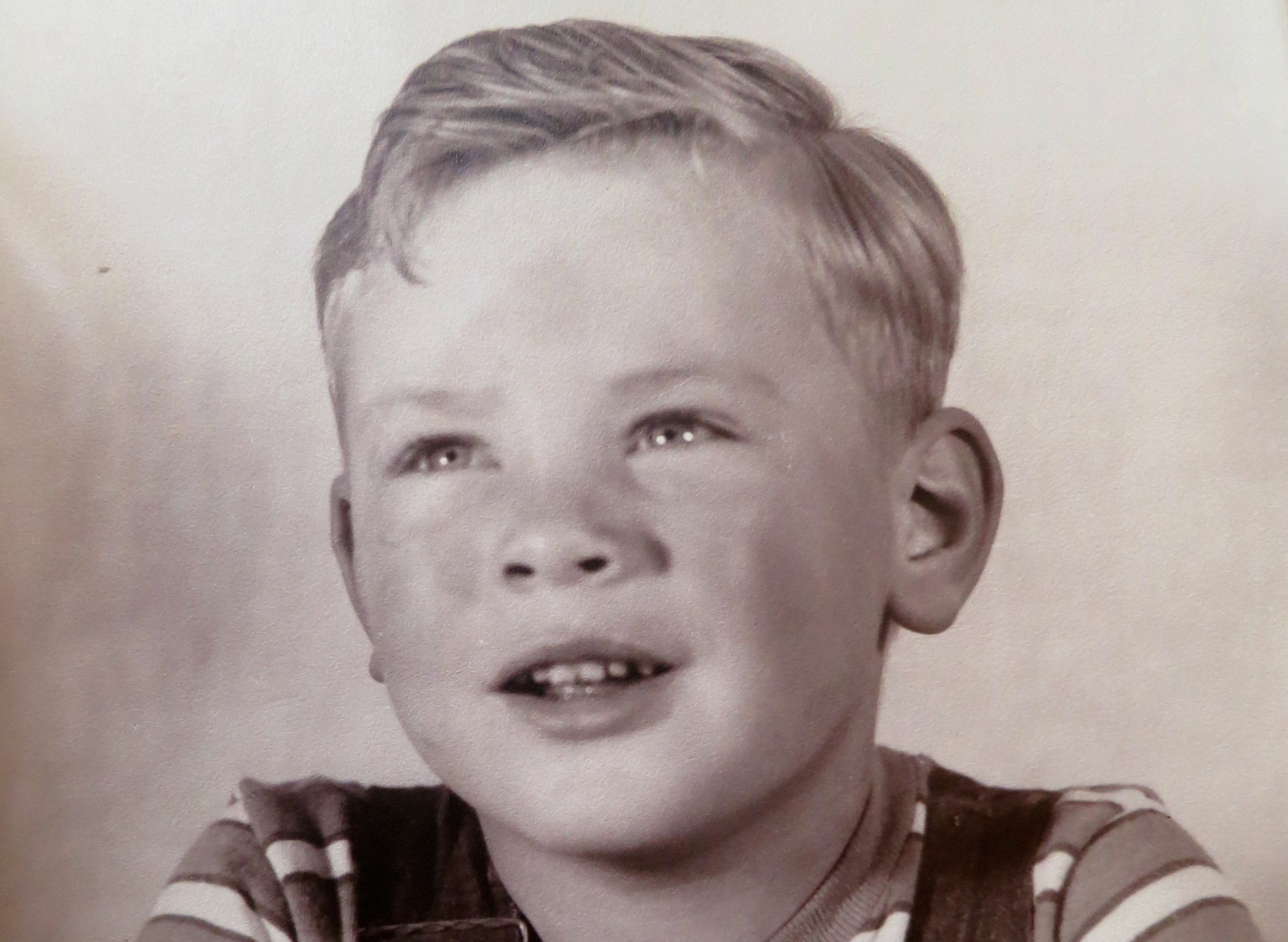
Children are taught their parent's religion from an early age and their parents beliefs become this beliefs. I've always thought I looked somewhat angelic in this photo. My mother would have been the first to note that looks can be deceiving.

Children are taught their parents’ religion from an early age and their parents’ beliefs become their beliefs. I’ve always thought I looked somewhat angelic in this photo. My mother would have been the first to note that looks can be deceiving.

Three blogs that relate to the above post that you might want to check out:

Peggy and I visit the Grave of John Brown the Martyr and encounter a ‘ghost’.

A story about the Graveyard next door to our house.

I wander back in time to the woods of my childhood.
The Bush Devil Ate Sam and 84 Charing Cross Road

Hilary is a writer who lives in England and maintains a very interesting blog that I have followed for quite some time now. –Curt

hilarycustancegreen's avatarGreen Writing Room

Let’s hear it for non-fiction! I have just had the most entertaining and informative week (and I get to write a seriously disconnected title for a post).

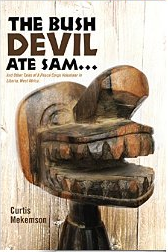
Curt Mekemson‘s book, The Bush Devil Ate Sam…And Other Tales of A Peace Corps Volunteer in Liberia, West Africa, is an important record and a serious story, yet told easily, and with delightful humour. This is one of the most satisfying books I have ever read, because it entertained me thoroughly AND made me feel better informed.
Screen Shot 2015-04-15 at 20.35.09In America in the 1960s, Berkeley was one of the cradles of independent thinking. Here, youth, hope and idealism produced (for a while) creative, open-minded solutions to world problems. Curt was there and tells us how it really was.

From there we go with Curt and his wife, as raw Peace Corps recruits, to Liberia. Curt never fails to spot the funny elements of his varied adventures and he writes with an pleasing straightforwardness. Their lives…

View original post 240 more words