Hopi Gods and Squirrelly Squirrels… Rafting the Grand Canyon: Part 1

Rowing on the Colorado through the Grand Canyon

While a veteran crew of boatmen handled the more dangerous parts of our 18 day journey through the Grand Canyon, I was allowed near oars on some of the tamer sections.


Since Peggy and I will actually be hanging out at our home in Southern Oregon for a couple of months and not generating new material for my travel blog, I thought I would dip back in time to the very beginning of my posts.  I had attended a writer’s conference in San Francisco during the winter of 2010 and been told that writers need an Internet presence. I felt doing a series on an 18-day trip we had just completed rafting on the Colorado River through the Grand Canyon would make an excellent start. It was an epic-adventure, one that was burned into my memory banks.  Part of the experience was that Peggy and I would be traversing some of the earth’s most challenging rapids with a true cast of characters. That alone was enough to make it an epic adventure, but even more important, at least for me, was that we would be traveling through the heart of the Grand Canyon, one of the seven natural wonders of the world. Please join us on this adventure. By the end, I think you will see why the Grand Canyon has earned its world-class status. I will start with Peggy and me in Flagstaff, Arizona getting ready for our adventure…
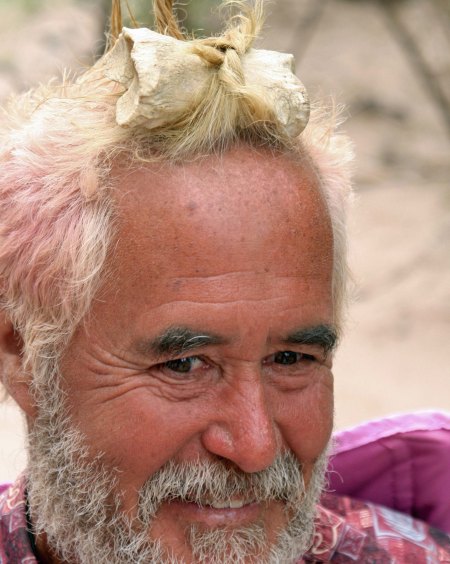
 

Tom and Bone

One of the ‘cast of characters’ and our group leader, Tom Lovering with Bone in his hair. Tom and I had found Bone when we were backpacking in the Sierra Nevada Mountains in 1977 and he has traveled the world ever since.

Five squirrels with long tufted ears just went charging past our van— in a row. I think it must be love and Peggy agrees. We speculate that a female is leading the boys on a glorious romp. “Catch me if you can!” she giggles. It’s that time of the year when the Albert Squirrels are excited to make babies and perpetuate the species. Lust is in their hearts. Or maybe it’s just the guys working out territorial differences.

Someone they won’t be mating with are their northern cousins, the Kaibab Squirrels. It isn’t that they couldn’t or wouldn’t if they could, it’s just that the giant hole in the ground known as the Grand Canyon is too deep and too wide for them to cross. As a result, a new species has been created. Scientists and natural history folks call this process allopatric speciation— a pair of two-bit words for sure.

We are located at a KOA in Flagstaff, Arizona as we prepare for our raft trip down the Colorado River. It’s a big campground. Everywhere we look men and women wearing yellow shirts are busily preparing for the onslaught of summer tourists. It feels like a beehive, or squirrel’s nest. The camp cook tells us 28 people work here. Jobs are highly specialized. The man who straightens misplaced rocks stopped by to chat with us this morning.

Yesterday we watched two employees struggle for an hour on laying out the base of Teepee. It had all the flavor of an old Laurel and Hardy film. They kept measuring and re-measuring the angles. I expected one to leap up and start chasing the other around camp with a 2×4.

We wonder what the Kachina deities who live in the San Francisco Mountains overlooking our campground think about the squirrelly activity taking place beneath them. There are bunches of them up there, over 300 according to Hopi lore, and each one has a lesson to teach, wisdom to disperse. They come down from their perch in the winter to share their knowledge. I’m sure that they would have made quick work of the Teepee project.

Peggy and I hike up the mountain following Fat Man’s trail. Of course, there is no irony here as we desperately try to beat our bodies into shape for the Canyon trip. We’ve been out travelling in our van for months and the pounds have accumulated. The trail’s name suggests this is a gentle start. Instead it takes us straight up into a snowstorm. The Kachinas are rumored to mislead people under such circumstances. I once spent a week up on the mountain by myself and restricted my wandering to fair weather.

Grand Canyon rock formation

I’ve sometimes wondered what, if any, role that rock formations in the Grand Canyon influenced how the Hopi Indians pictured their Kachina gods.

Once they had the mountain to themselves but now they have competition. Technology has arrived— modern gods. Tower after tower bristling with arrays of tracking, listening and sending devices look out over the sacred lands of the Hopi, Navaho and other Native Americans.

It’s hard not to think Big Brother is watching or not be disturbed by the towers’ visual intrusion. But their presence means we can get cell phone coverage and climb on the Internet. We are addicted to these modern forms of communication so it is hypocritical to whine, at least too much.

But back to the squirrel theme, Peggy and I are a little squirrelly ourselves as we go through our gear and get ready for our grand adventure. I am nervous. This is my first multi-day river trip. What have we gotten ourselves into? Do we have the equipment we need? Will we survive the rapids? What will the people who are joining us be like? What challenges will we face that we are ill prepared for? There are many questions and few answers.

Would people who should not be let near knives suddenly be wielding them?

Would Canyon spirits stalk us?
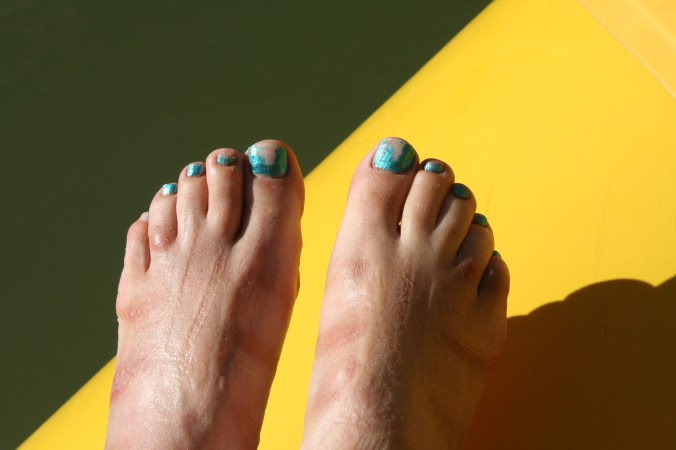
Would we be required to paint our toenails so our rafts wouldn’t flip.


A note on photos: Peggy and I took most of the pictures that will be included in these posts on the Grand Canyon trip. Our friend Don Green was also along, however, and has generously shared his photos with us. I will note which photos are his.

WEDNESDAY’s Photo Essay POST: It’s back to the featuring the beautiful red rocks of Sedona, Arizona.

FRIDAY’S Blog a Book POST: The next chapter in MisAdventures sees my brother and I in a death-defying race to the top of the 75-foot tall Incense Cedar in the Graveyard.

MONDAY’S Travel Blog POST: It’s all about food, seemingly tons of it, as we make our final preparations for the Colorado River trip. Homeland Security puts a crimp in our efforts as it checks our supply for bombs.

SaveSave

SaveSave

SaveSave

SaveSave

SaveSave

SaveSave

SaveSave

SaveSave

SaveSave

SaveSave

SaveSave

SaveSave

Want a Small House— Think Narrowboat… A Trip on the Trent and Mersey Canal: Part 2

Swan in black and white on Trent and Mersey Canal

Graceful swans share the Trent and Mersey Canal with narrowboats. I decided to render this fellow in black and white to emphasize its feathers and show how swans tuck their wings over their backs.


This is my second post on the Trent and Mersey Canal. My first post took us from Sawley to Burton upon Trent. In today’s post, Peggy and I, along with her sister and brother-in-law, Jane and Jim Hagedorn, visit Burton on Trent and return to Sawley. 


Josiah Wedgewood’s concern about his pottery was a driving force behind the building of the Trent and Mersey Canal in the 1770s. Too many of his fine dishes were being broken when they were transported over the bumpy, rough roads of the time. A canal would provide for smooth sailing, or, at least smooth boating, and every industrialist wanted one to connect his plant with growing markets. For a brief period of time in the early industrial revolution, canals were the in-thing. Hundreds were built throughout England and Europe— as well as in the youthful United States.

Jilly Dee Narrowboat

This painting on the Jilly-Dee narrowboat spoke of earlier times on the canals when manufactured goods were carried on barges towed by horses and mules.

The painting reminded me of Erie Canal in New York state and one of the first songs I learned in elementary school. Here it is:

I’ve got a mule and her name is Sal
Fifteen miles on the Erie Canal
She’s a good old worker and a good old pal
Fifteen miles on the Erie Canal
We hauled some barges in our day
Filled with lumber, coal and hay
We know every inch of the way
From Albany to Buffalo

Low bridge, everybody down
Low bridge, we’re coming to a town
You’ll always know your neighbor
And you’ll always know your pal
If you ever navigated on the Erie Canal.

It was one of my favorite tunes, right up there with Old Dog Tray. I was particularly enamored with the idea of having a mule as a pal.

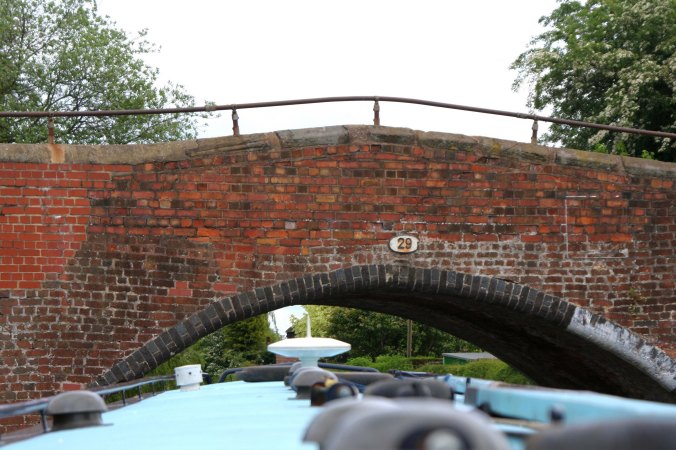
We passed under several low bridges during our trip, but none made us duck. Fortunately, our journey didn’t involve any of the long, low tunnels located on other parts of England’s canal system. I read that the earliest tunnel on the Trent and Mersey Canal was so low that the boatmen would lay down on their backs and push the boat through with their feet, using the top of the tunnel for leverage— for a mile! The mere thought of this sent claustrophobic twinges through my body!

Low Bridge on Trent and Mersey Canal

“Low bridge, everybody down!”

Railroads and modern highways made canals obsolete for transporting goods and would have spelled their doom except for the interest of historians, hobbyists, and the recreational industry starting in the 1950s. Recreation is booming today and numerous people have also discovered that narrowboats can provide the ultimate in an inexpensive, small house lifestyle for those with a gypsy nature. Sounds good to me. Most of these homes are uniquely decorated and come with interesting names like Belly Button, Idunno, and In the Mood. Others, such as Nomad Dreams, Sacagawea, and Gone Roaming, suggested the wandering nature of their owners.

Belly Button narrowboat on Trent and Mersey Canal

Narrowboats that people use for homes are often gaily painted and uniquely named!

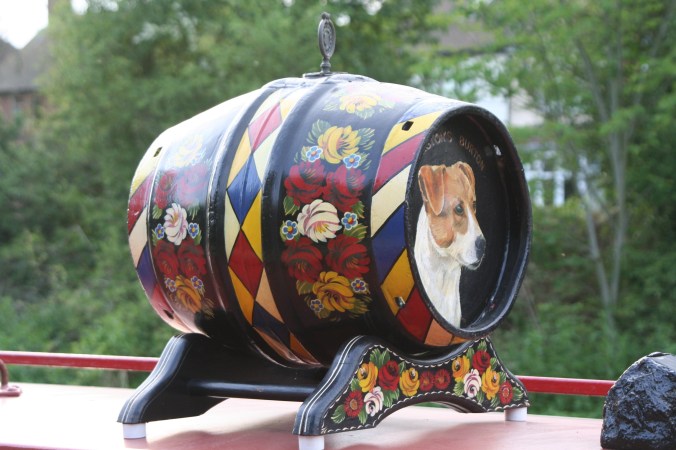
Narrow boat dog on barrel on Trent and Mercy Canal

One of the boats had this painted barrel sitting on top…

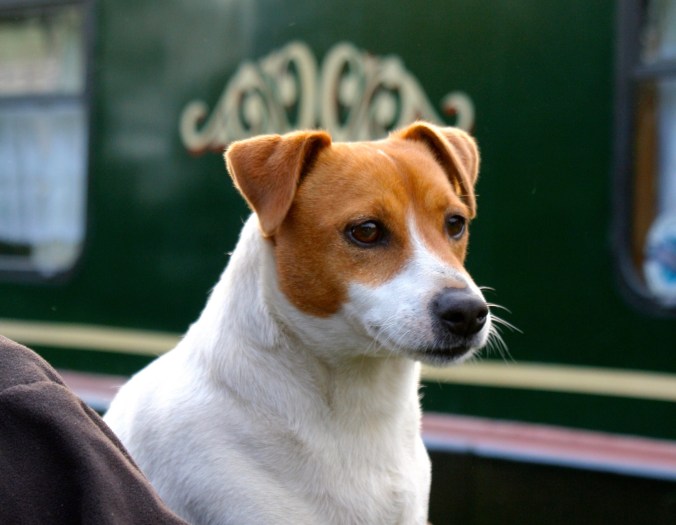
Narrowboat dog on Trent and Mercy Canal

And then we spotted the model!

Peggy, Jim, Jane and I explored Burton upon Trent, spent the night, and then began our journey back on the Trent and Mersey Canal to the Sawley Marina. Once again, we enjoyed the challenge of piloting our 65-foot boat around obstacles and through locks, while appreciating the beauty and peace of the British countryside. Our most exciting moment was when Jim decided to park our boat up on the bank…

View near St. Pauls in Burton upon Trent

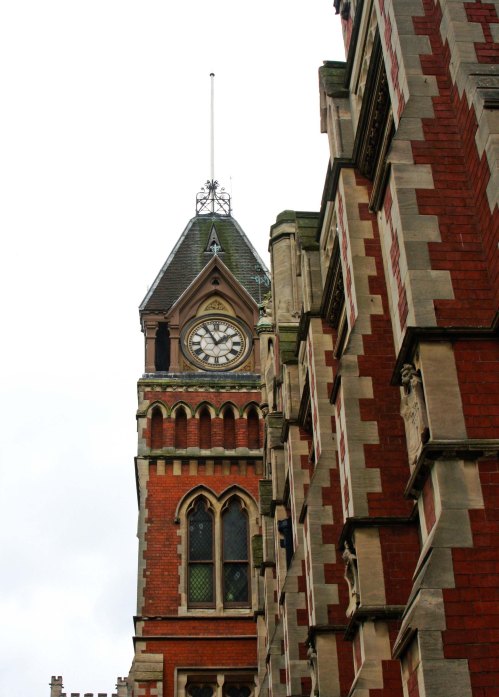
We wandered around admiring buildings in Burton.

Gargoyle on St. Paul's church in Burton on Trent

And found this gargoyle with its tongue sticking out at St. Paul’s Church.

Row houses and chimneys in Burton upon the Trent

Row houses, chimneys and threatening skies provided a photo-op…

Marston's brewery in Burton upon Trent

Marston’s original brewery is located in Burton on Trent and has been a longterm mainstay of the city’s economy. I went onto Marston’s website and found this quote: “No Marston’s, no beer, no beer, no Burton.”

Bargain booze in Burton upon Trent

Of course beer wasn’t the only alcohol available…

Carved kingfisher sculpture with fish in Burton upon Trent

Walking back to the canal, we were reminded by this carved kingfisher of the birds that make the canal their home.

Swan profile on Trent and Mersey Canal

Including swans and their Canadian Geese cousins.

Mallard moves along on Trent and Mersey Canal

A mallard moved along on some important mission…

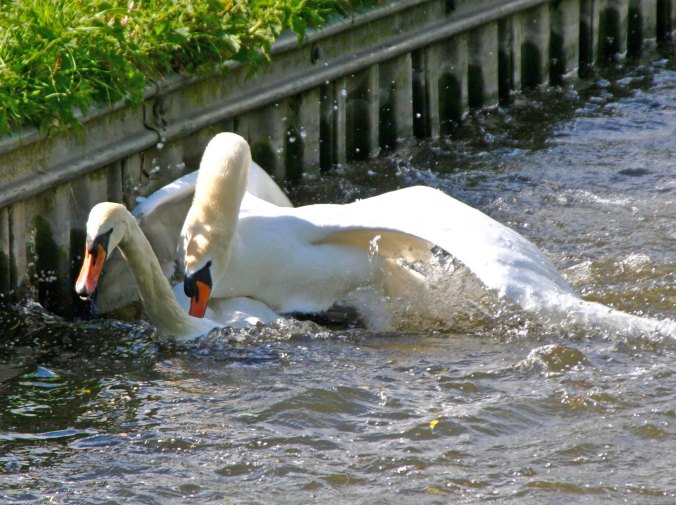
Swans mating on Trent and Mersey Canal

While a pair of swans decided to make babies.

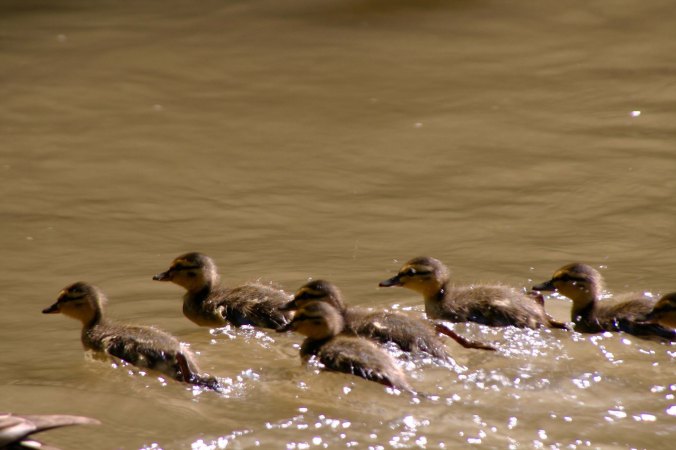
Baby ducks on Trent and Mersey Canal

Of which the mallards had already contributed a substantial number. There was no lack of baby ducks on our trip back…

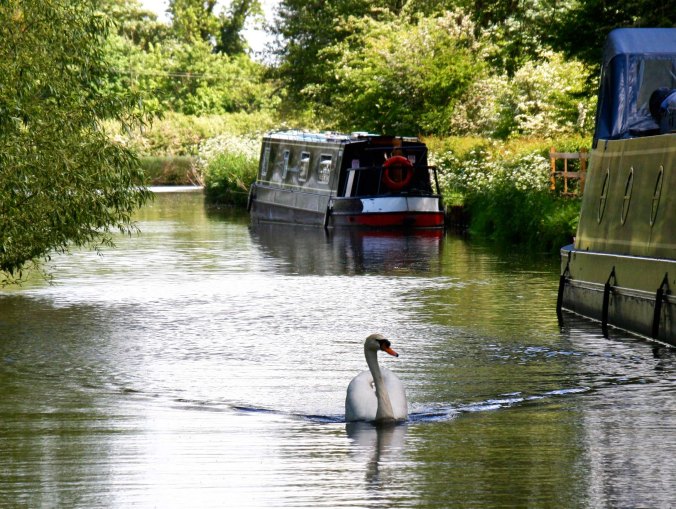
Swan and narrowboats on Trent and Mersey Canal

Or swans.

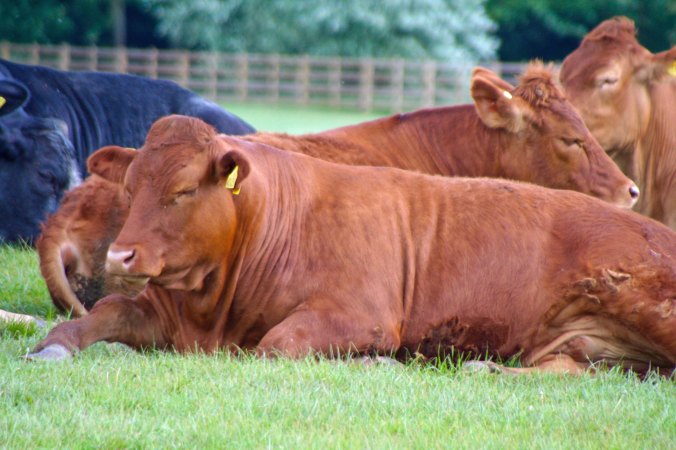
Resting cattle along Trent and Mersey Canal

Cattle enjoyed a moment of sun…

Peggy Mekemson enjoying sunshine on Trent and Mersey Canal

As did Peggy!

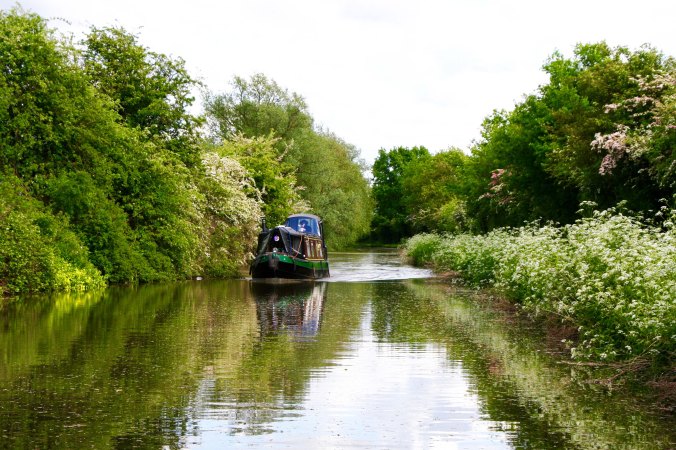
Scenic view along Trent and Mersey Canal

We all continued to enjoy the scenery and serenity along the Trent and Mersey.

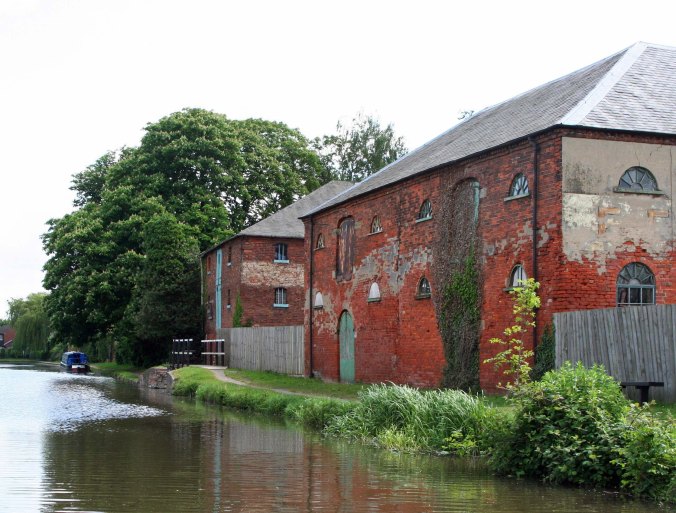
Buildings along Trent and Mersey Canal

Including the buildings.

Narrowboat with rain cover on Trent and Mersey Canal

And other narrowboats. This boater had created a canvas pilot house as protection from the elements. There were occasions when we were envious.

Poling narrowboat off shore on Trent and Mersey Canal

Our progress was delayed when Jim decided to park us on the bank. That’s when we really learned just how heavy our boat was.

Double-wide lock on Trent and Mersey Canal

Locks continued to slow us down as well. This was a double-wide. Just barely.

Church near Sawley Marina

When we spotted this steeple, we knew that we were close to home.

Sawley Marina

And thus we arrived.

Intrepid narrowboat crew in Burton on Trent and Mersey Canal

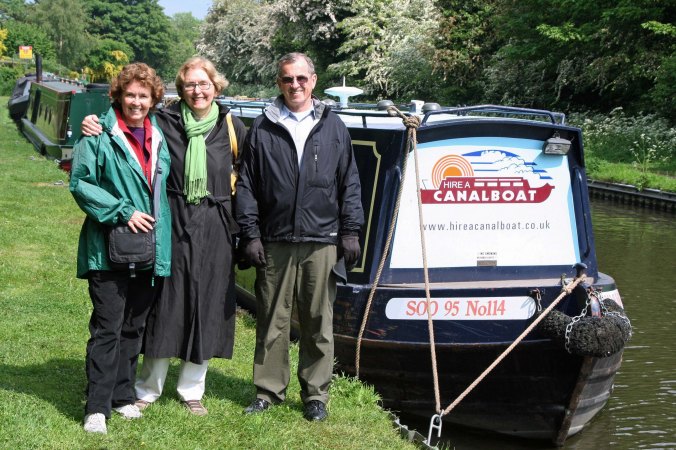
A final shot of Peggy, Jane, Jim and our moored boat.


SATURDAY’S POST: It’s back to blogging my book on MisAdventures. This time I hire the family pets to protect me from the dangerous ghosts that live in the graveyard next to my childhood home.

MONDAY’S POST: Peggy and I return to our before-Christmas adventure along Washington’s coast.

WEDNESDAY’S POST: A photograph essay on Scotland, which is where we went after our narrowboat trip.


Piloting a 60-foot long, 6-foot wide Narrowboat along England’s Trent and Mersey Canal: Part 1


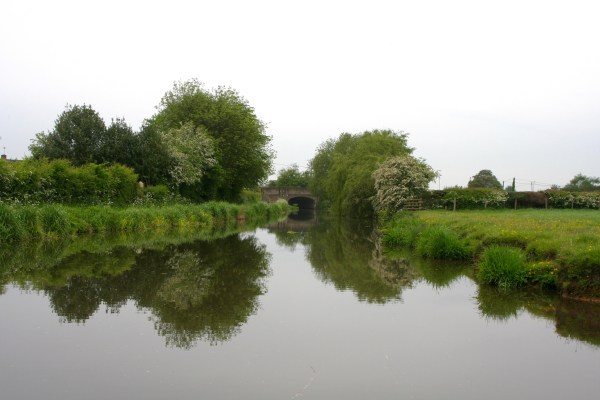
Scenic reflection shot along Trent and Mercy Canal

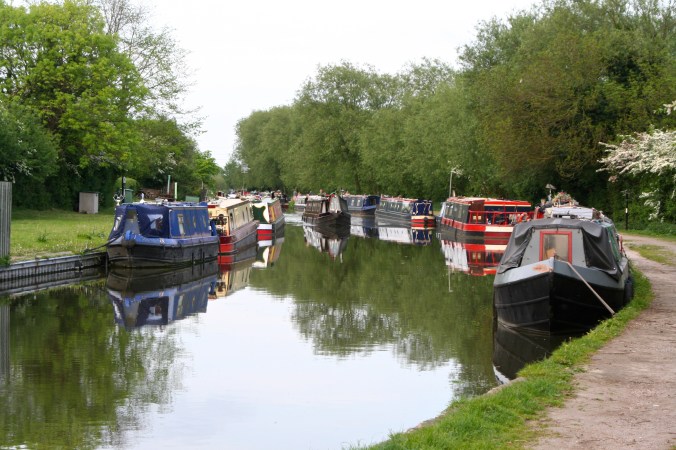
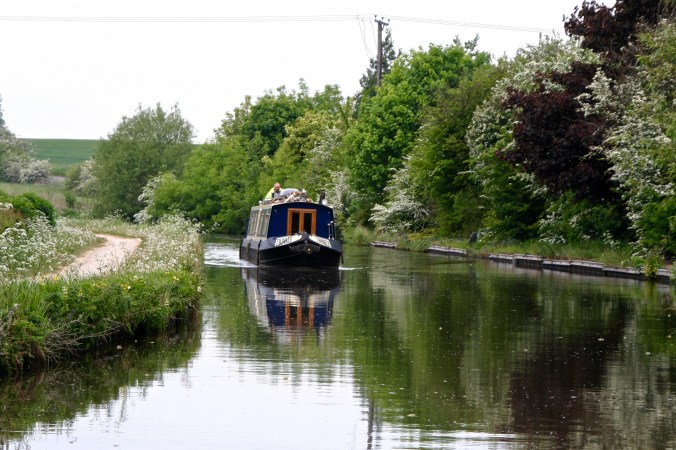
Operating a narrowboat along Britain’s scenic Trent and Mersey Canal became a bucket list item for us as soon as we learned about the possibility.

To call me a boat person would be a very serious misnomer. Backpacker definitely— that’s where my true passion lies. It gets me into the wilderness. But boating, as a general rule, is something I’ve done little of. There are exceptions.

Peggy and I have boated up the Amazon, rafted down the Colorado River through the Grand Canyon, and kayaked in numerous places throughout North America. I’ve canoed across the Kenai Peninsula of Alaska and down the Sacramento River of California. Peggy and I have even cruised the Mediterranean and crossed the Atlantic. And I’ve tried my hand at fishing for marlin off the coast of Mexico. Mainly, I see boats like I do bicycles, however: as a way of getting me to places I want to see. Bicycling or boating as sports in themselves have little appeal to me.

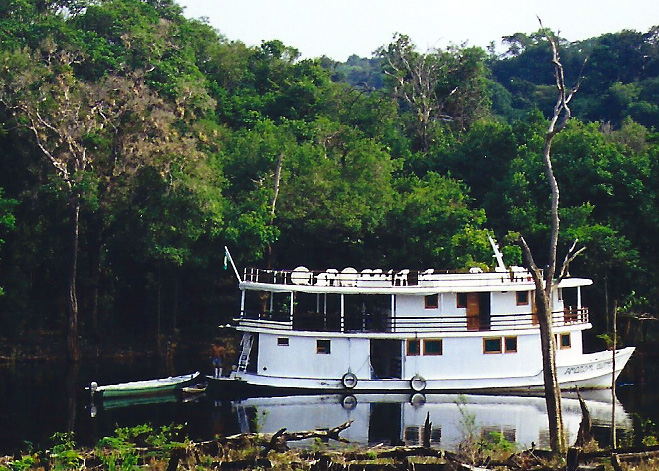
Our boat, the Amazon Clipper, docked for the evening deep in the rainforest on the Rio Negro River, Brazil.

Peggy and I enter the infamous Lava Falls on the Colorado River, a perfect ten… that’s 10 as in rapids don’t get any more serious. Shortly after that the boat, our boatman Steve, Peggy and I disappeared under the water. Happily, we resurfaced. (Photo by Don Green)

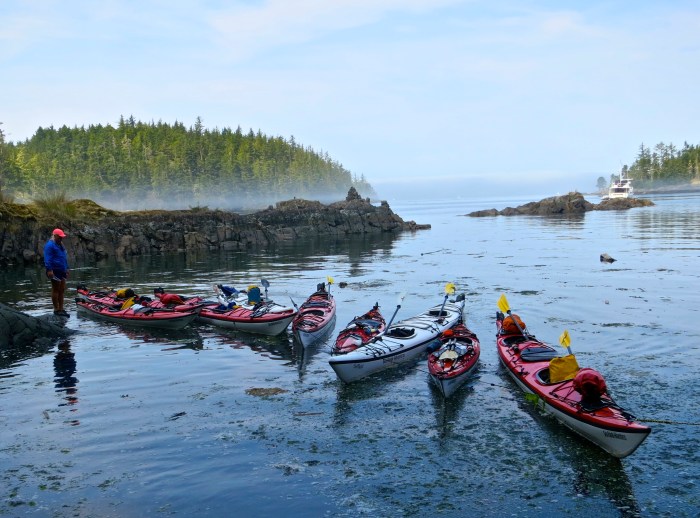
Sea Kayak Adventure kayaks roped together in small inlet on Hanson Island. Photo by Curtis Mekemson.

I took this photo of our kayaks off of Vancouver Island while we were at lunch. The kayaks were roped together so they wouldn’t run away.

Given my mixed feelings about boating, I found myself surprised that I enjoyed piloting a narrow-boat along England’s Trent and Mersey Canal. There was something about making the 60-foot long, 6-foot wide boat go where it was supposed to, including into boat-wide locks, that I found both challenging and gratifying. It helped that we were only traveling 3-4 miles per hour (4.8-6.4 k)! Peggy and I had invited her sister Jane and brother-in-law Jim along with us on the 2011 adventure. While Jim and I took turns at the helm, Peggy and Jane operated the locks.

Instructions for piloting the boat and working the locks were provided when we arrived. Peggy reminded me that we had less than an hour of instruction before being turned loose with out 60-foot long, several ton vessel. I can only imagine how experienced boat people along the Trent and Mersey Canal view newbies coming out of the marina. Peggy and Jane’s lesson on operating the locks was more like 15 minutes! But we did have instruction sheets.

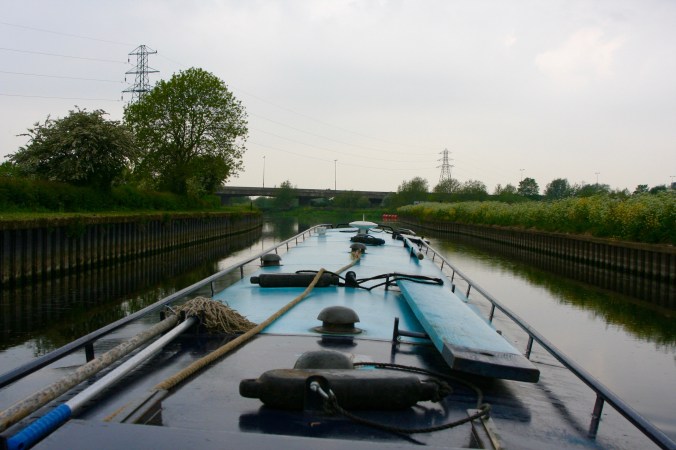
What it looks like from the helm of a narrowboat

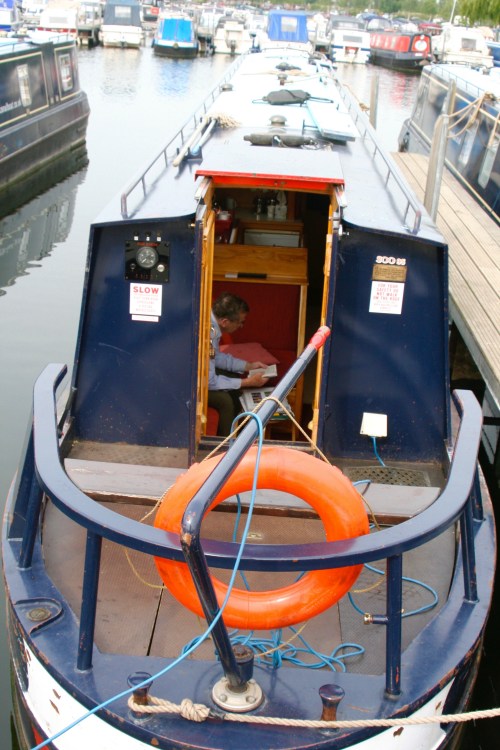
This is what our boat looked like from the helm. Let’s just say that I was more than a little nervous when I took my first turn.

Jim researching our Trent and Mercey Canal trip

Jim, who never admits to being nervous about anything, studied the manual, or maybe he was reviewing our trip.

Piloting narrowboat under bridge on Trent and Mercy Canal

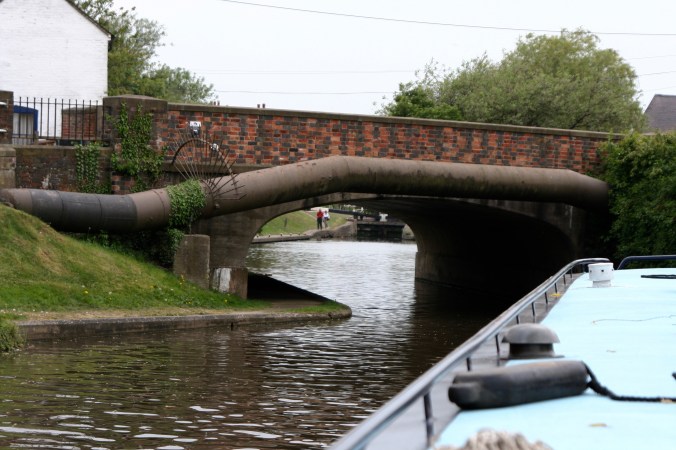
The challenges we would face included maneuvering our 60-foot vessel around sharp corners under low bridges…

Piloting boat into lock on Trent and Mercy Canal

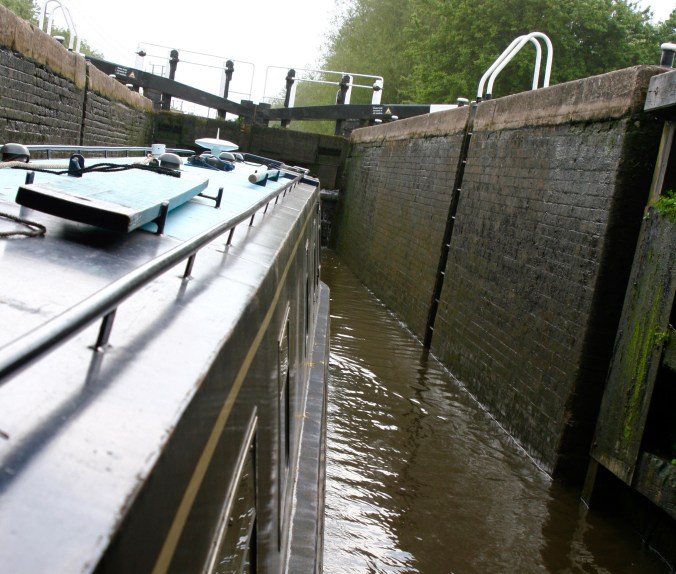
And piloting the boat into narrow locks, some of which were hardly wider than the boat. In fact, the width of the locks was the reason for creating the narrowboats. It was even more challenging when you had to slip into a lock of this width with another narrowboat while pretending to know what you were doing!

Narrowboat in lock on Trent and Mercy Canal

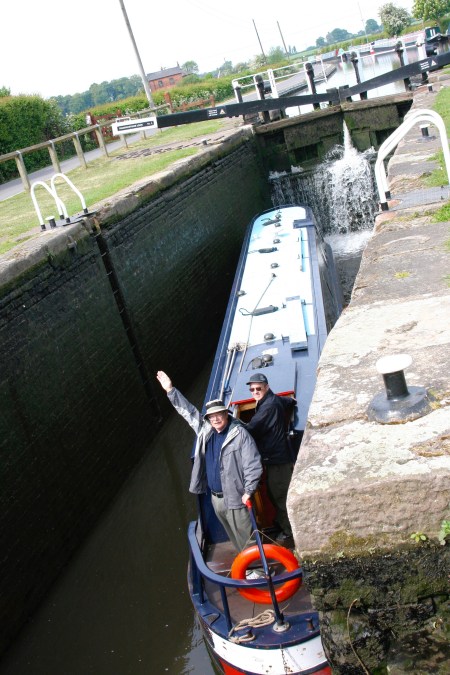
Fortunately, being perfectly straight wasn’t necessarily required when we had the lock all to ourselves! Water flowing in will raise our boat to the level of the upstream canal.

Peggy works lock gates on Trent and Mercy Canal

While we were mastering entering and exiting the locks, Peggy and Jane were mastering opening and closing them. Fortunately, some helpful veterans were present the first time our companions were faced with the chore.

Jane Hagedorn works lock gates on Trent and Mercy Canal

Piloting around boat on Trent and Mercy Canal

Passing other boats could be challenging when the canal was particularly narrow.

Piloting past moored boats while metting another boat on Trent and Mercy Canal

Now, picture meeting another boat when both sides of the canal are filled with moored narrowboats!

Mooring narrow boat

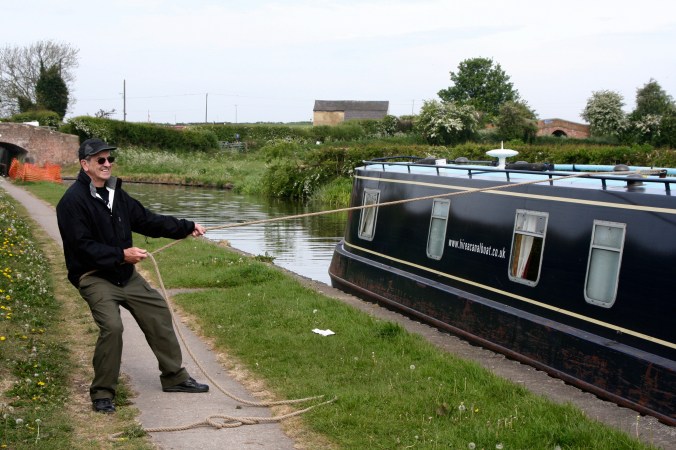
Another skill we had to master was mooring the boats when we stopped for the night or at a local attraction— such as a pub. Camping was free along the Trent and Mersey Canal.

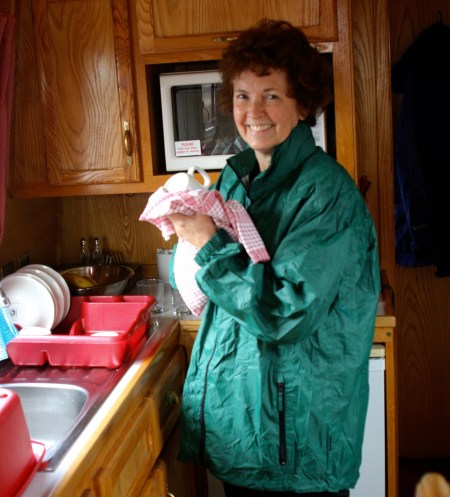
Peggy doing dishes in our tiny galley

We lived on the boat, which came with a small galley, sitting room, and bathroom.

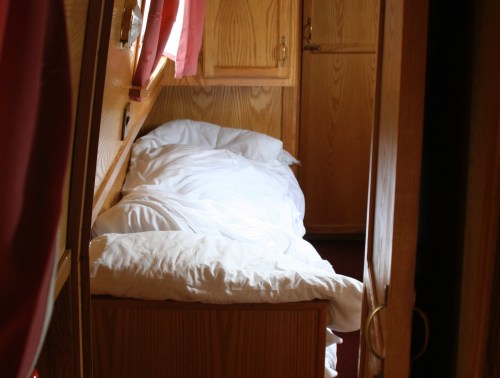
Single bed on a narrowboat

While the master bedroom had a small double bed, the other beds were barely wide enough to sleep on.

The Sawley Marina is located close to Nottingham and borders on the shires of Nottinghamshire, Leicestershire and Derbyshire. (Being close to Nottingham took me back to my childhood days and tales of Robin Hood.) Our objective was to follow the Trent and Mersey Canal to Burton upon Trent and return, a short distance of 34 miles (54.7k). The literature said we could make the trip in a leisurely three days. We chose a more leisurely six. How else could we check out all of the pubs and fine English ale along the way?

Enjoying pub along Trent and Mercy Canal

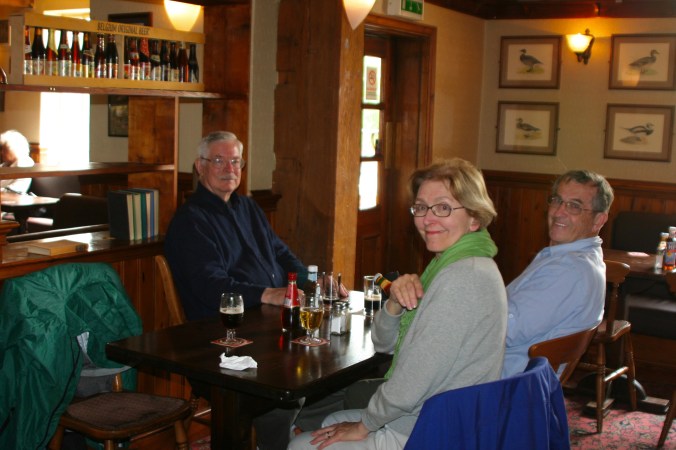
Jim, Jane and I enjoy one of the several pubs along the Canal while Peggy took the photo.

In addition to piloting the boat and checking out the pubs, there was a generous dose of bucolic beauty to enjoy along the way— as one might expect in Britain’s Midlands. Graceful swans, lots of ducks, and lazy cattle provided entertainment while walks through small villages and the larger town of Burton upon Trent gave us breaks from boating.

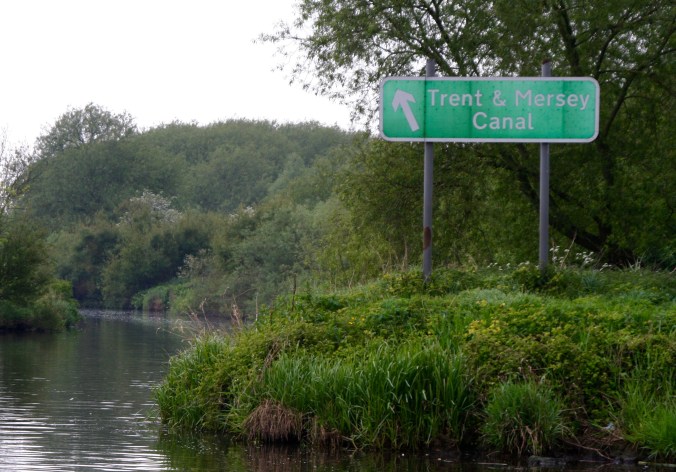
Direction sign on Trent and Mercy Canal

A sign takes us onto the Canal proper.

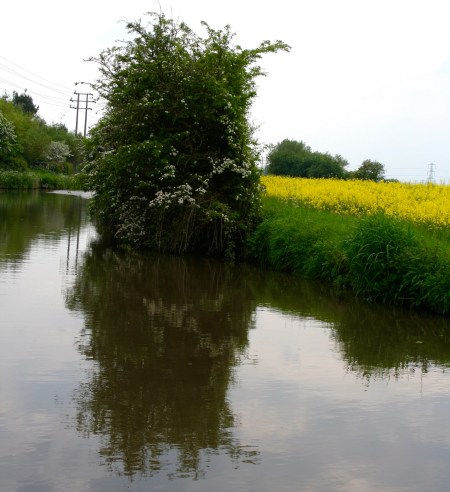
Scenic flowering tree and mustard along the Trent and Mercy Canal

There was considerable beauty along the canal and traveling at three miles per hour, we had plenty of time to enjoy it.

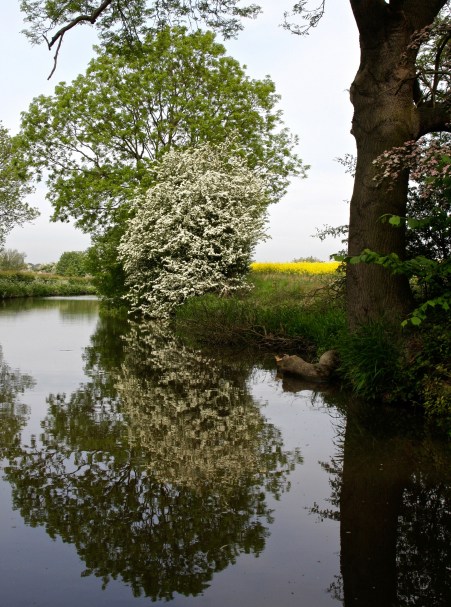
Scenic view with flowering tree along Trent and Mercy Canal

Since it was May, everything seemed to be in bloom.

Building along Trent and Mercy Canal

Numerous buildings along the way added interest and color.

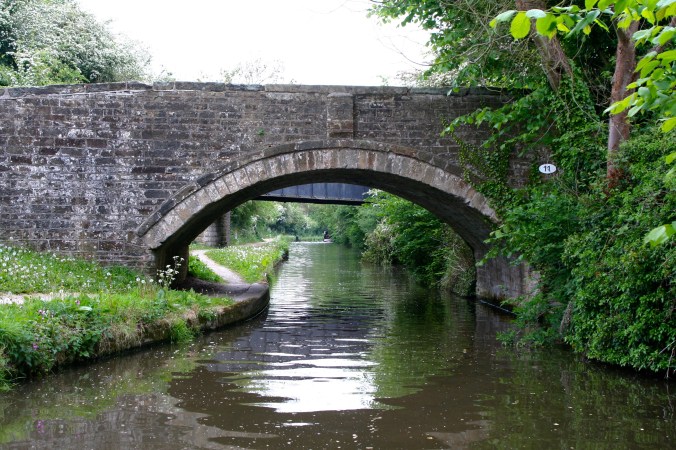
Bridge number 11 on the Trent and Mercey Canal

Bridges also provided variety. Each one seemed different. Numbers on the bridges told us where we were.

Bridge number 13 on the Trent and Mercy Canal

The bridges also added to the beauty.

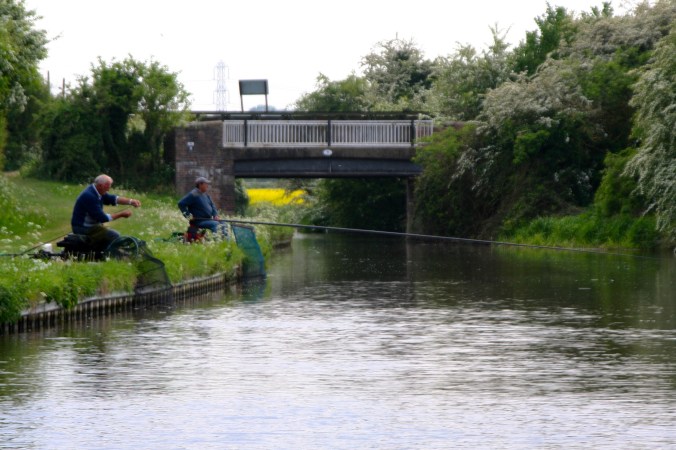
Fishing on Trent and Mercy Canal

This one included guys fishing. Check out the length of the poles!

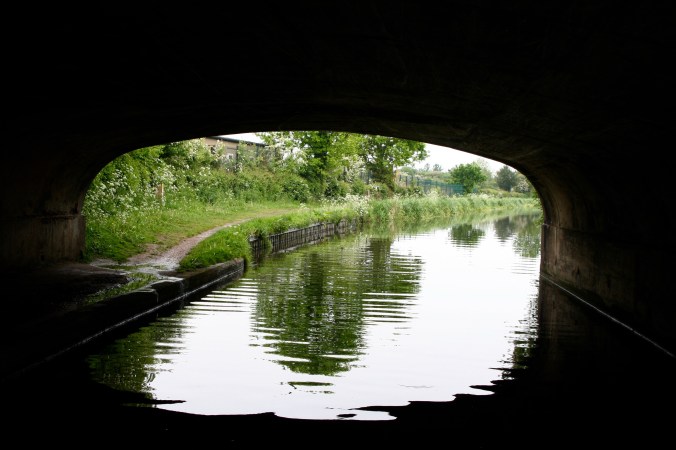
Scenic view from under bridge on Trent and Mercy Canal

Coming out from under a bridge.

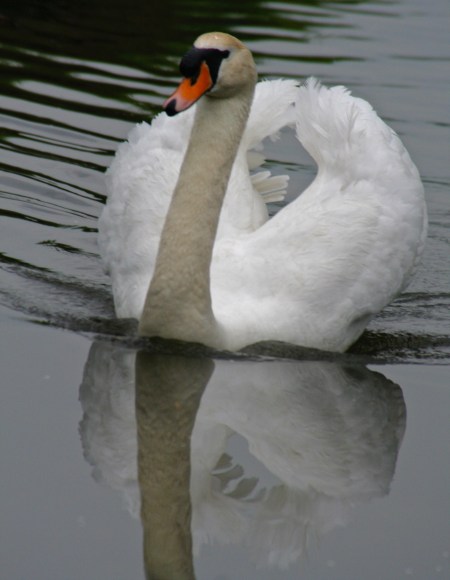
Swan and reflection on Trent and Mercy Canal

Swans, ducks and other birds provided entertainment. I liked the reflection here.

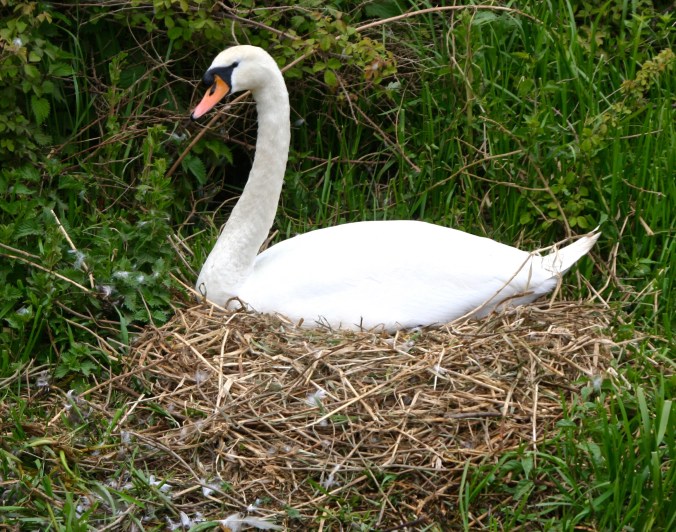
Swan nesting on Trent and Mercey Canal

Nesting.

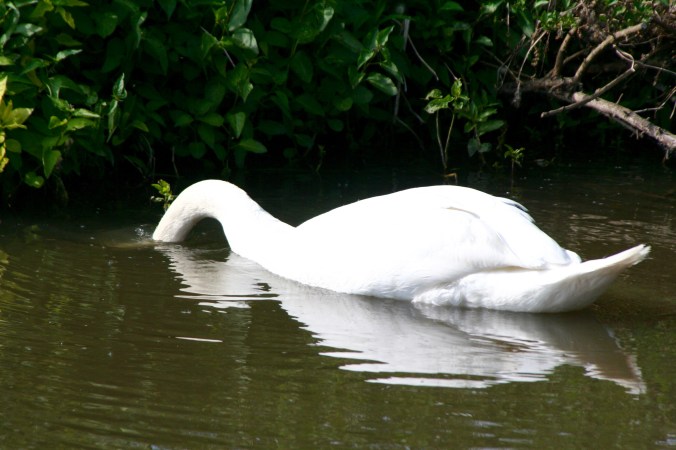
Swan chows down on Trent and Mercy Canal

And chowing down!

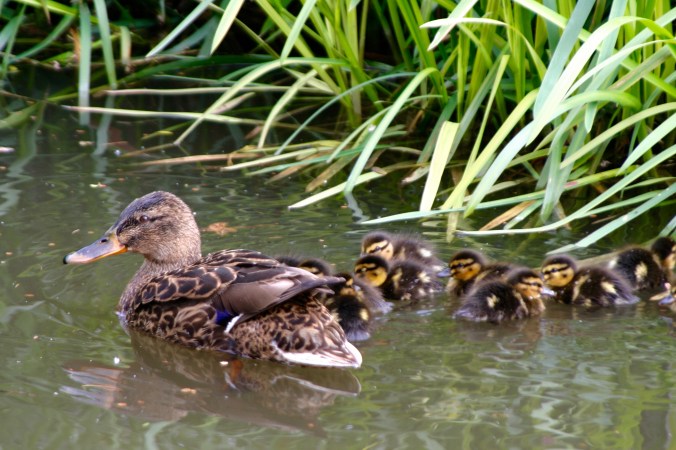
Mallard hen and chicks on Trent and Mercy Canal

I’ll conclude today with this mallard hen and her chicks.

I will be posting more photos of our narrow-boat tour on Thursday. Saturday I will return to blogging my book on MisAdventures with a story of how I hired our family pets to protect me from the fearsome ghosts that lived next to our house when I was a child.

They Had a Conference on Bigfoot and I Missed It… Darn!

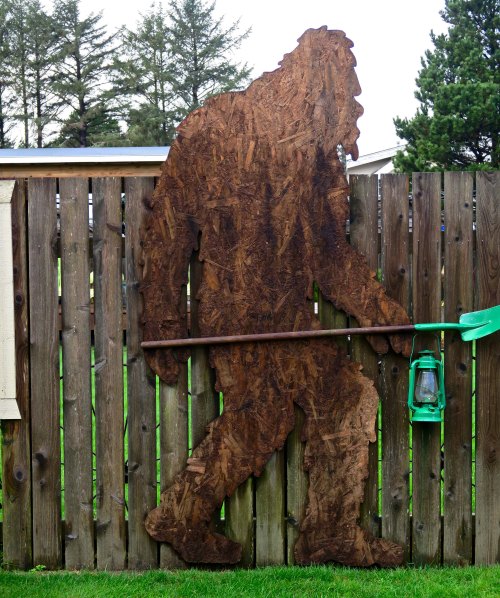
Peggy Mekemson holds hands with large Sasquatch

Peggy holds hands with a very big Bigfoot/Sasquatch in Ocean City, Washington. BTW… Is that an SST being followed by a flying saucer up in the sky? (I think the SST was honking.)


You don’t have to know much about me to know that I am a Bigfoot/Sasquatch fan. How could I not be, having the world’s only Bigfoot trap about three miles away from where Peggy and I live? People seriously thought they might catch the big fellow, or his wife, or the kids back in the 70s. They even hired an old miner to keep an eye on the trap, outfitting him with a tranquilizer gun and a very large set of handcuffs. The fact that they never caught him may be a comment on his existence— or the fact that he was a lot smarter than the people trying to catch him. Or maybe Bigfoot is a vegetarian and wanted nothing to do with the large hunk of well-aged beef they baited the trap with— unlike the bear they did catch.

The world’s only Bigfoot trap is located about three miles from where we live. The doors have long since been welded shut and local high school students have added graffiti.

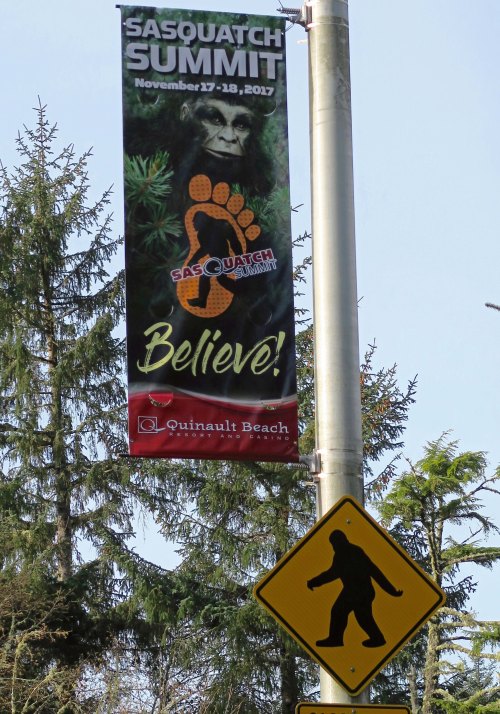
When Peggy and I traveled up to the central Washington coast a few weeks ago, you can imagine my consternation when I discovered that I had just missed a conference on Sasquatch. I’ve attended lectures before, our Genealogical Society hosted one, but never a whole conference. The Washington event even included a bona fide scientist or two. Posters, signs, and a billboard announced the ‘Sasquatch Summit.’ It would have made a fun post.

Sasquatch Summit Billboard

A billboard…

Bigfoot crossing sign

One road sign announces the conference while another warns drivers to watch out for Bigfoot crossing the road.

Sasquatch Conference poster

A poster provides details.

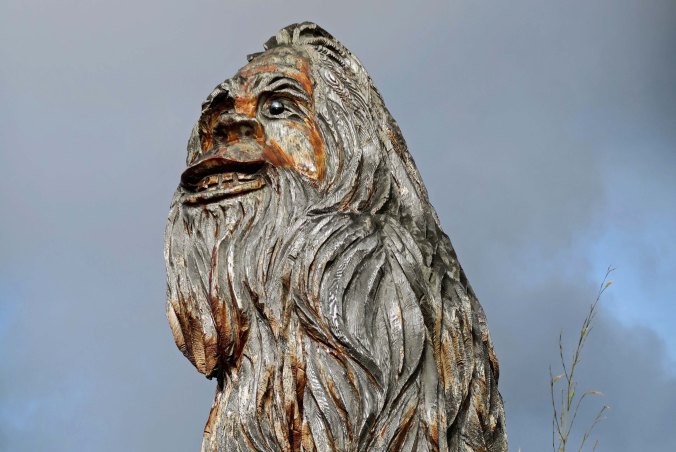
My dismay was countered somewhat by the fact that Bigfoot was a commercial success in the area. It seemed like everyone in the communities of Ocean Shores, Ocean City and Copalis wanted in on the action. Motels, resorts and a pub used him to advertise. The area, like many along the coast from California to Washington, is also into wood carving as an occupation. For a few hundred bucks, we could have had our own Sasquatch to bring home.

Large sasquatch 1

A close up of Peggy’s friend.

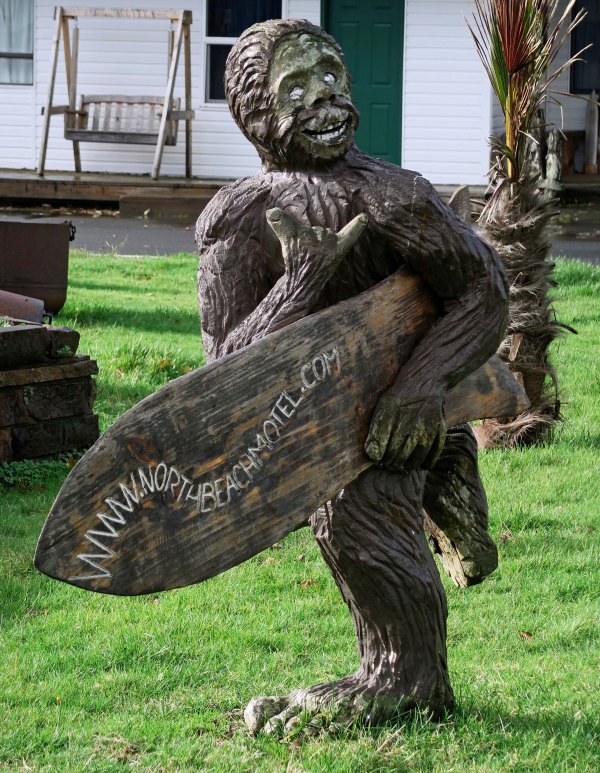
Surfing Sasquatch flashes hang loose symbol

A local motel featured Bigfoot and his buddy Bigfoot running with a surfboard while flashing the ‘hang loose’ sign.

Bigfoot surfing

Buddy Bigfoot.

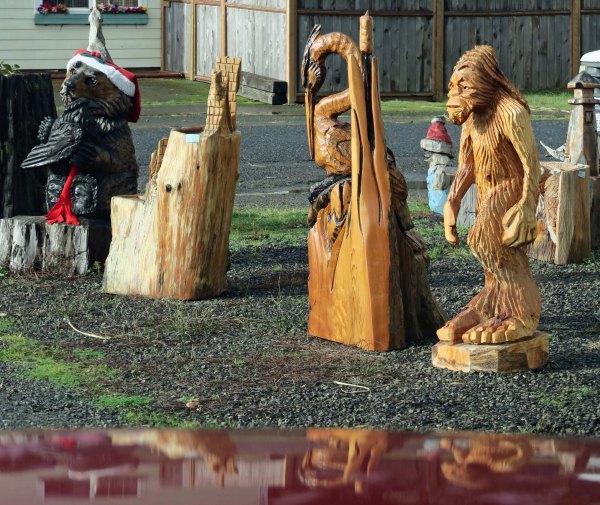
Sasquatch hangs out with carved heron

The Ocean City Market, which focuses on wood carving, featured Peggy’s Bigfoot as a marketing tool and had this smaller one for sale.

Fu Manchu Sasquatch

We also found this fellow sporting a Fu Manchu mustache.

This guy up the road looked a bit more primitive.

I was looking into a puddle when I caught this reflection of Bigfoot staring back at me.

Sasquatch at Green Lantern Pub in Copalis, Wa

The Sasquatch at the Green Lantern Pub was outfitted with a clam digging shovel and a green lantern.

Green Lantern Pub BLT in Corpalis, WA

The pub featured this Bigfoot sized BLT…

BLT at Green Lantern Pub, Copalis

…that I had to sample. I don’t think eating another one is included in my New Year’s resolutions for 2018!

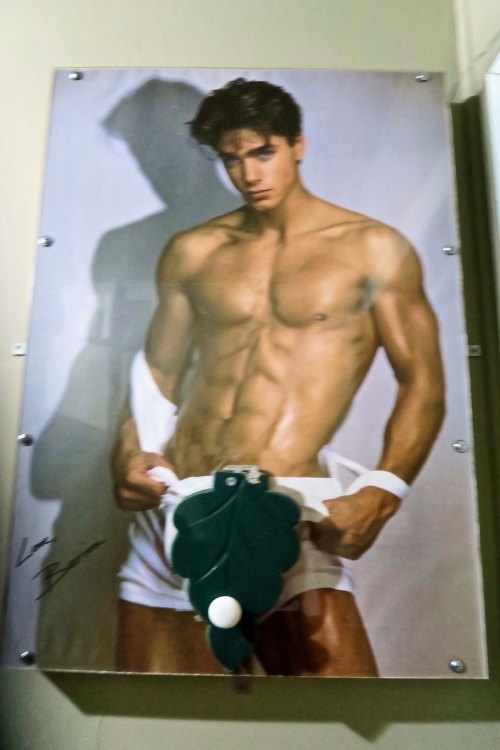
Women's restroom at Green lantern Pub, Copalis

And the women’s restroom at the pub featured this guy, who apparently wasn’t known for his big feet. Peggy, who is infinitely curious, just had to raise the fig leaf, not knowing that a buzzer was going to go off in the pub when she did! So, assuming you didn’t know about the buzzer, how many of you are as curious as Peggy?


THURSDAY’S POST: The flowers of England’s Chatsworth House.

SATURDAY’S POST: 2017 in Review

TUESDAY’S POST: Wandering around the central coast of Washington

Peggy’s Lake

Peggy’s Lake. The quiet beauty of this small Sierra lake captured me.

Gold prospecting was a lonely occupation for most of the men who came to California as 49ers. Wives and girlfriends had been left behind. Often the only female companionship a miner might have was the type you paid for. Every town of any size had its whorehouse, or possibly several. One way the miners compensated for their loneliness was by naming lakes in the Sierra Foothills and Mountains after their favorite female companions, be it a wife, a girlfriend, or a particularly friendly lady of the evening.

I honored the tradition when I made my solo trip into the Grouse Ridge/Black Buttes/Five Lakes Basin Area. I had hiked out on Saturday from the Basin but Peggy wasn’t coming in to pick me up until Sunday. I didn’t want to hike up the Grouse Ridge Campground and spend the night. It was undoubtedly crawling with people. So, I went looking for a substitute.

A small lake that I had camped on before had been taken over by cattle, lots of them. I hiked on. Another little lake was shallow and also a favorite watering hole for my bovine companions. I hiked on and on, getting father and farther away from the trail. Much to my surprise, I came on a little, unnamed lake that I had never been on before— and I’ve crisscrossed the area extensively. It was shallow, only a few feet deep, and it might very well dry up in another month or two, but it was gorgeous. I decided to name it Peggy’s Lake, after my best friend and wife. It’s nothing official of course. It won’t show up on any maps. But I knew that Peggy would like ‘her’ lake.

Peggy's Lake in the Grouse Ridge Non-Motorized area.

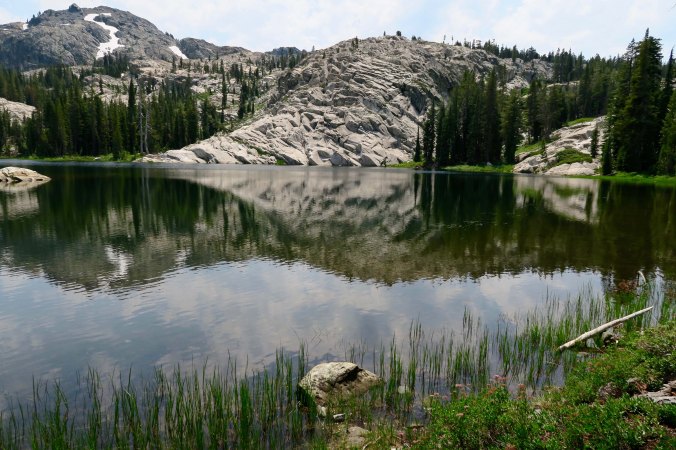
Similar to Five Lakes Basin, Peggy’s Lake is nestled in the granite. Storm clouds hovered over head in this photo. They soon produced rain.

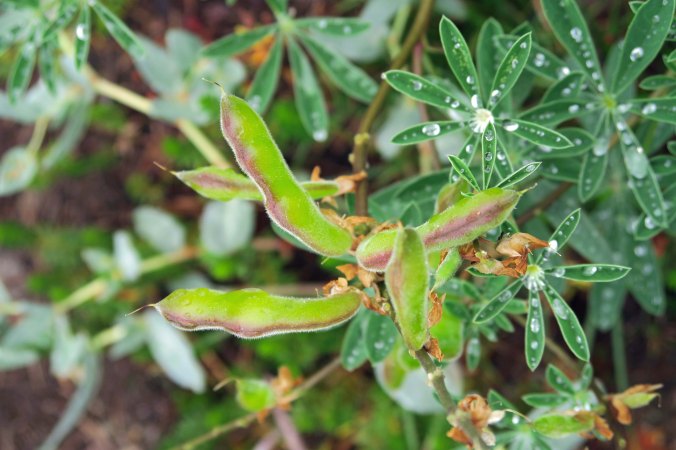
And it rained hard. I hid out under a couple of large pines to stay dry. This Lupine welcomed the rain with open leaves!

Lupine at Peggys Lake near the Black Buttes of the northern Sierra Nevada Mountains.

These pods on the Lupine left no doubt about its connection to the pea family.

After the rain, a convenient rock provided a premier seat for enjoying the lake.

Peggy’s Lake in the evening.

Peggy's Lake in the Grouse Ridge area of the Northern Sierras.

And with the early morning sun.

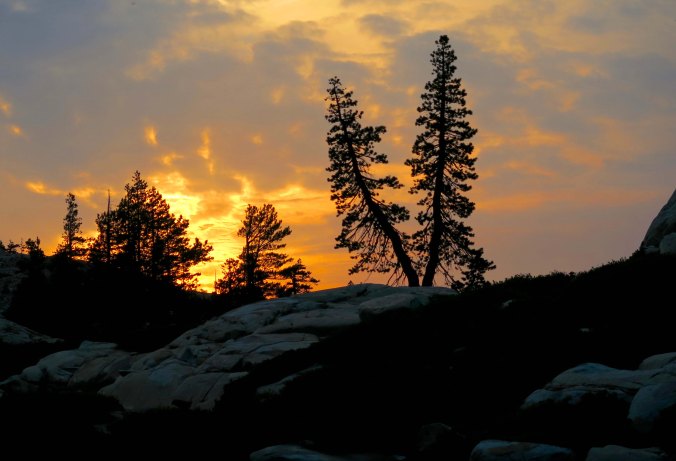
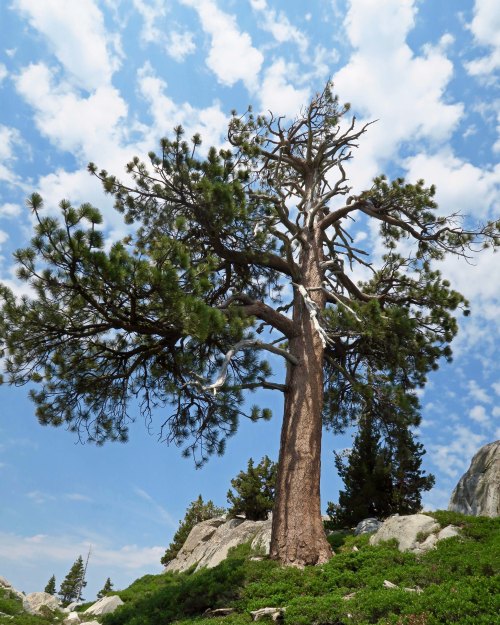
These two trees, a pine on the right and a juniper on the left, caught my attention.

Here they are early in the morning, backlit by the sun.

The shallowness of the lake encouraged grass to grow. I kept seeing little heads pop up out of this grass and didn’t have a clue what they were. Later I figured out they were baby ducks, catching insects.

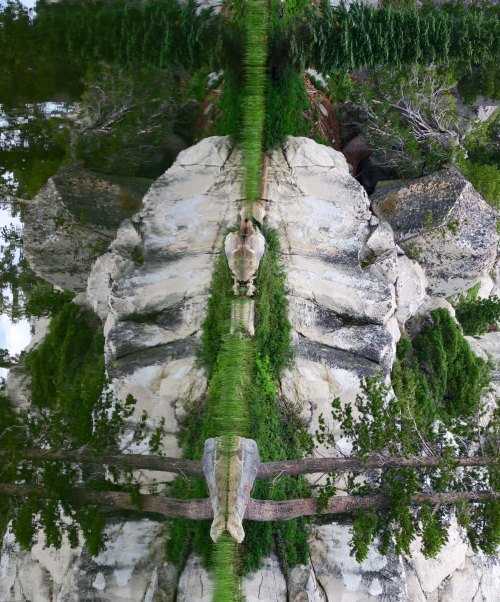
Once again, I found a fun monster lurking in the lake’s reflections. I turned it upright for your enjoyment.

This red fir made me think Christmas tree.

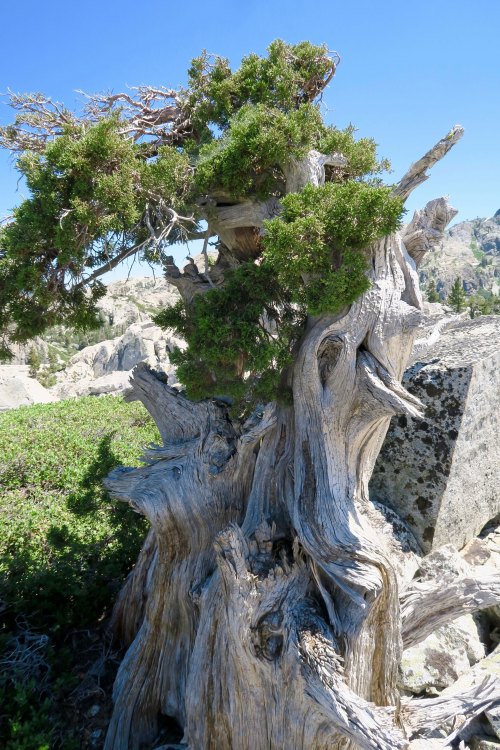
As always, I was attracted to the beauty of old wood like this stump.

And these two trees that seemed to continue an embrace that they had shared when they were young and green.

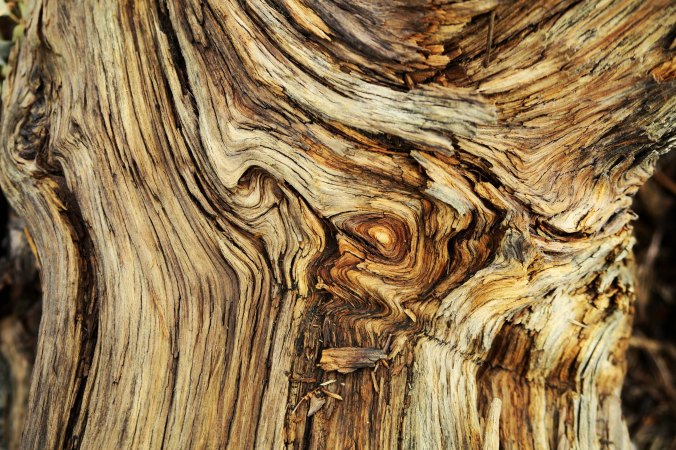
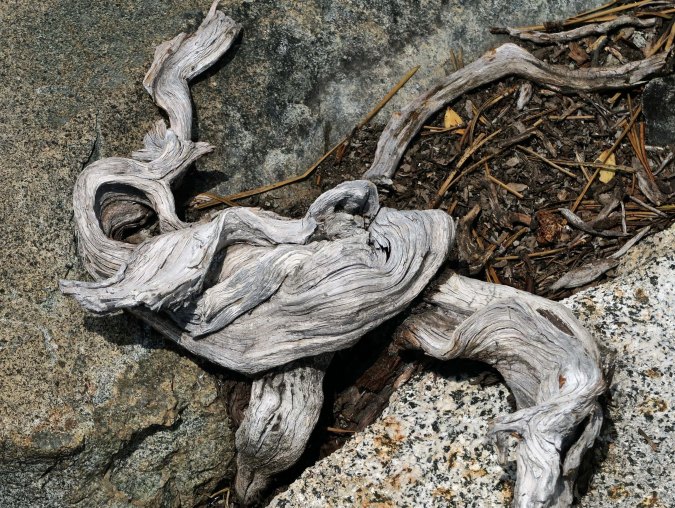
Gnarled wood called to my camera. I liked the patterns here…

And here…

The setting sun lit up the Black Buttes that help define the area.

And I am not going to tell anyone where Peggy’s Lake is! There’s a reason.

The Grouse Ridge Non-Motorized Area is well-loved. Maybe too much so— especially for someone like me who prefers his wilderness rugged, wild and relatively people-free. But I make an exception for this region. It’s an easy place for people to get to and is very backpacking-friendly for families and newcomers to the sport. It serves as a great introduction, as it did for our grandchildren, Ethan and Cody. And as it did for me in the 1970s. There is great value in this— for the people of course— but also for our world. People who experience the wilderness in a positive way are much more likely to appreciate it, and want to protect it. And protecting our wild areas is ever so important, for ourselves, our children, and future generations.

This doesn’t mean that I am beyond selfishly wanting to keep a bit of it to myself, like Peggy’s Lake. So, I’ll share photos, but not location. (grin) If folks who frequent the area are charmed by the photos and go out of their way and find the lake: Welcome.

It was only proper that Peggy, Tasha, Ethan and I ended our backpack trip the following week at Peggy’s Lake.

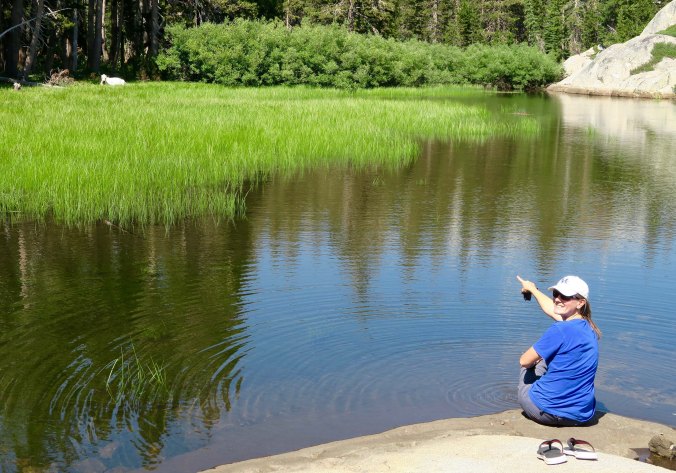
Tasha points out a white cow that stopped by for a visit, laid down in the grass, and happily chewed her cud while watching us. It was the same cow that had come to visit me up near Glacier Lake the week before. Maybe she was missing her people.

Ethan and Cody explore the shallow lake.

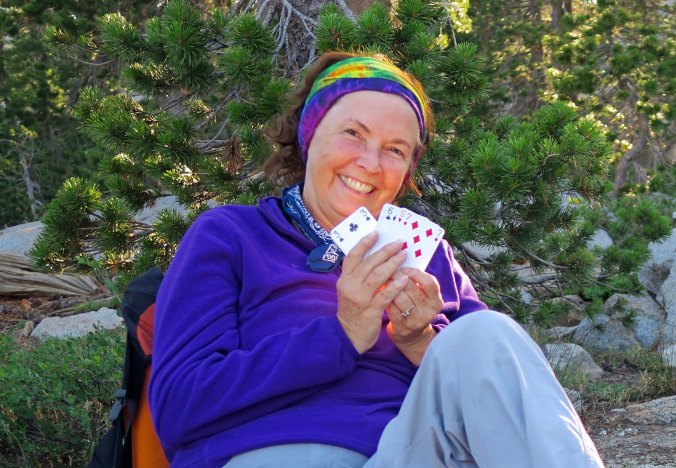
It wasn’t all backpacking. Here Peggy displays her cards in a game with the 9-year-old Cody. This would have been a bad hand for poker. It was even worse for War, which Cody insisted she play with him whenever we camped, including at 6:30 in the morning!

And finally, nestled into the seat of honor, Peggy enjoyed her lake.

I am off to Black Rock City, my friends. And I am excited to return to the desert, the incredible art, and the magic of Burning Man. This year’s theme, Radical Rituals, promises to produce some interesting art. For example, what the heck is the Pagan Bunny Shrine? The creators say it’s all about hoppiness. We’ll see. Anyway, I’ll be away from my blog again for a week. But immediately afterwards, I’ll begin a series of posts on this strange, sometimes wonderful, and occasionally downright weird event. And I’ll respond at that time to any comments you’ve made in the meantime. See you then. –Curt

SaveSave

SaveSave

SaveSaveSaveSave

SaveSave

SaveSave

SaveSave

SaveSave

SaveSave

SaveSave

SaveSave

SaveSave

SaveSave

SaveSave

SaveSave

SaveSave

SaveSave

SaveSave

SaveSave

A Journey into the Five Lakes Basin

Five Lakes Basin in the Grouse Ridge Non-Motorized area north of I-80 in the Sierra Nevada Mountains.

I call this small gem in the Five Lakes Basin, Hidden Lake, because there are no trails to it. It’s my favorite of the five. Our grandson Ethan, had great fun leaping off the cliffs into the fairly deep water with encouragement from his grandmother. Mom looked on nervously.


The Five Lakes Basin called to me this summer. I’ve backpacked in numerous areas over the years— up and down the Sierras and other mountain ranges in California, Colorado, Maine, Alaska, Wyoming, New Mexico, Montana, North Carolina and the Canadian Rocky’s.  But my first trips in the late 60s and early 70s were into the Basin. Maybe these were like getting your first driver’s license, which is something you don’t forget. But it’s more; the Basin is special, it has a beauty of its own that can match any place I have ever been.

Eliminating four-wheel vehicles and motorbikes helped. It happened in the 70s. The jeep trail is still clear on Sand Ridge. If fact I rode over it in a jeep. Another time, a jeeper rescued me when I had a badly sprained ankle, and forever put me in debt to four-wheelers.  Once, however, I was camping next to a meadow below Sand Ridge and I heard the sound of a motorbike going around and around in circles. Out of curiosity, I walked out to the meadow and discovered a guy cutting brodies and tearing up the grass and flowers, leaving scars that would take years to heal. He saw me and took off, obviously aware of the damage he was doing, and not giving a damn. I went home and used my position as Executive Director of the Sacramento Ecology/Environmental Center to join with the Nevada City Chapter of the Sierra Club in its efforts to have the area declared non-motorized.

The trail Peggy, Tasha, Ethan Cody and I followed into the Five Lakes Basin over Sand Ridge. The motorbike guy was tearing up a meadow just below where the Glacier Lake Trail and the Sand Ridge Trail meet.

The old Jeep trail that I once rode over is still obvious on the top of Sand Ridge. The predominant plants are Mule Ears. Sand Ridge was created as the terminal moraine of one of the glaciers that carved through the Sierra Nevada Mountain Range during the last Ice Age.

The hike up Sand Ridge is a doozy. The first time I ever tried it, I thought I might die. I had zero concept of climbing up steep hills with a full pack on and I was in terrible shape. But that was long ago and many mountains in the past. I sailed up with relative ease this time, being in better shape at 74 than I was a 26, and ever so much more experienced. I have to say my companions hiked up it with relative ease. I’m sure it was my fine leadership. (Grin.)  Rudolph was waiting for us on top.

Cody, Tasha and Peggy climbing up Sand Ridge. The steepness and loose rock on the trail made it a challenge. The look on Cody’s face says it all. Interstate 80 can be seen on the upper right in the distance (the light color against the blue backdrop).

Ethan celebrates his climb up Grouse Ridge. Rudolph looks on.

Here’s how he really felt about the climb.

Peggy promptly named this wood sculpture at the top of the ridge with its prominent nose and antlers, Rudolph.

Of course the boys had to go for a ride. I later put a piece of white quartz that Peggy had found on Rudolph’s nose and the boys immediately broke out in a rendition of Rudolph the White Nosed Reindeer.

The Five Lakes Basin sits at the end of Sand Ridge. As the name suggests, you have to hike down to reach the lakes. There’s a trail, but I prefer hiking over the granite. My basset hound, Socrates, used to regard it as a freeway. And relatively speaking, it is. If you pick your way down the rocks, the going is easy up until the last 50 yards or so. My favorite lake sits right at the bottom. I call it Hidden Lake. It isn’t, but the fact that it is away from the main lakes, has no fish in it, and has no trail to it means that it gets less traffic. At least it did until the Boy Scouts discovered it. They’ve turned it into a mecca for building granite chairs and tables.

Looking down at Hidden Lake in the Five Lakes Basin nestled in the granite.

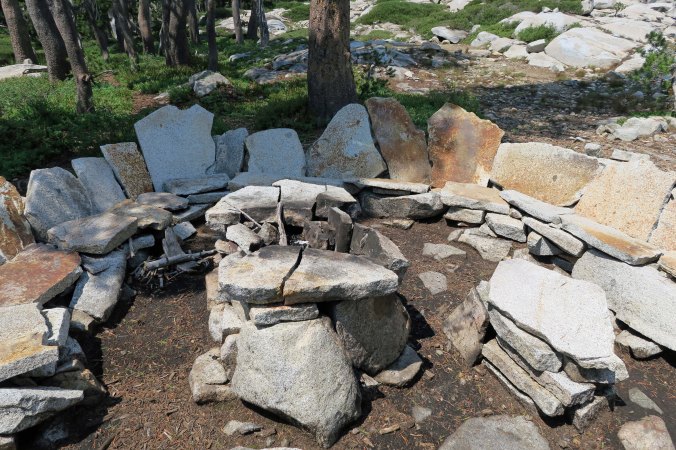
The granite chairs built by the Boy Scouts or someone else. They weren’t there when I first started backpacking into the area.

Tables have been added in more recent times. My bowl is there to provide perspective. It has to take several scouts to lift these granite boulders.

The unique way that granite splits naturally is what enables the chair and table building.

Some of the rocks must weigh several hundred pounds. Peggy, Tasha and the boys were quite impressed and took full advantage, but I couldn’t help but wonder if the scoutmaster might better serve the boys by teaching them minimal impact. Possibly it isn’t scouts. Maybe it’s a church group, or Druids. They were good with stones, right? I could see them sitting around on a full moon night chanting and doing whatever Druids do.

We had the lake to ourselves, however, as I did the week before on my solo journey. No Boy Scouts and no Druids. We were able to enjoy its beauty and the fact that it makes a very nice swimming hole.  This was the lake where I came up with the idea for the Sierra Trek in 1974, the hundred-mile and hundred-kilometer fundraising backpack treks that kept me happily out in the woods for close to 30 summers. It’s also where Socrates and I had the encounter with the underground demon. Go here for that rather funny story if you missed it the first time around.

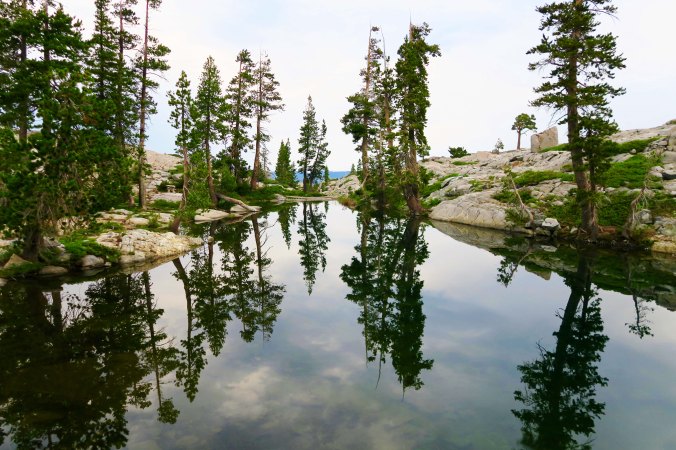
The lake is always good for reflection shots.

Another example.

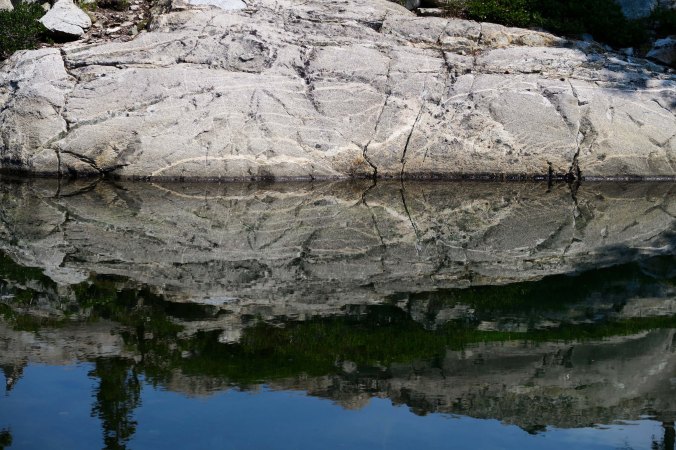
Some are a bit strange. I decided that this creature would fit right into 20,000 Leagues Under the Sea.

And this fellow, turned on edge made a great monster insect. The tree provides antennae. And check out the scary slitted eyes just above the snout! It looks like one mean dude, or dudette.

The Black Buttes rise up in the background. Our day hike would take us over to their base on the left. Glacier Lake, which I featured in my last post, is just below the Buttes on the right.

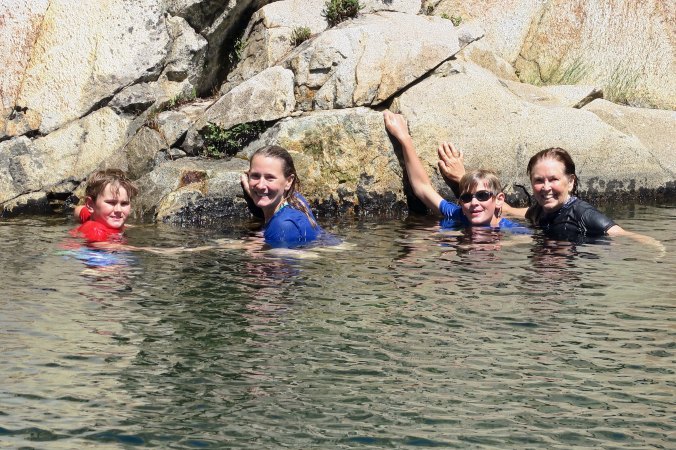
The swimming is great at Hidden Lake. Cody, however, was a bit worried about its mud bottom. “It’s not like a swimming pool,” he groused.

Sunset in the Five Lakes Basin of the Grouse Ridge Non-Motorized Area.

Sunset from our camp on Hidden Lake.

I planned a layover day so Tasha and the boys could explore the rest of the Basin. I had Ethan, who is also a Boy Scout, use his compass and path finding skills to lead. He was quite good. I was really impressed with his ability to lead us back using his trail memory. The following photos provide an overview of our journey.

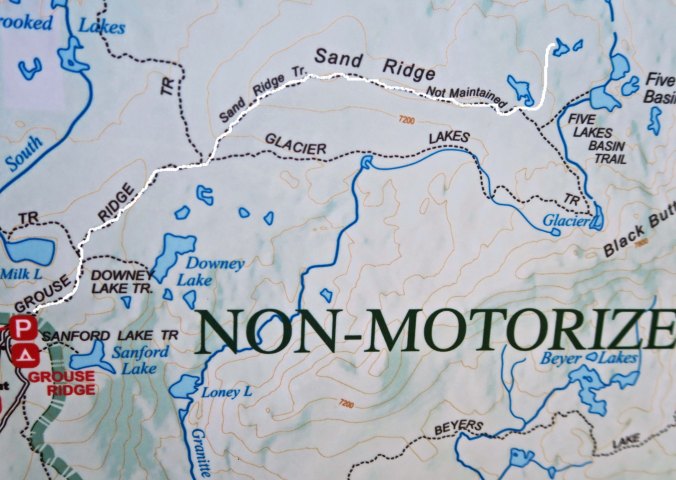
This map shows our route into Hidden Lake and then our day hike through the Basin to Upper Lake at the base of the Buttes..

Jeffrey Pine in Five Lakes Basin of Grouse Ridge Non-Motorized area.

I explained to Ethan the importance of memorizing prominent landmarks, such as this impressive Jeffrey Pine, to remember his route.

This Juniper wasn’t large like the Jeffrey Pine but it was still distinctive and provided another landmark.

Once your expertise in route finding improves, even something like this small but unique Manzanita sculpture can remind you that you are on the trail.

Gary Snyder’s ‘biggest little lake’ in the Five Lakes Basin from the poem, Old Pond, that I included in my last post.

This is the middle lake above and to the right of Snyder’s lake on the map.

And this is the upper lake that nestles up against the Black Buttes. An old stream bed (the curved line) is in the middle of the lake. Trout hang out in the bed during the warmer summer months. This is the first lake I camped on when I came into the Basin.

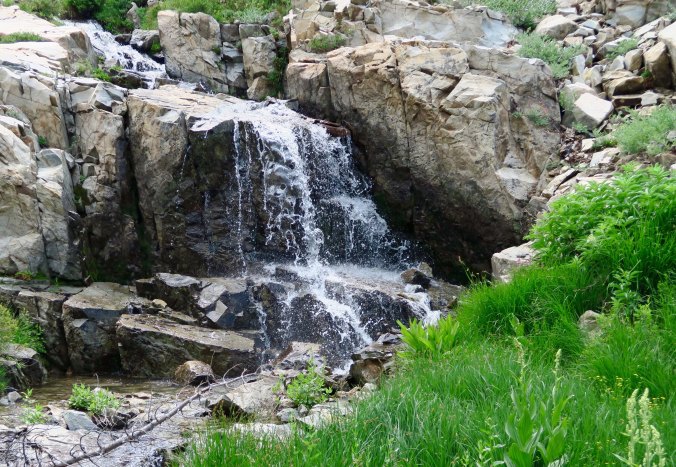
My second camp was just above the waterfalls in this stream that feeds the lake.

Tasha reaches out to fill her bottle with the cold water that comes from a snow bank above.

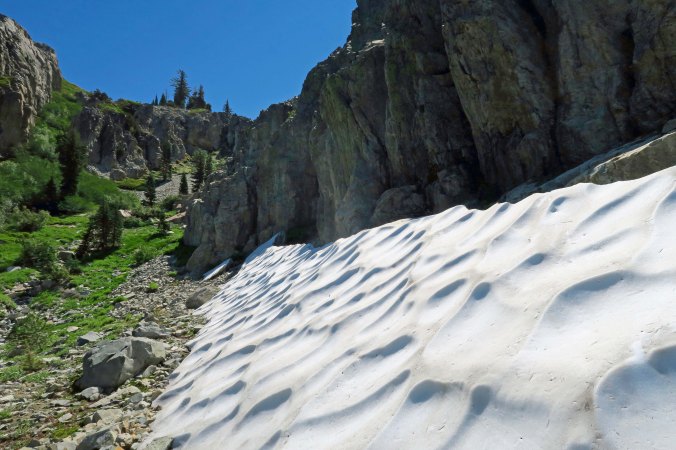
The snowbank. It is unusual for snow to be in left in the Basin during August. it speaks to the very heavy snowfall the Sierras had this last winter. Naturally, such snow led to a snowball fight.

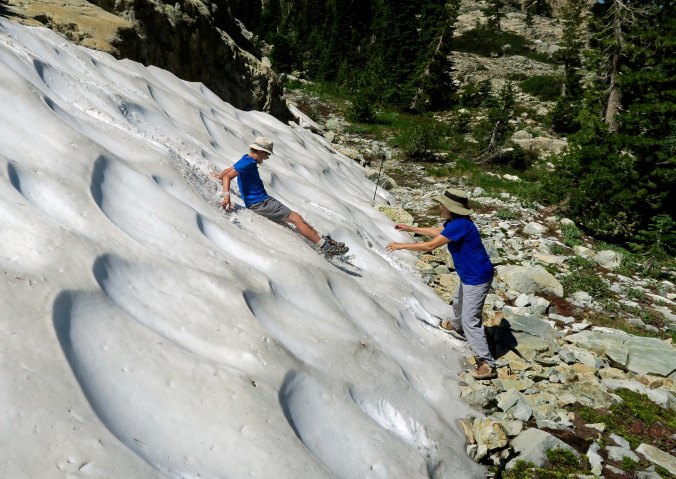
And Ethan sliding down with Peggy waiting to catch him.

Tasha and Ethan hiding out behind the snowbank.

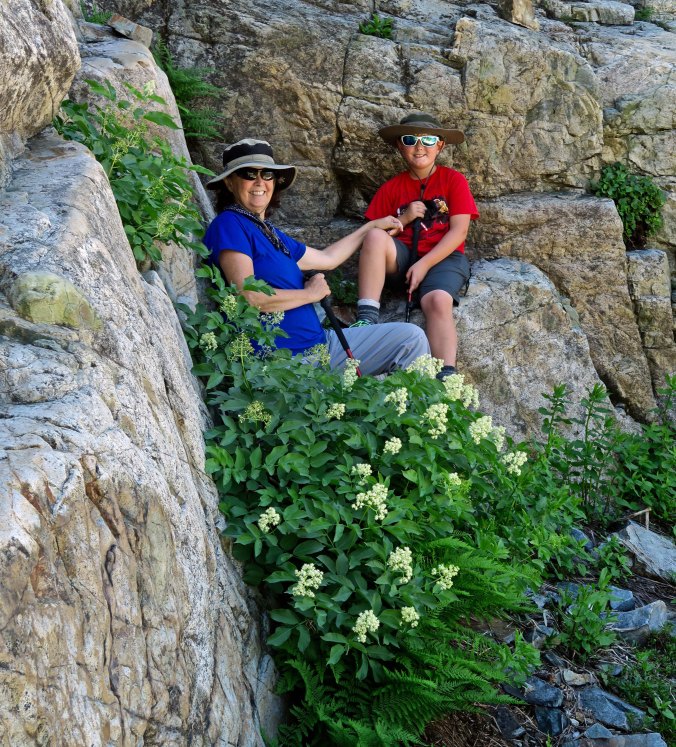
Peggy and Cody found a niche to hang out in the granite rocks above the snowbank.

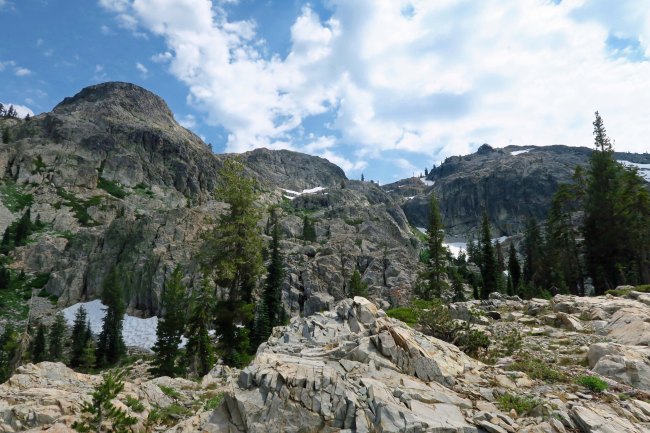
I like this photo I took next to the upper lake because it shows the contrast between the white granite of the Five Lakes Basin and the dark basalt of the Black Buttes.

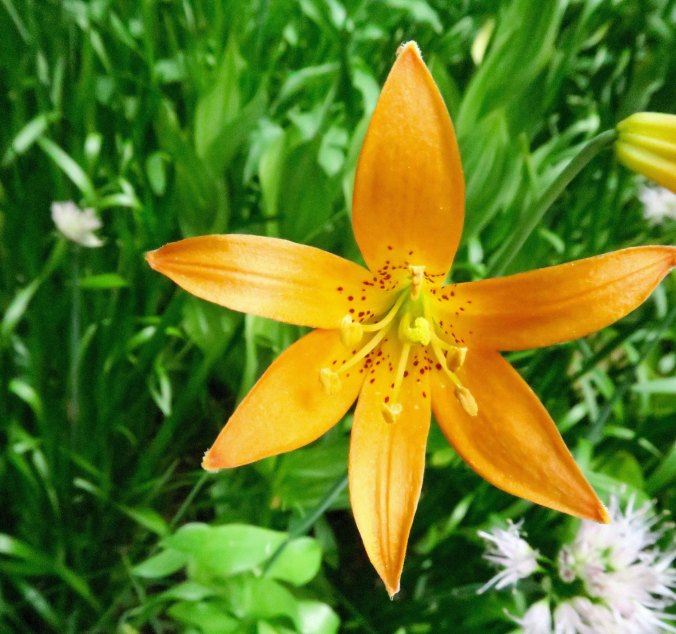
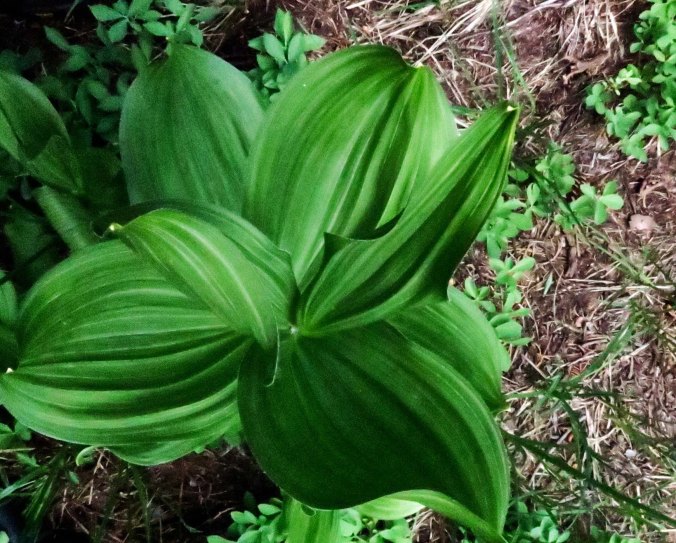
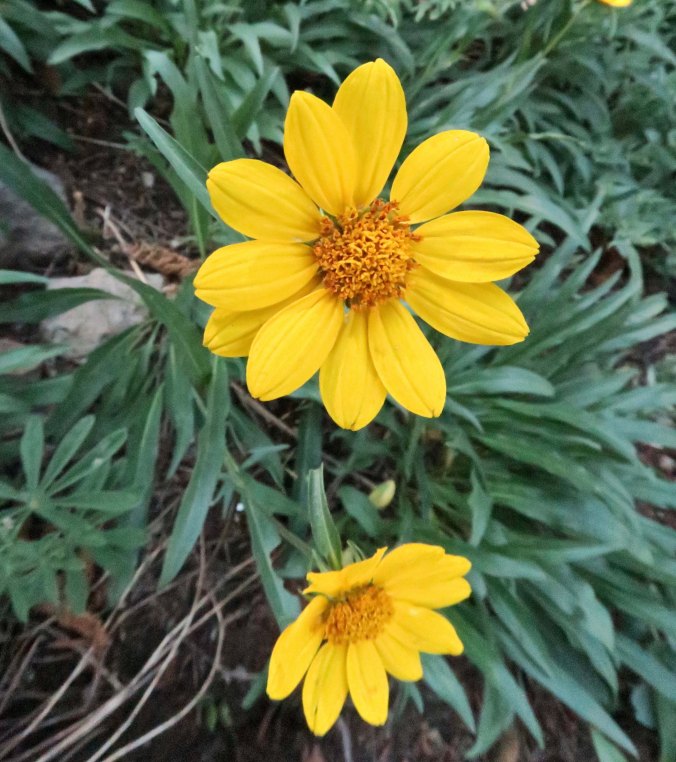
The late snow also left an abundance of August flowers including this Sierra Tiger Lily…

Corn lilies galore…

With their white flowers…

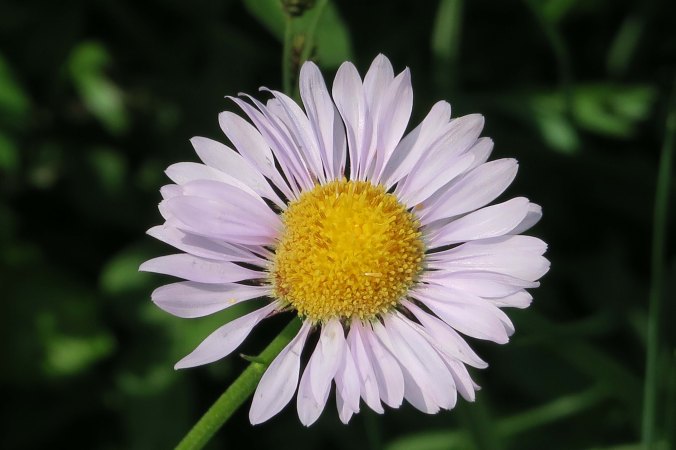
Asters…

And many other flowers.

A final family photo with Peggy, Cody, Tasha and Ethan at the waterfall before heading back to Hidden Lake.

Next Post: We conclude out trip into the Grouse Ridge Non-Motorized Area with a stop over at Peggy’s Lake.


SaveSave

SaveSave

SaveSave

SaveSave

SaveSave

SaveSave

SaveSave

SaveSave

SaveSaveSaveSave

SaveSave

SaveSave

SaveSave

SaveSave

SaveSave

SaveSave

SaveSave

SaveSave

SaveSave

In the Beginning… A Reflection on the Grouse Ridge-Black Buttes-Five Lakes Basin Area

A waterfall in the Five Lakes Basin provides water from snowbanks to one of my favorite lakes. The Black Buttes tower above. Hemlocks, pines and firs grow on the hillside.


Old Pond

Blue mountain, white snow gleam
Through pine bulk and slender needle-sprays;
little hemlock half in shade,
ragged rocky skyline,

single clear flat nuthatch call:
down from the treetrunks

up through time.

At Five Lakes Basin’s
Biggest little lake
after all day scrambling on the peaks,
a naked bug with a white body and brown hair

dives in the water,

Splash!

A poem by the Nobel Prize winner and the “poet laureate of Deep Ecology, ” Gary Snyder.

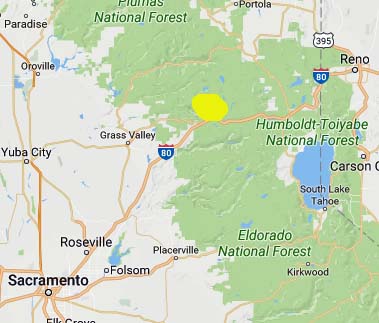
I have just returned from my last backpacking trip of the summer, my fifth— one for each decade I’ve shouldered a pack and disappeared into the wilderness. My last two trips included the Grouse Ridge-Black Buttes-Five Lakes Basin area, the same region Gary Snyder refers to above. He lives outside of nearby Nevada City (just above Grass Valley in the map below), and, like me, has wandered and loved the glacier carved country from top to bottom, from the Buttes to the Basin.

The maps below provide information on the location of the area and where I backpacked on my two trips.


Yellow marks the general location of my two trips this summer into the Grouse Ridge area just north of Interstate 80 between Sacramento, California and Reno, Nevada in the Sierra Nevada Mountains. (I was raised in a small town just outside of Placerville.)

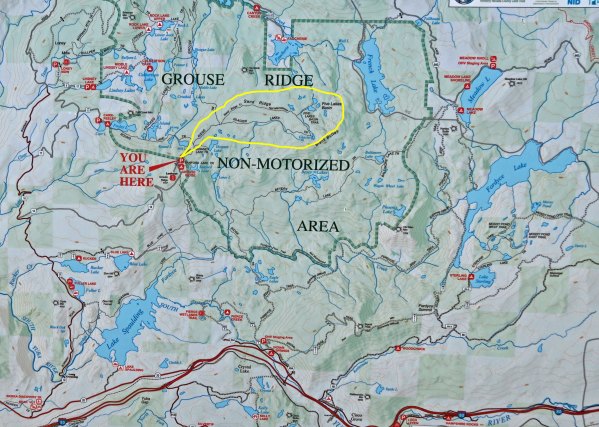
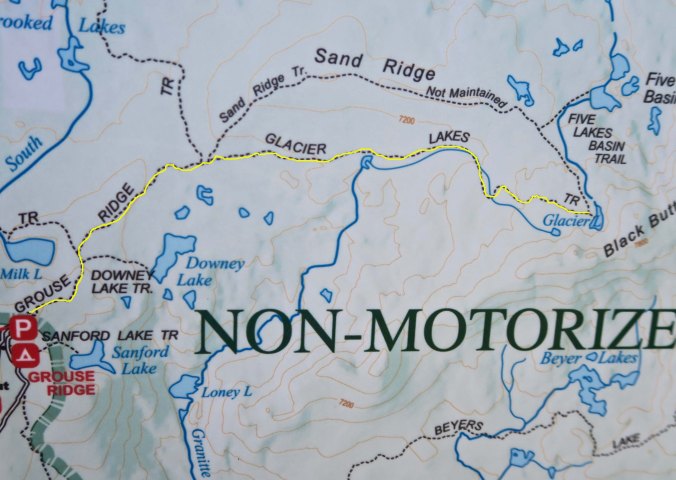
The area circled in yellow was where we backpacked. I-80 can be seen at the bottom of the photo. I helped achieve the non-motorized status for the area in the 1970s when I was serving as Executive Director of the Sacramento Ecology/Environmental Center.

A close-up of the area. Today I am featuring Glacier Lake and the trail there from Grouse Ridge marked in yellow, which was the route I followed on my first trip. I went into the Basin on the Sand Ridge Trail when I backpacked in with my family.

The first trip into the Basin I made by myself this summer; the second was with my wife Peggy, my daughter Natasha, and her two sons, Ethan and Cody. It was our grandkids’ first backpacking trip and I wanted them to explore the area where my own backpacking experiences had begun in 1969— where I had first discovered the joys of backpacking, and the beauty of the Sierra Nevada Mountains.

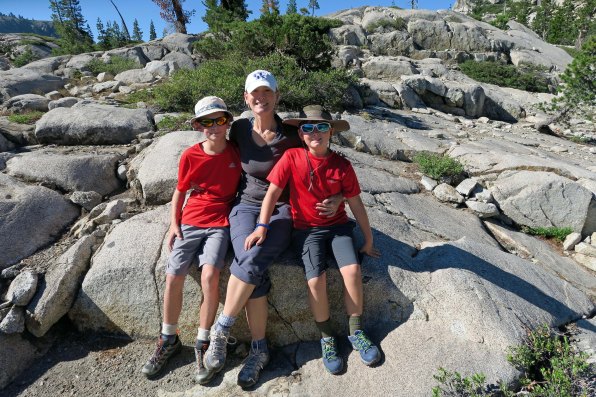
Our daughter Natasha with her two boys, Ethan on the left and Cody on the right. Sierra granite provides the backdrop.

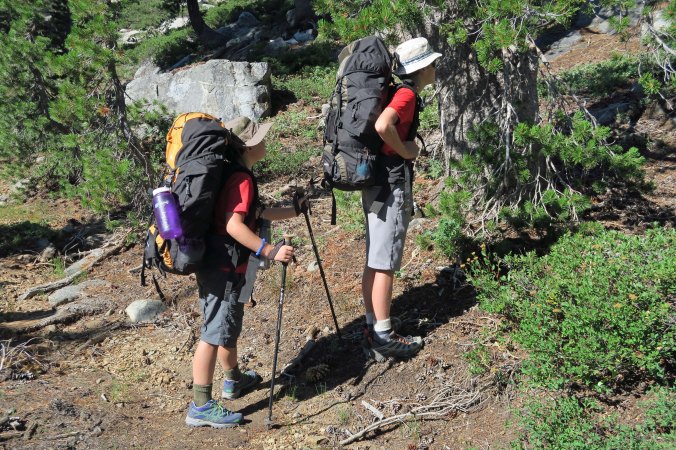
Ethan and Cody contemplate another climb. Both boys, Ethan at 12 and Cody at 9, carried full backpacks. Ethan was like a deer on the trail, bounding ahead. Cody was like a Sierra badger, digging in and not giving up, mastering the trail one step at a time.

In the beginning: It sounds almost biblical. Dan Iles would like it. I met Dan at Glacier Lake on my first trip into the Grouse Ridge area this summer. He introduced himself as the Dean of Graduate Studies at the Shasta Bible College in Redding, California. He’s a serious Christian, and a heck of a nice fellow. I liked him immediately. He had backpacked into Glacier Lake with his 13-year-old grandson and told me that he had been bringing youth groups into the area since the 70s.

The Reverend Dan Iles at Glacier Lake.

I was getting ready to leave the next morning when he came over for a chat. I had told him the night before that I lived in the Applegate Valley near the small town of Ruch in Southern Oregon and he wanted to know if I attended one of the churches there that he was familiar with. I explained that I was a bit more Eastern in my beliefs, a bit more Zen, and something of an Agnostic. I dug into my pack and found Siddhartha, a 1922 novel by Hermann Hesse that a friend had given me in the 70s. The novel describes Siddhartha’s journey to enlightenment at the time of the Buddha. I read it every few years because it reminds me of the importance of living in the present, of the interconnectivity of all things, and the value of a simple life— of not getting lost in our materialistic world.

Reading Siddhartha after dinner beside a quiet Sierra Lake. (Photo by Peggy Mekemson.)

Dan and I must have talked for 45 minutes or so about our lives. He described himself as a Professor of Practical Theology and told me of his efforts to help children and women in Africa who had been left homeless and destitute by the seemingly endless conflicts. He also told me that he believed in freedom of religion, that people should be free to worship according to their own beliefs, which is a concept that I strongly support. Still, I could tell he was concerned about my soul, that he would have considered a day spent trying to convert me as a day well-spent. It went with the territory of who he was and what he believed.

As I hiked past his camp to say goodbye on my way down into the Five Lakes Basin he urged that I read the Book of John in the New Testament. “It does an excellent job of describing the miracles of Christ,” he assured me. I’d read John before. In my youth, I had been considered a prime candidate for becoming an Episcopal priest. But I read it again on Dan’s recommendation. Miracles are what have been pulling people into Christianity for millennia. Jesus changes water to wine, feeds five-thousand people with two fish and five loaves of bread, walks on water, heals the sick, revives the dead, and ascends to Heaven.

I should have said, “Thanks, I’ll do that,” and moved on. But I couldn’t help myself. “I don’t need miracles, Dan” I responded. “I’ve got this.” And I raised my hands to take in the surrounding countryside. The towering Black Buttes climbed above the blue-green Glacier Lake. Giant red firs and pines stood as silent sentinels over the campground. Brightly colored flowers called to insects with an urgency that predated man’s sojourn on earth. Massive cumulus clouds spoke of lightning and thunder and rain and hail— of the incredible power of nature. If I needed awe, if I needed inspiration, if I needed a reason to believe, it was right there in front of me, behind me, surrounding me. I didn’t have to travel back in time 2000 years to events that required a leap of faith to believe. I waved one last time, turned, and hiked down the trail toward the Five Lakes Basin.

Photos of Glacier Lake and my hike into the lake.

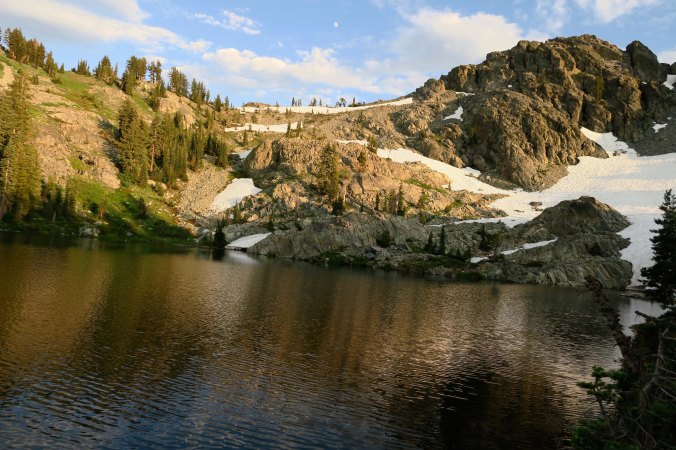
The Black Buttes of the northern Sierra Nevada Mountains tower over Glacier Lake.

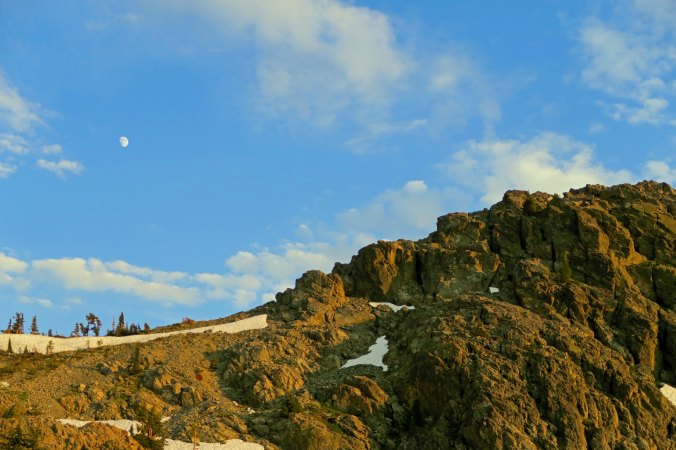
A close up of the Black Buttes as the sun sets.

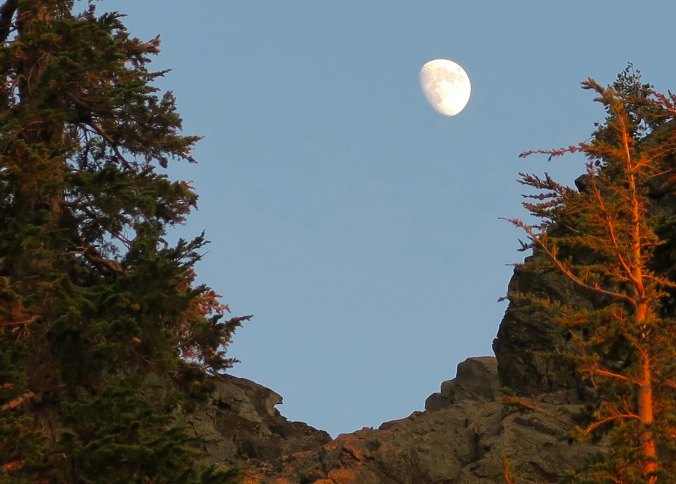
The moon hovers above the Black Buttes in the northern Sierra Nevada Mountain Range.

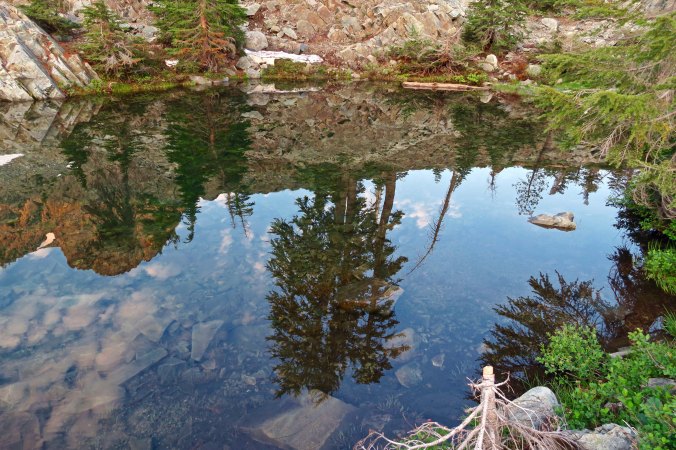
A small pool fed by melting snow provided this reflection shot at Glacier Lake.

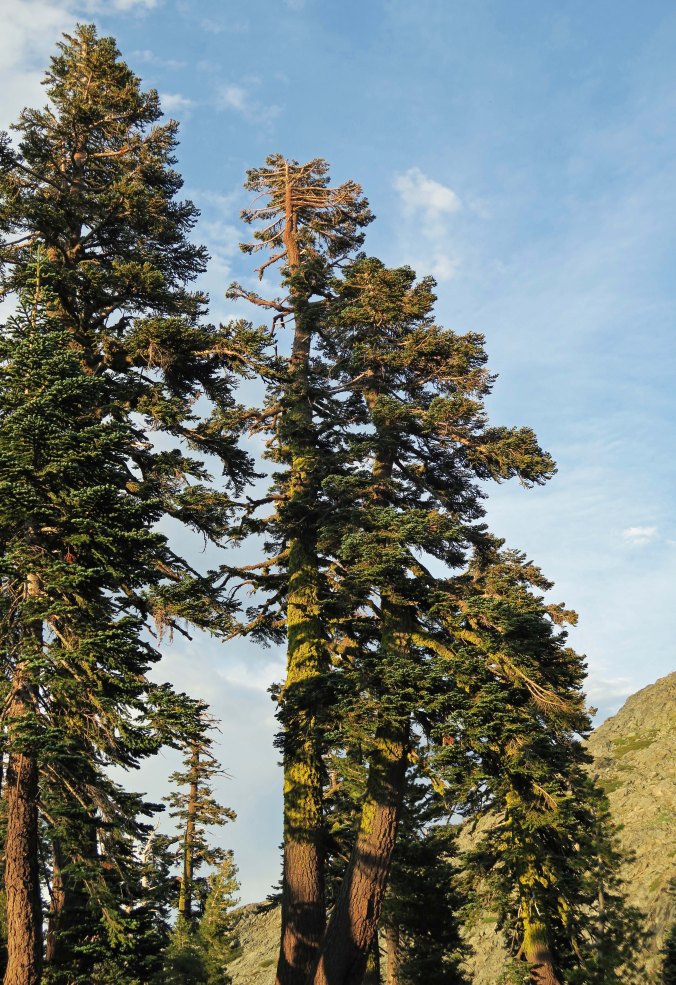
Red fir reached for the sky above my campsite.

Glacier Lake in the Grouse Ridge Area of the Northern Sierra Nevada mountains.

I found these two moss colored elders along the trail to Glacier Lake.

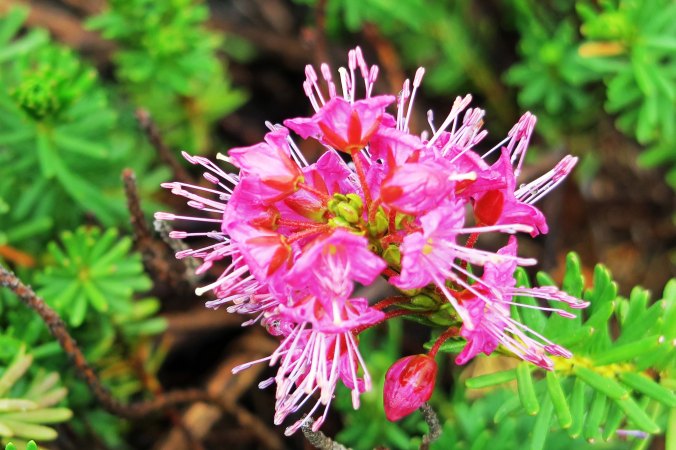
What insect could resist this brightly colored Red Mountain Heather that I took a close up of along the Glacier Lake Trail.

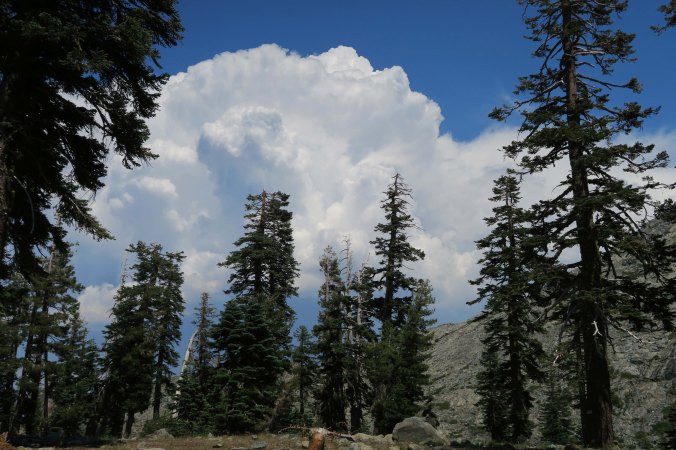
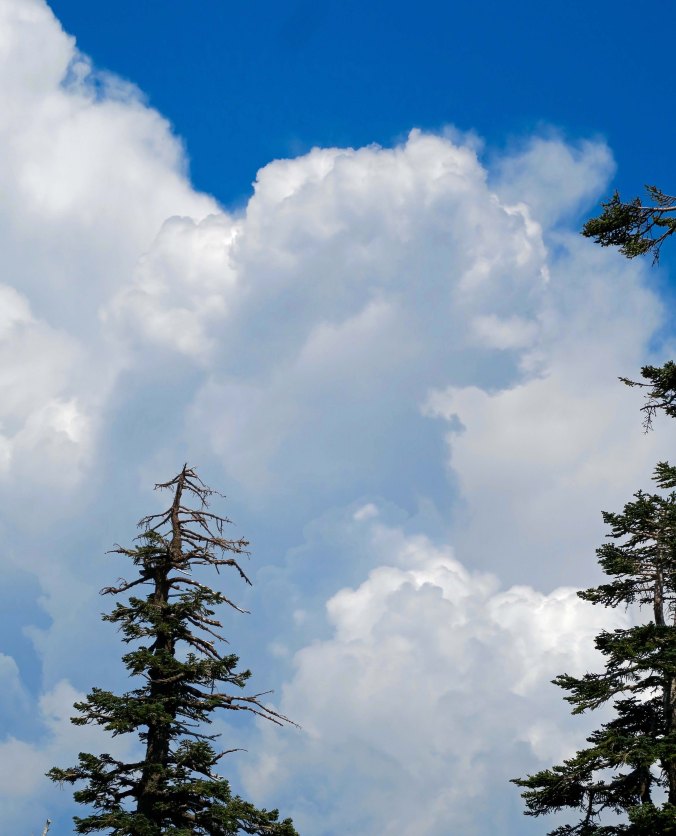
Towering cumulus clouds threatened thunder, lightning and hail at Glacier Lake.

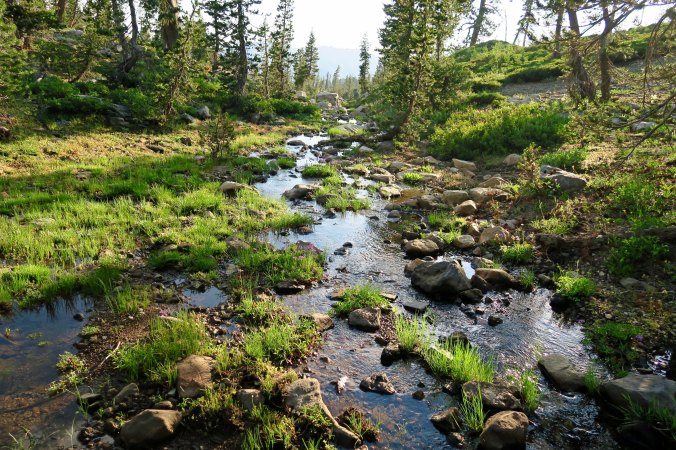
I found a small creek along the trail to Glacier Lake and decided to camp next to it, thinking it might provide a short hike for my grandsons. (They didn’t need it.) I removed bear scat from the campsite so they wouldn’t get too nervous.

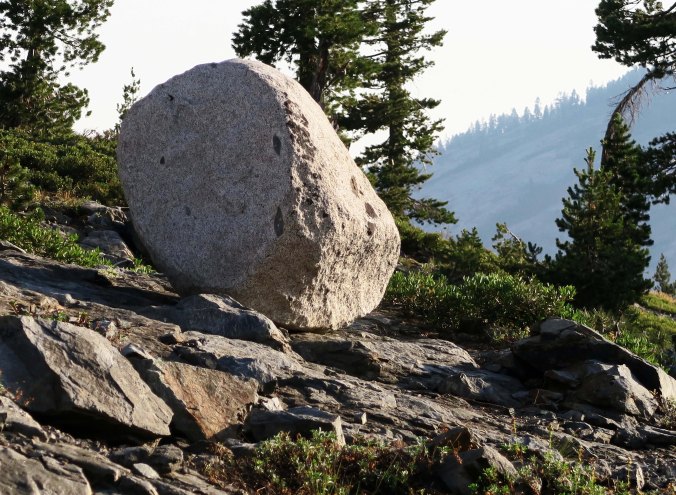
This boulder next to the campsite reminded me that the area had been carved by glaciers. The granite rock, known as an erratic, had been left behind by one of the glaciers.

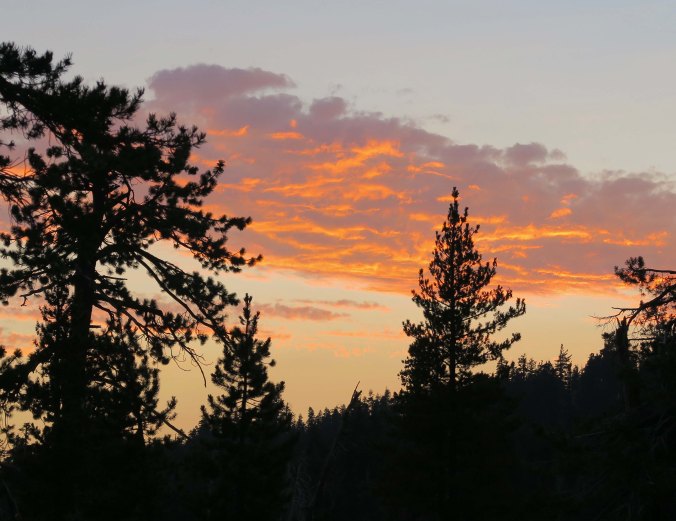
I hid out under my tent’s groundcloth as lightning flashed, thunder rolled, and hail pounded down on my campsite. Later, as the sun set, all that was left of the storm was a few puffy clouds.


NEXT POST: It’s down into the Five Lake Basin.


SaveSave

SaveSave

SaveSave

SaveSave

SaveSave

SaveSave

SaveSave

SaveSave

SaveSave

SaveSave

SaveSave

SaveSave

SaveSave

SaveSave

SaveSave

SaveSave

Out of the Woods… For a Day

Ready for another adventure, I look out toward the Black Buttes of the Sierra Nevada Mountains north of I-80. Peggy dropped me off at the trailhead, wished me well, and took this photo. And then I headed down the trail.

I am out of the woods— for a day— and decided to check in. I have just finished backpacking by myself for a week in the Grouse Ridge Non-Motorized Area of the Sierra Nevada Mountains north of Interstate 80. I’m going back into the same area tomorrow with Peggy, our daughter Tasha, and our grandsons Ethan and Cody. It’s a beautiful area, and I have lots of adventures to share. Like how do you persuade a cow that she really doesn’t want to camp with you overnight?

Anyway, here are a few photos to serve as a teaser. I should be home next Monday, which will give me a chance to catch up with fellow bloggers after a summer of backpacking. Of course I will be madly getting ready for Burning Man 2017… (grin).

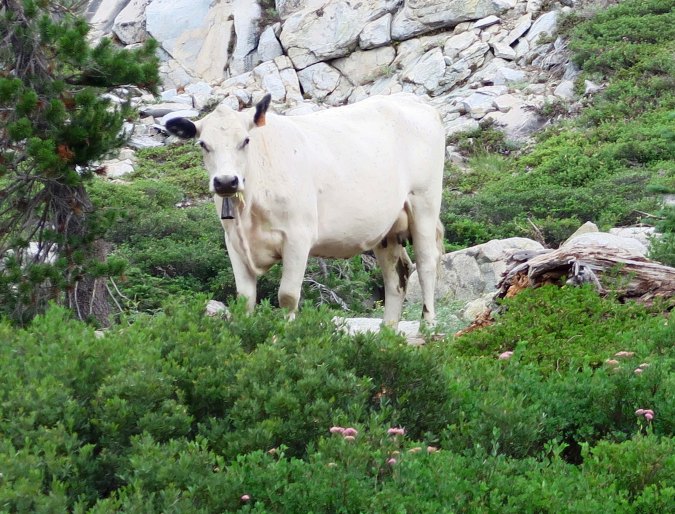
I expect to see wild animals out on the trail, but this one didn’t seem particularly wild. In fact, I think she wanted to camp with me. Maybe she had seen the same fresh bear poop I had.

Turns out the weather was much more of a challenge than the bear. Shortly after my discussion with the cow, I was in the middle of a thunder, lightning and hail storm!

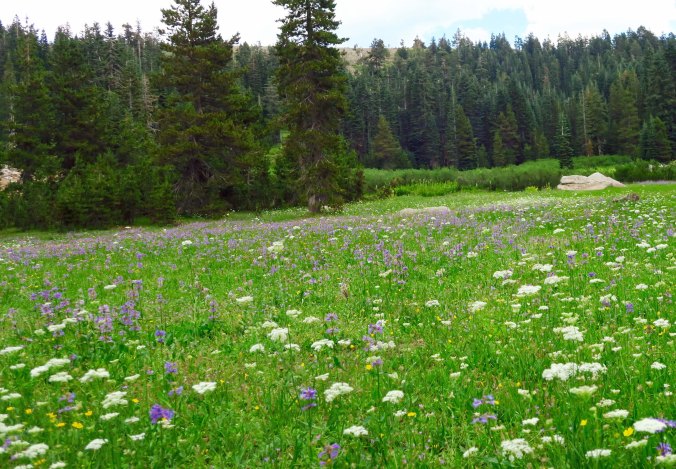
This is an area of incredible beauty that I have returned to again and again over the years. There are meadows filled with flowers…

That are always forcing me to stop and take their photo.

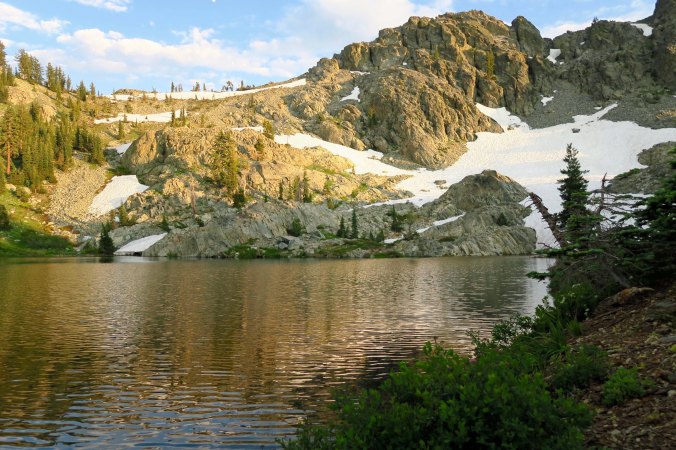
Numerous small lakes…

And the Black Buttes, seen here at Glacier Lake— lit up by the setting sun.

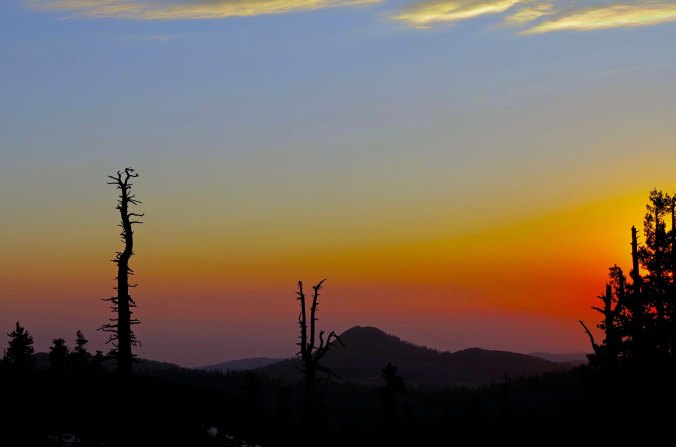
A final shot from Glacier Lake as the sun goes down, outlining what I considered to be a very strange tree.

See you all next week. —Curt

SaveSave

No-see-um Camp, a Sacred Grove, and Cougar Poop

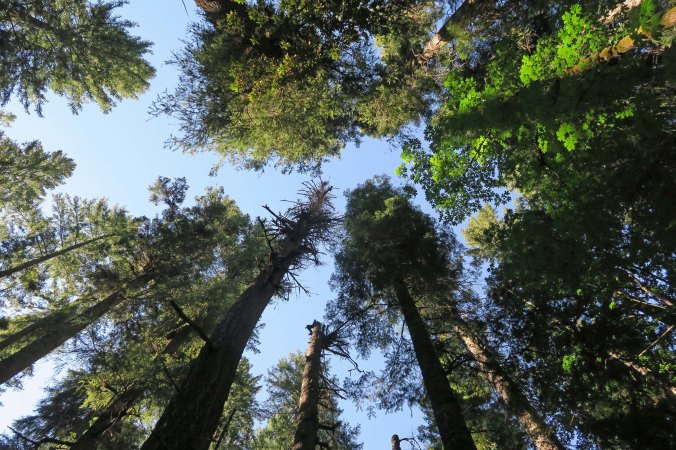
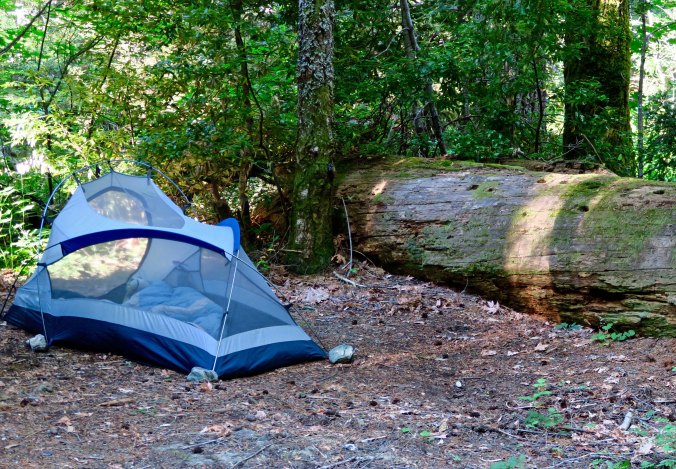
No-see-um camp, which we expected to be bug infested, turned out to be nestled among trees that made me think of a sacred grove.

Part II of our hike up Cook and Green Creek to the Pacific Crest Trail through the Rogue River National Forest.

Our goal for the day was No-see-um Camp, which seems like a very poor place to set up your tent. If you have spent much time outdoors, you will recognize no-see-ums as particularly nasty little bugs. I first encountered them when backpacking on the Appalachian Trail in Maine. It had rained for a solid week and every biting bug in existence had considered us fair game. While mosquitoes had treated our bug repellant as an hors d’oeuvre, no-see-ums had come after us with knives and forks. Later, I watched a moose in Alaska dash wildly about and roll in a snow bank to escape the tiny, nefarious fiends. Fortunately, we didn’t find any no-see-ums in No-see-um camp. It was quite the opposite. I decided we had arrived in a sacred grove.

Sacred groves go almost as far back as humanity. Think of the Druids and their oaks. In West Africa, where I served in the Peace Corps, huge cottonwoods were thought to contain living spirits and I often found offerings at their bases. It’s important to keep the forest spirits happy.

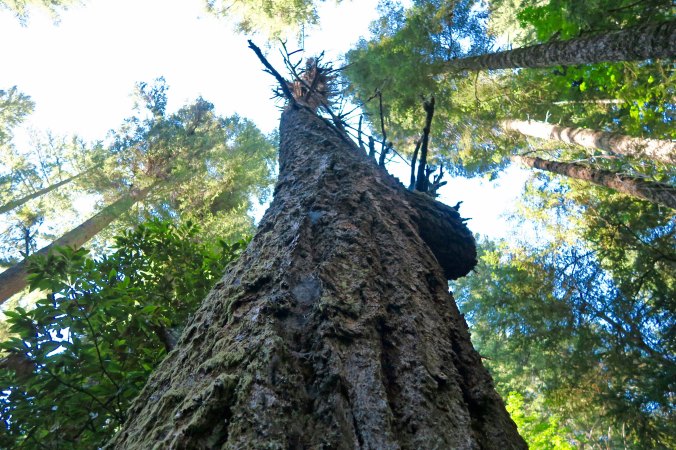
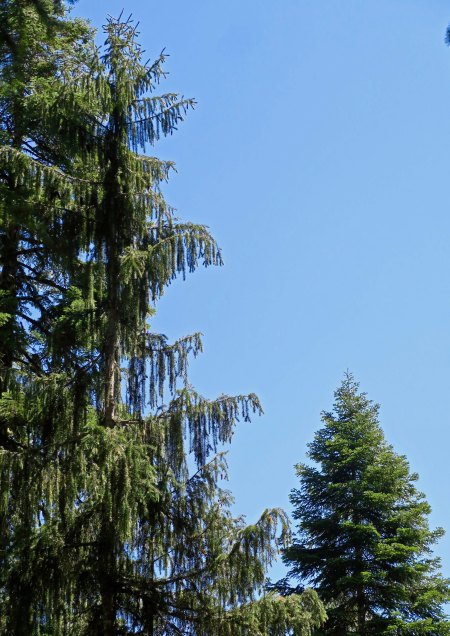
No-see-um camp had more species of trees than I have ever found in a single location, many of them were giants. From our camp, I could see Douglas fir, sugar pine, white fir, blue spruce, chinquapin, big leaf maple, and yew. Just up the trail I found a ponderosa pine. Cook and Green Creek with its cool, refreshing water bubbled and burbled and roared its way down the canyon just behind our tent. I figured it was an excellent place to commune with nature spirits and Peggy found a camp guardian up in the trees, which I thought was quite pagan of her.

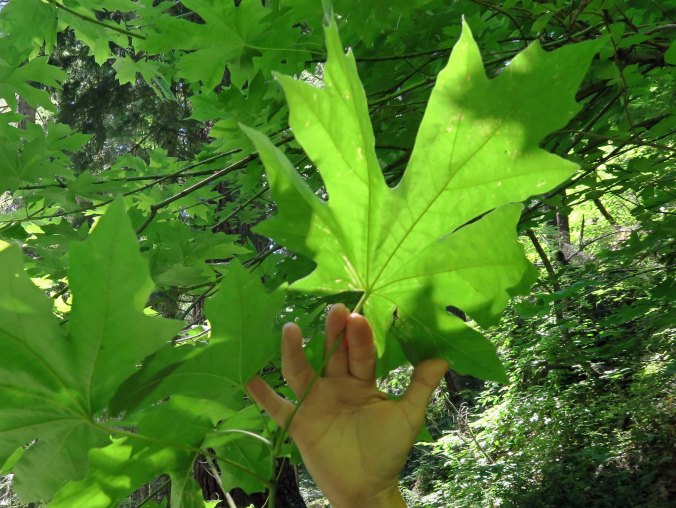
Another view looking up from our campsite on Cook and Green Creek. This one features big leaf maples.

There is a reason for their name!

We also had chinquapin growing in the grove. This prickly thing covers the trees nuts, which are said to be tasty.

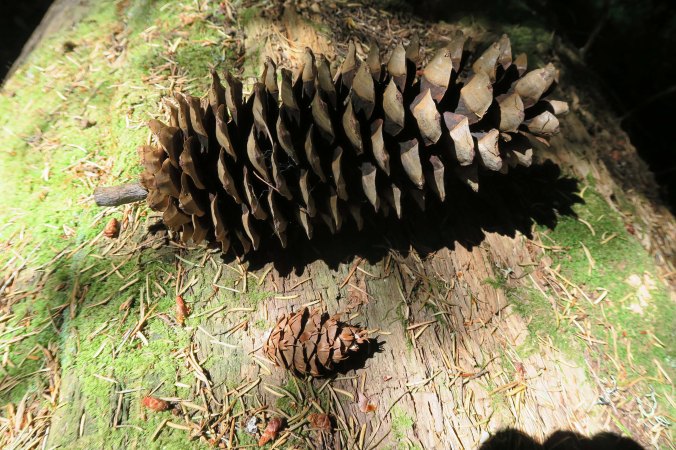
Giant sugar pines with their large cones and giant Douglas firs with their small cones surrounded us.

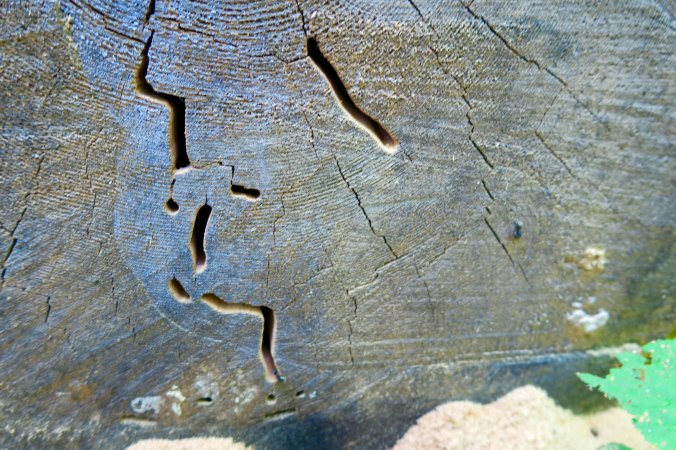
I found a large ponderosa pine near by. Do you know what made the line of holes? It was a sapsucker, a kind of woodpecker. It will return to eat any insects that have entered the holes.

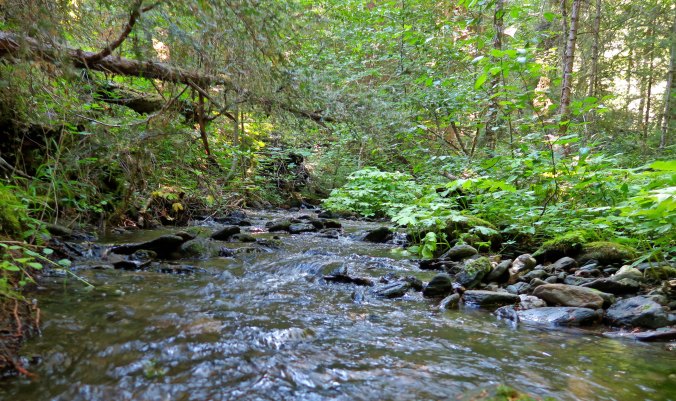
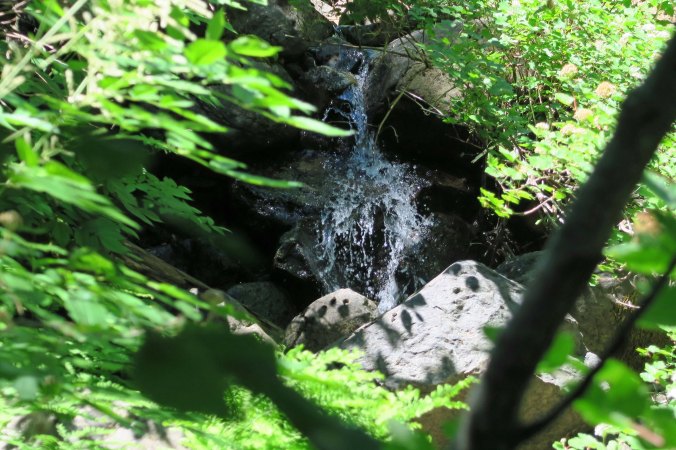
Cook and Green Creek flowed just behind our tent. It was burbling here.

Small waterfalls added a slight roar.

And I found the way the water flowed over a rock to be intriguing.

The downed tree next to our tent provided a good perspective on the size of the larger trees.

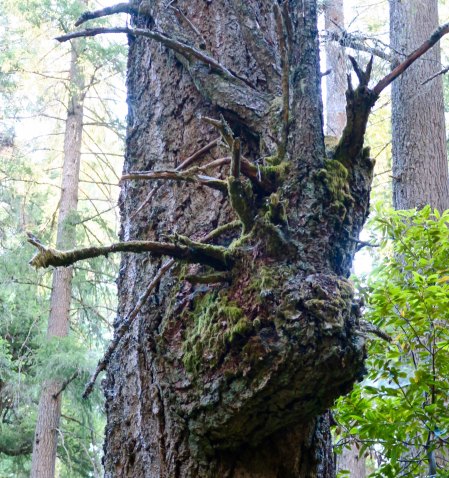
This odd tree growth just above our site served as Peggy’s camp guardian. (Photo by Peggy Mekemson.)

The Guardian’s tree was also impressive.

We used our layover day as an opportunity to do a nine mile hike up to the pass and back. Going up, we entertained ourselves by enjoying flowers and other plant life while looking for signs of wildlife. And yes, I have more animal poop, scat, to share with you. I’ll bet you’re excited.

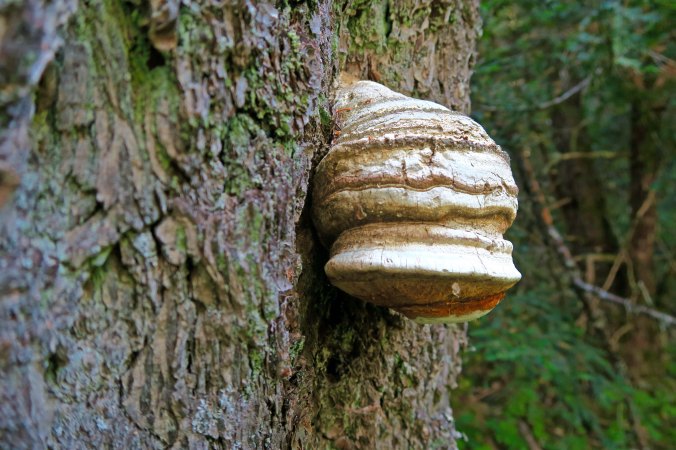
A shelf fungus.

Any idea what is happening here? Carpenter ants were making their nest. They are a fairly large ant that literally cut off small, sawdust-size chunks of wood and then bring it out to the edge where they dump it on to the sawdust pile at the bottom of the photo.

Peggy poses beside a fallen tree.

Which happened to feature another wood sculpture that Peggy determined was a dragon.

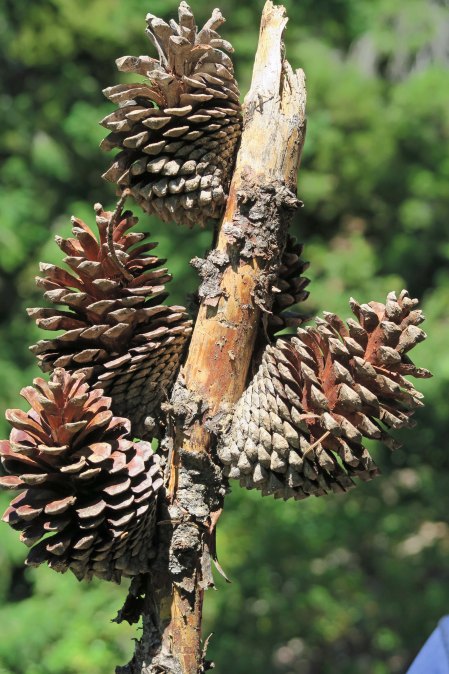
We found these unusual cones that actually grow directly on the limbs of the trunks and limbs of the knob cone pine.

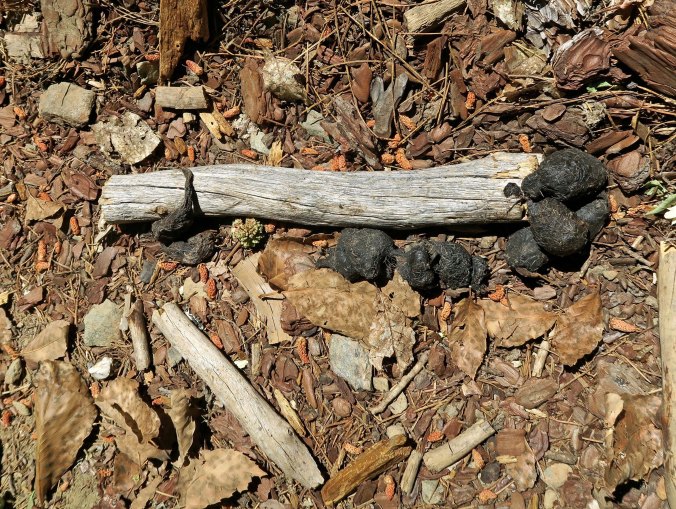
Okay, I put up pretty, or at least I hope interesting photos, and then I put up poop. Why? Half the fun of wilderness travel is knowing what you are seeing around you. Scat (poop) is one way of telling what animals are using the trail you are on. This happens to be cougar, or mountain lion scat. The twisted piece on the end is fairly definitive of the cat family. Size suggests cougar. It was dry, so we were in little danger of an immediate encounter.

Since we are on animal signs, any idea of what made this? Odds are it was a porcupine. They chew off the outer bark to get to the nutritious, inner bark.

This attractive small waterfall, provided cool water to drink with our  lunch. (Photo by Peggy Mekemson.)

After lunch on our way up to the pass, we found this attractive Blue Spruce…

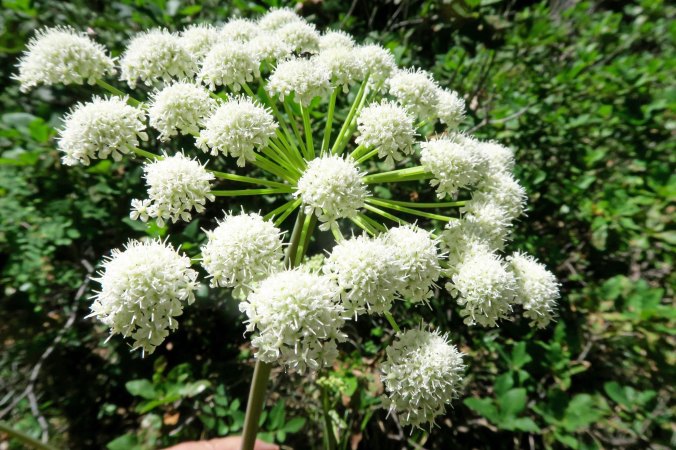
And a flower, which is known as Ranger’s buttons.

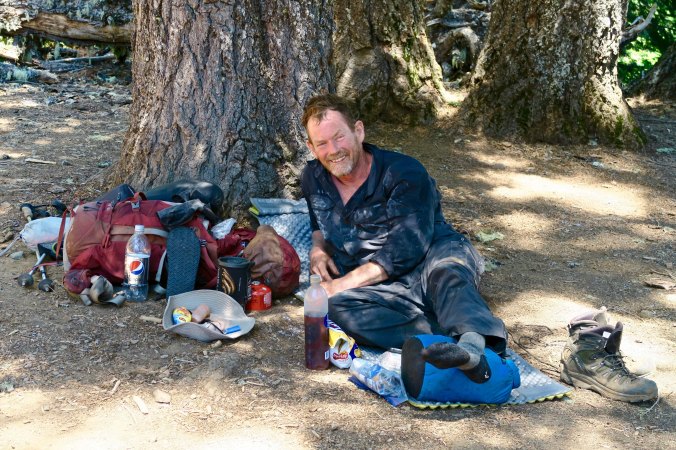
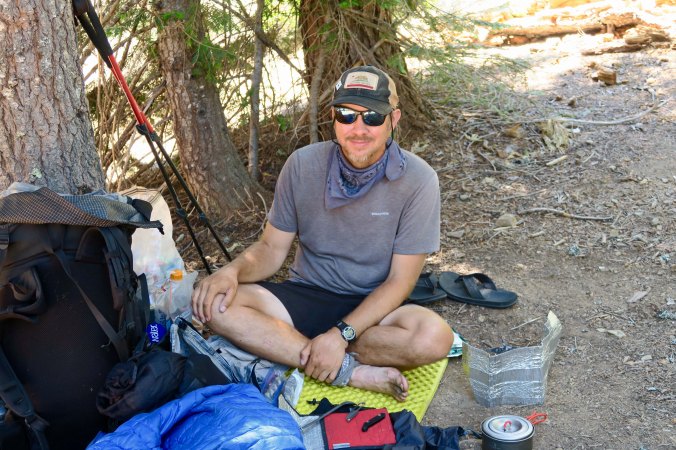
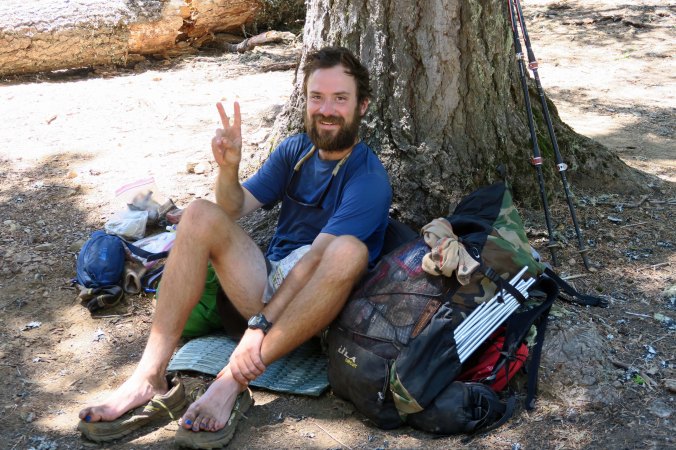
On top, we met Rambo, Dogondo, and Double D: three PCT through hikers. Their names are their trail names. They had started at the Mexican border and been backpacking since April, covering close to 1000 miles. They were skinny and ever so eager to reach Oregon, which was just up the trail. One of them told me that Sasquatch (Big Foot) had been rooting around outside his tent the night before.

Rambo, a PCT through hiker from Riverside, California.

Dogondo, a PCT through hiker from Chicago.

Double D, a PCT through hiker from Kansas City.

We raced on our way back down from the pass. I was careful to keep Peggy behind me. She thinks that she is a greyhound when she gets out in front going down a hill. I once sprained my ankle trying to keep up with her coming off of Muir Pass on the John Muir Trail and had to hobble another 80 miles before we finally climbed up and over Mt. Whitney and out. Taught me.

Peggy, all set to go, wearing one of her favorite T-shirts.

The Cook and Green Trail and Some Really Weird Trees… Part I

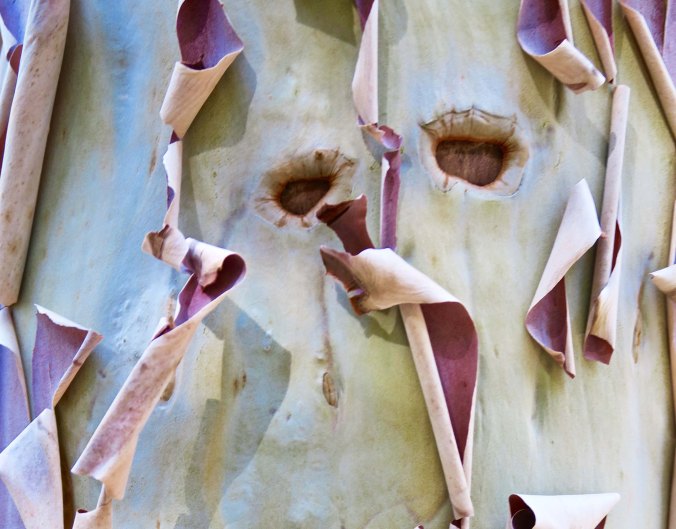
The way madrone trees shed their bark is strange enough without having a pair of eyes staring out at you. We found this specimen along the lower end of the Cook and Green Trail.


Today’s post will take you along with Peggy and me on our latest backpacking adventure. This time, the trailhead was a mere 30 minutes from our house! The Cook and Green Trail follows Cook and Green Creek up to Cook and Green Pass where it connects into the Pacific Crest Trail, the PCT. (That’s a lot of Cook and Green; they were gold miners who worked the area in the 1870s and 80s.) Starting at the pass, we could have made a right turn and hiked to Mexico or a left turn and hiked to Canada. Another time. (grin)

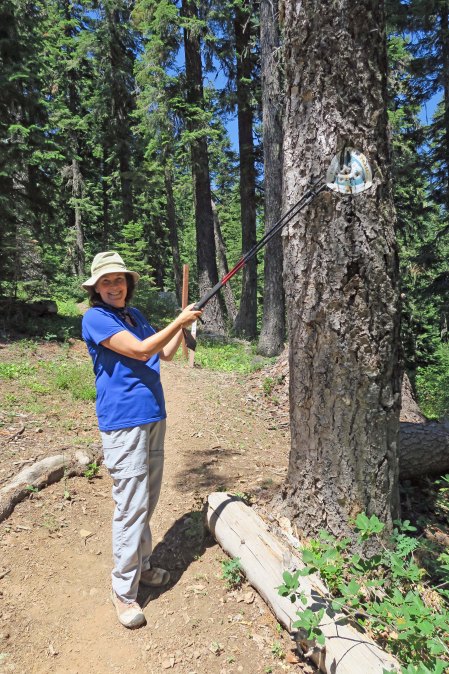
Peggy points out a PCT marker showing the trail south. Had we followed it, we could have been to Mexico in a thousand miles.

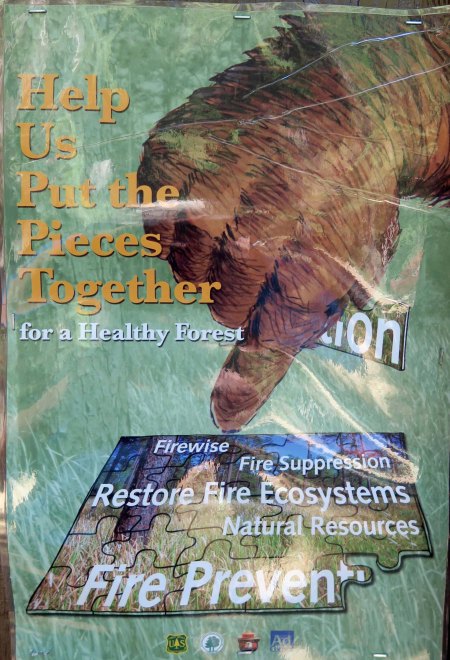
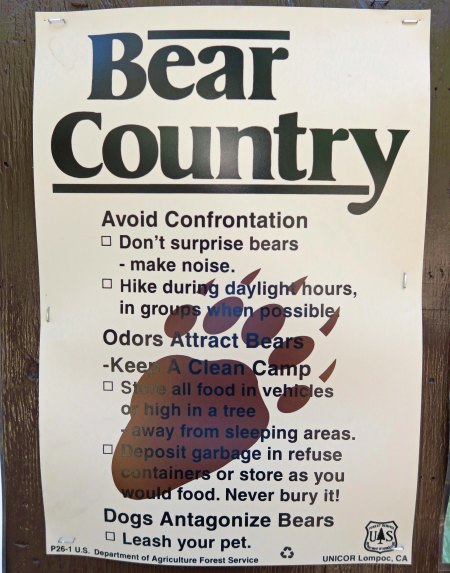
We were greeted by a pair of signs at the Cook and Green trailhead, which I found amusing. Both were products of the US Forest Service. I don’t think the hand on the first poster is that of America’s preeminent spokesperson for fire prevention, Smokey the Bear; I think it belongs to Bigfoot! The second sign warned us about bears. Serious stuff.

Did this sign use Bigfoot to emphasize fire prevention? Or is it a clawless Smokey? It’s puzzling.

It’s smart to be aware of bears when backpacking, but you should not let them keep you out of the woods.

I am a veteran of the backcountry of Yosemite, where the bears actually run a school on how to steal backpacker’s food. (Fake news, but just barely.) So I wasn’t too worried about the bears of the Rogue River and Klamath National Forests. Still, the poster is worth reviewing. Avoid confrontation: That’s always sage advice when you are dealing with a grumpy animal that can outrun you, outweighs you, and comes with long claws and sharp teeth. You don’t want to surprise them and you don’t want to get between a mother and her cubs. That having been said, bears aren’t particularly interested in eating people.  If they were, they would move into towns where there are lots of people to eat. Mainly, they prefer to avoid humans, like most sensible wild animals.
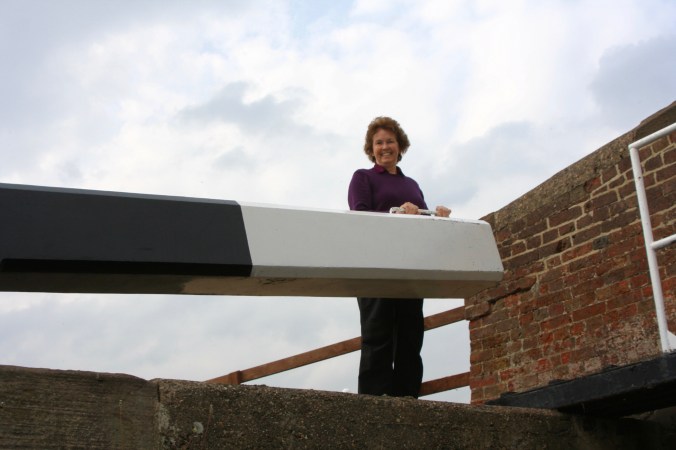
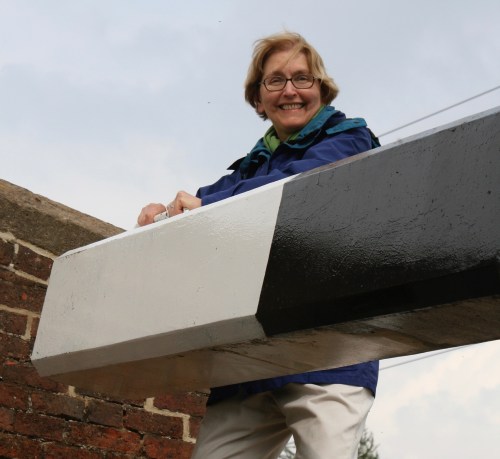
Your food? Well, that’s a horse of a different color, or at least a bear that has hung out around careless people. When I see bear poop that includes bits and pieces of the plastic used to package  freeze-dried backpackers’ food, I know to be on the lookout. BTW, a Yosemite bear would laugh at the advice to hang your food high in a tree. Guess what, bears climb trees. And if mama bear can’t climb a tree in Yosemite to retrieve your chow, she sends her babies up. The advice in Yosemite used to be that your food bag had to be at least nine feet off of the ground and nine feet away from the trunk, with no ropes hanging down! I’ve watched bears play tether ball with food that wasn’t hung high enough. Now the park rangers want you to carry plastic bear-proof barrels. I’ve never worried much about bears when away from Yosemite. Still, care is called for.
It’s good advice about dogs. Way back in history, I was out backpacking with my first father-in-law’s Springer Spaniel, Sparky, and came across a bear. Sparky jumped behind me and then stuck her head out between my legs and started barking vociferously. The bear stopped and growled before ambling on. I told Sparky that if the bear had charged I would have picked her up and tossed her out in front of me.

The Cook Green Trail begins its journey through a burned-out area. In 2012, we watched from our home as huge billows of smoke climbed above the forest and a fleet of helicopters used large buckets to dip water out of Applegate Reservoir, one mile above our home, to fight the Fort Complex fire. It was only a few miles away, and we watched nervously. Today, new growth is returning to the area as nature performs one of her miracles.

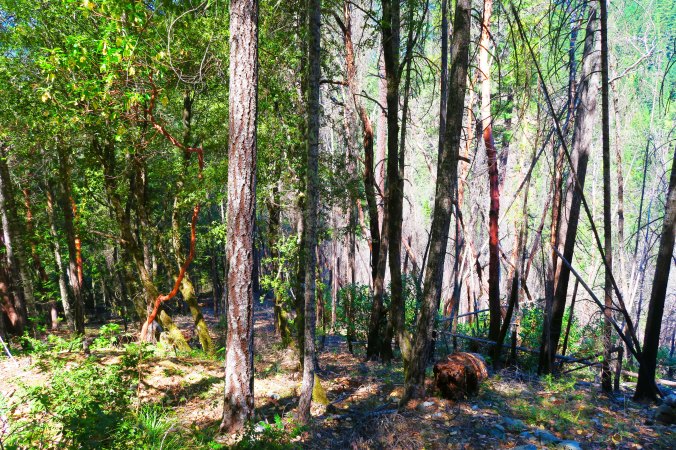
This photo captures the area where the Fort Complex Fire stopped burning along the Cook and Green Trail. It’s a good example of burned and non burned forest. On the burned side, the green near the ground shows where the forest is beginning to recover.

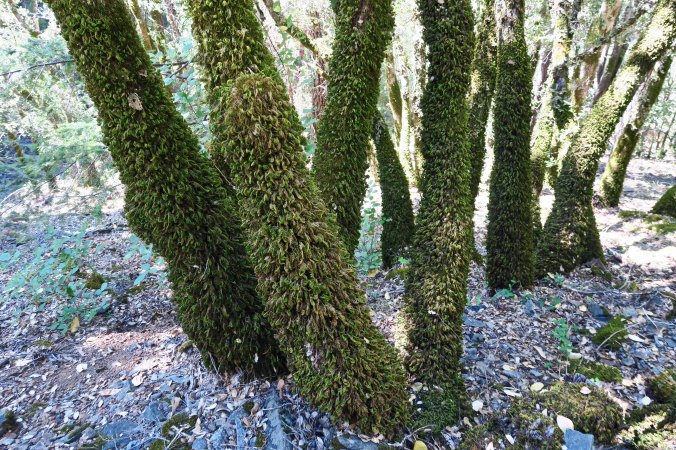
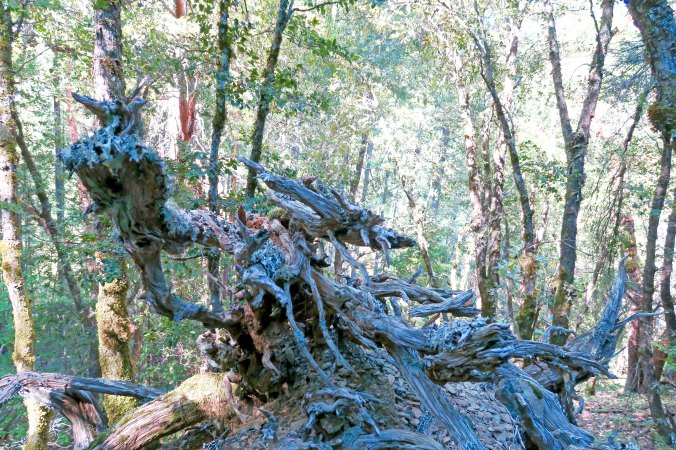
While the hike through the burned-out area was interesting, our fun began on the other side. Peggy came across a mile marker that she felt needed to be decorated, a madrone tree featured eyes peering out from its strange, peeling bark, several oak trees were dressed in moss, tree roots created weird sculptures, and the Mother of All Roots stood higher than me.

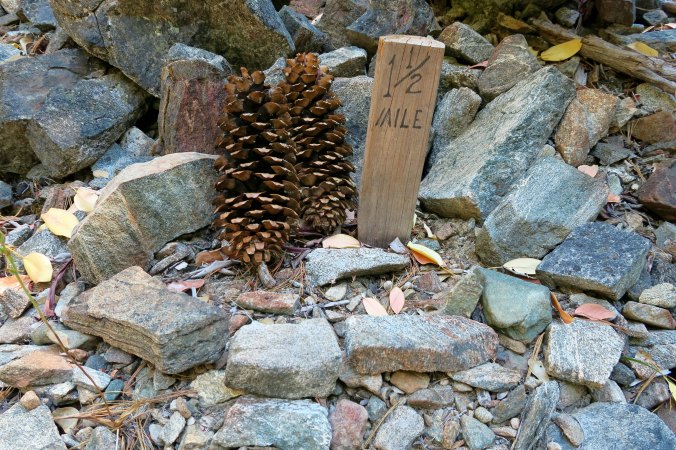
Someone, probably the forest service, had placed mile markers along the first section of the Cook and Green Trail. Peggy decided to decorate the marker by adding sugar pine cones beside the marker and rocks in front.

I thought these moss-covered live oaks were quite unique.

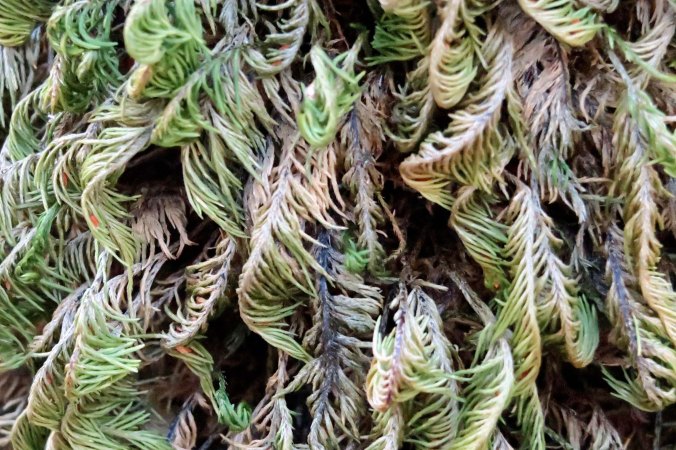
This is a close up of the tree moss.

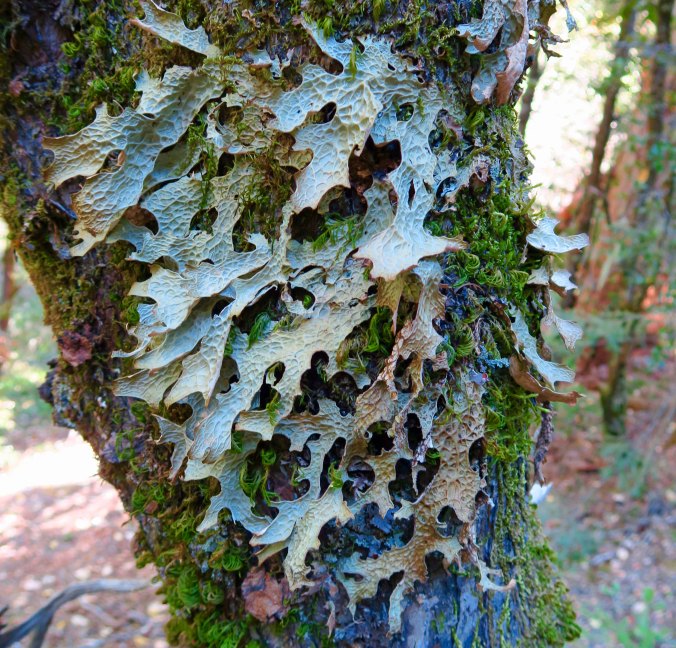
We also found this interesting growth. At first I thought it was stag horn moss but it may be a lichen.

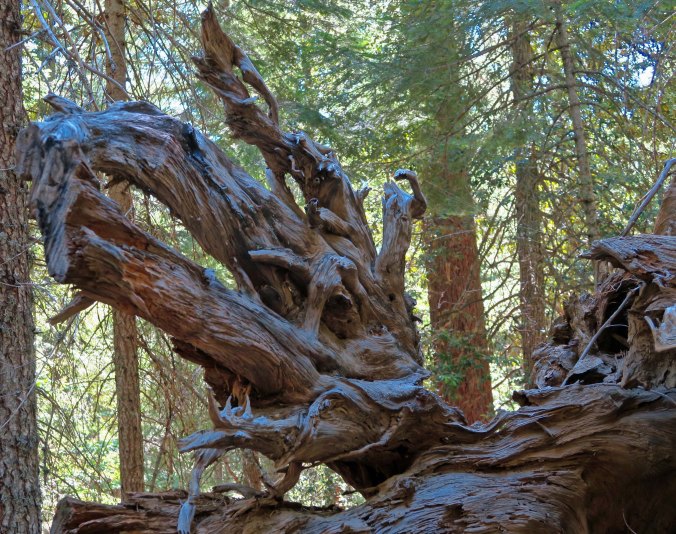
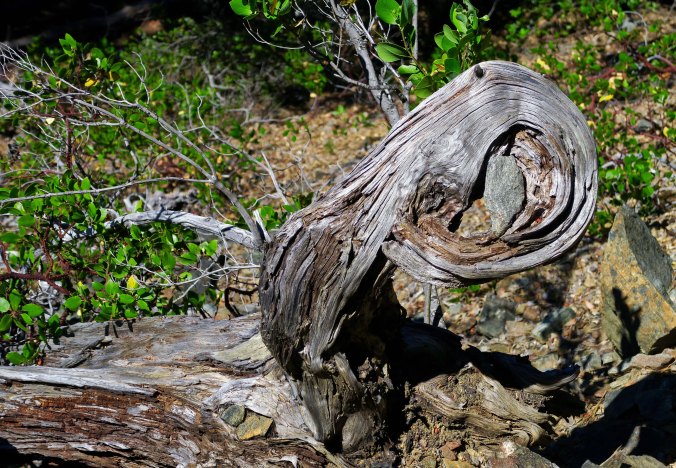
Tree roots can create fun sculptures. I’m not sure I would want to meet up with this one on a dark night!

More ordinary, but still interesting, this root had taken a detour around a rock and captured it.

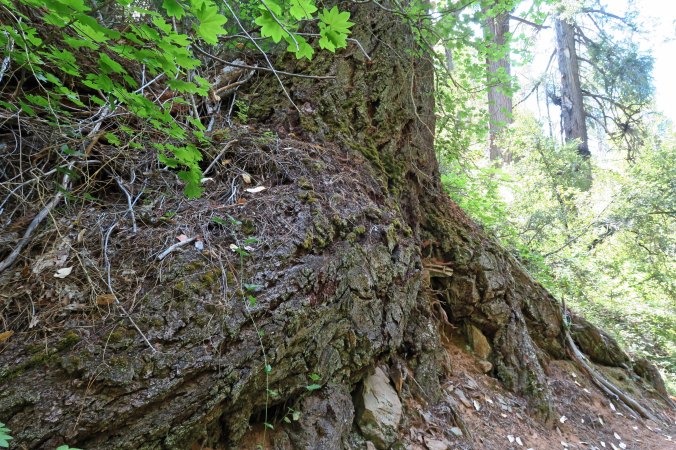
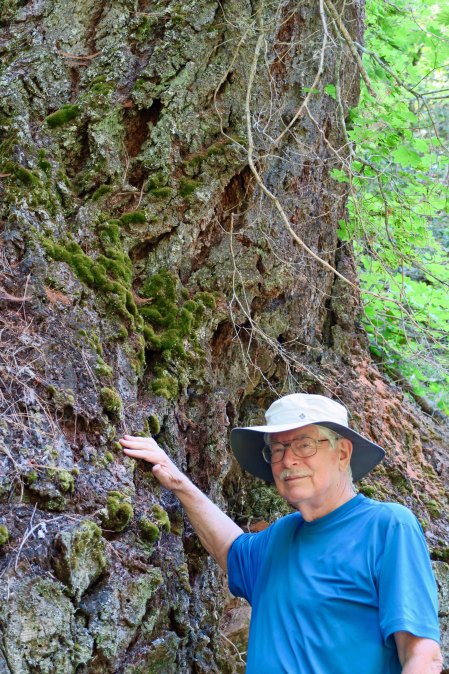
And here we have the Mother of All Roots!

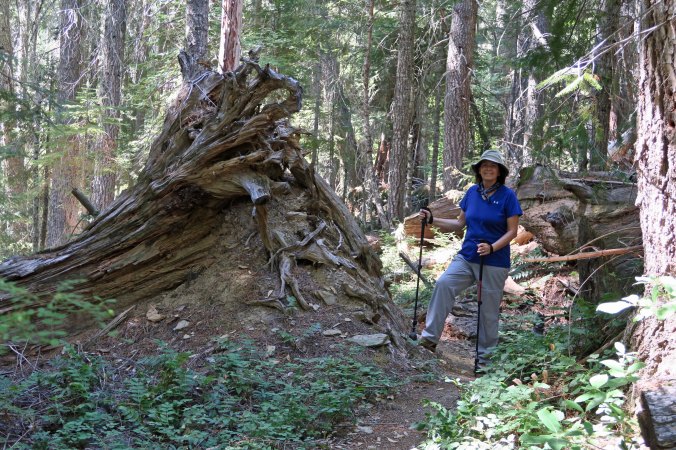
I stood next to it just before the root connected to the trunk to provide perspective. (Photo by Peggy Mekemson.)

NEXT BLOG: We hike on to No-see-um camp, which turns out to be closer to a sacred grove than a bug infested swamp, and hike up to Cook Green Pass where we find PCT through hikers and mountain lion sign.