Glamorous, Glitzy and Tacky Las Vegas … On the Road

Wandering down the Las Vegas Strip at night can be a jaw-dropping experience. This is the Excalibur Casino, an adult Disneyland.

Wandering down the Las Vegas Strip at night can be a jaw-dropping experience. This is the Excalibur Casino, an adult Disneyland.

Gambling interests in Nevada will make around a billion dollars in profit this month, so it is no surprise they can afford to build the massive pleasure palaces that line Las Vegas Boulevard. A walk down the Strip, as it is known, can be a jaw dropping experience, especially at night. Even McDonald’s has a sparkling sign. A recent article in the Smithsonian Magazine noted that Las Vegas is lit up by over 15,000 miles of neon tubes.

The New York, New York casino. The line snaking across the front of it is a towering roller coaster that adds screams to Las Vegas Boulevard.

The New York, New York Casino. The line snaking across the front of it is a towering roller coaster that adds screams to Las Vegas Boulevard.

New York, New York on the Las Vegas Strip,also features an imposing Statue of Liberty.

New York, New York Casino on the Las Vegas Strip,also features an imposing Statue of Liberty.

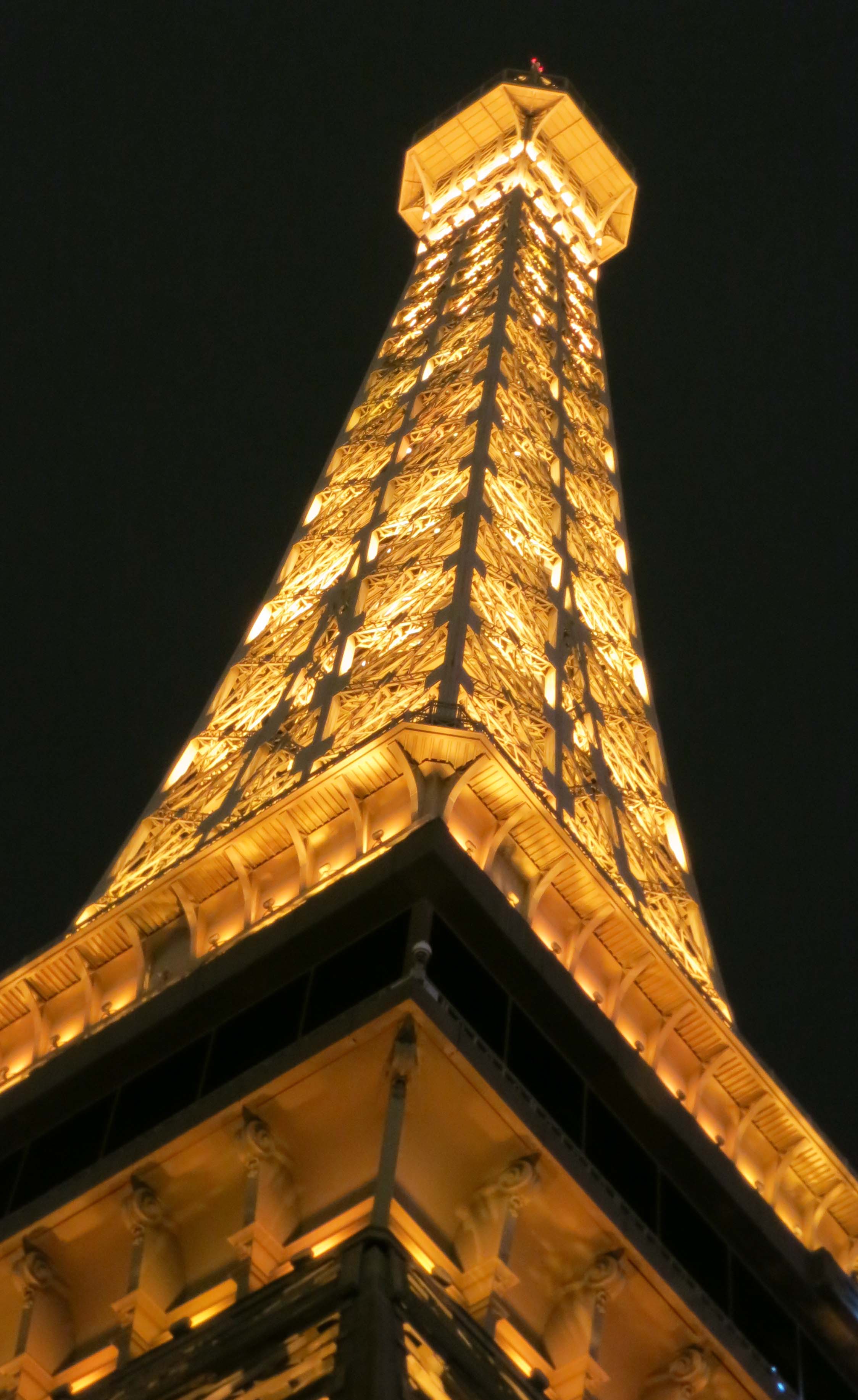
Not to be outdone, the Paris Casino features the Eiffel Tower.

Not to be outdone, the Paris Casino features the Eiffel Tower.

The Paris Casino on the Las Vegas Strip.

The Paris Casino on the Las Vegas Strip.

Even McDonalds adds a touch of glitz on the Strip.

Even McDs adds a touch of glitter on the Strip.

A stroll down Las Vegas Boulevard during the day also brings impressive sights, such as this one of the Wynn Hotel and casino.

A stroll down Las Vegas Boulevard during the day also brings impressive sights, such as this one of the Wynn Hotel and Casino.

Wandering through the various casinos can also provide a day's entertainment. The Venetian Casino in Las Vegas features canals, gondolas, and gondoliers who sing. The sky is fake.

Wandering through the various casinos can also provide a day’s entertainment. The Venetian Casino in Las Vegas features canals, gondolas, and gondoliers who sing. The sky is fake.

And there is glamour… some of the world’s top entertainers perform in Las Vegas. We took in Zarkana, the latest acrobatic Cirque du Soleil extravaganza, and two musicals.

Las Vegas been a glitzy kind of place ever since gambling was legalized in Nevada and the first mobsters set up shop in the town during the 40s, 50s and 60s. Those were the days when the Rat Pack roamed the streets and Frank Sinatra introduced John Kennedy to Judith Exner, a mistress the President shared with Mob Boss Sam Giancana.

The excellent Mob Museum in the older part of Las Vegas shares this and many other stories about the history of the mob in America. It is well worth a visit. Peggy and I, along with our friends Ken and Leslie Lake, spent three hours in the museum. We also took advantage of its location to wander down Fremont Street and experience Las Vegas as it once was before the Strip took over.

Among the three floors of displays in the Mob Museum is this electric chair.

Among the three floors of displays in the Mob Museum in Las Vegas is this electric chair.

A trip down Fremont Street is a trip down Memory Lane. At one time, this would have been one of Las Vegas's top casinos.

A trip down Fremont Street is a trip down Memory Lane. At one time, this would have been one of Las Vegas’s top casinos.

I confess to liking the old neon signs of Las Vegas as much as I like the glitzy neon of the strip.

I confess to liking the old neon signs of Las Vegas as much as I like the glitzy neon of the strip.

This old Binion Cadillac is a fitting companion to the neon sign above. The Benion of Binion's Casino was one of the early casino owners with close ties to the mob.

This old Binion Cadillac with its Wild West theme is a fitting companion to the neon horse above. The Binion of Binion’s Casino was one of the early casino owners with close ties to the mob.

In addition to being glamorous and glitzy, Las Vegas can also be tacky. Souvenir shops line the streets. Hustlers push everything from “free” drinks to nude women. People dressed up in dozens of costumes ranging from Bat Man to Sponge Bob and Darth Vader invite you to have photos taken with them… for a fee, of course.

My friend Ken Lake chose to pose with these "show girls" over Sponge Bob. It cost him a couple of bucks. I figured the least I could do was feature him in my blog.

My friend Ken Lake chose to pose with these “show girls” over Sponge Bob. It cost him a couple of bucks. I figured the least I could do was feature him in my blog.

I am not sure this display at the Hilton fits tacky but it was amusing.

I am not sure this display at the Hilton fits tacky but it was amusing.

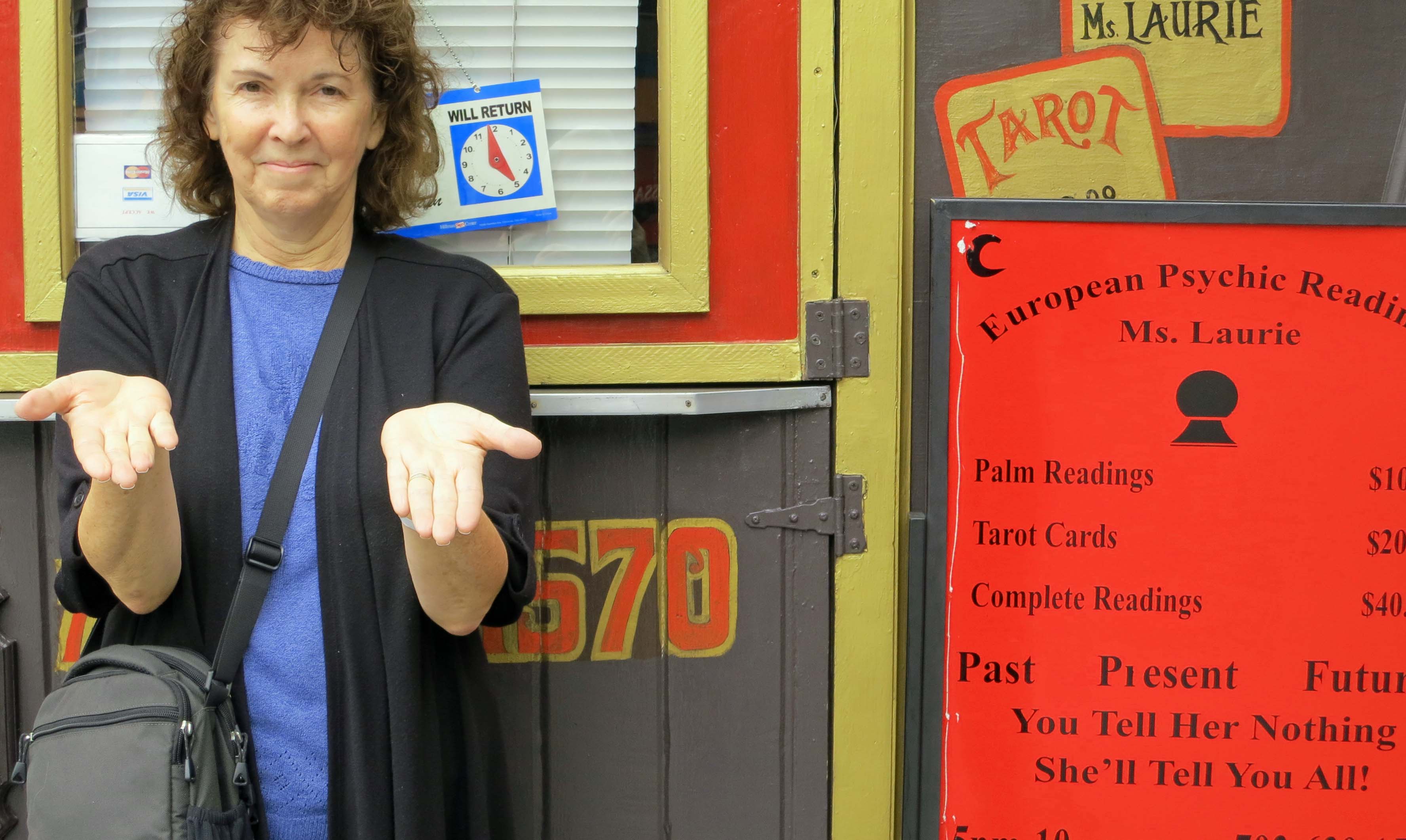
Peggy, in another life, may have been a palm reader.

Peggy, in another life, may have been a palm reader. Alas Ms. Laurie was out, so Peggy is still wondering about her future.

Peggy also modeled for me in the pawn shop where the popular TV program Pawn Stars is filmed.

Peggy also modeled for me in the pawn shop where the popular TV program Pawn Stars is filmed.

I've saved my last two photos for those of you who have clown phobias. This guy is outside the Circus Circus Casino.

I’ve saved my last two photos for those of you who have clown phobias. This guy is outside the Circus Circus Casino.

We were walking back to our hotel one evening when I turned around and the Circus Circus clown was staring at us over a building.

We were walking back to our hotel one evening when I turned around and the Circus Circus clown was staring at us over a building. Does evil fit?

NEXT BLOG: I leave Las Vegas and return to my tour of Mediterranean Ports. Venice is up next.


Beauty vs. Glitz: A Break from Las Vegas at Red Rock Canyon… On the Road

Red Rock Canyon with its beauty and silence is just a few minutes a away from Las Vegas.

Red Rock Canyon with its beauty and silence is just a few minutes away from Las Vegas.

I was going to blog about glitzy Las Vegas today but we took a detour. Red Rock Canyon National Conservation Area is a few miles to the west of the Strip and it’s billion dollar pleasure palaces. Nothing could provide a greater contrast. Glitz and noise are replaced by beauty and silence. And, unlike Las Vegas, the park is not dedicated to separating you from your money. I could make the $7 dollar per vehicle entrance fee disappear into a video poker machine faster than it took the park ranger to collect it.

The Bureau of Land Management (BLM) Park features one of the most impressive visitor centers I have seen in my decades of visiting State and National Parks across the United States.

I took this desert tortoise photo at the Visitor Center for the Red Rock Canyon National Conservation Area.

I took this desert tortoise photo at the Visitor Center for the Red Rock Canyon National Conservation Area.

This human size silver lizard was one of several sculptures at the Red Canyon Visitors' Center.

This human size silver lizard was one of several sculptures at the Red Canyon Visitors’ Center.

Peggy is standing next to a sculpture resenting air.

Peggy is standing next to a sculpture representing air. Note the rabbit ears in the background.

Ken Lake, dressed up in his SF Giants memorabilia, demonstrates the proper se of the rabbit ears.

Ken Lake, dressed up in his SF Giants memorabilia, demonstrates the proper use of the rabbit ears.

We spent an hour with our friends Ken and Leslie Lake checking out the Visitor Center and then another three hours on a leisurely tour of the 13-mile drive through the park. We could have easily spent all day had we taken advantage of the numerous trails along the way.

A view of the mountains and their distinctive ribbon of red from the Red Rock Canyon Visitors's Center.

A view of the mountains and their distinctive ribbon of red from the Red Rock Canyon Visitor’s Center. (Photo by Peggy Mekemson)

Mnt View 2P

Another view of the mountains in Red Rock Canyon taken by Peggy.

I liked the contrasting rock colors provided by this photo on our 13 mile drive through Red Rock Canyon.

I liked the contrasting rock colors provided by this photo on our 13 mile drive through Red Rock Canyon.

The erosive forces of wind and water were at work here. (Photo by Peggy Mekemson)

The erosive forces of wind and water were at work here. (Photo by Peggy Mekemson)

Peggy captured this jumble of rocks which reminded me of Bryce Canyon.

Peggy captured this jumble of highly eroded rocks, which reminded me of Bryce Canyon.

Numerous trails and canyons along the way invited further exploration. Both springs and Indian Rock Art are found hidden away in the canyons. Next time...

Numerous trails and canyons along the way invited further exploration. Both springs and Indian Rock Art are found hidden away in the canyons. Next time…

NEXT BLOG: I will do the blog on Las Vegas glitz that I was going to do today.

A True Family Ghost Story… Halloween Tales I

On November 15, 1777, the British lobbed 1000 cannonballs per hour into the tiny Fort Mifflin in an all out effort to resupply British troops in Philadelphia. Four of my ancestors fought in the battle and two died heroically. Did they become ghosts?

Do you believe in ghosts?

With Halloween two days away I decided it is time to get into the spirit of the season and post two family ghost stories that involved me: the first took place at Fort Mifflin near Philadelphia; the second in Scotland. They are both true. I will return to my journey down the Colorado River on Friday.

Fort Mifflin

It was the week before Halloween and I was on a ghost hunt. The eerie creatures are known to hang out at Fort Mifflin, which is located next to Philadelphia International Airport on the Delaware River. It’s one of the hottest ghost watching spots in America and has been featured on the popular TV series, “Ghost Hunters.”

A little background is necessary.

In the fall of 1777, 234 years ago, all that stood between the British and the likely defeat of the American Revolution was the small Fort Mifflin on the Delaware River. It is a chapter in American History that is little known and rarely told.

For over a month, the fort had kept the mighty British Navy from resupplying General Howe at Philadelphia. It was a valiant effort that kept Howe from pursuing George Washington and likely defeating him, thus ending the war.

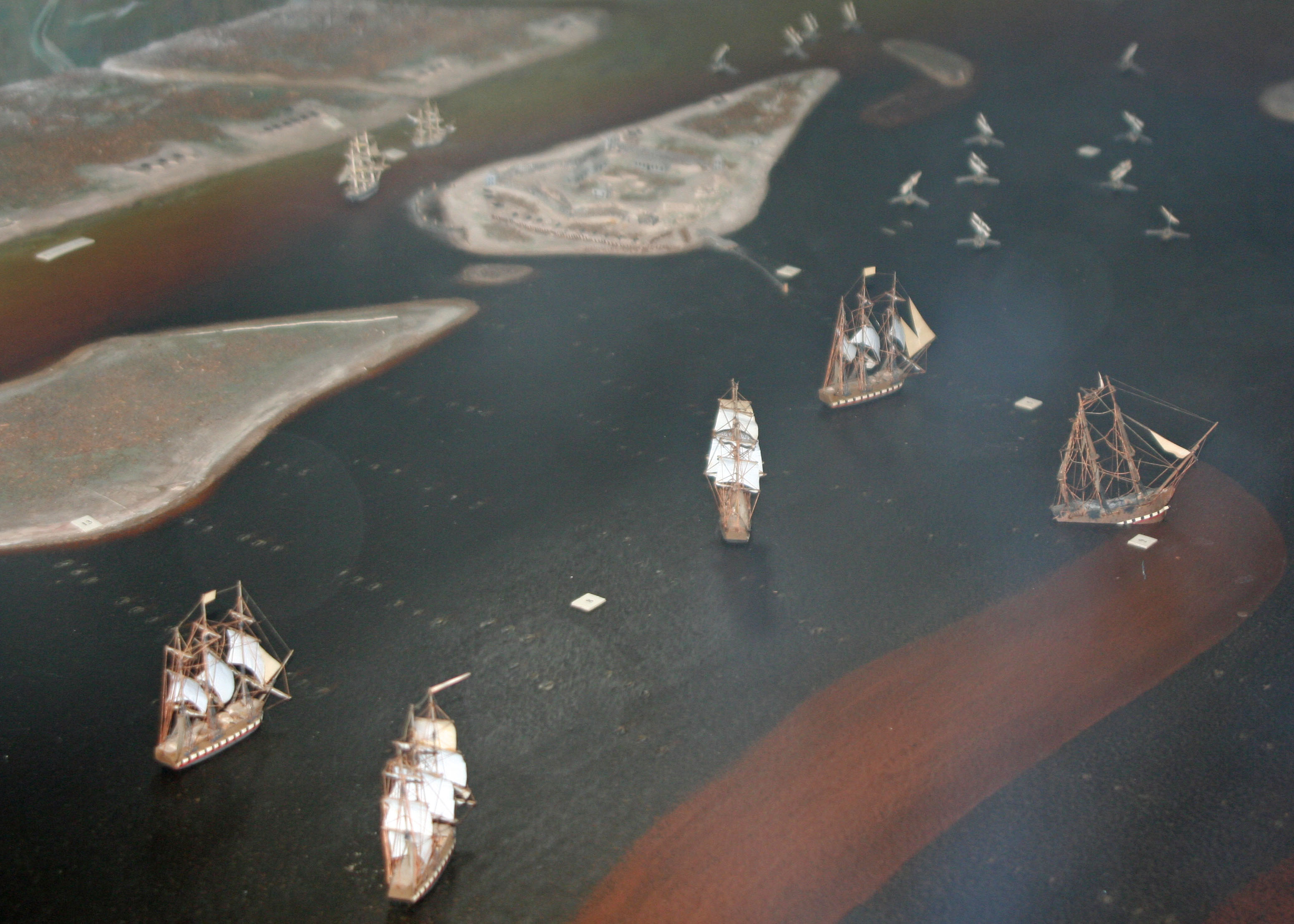
On the morning of November 15th, five British Warships including the sixty-four-gun Flagship Somerset appeared out of the mist below the fort. Of equal, if not more concern, the British had taken advantage of a high flood tide and pulled the converted and armed East Indian merchant ship Vigilant and the gun-sloop Fury within pistol range of Mifflin’s northwest corner. A number of land batteries also had cannons pointed at the fort. (Fort Mifflin had a total of 10 cannons.)
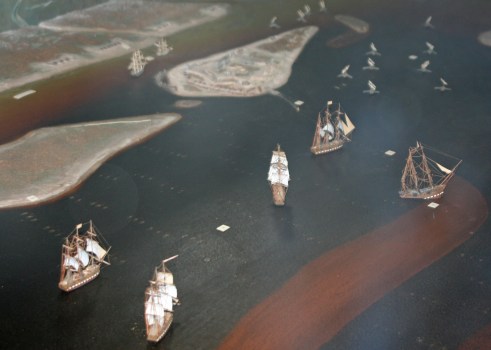
This model provides an overview of where the British Men-of-War were located in relation to Fort Mifflin. Andrew and James Mekemson were part of the artillery company protecting the wall under the guns of the two ships on the upper left hand corner.
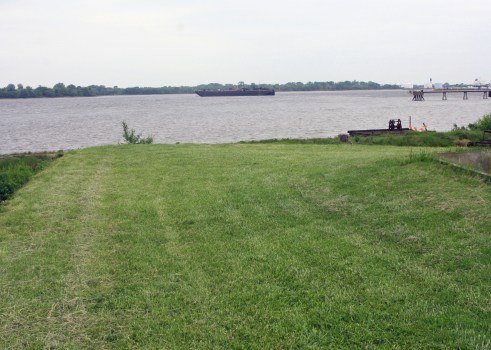
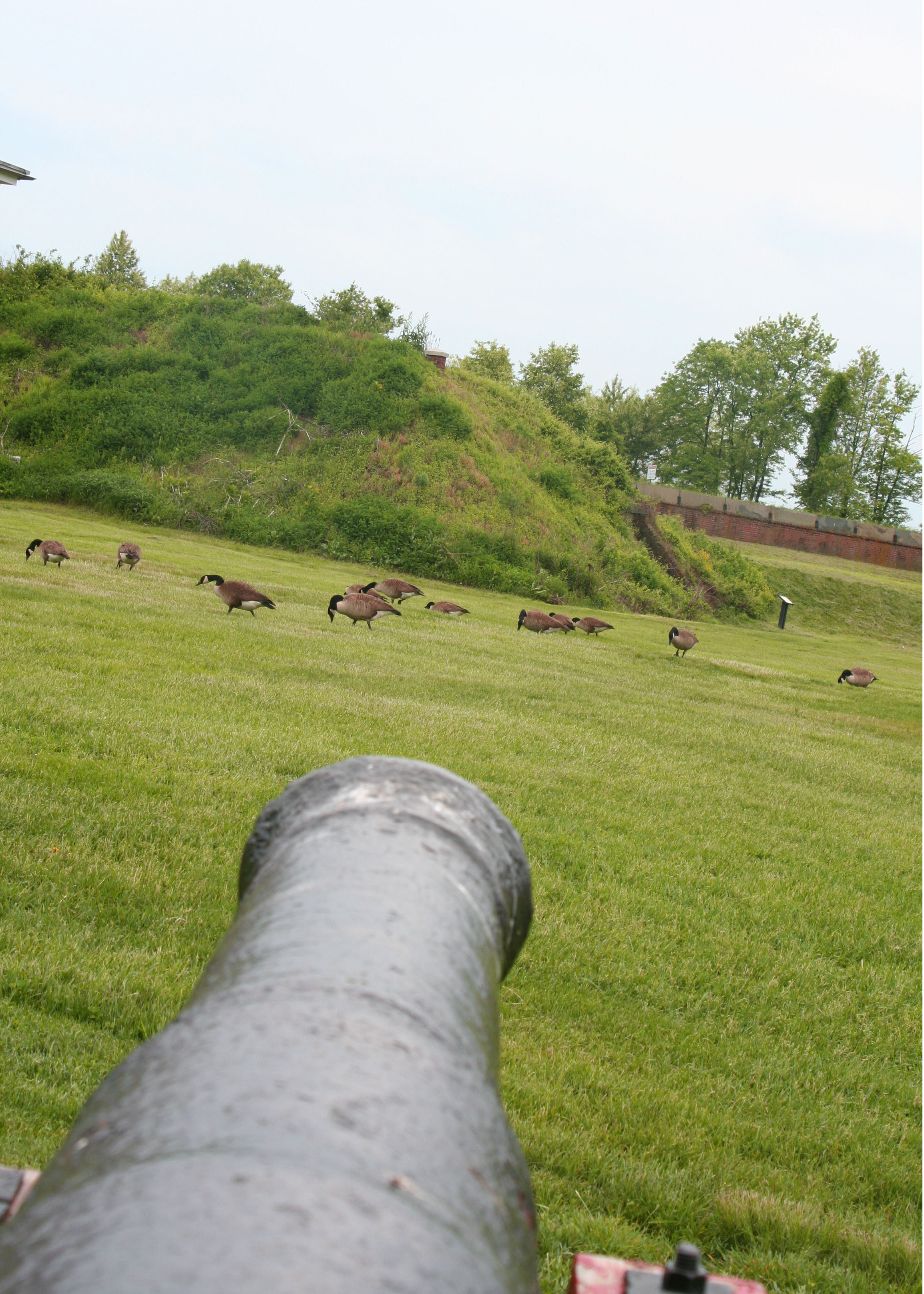
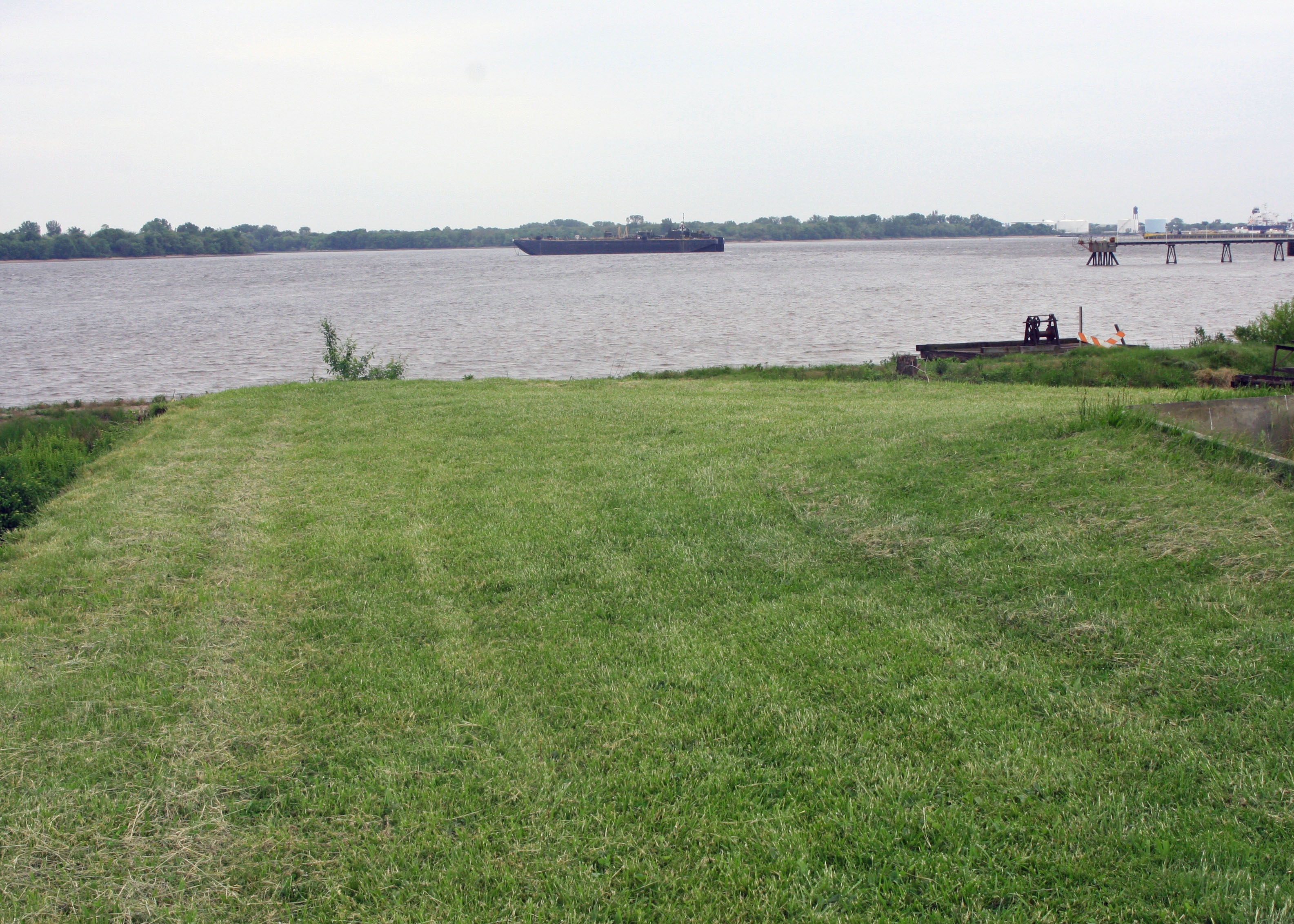
Looking out from the lawn in front of Fort Mifflin, the barge is in the approximate location of the British Flagship Somerset.
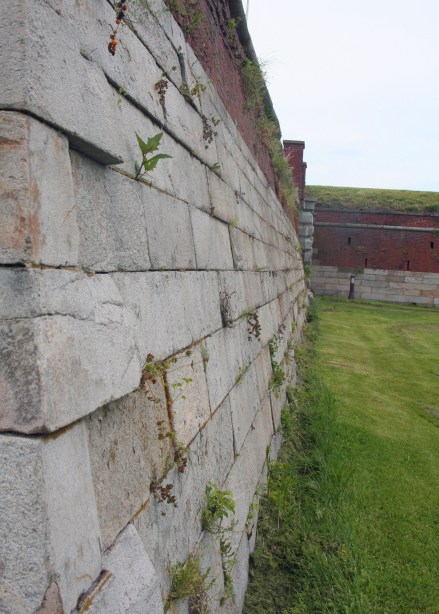
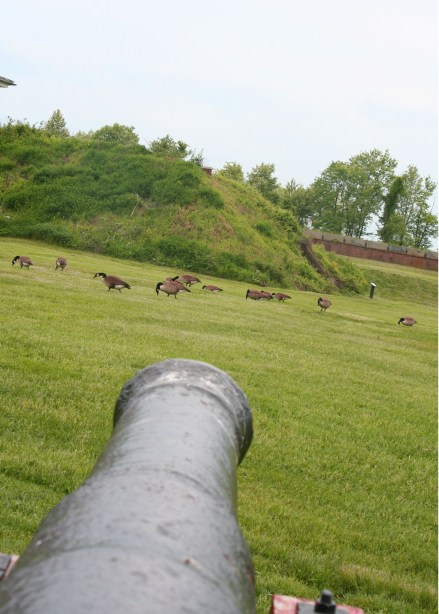
The Vigilant was so closed to the wall that British Marines positioned in the masts could fire pistols down at my ancestors who were manning the American cannons.

As the sun rose, the ships and land batteries opened fire in a bombardment that sent over 1000 cannonballs per hour crashing into the fort. It was the heaviest naval bombardment of the Revolutionary War.

Joseph Plumb Martin, a young private from Massachusetts, was there during the battle and captured the sheer terror of the experience some years later in his book Ordinary Courage. “They mowed us down like corn stalks,” he reported.

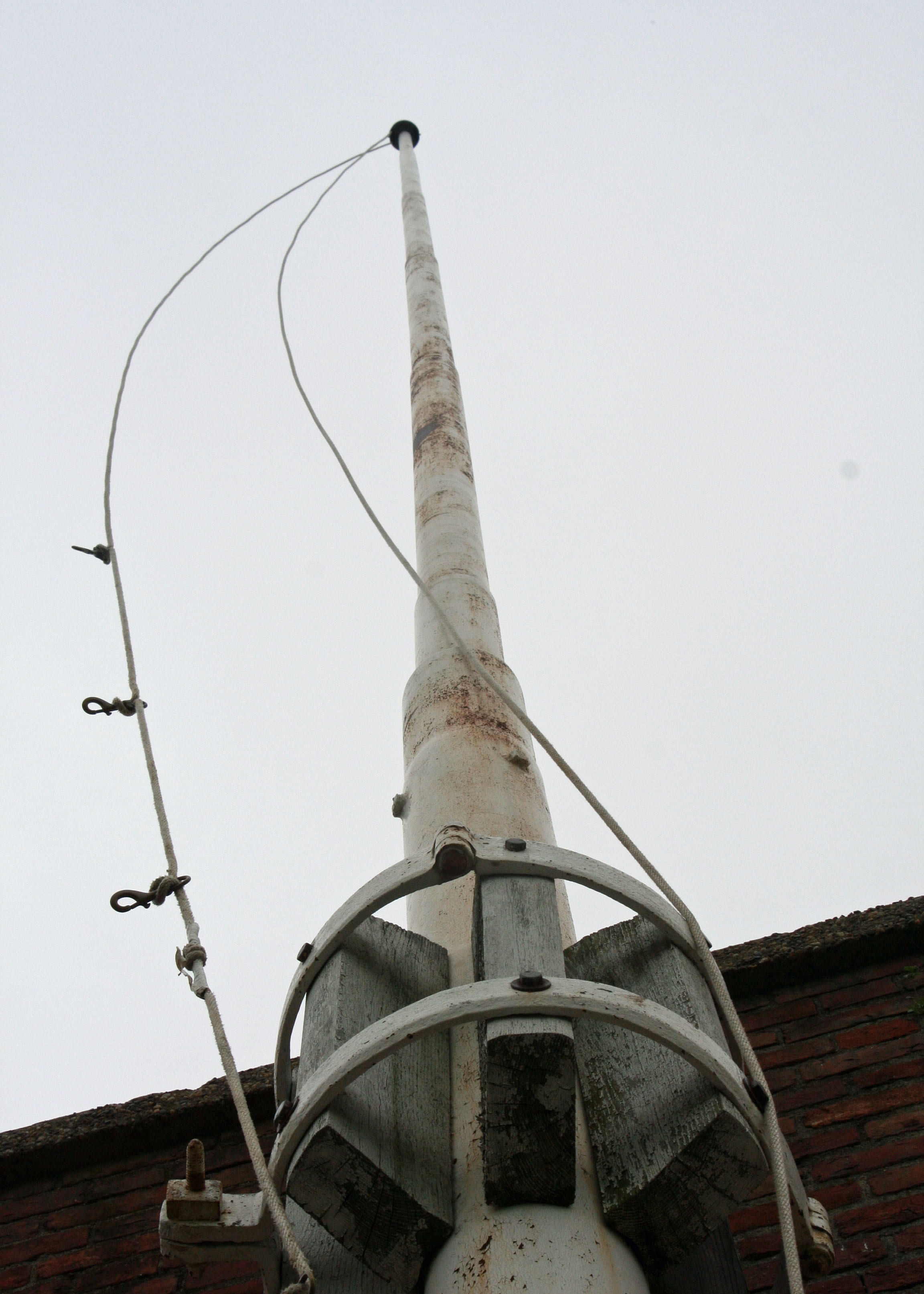
At the height of the bombardment a decision was made to hoist a signal and request help from the galleys and floating batteries above the fort. A volunteer was requested to climb up the flagpole with the signal flag as the cannonballs hurtled in from all directions.
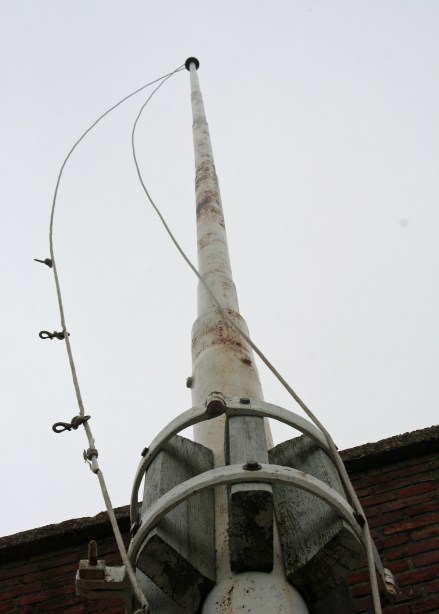
Fort Mifflin’s modern flagpole.

Joseph Plumb Martin had a vivid memory of the event. “…a sergeant of the artillery offered himself; he accordingly ascended to the round top and pulled down the (fort’s) flag to affix the signal flag to the halyard. The enemy, thinking we had struck (surrendered), ceased firing in every direction and cheered.”

“Up with the Flag!” was the cry from our officers in every part of the fort. The flag was accordingly hoisted and the firing was immediately renewed. The sergeant then came down and had not gone a half-rod from the foot of the staff when he was cut in two by a cannon shot.”

The sergeant who climbed up the flagpole was my ancestor, Andrew Mekemson. His brother James was also killed during the engagement. Two other brothers, stationed on the Floating Battery Putnam, also fought in the battle. I figured if there were ghosts at the fort, they might very well be relatives.

Since Fort Mifflin offers ghost tours, Peggy and I signed up for a nighttime tour by lantern.

We decided to do a reconnaissance during daylight hours but a police vehicle blocked the road. A dozen or so media crews were pointing their cameras into the airport at a large UPS cargo plane. It had just flown in from Yemen and was being searched for ink cartridge bombs. We were caught in the midst of a “credible terrorist threat” as President Obama described it.

Ghosts can’t be nearly as scary… can they?

By 6:30 the police car had moved but the TV crews were still on watch. We wound our way through the circus. Dusk had arrived at the Fort.  The tour was scheduled to start as soon as it is fully dark. Make that pitch black; there was no moon.

Our guide gathered us. His lantern immediately blew out. “It’s only the wind,” he explained. “I don’t believe in ghosts. I don’t hunt them and they don’t hunt me.”

His disclaimer comes with a ‘but.’ He works at the Fort, and occasionally ‘things’ happen. There are unexplained footsteps on stairs. Doors close and latch on their own. Voices are heard in the next room. A woman screams like she is being murdered. The police are called but can’t find anyone, or thing. A man walking on the rampart disappears into thin air.

Our guide relates story after story as we make our way through the candle lit buildings of the fort. Other staff, volunteers and visitors have also experienced strange phenomena. More than one visitor has left on the run and even the guide has packed up and gone home on occasion.
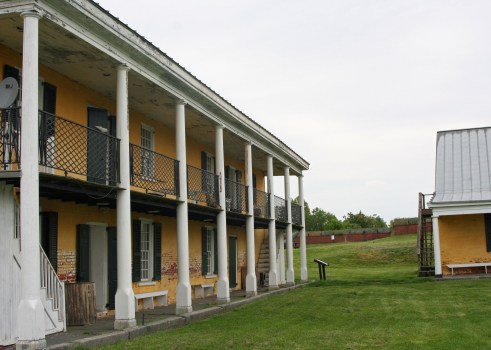
Our guide was spending the night in the room at the top of the stairs when he heard footsteps coming up the stairs. He opened the door and no one was there. Next he heard voices coming from the room next to him. He checked. No one was there. He packed up and went home.

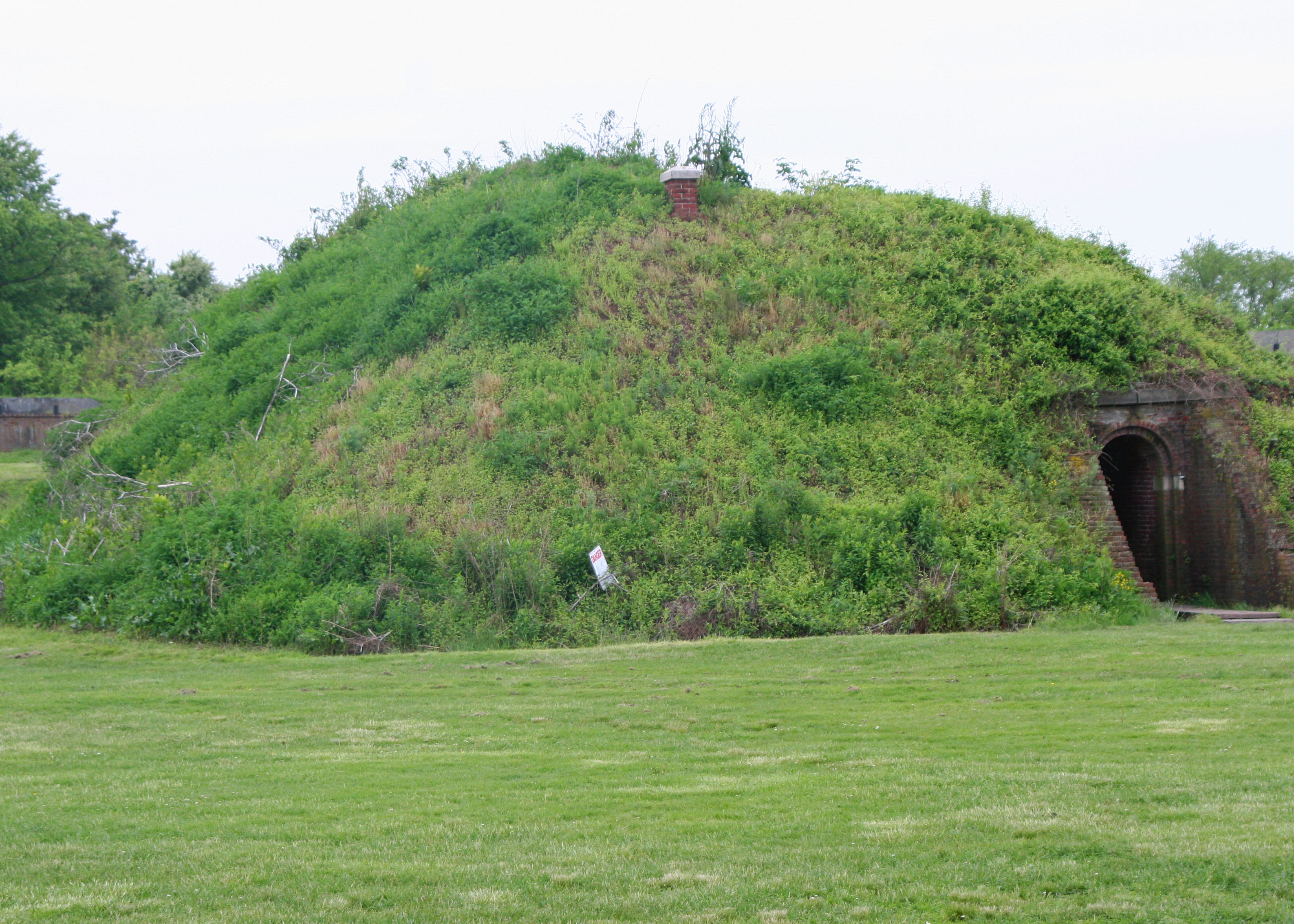
We arrived at the Fort’s ammunition magazine, a bush covered hill that resembled an ancient burial mound. A bright hurricane torch outlined the dim opening. We entered and walked down a narrow, dimly lit corridor that opened out to a large, arched bunker. A single candle created dancing shadows on the far wall.
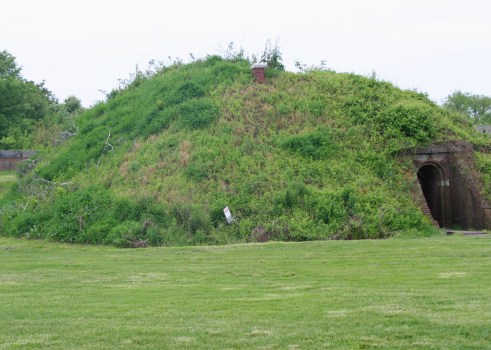
The grave-like ammunition magazine where visitors encountered the well-informed guide dressed as a Revolutionary soldier and where Peggy and I had our ghostly experience.

“I’ve never felt anything in here,” the tour leader related. “It’s dead space,” he quips and repeats himself in case we missed his humor. For others, the story has been different. A group tourists reported on encountering a wonderful guide in the bunker dressed as a Revolutionary soldier. He vividly described the horrendous battle that took place on November 15, 1777. The Fort had no such guide…

I stared hard into the corner where he supposedly stood, trying to create something out of nothing. But there were only the dancing shadows. Peggy tried to take a photo but the camera froze and refused to work. As she struggled with it, the last of our tour group disappeared down the narrow corridor, leaving us alone with the flickering candle.

We hurried after the group. There was no one outside the magazine, only the glowing torch and the dark night. “I saw them heading down a side corridor,” Peggy said. With more than a little reluctance, we dutifully trooped back inside. Peggy’s corridor is a bricked in wall. I was starting to feel spooked.

“Maybe we should go back to the bunker,” she suggested.

“No,” I replied and headed for the entrance. Just as we arrived, the hurricane torch made a poof sound and went out, leaving us with nothing but dark. The hairs on the back of my head stood at attention. Was Andrew trying to communicate with us? Peggy and I decided it was time to vacate the premises.

Fortunately we found our group several buildings away and stuck close to them the rest of the tour. We couldn’t have asked for a better Halloween experience.

Next Blog on Halloween: A Lonely Grave… Peggy and I are looking for the grave of an ancestor, shot down as a Scottish Martyr, when we see what almost has to be a ghost.
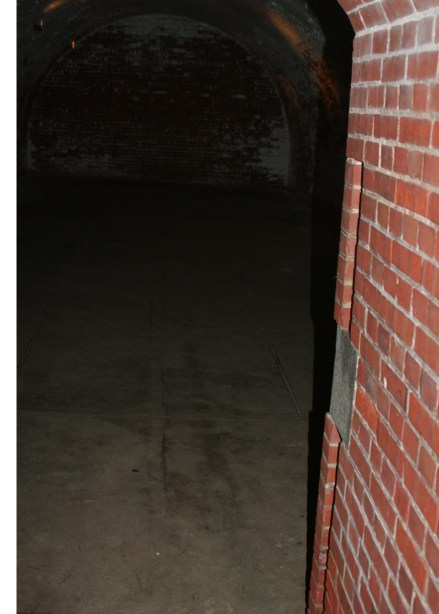
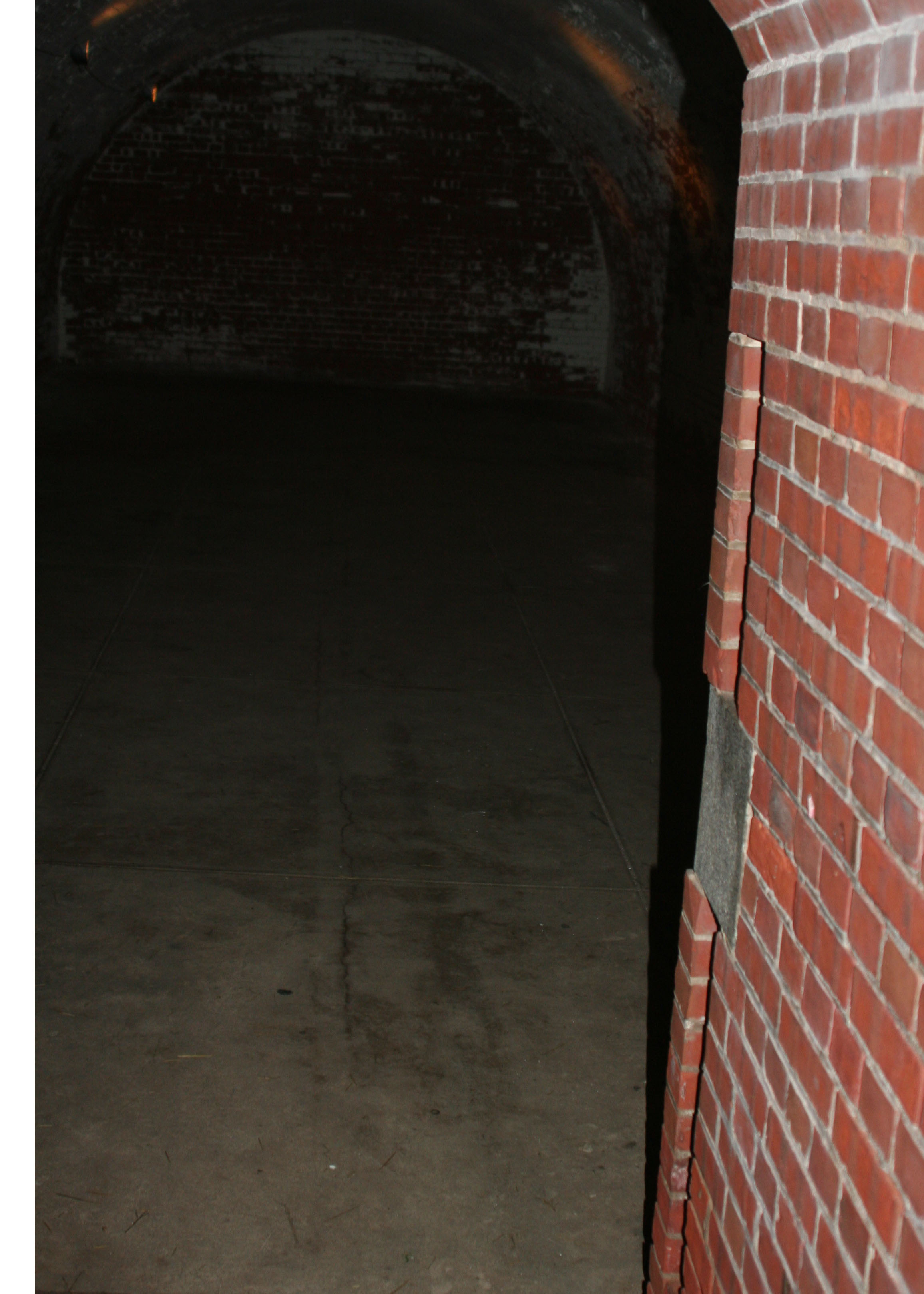
Once you’ve become thoroughly “spooked,” every dark corridor, such as this one at Fort Mifflin, becomes a potential hiding place for a ghost.

Flagstaff, Arizona: Countdown to Exploring the Grand Canyon by Raft

I have often wondered what part, if any, the strange rock formations in the Grand Canyon played in the development of the Hopi belief about Kachina deities.

Five squirrels with long tufted ears just went charging past our van… in a row. I think it must be love and Peggy agrees. We speculate a female is leading the boys on a glorious romp. “Catch me if you can!” she giggles. The Albert Squirrels are excited to make babies and perpetuate the race, or species, if you want to be biologically correct. Lust is in their hearts. Or maybe it’s just the guys working out territorial differences.

We are located at a KOA in Flagstaff, Arizona as we prepare for our raft trip down the Colorado River. It’s a big campground. Everywhere we look men and women wearing yellow shirts are busily preparing for the onslaught of summer tourists. It feels like a beehive, or squirrel’s nest. The camp cook tells us 28 people work here. Jobs are highly specialized. The man who straightens out misplaced rocks stopped by to chat with us this morning.

Yesterday we watched two employees struggle for an hour on laying out the base of Teepee. It had all the flavor of an old Laurel and Hardy film. They kept measuring and remeasuring the angles, first one way and then the other. I expected one to leap up and start chasing the other around camp with a 2×4.

We wonder what the Kachina deities who live in the San Francisco Mountains overlooking our campground think about the squirrelly activity taking place beneath them. There are bunches of them up there, over 300 according to Hopi lore, and each one has a lesson to teach, wisdom to disperse. They come down from their perch in the winter to share their knowledge. I suspect they would have made quick work of the Teepee project.

Peggy and I hike up the mountain following Fat Man’s trail. Of course there is no irony here as we desperately try to beat our bodies into shape for the Canyon trip. The trail’s name suggests this is a gentle start. Instead it takes us straight up into a snowstorm. The Kachinas are rumored to mislead people under such circumstances.

Once they had the mountain to themselves but now they have competition. Technology has arrived. Tower after tower bristling with arrays of tracking, listening and sending devices look out over the sacred lands of the Hopi, Navaho and other Native Americans.

It’s hard not to think Big Brother is watching. Or not be disturbed by the towers’ visual intrusion. But their presence means we can get cell phone coverage and climb on the Internet. We are addicted to these modern forms of communication so it is hypocritical to whine, at least too much.

But back to the squirrel theme, Peggy and I are a little squirrely ourselves as we go through our gear and get ready for our grand adventure. I am nervous. This is my first multi-day river trip. What have we gotten ourselves into? Do we have the equipment we need? Will we survive the rapids? What will the people who are joining us be like? What challenges will we face that we are ill prepared for? There are many questions and few answers.

Would pirates and bones wearing life vests be part of our trip? Would my every move be recorded on camera?

Would people who should not be let near knives suddenly be wielding them?

Would we be stalked by threatening spirits of the Canyon?

And, horror of horrors, would I be required to paint my toenails to keep rafts from flipping in the canyon? The answer to one of these four questions will be revealed in my next post.
The Beautiful and Rugged Northwest Coast… Brookings, Oregon

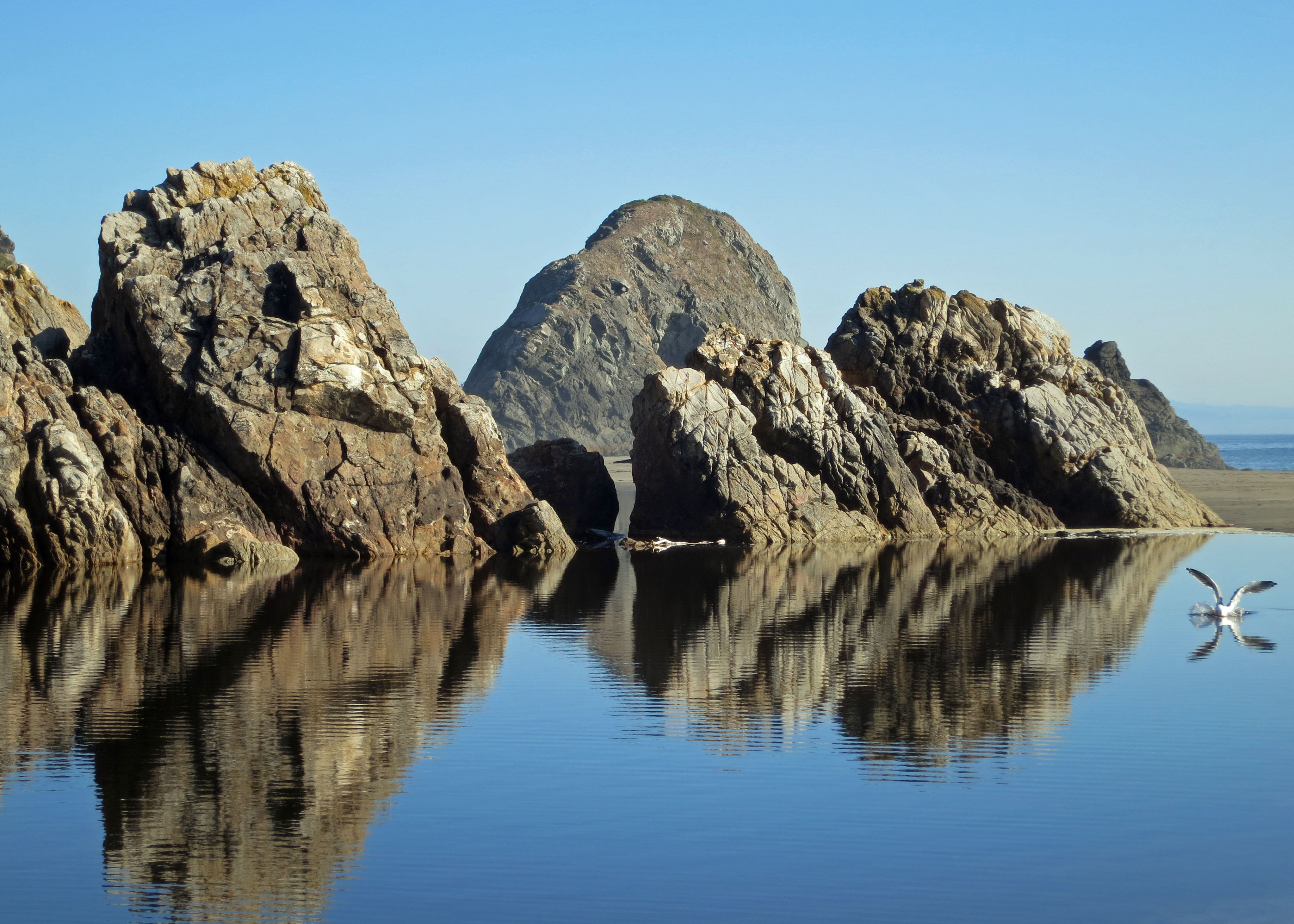
Beautiful weather and early morning sunlight combined for this reflection photo of a rock jutting out toward the Pacific Ocean at Harris Beach State Park just north of Brookings, Oregon where I was camping this week.

Nobuo Fujita had a job to do: bomb the United States. It was September 9, 1942 and his plane was loaded with incendiary bombs. He launched his floatplane from the Japanese submarine that had delivered him to the coastal waters off Southern Oregon, climbed over the ocean, and flew toward the mountains behind Brookings. His bombs were supposed to ignite a massive forest fire.

The forest didn’t cooperate but Fujita returned to Brookings in 1962 and presented the city with a 400-year-old Samurai sword that belonged to his family. In 1967 Brookings made him an honorary citizen.

On March 11, 2011 another intruder from the East came roaring into Brookings. This time it was the remnants of the devastating tsunami that had struck Japan and caused such horrendous loss of life and property. Brookings got off easy but considerable damage was done to the town’s harbor. It was a solemn reminder of what might happen when the next big earthquake hits the West Coast.
It’s hard to imagine this peaceful harbor scene at Brookings, Oregon being disrupted by the remains of the tsunami that struck Japan a year and a half ago.

I was in Brookings this week to camp out at Harris Beach State Park and enjoy the beautiful and rugged coastline. I divided my days between working on a book about my African Peace Corps experience and hiking on the beach. The weather was close to perfect. Naturally, I had a camera along.

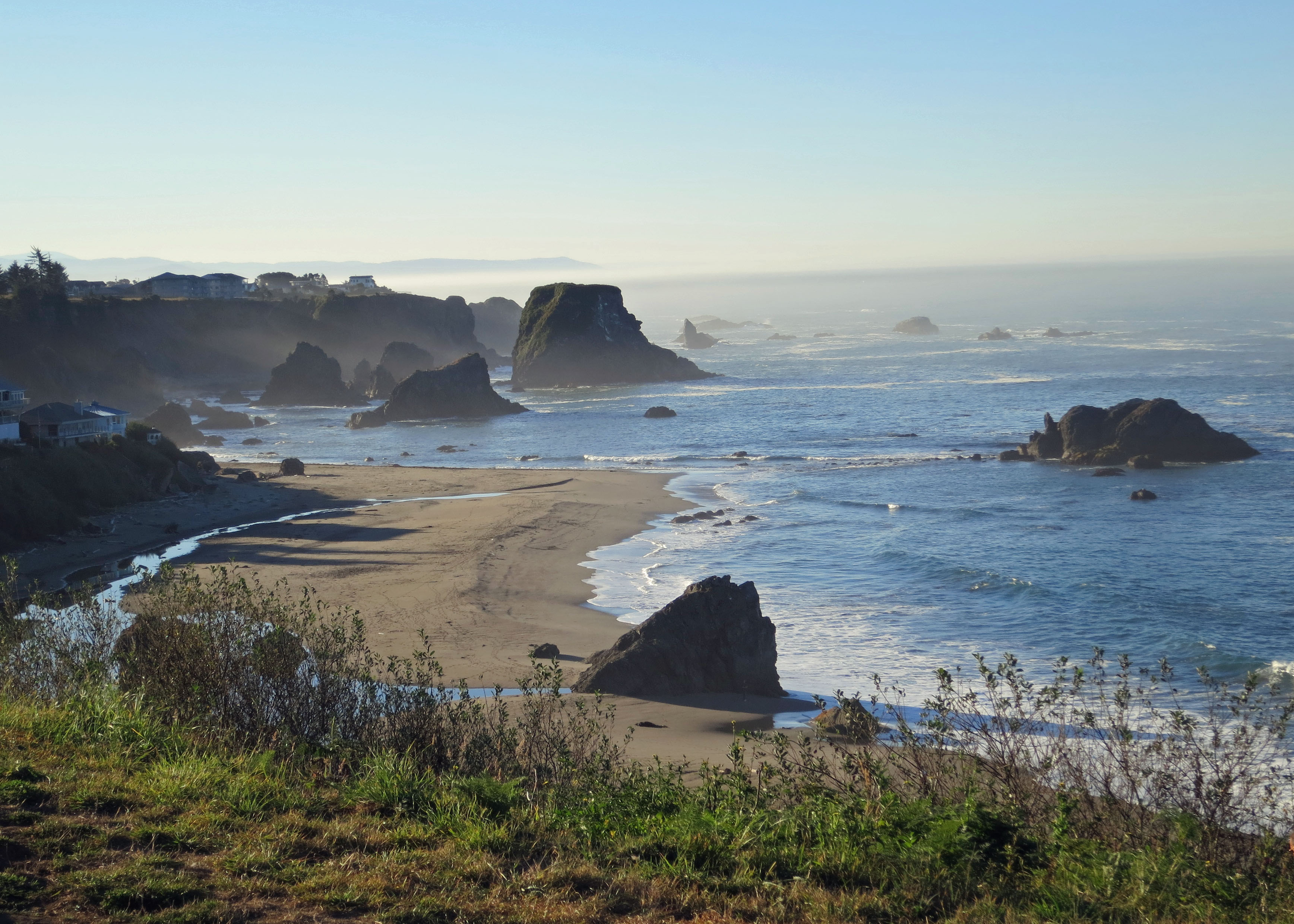
The view from Harris Beach State Park looking south toward Brookings, which was about a mile away.

A sandbar created a small lagoon that was excellent for capturing reflections. Note the seagull on the right.

OK, I admit I can’t resist reflections. This shot at Harris Beach State Park, Oregon was taken late afternoon.

This view, similar to the photo at the beginning, was taken early morning.

Another early morning photo at Harris Beach State Park. This one is looking south. The sun has gently touched the rock on the right while those on the left remain in shadows.

The sandbar that separated the lagoon from the ocean.

I liked the combination of dark rock, sandy beach, sky and water.

Looking north up the Pacific Coast from Harris State Beach.

Low tide uncovers an abundance of sea life. When my dad lived on the Oregon Coast, he would gather the mussels for cooking.

And what’s an ocean without a seagull… This guy was hoping I would break out lunch.

The restless ocean and its waves were calm for my visit to Brookings, Oregon.

This large log, bleached white by the sun and sea, is a reminder of stormy oceans. In fact watching storms hit the coast has become a major spectator sport during the winter on the Oregon coast.
I’ll finish off my post on Harris Beach State Park and Brookings, Oregon with a final reflection picture. Next up: A visit to Organ Pipe Cactus National Park in Southern Arizona.

A Homeless Man with a Pickup Truck and a Bank Account

My brother Marshall describes himself as An Itinerant Idler and spends his time migrating between the mountains of North Carolina and the swamps of Southern Florida.

My brother Marshall turns 72 this week so I decided to repost an earlier blog I wrote about him and his wandering ways. His life has changed since I first wrote this story. He sold his truck that had 195,000 miles on it and bought a red Chevy van with 115,000 miles. This is more significant than it seems. Now, instead of living in a tent, he’ll be living in his van. “I am no longer sleeping on the ground,” he reported proudly to me.

A grin lights up my brother’s face as we drive into his remote campsite near Lake Okeechobee, Florida. It’s time for our annual visit. At least once a year, I track him down.
“Think of me as a homeless man with a pickup truck and a bank account,” Marshall likes to note when describing his lifestyle.  Once upon a time he made his living as a professional photographer. Another time he ran his own business as a real estate appraiser. He had a six-figure income, owned a nice home and drove a fancy car. He was a man of means.

But he wasn’t a happy man.

Nine years ago he stopped trying to live a ‘normal’ life and became a modern-day gypsy.  Like the wild geese, he chose to migrate with the seasons, moving between the mountains of North Carolina to the swamplands of southern Florida. He calls himself the Itinerant Idler.

Marshall travels with a tent, a Coleman stove, a five-gallon propane tank, two folding camp chairs and a folding table. Large plastic bins serve as cupboards and closets. Paper plates make up his dish collection. If something doesn’t fit in the back of his pickup, he doesn’t need it. He has become a minimalist.

Once he took pride in what he owned; now he takes pride in what he doesn’t.

His kitchen, dining room and living room are whatever nature provides. Instead of watching TV, he watches squirrels playing in the oaks and Osprey diving for fish. Last year when I was visiting him in Big Cypress National Preserve, two bobcats came trotting into our camp.

During inclement weather, the cab of his pickup truck provides shelter. When it gets too cold he moves south. When it gets too warm or buggy, he moves north. On rare occasions he will take a motel room.

NPR keeps him in touch with the world and he speaks knowledgeably about current events.  He is particularly interested in what is happening on the economic front. We listen closely when he provides advice on what to do with our condo in Sacramento. Age and distance have not dulled his knowledge of the real estate market.

Marshall takes delight in living inexpensively. “I’ve paid $14 in campground fees over the past six months,” he brags to Peggy. Careful records are kept. There is food and gas and cigarettes and beer. “If it weren’t for the cigarettes and beer, I could live for a month on what it costs you to get through a day.” And he is right, even though we are rarely accused of squandering money.

Books and reading are his passion. He visits libraries regularly and picks through their $.25 and $.50 paperback retirees. His goal is to read 80,000 pages a year. So far he is on target for 2010. Finished books are given away to fellow wanderers. We qualify.

“The Bookmobile has arrived,” Marsh announces and goes rooting around in the back of his truck. He comes up with 93 books stored in plastic grocery bags for us to peruse. He has been saving them up. Some 22 are transferred to our RV even though I don’t have a clue where to put them. We, too, travel with a full library.

I fix teriyaki chicken and Peggy cooks up an omelet chock full of goodies as a thank you.  Both are favorites of Marshall’s. He obviously enjoys the spoiling, companionship and three days of conversation. Our visits are important to him. “It always takes me two or three weeks to recover when you leave,” he admits. It can be lonely.

And yet, there is a brotherhood of wanderers out here, people who share Marshall’s love of the open road and the freedom it offers (not to mention the inexpensive life style). They often end up camping in the same places at the same time and form into transitory communities. They become friends, help each other out and share their most precious commodity: carefully guarded secrets about other free campsites.

Marshall took me around to visit his neighbors in Big Cypress last year. John and Phyllis were from Ontario, Canada. Tom had made his living as an engineer at a television station.  Bob, possibly in his 80s, created interesting art pieces from pinecones. Dave was soap opera handsome and spent most of his day riding his bicycle.

“You have to meet Dumpster Diver Steve,” several of them urged with a touch of amusement. “Be prepared to stay awhile.” Dave and Marshall walked me over to Steve’s site and quickly disappeared.

Steve lives out of his car and finds most of what he needs to survive in dumpsters, thus the name. “I am 50% child, 45% crazy and 5% rational adult,” he immediately informed me. “I save the 5% rational adult for when the cops stop me,” he allowed with a wink and then waxed enthusiastically on life as a dumpster diver.

“You won’t believe what people throw away.” A few weeks earlier he had been visiting dumpsters behind a grocery store in Naples and discovered dozens of flowers the store had tossed. “I brought them back to camp, divided them up, and gave each woman a bouquet.

I found the act romantic.

“Hey, would you like to see my oven? I am cooking up a batch of spaghetti.” How could I resist? We walked over to Steve’s car. It was old, beat up and packed to the brim with treasures. His ‘oven’ was a quart jar filled with spaghetti resting on the back windowsill. Sunlight streamed through the window and provided the heat.

He had found the spaghetti that morning in the camp dumpster. Someone had left it in a Ziploc. “I only take food that is packaged,” he announced with pride. Steve is a first class dumpster diver.

Marshall, at 71, is reaching the stage where life on the road is becoming more difficult, especially living in a tent. He lusts after our van. Still, considering he smokes heavily and weighs all of 113 pounds, he is amazingly healthy. “I haven’t had a cold in five years and have only been in a hospital once during my nine years on the road.” And he is happier than I have ever known him to be.

Before leaving Okeechobee, I mention there is an inexpensive trailer court backed up to the beautiful Applegate River about five miles from our new home in Oregon. Maybe he will come out and settle down. Maybe he won’t.

The Wonderful World of Birds’ Bills… On the Road

I love pelicans. They have that ‘put together by a committee’ look. Check out the sharp hook on his bill. I took this photo in Baja California near Cabo San Lucas.


A wonderful bird is the pelican, His bill will hold more than his belican.

Dixon Lanier Merritt

Whenever I see a pelican, Dixon Merritt’s poem pops into my mind unbidden. Birds’ beaks, or bills if you prefer, are wonderful adaptations to their environment.

As I write this blog from my home in southern Oregon, a Rufous Hummingbird has his beak buried deep in our feeder while a Black Headed Grosbeak worries sunflower seeds on the hill behind him. The hummingbird’s beak is long and delicate, designed to capture nectar in the hidden recesses of flowers. The grosbeak’s beak is short and stubby, perfect for cracking open seeds.

I photographed the Brown Pelican in Baja California near Cabo San Lucas. Peggy found the Snowy Egret there as well. The rest of the birds featured in this blog are from Florida except for my final picture of Brown Pelicans. Few places can match Everglades National Park when it comes to unique bird life with interesting bills.

Peggy captured this Snowy Egret on film on the same Baja trip we found the pelican. Both Egrets and Herons have spear like bills. I like the way the Egret’s shadow allows his feet to be seen.

Speaking of spear like bills, how would you like to be on the receiving end of this one? I took this photo of a Great Blue Heron in Florida. While we normally think of Great Blue Herons eating frogs, fish and baby alligators, they are also quite fond of small rodents. I have often watched them patiently stalk mice on the Bodega Bay Headlands of Northern California. Their strike is lightning fast.

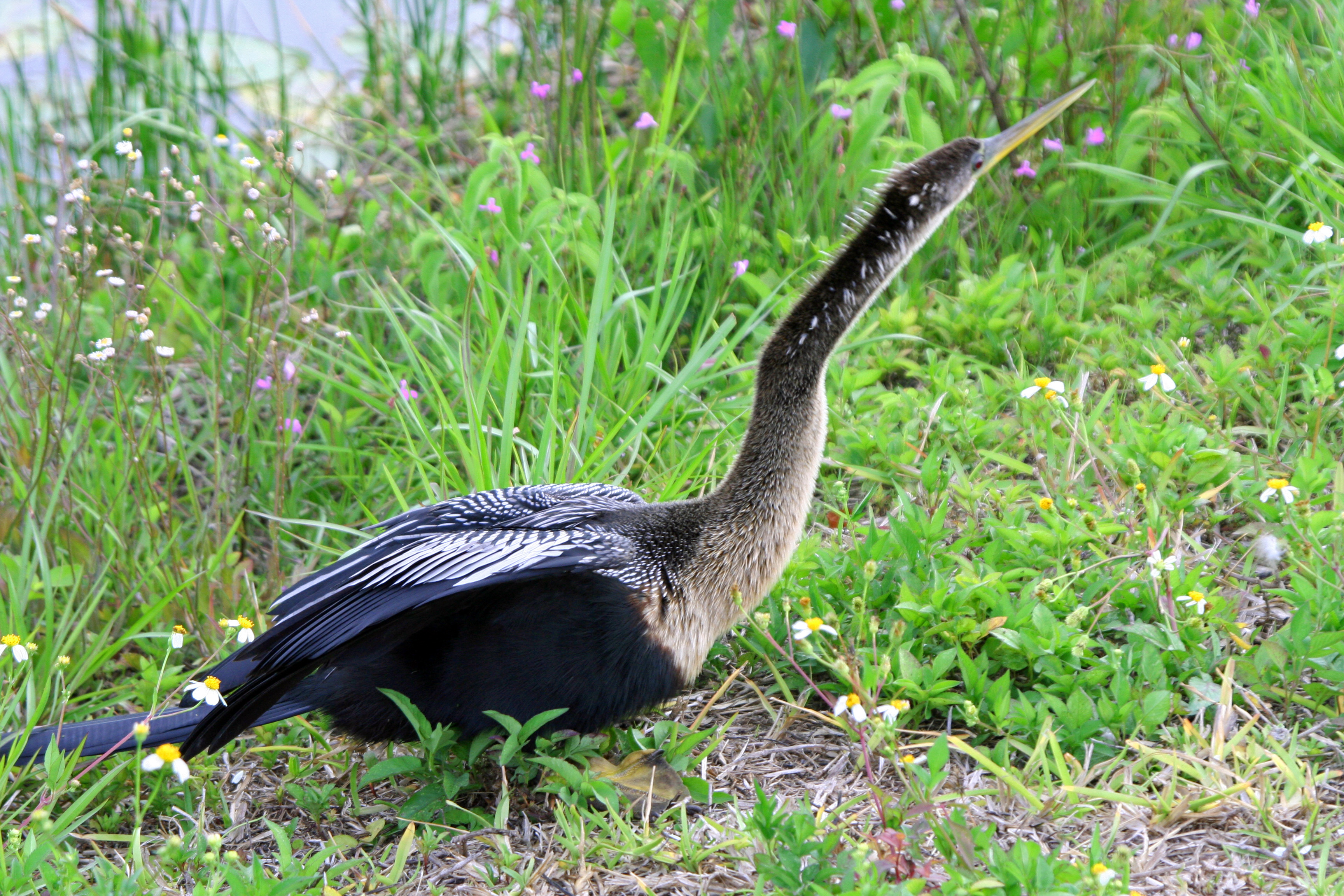
This Anhinga in Everglades National Park is obviously eyeing something in the grass next to it. Like Cormorants, Anhinga are designed to catch their dinner while diving and are well designed to do so.

A more typical picture of an Anhinga, drying its wings after a dive.

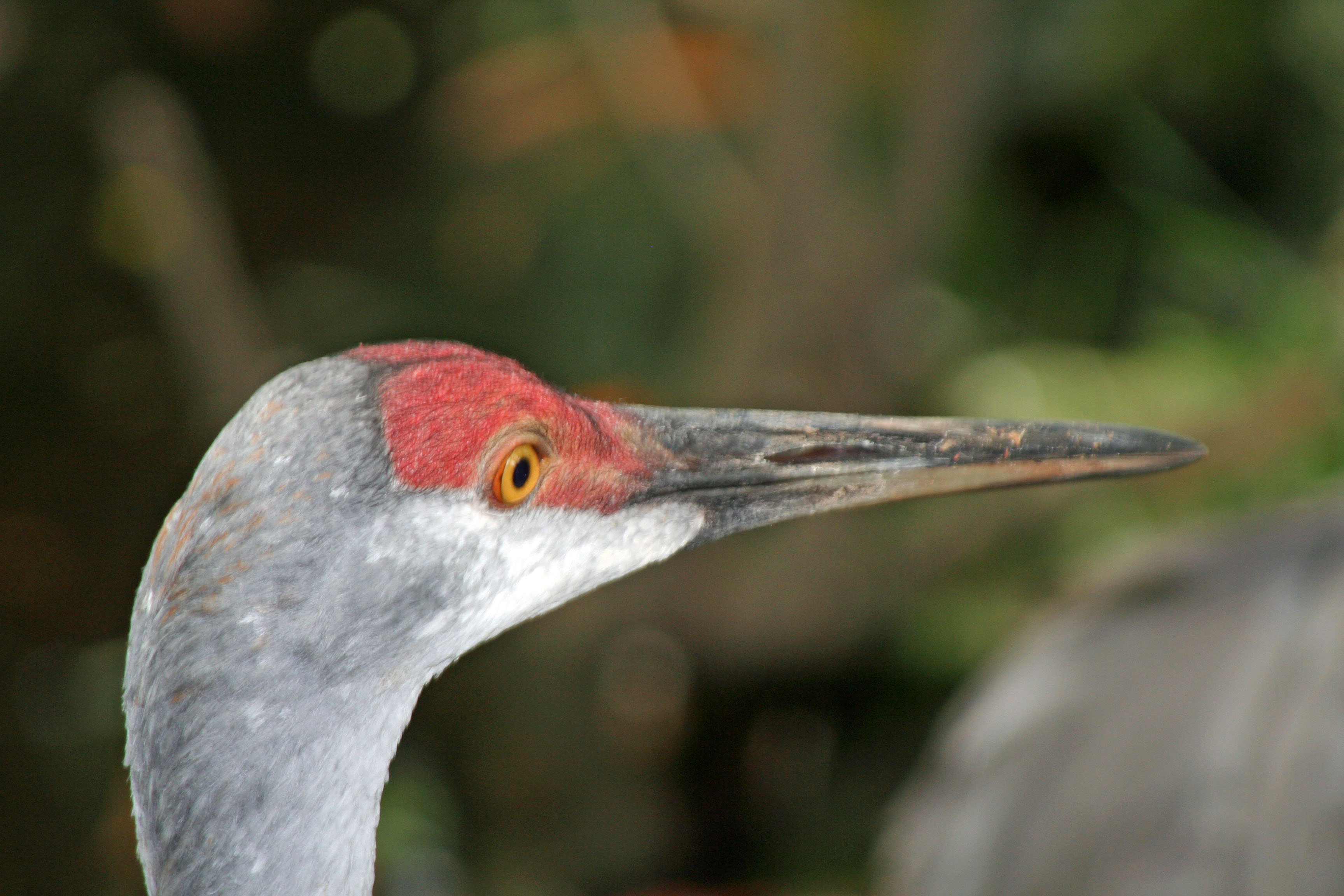
This Sand Hill Crane and four buddies came strolling into our camp in Central Florida.

When one thinks Florida and Everglades, it is natural to think of Flamingos. It’s hard to find more colorful beaks.

In my last blog I featured Black Vultures in Everglades National Park. This one looks pensive. Again, note the hooked bill designed for tearing flesh off of dead things.

White Ibis are common in the Everglades. They use their long curved bill to probe mud.

This guy is a little fuzzy but any collection of photos featuring birds beaks needs to include the Spoonbill, another resident of the Florida Everglades.

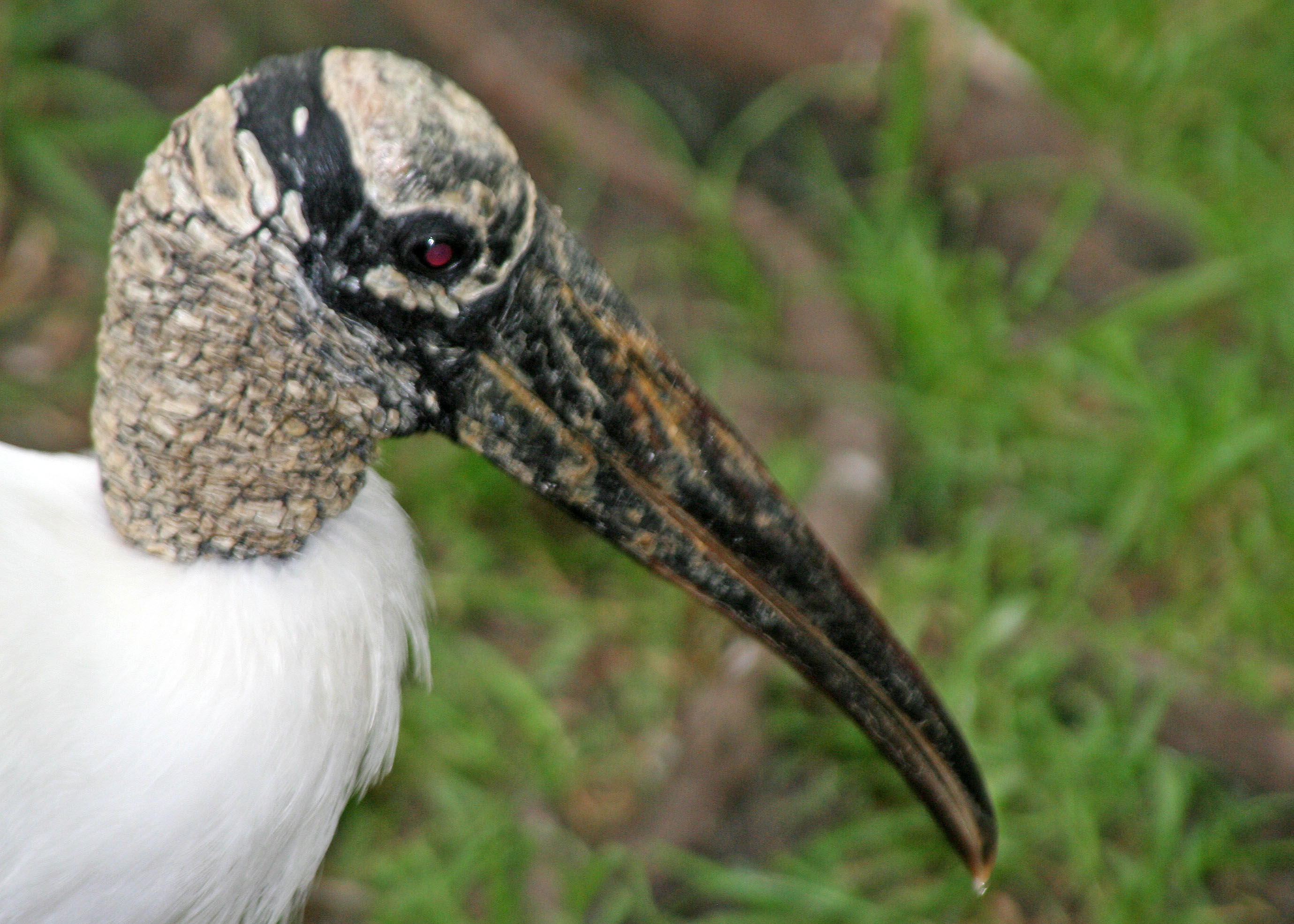
The mottled head and beak of a Wood Stork, also photographed in the Everglades.

I’ll close with my favorite bird. I took this shot of Brown Pelicans just south of Santa Barbara, California.

Newspaper Rock: 2000 Years of Indian Rock Art… All the News that’s Fit to Peck

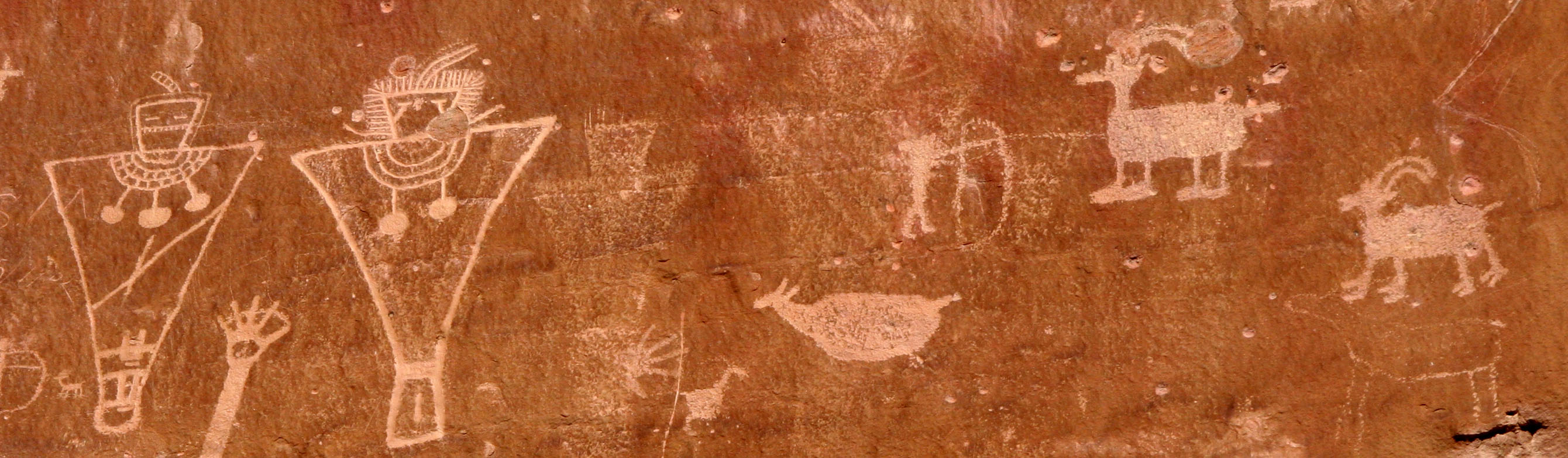
Newspaper Rock is filled with Indian rock-art that has been created over a period of 2000 years. This is my version of the headlines.

Sometime around when the historic Jesus was pounding the pavement of Jerusalem seeking recruits, Native Americans began pecking away at Newspaper Rock, creating petroglyphs. What they were trying to say is still something of a question mark. Guesses range from the mundane to the mysterious.

For example, was the guy shooting the buck in the rear a mystical symbol to give the hunter luck, or was it a recording of the event. “Shot big buck. Everyone is invited over for venison stew.”

Some images appear quite clear in intent. This Native American in sitting on a horse and using his bow and arrow to shoot a big buck. Hollywood would call it an action shot.

Like modern graffiti, some rock-art was likely meant to say, “I was here” or “This is the territory of clan such and such…” a no trespassing and no hunting sign. Enter at your own risk.

One interesting question is whether there was any purposeful art in rock-art? Did the creator peck away for the sheer joy of pecking away and creating a masterpiece?

In Navajo the rock is called Tse’ Hane or “rock that tells story.”

We can’t be sure when the individual petroglyphs were made. As I’ve noted before, Indian rock-art is very hard to date. The relative thickness of the rock varnish, the use of bow and arrows, the availability of horses, and the petroglyphs’ resemblance to other rock-art being created in the same era are all used as clues.

The National Historic Marker at the site notes that Archaic, Basket Maker, Fremont, Pueblo and Navajo cultures added their stories to the rock. In more modern times, pioneers even became involved.

Unfortunately, the tradition continues today. All too often people can’t resist adding their own names, marring and destroying the original petroglyphs at various sites. Think of spray-painting your name on the stained glass windows of the Cathedral Notre-Dame in Paris for comparison.

What’s fascinating about Newspaper Rock is the sheer number of petroglyphs included and the time frame over which they were created. I am also impressed with the variety of animals represented. For example, I can’t recall seeing flying squirrels or rabbit tracks in other rock-art sites Peggy and I have visited.

Newspaper Rock is located on Utah’s highway 211 which serves as the south entrance to Canyonlands National Park and is south of Moab. The following photos are a few examples of what you can expect to see. I take total responsibility for the interpretations.

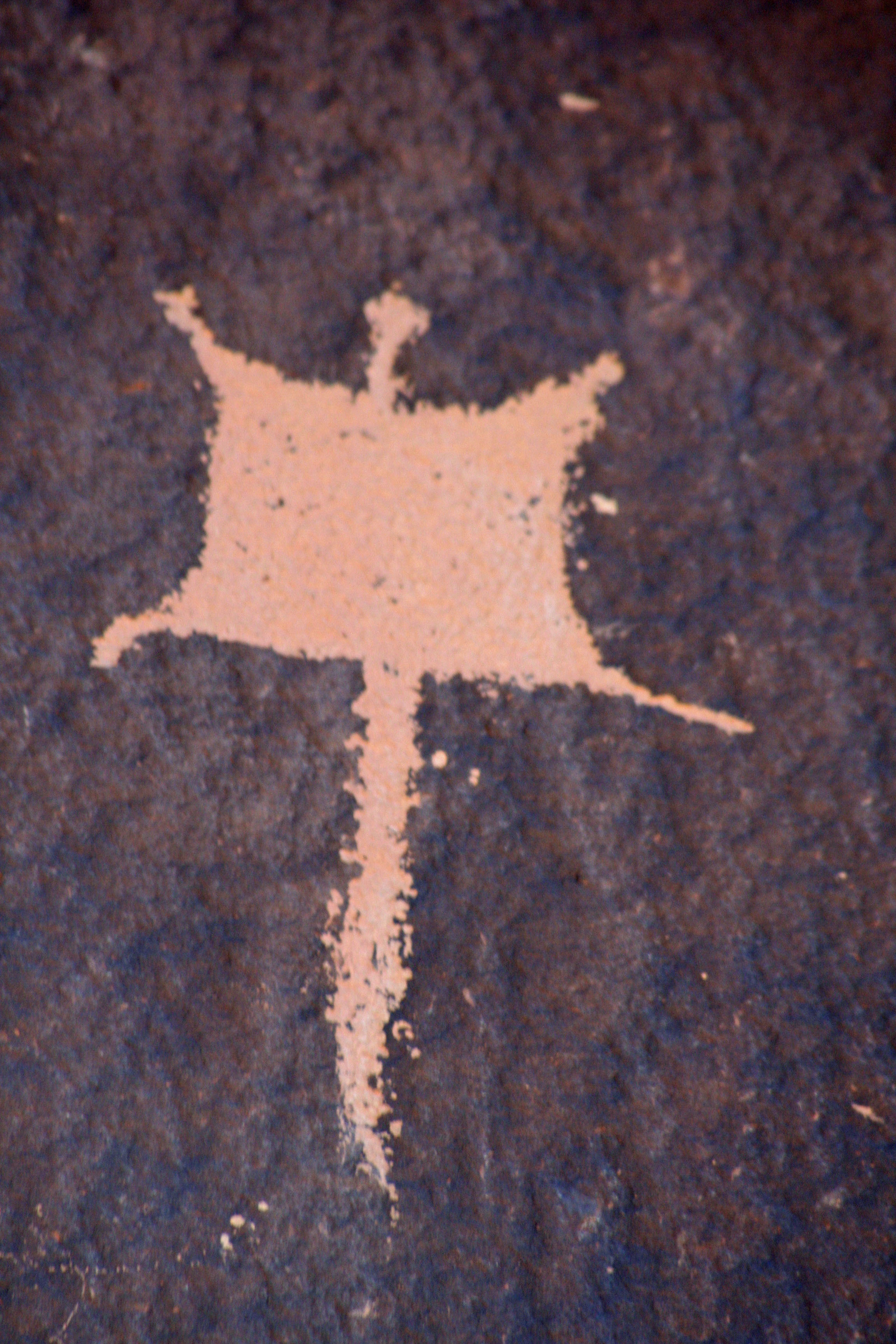
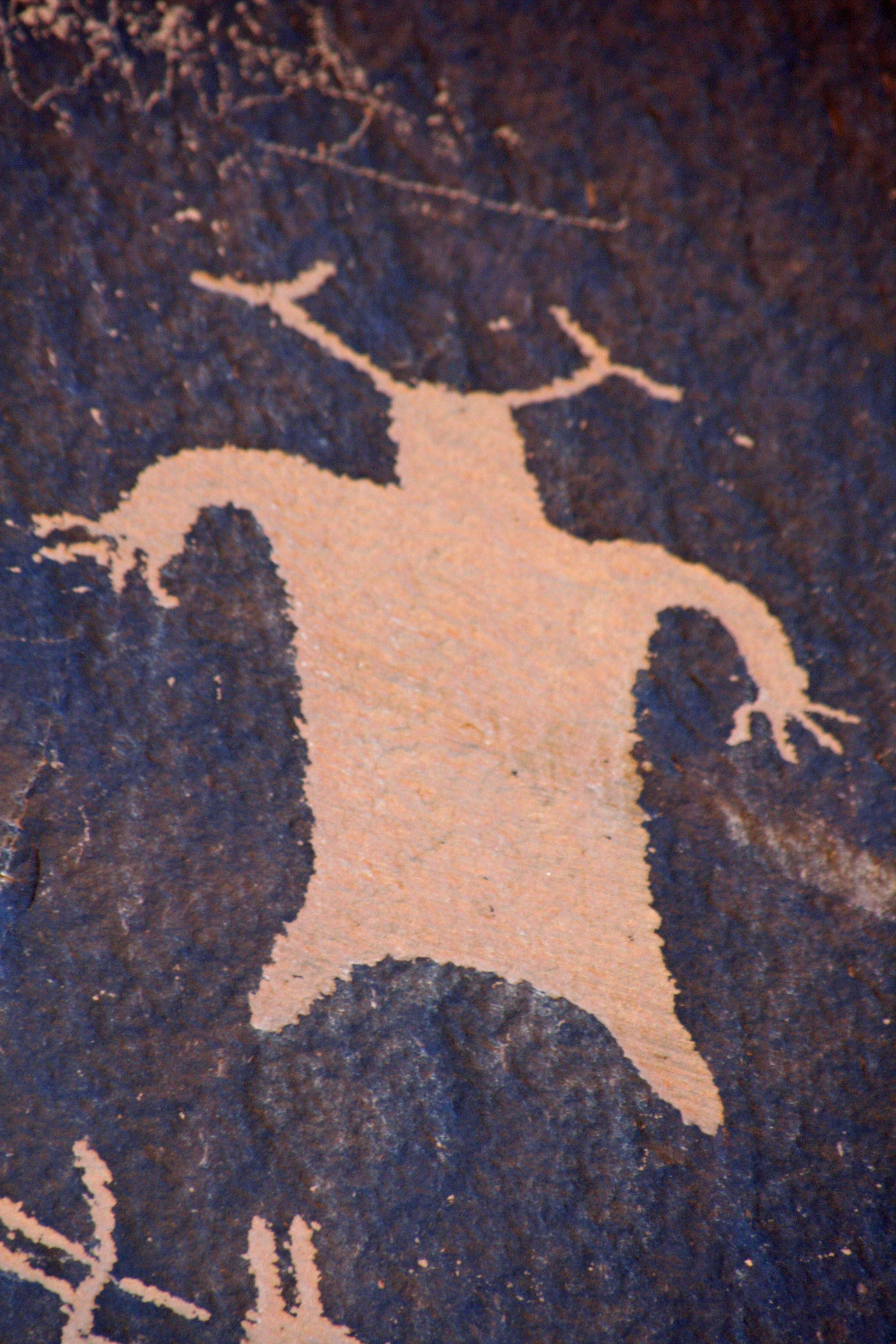
A flying squirrel sails across the sky at Newspaper Rock.

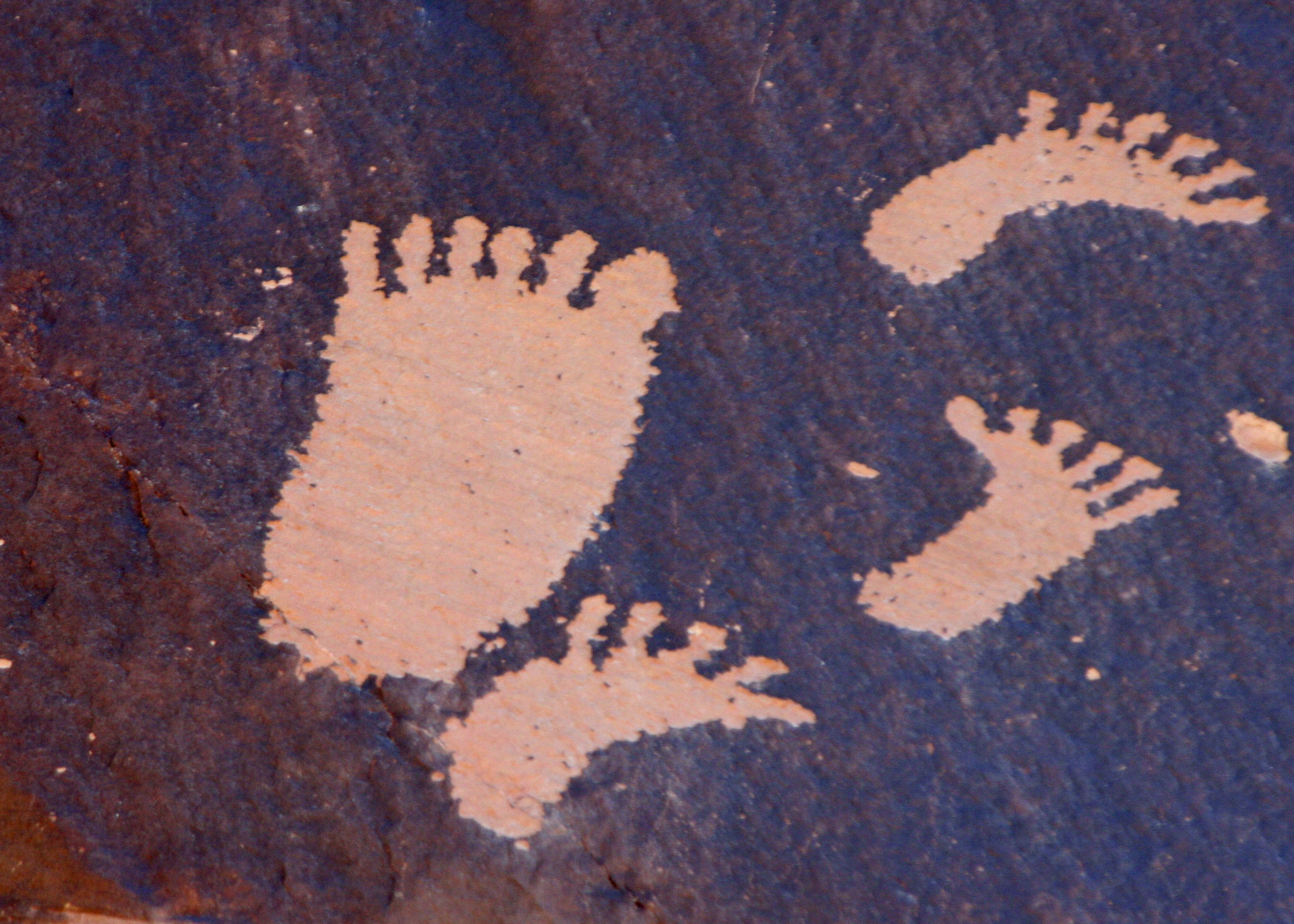
Big foot, bear foot, bird foot and a screaming ladder.

What little kids expect to find hiding under their bed at night.

A bow-legged trick rider?

A bow-legged trick rider? Yeehaw!

This represents the richness of wildlife found on Newspaper Rock. I see deer, a buffalo, big horn sheep, a bear and a lizard. I don’t have a clue what the long creature on the left with the strange legs is. Any guesses?

I’ve included this photo to illustrate how crowded the petroglyphs are on Newspaper Rock. Note the rabbit tracks working their way upward on the upper-right center.

Buffaloed?

Bear with me. (grin)

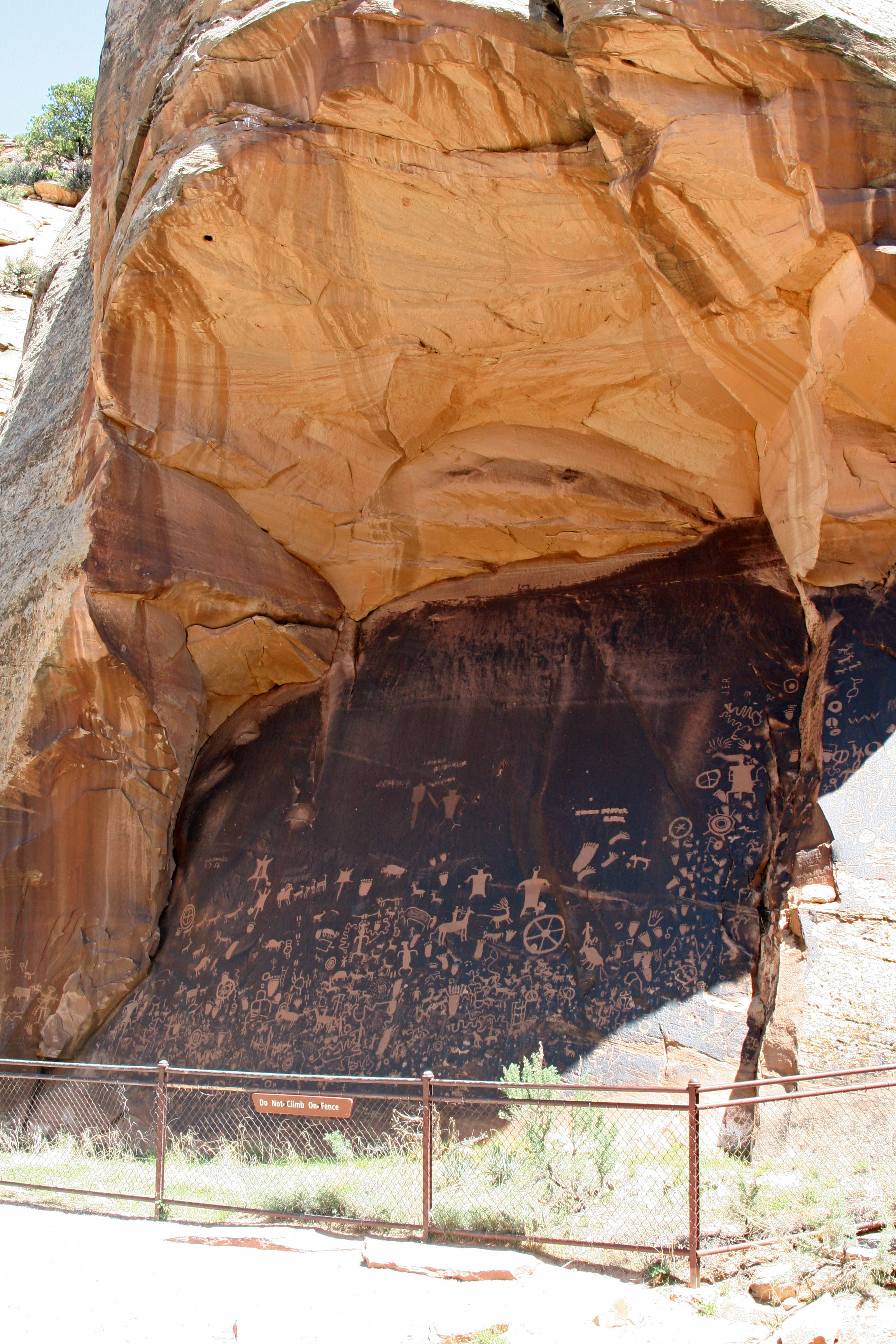
A picture of the complete Newspaper Rock site. The fence has been added to discourage people from defacing the petroglyphs.

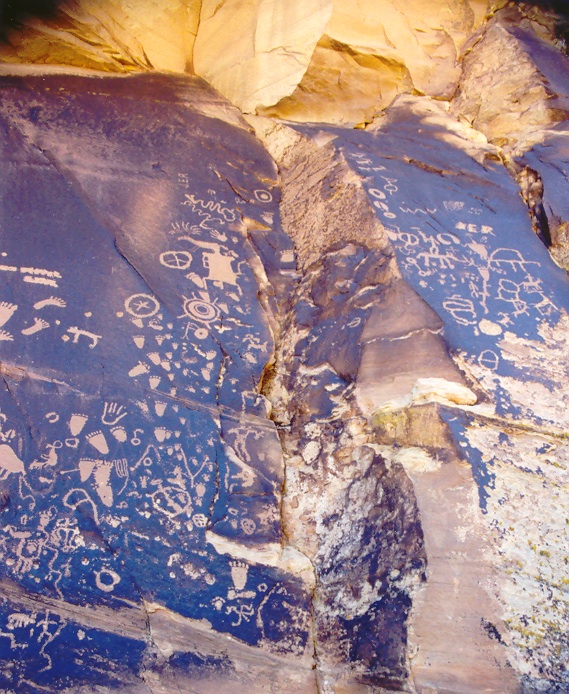
My favorite photo. I like the contrast between the orange sandstone and dark rock varnish.

The Ancient World of Indian Rock Art… On the Road

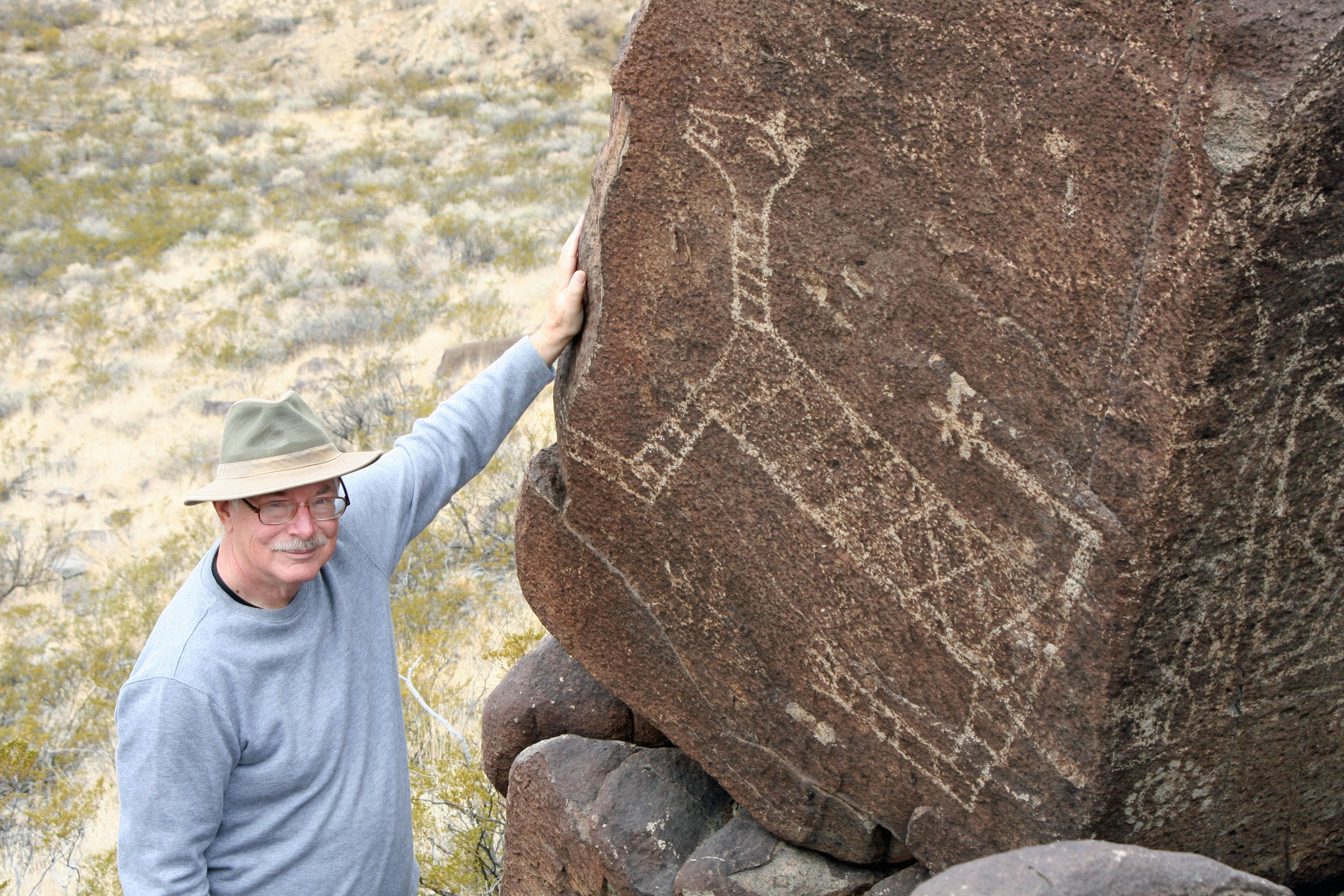
My wife Peggy and I have travelled throughout the western United States visiting and photographing Native American rock-art. We found this petroglyph of a cougar in the Three Rivers Petroglyph National Recreation Site of southern new Mexico.

I grew up in the town of Diamond Springs, California located in the foothills of the Sierra Nevada Mountains.

Once upon a time Diamond had been known as Mo-lok’epakan, or, Morning Star’s Spring. It was a very holy place to the Maidu Indians. They came from miles around bearing their dead on litters for cremation.

Apparently the Maidu had been living in the area for a thousand years. It is a sad commentary on both our education system and how we treated the Indians that I grew up never hearing the name Morning Star’s Spring much less Mo-lok’epakan.

Our only connection with the Maidu’s lost heritage was finding an occasional arrowhead or Indian bead.

The thrill of finding arrowheads, however, led to a lifelong fascination with the culture of Native Americans. Over the past ten years that fascination has led me to an interest in Indian rock-art or petroglyphs and pictographs. Petroglyphs are pecked or scraped from dark, rock varnish exposing a lighter color underneath. Pictographs are painted on rocks.

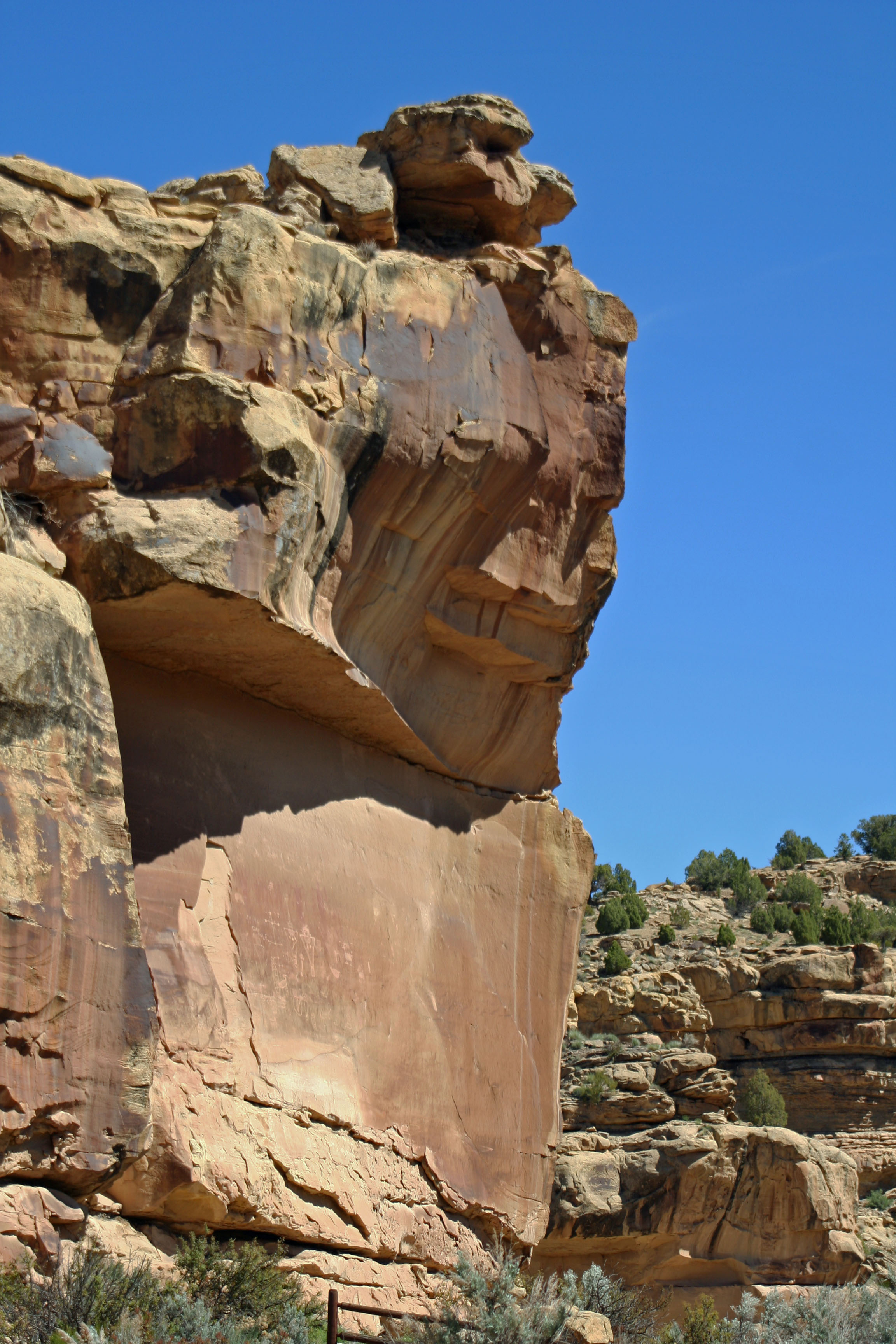
Indian rock-art is found at thousands of locations throughout the Western United States often near water or unique landmarks. Searching for rock-art is often like a treasure hunt. Here you can spot a group of petroglyphs on the left about a third of the way up the rock.

Peggy and I have explored and photographed major rock-art sites throughout the western US. Today I will introduce Sego Canyon located in eastern Utah off of I-70 near the small town of Thompson. Later I will blog about other sites such as the Three Rivers Petroglyph National Recreation Site of New Mexico.

What captured me about Sego Canyon is the unique, almost ethereal rock-art of the archaic peoples, and the fact that the rock-art represents three distinctive Native American cultures ranging over 8000 years.

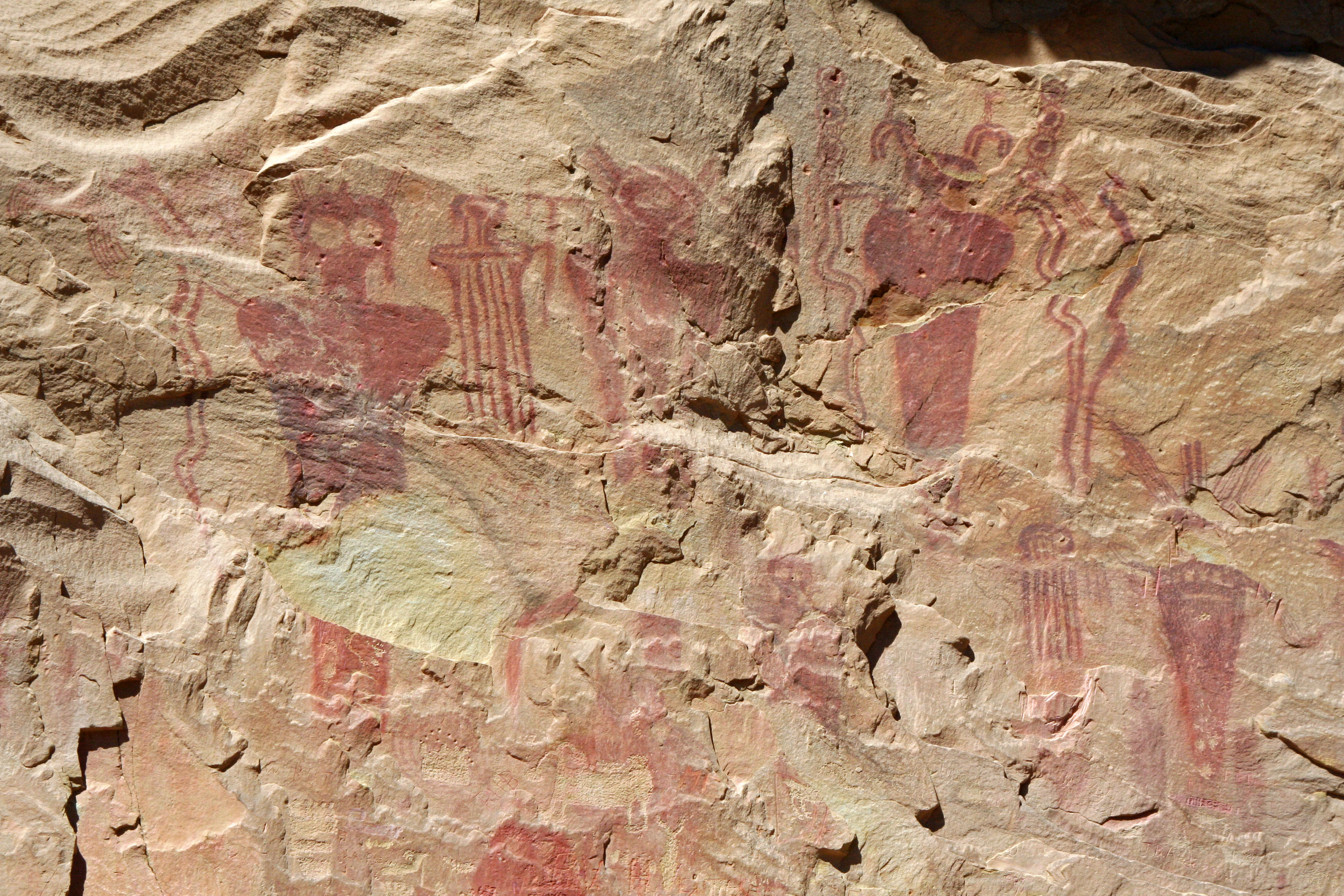
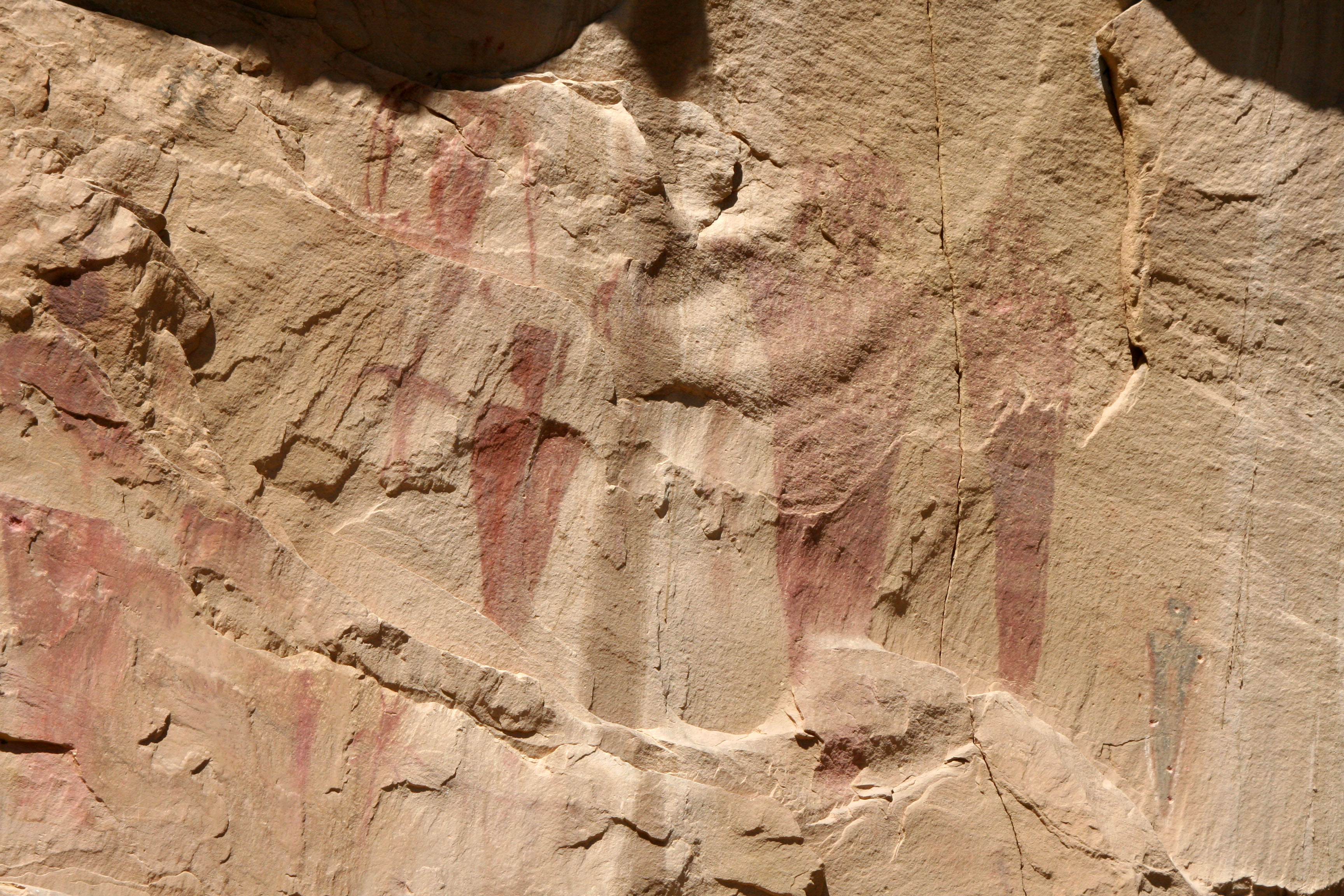
The pictographs featured below were made by archaic hunter-gatherer nomads who wandered across western North America between 6000 and 100 BC. Rock art is classified according to various styles and this particular style is known as Barrier Canyon. Its attributes include life-size, man-like creatures with hollow eyes, missing arms, antennae, and lots of snakes. The theory is that the figures may have represented shamanistic journeys to the underworld. I am voting for encounters with aliens… just kidding.

This rock-art, which is found in Sego Canyon, Utah, was created sometime between 6000 and 100 AD. It is classified as the Barrier Canon style. Note the hollow eye sockets, antennae, horns and snakes.

This is a close up showing images from the above photo. There is some thought that these figures reflect shamanistic visits to the underworld but one can understand why UFO fans might think they represent encounters with aliens.

These figures from the Barrier Canyon style seem wraith-like… red ghosts arising from the rock.

The Fremont Culture existed between 600 and 1200 AD and represented a more settled lifestyle. The rock-art of the Fremont Indians featured rectangular bodies with small heads. Both deer and mountain sheep are also found in the rock art below. Note the Indian shooting the mountain sheep with a large bow and arrow.

This rock-art found in Sego Canyon is done in the so-called Fremont style where rectangular figures with elaborate jewelry were common.

Mountain sheep are the most common animals found in Native America rock-art.

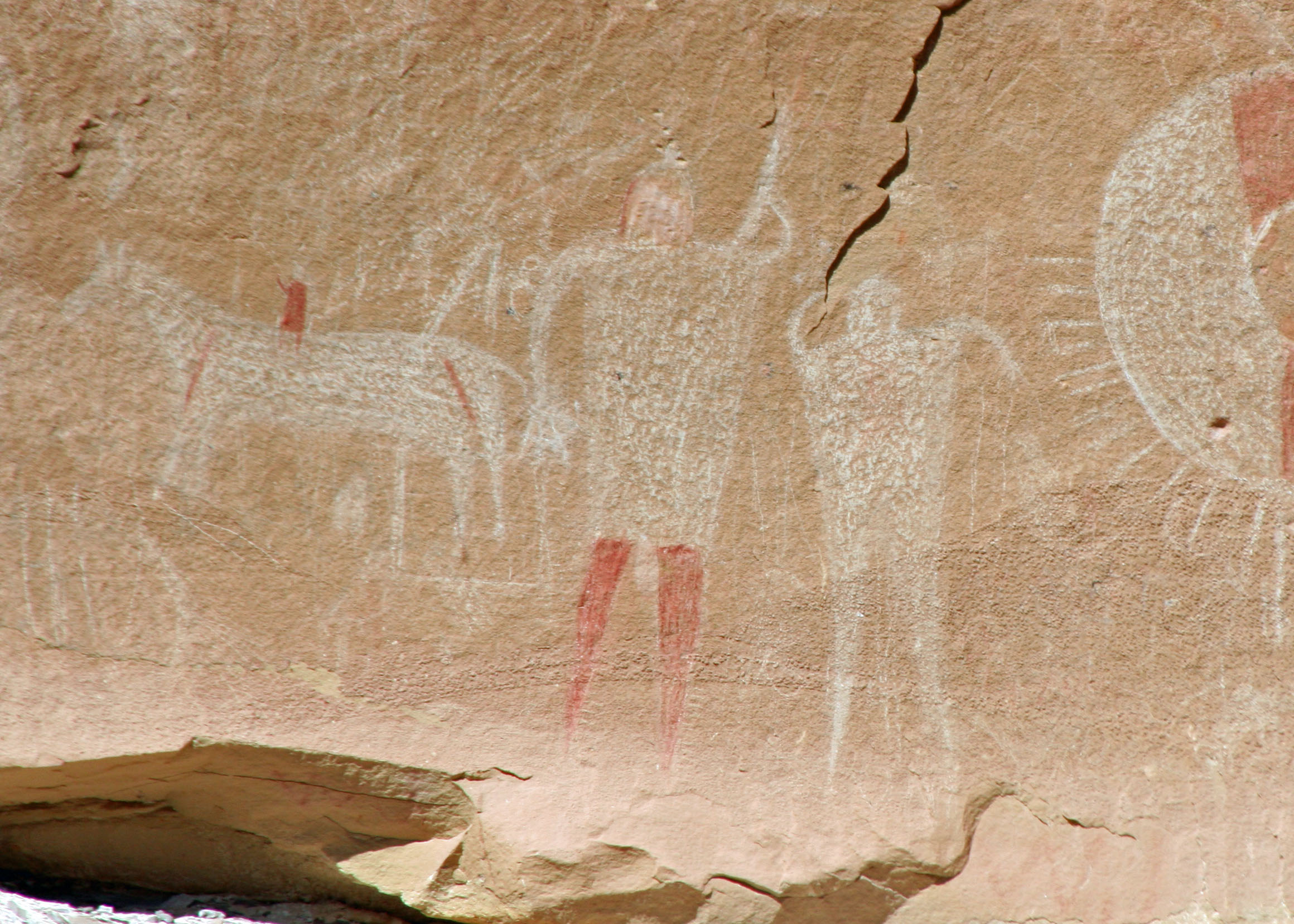
The final culture represented in Sego Canyon is that of the Ute Indians who lived in the area from 1300 AD up to 1880 when they were forced off the land to live on reservations. One indicator of more ‘modern’ rock-art is the presence of horses that didn’t exist in North America until the Spanish introduced them in the 1500s. Note the red leggings on the central figure. I also like the little red guy riding the horse. Yahoo! The round figure on the right is thought to represent a shield.

Identifying the age of petroglyphs is a difficult process. The appearance of horses shows that the petroglyphs were created after the 16th Century when the Spanish introduced horses to North America.

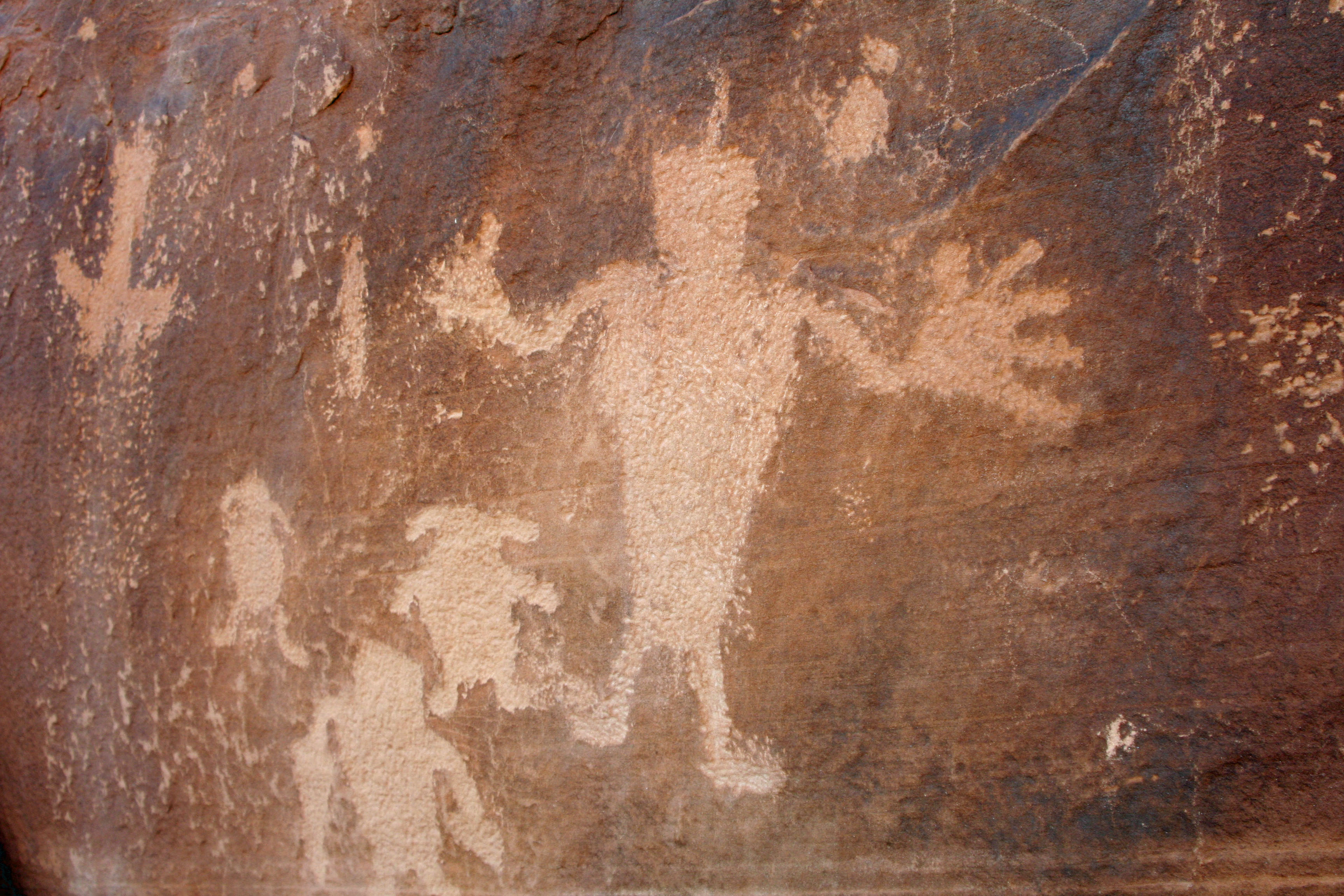
In my next post I will travel to Dinosaur National Monument, which also has some very unique Indian rock-art such as this one featuring what I assume is a woman with big hands and some very fat dogs.

When Good Toys Go Bad… On the Road

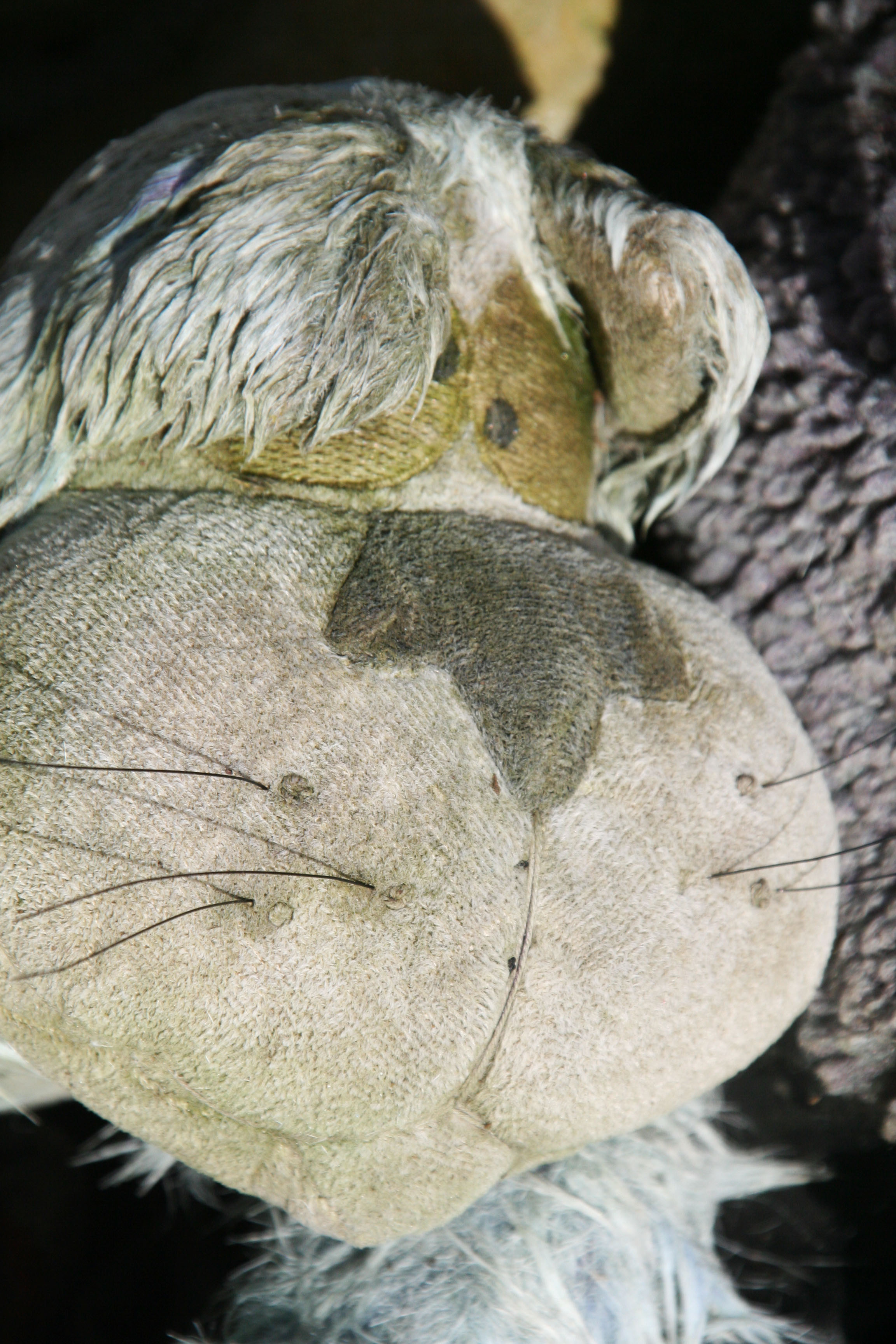
This toy elephant, left alone in the woods, apparently got into some bad drugs.

Sometimes my sense of humor goes awry. For example, I usually don’t deal with the macabre on this blog but have you ever thought about what happens to all of those toy animals that are left at roadside memorial sites. They go bad. I have proof.

I understand the practice; it’s as old as man. You are buried with your favorite dog, horse, wife, etc. so they can accompany you wherever you happen to be going. Chinese emperors and Egyptian pharaohs carried the practice to extremes. Vikings wanted to be buried with their weapons. In India, once upon a time, your widow was expected to make the ultimate sacrifice and throw her self on to your burning pyre so you could waft off together in the smoke.

The same motivation leads people to leave teddy bears and bunny rabbits at memorials to children. The idea is that the little kid will have something to play with in the afterlife. It’s a good thought.

But does anyone ever ask the toys what their preference is? I mean would you prefer to be in a warm dry house and be totally loved or would you prefer to be out at a roadside memorial abandoned to the rain and snow and fog and wind?

I’d be seriously irritated. Apparently the toys are as well. Consider the following photos:

Would you like to meet this bear on a dark night? He was scary enough during the day.

How about a lion whose mane had melted. As you might imagine, he was something of a grouch.

Then there was this bunny. He gave a new meaning to having a wild hare…

No sense of humor here… And he was one of the newest members of the menagerie.

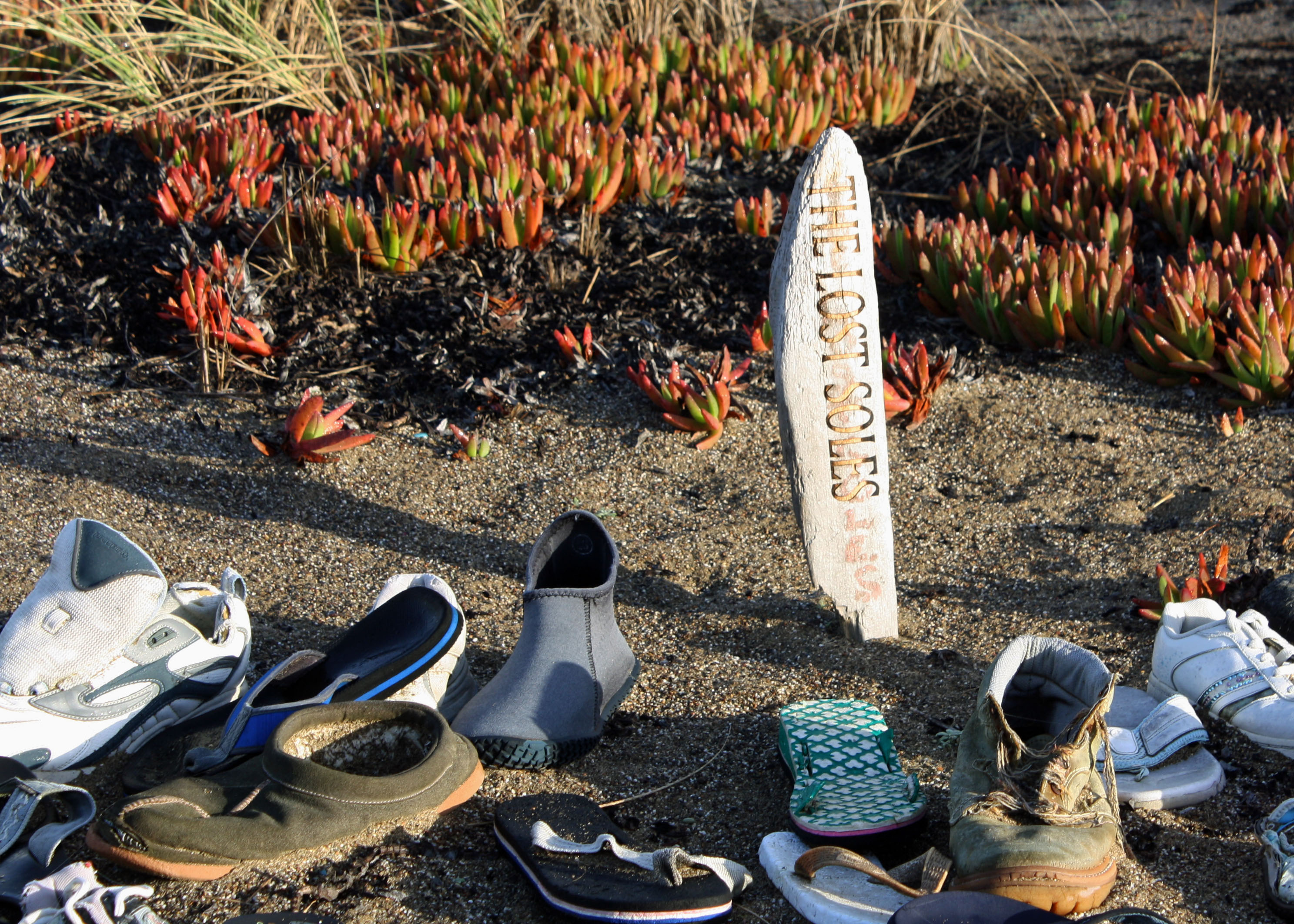
Not far from where the animals lived, I found this memorial to lost soles. Could the toys have been leaving a message for us?

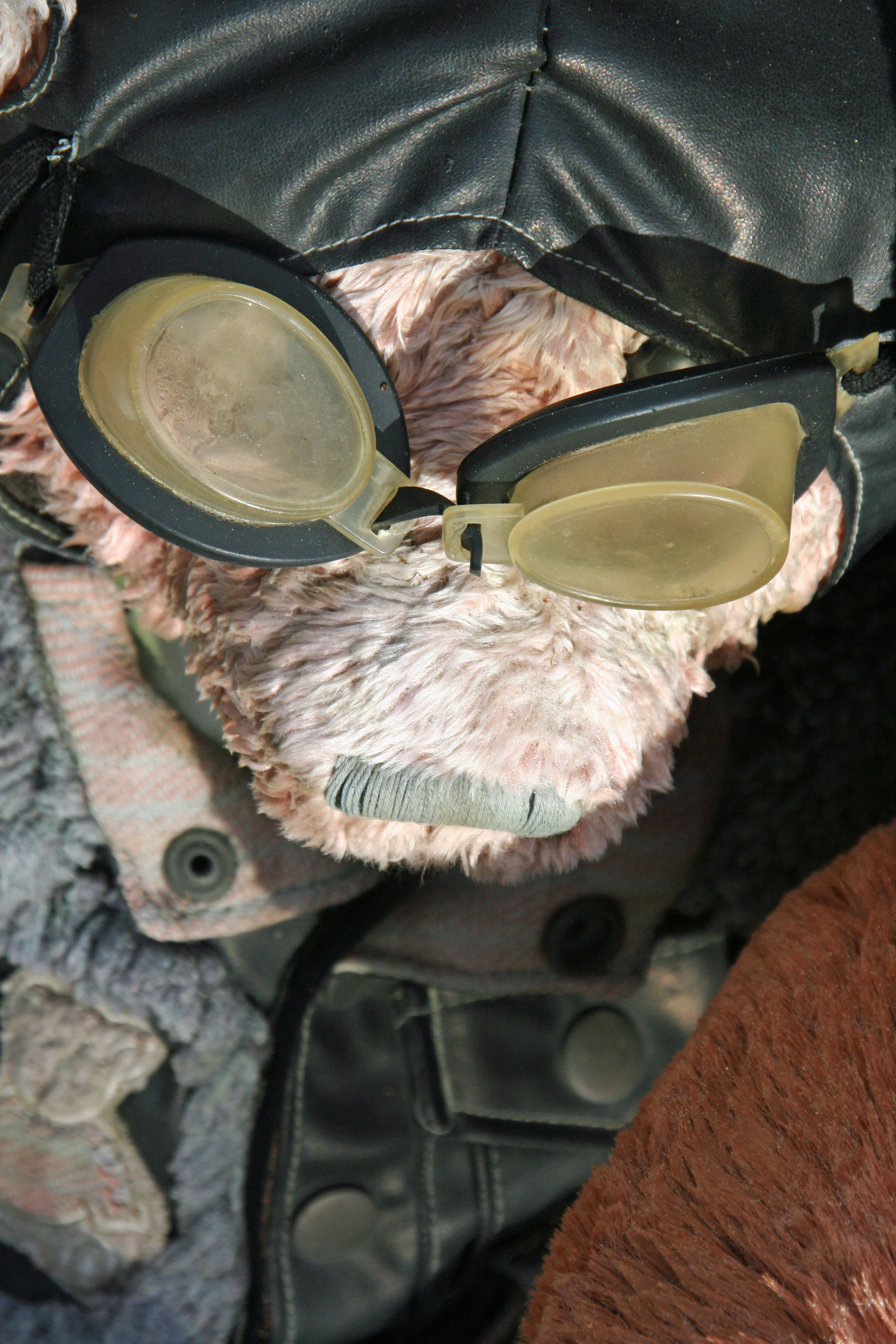
You know the mall shops where kids dress teddy bears… this Pilot Bear probably came from one. He was ready to go with a leather flight jacket and goggles, but would you fly with him?