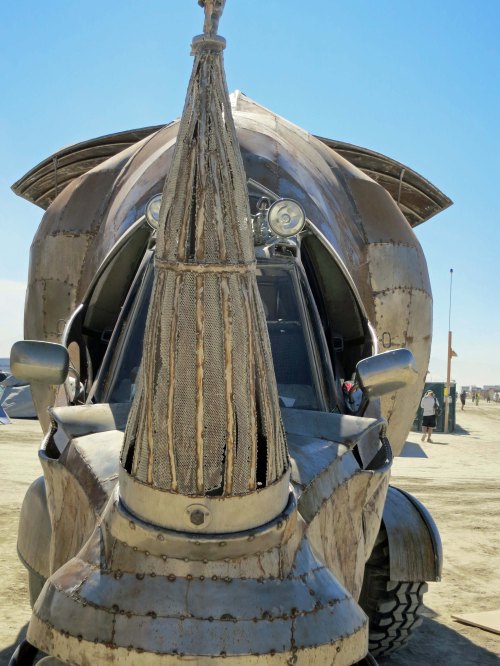
Mutant Vehicles IV… The Creativity and Magic of Burning Man

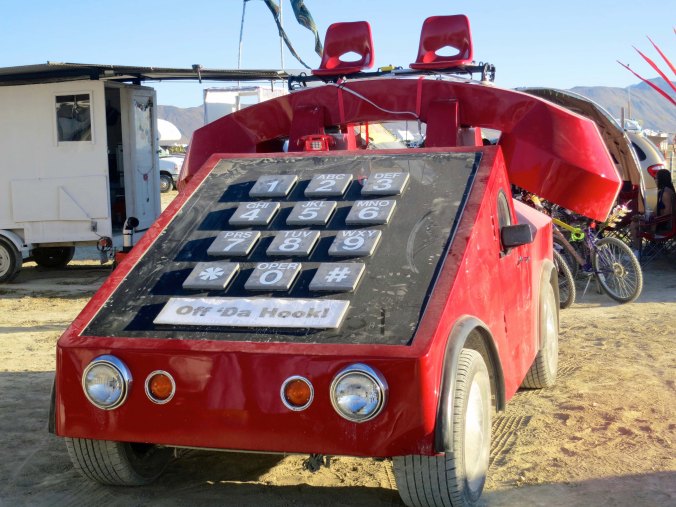
The thing about mutant vehicles is you never know what people are going to come up with, like this telephone: Off ‘Da Hook! Burning Man is an “Off ‘Da Hook” kind of place.

I could go on and on with mutant vehicles. Their sheer numbers and variety speak to the creativity and magic of Burning Man. But the camps, sculptures, temples, painting, costumes, performance art, the Man, and even bicycles also speak to the creativity, so I need to move on. Mainly, up until now, I have focused on vehicles that tend to stand out and draw crowds. Nothing is better at this than El Pulpo Mecanico.  There are dozens of other vehicles that also deserve attention that I haven’t covered yet, however. (And I wasn’t around in 2016 to see the latest creations!)

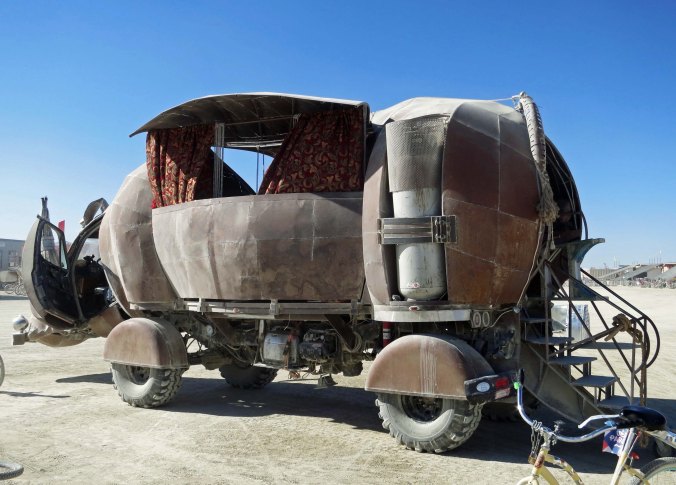
One mutant vehicle I haven’t featured yet, Never Was Haul, is right up there with El Pulpo Mecanico and the Rhino Redemption from my perspective. It’s here today, but there are also dragons and bugs and ships and animals and some really weird stuff. Oh my! Enjoy. (Unless noted otherwise, all of the photos are by Peggy and me.)

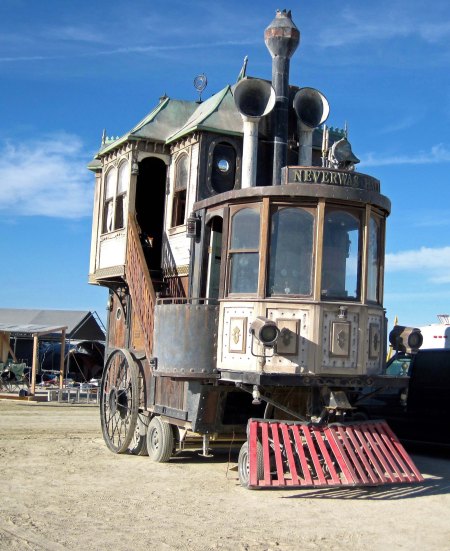
I selected this photo of Never Was Haul from my longtime friend Tom Lovering because it is one of his all-time favorite mutant vehicles. I would describe it as a combination of a steam train engine and a Victorian house.

Caboose mutant vehicle at Burning Man.

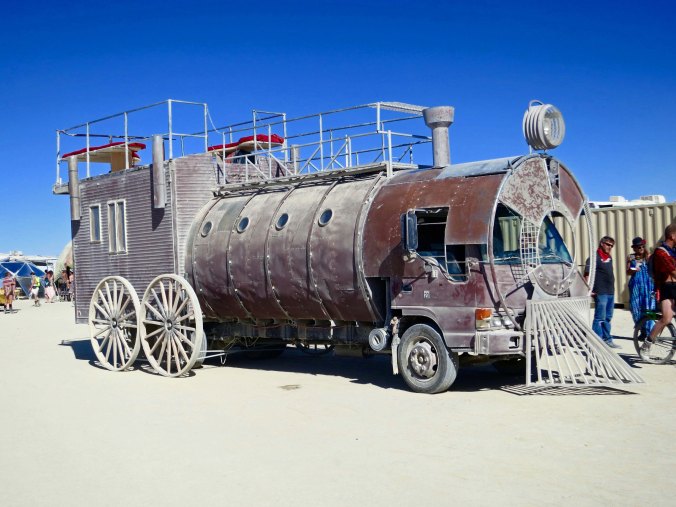
Trains are one of the themes for mutant vehicles. This caboose fits right in.

Steam engine Mutant Vehicle at Burning Man.

As does this steam engine. The grill on the front of this steam engine and Never Was Haul is known as a cattle catcher, BTW. I am not sure that the cow is in any better condition after a collision with a train, but the engine is. They also work for moose and buffalo!

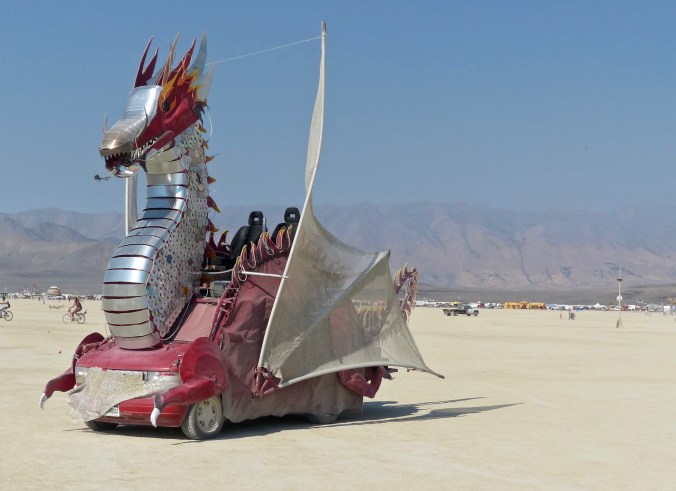
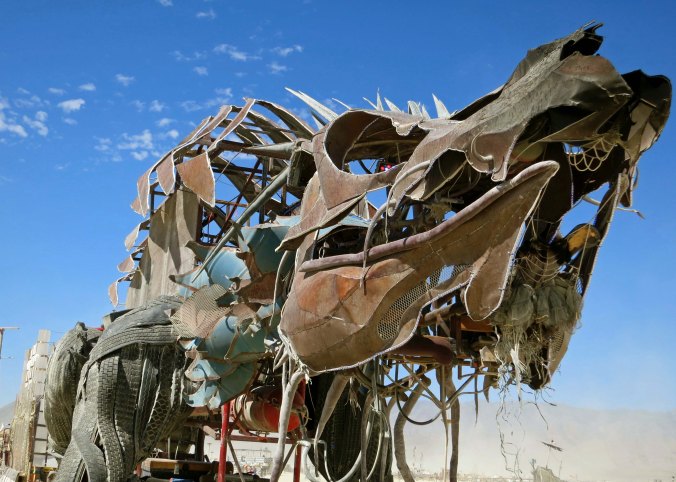
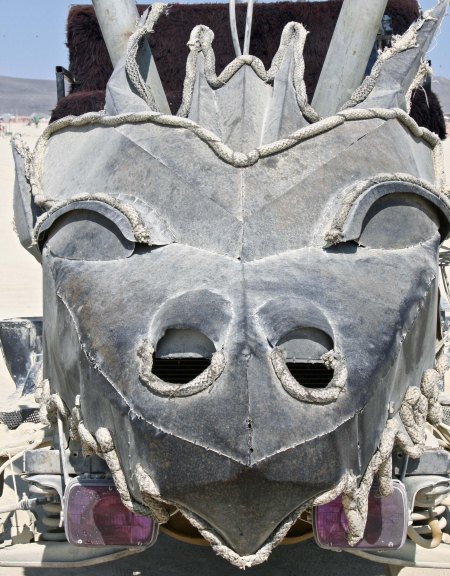
Dragons are also a common theme for Burning Man mutant vehicles. (Photograph by our friend Don Green.)

Scary dragon mutant vehicle at Burning Man.

This is one of the more scary dragons that roam the Playa. Most of these fellows breathe fire as an added attraction.

Green dragon mutant vehicle at Burning Man.

This dragon was ,um, green and horny. His/her dark snout came from breathing fire. It is standing next to an array of solar panels and the Black Rock Desert serves as a backdrop.

This ferocious looking dragon had chains for reins and palm trees for wings. I think it is a creation of the NOLA camp at Burning Man.

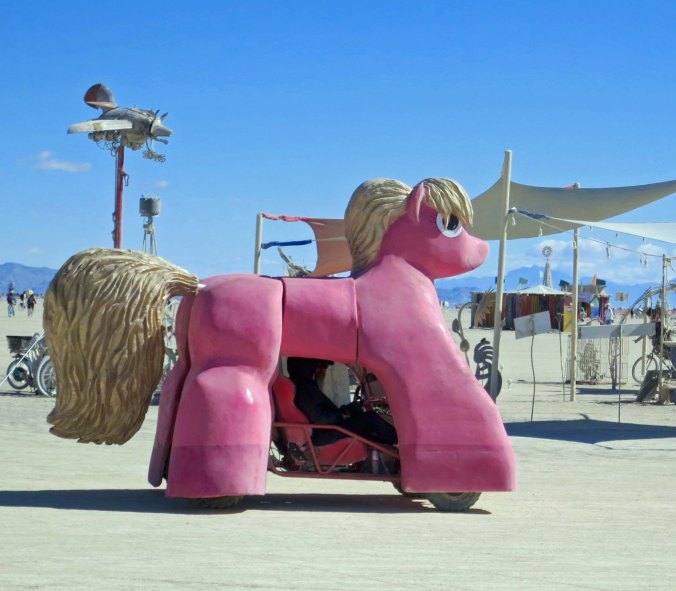
Sparkle Pony Mutant Vehicle at Burning Man.

Numerous animals wander the Playa. This is a Sparkle Pony. (Sparkle Pony is the name for Burners who show up at Burning Man and expect to be waited upon.) Our friend Leslie Lake thinks that is a great idea and has adopted Sparkle as her Playa Name.

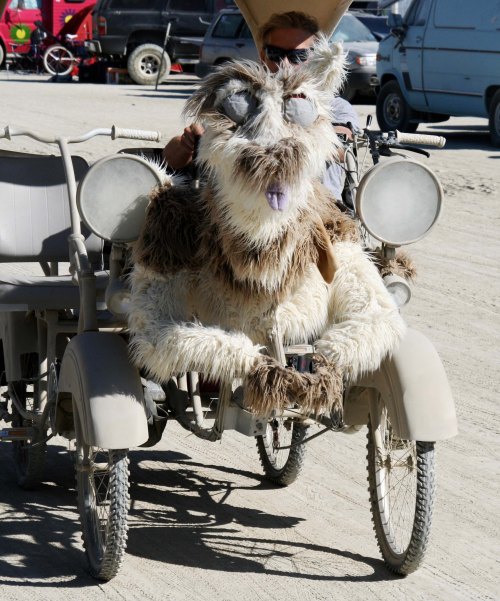
Rabbit mutant vehicle at Burning Man.

Some of the animals are just plain friendly looking, such as this rabbit.

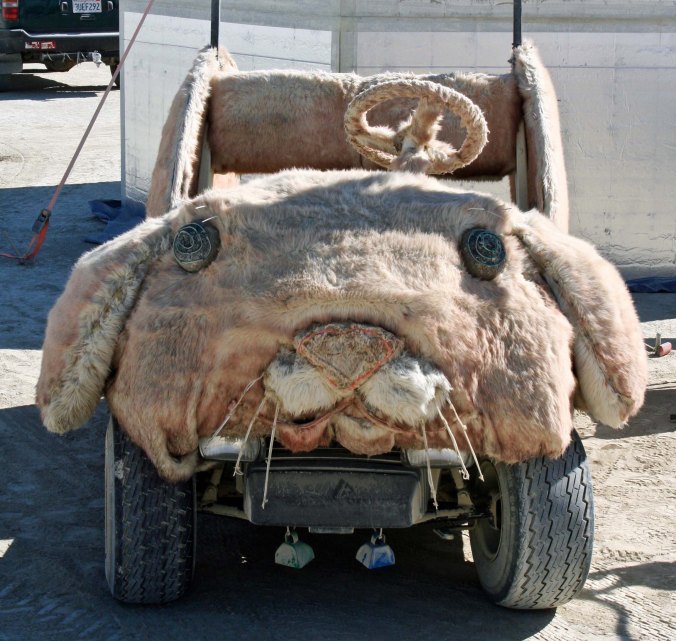
Dog mutant vehicle at Burning Man.

And this buck toothed dog.

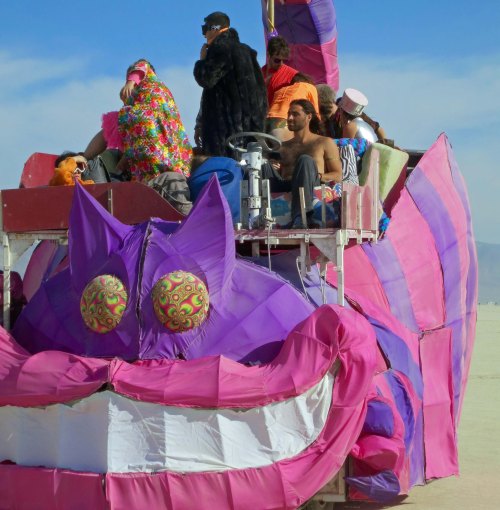
Cheshire Cat mutant vehicle at Burning Man.

The Cheshire Cat is, of course, noted for its huge grin.

Giant bull mutant Vehicle at Burning Man.

My guess is a giant cow. Her eyes flash out beams at night, giving this friendly beast a more scary persona.

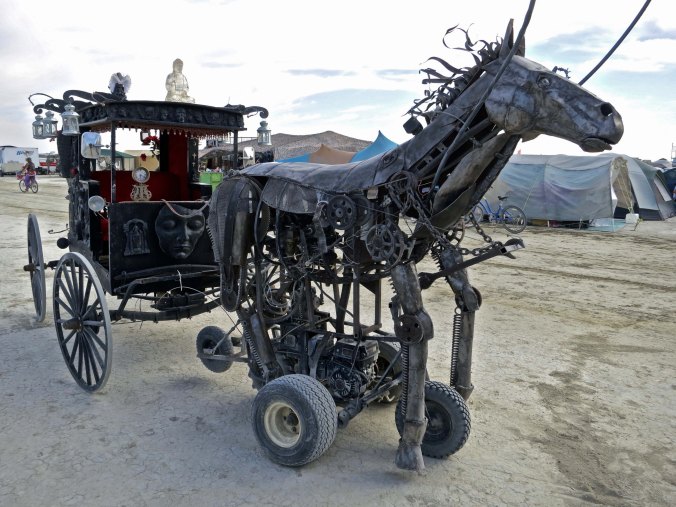
Steampunk mechanical horse mutant vehicle at Burning Man.

This mechanical horse with its carriage represents the heavy steampunk presence at Burning Man.

Chicken Pox mutant vehicle at Burning Man.

I finish off my animals with this humorous Chicken Pox.

Sailing ship mutant vehicle at Burning Man.

Once upon a time, this section of the Black Rock Desert was a huge inland sea. So why shouldn’t there be sailing ships at Burning Man?

The yacht Christina, a mutant vehicle at Burning Man.

And yachts. This boat is named Christina and looks quite gorgeous at night.

Crab with shell mutant vehicle at Burning Man.

As might be expected in an ancient sea there are also numerous creatures of the ocean at Burning Man, such as this crab with its colorful shell.

Articulated fish mutant vehicle at Burning Man.

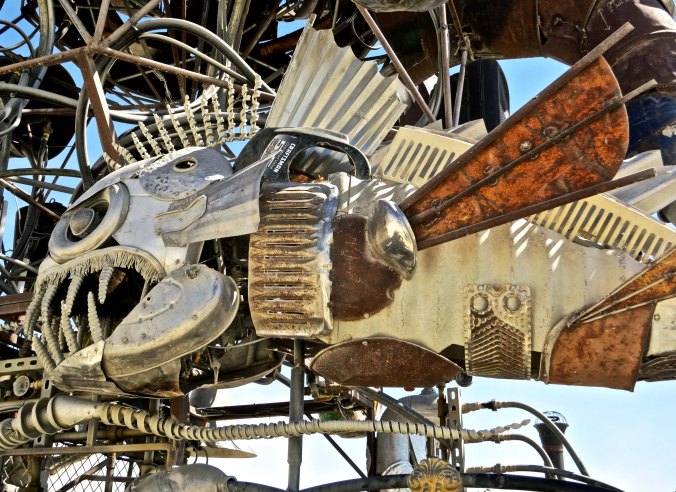
And an articulated fish.

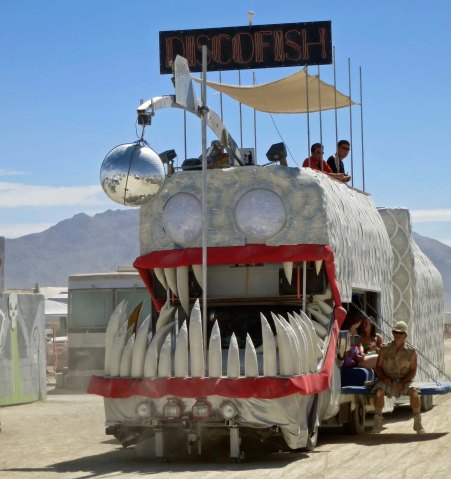
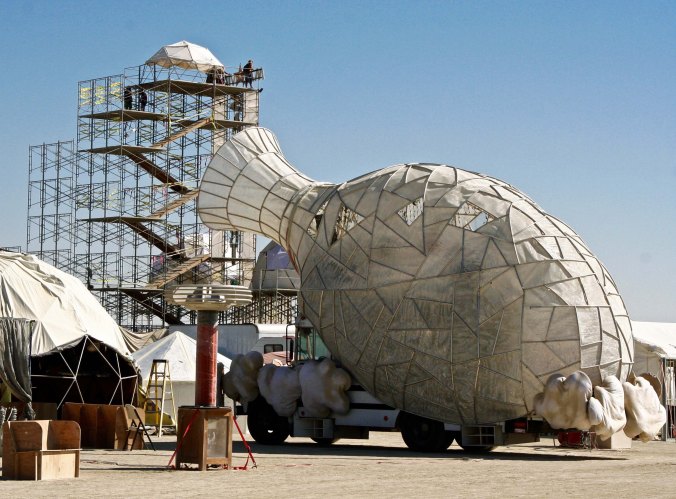
Many of the fish swimming in the Black Rock Desert feature large teeth, such as this Disco-Fish.

Fish eating fish with provocative tongue mutant vehicle at Burning Man.

Big fish trying to swallow equally big fish. What puts this mutant vehicle into my weird category is the tongue, however. Note the stirrups so a Burner can hop on for a ride.

Sea creature mutant vehicle at Burning Man.

I am not sure what this creature is, but I think it belongs in the sea. I’ll go with seahorse.

Praying Mantis mutant vehicle at Burning man.

There are numerous insect mutant vehicles at Burning Man. My favorite is the praying mantis. So I will let it represent the bugs.

VW Bug art car/mutant vehicle at Burning Man.

Speaking of bugs, here is a VW Bug art car.

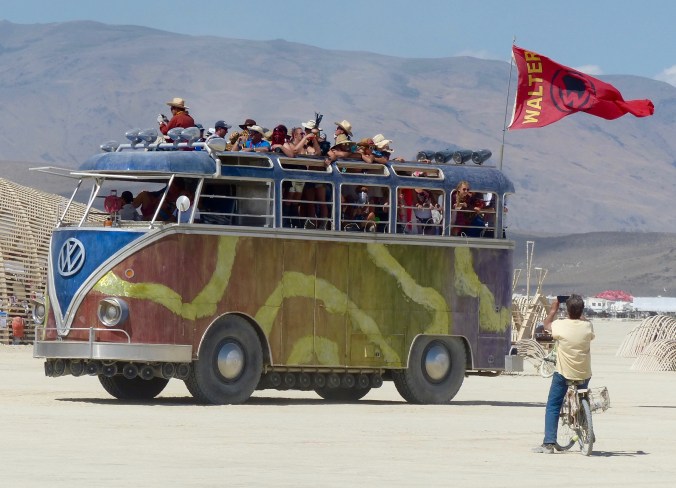
Walter the mutant vehicle at Burning Man.

And his bigger cousin (much bigger), Walter the VW Van. (Photo by Don Green.)

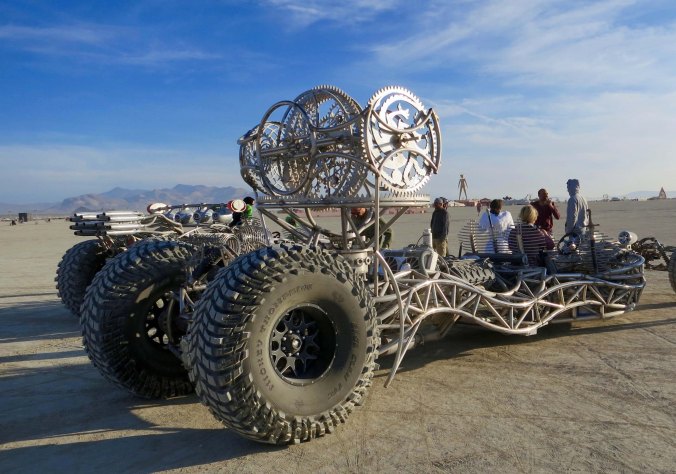
Mutant vehicle hot rod at Burning Man.

While I am on vehicles, I’ll include this dream of a hot rodder’s hot rod.

Pucker up mutant vehicle at Burning Man.

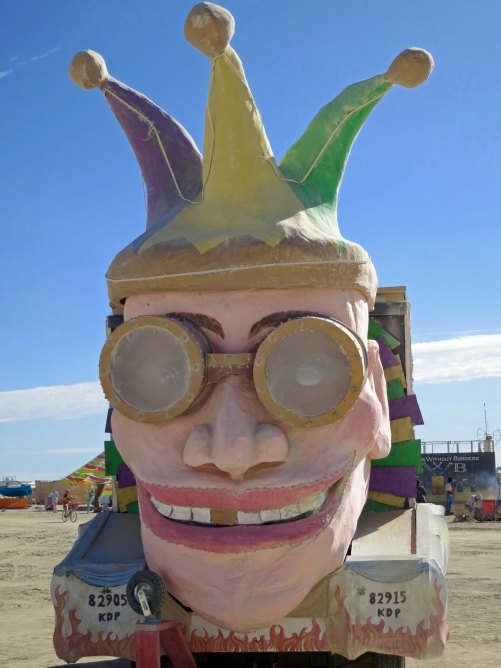
Often, it’s the faces on the mutant vehicles that capture my attention. Pucker up.

Joker mutant vehicle at Burning Man.

This joker has another memorable face.

I think ‘Kilroy was here’ of Kilroy fame may have been the inspiration for this face with its large tongue.


NEXT BLOG: I’ll finally get Sully landed on the Hudson River and off of his plane.


Let’s See: Shall We Do Las Vegas for $700, or See Red Rock Canyon for $7…

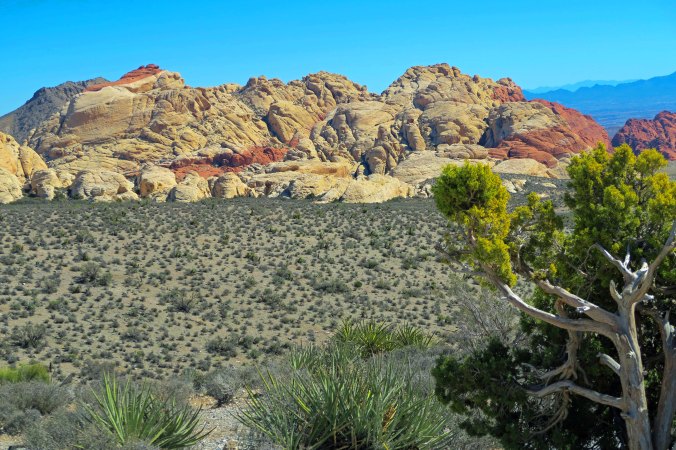
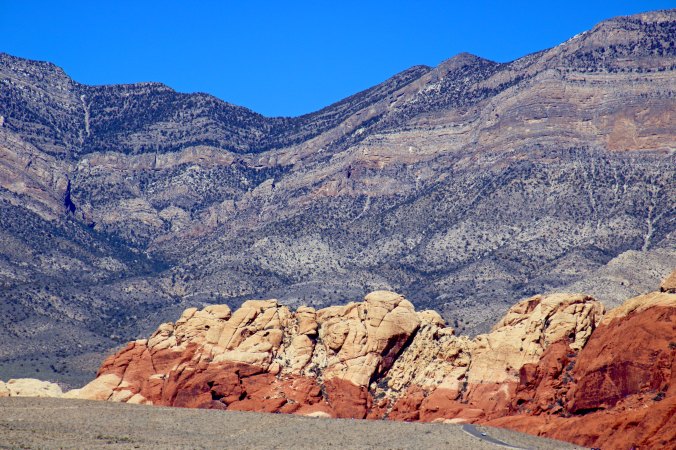
The rocks of Red Rock Canyon, come in numerous forms and colors, including red…

Las Vegas can be fun. It’s a gaudy, flashy, weird place where millions, even billions, are spent on enticing you to leave behind large chunks of change. It’s easy to spend $30 to 50 for dinner, another $30 to $50 for breakfast and lunch, and $50 to $100 for a show. And that’s on the lower side of things. Then there are the ubiquitous gambling machines, modern descendants of one-armed bandits seductively designed to promise you a fortune while robbing you blind— if you hang out long enough, or think dollars are play money. Even so-called penny slots can gobble down 9 to 100 cents (or more) per play. And forget nickel video poker, at least on the Strip. Those were the old days when less greedy gangsters instead of modern capitalists ruled the roost. Today’s entrepreneurs even charge you for parking!

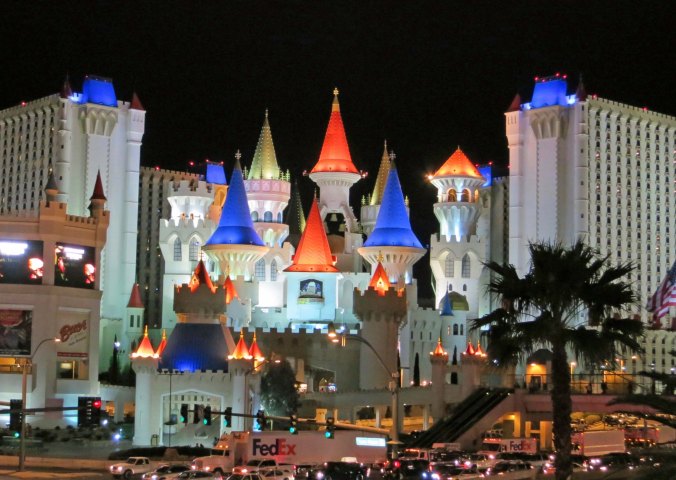
Of course there are less expensive things you can do in Las Vegas. I enjoy walking down the Strip, especially at night, and visiting the pleasure palaces along the way for a clever but fake touch of Paris, or Venice, or New York, or Egypt, or some other exotic locale. Even with ‘cheap on the mind,’ however, the temptations to spend are strong. Oodles of fine restaurants beckon, top shows promise and deliver excellent entertainment, and who can resist investing $20 on a possible fortune. Not me. (My friend Ken claims he is better off walking into a casino and throwing a few $20s on the floor, just to get it over with.)

At night, Las Vegas turns into a fantasy land.

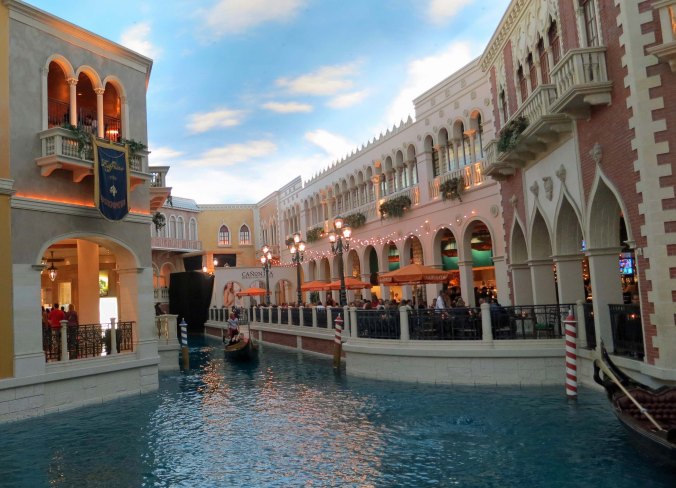
The resort-casinos along the way have spent billions building fake worlds, such as this mini-Venice, designed to lure you off the streets.

The truth about Las Vegas is that it would have been incredibly easy for Ken, Leslie, Peggy and I to spend $700 a day between us on our visit last week, not counting lodging. We didn’t. The cost of one meal ‘out’ bought groceries that allowed us to eat two of our three daily meals ‘in’ for the six days. We avoided shows this time, and did most of our limited gambling off the Strip— almost breaking even. Woohoo! The really big savings, however, came from our getting out of Vegas for two days. The first trip, which I have already described, was to the Valley of Fire State Park some 50 miles east of town.

Our second trip was to the Red Rock Canyon National Conservation Area, which sits on the western edge of Las Vegas and is operated by the Bureau of Land Management. You can get there in 30 minutes from the Strip. It took us 15 from where we were staying. BLM charges $7 per car to explore the beautiful park. An excellent Visitors’ Center provides an introduction. A thirteen mile road with several pull-offs and hiking trails winds through the area. The following photos provide an overview of some of the sites you can expect to see.

Be sure to stop off at the excellent visitor center for an introduction to the plants, animals, original inhabitants, and geology of the Red Rock Canyon.

Tortoise sculpture at Red Rock Canyon Visitor Center next to Las Vegas, Nevada.

In addition to this realistic sculpture of a tortoise, the center also has tortoise that live on the premises. They are also found roaming free in the park. Signs along the road warn you to watch out for them. (Photo by Peggy Mekemson.)

Road through Red Rock Canyon National Conservation Area in southern Nevada.

A 13-mile road winds through the canyon providing numerous views and hiking opportunities.

Rock formation in Red Rock Canyon near Las Vegas.

This colorful rock formation is found at the beginning of the drive. (Photo by Peggy Mekemson.)

Red and white rock formation in Red Rock Canyon on the edge of Las Vegas.

I captured this close up.

Red Rock Canyon near Las Vegas.

And Peggy managed to find another face. Edvard Munch’s Silent Scream comes to mind.

Much of Red Rock Canyon provides more distant vistas. (Photo by Peggy Mekemson.)

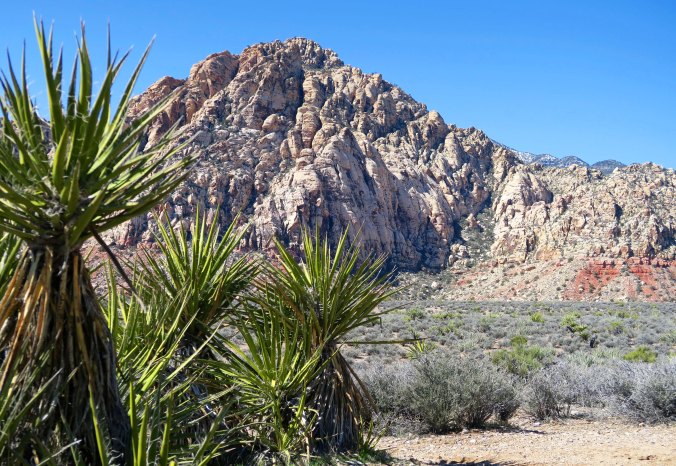
Yucca and a mountain in Red Rock Canyon National Conservation Area.

Yucca plants offer a touch of green to the dry desert.

Ice Box Canyon in Red Rock Canyon National Conservation Area.

Ice Box Canyon provides one of many hiking trails.

Trail into Ice Box Canyon in Red Rock Canyon near Las Vegas.

The trail leading into the canyon. (Photo by Peggy Mekemson.)

A close up along the trail taken by Peggy.

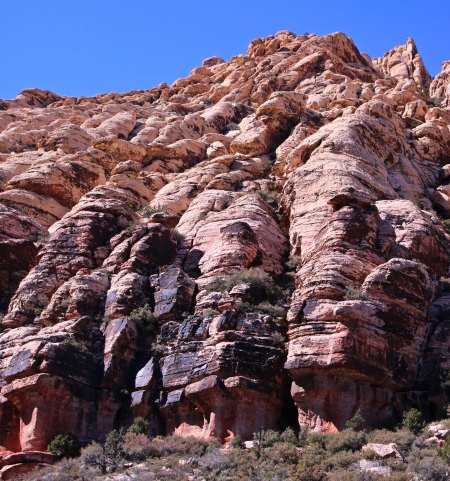
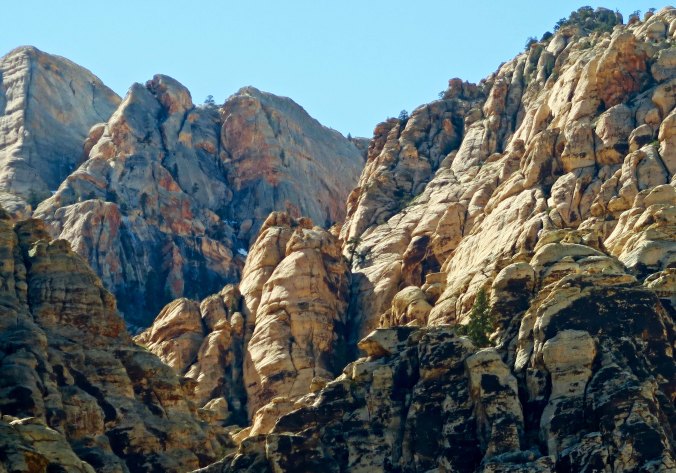
Red Rock Canyon National Conservation Area from Ice Box Canyon pull off.

This rocky draw was on the mountain forming the left side of Ice Box Canyon.

A view on our way out. The sun lights up a cholla cacti.

Just for fun and to conclude this post, I found a car with this license plate in the park. I think it is the most clever way I have ever seen for warning people that they are driving too close.

NEXT BLOGS: Back on schedule. I will wrap-up my Burning Man mutant vehicle photos, get poor Sully landed, and return to the Sierra Trek.


Frogs or Aliens… Petroglyphs from Nevada’s Valley of Fire State Park

Petroglyphs on Atlatl Rock in Valley of Fire State Park, southern Nevada.

I was thinking frogs when I first saw this petroglyph found on Atlatl Rock in Valley of Fire State Park. Now I am thinking aliens about to be beamed up to a flying saucer… (Photo by Peggy Mekemson.)

The Southwestern United States provides numerous opportunities to study petroglyphs left behind by ancient peoples who occupied the region for several thousand years before the arrival of Europeans. Early natives took advantage of desert varnish, a dark film of oxides formed on rocks in areas where rain is rare. Using a stone, artists, or possibly shamans, would peck through the varnish to the lighter rock underneath, leaving behind art or messages whose meaning we can only guess. Peggy and I are fascinated by this rock art and have visited numerous sites in Nevada, Arizona and New Mexico as well as other locations (like Hawaii, for example).

The Valley of Fire State Park has several areas where petroglyphs can be found, including Atlatl Rock, which features a stair structure that allows people an opportunity to climb high up on the cliff for a closer view. While Peggy, Ken and Leslie climbed the stairs, I wandered off to find less tourist-oriented petroglyphs.  I like to think of the search for rock art as a treasure hunt.

An atlatl, BTW, is a device early people used to give a thrown spear more oomph. Plastic tennis ball throwers, designed to give Fido a workout, operate on the same principle. Modern use of atlatls has shown that speeds up to 93 miles per hour can be achieved. If you visit Atlatl Rock on March 19, 2017, you can actually watch the 25th Annual World Atlatl Competition where enthusiasts from around the world will gather to see who can toss a spear the farthest.

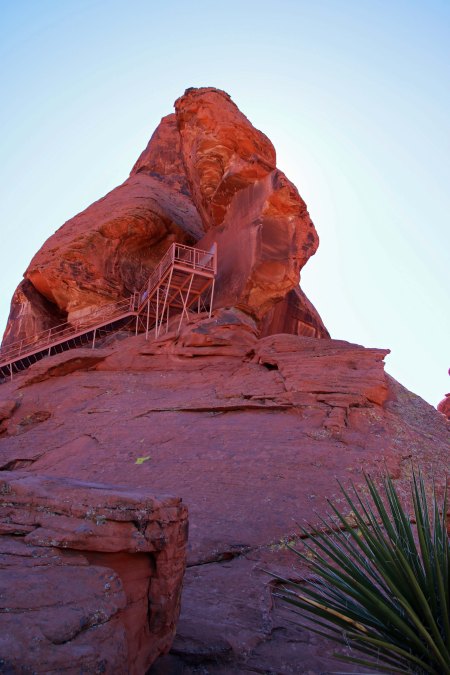
Viewing platform on Atlatl Rock at Valley of Fire State Rock in southern Nevada.

The petroglyph viewing platform seen here, is located high up on Atlatl Rock. (Photo by Peggy Mekemson.)

Ken and Leslie Lake provide perspective on viewing platform on Atlatl Rock in Valley of Fire State Park.

Our friends Ken and Leslie, standing on the viewing platform, provide perspective. (Photo by Peggy Mekemson.)

Petroglyphs on Atlatl Rock in Valley of Fire State Park near Las Vegas.

A close-up of the petroglyphs provides a view of an atlatl and an atlatl thrower. The Bighorn sheep on top may be the target. Just below is the atlatl, and below that is the feathered spear (slightly crooked). The spear thrower is just beneath that. My ‘aliens’ are on the left. A possible ladder, lighting storm, shaman and trees are also found among the petroglyphs. (Photo by Peggy Mekemson.)

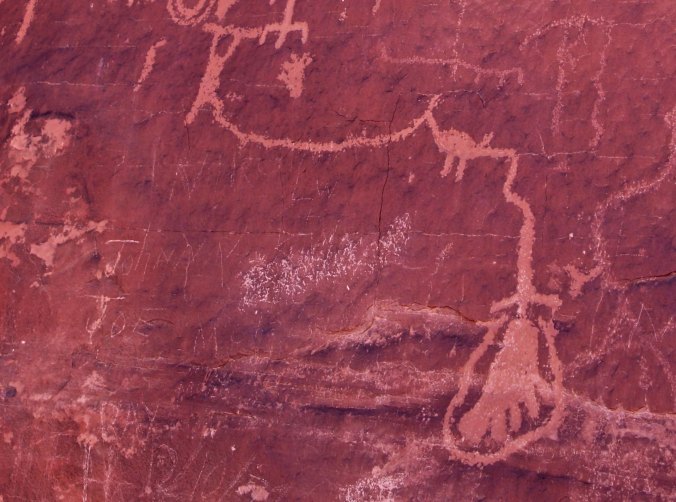
Foot petroglyph found on Atlatl Rock in Valley of Fire State Park, Nevada.

I was amused by this atlatl thrower connected by a power line with a sheep and then a foot. What the heck does this mean? (Photo by Peggy Mekemson.)

While Peggy, Ken and Leslie were exploring Atlatl Rock, I was off wandering around on the other side looking for petroglyphs.

Bighorn Sheep petroglyphs at Valley of Fire State Park.

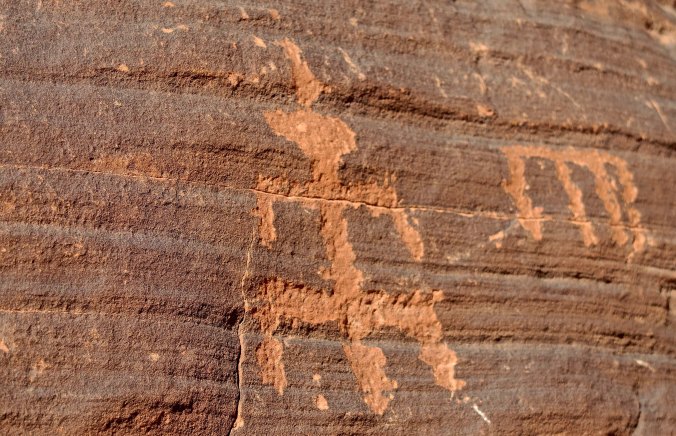
I found a pair of nose to tail Bighorn Sheep… (Doggy sniff-sniff maybe?)

This whatchamacallit and a spiral… (The spiral may represent a journey from an inner world.)

Petroglyph found near Atlatl Rock in Valley of Fire State Park.

And a woman having a baby. At least that’s what my rock art symbol book tells me.

Peggy and crew joined me to check out these petroglyphs on a cliff that we had discovered on an earlier trip. Apparently the rock artists had used a crack in the rock to climb up to do their work. (Photo by Peggy Mekemson.)

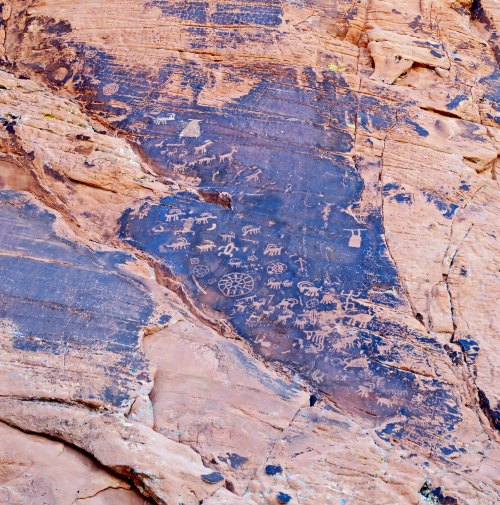
Petroglyphs carved into desert varnish on a cliff face near Atlatl Rock in Valley of Fire State Park near Las Vegas, Nevada.

A closer look…

And closer. Lots of sheep, a shaman, a fat dog, and an atlatl. The circles at the bottom may represent the sun. And can you find the coyote?

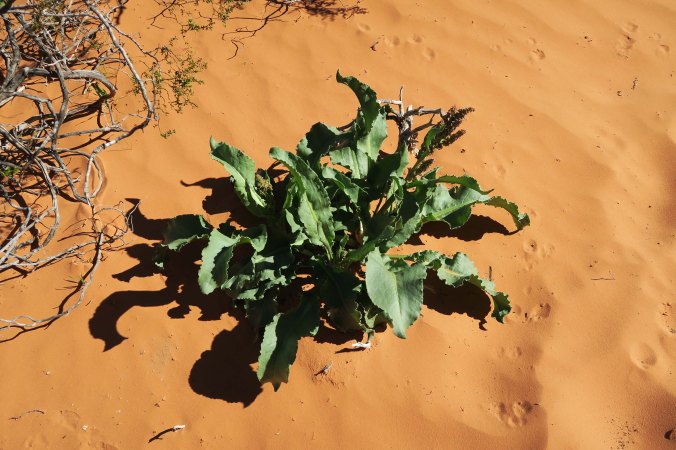
Plant in sand near Atlatl Rock in Valley of Fire State Park, Nevada.

I also found this green plant with its weird shadows that contrasted well with the golden sand. Note the animal tracks beside the plant.

And Peggy captured this colorful sandstone cliff with its erosion. No wonder natives might consider the area sacred. (Photo by Peggy Mekemson.)

Arch Rock at Valley of Fire State Park in southern Nevada.

Just up the road from Atlatl Rock is this much photographed arch— photographed by Peggy.

Arch Rock photograph by Curtis Mekemson in Valley of Fire State Park, Nevada.

Also took my turn and will conclude this post and my series on Valley of Fire State Park with the results.

The Towering White Domes of Southern Nevada’s Valley of Fire

Sun illuminates White Dome s in southern Nevada's Valley of Fire State Park

I caught the sun hanging over one of the White Domes in the Valley of Fire.

Today I will continue my exploration of the Valley of Fire State Park near Las Vegas in southern Nevada. There are three primary roads in the park. My last post followed the main road. Today I am going to focus on the route into the area known as the White Domes. The road begins at the Visitors’ Center, which is well worth a stop, and climbs up through colorful rocks known for their ‘rainbow’ colors. It ends at the towering White Domes. I’ll let our photographs ‘do the talking’ today.

Rocks near Visitor's Center at Valley of Fire State Park near Las Vegas.

Peggy discovered these rocks having a bad hair day at the Visitors’ Center. (Photo by Peggy Mekemson.)

Rock sculpture near Visitor's Center at Valley of Fire State Park.

And I snapped a photo of this rock sculpture.

Rainbow Vista in Valley of Fire State Park.

There is a reason why this area is named Rainbow Vista. (Photo by Peggy Mekemson.)

Rainbow Vista at Valley of Fire State Park in Nevada with mountains providing contrast.

Again, with mountains adding color to the ‘rainbow view.’

Sandstone mountain along road to White Dunes in Valley of Fire State Park.

The road to the White Domes included this impressive mountain of sandstone.

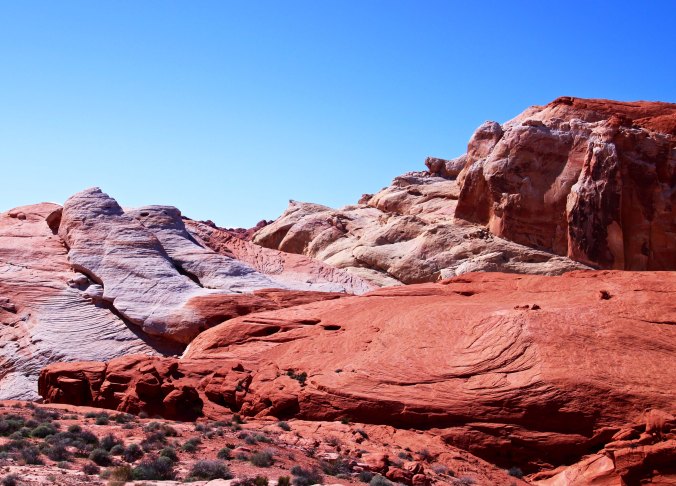
White Domes at Valley of Fire State Park in Southern Nevada.

Our first view of the White Domes. (Photo by Peggy Mekemson.)

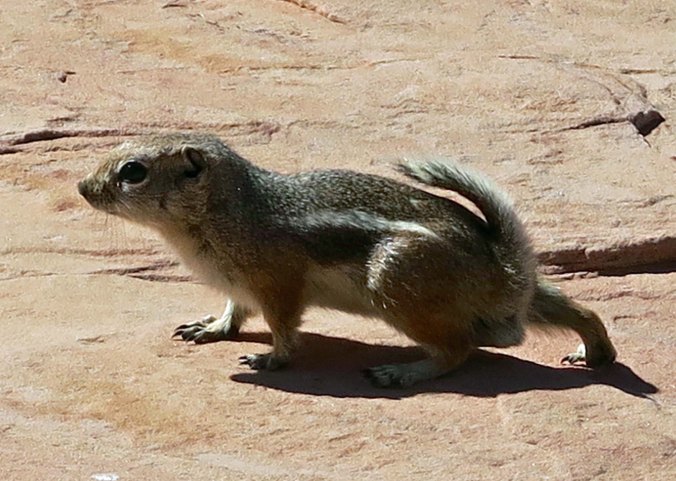
Squirrel at White Domes in Valley of Fire State Park near Las Vegas, Nevada.

I found this squirrel at the White Domes. We were eating lunch and he thought he should be invited.

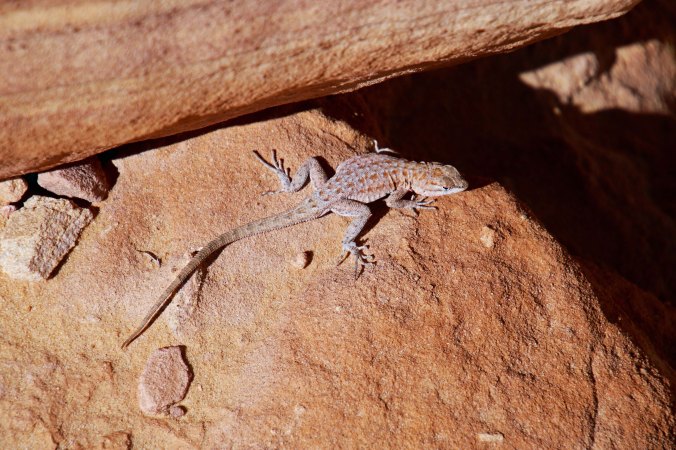
Peggy found this lizard that was more interested in eating bugs.


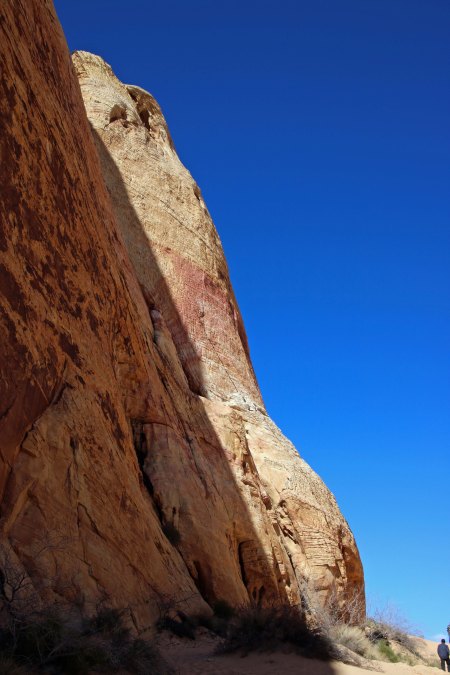
Side of White Domes in Valley of Fire State Park, Nevada.

I like this photo because it provides a perspective on the height of the Domes. Note the person on the right. (Photo by Peggy Mekemson.)

Photo of side of White Domes at Valley of Fire State Park.

My shot up the side of the White Dome.

Stone sculpture at White Domes in Valley of Fire State Park.

Several other stone sculptures are found near the White Domes.

White Domes at Valley of State Park in Nevada.

Another of the White Domes.

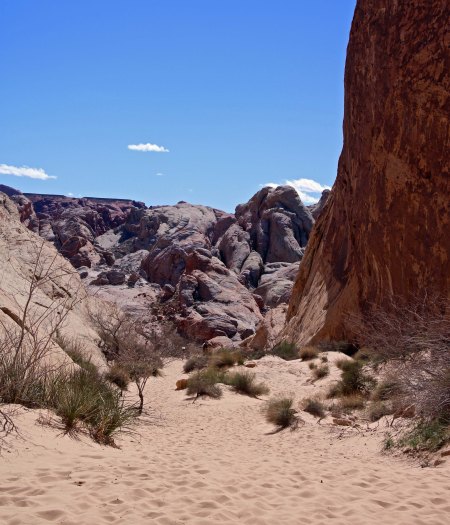
A trail leads around the White Domes. At this point, it drops into a small canyon.

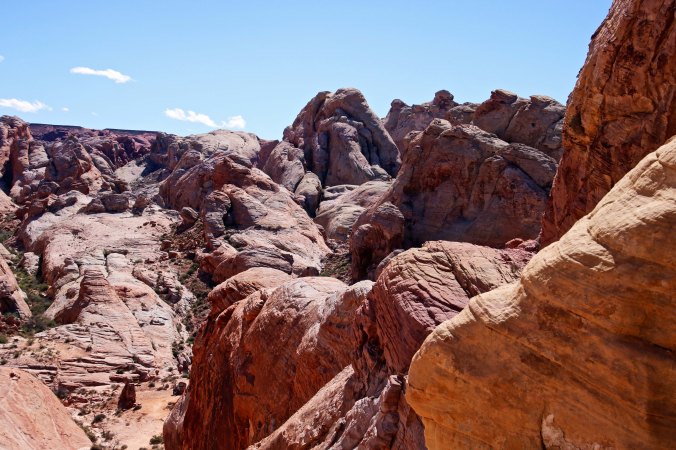
Rocks along trail leading around White Domes at Valley of Fire State Park in southern Nevada.

A view of the rocks leading down into the small canyon. (Photo by Peggy Mekemson.)

Photo of White Domes at Valley of Fire State Park by Curtis Mekemson.

I’ll conclude with this shot I took of the main White Domes sculpture.

The Valley of Fire Lights Up the Southern Nevada Desert… Views Along the Main Road

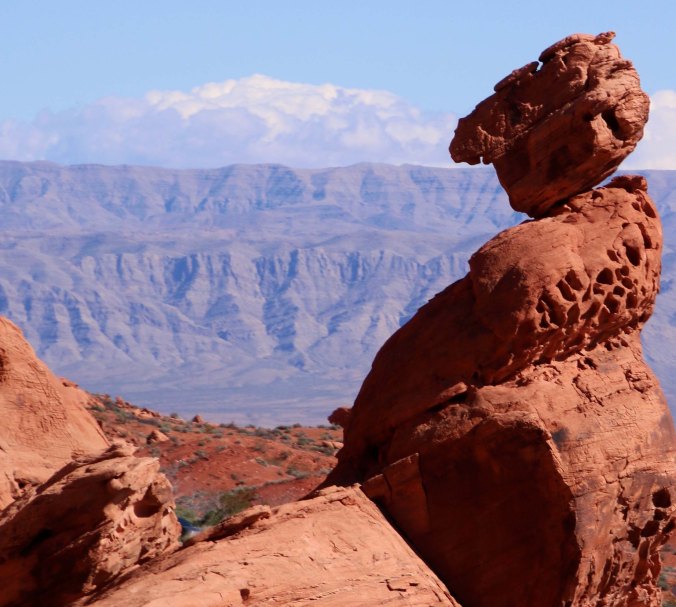
Balanced Rock at Valley of Fire State Park in Southern Nevada.

Wonderful rock sculptures created by erosion, such as this balanced rock, are found throughout the Valley of Fire State Park. (Photo by Peggy Mekemson.)


I put my blog on hold this past week as Peggy and I, along with our friends Ken and Leslie Lake, visited Las Vegas to celebrate Leslie and my birthdays, which are both the first week in March. We’ve been celebrating together for 13 years and try to go somewhere different each time. I know I’ve put off a few promised blogs, but hopefully you will find the detour worthwhile!


The vast majority of visitors flock to Las Vegas for its renowned shows, fine dining, glitter and gambling. (Nevada prefers ‘gaming,’ but hey, if it looks like a duck, walks like a duck and quacks like a duck…) Few come to enjoy the natural beauty of the area— or are even aware of it, which is too bad. Some of the nation’s best desert scenery is within easy driving distance. A day’s trip can take you through Death Valley. A half-day will provide an overview of the Valley of Fire. And a couple of hours will introduce you to Red Rock Canyon.

Peggy and I always try to visit at least one of these areas when we are near Vegas. This time we worked in the Valley of Fire and Red Rock Canyon. In fact, Red Rock Canyon was 15 minutes away from where we were staying. I’ve blogged about these parks before, but they are always worth blogging about again. And again.

Today I will feature our visit to the Valley of Fire State Park, which is located about 50-miles northeast of Las Vegas off of Interstate 15. The park takes its name from red sandstone that can turn a fiery red in sunlight. The sandstone was laid down by sand dunes some 150 million years ago. Geological forces have turned the region into a magical kingdom of rock forms. There are also several petroglyph sites left behind by the ancient Anasazi between 300 BC and 1150 AD.

As a result of the natural beauty, interesting rock forms, and native rock art, our cameras were busy the whole trip. Following are some of the results. To allow for more photos, I am going to break this post into three parts: views along the main road, the Atlatl Rock area, and the White Domes area.

While the road into the Valley of Fire State Park provides dramatic views, it doesn't provide a clue for what you are about to see.

While the road into the Valley of Fire State Park provides dramatic views, it doesn’t provide a clue for what you are about to see. The first sight is just around the corner…

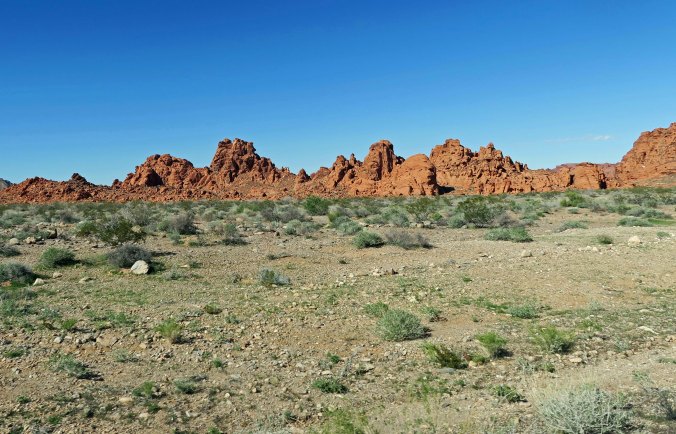
Introductory view of the Valley of Fire State Park near Las Vegas.

Your first view of the red sandstone rocks provides a preview of what is to come.

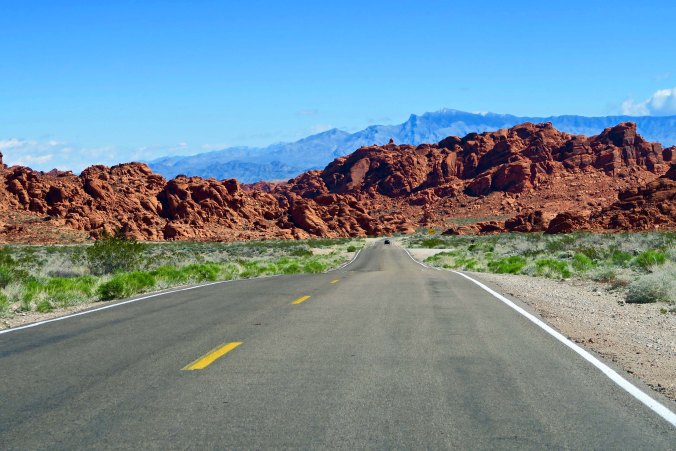
Road into Valley of Fire State Park.

The main road drops quickly into the park.

Distant mountains add contrast and depth to the bright red sandstone. (Photo by Peggy Mekemson.)

Distant mountains add contrast and depth to the bright red sandstone. (Photo by Peggy Mekemson.)

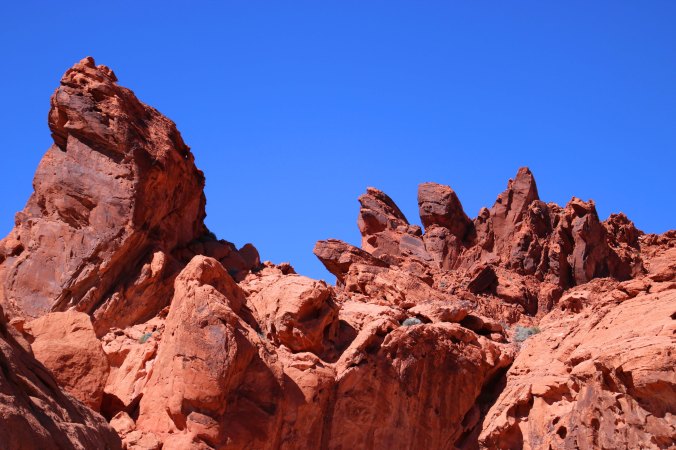
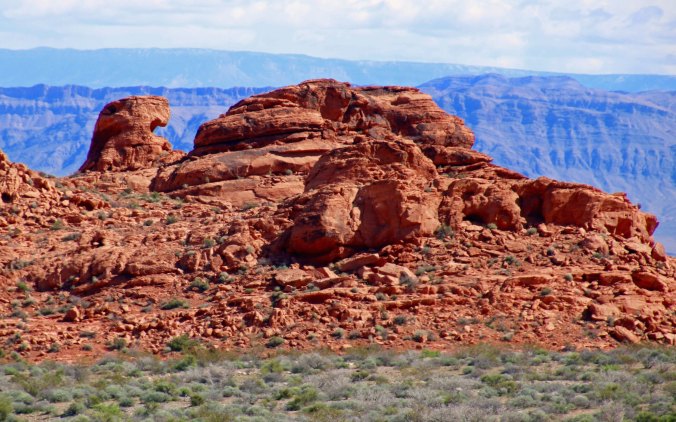
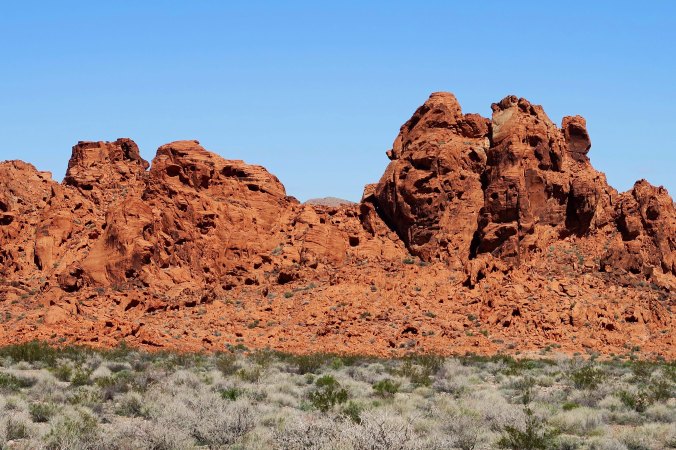
Red sandstone rocks and mountains at Valley of Fire State Park in Southern Nevada.

Another perspective.

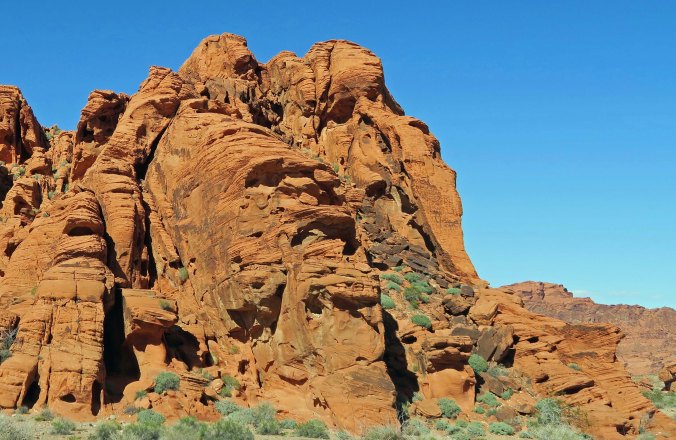
Red sandstone rocks at west entrance to Valley of Fire State Park.

The rocks alone.

A closer look.

A closer look.

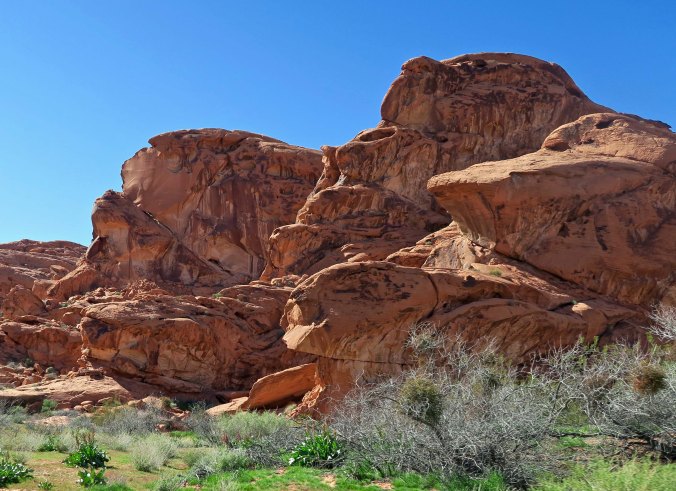
I liked the rounded look here plus the green shrubs.

I liked the more rounded look here set off by the green vegetation. Note the hole in the sandstone.

Holes in sandstone rock at Valley of Fire State Park near Las Vegas.

Holes in sandstone are quite common. Some are large enough to crawl into.

The Beehive at the Valley of Fire State Park in Southern Nevada.

The Beehive is one of the Valley of Fire’s best known rock sculptures.

Beehive stone sculpture at Valley of Fire State Park near Las Vegas, Nevada.

Looking up at the Beehive provides a close up of the unique erosion.

Valley of Fire State Park rock sculpture.

Another favorite of mine.

Rock sculpture at Valley of Fire State Park.

A number of other rock sculptures are located near the Beehive including the balanced rock featured at the beginning of the post and this mouthy fellow.

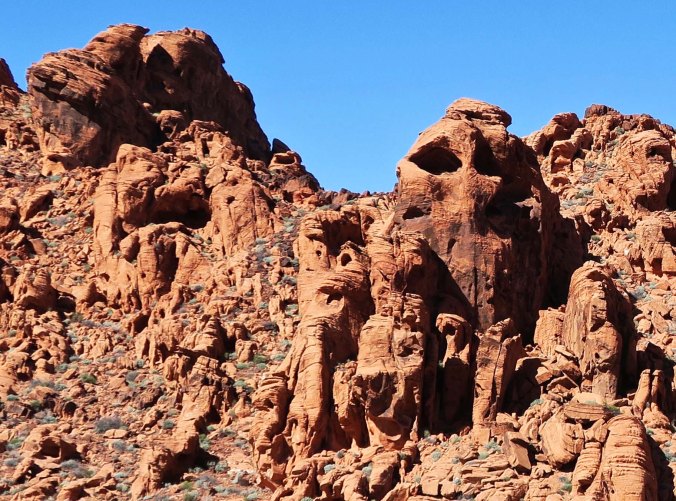
Faces in the rocks at Valley of Fire State Park.

Peggy and I often see faces in the rocks. Does this make us strange?

Faces in rocks at Valley of Fire State Park.

This face, buried in the rock, was on the scary side. I immediately thought of ‘The Mummy Returns.’

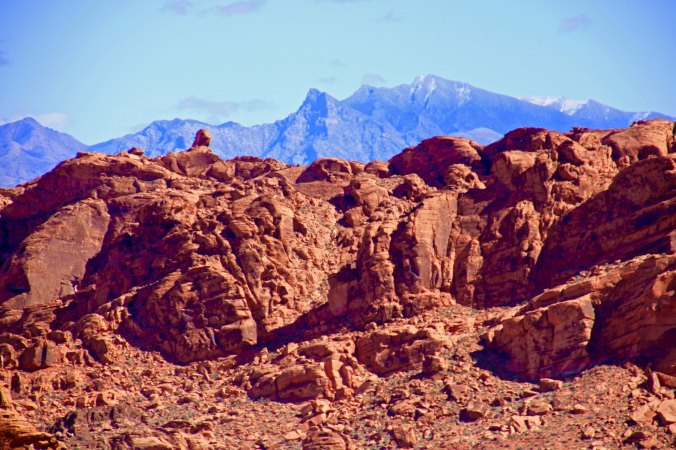
Mountains and sandstone at Valley of Fire State Park i southern Nevada.

I’ll conclude today’s photos from our drive along the Valley of Fire’s main road with this shot that includes an impressive mountain backdrop. (Photo by Peggy Mekemson.)

NEXT BLOG: The road to the White Domes


On the Road to Las Vegas… Was It Winter or Spring?

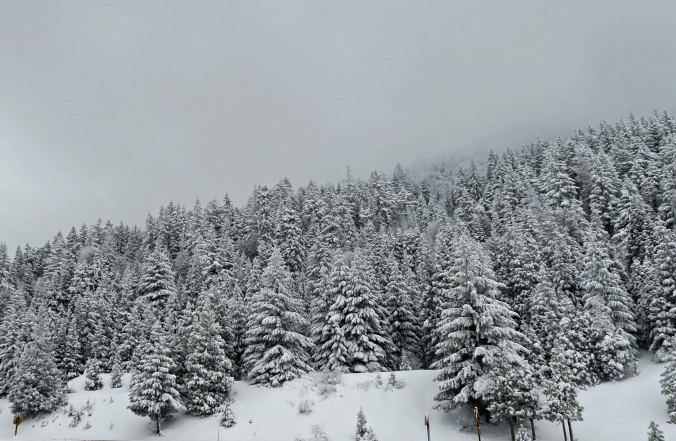
This is what Peggy and I saw what we looked out our window on Thursday morning. It was beautiful but possibly not the best conditions for a road trip.

This is what Peggy and I saw what we looked out our window on Thursday morning. It was beautiful, but possibly not the best conditions for a road trip.

We are watching the Oscars in Las Vegas, which may be the best ever, especially in recognizing what is positive (and wrong) about our nation, with humor. They just sent a tweet to Trump.

The Oscars can go on, however, so I have time to put up a blog on our trip down here. We woke up at our home in Southern Oregon on Thursday to several inches of fresh snow. It was beautiful, but I immediately begin to fret over road conditions. Would I have to put on chains to get over the Siskiyou Pass? If so, it pretty much guaranteed I would be delaying the trip for a day. I hate putting on chains.

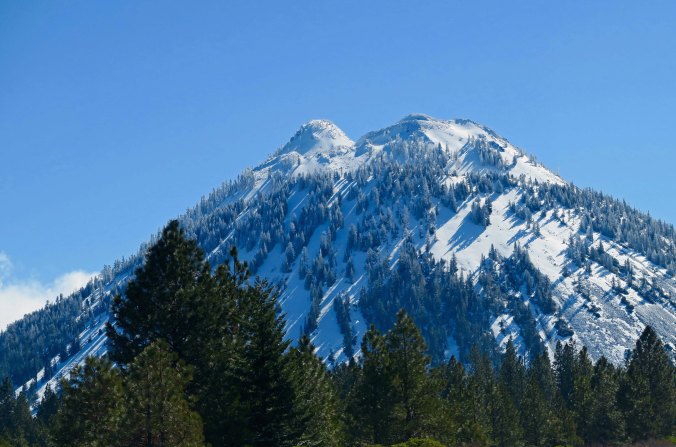
As it turned out the road was dry, the Siskiyou Pass and Mt. Shasta were gorgeous, and the Sacramento Valley was showing signs of spring.

There was a bit of water about, however. The Yolo Causeway, which is normally farmland, looked like an ocean with overflow from the Sacramento River.

Anyway, here are some photos that Peggy and I caught along the way.

The Madrone in our backyard had a new coat of snow.

The Madrone in our backyard had a new coat of snow.

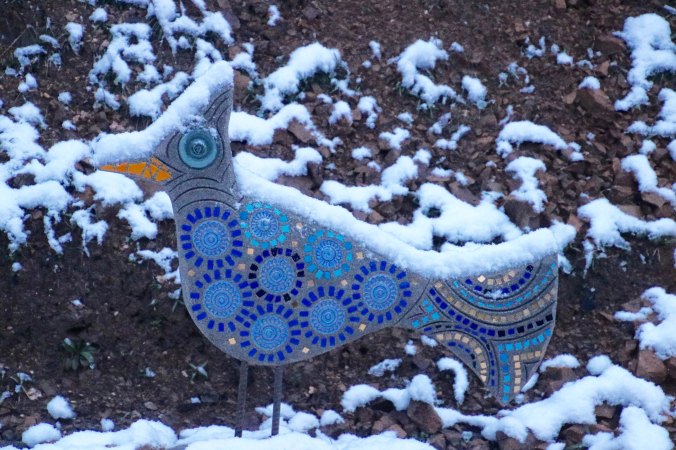
Our ceramic jay was looking cold.

Our ceramic jay was looking cold.

The sun came out, however, and the highway report told us that no chains were required over the Siskiyou Pass.

The sun came out, however, and the highway report told us that no chains were required over the Siskiyou Pass.

And Doodle, our rooster, was glad to warm up.

And Doodle, our rooster, was glad to warm up. (Photo by Peggy Mekemson.)

I had the first shift driving, so Peggy used my camera to get these shots of the Siskiyou Pass.

I had the first shift driving, so Peggy used my camera to get these shots of the Siskiyou Pass.

Another snowy shot going up the mountain. (Photo by Peggy Mekemson.)

Another snowy shot going up the mountain. (Photo by Peggy Mekemson.)

It was looking more like spring along the Klamath River.

It was looking more like spring along the Klamath River.

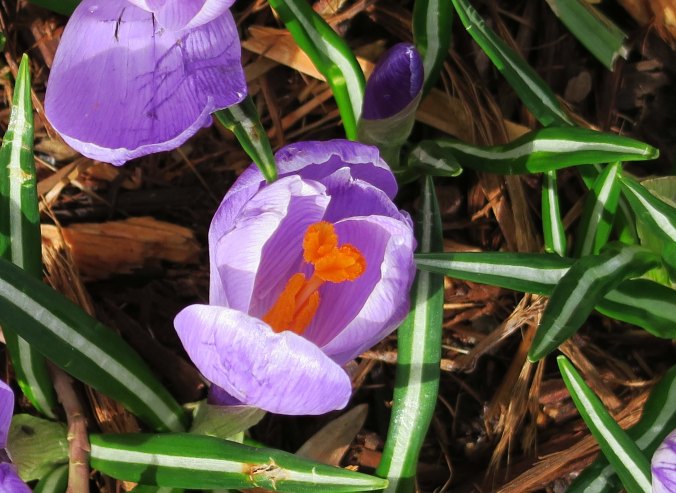
And even flowers.

There was even a crocus blooming.

Peggy found Mt. Shasta peeking out from behind the clouds.

Peggy found Mt. Shasta peeking out from behind the clouds.

Black Butte, which hangs out next to Mt. Shasta looking small was free from clouds. (Photo by Peggy.)

Black Butte, which hangs out next to Mt. Shasta, was actually free from clouds. (Photo by Peggy Mekemson.)

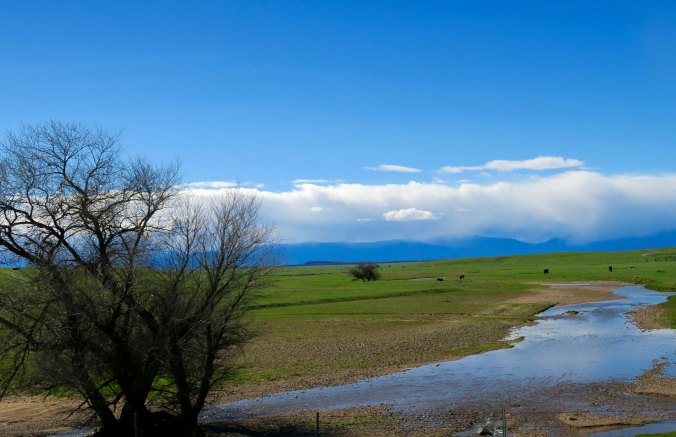
The Central Valley was showing signs of spring.

The Central Valley was showing signs of spring. The Coast Range is in the distance.

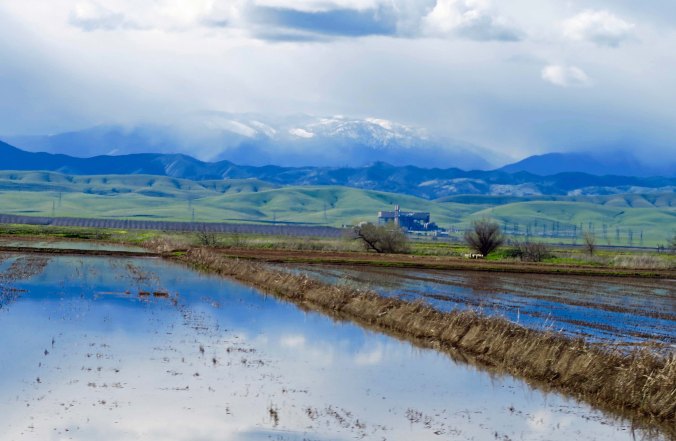
Rice paddies were covered in water with thoughts of draught far behind.

Rice paddies were covered in water with thoughts of draught far behind. The mountains show recent snow.

A reflection shot.

A reflection shot.

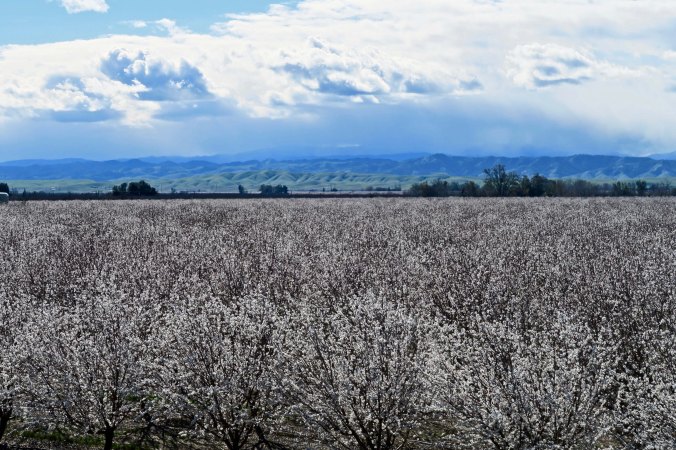
The Sacramento Valley was filled with blooming fruit trees.

The Sacramento Valley was filled with fruit trees in bloom.

More...

More…

And finally...

And finally…

The Yolo Bypass filled with water reflecting the extensive flooding that Northern California has experienced this winter.

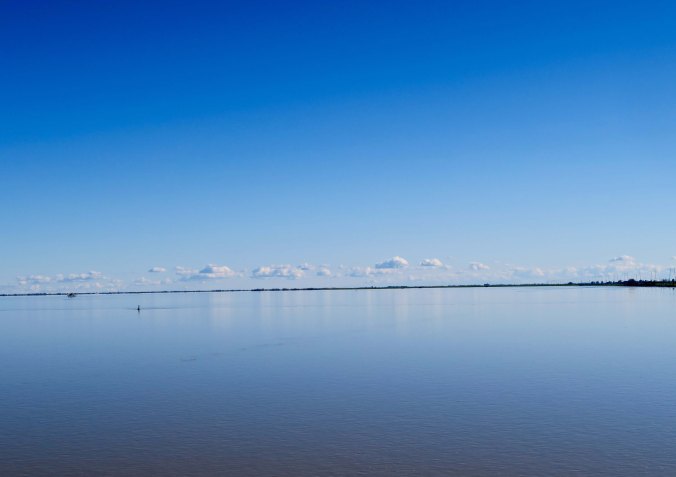
I’ll conclude with this photo of the Yolo Bypass filled with water reflecting the extensive flooding that Northern California has experienced this winter. Normally, this is farmland.


Steampunk, a Towering Octopus, and a Giant Rhino… The Mutant Vehicles of Burning Man

Burning Man's El Pulpo Mechanico.

The sometimes scary El Pulpo Mechanico in black and white.

Peggy and I were out wandering around Black Rock City when we came across the steampunk mutant vehicles that I am going to feature today: El Pulpo Mechanico and the Beamer Steamer. A flaming duck was also present. The folks that created these vehicles came from Northern California and Southern Oregon— our territory, and at least two of the vehicles had connections with the human-powered Kinetic Sculpture Race that runs between Ferndale, Eureka and Arcata over the Memorial Day Weekend.

El Pulpo Mechanico sprang from the creative mind of Duane Flatmo. His parts were scrounged from the Arcata Scrap and Salvage Yard in Northern California. Jerry Kunkel designed his electronic and flame system. His crawdad attachment was once part of one of the Kinetic Sculpture race vehicles.

El Pulpo always draws a crowd at Burning Man, especially when he is flaming. He can go through 200 gallons of propane in one night.

El Pulpo always draws a crowd at Burning Man, especially when he is flaming. He can go through 200 gallons of propane in one night.

El Pulpo at Black Rock City.

This shot of El Pulpo by our friend Don Green also shows his crawdad front.

Heres a shot of his crawdad front during the day. This creature was once part of a kinetic sculpture that participated in the Kinetic Sculpture Race in Eureka.

Here’s a shot of his crawdad front during the day. This creature was once part of a kinetic sculpture that participated in the Kinetic Sculpture Race in Eureka. (Photo by Peggy Mekemson.)

Looking up at El Pulpo provides a view of his barrel tentacles.

Looking up at El Pulpo provides a view of his barrel tentacles.

El Pulpo Mechanico fish at Burning Man.

This primitive fish is also a part of El Pulpo’s decorations.

As is this sea horse!

As is this sea-horse! (Photo by Peggy Mekemson.)

El Pulpo's head.

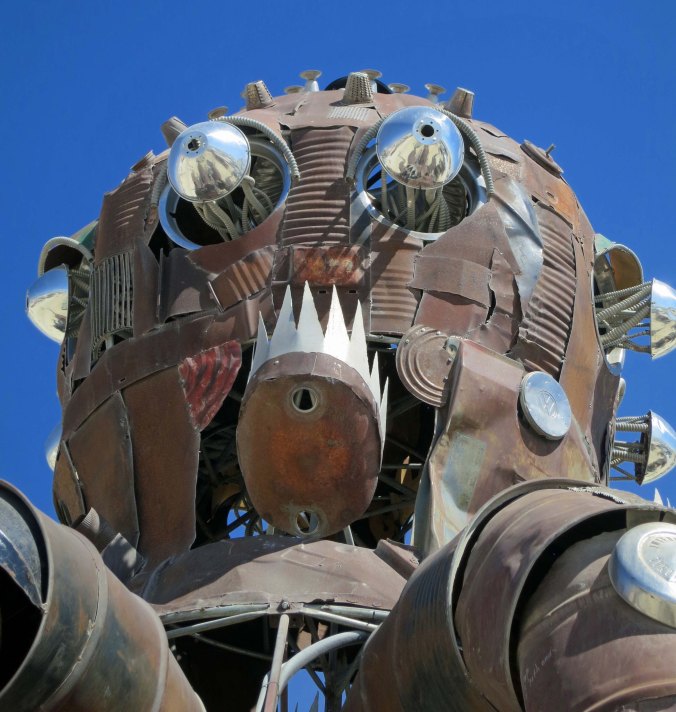
El Pulpo’s head.

El Pulpo Mechanico at Burning Man.

A final view.

Bob and Karen Thomson of Southern Oregon had been participating in the Kinetic Sculpture Race for several years when they decided they wanted a vehicle that they didn’t have to power with their own effort and sweat. They created the Beamer Steamer to go to Burning Man.

The Beamer Steamer at Burning Man.

The Beamer Steamer mutant vehicle by Bob and Karen Thomson.

I am not sure of the history of the flaming duck but it can light up the sky at night.

The flaming duck during the day at Burning Man.

The flaming duck during the day at Burning Man. Check out its head.

The flaming duck at Burning Man.

The flaming duck out on the playa at night waiting for the man to burn.

You have to travel south on Highway 101 from Eureka to come to the home of my fourth mutant vehicle today. The Rhino Redemption was created by Kevin Clark and the artistic group that works out of the Reared in Steel building in Petaluma. Kevin was also responsible for the creation of the Medusa Sculpture at Burning Man that I have featured in the past.

This wonderful rhino mutant vehicle has become one of my favorites at Burning Man. I was once charged by one of his counterparts in East Africa and have had a special appreciation for rhinos ever since.

This wonderful rhino mutant vehicle has become one of my favorites at Burning Man. I was once charged by one of his counterparts in East Africa and have had a special appreciation for rhinos ever since.

Rhino Redemption at Burning Man.

A side view of Rhino Redemption. He can accommodate up to 20 people.

Rhino Redemption at Burning Man.

Rhino charging? It’s kind of how I remember it. (grin)

Rhino Redemption in camp at Burning Man.

A final view… (Photo by Peggy Mekemson.)

NEXT BLOGS:

I’ve decided to take a semi-break for my birthday next week when I will be in Las Vegas. I’ll see you back here on March 6. Well, I may put up a blog or two if things are slow, but I wouldn’t bet on it. (grin)

–Curt

16 Miles without Water: a Rattlesnake, a Lost Trekker, and a Rebellion… The First Sierra Trek

"Climb the mountains and get their good tidings. Nature's peace will flow into you as sunshine flows into trees. The winds will blow their own freshness into you, and the storms their energy, while cares will drop off like autumn leaves." –John Muir

“Climb the mountains and get their good tidings. Nature’s peace will flow into you as sunshine flows into trees. The winds will blow their own freshness into you, and the storms their energy, while cares will drop off like autumn leaves.” –John Muir


As the physician who had threatened to tell the media I was running a ‘pot smoking orgy’ in the mountains packed up to leave, my thoughts turned to the challenges of our second day’s route. We were facing a hike where the first water and possible campsite were 16 miles down the trail. Considering how much fun I had getting our Trekkers through seven miles on day one, I was not excited about day two. We had one access point approximately half way where a road crossed our trail. Steve and I planned to have the jeep there to resupply the Trekkers with water for the second part of their journey.

Today’s photos are focused on the mountains of the High Sierra. These towering peaks of granite are topped off by Mt. Whitney at 14,505 feet (4421.0 m). John Muir loved the Sierras and returned to them again and again. “The mountains are calling and I must go,” he declared. It is a passion I share. In honor of Muir’s love for mountains and wilderness, I am using a different quote of his for each photo. These quotes were gathered by the Sierra Club.


I did a 360 mile trip down the Sierras to celebrate my 60th birthday. Mt. Whitney is in the Background.

“Keep close to Nature’s heart… and break clear away, once in a while, and climb a mountain or spend a week in the woods. Wash your spirit clean.” –John Muir (Here I am, keeping “close to Nature’s heart.” Mt. Whitney is in the background.)


When the Trekkers were packed and ready to go, I called them together for a final briefing. I reminded them of how difficult the day would be and then gave them very specific instructions:

“If the jeep isn’t there when you arrive at the road, wait for it.” It would not be the last time in Trek history my directions would go unheeded.

As per plan, I sent Steve on ahead as trail leader while Charlie and I provided rear guard support. In retrospect, I should have recalled that this was the section of the trail that the hawk had ‘chased’ Steve for miles, apparently all 16. Far from being a gentle ridge walk, we were climbing in and out of small canyons over hot, dusty trails. By the time we had covered five miles I was beginning to worry and by six, I knew had to come up with an alternative. Otherwise many of our folks would be making a dry camp out on the trail.

I had quickly discovered that the walkie-talkies from Bob-of-No-Name didn’t work because of all the canyons. My only solution was to hustle up to the front of the line and catch the Trekkers before they left the jeep. I dubbed Charlie as primary rear guard and took off moving as fast as my short legs would go, passing the majority of our group along the way. When I arrived at the jeep, Steve was there with 15 people. “Damn,” I thought, “some of the Trekkers have already gone on.” Maybe I could catch them.

“Hey Steve,” I jumped in as he greeted me, “it’s time for Plan B.”

“Which is…” he asked grinning?

“We need to send the Trekkers by road into Robinson Flat with jeep back up. It’s only about 5 miles by road versus 10 by trail plus the jeep can provide water along the way and shuttle people if necessary. But first, how long ago was it when the rest of the Trekkers left the jeep?”

“I don’t know,” Steve confessed. He’d had a group of Trekkers walking on his tail and let them pass (thus breaking one of our cardinal rules). Even worse, Steve Locke didn’t know either. Apparently 15 of the Trekkers had arrived before the jeep and chosen to go on. Another five had actually waited, loaded up with water and then taken off, approximately 30 minutes before I arrived.

“Great,” I responded. Thanks to Steve letting people go ahead, we now had 20 people out on the trail in front of us without a leader— and 15 with limited water.

"In God's wildness lies the hope of the world - the great fresh unblighted, unredeemed wilderness. The galling harness of civilization drops off, and wounds heal ere we are aware." –John Muir 

“In God’s wildness lies the hope of the world – the great fresh unblighted, unredeemed wilderness. The galling harness of civilization drops off, and wounds heal ere we are aware.” –John Muir (Here you are looking from the top of Mt. Whitney east toward Lone Pine and the Owens Valley. The road winds through the Alabama Hills where many Westerns have been filmed.)

This photo looks north from Mt. Whitney into the heart of the High Sierras.

“This grand show is eternal.”  –John Muir  (This photo looks north from Mt. Whitney into the heart of the High Sierras with mountains as far as you can see.)

Day two, which had started with the doctor and his ‘pot smoking orgy,’ had gone from bad to worse. I made a command decision. Steve would continue on with Plan B as I had outlined it, moving the remaining Trekkers via road to Robinson Flat. I would continue along Red Star Ridge and provide backup for the group who had chosen to hike another 8 miles without water access.

I had little doubt about what type of foul mood my wayward charges would be in and who they would blame for their predicament. (It certainly wouldn’t be themselves for failing to wait for the jeep.) We would camp on Duncan Creek and hike the two miles into Robinson Flat the next morning.

“No one is to budge from Robinson Flat until I get there,” I instructed with the fervid hope my instructions would be followed this time.

First, however, I had to go back and retrieve Charlie. I wanted to personally be sure that all of our other Trekkers made it to the jeep. I asked Crowle and Locke to hold everyone. I found Charlie a mile or so back the trail with another broken pack. Boy, were we having fun. If my learning curve got any steeper, I was going to fall off.

“I’ll hike on with you Curt to provide support and company,” Charlie insisted.

I knew I was tired and could only imagine how he must feel given his extra 25 years and 50 pounds. I was beginning to realize that older people are often tougher than young people half their age with twice their strength. The journey we were on was as much psychological as it was physical. Maybe more so.
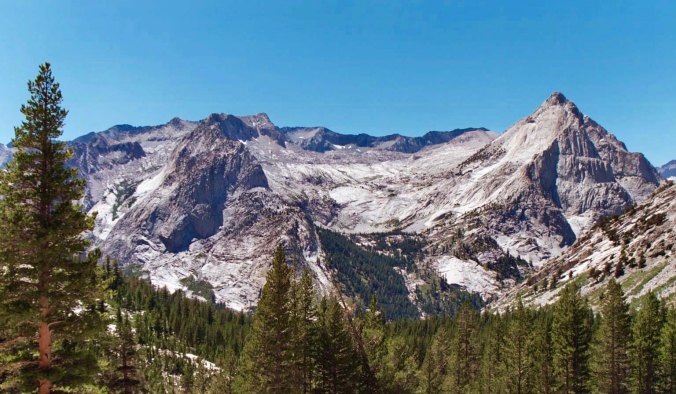
The clearest way into the Universe is through a forest wilderness. (Treks down and across the Sierras are tough for everyone, but especially so for people without experience. It always seems that there are more mountains to climb and more canyons to drop into.)

“The clearest way into the Universe is through a forest wilderness.” –John Muir
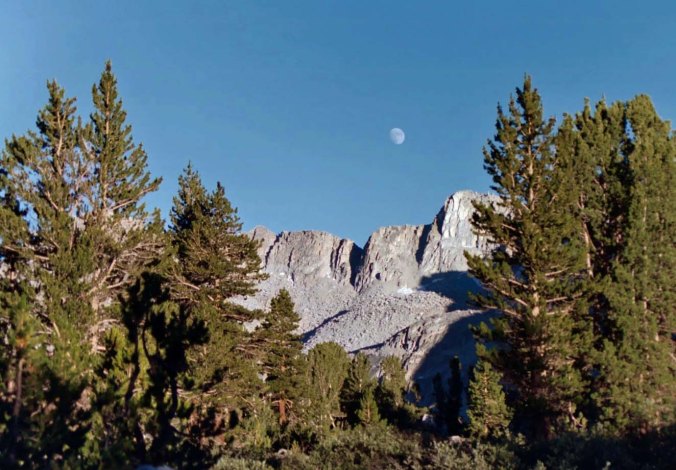
"Between every two pine trees there is a door leading to a new way of life." –John Muir

“Between every two pine trees there is a door leading to a new way of life.” –John Muir (Over the years, I have known numerous people who have decided to change their lives while backpacking for a week through the Sierras.)
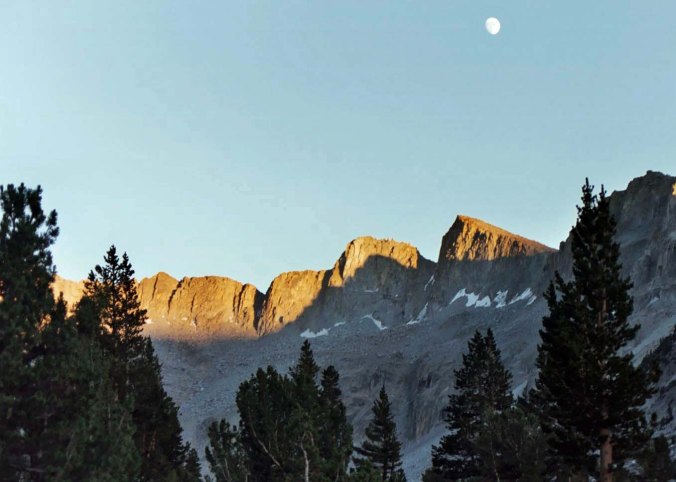
"Another glorious day, the air as delicious to the lungs as nectar to the tongue." –John Muir (The same photo as above a couple of hours later as alpen glow colors the ridge. This is in the Dusy Basin near Bishop.) 

“Another glorious day, the air as delicious to the lungs as nectar to the tongue.” –John Muir (The same photo as above a couple of hours later as the setting sun colors the ridge. This is in the Dusy Basin near Bishop.)

We initiated phase two of our journey around 2:00 p.m. In a little over 30 minutes we caught our four eleven-year-olds, who we had nicknamed the Four Mouseketeers, crawling along at a pace that a turtle would find embarrassing.

“Joe is really slow,” one of the urchins informed me.

Yeah, I thought to myself, and you guys are so glad he is because it provides all of you with an excuse to move at the same pace.

After about an hour of moving along at ‘Joe speed,’ Charlie plaintively informed me he wasn’t going to make it into camp if he couldn’t move faster. Having determined that three of our Mouseketeers really were good hikers, I assigned them to Charlie and took Joe on as my personal challenge. The experience was similar to moving my Basset Hound down the trail after he spent a full night of digging. Joe would go a quarter of a mile and stop, plopping down onto the dusty trail. We had managed about a mile of this when I came on Charlie again, standing beside the trail and pointing off to the left.

“Careful, Curt,” he began, “there is a huge timber rattler coiled up there.”

Adrenaline gave me a spurt of energy I didn’t know I had. Huge was hardly an adequate description. The snake was as thick as my wrist and about six feet long. Joe, either out of exhaustion or not caring, came to a shuffling halt mere inches away from the poised pit viper and kicked dirt into its face.

“Um, Joe,” I whispered trying to sound calm and not wanting to frighten him or the snake into precipitous action, “if you will look down to your left, you will see a snake. Don’t move.”

Had I received such instructions, I would have been 20 feet down the trail in one prodigious leap. Joe, on the other hand, looked down at the huge, coiled rattler, said ‘oh,’ and shuffled on down the trail. The snake didn’t budge; Joe was not food, friend or foe. We left the snake guarding the trail.
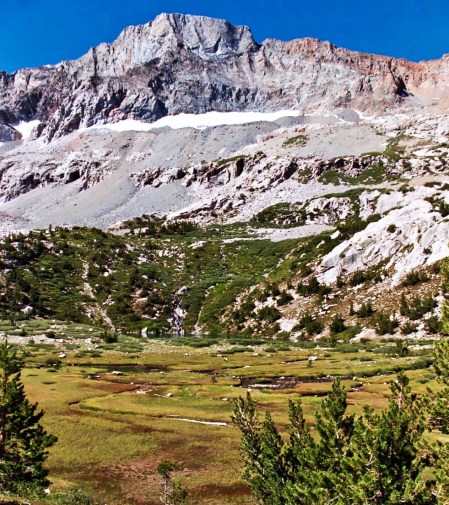
"Man must be made conscious of his origin as a child of Nature. Brought into right relationship with the wilderness he would see that he was not a separate entity endowed with a divine right to subdue his fellow creatures and destroy the common heritage, but rather an integral part of a harmonious whole." (Granite rules in the Sierras and reminds us of our place in the world.)

“Man must be made conscious of his origin as a child of Nature. Brought into right relationship with the wilderness he would see that he was not a separate entity endowed with a divine right to subdue his fellow creatures and destroy the common heritage, but rather an integral part of a harmonious whole.” –John Muir

"Everybody needs beauty as well as bread, places to play in and pray in, where nature may heal and give strength to body and soul alike." Few chunks of granite are more beautiful and famous than Half Dome in Yosemite.

“Everybody needs beauty as well as bread, places to play in and pray in, where nature may heal and give strength to body and soul alike.” –John Muir (Few solid chunks of granite are more beautiful or famous than Half Dome in Yosemite.)

"Another glorious Sierra day in which one seems to be dissolved and absorbed and sent pulsing onward we know not where. Life seems neither long nor short, and we take no more heed to save time or make haste than do the trees and stars. This is true freedom, a good practical sort of immortality."

“Another glorious Sierra day in which one seems to be dissolved and absorbed and sent pulsing onward we know not where. Life seems neither long nor short, and we take no more heed to save time or make haste than do the trees and stars. This is true freedom, a good practical sort of immortality.” –John Muir

Charlie went on ahead with his three charges and I continued to herd my half dead companion. It was after dark when I heard the stream that I knew meant camp. It was an extremely welcome sound; Joe and I had been traveling for at least 30 minutes by flashlight. Charlie was waiting for us outside camp.

“We have a problem Curt…” he began for the second time that day, although the day had already stretched out forever and I hadn’t known one minute when the ubiquitous problem did not exist. As supportive as Charlie had been, I had thoughts of killing the messenger.

“What’s it this time,” I asked, struggling to keep the grump and whine out of my voice.

“One of the Trekkers is lost and the rest of the Trekkers are ready to string you up from a tree,” he reported matter-of-factly. But then, it wasn’t his neck. “I’ve calmed them down by telling them all you have done today,” he went on. “Now they are just going to give you the silent treatment.”

I am not a praying type of person but I looked up at the sky and said, “God, get me back to Sacramento and I promise I will go back to running Christmas Seal Campaigns with my 80-year-old, lady volunteers and be perfectly happy.” The odds against any future Trek program had just hit 1000 to 1.

Before going to bed, I insisted that the Trekkers gather around so I could learn what I could about the missing person, Dick. Silent treatment or not, I needed to think through an action plan for the next day. Dick was the school teacher who had claimed he could carry his weight in booze. He had been hiking alone and hadn’t talked to anyone about leaving the route. The Trekkers could only give me an approximation of where they had last seen him.

I decided to get folks up early in the morning. I would high-tail-it the two miles into camp and see if Dick had shown up at Robinson Flat. If not, I would check with the ranger station and help organize a search party. Two of my strongest hikers would stay behind in camp in case Dick showed up there. Charlie would bring the rest of the Trekkers on to Robinson Flat.

"When one is alone at night in the depths of these woods, the stillness is at once awful and sublime. Every leaf seems to speak." –John Muir (I sometimes backpack by myself in the wilderness and spend nights with nothing but myself and nature. I highly recommend the experience.)

“When one is alone at night in the depths of these woods, the stillness is at once awful and sublime. Every leaf seems to speak.” –John Muir (I sometimes backpack by myself in the wilderness and spend nights with nothing but myself and nature. I highly recommend the experience.)

I was exhausted and couldn’t go to sleep but somewhere in the wee hours I must have dozed off because I woke with a start as Charlie lobbed pebbles at my sleeping bag. I was up and packed in a zip. After a few words of encouragement to the troops, who had made a miraculous recovery over night, I was bounding off up the trail like a hare with the hounds of hell in hot pursuit. Just as I came into camp, Dick came hoofing in from the opposite direction. I didn’t know whether to kiss or to kill him, but he was too ugly for the former and possibly too tough for the latter.

I settled for, “Are you okay Dick?”

“Sure,” he replied in a why-wouldn’t-he-be tone.

“What happened,” I demanded, allowing my irritation to surface.

“I got thirsty,” Dick explained. “I could see French Meadow Reservoir at the bottom of the ridge so I hiked down to get a drink. When I got there, I was tired so I set up camp.”

My irritation boiled over.

“Why didn’t you tell someone you were leaving? Didn’t you realize we would be worried sick and mounting a search and rescue effort?” I was on a roll and Dick was on the receiving end of a great deal of frustration I was feeling. Fortunately, guilt had driven him to get up before dawn and make his way to Robinson Flat as quickly as he could. It might have been worse, much worse.

The crisis was over, but I still had chores. First up was to go back and collect the rearguard I had left at Duncan Creek. I could have sent Steve but I needed the down time. As I hiked, I made my second command decision of the day. Even though we had only hiked for two days, the group could use a layover day. Hell, I could use a layover day. In fact, I needed a layover day. I deserved a layover day. The next day could wait for its turn. What else could go wrong? Hah!

"God does not appear, and flow out, only from narrow chinks and round bored wells here and there in favored races and places, but He flows in grand undivided currents, shoreless and boundless over creeds and forms and all kinds of civilizations and peoples and beasts..." (Wise words in these troubling times of division.)

“God does not appear, and flow out, only from narrow chinks and round bored wells here and there in favored races and places, but He flows in grand undivided currents, shoreless and boundless over creeds and forms and all kinds of civilizations and peoples and beasts…” –John Muir (Wise words in these troubling times of division.)

"It took more than three thousand years to make some of the trees in these Western woods -- trees that are still standing in perfect strength and beauty, waving and singing in the mighty forests of the Sierra. Through all the wonderful, eventful centuries ... God has cared for these trees, saved them from drought, disease, avalanches, and a thousand straining, leveling tempests and floods; but he cannot save them from fools -- only Uncle Sam can do that." (Something to think about as 'Uncle Sam' moves to eliminate the Environmental Protection Agency.)

“It took more than three thousand years to make some of the trees in these Western woods — trees that are still standing in perfect strength and beauty, waving and singing in the mighty forests of the Sierra. Through all the wonderful, eventful centuries … God has cared for these trees, saved them from drought, disease, avalanches, and a thousand straining, leveling tempests and floods; but he cannot save them from fools — only Uncle Sam can do that.” (Something to think about as ‘Uncle Sam’ moves to eliminate the Environmental Protection Agency and the regulations that protect these forests from destruction.)

"Then it seemed to me that the Sierra should be called, not the Nevada or Snowy Range, but the Range of Light. And after ten years of wandering and wondering in the heart of it, rejoicing in its glorious floods of light, the white beams of the morning streaming through the passes, the noonday radiance on the crystal rocks, the flush of the alpenglow, and the irised spray of countless waterfalls, it still seems above all others the Range of Light." (With 50 years of wandering the Sierra Nevada Mountains behind me, I agree.)

“Then it seemed to me that the Sierra should be called, not the Nevada or Snowy Range, but the Range of Light. –John Muir (With 50 years of wandering the Sierra Nevada Mountains behind me, I agree.)

NEXT BLOGS:

Friday: An amazing octopus and rhino. More on the mutant vehicles of Burning Man.

Monday: Sully and his airplane.

Wednesday: Sierra Trek: The layover day where all sorts of interesting things happen.
Sorry, Sully, I Was Distracted… Oregon’s Gorgeous Harris Beach State Park

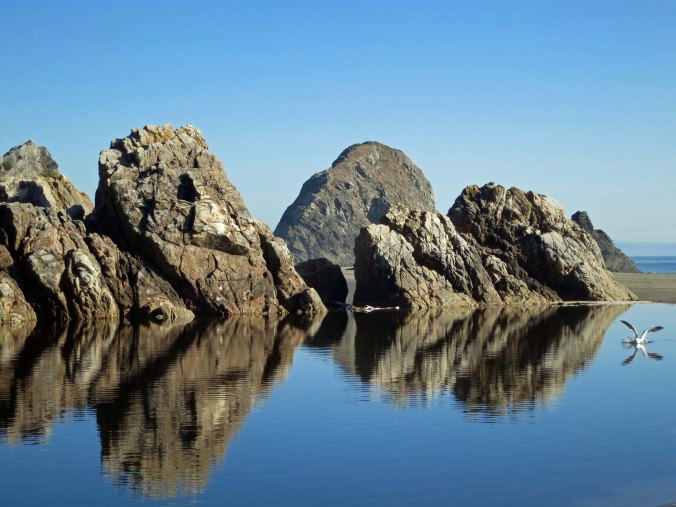
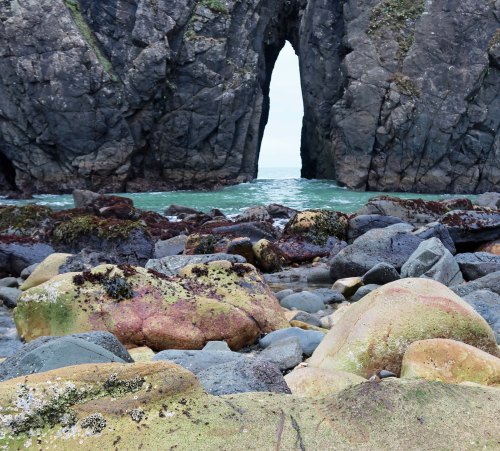
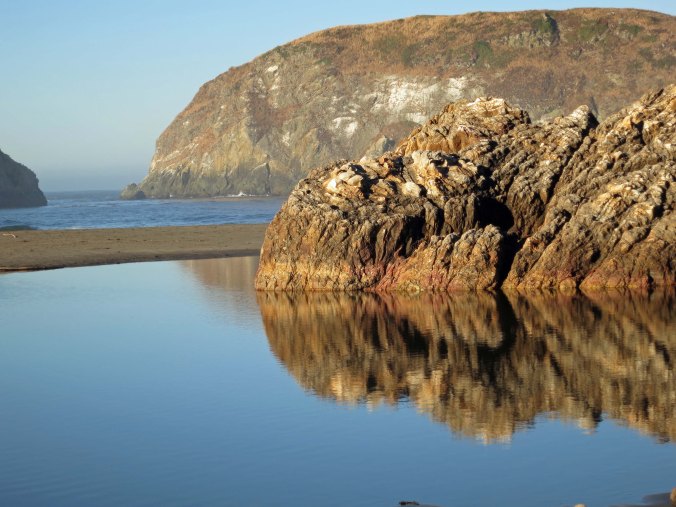
This is what you find on a sunny day at Harris Beach State Park near Brookings, Oregon. Peggy and I had to deal with stormy weather.
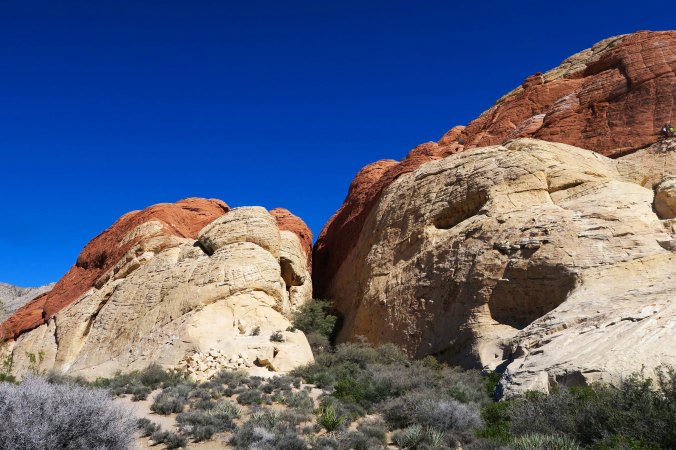
This is what you find on a sunny day at Harris Beach State Park near Brookings, Oregon. I was particularly pleased with the seagull who decided to photo-bomb my picture. Peggy and I had to deal with stormy weather when we visited there last week.
 

So, I was going to write about Chesley Burnett “Sully” Sullenberger III today, the heroic American Airlines pilot who saved 155 people in 2009 by landing his goose-disabled US Airways Flight 1549 on the Hudson River, but I got distracted. It happens, you know.

Peggy and I took a trip over to the Oregon Coast for Valentine’s Day and ended up at Harris Beach State Park in Brookings. It was a stormy three days filled with 40-60 MPH winds, slashing rain and crashing waves— the perfect weather for romantically snuggling down in our 22-foot RV and eating chocolate as the world roared by outside.

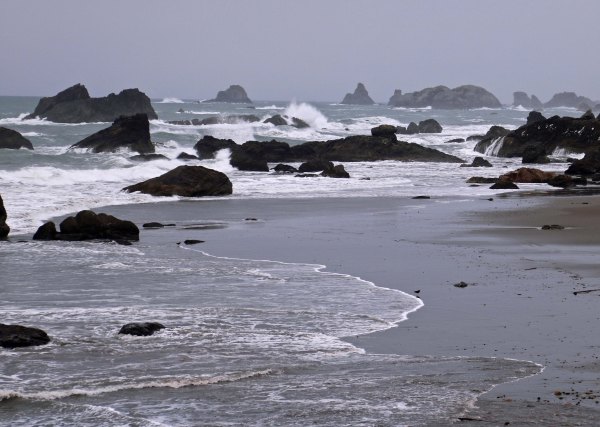
We had our rain hats, rain coats and rain pants, however, so we got out for a couple of walks: once when the sun was threatening to shine and once when the heavens were threatening to open up and dump oodles of rain. And we took our cameras. Peggy wanted to play with her new Canon EOS Rebel T6i with a Tamron 16-300 mm telephoto lens. I took my trusty little Canon Powershot G7x. The conditions weren’t ideal for photography— grey skies matched grey seas matched grey rocks, but we had fun seeing what we could capture.

Harris Beach State Park near Brookings, Oregon

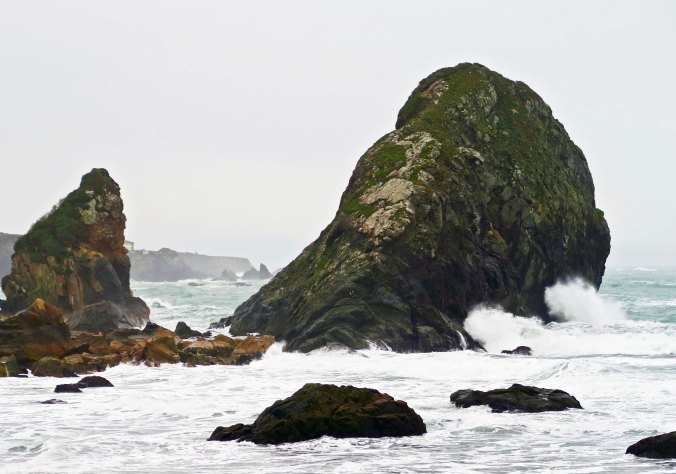
This sea stack was in the background on the lead picture for this post. Again, I took this photo on a sunny day. Note the large crack/cave on the front. (Sea stacks are rocks in the ocean that have been created by the endless waves eroding the shoreline.)

Storm tossed seas at Harris Beach State Park.

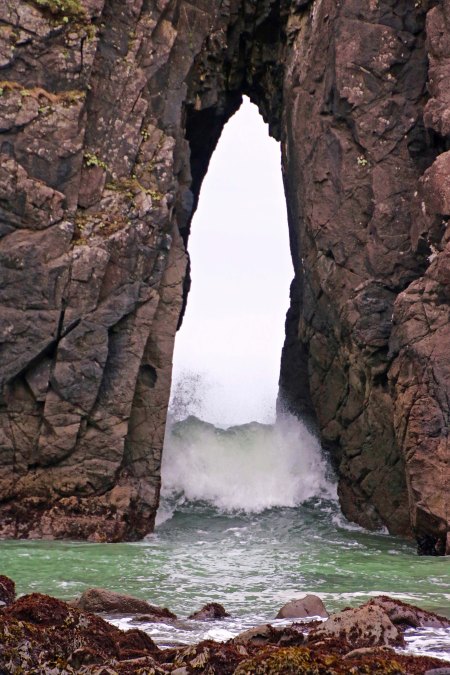
This is what it looked like last week. A wave is crashing into the cave. (Because of a high tide abetted by the stormy weather, I had to take this photo from a different angle.The sea stack on the left is included in photos below. Brookings is on the distant cliff.)

When we arrived home, I was eager to see the results and process the photos. I did that instead of working on the photos I took of Sully’s plane at the air museum in Charlotte, North Carolina when we visited there in early January. Bad Curt. As a result, today’s post is on Harris Beach. Sorry, Sully. Next Monday is yours. But then I will be in Las Vegas. Hmmm.

Harris Beach State Park sits on the edge of Brookings and is about three scenic hours away from where we live. We followed back roads to Highway 199, otherwise known as the Redwood Highway, to US 101 on the Pacific Coast and then followed it north to Brookings. It is a gorgeous park filled with imposing sea stacks and Oregon’s largest island, which happens to be reserved for the birds. Some 100,000 hang out there during mating season, including tufted puffins who use their webbed feet to dig their nests into the ground.

The island is off-limits for two-legged types like us, however, so we were left with taking photos of rocks, waves, and driftwood.

Split rock at Harris Beach State Park allows waves to go under rock.

Our semi-sunny walk took us behind the large sea stack (small island?)  and showed us that the large cave we had seen on the front went all of the way through. The waves coming in had developed a small cove. (Photo by Peggy Mekemson.)

Harris Beach State Park on the Oregon Coast.

The waves created this interesting, fan-like look. (Photo by Peggy Mekemson.)

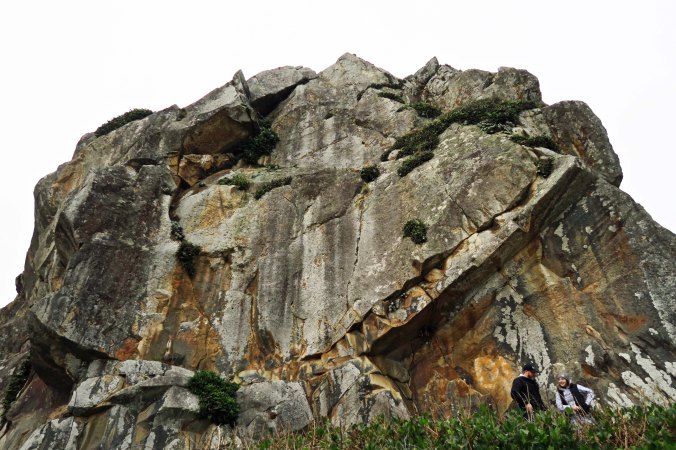
Massive rock face at Harris Beach State Park.

As we hiked down to the cove, I turned around and photographed the rock cliff we were walking around. Note the couple on the lower right for perspective. I felt that the grey sky set the cliff off more than a blue sky might have.

Peggy Mekemson hiking down trail at Harris beach State Park near Brookings, Oregon.

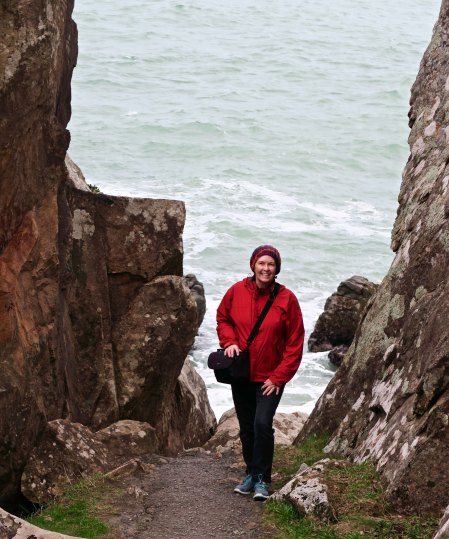
I caught a photo of ‘my Valentine’ appropriately dressed in red as she made her way down the trail. I had her move to the center of the trail so the Pacific would outline her and provide depth.

Rock 'bower' along trail at Harris Beach State Park on the Oregon Coast.

This rock overhang provided a bower for the trail. (Photo by Peggy Mekemson.)

Rock overhang at Harris Beach State Park near Brookings, Oregon.

I took a close up of the overhang.

Water caught in crevice at Harris Beach State Park near Brookings, Oregon.

Another close up that intrigued me was this water caught in a small crevice that provided something of an abstract photo.

Down on the beach, Peggy caught a shot of a wave come through the split in the rock.

Down on the beach, Peggy caught a shot of a wave coming through the split in the rock. Blue skies may have provided more depth but I felt the grey skies placed the focus on the wave.

Split rock at Harris Beach State Park on the Oregon Coast.

I moved back to capture some yellow rocks in the foreground to add color to our grey day.

Photo of sea stack rock by Peggy Mekemson at Harris Beach State Park near Brookings, Oregon.

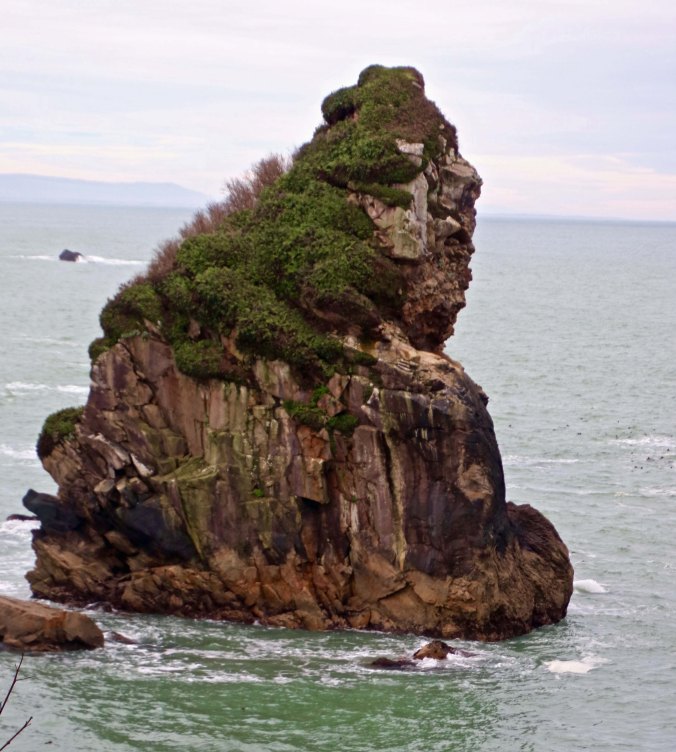
A sea stack  just south of the split rock caught Peggy’s attention and she filled her lens with it.

Photo of sea stack rock by Curtis Mekemson at Harris Beach State Park on the Pacific Ocean.

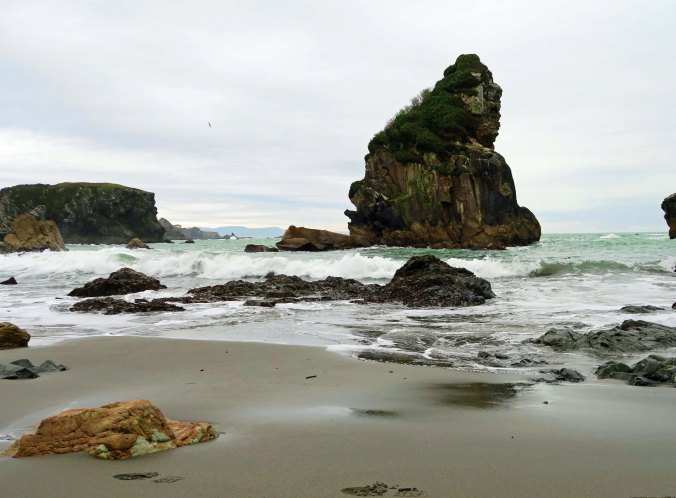
I placed the sea stack in its surroundings, again using a yellow rock on the beach for a splash of color.

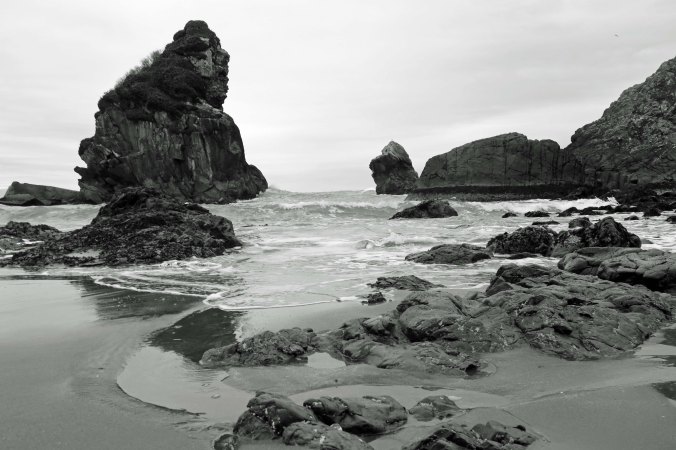
I then rendered it in black and white to honor the black and white of the day.

I then rendered it in black and white to honor the black and white of the day.

Conglomerate rock at Harris Beach State Park near Brookings, Oregon.

A conglomerate rock and driftwood caught my attention next.

Photo of conglomerate rock by Peggy Mekemson at Harris Beach State Park on the Oregon Coast.

Peggy focused in on the incredible color and texture of conglomerate rock…

Driftwood at Harris Beach State Park.

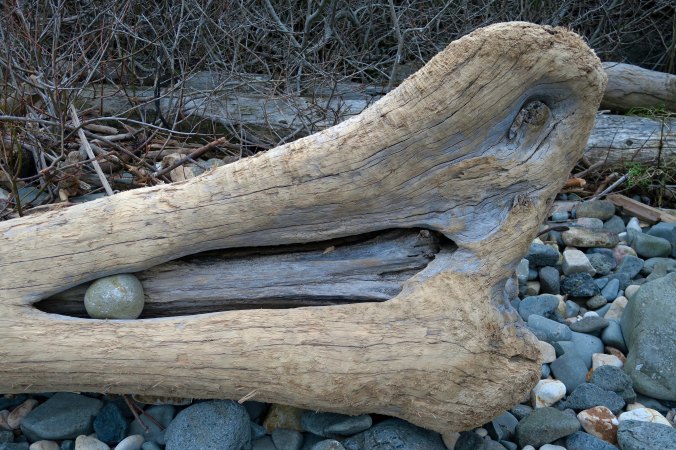
While I went for the driftwood and the rock it had managed to capture.

Our second walk took us down to the main beach area at Harris Beach State Park. The weather was more iffy so Peggy was more careful with her camera, but my small Power Shot G7x is used to being abused.

Scotch Broom photo at Harris Beach State Park near Brookings, Oregon.

I used Scotch Broom to add color to a shot looking north up the beach.

Peggy's telephoto lens provided a better view of just how many sea stack rocks are found on Harris Beach State Park.

Peggy’s telephoto lens provided a better view of just how many sea stacks are found on Harris Beach State Park, and a sense of the grey day.

Sea stacks at Harris Beach State Park near Brookings, Oregon.

I used these waves to provide a lead in to the sea stacks.

Drift logs at Harris Beach State Park on the Oregon Coast.

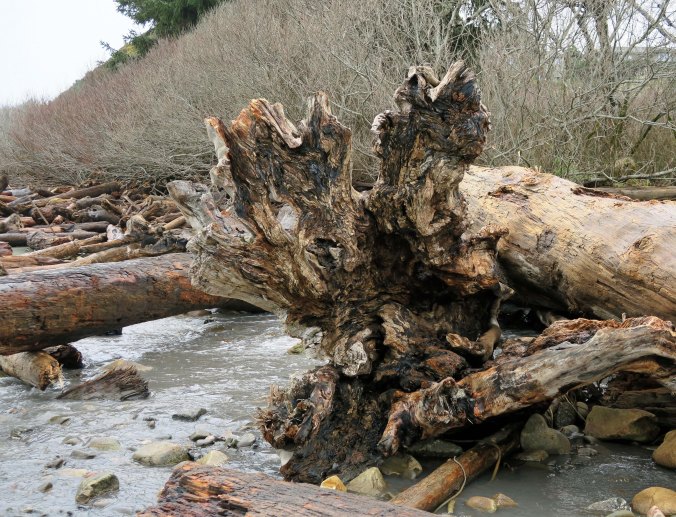
Talk about a lead in… What about this drift log? The driftwood speaks to the power of storm-tossed seas. Note the colorful roots on the left.

Flat roots on driftwood at Harris Beach State Park.

I also found these ‘moose antler’ roots interesting. With a little imagination I found the moose’s eye and nose.

Turtle-like rock at Harris Beach State Park near Brookings, Oregon.

While I am on the subject of wildlife, I dubbed this Turtle Rock.

Another clear day shot take from the beach area. Bird Island is in the background.

Another clear day shot taken from the beach area. Bird Island is in the background.

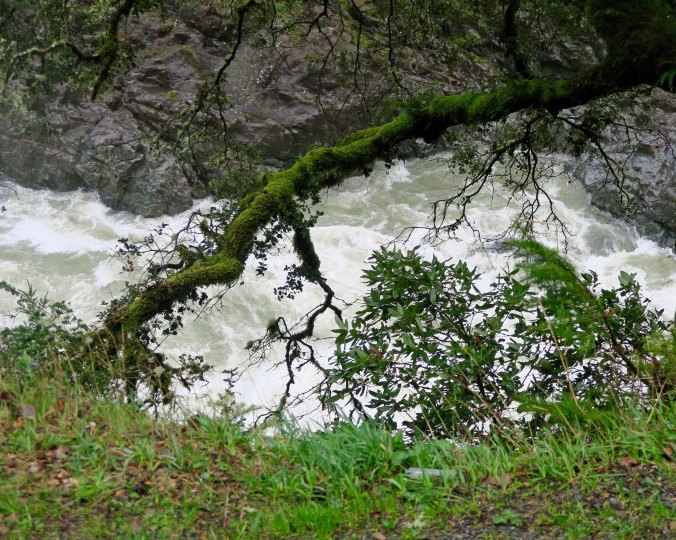
Peggy took this shot of the turbulent Smith River on our way home. She really like the contrast of the green moss growing on the oak tree.

Peggy took this shot of the turbulent Smith River on our way home. She really liked the contrast of the green moss growing on the oak tree with the white rapids. The weather had been so wet we found 74 waterfalls careening off of the mountain and into the river as we drove up Highway 199.

I'll conclude with this hill hugging rainbow we found welcoming us back to the Applegate Valley. (Photo by Peggy Mekemson.)

I’ll conclude with this hill-hugging rainbow we found welcoming us back to the Applegate Valley.  Peggy shot this photo through raindrops on our windshield. Note: there is a slight double rainbow.

NEXT BLOGS:

Wednesday: It’s back to the Sierra Trek and a 16 mile day without any water sources. One Trekker is lost and I face a rebellion and a rattlesnake.

Friday: More great mutant vehicles at Burning Man.

Monday: Will it be Sully?


DMV… Burning Man’s Department of Mutant Vehicles: Part 2

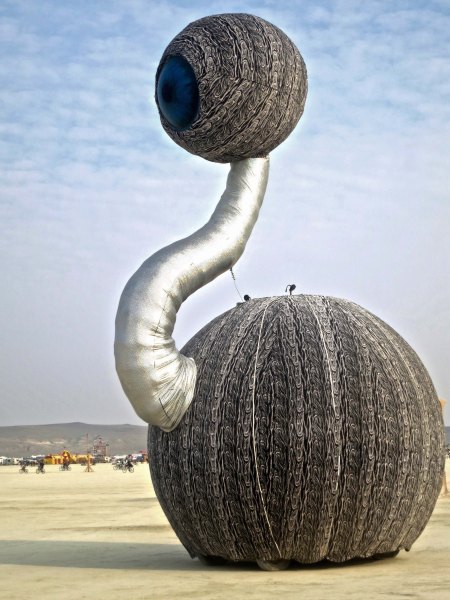
One of Burning Man's more unique mutant vehicles from my perspective is this traveling eye.

One of Burning Man’s more unique mutant vehicles from my perspective is this traveling eye. The only thing remotely like a normal vehicle are the tires peeking out from below. (Photo by Peggy Mekemson.)


“A Mutant Vehicle is a unique, motorized creation that shows little or no resemblance to their original form, or to any standard street vehicle. Mutant Vehicles are radically, stunningly, (usually) permanently, and safely modified from their base vehicle. Sometimes the whole vehicle is made from scratch.

Mutant Vehicles may include such non-standard motorized forms such as furniture, other non-street vehicles such as a boat or train, animals, or just about anything imaginable.” —Taken from Burning Man’s website.


Eye of mutant vehicle at Burning Man.

The eye up close, checking you out! (Photo by Peggy Mekemson.)

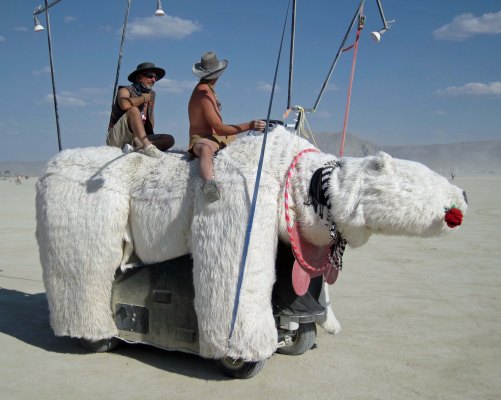
Animals are a favorite theme for mutant vehicles. This polar bear would have fit right in on Valentines Day.

Animals are a favorite theme for mutant vehicles. This polar bear would have fit right in on Valentines Day. (Photo by Tom Lovering.)

Polar Bear mutant vehicle at Burning Man.

A side view of the friendly polar bear. (Photo by Tom Lovering.)

Burning Man takes its mutant vehicles seriously— partially because they are an integral part of the Burning Man experience and partially because safety is a critical issue.  These often-large vehicles must maneuver through and around thousands of bicyclists and pedestrians both during the day and at night.

The permitting process is extensive. To start with, both government agencies and Burning Man place limits on the number of mutant vehicles. Far more people want to bring vehicles than can be accommodated. Participants must meet stringent requirements to bring their creations to Black Rock City. (Go here to learn about requirements.)

The Department of Mutant vehicles is responsible for overseeing the permitting, inspection and operation of Mutant Vehicles at Burning Man.

The Department of Mutant Vehicles is responsible for overseeing the permitting, inspection and operation of Mutant Vehicles at Burning Man.

Headquarters for the Deparment of Mutant Vehicles at Burning Man.

Headquarters! All mutant vehicles must stop here to pick up their licenses to operate at Burning Man and have a safety inspection.

The first requirement is that the vehicle must in no way resemble the initial car, truck, golf cart, etc. (Boats seem to be an exception, but hey, they are ‘floating’ across the desert.) Beyond this, the organization states, “the mutation should aim to provide a level of ‘radical visual stimuli’ or ‘wow factor’ for the other participants of Black Rock City.”

A covered wagon mutant vehicle at Burning Man.

A covered wagon had us running for our cameras. I’d say that there was a ‘wow’ factor.

Conestoga Wagon mutant vehicle at Burning Man.

Another view. The Black Rock Desert would have seen similar vehicles (albeit smaller and attached to oxen) in the 1860s along the Applegate cutoff to the Oregon Trail that ran through the area. This photo was taken in front to our camp.

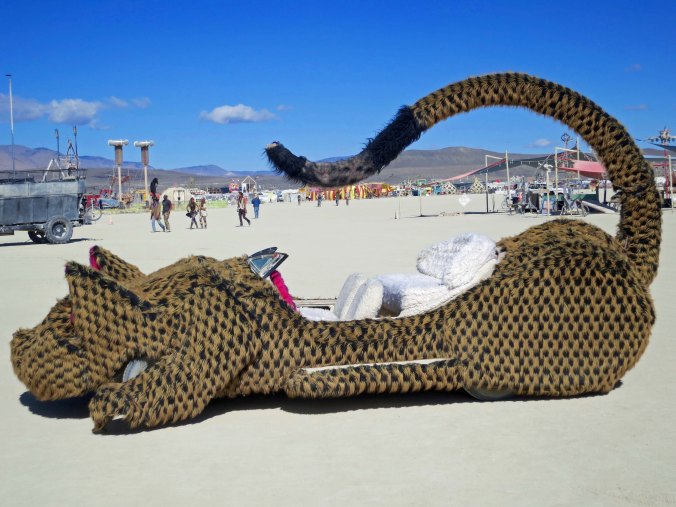
Cat car mutant vehicle at Burning Man.

The cat car is another perennial favorite of mine at Burning Man that has a definite ‘wow’ factor.

A side view of the cat car mutant vehicle at Burning Man.

A side view. It takes a lot of guts to have pure white upholstery at Burning Man!

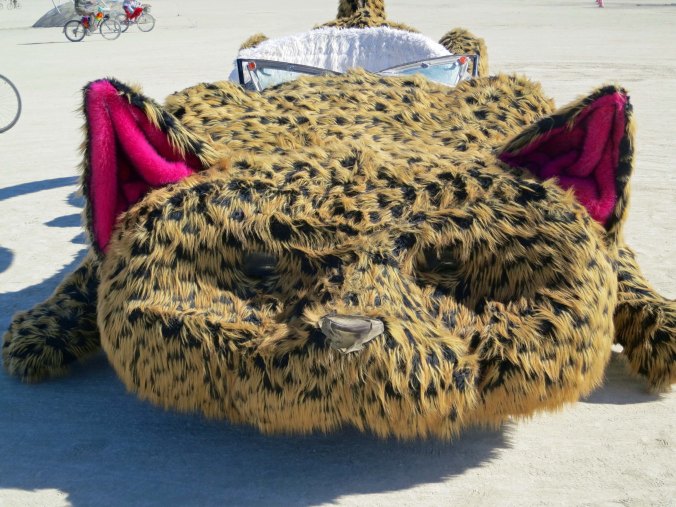
Close up of head of cat car mutant vehicle at Burning Man.

And a close up of the kitty’s head.

Interactivity is also considered critical. Giving rides to Burners and providing entertainment are two ways of accomplishing this. For example, one year I saw a fire-breathing mutant vehicle that featured an opera singer standing on top. When she hit her high notes, the vehicle would send flames shooting into the air.

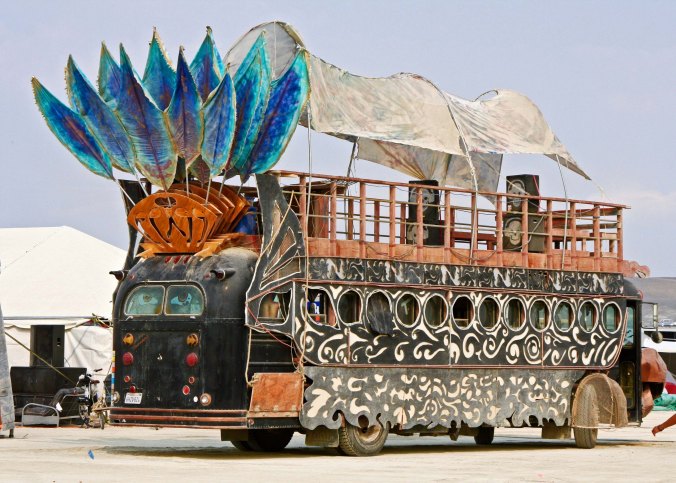
Safety involves many of the things you would expect including good brakes and safe accommodations for passengers. Think of 40 people (some who have spent a fair amount of time visiting Burning Man’s free bars) dancing on top of a vehicle as it drives through the desert night. Falling off is a real possibility. Railings are critical.

Orange bus mutant vehicle at Burning Man.

There are serious railings on this orange bus mutant vehicle. Note the intricate carving of the wood.

Orange mutant vehicle bus side view.

A side view of the bus. I suspect one would land with quite a bump coming off the slide.

Mutant vehicle with beak at Burning Man.

This guy with his boxer-beak and tail feathers also has a well-built railing.

Tail feathers on a mutant vehicle at Burning Man.

The tail feathers.

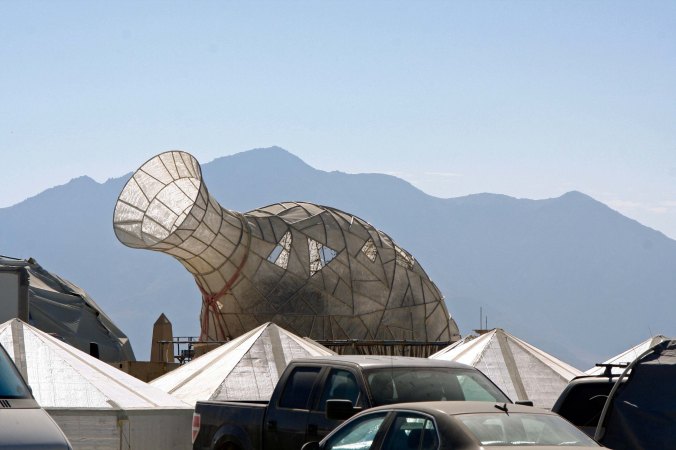
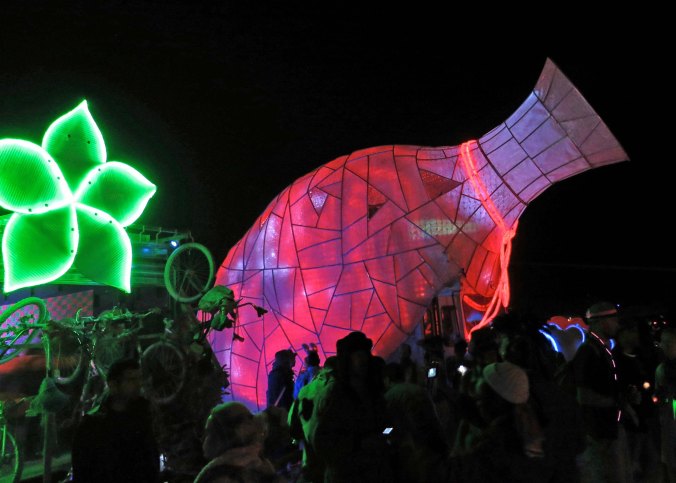
Vehicles that want to travel at night must have adequate lighting on all sides of the vehicle. But the requirements go further. Lighting is also expected to contribute to the “wow” factor. Many mutant vehicles are more spectacular at night than they are during the day. One of my all-time favorites is a large, travelling vase.

Mutant vehicle that looks like a vase at Burning Man.

This large vase mutant vehicle normally lives in camp during the day.

Vase mutant vehicle at Burning Man with mountain backdrop.

Another day-time shot. This one with a mountain backdrop.

The mutant vehicle vase at night. This was on the night when the Man is burned and vehicles form a large circle around the Man.

The vase at night. Mutant vehicles form a large circle around the Man on Saturday night when he is burned. The flower is part of another mutant vehicle.

Vase mutant vehicle lit up at night at Burning Man.

A different views with different colors.

I caught this shot as the vase left a wedding in Black Rock City we had attended.

I caught this shot as the vase left a wedding in Black Rock City.

As you might imagine, vehicles that feature fire art and shoot flames into the air, must also meet strict requirements. The types of tanks, fuel lines, daily safety checks, and emergency shut off valves are all included. But the effort is worth the extra care when you consider the results. Imagine meeting up with El Pulpo Mechanico as it roams across the playa with all eight arms flaming.

El Pulpo Mechanical as he flames his way through the Burning Man night.

El Pulpo Mechanical as he flames his way through the Burning Man night.

Burning Man mutant vehicle designed to shoot flames into the air.

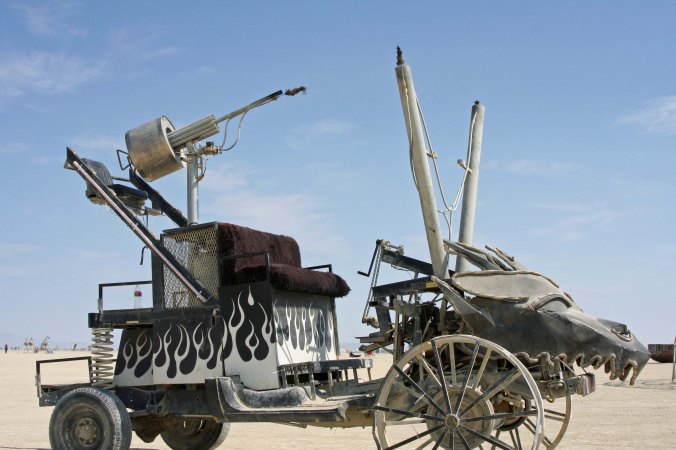
The ‘weapon’ on top of this Mad-Max look-a-like shoots flames as well.

Dragon head on mutant vehicle at Burning Man.

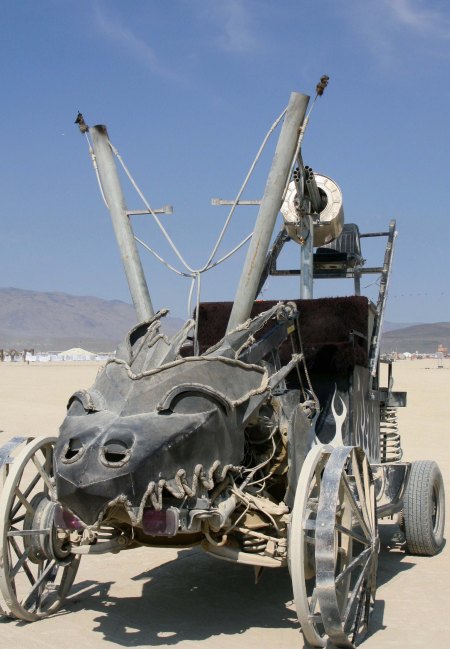
A front view…

Close up of dragon headed mutant vehicle at Burning Man.

And a close up.

And finally, there are sound requirements. Nothing is more irritating than a mutant vehicle with humongous speakers making its way through your neighborhood in Black Rock City while blasting out music at 2:00 AM. Burning Man notes that there has been an “increase in the number of vehicles with sound systems that would normally be designed for an arena or stadium.” No kidding. Having those systems pointing at you is like deaf city. Fortunately, the loudest systems tend to be restricted to the outer areas of the city where Burners can go deaf to their hearts-content.

Check out the number of speakers on this mutant vehicle. They are the reason it is assigned a position way out at the edge of Black Rock City in the Playa.

Check out the number of speakers on this mutant vehicle! They are the reason it is assigned a position way out at the edge of Black Rock City in the Playa. There is almost always a crowd of people dancing around and on this vehicle, including up on the heart.

And just for fun, I will close today with this googly-eyed, low-tech frog.

Frog mutant vehicle at Burning Man.


NEXT BLOGS:

Monday: The airplane that crash landed on the Hudson River in New York City.

Wednesday: The Sierra Trek— Our second day included a sixteen mile hike without any water sources, a lost trekker, and a huge timber rattlesnake that insisted on blocking the trail.

Friday: More Burning Man mutant vehicles including El Pulpo Mechanico and a huge Rhino that would send his African counterparts scurrying for cover.