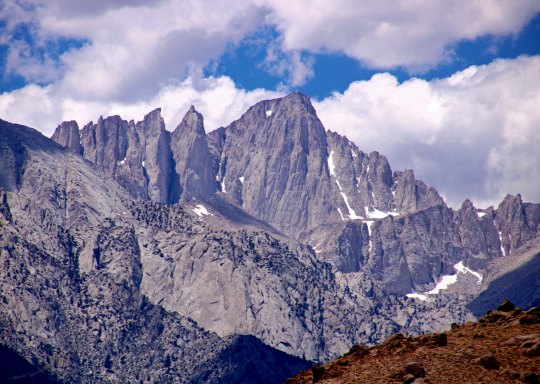
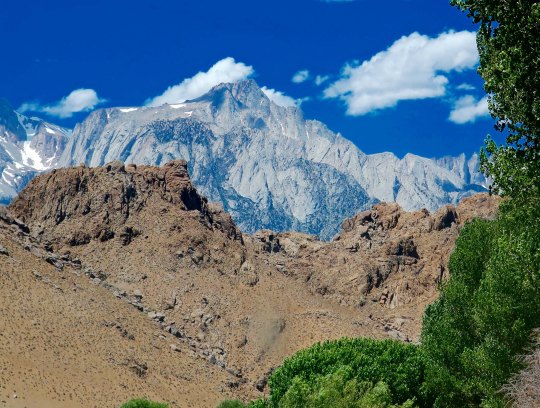
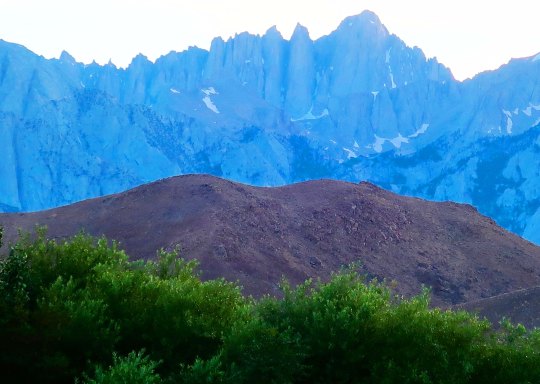
What better place to start a drive up Highway 395 with its stunning views of the Sierra Nevada Mountain Range than Mt. Whitney. I’ve already included some photos of this beauty in on my Alabama Hills’ post. Maybe even this one.
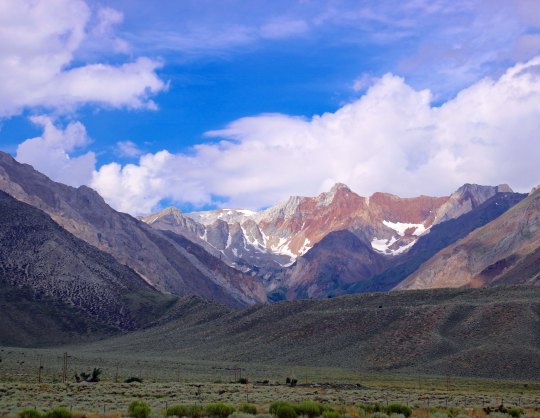
There is a lot to see along California’s Highway 395, and I am bringing much of it to you in this series. We’ve already visited the Alabama Hills with its fascinating relationship with Hollywood. In my last post, I took you to the World War II Japanese internment camp of Manzanar with its tragic history and relevance for our modern world. You have patiently made your way through lots of words! Thank you. It’s time for another photo blog, heavy on pictures and light on verbiage. (grin) What better opportunity than admiring the views of John Muir’s Range of Light: the Sierra Nevada Mountains. It’s one of my major reasons for visiting the area. These are some of my favorite photos from the trip.
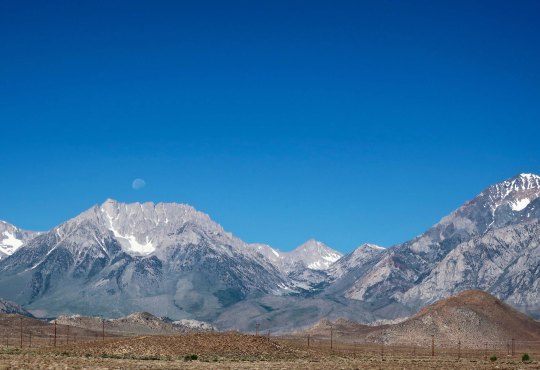
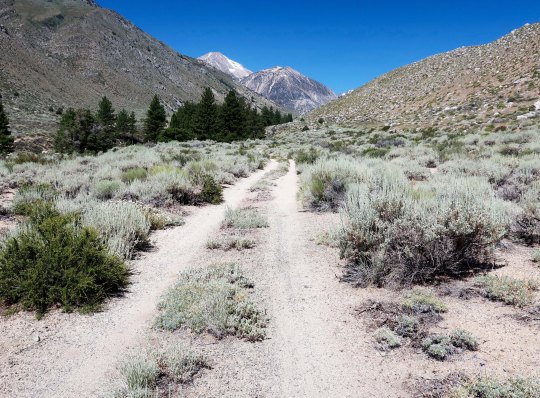
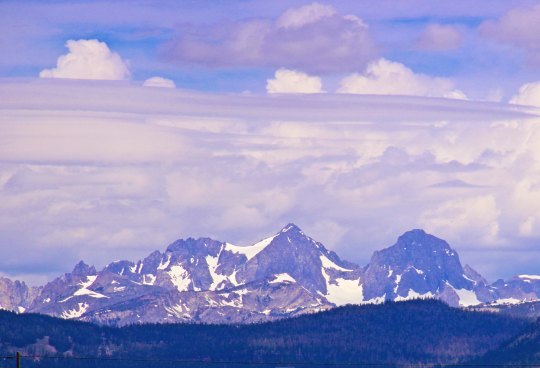
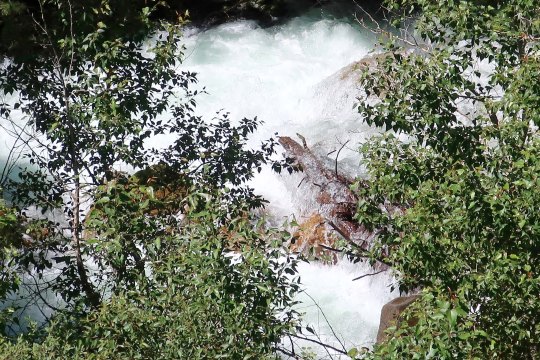
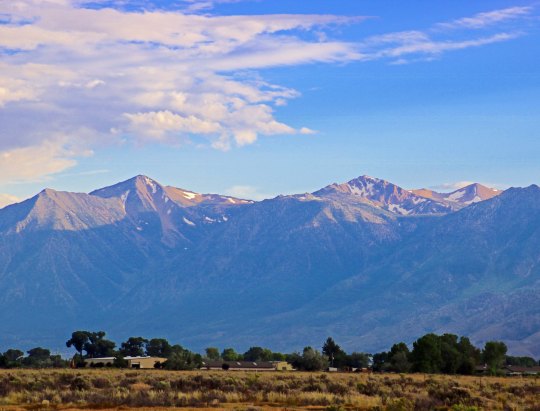
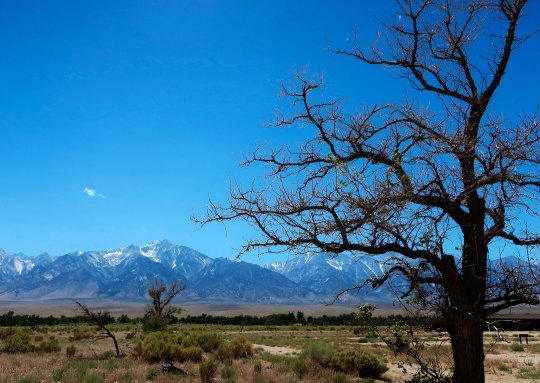
Ansel Adams added to the fame of the Sierra’s with his magnificent black and white photos. Ansel Adams I am not, but I still can’t resist rendering some of my Sierra photos in black and white, taking a step back in time. I thought that the power poles caught in the sunlight added a nice touch.This illustration provides a perspective on how the Sierras were created. The Sierras are a fault block range with the mountain rising along a fault while the valley sinks. It’s a process that continues today. Think of all the earthquakes in the area. This process also means that the mountains are steeper on the east side than they are on the west— a fact I know well having started many a backpack trip from the east! “Okay, legs, we are going to start this morning with a 3,000 foot climb.”Views like this seriously detract from paying attention to the traffic on Highway 395! Fortunately, a number of pullouts allow you to stop and enjoy the scenes.Sometimes the view is more like a glimpse. The clouds provided drama.The view called for another black and white rendition. Which photo do you prefer?The moon caught my attention here.Out came the telephoto for a closer look. Much of the Sierras’ rugged beauty is due to glaciers carving out the granite.Thunderstorms and showers are common to the High Sierras of the southern part of range. The Sierras increase in altitude as you go south, peaking out at Mt. Whitney.Here they turn dark. The thunder and lightning shows can be quite impressive when up in the center of the storms, and sometimes downright scary. I’ve hurried off more than one high pass. For the more adventuresome, a number of inviting roads lead off into the mountains. Most cars could easily travel over this road, assuming you don’t mind a few bumps and dust along the way.Other roads require a little more thought: Quivera, our small RV, said no on this one. Note how dry it is here. The western slopes of the Sierra Nevada Mountains pull most of the rain out of the clouds, so the eastern slopes are desert like.The snows were heavy in the Sierras last winter and were slow to melt off this summer. This is a lot for August. One result is that the creeks and rivers can look like this with snow melt. It isn’t something a backpacker could or would cross. Often there are downed logs across these torrents. As you can imagine, it’s a nervous crossing. The narrower the log, the more nervous!If you are a skier, especially from Southern California, this mountain might look familiar. It’s Mammoth Mountain. You can see the ski runs on the lower slopes.I close today with this final view of the Sierras from Carson Valley. At this time last year, I was backpacking down the PCT through these mountains.
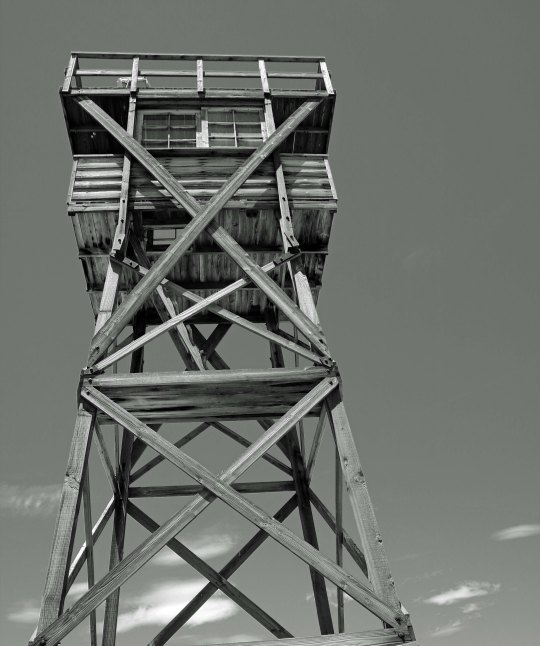
Several guard towers like this surrounded the Japanese American relocation camp at Manzanar during World War II. Had I been an American citizen of Japanese descent instead of British descent, it’s likely that I would have been born in one of the West Coast relocation centers surrounded by barbed wire.
The World War II Japanese ‘relocation center’ of Manzanar is located a short ten miles north of Lone Pine and the Alabama Hills just off of Highway 395. I went there directly from the Lone Pine Museum of Film History. It would be hard to find two more different reminders of our past. As far as I can remember, I didn’t know about the site until I was in college. It wasn’t something that was discussed at my home. Had I been an American citizen with Japanese ancestry as opposed to British ancestry, it’s likely that I would have been born at one of the West Coast “relocation centers,” i.e. concentration camps, behind barbed wire fences overlooked by guard towers bristling with guns.
I may have learned about the camps in high school during American History but it was made real for me at the community college I attended just east of Sacramento in 1961-63. I was student body president in 1962 and a member of my council was a young Japanese American woman who had experienced the relocation effort directly. Her family, along with several other Japanese American farmers in the Loomis/Lincoln area, were rounded up, forced to abandon their farms, and shipped out to Tule Lake where the relocation center for most of Northern California was located.
Ten years later in the early 70s, I would come to know another Japanese American who had been shipped along with his family to Tule Lake as a six-month old child, Bob Matsui. In 1971, working together with other environmentalists, I had created a political organization in Sacramento to elect environmentally concerned candidates to the Sacramento City Council and Board of Supervisors. Bob, who was making his first run for city council, had scored high on a questionnaire that we had put together. I had enthusiastically supported him in his run for election and he had won. Not only did he support environmental issues on the City Council for seven years, he continued to in 1978 when he became the fifth Japanese American to be elected to Congress. He would serve with distinction for a quarter of a century and be known for his bipartisan approach in creating substantive legislation.
More to the point of this post, Bob also became a strong advocate for recognizing the wrongs that had been done to Japanese Americans during World War II. For one, he was instrumental in having Manzanar set aside as a National Historic Landmark. In 1980 he joined Senator Daniel Inouye, and Congressmen Spark Matsunaga and Noman Mineta, in an effort to establish a committee to study the effects of the incarceration and the potential for redress.The end result of this effort was the creation of the Commission on Wartime Relocation and Internment of Civilians. After an extensive set of hearings throughout the West, the bipartisan Commission concluded that the decision to incarcerate the Japanese Americans was not based on military necessity and instead was based upon “race prejudice, war hysteria, and a failure of political leadership.” Not one Japanese American was found guilty of aiding Japan during World War II.
The findings of the Commission led to the Civil Liberties Act of 1988 which granted wartime survivors an apology and individual reparations of $20,000. While President Reagan initially opposed the implementation legislation, H.R. 422, because of cost, he readily signed the bill when it reached his desk. I found his comments at the signing ceremony to be quite relevant, not only to the legislation, but for today.
He had started the ceremony by noting “… we gather here today to right a grave wrong. More than 40 years ago, shortly after the bombing of Pearl Harbor, 120,000 persons of Japanese ancestry living in the United States were forcibly removed from their homes and placed in makeshift internment camps. This action was taken without trial, without jury. It was based solely on race, for these 120,000 were Americans of Japanese descent.”
Reagan went on to describe H.R. 442: “The legislation that I am about to sign provides for a restitution payment to each of the 60,000 surviving Japanese-Americans of the 120,000 who were relocated or detained. Yet no payment can make up for those lost years. So, what is most important in this bill has less to do with property than with honor. For here we admit a wrong; here we reaffirm our commitment as a nation to equal justice under the law.”
The President concluded his statements by reading a newspaper article from 1945 that had been included in the Pacific Citizen:
“Arriving by plane from Washington, General Joseph W. Stilwell pinned the Distinguished Service Cross on Mary Masuda in a simple ceremony on the porch of her small frame shack near Talbert, Orange County. She was one of the first Americans of Japanese ancestry to return from relocation centers to California’s farmlands. “Vinegar Joe” Stilwell was there that day to honor Kazuo Masuda, Mary’s brother. You see, while Mary and her parents were in an internment camp, Kazuo served as staff sergeant to the 442d Regimental Combat Team (an all Japanese-American regiment). In one action, Kazuo ordered his men back and advanced through heavy fire, hauling a mortar. For 12 hours, he engaged in a singlehanded barrage of Nazi positions. Several weeks later at Cassino, Kazuo staged another lone advance. This time it cost him his life.”
The newspaper clipping noted that her two surviving brothers were with Mary and her parents on the little porch that morning. These two brothers, like the heroic Kazuo, had served in the United States Army.
After General Stilwell made the award, the motion picture actress Louise Allbritton, a Texas girl, told how a Texas battalion had been saved by the 442d. Other show business personalities paid tribute — Robert Young, Will Rogers, Jr. And one young actor said: “Blood that has soaked into the sands of a beach is all of one color. America stands unique in the world: the only country not founded on race but on a way, an ideal. Not in spite of but because of our polyglot background, we have had all the strength in the world. That is the American way.” (Italics mine)
Reagan then went on to note with his usual sense of humor: “The name of that young actor — I hope I pronounce this right — was Ronald Reagan. And, yes, the ideal of liberty and justice for all — that is still the American way.”
Now that’s what being Presidential, the President of all Americans, is about. Following are several photos I took at Manzanar.
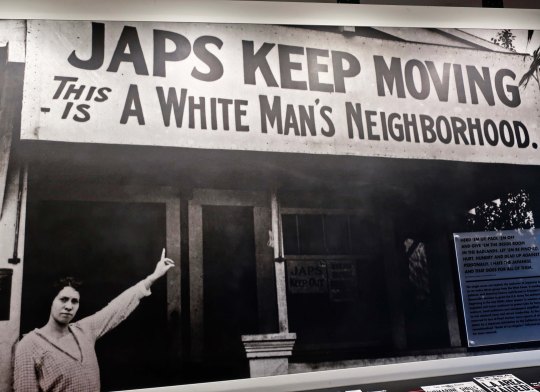
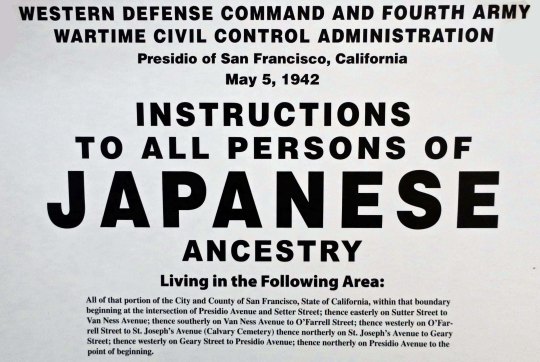
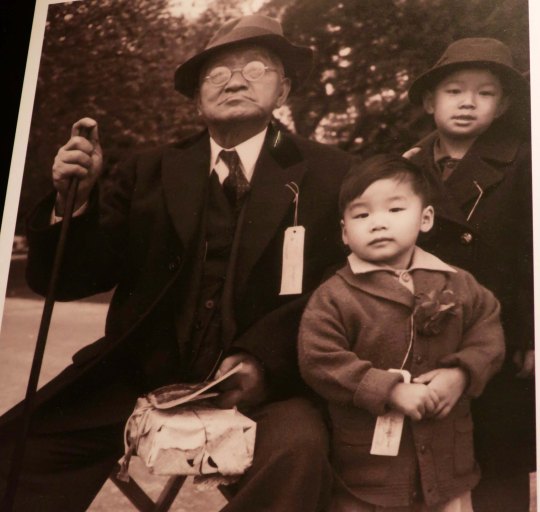
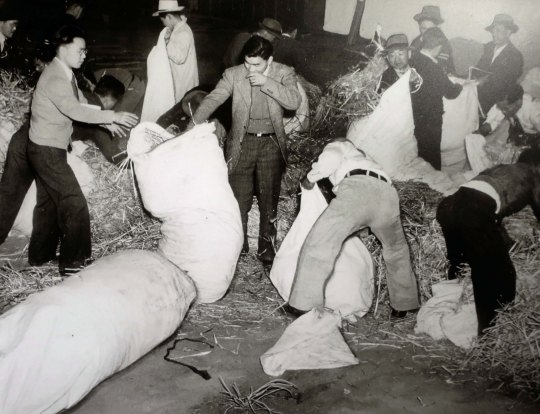
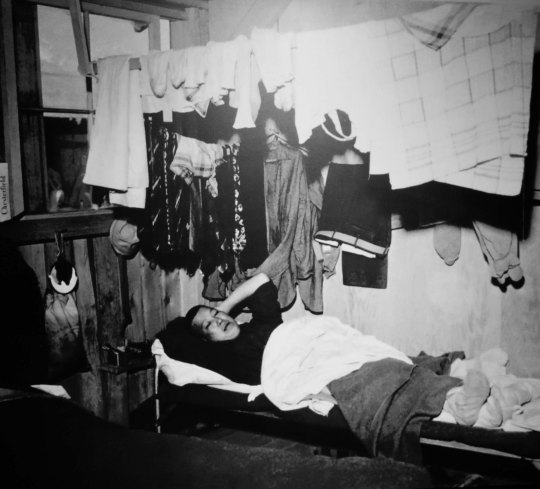
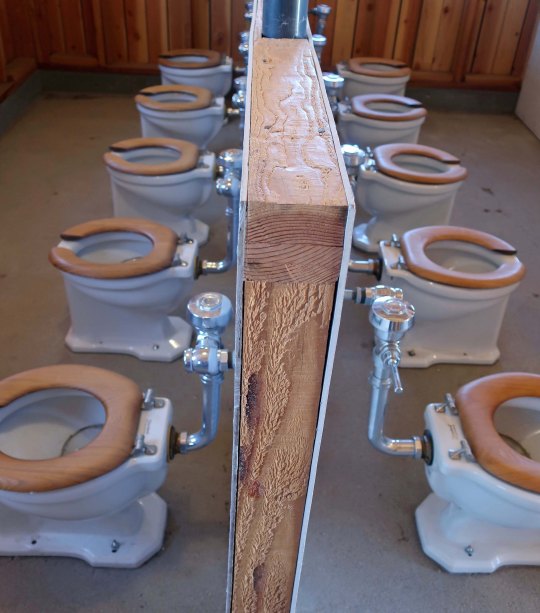
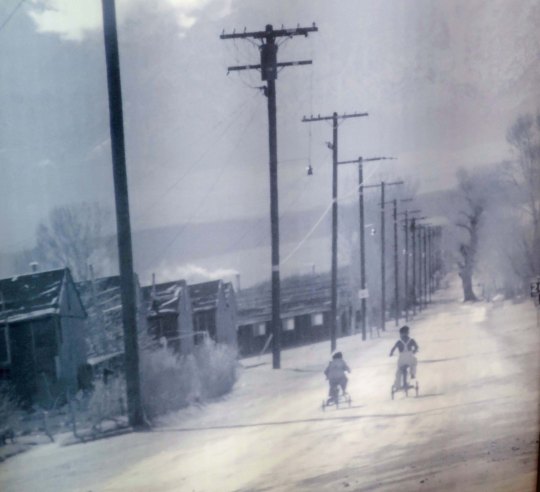
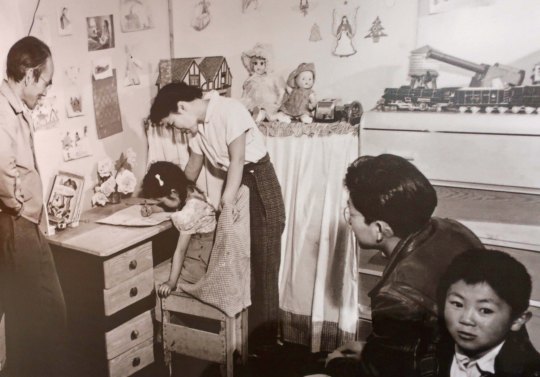
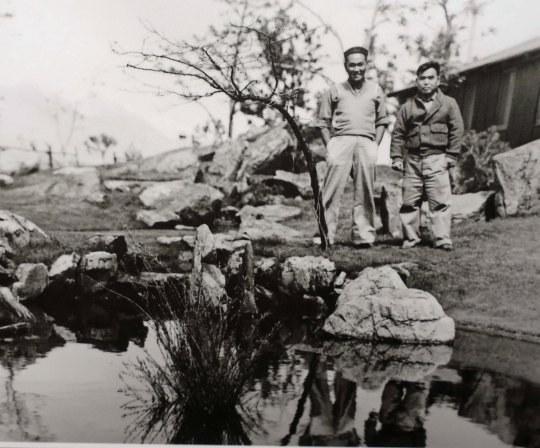
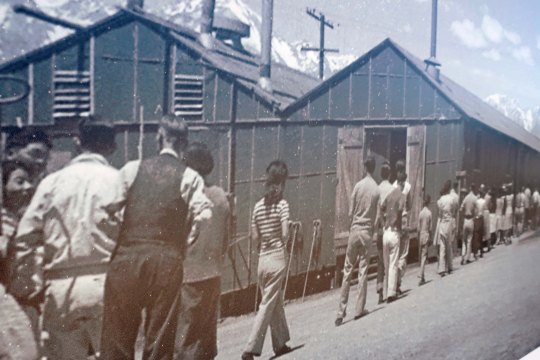
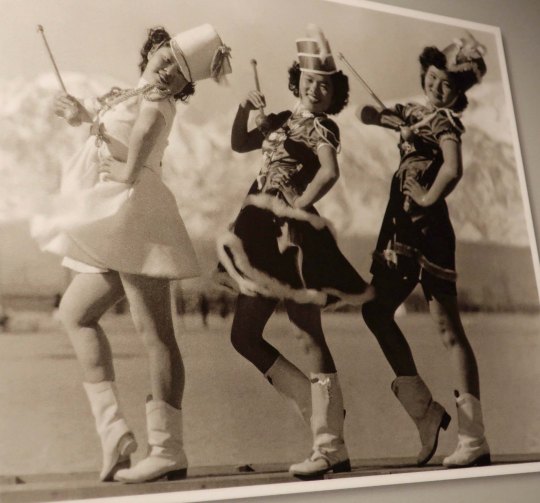
The bombing of Pearl Harbor naturally led to a fear of Japan, particularly on the West Coast. But it also released a deep prejudice against Japanese Americans that already existed. This large photo greets visitors to Manzanar.On May 5th, based on information provided by the Census Bureau, this sign went up wherever Japanese Americans were living on the West Coast. They were given two days to gather a few belongings and make whatever arrangements they could for their homes, businesses, etc. Note, the Census Bureau denied that it had provided the information up to 2007.This part of the poster informed Japanese-Americans what they could carry with them and when they were to report. They were more or less limited to what they could carry.A child sitting among some of the personal luggage.Each person was assigned a number. I couldn’t help but think of the numbers that were tattooed on Jews when they entered German concentration camps. One good point was that families weren’t separated. Children were allowed to remain with their parents.Upon arrival, prisoners were required to fill their own straw mattresses.This model provides a perspective on what the camp looked like. Over 10,000 Japanese Americans were crowded into 504 barracks which were divided into blocks with 14 barracks to a block. Barracks were divided into four rooms with each room holding eight people. Each block provided shared bathrooms, showers, a laundry, and a mess hall. Privacy was extremely limited. Both inside and out.Home sweet home.Several barracks have been recreated to provide a sense of what life would have been like. This was the women’s bathroom. You can imagine how hard it would have to get used to, especially if you were a private person. And think of yourself having a bad case of diarrhea. Children on tricycles make their way down a road.In spite of the hardships, and the fact that your were locked up behind barbed wire fences guarded by soldiers with weapons, the Japanese Americans did what they could to make their life tolerable. This family was large enough to have its own section of a barrack and had done what they could to turn it into home.A toy loan center was created so all children would have toys to play with.The barren landscape was turned into farms and parks. These gardeners had a nursery that they had turned over to the Veterans’ Administration when they were incarcerated. (How un-American is that?) In Manzanar, they built park-like gardens.Block residents line up for a meal at the mess hall. I was impressed with how they were dressed. Note the Sierras looming in the background.But can you trust a skinny cook?Tuesday nights were humorously named slop-suey night. I read in one place where residents sought out mess halls with the best cooks. This photo on cloth was in the recreated mess hall barracks. You could see the lights behind it. I thought it created an almost ghostly sense of the past at Manzanar.The mess halls also served as block meeting rooms and social centers. I was amused to learn that one of the most popular songs at the dances was “Don’t Fence Me In” by the Andrew Sisters. The words are below. Another observation here: Nothing stops young love. One of the most popular wedding gifts was nails and boards so young couple could create privacy for themselves.
“Oh, give me land, lots of land under starry skies above. Don’t fence me in. Let me ride through the wide open country that I love. Don’t fence me in. Let me be by myself in the evenin’ breeze, And listen to the murmur of the cottonwood trees. Send me off forever but I ask you please, don’t fence me in”
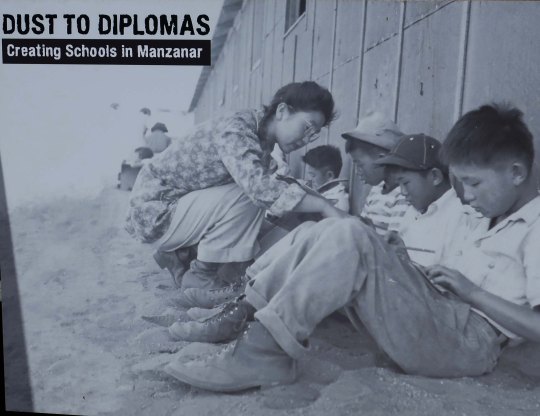
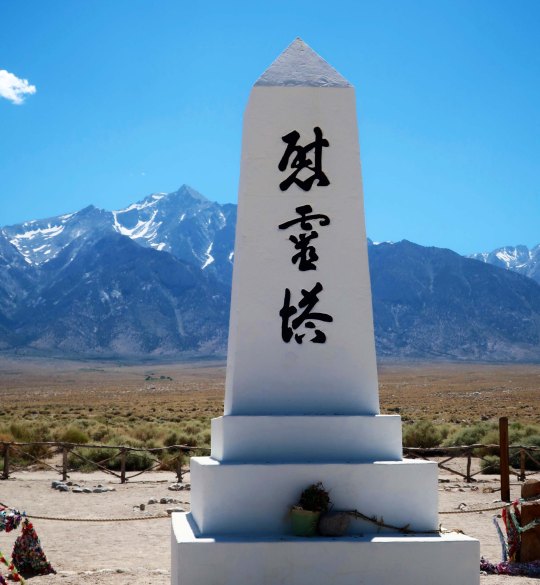
Education was extremely important to the Japanese Americans and they did everything they could to assure that their children went to school. Eventually, they would have regular classrooms.The Japanese Americans built this large hall for community wide meetings and events, such as graduation from high school. Today, it serves as the Visitors’ Center.I offer this last photo of Manzanar in the 40s. How much more American can you get?Today, Manzanar looks much like it did before the relocation center was built. The constant winds still blow and temperatures still climb to above 100 degrees F during the summer and below zero in the winter. This iconic monument to ‘console the souls of the dead’ with its dramatic Sierra Nevada backdrop is located in a small graveyard at the back of Manzanar. But, for me, it also serves as a memorial to the people who were rounded up and corralled here, to their heroic efforts to creat a bit of America in what was basically a concentration camp, and to the dark days in American history their confinement represents. Lest we forget.
NEXT POST: The number one reason for driving down Highway 395: Its dramatic mountain scenery.
John Wayne’s breakout movie where he moved from a B Level to an A Level actor was in the 1939 film, “Stagecoach,” part of which was filmed in the Alabama Hills. He had made 6 movies in the area before and would go on to make more afterwards.
When I arrived in Lone Pine, California, the first thing I did was go for a drive in the Alabama Hills located beneath the towering Sierra Nevada Mountains west of the town. I included photos of this adventure in my last post and noted that over 400 movies and several TV series had been filmed there. I was eager to see what Hollywood found so fascinating about this semi-remote location in the Eastern Sierras. The second thing I did was make a beeline to the Lone Pine Film History Museum to learn more about the movies and TV programs filmed in the area. Most of the photos in this post, I took in the museum. My own fascination with the Alabama Hills started early in my life. I just didn’t know it.
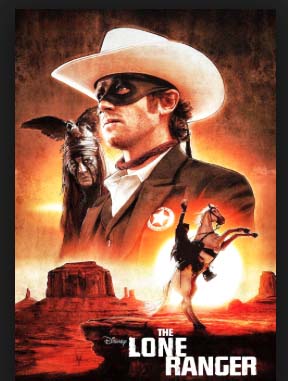
Tonto, Silver and the Lone Ranger.
I was excited. Alan Green had invited my brother and me over to watch TV. It wasn’t just that we were going to watch TV at a friend’s house, it was to be first time we had ever watched TV. The year was 1950. Alan’s dad was manager of the Diamond Lime Company and the Greens had the only TV in town! What made the adventure even more special was that we were going the watch the Lone Ranger. Marsh and I had spent hours glued to the family radio listening to the masked man dispense justice to the remote corners of the West with his ever-faithful companion Tonto and his great white stallion, Silver. Not only did the white-hat hero use silver bullets, he always shot the guns out of the hands of the bad guys— never killing them. (Imagine that in this day and age!) Now we were going to see what the Lone Ranger and Tonto and Silver and Scout looked like in live action on a 12-inch screen. We were not disappointed. I still remember Silver rearing up on his hind legs in the final scene as the Lone Ranger called out “Hi-yo Silver away” before dashing off while the inevitable question was asked by someone he had rescued, “Who was that masked man?”
The fact that the William Tell Overture by Rossini kicked off the episode or that the Alabama Hills provided the backdrop for the opening credits would have escaped me at the time. But they still made an impression. I would forever associate the William Tell Overture with the Lone Ranger. And the Alabama Hills? Well, they came to represent what cowboy country was supposed to look like in my mind. It didn’t hurt that several other popular Western TV series of the time had episodes filmed in the area. Bonanza, Have Gun Will Travel, Annie Oakley, Rawhide,and Gunsmoke are examples. The Bonanza spread, by the way, theoretical included some 600,000 acres that stretched from Lake Tahoe to Virginia City. The imaginary ranch would be worth gazillions today. I will be taking you on a side trip off of Highway 395 to Virginia City as a part of this series.
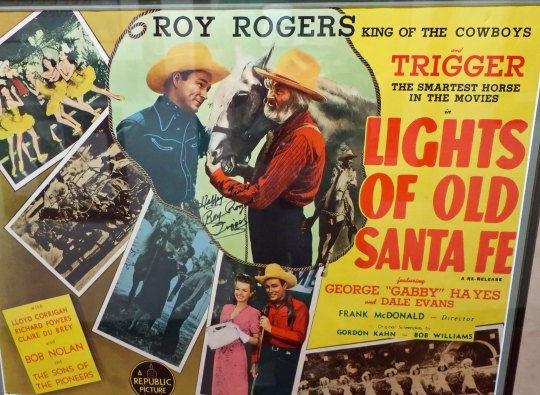
Movies were even more important in establishing the Alabama Hills as a popular filming location for Westerns. Of the over 400 made in the area, the vast majority involved cowboys— and cowgirls— and horses. (I was amused that the horses often got top billing right under the star. Trigger, for example, was listed above and in bigger letters than Roy Roger’s wife Dale on the movie posters at the Lone Pine Film Museum.)
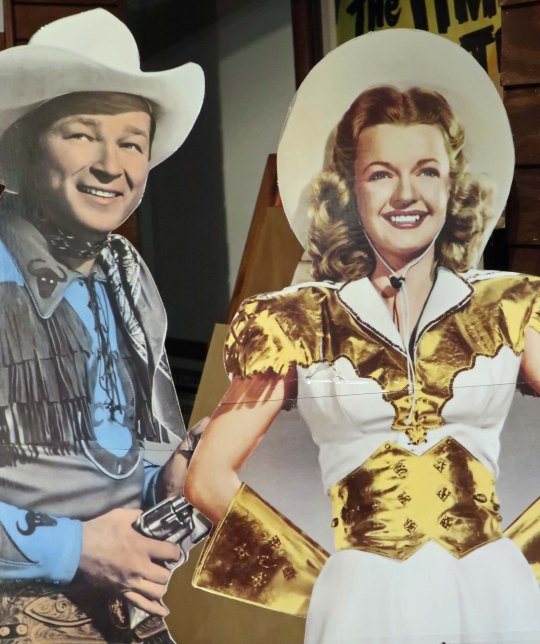
Note where Trigger is in relation to Dale Evans and Gabby Hayes in this movie poster. He’s “the smartest horse in the movies,” the poster declares. It seems he proved it by signing the poster. Must have held the pen in hid mouth. This cut out at museum may suggest why Dale was able to smile while Trigger was stealing the show. It appears that Roy is holding a gun on her!
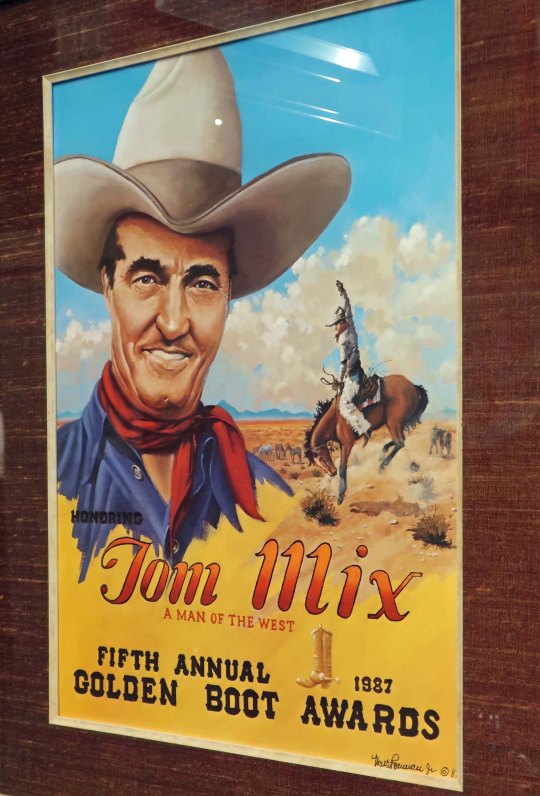
We have to travel back in time to the silent movie era and 1920 for the first Alabama Hills movie, Fatty Arbuckle starring in The Round Up. Will Rogers, the renown humorist, also made a 1920 movie that took advantage of the area, Cupid the Cowpuncher. Tom Mix, the best known of the early movie cowboys, arrived on the scene a couple of years later. Mix was a true cowboy who rode in rodeos as well as starred in movies. He was still making movies in the Alabama Hills when the ‘talkies’ took over from the silent era.
“Nobody loves a fat man” this poster about “Round Up” starring Fatty Arbuckle declares. I suspect that quote wouldn’t make it by the censors today. And, as it turns out, lots of people loved Fatty.Here’s a poster from “Cupid Ties the Knot” starring Will Rogers. Note the gun toting Cupid in the background using a lasso instead of arrows.Tom Mix was recognized for his extensive role in the development of movie Westerns with the Golden Boot award. The bucking bronco in the background reflects his rodeo connection.
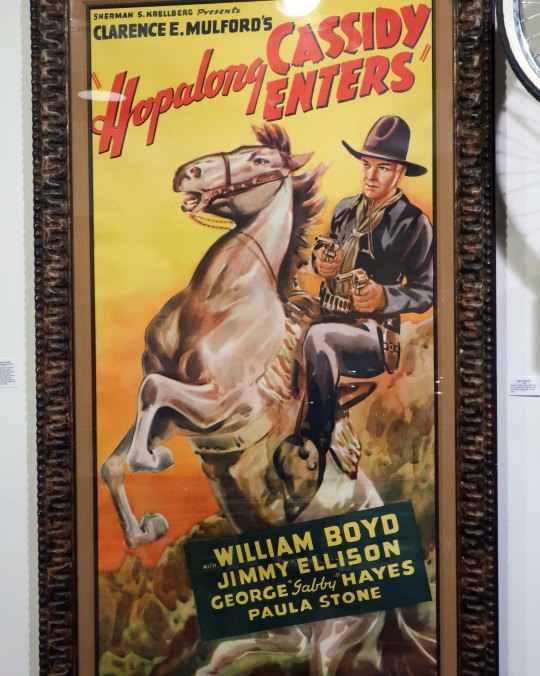
The cowboys just kept riding into the area during the 30s: William Boyd as Hopalong Cassidy, Roy Rogers, Gene Autry, Tex Ritter, Cesar Romero as the Cisco Kid, and John Wayne, to name a few. Boyd would make some 30 movies in the area. Roy Rogers, Gene Autry, and Tex Ritter were singing cowboys, ready to burst out in song at the least excuse. Their guitars were right up there with their horses in importance. The ‘Duke’ spent the 30s as a B level actor producing B level movies. Six of them had scenes filmed in the Alabama Hills. His big breakout movie, the one that would move him up to an A-level actor performing in A-level movies was Stage Coach, directed by John Ford and costarring Claire Trevor. Wayne played the Ringo Kid. Another world-famous actor who had his breakout movie in the Alabama Hills was Humphrey Bogart in the1940 movie High Sierra. The car used in the chase scene from Lone Pine up through the Alabama Hills to Whitney Portal can be found at the museum, along with a cutout of Bogart. Visitors are invited to take their photo with ‘Bogie’ and tweet about it.
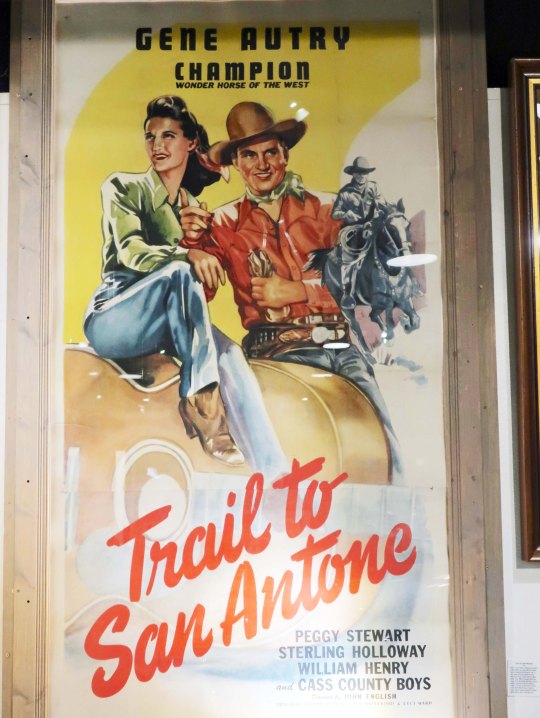
Good guy Hopalong Cassidy also rode a white horse but he wore a black hat.Tex was one of the singing cowboys of the Old West. Here he sits on his horse, White Flash with his guitar in hand.Gene Autry featured his horse Champion like Roy Rodgers featured Trigger. The Cass Country Boys was a country-western band that backed up Gene in some of his songs, including “I’m back in the saddle again.”Champion jumped over a Buick in “Trail to San Antone.” Peggy Stewart was supposedly in the back seat. I think she ducked. I would have. The actual Buick is on display at the museum.A cut out of Humphrey Bogart standing in front of the Plymouth Coupe he drove from Lone Pine to the Whitney Portal in his breakout movie, “High Sierra.”
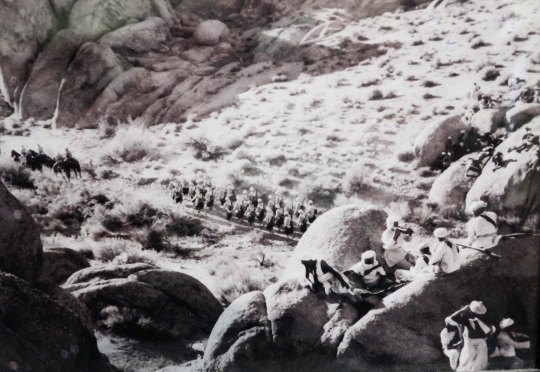
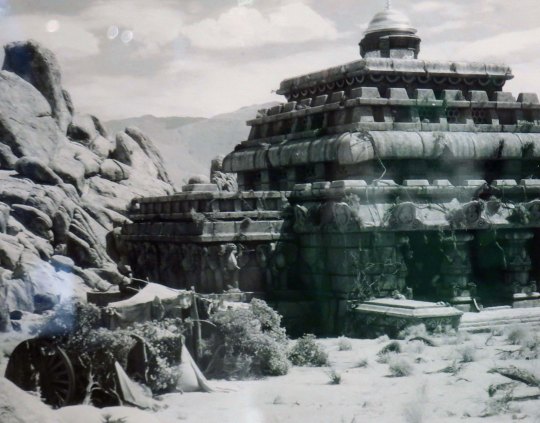
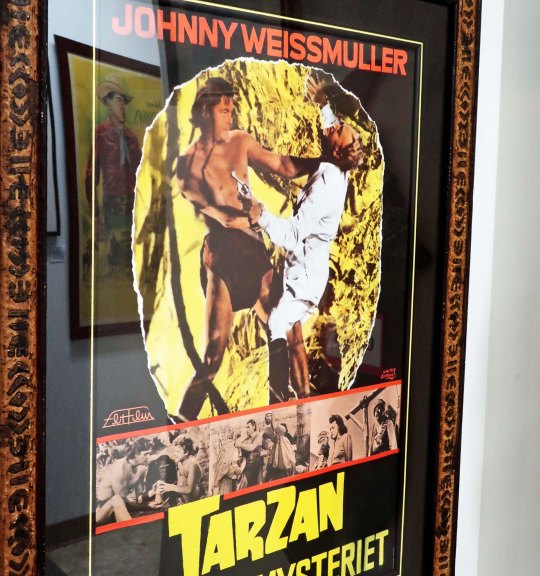
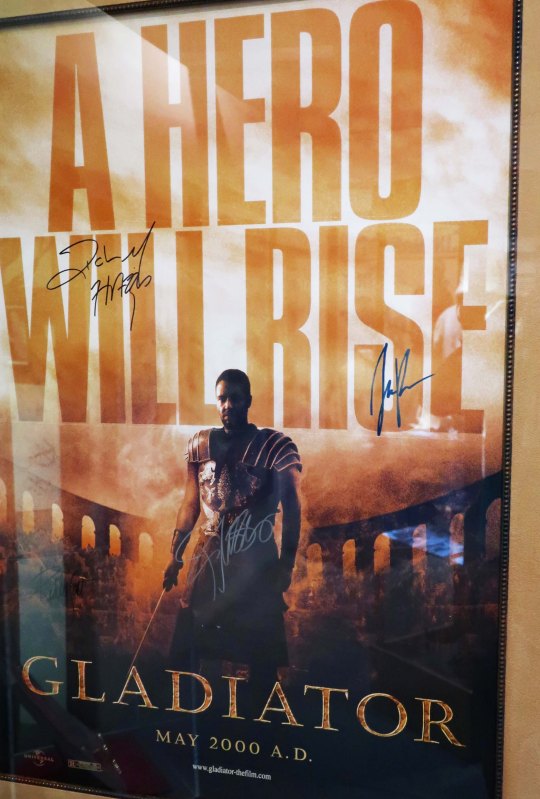
Not surprisingly, as the fame of the Alabama Hills spread in Hollywood, other film genres began to consider producing movies there. The movie Gunga Din, based on the poem by Rudyard Kipling, is a prime example. Why go to India when a day’s drive would get you to the Alabama Hills? Utilizing over 600 extras, the movie starred Cary Grant, Victor McLaglen, Douglas Fairbanks Jr., Joan Fontaine and Sam Jaffe. It was a blockbuster of 1939, second only to Gone with the Wind in box office revenue. Similar in nature, The Charge of the Light Brigade starring Errol Flynn and Olivia De Havilland was another. As was Cecil B. DeMille’s Samson and Davila starring Hedy Lamarr, Victor Mature and Angela Lansbury. Lamarr, known for her sultry look, was also brilliant and helped invent Wi-Fi during World War II. (The Navy suggested she would serve the war effort better as a pin-up but quietly made use of her work.) As for Lansbury, I keep getting this image of her as a singing tea kettle in Beauty and the Beast. Or here’s a fun one in 1943, Johnny Weissmuller in Tarzan’s Desert Mystery. Guess they had to get the ape man out of the jungle. Jumping forward to 2000, we have Russel Crowe in The Gladiator.
Movie poster from Gunga Din.The British Empire’s troops are about to be ambushed by the Thuggees in “Gunga Din.” Thuggees were a cult of assassins that strangled people and existed in India from the 13th to the 19th Century.This elaborate Thuggee Temple was built in the Alabama Hills for “Gunga Din.”“Charge of the Light Brigade” movie poster.“Samson and Dalila” Movie poster.Another noted muscle man, Tarzan, ventured into the Alabama Hills for this desert adventure. I did wonder how the vine on the left made it into the desert. Once a swinger, always a swinger I guess.Movie poster for “Gladiator.”
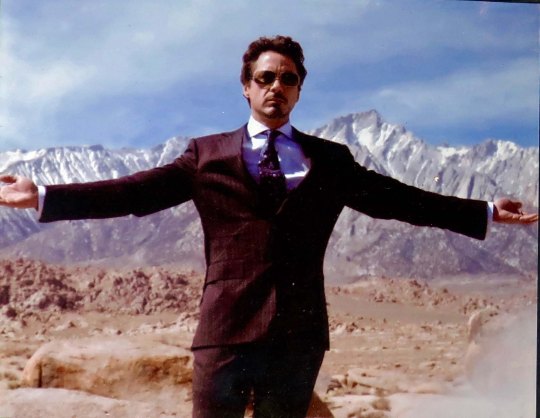
While the use of the Alabama Hills for movies dropped in popularity in the 60s, it continued to be used for the occasional Western. James Coburn in Water Hole #3 in 1967, Clint Eastwood in Joe Kid in 1972, and John Wayne along with Katherine Hepburn in Rooster Cogburn in 1975 are three examples. More recently, Django Unchained directed by Quentin Tarantino in 2012 and The Lone Ranger starring Johnny Depp as Tonto in 2013 used the Alabama Hills in their movies. The other-worldly look of the area also caught the eye of the Sci-Fi/fantasy crowd. It was a natural for an episode of The Twilight Zone. Robert Downey Jr., aka Tony Stark in Iron Man also made an appearance in the Alabama Hills and scenes from Star Trek Generations and Star Trek the Final Generation were filmed there. And finally, the movie, Tremors, was filmed totally on location.
Quentin Tarantino donated the dentist’s wagon that was used in Django to the Lone Pine Museum of Film History.The Lone Ranger looked like the Lone Ranger and Silver looked like Silver. But Tonto had a whole new look. Who would expect less from Johnny Depp?Robert Downey Jr., aka Tony Stark in “Iron Man” enjoys a photo op in the Alabama Hills with Mt. Whitney looming behind.Star Trek also found the other-worldly nature of the Alabama Hills appropriate for outer space and boldly went there.I’ll end my photos from the Lone Pine Museum of Film History with this prop from the movie “Tremors.” I think it looks appropriately alien, or is that nightmarish?
While this post has gone on long enough and you surely get the point of how important the Alabama Hills were to Hollywood, I just can’t help but mention a few more stars associated with movies that used scenes from the area: Gary Cooper, Kirk Douglas, Tim Holt, David Niven, Spencer Tracy, Maureen O’Hara, Tyrone Power, James Stewart, Randolph Scott, Alan Ladd, Jamie Fox, Demi Moore, Nicholas Cage, Jack Lemon, Gregory Peck, Burt Lancaster, Audie Murphy, Brad Pitt, Robert Taylor, Jack Palance, Rita Hayworth, Vincent Price, Mel Gibson, Elizabeth Montgomery, Robert Mitchum, Steve McQueen, Henry Fonda, John Travolta, Mary Pickford, Richard Burton, Cuba Gooding, Bing Crosby, Alec Baldwin, Minnie Driver, Susan Hayward, Kevin Bacon, Rex Allen and Glen Ford. There are some I didn’t recognize but who made a ton of movies in the Alabama Hills in the 20s and 30s including Jack Hoxie, Ken Maynard, Hoot Gibson, Buck Jones and Tom Tyler. There was also Rin Tin Tin, Ranger the Dog, and Johnathan Livingston Seagull! Enough you say? Google “List of movies made in the Alabama Hills” if you want to learn more. Finished. (Grin)
Two more photos. Roy Rogers and Dale Evans had stiff competition in this post. I was working on their photo caption when this fellow popped up in the window in front of me and then laid down a few feet away. I had Peggy come in to take a photo over my shoulder of the latter.
NEXT POST: I’ll travel 10 miles up Highway 395 from Lone Pine and visit the World War II American-Japanese internment camp.
The Alabama Hills as seen from Lone Pine with Lone Pine Peak looming above.
I’m back! While the three months of hanging out at our home and taking care of my brother may not seem like long, it felt like an eternity. I have one more post to write on the experience but it is going to have to wait. It’s play time. While Peggy decided that she needed a kid/grandkid fix and headed east, I decided I needed a road trip. I loaded up Quivera the Van and took off down Highway 395 along the east side of the Sierra Nevada Mountain Range, one of America’s most scenic and interesting drives.
My journey started in Reno visiting the National Automobile Museum. Even if you don’t care a rat’s behind about old cars, I can pretty much guarantee Bill Harrah’s collection will awe you. (Rat’s behind? I’ve been reading Mark Twain’s “Roughing It” and have been inspired by his colorful choice of words.) From there, I headed south, enjoying the sheer grandeur of the mountains with side trips to Virginia City where Samuel Clemens assumed the name Mark Twain, the ghost town of Bodie, Mono Lake with its strange, other worldly tuff towers, a mountain of obsidian, the World War II Japanese internment camp of Manzanar, and finally the Alabama Hills next to Lone Pine and Mt. Whitney.
I stayed in summer-touristy but interesting towns, visited local museums, learned about water wars, and ate some great food. I’ll take you inside the ‘world famous’ Schat’s Bakery in Bishop where simply stepping through the door guarantees that you gain five pounds, and we will stop at the Copper Top, a hole in the wall front yard family bar-b-que in Big Pine that was named America’s best restaurant in 2014 by Yelp. Yep, its ribs and tri-tip are to die for. When the restaurant is closed, you can get the tri-tip from a vending machine.
Originally, my goal was to head farther south to where Highway 395 intersects I-15 and ends. The road had originally gone all of the way to Mexico but had been done in by bulldozers and Southern California freeways. You can still follow the highway to Canada through remote country where there are fewer people and bulldozers. My primary objective had been to visit the Roy Rogers-Dale Evans museum in Victorville near the highway’s terminus. It wasn’t that I was so interested in Roy and Dale, I wanted to see Roy’s horse, Trigger. The singing cowboy had him stuffed. Visiting the horse had been on my agenda for a long, long time. Boy, was I out of date. Googling Trigger, I discovered that the museum had closed in 2003 and the horse had been moved to Branson, Missouri. (I’ve been to Branson; there are lots of strange things there.) Trigger never achieved the stardom in Missouri that he had out West, however. It could be that most of his fans from the 40s and 50s have ridden off into the sunset.Maybe ifDale had stuffed Roy…
Along the way, I was going to make a side trip to the Maturango Museum in Ridgecrest with its focus on the petroglyphs of the Coso Range. That trip ended up on shaky ground, however. The 6.4 and 7.1 earthquakes near the town at the beginning of the month persuaded me that the museum could wait. I just read that there have been thousands of aftershocks since.That’s a whole lot of shaking going on.
Today I will restart my blog— get back in the saddle, so to speak— with a drive through the Alabama Hills, which I think you will find unique and beautiful. I did. Having the Sierra Nevada and Inyo Mountains as backdrops doesn’t hurt. The set locators, directors, actors, script writers and film crews of the over 400 Hollywood movies made in the area starting in the 1920s obviously found the hills attractive. But I will get into the details of the movies in my next post when I will take you into the Lone Pine Film History Museum where Hopalong Cassidy and the Lone Ranger rub elbows with the likes of John Wayne, Errol Flynn, Spencer Tracy, Ann Francis and Spock, not to mention Trigger, Silver, Rin Tin Tin and Buttermilk. Buttermilk!? Hmmm. Okay, you trivia fans, who was Buttermilk?
I first thought that the Alabama Hills had been named by some homesick prospector from the East. That happened a lot in the 1850s, 60s and 70s. Heck, the lonely miners were even known to name mountain lakes after their favorite prostitutes. What I learned, however, was that Southern sympathizers named the hills after the CSS Alabama, a Confederate War ship that had caused the Union considerable strife by taking some 66 merchant ships valued at over six million dollars during its brief two-year career. Its success was finally ended when the Union sloop of war, the Kearsarge, caught up with the ship at Cherbourg, France and sank her. Other prospectors in the Lone Pine area who were sympathetic with the North, named their mine the Kearsarge. The name lives on in the Kearsarge Pass along the John Muir Trail.
A painting of the CSS Alabama.
My nephew Jay and I on Kearsarge Pass. Even at 16, he was towering over me. You may recall that Jay, now in his 30s, backpacked a hundred miles with me last year when I was hiking down the PCT.
But enough on background. Let’s rock!
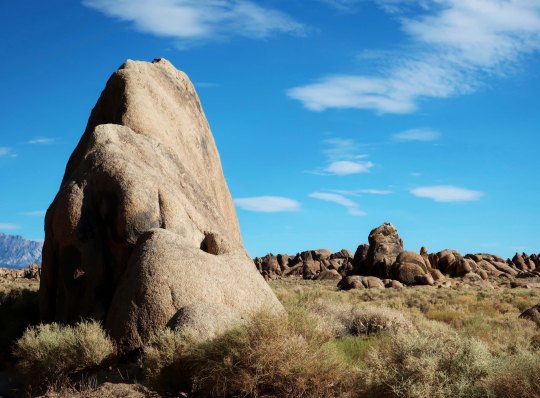
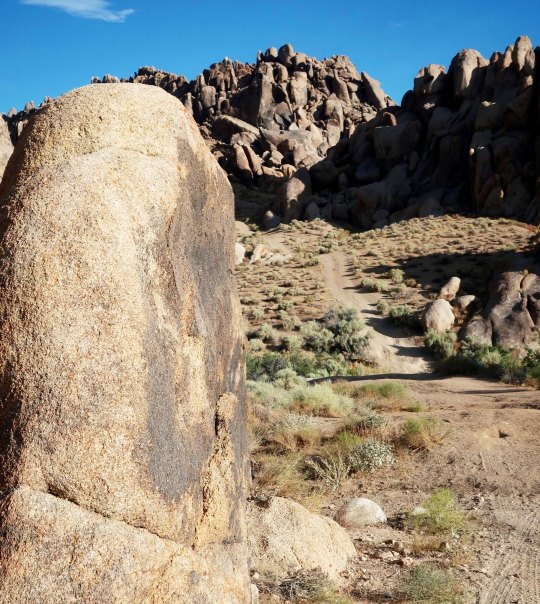
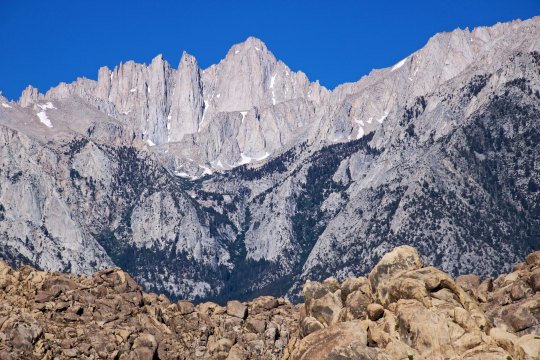
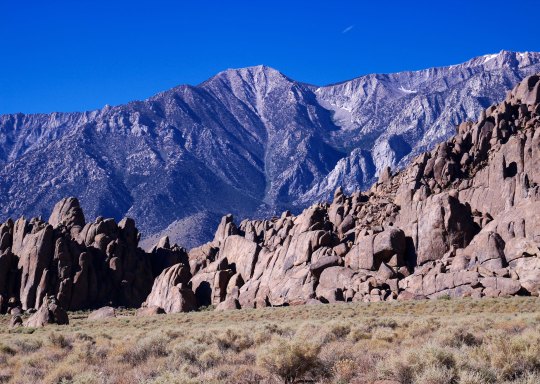
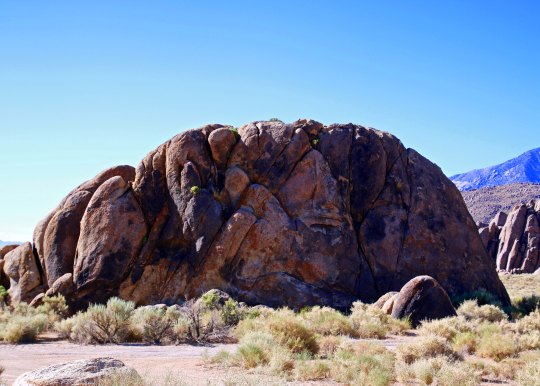
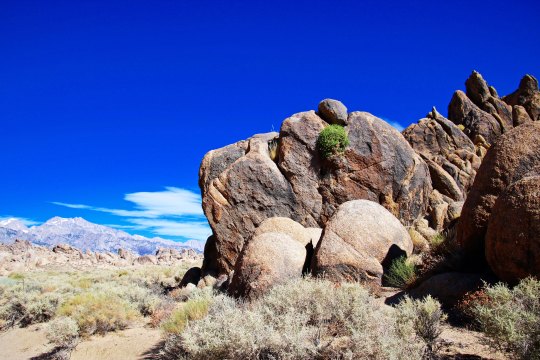
Large, colorful rocks with a dramatic backdrop provided by mountains are what make the Alabama Hills special.Another favorite of mine.Quite the jumble here. Can you spot the crow resting on the far right rock?I captured a fun shot of it taking off. I had our Canon EOS Rebel along this time as well as my Canon Power Shot. I was able to take decent telephotos!Can’t you just see a stagecoach going full speed along this road chased by a group of desperadoes? And then racing across this valley. Or maybe it was the Lone Ranger with his faithful companion Tonto chasing the band of desperadoes. Hi-yo Silver! Get-em-up Scout!This sign is located at the beginning of Movie Flats.The surrounding mountains add drama to the Alabama Hills. These are the Inyo Mountains to the east.The Sierras are to the west. This photo features Mt. Whitney, the highest peak in the contiguous United State. The dark trees in the foreground are Whitney Portal, the starting point for climbing the mountain from the east. I’ve always started from the west side of the mountain. The trail to the top runs along the ridge line. There is one place only a few feet across with a thousand foot drop on each side. Some fun on a windy day! A different perspective on the Sierras.And another on the Inyo Mountains.Getting back to individual rocks, this one was impressive.So I rendered it in black and white, just like you would see in the dozens of cowboy movies dating all the way back to the silent film era.Here are a few more interesting rocks.The white containers protect plants.I conclude as I started, with a photo of the Alabama Hills from Lone Pine. This time I took the photo in the evening and had Mt. Whitney as a backdrop.
NEXT POST: A visit to the Lone Pine Film History Museum.
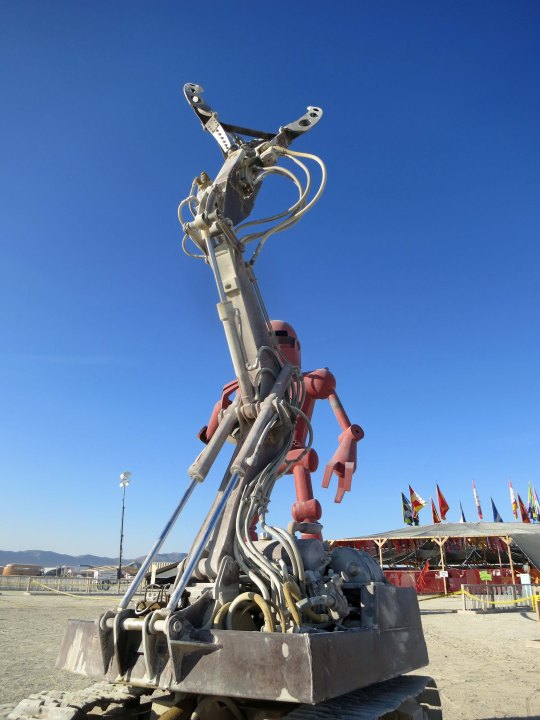
A robot boy and his dog check out the building of Medusa. She will show up in my next post. Beware of her eyes! (Well, maybe my next post— after I report on how the Russians used WordPress as a key tool in their efforts to disrupt the American elections of 2016.)
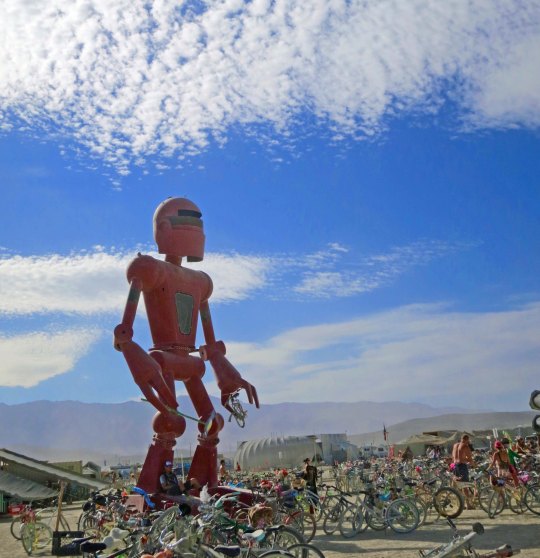
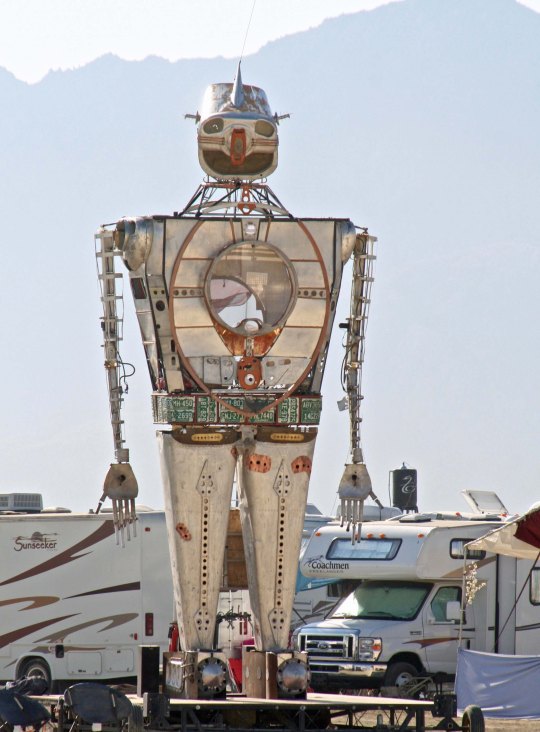
I often think about how are lives are impacted by robots. Peggy and I even have one of the small vacuum cleaners that runs around and cleans our floors and carpets. We call her, Robota. As I grow older, I look more fondly on the robots of the future. In 10 or 15 years from now when the world decides my driving leaves a bit to be desired, I am hoping there is a self-driving car sitting in my yard or readily available to zip me around to where I want to go. Next stop, Grand Canyon. Then there is the downside. Maybe when robots are given quantum computer brains, they will decide we aren’t necessary. I seriously doubt that they will approve of our ‘pulling their plugs,’ under any circumstances.
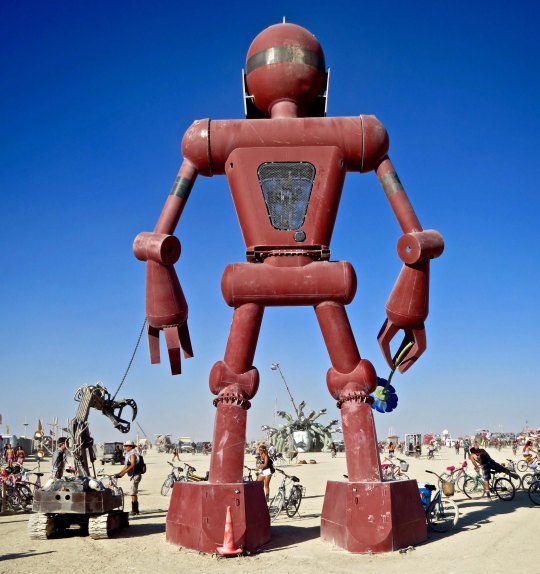
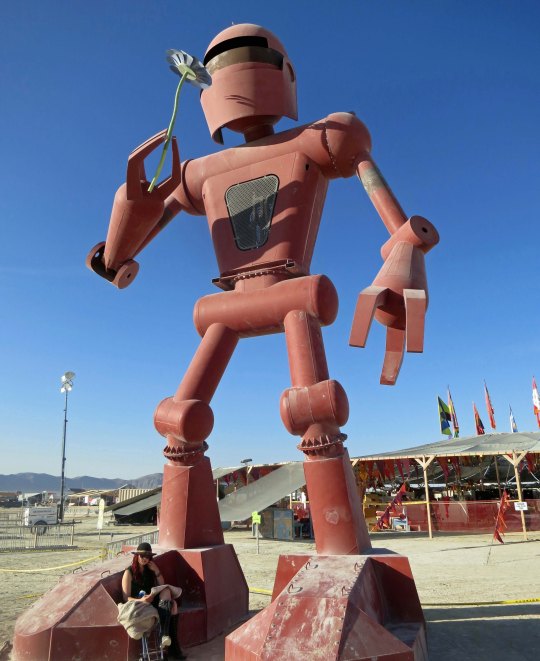
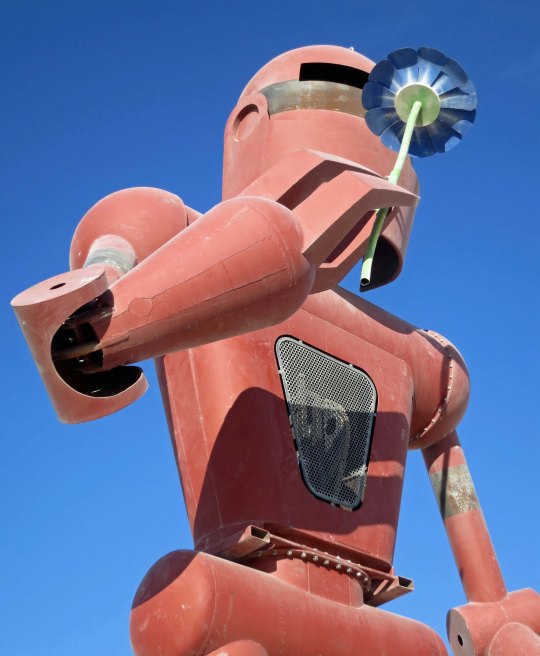
What’s the danger of a flower sniffing robot, however? This fellow was given one of Burning Man’s prime locations, just in front of the Center Camp Cafe bordering on the Playa. The woman provides some perspective on his size.
Fido appears a little questionable. Maybe she is howling at the moon.
It appears our robot is more sinister here. What happened to the rider of the bike he is holding? Is it time to run?
This robot looks like it was an extra in a 1950’s sci-fi movie.
No question here. Run for it!
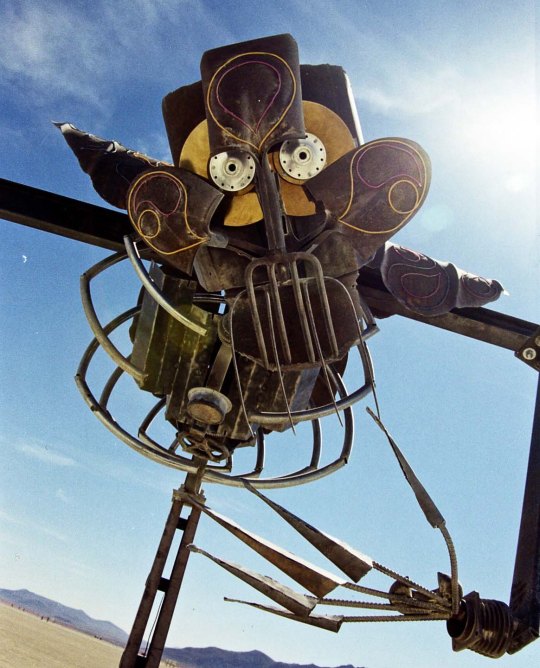
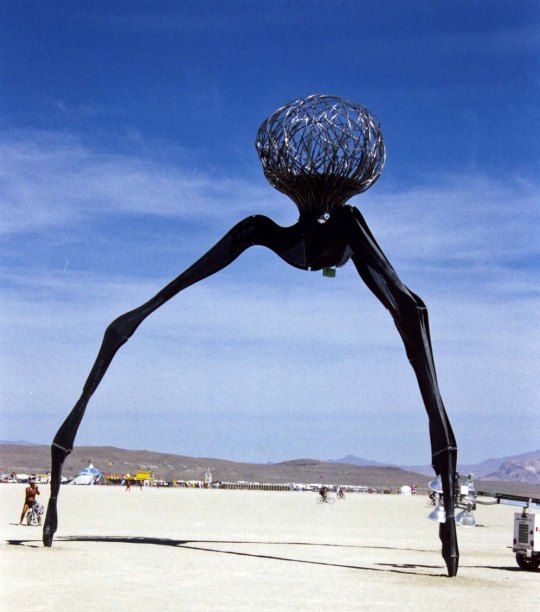
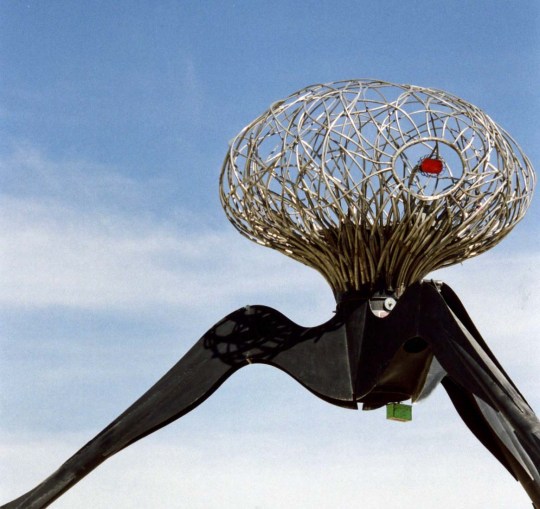
Spotting this creature, I’d want a bunch of Burners between me and it.
I think the red eye glowed a dangerous red at night.
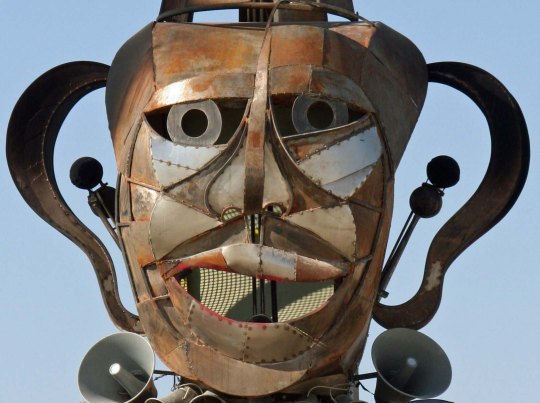
A bit more personality.
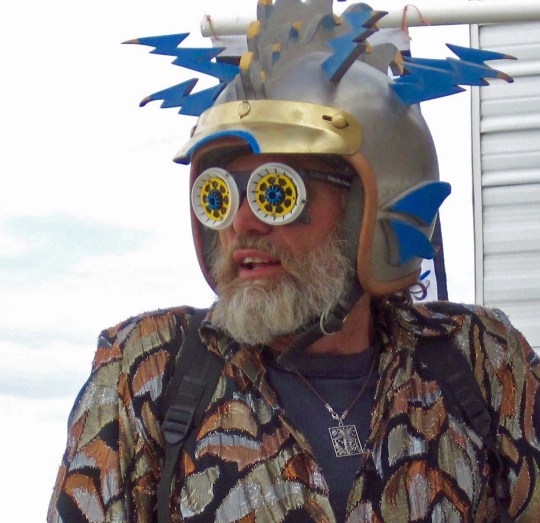
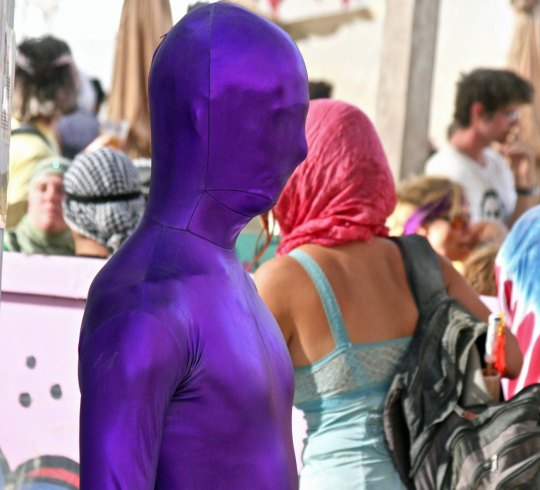
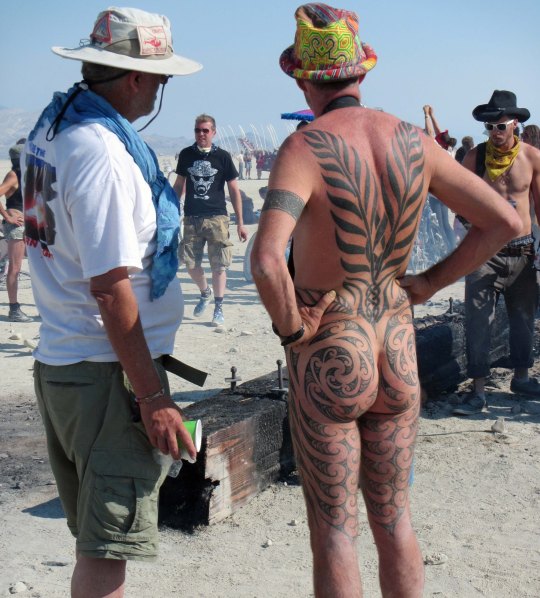
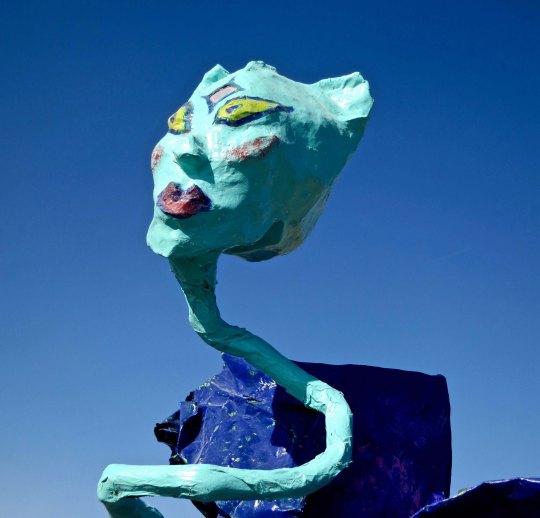
Aliens are another matter. Maybe they are already here. I’ve blogged several times about the UFO I saw over Sacramento circa 1968. If there are aliens, it seems obvious to me that they would show up at Burning Man. Think about it: a remote desert where it is easy to disguise yourself and people don’t care if you are an alien. Each year there are a number of candidates.
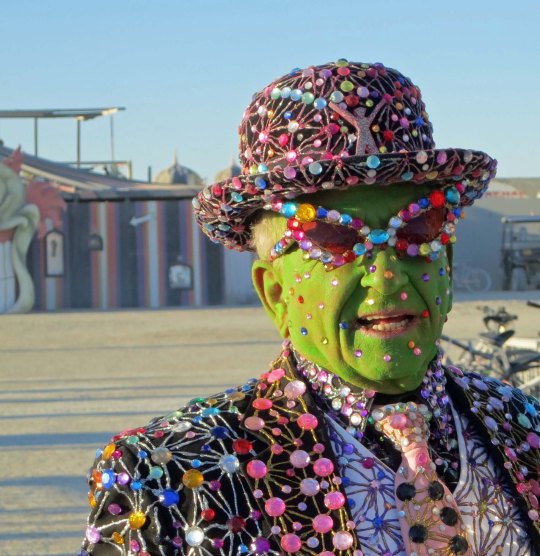
This guy shows up as a master of ceremonies every year at the annual costume contest. What better way to infiltrate Burning Man?
This one showed up in our camp and demanded a beer, an expensive beer. (Photo by Tom Lovering.)
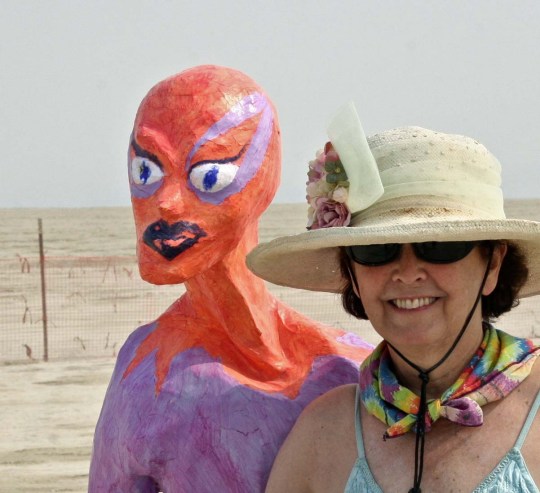
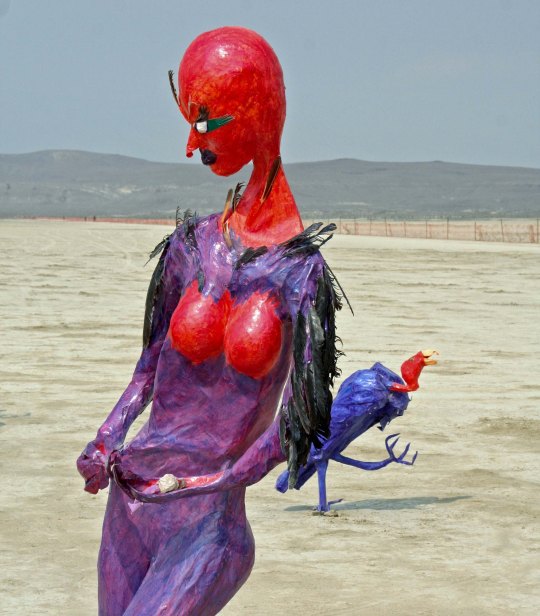
I’ve always been suspicious of purple people. Remember, “He was a one eyed, one horned, flying purple people eater?” Or are you too young?
Or maybe their disguises are more subtle. Slap on a few tattoos and you can get into any party at Burning Man.
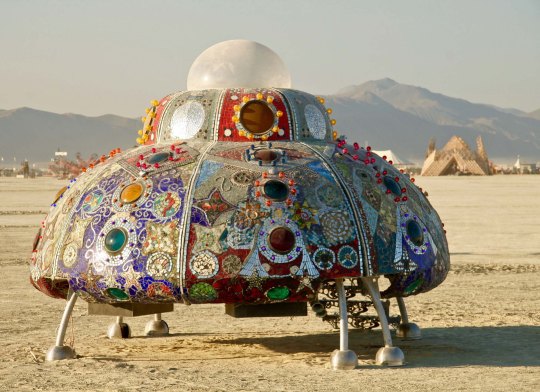
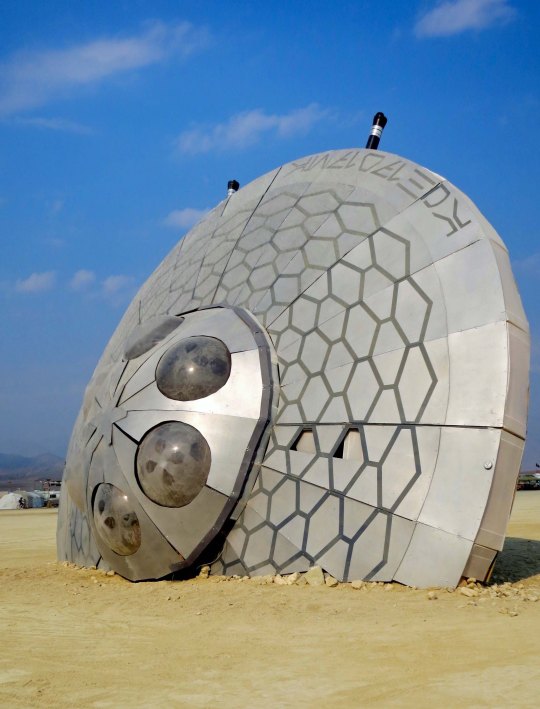
Flying saucers aren’t unheard of in the Black Rock Desert. One year we even had one crash.
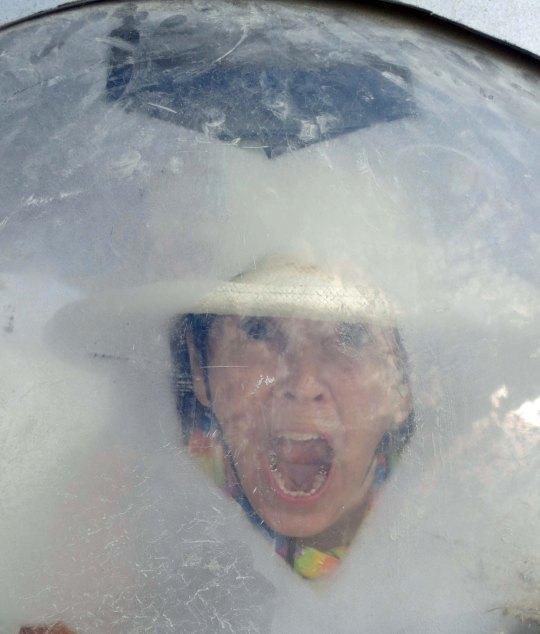
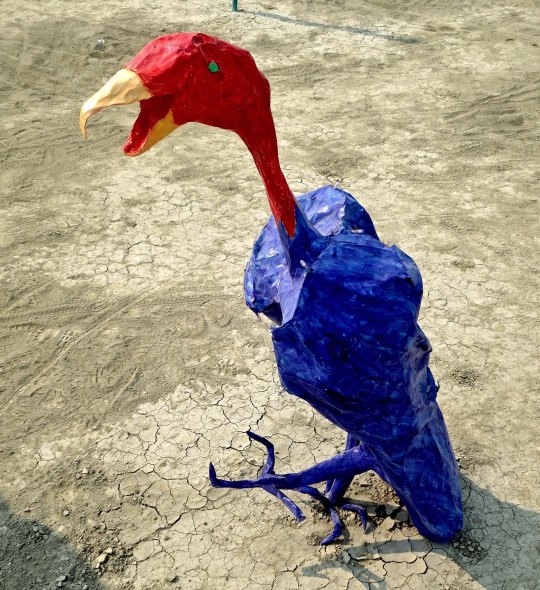
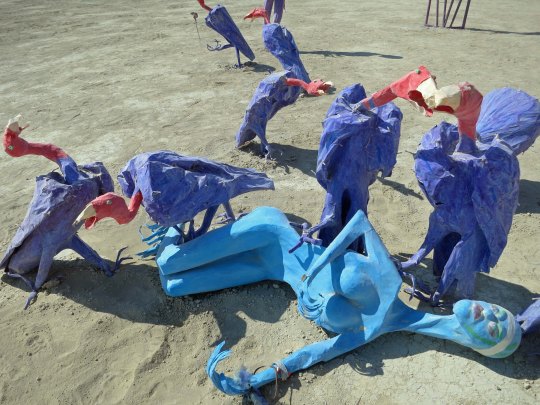
How much more attractive can a flying saucer get? Aliens contracted with a group of kids in the Bay area to create this one.But then there was the crash…Rumors were that a human the aliens had captured was a notorious back-seat driver and had caused them to crash.The way she buddied up to aliens later seemed to confirm this suspicion.Undoubtedly part of the crew.Alien buzzards tend to be a little scary.And they may be the reason that there are so few alien bodies found. They are also known to snack on Big Foot, or is that Big Feet?
Enough on Invaders from Outer Space. My next post will feature invaders from Russia.
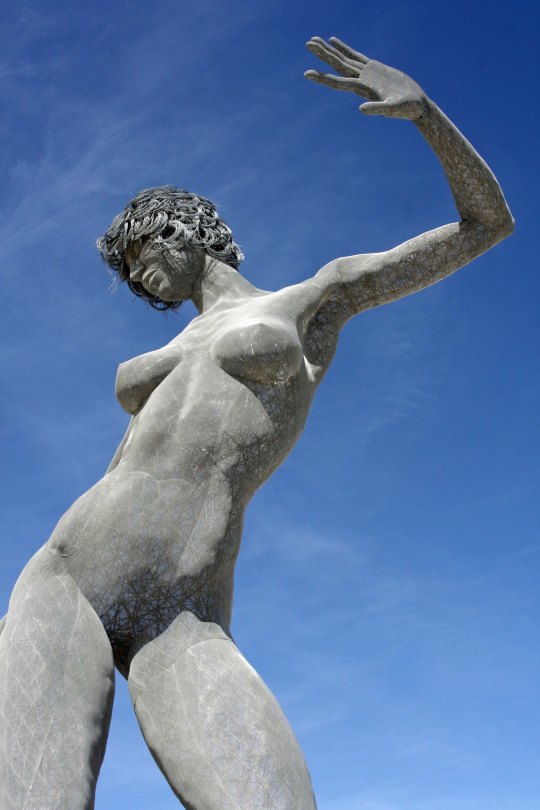
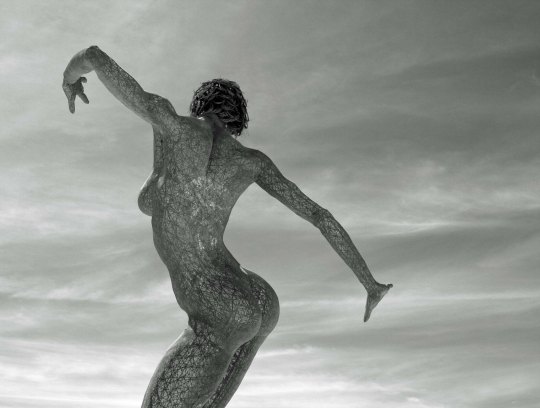
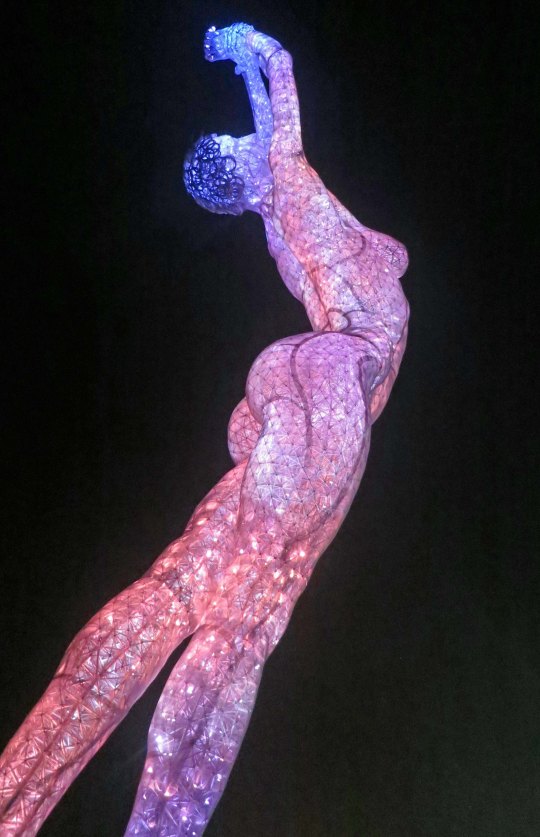
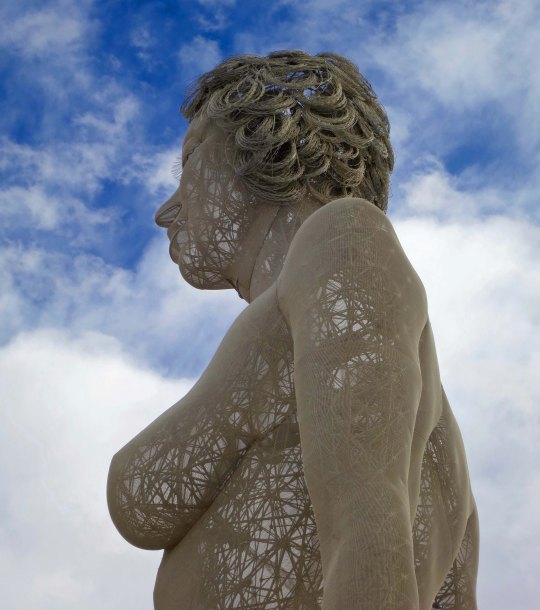
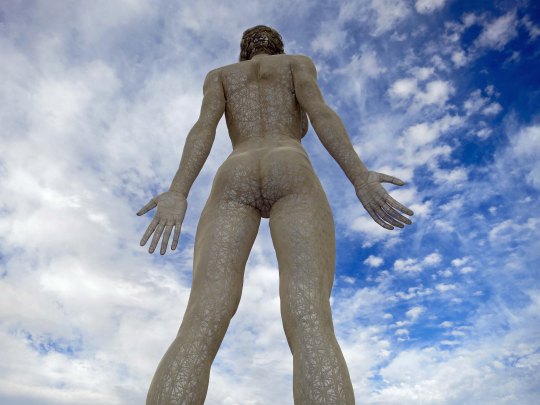
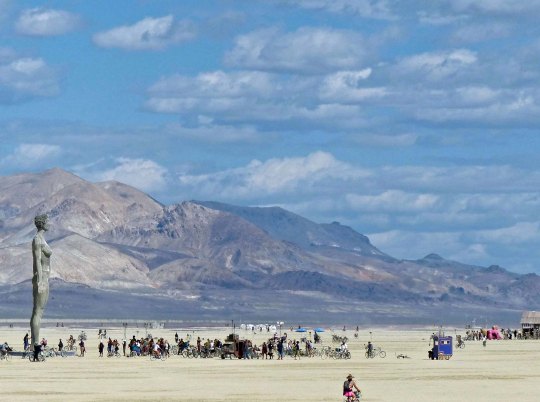
In 2010, Marco Cochrane introduced the first of his magnificent nude sculptures to Burning Man, the 40 foot tall Bliss Dance.
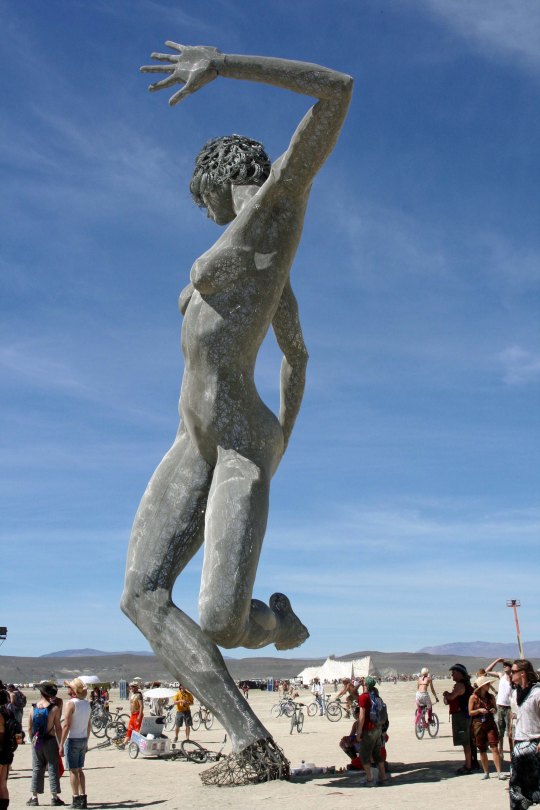
When I first ventured out onto the Playa on my 2010 visit to Burning Man, I was immediately drawn to a large sculpture of a nude woman that struck me as being beautiful and full of life. The sculpture, I learned was titled Bliss Dance and had been created by the Bay Area artist Marco Cochrane based on his model, the dancer Deja Solis. Bliss Dance would go from Burning Man to Treasure Island next to San Francisco and is now on permanent exhibition in Las Vegas. Here’s what Cochrane had to say during the unveiling of the sculpture in Las Vegas:
What I see missing in the world is an appreciation and respect for feminine energy and power that results when women are free and safe. It seems obvious to me that feminine energy is being suppressed and that this must change. If we are to find real, lasting solutions to the problems facing humanity, men and women must be able to work together as equals. Bliss Dance is intended to focus attention on this issue.— Marco Cochrane, Feb. 2016 press release
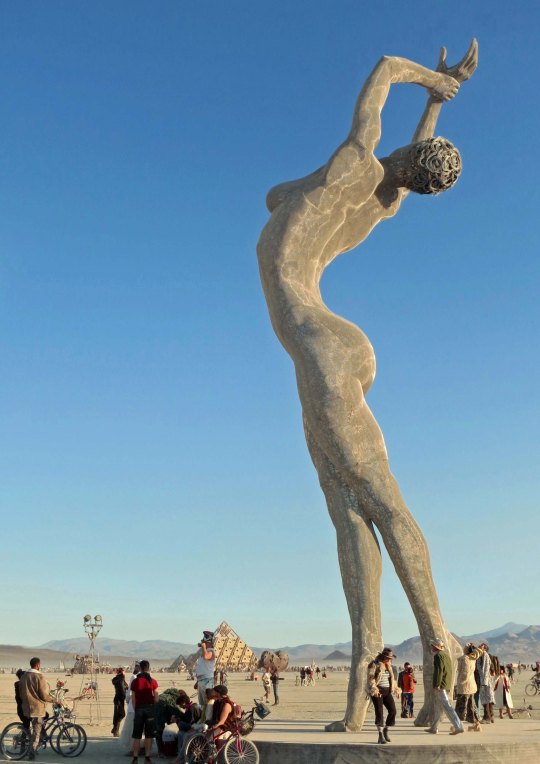
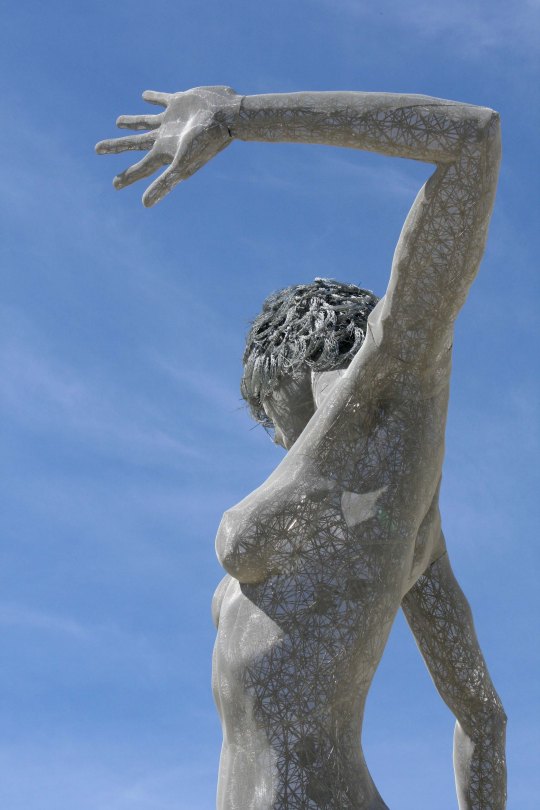
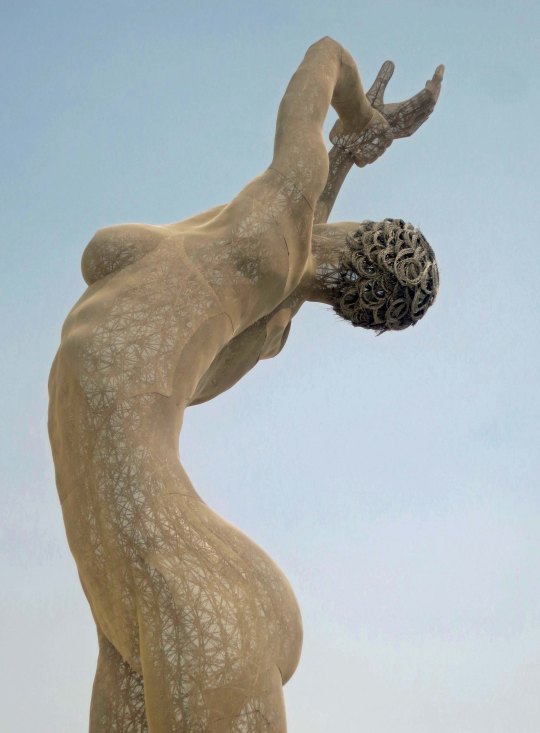
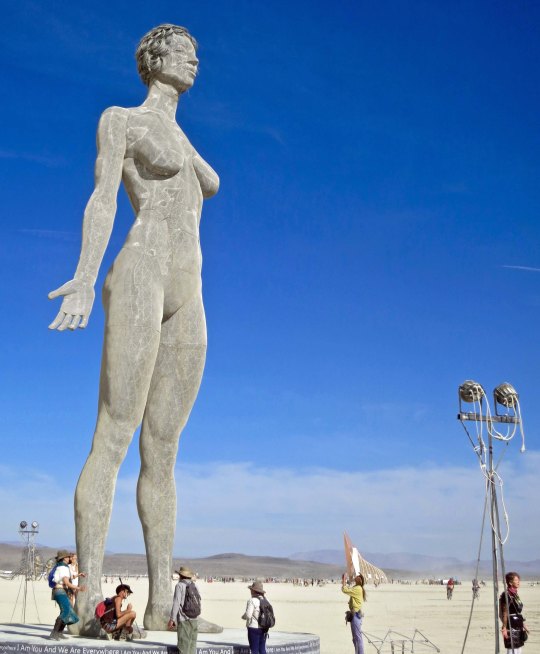
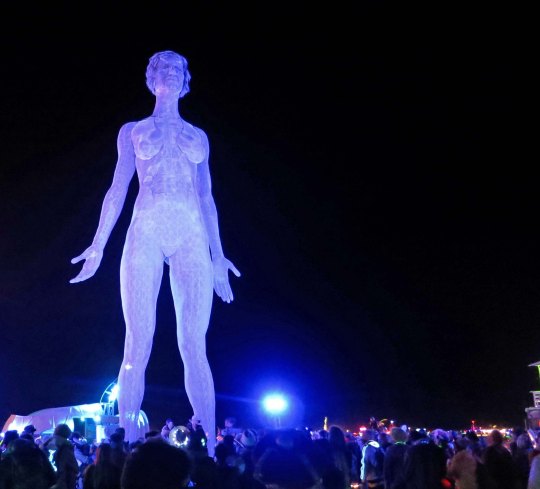
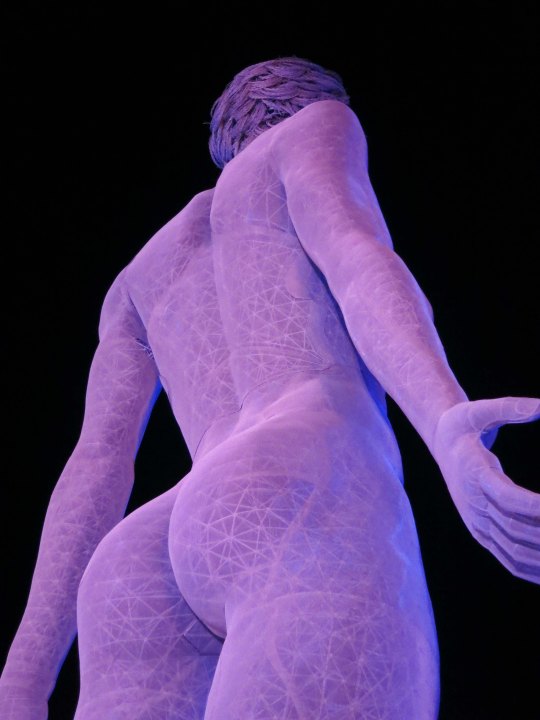
This sentiment also applies to the two other sculptures that Cochrane created for Burning Man as part of a trilogy: Truth Is Beauty in 2013 and R-Evolution in 2015. I consider myself privileged to have been at Burning Man on each of these years. Truth Is Beauty is now on permanent exhibit overlooking the BART station in San Leandro, California.
Truth Is Beauty at Burning Man in 2013.
An 18-foot rendition of Truth Is Beauty and several other art works from Burning Man were recently on display at the Smithsonian’s Renwick Gallery in Washington DC. An introduction to the exhibit stated:
Burning Man, one of the most influential events in contemporary art, is both a cultural movement and a thriving temporary city of more than 70,000 people that rises out of the dust for a single week each year in late summer in Nevada’s Black Rock Desert. During that time, enormous experimental art installations are erected, some of which are then ritually burned to the ground. The desert gathering is a uniquely American hotbed of artistic ingenuity, driving innovation through its philosophies of radical self-expression, community participation, rejection of commodification and reverence for the handmade.
Nora Atkinson, the Lloyd Herman Curator of Craft at The Renwick went on to say this about the exhibit’s title: No Spectators
“‘No Spectators’ is a long-standing saying on Playa. You are encouraged to fully participate. It’s all about being there, being fully present, and not just observing. Two of the ten principles of Burning Man are radical participation and radical inclusivity, meaning that there are no outsiders. Everyone is part of the experience.”
If both of these statements seem a bit familiar, they reflect what I have been saying about Burning Man art and Burning Man in my posts over the last several years. In ways, I believe that Burning Man has been fostering a mini-renaissance in art and is now being recognized world-wide for its contributions.
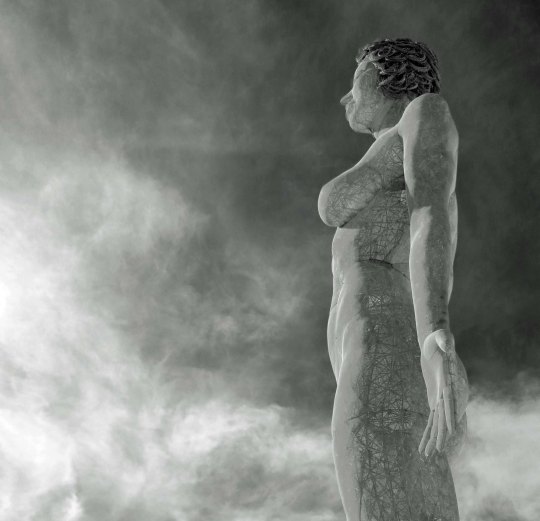
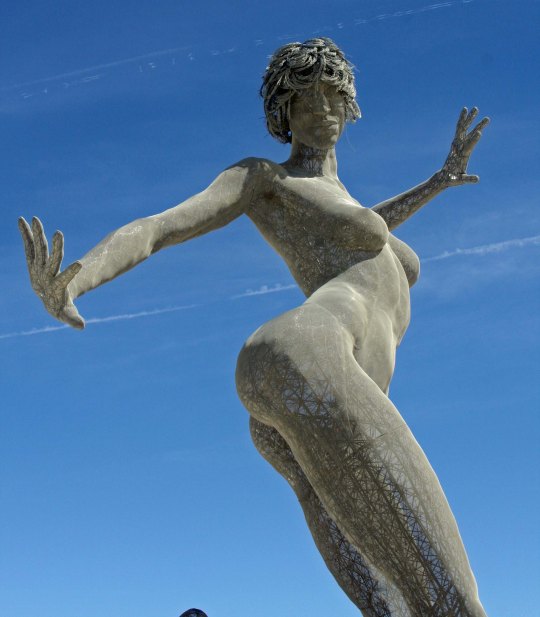
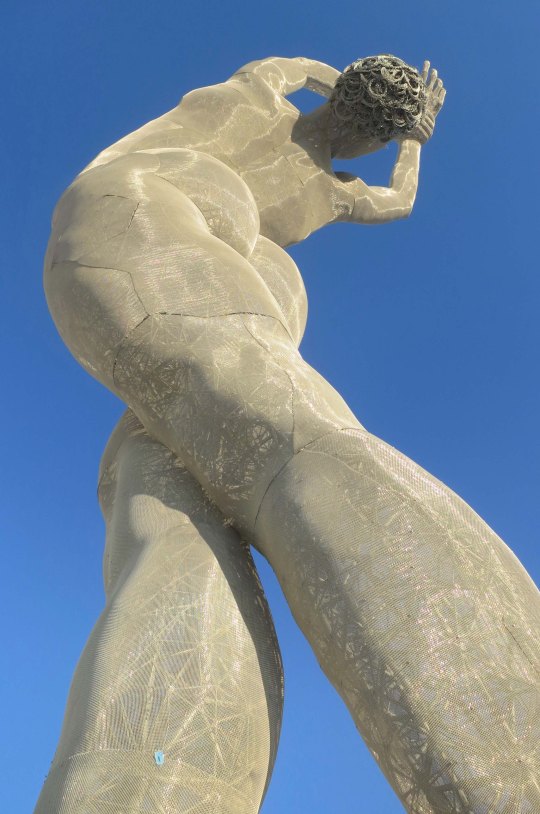
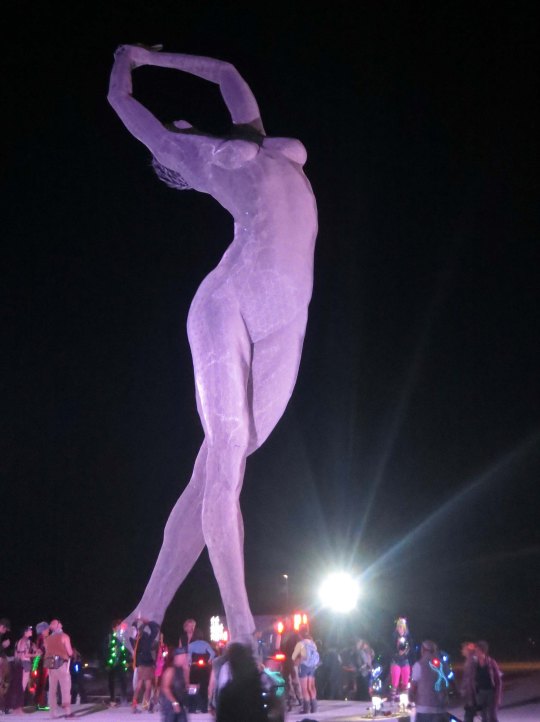
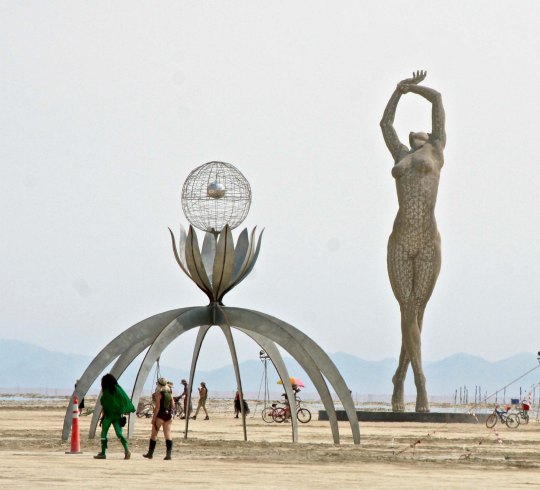
R-Evolution, the last of Cochrane’s trilogy was actually scheduled to be exhibited on the National Mall in Washington DC between the Washington Monument and the White House. The group responsible for moving and installing the sculpture had written to me and asked for permission to use photos from my blog in a documentary it was preparing for the exhibit. The exhibit was cancelled. It may have been that the idea of a giant nude on the mall was too controversial. Anyway, here is one of my favorite photos of the sculpture:
R-Evolution at Burning Man in 2015.
Peggy (my wife) says what she loves about sculpture is that it is three dimensional art that you can touch and feel as well as see. One of her favorite things about Burning Man is that the art has an up-close and personal aspect, a hands on policy. Most museums have a hands-off policy. The three dimensional aspect of sculpture also has great appeal to me. I believe that that you should be able to appreciate sculpture from any angle. I’ll use the concluding photos on this post to further look at the three sculptures.
BLISS DANCE AT BURNING MAN 2010
TRUTH IS BEAUTY AT BURNING MAN 2013.
My friend Tom Lovering caught this beautiful shot.
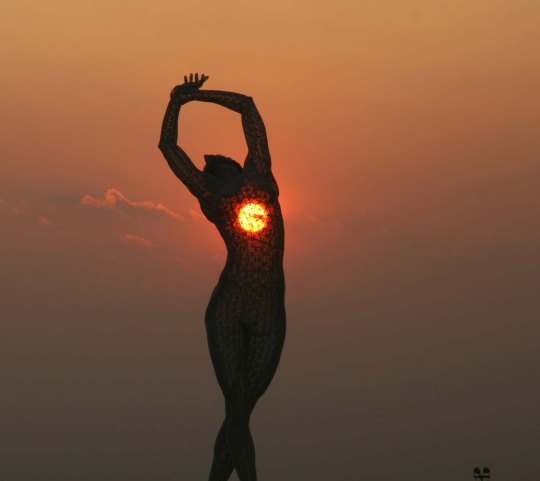
At night, LED lights inside the sculptures light them up in a number of ways, changing every few minutes.
A final view of Truth Is Beauty.
R-EVOLUTION AT BURNING MAN 2015
One of my favorite views of R-Evolution because of the Black Rock Desert background. (Photo by Don Green.)
That’s it for today. NEXT POST: UFO’s, aliens, and a giant robot at Burning Man.
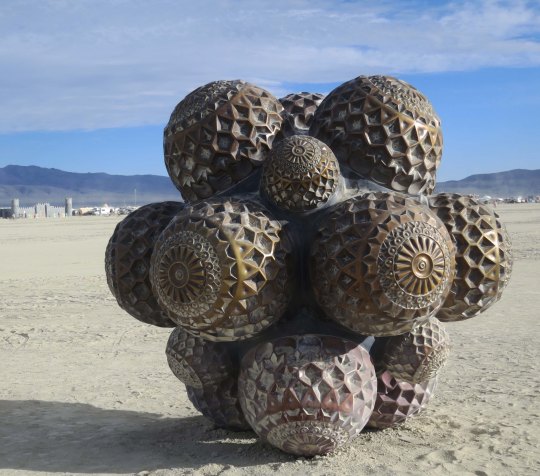
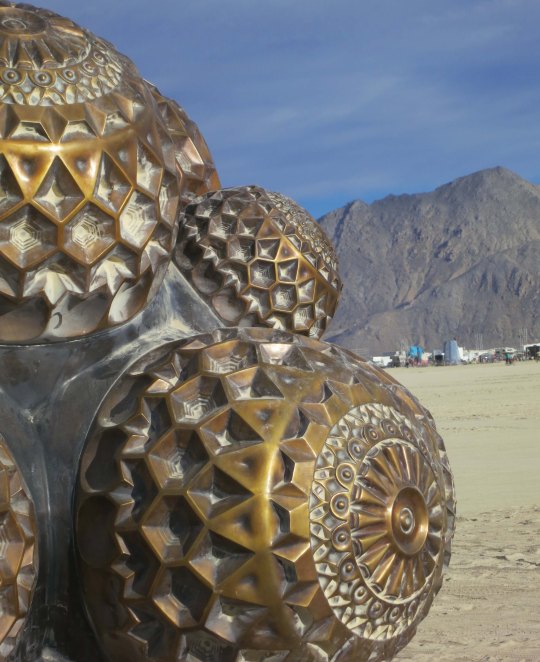
While partying, music and a unique culture draw thousands to Burning Man each year, it is the art such as this brass sculpture and the giant woman in the background that pull me back to the event year after year.
Today, and for my next several posts on my 11 years at Burning Man (2004-5-6-7-9-10-12-13-14-15 and 17) , I am going to be featuring my favorite Burning Man art, starting with sculptures.
First, however, I want to address the conflict between the Bureau of Land Management (BLM) and the Burning Man Organization (BMO), which has been in the news recently. While recognizing the right and responsibility of BLM to protect the lands it manages, much of what it is proposing seems excessive given how BMO already addresses the issues that are being raised.
TRASH: BLM wants BMO to place large dumpsters throughout Black Rock City. Burning Man has always had a policy that Burners carry out whatever trash they generate during the week. And a very strict policy on keeping Black Rock City and the Playa clean. I commented on how trash-free the grounds were on the first post I ever wrote about Burning Man. I had never been to another event involving large numbers of people that could come close to matching it. That has not changed. Furthermore, a large group of volunteers do an inch by inch search of the grounds for trash following the event. Detailed records are kept and camps that leave an excessive amount of trash are put on notice. One camp was disinvited from further participation in Burning Man last year. When I visited Death Valley National Park during the time that President Trump shut down America’s National Park System in January, I found that visitors had left behind much more trash than I have ever seen at Burning Man.
Concern has been raised about Burners leaving their trash behind in surrounding communities. Burning Man presently lists the places that are willing to accept trash. Normally, communities, nonprofits, or private businesses charge five dollars per bag to properly dispose of the trash plus make a profit. Personally, I would see nothing wrong with creating a more formal structure and have BMO subsidize the efforts to the benefit of the local communities and Native American tribes in the area. It would be a much more positive solution than BLM is proposing. A win-win for all.
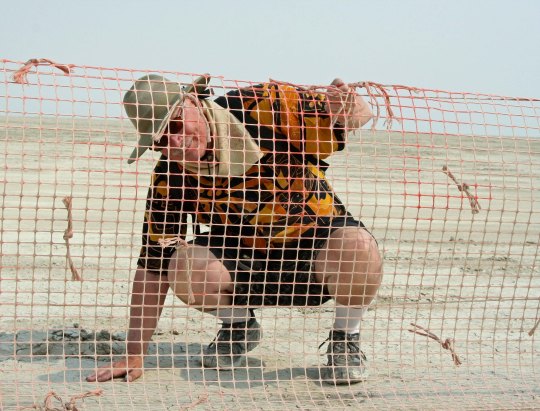
CEMENT FENCE: I don’t get the BLM proposal to force BMO to build a large cement fence around the event. As I have mentioned several times in my posts over the years, I spend a lot of time out on the edges of Burning Man. I like it out there. I am the only person I have ever seen ‘illegally’ cross the small fence that exists. And Black Rock Rangers were on me in a minute. Unless BLM has evidence that really bad things are happening out there in the remote area beyond what I am unaware of, the idea seems totally unreasonable and much more devastating to the environment than the present minimalist effort.
LIGHTING AT NIGHT: BLM is claiming that Burning Man creates light pollution and disrupts migrating bird patterns. BMO argues that birds are not migrating through the area at the time of the event. It would be interesting to see BLM’s backup data. It seems to me that an independent wildlife biologist could quickly resolve the issue. My own glance through the literature on the subject suggests that the main migration takes place in the spring when the area is flooded. I’ve seen a few birds in my years at Burning Man but nothing that would suggest major migrating patterns, and I would notice. The half dozen bird ID books I keep in my house and the ever present binoculars speak to my interest.
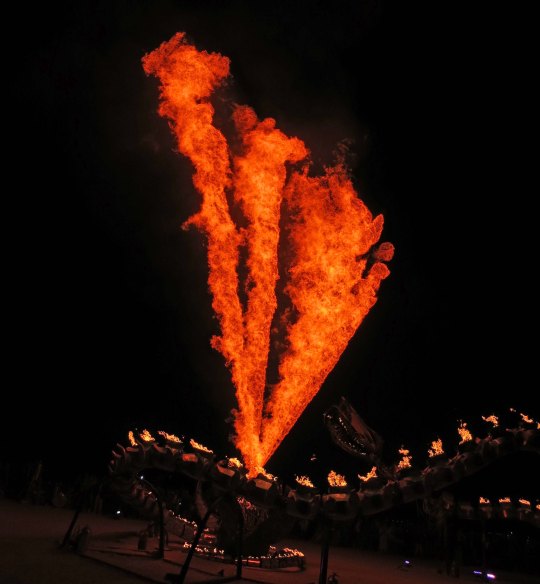
Night at Burning Man is a magical time complete with fire-breathing dragons and beautifully lit sculptures. The major burns, such as the Man, can light up the sky. Except for that, Burning Man is dark. Lanterns provide what light there is and they don’t extend into Black Rock City. I can guarantee that any city of 70,000 in America generates far more light than Burning Man. And Burning Man is only for one week. The issue I am not sure about is laser lights. Unless they are used to enhance art projects, my assumption is that they could be eliminated.
LAW ENFORCEMENT ISSUES: Taxpayers at the local, state, and national level should not be expected to subsidize the Burning Man event. Law enforcement agencies, medical care providers, and any other public entities that provide vital services at Burning Man need to reimbursed for any necessary and reasonable expenses created for them by the event. And BLM should be adequately compensated for the use of public lands. Looking at available figures, this seems to be happening. (It would be interesting to look at what BLM receives from the mining and ranching interests that make extensive use of public lands in comparison to what it receives from Burning Man.)
I have three concerns here. One, what is reasonable and necessary? Crimes such as assault and theft obviously deserve law enforcement attention. But what about broken tail lights or the private use of marijuana? Marijuana is legal in Nevada but not on federal land. But do we really want our law enforcement agencies focused on busting pot users? Alcohol is the drug of choice at Burning Man. Two, while it is important that taxpayers not be responsible for covering costs at Burning Man, neither should Burning Man be responsible for supplementing the budgets of government agencies beyond Burning Man costs.
Third, and reprehensible from my perspective, BLM now wants to set up a separate area where vehicles coming into the event can be searched by police without warrants or reasonable cause for drugs, i.e. marijuana, and weapons. I am sorry, but police state comes to mind. Here’s the Fourth Amendment: The right of the people to be secure in their persons, houses, papers, and effects, against unreasonable searches and seizures, shall not be violated, and no Warrants shall issue, but upon probable cause, supported by Oath or affirmation, and particularly describing the place to be searched, and the persons or things to be seized. I, for one, will not return to Burning Man if this comes to pass, and it isn’t that I have anything to hide. Burning Man has a policy against both drugs and guns and does its own search when we enter the grounds. That’s bad enough. I find armed people entering my van without cause unacceptable and un-American.
I have tried to be fair here in my assessment. I recognize that BLM has a responsibility in terms safety and the environment. But I also believe that unless BLM can prove that its efforts are reasonable and necessary, they are more in the form of harassment, and may even evolve from a desire to eliminate the event. I hate to be overly paranoid, but if so, the question becomes, why?
I’ll conclude on a more positive note with the beginning of my series on Burning Man art. But, I will also note here, this art, and the opportunity for artists, is what will be lost if Burning Man is eventually forced to close its doors.
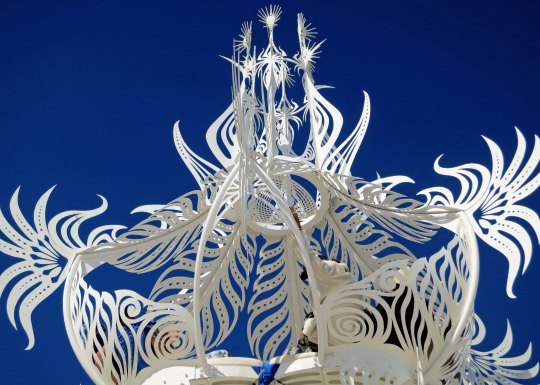
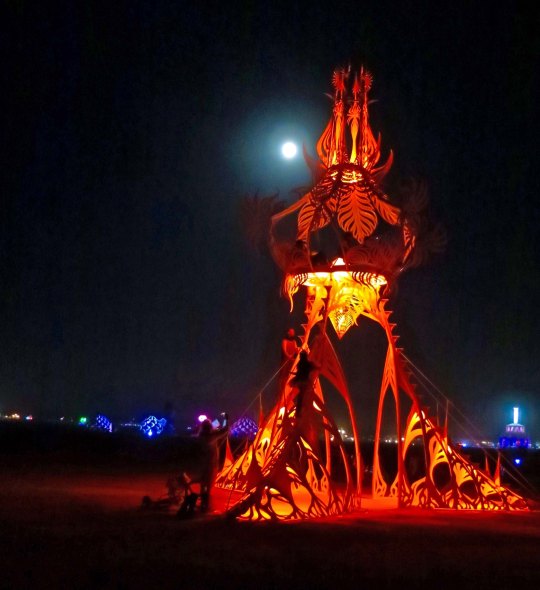
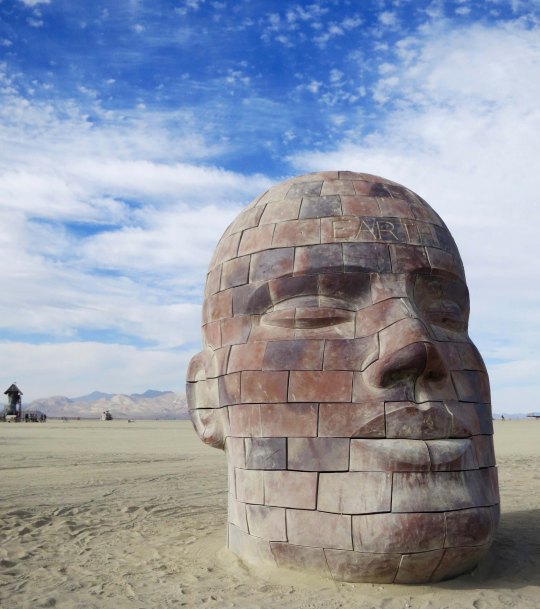
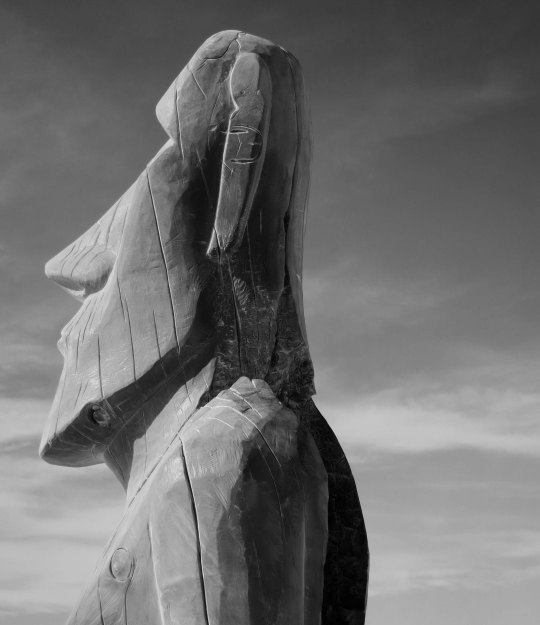
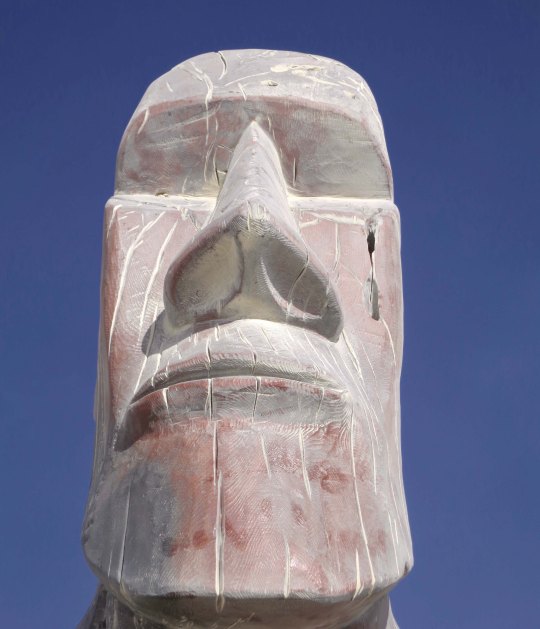
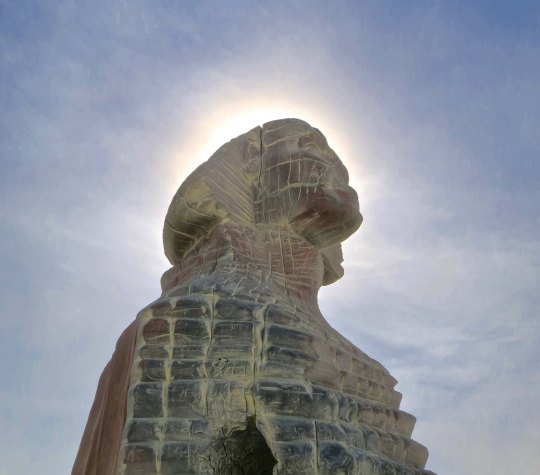
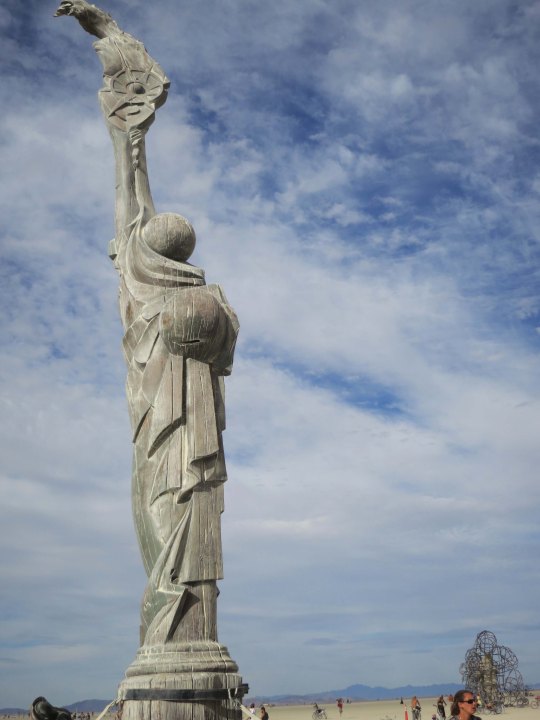
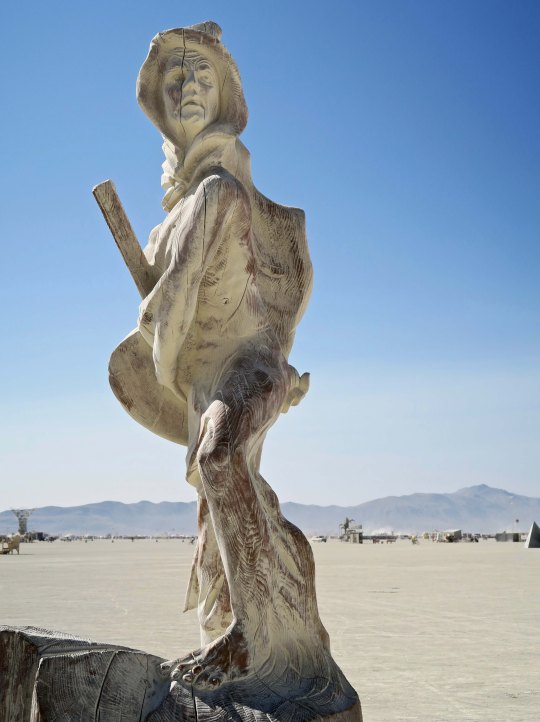
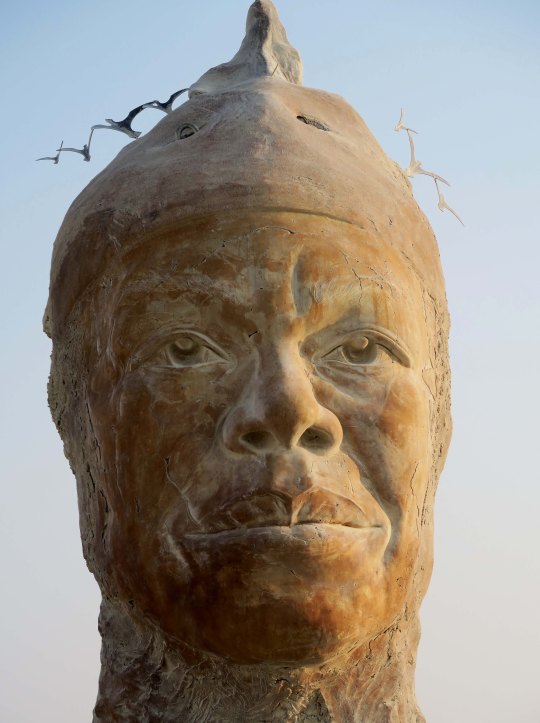
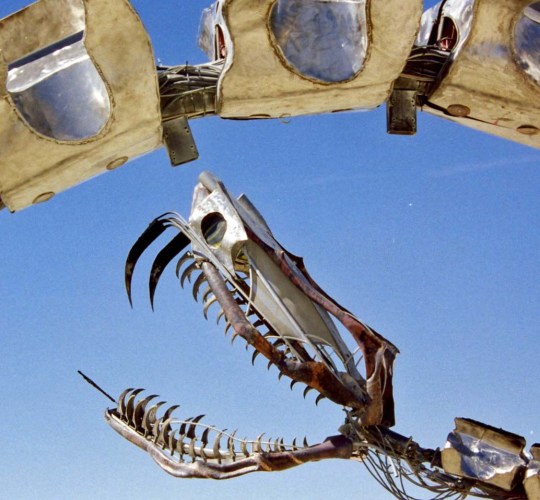
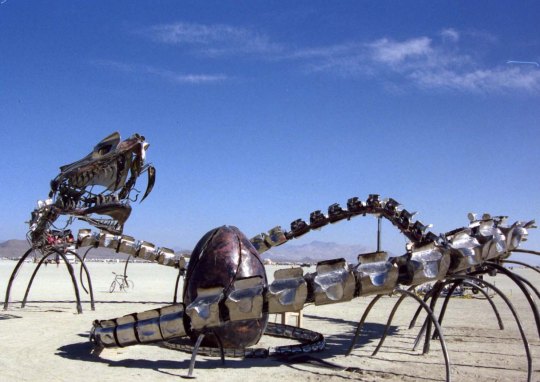
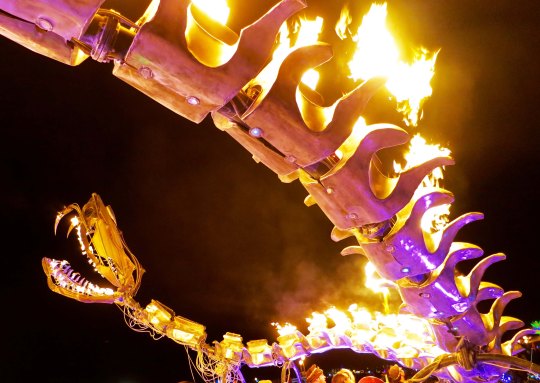
I’m not sure what these brass sculptures were suppose to represent, but I found them beautiful in the Black Rock Desert setting.Fantasy came to mind when I first saw this.Like much of Burning Man art, people were invited to be a part of the sculpture by climbing on it.A close up…And at night. You are looking at the type of light pollution you can expect at Burning Man.I’ve always found this simple sculpture made of bricks powerful.All types of media are used in the art at Burning Man. This is a carved wood sculpture of an Easter Island figure.From the front.The sphinx backlit by the sun.The Statue of Liberty, the symbol of American freedom and promise. ““Give me your tired, your poor, your huddled masses yearning to breathe free…”A ninja warrior.A clay bust of Maya Angelo symbolizing her book, “I Know Why the Caged Bird Sings.”This wild, metal dragon, guarding its egg has always been one of my favorite Burning Man sculptures. It was created by a group of women artists out of the Bay Area.The dragon with its egg.Lit up at night. The drama is increased by just how dark the Burning Man night is. I’ll conclude today’s post with this. When the egg opened and the baby dragon was born, it shot these flames into the night.
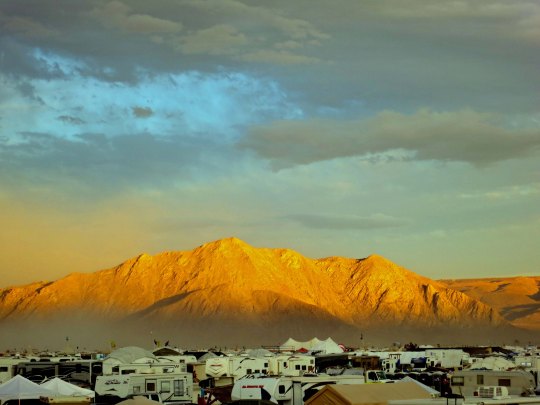
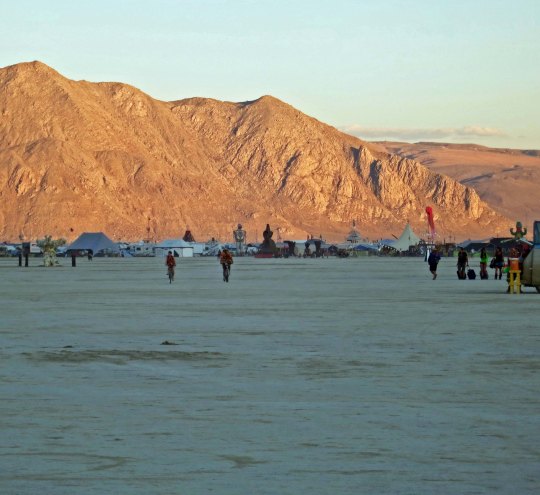
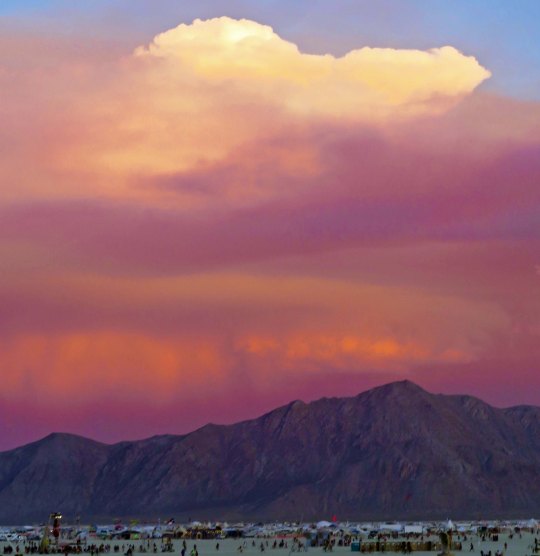
Deserts can have great beauty. The Burning Man festival is fortunate to be located in the remote Black Rock Desert of northwestern Nevada where it is surrounded by dramatic mountain scenery.
Situated on a flat playa that stretches out for over 100 miles, Burning Man is dwarfed by surrounding mountains and a vast, flat, desert floor. Once, the playa was filled with a huge, glacier fed lake that was over 500 feet deep. Wooly mammoths and Native Americans lived on its shore and called it home. Like other Great Basin Lakes, there were no outlets. Water that flowed into the lake stayed there and sediments carried in from the surrounding mountains sank to the bottom. As the climate changed, becoming hotter and drier, the lake dried up and the sediments became the base for today’s Playa.
By the 1840s and 50s pioneers and gold seekers from the young United States of America made their first forays into the desert heading for the goldfields of Northern California and Southern Oregon. The Applegate brothers created a trail through the Black Rock Desert that bears their name. I live in the Applegate Valley of Oregon beside the Applegate River, all named for the family. I also have family connections. Applegates and Mekemsons intermarried in the early 1800s.
Today, I am going to post several photos that place Burning Man in its Black Rock Desert surroundings.
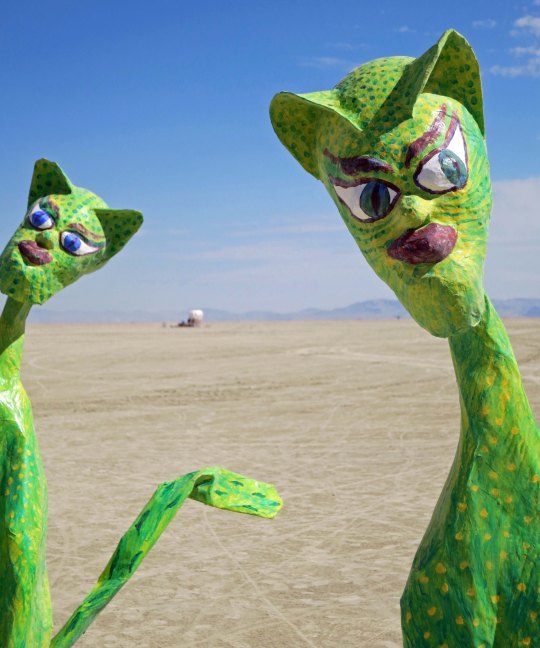
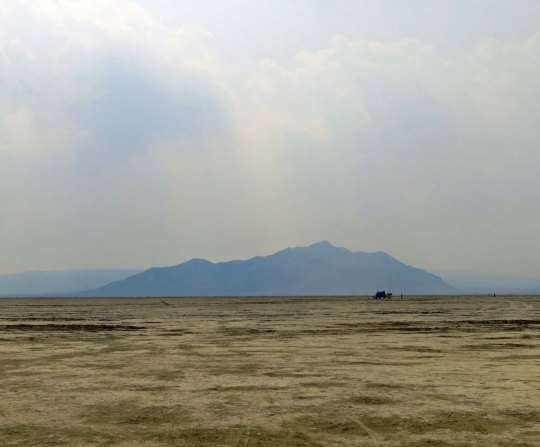
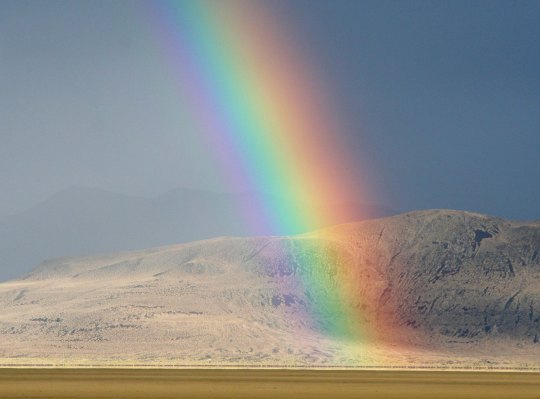
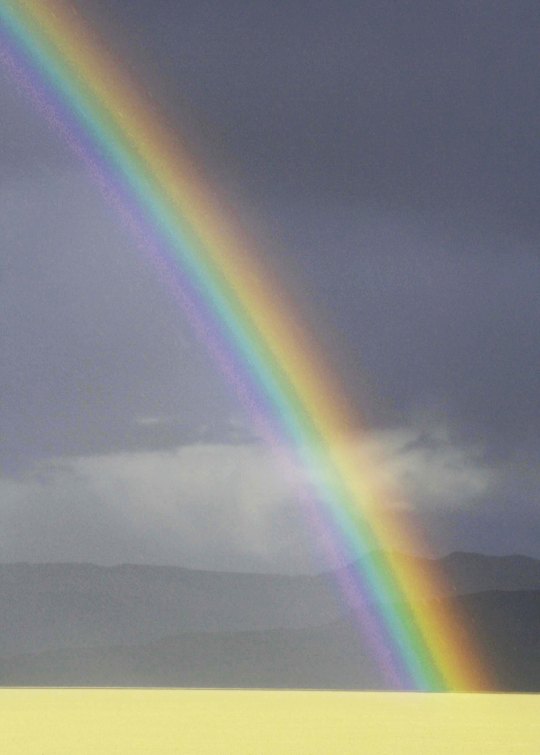
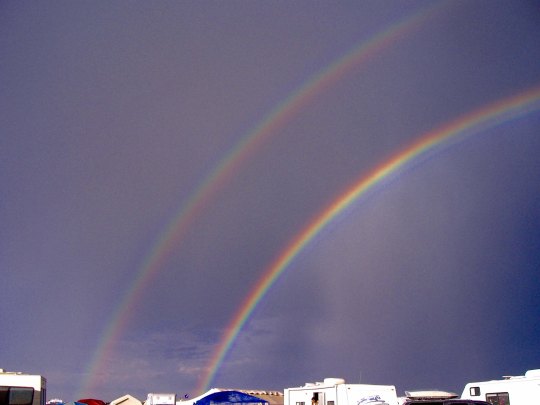
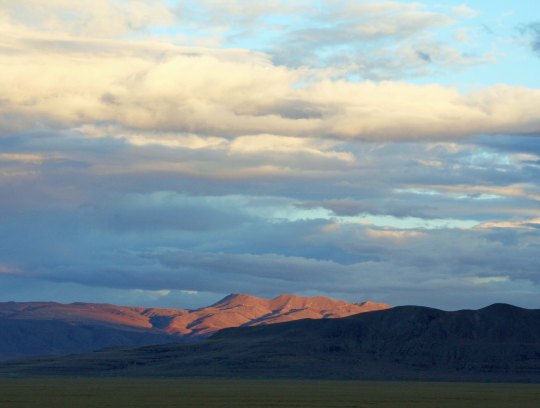
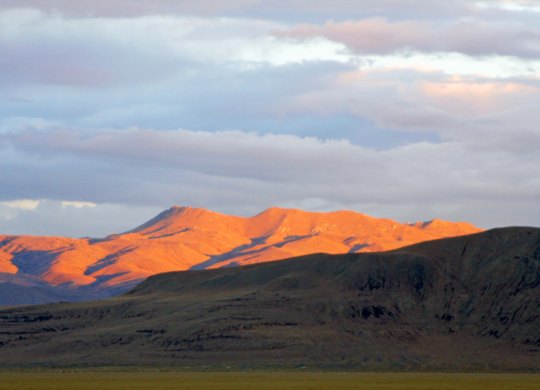
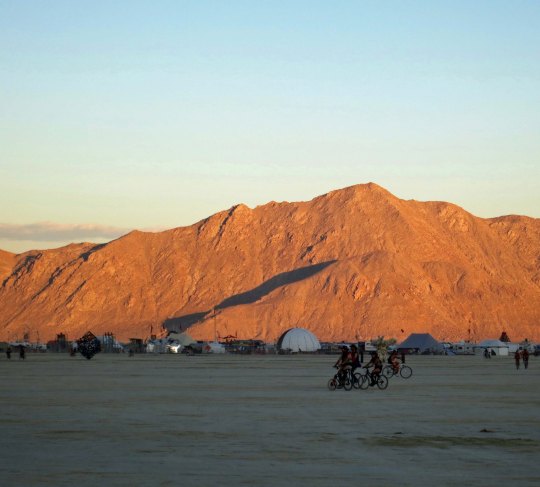
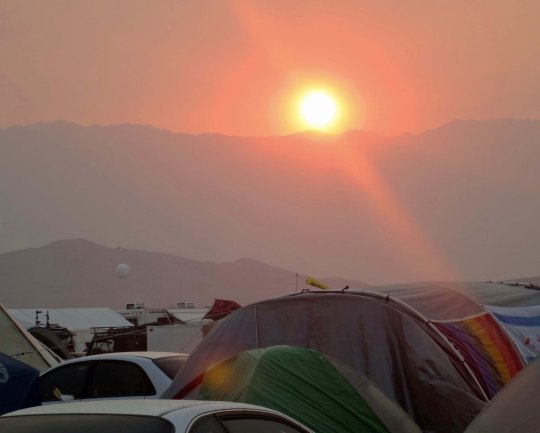
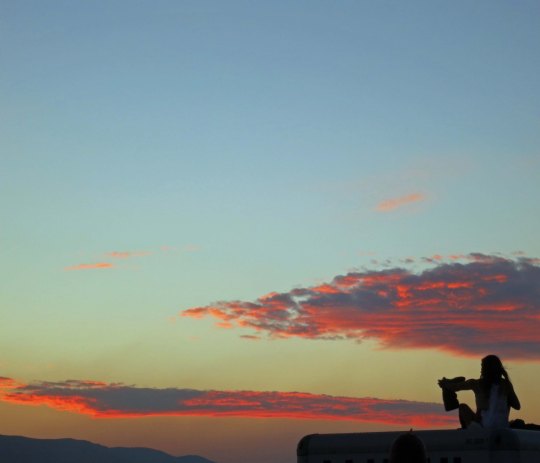
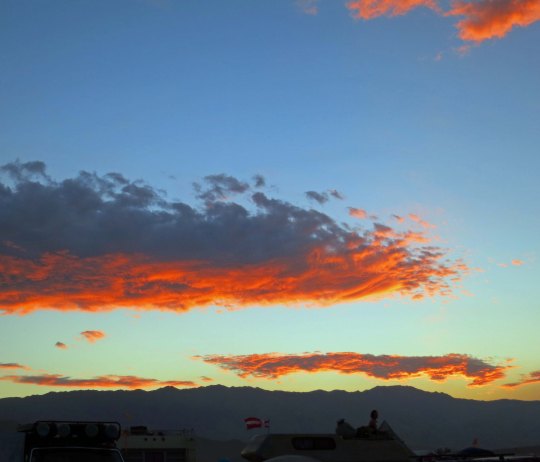
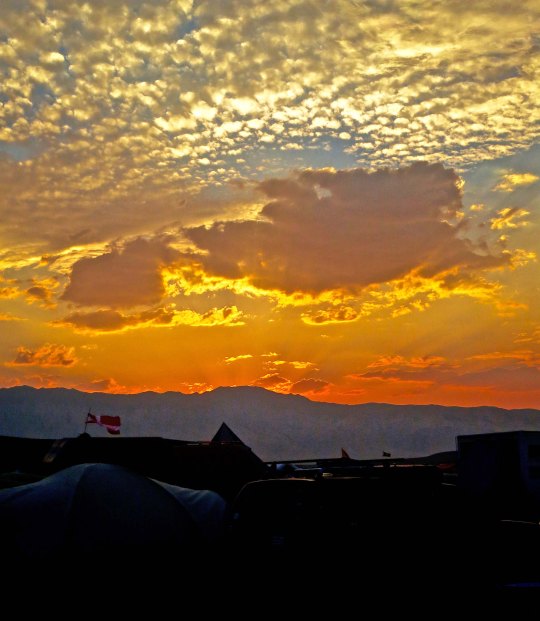
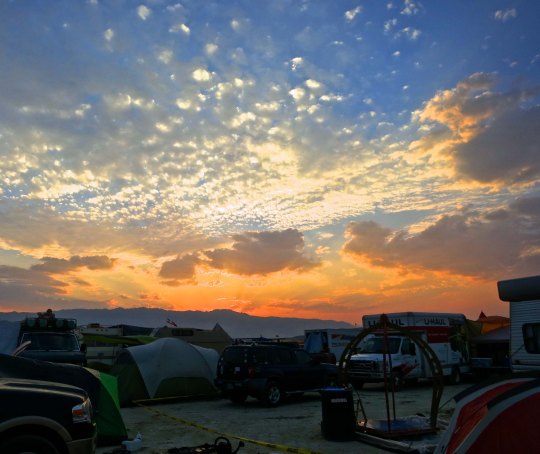
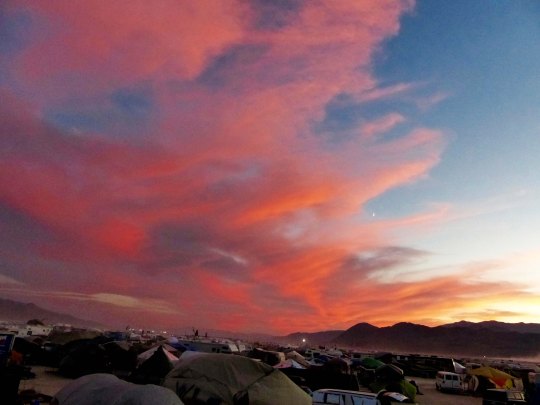
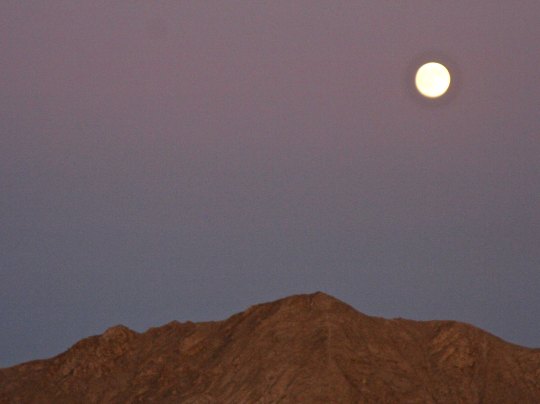
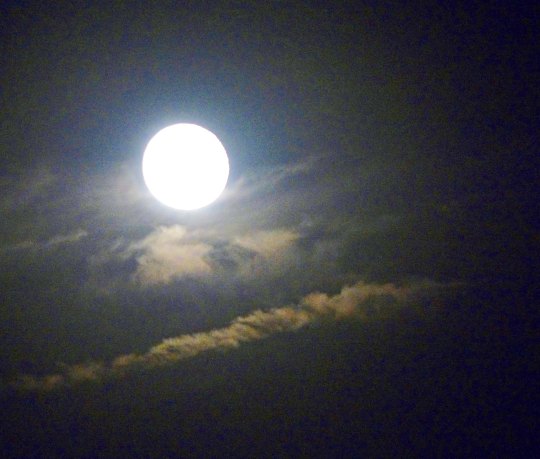
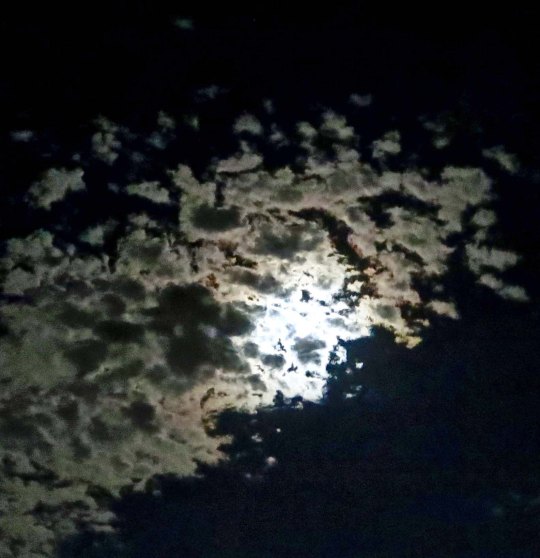
I like this photo because it emphasizes how flat the Playa is. You can barely see the fence that marks the outer boundary of Burning Man. Art can be found even in this remote section but it takes a bit of effort to get there. The flat playa has enabled some land speed records to be set here. It has also provided a good base for launching rockets.Of course, I like to spend time out there given my love of wide open spaces, desire to escape the crowds, and interest in the art. Here I am on the outside looking in. It was shortly after this that the Black Rock Rangers, the Border Patrol of BMO, came roaring over in an official truck. I hopped the fence and zoomed off on my bike. (Photograph by Peggy Mekemson.)The Border Patrol is wise to be vigilant on the outer edges of Burning Man, however. Aliens are known to hang out there.Some even resemble cats. This doesn’t surprise me. I’ve always thought that cats have a taint of alien blood. It may be more than a taint. Have you ever found your cat staring at you in a strange way and wondered what alien thoughts were passing through its mind?Another perspective. Note the rain clouds. The Black Rock Desert receives less than 10 inches a year, which is the definition of a desert. At times, it seems like the majority falls during Burning Man! All traffic is stopped. A thick, caky mud clings to vehicle tires, bike tires and shoes. A small garbage bag worn on the shoes helps feet avoid the worst of it.We’ve seen some spectacular rainbows accompany the storms.Another example.My friend, Ken Lake, caught a photo of this double rainbow hanging over Black Rock City.The first rays of the morning sun touch the mountains surrounding Burning Man. Early morning and evening are the best time to photograph the scenery.A few minutes later.This sunrise photo is an example of how the large event is dwarfed by its surroundings.Another example.The sun sinks into the west, signifying that life at Burning Man is about to be seriously ramped upward. While many Burners think party as night approaches, others pause to enjoy the beauty.And beauty there is.As the sun sets, the moon rises.With a beauty and drama of its own. (Photo by Don Green.)I’ll conclude with this photo of the moon hidden by the clouds— a contrast in light and dark.
NEXT POST: I was reading Walter Isaacson’s book on Leonardo Da Vinci this morning and Isaacson was discussing how incredibly observant Da Vinci was. This led me to look up at our house from a slightly different perspective. I was struck by some of the weird things we collect and decided it would make a fun post. The next post: A Home Full of Whimsy… What’s in your House?
I drove into the Pleasant Valley Campground near Tillamook, Oregon and there were bunnies everywhere, including this magnificent creature.
With Easter having arrived, I couldn’t resist re-blogging/modifying a post I did on some really cute bunnies a while back.
I had stopped over in Tillamook, Oregon to visit the cheese factory. It sends out tons of the stuff annually. I assume all over the world. I watched women whip around 50 pound blocks of cheese like they had been working out with Arnold Schwarzenegger. This made me hungry, so I ordered a sample plate of Tillamook ice cream. Bad idea. It’s really good. I mean really, really good. But eating all of those calories made me tired. It was time to find a campground.
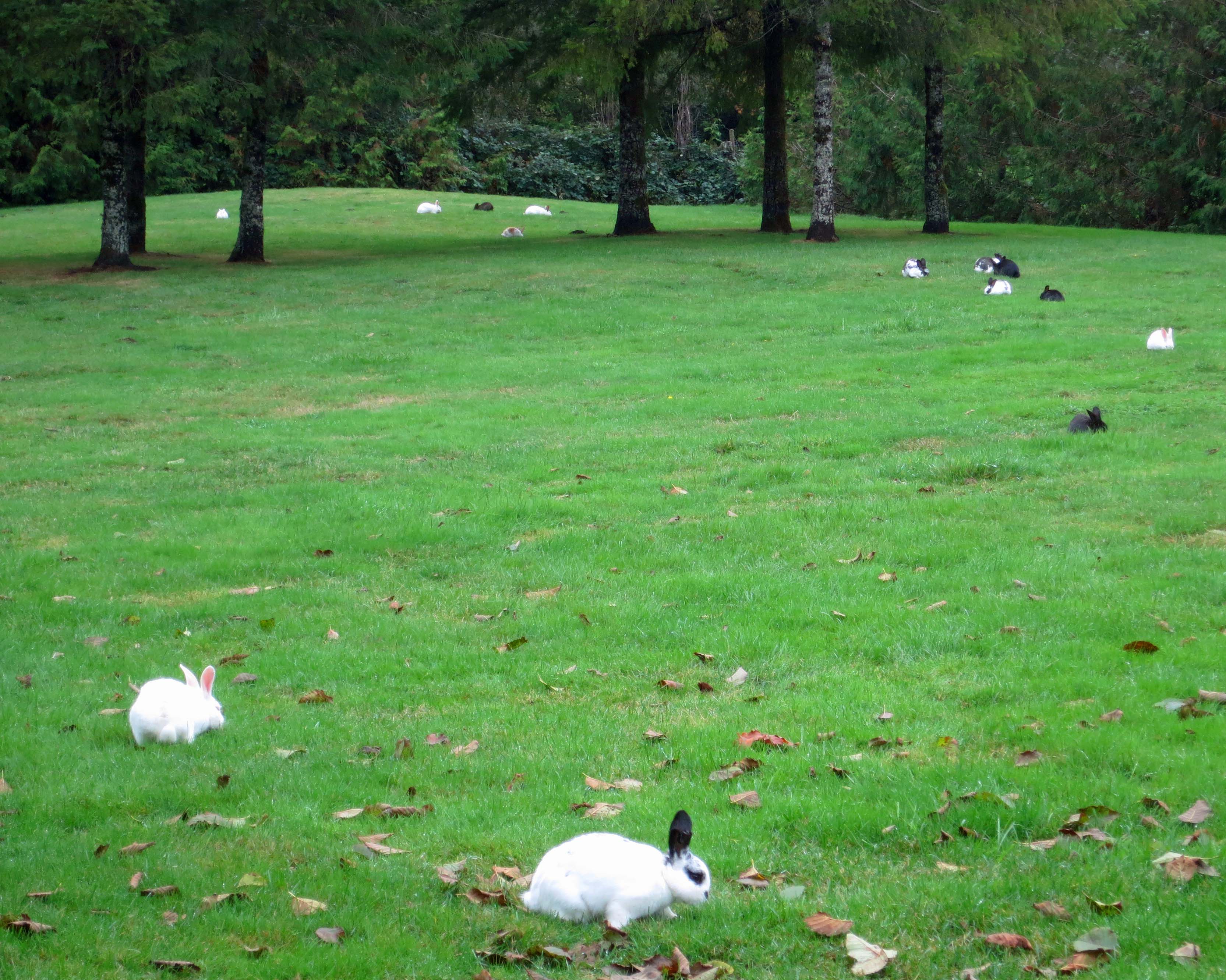
And this is where the bunnies came in. I pulled into Pleasant Valley Campground, a few miles south of Tillamook, and was greeted by (drum roll please) RABBITS, dozens of them. There were black ones, and brown ones, and white ones, all of whom seemed to be chasing each other around in a glorious romp to make more bunnies. After all, isn’t that what rabbits do beside deliver Easter eggs?
Ignoring the obvious, for the moment, I asked the owner where all the rabbits came from. “Oh they used to live across the street,” she informed me. “One day, a few moved over here. They didn’t do any harm and the campers seemed to like them. So I let them stay.” The rest is history, as they say. Anyway, here are some photos I took of the rabbits. Enjoy.
I am going for the “awww” factor with this baby bunny.
This was only a few of the rabbits, but it makes the point.
This furry gal was napping when I snuck up on her, but then, her eyes popped open…
And she was all wiggly ears and twitchy nose.
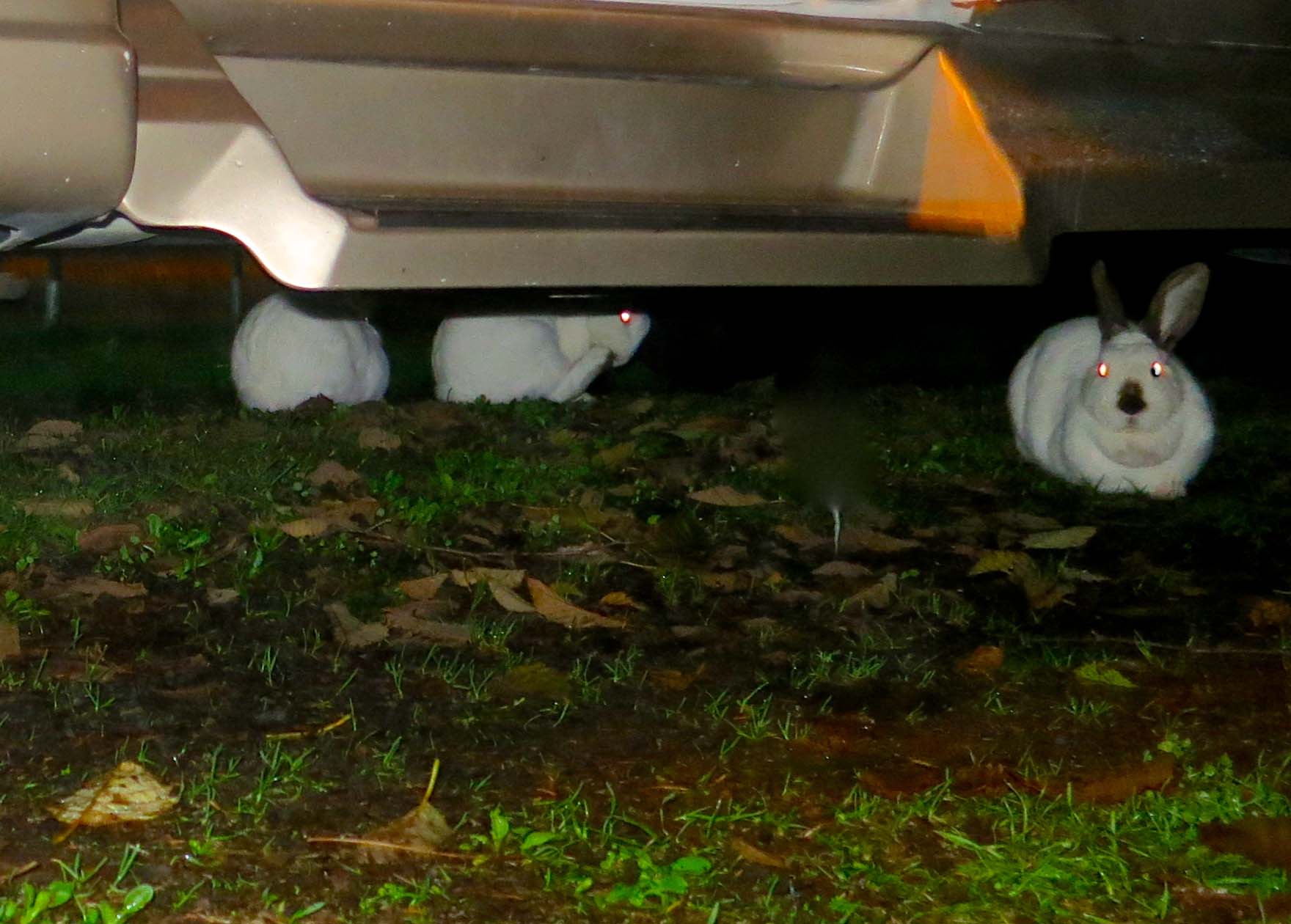
It rained hard that night. I discovered I had several rabbits using my van as shelter. The step is my doorstep. My flashlight caught their eyes. Scary. Was it a case of when good bunnies go bad?
Nah. I’ll finish off with another baby bunny. It was cold out and this tyke looks cold. I almost invited it into my van to warm up.
I don’t know how many of these bunnies participate in delivering Easter Eggs, but any of them would be welcomed here! A very Happy Easter to our friends throughout the blogging world— Curt and Peggy
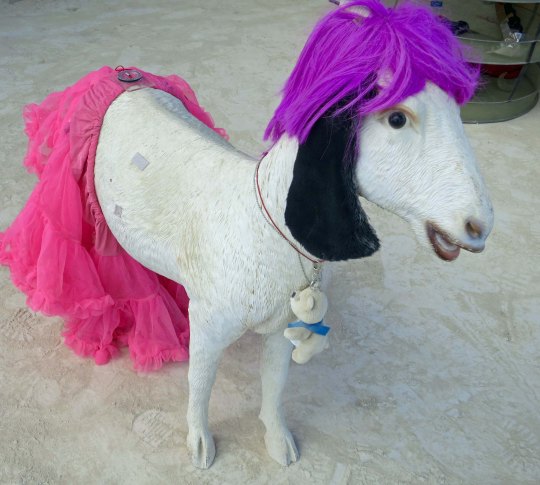
The point about wandering through Black Rock City is that you never know what you are going to find, such as a goat with purple hair wearing a sagging tutu and a bear necklace.
I spend the majority of my ‘out and about’ time at Burning Man on the Playa. That’s where the major art pieces are displayed, and seeing them is my primary reason for going to the event. Some, I return to several times to admire and photograph in different light. And there is night, where they take on a totally different personality.
Peggy and I always reserve a day for walking around Black Rock City, however. The same creativity found in the creation of art, mutant vehicles, and major camps is found in BRC as well. In fact, you never know what you will find, such as the goat above. In addition to the fun and curious, there are things to do, food to eat, more art, and camps to admire. People watching is also fun, as it is out on the Playa and at the Center Camp cafe.
I’ll let today’s photos reflect our walks over the years. Most of them were taken by Peggy and me, but some were taken by the two other photographers in our camp, Tom Lovering and Don Green.
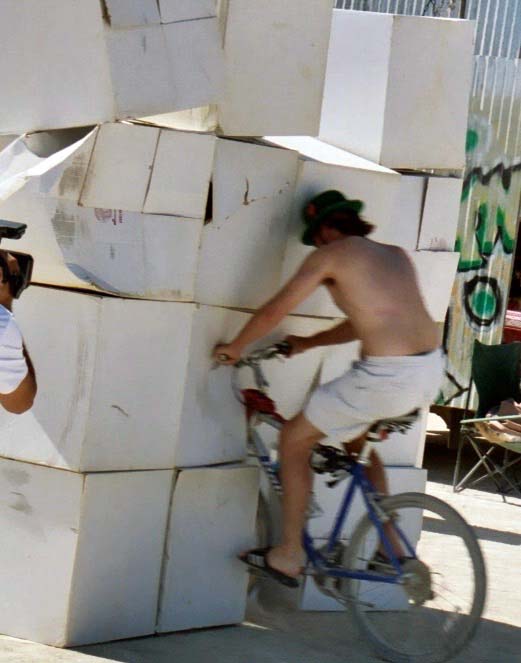
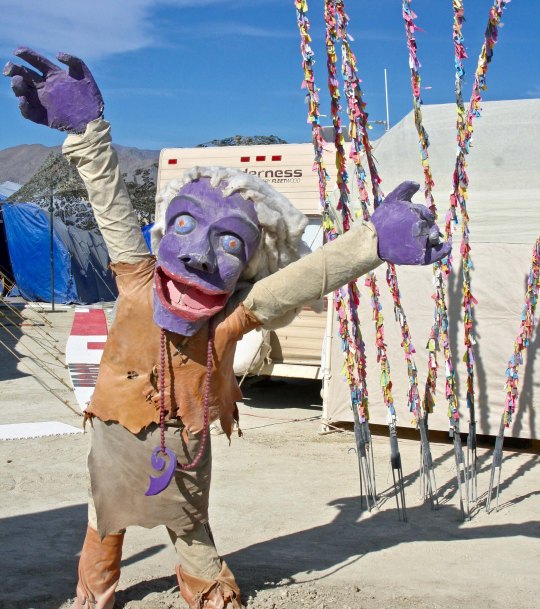
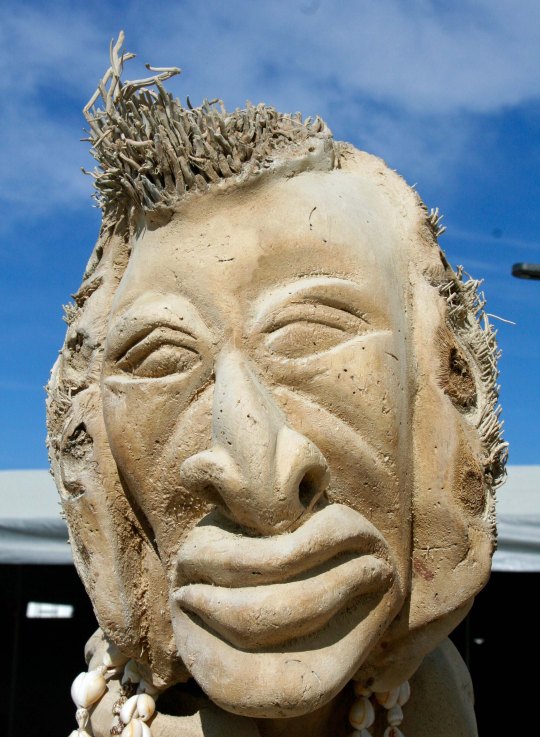
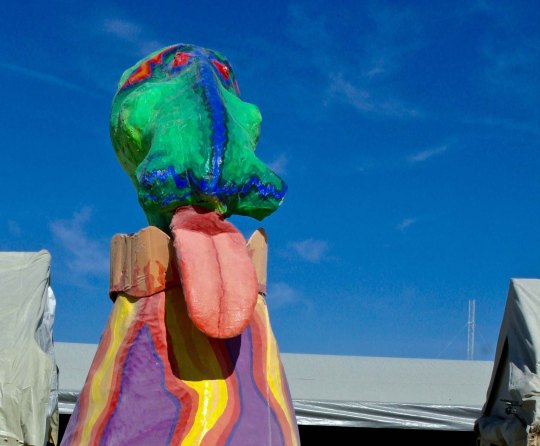
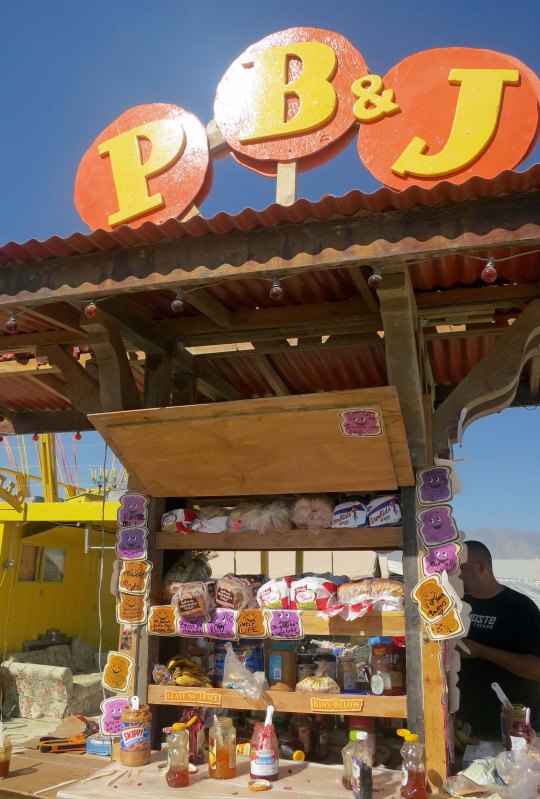
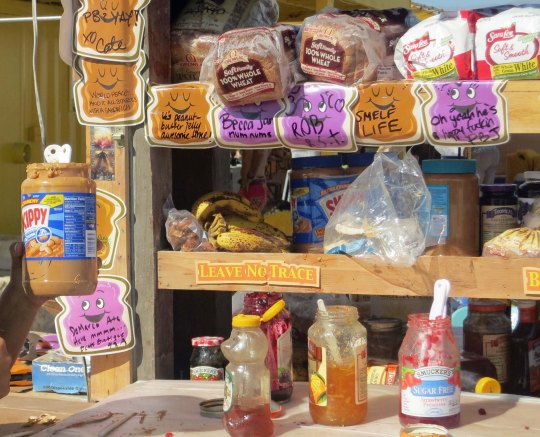
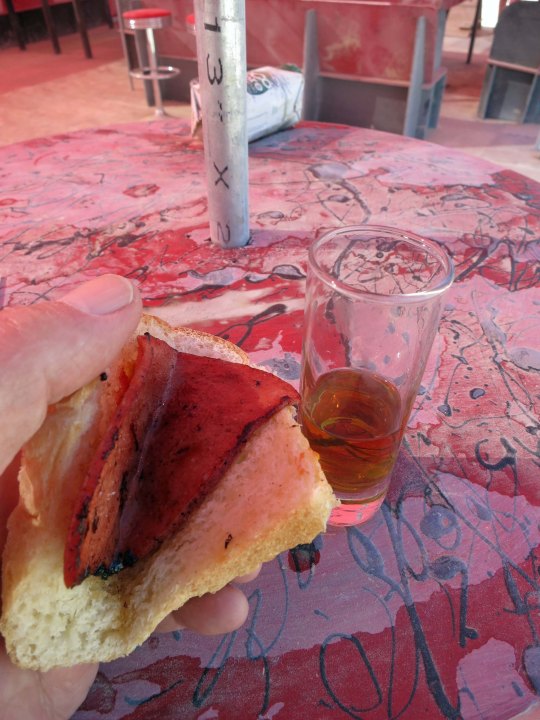
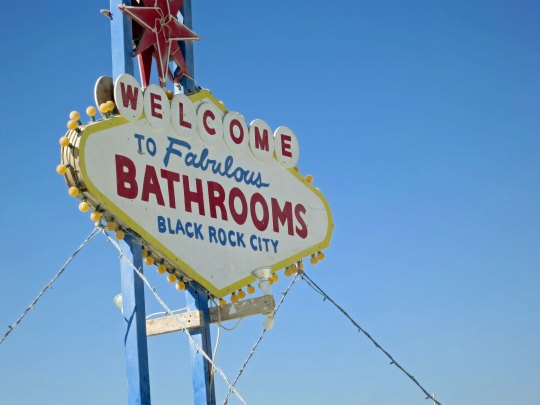
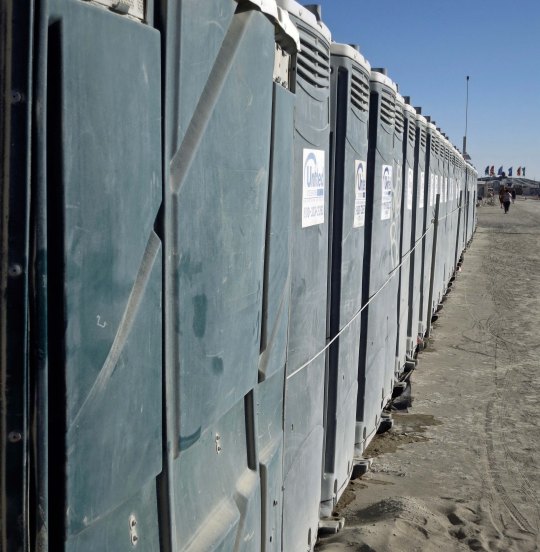
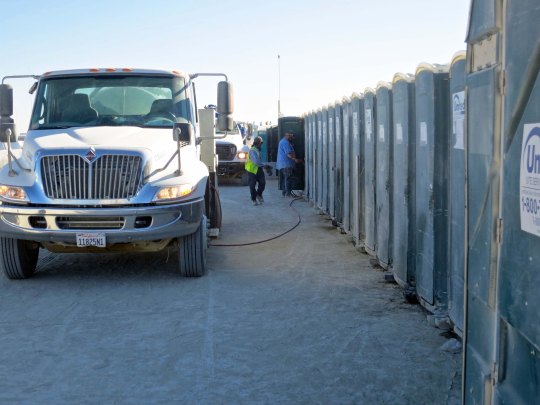
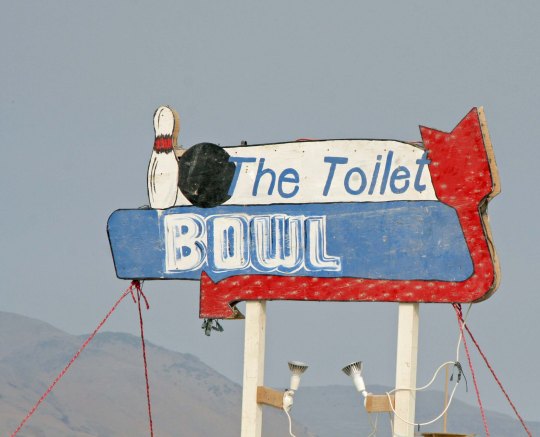
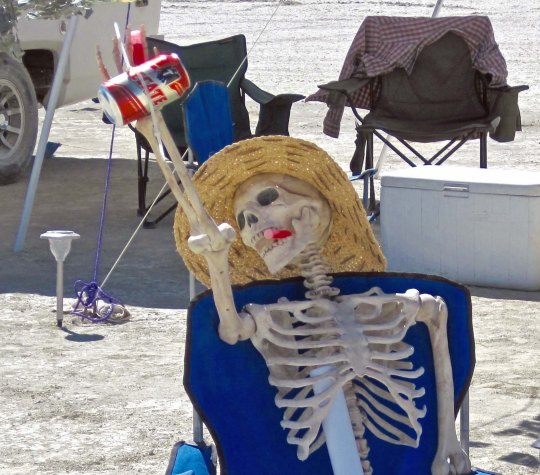
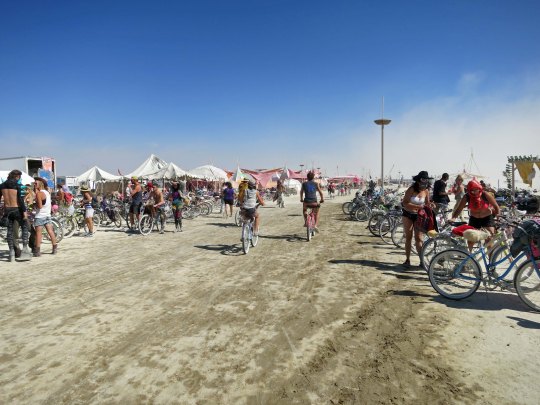
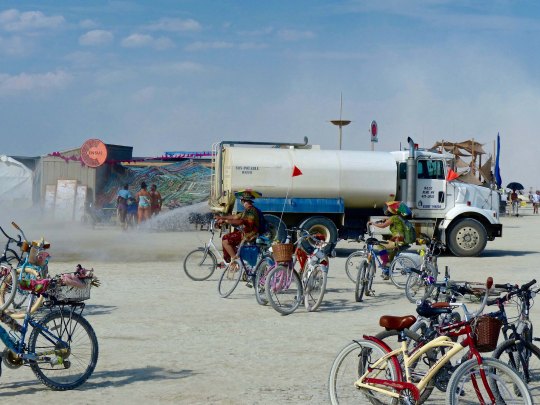
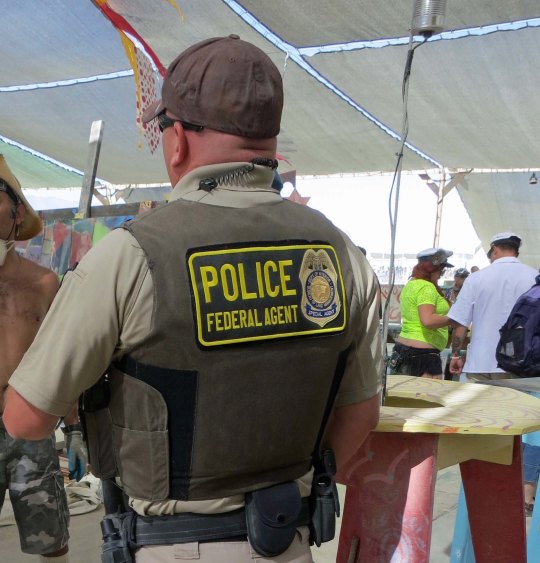
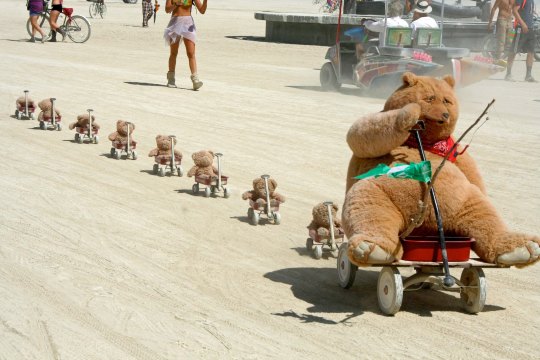
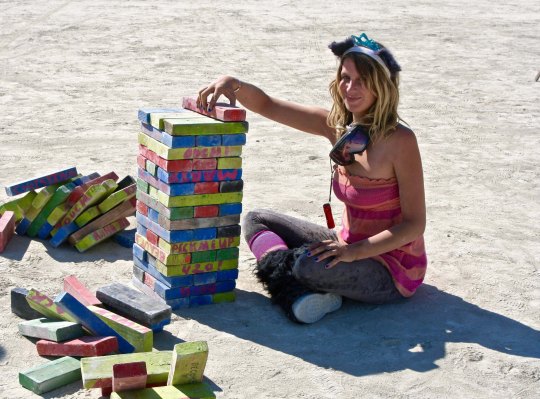
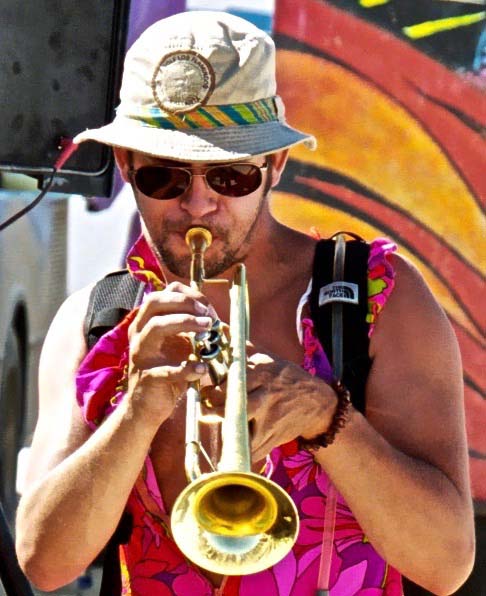
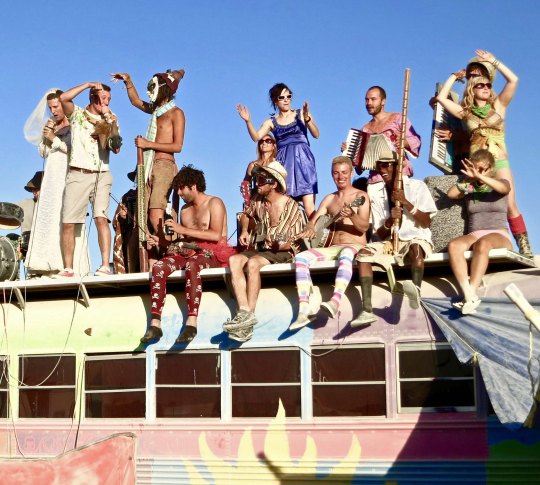
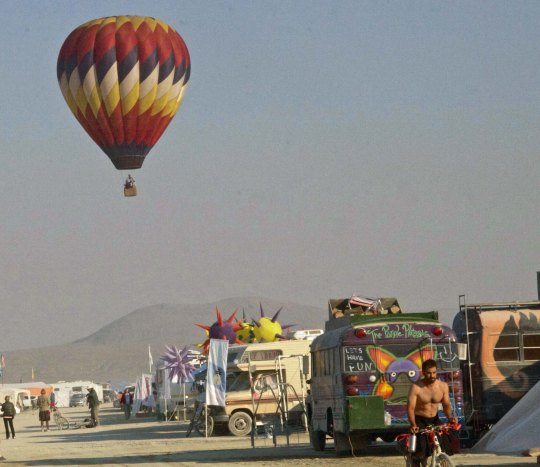
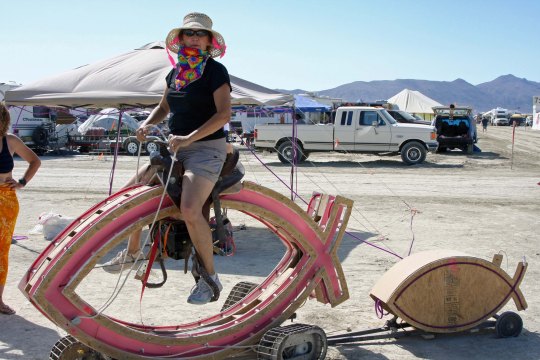
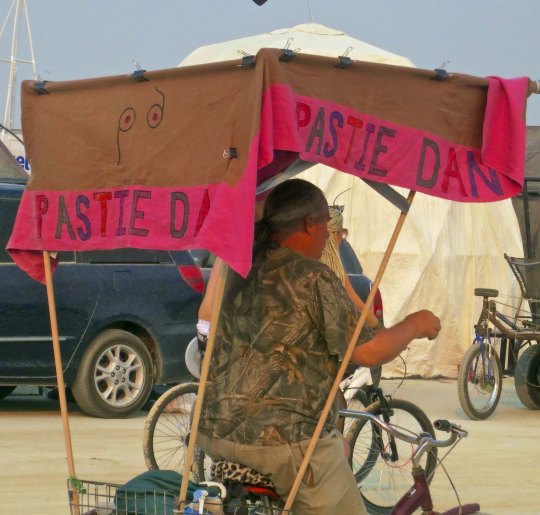
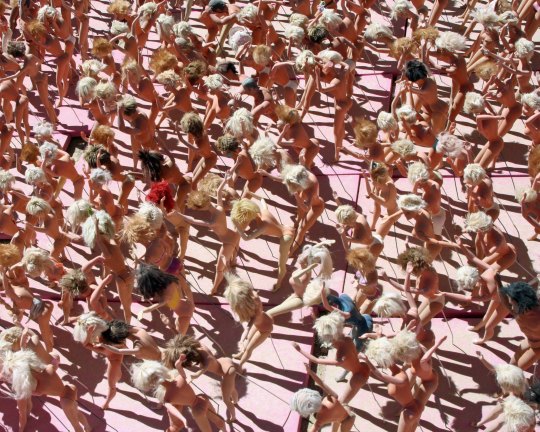
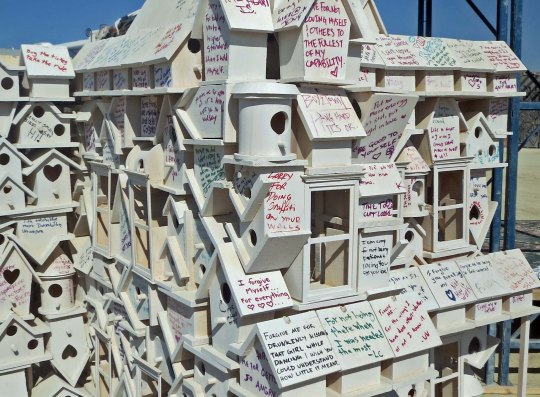
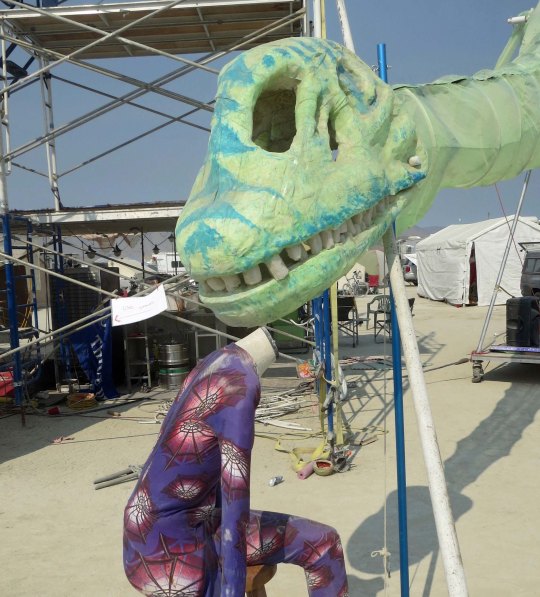
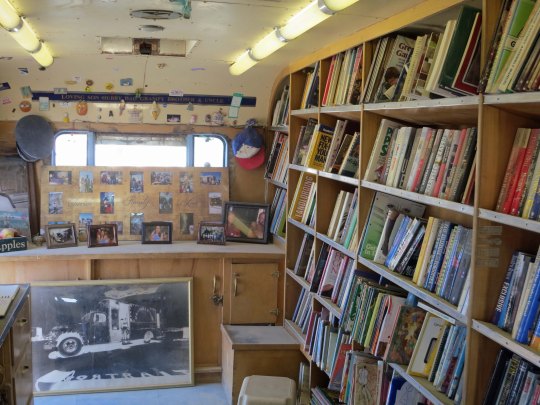
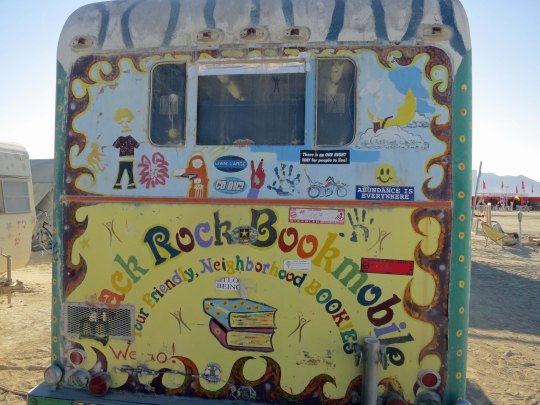
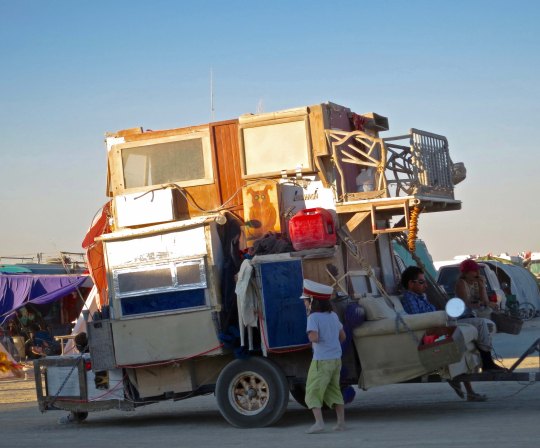
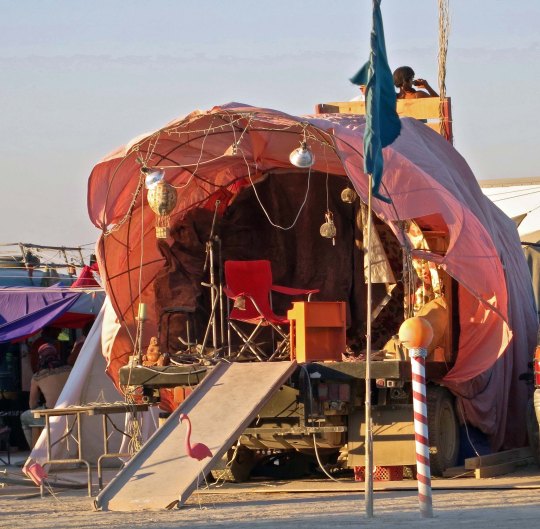
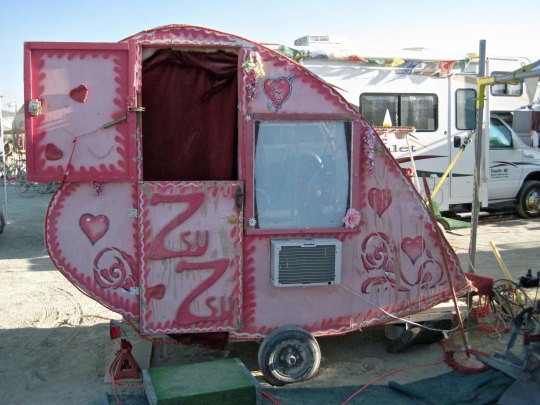
Joy riding isn’t encouraged at Burning Man. This was an exception. (Photo by Don Green.)Safety on bikes is critical with 60,000 or so running around in BRC and out on the Playa. Bike crashes do happen, however, and it’s amazing there aren’t more. One year, bikers were invited to crash into empty boxes on the Esplanade.This guy welcomed Peggy and me with open arms..This fellow, not so much.And this creature stuck its tongue out at us. Looking at it now, I’m sorry I didn’t pose Peggy sticking her tongue back out at it.Hungry? The PB&J camp had a solution. Lots of peanut butter, several different types of jam, and bread! It was all free and is an example of Burning Man’s gifting philosophy.A close up.The Kentucky camp developed a Kentucky Fried Chicken theme one year and offered fried baloney sandwiches with a shot of bourbon— for breakfast. That woke me up…Restrooms, as it turns out, are a major focus at Burning Man. The reason: the restrooms are the modern version of an outhouse, the porta-potty. If you have ever used one, you know they are not the epitome of having a pleasant bathroom experience. There are banks and banks of toilets, hundreds of them. This is a view of the back side.Veteran Burners wait until they are cleaned. A whole fleet of trucks is kept busy.Another view. You want to camp close enough to the porta potties for convenience, but not too close!Humor is the best approach when it comes to outhouses. There was actually a bowling alley set up next to the toilets! As I remember, I rolled a strike.I’ll drink to that!In addition to large trucks running around emptying the toilets, water trucks are constantly watering down the roads to reduce the dust. Nothing stops the dust storms, however. One’s coming. Burners used to run along behind the trucks getting their daily bath and washing their clothes at the same time, assuming they wore clothes. I saw more than one naked person running by, giving a new meaning to streaking. Today, Burning Man claims the water is recycled from sewer operations, effectively putting a stop to the showers.Lest you think that Burning Man is a lawless party in the desert, there are police everywhere including the feds, DEA, state police, BLM rangers, and local sheriffs’ departments. It’s best to behave yourself!I am assuming that Burning Man is not a favorite event of the present administration in Washington, although Ivanka reputedly has a Burning Man photo in her office. Let me report, however, in my 11 years at Burning Man, I have never once seen an illegal alien cross over. I did once, however. How could I not, given Burning Man’s iron clad rule that no-one is to cross the barrier. Within seconds an official BMO truck was bearing down on me. A Black Rock Ranger yelled at my departing back: Do Not Cross the Fence! Be that as it may, bear with me and I will move on to more officially acceptable Burning Man activity you can see when you walk around BRC.Such as stacking blocks.Or playing a trumpet in drag…Or getting married on top of a bus…Or checking out Burning Man in a hot air balloon…Or riding a fish…Or having a free nipple covering business. Pastie Dan is close to a legend at Burning Man.Or checking out a Barbie Doll camp.Or reading the messages on a large birdhouse. Most had to do with being forgiven for something. Burners, apparently, have lots of regrets. Or wondering why the grinning dinosaur bit the woman’s head off.It’s hard to get bored at Burning Man, but if you do, there’s always a lending library of some type or other around. Books are free and there is never a requirement that you bring them back.The book mobile.Checking out people’s homes is an honored activity just about anywhere. Apparently, it was moving day for this Burner. You don’t have to be a large camp to have an interesting residence, even if it is only for a week. This gypsy type home was right across the road from us one year.And last, but not least, is Zsu Zsu’s Home. There was a suggestion on the side that you might want to give her a kiss. (Photo by Tom Lovering.)
NEXT POST: A look at the Black Rock Desert, home to Burning Man and Black Rock City.














































 Wandering through Time and Place