Raging Winds, Fog, and Treacherous Rocks… 3 Reasons for the Pt. Reyes Lighthouse

“Point Reyes is the windiest place on the Pacific Coast and the second foggiest place on the North American continent. Weeks of fog, especially during the summer months, frequently reduce visibility to hundreds of feet. The Point Reyes Headlands, which jut 10 miles out to sea, pose a threat to each ship entering or leaving San Francisco Bay. The historic Point Reyes Lighthouse warned mariners of danger for more than a hundred years.” From the Pt. Reyes National Seashore website.
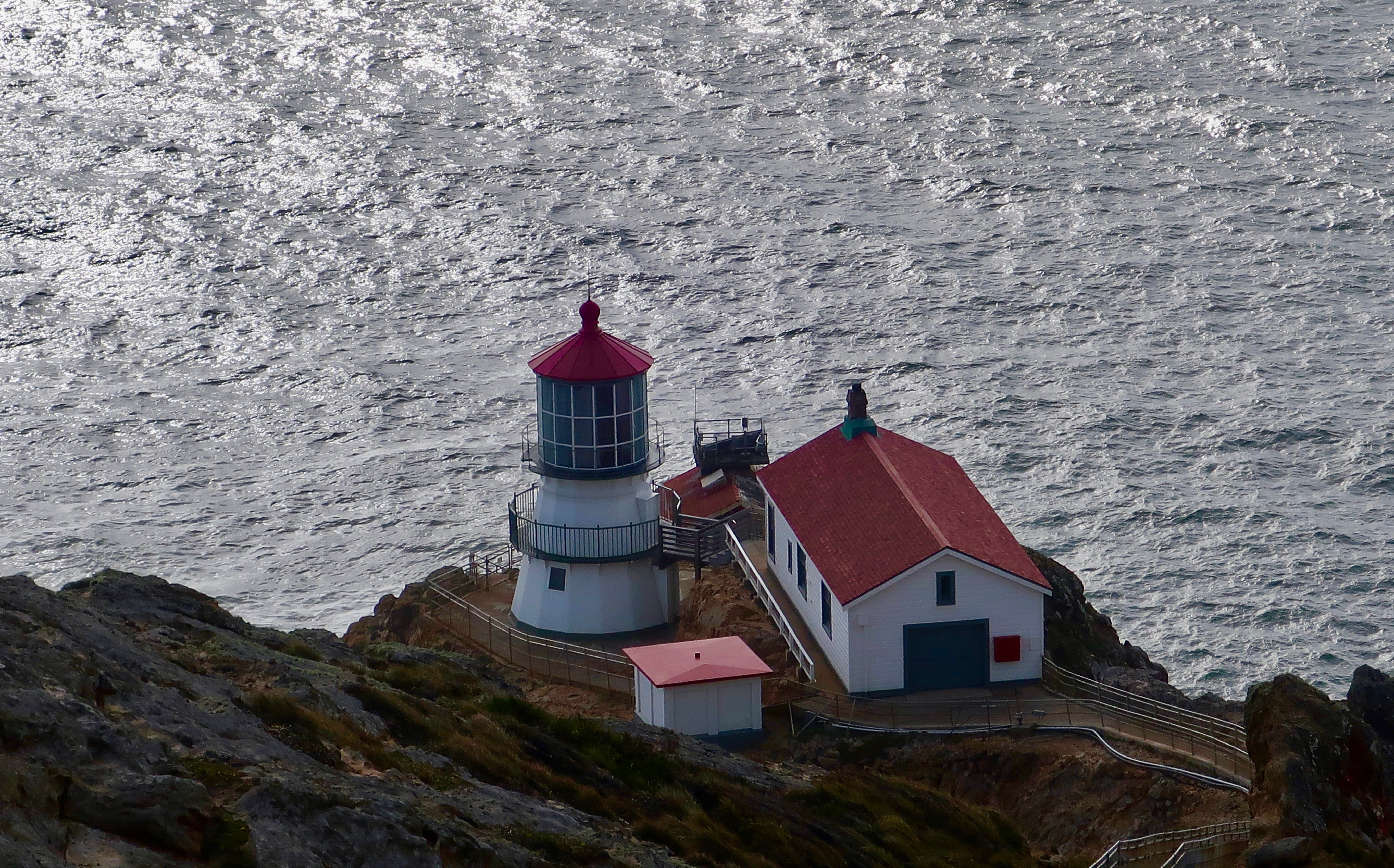
It was hard to imagine frequent winds of 60 MPH that have been clocked as high as 133 MPH and weeks on end of pea-soup fog the day we visited the Pt. Reyes Lighthouse in March.

For as much as I enjoy Pt. Reyes National Seashore, I studiously avoid it in the summer. One reason is the fog. That’s true for much of the Pacific Coast. The other is tourists, gazillions of them. Traffic slows to a turtle’s pace along Highway 1, campgrounds are full, and popular sites such as the lighthouse are packed. I have a limited sense of humor about any of the above, especially given that I can visit during the late fall, winter, and early spring when few tourists are out and about and days are often crystal clear. Or, if I am particularly lucky, a raging storm will send huge waves crashing ashore producing spectacular views. I love both.

It was mainly sunshine when Peggy and I visited the National Seashore in early March to celebrate my birthday. The lighthouse was closed due to Covid, but I have visited it before. This time, we admired it from above.

The Lighthouse was built in 1870 to help counter the frequent shipwrecks that took place in the area. A steam driven fog horn was used when the fog was too thick to see the light.

The lighthouse served its purpose for over 100 years, finally shutting down in 1975 when the US Coast Guard replaced it with an automated light found just below the historic lighthouse. Up until then it was tended by a lighthouse keeper whose responsibility was to keep the light burning. In addition to warning mariners off of the treacherous rocks, the lighthouse served as a navigational aid. Each lighthouse along the coast has a different frequency of light that ship pilots recognize. At Pt. Reyes, the light flashed once every five seconds.
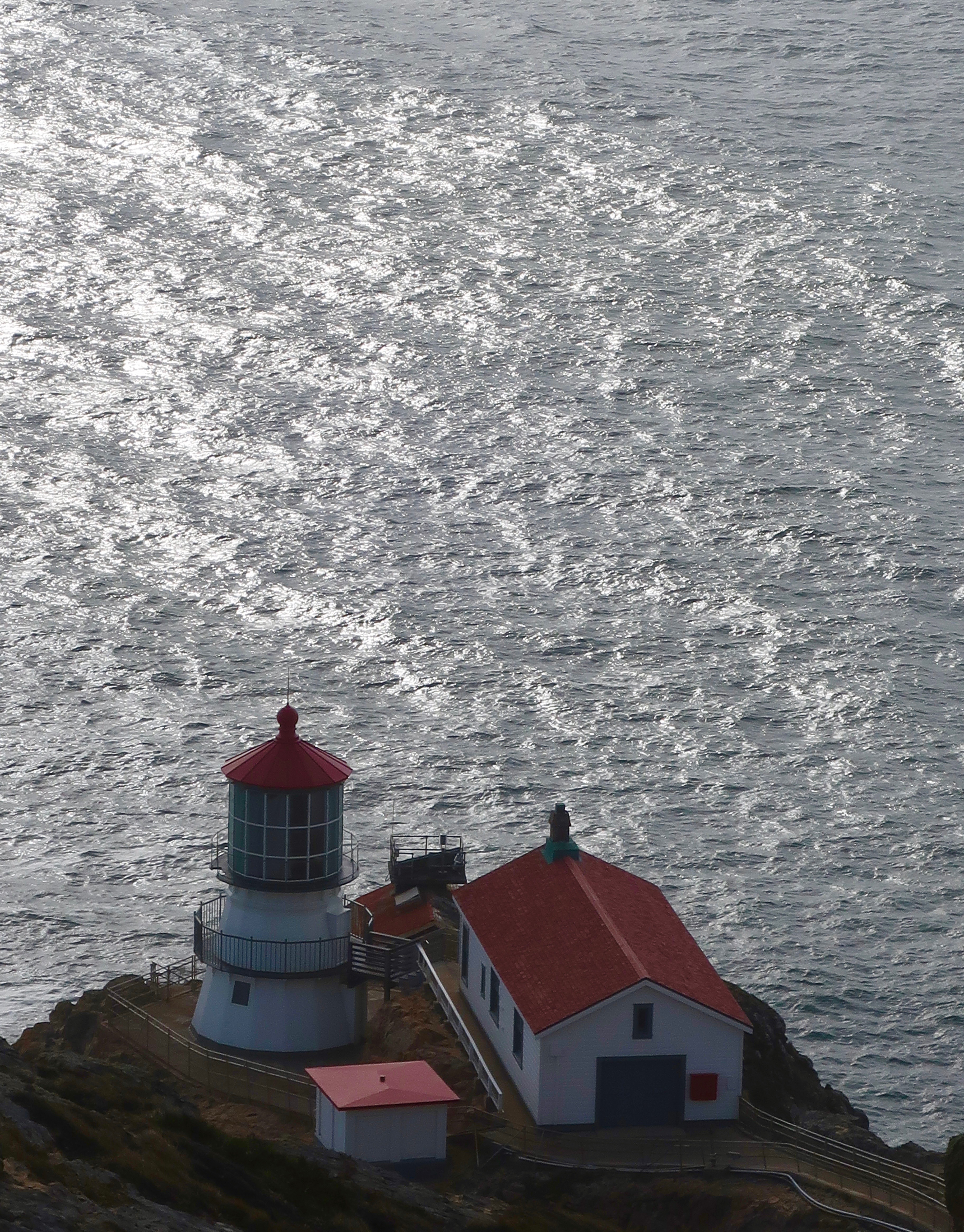
Looking out to sea.
A historic view of the Pt. Reyes Lighthouse from the National Archives.

Peggy and I parked Quivera and followed the trail that led out to the lighthouse. Along the way, we found trees that showed the effects of the high winds that frequent the headlands.

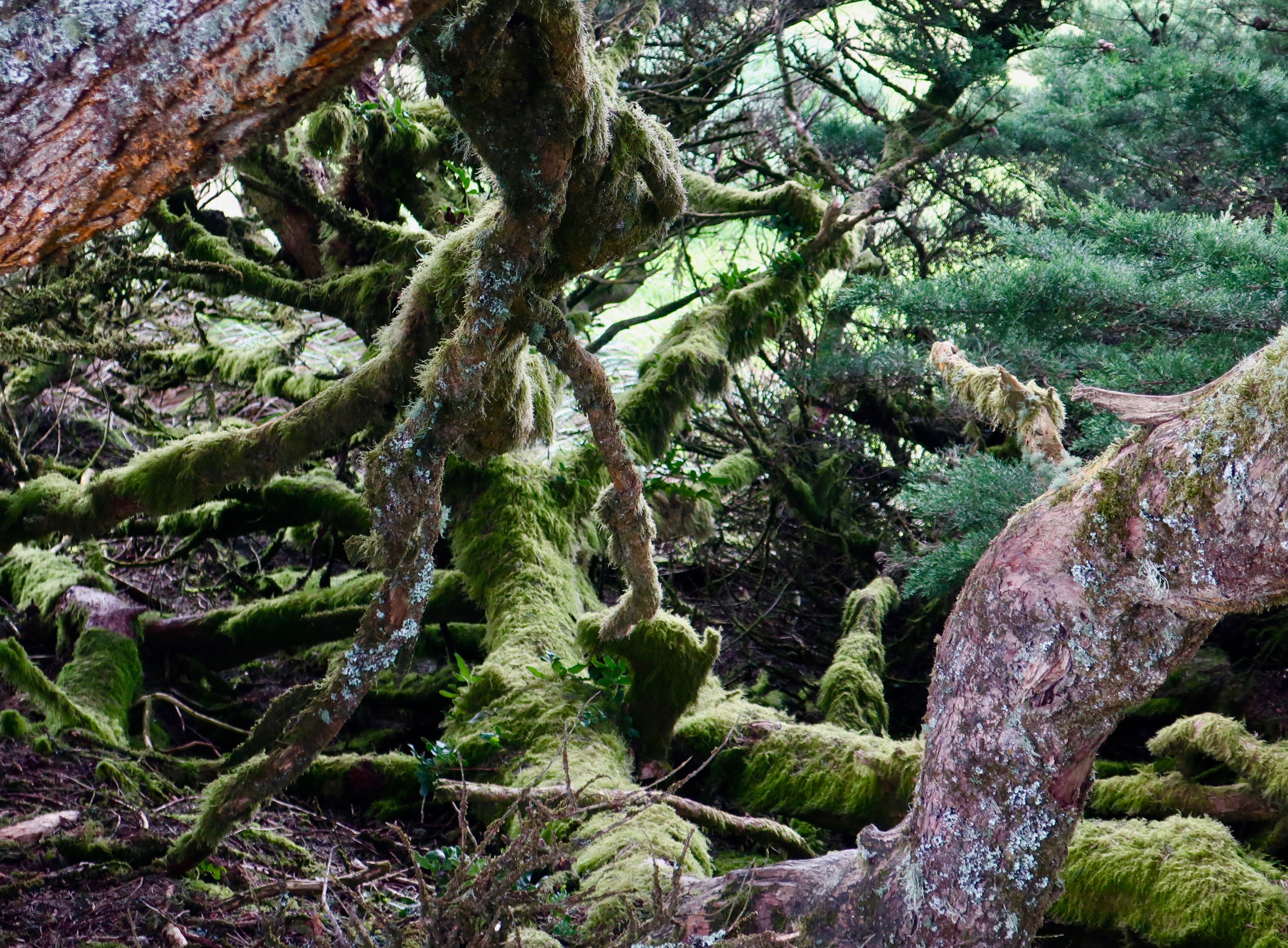
Wind sculptured trees
I pictured children having a blast climbing over the gnarled limbs on the trees.
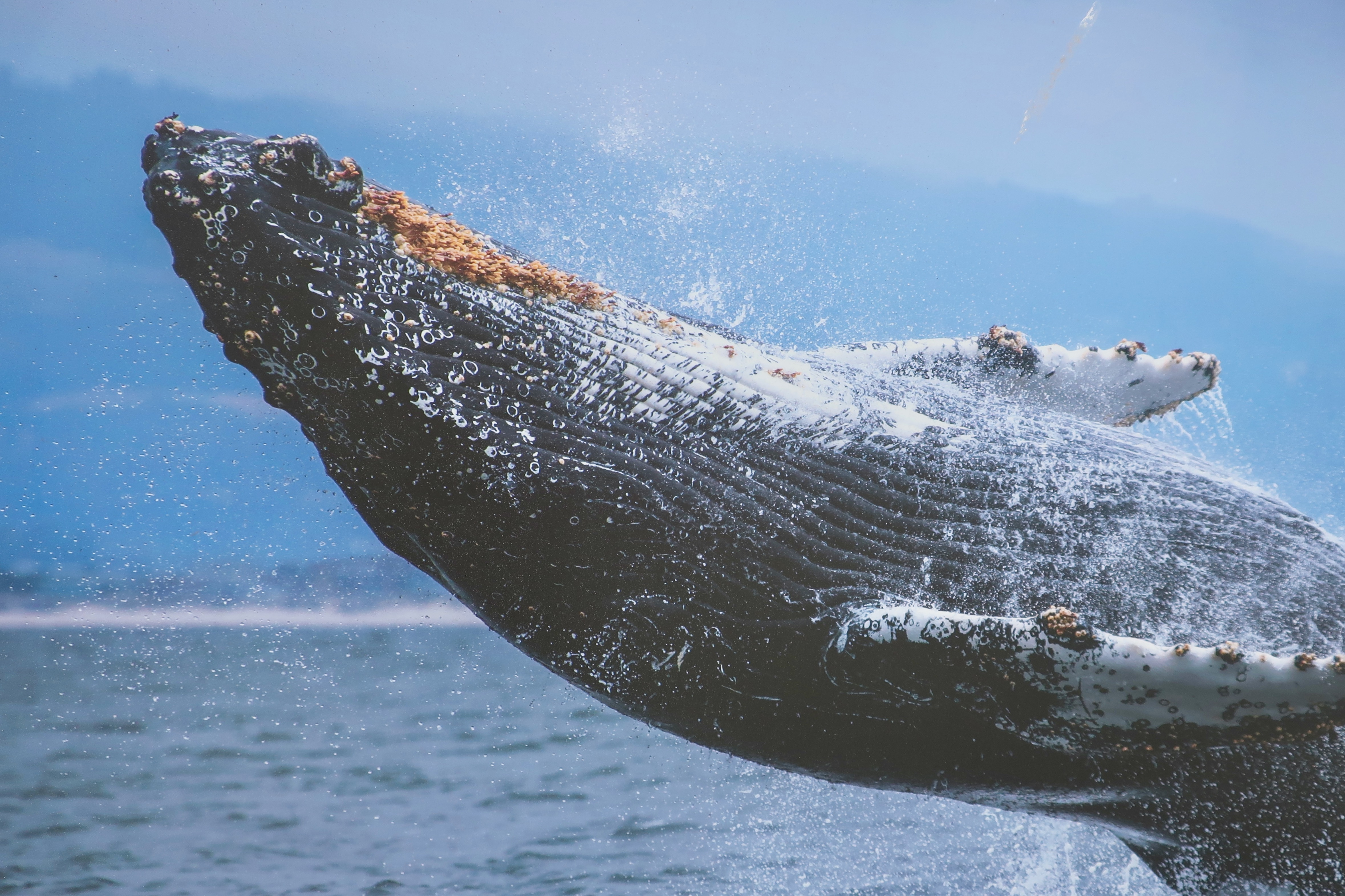
The Pt. Reyes headlands are a great place for whale watching when they are migrating south toward Mexico and then north toward the Arctic. We didn’t see any, but we were greeted by this large mural as we neared the lighthouse.
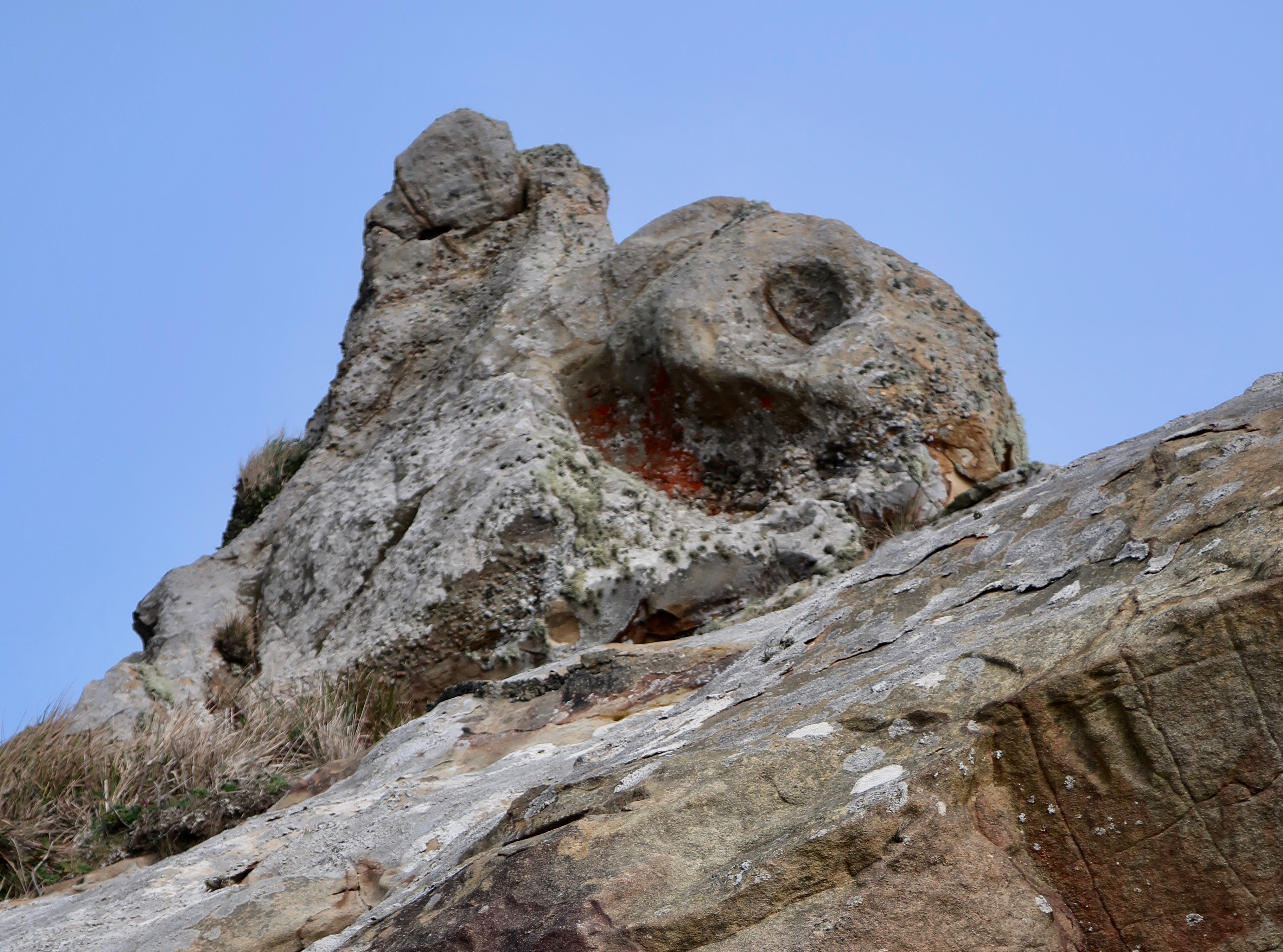
We found this interesting rock perched above the lighthouse.
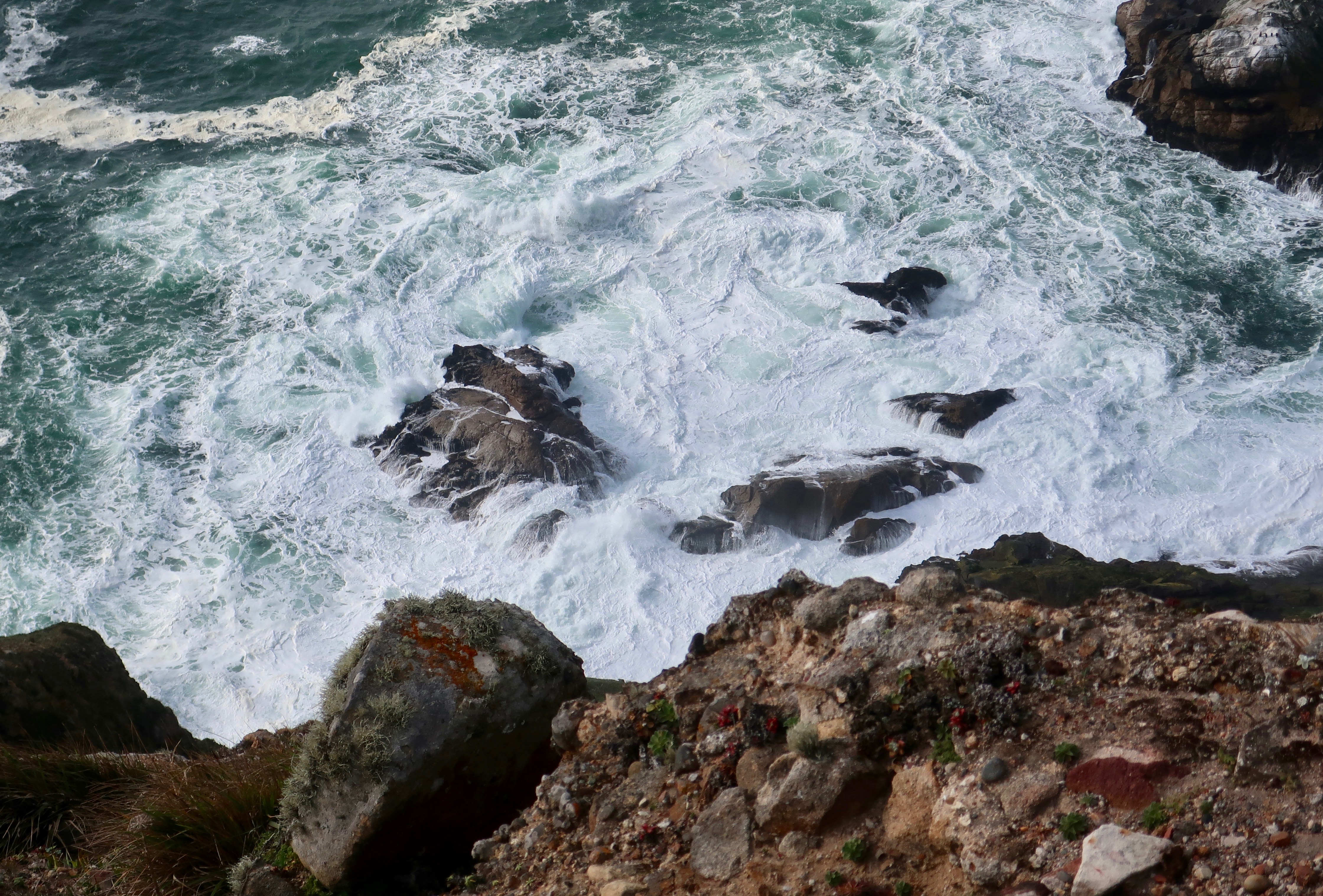
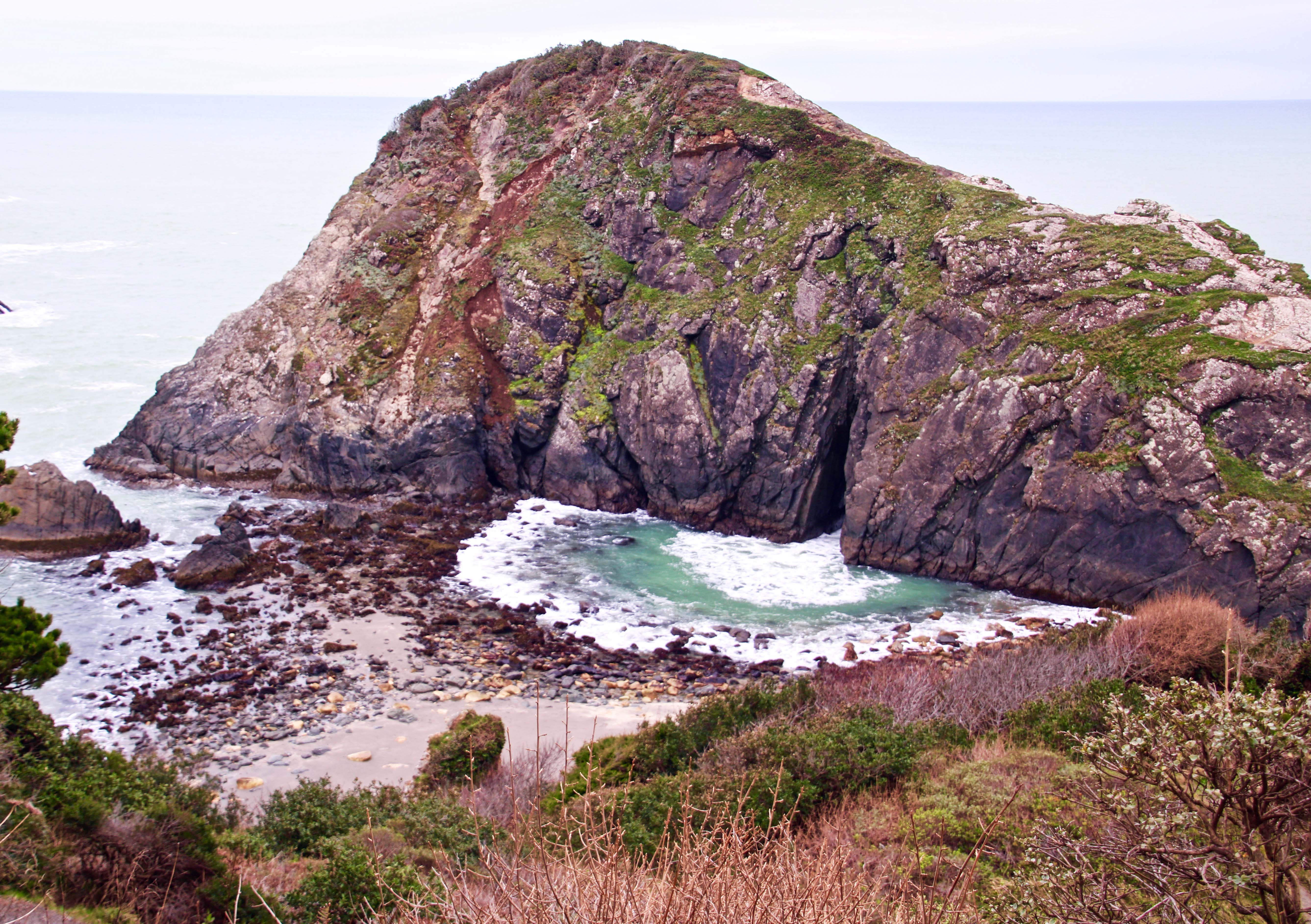
And looking down below the lighthouse, we watched these waves crashing ashore among the rocks— which is where I will conclude my post for today.

NEXT FRIDAY’S TRAVEL BLOG: I’ll wrap up my Pt. Reyes series with a pleasant walk out to Abbot’s Lagoon and a visit to the colorful town of Pt. Reyes Station.
An Elk Loses Its Coat, a Coyote Digs Sushi, and a Ranch Is History… The Pt. Reyes Series

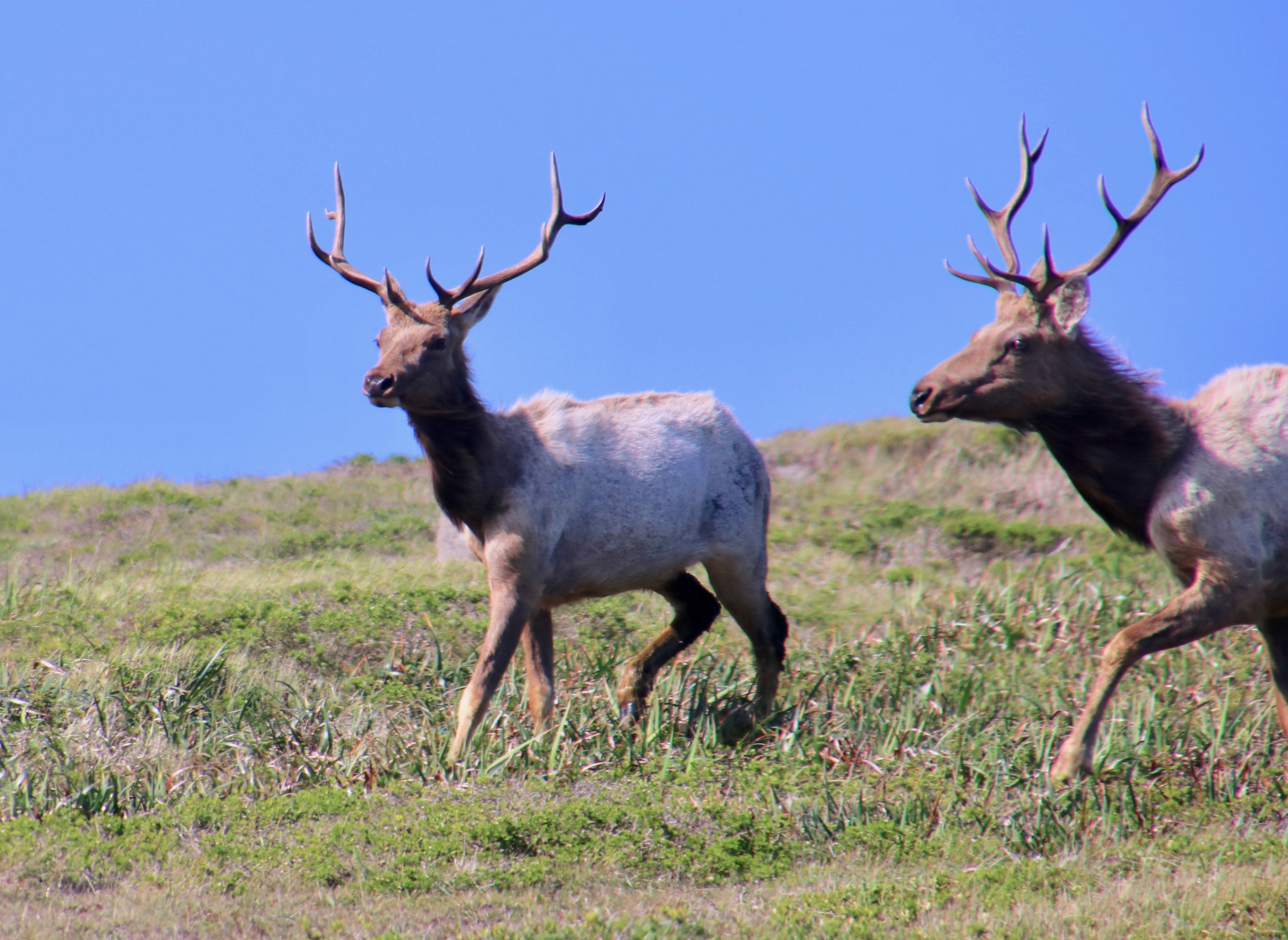
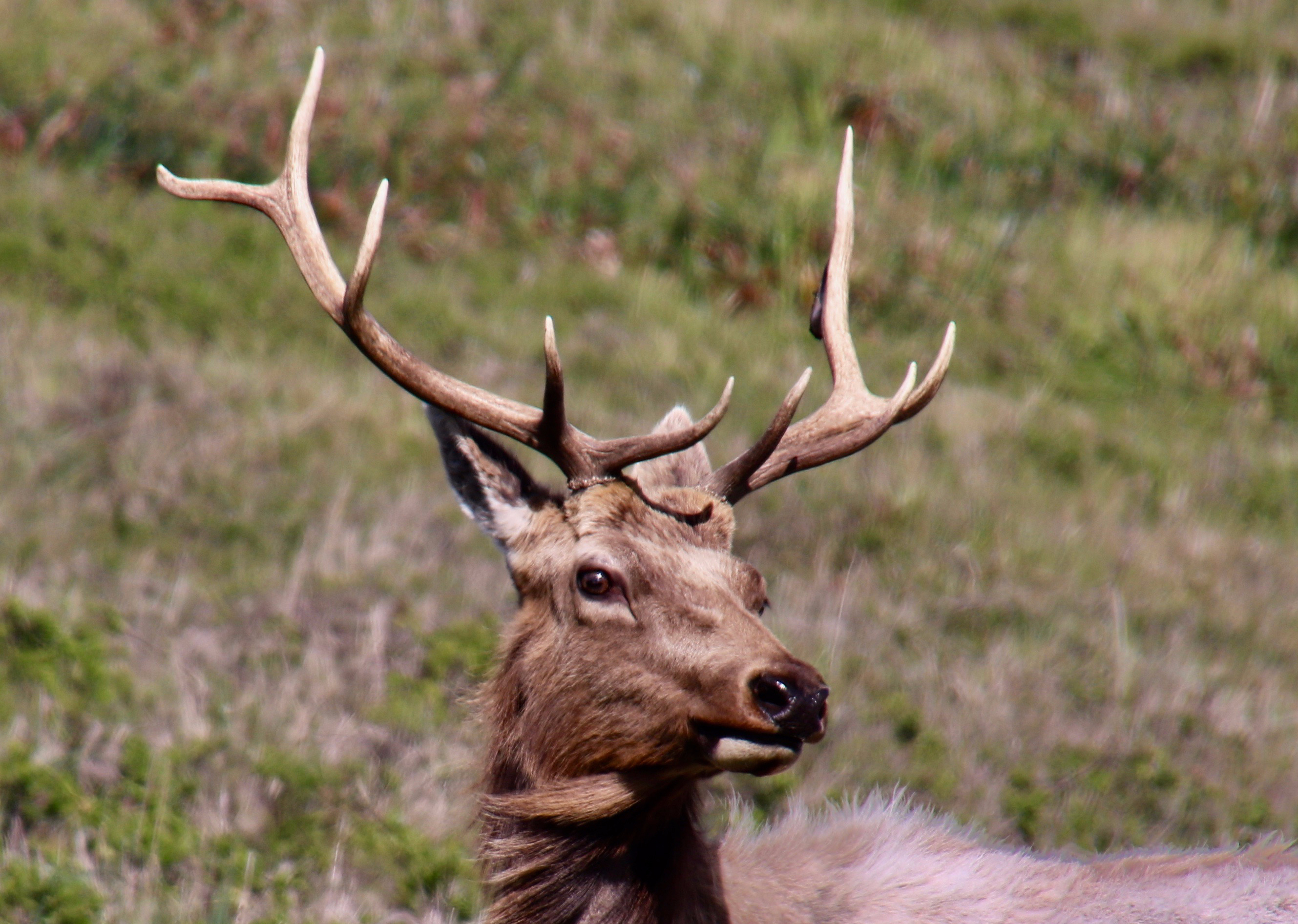
This bull elk that came down to see us as we hiked out the Tomales Pt. Trail looked quite elegant until we looked at his back. He was still shedding his winter coat and had yet to grow his summer fur. The deer herd that hangs out on our property goes through the same stage, looking frowzy for a couple of months. (Photo by Peggy Mekemson.)

Any trip to Pt. Reyes National Seashore should include a drive out to the historic Pierce Pt. Ranch and Tule Elk Reserve. The ranch will introduce you to an important piece of Pt. Reyes history. A hike out the Tomales Pt. Trail from the ranch will take you through some impressive scenery and likely give you a view of tule elk and other wildlife. Ever since the elk were reintroduced to the area in 1978, the herd has thrived. Our photos today start with our hike and end back at the ranch.

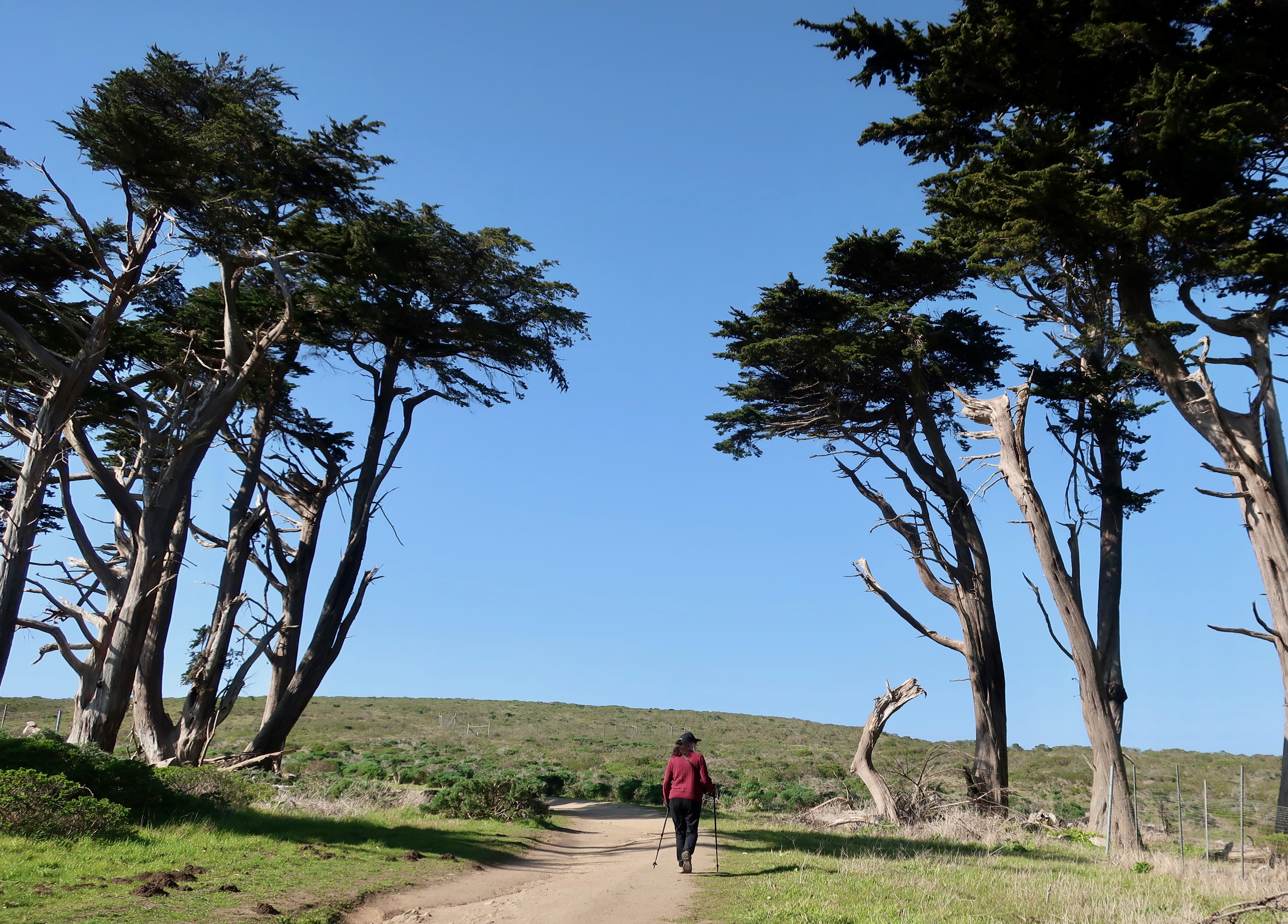
The Tomales Pt. Trail starts at the Pierce Pt. Ranch passing under tall Cypress trees planted originally by the ranchers as a wind break. Peggy provides perspective.
A few hundred yards brought us to a number of Calla lilies. Peggy and I wondered if a rancher’s wife had planted them to remind her of a home the family had left behind. (Photo by Peggy Mekemson.)
Of course, I had to take photos of the lilies as well.
We stopped to admire the scenery looking out toward Tomales Pt. and the Pacific Ocean.
Another view. The Bodega Headlands can be seen in the distance. If you’ve been to Bodega Bay, it’s possible you’ve driven out there. I like to go out on the headlands and look for whales passing by.
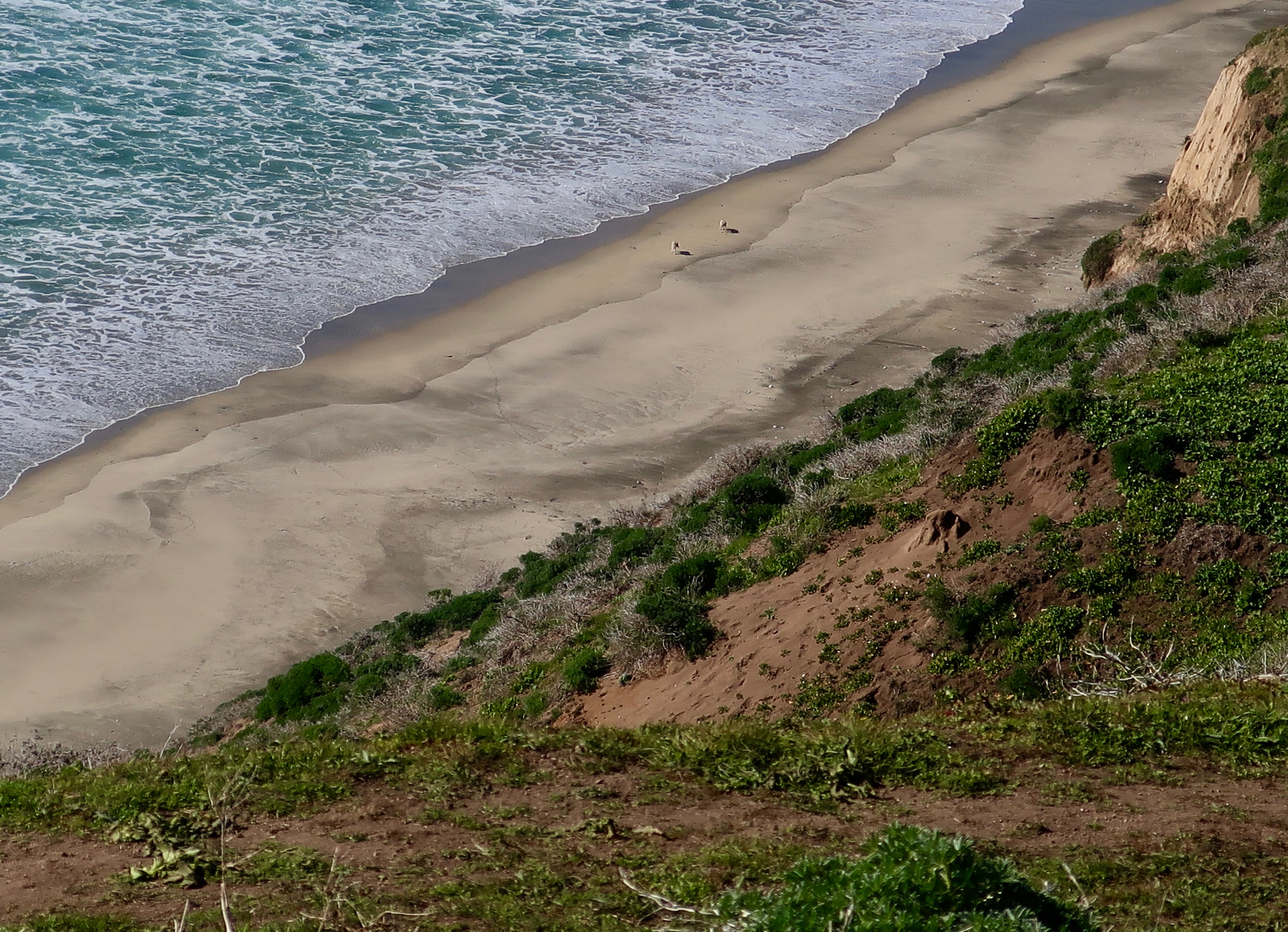
Far below us we saw a pair of coyotes working their way along the beach.
Peggy used her telephoto for a closer shot and, much to our surprise, the coyotes were digging in the sand. Whether they were after clams or crabs or some other seafood delicacy, I don’t know. But what was clear was that the coyotes had developed a tase for sushi!
Shortly afterwards we spotted elk on the ridge above us.
And they came down the hill to see us… (Photo by Peggy Mekemson.)
Bringing their cows with them. (Photo by Peggy Mekemson.)
I caught this photo of one of the bulls checking us out. You can see that he is in that ‘awkward’ stage between losing his winter coat and growing his summer one.
This cow elk was also looking a bit bedraggled. (Photo by Peggy Mekemson.)
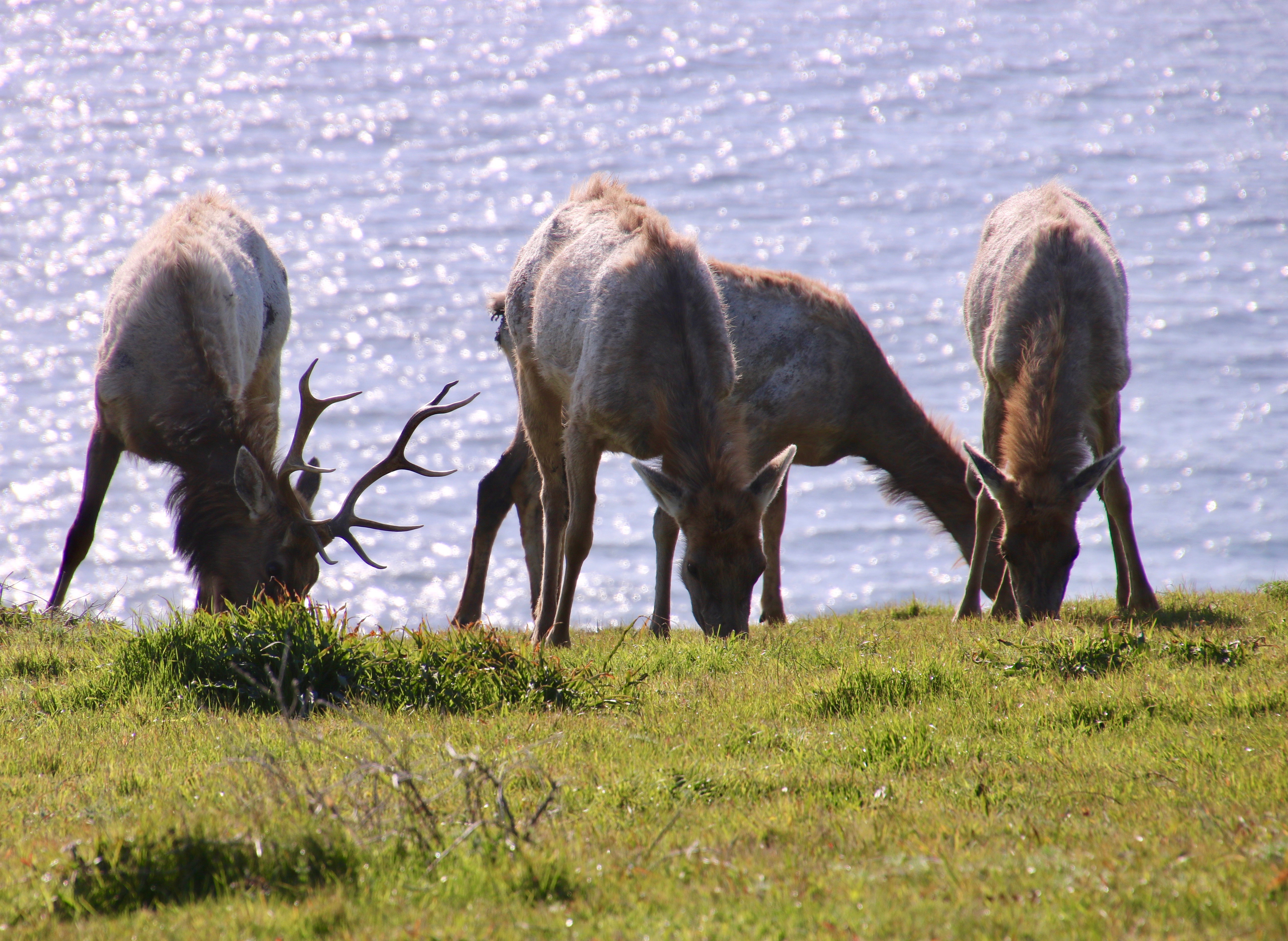
A final shot of the elk browsing. I liked the backdrop of the Pacific Ocean.
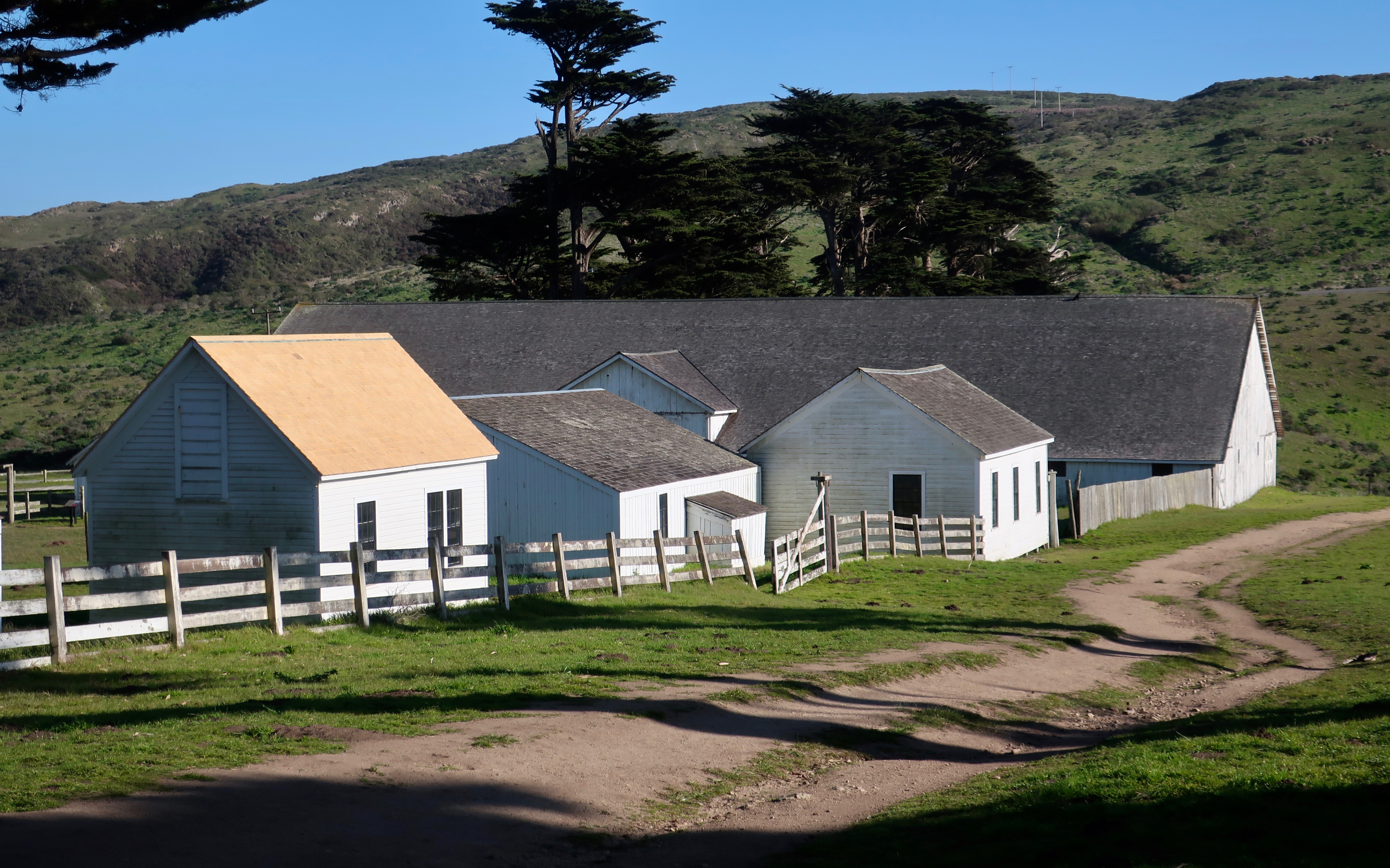
The Pierce Pt. Ranch ceased operation in 1973. Visitors are now invited to walk through the grounds and get a feel for what dairy ranching was like before modern dairy operation took over.
I liked the roofs.
I believe a park ranger lives in the ranch house now. I could live there!
The old dairy barn is humongous.
I took a peek inside. This is only half of the barn.
While Peggy stood at the barn door.
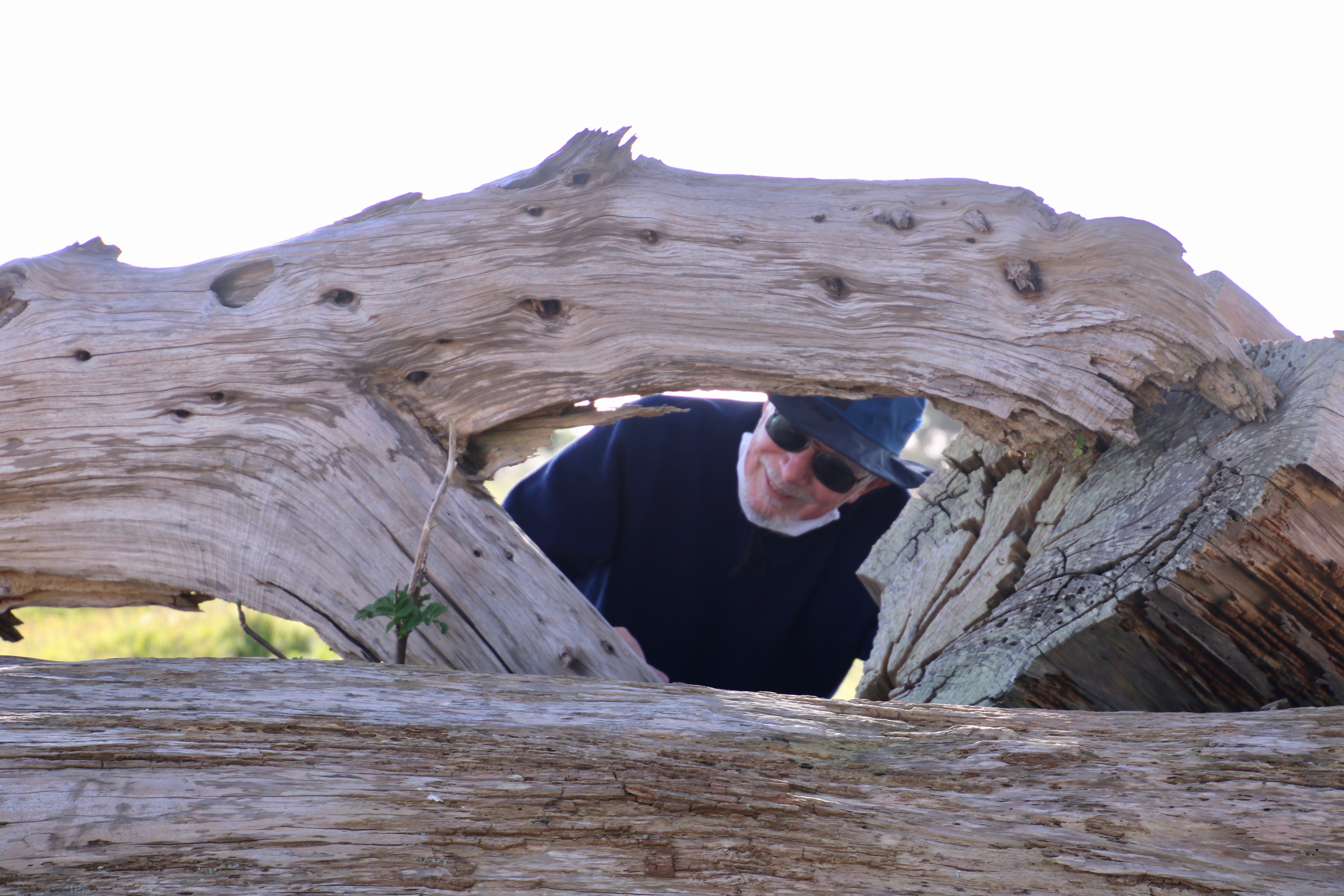
Since I took a photo of Peggy, she insisted on taking one of me. I took advantage of one of the downed Cypress trees. And that’s a wrap for today!

NEXT POST:

Monday’s Blog-A-Book from It’s 4 AM and a Bear Is Standing on Top of Me: I leave the Graveyard behind and journey off to the Pond where bullfrogs and catfish rule and pirates lurk.

Wednesday’s Blog-A-Book from my lead-up to joining the Peace Corps: I help corral a police car at Berkeley and the rallying cry of ‘Never trust anyone over the age of 30‘ is born.

Oregon’s Harris Beach State Park… It’s a Wrap

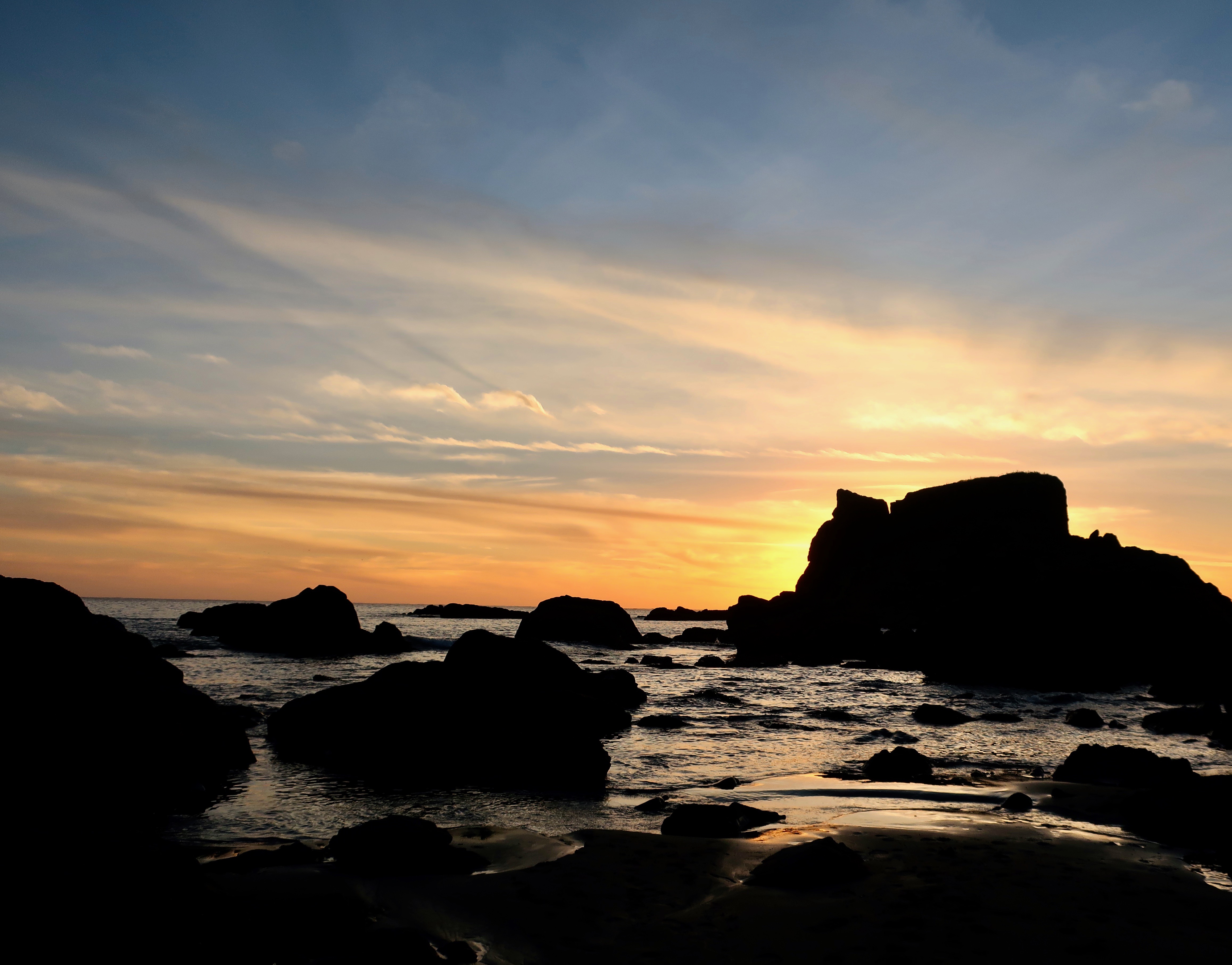
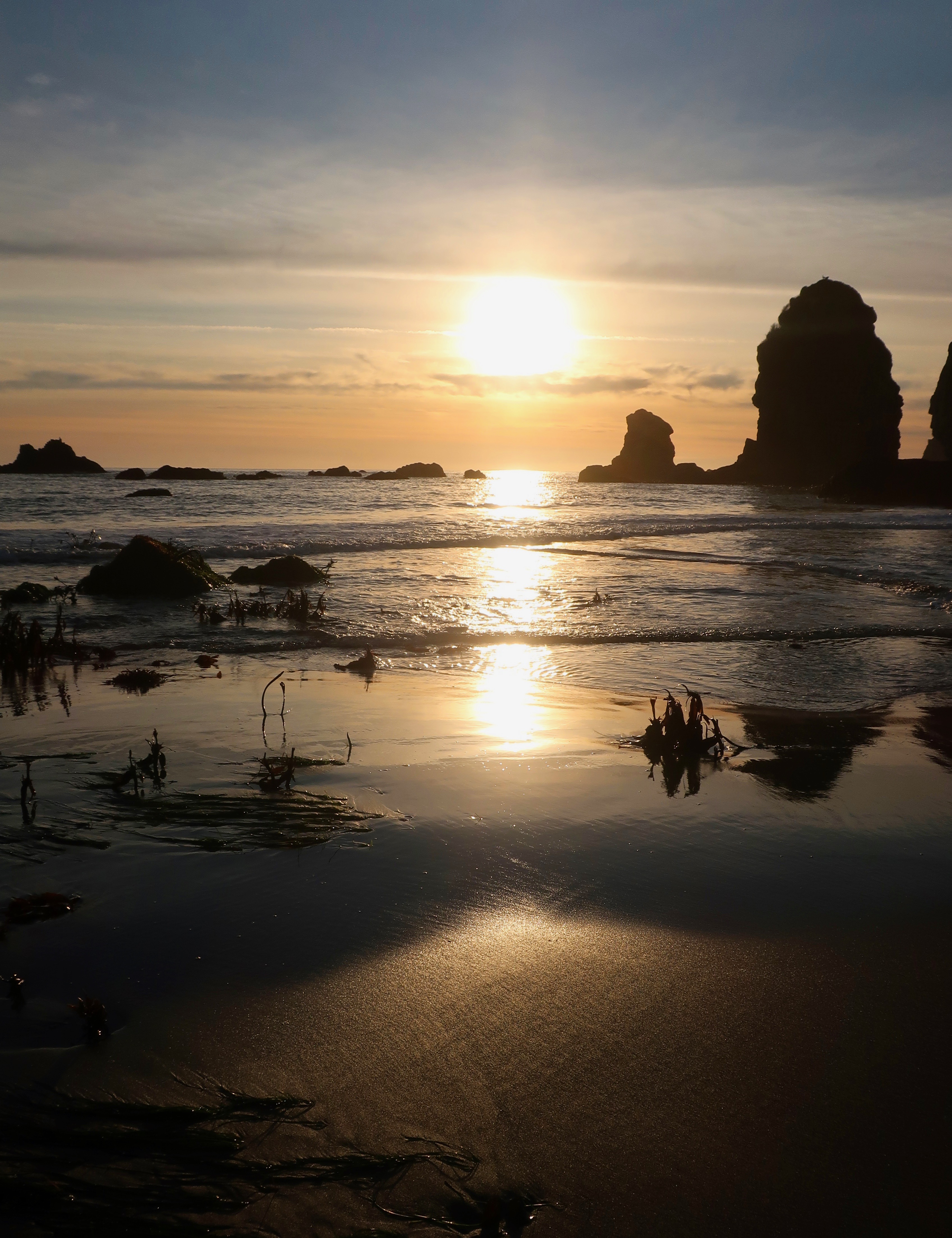
The sun appears to drop into the Pacific Ocean at Harris Beach State Park on the Oregon Coast.

It seems appropriate to end my series on Harris Beach State Park with photos of the setting sun like the one above and those below. But first, I would like to cover a striking geological feature: Key Hole Rock.

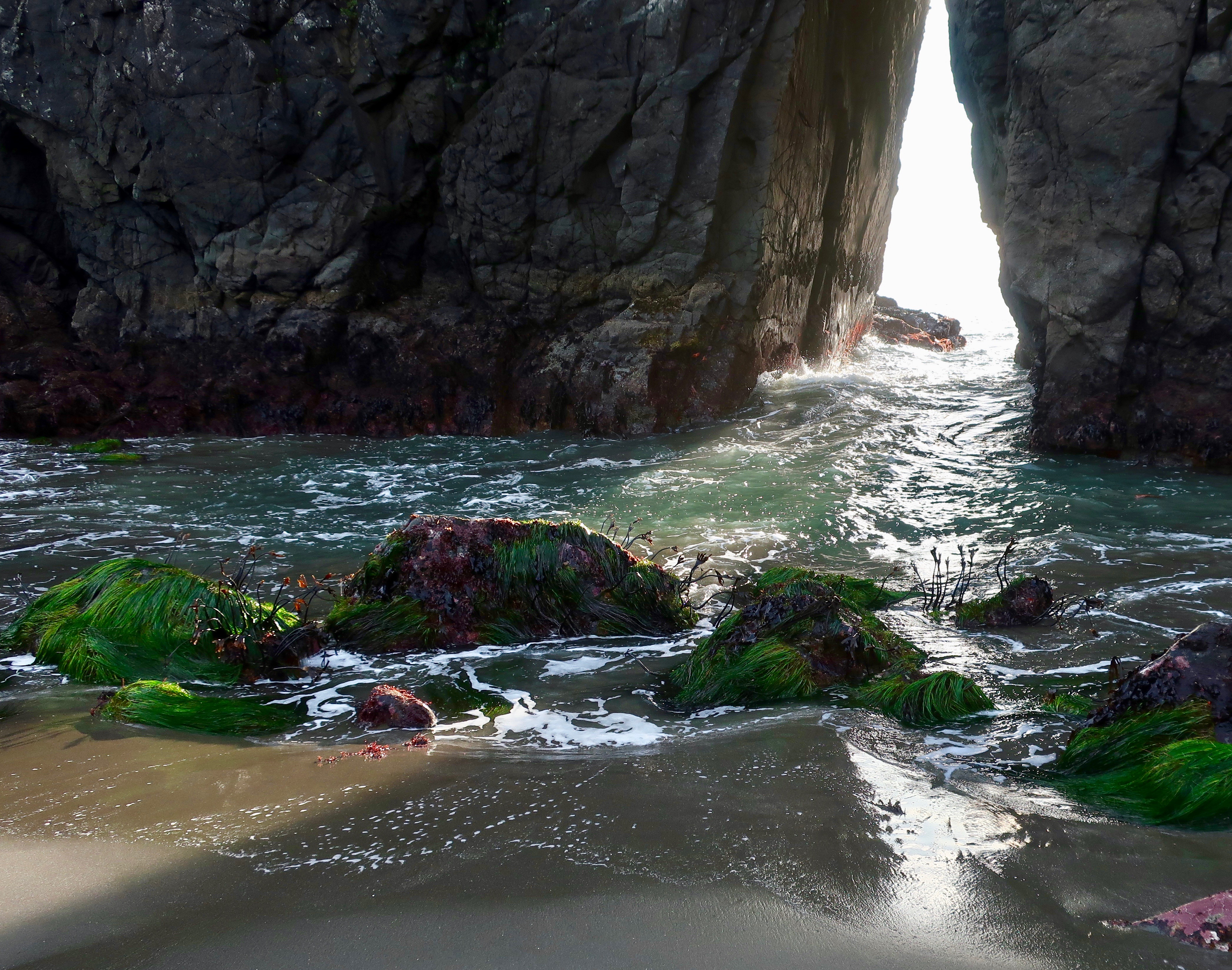
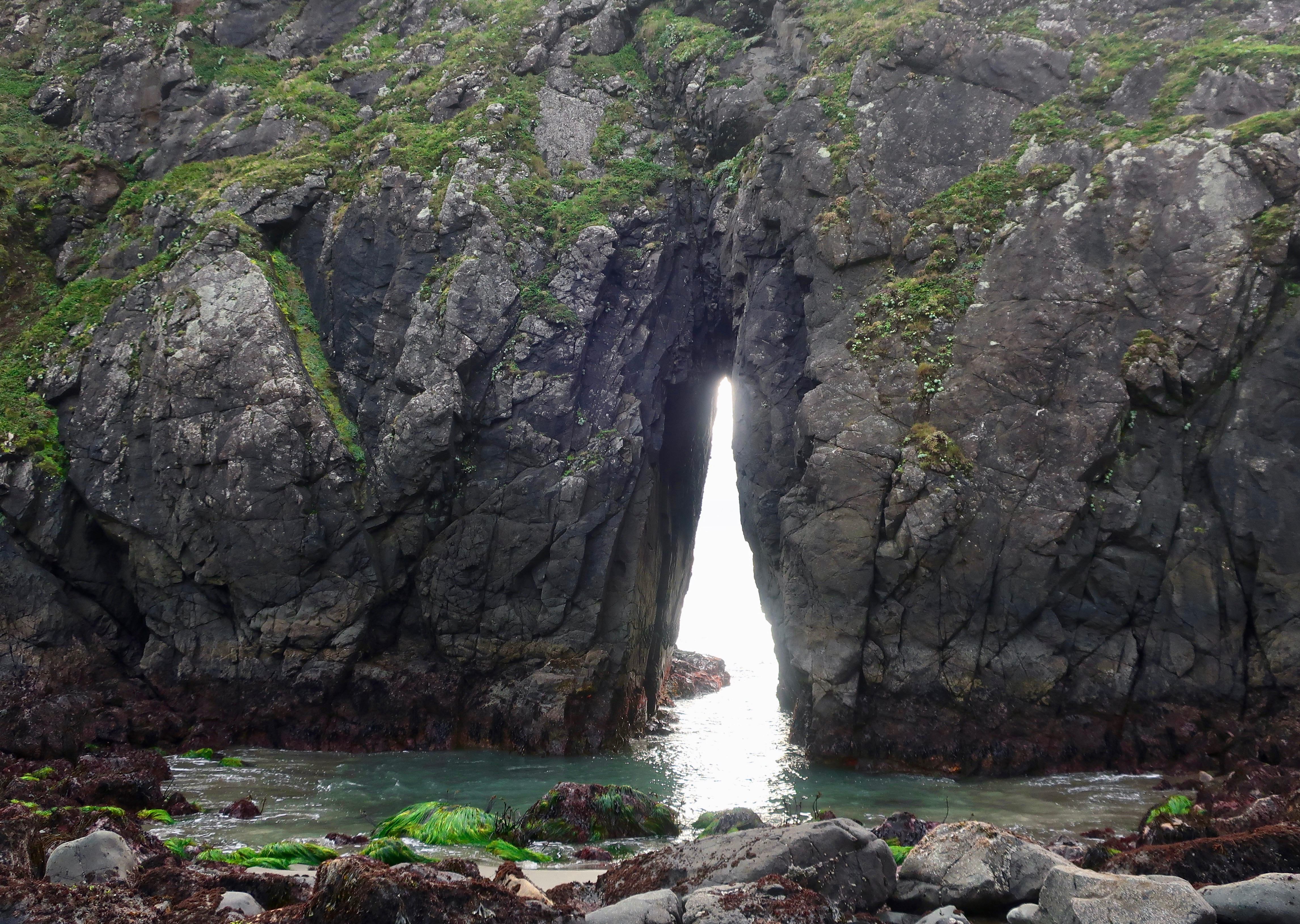
Sea stacks often have caves or holes in them caused by the action of waves and weather. Key Hole Rock at Harris Beach is a prime example. The light and waves that make their way though the hole provide endless photo ops.
A massive sea stack hovers above the hole. At some time in the probably distant future the whole edifice will come crashing down.
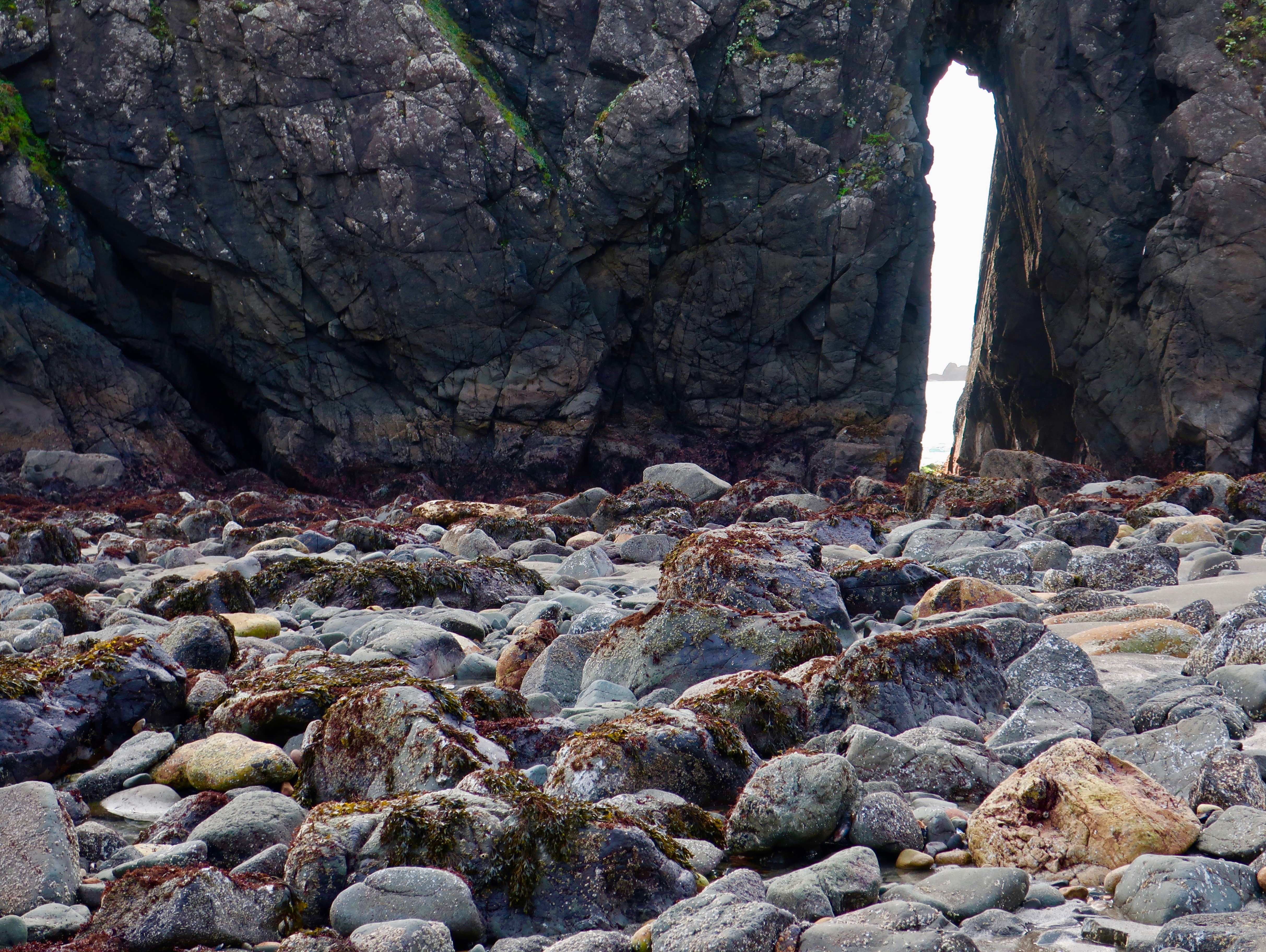
Different angles provide different perspectives as do tide levels. The tide is out here.
Here, the tide is coming in…
Harris Beach State Park on the Oregon Coast.
A photo from an earlier visit provides an interesting perspective of Key Hole Rock at high tide. (Photo by Peggy Mekemson.)

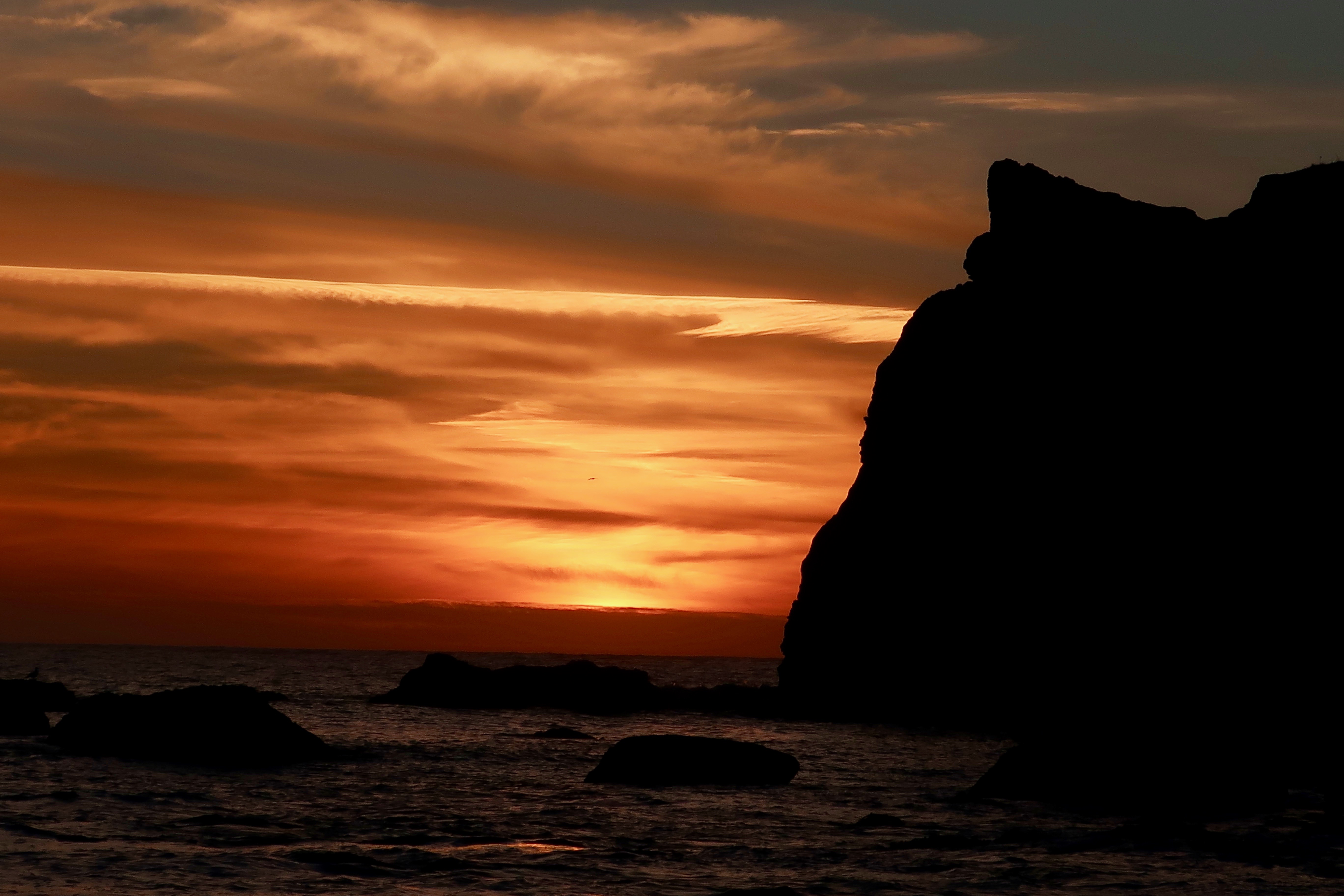
And now for the promised sunset photos:

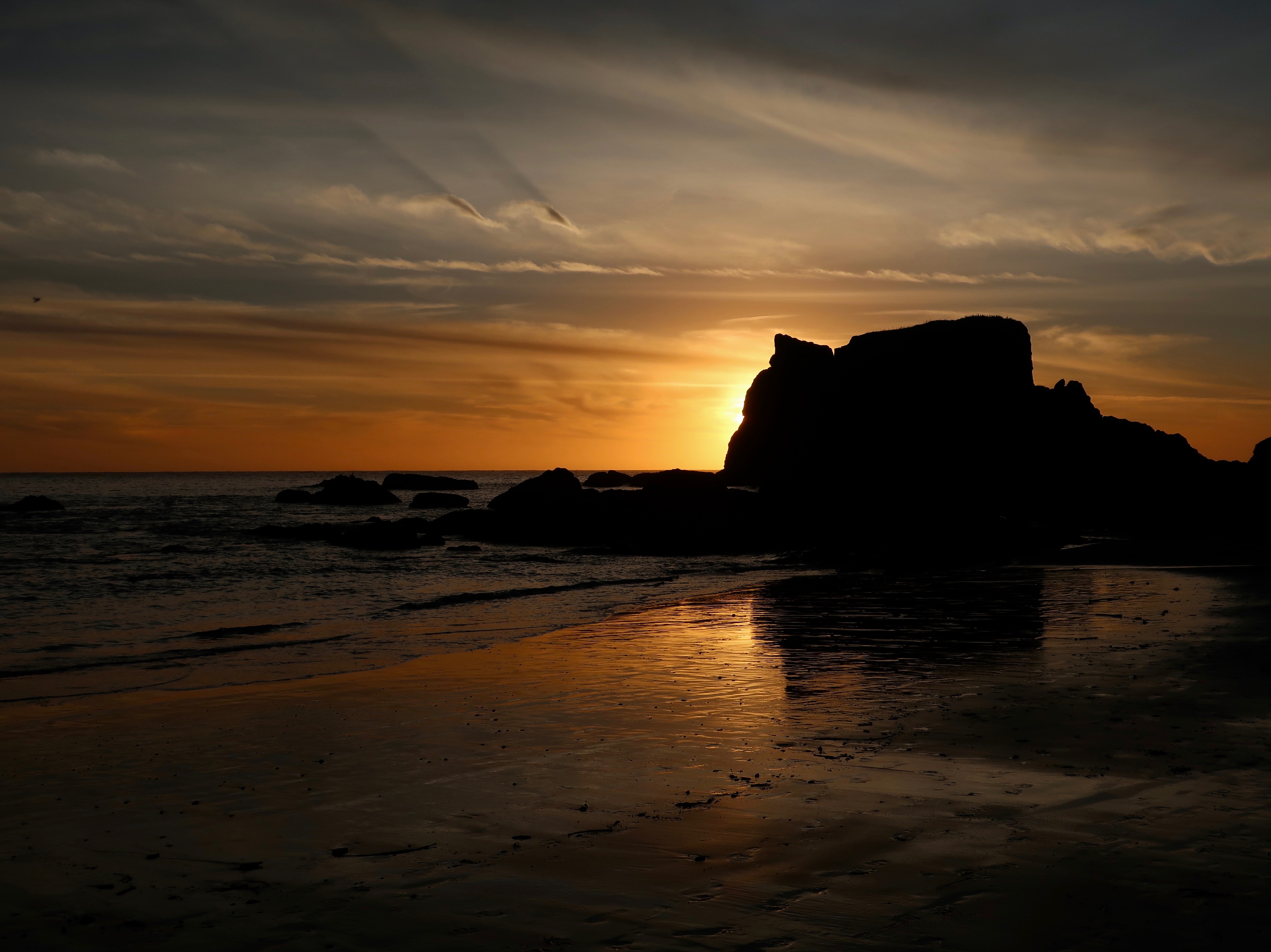
I’ll conclude with this photo as we say goodbye to Harris Beach. I took it a few minutes after the first photo was taken. On next Friday’s travel blog, Peggy and I will be taking you south to Pt. Reyes National Seashore just north of San Francisco, Ca. I’ve already done a post on the elephant seals. This time we will be taking you on a cow walk.

NEXT POST:

Monday’s Blog-A-Book Post from It’s 4 AM and a Bear Is Standing on Top of Me: On a lonely night walk home from visiting her boyfriend, my sister Nancy encounters a ghost from the Graveyard that floats down in front of her. She screams, and screams, and screams…

The “not so usual” Rocks and Driftwood of Harris Beach SP, Oregon

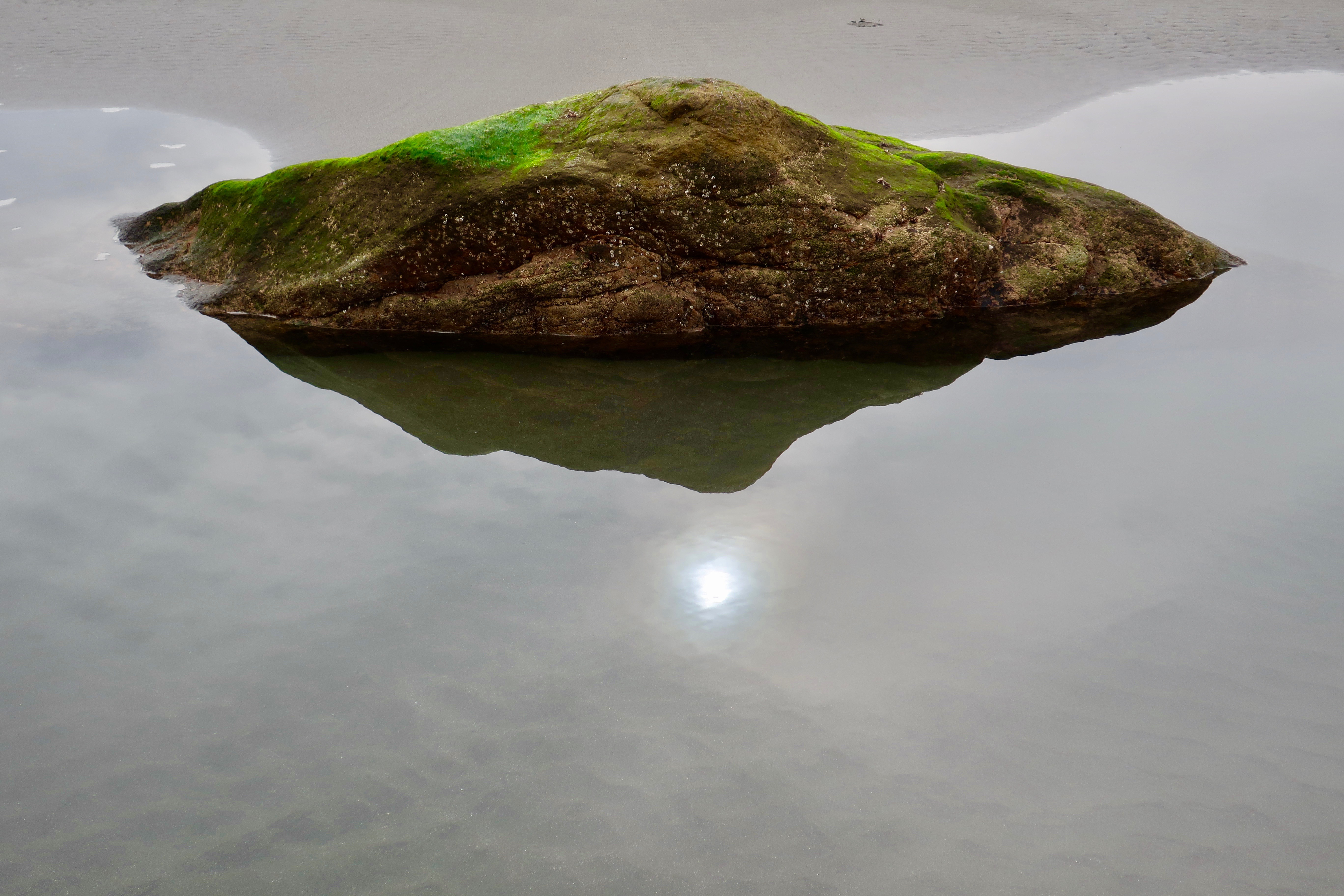
The bright green moss and reflected sunlight are what caught my attention with this rock at Harris Beach State Park near Brookings, Oregon.

The pounding surf and towering sea stacks at Harris Beach State Park near Brookings, Oregon tend to pull your view up and outward. It’s easy to skip looking down. So far in this series, I’ve introduced tide pools and sea stacks. Today I am going to feature the beauty and personality of smaller rocks and driftwood.

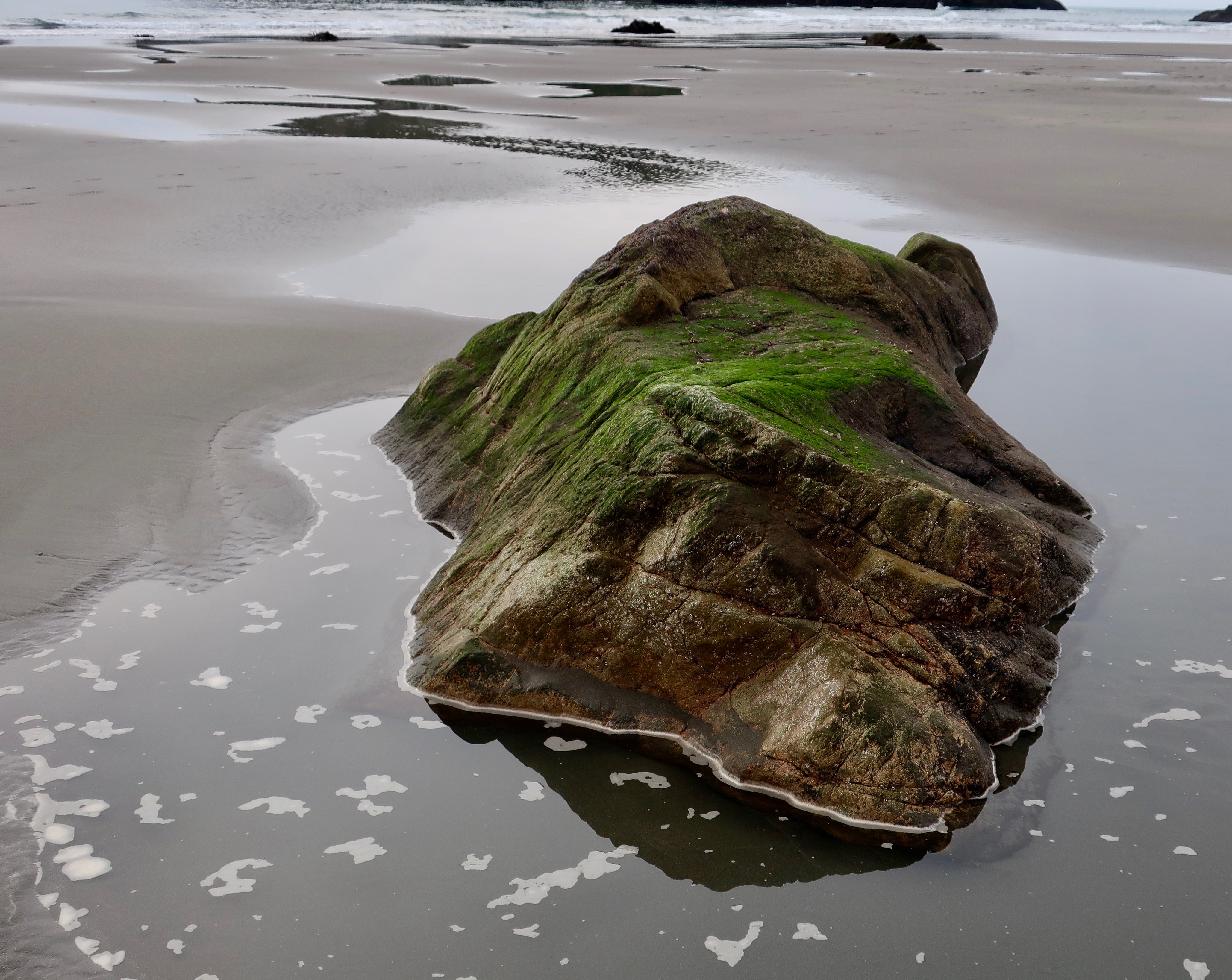
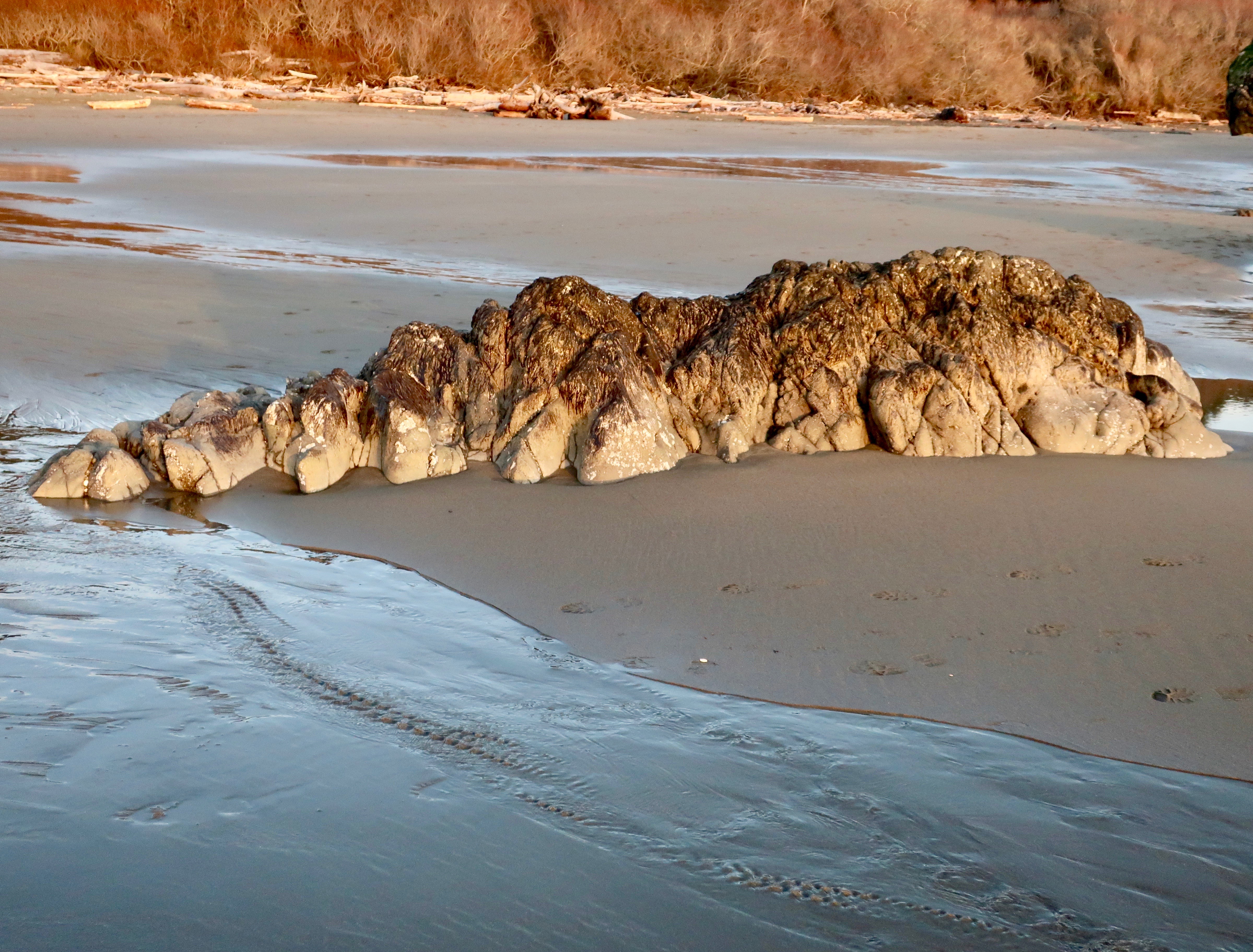
I was amused that the bike tracks here look like they may have been left by this rock as it wandered across the beach and made a right turn.
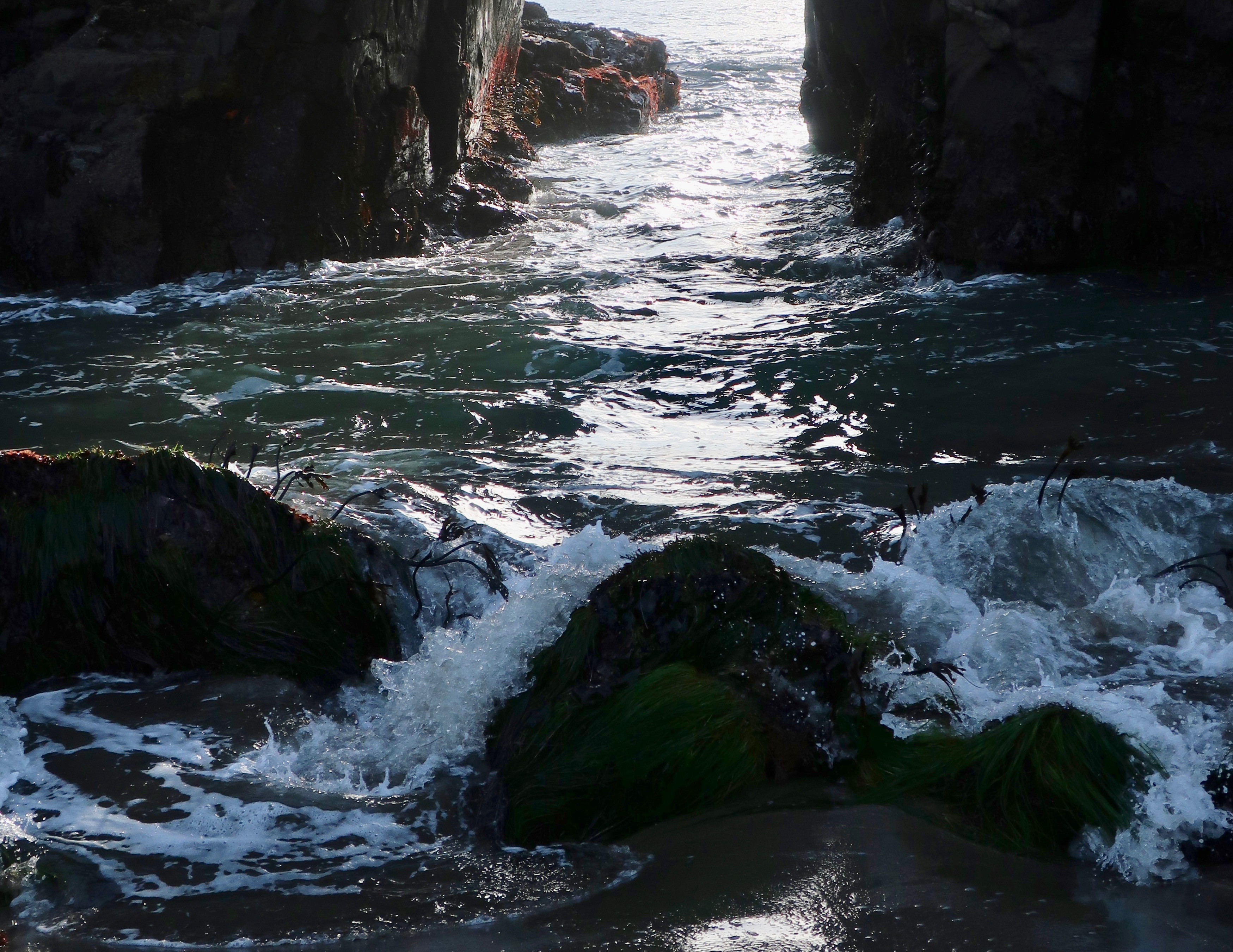
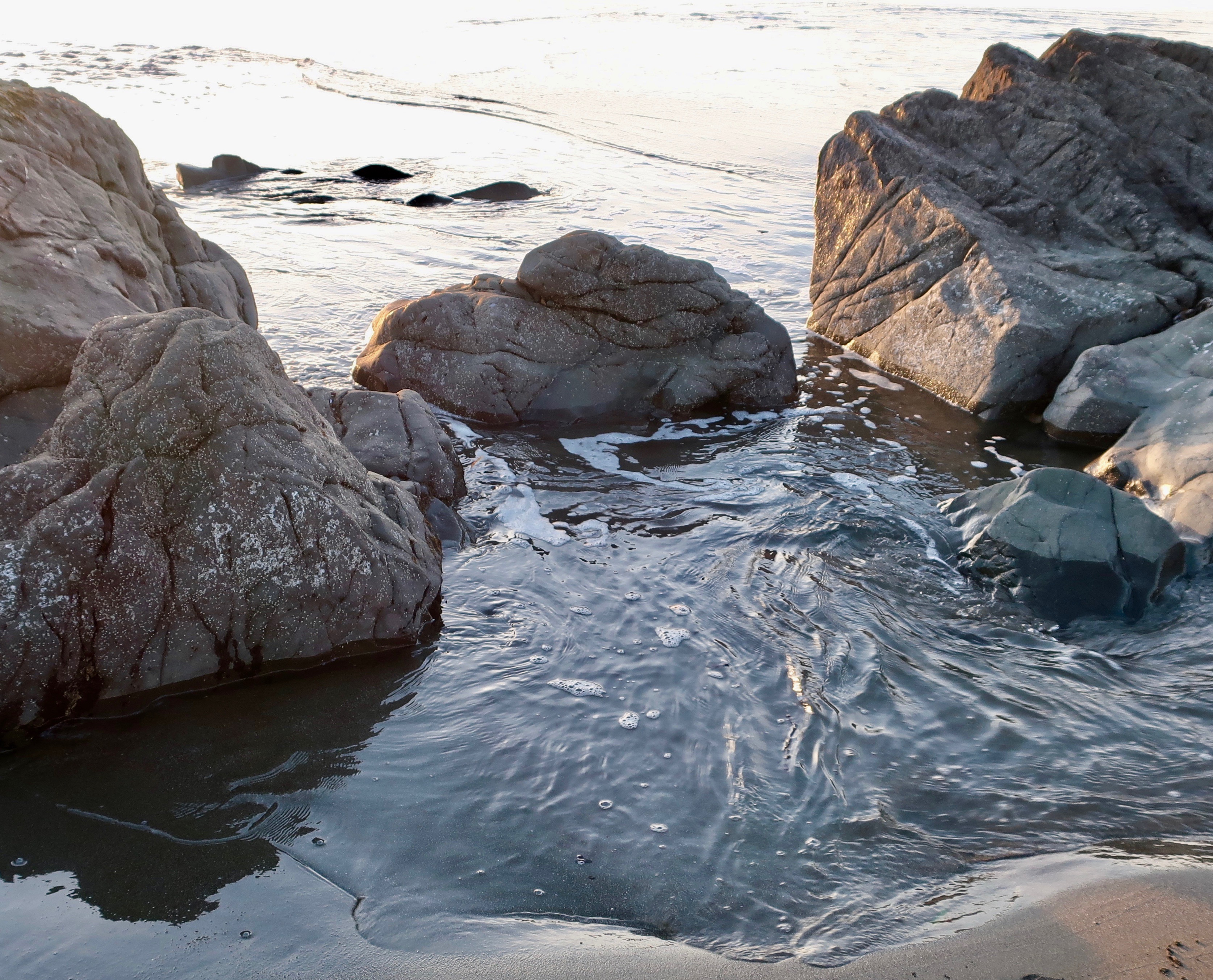
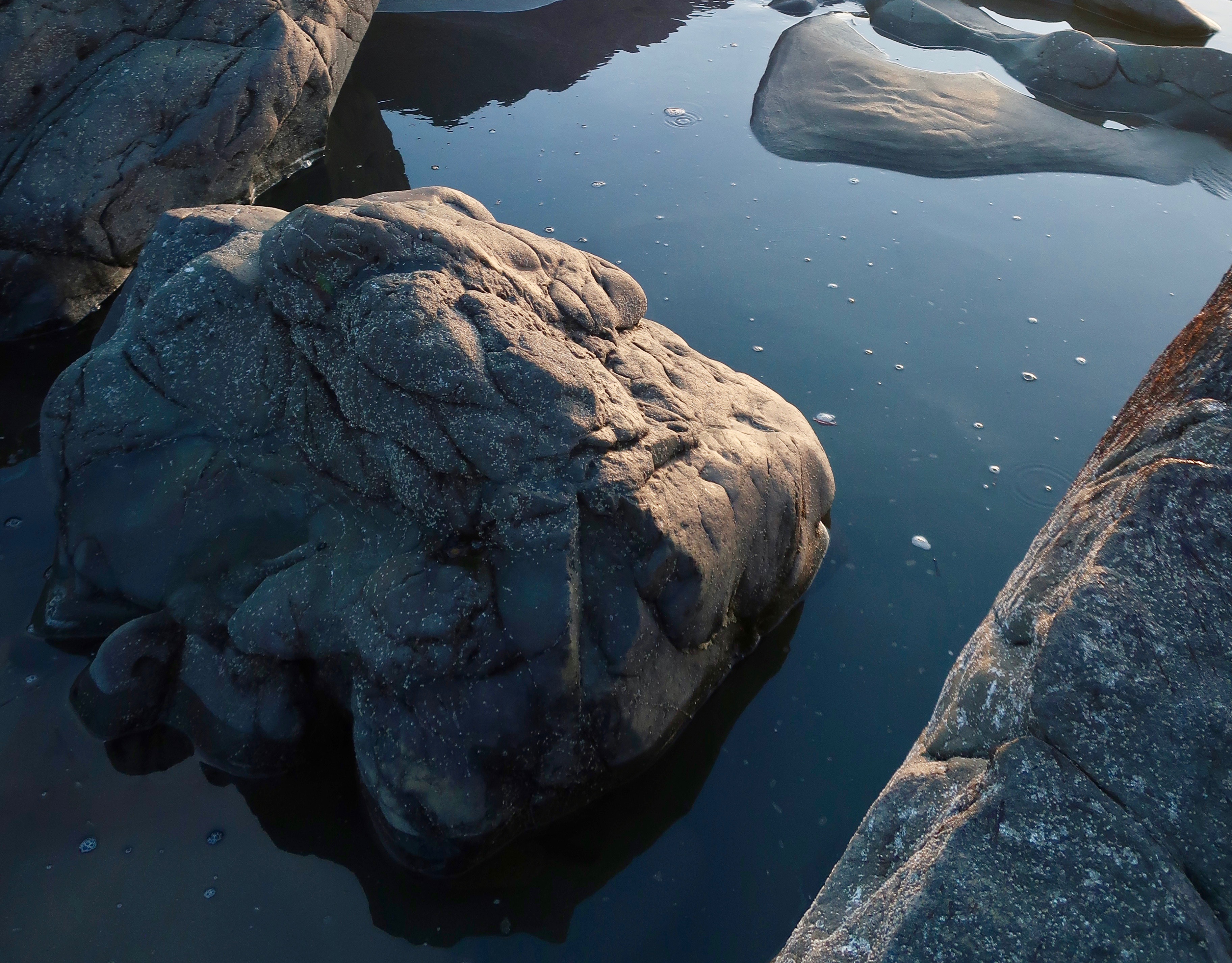
The tide flowing in and out would soon disturb these calm waters among the rocks. I liked the contrast between the sunlight on the rock and the darker water.
A low tide shot with water flowing out toward the ocean.
The tide was flowing in here.
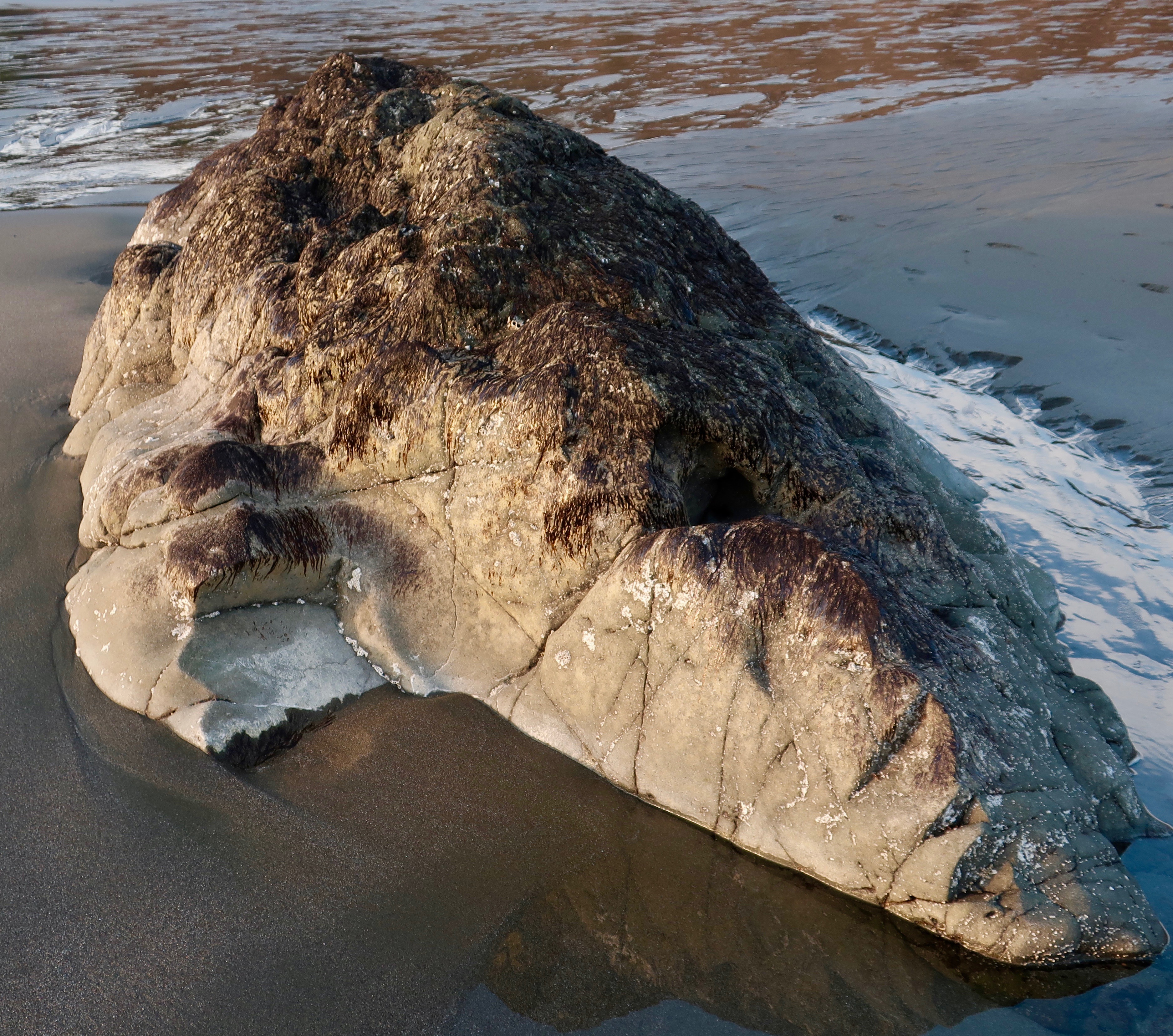
This rock had an obvious personality, but I’m not sure what it was.
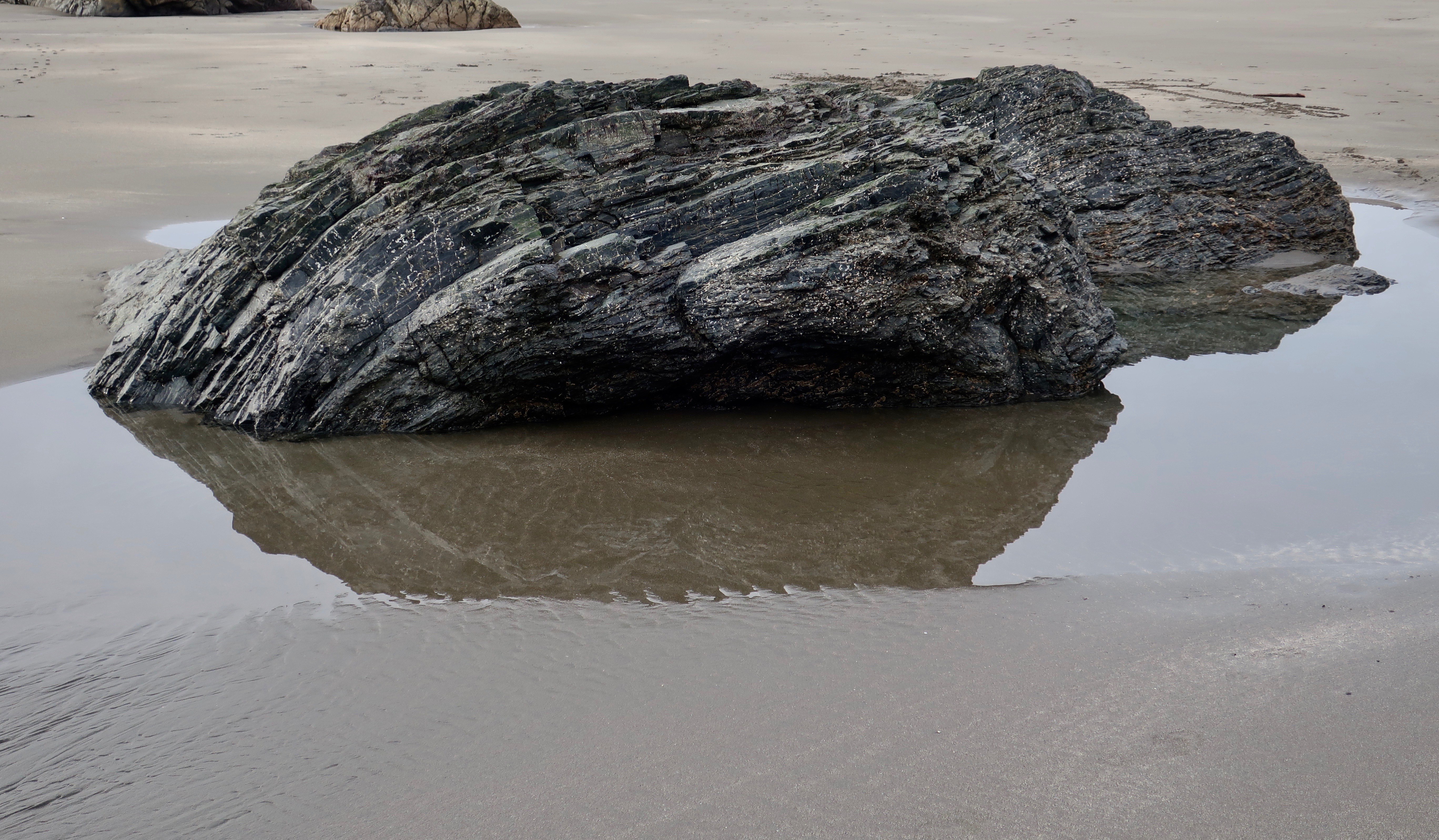
Layers of sedimentary rock deposited over eons and then bent by the earth’s moving mantle.
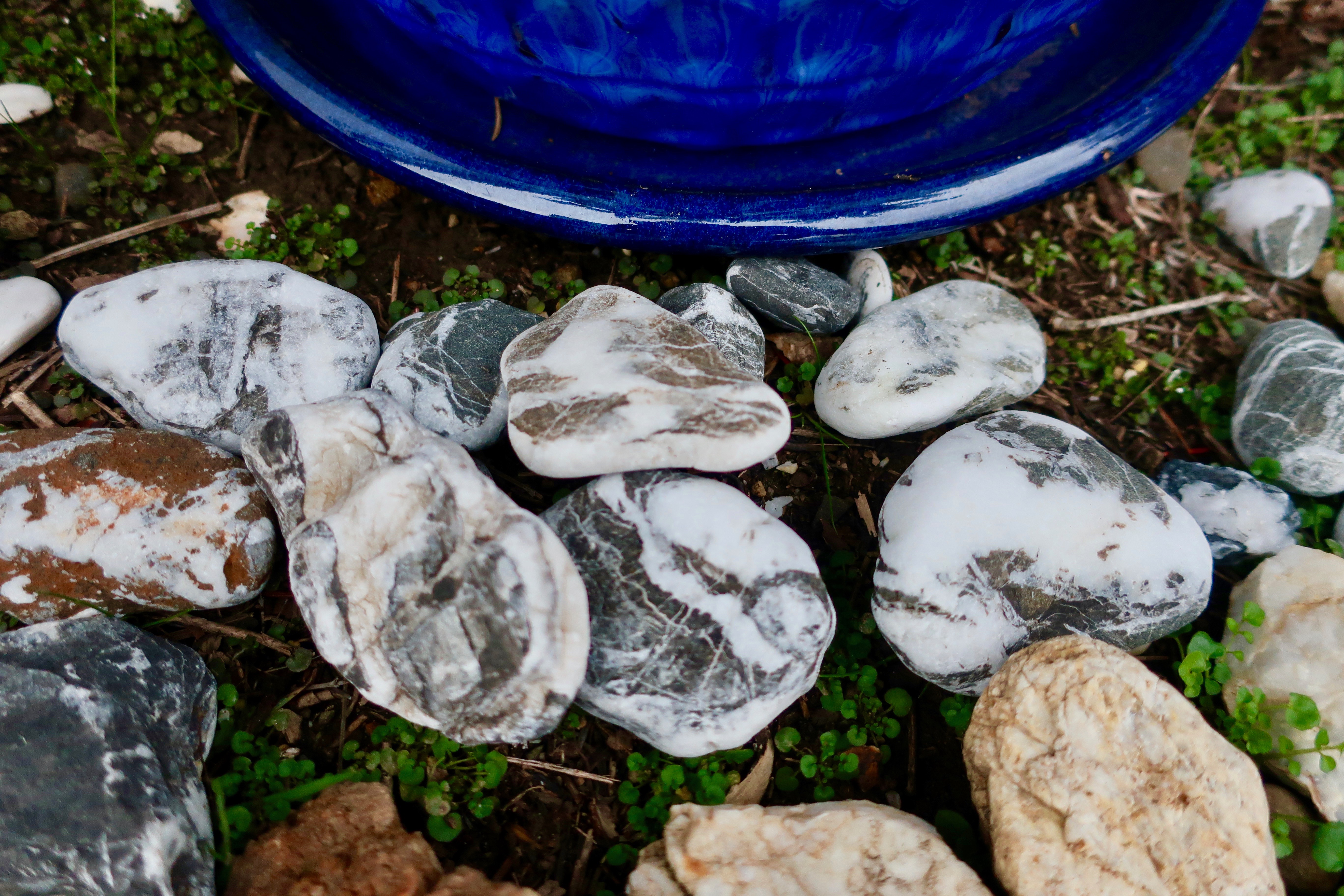
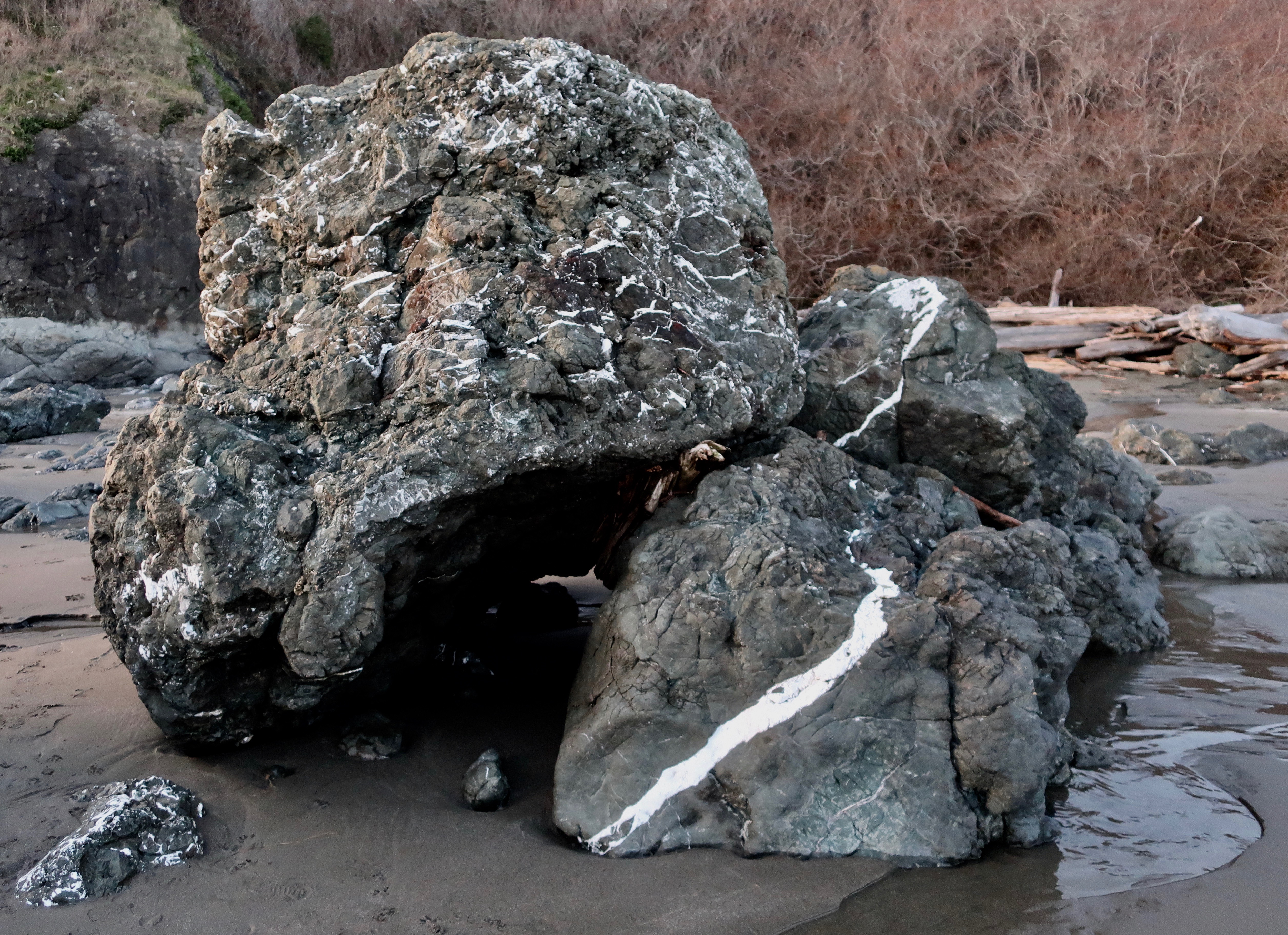
This basalt rock had quartz veins running through it.
Chunks of the rock had broken off and been rounded by the pounding surf. Peggy gathered a number of them and put them in my pack. (One of my jobs is to carry rocks that Peggy gathers. ) She brought the rocks home and added them to her ever-growing rock garden.
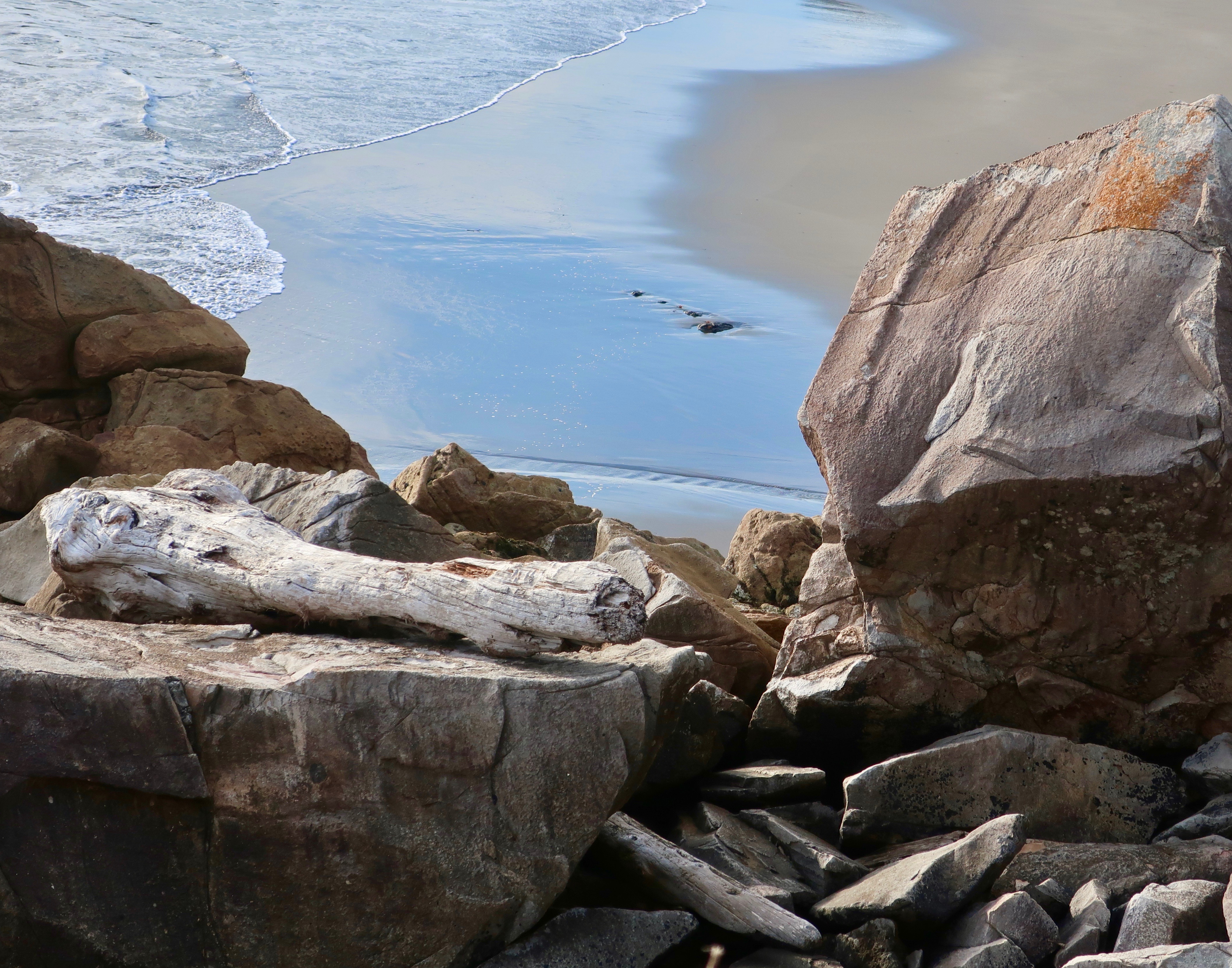
Imagine how high the sea must have been to place this giant, storm-tossed log this far above the beach.
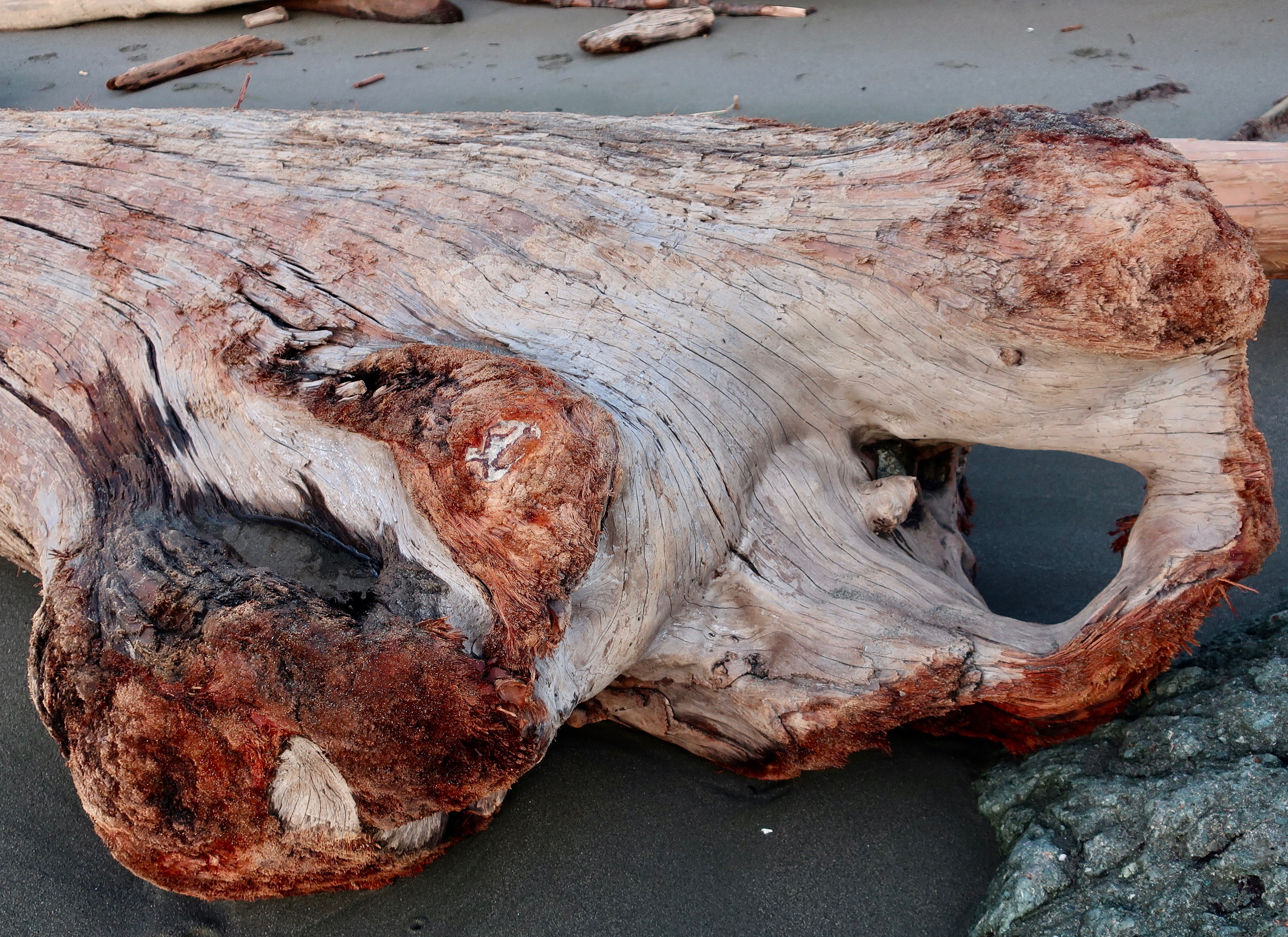
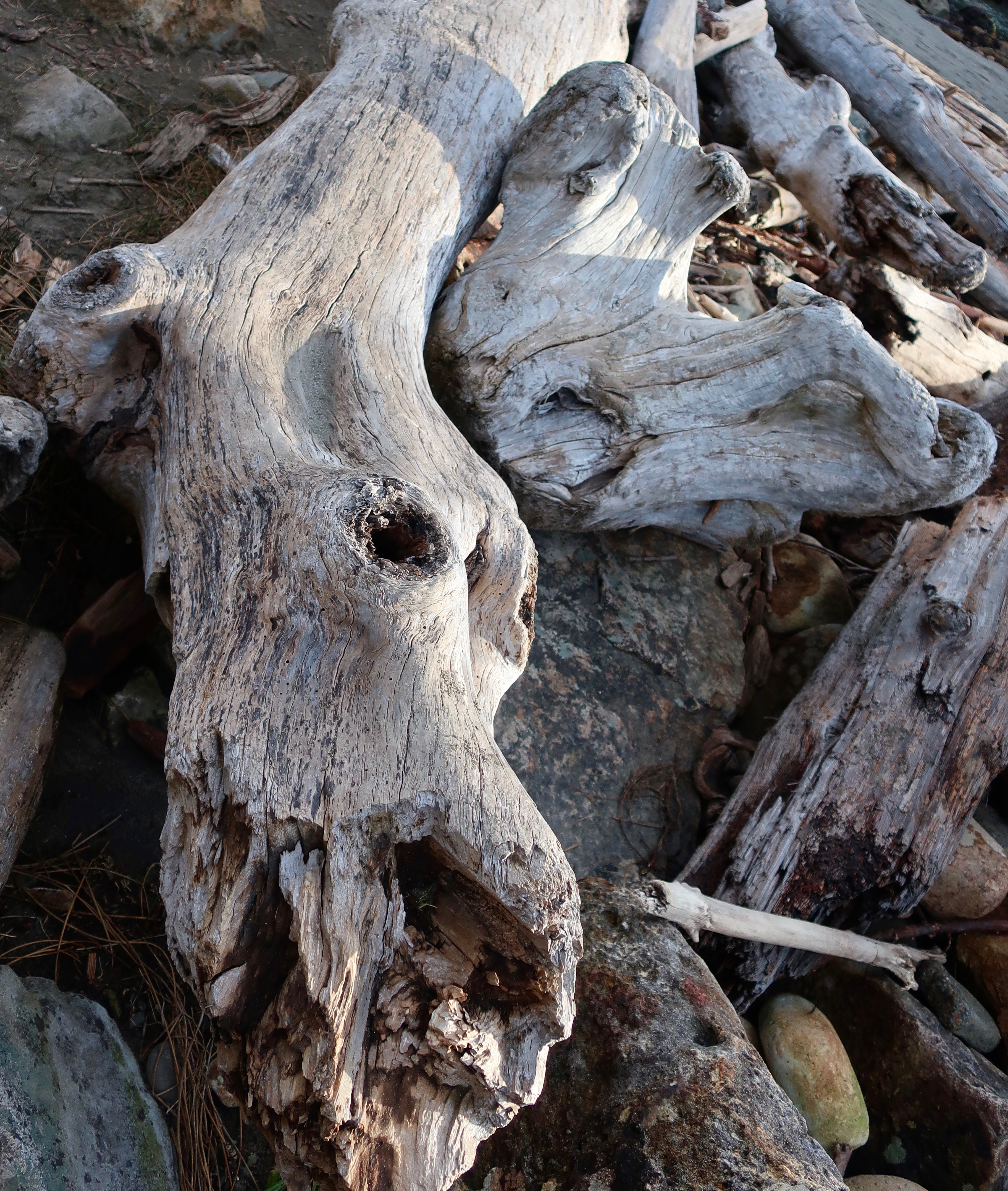
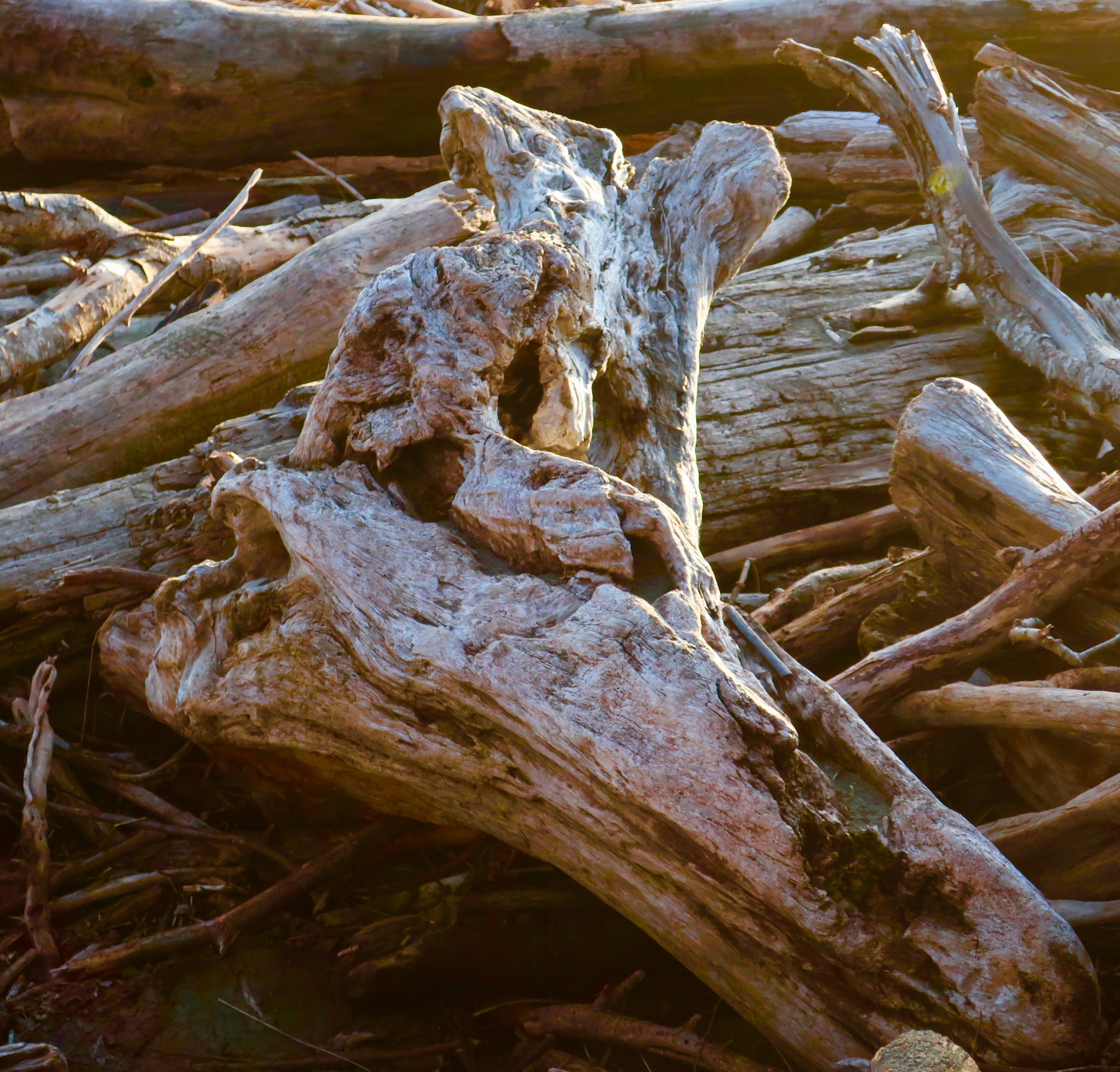
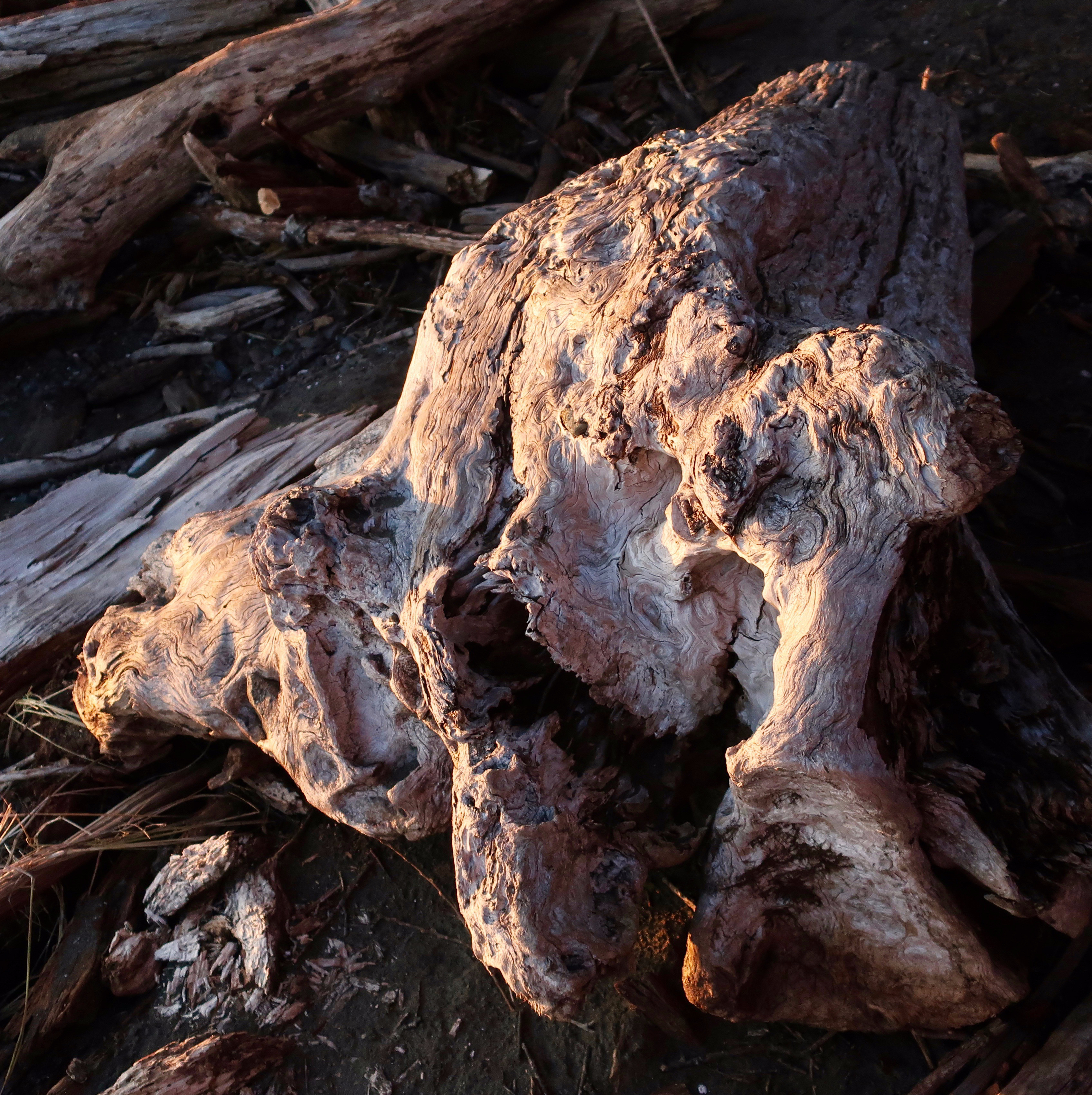
I find driftwood endlessly fascinating because of the way it displays patterns in the wood. Color was an added factor here.
I’ll conclude with my favorite. On next Friday’s travel blog I’ll feature a dramatic hole in one of the sea stacks and finish the series with sunset on the beach shots.

NEXT POST:

Monday’s Blog-a-Book… from “It’s 4 AM and a Bear is Standing on Top of Me” : You’ve met Demon the Black Cat, now it’s time to meet MC the White Cat who lived in the Graveyard except for dinner. There was a reason…

The Magnificent Sea Stacks of Harrison Beach… Marvels of Erosion

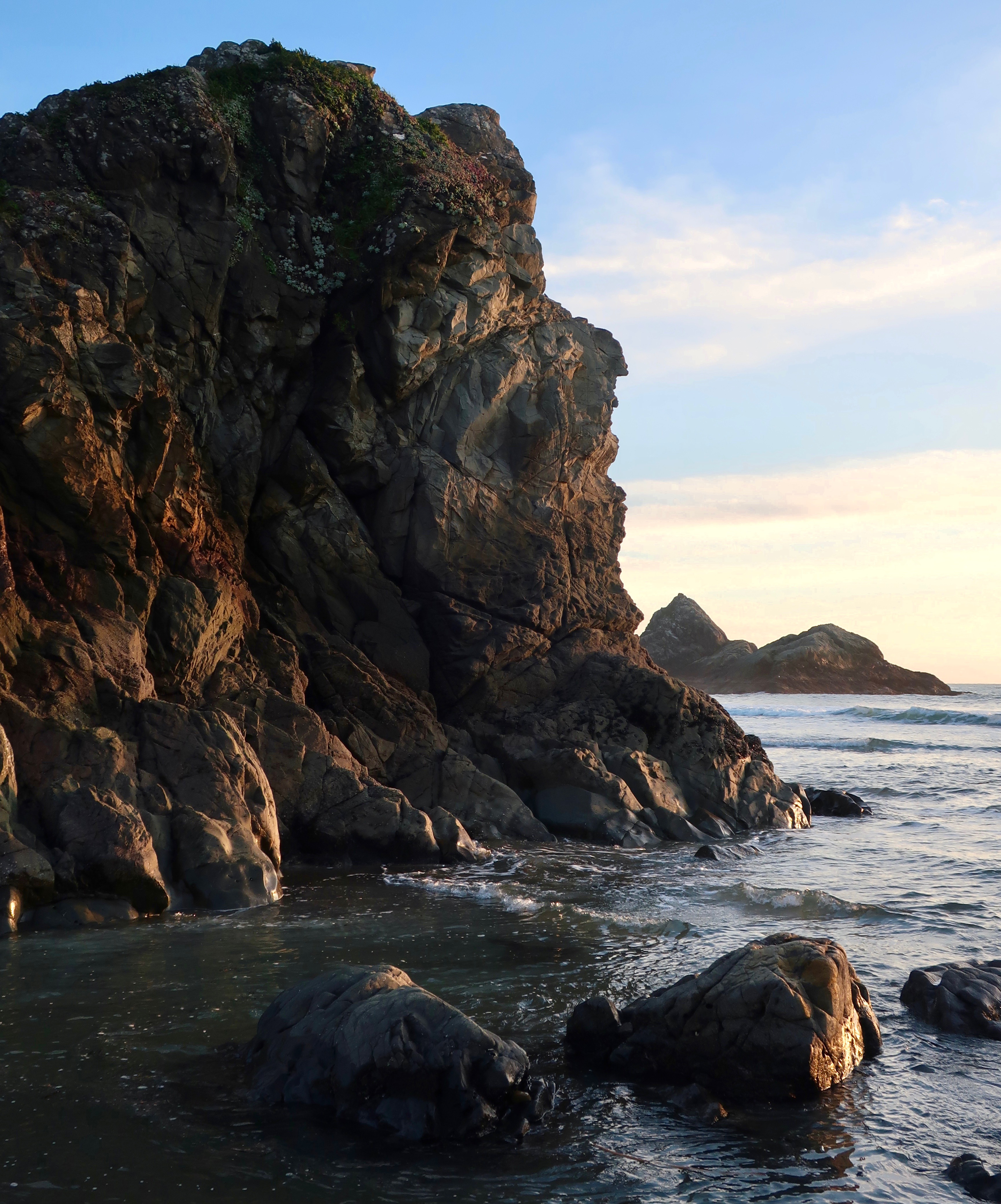
Once, these two magnificent sea stacks would have been part of the coast. Erosion made them part of the ocean. The evening sun was bathing them in a gentle glow.

I am continuing the exploration of the Oregon Coast on my Friday travel blog. This is part of the Harris Beach series. So far, Peggy and I have given you a tour of the tide pools teeming with interesting sea life. Today I will focus on the sea stacks that adorn the coast. Harris Beach State Park is located next to the town of Brookings, which is just north of the California border. The following photos are taken by both Peggy and me.

Goat (or Bird Island) at Harris Beach SP near Brookings is the largest Island on the Oregon Coast. According to the Audubon Society it is an IBA, an Important Bird Area. And it is. Over 100,000 birds nest there annually, including tufted puffins, a bird I more closely associate with my years of living in Alaska. The island is off-limits to people.
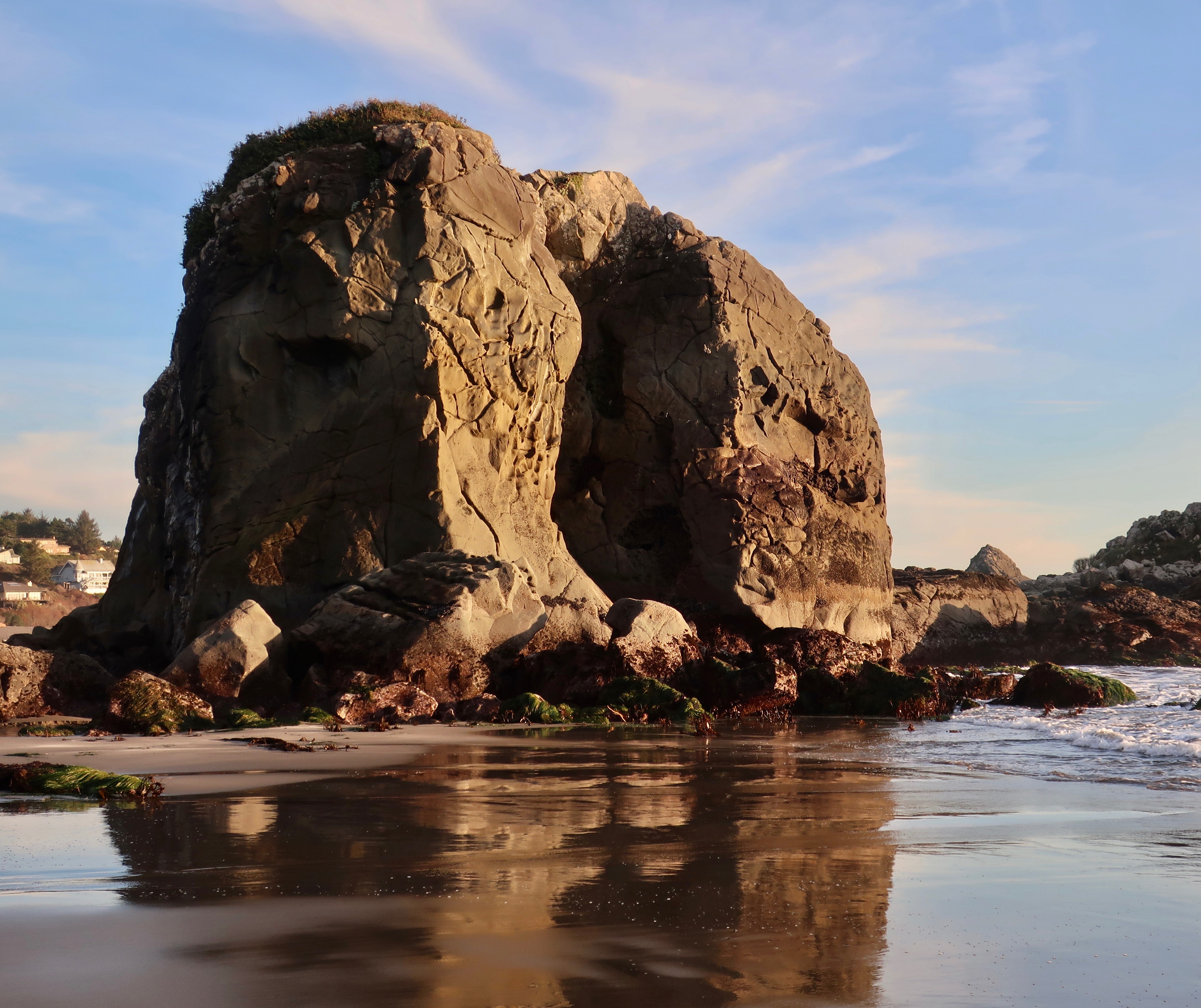
This massive sea stack appeared to have a face looking out toward sea. The rock base made me think of a many legged creature.
A closer view.
The reflection caught our attention here.
Peggy and I wandered among these rocks checking out tide pools.
Later in the day, the tide started coming in. It was time to stop playing in tide pools and start thinking about the sunset.
More color here.
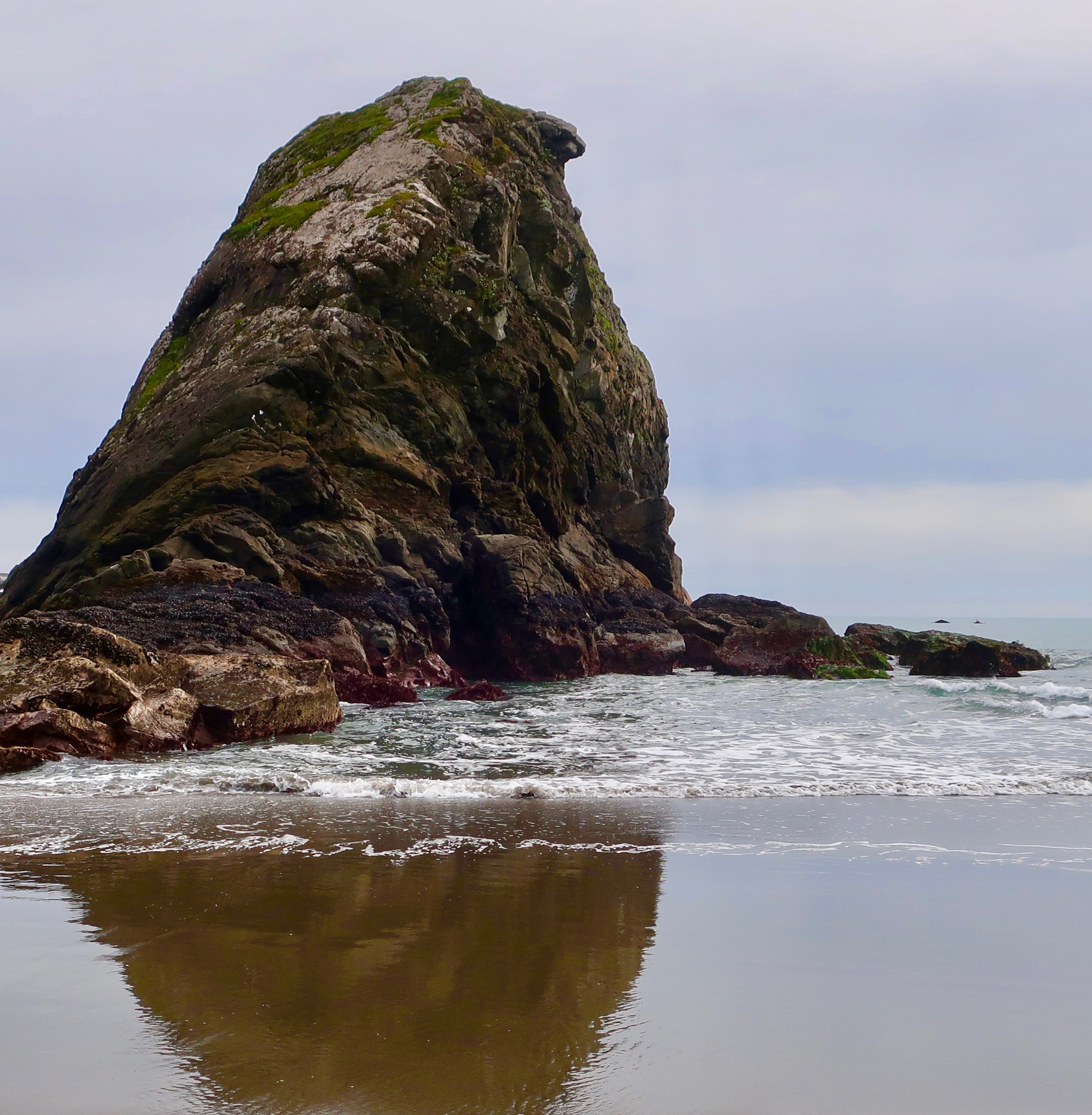
I’ll conclude with this sea stack which was smaller but also colorful. My travel blog next Friday will include human-size rocks, an impressive hole in one of the sea stacks, and drift wood.

NEXT POST:

Monday’s Blog-a-Book Post… From “It’s 4 AM and a Bear Is Standing on Top of Me” : The shameless shenanigans of Pat the Greyhound and Demon the Black Cat get them fired from ghost guard duty.

Sea Anemones Go to War… Harris Beach State Park

It’s the first day of spring here in the Applegate River Valley, and behaving like it. I watched two male flickers (woodpeckers) strutting their stuff this morning for a female while she studiously ignored them by pecking at the ground. One very pregnant doe was busy chasing off her twins from last year. She’ll soon have a new fawn— or fawns— to take care of. And, the swallows have arrived back in our neighborhood. Their aerial performances are truly amazing. Before long, they will start checking out our oak trees and bird houses for possible nesting sites. 

The first of our daffodils have burst into bright yellow blooms, shooting stars are covering the hillsides, and irises are popping up everywhere. Peggy and her sister Jane dug up our iris bed last year to separate the bulbs that were crowding each other out. Peggy discovered that there were more than she could possibly plant, so she started stuffing the extras into gopher holes and covering them— like you might sweep dirt under a rug. Well, that’s what I thought. The gophers will have a feast. I couldn’t have been more wrong. Each hole is now proudly sporting its own iris and Peggy is giving me an “I told you so” look.

And what else happened this morning? There was snow, rain and sunshine. Sometimes simultaneously. Spring has arrived for sure.

Meanwhile, I have a nasty cold. “We don’t likes it,” as Gollum of Hobbit fame would say. I have a box of Kleenex on one side and a paper bag on the other. I feel like I am an essential part of an assembly line for creating dirty tissues. Pull a Kleenex out of the box, sneeze into it, and stuff it in the bag. Repeat. I filled two bags yesterday. I’d be worried in this age of Covid, but my sniffer is working fine, I don’t have a fever, and Peggy and I had our second dose of Moderna in February. 

I was totally out of it yesterday and the day before. Instead of writing, I read a 400-page fantasy novel about a reluctant hero, a kick-ass princess, a unicorn without a horn, and a dragon that collected butterflies instead of virgins and gold. It was just what the doctor ordered. I’m almost human today, which is why I am back to blogging. Today I am returning to the tide pools of Harris Beach for a look at sea anemones.

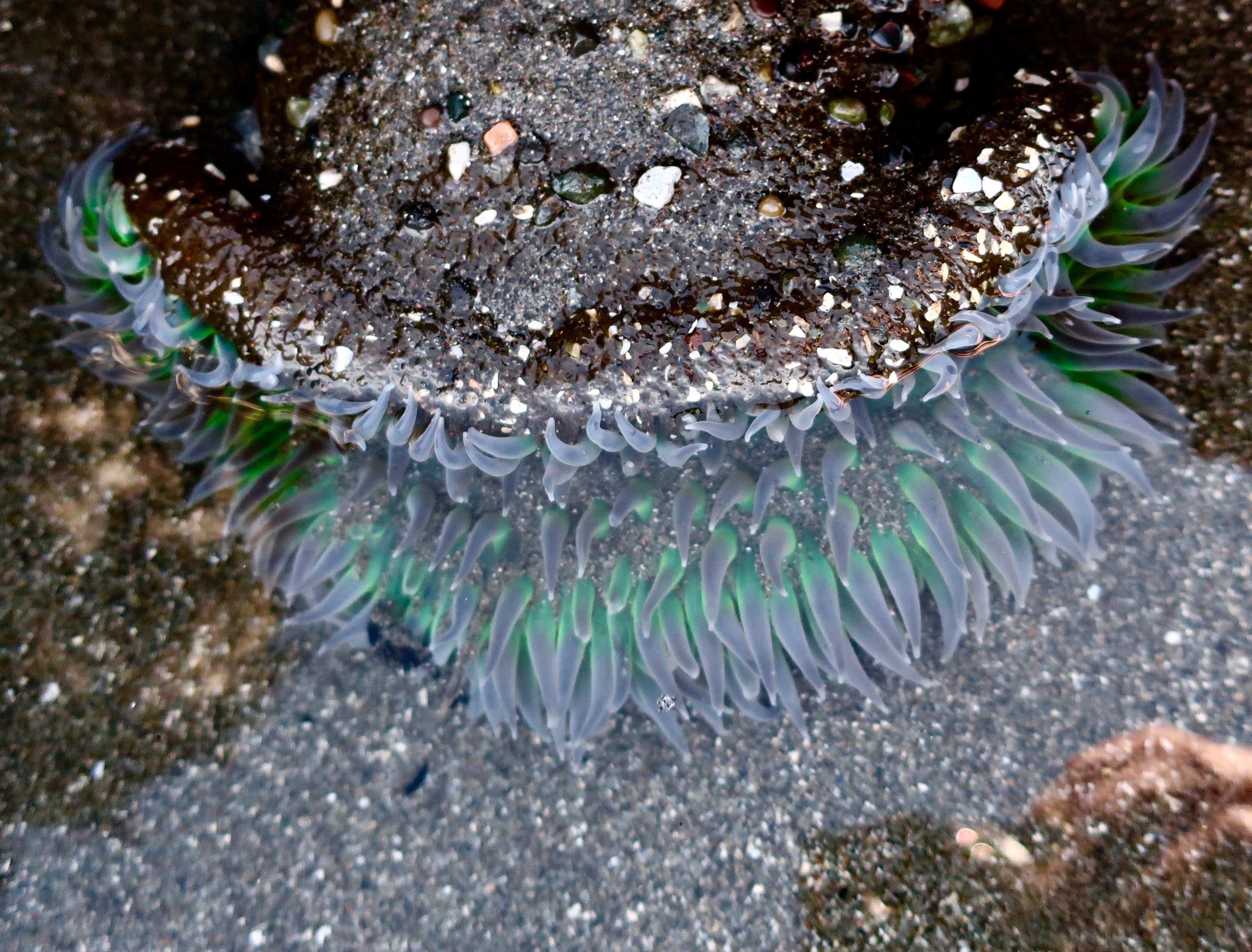
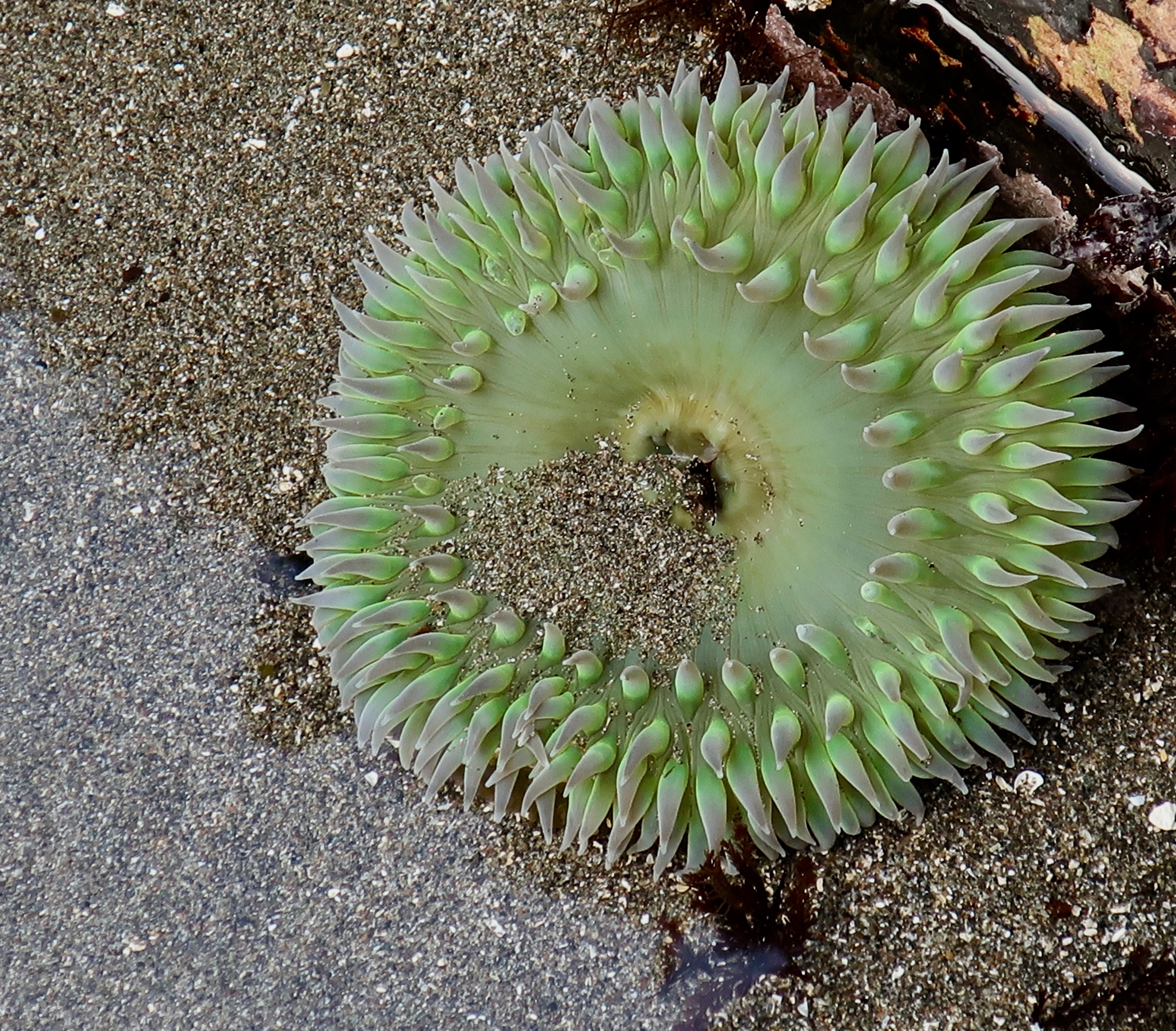
The sea anemones at Harris Beach come in a variety of shapes and sizes. This was one of the larger ones we found, a giant, green sea anemone or Anthopleura xanthogrammica, if you want to be scientifically correct.
A more typical view. The tentacles are covered in stinging cells that the anemone throws into small prey like a harpoon. Once the poison has done its job, the anemone then uses its tentacles to work its prey into the gaping mouth seen in the center. When the feast is over it jets the leftovers out its mouth that has conveniently become an anus. I wonder if the anemone then gargles with sea water. The anemones stinging cells are more or less harmless to humans. How do I know this? I petted a few in my youth. The anemones don’t seem to like it; they immediately close up shop, like the anemones below.
A few of the big guys hanging out together at low tide. Anemones close up when exposed to air as a way to protect their tentacles. A small, dark fish is lurking in the remaining water. Some small fish seem to have a symbiotic relationship with anemones and swim among the tentacles, free of worry. Predators beware.
I found this interesting. A number to the anemones were covered in brightly colored pieces of rocks and shells. Scientists speculate that this serves as a natural sunblock when the anemone is exposed to air at low tide. I was curious about how they go about gathering and affixing their collection but couldn’t find anything about it.
Some smaller sea anemones live in colonies as seen here. These are clones of each other except they differentiate into scouts, warriors and moms. When two colonies meet, they go to war. It’s the scouts job to find new territory for the colony as it expands. When they come on another colony, the warriors take over by whaling away at each other with their tentacles. The ‘moms’ stay in the middle out of harm’s way. Next Friday, I’ll cover the other sealife we found in the tide pools.

NEXT POST:

Monday’s Blog-a-Book Post… “It’s 4 AM and a Bear Is Standing on Top of Me”: I move outside to commune with nature in the summer but the ghosts continue to haunt our backyard. I hire the family pets for protection. They charge a high fee.

The Starfish of Harris Beach State Park, Oregon

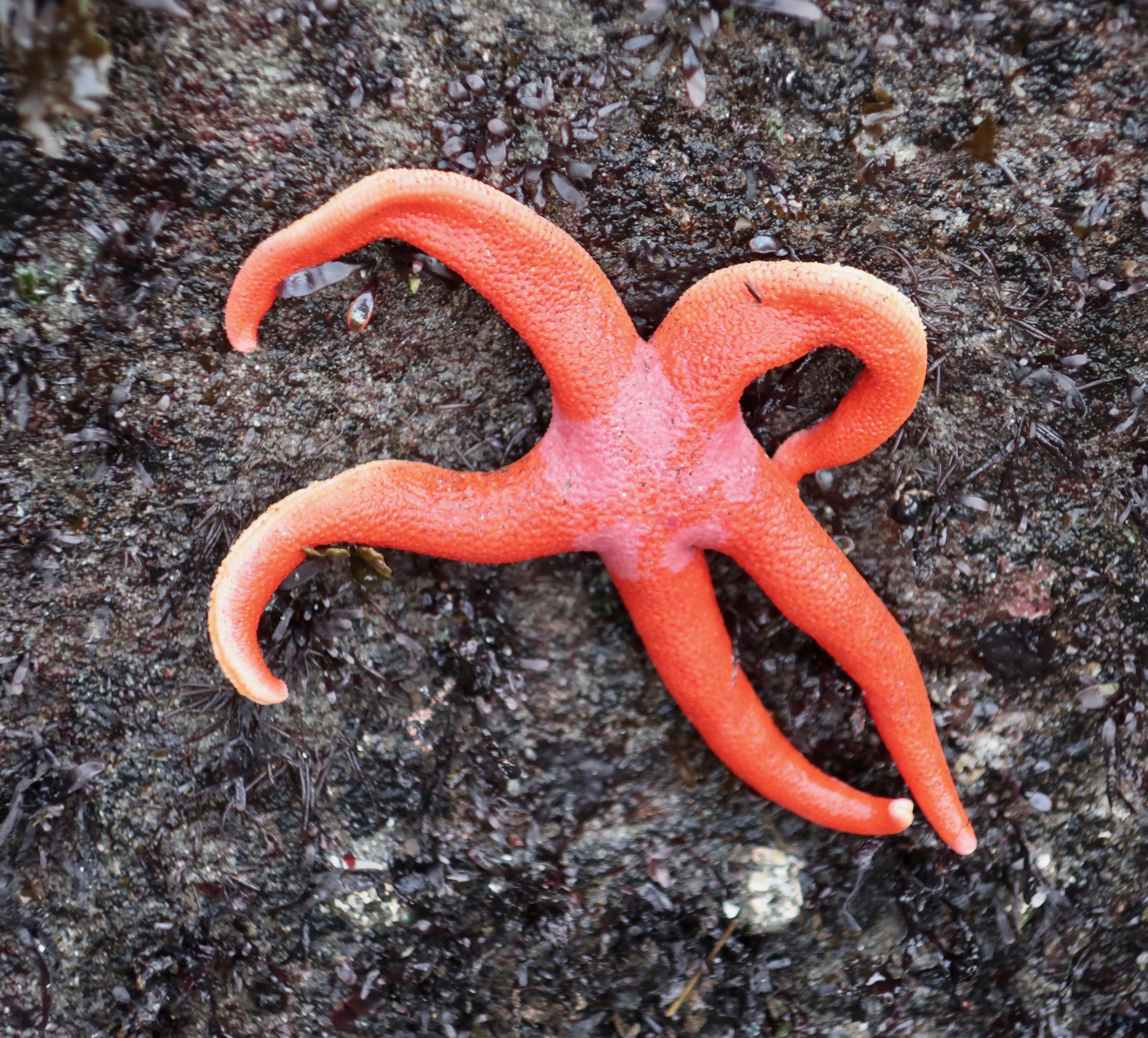
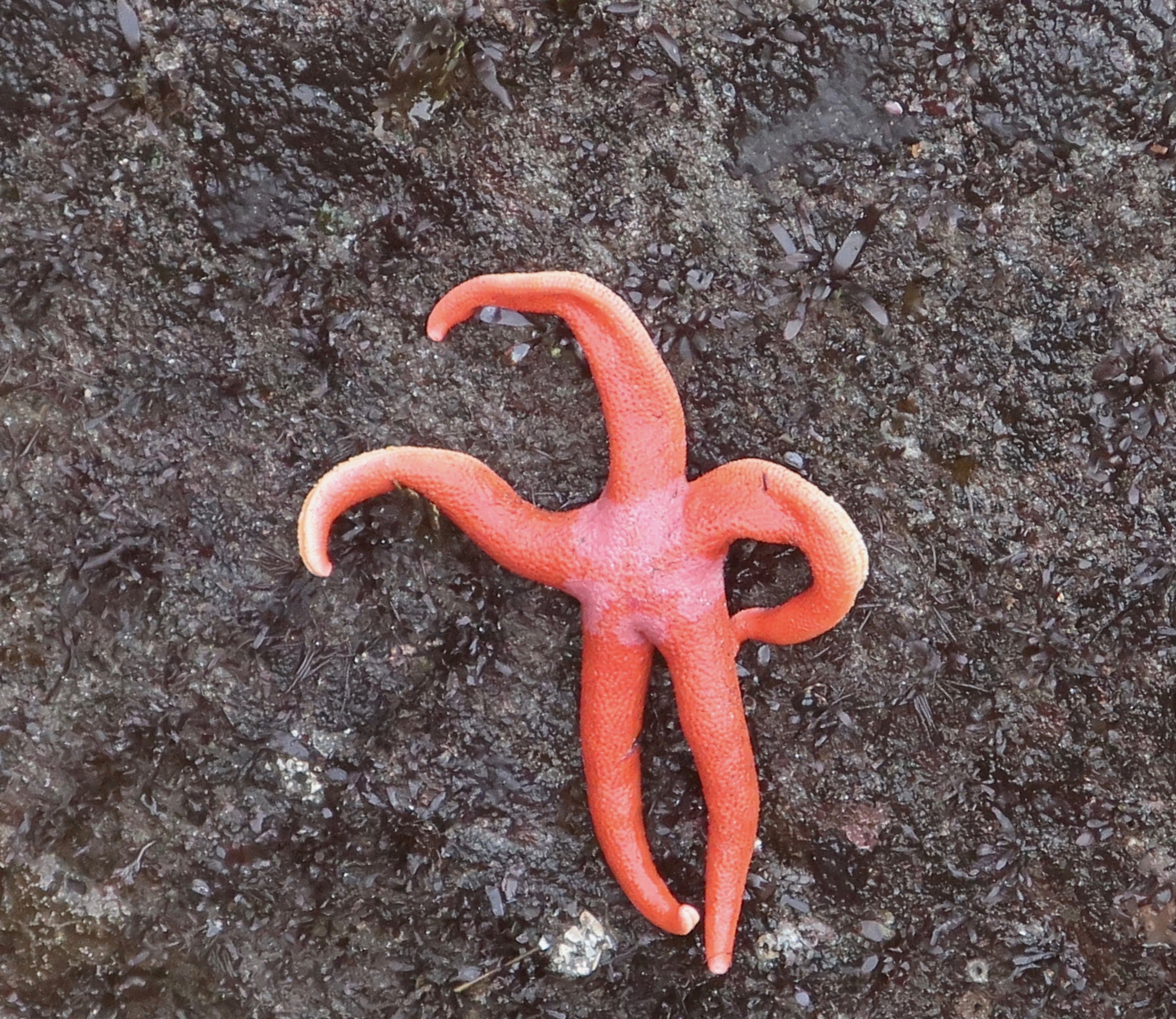
We saw this colorful starfish from a distance and came over for a closer look. It’s scientific name is Henricia leviuscula. It common name is Pacific blood star.
I decided a slight shift in perspective would create a twirling ballet dancer! Or is it a whirling dervish?

We were lucky to find any starfish at all. The population up and down the Pacific coast came close to being wiped out in 2013. A rather nasty virus that melted these attractive creatures from the inside killed millions. Legs would fall off and go crawling away. It sounded like the plot to a Grade B horror flick. Fortunately, evolution came to the rescue. A small portion of the population seemed immune to the virus. Maybe some of the legs got lucky. They came back with a vengeance. We did find a few that were obviously dead. I touched one. It was mushy. Melting.

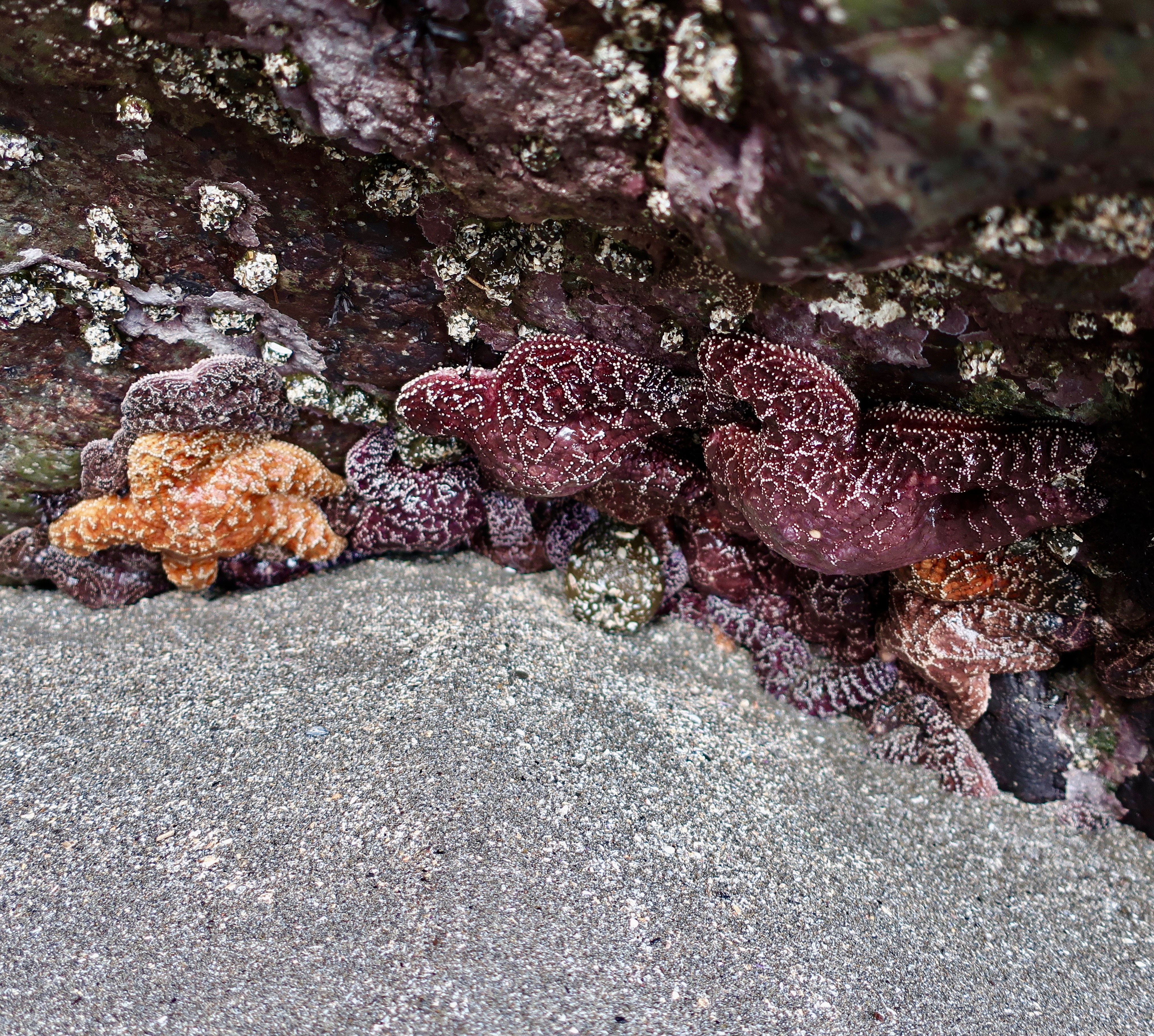
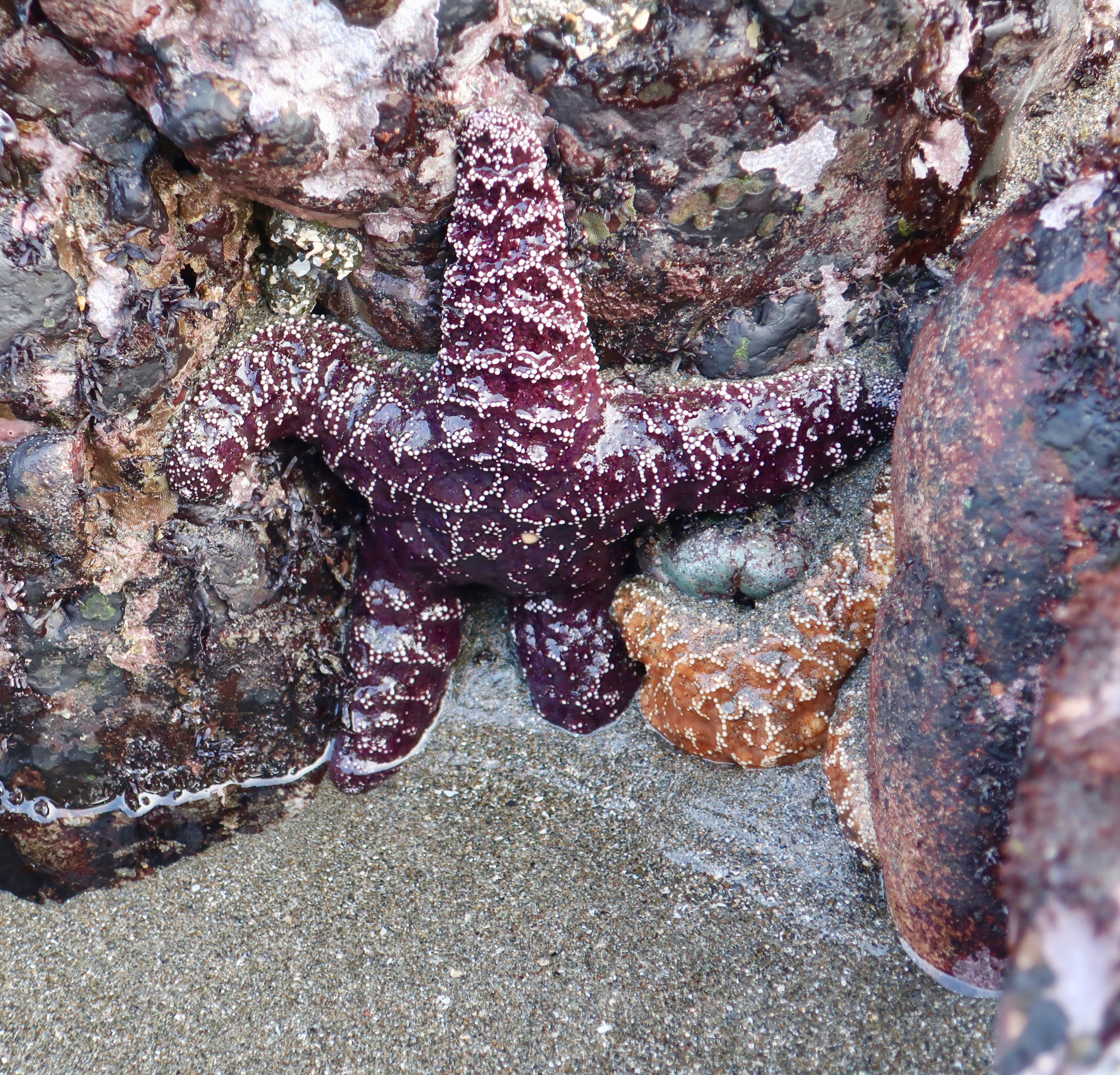
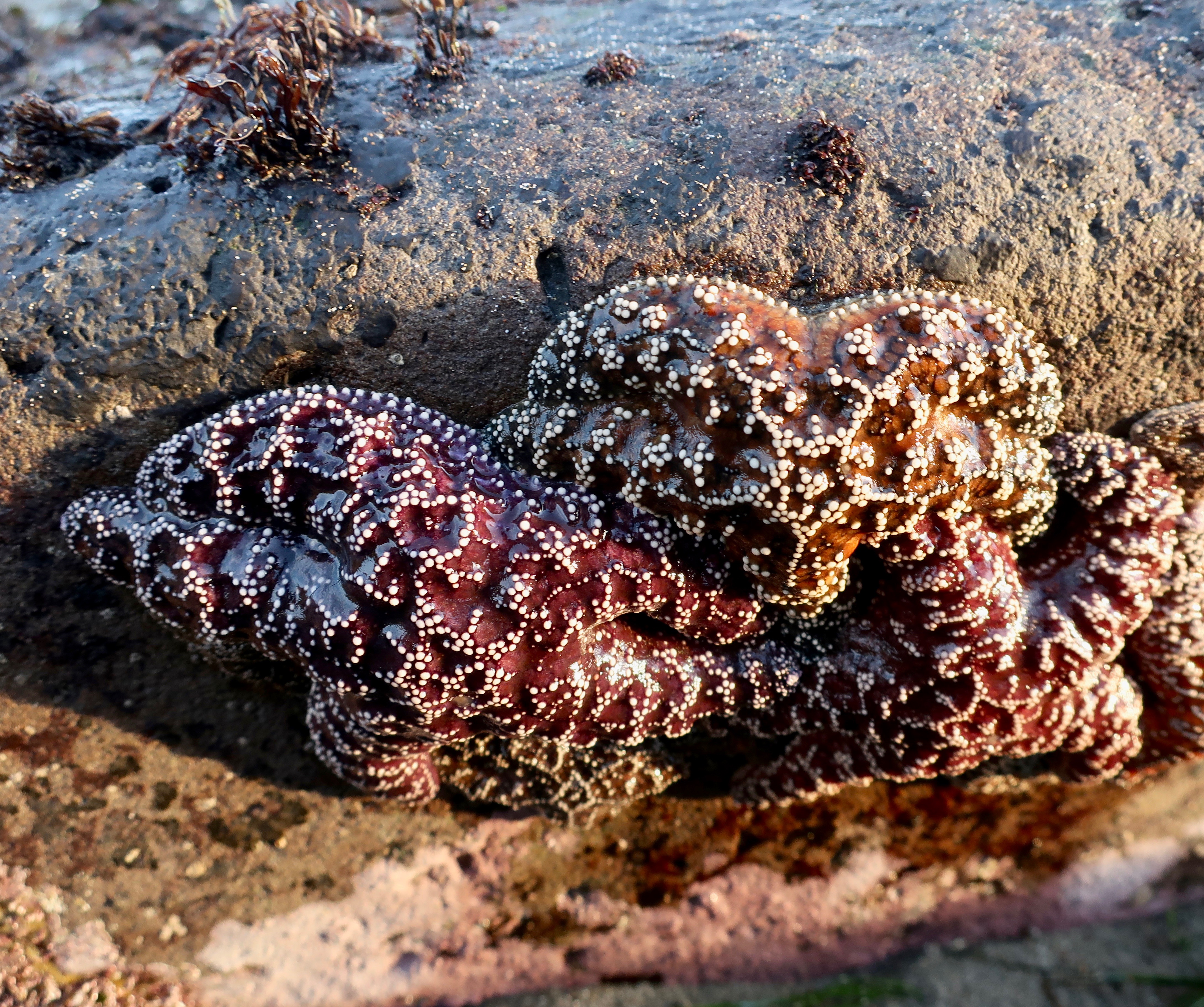
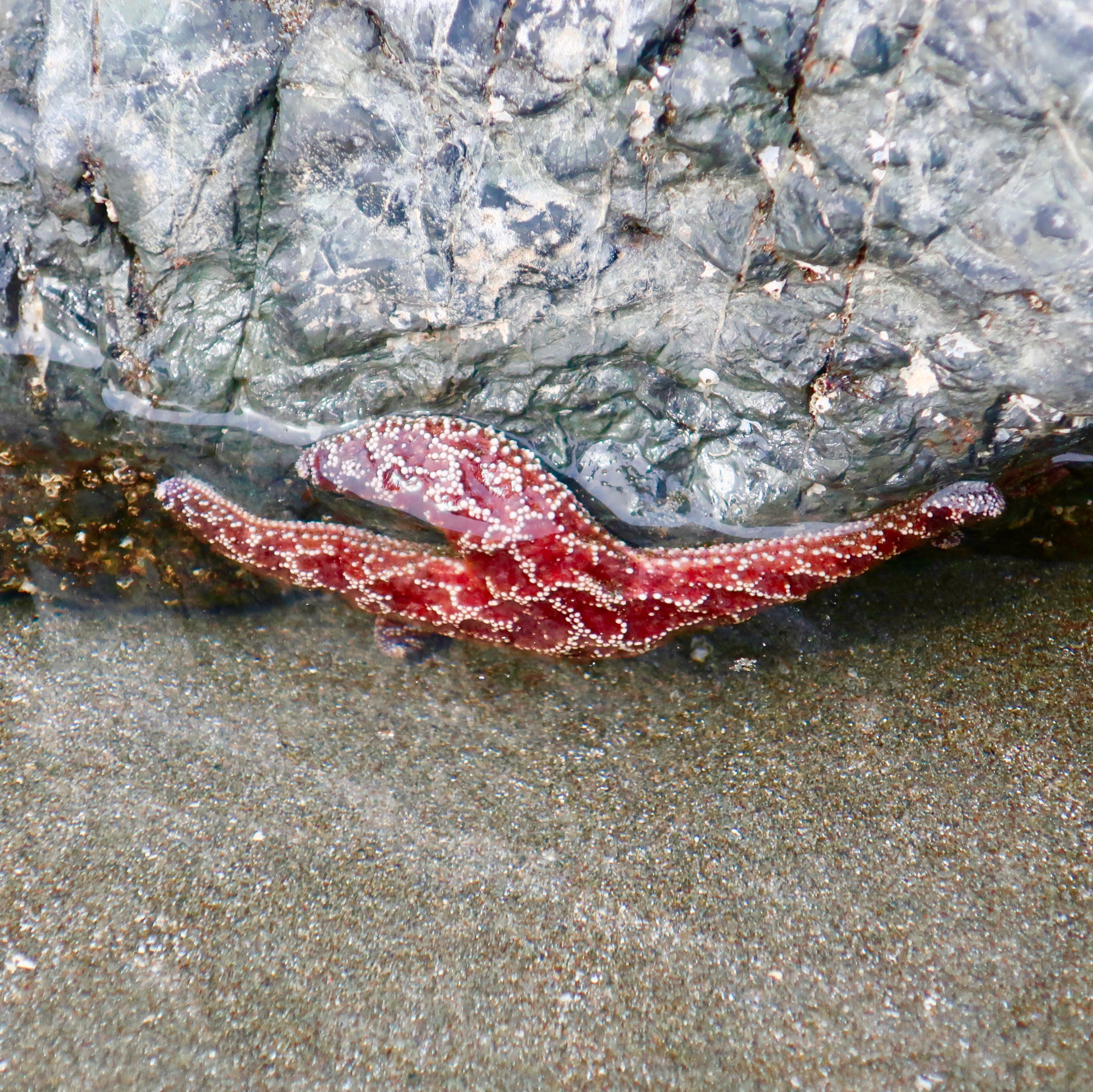
Everywhere we looked we saw starfish. Sometime in bunches. These purple and orange star fish belong to the same family, Pisaster ochraceus. Scientists don’t know why they come in two colors.

Here are some fun facts:

  • These rather amazing five-legged creatures have seawater for blood. It serves the same purpose, delivering nutrients to cells. 
  • Starfish can regenerate an arm lost to a predator. But what if the arm loses its starfish? It can regenerate a new starfish, an exact replica. Pretty cool, huh.
  • They have very small mouths but like large, tasty morsels, like mussels. Not a problem. They have big stomachs. They send them out through their mouths and wrap them around what they want to eat. They digest their dinner and then suck the nutrients back into their mouths, along with the wandering stomachs. 
  • They move around on tiny little feet that are found on their arms. They fill these little feet with water and mimic walking. They travel slowly, at least I have never seen one move quickly. 
  • The feet also serve another purpose; they work as suction cups. The starfish will wrap itself around a closed mussel, attach their little feet, and pull the shells apart. Not an easy task.
  • One more thing about their arms, each one comes with eyes. Not eyes like you and I have but photo receptors that allow them to distinguish between light and dark and move around in search of food, or to avoid becoming food. 

Following are more of our photos:

At first, I thought that the ugly guy above the starfish was seaweed. But looking at it more closely, I decided that it wasn’t something I wanted to meet up with on a dark night.
I’ll conclude with this edgy fellow.

NEXT POSTS:

As you read this post, Peggy and I are on our way to Pt. Reyes National Seashore north of San Francisco. When she asked what I wanted to do for my birthday week, it popped up. The National Sea Shore is one of my all-time favorite places and I have been escaping there for 50 years. So, beyond responding to comments, I will be taking a break from blogging and reading blogs this coming week. Translate: Vacation! I’ll be back to work on March 8. See you then. –Curt

Why I Love Deserts: Nevada’s Highway 95 Is an Example

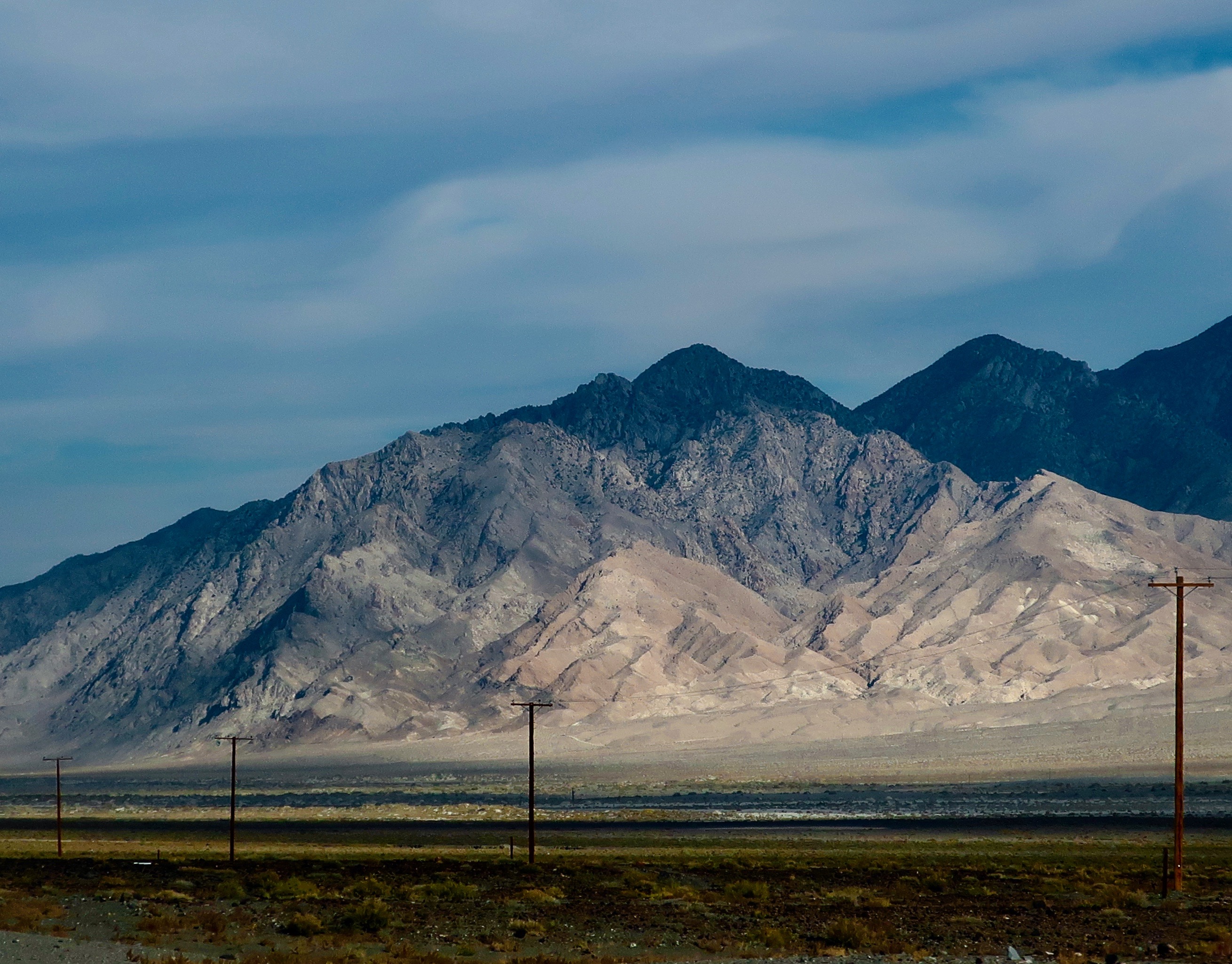
While many people think of the desert as a wasteland to travel through at 70 MPH plus, there is great beauty.

Peggy and I have made numerous trips up and down Nevada’s Highway 95. Most of our journeys to the Southwest start with that route. We never tire of the beauty along the way. Our frequent trips up and down the highway mean that I have done several posts on it over the years. The photos I am posting today were taken near the Town of Tonopah. There’s a good chance that you will have seen some of them. But they are worth looking at again. At least I think so…

I always think these lonely power poles add to the photo.
Black and white works as well. I think it adds drama.
A distant shot may classify as a close-up in the desert.
Another example.
I’ll conclude with what a distant shot looks like in the desert.

Peggy and I have now wrapped up our visit to Brookings on the Oregon Coast. Next Friday I’ll begin posting photos of what we saw. Naturally there will be sea stacks that the coast is famous for. We also captured a spectacular sunset. No surprise there. The tide pools provided a different perspective, however. We hung out with starfish, and anemones, and seaweed, and hermit crabs, and limpets. Oh my!

NEXT POSTS:

Monday’s Blog-a-Book from “It’s 4 AM and a Bear Is Standing on Top of Me” : I kick off the second section of my book— Growing Up in a Graveyard— with the story of how I was kicked out of the first grade for a poorly done forgery and began my wandering ways.

Wednesday’s Blog-a-Book from “The Bush Devil Ate Sam” : I am put in the hospital for my Republican political views, as a fourth grader, and make a left turn from the right lane in community college preparing myself for the 60s, Berkeley, and the Peace Corps.

Here Kitty, Kitty: Lyman State Park, AZ… The Backroad Series— Highway 191

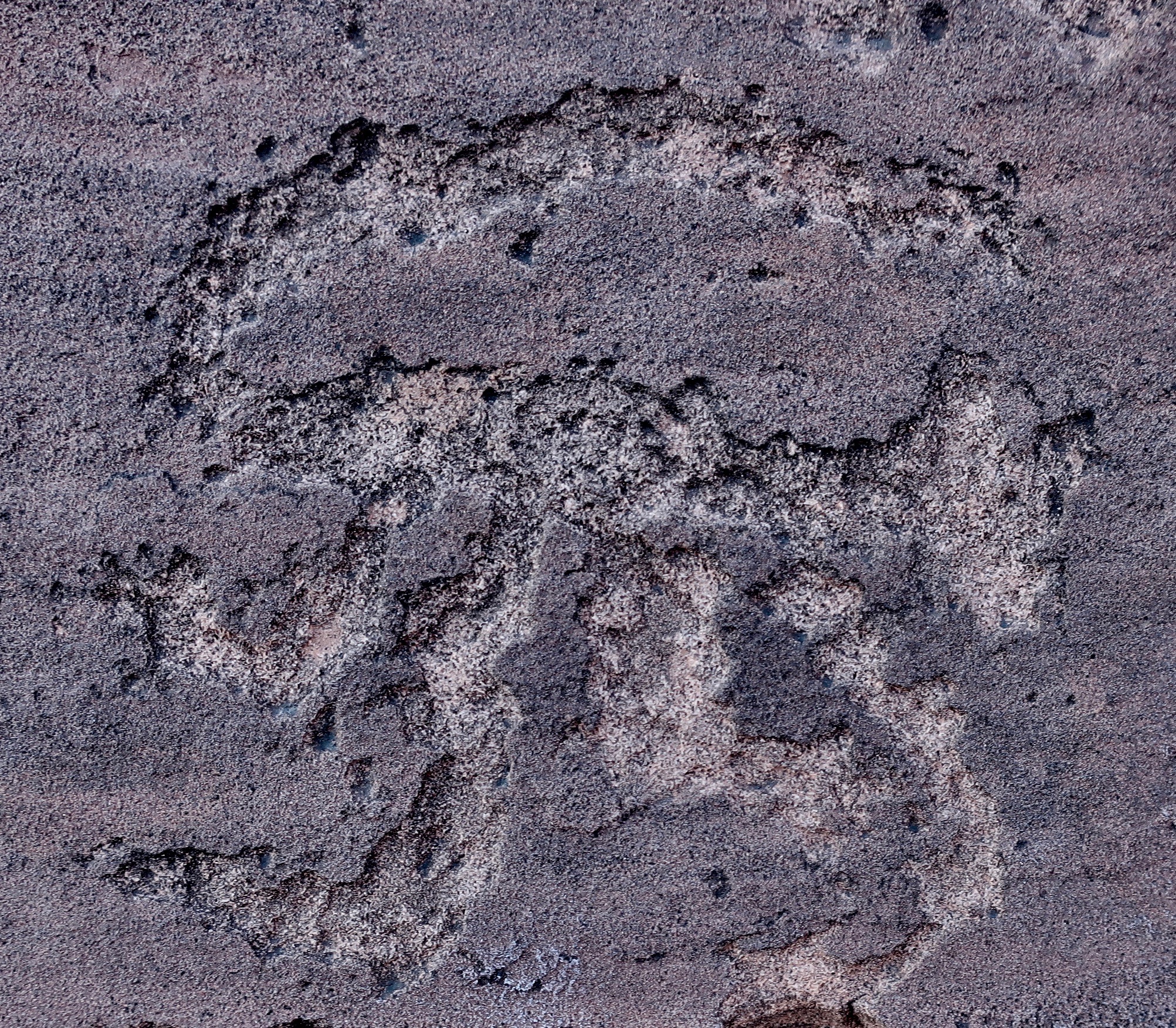
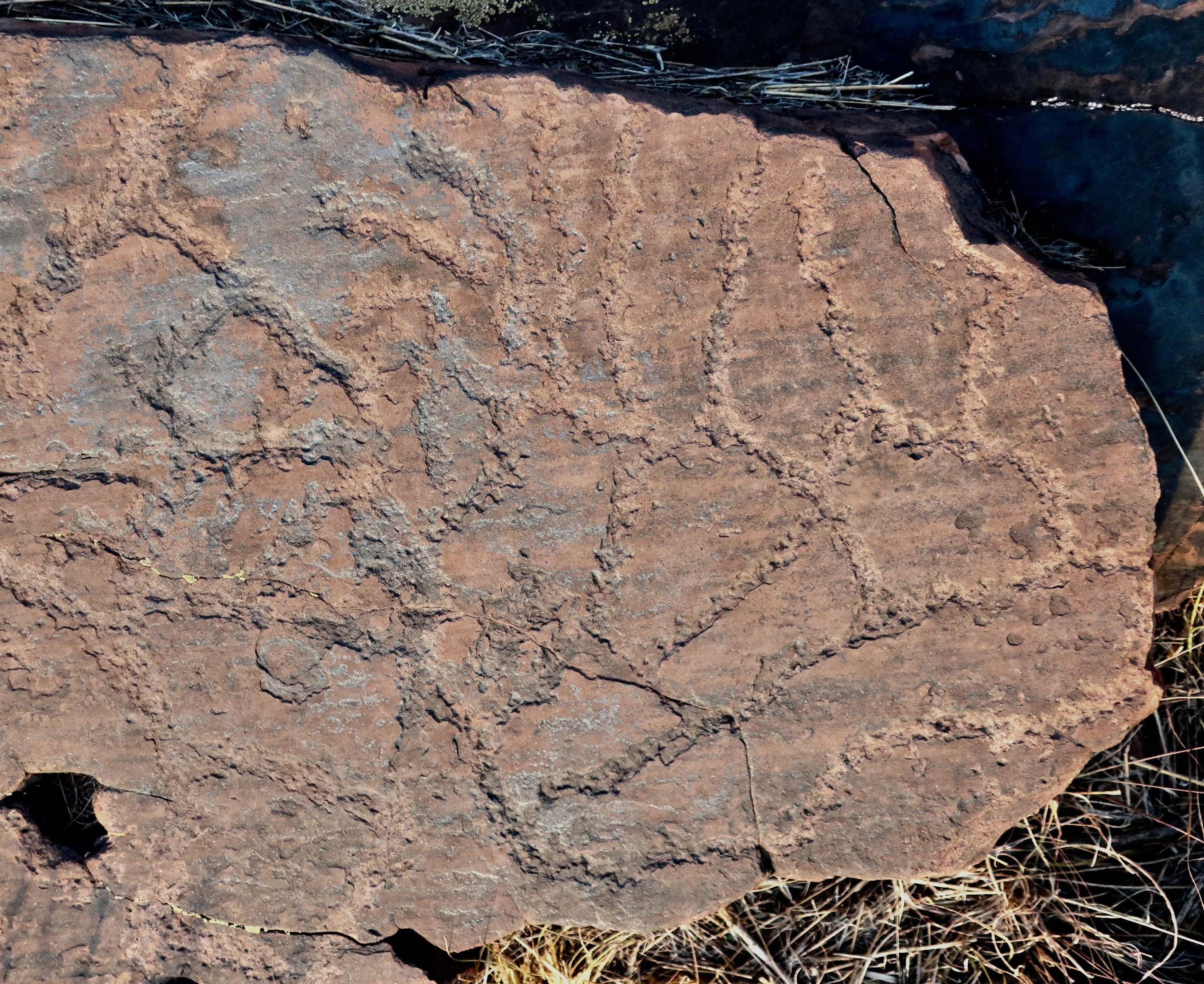
Here kitty, kitty, kitty. I was amused by this petroglyph of what appears to be a cougar running at Lyman State Park in Arizona. Other petroglyphs of cougars that Peggy and I have seen in the Southwest often have their tails over their backs.

We had started our backroad exploration of Highway 191 at Arches National Park in Utah and would wrap it up at Lyman State Park in Arizona. The two parks made nice bookends. I’d been by the park twice and considered stopping both times but thoughts of the Rocky Mountains looming ahead had kept me moving. The first time I was on my bicycle and planned to do a hundred mile trip across the range the next day. This time it was getting late and Peggy and I were tired from a long day of driving. We were lucky to get a space.

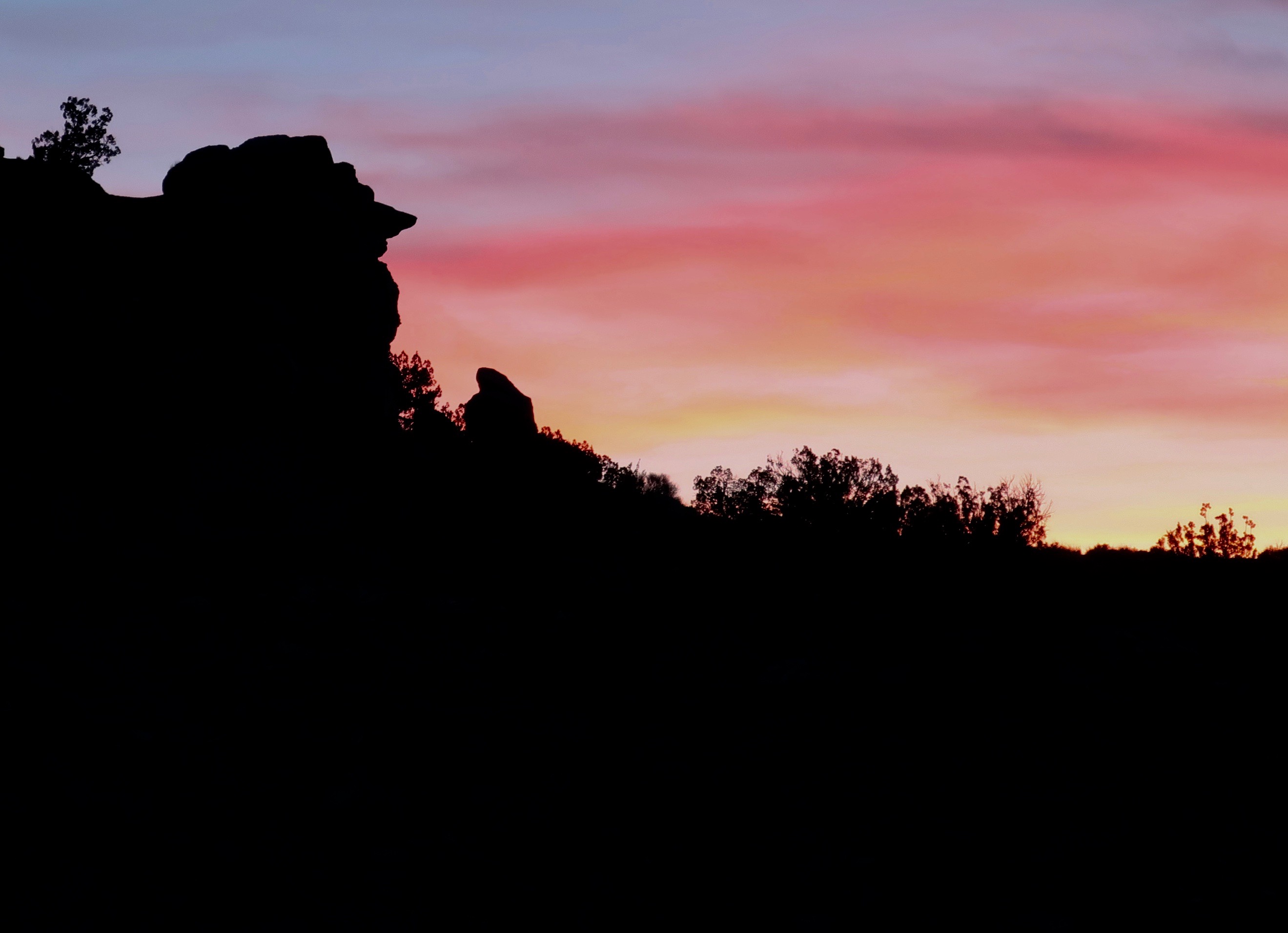
We went out for a walk as the sun was setting. The comic-appearing rock face on the left caught my attention. The nose was hard to ignore!

Our evening walk had taken us past a sign announcing a petroglyph trail, a happy surprise. Peggy and I have visited a number of petroglyph sites throughout the Southwest, many of which I have blogged about. We hadn’t realized that Lyman State Park also features the ancient rock art. We made a quick trip up the trail and vowed to return in the morning. Both the Anasazi and the Hopi had made their homes along the Little Colorado River, which was now damned up forming Lyman Lake. The petroglyphs were found in the rocks above the river. The Hopi believe they entered this world from another world near where the Little Colorado enters the Colorado River.

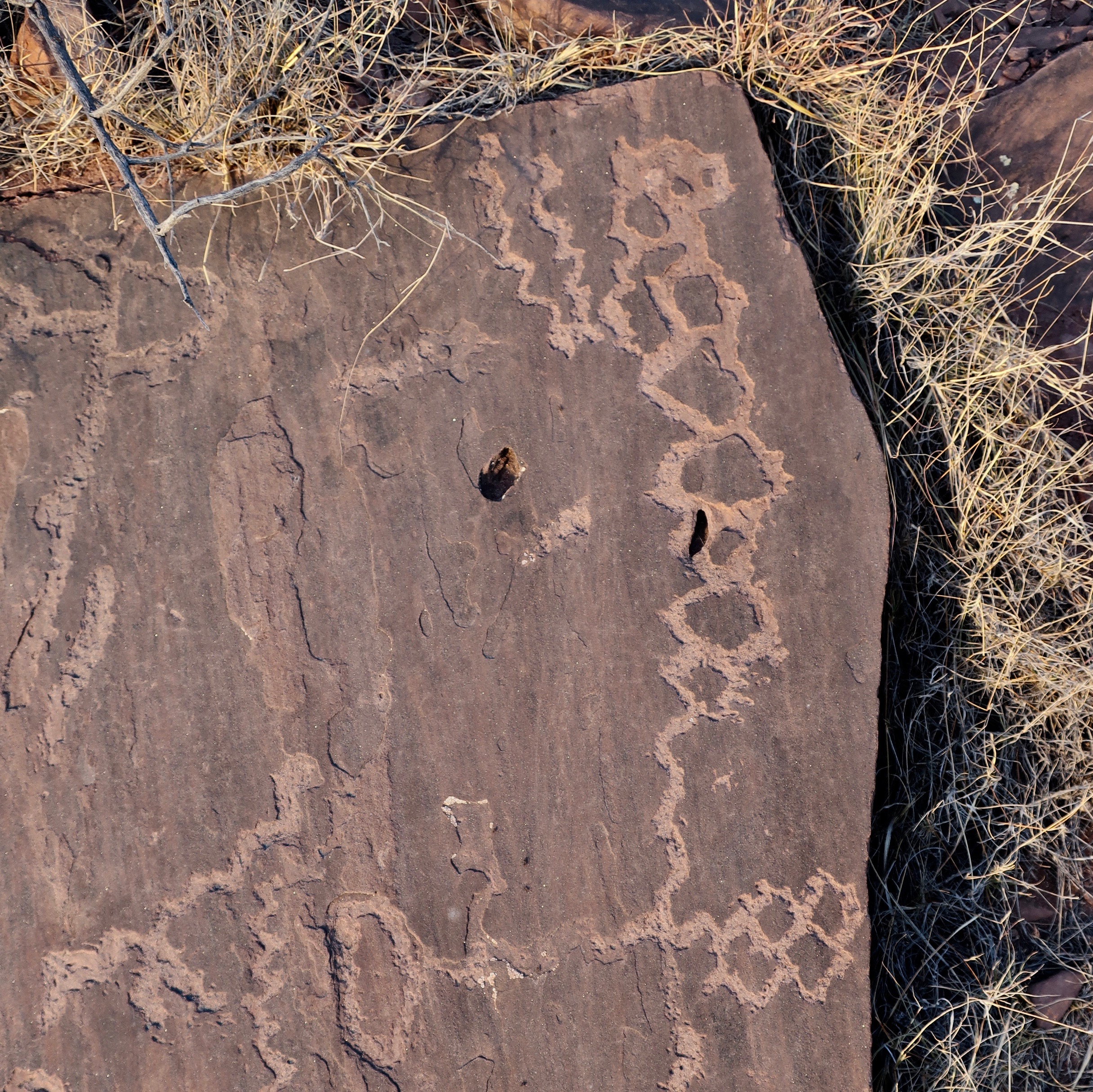
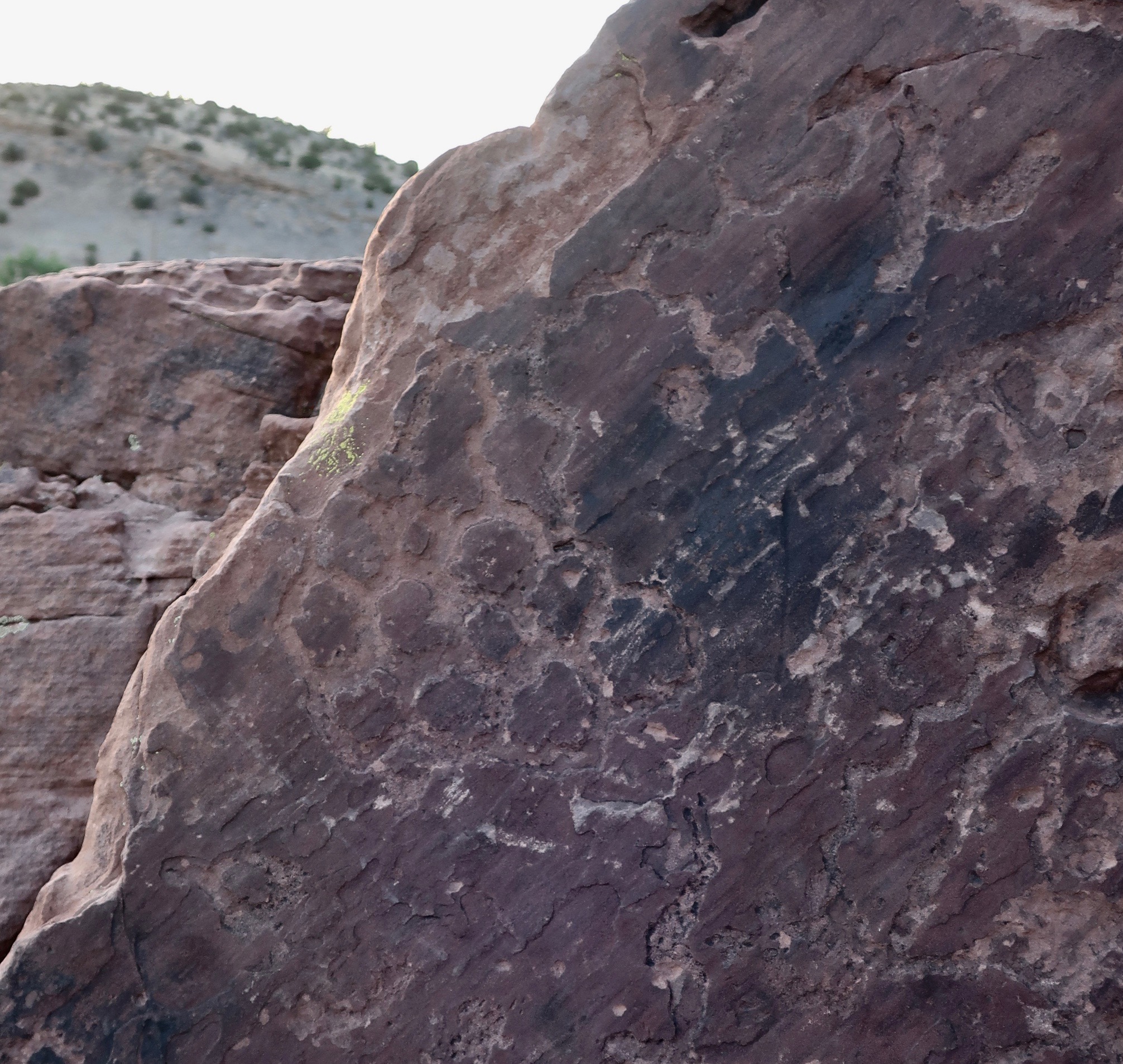
A sign placed by the park interpreted this rock art. The wiggly line represents the Water Serpent the Hopi would ask for water when water was scarce. Obviously they found it in the Little Colorado, which meant they could settle in the area. The guy on the right is jumping up and down holding corn they were able to grow. Or maybe he’s excited about his companion having a baby. You can see it hanging down. The umbilical cord hasn’t been cut yet. I’d be jumping up and down too. The wildlife looking on may symbolize the availability of game for hunting.
Behold the turtle who only makes progress when it sticks its neck out. At least, I think it’s a turtle. I also admired the lichen on the right.
A pair of very long snakes? Or at least their trail. Have you ever seen a snake trail crossing a dirt road?
There was also an interpretation sign for this. The thick line in the middle was apparently a migration route. Off to the left are snakes. The guy on the right may be dead since that is how death is sometimes shown in petroglyphs. I wonder if the snakes got him. Or Kitty, which was just to the left.
Land use planning? A sign suggested that this was a map that showed the various farms or settlements along the Little Colorado.
Another example of a petroglyph map.
Who knows?
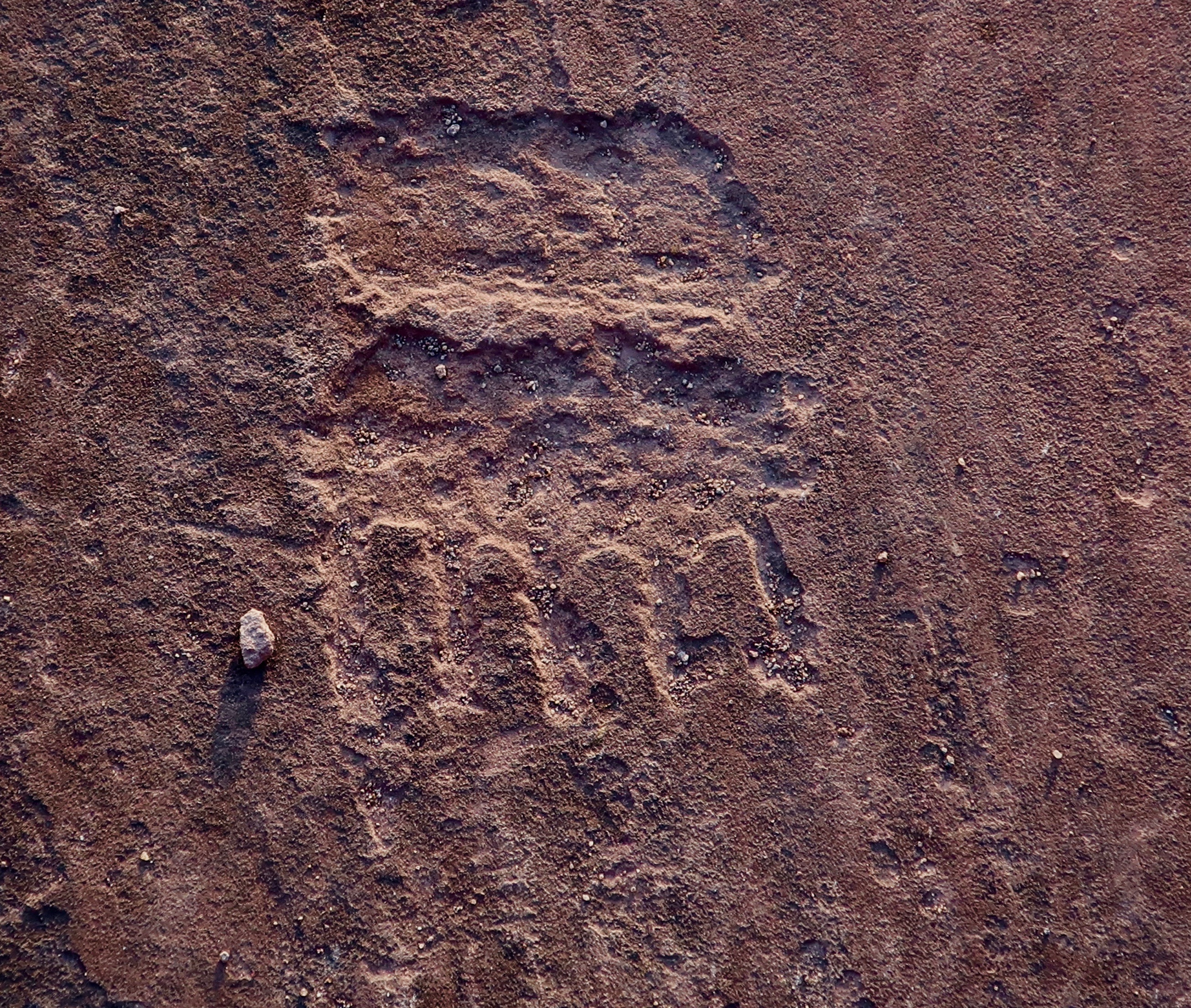
My interpretation here is of a bear print with lots of sharp claws…

There’s much more to Lyman State Park than petroglyphs. For one, the lake is apparently a popular boating lake. None were there at the time, which pleased us given the likely noise. We wandered around and took in the sights

What the…? How’d you like to come home to this?
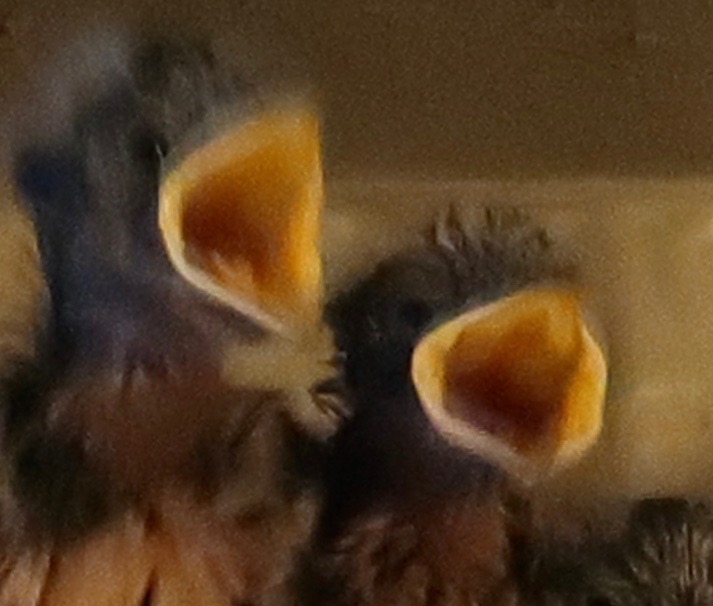
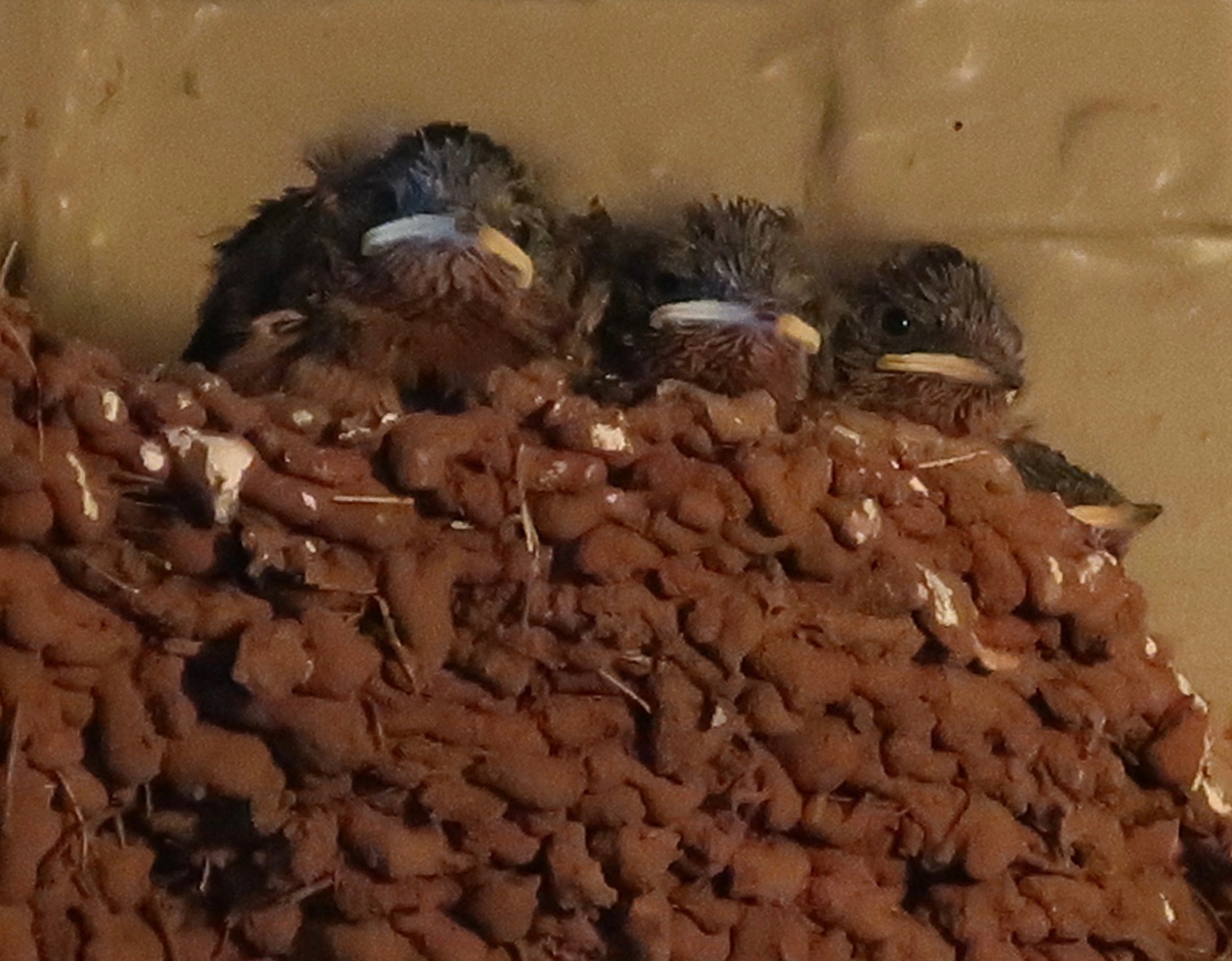
Hungry swallow chicks. 🙂
Who lives here? It’s a spider. I didn’t shove my finger down the hole.
Peggy made her way along the Petroglyph Trail.
Which overlooked the lake.
And featured this tree…
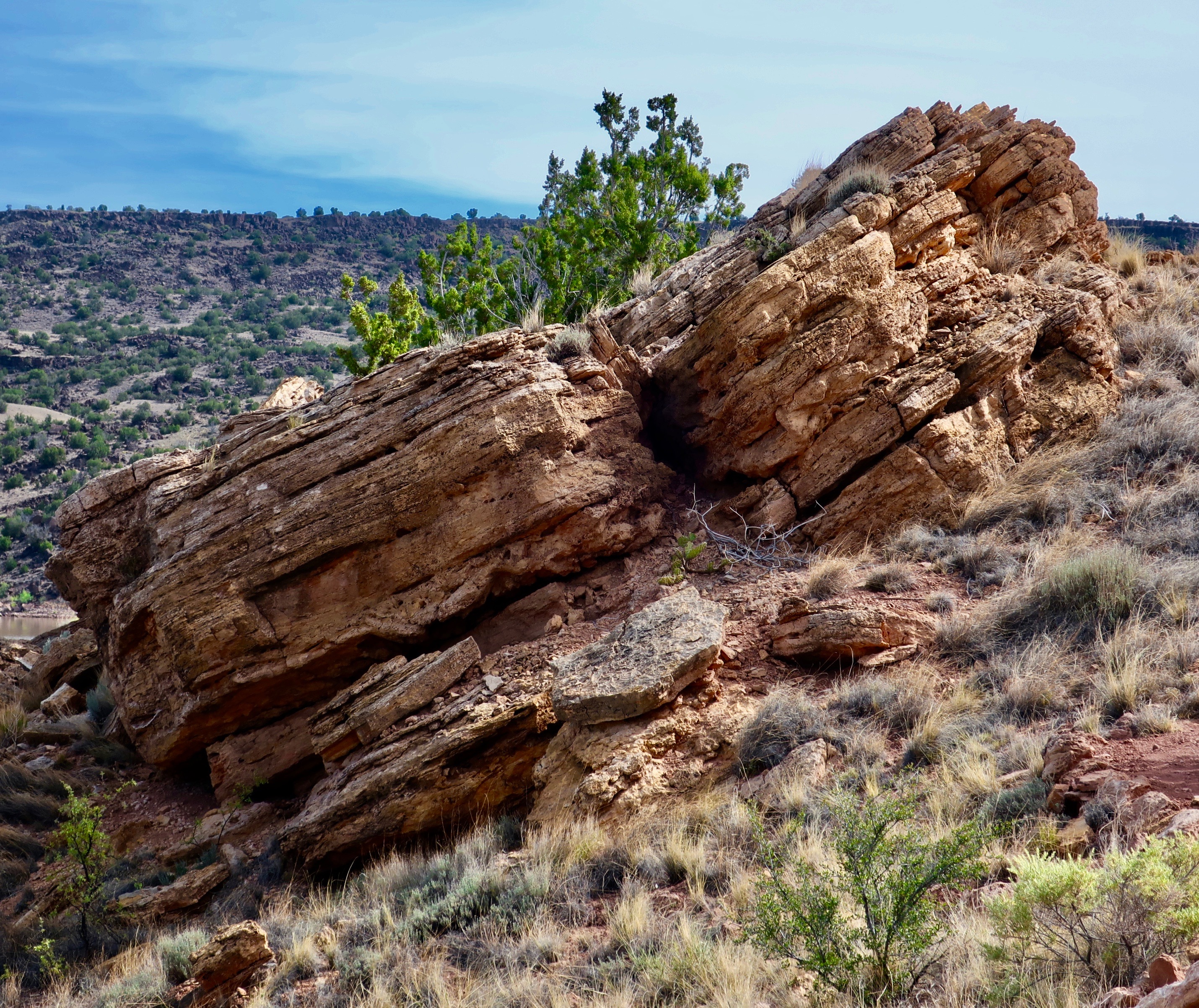
Rocks…
And more rocks.
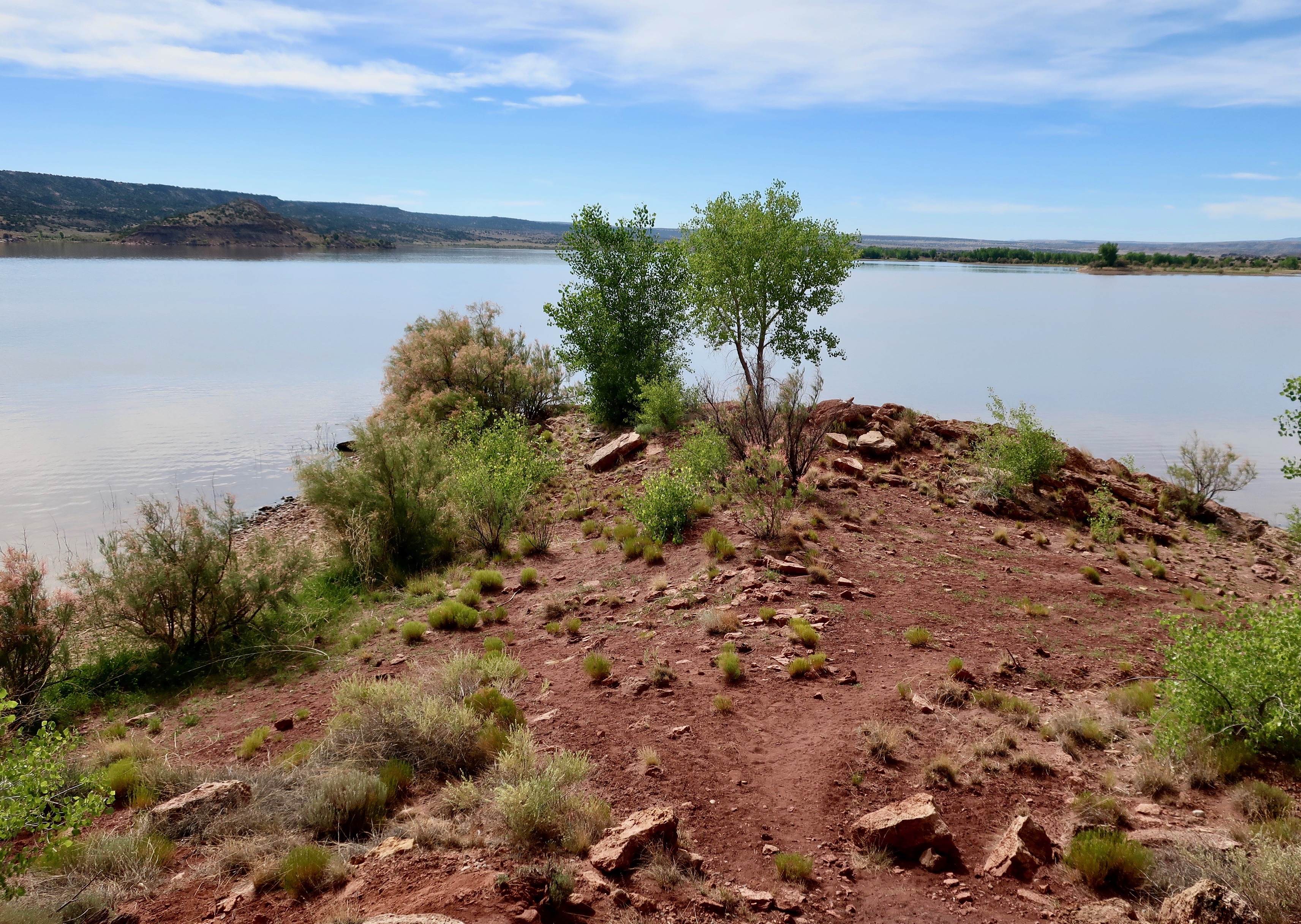
I’ll conclude with this attractive peninsula jutting out onto the lake.

NEXT POSTS:

Blog-a-Book Monday: It’s 4 AM and a Bear Is Standing on Top of Me… I conclude the Sierra Trek story with the greatest surprise of all.

Blog-a-Book Wednesday: The Bush Devil Ate Sam… I contemplate the wandering ways of my ancestors as a factor in my decision to join the Peace Corps. I’ve often been jealous of these early mountain men who travelled with the likes of Daniel Boone. But not Uncle Bill. He had his head cut off by a tomahawk and rolled down a hill…

Highway 191: National Parks and Navajos… The Backroad Series

Our first stop on Highway 191 was only a few miles south of I-70; Arches National Park. I’ve already posted on our visit, but here’s a photo from the park.

There are some backroads in America that we immediately recognize. Route 66 is one. Highway 1 along the California coast is another.  Last summer, Peggy and I went on a road trip in our van exploring several other America’s backroads which aren’t quite so familiar, at least to me. 

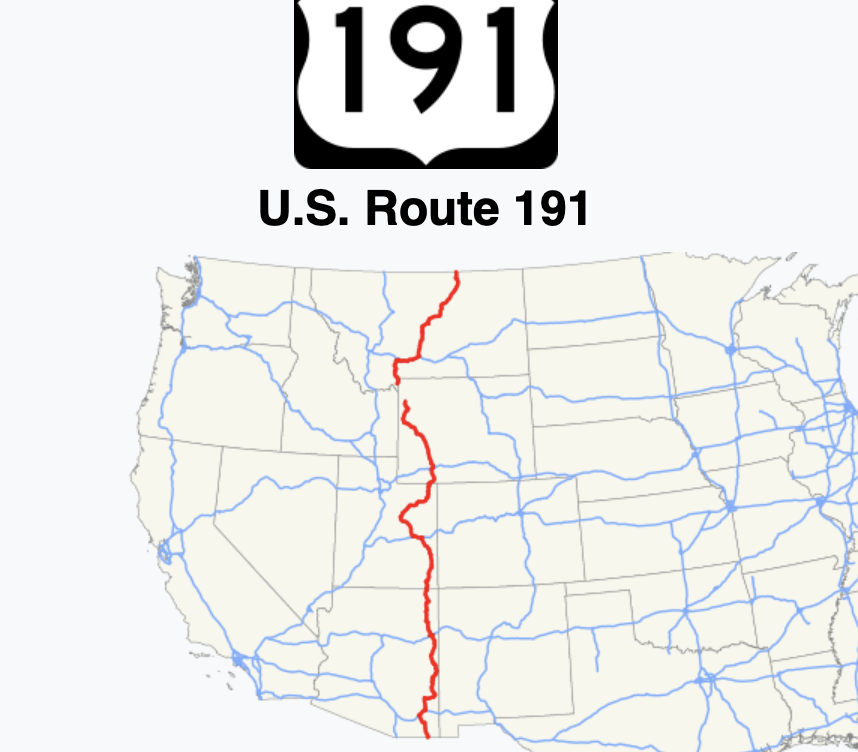
Highway 191 was one. This highway starts at the Canadian Border in Montana and ends in Arizona on the Mexican Border. I’ve driven much of it over the years. I’ve even bicycled several hundred miles on the highway. But I confess that if someone had asked me what I knew about Highway 191 before our trip last summer, I would have asked where it was. 

Highway 191 travels from the border of Canada to the border of Mexico.

Peggy and I picked it up off of I-70 in Utah and followed it south into Arizona where we cut off on Highway 180 crossing the southern Rockies toward Silver City in New Mexico. Along the way we visited Arches National Park, made our way through Navajo country, passed by Canyon de Chelly and spent a delightful night at Lyman State Park in Arizona. I’ll feature some pictures that Peggy and I took along the road but will save Lyman Lake for next week’s post.

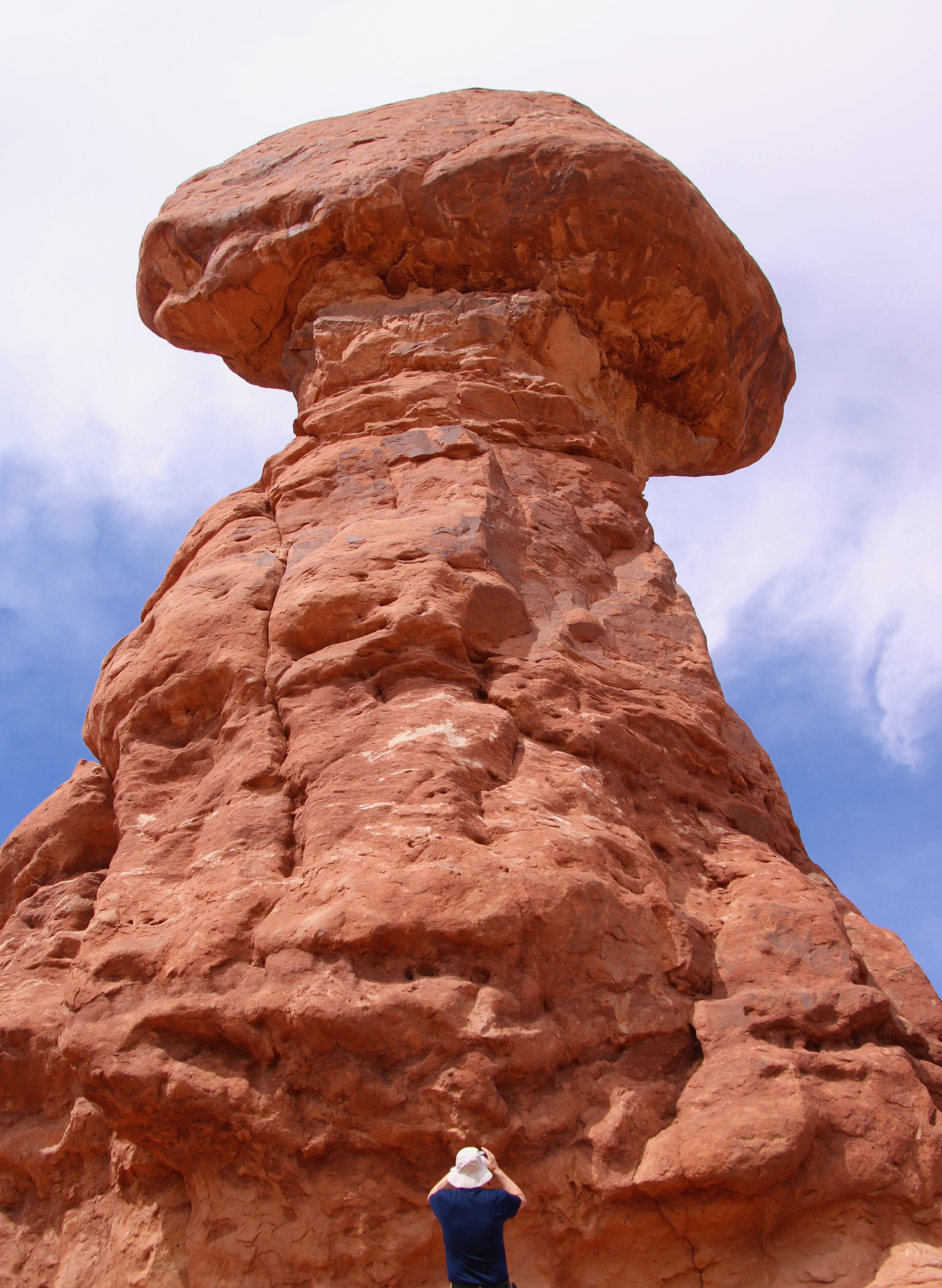
One more Arches photo. Peggy caught this photo of me checking out Balanced Rock.
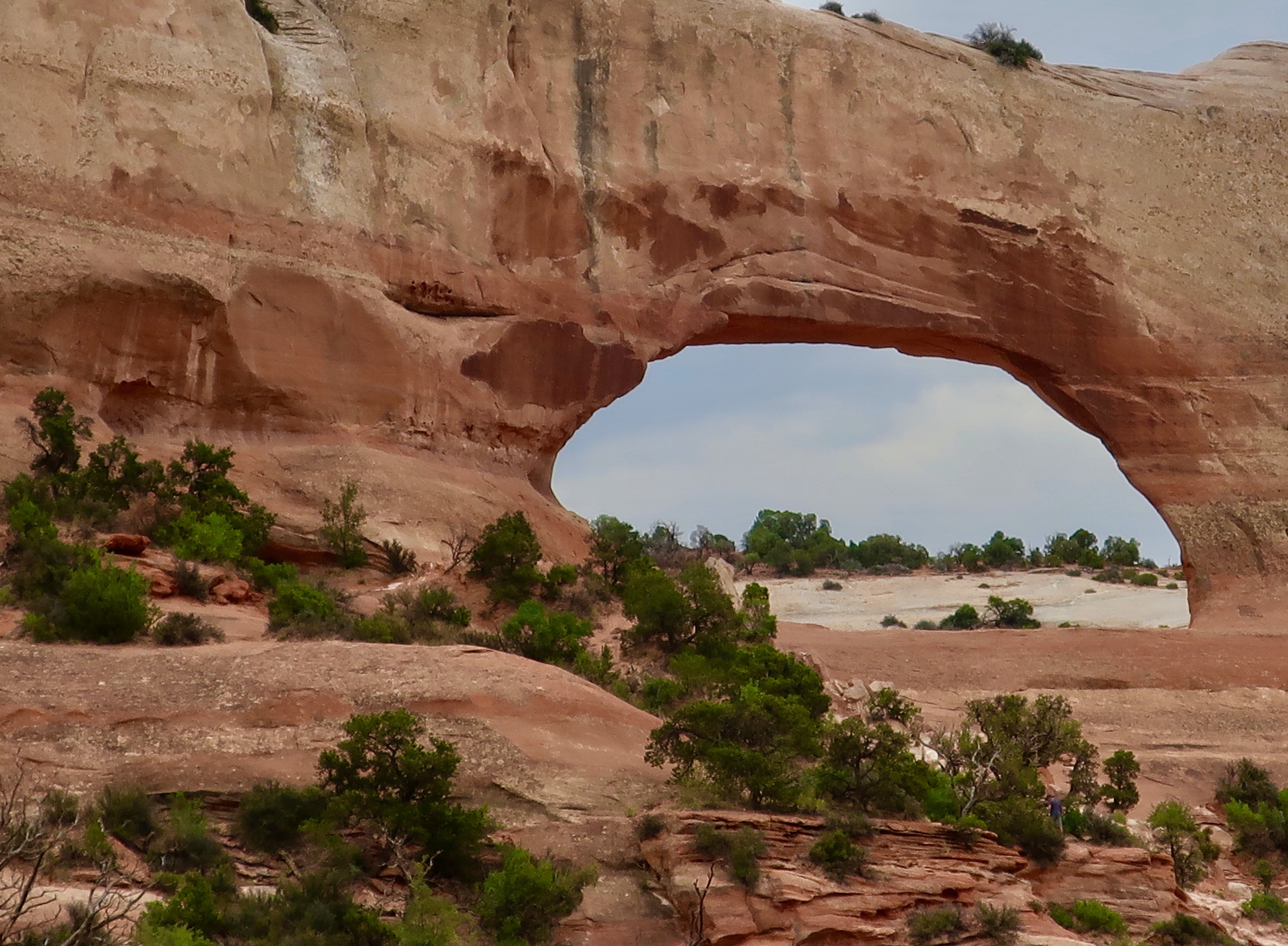
There are, of course, impressive arches outside of Arches National Park. Wilson Arch is found along Highway 191 south of the National Park.
Further south along Highway 191, Peggy and I came on this interesting sandstone monument known as Church Rock. BTW, the road into Canyonlands National Park is near here.
Views along 191 included badlands…
These trees…
And the San Juan River.
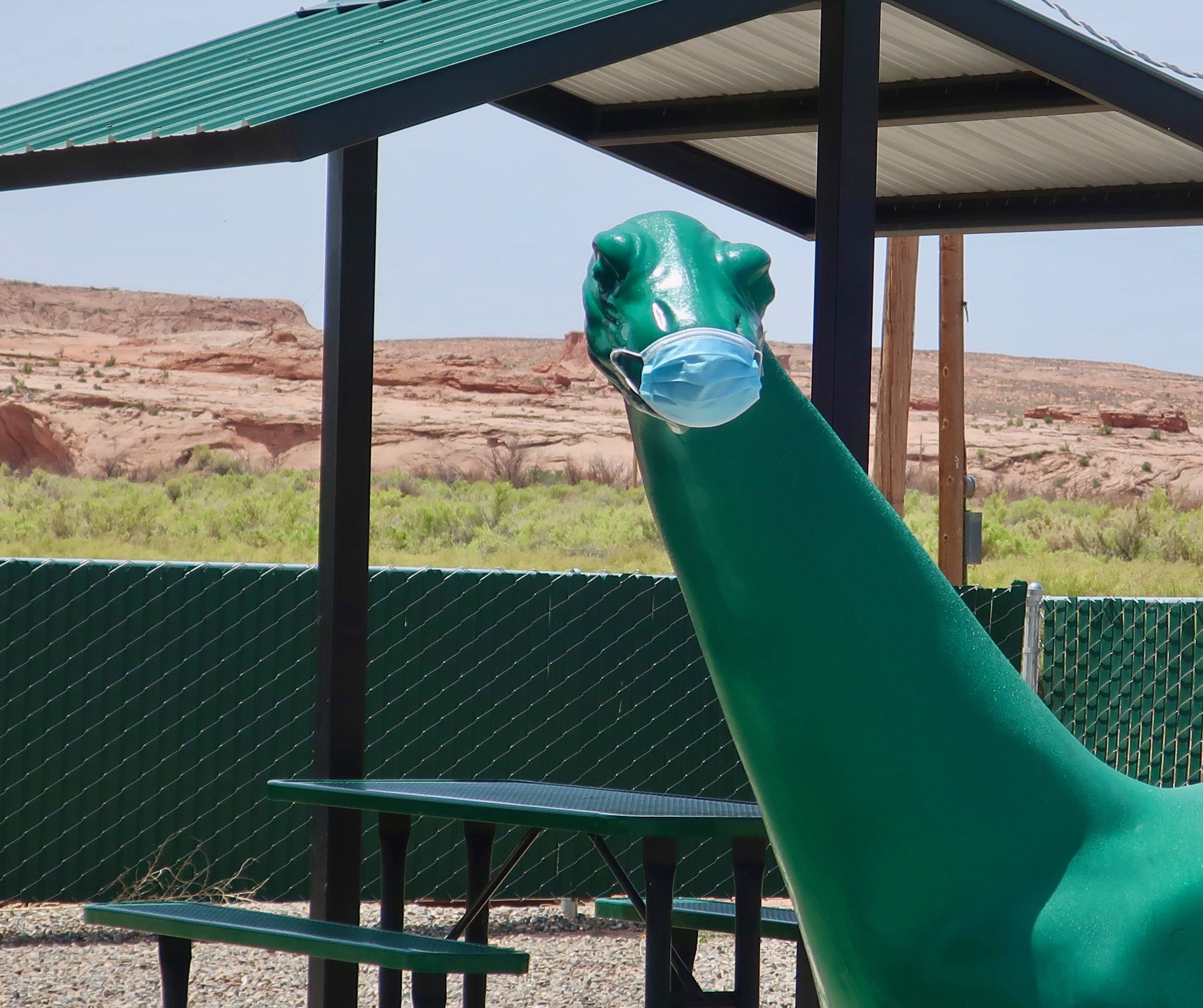
As we entered the Navajo nation, the concern over Covid 19 was immediately apparent. This dinosaur was wearing a mask at a service station.
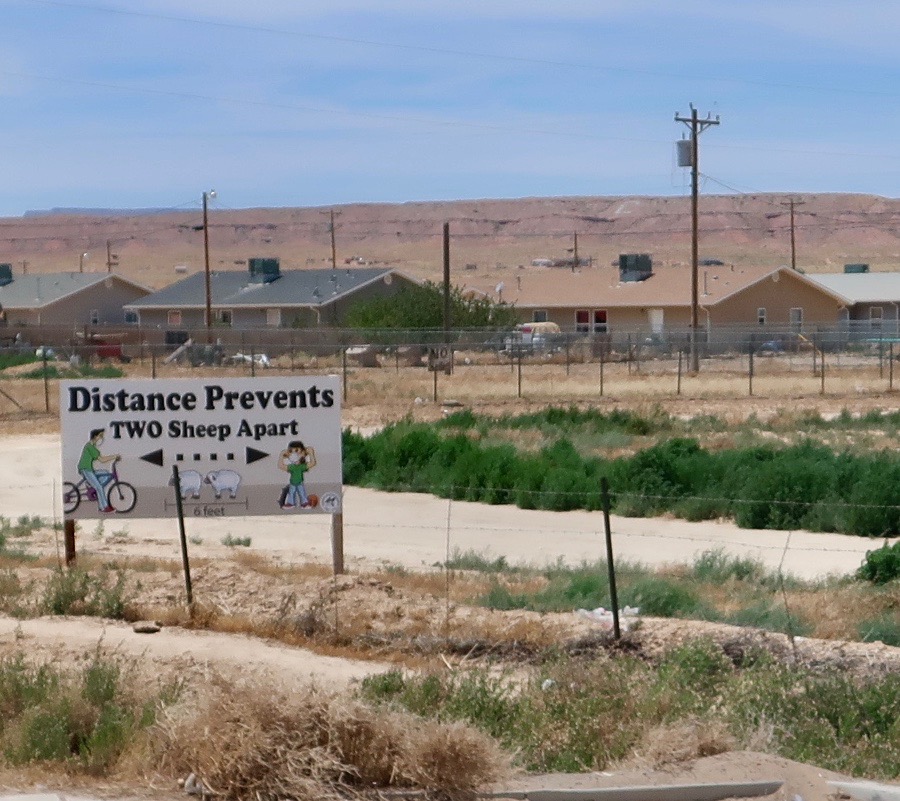
I love this sign that shows a sense of humor in the Navajo Nation about social distancing. Very few people were out and about in comparison to 9 months earlier when we had visited Canyon de Chelly. We saw perhaps a half dozen outside of Chinle, gateway to the National Monument.
Two Navajo Sheep. (Photo by Peggy Mekemson.)
A view looking down into Canyon de Chelly from our previous visit. Tourism and tourist dollars came to a dramatic halt with Covid-19 ravaging the Navajo Nation.
People like Alan Ba, from whom we bought this artwork, would have an important source of income eliminated.
As we neared I-40 on Highway 191, there was one more grim reminder of the problems facing the world, a massive forest fire brought on partially by global warming.
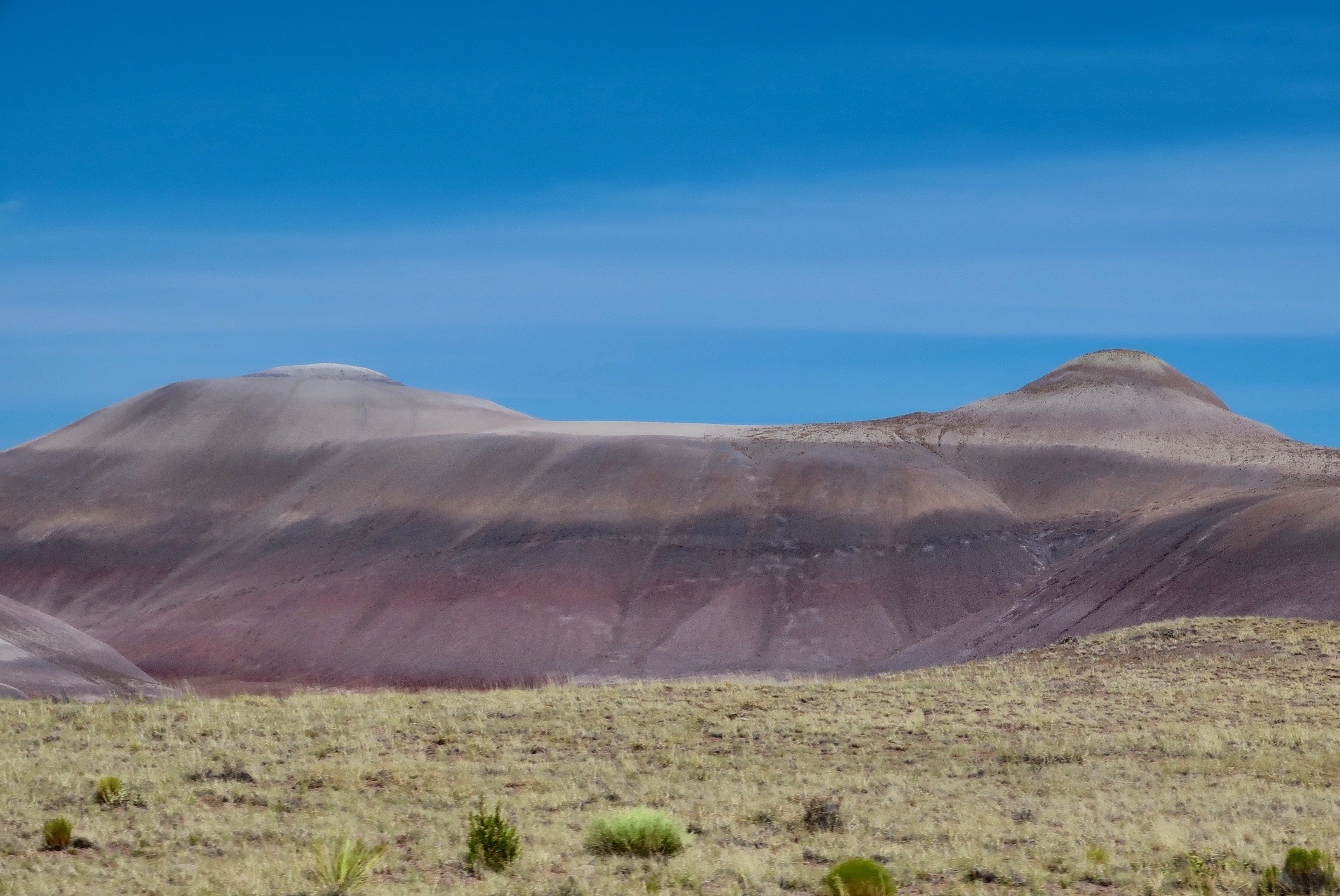
Traveling south of I-40 we found more badlands, not all that far from the Painted Desert.
Shortly after arriving at Arizona’s Lyman State Park, we were treated to a sunset over the lake. It had been a long day.

NEXT POSTS:

Blog-a-book Monday: Just when I thought we were out of trouble, the Sheriff pays the Sierra Trek a visit and dynamite threatens to rain rocks down on us.

Blog-a-book Wednesday: I start the book on my African Peace Corps adventure with asking the question: Why?

Travel Blog Friday: We explore the unique early American rock art of Lyman Lake, discover some birds that are more mouth than body, and appreciate the beauty of the area.