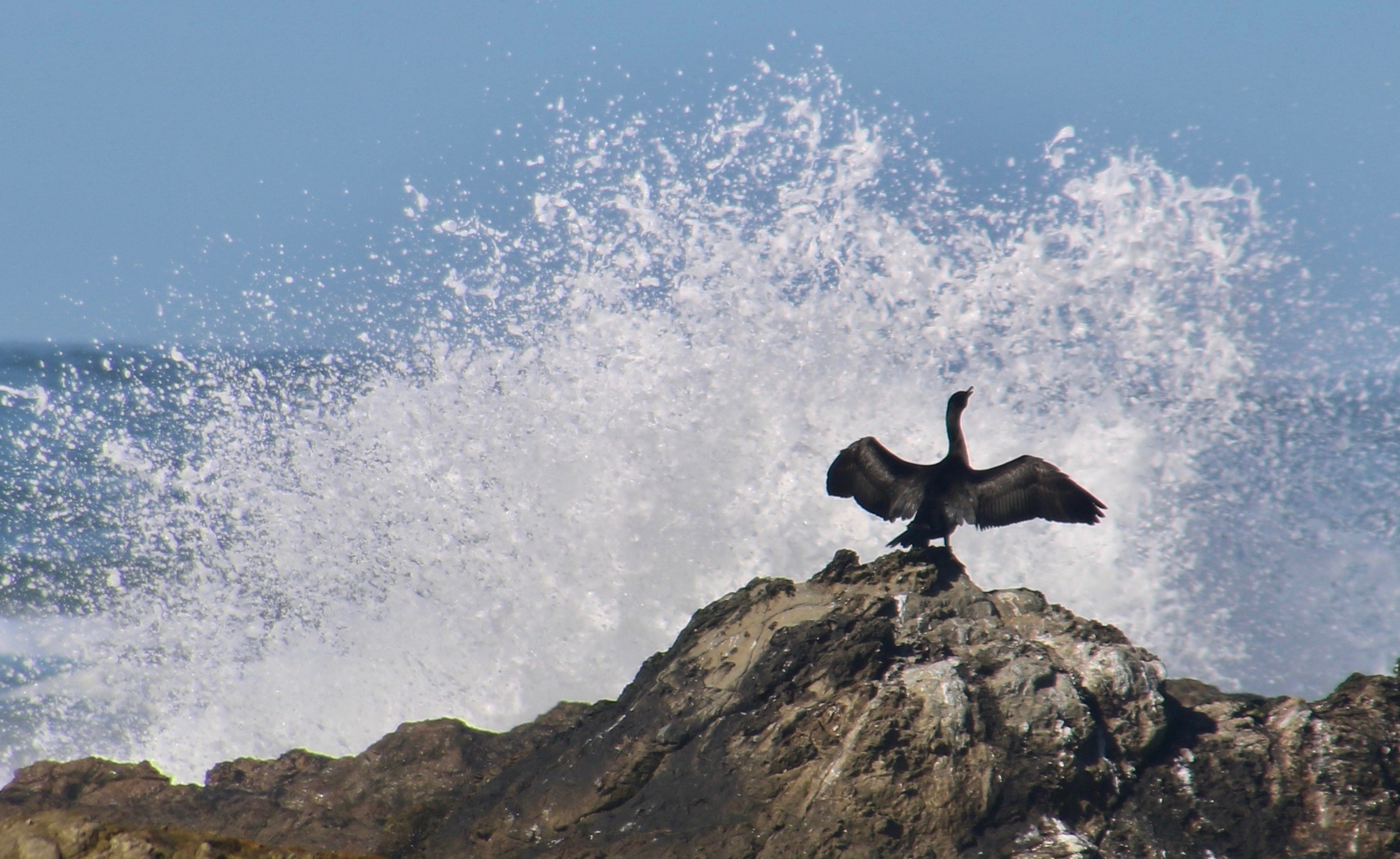
This cormorant at MacKerricher State Park near Fort Bragg, California seems to be saying, “Bring it on! Show me what you’ve got!” It’s a New Year’s type of message. (Photo by Peggy Mekemson.)
When Peggy and I were seeking an escape in 2021, we headed for the Oregon and Northern California Coast. It seemed like a reasonable answer to what was happening in the world. There is something calming about the ocean, a balance if you will— a reminder of the past, a welcome to the present, and a glimpse of the future. The waves continue to roll in. Worries tend to fade away under such circumstances and the spirit is renewed. Bring it on. Show us what you’ve got.
With this in mind, I decided to dedicate my first post of 2022 to the beauty and the wildness of the ocean using photos that Peggy and I took in 2021.
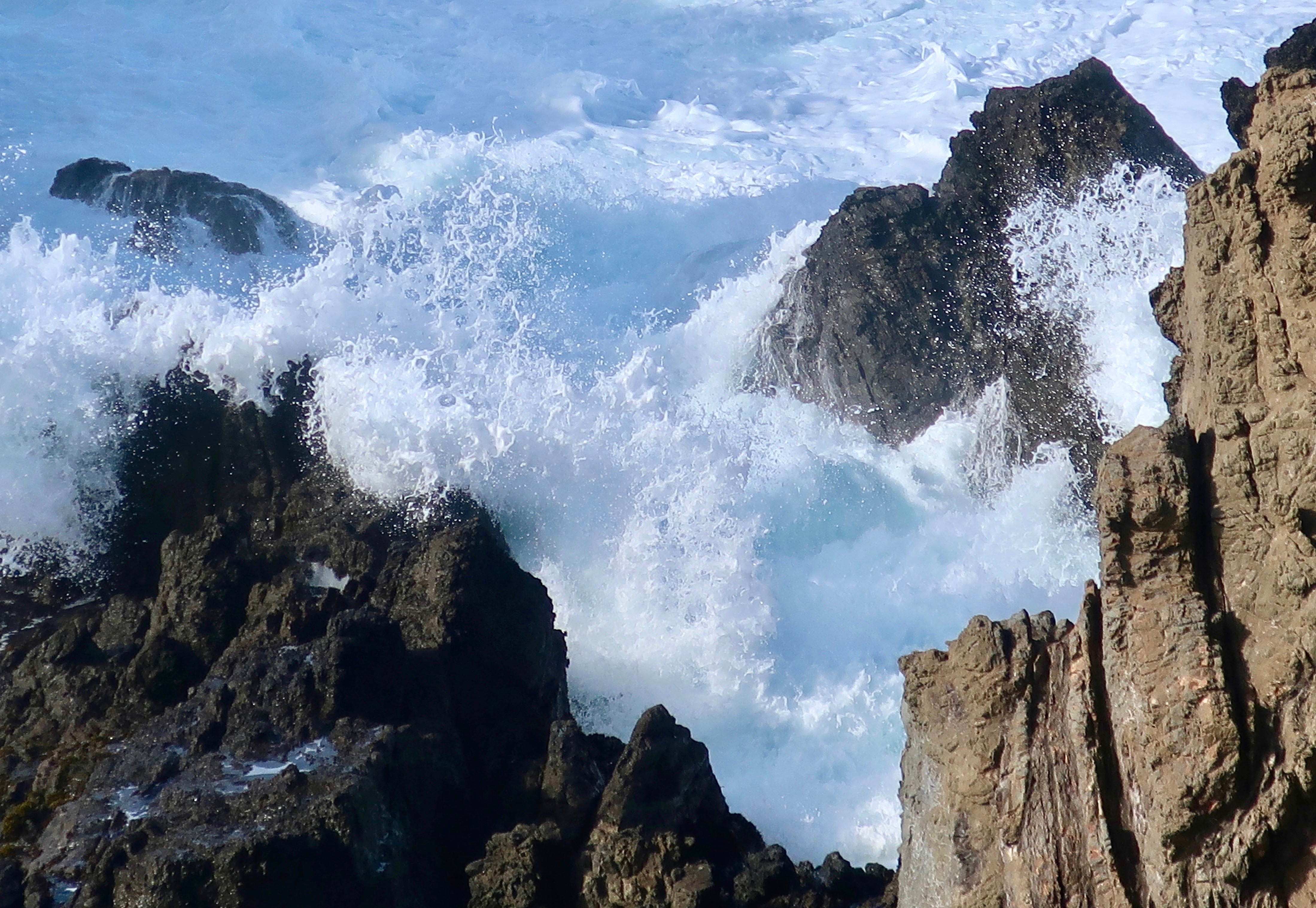
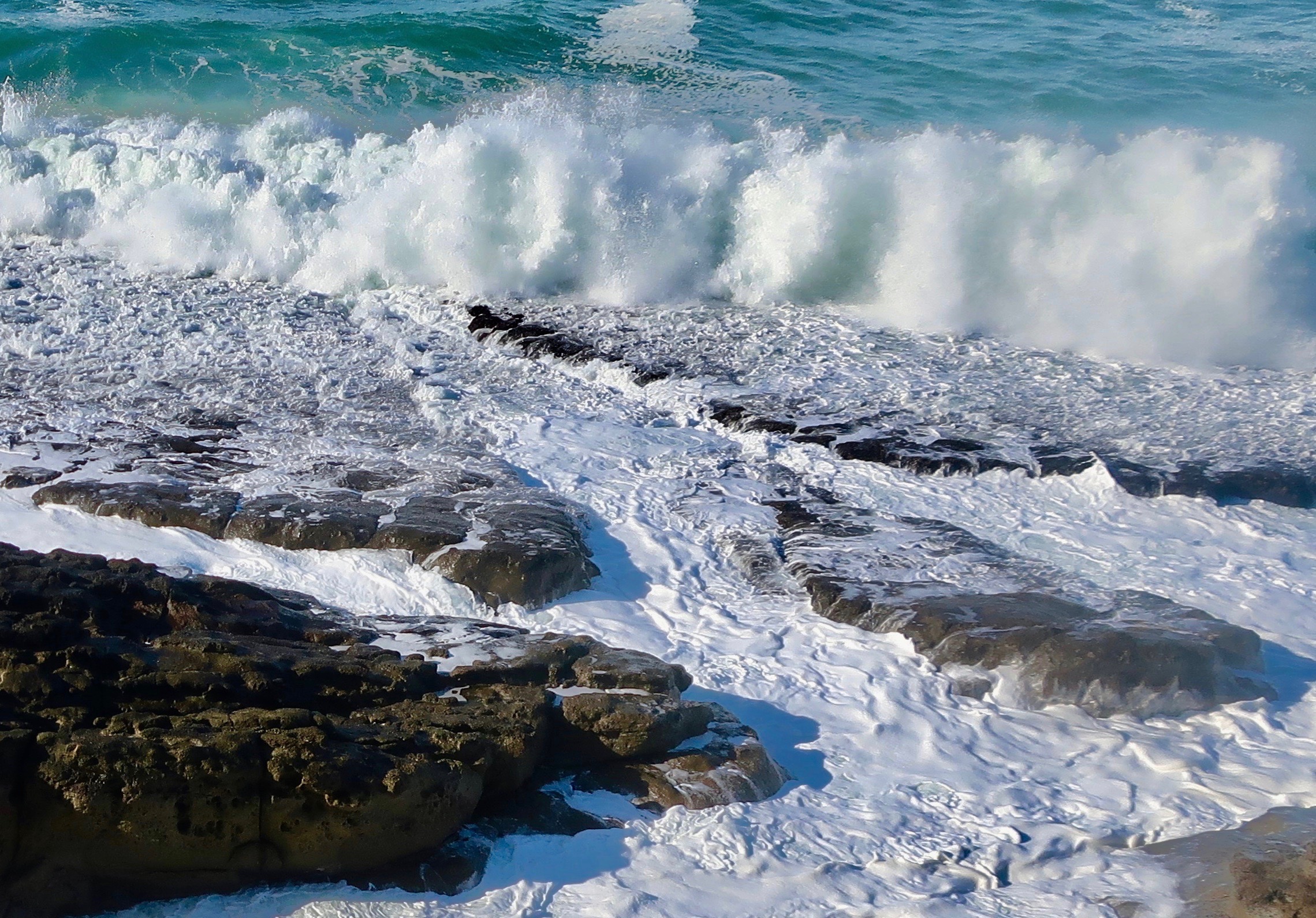
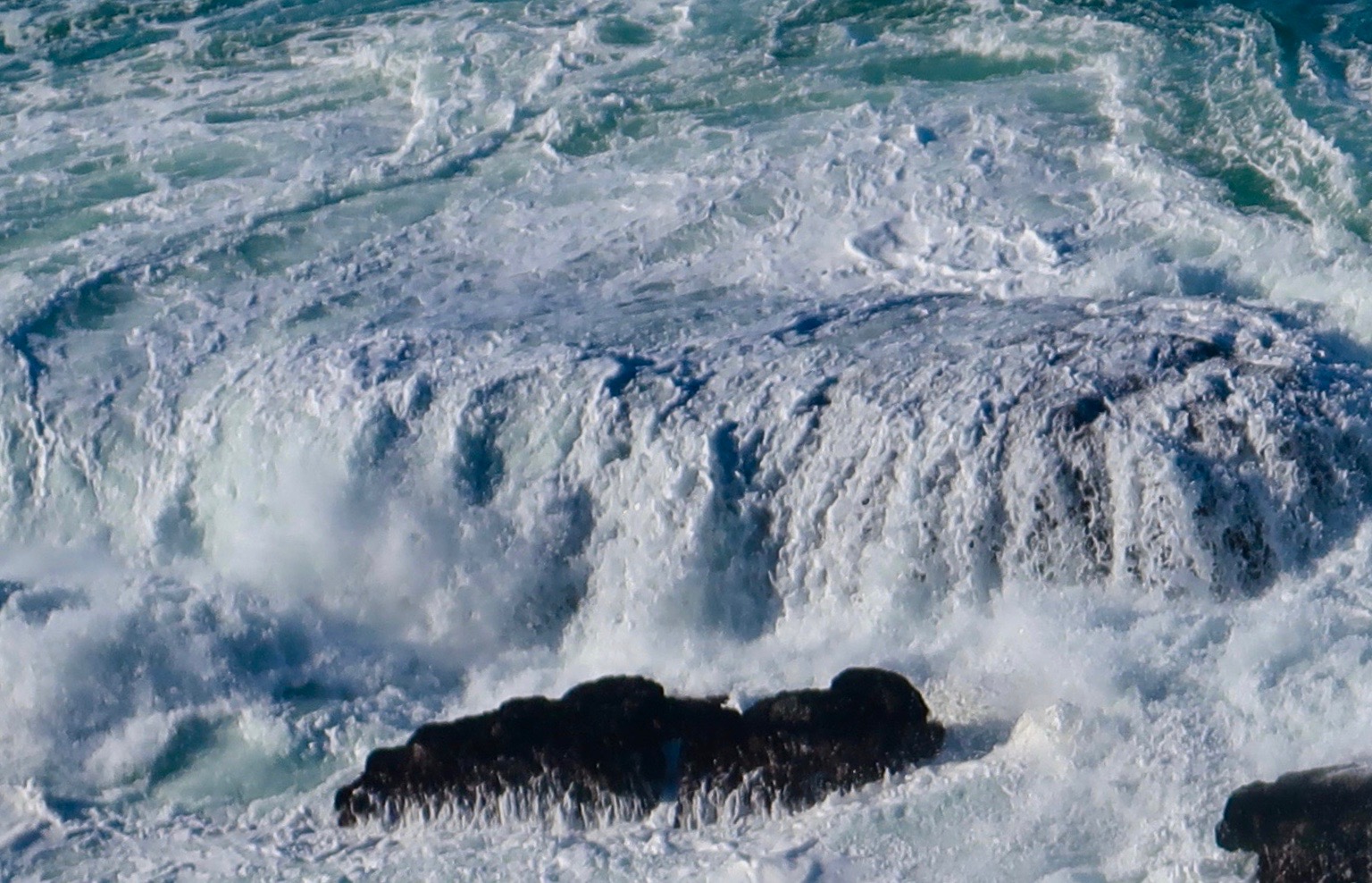
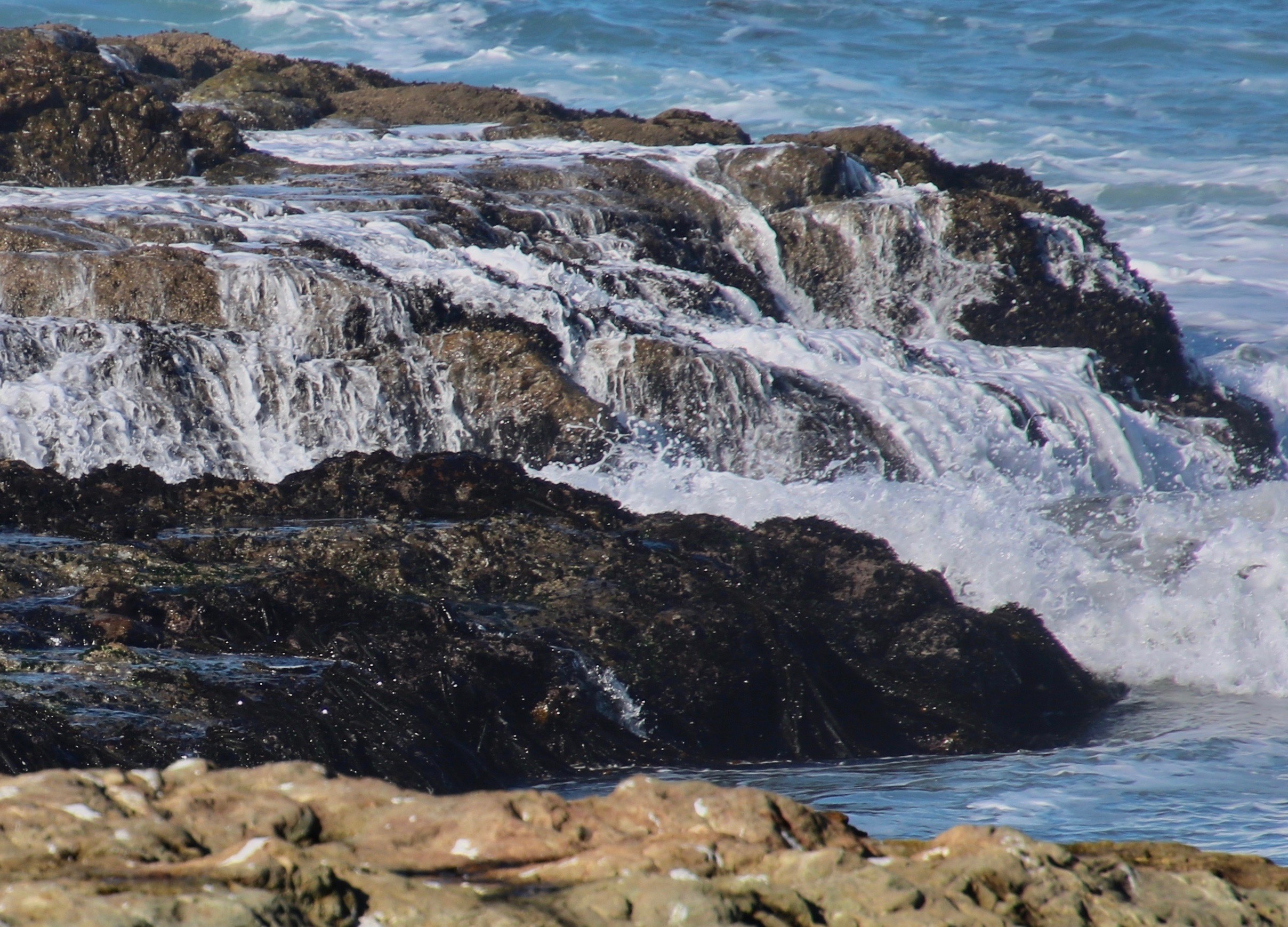
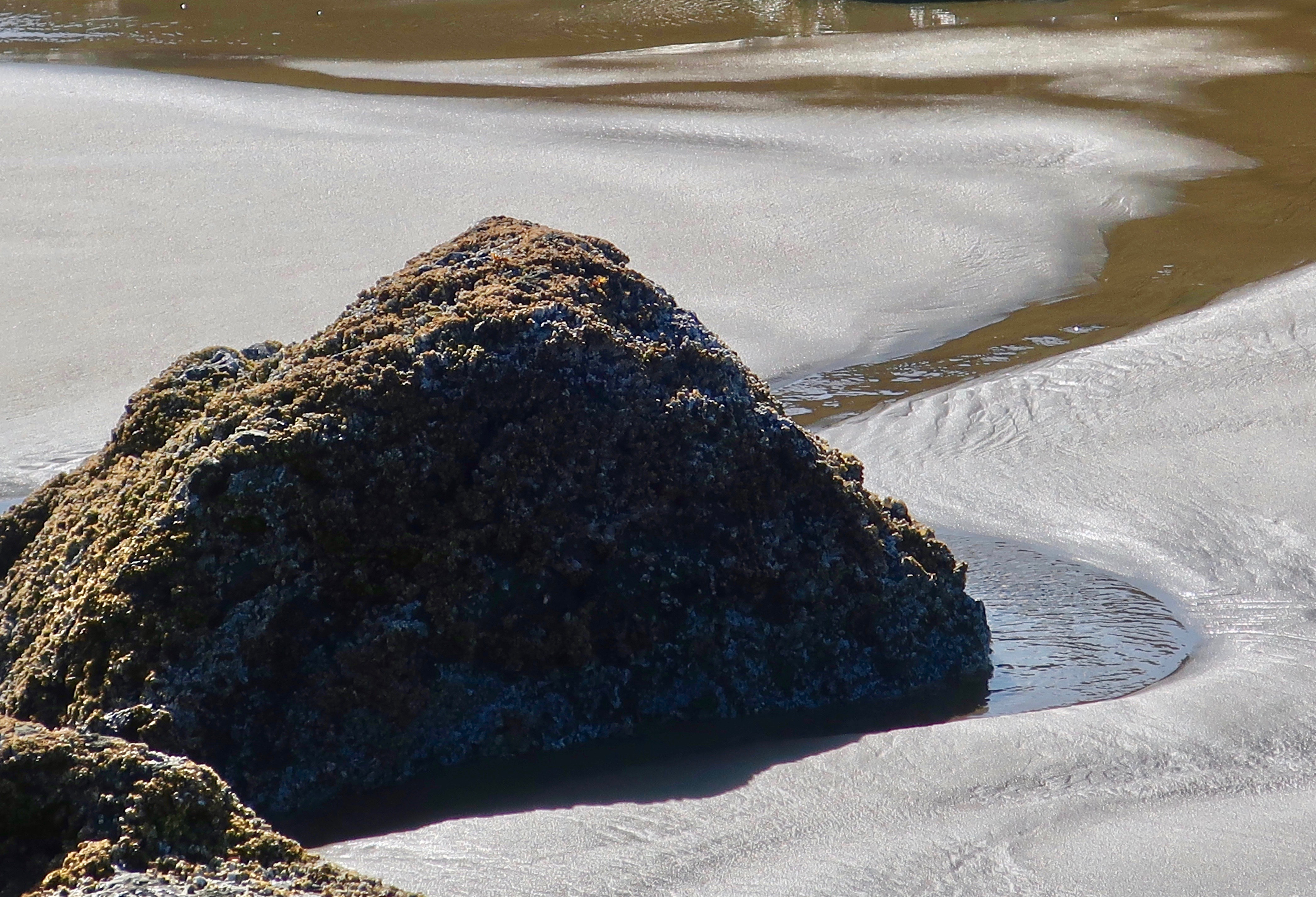
The sheer power of the ocean can make you stop, and say “ahhh.”
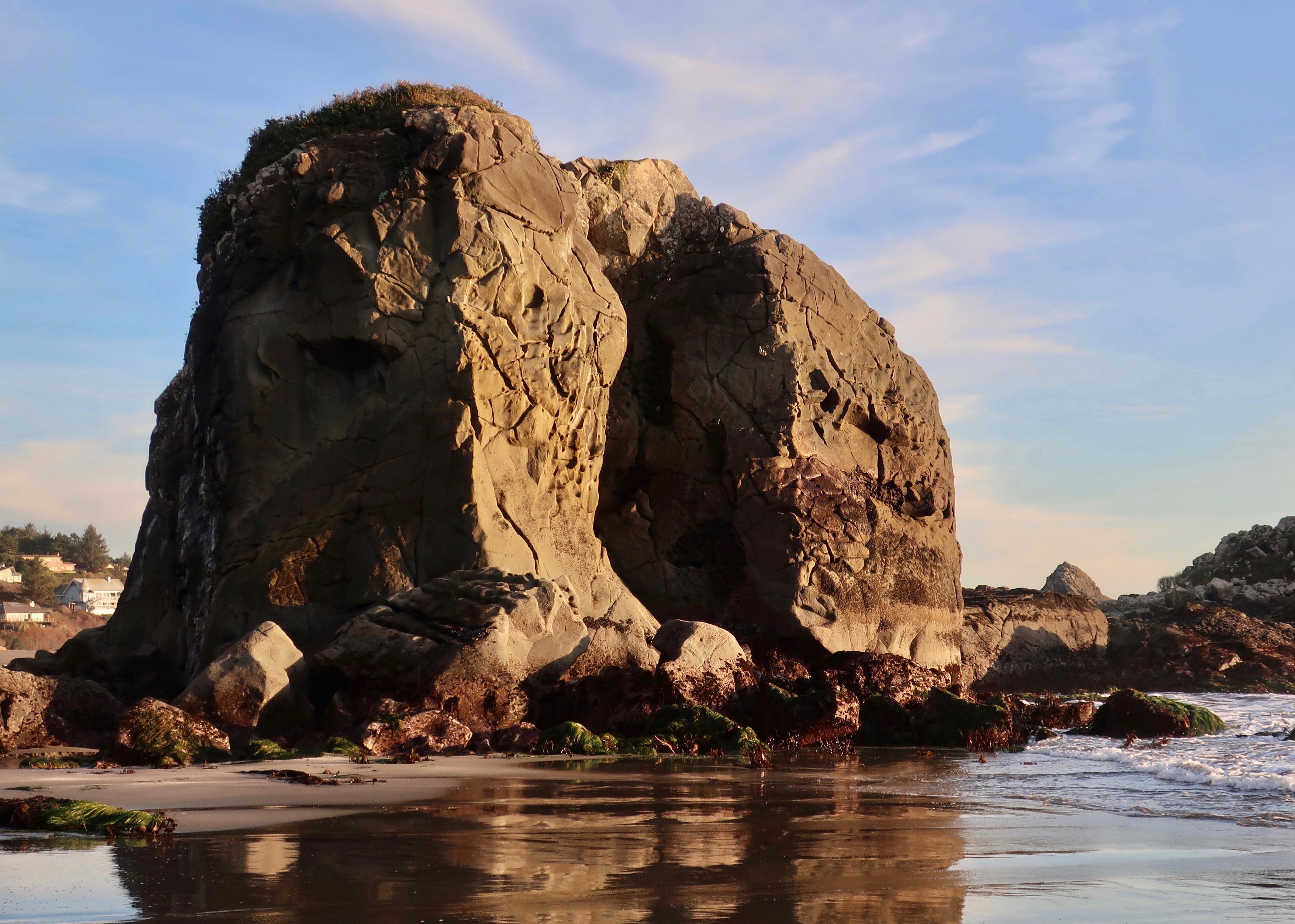
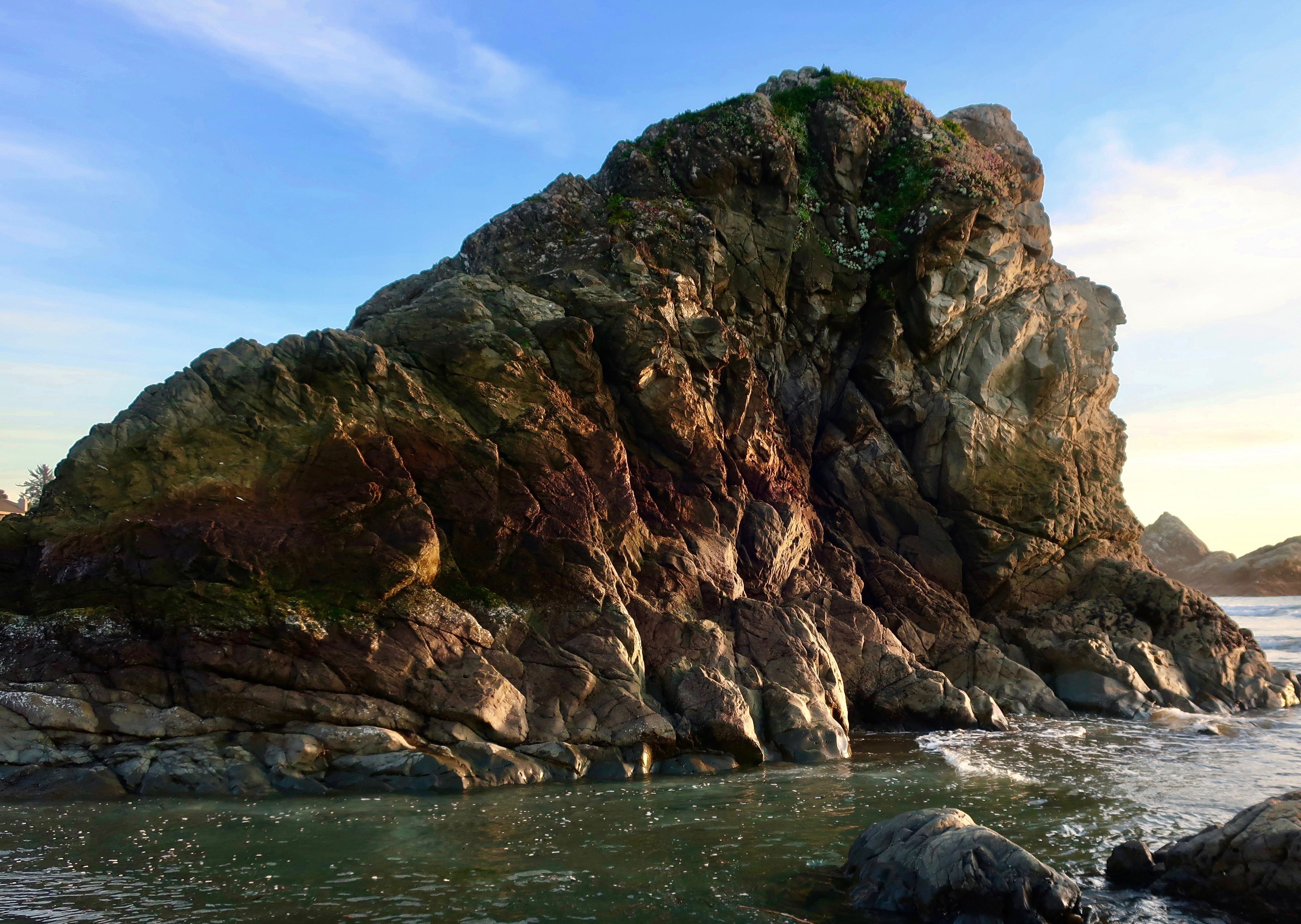
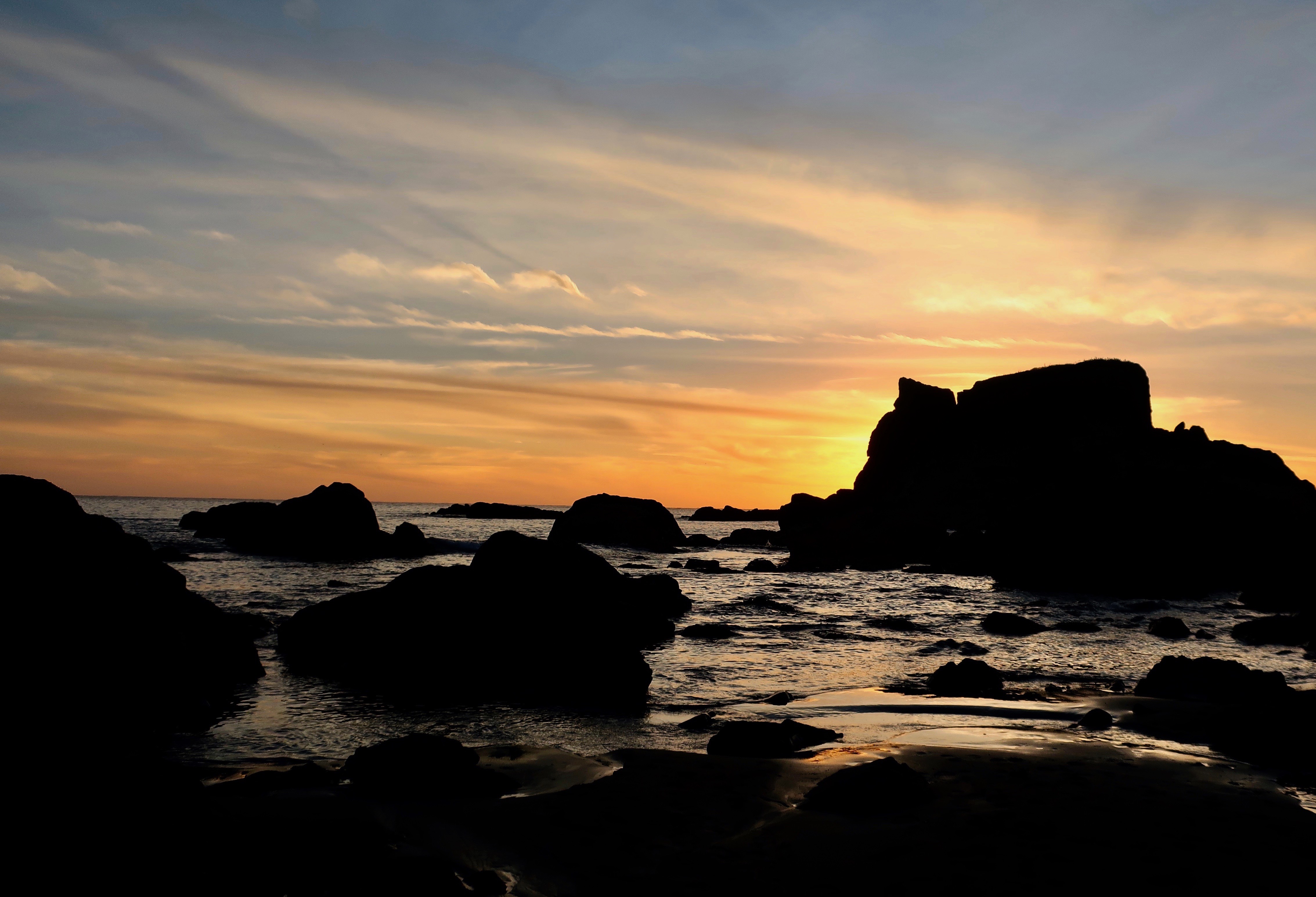
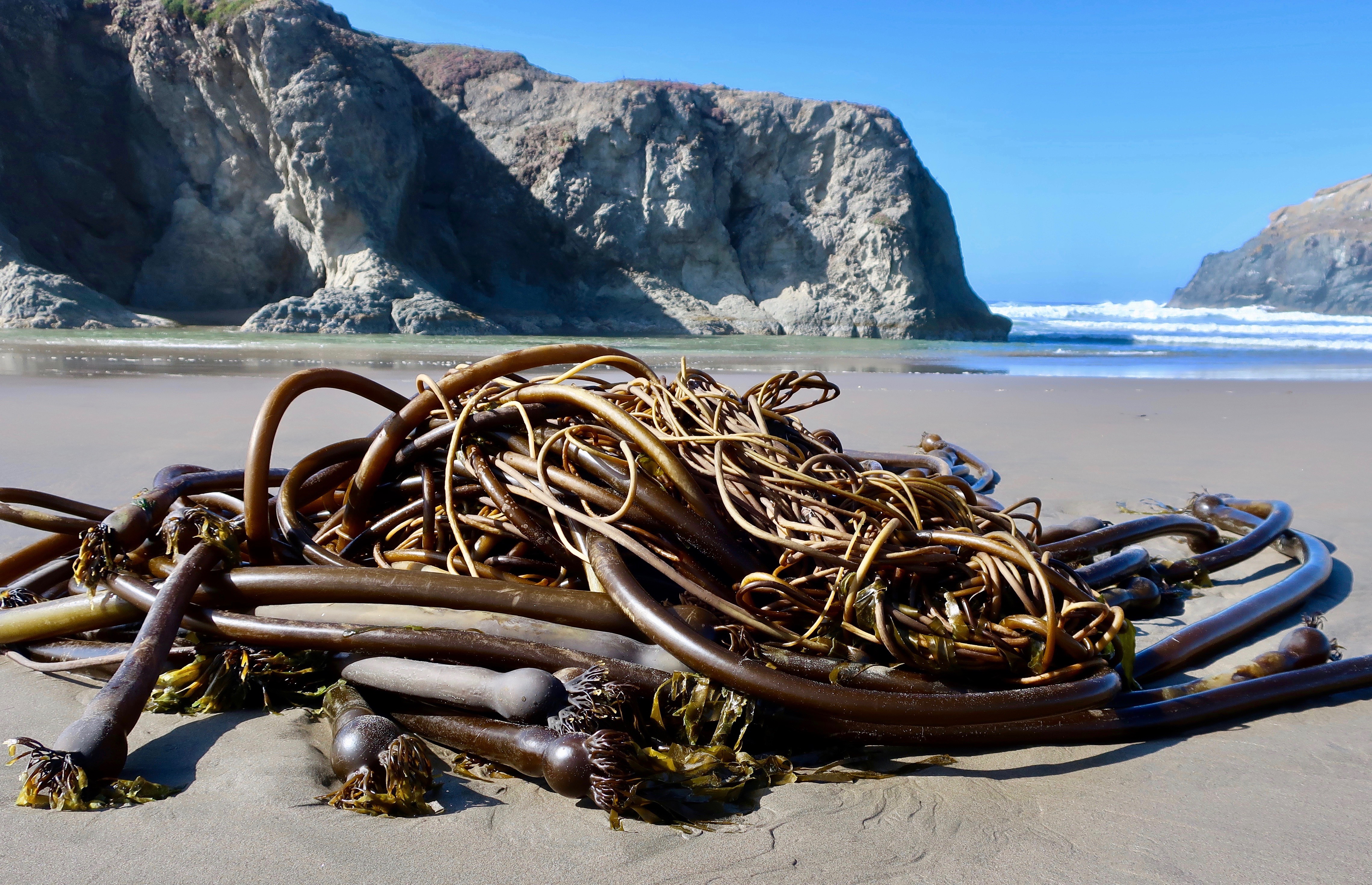
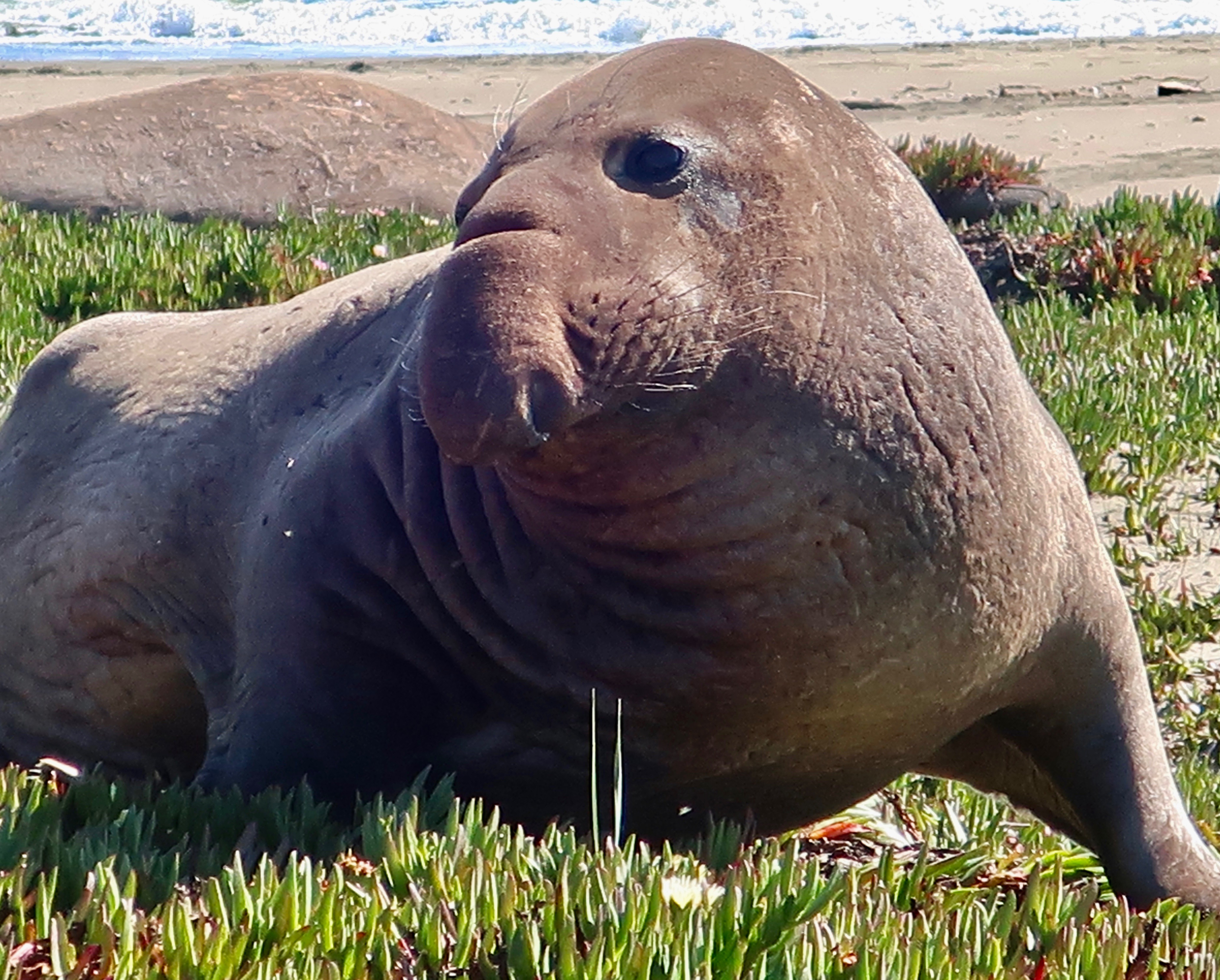
The ocean is much more than crashing waves, however. There is incredible beauty…
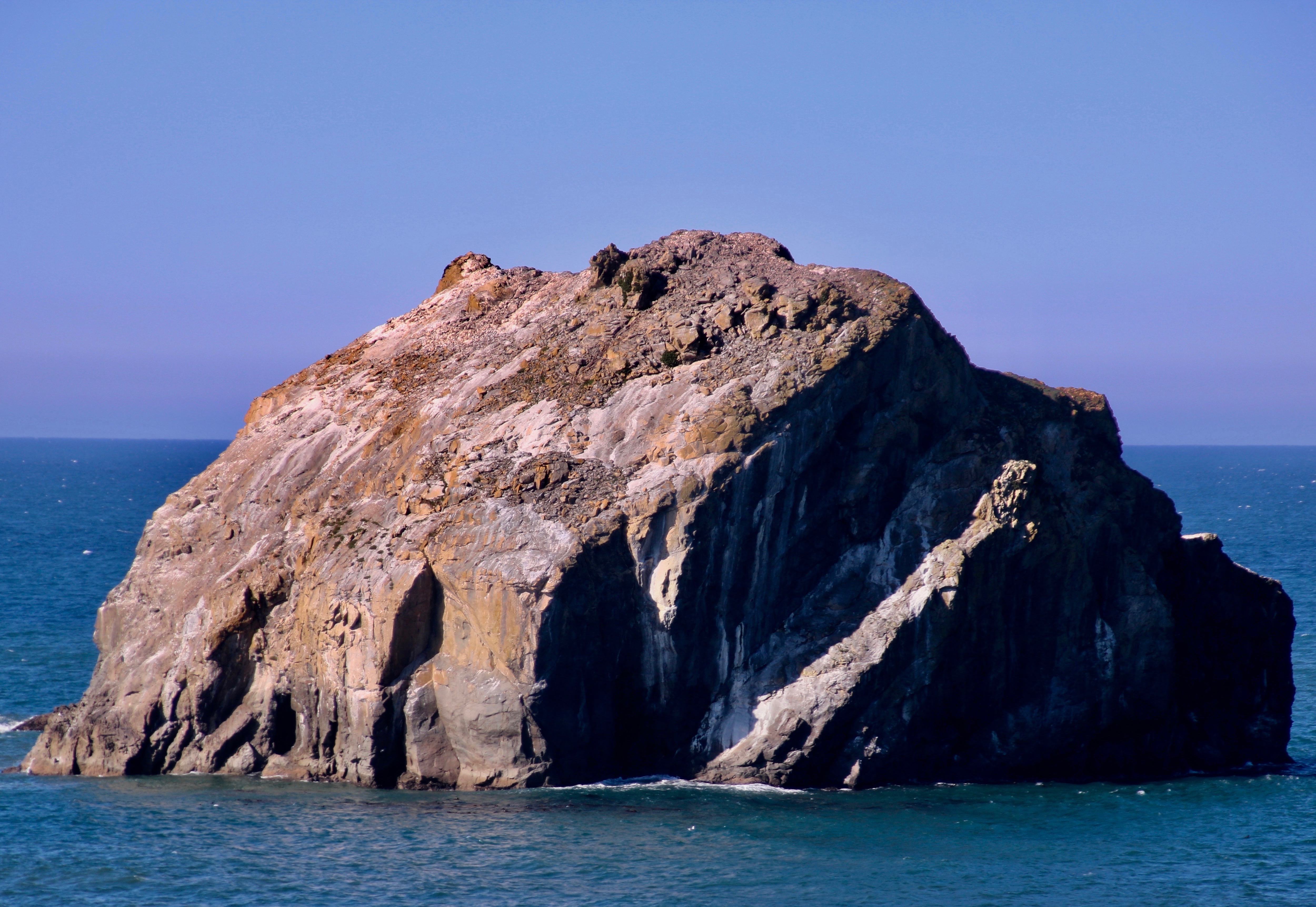
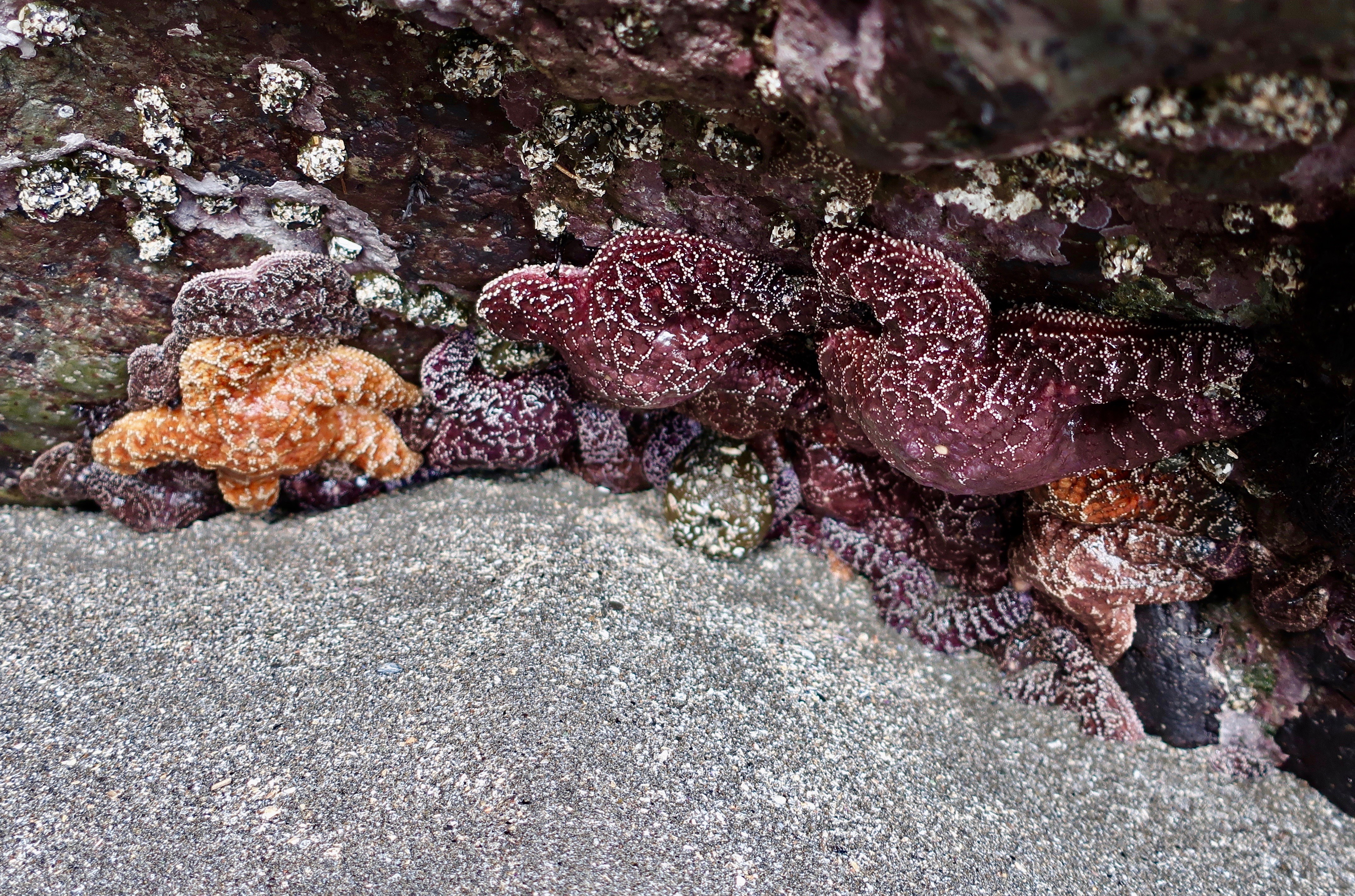
And an abundance of plants and animals uniquely adapted to life on and in the ocean.
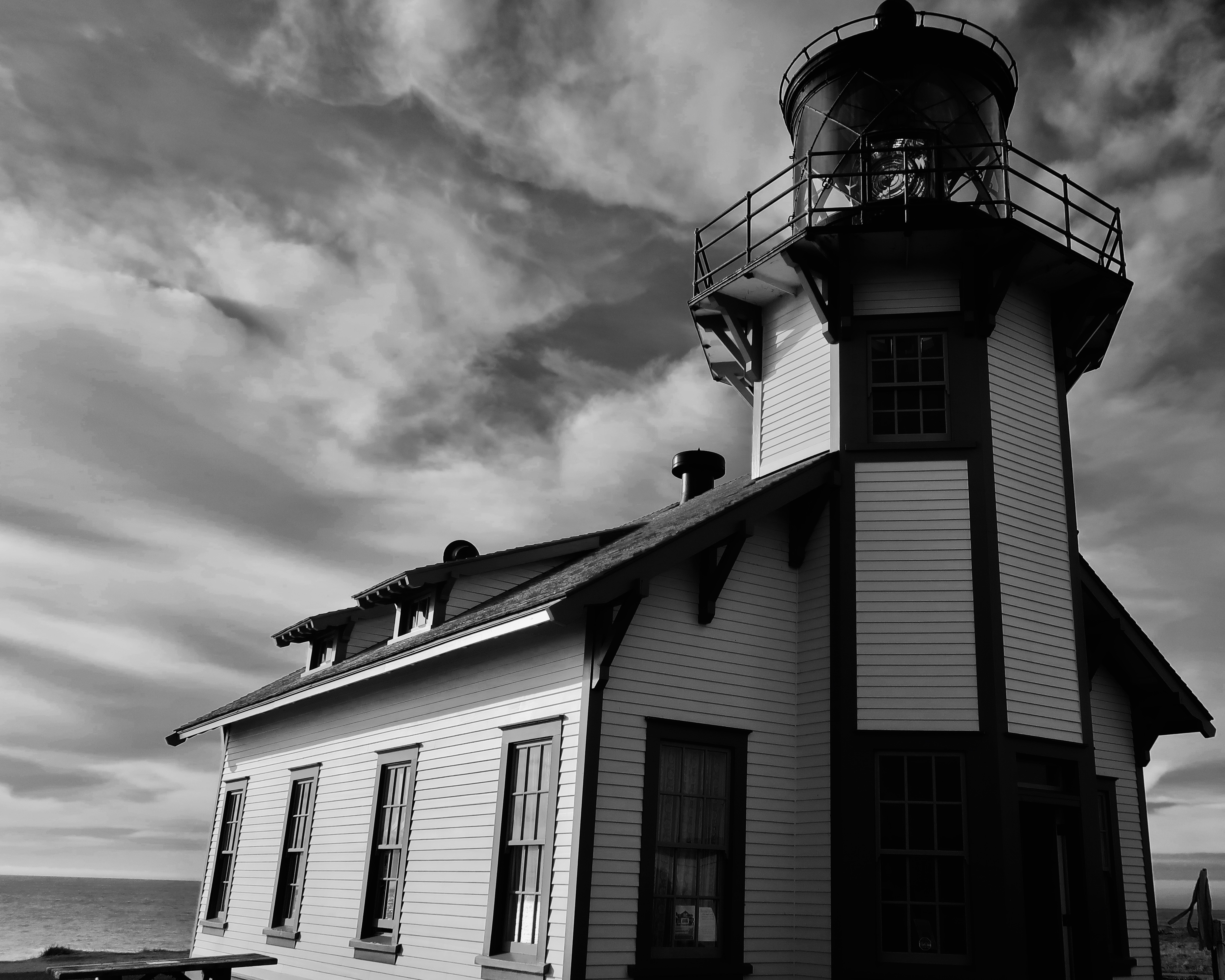
I’ll conclude this first day of 2022 with a photo of the Cabrillo Point Light House, which has a beauty of its own. I rendered the lighthouse in black and white to reflect historical photos found in the lighthouse museum.
The cows had a hungry look in their eyes. We were thankful they were vegetarians.
Peggy and I had decided to revisit an old favorite of ours, the Palomarin Trail that enters Pt. Reyes National Seashore from the south. We had driven down to Bolinas and were on our way out the narrow, pothole-filled road that leads to the trailhead when we saw a series of poles, lined up like they were standing at attention in ranks. I knew immediately what they were.
The poles were part of the historic Marconi wireless radio station near Bolinas. At one point, they had been connected by wires.
In 1914, decades before the likes of Elon Musk and his techie cohorts started working on worldwide wireless technology, Guglielmo Marconi, the inventor of the wireless radio, had built a huge, wireless radio station near Bolinas to send Morse Code messages flying across the Pacific Ocean, setting up the first-ever communication system between ships at sea and land. A small parking lot was connected to a walking trail that wound its way past the historic poles and toward the ocean. We were easily diverted from our original intent of hiking the Palomarin Trail.
The pole-filled field was doing double-duty as a cow pasture and a herd of cattle insisted on checking us out— up close and personal. It was lunch time and they may have thought we were sneaking alfalfa past them. The Morse Code in the title, BTW, spells C -.-. O —, W .–, in case you were wondering. And boy, that takes me back to my Boy Scout days in the 50s when memorizing Morse Code was essential to working your way up through the ranks.
We checked out the poles, talked with the cattle, and had a pleasant walk out to the coast with both Peggy and me taking photos.
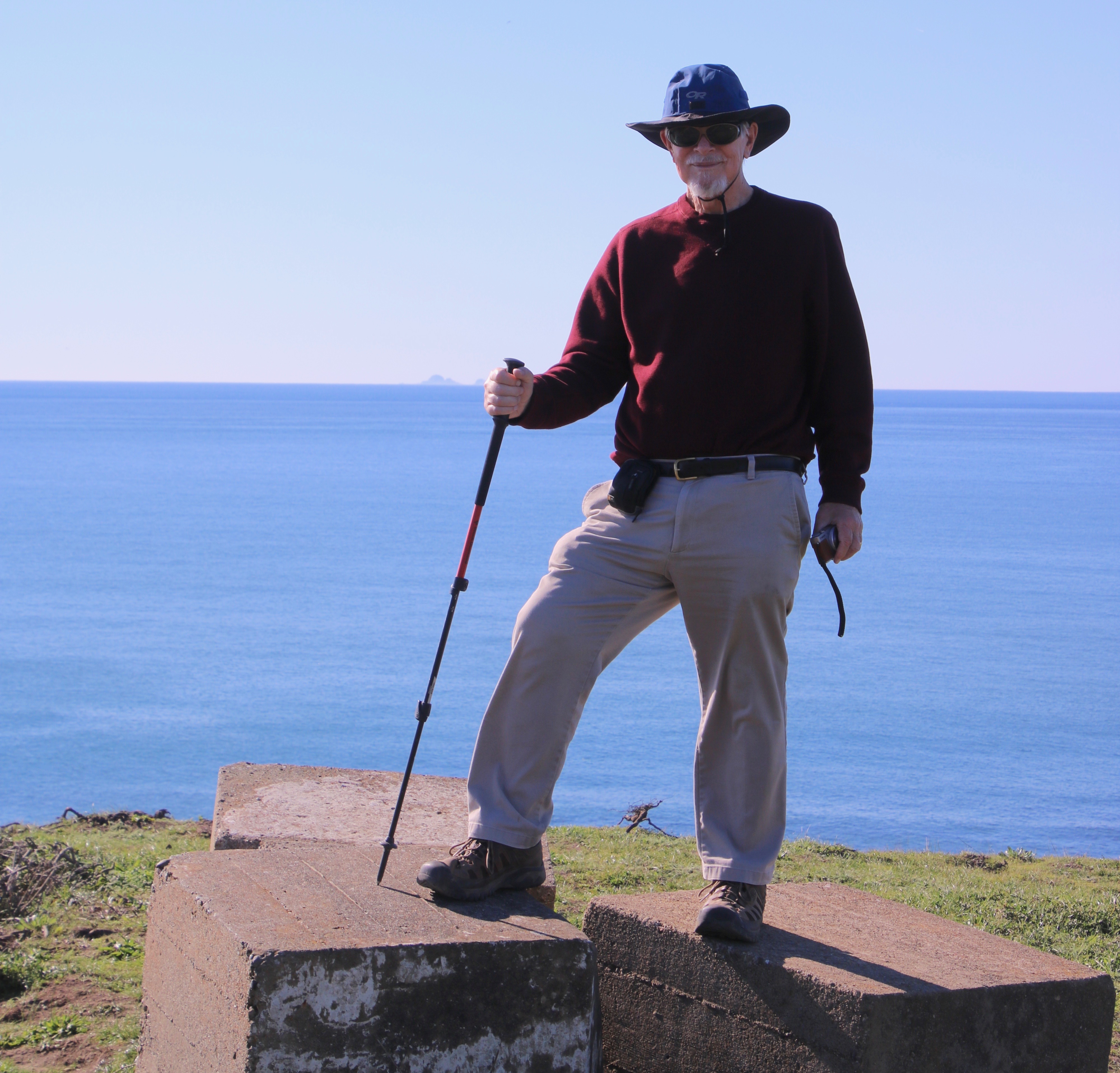
Not quite Mt. Everest, but I was still willing to pose for Peggy. We found large cement blocks throughout the area. At first, I though they might have been part of the coastal fortifications the US built along the Pacific Coast in WW II. Then we decided they were used to anchor the poles and wires. (Photo by Peggy Mekemson.)A whole herd of cattle was lined up along the road. They remained on the road, not budging as we walked by.I thought this young fellow munching on grass was quite handsome.Peggy stopped to admire a lone tree on our walk. The brush had a soft, welcoming look to it. But looks can be deceiving!It was close to impenetrable. As we approached the coast, the Pacific Ocean stretched off into the distance. The Farallon Islands can be seen as bumps on the horizon. They were once known at ‘The Devil’s Teeth’ for their ability to rip the bottoms out of sailing ships. In the 1800s, millions of birds’ eggs were taken from the islands to feed San Francisco’s growing population. Today the islands are a designated wilderness area and are part of a marine sanctuary. The birds no longer have to worry about their babies being stolen. Looking north, we saw some of the towering cliffs found along the Pt. Reyes National Seashore. Sir Frances Drake, the renowned English hero and buccaneer (fancy name for pirate), apparently admired these cliffs on his visit to the area in 1579. (Photo by Peggy Mekemson.)Looking south we could see the giant Sutro Tower that dominates the San Francisco skyline. Herb Caen, the well known and beloved columnist of the San Francisco Chronicle, once described the tower as a “giant erector” that was stalking and planning to eat the Golden Gate Bridge. I read Caen religiously when I was growing up. It was back when newspapers still had a sense of humor, before they adopted their Doomsday, Penny Henny view of the world. (Photo by Peggy Mekemson.)
Afterwards, we stopped off in Bolinas for lunch. It’s another favorite coastal town of mine. One reason is the fact that the locals refuse to have signs leading into the town from Highway 1 for tourists to follow. Whenever Cal Trans puts one up, it’s torn down. I think that Cal Trans has finally given up. At least I didn’t see any signs. It has always been a fun, quirky town with its own unique cast of characters. Last time when Peggy and I visited with our friends Ken and Leslie Lake, we came on a bookstore without staff. A sign said “Take any book you want and leave whatever you think the book is worth to you in the cash box.” It was a very Bolinas type of thing.
While I’m on Bolinas stories, I’ll mention that it was also the site of my first ‘Hippie’ experience. I’d stopped in the town in 1968/69 and decided to do a little sunbathing on its infamous nude beach, which I had read about in the San Francisco Chronicle. It was a time before Google listed “The Best Nude Beaches in Marin County,” a time when the Protestant ethic still reigned supreme among America’s middle class. I confess I was a little nervous about getting naked, but it was the sunburn that left a lasting memory!
A sign of the times in Bolinas. As we were walking through the town in search of lunch, we came across a car with a ladder on top that included a sign that set me to laughing. I could identify with it.
Having featured cattle today, it is only right that I should feature a horse as well. It’s a requirement of the Old West. The day after our Bolinas walk found Peggy and I hoofing it along the Bear Valley Trail. It connects the Visitor’s Center with the ocean in an 8-mile round trip. We were feeling our oats, so to speak, when we came across a pair of real hoofers, i.e. horses. A woman was walking one and stopped to chat. As it turns out the horses were part of ‘San Francisco’s Finest.’ It was a police horse, a proud member of the mounted patrol that can often be found patrolling Golden Gate Park. They’ve been at it continuously since 1864. The horses were out for a play day on the Bear Valley Trail.
Peggy, who likes horses, insisted on snuggling up to it and I dutifully snapped a photo on our iPhone. I, on the other hand, am not a horse person. It isn’t their size, their looks, or their personality, all of which I find pleasing. It’s their smell, and the fact that they often leave prodigious piles of poop along hiking trails. Have you ever seen a sign that says “Clean up after your horse?” I’m not sure what it is about their smell, but it clings to you. I wonder if cowgirls and cowboys think of it as perfume?
Peggy snuggles up with the horse along the Bear Valley trail.
That does it for today. I’ll wrap up our recent visit to Pt. Reyes in my next post. Then it will be off to Fort Bragg and Mendocino.
At 7.9 on the Richter scale, the 1906 San Francisco Earthquake wreaked massive damage both in structures destroyed and lives lost. This photo is from the National Archives.
I was wrapping up my day at the Lung Association in Sacramento when the building started moving shortly after 5 p.m. on October 17th, 1989. Peggy and I were at the very beginning of our relationship. You might say, it was off to a shaky start. “Is this the big one?” leapt into my mind as I ran outside. But buildings weren’t falling or people screaming. “Not this time,” we thought, relieved.
Had you been one of 62,000 baseball fans crammed into Candlestick Park for the World Series, or worse, commuting home from work in the Bay Area, your perspective would have been substantially different. A major 6.9 earthquake had ripped into the Santa Cruz Mountains along the San Andreas Fault south of the stadium. Nearby freeways collapsed including a section of the Bay Bridge, numerous buildings were destroyed or damaged, 63 people were killed and 3,757 injured by what became known as the Loma Prieta Earthquake.
A number of faults are located under the Bay Area. The next big earthquake is projected to be along the Hayward Fault. The Pt. Reyes National Seashore is the land jutting out to the left of the San Andreas fault at the top of the diagram.
Eighty-three years before the Loma Prieta earthquake, an even greater one shook the Bay Area. Blame plate tectonics. The San Andreas Fault, marks a distinct boundary as the Pacific Plate grinds its way north past the North American Plate, building pressure until an earthquake erupts. At 7.9 on the Richter Scale, the energy released from the 1906 San Francisco Earthquake equaled blowing up an estimated 6,270,000 tons of TNT!
Earthquake Trail, found next to the Visitors’ Center at Pt. Reyes National Seashore, commemorates the event. Peggy and I were there last week and went for a walk along the trail. Like San Francisco, Pt. Reyes felt the full fury of the earthquake as portions of the land moved north as much as 20 feet.
With arms stretched out, Peggy points to two sections of a fence that were separated during the San Francisco Earthquake. They have been rebuilt to demonstrate the power of the earthquake. The lower fence had moved 16 feet north. The San Andreas Fault is located directly under Peggy’s feet.
The trail is easy to hike and is well marked with information signs. Its bucolic, serene beauty makes the damage done by the 1906 earthquake hard to imagine, however.
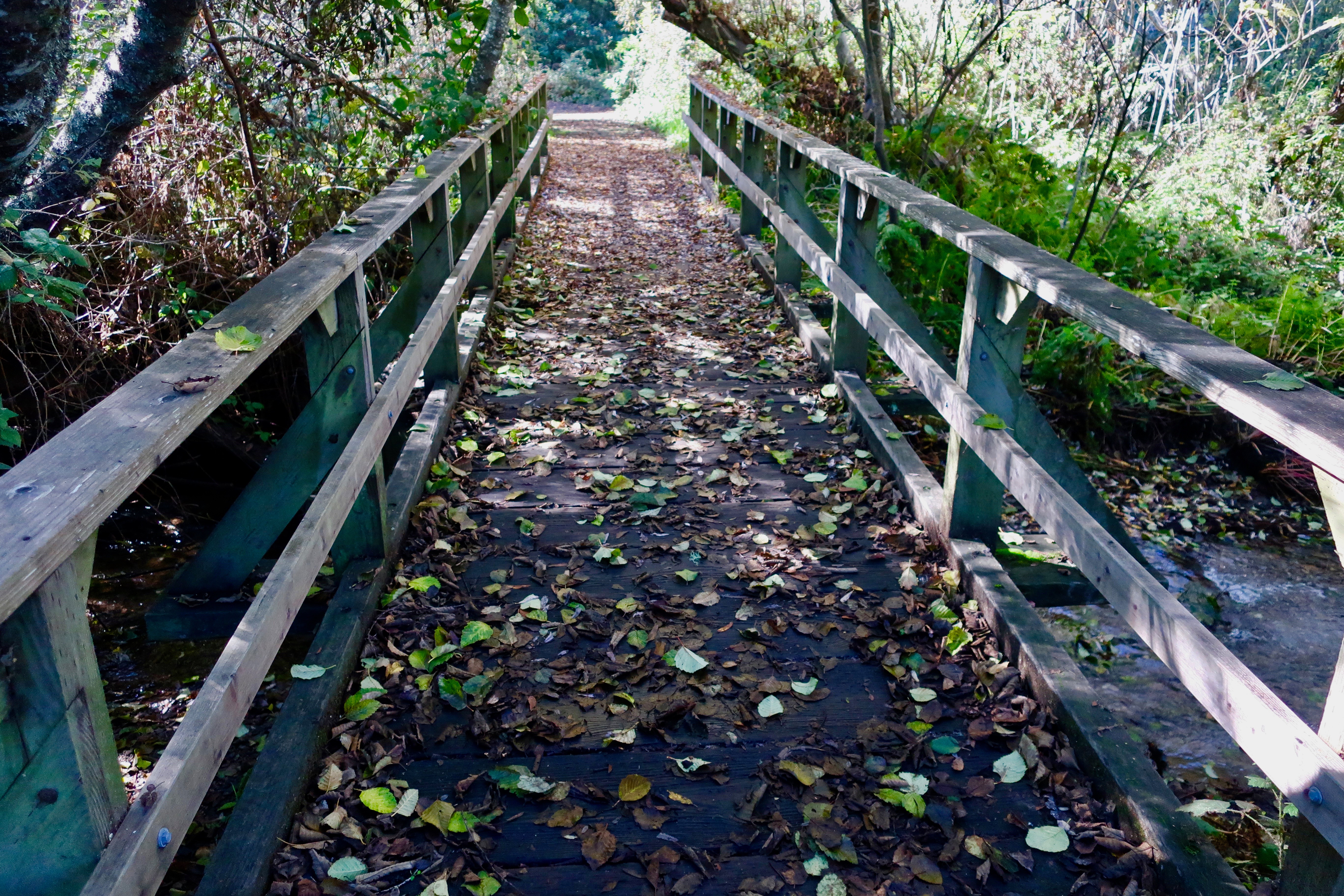
The peaceful beauty found along the Earthquake Trail at Pt. Reyes belies the potentially destructive force that lies just beneath it. Fall leaves added color.While the trail is short and easy to hike, it provides a variety of scenery, like this meadow…Interesting trees are perfect for little people to explore… (Photo by Peggy Mekemson.)A fun stump found along the trail.Peggy took an interesting closeup. She saw a dragon, a monster, and more….oh, my.Birch.
MossVarious Conifers…And in conclusion, a bit of sunshine.
NEXT POST: More photos from around Pt. Reyes National Seashore and our maiden three week voyage with Iorek the Truck and Serafina the trailer.
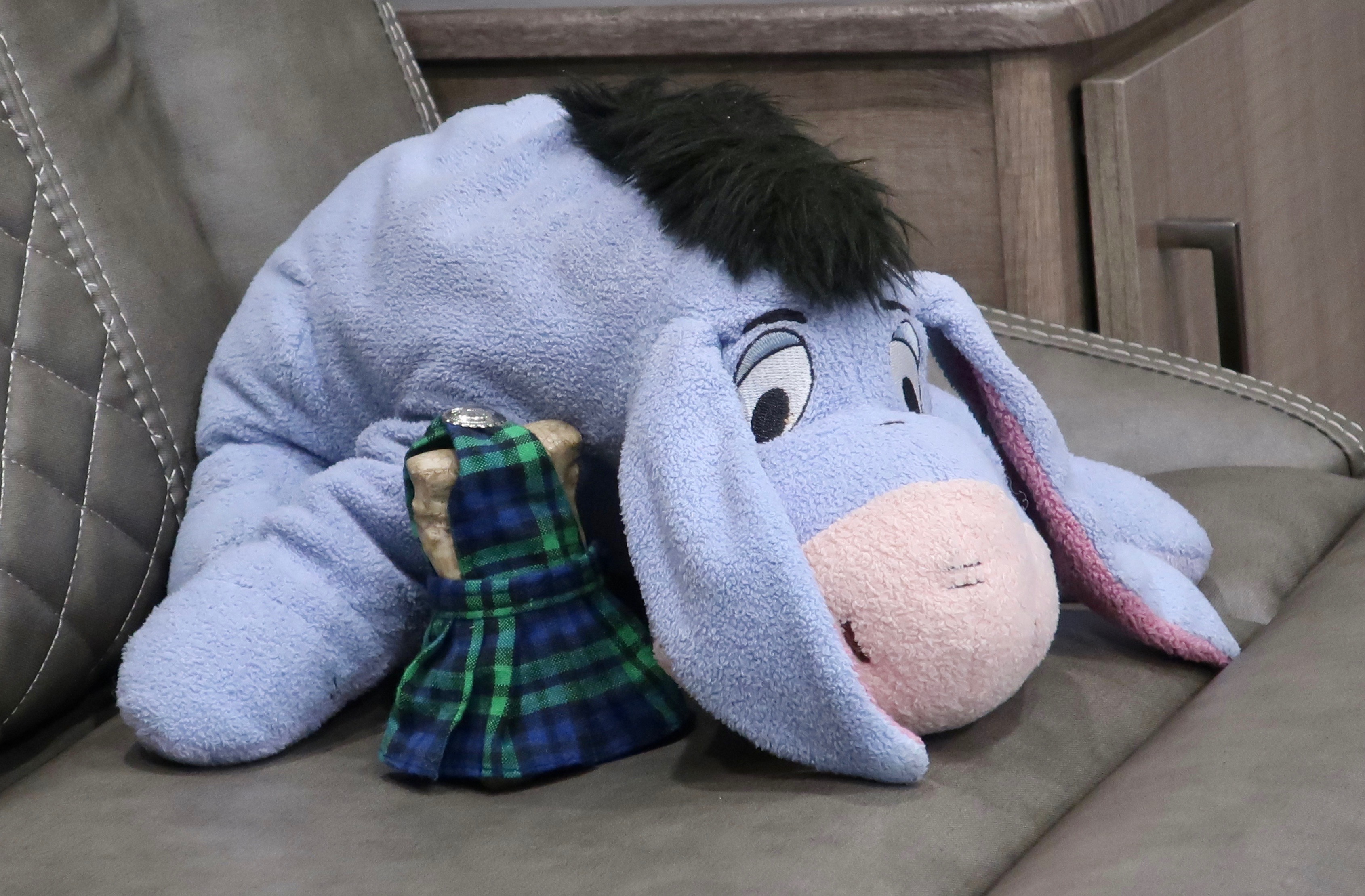
Names are important. Almost everyone knows Eeyore the Donkey. If you read this blog, you also know Bone. He’s being a bit sartorial here, all dressed up in his kilt. He’s also known for running around naked.
I’ve been tardy in the world of blogging lately. My apologies. Other things have demanded my attention: Important things like learning to back up a trailer (a work in progress), or make the trailer’s hotspot work so we can have decent internet, or figure out what the hundreds of buttons (a slight exaggeration) in our new Ford 150 do. And a gazillion other things. Like the naming of the trailer…
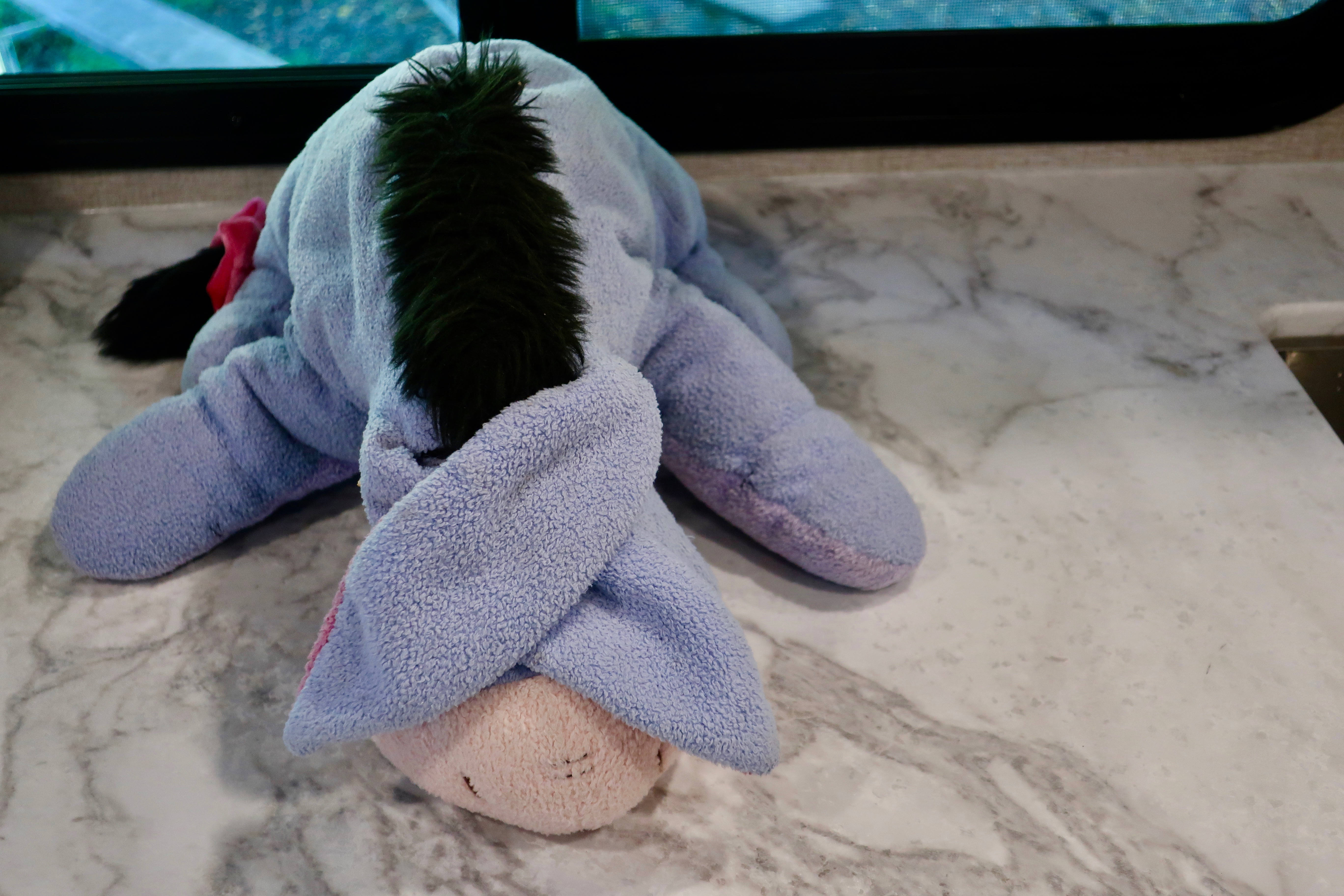
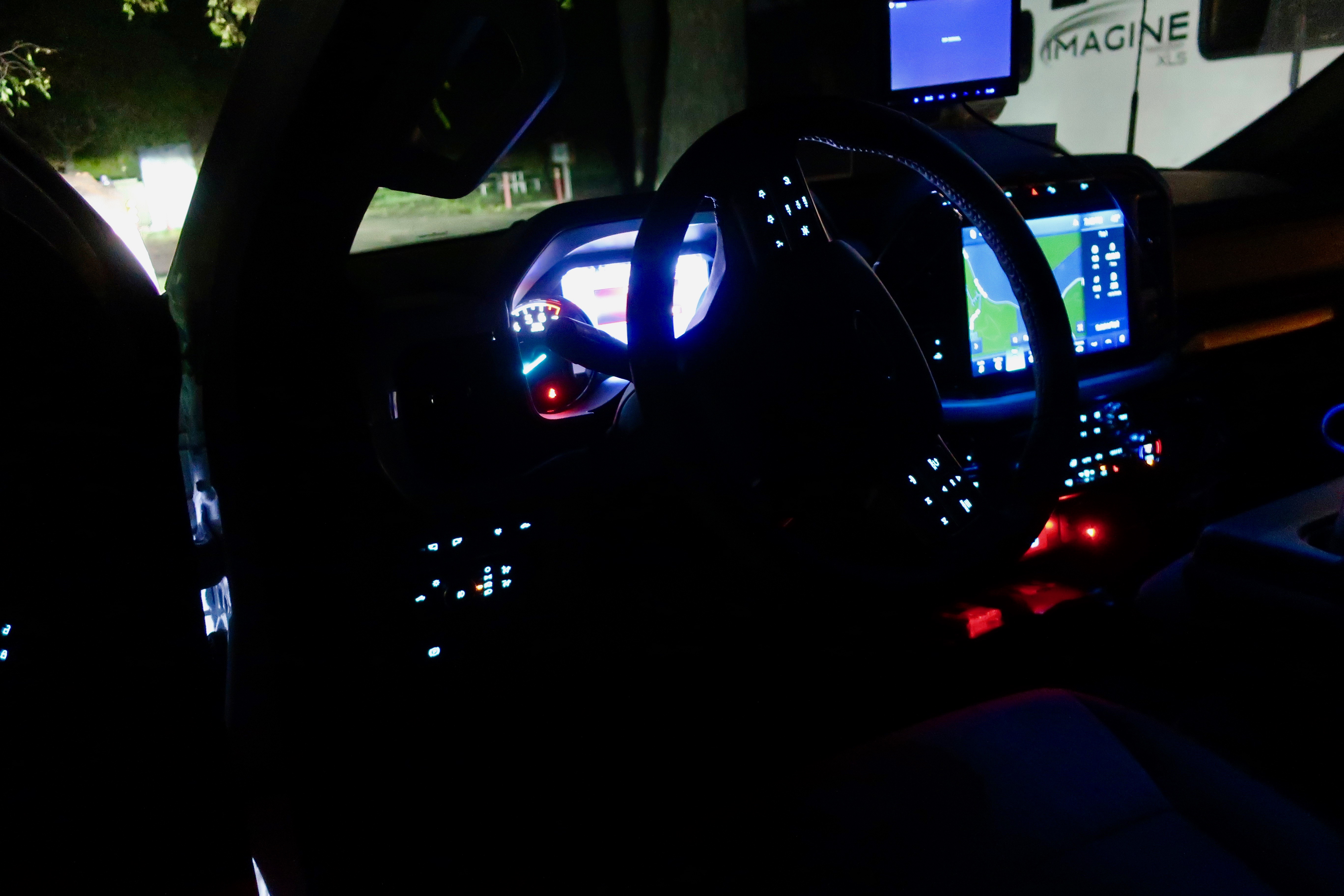
I asked Eeyore to help me back up the trailer last week in my first ever campground backup spot at Pt. Reyes National Seashore. This was his reaction. The Olema campground host was hardly more helpful. “I’ll be glad to come out and yell at you when your wife gets tired,” she told me. A partial view of the buttons on our truck, lit up at night. They are hard enough to figure out in the day when you can see their labels.
Names are important, right? They provide recognition. Everyone, or just about everyone, recognizes Eeyore, for example. And if you read this blog, the odds are, you know Bone. But did you know Bone and Eeyore are the best of buddies? They’ve been traveling with us together for over a quarter of million miles on North America’s highways and byways over the past 20 years. They became good friends when Eeyore saved Bone from hanging in Tucson. He’d robbed a bank, cheated at cards and hung out with ladies of the night.
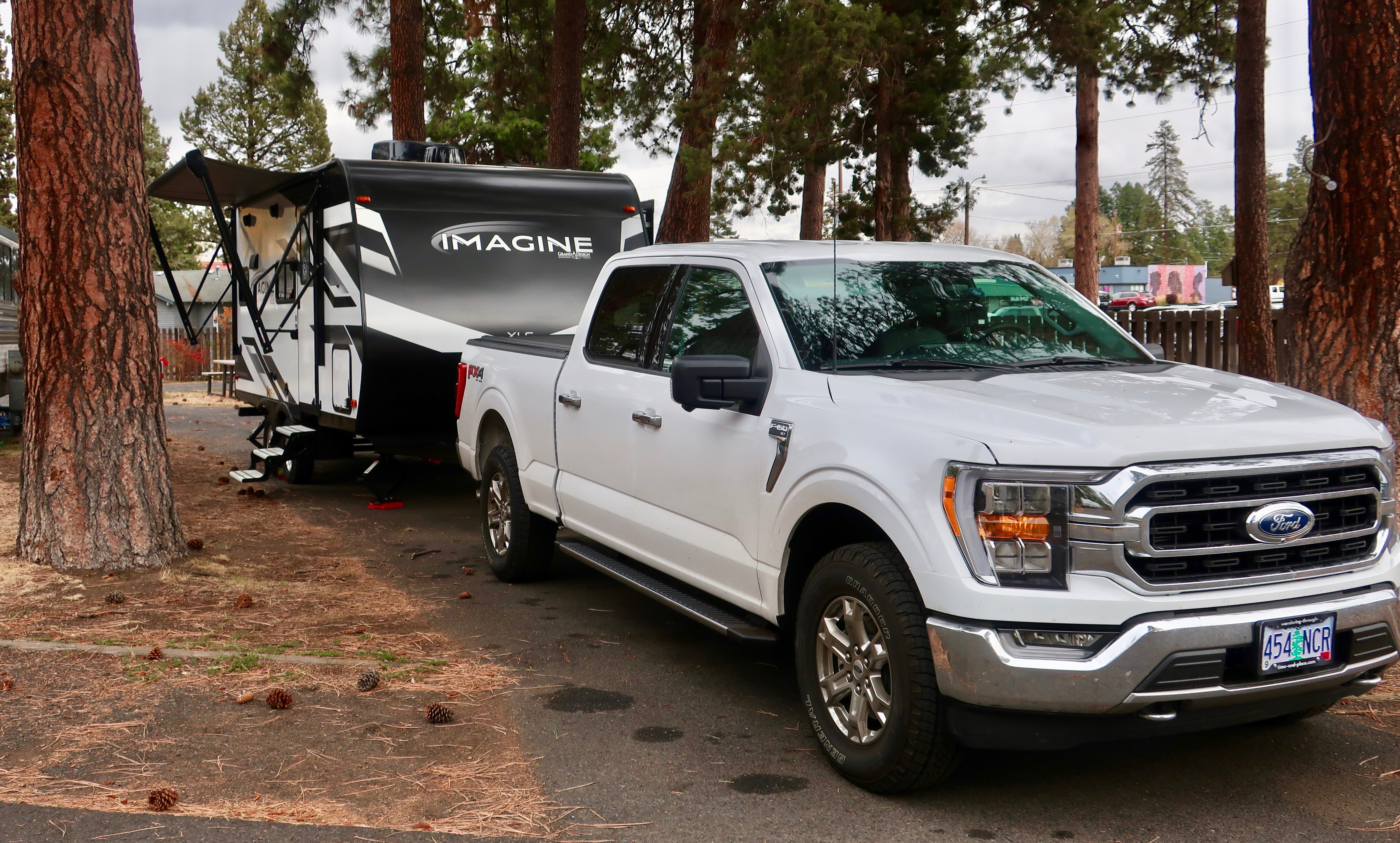
Naming characters like Eeyore and Bone is natural, but how many of you also name your vehicles? We always have and recently we were faced with the challenge of naming two: our new Ford 150 pickup and our new Imagine trailer. The truck was easy. It is big, strong, and white like a polar bear. Iorek (pronounced Yorek), a king of the polar bears in The Golden Compass, immediately popped into our minds.
Iorek the bear in a free, downloadable photo from his role in “Golden Compass.” He was also quite gentle in his role when it came to Lyra.
The trailer has proven to be more difficult. We wanted something that suggested wandering. After all, this blog’s title is Wandering Through Time and Place. My Pacific Crest Trail backpacking name was Wanderer. One thing was clear. The name for the trailer had to represent a strong, independent female personality who loves roaming to provide a fitting partner for Iorek. The two of them are hitched.
Peggy suggested that maybe we should just go with Wanderer. But we wanted something more exotic. Remember, our first travel van was named Xanadu after the ancient summer capital of Kublai Khan. The second was Quivera, in honor of a mythical Native American city of gold that the Spanish Conquistadors could never find because it moved around— a lot, apparently.
“Go for a character out of Greek (or Roman) mythology,” our son Tony urged. And certainly there were strong Roman/Greek goddesses who wandered. Think of Diana, the Roman Goddess of the Hunt (Artemis in Greek Mythology), who spent a lot of time traipsing around in the woods. Like Peggy. My kind of woman. Or Persephone, who split her time between Hades and the outer world, creating the seasons as she moved. Then there was Medusa. But her nasty habit of turning people to stone disqualified her. She was a sweetheart in comparison to Pandora, however, who opened her box and set free all of the horrors of the world. What are a few stoned people in comparison to that? The treasure trove of Greek and Roman mythology encouraged me to check out mythological figures in other cultures. I found a number of promising leads but none quite clicked with us.
We were also open to historical figures. A ‘legendary but possibly historical character’ out of Ireland’s ancient history caught my attention. Muirisc was given land by her father, the 66th high king of Ireland, between 300 and 200 BCE, in what is now County Mayo. According to Wikipedia, “She was known as a sea captain and a warrior who ‘ruled o’er hardy sailors and great men’ and was famed as much for being ‘daring’ and ‘bold’ as she was for her beauty.”
A wandering sea captain queen famed for her beauty, daring, and boldness— How could Iorek help but be charmed? But I don’t think “being ruled o’er’ was part of his agenda. (I’ve never been much on that, myself.) And he had someone in mind. “Serafina” we heard him whisper. She too was a queen, the queen of a clan of witches that live around Lake Enara in Finland. Like Iorek, she knows about extreme cold weather, and also like him, is a character in the Golden Compass. Both shared responsibility for helping and protecting young Lyra in her battles against totalitarian evil. They were a team.
It was hard to argue against Iorek’s logic. He’s the one, after all, who has to pull her along the highways and byways of North America. Plus, I like the way her name rolls off the tongue: srr-aa-FEE-na. And maybe, just maybe, she will jump on her broom and park herself in campground spots that are particularly tight!
Our new 2021 Ford 150 and 2022 Grand Design Imagine 17MKE. Are we ready to hit the road, or what! We are camped in Bend, Oregon as I write this blog. We came here to pick up our trailer from Blue Dog RV in Redmond, just north of Bend.
It’s not hard for Peggy and me to imagine a life of wandering. After all, we full-timed it for four years in our two Pleasure Way vans, Xanadu and Quivera. The first time we took a year off from work and travelled in Xanadu. The second time, we celebrated Peggy’s retirement with three years of exploring North America in Quivera. We are veterans of the open road, you might say, with a quarter of million miles crisscrossing the continent behind us.
But wandering with a trailer is a totally different kettle of fish, a virgin experience as our friend Leslie Lake would say. She also likes to note that virgin experiences are few and far between at our age and should be treasured.
I tend to agree but had serious second thoughts when Peggy and I mistakenly turned into a tiny parking lot yesterday and had to turn the trailer around while dodging parked cars. It quickly ramped up from virgin experience to Halloween nightmare. “Turn the other way!” my faithful traveling companion yelled at me from safely outside the truck as I was backing up. “No, the other way!” she yelled. Hmmm. After two or three times of that, pardon my French, I was beginning to wonder how many frigging ways a trailer can turn. And yes, I am well aware that the truck goes one direction and the trailer the other when you are backing up.
Aside from a very steep learning curve, we are really enjoying our new, tiny home and pickup. I decided to share a few photos of the Imagine 17 MKE. We haven’t named her yet, but the truck’s name is Iorik (pronounced Yorik). If you aren’t familiar with Iorik, he was the large, armored polar bear in the book/movie, The Golden Compass.
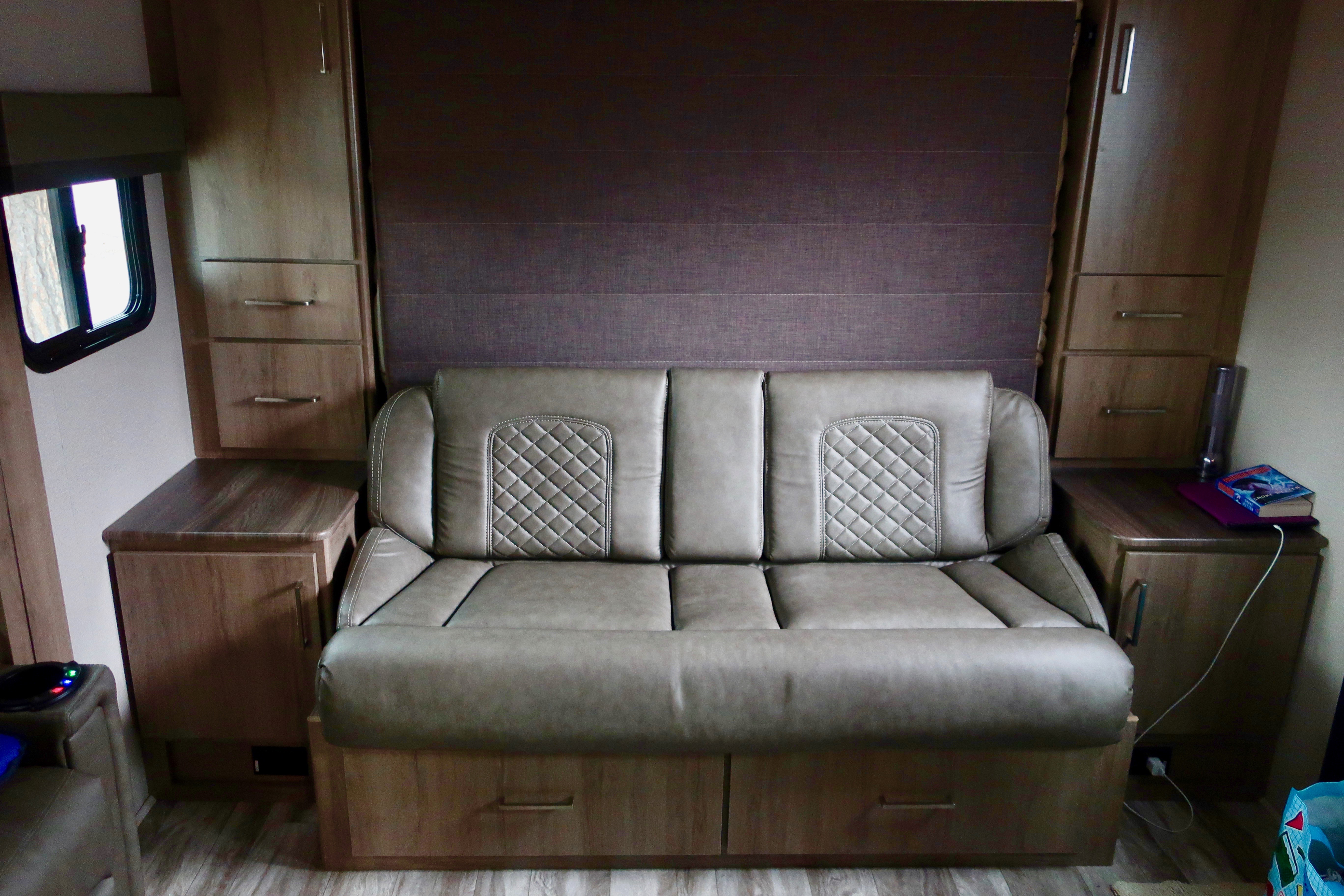
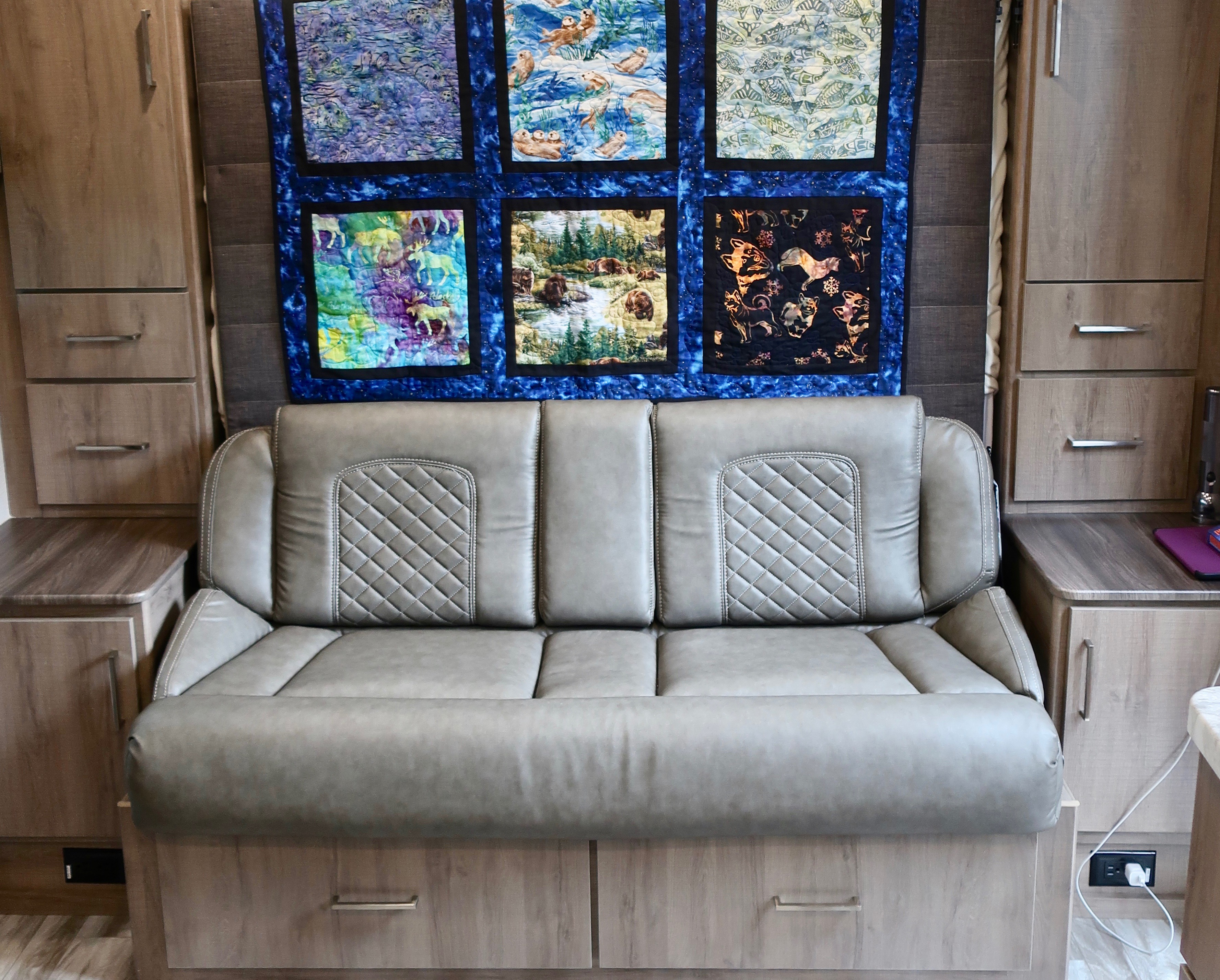
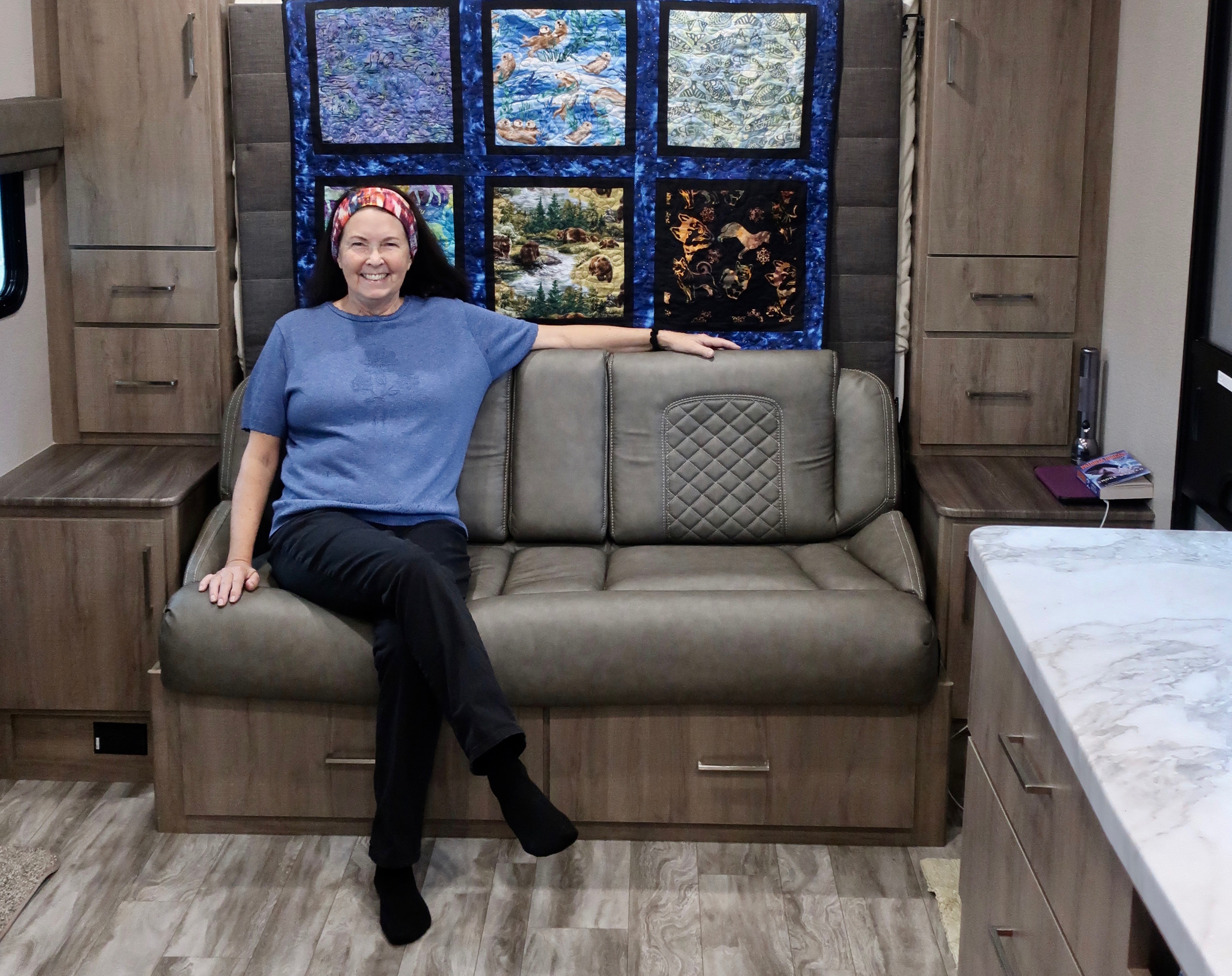
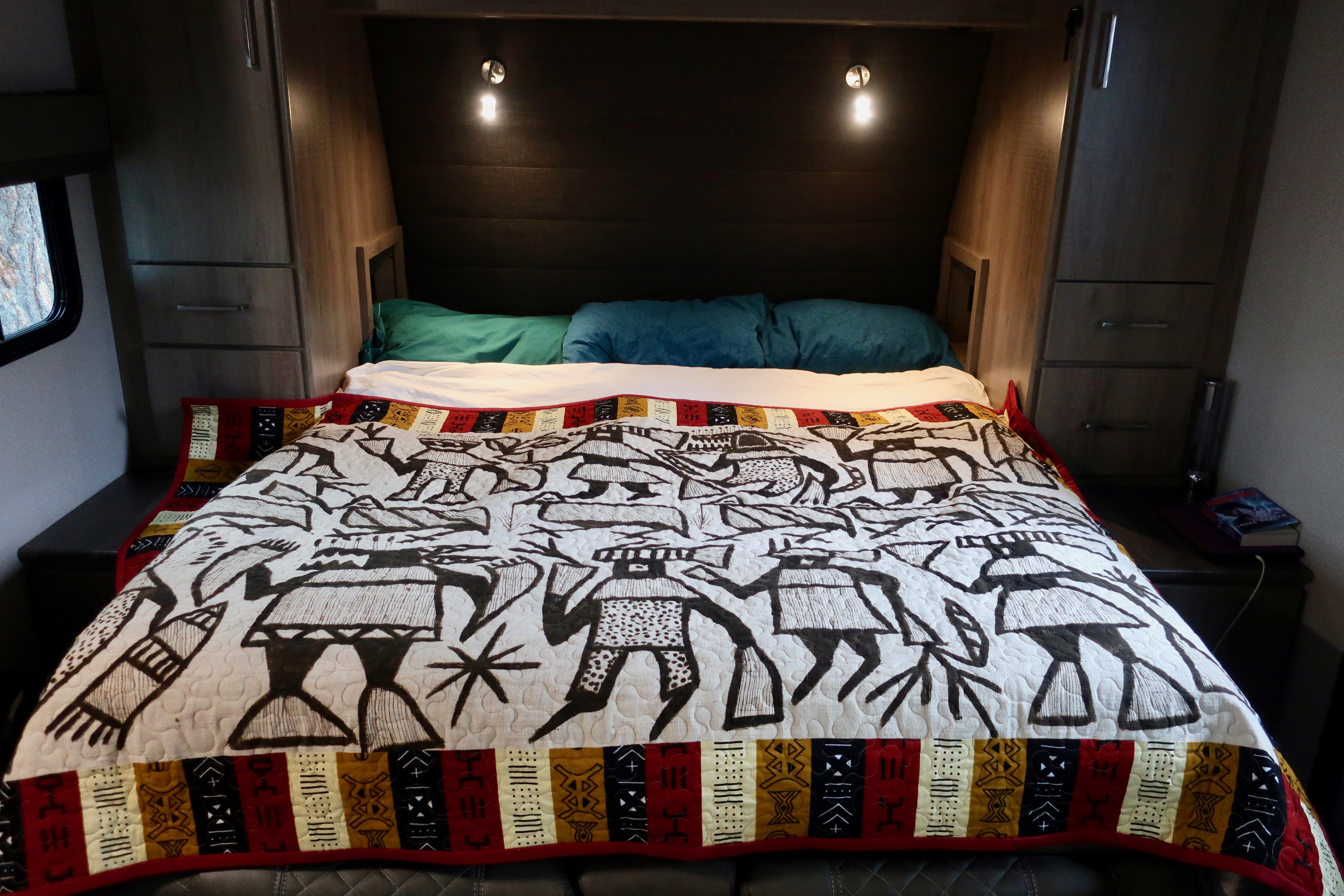
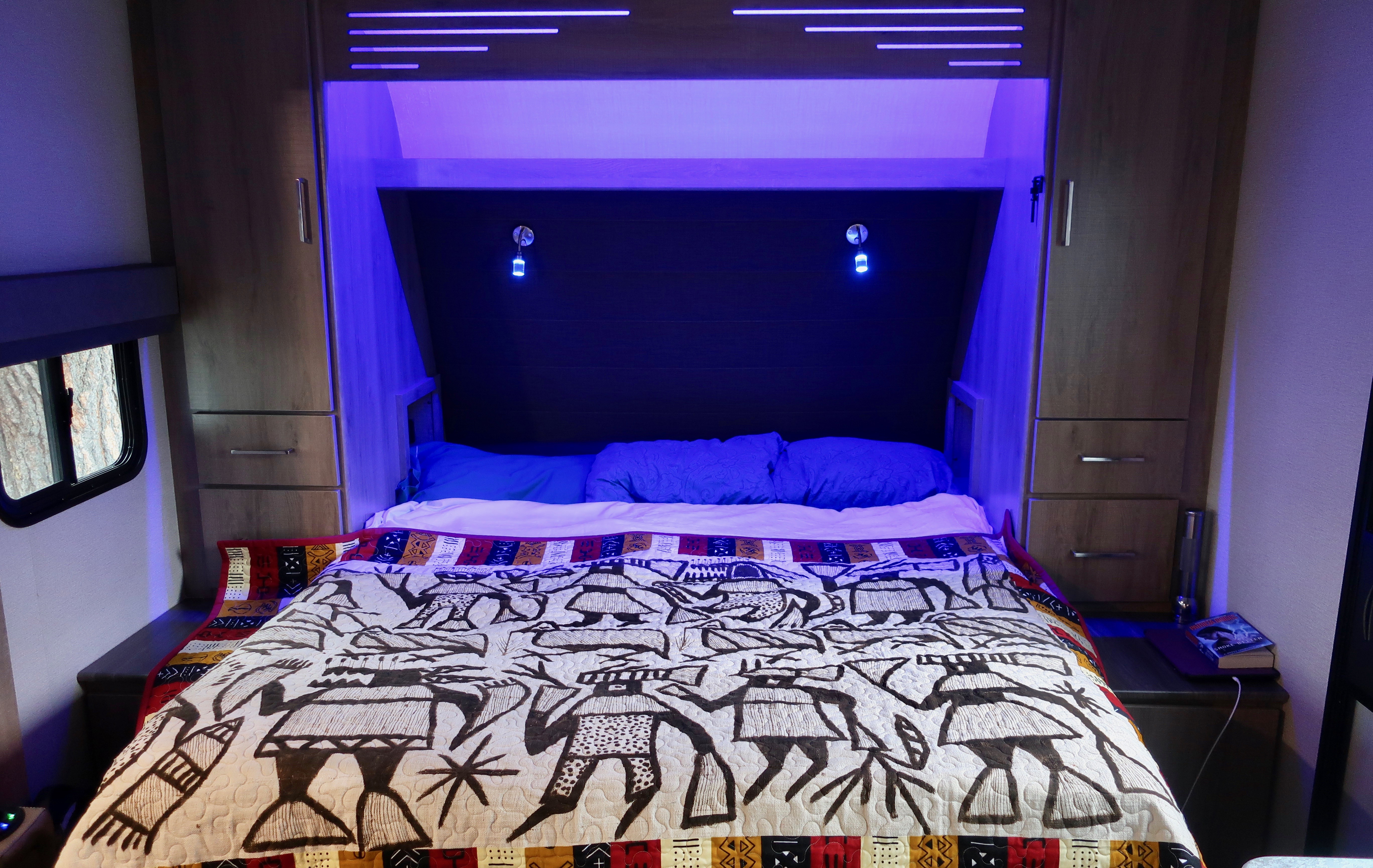
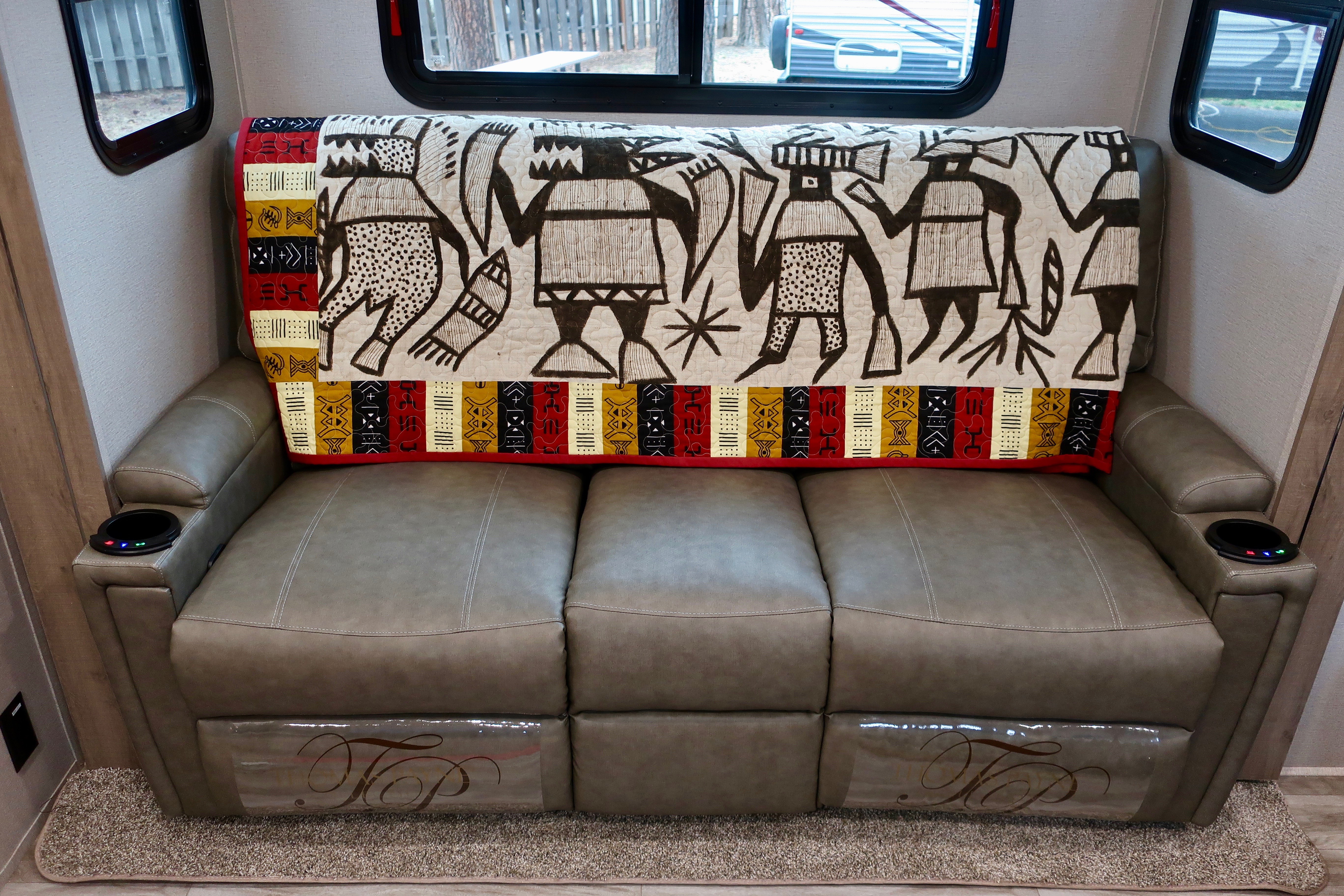
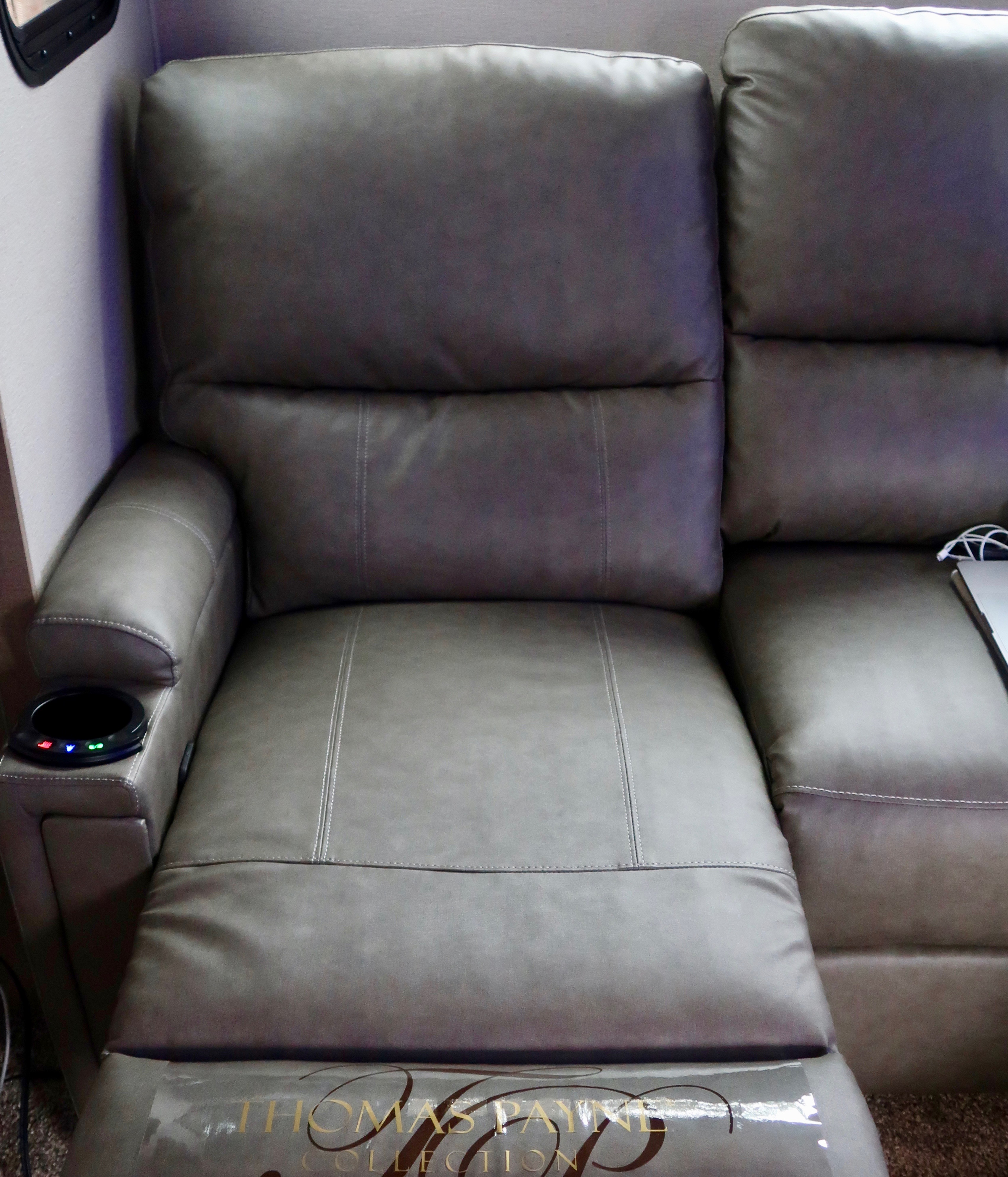
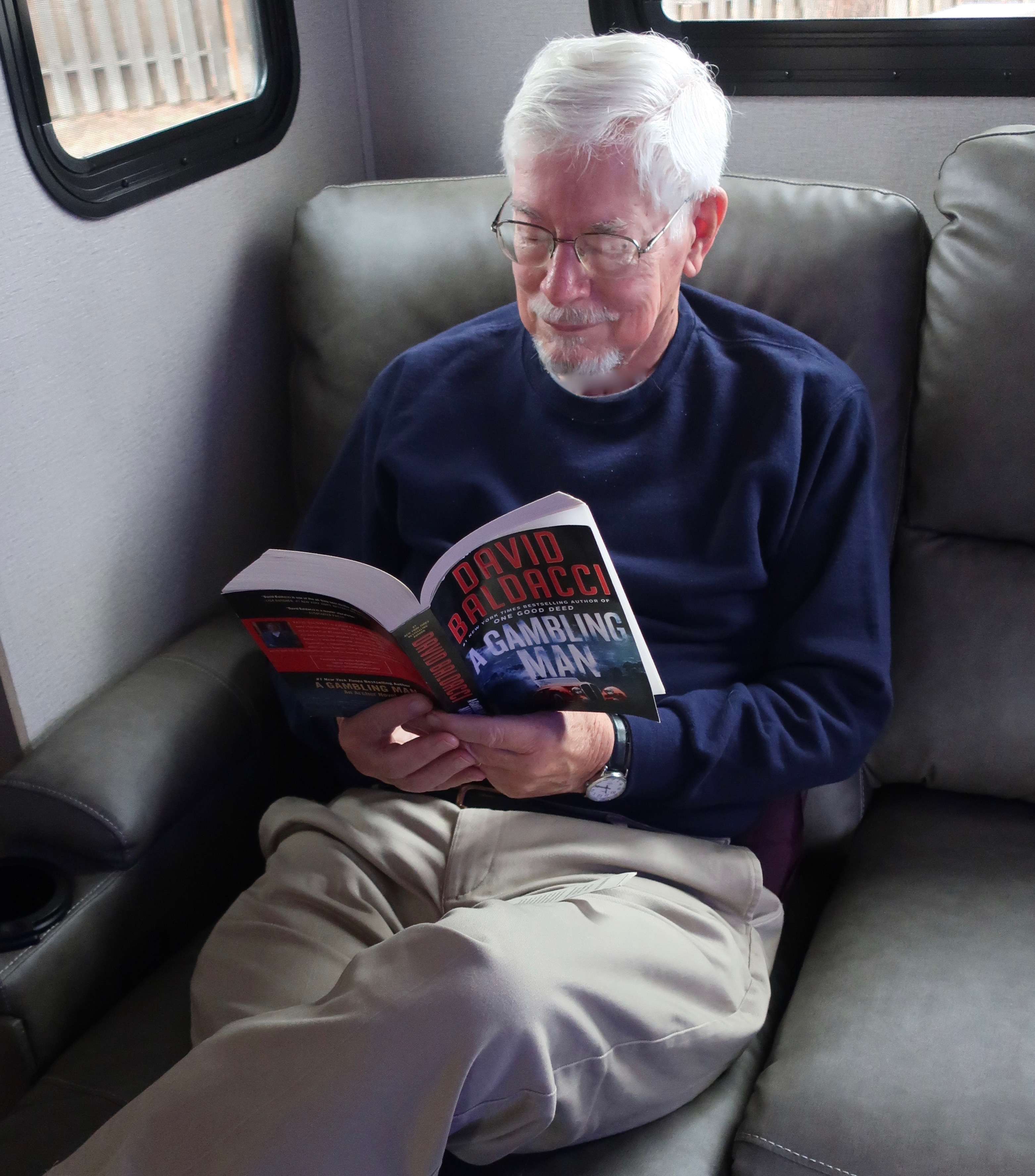
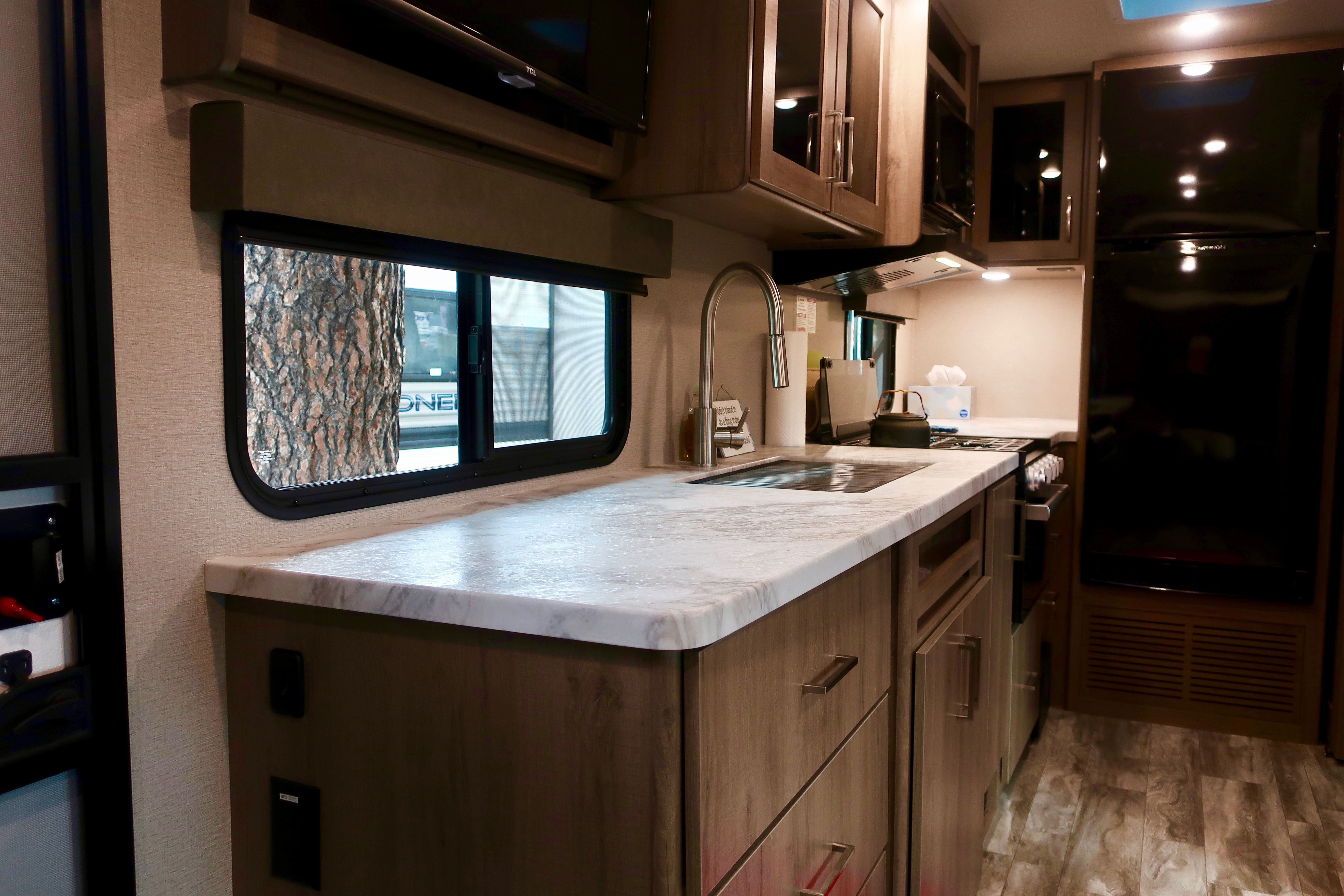
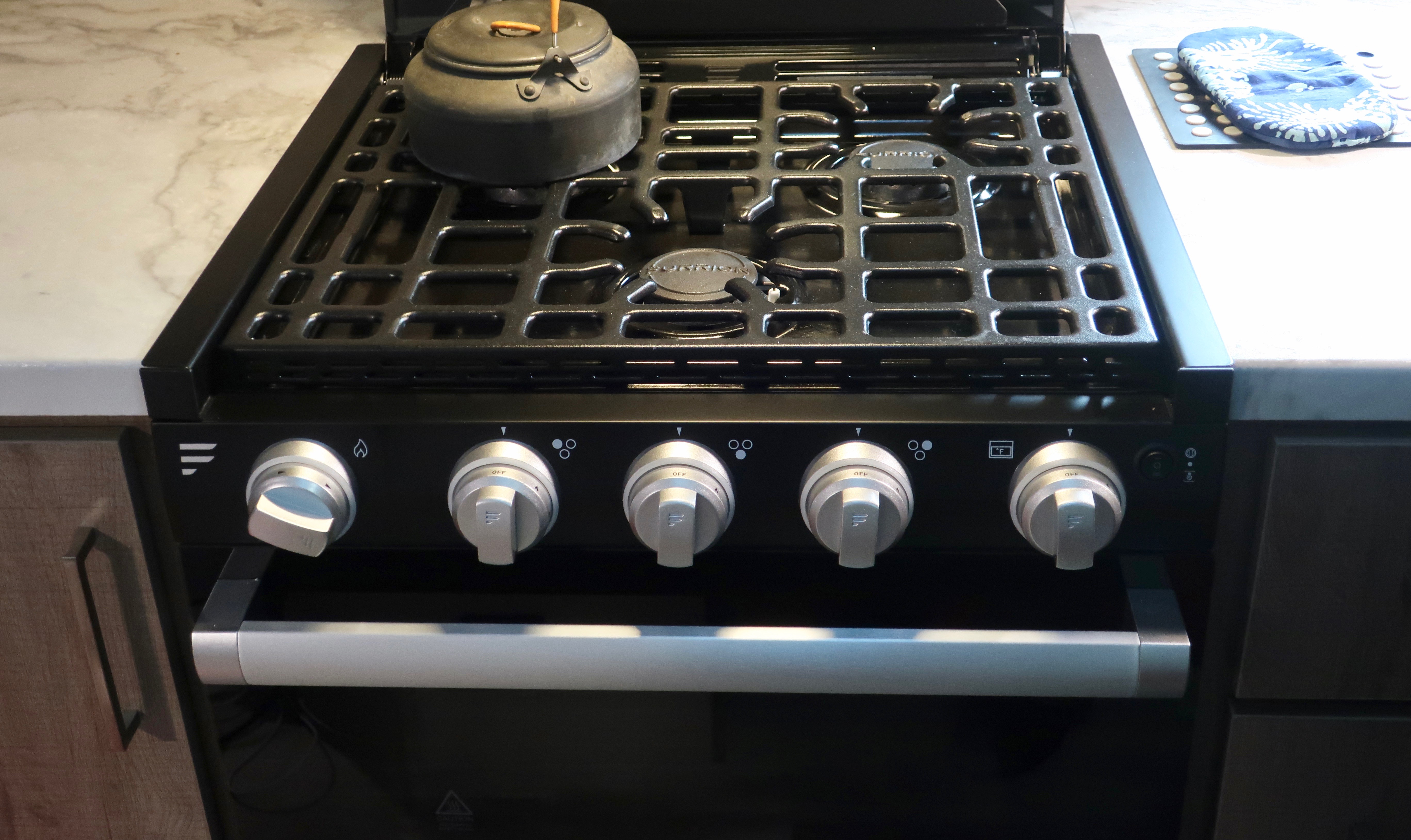
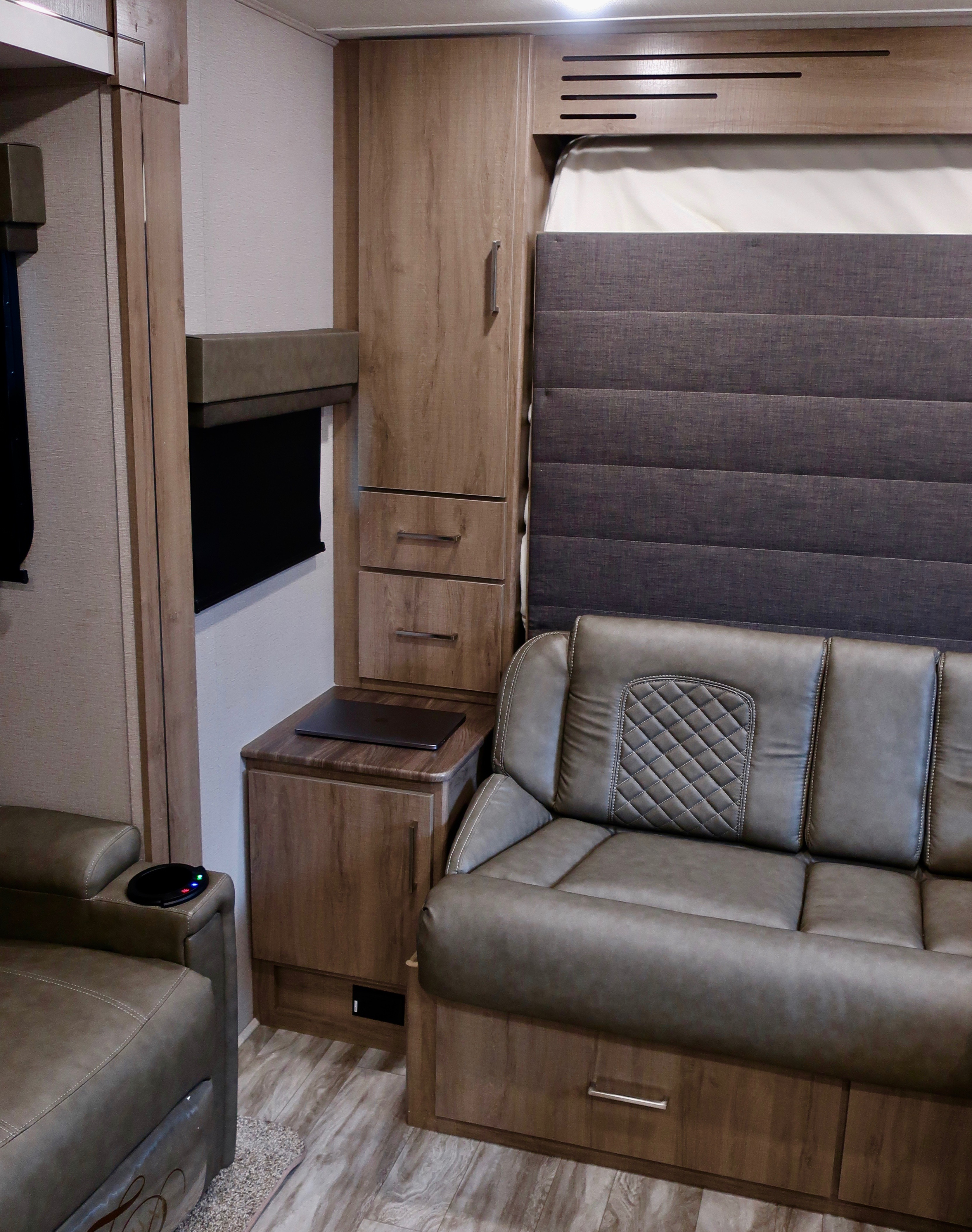
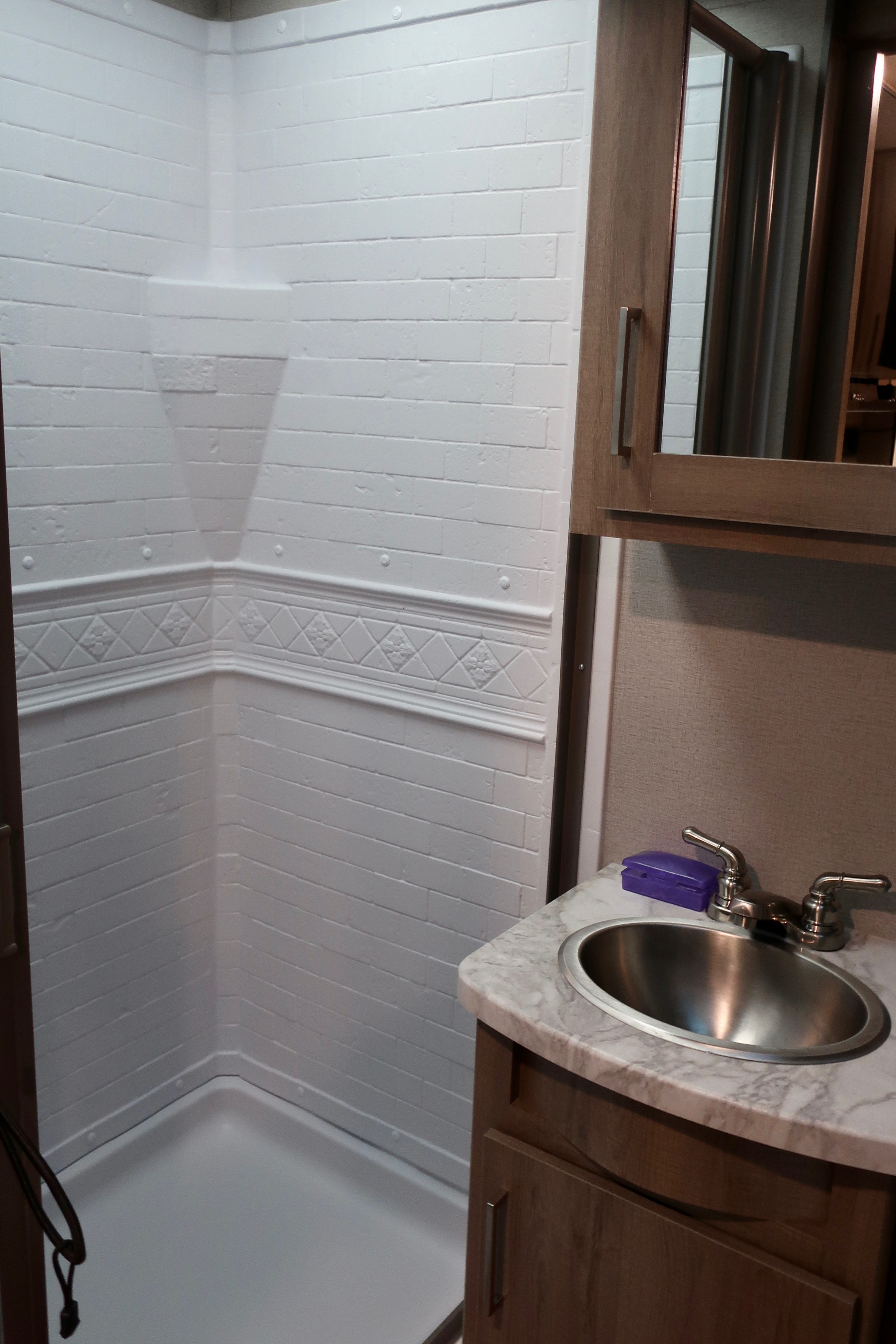
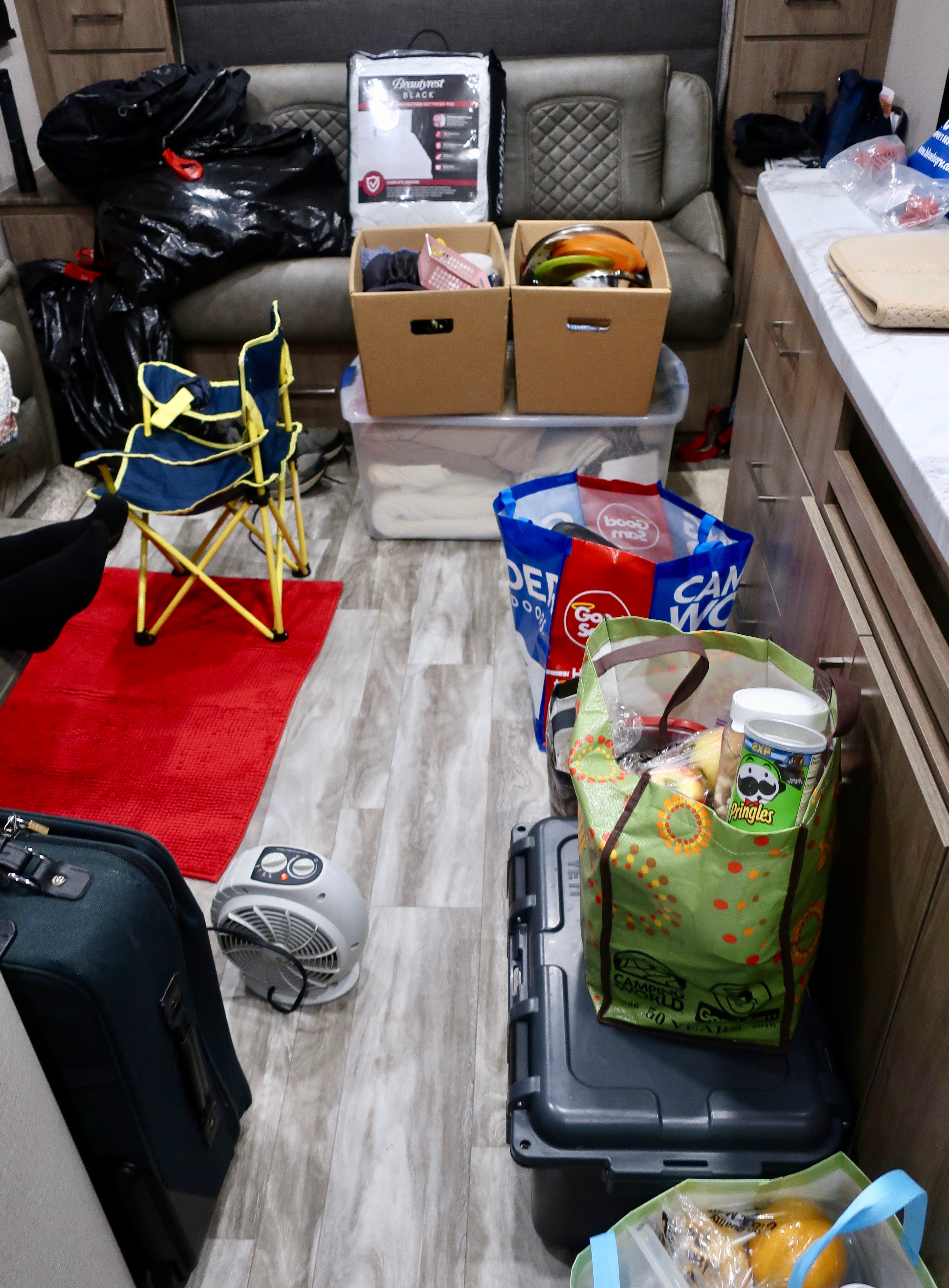
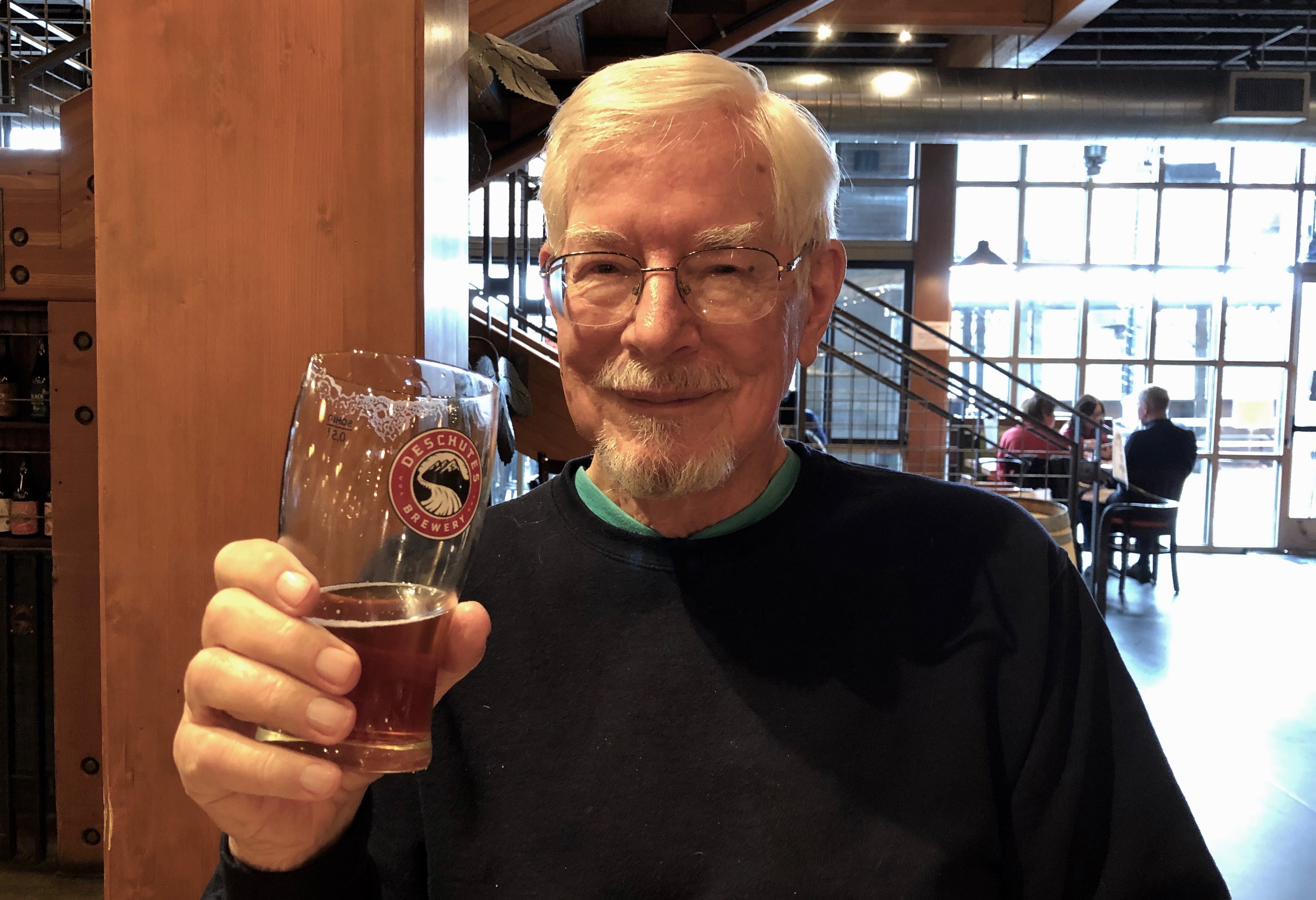
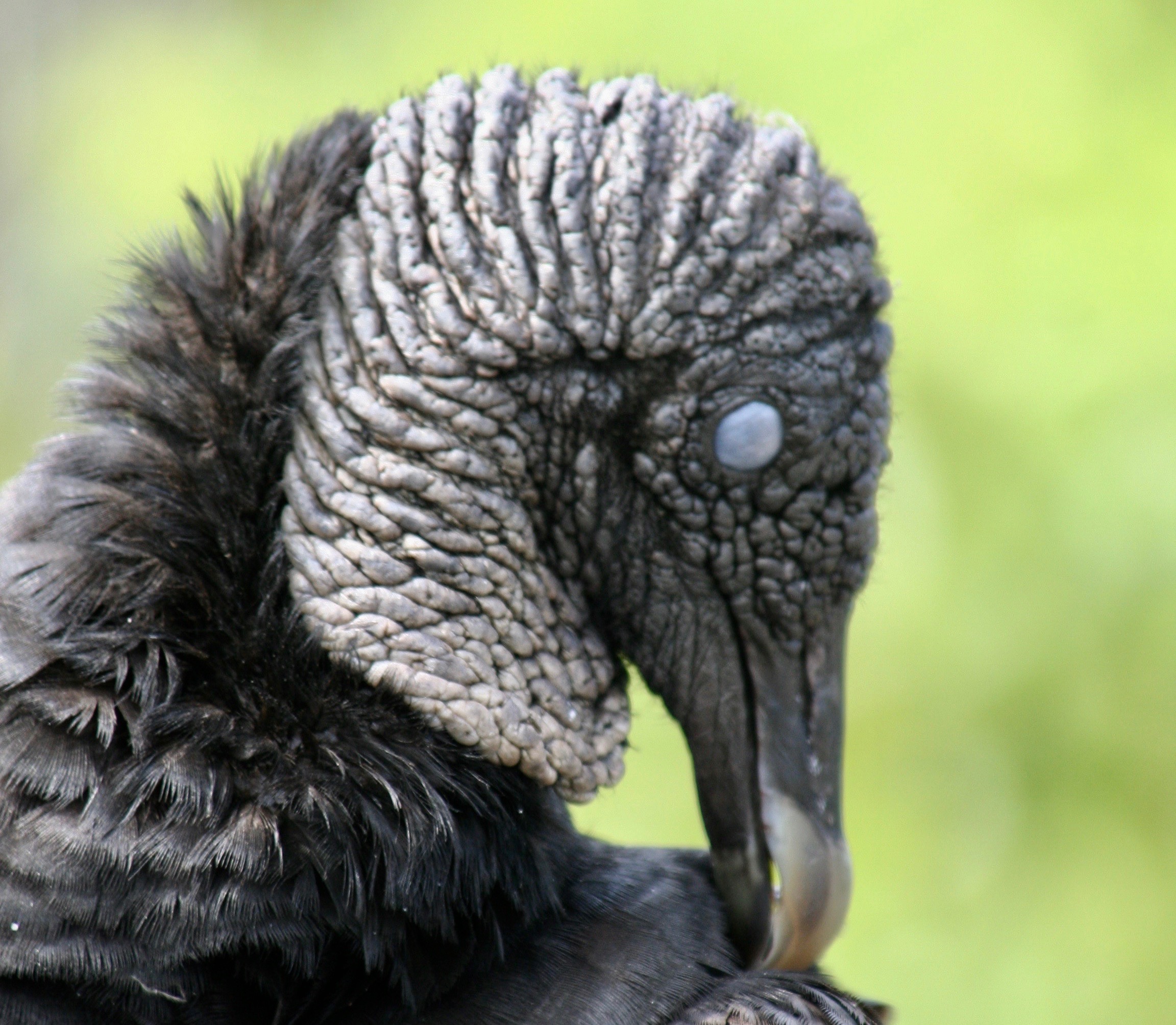
A Murphy bed was close to a requirement in our new trailer because it frees up valuable living space, which is at a premium in a small trailer. When not down, the bed morphs into a couch, perfect for entertaining guests.We decided to use one of Peggy’s quilts as a backdrop to add color and a personal touch. This is our ‘Alaskan quilt.’Peggy serves as my model. The kitchen’s counter top is on the right.Here is what the Murphy bed looks like when it is down. Here we are using Peggy’s African quilt as a comforter. It’s quite cozy. Note the small reading lights. They work quite well.The bed comes with blue, mood lighting. I don’t expect we will use it much but it is fun. I noticed that Peggy’s brown eyes turn golden under the light! A lioness, perhaps? One can only wonder. This is our other couch, the one Peggy and I will use most. It is housed in a small slide out that also adds space to the trailer. The middle section can be converted to a side table for snacks. A larger fold up table comes with the 2022 Imagine but will live in our truck unless we are entertaining or working on projects. We are also trying out our various quilts on the couch.Each unit of the couch can be turned into a recliner that goes all the way back if we want to take a nap. Note the lights on the drink cup. One of them simply lights up the cup holder. The one on the right turns the recliner into a massage chair. The one on the left heats the chair. This definitely isn’t a trailer of yore.A comfy chair deserves a good book. Baldacci can always be trusted to spin a good tale. (Photo by Peggy Mekemson.)What I wasn’t expecting in a small trailer was the counter space. A large, stainless steel sink is in the middle. Its cover is made of slotted steel and rolls out, doubling as a dish dryer. Beyond that is our stove and then more counter space. Off to the right is a humongous refrigerator. Solar power runs the refrigerator when we are boon docking. Our TV is above the window.Our three burner stove. A small oven is under the stove and a microwave above it. Add our Insta-Pot and air fryer and we will be able to cook just about anything on the road.One of our major concerns in picking out a new trailer was the amount of storage space. Now we are wondering how we are going to fill all of the space we have. (I’m sure we will mange. Grin.) Anyway, I just counted 28 drawers and cabinets. Most are very generous in space. The five you see here are mine. All mine. That’s mine, Peggy. You have your own five. There is also ample storage in the bathroom, but what really impressed me is that I fit easily into the shower!Now you’ve seen the inside of our trailer, imagine moving in. Again, think scary Halloween. It’s just like moving into anywhere else when faced with the severe challenge of downsizing. Fortunately our 20 years of traveling in Quivera and Xanadu prepared us for the experience. We simply unpacked Quivera into our truck and then loaded our trailer from that while camped in Bend. Bend has a lot to offer including great outdoor recreation… and beer. There are several brew pubs but the granddaddy of them all is Deschutes Brewery. Peggy snapped this photo of me at the brewpub celebrating time off from cramming for Trailer/Truck 101. A table of pirates sat next to us, but they had forgotten their parrot…In the spirit of the season, I decided that this black vulture from the Florida Everglades (photo taken several years ago) would make a good substitute. Happy Halloween!
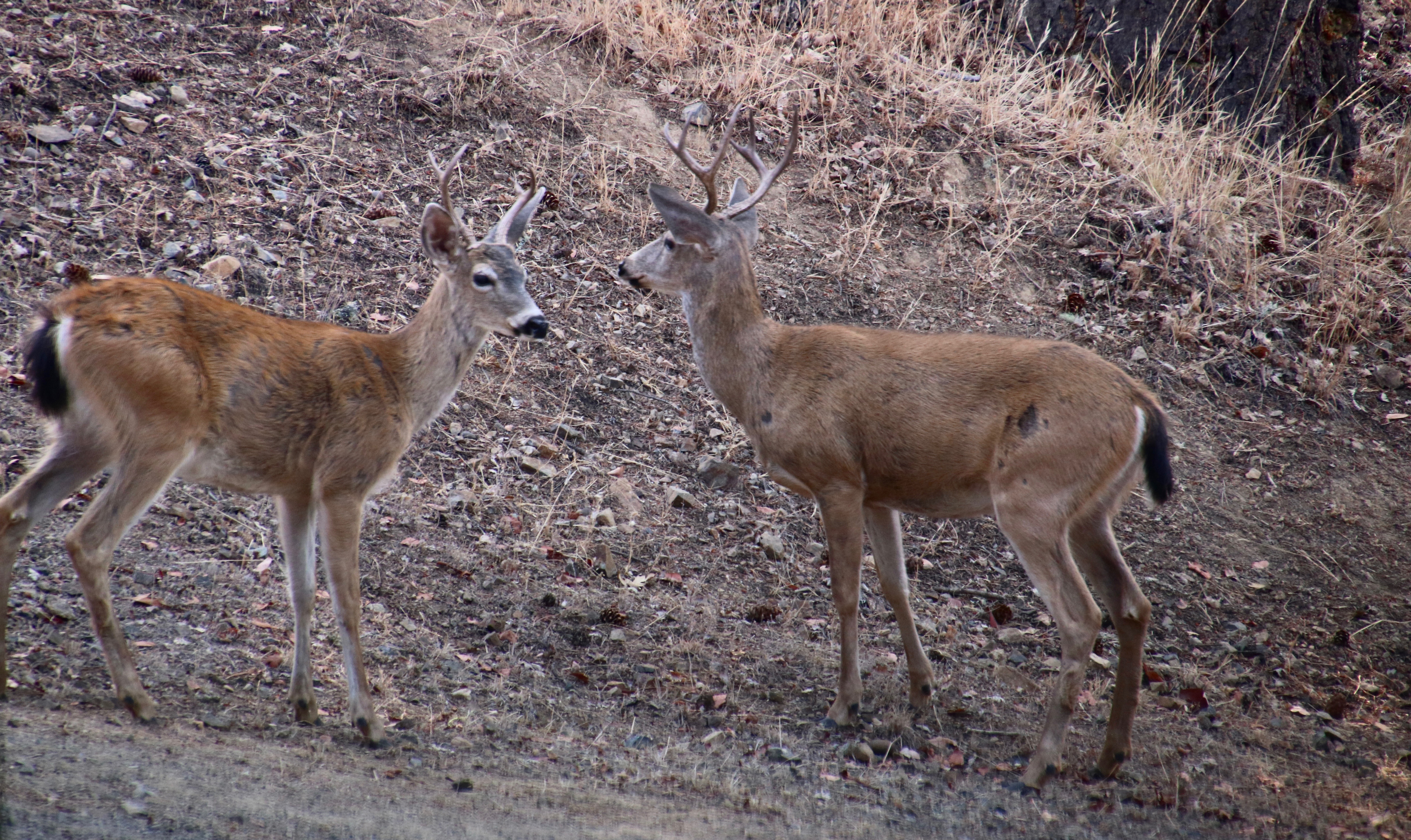
You know it is October when the bucks in our backyard argue over who gets to snuggle up with the does.
This and That is a good title for today’s post. When you have taken a break from blogging, like I have, things accumulate. I thought I would do a little catching up today.
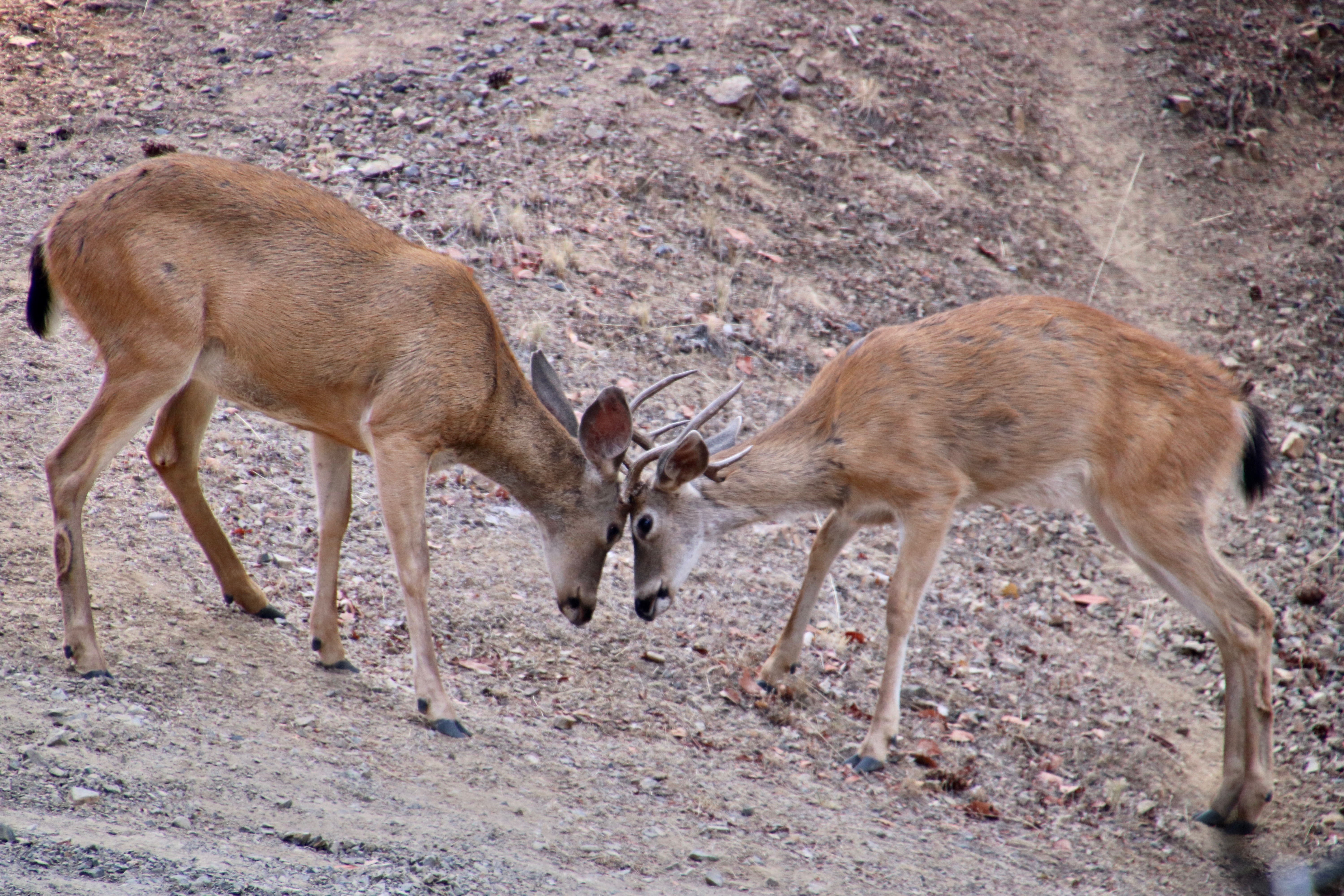
You know it’s October when the local bucks start testing their mettle with each other over who gets to snuggle up with the local does. These two decided to put on a performance in our backyard. They didn’t do any damage to each other, at least when Peggy and I were watching, but it seemed like a great way to poke out an eye. This morning we watched a doe cross our deck followed by three bucks: a spike, a forked horn, and a three pointer. I wondered what the doe was thinking. Was it, “Wow, look at me and all the guys tagging along.” Or was it, “Damn, I wish those idiots would go somewhere else.” I suspect it was the latter. While mating season is a true passion for the bucks, it’s more like being worn down for the does. At least that’s my assumption after watching them frolic for ten years. Maybe if the bucks had to help take care of the babies…
The two bucks went at it with their antlers until the smaller one decided it was a mite too risky.
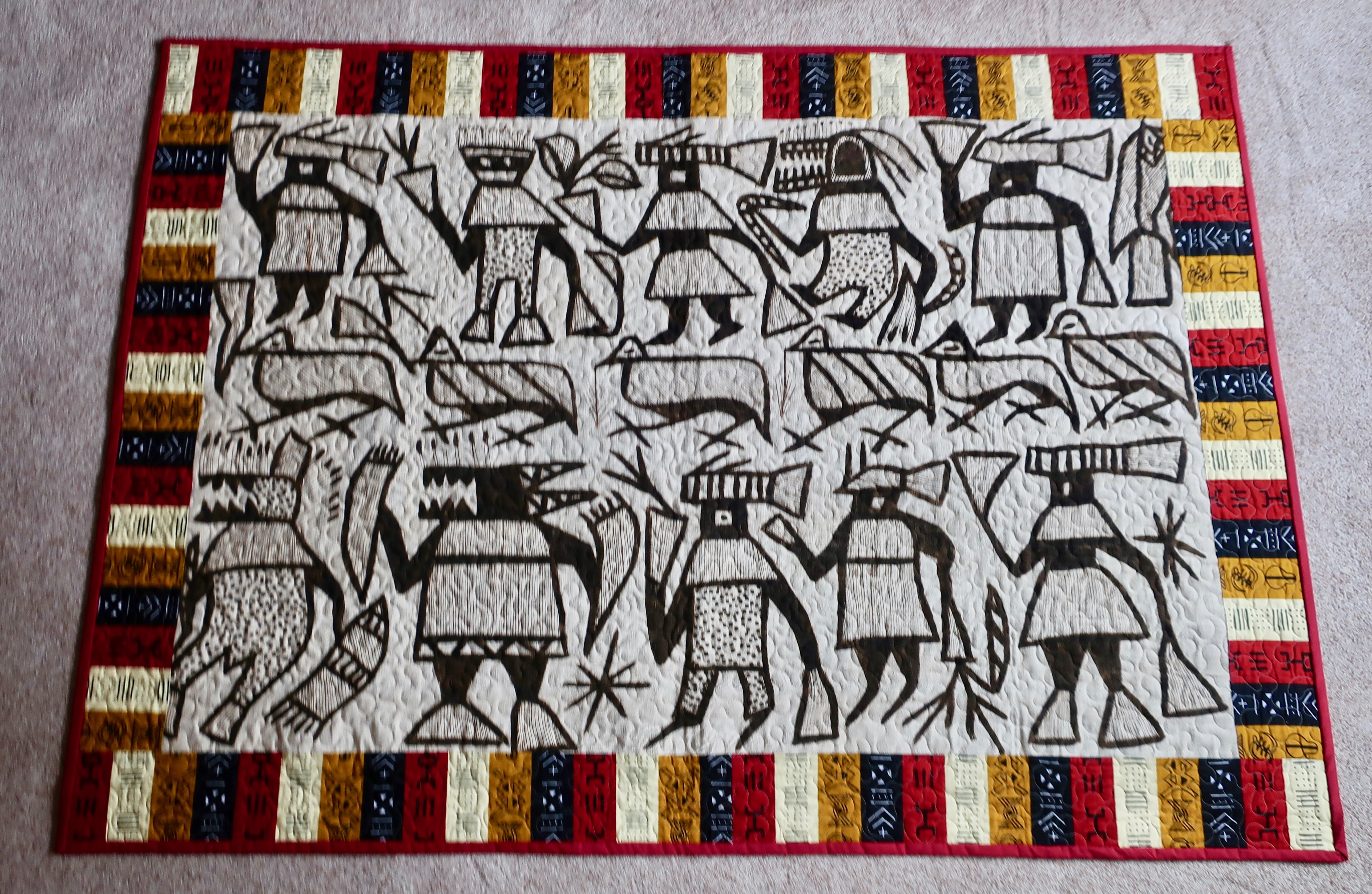
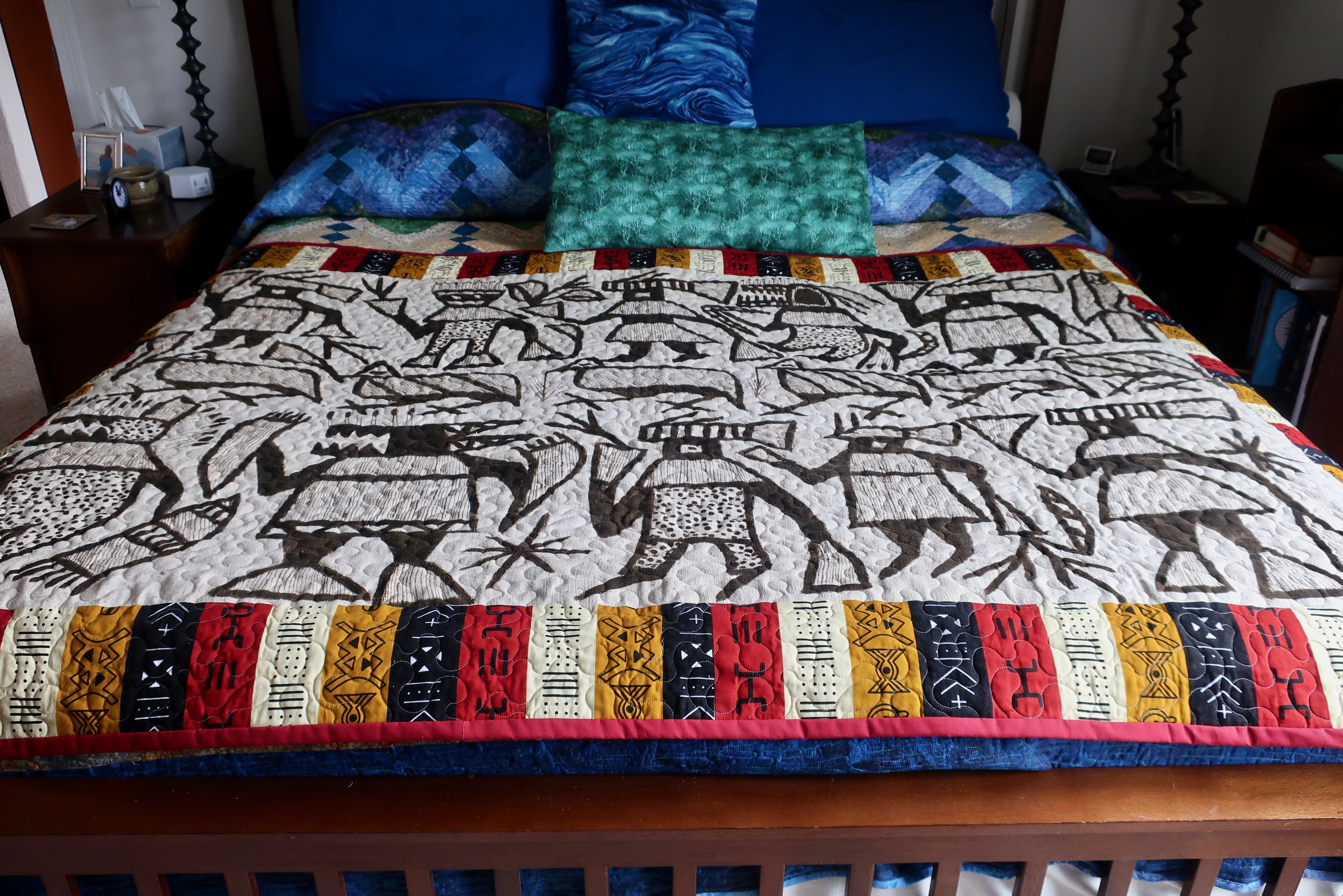
Several months ago my friend Linda from the blog, Lagniappe, mailed me a fascinating country cloth piece that she had picked up in Liberia, West Africa where we had both lived— me in the mid-60s and Linda in the early 70s. I put it out to admire for a while and then decided it would make a great quilt. Fortunately, Peggy is quite talented when it comes to putting quilts together. The results are quite gorgeous. Many thanks for your generous gift, Linda. And thank you Peggy. It will live on our bed in the trailer.
The African Quilt!How it will look as a bed quilt.
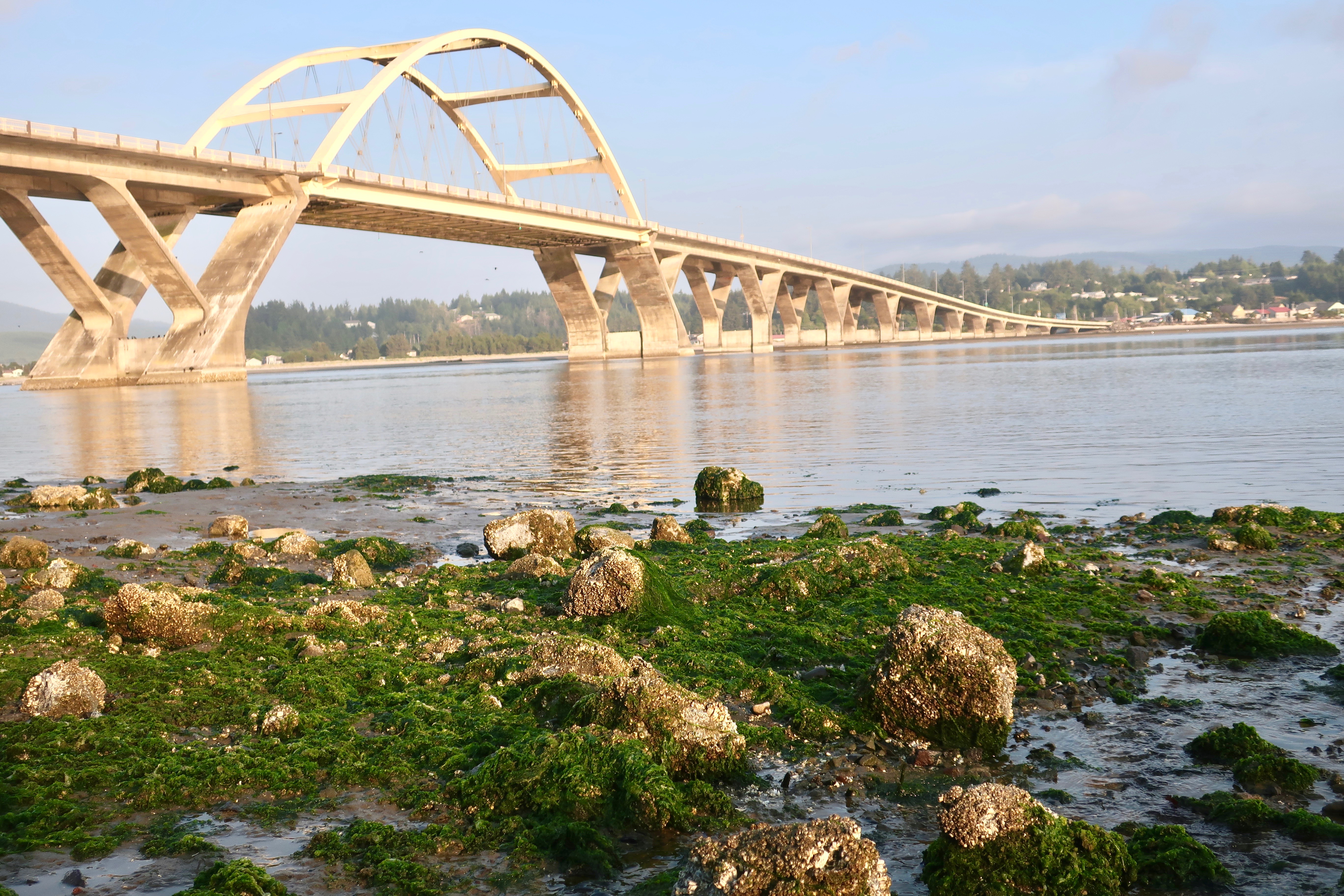
On our last trip to the Oregon Coast we stayed in a KOA at the base of the Alsea Bridge in the town of Waldport. Peggy and I took a number of photos of the bridge plus we walked across it, admiring the sand at low tide on our journey south and seals on our journey north. I’ve been meaning to do a post on it ever since Peggy and I went kayaking in the area.
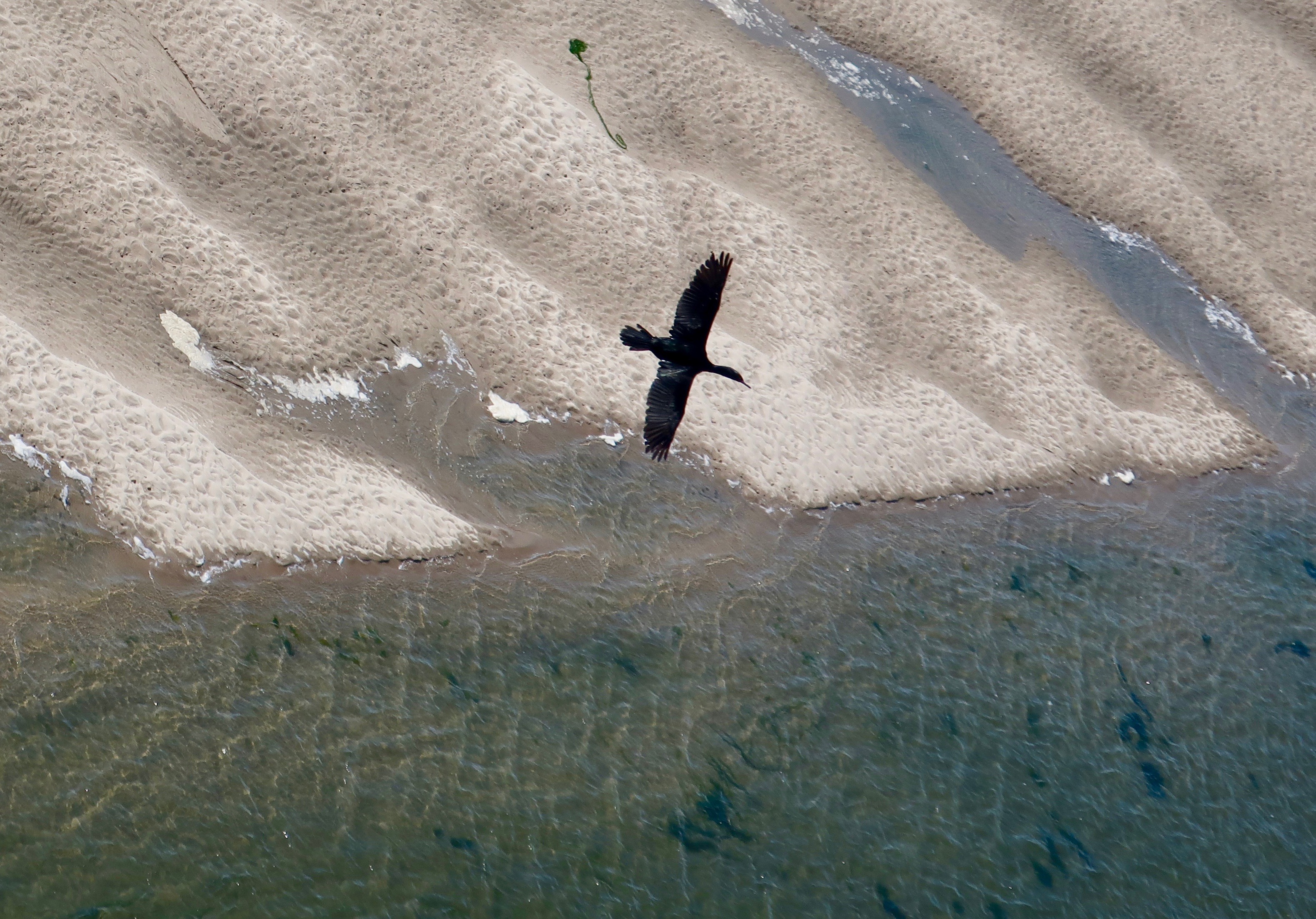
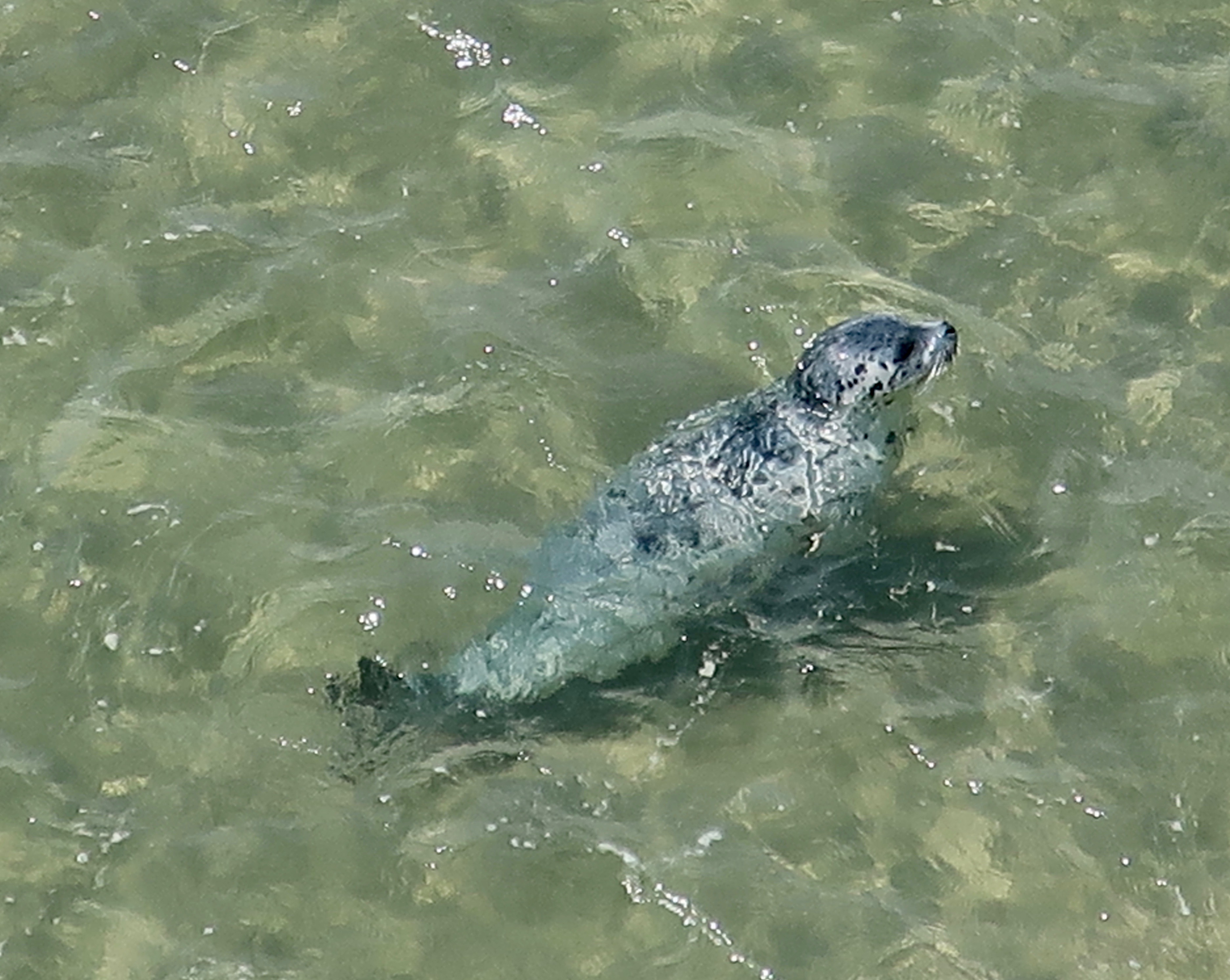
The bridge as seen from below where we were camping near Waldport, Oregon.As Peggy and I walked across the Alsea Bridge going for lunch in Waldport, it was at low tide. The cormorant made a nice contrast to the sand and water.The tide was coming in when we walked back across the bridge. Several seals were on their own quest for lunch down in the water.
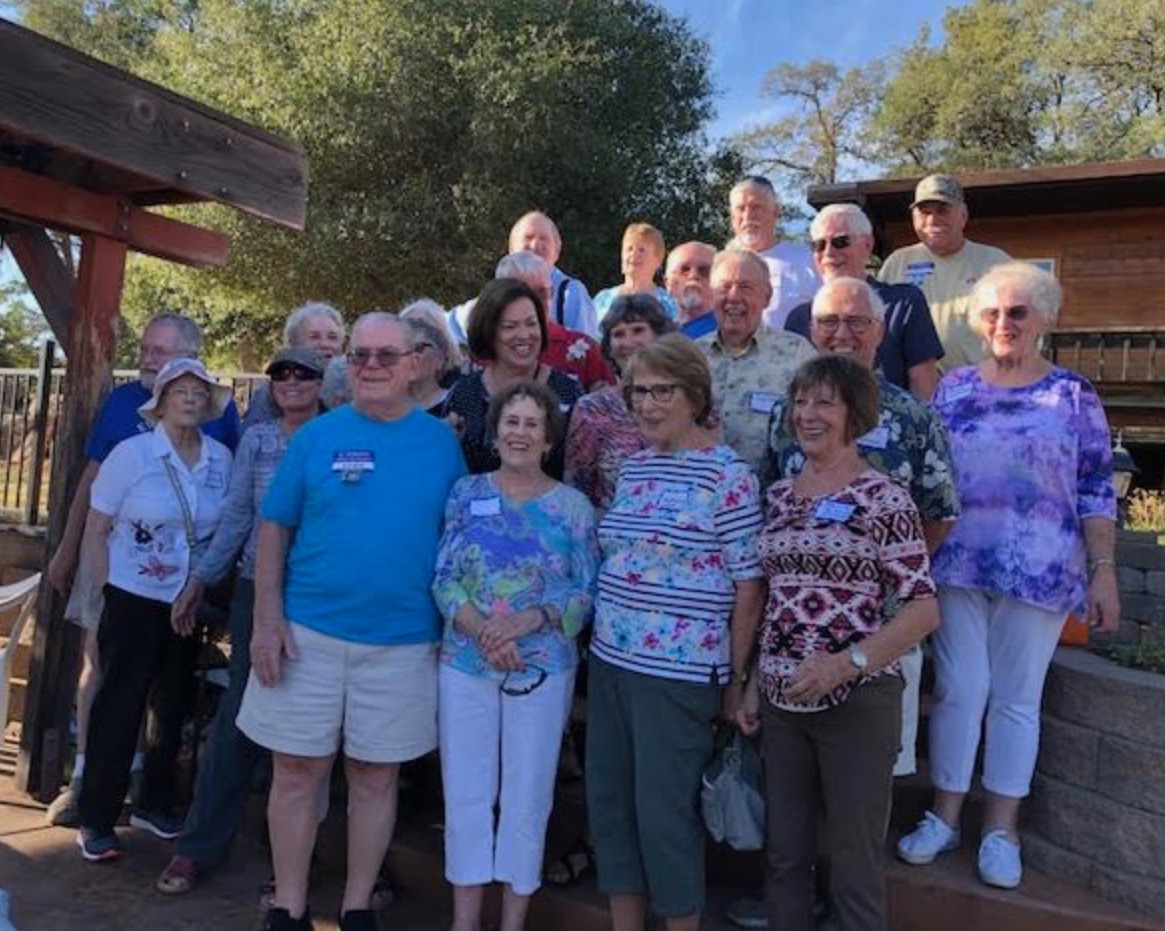
Early in September, Peggy and I went to my 60th High School Reunion in Placerville, Ca. Not surprisingly, there were a lot of old folks there.
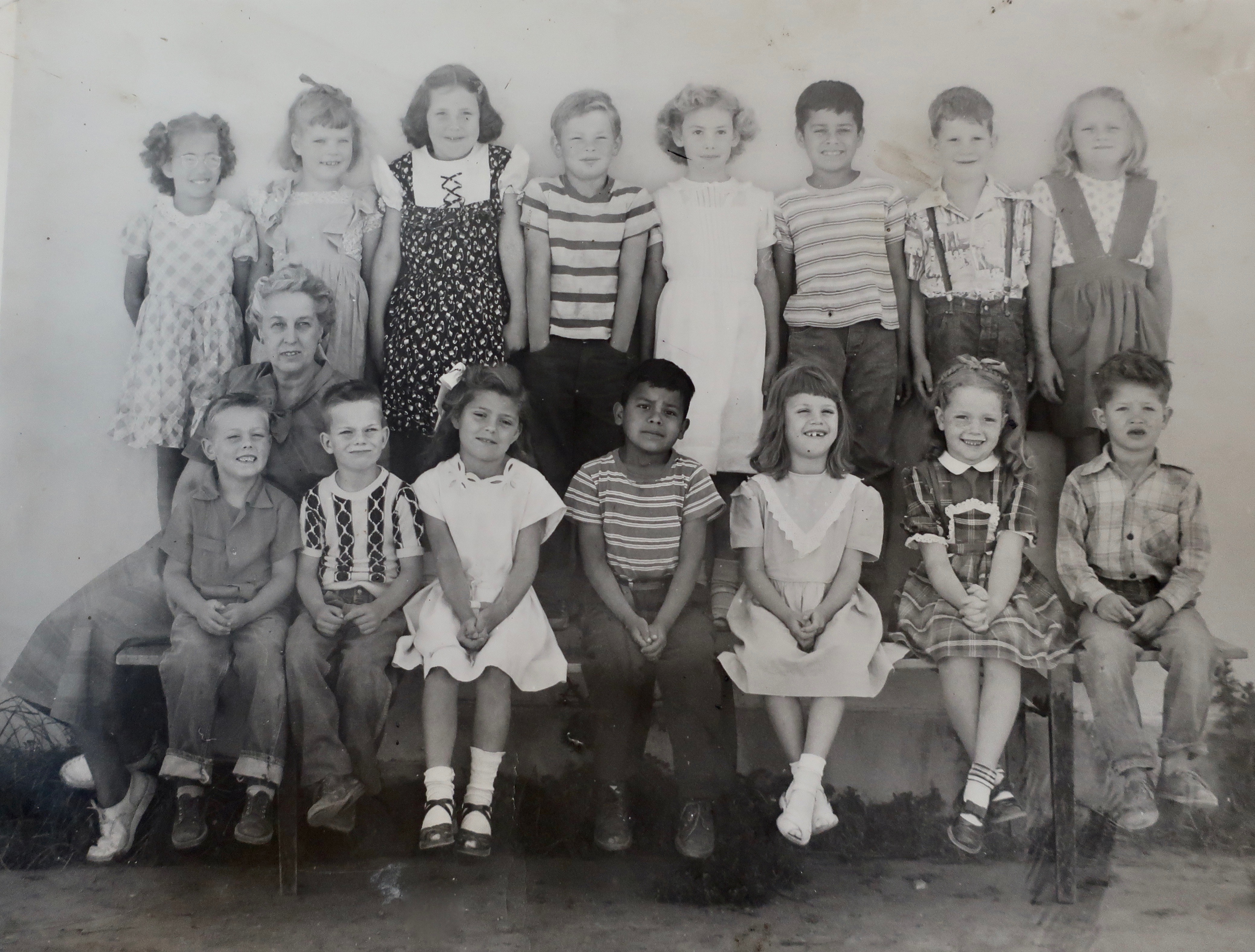
Peggy snapped this picture of the people attending our 60th reunion. I’m standing in the third row with dark glasses on. My friend from the first grade on, Bob Bray, is standing front and center with his wife Linda. Another friend from the first grade, Clifford Drake, is standing just below me to my right.Here we are in the first grade 72 years ago in 1949. I’m in the middle of the back row with my hands in my pocket. Clifford and Bob are sitting in front of Mrs. Young. Bob is on the right. Clifford on the left.
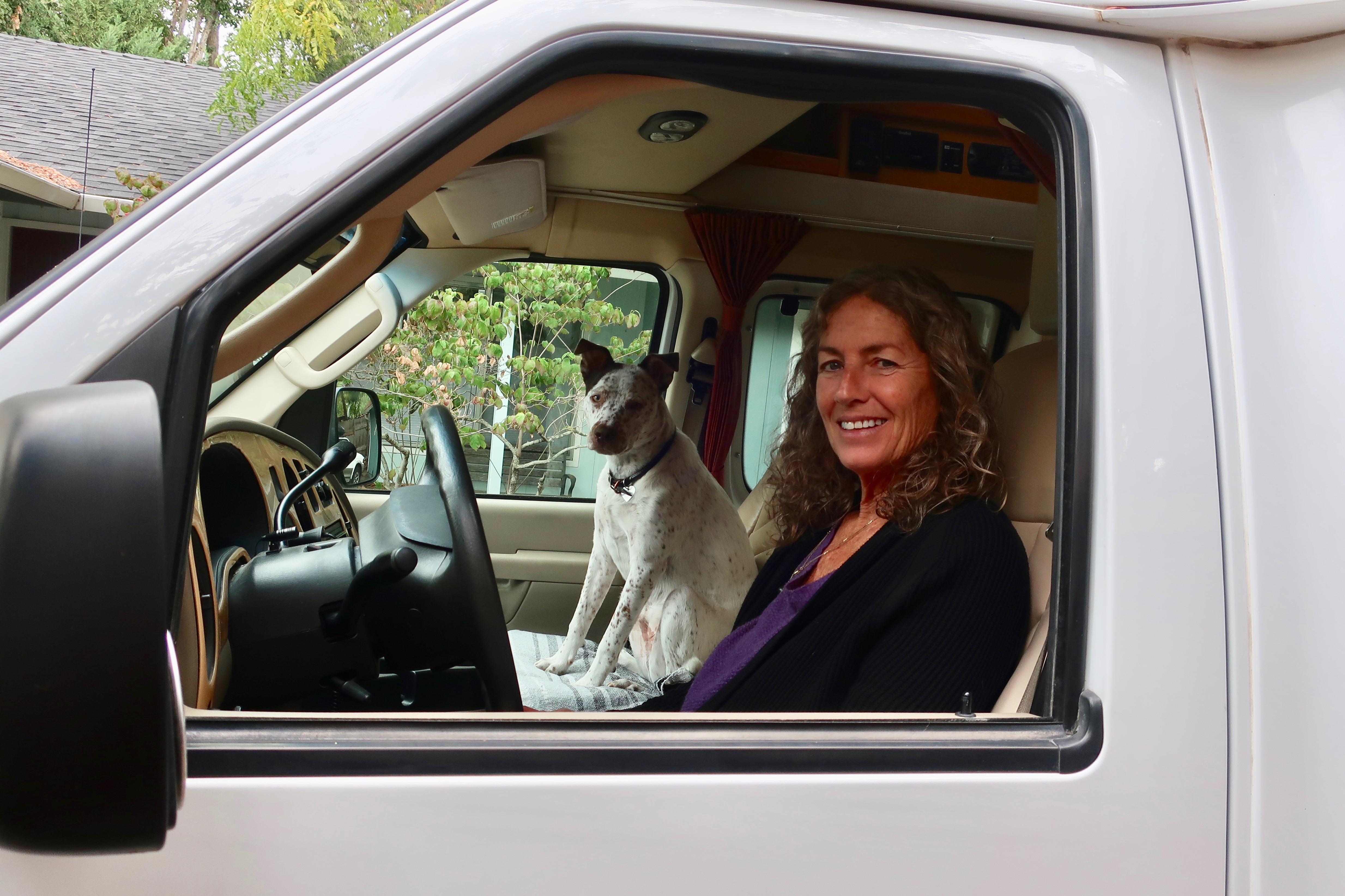
On Friday, we said a sad goodbye to our small RV, Quivera. We had had numerous adventures in her including making our way across the US several times, going to Alaska twice, and Burning Man at least five times. We retraced my 10,000 mile Bike Trek around North America in her with Peggy driving the whole time so I could take photos and make notes. Last summer, we hightailed it across the nation at the height of the pandemic so Peggy could attend a 70th birthday party organized by our kids on the Outer Banks of North Carolina. Three summers ago, Peggy used her as a backup vehicle for me as I did my 750 mile backpack trek down the PCT to celebrate my 75th. Quivera has found a great new home with Terry and her dog Benny in Ashland, Oregon, however. And has many more adventures ahead. As do we. Grin.
Terry and Benny prepared to hit the open road in Quivera.I’ll close today’s post with this photo of Benny, who had quickly claimed the passenger seat as his own.
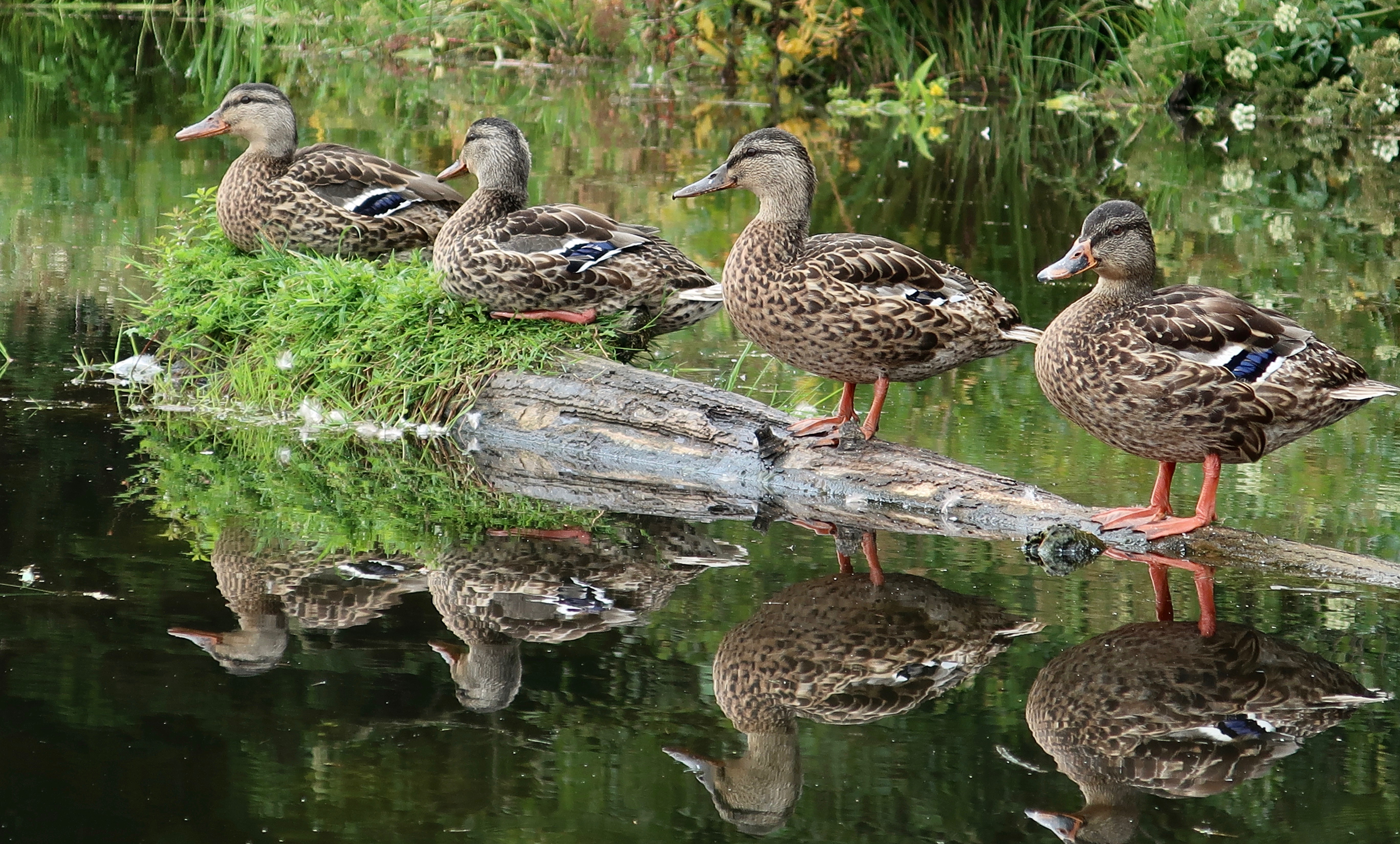
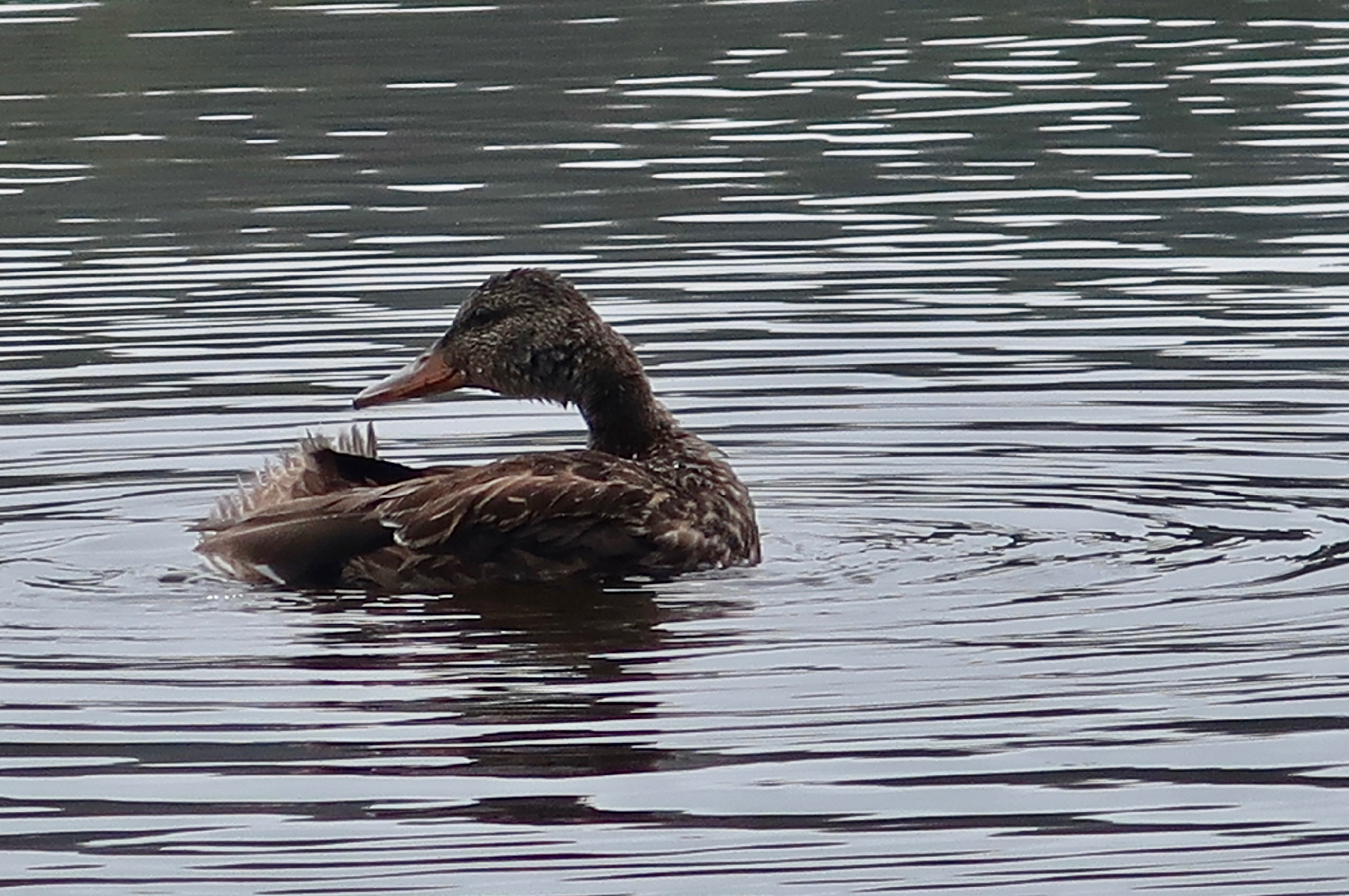
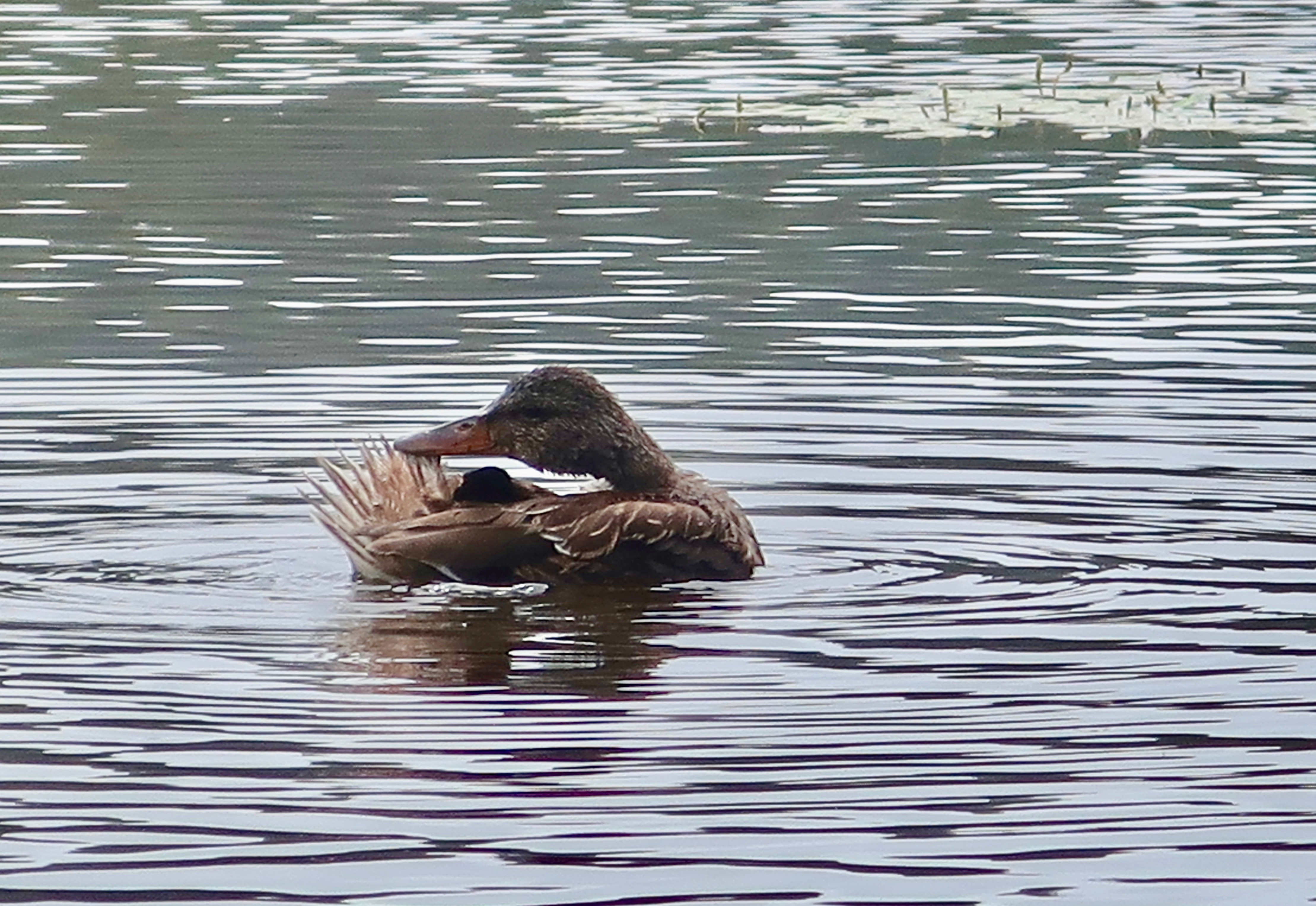
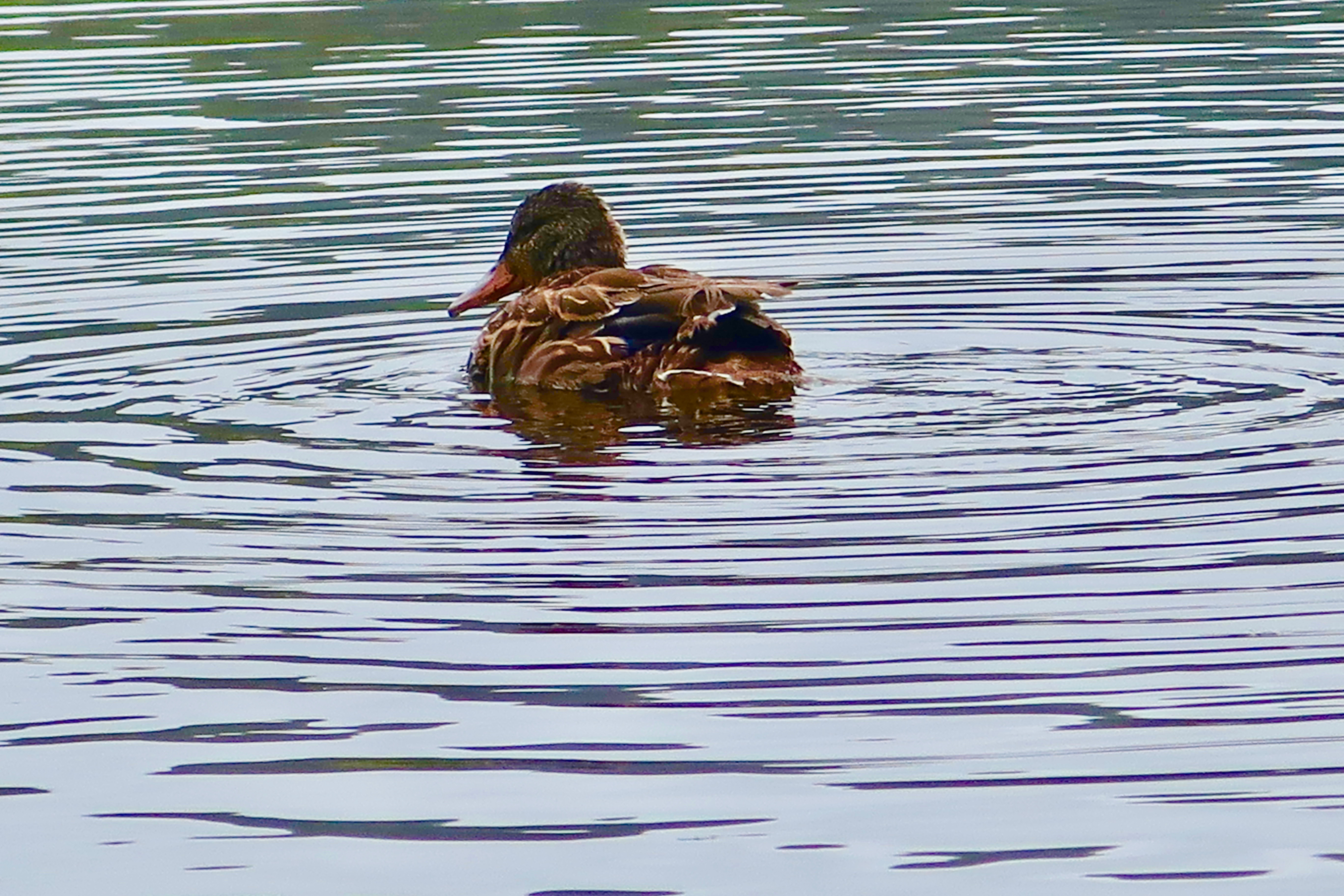
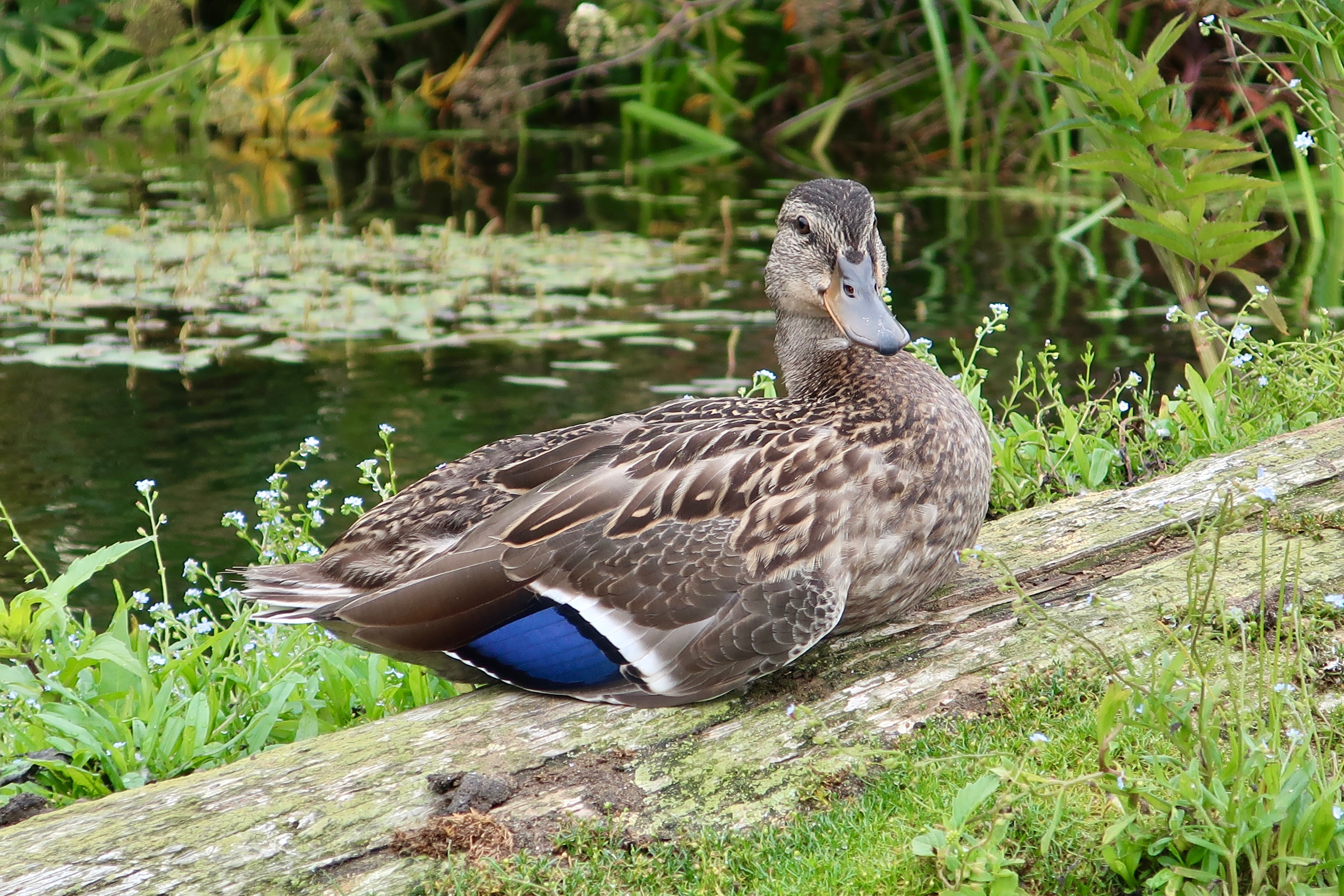
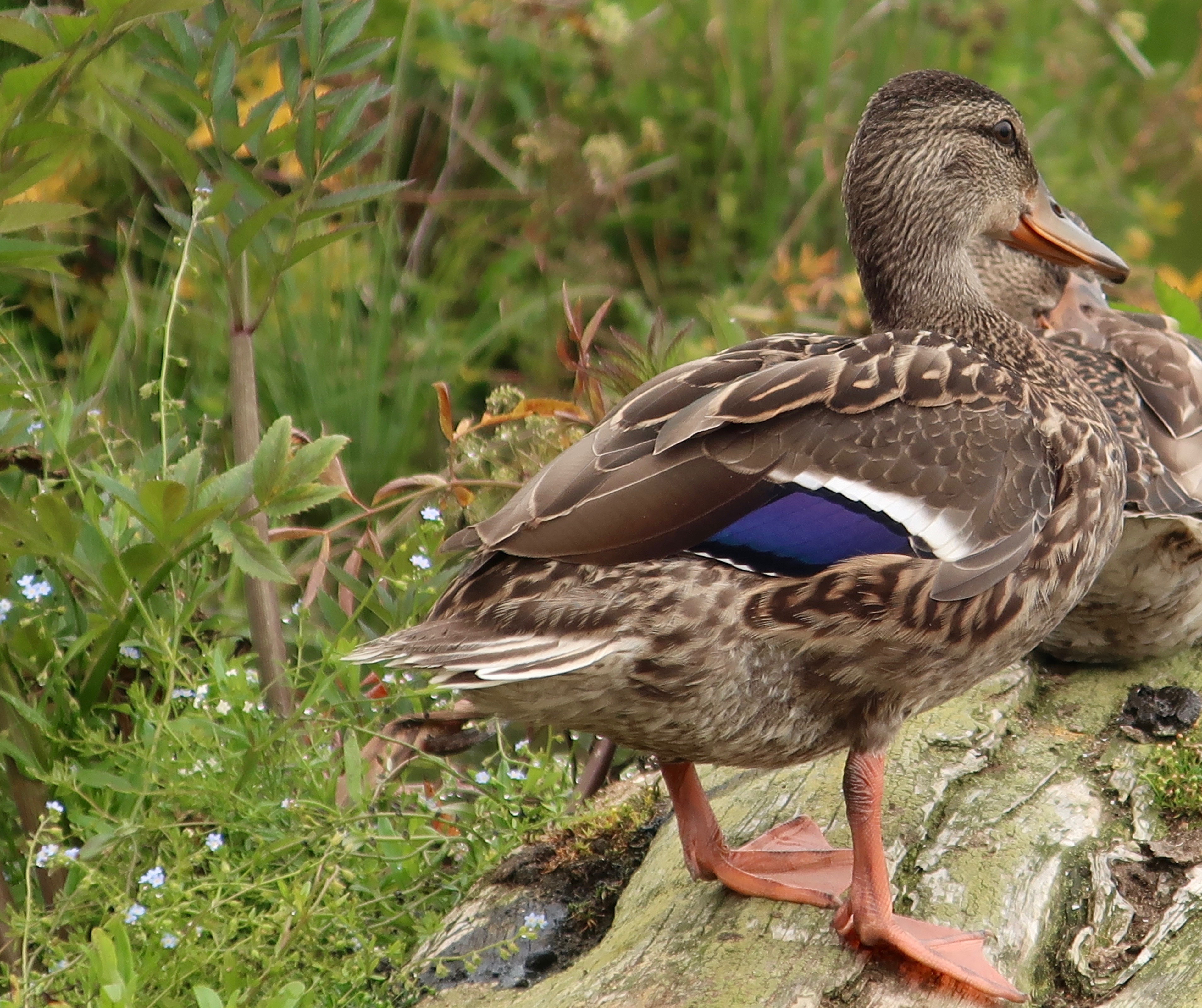
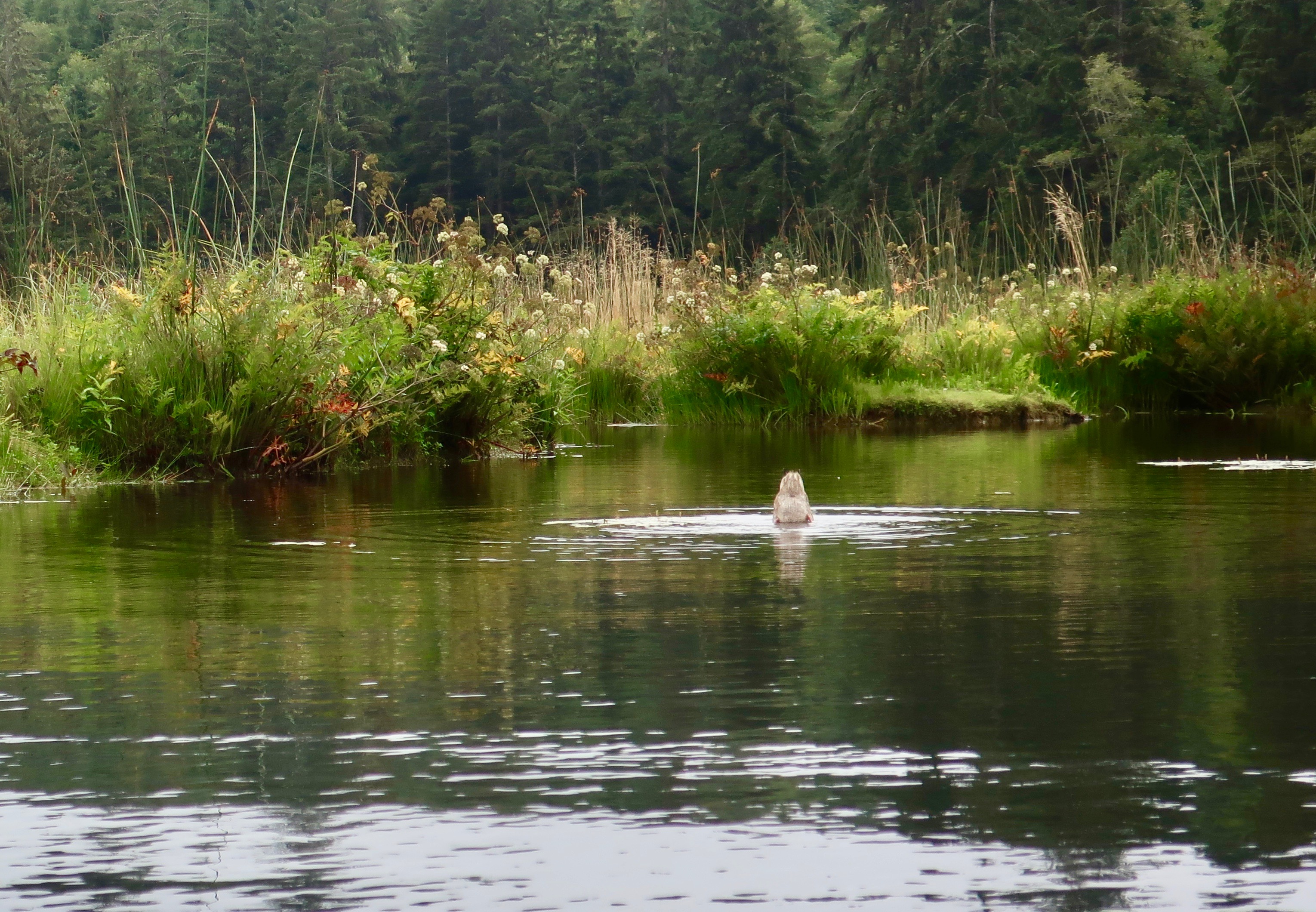
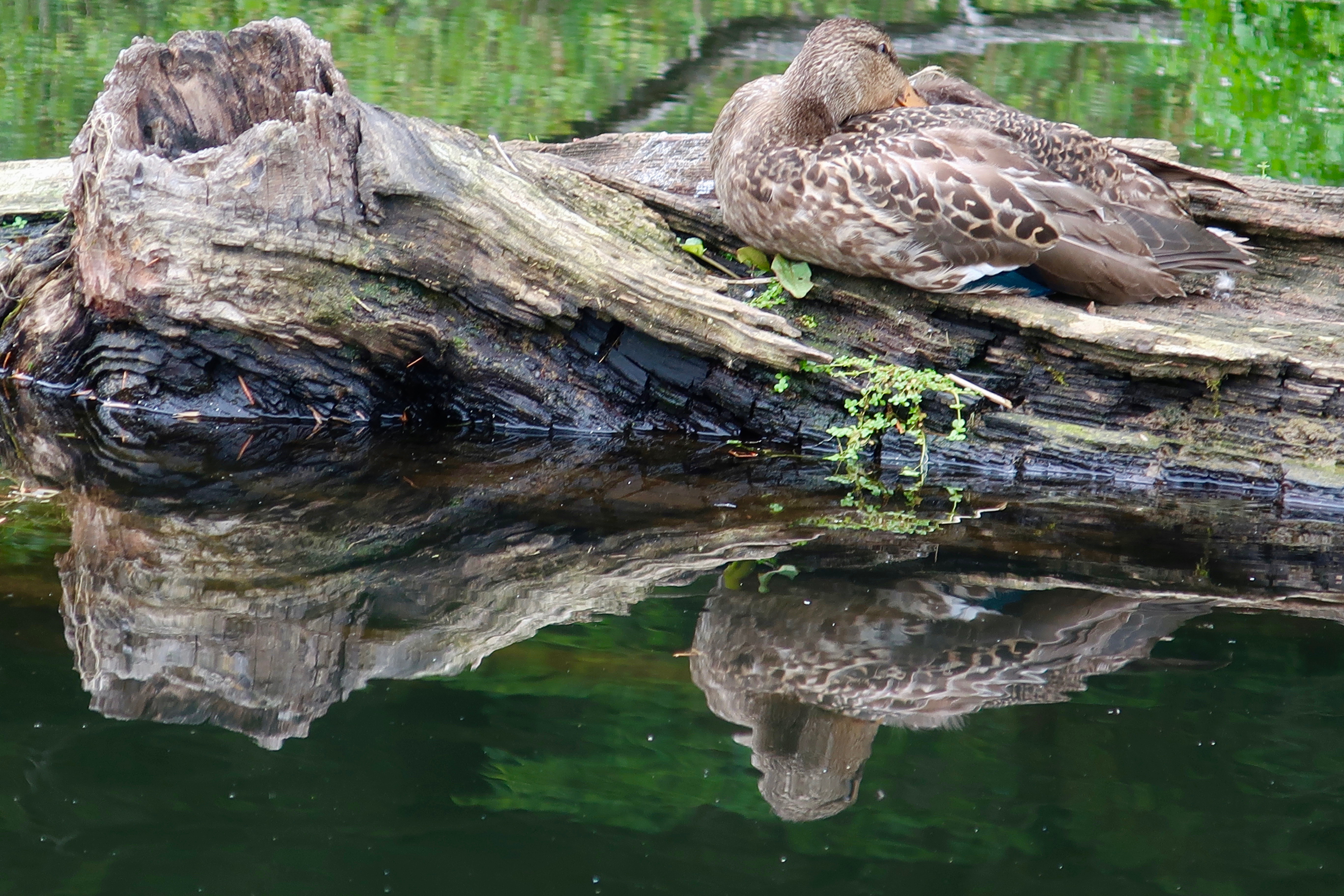
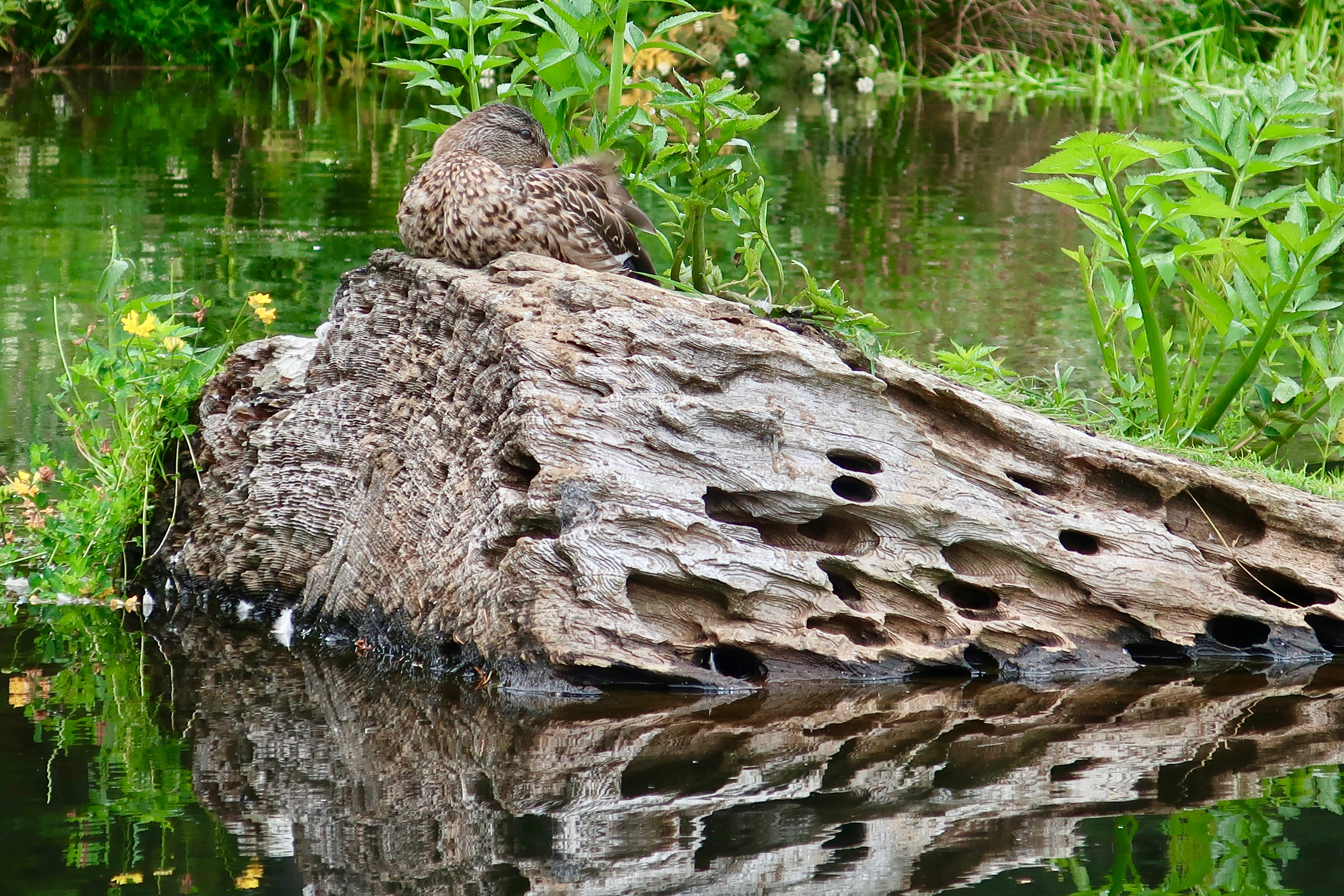
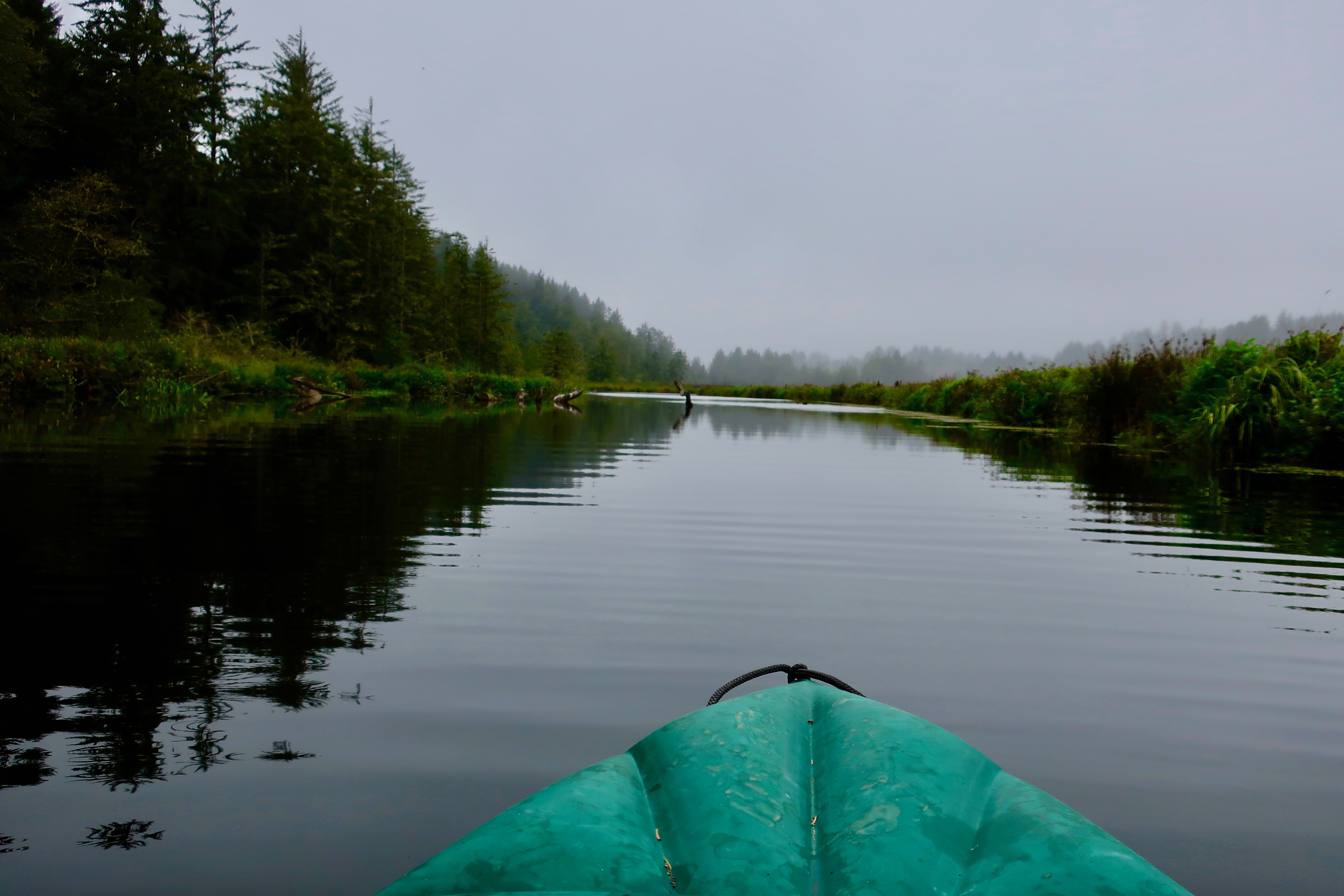
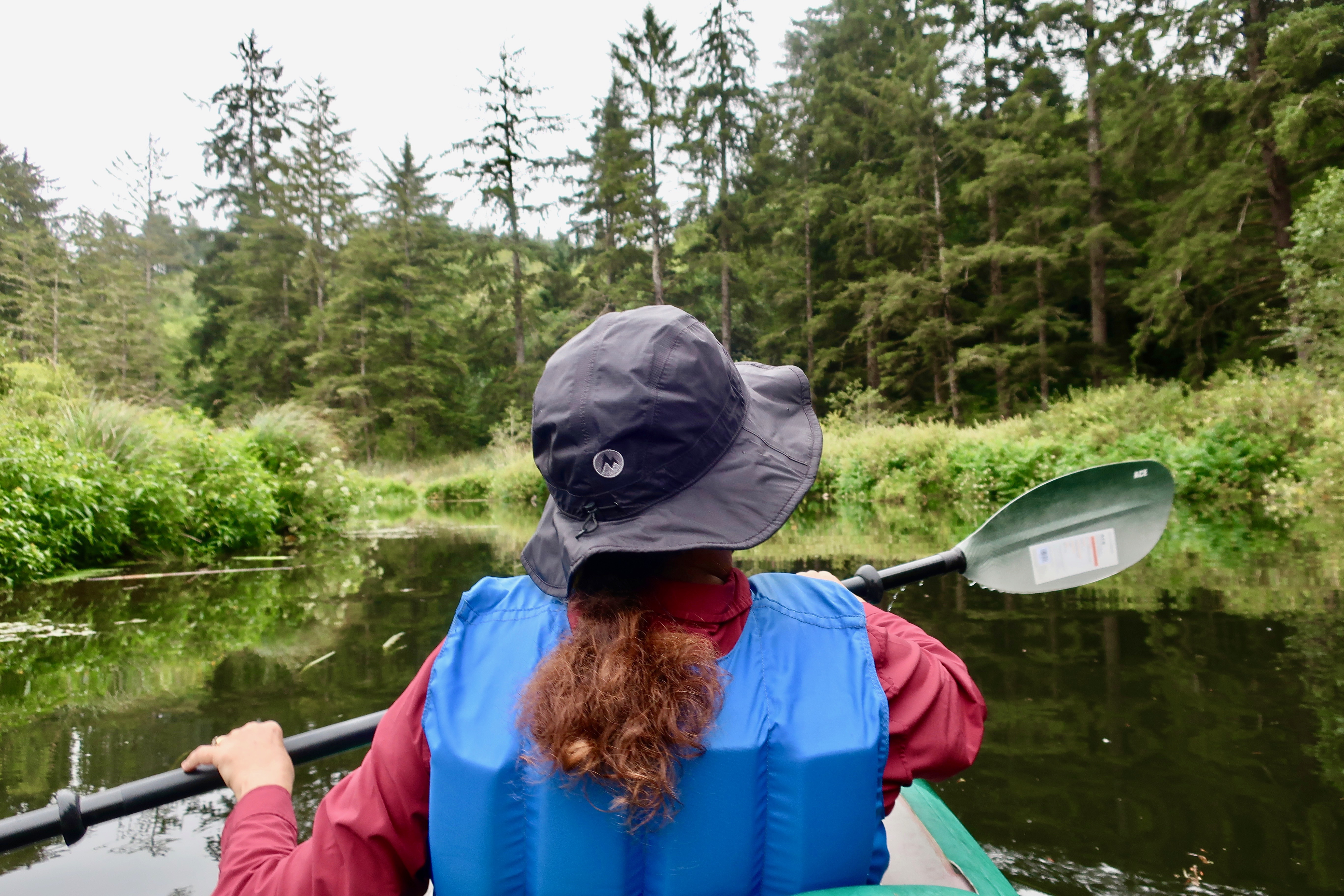
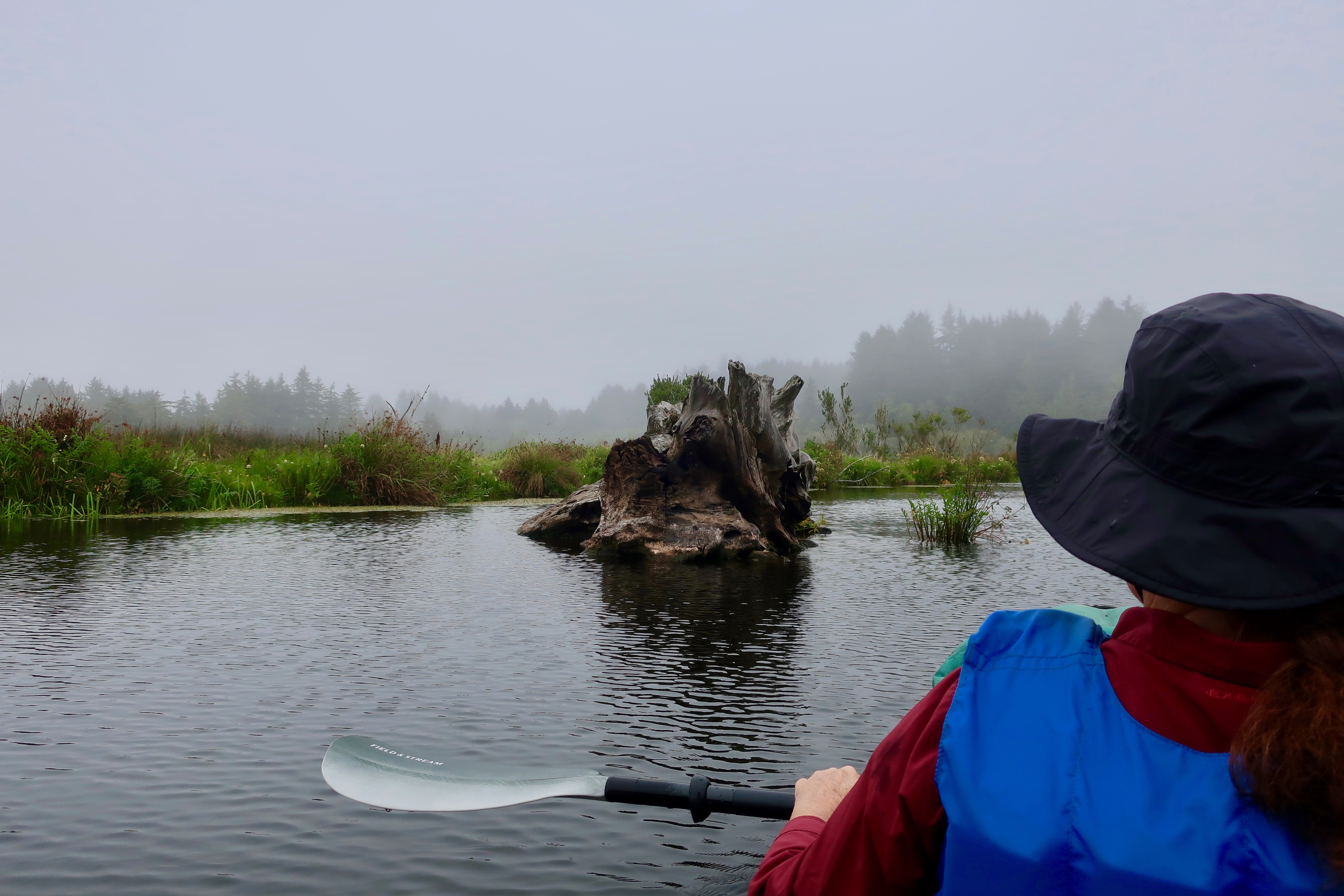
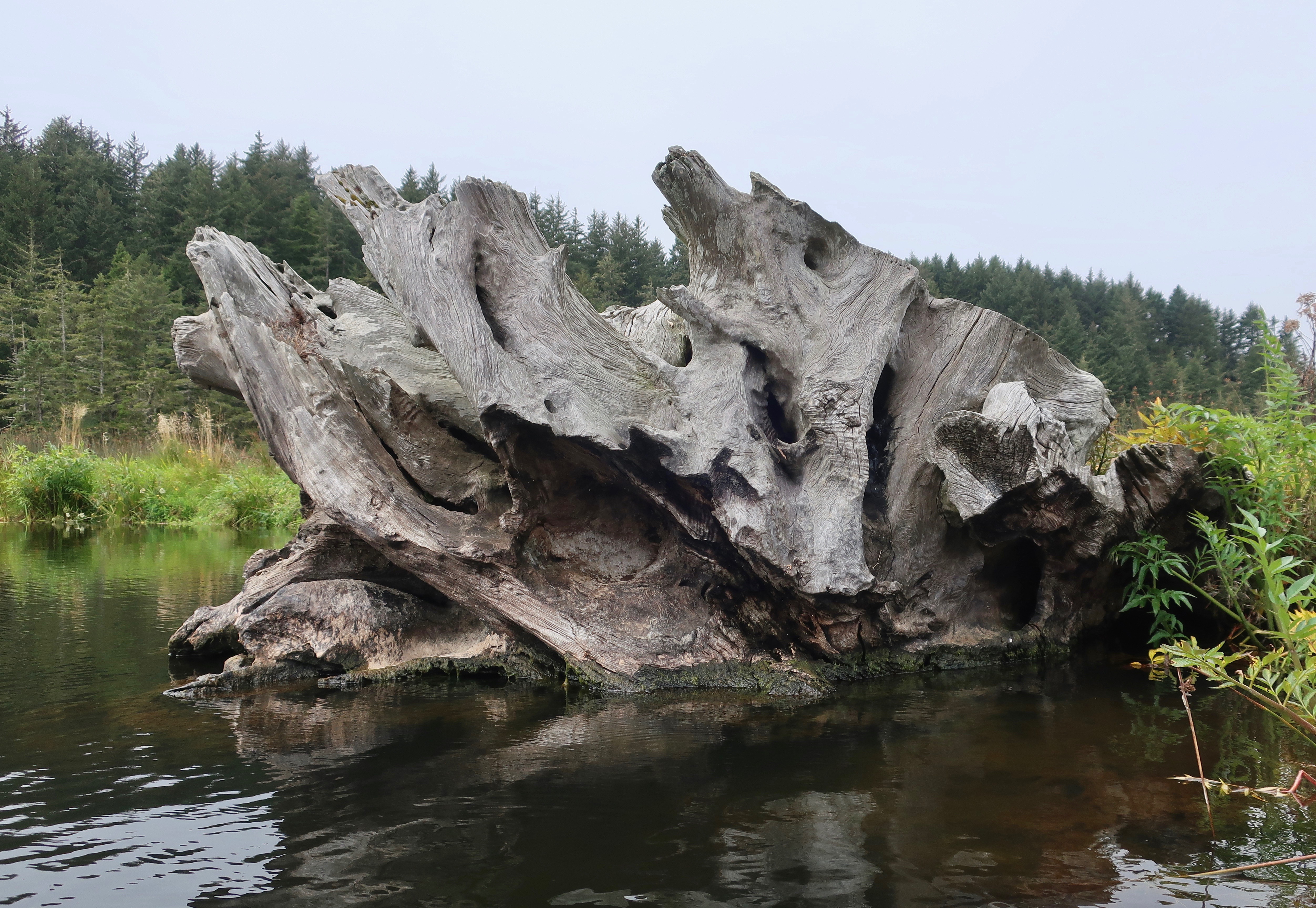
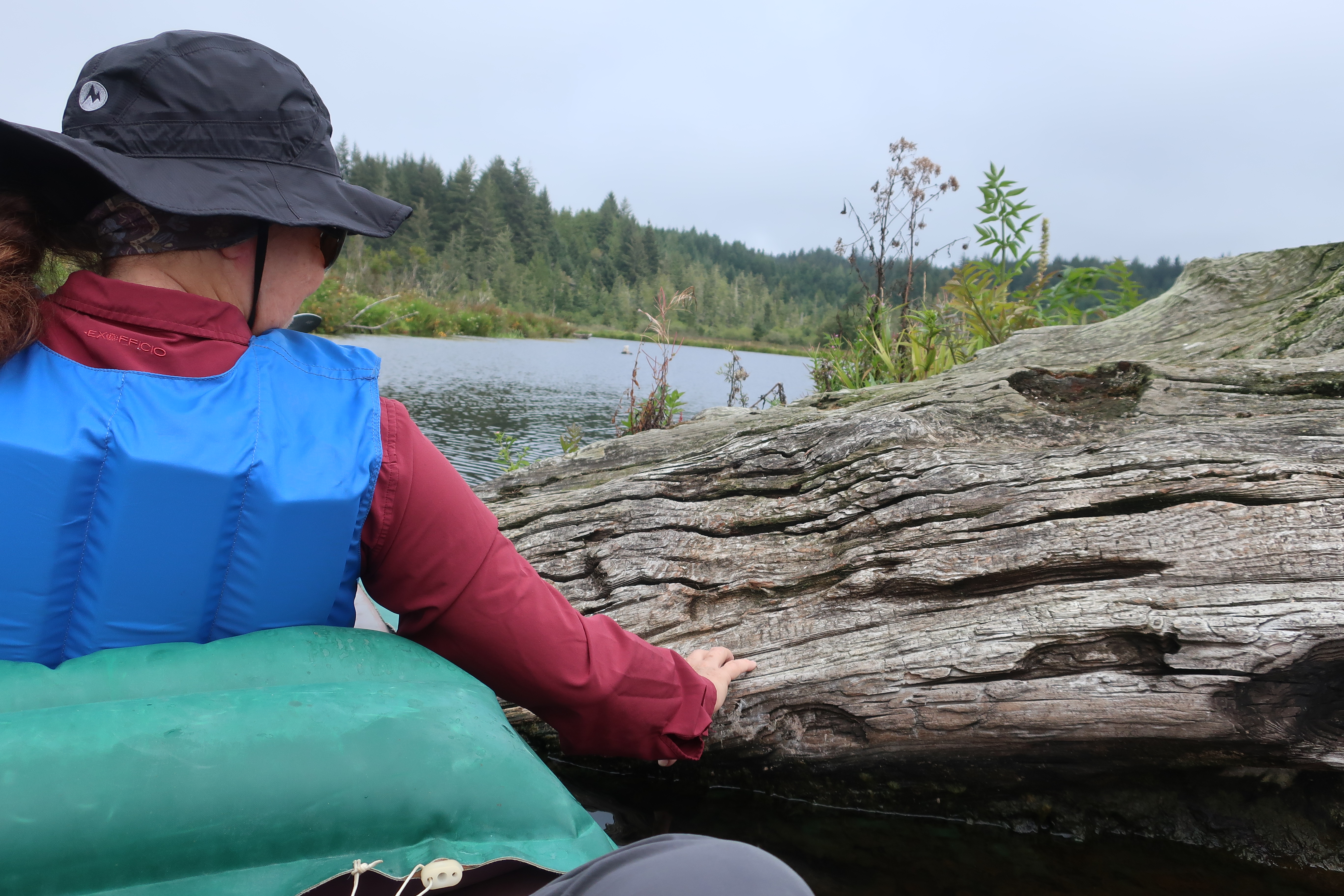
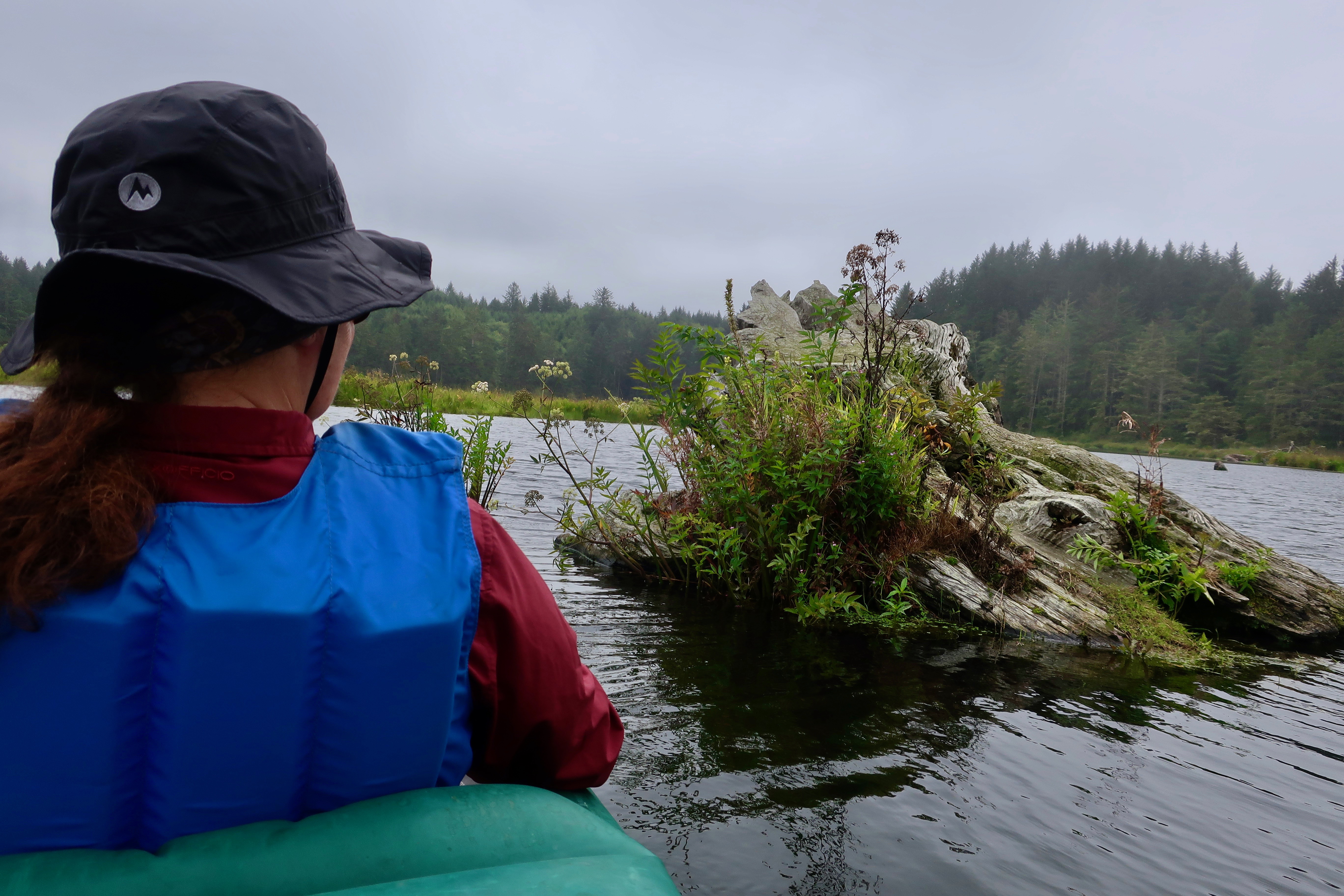
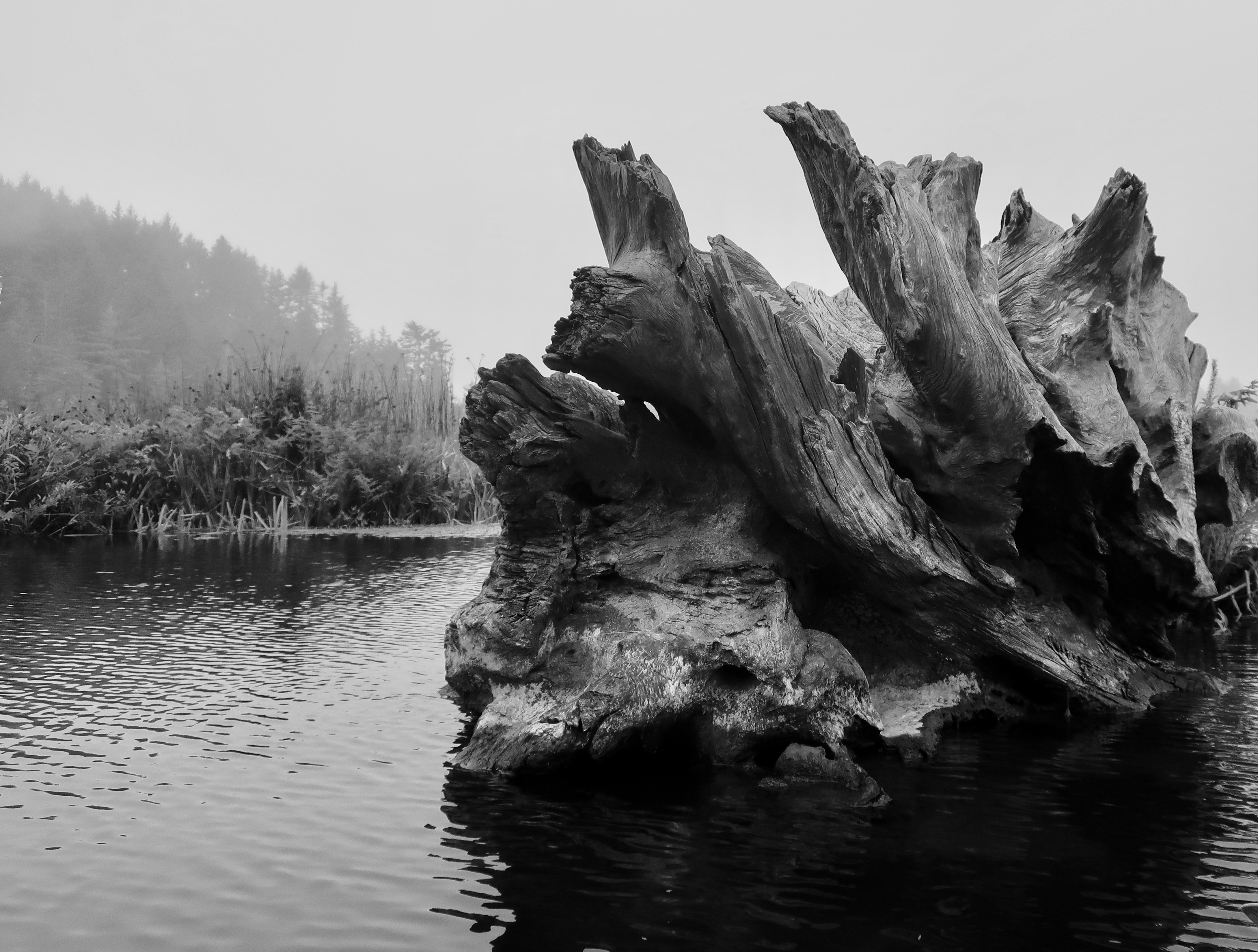
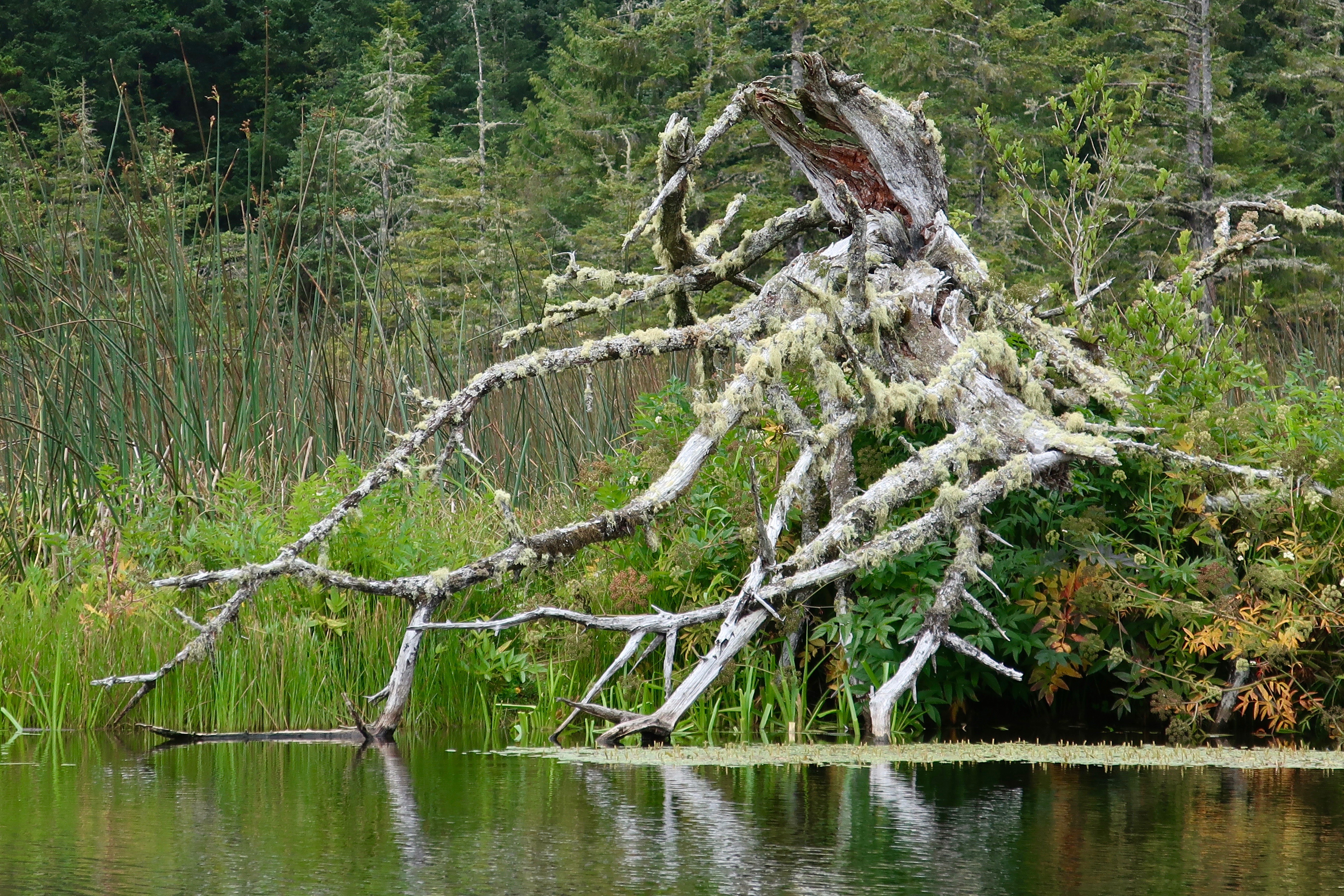
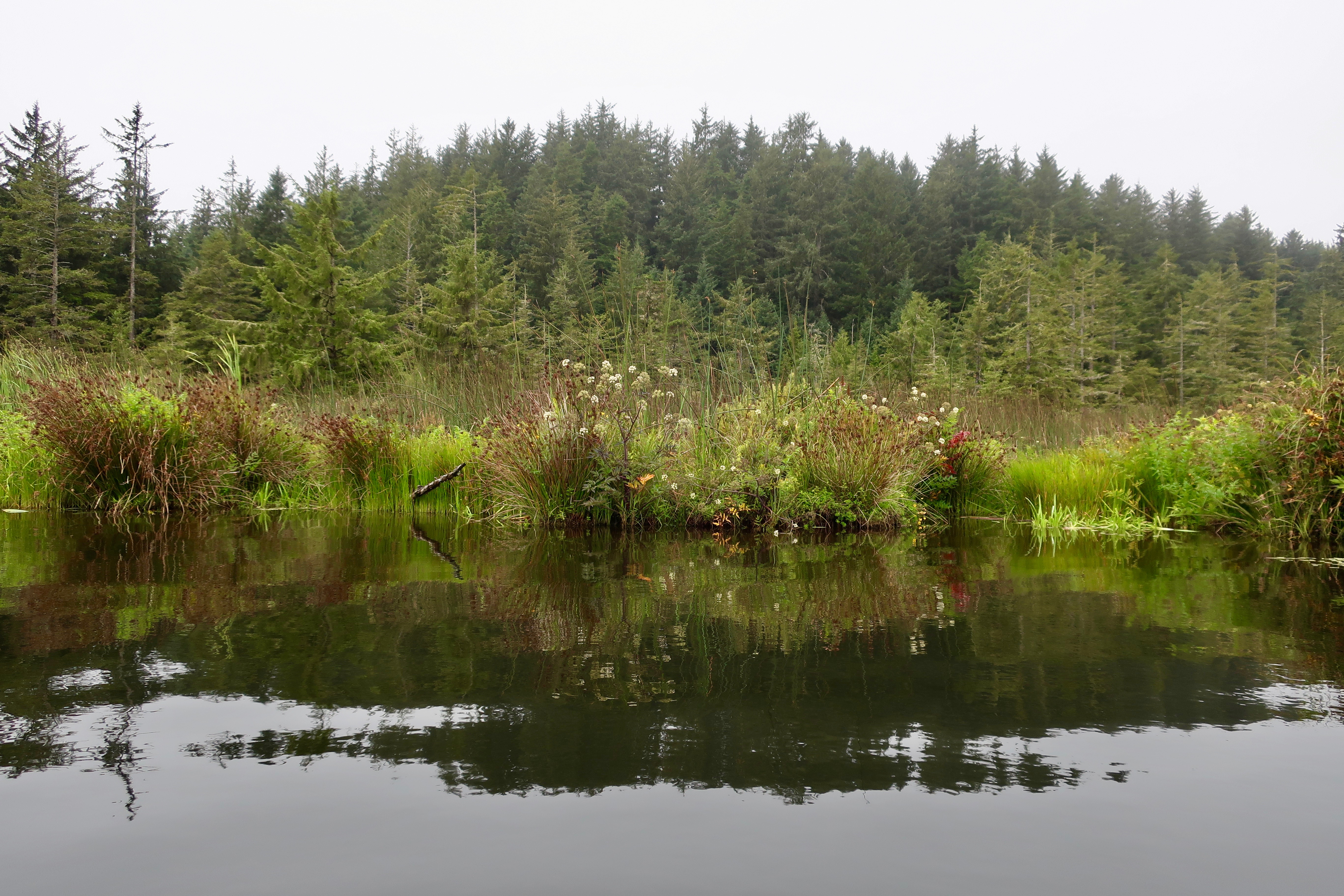
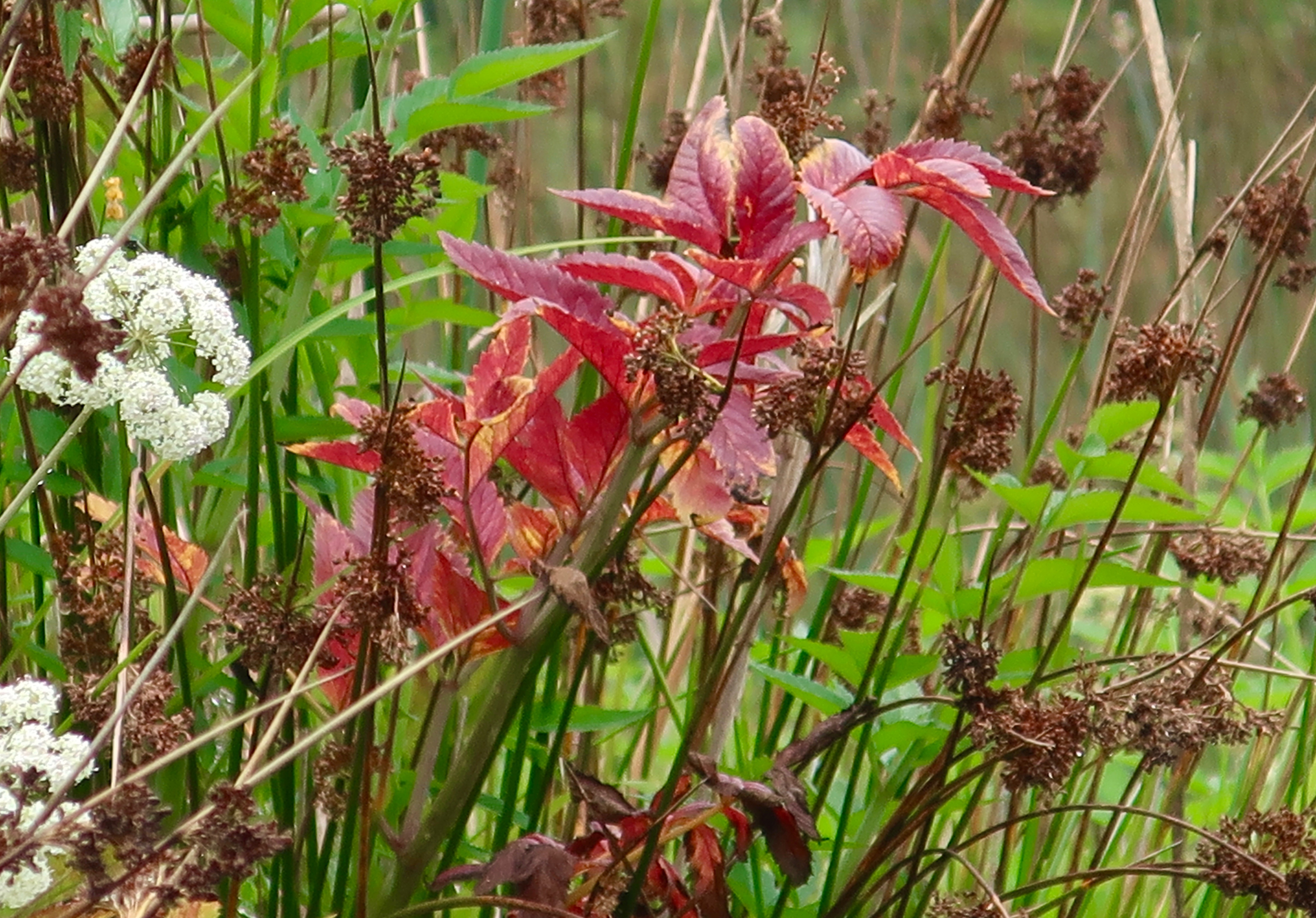
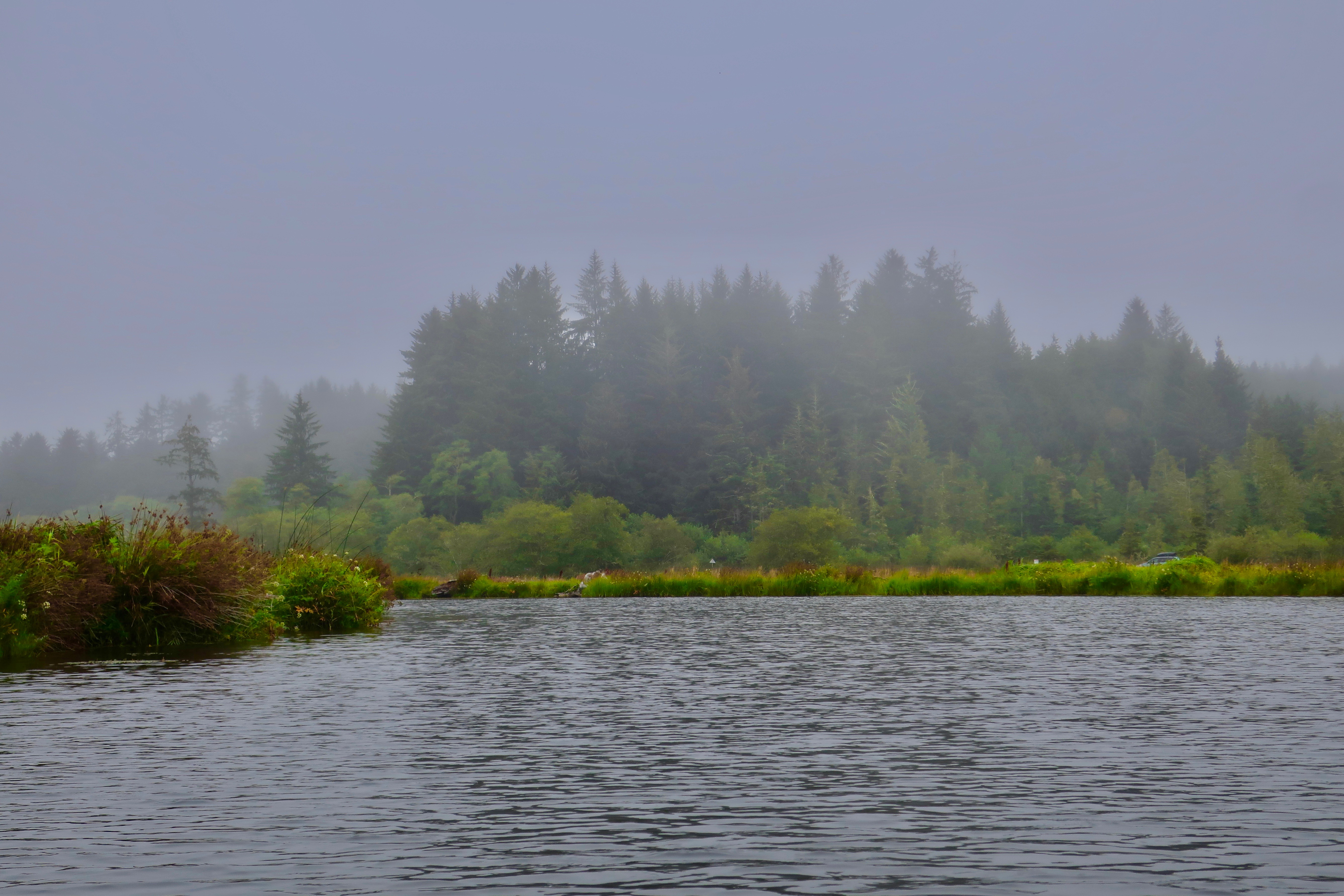
Are your ducks in a row? Peggy and I just returned from a trip to the small town of Waldport on the Oregon Coast. While there, we kayaked up Beaver Creek in Brian Booth State Park. It’s a beautiful area known for its wildlife. Mainly, we saw lots of ducks. Peggy, who was sitting in the front of our two person kayak, was the prime photographer. She captured these ducks behaving in a fashion that even Miss Manners would approve.Or maybe an even more important question: Are you ready for prime time? We came on this duck who wasn’t quite sure as she checked out her tail feathers. She quickly preened (oiled her feathers)as we approached.And then said, “Okay, I’m beautiful. Take my photo.”A nearby mallard duck said, “Ha”… (Photo by Peggy Mekemson.)“I’m the prettiest duck on the river!” (Photo by Peggy Mekemson.)This duck absolutely refused to allow us to take a close up. I understood. Say you were standing in the creek with your head under the water and your butt up in the air. Would you want your photo taken?Most of the ducks we approached were trying to hide their heads under their wings. We assumed that it had something to do with the state of the world. (Photo by Peggy Mekemson.)Another example. (Photo by Peggy Mekemson.)Normally we paddle our 12 foot inflatable Innova kayak with a rudder attached. This time, we were up the creek without a rudder. We were rudderless. While Beaver Creek looks perfectly calm, there was a current accompanied by an occasional gust of wind. Big Green enjoyed the freedom while we paddled like mad to keep her going where we wanted. (Photo by Peggy Mekemson.)There were those perfect moments, however, where we could simply relax and enjoy the gorgeous scenery, which was in abundance.Including impressive wood sculptures, such as this. Peggy insisted that we kayak around it.She thought climbing off the kayak and on to the sculpture would be a great photo op. Something to send the grandkids. Then, she thought better of it. There was a significant chance that she would fall in the water, which I would have considered an amusing photo. Peggy? Not so much.Peggy, who is quite tactile, decided feeling the wood was enough.Circling the driftwood provided several different views, including this garden growing on one side.I decided it would be interesting to depict the driftwood in black and white. It looks a bit ominous.Not as ominous as this old dead tree hanging out over the water, however. I thought it might reach out and grab us and we wisely gave it a wide berth.The riparian habitat next to the river made a fun contrast to the the surrounding forest.Peggy even found some early fall-colored leaves.As we paddled back toward our starting point, mist from the ocean added a magical element to our journey. Peggy and I will be back.
This is one my occasional blogs I am posting as I have taken a break from blogging over the summer. Next up, I will do a post on the impressive Alsea Bridge across Alsea Bay in Waldport. Let me just say here, Oregon takes its bridges seriously. After that I’ll touch on what Peggy and I have decided over the summer. It will include our being on the road much more exploring North America. Change is in the wind.
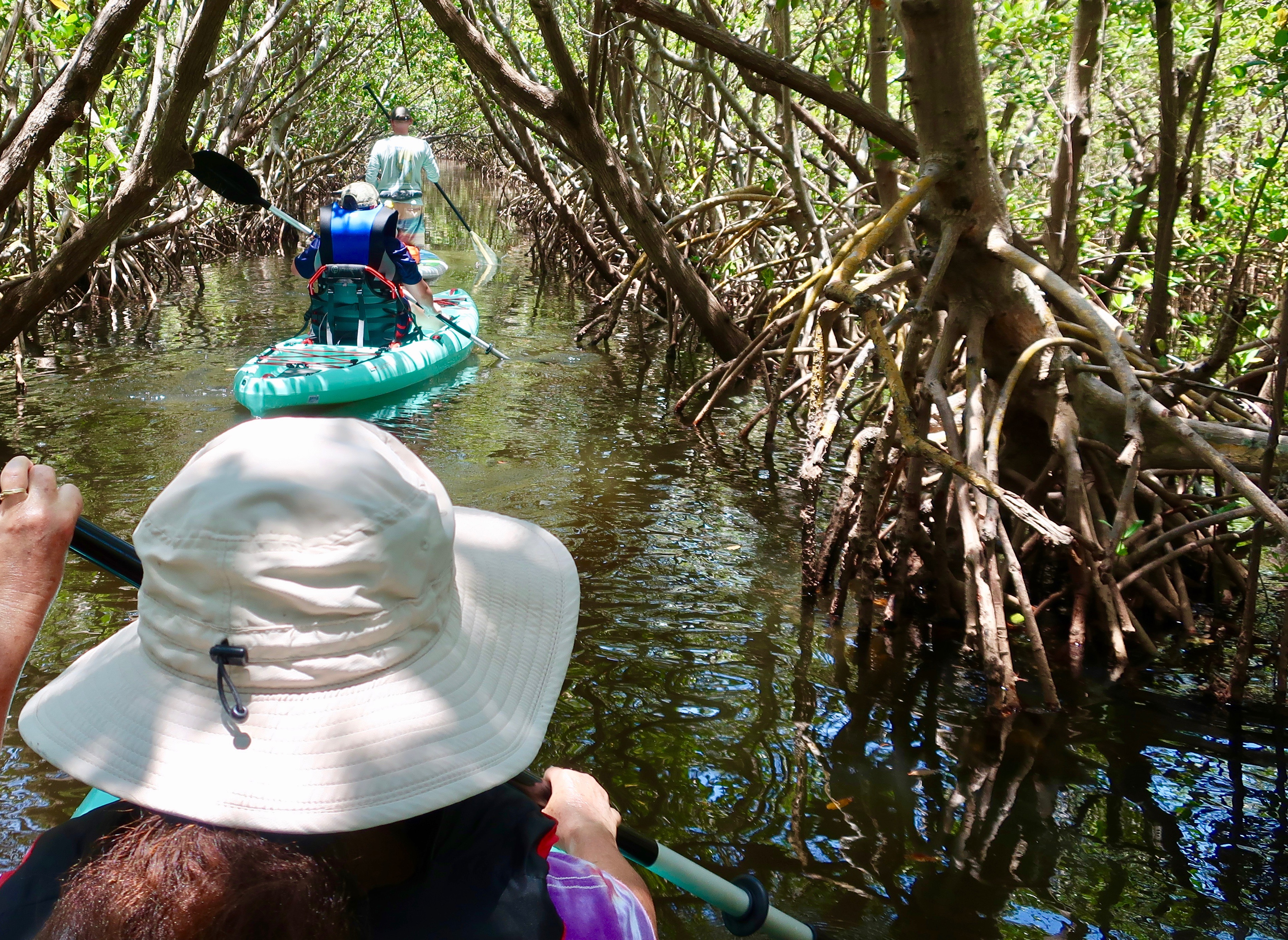
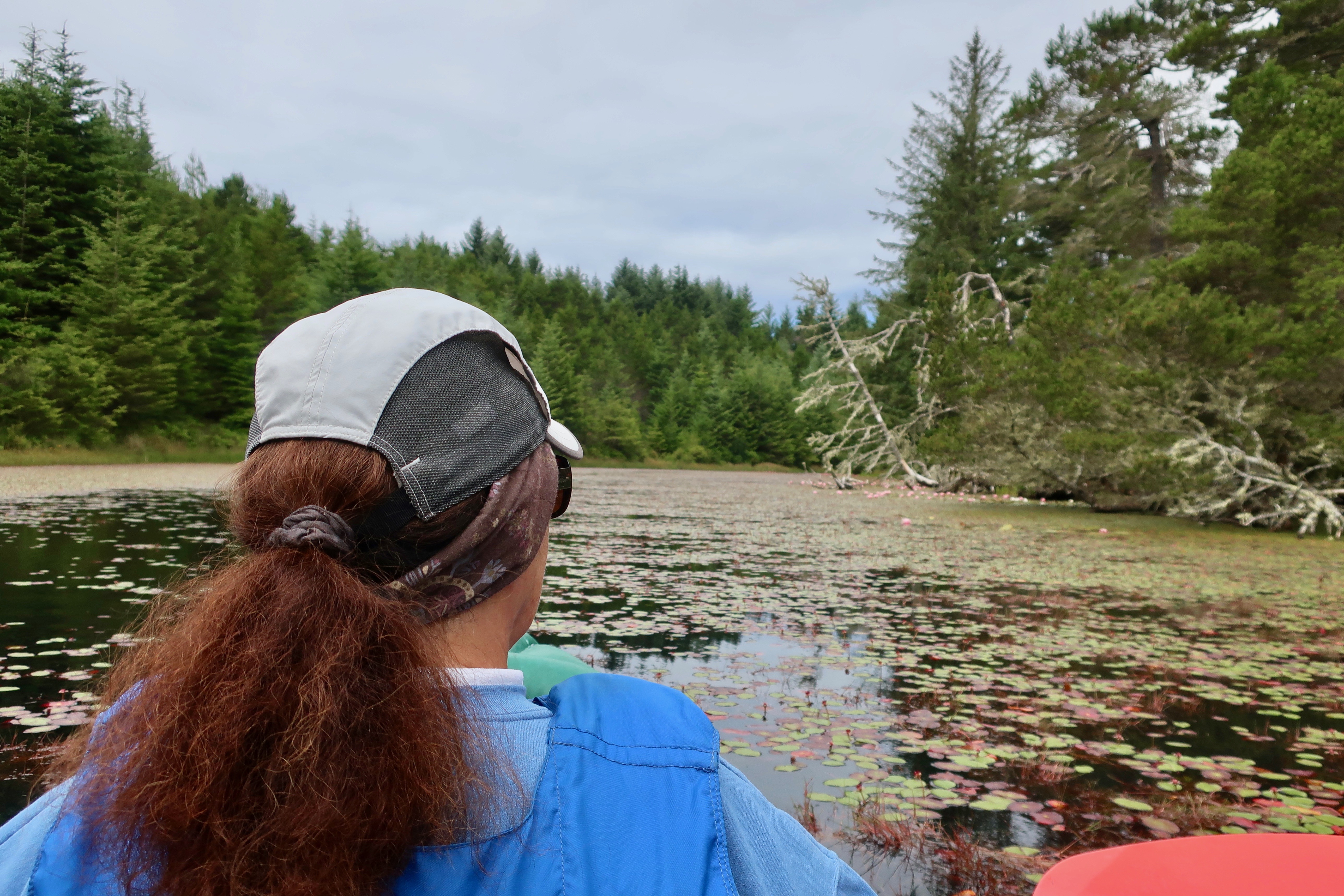
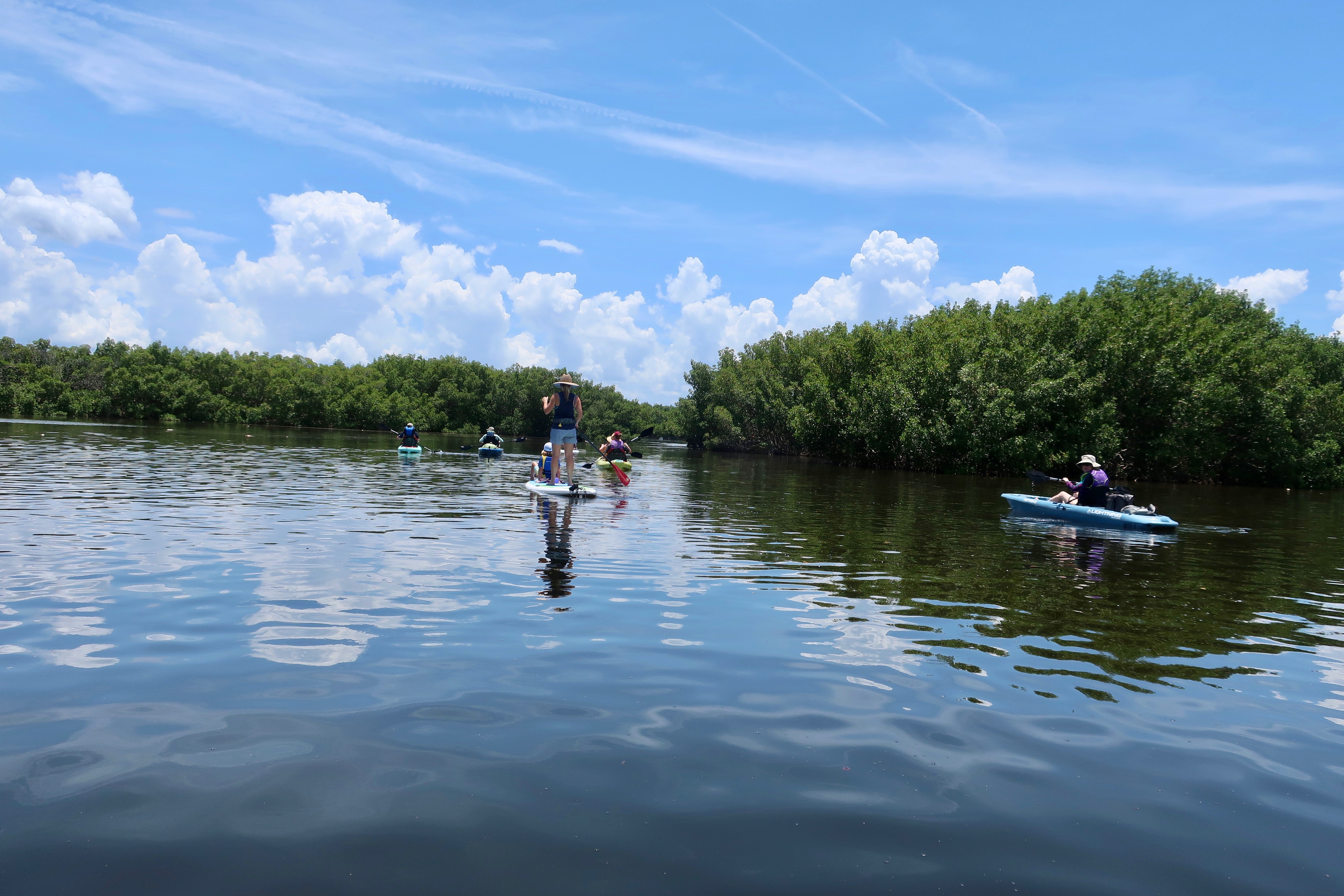
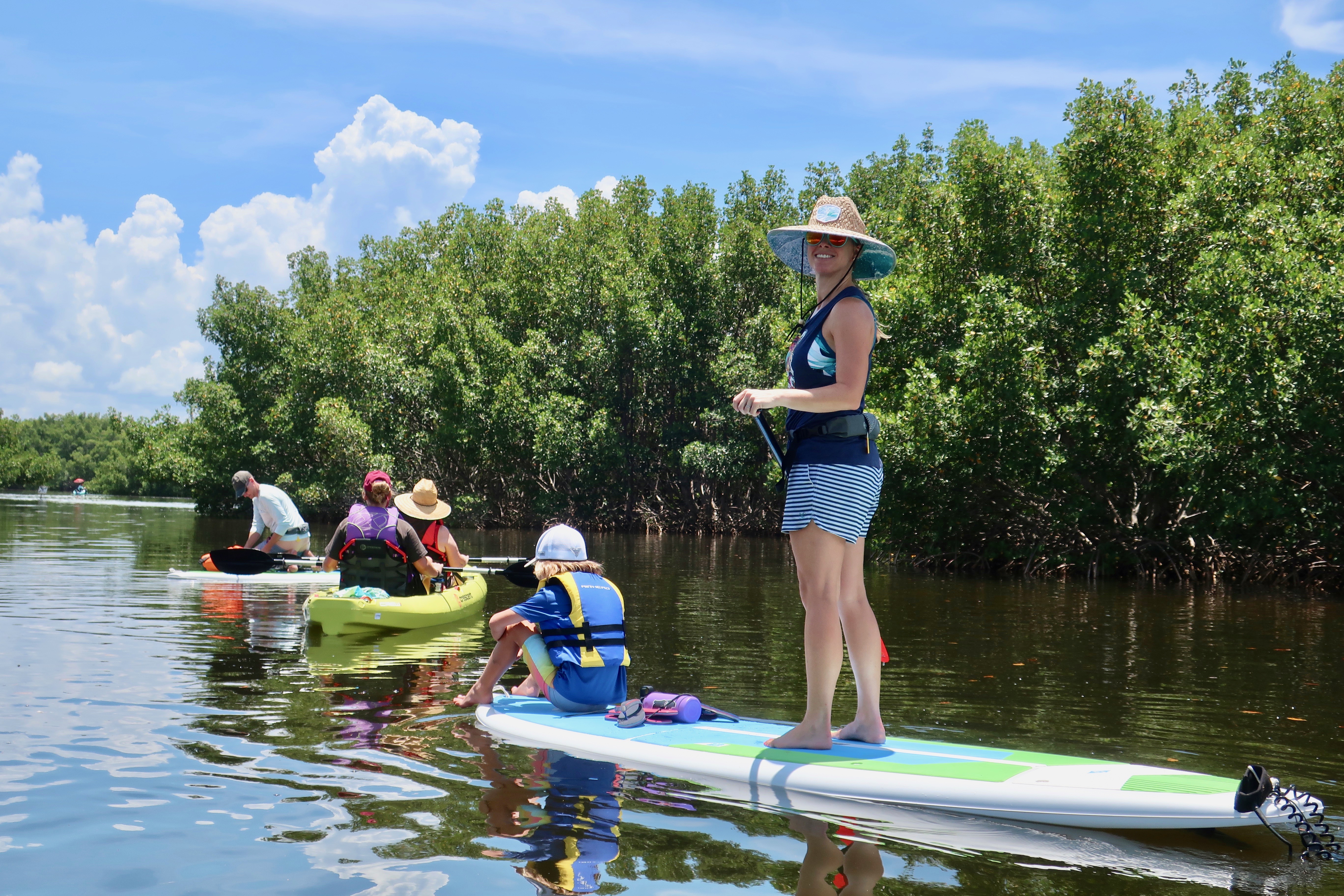
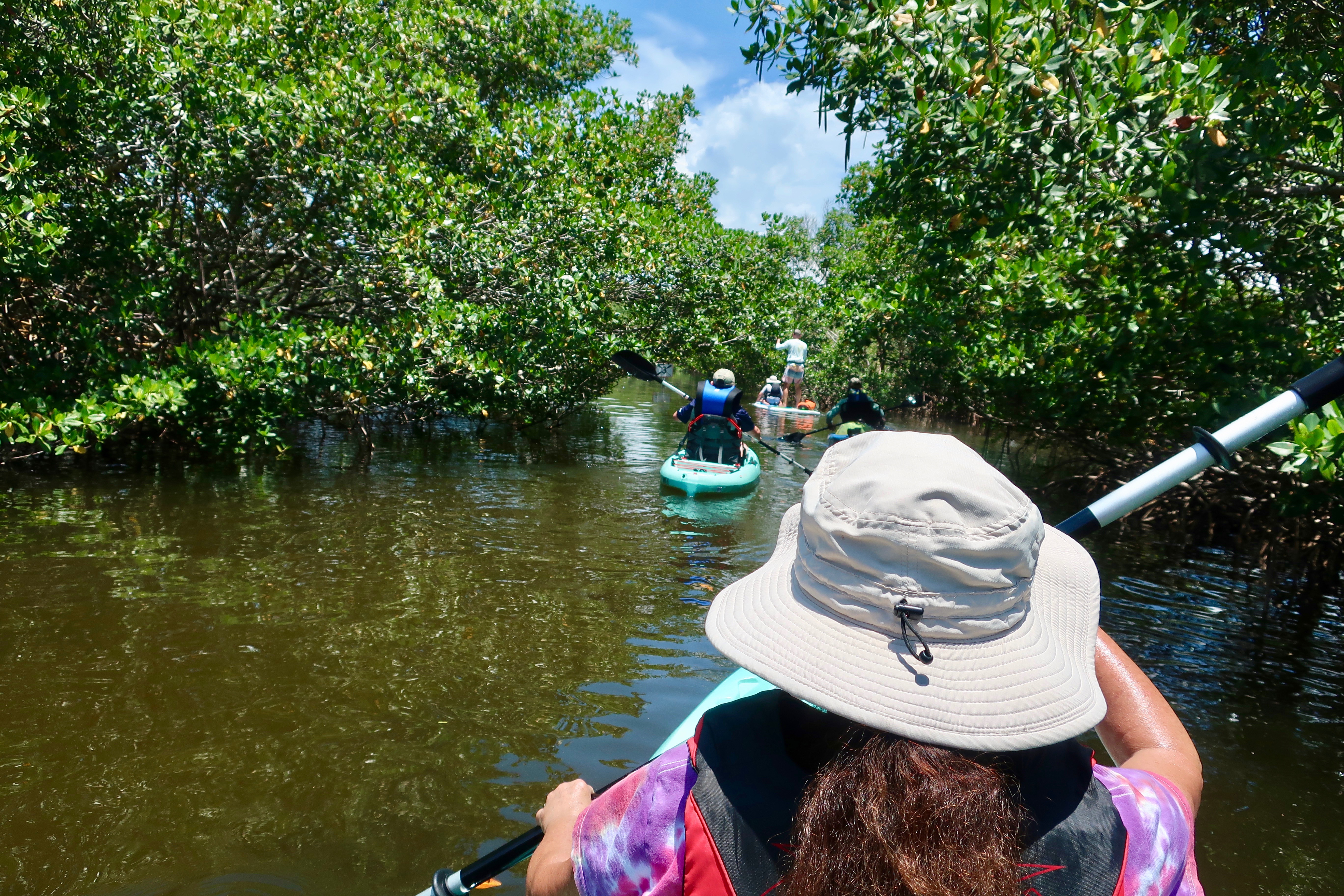
Two weeks ago we were kayaking through mangroves along the Gulf Coast of Florida. Last week we were kayaking on the edge of the Oregon Dunes National Recreation area next to the Pacific Ocean. Are we jet-setters or what? You are looking at Peggy’s hat in the foreground. Our grandson Cody is next. Our son Tony was leading on a paddle board. We were making our way through a mangrove tunnel.
Peggy’s wearing a cap this time as we make our way through Honeyman Lake near Florence, Oregon last week.
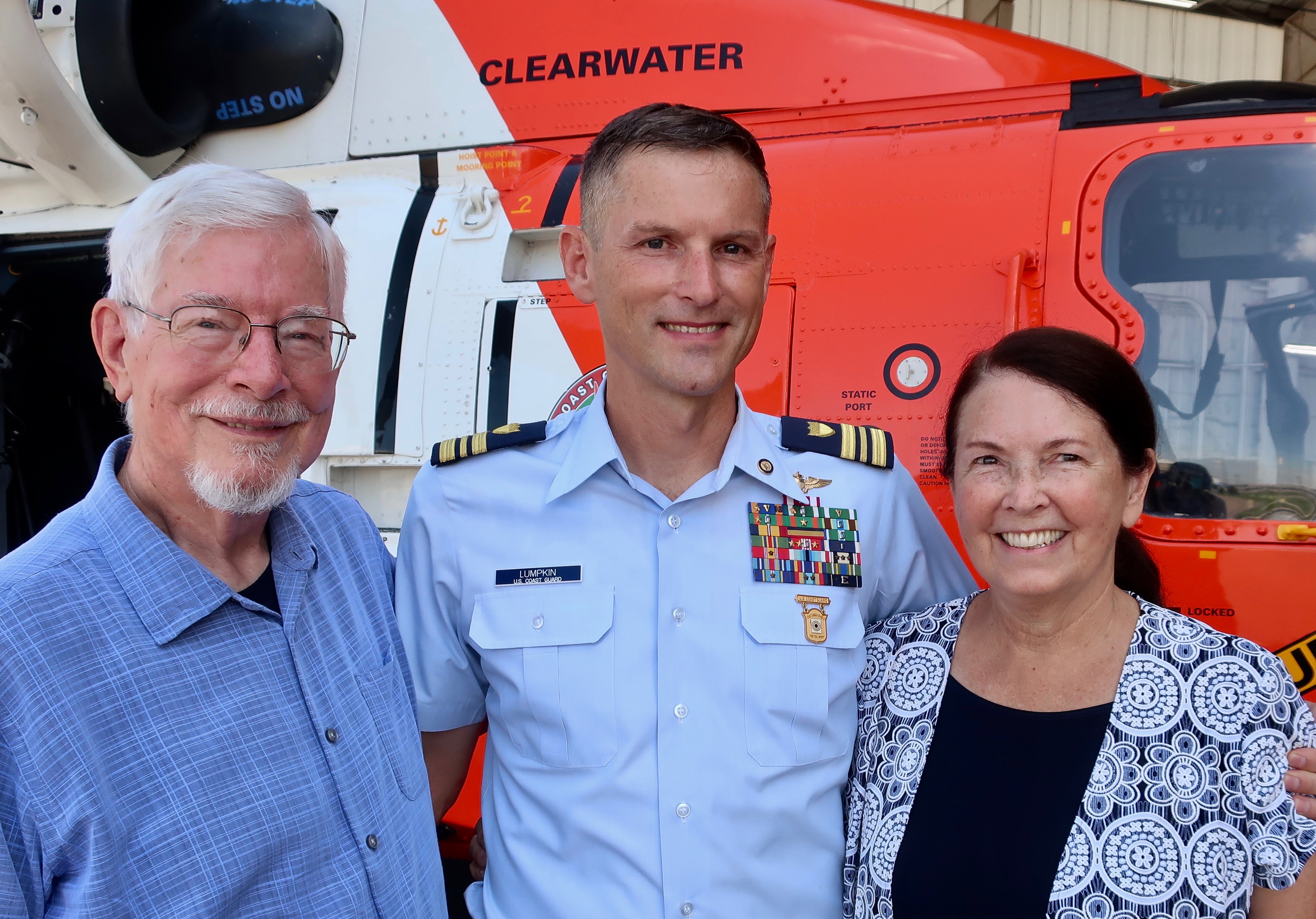
We had traveled to Florida to join a celebration and party for our son Tony who was retiring from his position as a Lieutenant Commander and helicopter pilot with the Coast Guard. Prior to his stint in the Coast Guard, he had been a helicopter pilot in the Marine Corps including three tours to Iraq. He has earned quite a few medals for bravery, being wounded, and saving lives along the way. The lower one is for being one of the best pistol shots in the Coast Guard. He was captain of the pistol team at Annapolis. Peggy was once recognized as being the best pistol shot among teenagers in America. I’ve been known to hit the broadside of a barn.
Tony arranged a kayak trip for visiting family members at Weedon Island Preserve near St. Petersburg.
Like Tony, his wife, Cammie, was operating a paddle board. Their youngest son, Cooper, was hitching a ride.
Here we are entering the mangrove tunnel that the Weedon Island Preserve is noted for. Our paddles proved to be too long, so we took them apart and operated with half a paddle.
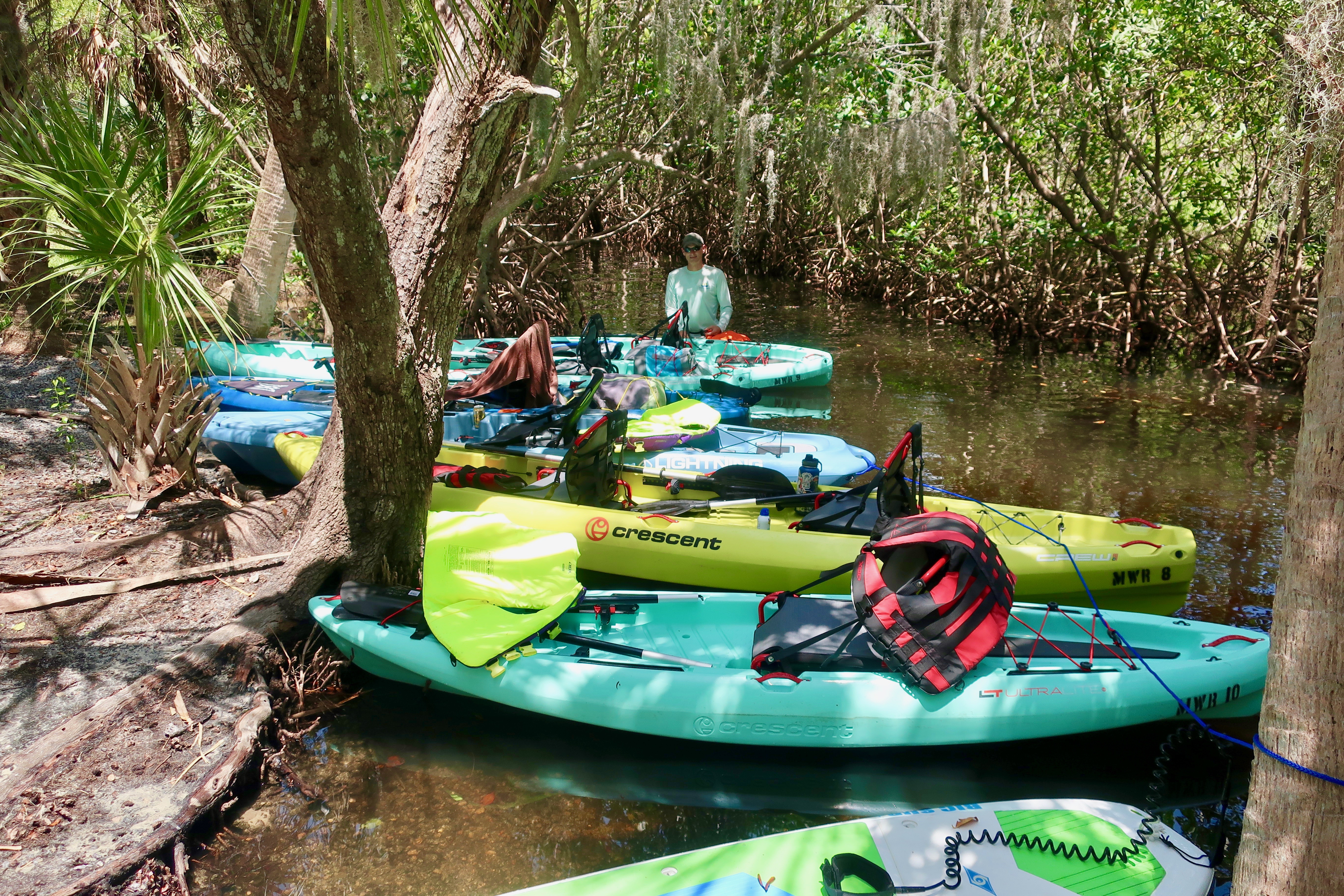
Docked at lunch. Tony is tying a rope to the kayaks to make sure they don’t go wandering off.
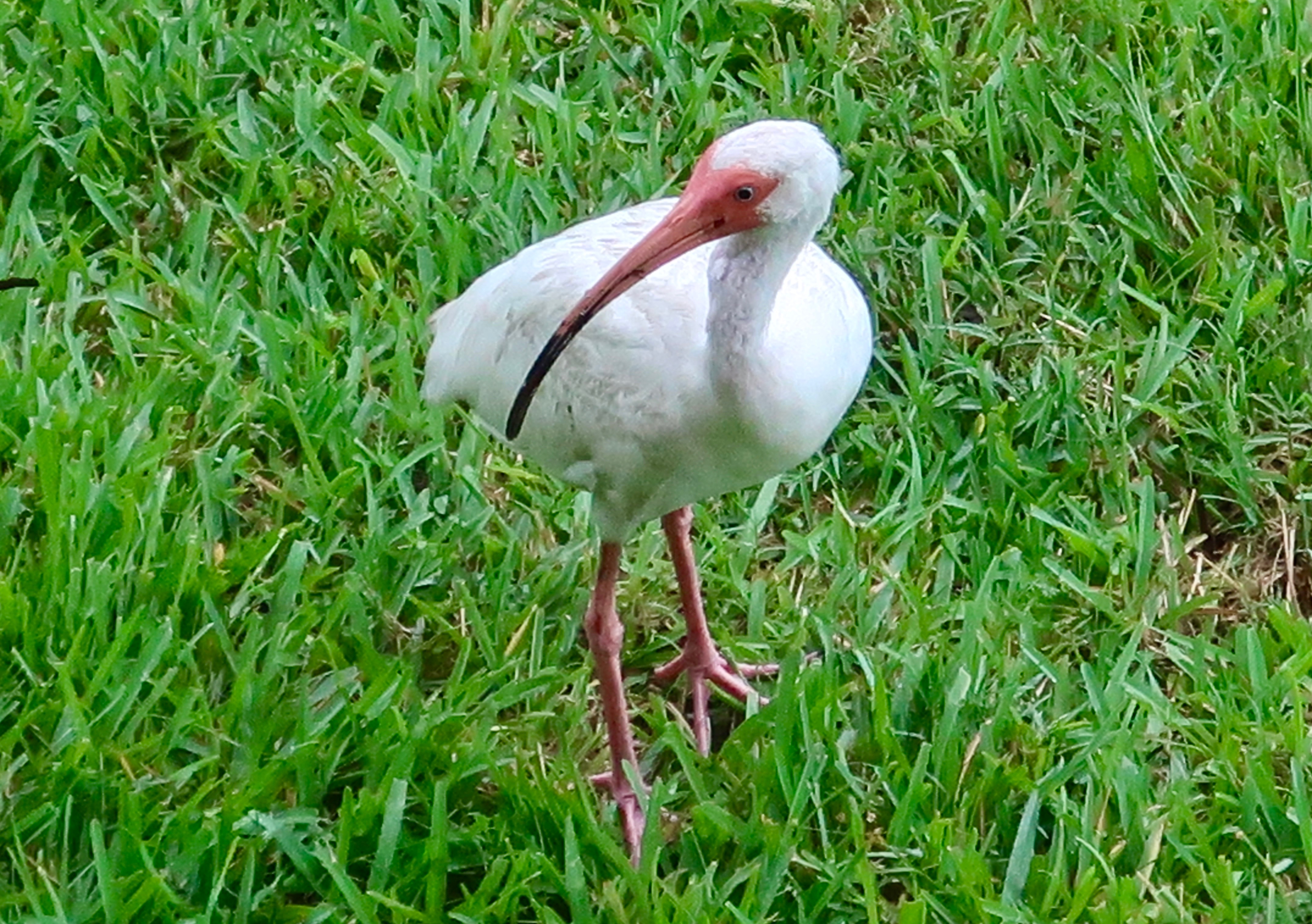
One of the things I always love about Florida is the bird life. This is an ibis.
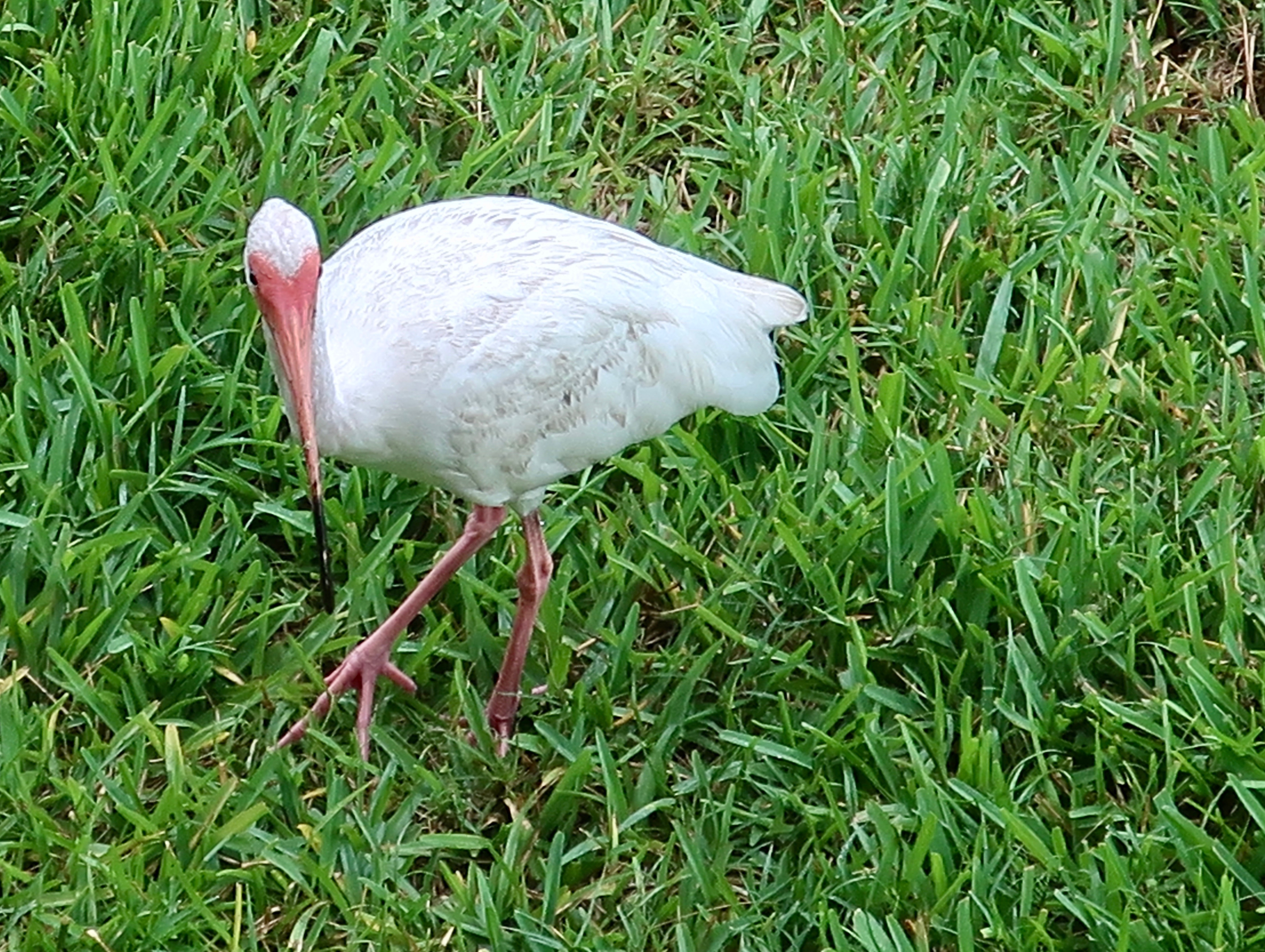
Another view. I think he was stalking something.
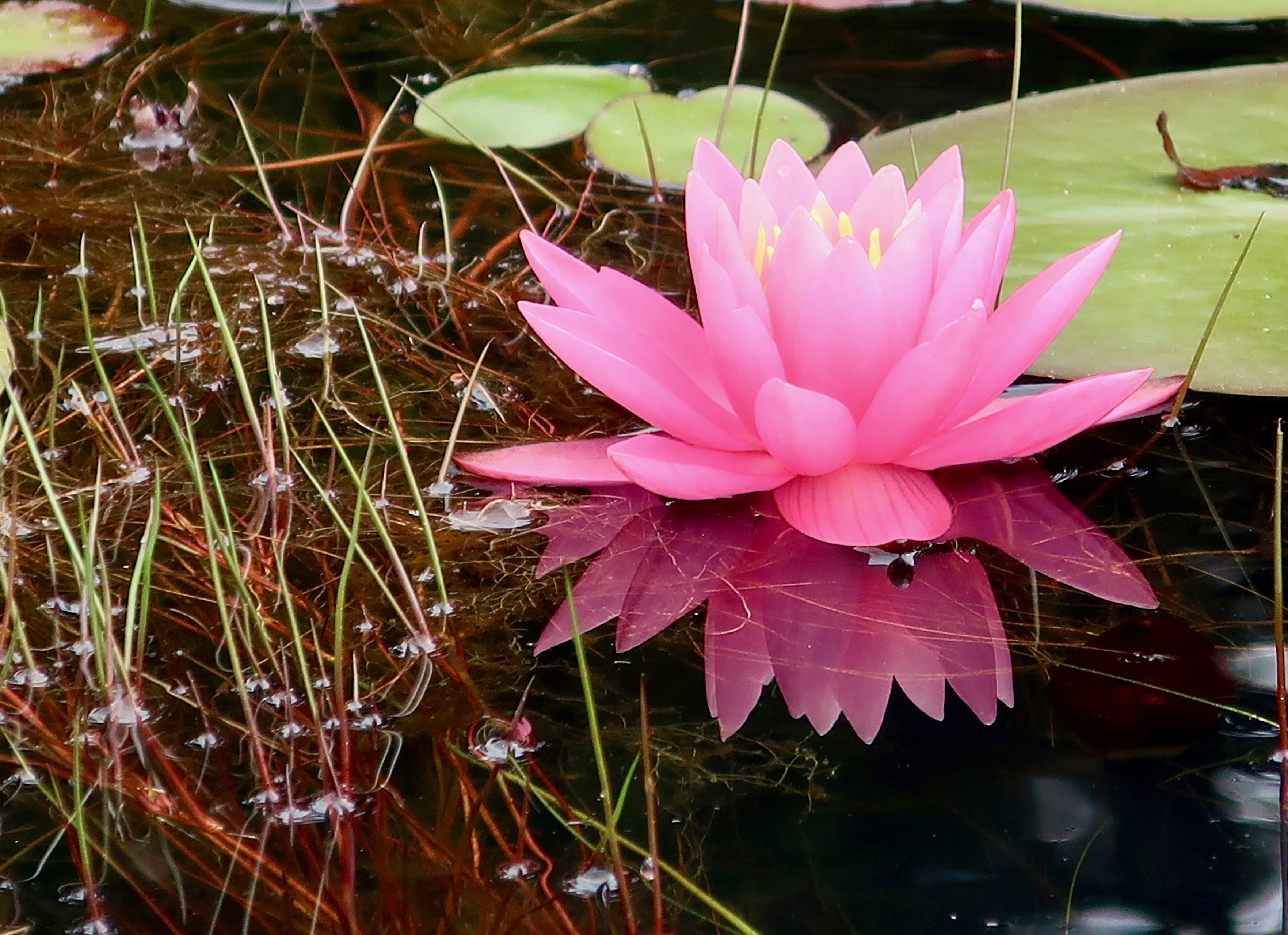
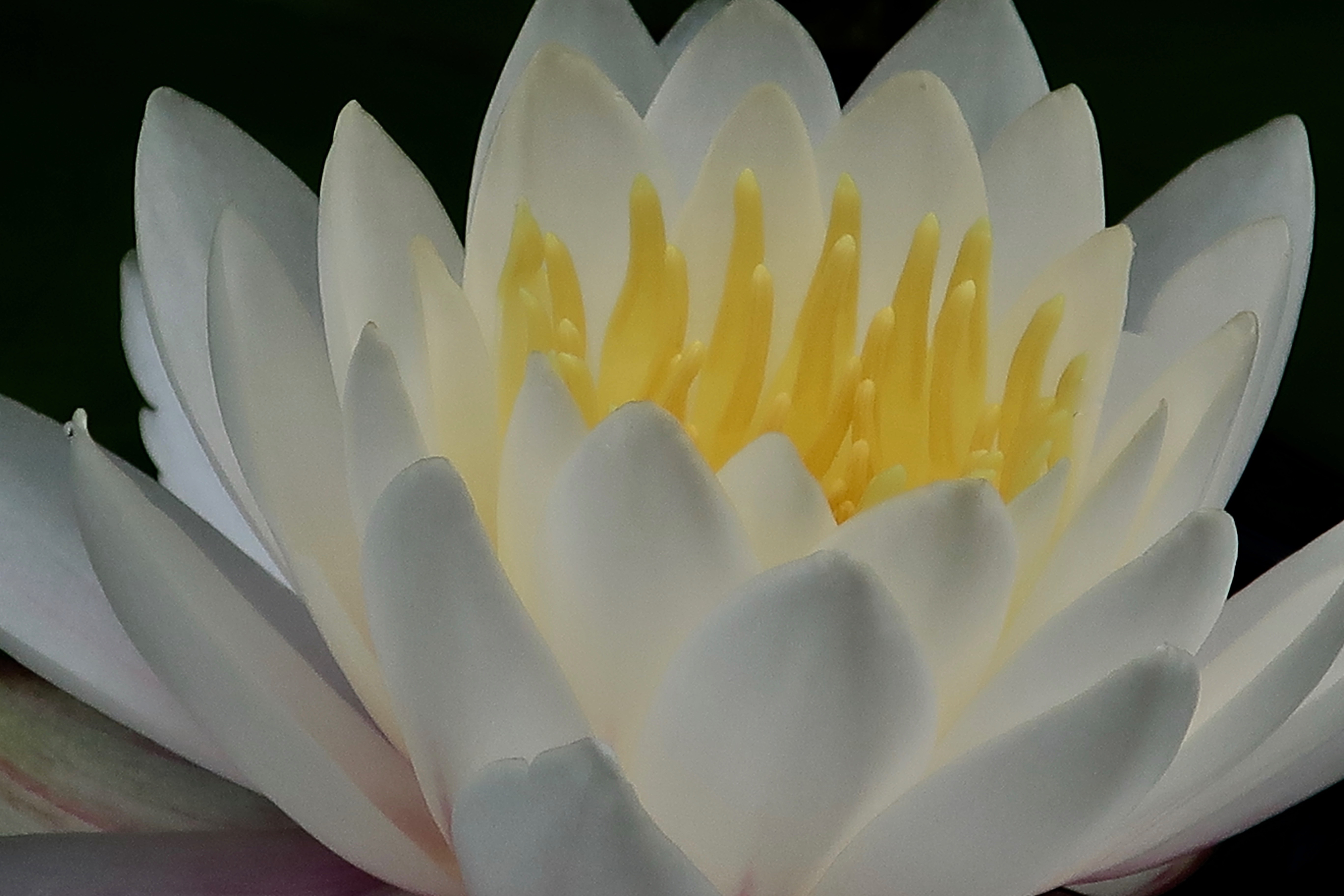
While mangrove tunnels and birds caught our attention in Florida, water lilies became our focus while kayaking on Honeyman Lake.
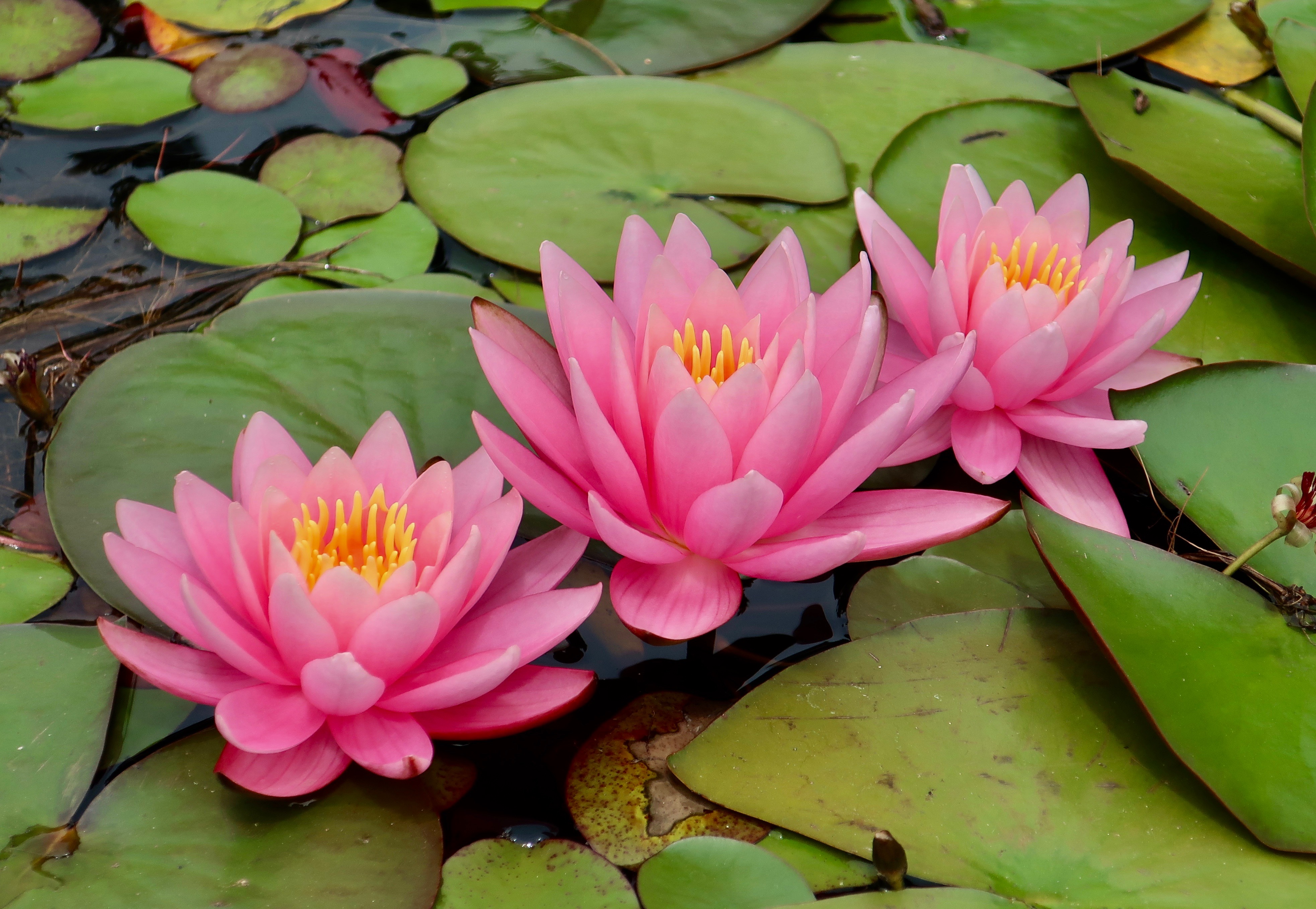
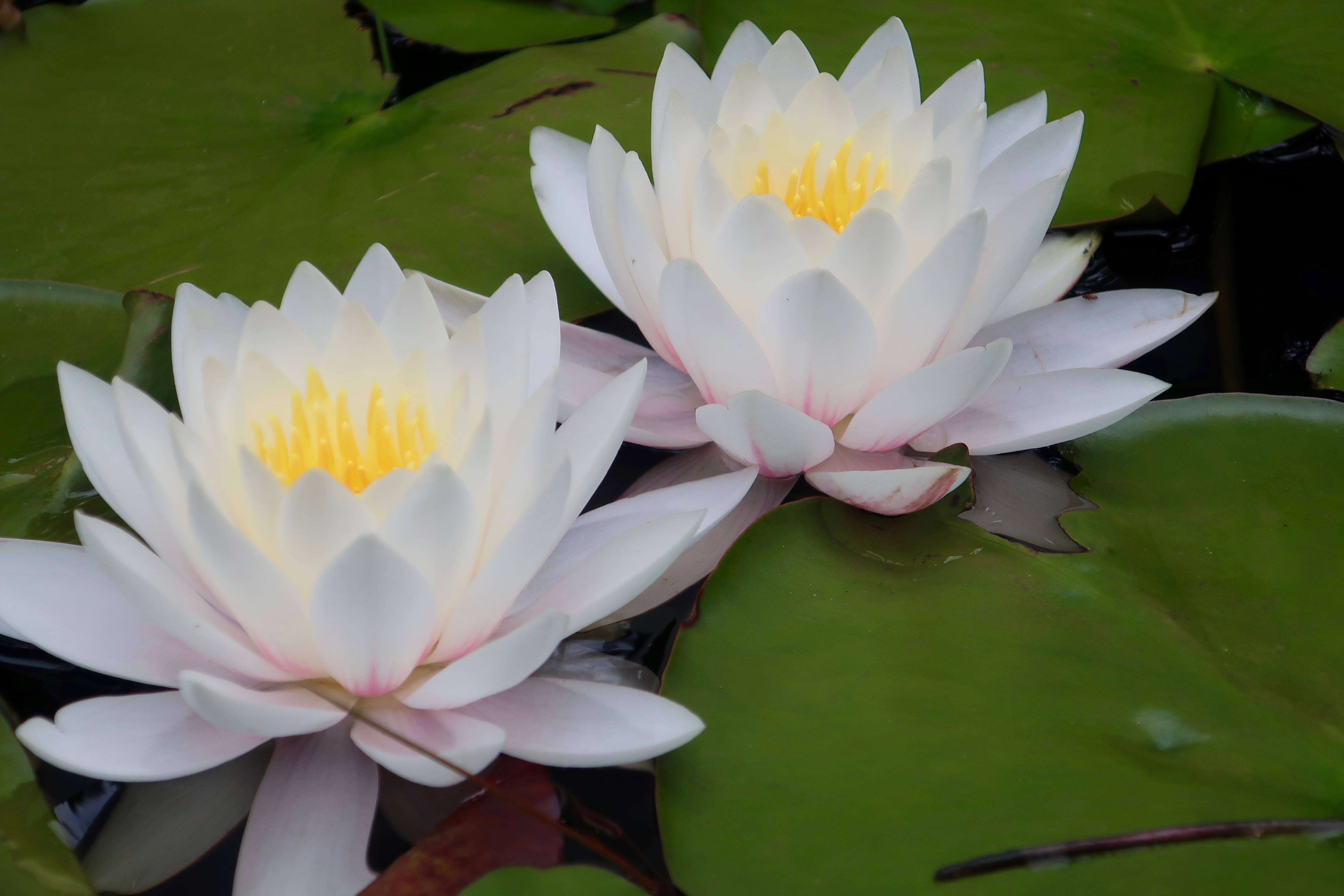
White and pink were the colors of the day.
Peggy caught these three pink water lilies in a row…
While two white water lilies lined up for me.
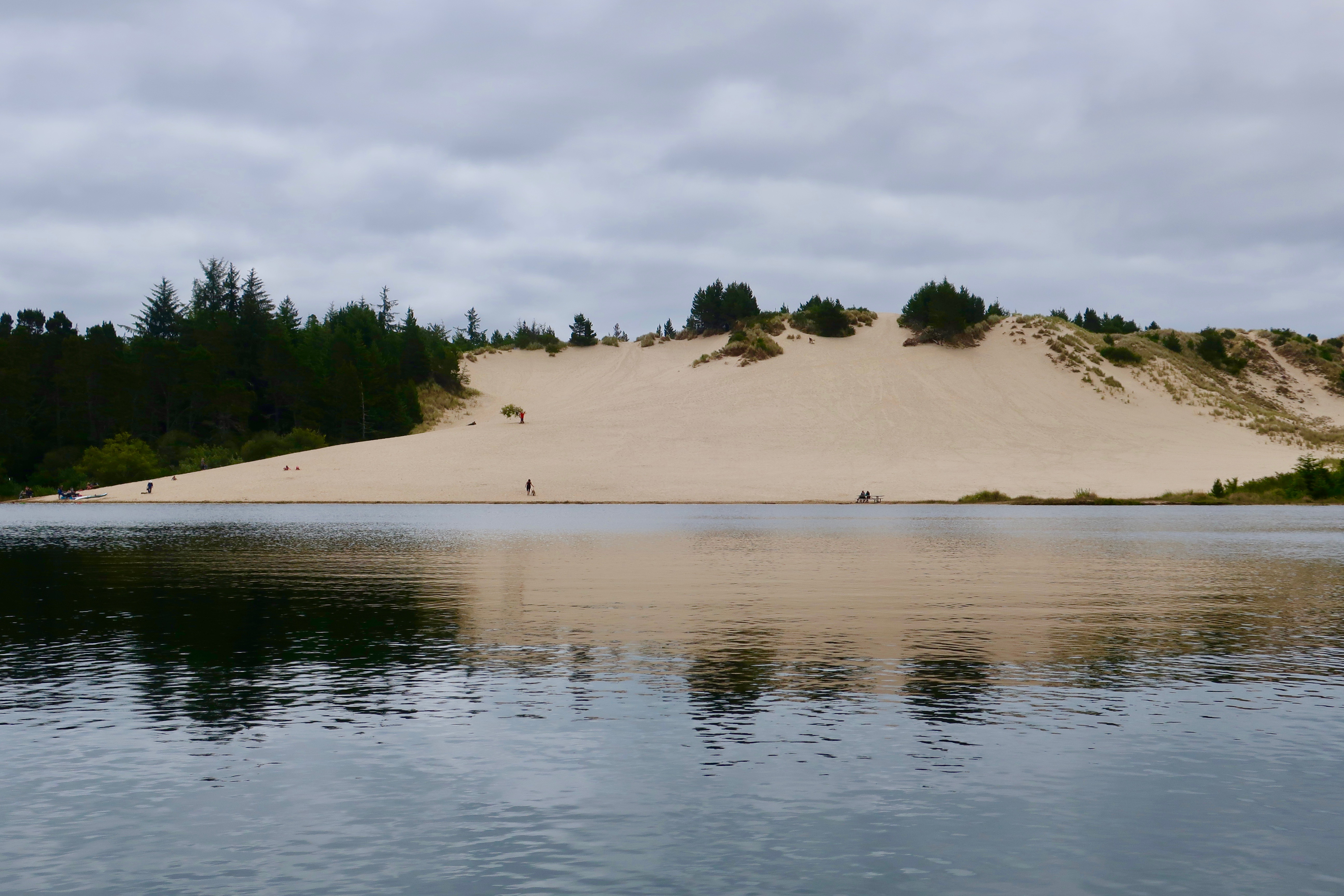
Honeyman Lake is located at the northern end of the Oregon Dunes National Recreational Area.
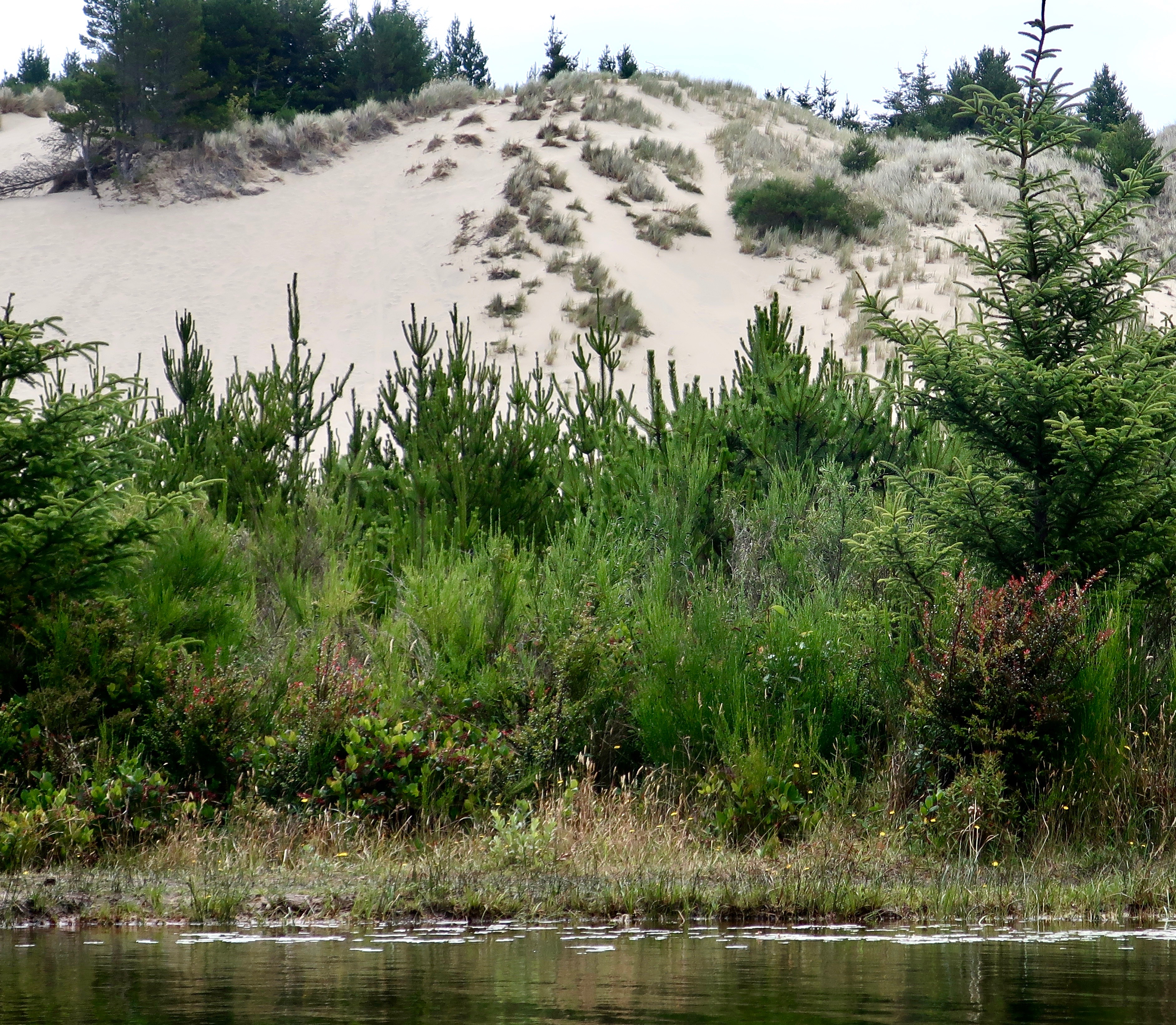
Another view of the dunes along the lake.
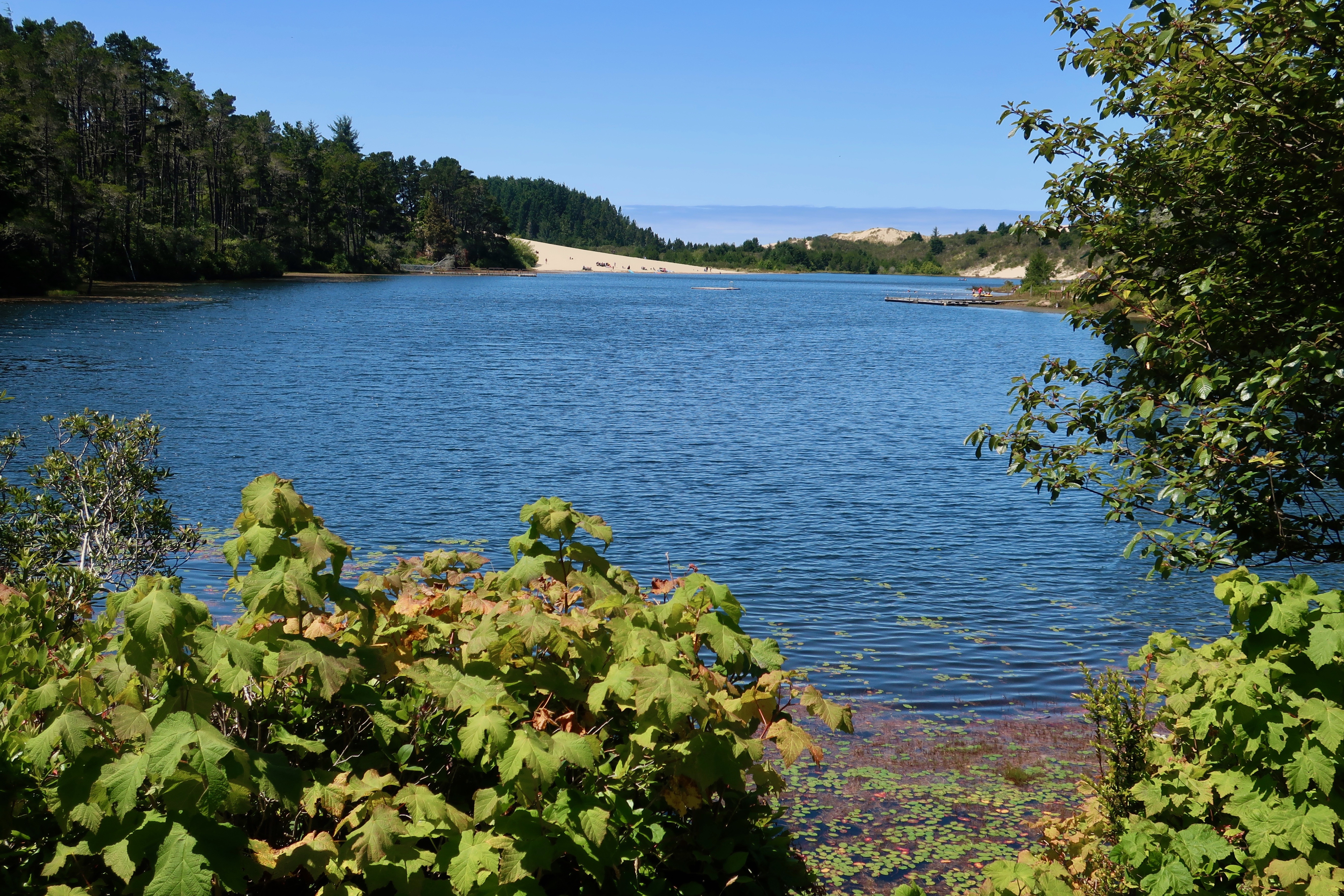
A final view of Honeyman Lake. I took this photo from where we had parked, Quivera, our small RV. We kayaked down to the opposite end of the lake taking a detour into a feeder creek that provided our up-close encounter with water lilies. Fog over the Pacific Ocean can be seen in the distance.
As noted before, I am taking a break from blogging this summer to catch up on other writing chores, but I am also posting an occasional blog when I find subjects I think you might find fun. –Curt
As I mentioned in my last regular post of the summer, I will post a blog on occasion when something catches my attention. The UFO report due out in a week or two definitely fits the definition.
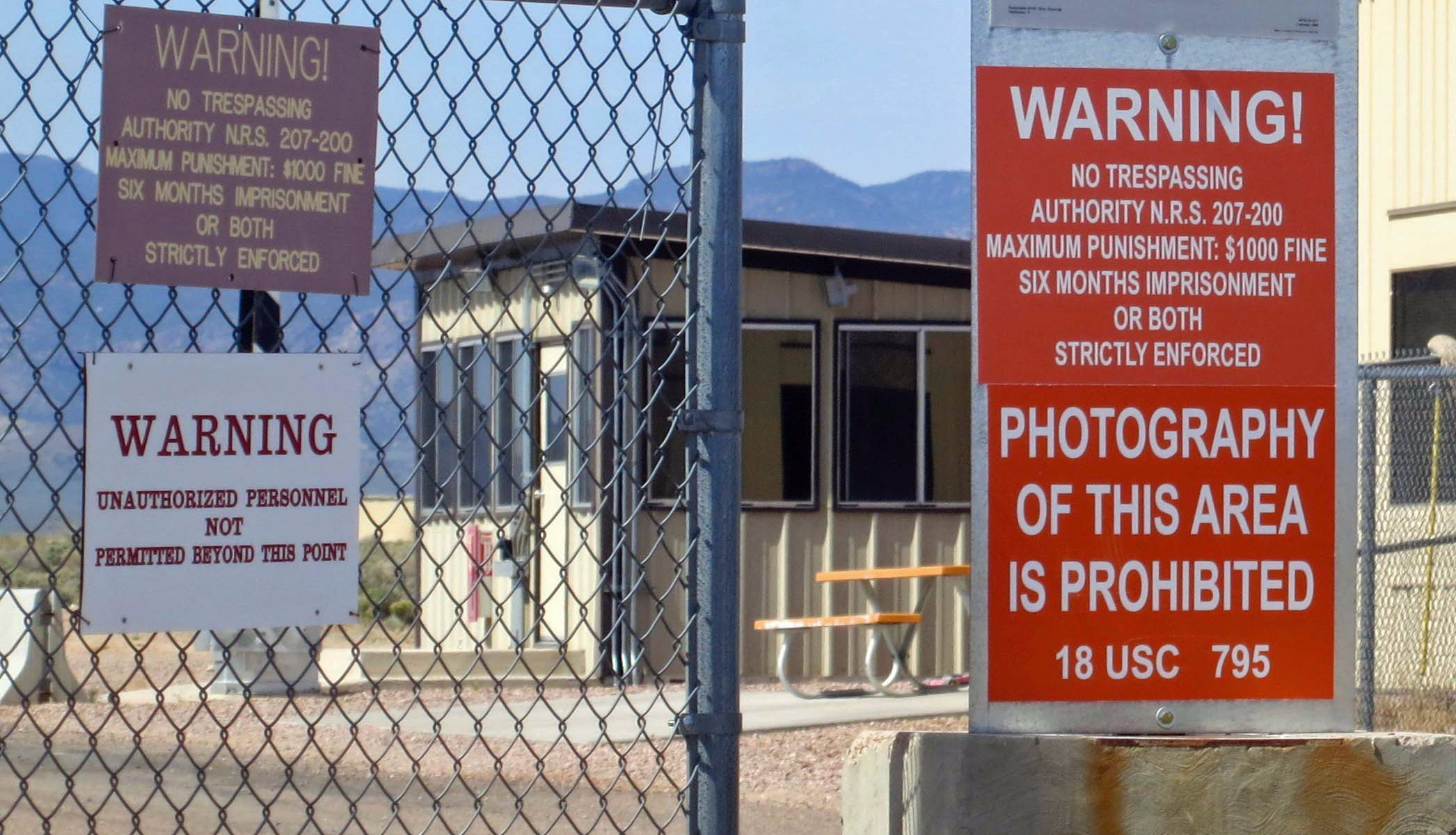
My interest in UFOs has kept my eyes focused on the skies ever since I saw one in 1968. It has also taken Peggy and me to interesting places— like Area 51, shown above in a remote section of Nevada desert. Naturally, I couldn’t resist taking a photo of the sign. Nobody rushed out to arrest us. Wait, is a Man in Black armed with a neuralyzer knocking on my door?
It’s almost impossible to believe.
I’m not talking about UFOs, which I find easy to believe. I’m talking about Republicans and Democrats agreeing on something. At this point in our history, it seems like the possibility of UFOs zipping through the skies of the world is much higher than the possibility of Republican and Democrats working together in the public interest. (Hopefully, I’m wrong.)
And now, both Democrats and Republicans are speaking out about the need to crank up our intelligence on Unidentified Flying Objects (UFOs), or Unidentified Aerial Phenomena (UAPs), to use the modern term. Obama, Trump, and Biden all agree. As do Adam Schiff and Marco Rubio. A report is scheduled to be released this month that will detail what we know, or at least what the government is willing to share with us.
Leaks have suggested that the report will admit that not all UAPs can be explained away with the usual claims that they are the result of some type of natural phenomena or an over-active imagination. The fact that many of the sightings have come from military pilots makes such claims particularly difficult to maintain. These folks hardly fit the definition of delusional eccentrics. One pilot noted that sightings have been reported almost daily for the past two years— often around military installations. No wonder the government is excited.
So far, America’s political leadership seems focused on the possibility that another government may have developed a technology far superior to anything the US has— at least publicly. It’s more palatable than admitting to the existence of extra-terrestrials from outer space (or Earth). And also easier to obtain funds for. The first hypothesis is merely scary. The second is mind-boggling and will forever change our perspective on who we are.
I doubt the viability of the ‘other government’ scenario. For one, can you imagine how difficult it would be to keep such a secret? Then there is the temptation to exploit such technology to gain political advantage. It’s hard to imagine any modern nation failing to do so. And finally, we are talking about a technology that would have been available for over 80 years given modern day sightings. And probably much longer.
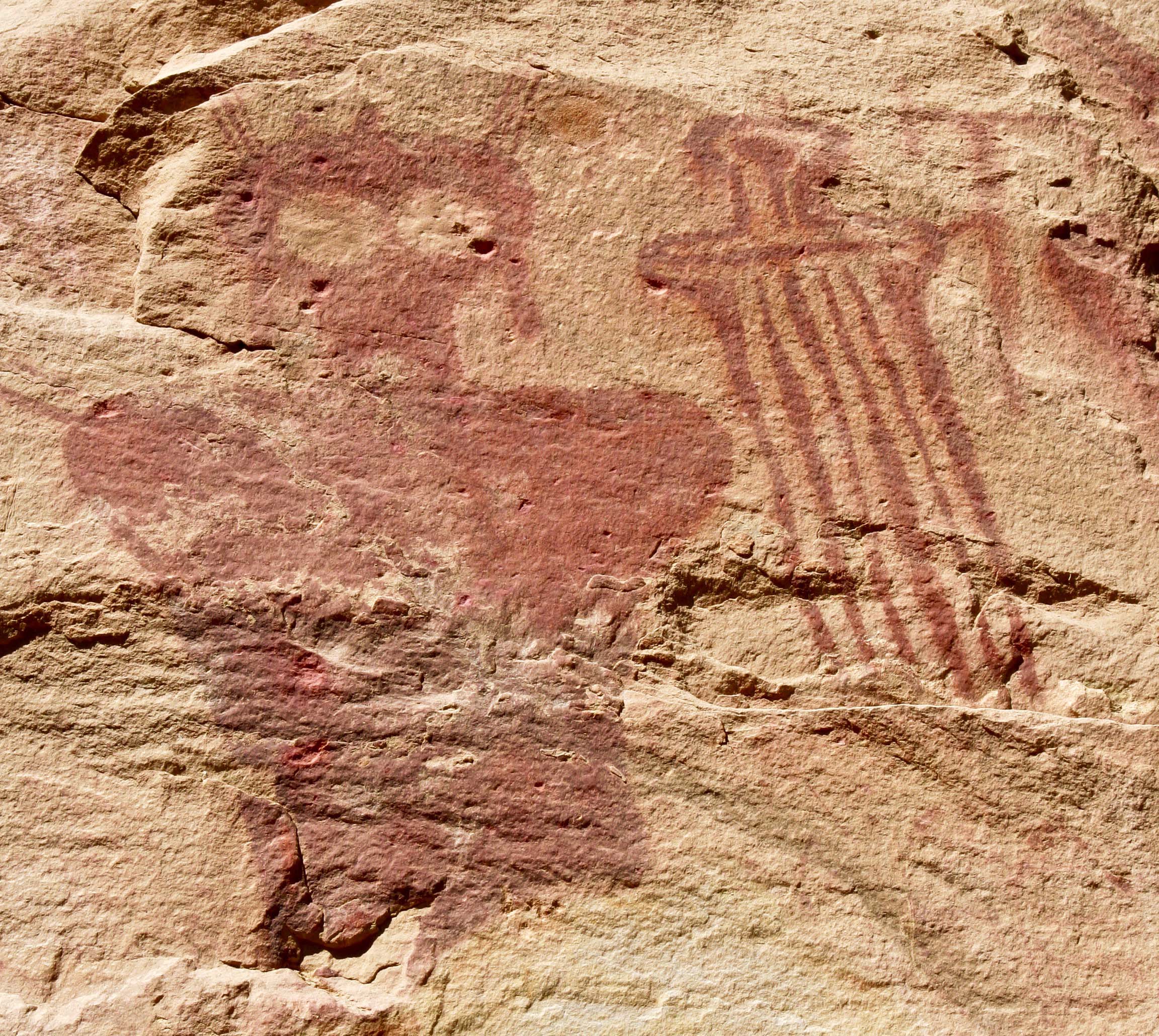
The 2000-6,000 year old pictographs at Sego Canyon in Utah are among the strangest I have ever seen. Admittedly, such visions may be drug induced as part of a shamanistic ritual, but I have often thought of their other-worldly, alien appearance. And could the object to the right be a flying saucer?I love this cartoon from the Roswell, New Mexico UFO museum.
Our present day governmental efforts to get a handle on what’s out there, date back 14 years when Harry Reid, (D. Nevada and then Senate Majority Leader), persuaded two colleagues, Ted Stevens, (R. Alaska) and Daniel Inouye (D. Hawaii) to join him in sponsoring a bill that would dedicate $22 million to assessing whether UFOs posed a threat. Reid said it took him about ten minutes to persuade the two to go along with him. Stevens, who claimed to have seen a UFO when he was a pilot during WWII, signed on at once.
Assuming the existence of aliens for a moment, three questions come to mind: Who and/or what are they, where do they come from, and what are their intentions regarding humanity? Our initial vision of bi-pedal greenish creatures with big eyes is based on original claims of the Roswell crash of 1946 which may— or may not— have happened. (If you want to watch a hilarious but R-rated view of the crash, check out the movie, Paul.)
The where raises an interesting question. If they are frequent visitors from another galaxy, then their technology has taken a quantum, faster than light leap. Or maybe they use worm holes in space. Or come from a parallel universe. All are popular subjects of science fiction and modern speculative physics. Or maybe they operate from a base on earth. I could see a mother ship dropping them off eons ago and urging them to observe evolving species, particularly the one that liked to go around bashing each other’s brains with large clubs.
The intentions question may turn out to be the most important. As far as we know, the aliens have taken a hands off approach, monitoring but not interfering in our evolutionary and technological development. Why? Is there some kind of Star Trek ethic of not interfering with primitive societies. Or are they making a determination about our behavior. Are we intelligent beings who should be welcomed into the galactic community at some point in the future? Or are we a nasty virus that poses a threat to the Universe and needs to be destroyed? Apparently, the jury is still out. Do they see us on the edge of self-destruction and foresee a need to step in and alter our path? Their focus on military installations suggests a concern on what damage we might cause in outer space or what damage we might do to each other. Or what if they are scouts, preparing for a future invasion. Lots of questions and no real answers. Yet.
As for my sighting of a UFO in the fall of 1968, I was in Sacramento at the time. I had just returned from my stint as a Peace Corps Volunteer in Africa and a Peace Corps recruiter in the South. I had moved to Sacramento to open a Peace Corps Public Affairs office for Northern California and Northern Nevada. One evening, I stepped outside my apartment on La Riviera Drive next to the American River when a round, saucer shaped object caught my attention. It disappeared into a cloud. Before I could think of the implications, the object came out of the cloud going in another direction, accelerated and quickly disappeared from view. The UFO was not something fuzzy I saw in the distance on a dark night when I had been indulging in a hallucinogenic drug. It was still light out and my view was crystal clear. There was no doubt in my mind as to what I had seen. And I have never doubted the existence of UFOs since.
Are aliens and UFO/UAPs for real? I found this charming character in a diorama at the Roswell UFO Museum.
Abbot’s Lagoon is a great place for bird watchers. Or people watchers. This great blue heron with its neck stretched out like a rubber band had a wary eye on Peggy. Wisely so. She was stalking it with her camera. (Photo by Peggy Mekemson.)
It’s a wrap on my Pt. Reyes series today. Peggy and I will take you for a hike out to Abbot’s Lagoon and a visit to Pt. Reyes Station, a favorite town of mine.
The hike is suitable for almost anyone. We even watched a mom and dad pushing their baby along in a stroller. How much easier can it get? The baby seemed quite happy as did the parents. Visitors can turn around whenever they want, hike out to the Lagoon, or go on a leisurely stroll all the way to the ocean. We chose the latter.
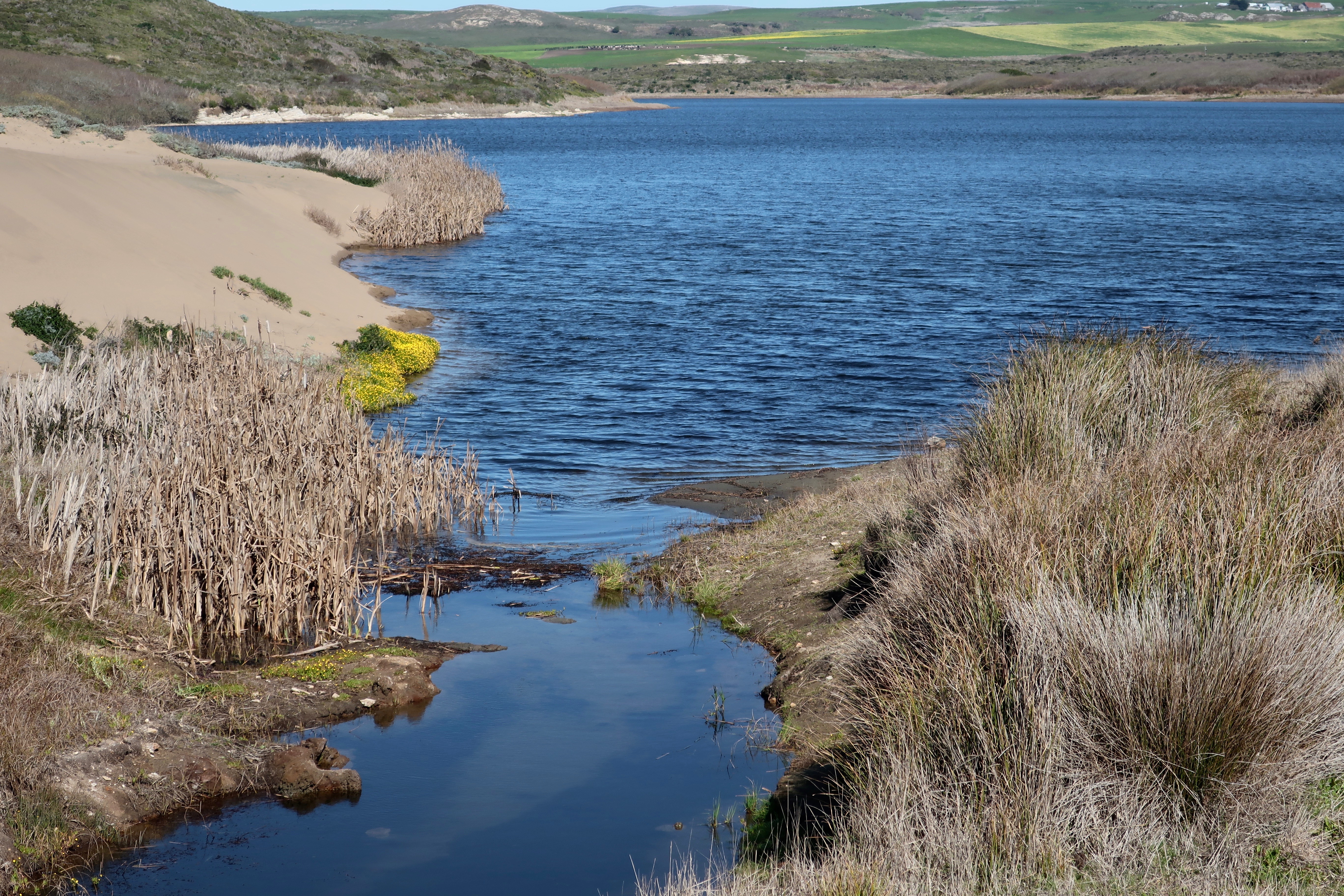
The Abbot’s Lagoon trailhead leading out from the parking lot. The Lagoon can be seen in the distance. The Pacific Ocean is out beyond the Lagoon. The narrow strip you can see on the left is the continuation of the trail.
The red marker shows the location of Abbot’s Lagoon on the Google map. Down to the right you can see Pt. Reyes Station next to the Highway 1 marker. Highway 1, BTW, follows the San Andreas fault through this area. The 1906 San Francisco Earthquake shot what is now the National Seashore over 20 feet northward. San Francisco is 30 miles to the south.
Another photo of Peggy’s great blue heron. This time he was back at work catching fish. I liked the slight hint of a reflection. (Photo by Peggy Mekemson.)
I was impressed with the red eye on this coot. (Photo by Peggy Mekemson.)
We crossed a small bridge and looked back up the Lagoon toward the parking lot.
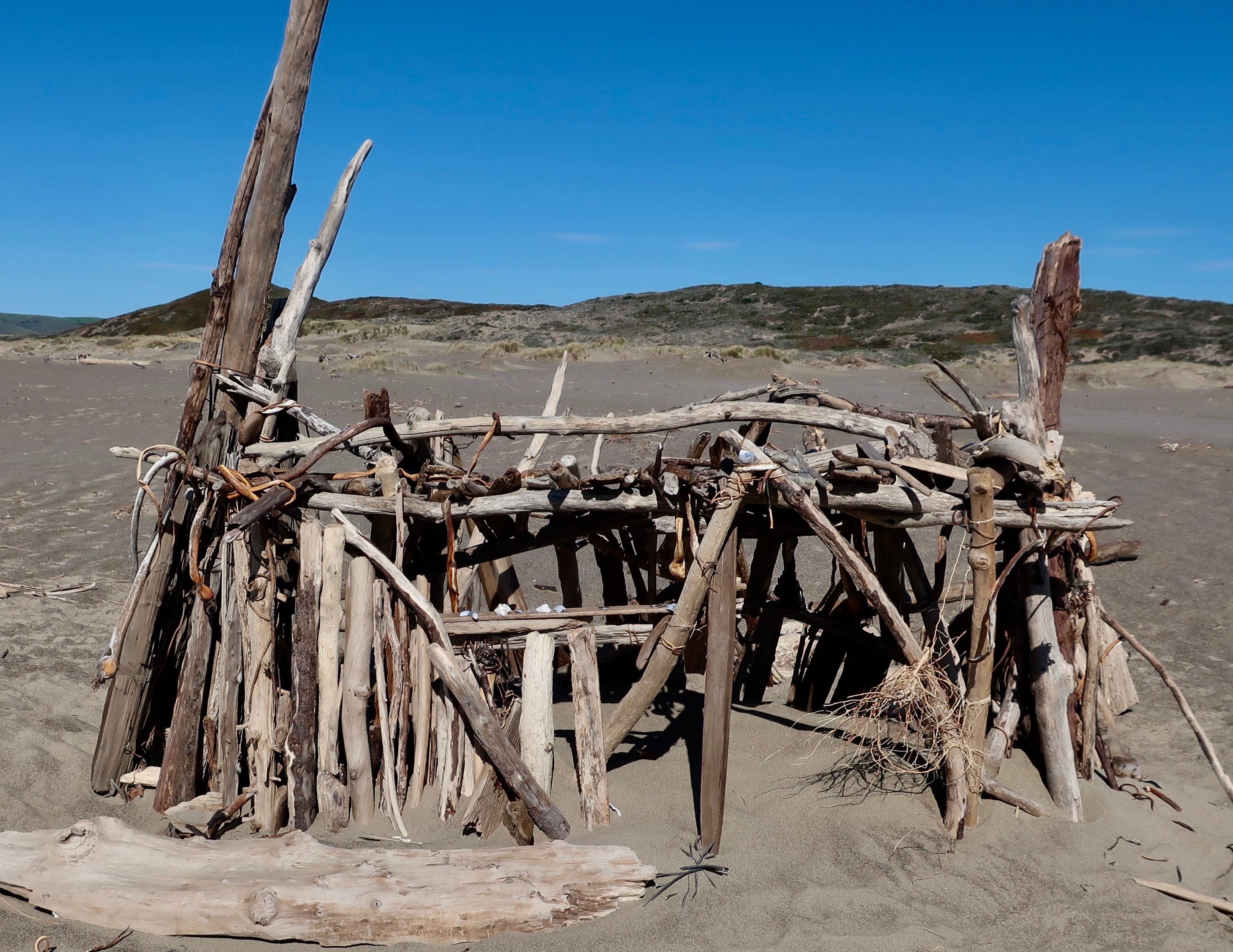
There was a drift wood structure along the trail on the beach out near the ocean. It had been cleverly woven together with kelp.
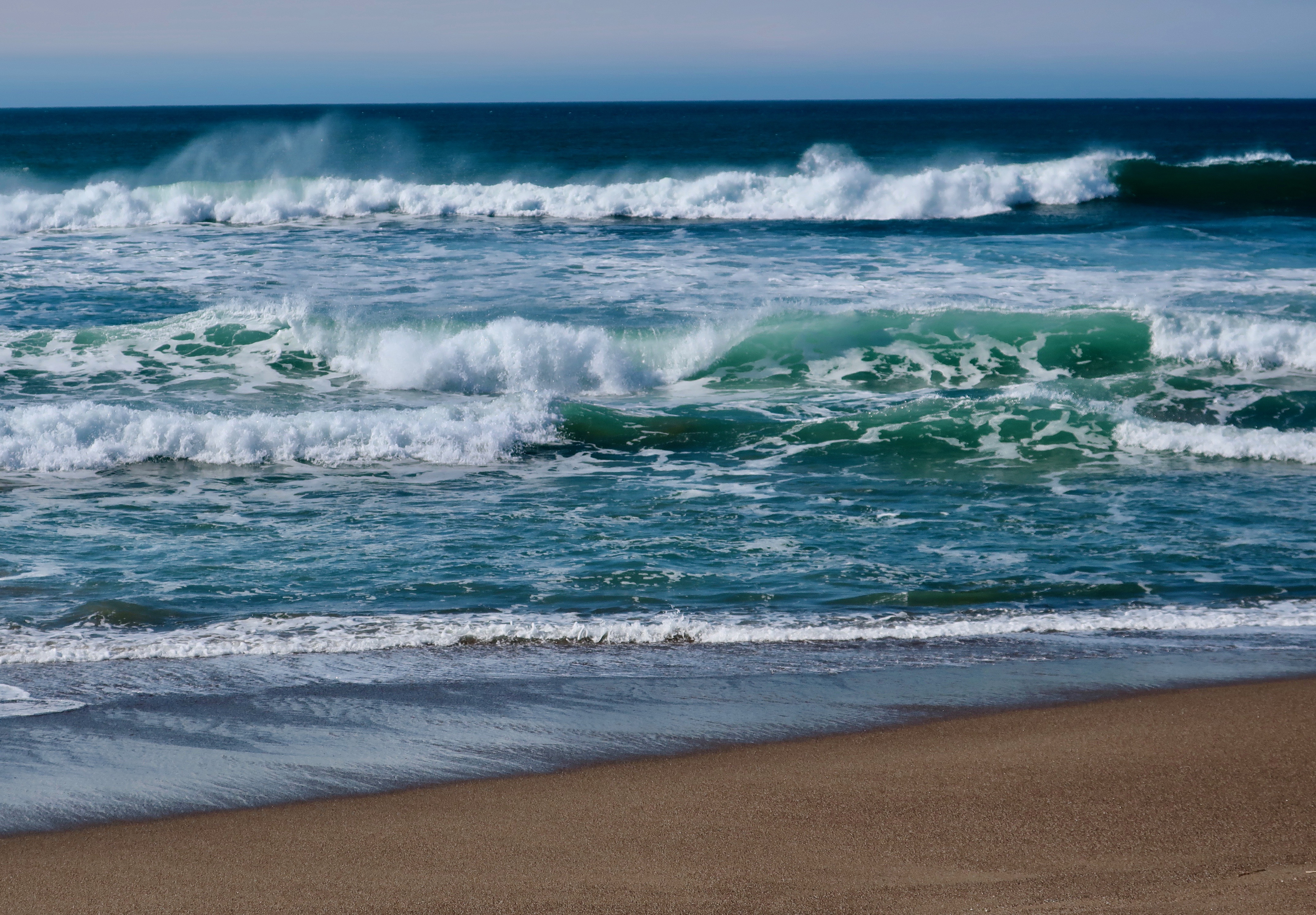
Finally we arrived at the Pacific Ocean.
The North Pacific Coast Railroad had arrived in the area 146 years earlier in 1875 and let passengers off in a cow pasture to make their way to nearby Olema and dairy ranches out on the peninsula. The cow pasture soon added a hotel and the town of Pt. Reyes station was born. It’s a story told over and over in the West. The railroad arrives and a community springs up, making land barons/developers happy and rich. This time it was a dentist in San Francisco. The railroad was making its way north to retrieve redwoods that were being cut down to build the city. Many a giant redwood gave its life to the cause.
I first arrived at Pt. Reyes Station in the late 1960s and I’ve returned again and again. The town has become somewhat yuppified and more expensive since then due to its close vicinity to San Francisco, but it still retains much of its charm. The following photos reflect some of what makes it charming.
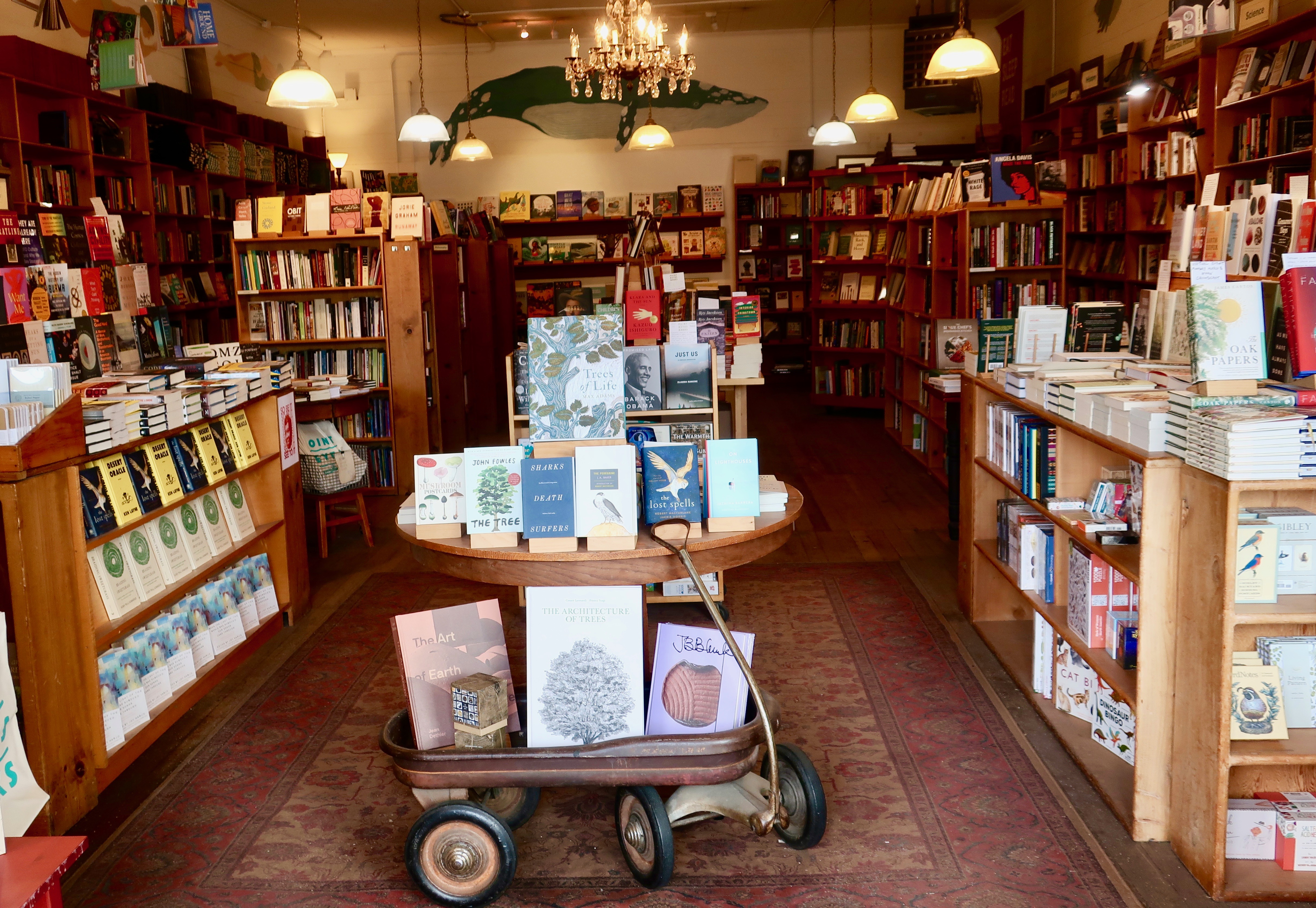
The Pt. Reyes Book Store is one of the best small, independent bookstores we have ever been in, and we’ve been in a lot. Peggy told me to go in and spend $200 for my birthday. Boy, does she know me…
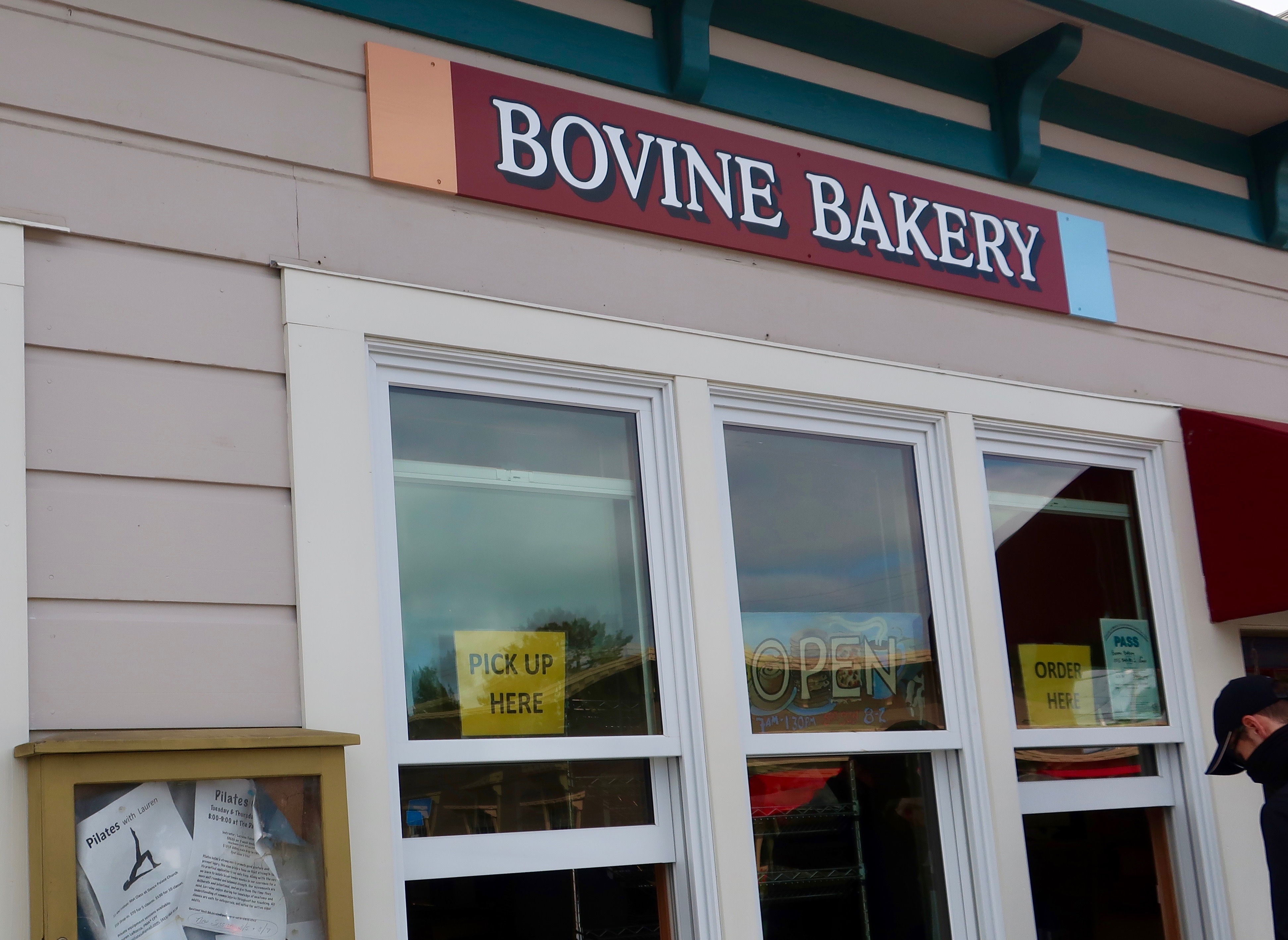
The Bovine Bakery is on one side of the book store. The buttermilk scones are to die for! I never leave town without one, or two, or three, or four.
Feeling Horsey? A saddlery is on the other side of the bookstore.
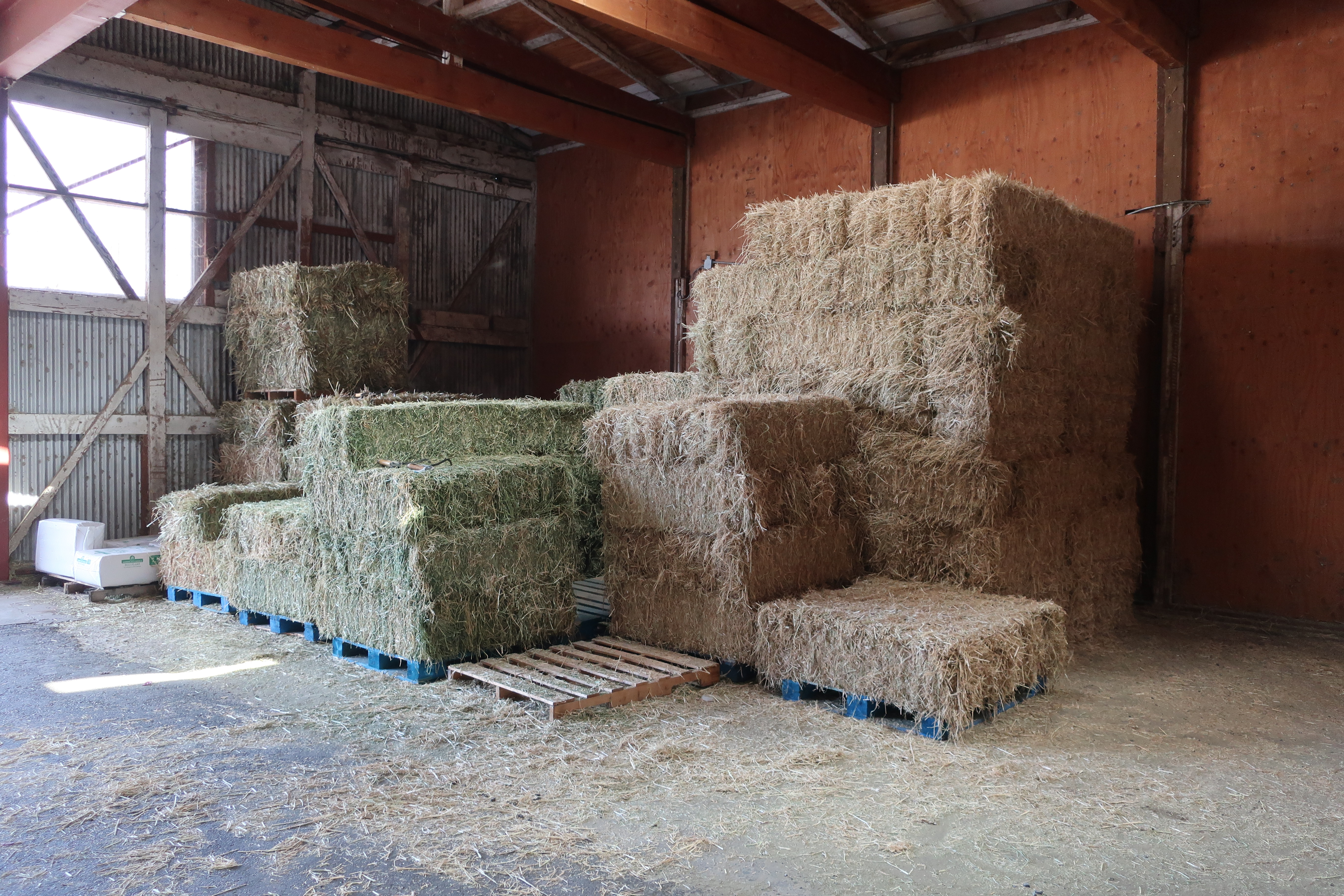
If your horse is hungry, Toby’s Feed Barn is across the street.
But what feed barn do you know that also serves gourmet coffee and freshly baked, large chocolate chip cookies. Now, that’s what I call charm!
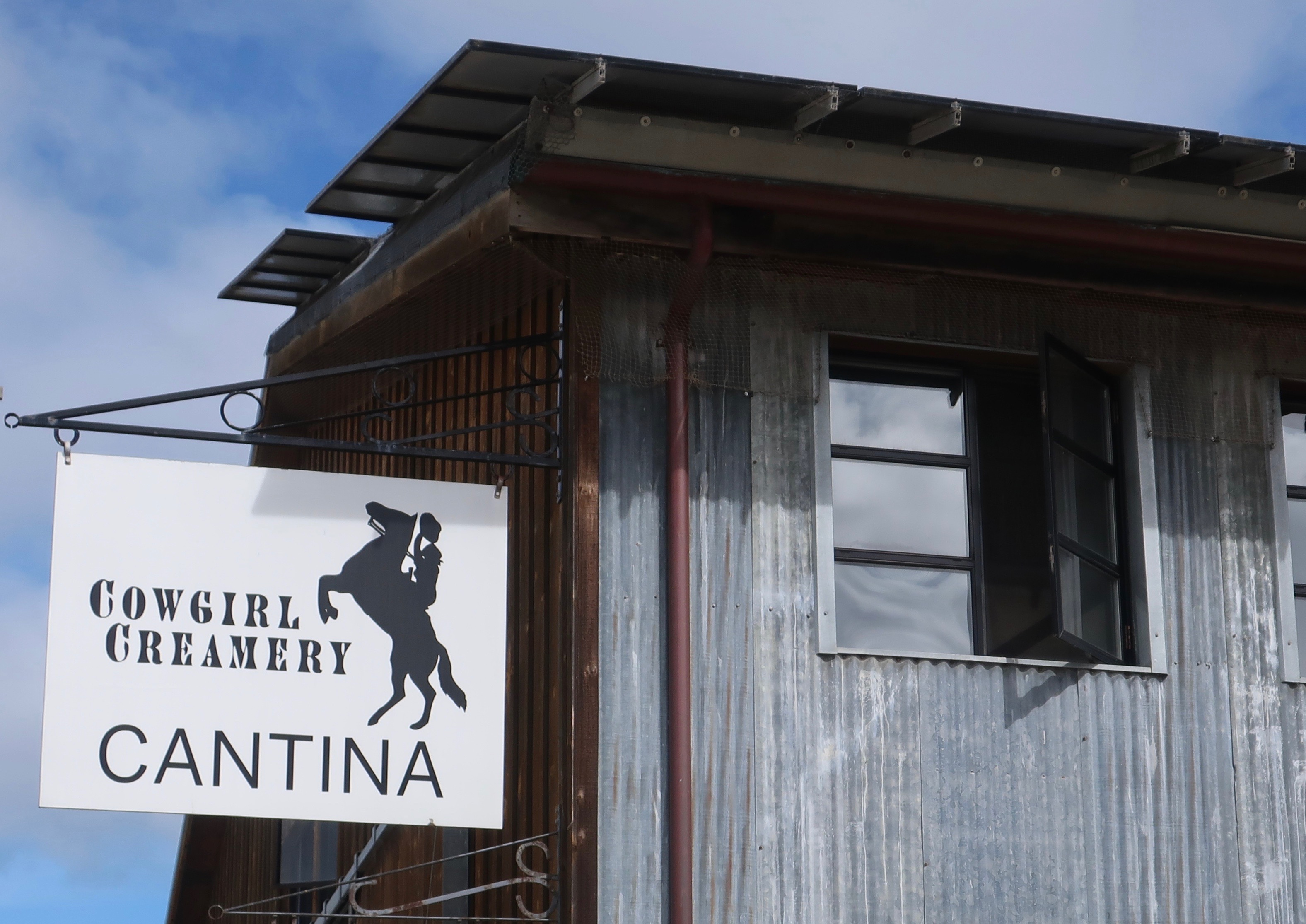
A walk behind the the bookstore building brought us to the Cowgirl Creamery, famous for its cheeses, and I might add, its grilled cheese sandwiches. I’ve never been a fan of grilled cheese, but one bite of its aged white cheddar on sourdough bread and I was hooked. Peggy and I were back for another one the next day, which we took out and ate at the Abbot’s Lagoon parking lot.
Our view from where we chowed down on our grilled cheese sandwiches in the Abbot’s Lagoon parking lot.
A bit of living history. Cheda’s Garage is the oldest contract Triple A garage in the nation.
This was the view inside Cheda’s Garage. Putting two and two together and thinking roadside pickup of wrecked cars, I couldn’t help but irreverently think “Roadkill.” Just kidding. Old Cheda must have been one heck of a hunter.
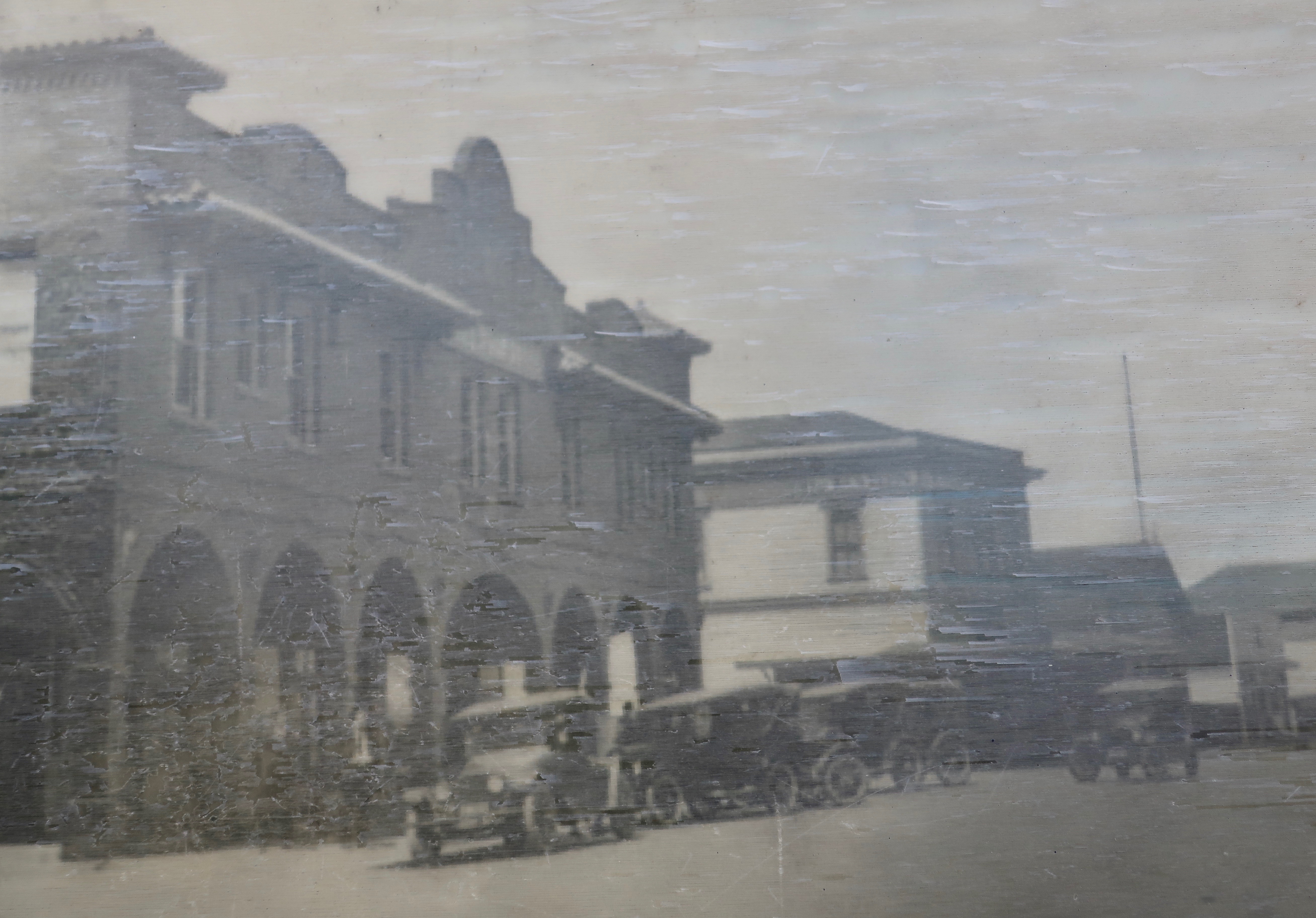
A photo of early Pt. Reyes Station…
The building today.
The mural on the front of the building capturing some of the activities and wildlife of the area.
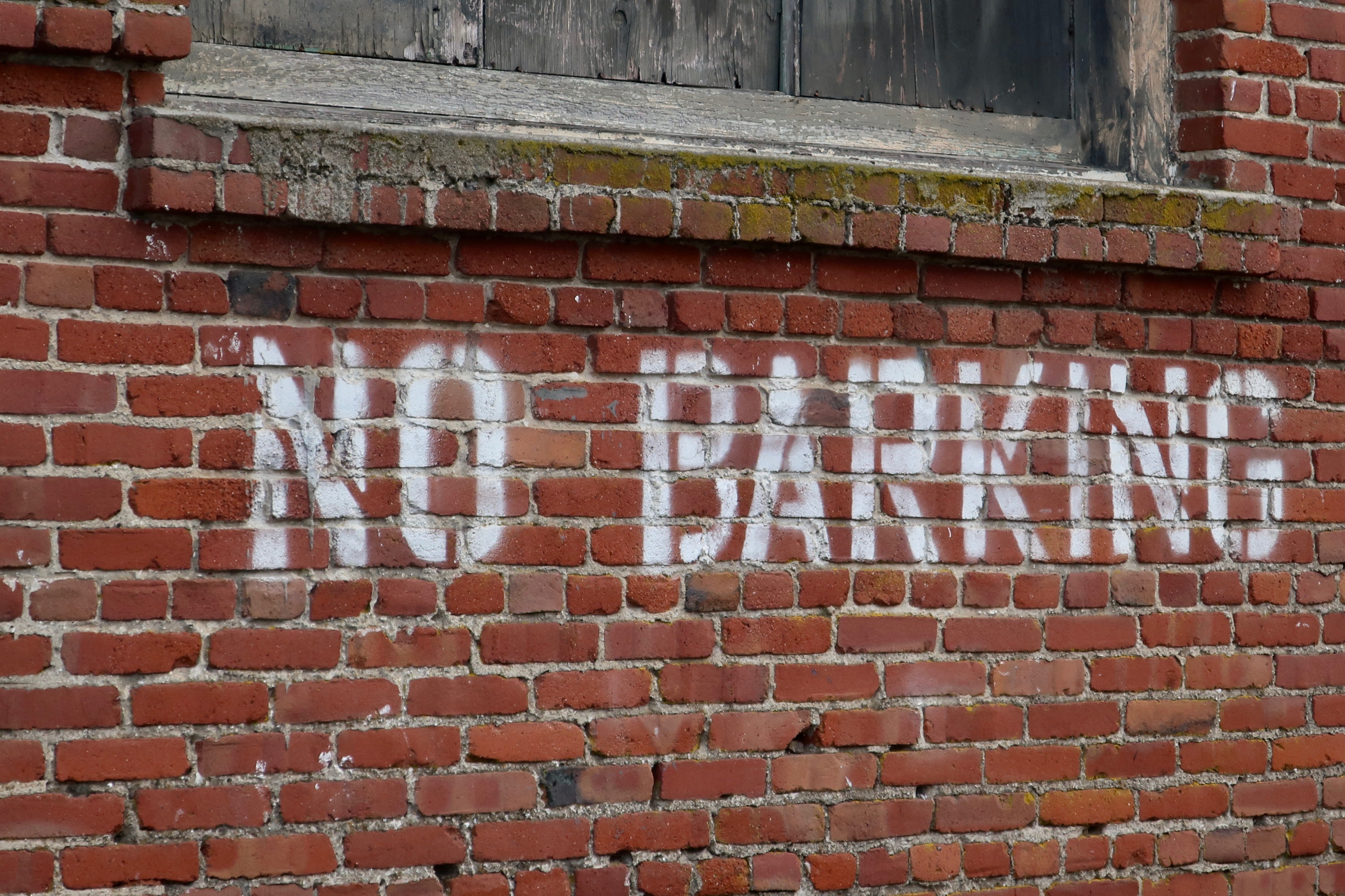
Just around the corner we found a sign that made us smile. A No Parking Sign had been cleverly modified to become a No Barking sign. Several cars were lined up in the no parking zone. Not one had a barking dog. A law-abiding town, for sure.
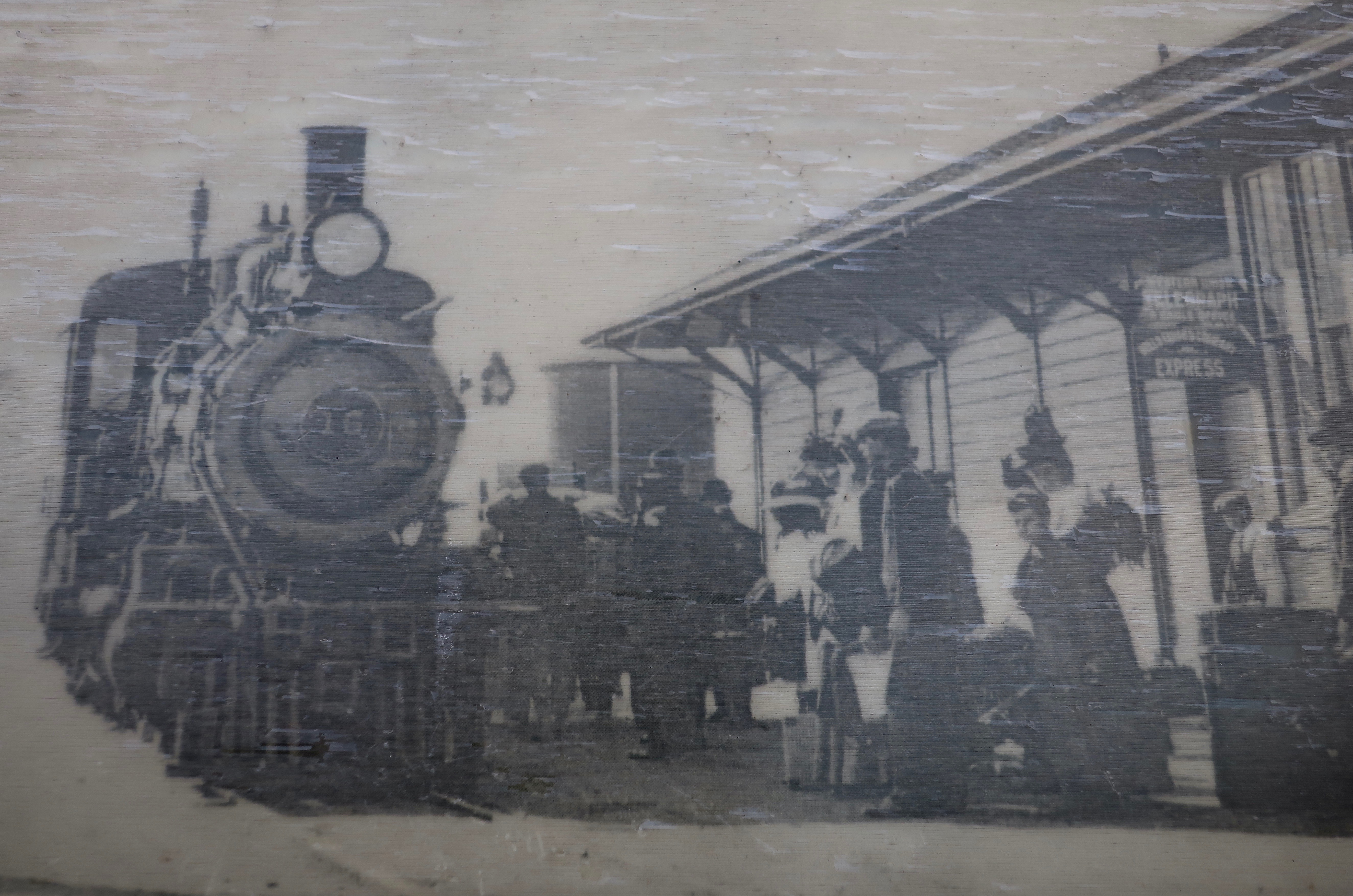
I’ll conclude my Pt. Reyes series with a historic photo of the train that gave the town its name. Join me next Friday on my travel blog as I take you on a spring walk around our property.
MONDAY’s BLOG-A-BOOK POST from Its 4 AM and a Bear Is Standing on Top of Me: I decide that doing an inventory of the local skunk population is ever so much better than being conked on the head by a Little League hardball. But have you ever faced a skunk standing on its front legs with its tail pointed toward you— ready to spray?

















 Wandering through Time and Place