Race: It Matters, Part 14

Okay, this is a slightly strange title for a blog by me, so it deserves some background. I’ve reblogged this from Holistic Journey. The feisty Diana loves to take on social issues and is one of my favorite bloggers. Lately she has been taking on the issue of race by asking her followers from around the world to respond to a series of questions. Today is my turn. D starts by asking us to define our race. You will learn a little more about me, but more importantly, I share my views on this important issue that never seems to go away.

Holistic Wayfarer's avatarA Holistic Journey

1 Whitney 1) How do you define yourself racially or ethnically and why is it important to you?

An analysis of my DNA by Ancestry.com shows that my ancestors came from Western Europe, Ireland, Scandinavia and Spain, which makes me about as Caucasian as one can be.  I find my ethnicity interesting from a historical perspective. On a personal level, I believe who we are as individuals is much more important than our ethnicity.

2) Where do you live? If you have ever moved, whether to another city or the other side of the world, please tell us when and where, and the ways the cultural differences between the places shaped or made you think about your identity.

I live in Southern Oregon – northwestern United States – surrounded by national forests. I was raised in a small, rural town in Northern California. My first move was to University of California, Berkeley…

View original post 1,494 more words

One Hundred Thousand Thank-Yous… for One Hundred Thousand Views

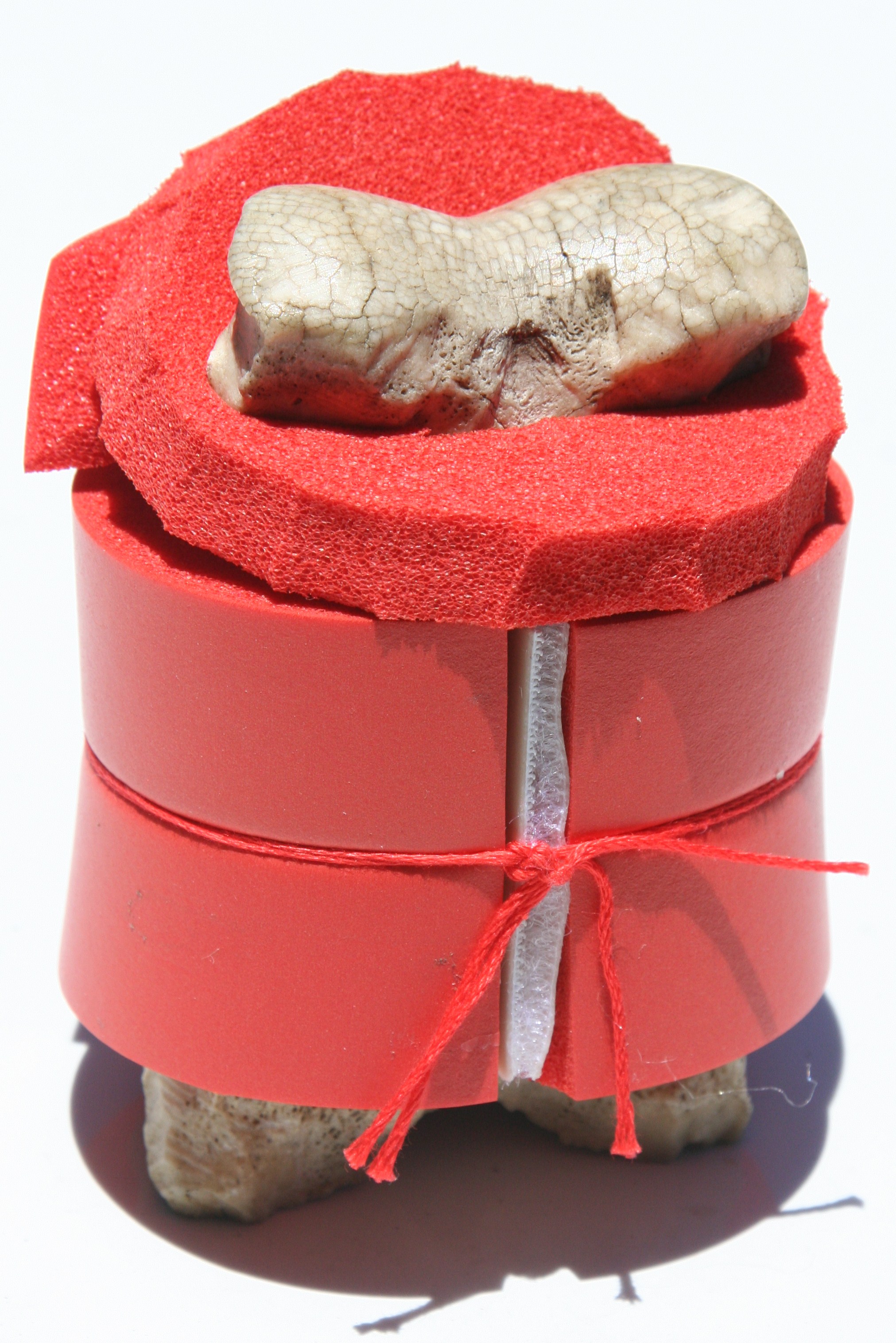
Bone proudly displays his life jacket in preparation for his trip down the Colorado River

The first blog series I ever wrote was on an 18 day rafting trip down the Colorado River through the Grand Canyon that Peggy and I made, along with Bone… featured above wearing his life vest.

I reached the hundred thousand mark on blog views Saturday. While this hardly reaches the definition of viral, it is a significant milestone for me, and I want to thank each and every one of you who have joined Peggy and me on our journeys. So here you have it:

THANK YOU x 100,000

I first started blogging right after I had attended the San Francisco Writer’s Conference in 2010.

I had learned at the conference that publishers no longer did publicity for your book unless you were a really, really big name… such as J. K. Rowling, or the President, or a mass murderer. It didn’t seem to matter which. In fact the odds of a new writer even picking up an agent or publisher were pretty close to zero unless he or she met the above qualifications.

But, we were told, there was a dim light at the end of a very long tunnel. The Internet was changing how the book industry functioned, just like it had changed how the music industry functioned, and every other business it touched. Think about travel agents. When was the last time you used one?

We now had the power to market our own books. We also had another way of capturing the interest of an agent or a publisher. It all revolved around building a following on the Internet, or a platform as the book people called it.

It wasn’t like blatant advertising; it was more like letting people get to know you while you got to know them. If they liked you and liked how you expressed yourself, maybe they would buy your book. Or, conversely, if agents or publishers saw that you had a large audience of potential readers, they would be more likely to take your book on as a project.

And there was more– as advertisers like to say on late night television– we could use the Internet to self-publish our own books. All of the gatekeepers of the publishing industry: the agents and editors and publishers and bookstores, could be circumvented.  Self-publishing was becoming respectable; it was no longer the dirty word of the vanity press days. And there was scrumptious ice cream on top of the apple pie; we could expect to receive 50-85% of the revenues generated by our book as opposed to the 10-15% traditional publishers returned.

So I went home and started blogging. My first post was titled On Being Squirrelly. It featured the start of an 18-day private trip down the Colorado River through the Grand Canyon that Peggy and I took along with and Bone. His photo kicks off this post. Bone, for the uninitiated, is a horse bone I found while backpacking in the Sierra Nevada Mountains in 1977. Like the infamous Gnome, he has been travelling the world ever since.

What I quickly learned at the beginning of my efforts was that I really enjoyed blogging. It was a way to share Peggy and my adventures plus feature our photographs. It was also a way to make new friends and enjoy the blogs they produced. Blogging became an end in itself. (None of this means I have forgotten my original purpose. Within the next couple of months you should have the opportunity to purchase the book on my African Peace Corps’ adventures. Woo hoo!)

Word Press makes blogging easy, a fact that I truly appreciate. I also enjoy the statistics; besides being fun, they provide me with an overview of how I am doing in the world of blogging. Here are a few highlights in addition to the 100,000 plus hits:

  • People from 176 countries around the world have checked out my blog. The top ten in order of numbers are the US, Canada, United Kingdom, France, Germany, Australia, India, Netherlands, Italy and Spain.
  • My top blogs have been about Burning Man. Most popular this year was Truth and Beauty, the post I did about the magnificent 60-foot statue of a woman. My National Park Series has also drawn a consistently high readership. The most all-time popular was on the California Redwoods. The trip Peggy and I took through the Mediterranean was also quite popular. The top post there was on the beautiful and unique churches of the Greek Island of Santorini.
  • The most consistent readership my blog received, I am glad to say, was when I was posting chapters from the book on my Peace Corps’ experience.
  • My all time one-day readership was 1,019 when Word Press ‘Freshly Pressed’ my blog on Burning Man’s Mutant Vehicles.
  • And, saving the best for last, I have 700 plus followers. My thanks to each of you with special hugs going to those who comment on my blog regularly.
A side view of the sculpture, Truth Is Beauty by Marco Cochrane at Burning Man 2013.

The Burning Man sculpture Truth is Beauty.

Redwood

This 1500 year old redwood is located in Redwoods National Park on the northern coast of California.

I found this church with its white rocks surreal.

I found this Santorini church with its white rocks surreal.

Burning Man mutant vehicle. Photo by Curtis Mekemson.

One of my favorite Burning Man mutant vehicles lit up at night.

NEXT BLOG: Peggy and I return to Puerto Vallarta and go on a walk-about. Join us.

The Bovine Trio, Other Weird Creatures, and I Wish you Happy Holidays…

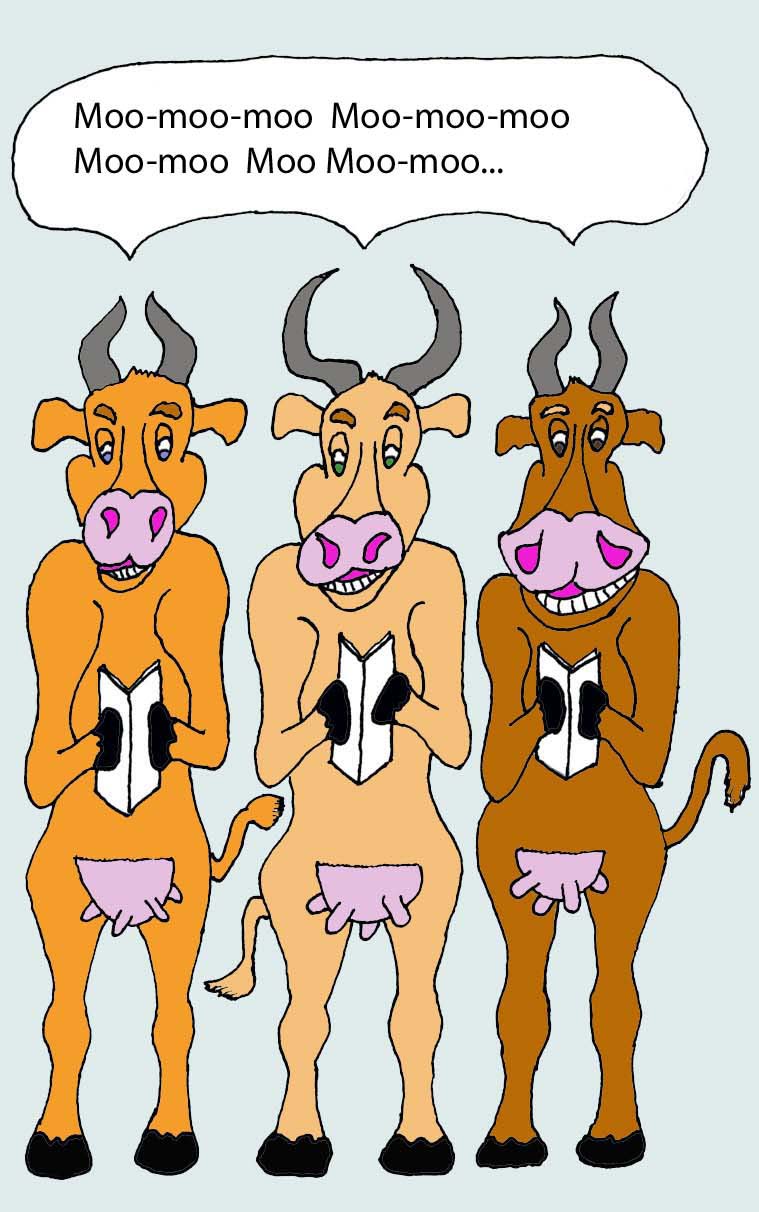
Moo'd music. Xmas Card by Curtis Mekemson.

Straight from Las Vegas, the fabulous Bovine Trio brings you moo’d music for Christmas.

I’ve always liked to send cards on the strange side– strange enough that they are hard to find. So I started making my own for family and friends. In the spirit of the season, I decided to share some of these cards with my blogging friends. Welcome to my wild (and, um copyrighted) collection. Enjoy.

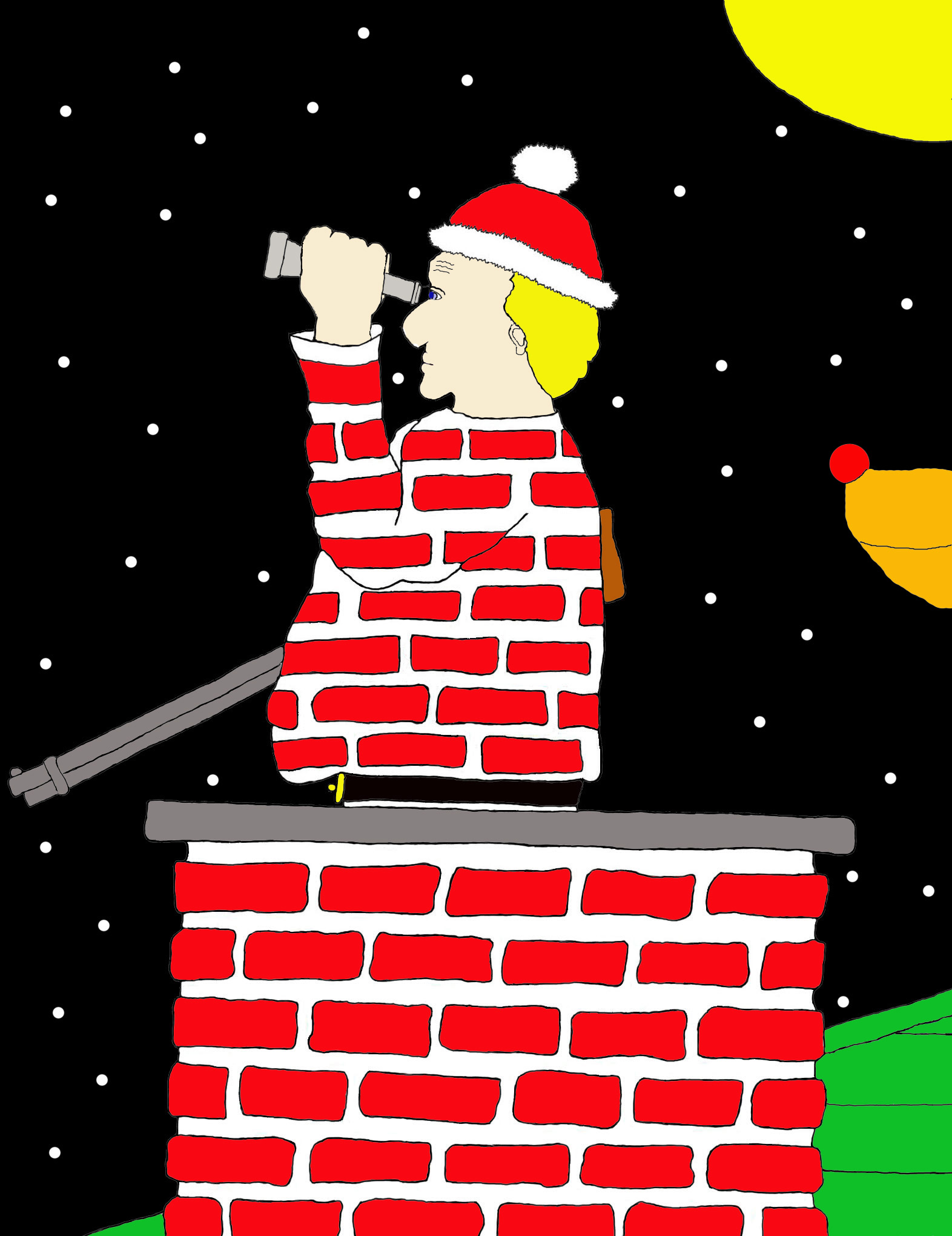
You met my singing cows above. Like most chorus girls, they are slightly under-dressed. In addition to their obvious assets, they bring new meaning to the old phrase, hoofing it. They happen to be singing Jingle Bells, BTW. Here’s another carol you will be familiar with.

Silent Knight, Holy Knight Xmas Card by Curtis Mekemson.

Silent Knight, Holy Knight

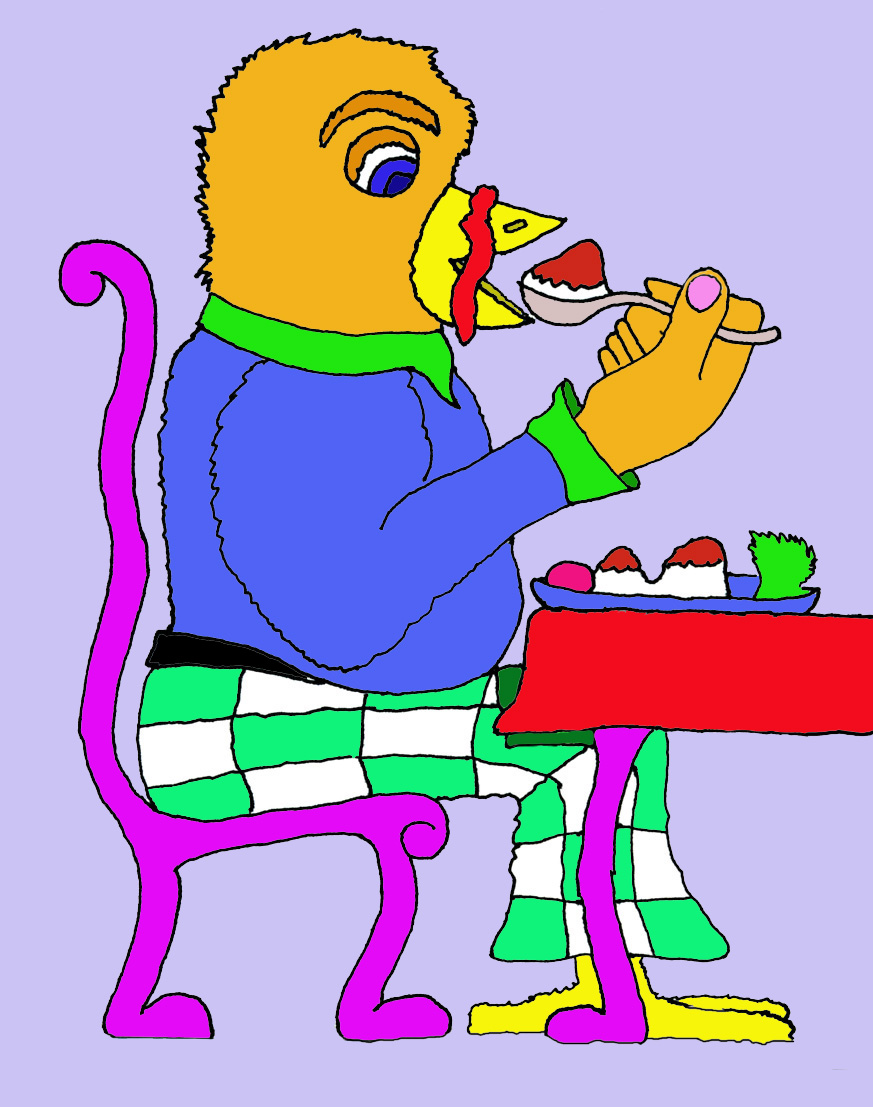
Food is big over the holidays. Everyone has their favorite dishes. Mine is turkey with all of the trimmings! So here, in honor of holiday food, meet Tom.

Turkey dressing for Christmas dinner card by Curtis Mekemson.

Turkey dressing for Christmas dinner.

Turkey self-stuffing Xmas Card by Curtis Mekemson.

A miracle of modern culinary art– the self-stuffing turkey.

I will close my section on food with a few choice words from Chef Van Duck.

Christmas cards by Curtis Mekemson.

Chef Von Duck quacks up over bad yoke on Xmas morning.

Then we have Santa’s famous reindeer, who could ask for more faithful, hardworking companions. And what about the most famous reindeer of all– Rudolph with his famous nose. Did I say his? I recently learned a shocking secret.

Rudolph as a girl reindeer card by Curtis Mekemson.

Rudolph is a girl.

Male reindeer lose their antlers by December. Females keep theirs until spring. Have you ever seen a picture of Santa’s reindeer without antlers. Conclusion: Rudolph and all of Santa’s reindeer are girls. Here’s another Rudolph fact that the Christmas industry likes to downplay. Working conditions at the North Pole aren’t always the best…

Rudolph the Red Nosed Reindeer on strike. Xmas card by Curtis Mekemson.

Red nosed reindeer goes on strike.

But here is even bigger news– Santa hired a strike breaker.

Monty the mauve nosed moose Xmas Card by Curtis Mekemson.

Monty the Mauve Nosed Moose.

And finally… can you stretch your mind far enough to imagine a reindeer hunting season.

Christmas cards by Curtis Mekemson.

Carefully disguised hunter is about to get a flying lesson, free.

Beyond its religious significance, Christmas is about giving, right. Well maybe it’s a little about getting. But how often do you find yourself wishing you just had a few more days to prepare? Wouldn’t it be great if you could send the cat out to buy those hard-to-find gifts? Bad idea.

Christmas cards by Curtis Mekemson.

You never know what the cat might drag home.

So, I’ll just make a few suggestions for last-minute gifts…

Christmas Cards by Curtis Mekemson.

A box of Christmas Quackers.

A gift for the guy who has everything?

Dolly duck

Dolly duck

And finally…

Christmas Cards by Curtis Mekemson.

Primitive monster shows great presents of mind.

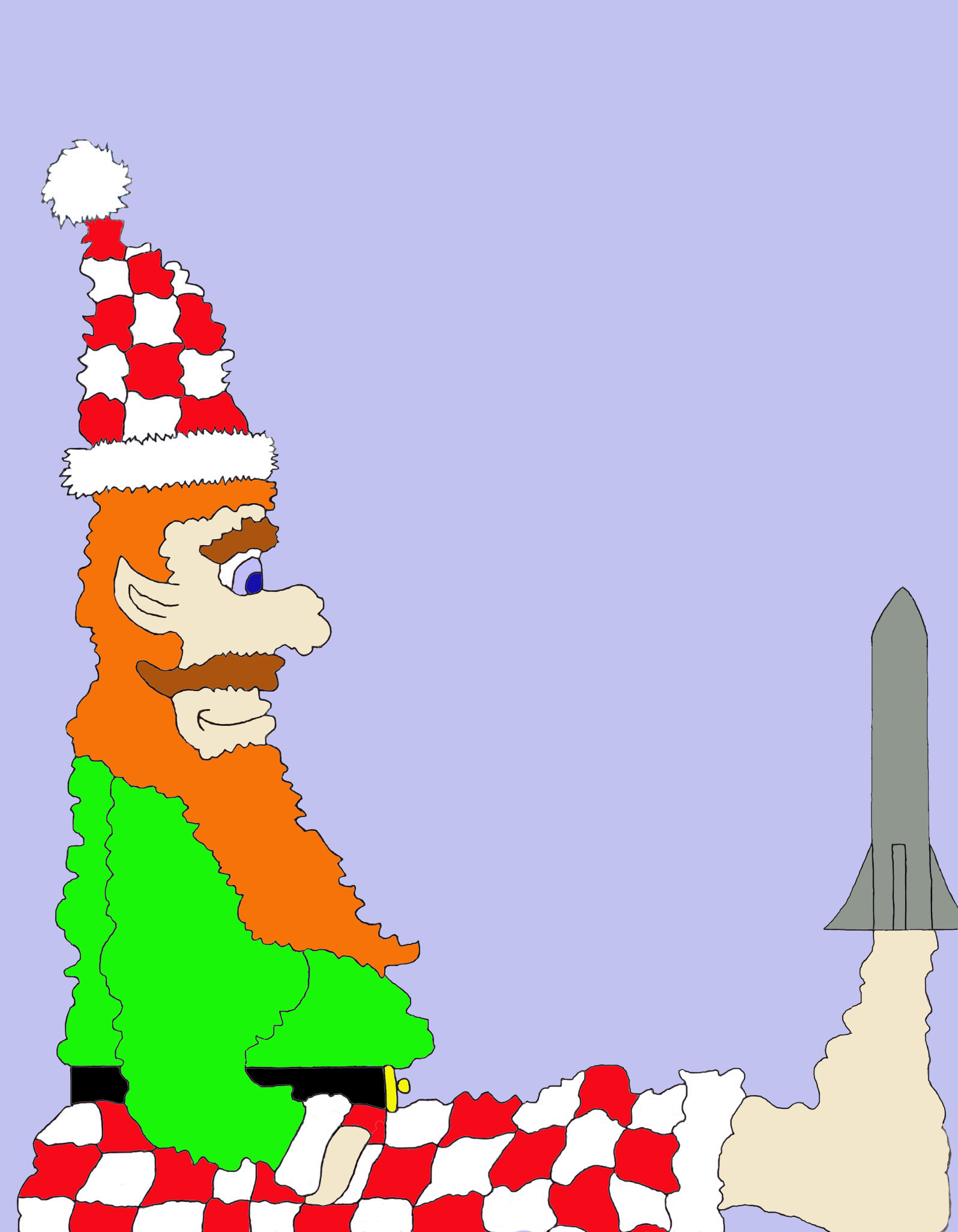
It’s a custom at Christmas to wish for world peace, right. One of Santa’s elves wishes we would hurry up and get it.

Christmas cards by Curtis Mekemson.

Santa’s elf displays an advanced case of missile toe.

As for Frosty the Snowman, he is wishing for an end to global warming.

Christmas cards by Curtis Mekemson.

Here lies Frosty the Snowman, victim of a premature meltdown.

And that’s it for my holiday Blog… Everyone in our household, including Peggy, me and the cow wish you and your family the absolute best for the holidays and 2014– Curt

Christmas Cards by Curtis Mekemson.


A Homeless Man with a Pickup Truck and a Bank Account

My brother Marshall describes himself as An Itinerant Idler and spends his time migrating between the mountains of North Carolina and the swamps of Southern Florida.

My brother Marshall turns 72 this week so I decided to repost an earlier blog I wrote about him and his wandering ways. His life has changed since I first wrote this story. He sold his truck that had 195,000 miles on it and bought a red Chevy van with 115,000 miles. This is more significant than it seems. Now, instead of living in a tent, he’ll be living in his van. “I am no longer sleeping on the ground,” he reported proudly to me.

A grin lights up my brother’s face as we drive into his remote campsite near Lake Okeechobee, Florida. It’s time for our annual visit. At least once a year, I track him down.

“Think of me as a homeless man with a pickup truck and a bank account,” Marshall likes to note when describing his lifestyle.  Once upon a time he made his living as a professional photographer. Another time he ran his own business as a real estate appraiser. He had a six-figure income, owned a nice home and drove a fancy car. He was a man of means.

But he wasn’t a happy man.

Nine years ago he stopped trying to live a ‘normal’ life and became a modern-day gypsy.  Like the wild geese, he chose to migrate with the seasons, moving between the mountains of North Carolina to the swamplands of southern Florida. He calls himself the Itinerant Idler.

Marshall travels with a tent, a Coleman stove, a five-gallon propane tank, two folding camp chairs and a folding table. Large plastic bins serve as cupboards and closets. Paper plates make up his dish collection. If something doesn’t fit in the back of his pickup, he doesn’t need it. He has become a minimalist.

Once he took pride in what he owned; now he takes pride in what he doesn’t.

His kitchen, dining room and living room are whatever nature provides. Instead of watching TV, he watches squirrels playing in the oaks and Osprey diving for fish. Last year when I was visiting him in Big Cypress National Preserve, two bobcats came trotting into our camp.

During inclement weather, the cab of his pickup truck provides shelter. When it gets too cold he moves south. When it gets too warm or buggy, he moves north. On rare occasions he will take a motel room.

NPR keeps him in touch with the world and he speaks knowledgeably about current events.  He is particularly interested in what is happening on the economic front. We listen closely when he provides advice on what to do with our condo in Sacramento. Age and distance have not dulled his knowledge of the real estate market.

Marshall takes delight in living inexpensively. “I’ve paid $14 in campground fees over the past six months,” he brags to Peggy. Careful records are kept. There is food and gas and cigarettes and beer. “If it weren’t for the cigarettes and beer, I could live for a month on what it costs you to get through a day.” And he is right, even though we are rarely accused of squandering money.

Books and reading are his passion. He visits libraries regularly and picks through their $.25 and $.50 paperback retirees. His goal is to read 80,000 pages a year. So far he is on target for 2010. Finished books are given away to fellow wanderers. We qualify.

“The Bookmobile has arrived,” Marsh announces and goes rooting around in the back of his truck. He comes up with 93 books stored in plastic grocery bags for us to peruse. He has been saving them up. Some 22 are transferred to our RV even though I don’t have a clue where to put them. We, too, travel with a full library.

I fix teriyaki chicken and Peggy cooks up an omelet chock full of goodies as a thank you.  Both are favorites of Marshall’s. He obviously enjoys the spoiling, companionship and three days of conversation. Our visits are important to him. “It always takes me two or three weeks to recover when you leave,” he admits. It can be lonely.

And yet, there is a brotherhood of wanderers out here, people who share Marshall’s love of the open road and the freedom it offers (not to mention the inexpensive life style). They often end up camping in the same places at the same time and form into transitory communities. They become friends, help each other out and share their most precious commodity: carefully guarded secrets about other free campsites.

Marshall took me around to visit his neighbors in Big Cypress last year. John and Phyllis were from Ontario, Canada. Tom had made his living as an engineer at a television station.  Bob, possibly in his 80s, created interesting art pieces from pinecones. Dave was soap opera handsome and spent most of his day riding his bicycle.

“You have to meet Dumpster Diver Steve,” several of them urged with a touch of amusement. “Be prepared to stay awhile.” Dave and Marshall walked me over to Steve’s site and quickly disappeared.

Steve lives out of his car and finds most of what he needs to survive in dumpsters, thus the name. “I am 50% child, 45% crazy and 5% rational adult,” he immediately informed me. “I save the 5% rational adult for when the cops stop me,” he allowed with a wink and then waxed enthusiastically on life as a dumpster diver.

“You won’t believe what people throw away.” A few weeks earlier he had been visiting dumpsters behind a grocery store in Naples and discovered dozens of flowers the store had tossed. “I brought them back to camp, divided them up, and gave each woman a bouquet.

I found the act romantic.

“Hey, would you like to see my oven? I am cooking up a batch of spaghetti.” How could I resist? We walked over to Steve’s car. It was old, beat up and packed to the brim with treasures. His ‘oven’ was a quart jar filled with spaghetti resting on the back windowsill. Sunlight streamed through the window and provided the heat.

He had found the spaghetti that morning in the camp dumpster. Someone had left it in a Ziploc. “I only take food that is packaged,” he announced with pride. Steve is a first class dumpster diver.

Marshall, at 71, is reaching the stage where life on the road is becoming more difficult, especially living in a tent. He lusts after our van. Still, considering he smokes heavily and weighs all of 113 pounds, he is amazingly healthy. “I haven’t had a cold in five years and have only been in a hospital once during my nine years on the road.” And he is happier than I have ever known him to be.

Before leaving Okeechobee, I mention there is an inexpensive trailer court backed up to the beautiful Applegate River about five miles from our new home in Oregon. Maybe he will come out and settle down. Maybe he won’t.

The Dark Side of African Tribal Beliefs… The Peace Corps Series

This week marks the beginning of a new blog about my experiences as a Peace Corps Volunteer in Liberia West Africa from 1965-67. I am using a WordPress theme designed to look and read like a book. Each week I will post a new chapter. When I have completed the book, I will publish it both digitally and in print. Visit me at http://liberiapeacecorps.com/ to read the first and subsequent chapters.

This week I will post three different short stories about Liberia on this blog, “Wandering in Time and Place,” to give my readers a sample of what to expect on the new blog and in the book. Today’s story: The Dark Side of African Tribal Beliefs. (I have posted this story before under Lightning Man.)

Late one evening during a tropical downpour, a very wet and frightened candidate for student body president, Mamadee Wattee, knocked on our door. The opposition had purchased ‘medicine’ from a Ju Ju Man (witch doctor in Tarzanese) to make Mamadee sick.

It was serious business; people were known to die in similar circumstances.

Had the opposition slandered Mamadee or stuffed the ballot box, I could have helped. But countering black magic was way out of my league. I took the issue to the High School Principal and he dealt with it. Mamadee stayed well and won the election.

Later, he unintentionally introduced us to another tribal phenomenon, the Lightning Man.

I had left Mamadee with $50 to buy us a drum of kerosene while my wife and I were on vacation in East Africa. When we returned home, Mamadee was sitting on our doorstep. Someone had stolen the money and he was obviously upset. Fifty dollars represented a small fortune to most tribal Liberians. (Given that we were paid $120 dollars a month for teaching, it was hardly spare change to us.)

Mamadee’s father, a chief of the Kpelle tribe, was even more upset and wanted to assure us that his son had nothing to do with the missing money. It was a matter of honor. He offered to hire a Lightning Man to prove Mamadee’s innocence.

The Lightning Man had a unique power; he could make lighting strike whoever was guilty of a crime. If someone stole your cow or your spouse, ZAP! Since we were in the tropics, there was lots of lightning. Whenever anyone was struck, people would shake their heads knowingly. One more bad guy had been cooked; justice had been served.

We didn’t believe Mamadee had taken the money and even if he had we certainly didn’t want him fried, or even singed. We passed on the offer.

Another Liberian Peace Corps Volunteer chose a different path. Here’s how the story was told to us. Tom had just purchased a $70 radio so he could listen to the BBC and keep up with the news. He enjoyed his new toy for a few days and it disappeared.

“I am going to get my radio back,” he announced and then hiked into the village where he quickly lined up some students to take him to the Lightning Man. Off they went, winding through the rainforest to the Lighting Man’s hut.

“I want you to make lighting strike whoever stole my radio,” Tom said, and then paid five dollars for the service. (Lightning Men have to eat too.)

Tom and his entourage then returned home. By this time, everyone in the village knew about the trip, including undoubtedly, the person who had stolen the radio.

That night, there was a tremendous thunder and lightning storm. Ignoring for the moment that it was in the middle of the rainy season and there were always tremendous thunder and lightning storms, put your self in the shoes of the thief who believed in the Lightning Man’s power. Each clap of thunder would have been shouting his name.

The next morning Tom got up, had breakfast and went out on his porch. There was the radio.

(Note: Mamadee would go on to become an elementary school principal in New Jersey.)

My Name Is Captain Die and This Is My Dog Rover… The Peace Corps Series

This week marks the beginning of a new blog about my experiences as a Peace Corps Volunteer in Liberia West Africa from 1965-67. I am using a WordPress theme designed to look and read like a book. Each week I will post a new chapter. When I have completed the book, I will publish it both digitally and in print. Visit me at http://liberiapeacecorps.com/ to read the first and subsequent chapters.

This week I will post three different short stories about Liberia on this blog, “Wandering in Time and Place,” to give my readers a sample of what to expect on the new blog and in the book. Today’s story: My Name Is Captain Die and This is My Dog Rover.

In our two years of living in Liberia as Peace Corps Volunteers, Peace Corps we would have many unusual experiences. One of our more unusual took place within our first week of living in Gbarnga, the town where we were assigned. It involved meeting Captain Die and his dog Rover.

Captain Die was a well digger who was reported to have spent too much time in dark holes. Our well was one of his jobs. He had dug it for our predecessors, two female Volunteers. Afterwards, he began stopping by to visit the women and bum cigarettes.

Therefore, it wasn’t surprising when he appeared on our doorstep shortly after we moved in. His introduction was unique.

“Hello, my name is Captain Die. My name is Captain Die because I am going to die someday. This is my dog, Rover. Roll over Rover. Give me a cigarette.” Rover, who was a big ugly dog of indeterminate parenthood, dutifully rolled over.

It made quite an impression.

We explained to Captain Die that neither of us smoked but invited him in to share some ice tea we had just brewed. We gave the Captain a glass and he took a huge swallow. I have no idea what he thought he was getting but it wasn’t Lipton’s. He thought we were trying to poison him.

A look of terror crossed his face and he spit the ice tea out in a forceful spray that covered half the kitchen and us. Dripping wet, we found ourselves caught between concern, laughter and dismay. The Captain marched out of our house in disgust with Rover close behind.

In addition to having found our predecessors an excellent supply of tobacco, Captain Die had been quite taken with one of them.  The story was told to us how he appeared at the door when Maryanne’s parents were visiting from the States. Captain Die was a man on a mission.  He was going to request Maryanne’s hand in marriage.

I’ve always imagined the scene as follows.

Maryanne’s parents are sitting in the living room on folding chairs making a game attempt at hiding their culture shock when this big black man and his ugly dog appear at the screen door.

Maryanne jumps up and says, “Oh Mom and Dad, I would like you to meet my friend, Captain Die.” Mom and Dad, brainwashed by Emily Post and wishing to appear nonchalant, quickly stand up with strained smiles on their faces.

Captain Die grabs Dad’s hand and tries to snap his finger at the same time proclaiming, “Hello, my name is Captain Die. My name is Captain Die because I am going to die some day. This is my dog Rover. Roll over Rover. Give me your daughter.”

No one told me how Maryanne’s parents responded to the good Captain’s offer so I will leave the ending up to the reader’s imagination. I can report that Maryanne was not whisked out of the country by her mom and dad.

While Captain Die’s visit had a purpose, there were a lot of folks who were just plain curious about how we lived. One little girl would have put a cat to shame. I never could figure out where she came from.

She would stand on our porch with her nose pressed against the screen door and stare at us for what seemed like hours. After a while it would become disconcerting and I’d suggest she go home. She would disappear but then I’d look up and there she’d be again, little nose pressed flat.

Finally, deciding more drastic measures were called for, I picked up my favorite folding chair and plopped it down a foot from the door. Then I sat down and initiated a stare back campaign. I lowered my head and moved forward until I was even with her head and about five inches away. The little nose slowly moved backward, suddenly turned around and took off at a fast gallop.

After that she watched the weird people from across the street.

A Short Lesson on Cats and Guacamole… The Peace Corps Series

This week marks the beginning of a new blog about my experiences as a Peace Corps Volunteer in Liberia West Africa from 1965-67. I am using a WordPress theme designed to look and read like a book. Each week I will post a new chapter. When I have completed the book, I will publish it both digitally and in print. Visit me at http://liberiapeacecorps.com/ to read the first and subsequent chapters.

This week I will post three different short stories about Liberia on this blog, “Wandering in Time and Place,” to give my readers a sample of what to expect on the new blog and in the book. Today’s story: A Short Lesson on Cats and Guacamole.

The cultural anthropologist James Gibbs was living in Gbarnga while he was studying the Kpelle people. Sam, our houseboy, worked for him as an informant on tribal customs.

One evening James and his wife Jewelle invited my wife Jo Ann and me over for dinner. It was our first invitation out as Peace Corps Volunteers.  I should also note we were still at the point of being recent college graduates and somewhat awed by academicians.

We dressed up in our best clothes and walked a mile down the dirt road past Massaquoi Elementary School to where they lived.

The Gibbs had an impressive house for upcountry Liberia. They were sophisticated, nice folks who quickly put us at ease. Among the hors d’oeuvres they were serving was a concoction of mashed avocado, tomatoes and hot peppers that Jo and I found quite tasteful. We made the mistake of asking what it was.

“Why it’s guacamole of course,” Dr. Gibbs declared. We must have looked blank because he went on, “Surely anyone from California knows what guacamole is.”

Surely we didn’t. I felt like Barbara Streisand in Funny Girl when she learned that pate was mashed chicken liver. It was 1965 and Mexican food had yet to storm Northern California. Yes, we’d graduated from UC Berkeley but dining out on our survival budget meant beer and pizza at La Val’s or a greasy hamburger at Kip’s.

To change the subject I called attention to their cat.

“Nice cat,” I noted.

Mrs. Gibbs gushed. “Oh, that’s Suzy. She’s in love.”

Dr. Gibbs jumped in, obviously glad to leave the subject of guacamole. “The boys are coming by every night to visit. We hear them yowl their affection up on the roof.”

Suzie looked quite proud of her accomplishments. Having been properly introduced, she strolled over and rubbed up against my legs. I reached down and scratched her head, which served as an invitation to climb into my lap. While arranging herself, Suzie provided me with a tails-eye view. Staring back at me was the anatomy of the most impressive tomcat I’ve ever seen. Suzie had the balls of a goat!

I could hardly contain myself. “Um, Suzie isn’t Suzie,” I managed to get out while struggling to maintain a straight face.

“What do you mean Suzie isn’t Suzie?” Dr. Gibbs asked in a voice meant to put impertinent grad students in their place. Rather than respond verbally, I turned the cat around and aimed his tail at Dr. Gibbs. Understanding flitted across his face.

“We never thought to look,” he mumbled lamely. We were even. While the kids from the hills might not know their guacamole from mashed avocados, they did know basic anatomy.

(Note… I may have Suzie’s name wrong after all of these years but the cat definitely had a female name.)

The Case of the Errant Urinalysis… From Free Speech to the Peace Corps


In addition to whatever mischief I had been up to during the Free Speech Movement at UC Berkeley, the Peace Corps wanted to know about my health.

I was directed to show up at the Army Induction Center in Oakland for a physical. I lined up with a bunch of semi-naked men to be poked and prodded. It was an experience not worth repeating.

“Turn your head and cough.”

I took it like a man and escaped as soon as the opportunity presented itself. A couple of days later I came back from class and there was a note from my other roommate, Cliff, who was also going into the Peace Corps.

“The Induction Center called,” he wrote, “and there is a problem with your urinalysis.” I was to call them.

“Darn it,” I thought. “Why is this so difficult?” So I called the Induction Center and resigned myself to having to pee in another jar. With really good luck I might avoid the naked-man-line.

I got a very cooperative secretary who quickly bounced me to a very cooperative nurse who quickly bounced me to a very cooperative technician who quickly bounced me to a very cooperative doctor… none of whom could find any record of my errant urinalysis.

They didn’t see any problems and they didn’t know who had called. They suggested I call back later and be bounced around again. More than a little worried, I rushed off to my next class.

That evening I reported my lack of success to Cliff. He got this strange little smile on his face and asked me what day it was.

“April 1st,” I replied as recognition of having been seriously screwed dawned in my mind. “You little twerp!” I screamed, as Cliff shot for the door with me in fast pursuit. It took me four blocks to catch him. The damage wasn’t all that bad, considering.

An Offer to Teach in Africa: From Free Speech to Peace Corps

In the spring of 1965 Uncle Sam pointed his finger at me. He wanted warm bodies to fight a colonial war in Southeast Asia the French had already lost. Being a 22-year-old male about to graduate from college, I was a prime candidate.

If drafted, I would go.

I couldn’t imagine burning my draft card, running off to Canada or joining the Texas Air National Guard. I actually believe some type of mandatory two-year national service ranging from the military to the Peace Corps would be good for young men and women and good for America.

But fighting in a war I didn’t believe in and killing people I didn’t want to kill was at the very bottom of my bucket list. And there’s more. I am allergic to taking orders and can’t stand being yelled at. I’d make a lousy soldier. I saw a court martial in my future.

Luckily, a temporary solution popped up. Peace Corps Recruiters were coming to UC Berkeley.

John Kennedy had first proposed this idealistic organization to a crowd of 5,000 students during a campaign speech at he University of Michigan on October 14, 1960. He was running four hours late and it was two in the morning but the response was overwhelming. One of his first acts as President was to create the agency.

Peace Corps service would not eliminate my military obligation but it might buy time for the Vietnam War to sort itself out. Of more importance, I felt the Peace Corps provided a unique opportunity to travel and possibly do some good. I also believed I would be serving my country.

My fiancé and I sat down and talked it out. Jo Ann was excited. We would go together as a husband and wife team. When the Peace Corps recruiters opened their booth in front of the Student Union at Berkeley, we were there to greet them, all dewy-eyed and innocent.

“Sign us up,” we urged.

Of course there were a few formalities: small things like filling out the umpteen page blue application and taking a language aptitude test, in Kurdish. We also needed letters of recommendation.

Apparently we looked good on paper. In a few weeks, the Peace Corps informed us that we had been tentatively selected to serve as teachers in Liberia, West Africa. We were thrilled. The age-old question of what you do when you graduate from school and enter the real world had been answered, or at least postponed.

Uncle Sam with his growing hunger for bodies to fight the Vietnam War would have wait.

Next Blog: My roommate tells the FBI I am running a Communist Cell Block.

In Honor of Martin Luther King

It is easy to forget what America was like before the Civil Rights Movement changed how African-Americans are treated in the US. I’ve touched on this subject in my articles about UC Berkeley and the Free Speech Movement. Prejudice was not a problem relegated to the South.

Today, in honor of Martin Luther King, I would like to visit the South of 1968, however. I was serving as a recruiter for the Peace Corps at that time, working through out the Southern United States. It was the year Martin Luther King was shot.

The issue of skin color had faded away when I worked as a Peace Corps Volunteer in Africa from 1965-67. My travels through the South as a recruiter brought me face to face again with the reality and tragedy of prejudice.

Supposedly, I was recruiting in the ‘New South,’ a South that had made it beyond the ugliest parts of discrimination. But one didn’t have to dig deep to find old scars or even open wounds.

A few years earlier, George Wallace was announcing his schools would not be integrated, Lester Maddox was waving his pick ax handle, students from Berkeley were participating in the Freedom Rides and young people were being murdered in Philadelphia, Mississippi for registering black voters.

One of our black recruiters had grown up in Alabama and described the experience. I was still mastering ‘Southernese’ so her statement lost a little in the translation but I report it as I heard it.

“When I was growing up,” she had reported, “I always had to step off the sidewalk and into the gutter whenever the Polish came walking along.”

“Wow,” I had replied, trying to comprehend what it would be like to have to debase yourself in such a way and at the same time wondering about the problem with the Polish that I had never heard about before.

“I never knew that there was a problem in the South with the Polish,” I observed.

“Polish,” she had replied in an irritated voice, “P, O, L, I, C, E.” Read my lips.

Properly chastised my mind made the leap. I thought back to Berkeley and remembered my feelings about police on campus. I wondered what it would be like to grow up fearing the very people who were supposed to protect you. How long it would take for those feelings to leave you… if they ever could? How could such experiences do anything other than teach you hatred?

Not long after that my wife, Jo Ann, and I were recruiting at the University of North Texas in Denton along with a black recruiter. The three of us had gone out for breakfast at a local restaurant.

I had noticed that people became quiet when we walked in. Gradually conversations resumed. I really didn’t think much about it. A family with young children was in the booth next to us. Suddenly a little four-year-old head poked up and was staring over the seat at us, all eyes.

“Mama, there is a nigger sitting with those people,” she had announced to her mother and everyone else in the restaurant in a loud, clear voice. From the ‘mouth of an innocent babe’ the prejudice of generations was repeated.

Jo Ann and I were also to learn that prejudice went both directions. One of our assignments was to recruit at Black Campuses. We had accepted readily. Why not?

When we began our recruitment efforts, we quickly realized that we were less than welcome, that there was a barely concealed resentment about our presence. No one yelled at us or threatened us, but the looks and mumbled side comments spoke volumes.

We were guilty of being white. It wasn’t who we were, what we were committed to, or what we had done; it was the color of our skin. It was a powerful lesson on the unthinking, disturbing nature of prejudice. A few weeks later the hatred it spawns would lead to one of America’s greatest tragedies.

It was in the spring of 1968 and we were recruiting at the University of West Virginia in Morgantown. It was our second visit to the campus and we felt like we were returning to see old friends. Students were excited about the Peace Corps and eager to sign up.  We had set up our booth and were well into persuading students to leave the country when the news came.

Martin Luther King had been shot and killed.

For the second time in our relatively short lives (John Kennedy’s assassination was the first), we were struck by instant grief and anguish for someone we had never known, a man who had stood as a symbol of hope that the hatred and bigotry in America could be overcome, and that it could be done without violence.

The preacher of non-violence, the Christian black man with a golden voice and stirring words had been shot down in cold blood. Another hero was dead, destroyed because he believed that he could make a difference, shot down because he had dared to dream. And we were left with the question: why?

Today, the fact that a black man can serve as President of the US, speaks to how far we have come as a nation and honors the efforts of Martin Luther King.

Still, as King would remind us if he were alive today, the struggle against prejudice is not over, and may never be. Hate crimes are a daily occurrence in our world; people continue to discriminate against others because of their religion, ethnicity, sex, economic status and color of skin.

The best way to honor Martin Luther King, and the thousands of others who have sacrificed to make this a fair and just world, is to continue the struggle.