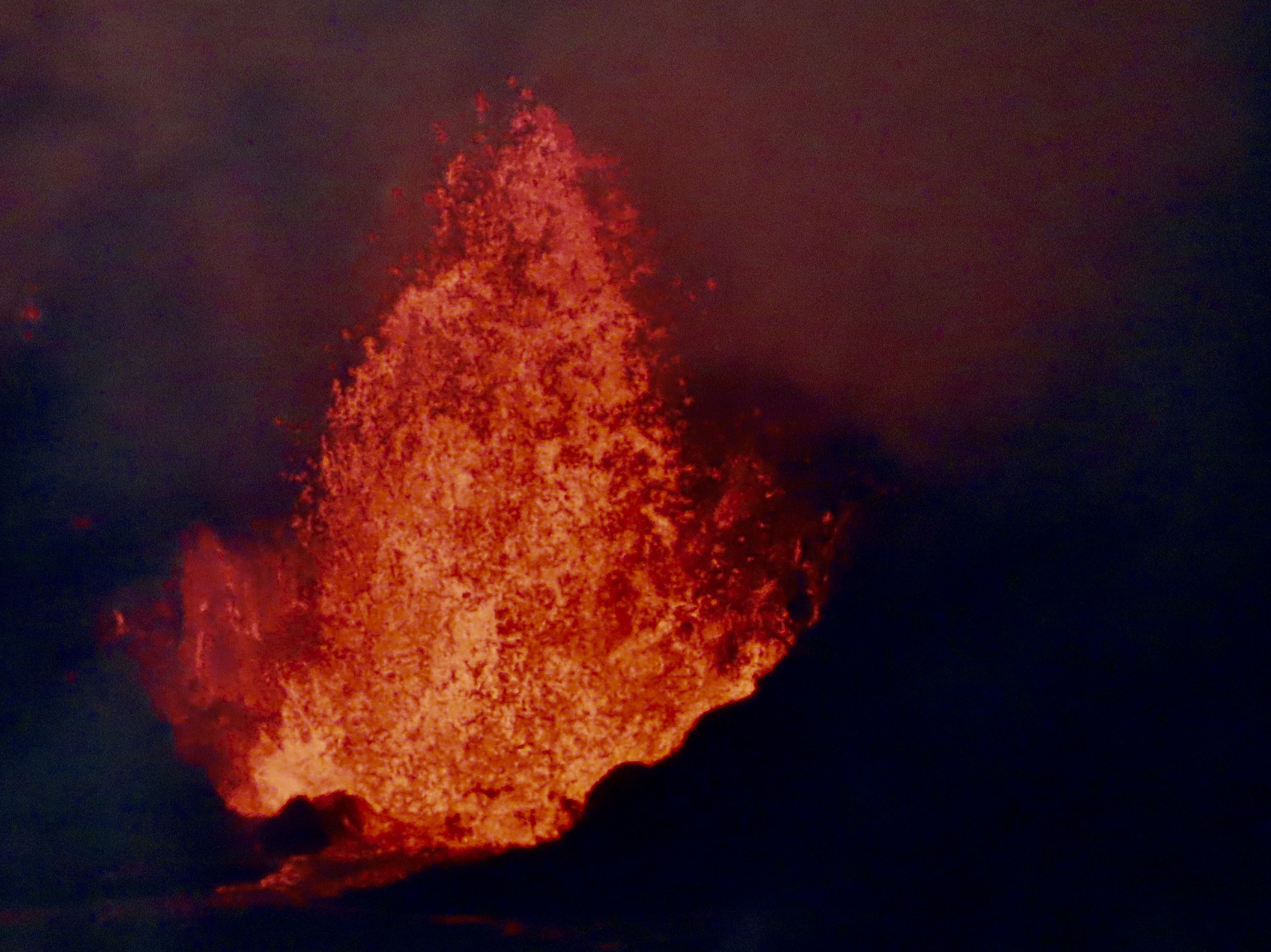
When Peggy and I visited Hawaii’s youngest and most active volcano, Kīlauea, on January 17, we took this photo of lava erupting 200 feet into the air in the Halemaʻumaʻu Crater.The location of where we are staying for the month in Sea View, Hawaii at the Starlit Skies of Kalapana VRBO rental (Very nice). To provide perspective Hilo is 32 miles north of us via road and the Kīlauea Volcano is 46 miles to the west.
The Hawaiian goddess of volcanoes and fire, Pele, is said to live up in the Kilauea Volcano. She’s been restless since we arrived, spewing lava into the air and covering the floor of the Halemaʻumaʻu crater.
A painting in the park’s headquarters showed an artist’s conception of Pele. You might say ‘she’s hot,’ too hot to handle in fact. The temperature of lava when it erupts is somewhere between between 1,300 to 2,200 degrees Fahrenheit. Early Polynesians who arrived by boat between 1000-1200 CE, have a myth describing how Pele ended up on Hawaii: she was escaping from her sister, Nāmakaokahai, goddess of the ocean. In one version of the myth, Nāmakaokahai was jealous of Pele’s beauty and strength; in another, Pele had seduced her husband. (Before you ask, the egg contains Pele’s younger sister and companion, Hi’iaka),
Scientists have a different theory of what makes Hawaii one of the most active volcano sites in the world. It is sitting on top of a hot spot in the middle of the Pacific Ocean where lava is rising up from the earth’s mantle. The island is making its way over the hotspot as the Pacific Tectonic Plate moves in a northwest direction at a speedy 2-4 inches per year. With the exception of Maui, the other islands have moved beyond the hotspot and their volcanoes are extinct. A new island named Loihi Seamount is currently being created about 20-30 miles southeast of where we are. You can expect to see it rise above the ocean— if you are around— in about a hundred thousand years or so.
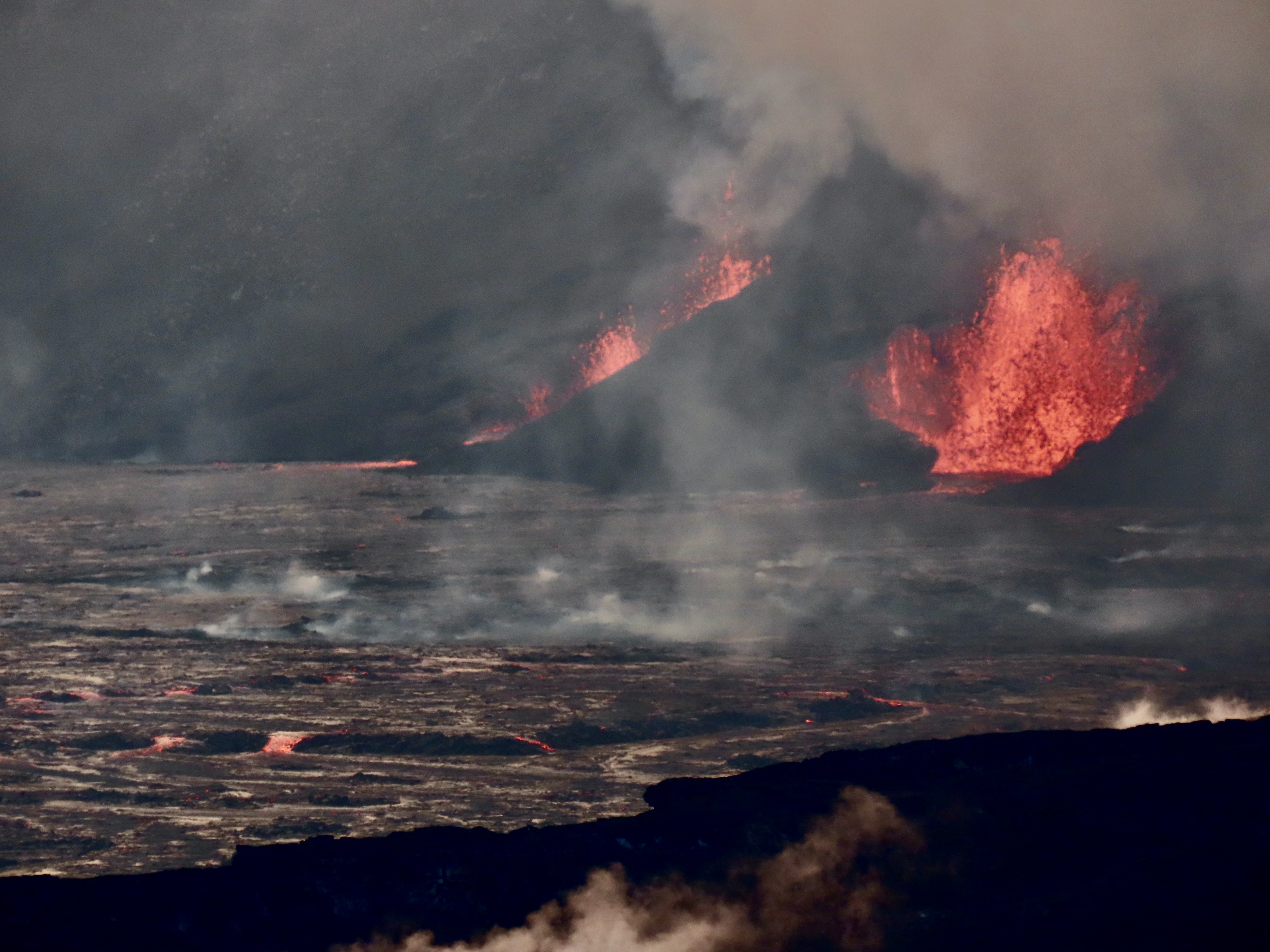
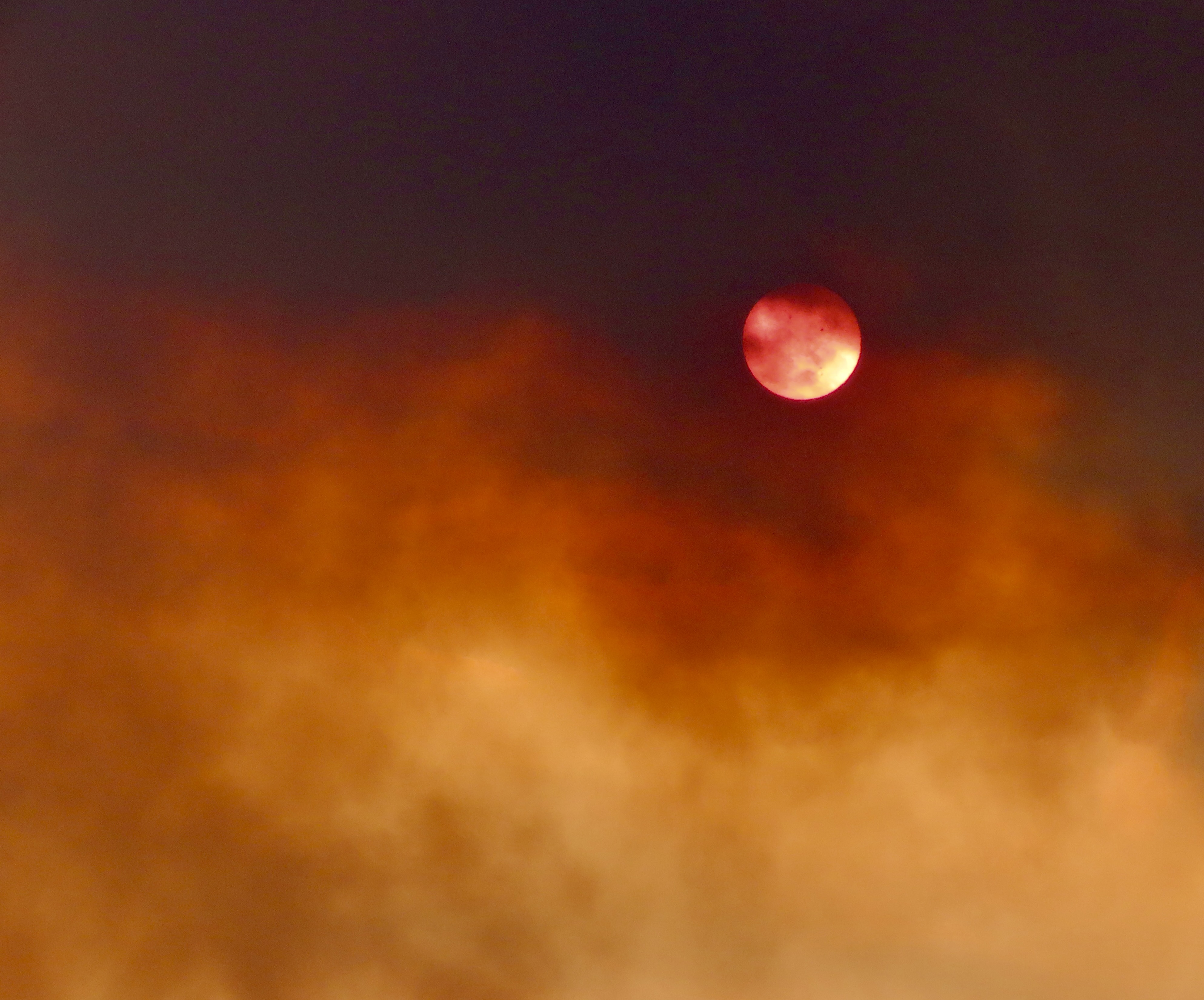
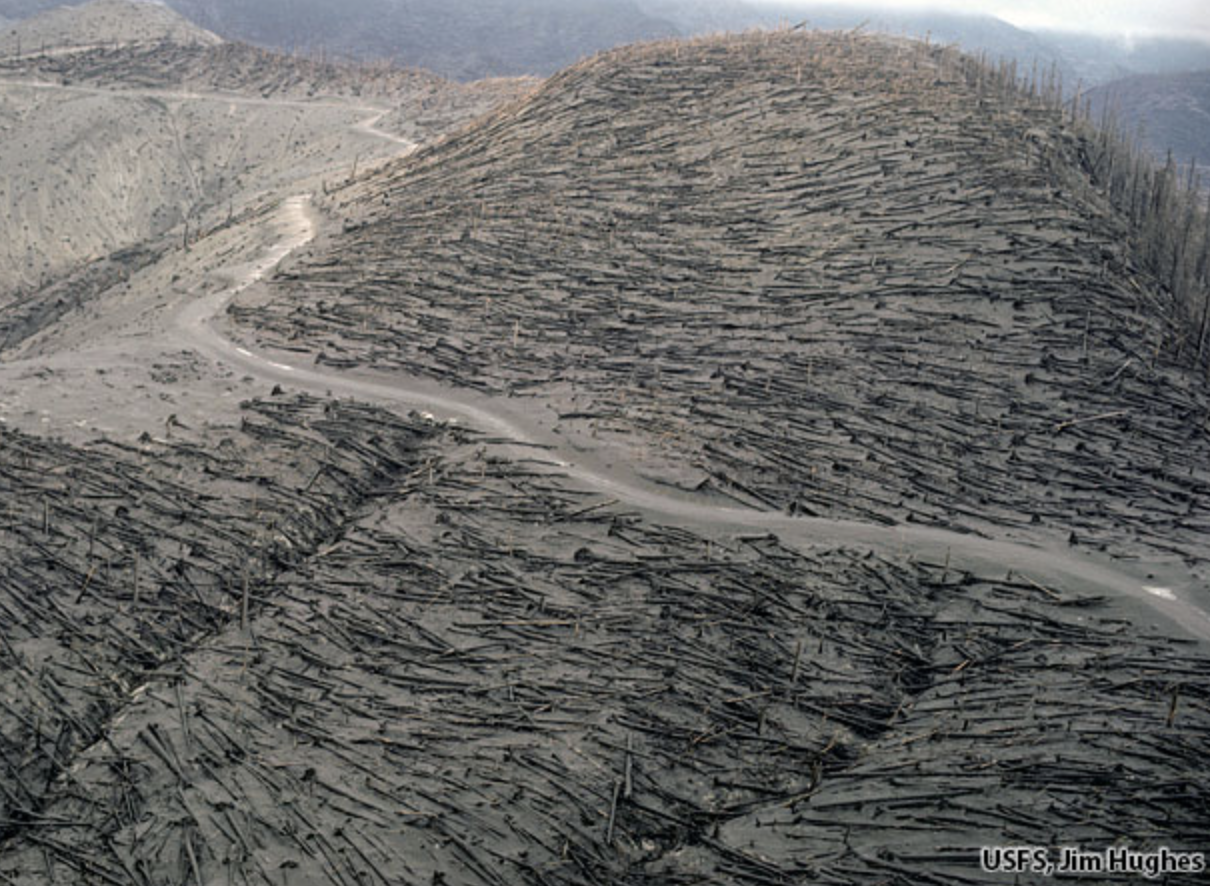
Most people think of the Hawaiian Islands as being the green ones on the lower right. There are actually 132 islands, atolls and undersea volcanoes included in the chain that extends over 2600 miles toward Alaska’s Aleutian Islands! They all originated over the hot spot that the Big Island now occupies. The area within the dotted line is the Papahānaumokuākea Marine Reserve (Pronounced Pa-pa-hah-now-mo-koo-ah-keh-ah in Hawaiian.) You will be quizzed on the name and its pronunciation later. (National Oceanic and Atmospheric Administration map.)Peggy and I standing in front of the Kīlauea Crater as the volcano does what active volcanoes do. The last time this particular section of the volcano erupted was almost 50 years ago. I was on the island at the time. The National Park had built a walkway out to the crater so visitors could look down into its seething mass.This time we were at least a mile away. Fortunately, we both have excellent telephoto lens.We could look into the heart of the crater. This is a close up of the lava spewing out.Two vents were blasting away. Note the lava flowing out of the vent on the right as it covered the crater floor.A view of the vents and a portion of the floor.A plume rose from the volcano and played hide and seek with the sun. (This is how far away the volcano looked without our telephoto lenses.)The plume led to a photo op, and an observation…At one point, the plume looked almost like a mushroom cloud created by an atomic bomb. It wasn’t, of course, but it did serve as a reminder that volcanoes are more than tourist attractions. They are dangerous, sometimes extremely so. Even the cloud carried a risk: Vog. Think smog but worse. When we were there, the National Park had posted a health advisory alert. We were also told to be on the lookout for Pele’s Hair. One could only ask, “what?” The National Park provided a photo…Looks like hair to me, but who knew Pele was a blond? Actually it is volcanic glass produced from lava stretched into thin strands and transported by air. Touching is not advised. It can break into small splinters and enter your skin.What we saw had already been broken into small pieces. I didn’t try to pick up one. Of much greater concern than the vog or Pele’s Hair is what magma decides to do when it erupts as lava. It depends on the type of lava. All magma holds gas that is highly compressed under intense pressure in the earth’s mantle. As the lava approaches the surface, the gas expands and has to escape in one way or another. Thicker lava, like that found along the Pacific Rim where the Pacific Plate is plunging under continental plates, holds the gas, not allowing it to escape. The result is violent explosions that lead to the creation of steep, conical shaped, composite mountains like California’s Mt. Shasta shown below.A photo of Mt. Shasta I took while I was hiking down the Pacific Crest Trail. The devastation created by these explosions can be extensive. I flew over Mt. St. Helens a couple of weeks after it erupted in 1980 and thousands of trees had been blown down by the eruption.This photo by Jim Hughes of the US Forest Service shows what I saw. Between asphyxiation and burns, 57 people lost their lives because of the eruption.
The lava flowing out of the volcanoes on Hawaii is much thinner. The gas can escape in bubbles. It doesn’t have to explode and is much ‘kinder,’ so to speak— if you don’t mind seeing your homes and roads burn and disappear under thick layers of lava. No one was killed in the major 2018 eruption that took place near where Peggy and I are staying. People could walk faster than the lava was flowing. The eruption will be the subject of our next post on Hawaii.
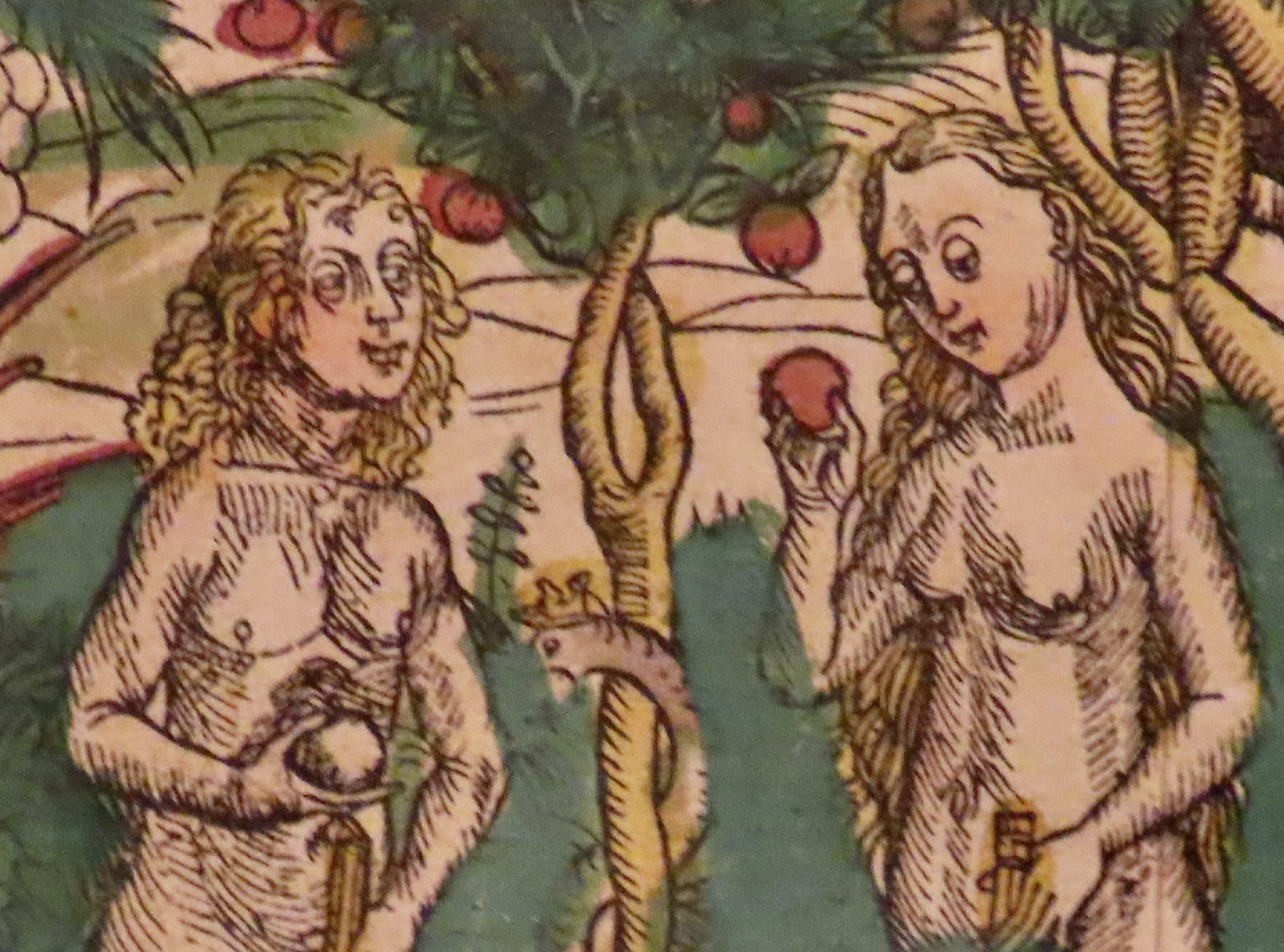
But first, as promised, we will return to our fall journey down the Danube River and the historic town of Kalocsa, Hungary where we visit a library featuring thousands of illustrated books that are hundreds of years old. I found this Adam and Eve illustration humorous. Is Adam holding a duck? (The words underneath are mine.)“Eat the apple,” Snake urges. “God made it. What could possibly go wrong?”
36 thoughts on “Living Under an Active Volcano Where Pele Reigns Supreme… Hawaii 1”
I thought of you, Curt, as soon as I saw the reports of the latest eruption and hoped you would get to see some of it.
We flew over part of the volcano in 2019 and saw some bubbling, but it was a week before that section erupted.
I have seen chunks of volcanic glass – obsidian – but never knew it came in the “hair” form, rather like fiberglass.
I’ve had lava flowing on two of my three visits to the Big Island, Ray. Not bad, considering. Pele’s hair was new to me as well. I read today that birds are know to use it in making nests.
One thing I was thinking with a smile 😊 , you and Peggy get about and it seems to keep you fit and healthy. Very dramatic and beautiful volcanoes, wouldn’t like to be near them. I am one of those who think of Hawaii as gentler and somewhere to enjoy the water and sun. Nearesf volcano I have been was Tenerife where you could grill over the still active volcano. Iceland as well had some dramatic volcanoes. miriam
Being active and loving what we do (and each other) makes a difference, Miriam. No doubt about it. I’ll quickly admit that luck plays a part as well.
Laughing a bit about ‘gentle Hawaii.’ Yes, there is great beauty, especially considering the vegetation, which I will do a post on. And there are plenty of lovely beaches to enjoy. But the islands also have volcanoes, earthquakes, tsunamis, and hurricanes. (This is fresh in my mind because I went to the Tsunami Museum in Hilo yesterday. Wow!)
The Canary Islands and Iceland seem to do a good job of representing the Atlantic Ocean when it comes to volcanoes. As I recall the Maori of New Zealand also take advantage of thermal pools created by magma to cook with.
Well, I already commented and got an error message, so hopefully this doesn’t end up putting two similar comments!
Anyhoo…this is very thrilling Curt! What marvelous photos of spewing orange lava. Though you were a mile away, your hearts must have been racing. Thank you for sharing these amazing photos. It must have been exciting to check the images later on a larger screen, and see what you managed to capture. I feel as though I have seen the image of Pele before. Did you already post it in an earlier blog post?
I don’t think Pele has shown up in any of my earlier posts, Crystal. She wasn’t active when Peggy and I were here last time. And the time before, 1976 when she was, blogs had yet to be invented. Grin. It is thrilling. She supposed to be active again in the next day or two and Peggy and I will likely head up there again.
No duplicate comment and no telling with WP. You may have landed in the spam pile. It’s been ages since I checked in on that.
You got that right, Peggy. She’s supposed to be active again in the next day or two, so we will head back up. One good thing about Hawaiian volcanoes (at least so far), is they don’t ‘blow their top.’
The geological science is fascinating, Curt. You got some great photos. Yay for fabulous cameras. I’ve never see photos or Pele’s Hair. Isn’t that interesting stuff. When I visited the volcano decades ago, it was sleeping, so no big show. And I hope to get to Mt. St. Helens this year. That’s a great photo of the flattened trees.
I’ve been fascinated with geology ever since I collected rocks as a boy, D.
Mt. St. Helens is fascinating. Make sure you visit the Visitor’s Center up on top and attend the Park movie. The end is spectacular… The other thing Peggy and I found fascinating about our visit was how quickly the land that was devastated has bounced back.
I’ll be sure to watch the movie. I live in New England when it blew, but I’m sure I’ll enjoy exploring the place now. 🙂
Beautiful shots of Kilauea! I’ve still not been able to see the fountaining lava there despite three tries at it. Good times watching the lava flowing into the ocean though!
Wow! I’ve never seen a volcano erupt, but would love to. I’ve also never heard of volcanic glass, and I’m very intrigued by its formation and how it manages to look so much like hair.
According to the National Park, Diana, “These long, fragile strands are formed by gas during a volcanic eruption. When bubbles of gas near the surface of a lava flow burst, it can stretch the skin of the molten lava into long threads. Strands of Pele’s hair may be up to a couple feet long, but only one micron (.001 mm) thick.” I’m reminded of the cheese on hot pizza when it decides to stretch out and challenge me.
The winds pick up the strands and deposit them in places where they can be a foot or more thick. Not sure on the hair or color look. Maybe they get together, decide ‘let’s have a party,’ and have heard that blondes have more fun?
It truly is, Diana. We were lucky to be here to see it. We were also lucky that it was doing little more than putting on a show. I’ll be doing a post on the 2018 eruption that covered some 700 homes within 5-10 miles of where we are presently staying.
Wow! The land of S’Mores and hot dogs! I love it! Also…the picture of you and Peggy is really wonderful! How fortunate you two are! It’s snowing here in Olympia and it looks like on and off all week! Enjoy your paradise!
We liked the photo as well, Wendy. We were taking a selfie when a man offered to take it instead. The lighting was interesting with just enough hint of the volcano behind us to make it real.
Not surprised about your weather. We’ve been sending it your way via the Pineapple Express. We’ve often been on the receiving end in Northern California and Oregon. This is the first time we’ve been in on its beginning. Our little house has a metal roof and the rain has been coming down so hard it sounds like a freight train. Some fun. We love it.
You both look awesome with the glow of the volcano behind you, Curt. Are you sure Peggy isn’t incarnated as Pele? Oh, I guess not because she doesn’t have blonde hair. 👱♀️ 🤣 That’s wild about the “hair” and I would want slivers of that in my skin. Amazing captures. You were close. I remember when we’ve gone it was nothing like that but then again, I don’t remember that far back but I think I would if I had seen that. You always manage to see this things as they happen which is so cool. It’s incredible that they actually name all of those islands under water, we’ll never see and even wilder how they were formed. Good thing you still can walk that fast so your footies didn’t get burned. I can see the trip agreed with you. 🌺🌴🌊
oh and you weren’t kidding about sending us the rain, it’s here … we need it and it was perfect timing because I still haven’t left the couch. Tomorrow maybe. 🤔💗
Oh I hope you made it off the couch, Cindy! You should be getting more of our rain later this week.
Isa on it in time to visit others on the couch. It beats the prices of hi-way robbery of a shrink. lol just trying not to catch the wave of illnesses again! 🙏🏼
Yes, avoid the wave, Cindy! One of the disadvantages of having Grandchildren!
As best I can, I say as both got hand, foot and mouth disease. ugh.. 😑
Darn, that’s nasty, and relatively rare I believe. best stay far away.
I say!! 💓
😳
Laughing. Being able to escape from a lava flow is about one of the best reasons I have ever heard of for staying in shape, Cindy.
Being where the action is isn’t always a good thing. Knee deep in mud at Burning Man and barely missing a tornado in New Orleans being but two examples. LOL.
Thanks on the ‘glow.” We liked the photo as well! Chuckling about Peggy and Pele. Not sure I’d want her to be a thousand degrees hot. (A little hot is fine. Grin.)
hahahahaha. glad you are never in need of a laugh as you keep us entertained, ALL-WAYS!
Oh, yeah, i could do without some of your adventures, like that one..
Loved that pic of Pele btw and you are both too hot to handle for me.. 🔥 but I soooo admire you both lil hotties. 💓
Still, the adventures make good stories…
As for the rest, I’ll giggle.
I’m just jel jel! 💓
Such fascinating science, Curt, and your photos are amazing! I love the collaboration between plume and sun, and the mushroom cloud is cool too! And the hair, I wouldn’t dream of touching it! Even though you and Peggy were a mile away, it seemed too close for me. 🙂 And I look forward to seeing the new island. LOL Happy travels! (My first comment didn’t go through, so I hope this one does.)
This comment made it Lauren. Thanks for hanging in there and sending again. Another one of my friends had the same comment the other day. Thank you Word Press. I have been promising myself a major update on my theme however. Maybe it will help.
Volcanoes have always interested me given that I, like you, spent so much of my life along the Pacific Coast. Watching one erupt (in a relatively safe environment) certainly inspires even more interest. Hey, what’s hundred thousand years or so. Grin.
Wonderful photos! and yet another reason for a good telephoto lens. I was surprised by the number of unseen atolls, shoals, and such extending out from the ‘visible’ islands, and fascinated by the volcanic glass, which I’d never heard of. There are marvels everywhere! Now I’m wondering about something else. When I was in grade school, we took a family vacation to the Rocky Mountains, and one of the souvenirs I brought home was a baked potato sized hunk of obsidian: smooth, glossy, and beautiful just as it came from the ground where I picked it up. Methinks I need to do a little reading about the geologic history of the Rocky Mountains; I may have missed something!
Thanks, Linda. Every time we go out, Linda, we appreciate our telephoto lenses. On Thursday, we made a trip back to the park (the volcano was erupting again), but we also went to check out some petroglyphs we had visited several years ago. With our lenses, we saw a lot that we couldn’t see before. (Peggy’s word search book on petroglyphs is being published this week.)
There is actually a whole cliff of obsidian in Yellowstone created by a volcanic eruption a couple of hundred thousand years ago. They are beautiful rocks!





 Wandering through Time and Place
I thought of you, Curt, as soon as I saw the reports of the latest eruption and hoped you would get to see some of it.
We flew over part of the volcano in 2019 and saw some bubbling, but it was a week before that section erupted.
I have seen chunks of volcanic glass – obsidian – but never knew it came in the “hair” form, rather like fiberglass.
I’ve had lava flowing on two of my three visits to the Big Island, Ray. Not bad, considering. Pele’s hair was new to me as well. I read today that birds are know to use it in making nests.
One thing I was thinking with a smile 😊 , you and Peggy get about and it seems to keep you fit and healthy. Very dramatic and beautiful volcanoes, wouldn’t like to be near them. I am one of those who think of Hawaii as gentler and somewhere to enjoy the water and sun.
Nearesf volcano I have been was Tenerife where you could grill over the still active volcano. Iceland as well had some dramatic volcanoes.
miriam
Being active and loving what we do (and each other) makes a difference, Miriam. No doubt about it. I’ll quickly admit that luck plays a part as well.
Laughing a bit about ‘gentle Hawaii.’ Yes, there is great beauty, especially considering the vegetation, which I will do a post on. And there are plenty of lovely beaches to enjoy. But the islands also have volcanoes, earthquakes, tsunamis, and hurricanes. (This is fresh in my mind because I went to the Tsunami Museum in Hilo yesterday. Wow!)
The Canary Islands and Iceland seem to do a good job of representing the Atlantic Ocean when it comes to volcanoes. As I recall the Maori of New Zealand also take advantage of thermal pools created by magma to cook with.
Well, I already commented and got an error message, so hopefully this doesn’t end up putting two similar comments!
Anyhoo…this is very thrilling Curt! What marvelous photos of spewing orange lava. Though you were a mile away, your hearts must have been racing. Thank you for sharing these amazing photos. It must have been exciting to check the images later on a larger screen, and see what you managed to capture. I feel as though I have seen the image of Pele before. Did you already post it in an earlier blog post?
I don’t think Pele has shown up in any of my earlier posts, Crystal. She wasn’t active when Peggy and I were here last time. And the time before, 1976 when she was, blogs had yet to be invented. Grin. It is thrilling. She supposed to be active again in the next day or two and Peggy and I will likely head up there again.
No duplicate comment and no telling with WP. You may have landed in the spam pile. It’s been ages since I checked in on that.
I hope Pele’s restlessness doesn’t turn to downright anger.
You got that right, Peggy. She’s supposed to be active again in the next day or two, so we will head back up. One good thing about Hawaiian volcanoes (at least so far), is they don’t ‘blow their top.’
The geological science is fascinating, Curt. You got some great photos. Yay for fabulous cameras. I’ve never see photos or Pele’s Hair. Isn’t that interesting stuff. When I visited the volcano decades ago, it was sleeping, so no big show. And I hope to get to Mt. St. Helens this year. That’s a great photo of the flattened trees.
I’ve been fascinated with geology ever since I collected rocks as a boy, D.
Mt. St. Helens is fascinating. Make sure you visit the Visitor’s Center up on top and attend the Park movie. The end is spectacular… The other thing Peggy and I found fascinating about our visit was how quickly the land that was devastated has bounced back.
I’ll be sure to watch the movie. I live in New England when it blew, but I’m sure I’ll enjoy exploring the place now. 🙂
Beautiful shots of Kilauea! I’ve still not been able to see the fountaining lava there despite three tries at it. Good times watching the lava flowing into the ocean though!
That would be very dramatic as well. Big splash!
Wow! I’ve never seen a volcano erupt, but would love to. I’ve also never heard of volcanic glass, and I’m very intrigued by its formation and how it manages to look so much like hair.
According to the National Park, Diana, “These long, fragile strands are formed by gas during a volcanic eruption. When bubbles of gas near the surface of a lava flow burst, it can stretch the skin of the molten lava into long threads. Strands of Pele’s hair may be up to a couple feet long, but only one micron (.001 mm) thick.” I’m reminded of the cheese on hot pizza when it decides to stretch out and challenge me.
The winds pick up the strands and deposit them in places where they can be a foot or more thick. Not sure on the hair or color look. Maybe they get together, decide ‘let’s have a party,’ and have heard that blondes have more fun?
Wow. That’s such an amazing phenomenon!
It truly is, Diana. We were lucky to be here to see it. We were also lucky that it was doing little more than putting on a show. I’ll be doing a post on the 2018 eruption that covered some 700 homes within 5-10 miles of where we are presently staying.
Wow! The land of S’Mores and hot dogs! I love it! Also…the picture of you and Peggy is really wonderful! How fortunate you two are! It’s snowing here in Olympia and it looks like on and off all week! Enjoy your paradise!
We liked the photo as well, Wendy. We were taking a selfie when a man offered to take it instead. The lighting was interesting with just enough hint of the volcano behind us to make it real.
Not surprised about your weather. We’ve been sending it your way via the Pineapple Express. We’ve often been on the receiving end in Northern California and Oregon. This is the first time we’ve been in on its beginning. Our little house has a metal roof and the rain has been coming down so hard it sounds like a freight train. Some fun. We love it.
You both look awesome with the glow of the volcano behind you, Curt. Are you sure Peggy isn’t incarnated as Pele? Oh, I guess not because she doesn’t have blonde hair. 👱♀️ 🤣 That’s wild about the “hair” and I would want slivers of that in my skin. Amazing captures. You were close. I remember when we’ve gone it was nothing like that but then again, I don’t remember that far back but I think I would if I had seen that. You always manage to see this things as they happen which is so cool. It’s incredible that they actually name all of those islands under water, we’ll never see and even wilder how they were formed. Good thing you still can walk that fast so your footies didn’t get burned. I can see the trip agreed with you. 🌺🌴🌊
oh and you weren’t kidding about sending us the rain, it’s here … we need it and it was perfect timing because I still haven’t left the couch. Tomorrow maybe. 🤔💗
Oh I hope you made it off the couch, Cindy! You should be getting more of our rain later this week.
Isa on it in time to visit others on the couch. It beats the prices of hi-way robbery of a shrink. lol just trying not to catch the wave of illnesses again! 🙏🏼
Yes, avoid the wave, Cindy! One of the disadvantages of having Grandchildren!
As best I can, I say as both got hand, foot and mouth disease. ugh.. 😑
Darn, that’s nasty, and relatively rare I believe. best stay far away.
I say!! 💓
😳
Laughing. Being able to escape from a lava flow is about one of the best reasons I have ever heard of for staying in shape, Cindy.
Being where the action is isn’t always a good thing. Knee deep in mud at Burning Man and barely missing a tornado in New Orleans being but two examples. LOL.
Thanks on the ‘glow.” We liked the photo as well! Chuckling about Peggy and Pele. Not sure I’d want her to be a thousand degrees hot. (A little hot is fine. Grin.)
hahahahaha. glad you are never in need of a laugh as you keep us entertained, ALL-WAYS!
Oh, yeah, i could do without some of your adventures, like that one..
Loved that pic of Pele btw and you are both too hot to handle for me.. 🔥 but I soooo admire you both lil hotties. 💓
Still, the adventures make good stories…
As for the rest, I’ll giggle.
I’m just jel jel! 💓
Such fascinating science, Curt, and your photos are amazing! I love the collaboration between plume and sun, and the mushroom cloud is cool too! And the hair, I wouldn’t dream of touching it! Even though you and Peggy were a mile away, it seemed too close for me. 🙂 And I look forward to seeing the new island. LOL
Happy travels! (My first comment didn’t go through, so I hope this one does.)
This comment made it Lauren. Thanks for hanging in there and sending again. Another one of my friends had the same comment the other day. Thank you Word Press. I have been promising myself a major update on my theme however. Maybe it will help.
Volcanoes have always interested me given that I, like you, spent so much of my life along the Pacific Coast. Watching one erupt (in a relatively safe environment) certainly inspires even more interest. Hey, what’s hundred thousand years or so. Grin.
Wonderful photos! and yet another reason for a good telephoto lens. I was surprised by the number of unseen atolls, shoals, and such extending out from the ‘visible’ islands, and fascinated by the volcanic glass, which I’d never heard of. There are marvels everywhere! Now I’m wondering about something else. When I was in grade school, we took a family vacation to the Rocky Mountains, and one of the souvenirs I brought home was a baked potato sized hunk of obsidian: smooth, glossy, and beautiful just as it came from the ground where I picked it up. Methinks I need to do a little reading about the geologic history of the Rocky Mountains; I may have missed something!
Thanks, Linda. Every time we go out, Linda, we appreciate our telephoto lenses. On Thursday, we made a trip back to the park (the volcano was erupting again), but we also went to check out some petroglyphs we had visited several years ago. With our lenses, we saw a lot that we couldn’t see before. (Peggy’s word search book on petroglyphs is being published this week.)
There is actually a whole cliff of obsidian in Yellowstone created by a volcanic eruption a couple of hundred thousand years ago. They are beautiful rocks!