The Bush Devil Ate Sam is an important record and a serious story, yet told easily, and with delightful humor. This is one of the most satisfying books I have ever read, because it entertained me thoroughly AND made me feel better informed. —Hilary Custance Green: British Author... Click on the image to learn more about my book, the Bush Devil Ate Sam, and find out where it can be ordered.







 Wandering through Time and Place
Glad your party wasn’t disrupted.
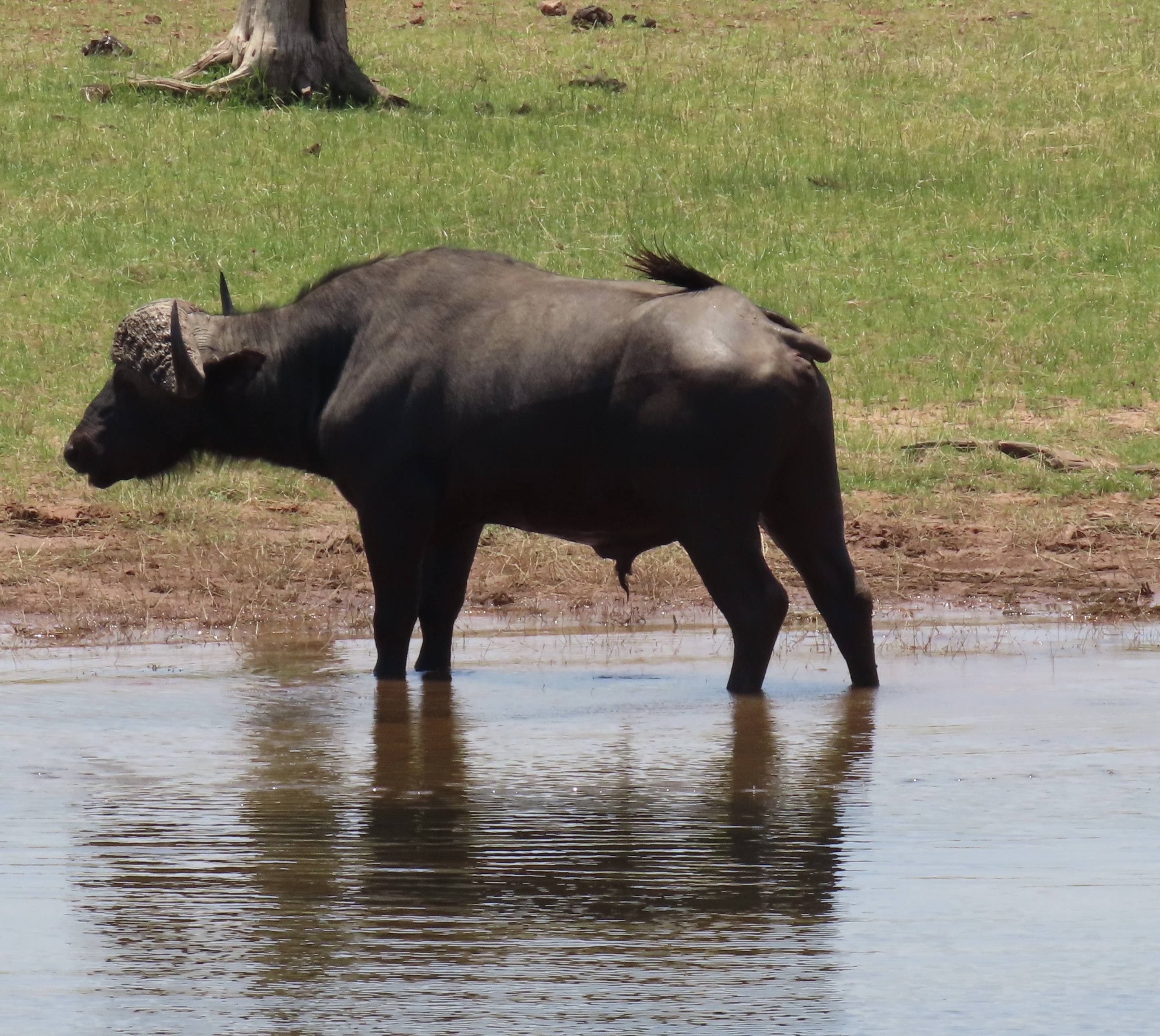
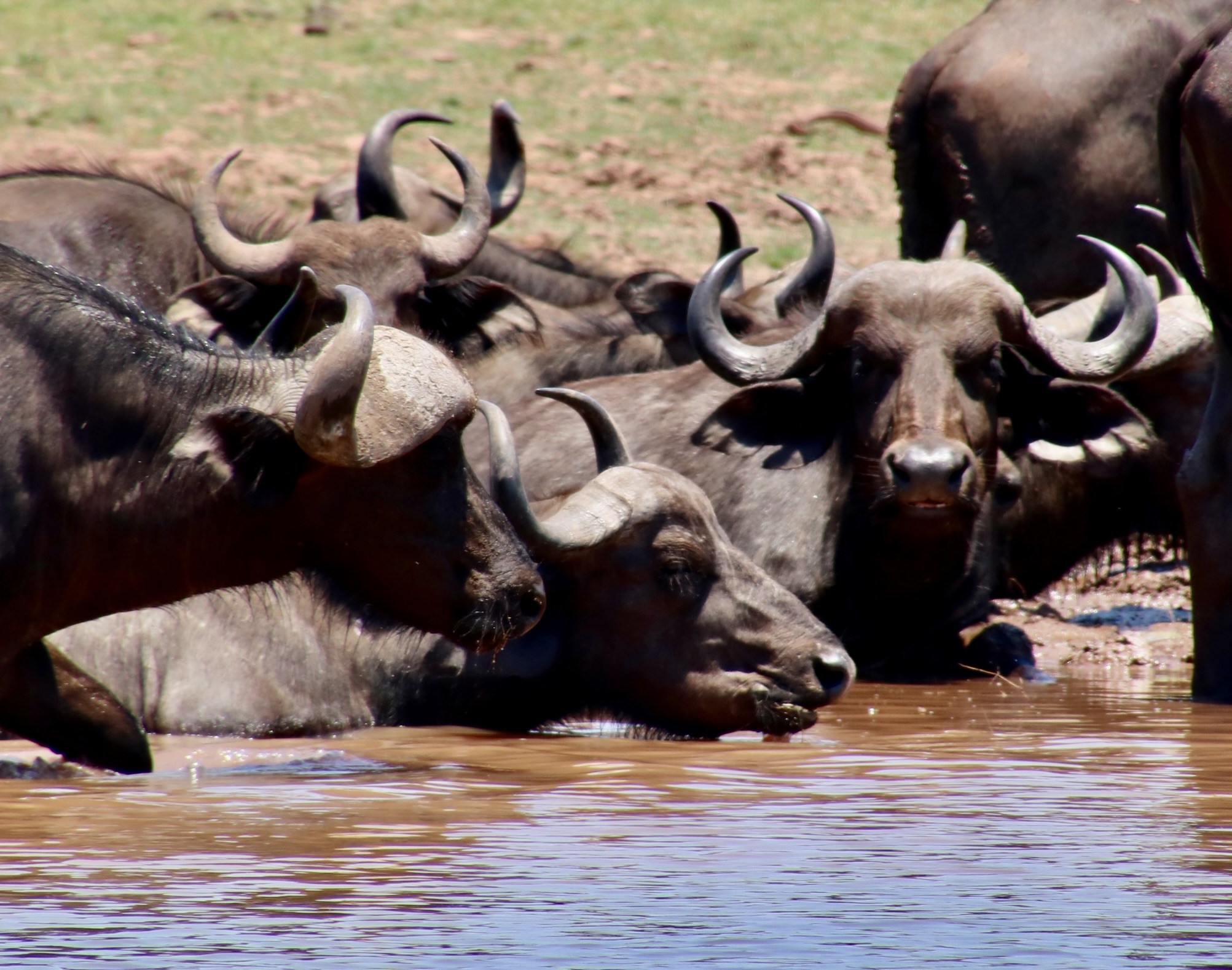
They look similar but are so different from the Asian domesticated water buffalo which are bigger but so gentle I saw five-year old boy herding them while riding on their backs.
What I read about them is that they are totally untamable, Ray. 🥹 Very willing to provide a ride for an egret but five year old boys need not apply!
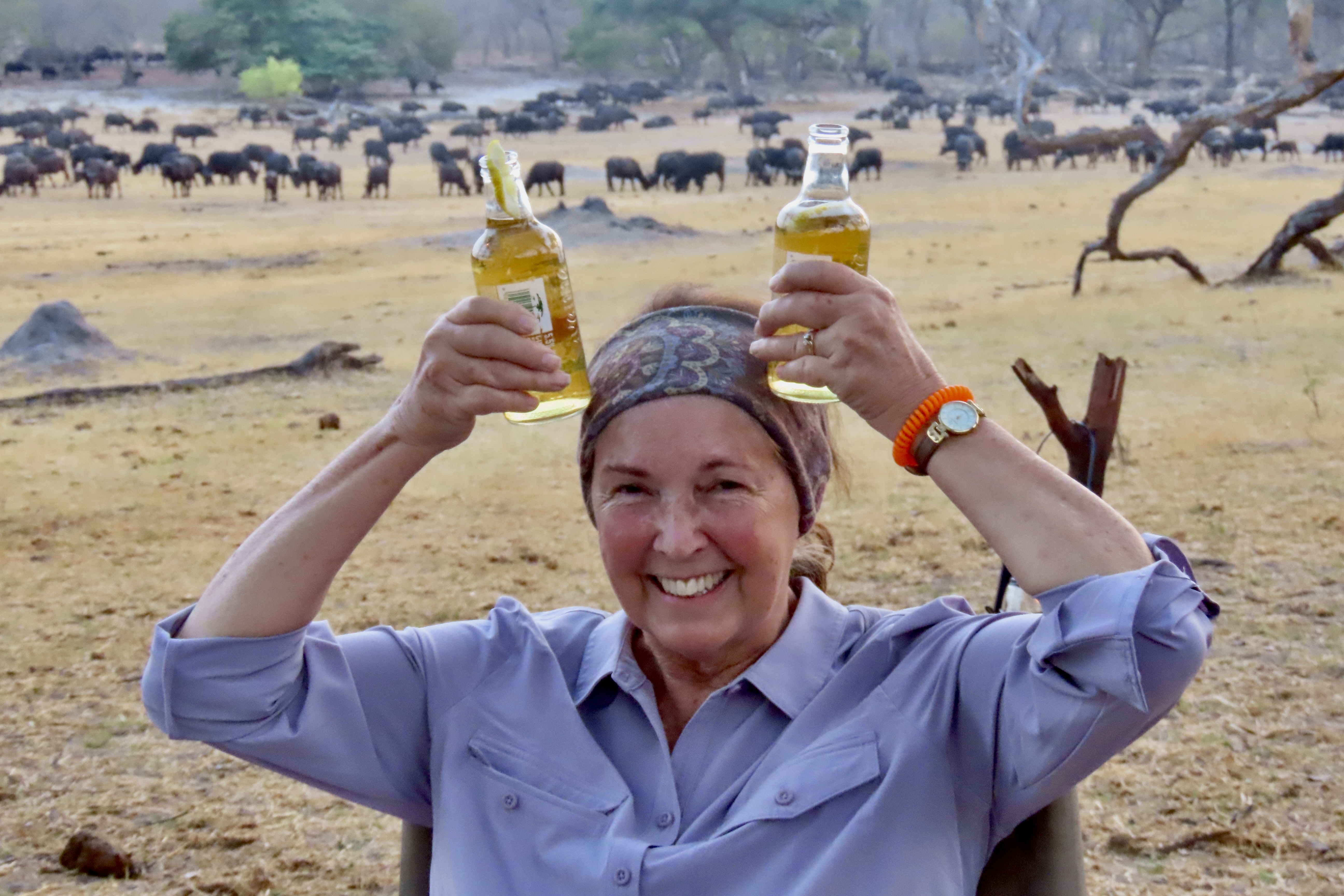
How fun! Those are big animals and I had no idea that they attack in herds! Love the pics of Peggy and the “gin and tonic” saying. Lol. And best pic of all was the last, Curt. Those smiling faces are a treat. 🙂
Yeah, D. You don’t want to mess with one to two thousand pound animals with sharp horns that attack in herds and are unpredictable. Grin. Thanks. And weren’t the faces great!
Your guide seemed to have a good respect for them. I can see why 😳
Alison
One look convinced all of us, Alison. Grin. The thing I didn’t mention was their unpredictability. Another reason! –Curt
These are a bunch of great photos, Curt. I loved that twisty tree stump and was hoping to get an explanation about that when you were explaining about the lions trying to escape the buffalo. What a crazy scene that must have been. I started salivating at your alcohol selection. Pedro and I are midway through our annual dry March. *sigh*
The twisty tree trump had been well-trimmed and killed by the elephants and other wildlife, Crystal. The twists may be caused by how the elephants yank the limbs off with their right dominant trunks. I think just about every animal we met up with in Africa was photogenic. As was thew alcohol. Grin.
Oooh, thank you for the additional information about the tree shape!
You bet. BTW, Peggy and I are in Columbia, Mo today and we noticed a license plate we had never seen in our walk about the park: The Cherokee Nation!
Awesome!! I love that.
Thought you might. Grin.