The Bush Devil Ate Sam is an important record and a serious story, yet told easily, and with delightful humor. This is one of the most satisfying books I have ever read, because it entertained me thoroughly AND made me feel better informed. —Hilary Custance Green: British Author... Click on the image to learn more about my book, the Bush Devil Ate Sam, and find out where it can be ordered.




 Wandering through Time and Place
Definitely not a good looking animal.
Isn’t nature surprising? Lovely posts and the warthogs will be happy to get this attention.
Nature is never boring, that’s for sure, Gerard. Thanks. I really liked the warthogs and found them quite ‘photogenic.’
One of my favourite ‘mind’s eye’ memories from our second African trip was seeing a young warthog run back and forth teasing a not-very-hungry lioness that was about 30 feet away.
Oh, that would be great to see, Peggy. Daring but not too smart, I’d think. 🙂
Great photos! They remind me of the javelina here in Arizona, though it appears that the warthog belongs to the pig family while the javelina is a collared peccary.
Thanks! And you are right, peccaries belong to a different family. Peggy and I also had them wandering through our camp at Big Bend National Park in Texas.
Despite their rugged exterior, they possess a certain charm that makes them captivating to observe in their natural habitat. With their distinctive facial features, including their large tusks and warty protrusions, warthogs stand out among other animals on the African savanna.
And there are lots of them to see and appreciate. Peggy and I were indeed charmed.
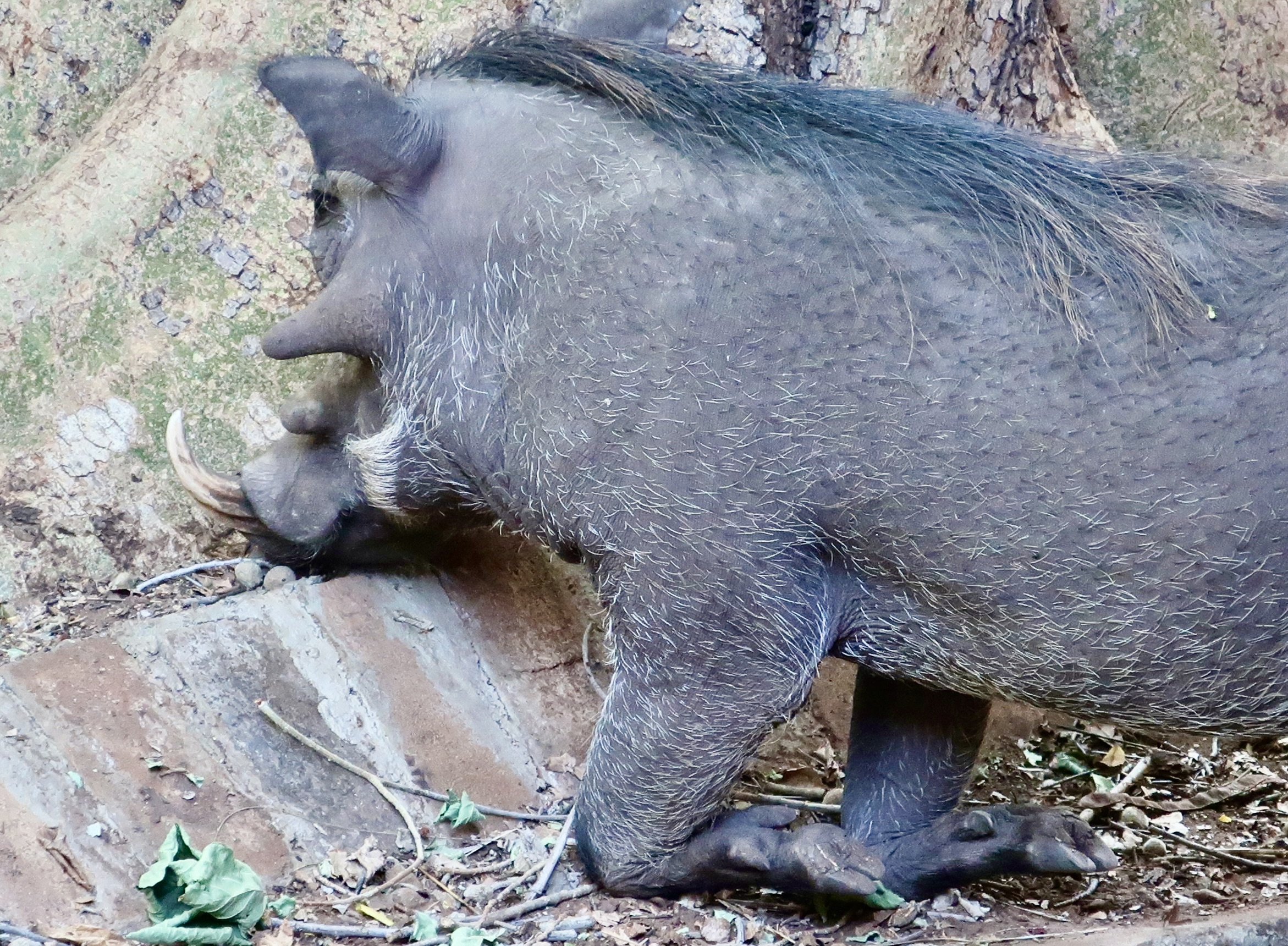
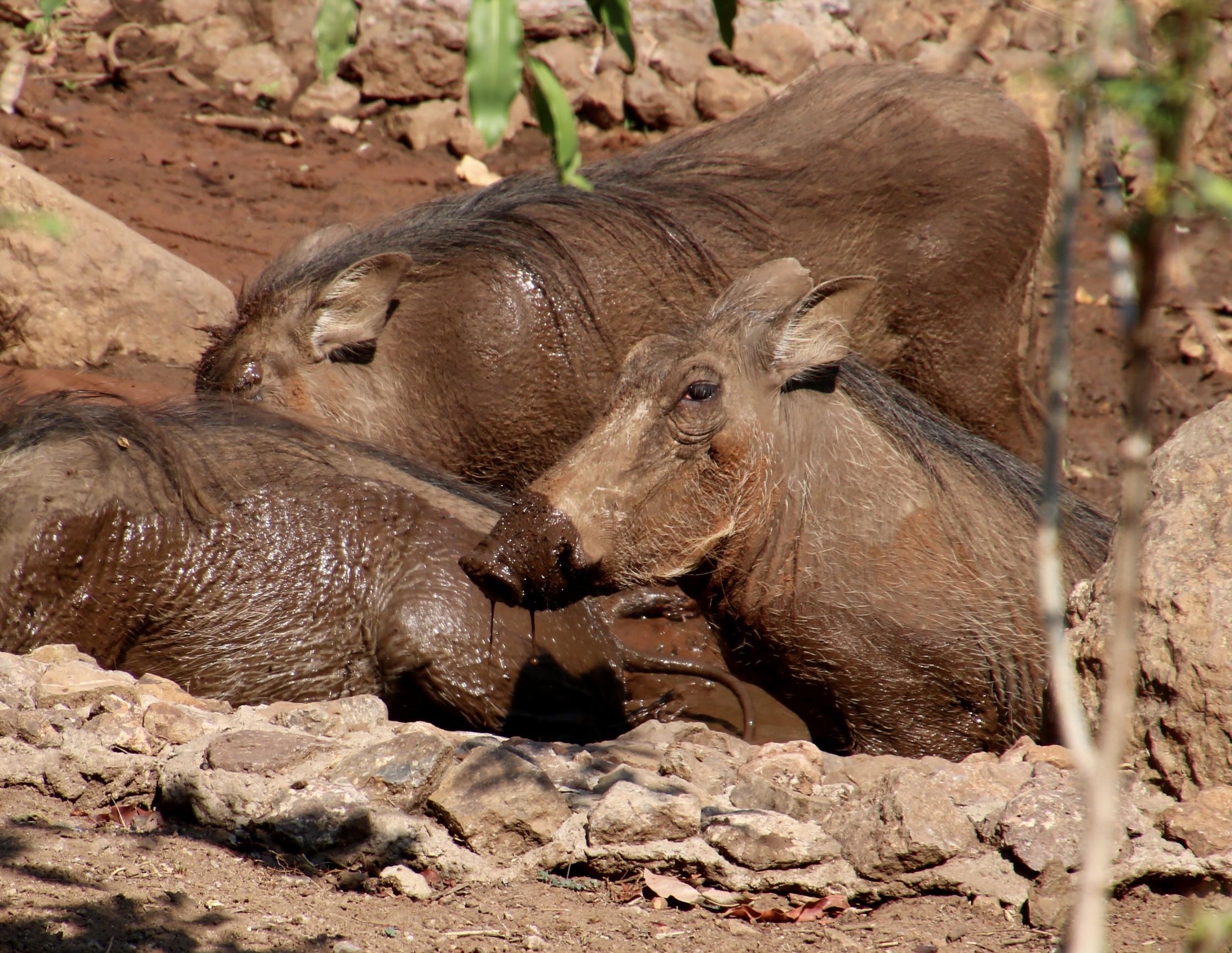
Curt, I just LOVE that last photo with the happy female warthog. Seriously, she looks like a she, and she looks so pleased. That is an awesome catch. Also loved the first two shots of the Old Guy, to show us details from their bodies. I got to look at all those crazy characteristics up close, like that worn down tusk – cool! And his foot pads – neat! I liked learning about warthog facts, like tails up as a warning sign.
Warthogs are truly one of natures amazing creations, Crystal. And wasn’t the female fun! She really looked like she was enjoying her ‘spa’ beauty treatment.
Old Dude had the best ‘warts’ of any warthogs we saw. And to be able to get so close was an unexpected treat. Thanks.
Warthogs frolicking – isn’t that an oxymoron? 😂
They are not one of God’s prettier creatures are they 😁
Alison
In the eye of the beholder… Grin. They do like to frolic in the mud, no doubt about it. 🙂 Elephants behave in the same way.
Most of the time, I find animals attractive, or interesting, or both. I wonder if I’d be more inclined to admire the warthogs if they had a differerent name — although I spent a little time trying to come up with one, and couldn’t. Is their natural color gray? They are more attractive as brown critters, but I take it that’s due to the mud.
I was curious about the collective noun ‘sounder.’ Turns out our feral hogs are described with that word, too. Who knew?
Grey to brown seems to be their natural colors, Linda.
Even domestic pigs running around in the woods are given the name sounder, Linda. I did a quick search to try and find out how they earned that name. Couldn’t find it.
I love these critters! It’s the summer of 1966 and I am on a ski left going across some rugged area with theses kind of critters below me !
Really unique. I don’t know where you were in 66, but they may have been peccaries. Thanks.
I was in Germany.
Caught me on that one Wendy. 🙂 I’d go with boars, then.
What I especially remember were their tusks!
Good to remember. Quite dangerous from what I have read.
Hi Curt, I’ve never given much thought to warthogs, but I appreciate the information you share here. It’s interesting to know that the ‘warts’ aren’t really warts, but instead, used for protection. And it’s easy to see how the mud baths would feel good too. But I can’t really say that they’re cute. Like pigs and cows are cute, but warthogs? Nah, I’m not there yet. 🙂 Have a good weekend!
Weird, Lauren, weird. I like weird even more than I like cute. Grin. Definitely interesting. Thanks.
😁🐗