The Bush Devil Ate Sam is an important record and a serious story, yet told easily, and with delightful humor. This is one of the most satisfying books I have ever read, because it entertained me thoroughly AND made me feel better informed. —Hilary Custance Green: British Author... Click on the image to learn more about my book, the Bush Devil Ate Sam, and find out where it can be ordered.






 Wandering through Time and Place
Yes, it is! Love the photos…..
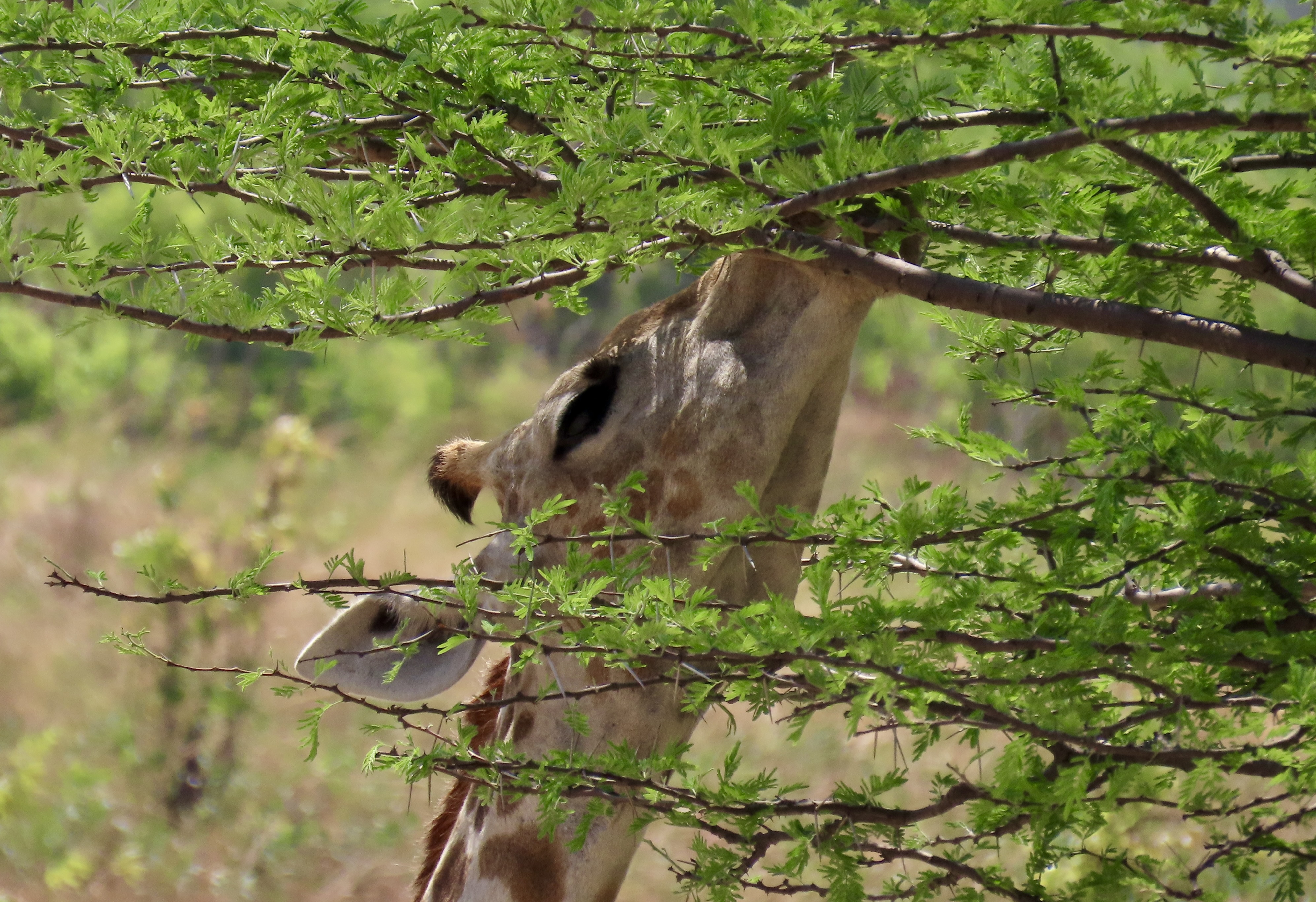
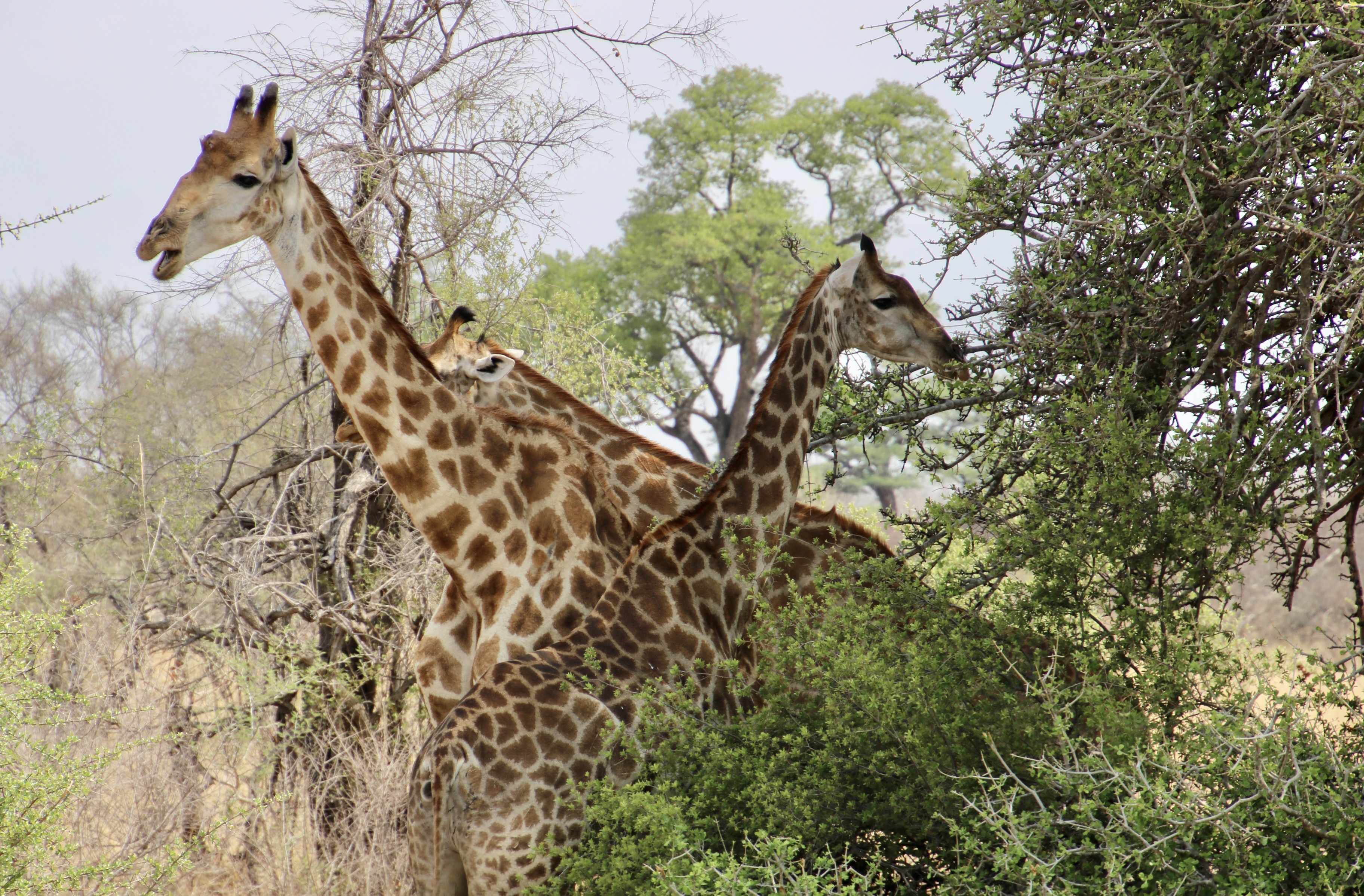
We have a native acacia here (commonly called huisache) that clearly is related to this one. The growth habit might be a little different, but those thorns and leaves are unmistakable. No matter how skilled those giraffes, it has to be hard to work around those thorns. I’m going to have to make a short detour this morning and check: I’m sure there’s a house the next town over that has a life-sized giraffe in its front yard. Do I remember that Peggy has her own bit of giraffe artwork? or perhaps she was photographed with a sculpture somewhere. Anyway, I knew that she favors them.
Oh, you are right! Didn’t they have a giraffe sculpture on the deck outside their home in Oregon? Or somewhere? It’s a fuzzy memory for me too.
The answer is yes to both of you. Linda, you would have seen the 7-foot giraffe on one of my blogs. Crystal, you visited with it. 🙂
Sadly, Linda, we had to leave the giraffe behind. But it had lived with us for several years.
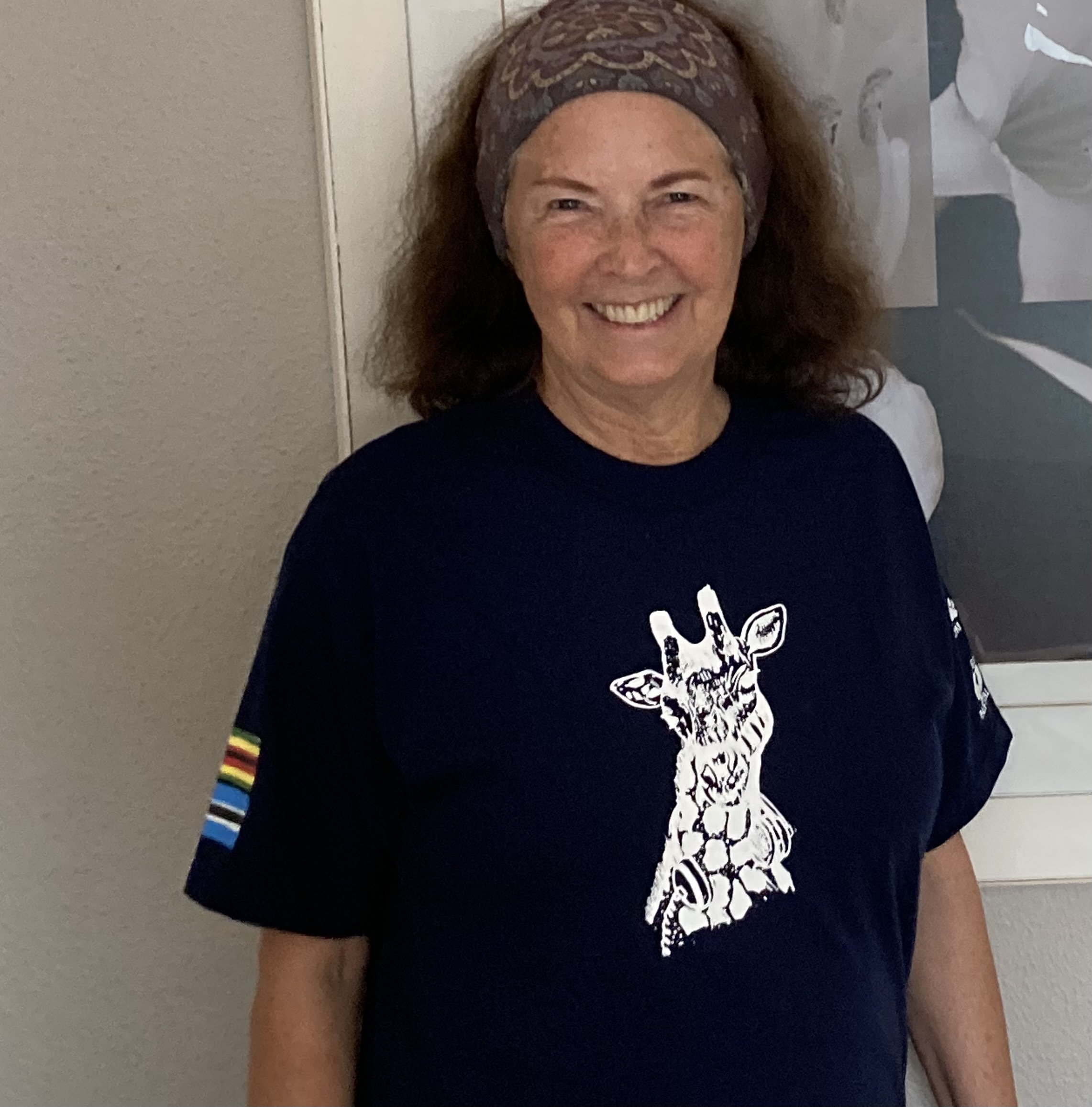
Wonderful post highlighting these incredible creatures. I always love the giraffes and my big claim to fame meeting them was at Safari West up close and personal so I knew about their black tongues. I did not know about the mom dropping them from 5 ft but then again, how the heck did I think it would happen? I would have thought they would lay down like the rest of us mothers if need be or have the dad underneath ready to catch them. Well at least they don’t drop them on their heads. I do see why they are Peggy’s favorite and love the picture of her in her awesome t-shirt.❣️💓🙌🏽
Elephants also dropped their babies while standing up Cindy. 🙂 You had me laughing when I thought of a dad giraffe trying to catch a baby. That made me think of the time we had a very pregnant cat (first time mother) when I must have been all of six. It had been my job to introduce the cat to the box where we hoped she would have her kittens. Anyway, I was home alone with the cat when she was walking across the living room floor and suddenly squawked, squatted, and begin to drop her kitten. I jumped up, grabbed her by the nape of the neck, and was rushing to her box when the kitten dropped. Somehow I was able to catch the kitten before it hit the floor and delivered both mom and baby to the box.
Oh interesting.. Like a foot ball catch.
How funny.. this is a new story that I don’t think I’ve heard before. I remember the ones in your bed.. you would make a good quarterback❣️
Or mid-wife? 😳❤️
probs a better analogy😂
LOL
Alie saw them running in 1967. She loved it. She brought the guy she was dating – yours truly – a carved mom and kid giraffe. We still own them.
Seems fun that Alie and I were wandering around in East Africa at the same time. Did she buy her giraffes in Mombassa at the incredible wood carving factory there?
After visiting her sister in Kenya, she went on a photographic safari [even though she didn’t take photos at the time] in Tanzania. She bought the giraffes in a local market. In the process of bargaining, she somehow also ended up with a long wooden [bread?] which we also still have.
The beautiful carvings my first wife and I bought in Mombassa went the way of the first wife. LOL I do have several pieces we bought in Liberia, however. Our safari was sort of photographic, if you count my brownie camera.
Agree with Peggy – they are rather special. Gentle giants.
Totally unique and gentle, unless they have to behave otherwise, AC!
They’re forgiven, if the need arises 😉
Yes.
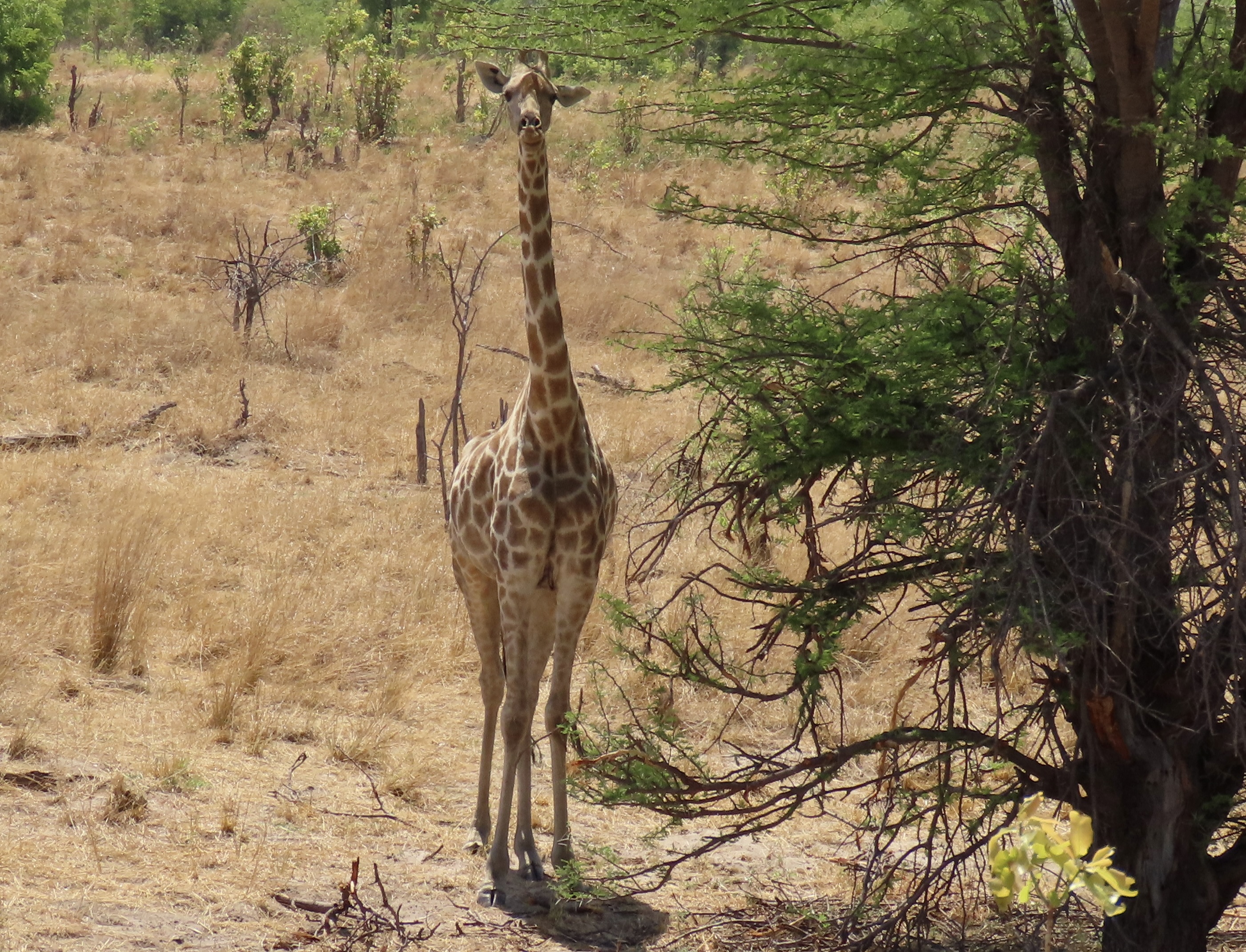
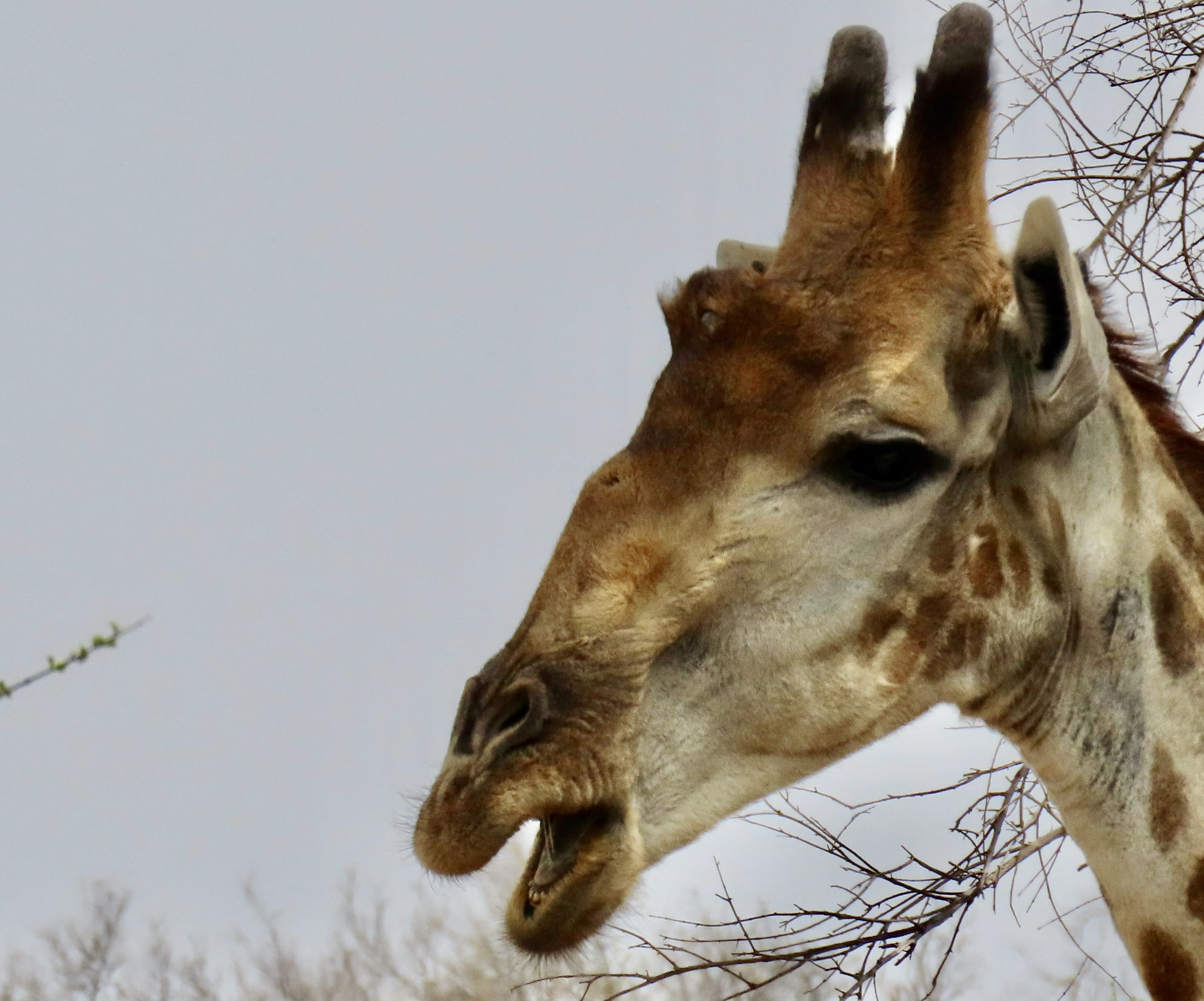
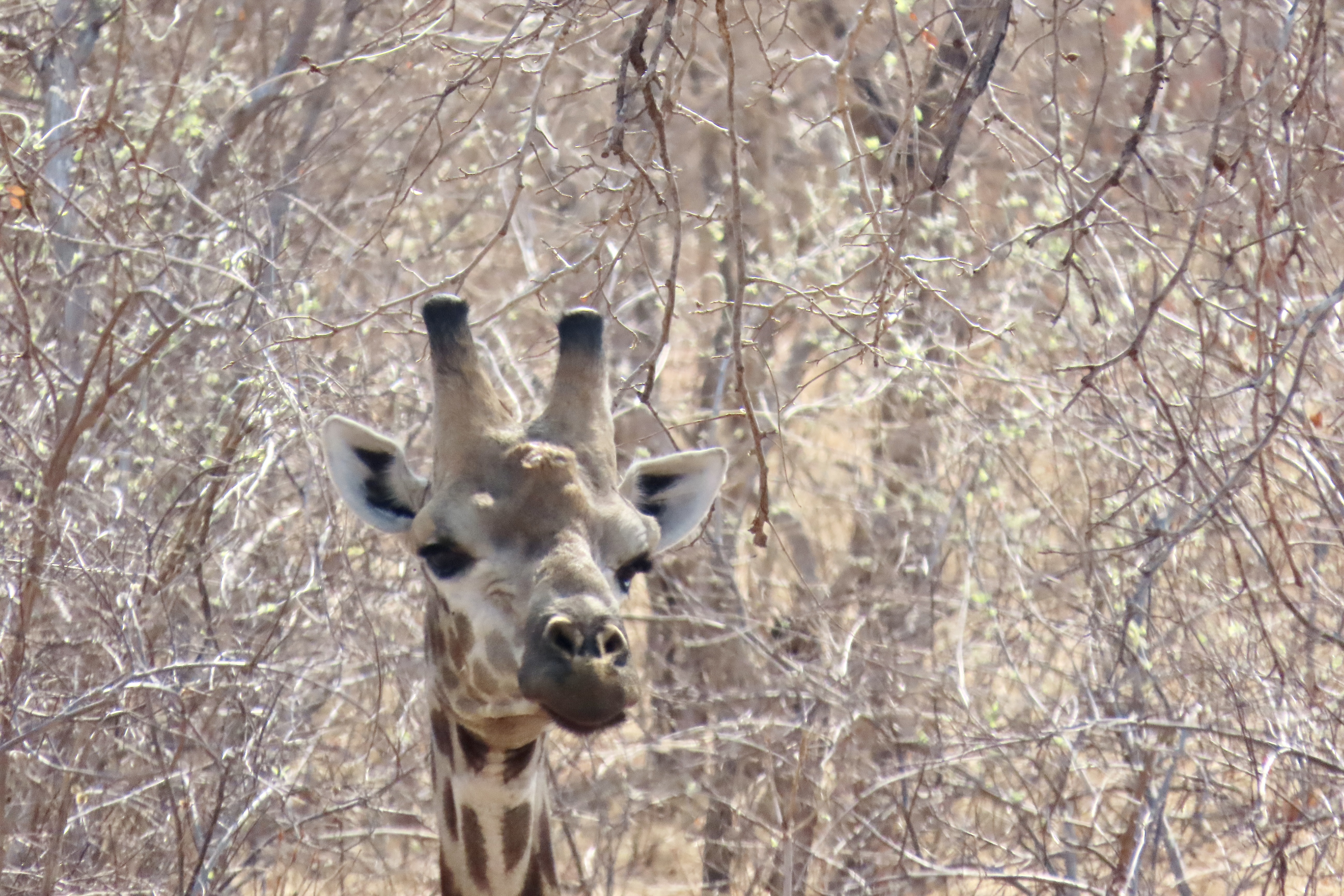
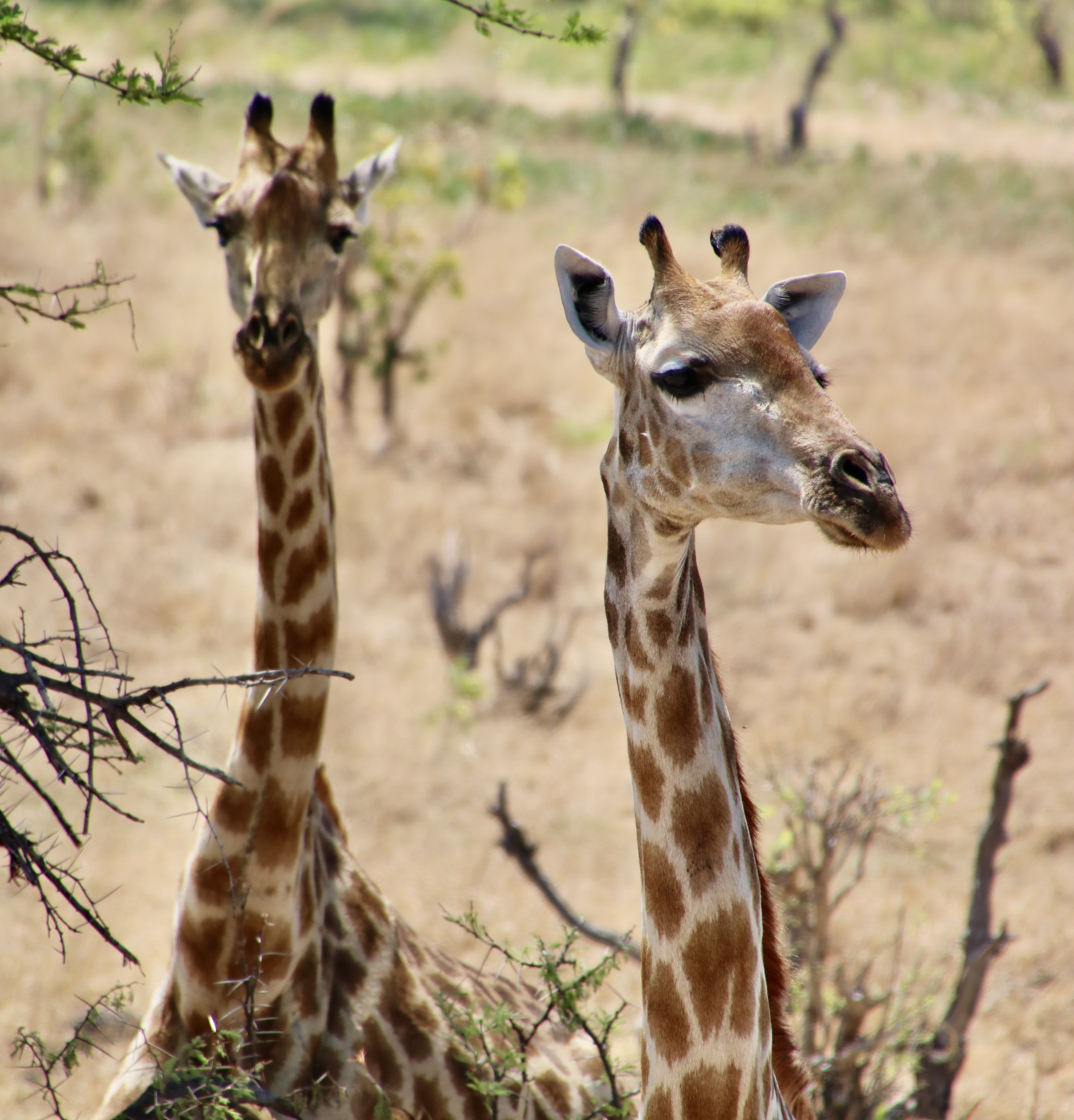
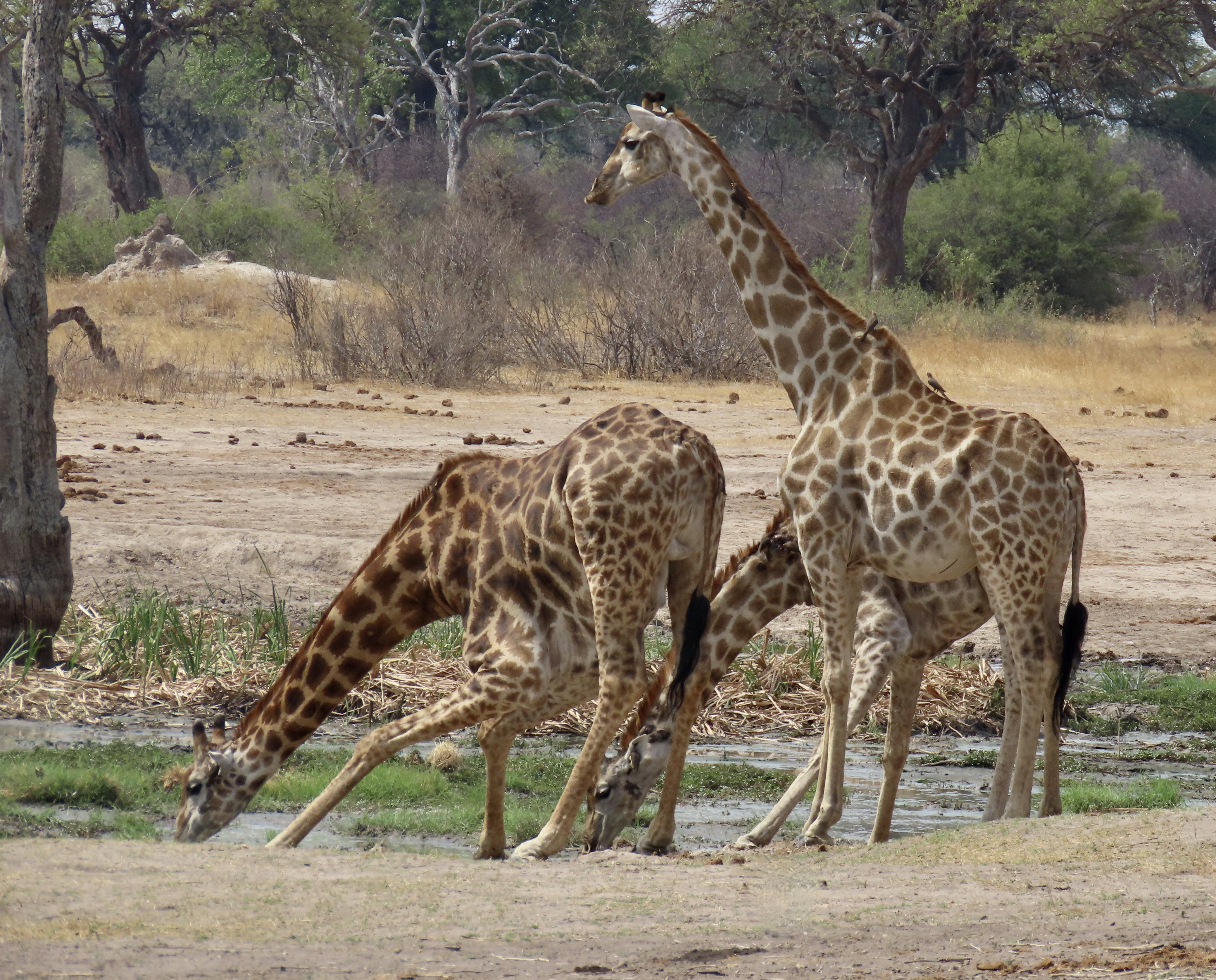
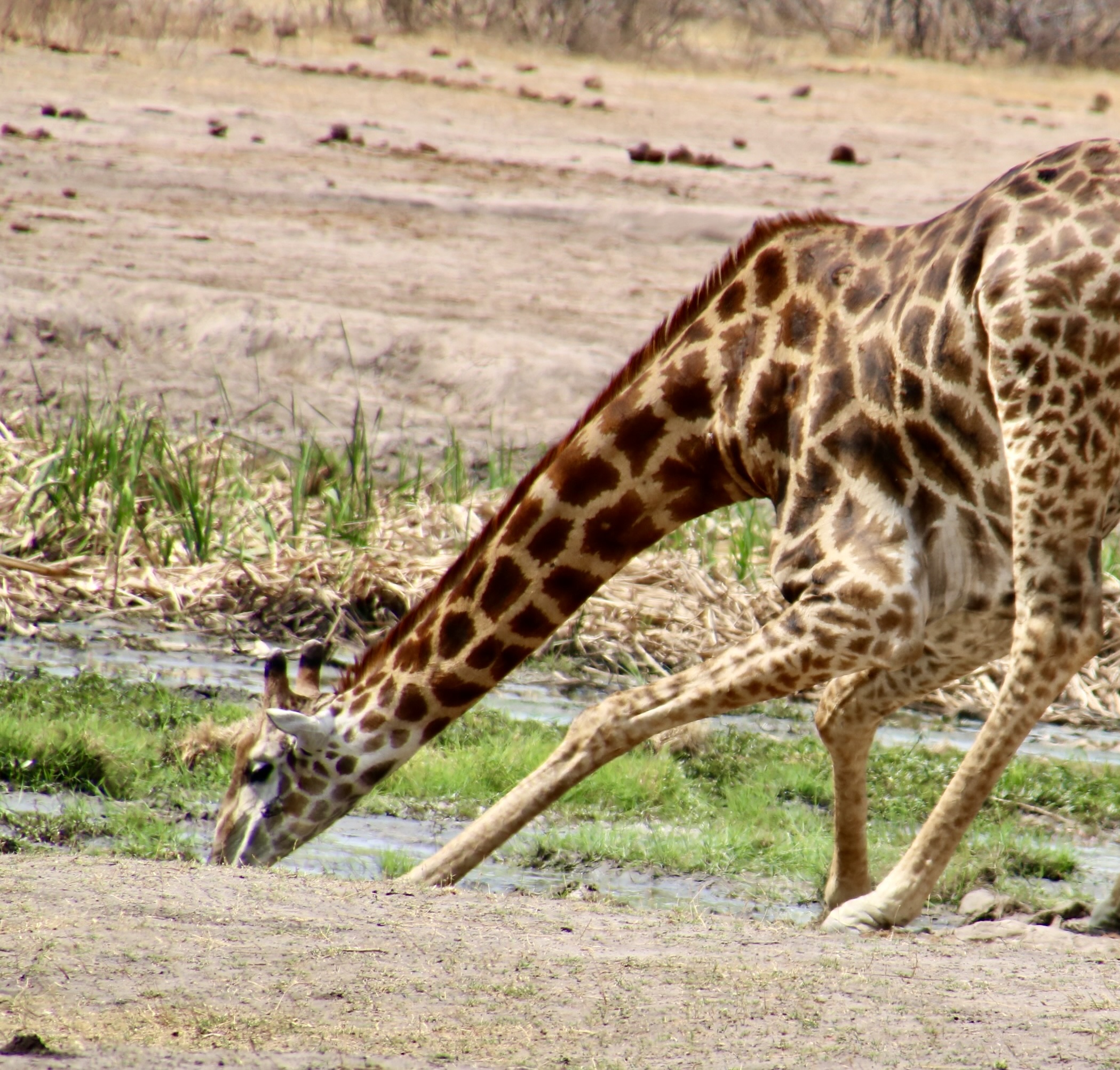
These photos are just great, Curt. You have done such a good job of showing all their parts: the horns, the tongue, the eyelashes, and also showing how beautiful they are. I just love giraffes too, and have stumbled upon them at Wildlife Safari in Winston, OR with their necks intertwined, or whacking necks against each other, or legs splayed to eat something just beneath them, or babies nursing. It seems like everything they do is cool. I also like comparing the kinds of spots they sport. I can’t believe they choose acacia leaves from between all those thorns. What amazing animals.
We drove by the park at Winston numerous times but never stopped, Crystal. Sounds like we should have. We were so glad we got to see the giraffes we did. Hippos and elephants were much more common.
Photographing the giraffes (and the other animals) was just plain darn fun!
I fed one once and it was a great experience!!
That would be G! Like us feeding the elephants.
Exactly. You don’t get those chances very often.
Sort of like once in a lifetime. 🙂
Aren’t they magnificent!
Indeed, Cindy. Like so much of the other wildlife we saw in Africa!
Thumbs up from another Peggy. I saw my first giraffes in the wild in Etosha National Park in Namibia. Have been a fan ever since.
Hard not to love Giraffes, Peggy. Grin.
A very good and informative post. I wonder if they sleep lying down and if so, where do they store their long necks? Does their neck lay down or remain upright?
They can sleep for short periods standing up, Gerard. They can also sleep with their legs folded under them and their necks curled back over their bodies. I didn’t see it. however. Thanks.
Giraffes are amazing animals too, Curt. Love your photos and the pic of Peggy in her cute t-shirt!
They are such amazing animals. Great shots you two.
Alison
We were so excited every time we saw them, Alison. Thanks. –Curt
I think the giraffe might be my favorite African animal, too!
They are magnificent animals, Lexi, no doubt about it.
I always enjoy a good tall tale. Especially with polka dots.
And from another perspective, Dave, should you chooses to notice, their is also a tall tail.
Pingback: 10 Incredible Animals With Jaw-Dropping Jumping Skills (And 5 That Can’t Jump At All)
Thanks for the link.
Thanks for the link. Appreciated.