The first elephant we saw was when we were traveling by bus from Victoria Falls to Chobe National Park. It was a magnificent animal with the largest ears we would see on our whole trip. I thought it might charge. The odds are it was simply cooling down its body, or curious. I learned it might have been warning us, however. When an elephant looks at you, raises its ears, and makes a short charge in your direction, the message is clear: Back off! The raised ears are to make the elephant look bigger than it is! An even worse scenario (other than the heart attack you could suffer in the first one), is when the elephant lays back its ears tight against its body, raises its trunk, and starts to charge. Good luck. Running isn’t much of an option unless can run faster than 25 miles per hour. The fastest human in the world might just stand a chance. Standing behind a very large tree could be more helpful. Peggy did that once when a giant bull elk charged her in Yellowstone where she was working as a college student. And she’s still here.
I have big ears. They are 3 1/2 inches long. African elephants have provided a new perspective. Theirs can be six feet long and five feet wide. “The better to hear with,” you might note. And elephants do have good hearing with a range from 14 to 16,000 hz. (Humans range from 20 to 20,000 hz in comparison.) The lower range is known as subsonic. Elephants can actually make subsonic sounds with their trunks that humans can’t hear but elephants can— up to miles away! The large flaps also serve to direct sound toward the inner ear. Think of cupping your hands behind your ears. It helps to say “eh.”
Of equal importance, an elephants ears play a big role in helping it to keep cool. The fancy name for this is thermoregulation, the process that allows your body to maintain its core temperature. For example, a message from your skin goes to your brain saying it’s hot. Your brain sends a message back to your skin: Sweat. Unlike us, elephants don’t have sweat glands except around their feet. They cope with Africa’s hot tropical sun using other methods. We’ve already discussed mud baths. Wrinkly skin is another.
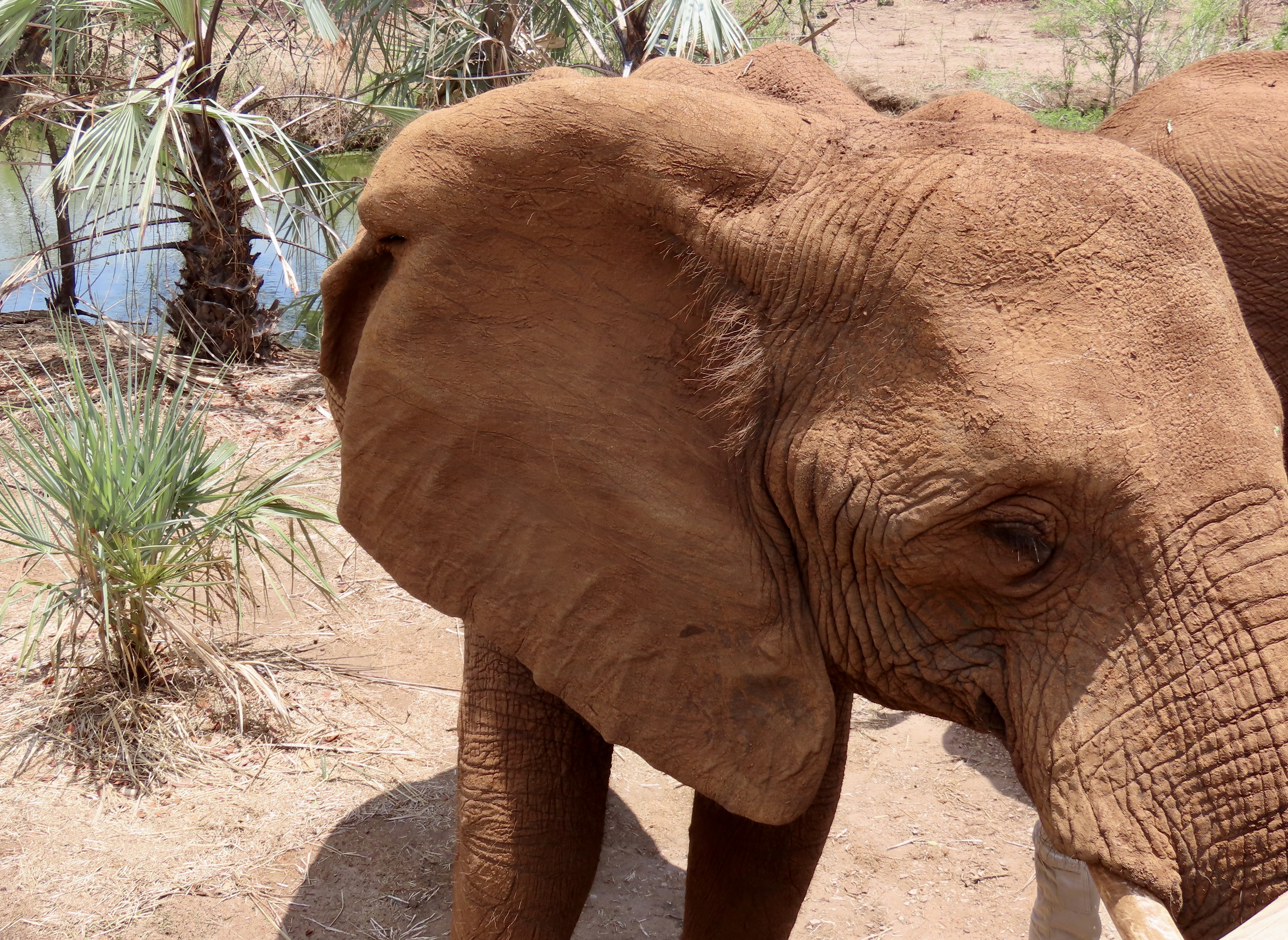
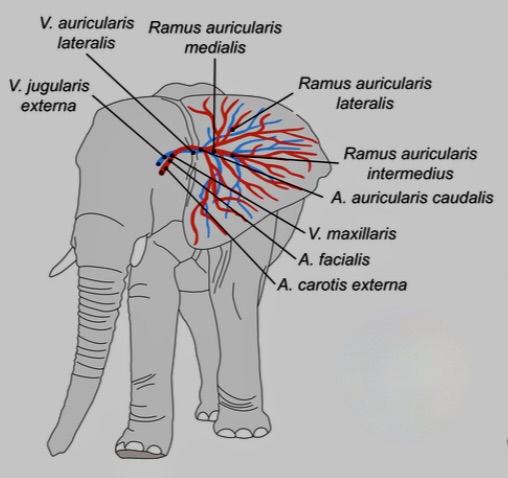
One look at this elephant and you might think it’s older than Methuselah given its wrinkles. Actually, even the youngsters have wrinkles. The cracked skin enables elephants to hold up to 5-10 times more moisture on their skin when they take water or mud baths than they would with smooth skin. As this moisture evaporates, it helps to cool the elephant. A close up of an elephant’s wrinkled skin. Note the hairs. There aren’t many, but scientists believe the thick, bristly hairs serve to transfer heat from the body into the atmosphere, especially if there is a breeze. The impact is apparently much greater than one might imagine.Ears are different. There are no lack of hairs there. (This youngster might also win a wrinkle contest.) While hair growing out of an older man’s ears serves little purpose other than ugly, elephants find them quite beneficial. In addition to keeping bugs and mud out, they also transfer heat and add to the cooling process that takes place in an elephant’s ears. Check out the blood vessels and veins in the elephant’s ear above. It’s packed with them. They are close to the surface and covered by a thin layer of skin. The system allows excess heat to escape from the blood vessels into the air and help to reduce the elephant’s core temperature. It is estimated that an elephant passes the blood in its body through its ears every 20 minutes. This illustration from ScienceGate provides another perspective.
Elephants enhance this process in various ways. Providing air to move the heat away and cool the ear is the most important. Elephants are known to stand in the wind with their ears out. The most common approach, however, is to flap their ears. In addition to providing a breeze for the ears, the flapping also fans the body and blows insects away. (I wish I could flap mine.) Watching a group of elephants crossing the savanna while flapping their ears is so common it’s iconic. Other methods include getting out of the sun and taking mud/water baths.
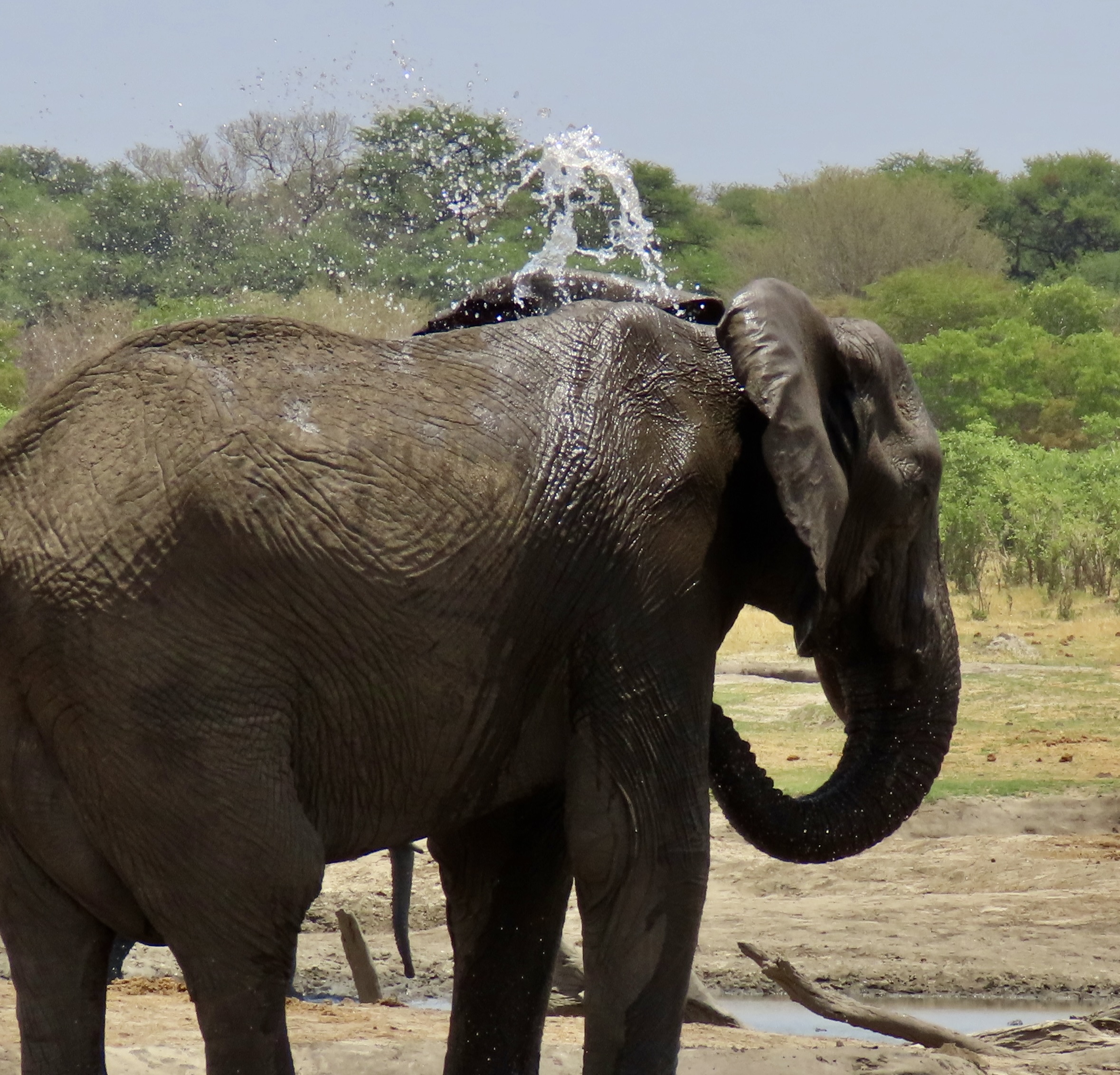
Returning to our elephant that was bathing and cooling down at a water hole in Hwange National Park in my last post, he paid special attention to spraying down his ears. Given the exposed blood vessels in his ears, it’s easy to understand why this might be an important part of his cooling down effort.
This caused me to think about another aspect of elephant behavior related to their ears. When the elephants came out of the mud bath I featured in my December 4 blog, they gave a vigorous shake to their ears. I thought at the time it was like, “Woohoo!” Thinking back, I wonder if they weren’t shaking the mud off of their ears. Given that the mud in general helps to keep them cool, protect them from sunburn, and frustrate biting bugs, why? My conclusion (for which I couldn’t find back up data) was that the mud coats their ears and reduces the ability of their blood vessels to transfer the heat to the air.
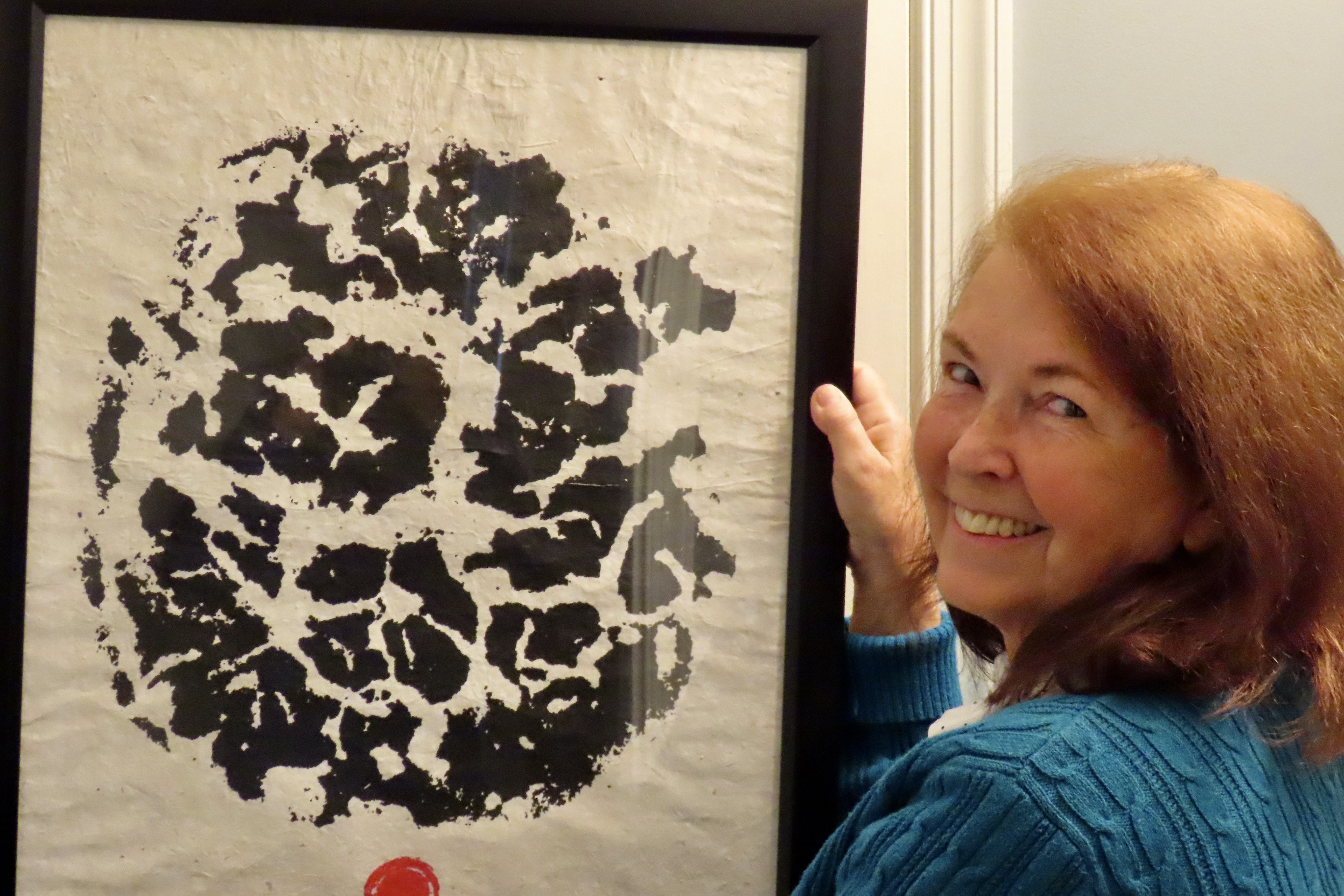
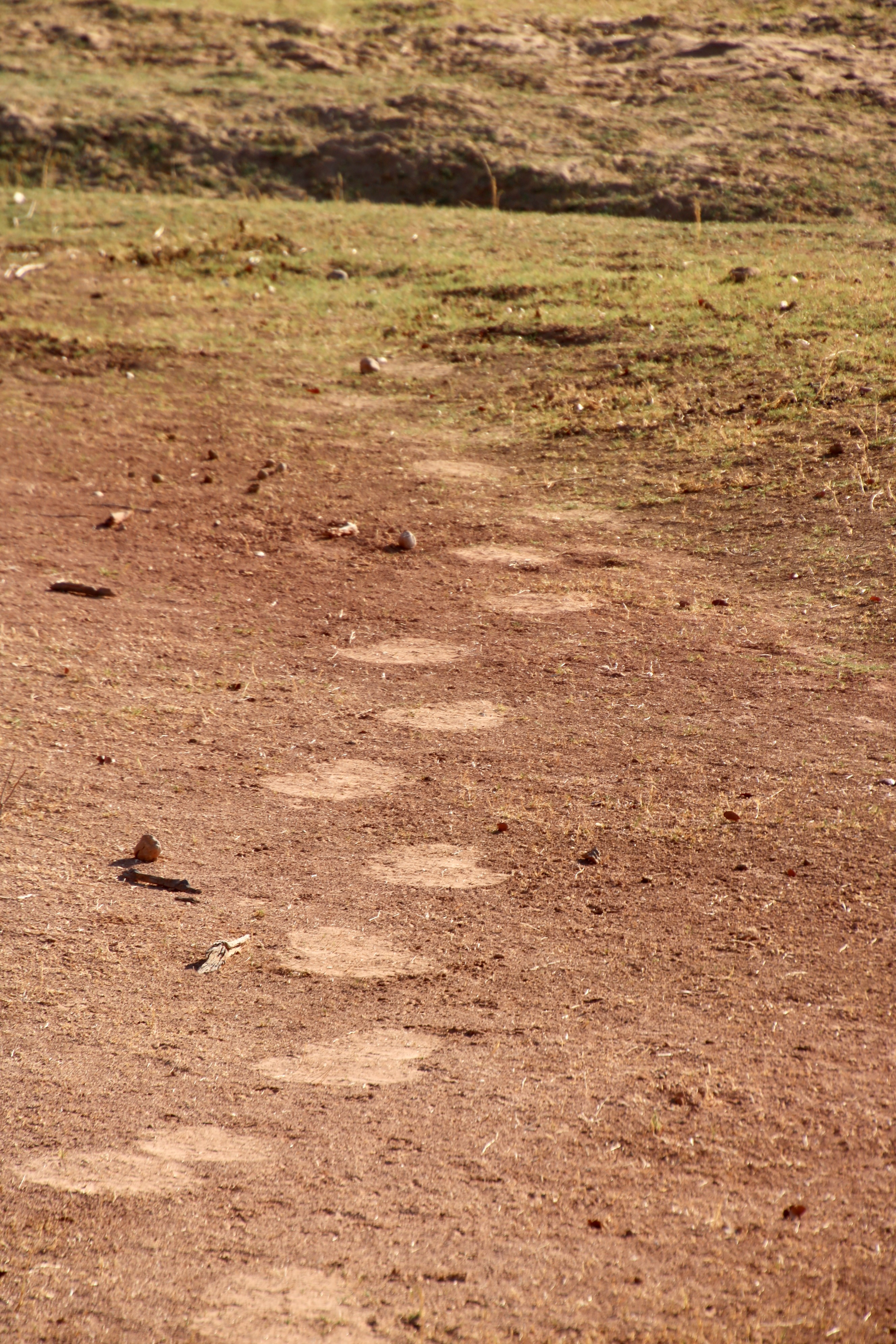
These elephants gave their ears a vigorous shake when they came out of the mud bath. Were they having a Woohoo moment, shaking the mud off, or doing something else?And now it’s time to turn to elephant’s feet. They’re big too, which shouldn’t come as any surprise considering they belong to animals weighing between 2 and 7 tons, the world’s largest land animals. This is an actual footprint of one that Peggy is holding up. It was made by Jumbo, the biggest elephant at the Wild Horizons Elephant Sanctuary, by pressing his inked foot down on paper. We bought the print and carried it home with us. The paper is rather unique in itself. It’s made out of recycled paper and elephant poop. To provide another perspective, this is my size 15 shoe next to a fresh elephant print. We came across it when we were on a safari walk with Terry Anders, who, along with his wife, Sheona, is the owner of the Iganyana Tent Camp located on the edge of Hwange National Park. Terry explained to us that its size indicated it was a large bull elephant. He also told us that each elephants footprint is unique like a fingerprint. Eventually the ridges wear down through extensive walking over varied terrain, providing an indication of the elephant’s age. Here’s what an elephant’s foot looks like close up. Like us, an elephant has five toes on each foot, but not all of the toes have toenails. It actually walks on its toes. A thick pad of gristle extends backward, working something like a shock absorber. The bottom line: This foot was made for walking, and walking it will do— up to 30 miles a day. And, if you irritate the elephant, it may walk all over you. (My apologies to Nancy Sinatra.)This is an elephant’s toe bone that Terry showed us when we were out on our safari walk.Tracking an elephant after a rainstorm would not be a problem!Elephants tend to follow the same routes to reach food and water, creating well worn paths.
Given the years I have spent wandering in the wilderness, I’ve always been interested in animal tracks. And that certainly applies to elephants. But what interests me the most about elephant feet is how they ‘hear’ with them via seismic communication. Caitlin O’Connell-Rodwel, a Stanford researcher, has been returning to the same elephant watering hole in Namibia for over 25 years figuring out how they do it. Her work has demonstrated that African elephants exchange information by emitting low-frequency sounds through their trunks that travel dozens of miles through the ground. She believes this communication is the key in understanding the dynamics of elephant groups. “Announcements” can include warnings, mating calls and navigation instructions, e.g. “Don’t be alarmed sweetie, but I would really like to make it with you under the acacia tree next to the pond.” In a more passive sense, elephants can also keep track of each other through the sound of each other’s foot steps.
They “listen” with their feet in two ways. One is through touch. Just like us, elephants have receptors in their skin known as Pacinian corpuscles that are hardwired to the brain. On an elephant these are located around the edge of their feet. When an elephant is picking up sounds/vibrations, it presses its feet onto the ground, expanding their surface by as much as 20%. Signals are then sent to the brain for processing. While this isn’t hearing exactly, the message gets through. A second method called bone conduction is closer to real hearing. The elephant jabs its big toes into the ground and the vibrations are carried up through its body via bones to the inner ear where they are heard like sound vibrations coming through the air.
And finally, we reach the tail end of this post. Grin. Tails on elephants serve just like tails on cattle: They swish them around a lot and keep the bugs away. But there is more. Almost everyone has seen photos of a baby elephant holding on to its mom’s tail. It serves the same purpose as moms and dads holding their younger children’s hands. It guides them and helps keep them out of trouble. Unfortunately, we didn’t see it on our trip. The mom also uses her tail to keep track of her baby when it isn’t holding her tail by feeling it with her tail. It’s a lot easier than turning around to check on junior. Finally, holding its tail up can signal that the elephant is fearful, highly playful or intensely excited. “Over here, Big Boy.”
At first, I had planned to do one blog on elephants, then it was two. Now it is three. They are just too fascinating, at least for me. Next time I’ll get more into family life, eyes, teeth, bones, and even poop— a single elephant can produce up to one ton in a week!
Still on the right side of the grass!! Just booked a trip to Antarctica for the new year.
Glad to see that you and Carol are continuing your wandering ways, Steve. Happy Holidays to both of you! –Curt and Peggy
So much good stuff in this post, Curt. I just loved it. Your sense of humor really came through, too. You must have had fun writing it. The way blood is used in an elephant’s ears reminds me of the hare. Fact of the day for me was an elephant’s toe bone. A bone! Now, I’ve seen pictures of the toes, and I knew they had toes, but I would have guessed they were cartilage or thick nails or something. Toe bones are so cool, and so much bigger than Bone – I wonder what he has to say about them. My favourite photo is the trail of elephant footprints through the dirt. It’s so good.
Bone’s a wee bit jealous, Crystal. A toe bigger than his whole body. Damn. Thanks for the comparison with a hare’s ear. I didn’t know that and just looked it up. I always thought of the jack rabbits’ amazing hearing. I felt the same way about the trail. I was excited to find one so distinctive after the rain. And, yes, I am having fun with the Africa tales. Thanks.
Wow, this: “The elephant jabs its big toes into the ground and the vibrations are carried up through its body via bones to the inner ear where they are heard like sound vibrations coming through the air.” is so very cool!! Excellent post as always Curt!
I enjoy these lessons on African wildlife, Curt. I had no idea that their ears served such powerful purposes, especially for cooling. And listening through their feet makes sense once I think about it. Very cute uses for the tail too. A fun post. I’m looking forward to seeing what’s next!
Wait, do you really wear a size 15, Curt? You coulda played basketball my friend and or.. ok back to the post. As for me I will claim I’m part elephant from now on which is why I have my wrinkles. Great info here and I can see why it warranted 3 posts. I have a friend who was gorge by an elephant tusk and was stepped on… I remember it like it was yesterday and he is alive to talk about it. https://www.forbes.com/sites/stevenbertoni/2010/10/05/billionaire-tom-siebel-shares-chilling-elephant-attack-horror-story/?sh=37caf7f02aec
I love the animal print you brought home. Such amazing creatures that require respect and a healthy distance.
“And, if you irritate the elephant, it may walk all over you. (My apologies to Nancy Sinatra.)”.” No shit Sherlock”..
💗😎
That’s quite the story, Cindy. We had two guides with us, both carrying elephant rifles. One was the owner of the lodge. He told us in his 20 some years, he had only had to shoot one elephant. The lodge was a tent camp. Each night when we walked back to our ‘tent,’ an armed guide would accompany us. And yes, I do have size 15 shoes. 🙂
These tales of elephants are just eerie. Somehow I suspect seeing one (or a herd) of them in the wild would be a whole different trip than seeing them in a zoo. Who’s on whose turf?
I would say you have big shoes to fill with your next post, but you’ve been doing that for a long time. 🙂
I have obsessed somewhat on Elephants, Dave. 🙂 I couldn’t help myself. My big foot is the measure of many things. BTW, I’ll be in Astoria for a week this summer and am thinking about a run into Portland. If you are around, it would be fun to get together for lunch.
Hi Curt. I think a get together would be fun. Contact me via my About page once you settle on dates, and I’ll let you know if I’ll be around. (At this stage, I mostly will be.)
Right now, Dave, it looks like we will be in Astoria June 6-13.
We should be around that week. Let’s touch base about a meet up when the dates get closer.
Will do Dave. I’m also hoping to touch bases with another good blogging friend of mine who lives in the area, Crystal Truelove.
I’ve spent enough time with this post to feel like I’ve just been through Elephant 101 — but no credit for practicum. You’ve had that experience! There’s just so much interesting about these animals beyond their size — and those trunks. For some reason, my favorite photos are the elephant footprints and their trails. Did you happen to notice the similarity between the footprint you brought home and the image of a brain scan? Hmmm… Smart animals, right now to their feet?
Considering, I was planning one post on them, Linda, I kept finding things that fascinated me. Plus, I had a few photos. Grin. One more and it’s over. There are other animals out there! Grin. Lots of them. Now you mention the brain scan, I can easily see it. I wonder if the elephant thinks, “My brain on grass.”
This was so fascinating, Curt! Elephants are magnificent, and look at those feet! I’m curious, how do you organize your photos? Are they all on the computer or phone, or have you created any old fashioned photo albums showcasing your adventures? 🙂
They are all on my MacBook Pro, Lauren, backed up of course. They are organized by date. I’ve also done many by album on the MacBook. Since I do a daily journal, and have been since 1990, I can also quickly figure out where I took a particular photo if I’ve forgotten. I’ve organized my Safari photos by animal on my desktop as well in Photo. Fortunately, I also have a pretty good memory and know where to go looking. Grin. it comes in handy with 80,000 plus. We used to do old fashioned albums, but the digital world has changed that.
I knew you’d be organized, Curt, or you’d have to be. My hubby used to put together the albums before the digital world, and he included dates and places. We both miss those days, but what can you do? So now I’m the organizer on my laptop! 🙂








 Wandering through Time and Place
I thoroughly delightful post, Curtis. Thank you.
Glad you are enjoying a repeat of our shared adventure, John. Thank you.
Great to see you are having an ‘elephant’ of a time.
Doesn’t get much bigger, Peggy. 🙂
Excellent blog!! One question……how does elephant foot print that you bought smell?!!
Laughing. Like paper, Steve. How are you guys doing? Happy Holidays!
Still on the right side of the grass!! Just booked a trip to Antarctica for the new year.
Glad to see that you and Carol are continuing your wandering ways, Steve. Happy Holidays to both of you! –Curt and Peggy
So much good stuff in this post, Curt. I just loved it. Your sense of humor really came through, too. You must have had fun writing it. The way blood is used in an elephant’s ears reminds me of the hare. Fact of the day for me was an elephant’s toe bone. A bone! Now, I’ve seen pictures of the toes, and I knew they had toes, but I would have guessed they were cartilage or thick nails or something. Toe bones are so cool, and so much bigger than Bone – I wonder what he has to say about them. My favourite photo is the trail of elephant footprints through the dirt. It’s so good.
Bone’s a wee bit jealous, Crystal. A toe bigger than his whole body. Damn. Thanks for the comparison with a hare’s ear. I didn’t know that and just looked it up. I always thought of the jack rabbits’ amazing hearing. I felt the same way about the trail. I was excited to find one so distinctive after the rain. And, yes, I am having fun with the Africa tales. Thanks.
That’s another great post, Curt.
Now I see why you identify with elephants so much – big ears and big feet. 🙂
Absolutely, Ray! Grin. If only my ears and feet were as talented. Thanks.
Loved this post! Elephants are magical creatures. The footprint art is wonderful and creative. Happy Holidays to you and Peggy *ੈ🎄✩‧₊
Thanks Cindy. Magic is a good word. And right back to you on the Holidays.
I just hope they continue to multiply!!
The continuing market for ivory and the growing population are both challenges, G.
Wow, this: “The elephant jabs its big toes into the ground and the vibrations are carried up through its body via bones to the inner ear where they are heard like sound vibrations coming through the air.” is so very cool!! Excellent post as always Curt!
Thanks, Sylvia. They are amazing animals!
“It’s made out of recycled paper and elephant poop. ”
You two certainly DO get right down to it…..
Informative and entertaining as always~! 🥰
Thanks, Gunta. And the BIG story on elephant poop is yet to come. 🙂
I enjoy these lessons on African wildlife, Curt. I had no idea that their ears served such powerful purposes, especially for cooling. And listening through their feet makes sense once I think about it. Very cute uses for the tail too. A fun post. I’m looking forward to seeing what’s next!
Thanks, D. How about long eyelashes. 🙂
Lol. 🙂
Wait, do you really wear a size 15, Curt? You coulda played basketball my friend and or.. ok back to the post. As for me I will claim I’m part elephant from now on which is why I have my wrinkles. Great info here and I can see why it warranted 3 posts. I have a friend who was gorge by an elephant tusk and was stepped on… I remember it like it was yesterday and he is alive to talk about it. https://www.forbes.com/sites/stevenbertoni/2010/10/05/billionaire-tom-siebel-shares-chilling-elephant-attack-horror-story/?sh=37caf7f02aec
I love the animal print you brought home. Such amazing creatures that require respect and a healthy distance.
“And, if you irritate the elephant, it may walk all over you. (My apologies to Nancy Sinatra.)”.” No shit Sherlock”..
💗😎
That’s quite the story, Cindy. We had two guides with us, both carrying elephant rifles. One was the owner of the lodge. He told us in his 20 some years, he had only had to shoot one elephant. The lodge was a tent camp. Each night when we walked back to our ‘tent,’ an armed guide would accompany us. And yes, I do have size 15 shoes. 🙂
These tales of elephants are just eerie. Somehow I suspect seeing one (or a herd) of them in the wild would be a whole different trip than seeing them in a zoo. Who’s on whose turf?
I would say you have big shoes to fill with your next post, but you’ve been doing that for a long time. 🙂
I have obsessed somewhat on Elephants, Dave. 🙂 I couldn’t help myself. My big foot is the measure of many things. BTW, I’ll be in Astoria for a week this summer and am thinking about a run into Portland. If you are around, it would be fun to get together for lunch.
Hi Curt. I think a get together would be fun. Contact me via my About page once you settle on dates, and I’ll let you know if I’ll be around. (At this stage, I mostly will be.)
Right now, Dave, it looks like we will be in Astoria June 6-13.
We should be around that week. Let’s touch base about a meet up when the dates get closer.
Will do Dave. I’m also hoping to touch bases with another good blogging friend of mine who lives in the area, Crystal Truelove.
I’ve spent enough time with this post to feel like I’ve just been through Elephant 101 — but no credit for practicum. You’ve had that experience! There’s just so much interesting about these animals beyond their size — and those trunks. For some reason, my favorite photos are the elephant footprints and their trails. Did you happen to notice the similarity between the footprint you brought home and the image of a brain scan? Hmmm… Smart animals, right now to their feet?
Considering, I was planning one post on them, Linda, I kept finding things that fascinated me. Plus, I had a few photos. Grin. One more and it’s over. There are other animals out there! Grin. Lots of them. Now you mention the brain scan, I can easily see it. I wonder if the elephant thinks, “My brain on grass.”
This was so fascinating, Curt! Elephants are magnificent, and look at those feet! I’m curious, how do you organize your photos? Are they all on the computer or phone, or have you created any old fashioned photo albums showcasing your adventures? 🙂
They are all on my MacBook Pro, Lauren, backed up of course. They are organized by date. I’ve also done many by album on the MacBook. Since I do a daily journal, and have been since 1990, I can also quickly figure out where I took a particular photo if I’ve forgotten. I’ve organized my Safari photos by animal on my desktop as well in Photo. Fortunately, I also have a pretty good memory and know where to go looking. Grin. it comes in handy with 80,000 plus. We used to do old fashioned albums, but the digital world has changed that.
I knew you’d be organized, Curt, or you’d have to be. My hubby used to put together the albums before the digital world, and he included dates and places. We both miss those days, but what can you do? So now I’m the organizer on my laptop! 🙂