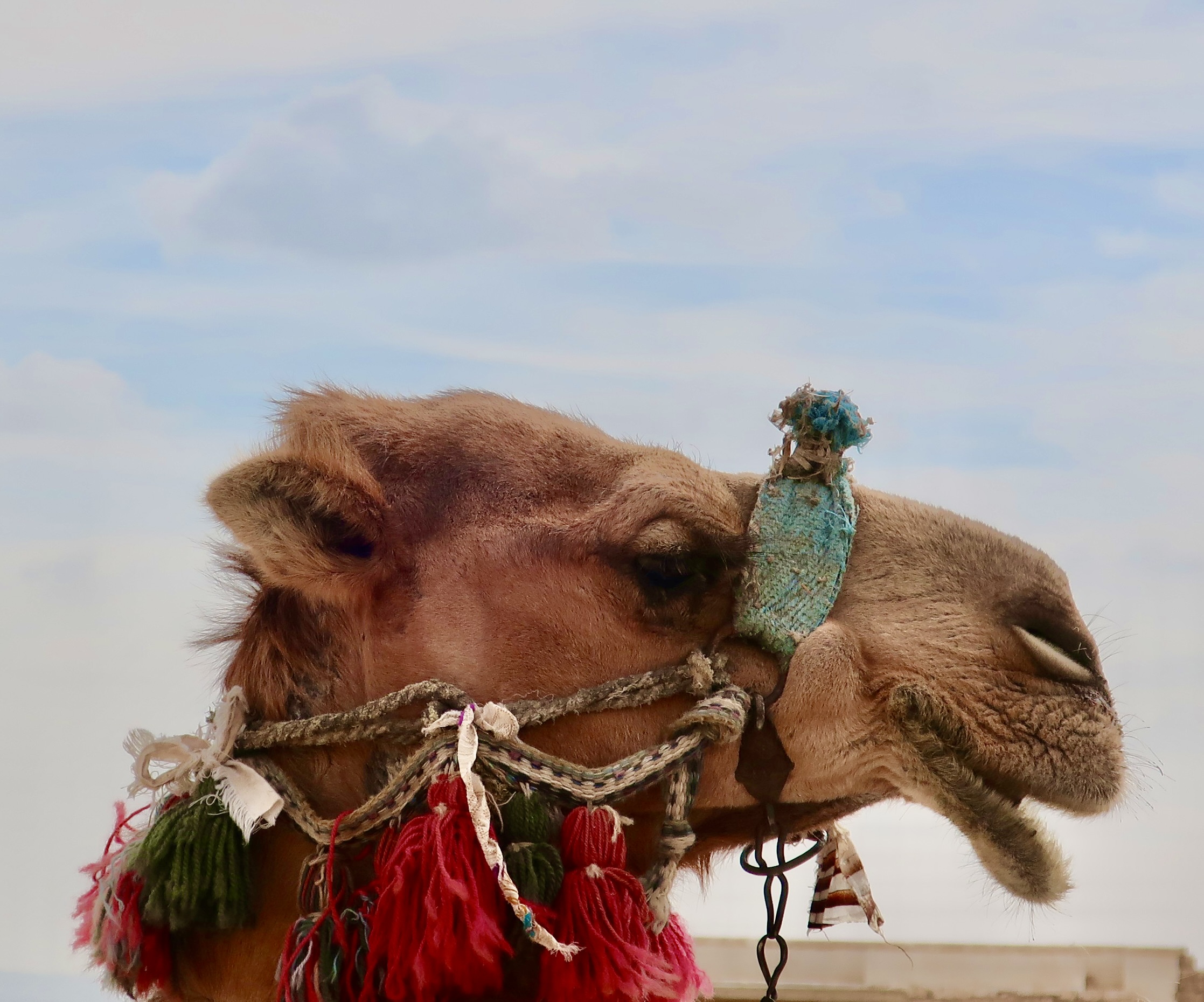
What better way to begin an Egyptian journey back in time than this ‘ship of the desert’? There was no lack of camels at the pyramids, or offers for camel rides, or camel photos— all for money, of course, preferably in dollars. The Egyptian pound had tanked and was worth three cents on the dollar. I caught this handsome face for free. The camel didn’t object and the owner was busy hustling someone else.
Peggy and I have just returned from our three week exploration of Egypt and invite you to join us as we explore the 25 million people mega-city of Cairo with its ancient pyramids, journey by riverboat up the Nile from Luxor to Aswan, and conclude by visiting the ancient city created by Alexander the Great. Along the way, we will wander through ancient temples, meet powerful gods and pharaohs, explore King Tut’s tomb, visit one of the most impressive mosques of Islam, stop by a factory where they pursue the ancient art of making papyrus, and have many, many more adventures. We were wowed by the history with its incredible temples, tombs and statues, impressed by the friendly reception of the Egyptians we met, captured by present day Egypt, and amused by the humorous stories our guide Sabaa shared along the way. Today’s post is an introduction, an appetizer if you will. The series will start in mid-April when I conclude our Rhine River trip. It wouldn’t do to confuse the rivers. Right? All of the photos in this post are by either Peggy or me unless otherwise noted.
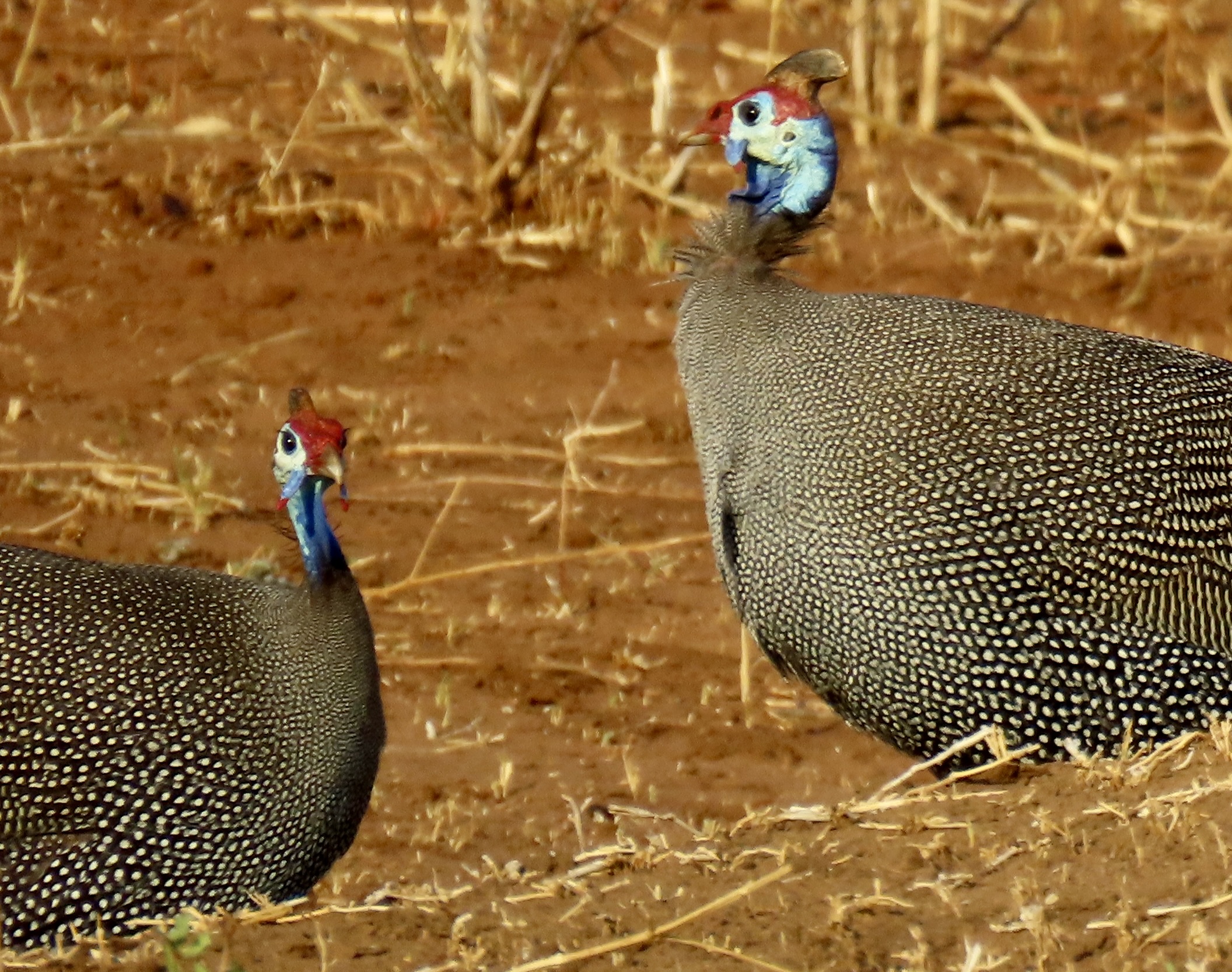
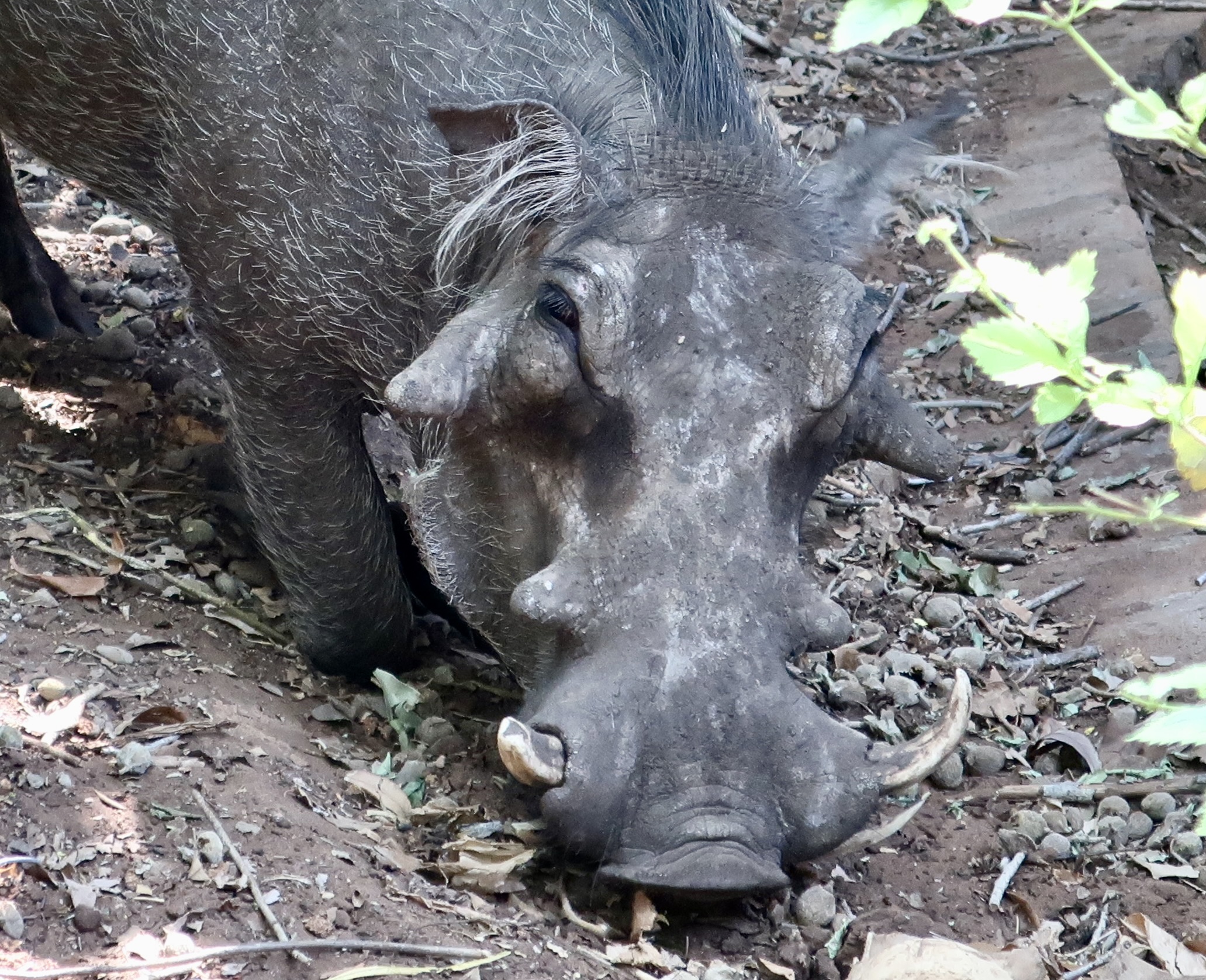
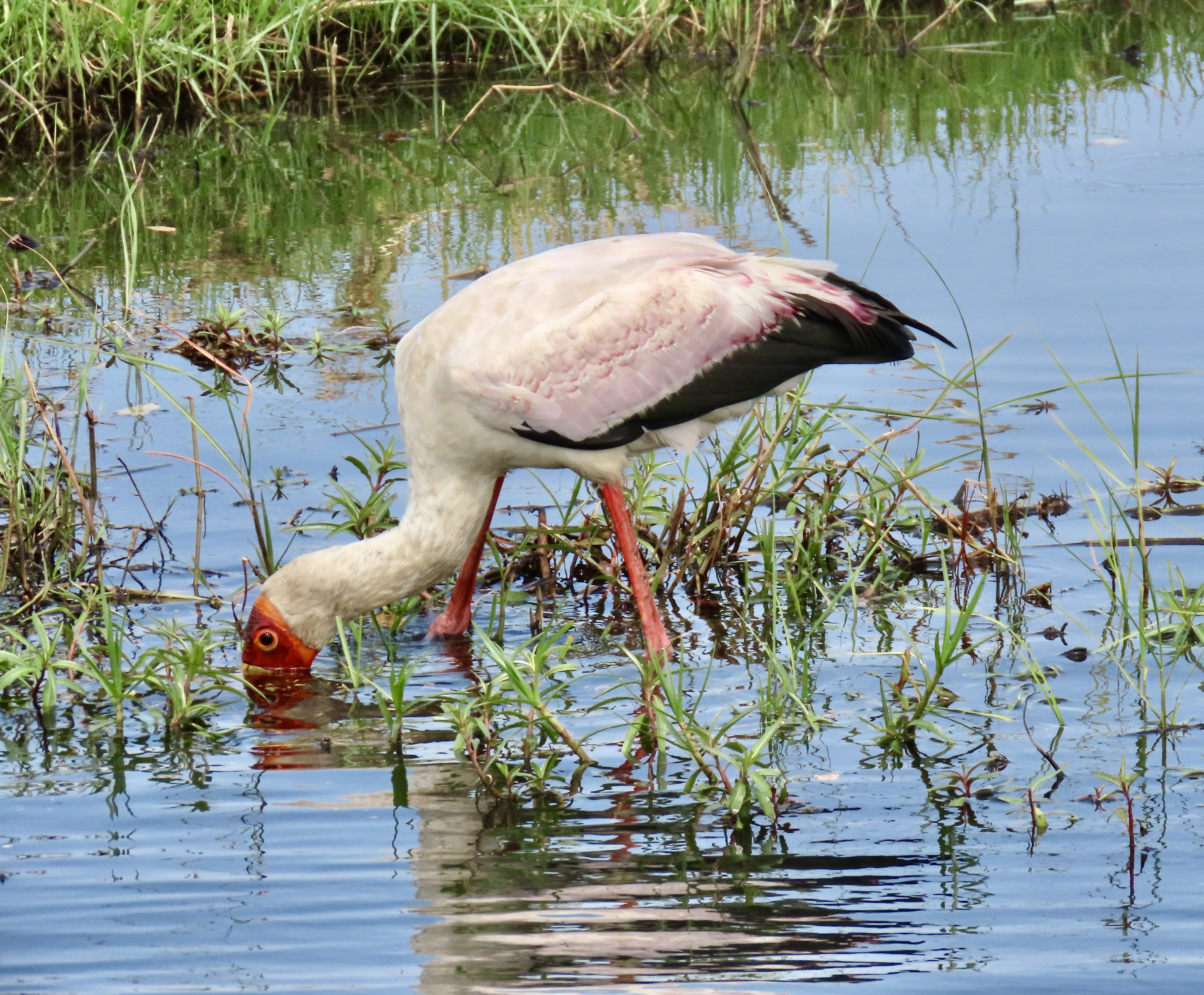
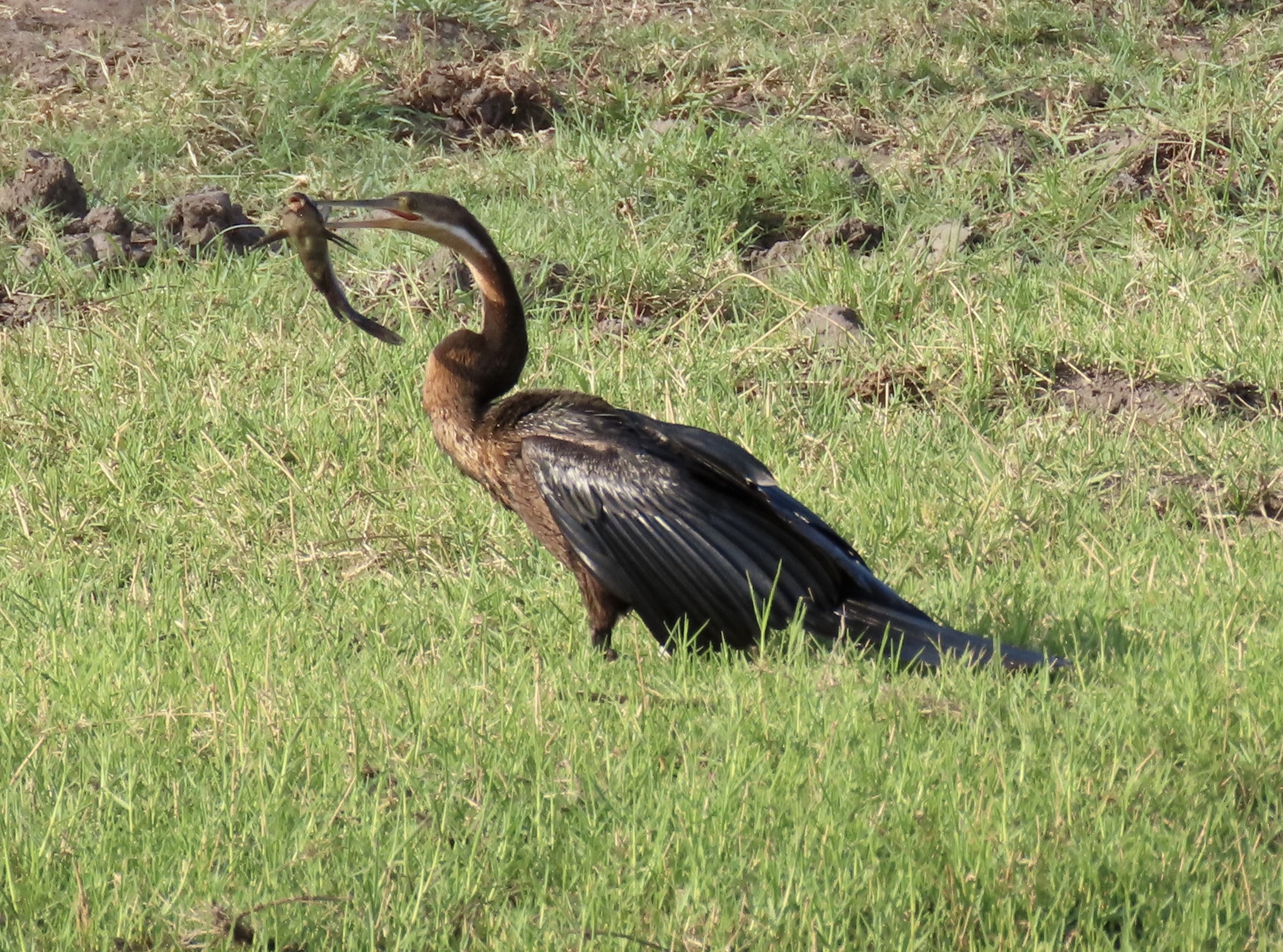
Our tour company, Uniworld Boutique, put us up in the Ritz Carlton overlooking the Nile River while we were in Cairo. Peggy and I arrived a couple of days early and stayed a couple of days afterwords. This was the view from our window. We spent a lot of time watching the river traffic. No surprise. You are looking at the Cairo Tower on the left. It’s a major Cairo landmark with an amusing CIA story connected to it that I will relate later.The Cairo Egyptian Museum was out the back door of the Ritz, a five minute walk away. We did our first tour there and will take you inside. BTW, see the raised figure above the two heads…It’s of a rather voluptuous Cleopatra, the last ruler of the Ptolemaic reign in Egypt who had a child by Julius Cesar and a tragic love affair with Mark Anthony. She’s holding a lotus flower, a symbol of Upper Egypt. Focus guys.Among the thousands of treasures inside were these canopic jars made from alabaster to contain the lungs, intestine, stomach and liver of people being mummified.They wanted them on hand to use later. Alabaster, Sabaa, told us, is great for preserving organs. I’ll keep that in mind.Tahir Square was also located just behind the Ritz. Peggy and I walked over to check out the Obelisk. Plain-clothed police stopped us from entering the square. They were located at every entrance. It turns out that Tahir Square is the go-to place for Egyptians wanting to start a revolution. The police were there to discourage such activity. Nobody— but nobody— was going to make their way onto the square and start shouting slogans, including curious visitors.Cairo is a city of attractive mosques and the Alabaster Mosque is a jewel among them. I’ll do a full post on the Mosque. The inside is even more beautiful than the outside.We discovered this ultra-skinny cat outside vociferously warning a large dog to leave its few scraps of food alone. The dog wisely decided his dinner was located elsewhere. Who wouldn’t? The cat was obviously a descendent of Bastet, the cat god of ancient Egypt. Not someone to trifle with.From Cairo, we flew to Luxor where our riverboat, Uniword’s Tosca, was waiting for us to board.Our Upper Egypt trip both started and ended at Luxor. A week, or a month, could easily be spent exploring the area. On arriving, we visited the Temple of Karnak…The Temple of Luxor at night. It was opened specifically for Uniworld guests. Translate: We had it all to ourselves. Usually, we had to work to take tourist-free photos. We were greeted by a huge statue of Rameses II who was one of the most important pharaohs of ancient Egypt. That’s a cobra on his forehead.Several Pharaohs have their tombs in the Valley of the Kings outside of Luxor. Peggy is pointing toward the pyramid like mountain that was an important factor in the kings’ selection of the valley. BTW, the tomb of King Tutankhamun, where so many treasures were found, is at the base of the mountain. Peggy and I will take you into the tomb where King Tut’s mummy still resides. I’ll even show you King Tut’s toes. I’ll bet you can’t wait for that? They aren’t pretty. There’s a chance I might have to face the revenge of the mummy for displaying them.The folks on the Tosca, both our fellow travelers and the staff, were special. This is a photo of Steve and Carol Jones with our excellent guide, Sabaa at the Valley of the Kings. Steve and Carol, like so many of the followers of this blog, are world travelers. Both engineers, they quit their jobs at 45 and have been wandering the world for the past 20 years.A photo inside of one of the tombs we visited in Valley of Kings (not King Tut’s.) It was packed with hieroglyphs designed to guide and protect the dead pharaoh on his dangerous journey. The temple of Queen Hatshetsup, one of ancient Egypt’s most powerful Pharoahs, is located near the Valley of the Kings.Beards were an extremely important part of a pharaoh’s look, as all the statues, paintings and reliefs show. Even Queen Hatshepsut had one, as this bust from the Egyptian Museum in Cairo shows. It was fake news, but a beard none-the-less.A significant part of our journey was our riverboat trip up the Nile from Luxor to Aswan and back.Along the way, our journey took us past numerous villages and towns, all with their mosques and minarets, from which Muslims are called to prayer five times a day. We were able to watch fishermen and farmers plying their trade in much the same way as they have for thousands of years.And enjoy the scenery. This photo serves as a reminder that just beyond the narrow strip of rich farmland beside the Nile lies the Sahara Desert that stretches for 2000 miles to the west. The ripples are being made by our riverboat, the Tosca.On our trip up and down the Nile we stopped at temples. One was at Kom Ombo, the temple of Sobek the crocodile god and Horus, the falcon god. A museum there, features mummified crocodiles. Sobek was responsible for fertility and the creation of the Nile, among other things. Gods had several responsibilities— and forms. One of the most beautiful temples we visited along the Nile was the Greco-Roman temple of Dendera. Both the Greeks and Romans played important roles in the latter days of ancient Egypt. Among other things, this temple featured signs of the Zodiac on its ceiling. I’m thinking Taurus above. One of the must-dos in Aswan, was to go on a Felucca ride, a sailboat dating back to ancient times on the Nile. Peggy had to get her hands on the rudder. I noticed that the boatman didn’t take his hands off of it, however. Grin.Several feluccas were out enjoying the sunset in this photo which we took from an outdoor dining area of the Cataract Hotel in Aswan.We were enjoying high tea at the hotel.Peggy, being a great fan of Agatha Christie, had to have her photo taken in the Old-Catarack hotel, which was featured in Christie’s novel, “Death on the Nile.”An evening bird watching tour on a small boat included numerous birds and a very enthusiastic bird expert.A walk through Aswan’s large local market featured, among many other things, spices. The top three baskets on the right are buds for making jasmine tea.While at Aswan, we also visited the Philae temple…And flew up to the border between Egypt and Sudan to see the temples of Ramses II and his beautiful wife, Nefertari at Abu Simbel shown above. Abu Simbel was threatened to be buried under rising waters of the Aswan Dam and was saved by a world-wide effort by moving it rock by rock to a level above the water line. We finished off our Egypt tour with a visit to the city of ancient Memphis and to the pyramids at Giza. This features the Sphinx and the Great pyramid of King Khufu.Peggy climbed a short ways up the side of the Great Pyramid to demonstrate the size of the rocks used in building the pyramid…And we both journeyed far under the pyramid of King Khafre, sometimes bent double because of the low ceilings.One of our major stops in Alexandria was at Greco-Roman era catacombs. This gruesome twosome, a crowned snake on the bottom and Medusa on the top, were guarding the major tomb against grave robbers.
I know this has been long for an introduction, but believe me when I say it hardly touches on our experience. On Monday, Peggy and I will take you back to our fall trip around North America, this time featuring Grand Teton National Park, where the description ‘grand’ hardly covers the mountain range.
Peggy and I are wrapping up our visit to Yellowstone today from our journey around the US last fall with pictures of a few of the many scenic views found in the park. All photos are taken by either Peggy or me unless otherwise noted.
When it comes to scenic beauty, one can find plenty in the rivers that flow through Yellowstone National Park. This photo is Gibbon Falls on the Gibbon River.The river drops some 84 feet and then makes its tumbling way for a quarter of a mile to the Yellowstone Caldera. A paved trail leads along the river providing great views of Gibbon Falls.A close up. Can you hear the roar? Having cut its way back from the Yellowstone Caldera, the rock will continue to erode its base leaving the Caldera farther behind and increasing in height. Looking positively serene in comparison to Gibbon Falls, this is a shot of Firehole River not far from Old Faithful and the main hot springs area of Yellowstone. Appearances are deceiving, however. toward the end of the photo you can see where the river narrows. It is about to go tumbling down…A side road runs along the Firehol River and provides views of the river’s rapid descent. I’d say we were no more than a few hundred yards below where we took the ‘serene’ photo.This would probably make a white water rafter or kayaker drool.If I were in a raft and turned around to spot this monster, I might have a heart attack. Can you spot the eyes, nose and mouth? Not to worry, however. Yellowstone National Park does not allow rafting on its rivers. The monster has to eat fish. There is a small section of the river between rapids where Peggy swam when she was working at Yellowstone in 1969. She apparently avoided the monster. The Firehole calms down when it meets up with the Gibbon River. And check out the wall. Isn’t it magnificent? Climb to the top and you will be out of the Caldera. Some rock climbing skills may be necessary. Grin.This close up of volcanic rock spires above the river provides a perspective on how rugged the cliffs above the river can be.The Gibson/Firehole river then joins the Madison for a more leisurely pace and great fishing, which is what the two people on the left are doing. We also spotted buffalo and elk near the river. We found this little beauty on our way up to Mammoth Hot Springs and its travertine terraces. It was a bonus. Known as the Gardner River, it had carved out Sheep Eaters’ Cliff that we had stopped to see.If this looks familiar, these are the same type of basalt columns that I featured on my earlier post about Devil’s Tower National Monument. The primary difference being that the columns at Devil’s Tower formed far underground and grew to gigantic size. These were part of a lava flow along the surface and are much smaller. I suspect you are curious about the name. I was. The cliff is named after a band of Shoshone Indians who were known as the Tukudika, or Sheep Eaters. They apparently found big horned sheep quite tasty. I get it. I presently have a package of lamb in our refrigerator that I am planning on turning into lamb curry, one of my favorite dishes.As we continued our journey toward Mammoth Hot Springs in the northern section of Yellowstone, we came on a wildly colored meadow painted with fall colors. I liked it so much that Peggy took my photo standing in front of it.This comes close to my idealized view of the Western United States with vast distances topped off by impressive mountains. The soft colors of fall, the dark tree lines and gently rolling hills all added to the beauty. Over on the right, you can also see an aspen grove.Another view of the backcountry on our way to Mammoth Hot Springs that we liked.We even found a buffalo that seemed to fit beautifully into the fall scene.Ever feel like you are living on the edge? The view around the corner was spectacular.It was the sunlight on the peak that caught our attention. But note the avalanche path along side the peak as well. It has to be one of the longest paths I have seen. And finally, there was the splash of brilliant yellow from the aspens.Speaking of aspens, I’ll wrap up today’s post with these beauties. They will also serve to wrap up my series on the Yellowstone National Park. In our next Monday post, Peggy and I will visit two scenic towns along the Rhine River. BTW, as you read this, Peggy and I are on a riverboat traveling up the Nile River in Egypt on my 80th Birthday trip.
Continuing our exploration of sites we visited on our family Rhine River trip last summer, we will explore Heidelberg Castle today. All photos are taken by either Peggy or me unless otherwise noted.
Perched on the hill overlooking Heidelberg, the castle waited for us.
Visiting Heidelberg Castle can make you feel like one in a million. That’s the number of people who tour the castle each year. We dutifully waited our turn on the funicular railway that would take us the 260 feet (80 meters) up to the castle and the beginning of our tour.
Our daughter-in-law Cammie and grandson Ethan (Tasha’s son) on the funicular train to Heidelberg Castle. Masks were still required at the time for covid.
Heidelberg Castle was built in the 13th and 14th centuries. There were originally two castles, an upper and lower, but lightning and fire destroyed the upper one in 1537. The lower castle has since seen its share of wars requiring frequent renovations. It, too, finally succumbed to a lightning strike and fire in 1764— making it fair game for people to use its stones in building their homes, a custom of repurposing that has existed since time immemorial. A serious effort began in 1800 to preserve what was left. Sections have also been renovated. Regardless of its past history, the present structure is very impressive.
There are statues galore, mainly of past royalty. There’s no doubt about this fellow’s pedigree. He holds a scepter in his left hand representing his kingly power and a ‘globus cruciger ‘ minus its cross in his left hand representing his religious power. A grouchy lion, also a symbol of medieval power, has curled around his legs like a kitty. And then there is the humongous sword and the ‘don’t mess with me’ look in his eyes. Take a look at the various figures on his clothes/armor. I spotted Mercury on his upper left thigh.Speaking of lions, there may be more scattered around the castle than those living in East and South Africa. The ‘globus cruciger’ (orb bearing cross) still has its cross here. I only saw one imperial eagle but it certainly looked ferocious, which, I might add, was reduced somewhat by the bird poop on its head. I noticed that all of the lions in the photo above and the eagle are sticking their tongues out. I wonder if it meant what it does today.Like all good castles, it has a tower with a flag on top. You can see the tower on the left in the blog’s introductory photo.Vacant windows adorned by statues speak to the Castle’s past glory. Again, it is interesting to look closely at the figures. Can you find Mercury?Another perspective…Another photo where the damage done to the castle is obvious. The face of a clock can be seen on the tower to the right.As I recall, it actually was a quarter of five. Note the lightning rod up on top! A lesson learned. As for the hands, I am thinking sun, moon, and star.While we’re on clocks, check out this beauty. It’s a sun dial. Its strange shape is due to the fact that is vertical. Most are on the ground. As for reading it…This impressive building known as the Friedrichsbau, is named after Elector Friedrich IV who had it built in the early 1600s. Lady Justice is perched in a niche top center. Other niches contain generations of Palatine Prince Electors. Here’s Justice holding her scales to determine who is guilty and who is innocent with her sword ready to whack the guilty– or is that smite? One of the princes can be seen on the left. A dragon spout is beneath her.Here’s a closeup of the dragon spout, On a church it would be considered a gargoyle. At Burning Man it would be shooting out fire. (Peggy and I are hoping to return this year.) The scales of justice can be seen in the upper left and another elector is on the right. The scales have holes in them. How just is that?We passed through this gateway on our way to visit the huge wine barrel I featured in an earlier post.Lions hold a cross bearing orb while fair maidens hold bouquets of flowers in their hands and in cornucopias. The one on the left seems, um, a bit provocative?This window is here because I liked how colorfully it reflected its surroundings in an abstract sort of way.Hmmm. Maybe our grandsons had seen enough of castles for one day. Grin. So, I’ll conclude here. Cody, Tasha and Clay’s son, is on top. Chris, Tony and Cammie’s son, is on the bottom. In our next post we will journey back to Yellowstone National Park for a look at some of its scenic beauty.
Today,Peggy and I are continuing our exploration of Yellowstone National Park, which we visited as part of our four month, 12,000 mile exploration of the US between September and December this past year. All photos in this post were taken by either Peggy or me unless otherwise noted.
If you are visiting Yellowstone National Park, be sure to visit the colorful travertine terraces of Mammoth Hot Springs.
Located 50 miles north of Old Faithful, the travertine terraces of Mammoth Hot Springs are one of the most unique and beautiful of Yellowstone’s hydrothermal created landscapes. The terracing is a result of underlying limestone. Hot water dissolves the limestone and deposits it on the surface. The bright colors, like the colors of the hot springs in the Yellowstone Caldera to the south, are created by thermophiles, tiny microorganisms that thrive in the hot springs. Different types of thermophiles have different tolerance for the heat and come in different colors based upon their exposure to sunlight. Those that can tolerate the most heat live deep in the pools and tend toward blue and green. The ones living on the cooler outer edges are more in the brown and yellow range.
Peggy and I took a day to drive up from where we were camped in the town of West Yellowstone to visit Mammoth Hot Springs. On the way up we saw a lot of great scenery that I will feature in another post and two hydrothermal features I haven’t covered in this series yet: mud pots and fumaroles.
Mud pots occur when hot thermal water is flowing under a layer of clay that blocks the water from escaping to the surface. Steam from the water, however, is able to make its way through the clay. Certain microorganisms convert the sulfur dioxide in the steam to sulfuric acid which turns the clay into a gooey, sticky consistency. Bubbles are created as a result of the steam bubbling up through the goo. It sound like plop, plop, plop. I included this exploding bubble in an earlier post. I liked it so much you get to see it again.A fumarole is similar to a geyser but lacks the water to create eruptions. Instead, the heat from the volcanic rocks turns what water is available into incredibly hot steam that escapes from vents and ranges in temperatures up to 280°F (138°C). It can be noisy. This is a shot of Roaring Mountain that received its name from the noise created by the escaping steam. It could be heard from miles away in the 90s. It’s quieter today.
And now it’s time to visit the terraces of Mammoth Hot Springs. A convenient road takes you around the terraces. Walkways off the road take you to the lower terraces. The following photos were taken from the walkways.
Canary Springs is one of the most popular sites along the lower terrace trail at Mammoth Hot Springs.A broader, softer perspective of Canary Springs.A view of the travertine terrace just above Canary Springs.Another perspective of the terrace just before the water flows over the edge.Cupid Springs. I don’t have a clue on how it got its name.Umpteen shades of grey.
The road snakes around the upper terrace. There are several pullouts that allow close up views of the various formations.
This section is known as Angel’s Terrace. I’m assuming it’s because of the white travertine, which is how the dissolved lime comes out of the ground.Another perspective. Like stair steps.We really liked the contrast of colors here.It was the colors, shape and tree that caught our attention that had us pull out our cameras.This unique dome is known as Elephants Back.We were driving back to West Yellowstone when we came across this very colorful small dome. The steam coming from the back suggests a fumarole. We simply had to stop and photograph it. That does it for today. Our next post will be on Heidelberg Castle. After that, it will be back to Yellowstone and its scenic beauty.
Today’s photo blog features Heidelberg, which we visited on our family trip up the Rhine River last summer. All photos are taken by either Peggy or me unless otherwise noted.
The Heidelberg Castle provides great views overlooking the city. Our son Tony included his wife Cammie in this photo. BTW, Cammie was recently named the CEO of the Safety Harbor, Florida Chamber of Commerce. Another view from the walls of Heidelberg Castle. The prominent Church of the Holy Spirit (Heiliggeistkirche in German) was built at the end of the 14th Century. The bridge in the background, known creatively as Old Bridge, crosses the Neckar River. I liked this closeup photo of the Neckar River and the Old Bridge because it featured Heidelberg’s red tiled roofs.We started our visit to Heidelberg by walking through the historic part of the City. We then made our way up to Heidelberg Castle. This photo features the Gateway to the Old Bridge. The brass monkey we showed on our last Heidelberg post was just off to the left.This good looking fellow was sitting on top of the railing of the Old Bridge for everyone to admire. We dutifully paid our respects.Our guide pointed out that the mansions that were in the background of the doggy photo were where Heidelberg’s wealthy had lived and apparently still do, a fact that we had surmised on our own. Several were undergoing renovations.Bright red umbrellas provided an interesting contrast to Heidelberg’s historic Town Hall located on Market Square. The Coat of Arms on the Town Hall caught my attention. It featured the usual lions and other symbols of power and heraldry. I was more intrigued by the cow, however. Did it symbolize milk?This interesting building located on Market Square is the historic Ritter Hotel, and I do mean historic. It was built in 1592 as a home and has survived ever since, including several wars. It even did a stint as Heidelberg’s town hall.As in so much of Europe, many buildings are adorned with flower boxes. I think that this was a corner of the Town Hall.No watch (or cell phone), don’t worry. Several clock towers are prepared to tell you the time in Heidelberg. This one is connected to the University of Heidelberg. As I mentioned earlier, the University, founded in 1386, is one of the most prestigious in Europe, and the world. 33 Nobel Prize winners are associated with it. “Hey Tash,” I called and our daughter turned and flashed a smile as I took her photo. She is framed by her son, Ethan.The Hauptstrasse is Old Town Heidelberg’s main shopping street. Stretching for over a mile, it has been set aside for pedestrians and bicyclists. In addition to a wide variety of shops, the colorful buildings provide a very scenic walk.Heidelberg Castle perches on the hill overlooking the city. We will be visiting there on our next Rhine River post— after we take you back to Yellowstone and Mammoth Hot Springs. But first, jumping ahead a bit and in recognition of tomorrow, we were walking thorough the town of Boppard, Germany along the Rhine when Peggy and I came upon this scene:It was perfect, right down to the heart. Happy Valentines Day!
It’s only right that I start this post featuring Peggy photographing Old Faithful. She worked at a restaurant in Yellowstone in the summer of 1969 as a college student. Its large picture windows opened out on Old Faithful, meaning that she got to see it erupt several times a day.The family dining room that Peggy worked at has now become a cafeteria, but it’s large picture windows still give diners a great view of Old Faithful erupting.
Erupting geysers are one of Yellowstones best known features. In fact, half of the world’s active geysers are located in the National Park. Peggy and I photographed lots of them when we visited last fall on our four month trip around the US.
Have a few geysers and fumaroles! Including the small ones, I counted over 30 in this photo.
The reason behind Yellowstones record breaking number of geysers is that much of the park is located in a giant caldera, a collapsed volcano. Semi-molten rock exists in some areas as close as 2-5 miles below the surface. This extremely hot rock heats ground water flowing near it and creates Yellowstone’s hydro-thermal features including geysers, hot springs, fumaroles and mud pots. We featured hot springs two weeks ago. Today is the geysers’ turn. They erupt when the super hot boiling water creates pressure in channels leading to the surface that erupts as steam out of a vent. As the pressure is released the geyser subsides until the process is repeated. They come in all sizes. The most famous is Old Faithful, given its name due to the regularity of its eruptions.
Peggy and I arrived just as Old Faithful was beginning to erupt. She jumped out of our truck and began snapping photos.I was a bit farther away. Can you imagine how many photos of Old Faithful have been taken? They have to be in the hundreds of millions if not billions. In other words, we aren’t the first. Grin.As the pressure inside the vent subsided, Old Faithful lost its steam, so to speak.As I mentioned in the beginning, the geysers come in all sizes. From this little fellow…To larger…We had a sense of ‘dancing water.’Each geyser had its own personality.These geysers combined to be tall and skinny.I conclude today with this pair of more hefty twin geysers. Next up, Peggy and I will return to Heidelberg, variety being the spice of life. 🙂
If you’ve been hanging around my blog for long, you know I like weird. This brass Heidelberg monkey fits the bill perfectly.
When Peggy and I, along with our two kids and their families, did our Rhine River trip this past summer, one of our favorite stops was Heidelberg, Germany. It seemed to have it all: An ancient castle looking down on the city, a river running beside it, one of the top universities in the world, a fun, lively, historic downtown, impressive churches, and plenty of weird, like the brass monkey who hung out next to the Old Bridge across the Neckar River. The photos are all taken by Peggy and me unless otherwise noted. Today, we will be focus on weird.
The monkey was designed to serve as a mask for those bold enough to climb into it. Our grandson Connor took on the challenge. A poem suggested the possibility of one monkey looking out at all of the other monkeys standing around, a reminder that we are alike more than we are different. The pedestrian Old Bridge across the Neckar River can be seen in the background on the right. (Family photo.)These brass mice were found next to the monkey. It is said if you rubbed them, you would increase your fertility. Rubbing the mirror the monkey is holding will bring you money, rubbing its fingers will help assure your return to Heidelberg. I stayed far away from the mice.
I found plenty of other weird stuff around Heidelberg to keep the monkey and his mice companions company.
“These boots were made for walking.” Blue boots and a plethora of other blue shoes covered the town’s main square.The blue shoes, it turned out, were an art project of students from the University of Heidelberg. They seemed to be all walking in the same direction. Maybe they were escaping the weird sculpture behind them…It was amply strange. Check out the ‘guy’ standing on his head with his feet becoming the head of a serpent and his head who knows. And what the heck is on the left? I’ll leave it for your imagination.I found this walking lion with his wonderful tail up in Heidelberg Castle. A magnificent, but weird, creature, indeed, complete with a curly mane and globus cruciger, i.e. cross-bearing orb. Both were symbols of power in the Middle Ages. Think church and state.This knight with shining armor, features a codpiece. A what, you say? Cod apparently meant scrotum. Originally meant to protect the genital area, they became something of a fashion statement reaching maximum size and um, peak, in the 1540s.While I’m on cod, there seems to be something fishy about this fish. It appears to have a coin in its mouth. I looked up ‘fish with coin in mouth.’ Apparently it relates to Jesus and the miracle of the fish outlined in the Gospel of Matthew. I wondered if the strange baby romping around on top was supposed to be the baby Jesus. Christianity in the Middle Ages was all about symbolism, mainly because most people couldn’t read. Nothing weird about this if you are a Catholic. It’s the Virgin Mary with her crown of 12 stars holding the baby Jesus. She is stomping on a serpent while the baby Jesus stabs it with his cross. “Take that you snake!” He is blessing the world with his free hand. It looks to me like the serpent has an apple in its mouth. There were several of these statues spread around the historic town. On a lighter note, how do you like your wine? If you prefer quantity over quality, this wine barrel might be your thing. It’s said to be the largest in the world and hold 220,000 liters (58,124 gallons). Our grandson Ethan provides perspective on the size. That does it for today. My next Heidelberg post will be more focused on the beauty and history of the city. First up, however, Peggy and I will take you back to Yellowstone and its geysers including Old Faithful.
Amid the craziness of the holidays, a primitive monster shows great ‘presents’ of mind.
We were down in Big Bend National Park in Texas when it came time to write our annual Christmas letter. The park features beautiful scenery, interesting culture, cacti, and lots of geology. It also features fossils from the Age of Dinosaurs, including a monster crocodile. The crocodile reminded me of one of the characters I created for Christmas Cards, Old Croc. He made it into my Christmas letter and today’s post.
You would not want to go wading in a lake with this crocodile swimming around. It was a common mistake of dinosaurs 35 million years ago. It’s a Deinosuchus skull which was originally found in Big Bend. In this early photo, scientists examine the skull at the Smithsonian. “My, what big teeth you have.” It was a Little Red Riding Hood moment.
There was also a large leg bone from a duck billed dinosaur. Bone couldn’t resist having his photo taken with it.
Bone has a thing for bones. He can never resist having his photo taken with them. Out of respect for the dinosaur, he took off his clothes.
Peggy and I celebrated Christmas in 1999 at Big Bend. Not having a Christmas Tree, we used a hanging macrame. Our visit to Big Bend was before Christmas this year, but Peggy was still fired up with her passion for decorating. We found some hand-crafted Mexican Christmas ornaments for sale next to the Rio Grande. Bone, of course, insisted on joining the party. As did Bone’s traveling companion, Eeyore. We visited Peggy’s brother John and his wife Frances after Big Bend. Frances, knitted a Christmas scarf for Bone and donated a ribbon for the donkey.
Peggy’s Christmas scene from right to left: Eeyore, Bone, the Rio Grande ornaments, stockings and a blooming amaryllis. Peggy’s sister, Jane, gave us the stockings and amaryllis. Bone, dressed up in all of his sartorial splendor, wears his kilt and new scarf for Christmas.
Just in case you are new to this blog and have never met Bone, a friend of mine, Tom Lovering and I found him in a field of corn lilies when we were backpacking along the Tahoe-Yosemite Trail in 1977. He has been traveling with us ever since. In addition to Tom and me, a number of other people have carried him over the past 45 years on numerous adventures. He has visited over 50 countries. Among his many adventures are a 10,000 mile bicycle trip, a journey in the back of a truck the length of Africa, climbing mountains, and deep sea diving. He has travelled on the Amazon, attended a Presidential Press Conference, and been blessed by the Pope in St. Peter’s square. Four years ago he backpacked with me 750 miles down the PCT in celebration of my 75th Birthday, meeting numerous through-hikers along the way.
Peggy, I, Bone, and Eeyore want to wish you and your family a joyful Christmas and a great 2023.
While we focused on castles as our riverboat took us up the Romantic section of the Rhine River this summer, there were numerous other views that found us busily snapping photos.
I hesitate to use the word “quaint” when I describe the buildings and towns along the Romantic Rhine since it implies “old fashioned.” Picturesque, colorful and historic strike me as better. But whatever word one chooses, Peggy and I were awed by the unique look and beauty of the various buildings. All of today’s photos were taken by Peggy and me unless otherwise noted.
Churches, hotels, restaurants, businesses and homes were all involved in creating the look.We found the mixture of structures from different centuries intriguing.This rather impressive chunk of slate rock is known as Lorelei. It comes with a myth attached. Lorelei was a beautiful woman whose lover was unfaithful. In a fit of despair she threw herself off the rock and perished, returning as a siren that lured passing boats to crash on the rocks. In truth, this narrow, deep section of the Rhine did lead to many shipwrecks. I was eager to have this structure be a medieval castle. After all, it certainly looks like one. But I couldn’t find a photo anywhere, and I looked at bunches. So maybe one of my readers out there can enlighten me. We saw numerous churches…And each church had a unique look.This church had an Orthodox feel to it. A more traditional looking church.Rhine wines are famous throughout the world. Vineyard after vineyard decorated the steep hills. I wonder if strong legs are a requirement for harvesting. The grapes produce a medium dry white wine. Grapes, castle, church, and a picturesque town: How much more romantic can it get?More buildings that caught our attention. These had a quite scenic backdrop.Three buildings, three styles, three colors. All connected.And finally, a reminder that our trip was to help Peggy celebrate her birthday. Here she is appropriately attired on the night of the event. Our youngest grandson Cooper joined us for the photo. Our daughter Tasha can be seen in the mirror to the right taking the photo.Peggy and I are in New Orleans today and are about to head on to Safety Harbor, Florida where we will spend Christmas with our son and his family. Yesterday, we visited the French Quarter and ate our mandatory beignets while watching a man perform standing on his car. He was good, but the dog sitting on the guitar made the performance totally charming. The two of them obviously played together often and liked each other a lot. As the man strummed the guitar the dog rested his paw on the man’s hand. It looked like he was doing the strumming.
On our next post we will continue to alternate Rhine River posts with blogs on our present journey. I intend to do a post on the North Rim of the Grand Canyon that we visited this past spring on our way to Virginia before we started our riverboat tour in Europe.
Apparently, aliens find Devil’s Tower a prime landmark. In the 1977 movie, Close Encounters of the Third Kind, selected folks kept seeing the tower as a paranormal experience. One even sculpted a mashed potato image of it. Eventually those getting the message realized that they were being invited to show up at the huge rock monument and climb on a flying saucer. Paul, another movie about alien visitors, featured Paul, a colorful alien named after the dog his UFO crash-landed on. He used the location to call his mothership to pick him up after being stranded on Earth for several decades. (Photo from a display at Devil’s Tower Visitors’ Center.)
Devil’s Tower is special in a number of ways. Volcanic columns have always captured my imagination. The first I ever encountered were at Devil’s Postpile in the Eastern Sierra Nevada Mountains when I was backpacking down the John Muir Trail in the 80s. Since then, Peggy and I have seen several, including one when we recently visited Yellowstone. Most are formed when a surface flow of lava starts to cool and contract. As it contracts, it cracks into the multi-sided columns seen at both Devil’s Postpile and Devil’s Tower.
The lava flow columns at Yellowstone National Park.
A significant difference is that Devil’s Tower was formed under the surface of the earth instead of as a volcanic flow on top. There are a couple of theories. One is that it was formed by lava forcing its way up through sedimentary rocks below the surface. The other is that it was formed as a plug in a tube that supplied lava to a volcano. In either case, the lava cooled much more slowly than it would have on the surface. The result was that the columns are both wider and longer. In fact, with widths up to 20 feet, and heights up to 600 feet, the columns are the widest and the tallest in the world. Formed approximately 50 million years ago, erosion has cut away the surrounding rock over the past several million years, exposing the edifice we see today. It’s a continuing process.
Devil’s Tower reaches 867 feet (264 meters) into the sky and is one of the most prominent landmarks in the Western US. It’s no surprise that Theodore Roosevelt declared it America’s first National Monument on September 24, 1906. Millions of visitors have since made their way to the natural wonder located in a remote section of northeastern Wyoming.
Hundreds of years before Roosevelt became one of America’s first and greatest conservationists, however, American Indian tribes in the area had already recognized how special the tower was and considered it sacred. They still do today. As Peggy and I explored the tower, we found hundreds of colorful cotton prayer flags and medicine bundles that tribal folks had tied to the limbs. Visitors are requested to honor the sacred nature of the flags and not to disturb or take photos of them.
The tribes are also lobbying for a name other than Devil’s Tower, which seems entirely reasonable given their beliefs. Their consensus is Bear’s Lodge. The huge rocks that have broken off from the tower over the eons would seem to make an excellent location for bears to hang out and hibernate. Grizzlies and black bears were common in the area before being wiped out to make the world safe for cows. Local ranchers apparently had little sense of humor that bears liked an occasional beef or lamb dinner. Rare.
A painting in the Visitors’ Center depicts a huge grizzly climbing to the top of the tower reflecting a tribal legend. The natives appear focused on the bear’s nose. I once read if a bear attacks you, sock it in the nose. It’s supposed to be sensitive. I’ve never had the opportunity to test the theory even though I woke up once with a bear standing on top of me. Screaming loudly seems to work as well. The bear’s claw marks here suggest it was creating the columns. I’ve often seen such claw marks on trees during my 70 plus years of wandering in the woods. Bears use it to mark their territories. The higher up the tree, the bigger the bear. If you see claw marks on anything 867 feet up in the air, I would suggest you vacate the premises. Quickly. (Photo from painting at the Devil’s Tower Visitors’ Center.)
A number of impressive views of Devil’s Tower are available when driving into and out of the monument. We stopped several times to take photos. These are three of our favorites.
The real treat was when we arrived at the Visitors’ Center, however. After a quick perusal of the displays and books, we went for a mile walk around Devil’s Tower that starts and ends at the Center. The hike was easy and all of the views were spectacular. They varied significantly. Peggy and I urge you to go for the walk if you visit the National Monument. All the photos, BTW, are taken by Peggy and me unless otherwise noted.
Climbers flock to Devil’s Tower for the thrill of climbing it. We saw several. Permits are required. No climbing is allowed during June when local Indian tribes gather for ceremonies. I like this photo for the perspective it gives on the size of the columns as well.A flock of birds flew over the top and landed. That would be our preferred method of getting to the top, too— as opposed to climbing.The ‘Window,’ created when a number of columns decided to collapse, is a prominent landmark. A sign told visitors not to worry about any columns falling on them since none have fallen in recorded history. Another way of looking at it is that you could become a part of history…Beautiful fall colors added a fun touch to our visit.They continued to entertain us as we left the Monument on the way to our next adventure.
Peggy and I are driving into Big Bend National Park today, which is at the very southern tip of western Texas. The last time we were here, we celebrated Christmas in 1999 as part of a year-long sabbatical we took from work to explore North America. This time we are celebrating out 30th Anniversary. Talk about an adventure! I was on the edge of turning 50 and Peggy was 42 when we were married in 1992. We’ve had an incredible life together, and, amazing to both of us, we are still out wandering the world. We will be off the grid for at least part of this trip. See you next week. And thanks for visiting.