A Shoe, a Serpent and a Fish— Plus… The Intriguing Sculptures of Burning Man

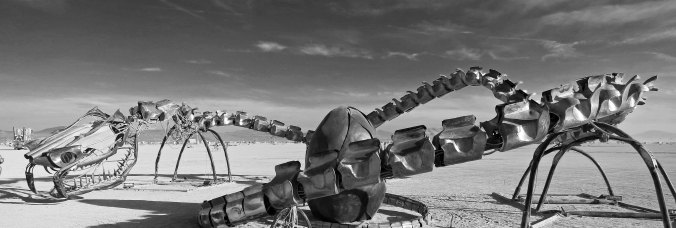
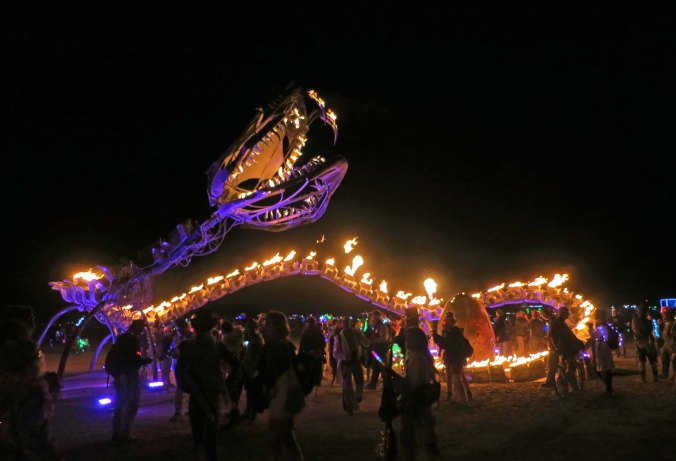
Serpent mother sculpture 8 at Burning Man 2015

Serpent Mother lights the night sky at Burning Man in 2015.

The art at Burning Man is what pulls me back to the event year after year. Its unending creativity, sense of humor, quality and sheer quantity capture my imagination. I can’t get enough. My next three blogs will focus on what I consider Black Rock City’s most powerful art form: sculpture. I have already done posts on Medusa and R-Evolution. Today I will feature a 168-foot flaming serpent, a unique and moving sculpture from the Ukraine, a massive fish monster that emerges from the sand, a series of strange bronze sculptures with an out-of-world beauty, and a huge storybook shoe.

The first time I met Serpent Mother coiled around her egg was in 2006. To say she caught my attention is an understatement. I was delighted to see her back at Burning Man in 2015. Created by the Flaming Lotus Girls (and guys) out of the San Francisco Bay Area, the large-scale, fire-breathing snake is a classic example of the group’s work.

2 Serpent mother sculpture 15 at Burning Man 2015_edited-1

Serpent Mother on guard duty. I don’t think she is in danger of anyone messing with her egg.

3 Serpent mother sculpture 9 Burning Man 2015

Her impressive head with its flaming teeth can rise 20 feet above the desert floor.

4 Serpent mother sculpture 11 at Burning Man 2015

A crowd of Burners gather to watch her egg hatch. She appears to be warning people to back off.

6 Serpent mother sculpture 4 at Burning Man 2015

As the egg opens, it shoots flames 40 feet into the air. Check her head. I think she is smiling.

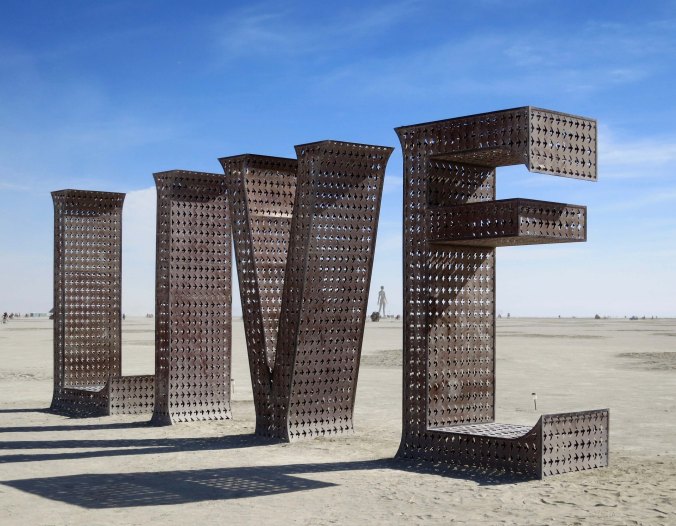
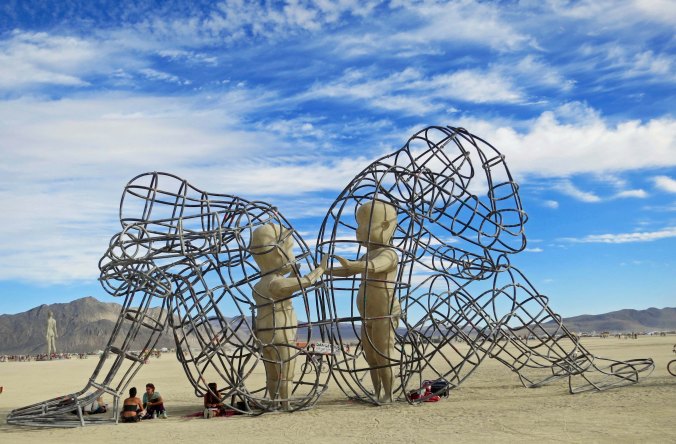
Alexander Milov from Odessa, Ukraine titles his sculpture of two people sitting back to back, Love. While communication between the two adults has broken down, their inner children are reaching out to each other, touching hands and hoping to reestablish contact. How often do we let out anger, or pride, or jealousy get in the way of our friendships and love?

I felt that this sculpture was quite moving. The seated people provide perspective on size.

I felt that this sculpture was quite moving. The seated people provide perspective on size.

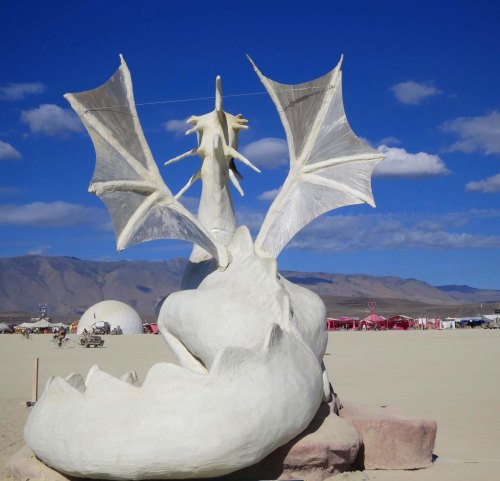
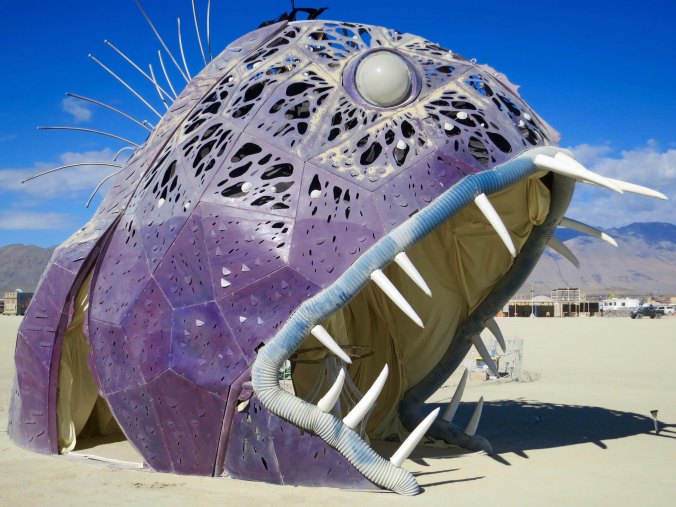
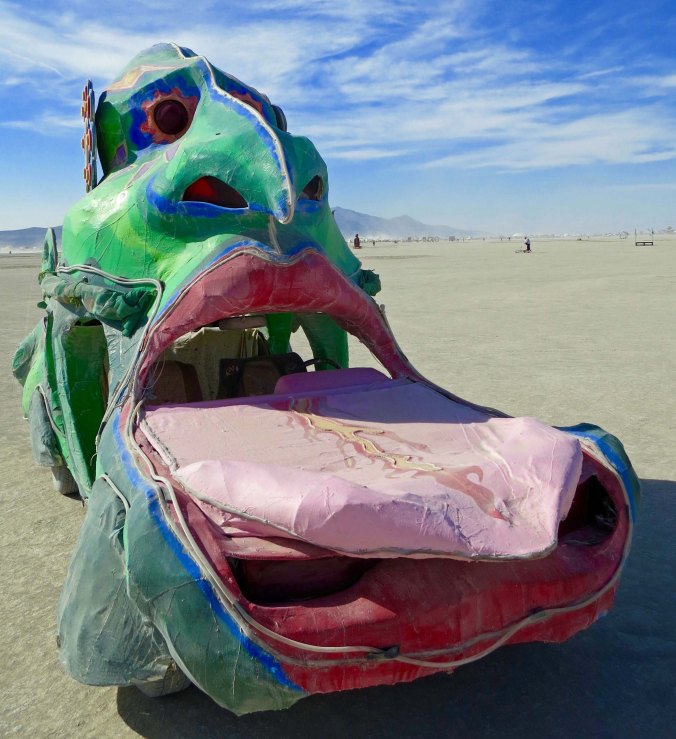
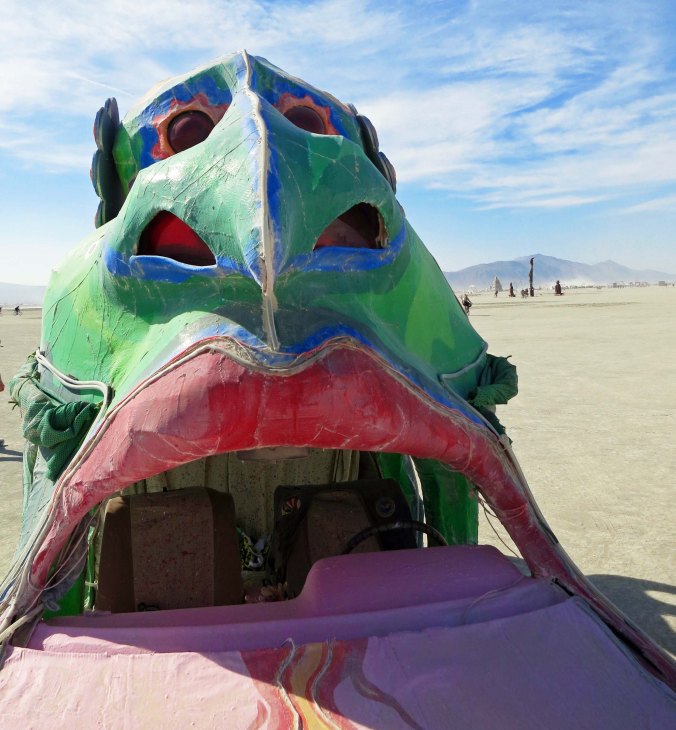
Rebecca Anders from Oakland, California is responsible for creating the Illumacanth, a huge fish that rises out of the Playa and is obviously hungry. Walking into the monster’s mouth reminded me of Jonah and his whale. Too bad Rebecca didn’t give her fish jaws that snapped shut. But that probably would have been a heart attack waiting to happen.

9 Illumancanth sculpture 4 at Burning Man 2015

Hard to imagine something with a bigger mouth than Illumacanth.

Illumacanth 1 at Burning Man 2015

Don caught this photo of Illumacanth at night. Are the Burners about to be eaten? (Photo by Don Green.)

There was an old woman who lived in a shoe— She had so many children she didn’t know what to do. I can never keep myself from adding “obviously.” Five Ton Crane, which is an interesting name for an art group, created this rather large boot of a home. Maybe they needed a giant crane to move the boot. I was really hoping to get inside, treasures were promised, but the doors were not open the two times I visited. Still, I was hardly disappointed.

11 Storybook shoe sculpture 9 at Burning Man 2015

A Burner is peaking in a window on the left, hoping for a view inside. This boot had a lot of ‘sole,’ so to speak.

12 Storybook shoe sculpture 7 at Burning Man 2015

So, do you think you could live here? The sun behind the shoe provided dramatic lighting for the photo.

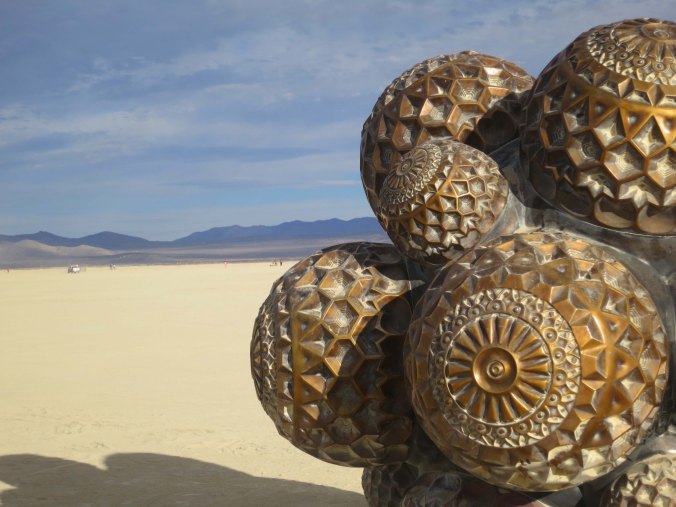
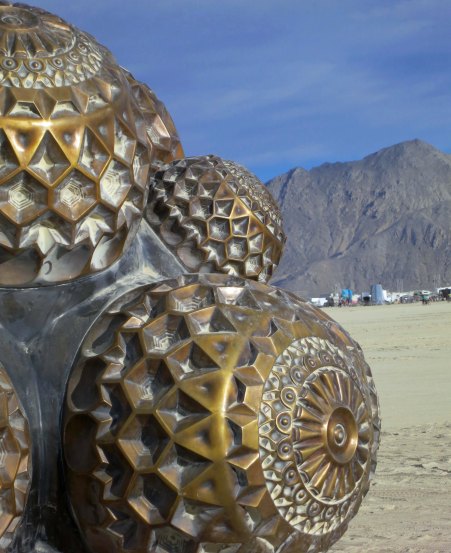
I was intrigued by how well the two-ton bronze sculptures created by Mario Martinez in Berkeley, California fit into the Black Rock Desert landscape. Each of the molecule-like structures took three to four months to make. Designed on a 3-D printer, Martinez used the ancient lost wax method to create the sculptures. They were among my favorite pieces at Burning Man in 2015.

13 Molecule sculpture 7 at Burning Man 2015

The ‘molecules’ felt like they belonged in the Black Rock Desert, left behind by an alien race.

14 Molecule sculpture 3 at Burning Man 2015

Another view of Mario Martinez’s art.

15 Molecule sculpture 5 at Burning Man 2015

Black Rock City and a mountain provide the back drop in my last photo for this post.

A Giant VW, a Man-Eating Lion, a Blimp… and Other Mutant Vehicles of Burning Man

Walter the Bus zips across the Playa at 5 MPH.

Walter the Giant VW Bus zips across the Playa at 5 MPH with his flag flying proudly. In another life, he was a fire truck.

Having owned and wandered in a 1976 VW Camper Van from 1976 to 1983, I felt an immediate attachment to Walter, the giant VW Bus. I decided to look into his past. Most of Burning Man’s Mutant Vehicles have lived full and meaningful lives by the time they make it to Black Rock City. Walter, it turns out, started life in 1963 as a Walter Crash Truck at Luke Air Force Base in Arizona. He took his name from the Company. The Crash came from the fact that he was supposed to show up at an airplane crash site before anyone else and spray flame retardant on the highly volatile jet fuel. It was “BOOM” and kiss your hose goodbye if he failed. Beyond that there was a lot of sitting around and waiting. That’s the life of an airport fire truck.

Next, Walter made his way to a less dramatic but still important role with the New River Fire Department north of Phoenix. From there he retired to the Gold King Ghost Mine just outside of Jerome, Arizona as an antique to be admired. Don Robertson, the owner of the mine, likes old things and, judging from photos, is something of an antique himself. Walter would have been happy to spend his retirement years rusting away there— and he would have except for one of those strange quirks of fate.

Numerous vintage VW Buses make their way up the mountain annually to the Jerome Jamboree and camp out at the ghost mine. Kirk Strawn, who was among the participants in 2003, had just read an article on Burning Man. He saw Walter and fell in love. He didn’t see an aging fire truck; he saw a giant VW Bus. Walter was about to be reborn. Kirk traded a 1979 VW Camper for Walter and moved him to an old lumberyard in Scottsdale where a crew of dedicated volunteers, Tribe Walter, began the transformation process. Six years later, Walter made his first trip to Burning Man, and according to all reports, loved the event.
2 Jerome VW Bus 2

I found this VW Camper Van in Jerome, Arizona when I was there two years ago. I wonder if it was the van traded for Walter? I’ve never seen more bumper stickers on a single vehicle. My favorite: “Heavily Medicated for Your Safety.”

For those of you who crave details: Walter is 30 feet long, 13 feet tall, and weighs 19,500 pounds. He has a 330-gallon water tank for an on board misting system. His nights are lit up by some 10,000 plus LED lights. You can learn more about this interesting Mutant Vehicle at Walter the Bus.

3 Walter the Bus at Burning Man 2015

Walter lit up with his LED lights.

Altogether, there were close to a thousand applications for Mutant Vehicles at Burning Man in 2015. It was too many for the event and the Burning Man Organization, BMO, limited the number of permits to 600. I agree with the decision. Biking and walking take precedence. Still, I can’t help but wonder what wondrous creations didn’t make the cut. On the other hand, I didn’t have time to even start to appreciate all of the vehicles that were there. Here are a few more before I move on to my next topic: There was an old woman who lived in a shoe, and other Burning Man sculptures.

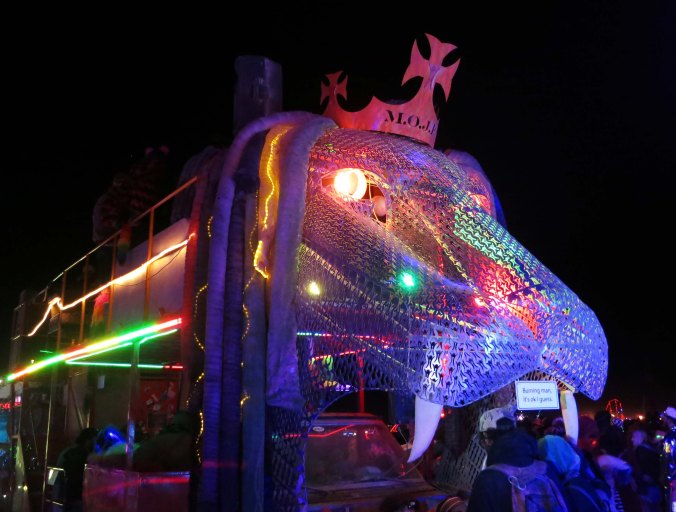
6 King of Beasts 2 Mutant Vehicle at Burning Man 2015

My friend Tom tempts the King of Beasts by snoozing on his tongue. The sign says, “Burning Man, it’s ok I guess.”

7 King of Beasts Mutant Vehicle at night Burning Man 2015

The King of Beasts at night. Maybe Tom wouldn’t have been so ready to jump in his mouth…

4 Train engine mutant vahicle at Burning Man 2015

I’d get off the track for this giant train engine.

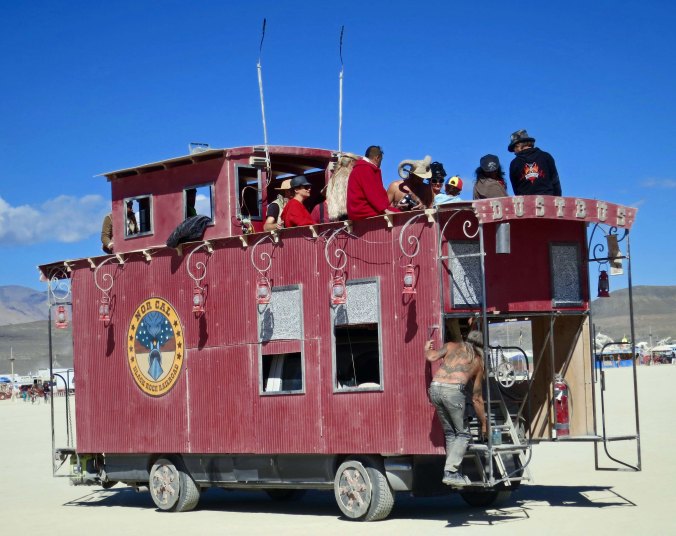
Caboose Mutant Vehicle at Burning Man 2015

What’s a train without a caboose?

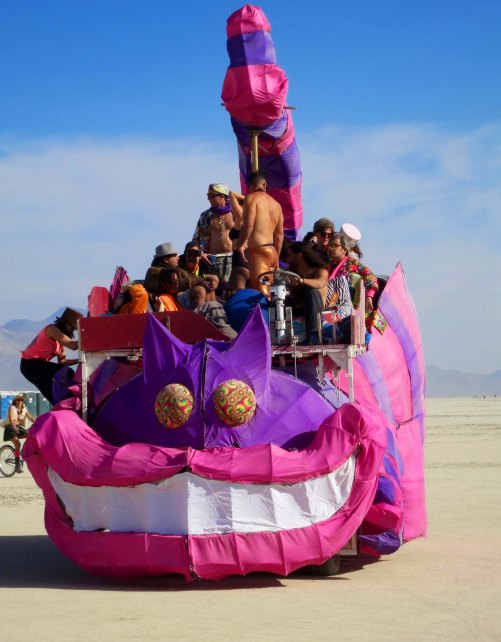
 Cheshire Cat Mutant Vehicle at Burning Man 2015

Where’s Alice?

Arachne Mutant Vehicle at Burning Man 2015

Spider woman?

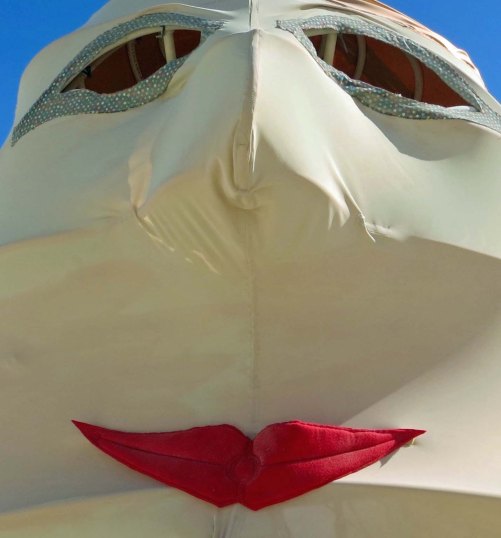
11 Arachne face 2 Mutant Vehicle at Burning Man 2015_edited-1

How about a kiss? Come on, you know you love me.

12 Fish eating fish mutant vehicle at Burning Man 2015

The fish in front has a big problem.

13 Fish eating fish at night mutant vehicle at Burning Man

The fish at night. Still dodging his toothy pursuer.

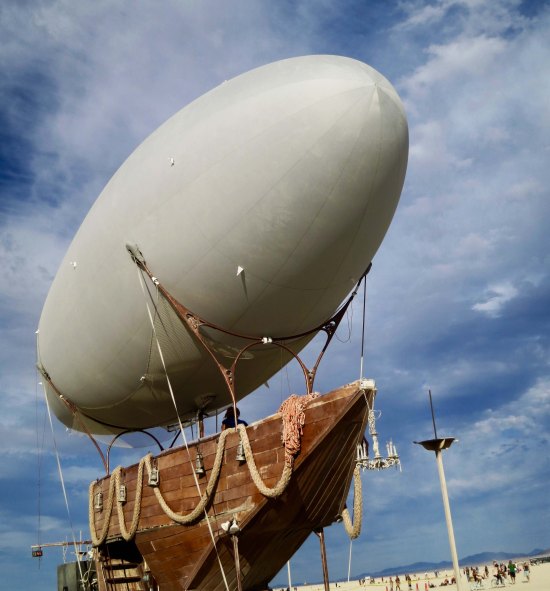
Blimp ship Mutant Vehicle at Burning Man 2015

The airship (blimp) is ready to launch…

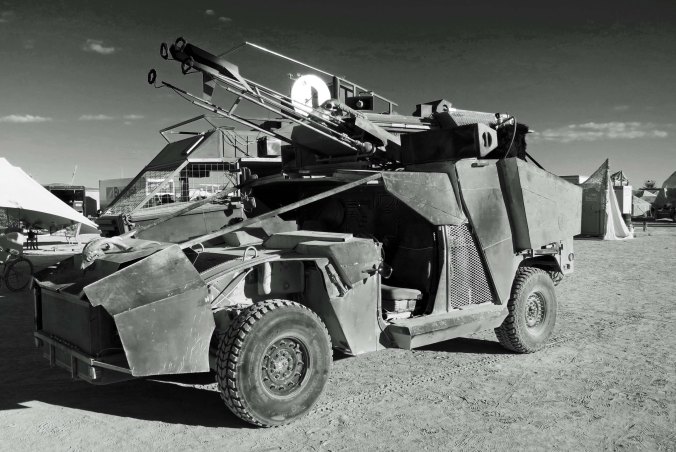
Mad Max Mutant Vehicle at Burning Man

I decided this “Mad Max” vehicle deserved a World War II black and white photo look.

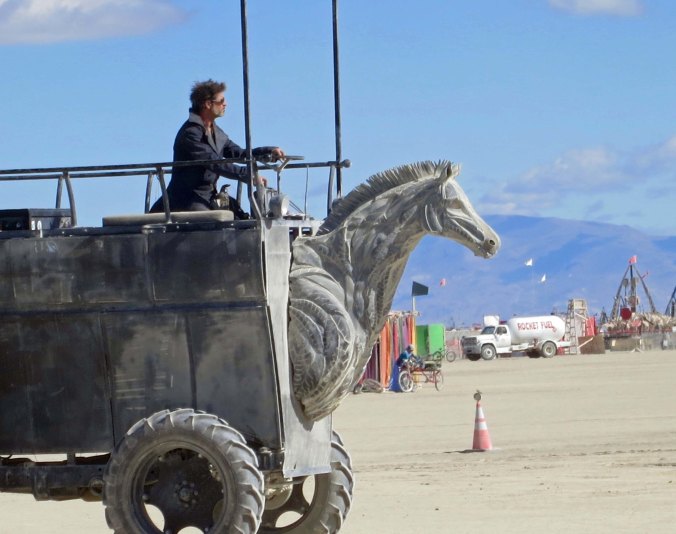
16 Horse head mutant vehicle 2 at Burning man 2015

Giddy Up!

17 Big Bug Mutant Vehicle at Burning Man 2015

Giant bug. Big teeth have always been “in” at Burning Man.
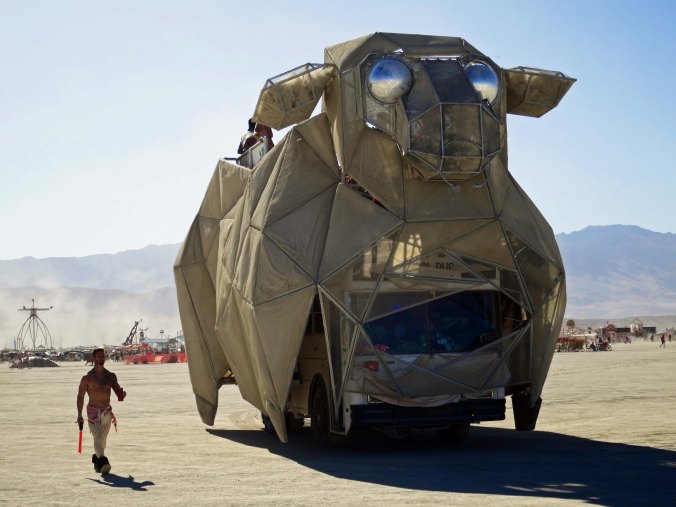
18 Giant Cow mutant vehicle at Burning Man 2015

I decided this is a cow but I could be wrong. Her herder is walking along beside.

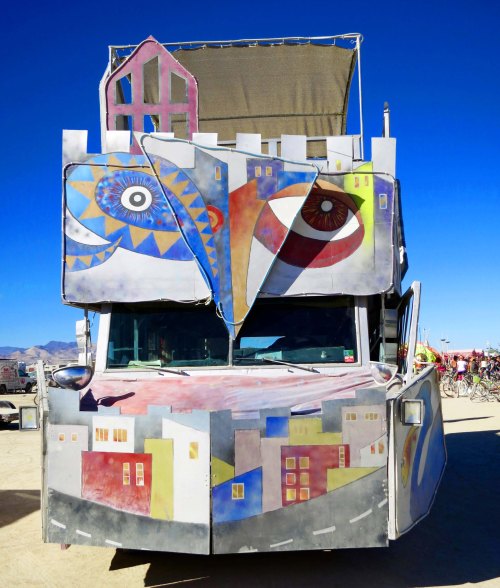
19 Modern Art Mutant Vehicle at Burning Man 2015

Modern art in an urban setting.

Narwhal mutant Vehicle at Burning Man 2015

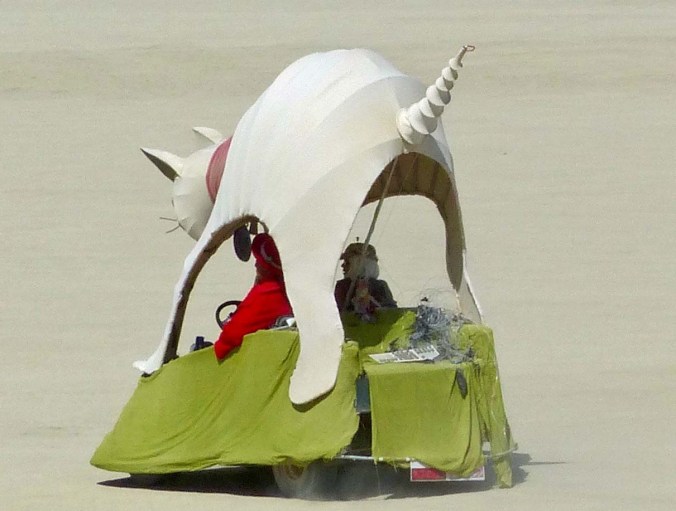
I’ll conclude with this big lipped Narwhal. (Photo by Don Green.)

From Furry Cats to Lurking Alligators… Burning Man’s 2015 Small Mutant Vehicles

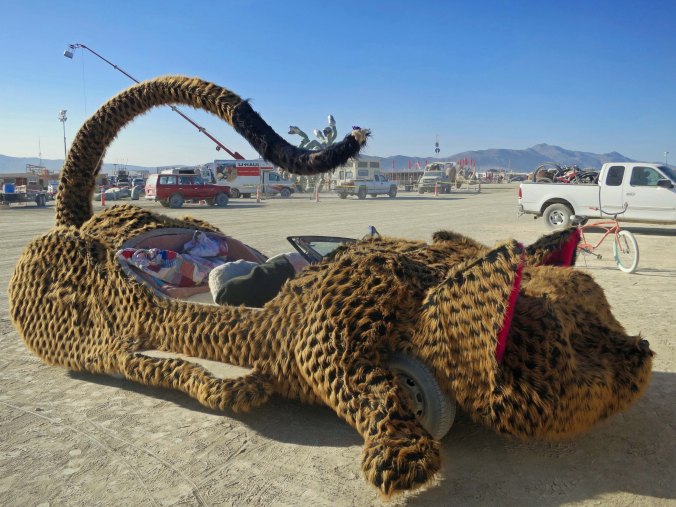
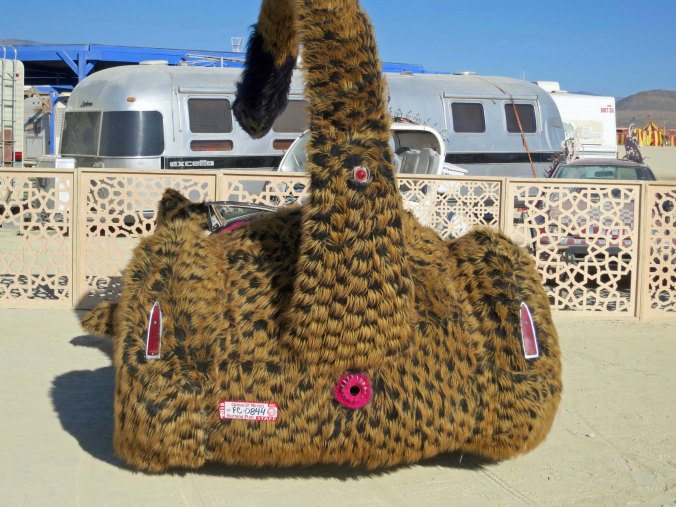
The Cat Car is a perennial favorite at Burning Man. This year she had a makeover and was looking quite snazzy.

The Cat Car is a perennial favorite at Burning Man. This year she had a makeover and was looking quite snazzy.
A Mutant Vehicle is a unique, motorized creation that shows little or no resemblance to their original form, or to any standard street vehicle. Mutant Vehicles are radically, stunningly, (usually) permanently, and safely modified from their base vehicle. Sometimes the whole vehicle is made from scratch… the mutation should aim to provide a level of “radical visual stimuli” or “wow factor” for the other participants of Black Rock City. When a person sees this vehicle, their reaction should be “Wow! Look at that!” —Burning Man Organization


Burning Man covers some seven square miles. It isn’t surprising that there are lots of folks who would prefer to drive rather than walk or ride a bike there. America’s love affair with the automobile is well established. Why walk when you can drive?

Early on, however, it was decided that Burning Man would be a walking and bicycling kind of place. It was a good decision. The event wouldn’t work otherwise. An exception evolved over time, though. You could drive around if your vehicle became an art piece. The challenge here, of course, is defining an art piece. Why not glue a stuffed bear to your roof and call it art? Such thinking led BMO to come up with the description quoted above.

While Eeyore might make a cute hood ornament for my Toyota, it doesn't make my truck a mutant vehicle no matter how cute Eeyore is.

While Eeyore might make a cute hood ornament for my Toyota, he doesn’t make my truck a mutant vehicle— no matter how cute he is.

And there’s more. You just don’t show up at Burning Man and check in with the Department of Mutant Vehicles. There is a detailed application process. Months before the event you have to describe the vehicle, safety considerations, and reasons for wanting to bring an art car to Black Rock City. A sketch is required. Numbers are limited, so you need to get applications in early. If you plan to drive at night or have your vehicle shoot out flames over the Playa, there are further requirements. Assuming you meet all the criteria and obtain a license, your first stop at Burning Man is DMV. BMO wants to make sure the vehicle is as claimed.

As you can imagine, the amount of work and time required to build a Mutant Vehicle becomes a self-limiting factor on the numbers of mutant vehicles at Burning Man. You need to be prepared to spend thousands of dollars and/or hundreds of hours of work for more elaborate creations.
And finally, you have to agree to follow the rules. You can’t drive over five miles an hour, you can’t drive while under the influence of alcohol or drugs, you have to give way for bicyclists and walkers, and you can’t drive through Black Rock City at 3 a.m. blasting music out of your mega speakers. The latter is guaranteed to bring a truckload of complaints down on BMO. Breaking the rules can get you grounded or may even bring a ticket. Law enforcement is extensive at Burning Man and drunk driving is drunk driving.

I’ve mentioned before that Mutant Vehicles come in all shapes and sizes. I thought that I’d feature the smaller, more personal vehicles today. I will include the larger ones in my next post.

The Cat Car as seen from the side...

The Cat Car as seen from the side…

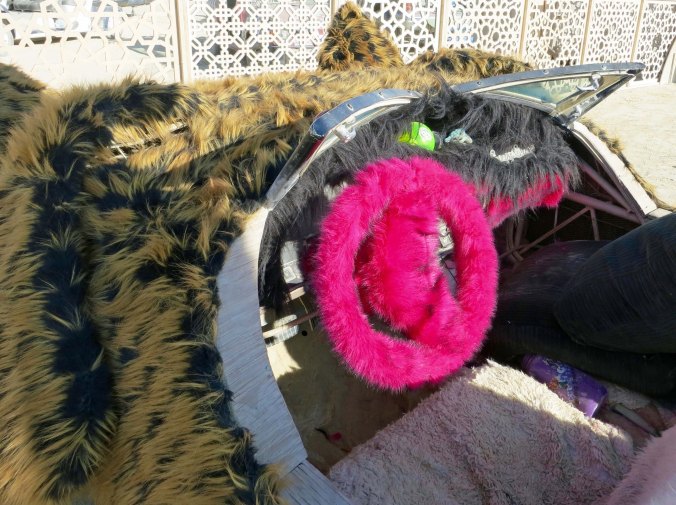
Check out her snazzy steering wheel.

Check out her snazzy steering wheel.

And her colorful butt. (grin)

And her colorful butt. (grin) Her Burning Man Mutant Vehicle license is on the left.

Theses Burners had the clever idea of decorating their car like a Converse tennis shoe.

Theses Burners had the clever idea of decorating their Mutant Vehicle like a Converse tennis shoe, a relatively easy task to accomplish, I imagine.

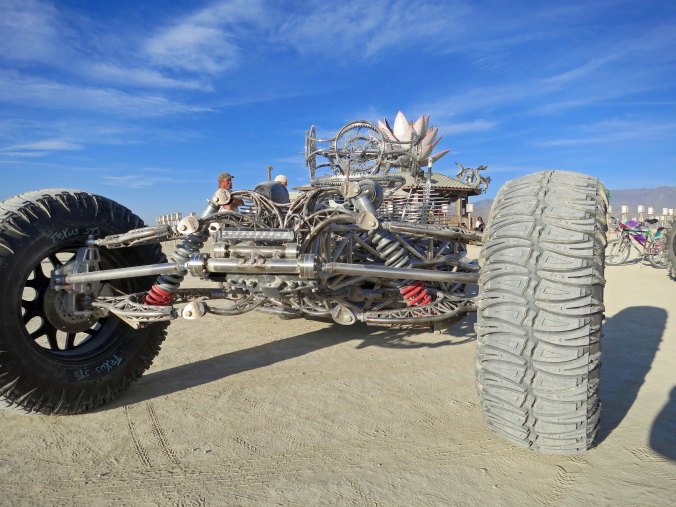
Not so easy this gorgeous hot rod.

Not so easy this gorgeous hot rod.

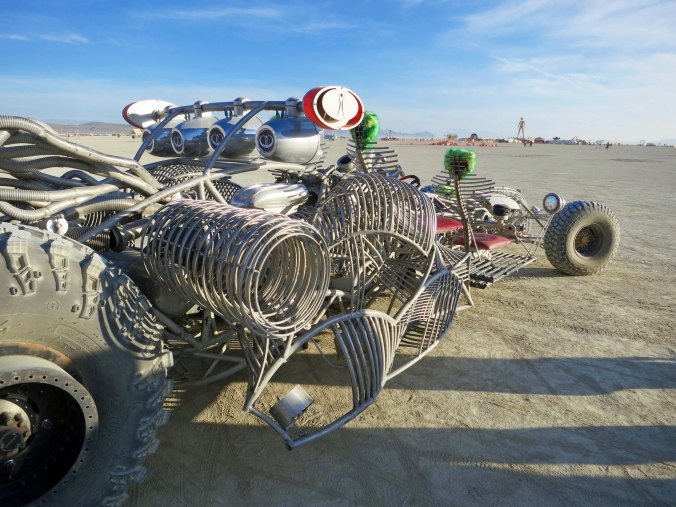
A rear view of the hot rod mutant vehicle form LA.

A rear view of the hot rod mutant vehicle from LA.

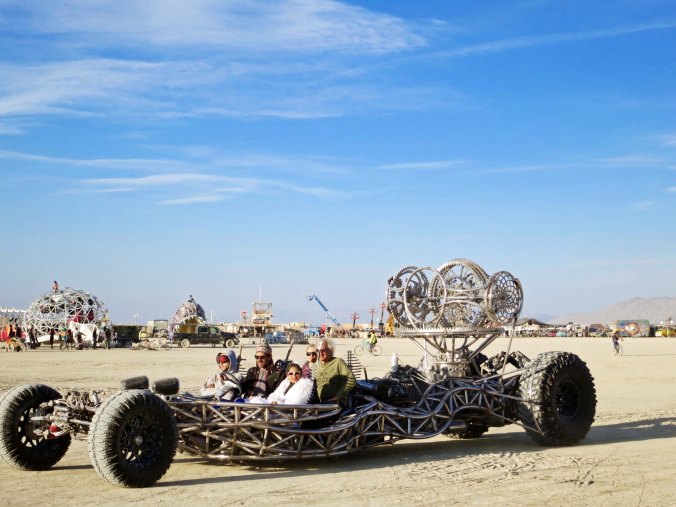
It's companion. The Black Rock Desert has been used for setting vehicle land records. Maybe these guys should compete.

Its companion. The Black Rock Desert has been used for setting vehicle land records. Maybe these guys should compete.

The big nose of this fellow was exceeded in size by his big tongue.

The big nose of this fellow was exceeded in size by his big tongue.

A close up of the nose. Nice nostrils.

A close up of the nose. Nice nostrils.

Golf carts can make handy sized Mutant Vehicles for two people. (Photo by Don Green.)

Golf carts can make handy sized Mutant Vehicles for two people. (Photo by Don Green.)

A night kitty Mutant Vehicle.

A night kitty Mutant Vehicle.

And a skull couch that looks quite comfortable to me.

And a couch that looks quite comfortable to me.

I found this VW at the Art Car Camp.

I found this VW at the Art Car Camp.

And what I am going to call Killroy.

And what I am going to call Kilroy— although it may be a relaxed leopard perched up on the roof.

I found this impressive alligator lurking next to the NOLA Camp, which seemed like an appropriate location.

For my last example today, I found this impressive alligator lurking next to the NOLA Camp (on the right), which seemed like an appropriate location, given that New Orleans is located in bayou country.

The Abbeys of Cotswold… Henry VIII Said, “Get the Lead Out!”… by Peggy Mekemson

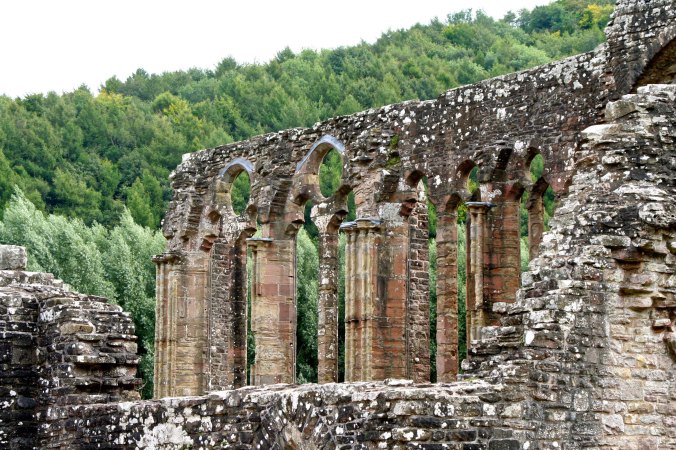
Graceful columns found when stepping inside the ruins of Tintern Abbey.

Graceful columns found when stepping inside the ruins of Tintern Abbey.

Between 1536-1540 (depending on which brochure I read) King Henry VIII declared the Dissolution of the Monasteries during the Protestant Reformation and his break from the Catholic Church. Armies scoured the country— leaving most monasteries in ruin as soldiers took the lead to make cannon balls. Jane and I visited four very different abbeys that had existed at that time and earlier.

Malmesbury, believed to be the oldest inhabited town in England, has a 12th Century abbey. The original spire and tower both collapsed well before the Reformation. Only the nave remained and became part of the active Abbey as part of the Reformation. It is believed that the first King of England is buried nearby while his coffin resides inside the church.

The contrast between the active church and the remaining walls was interesting. Part of the old monastery grounds now houses the Abbey House Gardens (previous garden blog).

The contrast between the active church and the remaining walls was interesting. Part of the old monastery grounds now houses the Abbey House Gardens (previous garden blog).

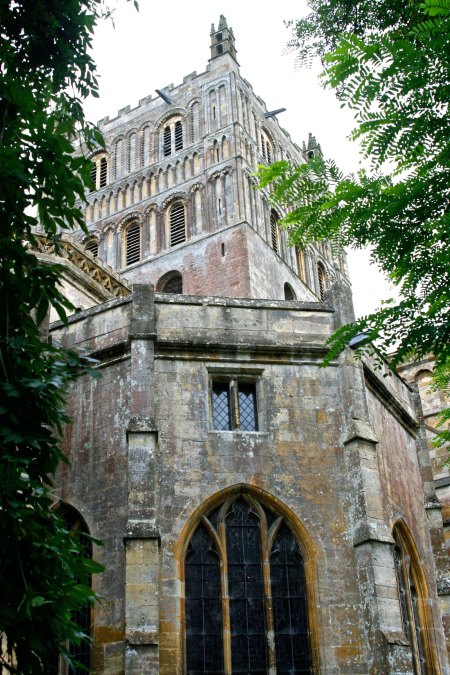
Tewkesbury Abbey survived the dissolution of the monasteries in 1540 when the townspeople bought it from King Henry VIII for the sum of 453 pounds. Although the original church was consecrated in 1121, the current Abbey is 900 years old. It is considered one of the largest parish churches in England.

The armies of King Henry VIII destroyed the churches primarily for the lead. The people of Tewkesbury paid the King the value of the lead and saved the church.

The armies of King Henry VIII destroyed the churches primarily for the lead. The people of Tewkesbury paid the King the value of the lead and saved the church.

The roof bosses were indeed stunning.

The roof arches were indeed stunning.

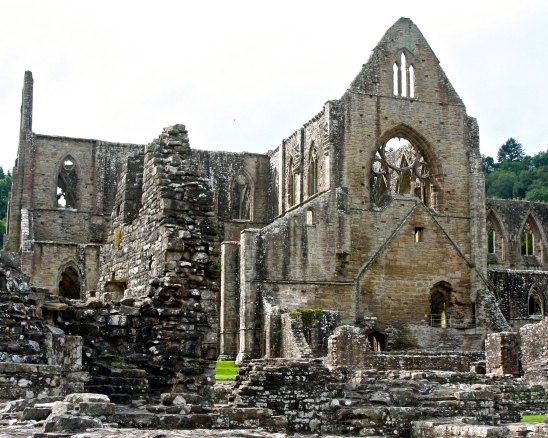
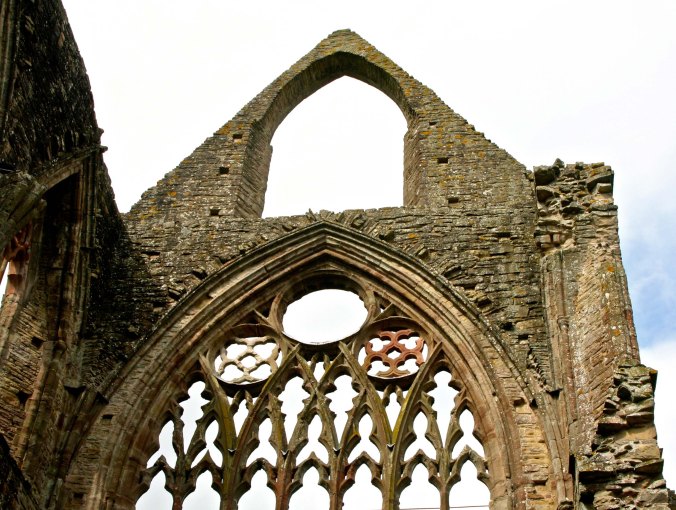
Tintern Abbey, on the border of Wales and Gloucestershire, captivated me! The Cistercian Abbey was founded in 1131 and was a religious center between 1136-1536 at which time it was surrendered to the King’s “marauding visitors.” The lead was taken and 400 years of decay began. There was partial reconstruction begun in 1914. The CADW (a part of the Welsh government dedicated to preserving historic environmental and heritage sites) took over in 1984.
Our first view of the ruins of Tintern Abbey.

Our first view of the ruins of Tintern Abbey.

The following photos reflect the beauty of the area surrounding the ruins and the stunning views within the ruins.

Tintern Abbey in England

Wall ruins of Tintern Abbey in England

Tintern Abbey grand hallway

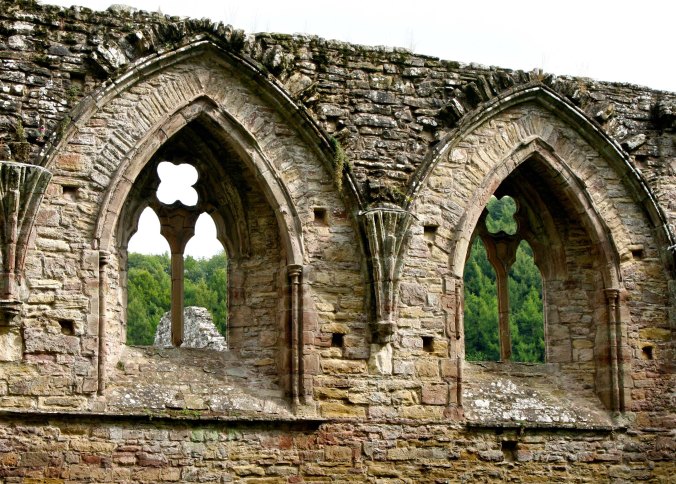
The two small windows in the middle are the only training original windows in Tintern Abbey.

The small windows in the middle are the only remaining original windows in Tintern Abbey.

Tintern Abbey window view in England

Tintern Abbey windows looking out on forests

Tintern Abbey sky view

My last photo of the Tintern Abbey ruins.

My last photo of the Tintern Abbey ruins.

Our last stop was Gloucester Cathedral. Here, our volunteer guide, a wonderful storyteller, greeted us. During the Reformation, this was one of 6 abbeys designated by King Henry VIII as the cathedrals for the new Church of England. No damage was done. Apparently, the historic connections to the monarchy saved it. Our guide’s stories of the stained glass windows were particularly absorbing. The windows reflected the history of the cathedral and religious stories and included several modern stained glass art work.
A front view of Glouchester Cathedral.

A front view of Glouchester Cathedral.

An early stained glass window featuring a knight.

An early stained glass window featuring a knight.

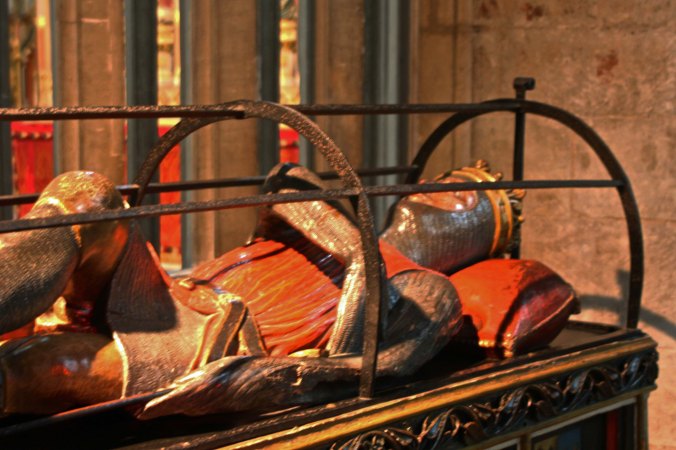
A knight's tomb inside the Cathedral.

A knight’s tomb inside the Cathedral.

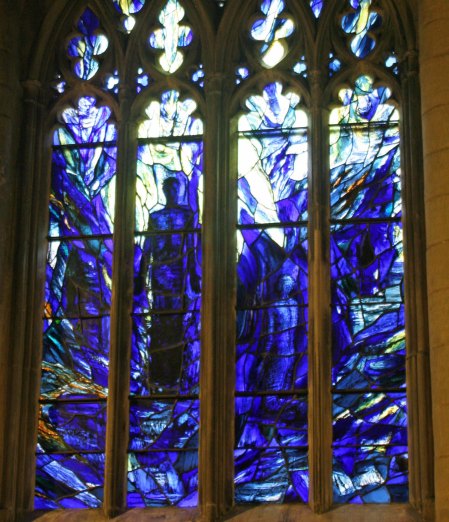
One of the modern stained glass windows.

One of the modern stained glass windows.

I have to admit that I was most fascinated by the stories of the filming of Harry Potter in the cathedral! We walked the halls used in several scenes. I watched the movies on my return so that I could compare Hogwarts School scenes with what I saw.

One of the halls of used for 'Hogsworts' in Harry Potter.

One of the halls used for ‘Hogwarts’ School of Wizardry’ in Harry Potter.

Downton Abbey to Harry Potter… and all the marvelous sites in between. It was quite the photographic adventure! This is my last blog on the Cotswolds. Thanks so much for joining me on the tour. —Peggy
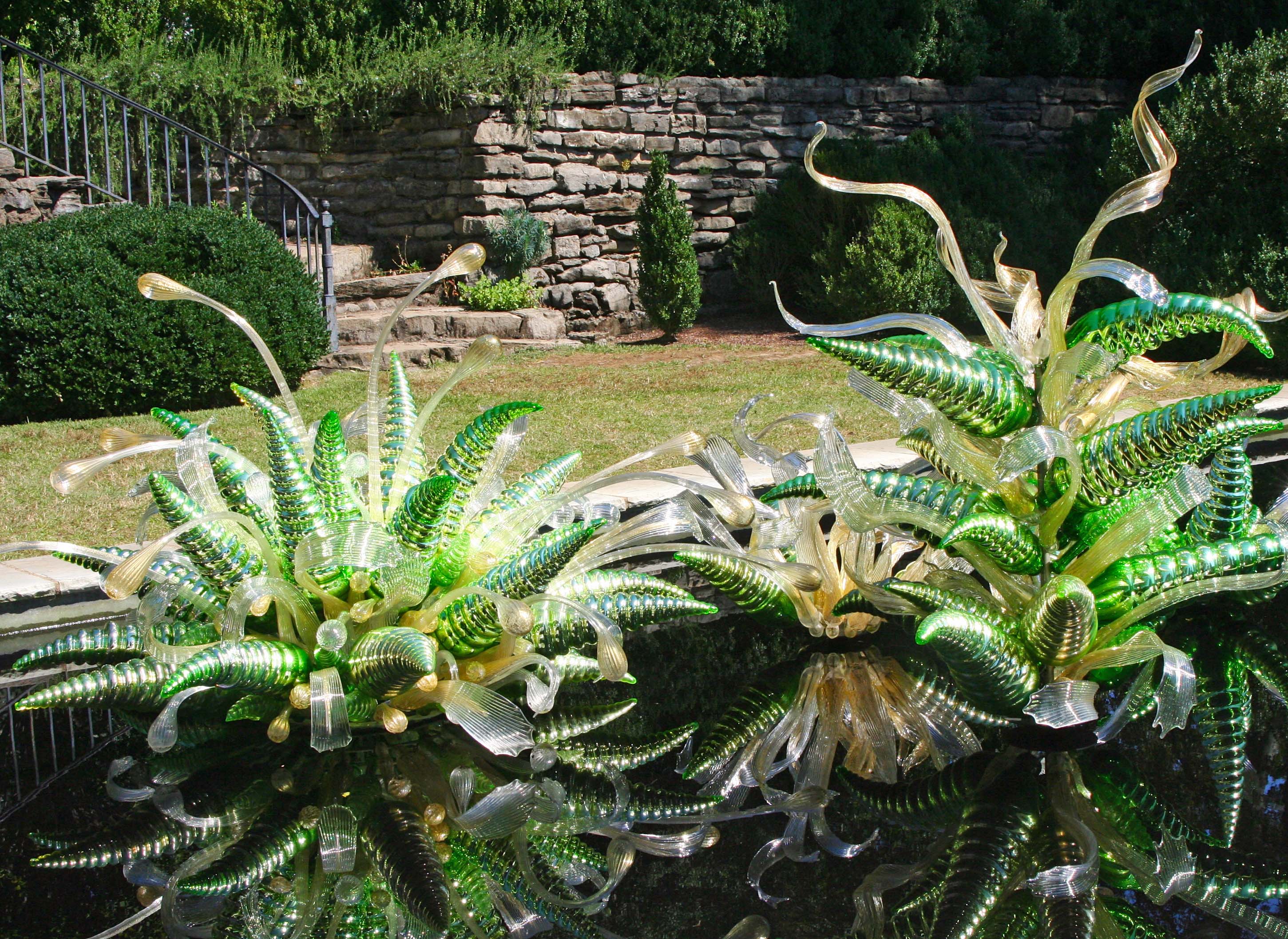
Where Glass Borders on Fantasy… The Work of Dale Chihuly

I had the feeling that this sculpture by Dale Chihuly, set off by a reflecting pool should be waving its tentacles.

I had the feeling that this sculpture by Dale Chihuly, set off by a reflecting pool, should be waving its tentacles. (This and the following photos are taken by Peggy Mekemson.)

When I closed my eyes and scrolled through my iPhoto collection to come up with today’s photo essay, I landed on a series of photos featuring Dale Chihuly’s imaginative glass sculptures.

It seems like Chihuly, the world’s most prolific creator of glass blown sculpture, is everywhere these days. His works are found worldwide. Peggy was in Tennessee with our daughter Natasha five years ago when a Chihuly exhibition was held at the Cheekwood Botanical Garden in Nashville. Fortunately, Peggy took lots of photos so I could enjoy the show as well. I found a flock of flamingos that Peggy captured on her camera at the botanical garden to be equally fascinating.

I thought of this creation as a fruit basket.

I thought of this creation as a fruit basket.

Chihuly is an expert at placing his work in natural settings.

Chihuly is an expert at designing his pieces to complement natural settings.

Another example how his work complements a natural setting.

Another example how his work complements a natural setting.

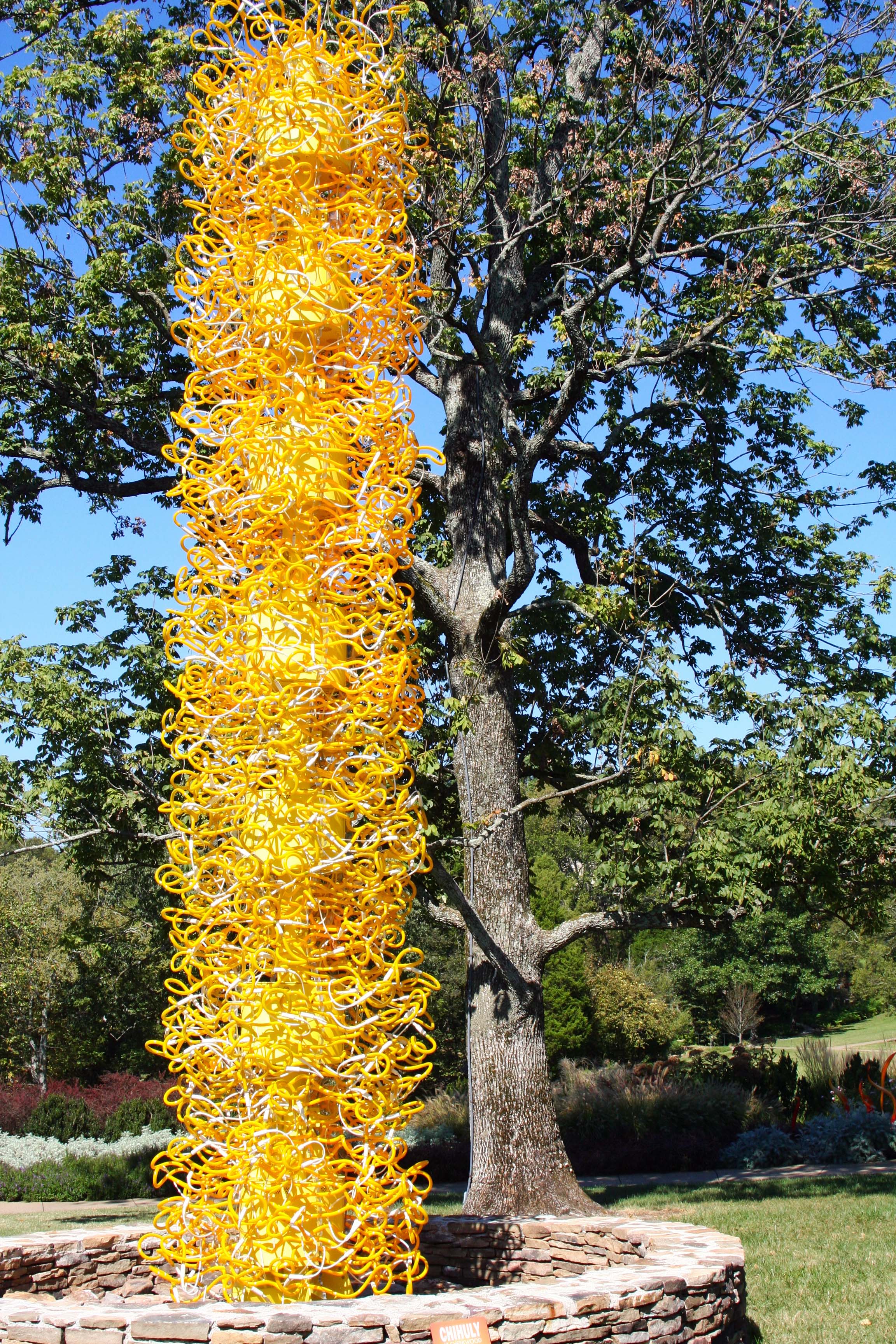
And how about this towering glass sculpture next to the tree?

And how about this towering glass sculpture next to a tall tree?

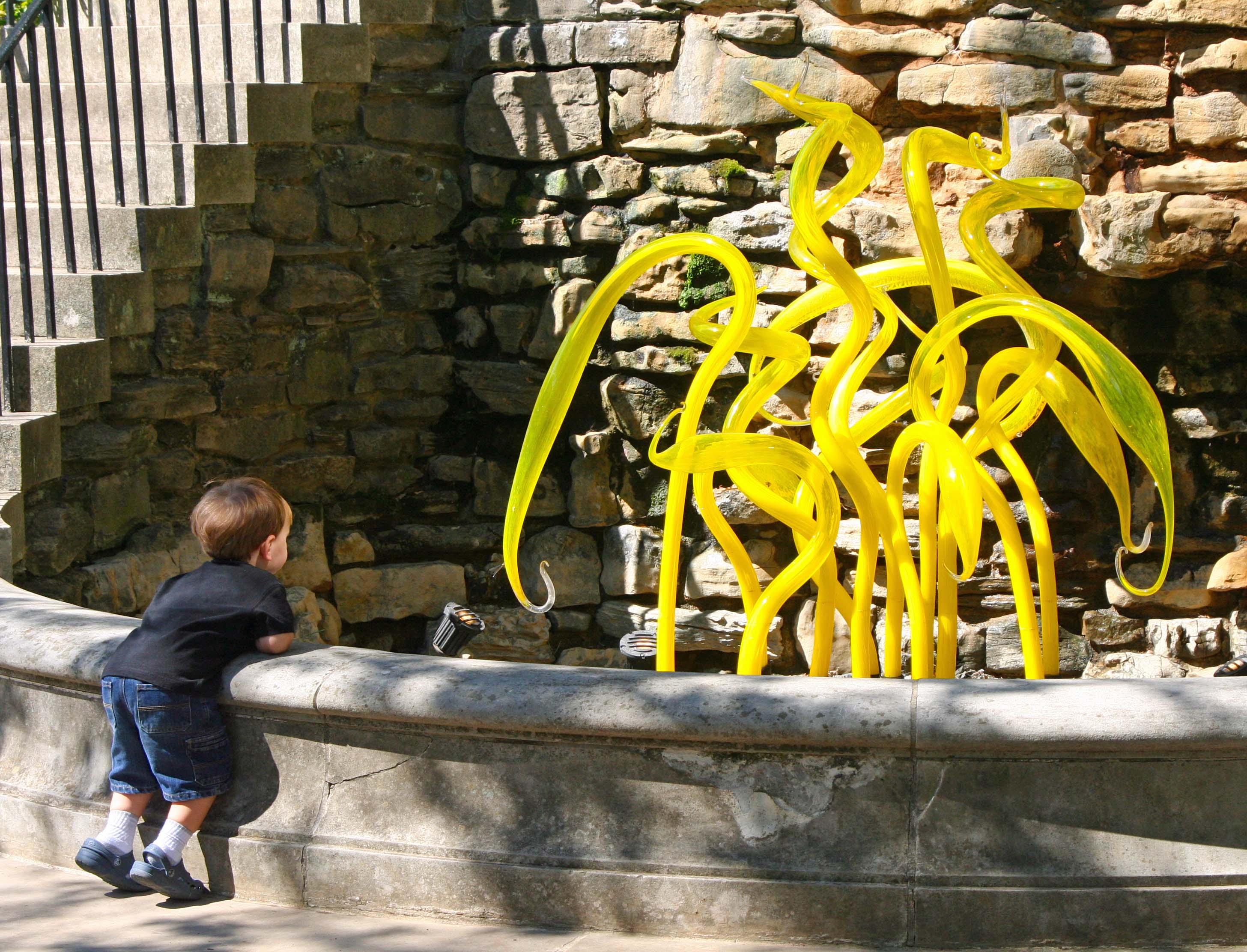
My grandson, who was two at the time, checks out one of Chihuly's sculptures. I wonder what was going through his mind?

My grandson, who was two at the time, checks out one of Chihuly’s sculptures. I wonder what was going through his mind?

A new take on a Zen garden?

A new take on a Zen garden?

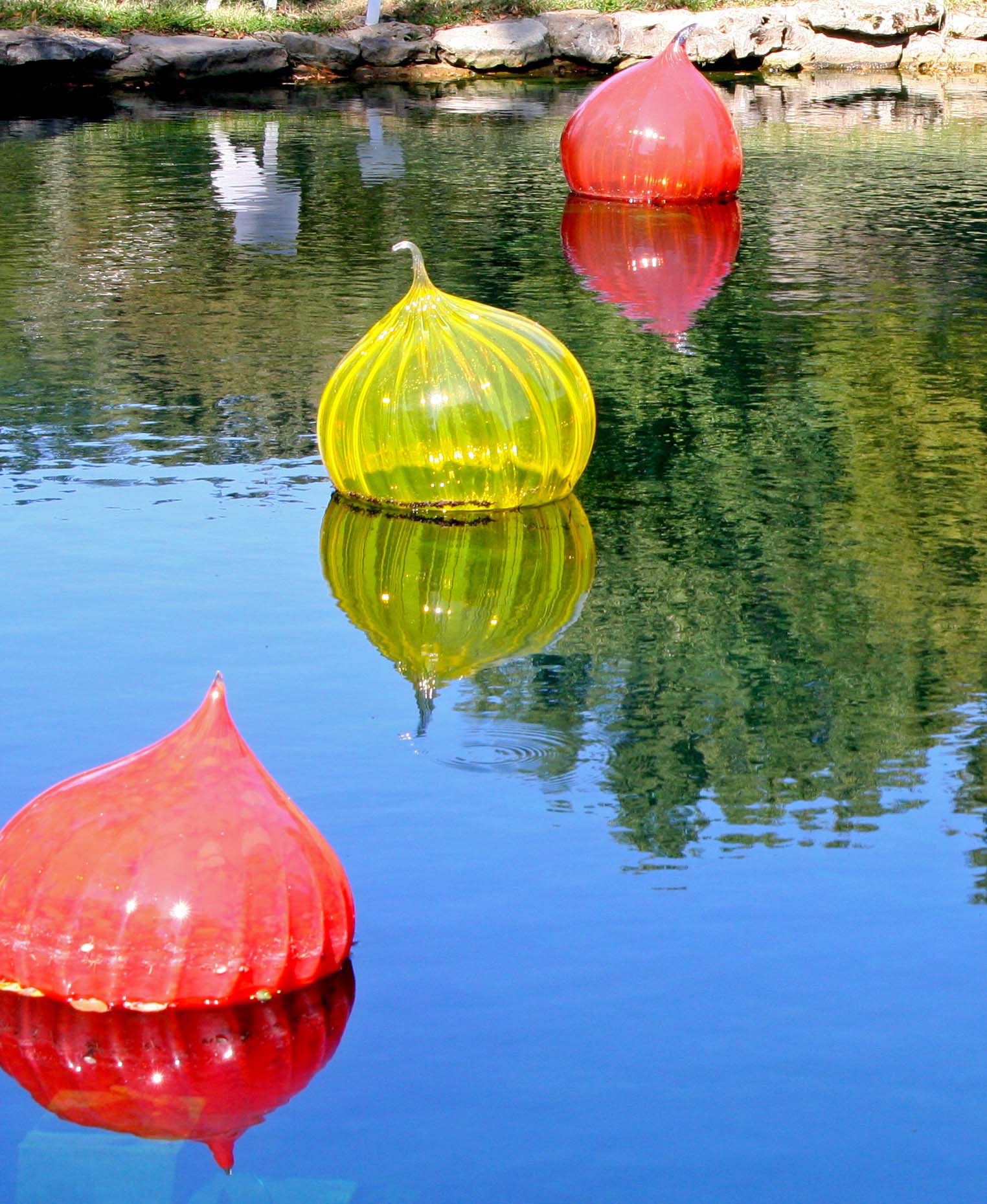
I thought colorful garlic here.

These reminded me of colorful cloves of garlic.

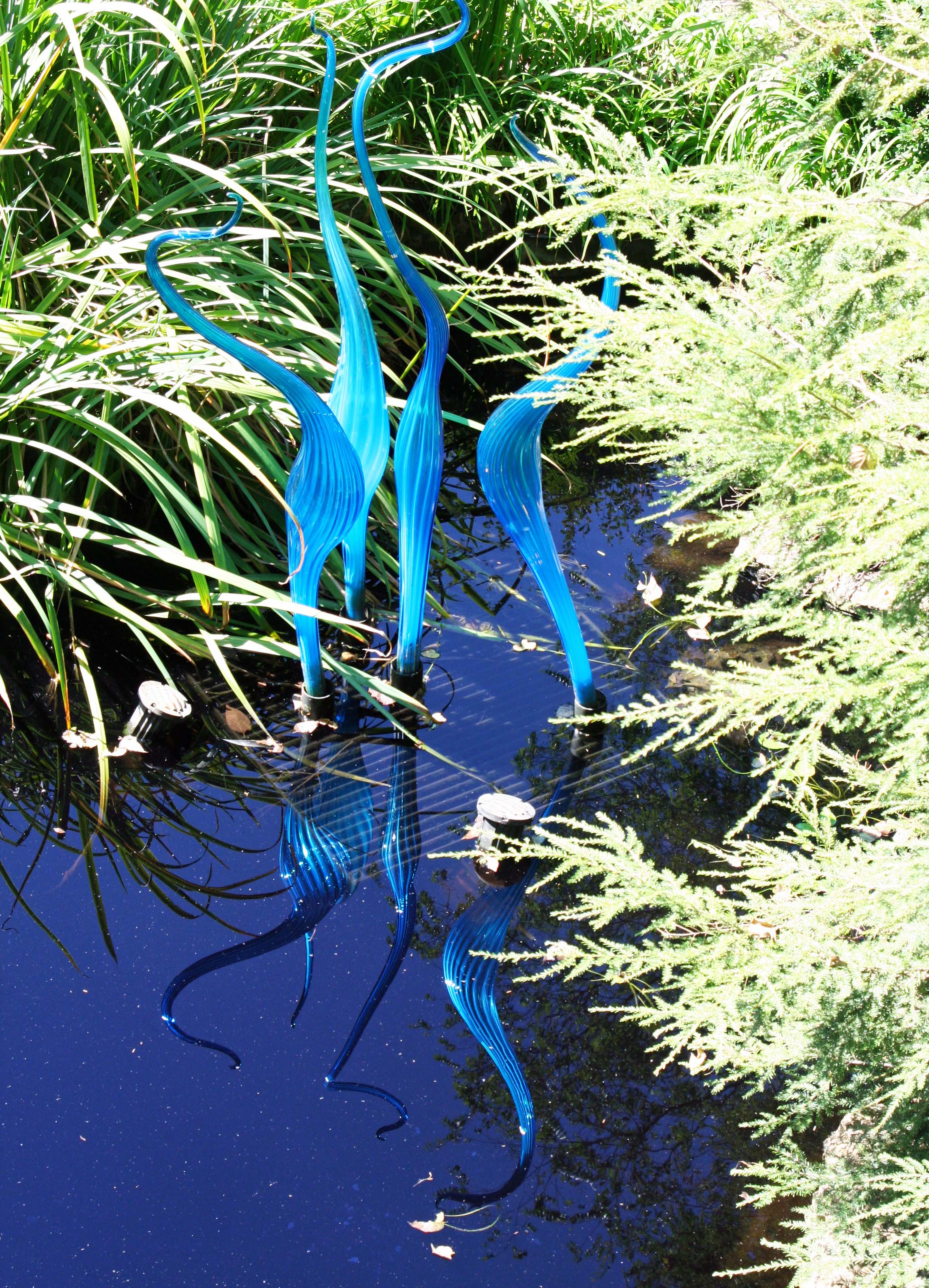
These gracefull birdlike sculptures reminded me of Peggy's Flamingos.

These graceful birdlike sculptures with their interesting poses reminded me of Peggy’s Flamingos.

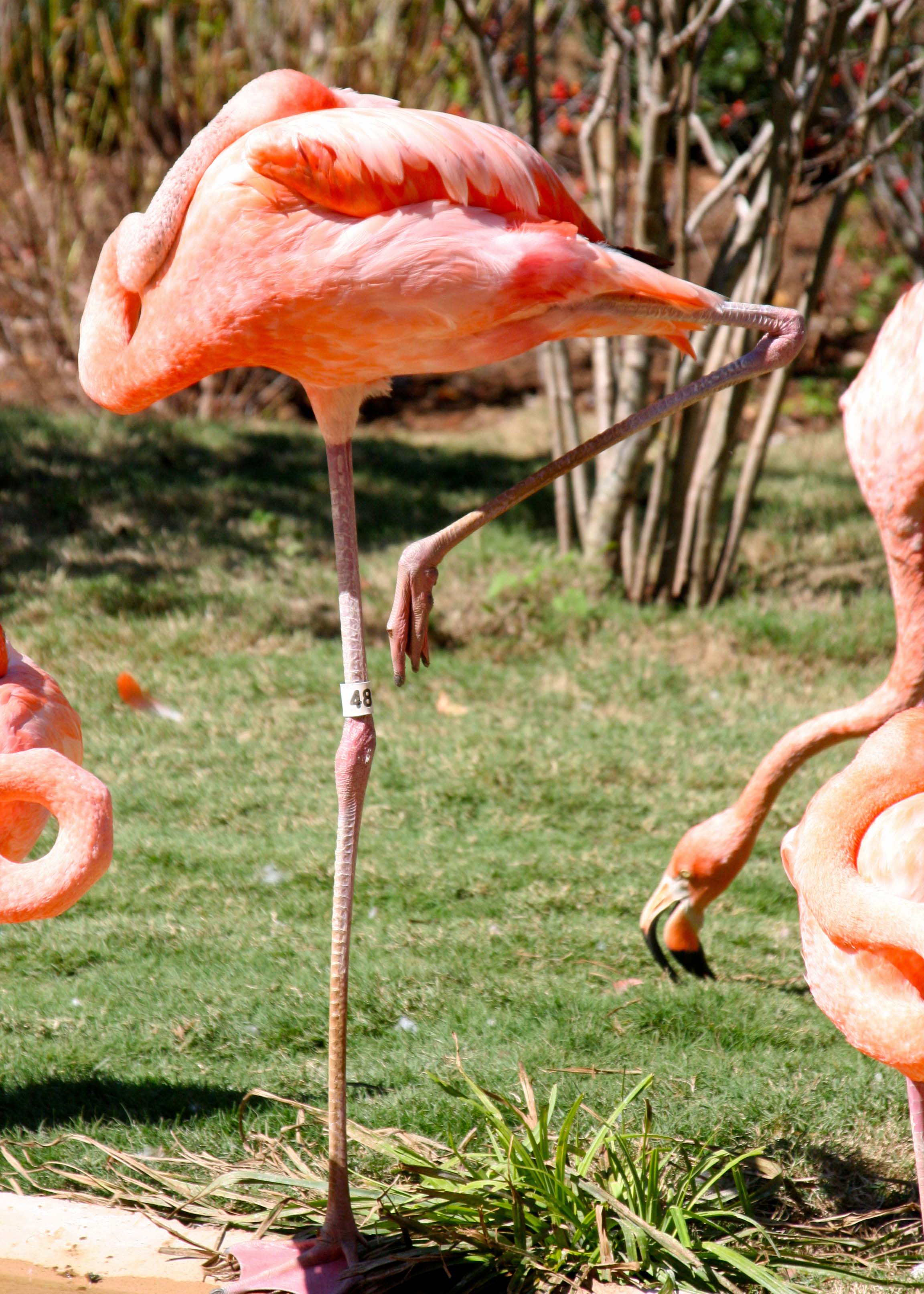
Flamingos can assume some interesting one legged positions but this one went above and beyond

Flamingos can assume some interesting one-legged positions but this one went above and beyond. Check out the shadow.

Another interesting pose.

Another interesting pose for both kids and adults.

A final contortion of Flamingos.

A final contortion of Flamingo parts.

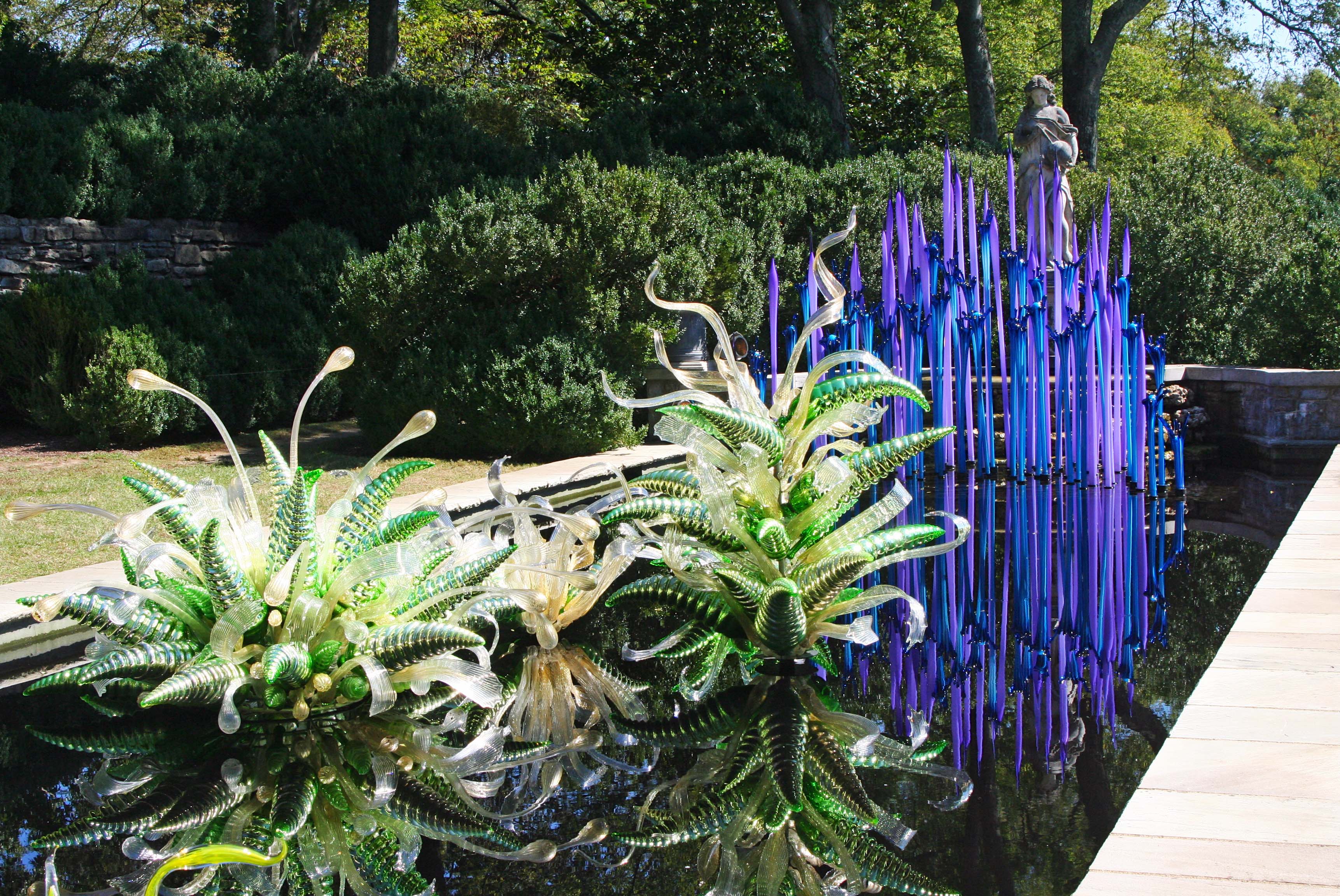
I'll use this blue and green contrast by Chihuly to end this post. NEXT POST: On the way to He Grand Canyon and a two month break from blogging.

I’ll use this blue and green contrast by Chihuly to end this post. NEXT POST: A continuation of my Friday Essays. The Grand Canyon trip. Also, Friday marks the beginning of a two month break from blogging.


Escape from Alaska… Part II: The Friday Essay

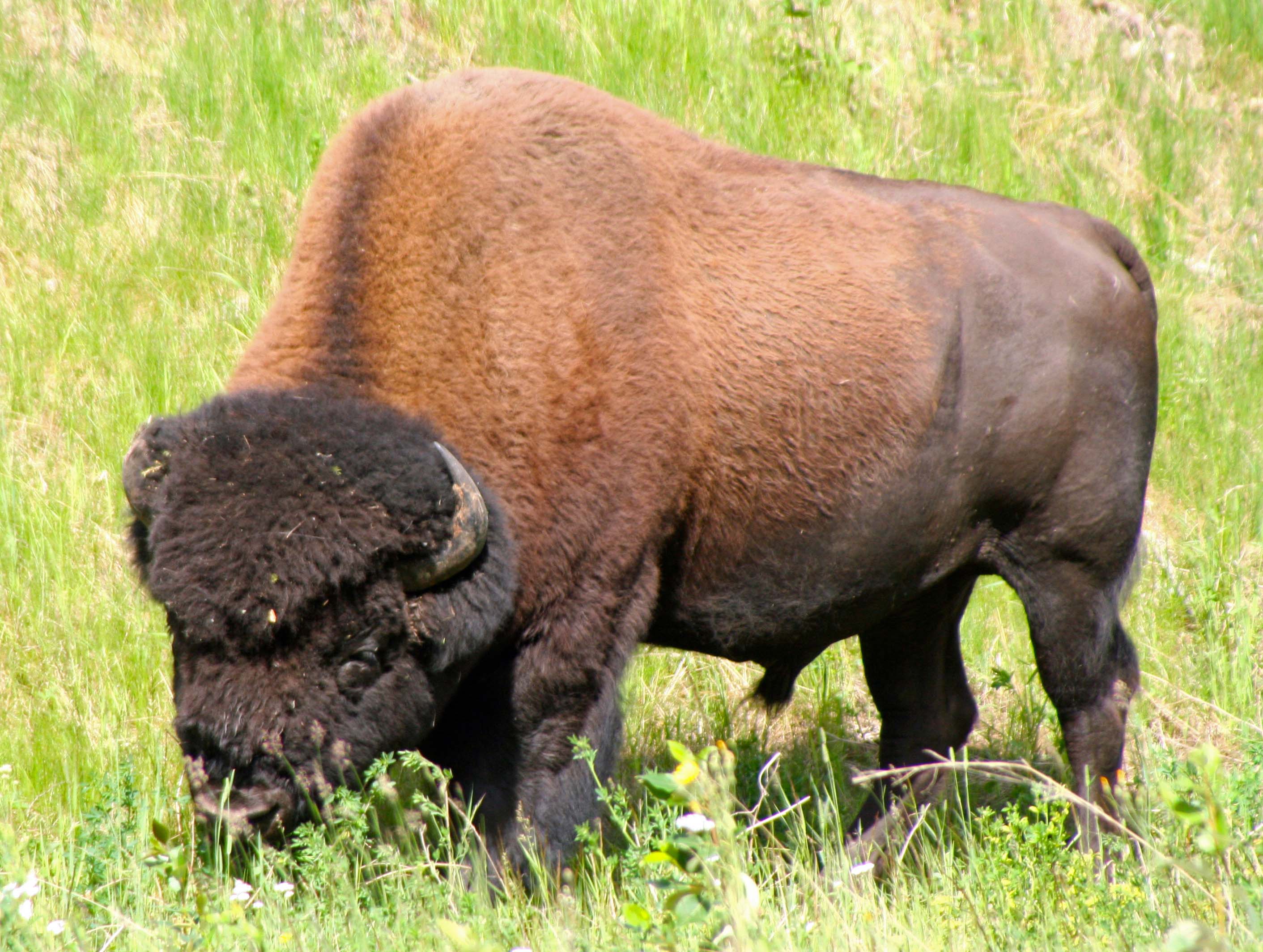
Woodland buffalo have become fairly common when driving through portions of the Yukon Territory. As noted in my last Escape from Alaska blog, Peggy and I took these photos two years ago when we drove the Alaska Highway in the summer.

Woodland buffalo like this guy have become fairly common when driving through portions of the Yukon Territory. As noted in my last Alaska blog, Peggy and I took these photos two years ago when we drove the Alaska Highway in the summer.

The next day after my encounter with the Trooper (see here), I zipped down the Alaska Highway through the Yukon Territory to White Horse. With the exception of gigantic trucks on their way to the North Slope, I saw few other vehicles. Snow still covered the surrounding wilderness and the road was frozen solid. The annual migration of tourists traveling north was months away.

That night I chose to stay in a campground, preferring not to repeat my previous night’s experience. I also avoided wasting away in Margaritaville— instead I broke out the brownies.

As a going away present, some friends had given me a gallon Zip Lock bag of Alaska’s finest pot. At first sight, it might seem that they were involved in a criminal activity, but marijuana was legal in Alaska. You could grow your own and somebody had obviously grown a lot. Giving me the grass had been the Alaskan equivalent of sending me off with a bottle of 25-year-old single malt Scotch whiskey, or several bottles.

In honor of lung health, I promised not to smoke it. I practiced my baking techniques on my last night at my friend’s house. The cat, the two dogs and I tested the results. It was a mellow evening and the whole menagerie was allowed to sleep on the bed. We purred, wagged our tails, and had wild dreams.

Here’s some advice to the uninitiated that Alice B. Toklas didn’t provide: go easy on brownies. They have a way of sneaking up on you. The problem is physiological. Long before your body has done its job and processed the herb, you are thinking, ‘this stuff has absolutely zero impact, I should have stuck with wine.’ So you eat another brownie, and then another. By the time you realize the error of your ways, it’s too late and you are wacko.

Luckily, I had already been there, done that. I ate a small piece and waited patiently. Then I broke out an ounce of Swiss cheese. I was all moderation. Marijuana enhances flavor and encourages gluttony. I once watched a woman down a quart of ice cream in one sitting and demand more.

A friend had slipped me a fat letter to read on the way. I opened it as an option to eating the other 15 ounces of cheese. She had offered to pinch hit if my other Alaska relationship didn’t work out.

“We can run off to Mexico and open an orphanage for homeless children, Curt,” she had suggested. She was serious about the orphanage. It was a dream of hers. It made the suggestion of my staying home, writing, and raising one or two kids look like a ride on a merry-go-round. I had declined her generous proposal. The gist of the letter was that the offer was still open.

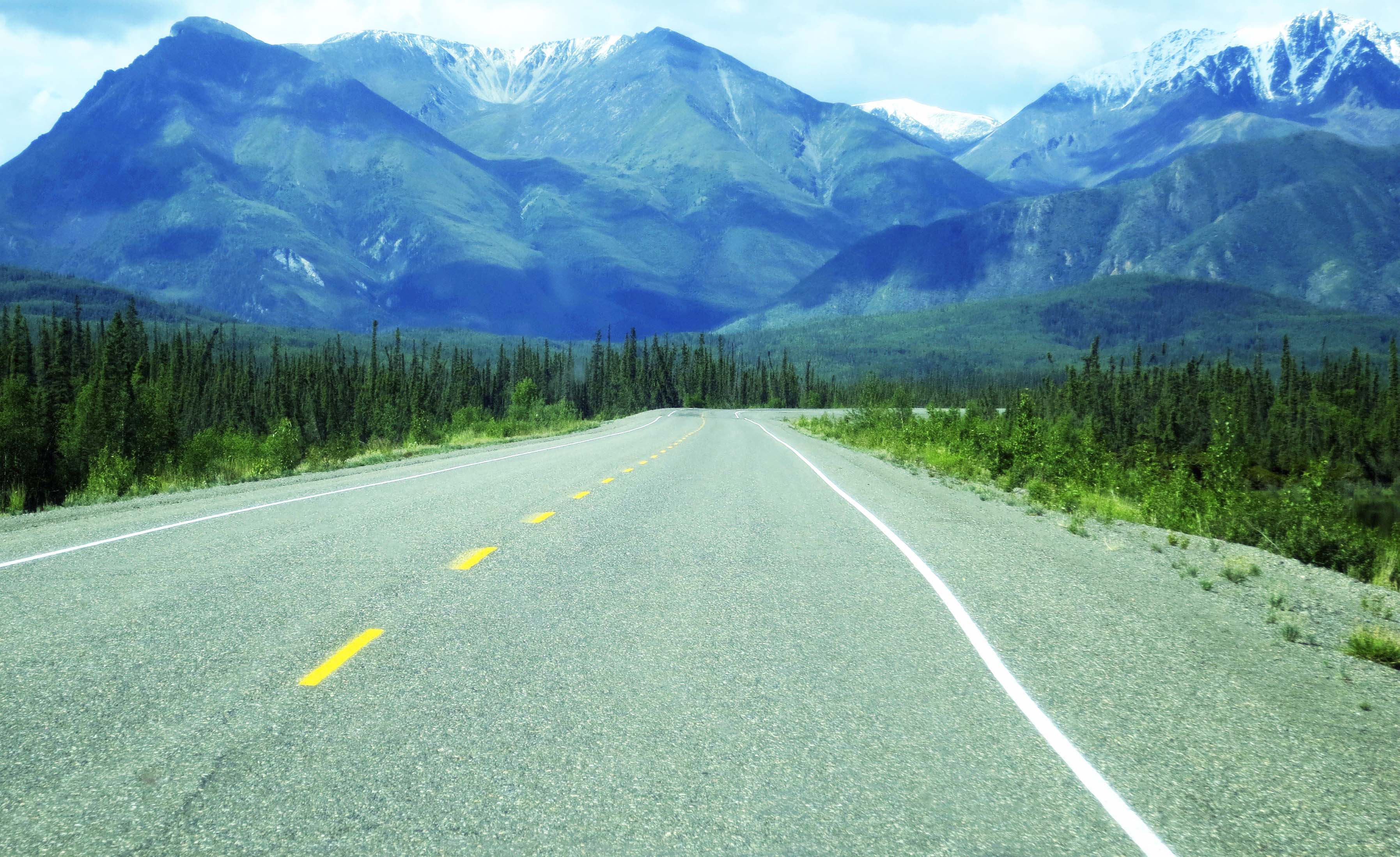
Sights along the the Alaska Highway include towering mountains...

Sights along the Alaska Highway include towering mountains…

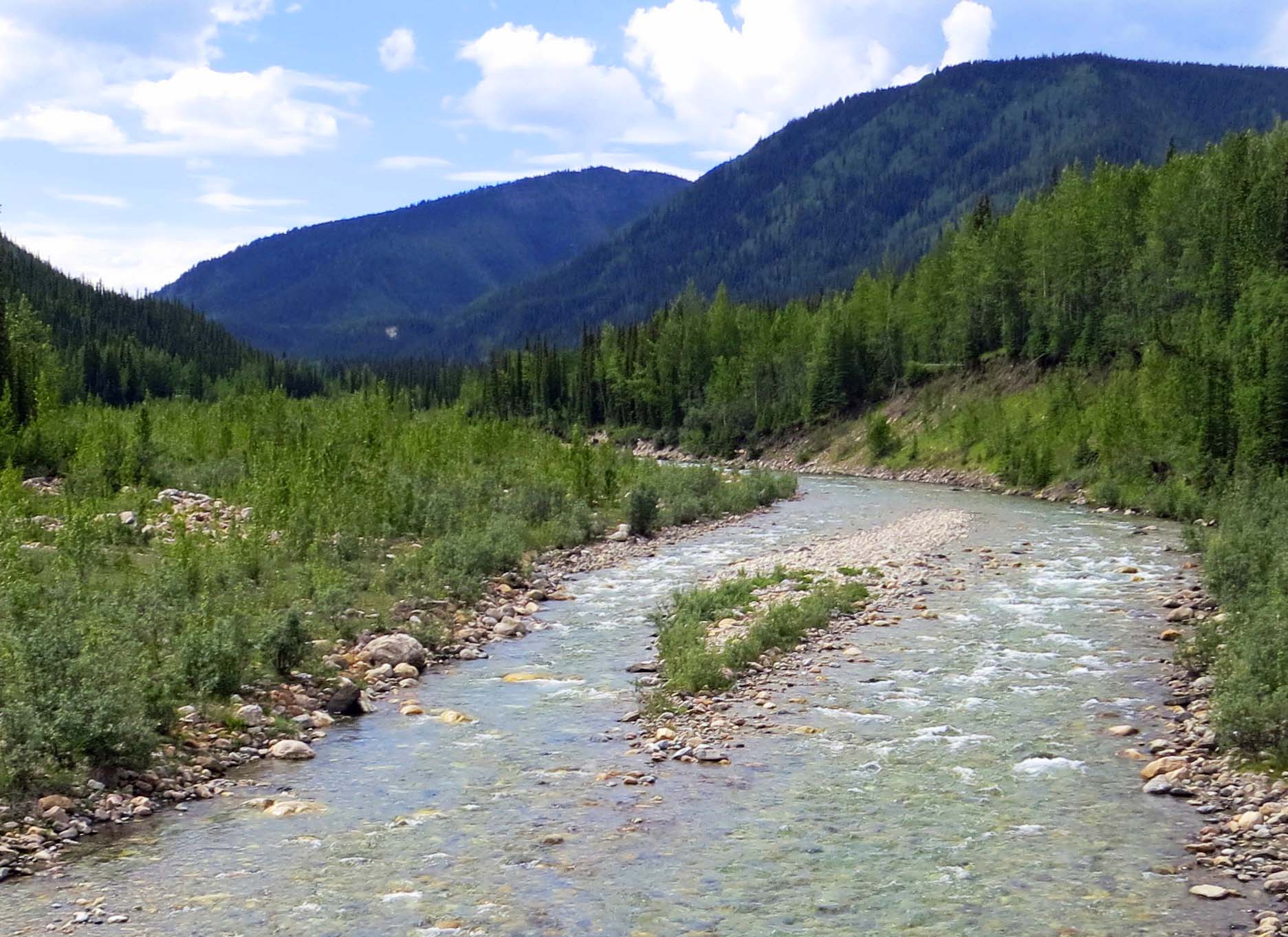
Wild rivers...

Wild rivers…

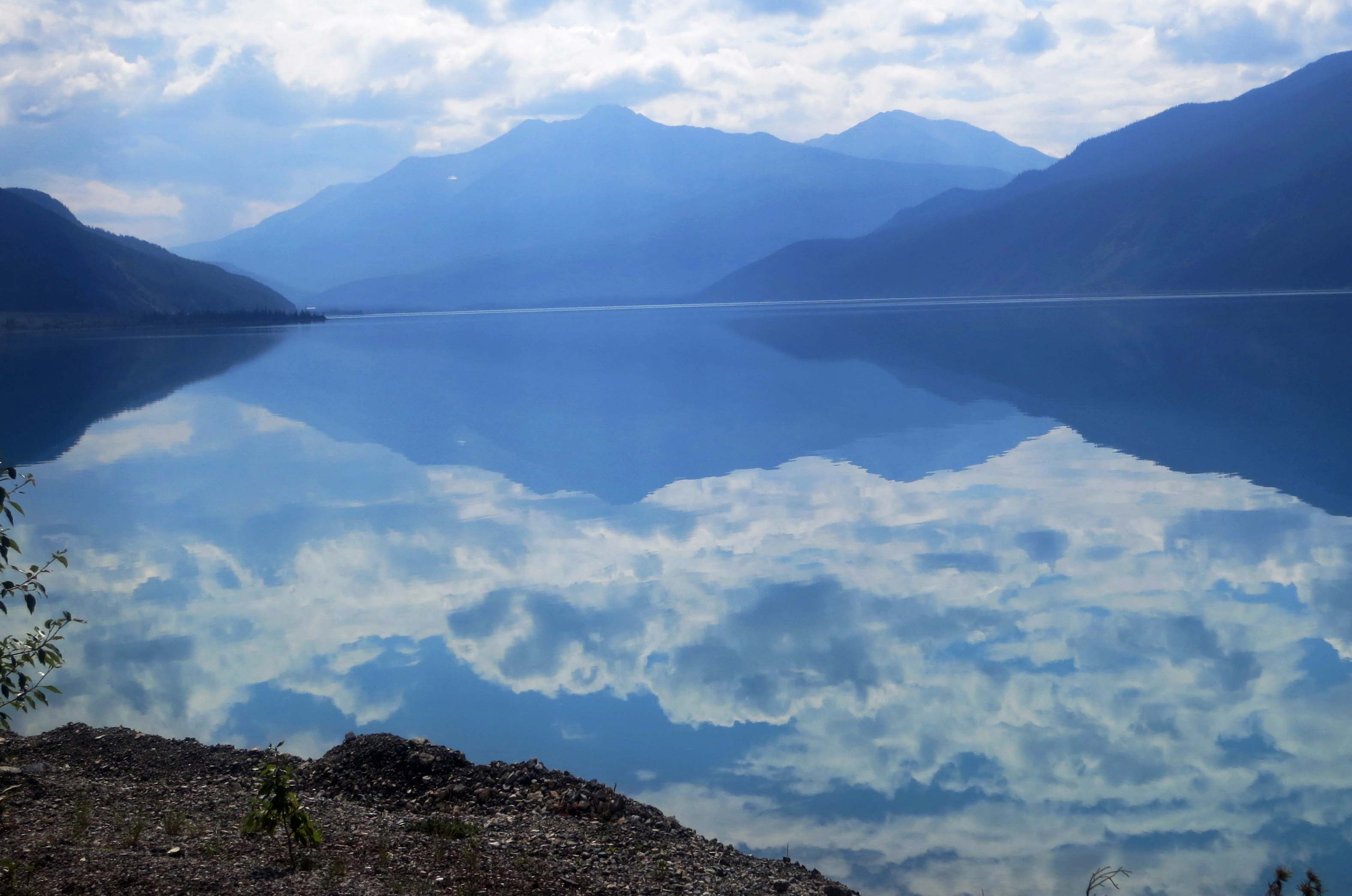
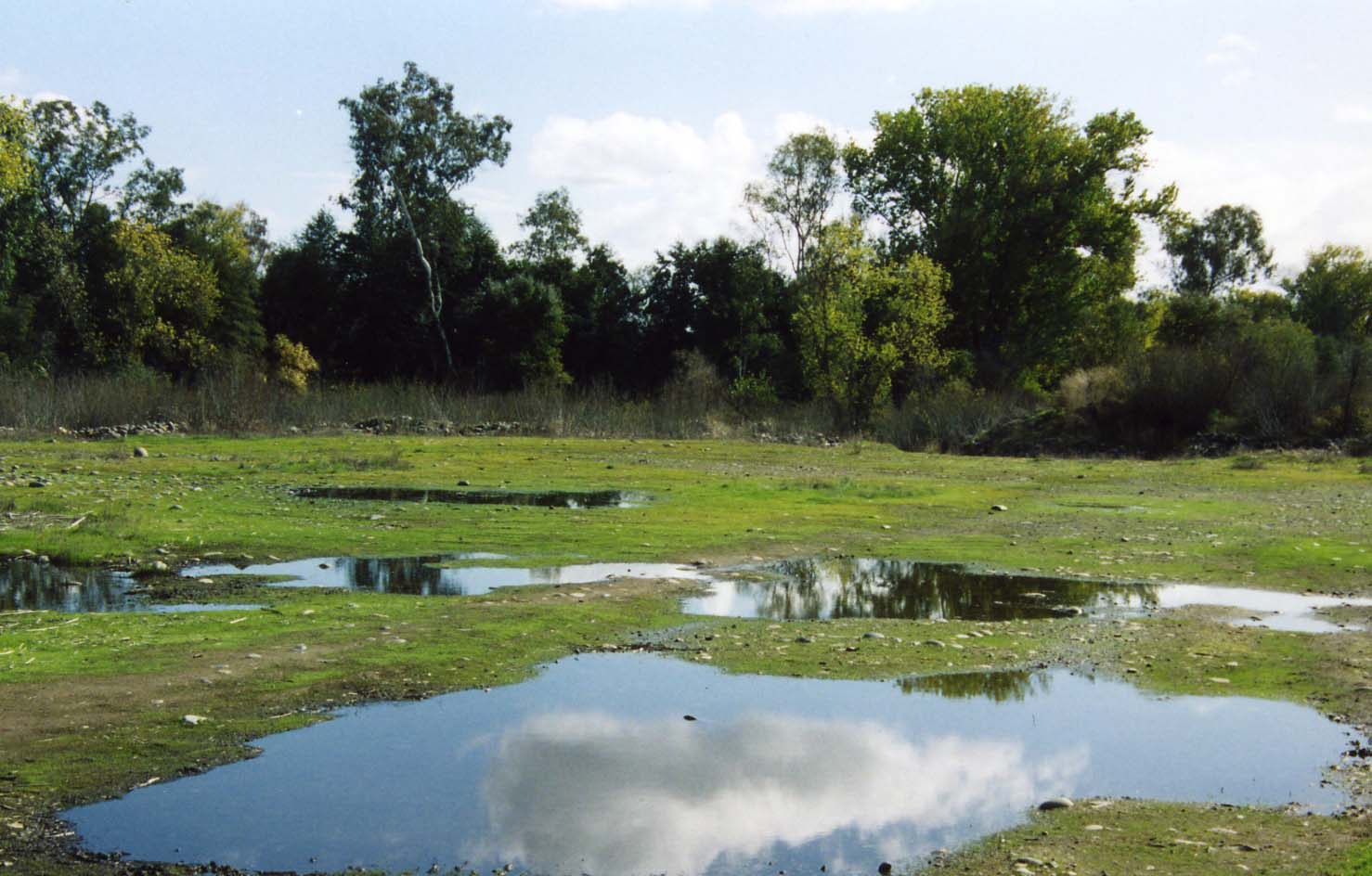
Reflecting lakes...

Reflecting lakes…

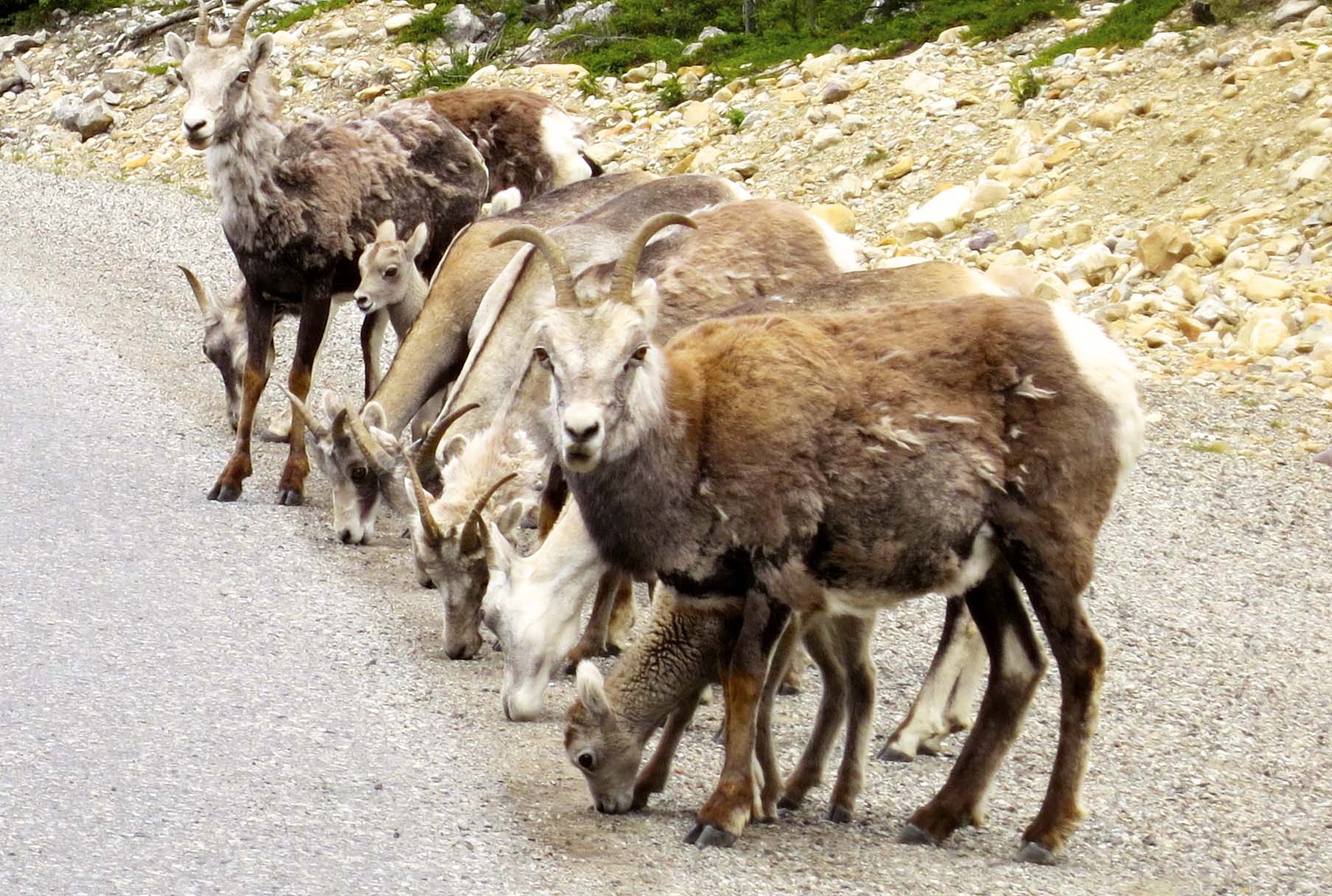
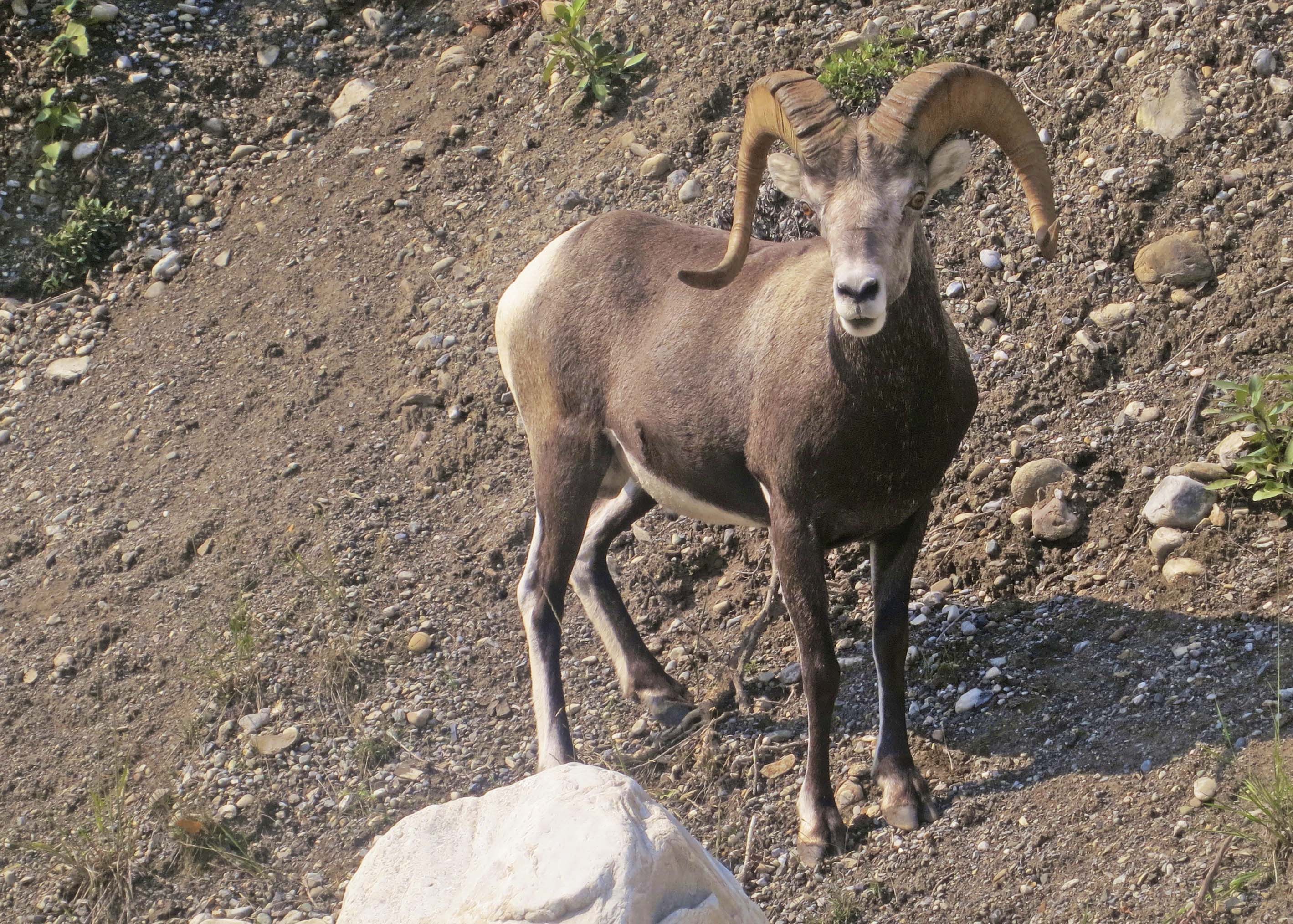
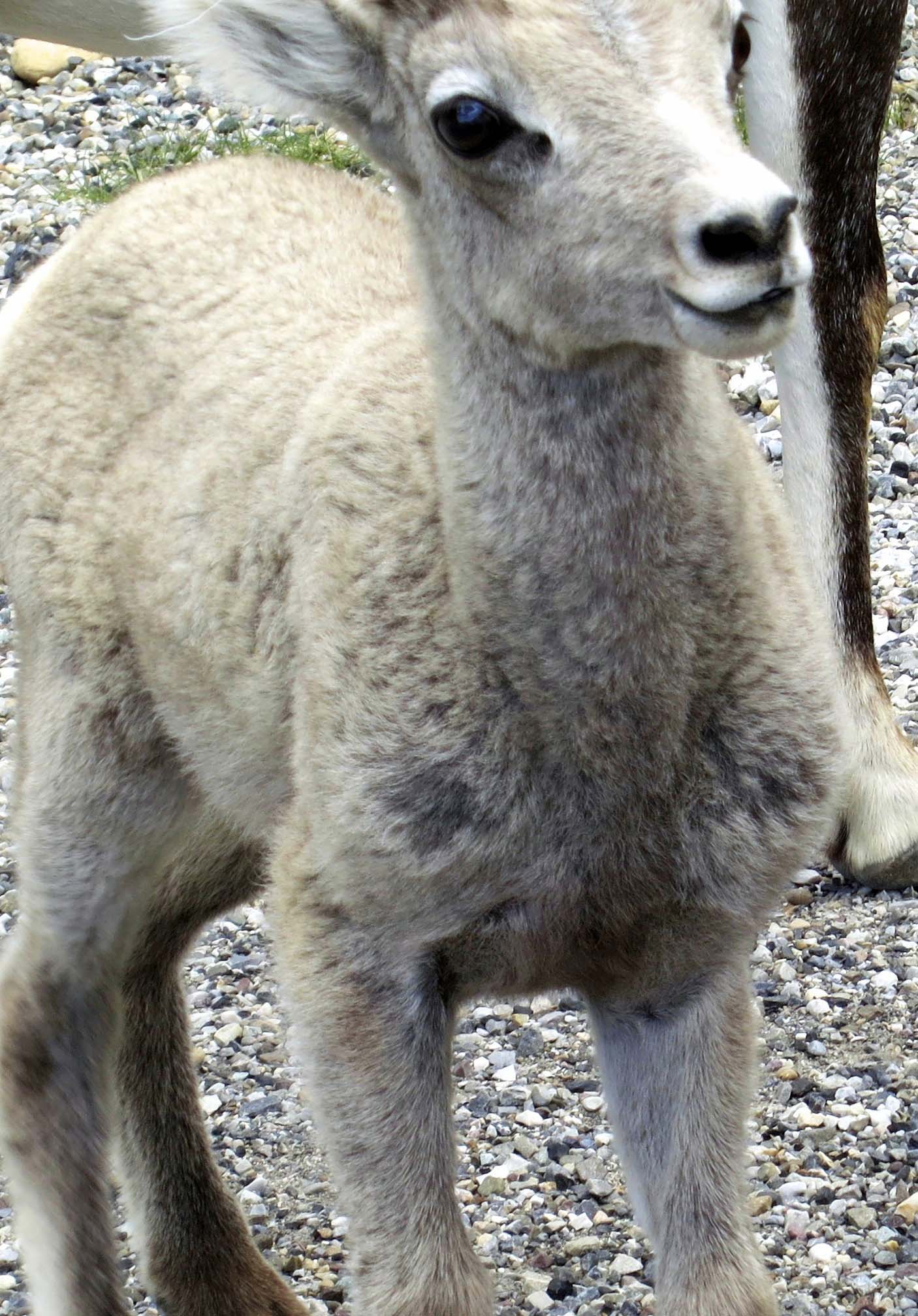
And Dall Sheep...

And Dall Sheep…

Including this ram...

Including this ram…

And this curious kid.

And this curious kid.

Five days later I drove into Sacramento. The grass was green and flowers were blooming even though a major flood had threatened the region in February. I planned on spending a few days visiting my father and some friends before taking off for the woods. As part of my itinerary I stopped by to see Jane Hagedorn at the Sacramento Lung Association. Jane is a fierce friend. Every time I had tried to escape, she had reeled me back in, frustrating my desire to become a happy wanderer by making me offers I couldn’t refuse.

I found my green grass in Sacramento.

I found my green grass in Sacramento.

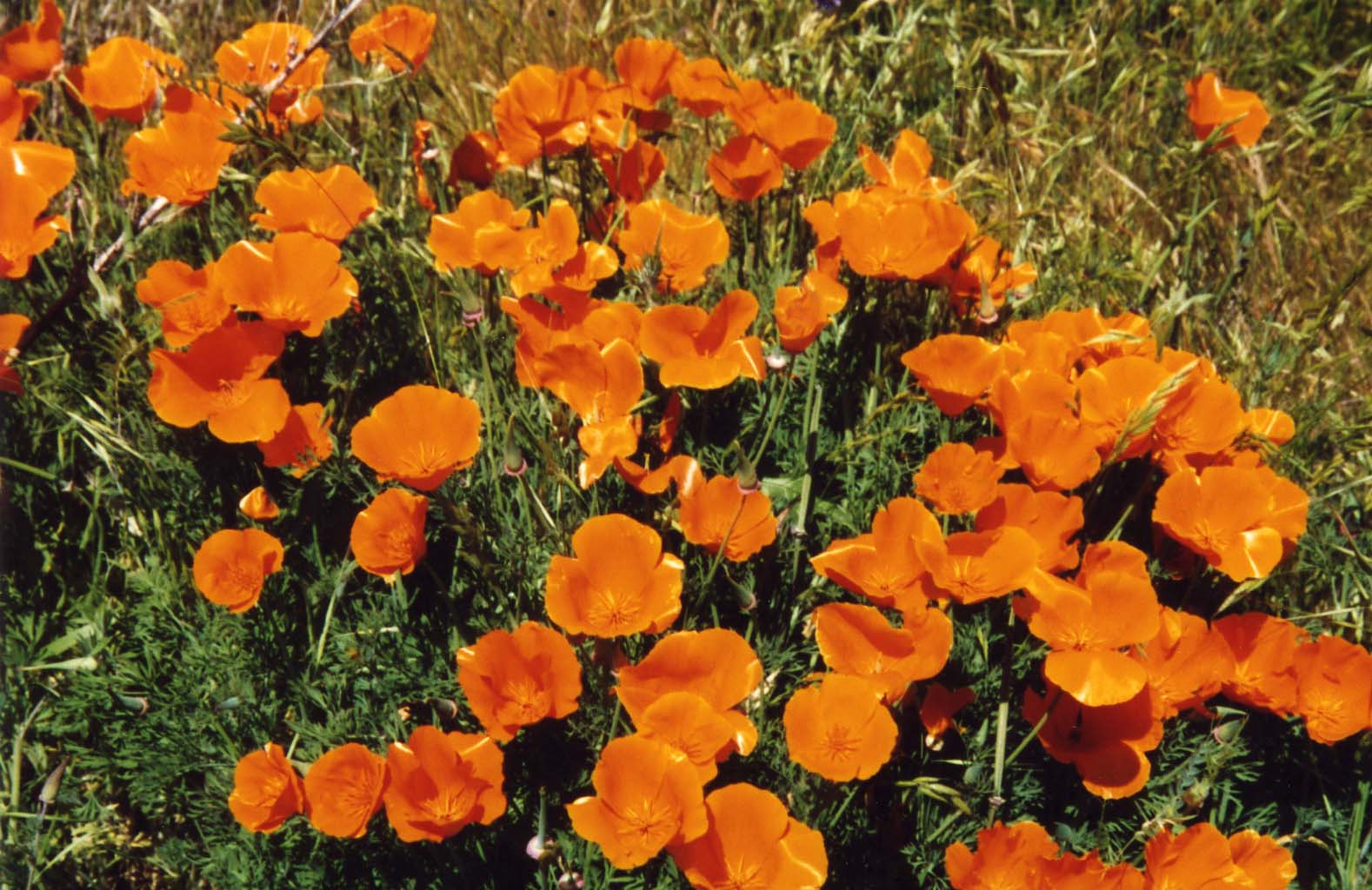
And California Poppies, plus two job offers.

And California Poppies— plus two job offers.

“You will come back to Sacramento and work for Lung when you are done playing,” she informed me and then dangled the Trek Program in front of me for bait. As I usually do, I tentatively agreed. It’s not wise to cross Jane. As I was leaving the Lung Building, I ran into Jerry Meral, the Executive Director of the Planning and Conservation League of California. Along with the Sierra Club, PCL is the main lobbying group for environmental groups in California.

“Curt,” Jerry said with his always-high level of enthusiasm, “I have a job for you.”

“I’m not looking for a job, Jerry,” had been my reply. “I am going backpacking for six months.”

Jerry, who is even worse than Jane at taking no for an answer, continued on, “But this job is perfect for you. I want you to work on raising California’s tobacco tax by five cents so we can use the money for buying parks.” I knew that Jerry and his crew at PCL had successfully done more at raising money for parks than anyone else in California and probably the world. If Jerry was behind the concept, it was legitimate.

“Interesting Jerry, but I am going backpacking.” I figured that took care of it.

“OK and have fun,” said Jerry, “but see me as soon as you get back.”

I half nodded my head in agreement. So here I was, desperate to free myself from any major commitments, and already agreeing to think about taking on two significant tasks— one that was monumental. But they could wait. The next day, I was on my way to the Grand Canyon. And who knew what I would be doing in six months.

NEXT BLOG: The wilderness cure begins. It’s off to backpack the Grand Canyon via Death Valley and Las Vegas.


Santorini Potpourri… The Amusing and the Picturesque

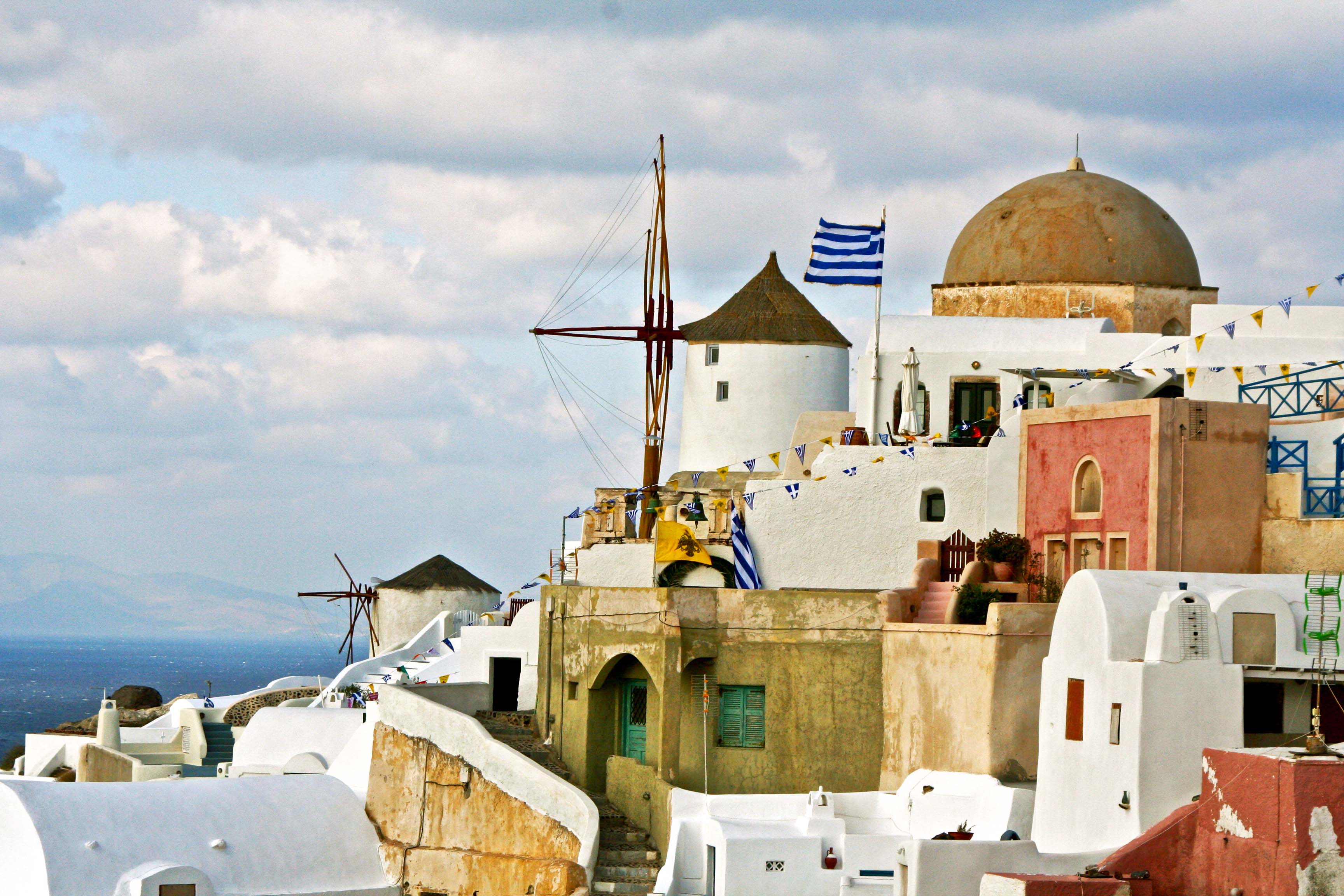
Peggy caught this photo of an old Santorini windmill that I found quite stunning. We found similar windmills won other Greek islands.

Peggy caught this photo of an old Santorini windmill that I found quite striking outlined against the horizon. The blue striped flag belongs to Greece.

Wrapping up my Wednesday photo essays on Santorini, I thought I would go for a potpourri of things that either amused Peggy and me, or that we found interesting and picturesque. Enjoy. Next Wednesday I will randomly pick another selection from my collection of 20,000 iPhotos. Who knows where we will land…

We found this dog admiring the Aegean Sea while perched on a rock. In our travels through the Mediterranean we often found cats and occasionally dogs that seemed owner free or at least wandered at will.

We found this dog admiring the Aegean Sea while perched on the end of a rock. In our travels through the Mediterranean we often found cats and occasionally dogs that seemed owner free or at least wandered at will.

He and I shared a common perspective on the value of an afternoon nap.

He and I shared a common perspective on the value of an afternoon nap.

For get modern excavation equipment when it comes to building on the sides of the volcano. How are you going to get a back hoe and dump trucks down a narrow star way?

Forget modern excavation equipment when it comes to building on the sides of the volcano. How are you going to get a backhoe and dump trucks down a narrow stairway? Dirt and rock dug out of the mountainside has to be bagged up and shipped out another way.

By mules.

By mules. (Photo by Peggy Mekemson.)

You quickly lean red you had to get out of the way or get stepped on. There was no posing for photos by these heavily laden mules.

You quickly learned that  you had to get out of the way or get stepped on. There was no posing for photos by these heavily laden mules.

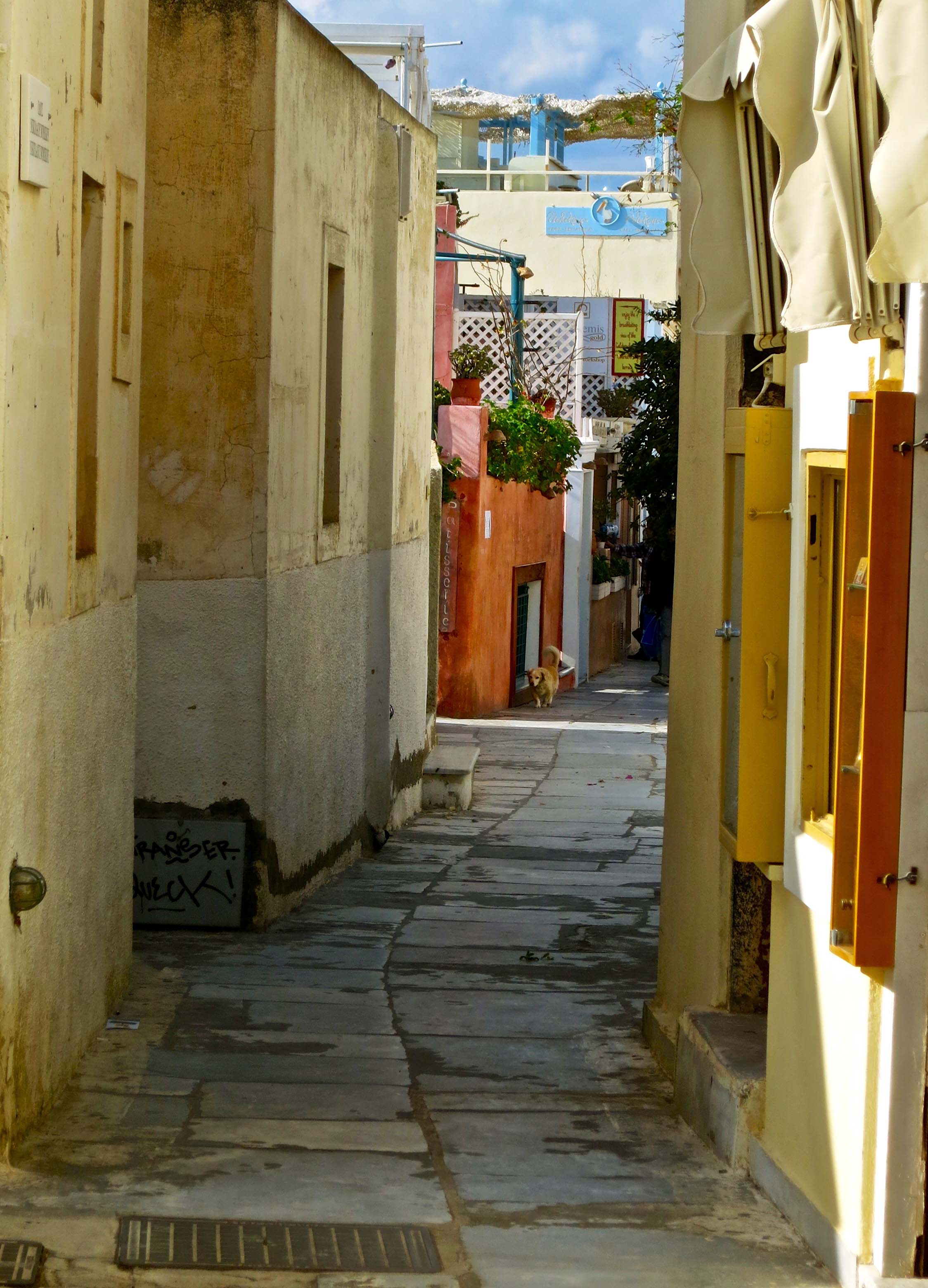
There were numerous small walkways to explore. During the height of tourist season these walkways would be packed with people.

There were numerous small walkways to explore. During the height of tourist season these walkways would be packed with people.

Several of the people who follow my blog like murals. This one is for you. I really liked the way its tentacles wrapped around the door.

Several of the people who follow my blog like murals. This one is for you. I really liked the way its tentacles wrapped around the door.

I am sure you've all had the experience of slow food. (grin) This restaurant apparently made an art out of it. And how could you complain. You had been warned.

We’ve  all had the experience of food that takes forever to be delivered. (grin) This restaurant apparently made an art out of it.

Peggy has wild, naturally curly head, that has a mind of its own. It seemed to me in this photo that it was attacking her head.

Peggy has wonderfully wild, naturally curly hair, that has a mind of its own. It seemed to me in this photo that it was attacking her head. I kept my distance.

This amusing sculpture was propped up against the wall. I don't think this guy was a fireman or that he had rescue on his mind.

This amusing sculpture was propped up against the wall. I don’t think this guy was a fireman or that he had rescue on his mind.

Normally I avoid tourist souvenirs, and I did this time. I did think these plates and vases did a good job of representing the color of Santorini.

Normally I avoid tourist souvenirs, and I did this time. These plates and vases did do a good job of capturing the colors of Santorini, however.

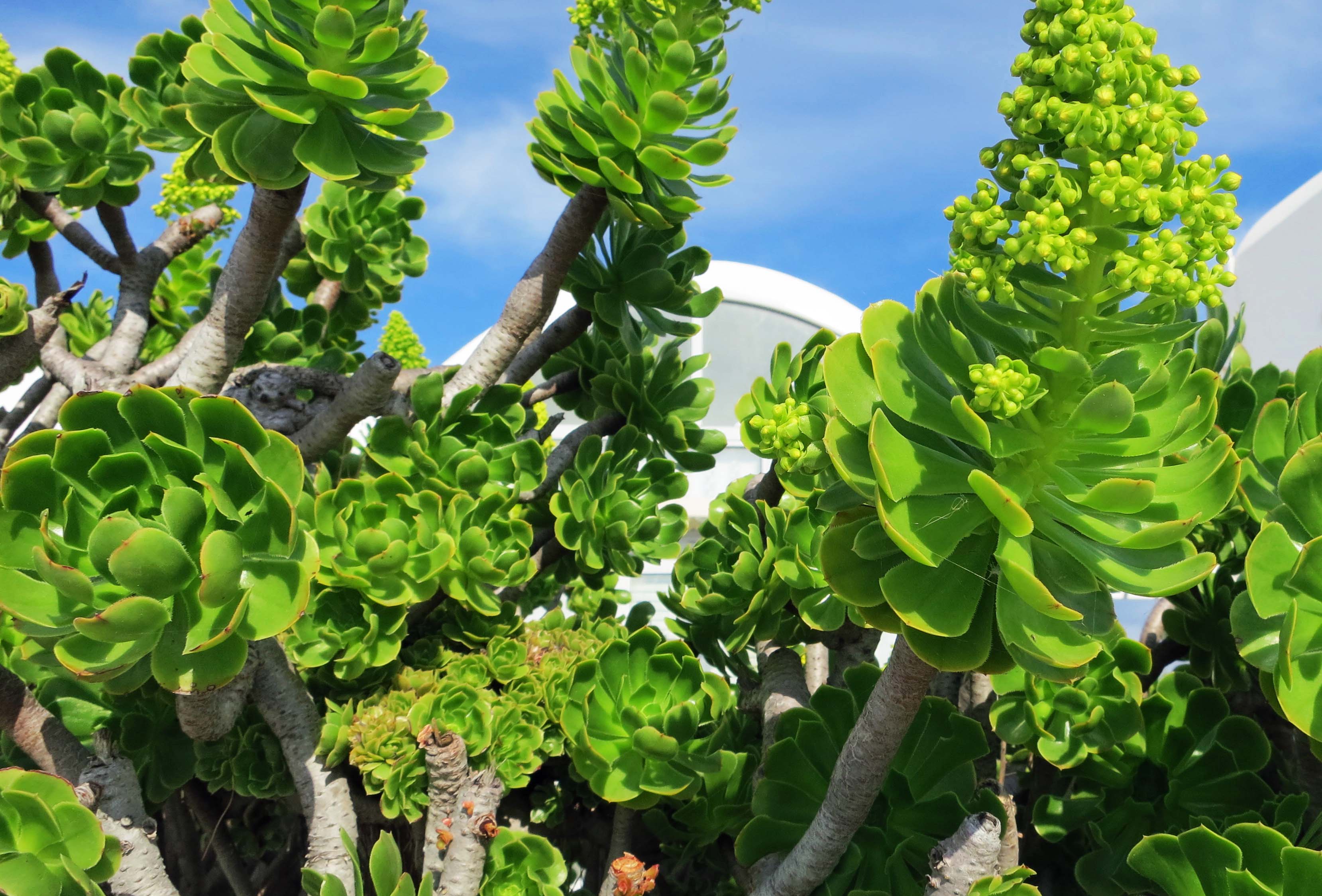
Green plant

Speaking of color, this green was vivid.

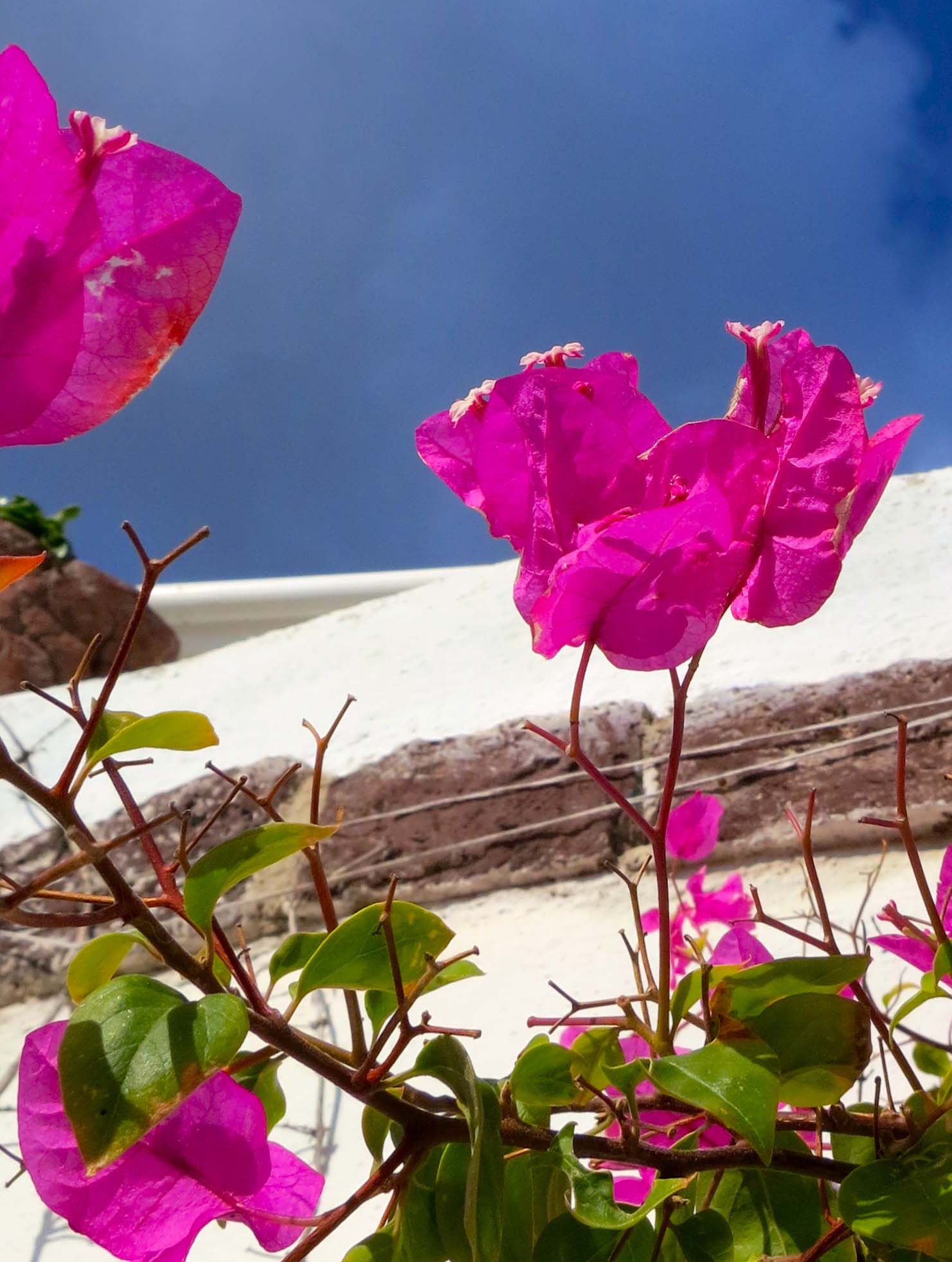
The flowers were also colorful, including this bougainvillea.

As was the pinkish red of these Bougainvillea.

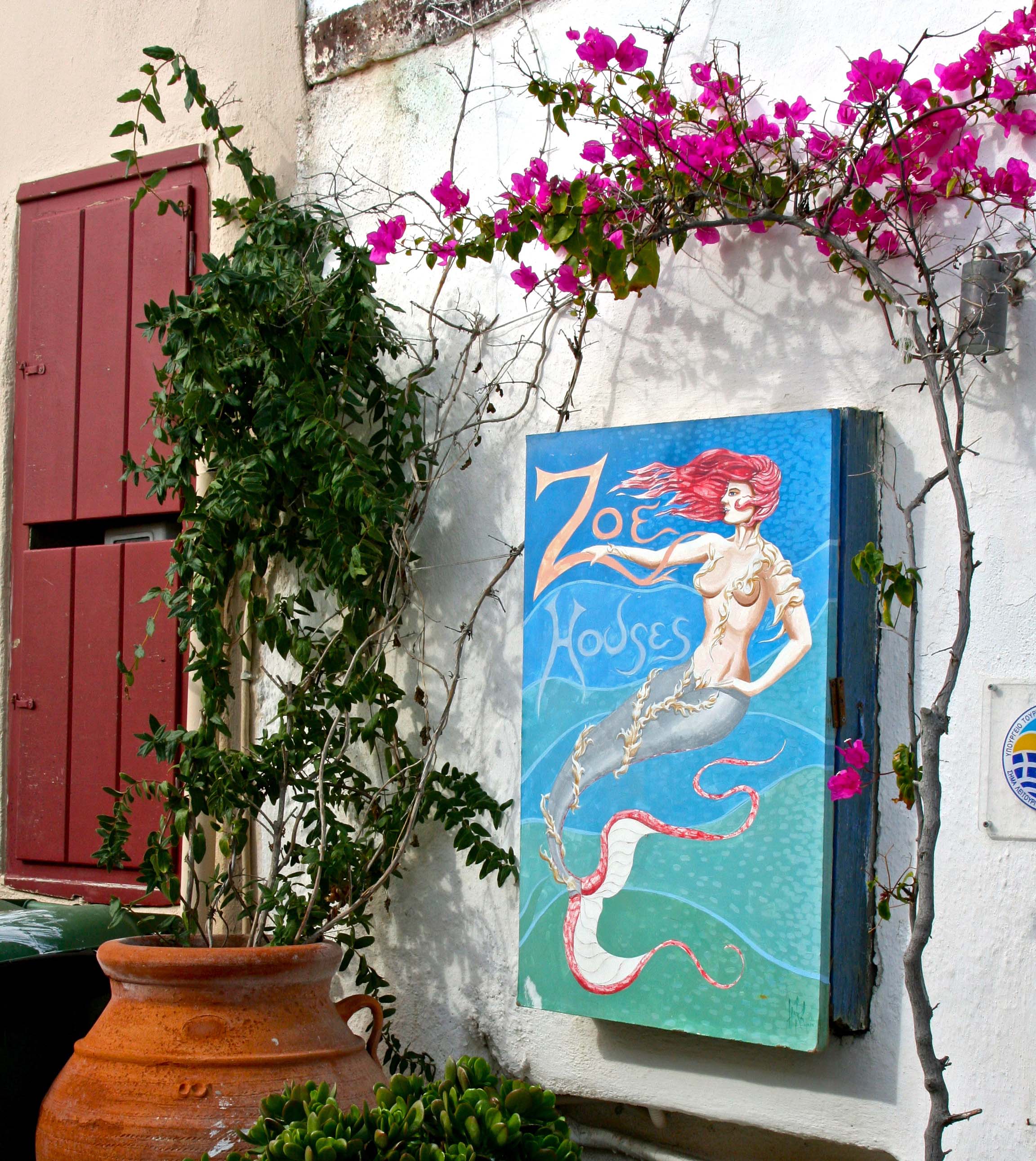
Certainly one would expect to find mermaids lulling around on the rocks off of Santorini. The bougainvillea  made a nice frame.

Certainly one would expect to find mermaids lulling around on the rocks off of Santorini. The Bougainvillea provided a colorful  frame.


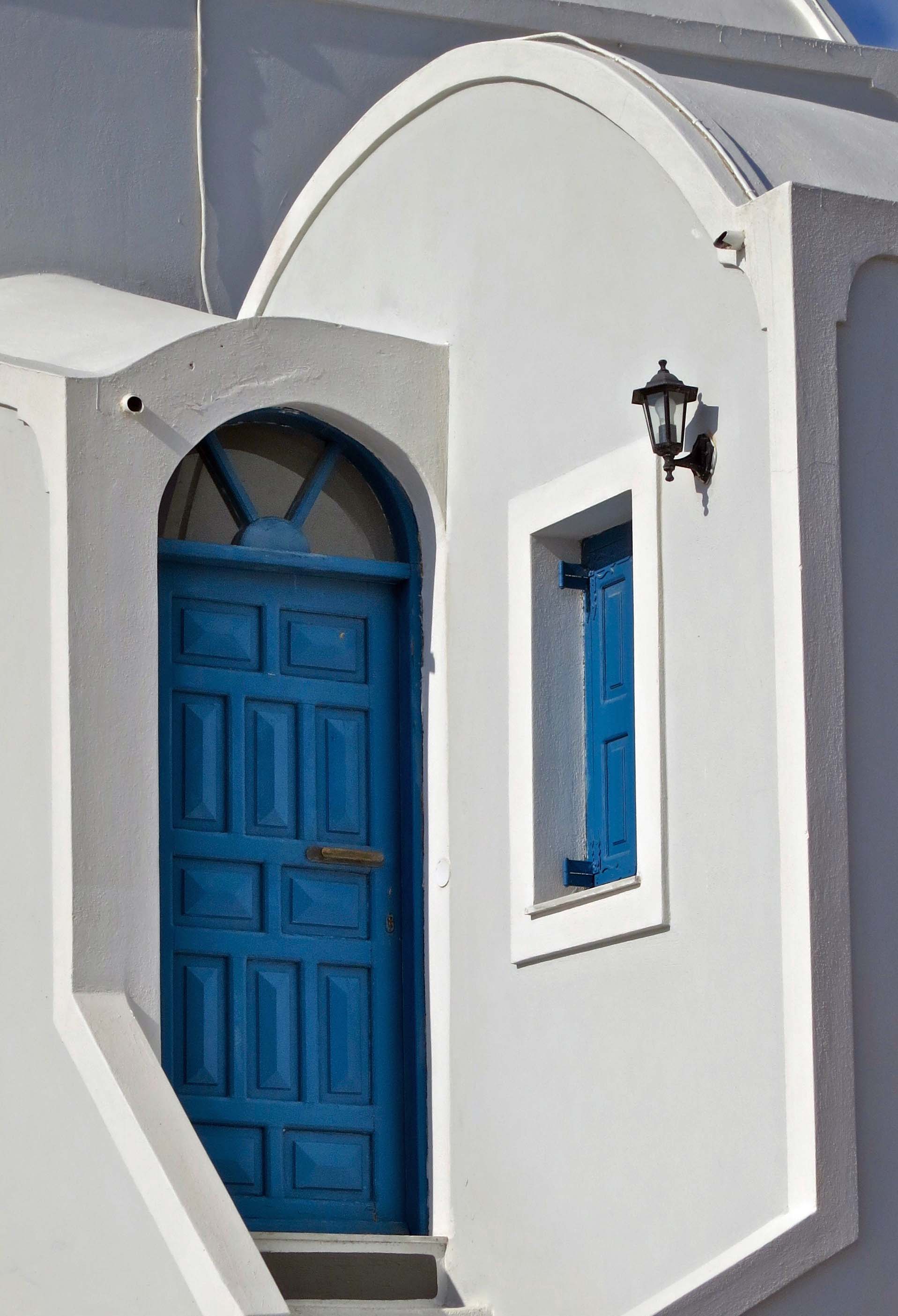
I really like painted doors.

I was impressed with this blue door.

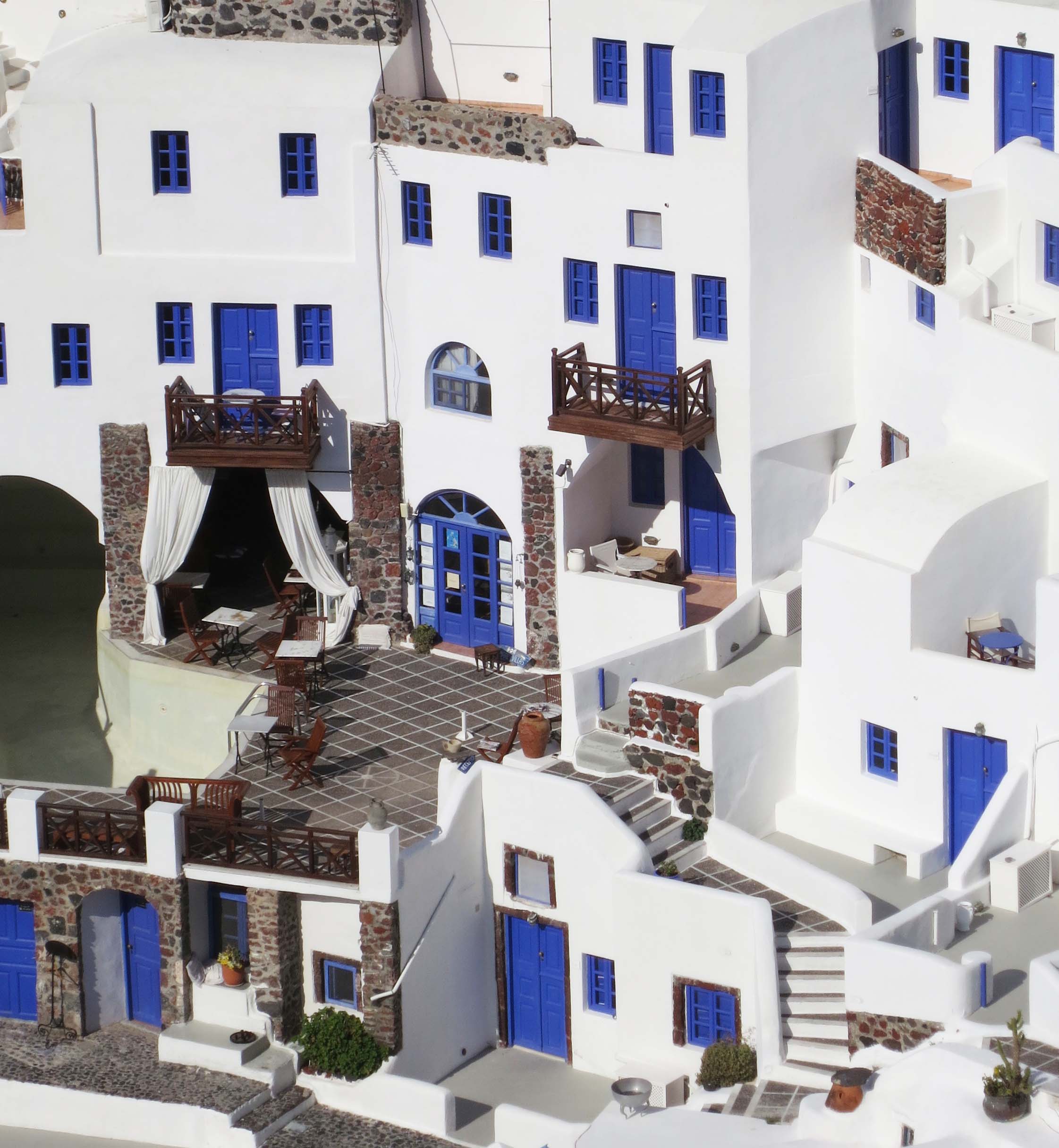
Lots of blue doors.

And found lots more like it. (Photo by Peggy Mekemson.)

And then we found a door to nowhere.

And then we found a green door to nowhere.

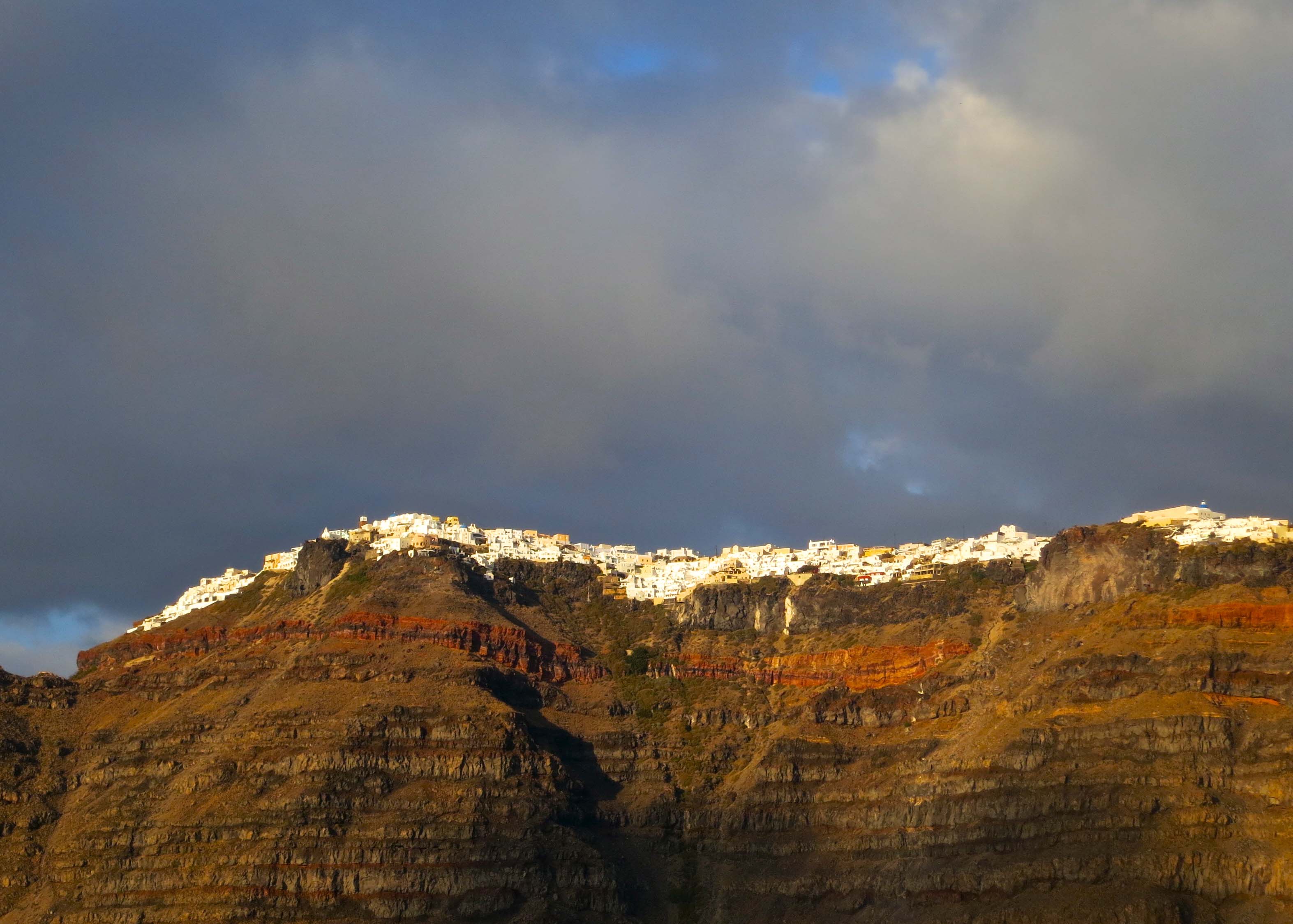
As we sailed away at sunset, we caught a final view of Santorini.

As we sailed away at sunset, we caught a final view of Santorini’s towns perched up on the high cliffs.


The Striking Churches of Oia, Santorini…

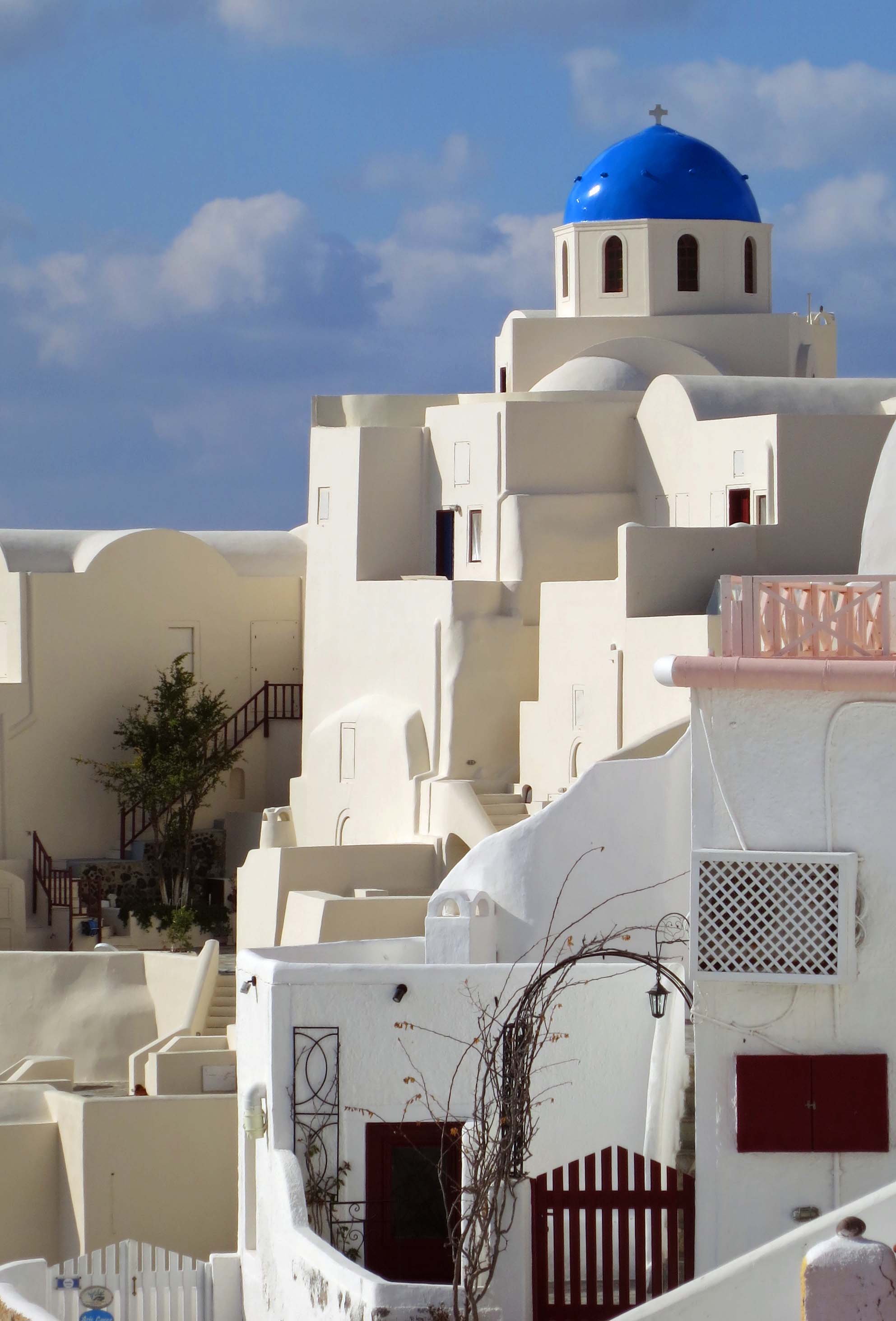
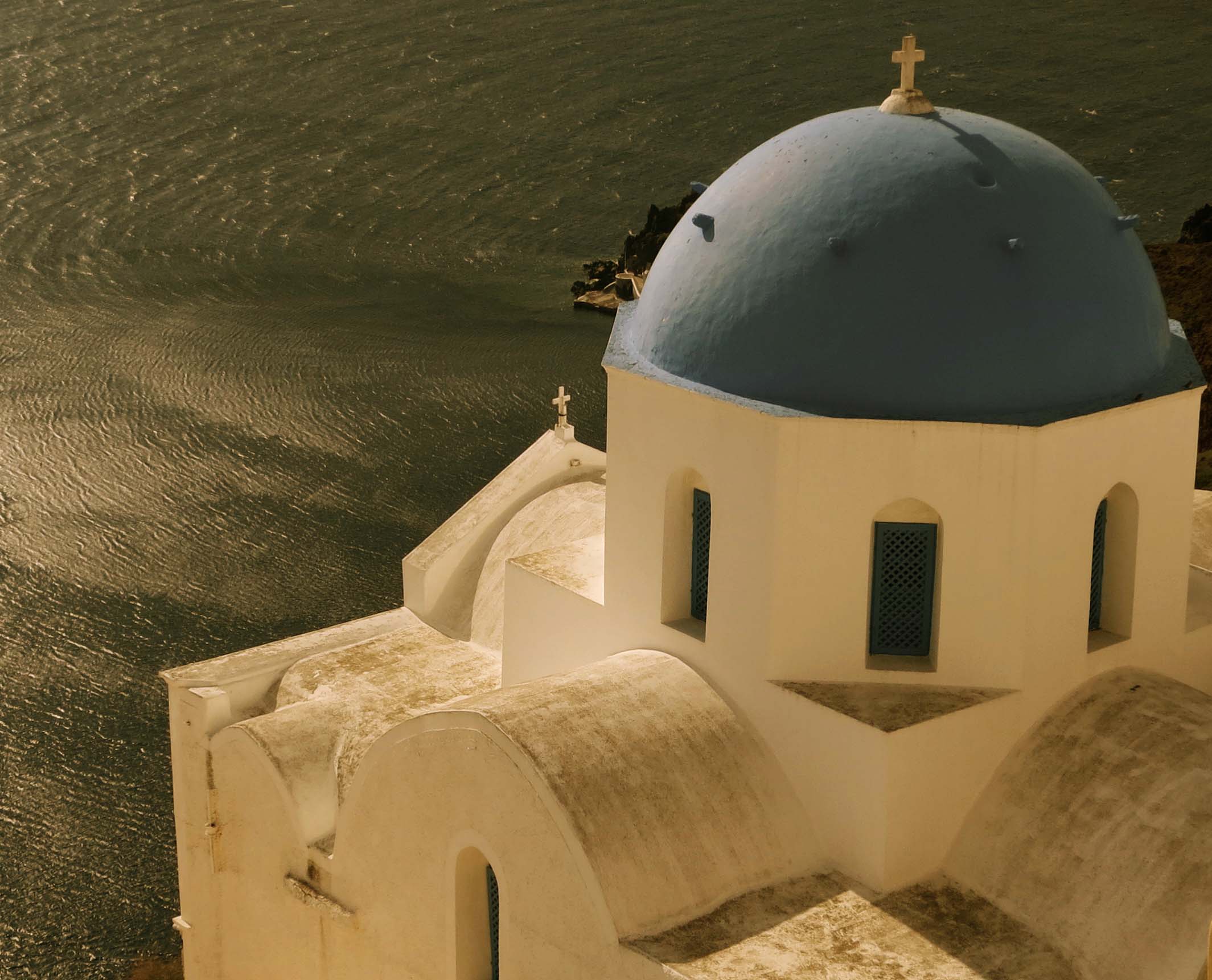
It is a combination of the blue domes, unique architecture, magnificent setting and Mediterranean light that make the many churches in Oia so outstanding. (Photo by Peggy Mekemson.)

It is a combination of the blue domes, unique architecture, magnificent setting and Mediterranean light that make the many churches in Oia so outstanding. (Photo by Peggy Mekemson.)

I’ve blogged about the churches on Santorini before, but their beauty, surroundings, and unique architecture are such that they are worth revisiting— often. Most of these photos are from the village of Oia and the surrounding area that contains some 70 churches.

The obvious question here is ‘Why so many?’ One or two large churches could easily accommodate the population, especially since the majority of the population is Greek Orthodox. The answer lies in the fact that Oia is a fishing village and the life of a fisherman is filled with danger.

When things become iffy, religious folks, and even not so religious folks start talking to God and making promises. “Get me through this and I’ll do so and so…” There is a long list of options. In Oia, for those who could afford it, the offering became “I’ll build you a church.”

To make things a little more personal, the fishermen dedicated their churches to whatever saints they thought were looking out for them. The saint was their go-to guy (or gal), their direct line to God. And even today, the feast day of the saint is a big thing at the various chapels.

One final note: many of the churches are privately owned, passed down within a family for generations from the original builder.

Another photo of the same church that I took. This one from a different angle. A separate post could easily be made on each church in Oia.

Another photo of the same church. I took this one from a different angle. A separate post could easily be made on each church in Oia.

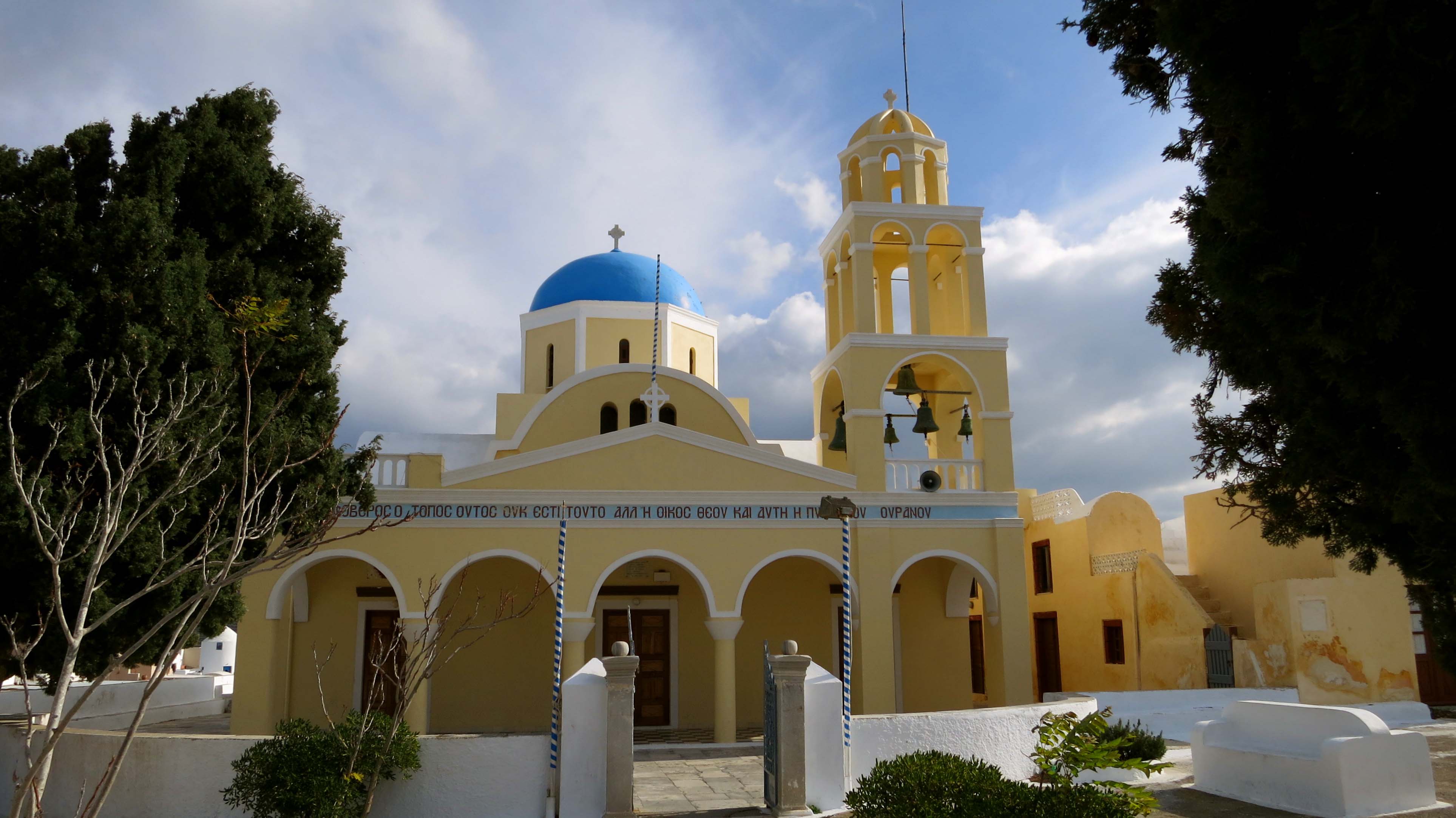
The Church of St. George, set off by dramatic clouds occupied my camera for 30 minutes.

The Church of St. George, set off by dramatic clouds, occupied my camera for 30 minutes.Lightning rods also adorn the church.

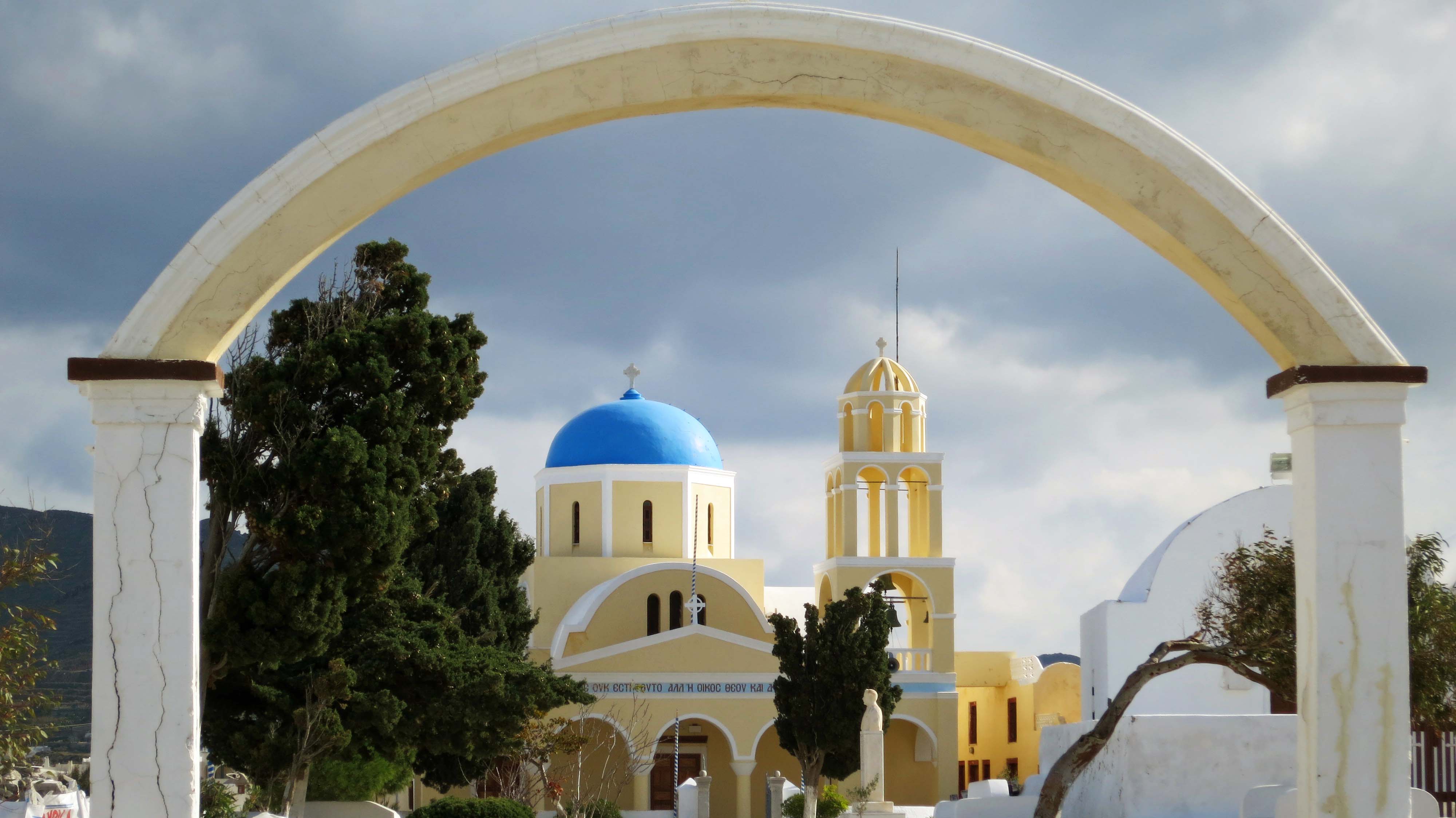
Moving back, this arch provided a fun composition for the church. I suspect it has been used for the same purpose thousands of times. (grin)

Moving back, this arch provided a fun composition for the church. I suspect it has been used for the same purpose thousands of times. (grin)

A side view of the church.

A side view of the church.

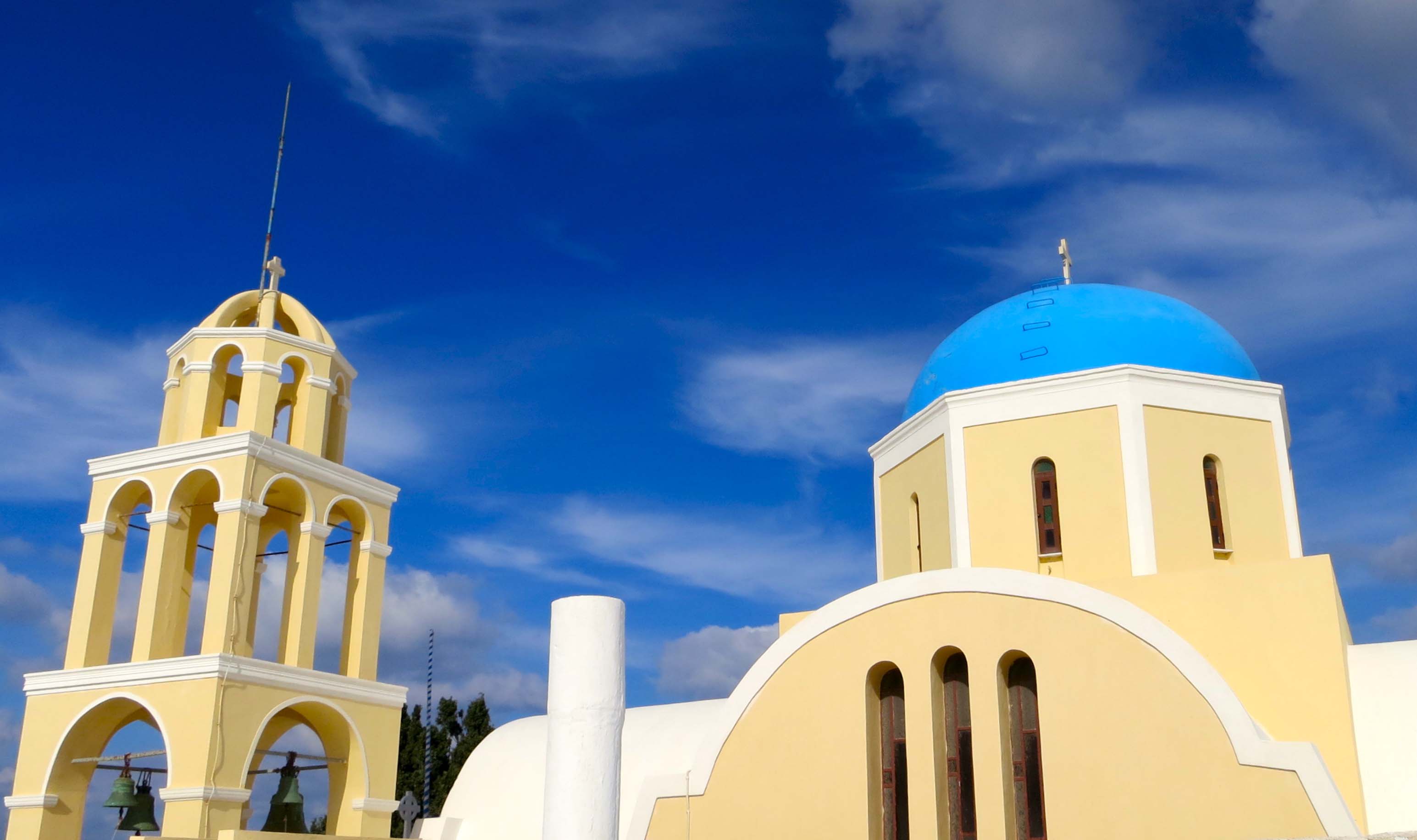
A view of the dome...

A view of the dome…

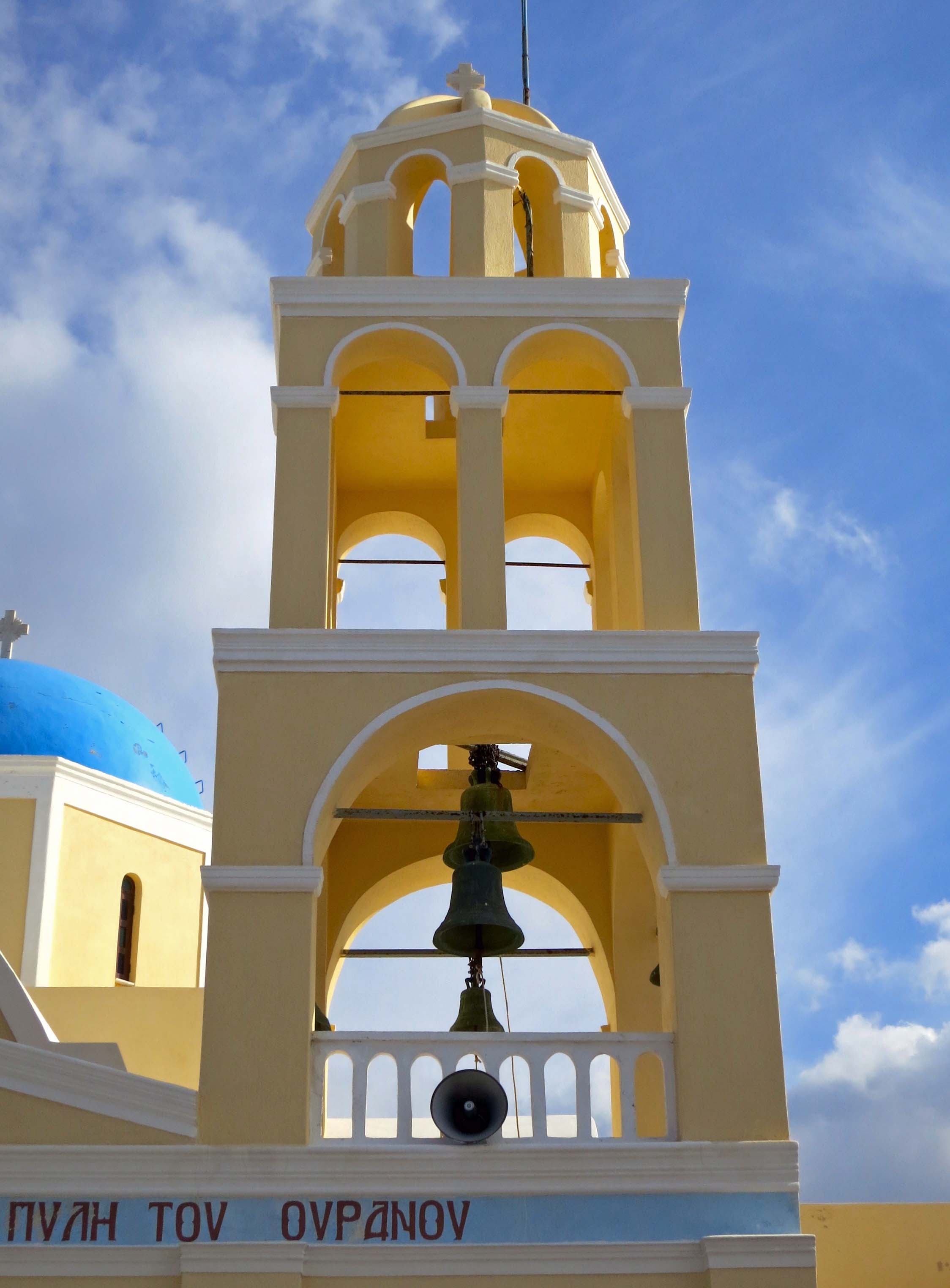
And the bell tower. The walls seemed to be glowing.

And the bell tower. The walls seemed to be glowing.

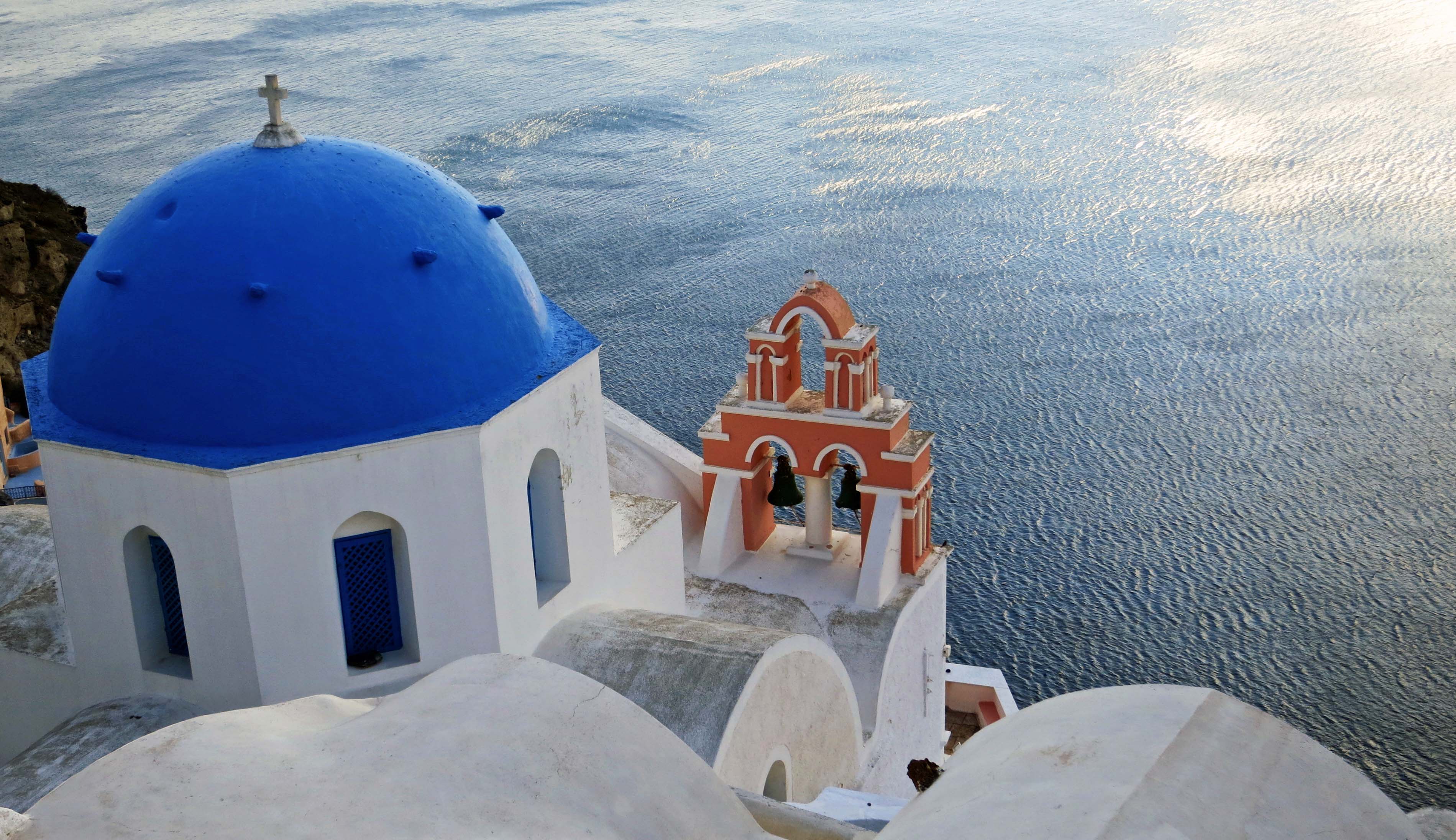
Many of the churches are smaller and more personal, built by families as thanks for surviving sea journeys and passed down to family members over generations.

Many of the churches are smaller and more personal, built by families as thanks for surviving sea journeys and passed down to family members over generations. Love the salmon pink.

I always appreciate it when nature provides a convenient frame for my photos.

I always appreciate it when nature provides a convenient frame for my photos.

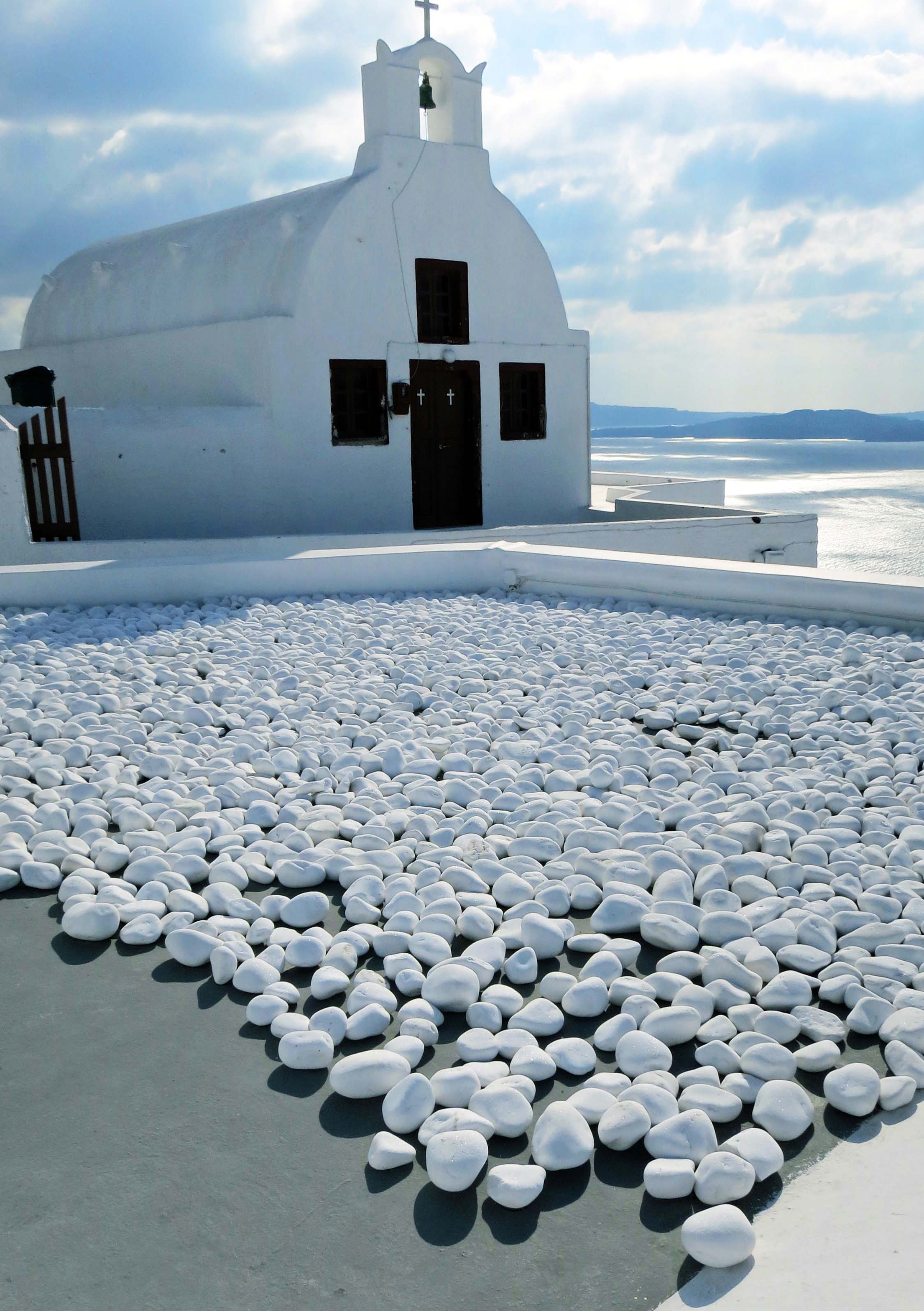
Think of the imagination that went into the decision to put white rocks in front of this white church.

Think of the imagination that went into the decision to put white rocks in front of this white church.

A back view of the church with Oia, Santorini stretching out in front.

A back view of the church with Oia, Santorini stretching out in front.

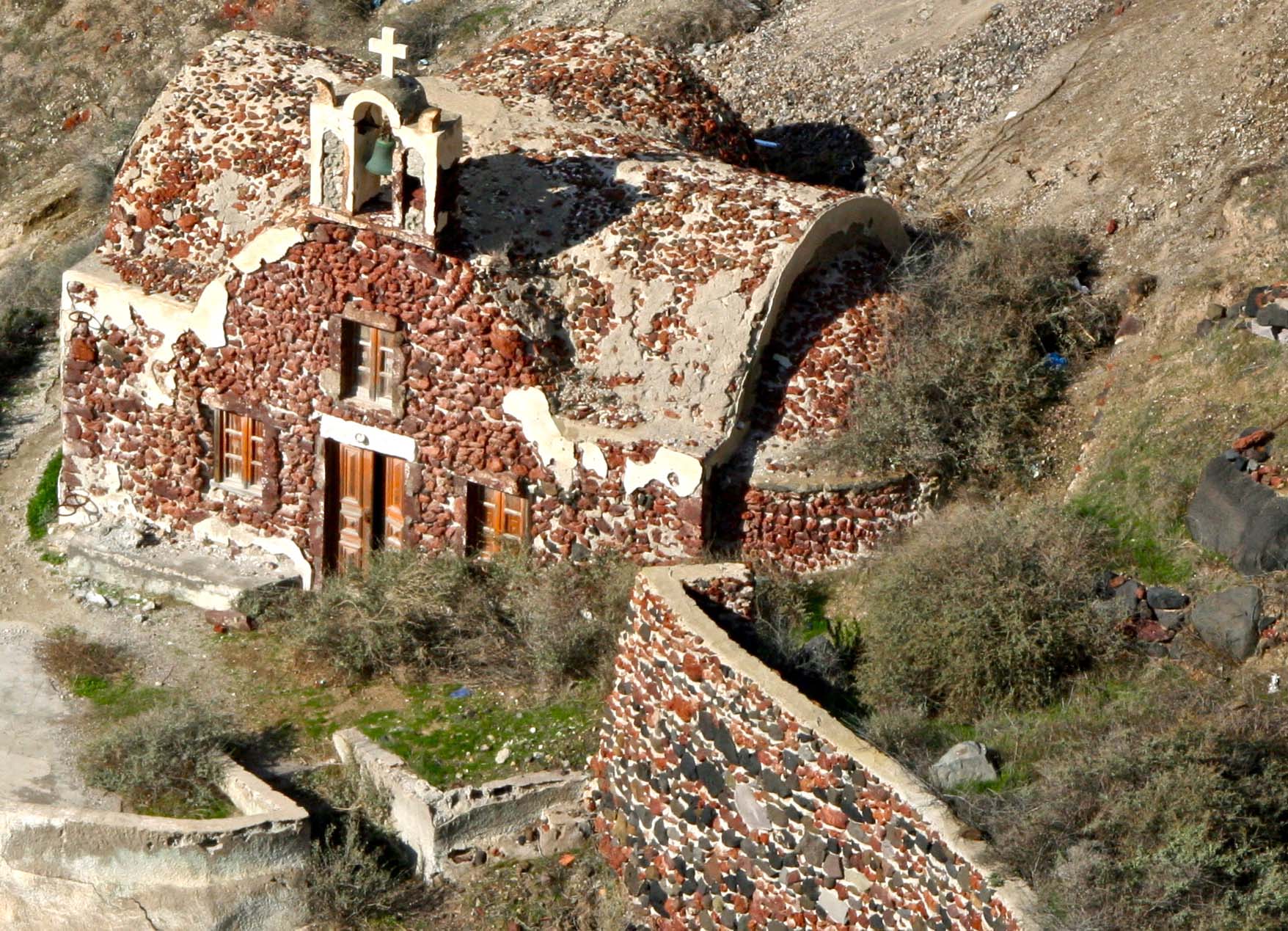
This looked like a very old church to me. Notice how it is built into the cliff. (Photo by Peggy Mekemson.)

This looked like a very old church to me. Notice how it is built into the cliff. (Photo by Peggy Mekemson.)

The Anastasis Church in Oia provides a striking view of the Aegean Sea.

The Anastasis Church in Oia provides a striking view of the Aegean Sea.

Another view of the church.

Another view of the church.

The Church of Panagia Platsani is the first church we encountered in Oia. (Photo by Peggy Mekemson.)

The Church of Panagia Platsani is the first church we encountered in Oia. (Photo by Peggy Mekemson.)

The church's bell tower. (Photo by Peggy Mekemson.)

The church’s bell tower. Again, the sky provided a dramatic backdrop. (Photo by Peggy Mekemson.)

I don't have the name for this church but thought it was quite striking.

I don’t have the name for this church but thought it was quite striking.

A final view looking out into the Aegean and the walls of the caldera that forms Santorini, a solemn reminder that this is earthquake country. NEXT BLOG: Friday's essay— Escape from Alaska

A final view looking out into the Aegean and the walls of the ancient volcano that form Santorini, a solemn reminder that this is earthquake country. NEXT BLOG: Friday’s essay— Escape from Alaska


Back to Buncom… At Home in Oregon

You never know who or what might show up for the parade, but everybody is invited to participate. No entry form required.

You never know who or what might show up for the Buncom Day parade, but everybody is invited to participate. No entry form is required. Just step out in the road. I thought the peace sign was a nice addition.

Normally there are more ghosts than people hanging out in the Buncom. All it takes is three flickering apparitions. The situation changes dramatically on Buncom Day in late May when the annual Buncom Day Parade takes place and the town’s population soars to 500. I’ve now been three times. If I am not off gallivanting, I’ll be there again next year. Guaranteed.

Where else could I step onto the street and become part of a parade, buy a scrumptious pulled pork sandwich from the local Lion’s Club, or bet a buck on where a pullet is going to poop?

But there was more this year— I had responsibility. The Friends of Ruch Library (FORL) was having a book sale and my wife Peggy has become president of the organization. Being First Man meant I had duties, heavy duties like carrying boxes and tables. Brawn, not brains, was what Peggy required (that, and our pickup truck).

Peggy and fellow board members staffed the Friends of the Ruch Library book sale. One of Ruch's three buildings, the long abandoned Post Office was their venue.

Peggy and fellow volunteers from Friends of the Ruch Library staffed the book sale. One of Ruch’s three buildings, the long abandoned Post Office, was their venue.

Inside books were neatly arranged on the tables I had delivered. Check out the prices!

Inside books were neatly arranged on the tables I had delivered. Check out the prices! Paperbacks were going at five for a dollar, current hardbacks for a dollar fifty.

For the uninitiated, Buncom is located in the Applegate Valley of southern Oregon about 20 miles west of Medford. It was a booming gold rush town during the 1850s and later became a regional supply center. But that all ended with the advent of the automobile, or horseless carriage as it would have been known then. All that remains today are three vacant buildings, and, of course, the ghosts.

BTW, it’s weed-whacking time here at the ranch. Each day I march forth bravely with my weed-whacker. This morning Peggy gave me a bright pink water bottle to carry.

“So it won’t get lost,” she said. It sounds so much better than, “So you won’t lose it.” We’ve learned to blame inanimate objects rather than each other when things disappear. Keys hide and glasses mysteriously show up when they are ready to show up. But back to the pink bottle…

“But people will think I’m a princess,” I complained. I won’t report Peggy’s response.

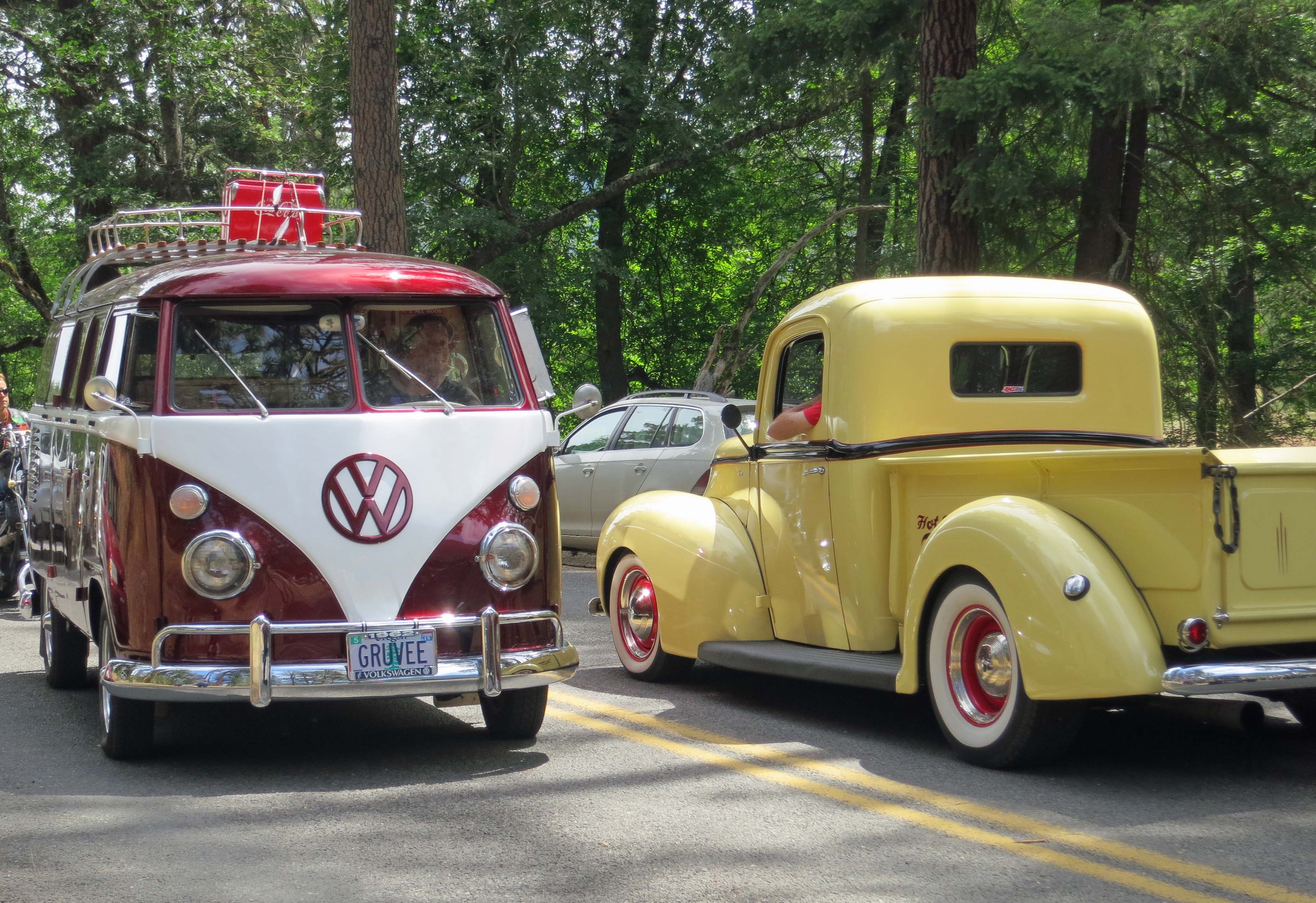
Mini-VW Van had it's adult equivalent, painted exactly the same. And yes the 200 yard parade goes in both directions.

Mini-VW Van had its adult equivalent, painted exactly the same. Maybe it’s Mom. And, yes, the 200 yard parade goes in both directions.

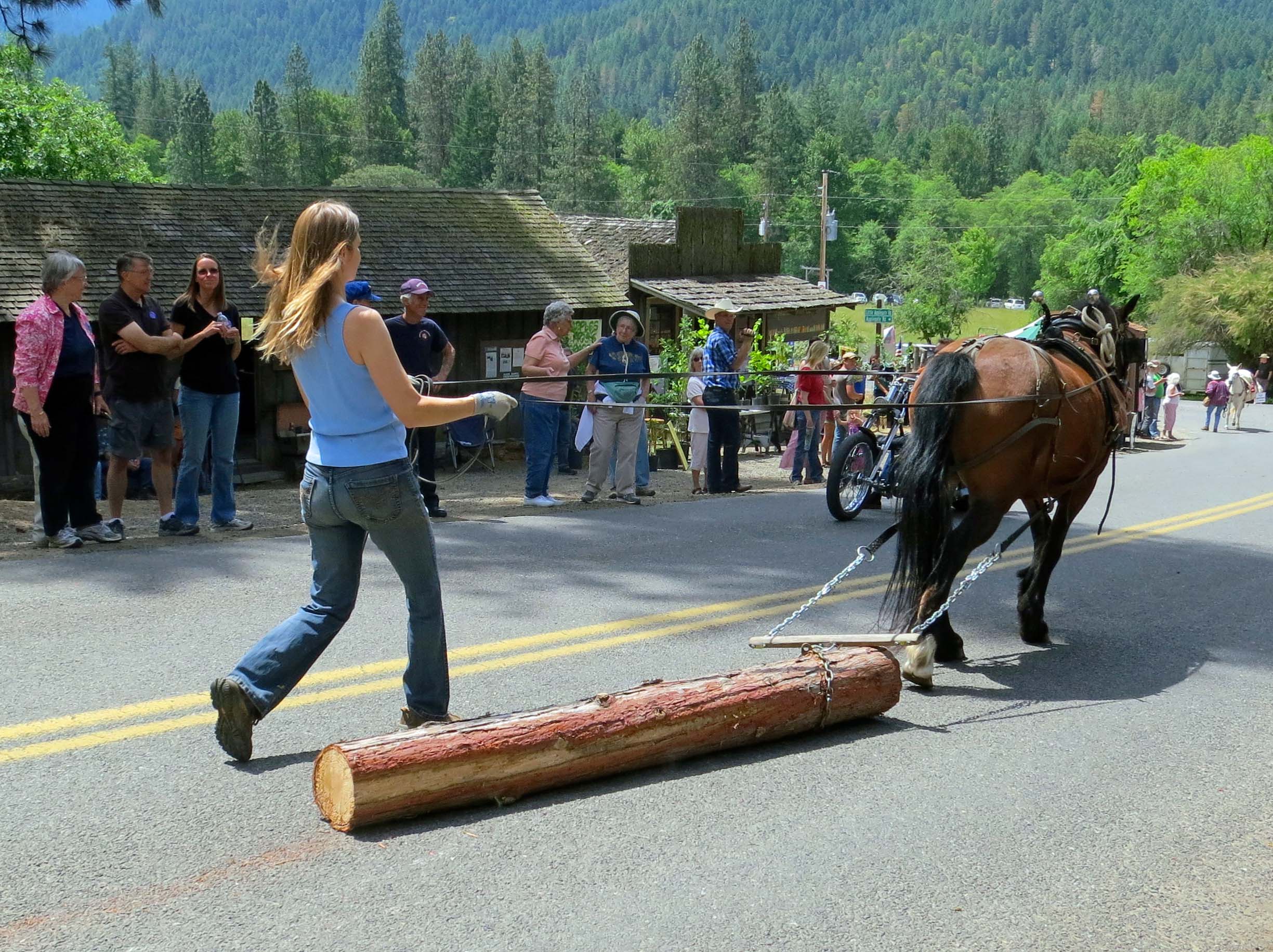
Horses used to help harvest timber.

Whoa, horsey. You can hire horses to help you harvest timber on your property. Or enter them in a parade.

You saw horsey going. Here it is coming, looking rather proud, I might add.

You saw horsey going. Here it is coming, looking rather proud, I might add.

The parade is also a good excuse to walk your dog, and show off your orange hair.

The parade is also a good excuse to walk your dog, and show off your red hair. Small horses bring up the rear.

There was even a white mule that carried a sign urging people to take a hike.

There was a white mule with freckles that carried a sign urging people to take a hike.

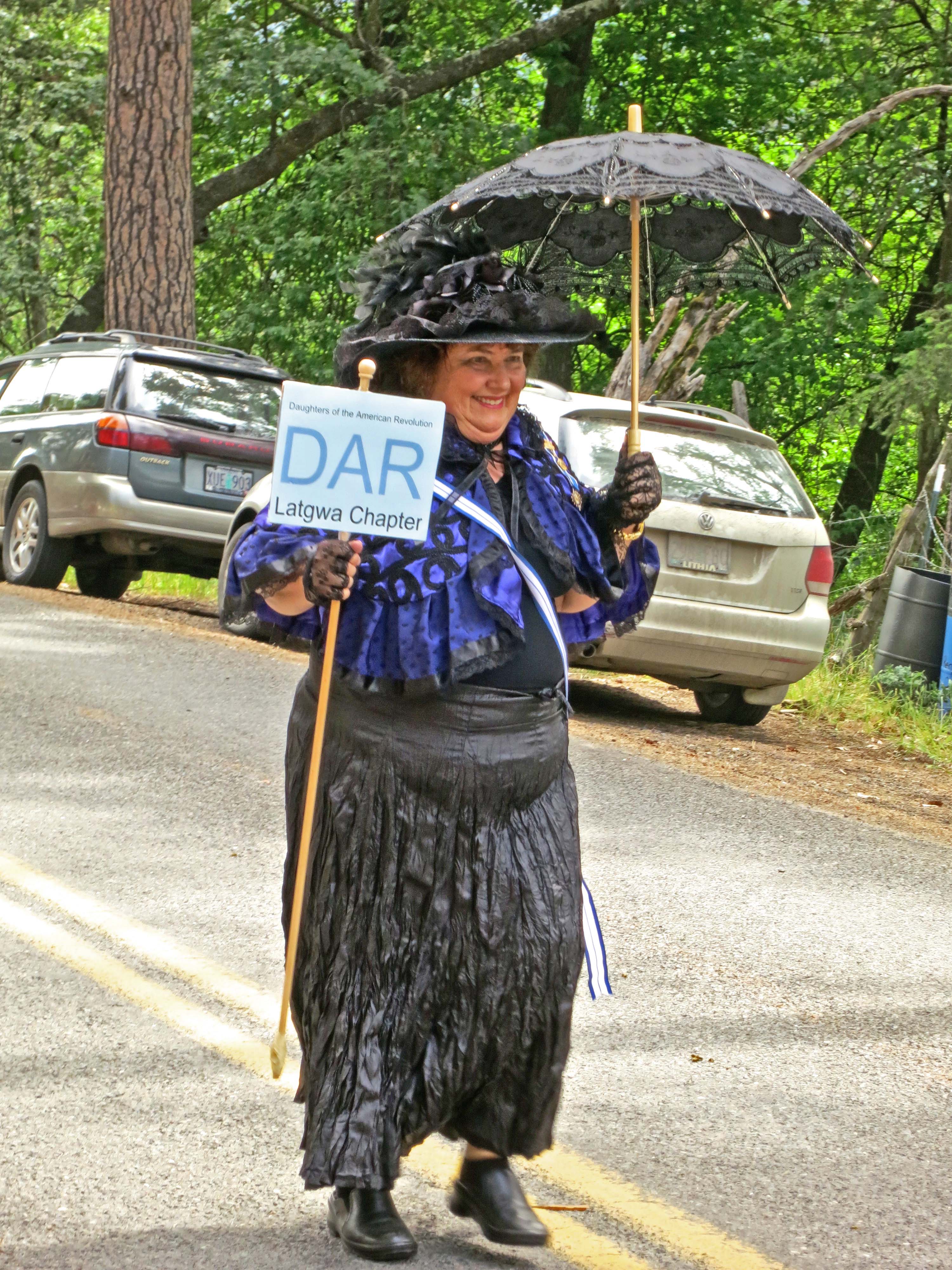
Daughters of the American Revolution participating in a southern Oregon parade.

Even the DAR  had a representative, this one from the Latgwa Chapter. With her lacy black umbrella, I thought she would  fit right into a Mardi Gras celebration.

Every parade needs a Grand Marshall. She even carried a handmade sign announcing who she was. A writer for the Medford Tribune was along for the ride.

Every parade needs a Grand Marshal. Peggy Dover filled the position. Sitting on the right and carrying a handmade sign announcing her name, Peggy is a writer for the Medford Tribune.

Old cars galore participate in the parade. This caddy featured a panda.

Old cars galore participate in the parade. This caddy featured a panda who waved at me as the car drove by. Or maybe he was trying to escape.

When the old cars weren't parading, they were parked for one and all to admire. There is a class to these cars that their modern equivalents just can't seem to match. Or am i just showing my age?

When the old cars weren’t parading, they were parked for one and all to admire. There is a class to these cars that their modern equivalents just can’t seem to match.

Here's a side view of the REO Hotrod which would have been produced in Lansing Michigan.

Here’s a side view of the REO Hotrod, which would have been produced in Lansing Michigan.

And check out this beauty. To my auto hobbyist friends… is this a Model A or a Model T?

And check out this beauty. I believe it is a Model A, but I am sure my internet friend who are old car enthusiasts will correct me if I am wrong. (grin)

This guy could decorate my yard anytime, if I didn't have to do the work that went along with it. These antique autos are truly labors of love.

This guy could decorate my yard anytime, if I didn’t have to do the work that comes with it. These antique autos are truly labors of love.

In case you are wondering, Buncom is out in the country. You know you are 'out West' when you see the barbed wire.

If you needed a break from the Buncom Day festivities, all you needed to do was glance at the surrounding countryside. The barbed wire says that you are ‘Out West.’

Or stop and smell the wild roses...

Or stop and smell the wild roses…

Last year I featured the Chicken Splat contest on my post about Buncom Day, so I will close with it this year. Numbered squares are placed in the bottom of the chicken cage. You bet on which square the chicken will poop on. NEXT BLOG: Back to Santorini.

Last year I featured the Chicken Splat contest on my post about Buncom Day, so I will close with it this year. Numbered squares are placed in the bottom of the chicken cage. You bet on which square the chicken will poop on. High stake’s gambling, it isn’t. NEXT BLOG: Back to Santorini.


Quirky Berkeley— I Return to My Roots


Sproul Hall

Sproul Hall, the administrative center of UC Berkeley, looks imposing. It comes with a welcome sign now but it wasn’t so welcoming when I gave a speech while standing on the Dean’s desk at the height of the Free Speech Movement in 1964.

Last week went on forever. By Sunday, the events at the beginning of the week seemed like ancient history. Maybe that’s not a bad thing; time slowed down. Lately it’s been zipping by like a hummingbird on sugar-water. Zoooooooom!

I began my week by being a guest lecturer in a writing class at Southern Oregon University where I talked about changes in the publishing industry. Mainly I discussed how authors are now responsible for marketing their own books. Grump. It is not my favorite activity. “Go start a blog,” I urged, “at least you can have fun. And it is great writing practice.”

Thursday found me keynoting an author’s day at a local community school. I had jumped from talking with seniors in college to kids. And how in the heck do you tailor a talk for a group with an age range from 7-14? Tell stories, I decided— and started with the tale from The Bush Devil Ate Sam about Rasputin the Cat and the Cockle Doodle Rooster. Afterwards I taught classes of fifth, sixth, seventh and eighth graders. My message was that we are all storytellers.

It was fun. The eight-hour drive to Berkeley immediately afterward wasn’t.

I drove down to attend a national conference of Returned Peace Corps Volunteers. I was one pooped pup when I arrived. It was lights out for Curt. I hardly even needed my noisemaker to drown out the clamor on University Avenue.

Berkeley is many things, among them a world renown center of education.

Speaking of tired puppies, I found these hemp collars and leashes on Telegraph Avenue. In addition to being home to one of the world’s greatest educational institutions, Berkeley can be a bit quirky.

I went to the conference to participate in some workshops relating to Peace Corps writers, of which there are legions. I also wanted to hear presentations by Congressman Sam Farr and Peace Corps Director Carrie Hessler-Radelet. Sam had been a Peace Corps Volunteer in South America in the 60s and, like me, worked in Peace Corps recruiting afterwards. He is known as “Mr. Peace Corps” in Congress for the strong advocacy role he plays for the organization.

He argued that Returned Peace Corps Volunteers also needed to become advocates. It’s budget time in Washington, and there are a lot more countries requesting Peace Corps Volunteers, and people who want to be Volunteers, than Peace Corps has money to fund. As usual, the money goes elsewhere. For example, we are spending a billion and a half dollars this year to keep Egypt happy— four times the total budget of Peace Corps.

On the good news side of the equation, Carrie announced that Peace Corps Volunteers would be back in Liberia this week. As you may recall, they were pulled out in the fall because of Ebola. Carrie also mentioned a major new initiative that Peace Corps is working on with Michelle Obama, Let Girls Learn. It is a worldwide effort to provide girls with the same education opportunities boys now have.

Michelle

We listened to a pre-recorded message on Let Girls Learn from Michelle Obama in Wheeler Auditorium, which was the site of my first class at Berkeley. I had walked right by the classroom, incapable of imagining that there would be over a thousand students in the class. Berkeley gave me a new understanding of mass education.

I must confess— I also had an ulterior motive for the trip. Any journey to Berkeley is a trip into the past for me. I think of it as a pilgrimage, a return to my roots. I still hear echoes from the 60s when I was caught up in Berkley’s Free Speech Movement. This time the echoes were real. A resounding expletive caught my attention. I turned around to see Cliff Marks descending on me. Cliff and I had shared an apartment during out senior year and Cliff had also served in the Peace Corps. The last time I had seen or talked with him was at his wedding in 1969. We had a grand time catching up. Now it is time to catch up on the blogs I have missed this past week and a half.

But first, let’s go on a tour of Berkeley.

Sather Gate

Every student who has ever been to Berkeley passes through Sather Gate…

Campanile

And at some point, stops to admire the Campanile, which is Berkeley’s best known landmark.

Bay Bridge

The campus looks out over San Francisco Bay. The Golden Gate Bridge can be seen in the distance.

Steps of library

I had spent the day buried in the Bancroft Library and surfaced for a break when I found a young woman crying on these steps. The campus was deathly quiet. “What’s the problem?” I had asked. “They’ve shot the President,” she told me in a broken voice. It was November 23, 1963 and President Kennedy had been killed, shot down in the streets of Dallas.

Sproul Plaza

Sproul Plaza was a major location for student protests in the 60s. This entrance to the campus, at the intersection of Telegraph Avenue and Bancroft Avenue, was the location of Berkeley’s Free Speech Area that the University arbitrarily closed down in the fall of 1964, thus leading to the beginning of the Free Speech Movement.

Ludwig's fountain

The Student Union and Ludwig’s Fountain are under renovation. Ludwig was a 60’s type dog who wandered wherever he chose. He came down from his house on the hill daily and frolicked in the fountain that would eventually bear his name. I petted Ludwig and watched as a police car was taken hostage and then used as a speaker’s podium. Jack Weinberg, a Civil Rights organizer, was being held in the car. It was Jack, now 75, who coined the phrase, “never trust anyone over 30.”

Cafe Mediterraneum

I learned as much outside of the classrooms as I did inside at Berkeley. The Cafe Mediterraneum on Telegraph Avenue was my main hangout. It was one of America’s first European style Coffee Houses in the 1950s and proudly claims to be the creator of the caffe latte.

Moe's

One of my primary forms of entertainment in the 60s at Berkeley was perusing bookstores. It still is today when I visit the city. Moe’s was and is one of the greats. Sadly, my favorite, Cody’s, is now closed.

Amoeba Records

Amoeba Records is next to the Cafe Meditteraneum. Street booths, like those in front on the left, have become a permanent  fixture along Telegraph Avenue.

Crystals on Telegraph

As one might expect, many of the items for sale have a New Age connection, such as these ‘healing’ quartz crystals.

Dream Catchers

And these dream catchers.

People's Park

“If it takes a bloodbath, let’s get it over with.” –Ronald Reagan’s response as Governor of California to students who were protesting his closing down Berkeley’s People’s Park as a community garden in the late 60s. National Guard troops were sent in and local police were armed with shotguns loaded with buckshot. One student, apparently a bystander, was killed and another was blinded. The whole city was tear gassed from the air.

Tree sign

A sign thanking trees that live in the park today.

Mural

A mural on the side of the Amoeba record store depicts events surrounding People’s Park as well as other Telegraph Avenue happenings.

Mural

The mural.

Pan Handler

Berkeley has always been a mecca for young people,  both those seeking an alternative lifestyle as well as those seeking a first class education. Many who came looking for alternatives arrived without money, as this young man shown in the mural.

Homeless

Today, Berkeley is the ‘home’ for numerous homeless people. I took this photo on Dwinelle Plaza on campus.

Street Spirit

This homeless man was selling the newspaper “Streetsmart” in front of Moe’s Bookstore. Headlines announced a recent protest that the community’s religious leaders including Christian, Muslim, Jewish and Buddhist representatives had made against the city’s efforts to criminalize homelessness as a means of driving homeless people out of town.

Berkeley sign board

A sign of the times? Not really. Berkeley’s sign boards have always been plastered with notices on top of notices. I was amused to find help wanted notices for Berkeley’s Call Center. I hear from these young people several times a year as they solicit money for Berkeley. I found it interesting that the University, who charges them $14,000 a year in tuition ($38,000 if out-of-state), only pays these kids $11 per hour.

South Hall

South Hall, built in 1873, is the oldest building on the UC Berkeley Campus. It’s an appropriate photo to end this post, and also to raise a question about the future of public education in America. Tuition was free when I went to Berkeley and I was able to pay for my living costs by driving a laundry truck in the summer. I graduated debt-free. Today’s young people graduate with hundreds of thousands of dollars in debt. It’s close to tragic. All I can think of is how incredibly stupid our state and national leaders are when the future of our nation, and indeed the world, depends upon an educated and knowledgeable population. Germany can somehow find the money to provide a free college education. Why not America?