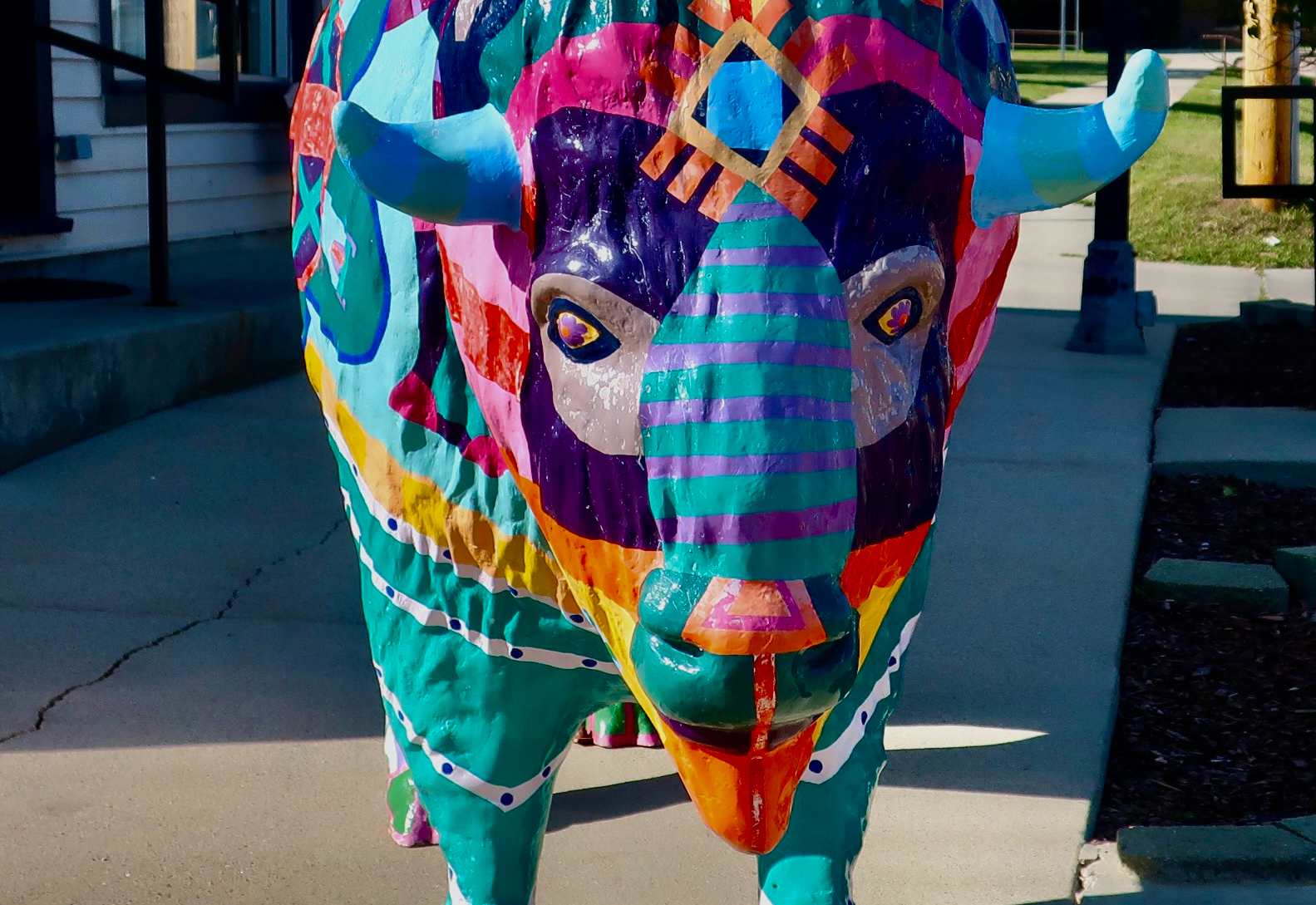
Given that 2,000 buffalo roam on the outskirts of Custer City, South Dakota, it’s not surprising that the town has a buffalo fixation. We found one on every corner!
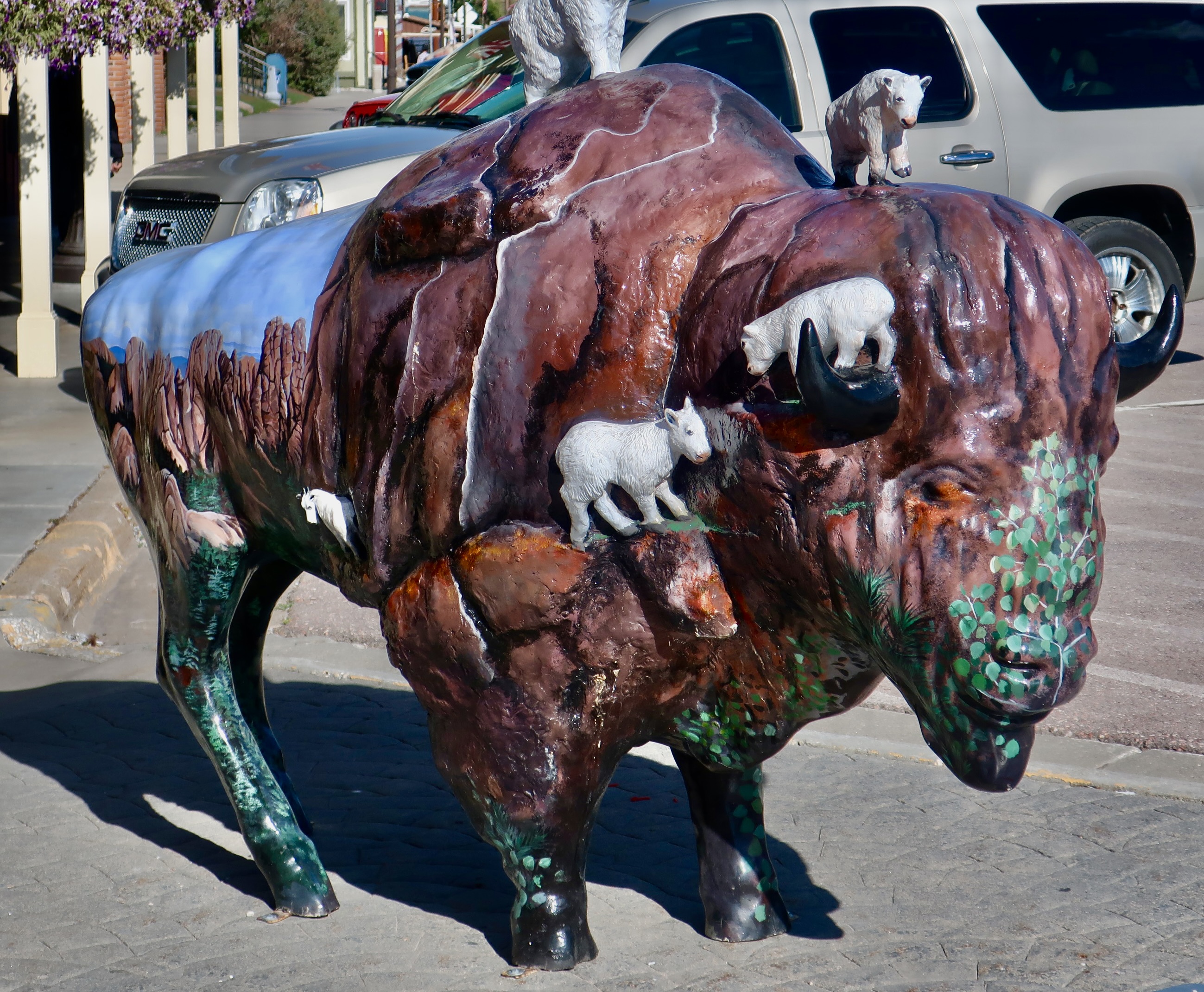
This colorful creature was one of many buffalo sculptures we found in Custer City.
Over the past several years, Peggy and I have been in a number of communities that feature sculptures of animals. Several have been buffalo, but we have also seen bears, cows, horses, elk, and sandhill cranes. I’ve little doubt that other communities feature dogs, cats, pigs and rhinos. Rhinos? Apparently you can find a hundred of them in Cape Town, South Africa. We love the unique, colorful, sculptures. Like murals, they are attractive to locals and visitors alike, and encourage both community pride and tourism.
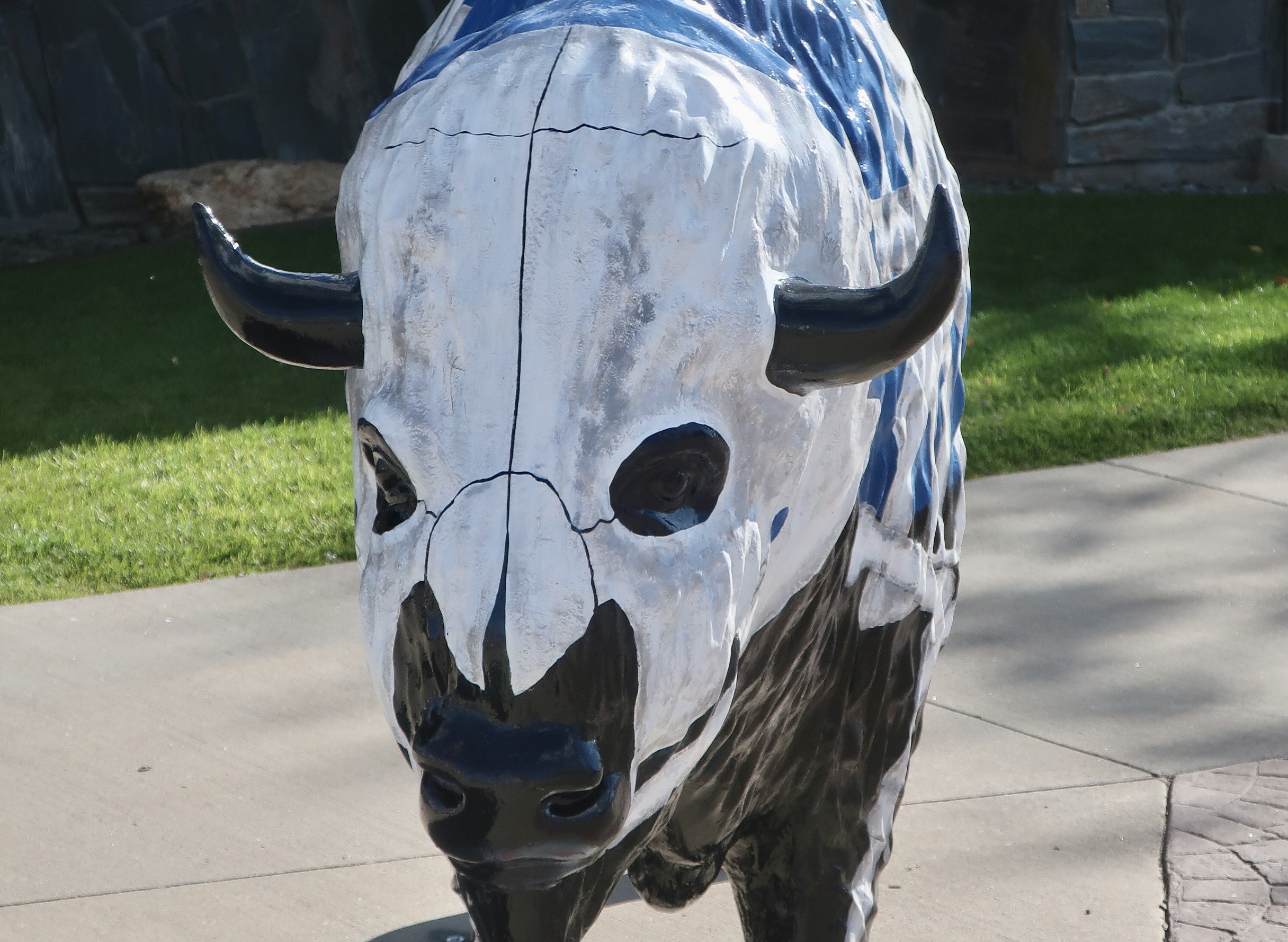
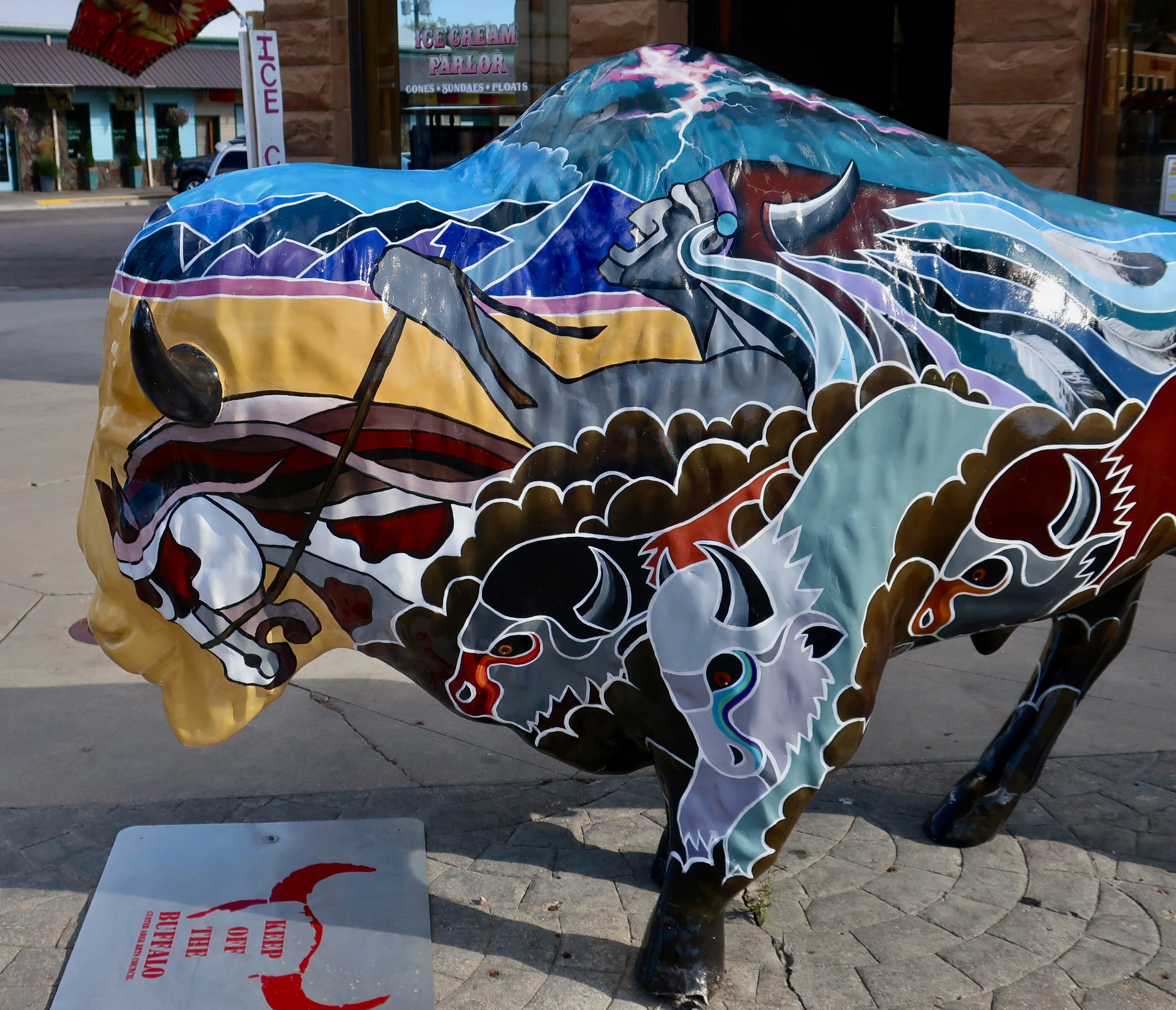
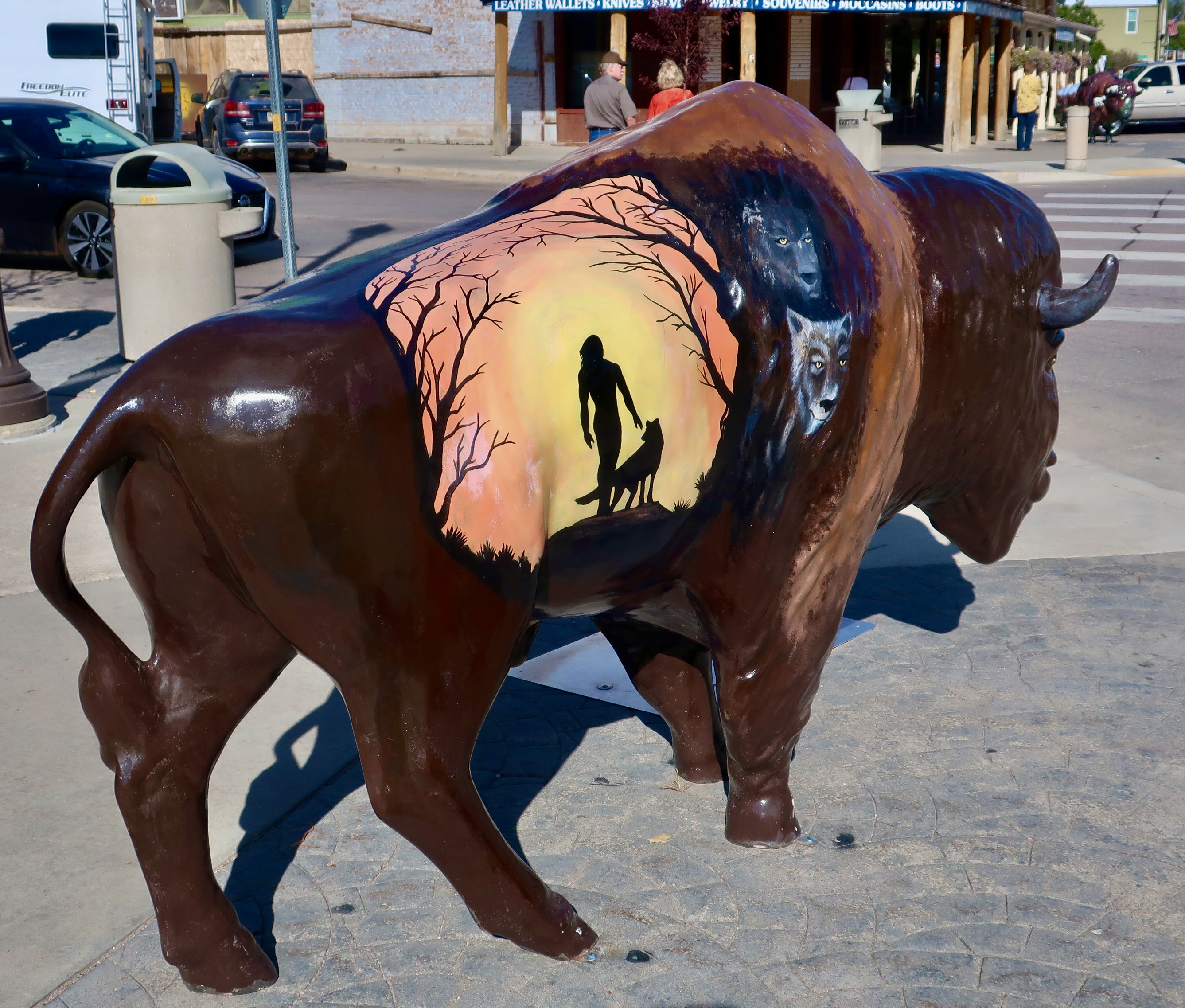
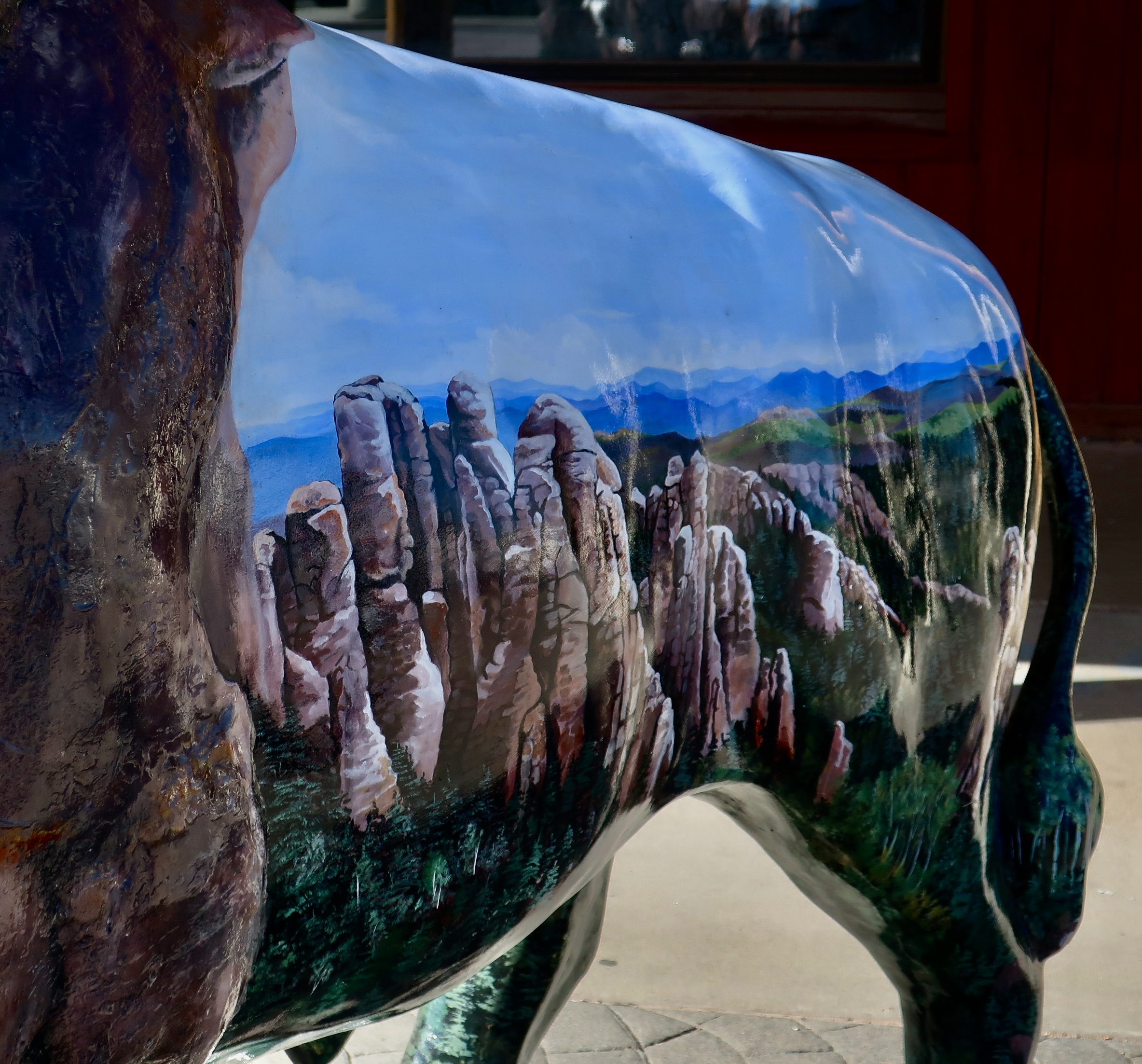
This ghostly buffalo…Was a lesson in buffalo anatomy, as well as a possible Halloween treat. All of the buffalo featured ‘keep off the buffalo’ signs like the one beneath the buffalo’s chin. I could see tourists climbing on top or plopping their 5-year-old on top for photos. Rare white buffalo were considered sacred by American Indians and played important roles in their legends.One side of the white buffalo sculpture featured horses that were used by the Indians for hunting buffalo.Several buffalo featured local scenery.And buffalos, including a painting of a very colorful buffalo escaping from a forest fire.This large brown fellow featured another large brown buffalo and a buffalo herd. We really liked the way the buffalo’s shoulder provided a three dimensional effect for the painted buffalo.A more abstract painting on another sculpture featured a buffalo, horse, possible medicine man, mountains, desert, and a lightning storm.A dramatic scene that featured a Native American with his dog and two lurking wolves.The artist for this buffalo sculpture in Custer City featured mountain goats, including one romping on top of its head. Note the scene on the back…It’s a scene from along the Needles Highway in Custer State Park, which is named for its dramatic rock formations— a must-see of the park. Mountain goats live there. We will feature the narrow, curvy highway with its gorgeous scenery and tunnels our truck could barely fit through in our next South Dakota post two weeks from now.
Next Monday’s post will feature the Egyptian myth of Osiris and Isis plus the ancient Egyptian city of Memphis near Cairo.
The Black Forest is legendary, a land of dark fantasy. The Brothers Grimm reportedly based their fairy tales on the region. We found beauty and humor instead.
We are wrapping up our Rhine River series today with a trip into Germany’s Black Forest. Our riverboat journey up the Rhine with Uniworld Boutique was special, no doubt about it. I’d highly recommend it to anyone. Given that we took our daughter’s family and son’s family (which included their five kids) along, Uniworld’s Generation Cruise was particularly appropriate. Riverboat trips can be expensive, however. One can also travel through the Rhine River Valley by car, bus or train. An advantage here would be having more time to stop and enjoy the scenery, towns and castles. All photos on this blog are taken by either Peggy or me unless otherwise noted.
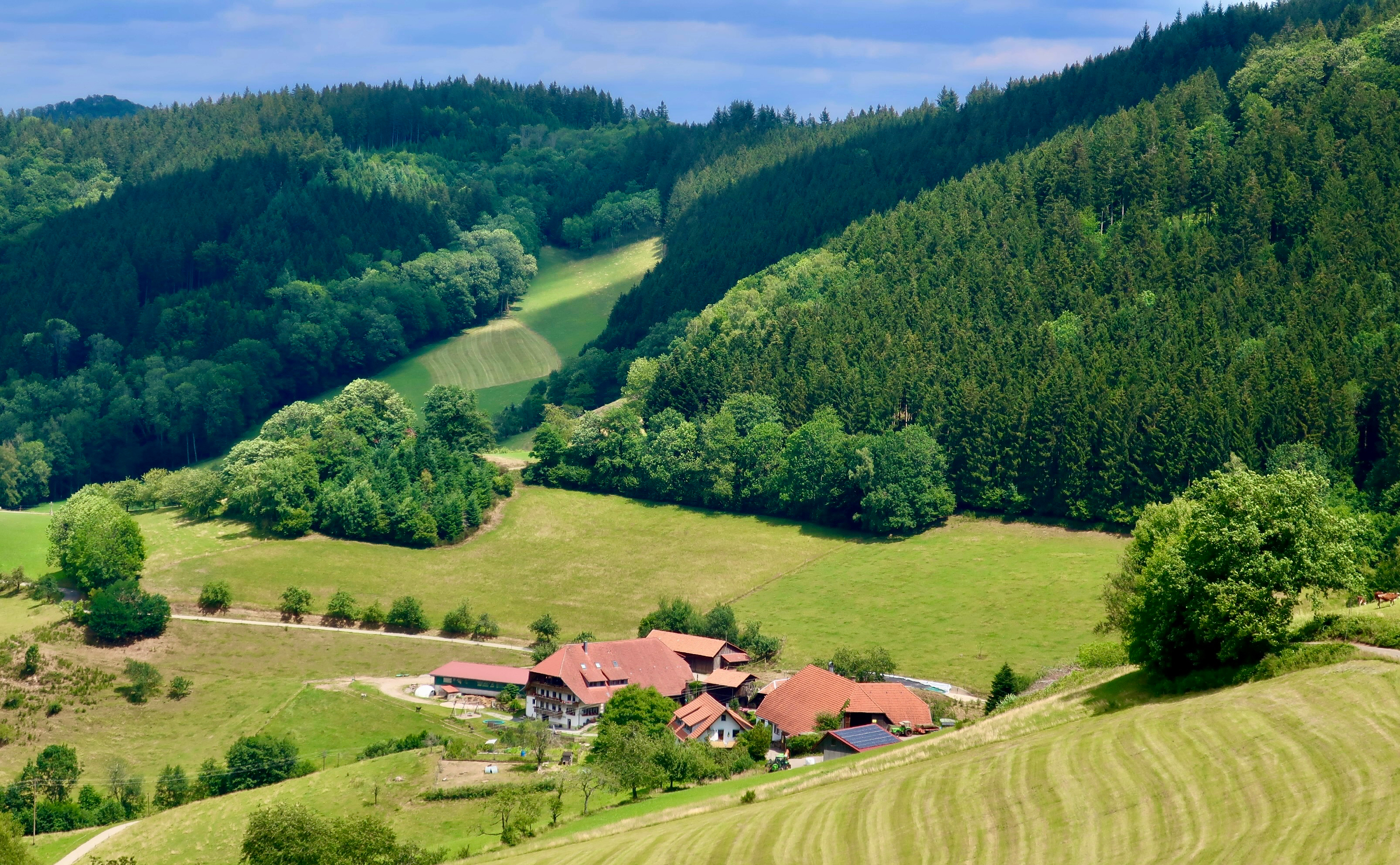
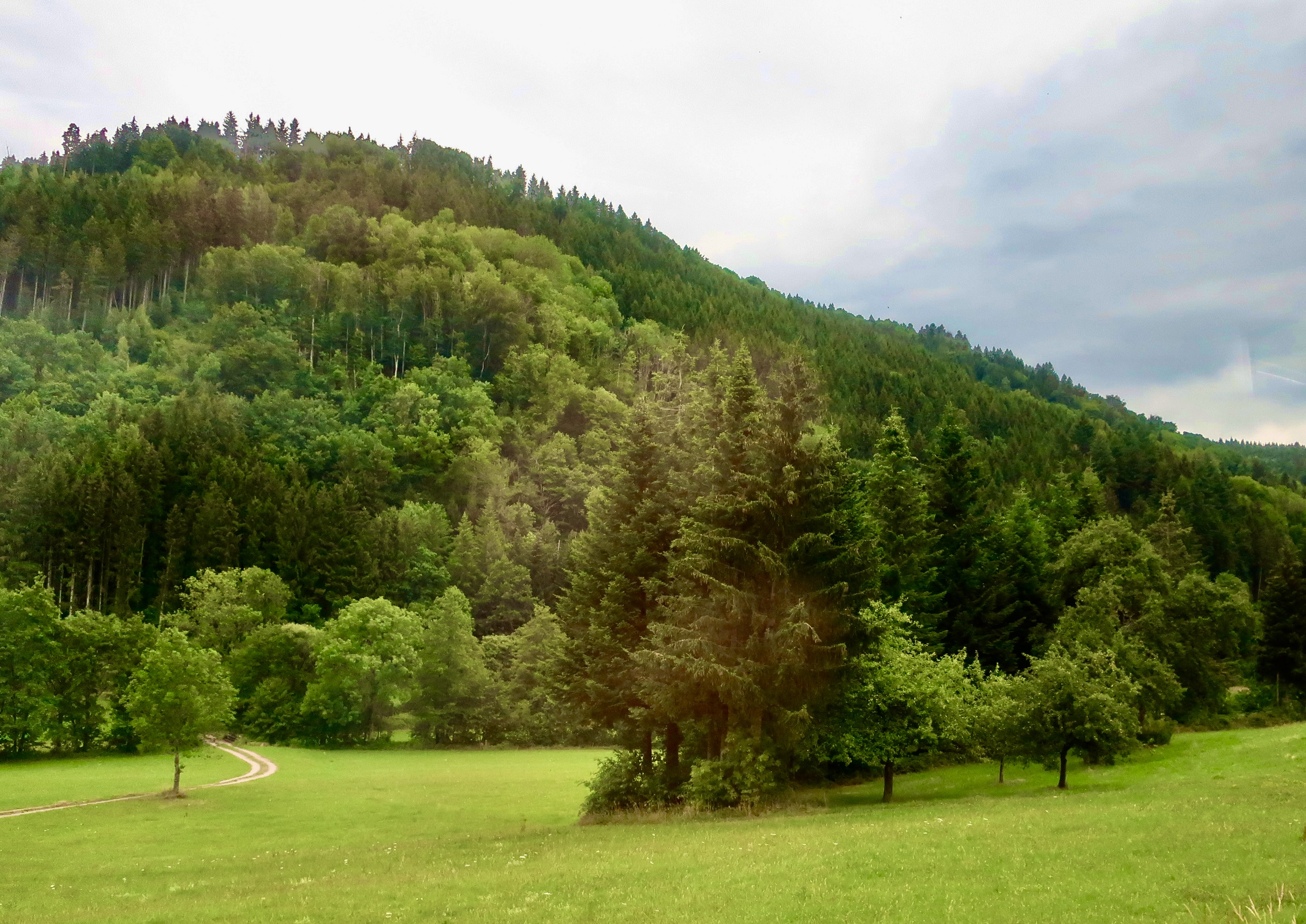
Our impression of Germany’s Black Forest was of a scenic, bucolic area.
The Black Forest is world-famous for its cuckoo clocks and our trip into the Black Forest included a visit to one of its most famous shops, The House of Clocks. There are photos, of course, bur first I have two related Black Forest cuckoo clock stories that took place decades before our riverboat trip up the Rhine. One is my son-in-law Clay’s; the other is mine.
Clay’s is the most relevant. He had actually visited the House of Clocks when he was a child in the 80s. His dad was in the army and stationed in Frankfurt, Germany. Even more to the point, his dad and grandfather bought clocks from Adolph Herr, the owner of the House of Clocks, when he brought grandfather clocks to a Christmas Market that was held on Abram’s Army Base in Frankfort. As we headed into the Black Forest, Clay was on a mission to buy his own cuckoo clock from the House of Clocks and Adolph Herr.
My cuckoo clock story goes all the way back to1951when I was in the third grade. My town was so small that the grade school only had five rooms. My introduction to it hadn’t been great. First grade took me two tries. I was kicked out the first time. My mother had altered my birth certificate to get me in early. She was eager to get me out of the house. Obviously. The teacher had been teaching for decades and knew first graders, however. She became suspicious and mailed off to Oregon for my birth certificate. I was sent home. I was happy with the reprieve. My mother— not so much. The following September I became an official first grader. It was a tough year. Mrs. Young, the teacher, had decided that Marge Mekemson’s kid was a wild child in need of taming. She was right, but I’ve never done taming well.
The second grade went much better. Second and third graders shared a room and had the same teacher for two years. I lucked out. My second grade teacher, Ruth Jones, was my godmother. She was required to like me. And did. My attitude about teachers and school took an abrupt turn. I began to enjoy school, and, I confess, even became something of a ‘teacher’s pet.’ Miss Jones was married and became Mrs. Hall the summer between my second and third grade and went on a honeymoon to Europe. On the last day of third grade, she asked me to stay after school briefly. “I have something for you, Curt, and want you to keep the fact I gave it to you to yourself.” She was careful about showing favoritism.
The gift was a cuckoo clock she had bought for me the previous summer in Germany’s Black Forest. I had it for years. Visiting the Black Forest had been on my agenda ever since.
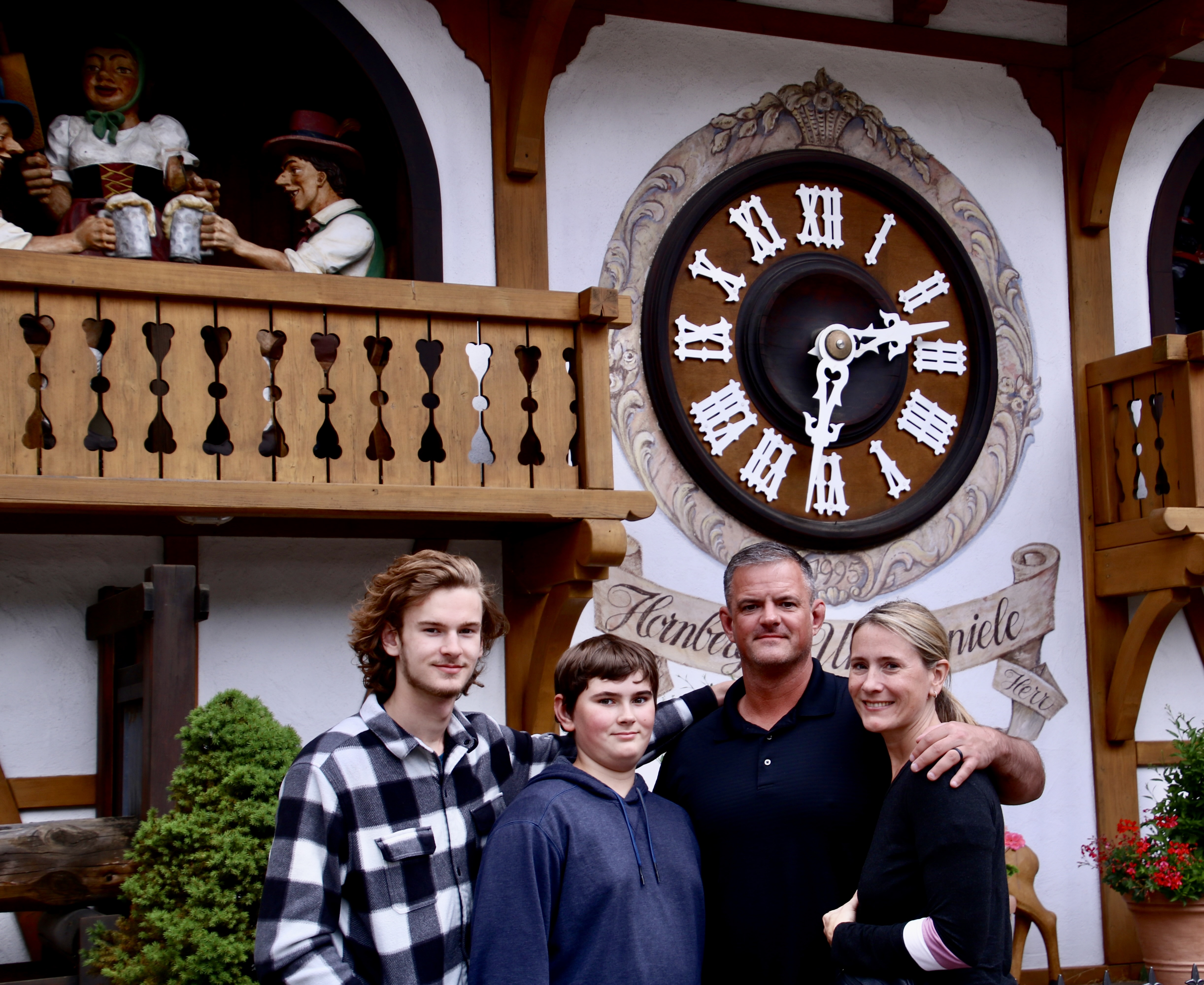
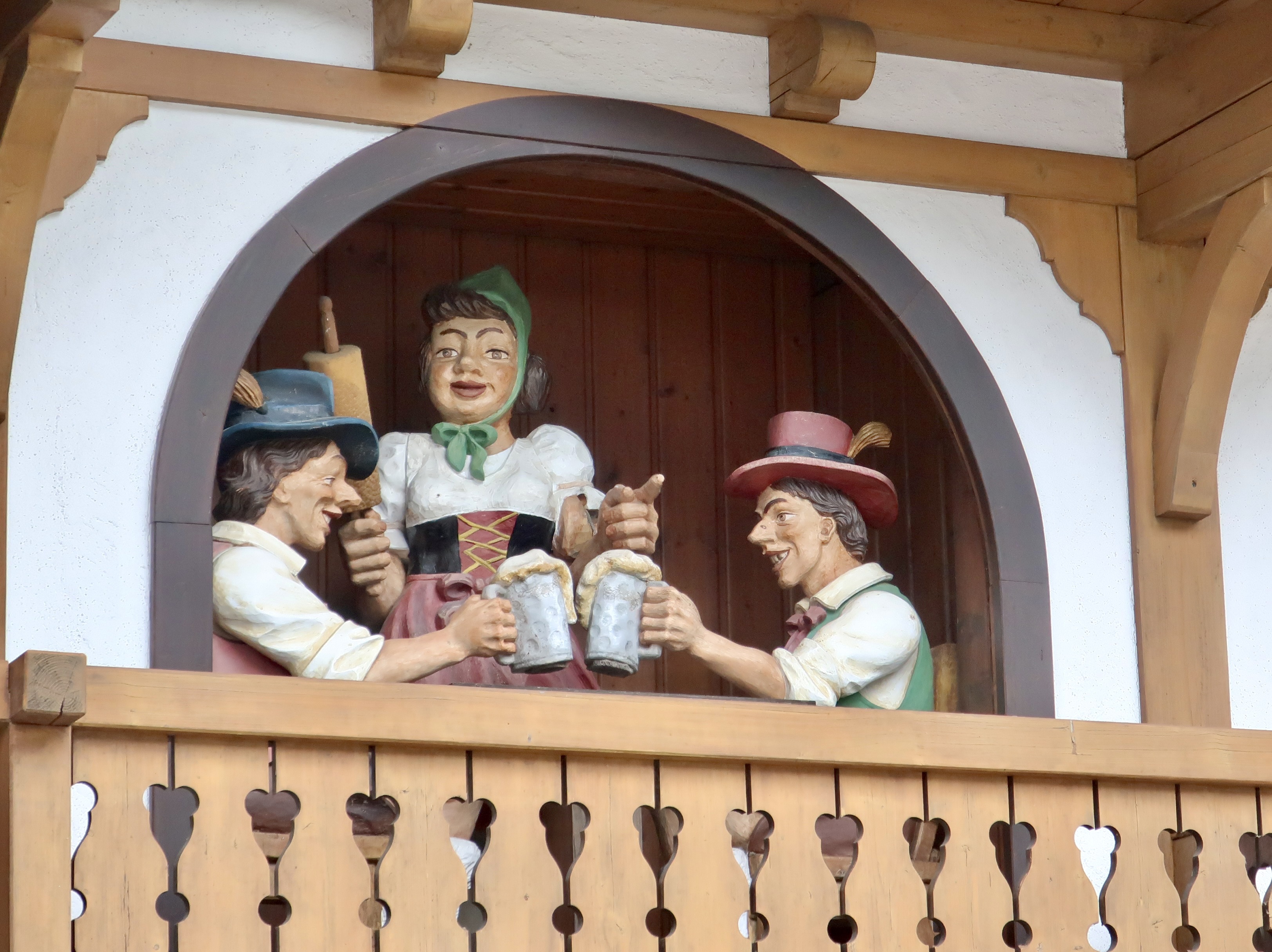
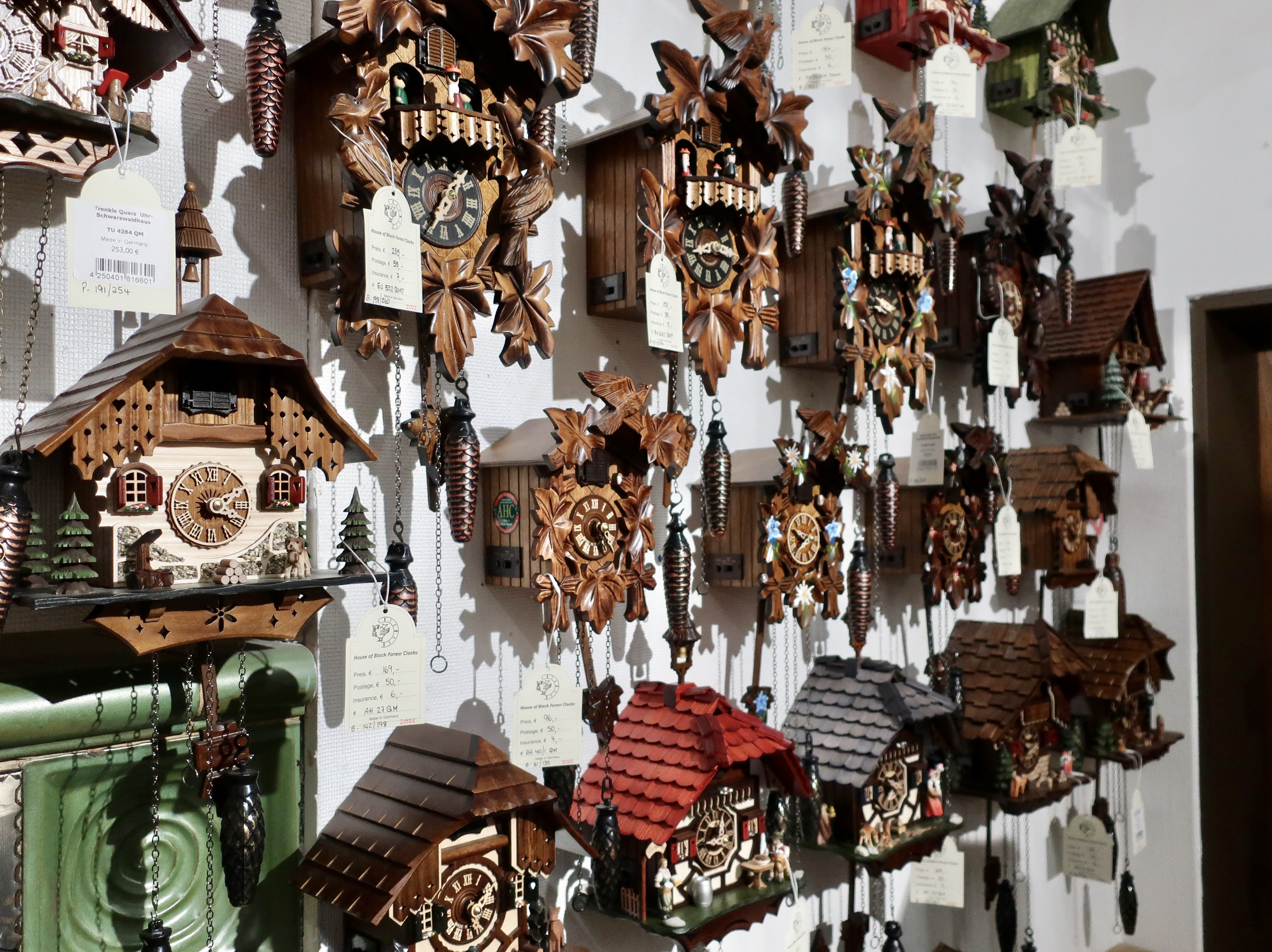
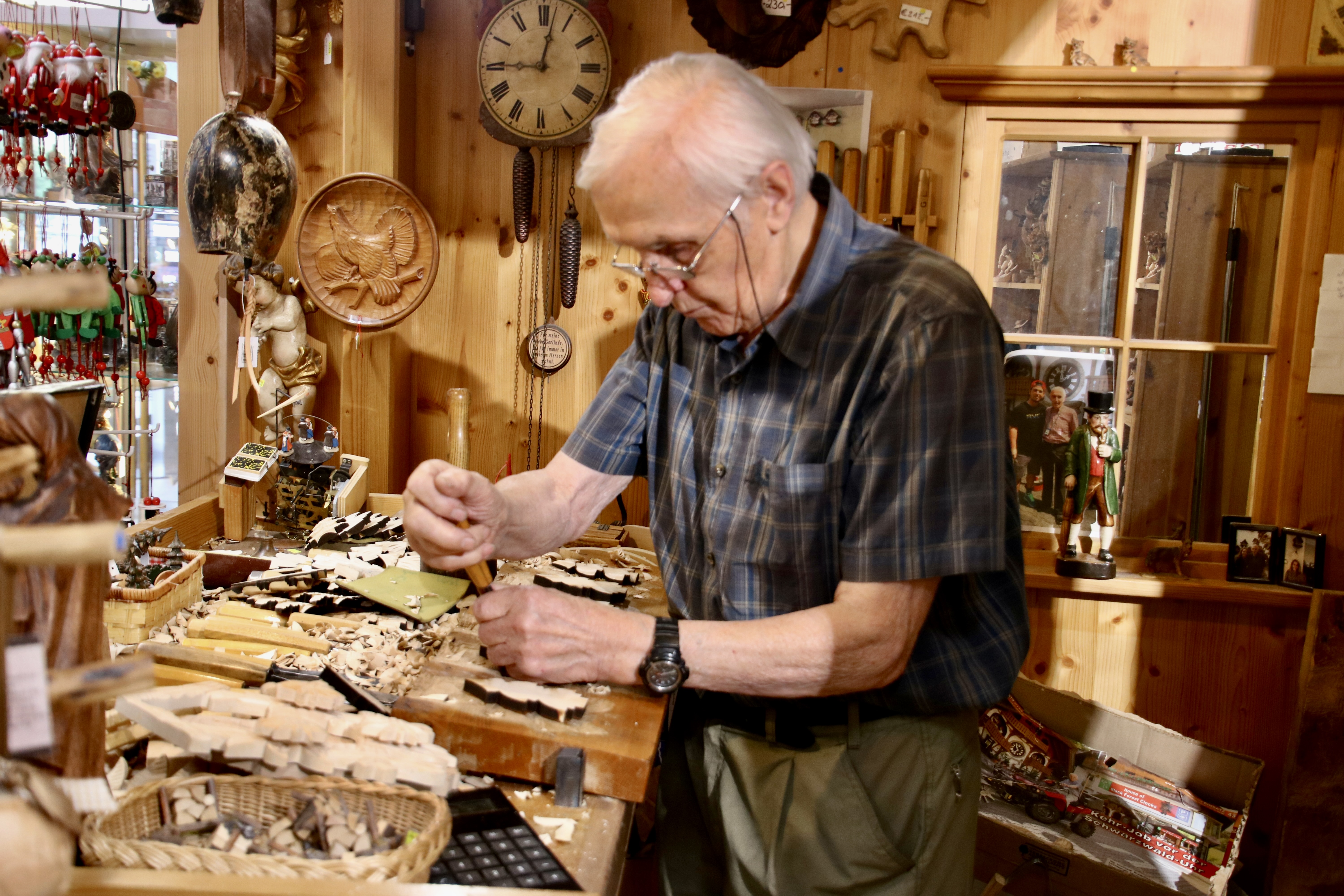
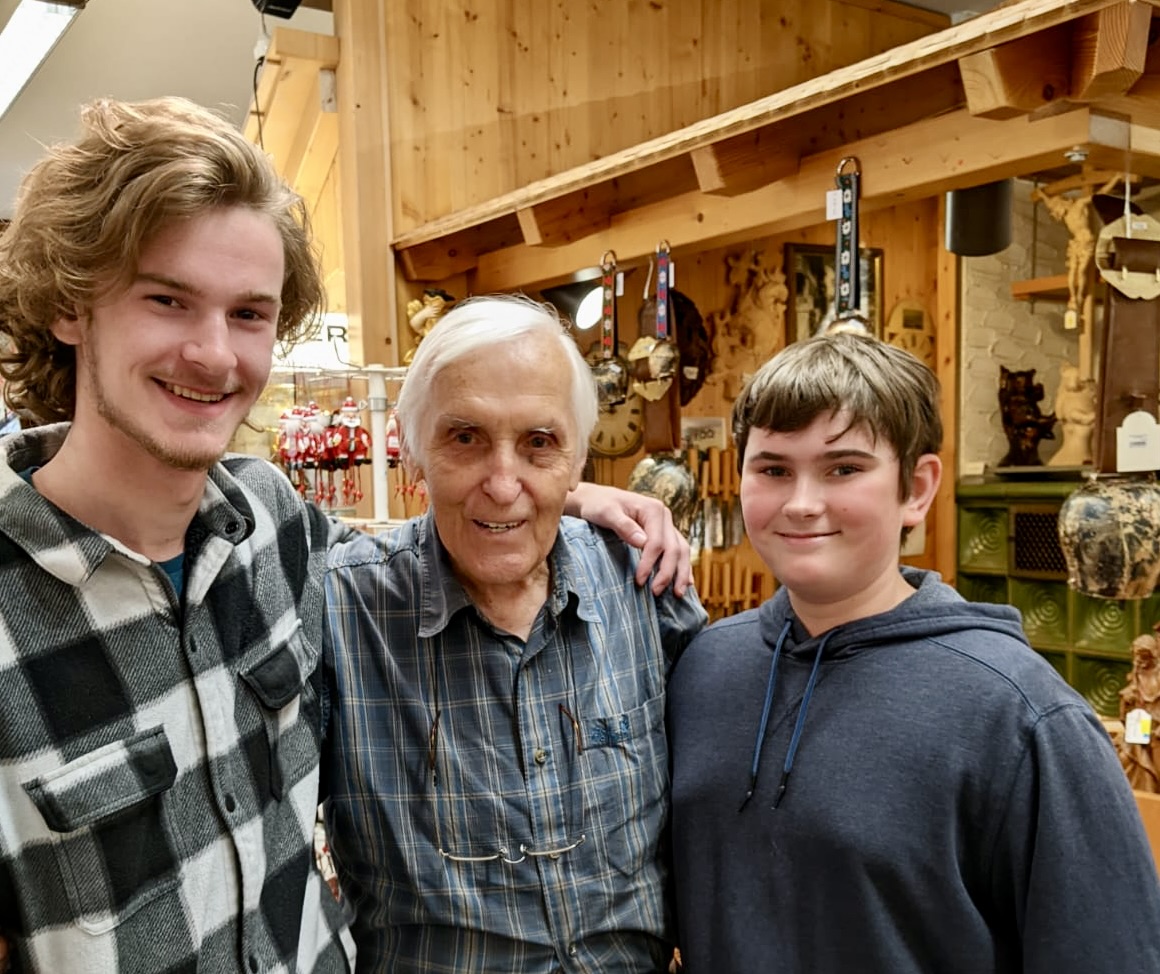
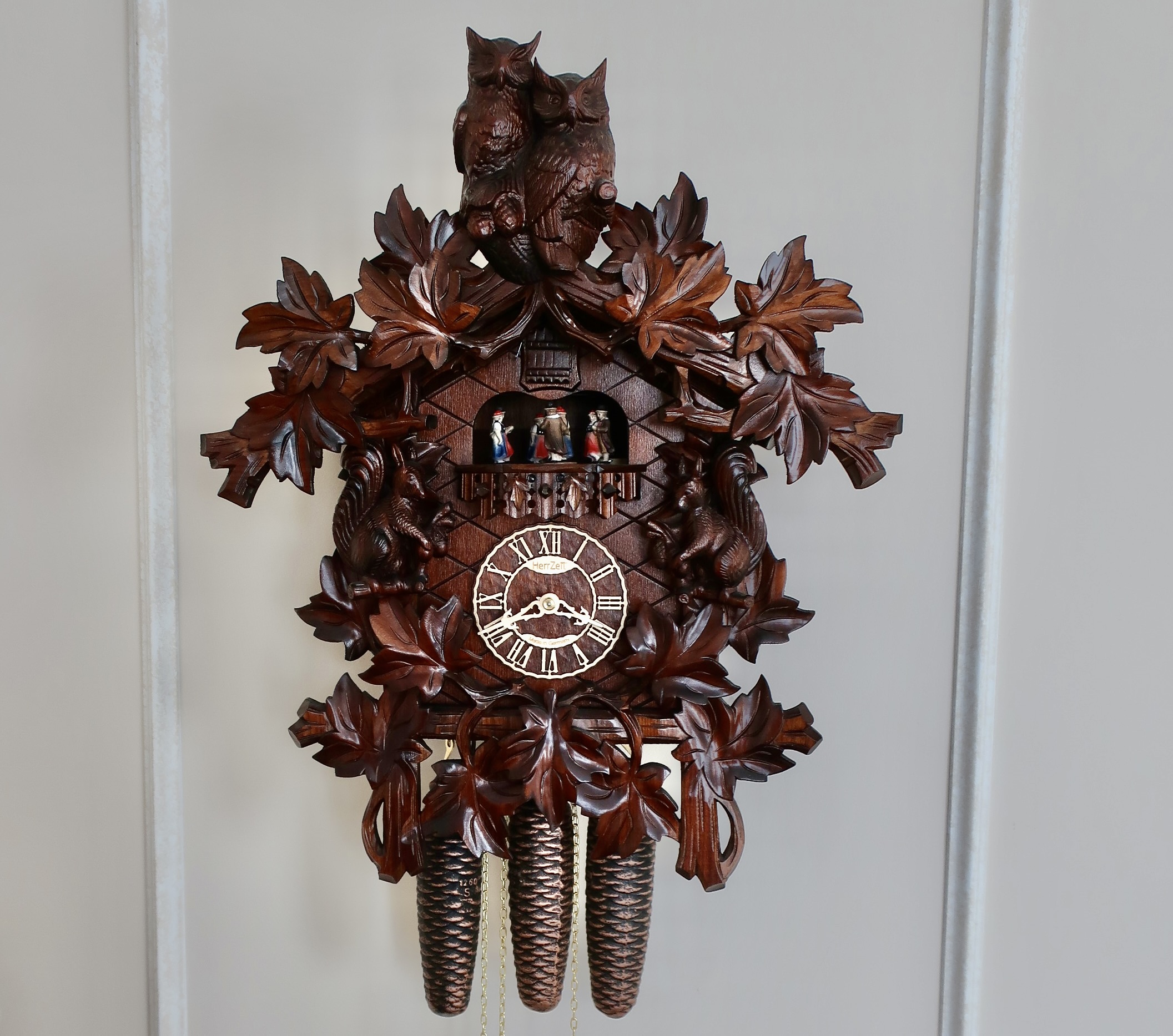
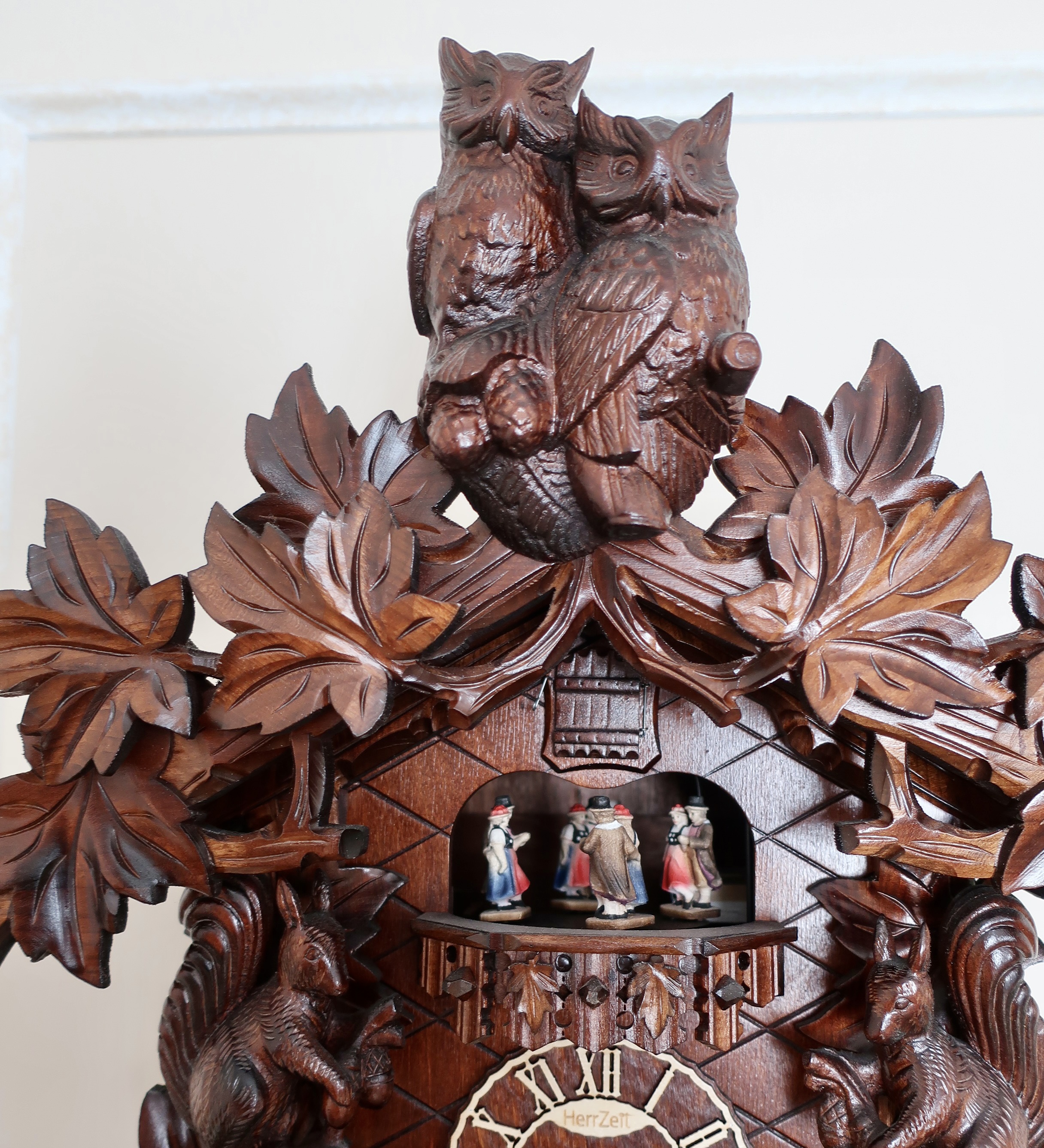
Clay, with his family, standing in front of the Black Forest House of Clocks. From left to right, our grandsons Ethan and Cody, Clay, and our daughter Tasha. They are standing in front of a giant cuckoo clock with 21 moving figures. Some action is about to take place in the scene above them to the left…If I were the two drunken revelers, I think I’d pay attention to the bar maid with the poised rolling pin and finger pointing “Out!”As might be imagined, the House of Clocks is packed with cuckoo clocks, each hand crafted.Adolph Herr, who owns and operates the Black Forest House of Clocks along with his son and grandson, represents 7 generations of clock makers dating back to the 1700s.The Cox family can also claim a generational connection to the House of Clocks. Cody and Ethan, show here with Adolph, represent four generations of Coxes that have visited the shop including Clay’s grandfather, father, himself, and his sons. This is one of our favorite photos of Clay. He is picking out a clock made by Adolph Herr, just as his grandfather and father did. The clock that Clay bought.A close up of the clock. Adolph Herr’s signature is on the back. And yes, it does make cuckoo sounds on the hour.
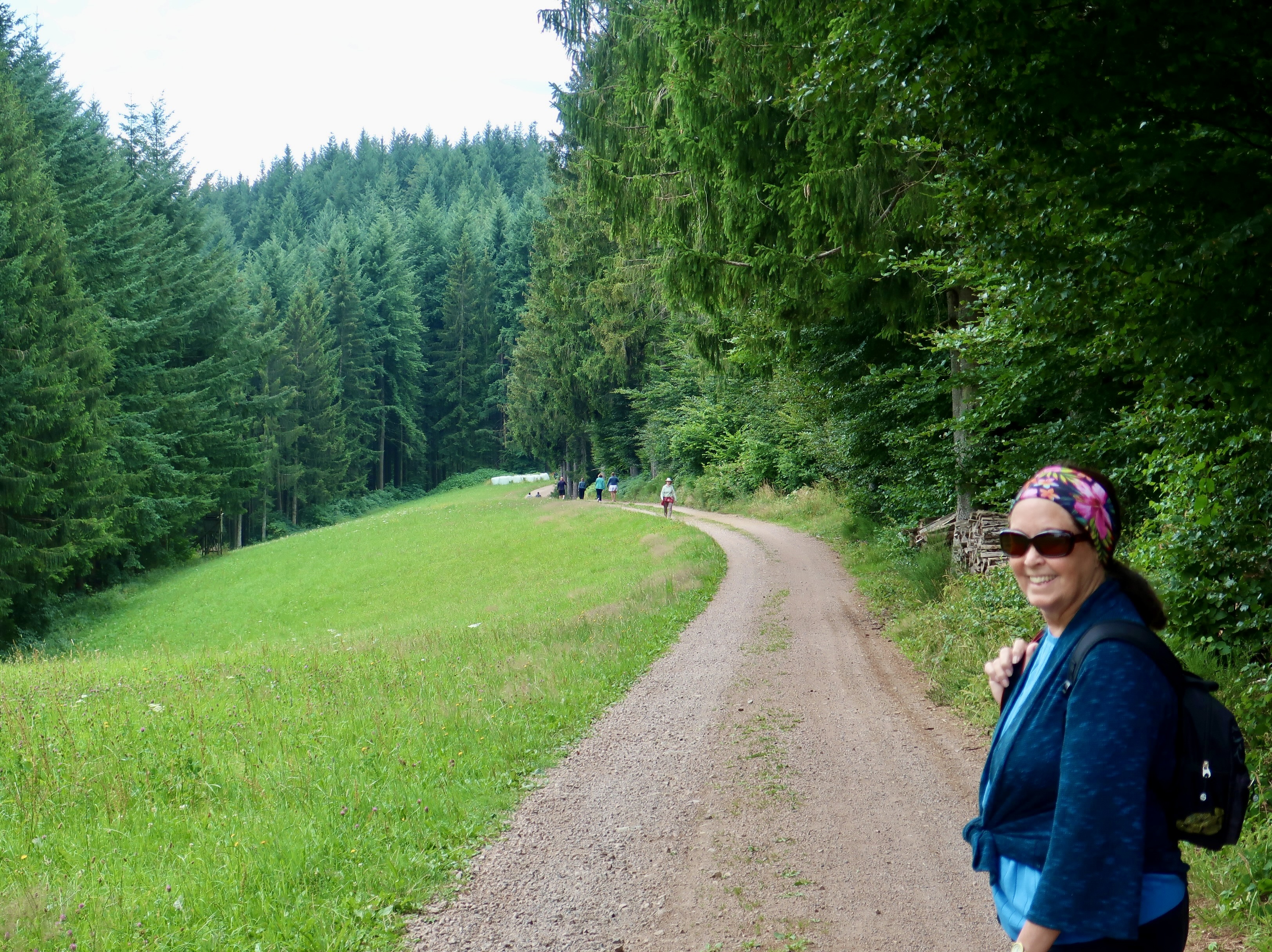
Grimms’ Fairy Tales are said to have been based on Germany’s Black Forest, so one way to think of the area is as a dark place filled with terrifying beasties. Well, we did run into two beasties and some of the trees were dark in appearance, but our overall impression was of a bucolic, scenic area. Our lunch stop included time to wander around in the woods for a time.
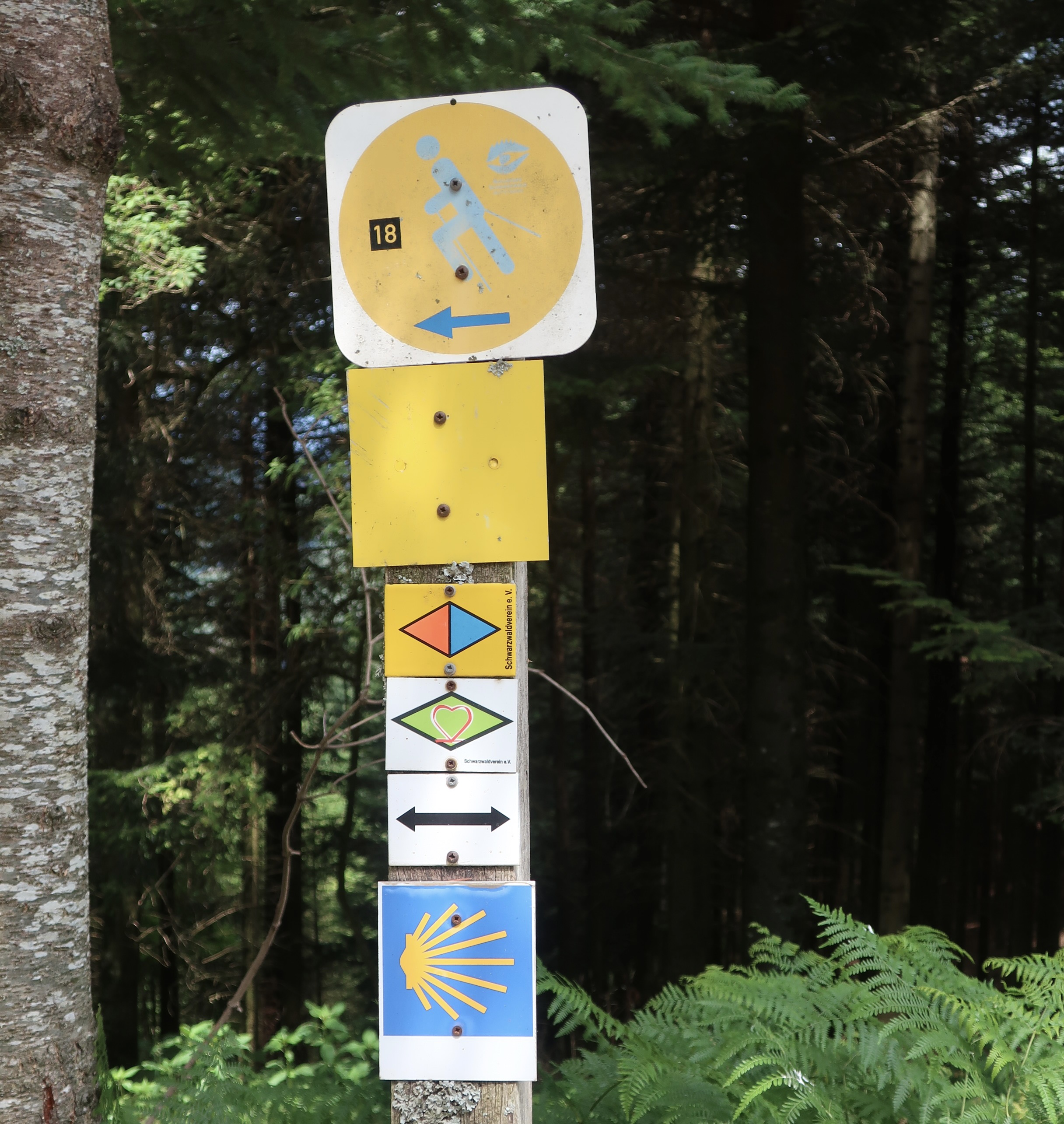
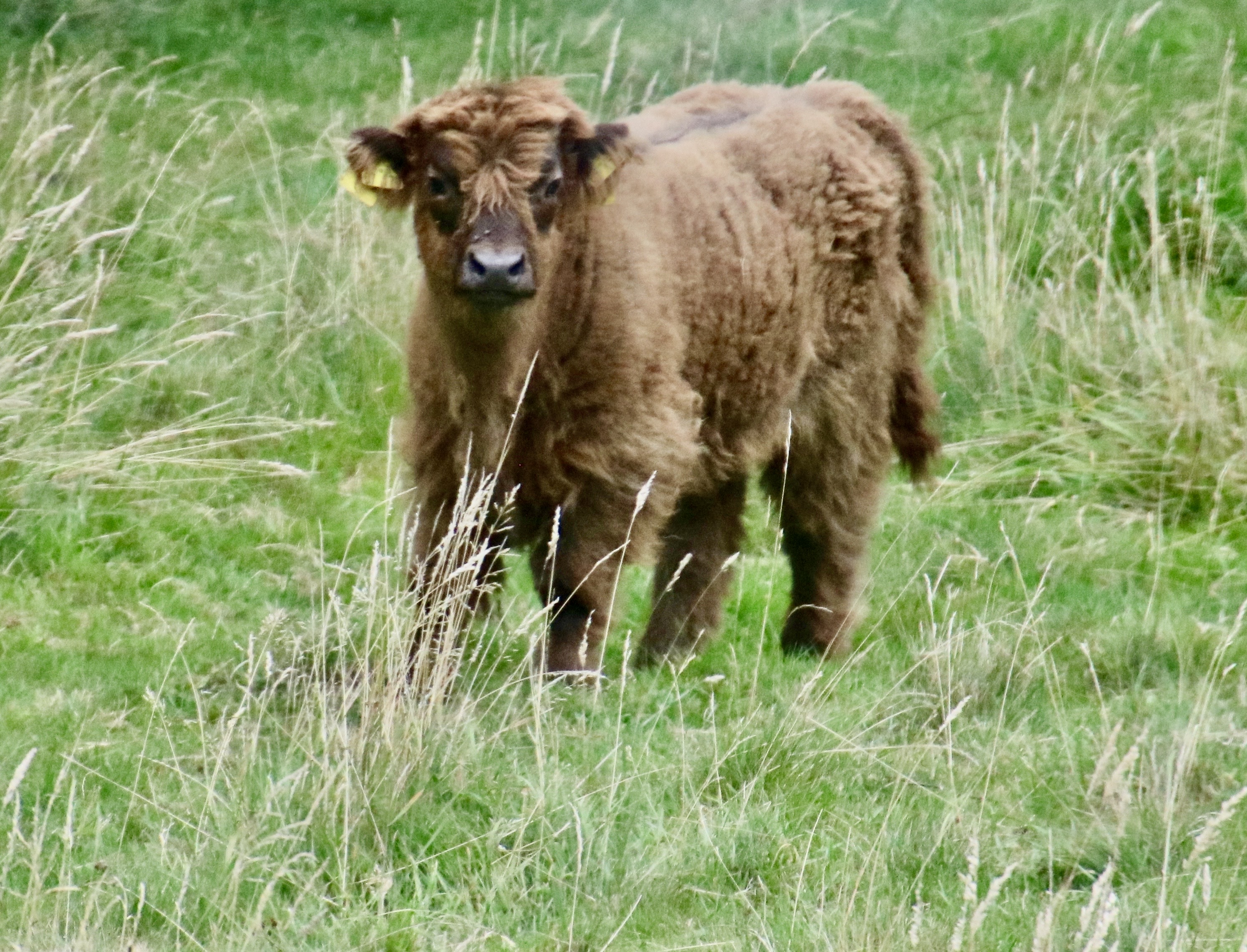
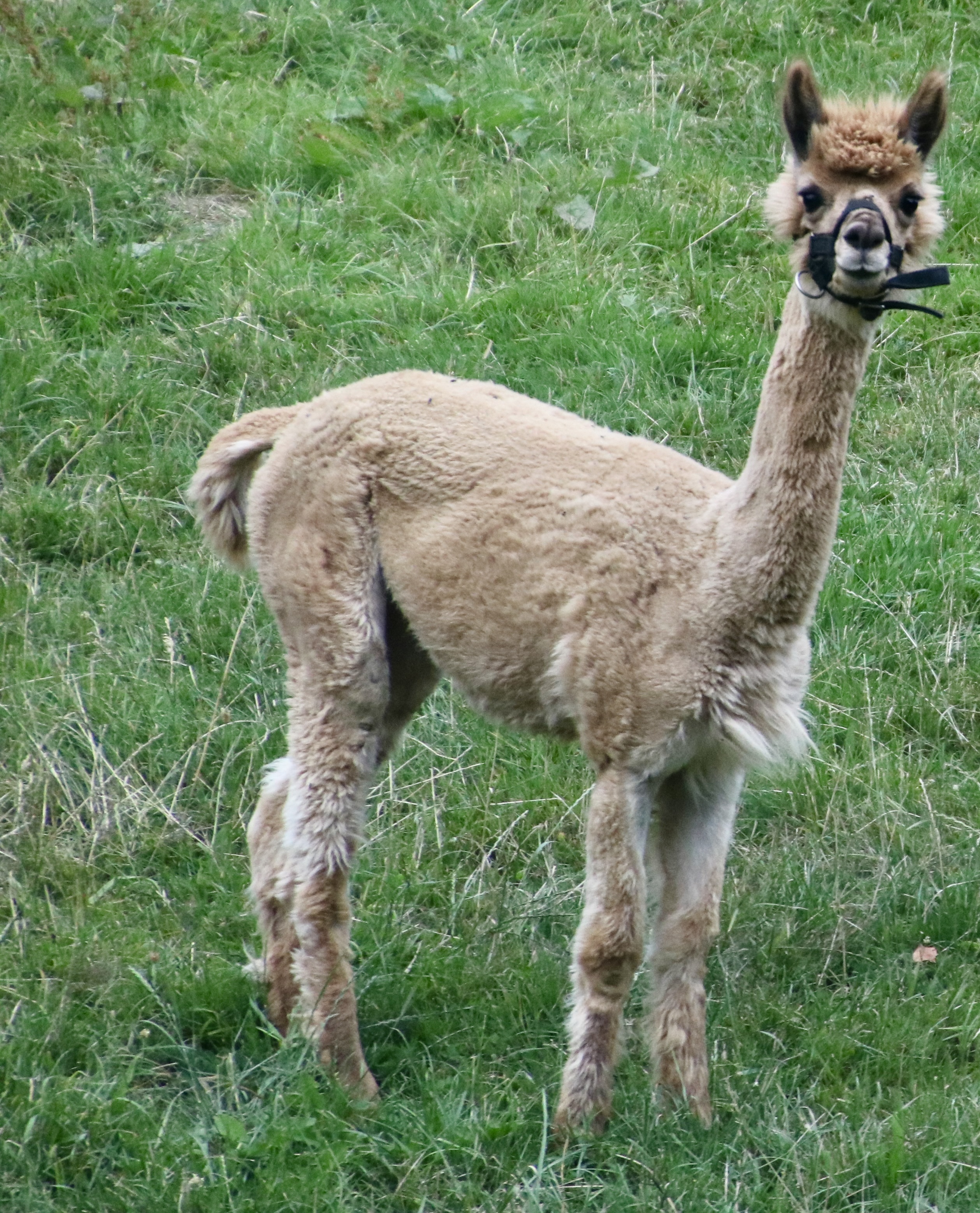
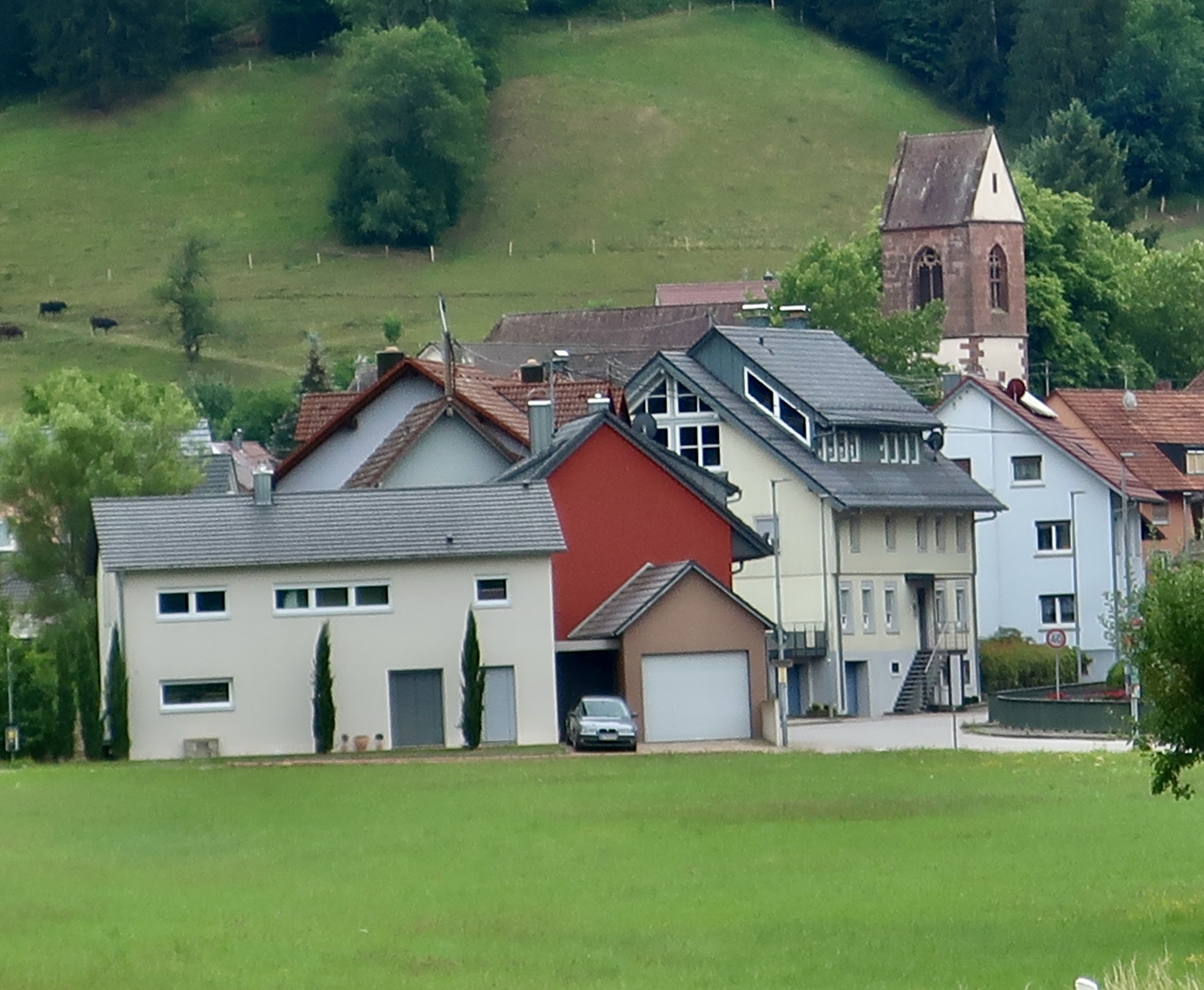
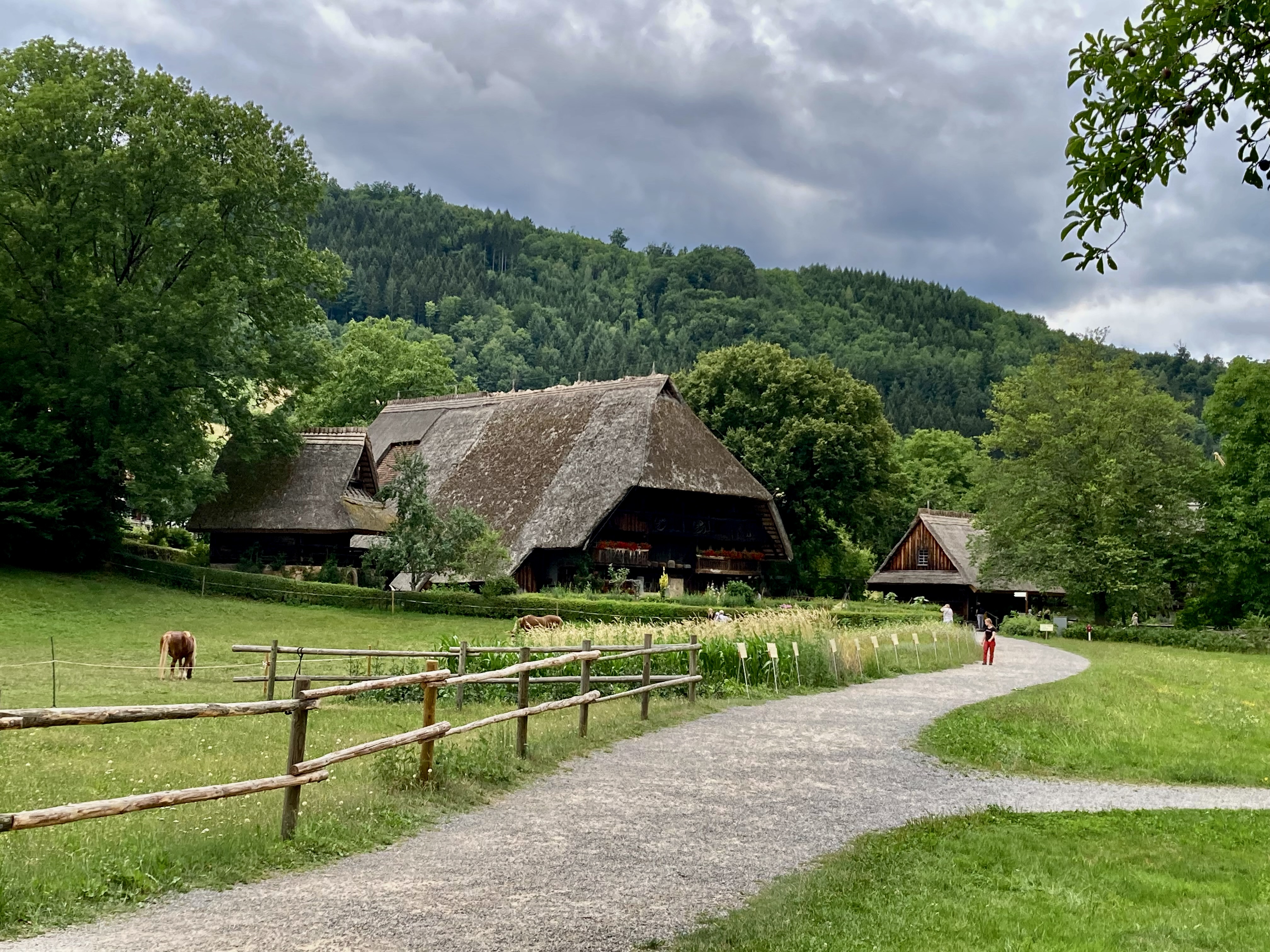
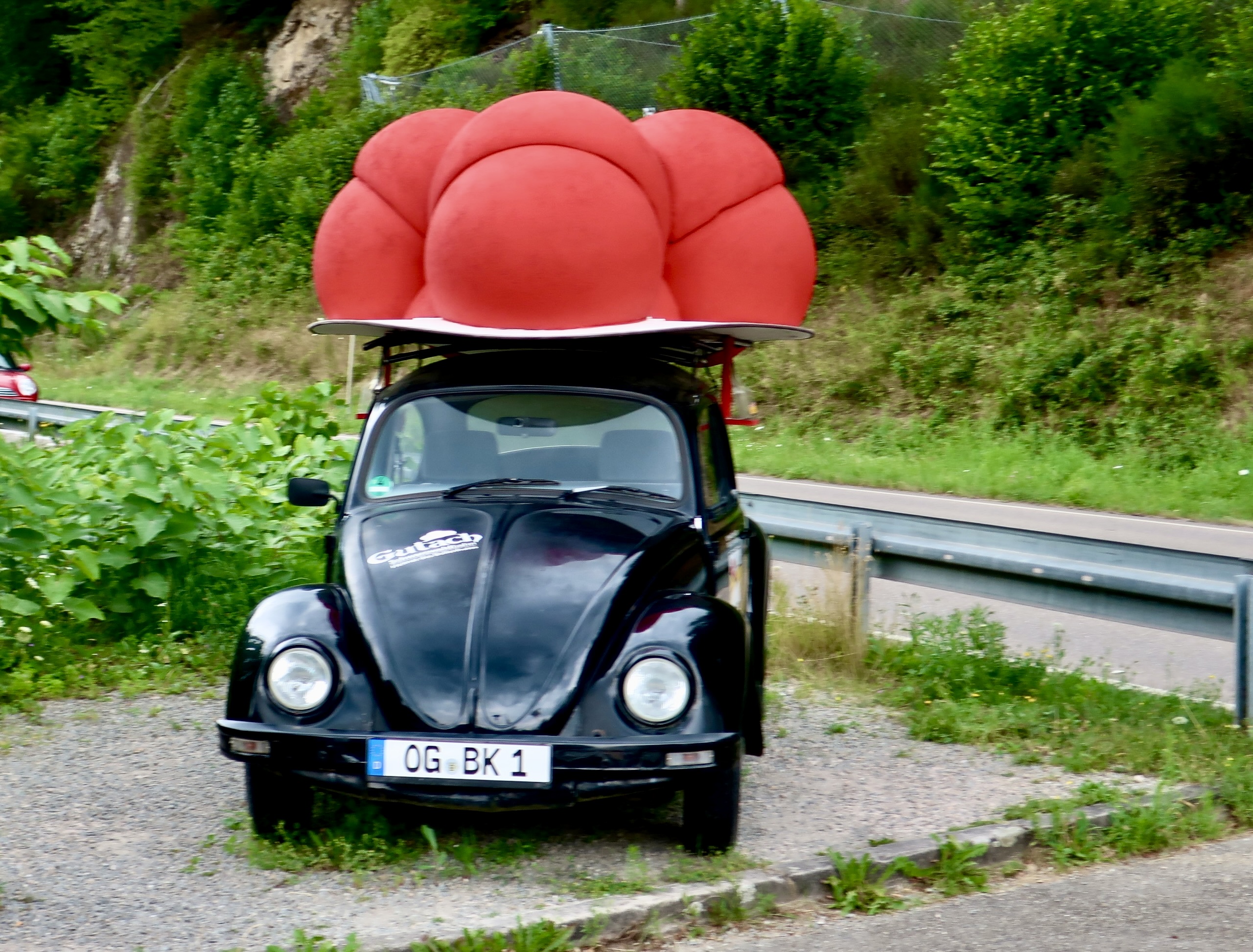
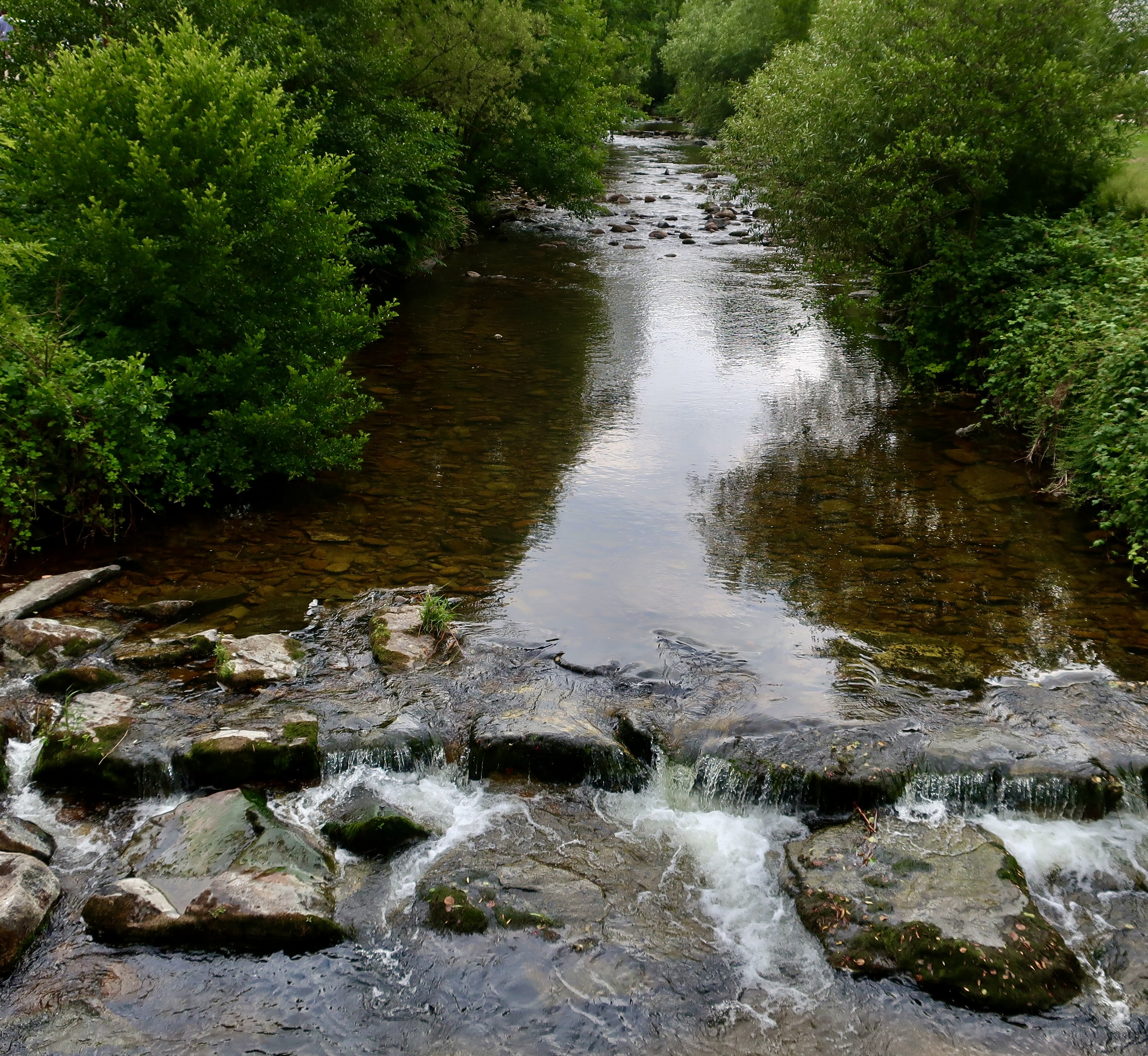
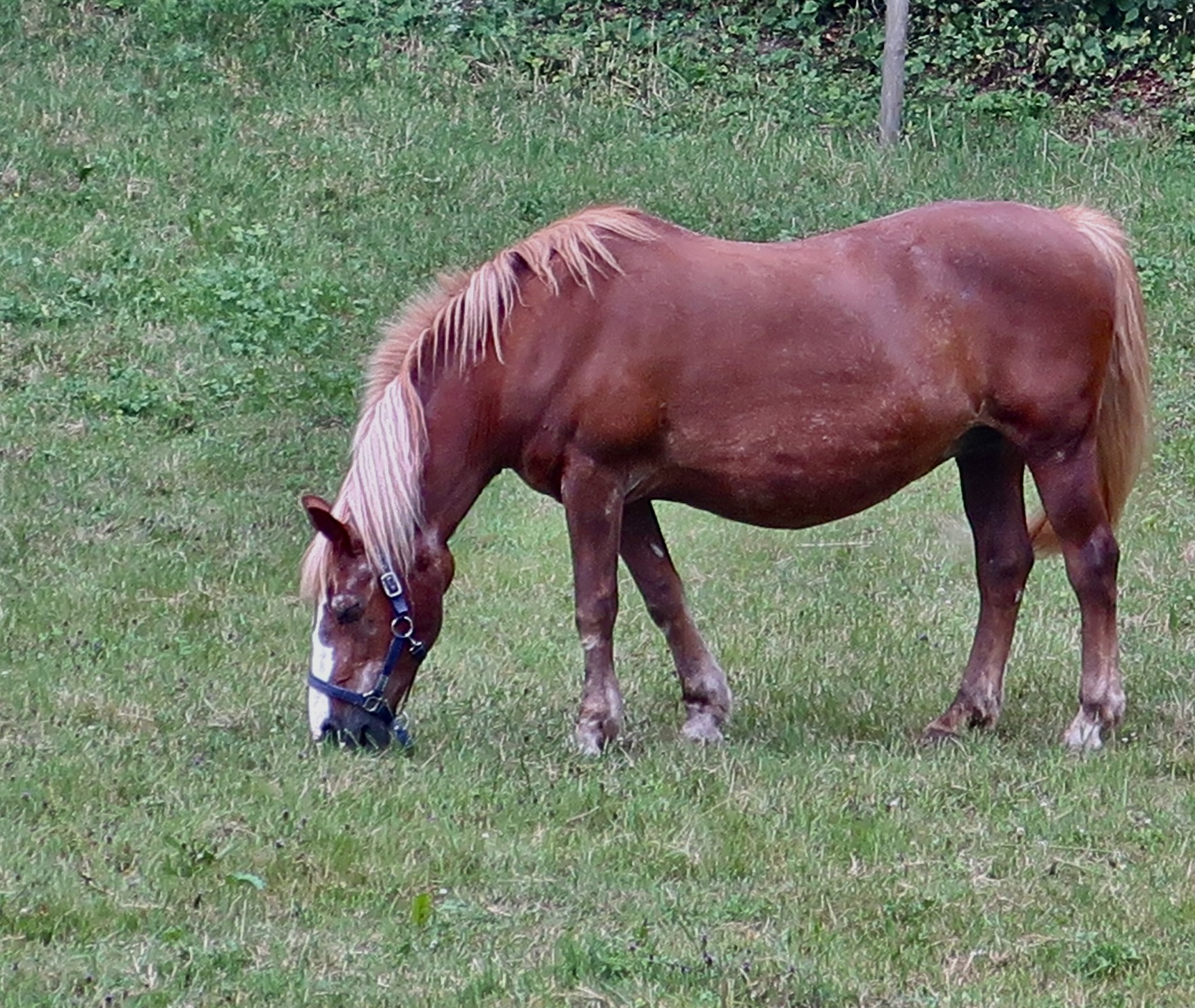
Peggy on on a dirt road into the Black Forest that we explored.The dark trees and brooding skies gave a clue of where the name Black Forest originated. I liked the lone tree. Windmills can be seen in the distance.Sunlight provided a brighter, more cheerful view of the Black Forest.A number of trails passed over the dirt road we hiked down. They demanded exploration and called to me. The one that really caught my attention, however, was the bottom one. It’s the symbol for the Camino de Santiago, the world renowned 500 mile trail that I associated mainly with Spain. What was it doing in the Black Forest? I learned that the Camino de Santiago includes a number of different pilgrimage routes that start throughout Europe and finish in Santiago de Compostela, Spain. I could have started my pilgrimage right there!Back on the road, we ran in to some strange beasties. Now, had we been driving through Scotland, this one wouldn’t have seemed so strange…The Grimm brothers would have fun with this creature, probably giving it long, curving fangs. To find one, however, they would have had to travel to South America and the high Andes.These modern, attractive homes seemed to fit well with the historic church into their Black Forest setting. We were in search of an older home, however, and found one built over 400 years ago.The Vogtsbauernhof farmhouse dating from 1612 is the central attraction of the Black Forest’s Open Air Museum.I was also hoping to see women wearing the traditional Bollenhut hat of the Black Forest, which was promoted on the the museum’s website. The hat consists of 14 pompoms, red for unmarried women and black for married women. I took this photo of a mural in Breisach, which claims to be the gateway to the Black Forest.It was not to be. Instead, we found a Volkswagen Beetle wearing a Bollenhut. Maybe it was waiting for a VW Van to come along and offer it a good time. We found this cute heifer wearing a Bollenhut at The House of Clocks.So, instead of seeing women sporting traditional hats, we wandered around the Open Air Museum checking out other sites such as this peaceful stream…A plump, sway backed horse. And my favorite…This donkey, which I will use to wrap up our trip on the Rhine River. Next Monday, it’s back to the small town of Custer, South Dakota and its fun and fascinating collection of colorful buffalo sculptures.
Peggy and I are coming to the end of the blogs on our Rhine River cruise. Today, we will take you to Breisach, Germany. Our final Rhine River post will be on the Black Forest. After that, it will be off to the Nile! All photos in this post were taken by either Peggy or meunless otherwise noted.
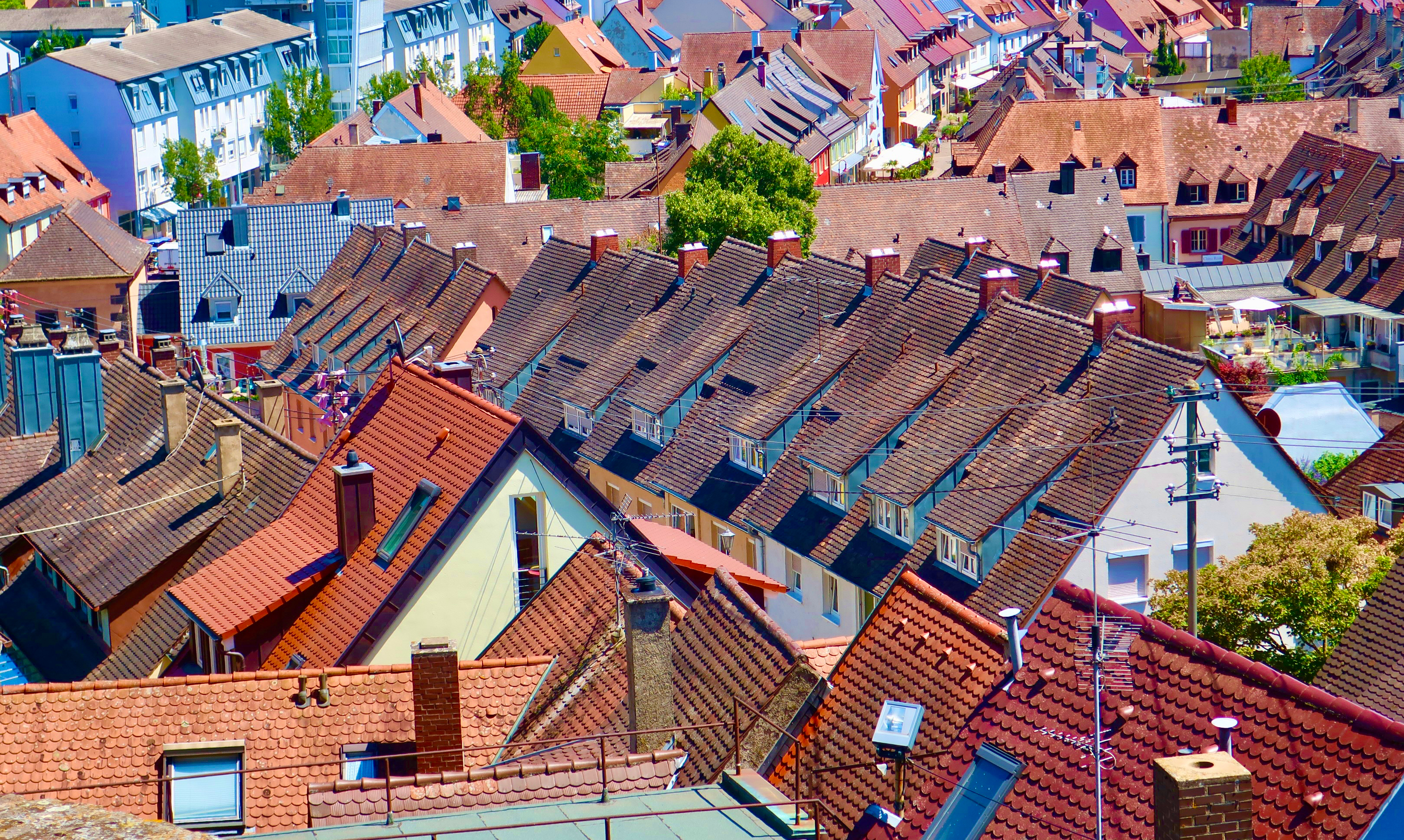
Breisach was the final town we visited on our trip up the Rhine. It had everything we had come to expect: Color, history, and a great cathedral. I’ll get to the naked lady and the bull soon. And no, it wasn’t a new take on Lady Godiva. But I will give a hint: Naked ladies on bulls are a European kind of thing.
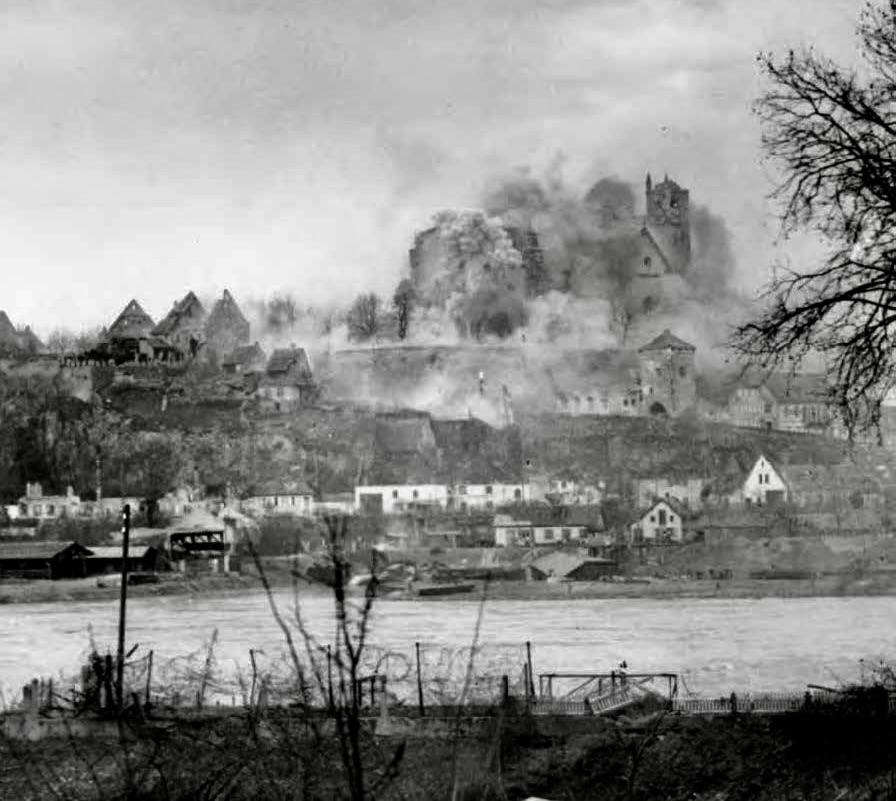
The history of Breisach follows the history of the other towns we have visited along the Rhine, dating back to ancient Celtic times, becoming part of the Roman Empire, and then part of the Holy Roman Empire with several countries laying claim since. The city saw extensive damage in World War II as the Allies invaded it from across the Rhine.
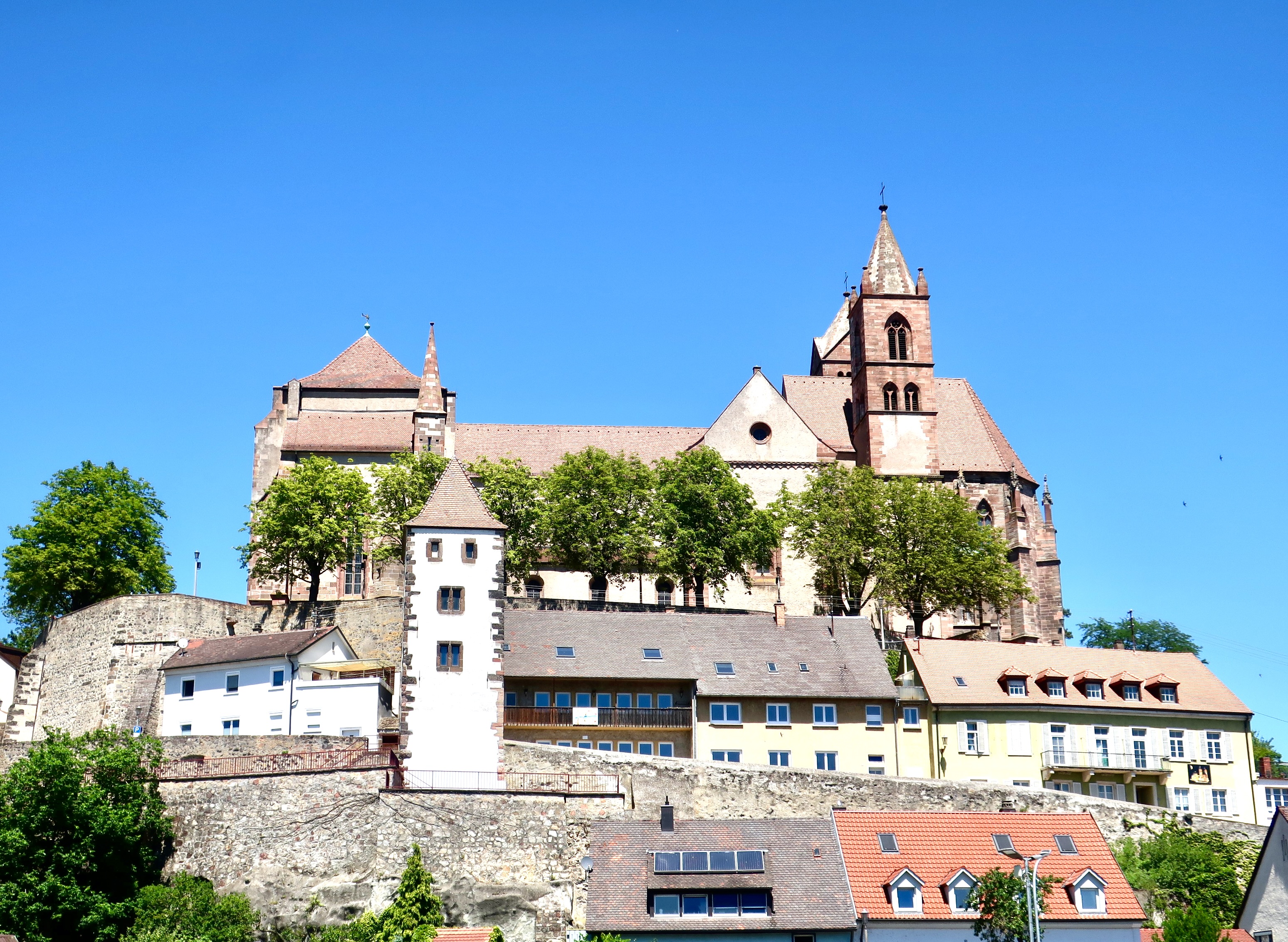
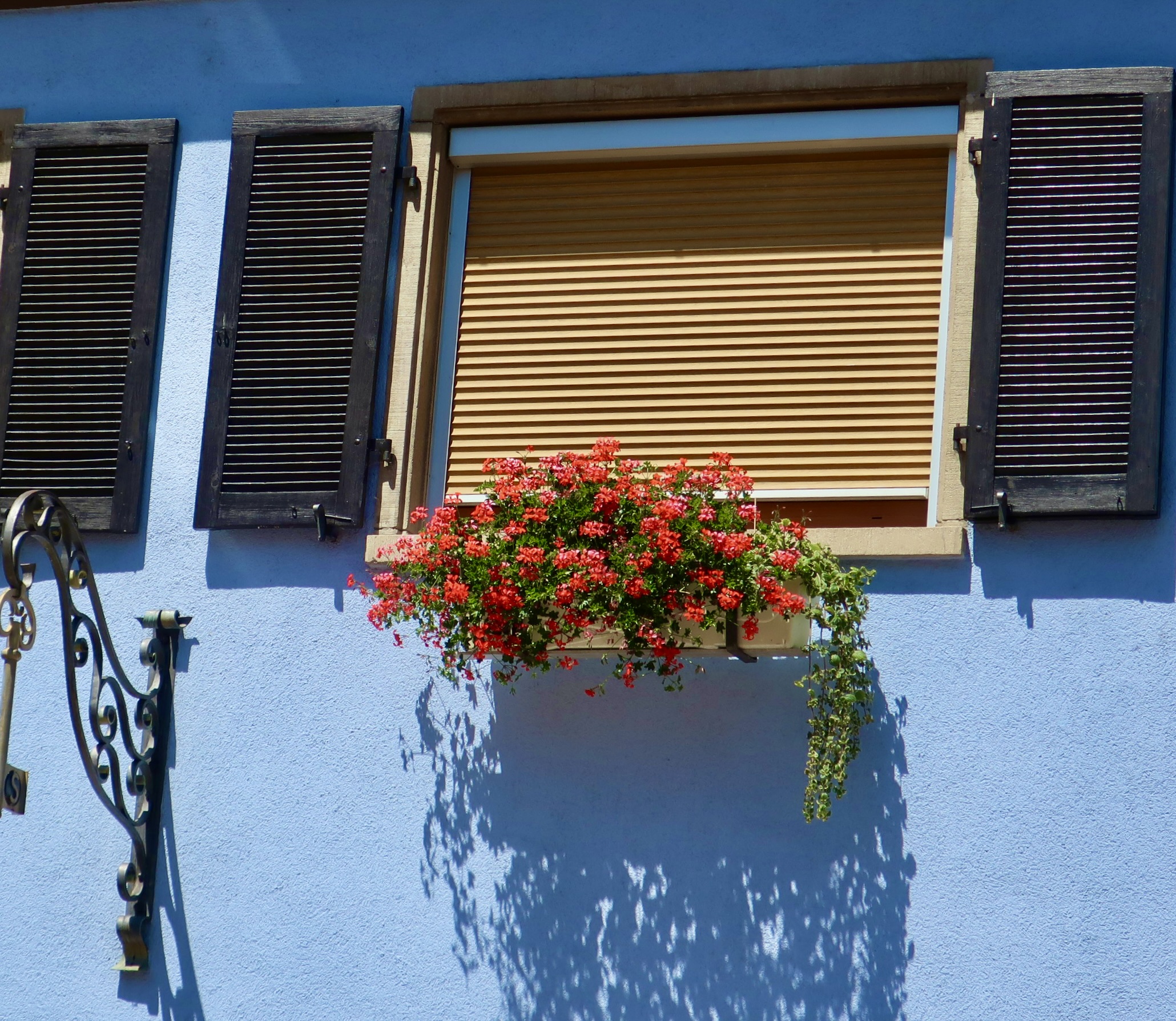
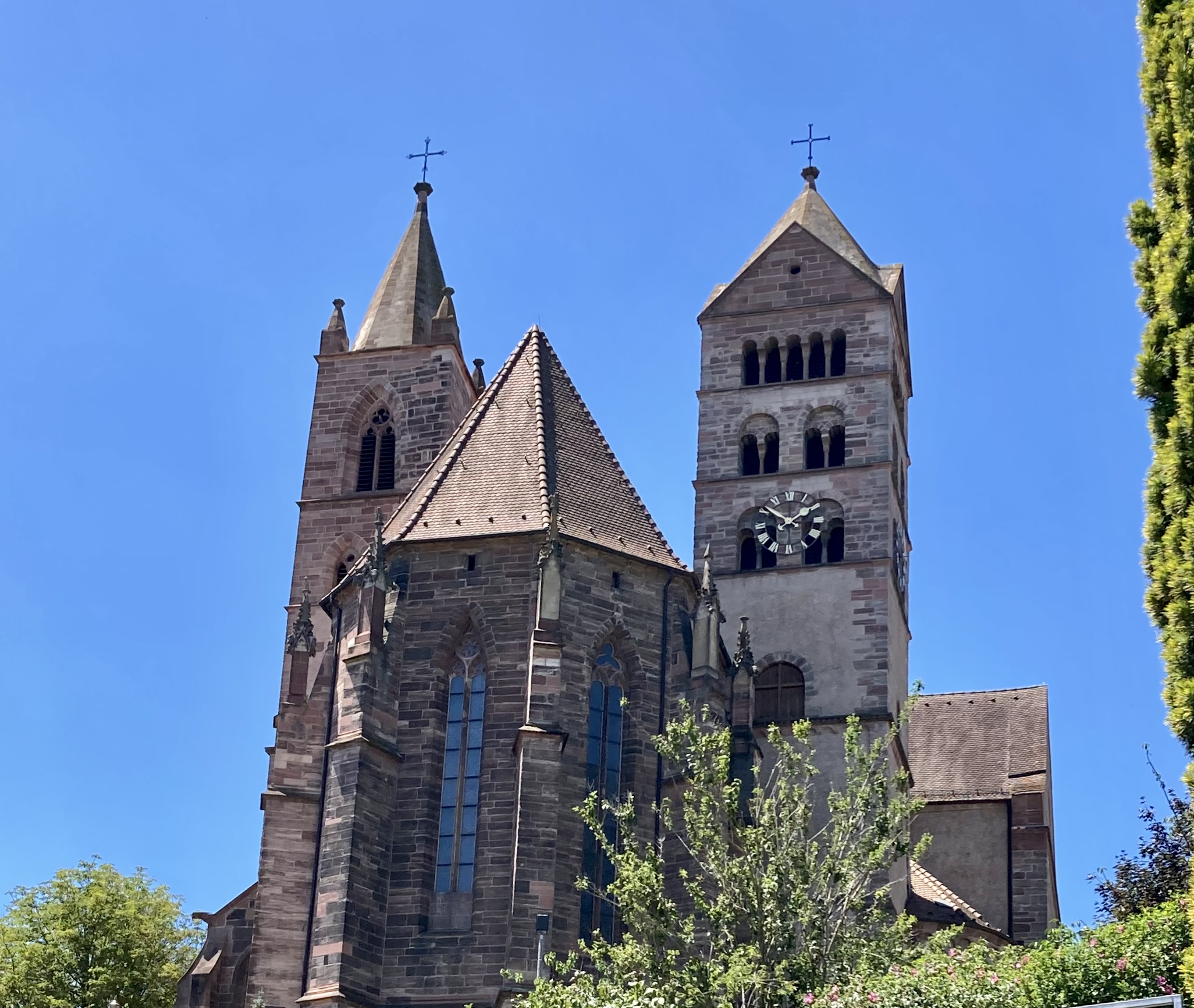
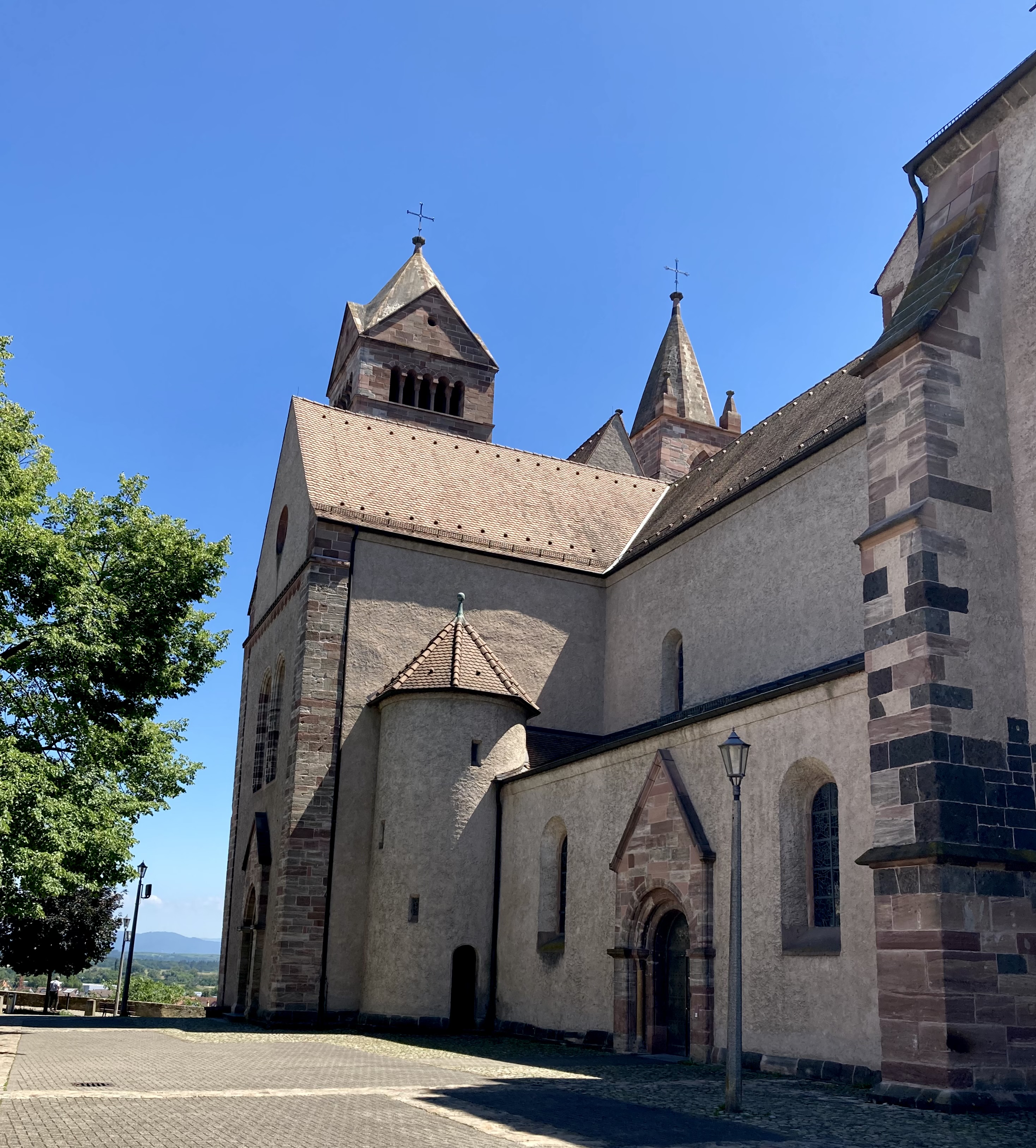
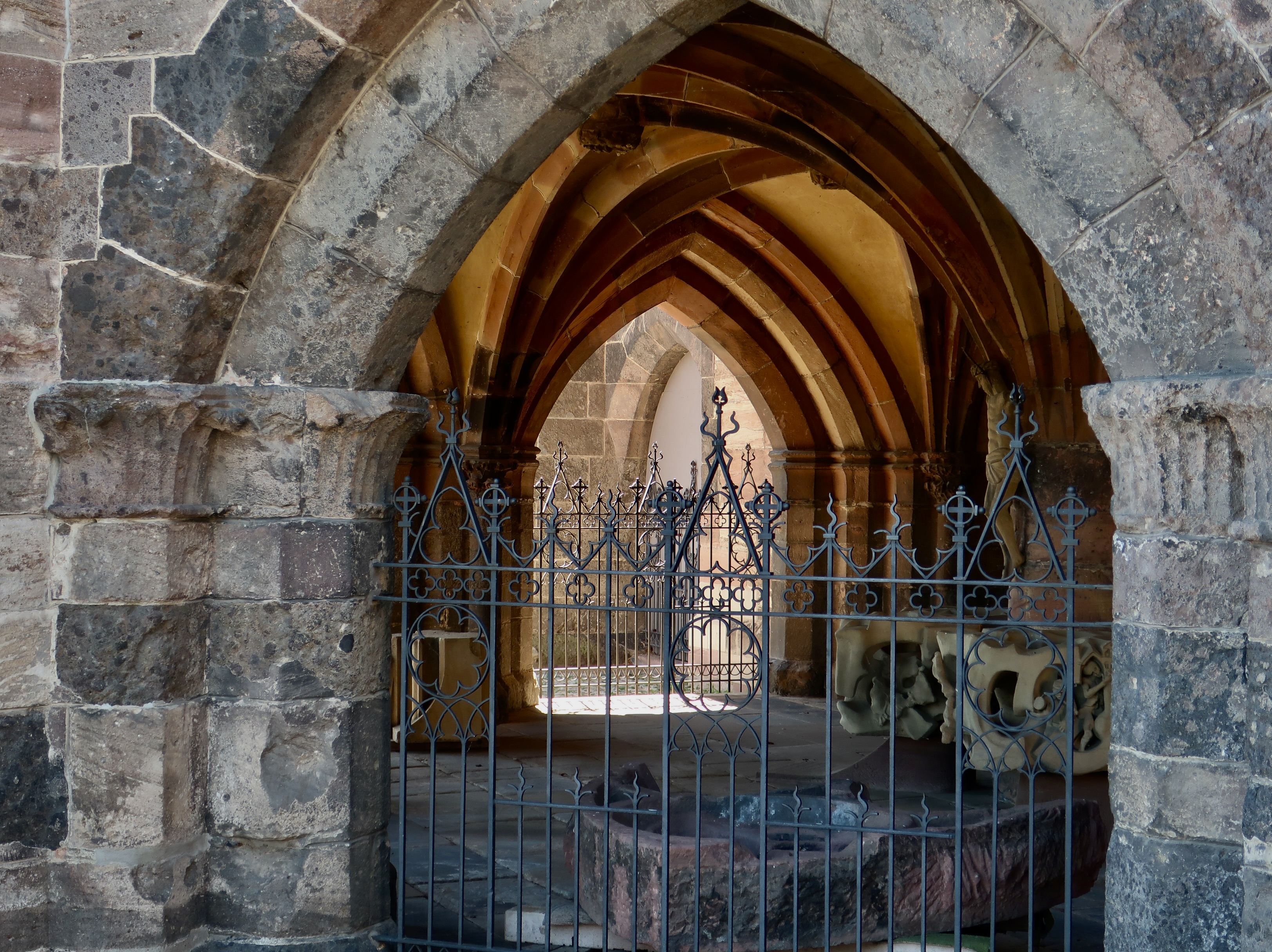
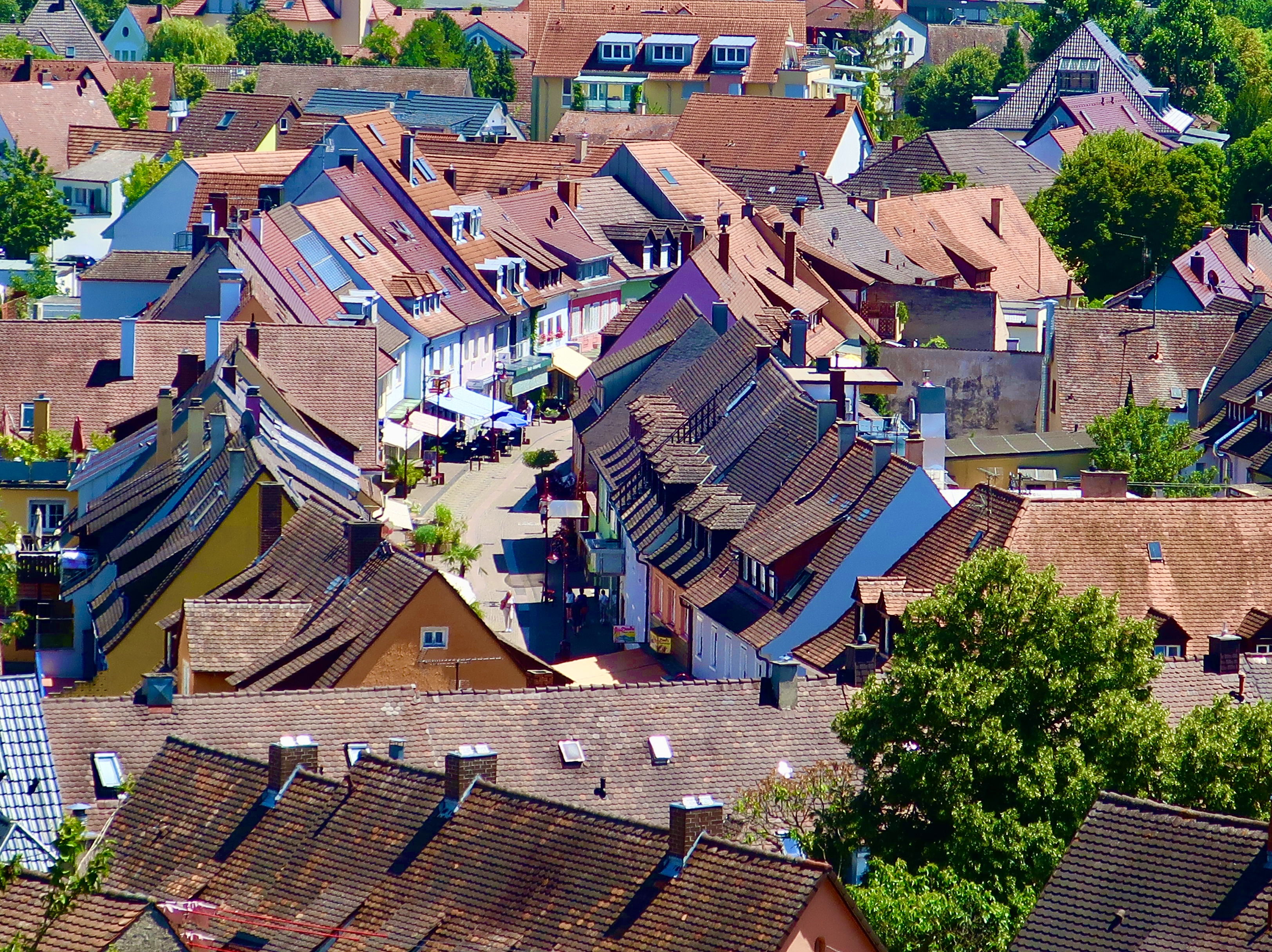
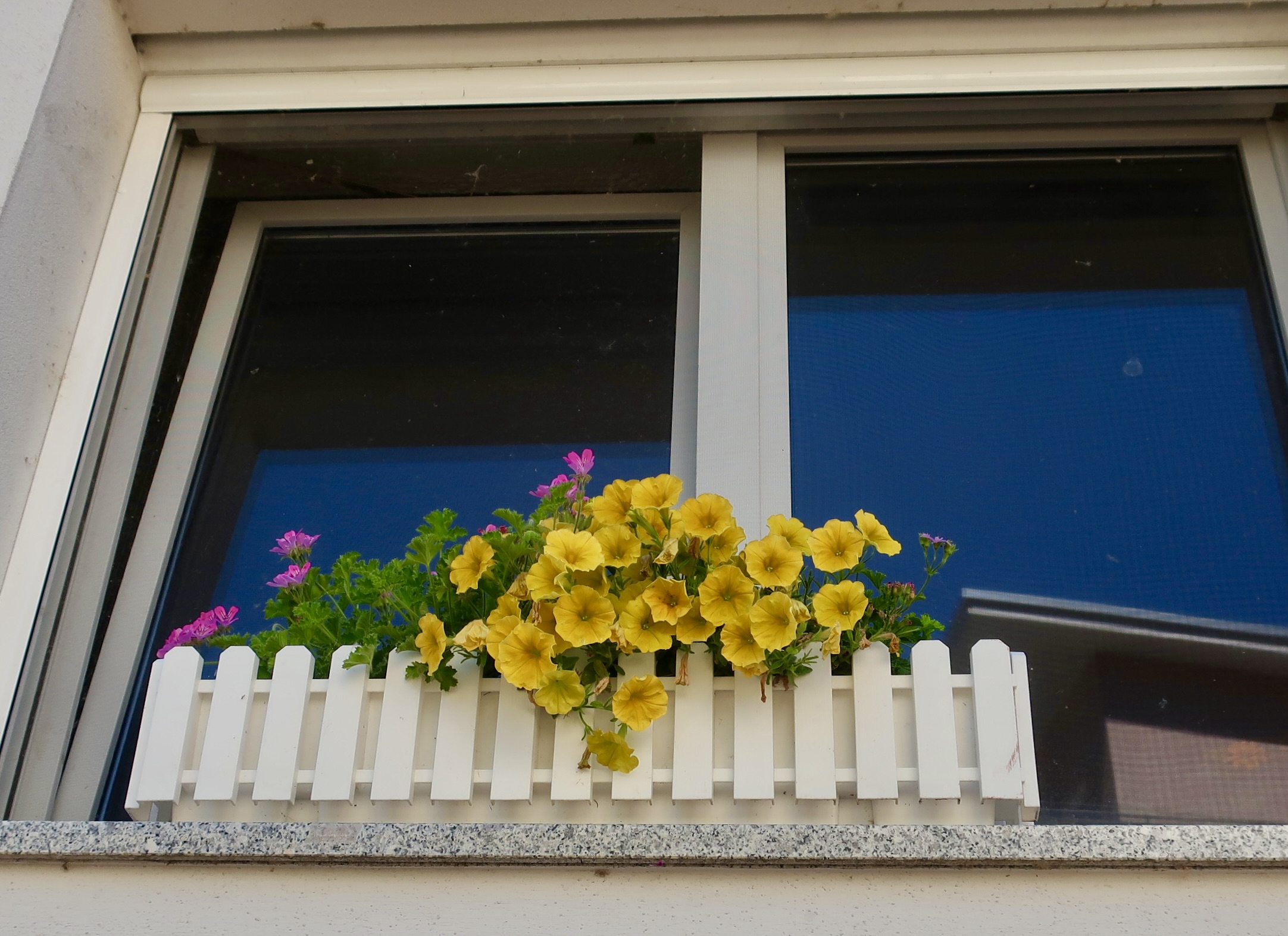
A photo from Wikimedia Commons of Breisach being attacked by Allied forces in 1942. St. Stephen’s Cathedral is burning at the top right side of the picture. 85% of the town was destroyed by Allied artillery.Peggy and I went for a walk into Breisach to visit St. Stephen’s Cathedral. This is a view looking up from the town. Obviously, the cathedral, like the town, has been rebuilt since WW II.Our trip up to the Cathedral took us through Gutgesell Gate. Built in 1402, it was destroyed in WW II and has since been rebuilt. A sign on the side noted that Pope Johannes was arrested here in 1415. It was a time when three people were claiming to be Pope. The ‘official’ church position out of Rome was that Johannes was an antipope. It’s bad for business to have more than one Pope. It tends to confuse the flock and worse— split the donations.The steep walk up to the Cathedral past brightly painted houses was worth it on its own.Flower boxes added to the color.Toward the top, the road narrowed to a walking path. I found this old doorway and couldn’t help but wonder what treasures (or ghosts) might be found behind it.An intriguing coat of arms was found above the doorway.The view of St. Stephen’s that greeted us as we finished our hike up the path. Construction of the church started in the early 12th Century.We walked around the church admiring it from various perspectives.These pockmarks on the side of the Cathedral caught our attention. I wondered if they had been left from the artillery attack during WW II. Turns out that they were from an earlier bombardment from 1870. Apparently the church has a problem with avoiding the line of fire.This chamber challenged our imagination. First there was the fence with what looked like a cat sitting on top, which I found amusing. Then there was the strange sculpture inside…The stone mason makes sense. St. Stephans was the patron saint of stone masons. But what about the strange figure on the right? The dark side of medieval Christianity was, uh, dark.For example, the door to the Cathedral featured St. Stephens being stoned.The hill on which the church sits, gave us great views down into Breisach, as was shown in the first photo and this one.And then there was the bull emerging from the bricks……with a naked lady standing on top.
Of course there is a story. Similar sculptures and other representations of the bull and woman are found throughout Europe. An ancient Greek myth is to blame. The bull happens to be Zeus. And the naked lady? She’s Europa, a Phoenician princess who Zeus seduced. Zeus seducing a princess isn’t news. He had a thing for maidens. His challenge was that his wife (and sister) Hera, the goddess of women, marriage and childbirth, disapproved of such behavior. Zeus went to great lengths to hide his activities from her, one of which was to transform himself into various animals for his seductions. Perhaps you’ve heard the story of Leda and the swan, where Zeus became a swan and seduced Leda. One version of the myth is that she laid two eggs, one of whom hatched into the beautiful Helen of Troy. With Europa, Zeus became a beautiful white bull who met the maiden while she was innocently picking flowers. Naturally, she had to pet his gorgeous white flanks and climb up on top of him (what maiden wouldn’t), whereupon Zeus charged off to the Mediterranean Sea, jumped in, and swam to Crete, where he had his way, so to speak. Minos, the King of Crete, was one of three sons born of the union.
The founding of the European Union led to renewed interest in Europa, given that the ancient Greeks named significant portions of Europe after her and the Europeans could claim that a 2500 year old myth provided some justification for the union.
We found several other things of interest on the hill:
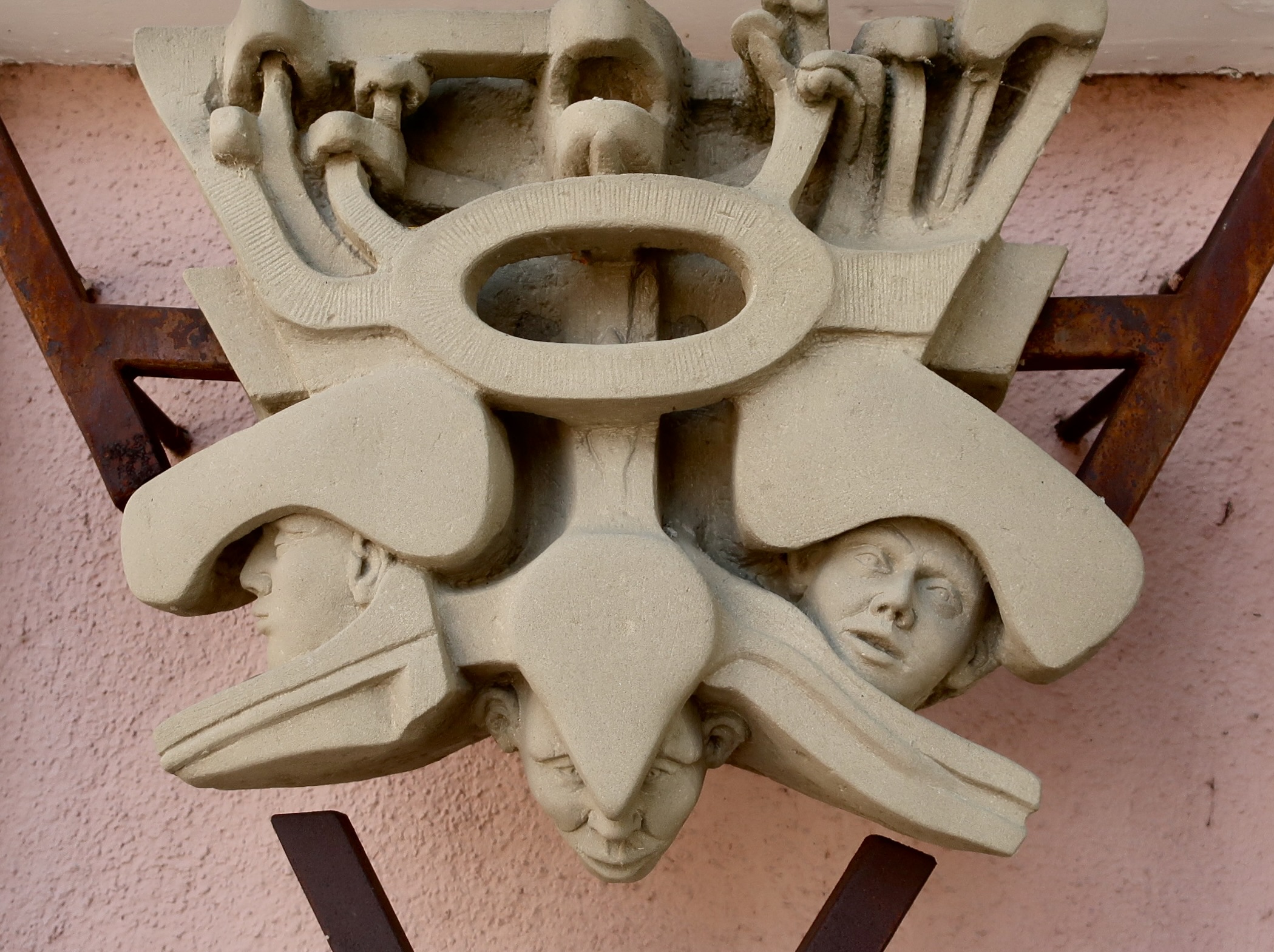
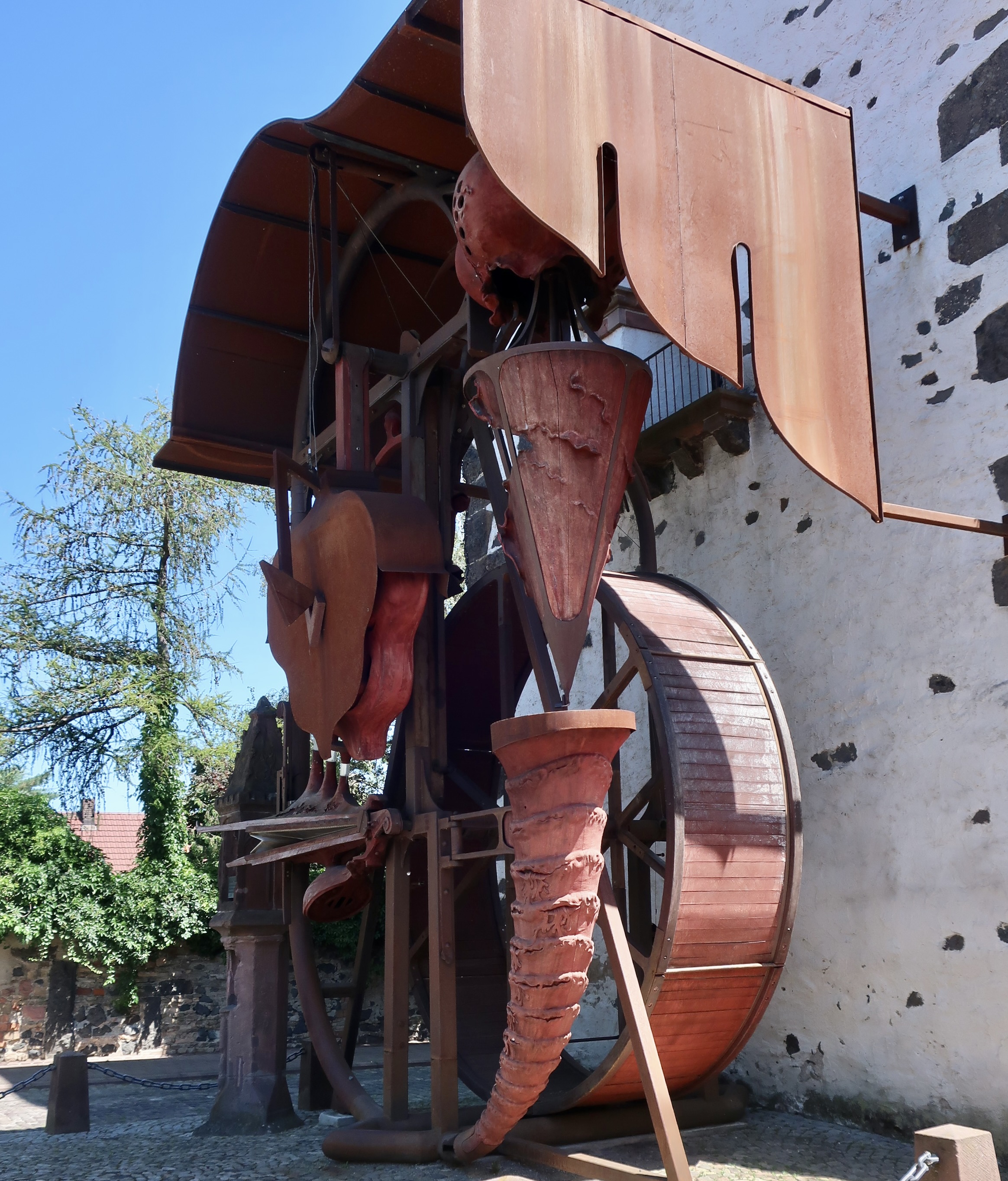
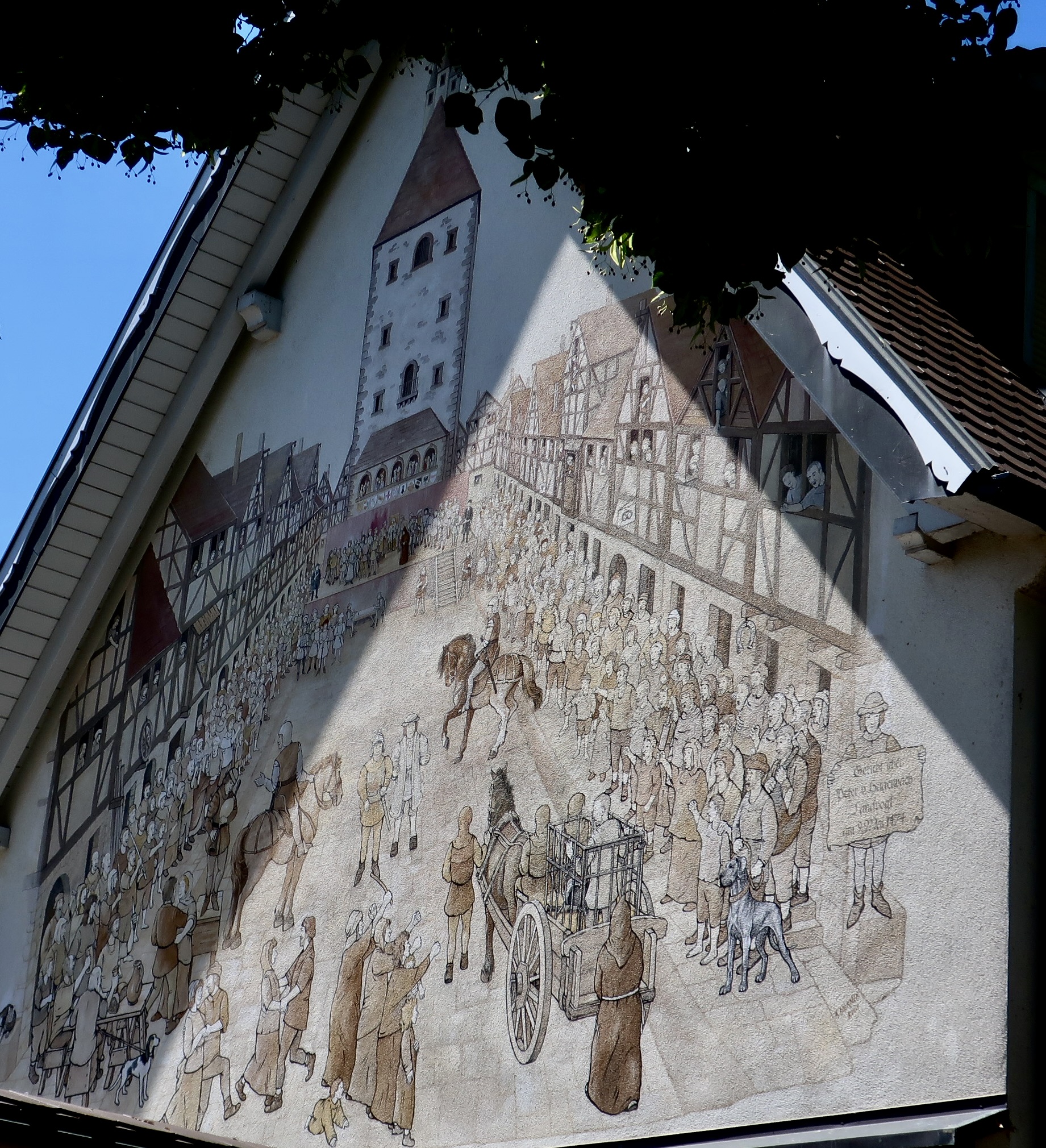
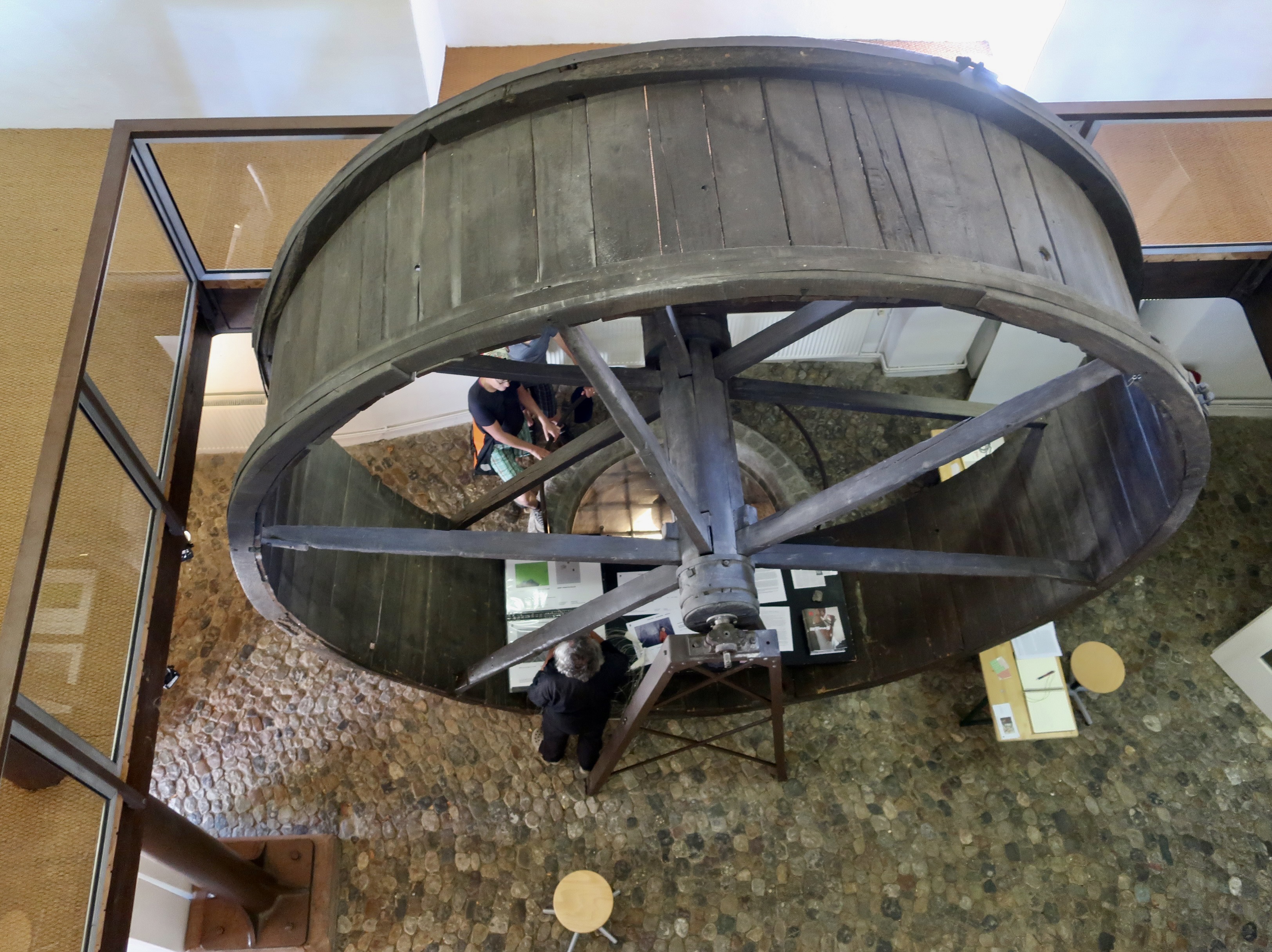
This scupture had me scratching my head, but I figured it would make an excellent home for a bird, or possibly a raccoon. Remember Mad Magazine and Alfred E. Neumann, the guy who always graced its covers? Now check out the dude on the bottom of the sculpture. I’m betting that the artist had a sense of humor. This impressive sculpture of a water wheel/clock represents what is inside of the building it is attached to…This is what the outside of the Water Wheel building looks like.We found this fellow outside of the building. He seemed to be having a bad day. Possibly he had been a bad boy and was contemplating his fate inside…A mural showed a prisoner being taken to the Water Wheel Building. It was used as both a prison and a torture chamber. Or, a prisoner might be assigned to operate the dreaded water wheel. Note the people screaming at the prisoner while others danced in the streets. It spoke to the times.The huge water wheel located inside the building. The stools and the person sitting on the other side of wheel provide perspective. I’m not sure how the wheel was operated but human hamsters come to mind. The well is located beneath the wheel. But enough on dark images and thoughts, I conclude today’s post with another windowsill flower garden in Breisach, and… Our riverboat, the River Empress, that was docked on the Rhine in Breisach. Next Monday, Peggy and I will return to our fall trip around the US. This time we will be in Custer State Park in South Dakota where the buffalo block traffic and the donkeys are bandits.
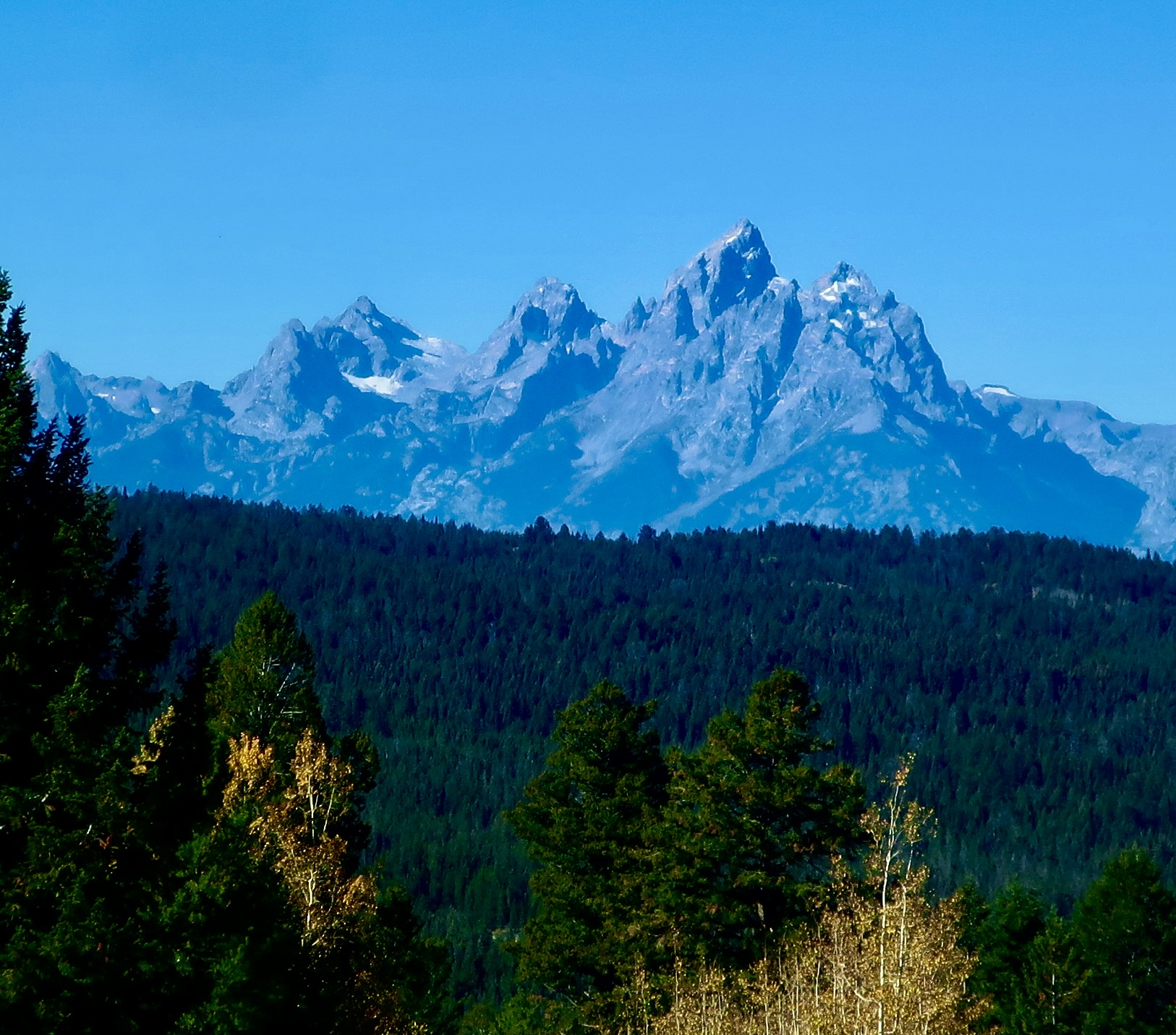
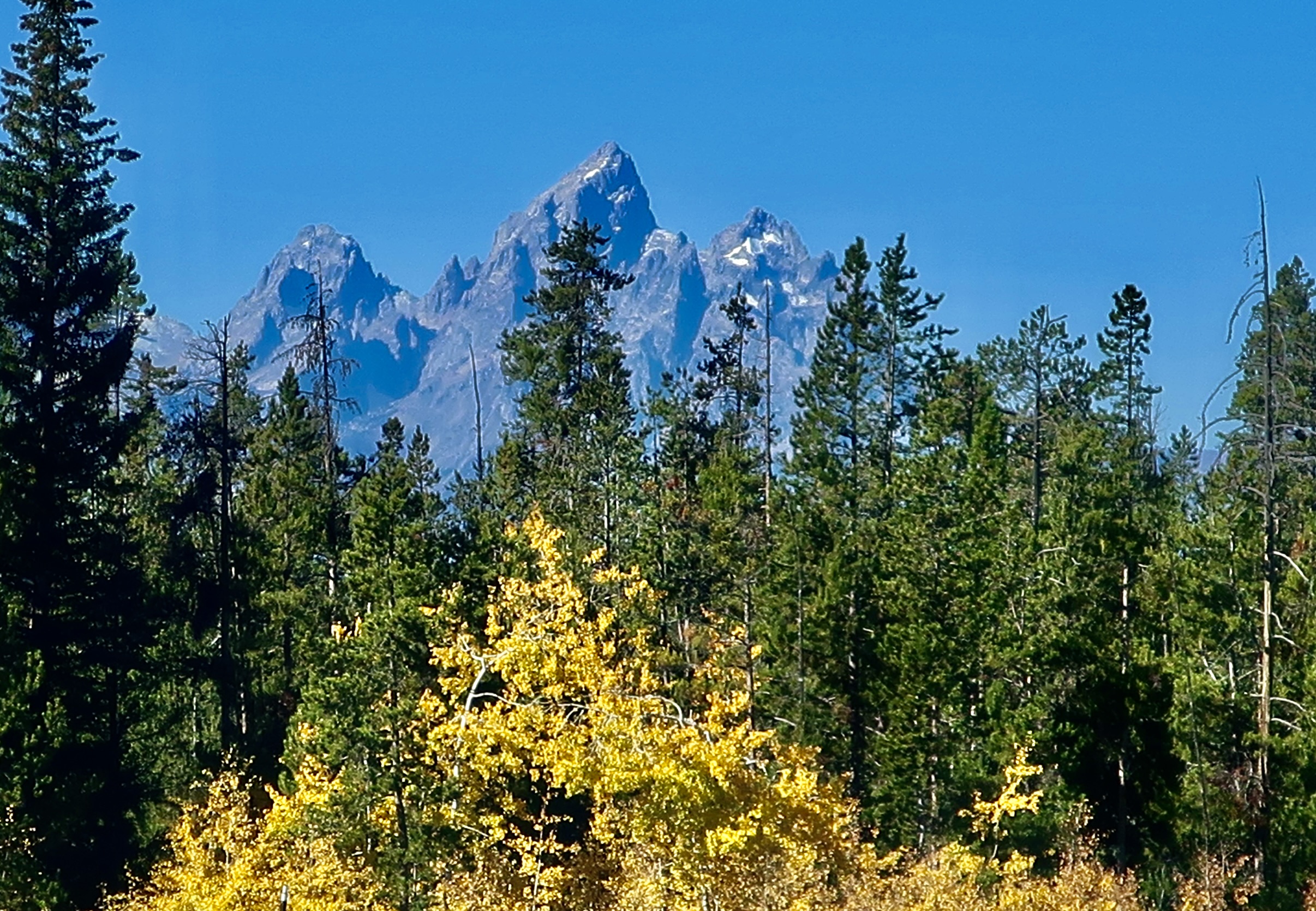
If I were in charge of making mountains, I would use the Grand Tetons as a model. A blogging friend of mine told me that the first time she saw them, she started crying. They inspire that kind of awe.
Just before we reached Yellowstone NP on our four month trip around the US last fall, we drove through Grand Tetons National Park. I’ll be featuring photos Peggy and I took of the Grand Tetons and the Absaroka Range today.
As Peggy and I drove across the 9,658 feet (2,943 m) Togwotee Pass, we were excited. We were in the Rocky Mountains and had just crossed over the Continental Divide. We were back in the West! Rivers would now be flowing into the Pacific Ocean. Soon we would get our first views of the Grand Tetons— not that there was anything shabby about the scenery on pass.
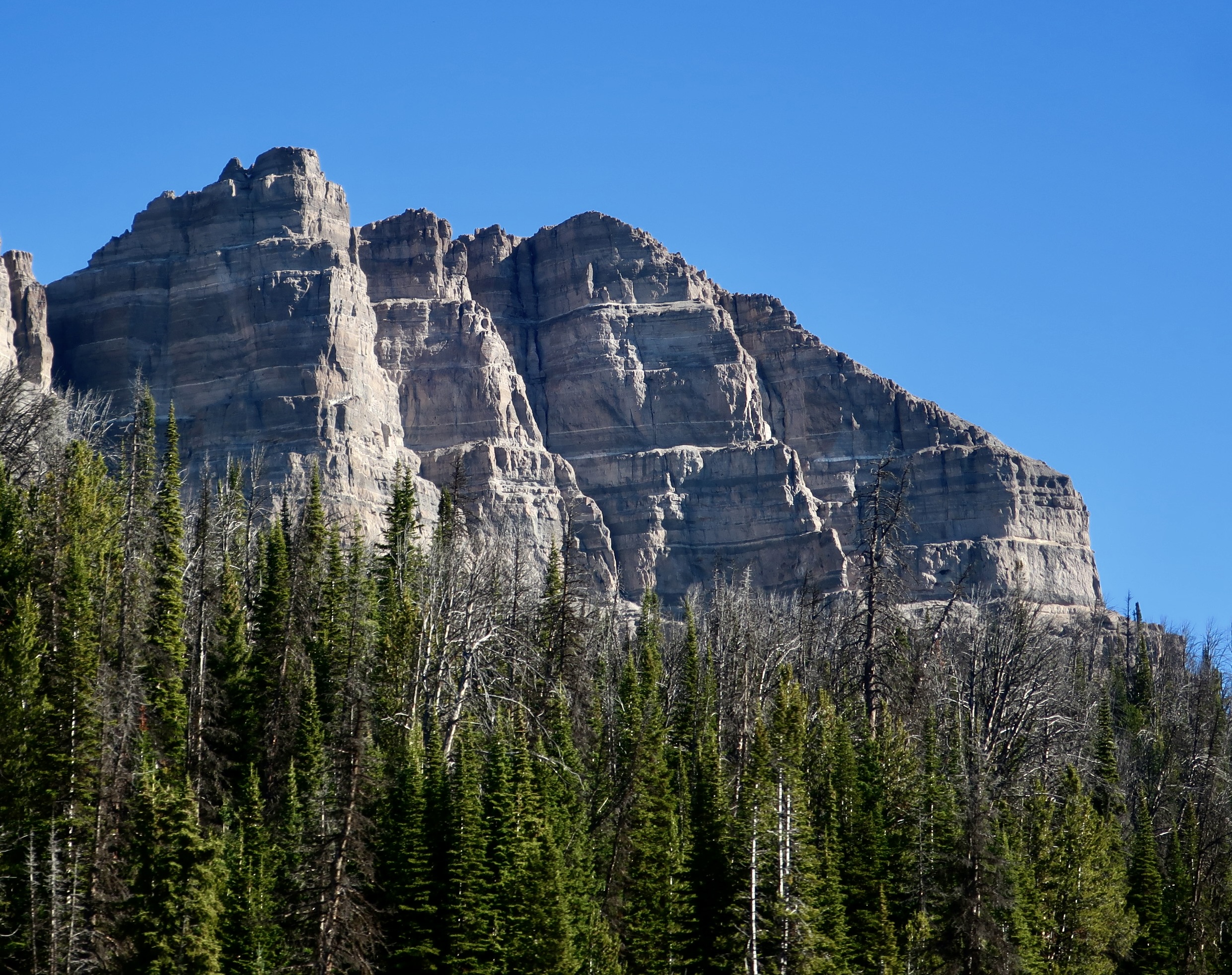
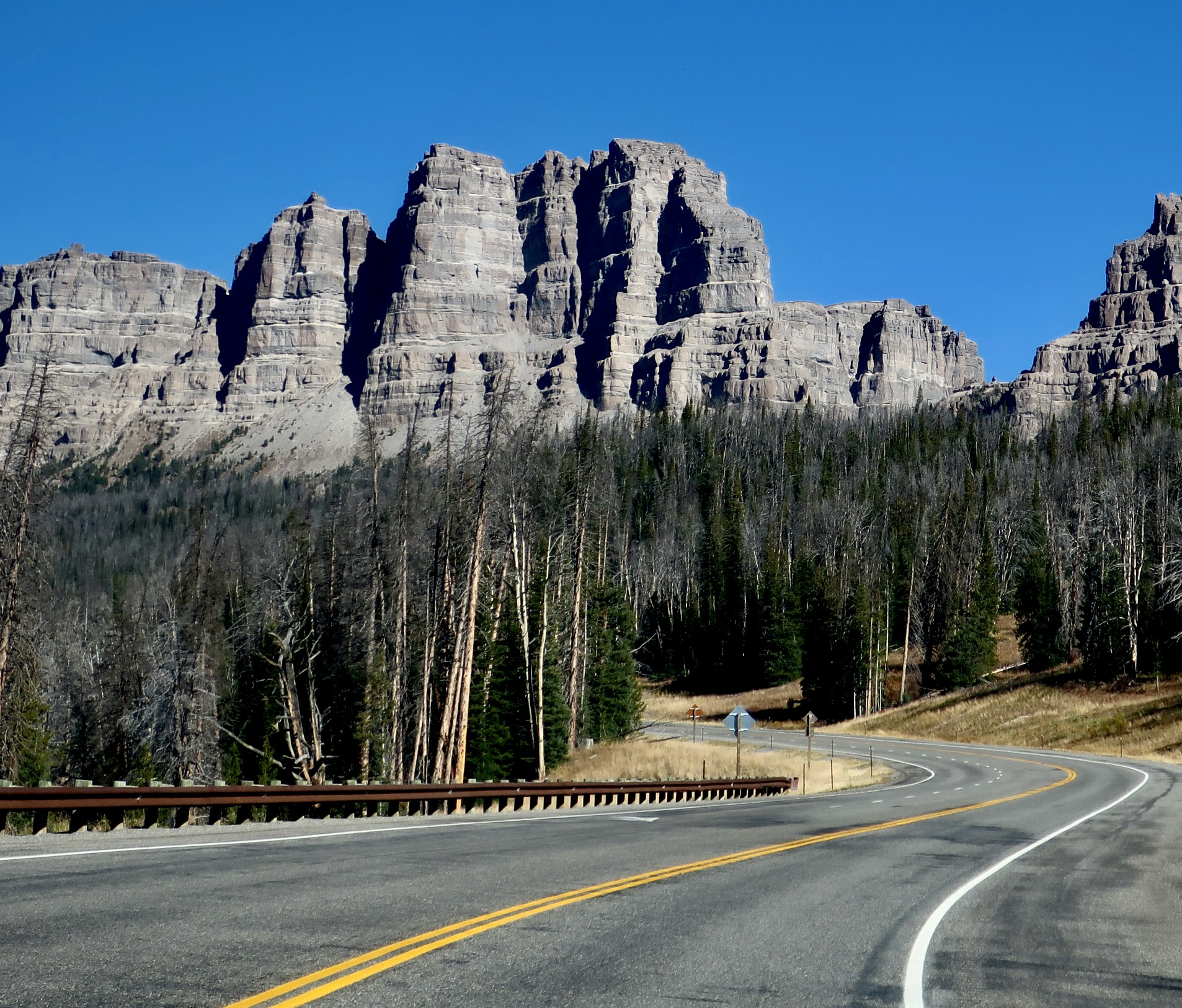
As we passed over the Continental Divide at Togwotee Pass, our excitement grew. This area receives over 25 feet of snow a year, a figure that can climb as high as 50, which I suspect it has this year.It was in October and the aspens near the pass were displaying their fall colors.The Absaroka Range, which can be seen from the pass, provided a backdrop for this grove. The range serves as the eastern boundary to Yellowstone NP.My father once painted a picture of the Absaroka Range.Professional photographer Glen Fishback took this photo of my dad painting the Absaroka Range in the 1980s. Pop, as we knew him, had wandered around the country with his sister, Eleanor, a few years earlier. I took this photo through glass so I couldn’t capture it as well as I would have liked to. Glen used my dad as a model and this photo ended up in a national photography magazine.A final Highway 26 road shot of the Absaroka Range. The Grand Tetons were waiting.
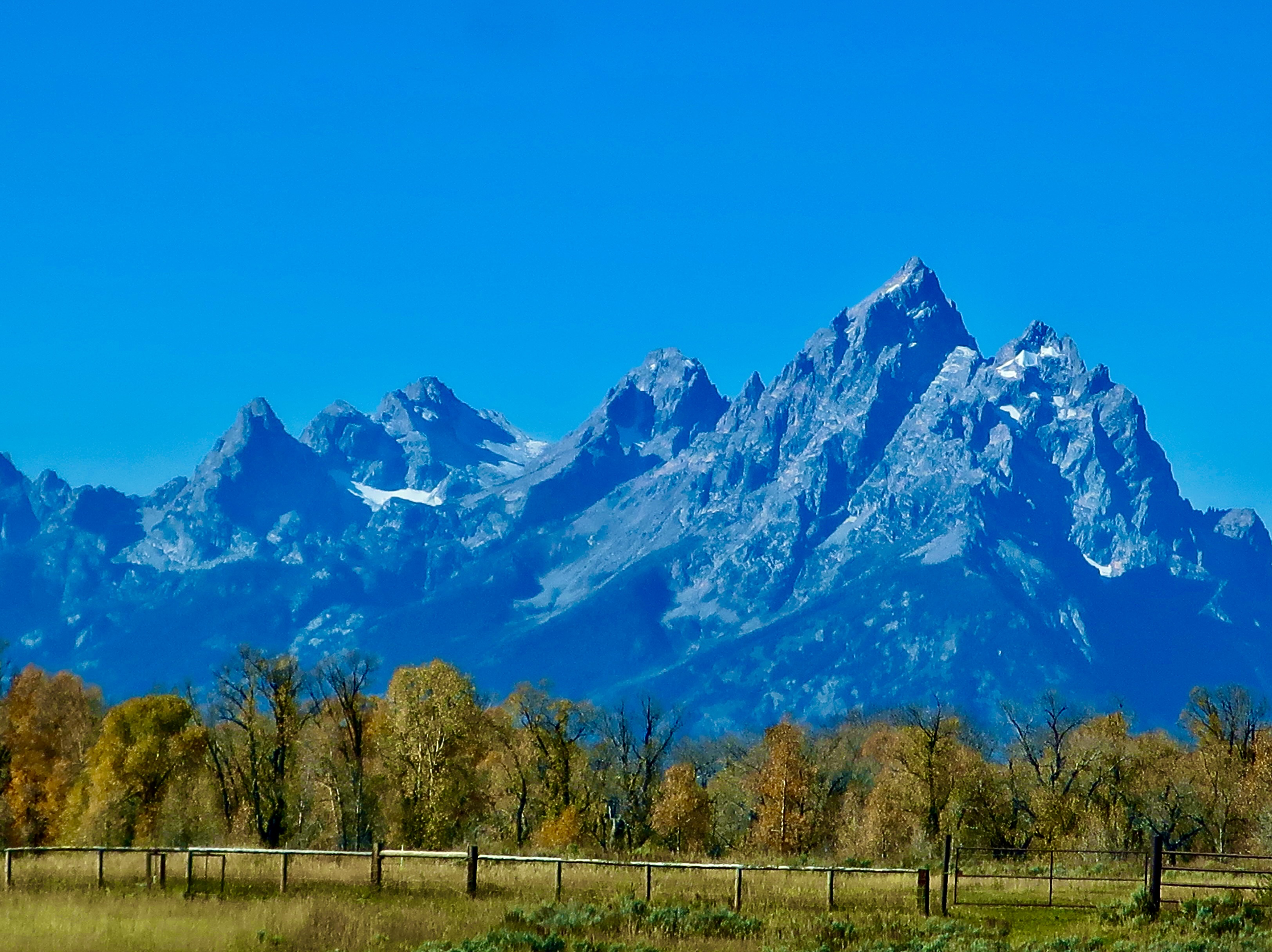
The Grand Tetons are a baby range, relatively speaking, less than 10 million years old. Compare that with the Rockies at 50-80 million years or the Appalachians at over 300 million. That’s what gives them their rugged, good looks. Erosion hasn’t had time to wear away their jagged peaks. Earthquakes along the Teton fault on the east side of the range are responsible for their height. Plate tectonic movement, which is stretching the region in an east west direction, is responsible for the earthquakes. When the tension becomes too great, an earthquake takes place, usually of 7 to 7.5 magnitude, i.e. big. Seesaw-like, the mountains rise and the valley next to it falls along the 40 mile fault, with each earthquake averaging around 10 feet of up and down movement. It is estimated that the mountain range has risen some 26,000 feet with 6,000 feet showing above the floor and 20,000 buried under it. Geologists estimate that the last major quakes were about 5,900, 8,000, and 10,000 years ago.
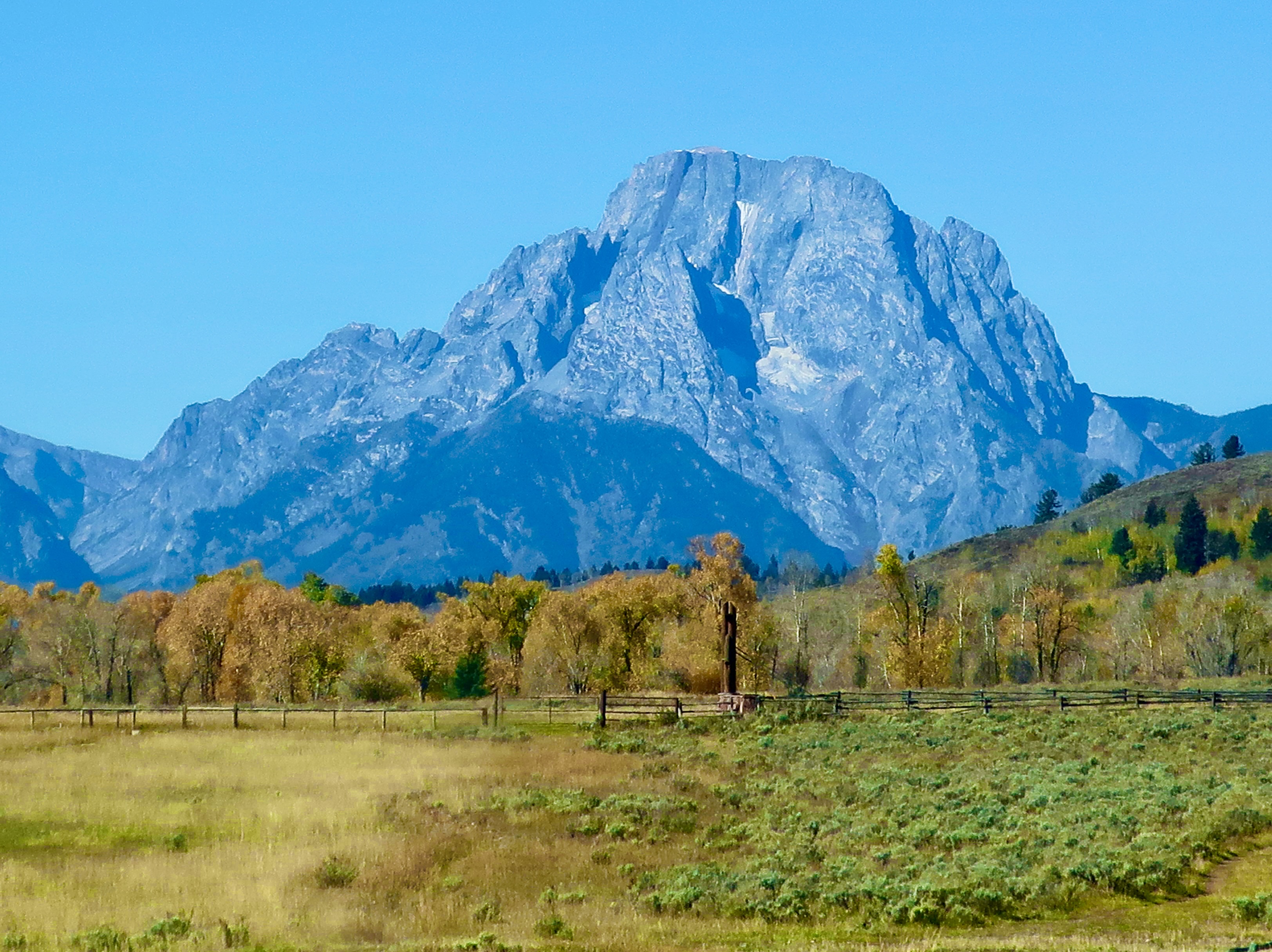
The Tetons were looming above a dark conifer forest in our first views with a hint of the colors to come.Aspens were soon adding larger splashes of color. The high peak in the center is Grand Teton, after which the range is named. It has an elevation of 13, 775 feet.Mt. Moran dominates the northern section of the Tetons and rises 12,605 feet above sea level. The orange colored leaves are from cottonwoods.Our road ran next to Jenny Lake and provided some great views of the Tetons.Ducks were busily eating on the lake.The only photo we took of the park that didn’t feature the mountains.A final photo of Mt. Moran from Jenny Lake. Next Monday’s post will be on the German town of Breisach along the Rhine River.
What better way to begin an Egyptian journey back in time than this ‘ship of the desert’? There was no lack of camels at the pyramids, or offers for camel rides, or camel photos— all for money, of course, preferably in dollars. The Egyptian pound had tanked and was worth three cents on the dollar. I caught this handsome face for free. The camel didn’t object and the owner was busy hustling someone else.
Peggy and I have just returned from our three week exploration of Egypt and invite you to join us as we explore the 25 million people mega-city of Cairo with its ancient pyramids, journey by riverboat up the Nile from Luxor to Aswan, and conclude by visiting the ancient city created by Alexander the Great. Along the way, we will wander through ancient temples, meet powerful gods and pharaohs, explore King Tut’s tomb, visit one of the most impressive mosques of Islam, stop by a factory where they pursue the ancient art of making papyrus, and have many, many more adventures. We were wowed by the history with its incredible temples, tombs and statues, impressed by the friendly reception of the Egyptians we met, captured by present day Egypt, and amused by the humorous stories our guide Sabaa shared along the way. Today’s post is an introduction, an appetizer if you will. The series will start in mid-April when I conclude our Rhine River trip. It wouldn’t do to confuse the rivers. Right? All of the photos in this post are by either Peggy or me unless otherwise noted.
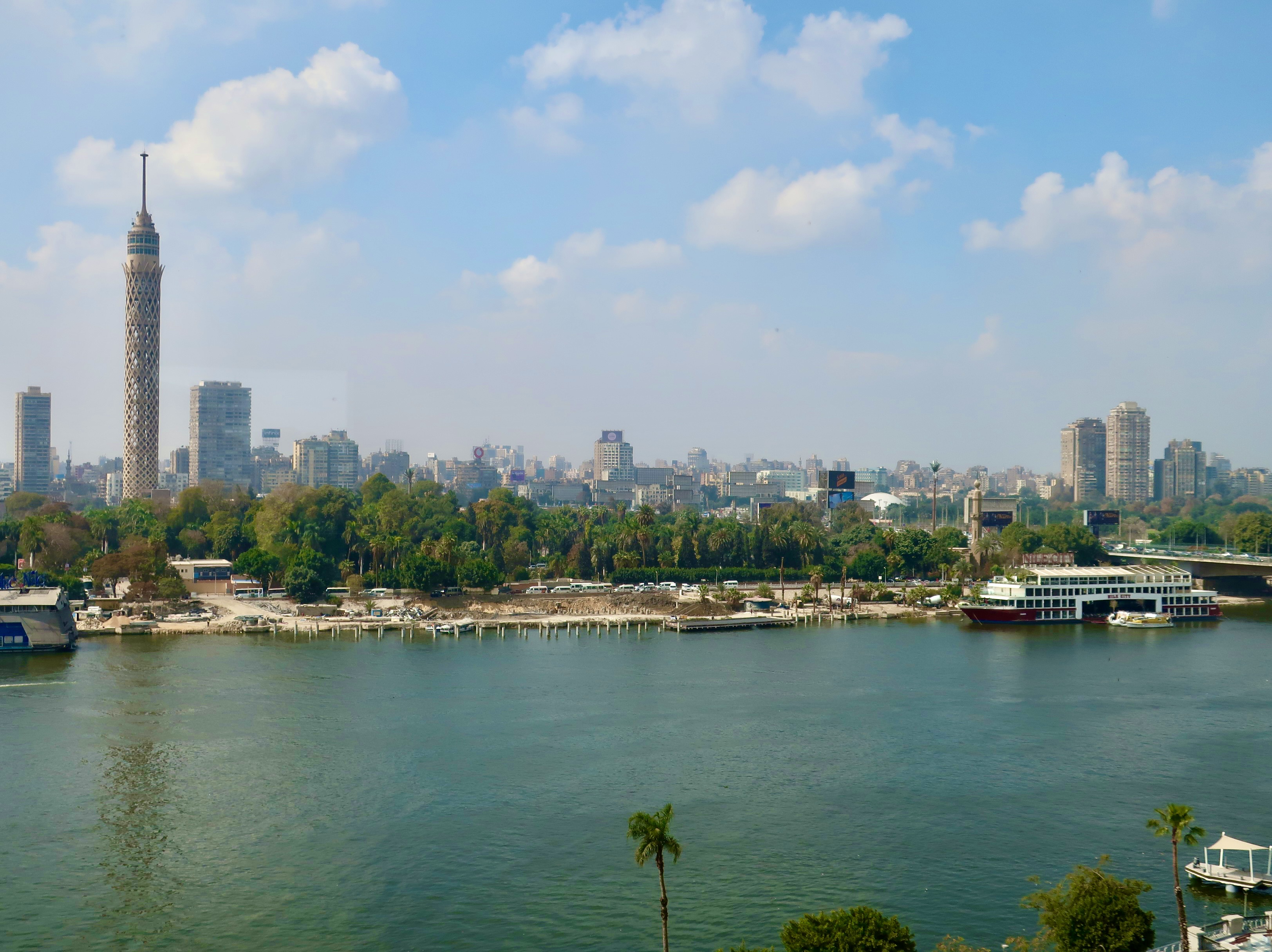
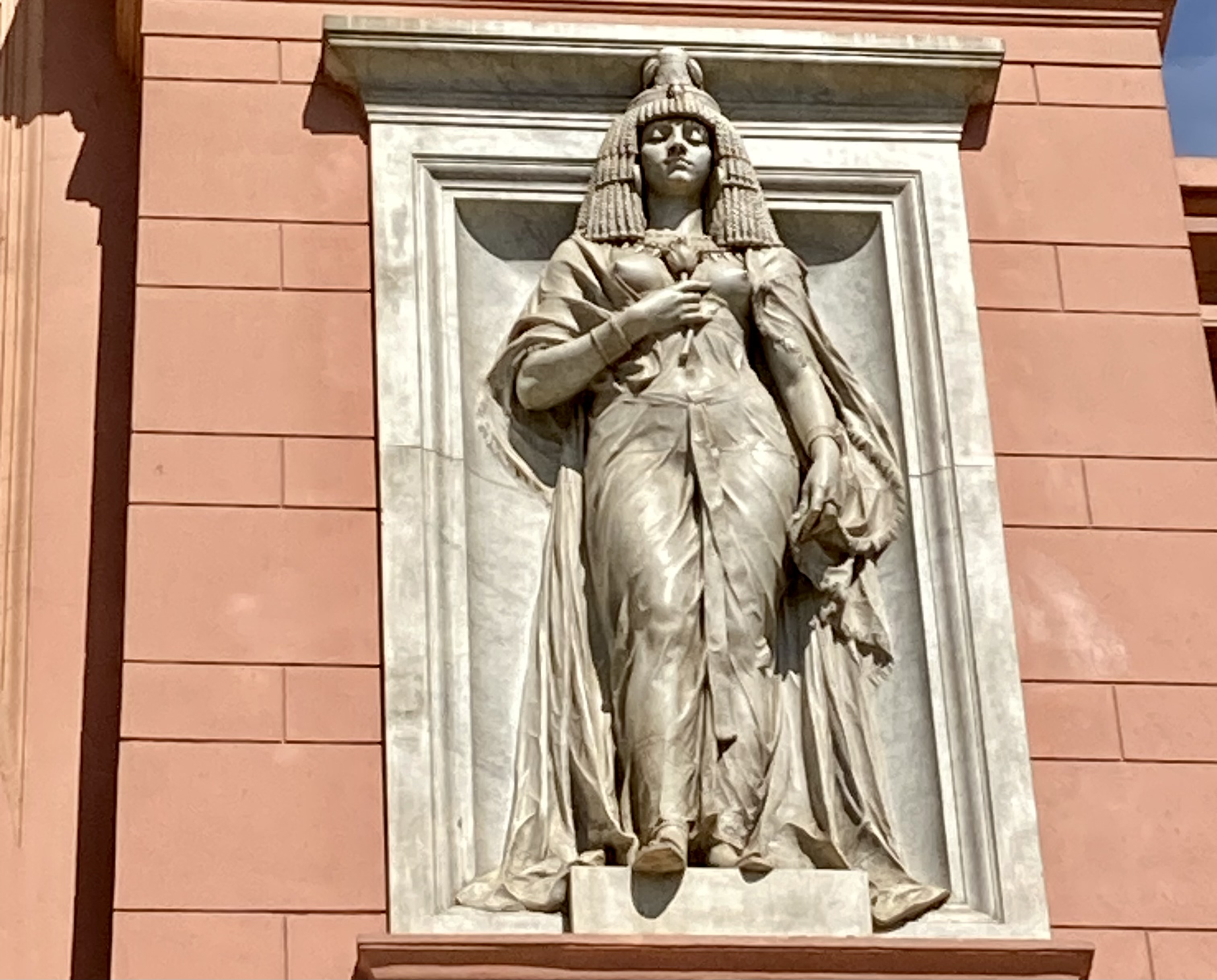
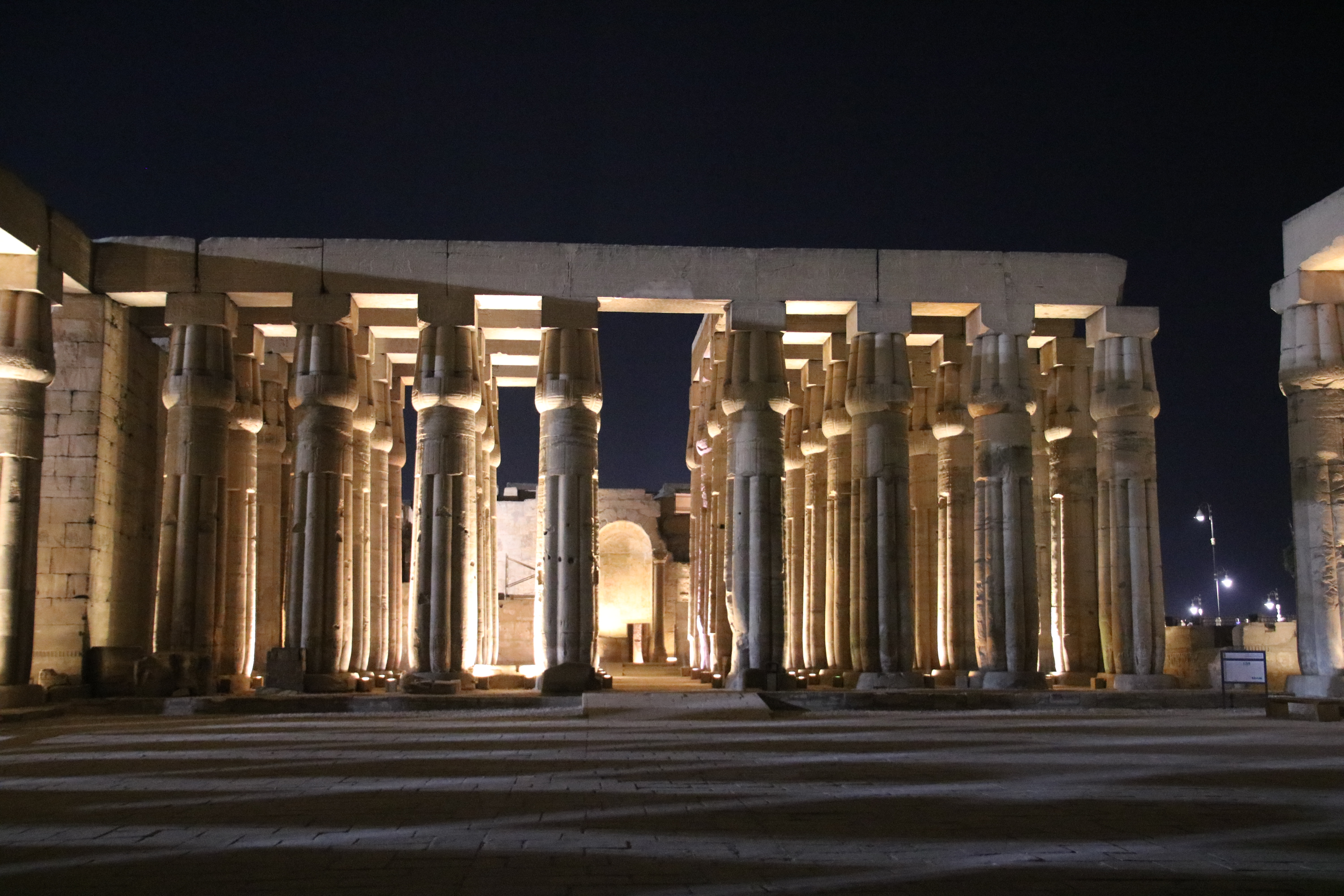
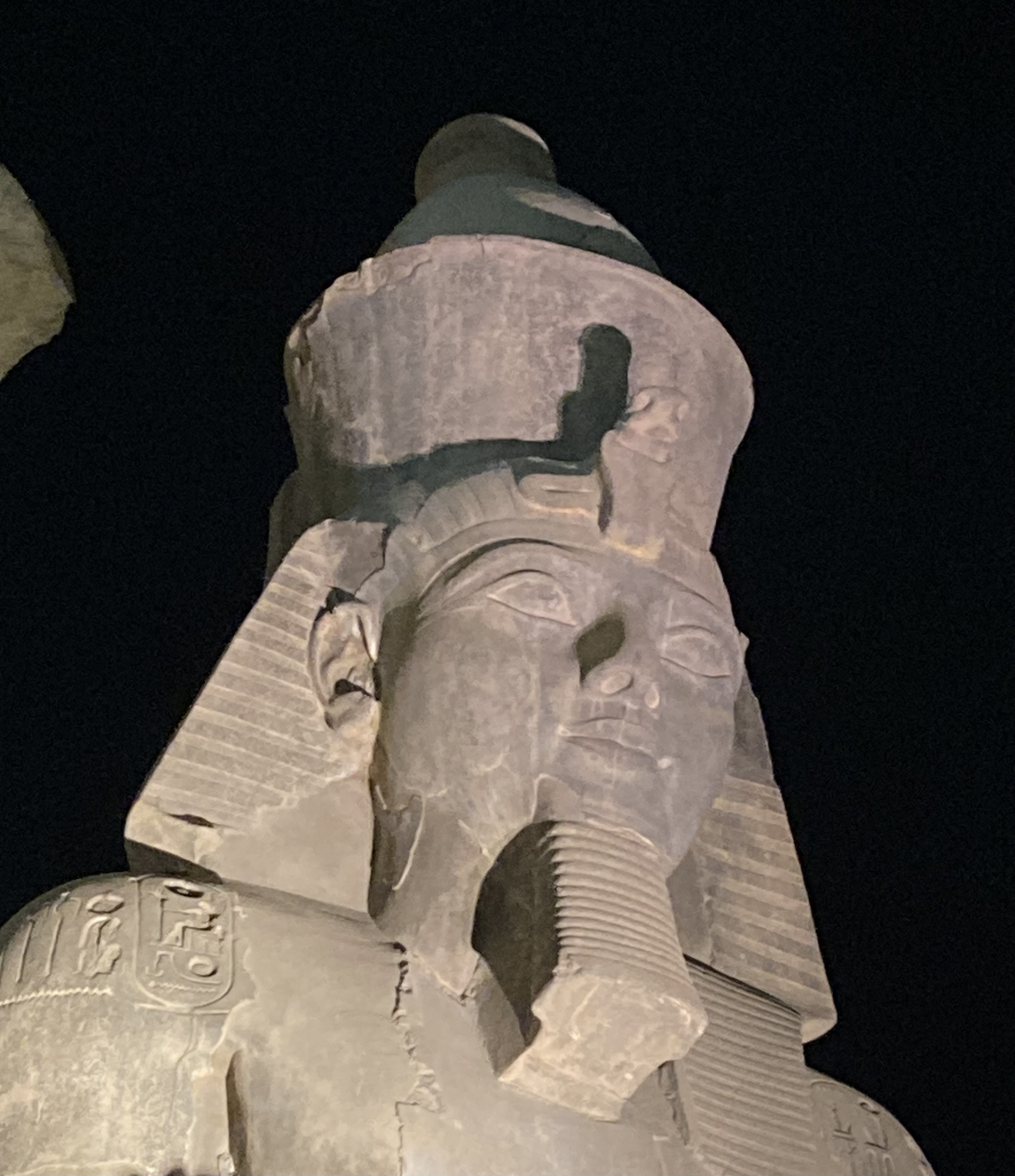
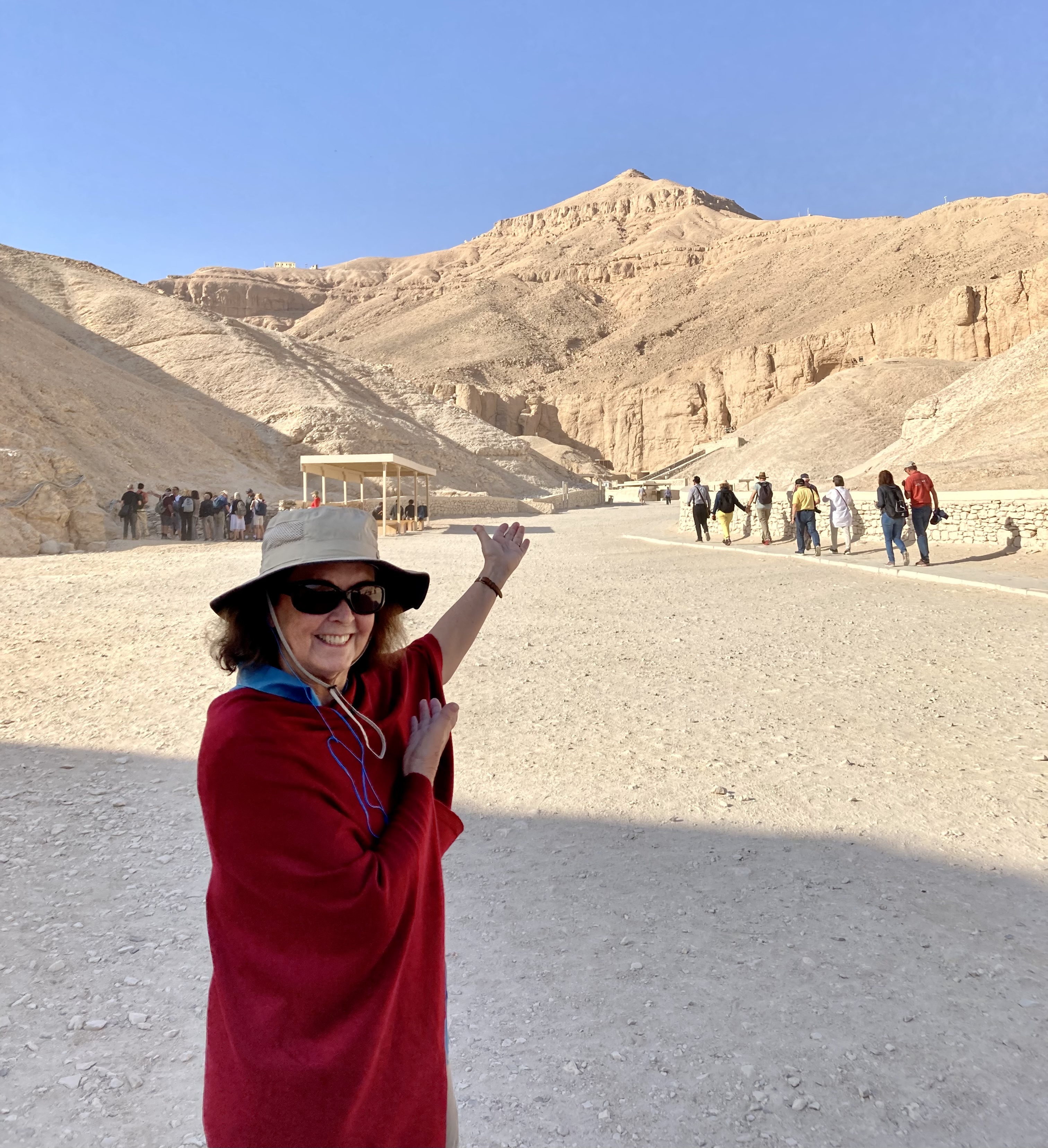
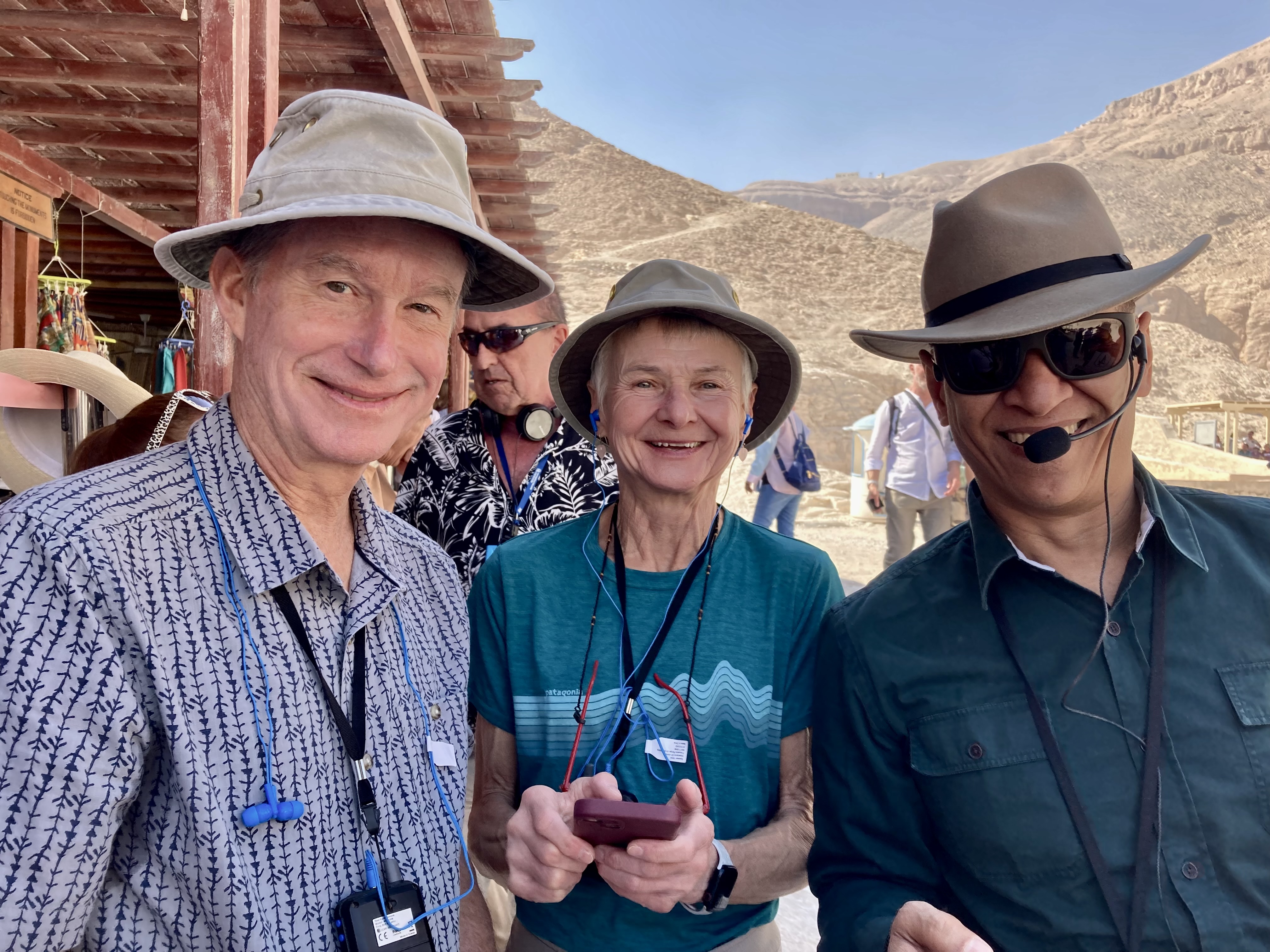
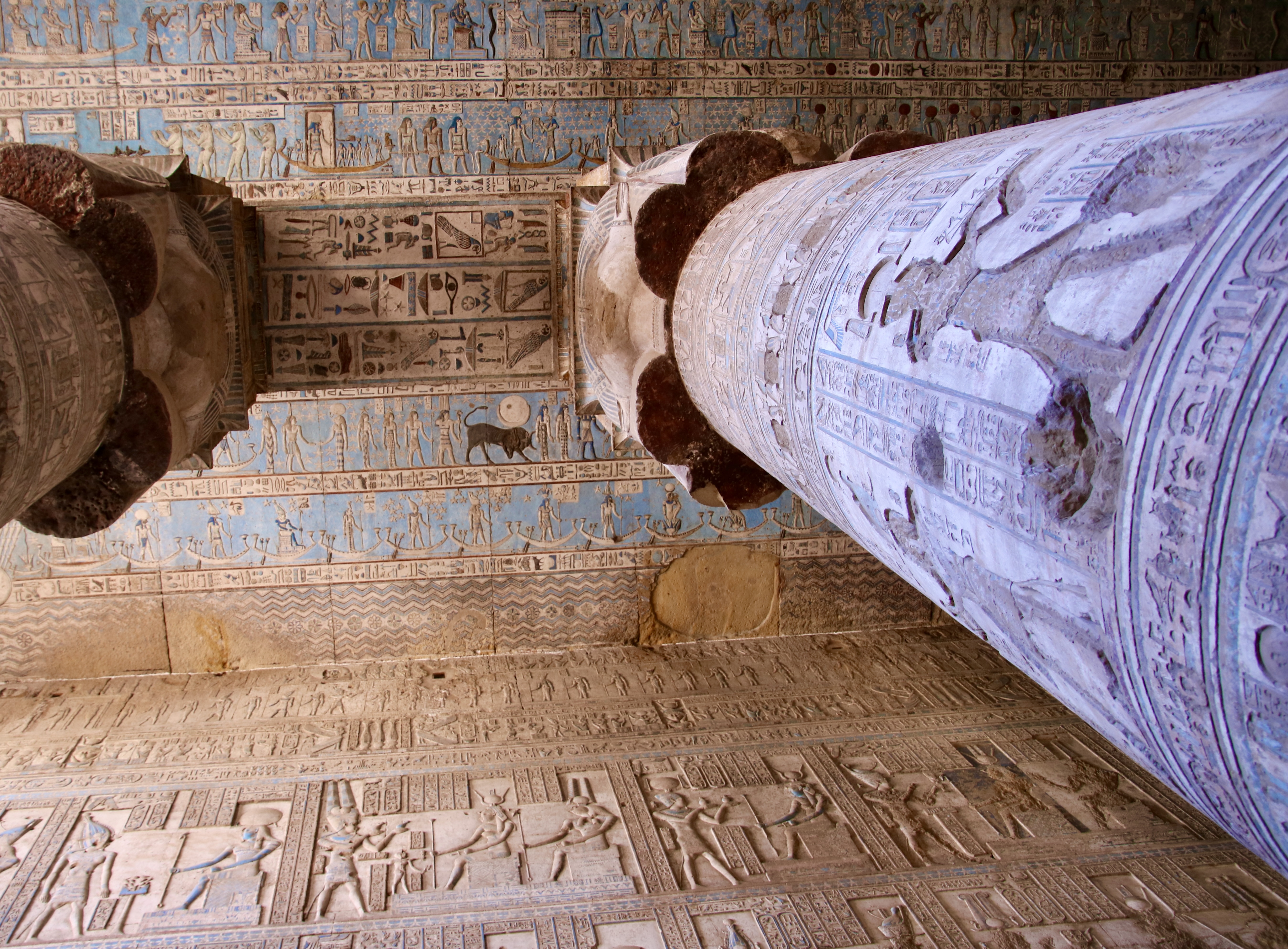
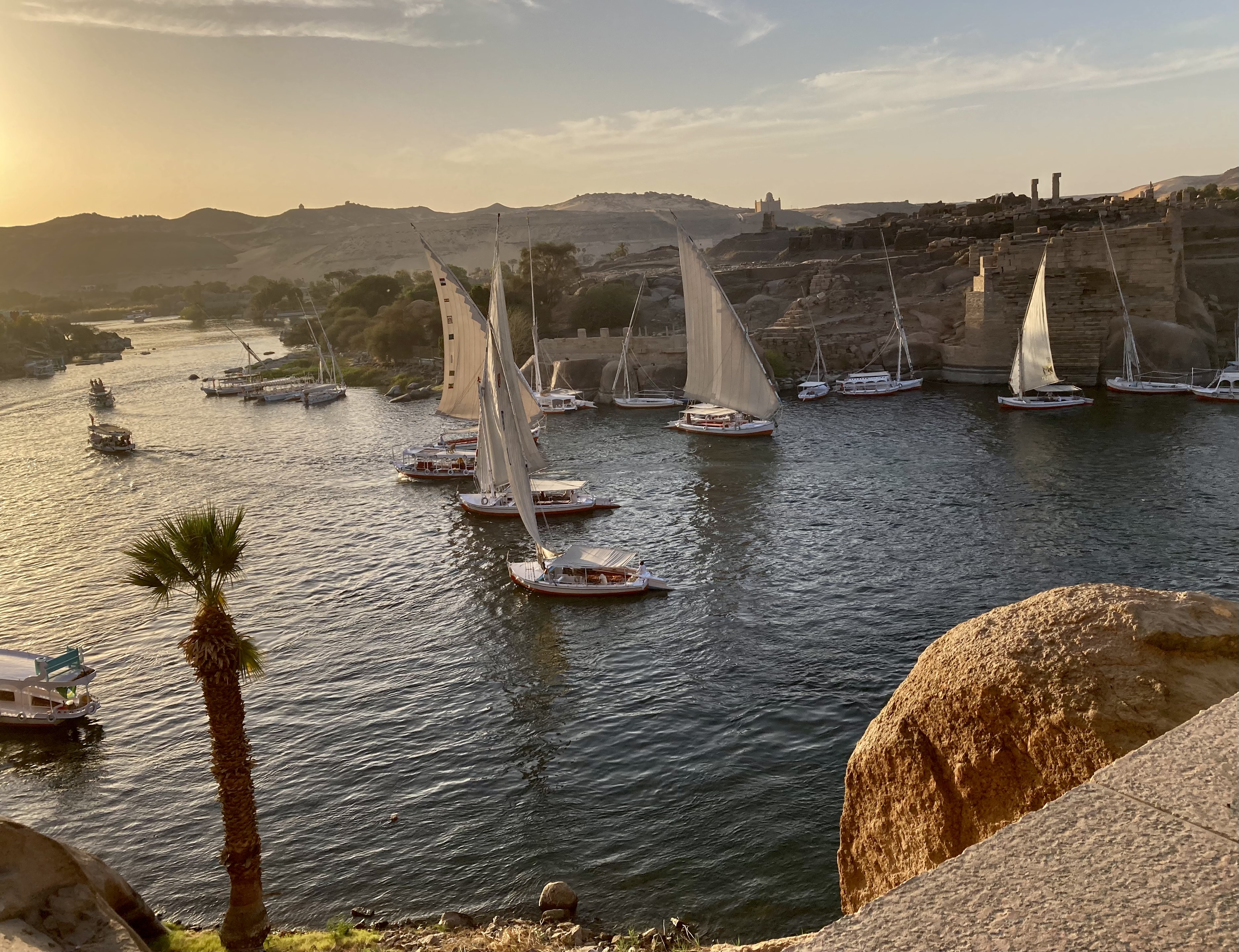
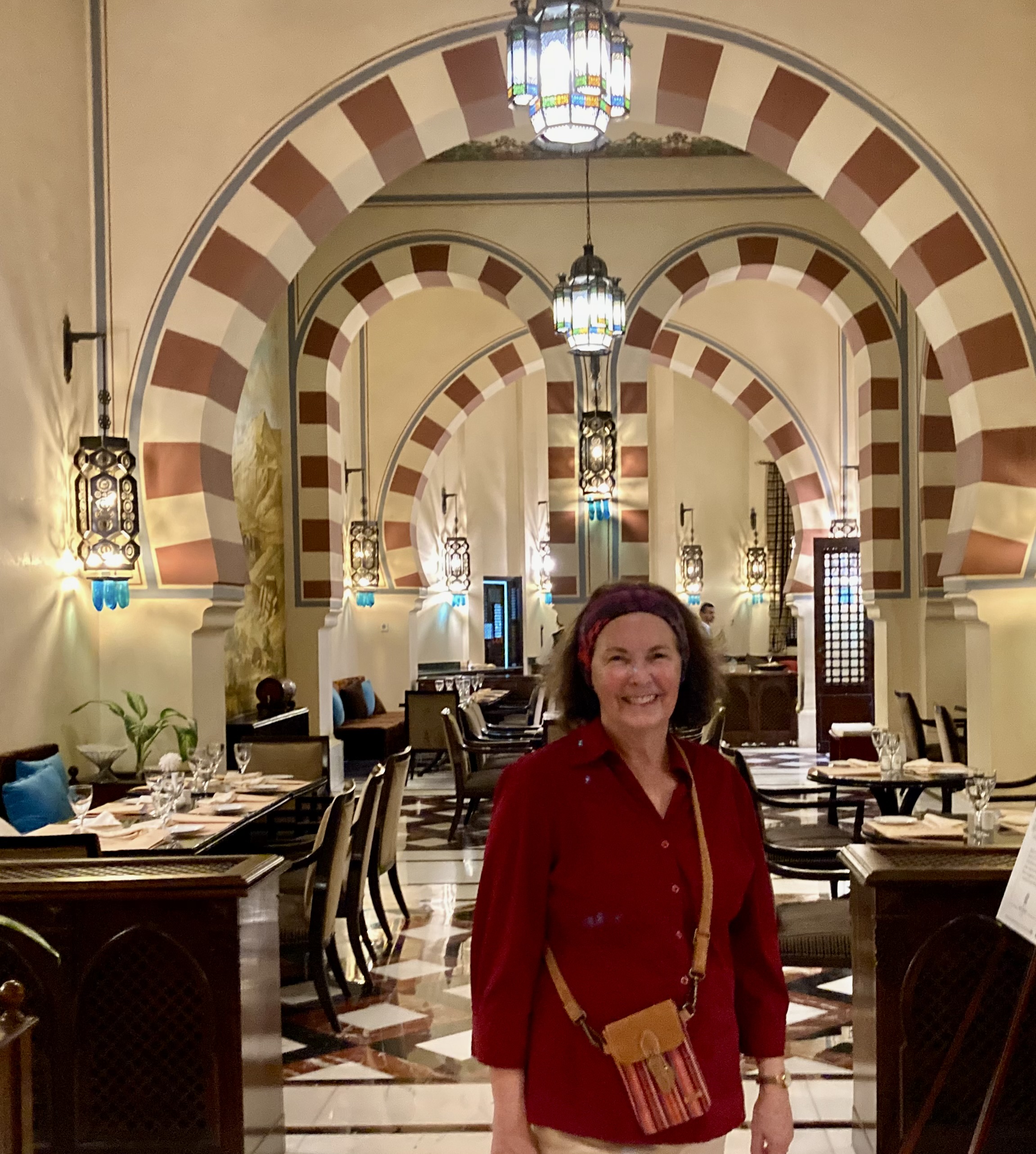
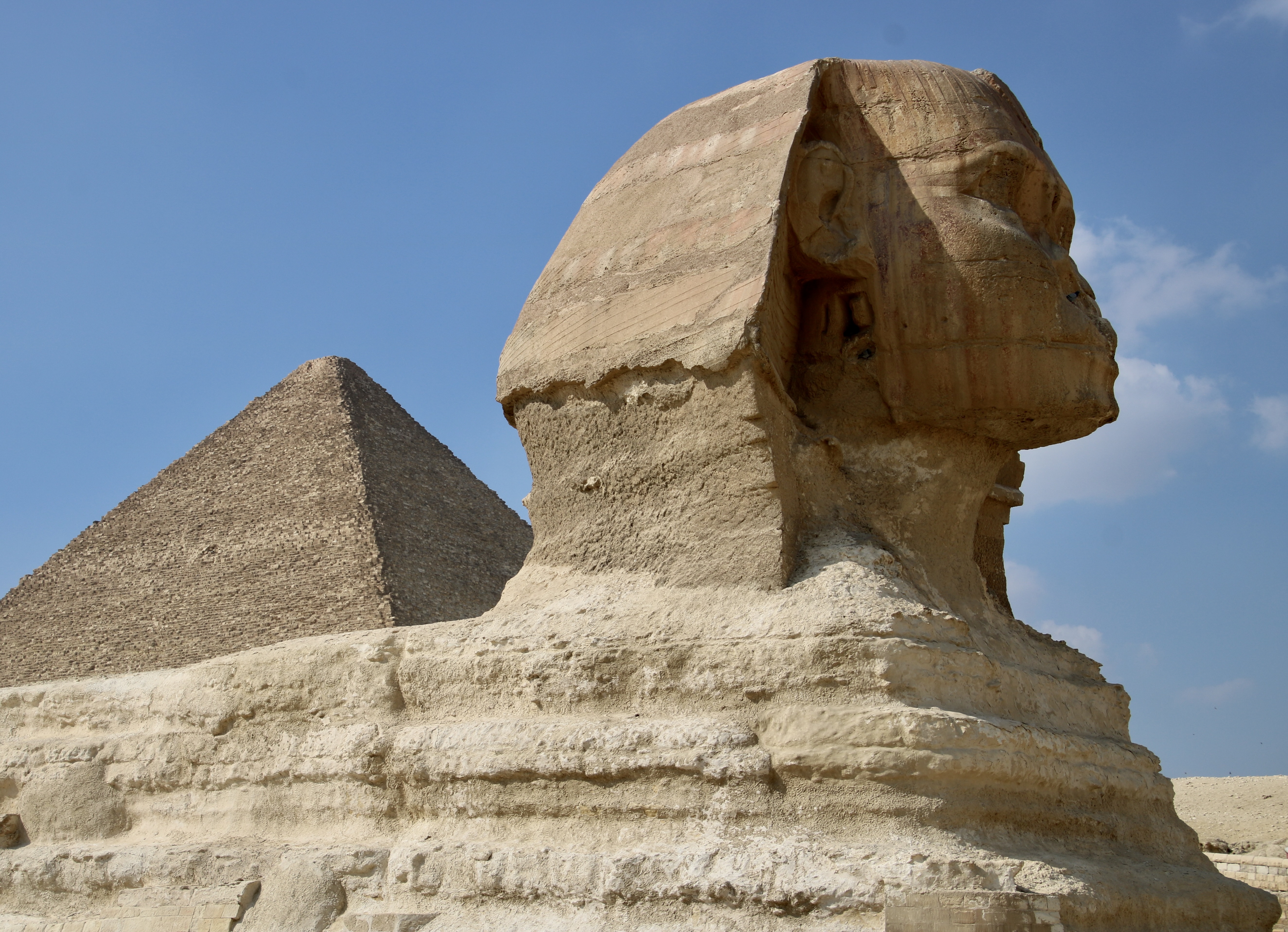
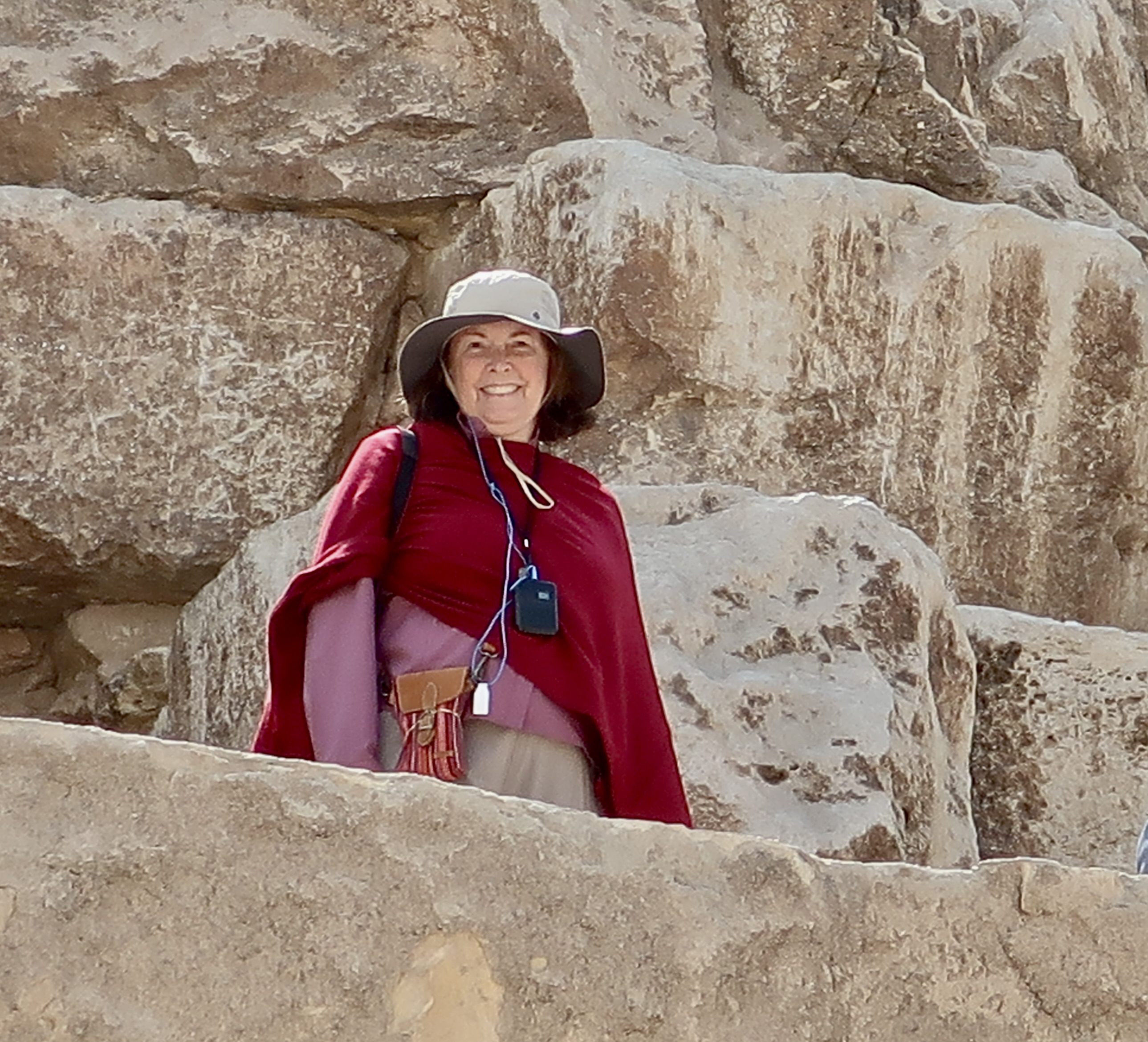
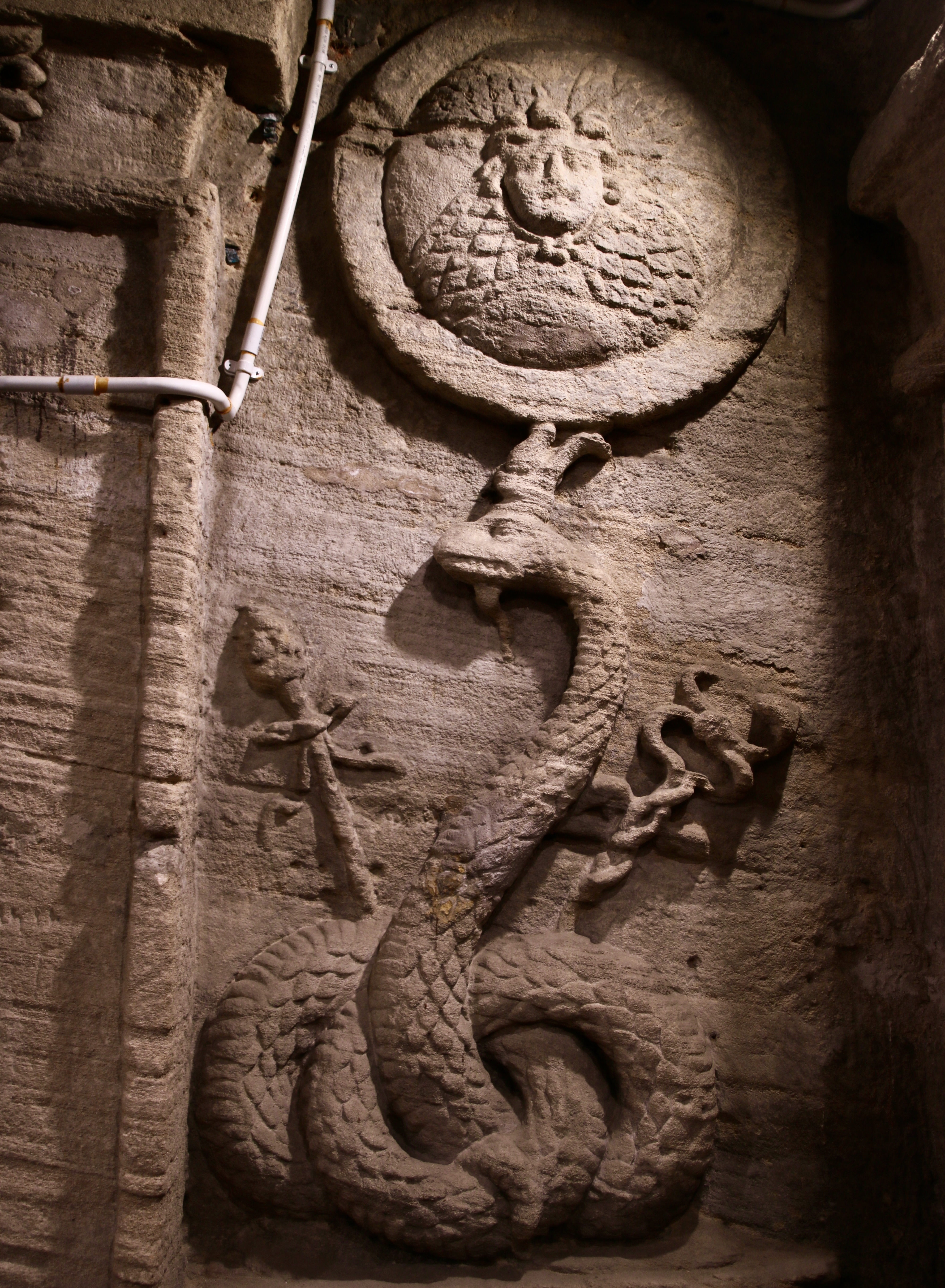
Our tour company, Uniworld Boutique, put us up in the Ritz Carlton overlooking the Nile River while we were in Cairo. Peggy and I arrived a couple of days early and stayed a couple of days afterwords. This was the view from our window. We spent a lot of time watching the river traffic. No surprise. You are looking at the Cairo Tower on the left. It’s a major Cairo landmark with an amusing CIA story connected to it that I will relate later.The Cairo Egyptian Museum was out the back door of the Ritz, a five minute walk away. We did our first tour there and will take you inside. BTW, see the raised figure above the two heads…It’s of a rather voluptuous Cleopatra, the last ruler of the Ptolemaic reign in Egypt who had a child by Julius Cesar and a tragic love affair with Mark Anthony. She’s holding a lotus flower, a symbol of Upper Egypt. Focus guys.Among the thousands of treasures inside were these canopic jars made from alabaster to contain the lungs, intestine, stomach and liver of people being mummified.They wanted them on hand to use later. Alabaster, Sabaa, told us, is great for preserving organs. I’ll keep that in mind.Tahir Square was also located just behind the Ritz. Peggy and I walked over to check out the Obelisk. Plain-clothed police stopped us from entering the square. They were located at every entrance. It turns out that Tahir Square is the go-to place for Egyptians wanting to start a revolution. The police were there to discourage such activity. Nobody— but nobody— was going to make their way onto the square and start shouting slogans, including curious visitors.Cairo is a city of attractive mosques and the Alabaster Mosque is a jewel among them. I’ll do a full post on the Mosque. The inside is even more beautiful than the outside.We discovered this ultra-skinny cat outside vociferously warning a large dog to leave its few scraps of food alone. The dog wisely decided his dinner was located elsewhere. Who wouldn’t? The cat was obviously a descendent of Bastet, the cat god of ancient Egypt. Not someone to trifle with.From Cairo, we flew to Luxor where our riverboat, Uniword’s Tosca, was waiting for us to board.Our Upper Egypt trip both started and ended at Luxor. A week, or a month, could easily be spent exploring the area. On arriving, we visited the Temple of Karnak…The Temple of Luxor at night. It was opened specifically for Uniworld guests. Translate: We had it all to ourselves. Usually, we had to work to take tourist-free photos. We were greeted by a huge statue of Rameses II who was one of the most important pharaohs of ancient Egypt. That’s a cobra on his forehead.Several Pharaohs have their tombs in the Valley of the Kings outside of Luxor. Peggy is pointing toward the pyramid like mountain that was an important factor in the kings’ selection of the valley. BTW, the tomb of King Tutankhamun, where so many treasures were found, is at the base of the mountain. Peggy and I will take you into the tomb where King Tut’s mummy still resides. I’ll even show you King Tut’s toes. I’ll bet you can’t wait for that? They aren’t pretty. There’s a chance I might have to face the revenge of the mummy for displaying them.The folks on the Tosca, both our fellow travelers and the staff, were special. This is a photo of Steve and Carol Jones with our excellent guide, Sabaa at the Valley of the Kings. Steve and Carol, like so many of the followers of this blog, are world travelers. Both engineers, they quit their jobs at 45 and have been wandering the world for the past 20 years.A photo inside of one of the tombs we visited in Valley of Kings (not King Tut’s.) It was packed with hieroglyphs designed to guide and protect the dead pharaoh on his dangerous journey. The temple of Queen Hatshetsup, one of ancient Egypt’s most powerful Pharoahs, is located near the Valley of the Kings.Beards were an extremely important part of a pharaoh’s look, as all the statues, paintings and reliefs show. Even Queen Hatshepsut had one, as this bust from the Egyptian Museum in Cairo shows. It was fake news, but a beard none-the-less.A significant part of our journey was our riverboat trip up the Nile from Luxor to Aswan and back.Along the way, our journey took us past numerous villages and towns, all with their mosques and minarets, from which Muslims are called to prayer five times a day. We were able to watch fishermen and farmers plying their trade in much the same way as they have for thousands of years.And enjoy the scenery. This photo serves as a reminder that just beyond the narrow strip of rich farmland beside the Nile lies the Sahara Desert that stretches for 2000 miles to the west. The ripples are being made by our riverboat, the Tosca.On our trip up and down the Nile we stopped at temples. One was at Kom Ombo, the temple of Sobek the crocodile god and Horus, the falcon god. A museum there, features mummified crocodiles. Sobek was responsible for fertility and the creation of the Nile, among other things. Gods had several responsibilities— and forms. One of the most beautiful temples we visited along the Nile was the Greco-Roman temple of Dendera. Both the Greeks and Romans played important roles in the latter days of ancient Egypt. Among other things, this temple featured signs of the Zodiac on its ceiling. I’m thinking Taurus above. One of the must-dos in Aswan, was to go on a Felucca ride, a sailboat dating back to ancient times on the Nile. Peggy had to get her hands on the rudder. I noticed that the boatman didn’t take his hands off of it, however. Grin.Several feluccas were out enjoying the sunset in this photo which we took from an outdoor dining area of the Cataract Hotel in Aswan.We were enjoying high tea at the hotel.Peggy, being a great fan of Agatha Christie, had to have her photo taken in the Old-Catarack hotel, which was featured in Christie’s novel, “Death on the Nile.”An evening bird watching tour on a small boat included numerous birds and a very enthusiastic bird expert.A walk through Aswan’s large local market featured, among many other things, spices. The top three baskets on the right are buds for making jasmine tea.While at Aswan, we also visited the Philae temple…And flew up to the border between Egypt and Sudan to see the temples of Ramses II and his beautiful wife, Nefertari at Abu Simbel shown above. Abu Simbel was threatened to be buried under rising waters of the Aswan Dam and was saved by a world-wide effort by moving it rock by rock to a level above the water line. We finished off our Egypt tour with a visit to the city of ancient Memphis and to the pyramids at Giza. This features the Sphinx and the Great pyramid of King Khufu.Peggy climbed a short ways up the side of the Great Pyramid to demonstrate the size of the rocks used in building the pyramid…And we both journeyed far under the pyramid of King Khafre, sometimes bent double because of the low ceilings.One of our major stops in Alexandria was at Greco-Roman era catacombs. This gruesome twosome, a crowned snake on the bottom and Medusa on the top, were guarding the major tomb against grave robbers.
I know this has been long for an introduction, but believe me when I say it hardly touches on our experience. On Monday, Peggy and I will take you back to our fall trip around North America, this time featuring Grand Teton National Park, where the description ‘grand’ hardly covers the mountain range.
Peggy and I are wrapping up our visit to Yellowstone today from our journey around the US last fall with pictures of a few of the many scenic views found in the park. All photos are taken by either Peggy or me unless otherwise noted.
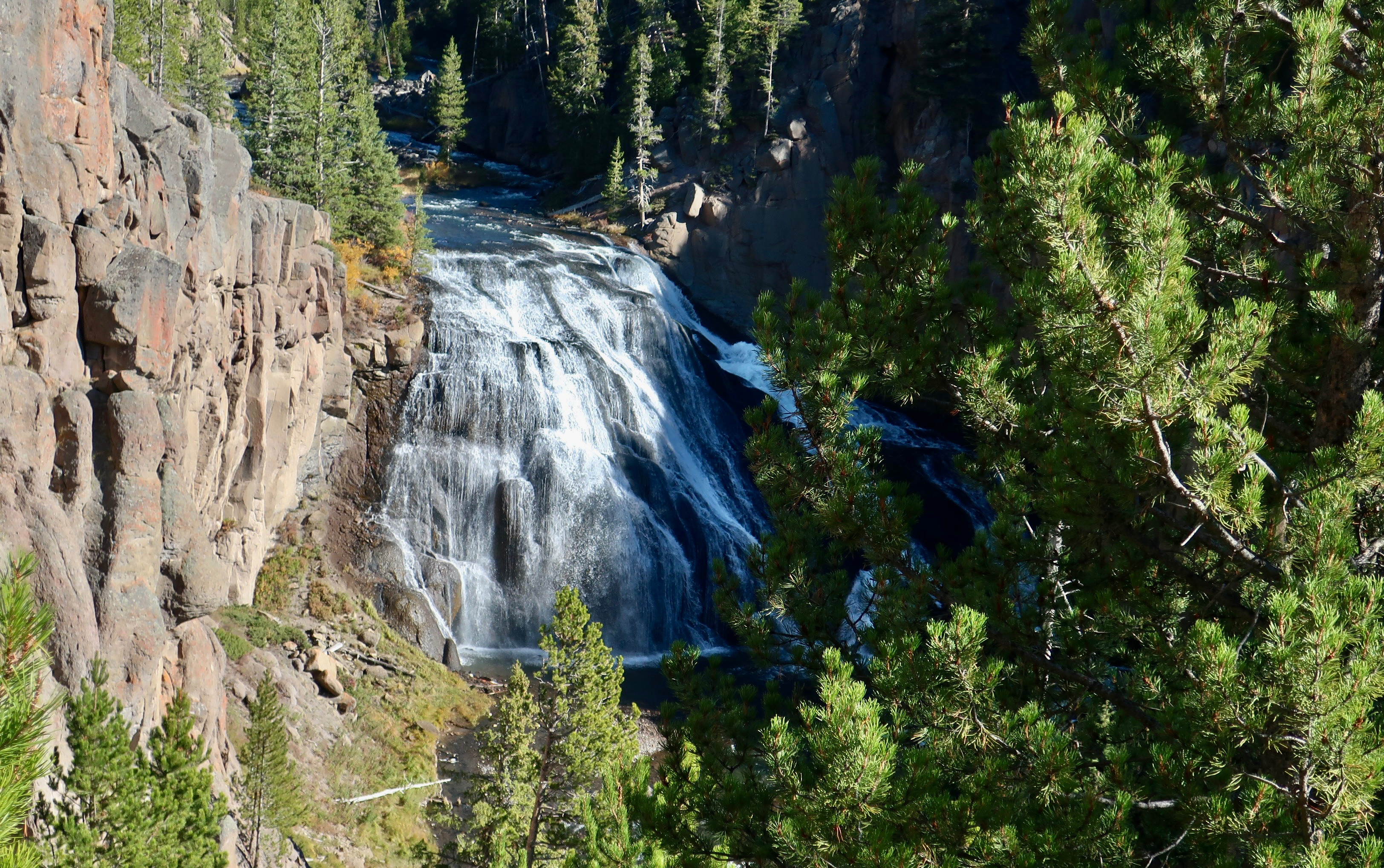
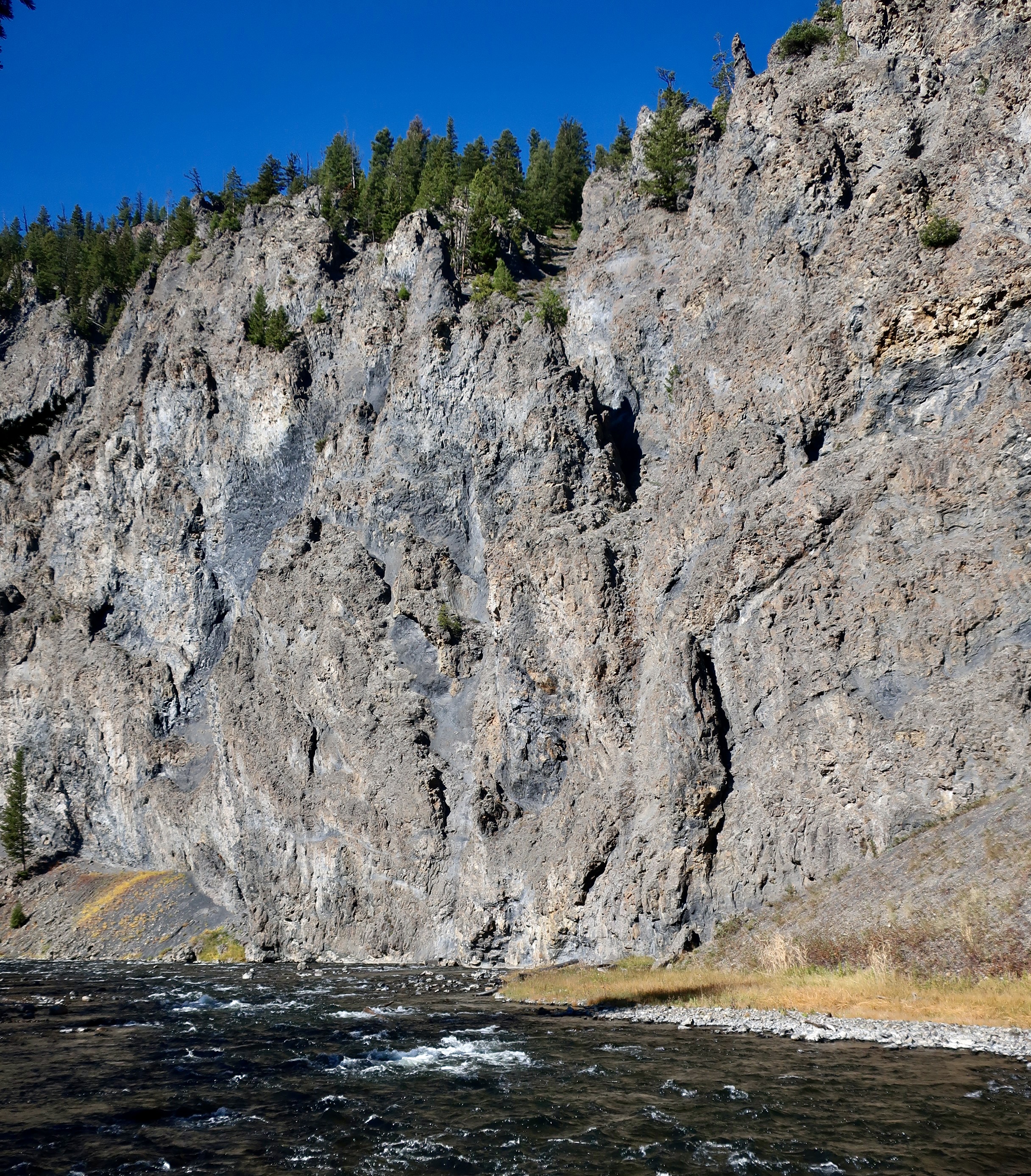
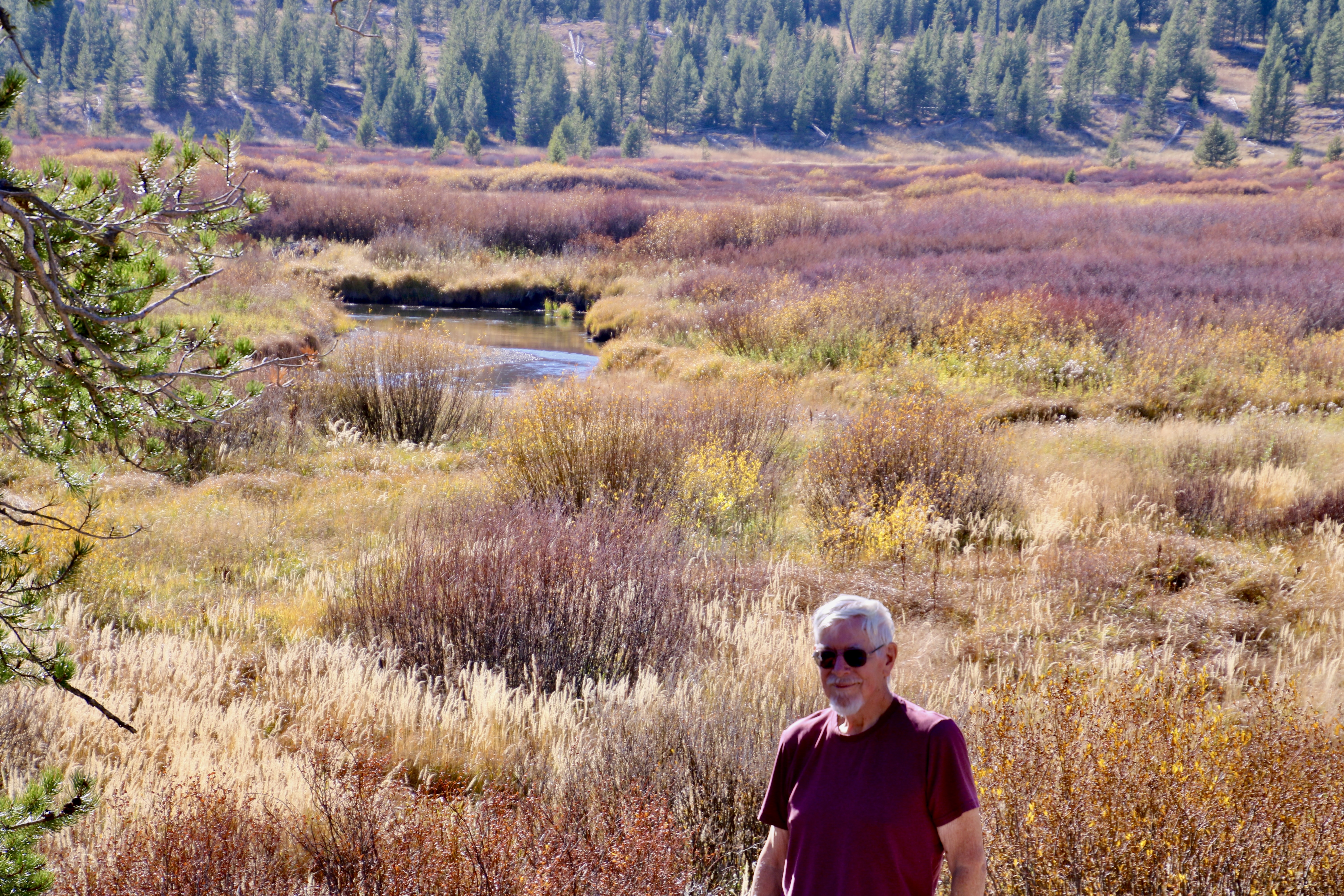
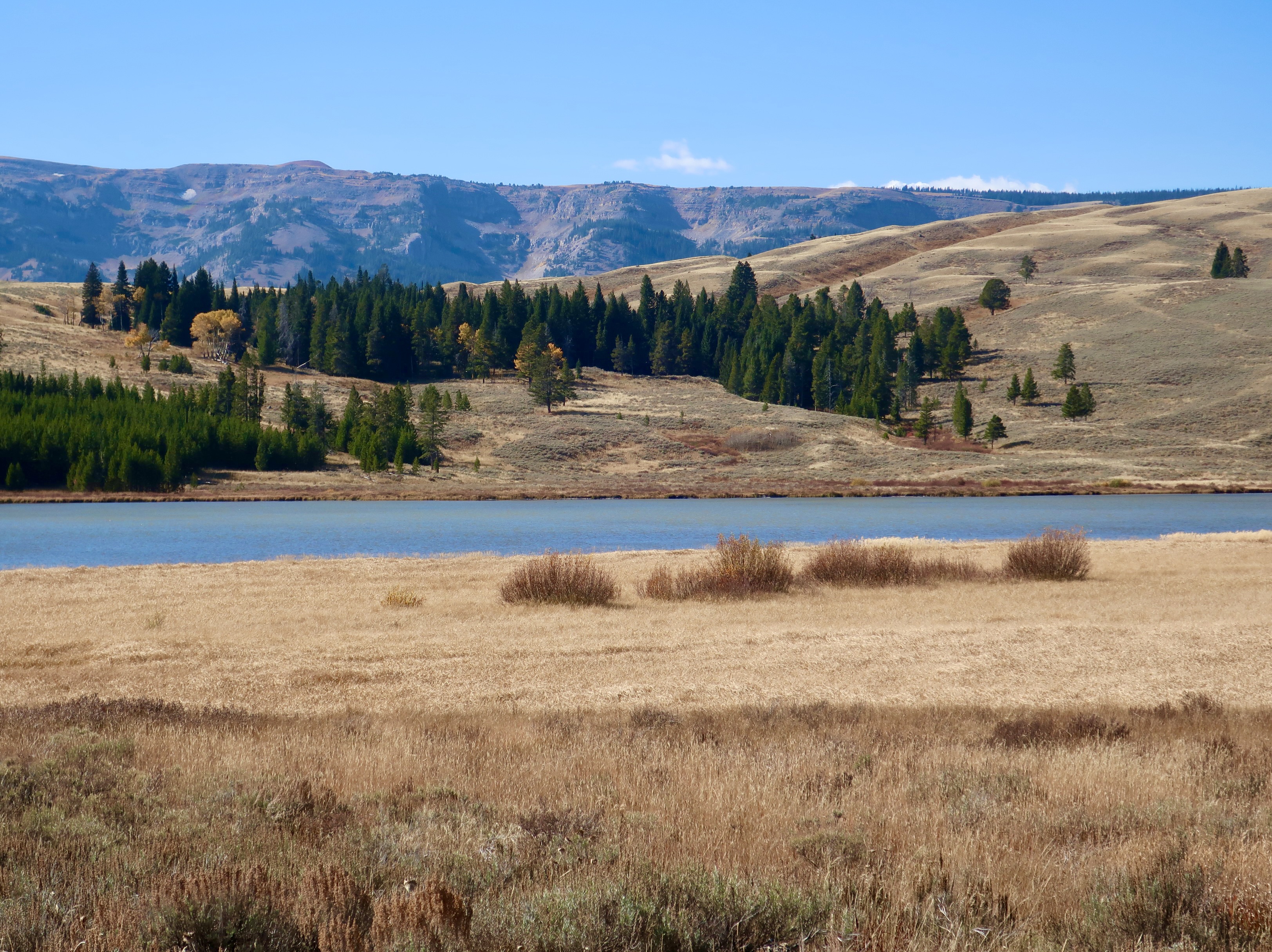
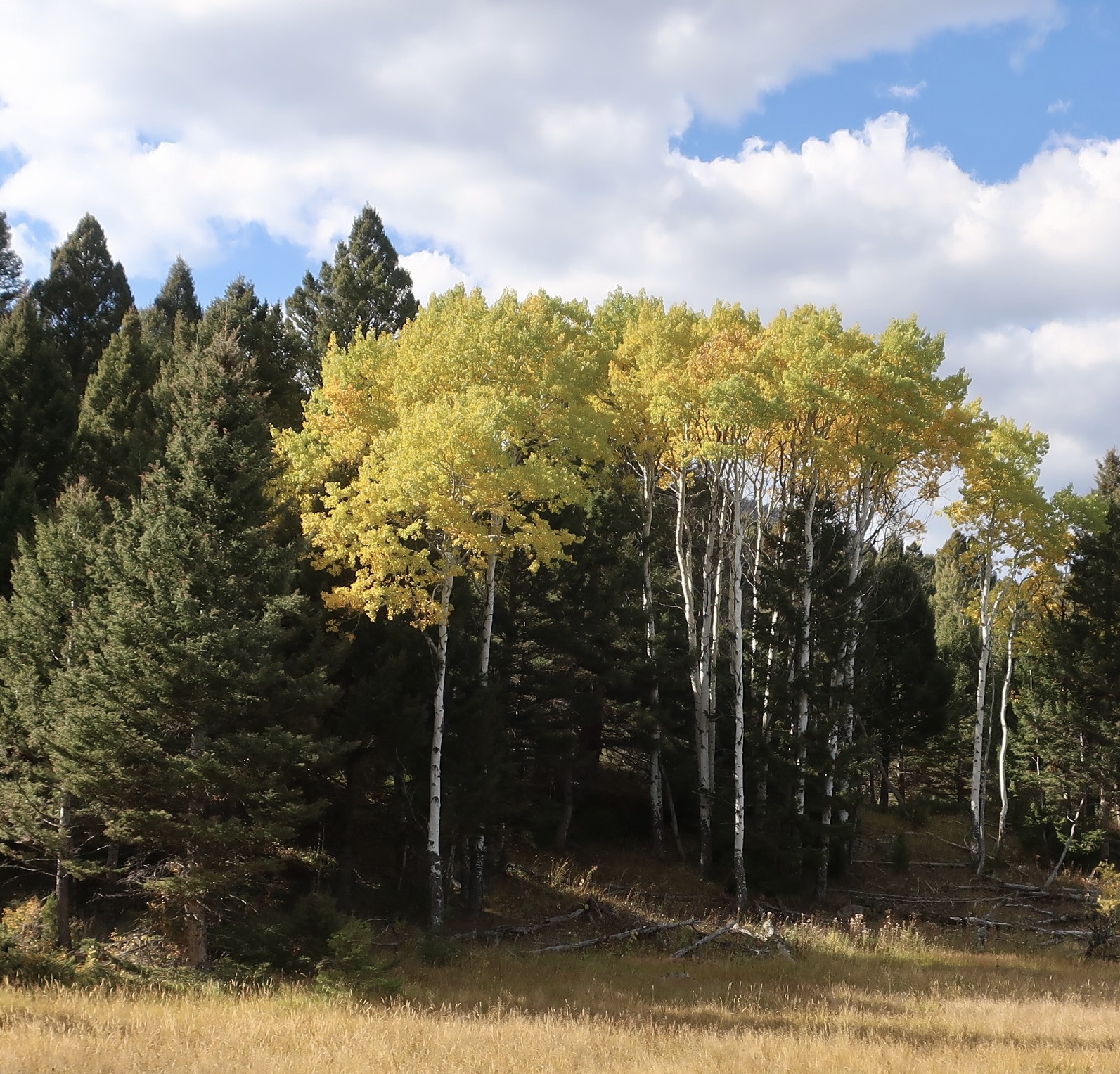
When it comes to scenic beauty, one can find plenty in the rivers that flow through Yellowstone National Park. This photo is Gibbon Falls on the Gibbon River.The river drops some 84 feet and then makes its tumbling way for a quarter of a mile to the Yellowstone Caldera. A paved trail leads along the river providing great views of Gibbon Falls.A close up. Can you hear the roar? Having cut its way back from the Yellowstone Caldera, the rock will continue to erode its base leaving the Caldera farther behind and increasing in height. Looking positively serene in comparison to Gibbon Falls, this is a shot of Firehole River not far from Old Faithful and the main hot springs area of Yellowstone. Appearances are deceiving, however. toward the end of the photo you can see where the river narrows. It is about to go tumbling down…A side road runs along the Firehol River and provides views of the river’s rapid descent. I’d say we were no more than a few hundred yards below where we took the ‘serene’ photo.This would probably make a white water rafter or kayaker drool.If I were in a raft and turned around to spot this monster, I might have a heart attack. Can you spot the eyes, nose and mouth? Not to worry, however. Yellowstone National Park does not allow rafting on its rivers. The monster has to eat fish. There is a small section of the river between rapids where Peggy swam when she was working at Yellowstone in 1969. She apparently avoided the monster. The Firehole calms down when it meets up with the Gibbon River. And check out the wall. Isn’t it magnificent? Climb to the top and you will be out of the Caldera. Some rock climbing skills may be necessary. Grin.This close up of volcanic rock spires above the river provides a perspective on how rugged the cliffs above the river can be.The Gibson/Firehole river then joins the Madison for a more leisurely pace and great fishing, which is what the two people on the left are doing. We also spotted buffalo and elk near the river. We found this little beauty on our way up to Mammoth Hot Springs and its travertine terraces. It was a bonus. Known as the Gardner River, it had carved out Sheep Eaters’ Cliff that we had stopped to see.If this looks familiar, these are the same type of basalt columns that I featured on my earlier post about Devil’s Tower National Monument. The primary difference being that the columns at Devil’s Tower formed far underground and grew to gigantic size. These were part of a lava flow along the surface and are much smaller. I suspect you are curious about the name. I was. The cliff is named after a band of Shoshone Indians who were known as the Tukudika, or Sheep Eaters. They apparently found big horned sheep quite tasty. I get it. I presently have a package of lamb in our refrigerator that I am planning on turning into lamb curry, one of my favorite dishes.As we continued our journey toward Mammoth Hot Springs in the northern section of Yellowstone, we came on a wildly colored meadow painted with fall colors. I liked it so much that Peggy took my photo standing in front of it.This comes close to my idealized view of the Western United States with vast distances topped off by impressive mountains. The soft colors of fall, the dark tree lines and gently rolling hills all added to the beauty. Over on the right, you can also see an aspen grove.Another view of the backcountry on our way to Mammoth Hot Springs that we liked.We even found a buffalo that seemed to fit beautifully into the fall scene.Ever feel like you are living on the edge? The view around the corner was spectacular.It was the sunlight on the peak that caught our attention. But note the avalanche path along side the peak as well. It has to be one of the longest paths I have seen. And finally, there was the splash of brilliant yellow from the aspens.Speaking of aspens, I’ll wrap up today’s post with these beauties. They will also serve to wrap up my series on the Yellowstone National Park. In our next Monday post, Peggy and I will visit two scenic towns along the Rhine River. BTW, as you read this, Peggy and I are on a riverboat traveling up the Nile River in Egypt on my 80th Birthday trip.
Continuing our exploration of sites we visited on our family Rhine River trip last summer, we will explore Heidelberg Castle today. All photos are taken by either Peggy or me unless otherwise noted.
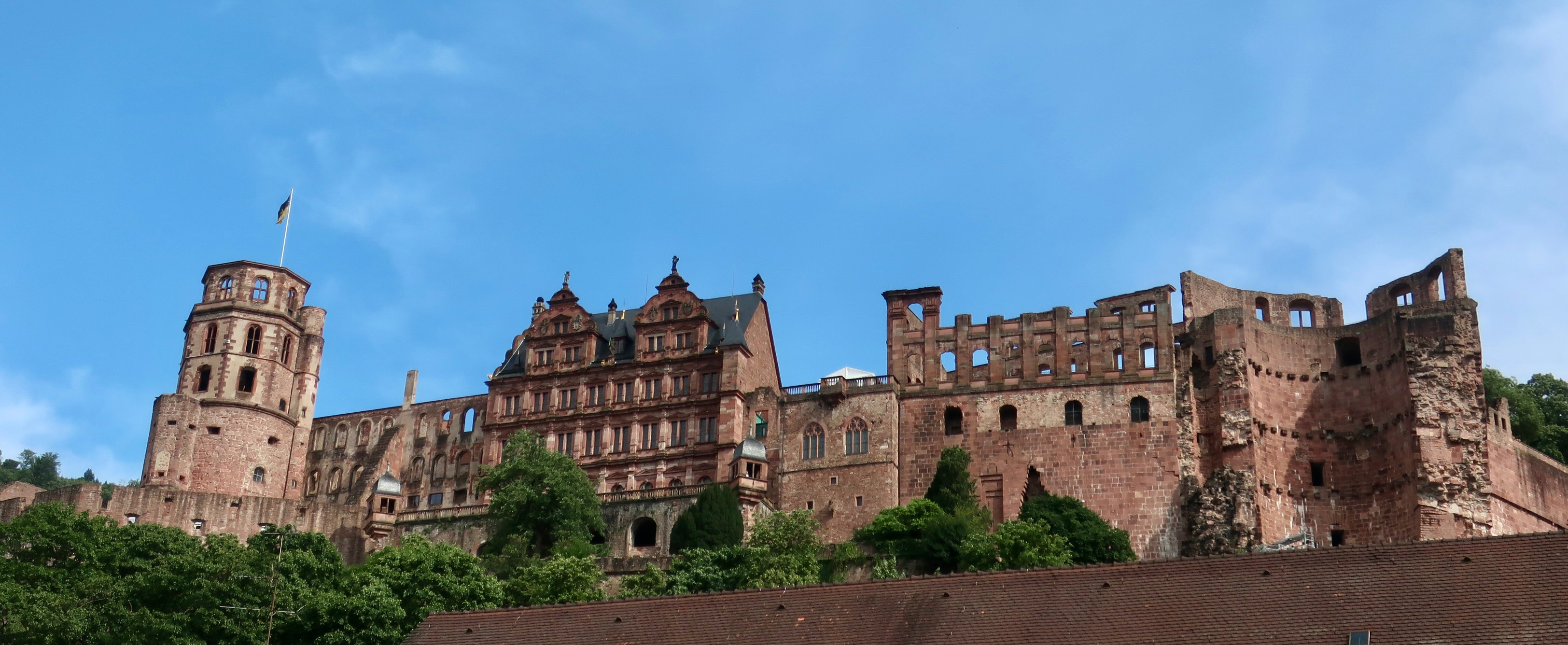
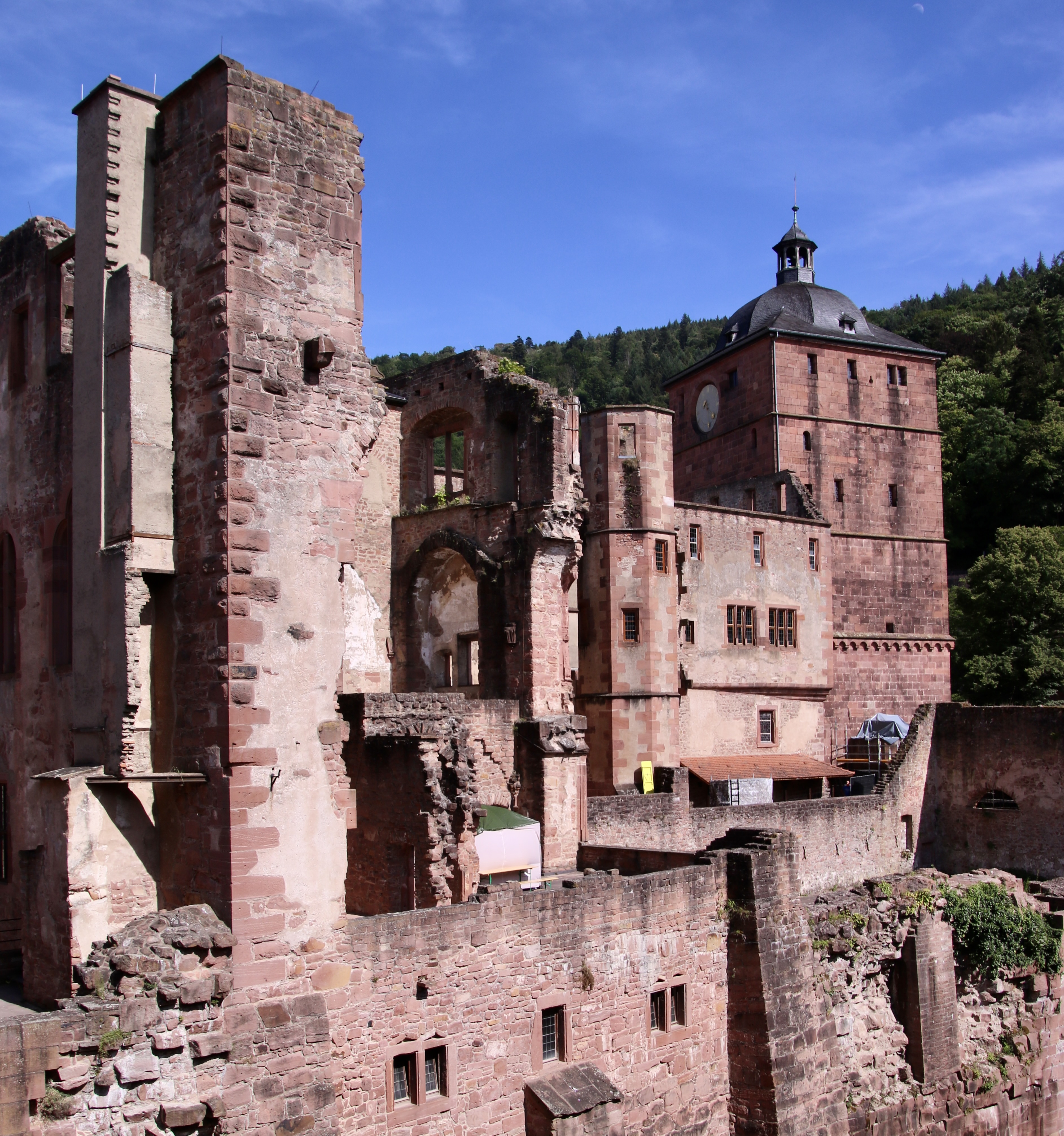
Perched on the hill overlooking Heidelberg, the castle waited for us.
Visiting Heidelberg Castle can make you feel like one in a million. That’s the number of people who tour the castle each year. We dutifully waited our turn on the funicular railway that would take us the 260 feet (80 meters) up to the castle and the beginning of our tour.
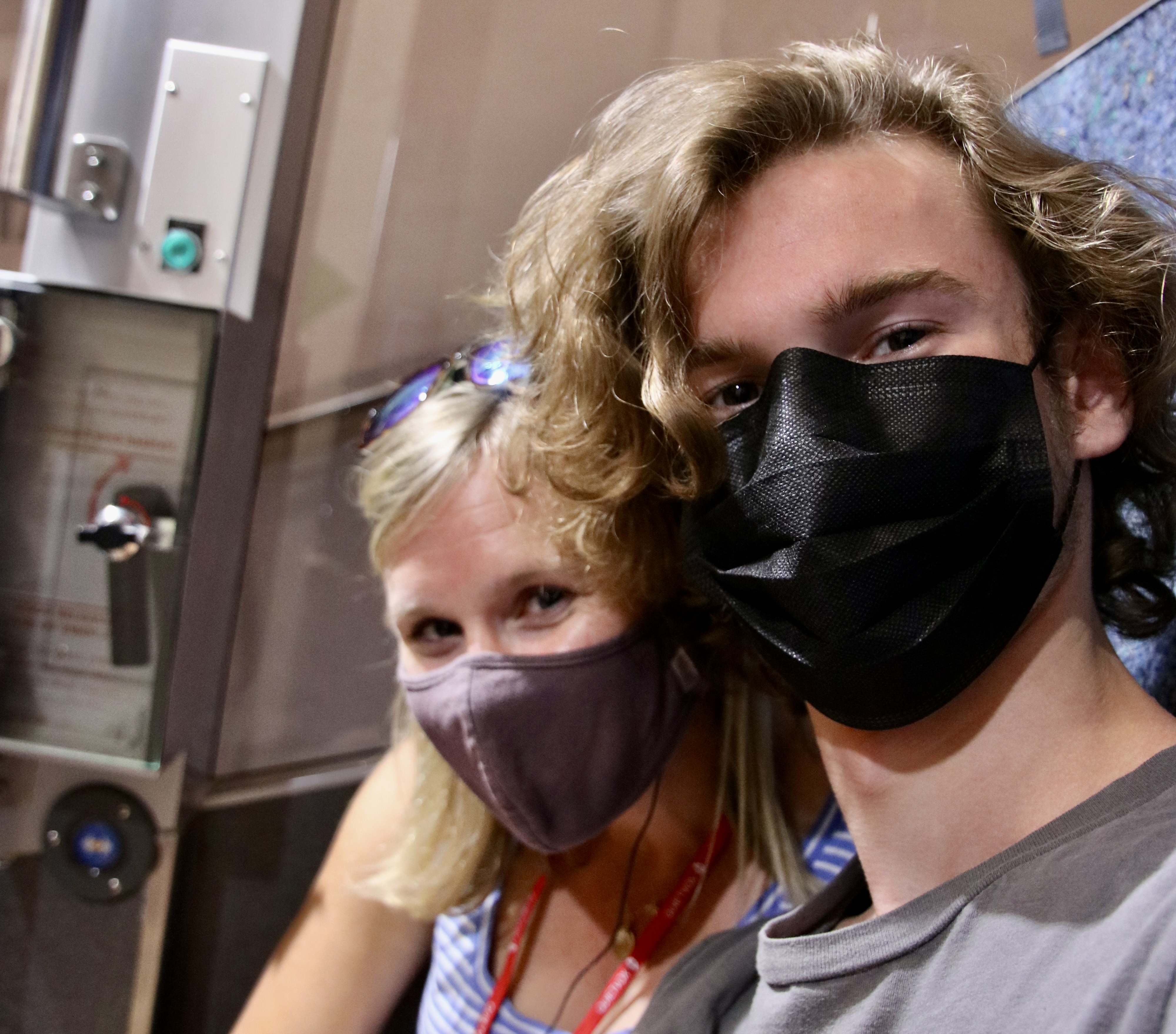
Our daughter-in-law Cammie and grandson Ethan (Tasha’s son) on the funicular train to Heidelberg Castle. Masks were still required at the time for covid.
Heidelberg Castle was built in the 13th and 14th centuries. There were originally two castles, an upper and lower, but lightning and fire destroyed the upper one in 1537. The lower castle has since seen its share of wars requiring frequent renovations. It, too, finally succumbed to a lightning strike and fire in 1764— making it fair game for people to use its stones in building their homes, a custom of repurposing that has existed since time immemorial. A serious effort began in 1800 to preserve what was left. Sections have also been renovated. Regardless of its past history, the present structure is very impressive.
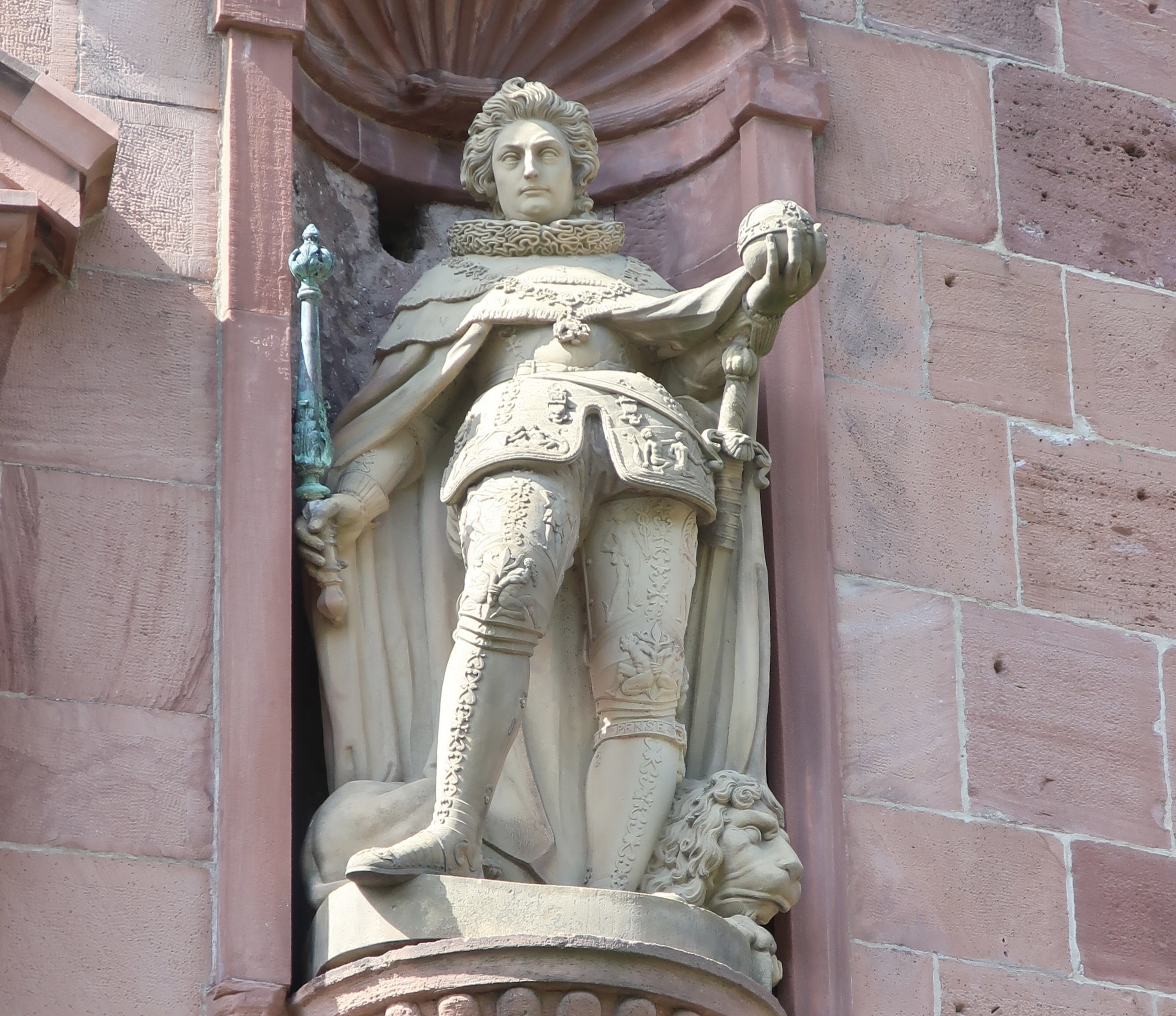
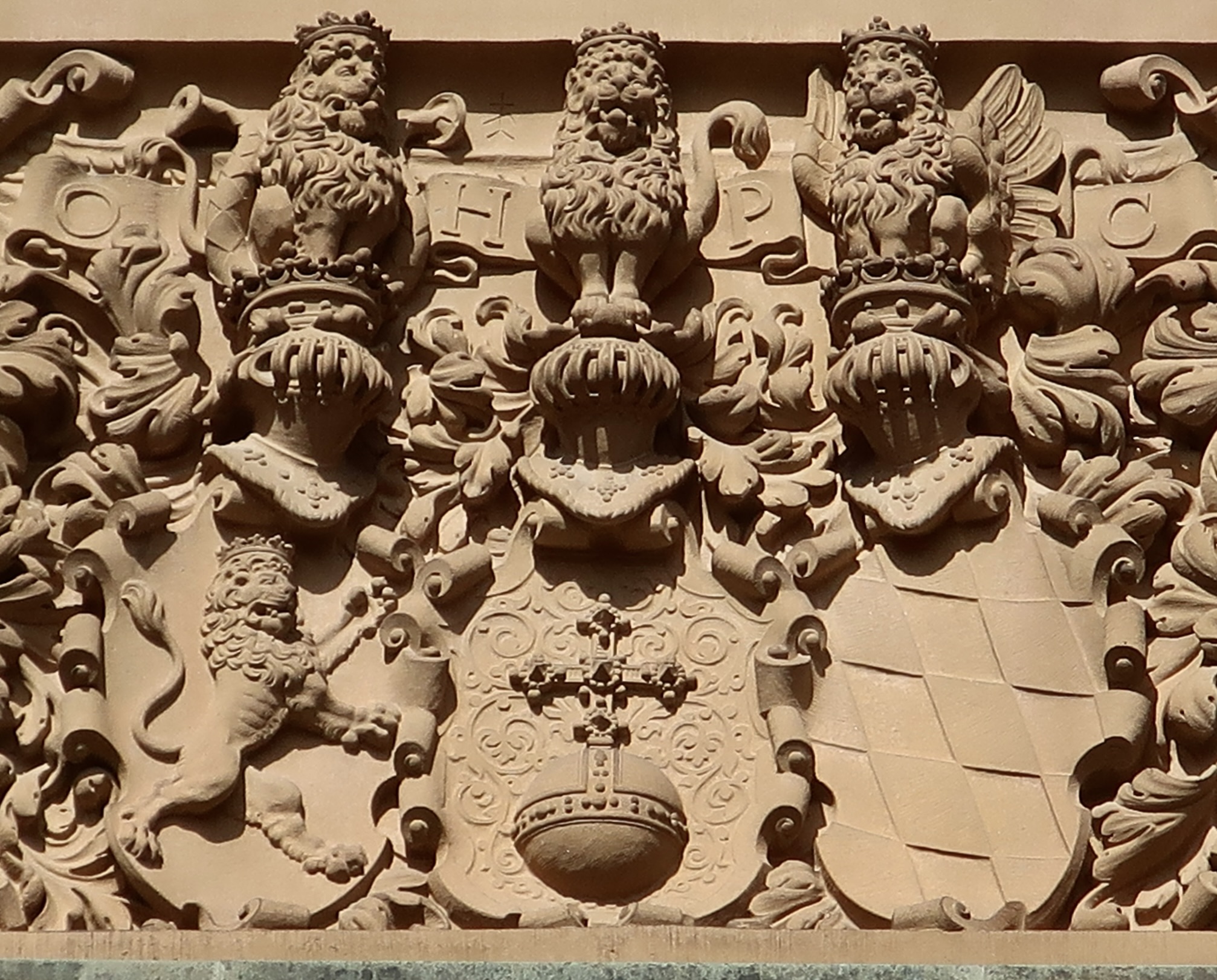
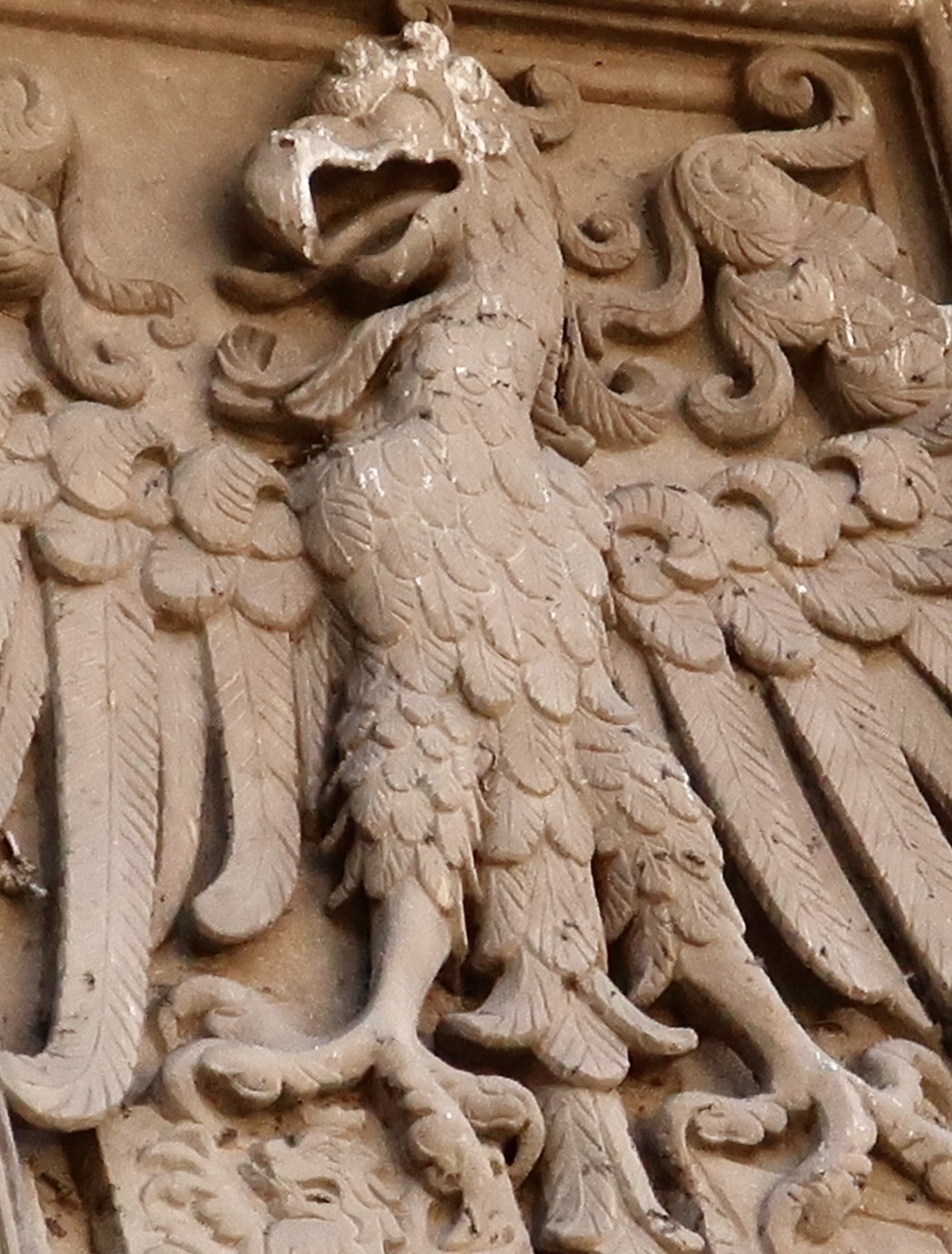
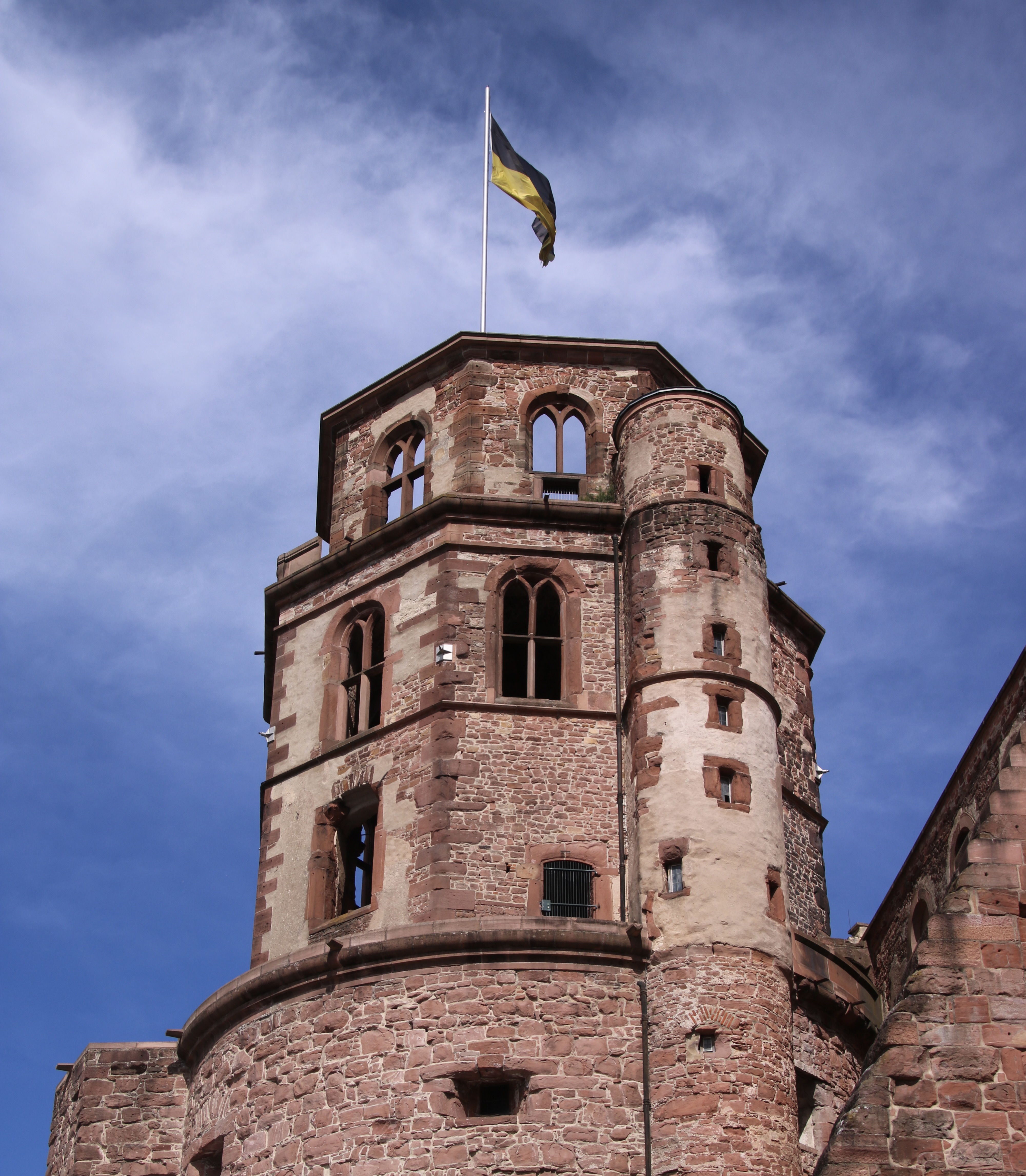
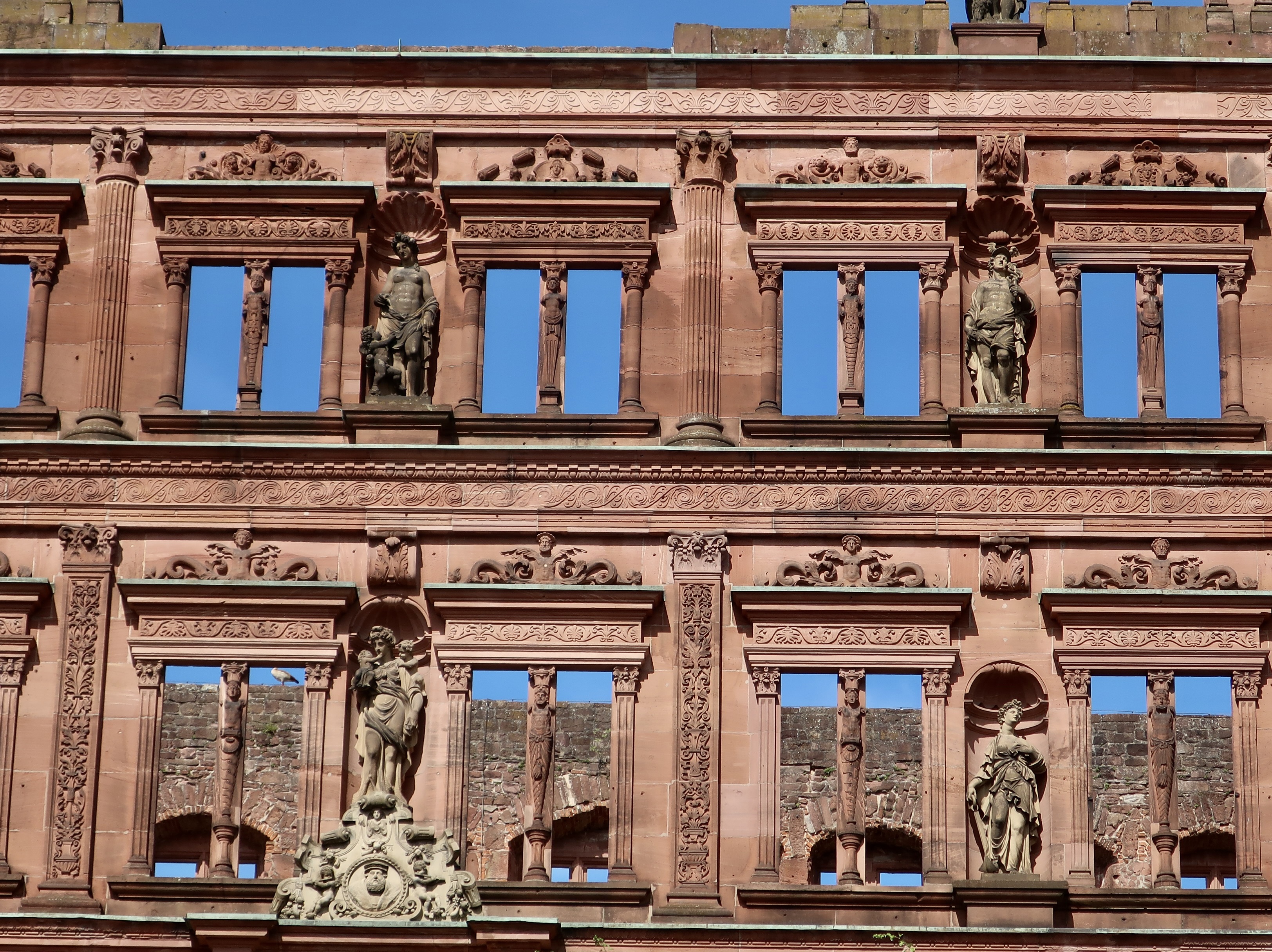
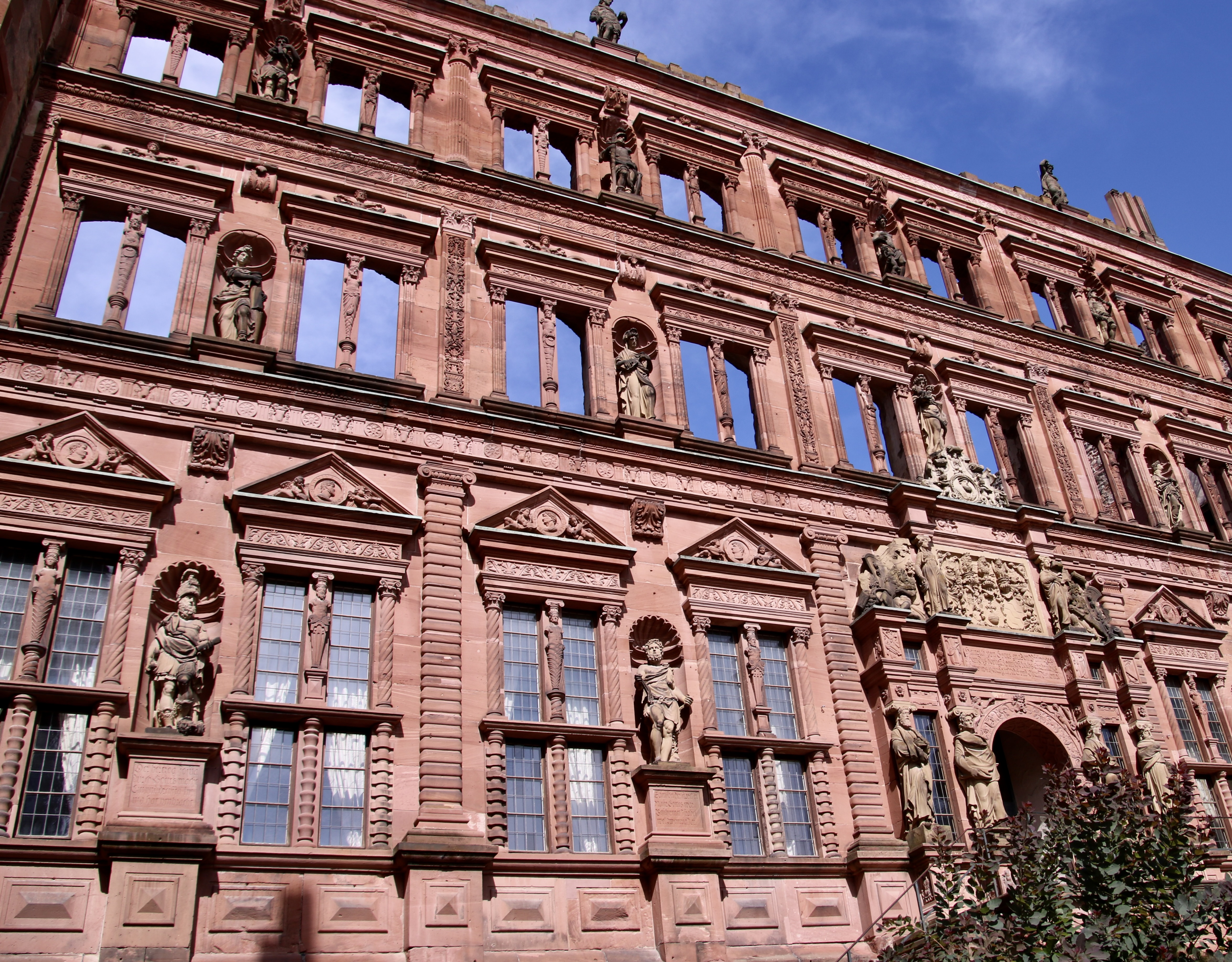
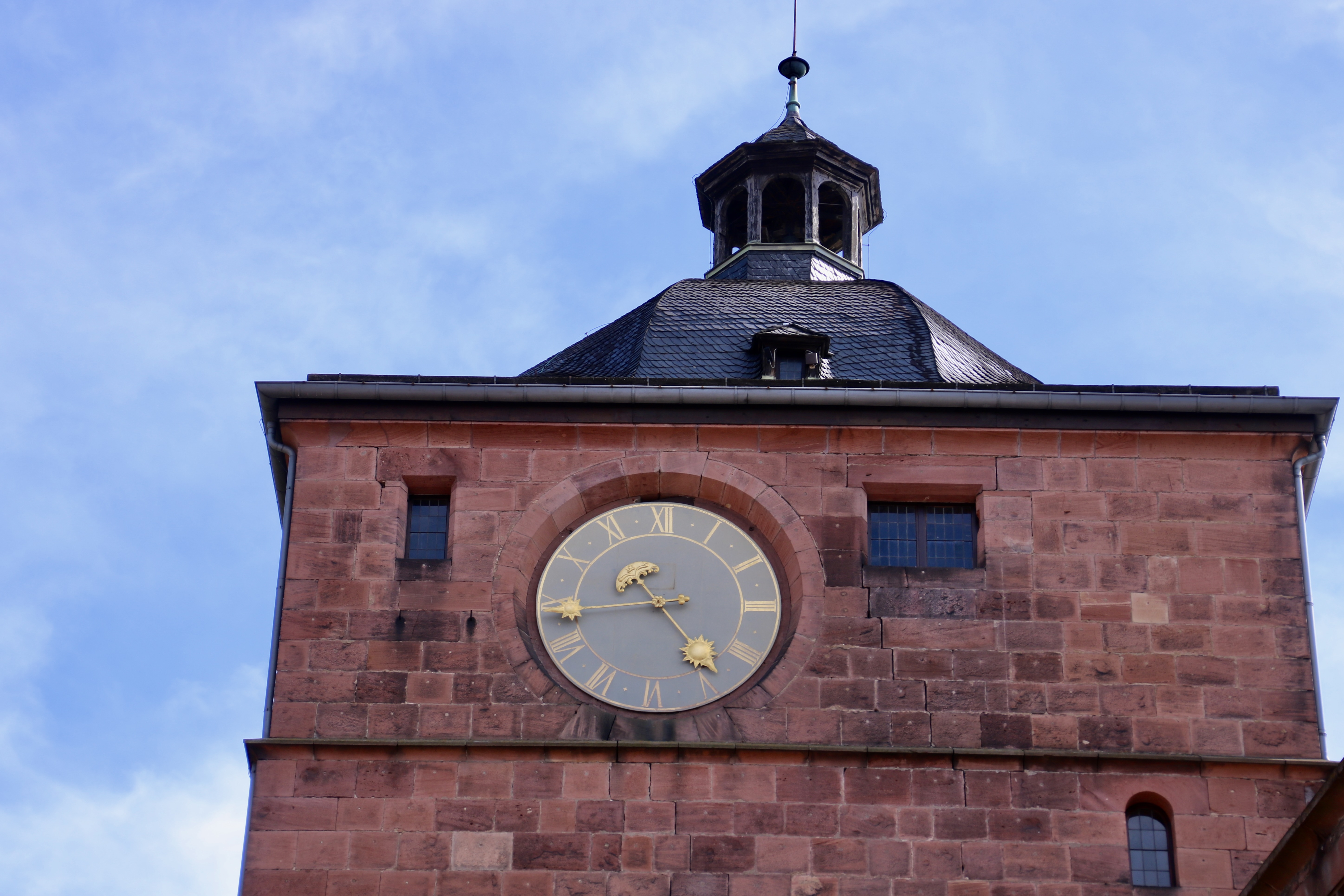
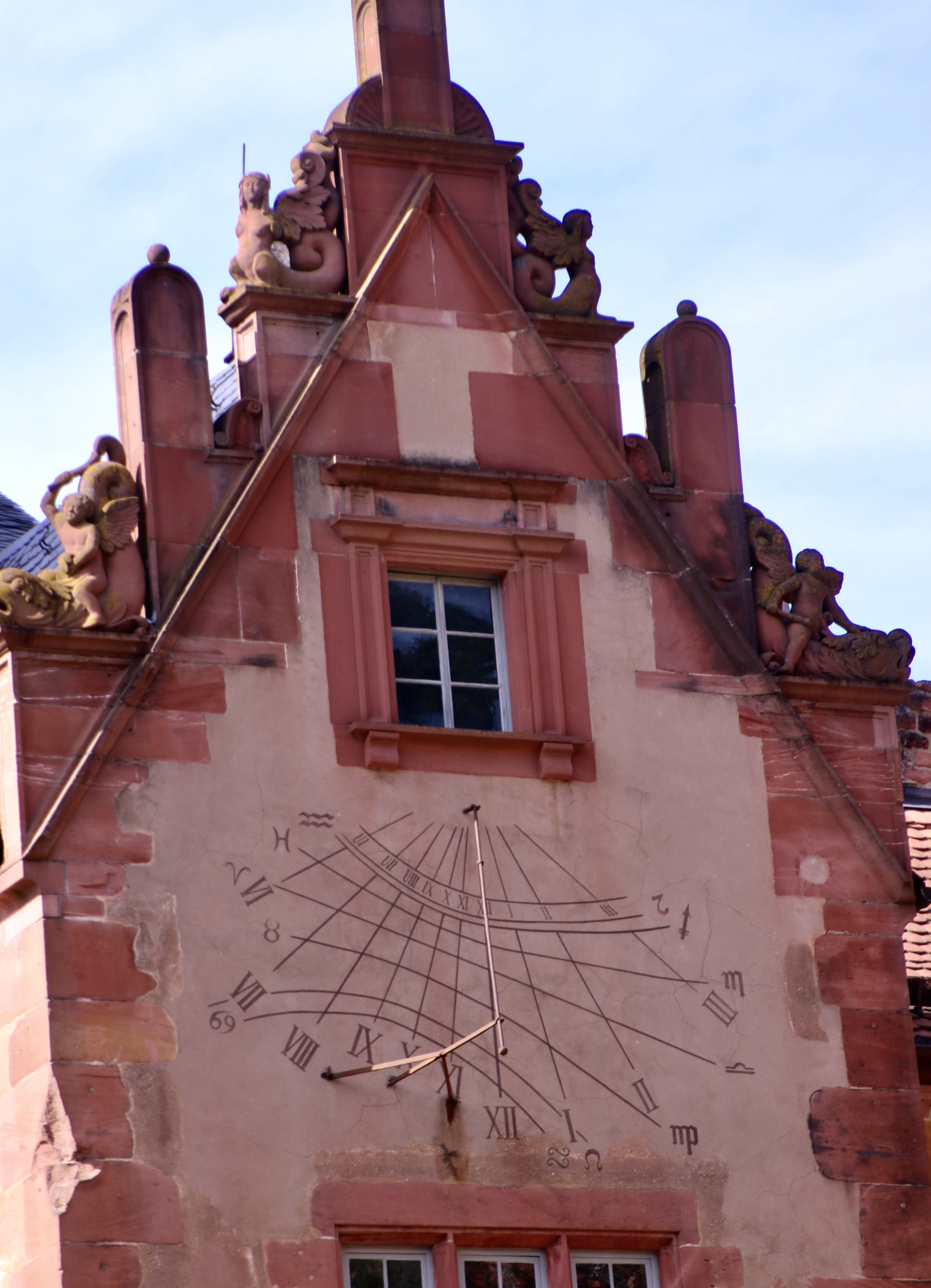
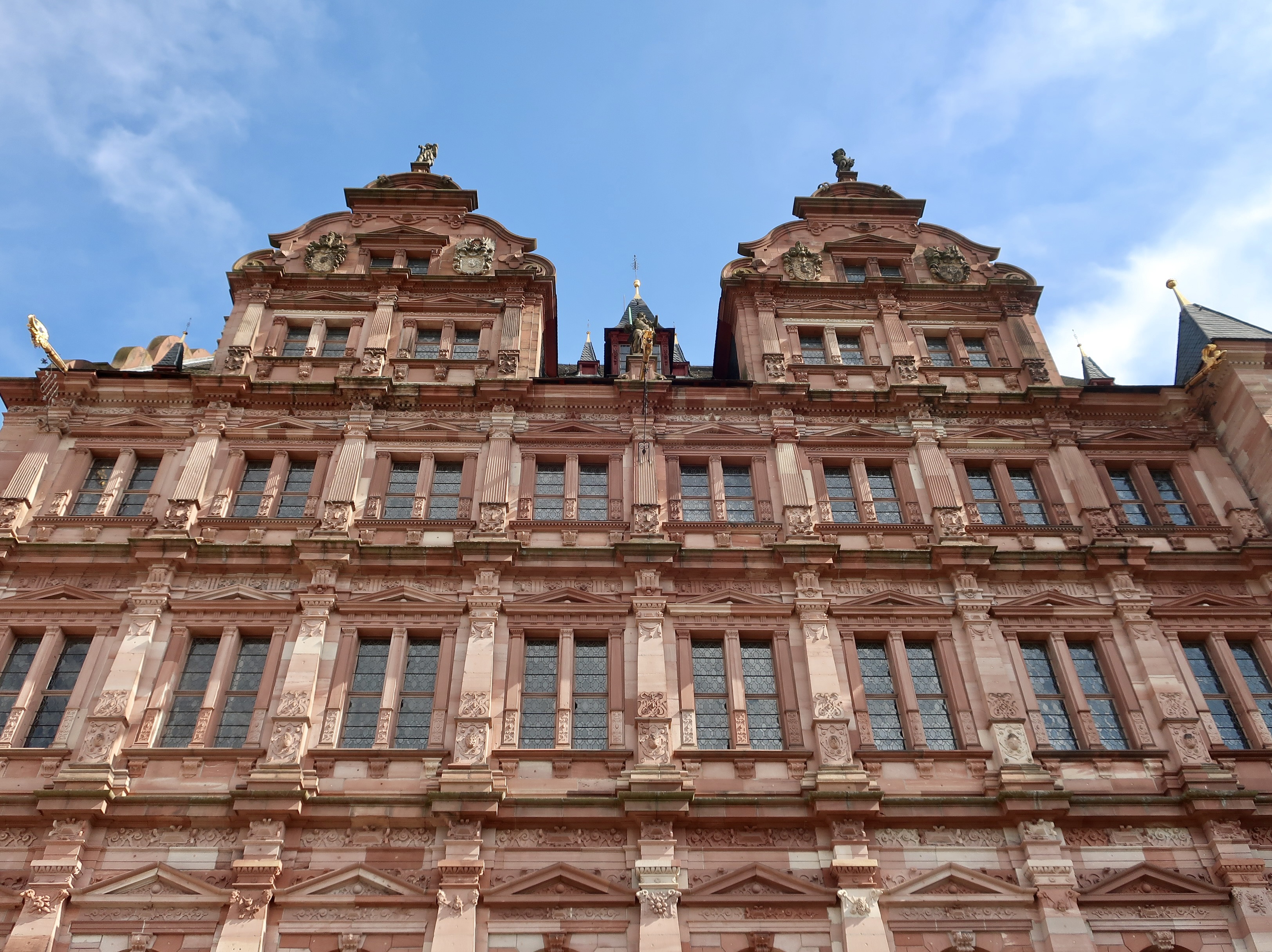
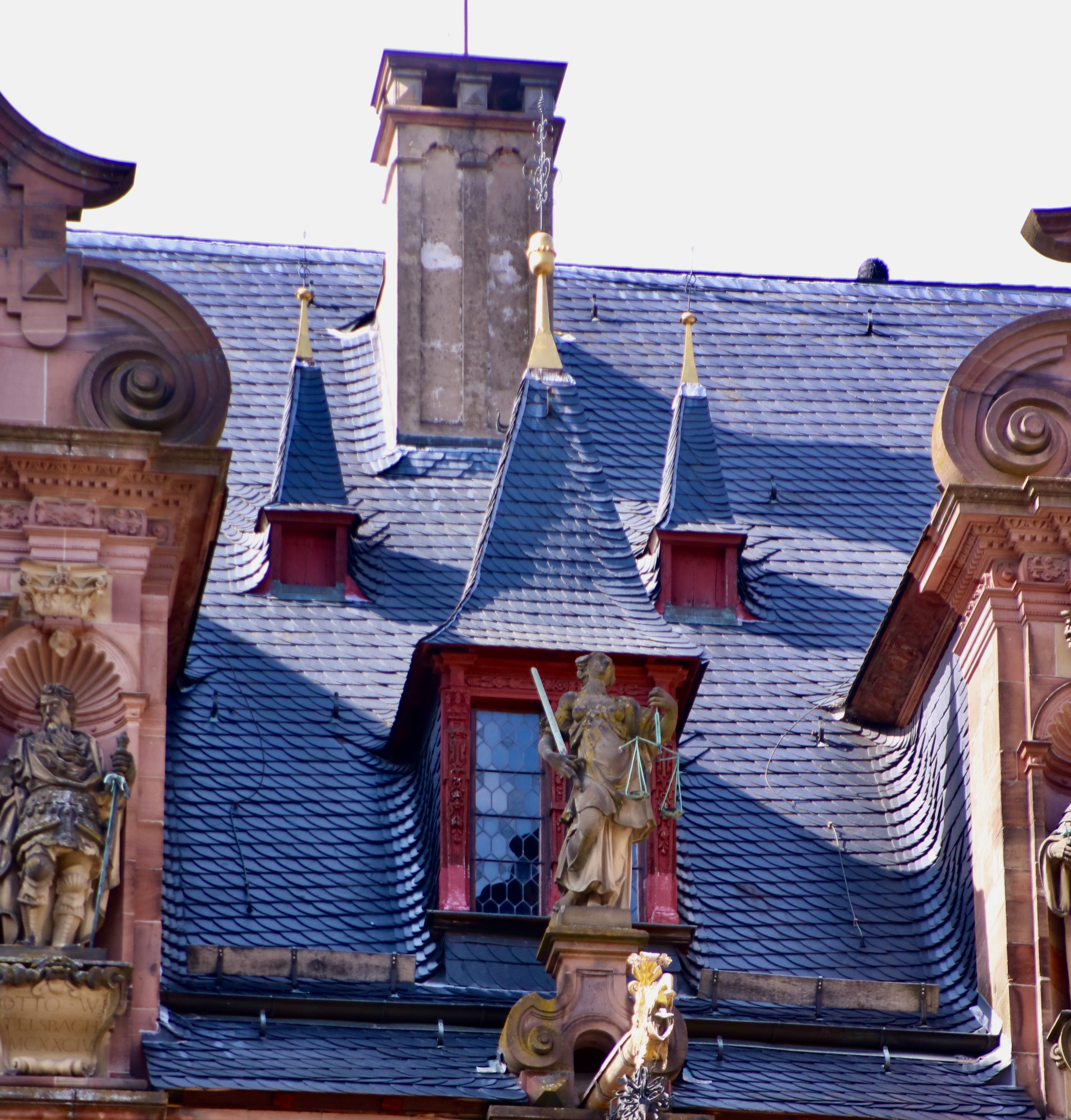
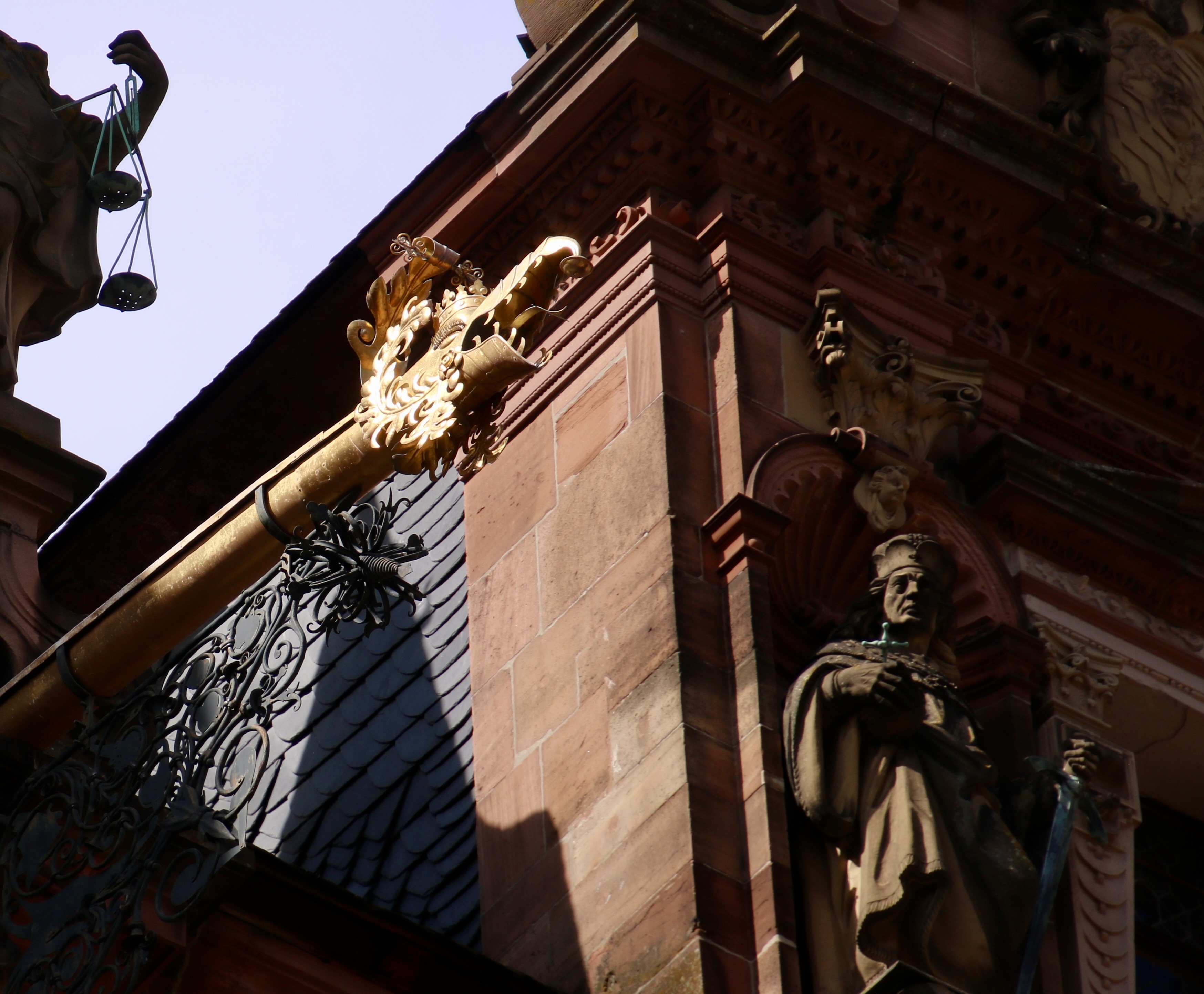
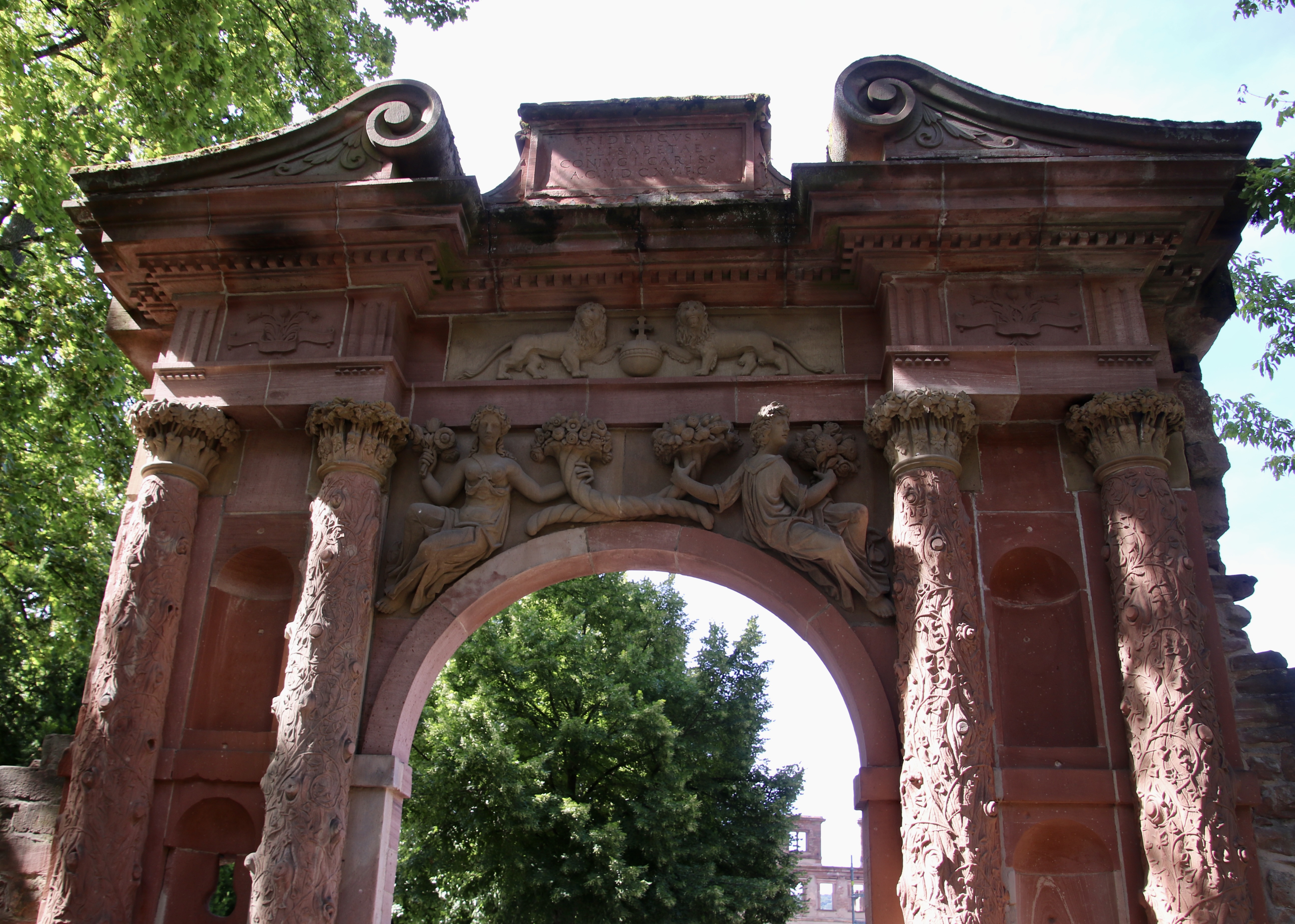
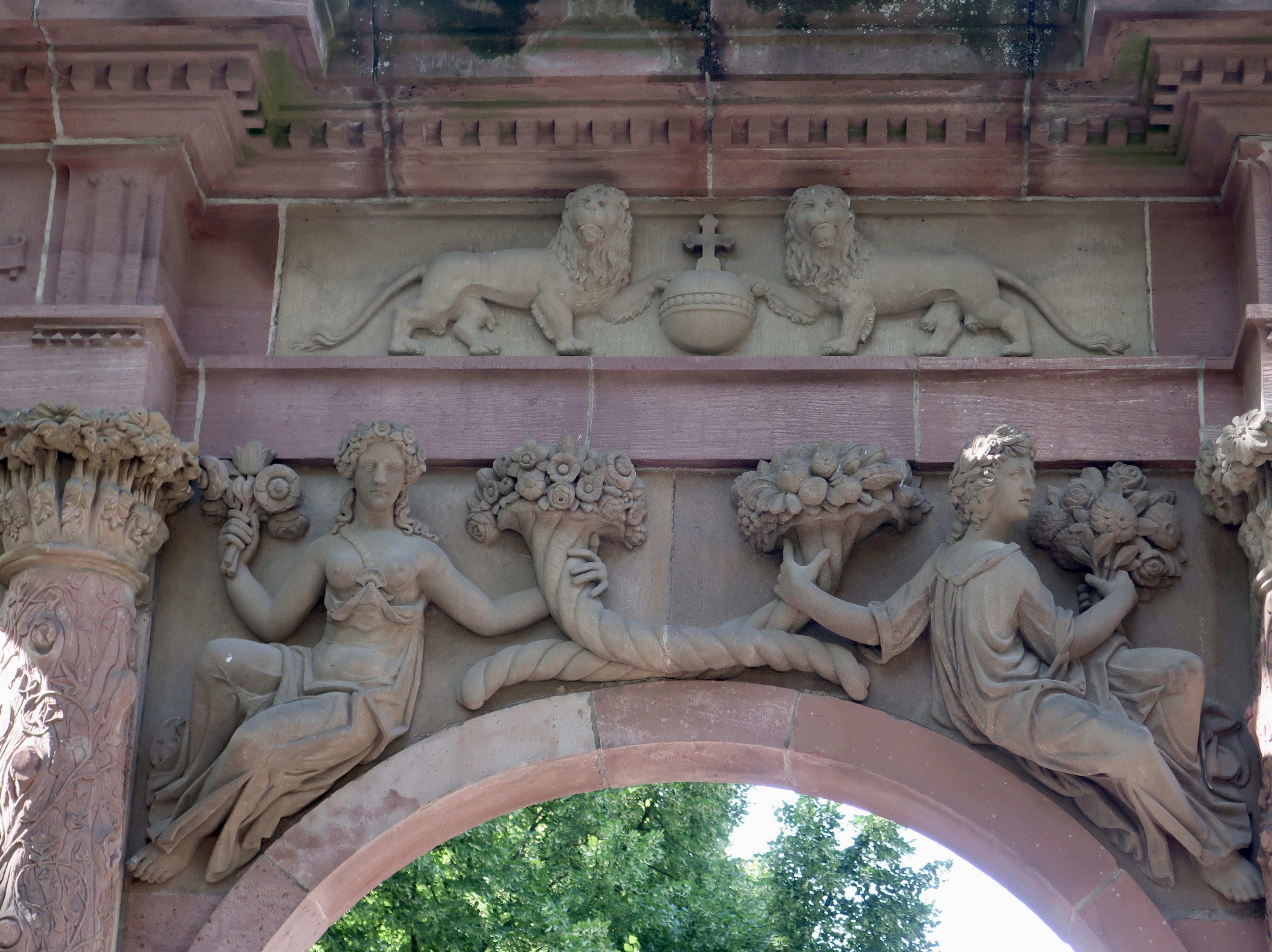
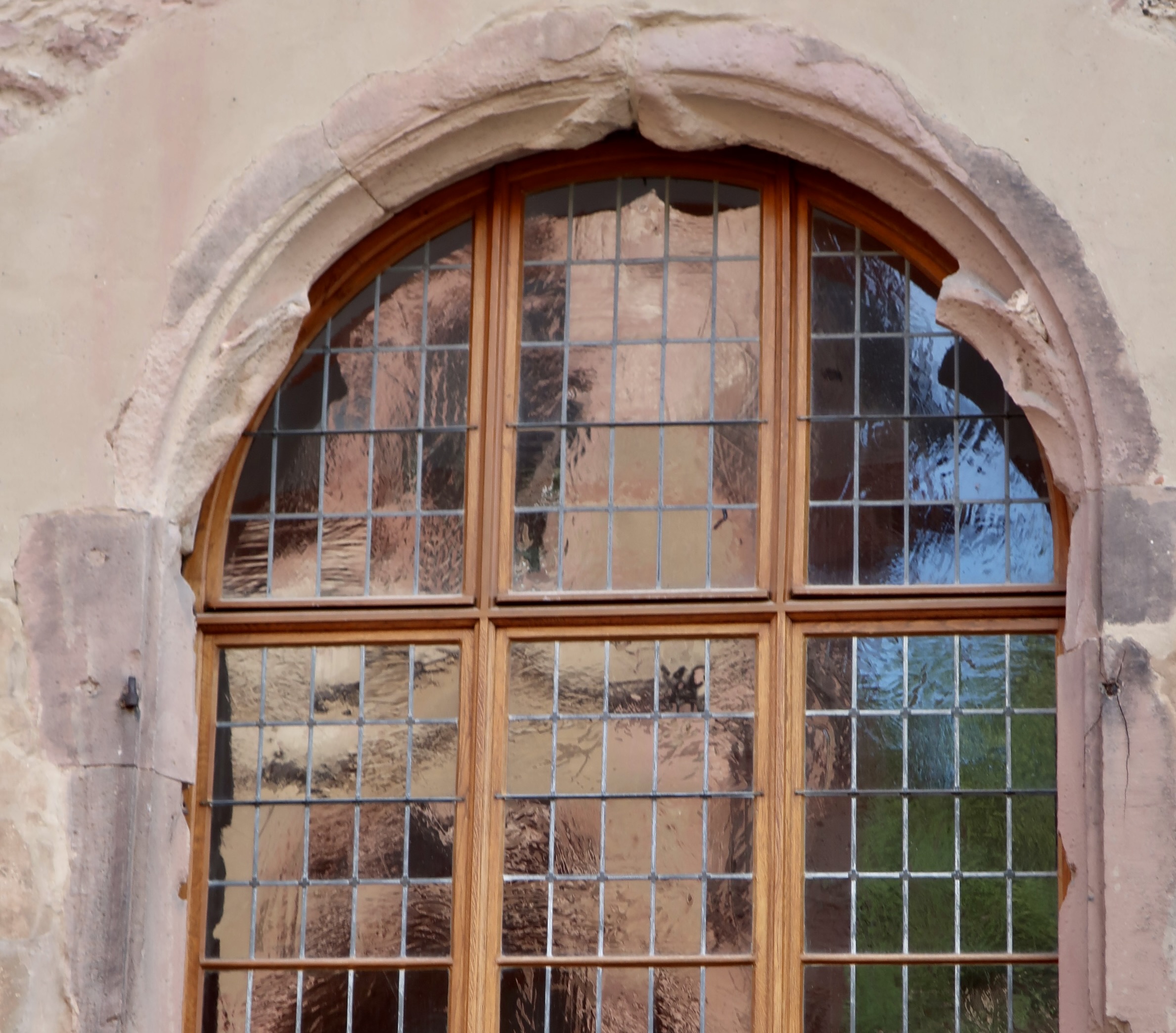
There are statues galore, mainly of past royalty. There’s no doubt about this fellow’s pedigree. He holds a scepter in his left hand representing his kingly power and a ‘globus cruciger ‘ minus its cross in his left hand representing his religious power. A grouchy lion, also a symbol of medieval power, has curled around his legs like a kitty. And then there is the humongous sword and the ‘don’t mess with me’ look in his eyes. Take a look at the various figures on his clothes/armor. I spotted Mercury on his upper left thigh.Speaking of lions, there may be more scattered around the castle than those living in East and South Africa. The ‘globus cruciger’ (orb bearing cross) still has its cross here. I only saw one imperial eagle but it certainly looked ferocious, which, I might add, was reduced somewhat by the bird poop on its head. I noticed that all of the lions in the photo above and the eagle are sticking their tongues out. I wonder if it meant what it does today.Like all good castles, it has a tower with a flag on top. You can see the tower on the left in the blog’s introductory photo.Vacant windows adorned by statues speak to the Castle’s past glory. Again, it is interesting to look closely at the figures. Can you find Mercury?Another perspective…Another photo where the damage done to the castle is obvious. The face of a clock can be seen on the tower to the right.As I recall, it actually was a quarter of five. Note the lightning rod up on top! A lesson learned. As for the hands, I am thinking sun, moon, and star.While we’re on clocks, check out this beauty. It’s a sun dial. Its strange shape is due to the fact that is vertical. Most are on the ground. As for reading it…This impressive building known as the Friedrichsbau, is named after Elector Friedrich IV who had it built in the early 1600s. Lady Justice is perched in a niche top center. Other niches contain generations of Palatine Prince Electors. Here’s Justice holding her scales to determine who is guilty and who is innocent with her sword ready to whack the guilty– or is that smite? One of the princes can be seen on the left. A dragon spout is beneath her.Here’s a closeup of the dragon spout, On a church it would be considered a gargoyle. At Burning Man it would be shooting out fire. (Peggy and I are hoping to return this year.) The scales of justice can be seen in the upper left and another elector is on the right. The scales have holes in them. How just is that?We passed through this gateway on our way to visit the huge wine barrel I featured in an earlier post.Lions hold a cross bearing orb while fair maidens hold bouquets of flowers in their hands and in cornucopias. The one on the left seems, um, a bit provocative?This window is here because I liked how colorfully it reflected its surroundings in an abstract sort of way.Hmmm. Maybe our grandsons had seen enough of castles for one day. Grin. So, I’ll conclude here. Cody, Tasha and Clay’s son, is on top. Chris, Tony and Cammie’s son, is on the bottom. In our next post we will journey back to Yellowstone National Park for a look at some of its scenic beauty.
Today,Peggy and I are continuing our exploration of Yellowstone National Park, which we visited as part of our four month, 12,000 mile exploration of the US between September and December this past year. All photos in this post were taken by either Peggy or me unless otherwise noted.
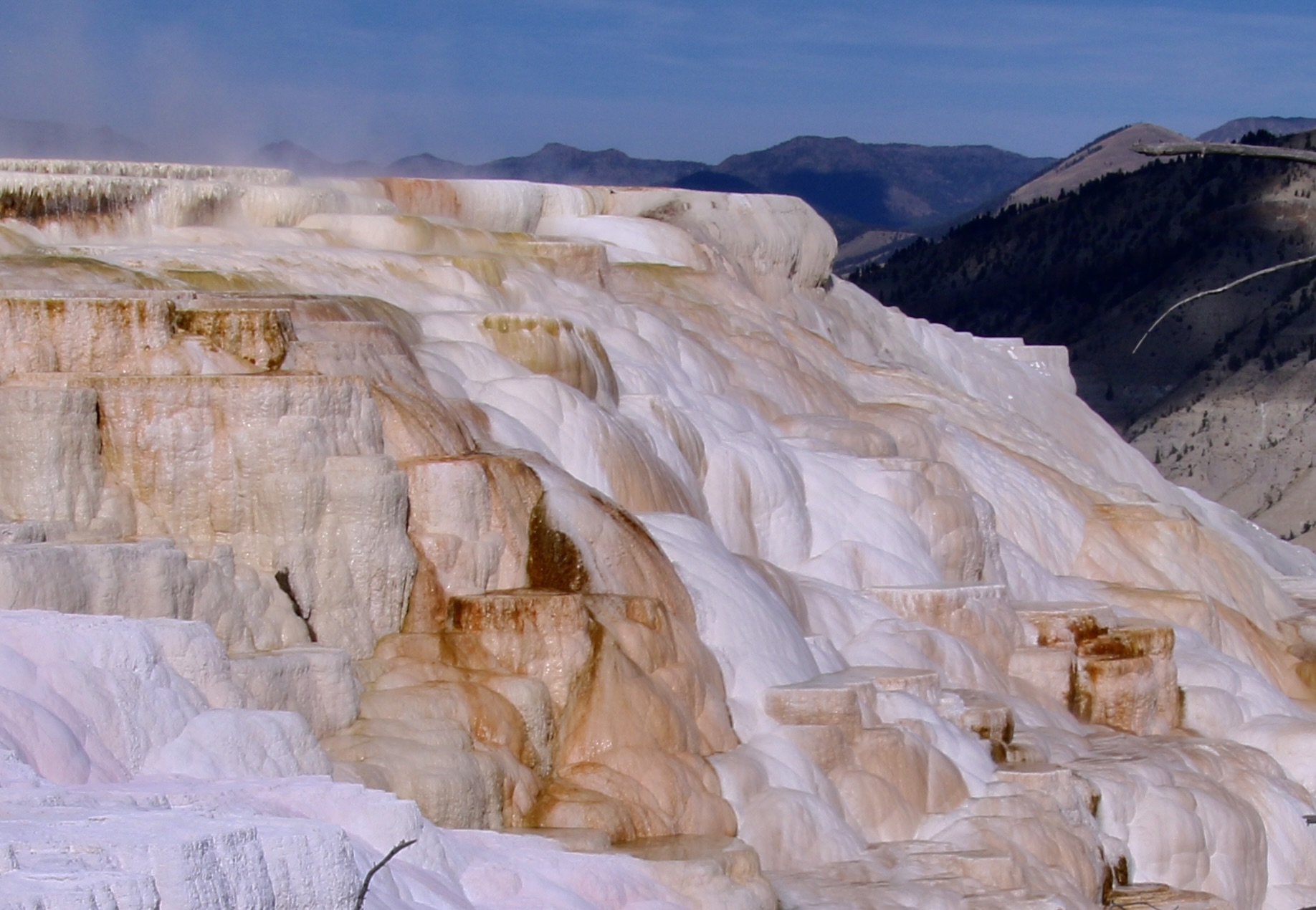
If you are visiting Yellowstone National Park, be sure to visit the colorful travertine terraces of Mammoth Hot Springs.
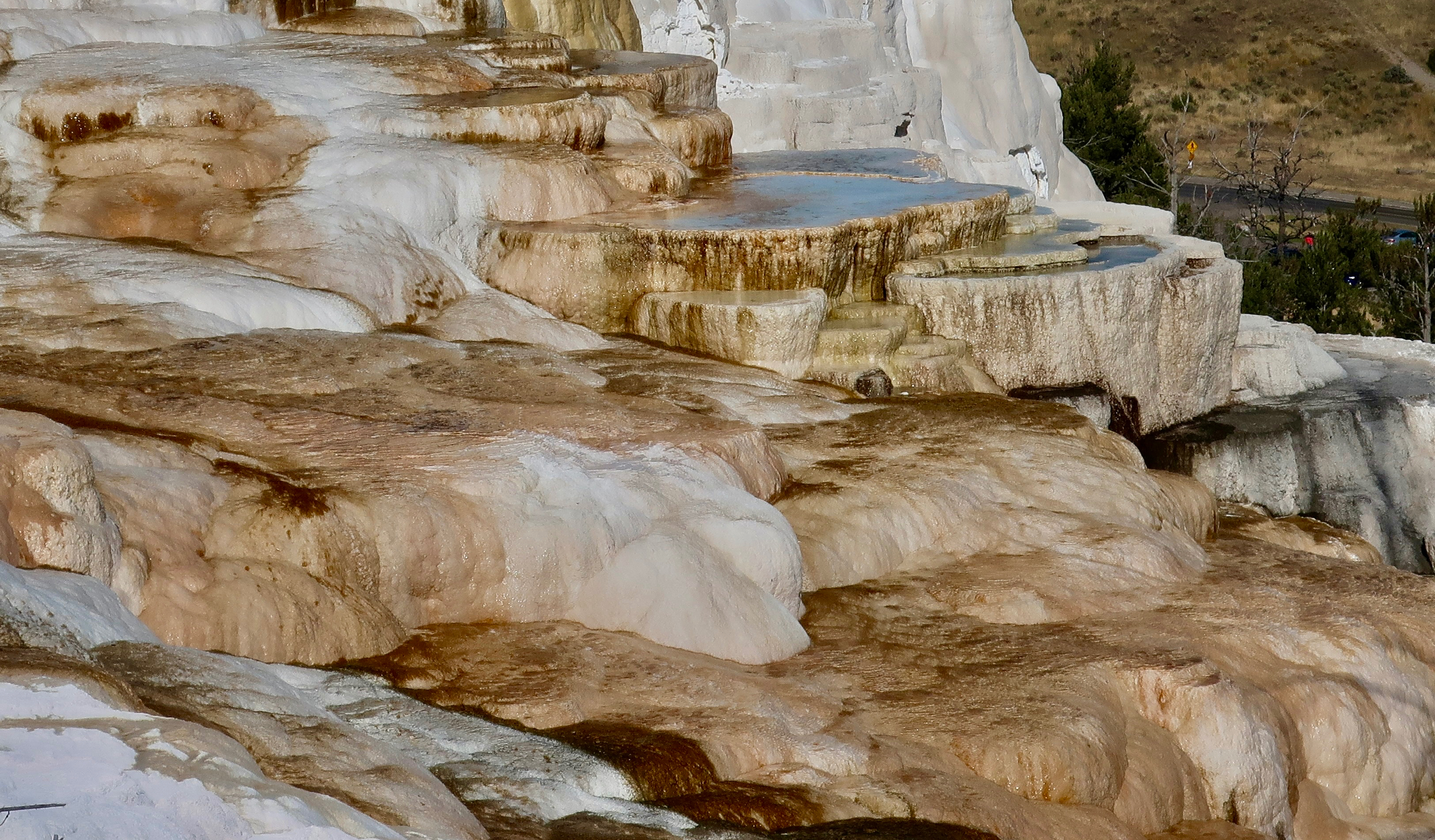
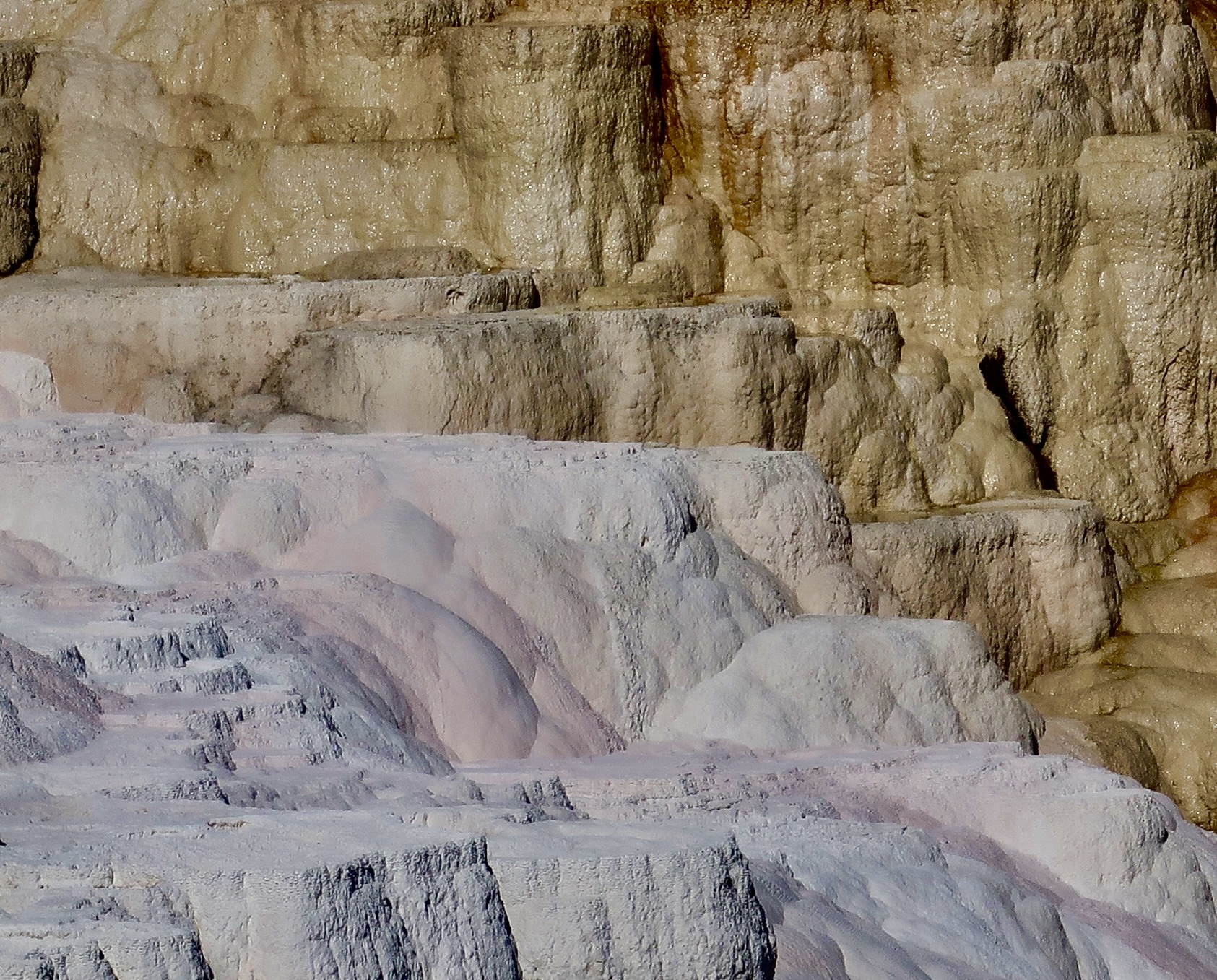
Located 50 miles north of Old Faithful, the travertine terraces of Mammoth Hot Springs are one of the most unique and beautiful of Yellowstone’s hydrothermal created landscapes. The terracing is a result of underlying limestone. Hot water dissolves the limestone and deposits it on the surface. The bright colors, like the colors of the hot springs in the Yellowstone Caldera to the south, are created by thermophiles, tiny microorganisms that thrive in the hot springs. Different types of thermophiles have different tolerance for the heat and come in different colors based upon their exposure to sunlight. Those that can tolerate the most heat live deep in the pools and tend toward blue and green. The ones living on the cooler outer edges are more in the brown and yellow range.
Peggy and I took a day to drive up from where we were camped in the town of West Yellowstone to visit Mammoth Hot Springs. On the way up we saw a lot of great scenery that I will feature in another post and two hydrothermal features I haven’t covered in this series yet: mud pots and fumaroles.
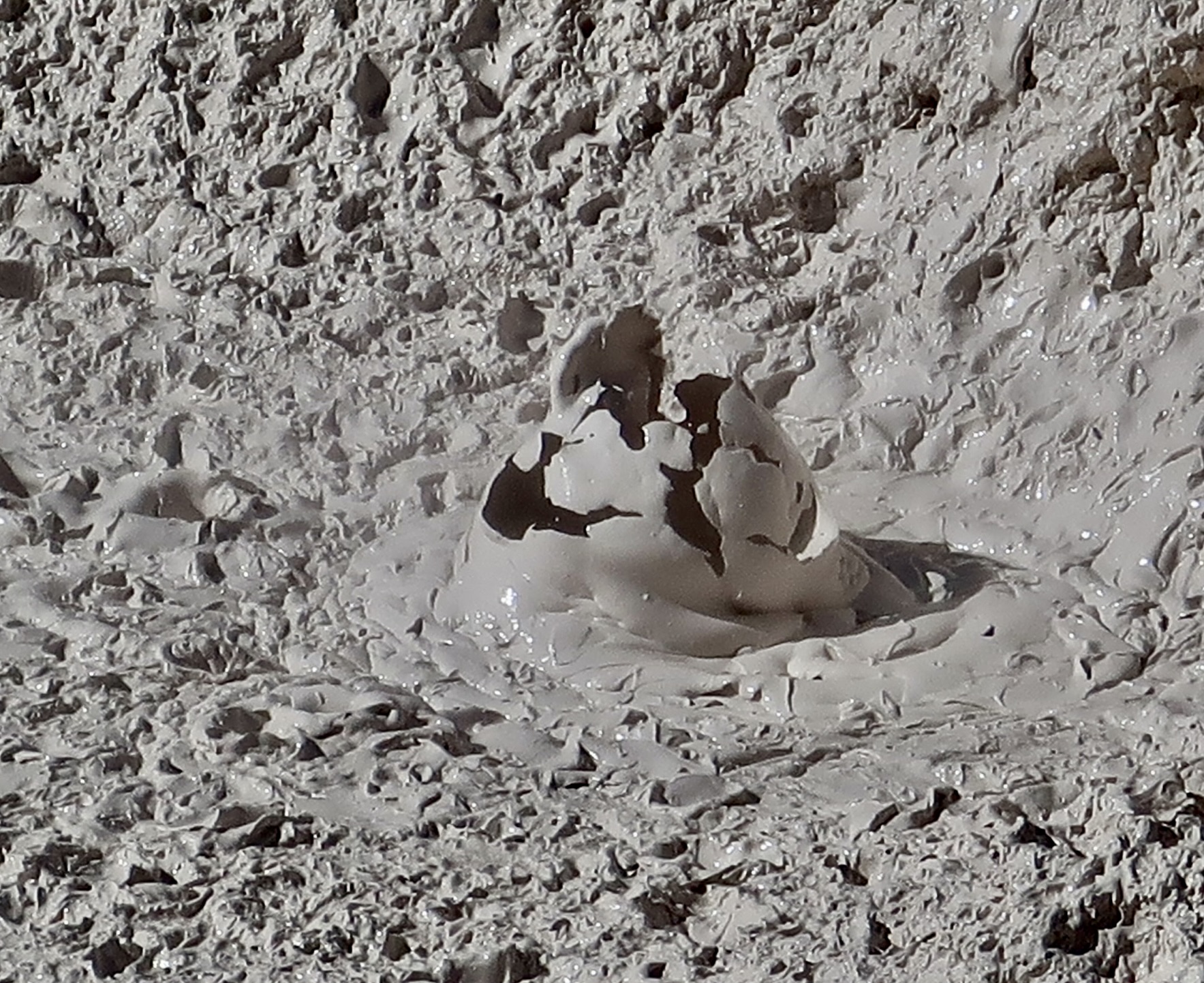
Mud pots occur when hot thermal water is flowing under a layer of clay that blocks the water from escaping to the surface. Steam from the water, however, is able to make its way through the clay. Certain microorganisms convert the sulfur dioxide in the steam to sulfuric acid which turns the clay into a gooey, sticky consistency. Bubbles are created as a result of the steam bubbling up through the goo. It sound like plop, plop, plop. I included this exploding bubble in an earlier post. I liked it so much you get to see it again.A fumarole is similar to a geyser but lacks the water to create eruptions. Instead, the heat from the volcanic rocks turns what water is available into incredibly hot steam that escapes from vents and ranges in temperatures up to 280°F (138°C). It can be noisy. This is a shot of Roaring Mountain that received its name from the noise created by the escaping steam. It could be heard from miles away in the 90s. It’s quieter today.
And now it’s time to visit the terraces of Mammoth Hot Springs. A convenient road takes you around the terraces. Walkways off the road take you to the lower terraces. The following photos were taken from the walkways.
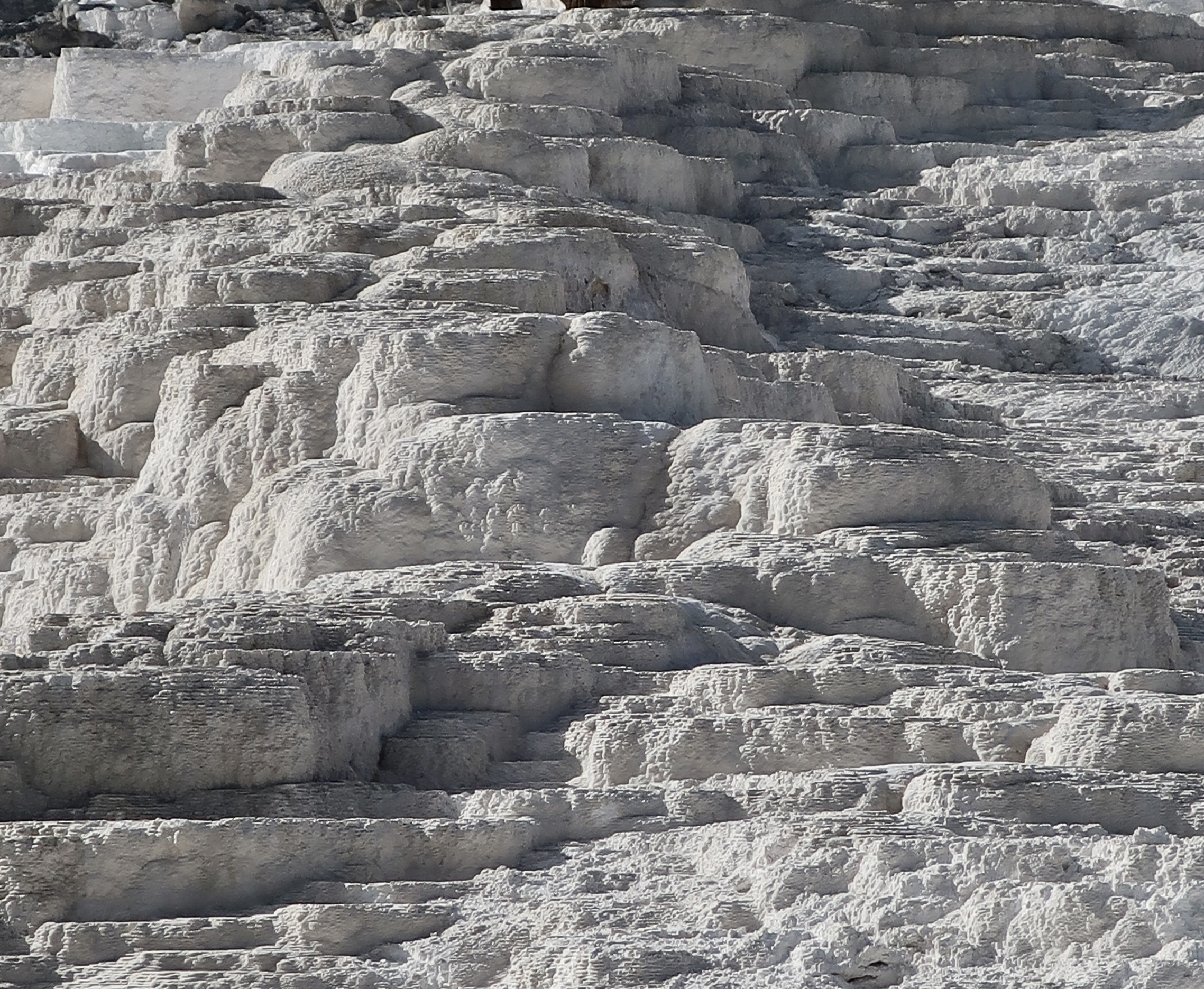
Canary Springs is one of the most popular sites along the lower terrace trail at Mammoth Hot Springs.A broader, softer perspective of Canary Springs.A view of the travertine terrace just above Canary Springs.Another perspective of the terrace just before the water flows over the edge.Cupid Springs. I don’t have a clue on how it got its name.Umpteen shades of grey.
The road snakes around the upper terrace. There are several pullouts that allow close up views of the various formations.
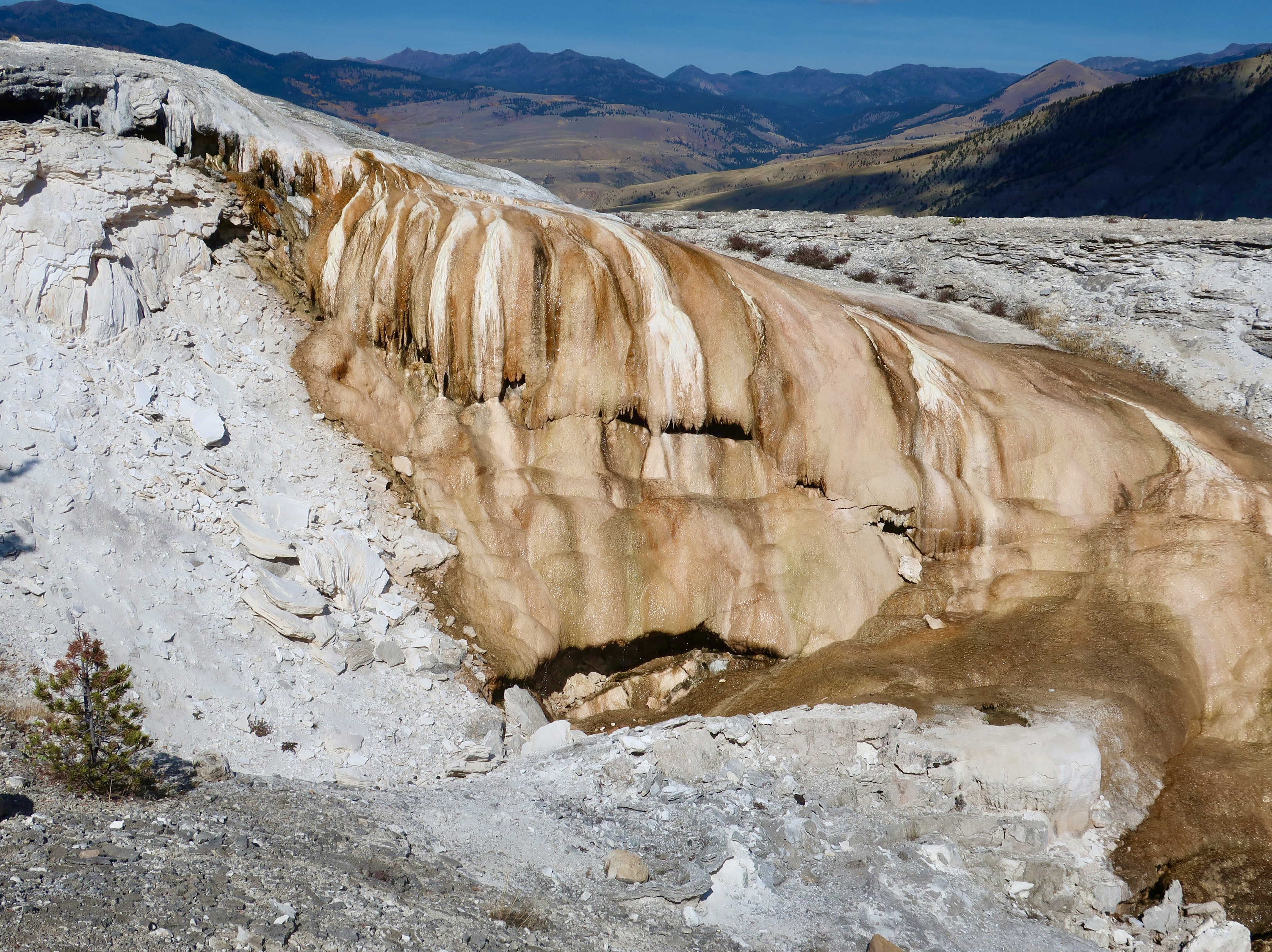
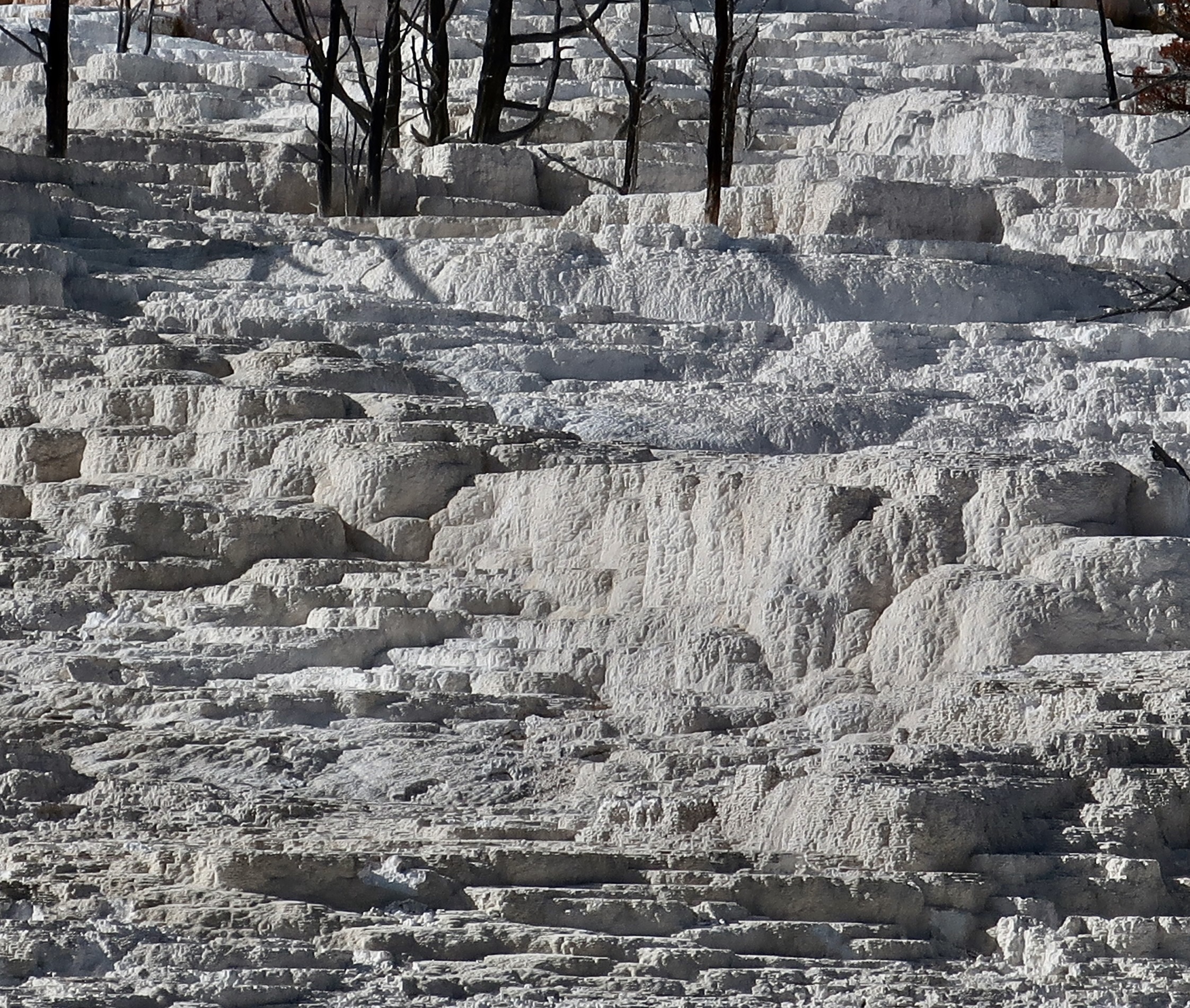
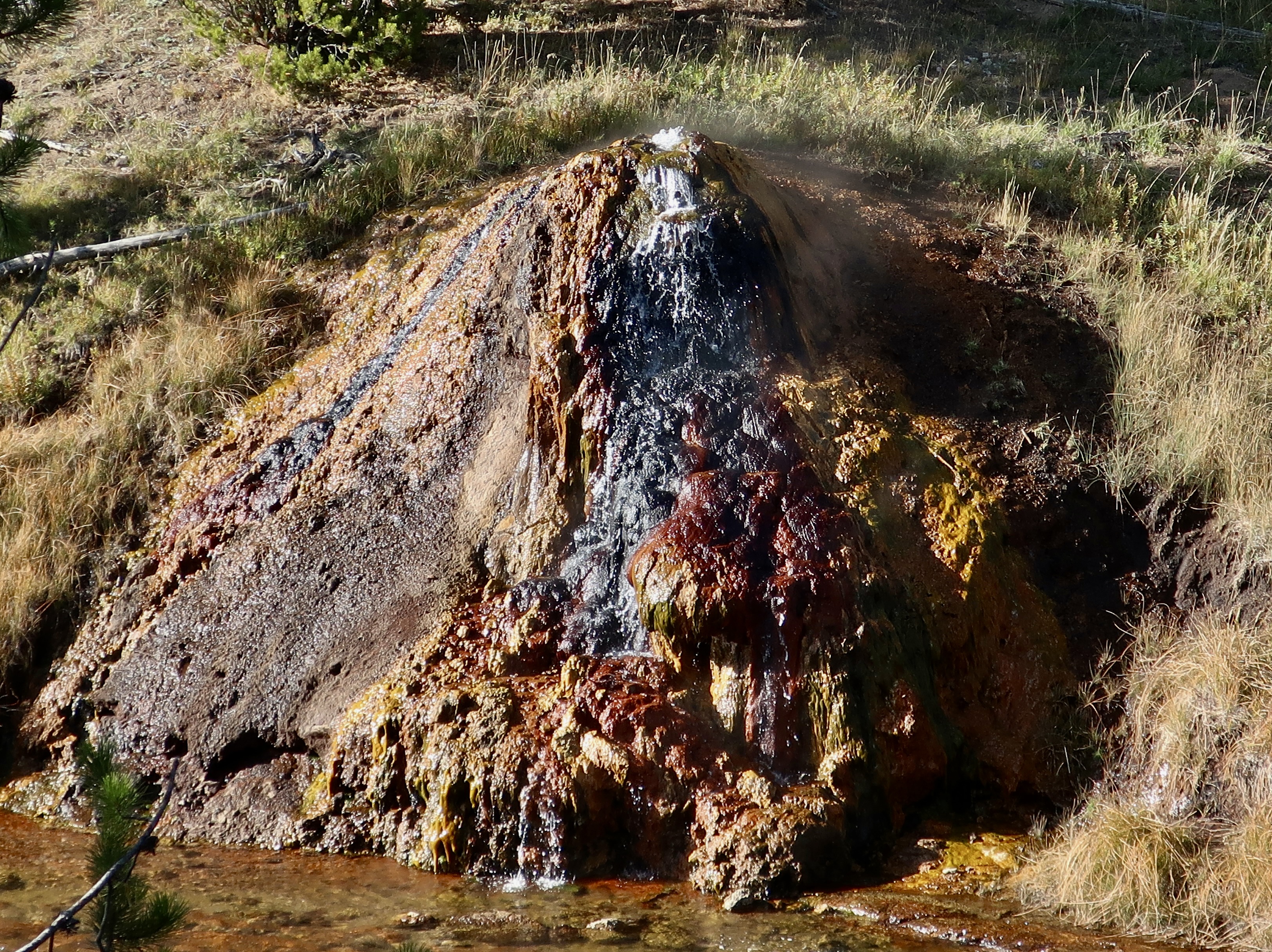
This section is known as Angel’s Terrace. I’m assuming it’s because of the white travertine, which is how the dissolved lime comes out of the ground.Another perspective. Like stair steps.We really liked the contrast of colors here.It was the colors, shape and tree that caught our attention that had us pull out our cameras.This unique dome is known as Elephants Back.We were driving back to West Yellowstone when we came across this very colorful small dome. The steam coming from the back suggests a fumarole. We simply had to stop and photograph it. That does it for today. Our next post will be on Heidelberg Castle. After that, it will be back to Yellowstone and its scenic beauty.
Today’s photo blog features Heidelberg, which we visited on our family trip up the Rhine River last summer. All photos are taken by either Peggy or me unless otherwise noted.
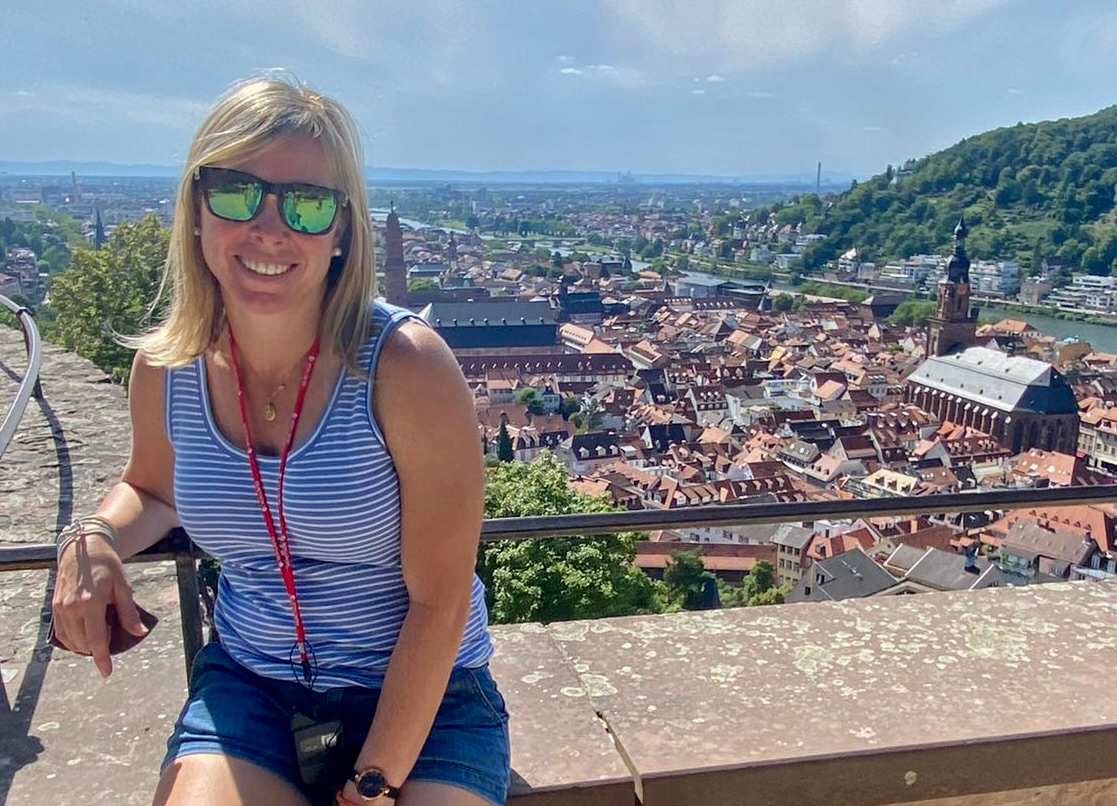
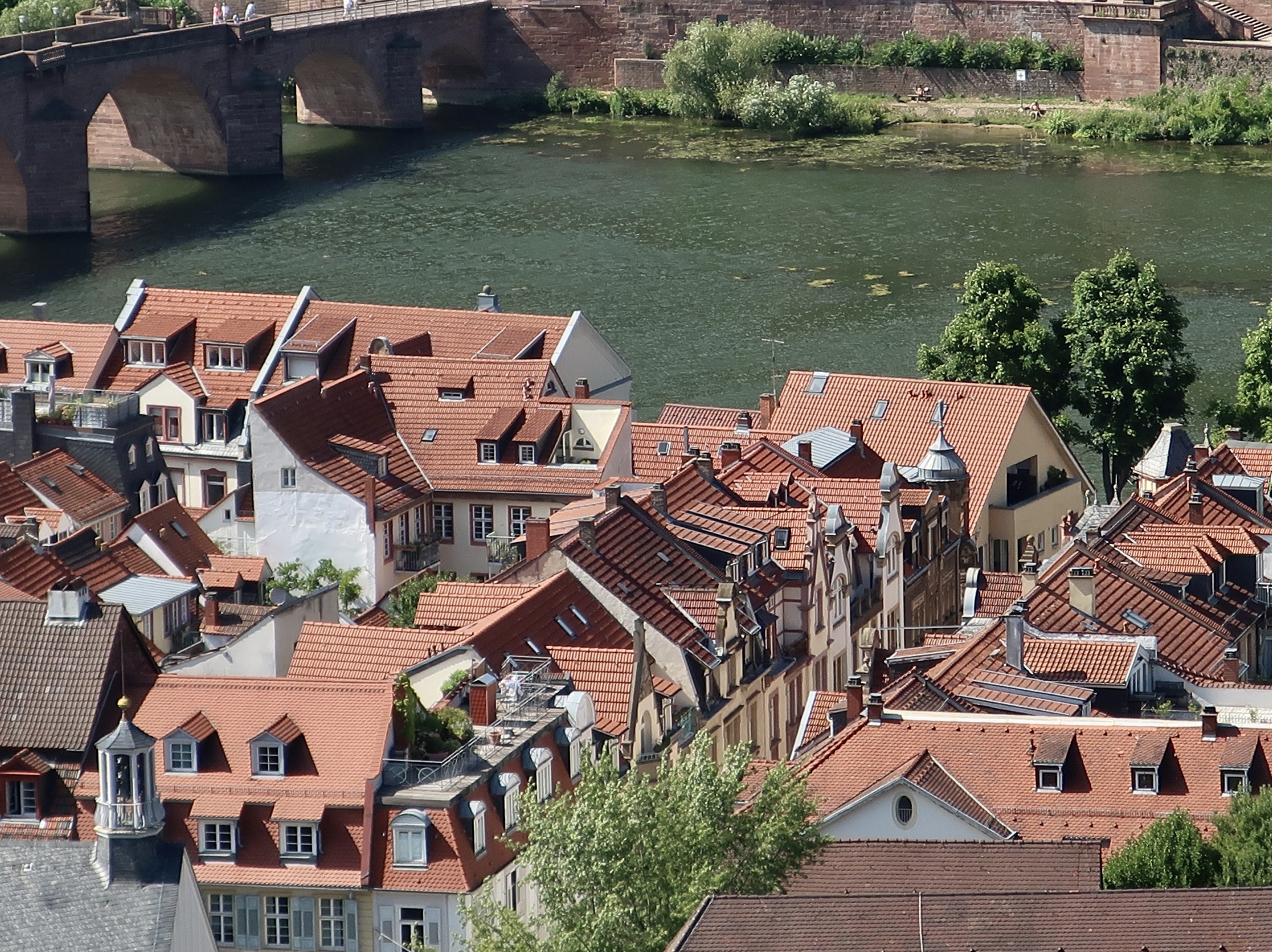
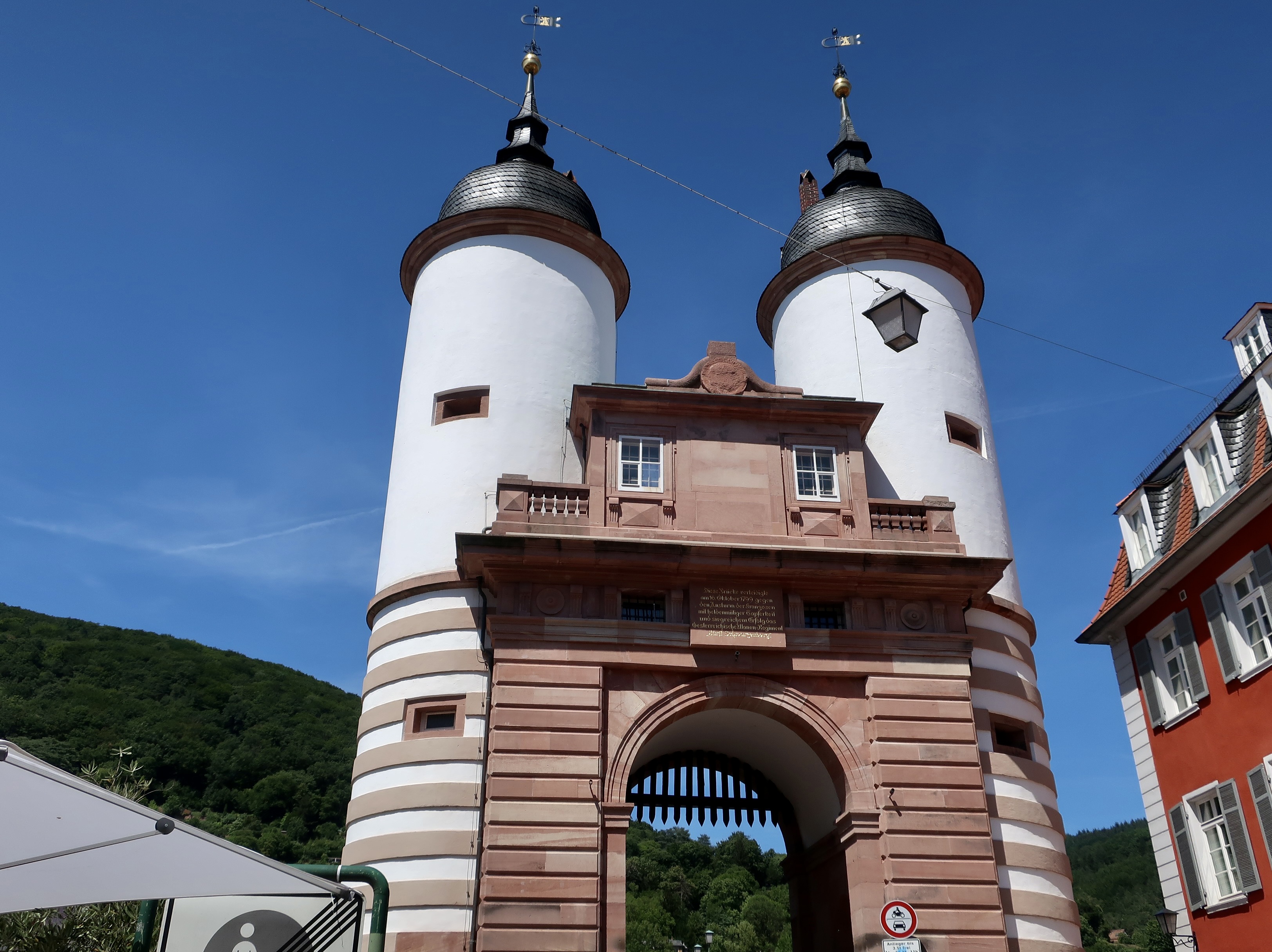
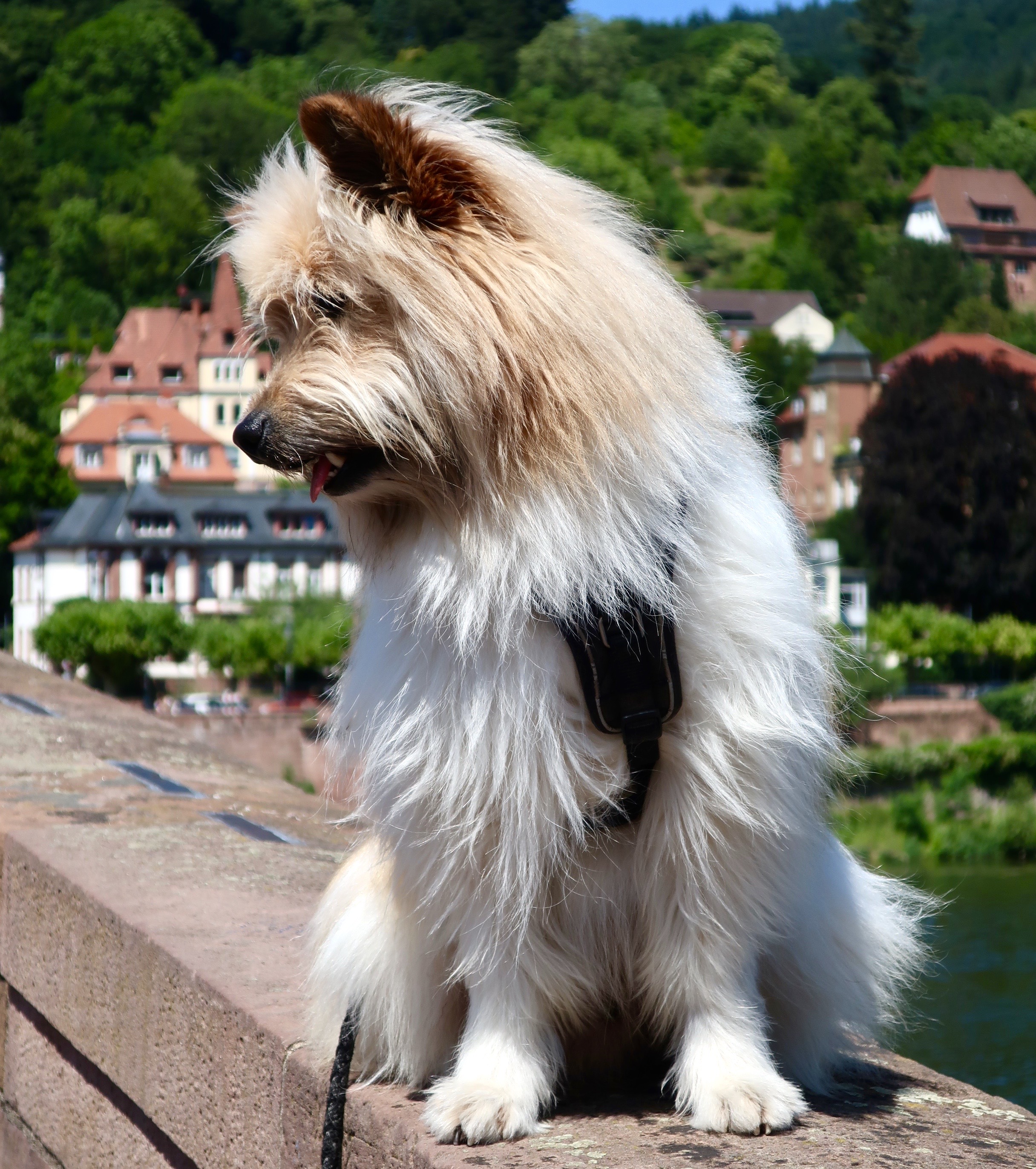
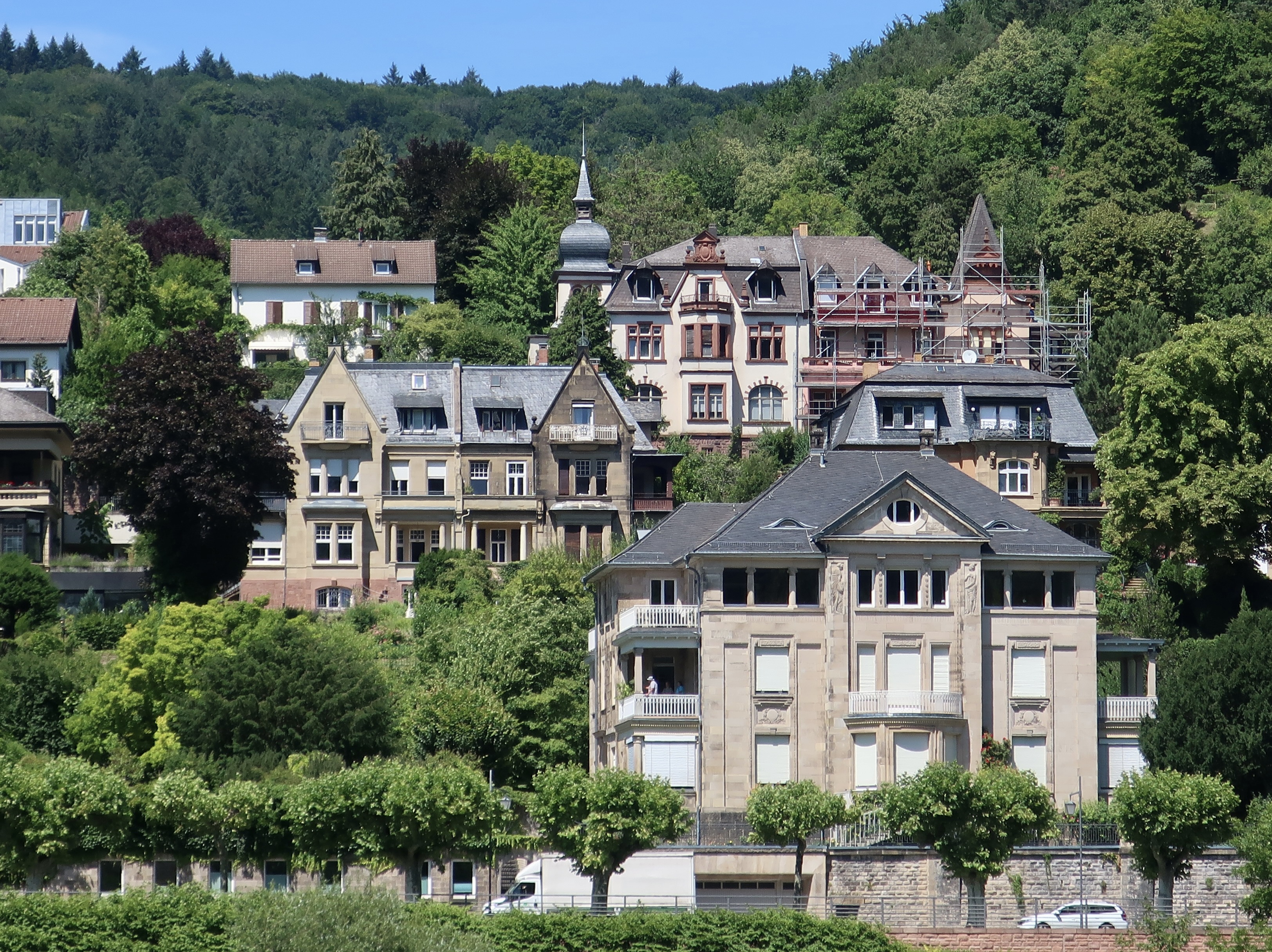
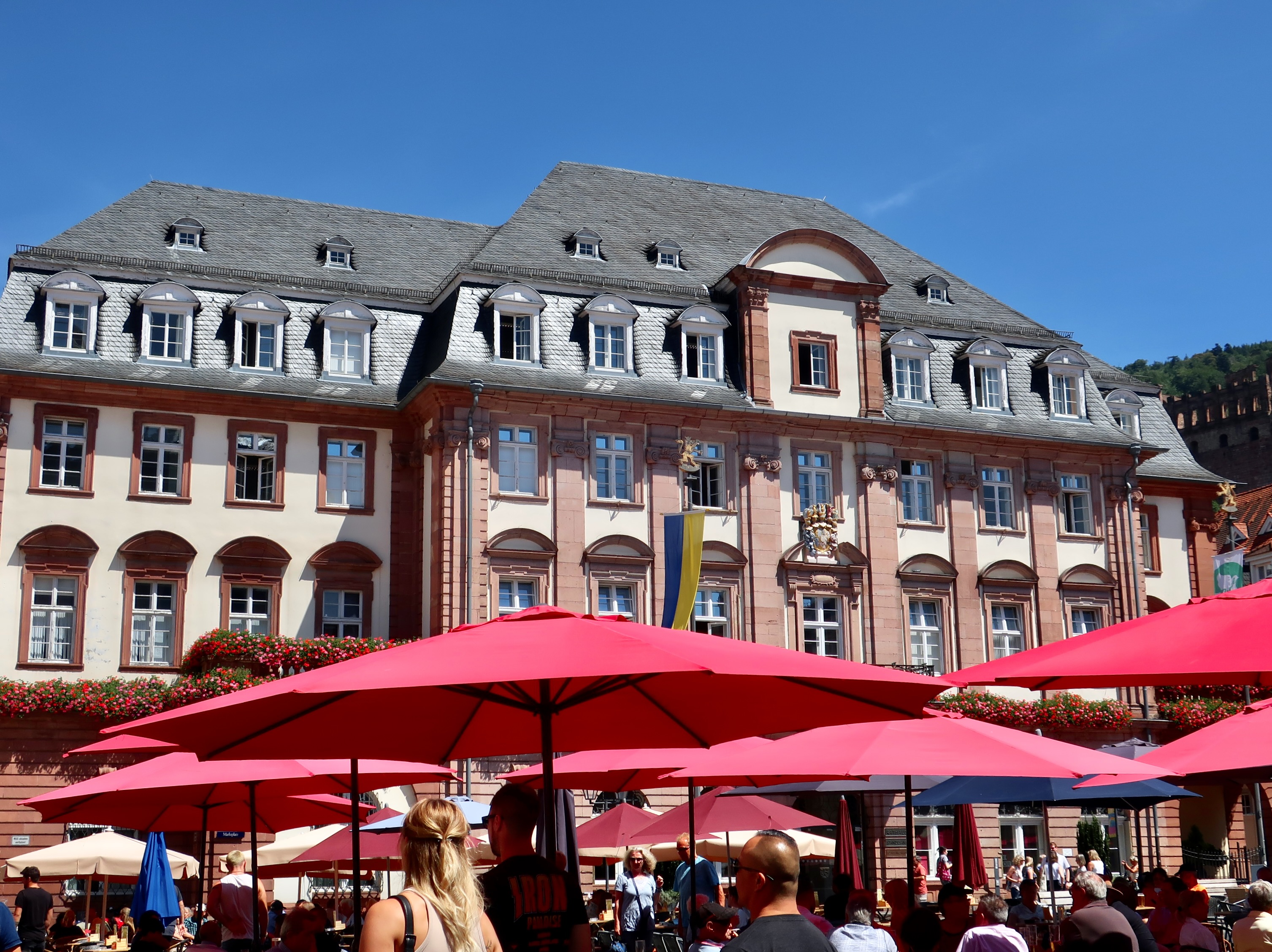
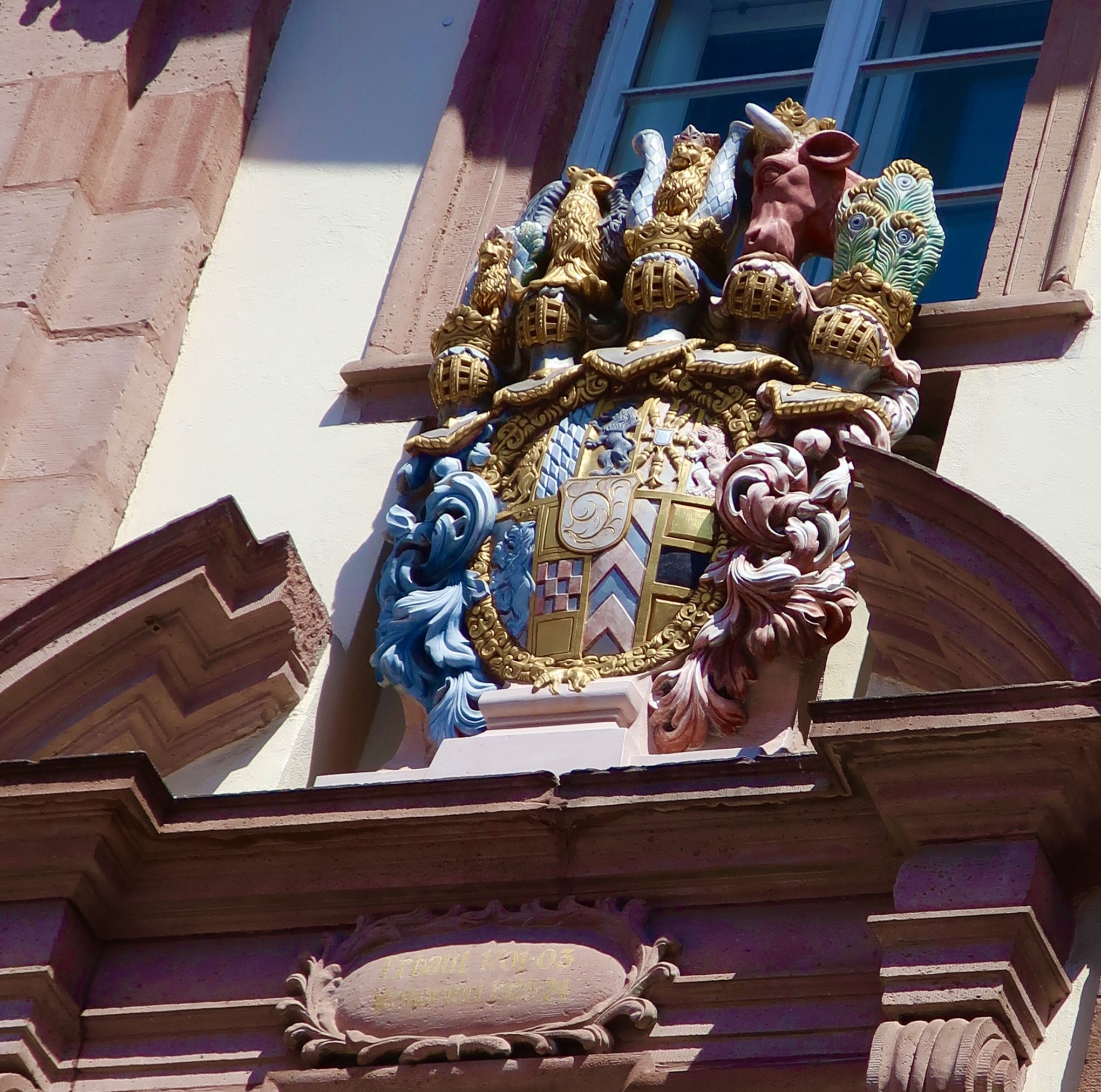
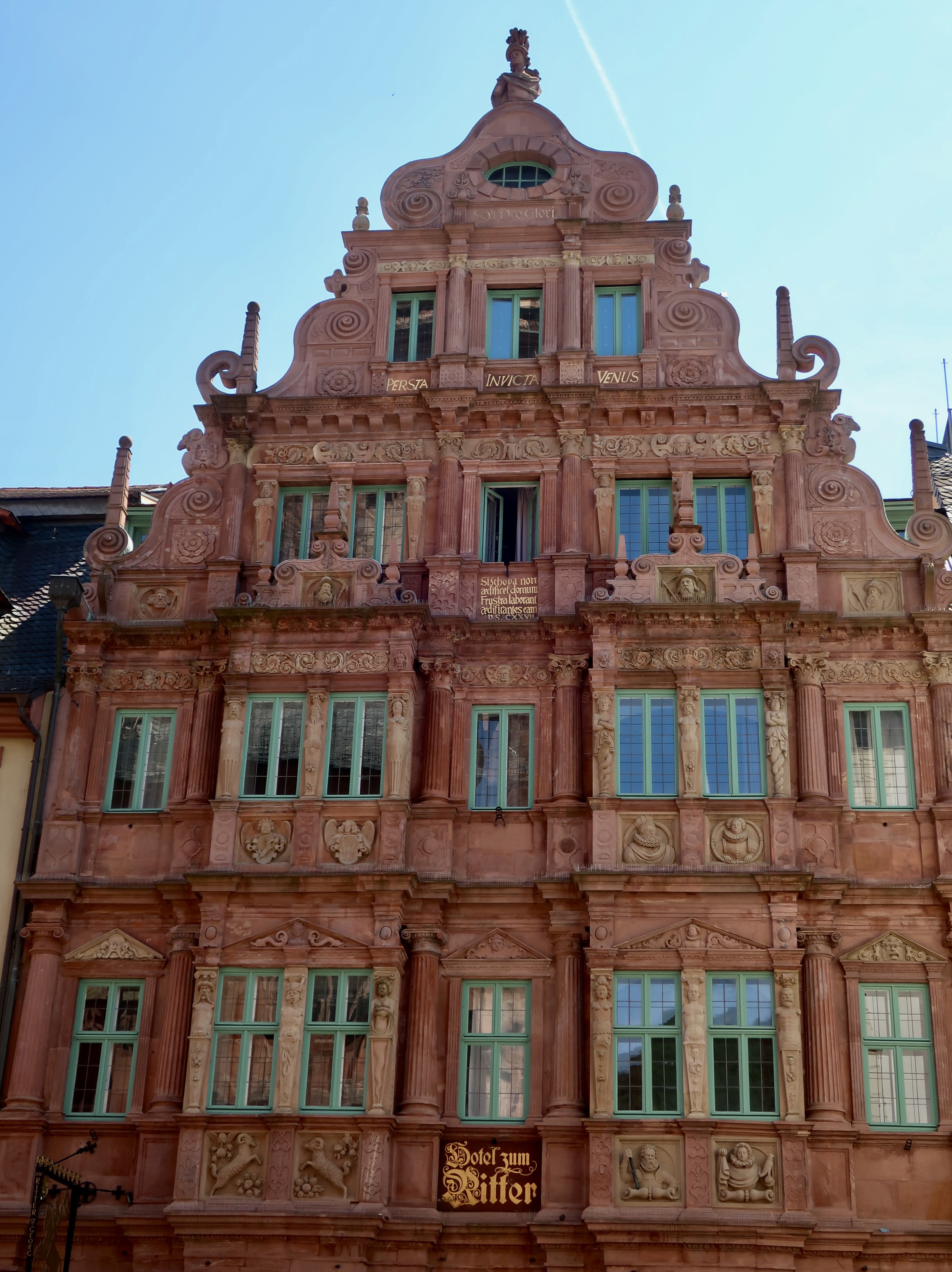
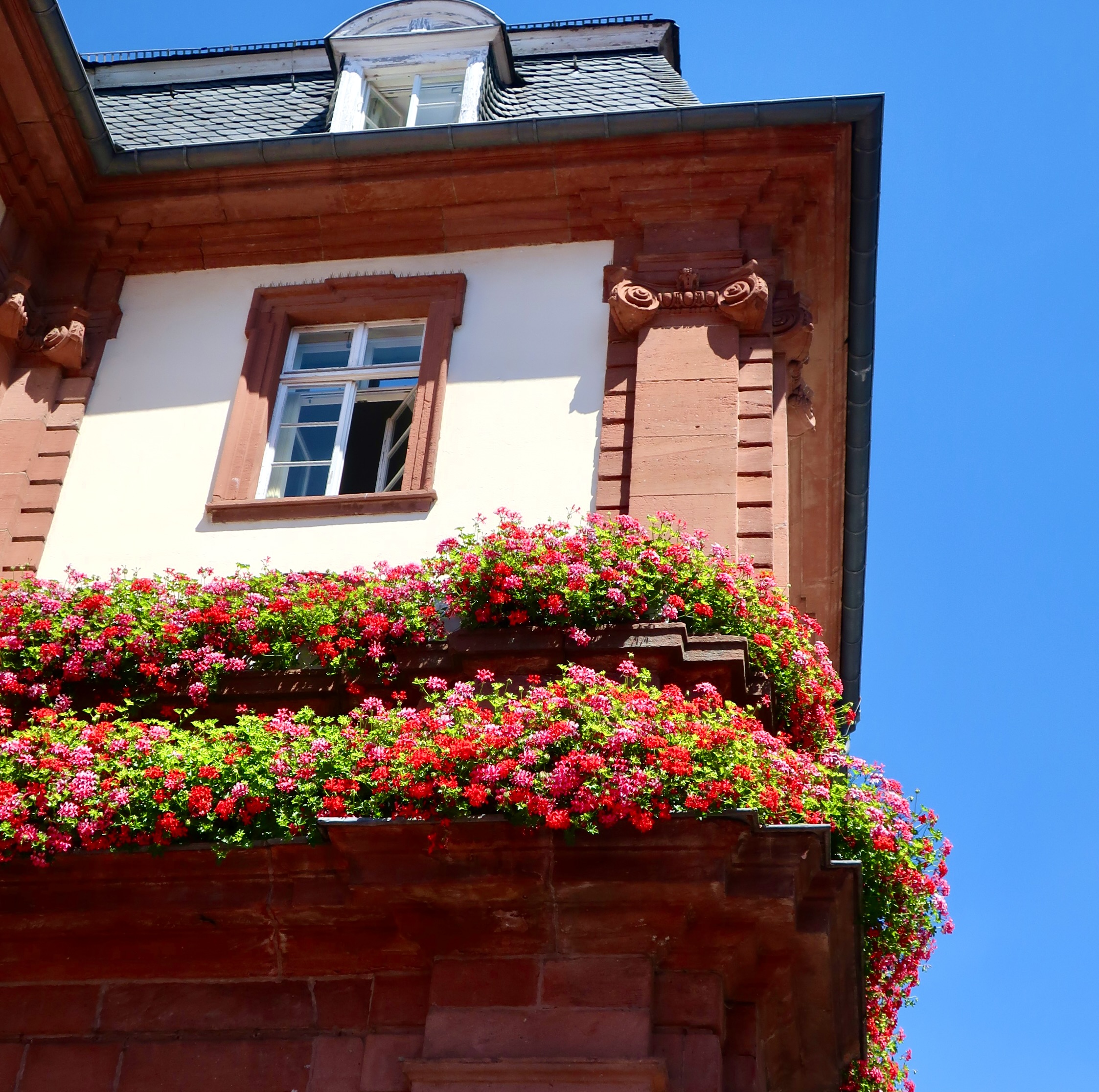
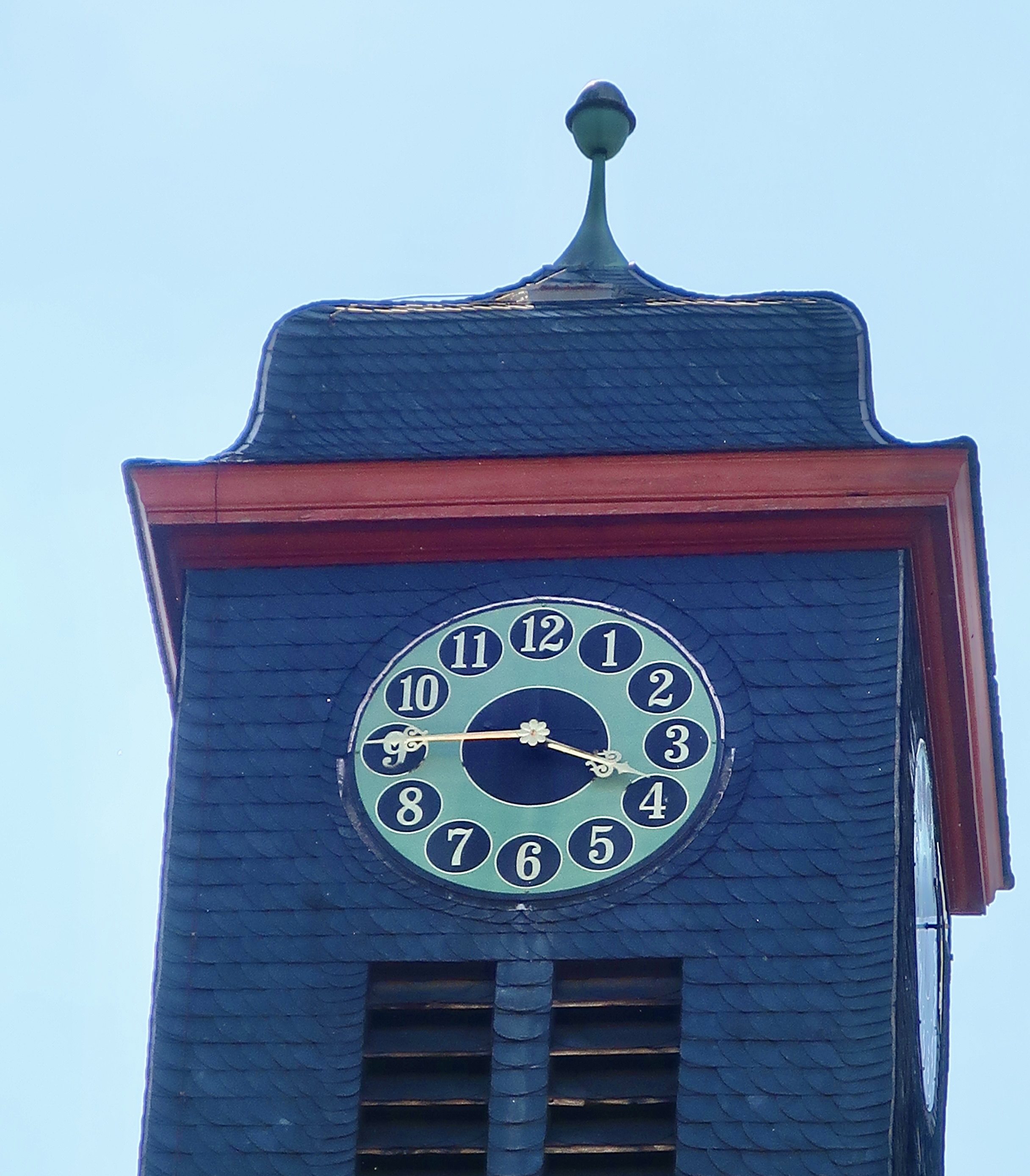
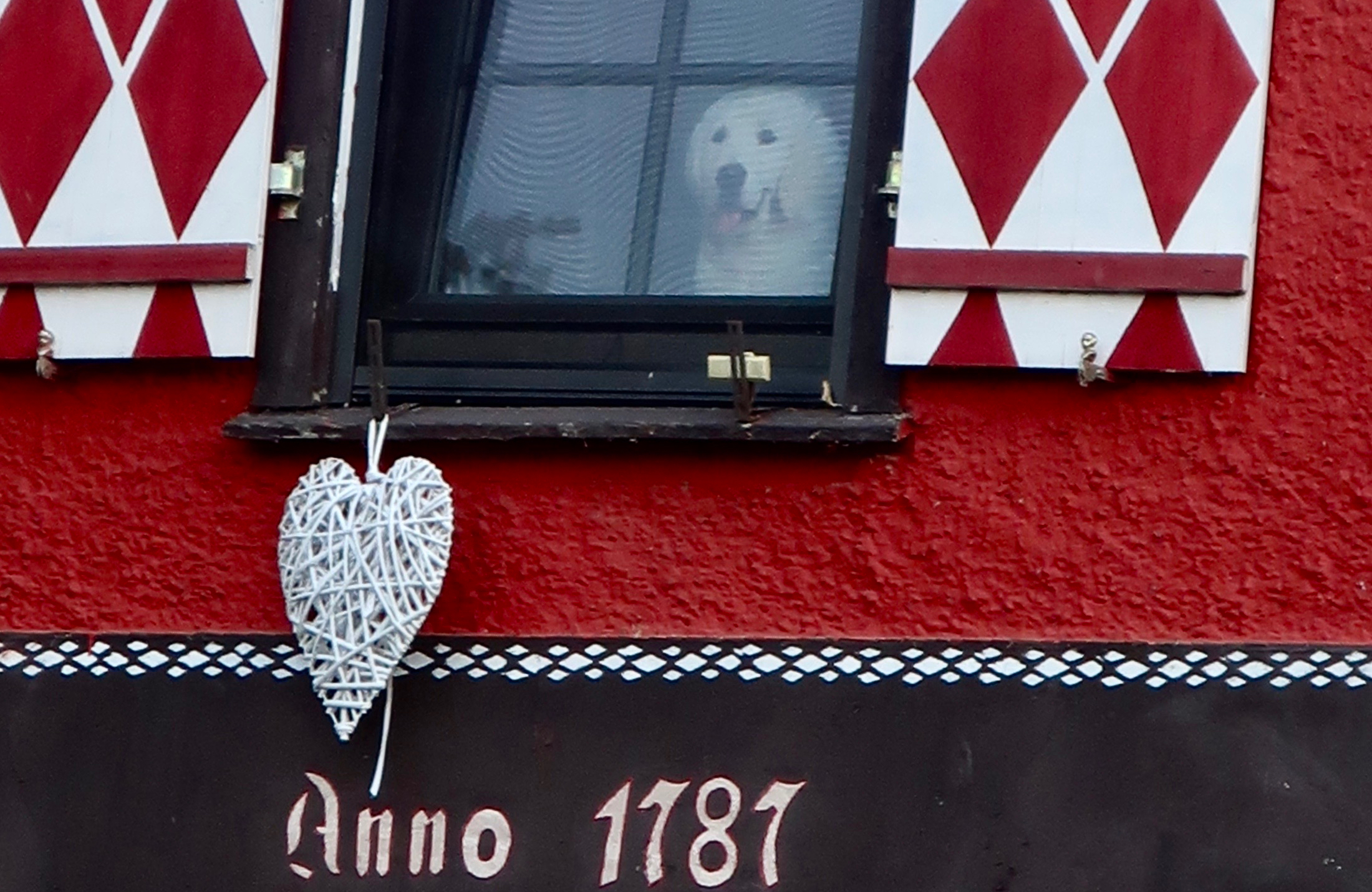
The Heidelberg Castle provides great views overlooking the city. Our son Tony included his wife Cammie in this photo. BTW, Cammie was recently named the CEO of the Safety Harbor, Florida Chamber of Commerce. Another view from the walls of Heidelberg Castle. The prominent Church of the Holy Spirit (Heiliggeistkirche in German) was built at the end of the 14th Century. The bridge in the background, known creatively as Old Bridge, crosses the Neckar River. I liked this closeup photo of the Neckar River and the Old Bridge because it featured Heidelberg’s red tiled roofs.We started our visit to Heidelberg by walking through the historic part of the City. We then made our way up to Heidelberg Castle. This photo features the Gateway to the Old Bridge. The brass monkey we showed on our last Heidelberg post was just off to the left.This good looking fellow was sitting on top of the railing of the Old Bridge for everyone to admire. We dutifully paid our respects.Our guide pointed out that the mansions that were in the background of the doggy photo were where Heidelberg’s wealthy had lived and apparently still do, a fact that we had surmised on our own. Several were undergoing renovations.Bright red umbrellas provided an interesting contrast to Heidelberg’s historic Town Hall located on Market Square. The Coat of Arms on the Town Hall caught my attention. It featured the usual lions and other symbols of power and heraldry. I was more intrigued by the cow, however. Did it symbolize milk?This interesting building located on Market Square is the historic Ritter Hotel, and I do mean historic. It was built in 1592 as a home and has survived ever since, including several wars. It even did a stint as Heidelberg’s town hall.As in so much of Europe, many buildings are adorned with flower boxes. I think that this was a corner of the Town Hall.No watch (or cell phone), don’t worry. Several clock towers are prepared to tell you the time in Heidelberg. This one is connected to the University of Heidelberg. As I mentioned earlier, the University, founded in 1386, is one of the most prestigious in Europe, and the world. 33 Nobel Prize winners are associated with it. “Hey Tash,” I called and our daughter turned and flashed a smile as I took her photo. She is framed by her son, Ethan.The Hauptstrasse is Old Town Heidelberg’s main shopping street. Stretching for over a mile, it has been set aside for pedestrians and bicyclists. In addition to a wide variety of shops, the colorful buildings provide a very scenic walk.Heidelberg Castle perches on the hill overlooking the city. We will be visiting there on our next Rhine River post— after we take you back to Yellowstone and Mammoth Hot Springs. But first, jumping ahead a bit and in recognition of tomorrow, we were walking thorough the town of Boppard, Germany along the Rhine when Peggy and I came upon this scene:It was perfect, right down to the heart. Happy Valentines Day!
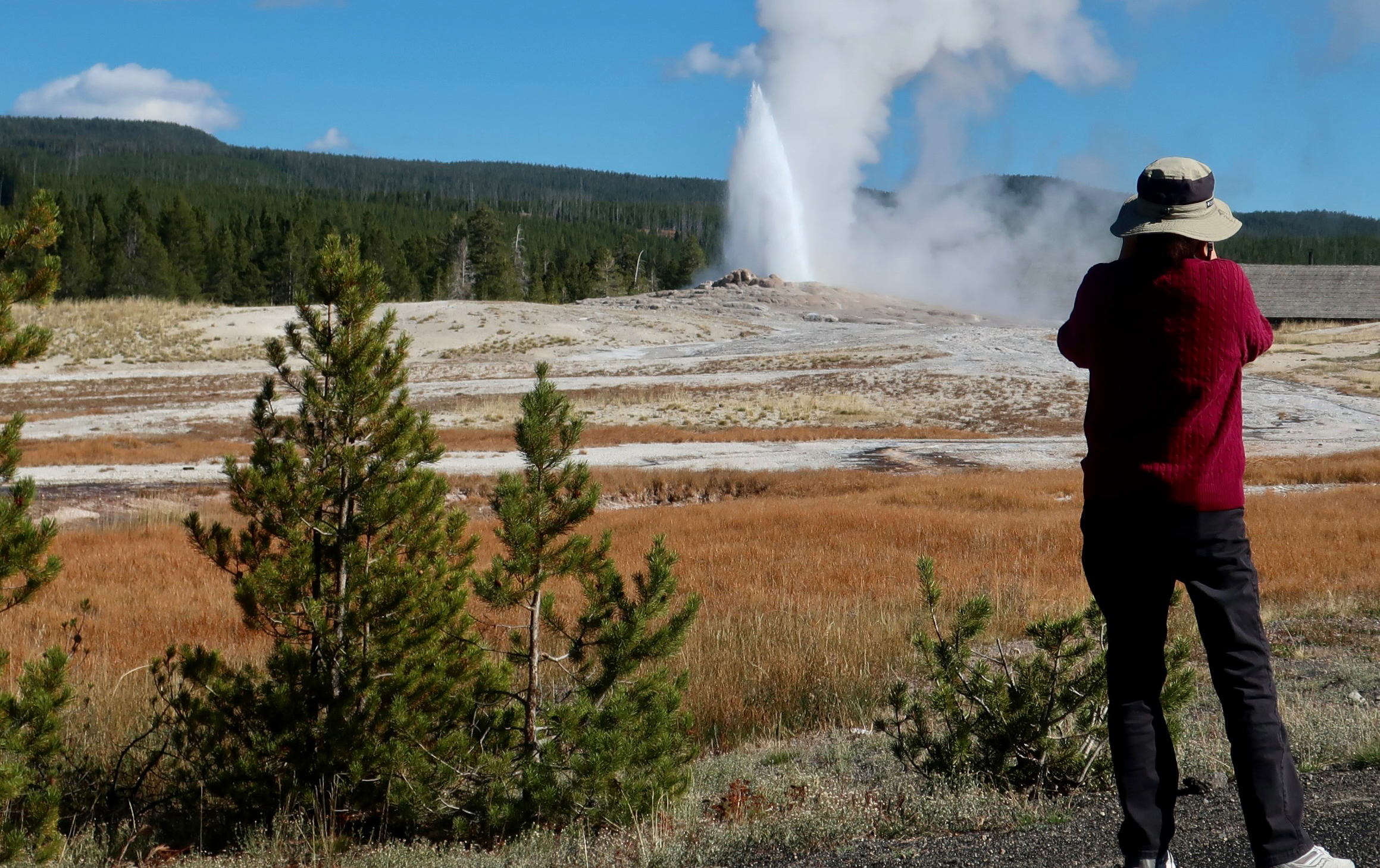
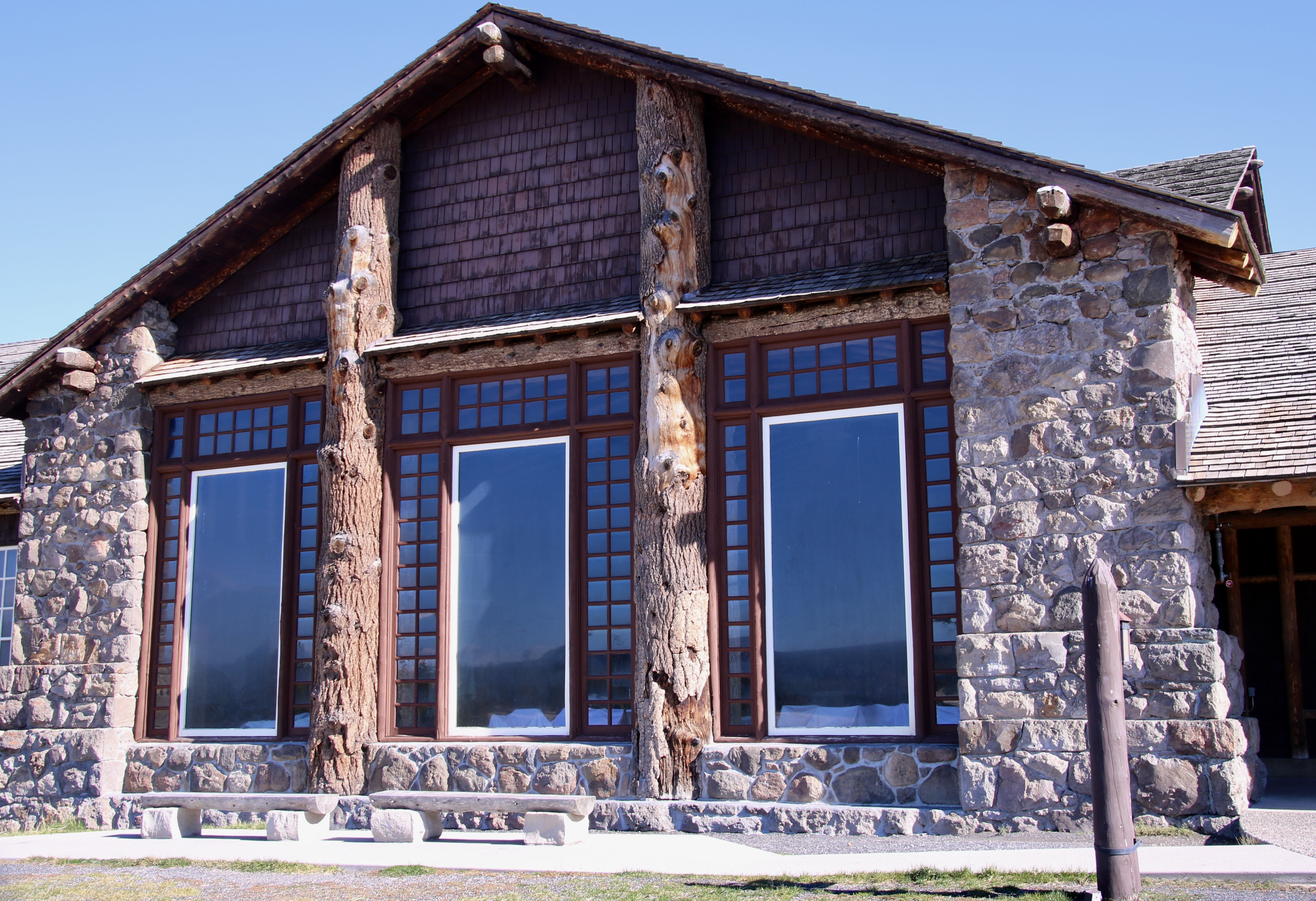
It’s only right that I start this post featuring Peggy photographing Old Faithful. She worked at a restaurant in Yellowstone in the summer of 1969 as a college student. Its large picture windows opened out on Old Faithful, meaning that she got to see it erupt several times a day.The family dining room that Peggy worked at has now become a cafeteria, but it’s large picture windows still give diners a great view of Old Faithful erupting.
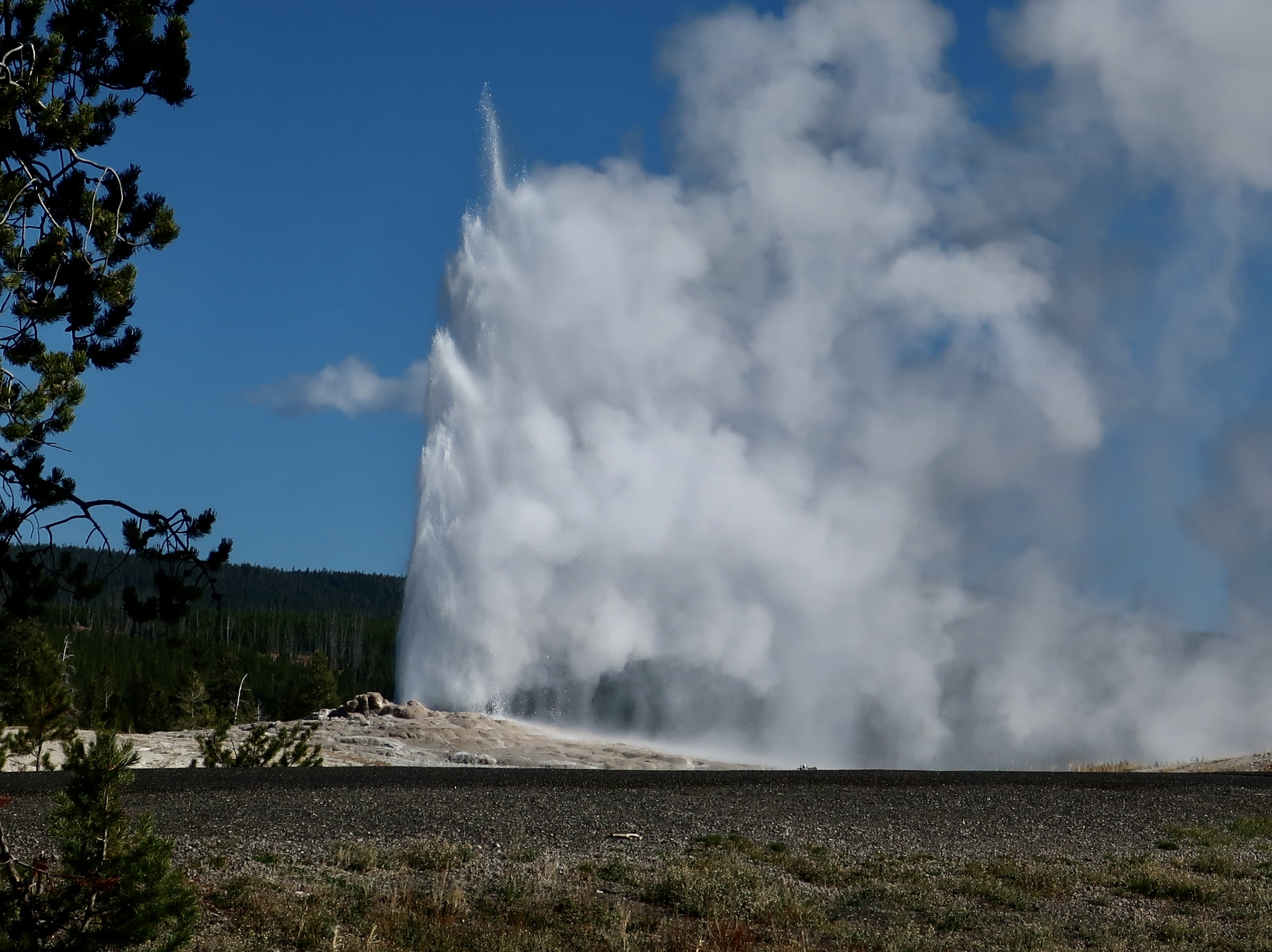
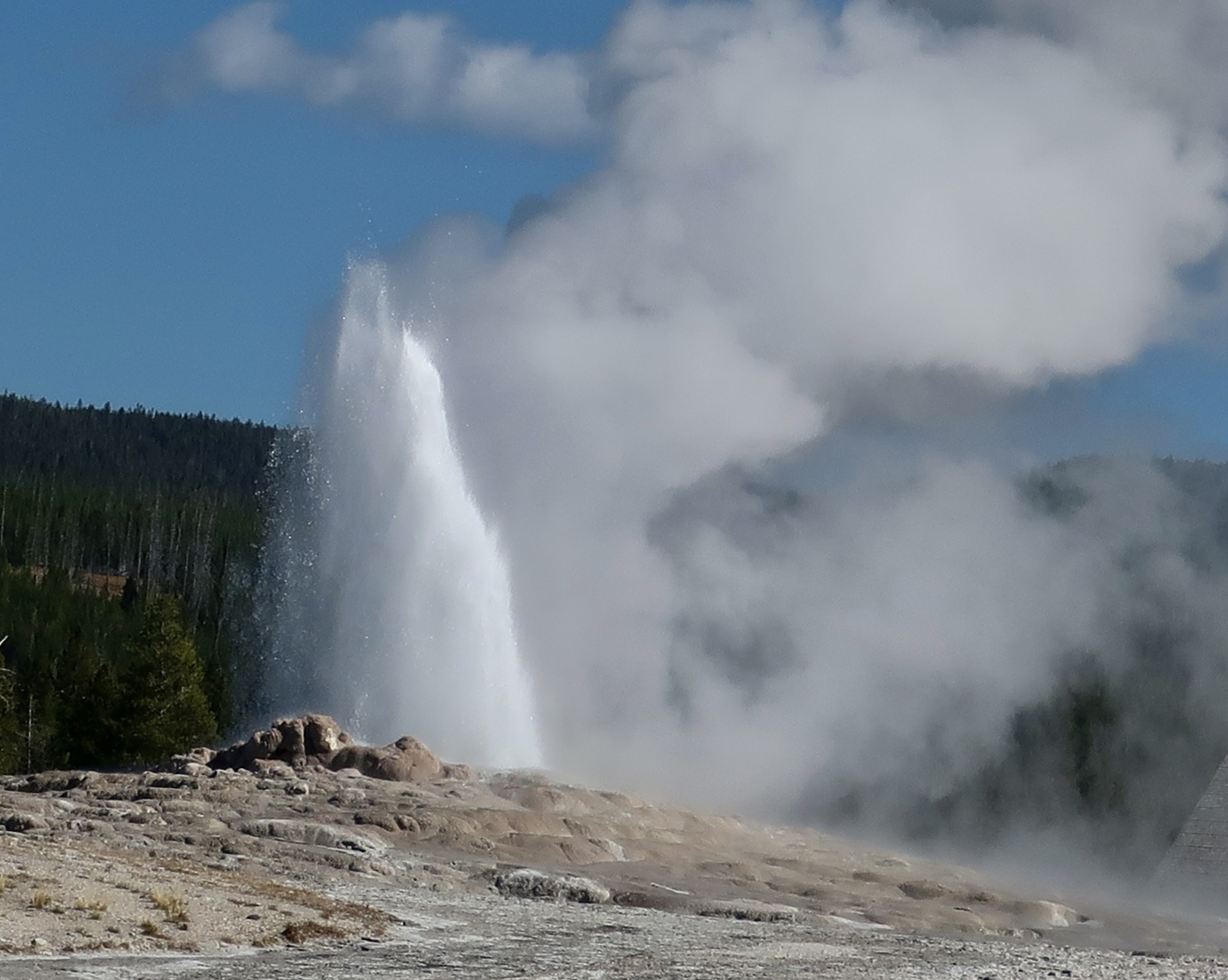
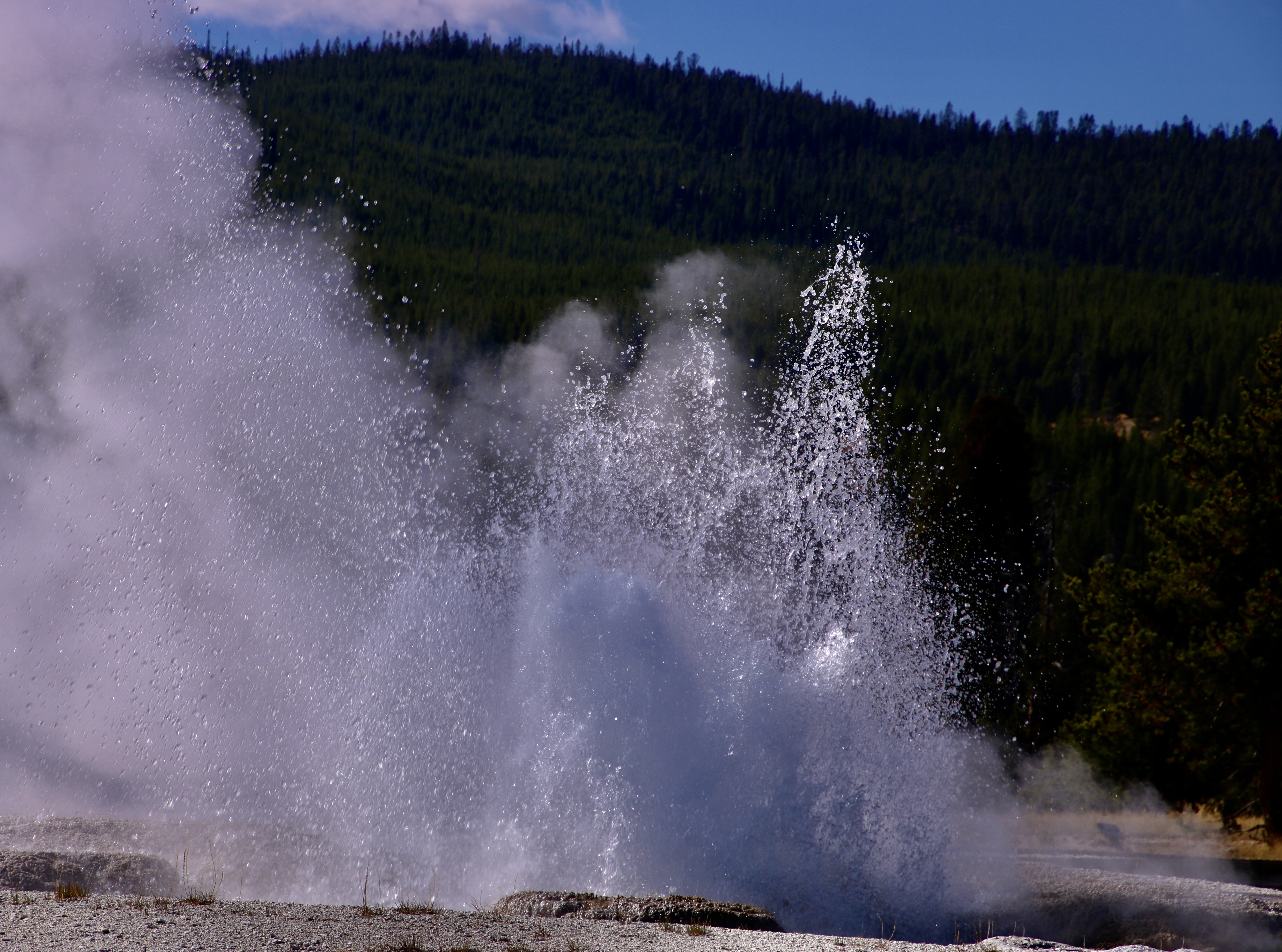
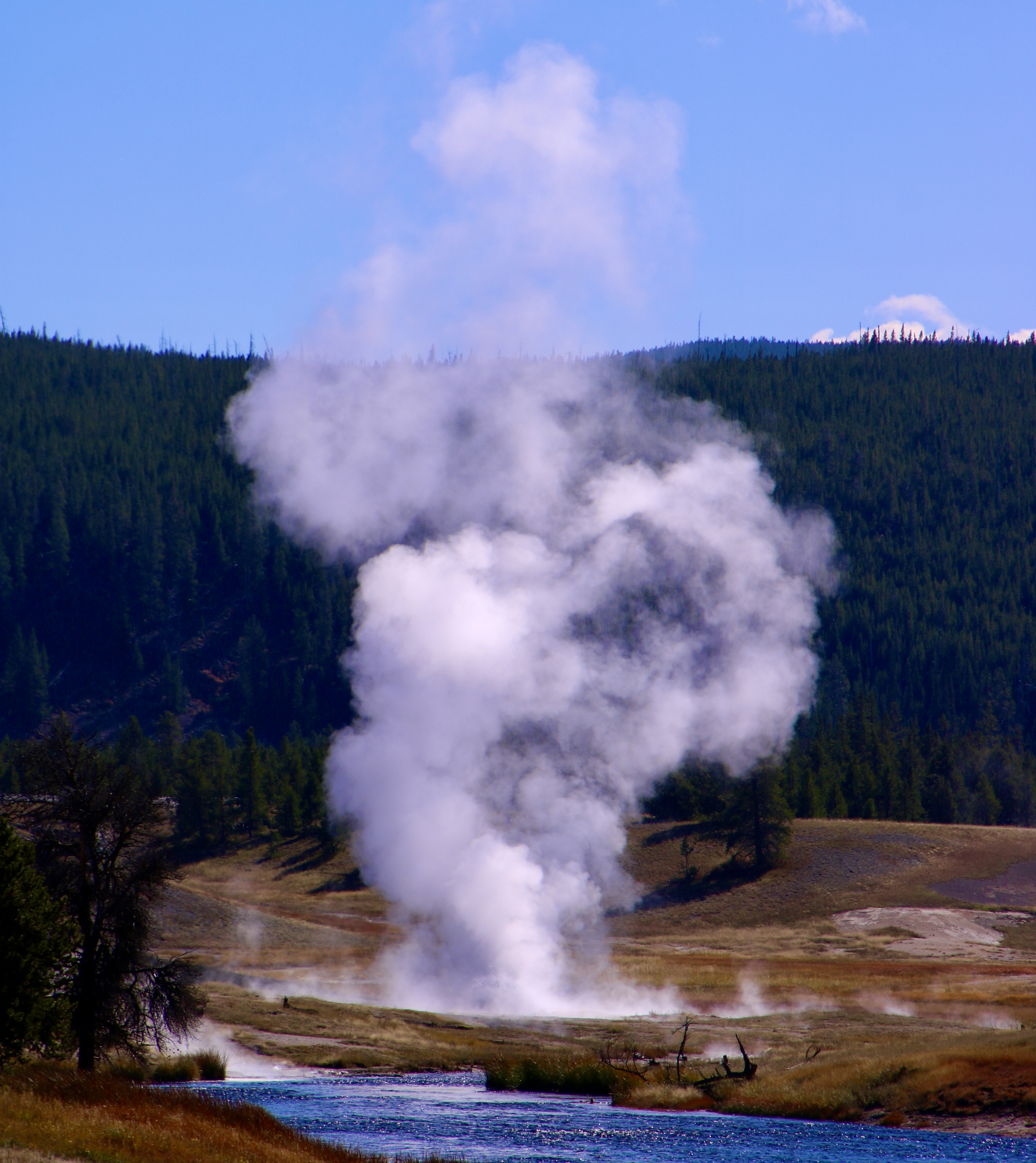
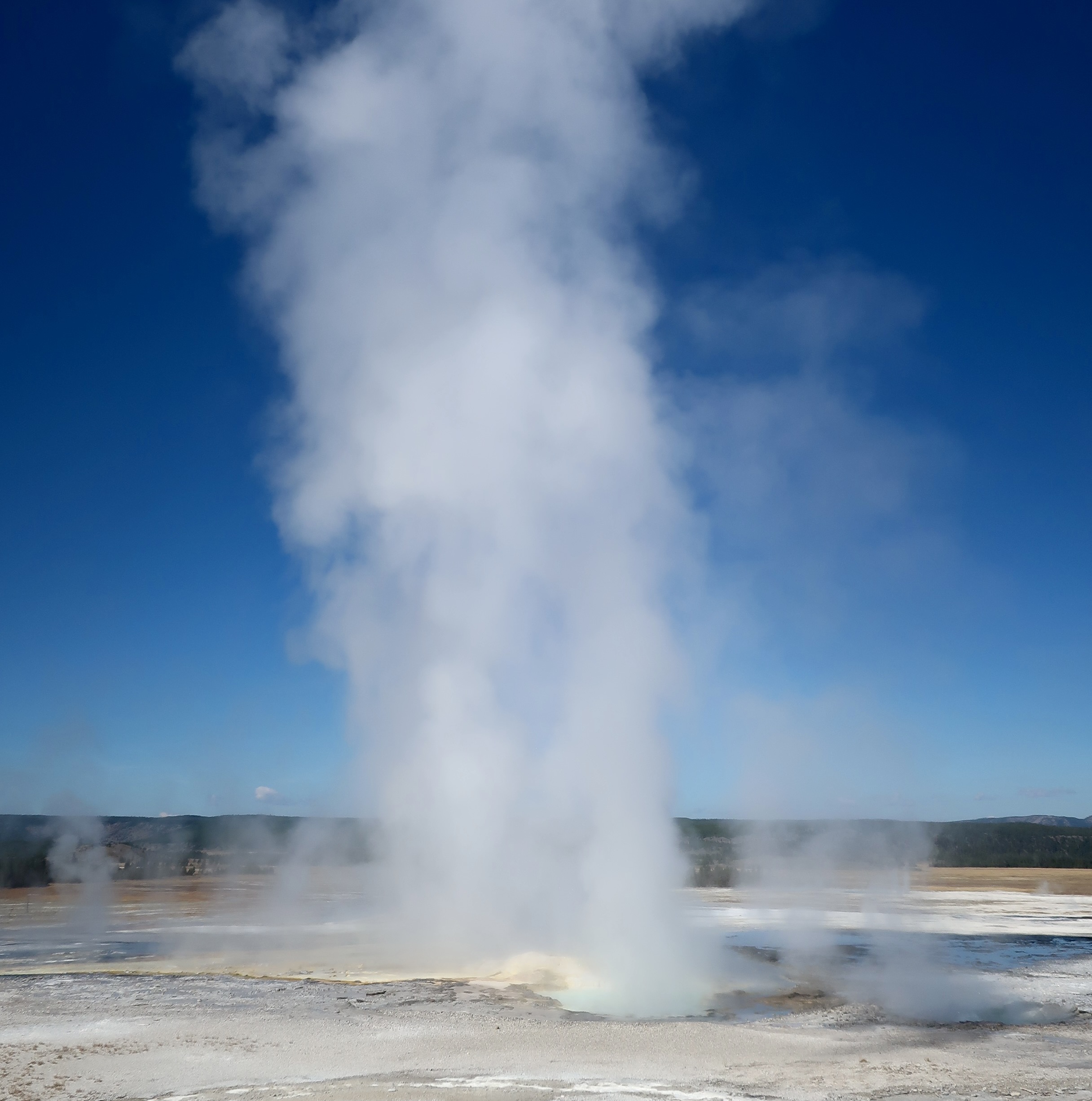
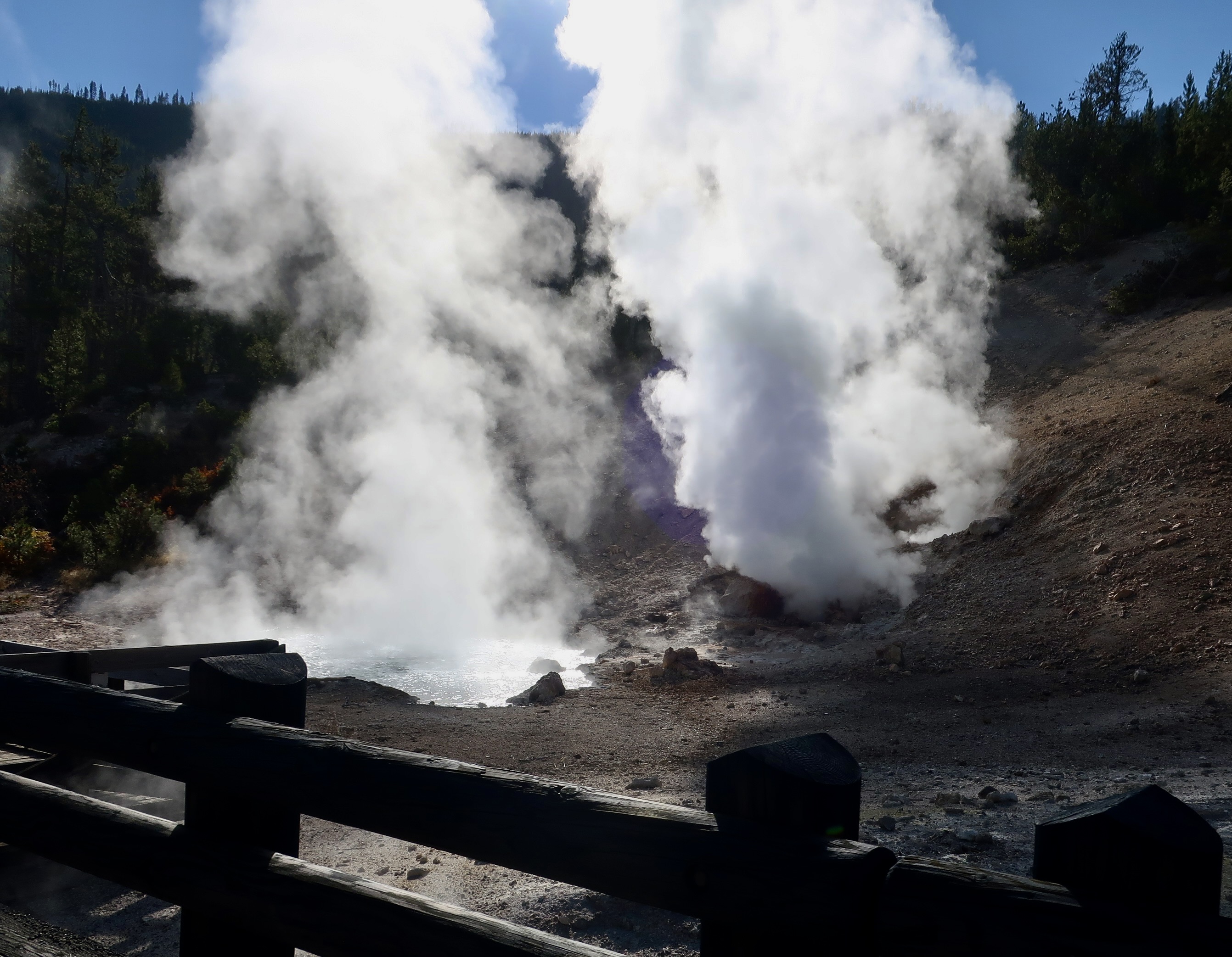
Erupting geysers are one of Yellowstones best known features. In fact, half of the world’s active geysers are located in the National Park. Peggy and I photographed lots of them when we visited last fall on our four month trip around the US.
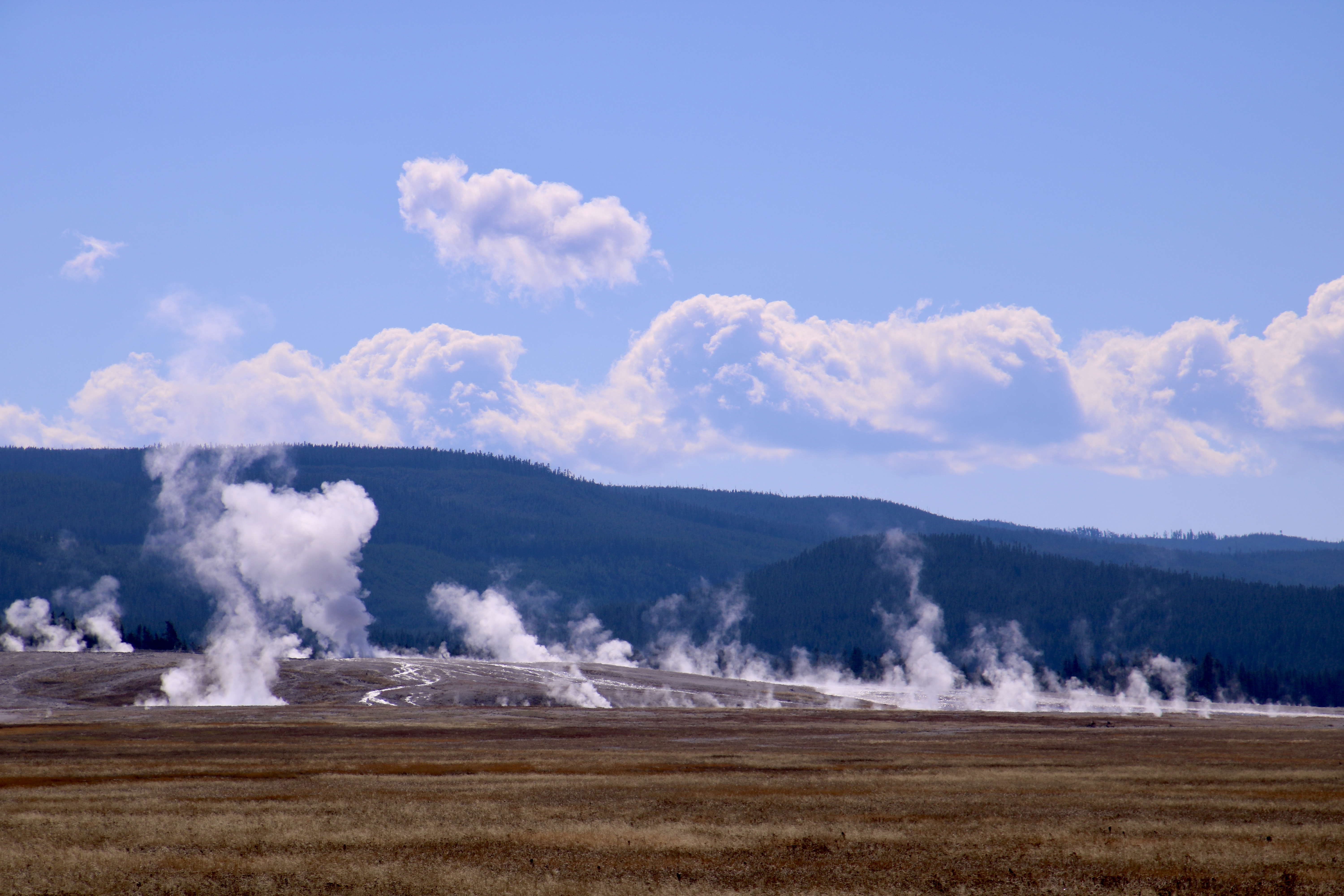
Have a few geysers and fumaroles! Including the small ones, I counted over 30 in this photo.
The reason behind Yellowstones record breaking number of geysers is that much of the park is located in a giant caldera, a collapsed volcano. Semi-molten rock exists in some areas as close as 2-5 miles below the surface. This extremely hot rock heats ground water flowing near it and creates Yellowstone’s hydro-thermal features including geysers, hot springs, fumaroles and mud pots. We featured hot springs two weeks ago. Today is the geysers’ turn. They erupt when the super hot boiling water creates pressure in channels leading to the surface that erupts as steam out of a vent. As the pressure is released the geyser subsides until the process is repeated. They come in all sizes. The most famous is Old Faithful, given its name due to the regularity of its eruptions.
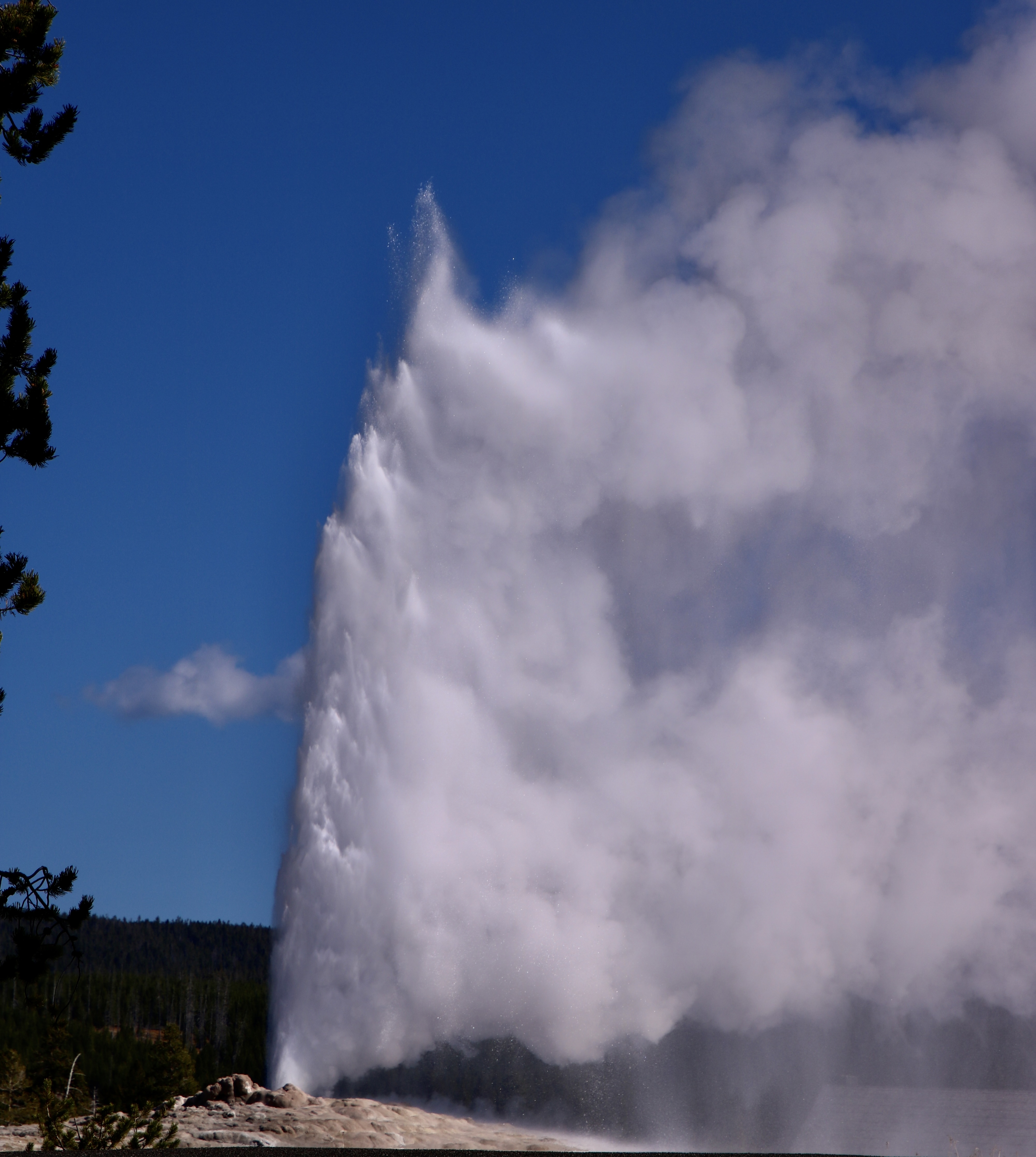
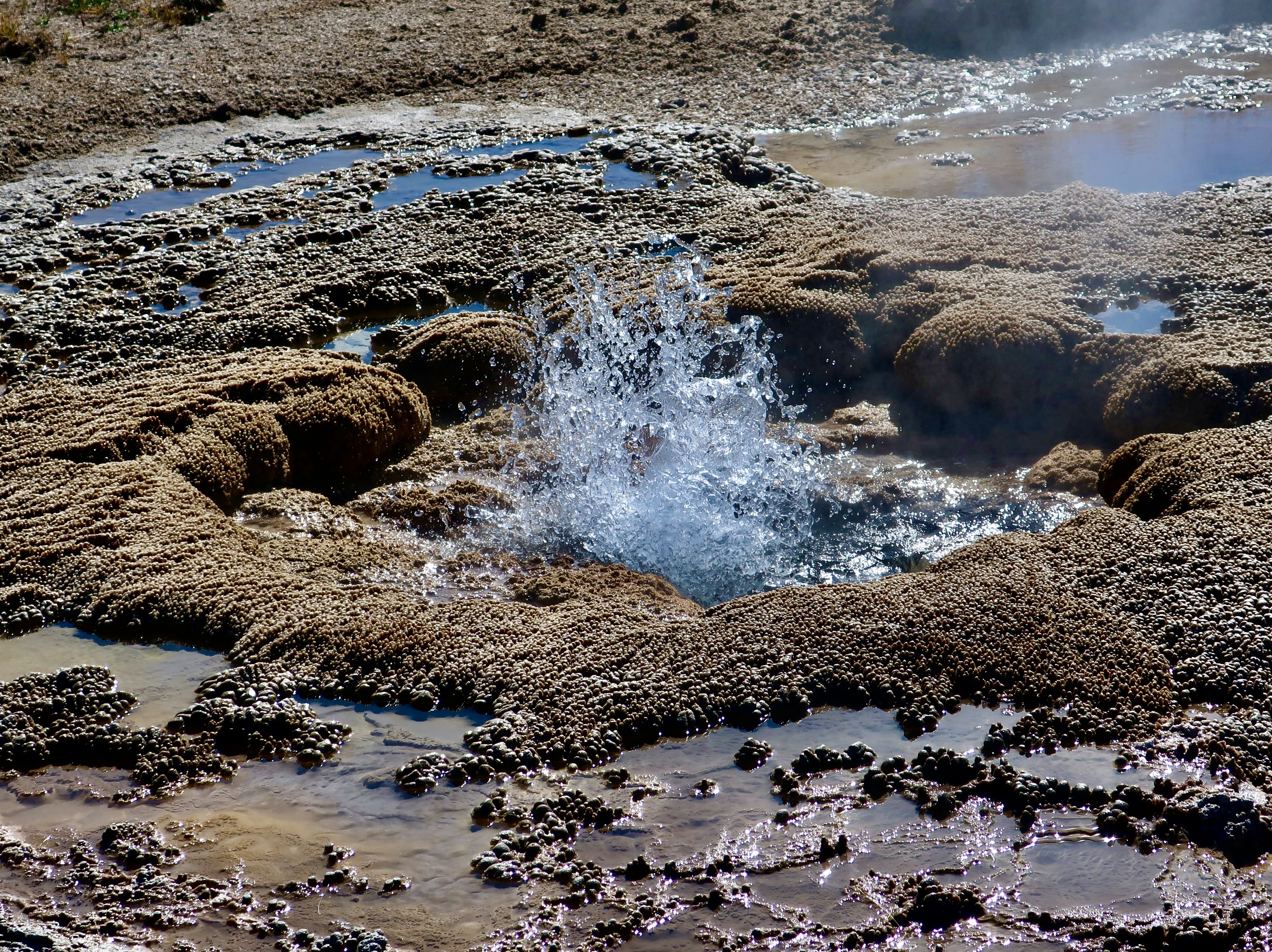
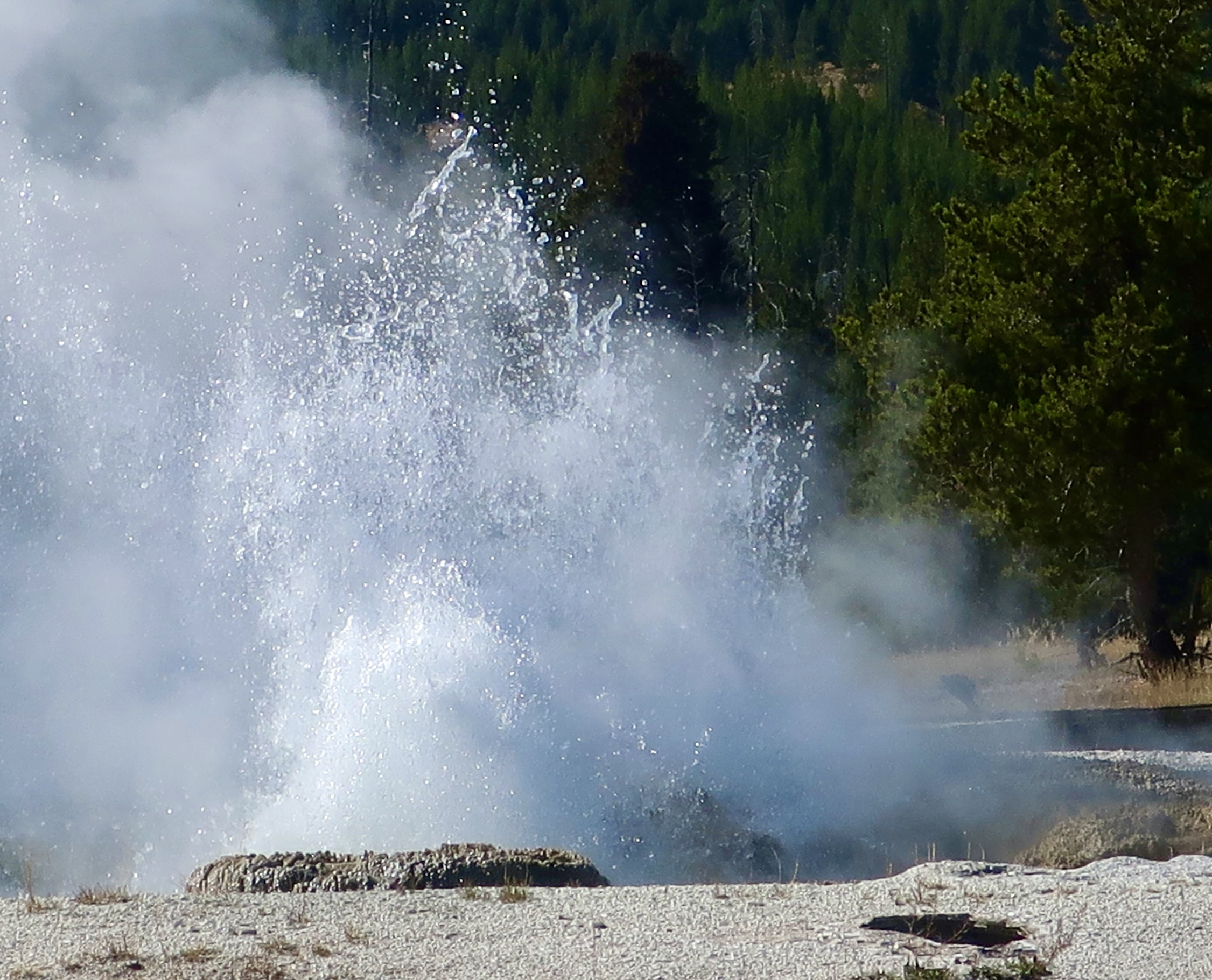
Peggy and I arrived just as Old Faithful was beginning to erupt. She jumped out of our truck and began snapping photos.I was a bit farther away. Can you imagine how many photos of Old Faithful have been taken? They have to be in the hundreds of millions if not billions. In other words, we aren’t the first. Grin.As the pressure inside the vent subsided, Old Faithful lost its steam, so to speak.As I mentioned in the beginning, the geysers come in all sizes. From this little fellow…To larger…We had a sense of ‘dancing water.’Each geyser had its own personality.These geysers combined to be tall and skinny.I conclude today with this pair of more hefty twin geysers. Next up, Peggy and I will return to Heidelberg, variety being the spice of life. 🙂


















































 Wandering through Time and Place