A Journey Back in Time… Backpacking into an All-Time Favorite at 75 and 82: The Five Lakes Basin

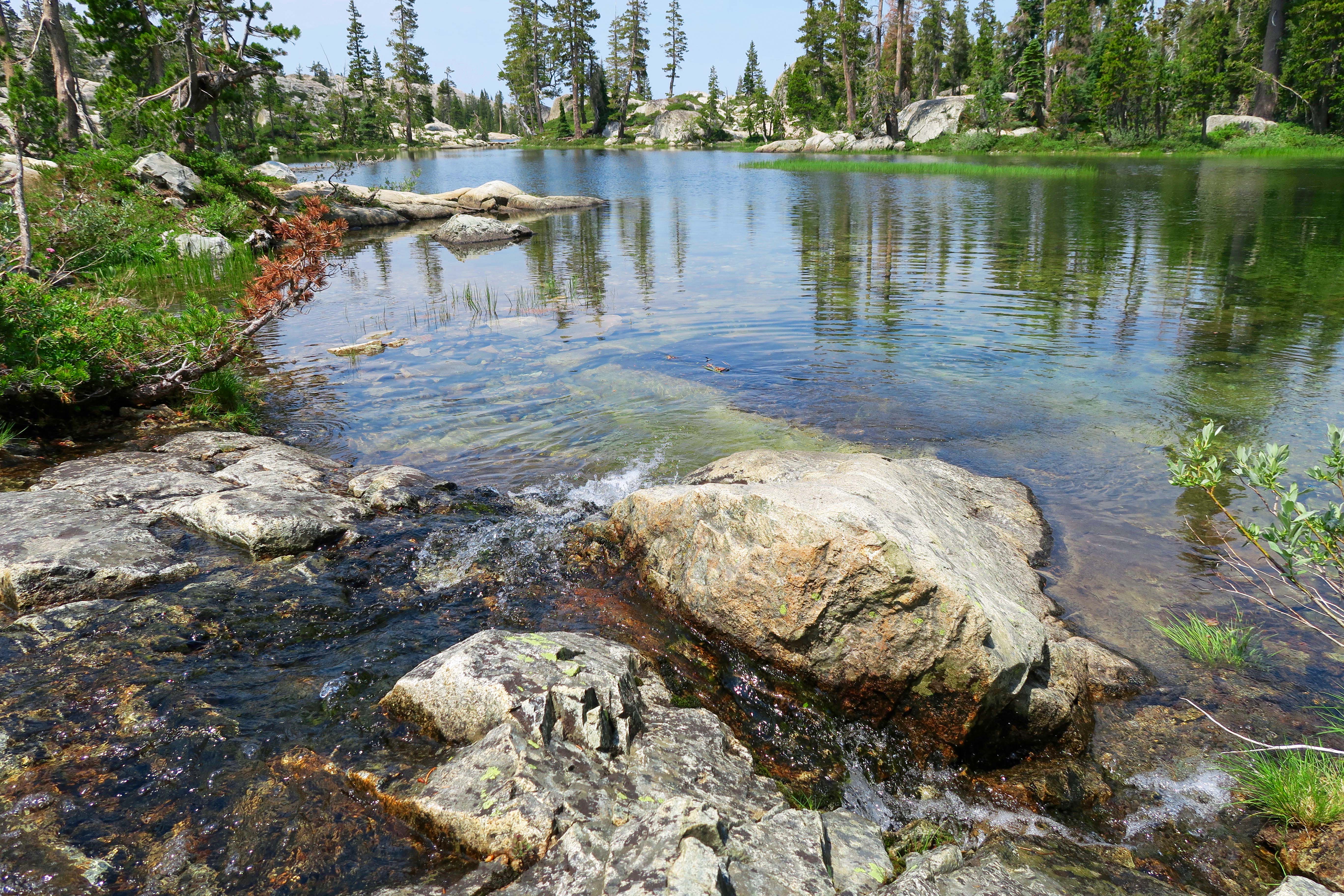
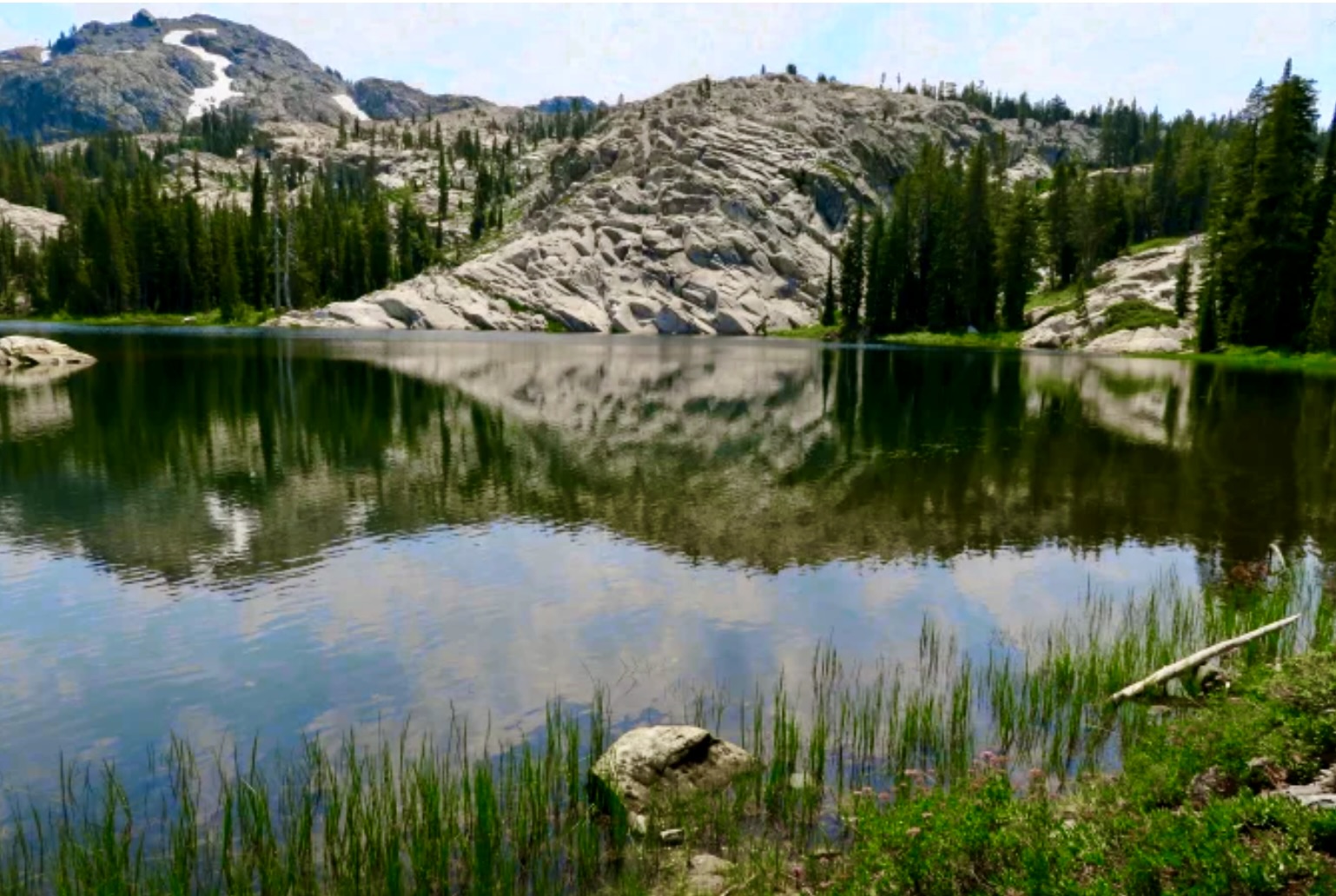
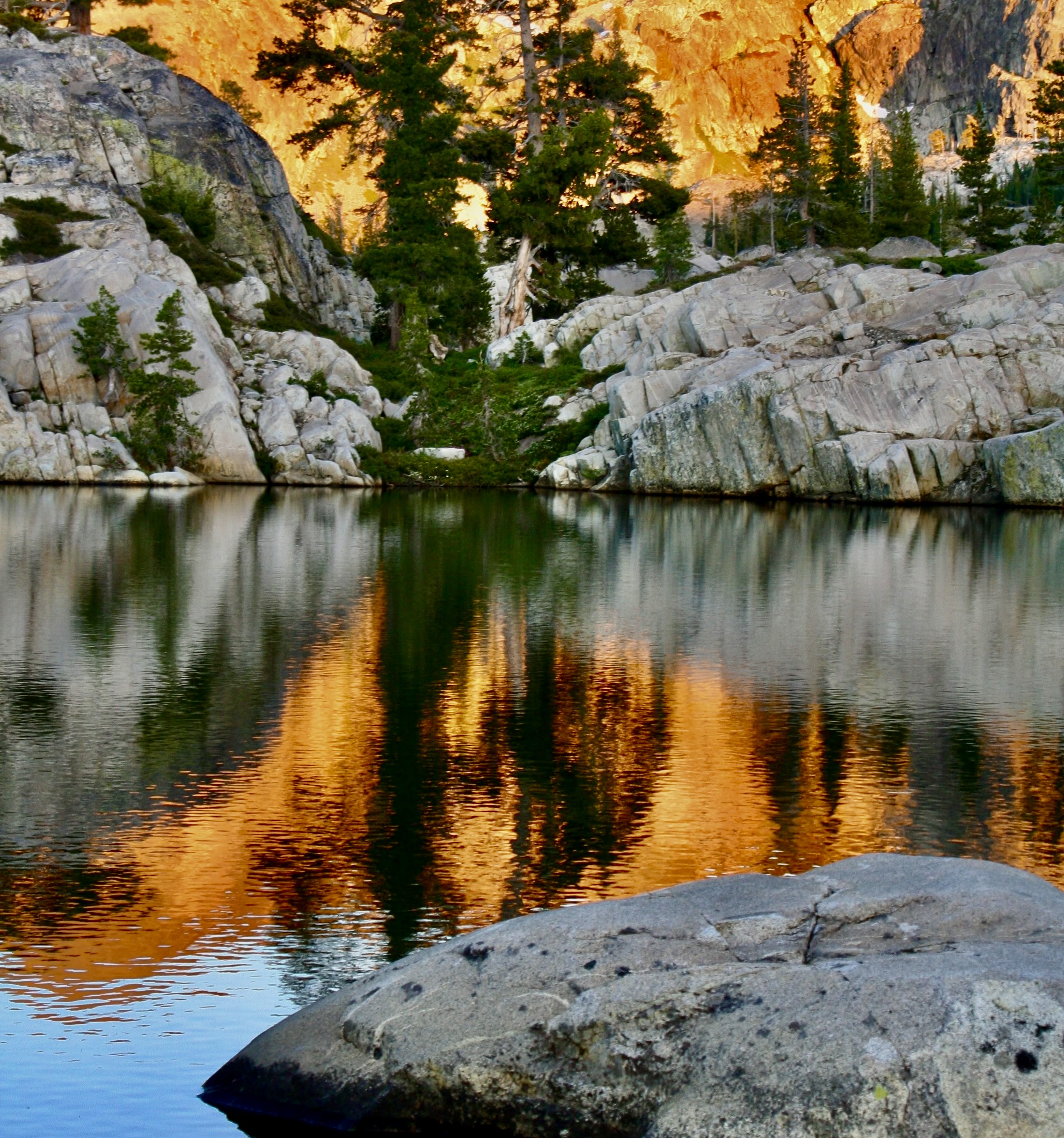
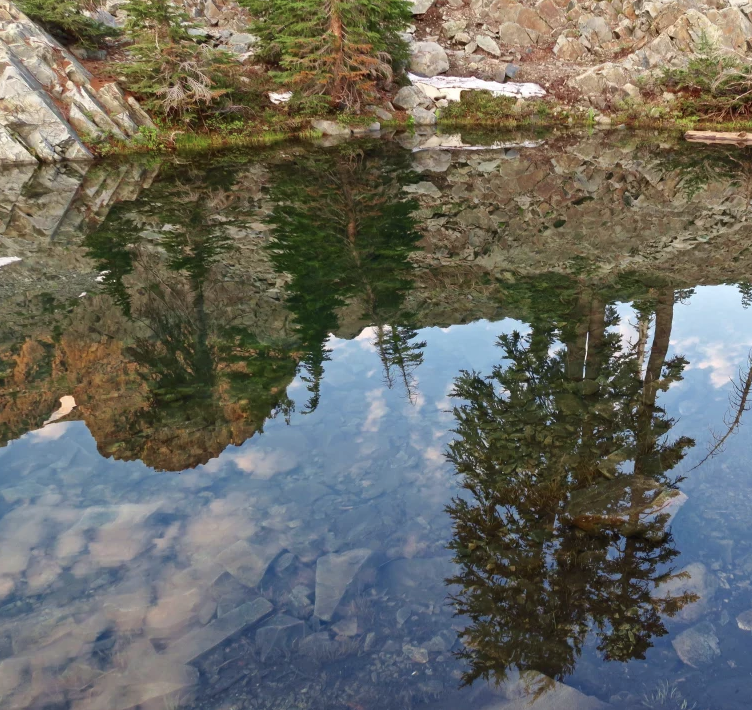
One of many lakes found in the Tahoe National Forest’s Grouse Ridge Non-Motorized Area where Peggy and I went backpacking last week. I’d asked Peggy what she wanted to do for her 75th Birthday. Her first answer was to visit our son Tony and his family in Florida, which we did and had a great time. The second thing was go backpacking! “I’ll pass on the 750 miles you did for your 75th, however, Curt,” she informed me. “I think 7.5 sounds more reasonable.” We laughed. At 82, I also gave a sigh of relief. Possibly you heard me.
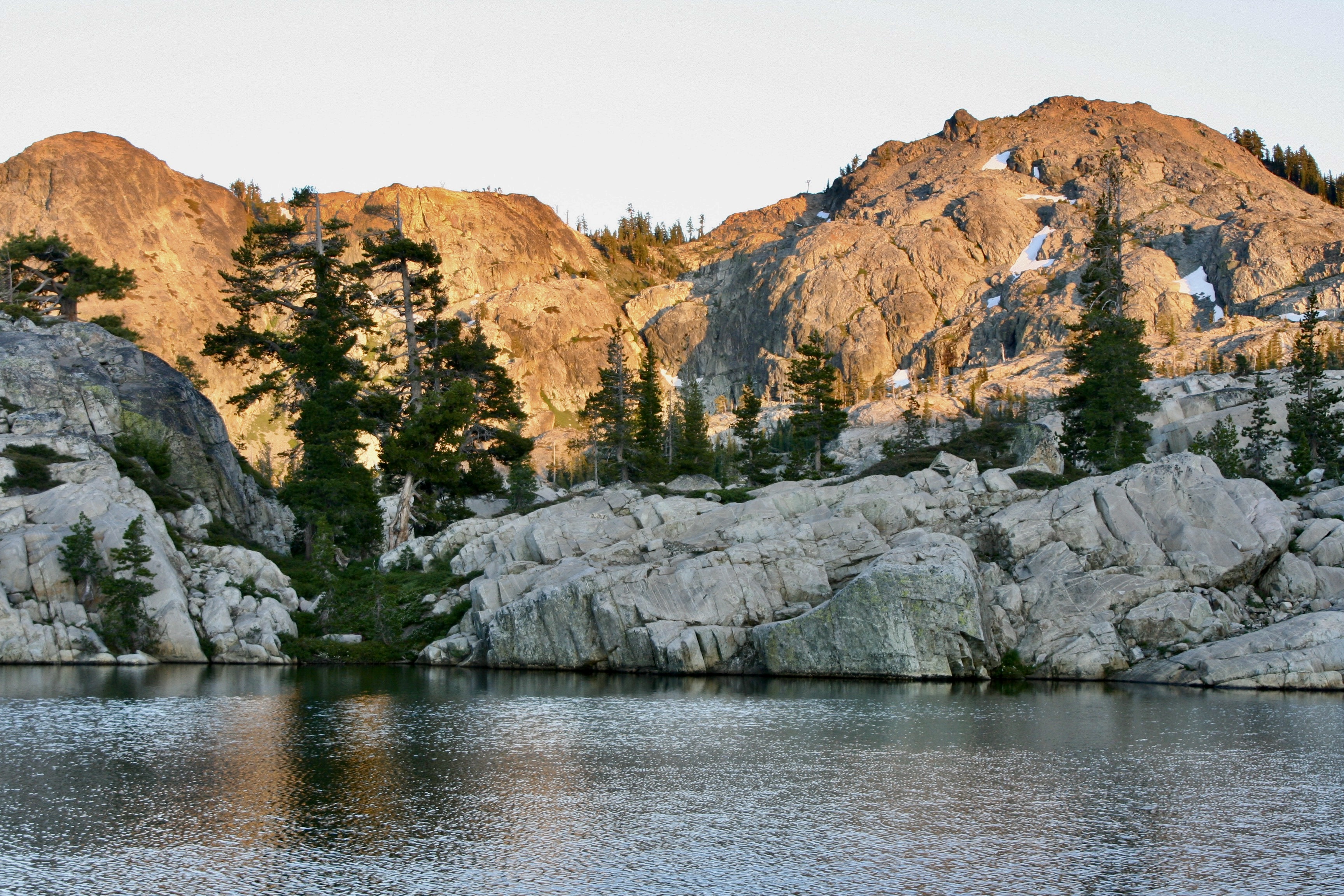
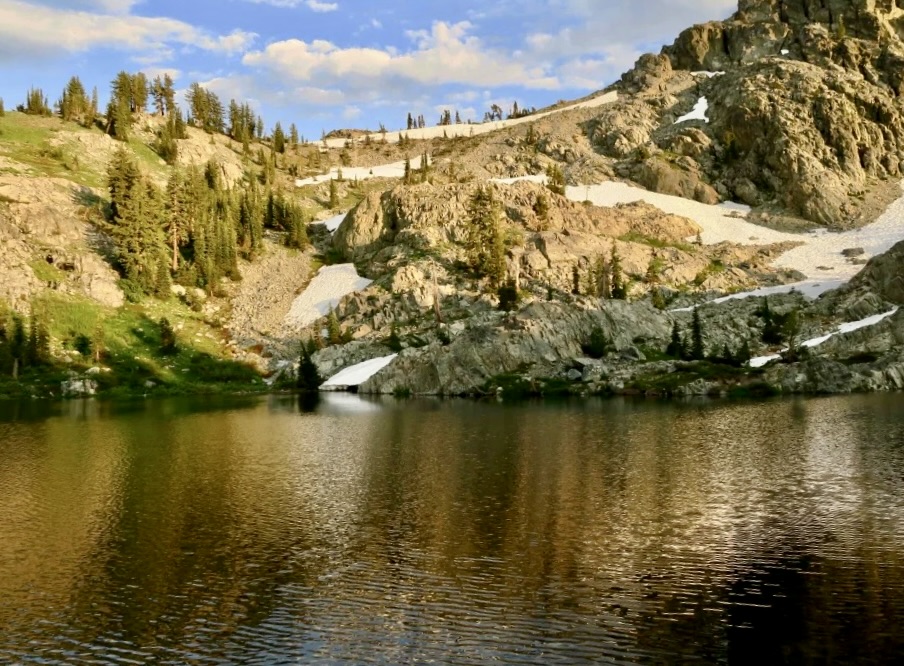
Since we were visiting friends and family in Sacramento on a break from our five-month exploration of the Southwest, the Five Lakes Basin was a natural for our trip. This is a view from one of the lakes looking up at the Black Buttes. While there are several ways to enter the Grouse Ridge Non-Motorized area, our normal way is to follow I-80 from Sacramento and take the Highway 20 cutoff toward Nevada City for approximately 5 miles.  Turn right on Bowman Lake Road and continue on that road for 5 miles. Turn right on the unimproved, ultra-bouncy, dirt Grouse Ridge Road for 6 miles until you reach the Grouse Ridge Campground. The road has always been a challenge. This time it featured holes that would eat a VW bug! (Slight exaggeration but not much.)
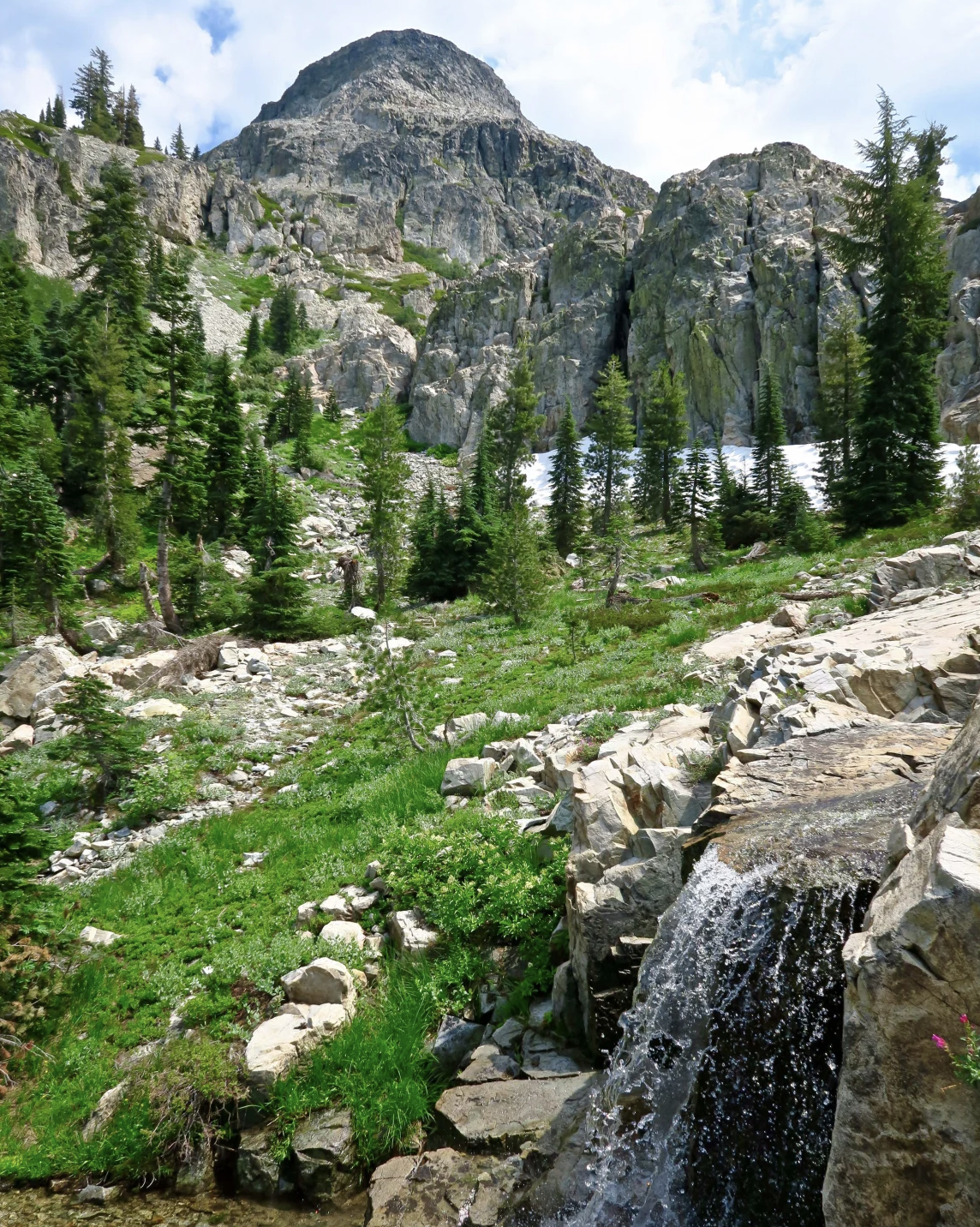
I’ve been backpacking in the Grouse Ridge/Five Lakes Basin since 1969, 56 years ago. It’s an all time favorite of mine. I actually remember the exact day I started to backpack: July 20, 1969. The day Neil Armstrong took his first step on the moon, I took my first step backpacking near Grouse Ridge. I made it into the Five Lake Basin in 1970 and camped just to the right of this little waterfall.
Twenty years later in 1990, a few months after I had met Peggy, I bought her a backpack for her 40th birthday and took her into my favorite lake. Her only requirement was that I carry in a water bottle full of Harvey’s Bristol Cream Sherry. I don’t know whether it was the beauty of the area or the sherry, but Peggy came to love backpacking and the Basin— almost as much as I do.
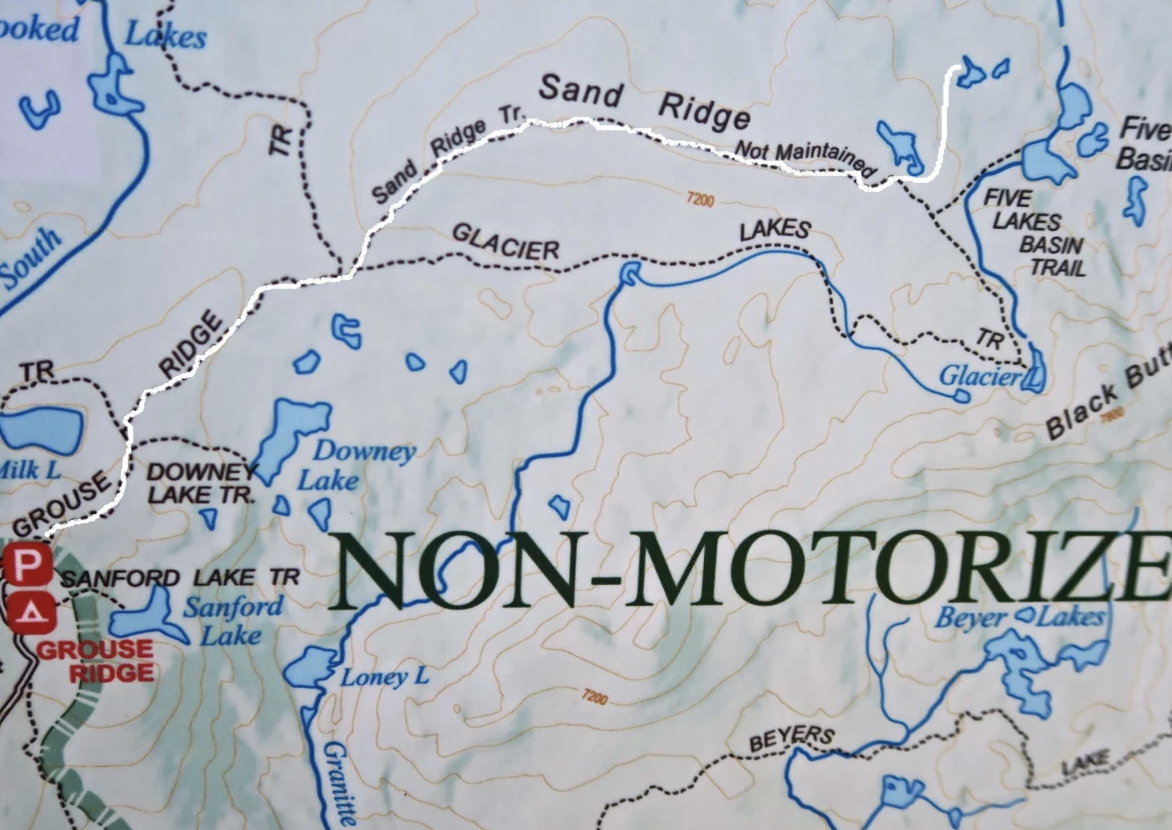
This map shows the trail system from Grouse Ridge Campground into Five Lakes Basin and Glacier Lake. Peggy and I followed the Glacier Lakes Trail for her 75th birthday, the Sand Ridge trail for her 40th. In the early 70s, off-road enthusiasts could follow the route I outlined here up to the first lake at the end of Sand Ridge. I did that once with my friends. The following year I watched an off-road dirt bike rider tear up a beautiful meadow doing brodies, which led me to join forces with the Nevada County Sierra Club in advocating for the non-motorized status, an effort that was successful.
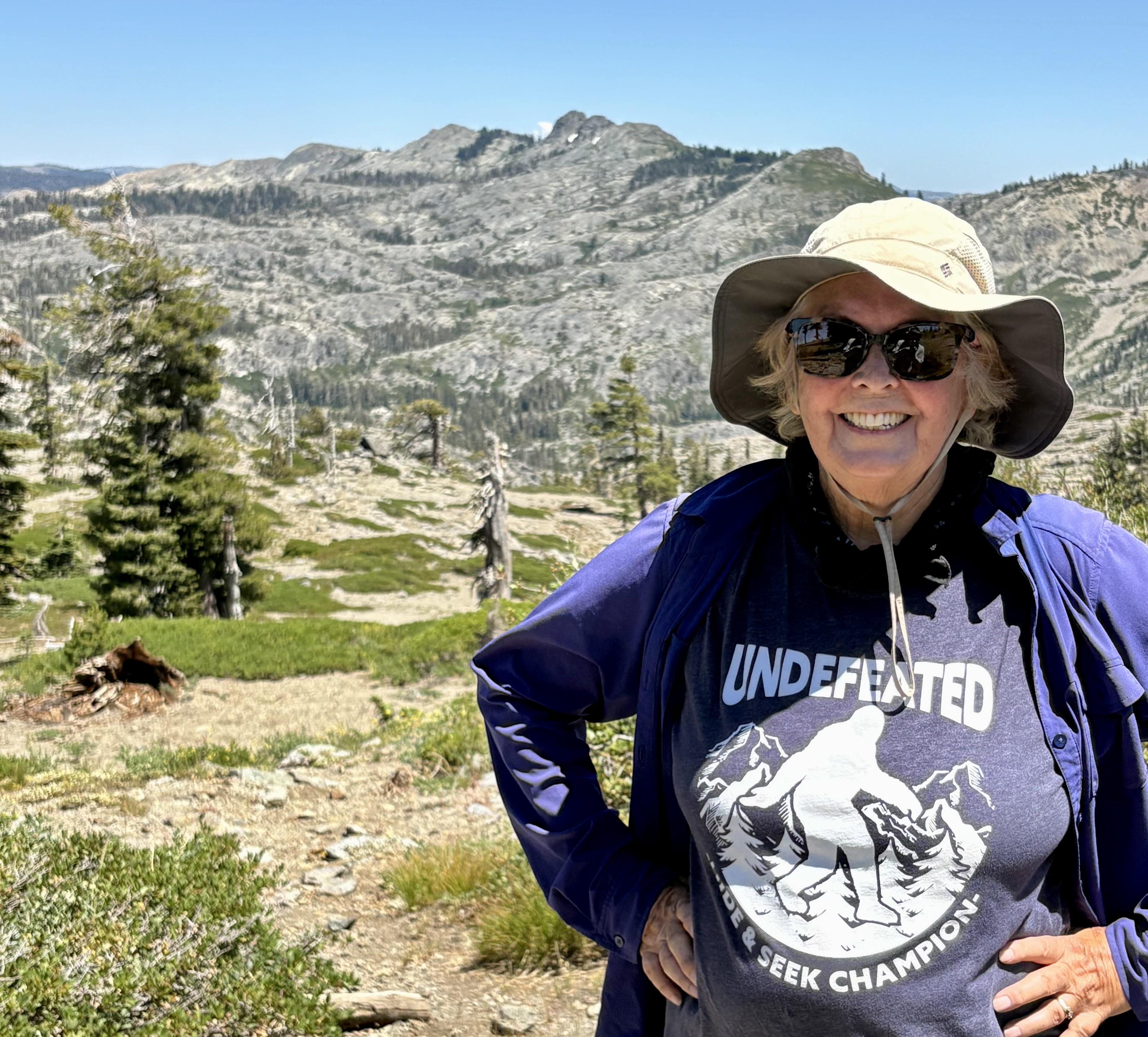
Having just finished her 75th Birthday backpack trip, Peggy stands with a big smile at the Grouse Ridge Campground with the Black Buttes behind her. We camped just beneath the highest peak at Glacier Lake. The Five Lakes Basin lies just beneath Glacier Lake. (Her T-Shirt features Big Foot, the world’s hide and seek champion.) I’ll include more photos of our trip at the end of this blog.

I’ve done a number of posts on the area over the years. People researching the Basin are bound to come across them. In fact, I was amused a couple of days ago when I was trying to remember when glaciers carved the basin with its lakes and googled the question. 20,000 years ago was the AI response. I looked up the source, as I usually do with AI answers. It was Wandering-Through-Time-and-Place. A fairly reliable source, I’d say. Grin.

I noted in an earlier post that the Grouse Ridge Non-Motorized Area is well-loved. Maybe too much so, especially for someone like me who prefers his/her wilderness rugged, wild and relatively people-free. But I make an exception for this region. It’s an easy place for people to get to and is very backpacker-friendly for families and newcomers to the sport. It serves as a great introduction. There is considerable value in this— for the people of course— but also for our world. People who experience the wilderness in a positive way are much more likely to appreciate it, and want to protect it, which is critically important for ourselves, our children, and future generations. As I have emphasized over and over in this series.

Especially in this era when the Trump Administration wants to open up national forests, BLM lands, and national monuments for logging, mining and housing developments. His most recent target is roadless areas. Information this month suggests that the administration is moving to repeal the 2001 Roadless Area Conservation Rule, opening up approximately 58 million acres of national forest lands to road building and logging. I doubt it will include the Grouse Ridge area. But it could.

Here are some photos taken from my posts that emphasize what might be lost.

The serenity of the Five Lakes Basin’s ‘biggest little lake’ could be shattered by the sound of chainsaws. When I see this photo, I always think of Gary Snyder, the Nobel Prize winner, “poet laureate of Deep Ecology,” and who— along with his friends Jack Kerouac, Allen Ginsberg and Alan Watts— was prominent in introducing Zen Buddhism to America. Living on San Juan Ridge near Nevada City, he fell in love with the Sierras and the Grouse Ridge area in much the same way I did. He even wrote a poem about the Five Lakes Basin:

Old Pond

Blue mountain, white snow gleam
Through pine bulk and slender needle-sprays;
little hemlock half in shade,
ragged rocky skyline,

single clear flat nuthatch call:
down from the tree trunks

up through time.

At Five Lakes Basin’s
Biggest little lake
after all day scrambling on the peaks,
a naked bug with a white body and brown hair

dives in the water,

Splash!

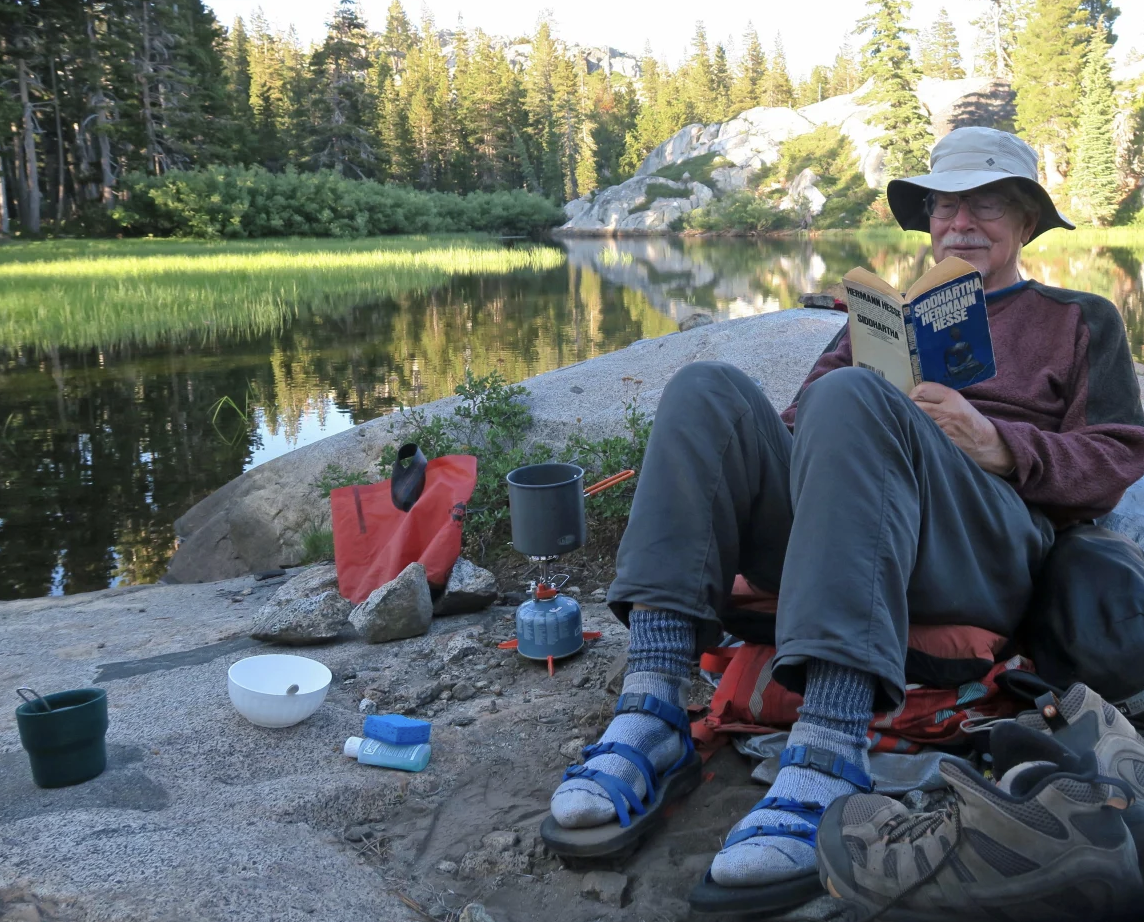
Like Snyder, my spiritual views of the world are more Eastern than Western, but it really doesn’t matter what your religious perspective is when it comes to the value gained by connecting with nature. I agree with John Muir’s statement: “The clearest way into the Universe is through a forest wilderness.” Here, in this photo by Peggy, I am reading Hermann Hess’s classic about a young man’s spiritual journey at the time of Buddha, Siddhartha.
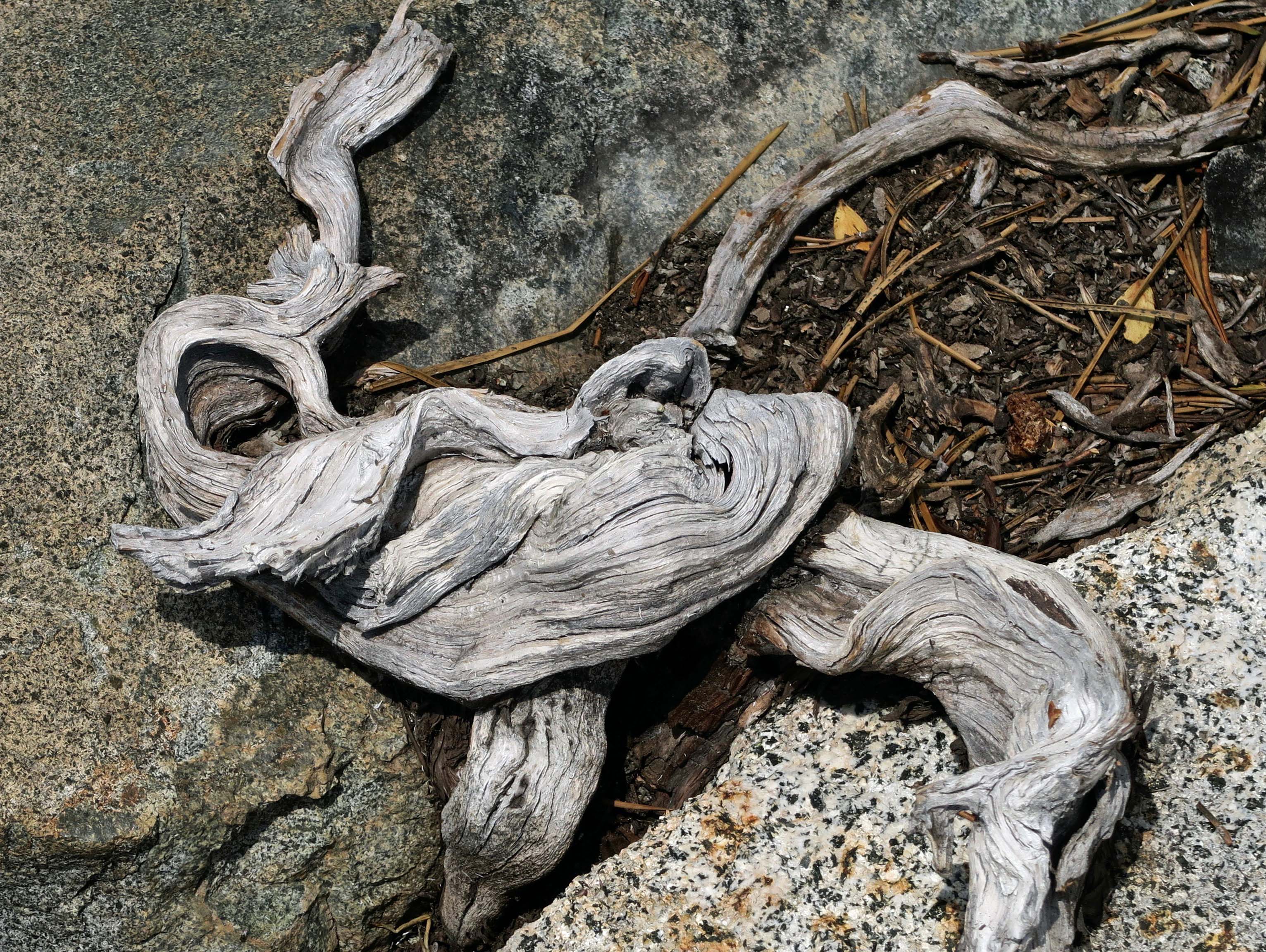
I suspect that Snyder would love this twisted manzanita I found near his biggest little lake.
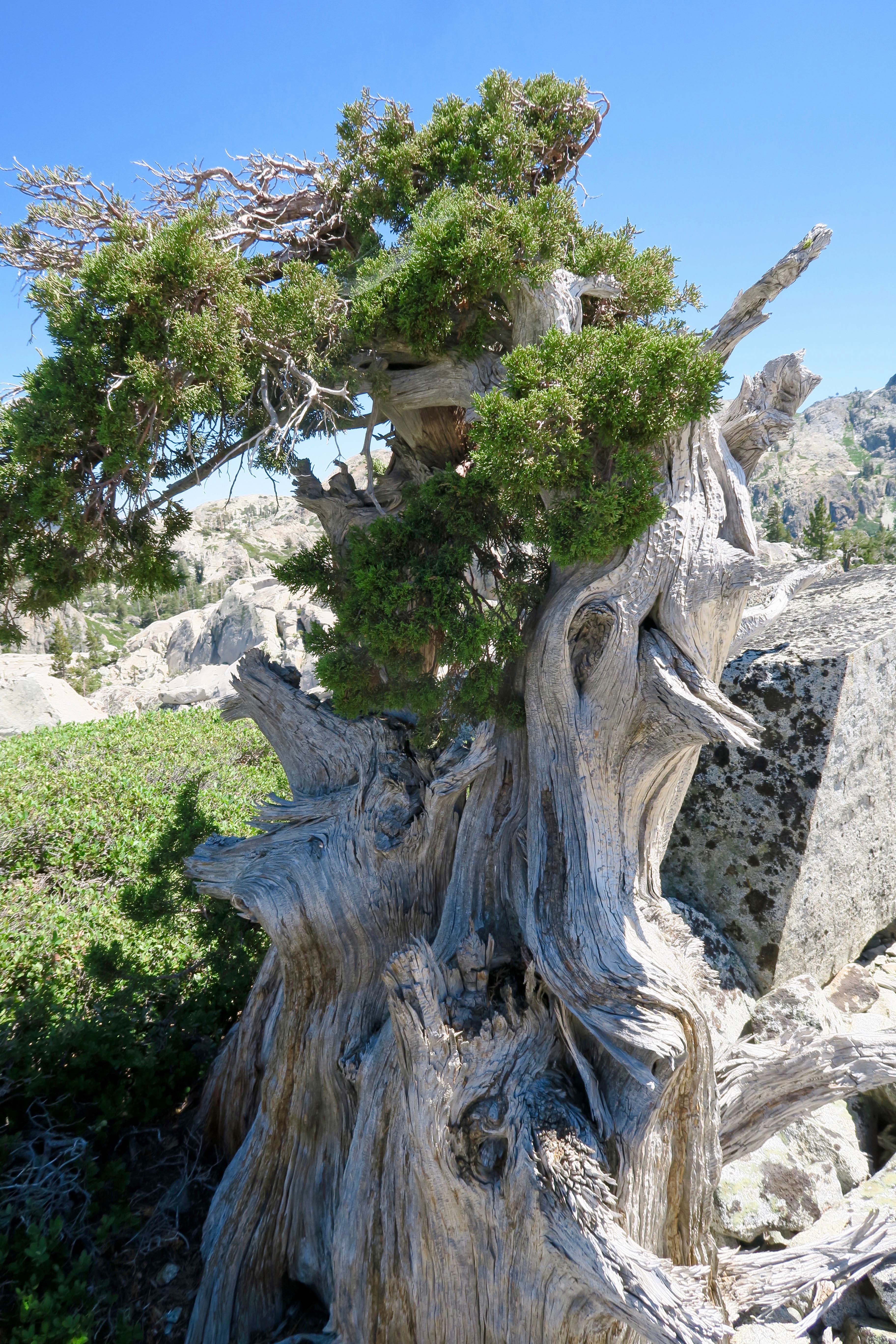
And this ancient juniper.
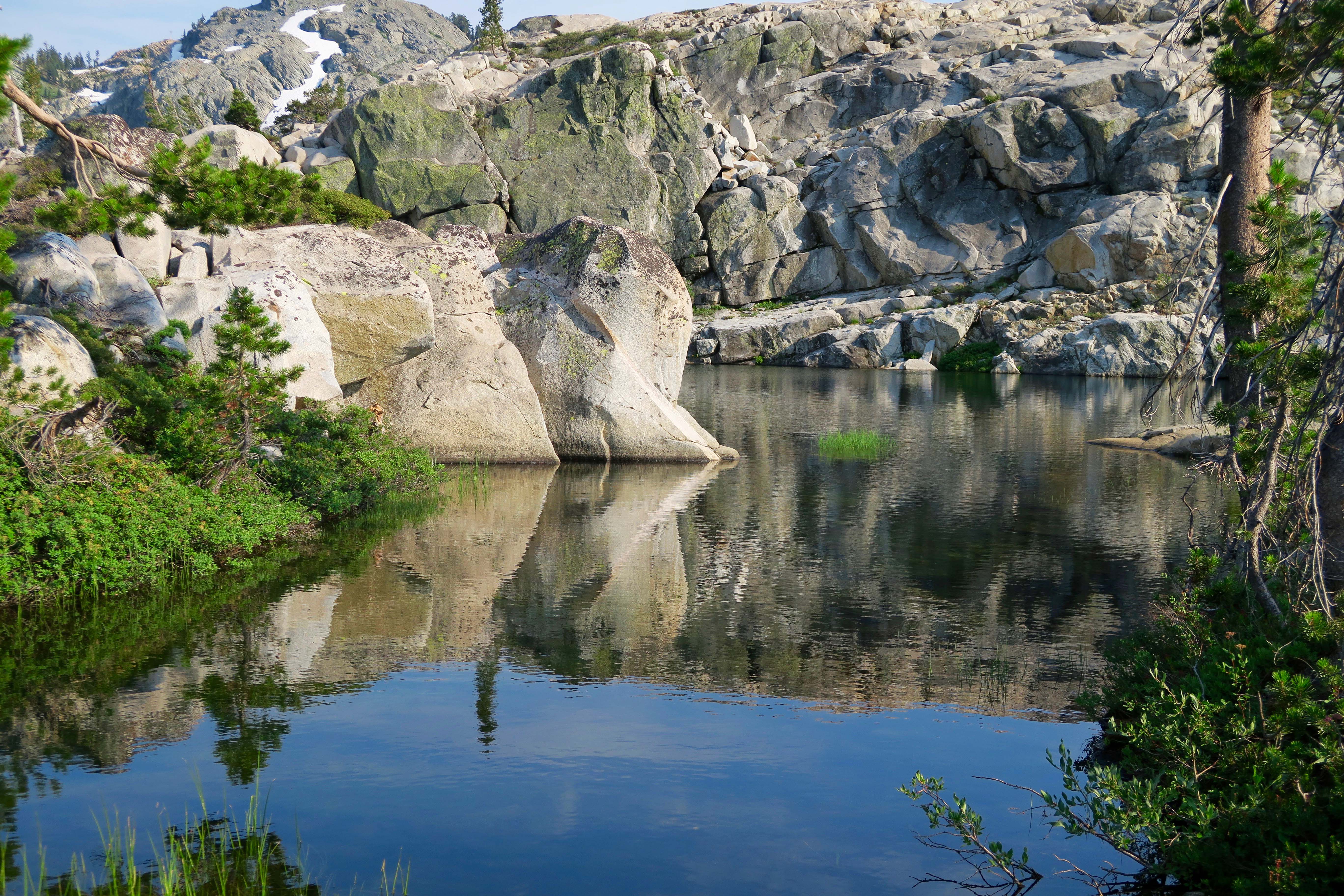
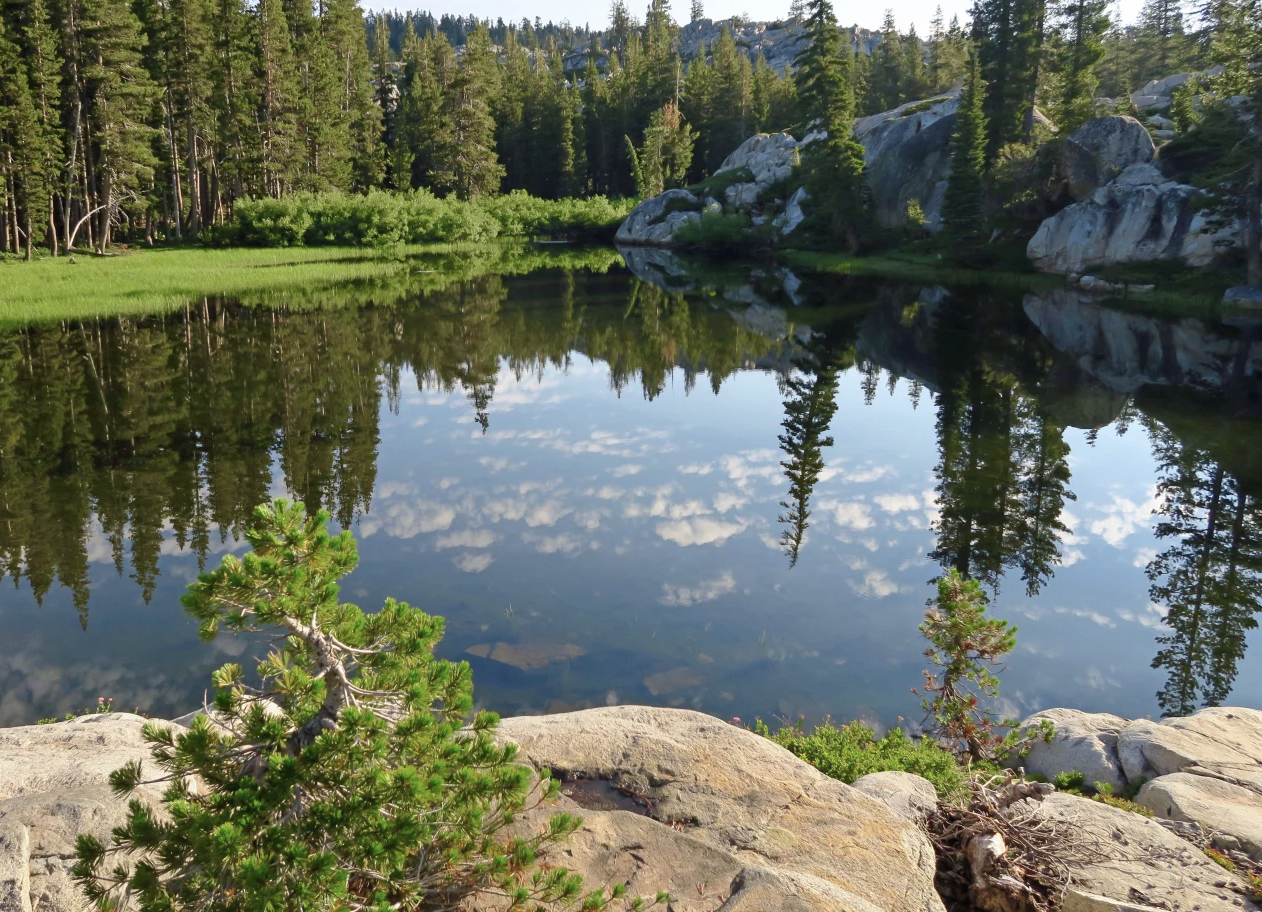
I’m a fan of reflection shots. Every lake in the Five Lakes Basin provides examples of why. This is morning on a lake I once named Peggy’s since I couldn’t find a name for it.
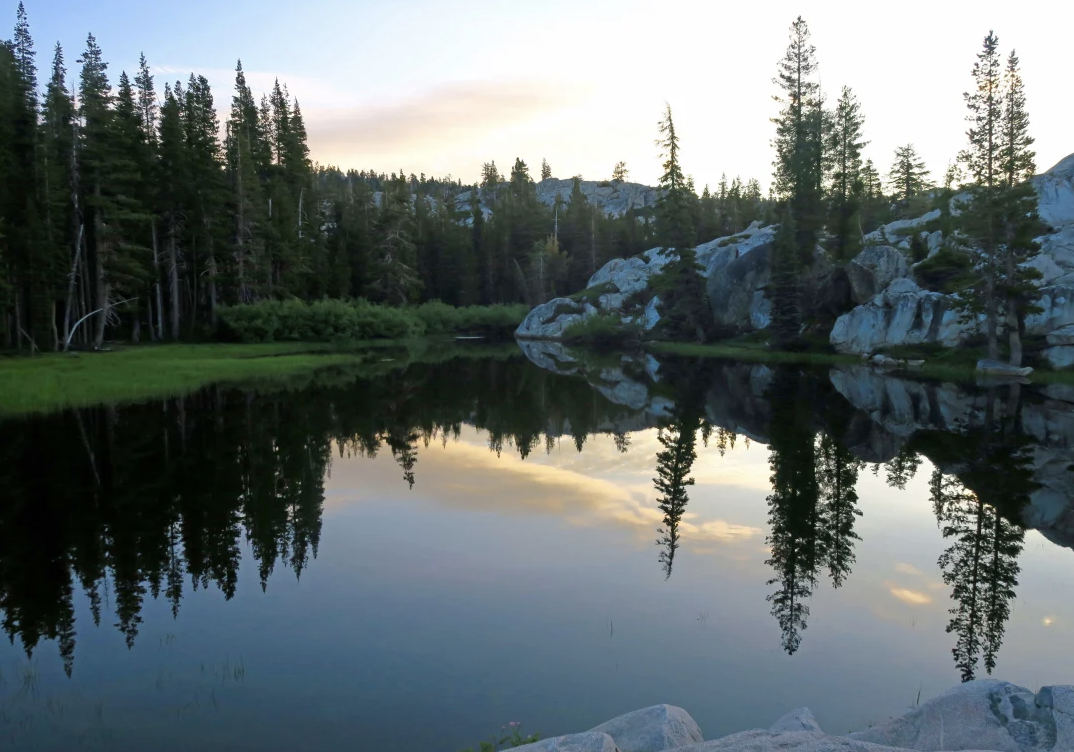
Evening on the same lake.
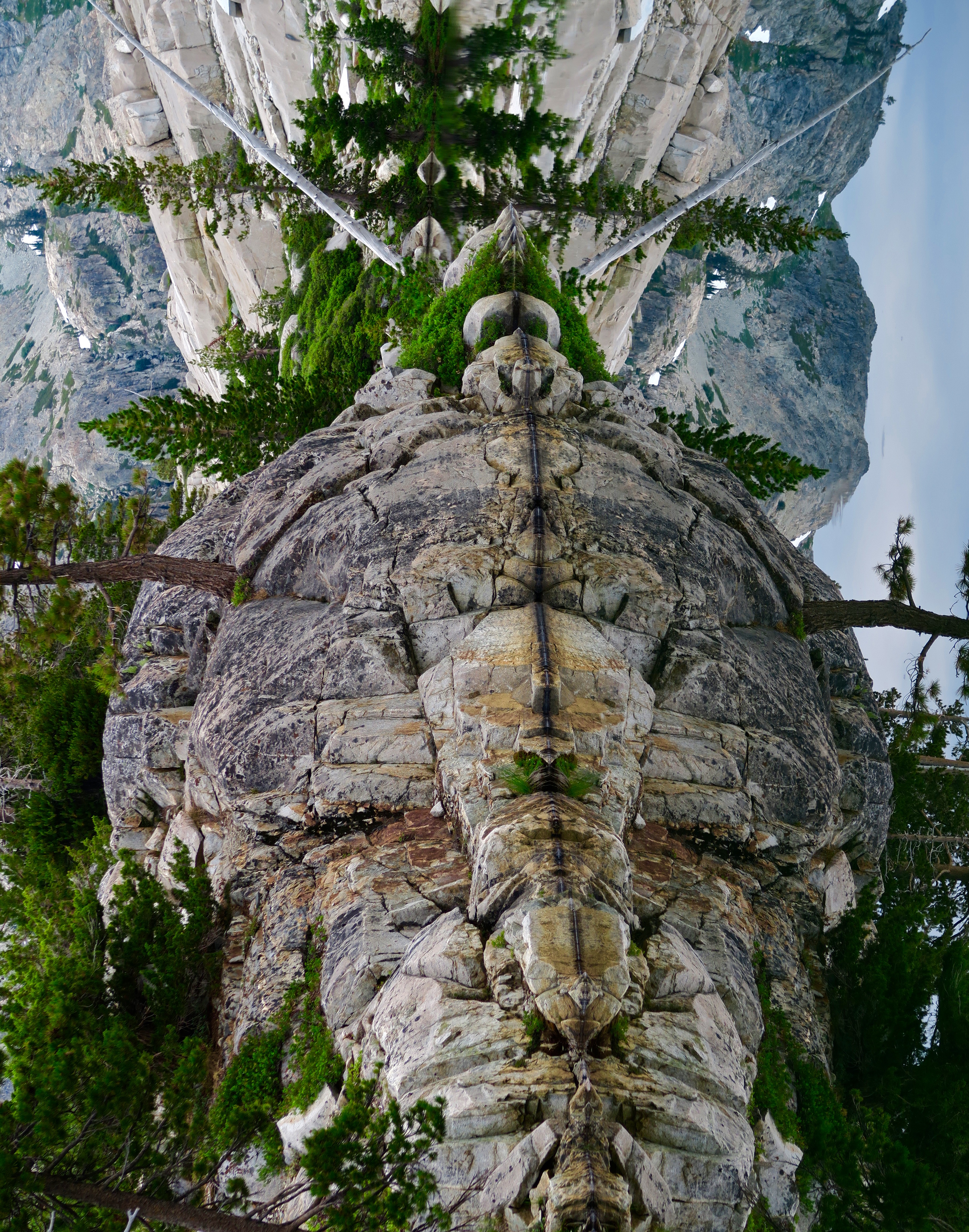
Just for fun, I’ve discovered that turning reflection shots on their side can provide interesting results. This one had a wonderfully-fat-monster-insect look. Start with the feelers and work down.
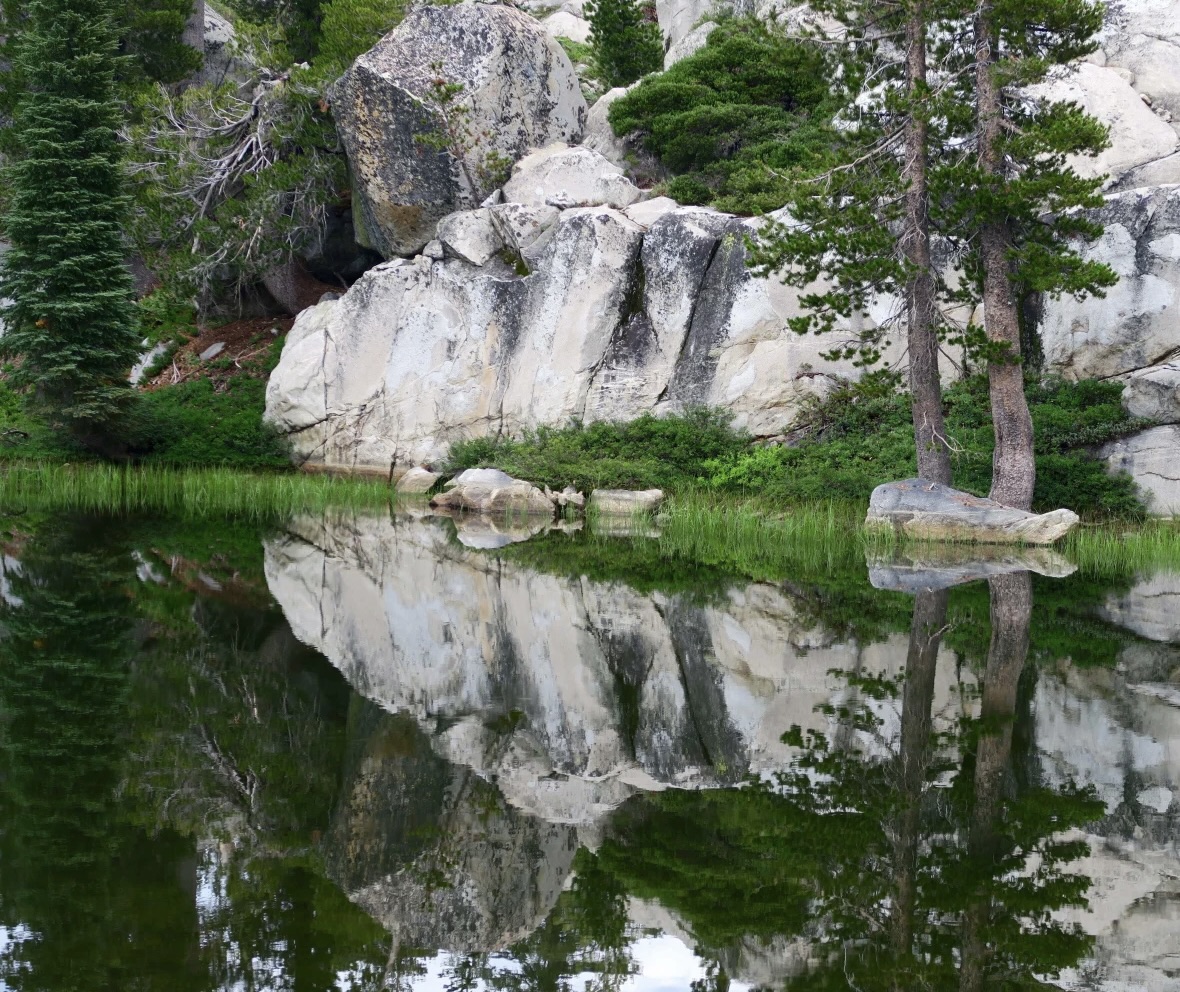
Another example from a normal perspective.
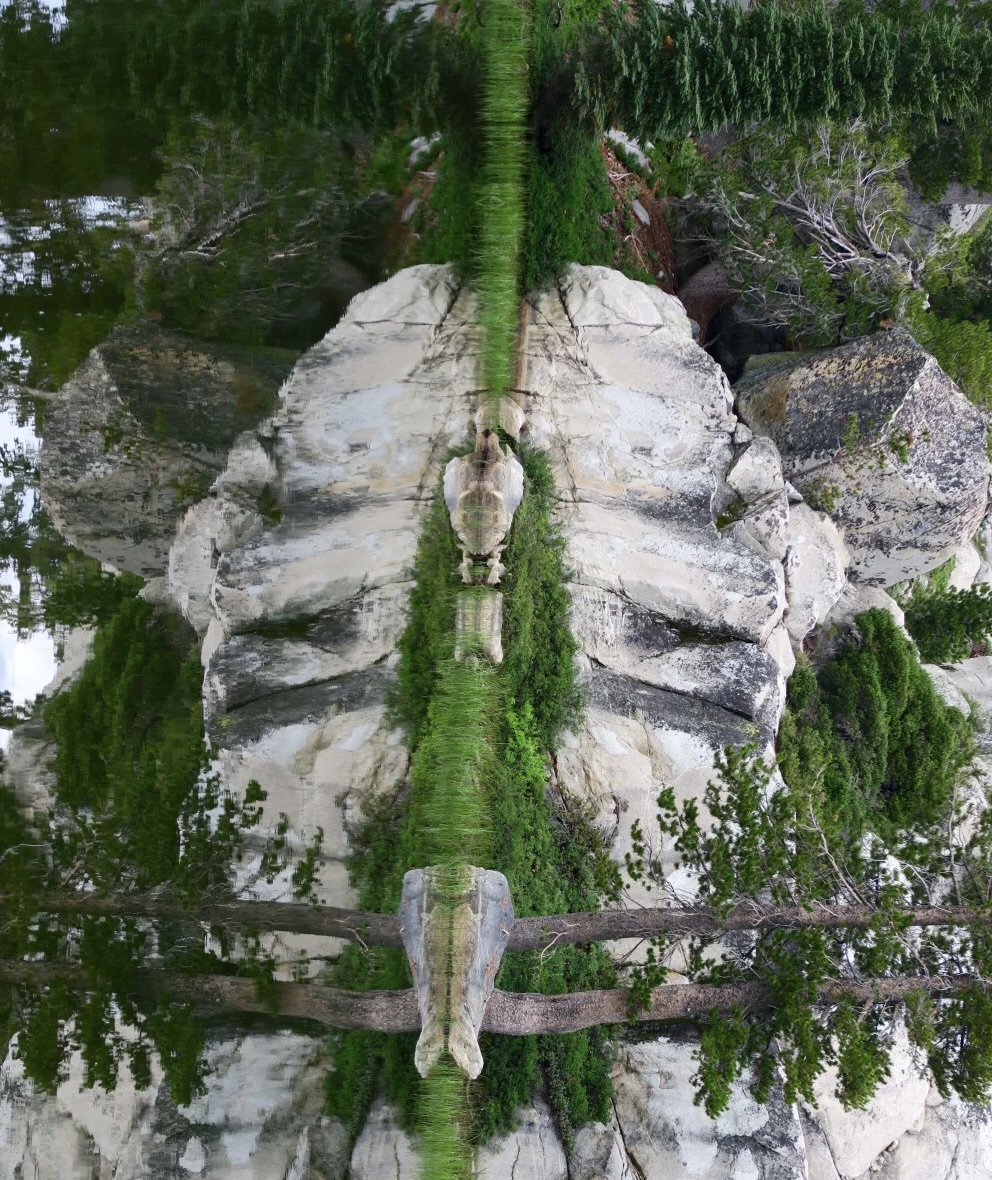
Flipped it on its side. Beyond the monster look, there was the woman in a green dress with the long green hair.
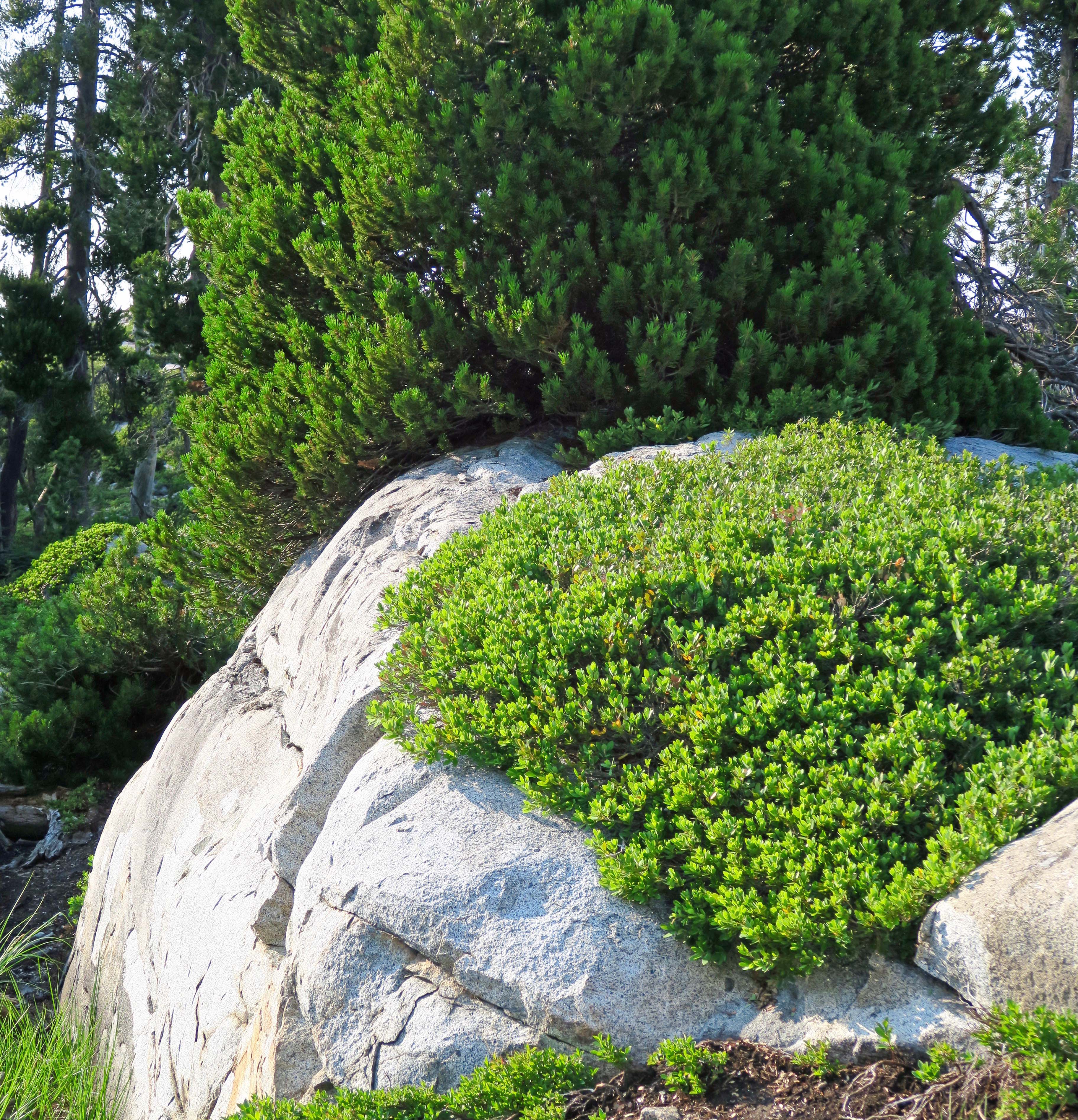
The basin is filled with granite. I liked the green contrast of the manzanita growing on the boulder.
As you might imagine, Peggy and I have taken hundreds of photos of the Basin and Non-Motorized Area over the years, but I’ll conclude our quick tour of the basin with a sunset photo and move on to Peggy’s 75th Birthday trip to Glacier Lake.
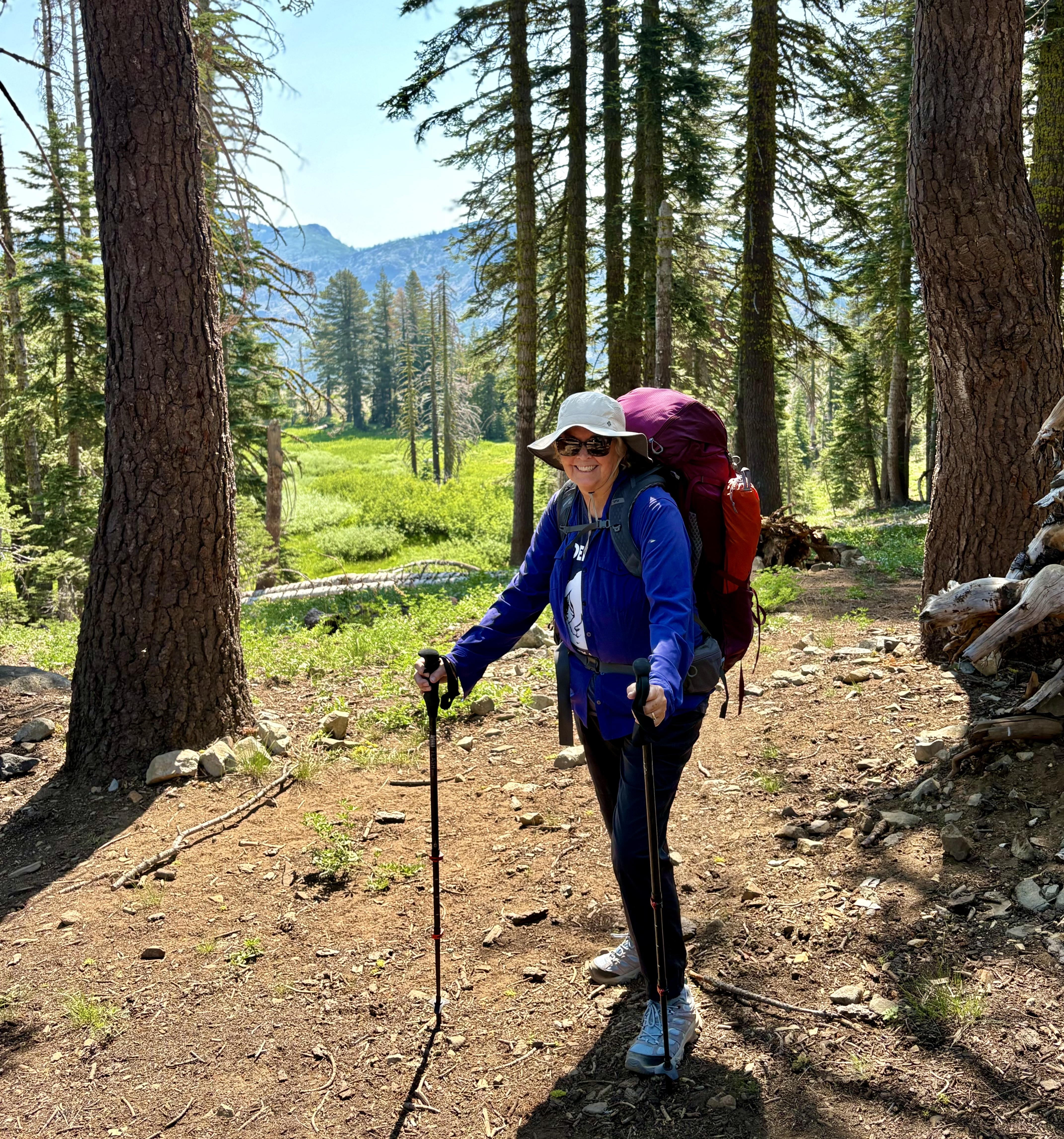
Peggy poses for her ‘official’ backpacker photo looking snazzy. Note the hiking sticks (poles). ‘We don’t leave home without them’ when venturing into the woods. They are essential for balance, even more so as we age. My hips and knees were screaming at me as we made our way down Grouse Ridge, like “What the F are you doing.” (Growing older is so much fun.) The sticks assured we stayed upright.
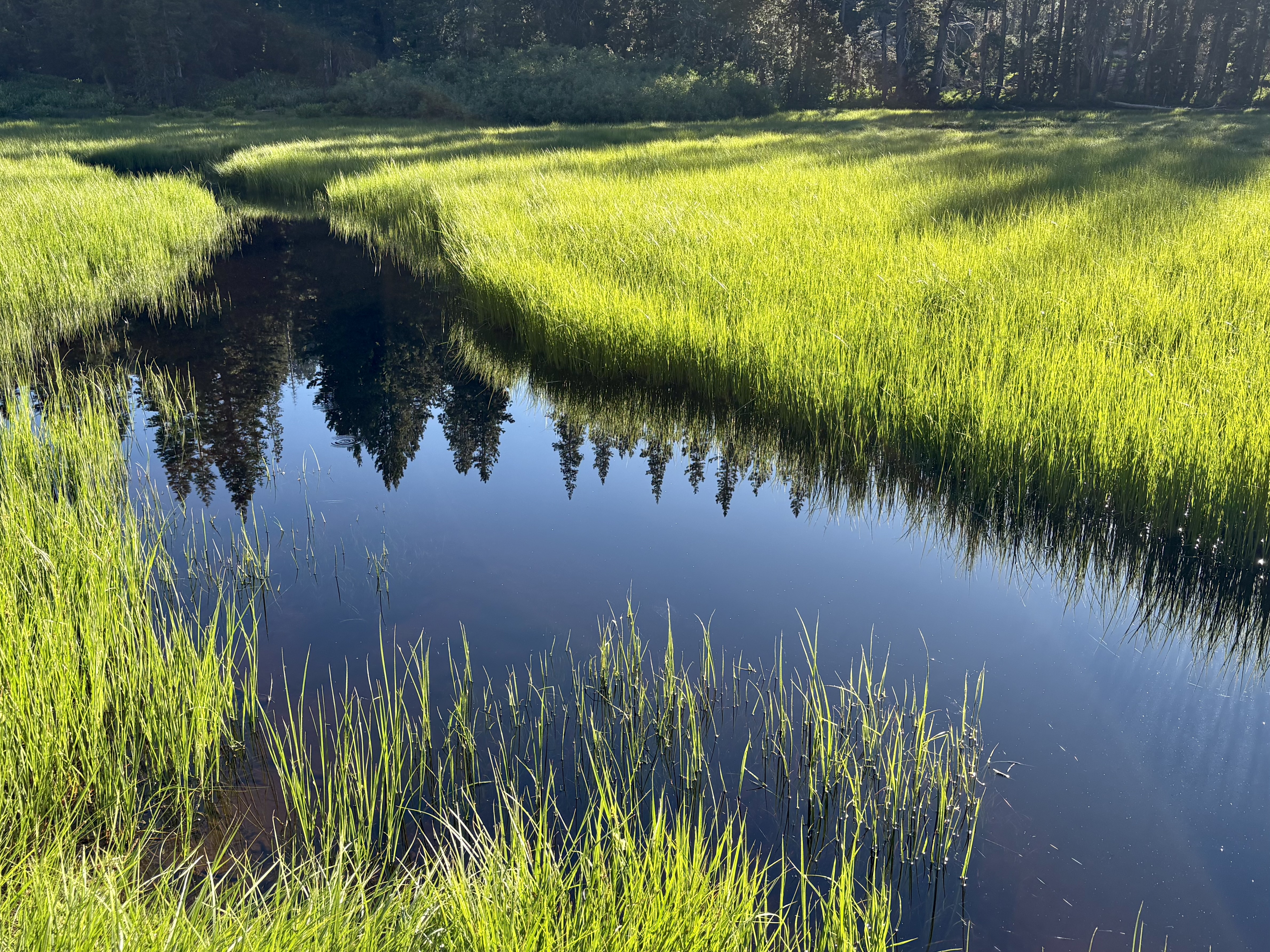
The area was much drier than we had expected from previous trips in July, thus we were grateful when we came across this meadow. One look and we simultaneously thought CAMP!
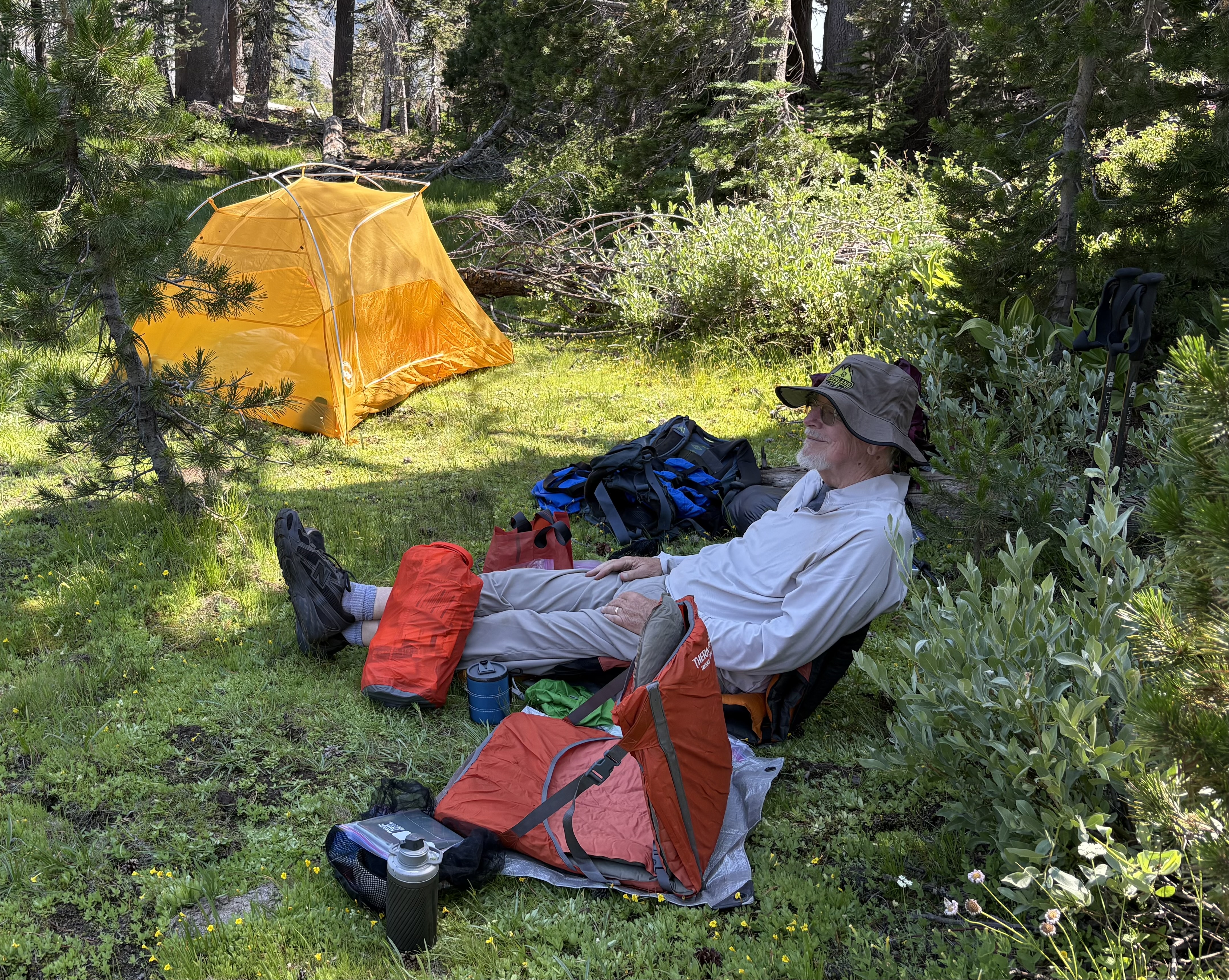
One tired, but happy, puppy. Or maybe that should be old dog. That’s my food bag draped across my legs. Camp was set up. We’d had a cup of hot soup, cheese, a beef stick, and a celebratory shot of Irish liqueur. I still had to cook Peggy a post-birthday dinner, but that consisted of boiling water, pouring it into a container of freeze-dried backpacking food, letting it sit for five minutes, and eating. Mmmm, beef stroganoff. All was right with the world. Just don’t ask me to get up! Peggy managed to abandon her Therma-rest seat for this photo. Good thing I married a younger woman.
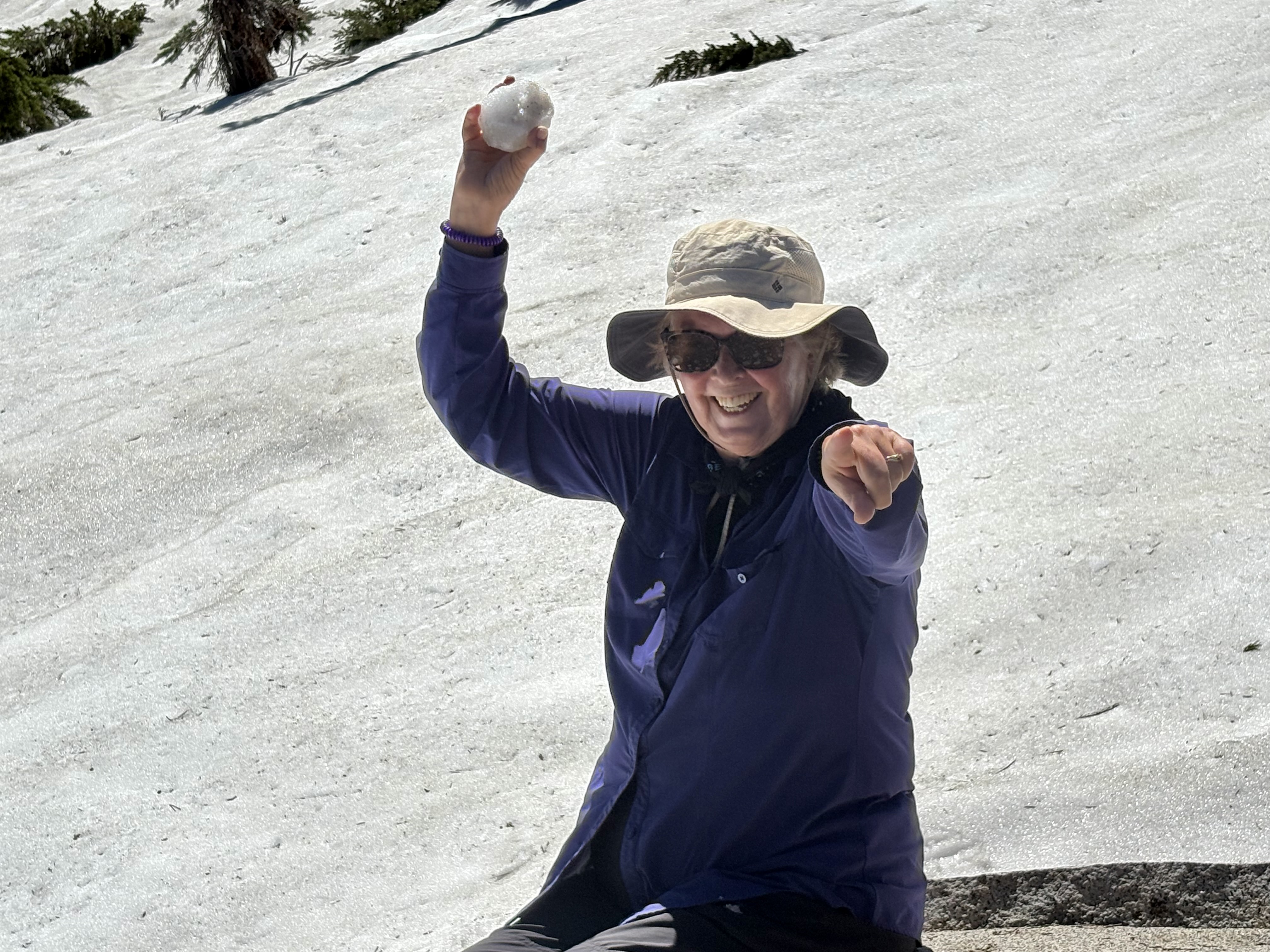
The next morning we found a snow bank on our way up to the lake. I don’t think Peggy has ever found snow without lobbing a snowball at me!
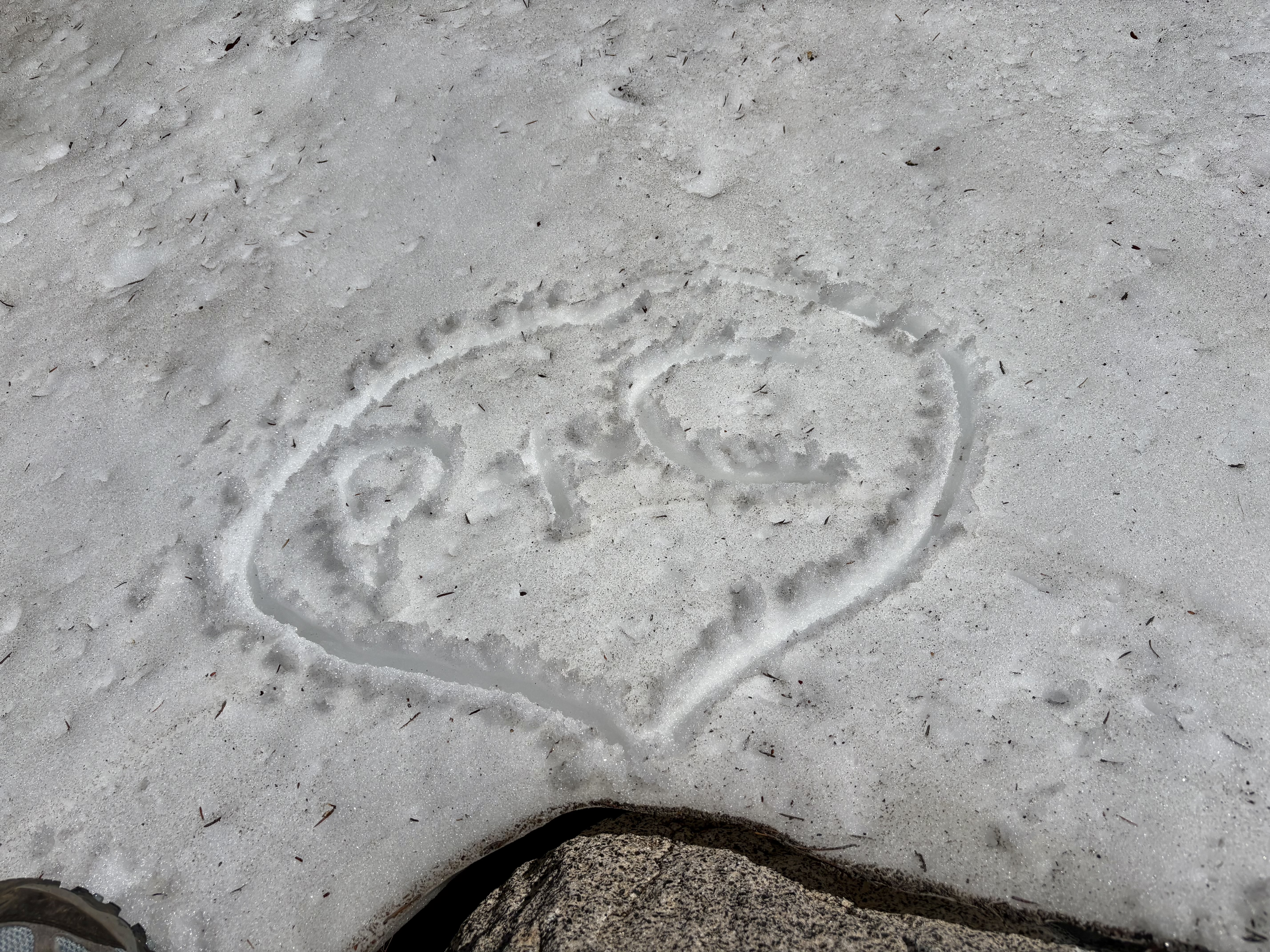
She followed up by carving a heart with P+C in it. Aw….
The trip up to the lake was relatively easy, considering we took two days to do what is normally a one day trip. (I’ll note here that some of these photos here are from earlier trips since we were only carrying our iPhone to save weight.)
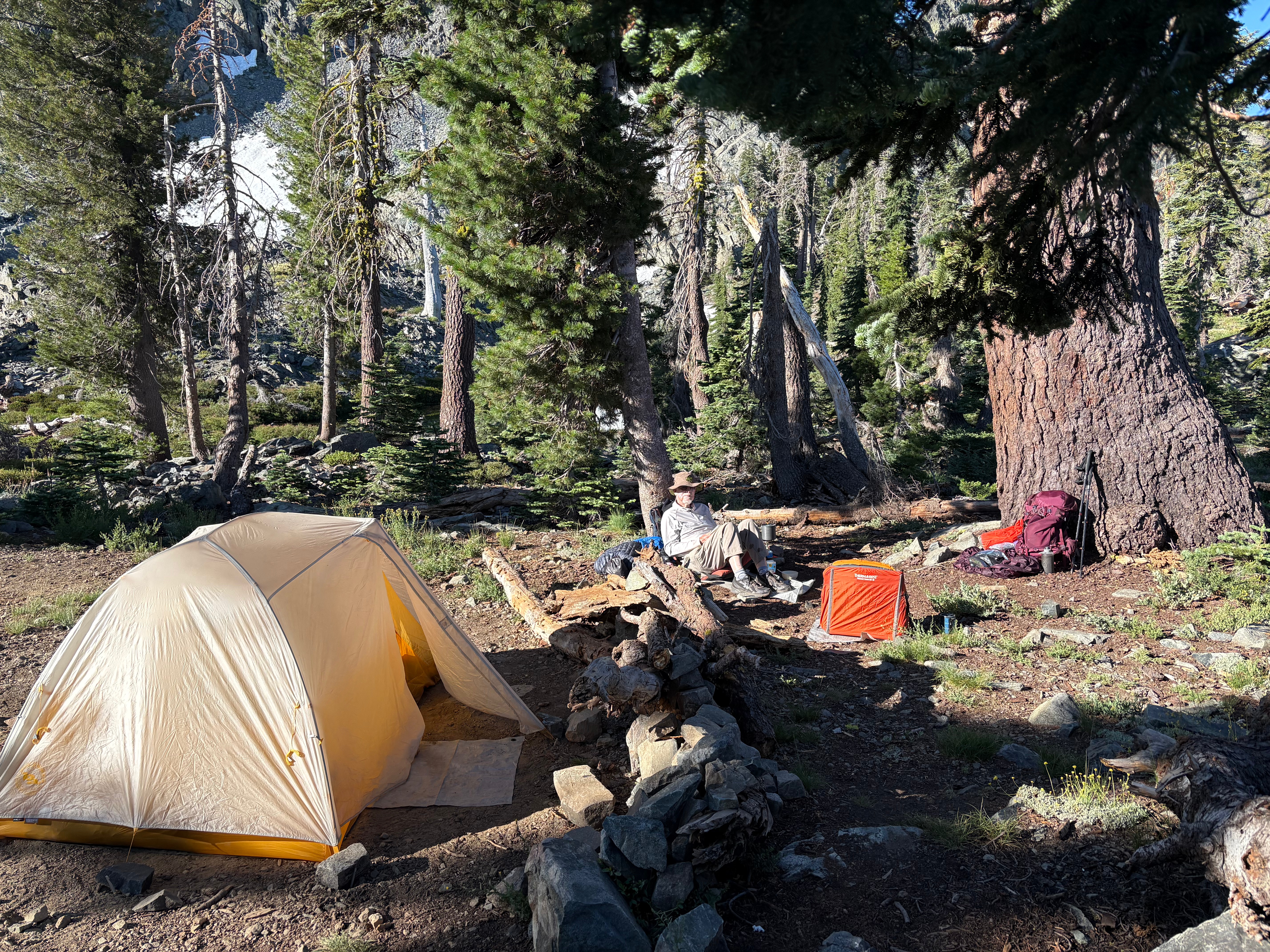
An obligatory photo of camp. Looks peaceful, doesn’t it. Shortly afterwards, a group of 35 teenage girls and their adult leaders showed up and camped next to us. Must say they were relatively quiet, polite, and only spent the night. The most noise was their scream as they jumped into the lake’s snow fed water. While the group size was too large, I appreciated the effort their leaders put into introducing them to backpacking and the beautiful area. They left their camp immaculate.
After the girls packed up and left, we had the camp and lake to ourselves for the day.
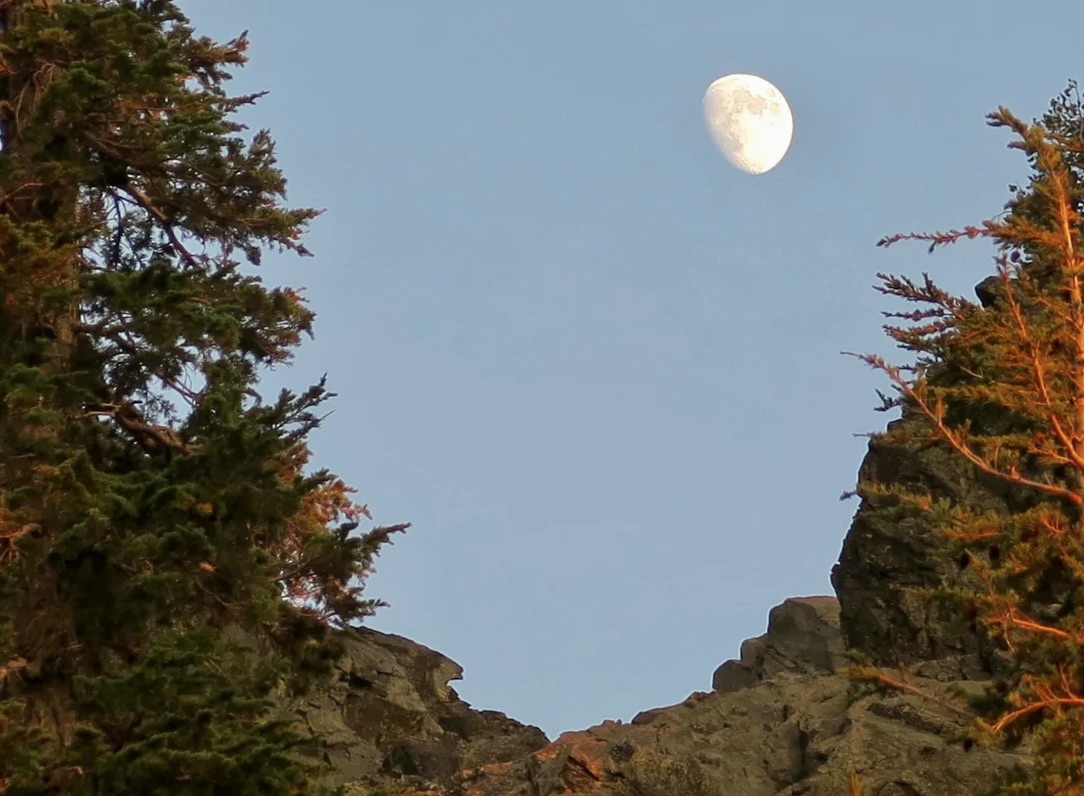
While the moon was only partial, at 8000 feet it was like someone was shining a flashlight on our tent at night.
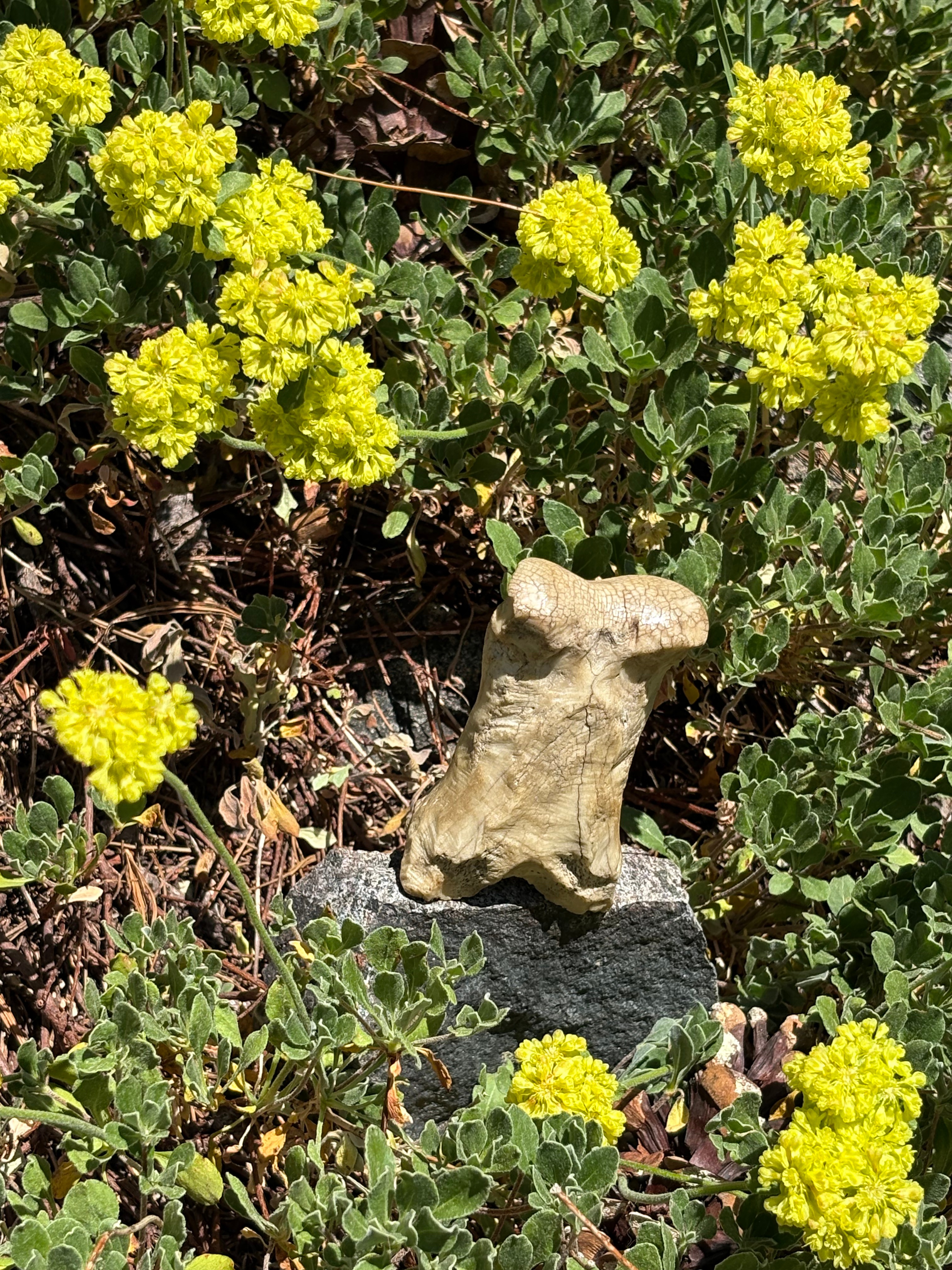
Bone, who had joined us on the trip, insisted on having his photo taken before we headed back for Grouse Ridge.
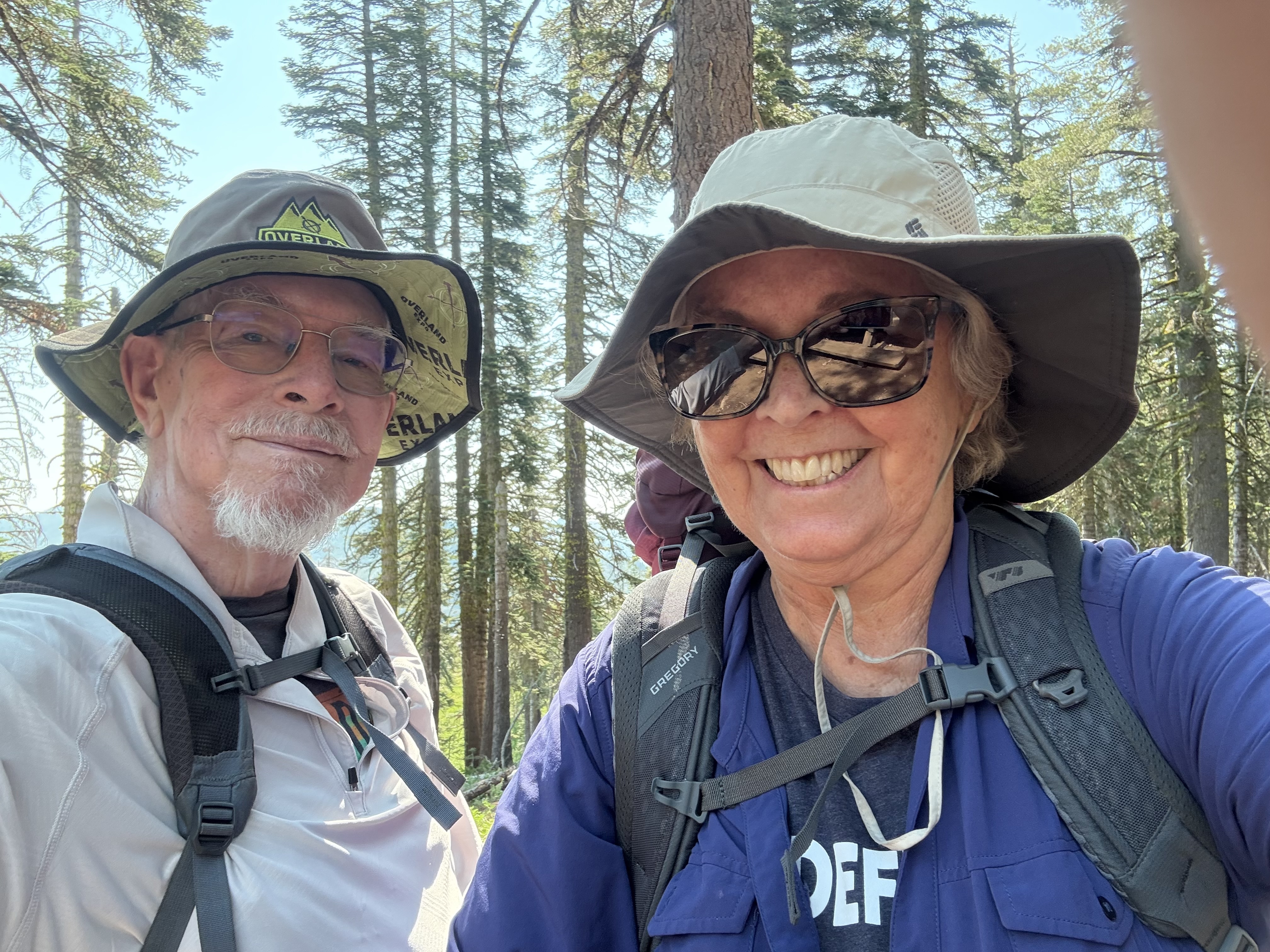
Naturally, we took a selfie when we made it back to our truck— happy to be back but ever so glad we had gone. That’s it for now. Peggy and I are in Albuquerque, New Mexico for a week before we begin our journey back East. Next up…
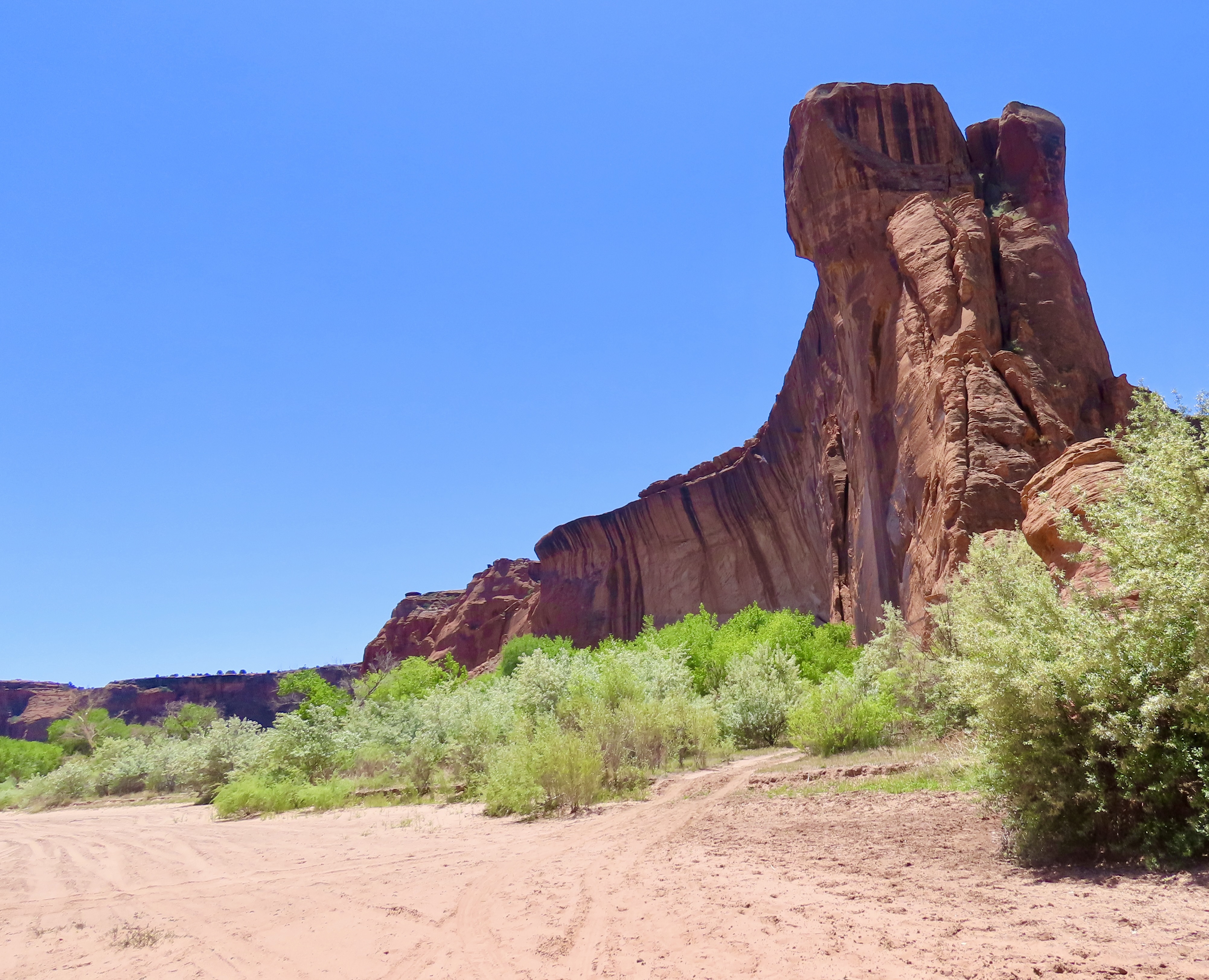
Canyon de Chelly National Monument

Vienna and a Strikingly Beautiful/Strange Cathedral… Great Rivers Series: Danube #1

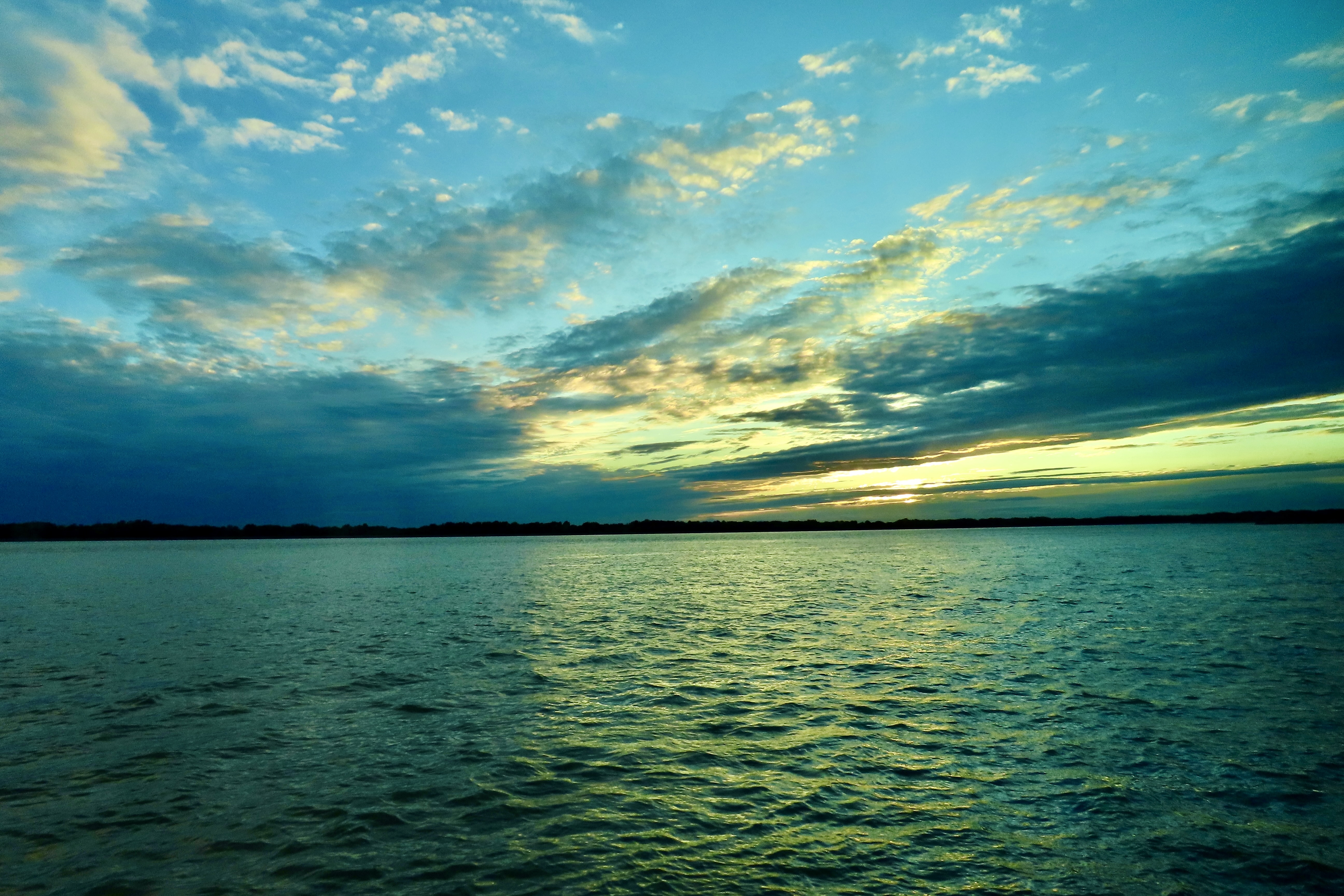
I’ve put on some mood music for today’s post: The Beautiful Blue Danube by Johann Strauss. Appropriately, it’s being played by the Vienna Philharmonic Orchestra. This is the river and its beauty. Its blue green tint is caused by the time of day and clouds. Like all rivers, it has a variety of ever changing moods.

We leave the Colorado River as it flows through the Grand Canyon today and travel 6000 miles to the second river in our Great River Series, Europe’s Danube River. Peggy and I, along with her brother John and his wife Frances, cruised down the river from Vienna to the Black Sea for nine days in late September/early October this year while adding another 7 days with a pre-tour of Vienna in the beginning and a post-tour of Transylvania at the end.

Polar opposites come to mind when comparing the two experiences. The Colorado combined the world class natural beauty of the Grand Canyon with the high adventure experience of floating through roaring rapids in small rafts. Accommodations are best described as roughing it. We slept on the ground in our two person tent, prepared our own food, and took care of bathroom chores on the groover— which was hopefully hidden from public view by bushes and rocks. Whatever bathing took place was in the ice cold river or or side streams with our clothes on— might as well wash both at once, right? Side trips normally involved climbing up the steep, possibly dangerous sides of the Grand Canyon to enjoy the beauty or leap 10 to 20 feet off cliffs into small, hopefully deep, pools of water. As for weather, think up close and personal.

The Danube has a beauty of its own but lacks the incredible scenery of the Grand Canyon. Our ‘raft’ was a brand new river boat holding around 100 people, where we ate four course meals served to us by friendly, attentive staff. (Peggy had won them over on the first day. When we entered the dining room we’d hear, “Hi Peggy,” coming from all sides.) We slept on a king-sized bed, had large windows looking out on the river, enjoyed a hot shower every night, and had a toilet that, um, actually looked and behaved like a toilet. Our side trips were usually into major Eastern European cities known for their culture and stunning architecture. It wasn’t quite ‘roughing it.’

The primary difference, however, was on focus. On the Colorado, it was the river, the surrounding natural beauty, and the adventure. On the Danube, it was on history and the cities that border the river. The Danube had once served as the boundary for Rome. In the centuries since the region, known as the Balkans, had seen continuing invasions including the Mongols out of Asia and the Ottoman Turks from Turkey.

World War I started in Bosnia when Archduke Franz Ferdinand of the Austro-Hungarian Empire was assassinated by a Serbian nationalist. World War II ended with Russian tanks and troops rolling across the area and establishing the Communist Eastern Bloc nations. Ethnic rivalry, seen most recently in the bloody Kosovo conflict, has often been intense. The word Balkanization, which refers to a country or region breaking up into smaller, frequently hostile units as the result of ethnic, religious, or political differences, is actually based on what happened in the region.

We followed the Danube River traveling for about 1200 (1930 km) of its 1700 miles (2,730 km) in a southeast direction starting in Vienna and ending at the Black Sea. I’ll start this series in the classic city of Vienna. On today’s post, I am going to feature St. Stephan’s Cathedral which dominates Vienna’s skyline and is remarkably beautiful. And strange, in a medieval sort of way.

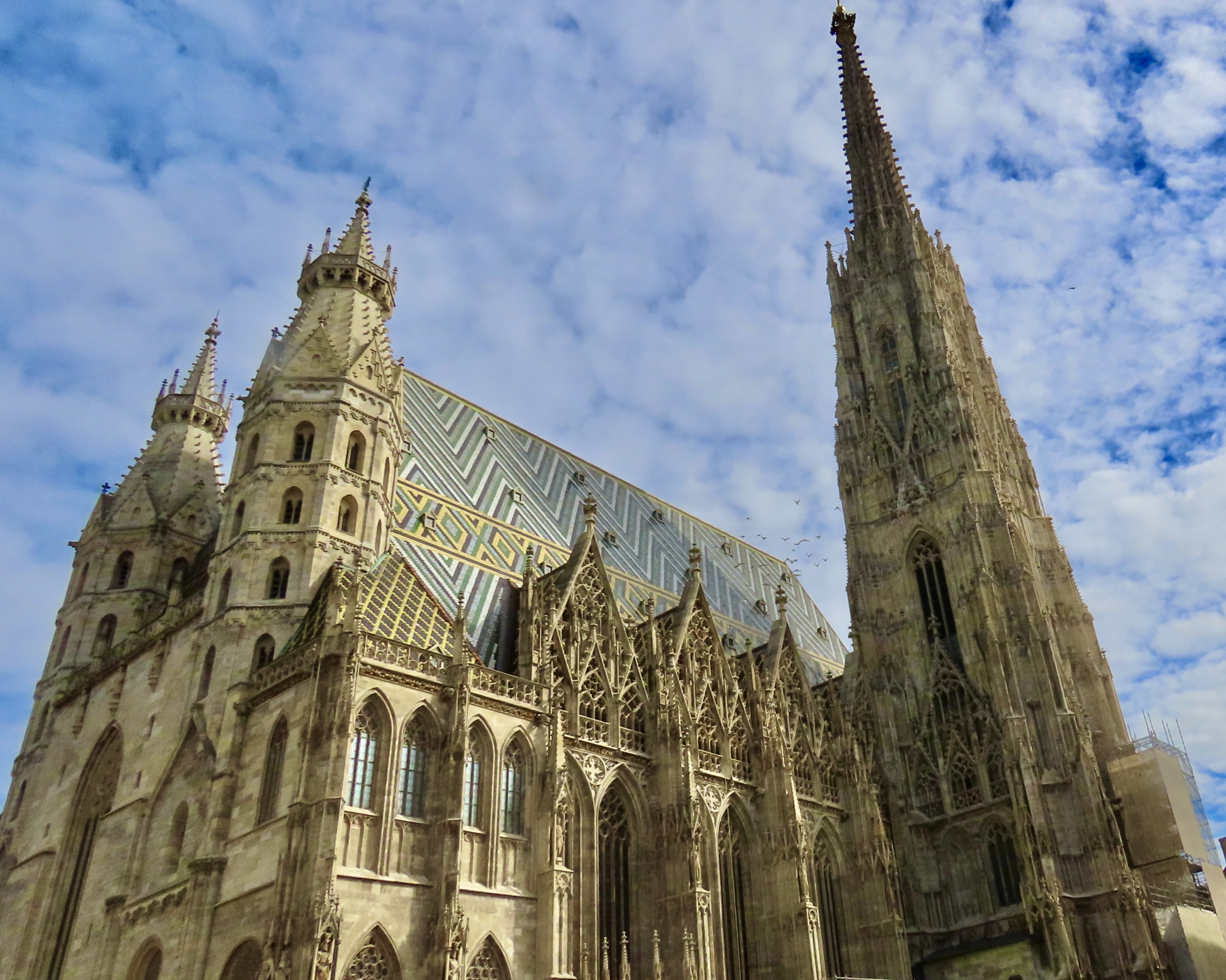
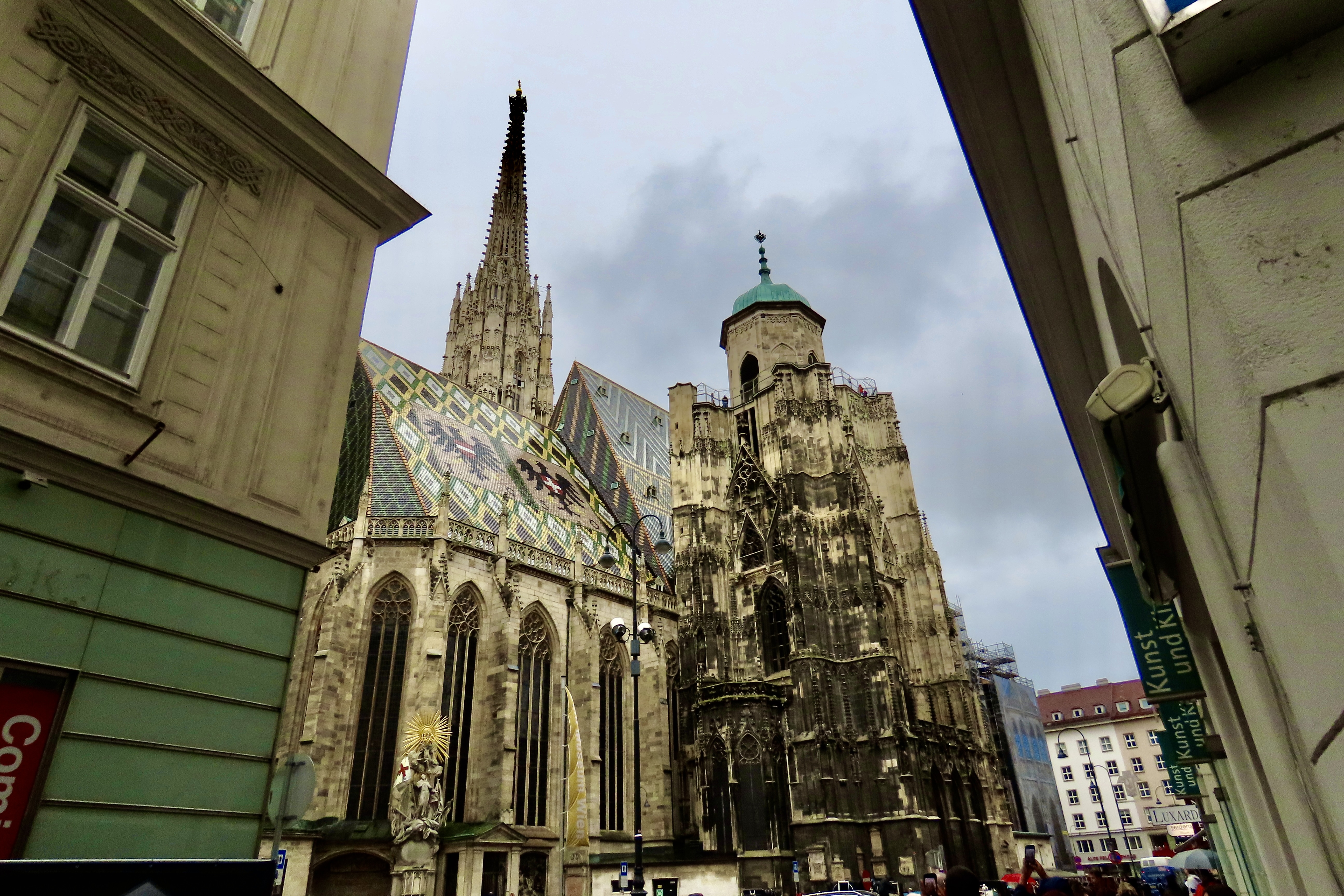
St. Stephan’s Church with its striking roof and its 446 feet (136 meters) tall south tower reaching for the sky. The roof is covered with some 230,000 glazed tiles. Note the birds flying between the tower and the roof. They had been disturbed by the ringing of the noon bell. It is said that Beethoven first realized how totally deaf he was when he saw the birds fly out of St. Stephan’s bell tower but couldn’t hear the bell ringing.
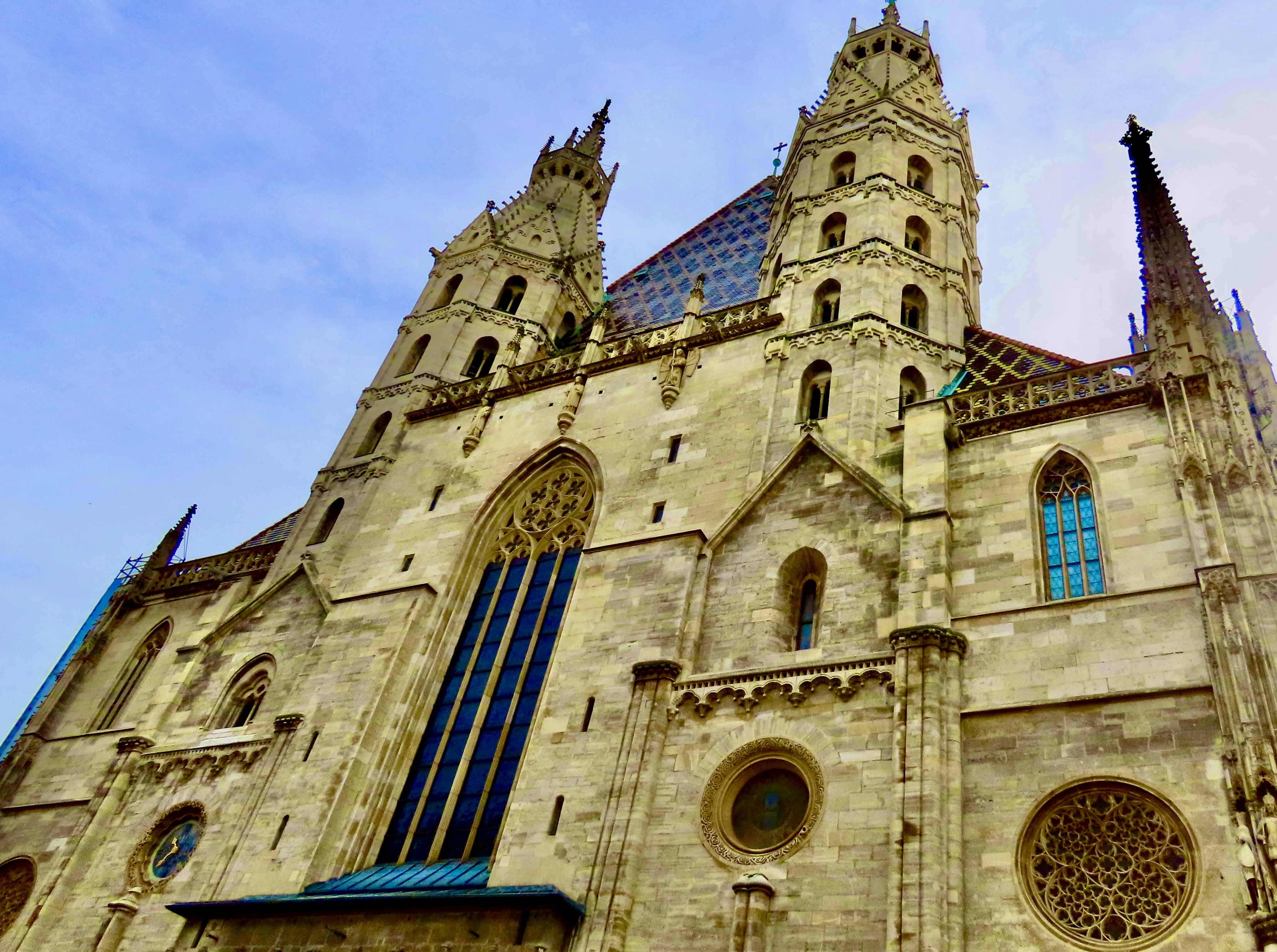
A front view of St.Stephan’s. The main entrance to the church is just below the overhang. It’s know as the Giant’s Door. The story behind the name is that the thighbone of a mammoth was found in 1443 while workers were digging the foundation for the North Tower and hung it over the door, where it apparently resided for decades. Did they see it as a unique decoration? Or maybe they thought of it as a message from God…
A view of the North Tower where the mastodon bone was found. Originally the tower was supposed to reach the height of the South Tower but the funding came to an end. It does, however house the Pummerin, or, as it is known locally, the Boomer, a 44,380 pound (20,130 kilogram) bell, which is the second largest swinging bell in Europe. The two eagles on the roof are the symbols of Austria and Vienna. Note the monument on the lower left…
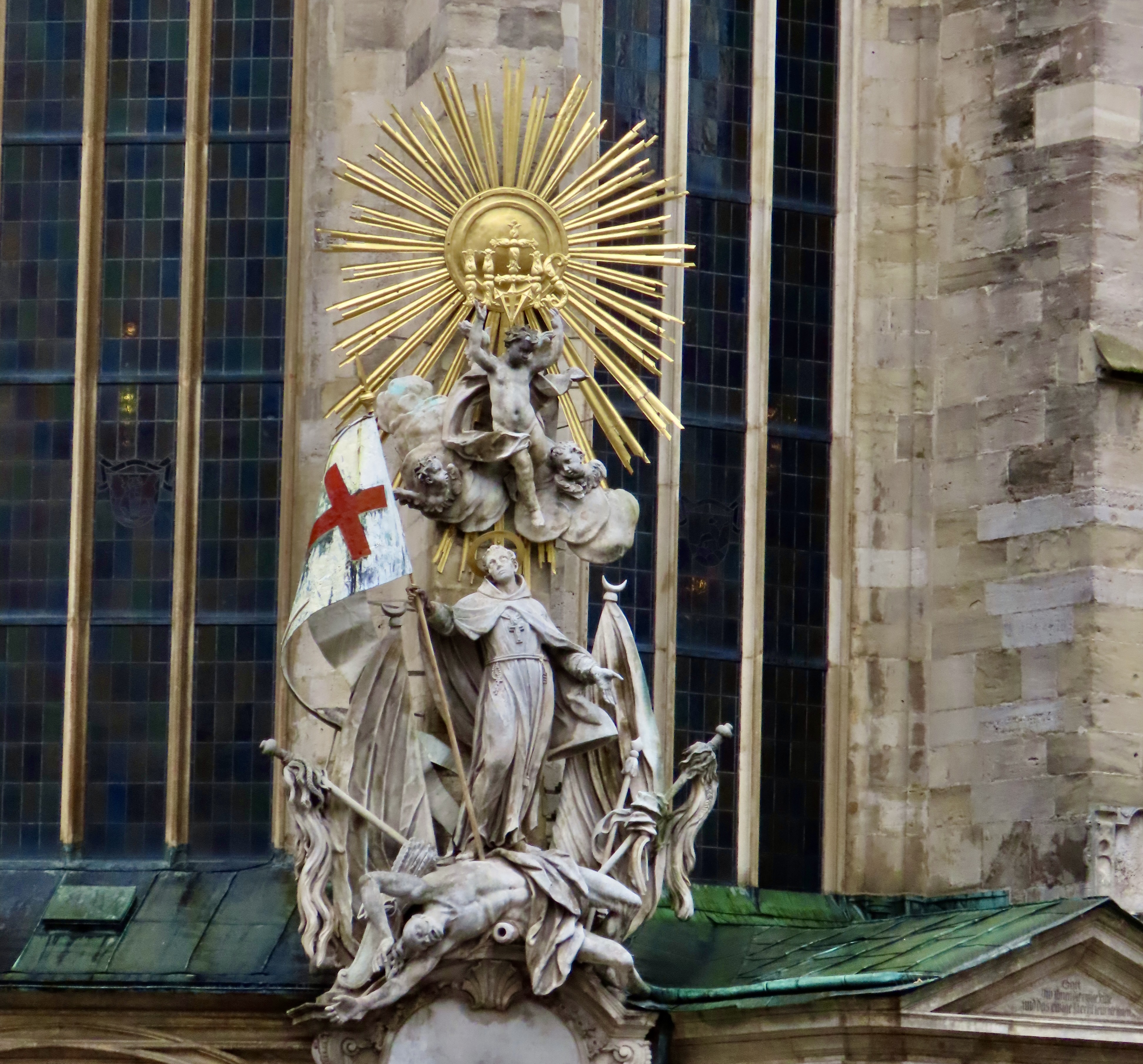
The Capistran Chancel was once the main pulpit in St. Stephan’s. It’s named after St. John of Capistrano, a Franciscan, who is said to have preached a Holy Crusade from it against the Muslim Turks in the 1450s. It shows St. Francis tramping on a defeated Turk. From what I’ve read about St. Francis, that’s fake news. St. Francis was a man of peace who risked his life to establish peace between the Christians and Turks.

Also, I wouldn’t be surprised if you are thinking swallows when you hear Capistrano. And you’d be right. The Franciscans also named their early mission south of LA, California after the Saint, San Juan Capistrano. And that’s where the swallows return to each year. There is even a song about it. One final note: The door to the church’s catacombs is next to the monument. There are the skeletal remains of over 11,000 people in the catacombs. I wonder if the mammoth’s bone is there as well? Why not.
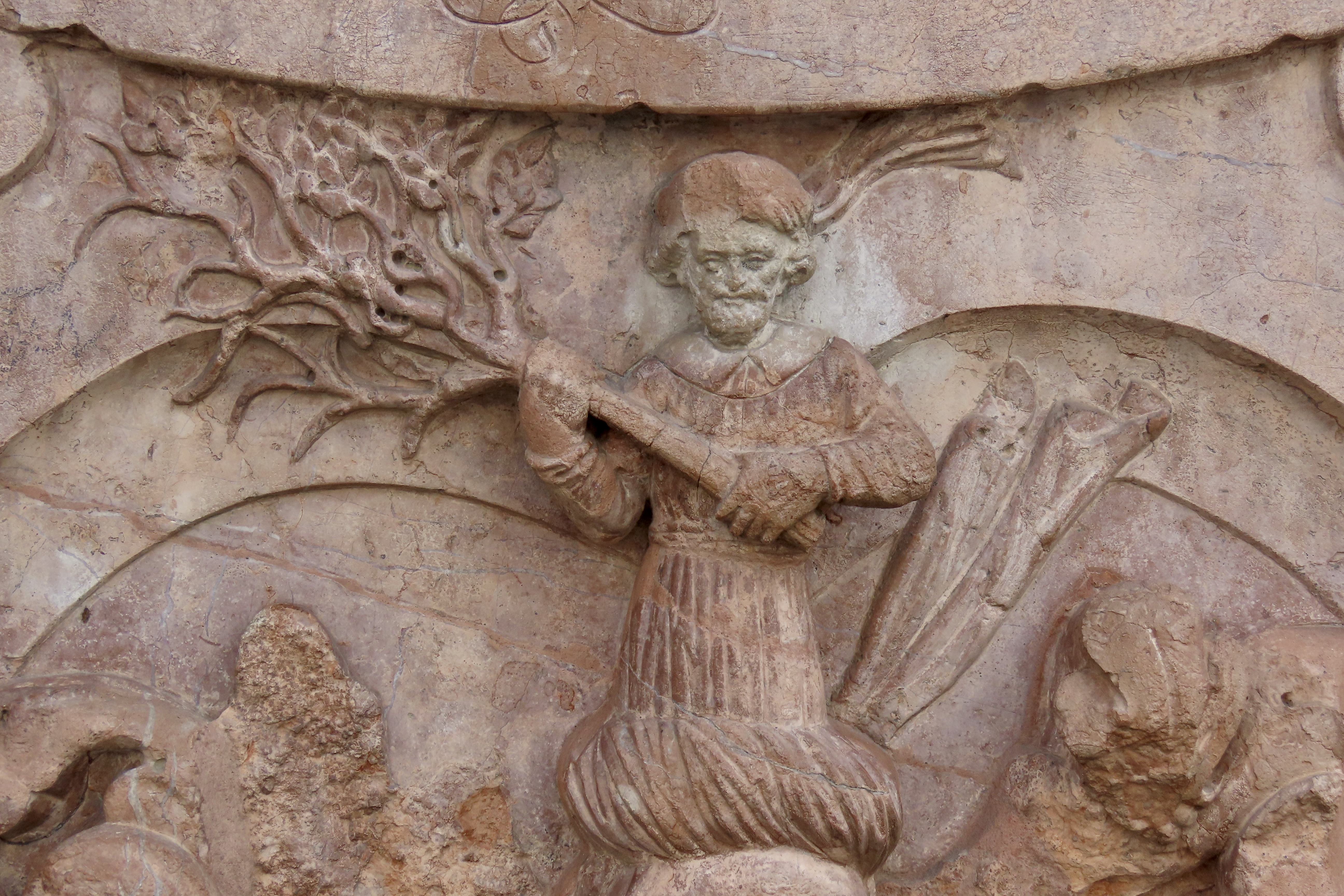
Most people think of beauty and vast size when they visit Europe’s great cathedrals. And yes, there is that. After checking out the beauty, however, I like to focus in on the details. I found this stone carving on the side of the church. Is it a bird; is it a plane (as they said about Superman)? No! It’s St. Francis, appearing as a bird carrying a tree. It’s much more like the usual portrayal of a good saint than his image of stomping Turks. He loved trees and was said to talk to animals. If you see an image of a saint from medieval times with animals, birds or trees, you can almost bet it will be St. Francis.
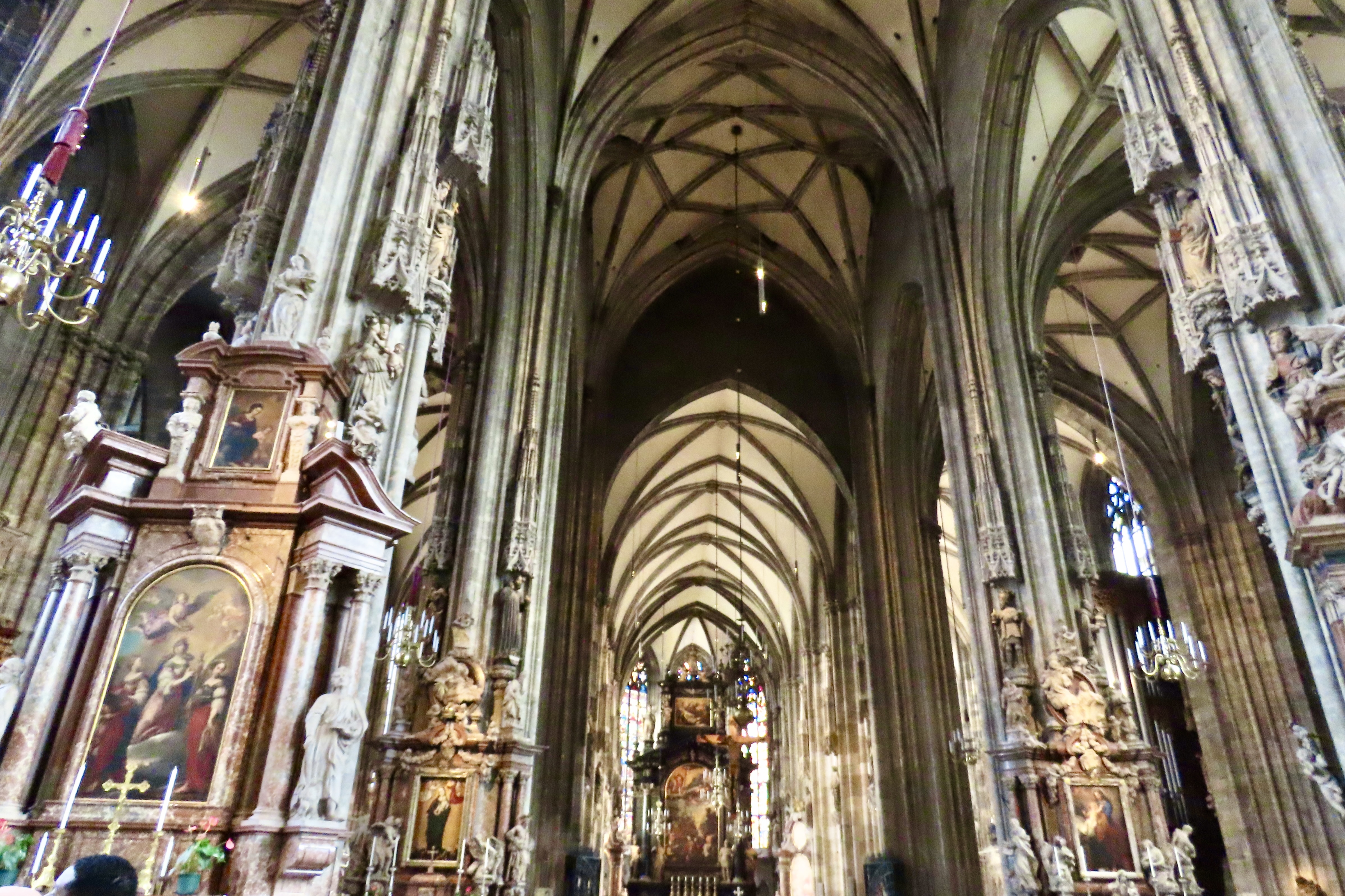
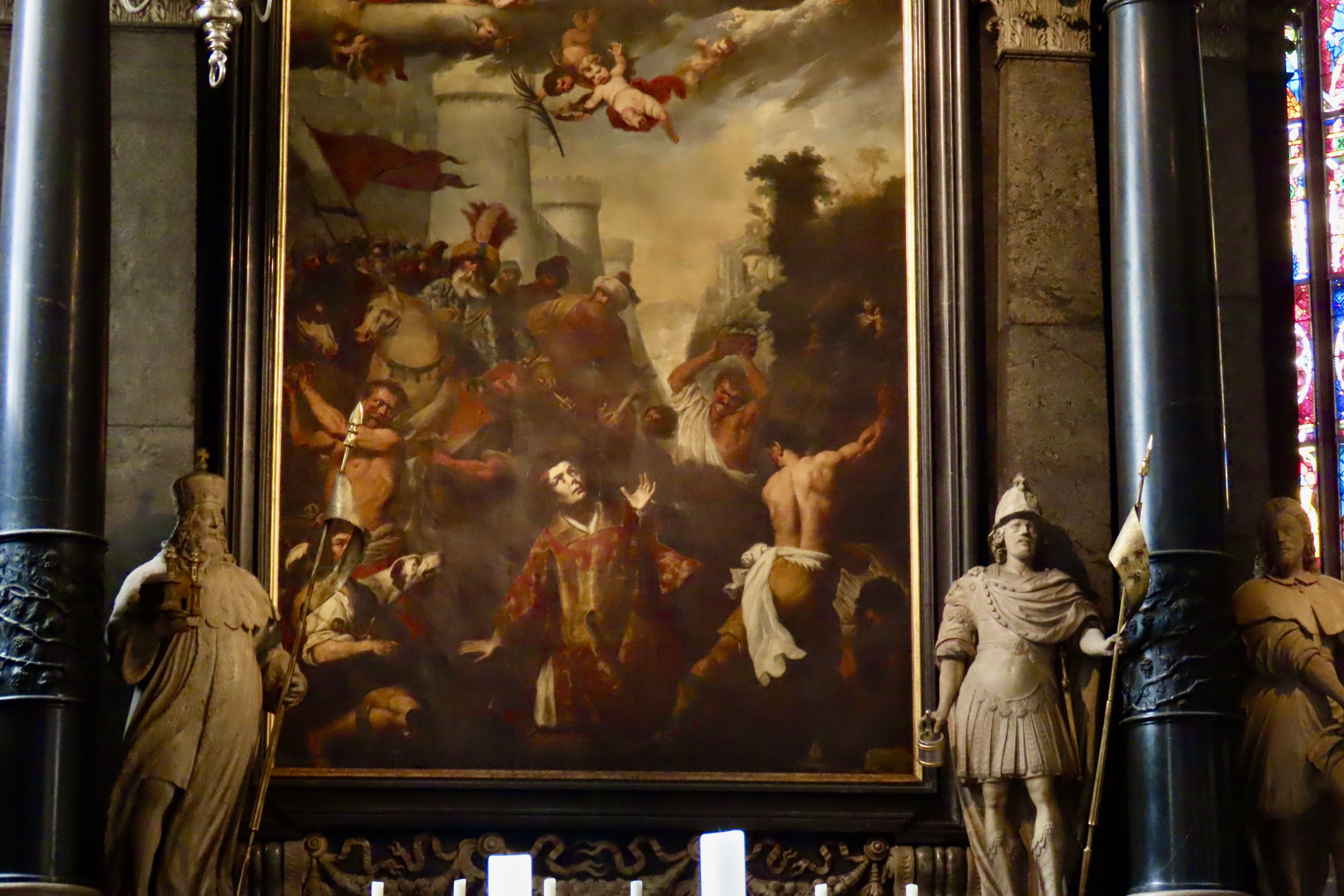
This is a photo of the inside of the Cathedral. It’s busy. I meant it to be. The number of statues and paintings of saints and important church personages was mind blowing. This is looking toward the high alter where a painting of St. Stephan is featured.
He’s being stoned. It would be hard to find a painting of the saint when he isn’t. Even Rembrandt painted one. Here’s the thing. Most people were illiterate in the Middle Ages and the church fathers wanted their parishioners to know their saints and understand the messages they carried. Like St. Francis and nature. And St. Stephan and stoning. A bit gruesome perhaps, but most martyred Christian saints are tied to their martyrdom.

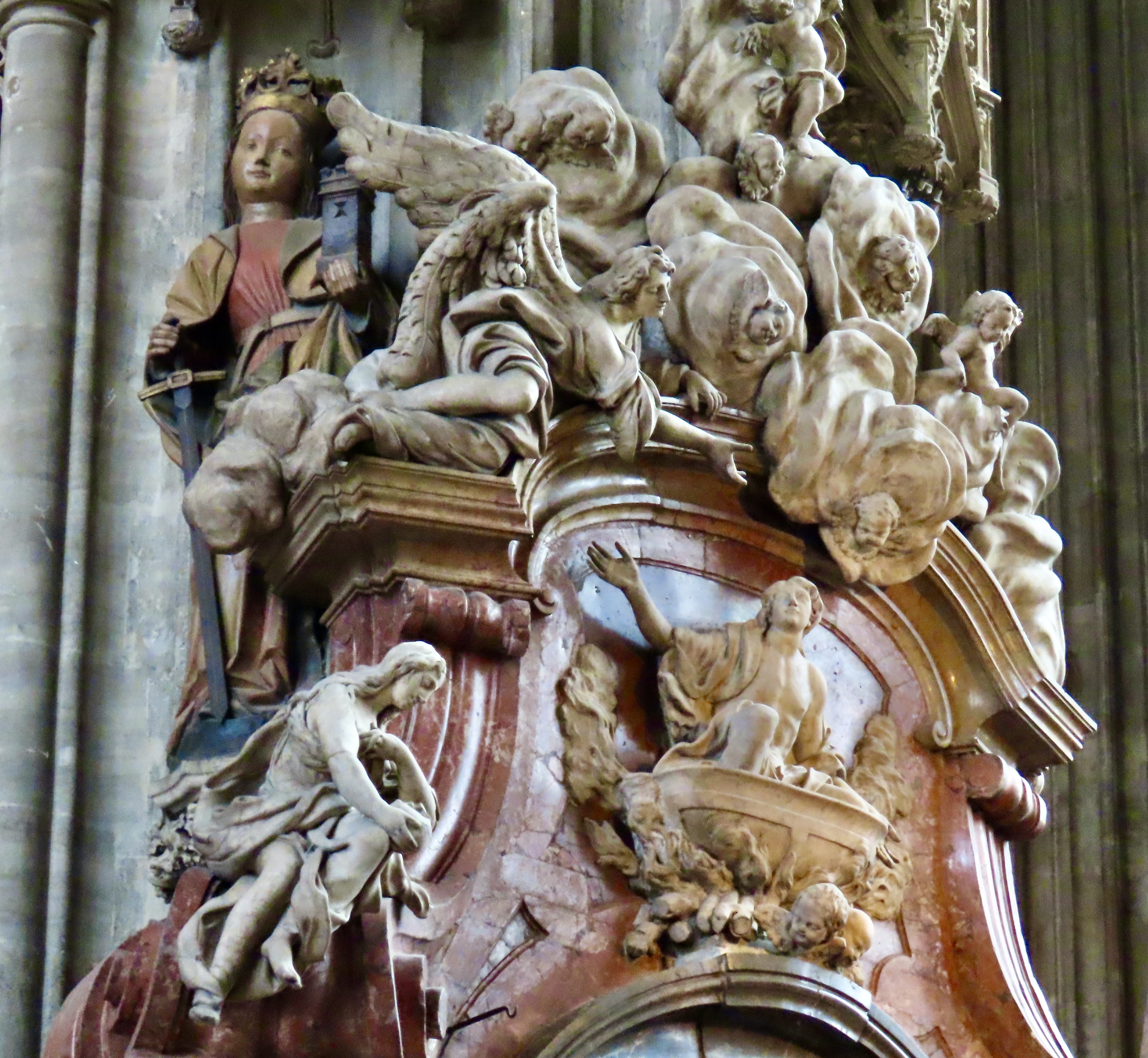
There are several at St. Stephan’s including St. Sebastian with arrows sticking out, St. Barbara holding a castle tower and St. Catherine of Alexandria holding a spiked wheel. Their stories are all similar. Deep faith brings them into conflict with non-Christian authorities. They are tortured and God miraculously intervenes to save them. Finally, they are killed. Thus you have faith, suffering because of faith, the power of God to miraculously intervene, and ultimately their willingness to die because of their faith. I assume they are all pulled into heaven where they live happily ever after. A story with a happy ending…

The woman standing behind at least 10 other beings, including the weird angels/people peeking out from the clouds, is St. Barbara. Her daddy kept her hidden away in a castle until he discovered she had converted to Christianity. Then he took her to the local pagan priest who submitted her to various tortures, from which she would miraculously be cured by God each night. Finally out of frustration, Daddy chopped her head off. On the way home he was struck by lightning and burned to a crisp. There’s a message here. Anyway, the castle represents where she was held, the sword with which she died and the crown her martyrdom. BTW, because of the lightning, St. Barbara became the patron saint of artillerymen and miners— things that go boom.

I, for one, if I ever have need for a saint, will stick with St. Francis of Assisi, the man of peace and nature who died of a natural disease. I like a guy who can talk to an almond tree and it suddenly breaks out in blooms.

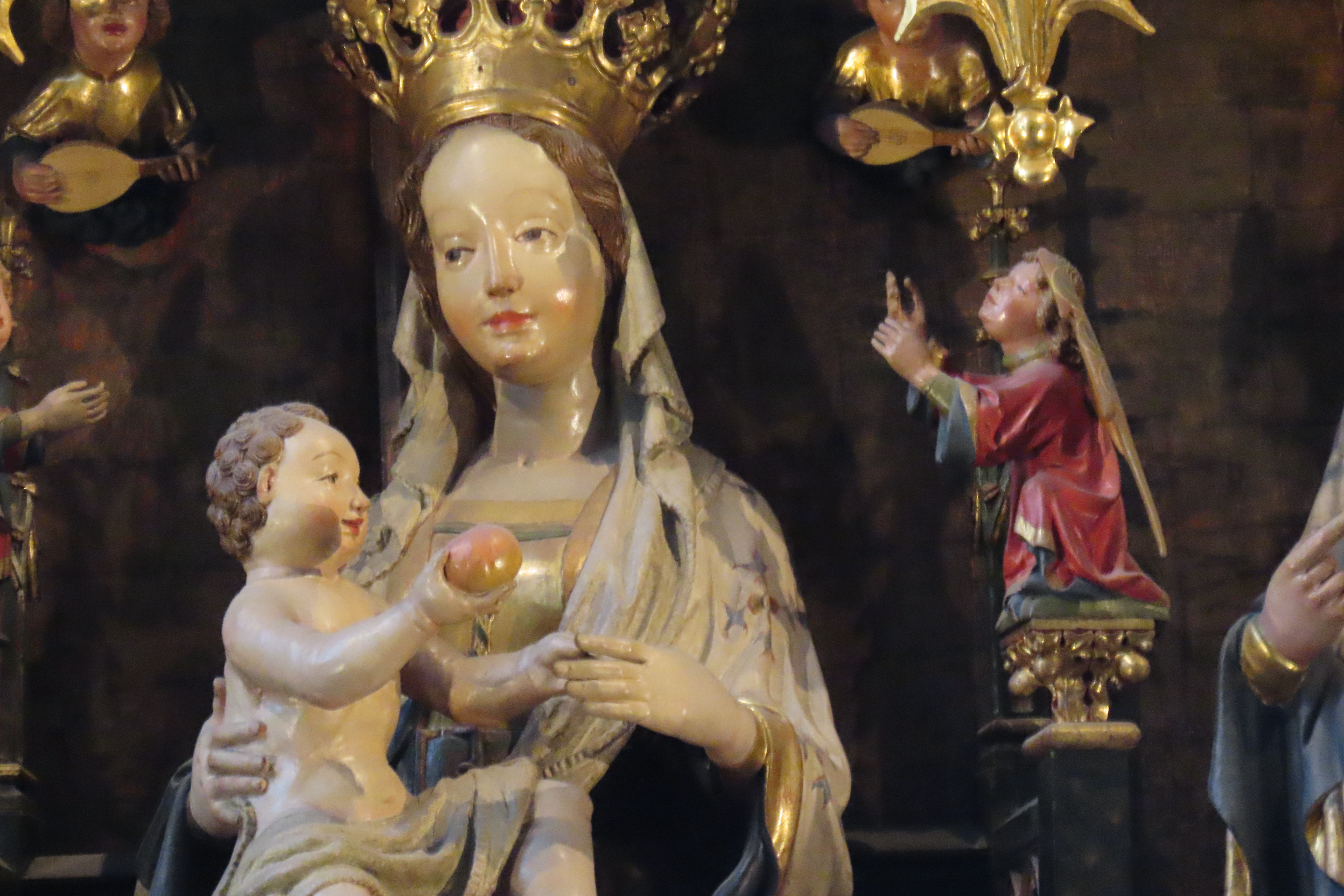
Here’s another symbol, Baby Jesus and his apple. It refers to him as the New Adam who will redeem humankind. I couldn’t help thinking, “Here Mom, your really should try this apple. Snake says it’s great.”
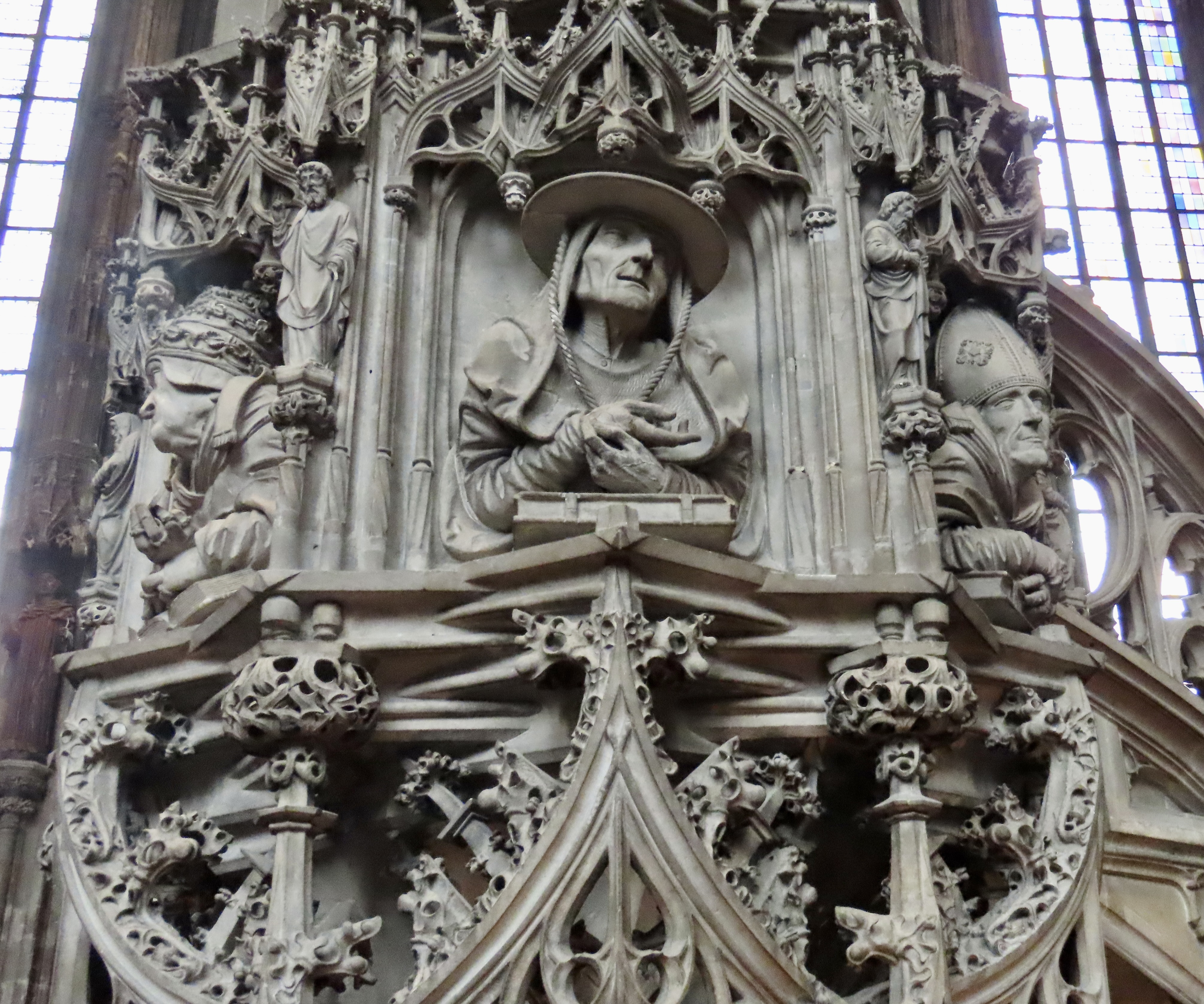
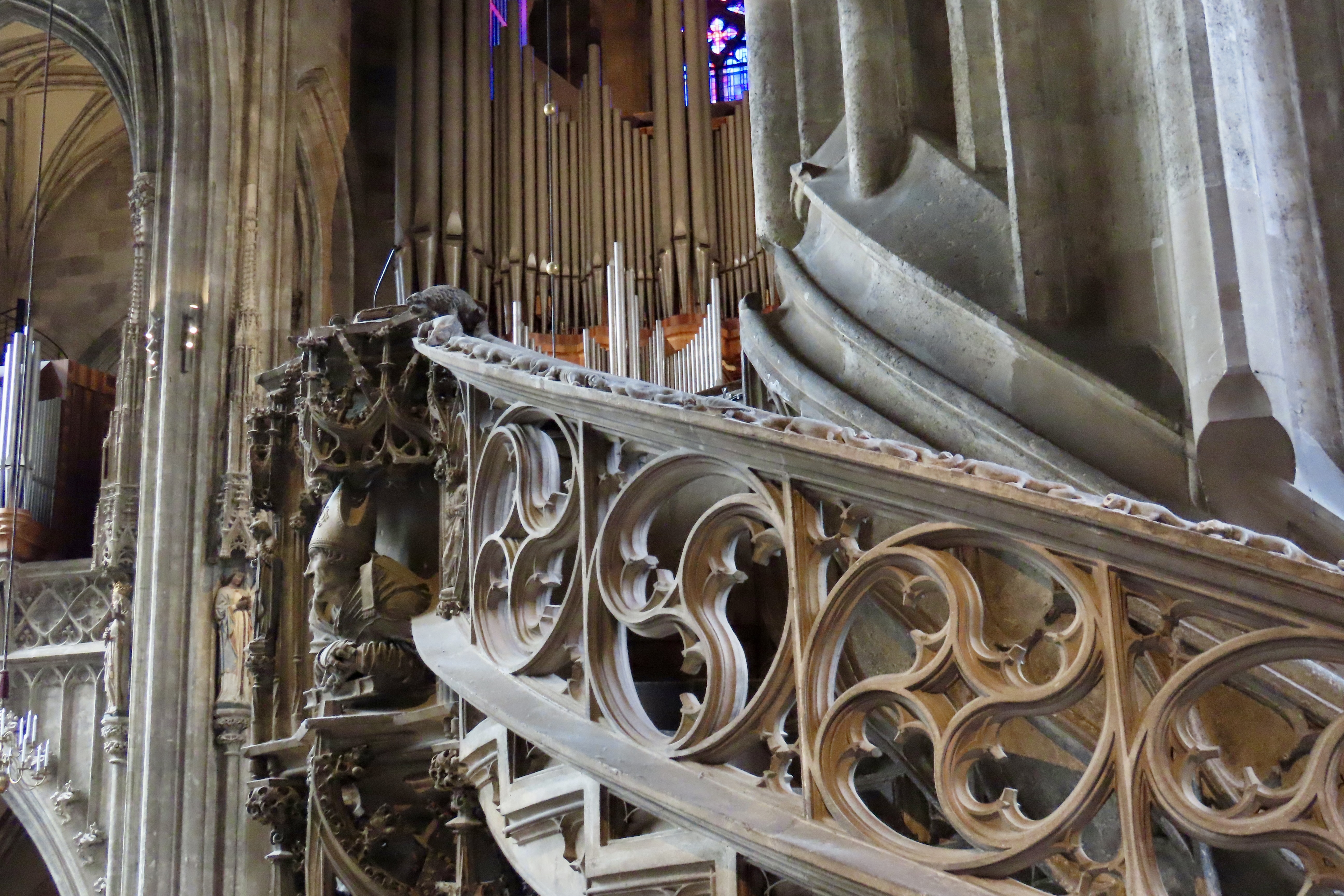
The church’s pulpit is quite impressive. it includes realistic stone sculptures of the Four Fathers of the Catholic Church: Augustine, Jerome, Ambrose, and Gregory. The pulpit is found in the central part of the church rather than in the front. In the era before microphones, this was necessary for the priest to be heard. Note the balustrade on the right…
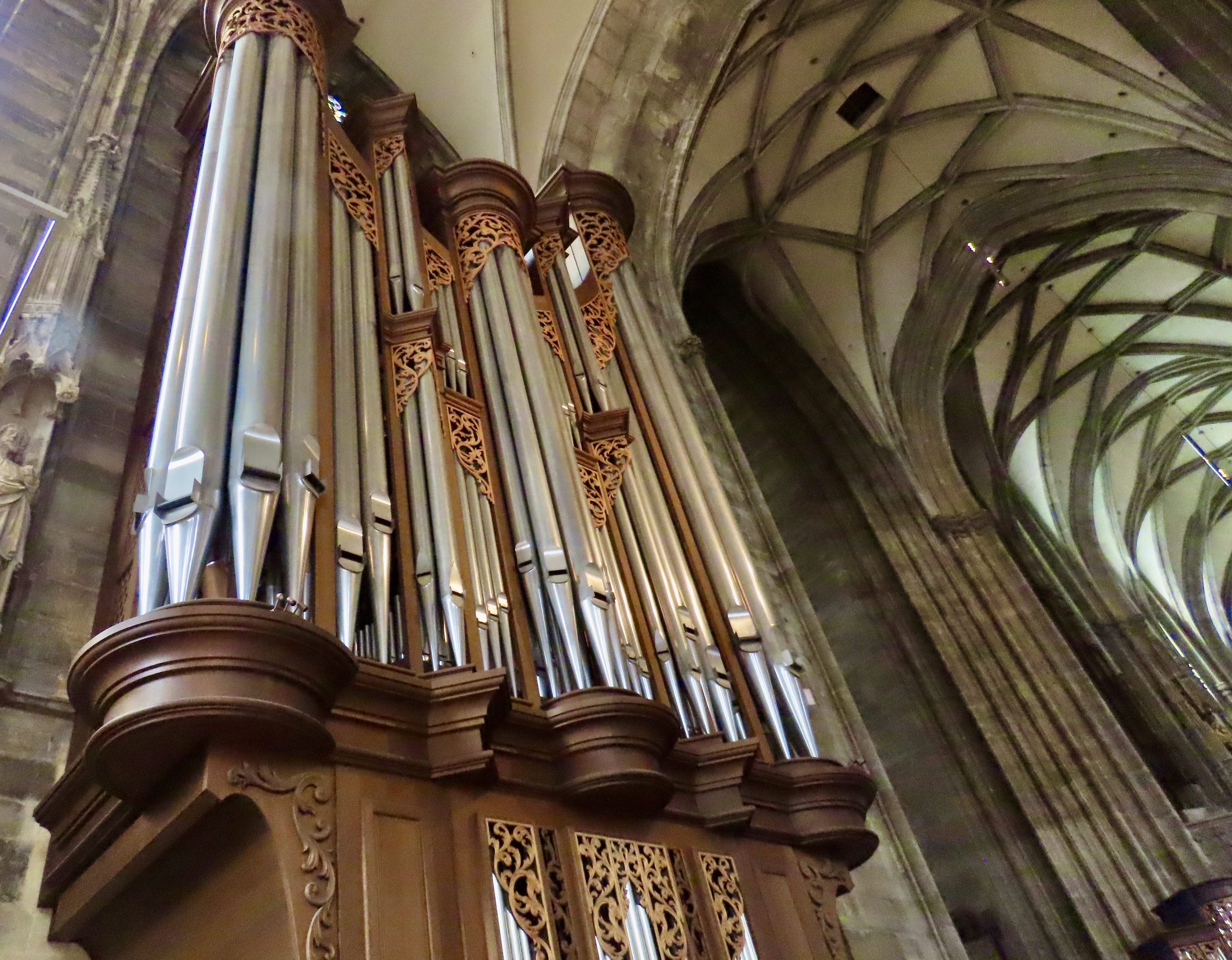
It was covered with frogs and lizards biting each other, which, according to our guide, was to remind the priest/bishop/cardinal mounting the stairs of his many sins. A stone dog stood guard at the top of the steps to protect the speaker while he gave his sermon. Even then, it appears that dogs were considered man’s best friend. Cats, associated with women, were considered evil. Hmmm. An impressive organ can be seen beyond the stairs.
Every cathedral we visited on our journey down the Danube had one. Looking at this one, I was reminded of the first massive organ I ever saw. I was on an Episcopal Church related trip in the early 60s and we stopped off at Grace Cathedral in San Francisco. At the time, Grace was one of the most progressive churches in America. It still is. My minister, Father Baskin, grinned at me and sat down at the keyboard. The sound was incredible, echoing throughout the church. He played an old ditty that I was familiar with, “The worms crawl in, the worms crawl out, the worms play pinnacle on your snout.” Father Baskin was one of the best men I have ever known. He was my kind of priest.
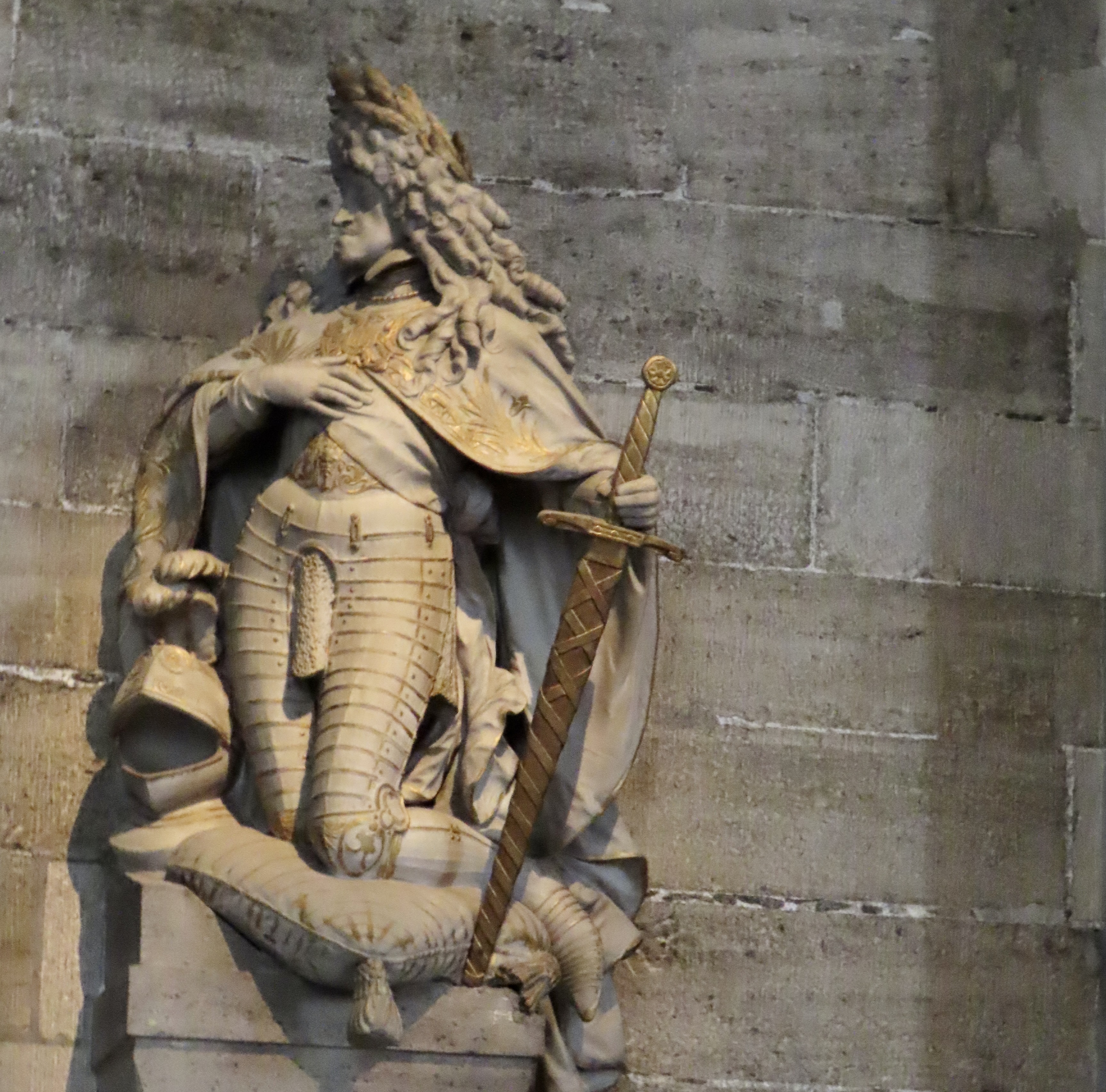
There were many other strange sights that caught my attention as I wandered around the church, including this knight with his codpiece, meant to protect his vitals during battle. They were quite the fashion statement of the time and kept getting longer and longer. And don’t you wonder how his helmet (on the left) could ever fit over his hair.
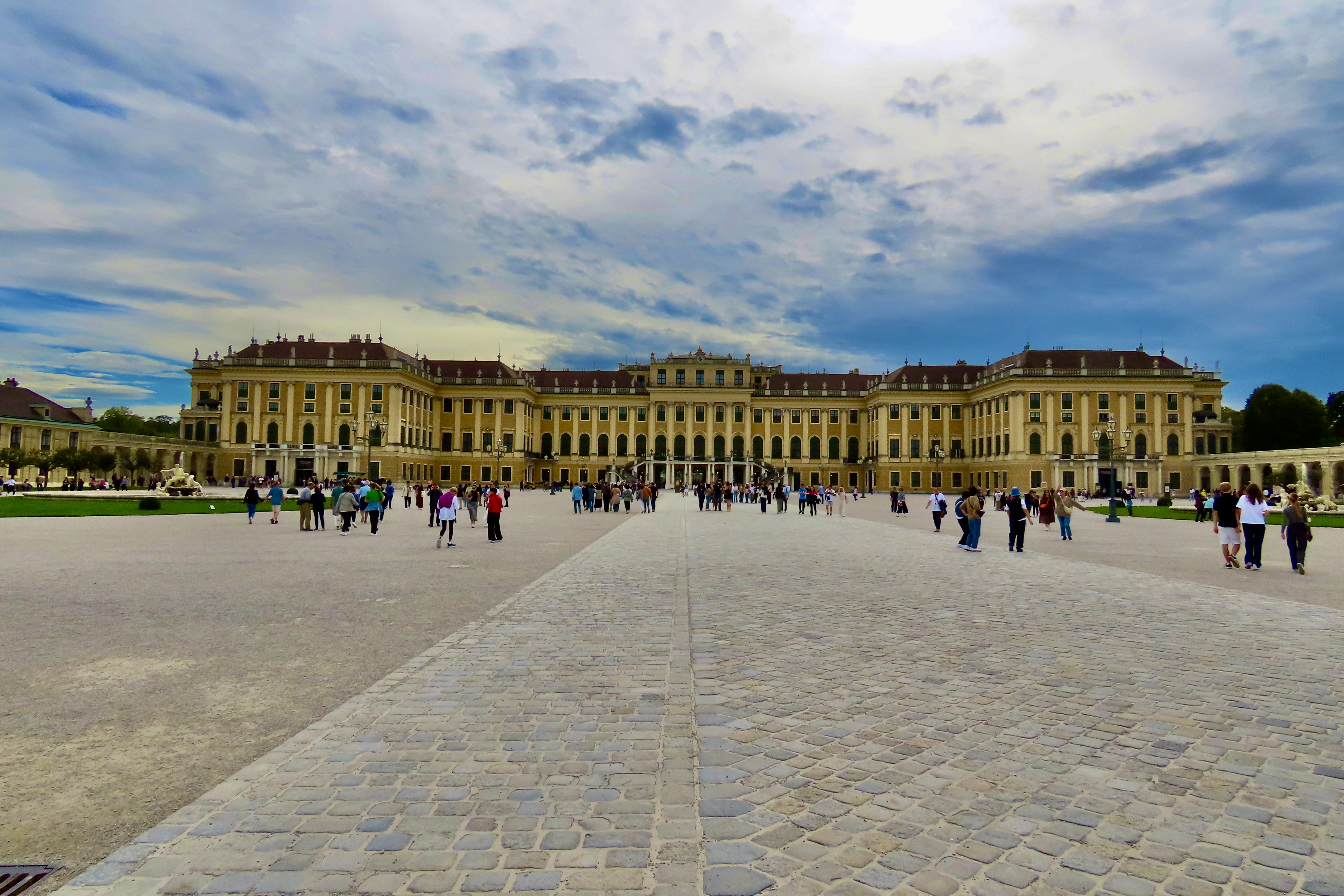
It’s time to move on, however. (Did I just hear, past time!) Next up is Vienna’s Summer Palace.

Victoria Falls or Mosi-oa-Tunya, “Thundering Smoke”… On Safari 23

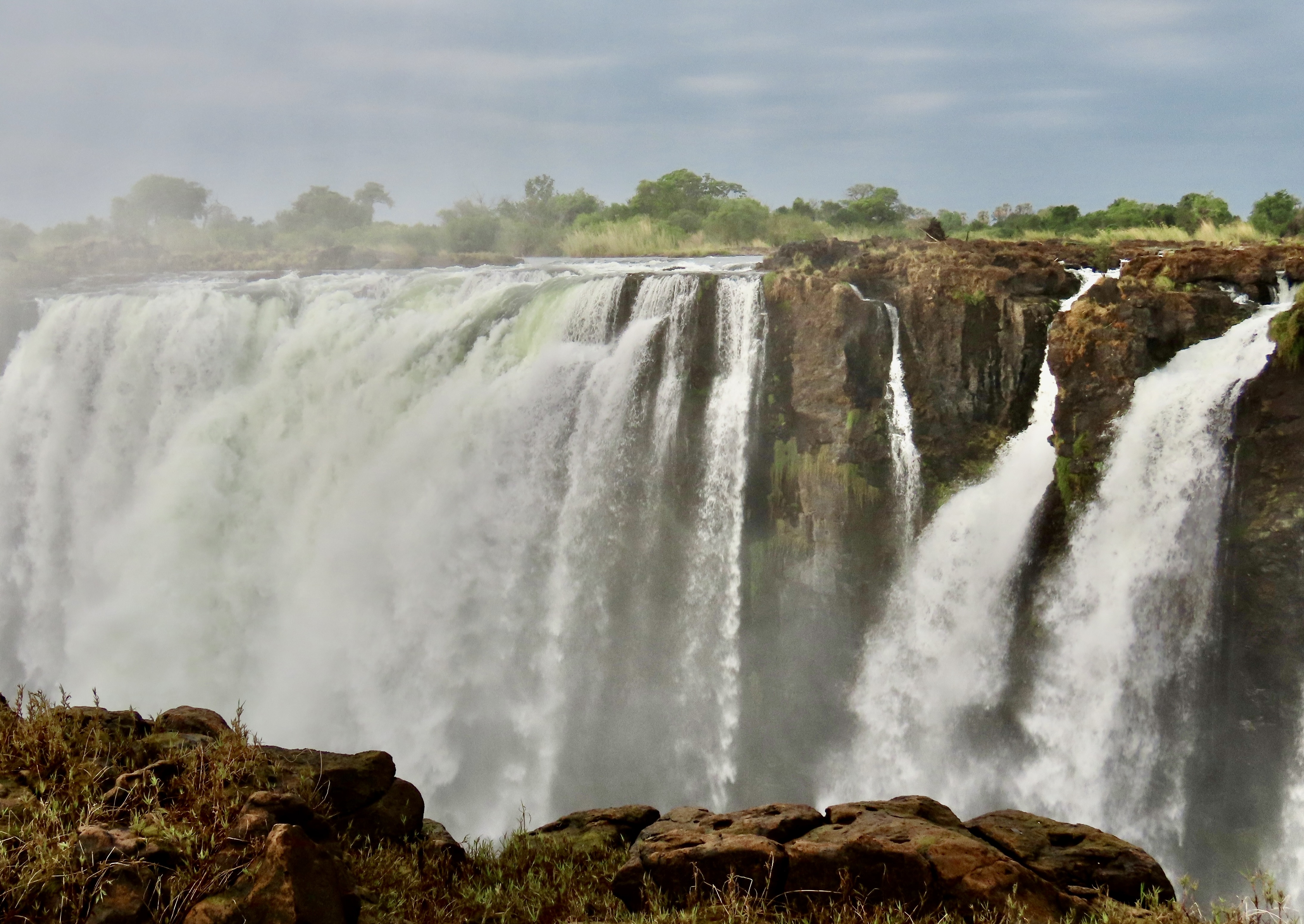
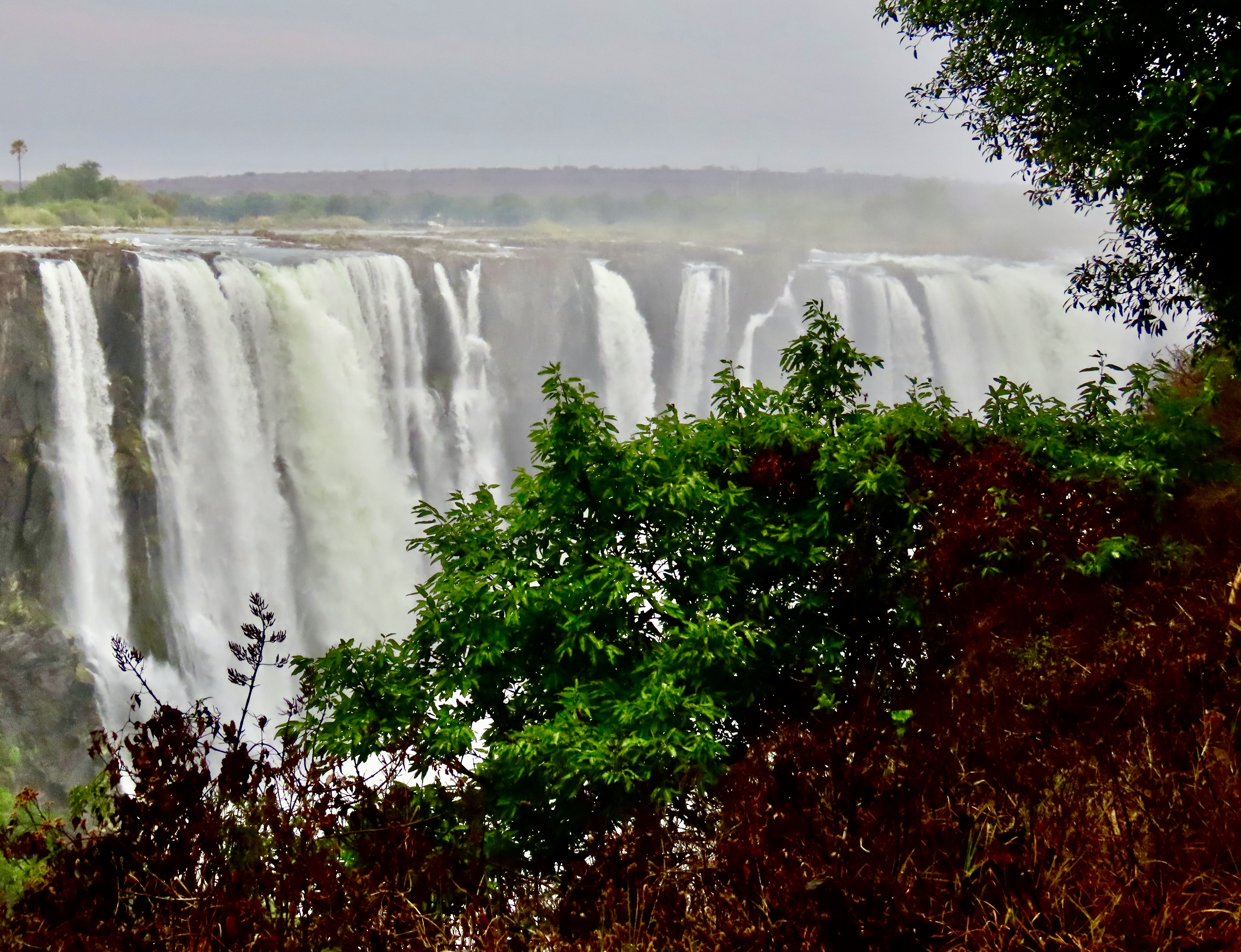
When David Livingston, the seasoned Scottish missionary and explorer, first came upon these roaring falls, one of the largest in the world, he was so impressed he named it after Queen Victoria, England’s long reigning monarch. To the natives of the region, however, the falls were Mosi-oa-Tunya, or “Thundering Smoke.”

I tried, I really did. This was supposed to be my last post on our African Safari. But when I looked through the last thousand photos of scenery, people, and a catch-all-miscellaneous that I considered blog worthy, I just couldn’t do it. Eventually, I got the thousand down to 82. I’ve divided them into three posts. Today I will focus on Victoria Falls and the surrounding area. The second post will wrap-up Chobe National Park, Hwange National Park and Lake Kariba. The last post will feature South Africa.

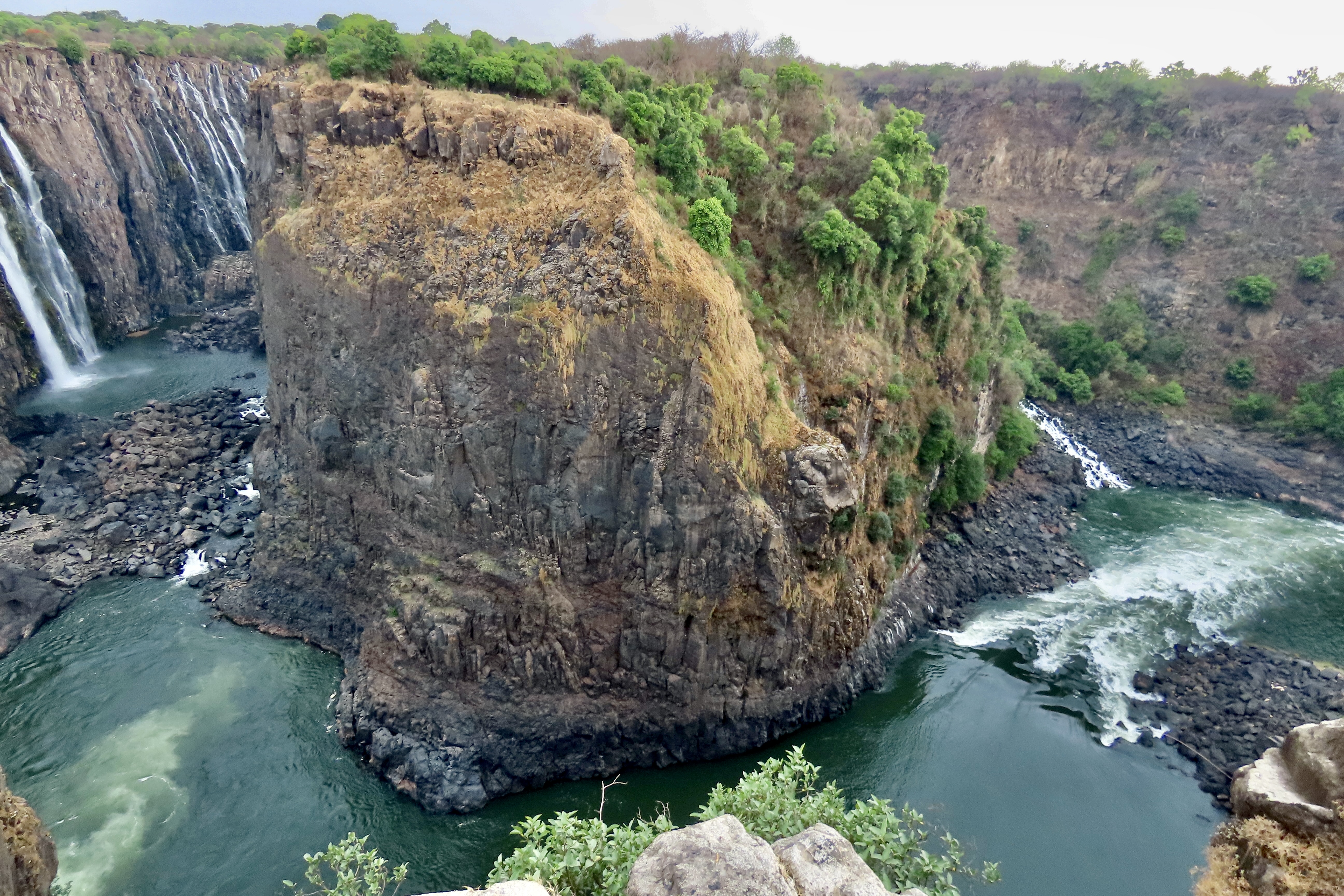
We arrived at Victoria Falls at the end of dry season when the water flow was close to its lowest. Imagine what this looks like at the height of rainy season! Based on its combined width, 5,604 ft (1,708 meters) and height, 354 feet (108 meters), Victoria Falls is considered the largest waterfall in the world. In April, when the river flow is at its peak, the spray sometimes reaches a height of over 2600 feet (800 meters) and can be seen from 30 miles (50k) away.
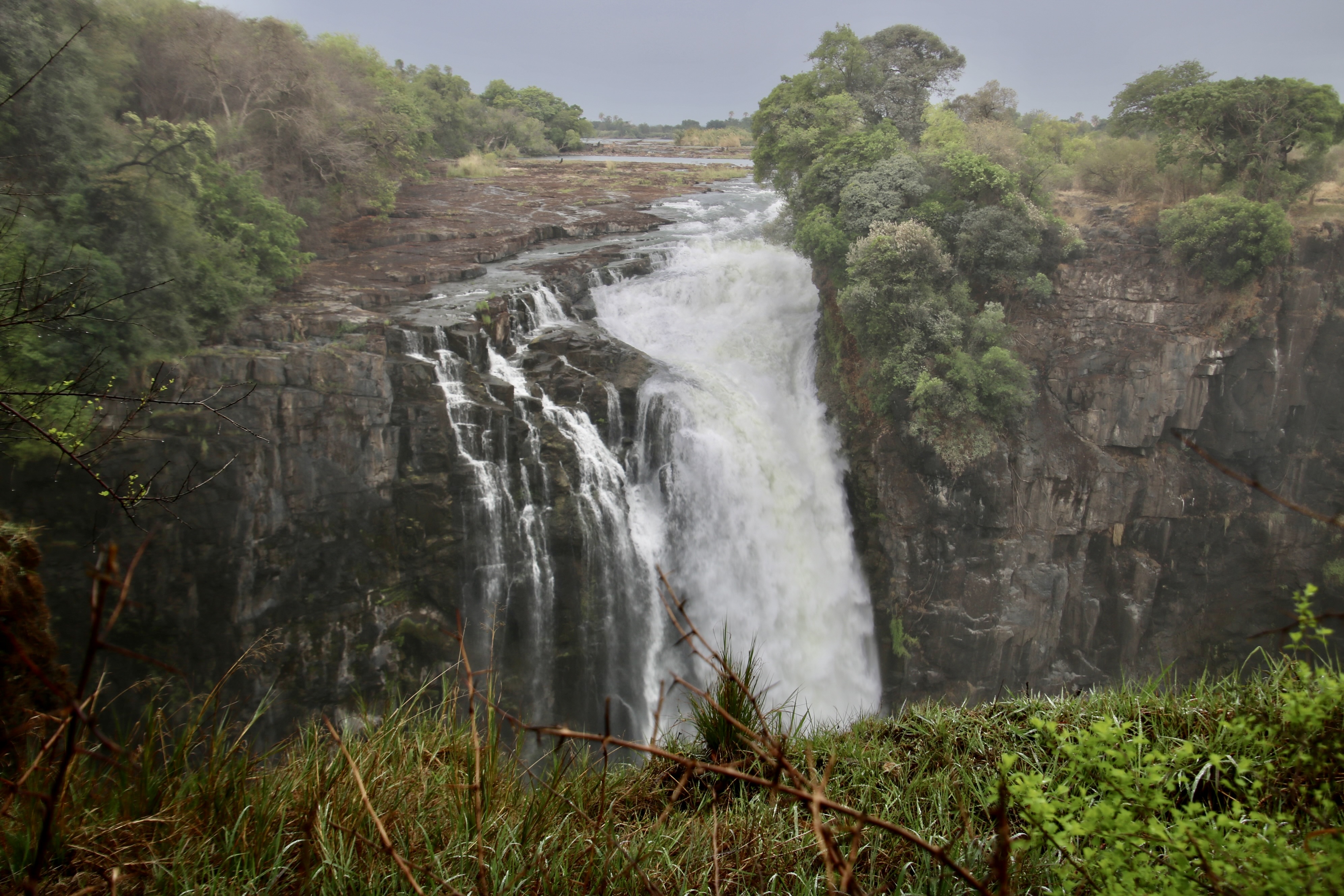
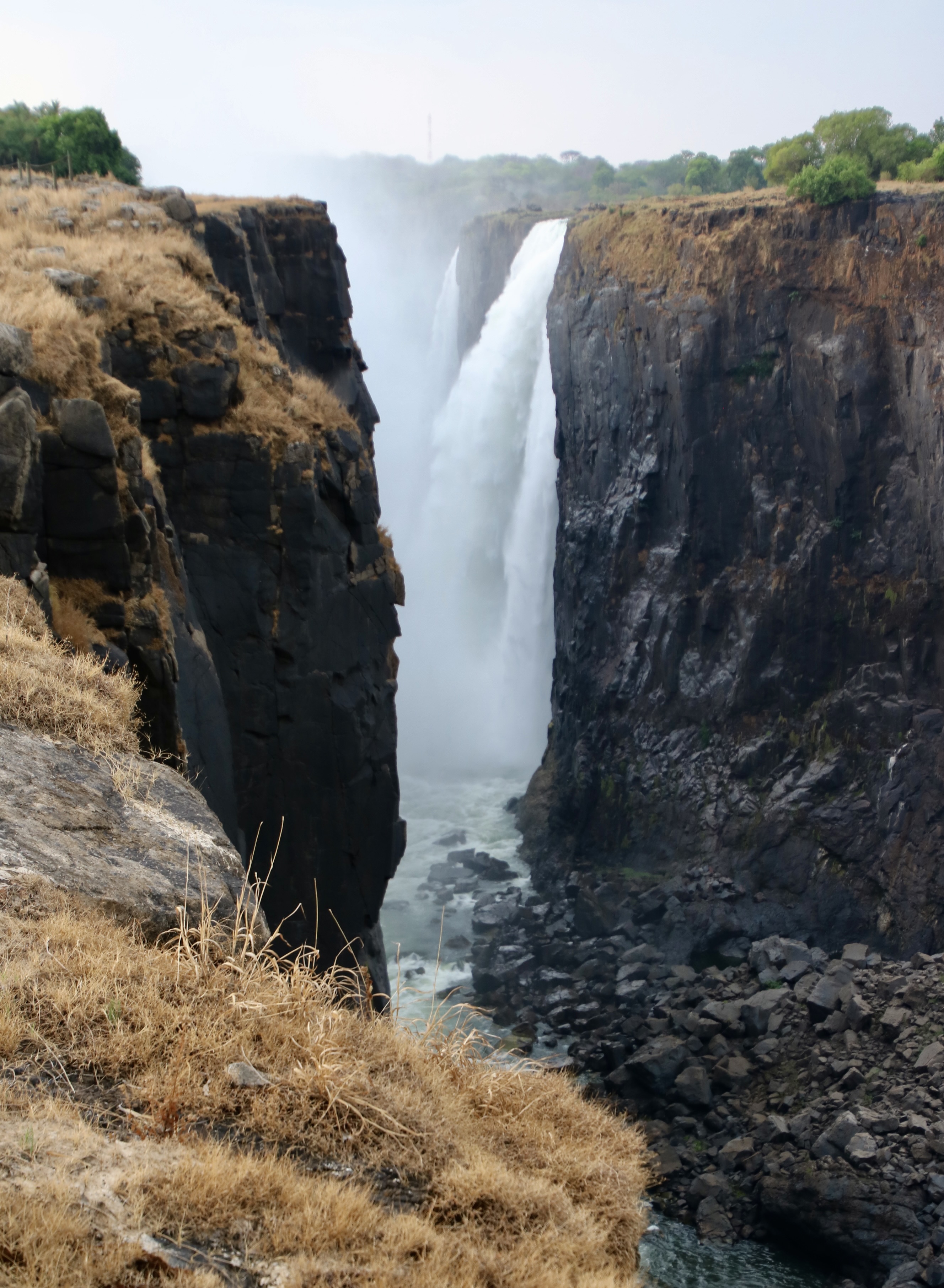
A trail leads along the Zambezi River showing the main falls and several others such as this one that are part of the complex.
Same falls, different view.
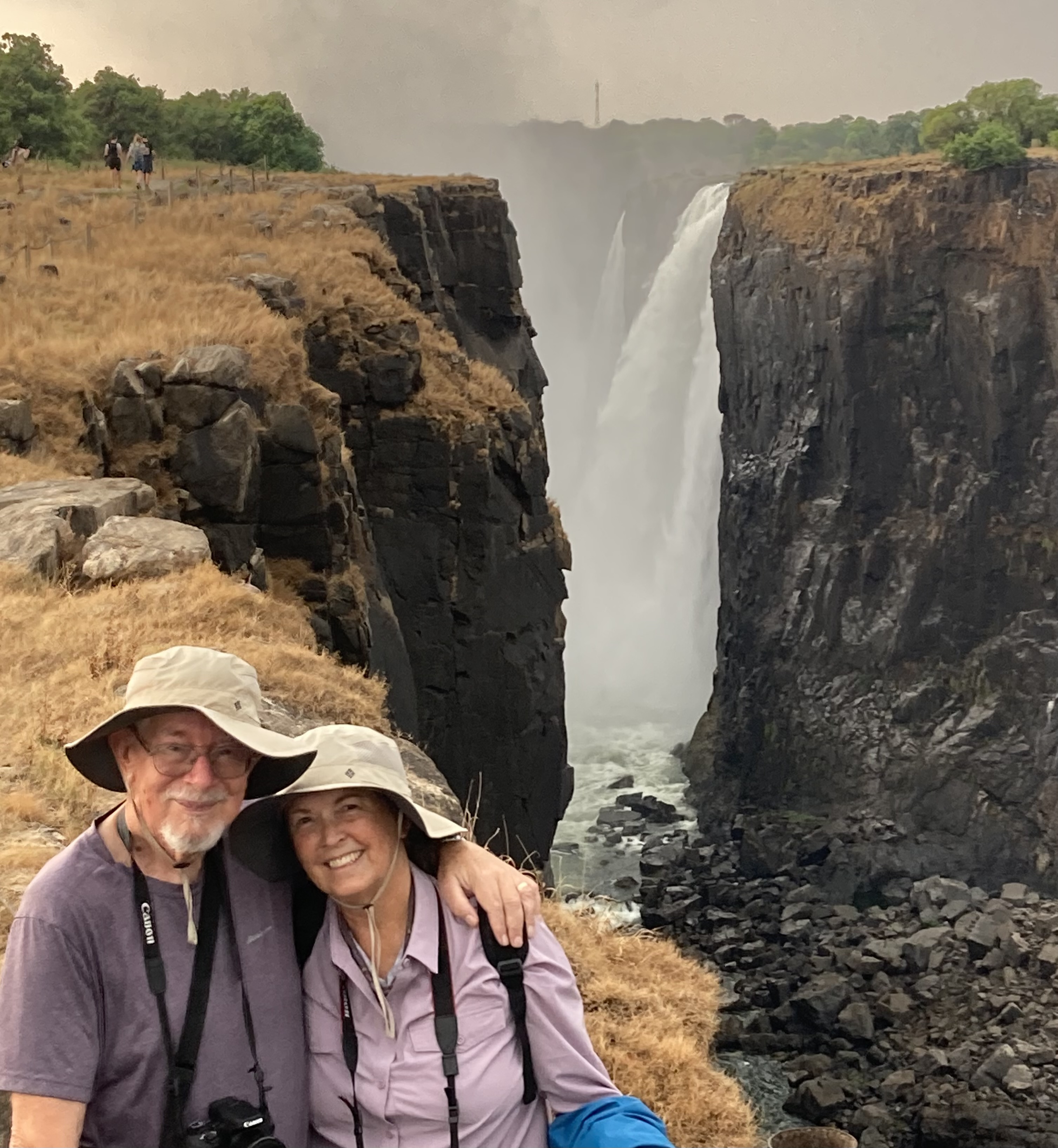
Peggy absolutely loves falls. Whenever we are near one, we detour from our selected route. She was one one happy camper.
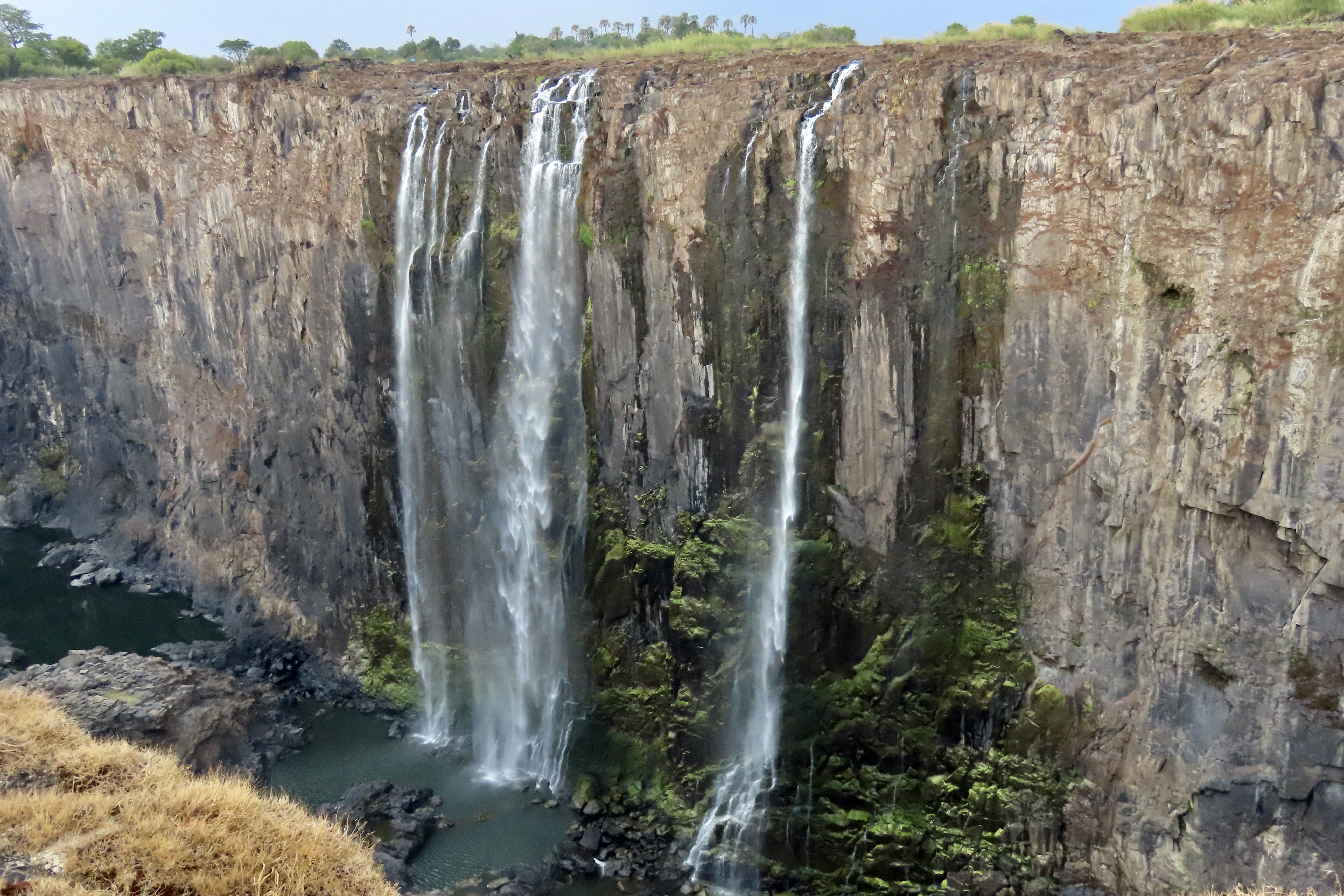
Another view from where we were sitting. During rainy season, this view would be wiped out by the spray.
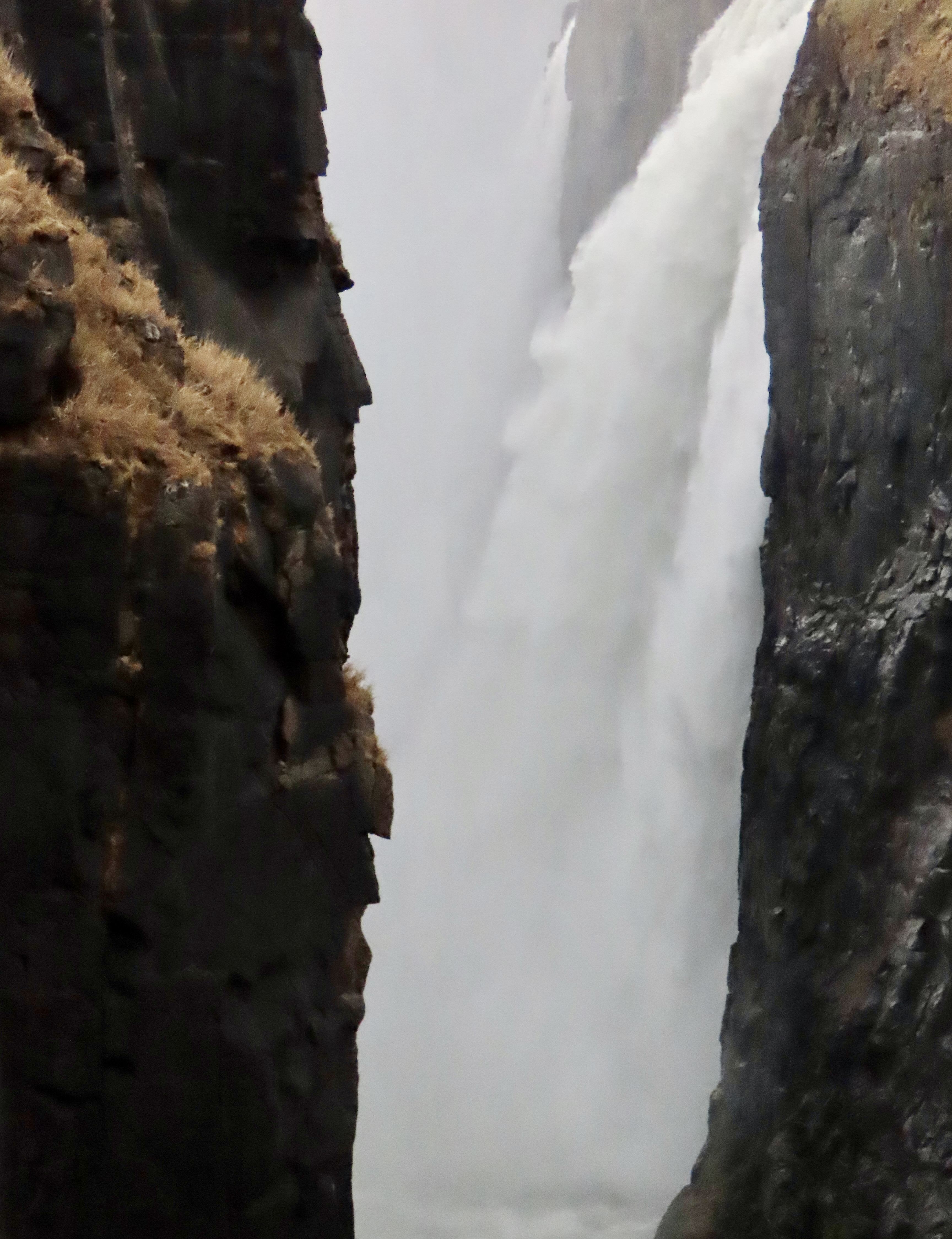
And a close up. Can you hear the roar?
Walking along the trail, we came on these jewels.
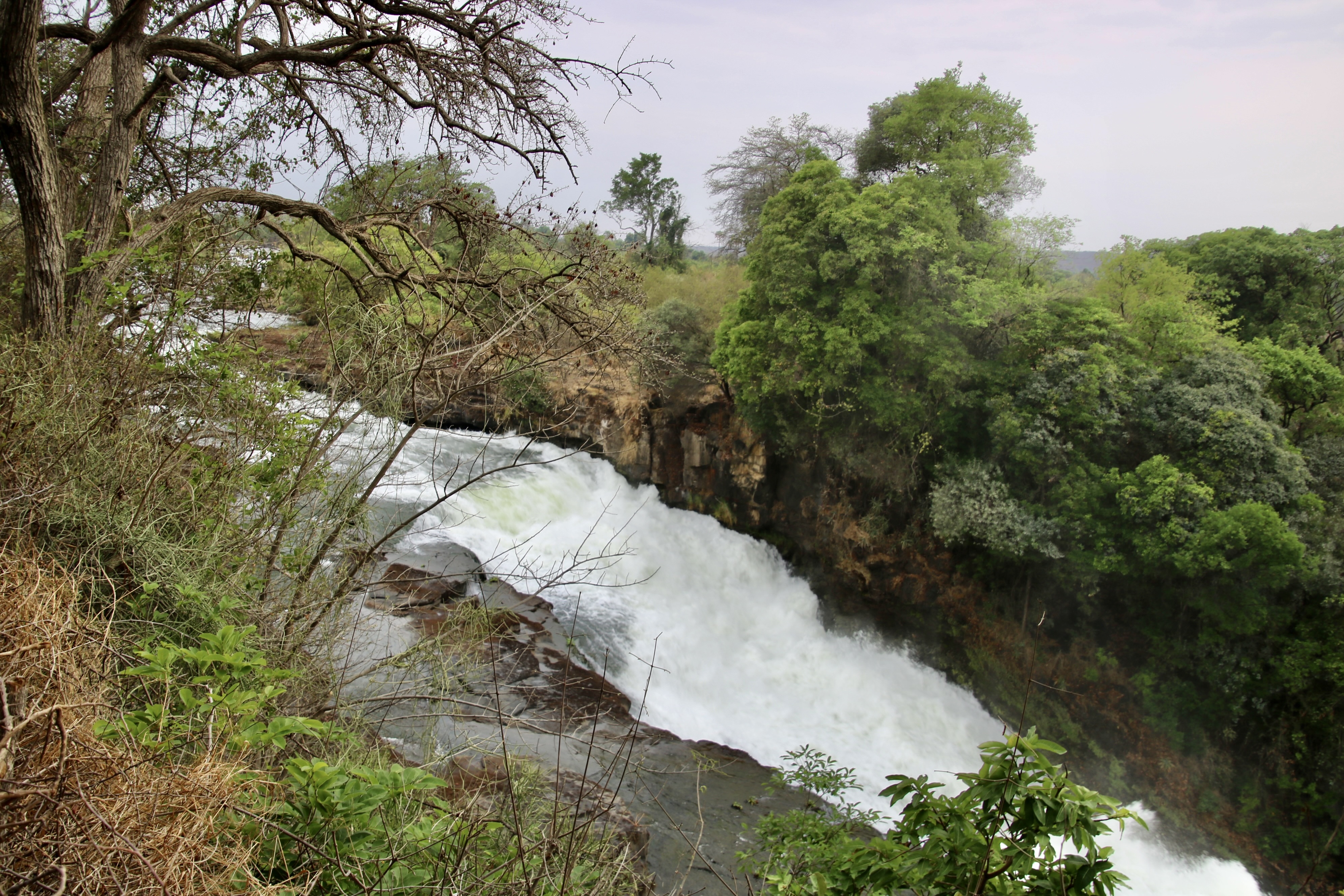
The Zambezi River continues to cut a canyon. Eventually, this may be an island. For now, the river flows out, around this promontory, and on.
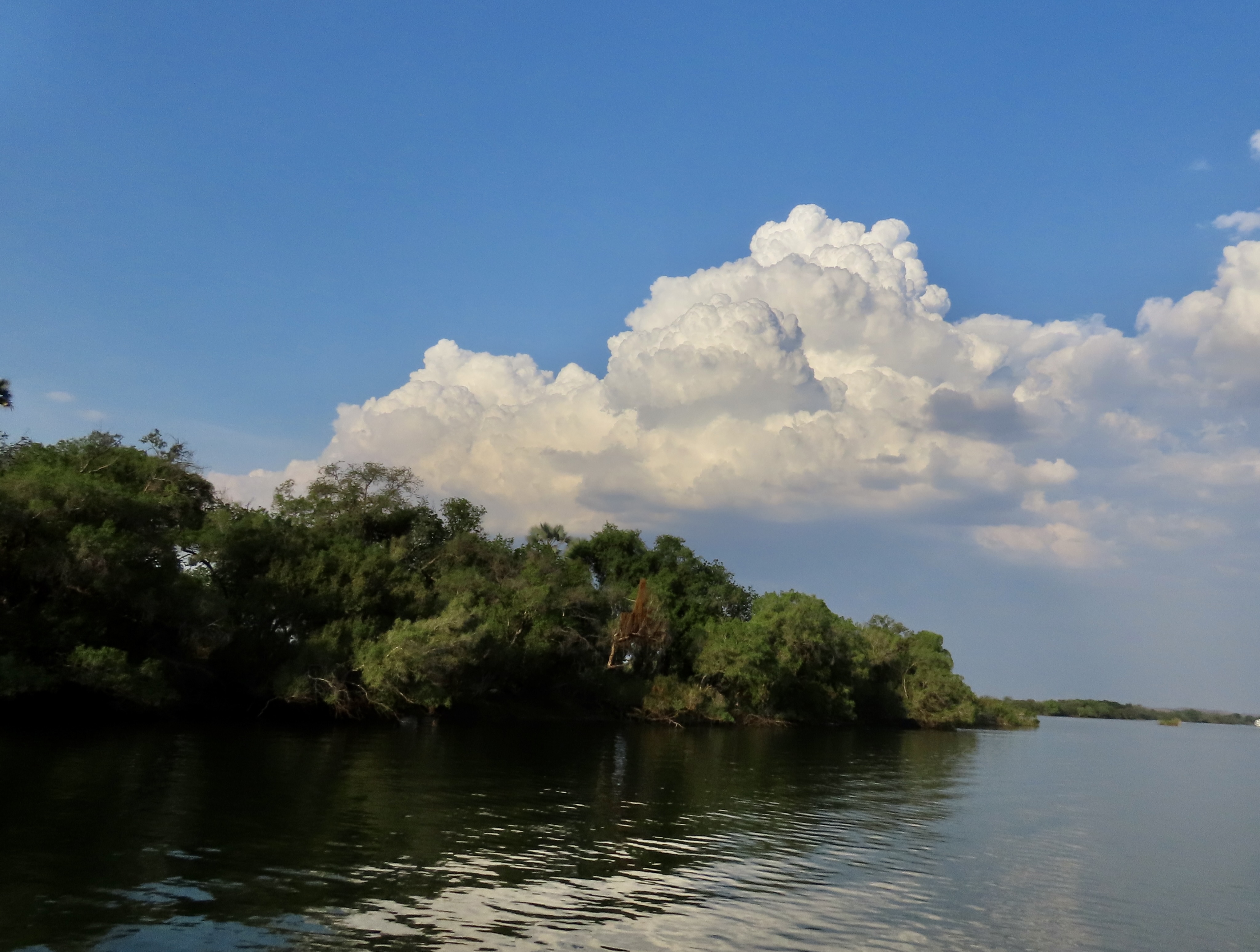
We went on a dinner cruise on the Zambezi River above the falls. Clouds were threatening a beginning to the rainy season. You have already seen crocodiles, hippos, and various birds from this cruise on earlier posts.
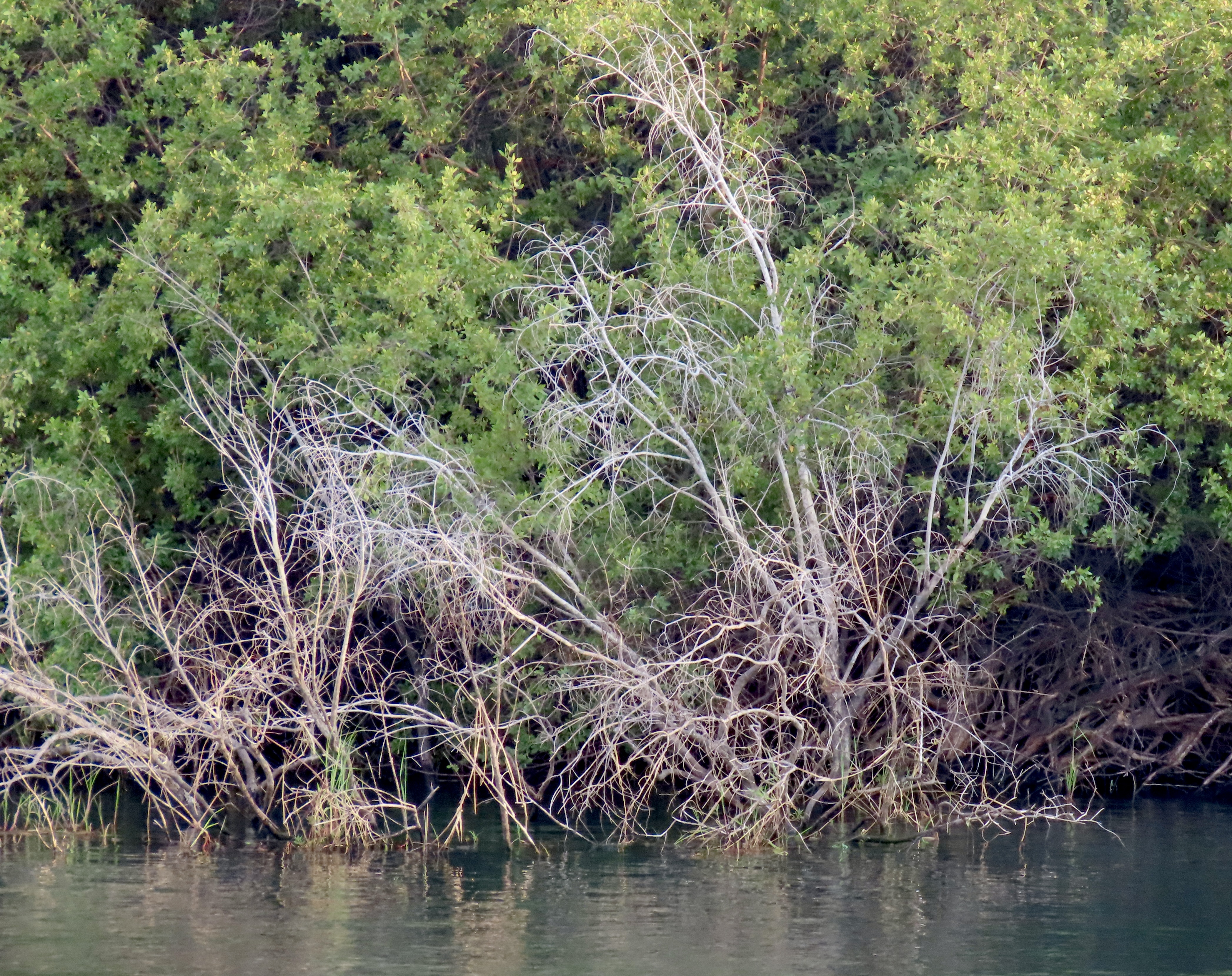
Peggy and I really liked the contrast created by this dead tree and the greenery behind it.
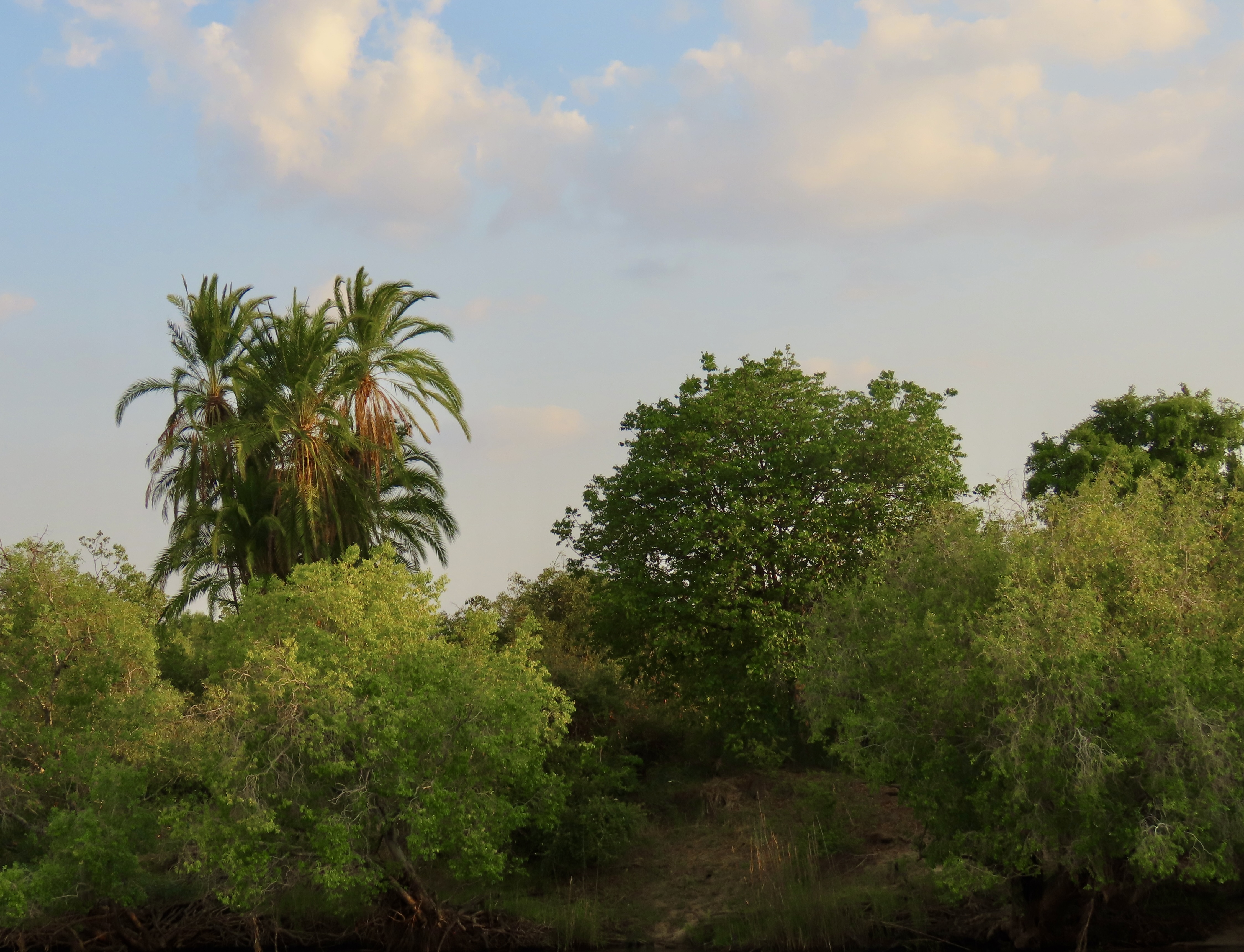
Another view of the trees along the Zambezi.
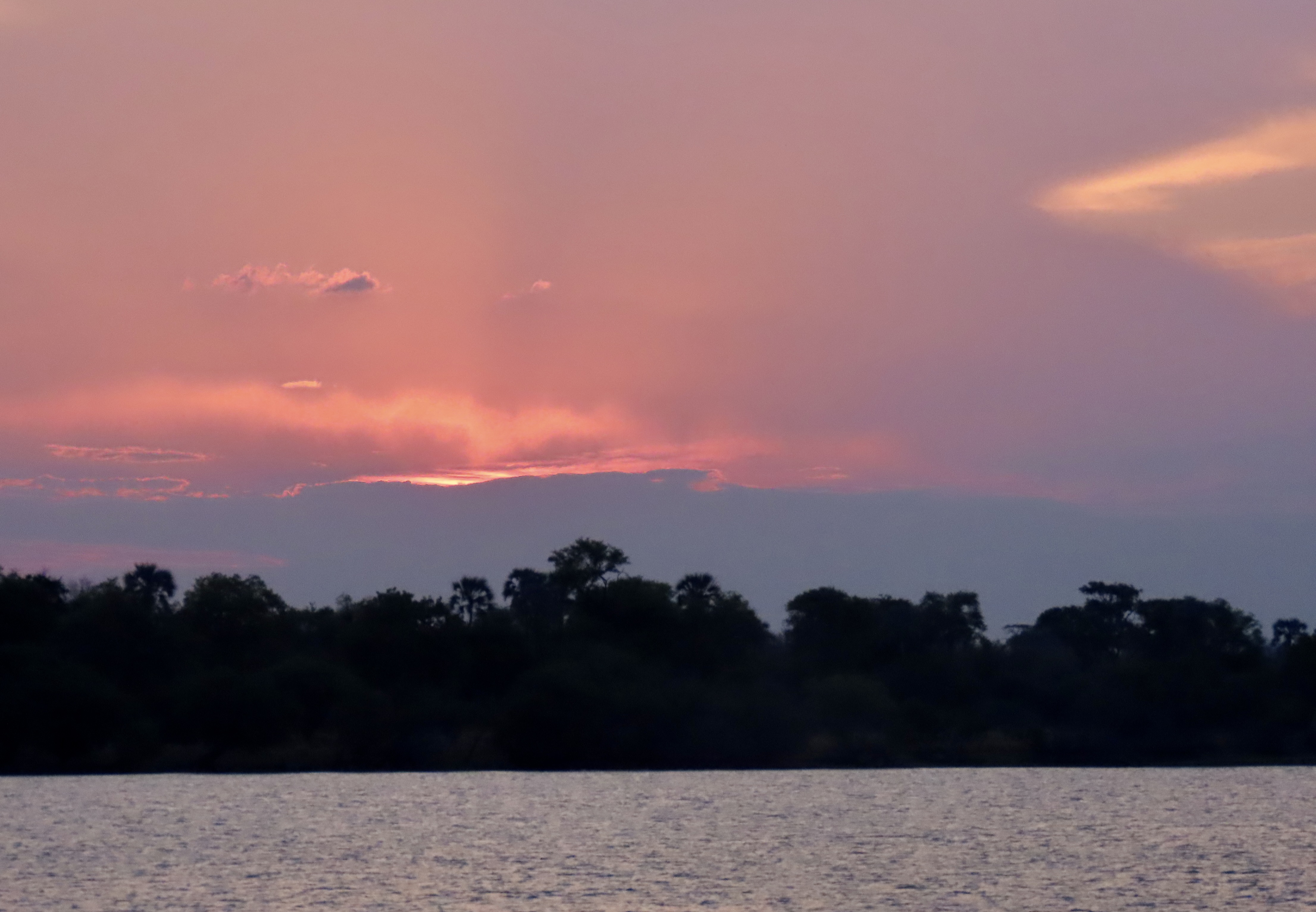
Our evening cruise also brought us a spectacular, ethereal sunset. It was one of many we experienced while we were in Africa. We will be featuring more of them in our final two posts.
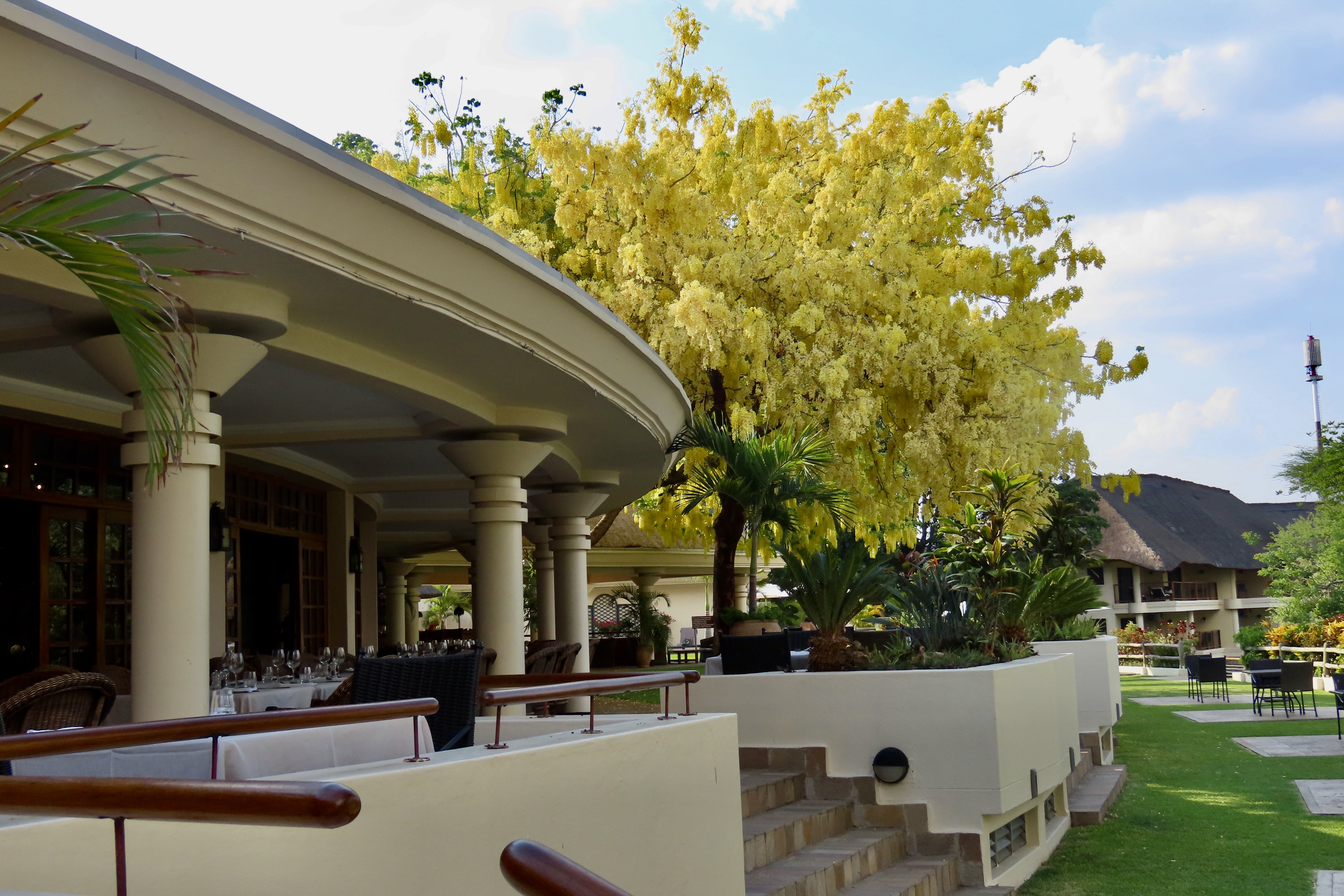
A view of the hotel we stayed at in Victoria Falls. This is the hotel where I was visited by the mongoose.
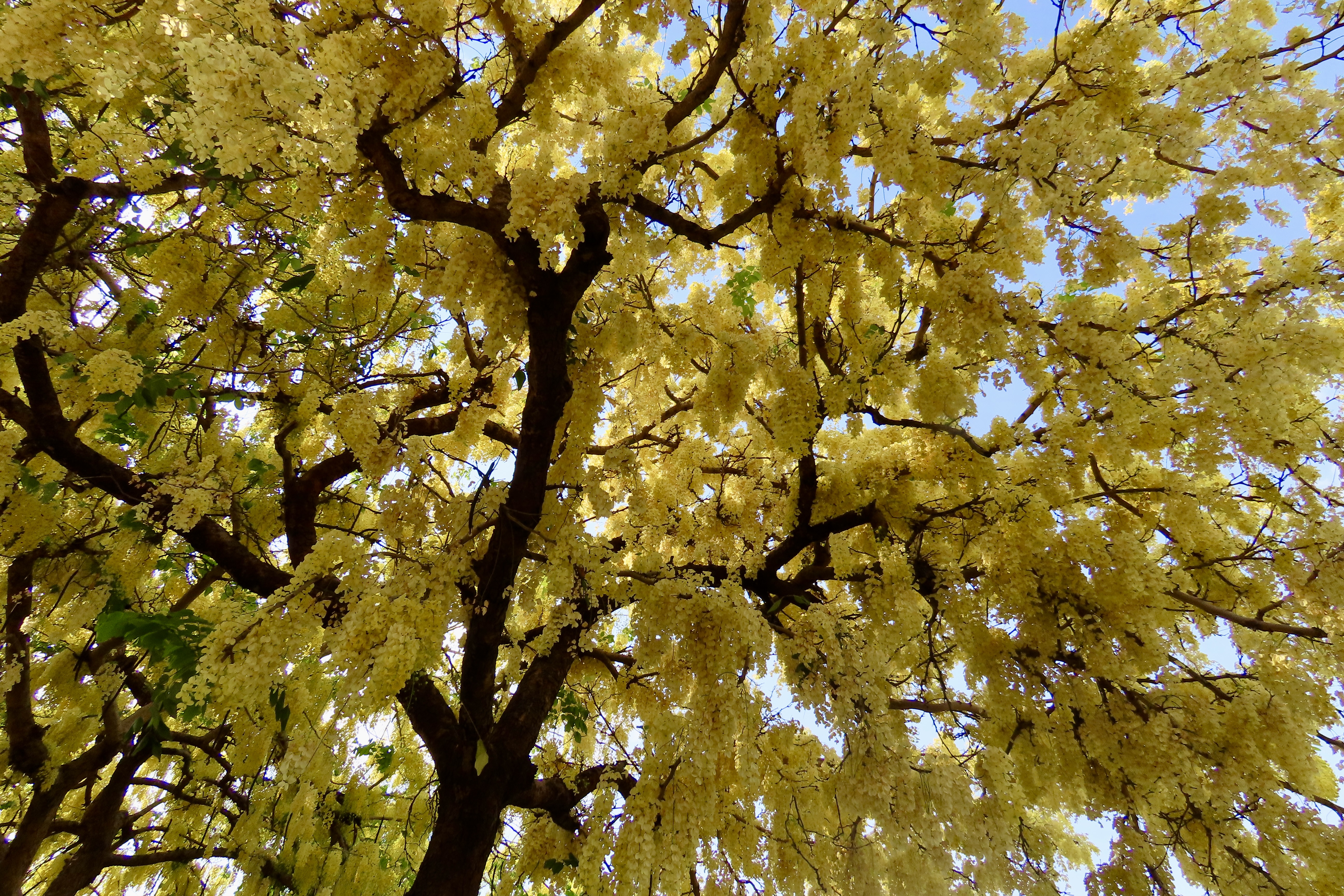
The trees surrounding the hotel were bursting in color.
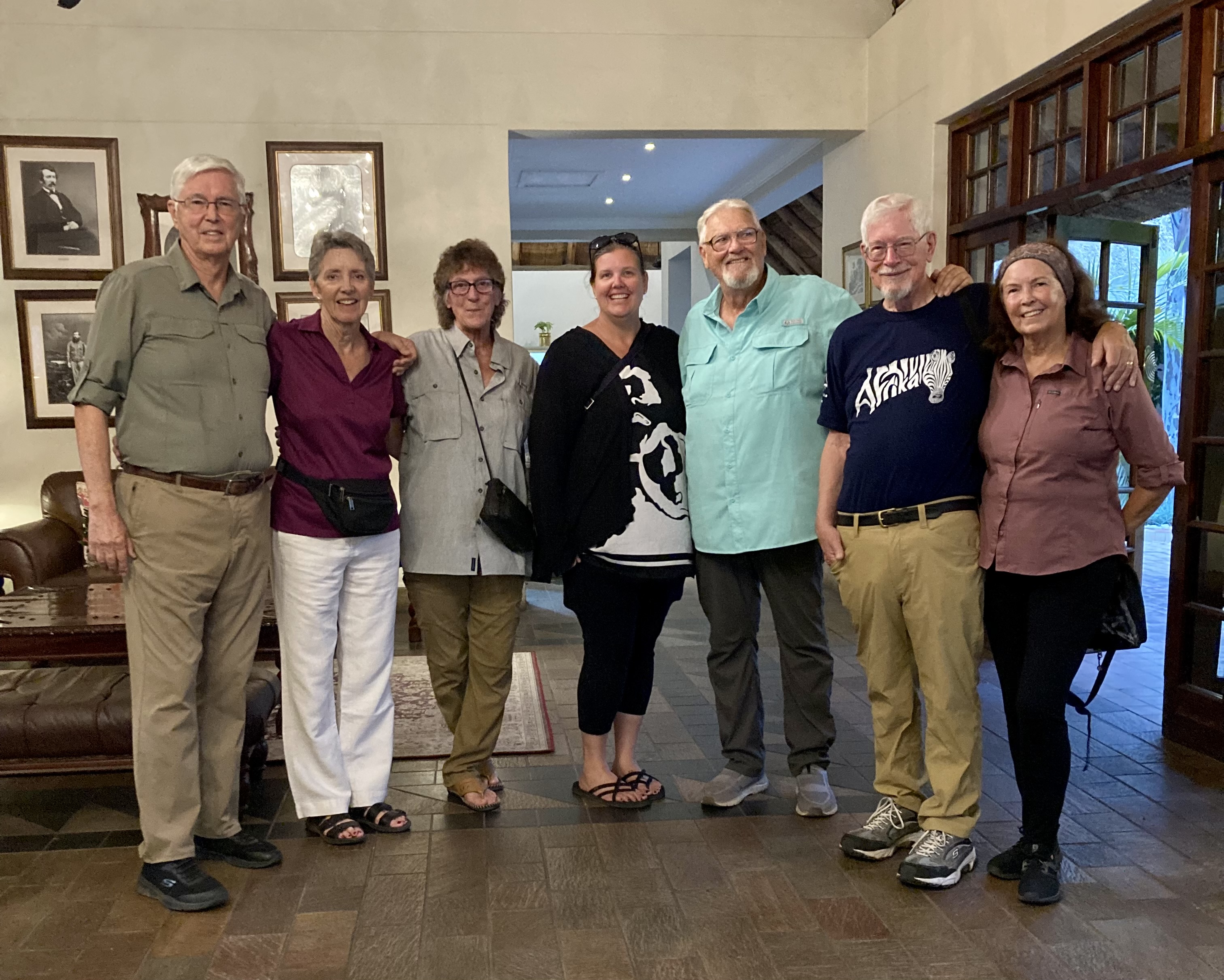
We traveled with a great group of people on our safari through Botswana and Zambia. These are three of the friends we made along with Peggy’s brother John and his wife Frances joining us for a final photo in our Victoria Falls hotel.
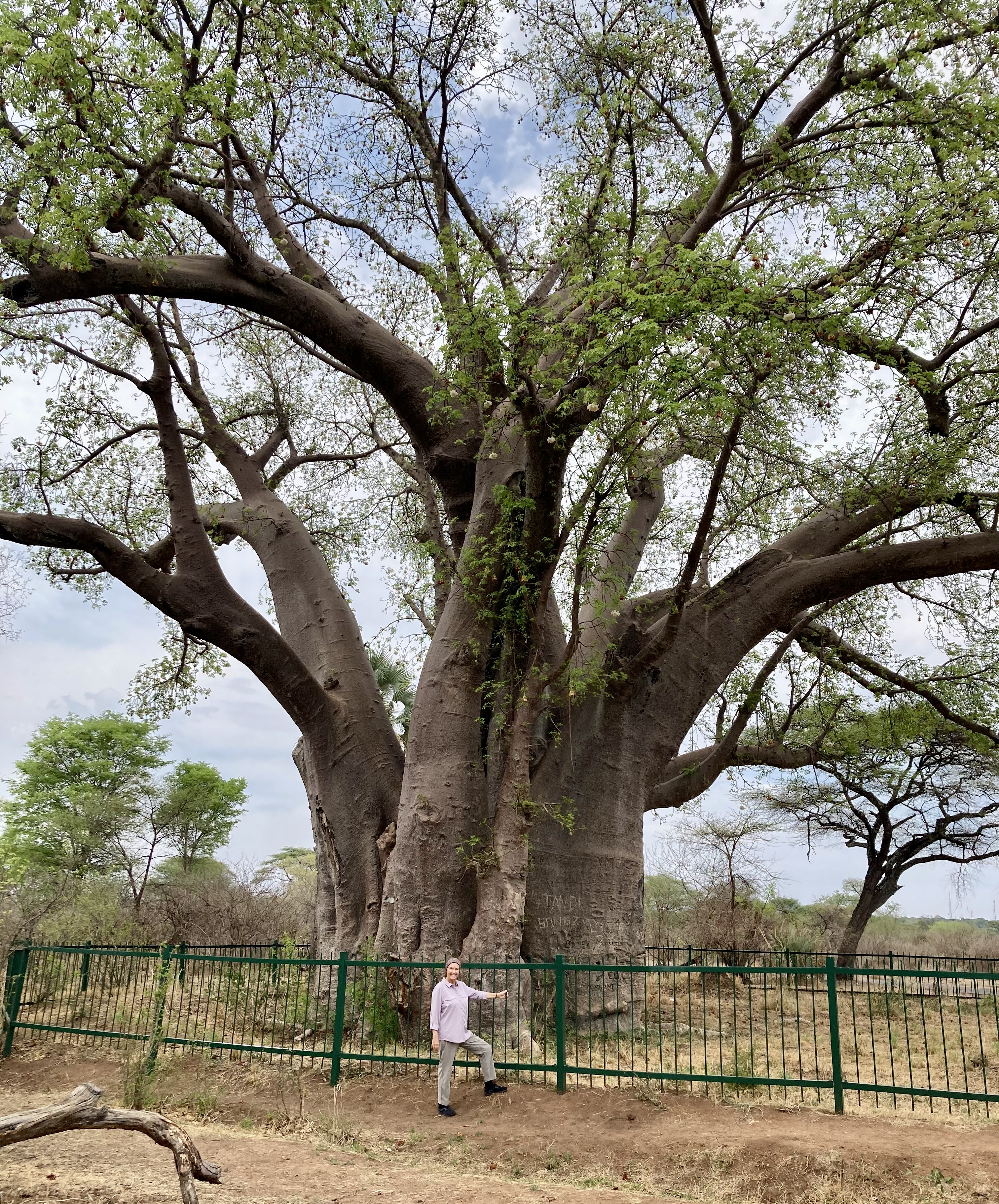
On our way to the airport to fly to South Africa, our guide, Samatha, took us to see this huge baobab tree on the outskirts of Victoria Falls. Peggy provides perspective on its size. This tree is estimated to be around 1200 years old. Its circumference is 73 feet and height 78 feet. A tree this size can hold over 120,000 liters of water, over 31,000 gallons.
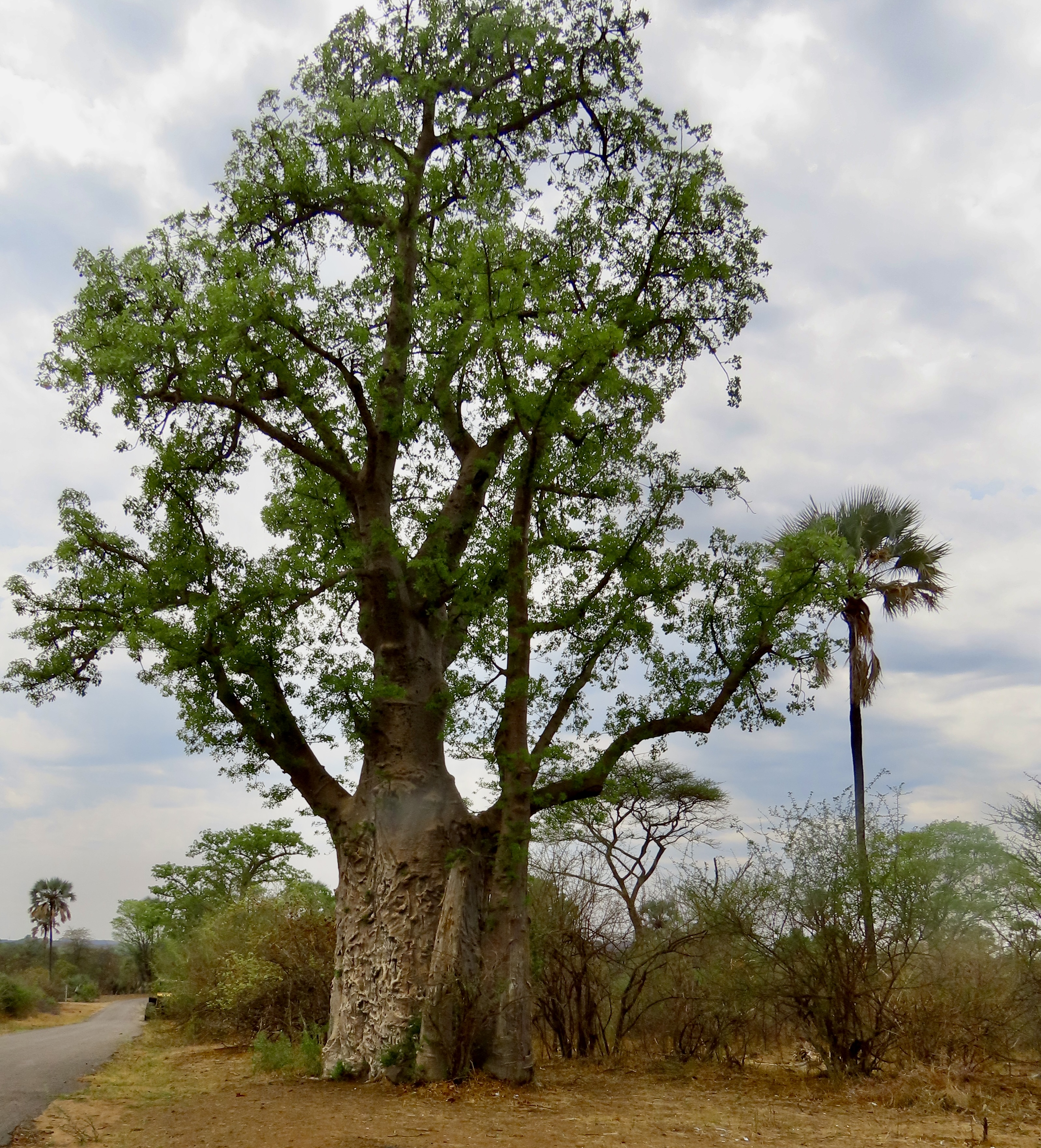
Another large baobab tree stood next to the giant.
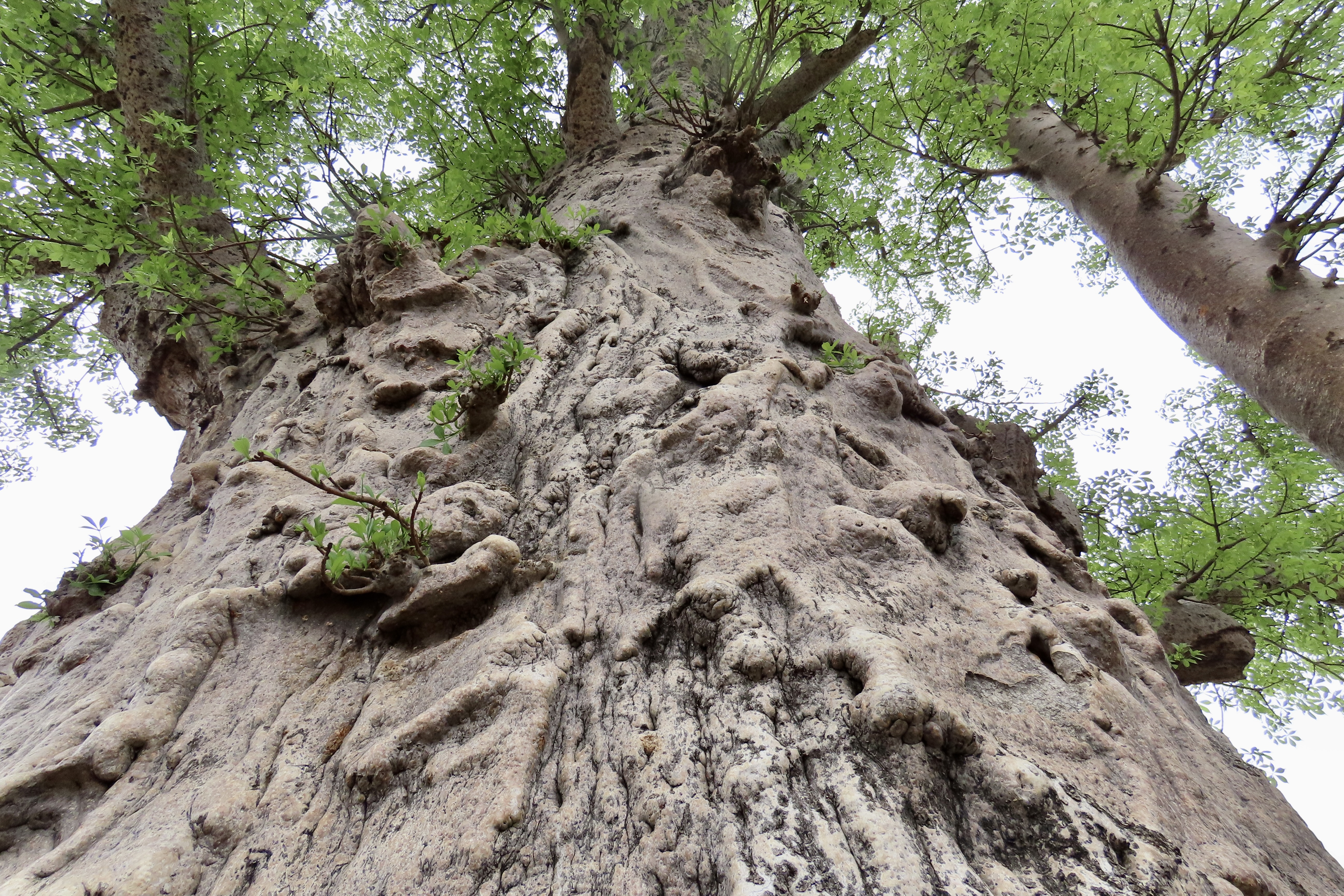
I took a photo from the base of the tree up. The scarification is likely caused by elephants that love to feed on its bark. That’s it for today. Our next post will feature final scenes from Chobe National Park, Hwange National Park and Lake Kariba.
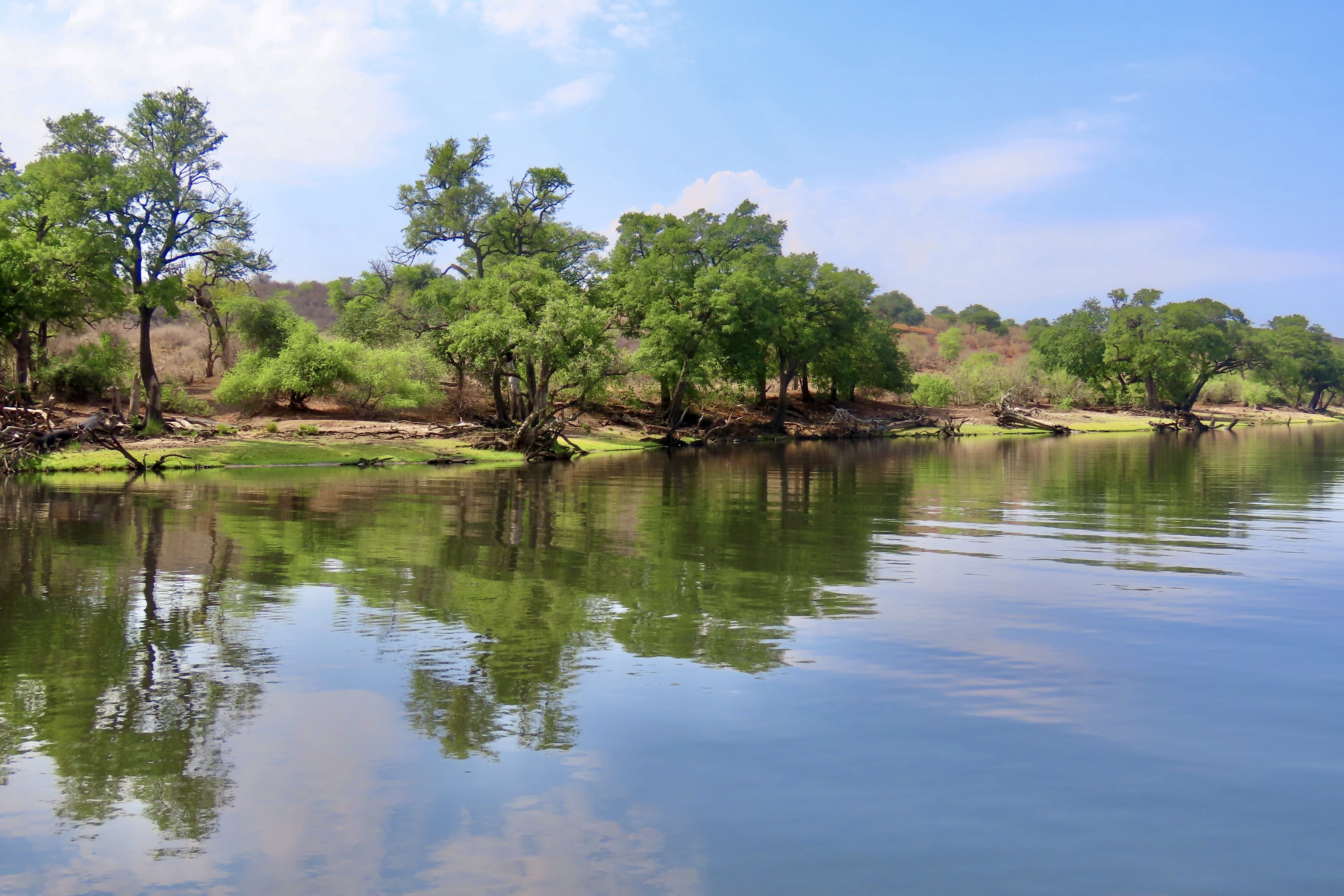
View along the Chobe River in Chobe National Park, Botswana.

Who’s a Pretty Bird… Florida’s 10,000 Islands and Big Cypress National Preserve

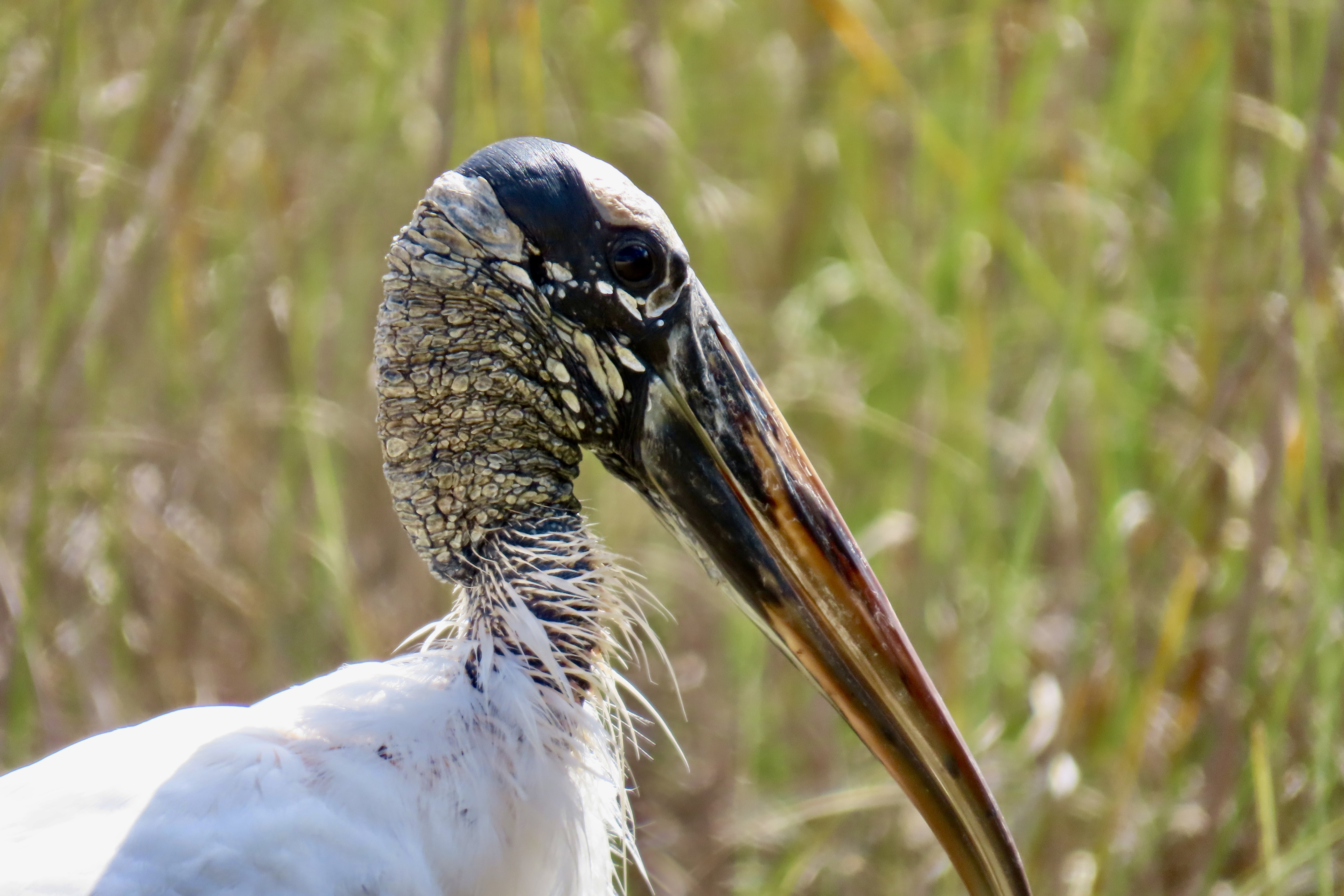
Well maybe not pretty, but we thought the neck colors of this wood stork we found standing next to the road in Big Cypress National Preserve rather striking. We asked her if she hired out for delivering babies. Her response was, “Are they tasty?”

Peggy and I visited two different areas during our recent trip to the Everglades. The first was Everglade City that I will be blogging about today. It’s a small town on the southwest Gulf Coast that has a feel of old Florida. It’s far away from the huge populations and hustle-bustle of the southeast coast where Miami reigns. We could easily walk anywhere in town and meet friendly people, including a few old timers who fit the description of quirky. Our kind of folks.

The town’s primary source of income is the tourist trade that comes to experience the natural wonders and adventures provided by the Everglades 10,000 Islands and the Big Cypress National Preserve. Local businesses offer a variety of options for exploring inside and outside of the park from airboats and swamp buggies to eco-tours and kayaks. We chose a motorboat eco-tour for the 10,000 Islands area. To start, we drove south from Everglade City for a couple of miles to Chokoloskee Island and the end of the road. Our objective was the old Smallwood Store, which does double duty as a museum and a tour center. The store provided a perspective on the first white settlers in the area. We met out tour guide/boat captain there and headed out into the 10,000 Islands with one other couple. Following are a few highlights.

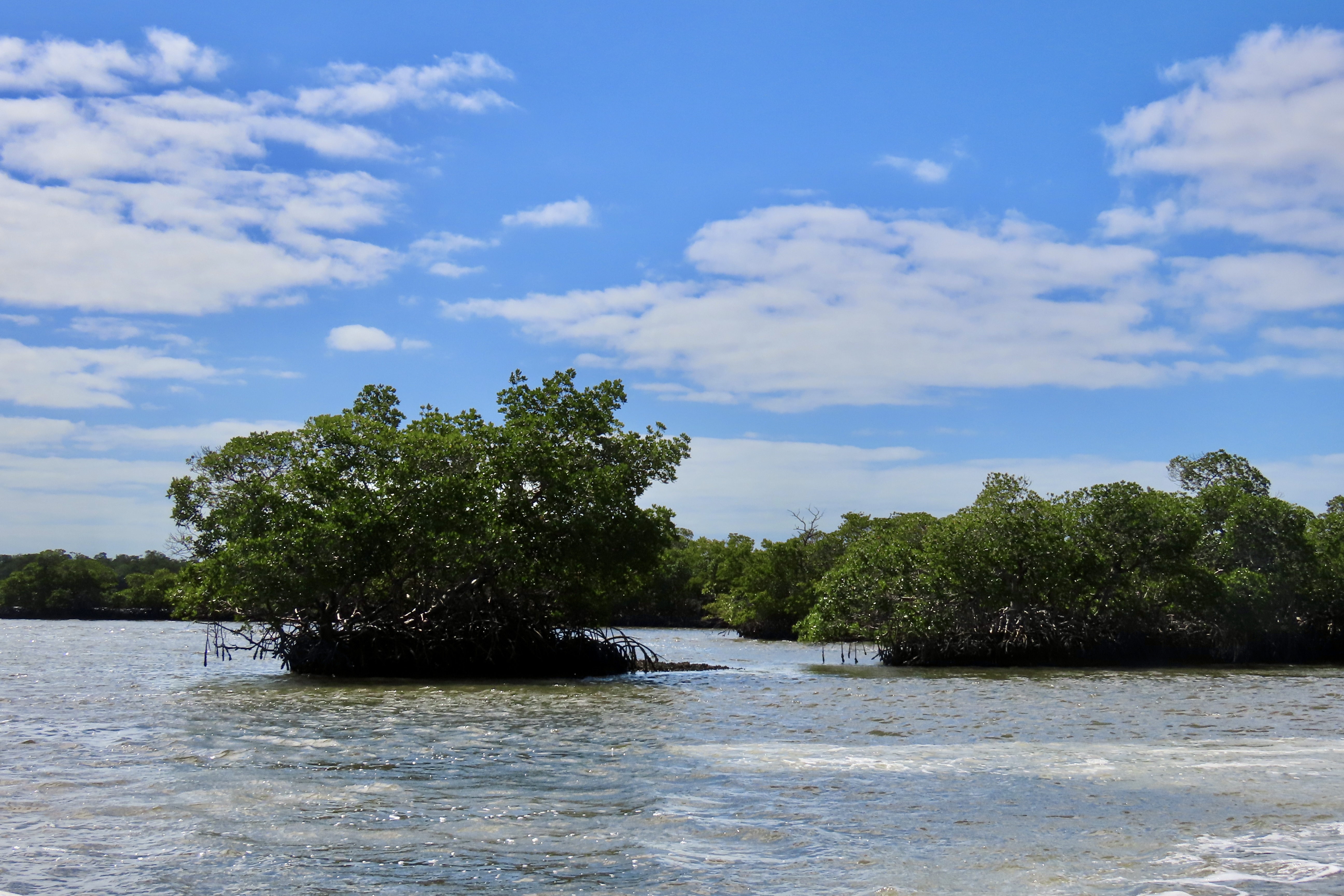
Three different species of mangroves provide the base for most of Florida’s 10,000 Islands. These trees have adaptations that allow them to take in extra oxygen and to remove salt that allows them to thrive in coastal intertidal zones. The creation of new islands is an ongoing process. 10,000 is a guesstimate at best.
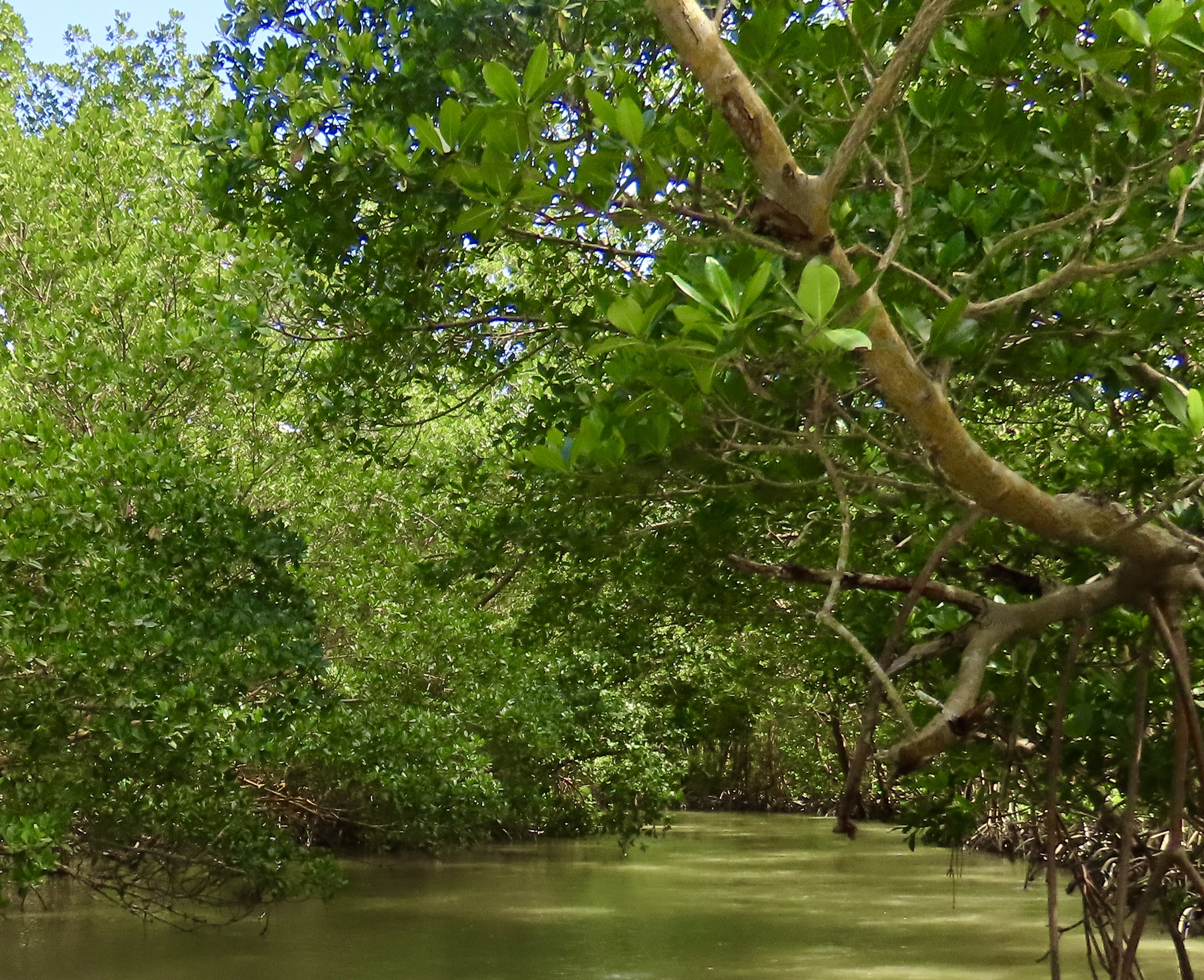
Our two hour trip took us through the relatively open waterways shown above to the enclosed jungle-like canal shown here. Speed varied from zoom to put-put with occasional stops to admire the local flora and fauna.
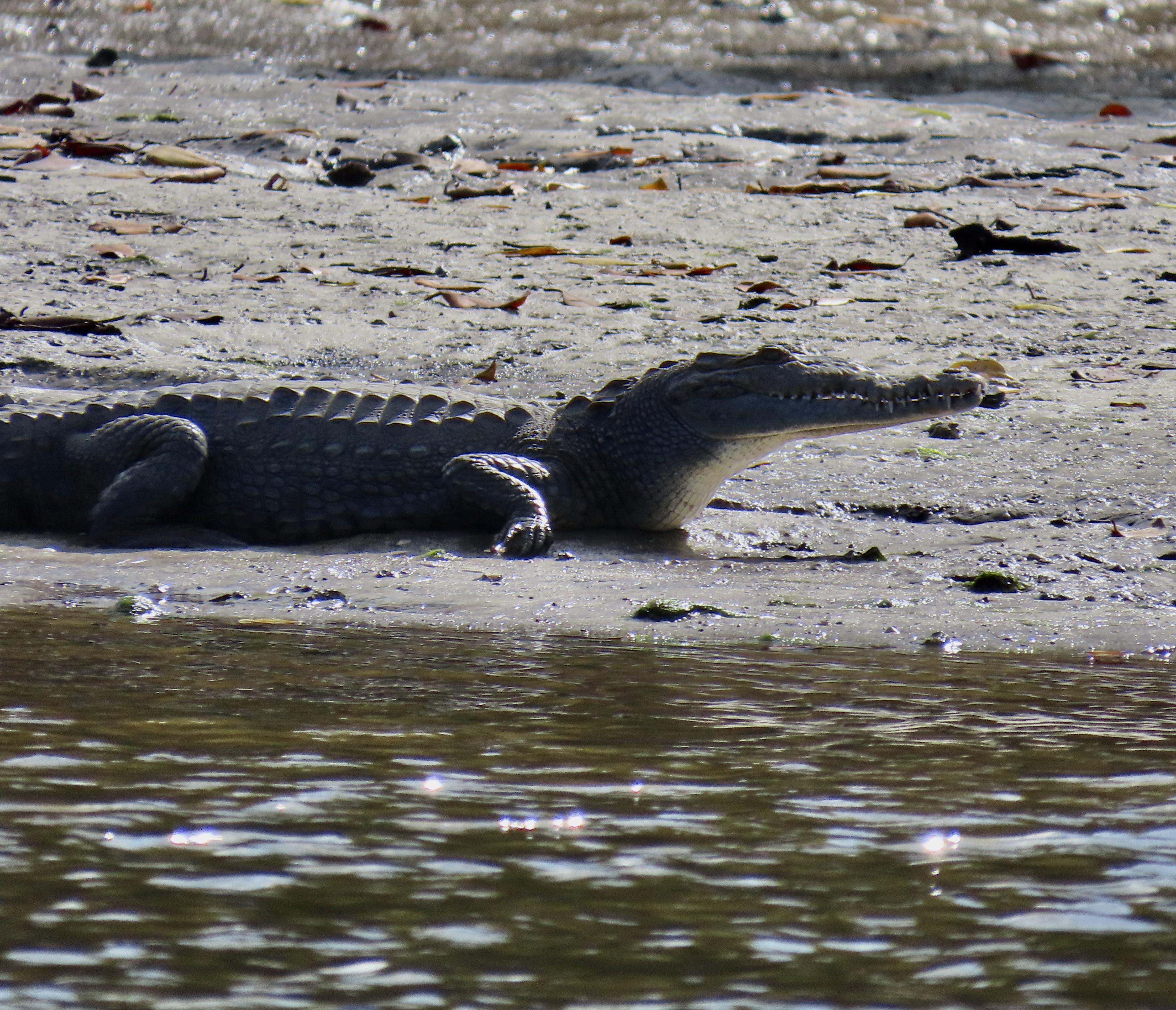
The Everglades are one of the few places on earth where crocodiles and alligators co-exist. While our small, bouncy boat wasn’t the best platform for photography, it’s easy to see that this is a crocodile from its long, thin snout and visible teeth.
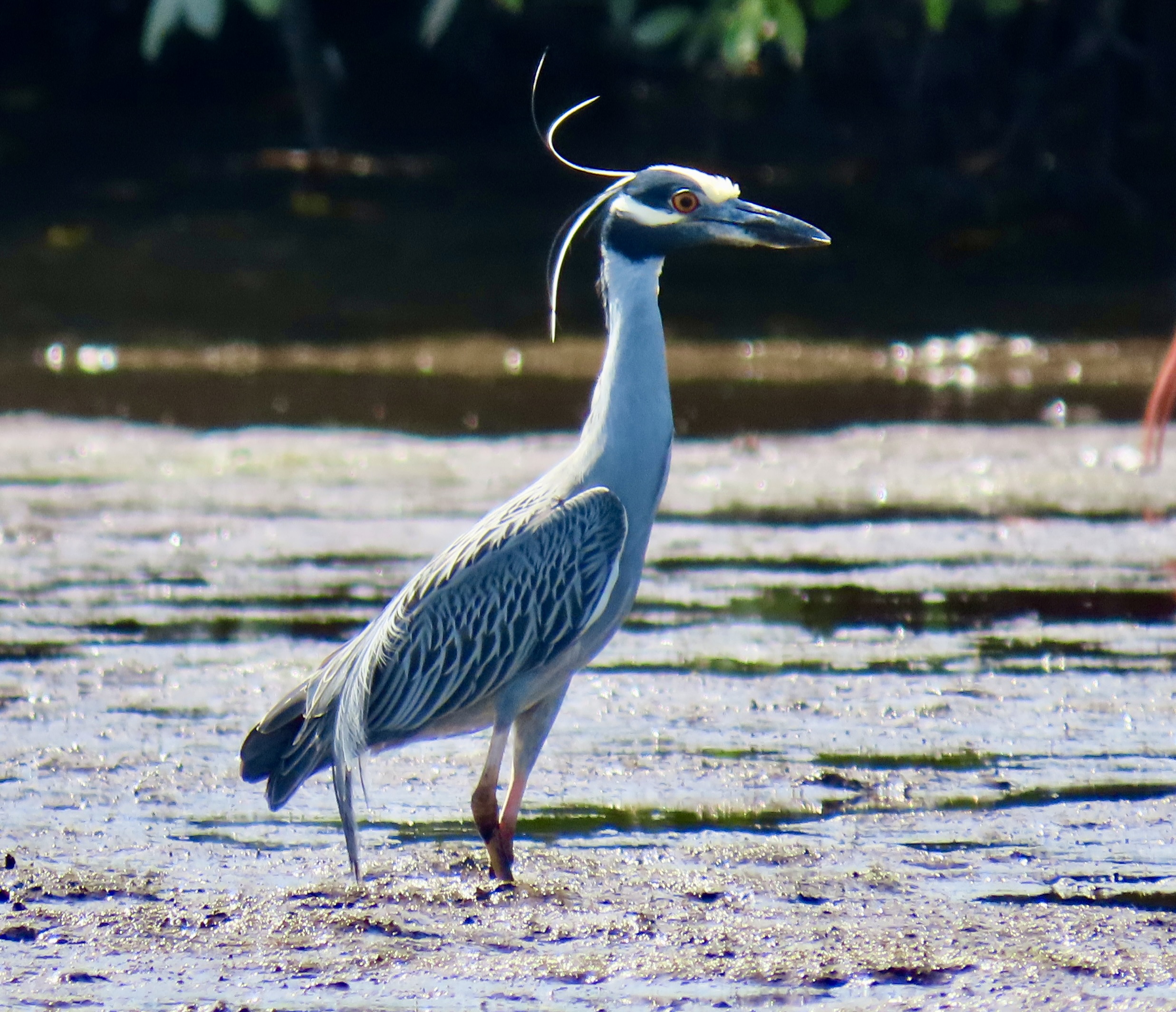
Our tour through the 10,000 Islands also produced this colorful bird with its interesting top-knot, a yellow-crowned night heron.
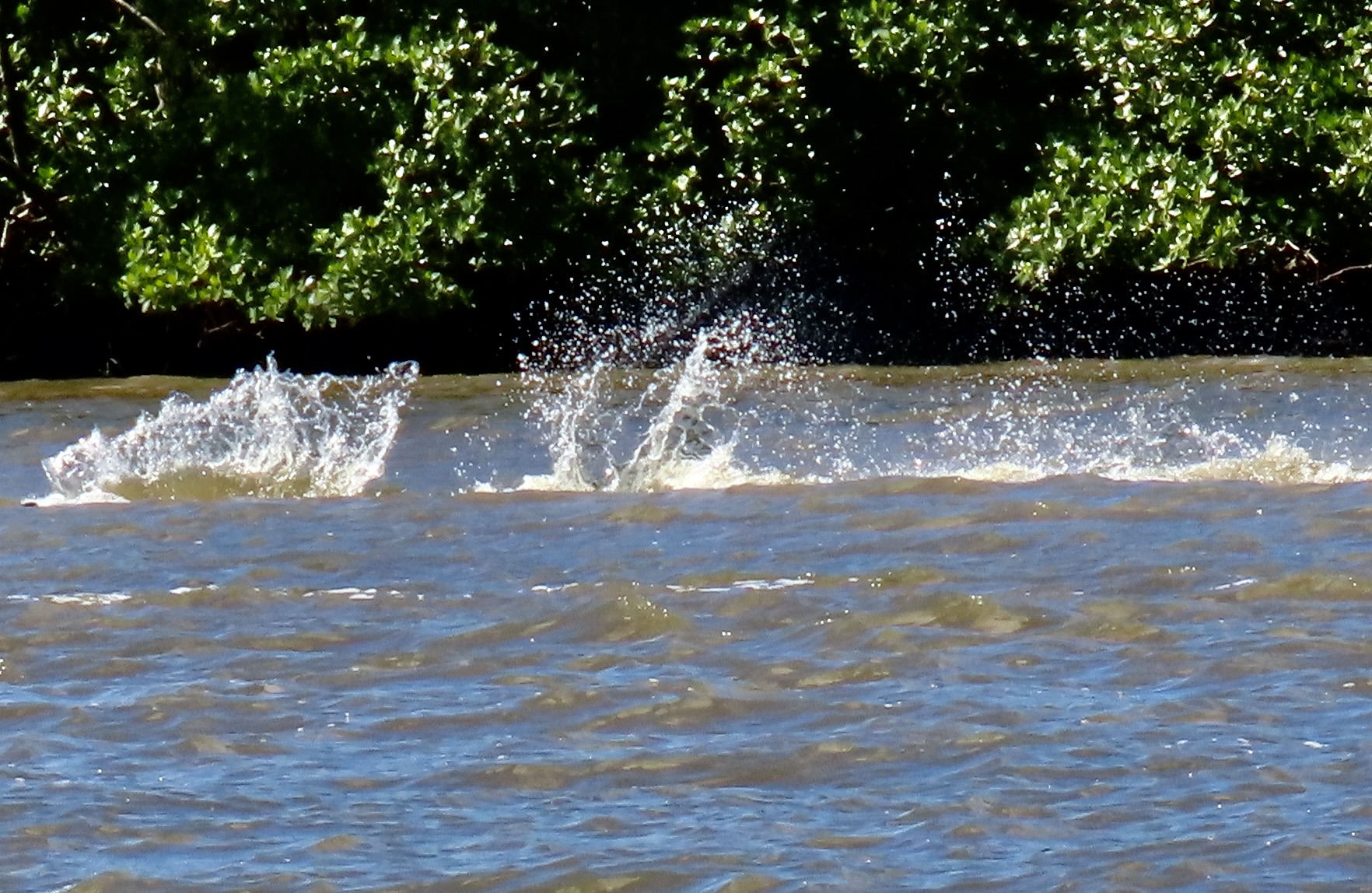
Something moving very fast left this trail through the water in a split second. Can you guess what it was?
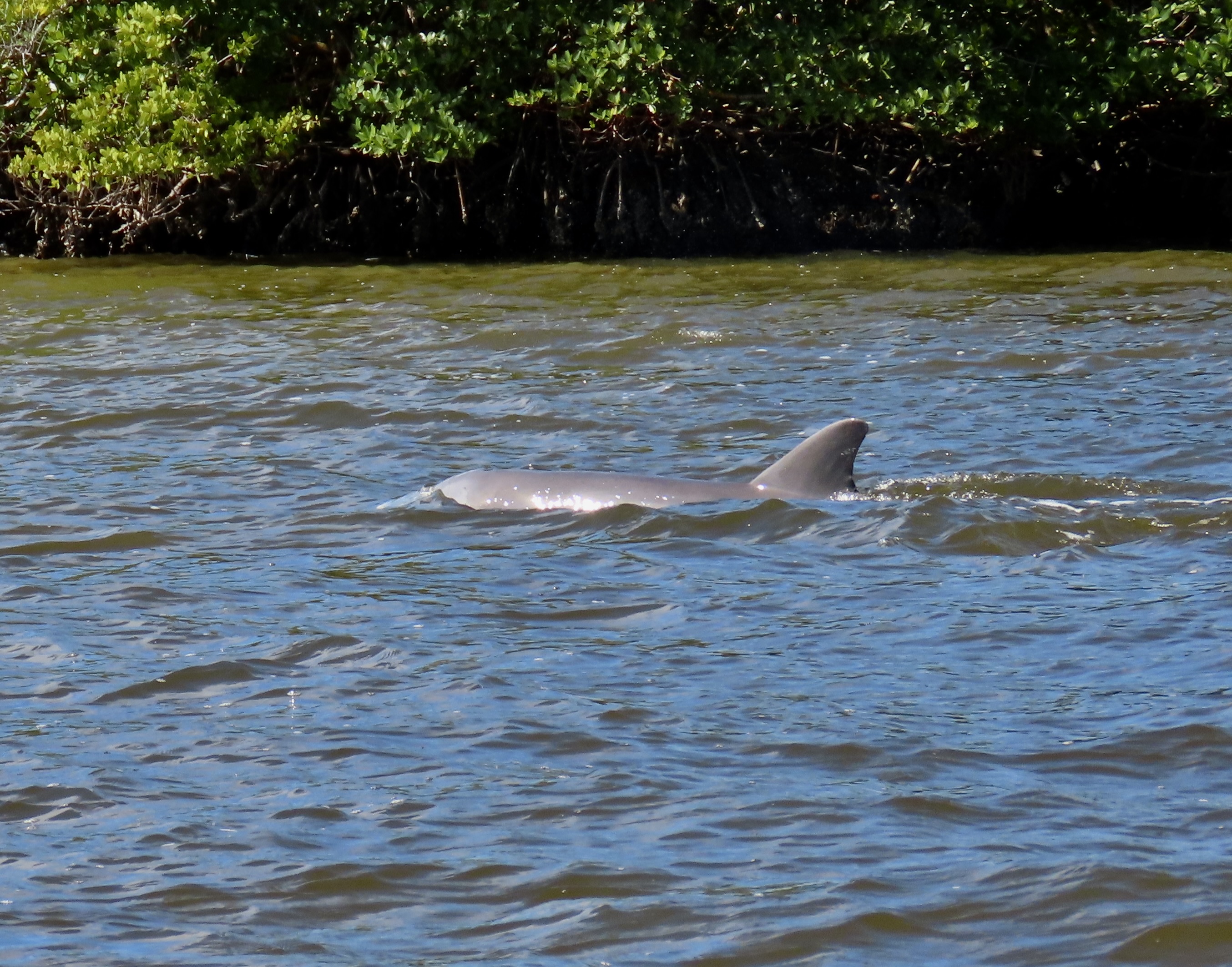
It was a dolphin. Several of them had chased fish into the shallow water and were working to catch them. I had never realized how fast they are. Apparently they are quite common in the area. One tour operater offered, “If you don’t see dolphins on our trip we will refund your tickets.”

After our tour, we stopped at a local Chokoloski Island institution, the HavAnnA Cafe for lunch. It’s a charming, roofed-over, open air restaurant with lots of greenery— and chickens. A flock came clucking through while we were eating, eager to pick up any crumbs that had escaped to the floor. “The officials won’t let me sell their eggs to our customers,” the owner complained to us. I was both surprised and pleased that the officials allowed the chickens visiting rights at all. I did see chicken on the menu, however. I ordered a Cuban Sandwich instead.

We decided to drive ourselves on a tour of the Big Cypress National Preserve, which was just north of Everglade City. The name of the road we would start on is Birdon Road. How could we resist? And it was true. The three roads we drove over— Birdon, Wagon Wheel, and the Turner River— followed streams and were packed with birds, and alligators.

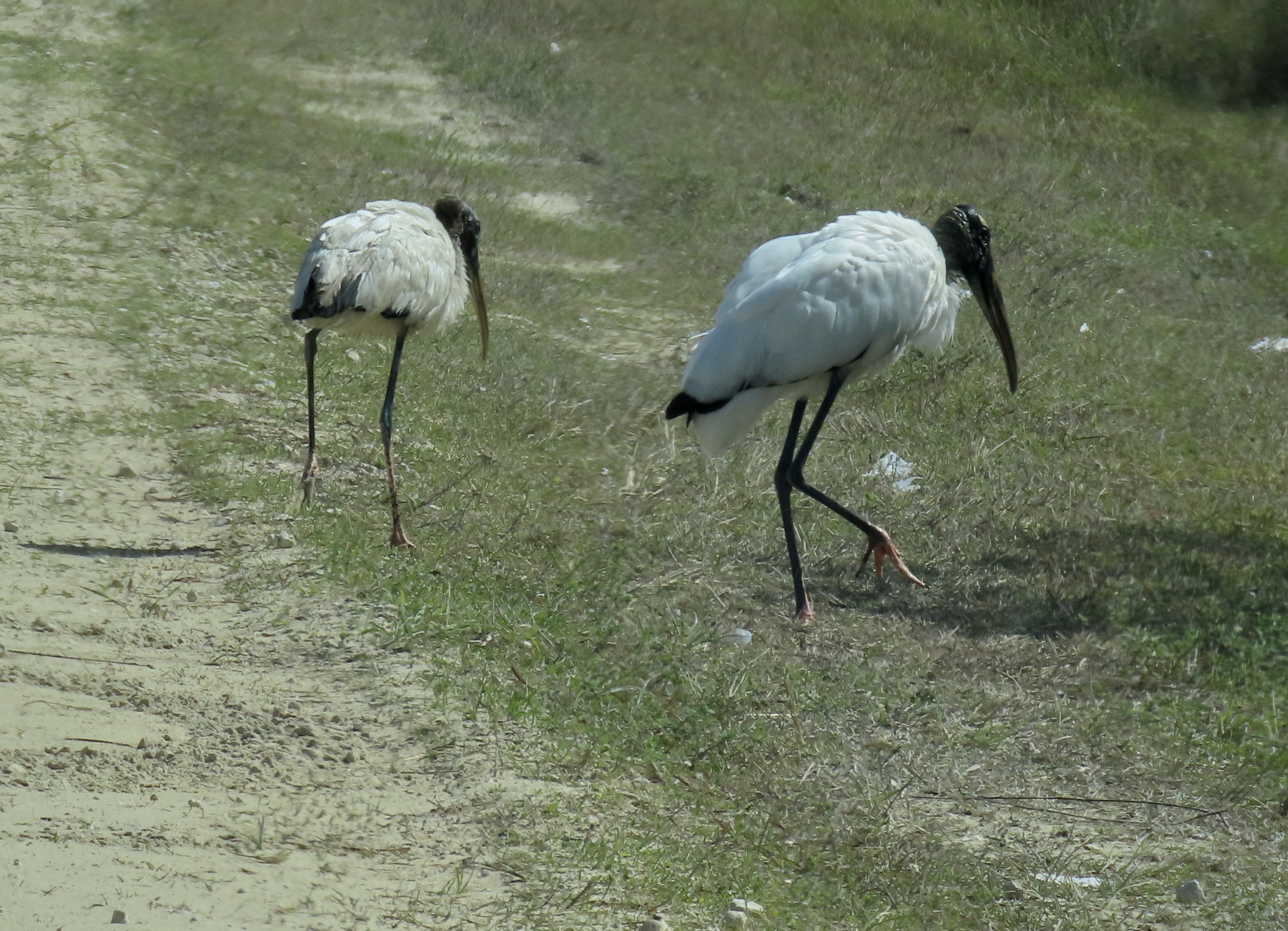
A pair of wood storks barely bothered to move off of Birdon road as we drove by.
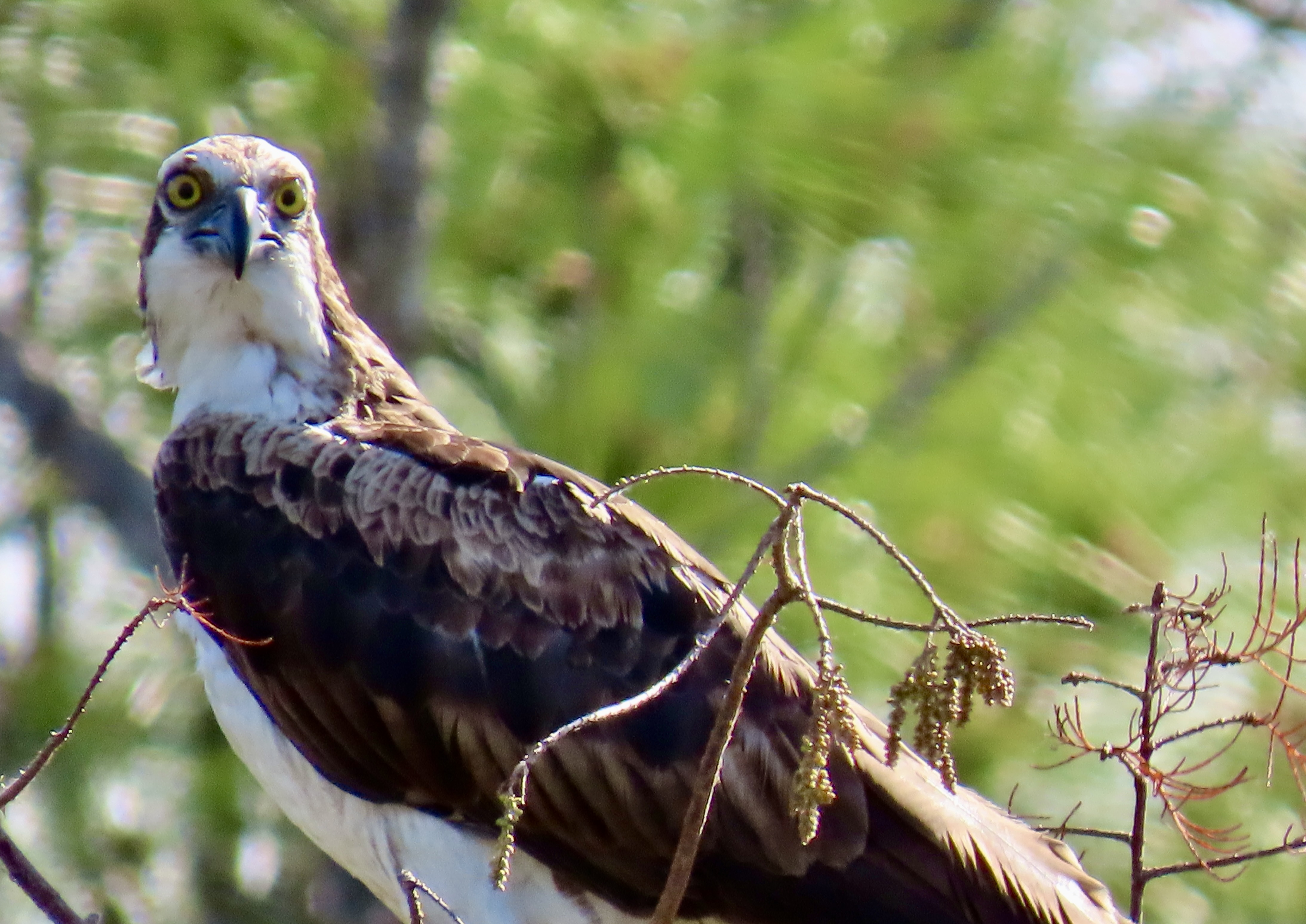
An osprey seemed surprised by our presence.
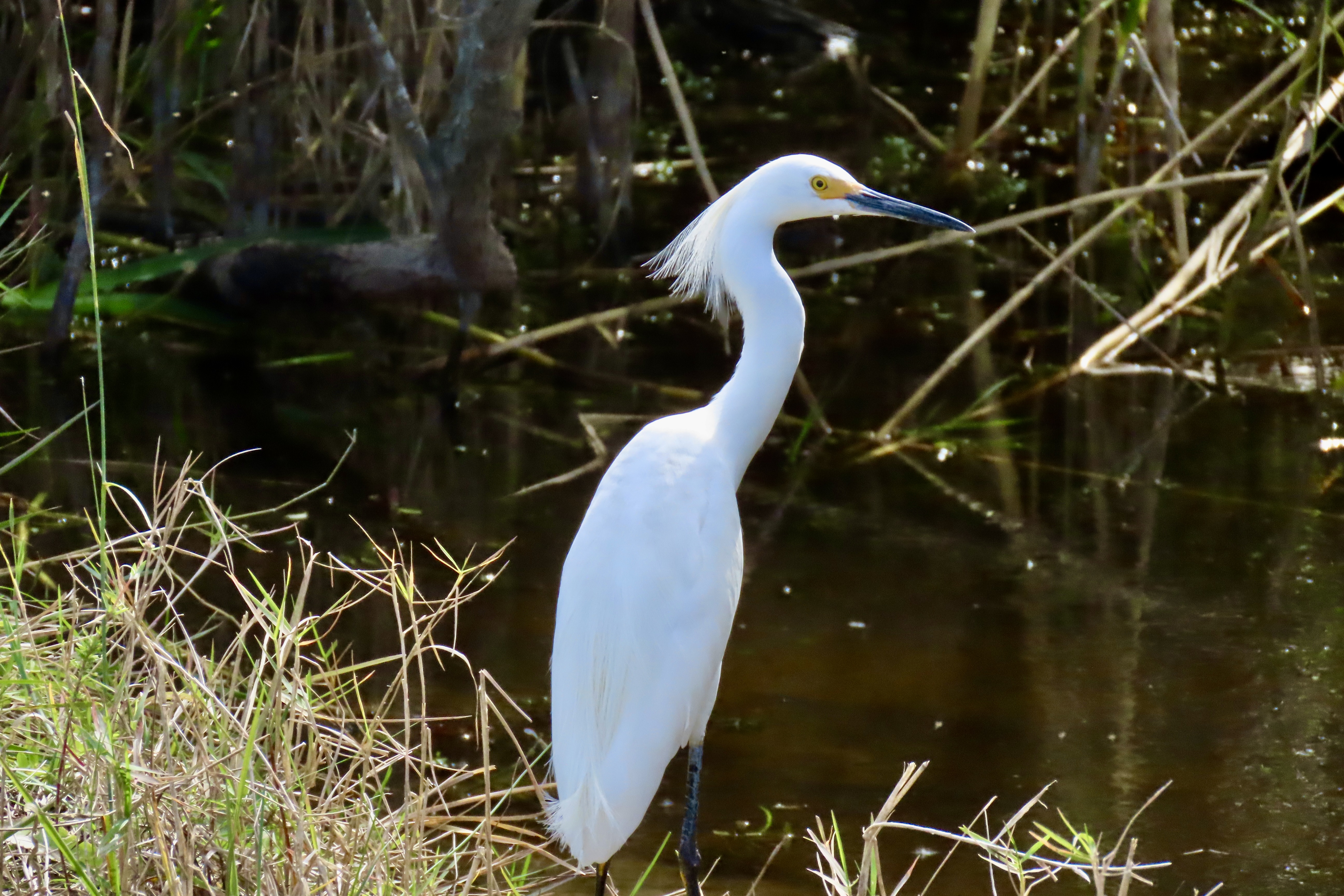
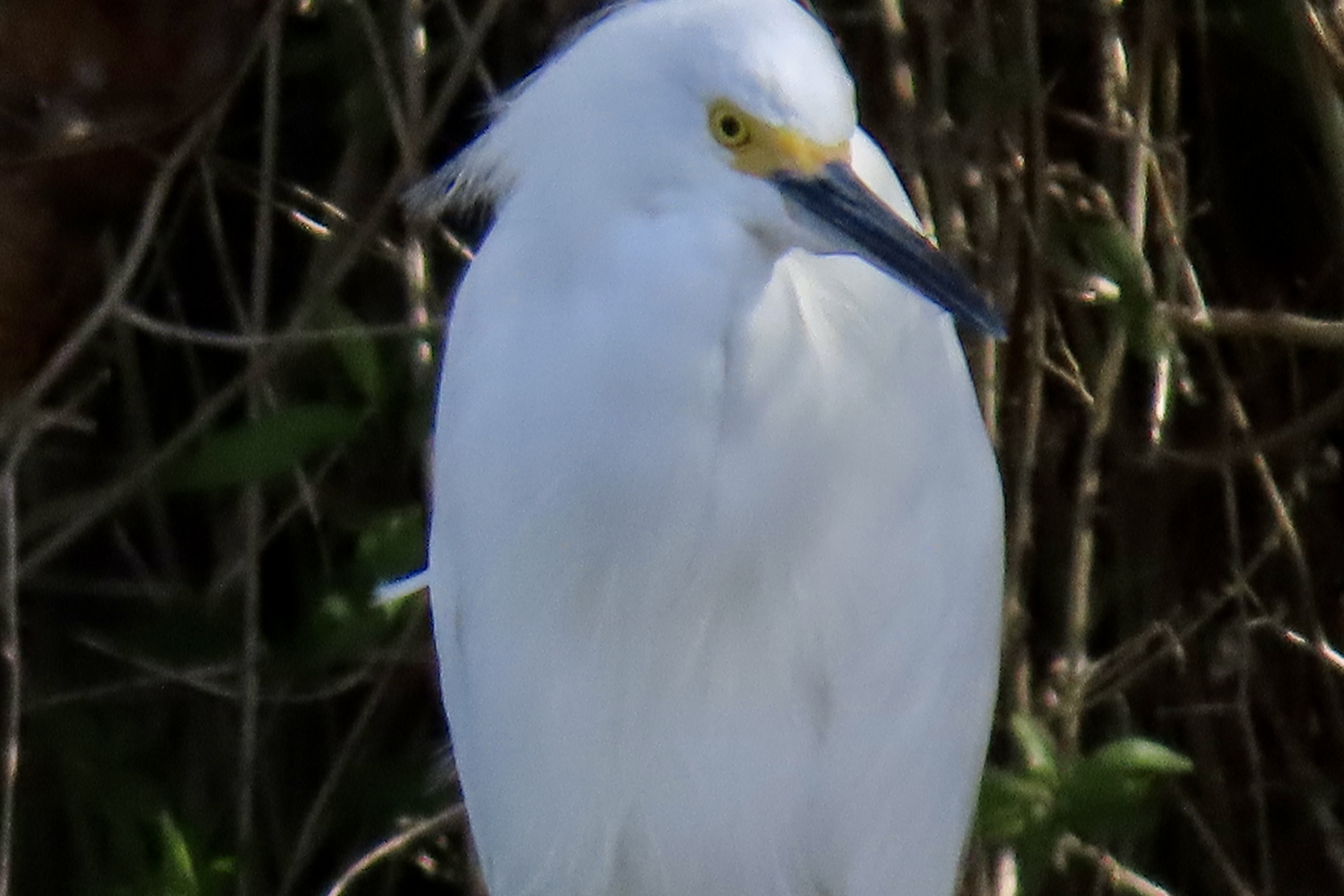
A snowy egret hovered over a stream where it was fishing.
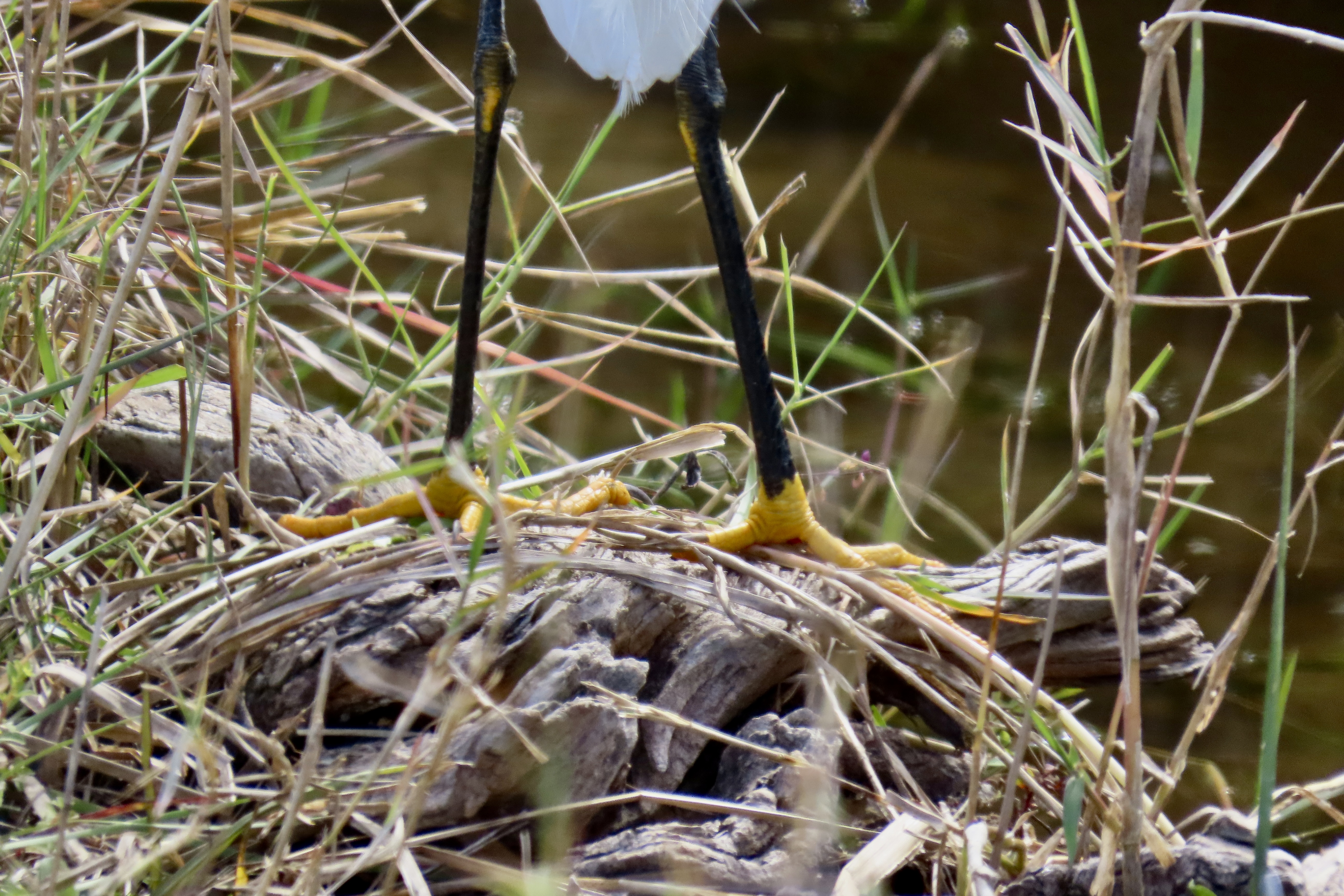
One of the defining chacteristics of a snowy egret is its yellow feet. Hard to miss!
Close up.
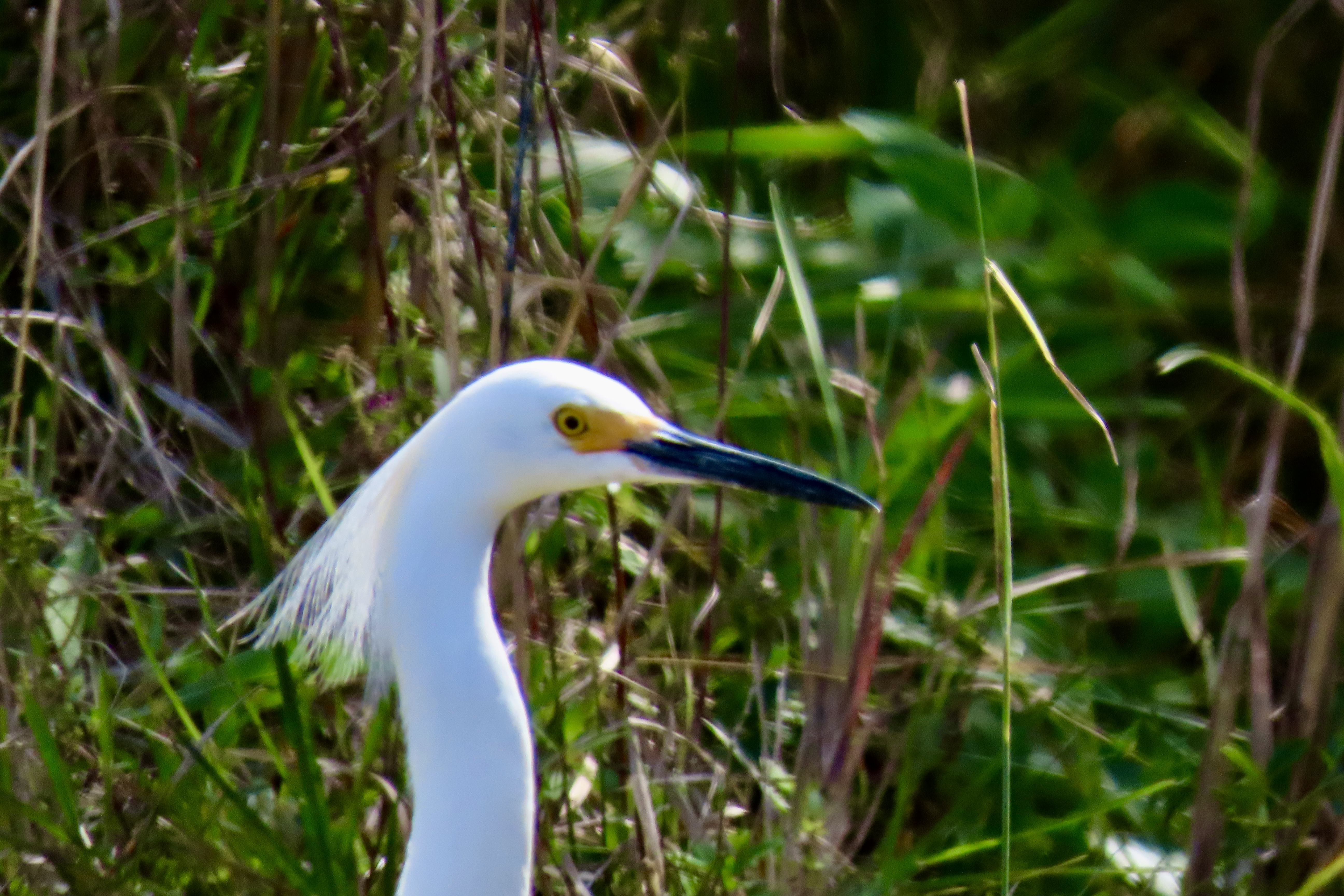
This snowy egret was perched in a tree.
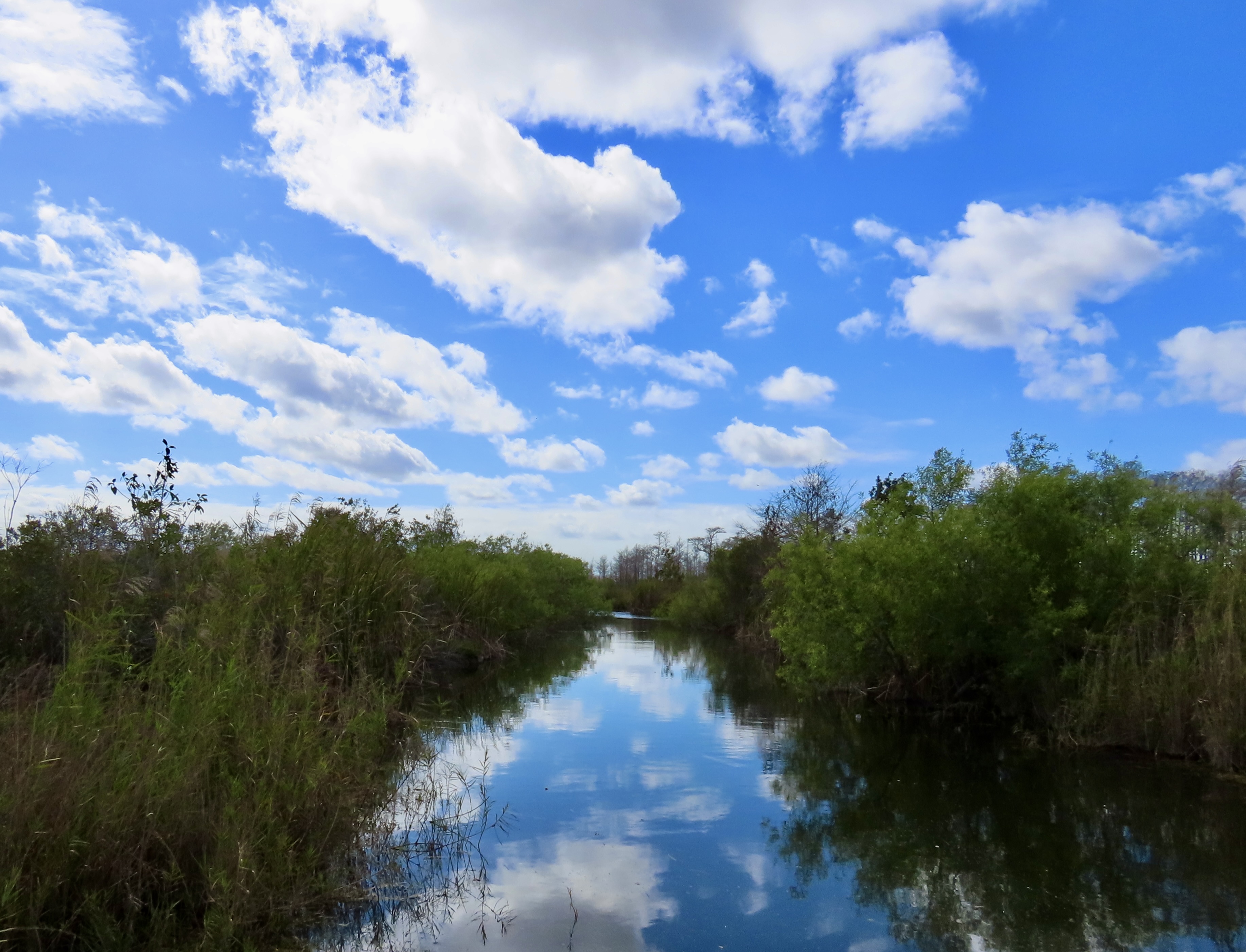
One of the streams we followed through the Preserve.
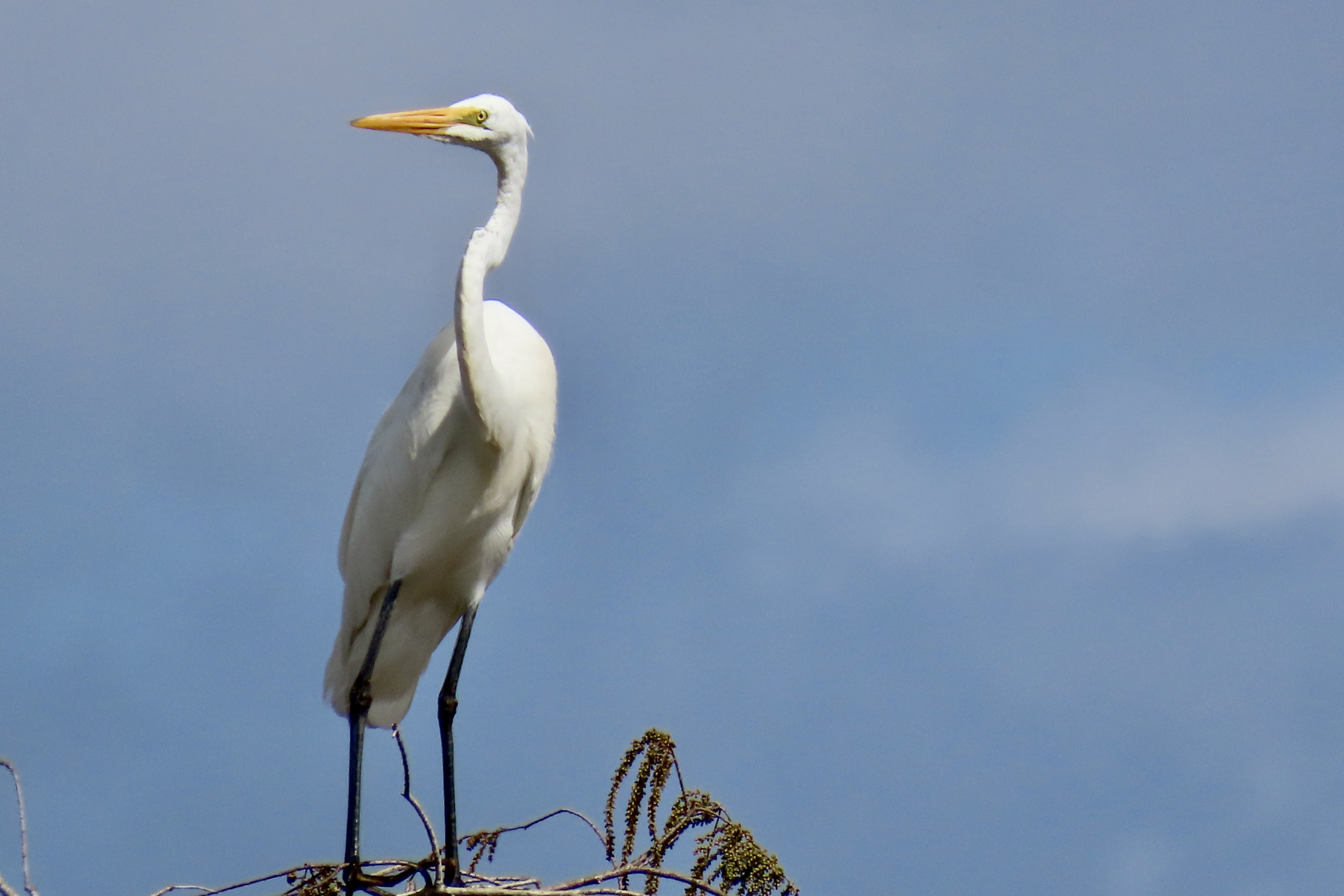
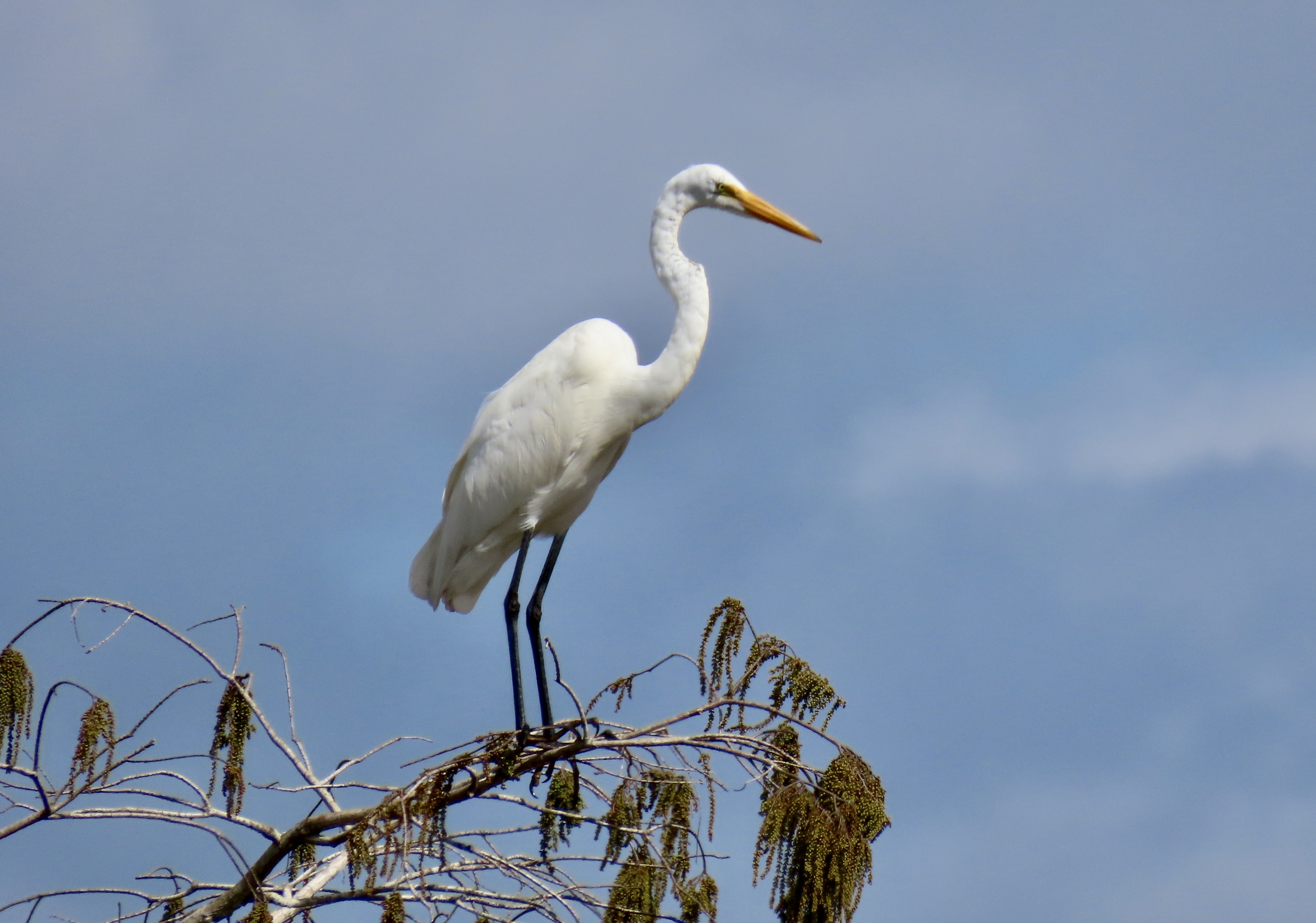
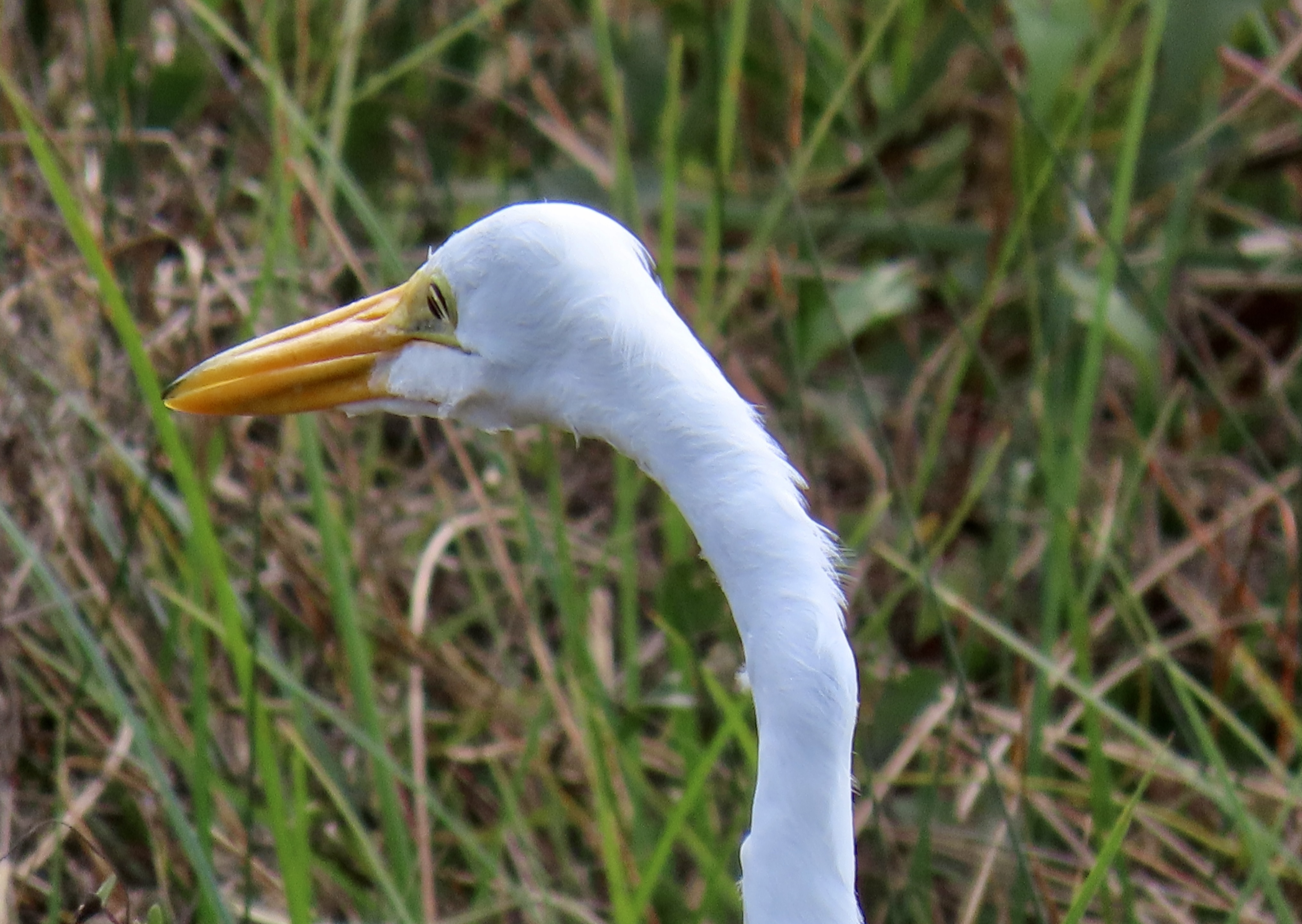
This great white egret was surveying its world from the top of a tree.
Another view.
We found another one fishing by the stream and took a close up.
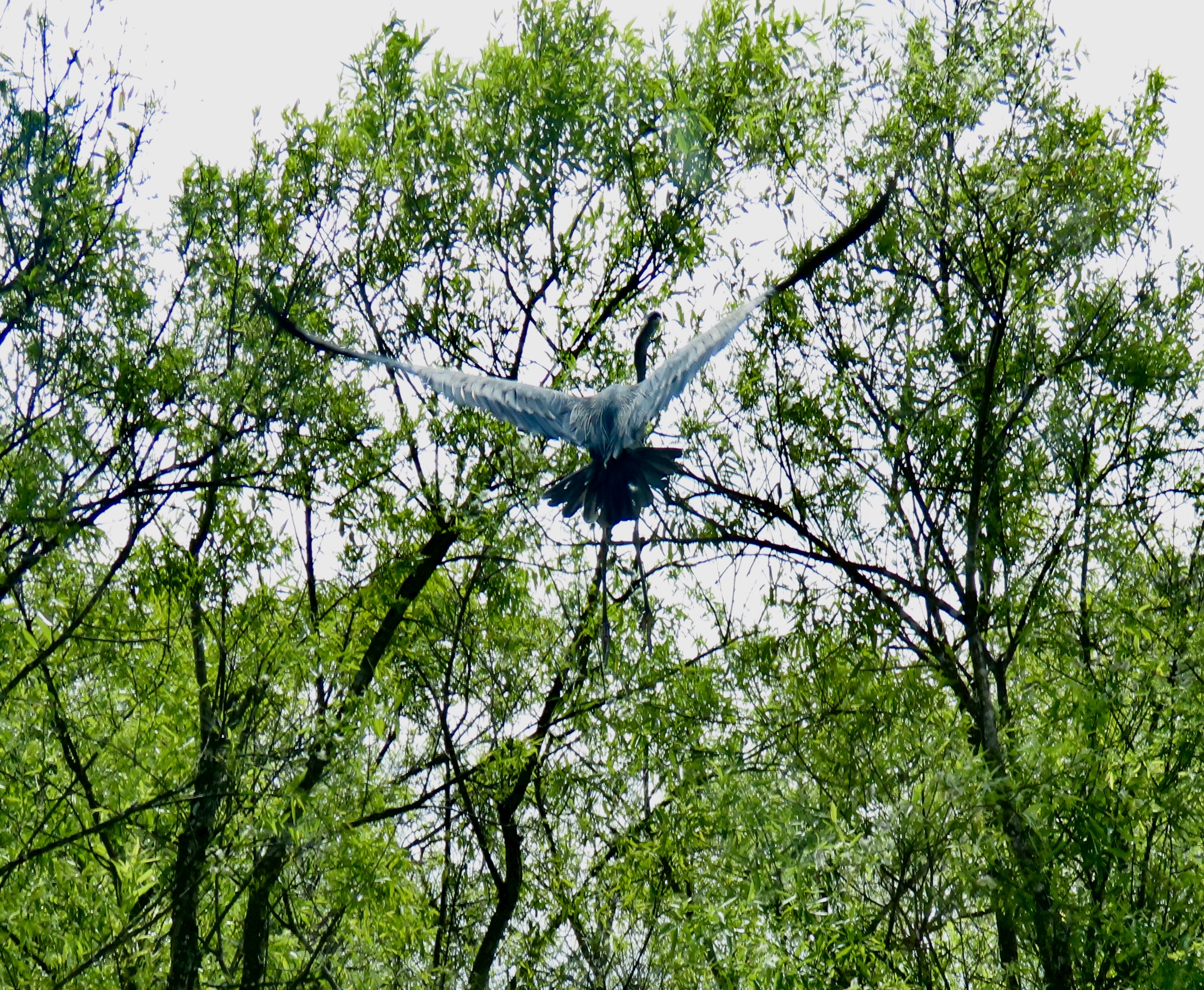
A great blue heron flew away before we could take his photo. “Be that way,” I called after it and snapped a photo in flight.
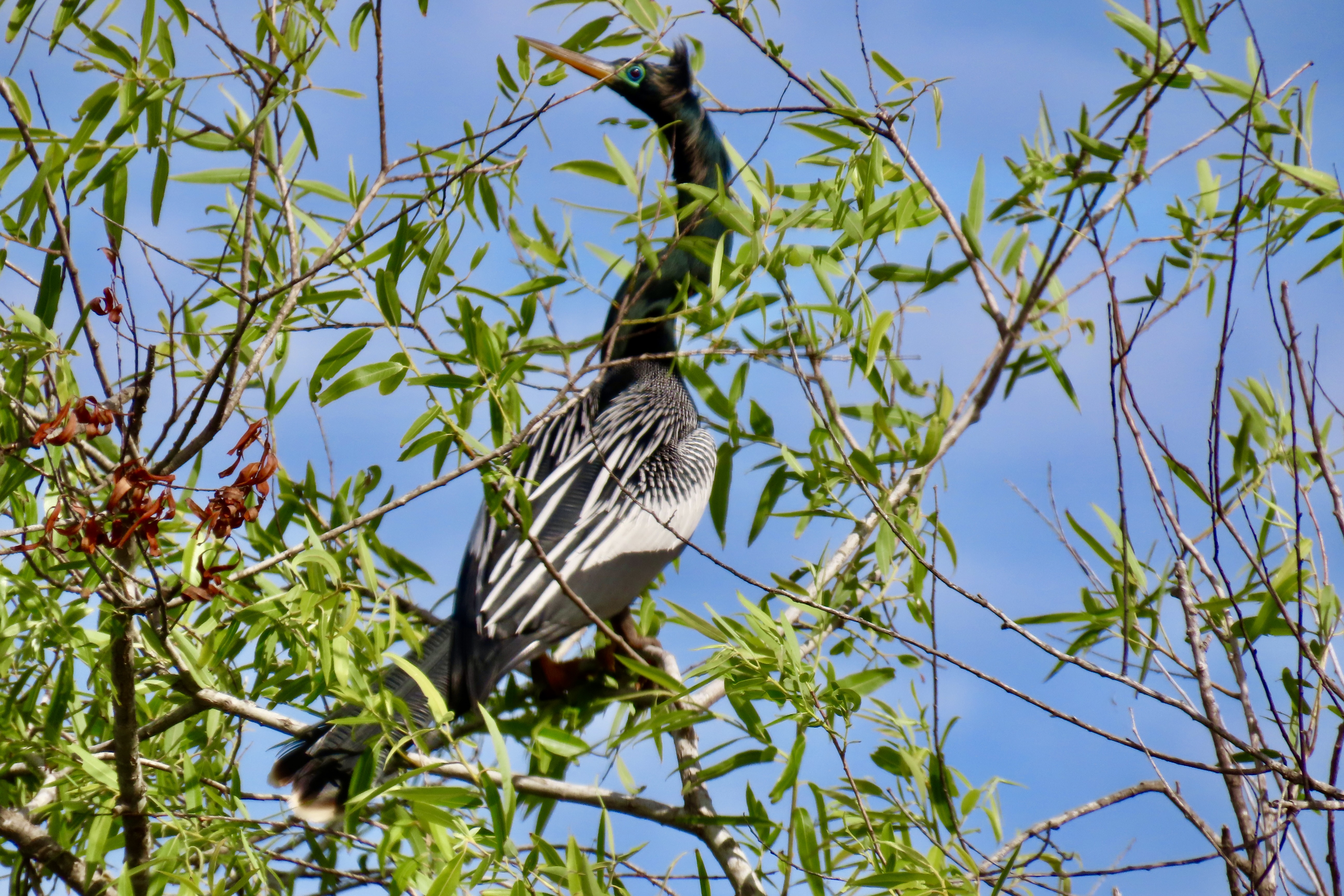
An anhinga twisted its neck so it could keep an eye on us.
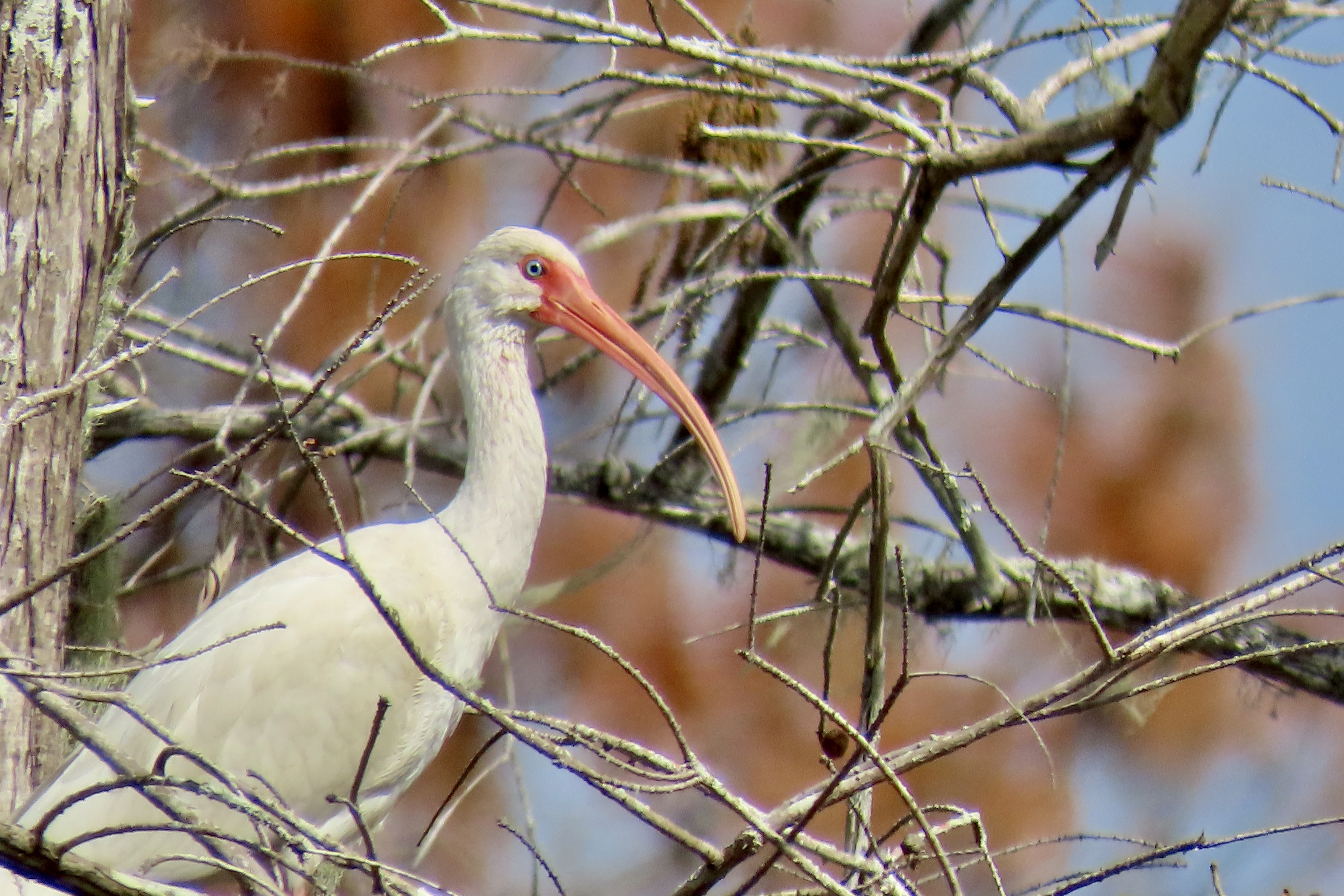
A white ibis was also curious.
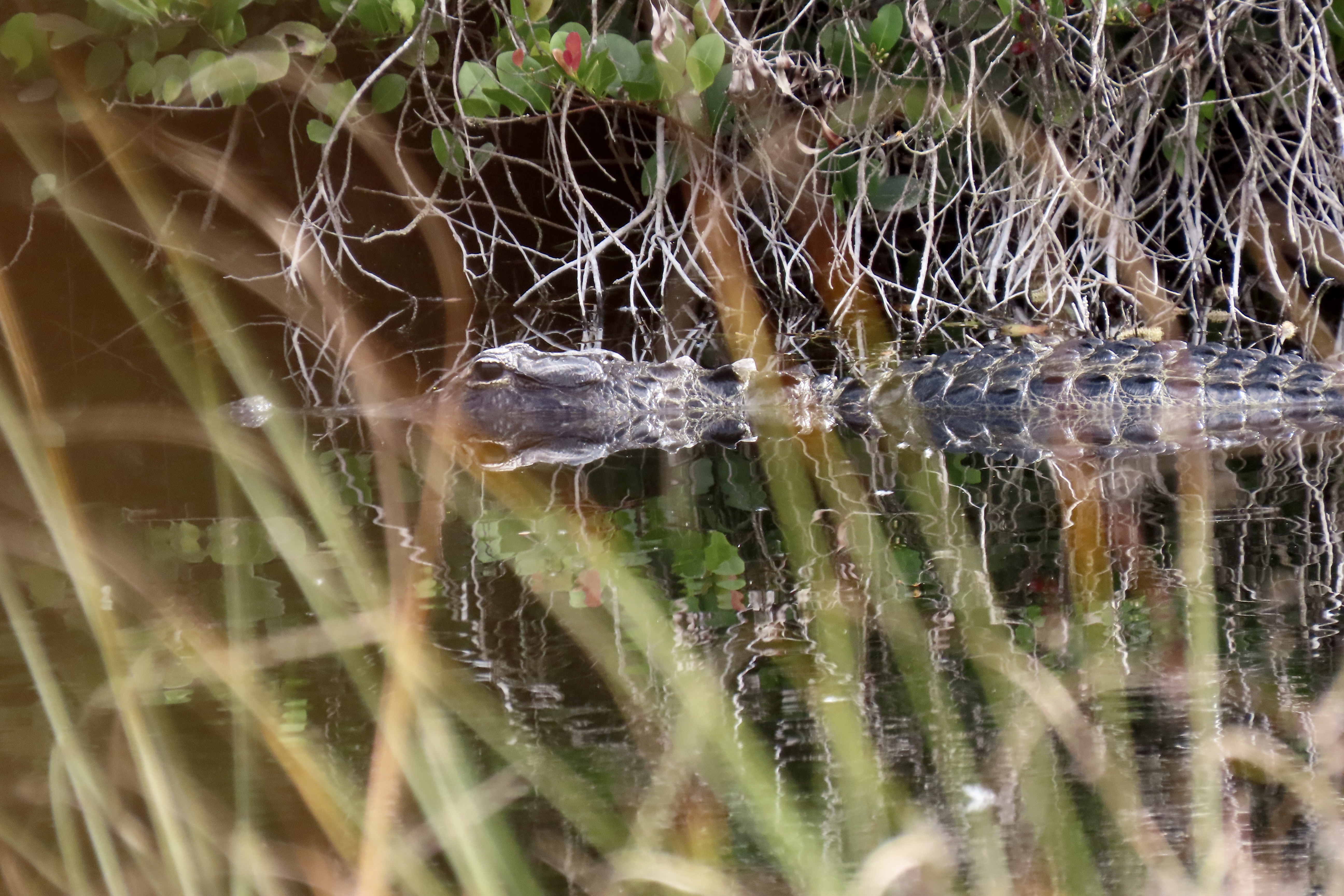
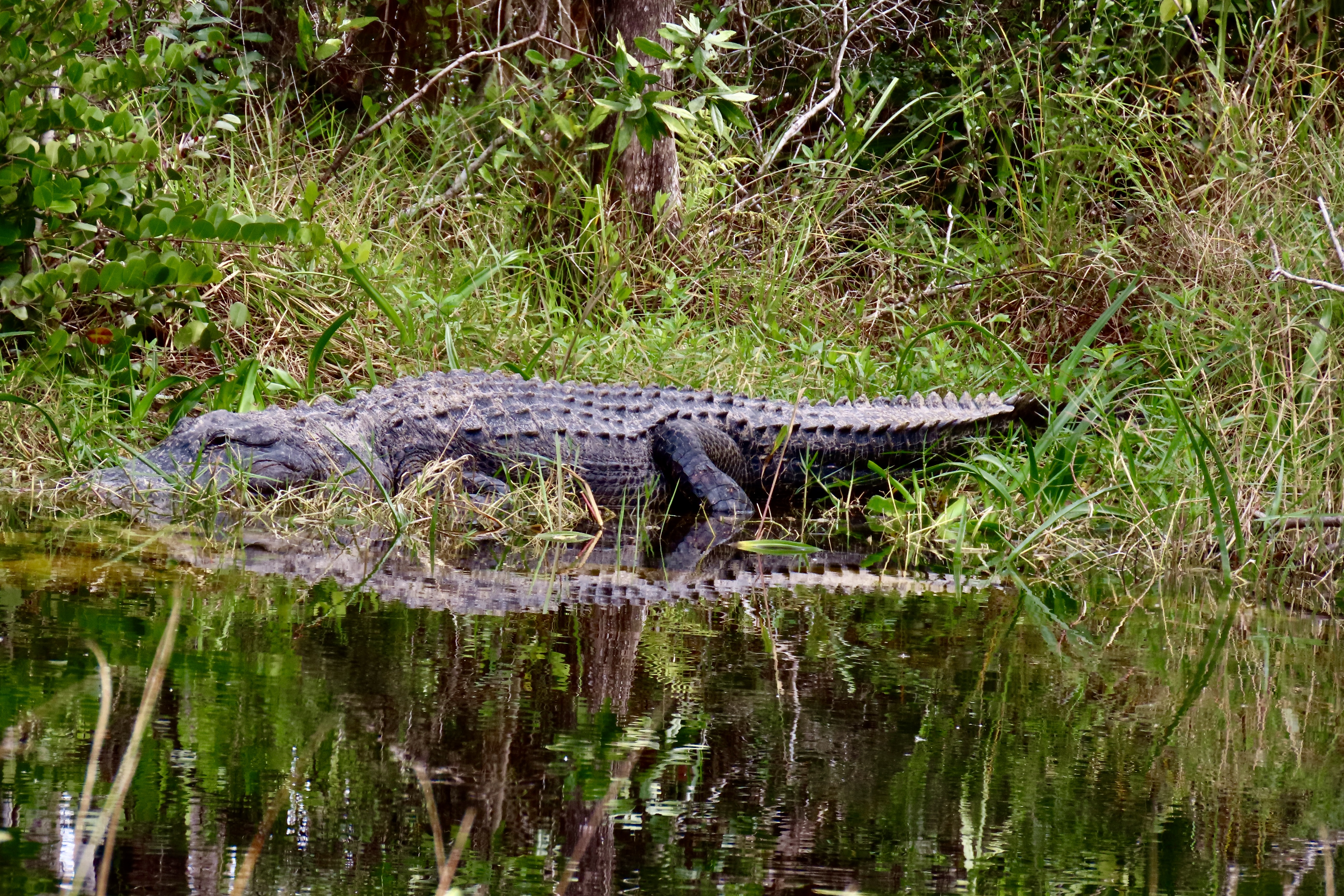
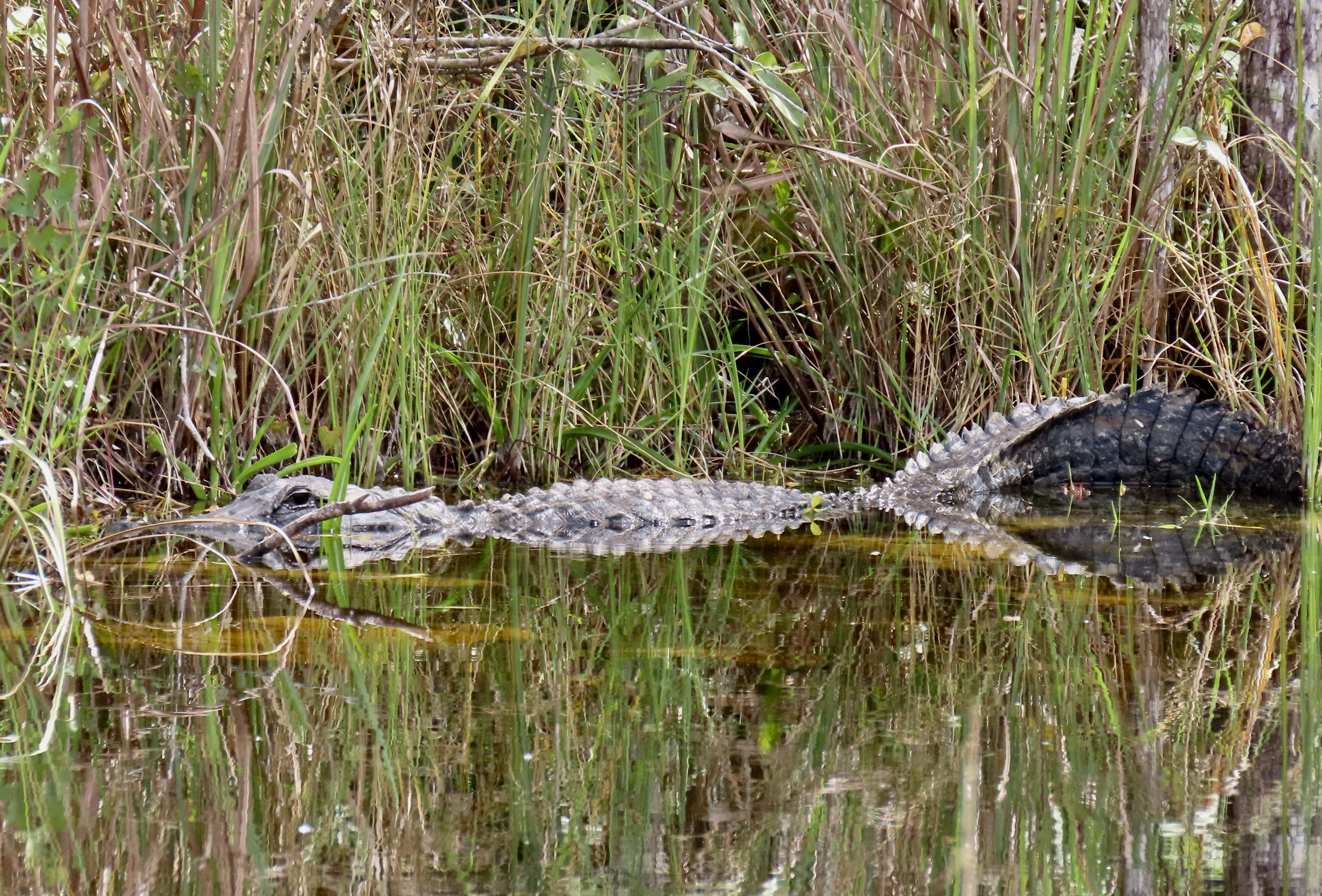
We also found alligators lurking along the stream. The clearness of the water and the time of day led to some interesting reflection shots.
…such as this.
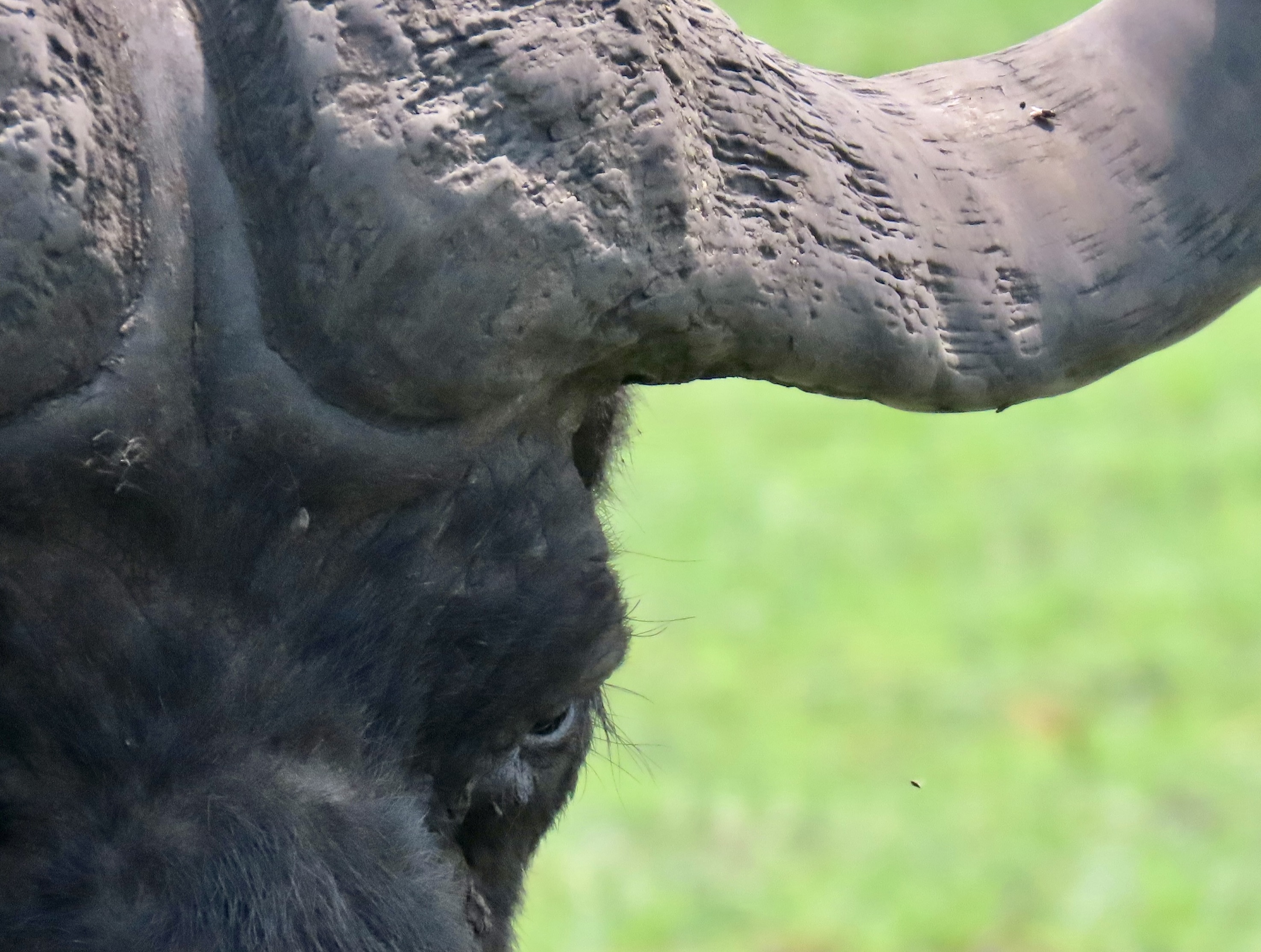
And even more so here! I’ll wrap up today’s post with this ‘two tailed’ example. At first glance, Peggy and I thought we had spotted a monster! The next blog will be on the most dangerous animal in Africa, the Cape buffalo.

The 1908 Great Race from NYC to Paris: Part 3… Way Out West

My posts are few and far between. Part of the reason is the times. There is just too much happening now between the pandemic, the fires, and the election. As noted before, these are scary times, more scary than any other time in my 77 years. The other is that I love research and the Great Race has me fascinated. Just when I think I have exhausted my resources I find another article or more photos. This time it was 350 photos of the race stored in the Henry Ford Museum, a virtual treasure trove. Most of the photos in today’s post are from the museum.

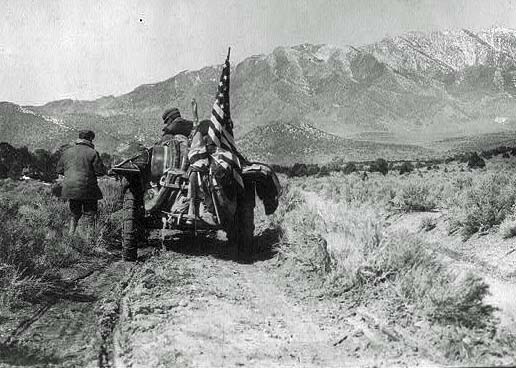
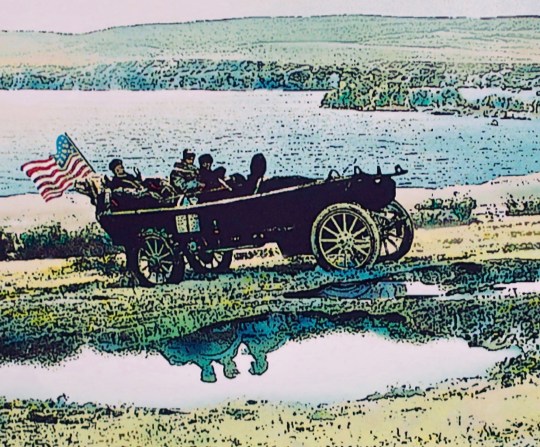
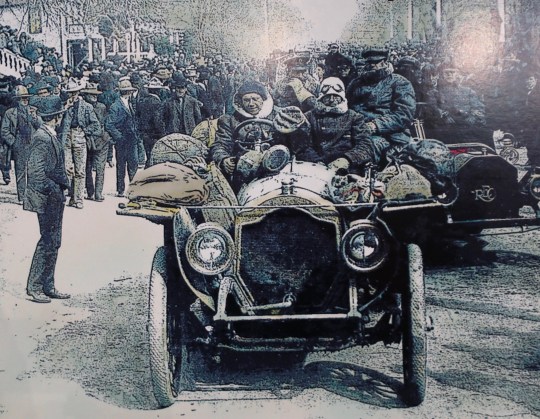
Leaving Nebraska, the flat terrain and rolling hills of the Great Plains gave way to the mountain, deserts and distant vistas of the West while the roads became little more than dirt paths.

As the participants rolled out of Nebraska, they experienced their first real taste of the ‘Wild West.’ The unending farmlands of the Midwest gave way to the drier, open lands and vast vistas of Wyoming, Utah, and Nevada. The terrain also changed. The flat and rolling plains the automobilists had been driving through across the Great Plains turned to towering mountains and deserts. The Rockies, the Great Basin and Death Valley lay ahead. Towns and cities became farther apart. People fewer. The already poor roads the racers had been following became little more than tracks in the dirt.

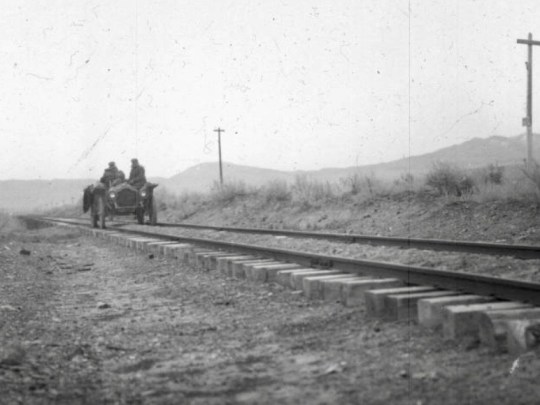
When there weren’t any roads or railroad tracks to follow, participants in the Great Race were left with following emigrant trails.

The animals also got wilder and bigger. The Zust team claimed they were surrounded by a pack of 50 or so wolves that circled their car yipping with anticipation on a dark and stormy night in Wyoming. Blowing the horn and using the spotlight didn’t discourage the hungry predators. They kept circling closer. It was only when the team broke out their rifles and shot several that the wolves decided that they hadn’t been invited to dinner. Local townspeople gathered up the hides the next day and sold them for the bounty paid by the government. The wolves’ taste for an occasional cow would lead to their eventual eradication in the West.

Not everyone made it to the Rockies. Baron Godard, who had driven another car from Peking to Paris in 1907, met his match in Iowa. Between being bogged down in mud and snow, getting lost, and having serious car problems, he decided to ease his journey west by loading his Moto-Bloc onto a train and shipping it to the coast. “San Francisco, here I come!” It broke the rules.

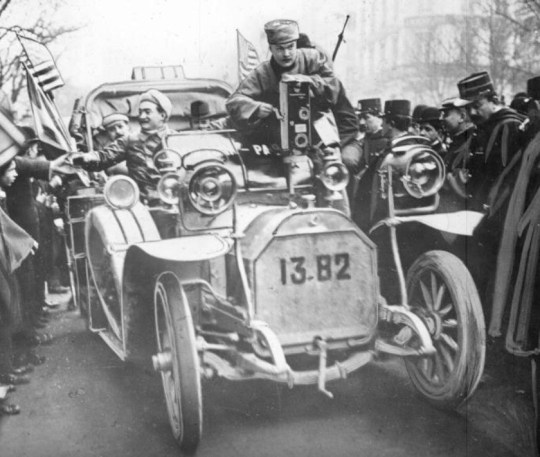
Baron Godard, in the Moto-Bloc in Paris before leaving for the US and the Great Race, shakes hands with well-wishers. Since the Baron had come in second the year before in a race between Peking and Paris, he had high hopes for his NYC to Paris race. They ended in Iowa. An early movie is being filmed here.

A photographer caught the Baron loading the Moto-Bloc onto the rail car. “Quit the race, sell the car, and return home,” the manufacturer telegraphed him. The French, who had started with three entries, were down to one. The greater glory of France now depended on G. Bourcier de St. Chaffray driving the French De Dion-Bouton— which is quite a mouthful to say.

The De Dion-Bouton leaves the Puteaux, France factory outfitted for the Great Race. I believe G. Bourcier de St. Chaffray is driving and Hans Hansen is his passenger. Hans would join the Thomas Flyer team after a hot argument with G. Bourcier that almost came to a Western shootout! Their fast draw was thwarted, however, by the fact the pistols were buried deep under all of the gear.
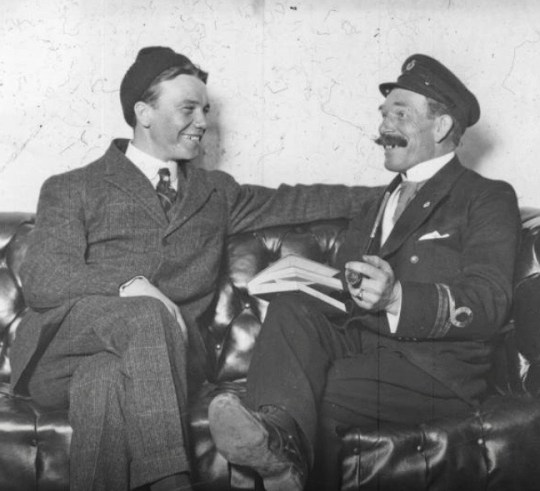
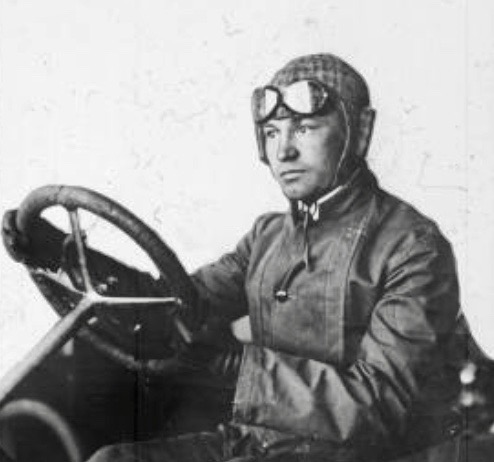
Monty Roberts, the driver of the Flyer, and Hans Hansen share a laugh.

The Thomas Flyer team had other ideas about who would win the glory. When they reached Cheyenne, Wyoming, the Flyer was a week ahead of its nearest competitor, the Zust. The De Dion was in third. And the Protos fourth. Given the quality of the vehicle, Monty Robert’s driving ability, and George Schuster’s mechanical talent— not to mention sheer determination— the team had been ahead for most of the race. It was a position they had every intention of keeping. The car was about to lose its driver, however. Monty had other race commitments back east and in Europe. He hoped to rejoin the team when it entered Europe to drive over better roads and, I imagine, harvest the fame of crossing the finish line first. E. Linn Mathewson, a Thomson Flyer car dealer, took over the driving from Cheyenne to Ogden, Utah. Harold Brinker, an auto racer out of Denver, drove the car into San Francisco. Schuster would take over then. 

The Thompson Flyer receives a grand welcome in Cheyenne.
E. Linn Mathewson steering the Thomas Flyer. I think that’s a “What have I gotten myself into?” look.
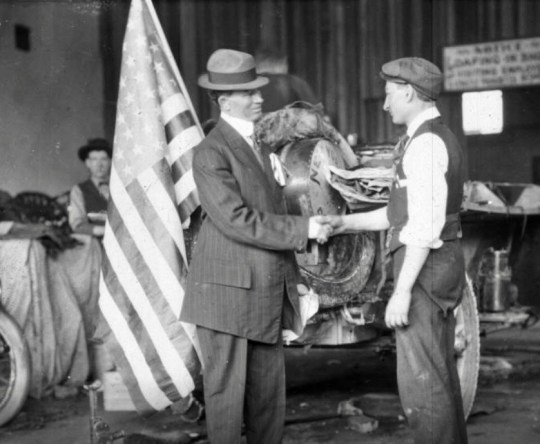
Linn Mathewson shaking hands with his replacement, Harold Brinker, in Ogden, Utah.

Getting into the spirit of the West, George bought a Colt six-shooter pistol before leaving Cheyenne. Who knew what lurked out in the wilds of Wyoming? Wolves or outlaws, perhaps? Best to be prepared.

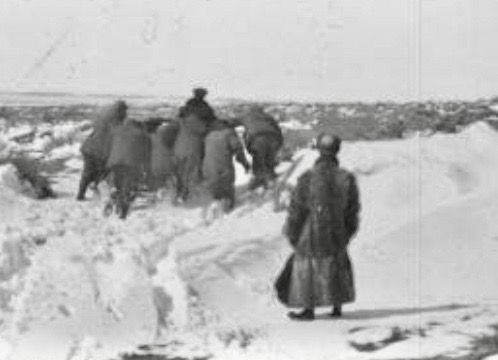
There would be snow drifts to push the Flyer through…
Brush and mud to conquer…
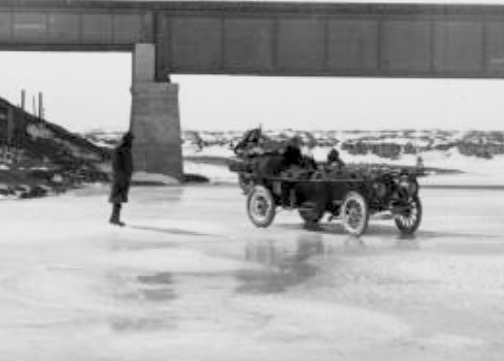
Ice covered rivers to cross with hopes of not ending up on the bottom…
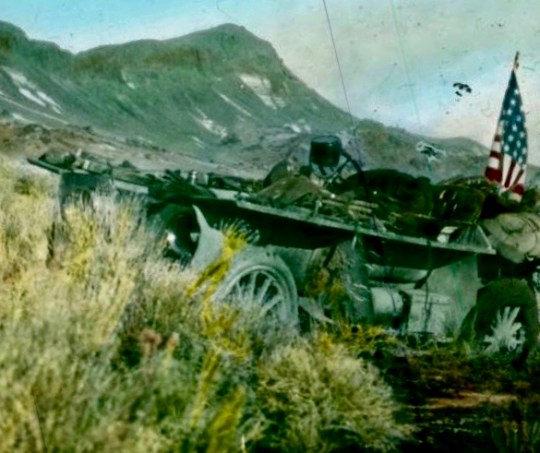
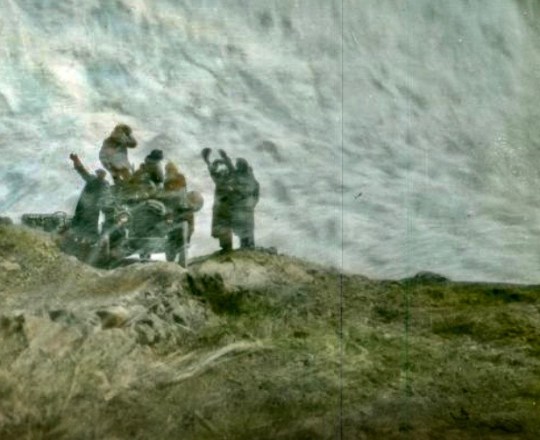
And high passes to climb over.
It’s no surprise that the teams would need a drink when they reached a town!

Peggy and I had followed the route of the race in Nebraska from Grand Island to North Platte where we spent the night at Buffalo Bill’s ranch as the Flyer had in 1908. We then continued to follow the route to Ogallala where we detoured to follow the Oregon Trail, which early pioneers had used in the 1840s, 50s and 60s. (Posts coming.) I was eager to check out the route that ancestors on both sides of my family had travelled looking for a better life— either by farming in the Northwest or striking it rich in California. So, we missed Cheyenne. We rejoined the race route for a brief time, however, between Rock Springs and Fort Bridger, Wyoming, when the Oregon Trail dipped south.

The Thomas Flyer parked in front of Buffalo Bill’s home on the North Platte River.
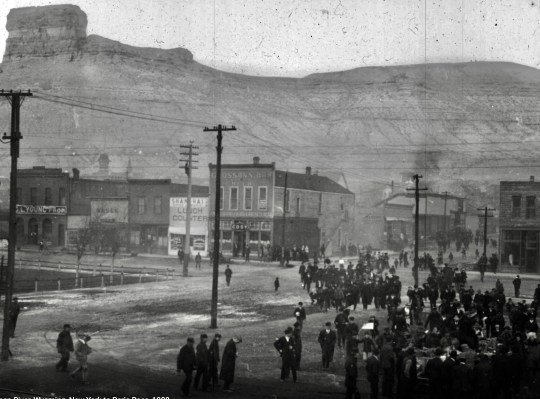
Crowds were out to greet the Thomas Flyer’s arrival in Green River, Wyoming. People were still hurrying over to welcome the team. Note the prominent rock in the background…
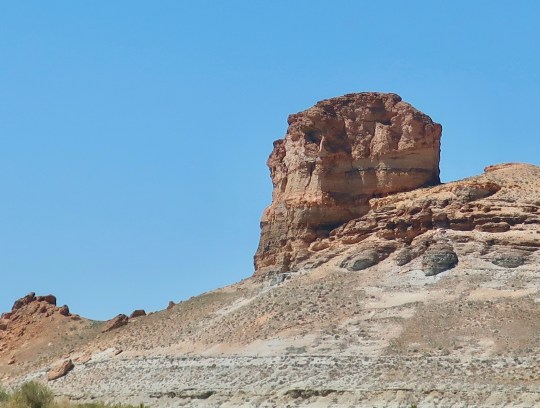
Peggy and I took its photo when we briefly rejoined the route between Rock Springs and Fort Bridger.
Driving over the railroad ties in Utah, the Flyer was in for a bumpy ride. Another problem was that the railroad spikes tore up the tires.
Ely, Nevada was the next point where our summer road trip crossed paths with the race route. We passed through the town on our way east when we were following Highway 50, the “Loneliest Road in America.” (Another post.) Ely feels like it is in the middle of nowhere. And it is. It would have felt much more so in 1908. The Flyer had made its way south from Wendover, Utah following what is now Highway 93 (more or less) to Ely and then continued southwest across the Nevada desert following today’s Highway 6 (more or less) to Tonopah.

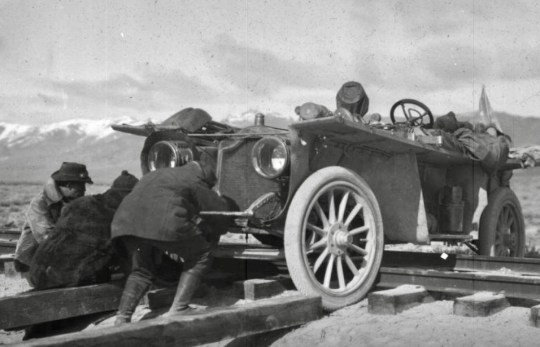
The Flyer team used railroad ties and brute force to get across the Western Pacific railroad in Nevada. They appear to be lifting the Flyer to get it onto the borrowed ties.
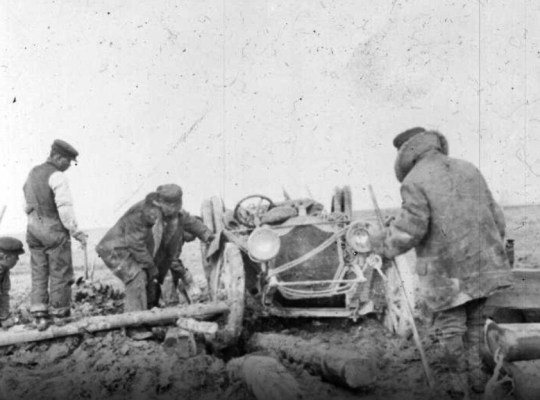
And here, they use logs to get the car out of Nevada mud. Peggy and I know from our years of attending Burning Man in the Nevada’s Black Rock Desert that there isn’t a heck of a lot of rain in Nevada, but when it does rain, the mud is no joke. The 24/7 event comes to a grinding halt.
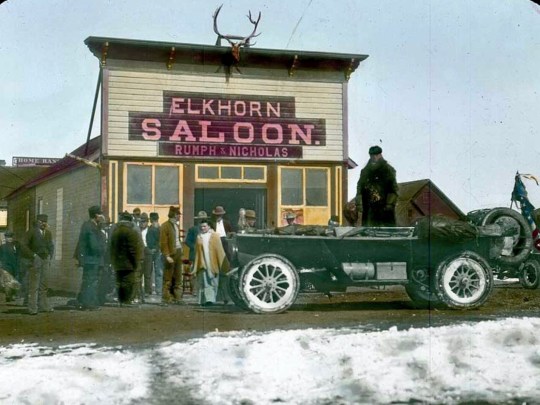
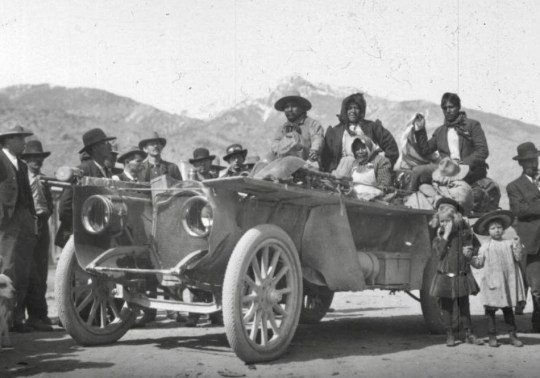
And, as always, the car attracted attention wherever it was. This photo is taken in Cerry Creek, a small town north of Ely.
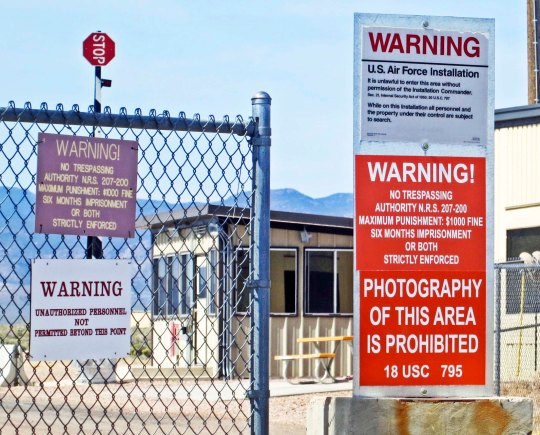
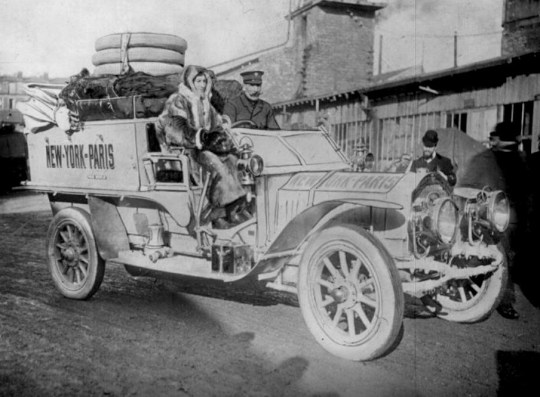
Along the way, it passed by what would become Nevada’s Extraterrestrial Highway. Think UFOs.  I’ve been interested in flying saucers ever since I saw one in 1969.  The participants in the Great Race didn’t report seeing any, however. Darn. (As an aside, I found it interesting that both the Pentagon and Japan’s military have set up task forces in the past couple of months to track UFOs. A little Twilight Zone music might be appropriate here.) But back to the race. 

Gate to top secret Area 51 in southern Nevada.
Peggy and I drove down the Extraterrestrial Highway and visited Area 51. We weren’t invited in. But then we weren’t arrested for taking photos either. (Post here on our visit.)

It was in Tonopah and the town of Goldfield 27 miles to the south that we first learned of the Great Race. In fact, we’ve driven the route followed by the Flyer from Tonopah south through Goldfield, the now ghost town of Rhyolite, and across Death Valley many times. I’ve actually ridden my bicycle over most of the route the race followed through Death Valley and on to Bakersfield, California.

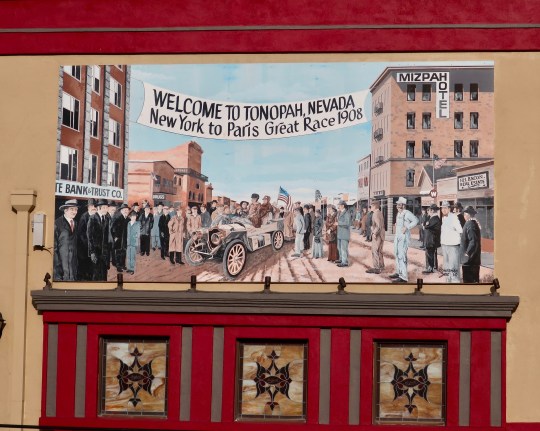
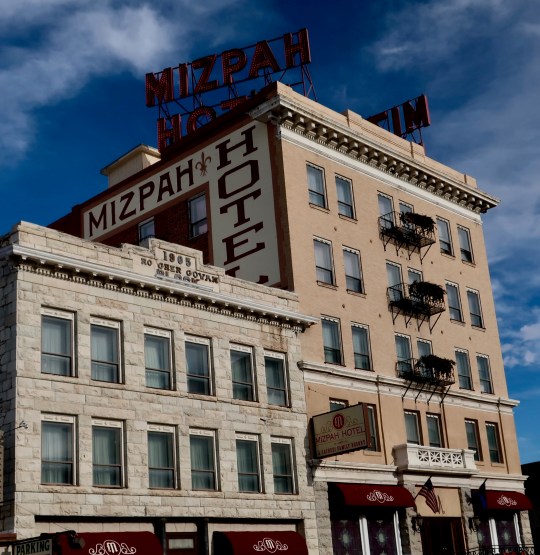
I kicked this series off with a photograph of a mural depicting the arrival of the Flyer in Tonopah. The scene was looking south. Note the Mizpah Hotel.
It still stands.

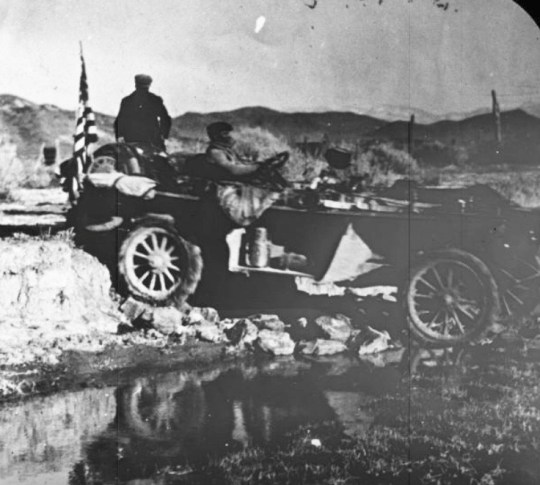
When the Flyer was late in arriving in Tonopah, several residents drove out the road to see if there was a problem. They found the Flyer broken down and Schuster sleeping in a bunkhouse. (Another version of the story has him walking toward Tonopah.) He was roused out, given a ride to town, borrowed parts from a Thomas Flyer owned by a local doctor, fixed the car, and arrived to a jubilant welcome. Pretty much the whole town greeted the team.

The Flyer was attempting to cross this quicksand filled creek on the Warms Springs Ranch when it got into trouble outside of Tonopah.
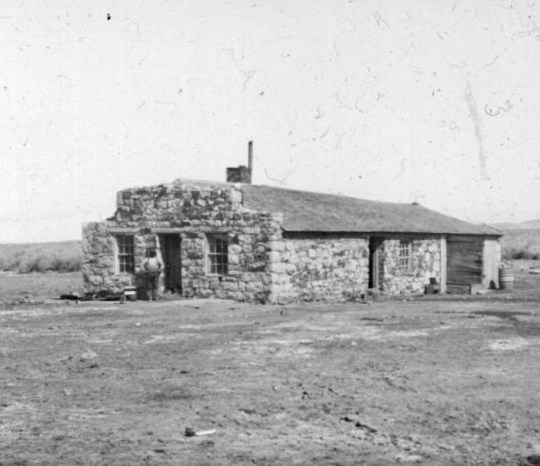
This building still stands on the Ranch.

Cowboys and miners shooting their pistols into the air welcomed them to Goldfield. It was a cast of characters. There is still a cast of characters living there! (And a speed trap.) Crossing Death Valley, the Flyer had to put on balloon tires to get through the deep sand. Stovepipe Wells offered its only water. 

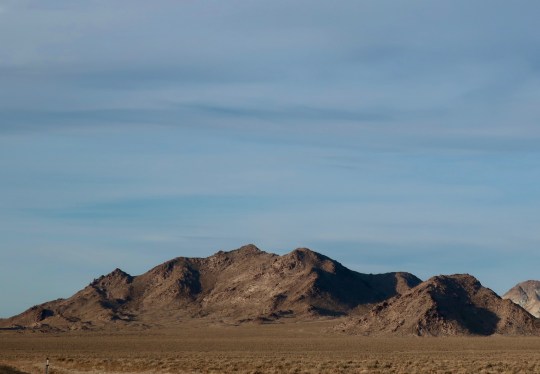
This would have been a view the team had as they left Tonopah for Goldfield.
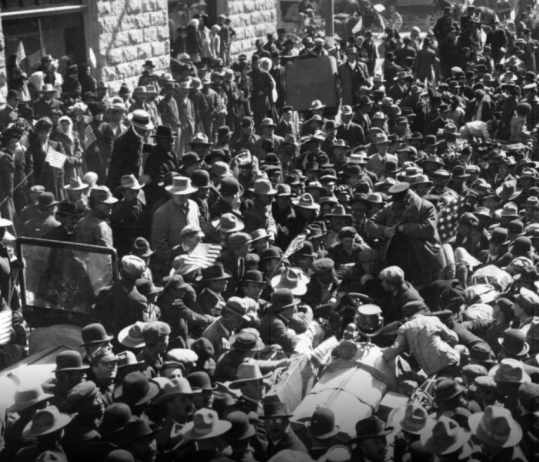
The Flyer was almost buried by the crowd that gathered in Goldfield.
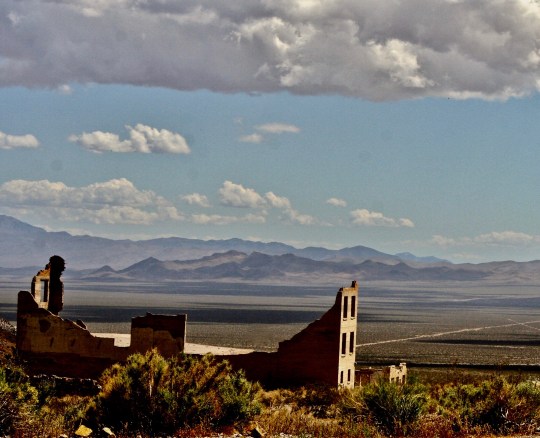
The Thomas Flyer passed through the Town of Ryolite just before entering Death Valley. Today it is a ghost town.
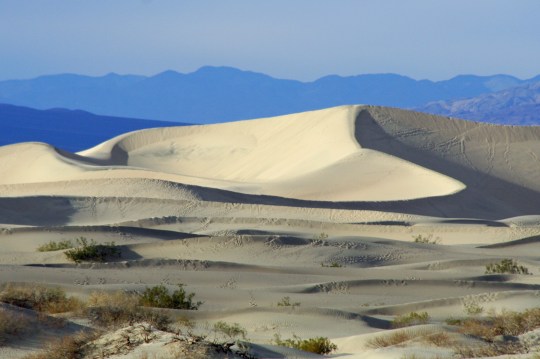
We took this photo of sand dunes in Death Valley from Stovepipe Wells. There was no lack of sand for the Flyer to negotiate through. I was glad for the paved highways when I rode my bike across the Valley.

The Thompson Flyer rolled into San Francisco on March 24th, the first car to travel across America in the winter. The team was given a hero’s welcome. Factories blew their whistles and cars honked their horns.  Its nearest competitor, the Zust, was still 700 miles away. The first phase of the race was over for the Flyer. Schuster was now to become the driver. He was eager to get to Alaska for the next phase of the race.

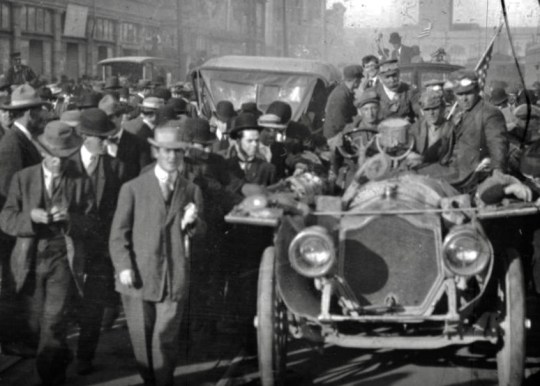
Market Street in San Francisco was packed for the arrival of the Thomas Flyer.

NEXT POST: Schuster travels to Valdez, Alaska to check out the next section of the race and the route is once again changed. Cars will be shipped to Japan and then on to Vladivostok, Russia where their next challenge will be crossing Mongolia and Siberia.

There’s Something Fishy about Barcelona’s Public Market

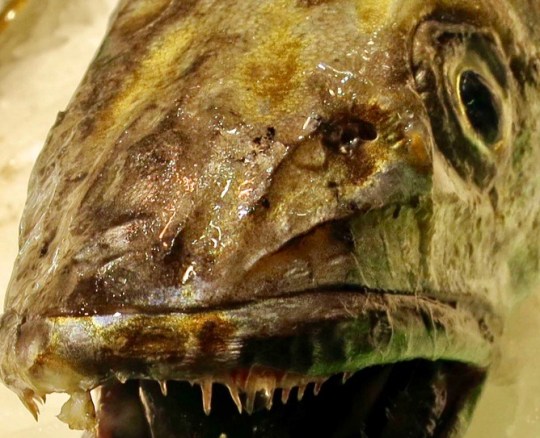
Meet Jaws. I met him at Barcelona’s public market.

Barcelona’s public market, La Boqueria, was on our must-see list when we visited the city in 2015. It’s rightfully famous for its size, variety of food, tapa bars and number of tourists. Not surprisingly, Catalans have become a bit grouchy about the latter. “Buy fish, don’t take photos!” one yelled at me. Little did he know that I was helping him out. If more people featured ugly seafood in their photos of La Boqueria instead of chocolate and oranges and mushrooms, and peppers, and corn, and garlic and strawberries, and cheese, and delightful tapa bars, fewer people would visit. Heck, fewer tourists would likely come to Barcelona. Problem solved.

So think of this as my campaign to help the Catalans who are hoping that the tourist numbers don’t climb into the stratosphere again when the coronavirus ends. The slogan for the campaign is, “Barcelona: Stop and Smell the Fish— but Don’t Let Them Bite You!”

While Jaws won the contest as poster child for the campaign, Ugly was a close second.
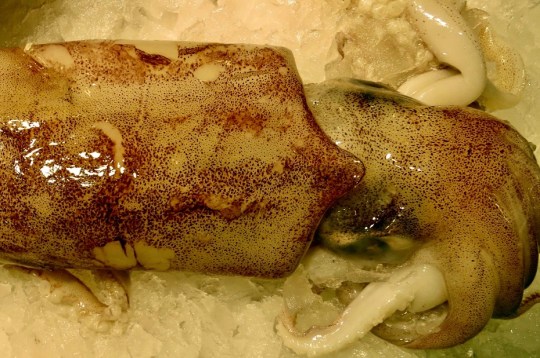
I don’t want to discriminate against other forms of seafood. This squid was hardly cute.
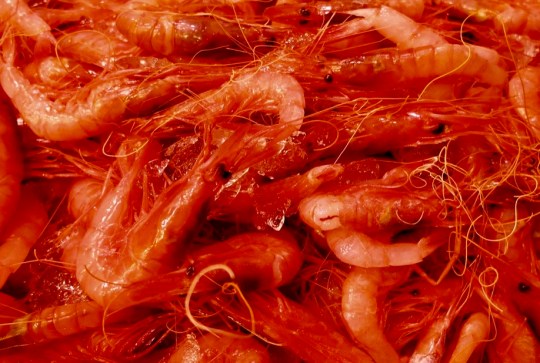
It’s hard to qualify shrimp for the campaign, but…
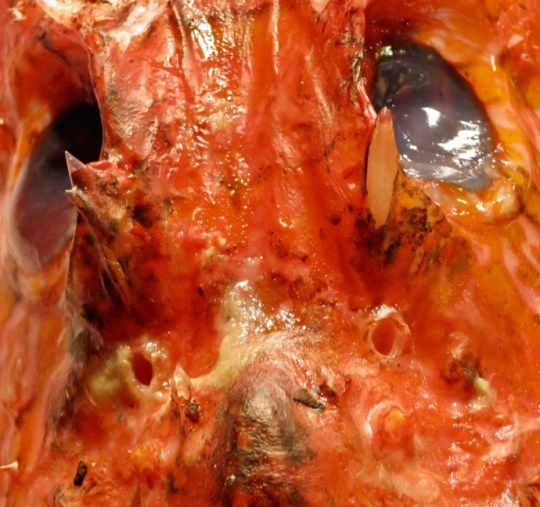
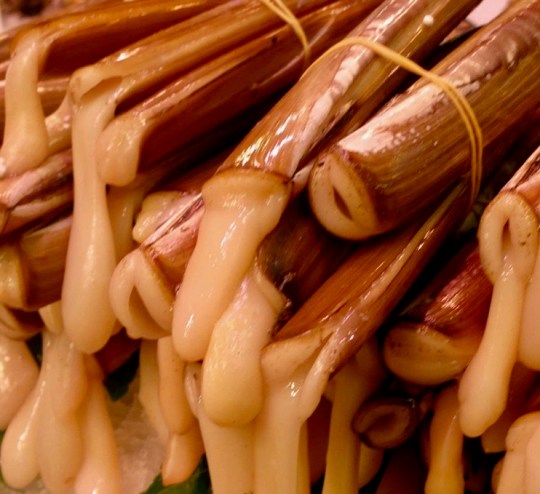
I’ll conclude with this photo, also a serious contender for poster child. I don’t have a clue what it is but I would be hard pressed to identify it as edible! Maybe some of the folks who follow my blog can identify it. Maybe they will even declare it is absolutely delicious!

NEXT POST: It won’t be on ugly seafood. (grin)

Bunnies, Bunnies, Everywhere… An Easter Tale

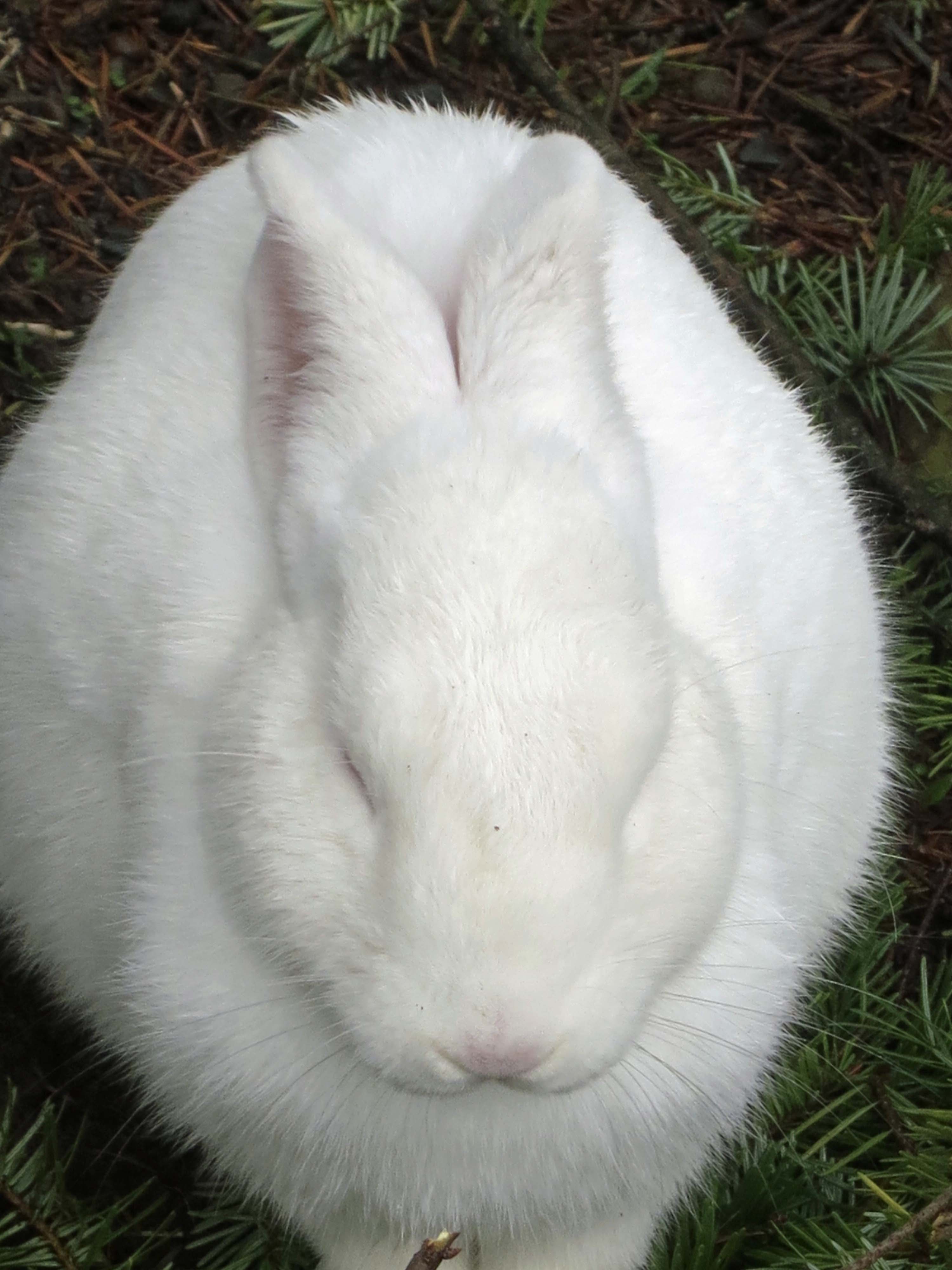
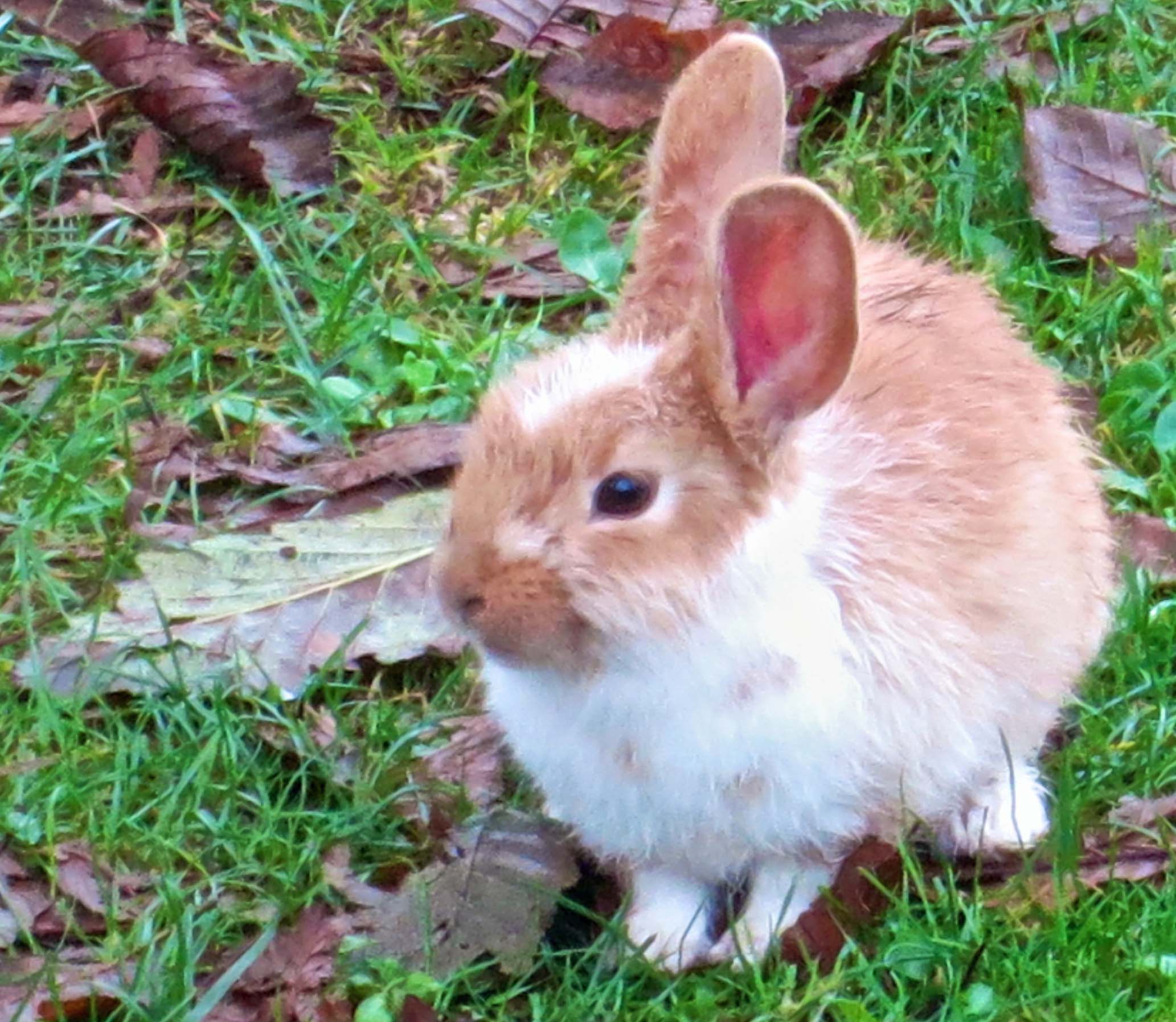
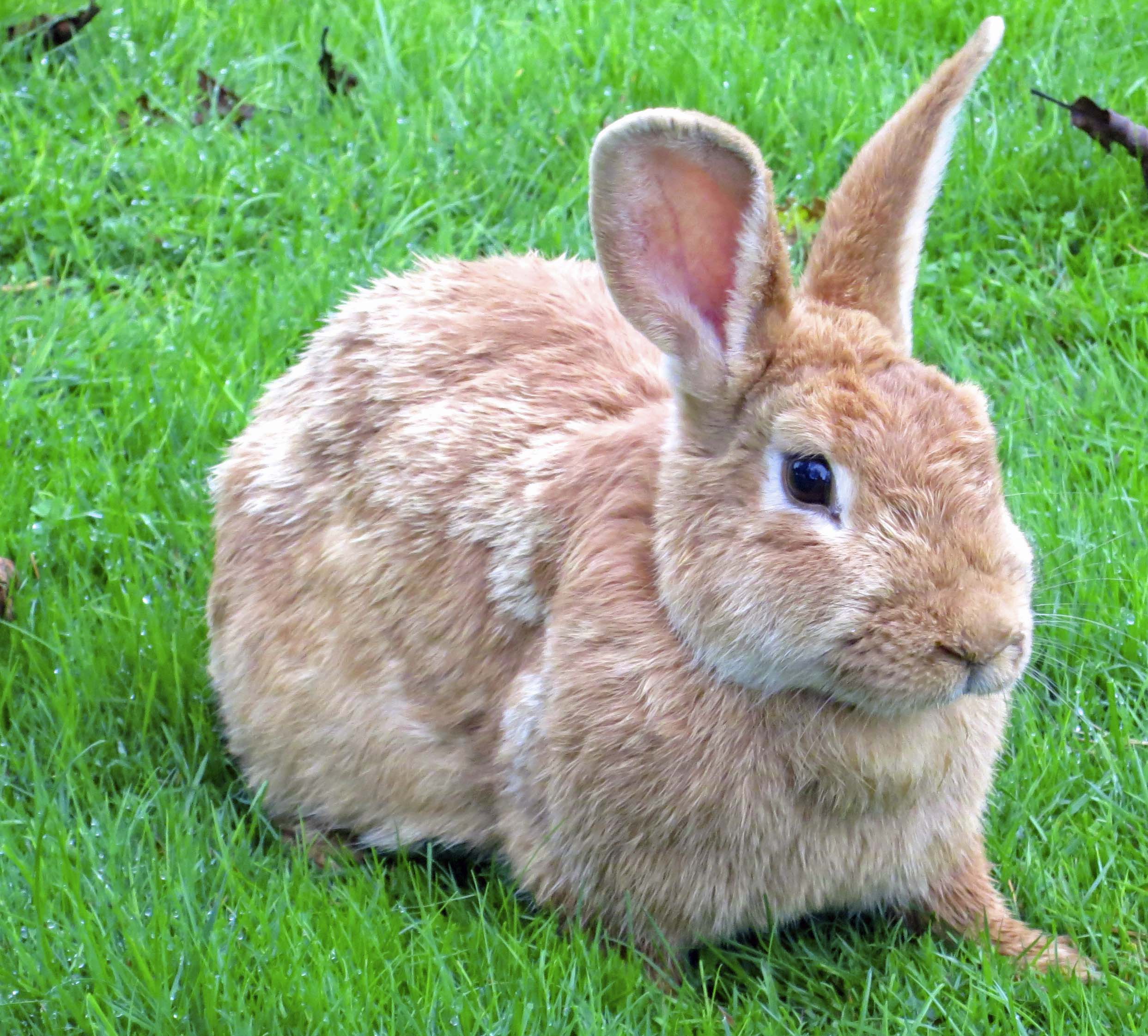
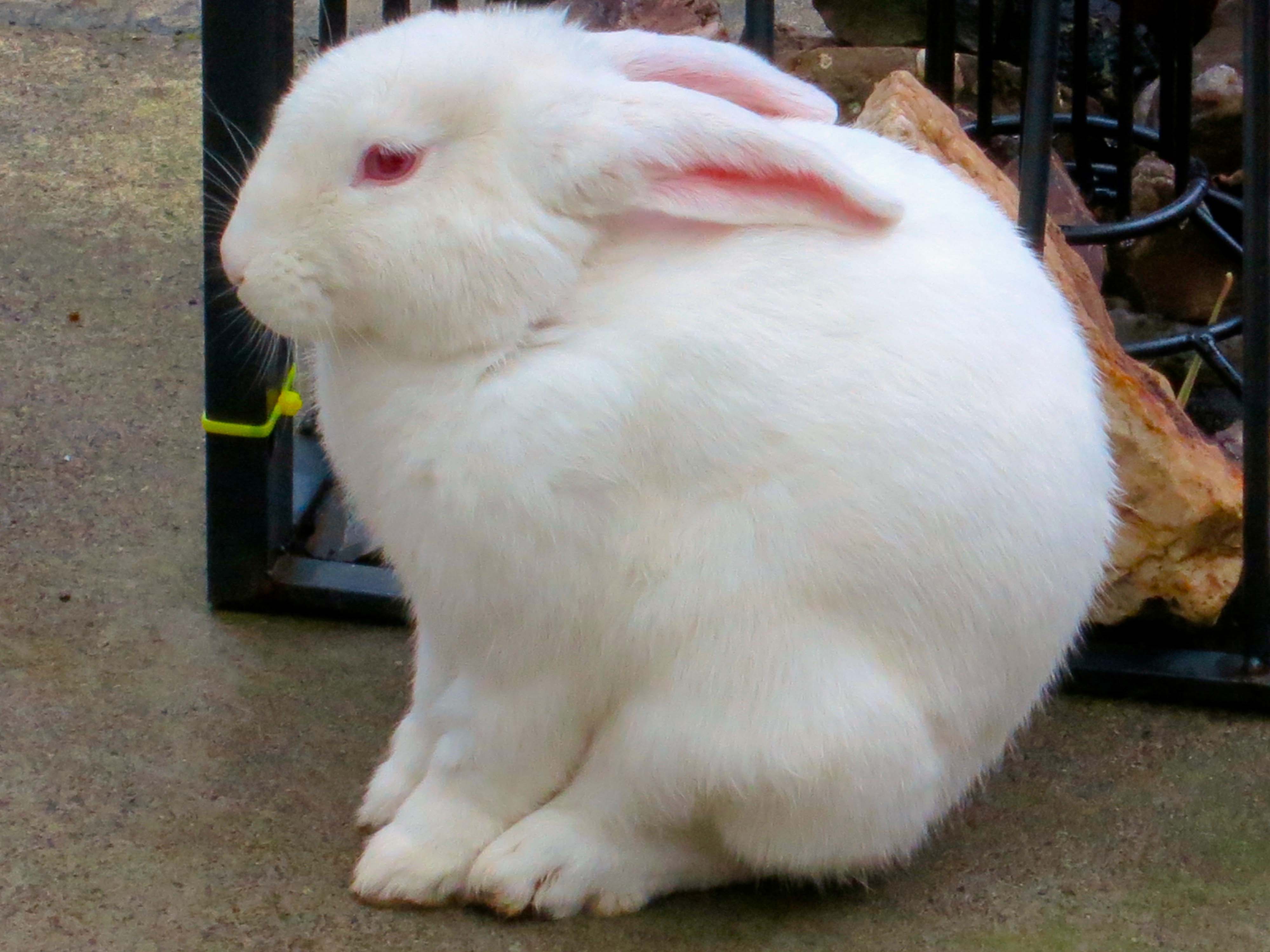
I drove into the Pleasant Valley Campground near Tillamook, Oregon and there were bunnies everywhere, including this magnificent creature.

I drove into the Pleasant Valley Campground near Tillamook, Oregon and there were bunnies everywhere, including this magnificent creature.


With Easter having arrived, I couldn’t resist re-blogging/modifying a post I did on some really cute bunnies a while back.

I had stopped over in Tillamook, Oregon to visit the cheese factory. It sends out tons of the stuff annually. I assume all over the world. I watched women whip around 50 pound blocks of cheese like they had been working out with Arnold Schwarzenegger. This made me hungry, so I ordered a sample plate of Tillamook ice cream. Bad idea. It’s really good. I mean really, really good. But eating all of those calories made me tired. It was time to find a campground.

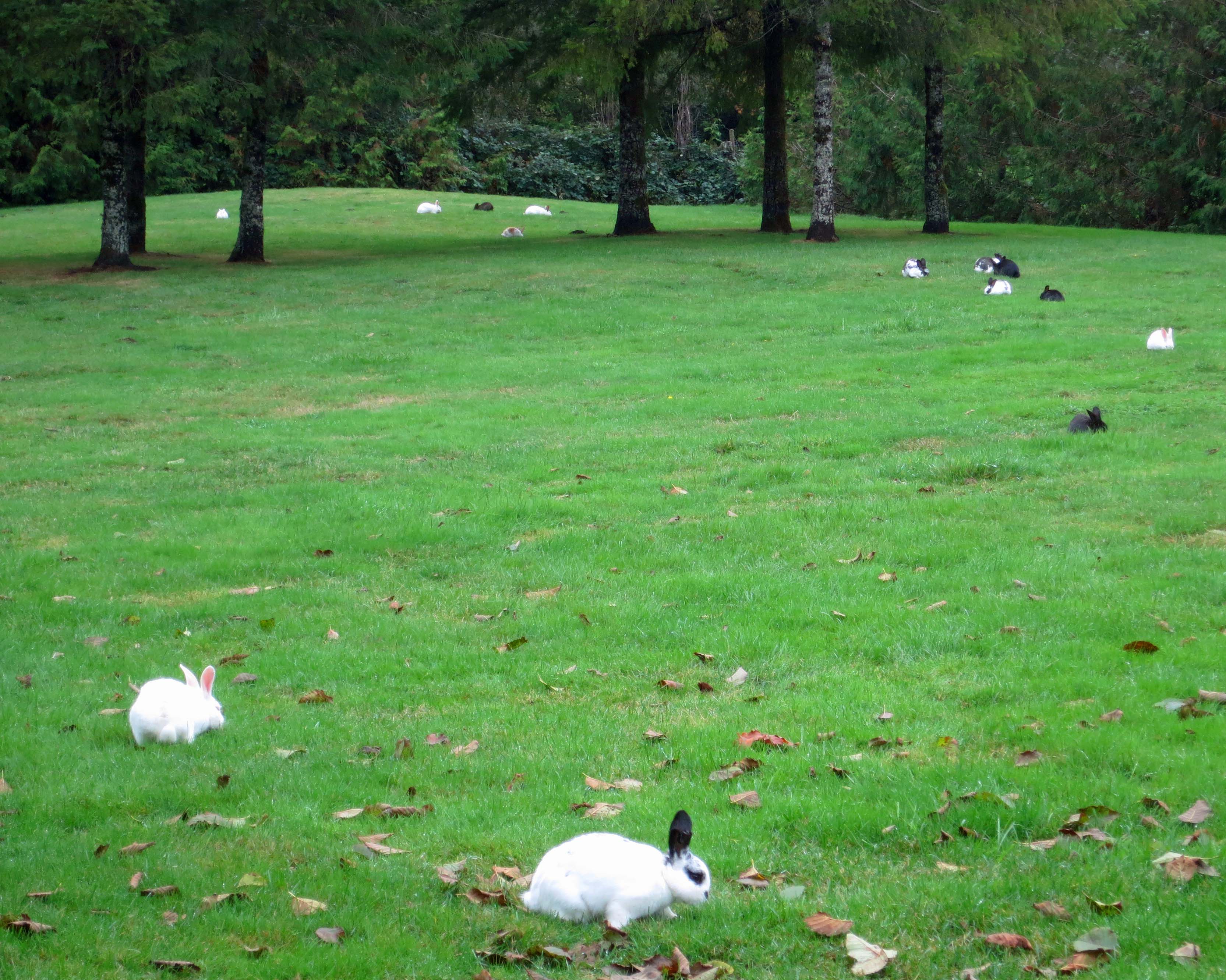
And this is where the bunnies came in. I pulled into Pleasant Valley Campground, a few miles south of Tillamook, and was greeted by (drum roll please) RABBITS, dozens of them. There were black ones, and brown ones, and white ones, all of whom seemed to be chasing each other around in a glorious romp to make more bunnies. After all, isn’t that what rabbits do beside deliver Easter eggs?

Ignoring the obvious, for the moment, I asked the owner where all the rabbits came from. “Oh they used to live across the street,” she informed me. “One day, a few moved over here. They didn’t do any harm and the campers seemed to like them. So I let them stay.” The rest is history, as they say. Anyway, here are some photos I took of the rabbits. Enjoy.

I am going for the awww factor with this baby bunny.

I am going for the “awww” factor with this baby bunny.

This was only a few of the rabbits, but it makes the point.

This was only a few of the rabbits, but it makes the point.

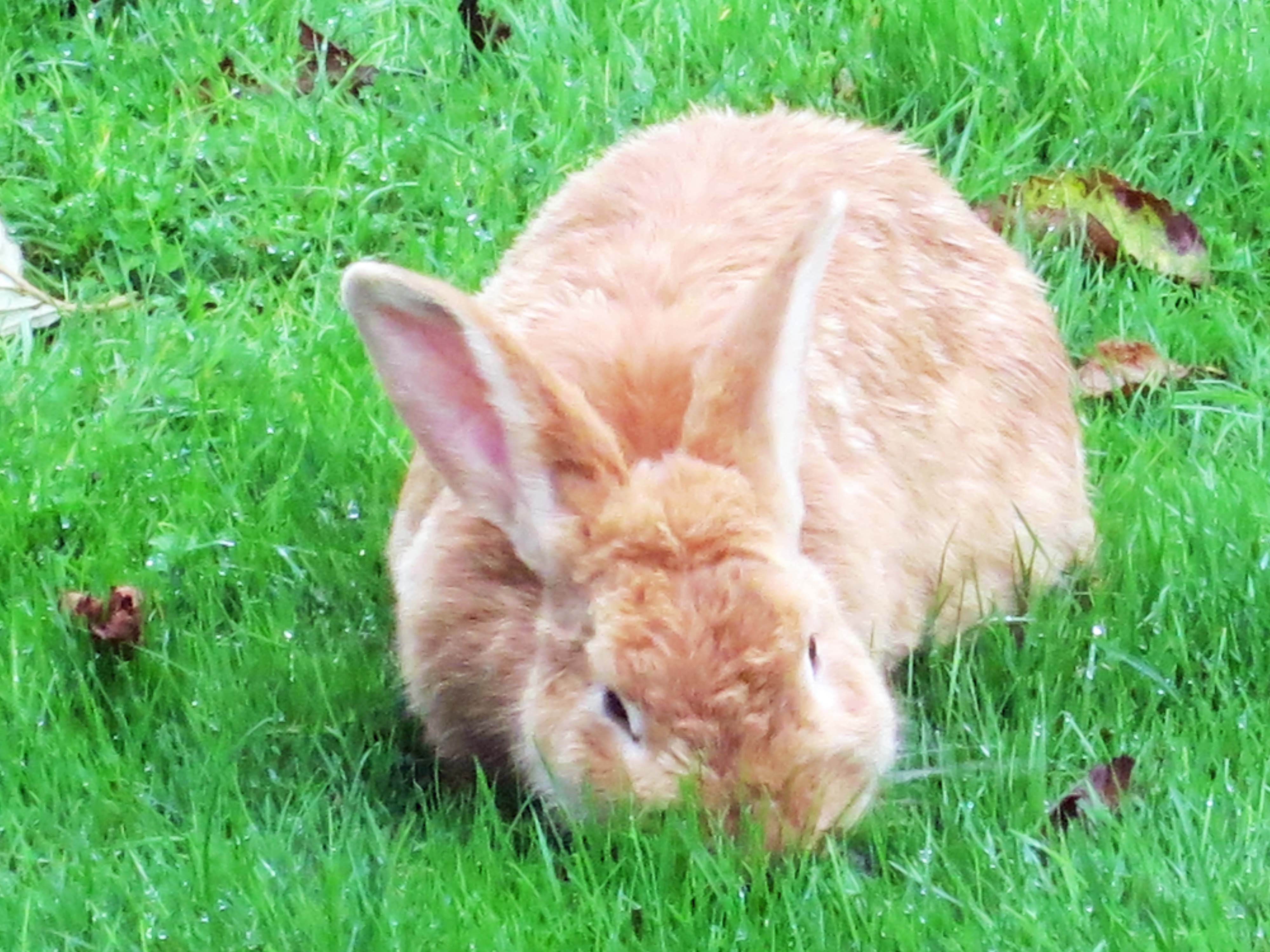
Furry rabbit near Tillamook, Oregon.

This furry gal was napping when I snuck up on her, but then, her eyes popped open…

Alert brown rabbit near Tillamook, Oregon.

And she was all wiggly ears and twitchy nose.

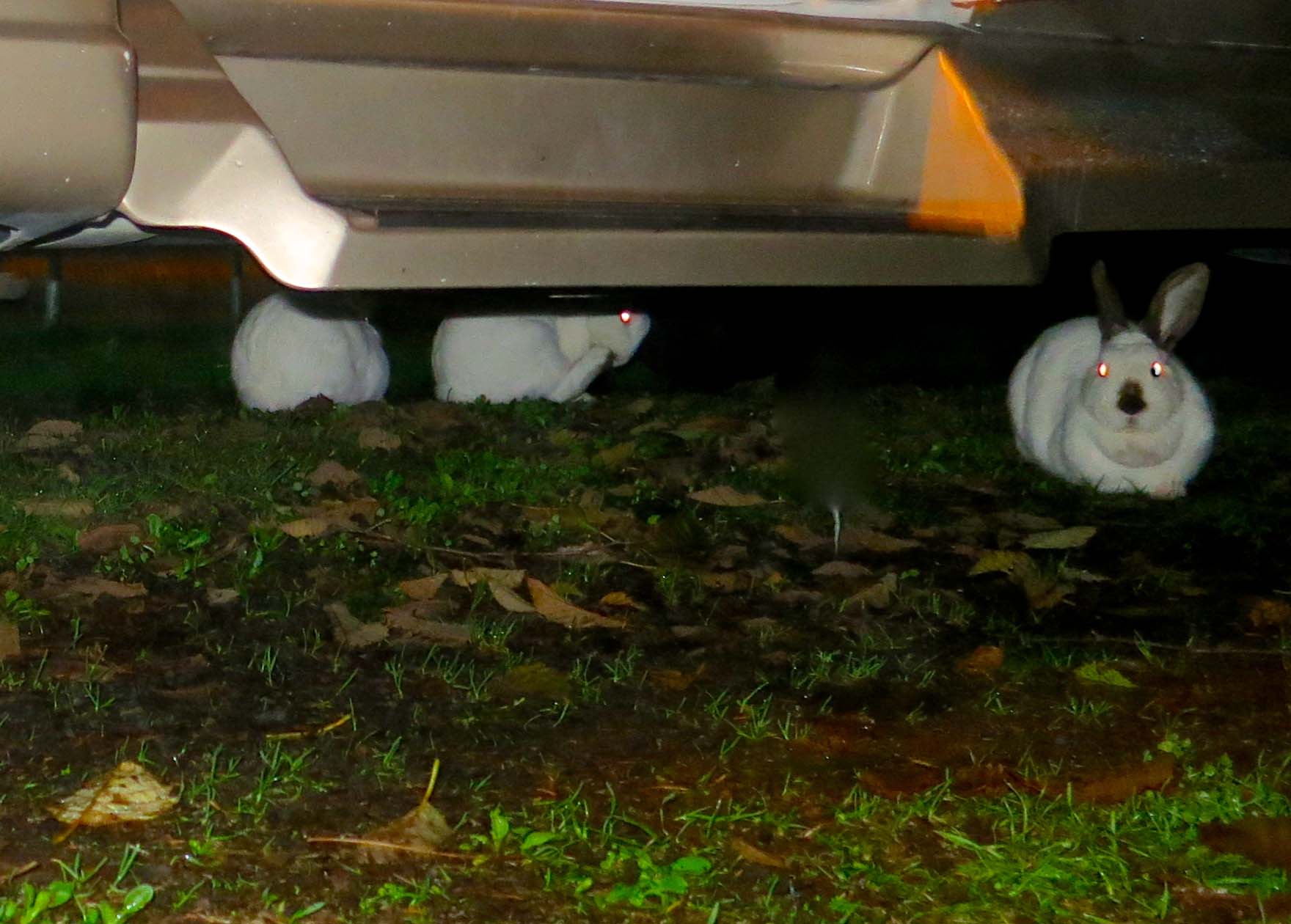
It rained really hard that night. I discovered I had several rabbits using my van as shelter. The step is the doorstep to my van.

It rained hard that night. I discovered I had several rabbits using my van as shelter. The step is my doorstep. My flashlight caught their eyes. Scary. Was it a case of when good bunnies go bad?

Tillamook, Oregon Bunny. Photo by Curtis Mekemson.

Nah. I’ll finish off with another baby bunny. It was cold out and this tyke looks cold. I almost invited it into my van to warm up. 

I don’t know how many of these bunnies participate in delivering Easter Eggs, but any of them would be welcomed here! A very Happy Easter to our friends throughout the blogging world— Curt and Peggy

The Natchez Trace: A Bicyclist’s Paradise… The 10,000 Mile North American Bicycle Tour

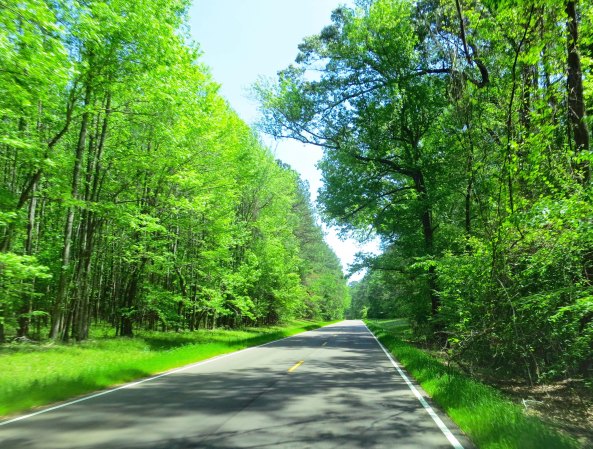
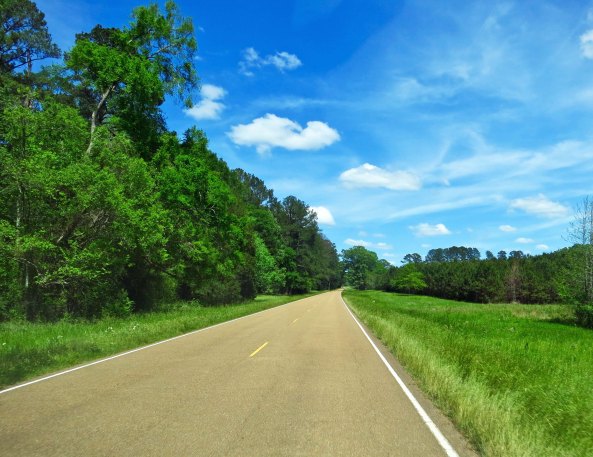
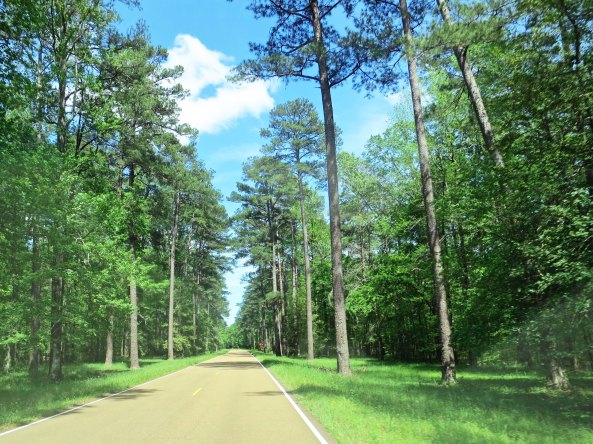
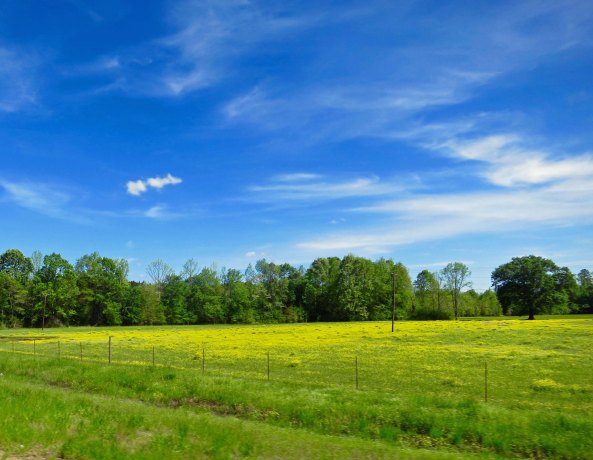
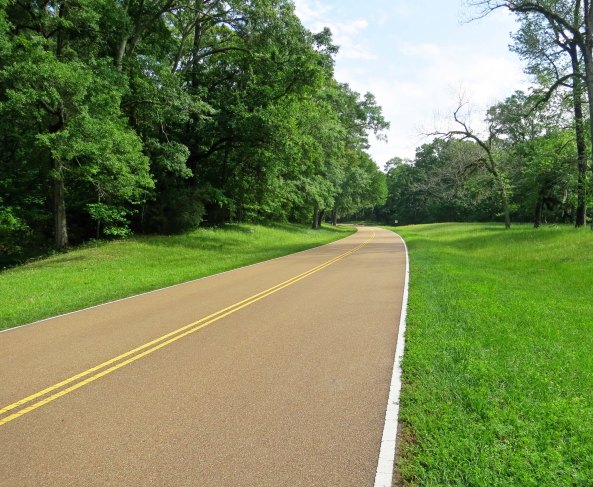
The Natchez Trace between Natchez and Jackson Mississippi.

I don’t think there is a place along the Natchez Trace that isn’t beautiful. I traveled on it for 370 miles of its 450 mile length.

This is my fourth post introducing new followers to the type of tales they can find in my blog. Way back in 1989, I did a solo 10,000 mile bicycle tour of North America. While the journey predated blogging, Peggy and I retraced my route three years ago. Traveling out of California, we crossed the US following a southern route, went up the east coast into Canada, headed back west through Canada to Minnesota, and then finished our tour following a northern route back to California. This is a chance to visit much of North America and hear tales about my bike trek. Want more: Here’s a post from Canada. Scroll forward or backward for the rest of the story:  https://wandering-through-time-and-place.com/2016/09/28/

A large, yellow mutt came wagging his way into my camp. I’d unpacked my gear, set up my tent, and taken off my shoes and socks. My toes were celebrating their freedom.

“Well hello big fellow,” I said to the dog, glad for the company. He sat down beside me and worked his head under my hand, demanding that I scratch behind his ears. Then I was required to pet the rest of him. I had just worked my way down to his tail when he rolled over and insisted on equal treatment for his tummy.

I provided an initial scratch but my coffee water had started boiling. “Priorities,” I told him, “the petting zoo is closed.” Apparently this meant it was play time. He leapt up, grabbed one of my socks, and bounced off about 15 feet.  “Hey! Bring that back,” I urged. Fat chance. He put the sock down, backed off a couple of feet, and started barking.

I finished pouring the hot water into my coffee filter and got up, tiredly, to retrieve my sock. It had been an 80-mile day and I really didn’t want to play ‘chase the dog around the yard.’ I pretended that I didn’t care, that I wasn’t going for the sock, and that I was terribly interested in a large bullfrog that had taken up residence in the swimming pool. The pool hadn’t been cleaned since the previous summer. It made a great pond.

The dog didn’t buy it. He dashed in, grabbed the sock and ran off across the yard. “Okay, you win,” I declared while picking up a stick. “How about a game of chase the stick?” The dog cocked his head and increased his wags per second. I tossed the stick and off he dashed, leaving my sock behind. I quickly bare-footed it across the lawn and grabbed my sock.

“Ha, ha, Mr. Dog,” I called after him while waving the sock about enticingly. To compensate my new friend for his loss, I played tug-of-war with the stick. We growled at each other appropriately, all in good fun.

It was early to bed. I had completed my trip from Alexandria by biking through the city of Natchez and was now camped about a mile from the beginning of the Natchez Trace.  I was eager to get up the next morning and start my 370-mile journey up the fabled Parkway through Mississippi and Alabama into Tennessee. As I zipped up my tent, the big yellow mutt did three dog turns outside the door and plopped down, making me wonder where his home was. I was hardly in a position to adopt a pet. Besides, he was well fed and wearing a dog tag.

My last memory before going to sleep was of the bullfrog singing to his lady-love. “Chug-a-rum, chug-a-rum, chug-a-rum.”

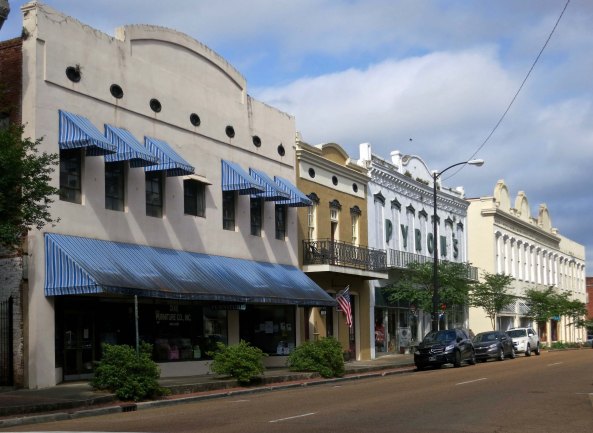
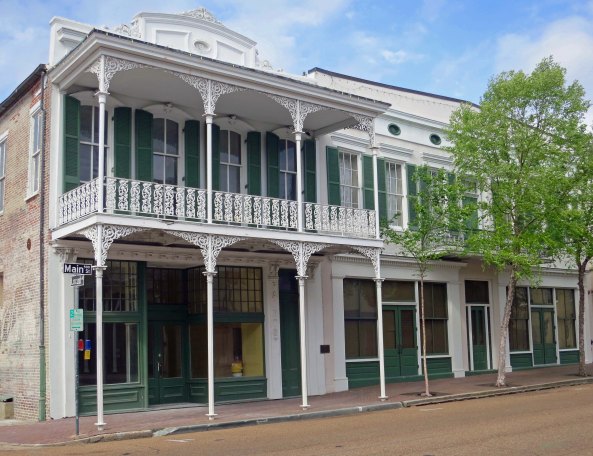
Downtown Natchez, Mississippi.

Peggy and I drove through Natchez on a Sunday morning and pretty much had the historic section of the downtown to ourselves.

Historic building with balcony in Natchez, Mississippi.

This historic building in Natchez came with an attractive balcony.

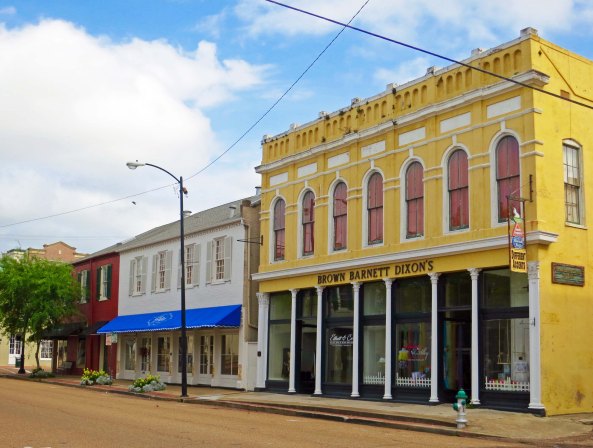
Downtown Natchez, Mississippi on a quiet Sunday.

The colors captured my attention here.

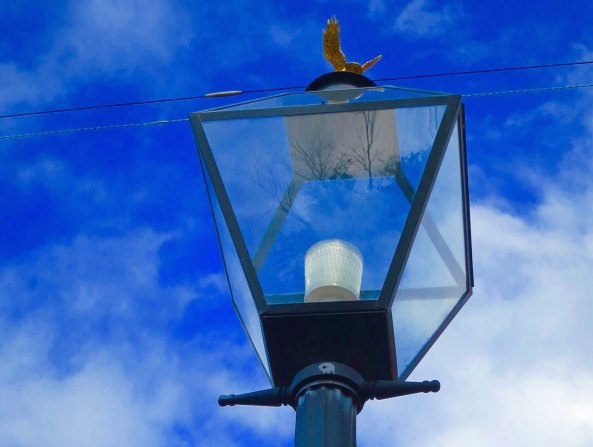
Old lamp posts adorn the historic part of Natchez.

Old lamp posts adorn the historic part of Natchez.

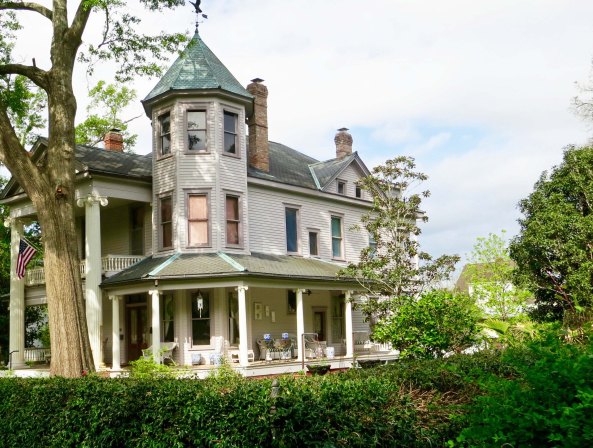
The city is known for its antebellum mansions.

The city is known for its antebellum mansions.

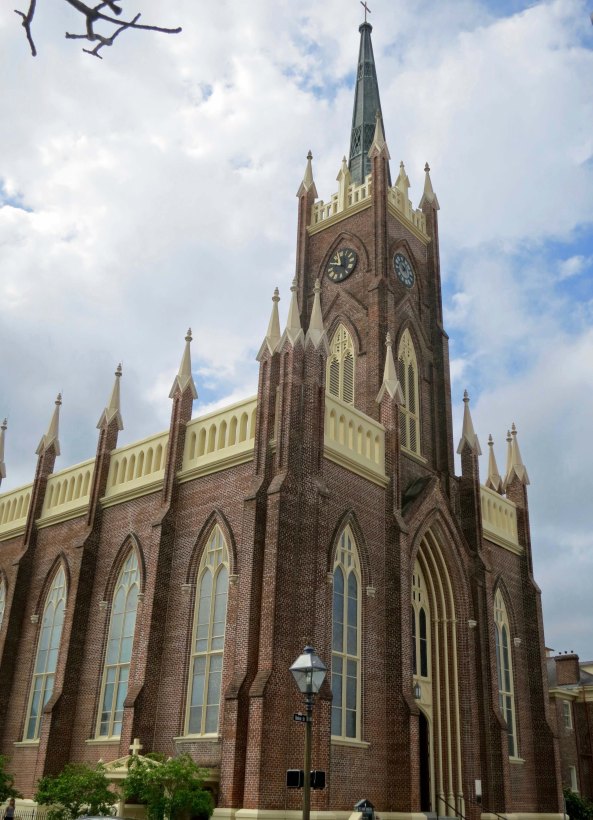
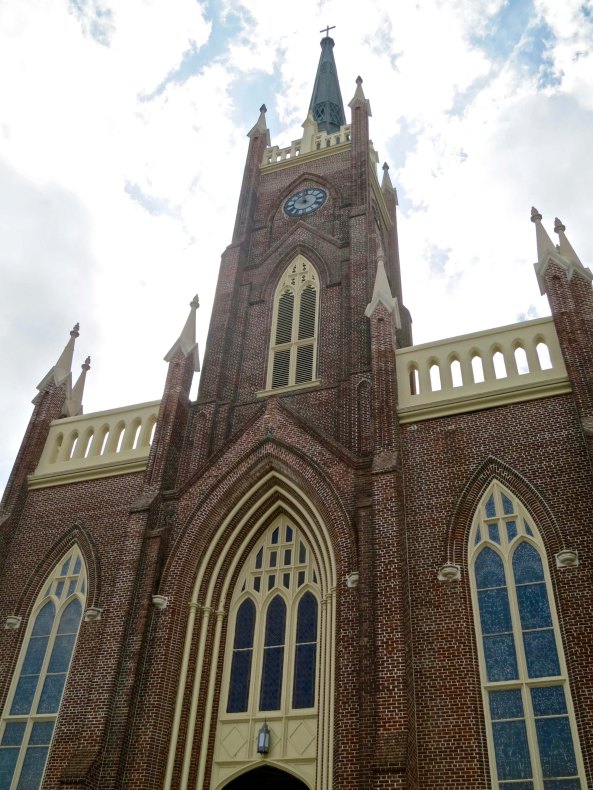
St. Mary's Catholic Church in downtown Natchez, Mississippi.

St. Mary’s Catholic Church was busy with its Sunday service so I didn’t go inside.

St. Mary's Catholic Church is located in downtown Natchez, Mississippi.

It was quite impressive from the outside, however.

Natchez has an interesting history. Once the site of a major Native American village, its initial contact with Europeans goes all the way back to Hernando de Soto in the mid 1500s. He wandered through the area searching for gold to steal, the primary occupation of Spanish Conquistadores. By the 1700s the French had entered the area followed by the British, the Spanish again, and finally, in 1795, the Americans. Native groups in the region included the Natchez, Chickasaw, Yazoo, Cherokee, and Creek, as well as the Choctaw further to the north.
As for the Natchez Trace, its beginning goes back 10,000 years and was probably tied to buffalo travelling along ridges doing buffalo things. Since these broad, heavy animals make good trails (think of them as early day bulldozers), Native Americans were soon using the routes for trade and travel between large communities.
The next stage in the Trace’s evolution was brought about by river trade in the late 1700s and early 1800s. Kaintucks, boatmen from the Ohio and Mississippi River Valleys, loaded flatboats with merchandise and paddled downstream to Natchez or New Orleans where they made handsome profits for their goods. The challenge was that you don’t row a boat up the mighty Mississippi. The boatmen had to hike or ride horses home. They sold their boats as lumber and made their way back to Nashville via the Natchez Trace
It was an adventure. There is a reason why the Trace became known as The Devil’s Backbone. It was crawling with highway men eager to separate the Kaintucks from their newly earned wealth. And that assumes that they could even get their money out of Natchez where cheap whiskey cost a fortune, hot love was based on cold cash, and cut-throats came by the bushel.

The development of steamboats in the 1820s changed things dramatically. These boats with their large, steam-driven paddle wheels could travel upriver. Boatman no longer had to hike or ride horses back to Nashville while fighting off thieves.  Gradually, people stopped using the Trace and it faded from memory.  But not totally.

In 1903, the Mississippi chapter of the Daughters of the American Revolution took on a project of placing markers along the original route. In 1918 the precursor to the Natchez Trace Association was created with the rallying cry of “Pave the Trace!” Work on the Parkway was started in 1937 and in 1938 it became a unit of the National Park system.

When I rode my bike out of Natchez in the spring of 1989, the Trace was mainly complete and had become something of a bicyclists’ paradise. (Today it is considered one of the top ten bike rides in America.)   To start with, there was no commercial traffic. No 18 wheelers would be whizzing by me. Nor were there any commercial properties or billboards, just lots of beautiful woods and small farms. Campgrounds and restrooms were located conveniently along the way.  Frequent rest stops featured local history. I was free to ride along and enjoy the scenery.

But I did have two responsibilities. The first was to persuade the large, yellow mutt that he wasn’t going with me. It started with a discussion in camp that I thought he had understood. Where I was going was dangerous for doggies. It was dangerous enough for me. About a mile from camp I chanced to look back, there he was, about 50 yards back. I stopped and waited for him to catch up, all a waggle. “No!” I said forcefully. “You cannot go. Go Home!” The tail stopped wagging. Two sad brown eyes accused me of horrendous deeds. Ever so slowly, he turned around and started back, tail between his legs. I felt terrible.

The second chore was more pleasant— rescuing baby turtles. Bunches were migrating across the Trace outside of Natchez. Each time I came on a crowd, I would stop, climb off my bike, and give the little tykes a lift across the pavement. I knew that there would be more coming along behind but I must have transported at least a hundred,undoubtedly saving them from being run over.

Following are several photos of the Trace from Natchez to Jackson, Mississippi that I took during the route review Peggy and I did this past spring.  In my next blog we will make a slight detour to the town of Philadelphia, Mississippi where a good friend lives and then head up the Trace to Tupelo and visit with Elvis.

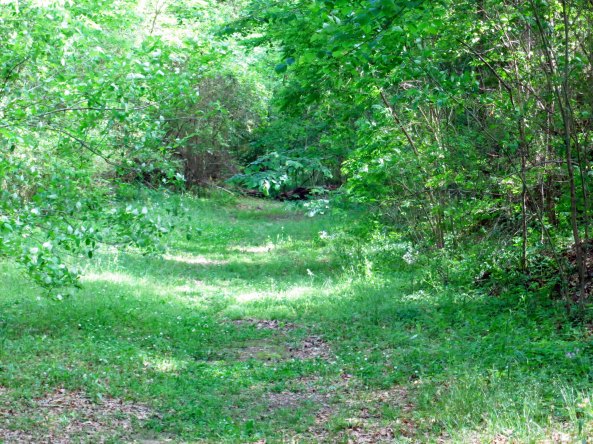
Views along the Trace were constantly changing from being forested to open.

Views along the Trace were constantly changing from being forested to open.

Pine trees became common around Jackson, Mississippi.

Pine trees became common around Jackson, Mississippi.

Rich farmlands border some of the Trace.

Rich farmlands border some of the Trace.

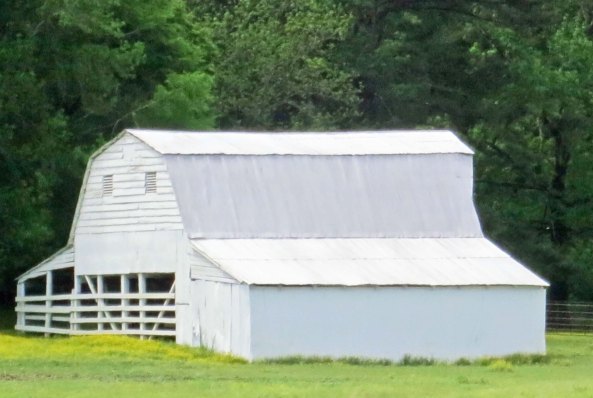
There are a number of barns.

There are a number of barns.

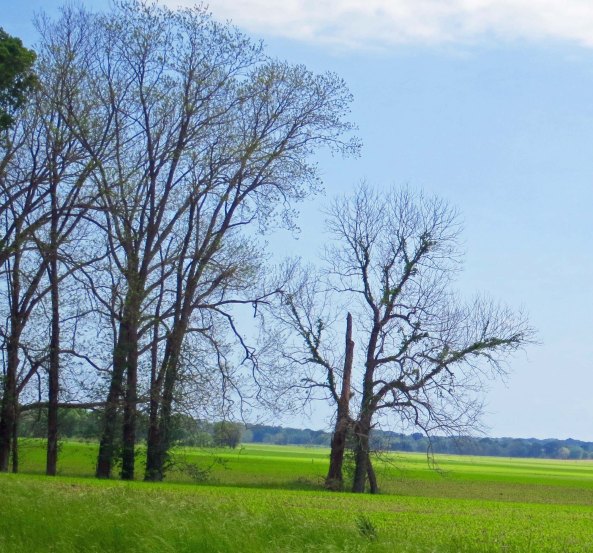
These trees had yet to leaf out.

These trees were just beginning to leaf out. I enjoyed the silhouettes they created.

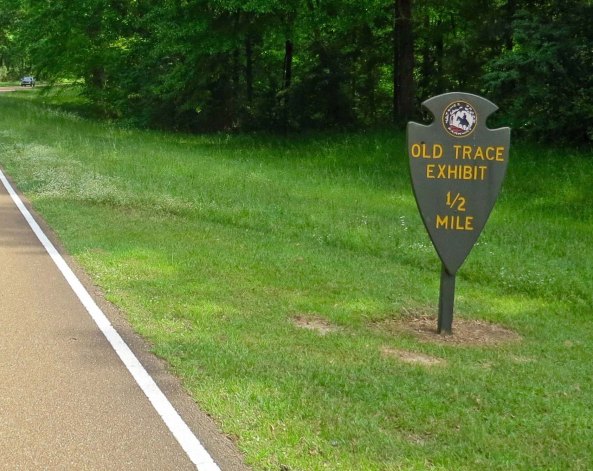
Numerous exhibits featuring the history of the Trace provide interesting breaks along the way.

Numerous exhibits featuring the history of the Trace provide interesting breaks along the way.

A number of the stops, like this one, include original sections of the trail.

A number of the stops, like this one, include original sections of the trail.

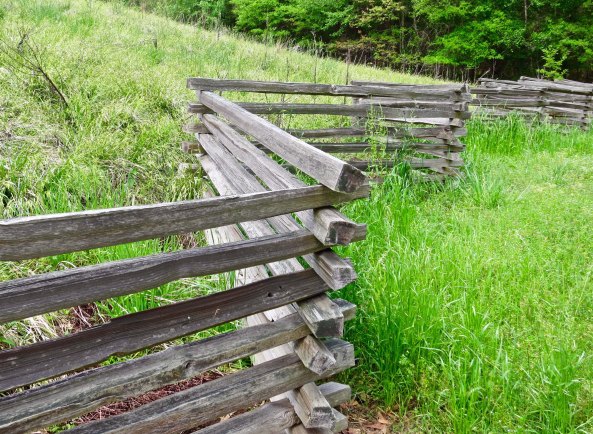
The Park has also rebuilt traditional fences that the pioneers who lived along the Trace would have built.

The Park has also rebuilt traditional fences similar to ones that the pioneers who lived along the Trace would have built.

A final view of the Trace for today. Many more will be included in my next three blogs.

A final view of the Trace for today. Many more will be included in my next three blogs.


The Glass Forge of Grants Pass… From the Sublime to the Wacky

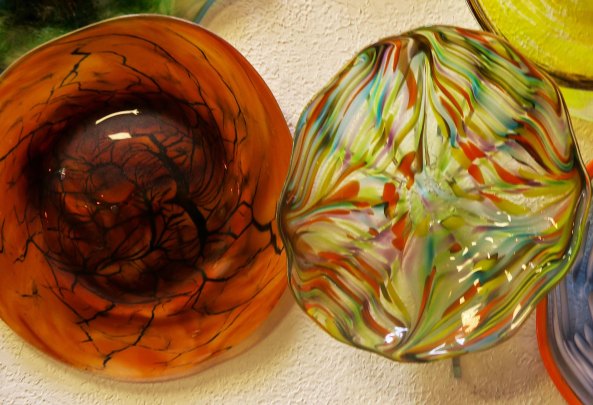
Two bowls from the Glass Forge of Grants Pass Oregon.

The Glass Forge of Grants Pass creates a wide range of glass art ranging from the sublime to the wacky. I loved the tree like pattern in the left bowl.

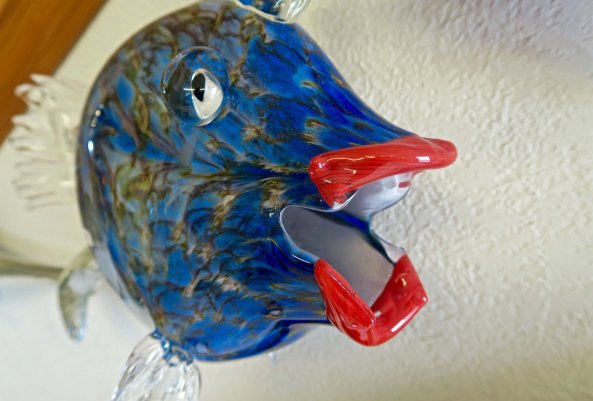
Red lipped blue fish produced at the Glass Forge in Grants Pass, Oregon.

How can you not fall for a blue fish with red lips. While the artists of the Glass Forge produce much traditional glass art, they also have a wonderful sense of humor.

It’s Friday, so this is my day to produce a photographic essay for my blog. My choice for today is the Glass Forge in Grants Pass, Oregon. Peggy and I visited the studio on one of our Wednesday Date Days in November. (We’ve been having Wednesday Date Days for 27 years!) When we arrived the staff was working on glass art for the Lodge at Yosemite.

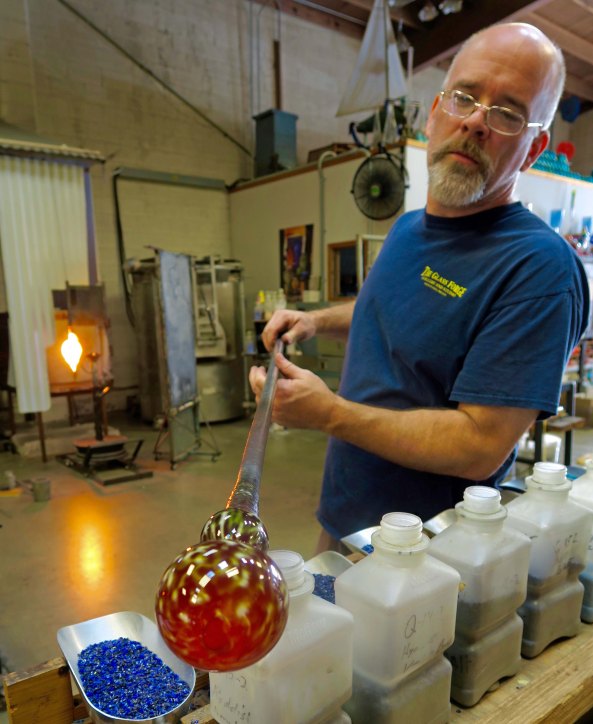
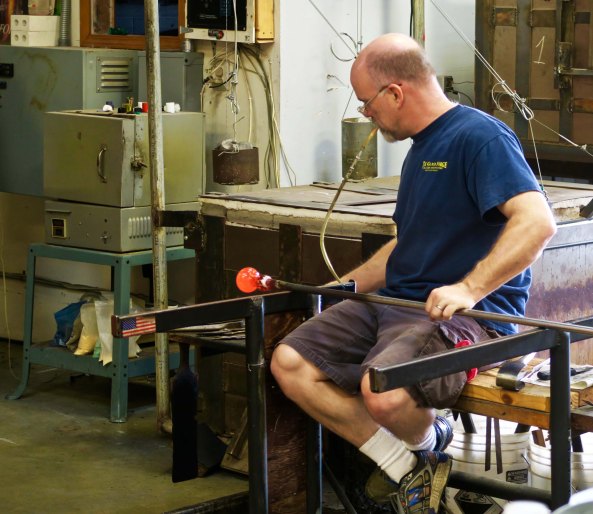
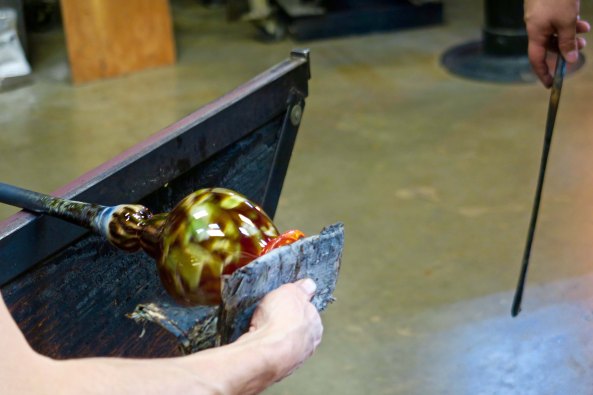
The Glass Forge of Grants Pass, Oregon was founded by Lee Wassink, shown above creating a vase.

One of the neat things about the Glass Forge is that you are encouraged to watch the artists at work. In this photo, Lee Wassink, founder of the Glass Forge, demonstrates the creation of a vase.

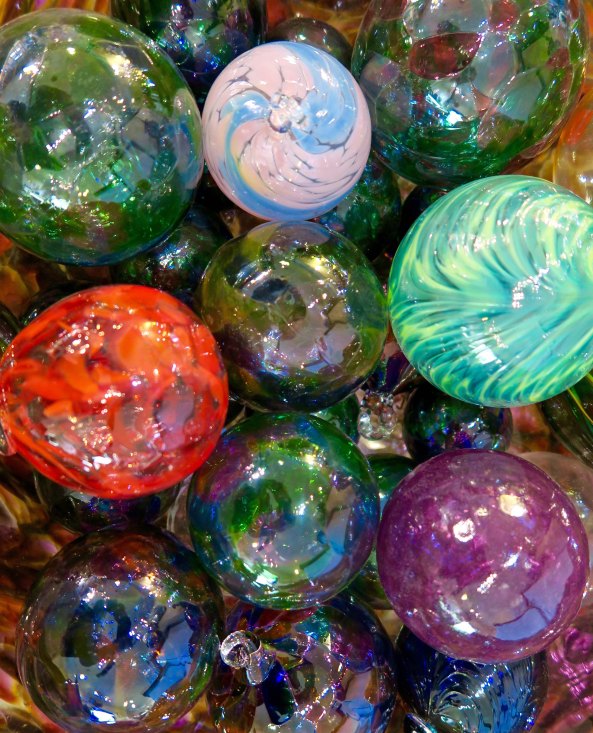
Groups and individuals have an opportunity to attend a workshop and create simple glass work of their own, such as these Christmas ornament.

Groups and individuals have an opportunity to attend a workshop and create simple glass work of their own, such as these Christmas ornaments.

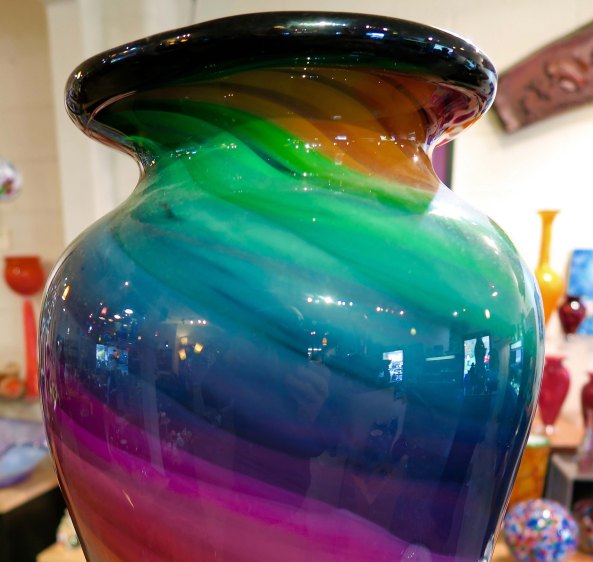
Vase found at the Glass Forge in Grants Pass, Oregon.

The studio provides an opportunity to peruse the wide variety of glass art available, such as this vase. As I posted this photo I notice a slight reflection of myself, a selfie.

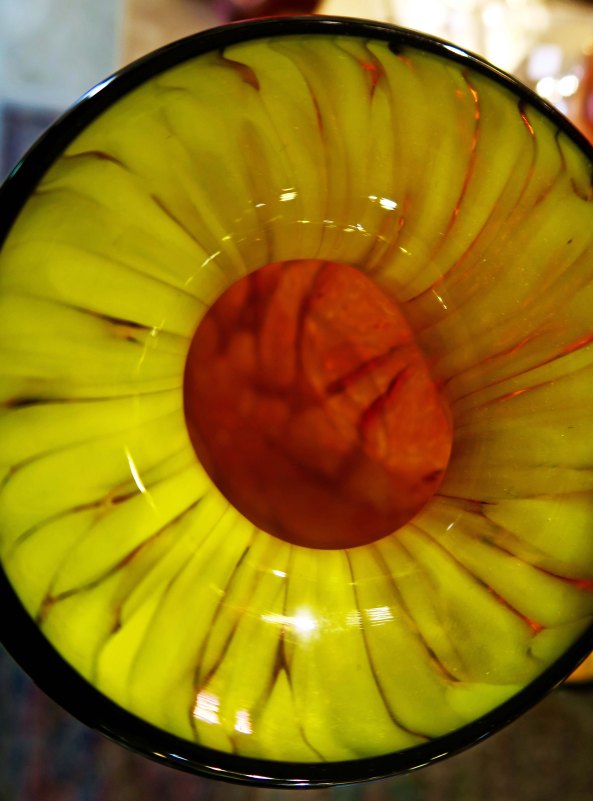
Looking down into a vase at the Glass Forge Studio in Grants Pass Oregon.

I always like looking down into glass art for a different perspective, as in this vase…

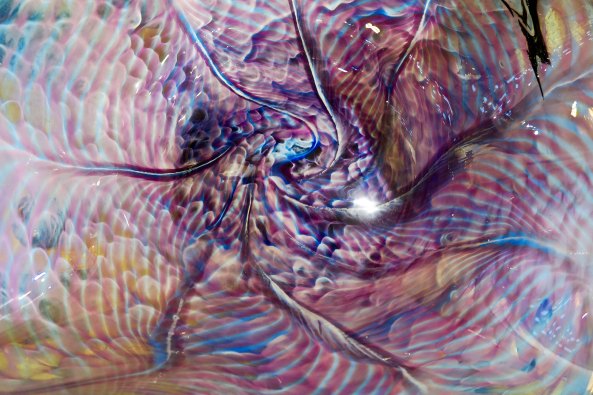
Looking at the patterns inside a glass bowl at the Glass Forge in Grants Pass, Oregon.

And this bowl. I am amazed at the patterns, variety and beauty created.

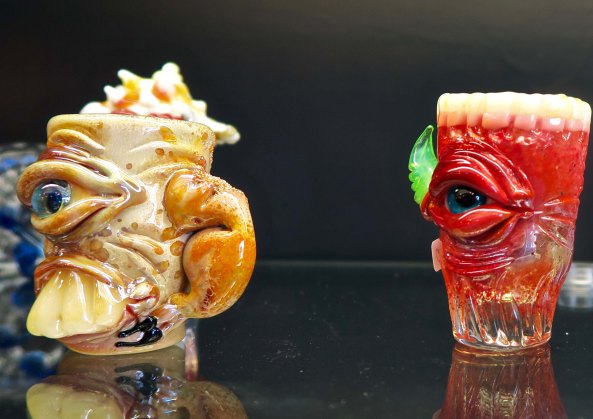
Humorous mugs created by the artists working at the Glass Forge in Grants Pass, Oregon.

I really like weird and wacky. These mugs certainly qualify!

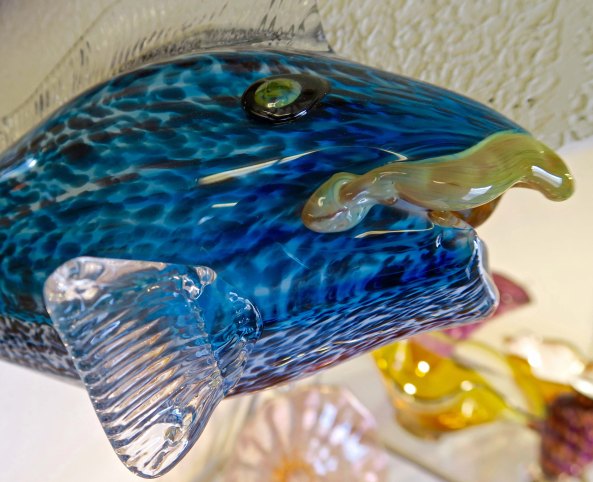
Glass fish with character at Glass Forge in Grants Pass, Oregon.

And here’s another fish.

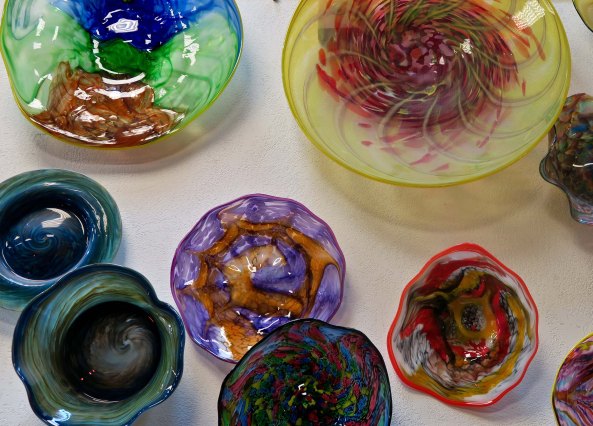
Variety of bowls displayed at the Glass Forge in Grant's Pass, Oregon.

This collection of bowls demonstrated the variety available.

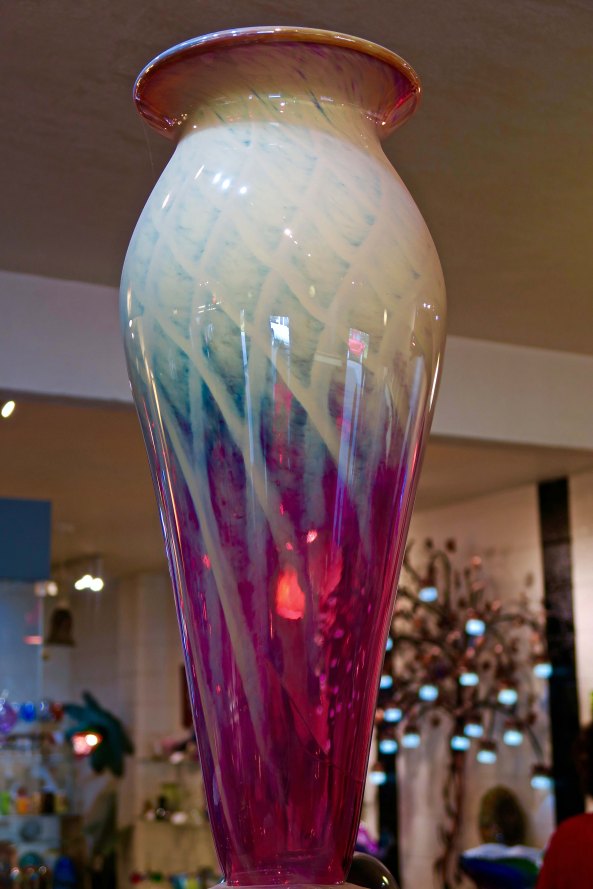
A tall, graceful vase at the Glass Forge in Grants Pass, Oregon.

One of several tall, graceful vases.

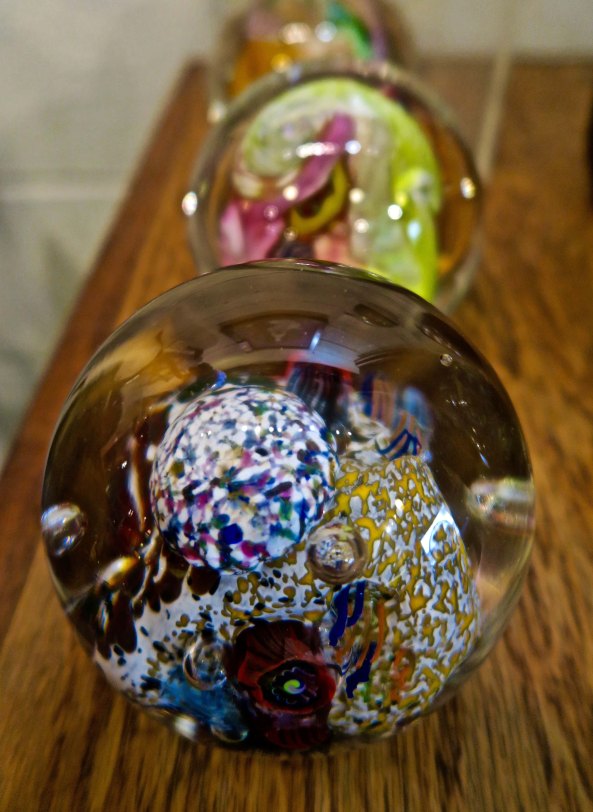
Glass paperweights available for purchase at the Glass Forge in Grants Pass Oregon.

Someday, I am going to return to the Glass Forge to find out how these paper weights are created.

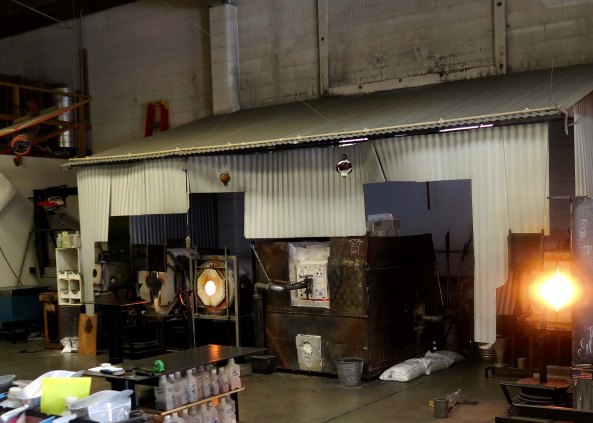
We were able to watch a vase being made. The furnaces used to melting the glass are over 2000 degrees F (1100 degrees C).

We were able to watch a vase being made. The furnaces used to melt the glass are over 2000 degrees F (1100 degrees C).

Furnaces for heating glass at Glass Forge in Grants Pass, Oregon.

A bubble is blown into the glass. Layers are added by returning to the furnace for more glass. The larger the piece, the more returns.

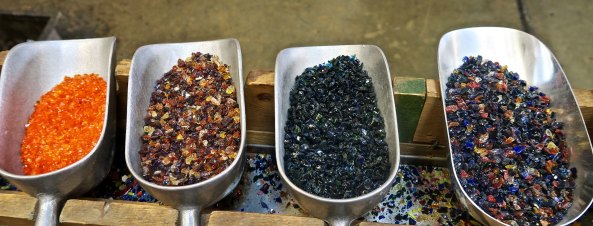
Bins that hold colored glass to add color to glass art created at the Glass Forge in Grants Pass, Oregon.

These bins hold colored glass that will be added to the various pieces.

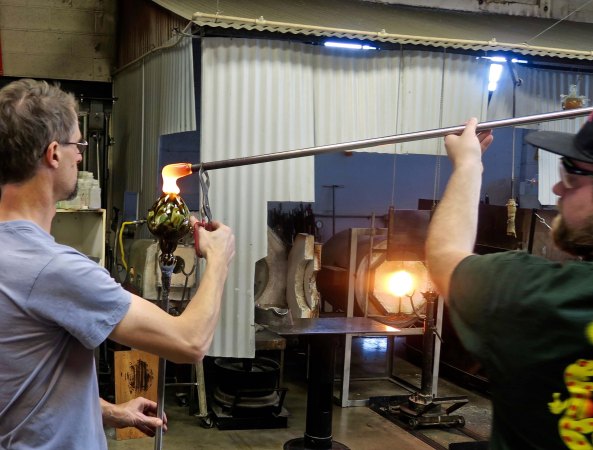
The following series of photos follow the artists as they work together to finish a vase:

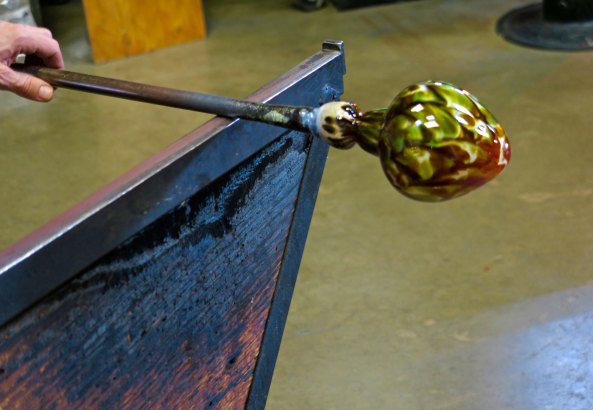
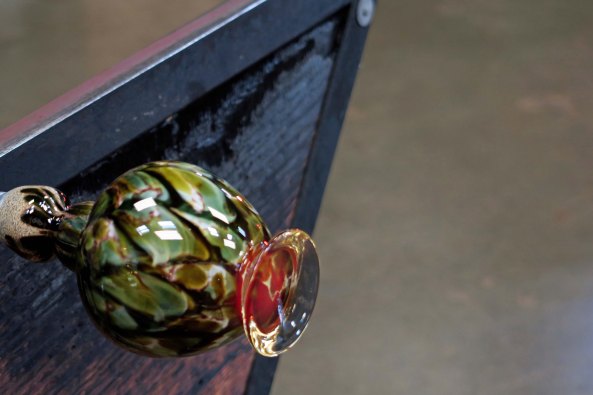
Color has been added to a vase at the Glass Forge in Grants Pass, Oregon.

Check out the gorgeous color!

Top is added to vase at Glass Forge in Grants Pass, Oregon.

A bottom is added.

Shaping a top on a vase at the Glass Forge in Grants Pass, Oregon.

And shaped.

A close to finished vase at the Glass Forge, Grants Pass, Oregon.

The finished product.

If you are driving up or down Interstate 5 in Southern Oregon or live in the area, I highly recommend stopping off at the Glass Forge in Grants Pass.

If you are driving up or down Interstate 5 in Southern Oregon or live in the area, I highly recommend stopping off at the Glass Forge in Grants Pass.

Glass Genie created at the Glass Forge in Grants Pass, Oregon.

I’ll conclude my Friday photographic essay today with this marvelous glass genie.

MONDAY’S BLOG: We will return to the Oregon Coast and visit the scenic Sunset Bay.

WEDNESDAY’S BLOG: Part 2 of my Sierra Trek series. I have to persuade a reluctant Board of Directors (“You want to do what?”), decide on a name, hire Steve, and determine our route.

FRIDAY’s BLOG: California mountain wildflowers.


Wandering through Time and Place… The 2016 Year in Review: Part II

America and Canada are crammed with beautiful sights that range from mountains to deserts to oceans, to plains, to rivers... and well the list just goes on and on. This is a waterfall from Old Stone Fort State Park in Tennessee.

America and Canada are crammed with beautiful sights that range from mountains to deserts to oceans, to plains, to rivers… and well the list just goes on and on. This is a waterfall from Old Stone Fort State Park in Tennessee.

Continuing on with our 2016 journeys, Peggy and I left Oregon in March to retrace my 1989, 10,000 mile bike journey around North America. We were on the road until mid-June, and I just wrapped up my posts on the trip. It took me longer to write about it than it did to bike it!  The truth of this is that I can’t begin to capture the experience in ten photos. It was a challenge to me to capture it in 54 posts and 1000 photos. None-the-less, here are a few random shots:

I started my journey in the foothills of California in the spring. In a couple of months the green grass here would be brown, or golden as they call it in California.

I started my journey in the foothills of California in the spring. In a couple of months the green grass here would be brown, or golden as they call it in California.

One of the more challenging parts of my ride was through Death Valley. Twenty Mule Canyon was on my way out of the National Park on my way into Nevada.

One of the more challenging parts of my ride was through Death Valley. Twenty Mule Canyon was on my way out of the National Park on my way into Nevada.

I found a touch of outer space when I rode by the Very Large Array of radio telescopes as I rode down the easter side of the rocky Mountains in New Mexico.

I found a touch of outer space when I rode by the Very Large Array of radio telescopes as I rode down the eastern side of the Rocky Mountains in New Mexico.

Literally dozens of roadside sculptures entertained me on my bike trip and then Peggy and me as we re-drove the route. Peggy and I found this 25 foot high Longhorn in West Texas, where you would expect to find it.

Literally dozens of roadside sculptures entertained me on my bike trip and then Peggy and me as we re-drove the route. Peggy and I found this 25 foot high longhorn in West Texas, where you would expect to find it.

Louisiana is bayou country, the place where you expect to see water moccasins slithering through the water, or get good reflection shots.

Louisiana is bayou country, the place where you expect to see water moccasins slithering through the water, or get good reflection shots.

The Natchez Trace and the Blue Ridge Highway are both beautiful. It's the Trace here. An added advantage of both National Park highways is that no commercial traffic is allowed. Translate: I wasn't dodging 18-wheelers.

The Natchez Trace and the Blue Ridge Highway are both beautiful. It’s the Trace here. An added advantage of both National Park highways is that no commercial traffic is allowed. Translate: I wasn’t dodging 18-wheelers.

I found this small waterfall beside the road in the Great Smokey Mountains. Dozens, maybe of hundreds of such falls graced my trip.

I found this small waterfall beside the road in the Great Smokey Mountains. Dozens, maybe of hundreds of such falls graced my trip.

The Atlantic Ocean greeted me along this rocky shoreline of the Cape Breton Highlands in Nova Scotiia. This was my fattest point east. After this it was time to turn around and ride 5,000 miles west.

The Atlantic Ocean greeted me along this rocky shoreline of the Cape Breton Highlands in Nova Scotia. This was my fastest point east. After this it was time to turn around and ride 5,000 miles west.

A stream along the Trans-Canada Highway in Ontario. My rivers ranged from the mighty Mississippi to mere trickles.

A stream along the Trans-Canada Highway in Ontario. My rivers ranged from the mighty Mississippi to mere trickles.

I crossed several mountain ranges including the Sierra Nevada and the Rockies twice. Tis is a photo of the rockies in Montana.

I crossed several mountain ranges including the Sierra Nevada and the Rockies twice. It is a photo of the Rockies in Montana.

One thing I learned over and over is that beauty comes in all shapes and forms, such as this lonely tree in North Dakota.

One thing I learned over and over is that beauty comes in all shapes and forms, such as this lonely tree in North Dakota.

Whoops. I just counted my photos. There are 12. I’ll call it a bakers 10.