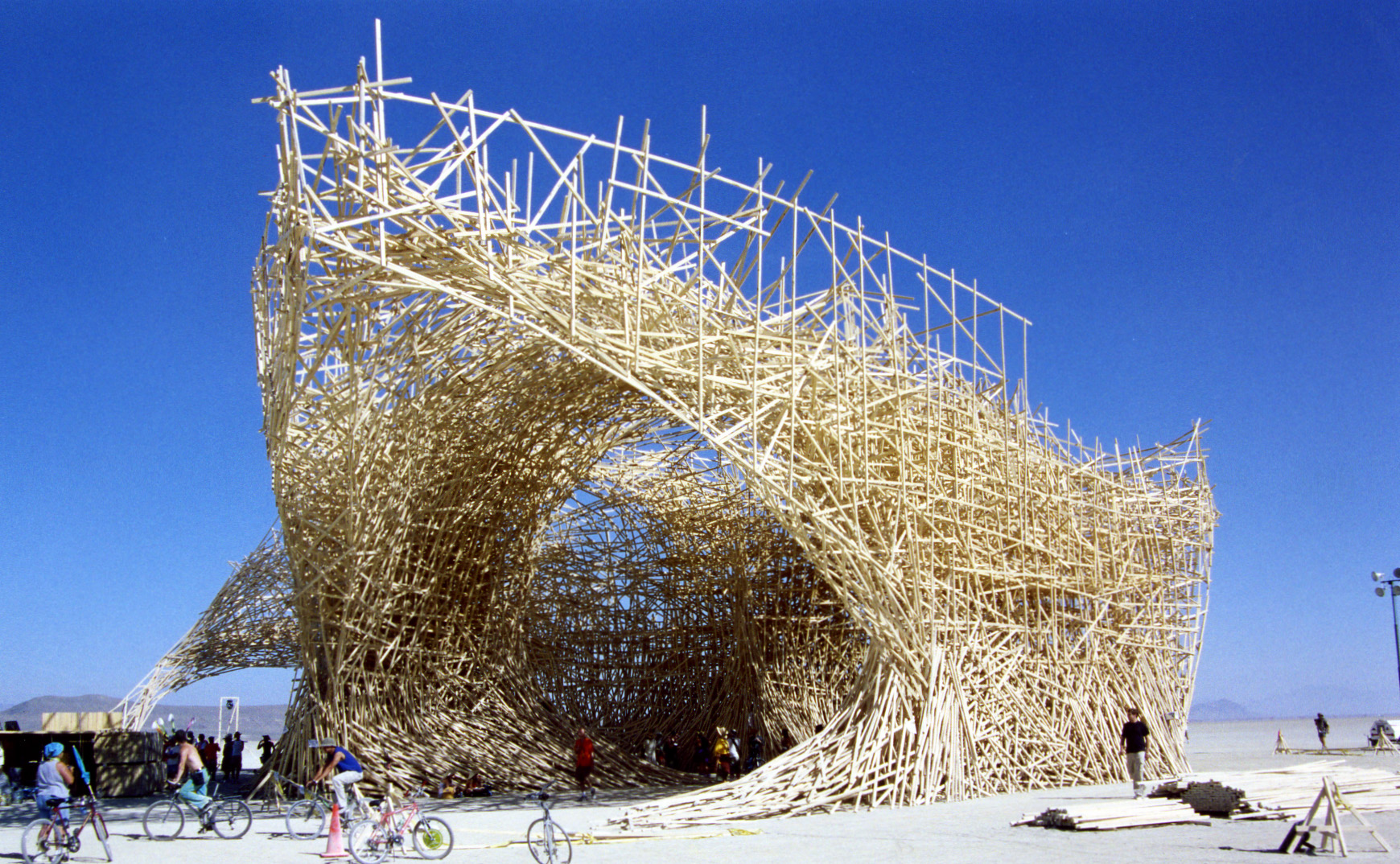
TheTemples of Burning Man… Beautiful and Sacred

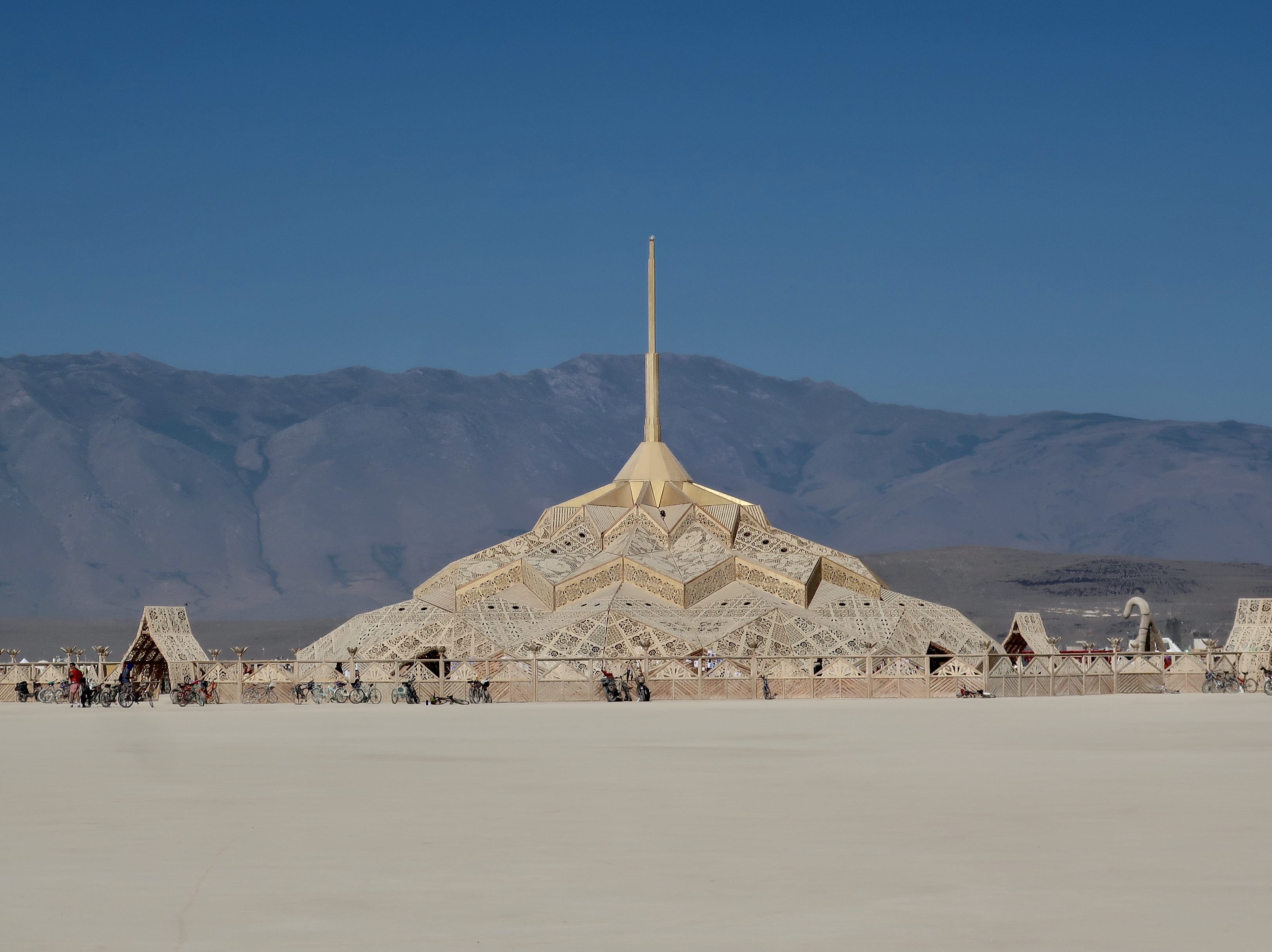
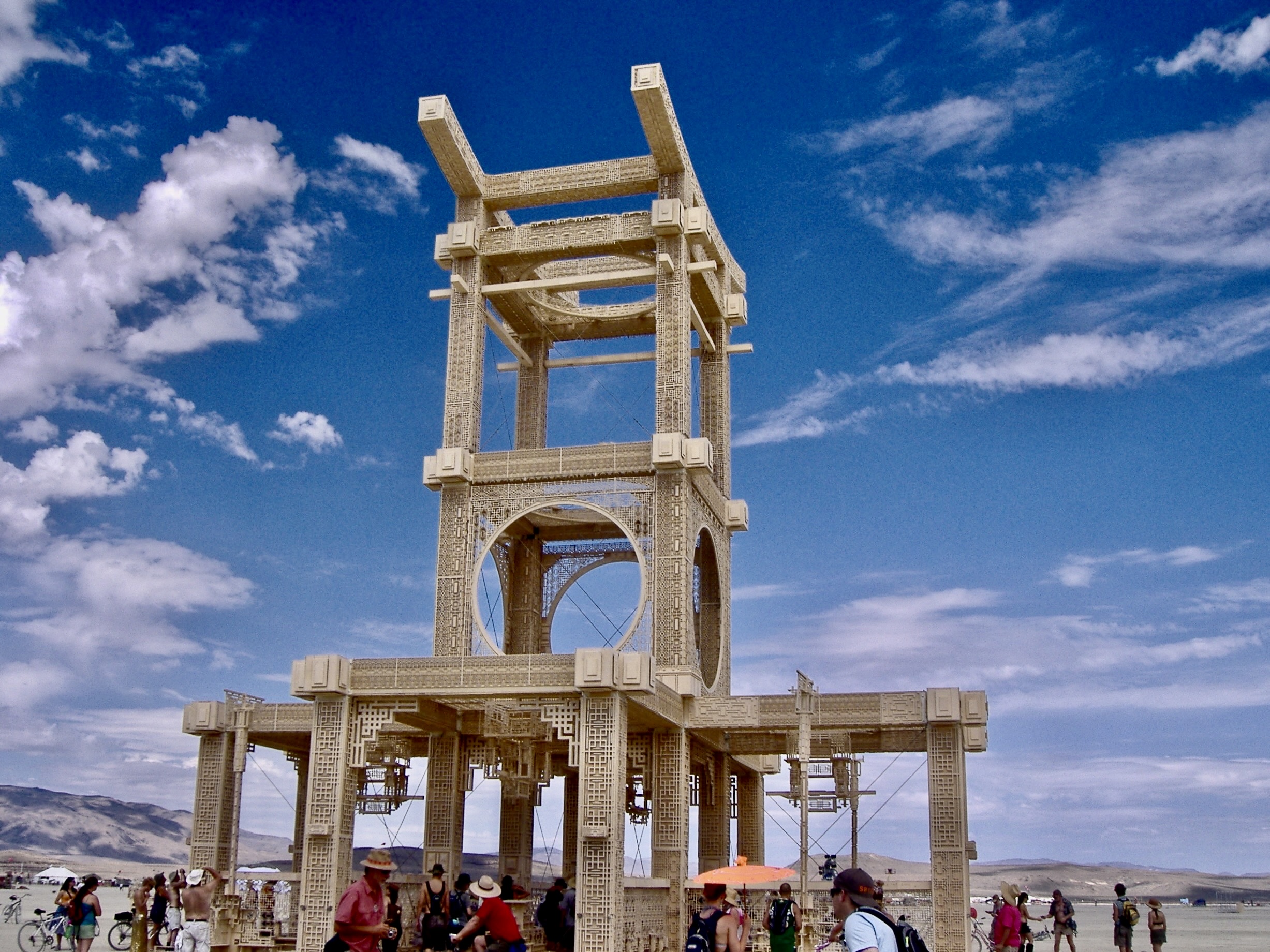
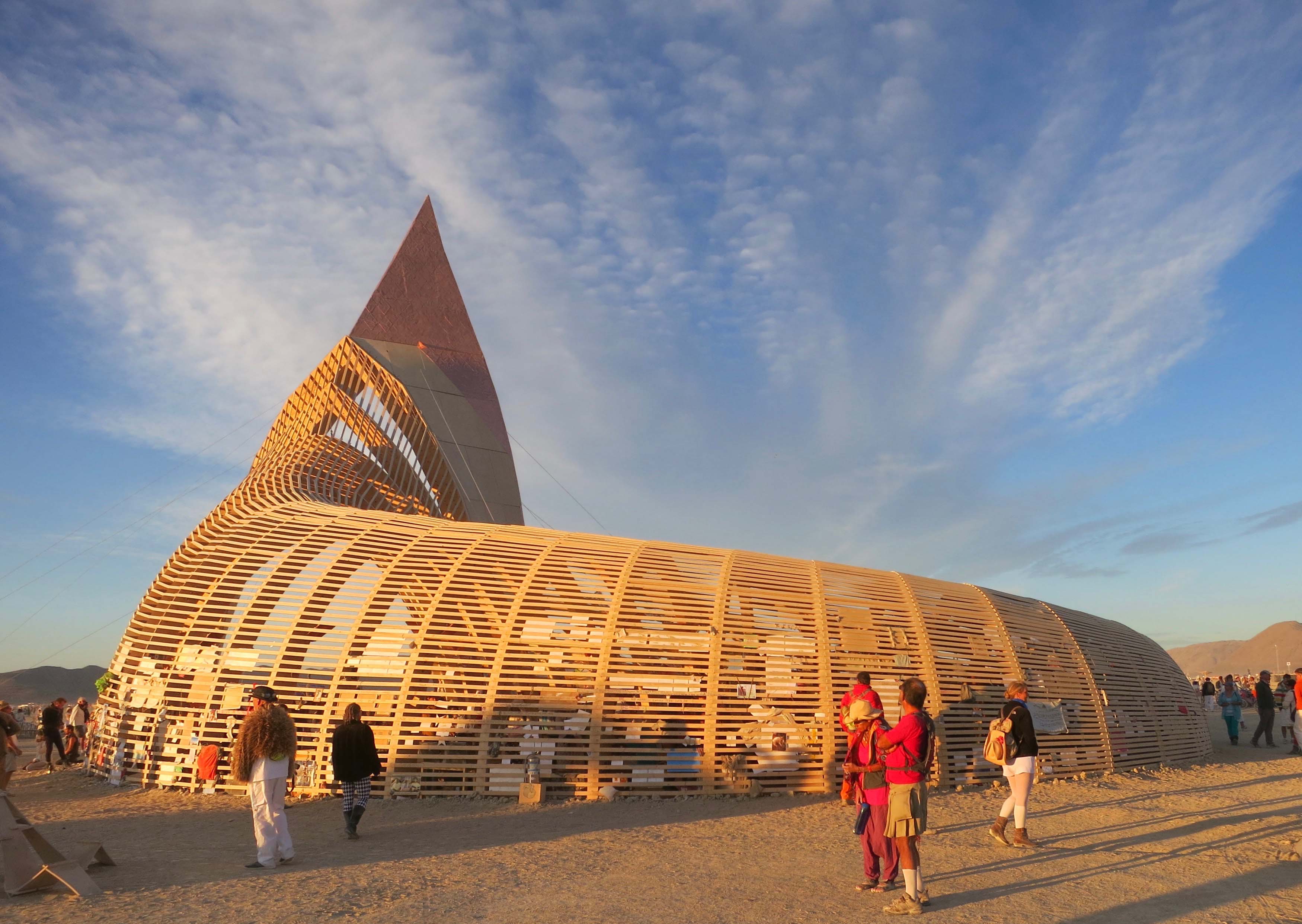
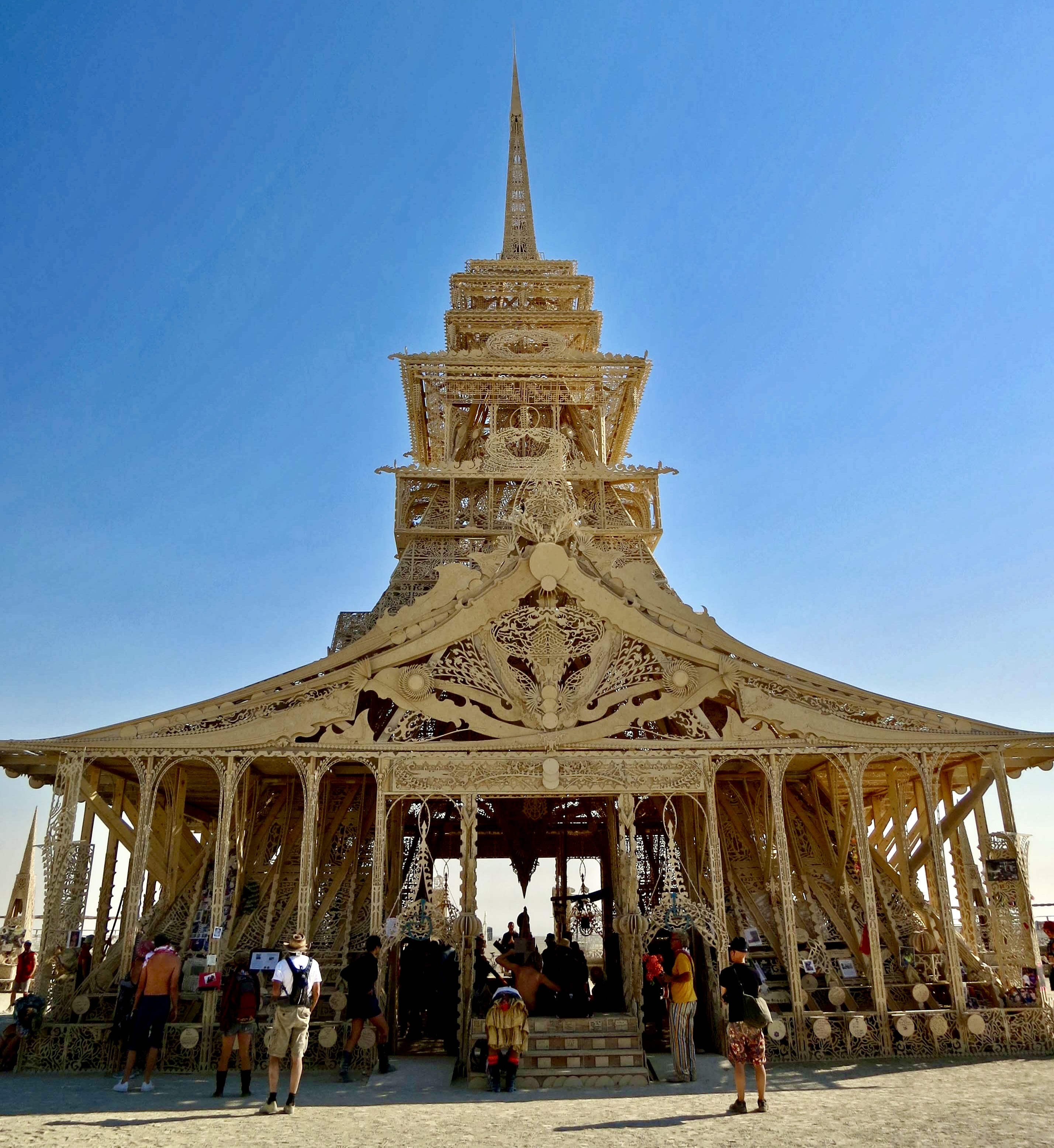
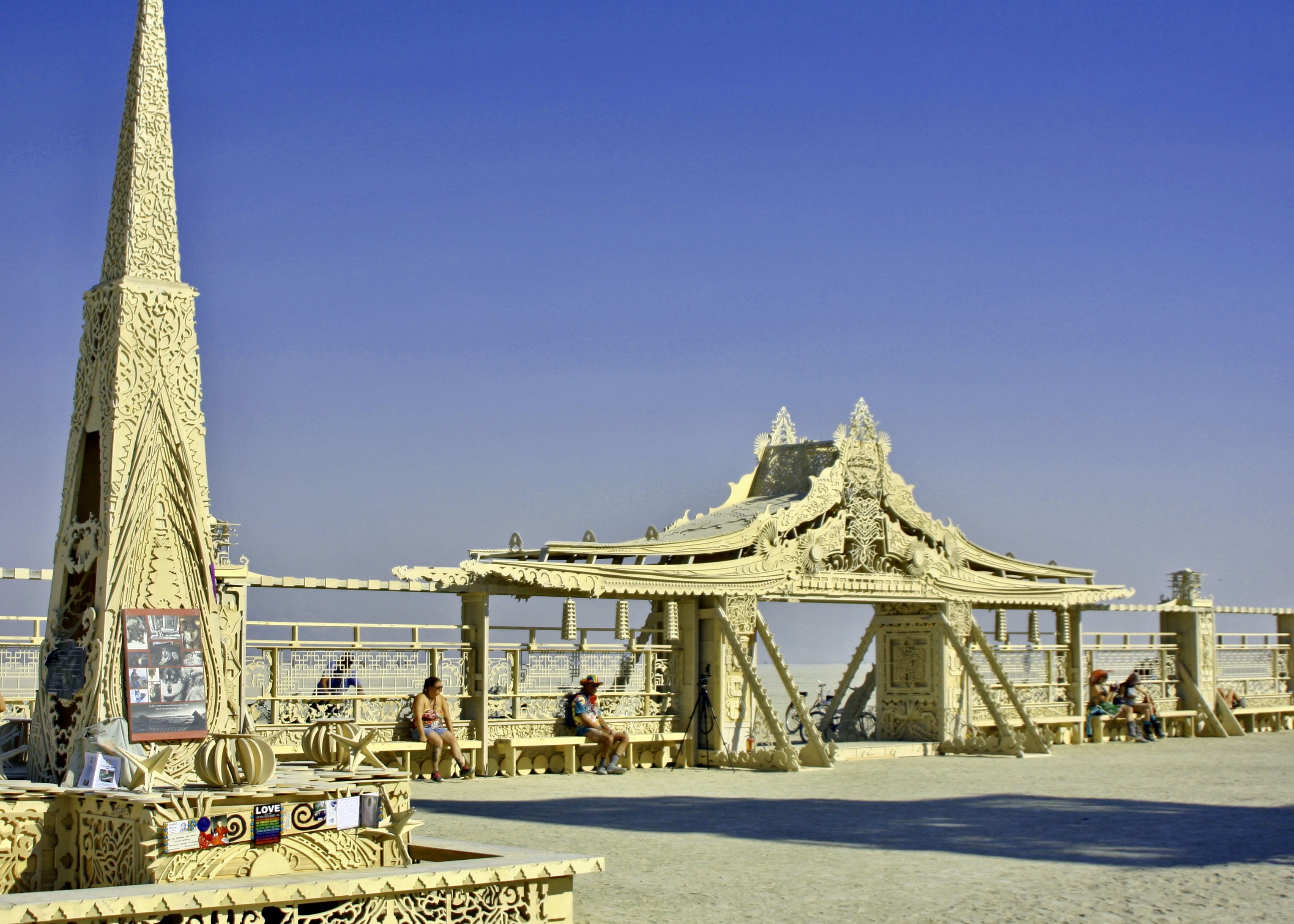
Temple of Grace at the 2014 Burning Man.

This is the fourth post in our focus series on Burning Man including one on mutant vehicles, one on sculptures, and an overview from our last trip to Burning Man in 2023. Today, I am going to feature the Temples of Burning Man, which are both beautiful and sacred— as suggested in the headline. A quick look at the Temple of Grace above speaks to the beauty of the structures. I will provide examples from seven more years below, plus an introduction to what Burners will see this year. Given that there have been 25 Temples so far, my objective is to simply provide a sample. In our 12 years of attending Burning Man, we have never seen a temple that we didn’t consider special.

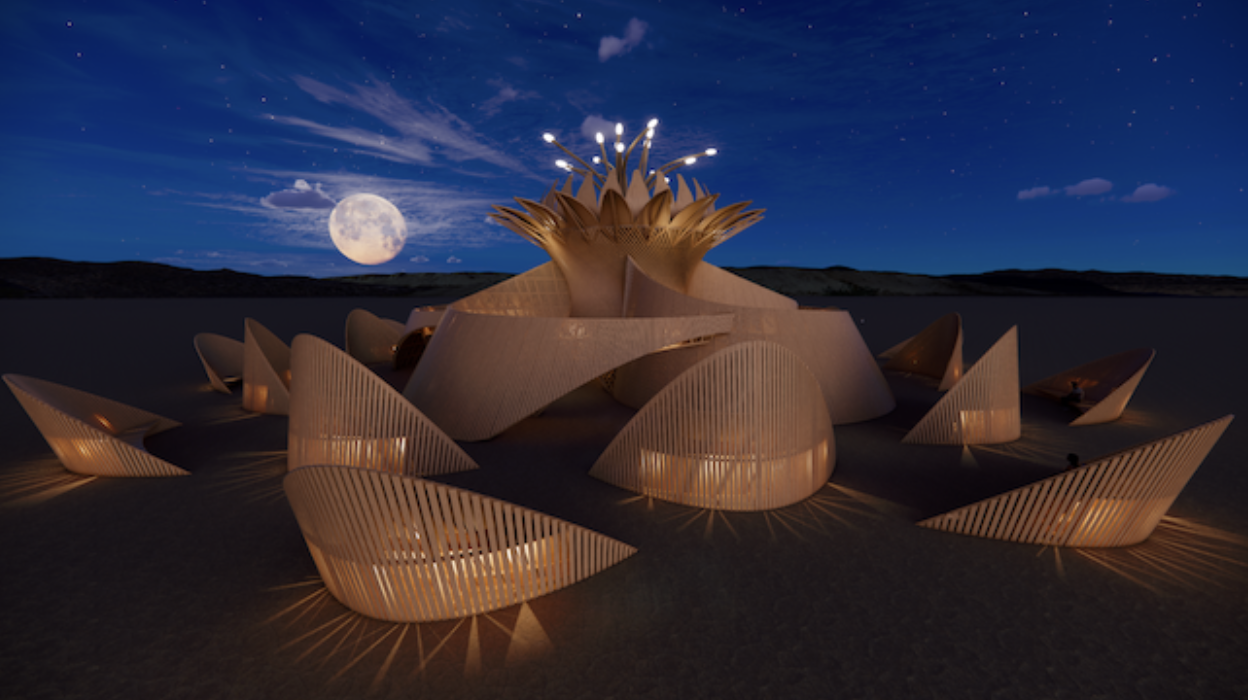
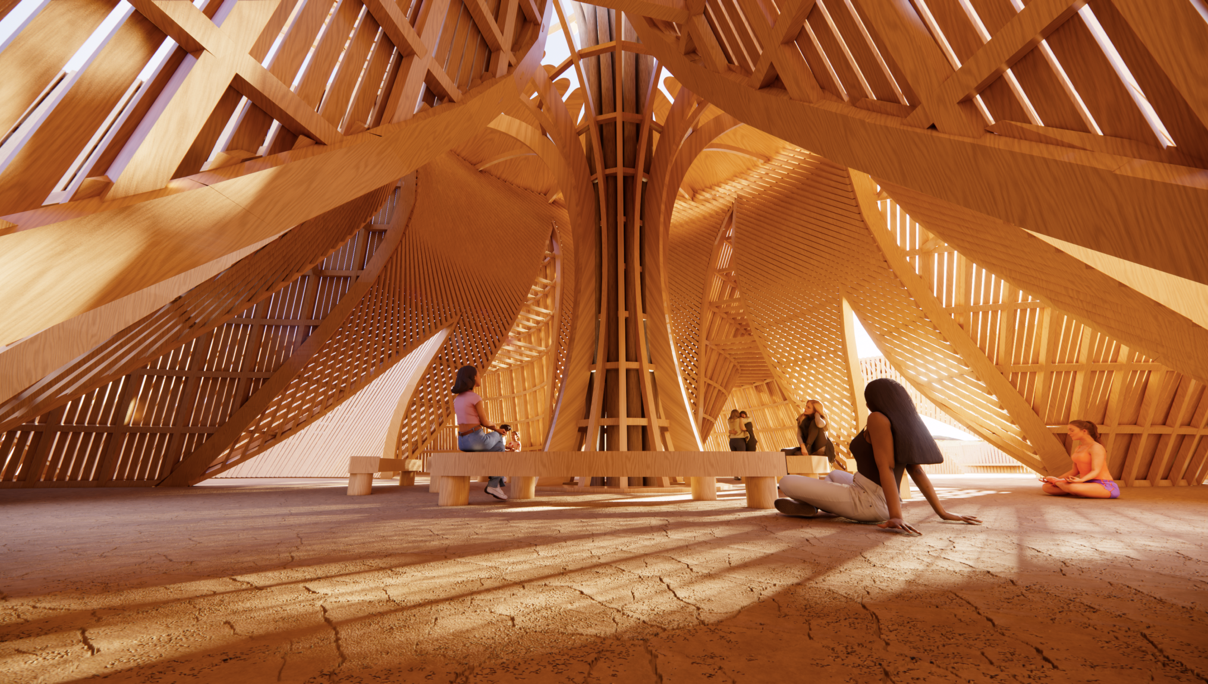
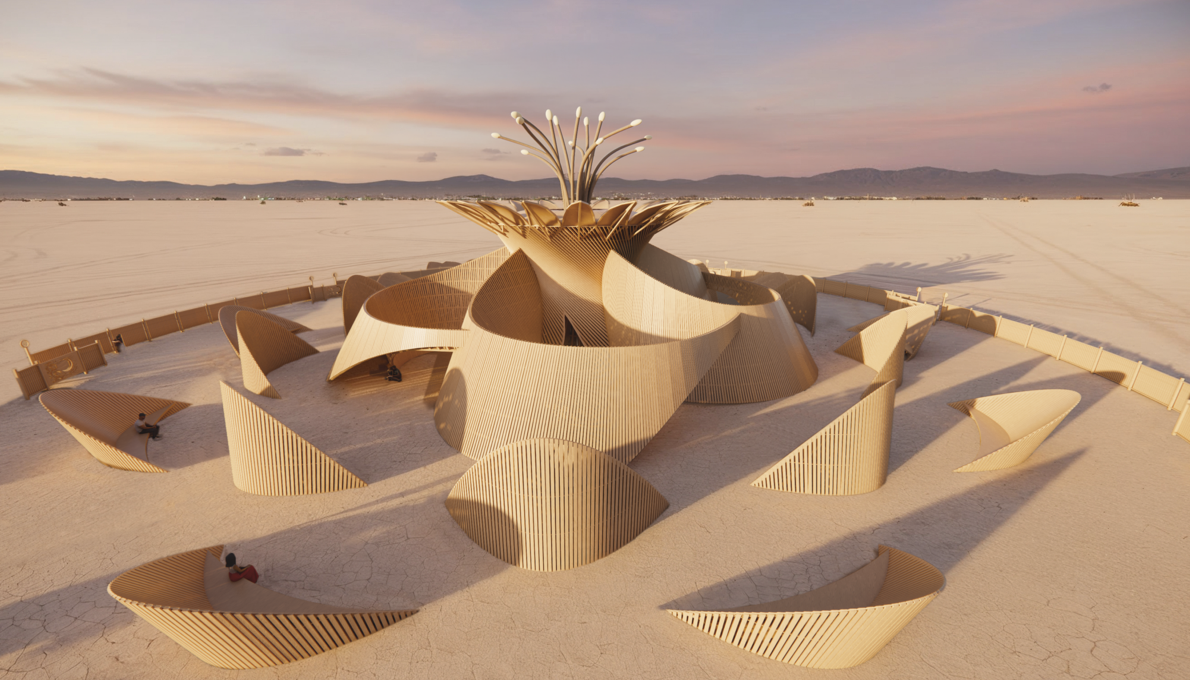
The process of selecting and building the Temple each year starts with various artists submitting proposals to Burning Man for different designs. This is an artistic rendering of the temple selected for 2026— James Gwertzman’s proposal for the Temple of the Moon. His inspiration was the Queen of the Night desert flower, a flower that blooms and dies in one night. The design rendering of the Temple above is by Gwertzman, and the dawn rendering is by artist Annie Locke Scherer. (Burning Man Journal)
Artistic rendering of the 2026 Temple at night. (Burning Man Journal)
Artistic rendering of the inside of the 2026 Temple. (Burning Man Journal)
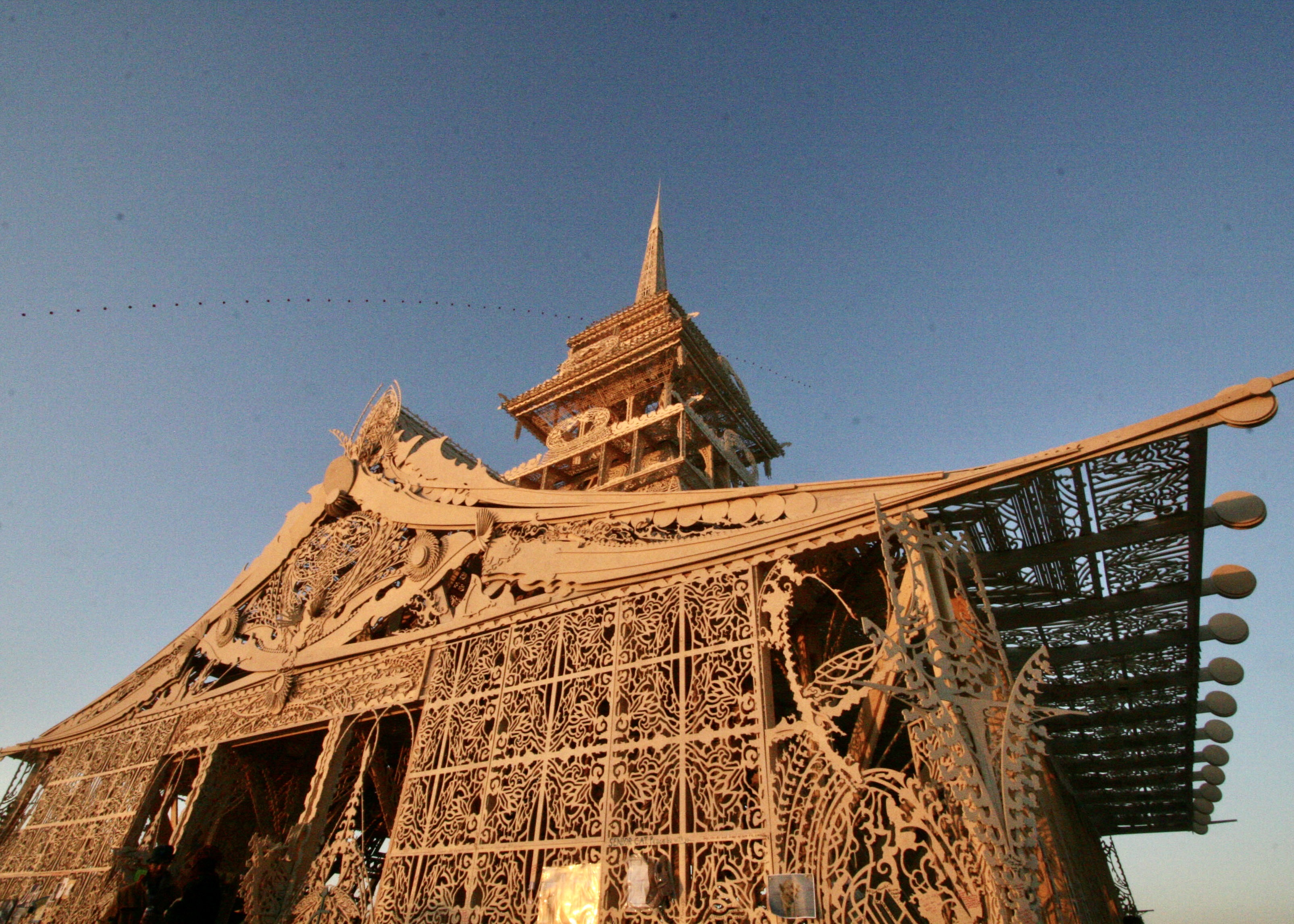
Early morning view of the 2014 Temple of Grace at Burning Man. Temples are funded by a major grant from Burning Man plus fundraising. A close look at the structure speaks to the amount of work that goes into building one of the temples. It is mainly done by volunteers. The work starts as soon as the project is chosen. Wood is cut prior to Burning Man and then brought to the site. Depending on the complexity of the project, a volunteer crew of 100-200 people arrives at Burning Man 2-3 weeks before the event to assemble the pieces.
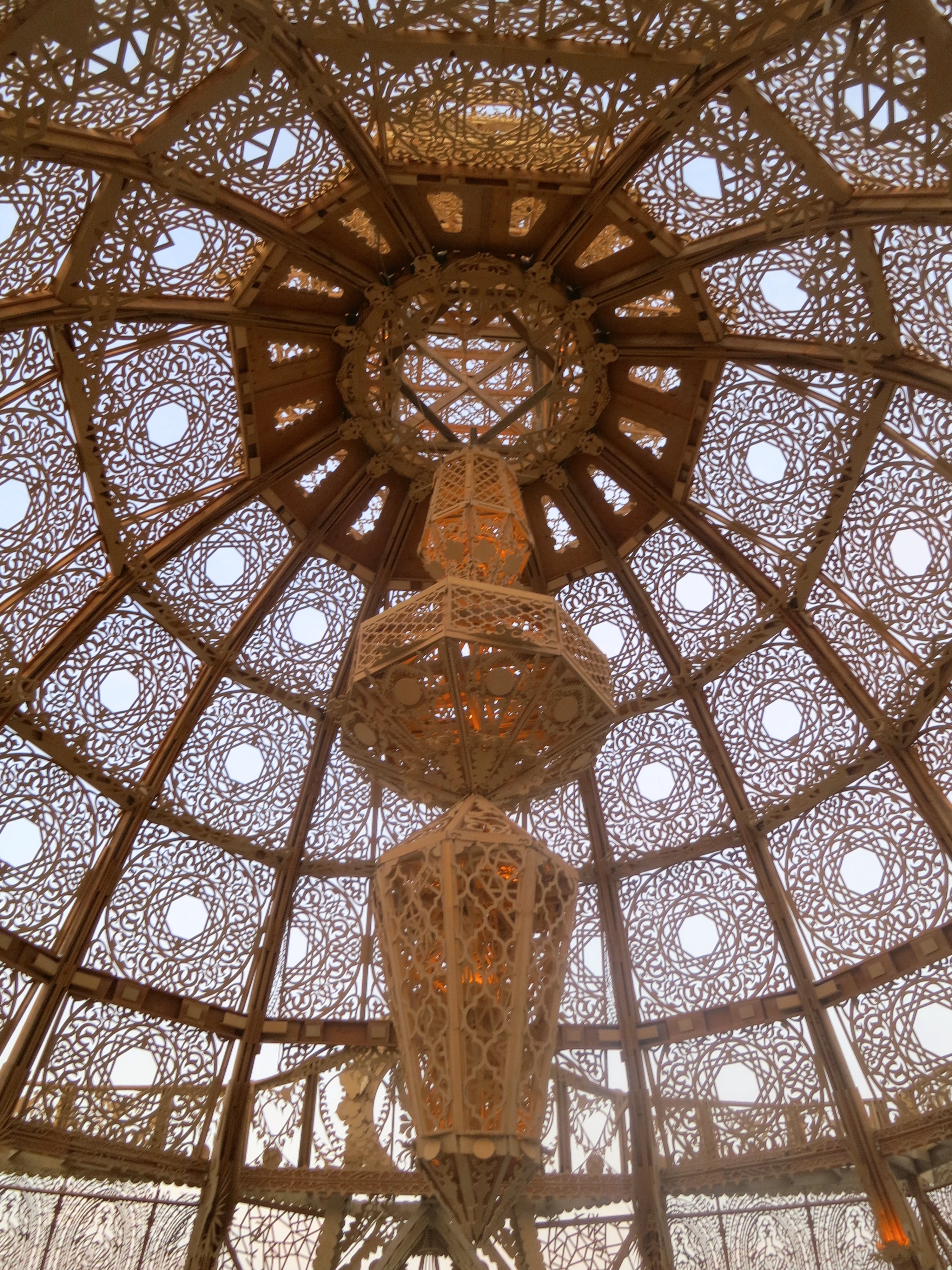
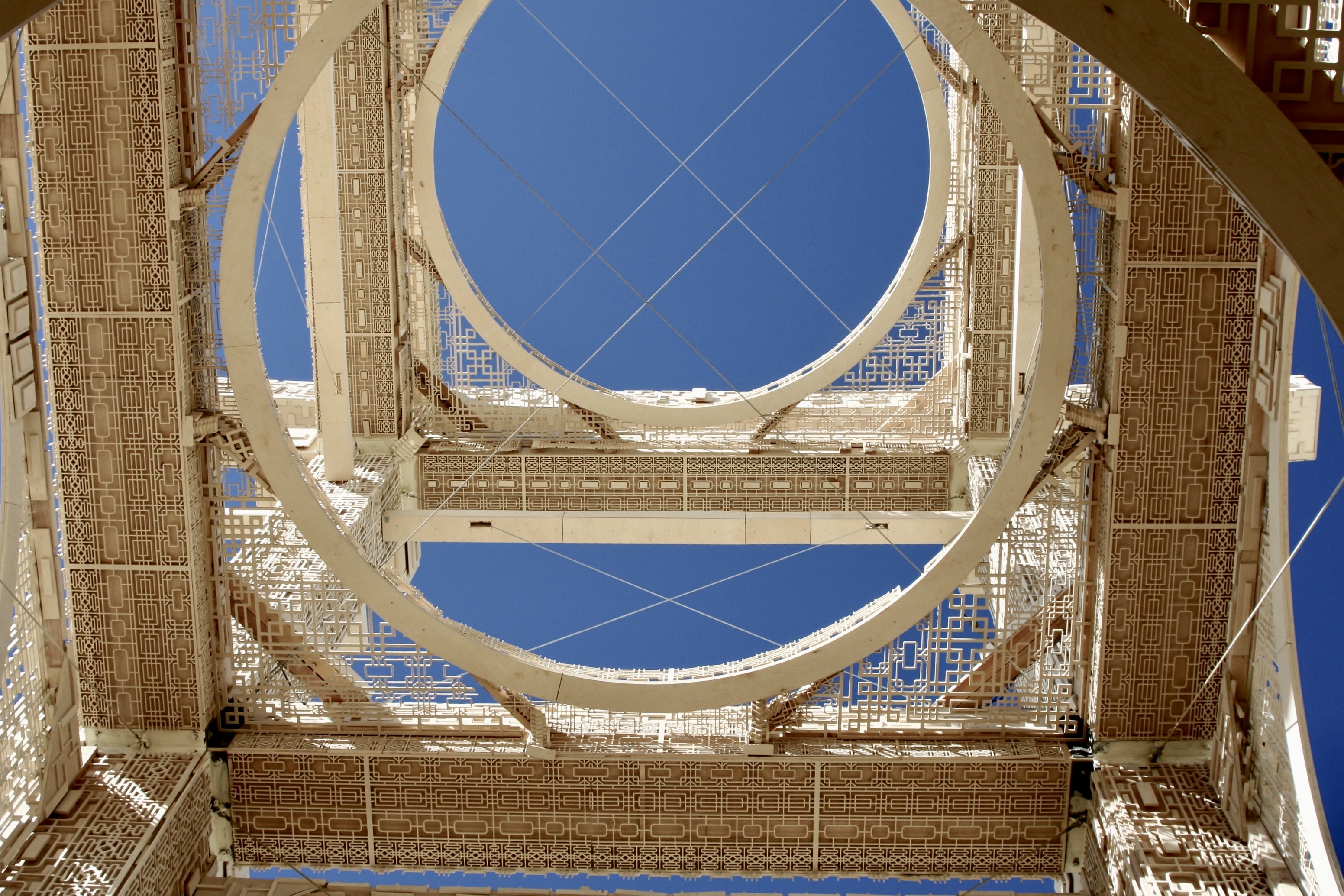
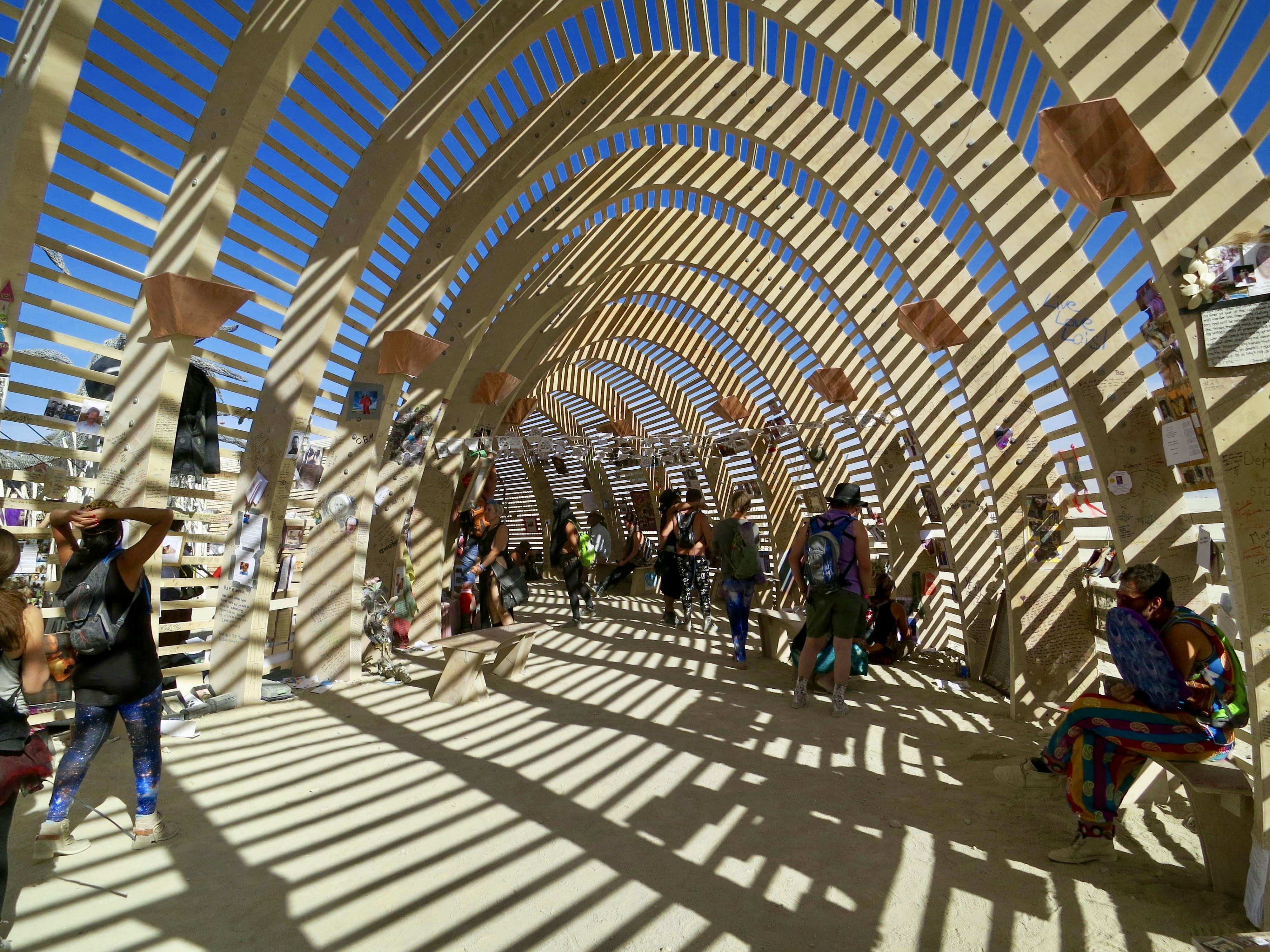
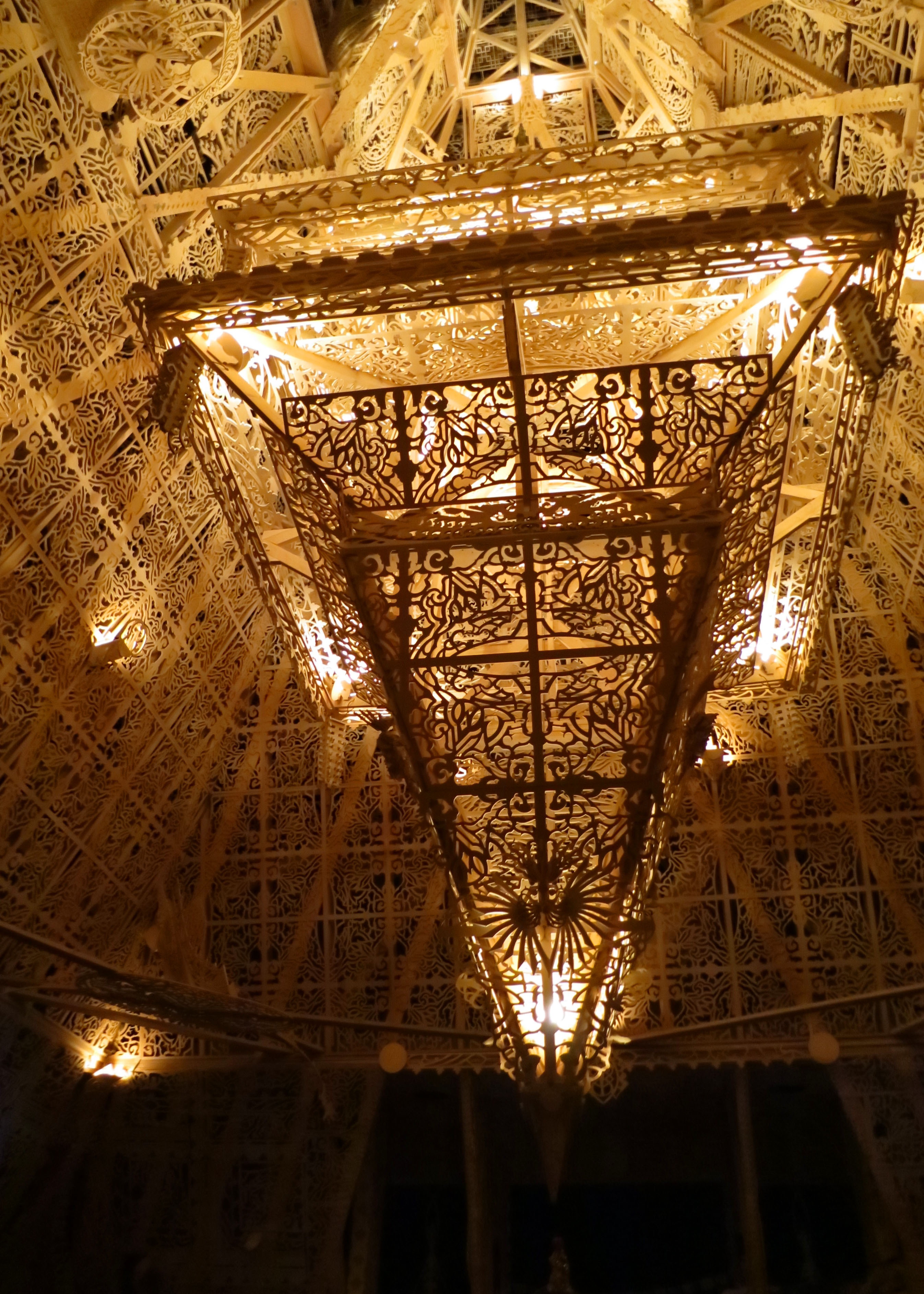
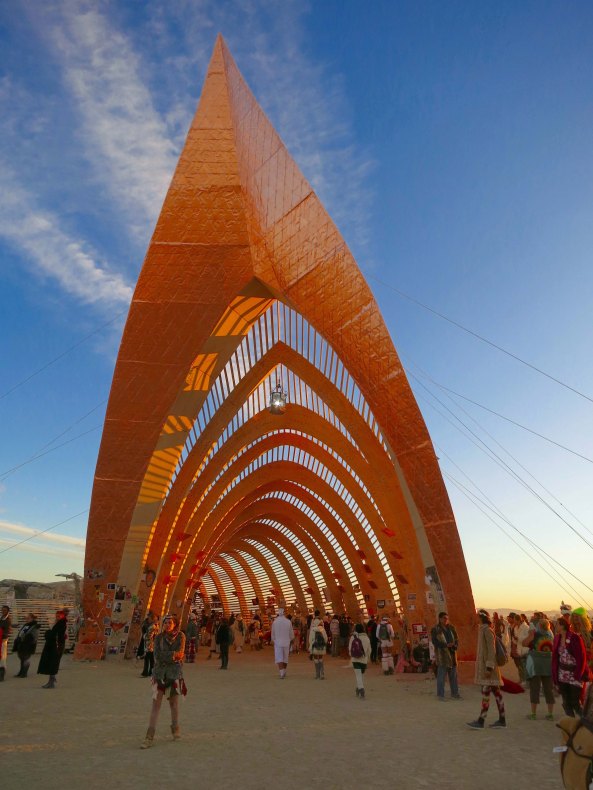
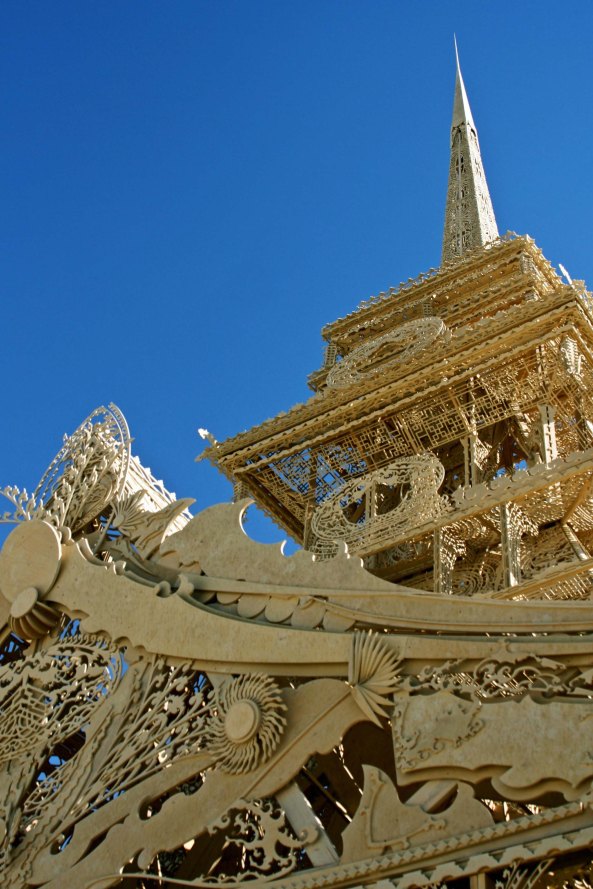
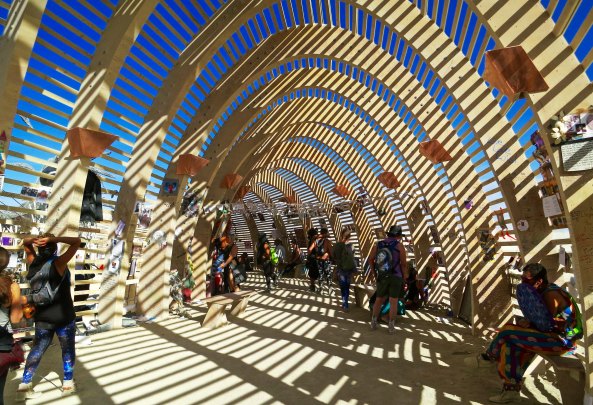
Looking up from inside the Temple of Grace.
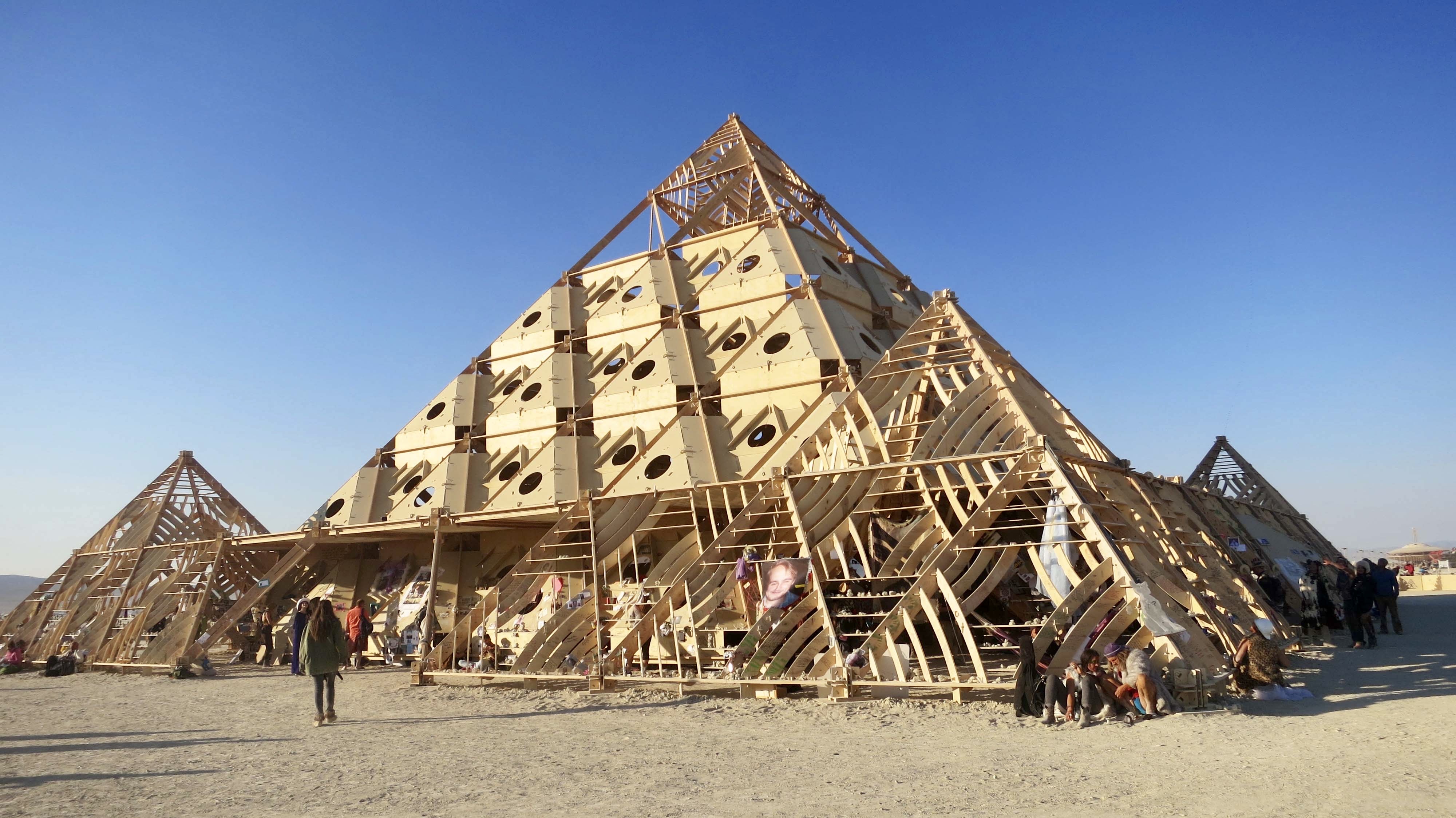
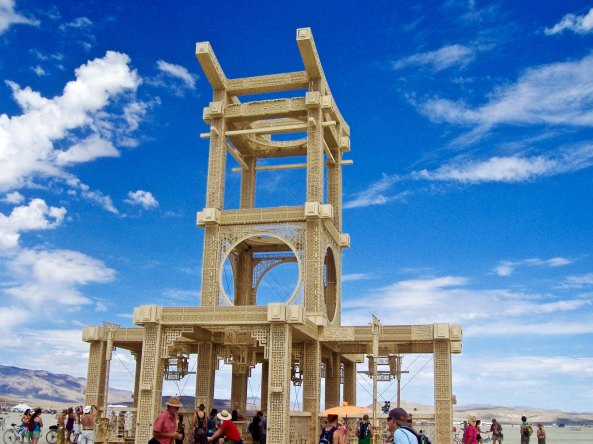
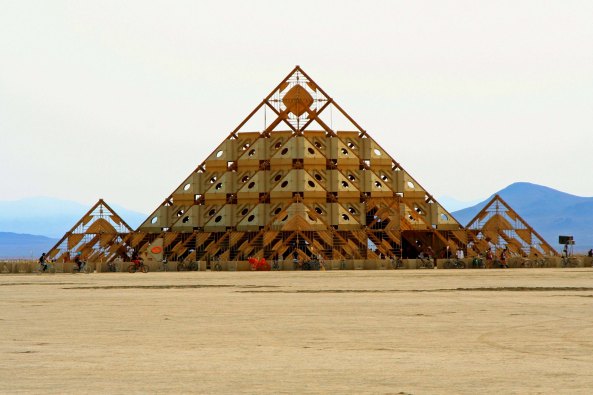
The 2013 Temple of Whollyness at Burning Man was a pyramid-shaped structure of interlocking wood that used no nails, glue, or metal fasteners. It was surrounded by four smaller pyramids.
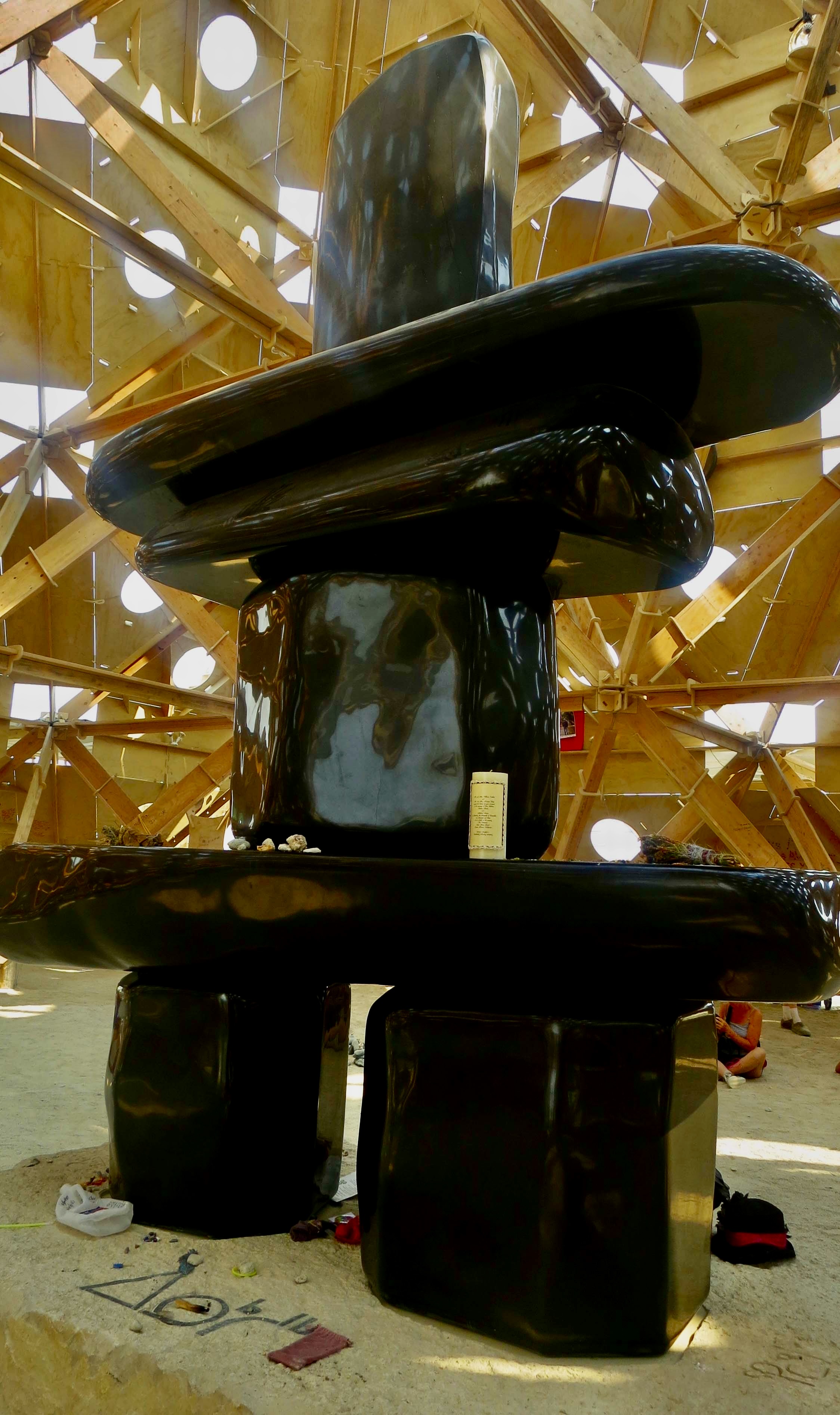
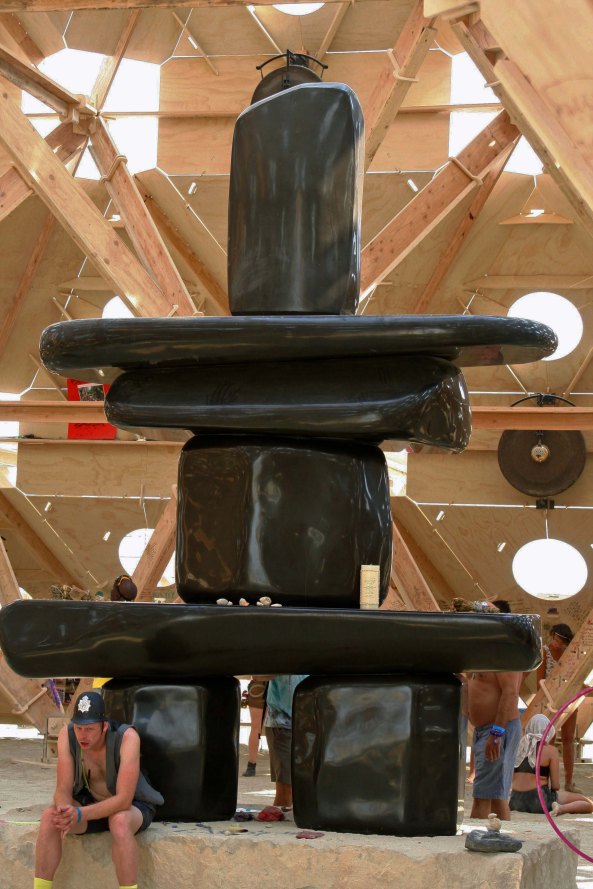
A large altar or ‘cairn’ constructed of black, igneous basalt was located inside the Temple. Cairns are normally large piles of rock arranged in a cone-like formation as a way to mark routes through wilderness areas. I’ve often followed them, or their smaller cousins, ducks, as I’ve hiked and backpacked through the wild regions of North America. In case you are wondering what a ‘duck’ looks like…
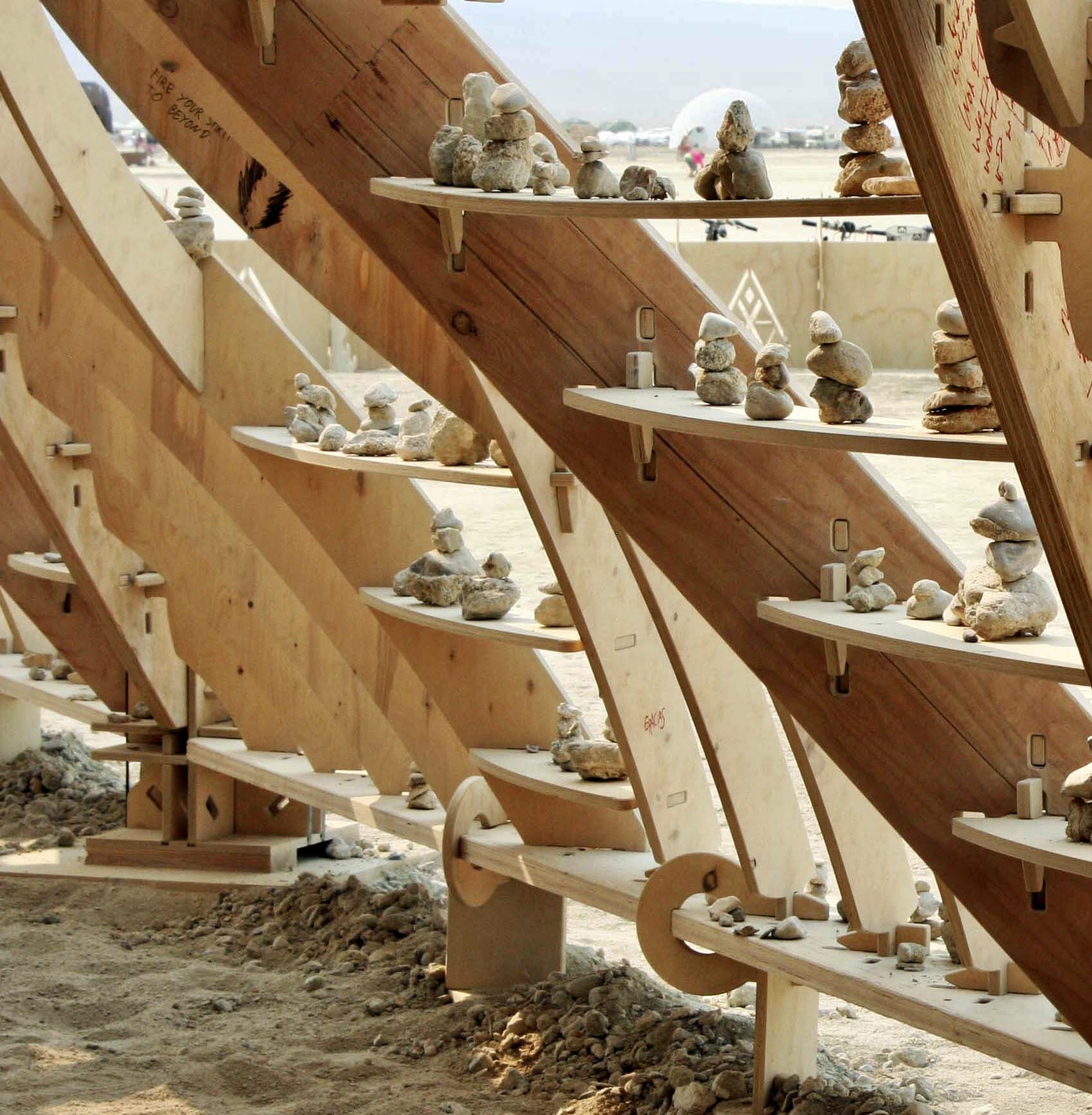
The temple was filled with them. The symbolism was obvious: Helping people find their way. This photo also shows how some of the wooden, interlocking devices were use to build the Temple.
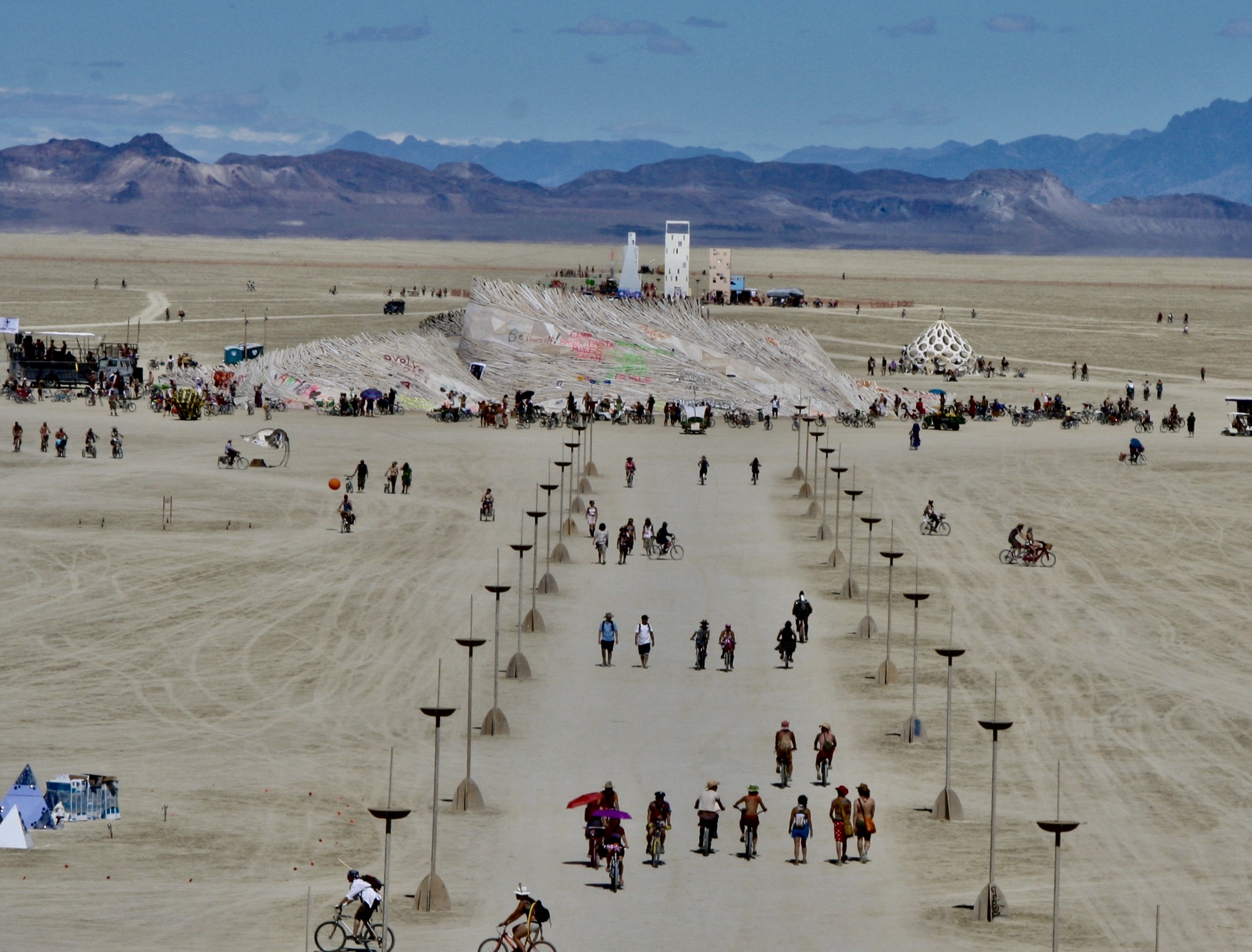
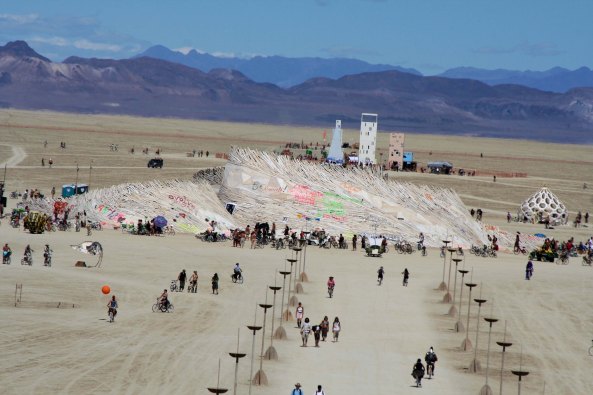
The 2010 Temple of Flux at Burning Man stressed impermanence in life. This photo was taken from the Man looking out across the Playa to the mountains of the Black Rock Desert. While the creators of the Temple noted that their inspiration came from desert canyons carved by wind and water, I thought that the outer structure resembled a sand dune, a perfect example of impermanence. The people on the pathway are biking/hiking between the Man and the Temple. At night, the poles held lit lamps. The buildings in the back were an urban representation of Wall Street. It was located close to the fence that marks the boundary of Burning Man.
One of the entrances to the Temple of Flux
We included the Temple of Heart in the Post we did on our 2023 trip to Burning Man. Unfortunately the rains hit the day before we had planned to visit it. Everything we saw from the outside was beautiful, however. I read that it took 1000 volunteers to build the Temple.
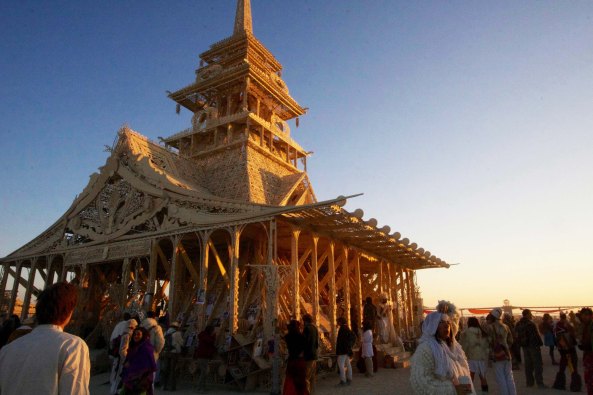
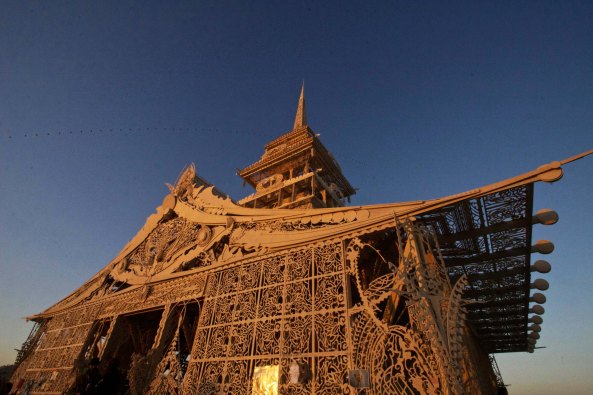
The 2007 Temple of Forgiveness at Burning Man. This Temple was created by David Best, who was responsible for the design and building of several Burning Man Temples.
Looking up from inside the 2007 Temple of Forgiveness.
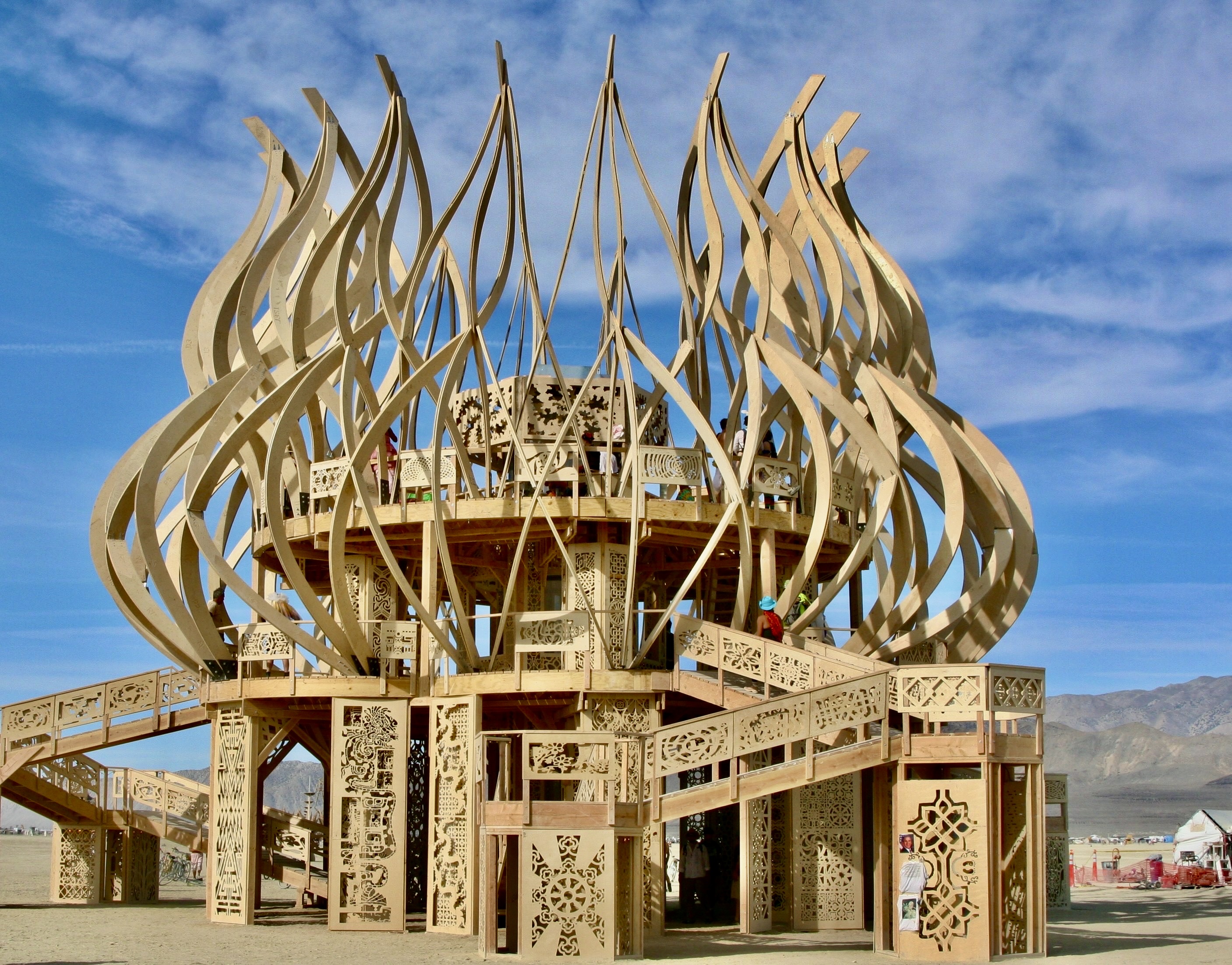
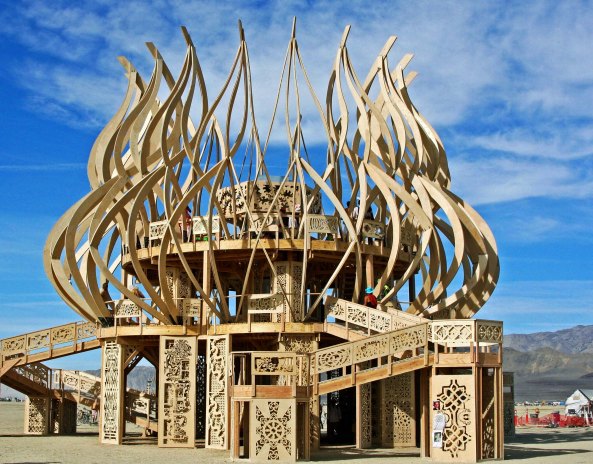
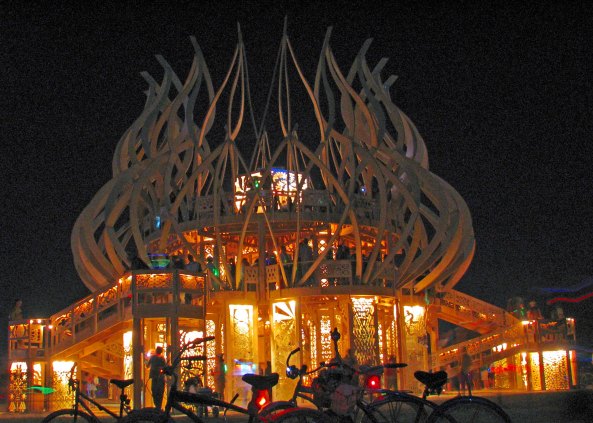
The top of the 2009 Fire of Fires Temple was designed to look like flames, reflecting that temples are burned on the last day of Burning Man.
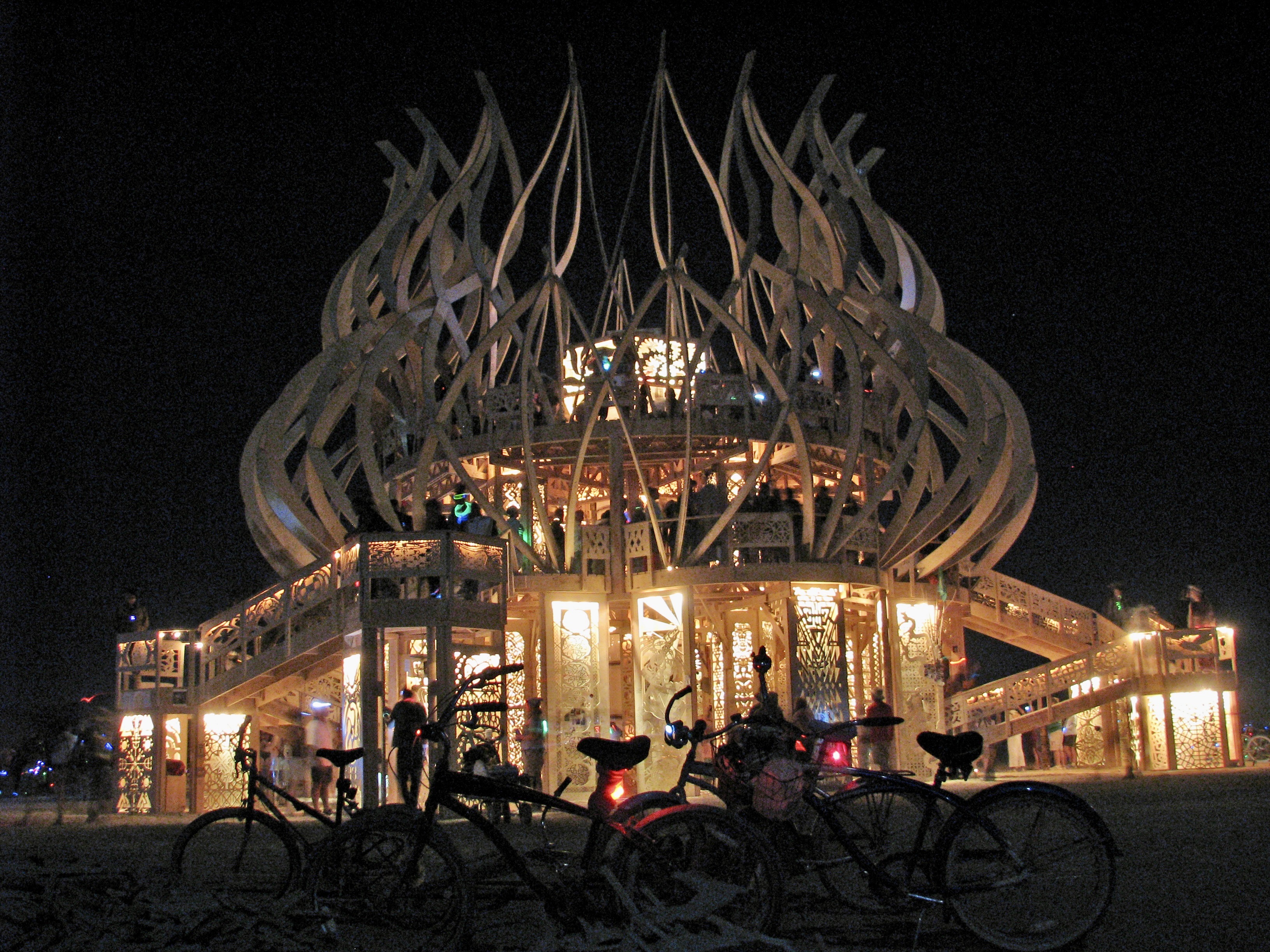
The Fire of Fires Temple at night.
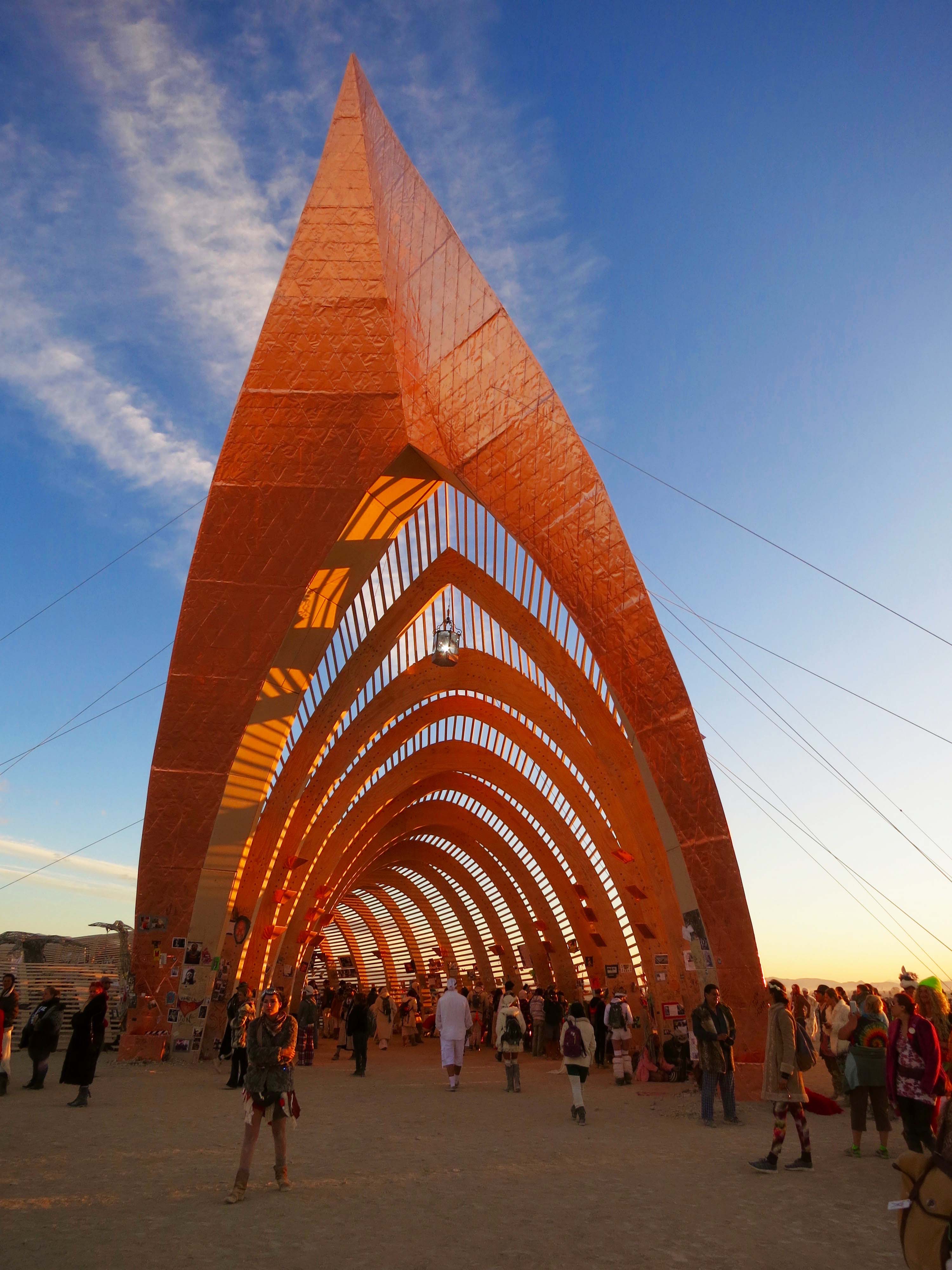
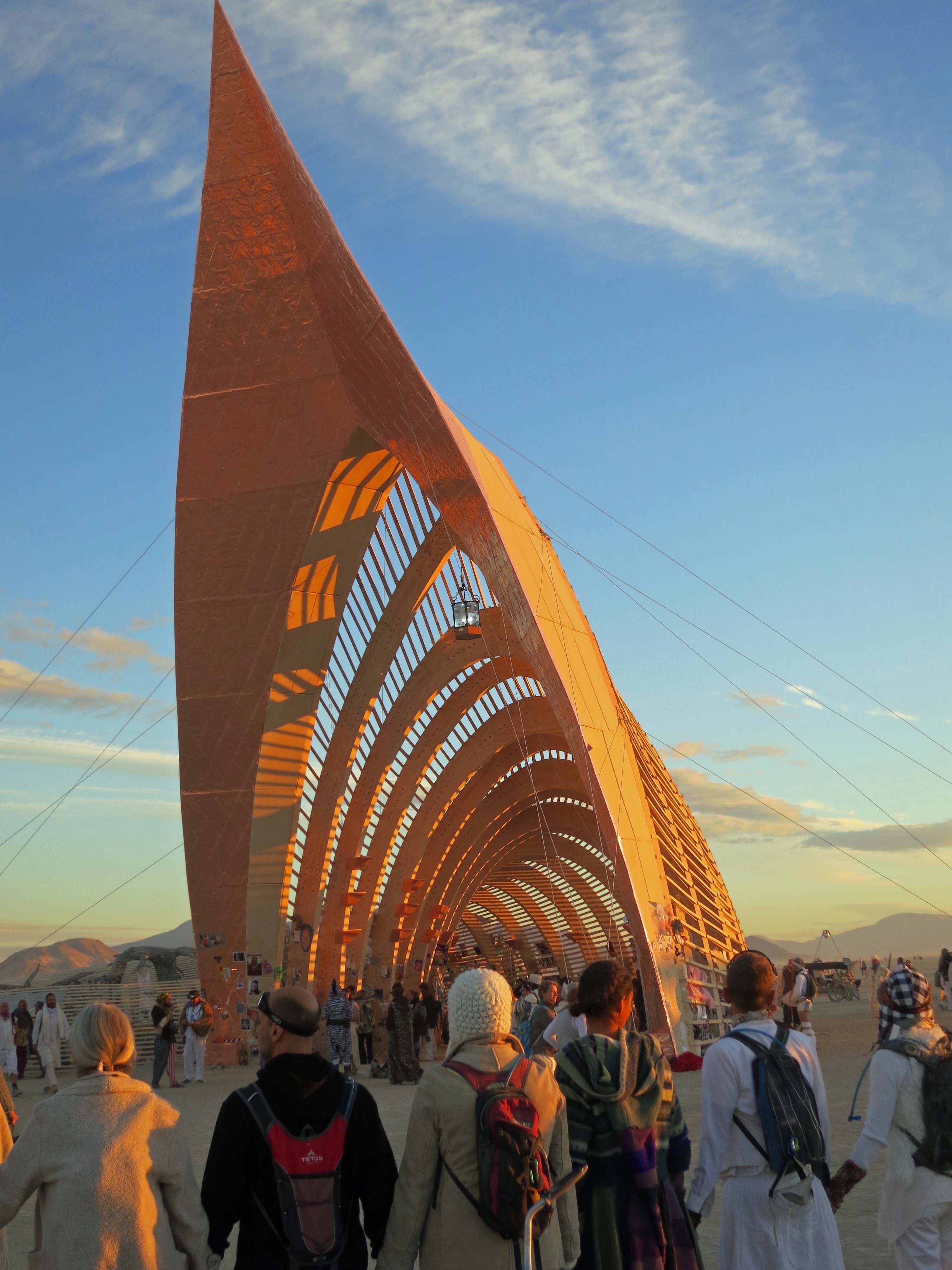
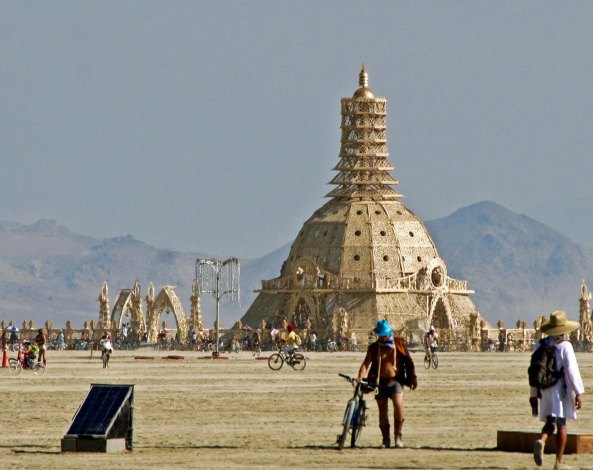
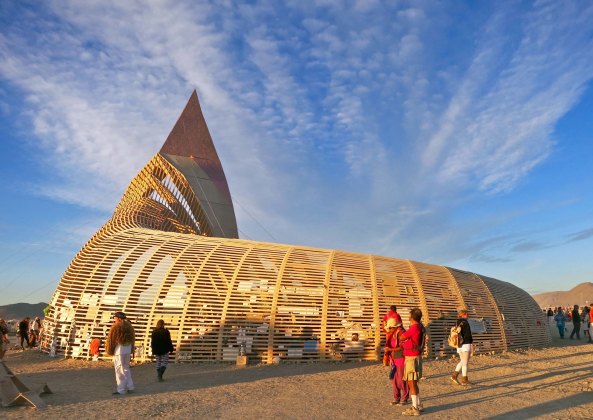
Of the Burning Man Temples that Peggy and I have seen, the 2015 Temple of Promise was one of our favorite because of its beauty and design.
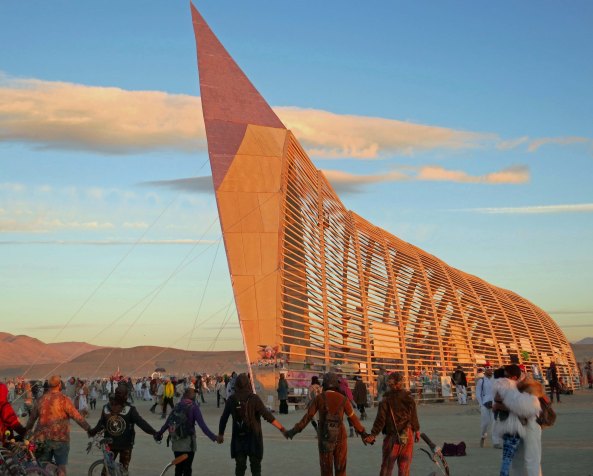
Early one morning, we joined hands with a few hundred other Burners surrounding the Temple as the sun rose.
This back view provides a perspective on its cornucopia-like structure.
A daytime view inside the Temple of Promise
The Temple of Promise at night.
My rendering of the Temple of Promise in black and white. Note the single lamp.
The theme for the 2012 Burning Man was fertility. The name of that year’s temple was Juno, a Roman goddess of fertility, motherhood, and childbirth.
This is an early morning photo of the Temple of Juno by our friend Tom Lovering.
The Temple of Juno at night.
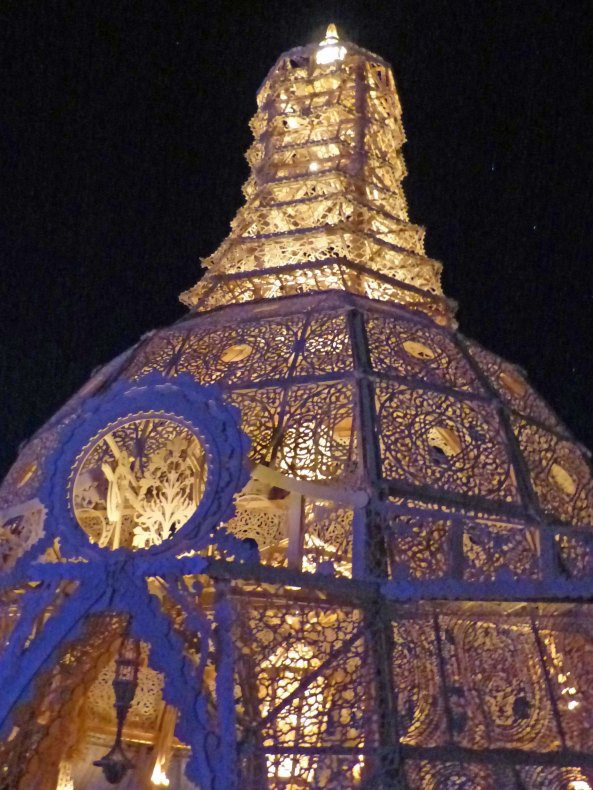
Looking up inside the Temple of Juno at night. Note the intricate carving.
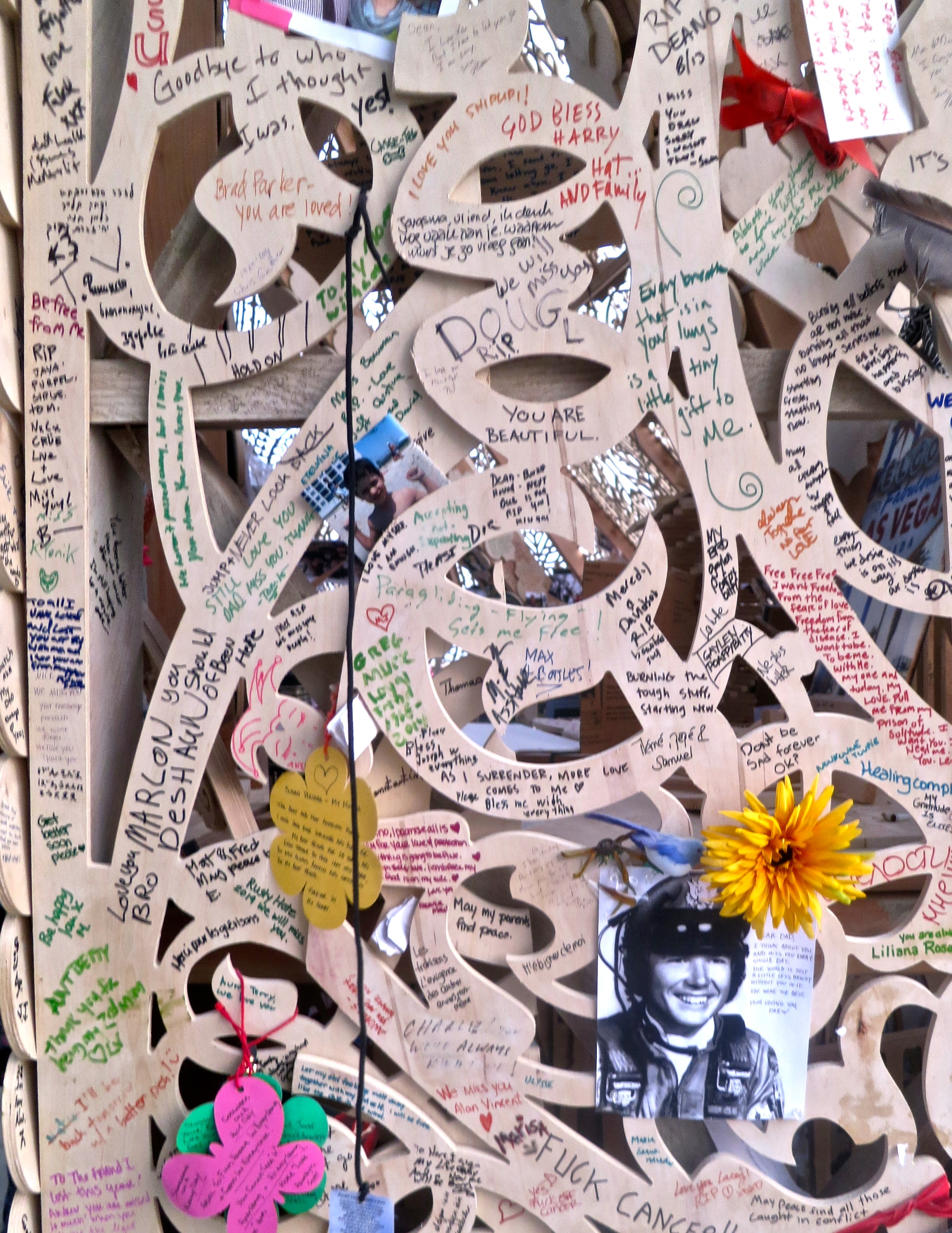
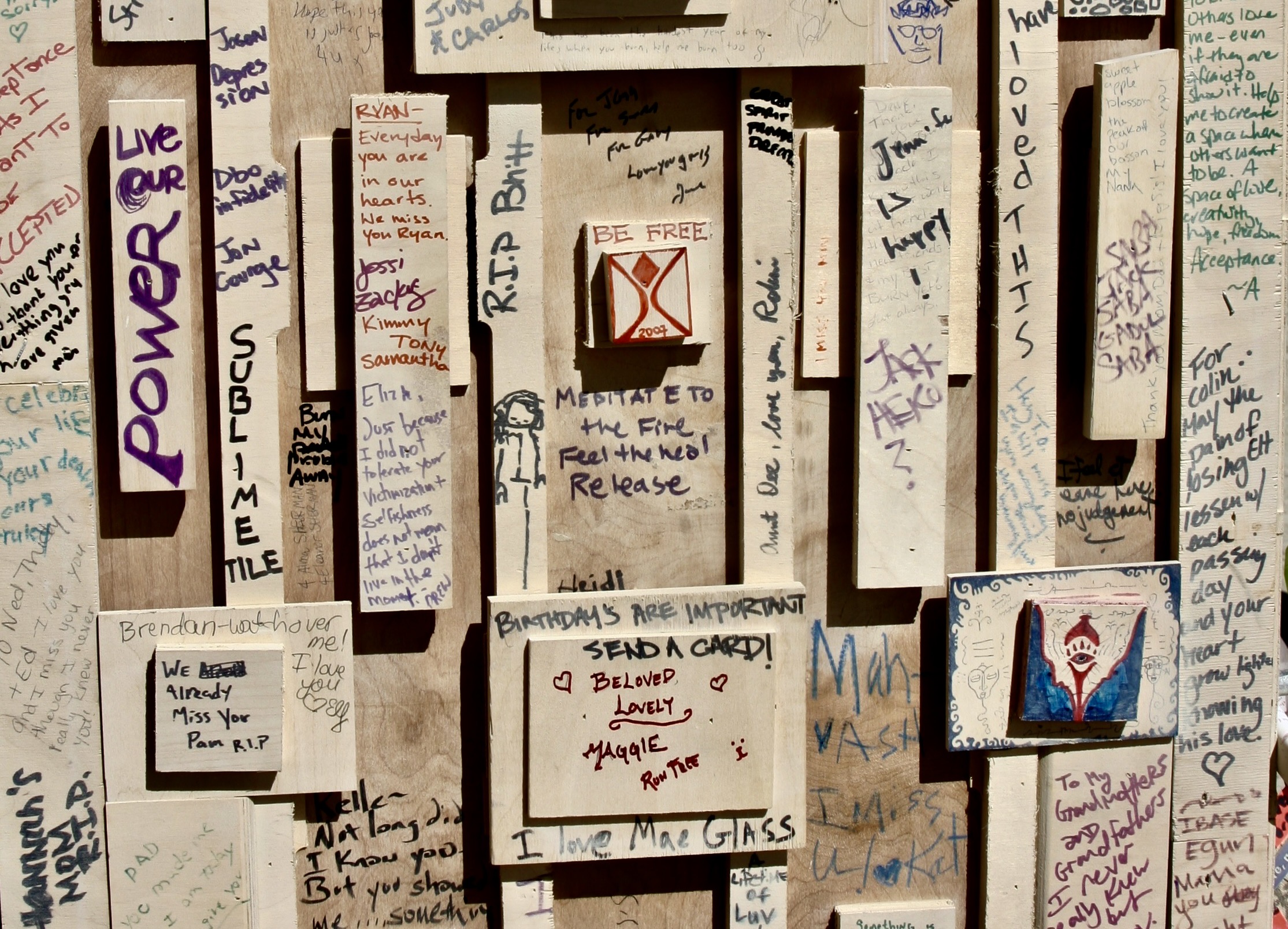
A large courtyard surrounding the Temple of Juno provided places for people to gather and relax. It also provided space for Burners to leave messages expressing love, grief, hope, fear and anger, as well as thanks for blessings received. Literally thousands of people leave messages annually, most inside of the Temple.
Sometimes, it seems like every inch of available space is used. A quick glance gives an overview on the breadth of messages. I particularly liked the one in the upper left hand corner: “Goodbye to who I thought I was.” More than one person has left Burning Man with that perspective!
Another example.
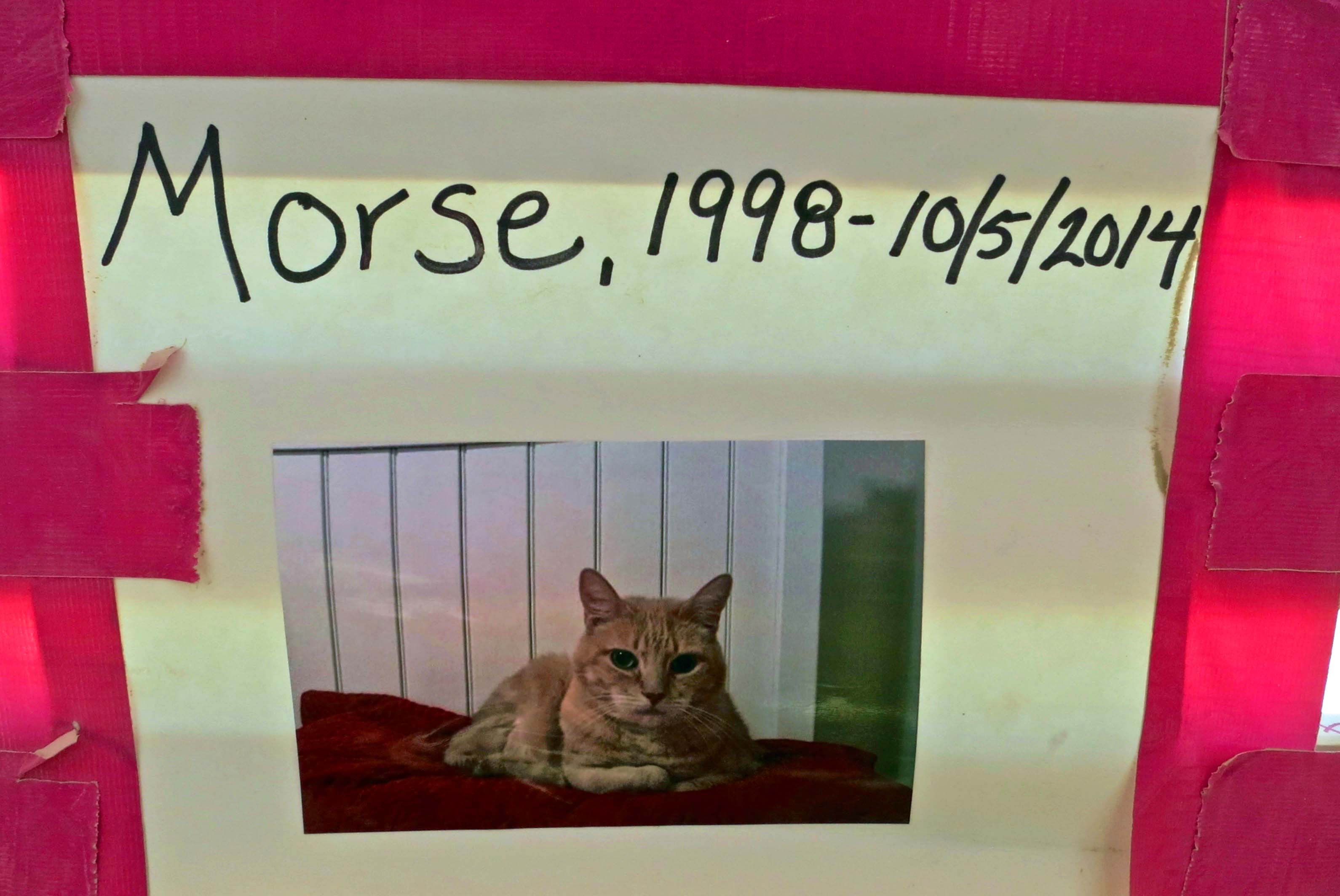
Numerous pets are also memorized: a final opportunity to say goodbye.
A loving tribute to Zippy: Zippy’s ball, hairbrush, and bed.
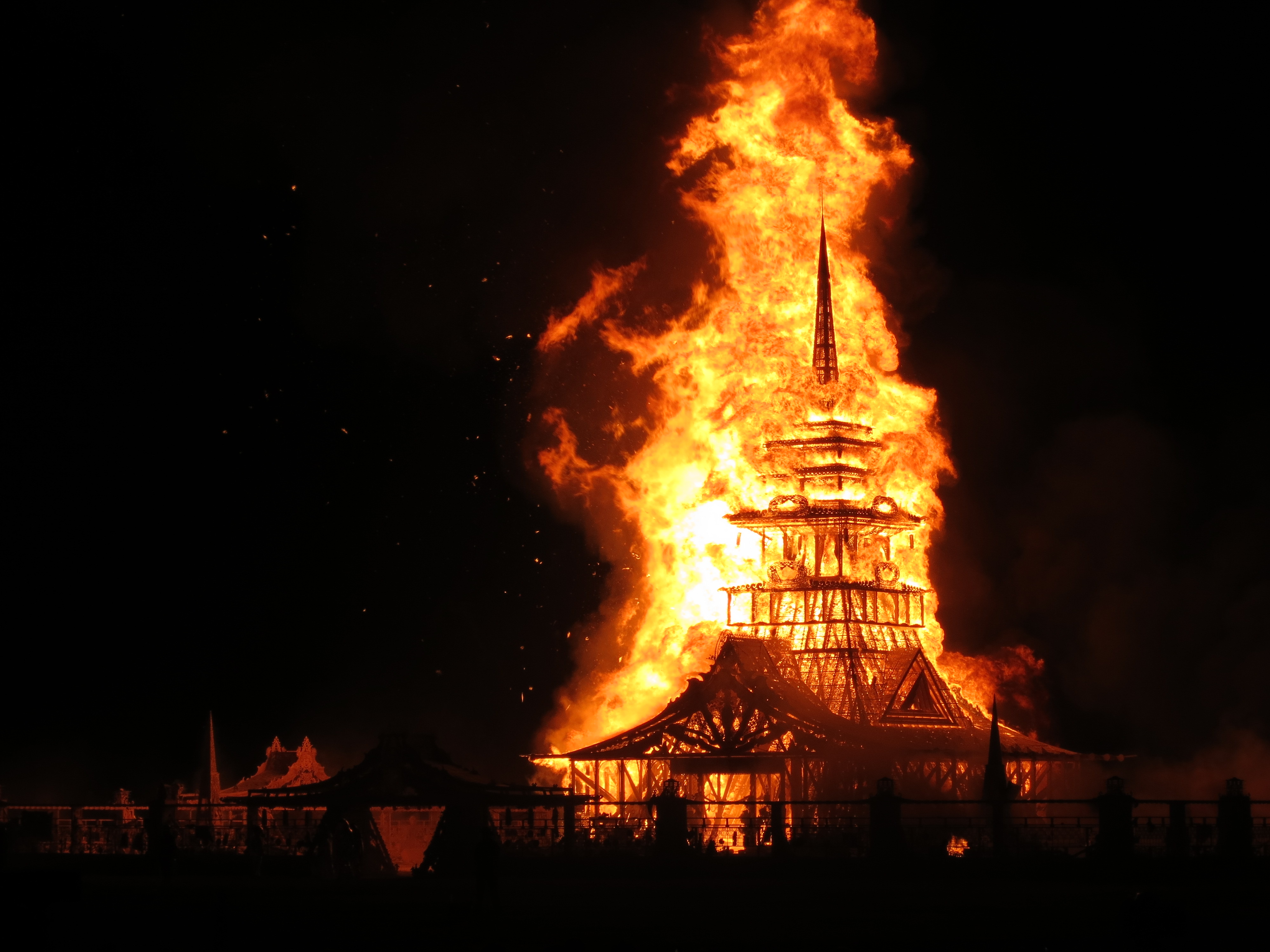
Whatever the message, it burns along with the Temple on the last night of Burning Man each year. This is the Temple of Juno going up in flames, releasing the thousands of messages that Burners left in, on and around it— honoring those who have passed on, expressing love for those who still live, and letting go of anger, hate and other negative emotions.
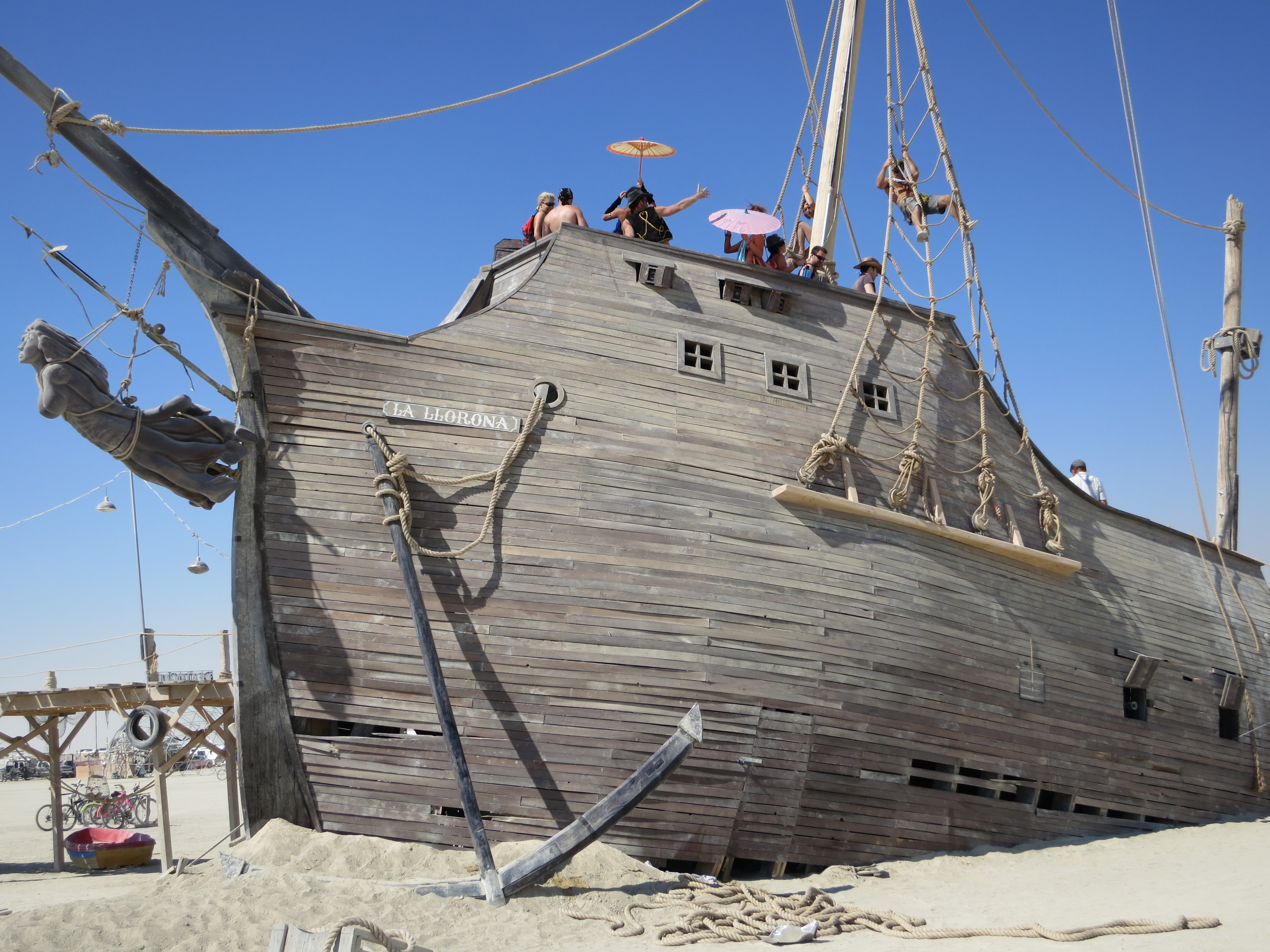
Our Burning Man focus next week will be on unique structures found out on the Playa such as La Llorona, the large ship seen above.

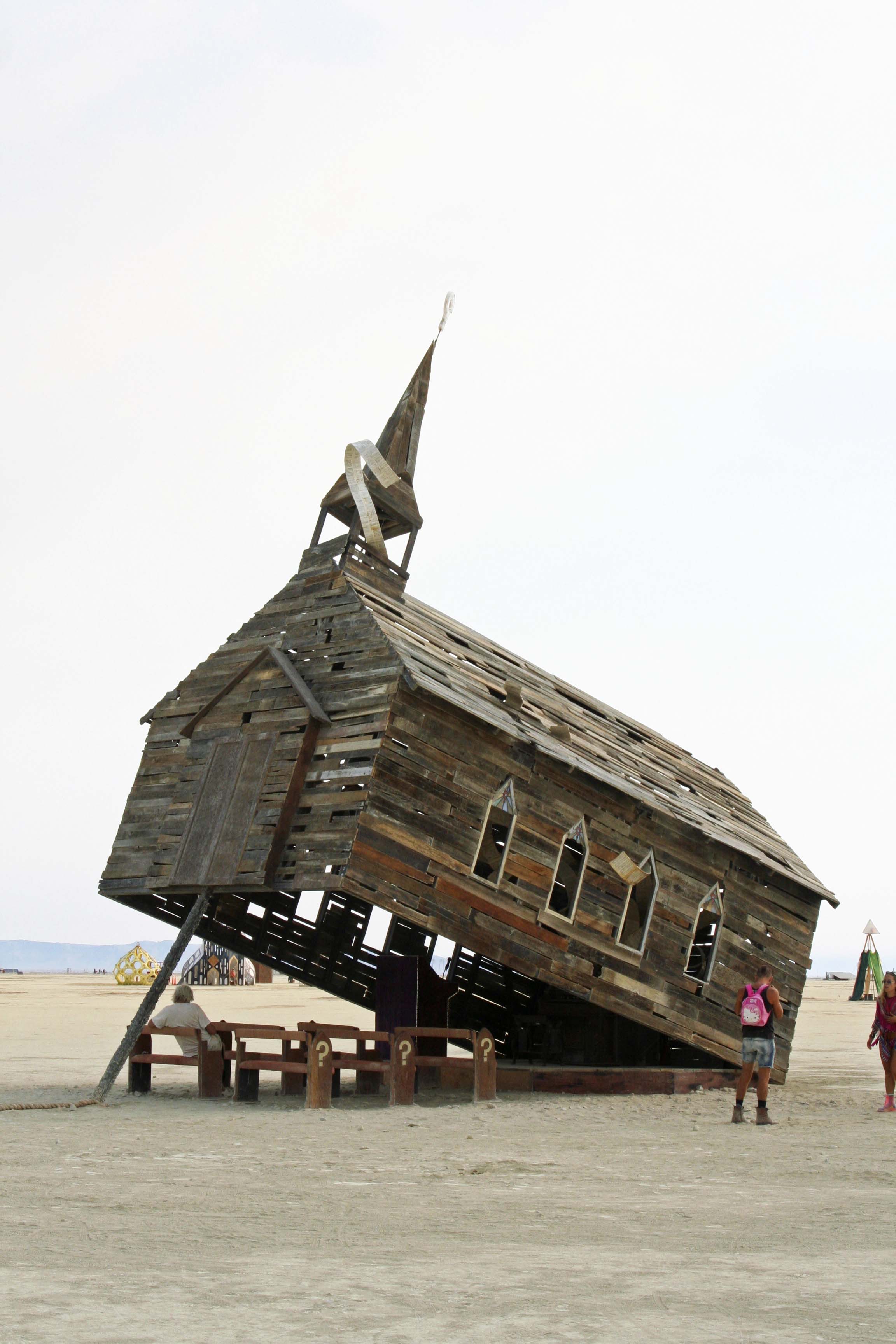
My next blog-a-book post this Thursday will be my childhood experiences of “looking for God in all the wrong places.” While I don’t have a photo, I thought that this picture I took at Burning Man below is relevant…

The Beautiful Temples of Black Rock City… A Burning Man Experience

This is the Temple of Promise from Burning Man 2015, a simple and beautiful structure designed to capture the early morning sun.


This is the second in my series of introducing new followers to the type of posts they can expect to find on my blog. Since I’ve been going to Burning Man since 2004, there are numerous posts on the annual event that takes place annually in the Nevada desert. Over the years, my primary focus has been on the art, but I touch on all aspects of the event. Here, I take a look at the beautiful temples that are built each year and then burned at the end of the event. If you would like to see more of my posts on this unique extravaganza, go to mu Burning Man category on the right, click on it, and scroll down. Enjoy!

Census figures from Burning Man show that 71% of the participants claim to have no formal religious affiliation. Given this, it might seem strange that a temple is one of the major structures built in Black Rock City each year. But there is another factor at work here; over 50% of Burners claim that they are spiritual. While they may not adhere to any particular religious doctrine, they believe that they are part of a whole that is beyond any individual’s existence. Or, at least, that’s how I interpret being spiritual. It’s how I feel.

Whatever Burners believe, there is no doubt that visiting the temple can be a spiritual experience. In addition to being a place of beauty, as I hope the photos in this post show, the Temple is a place where 10,000’s of messages are left honoring loved ones who have passed on, asking forgiveness and expressing thanks. At the end of the week, the Temple is burned and the messages drift off into the air or, the Heavens if you prefer, giving a sense of peace to those who have left them.

Part of a larger structure, this temple was built in 2007 and was known as the Temple of Forgiveness.

This was the 2008 Temple. (Photo by Ken Lake.)

The curving wood on top of the Fire of Fires Temple reflected flames shooting into the sky. Note the intricate detail on the side panels.

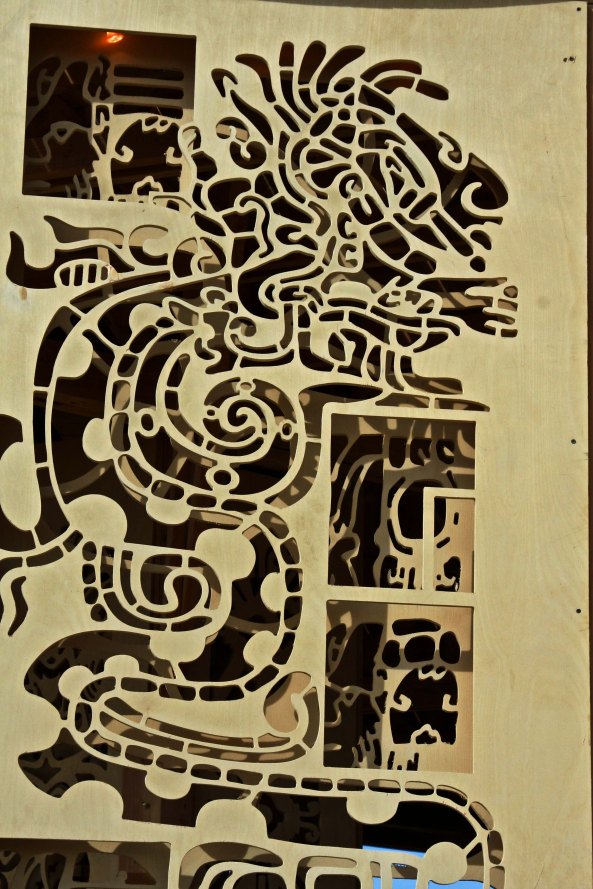
A close up.

The Fire of Fires Temple at night. (Photo by Don Green.)

The Temple of Flux represented the constant change we experience in life. It can be seen as waves or as sand dunes. This photo was taken from the Man. The Center Camp Cafe, the Man, and the Temple are always in a direct line. The buildings on the other side represented a city.

Tom likes to get up early in the morning for his photography. He captured this photo of the Temple of Juno at sunrise. (Photo by Tom Lovering.)

Here’s another. (Photo by Tom Lovering.)

A later photo by me showing detail of the Temple of Juno.

The Temple of Whollyness resembled a Pyramid.

This large stone structure was inside the Temple of Whollyness.

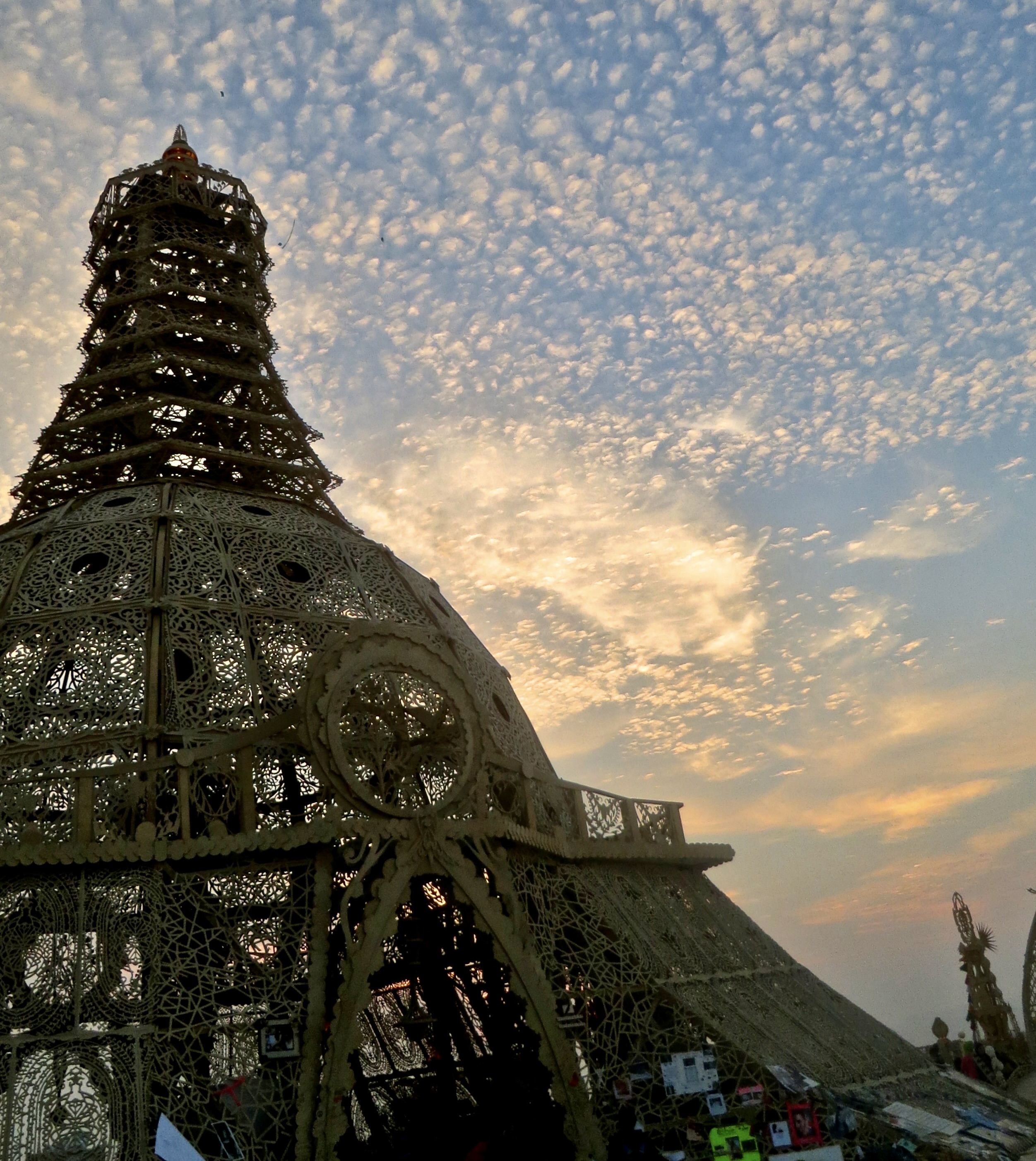
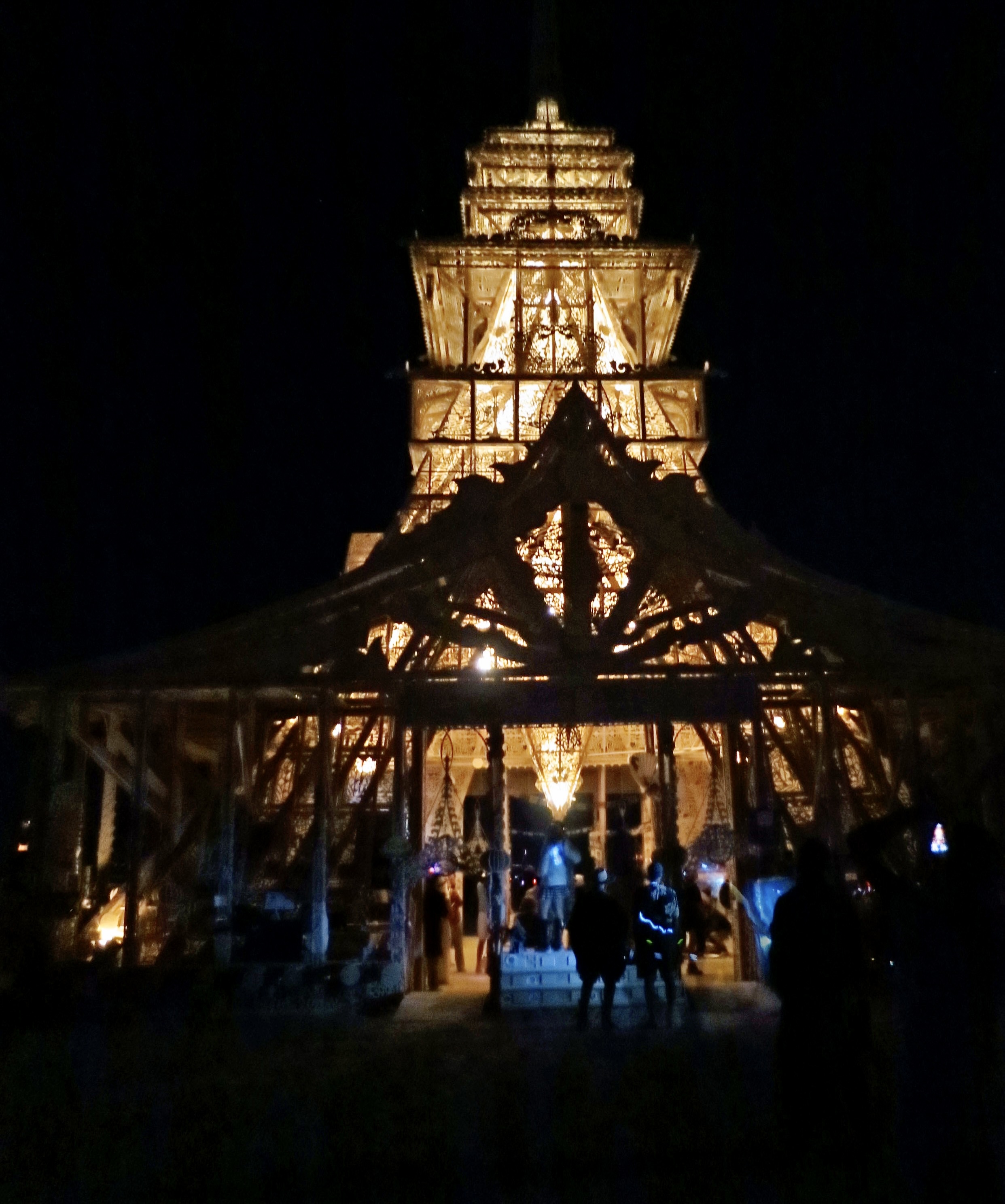
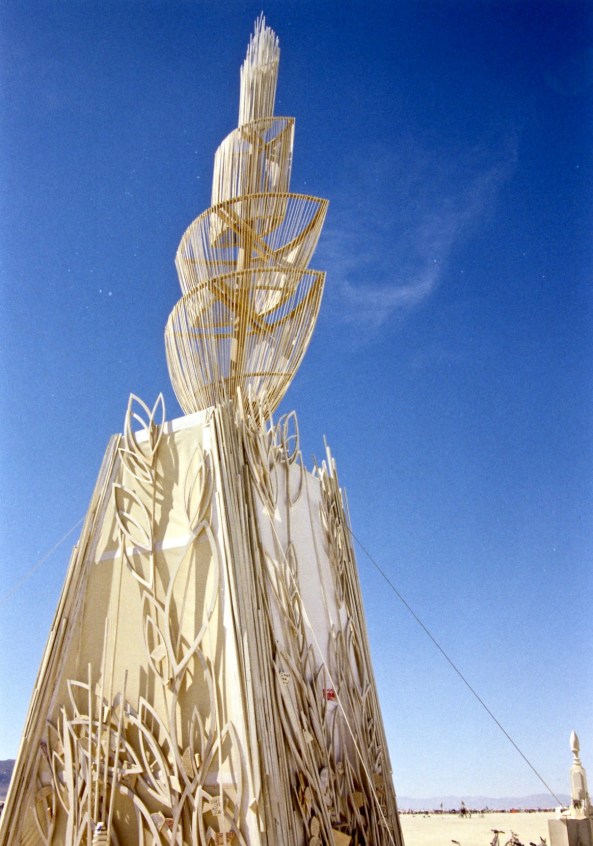
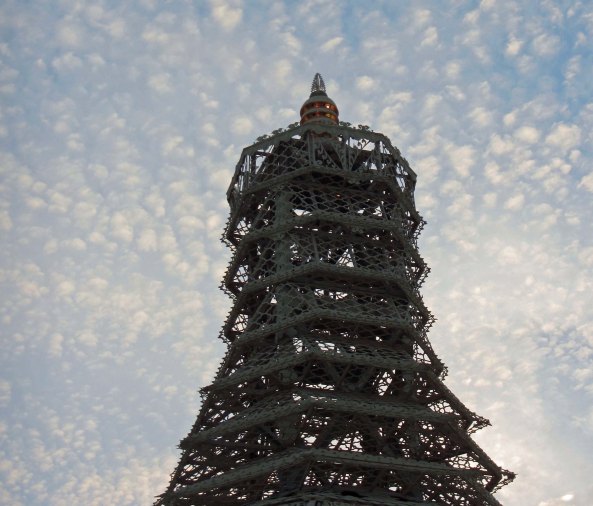
The Temple of Grace was built for the 2014 Burning Man.

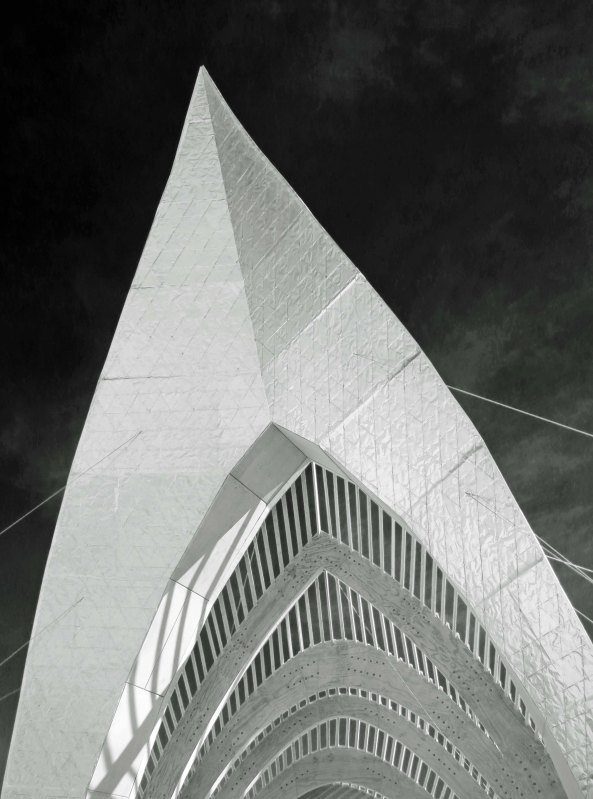
I liked this shot I caught of its spire under butter milk skies.

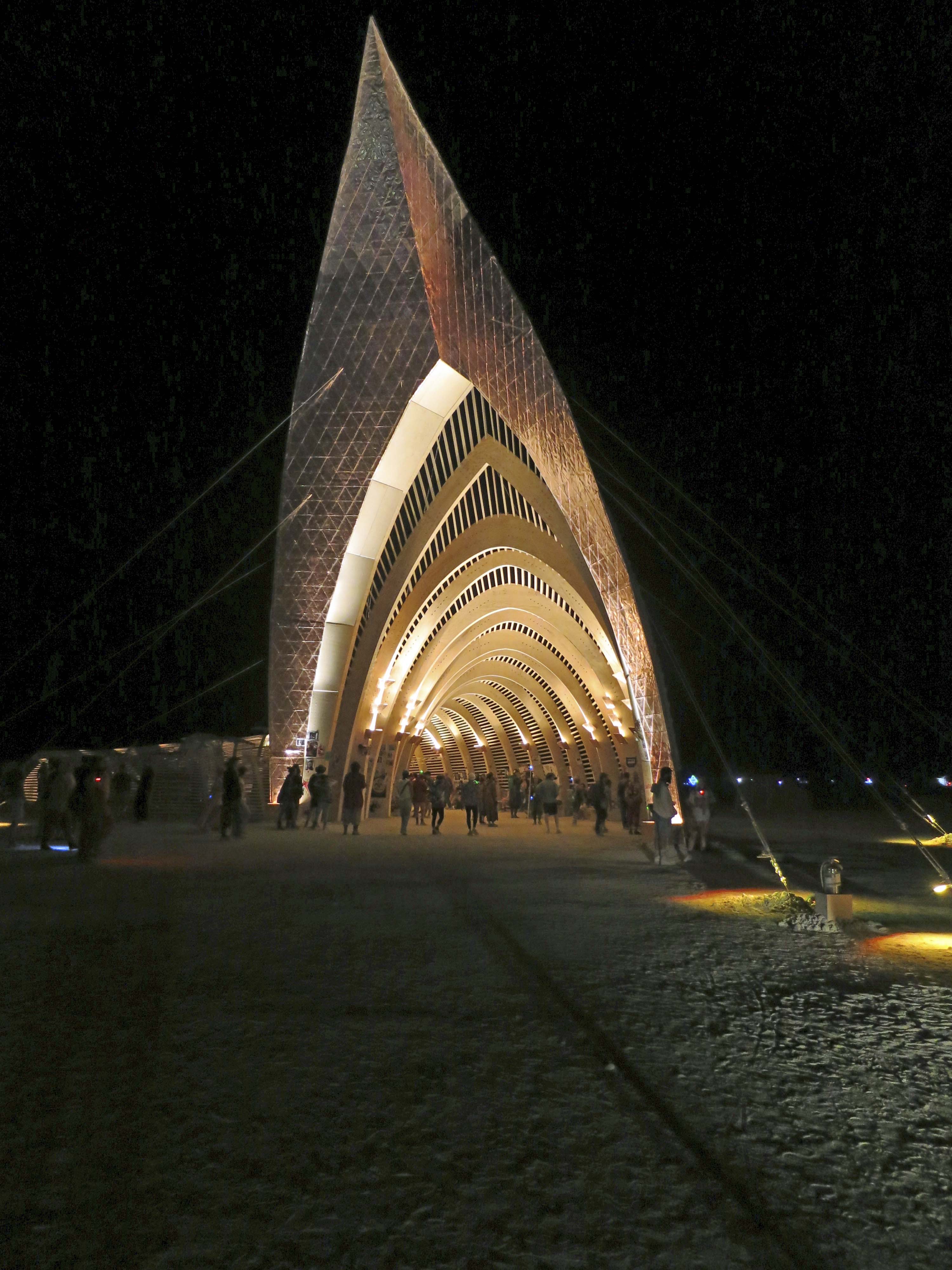
The Temple of Grace at night. (Photo by Don Green.)

Another photo of the Temple of Promise. I had taken Tom’s advice and rolled out early to capture these photos.

As the sun came up, Burners grabbed each other’s hands and formed a large circle around the Temple. The act was totally spontaneous.

A black and white I created.

Inside the Temple.

As I mentioned, thousands of messages are placed on the walls. By Saturday, there is little room to write on left within reach.

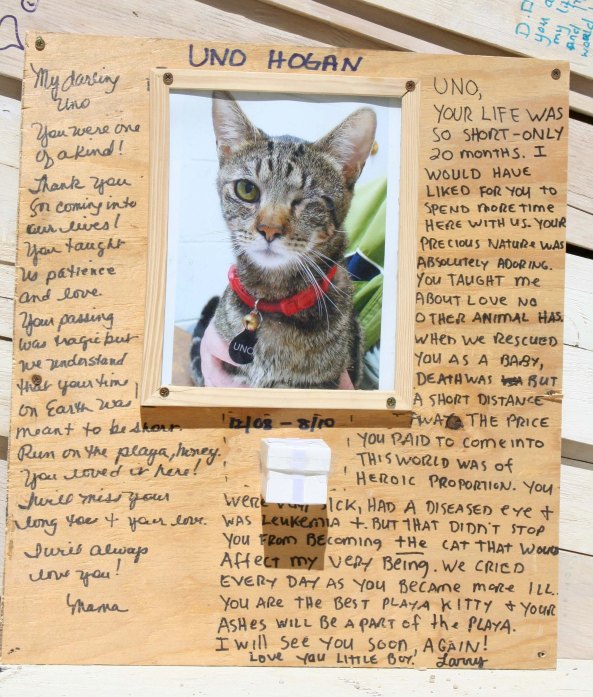
I found this message left behind honoring Uno Hogan quite touching. I think you will as well. It is quite typical of messages found in the temple.

And this message humorous but sincerely meant!

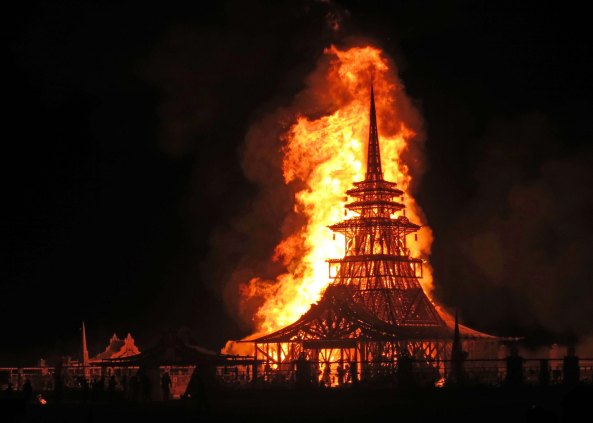
The Temples are always burned on Sunday night, the last night at Burning Man, in a solemn and moving ceremony with the thousands of messages sent skyward. This is the Temple of Juno.

A note on the photographers: All photos that I include in the Burning Man blogs are taken by Peggy, me, or members of the Horse Bone Tribe— all close friends who have traveled and adventured with us down through the years.

NEXT BLOGS:

Monday: Back to Bandon on the coast of Oregon.

Wednesday: I begin my story of how Bone was found.

Friday: I continue my exploration of the unique and beautiful structures at Burning Man.


The Temple of Promise at Burning Man 2015

The Temple of Promise at Burning Man 2012.

The Temple of Promise at Burning Man 2015: light, airy, and beautiful.

I had rolled out of bed at 5:30 and ridden my bike out onto the Playa to take photos of Burning Man’s 2015 Temple of Promise. It was truly beautiful and promised to be even more so at sunrise. There were lots of folks already there when I arrived (even mutant vehicles), but none of the hustle, bustle and noise that normally accompany Burner events. As the sun hit the spire, the people present spontaneously formed a large circle and silently held hands. No one said let’s hold hands; or let’s form a circle. It was unplanned, a response to the beauty of the moment, yes, but more, something transcendent, a reflection of how Burners feel about their temple.
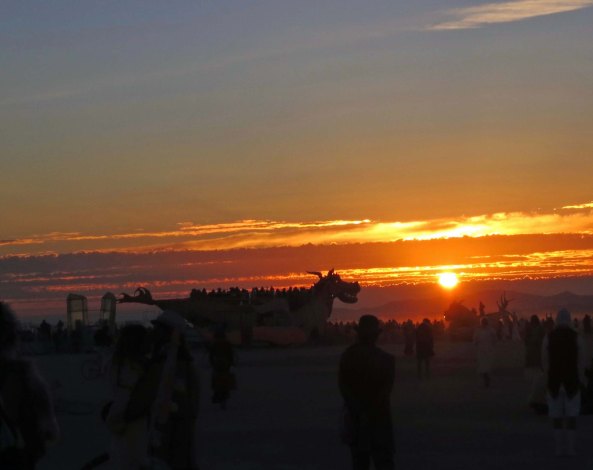
A crowd had gathered at the Temple of Promise when I arrived as the sun climbed over the mountains. A dragon mutant vehicle is outlined by the early morning light.

A crowd had gathered at the Temple of Promise when I arrived as the sun climbed over the mountains. A dragon mutant vehicle, filled with Burners, is outlined by the early morning light.
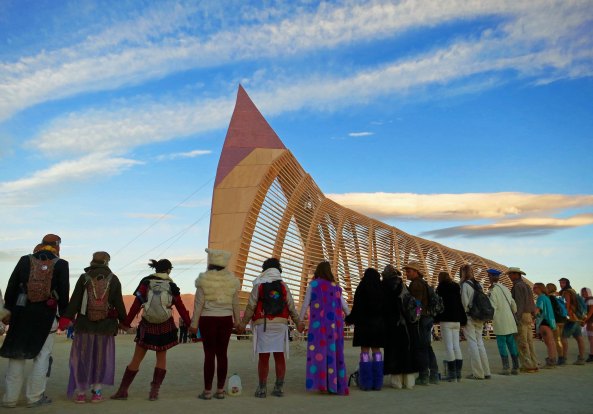
Burners spontaneously joined hands as the first rays of the sun hit the Temple.
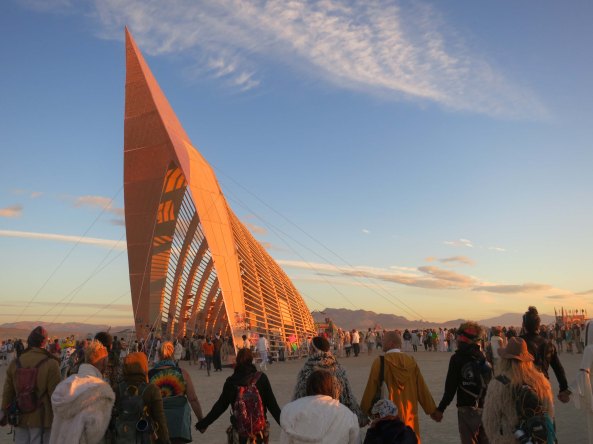
Burners spontaneously joined hands as the first rays of the sun hit the Temple.

And continued to as the Temple was bathed in light.

And continued to hold hands as the Temple was bathed in light.

I use the word ‘their temple’ on purpose. The people responsible for building the temple each year— the architects, master builders, and volunteers who donate thousands of hours— and the people responsible for funding it (somewhere in the neighborhood of $250,000), generously contribute their work of art to the people attending Burning Man, as part of the event’s unique gifting society. Every year, the temple is different, a unique creation, and every year I have attended, the temple has been something special, a thing of beauty. Here is a selection of the temples.

The Temples at Burning Man are unique and quite beautiful.

The Fire of Fires Temple at Burning Man 2009

One of the first Temples I saw at Burning Man.

The Temple of Hope at Burning Man 2006
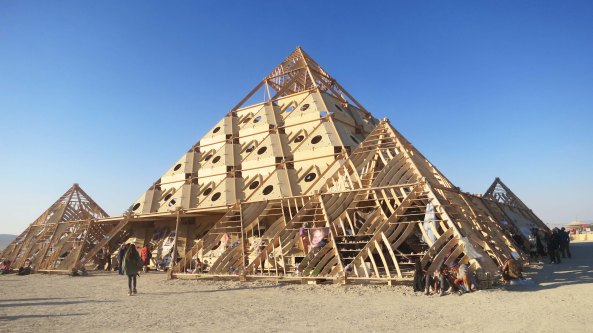
This temple was pyramidal in shape.

The Temple of Whollyness at Burning Man 2013

And this one resembled a sand dune.

The Temple of Flux at Burning Man 2010.
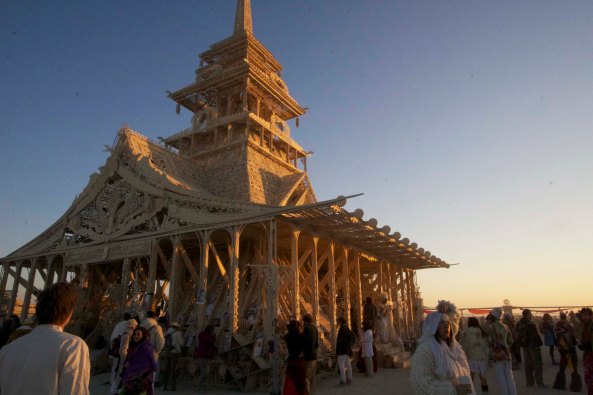
Burning Man's Temple of Juno in 2012

The Temple of Juno at Burning Man 2012. (Photo by Tom Lovering.)
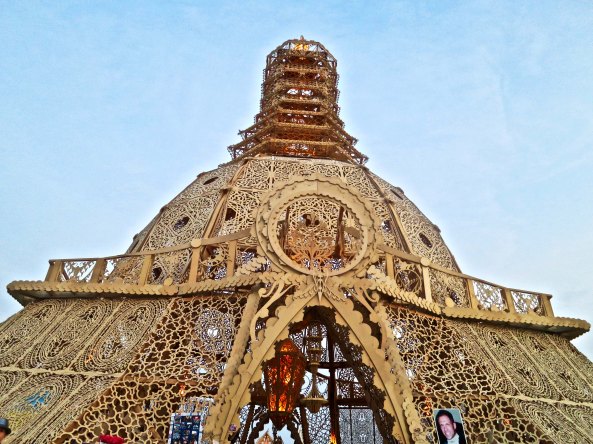
The Temple of Grace at Burning Man 2014.

The Temple of Grace at Burning Man 2014.

The significance of the Temple goes beyond its beauty, it becomes a refuge, a place to say goodbye to friends and loved ones (including pets) who have passed on, a place to ask for forgiveness and leave messages of forgiveness, and a place to celebrate and say thank you. Literally thousands of messages are left on the temple walls during the week. Photographs, perhaps a dog’s favorite chew toy, even someone’s ashes are left as remembrances.

Morris the Cat was born in 1998 and passed away

Morris the Cat was born in 1998 and passed away on October 5, 2014 at the old age of 16. He was still loved and missed by the people he had considered his family.

Someone has memorialized a number of species that had become extinct.

The Earth Guardians of Burning Man have memorialized a number of species that had become extinct.

A garden of metal trees stood in the Temple's patio and provided more opportunities for people to remember their loved ones.

A garden of metal trees stood in the Temple’s patio and provided more opportunities for people to remember their loved ones.

Photographing the Temple at different times of the day and from different angles only added to its beauty.

The entrance leading into the Temple. (Photo by Don Green.)

I really liked this shot by Don that emphasized the entrance leading into the Temple and the contrasting mountains behind. (Photo by Don Green.)

Another morning shot from a different angle. I also like the drama provided by the clouds.

Another morning shot from a different angle. I also liked the drama provided by the clouds.
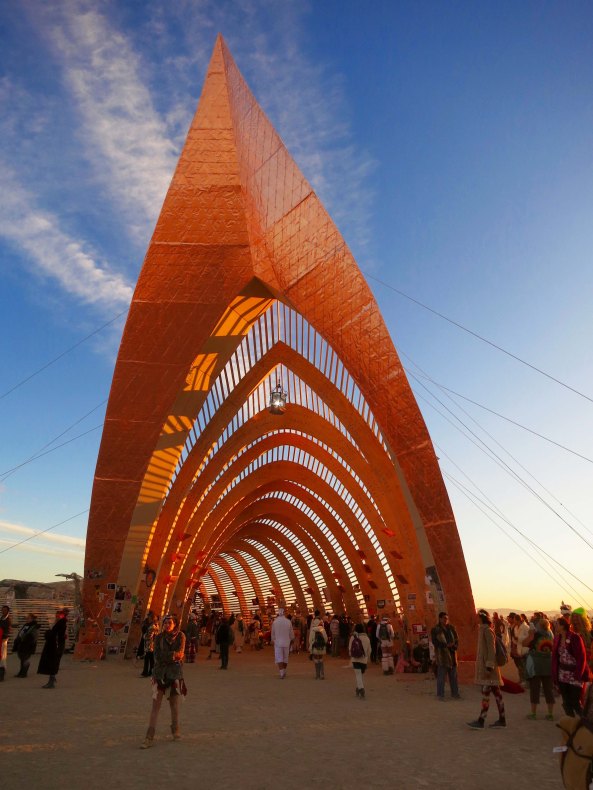
Morning sun catching the copper face of the temple provided the rich color here.
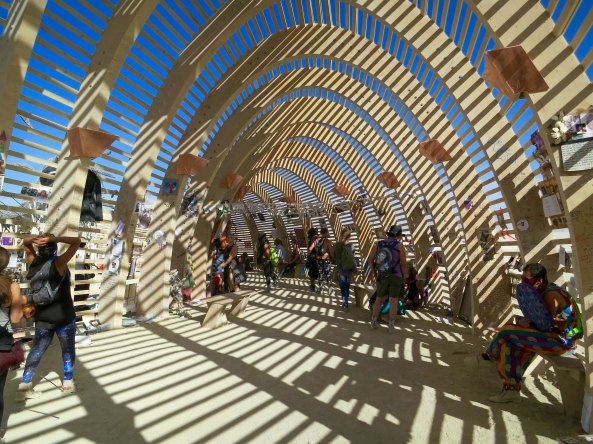
Morning sun catching the copper face of the temple provided the rich color here.

Inside the Temple at midday... shadows and light.

Inside the Temple at midday… shadows and light.

The Temple at night from a distance.
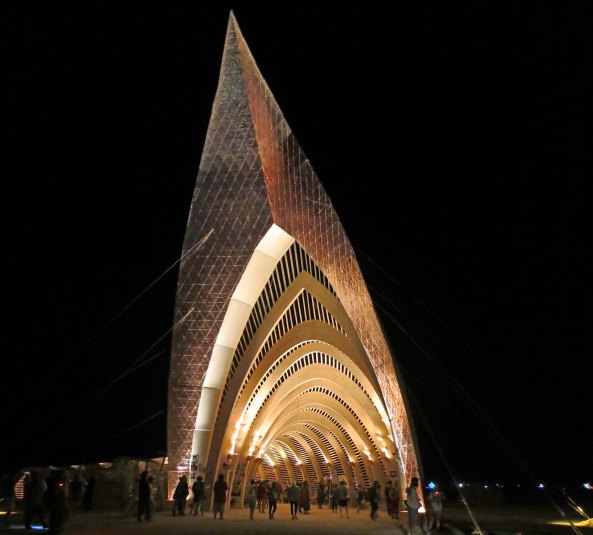
The Temple at night from a distance.

The front of the Temple at night.

The front of the Temple at night.

Inside the Temple at night.

Inside the Temple at night.

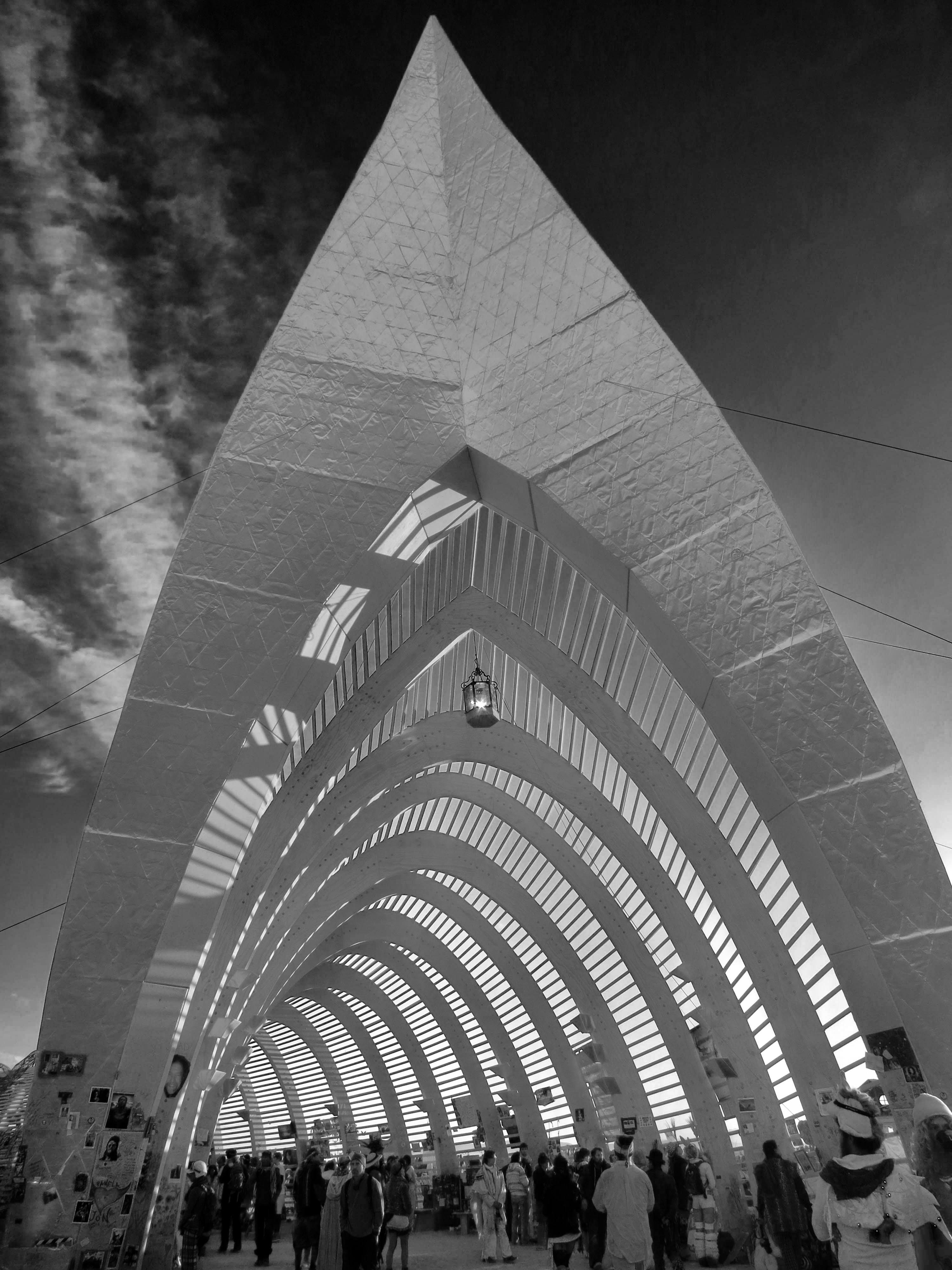
A black and white rendition of the Temple top for fun.

A black and white rendition of the Temple top for fun.

On Sunday evening the Temple burns. It is a solemn occasion. Tears run down cheeks, people whisper goodbyes, and friends hold each other tight as flames leap into the air, lighting the night and  carrying memories of loved ones into the sky. But it is also a celebration of life, a letting go, and permission to move forward. I had planned to attend the 2015 ceremony along with my friends Tom Lovering and Don Green, but we had the wrong time and the temple burned quickly. Here are two photos from the Temple burn of 2012.

The temple of Juno from 2012 burns, shooting flames high into the sky.
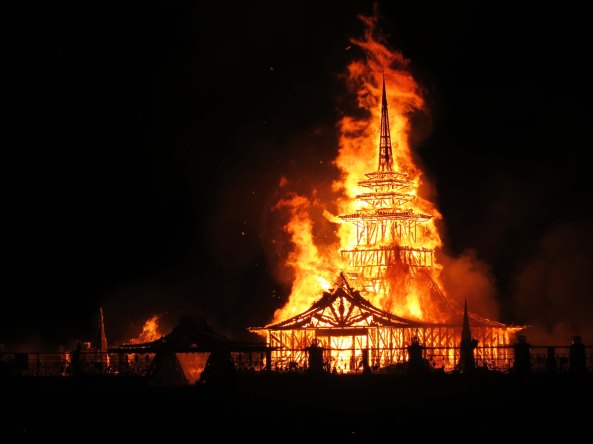
The temple of Juno from 2012 burns, shooting flames high into the sky.

A final shot. Soon the Temple will fall, helping to bring closure to the thousands of people who had left messages.
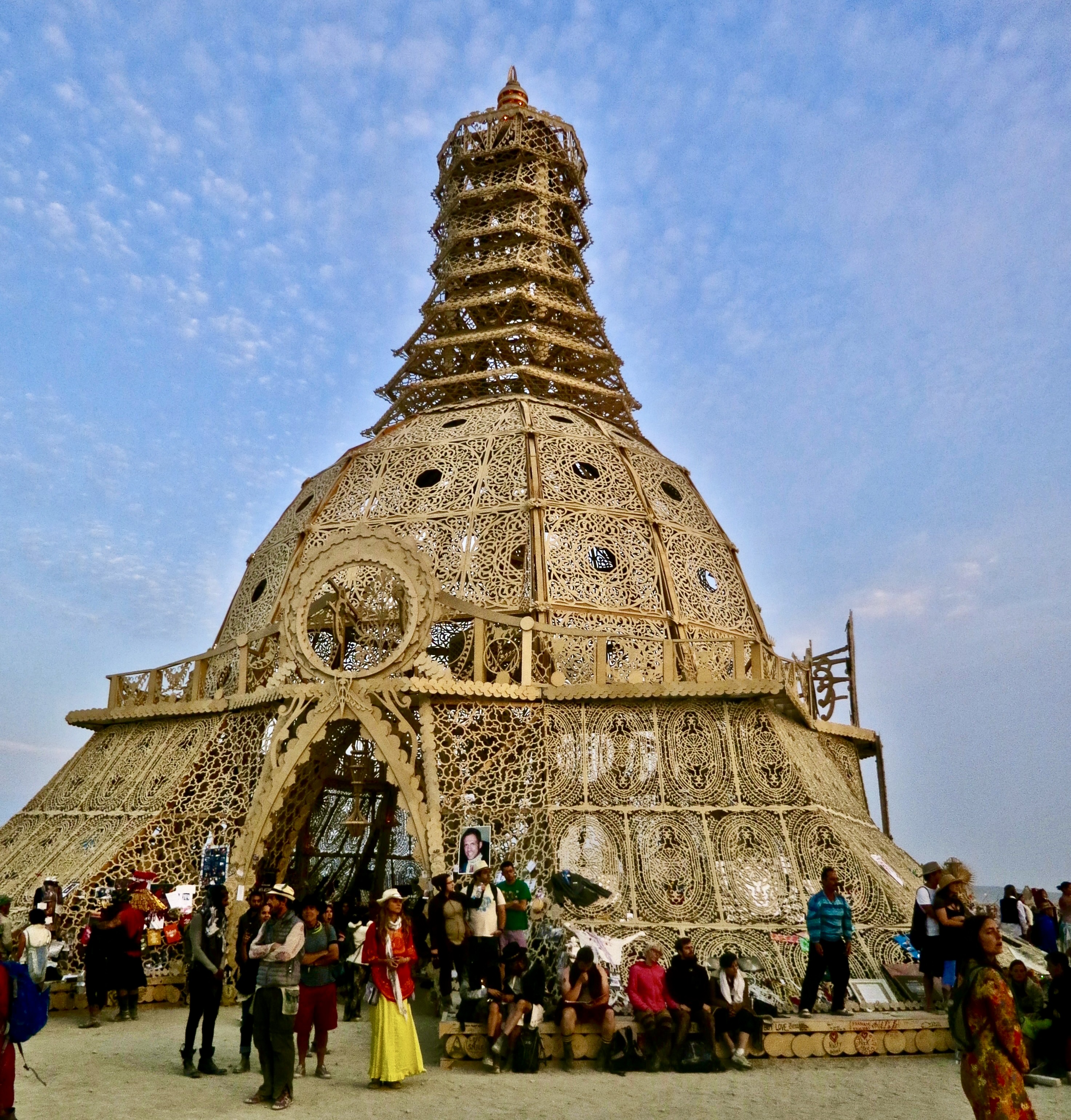
A final shot. Soon the Temple will fall, helping to bring closure to the thousands of people who had left messages.