The Valley of Fire State Park: Part II… The Desert Series

Chuckwallas are commonly found in the Valley of Fire State Park in Nevada and throughout the Mojave Desert.

Chuck, the chuckwalla, was quite curious about why we were wandering around his rock pile.

Meet Chuck. Peggy and I discovered him as we were hiking around in the rocks looking for petroglyphs at the Valley of Fire State Park. I can’t say he was friendly, but he certainly wasn’t scared. Mainly he was curious. I was almost on top of him before he crawled into a shadowy crevice.

Chuckwallas are rather impressive members of the lizard family that can grow up to 16 inches in length. Their primarily vegetarian diet apparently serves them well. (Not that they are above scarfing down an occasional insect.) They are found throughout the deserts of the Southwest. They hide in cracks when being chased and puff up their bodies so whatever is chasing them can’t yank them out. Most predators depart with little more than a bony lizard tail for dinner. The chuckwalla is then free to go on its way and grow a new one.
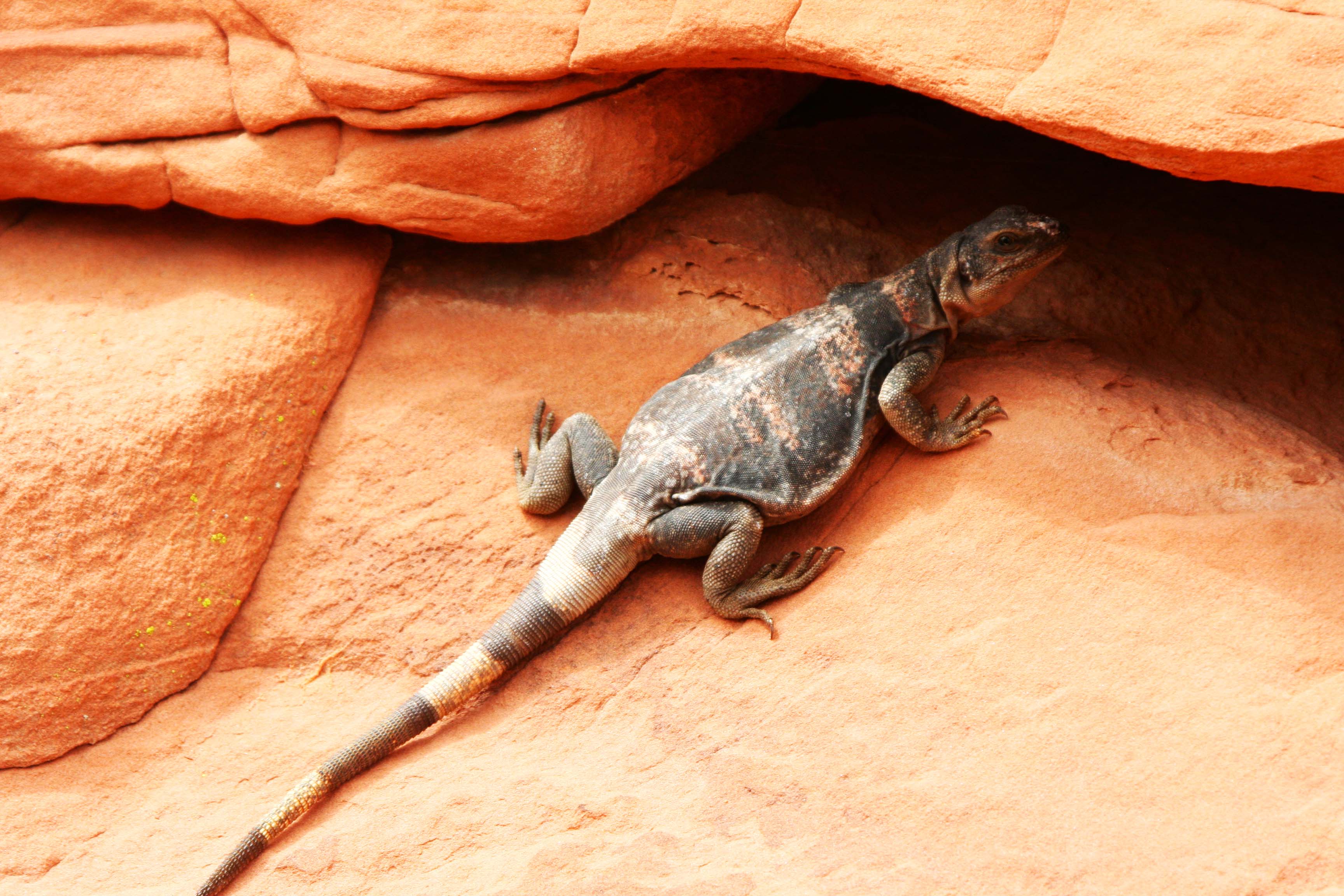
Having tired of me snapping photos, Chuck heads into a crevice. He is still keeping an eye on me, though.

Having tired of me snapping photos, Chuck heads into a crevice. He is still keeping a curious eye on me, though. Note the loose skin– just waiting to be puffed out.

As I mentioned in my last blog, plants have done a remarkable job of adapting to desert life. Dilly-dallying is not an option when rain falls. Annual desert plants can grow, bloom, and produce seeds in a few short weeks. The seeds then wait a year, or longer, for the next rain to come along. Others, like cacti, slurp up and store enormous amount of water for later use. Some plants have deep roots to gather water and tiny leaves to prevent its loss.
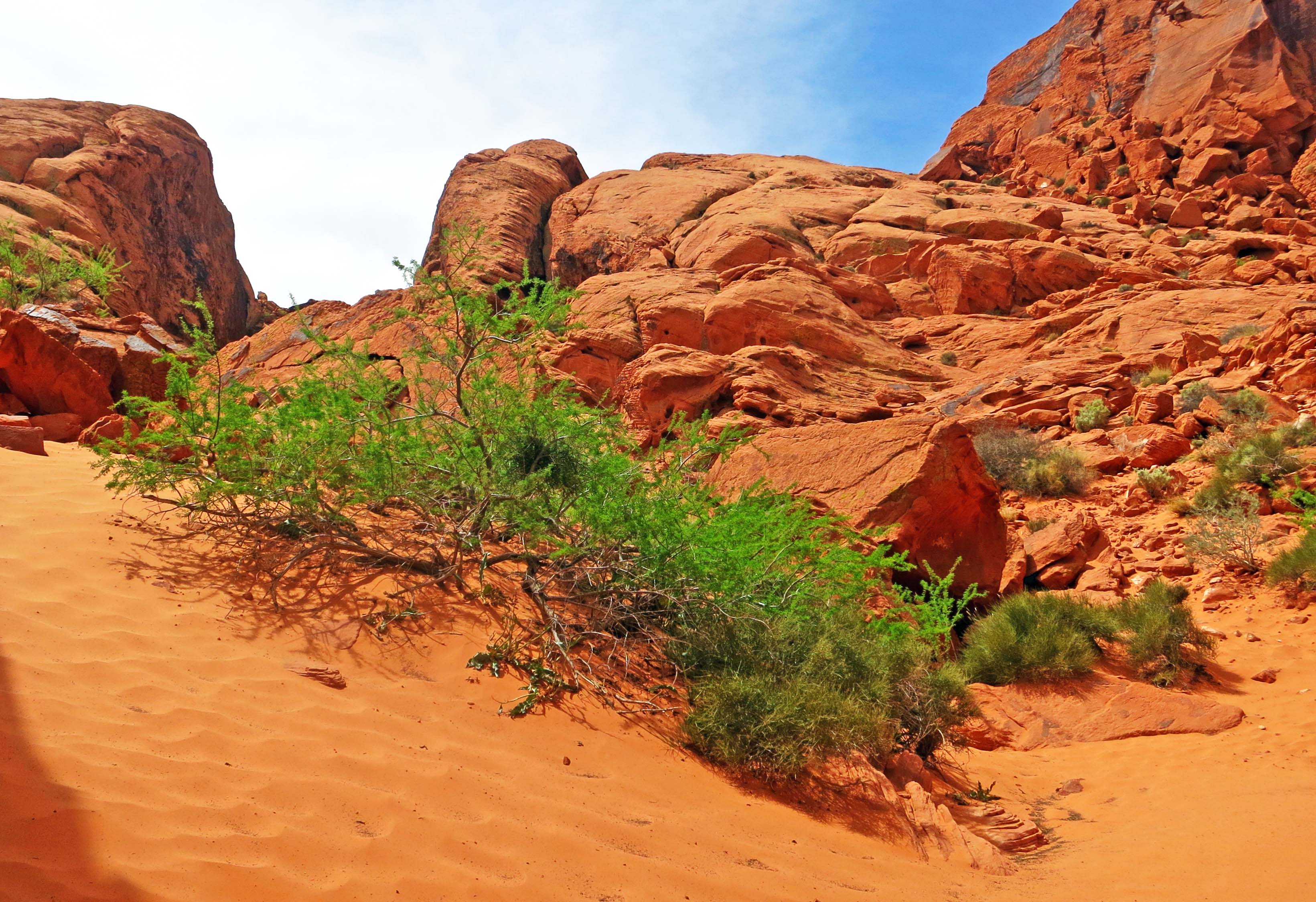
Scene from the Valley of Fire State Park in Nevada.

Desert plants have adapted well to their environment. I really like the touch of green here.

Valley of Fire near Las Vegas, Nevada.

I thought this dead bush spoke to the harsh living conditions found in the desert. I also thought it made a great subject for my camera.
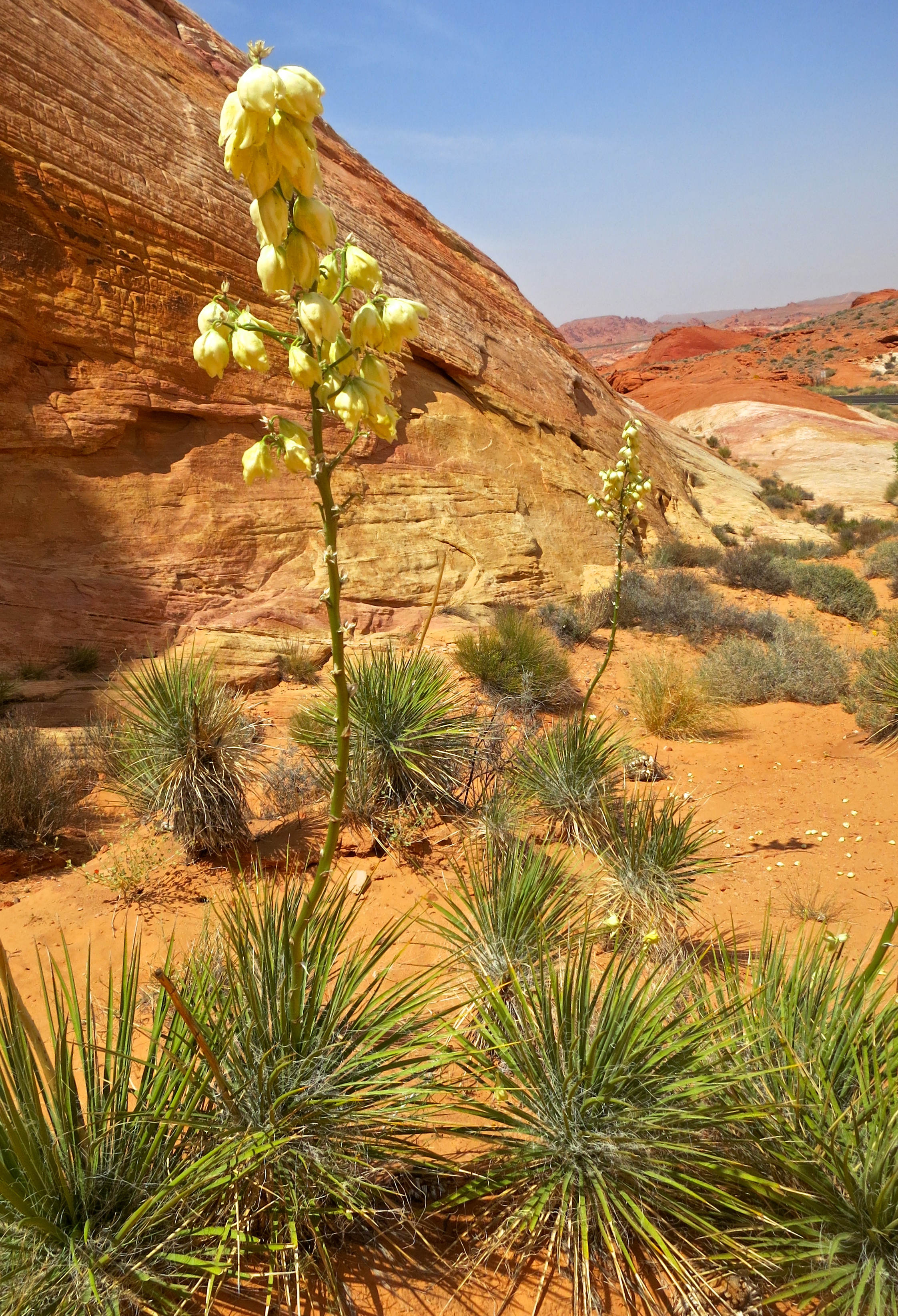
Yucca plants in Valley of Fire State Park. Photo by Curtis Mekemson.

Yucca plants have a two tier root system. One shoots out laterally from the plant and is designed to capture rain when it falls. The other is a deep tap-root designed to reach water during dry times.
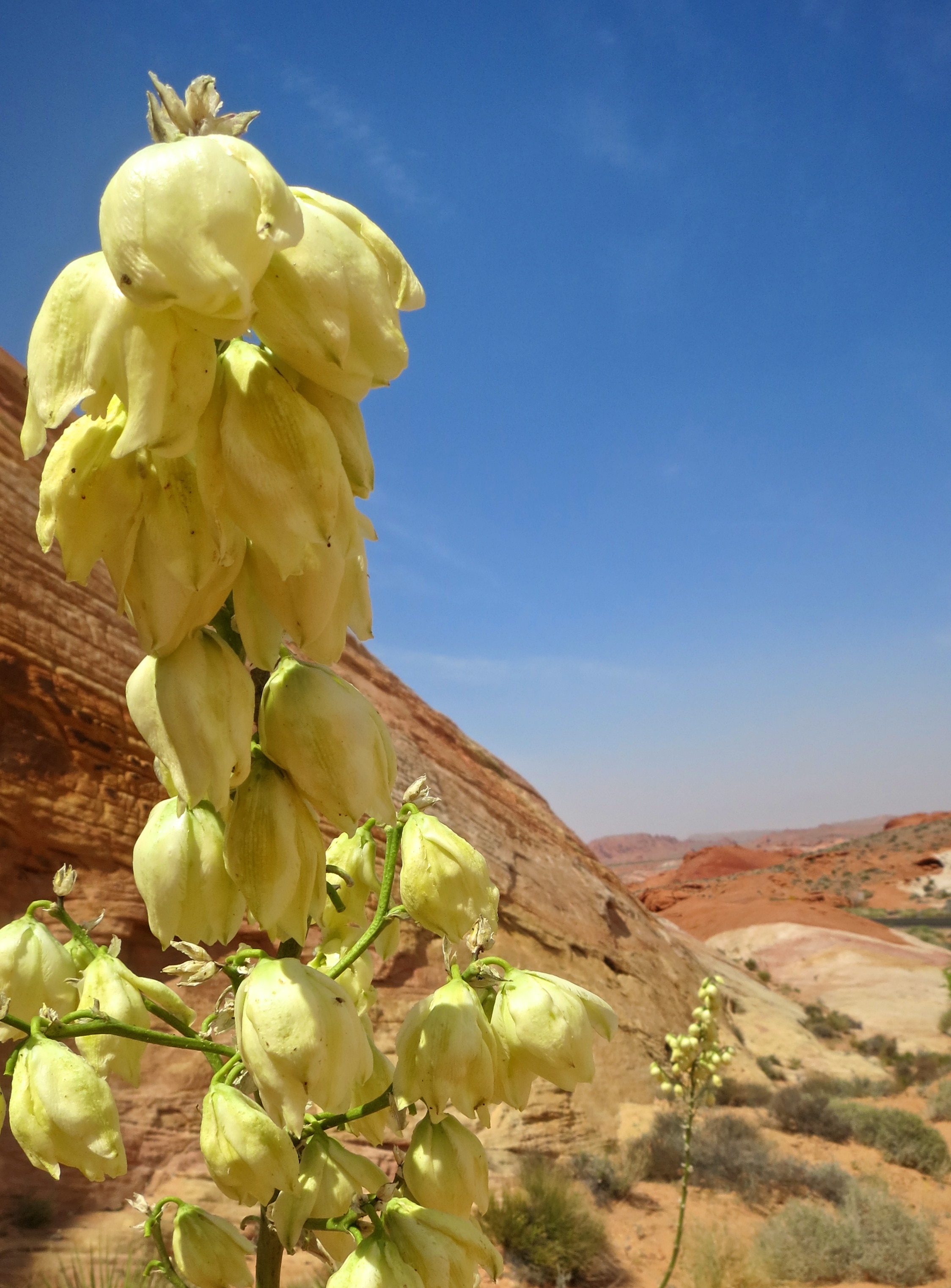
Flowering yucca in the Valley of Fire State Park. Photo by Curtis Mekemson.

A close up of the yucca’s flowers.

The primary reason for visiting the Valley of Fire is its magnificent rocks, however. I presented several photos in my last blog. Here are more.

Red and tan sandstone in the Valley of Fire.

The sandstone formations found in the Valley of Fire are close to pure silica. The difference between the tan and red rock is that a small amount of iron has produced a rust-like stain.
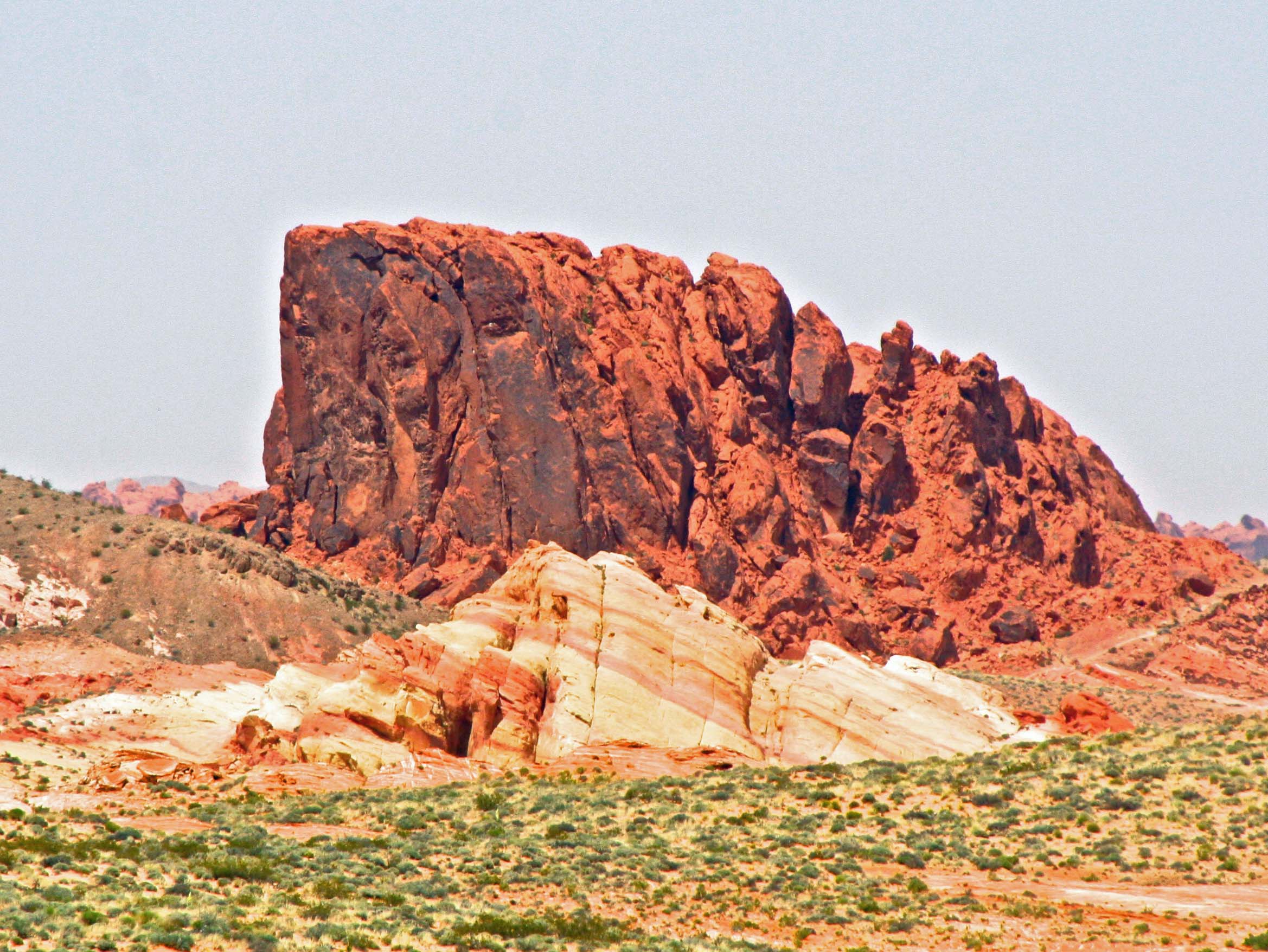
Peggy captured this impressive red mountain, which along with the red and tan sandstone rock on front provides another example of iron staining. The famous Red Wall of the Grand Canyon is also an example. (Photo by Peggy Mekemson.)
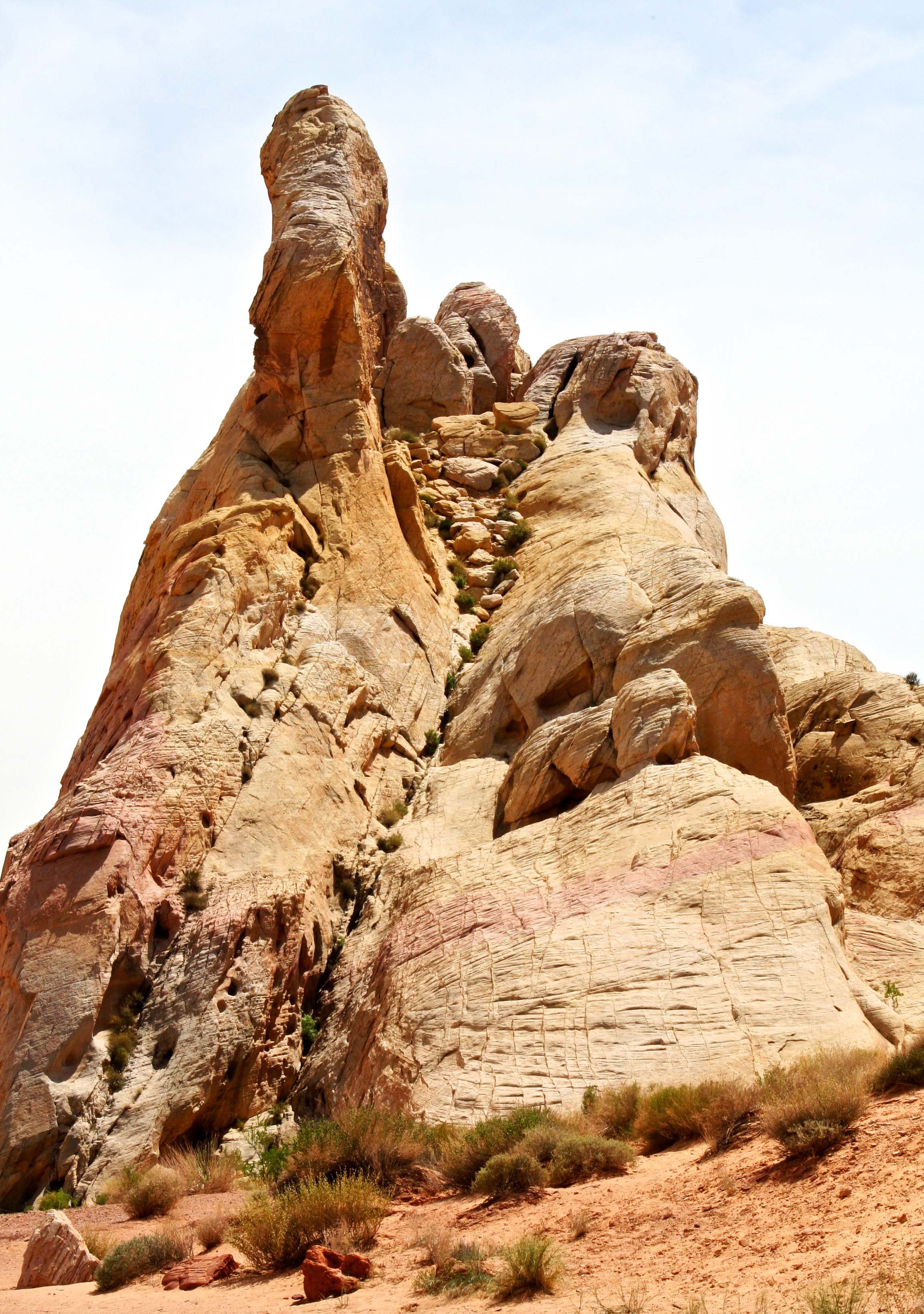
Peggy captured this impressive red mountain, which along with the red and tan sandstone rock in front, provides another example of iron staining. The famous Red Wall of the Grand Canyon is also an example. (Photo by Peggy Mekemson.)

White Dome in Valley of Fire State Park outside of Las Vegas, Nevada.

The White Dome graces the end of the road in the Valley of Fire. (Photo by Peggy Mekemson.)

The White Domes of the Valley of Fire.

White Dome and companion peak.

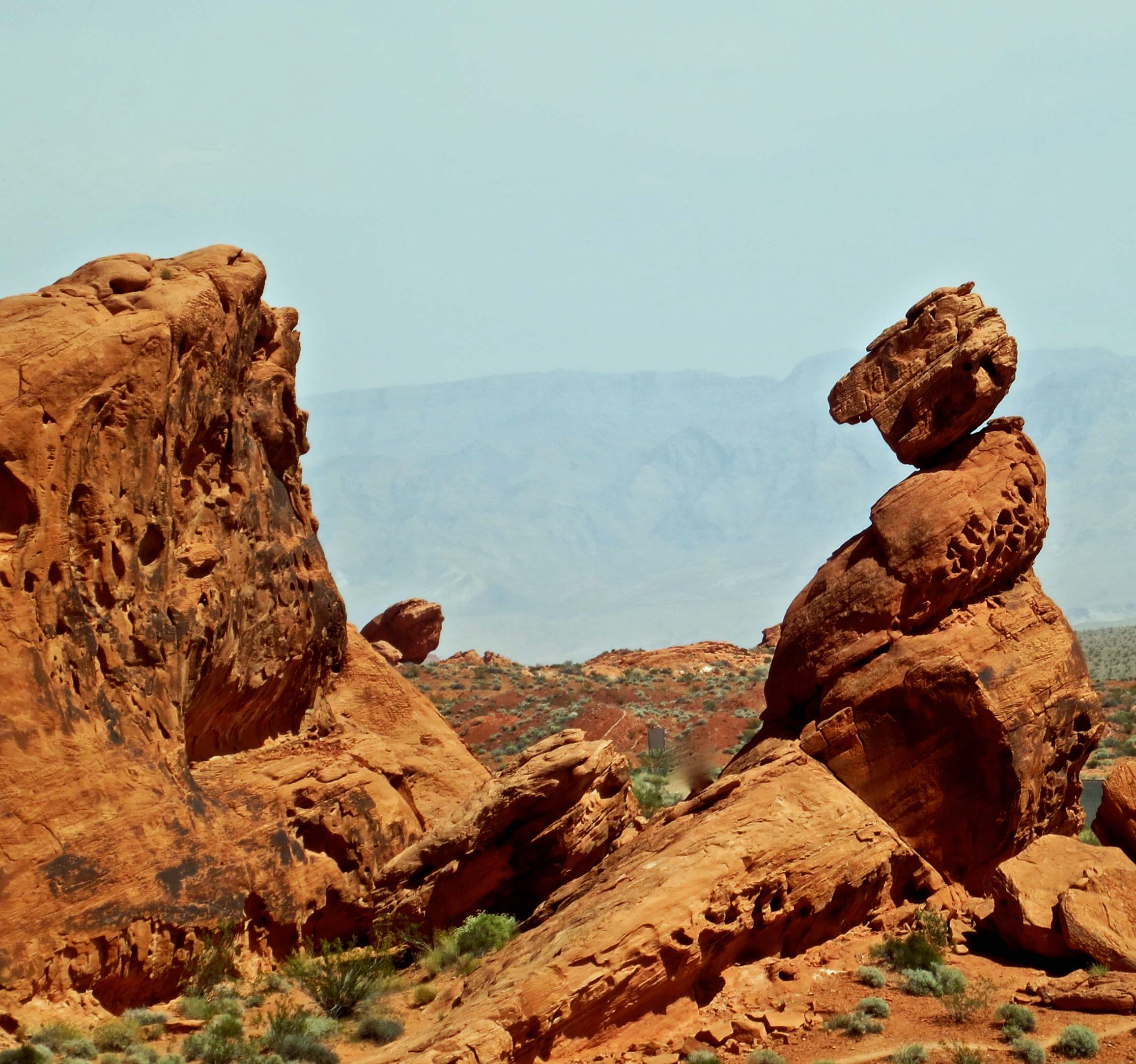
Balanced Rock in the Valley of Fire State Park, Nevada. Photo by Curtis Mekemson.

Balanced Rock. How does it do it?

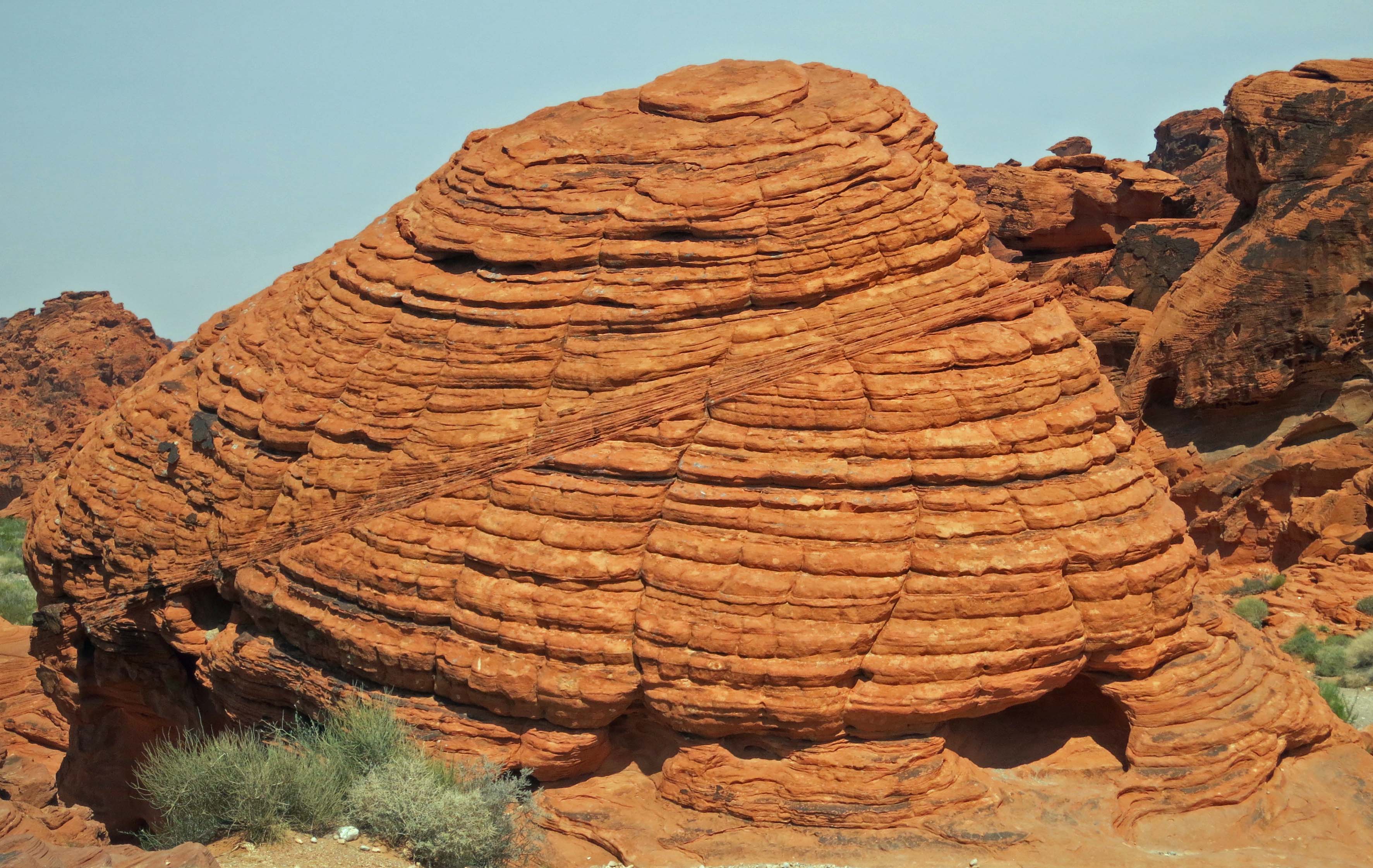
The Beehive Rock in Valley of Fire State Park outside of Las Vegas, Nevada.

This rock in the Valley of Fire State Park is appropriately named the Beehive.

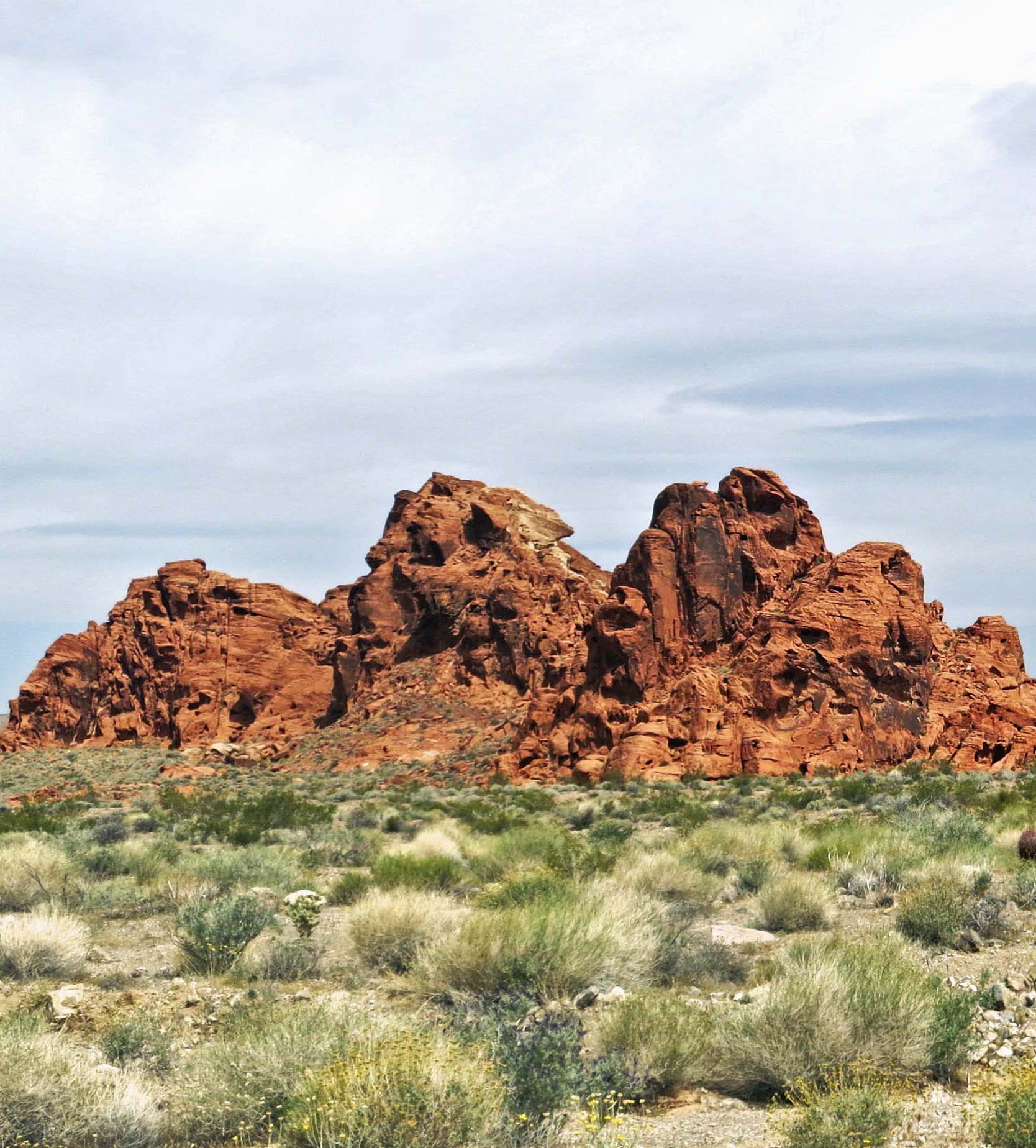
Valley of Fire State Park scenic view.

A final view of the beauty.

NEXT BLOG: The ancient Native America rock art found in the Valley of Fire State Park.
The Mystery and Beauty of Deserts: The Valley of Fire State Park… Part I

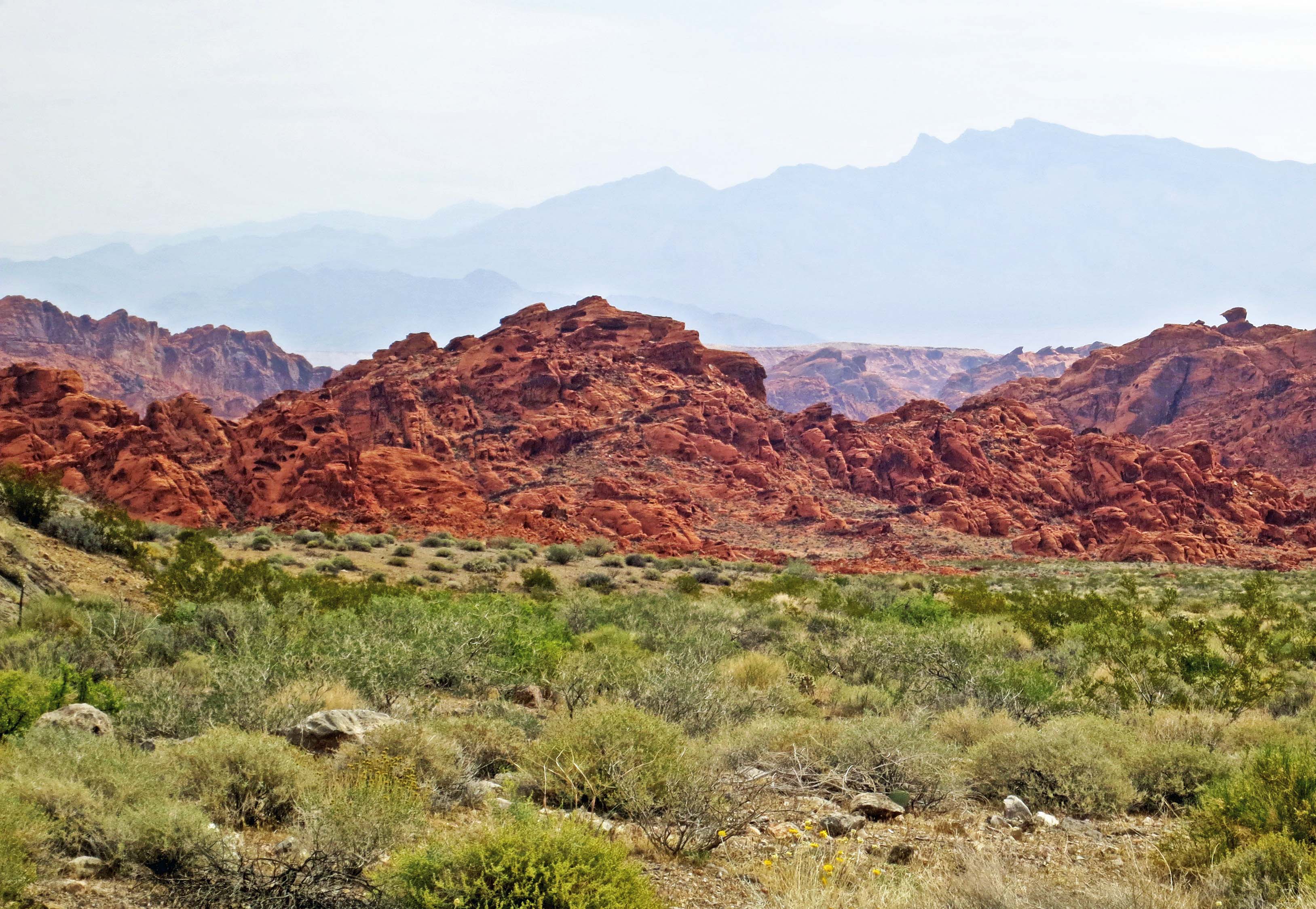
Valley of Fire State Park outside of Las Vegas, Nevada.

Traveling through deserts, you occasionally have the feeling that you can see forever as range after range of mountains disappear into the distance.

Deserts are known for their minimal water, fiery temperatures and vast open spaces. Most people believe they are best seen while travelling at 70 plus miles per hour on a modern freeway with the air conditioning cranked up high. It’s unfortunate.

Deserts can be places of rare beauty. Mountains and rock formations burst into riotous colors at sunrise and sunset. Spring rains bring carpets of wildflowers. Even the open spaces have a unique appeal. At times you feel you can see forever.

Deserts also have a fascinating story to tell. Ancient petroglyphs whisper of human occupation dating back thousands of years. Geology is up front and personal– what you see is what you get. And plants and animals demonstrate the amazing ability of nature to adapt, and even thrive, under extreme conditions.

Over the next three weeks I’ll be blogging about three desert areas that Peggy and I recently visited: the Valley of Fire, Red Rock Canyon and Death Valley. All three are an easy day trip outside of Las Vegas, Nevada and all three are definitely worth a visit. Spring and fall are the best times to go.

First up: Valley of Fire.

Located 58 miles northeast of Las Vegas off of I-15, the Valley of Fire’s main attraction is erosion-carved red sandstone that owes its existence to massive sand dunes that covered the region some 150 million years ago, back when dinosaurs still roamed the earth.

The first ‘tourists’ to visit the area were the Anasazi, who apparently dropped in on a regular basis between 300 BC and 1150 AD. Limited water discouraged permanent settlement but they left behind numerous petroglyphs, which I will feature in another blog.

Hollywood, too, has discovered the Valley of Fire. Portions of several movies have been filmed in the area including Total Recall with Arnold Schwarzenegger and Star Trek Generations, where Captain Kirk fell to his death– until he was reborn as a slightly pudgy spokesperson for Priceline. “Beam me up, Scotty.”

The Valley of Fire is Nevada’s oldest state park. The best way to experience it (beyond going there) is through photos. Enjoy.

Folded and eroded red sandstone welcomes the visitor to the Valley of Fire State Park.

Folded and eroded red sandstone welcomes the visitor to the Valley of Fire State Park.
Valley of Fire State Park sandstone.

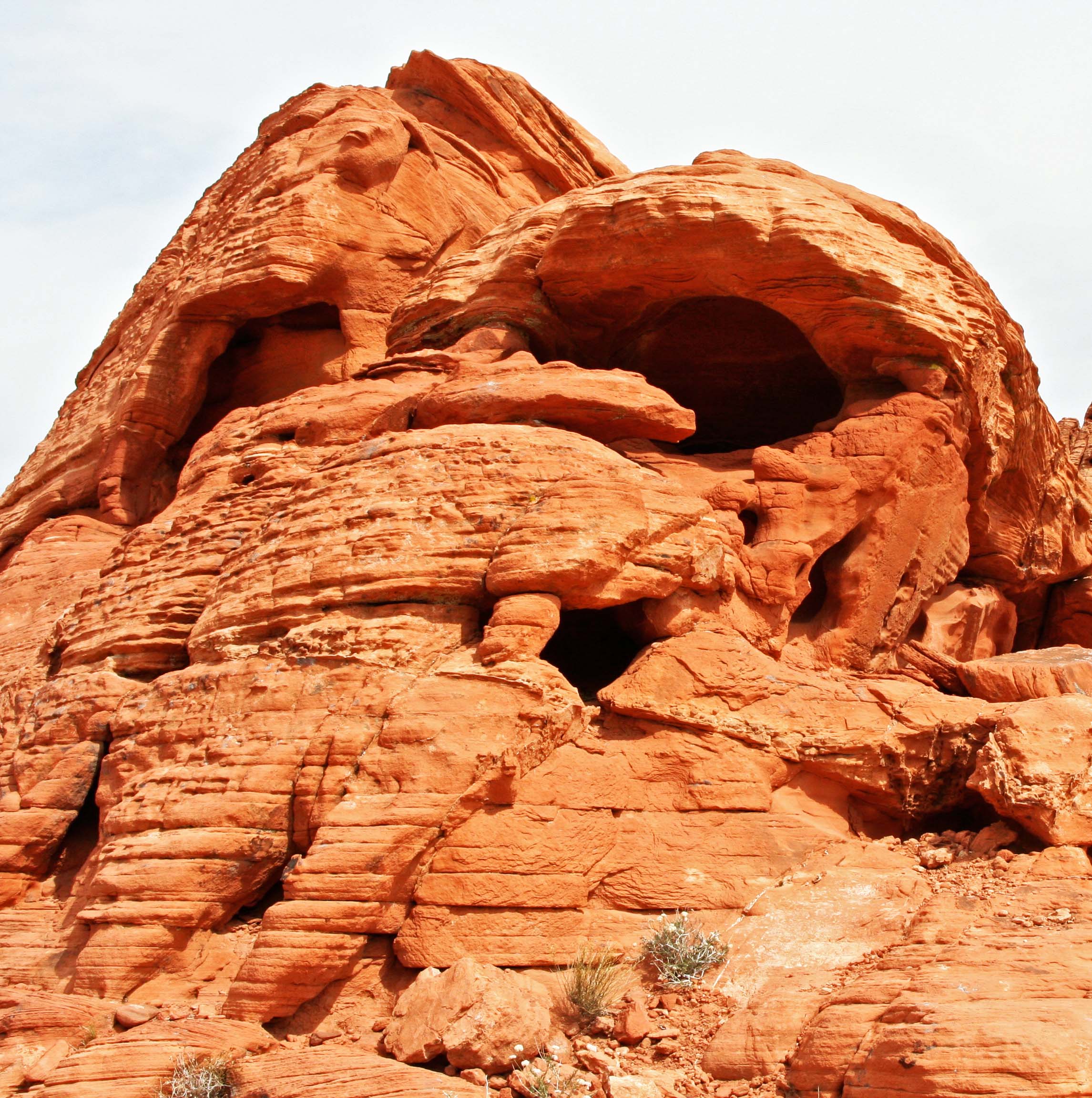
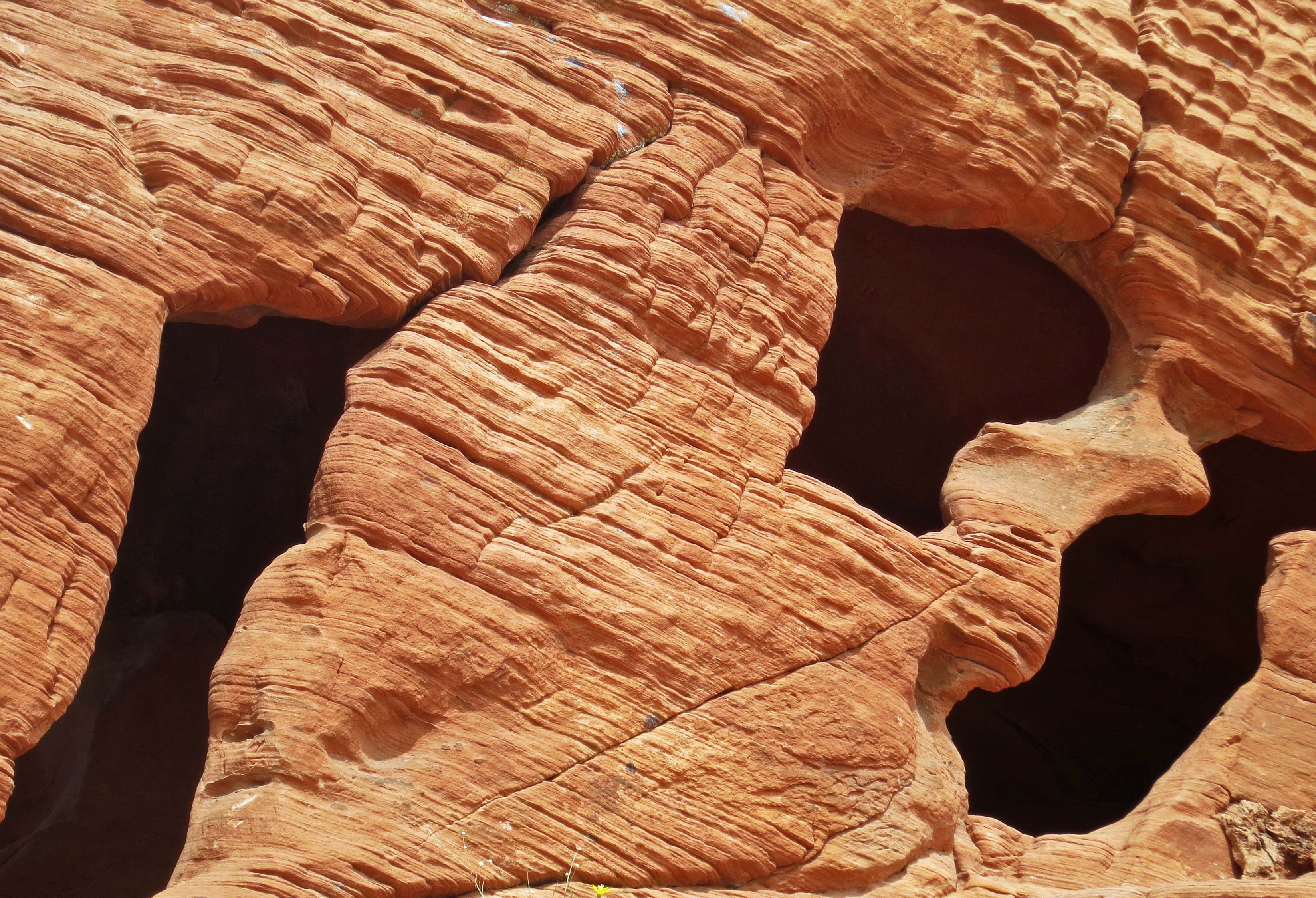
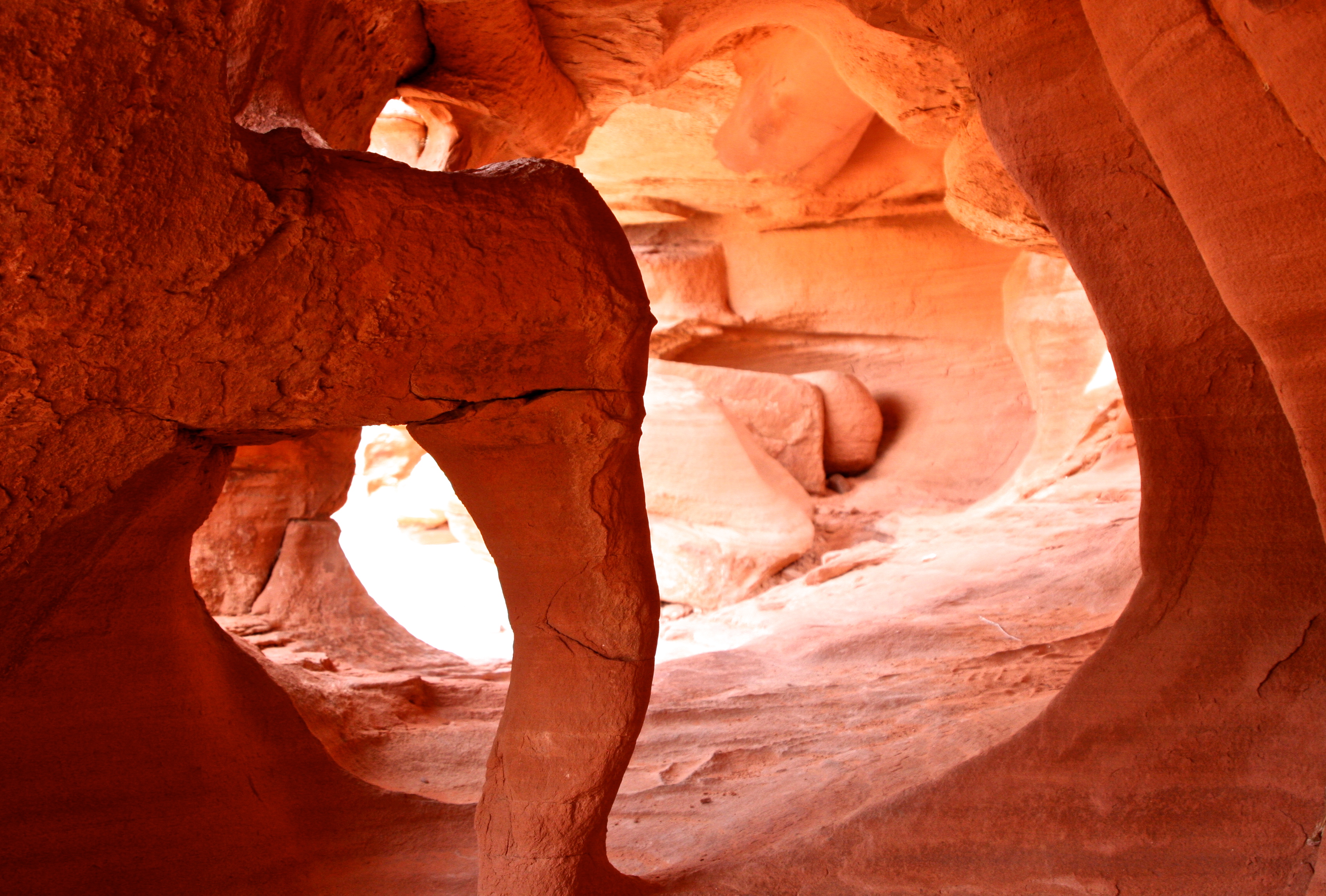
Up close, the sandstone rocks reveal a fascinating world of caves and shapes.

Valley of Fire sandstone caves.

Caves invite exploration. (Photo by Peggy Mekemson.)

Valley of Fire State Park outside of Las Vegas, Nevada.

What hides inside? Will there be treasure? Or a grumpy Indiana Jones type snake?

It definitely fits my concept of treasure. (Photo by Peggy Mekemson.)

It definitely fits my concept of treasure. (Photo by Peggy Mekemson.)

Rock image at Valley of Fire State Park

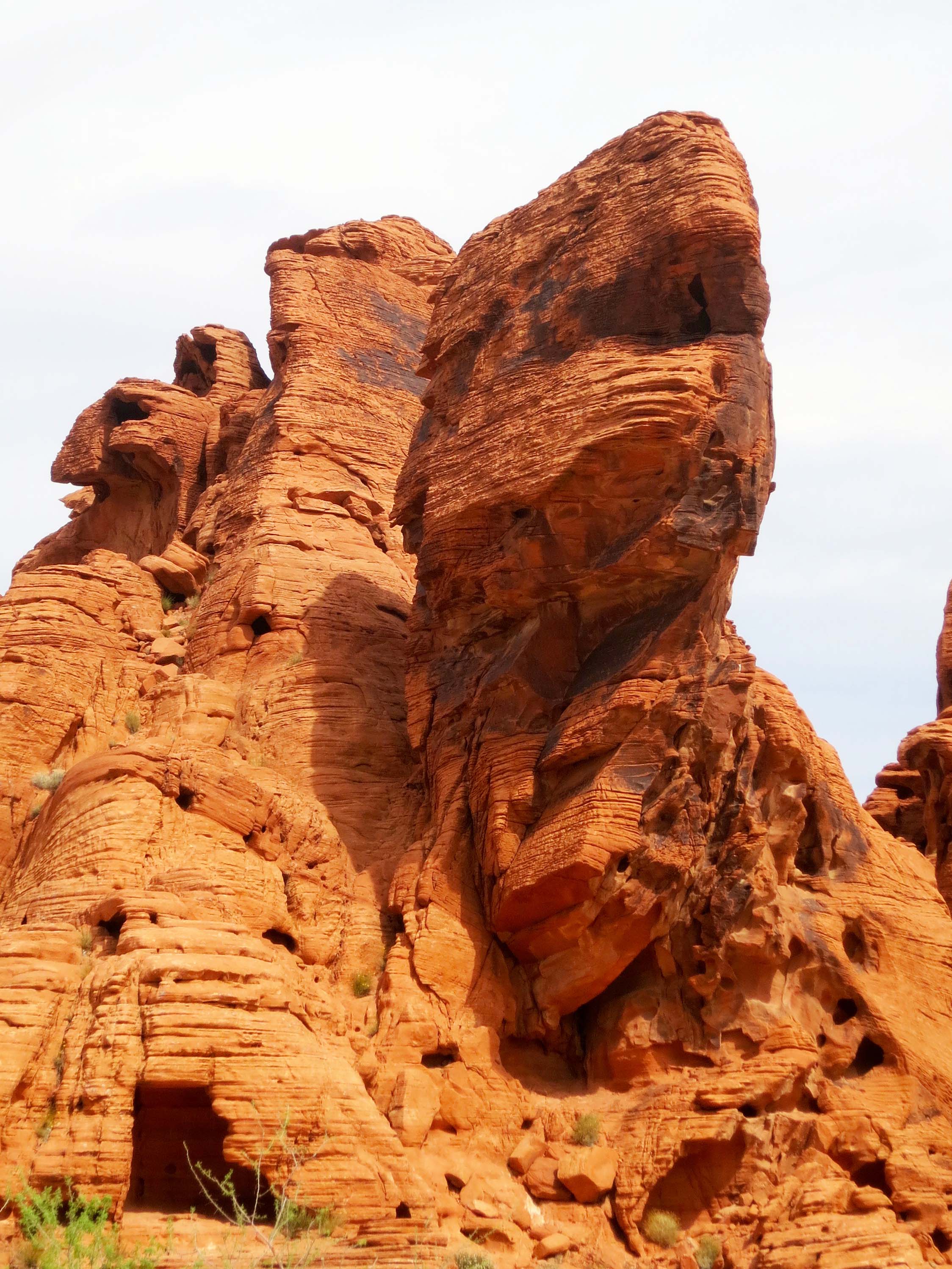
It easy to see faces and creatures in the carved sandstone. Is this a dinosaur from 150 million years ago striving to break free?

Arch at Valley of Fire State Park.

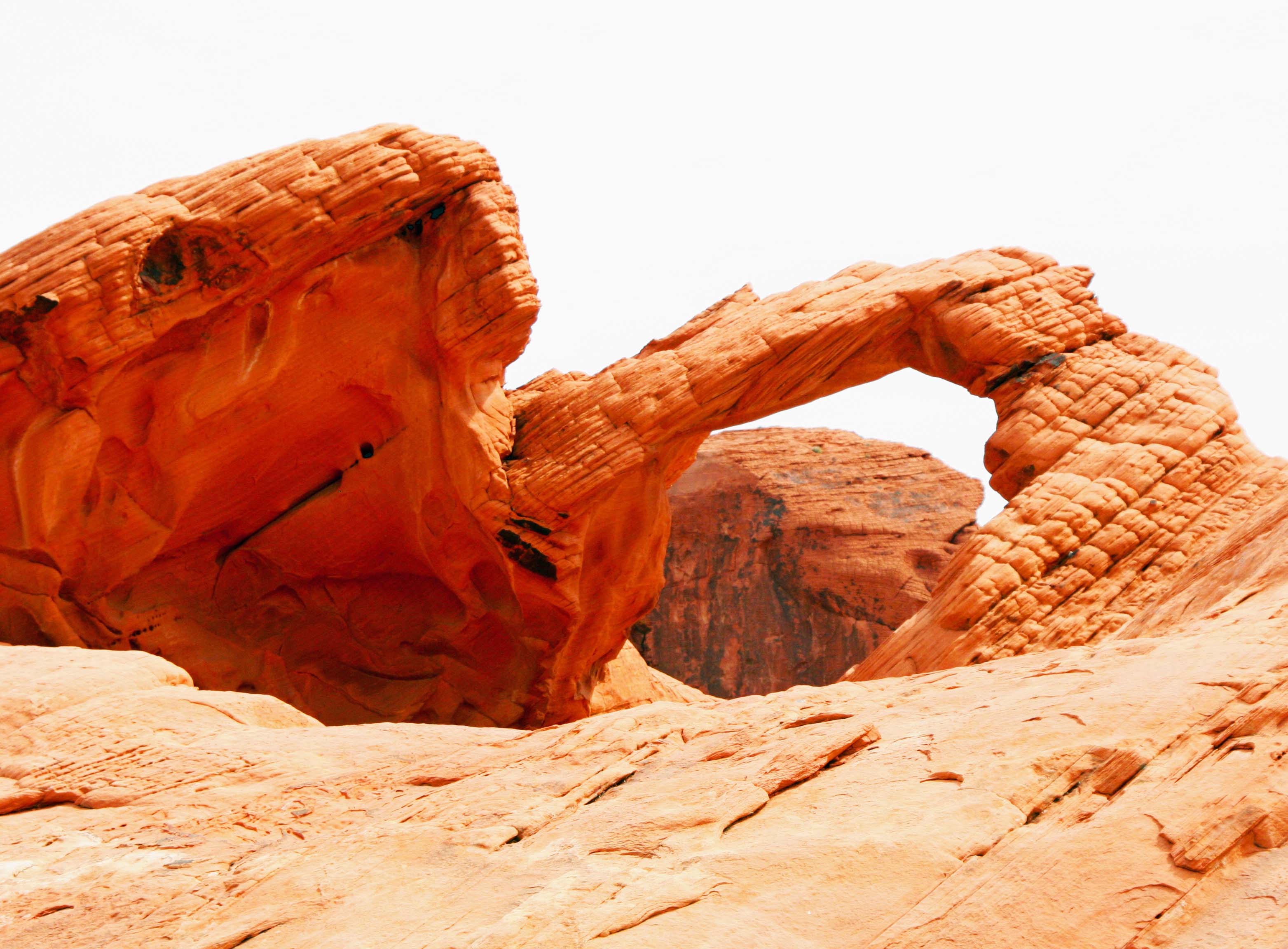
There is also an occasional arch that demands to be admired. (Photo by Peggy Mekemson.)

Spring rains can bring an amazing display of flowers in the desert. (Photo by Peggy Mekemson.)

Spring rains can bring a display of flowers in the desert. (Photo by Peggy Mekemson.)

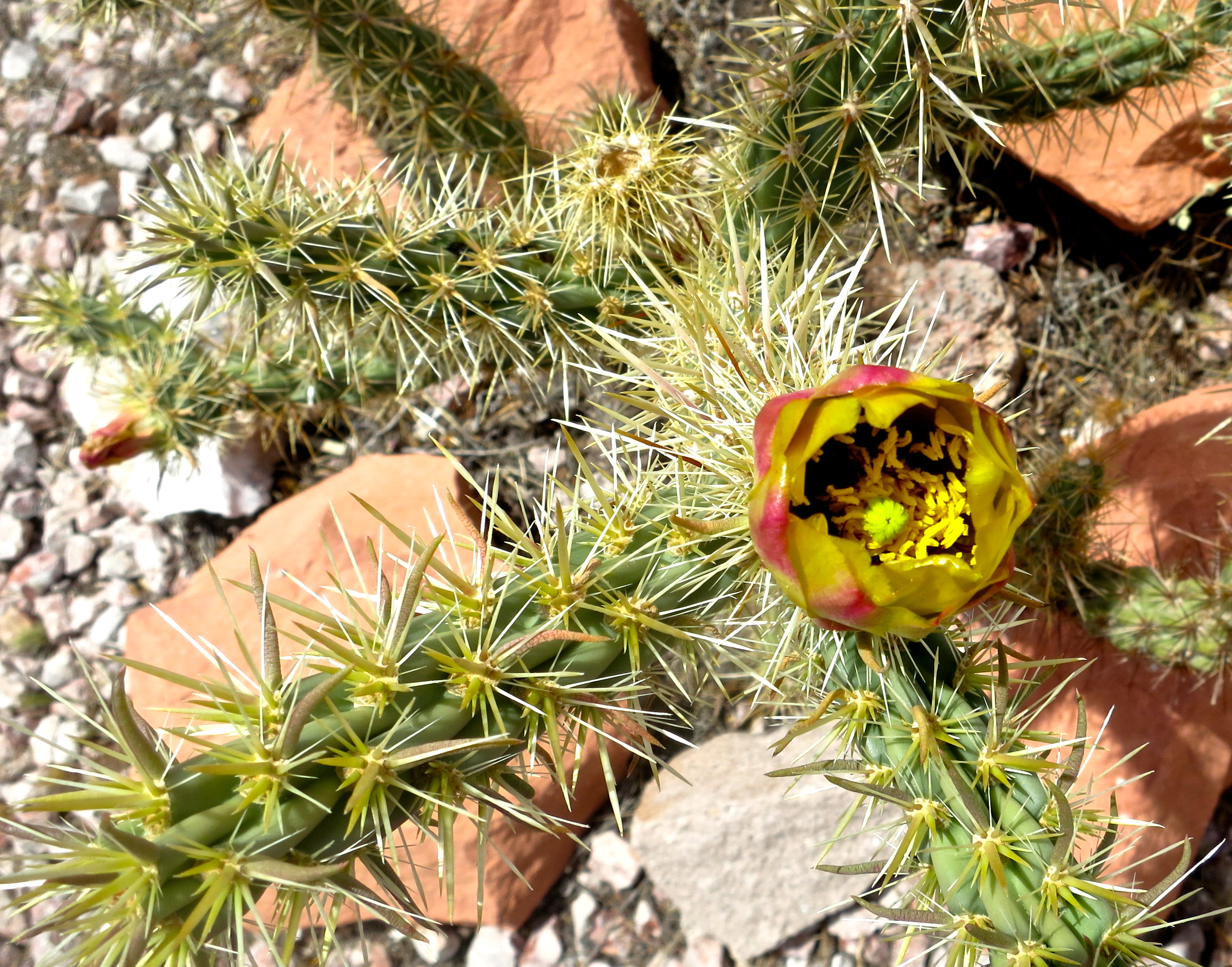
Blooming cactus at Valley of Fire State Park.

I found this and the following cacti blooming outside of the Visitor’s Center. Check out the spines.

Cactus blooming at Valley of the Fire State Park near Las Vegas, Nevada.

A yellow beauty.

Cactus Flower buds at Valley of Fire State Park in Nevada.

The buds are almost as pretty as the flowers.

Next blog: More great scenery from the Valley of Fire State Park.


Window-shopping in Venice… The Sea Ports of the Mediterranean

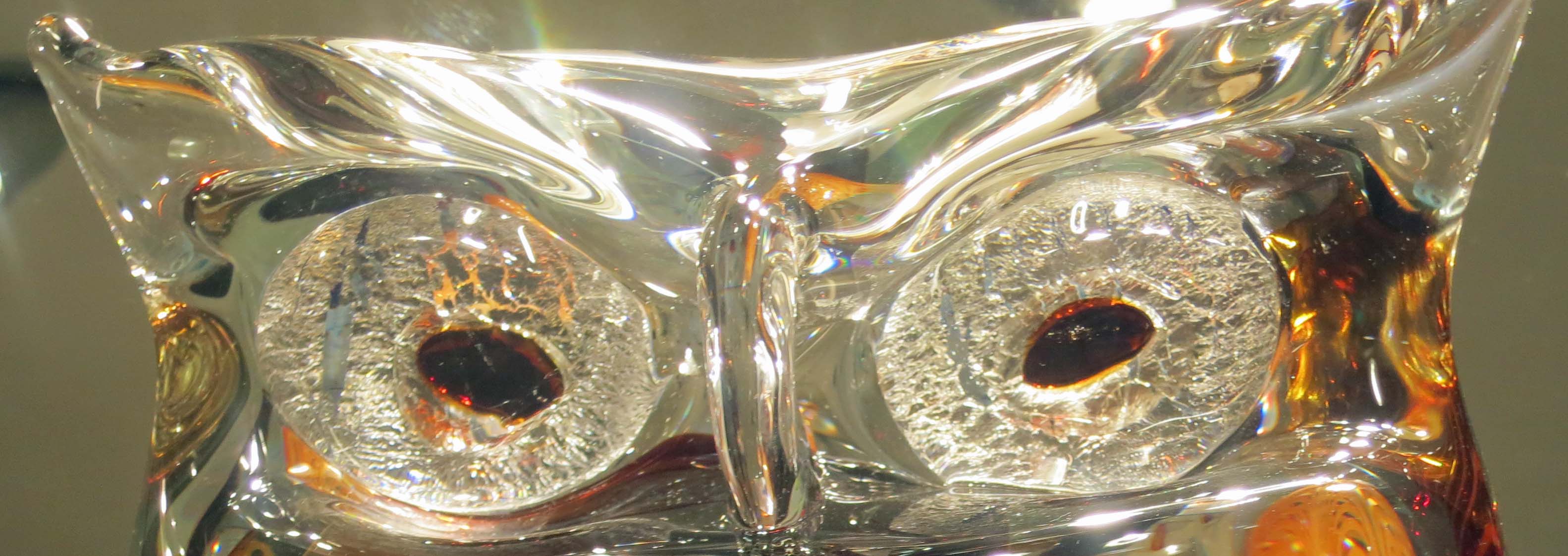
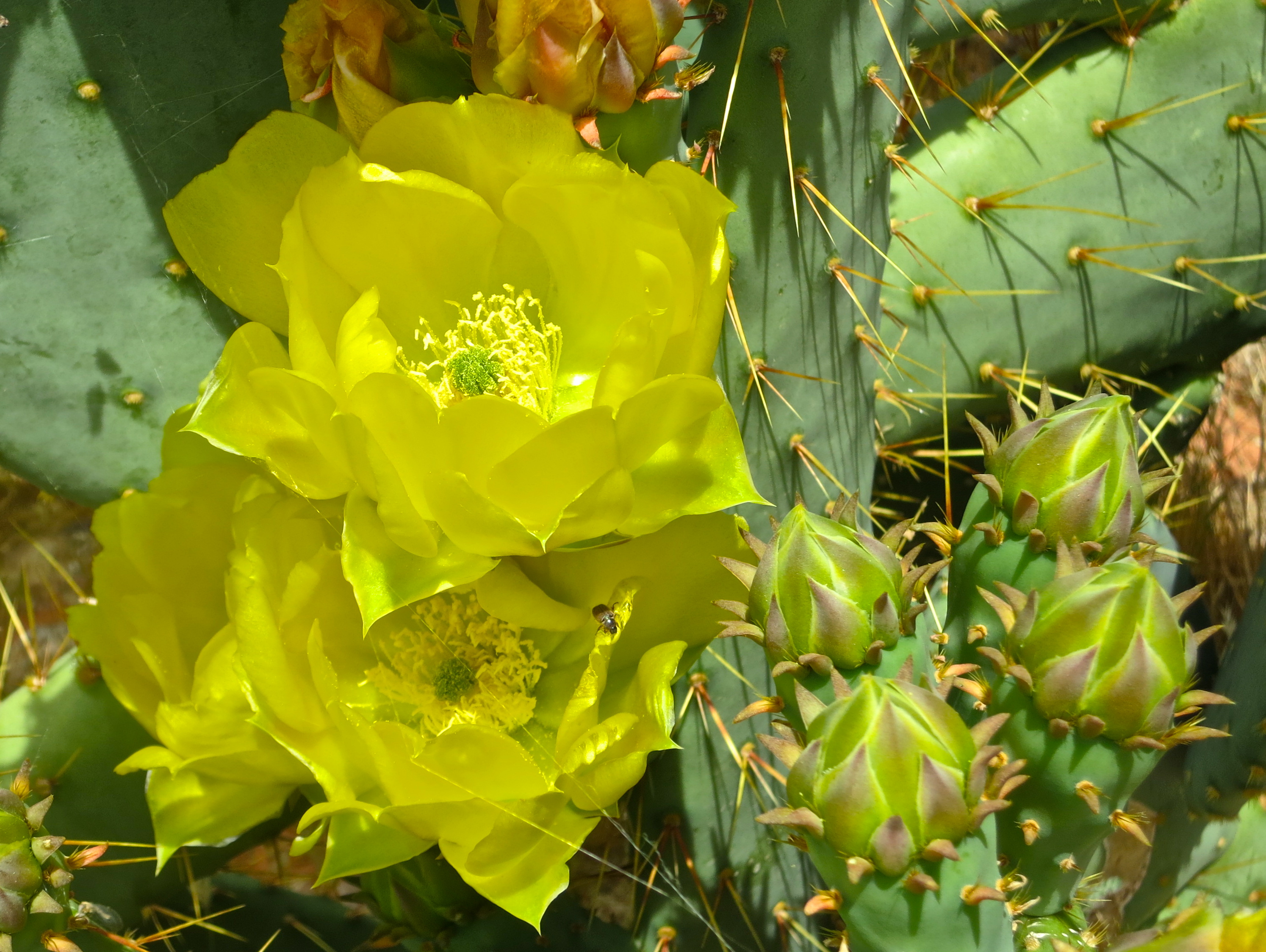
Window shopping in Venice is one treat after another. Noted for its masks and glass work, I thought this owl caught both.

Window shopping in Venice is one treat after another. Numerous windows display masks or glass work, I thought this owl caught both.

I promised a window-shopping trip in Venice so window-shopping we will go. Staring in store windows is fun. In addition to people watching, it falls under the category of vicarious pleasure. And it’s free. Of course the shop owners have other objectives in mind.

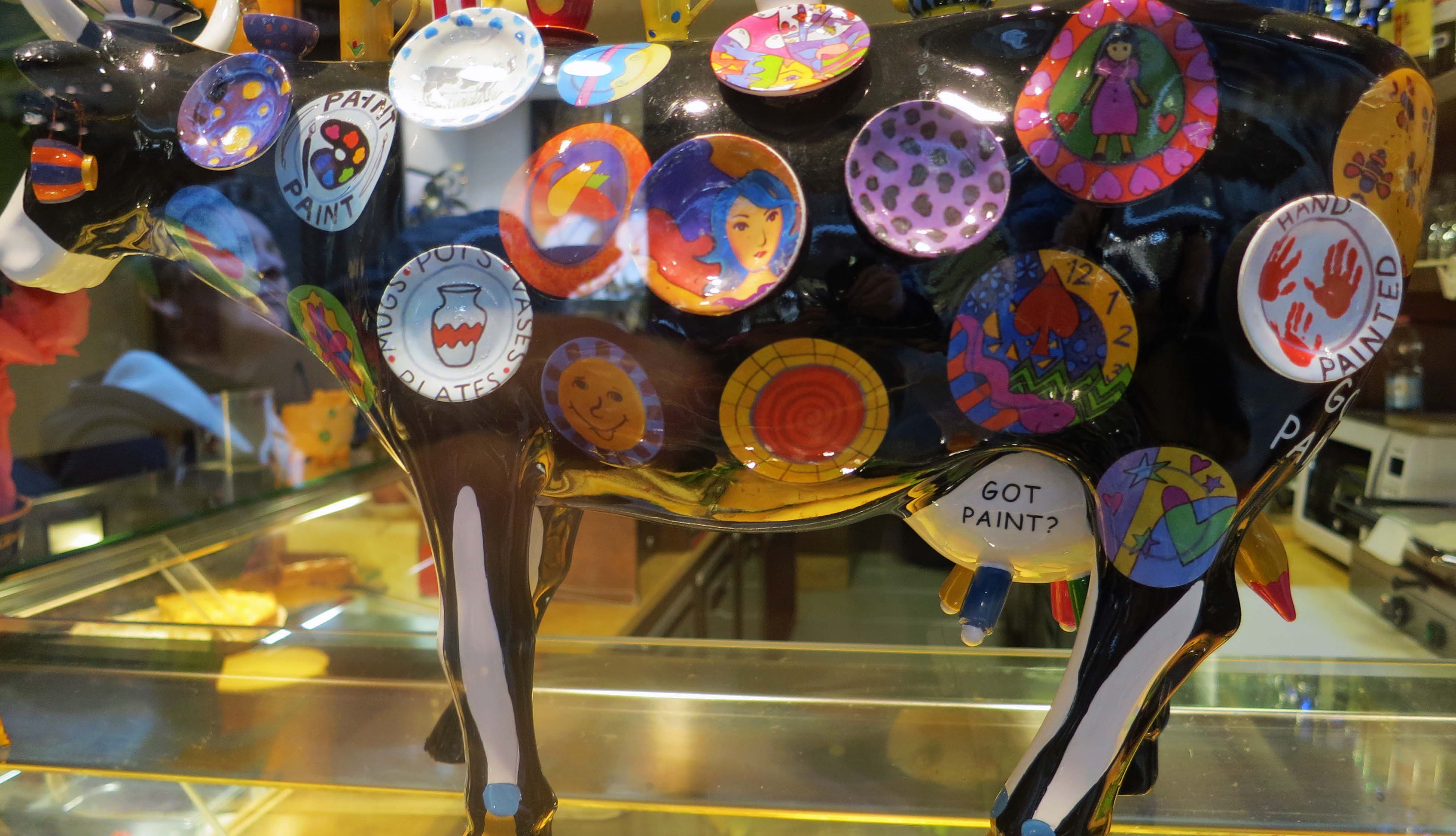
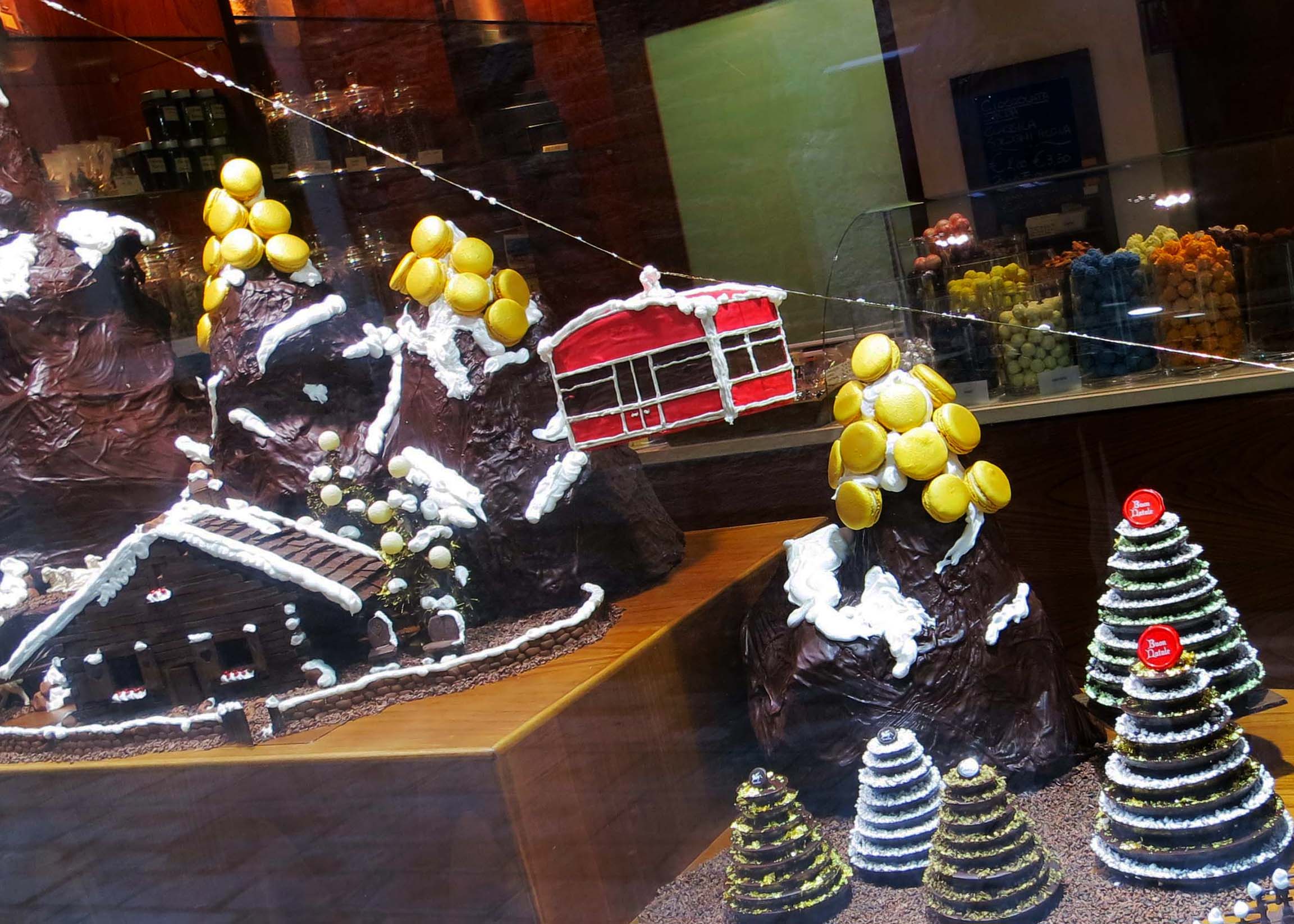
Venice does a fabulous job with window displays. We saw mouth-watering pastries, chocolate fantasies, clunky shoes, a bejeweled rear end, and an interesting ceramic cow.

I am sure these clunky shoes are stylish but I confess to not getting it.

I am sure these clunky shoes are stylish even though I don’t get it. I do get that I would hesitate to get in an argument with the woman wearing them.

This sculpture challenged my imagination like the shoes above. I don't think a bejeweled butt would compliment Peggy and my native art collection.

This 440 euro butt sculpture challenged my imagination like the shoes above. I did find the glass beadwork fun, however.

As ads go, this ceramic cow in Venice was quite creative. Got paint?

As ads go, this ceramic cow in Venice was quite creative. Got paint?

A Venetian chocolatier created a ski scene from his product in his window.  I almost lost Peggy...

A Venetian chocolatier created a ski scene from his product in his window. I almost lost Peggy…

What impressed me the most about the window displays in Venice were those featuring glassware and masks. Both reach back into the city’s ancient history.

How many places can claim they have been “supplying quality glass products since 1291”? That’s the year that a Venice made of wood required all of its glass makers to move to the island of Murano in the Venice Lagoon. Community leaders feared that the glass making process would burn the city down. Venice quickly became the center of Europe’s trade in beautiful glass objects.

The upside for the glass makers was that they were invited into the highest ranks of Venetian society. The downside was they were threatened with having their hands chopped off or assassination if they moved and took their talents elsewhere.

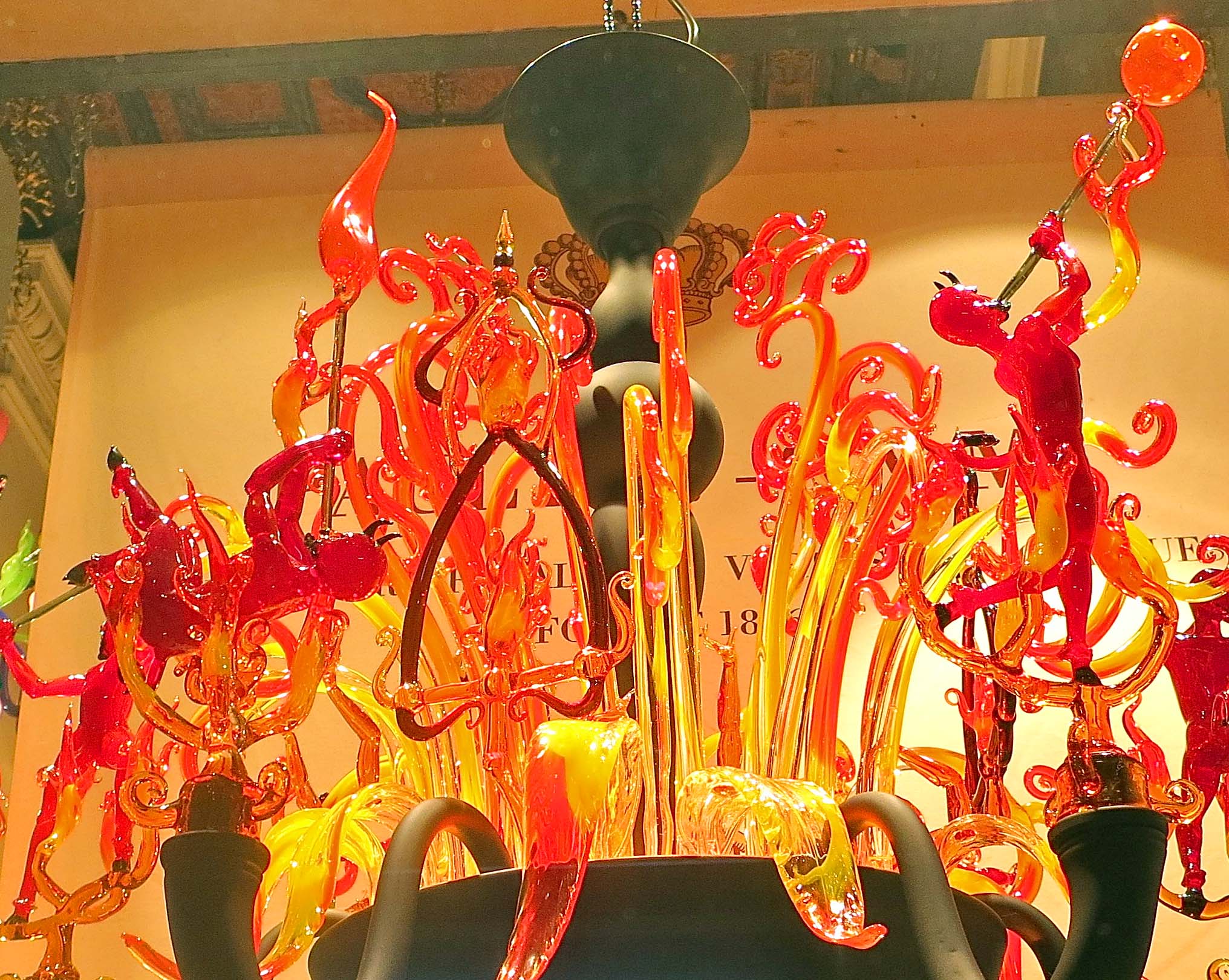
I suspect the artist who created this sculpture of glass blowers had devilish fun with his work.

I suspect the artist who created this sculpture of glass blowers had devilish fun with his work.

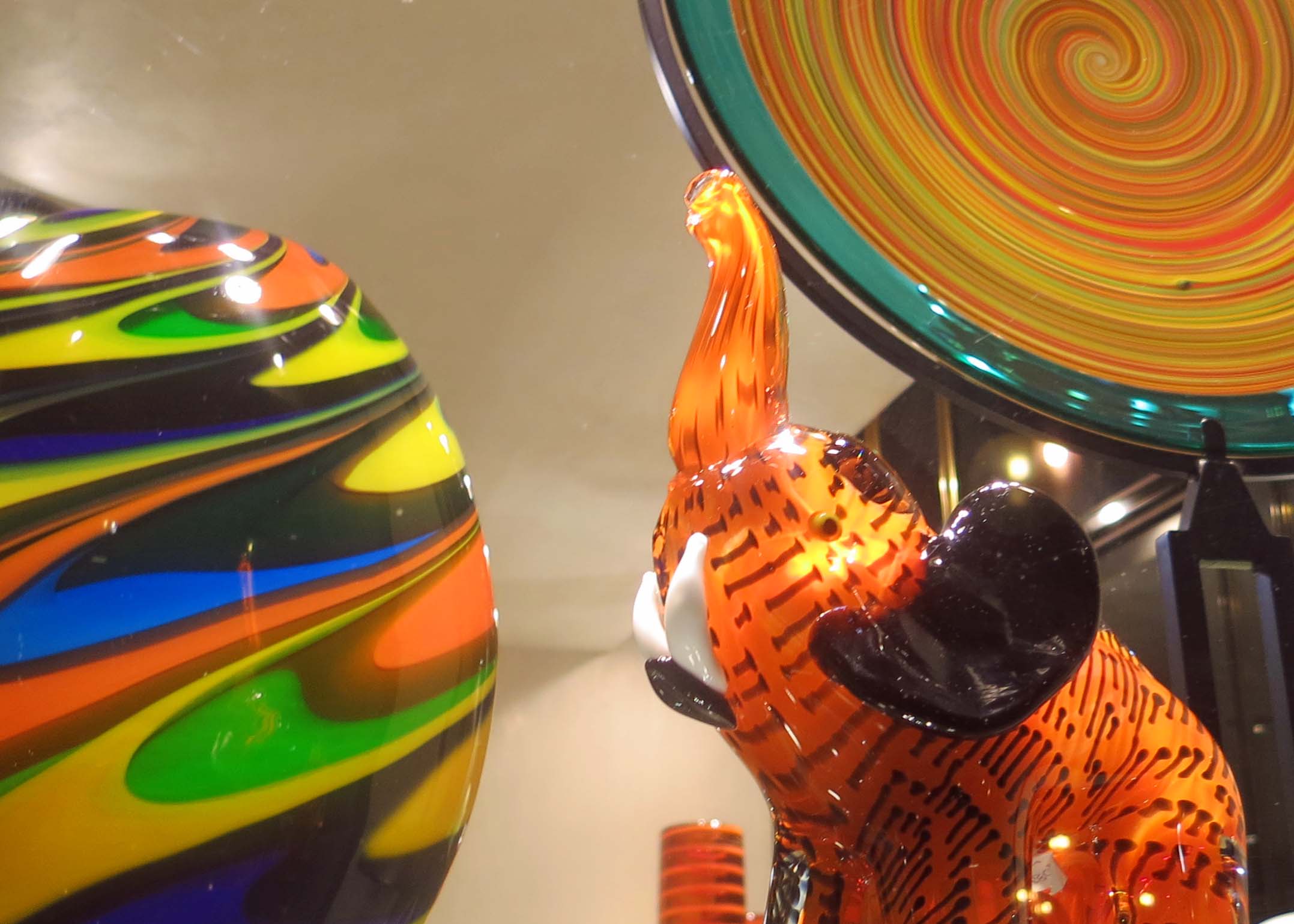
I liked this Venice window display because it captured different types of glass work including the elephant.
I liked this Venice window display because it captured different types of glass work including the elephant and shows off various techniques of coloring glass.

Venetians apparently carried out numerous activities they felt were best done while wearing masks. For example, in 1339 Venice passed a law that forbid inhabitants from visiting nun convents while wearing masks. One can only wonder… During plague times doctors wore long nose masks they believed protected them from the disease. Not. Today masks are a central part of the Carnival of Venice that ends on Shrove Tuesday (Mardi Gras).

The Venetian masks displayed in shops can be quite beautiful and elaborate.

The Venetian masks displayed in shops can be quite beautiful and elaborate.

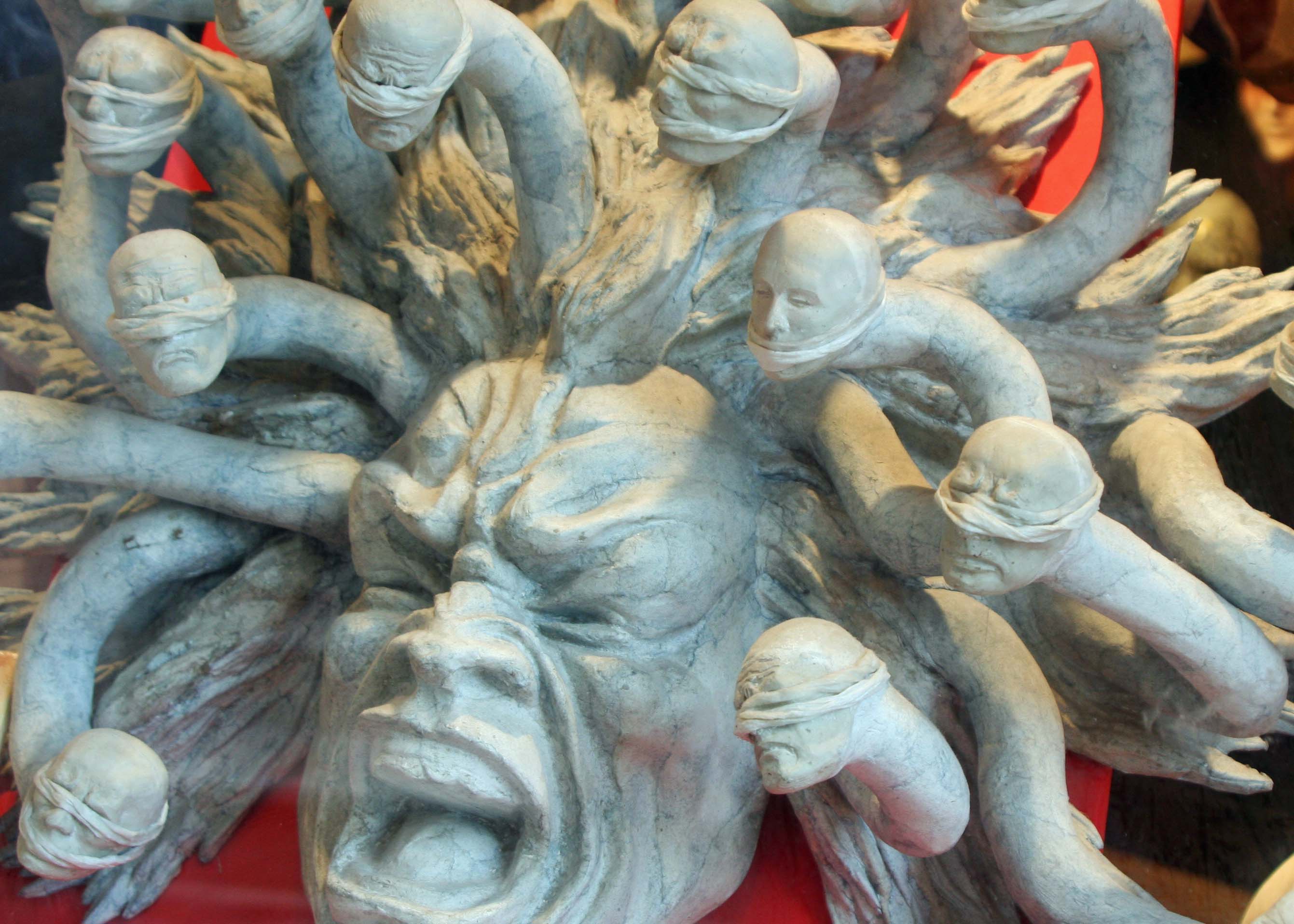
The masks of Venice can also be a bit on the scary side such as this mask of Medusa. Note the masks covering the eyes on the snake heads. (Photo by Peggy Mekemson.)

The masks of Venice can also be a bit on the scary side such as this mask of Medusa. Note the masks on the snake heads. See no evil, hear no evil, smell no evil, speak no evil? (Photo by Peggy Mekemson.)

This mask making shop had their creations lined up assembly line style. Their eerie see through character made me think of them as ghost masks.

This mask making shop had their creations lined up assembly line style. Their eerie see through character of the pre painted masks made me think of them as ghosts.

Type of masks warn by Venetian doctors during the plague.

This type of mask was worn by doctors when Venice was suffering through the plague. I am not sure whether the doctors thought they were hiding from the plague or scaring it away.

I like this window display of Venetian masks because of its variety.

I like this window display of Venetian masks because of its variety.

The fingers grasping this Venetian plague mask caught my attention.

The fingers grasping this Venetian plague mask caught my attention.

The faun-like character of this mask is obvious. Once again, it displays the incredible detail of many of the Venetian masks.

The faun-like character of this mask is obvious. Once again, it displays the incredible detail of many of the Venetian masks.

I will conclude with this modern mask of part man and part machine... a scary prediction of the future?

I will conclude with this modern mask of part man and part machine… a scary prediction of the future or steampunk?

NEXT BLOG: I will take a one blog break from Europe to explore how steampunk is impacting Burning Man. (The masks reminded me of the event.) After I revisit the annual event that takes place in the northern Nevada desert, I will begin my series on Pompei.

Lost on the Streets of Venice… Sea Ports of the Mediterranean

Walking through Venice allowed us to enjoy what was unique about the city, such as this lamp.

Walking through Venice allowed us to enjoy what was unique about the city, such as this lamp.

I have always felt the best way to learn about a city is to walk its streets. (I feel the same way about a forest.) Fortunately, I was travelling in Europe with companions who also loved to walk. For the most part, we skipped the tours recommended by the cruise line. It isn’t that the tours were bad… we enjoyed the ones we did, but they are regimented and expensive. There is no wandering off on your own, or taking longer to enjoy a particular site than the tour leader allows.

Venice is a great walking city… if you don’t mind getting a little lost. Streets have a tendency to take you somewhere you weren’t planning to go and come to abrupt ends. Street signs are rare. What the city does do, however, is post signs that will eventually lead to major monuments. And of course, you are on a relatively small island. How lost can you get?

A good map is an important tool when walking off the beaten path (or main tourist routes). We didn't always agree on where we were or the proper route to take, however... and we all considered ourselves something of experts in map reading.

A good map is an important tool when walking off the beaten path (or main tourist routes). We didn’t always agree on where we were or the proper route to take, however… and we all considered ourselves experts in map reading. Our companions caught many photos of us studying and ‘discussing’ maps. This was in Venice.  (Photo by Peggy Mekemson.)

Common sense is important.  Wandering down dark, lonely alleys can be risky at times, regardless of where you are. But in restricting your journey to major streets and walkways, you limit your opportunities to have adventures and develop a true sense of the communities you are visiting.

It is important to look around and notice the small as well as the large, the seemingly insignificant as well as what is featured in the guidebooks. Photography helps, I believe, once you get beyond ‘we were there snap shots’ and allow your mind to feast on the wonderful variety that any area offers. It teaches you to see new things and to seek out what is unique. Following are various locations and objects that Peggy and I found of interest.

This photo provides a good example of our wandering off the main tourist routes of Venice.

This photo provides a good example of our wandering off the main tourist routes of Venice.

Peggy Mekemson knocks on a door in the back streets of Venice.

Of course, you can always stop and ask for directions…

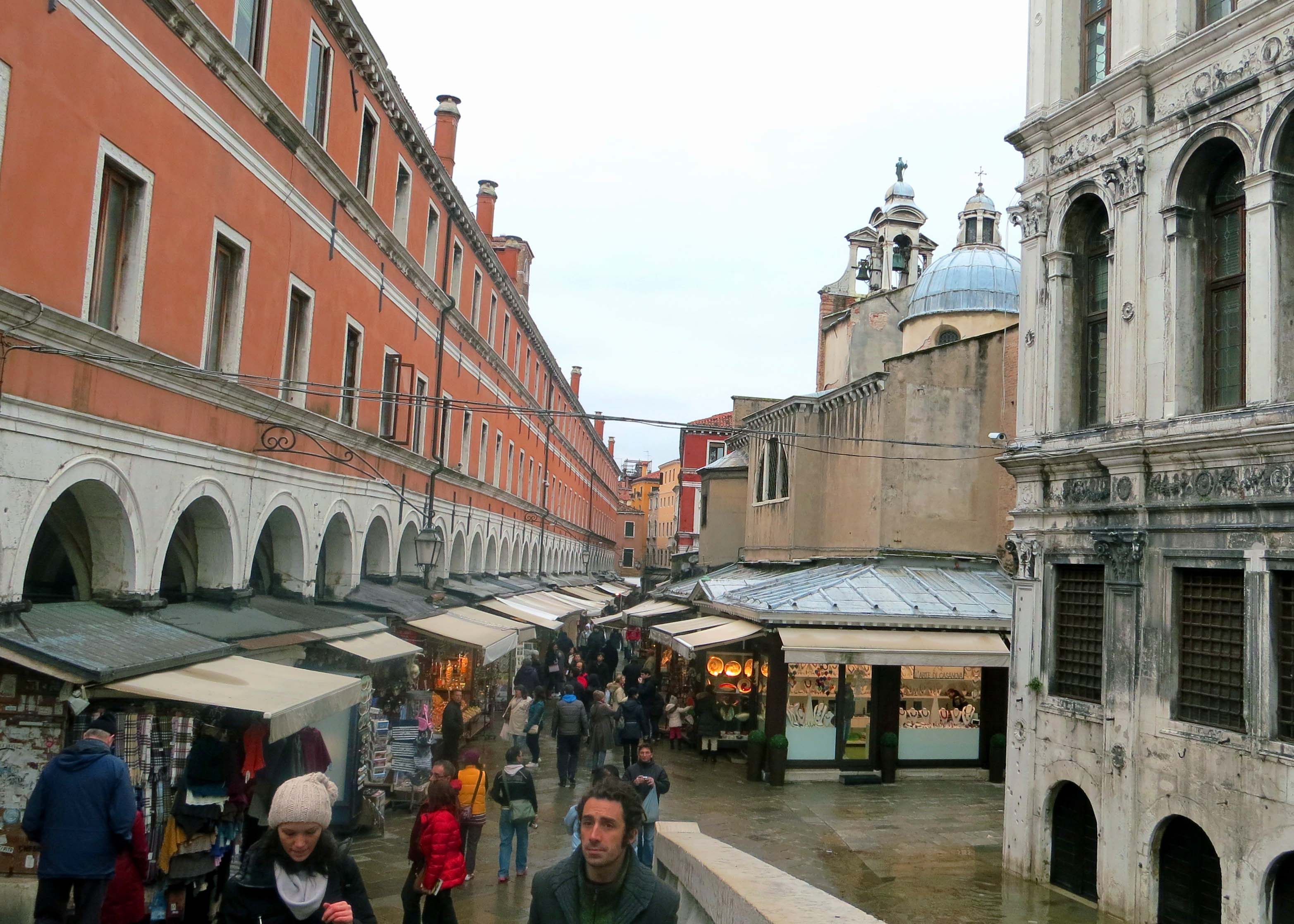
We found this open air market just off of the Rialto Bridge. Even on a cold, rainy day, it was packed with people. I suspect there was a fair amount of Christmas shopping going on since it was mid-December.

We found this open air market just off of the Rialto Bridge. Even on a cold, rainy day, it was packed with people. I suspect there was a fair amount of Christmas shopping going on since it was mid-December.

I don't remember where I came upon this friendly looking, gargoyle-type of lion, but he was definitely worth a photo.

I don’t remember where I came upon this friendly looking, gargoyle-type of lion in Venice, but it was definitely worth a photo.

Venice street scene showing colorful buildings and flower boxes.

I felt this photo captured the colorful buildings and flower boxes of Venice streets. Also note the green pharmacy sign and green pharmacy lamp on the lower left.

Window flower boxes are common in Venice, Italy.

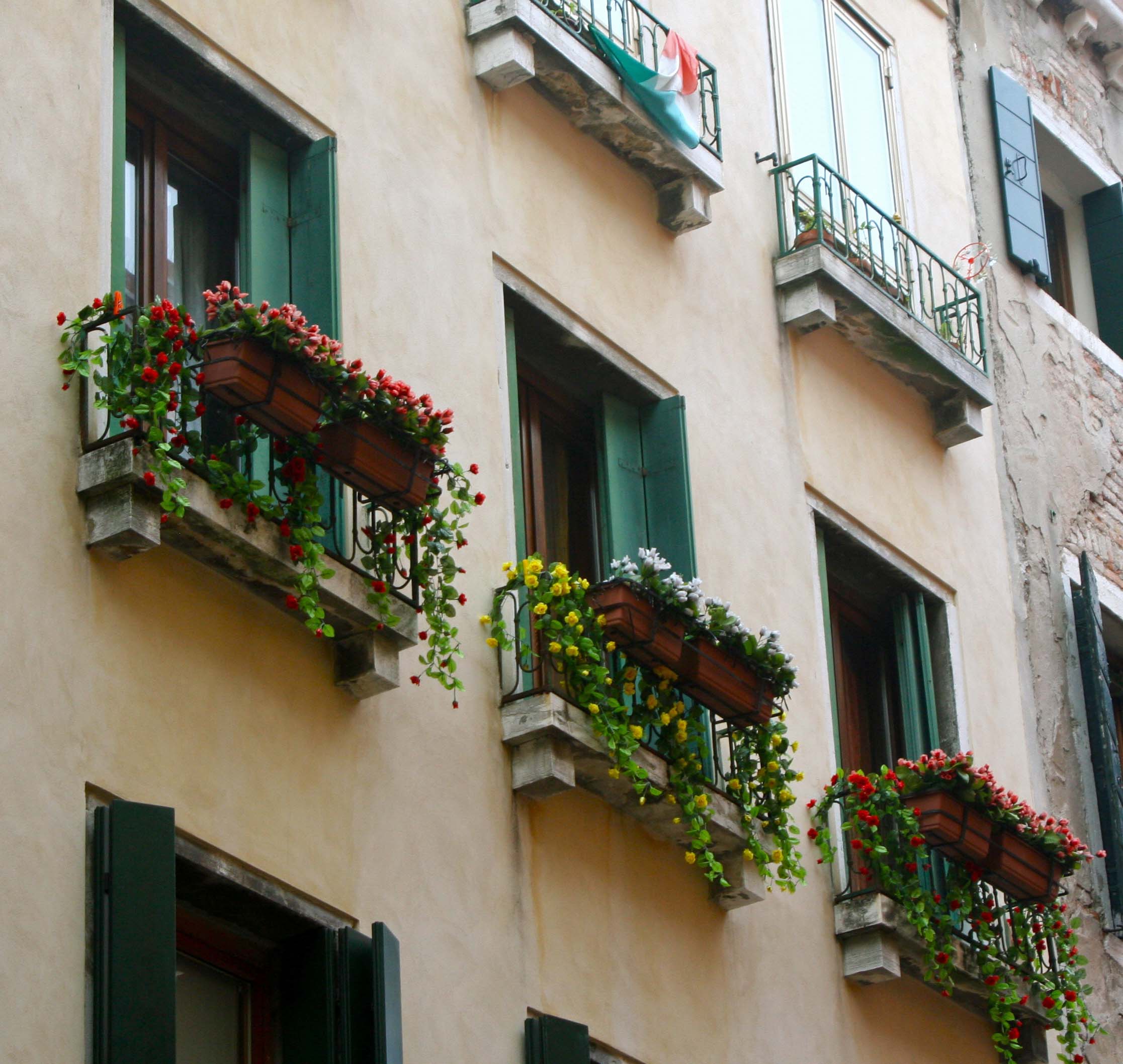
One thing you find much more of in Europe than in the US are flower boxes. I can depend on Peggy to photograph them. (Photo by Peggy Mekemson.)

Another example of window flower boxes in Venice. (Photo by Peggy Mekemson.)

Another example of window flower boxes in Venice. (Photo by Peggy Mekemson.)

Colorful flower box in Venice Italy.

I captured this colorful shot of a window flower box in Venice.

The Hotel Iris is definitely not one of your more swank hotels in Venice... and it knows it. I looked it up online and its website headline proclaimed: Hotel Iris: A Cheap hotel in Venice. Cheap was capitalized by the hotel. I consider that truth in advertising. In the US it would be "affordable lodging."

The Hotel Iris is definitely not one of your more swank hotels in Venice… and it knows it. I looked it up online and its website headline proclaimed: Hotel Iris: A Cheap hotel in Venice. Cheap was capitalized by the hotel. I consider that truth in advertising. In the US it would be “affordable lodging.”

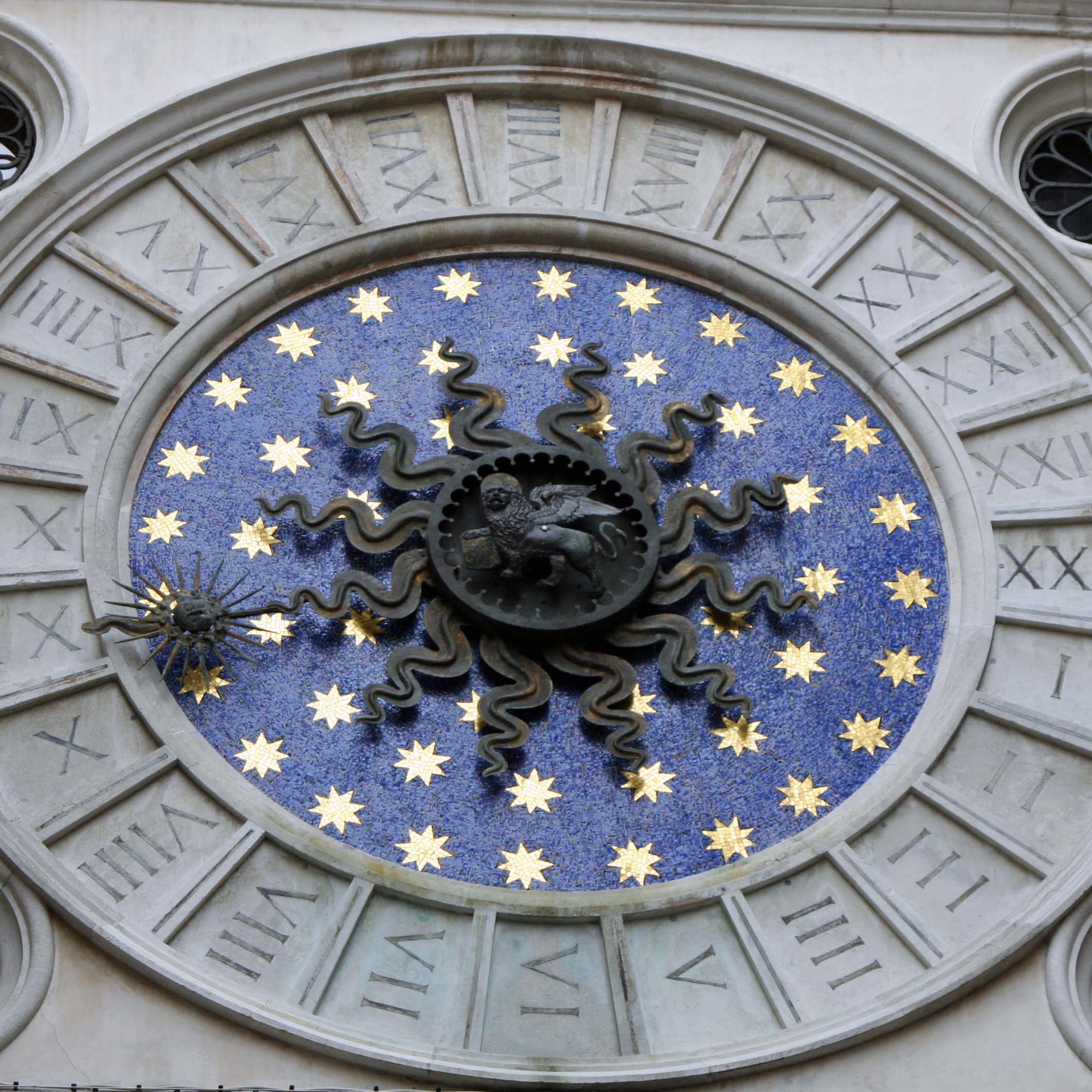
Starry roman numeral 24 hour clock found off of St. Marks Square in Venice Italy.

One of the advantages of a telephoto lens is it allows you to capture detail you can’t normally see. I doubt I would have spotted the Winged Lion of St. Mark in the center of this starred 24 hour roman numeral clock found off of St. Mark’s Square. Note the wild minute hand. (Photo by Peggy Mekemson.)

I am always intrigued by what I consider as invitations, such as this stairwell in Venice. It's saying "come and climb up. See what's up here." Unfortunately, the locked steel fence said something else.

I am always intrigued by what I consider as invitations, such as this stairwell in Venice. It’s saying “Come and climb up. See what’s up here.” Unfortunately, the locked iron fence said something else.

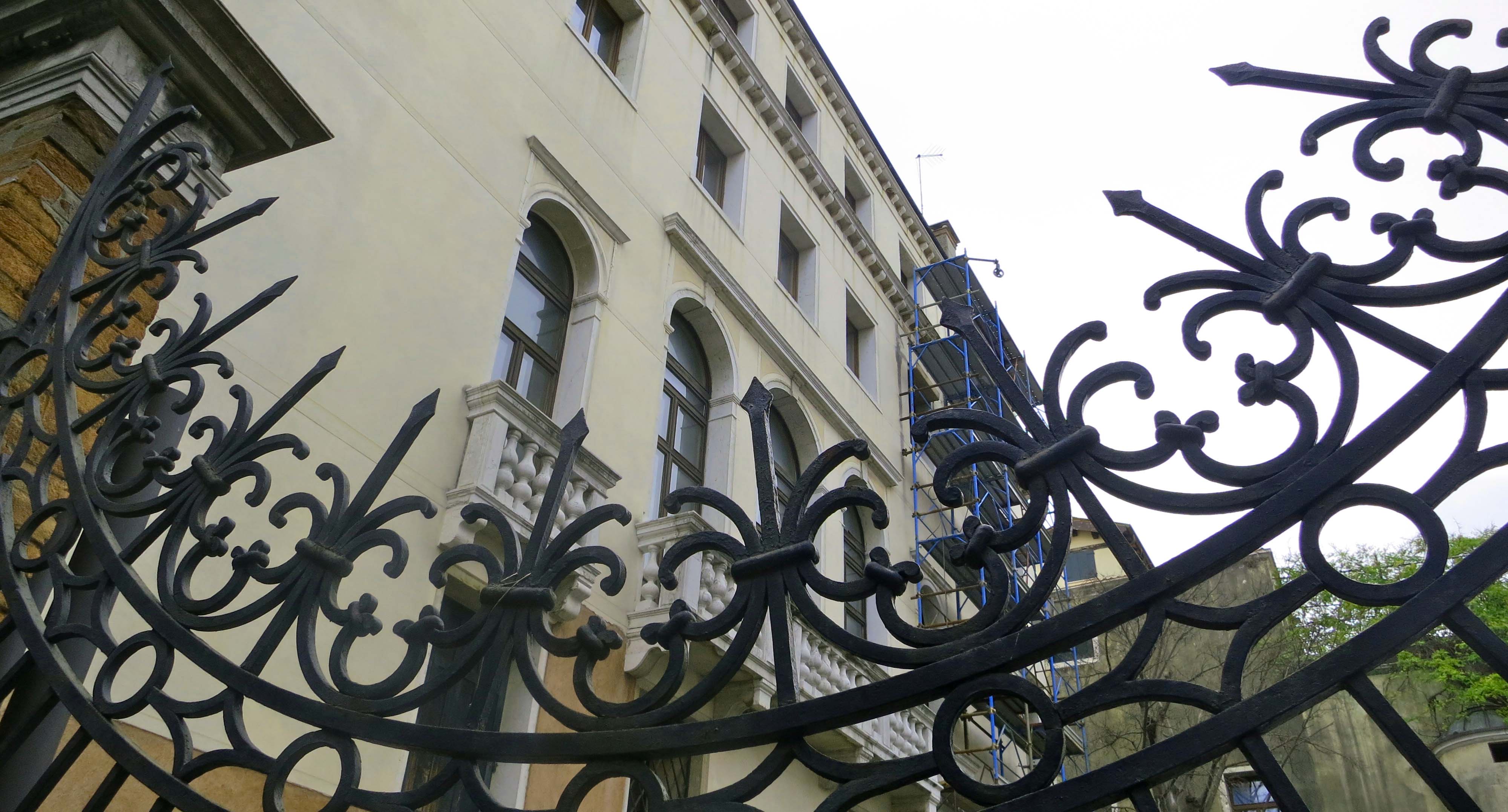
Iron gate in Venice.

Speaking of iron fences in Venice, was this one saying “Take my picture.” or “Don’t even think about climbing over!”?

NEXT BLOG: Window shopping in Venice. Think Masks.