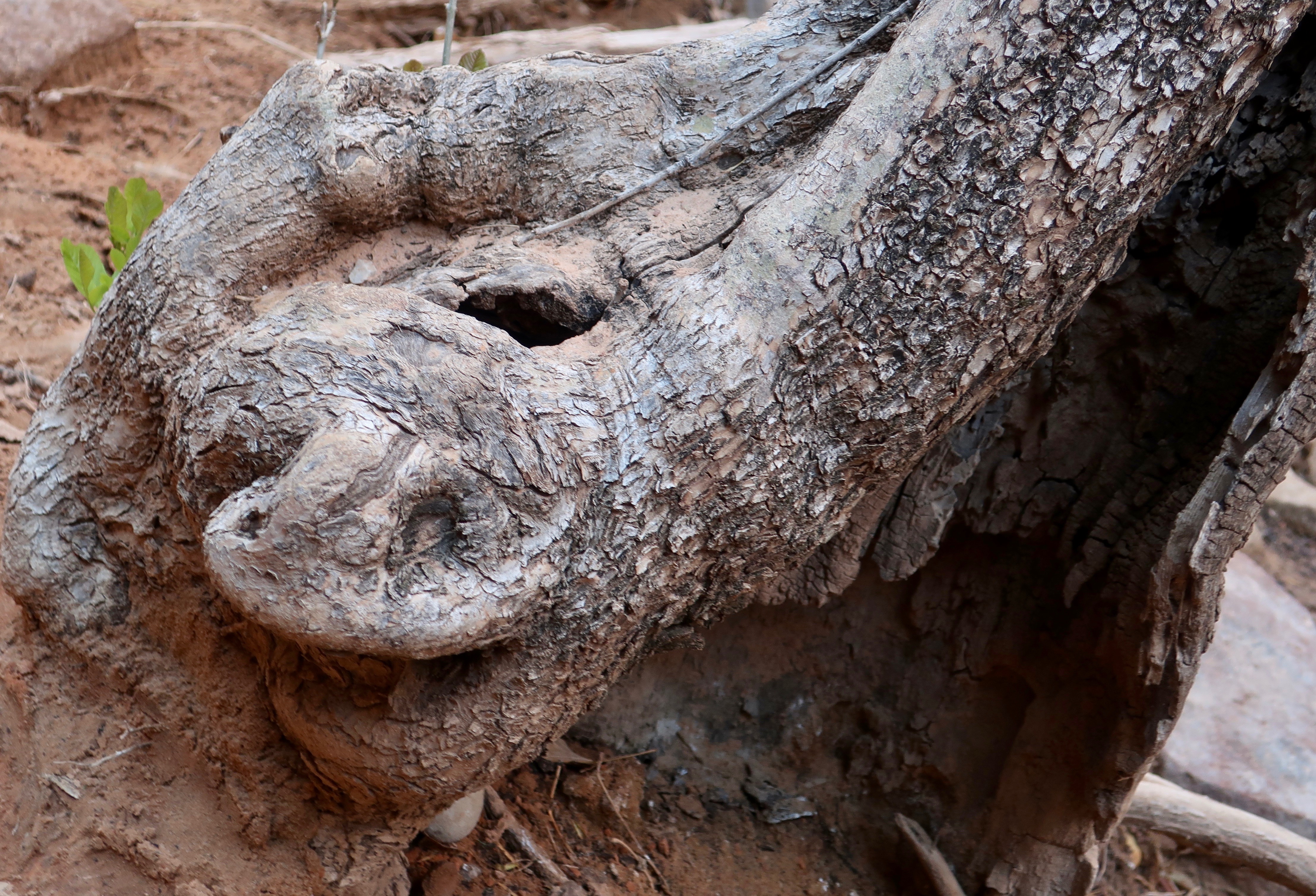
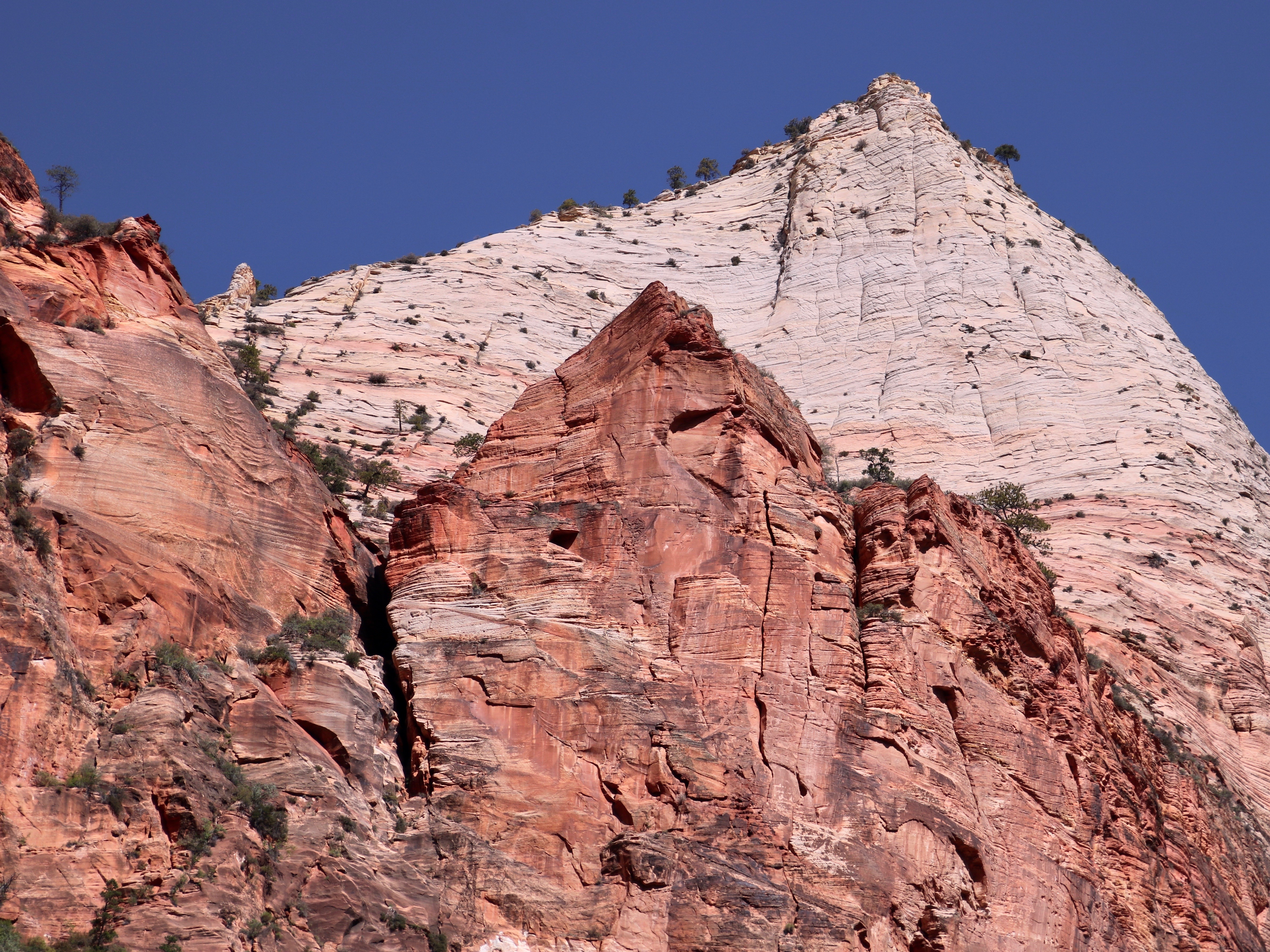
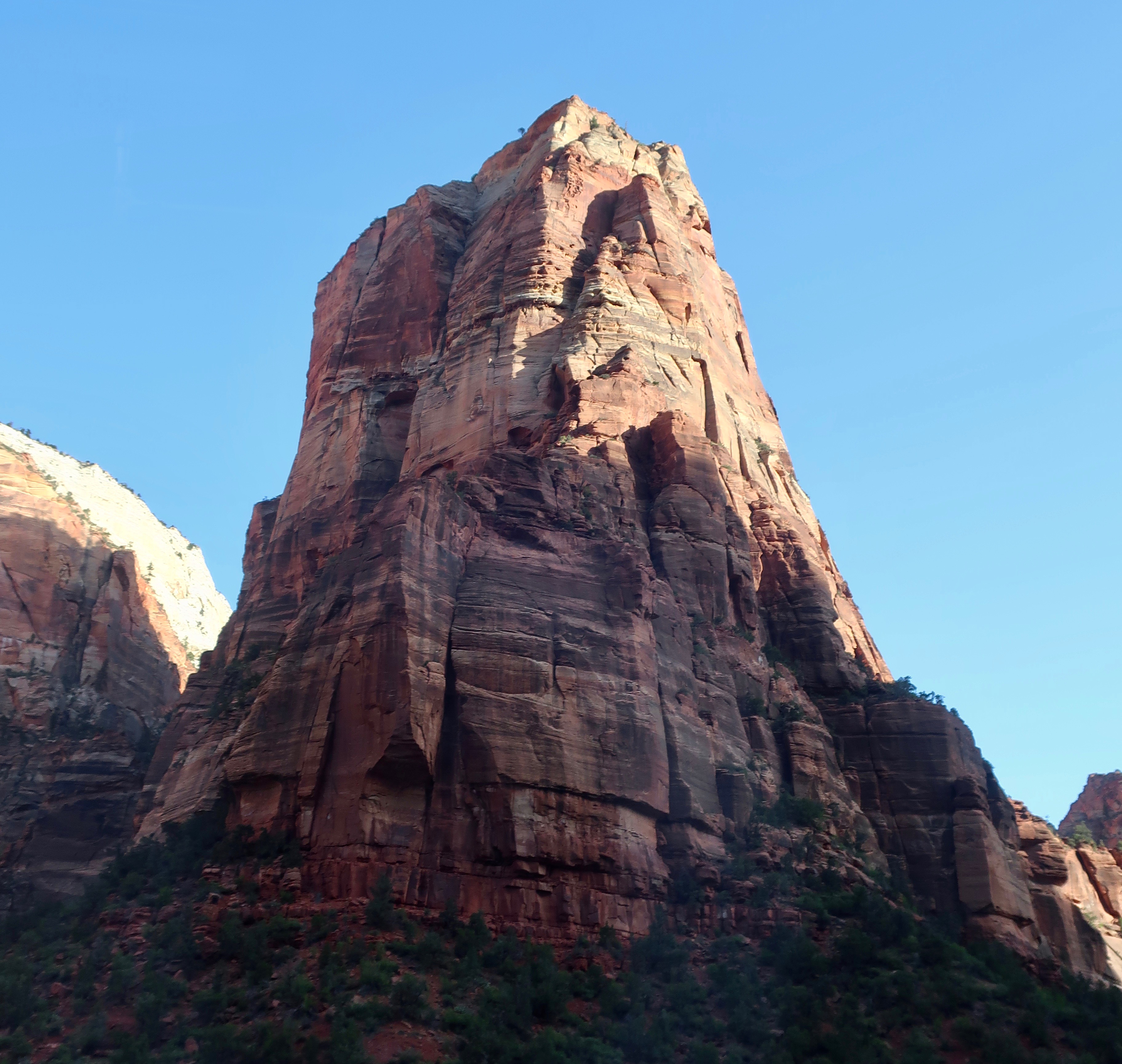
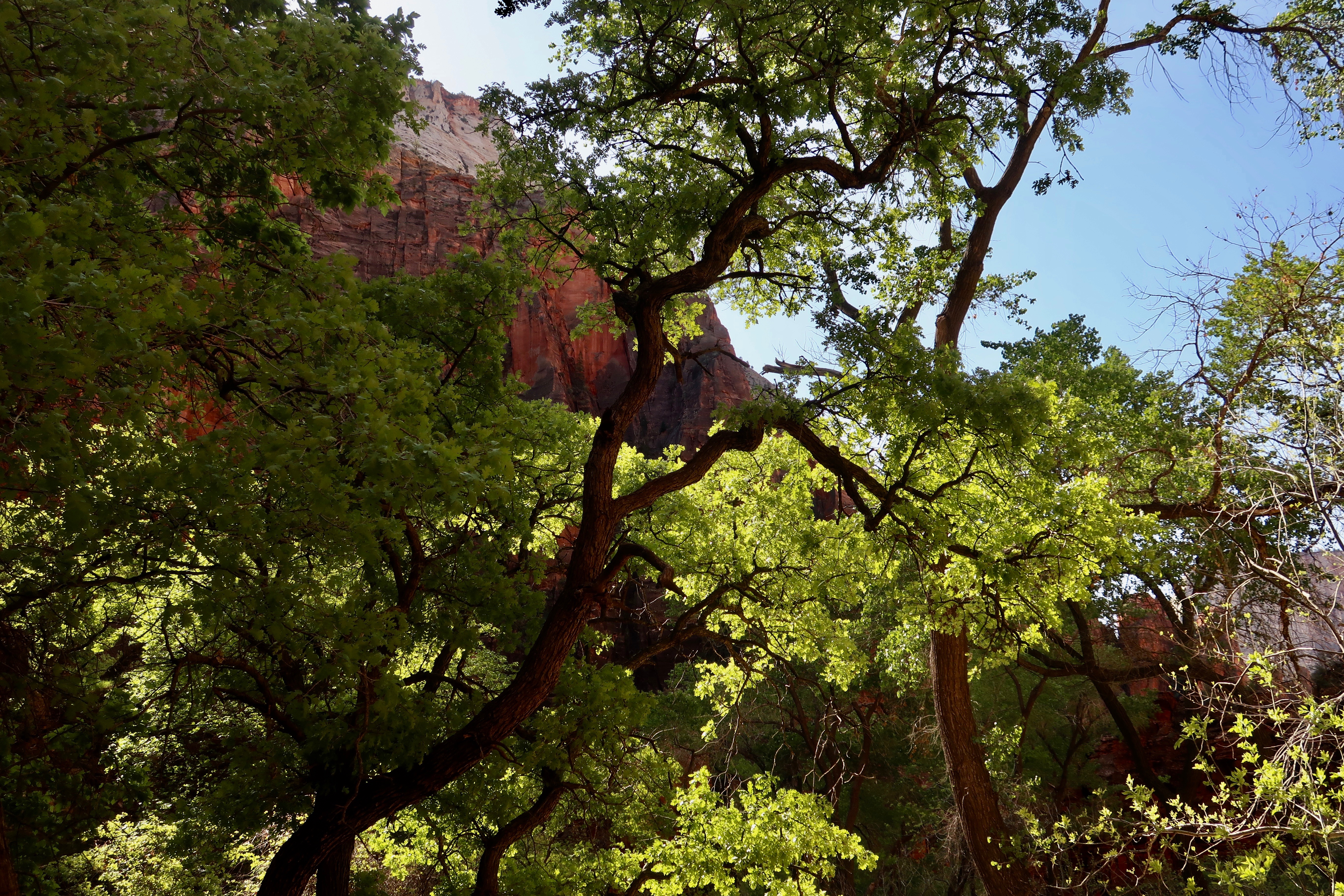
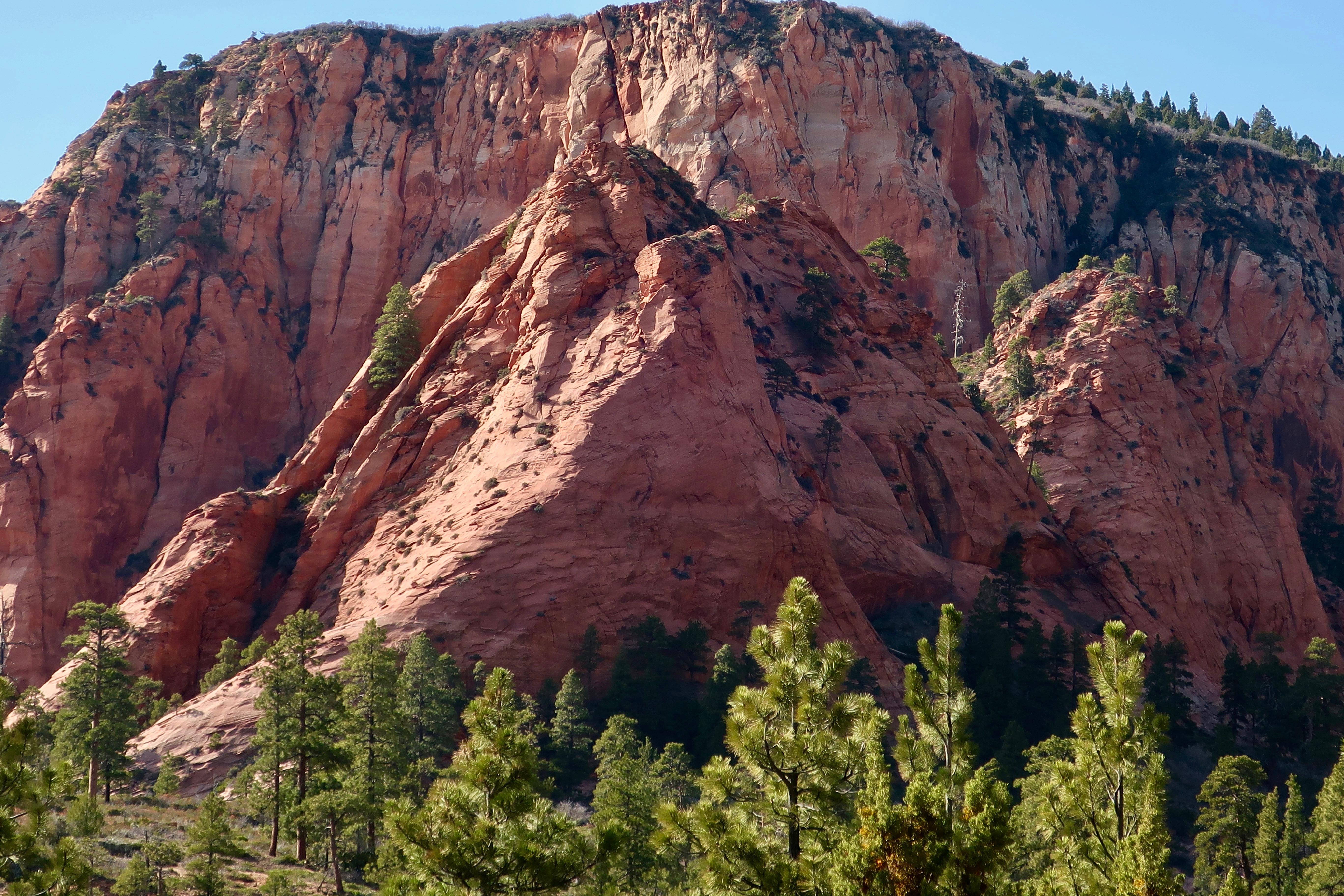
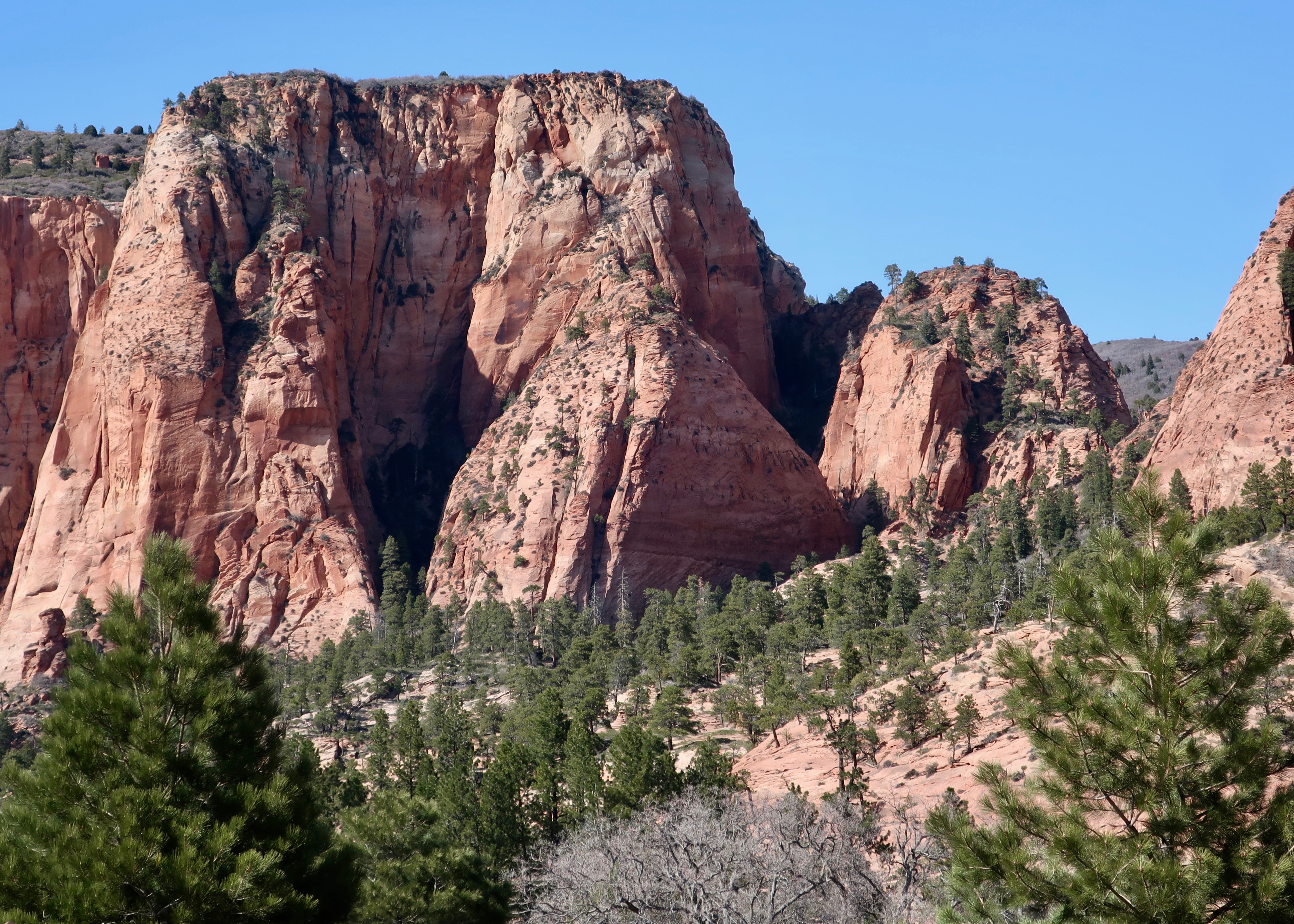
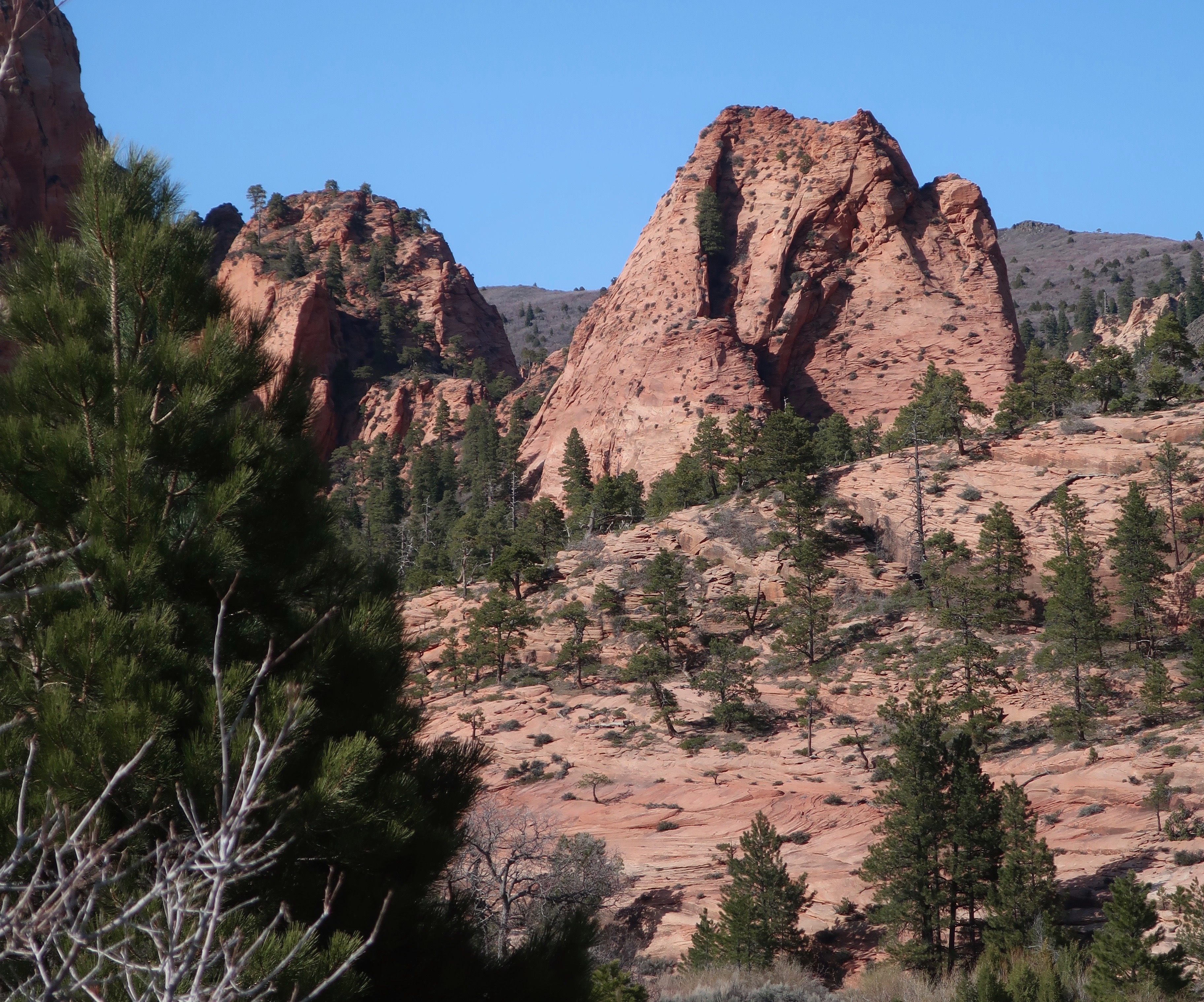
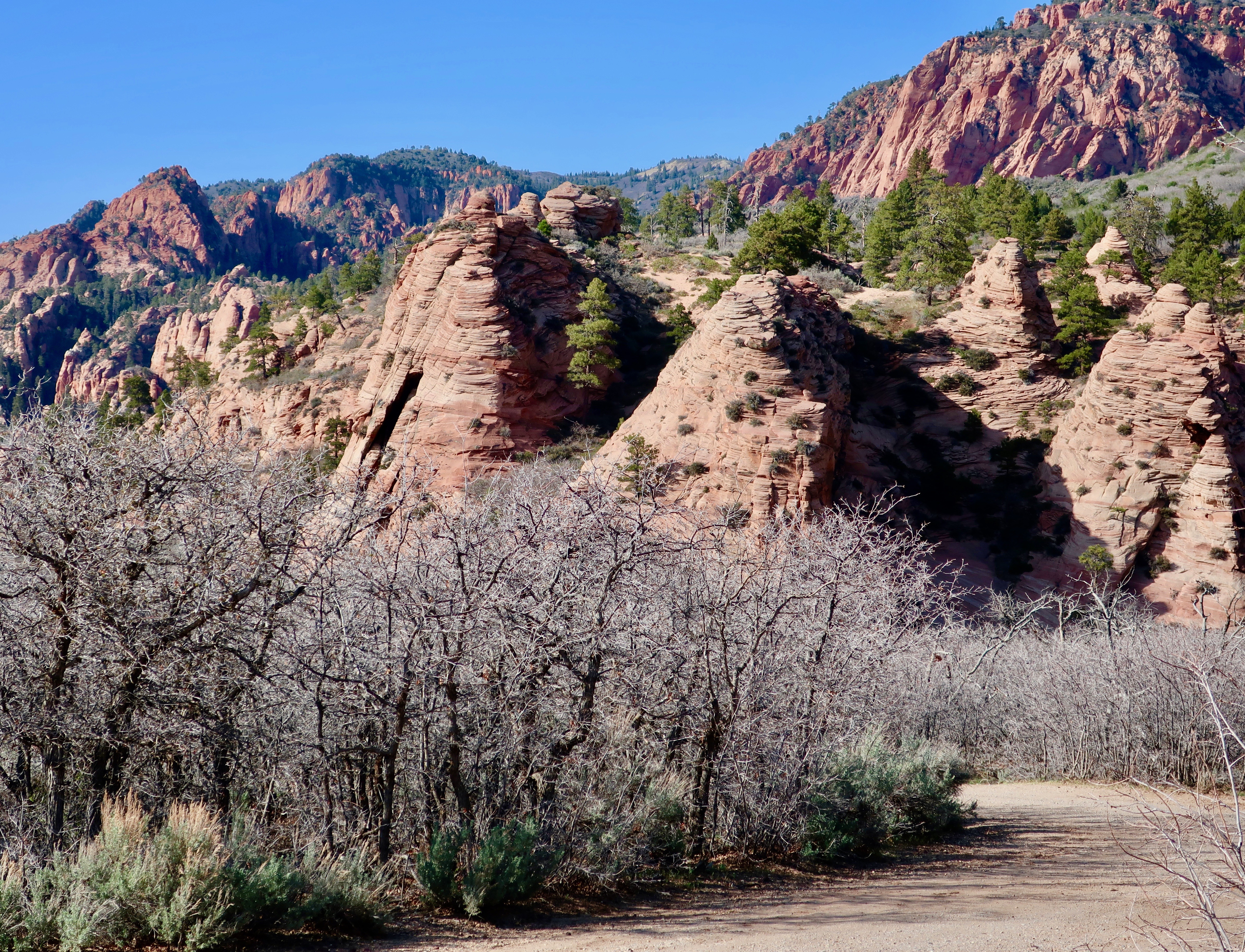
Note: As you read this, Peggy and I are in Amsterdam at the beginning of a Rhine River cruise between Amsterdam and Basel. I’ve been scheduling posts ahead of time so I can maintain a more regular presence on WordPress than I have been able to for the past several months. My goal for now is once a week on Fridays. At this rate, I already have enough material on the Southwest national parks we visited in April and May to keep going for three months. LOL. I may never catch up.
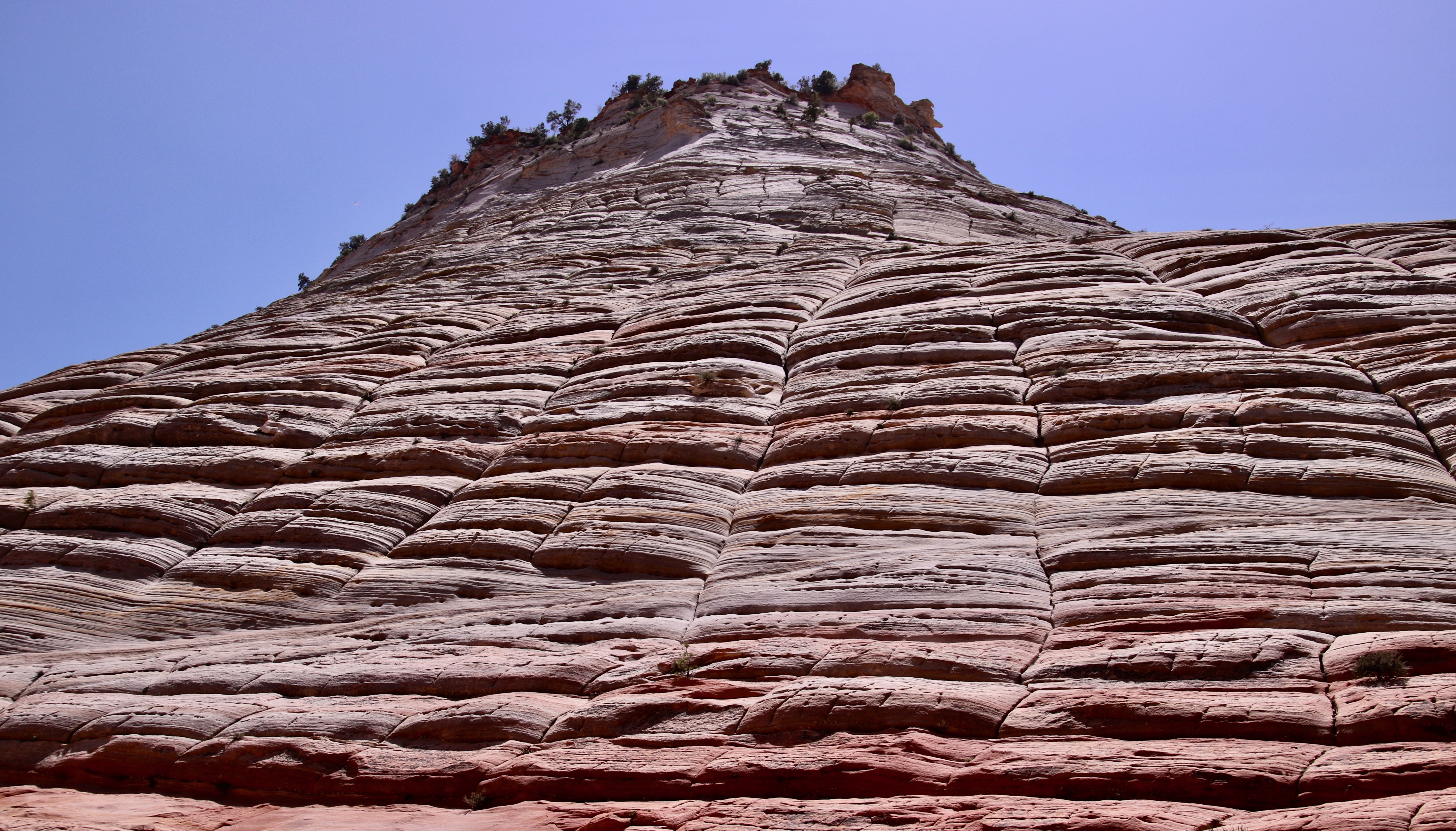
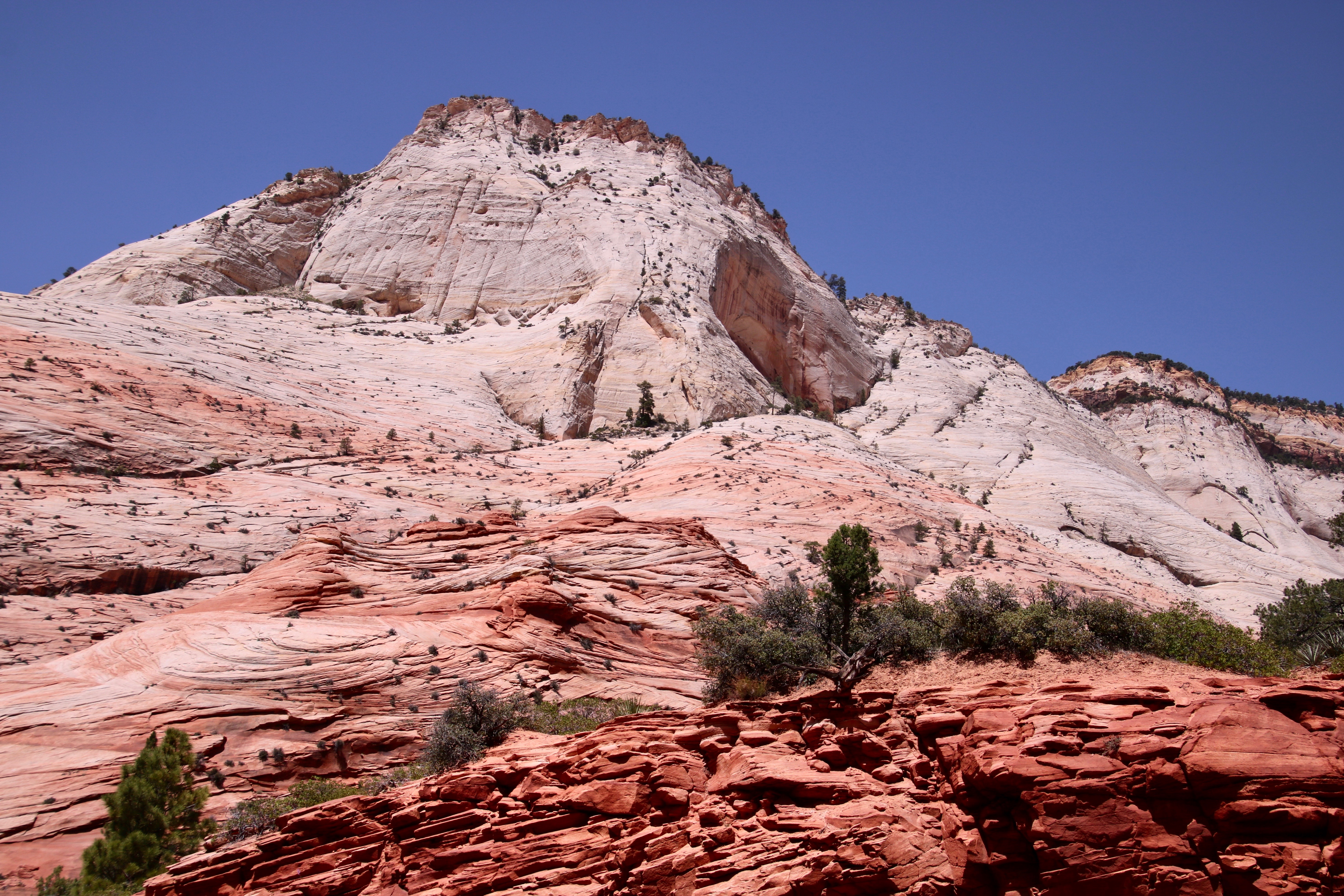
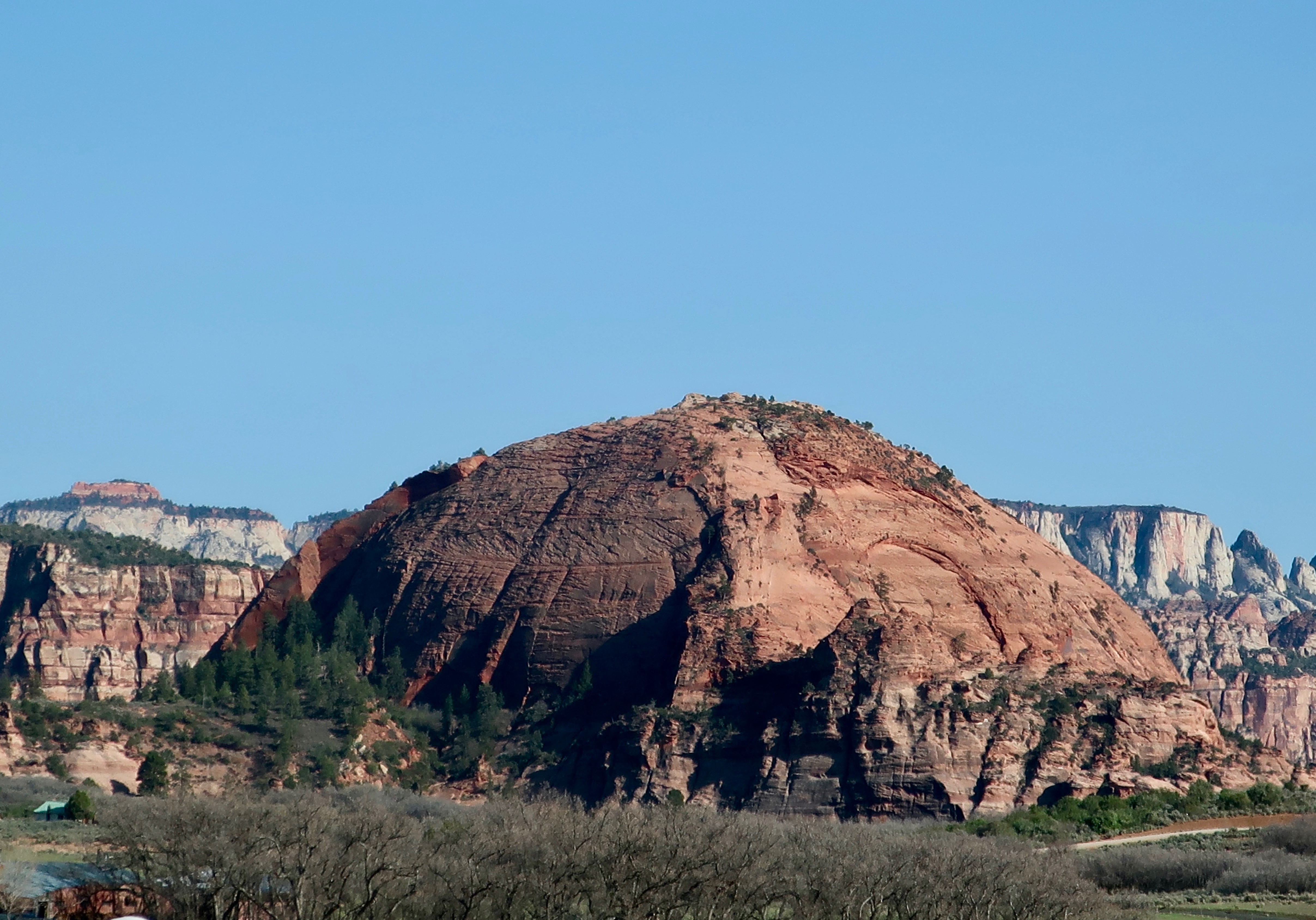
Checkerboard Mesa is the dominant geological feature of the eastern section of Zion National Park. (Photo by Peggy Mekemson.)
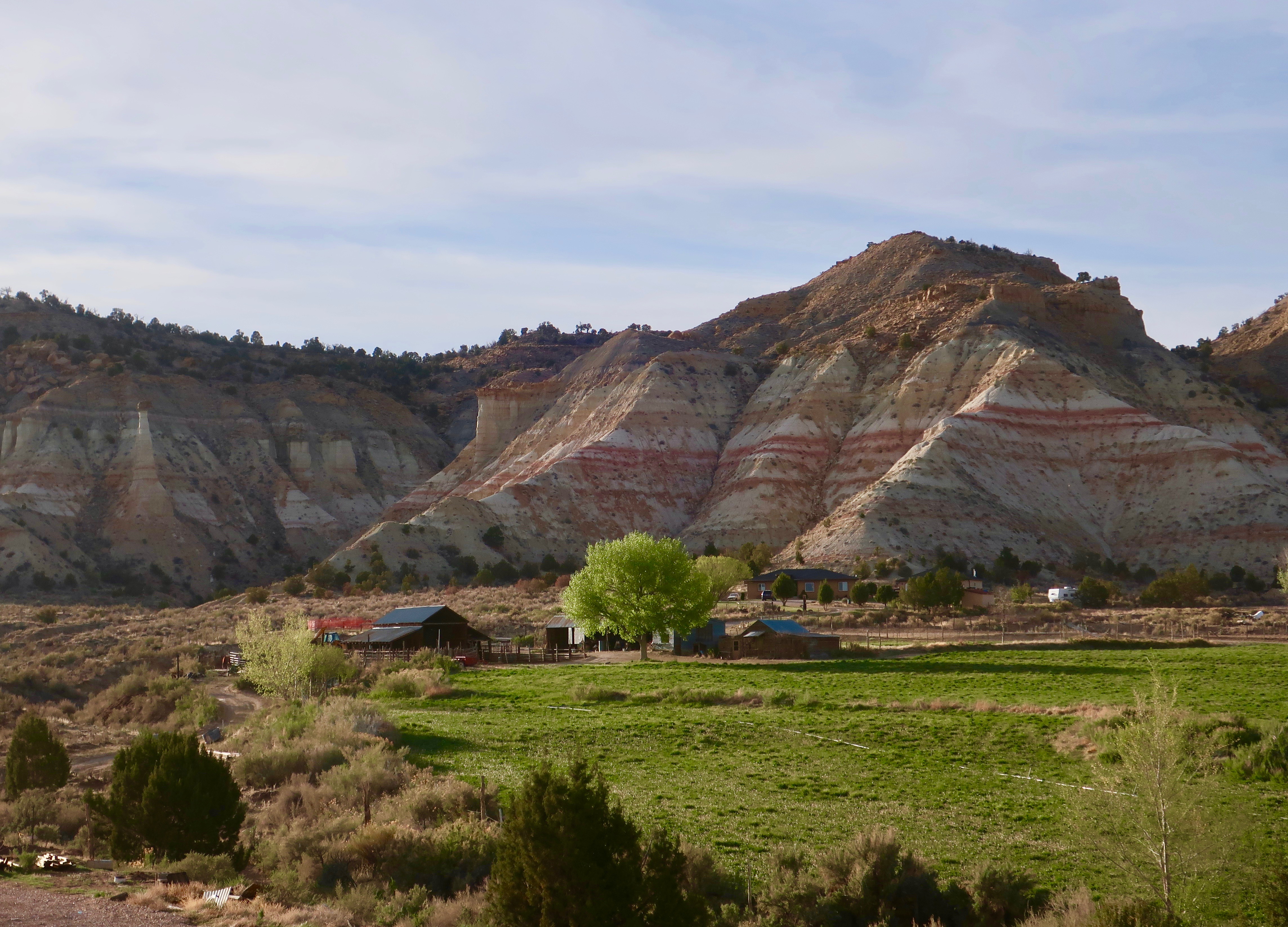
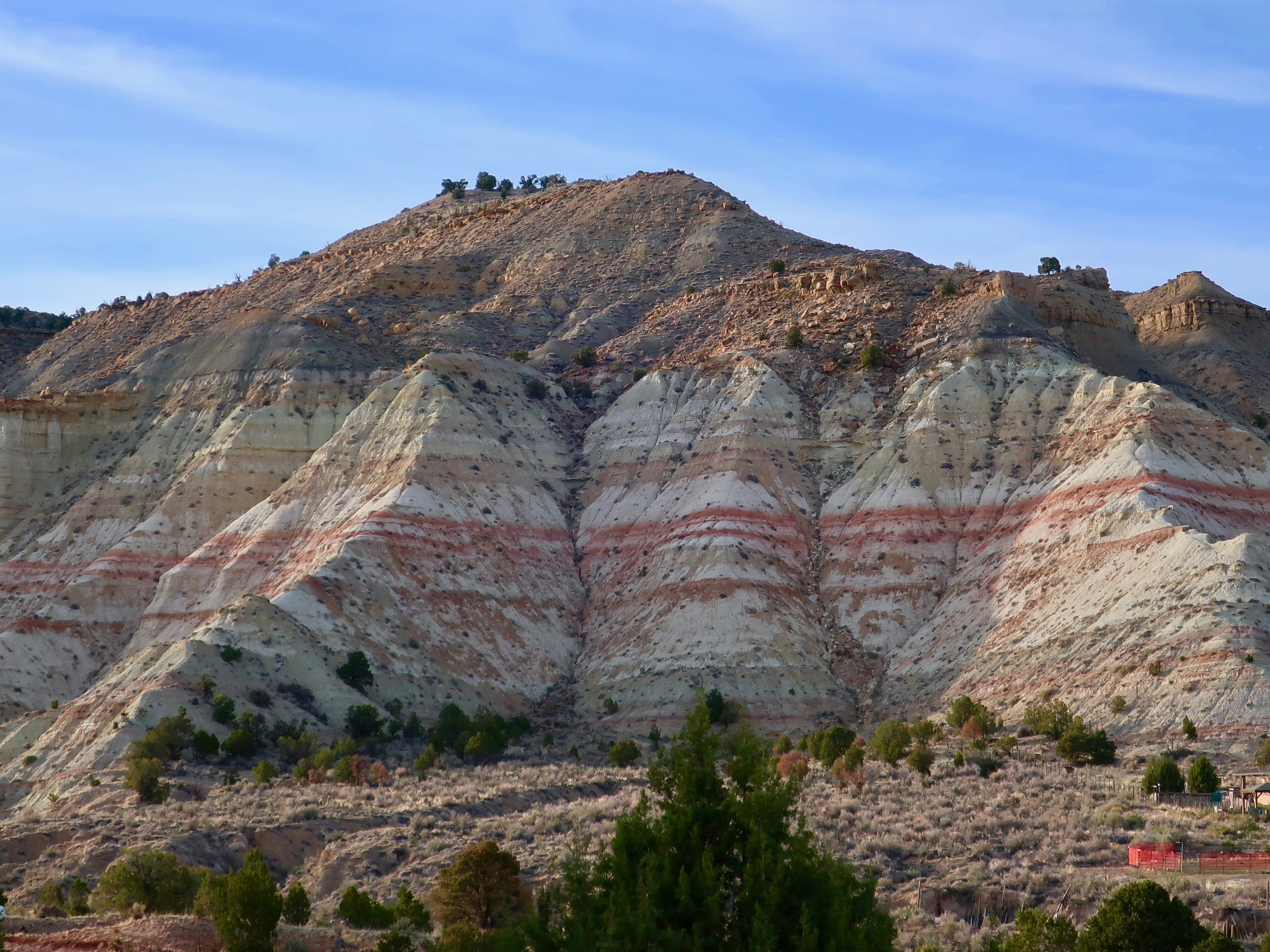
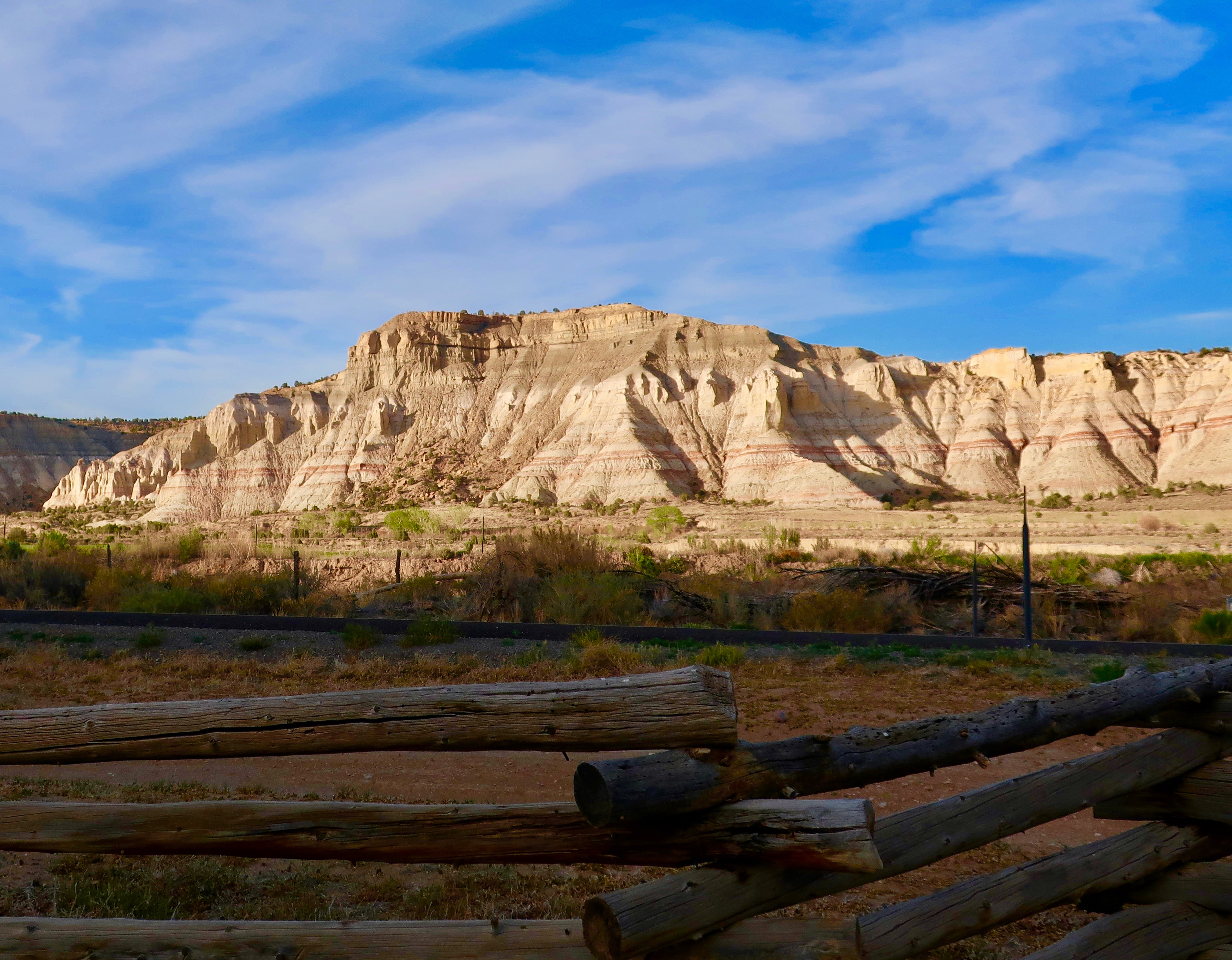
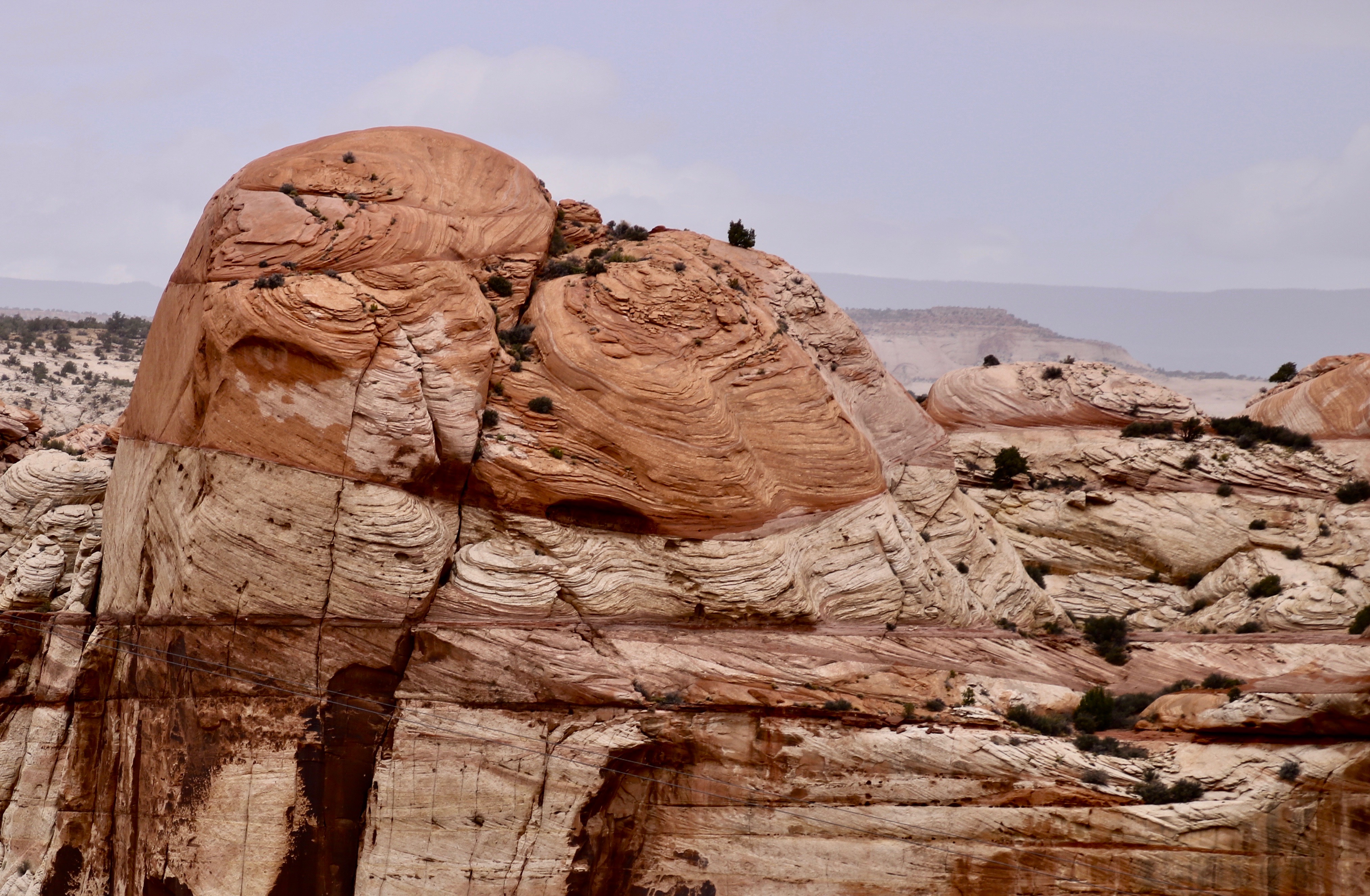
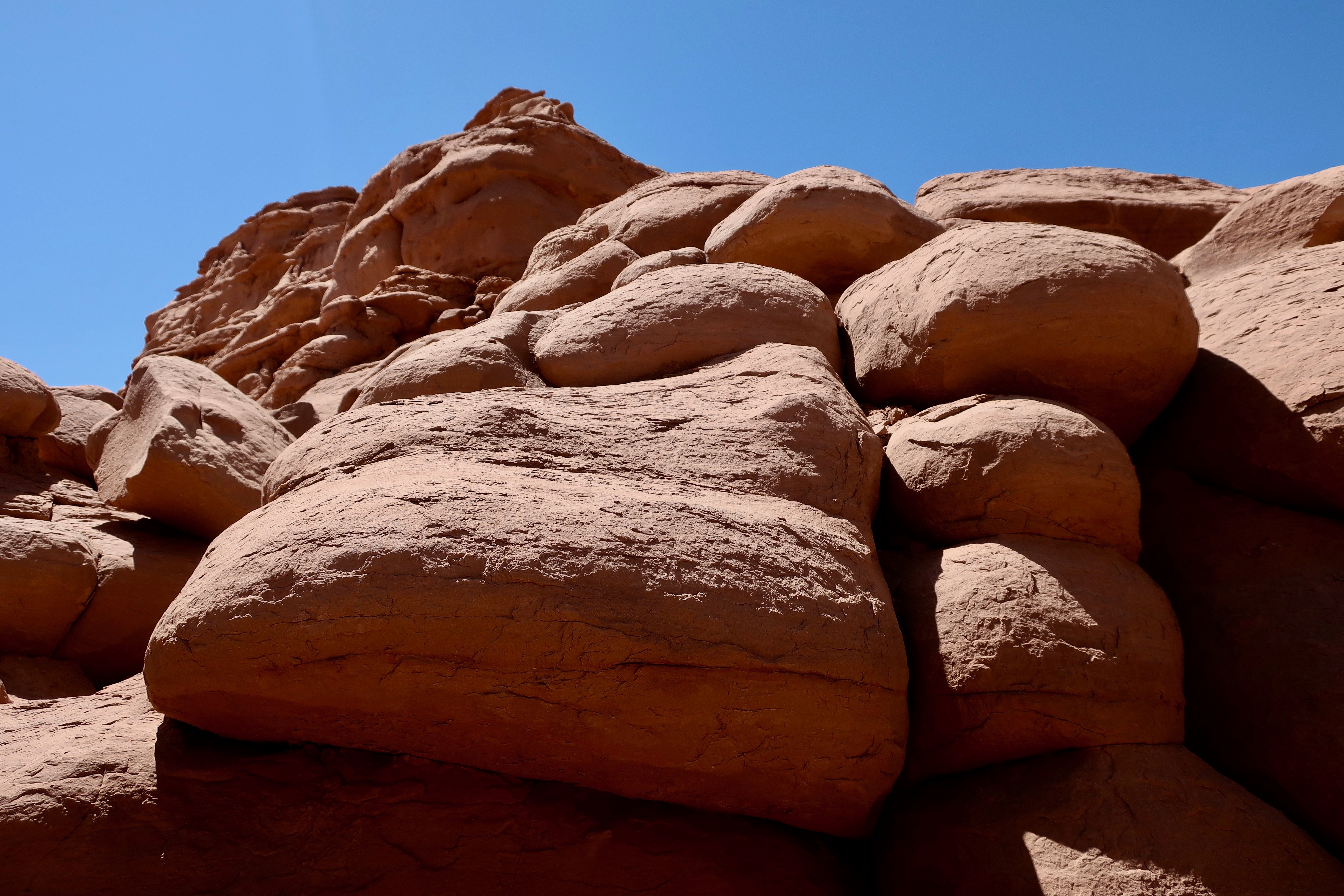
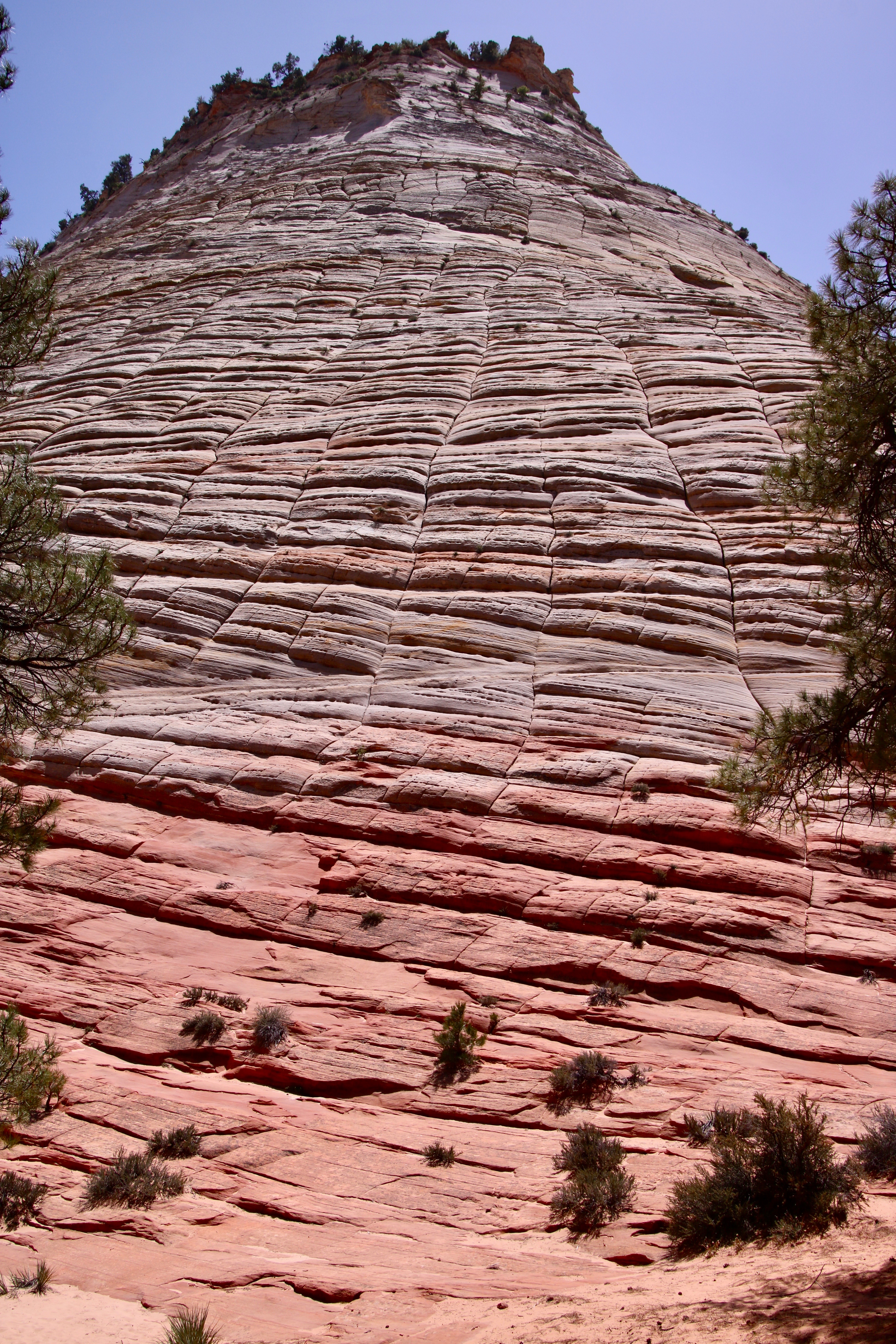
Rudyard Kipling said it:” East is East and West Is West, and never the twain shall meet.” That’s not true of Zion National Park, of course, but the eastern section of the Park will provide you with a significantly different experience than you have down in the Canyon or the western sections of Zion. Checkerboard Mesa shown above is the primary example. We can thank ancient sand dunes laid down in an early-Jurassic-era, Sahara-size desert that covered significant portions of what is now Nevada, Arizona, Utah, and Colorado 190 million years ago. The horizontal lines are caused by what is known as cross-bedding of the dunes. The vertical lines are caused by breaks in the cross bedding caused by freezing and thawing. It was thought that the results resembled a checker board, thus the name. Peggy and I found the mesa a fun subject for photography.
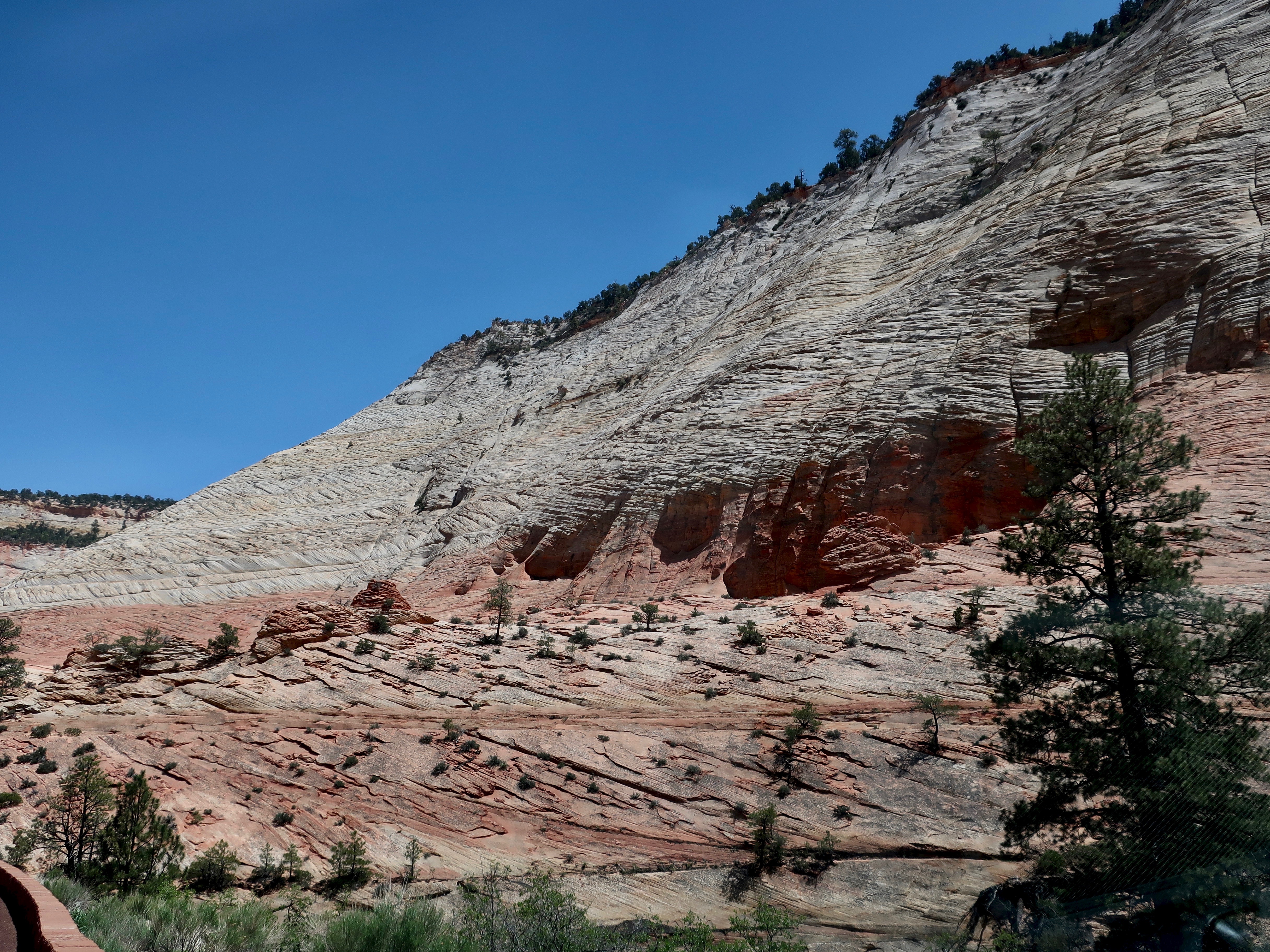
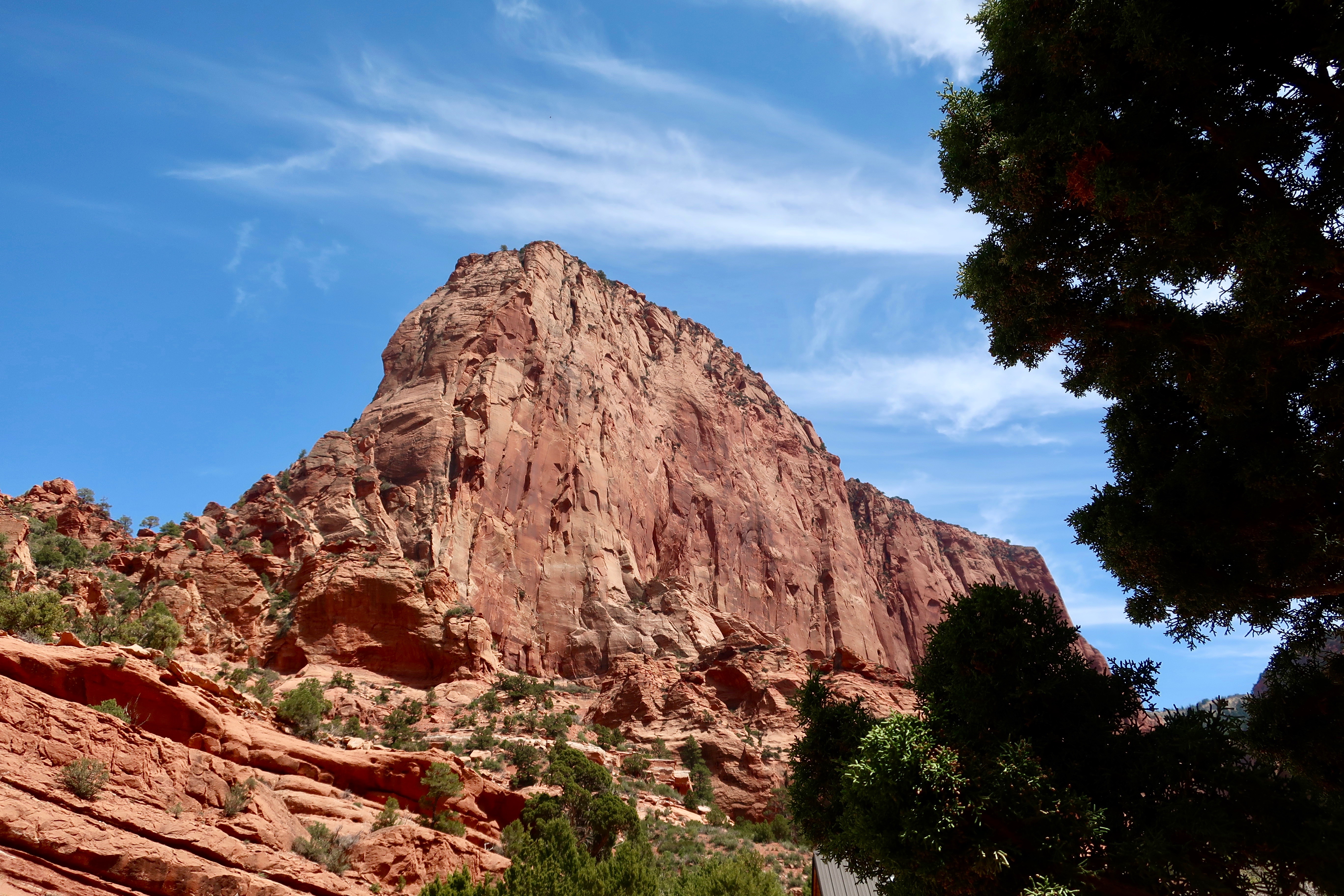
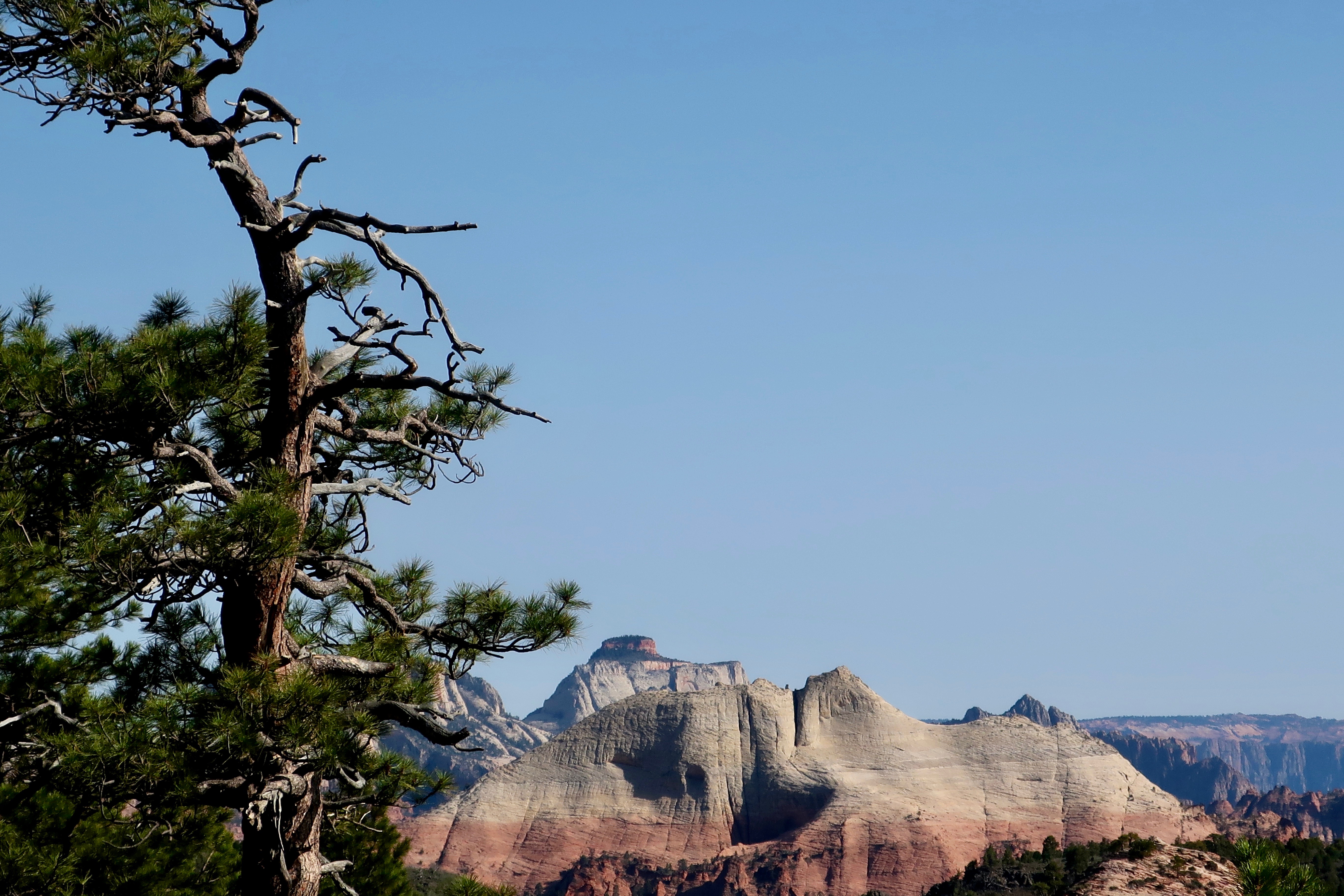
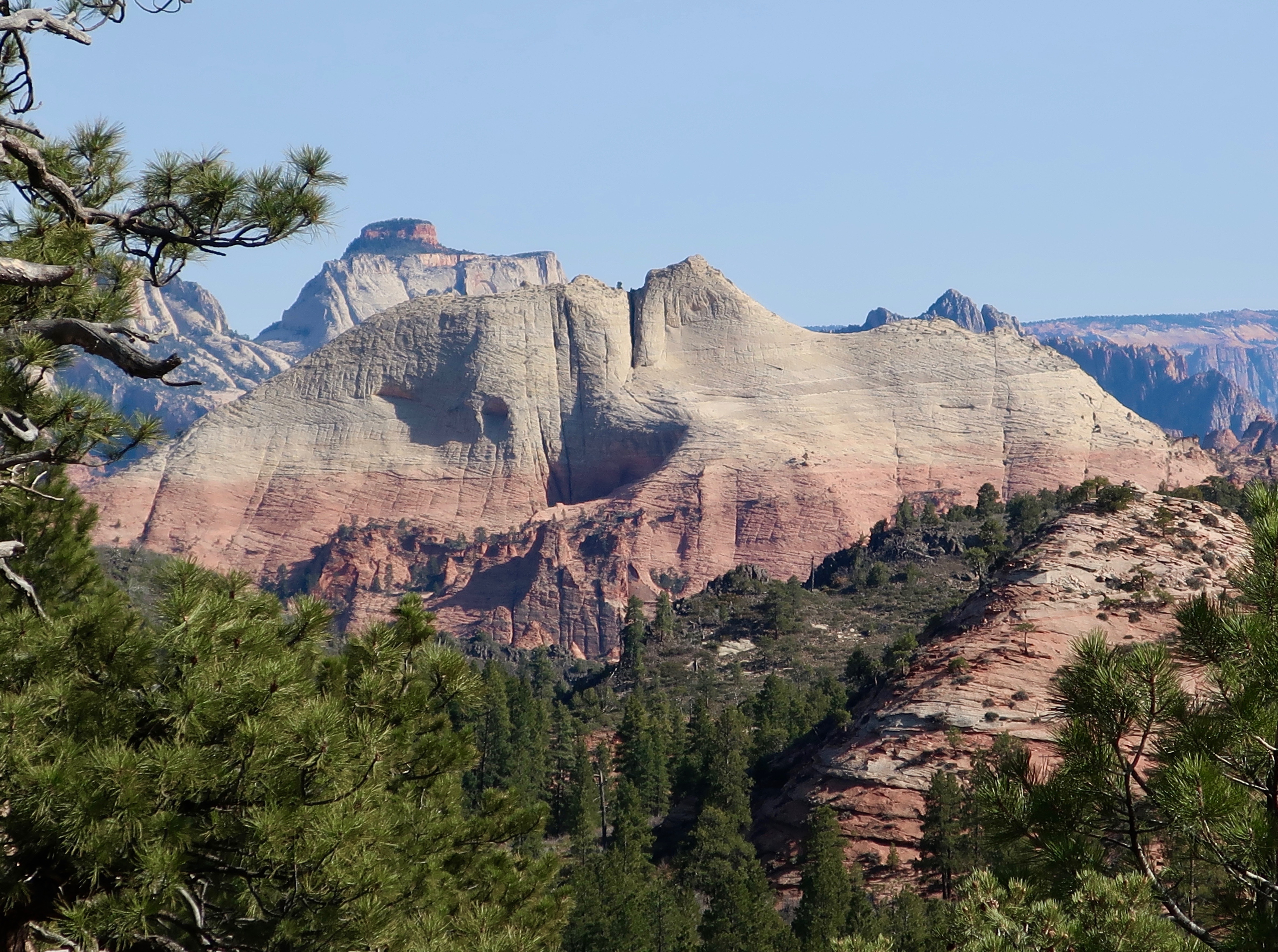
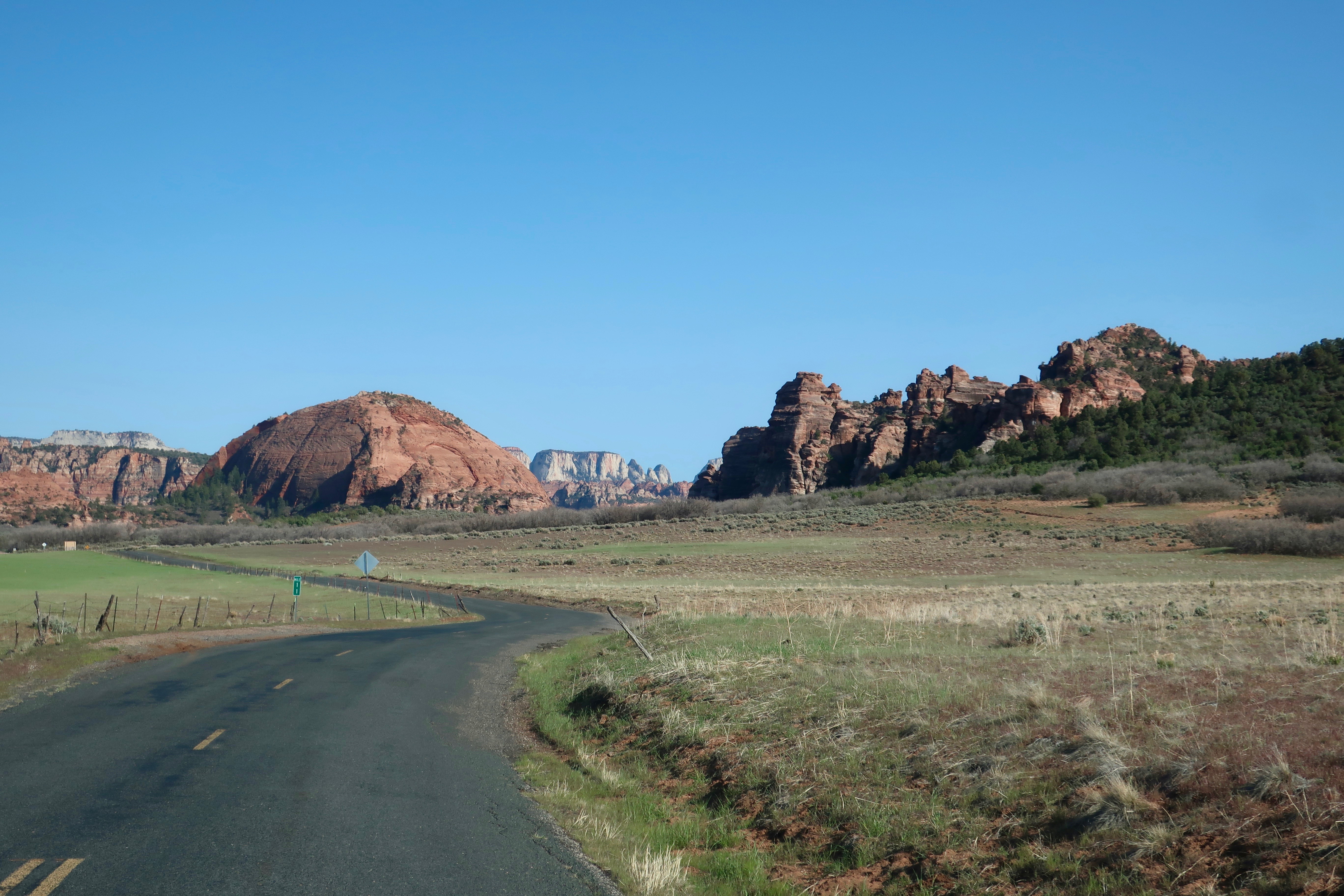
I moved back to provide a broader perspective on the Mesa using pine trees for framing.Peggy added a photo of the massive chunk of Navajo Sandstone reaching toward the sky. It’s quite a scroll down. Grin. (Photo by Peggy Mekemson.)If you are driving up from Zion Canyon, this will be your first view of Checkerboard Mesa.We were both interested in the cross-bedding. Peggy took this interesting side view.(Photo by Peggy Mekemson.)This was the view looking a bit farther north of Peggy’s photo.This was the view looking south.
If you have been in Zion and either entered or left by the east entrance/exit, you know there is much more to East Zion National Park than Checkerboard Mesa. One thing that fascinated Peggy was the alcoves that may eventually lead to towering arches such as those found in Arches National Park.
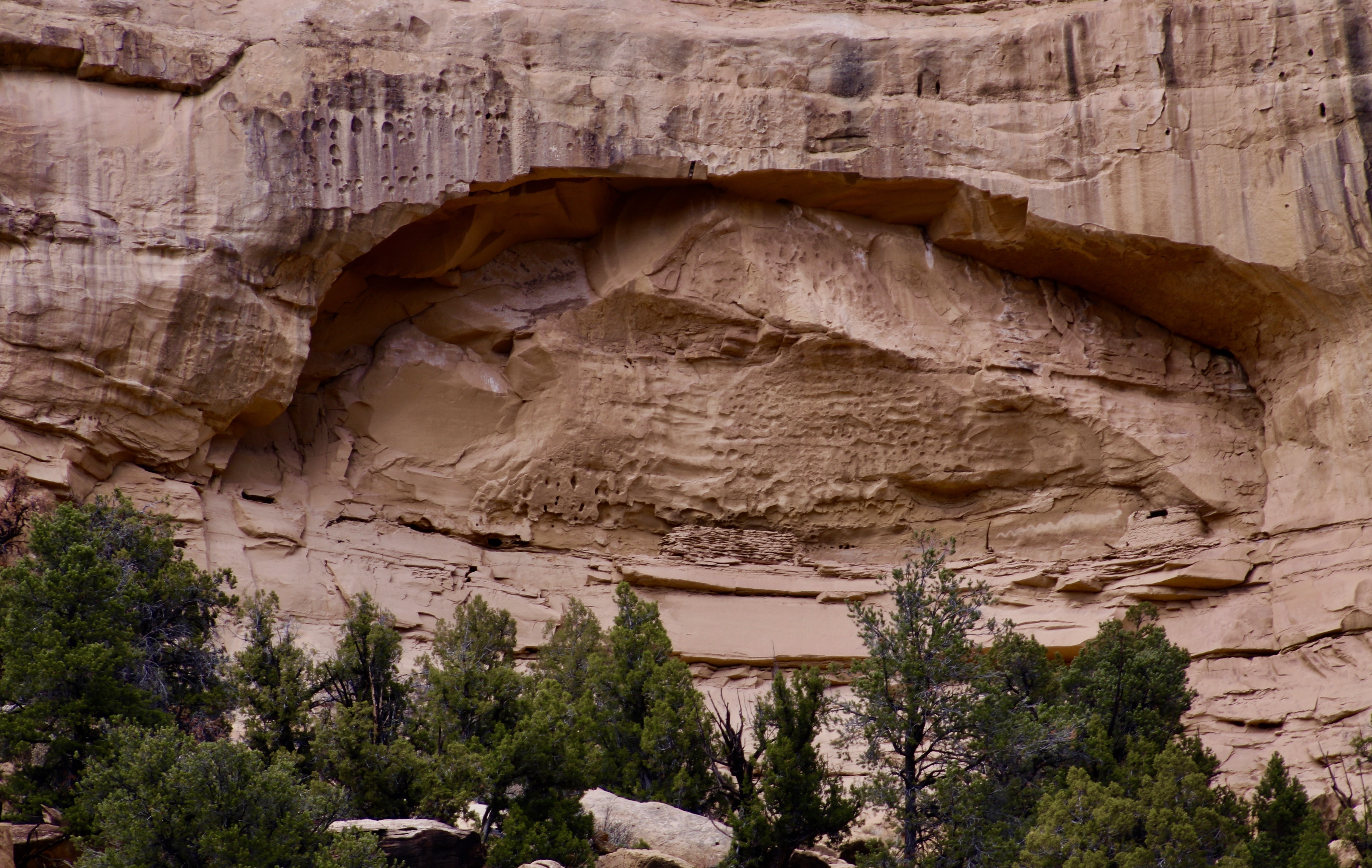
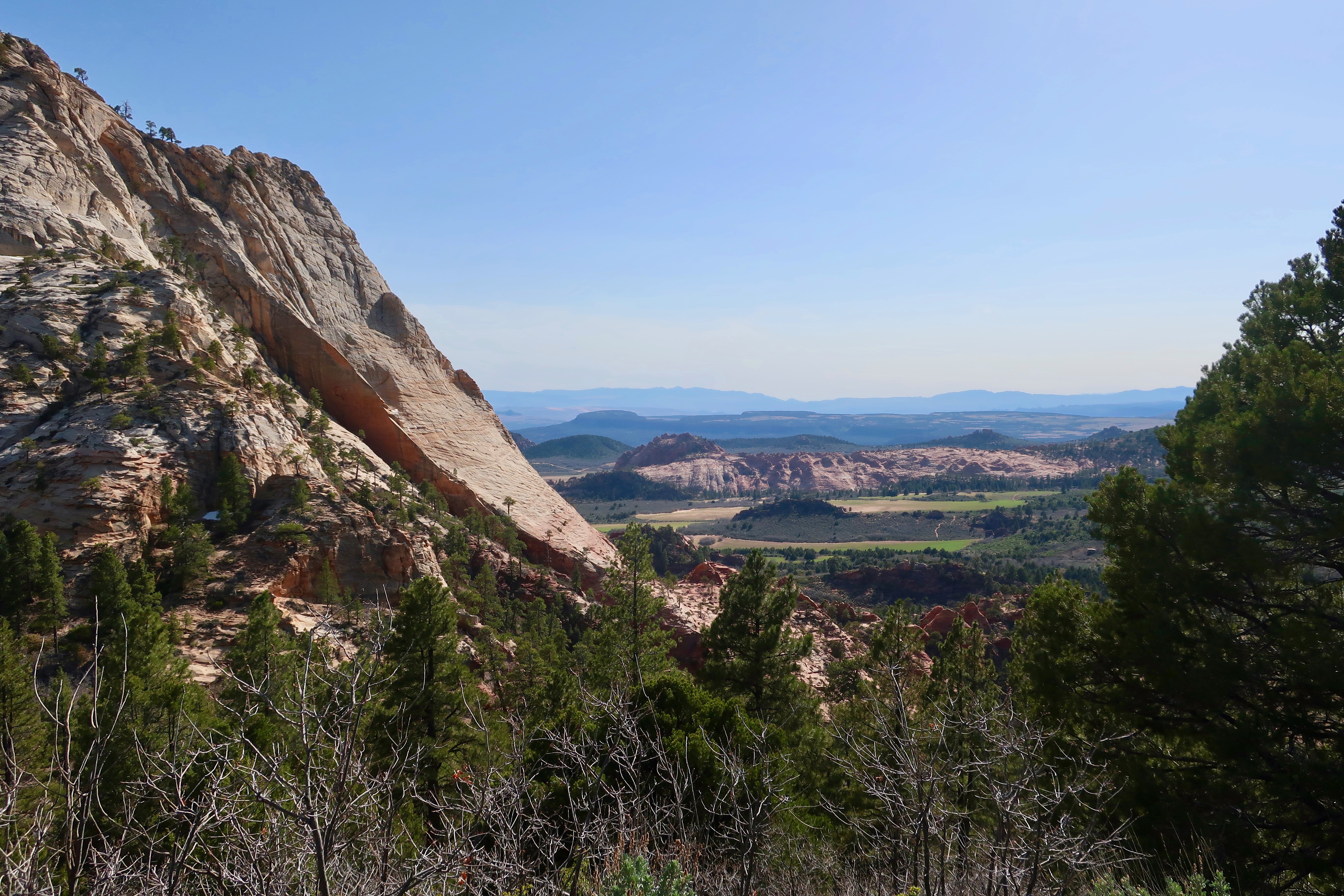
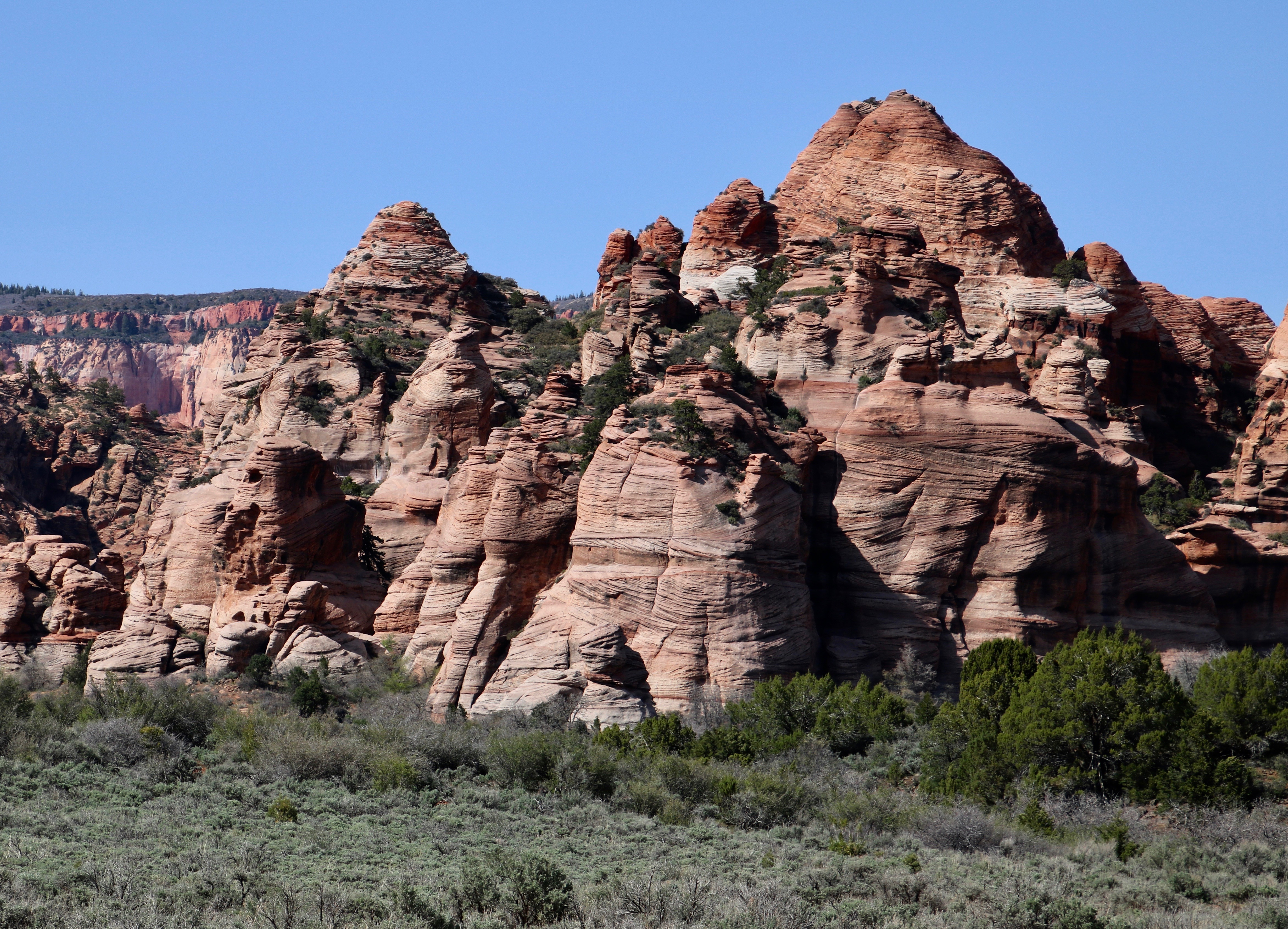
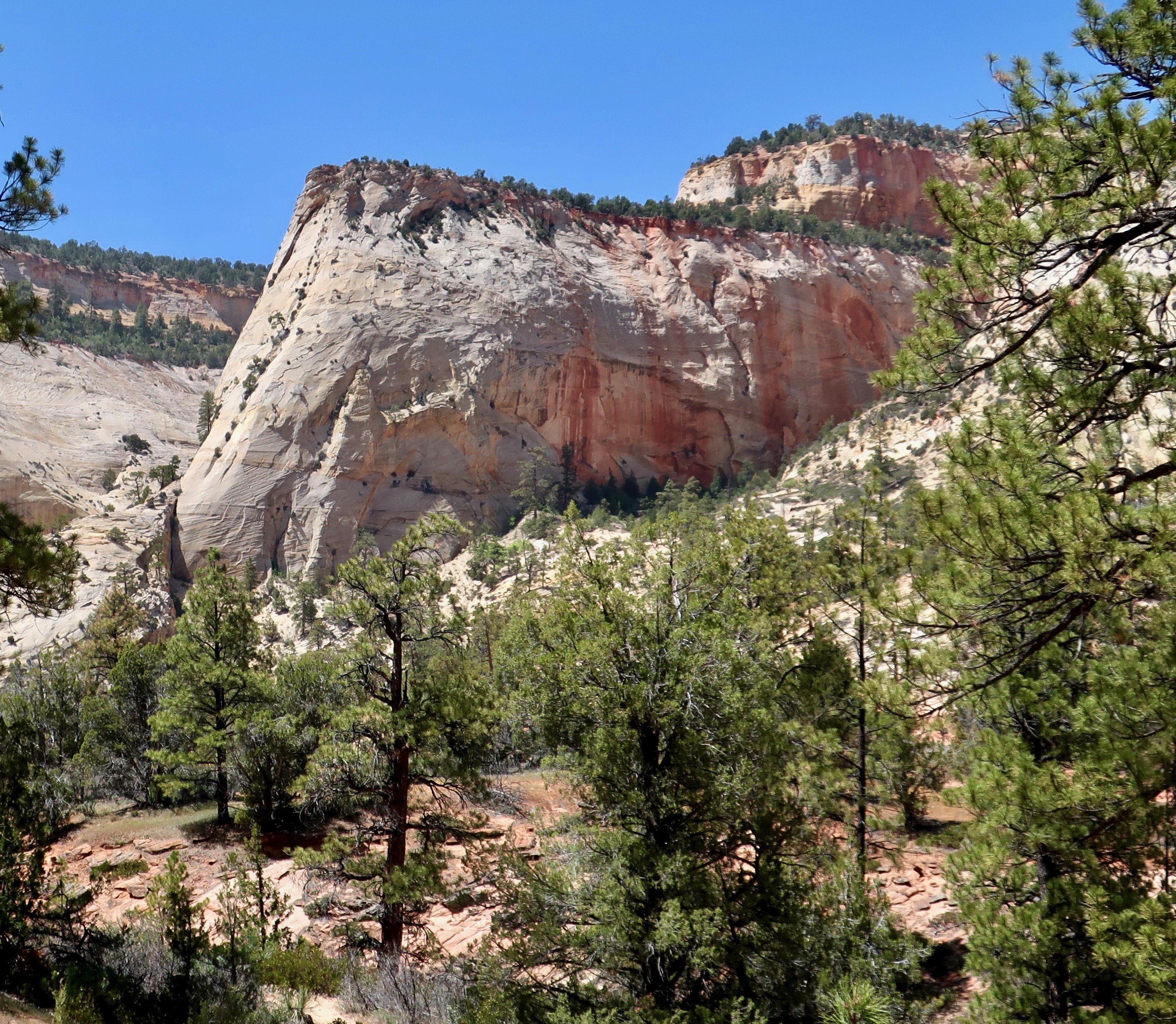
Looking toward the top of a Navajo sandstone mountain, you can see how the ridge coming down the front is eroding from both sides. This may eventually lead to an arch. (Photo by Peggy Mekemson.)This provides a straight on view of the alcove on the right of the ridge. Note how deep the alcove is. (Photo by Peggy Mekemson.)Another alcove. Alcoves and arches are created when a harder capstone is on top of a softer stone that erodes more rapidly. (Photo by Peggy Mekemson.)And another alcove photographed by Peggy. Had there been more, I am sure that she would have photographed them as well! (Photograph by Peggy Mekemson.)
While Peggy was busy photographing wannabe arches, I was concentrating on other landmarks of East Zion National Park.
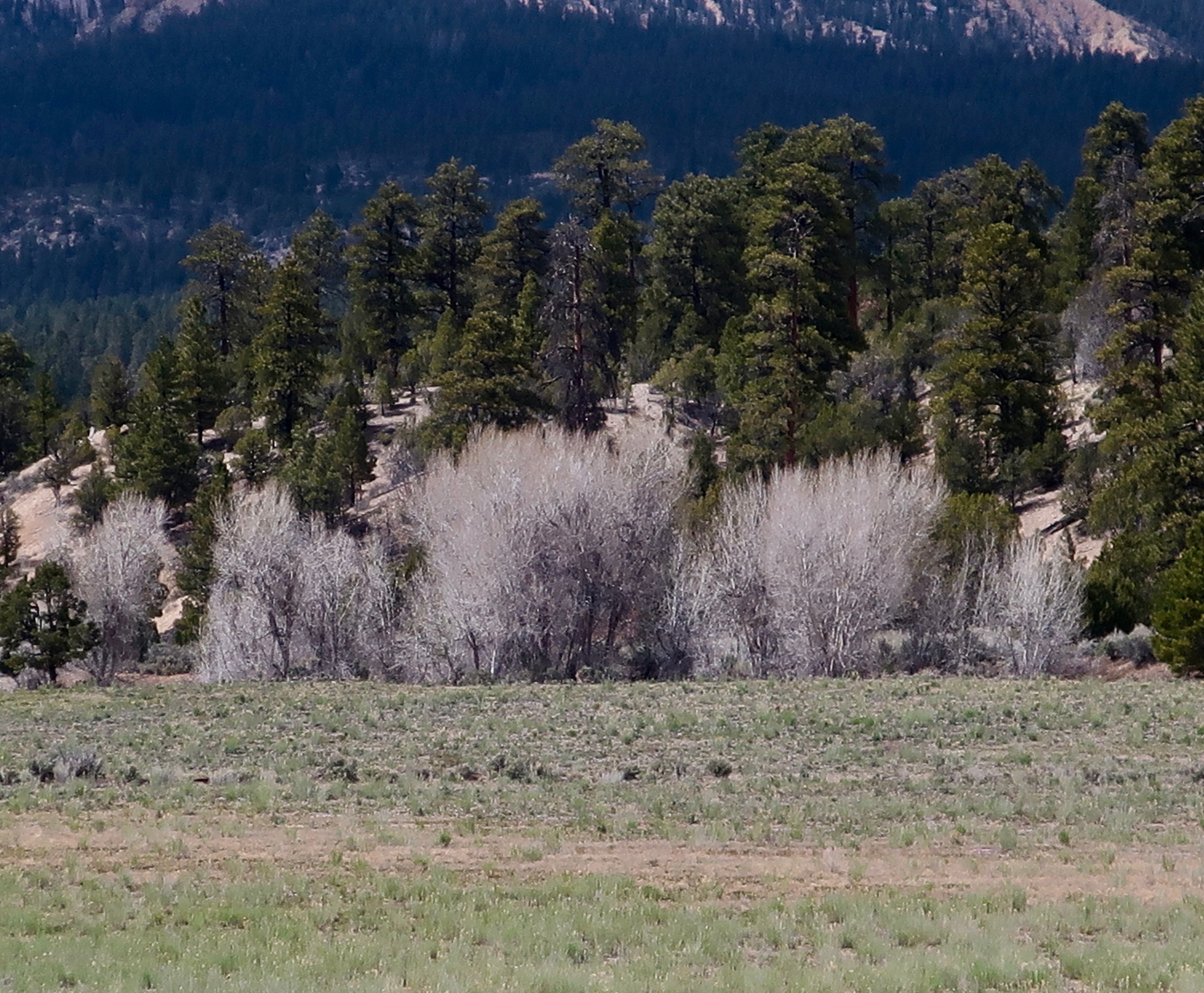
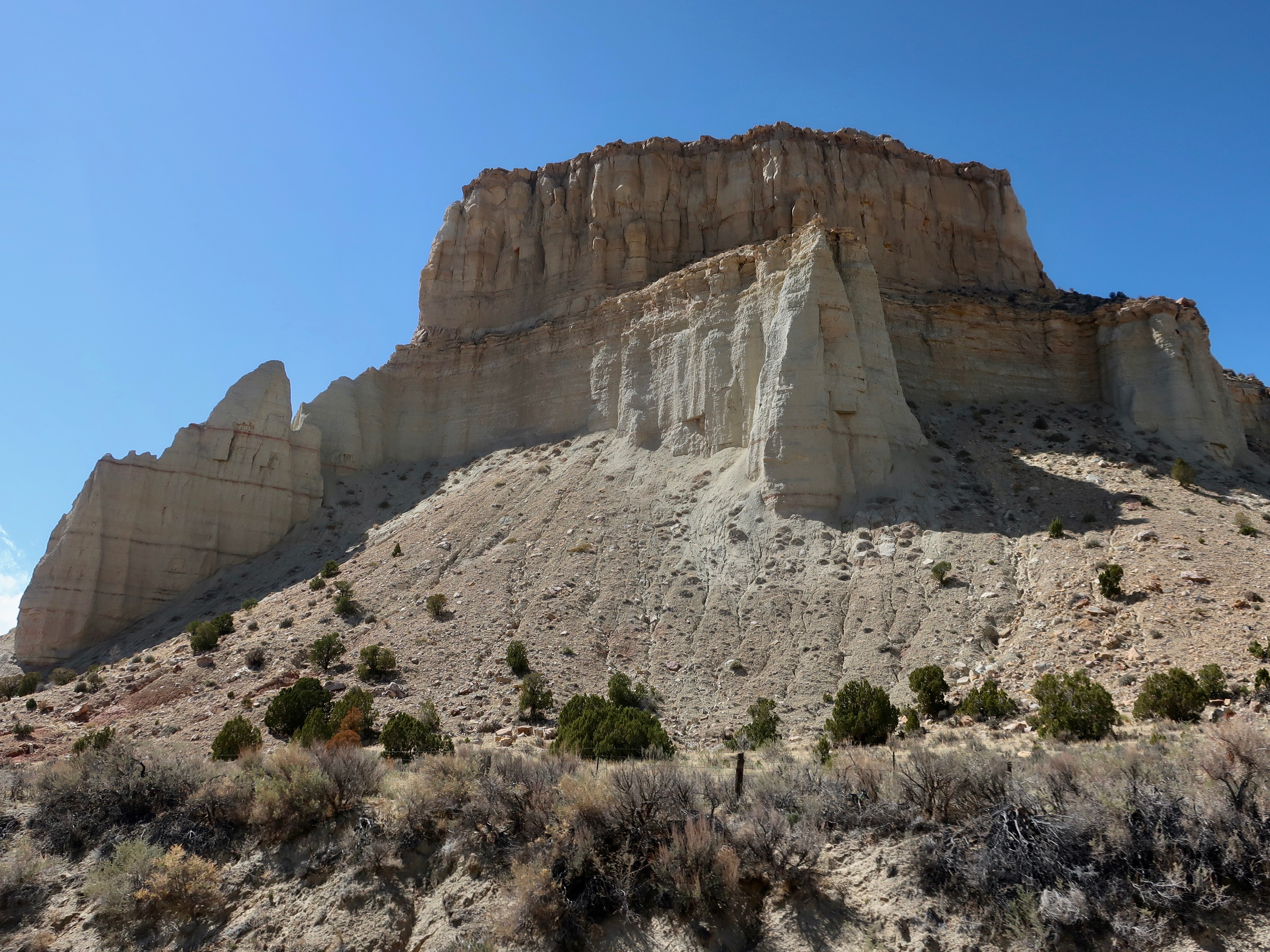
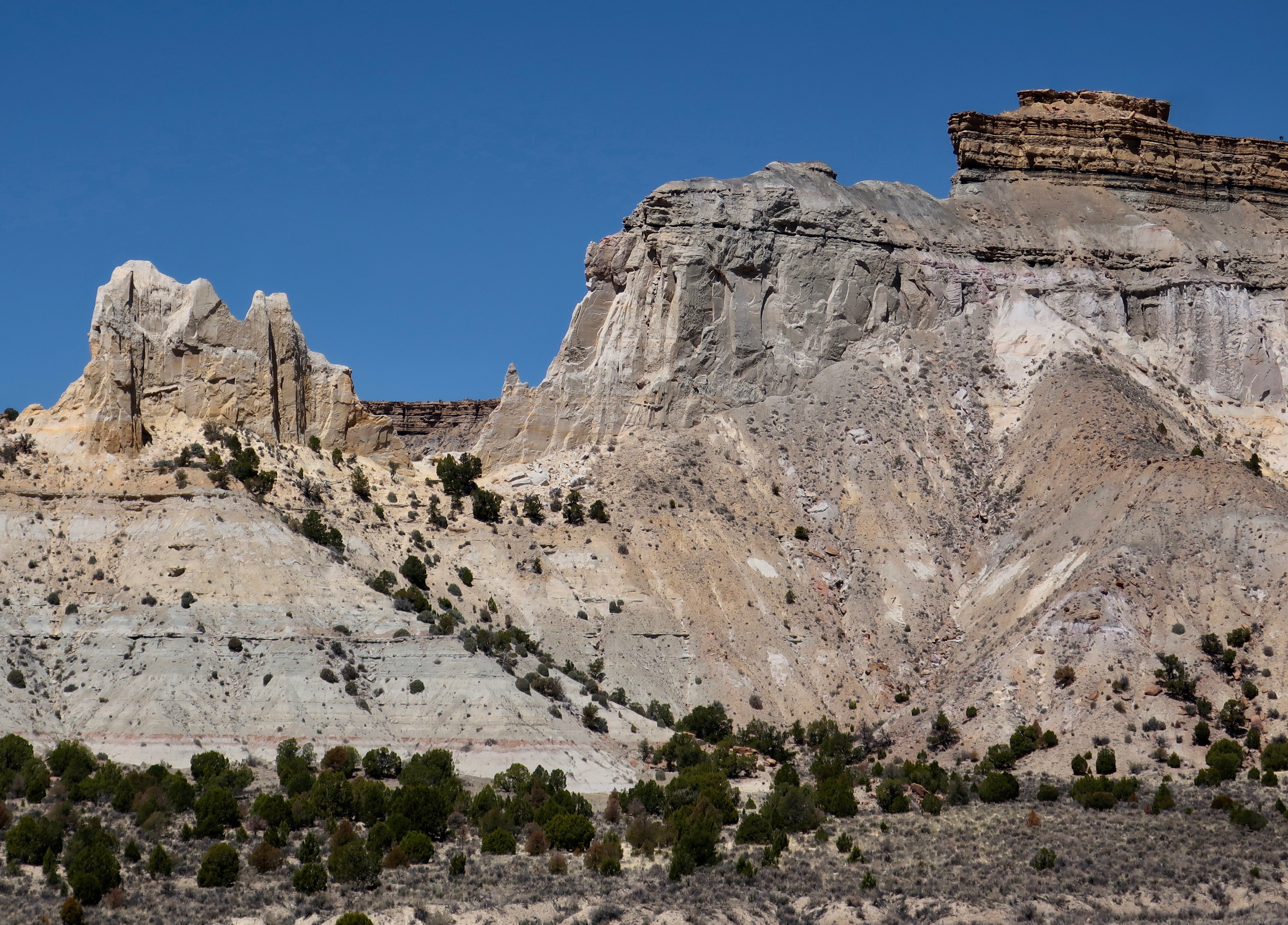
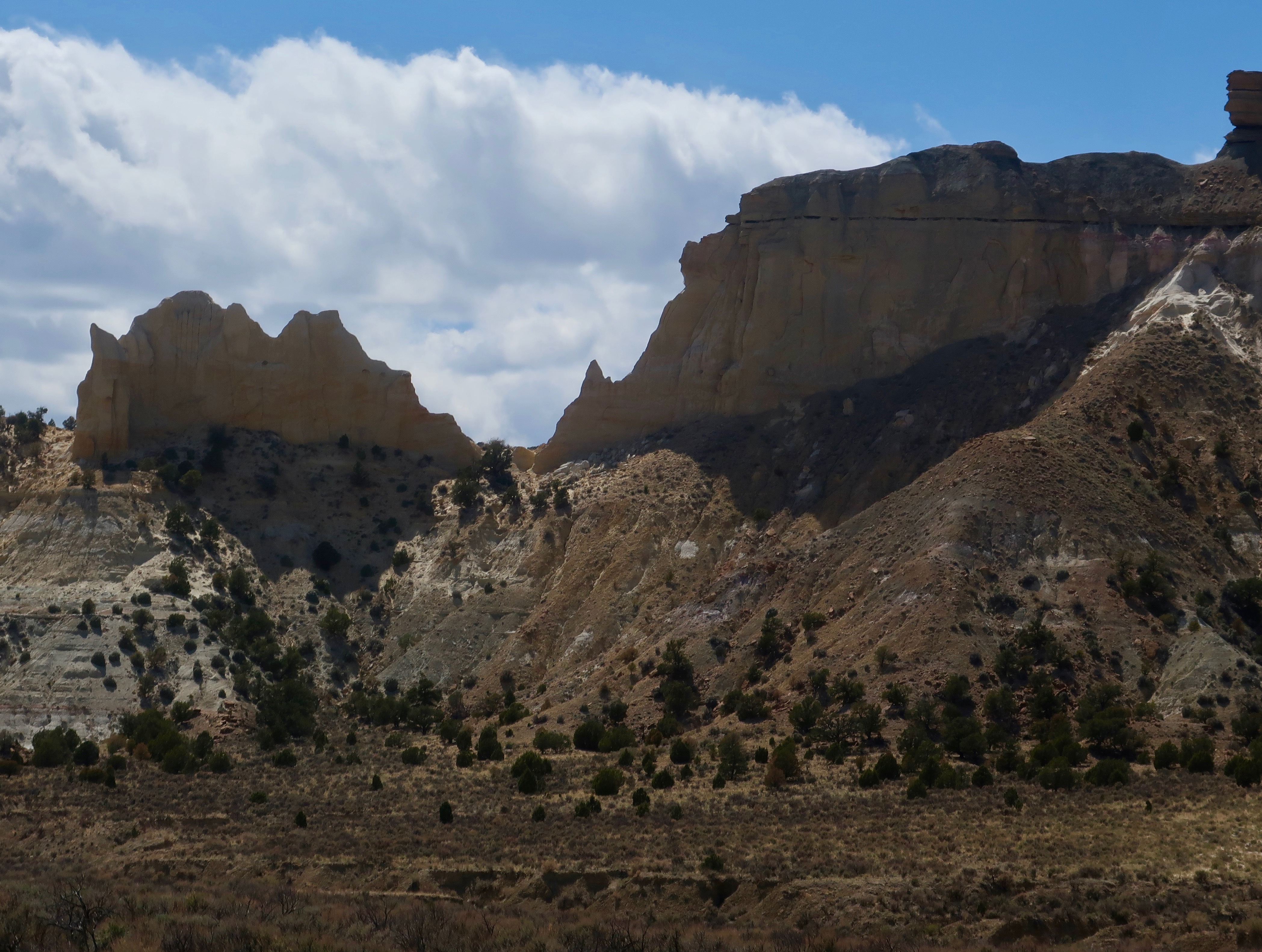
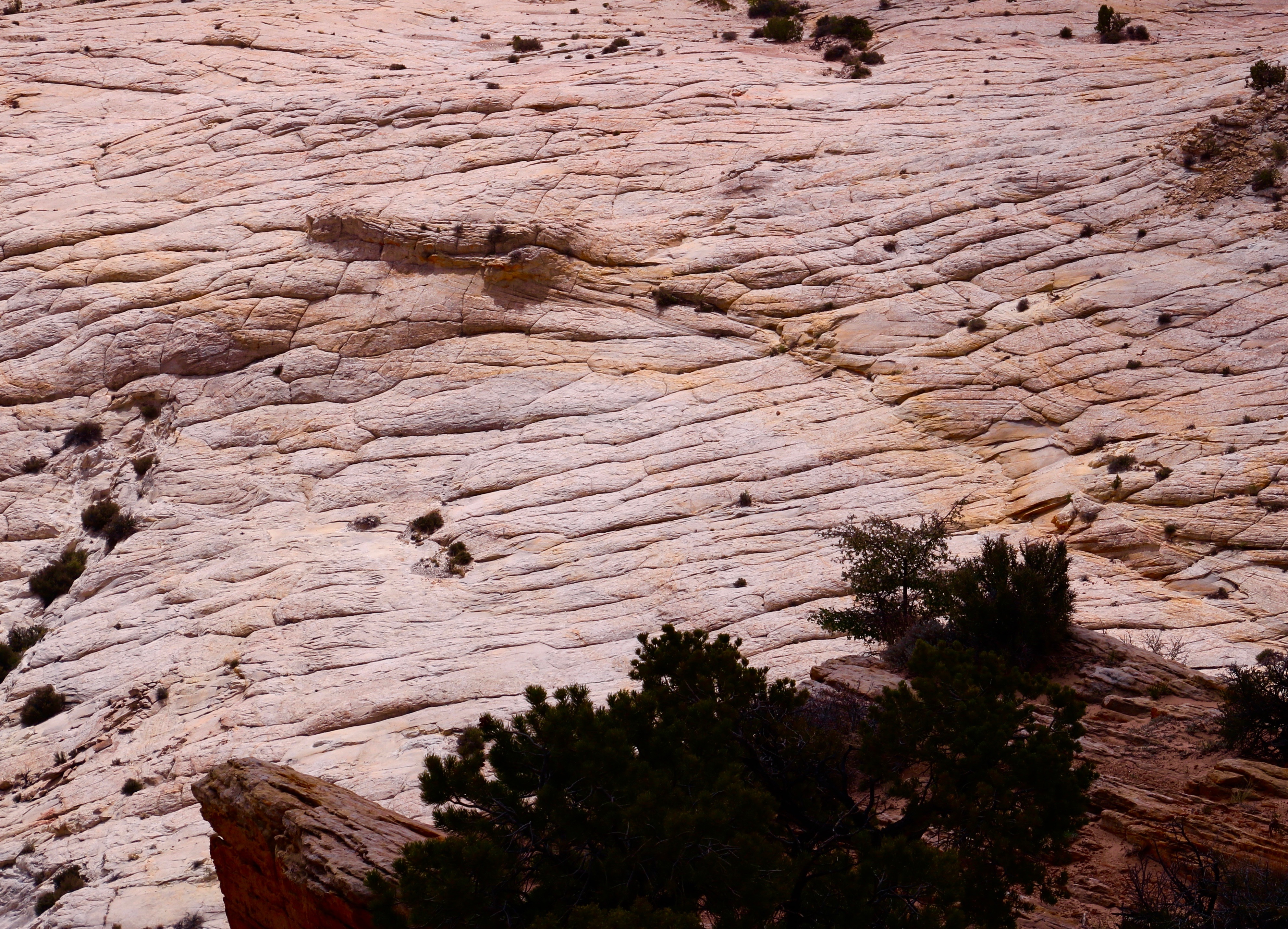
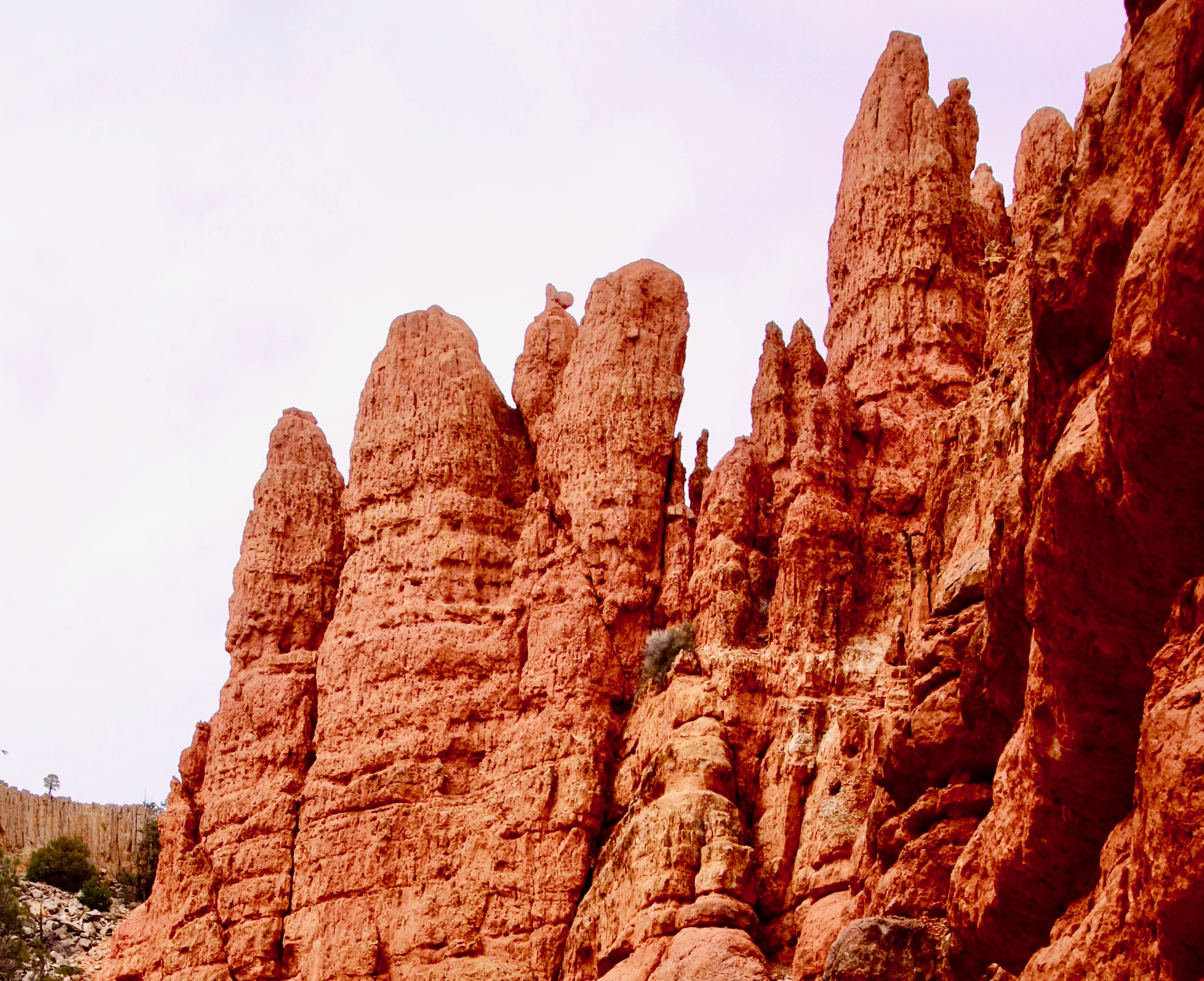
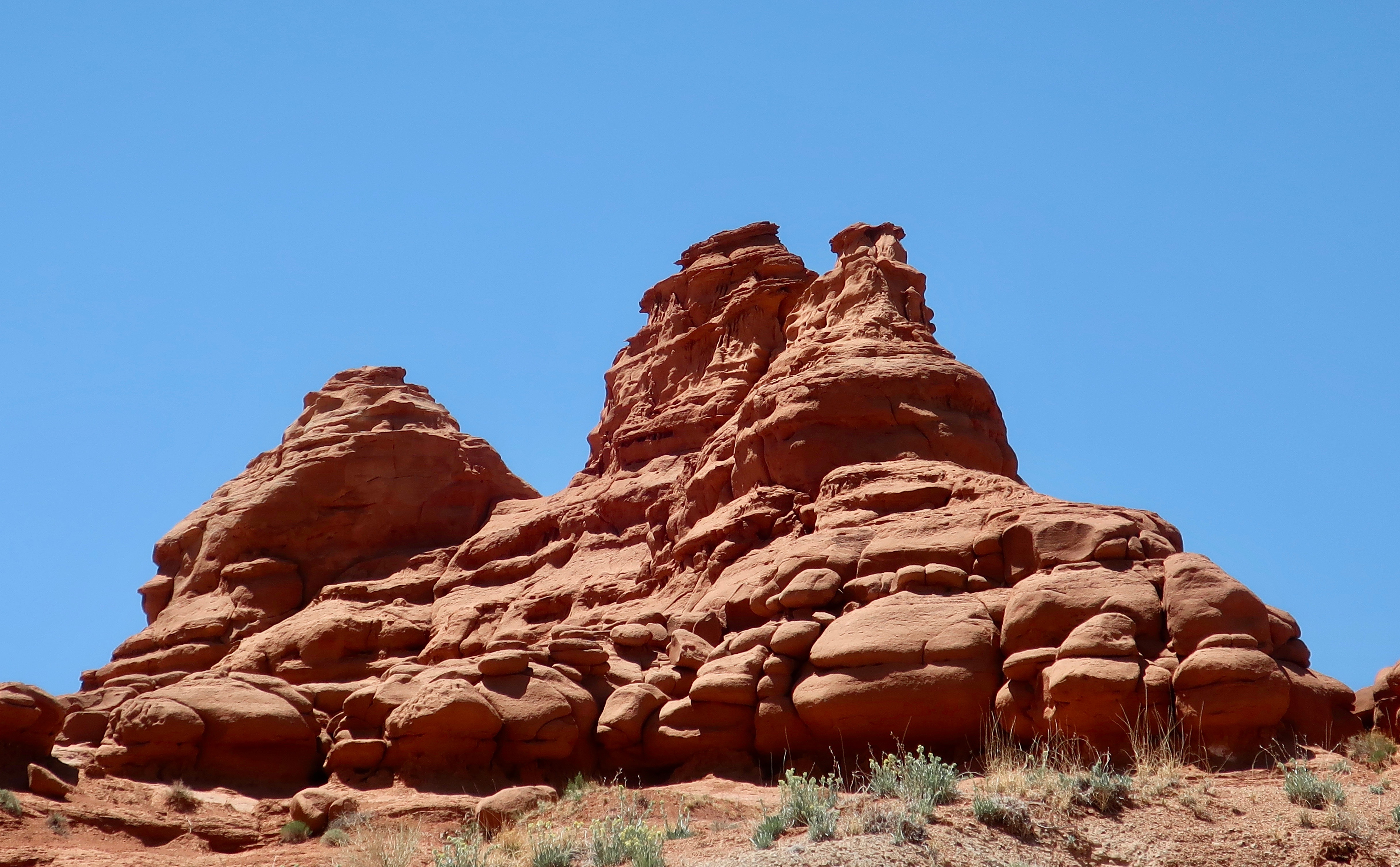
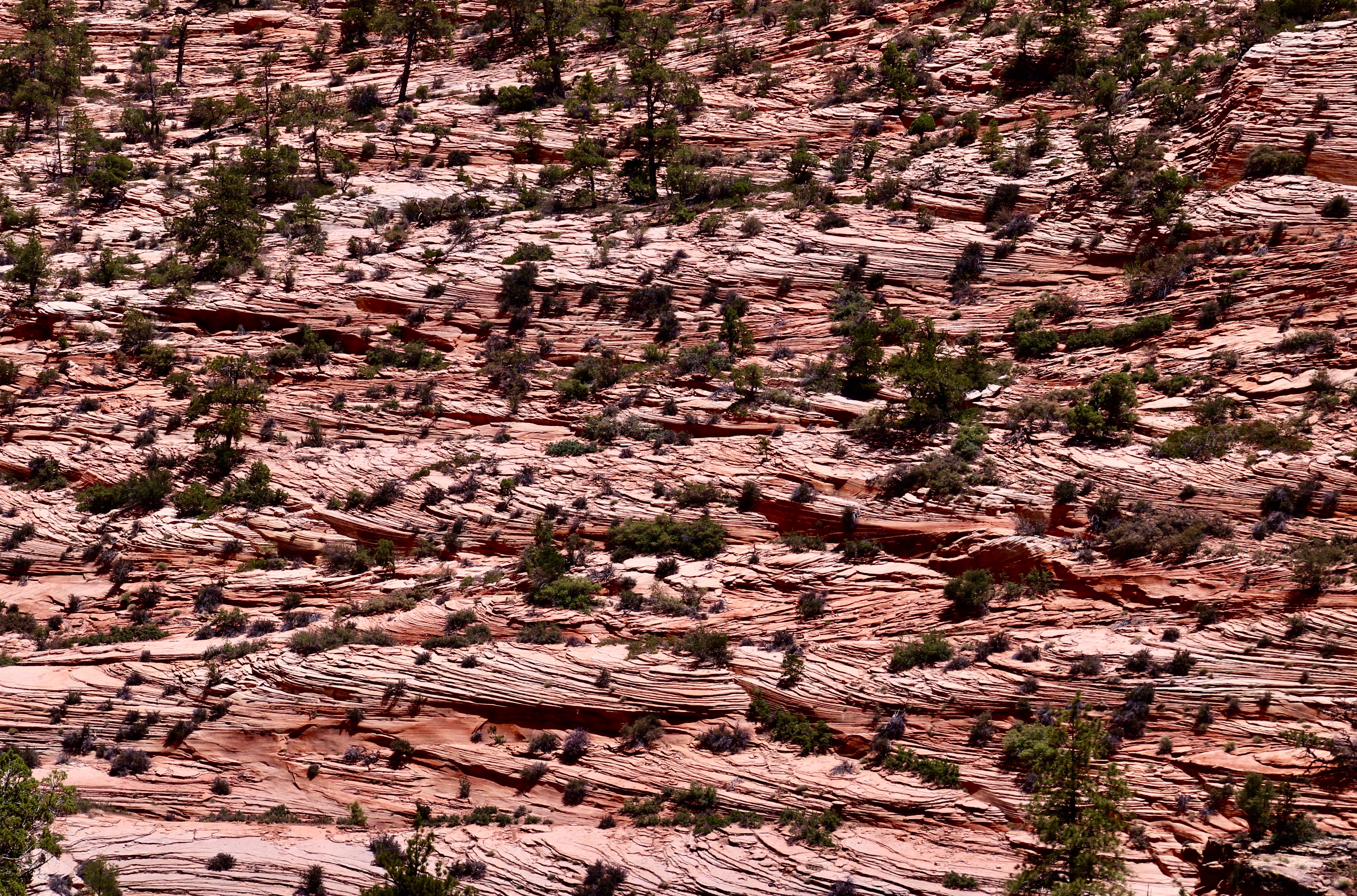
I found this landmark rather impressive.I wondered about the huge chunk of rock that left behind a bright red scar in this landmark. The other side is one of the alcoves that Peggy photographed. Another prominent Mesa standing out like the prow of an ocean liner.A mesa on a mesa. Peggy was impressed with its color. (Photo by Peggy Mekemson.)I’ll close today with this interesting photo that Peggy took of shrubs and small trees growing on cross-bedded sandstone. I thought, ‘Wow, this would make one heck of a challenging puzzle!’ (Photo by Peggy Mekemson.)
I couldn’t help but think of William Least Heat-Moon’s book, Blue Highways, this morning. If you have read his classic travel adventure, you will remember that he would go out of his way to find small towns with unusual names, like Dime Box, Texas. We are in Accident, Maryland today and I’m pretty sure it meets Heat-Moon’s classification of an unusual name. I was also amused to learn that people from the town are called Accidentals. I feel a connection. My parents always told me that I was an accident.
This is the last stop on the first segment of our full time travels. Tomorrow we will arrive at our daughter Tasha, her husband Clay and our grandsons Ethan and Cody’s home in Waterford, Virginia outside of Washington DC. They have an attached efficiency apartment that they are insisting that we use as our base. It’s Tasha’s way of assuring that we will be around on occasion. It will take a few weeks to set up the apartment, but first we will be dashing off on our Rhine River Cruise.
In the meantime, I will keep the posts from our national park and monument visits in the Southwest rolling out. After Zion there is Bryce, Escalante, the North Rim of the Grand Canyon, and Mesa Verde plus our other adventures along the way. I have enough to produce posts until we are once again on the road. More than enough! On the small chance I run out, there is the Rhine River Cruise. 🙂
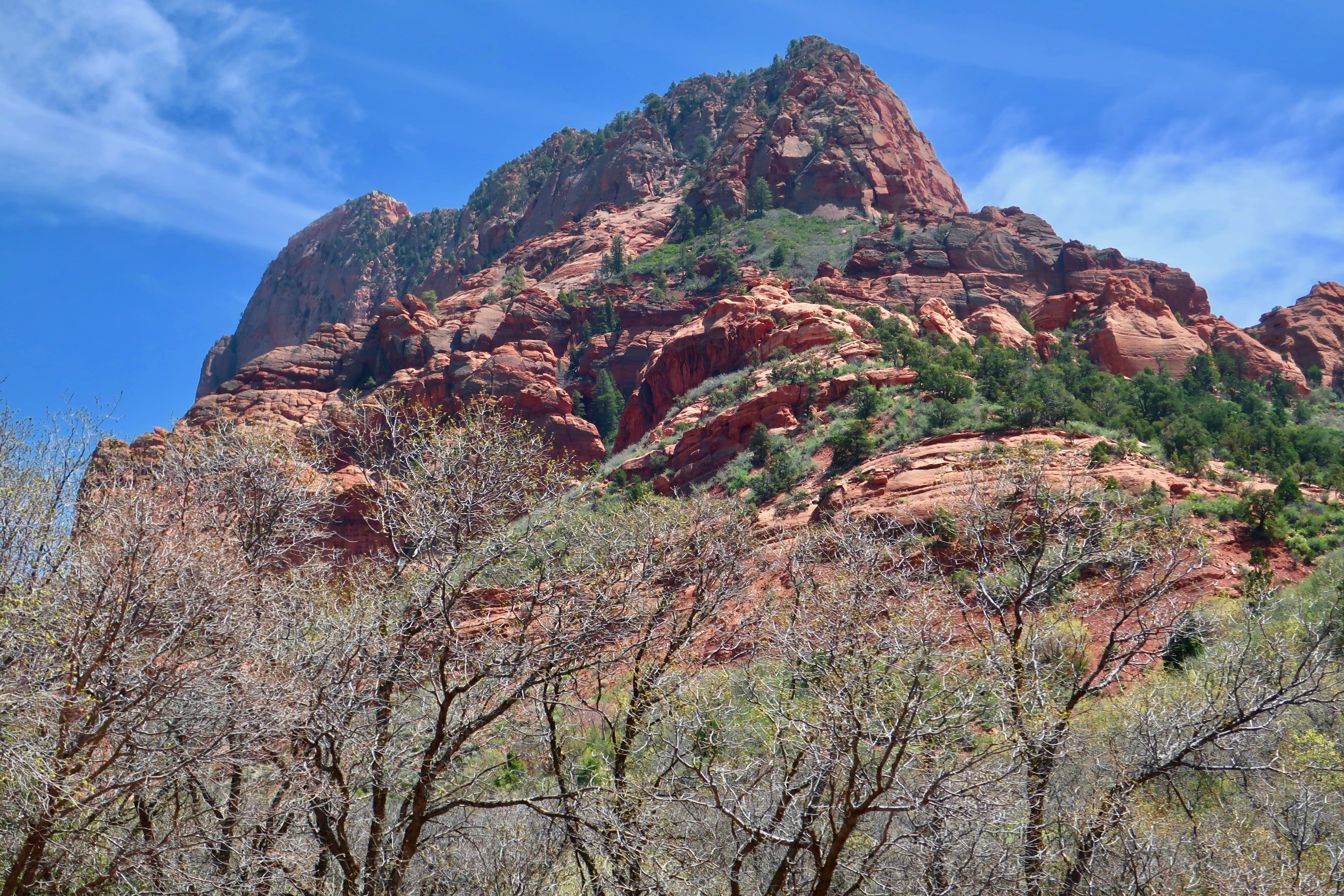
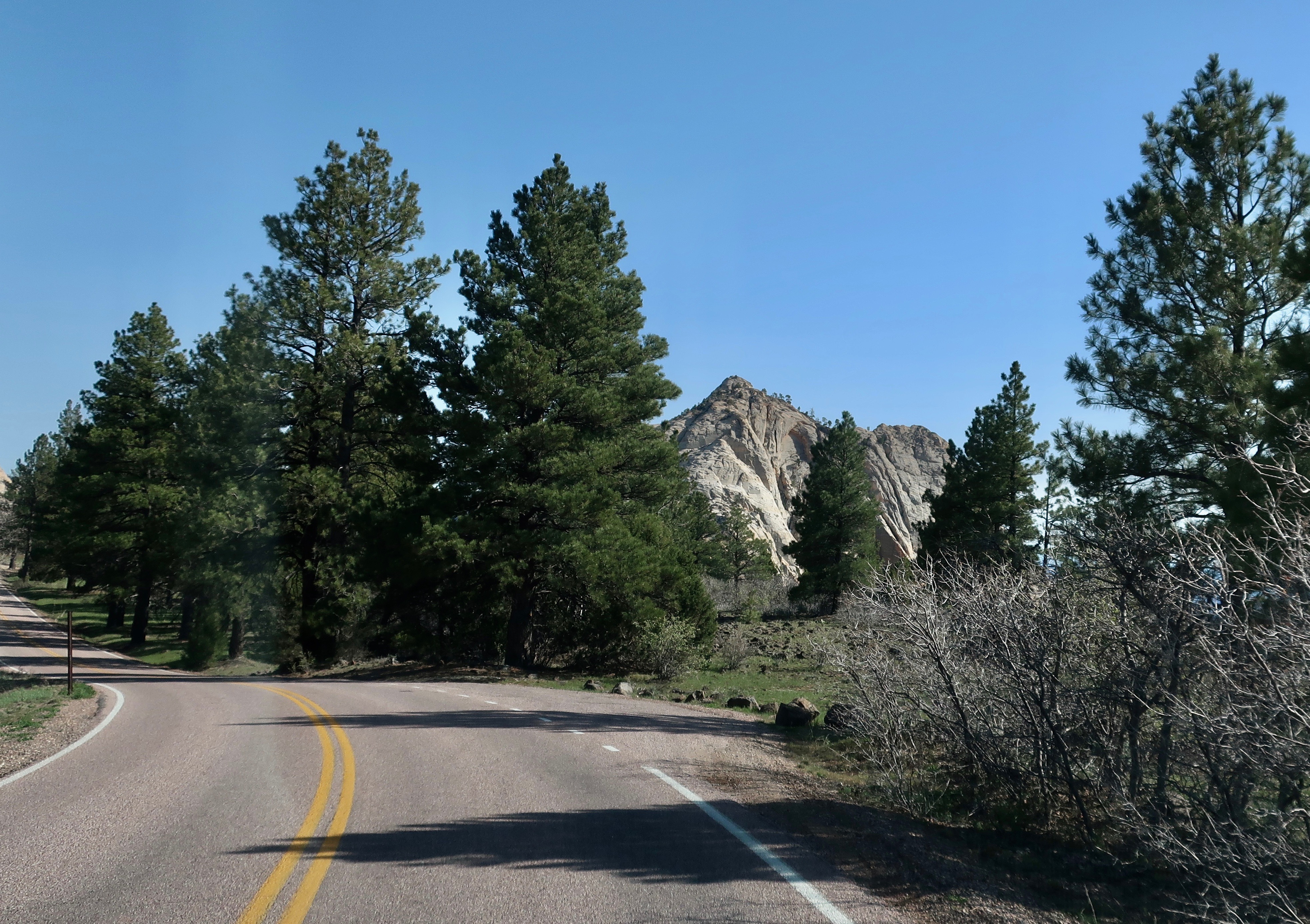
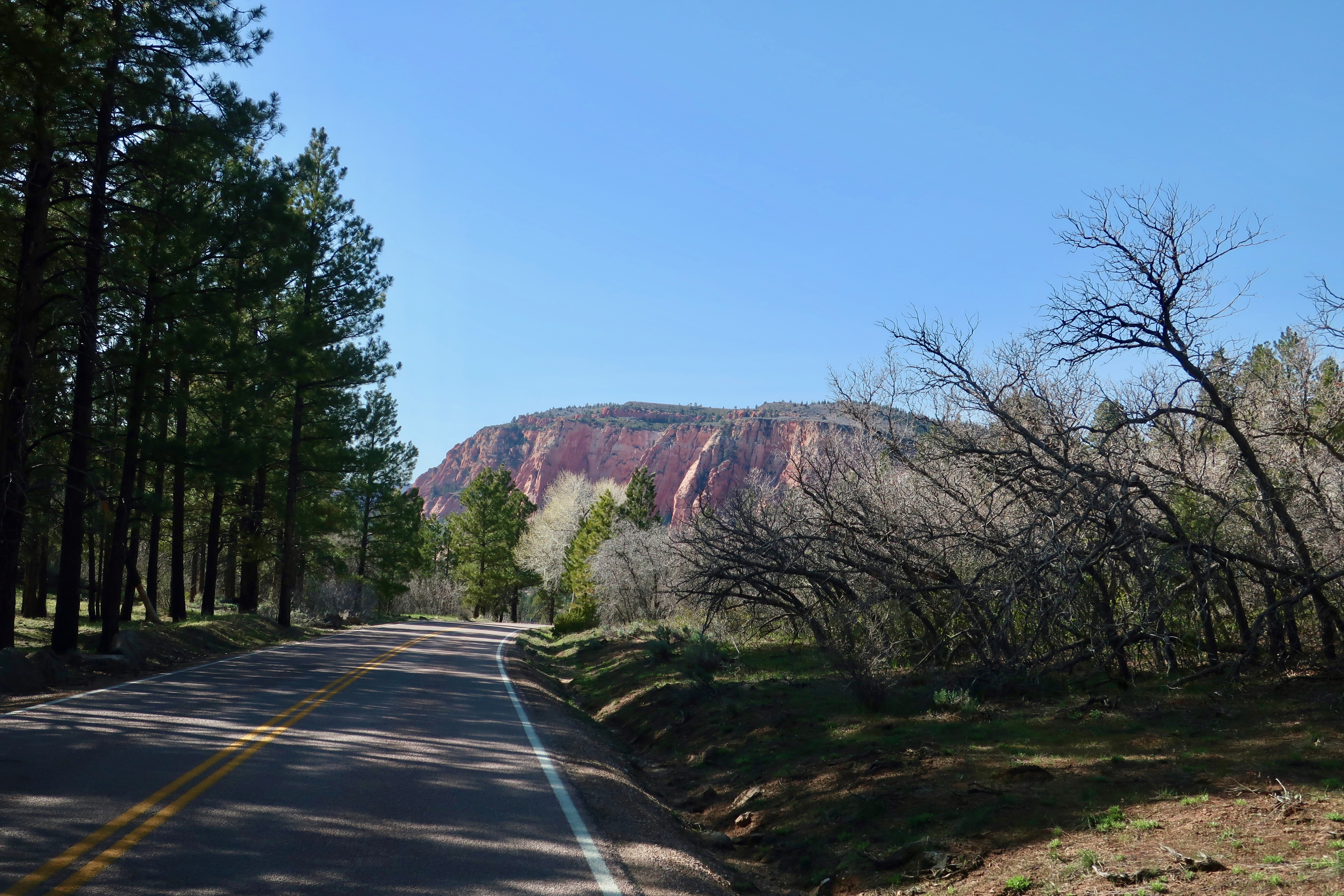
We were driving into the Kolob Canyons when Peggy snapped this photo. We knew we were in for a treat. (Photo by Peggy Mekemson.)
Zion National Park promotes Kolob Canyons as its best kept secret. Other web sites follow a similar theme. It’s not surprising considering that the canyons are located in the remote northwestern section of the Park, 45 miles away from Zion’s main attraction.
Given the distance, many people ask is whether it’s worth taking half a day to visit. (This assumes they are even aware that this section of the Park exists.) Peggy and I would like to answer with a resounding yes! It meets our three criteria: It’s unique, beautiful, and not crowded. There are also a number of hikes visitors can take that we couldn’t squeeze in. A fairly challenging one provides hikers with a view of the world’s second longest arch. Next time.
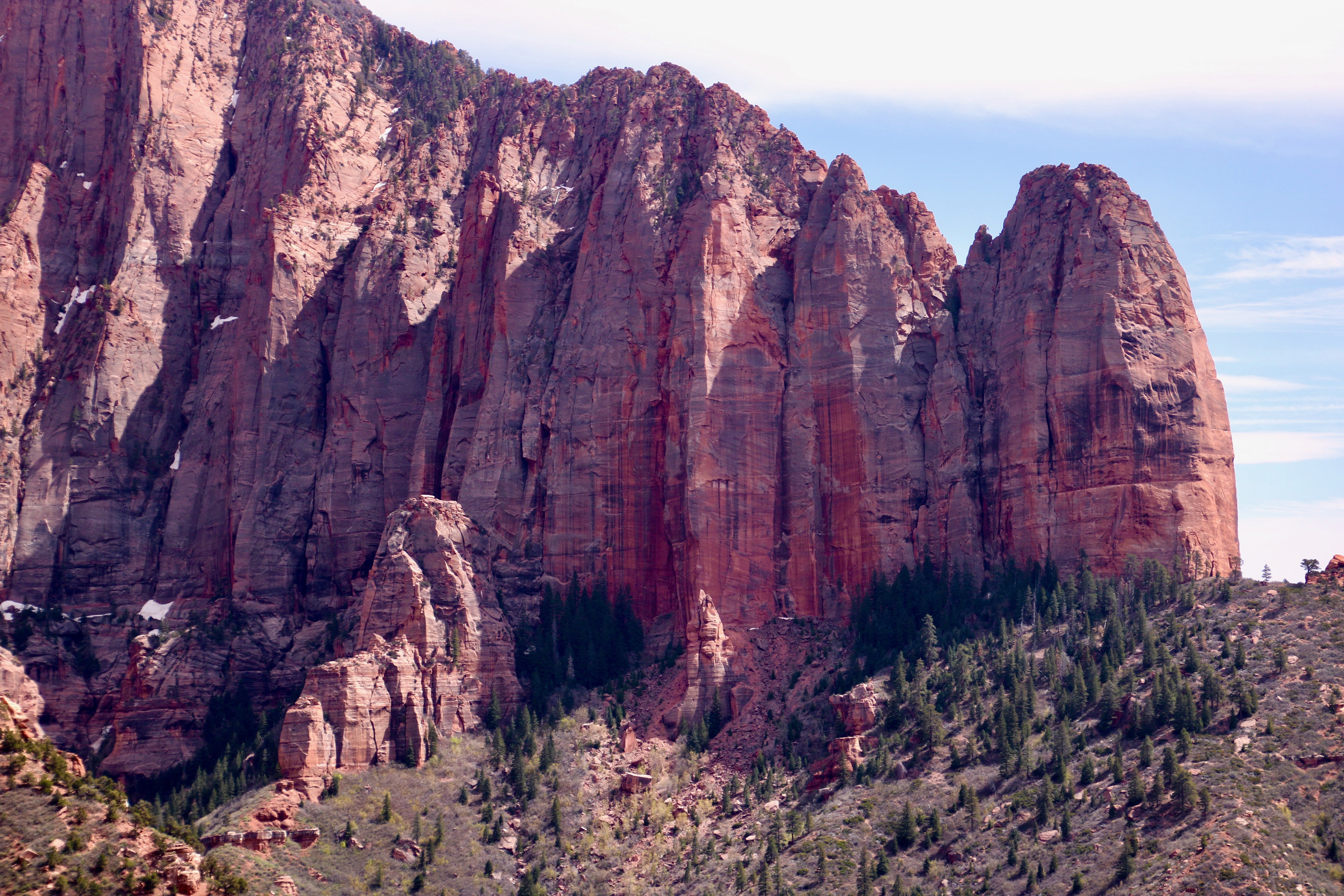
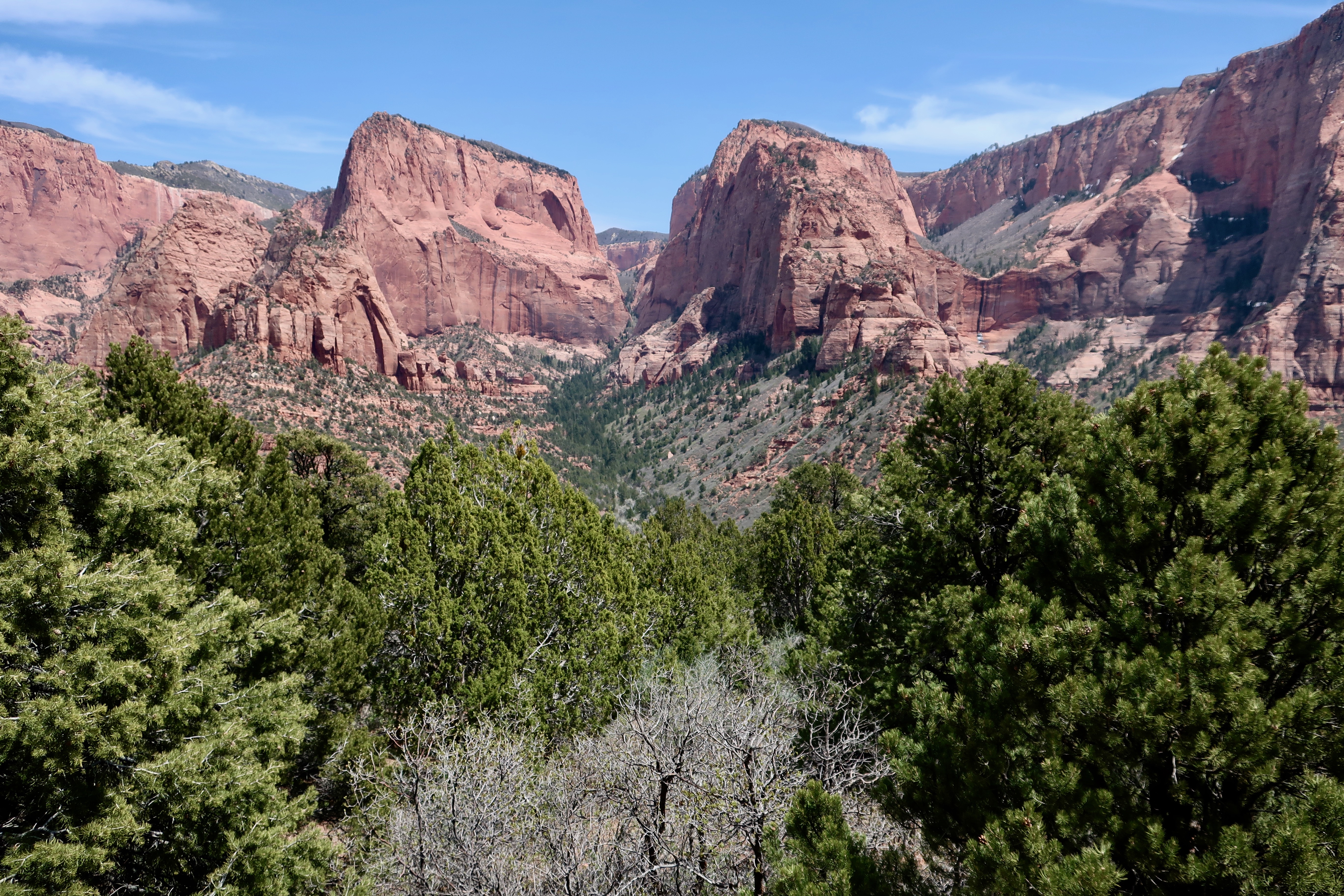
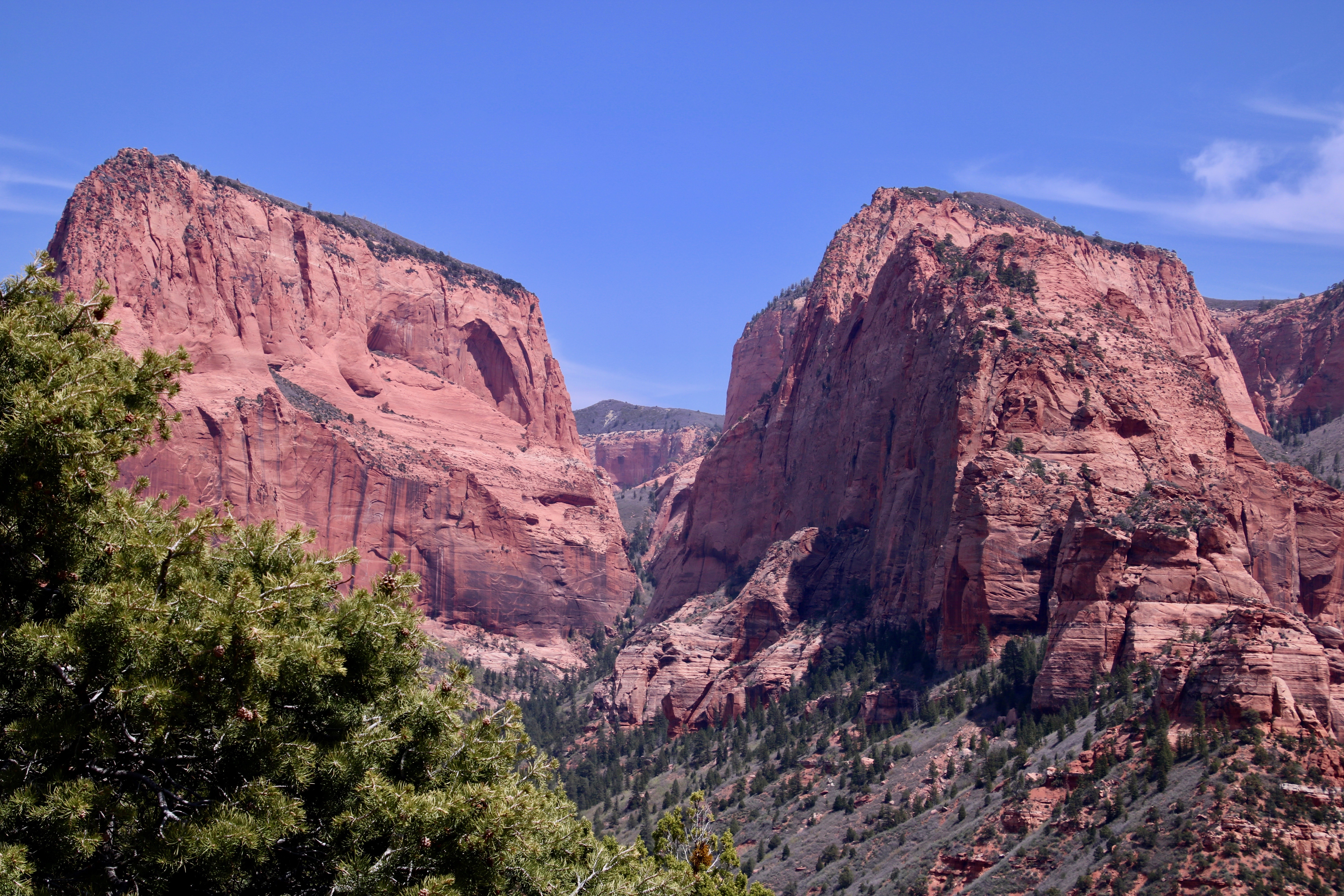
The curvy five-mile drive climbs a thousand feet. It can be accomplished in a relatively short amount of time, but— if you are like us— you will want to linger and admire the fantastic views of towering Navajo Sandstone cliffs and deep finger canyons created by runoff from the plateau above. There are a number of pullouts along the way. Each one provides a different view or perspective and each is worth a stop. The following photos reflect what Peggy and I saw.
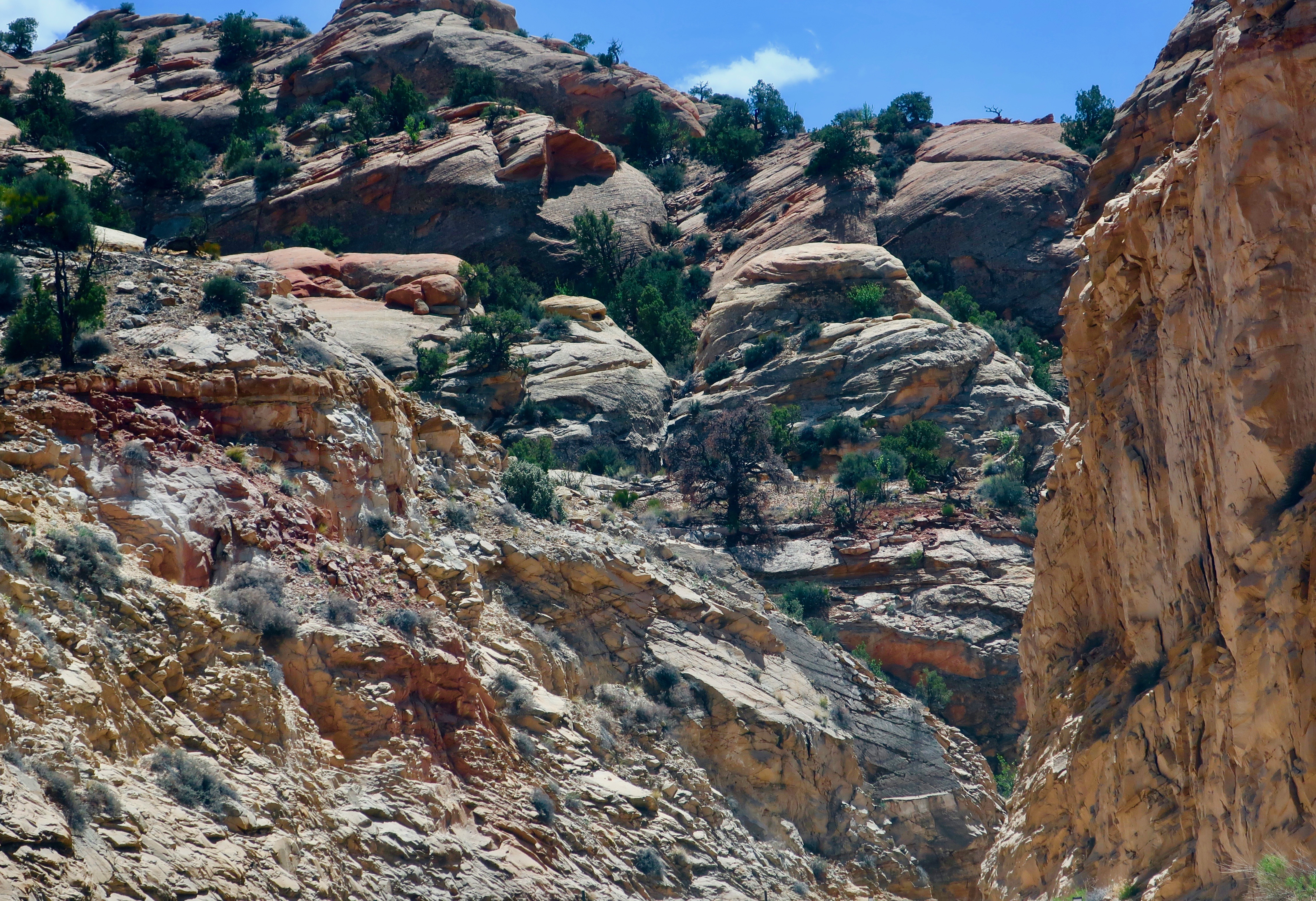
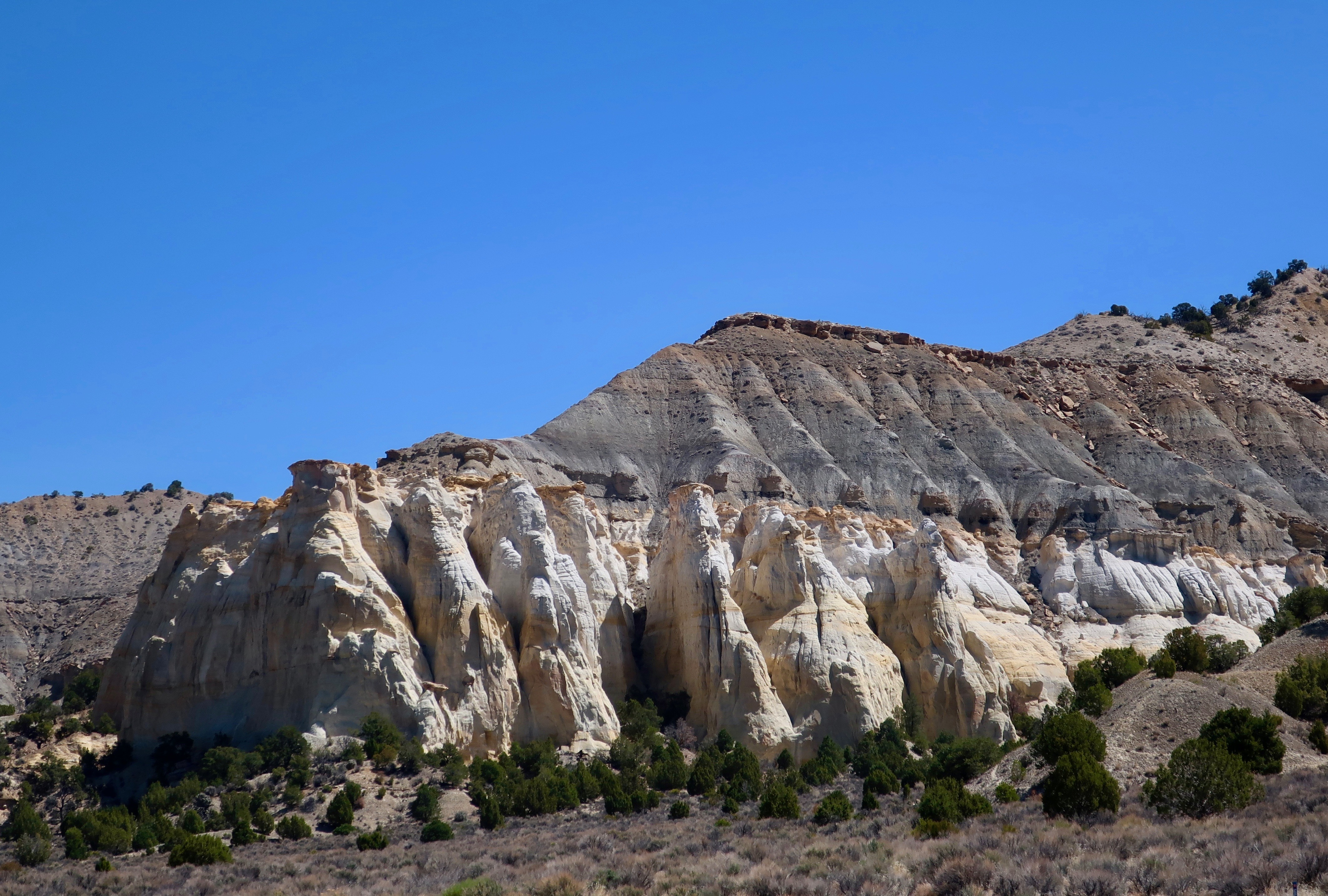
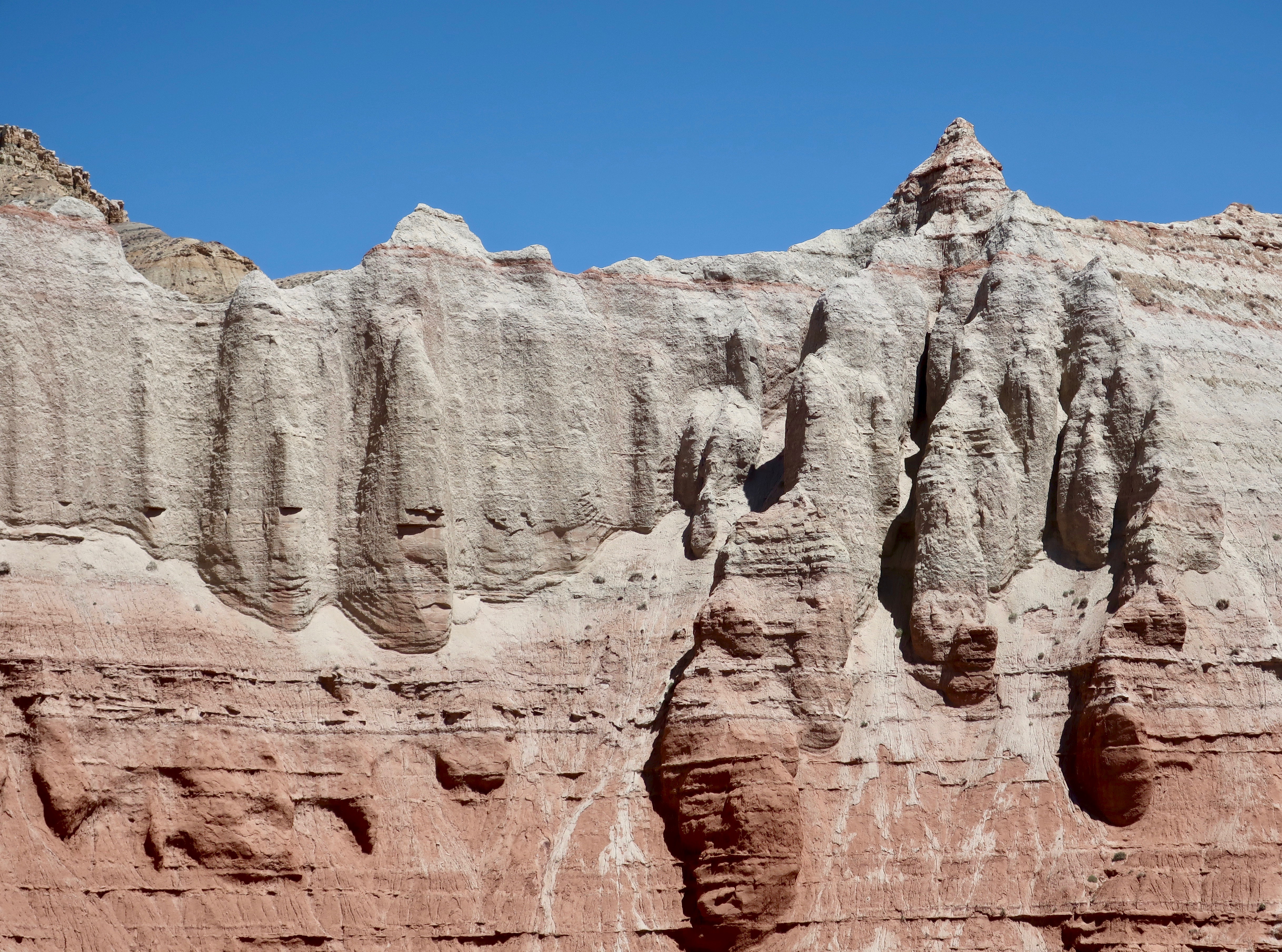
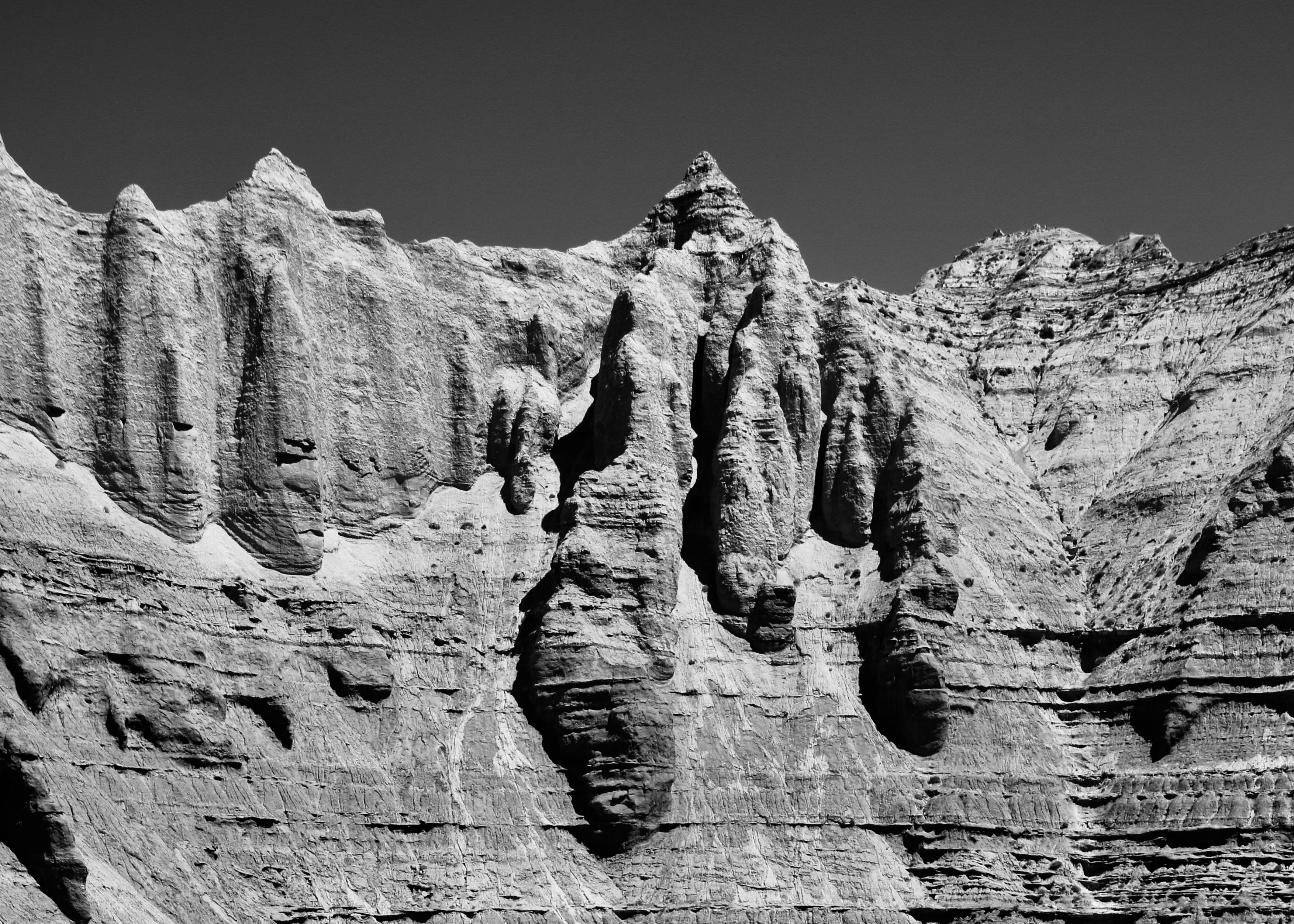
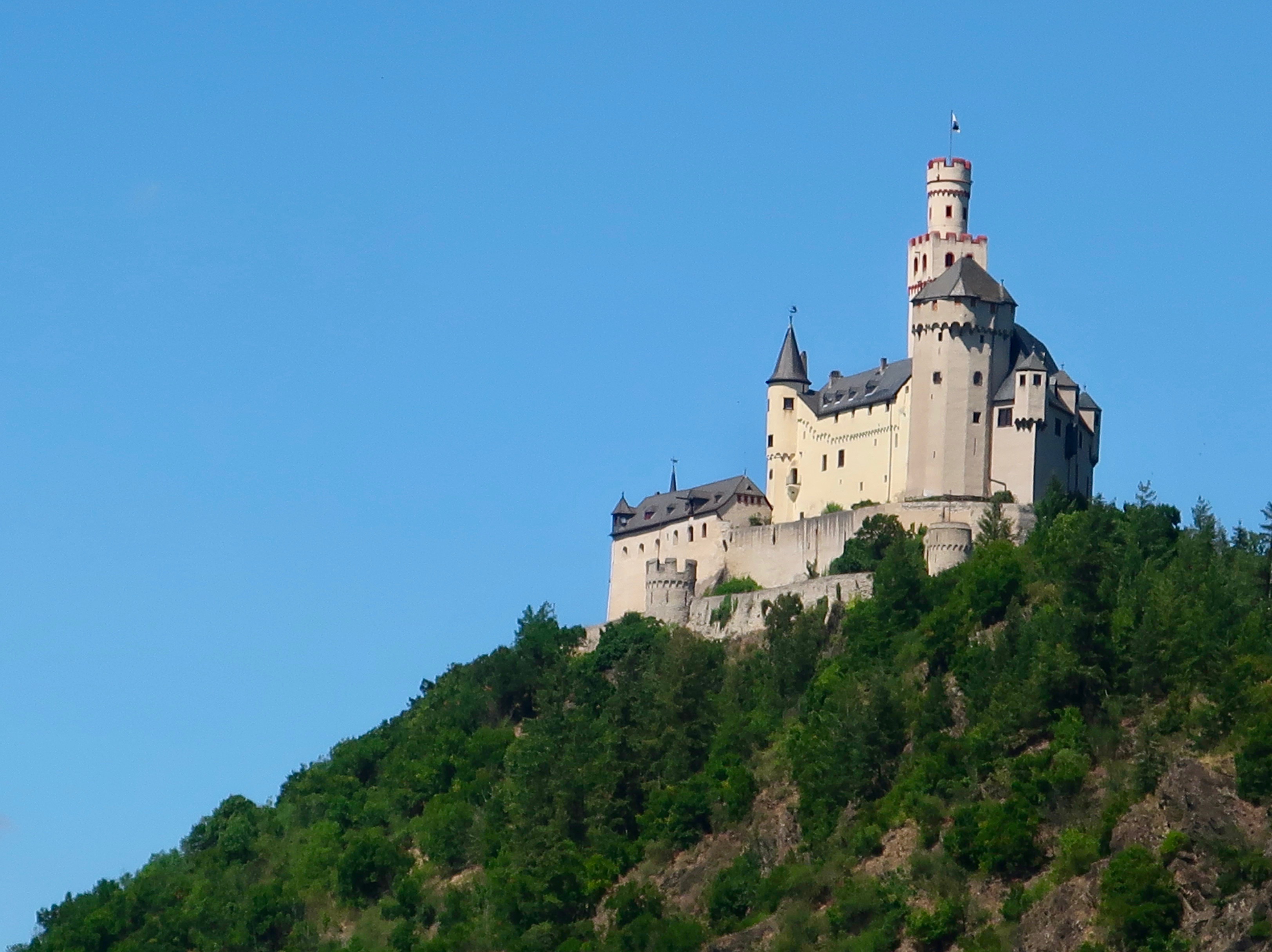
Timber Top Mountain cuts off to the left in this photo and wraps around a hanging valley that has been created by runoff. The Shuntavi Butte stretches out from Timber Top on the right. The area was a favorite of ours.Remember what I said about different perspectives. Peggy took this side shot of Shuntavi Butte. Is that baby Shuntavi on the left? (Photo by Peggy Mekemson.) I opted for for a close up which gave the Shuntavi Butte a massive, toothed look.This seasonal stream that runs between the two arms of Timber Top Mountain was close to dry when we saw it. But the minerals it carried had left a black stain where it tumbled off of the hanging canyon. Eventually it will finish carving the canyon down to the lower level. (Give or take a few million years.) The erosive power of water is amazing. (Photo by Peggy Mekemson.)Nagunt Mesa is located next to the western arm of Timber Top Mountain.Here’s a closer view. Note the beginning of a possible arch on Nagunt Mesa. (Photo by Peggy Mekemson.)I added an even closer view of the would-be arch. Note that Nagunt Mesa is also covered with timber. That led me to wonder what type of wildlife lived there. Had Native Americans found a way to make it their home?
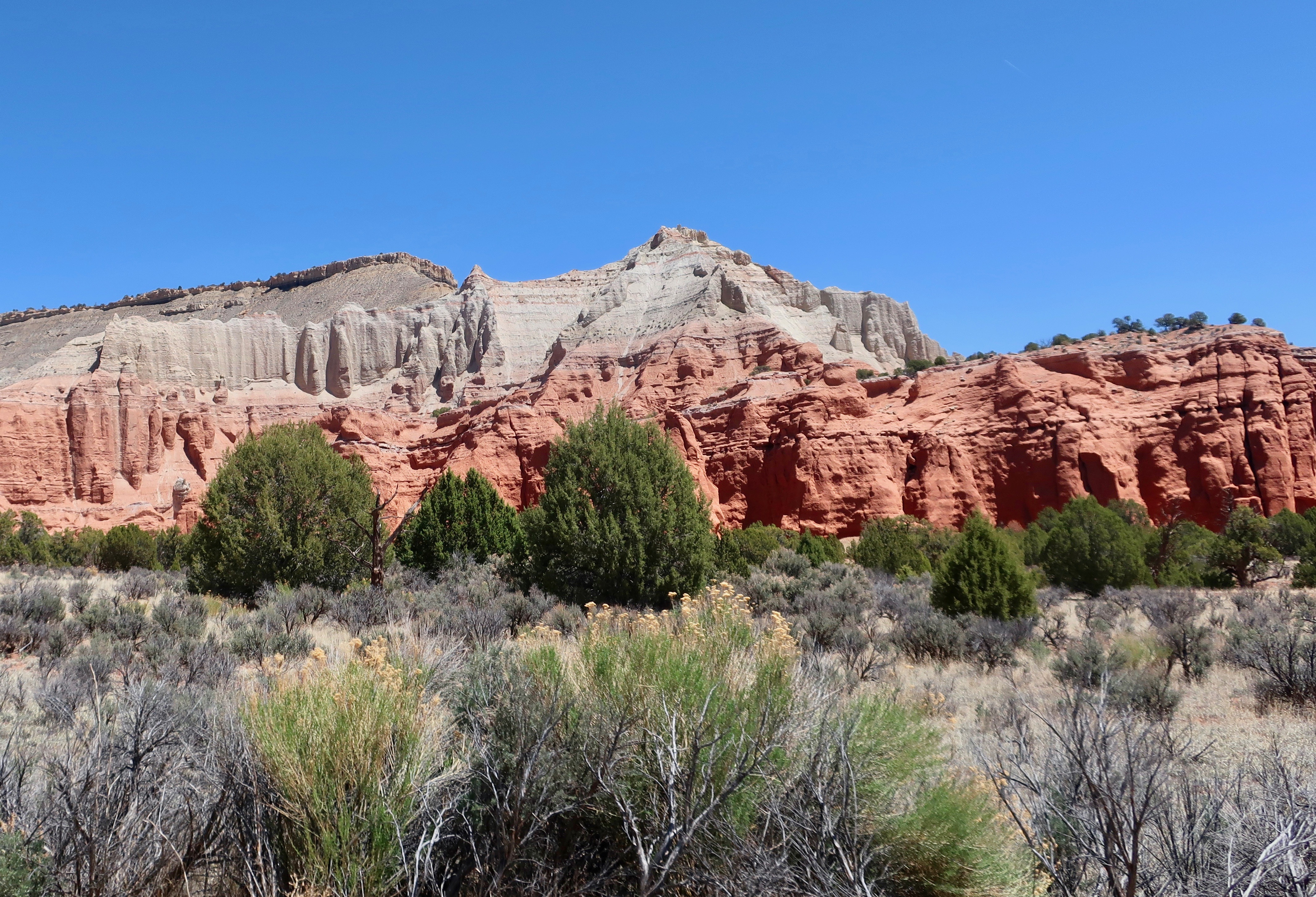
Some other views of the Kolob Canyons from our visit:
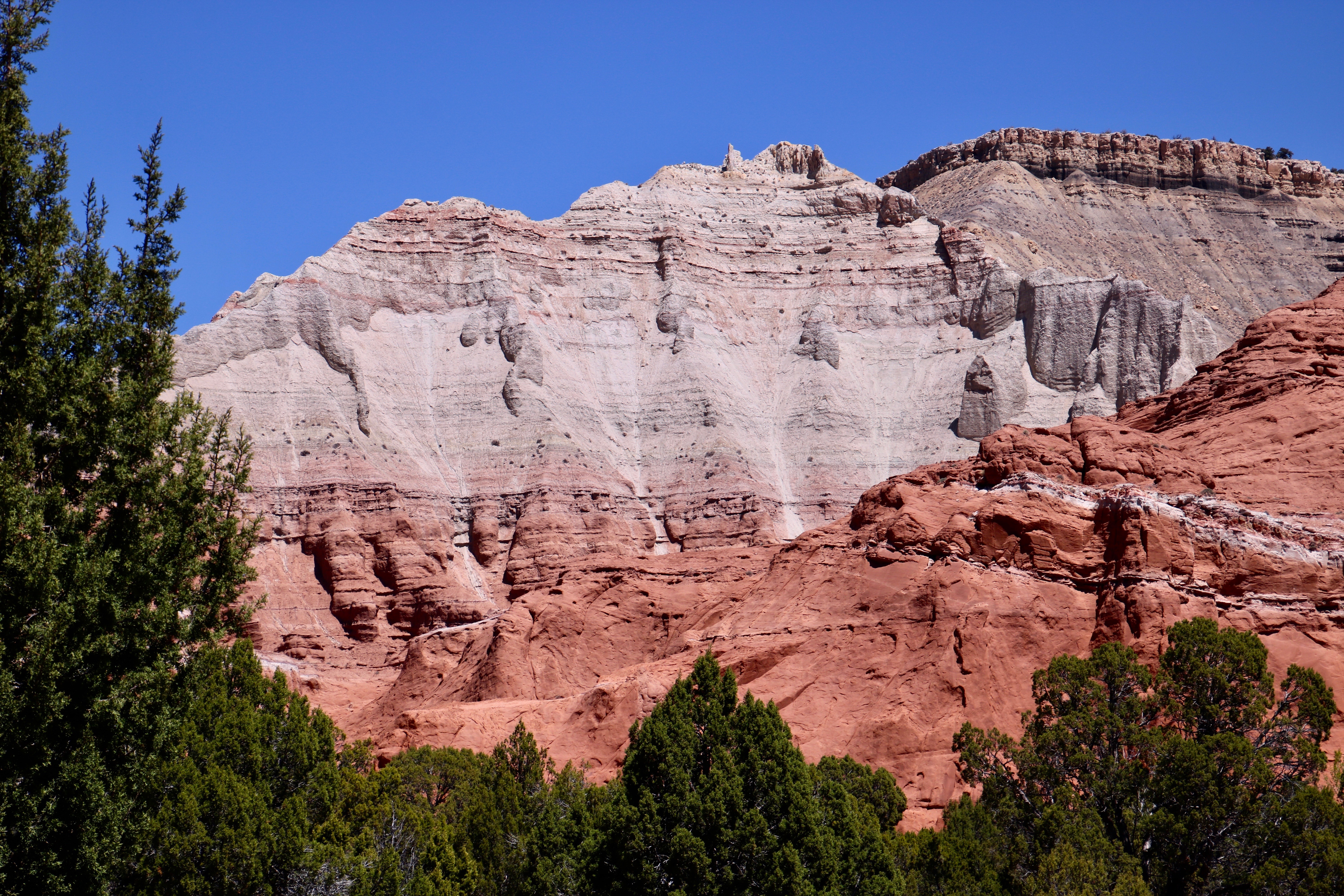
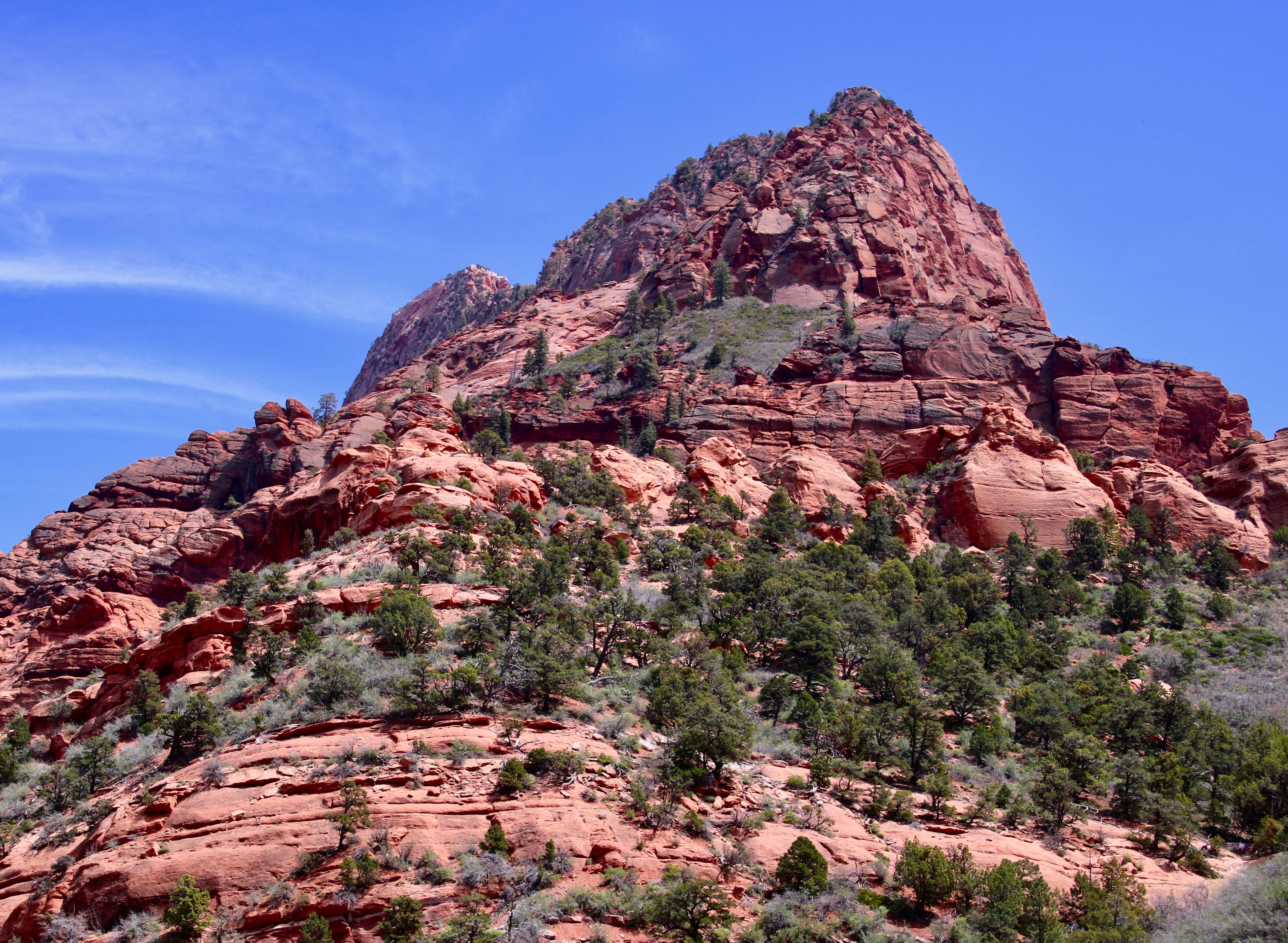
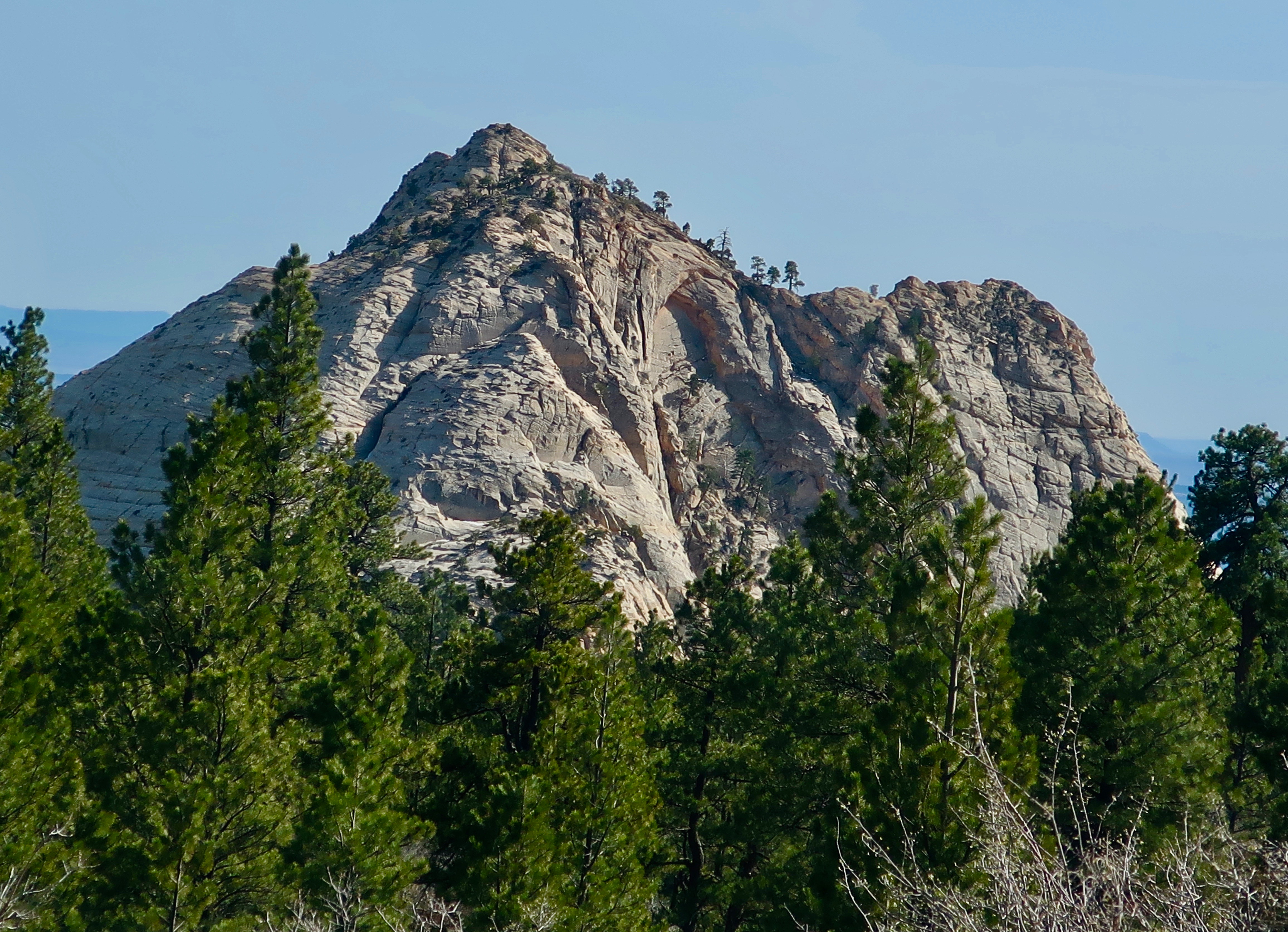
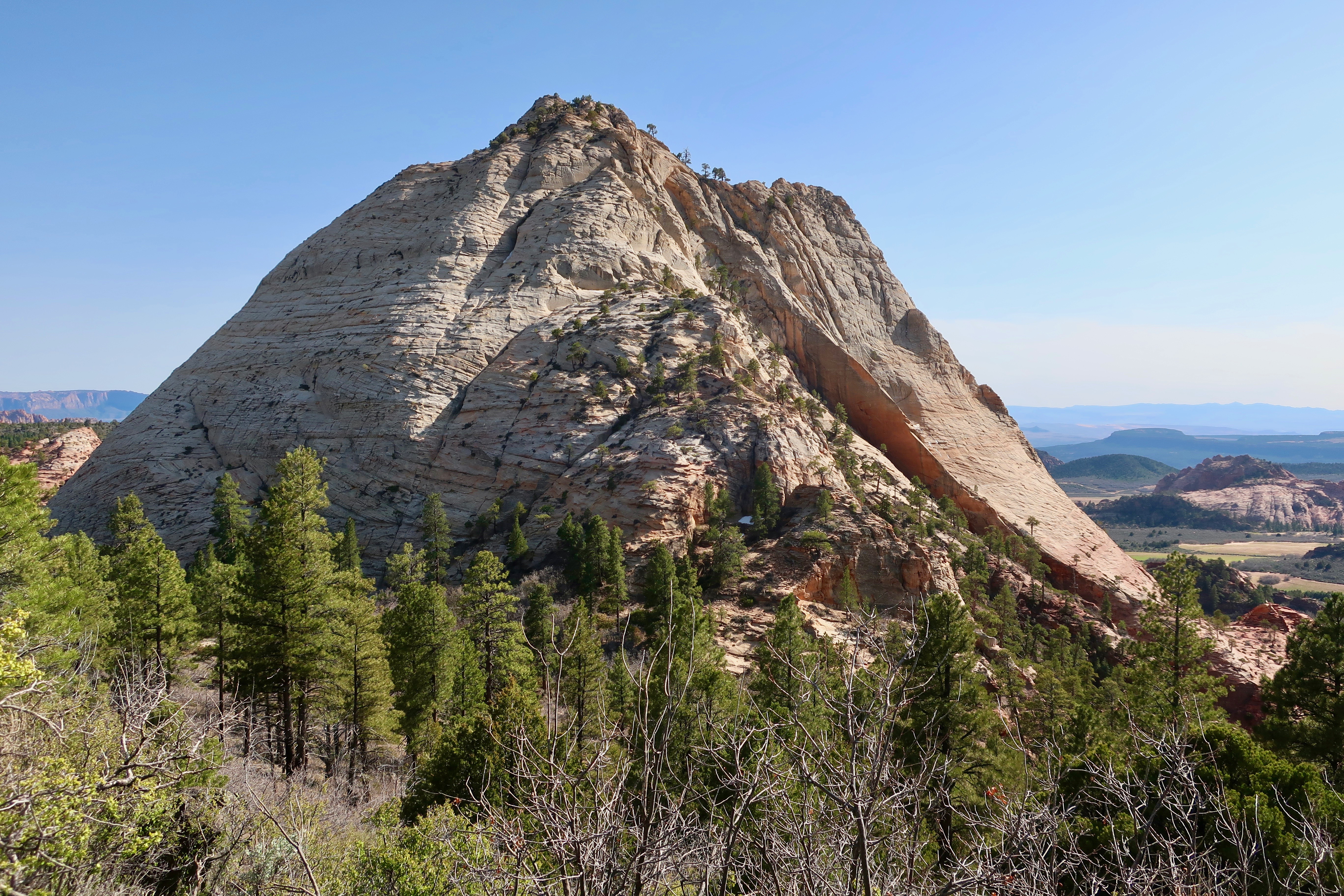
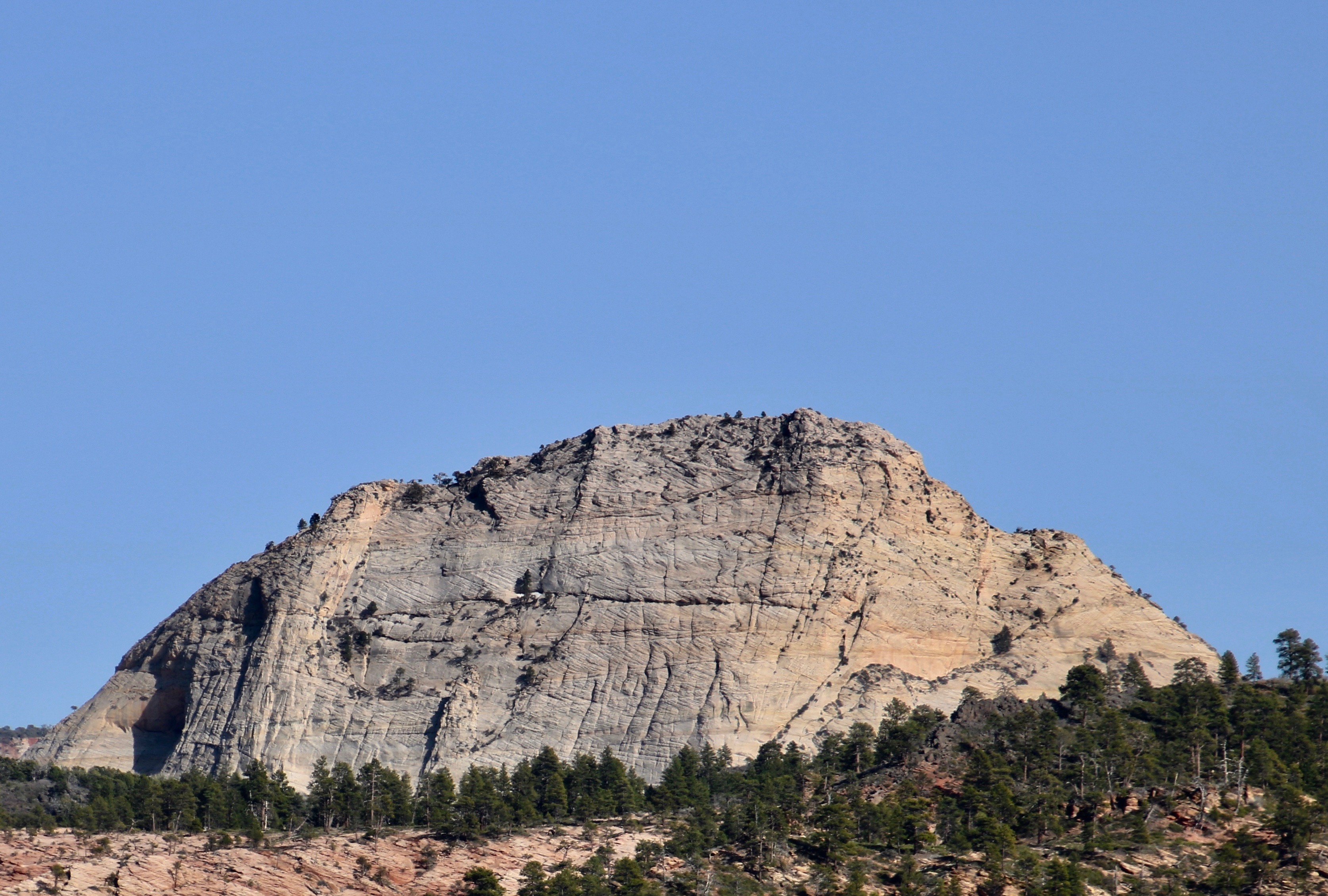
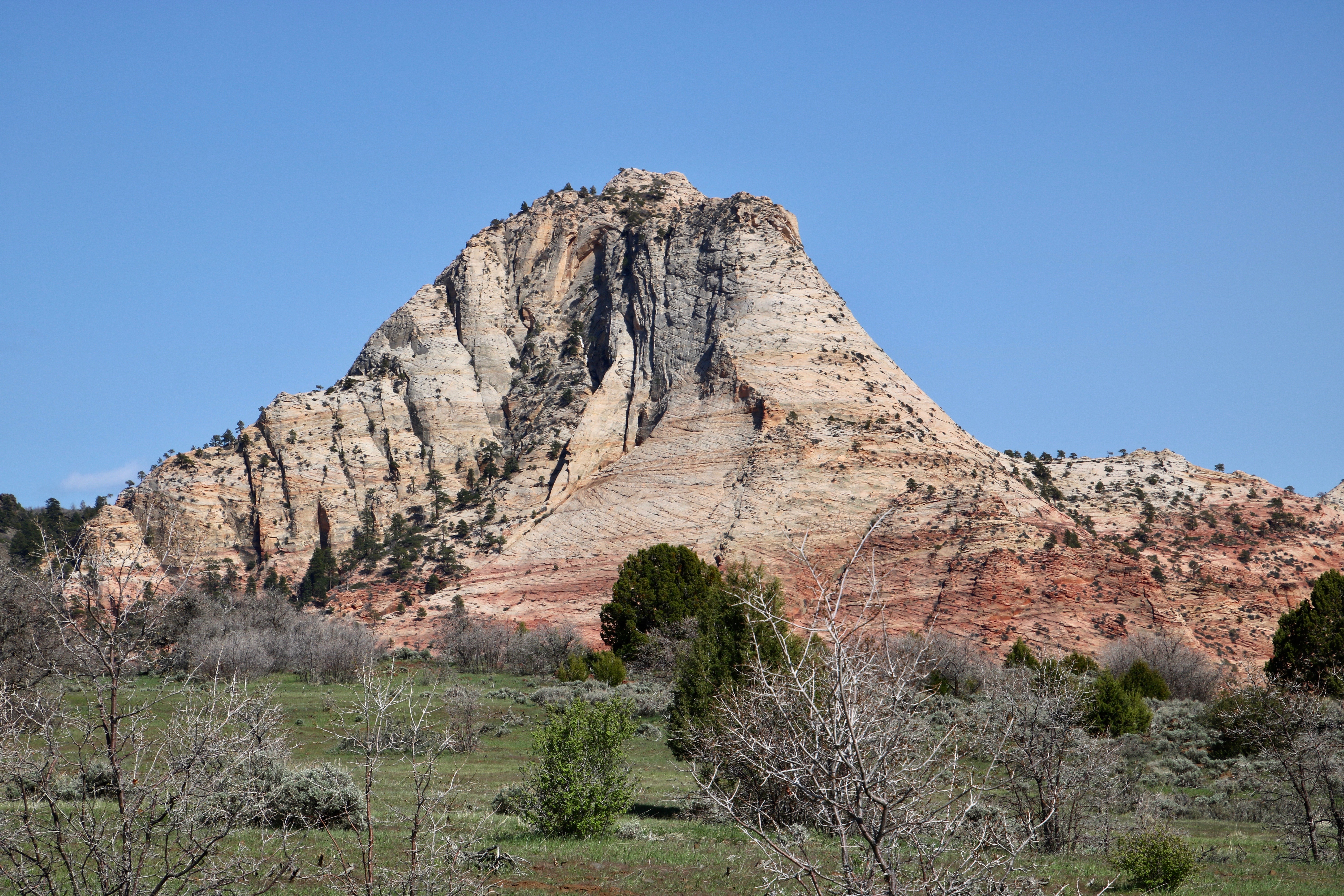
Another Mesa (I think). I like the foreground effect of the trees on the photo. We were high enough and it was early enough that the trees were just beginning to leaf out. A more frontal shot, i.e. different perspective, gave the mesa an almost pyramid look. (Photo by Peggy Mekemson.)
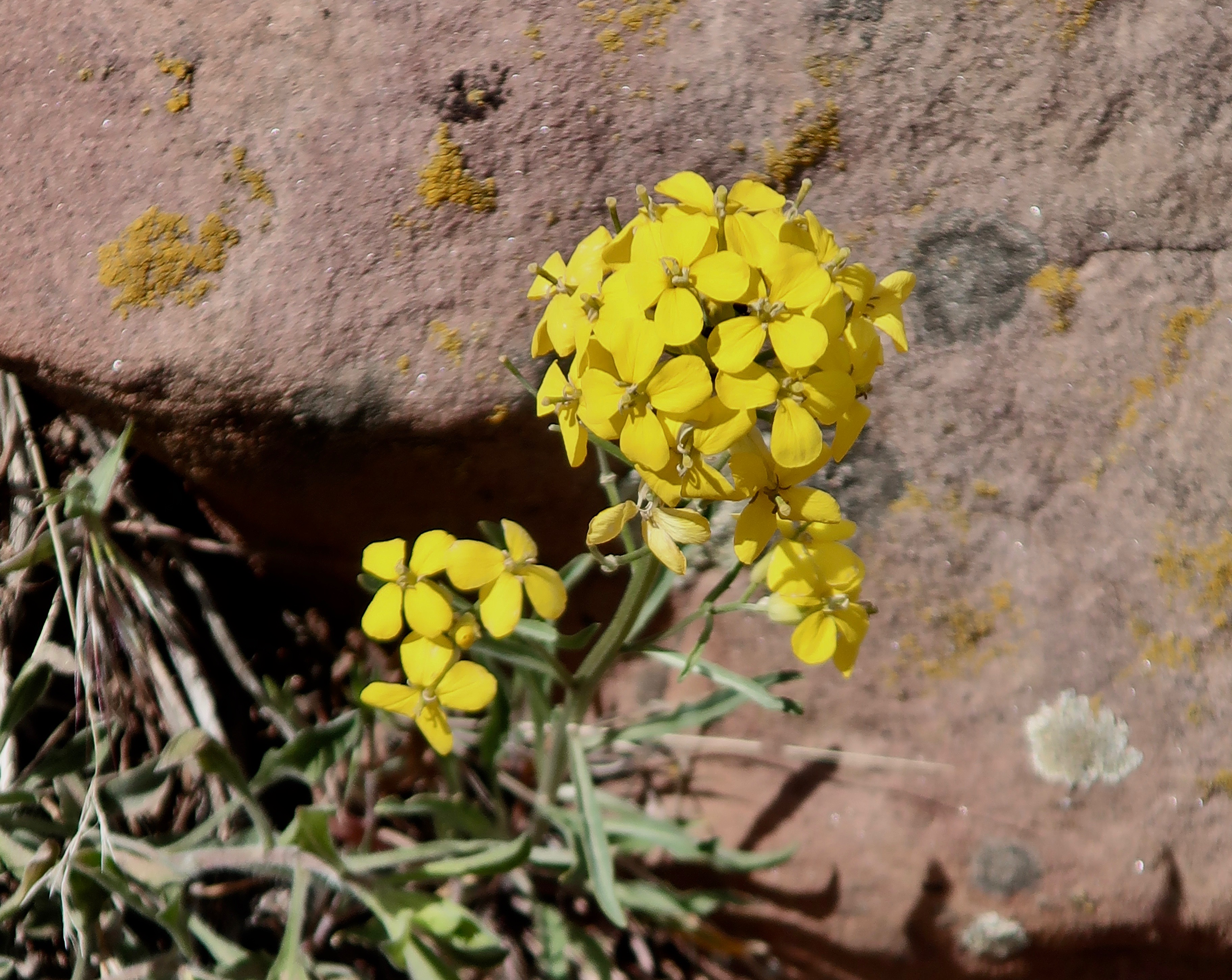
I found an old friend from the Sierra Nevada Mountains growing at a high point along the road: a wall flower (Erysimum capitatum). It’s always reminded me of a brief phase I went through in high school where girls scared the heck out of me.
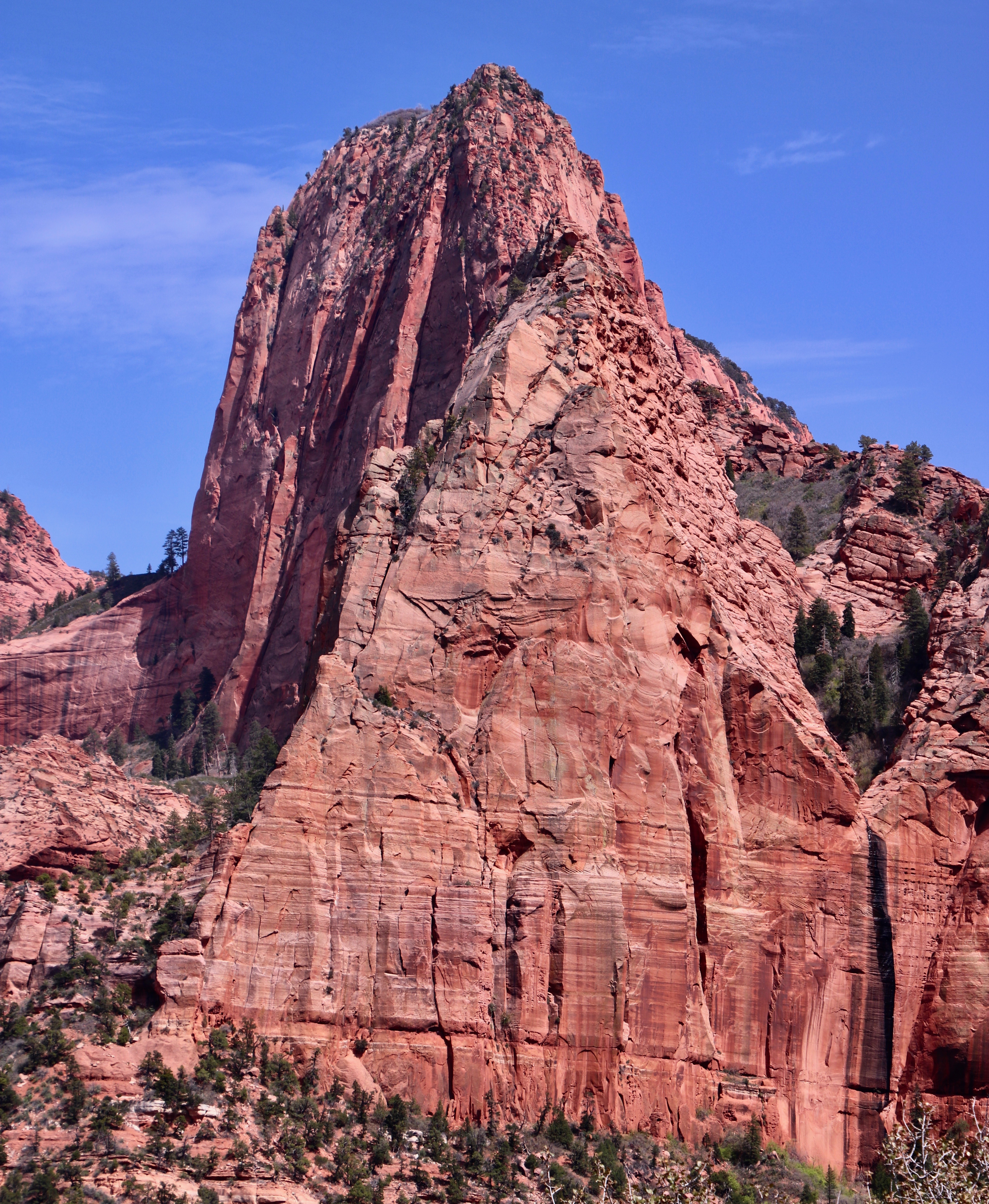
This peak was even more impressive than the pyramid. (Photo by Peggy Mekemson.)
I’ll conclude today with this side view of Nagunt Mesa. I liked the way the tree framed the photo. Our next post will take readers over the east side of Zion Canyon. Once again, I will feature unique rocks. This post will also include petroglyphs located in a magical canyon.
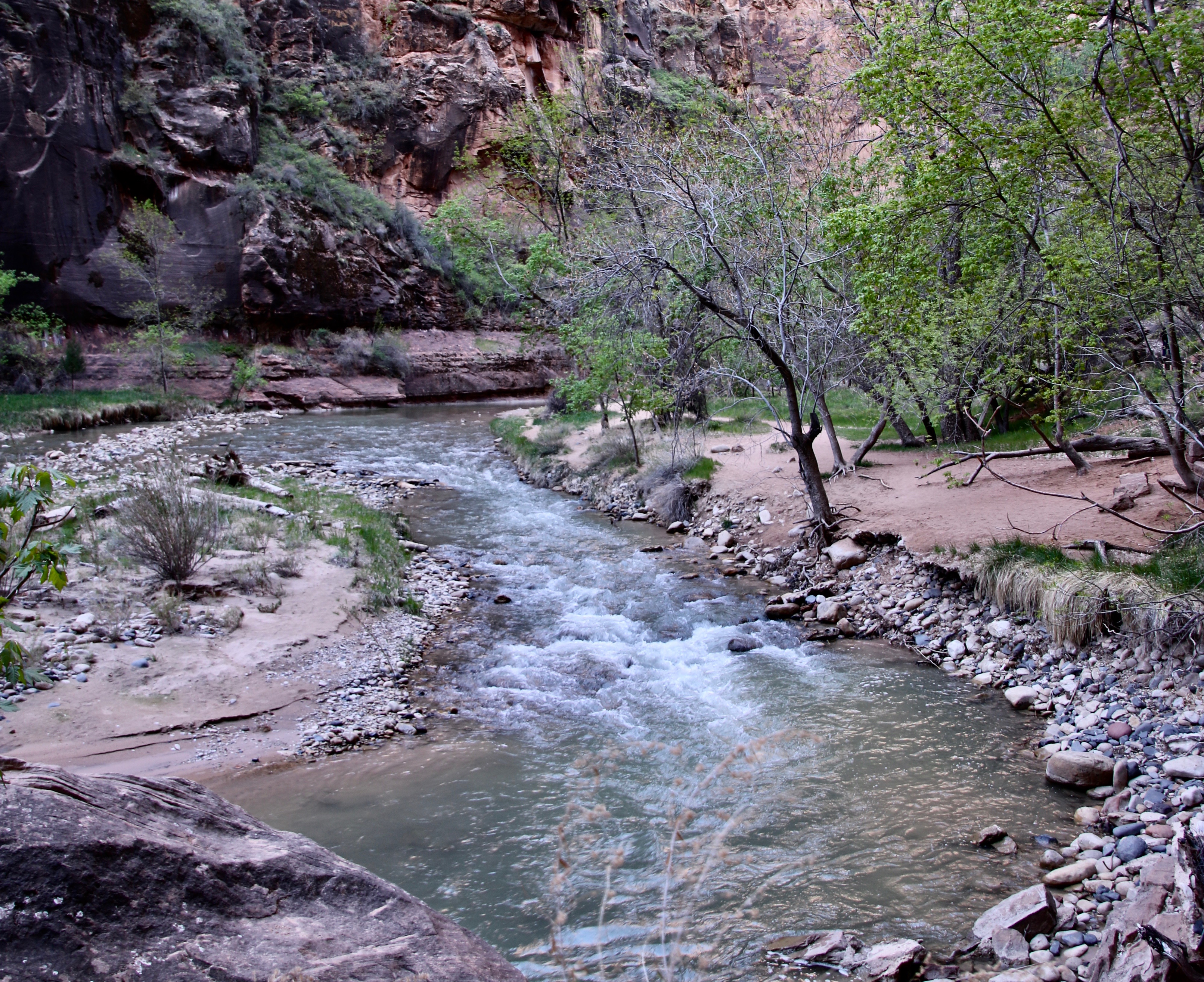
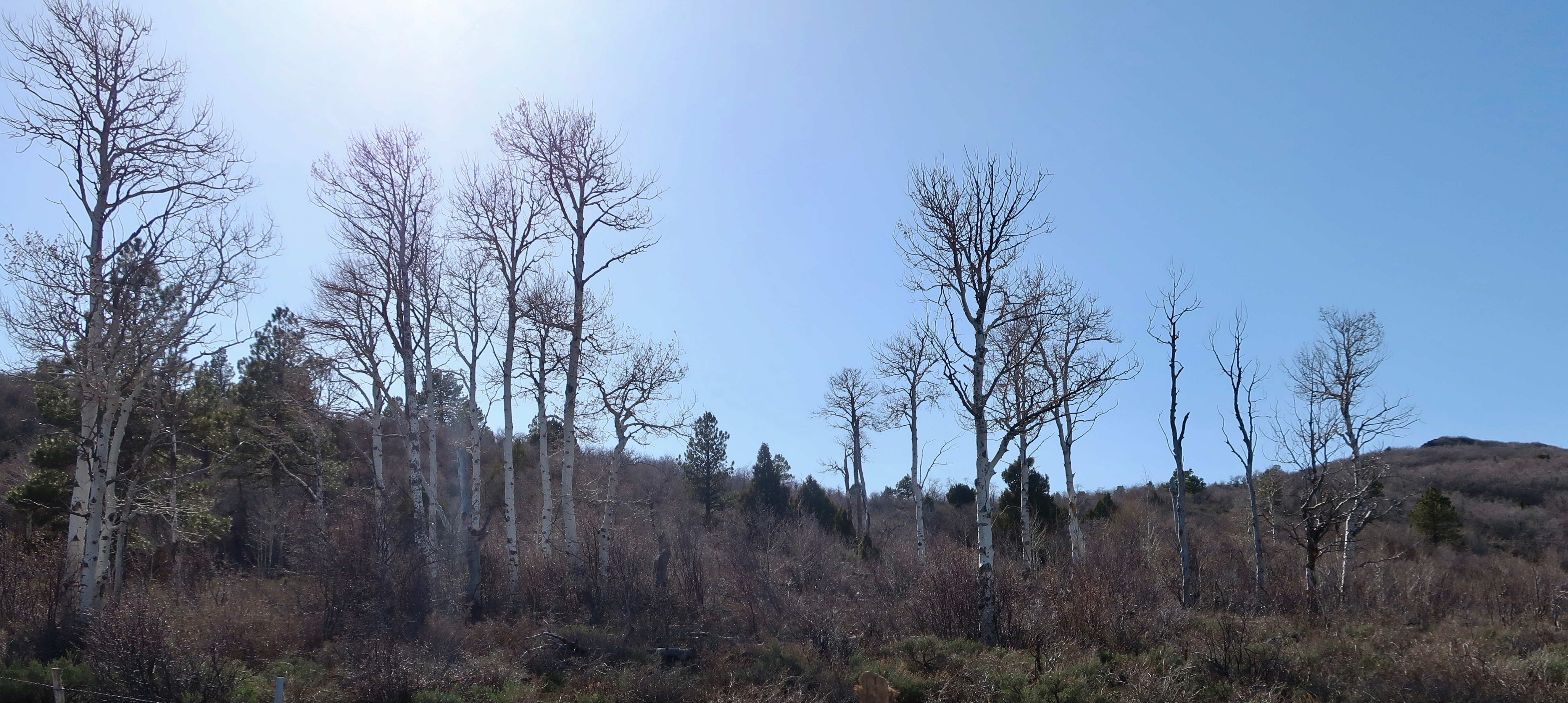
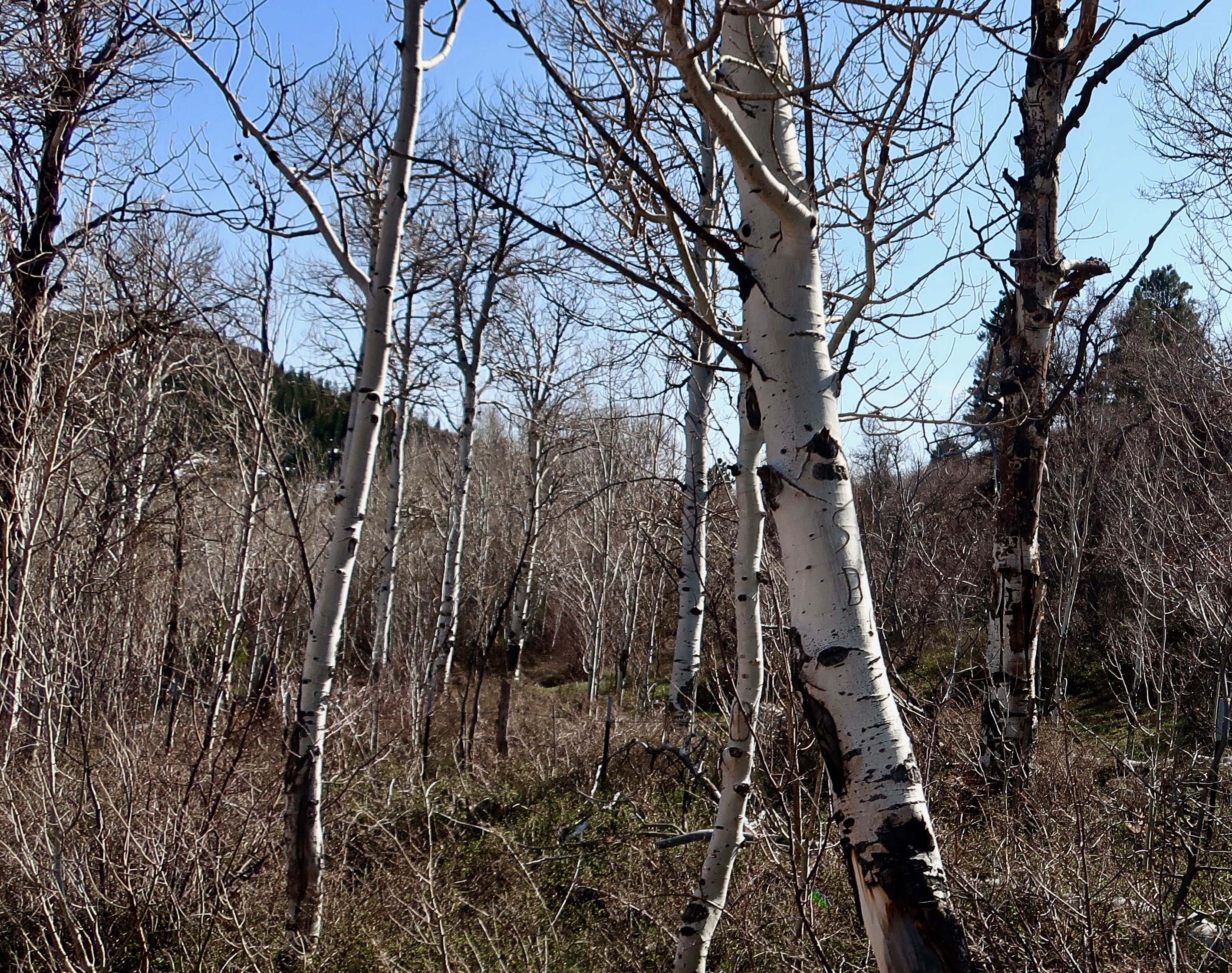
At 8,100 feet, the aspens on Kolob Terrace in Zion National Park were convinced it was still early spring. Or maybe late winter. We had climbed 4,500 feet since leaving our campground on the Virgin River of Utah.
The thunder rolled in with an unending rumble and the wind shook our trailer until I thought it might tip us over. We are in Kansas and I couldn’t help but think of Dorothy and her faithful dog, Toto. I half expected to hear the tornado sirens go off or see a wicked witch fly by on her broom. It was not conducive to sleep. Instead, I watched the lightning dance across our skylight while Peggy slept soundly. Maybe she thought I could worry enough for both of us. “Oh, was the wind blowing last night?” she asked me the next morning.
We’ve now left the backroads, mountains and mesas of the Southwest behind. It will be mainly freeway from here on out as we dash across the country to catch our Icelandic Air trip to Amsterdam— except it isn’t that much of a dash. We’ve simply eliminated our 5-7 day layovers between travel days. We still only plan to travel around 200 miles a day with every other day a layover. I’ve never had a sense of humor about driving 4-5 hundred miles straight. And it certainly hasn’t improved with age.
I may change my mind if this weather continues, however. We are under severe thunderstorm watch again tonight. We could be at our daughter’s in Virginia in four days instead of the two weeks I am planning. I have even less tolerance for tornados and golfball size hail than I do driving long distances. Tempting…
Meanwhile, my blog is still in Zion. I have at least three more posts on it, maybe more! 🙂 And then there is Bryce and the North Rim of the Grand Canyon, and Mesa Verde, and the Rockies, and dinosaur tracks, desert wildflowers and petroglyphs. Will it ever end? 🙂 Peggy and I have taken at least a thousand photos. I’m afraid to count them. But don’t worry, we won’t subject you to all of them.
Today, my focus continues to be on the Kolob Terrace section of Zion National Park. After some very winding roads we made it to the top of the Terrace. The views continued to be spectacular.
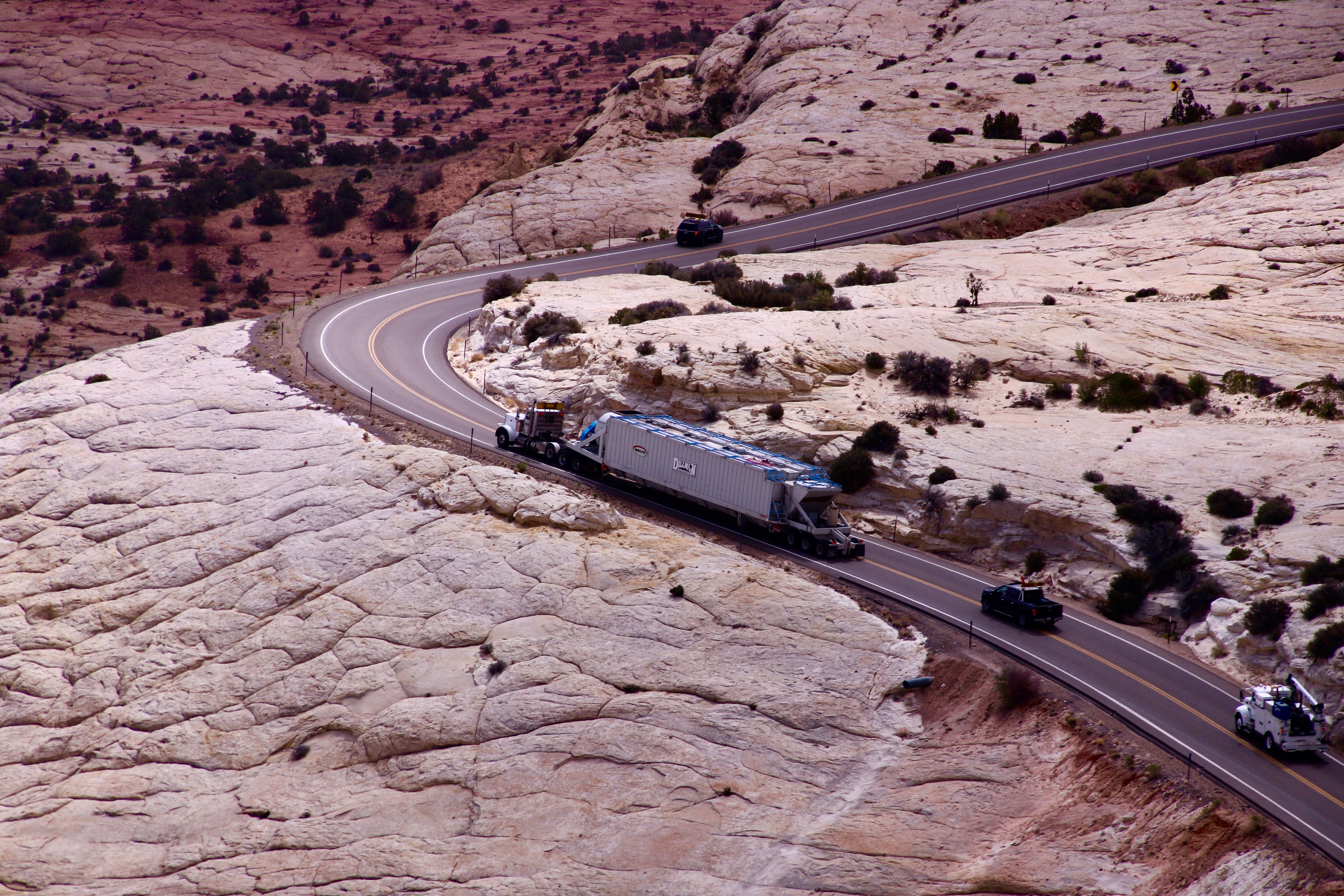
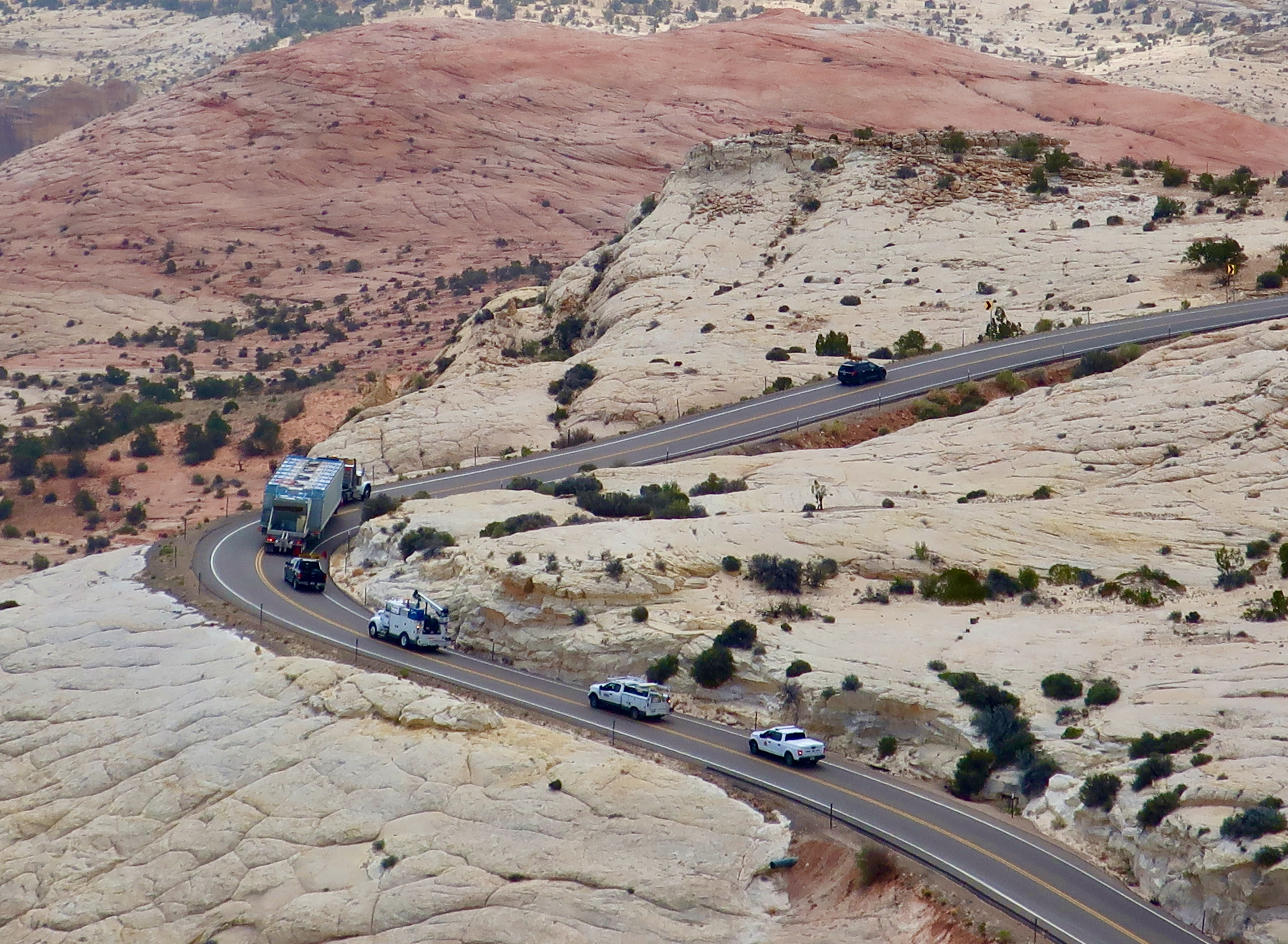
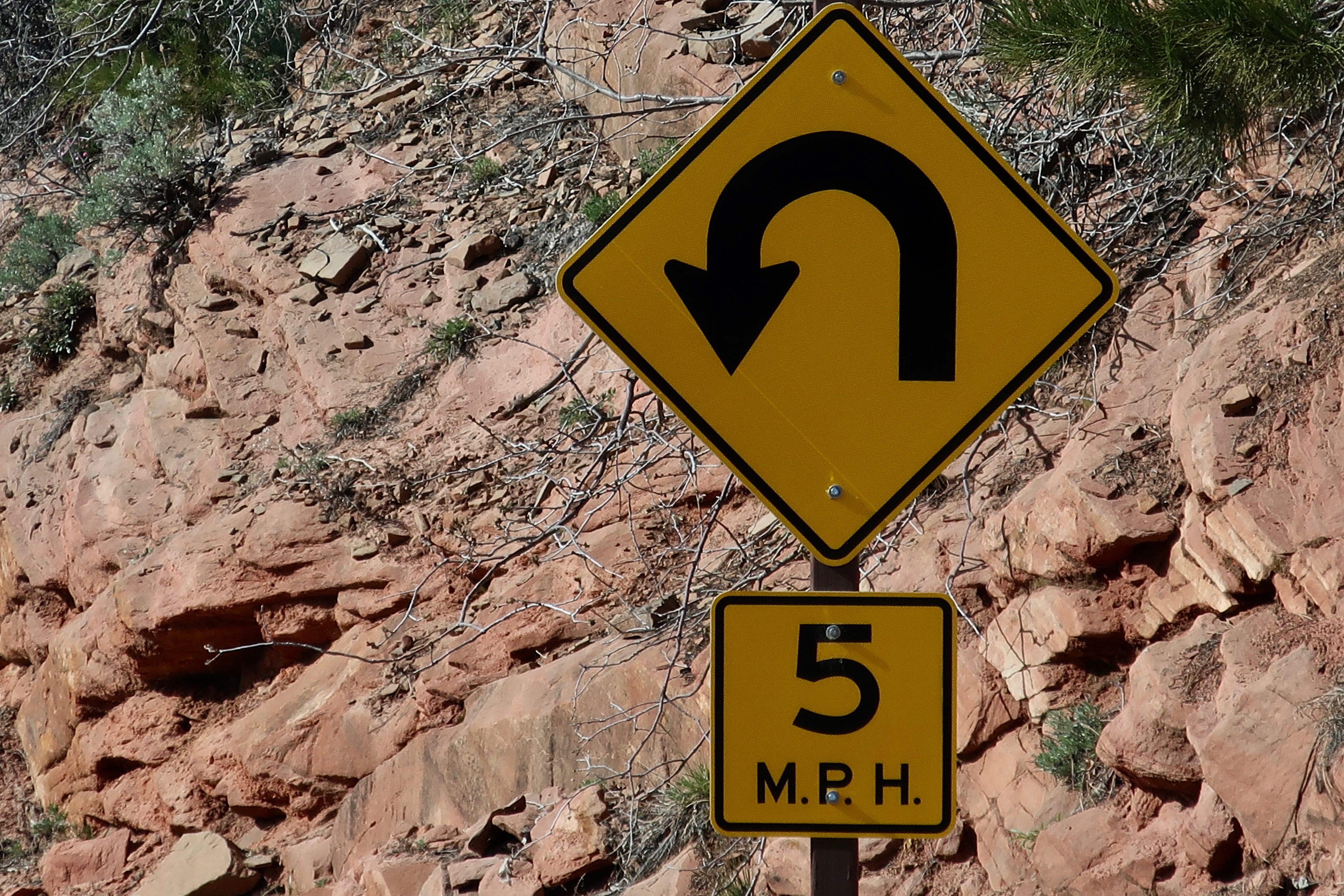
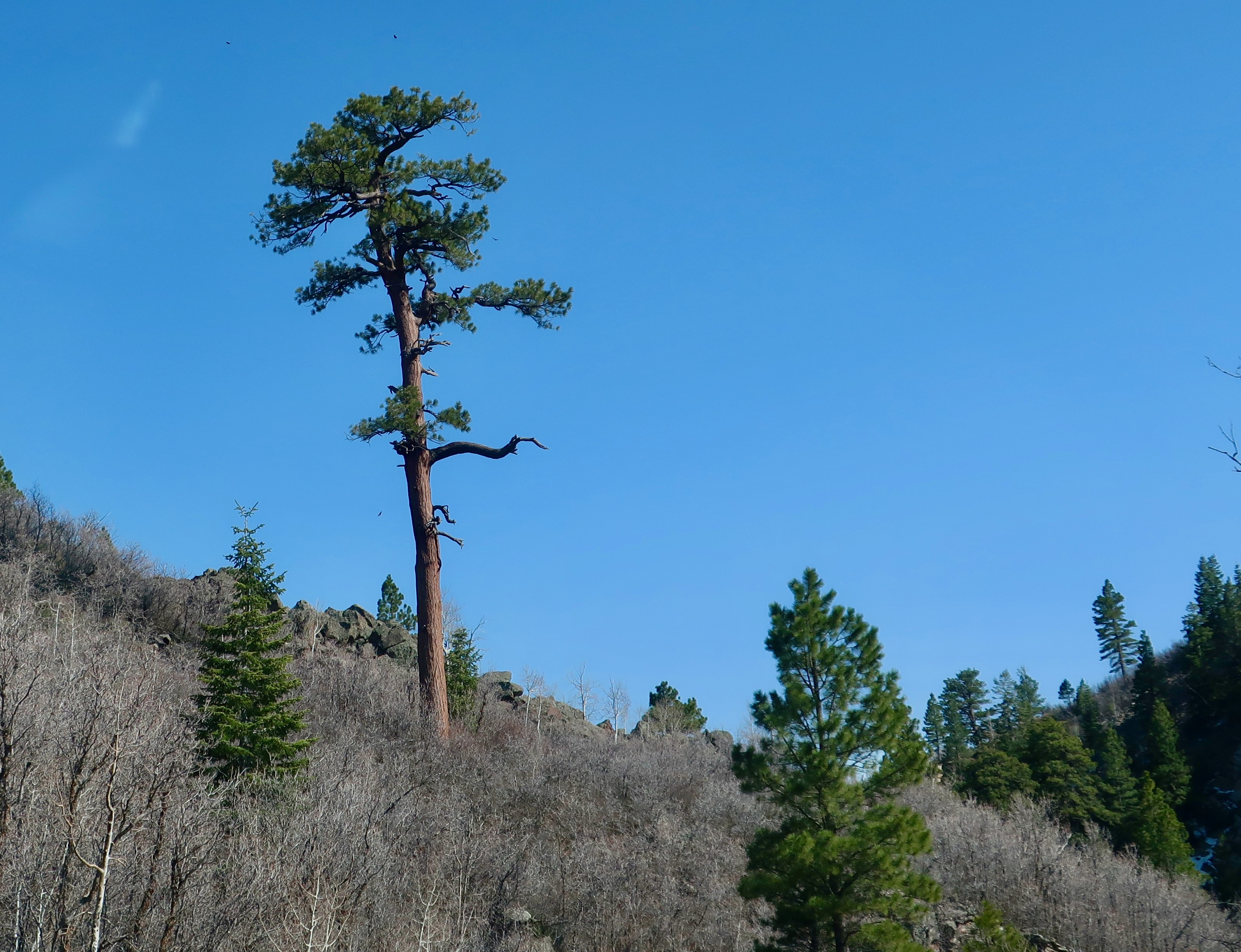
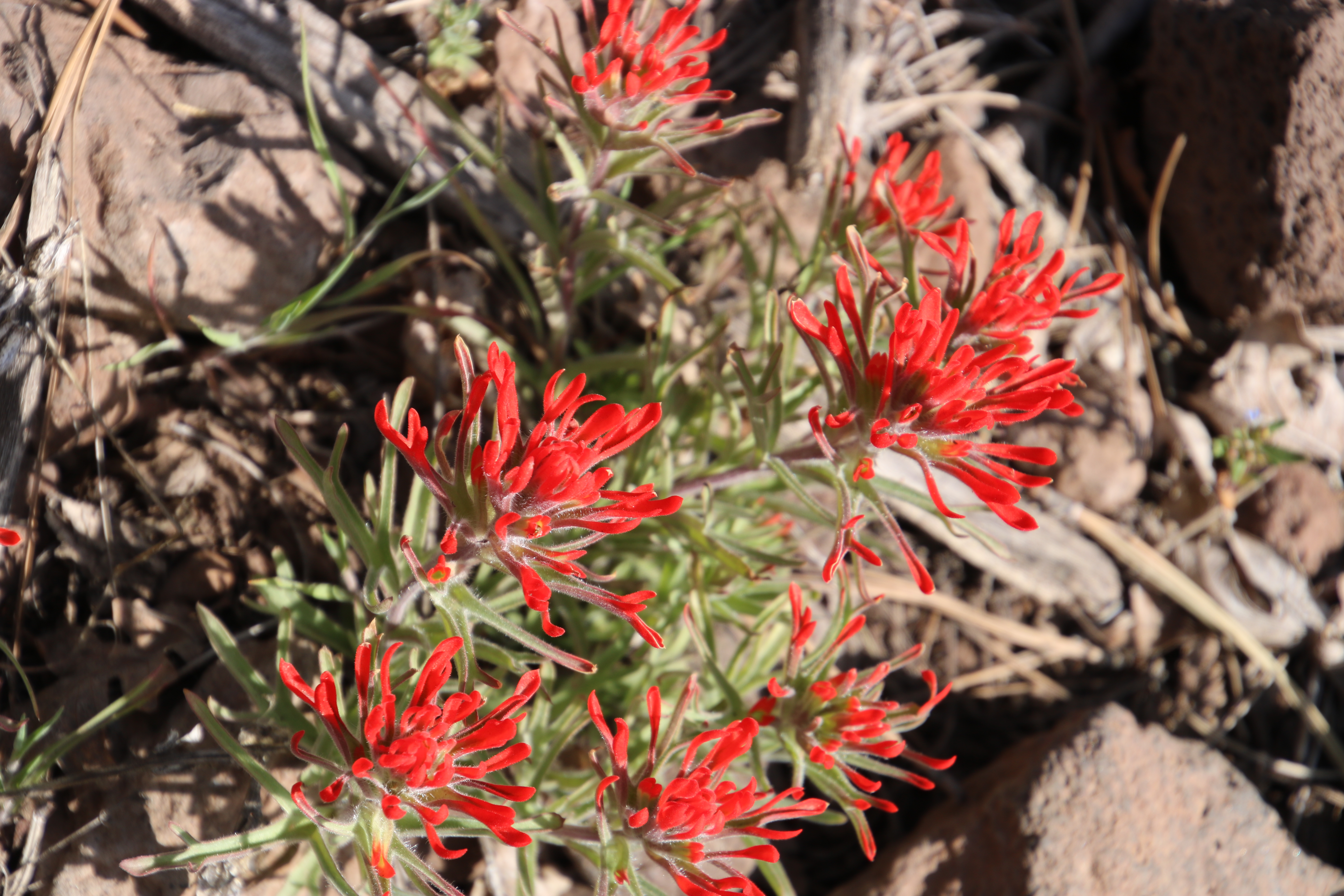
It’s important to know that the road up to Kolob Terrace is steep and curvy. If you decide to drive up to it, and we highly recommend you do, I wouldn’t take a large RV on the road.Another view of the aspen grove on Kolob Terrace in Zion National Park. There were no leaves to quake in the wind!This was a road view of what we might see once we reached the top of the terrace. As always, the conifers didn’t worry about the snow and cold.I was impressed with this lone pine tree.As Peggy and I were with this peak. We stopped to admire it.And were rewarded with this view.And a view of the valley 4000 feet below.We also spotted this attractive rock monument.And felt it was worth a closer look.While I was staring off into the distance, Peggy looked down and spotted this colorful Indian paintbrush. (Photo by Peggy Mekemson.)
Following are several more photos of the scenery that Peggy and I saw up on Kolob Terrace and on our drive back down.
Another road shot.Peggy caught this photo. (Photo by Peggy Mekemson.)“Pull over, Curt,” Peggy insisted, “I have to take a photo of this.” It was the most streamlined kite we had ever seen.And, of course, she had to photograph the colorful background behind the kite. I’ll conclude today’s post here. In my next post, we will be moving on to Kolob Canyon. (Photo by Peggy Mekemson.)
The road had been gradually climbing since we started our exploration of Kolob Terrace in Zion National Park. It was about to get serious as it made its way up to the terrace above the cliffs. (Photo by Peggy Mekemson.)
We are continuing our exploration of the Kolob Terrace section of Zion National Park as part of our full-time experience of living on the road.
I am always curious about how things get their names. I wasn’t familiar with Kolob. Was it a Native American name? Was it the name of an early explorer or pioneer? Turns out it comes directly out of the Book of Abraham, a sacred text of the Mormons that Joseph Smith supposedly translated from an Egyptian papyrus scroll. I wonder if he used his rose colored glasses. I should have guessed the Mormon connection. Utah is Mormon country and has been ever since Brigham Young brought his band of followers into the state in 1847 to escape religious persecution in the east. Kolob is either a star or a large planet in the center of the Milky Way Galaxy close to the throne of God. Some Mormons believe that is where they go when they die. It shows up in the Musical, The Book of Mormon where the lyrics proclaim “I believe that plan involves me getting my own planet.” The modern church has challenged the assumption.
Imagining Kolob to be a rather pleasant place from a Mormon perspective, I can understand why the early pioneers gave its name to the terrace. Peggy and I also found it pleasant. Actually, I’d much prefer to go there when I die rather than the biblical Heaven where the ‘streets are paved with gold.’
We pulled off the road frequently to take photos on our way up and down.
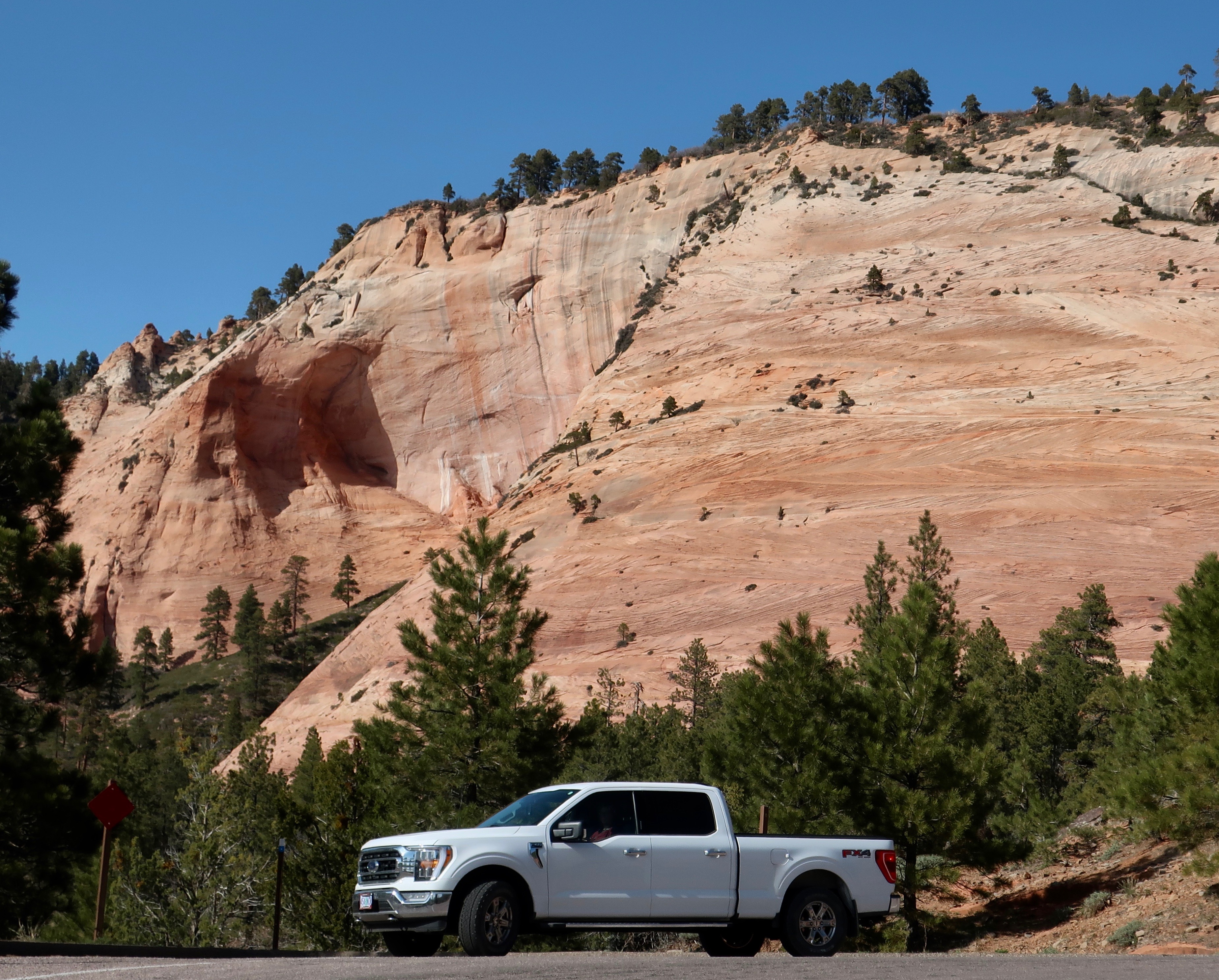
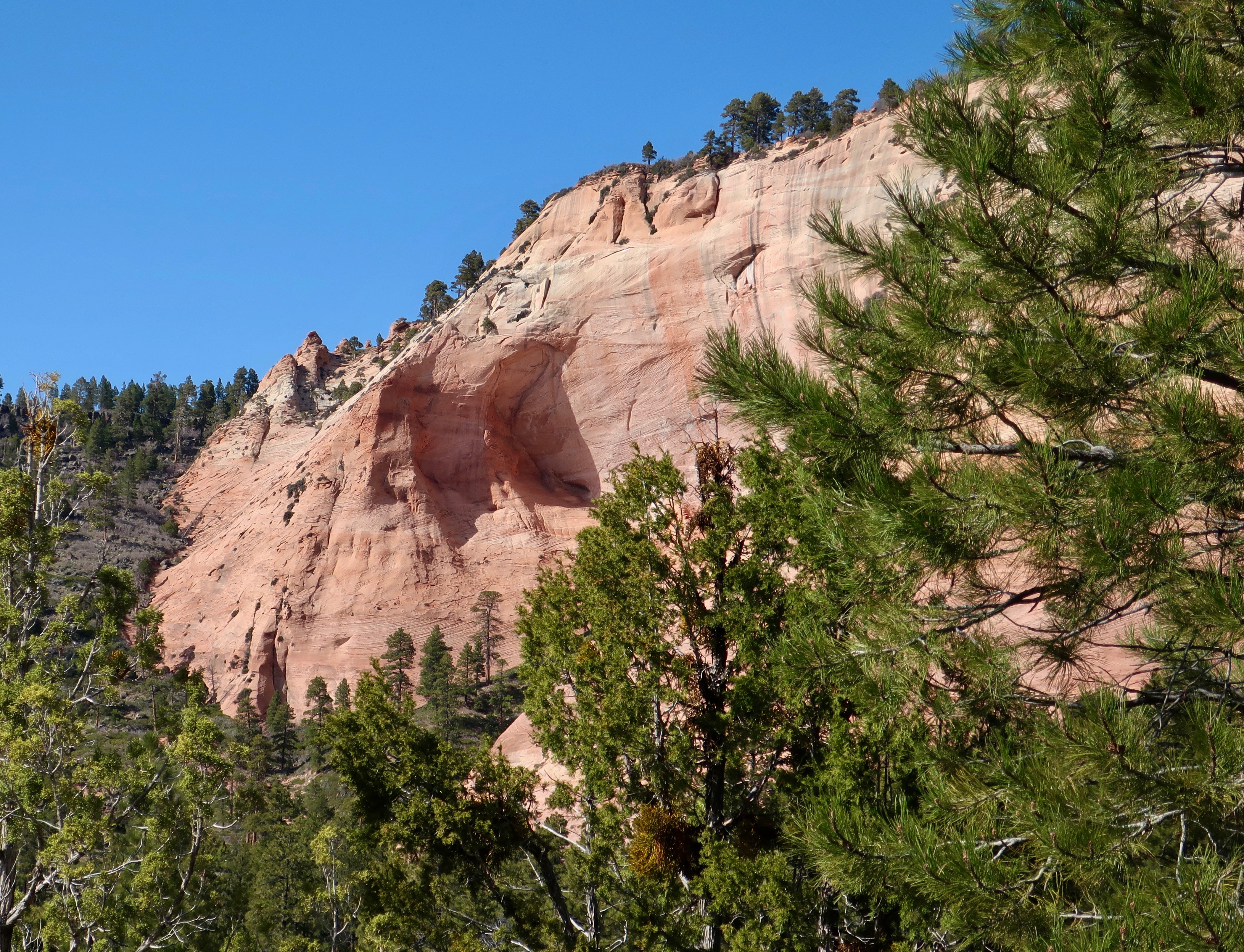
Peggy uses the cab of our truck to photograph the cliffs below the terrace.Where our F-150 was parked when Peggy took the photo…Peggy’s photo. If you have ever wondered how the impressive rock bridges of the Southwest are formed, this is potentially one in progress.
More photos that I took on our way up to the terrace…
I’ll conclude with this photo of a private road winding its way below the cliffs. I was intrigued as to where it went and could easily imagine Peggy and me living there. My next post will feature photos we took up on the terrace.
Today, our full time RV adventure of exploring North America takes us to Zion National Parkin Utah.
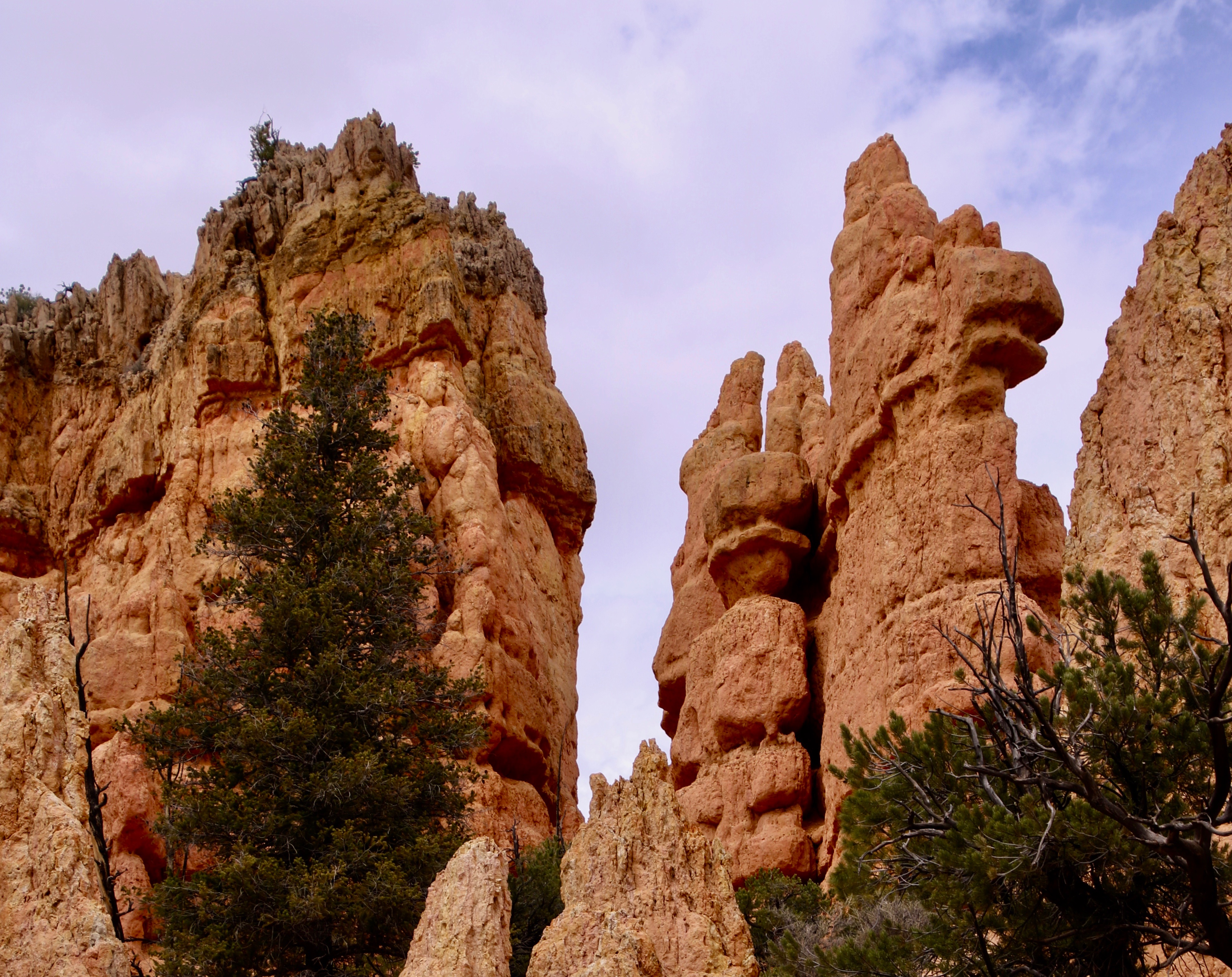
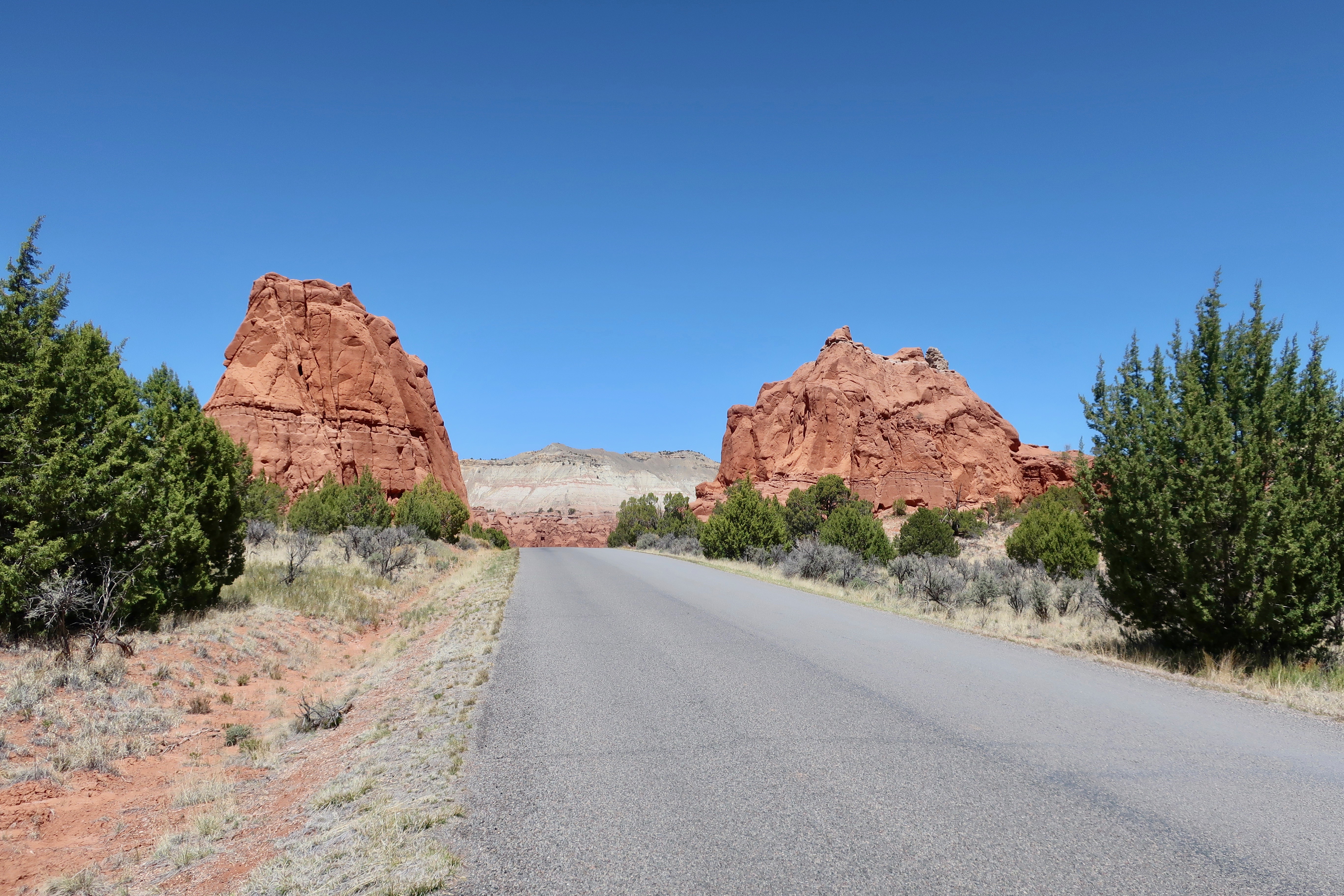
This was one of many delightful monuments Peggy and I found when we explored Kolob Terrace in Zion National Park. Note the lack of traffic!
Peggy was reading an article in the Washington Post a few days ago on Zion National Park. Bring your patience, the article urged. Over 5 million people are projected to visit in 2022. The majority will be from April through September. Expect massive crowds if it is on your vacation itinerary. Parking spots will be difficult to find. Shuttles will be full. There will be long lines to get in, long lines at the restrooms, long lines to visit major sites, and long lines to get food. Finding a place to stay in or near the park will be close to impossible unless you already have a reservation— or get lucky.
It’s my idea of a nightmare.
Peggy and I were fortunate to arrive in late April for our visit. But even then, the crowds in the canyon exceeded my ideal by a factor of 10, or is that 100. Grin. I’ll tell that story at the end of my series on Zion. (Spoiler alert: it was still worth it.) But, for now, I am going to let you in on a little secret, there is more to Zion National Park than Zion Canyon. A lot more. And much of it matches and may even surpass the canyon in beauty. Peggy and I are going to take you on three short road trips to various sections in the park outside of the canyon to prove our point: Kolob Terrace, Kolob Canyon, and the east side of the park. Plus a ghost town.
I am going to start with the Kolob Terrace. Peggy and I were staying at an RV campground on the Virgin River in the small town of the same name 14 miles from the canyon. The road into the terrace was less than a mile from where we were camped. We drove up it for 15 miles before turning around, stopping frequently on both our way up and back. We met a dozen cars along the way. There may have been 30 parked at the various trailheads and overlooks. Compare that with the 14,000 or more people who were exploring the canyon on that day! Following are the photos Peggy and I took. I am going to divide them into three posts since there are too many for one. (Note: I take five times as many photos as Peggy. :))
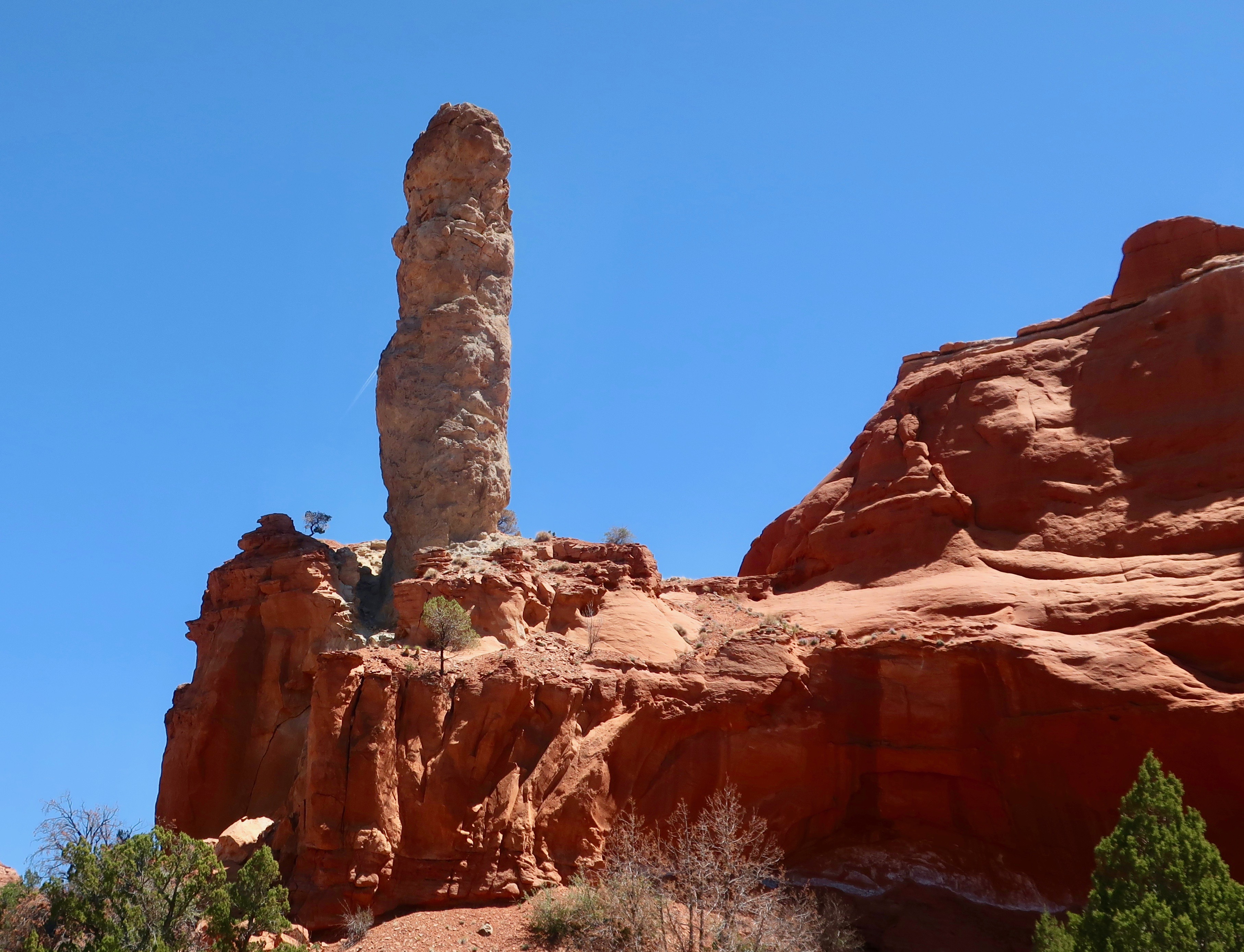
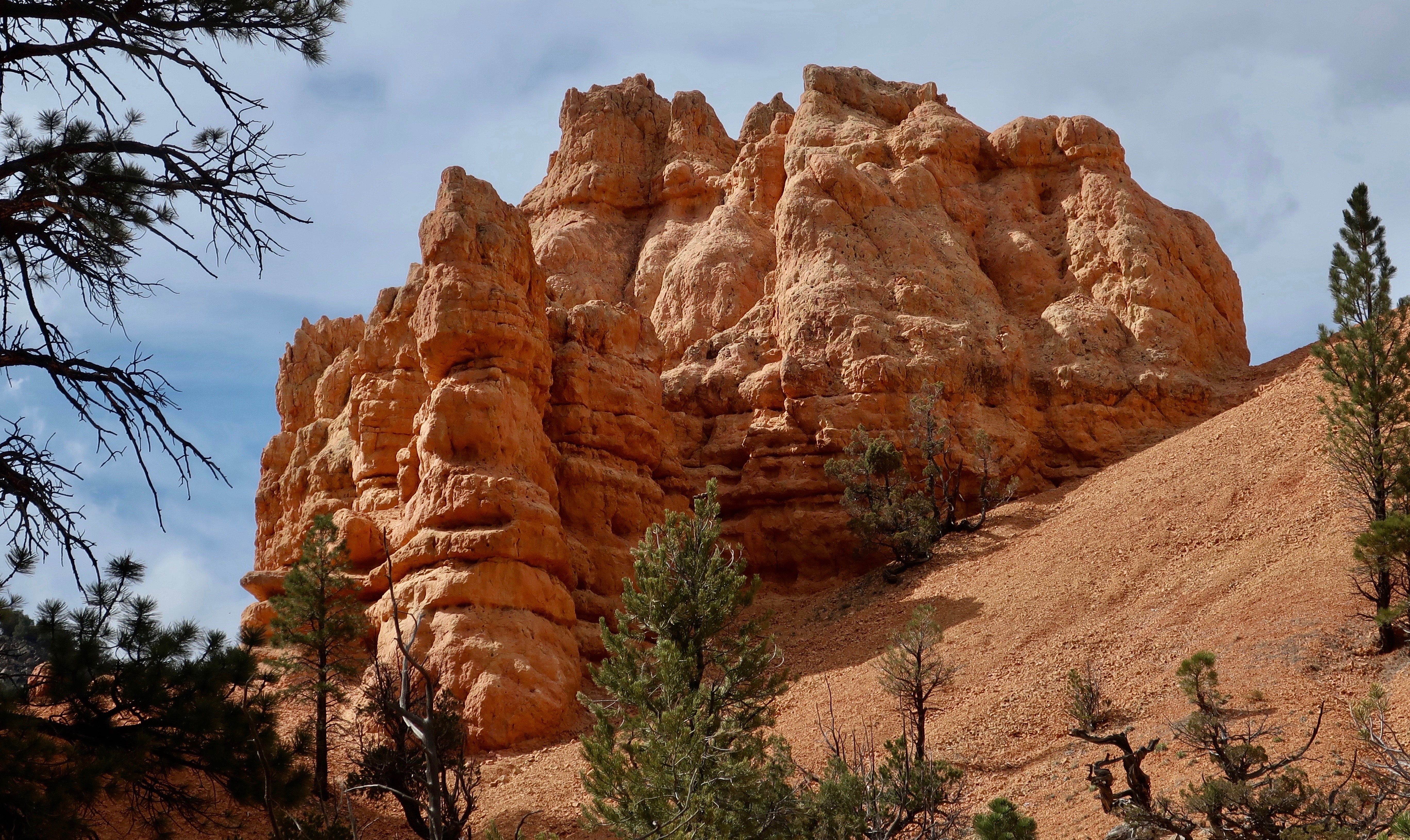
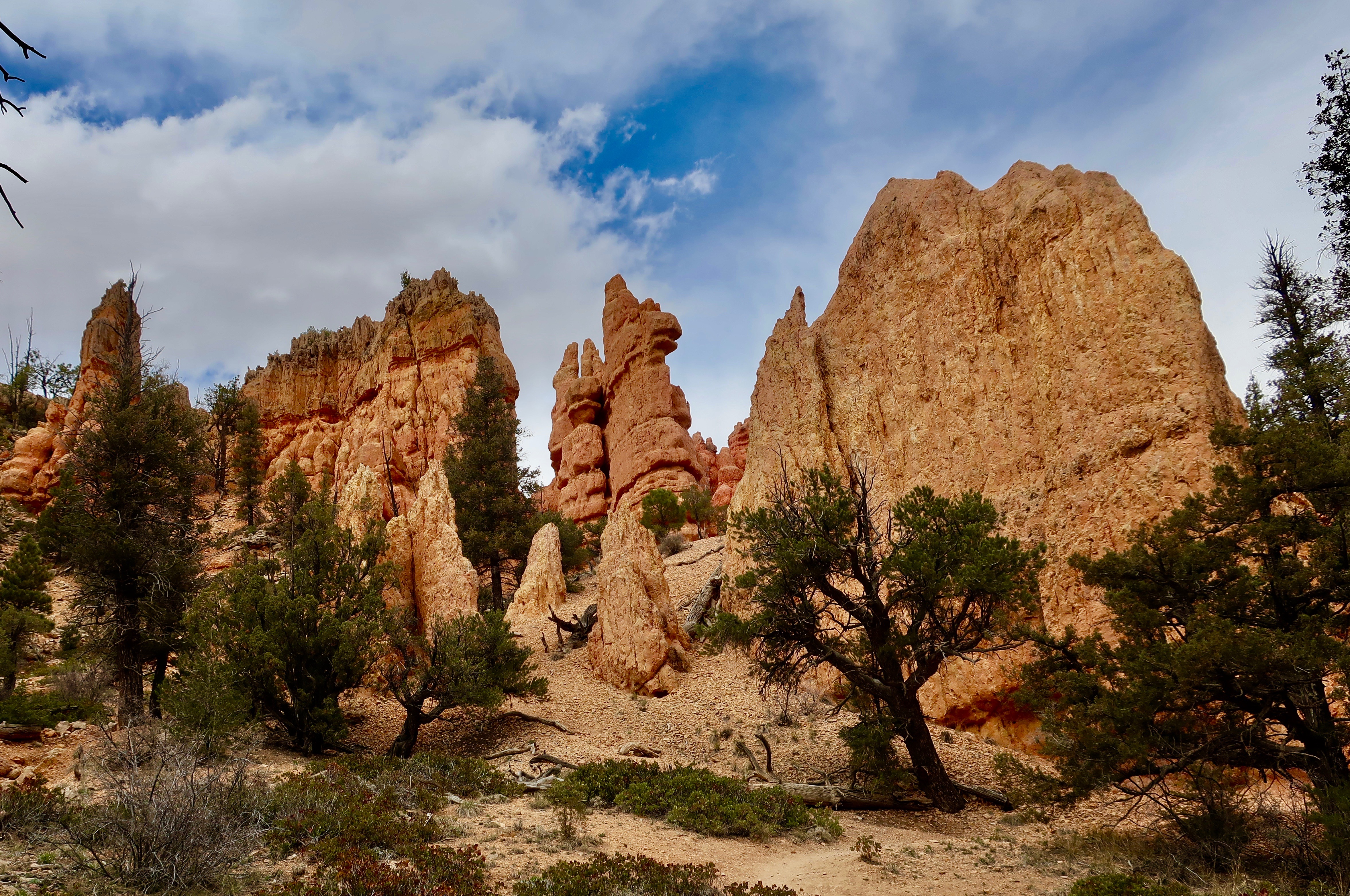
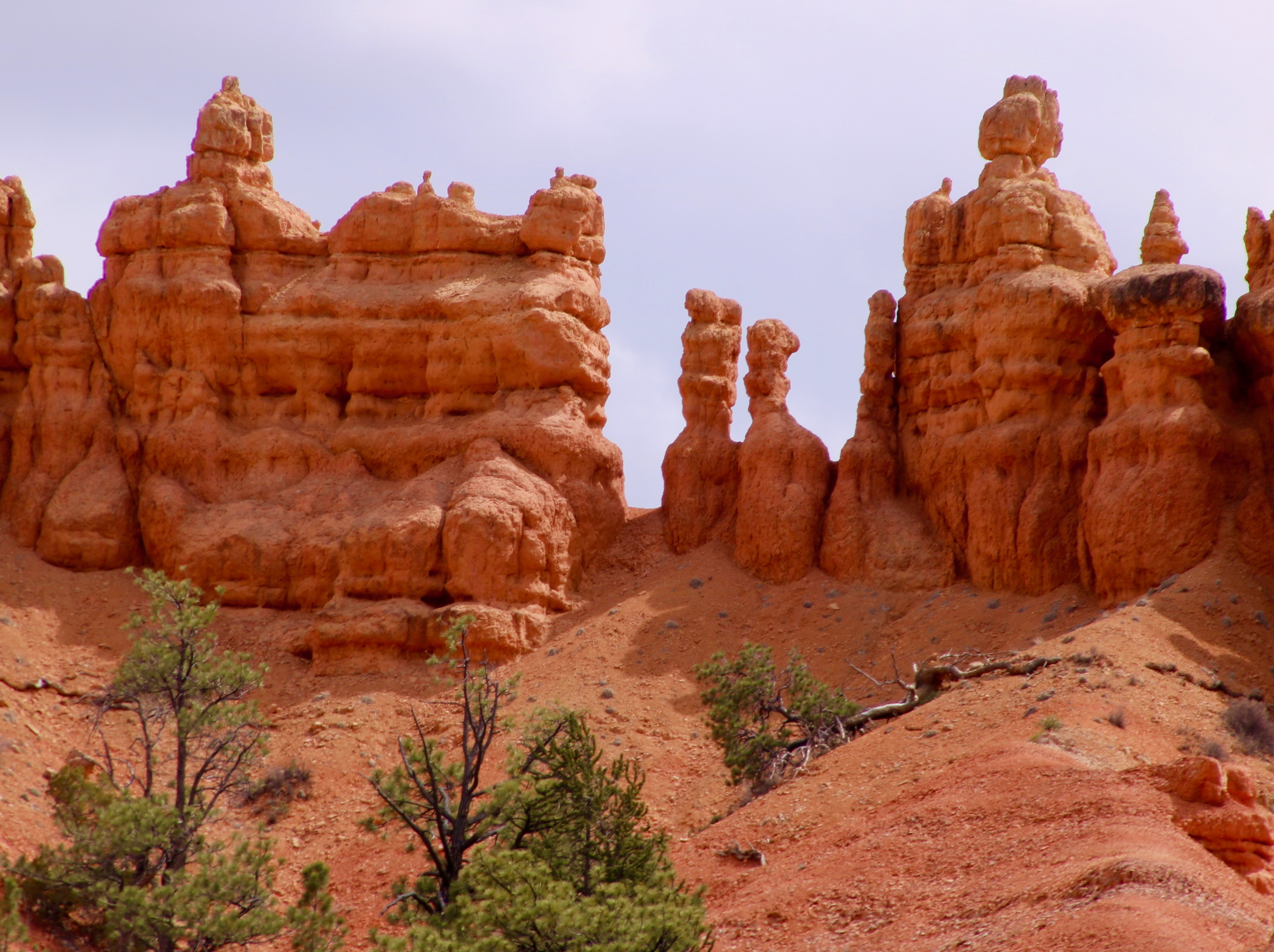
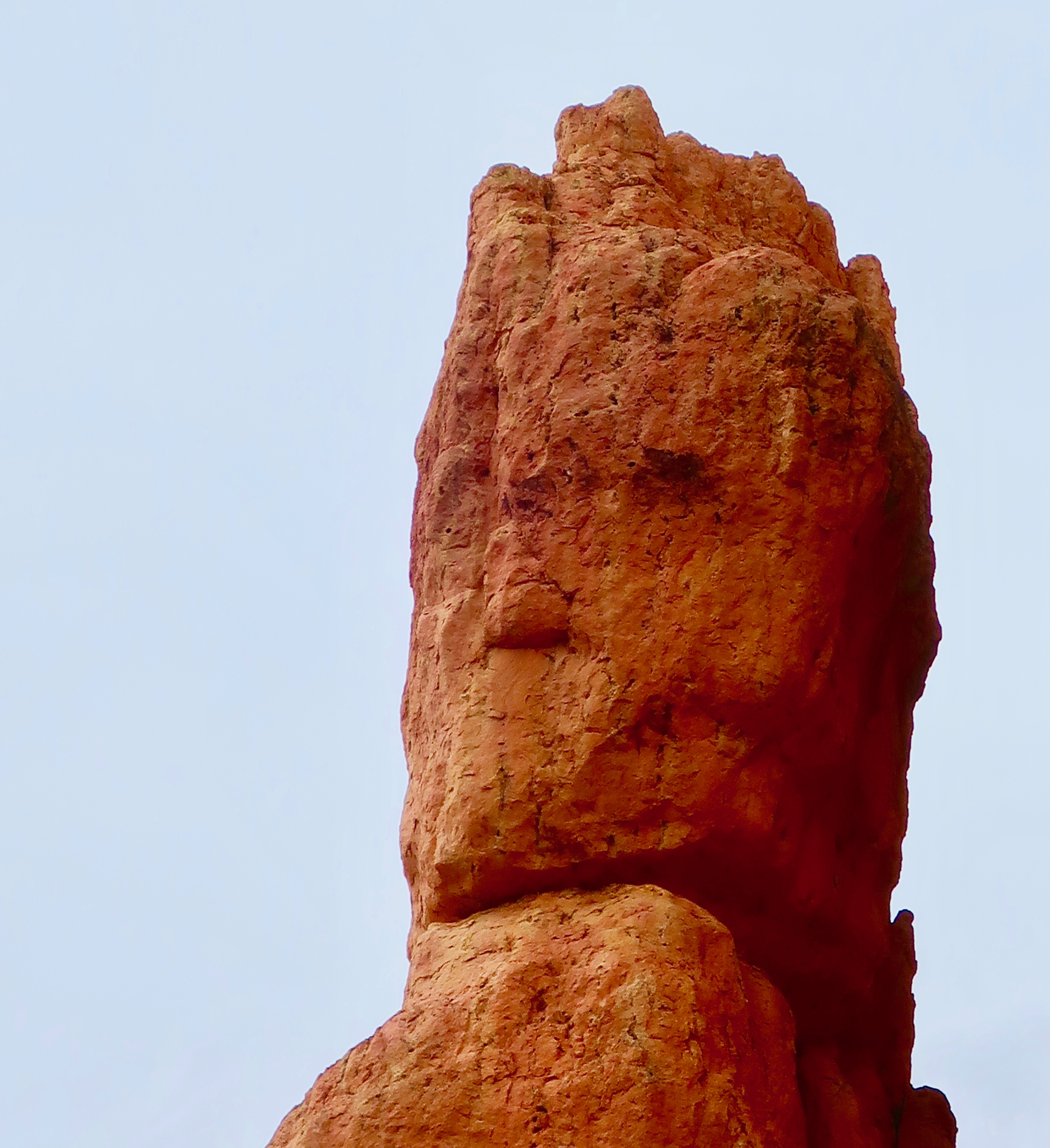
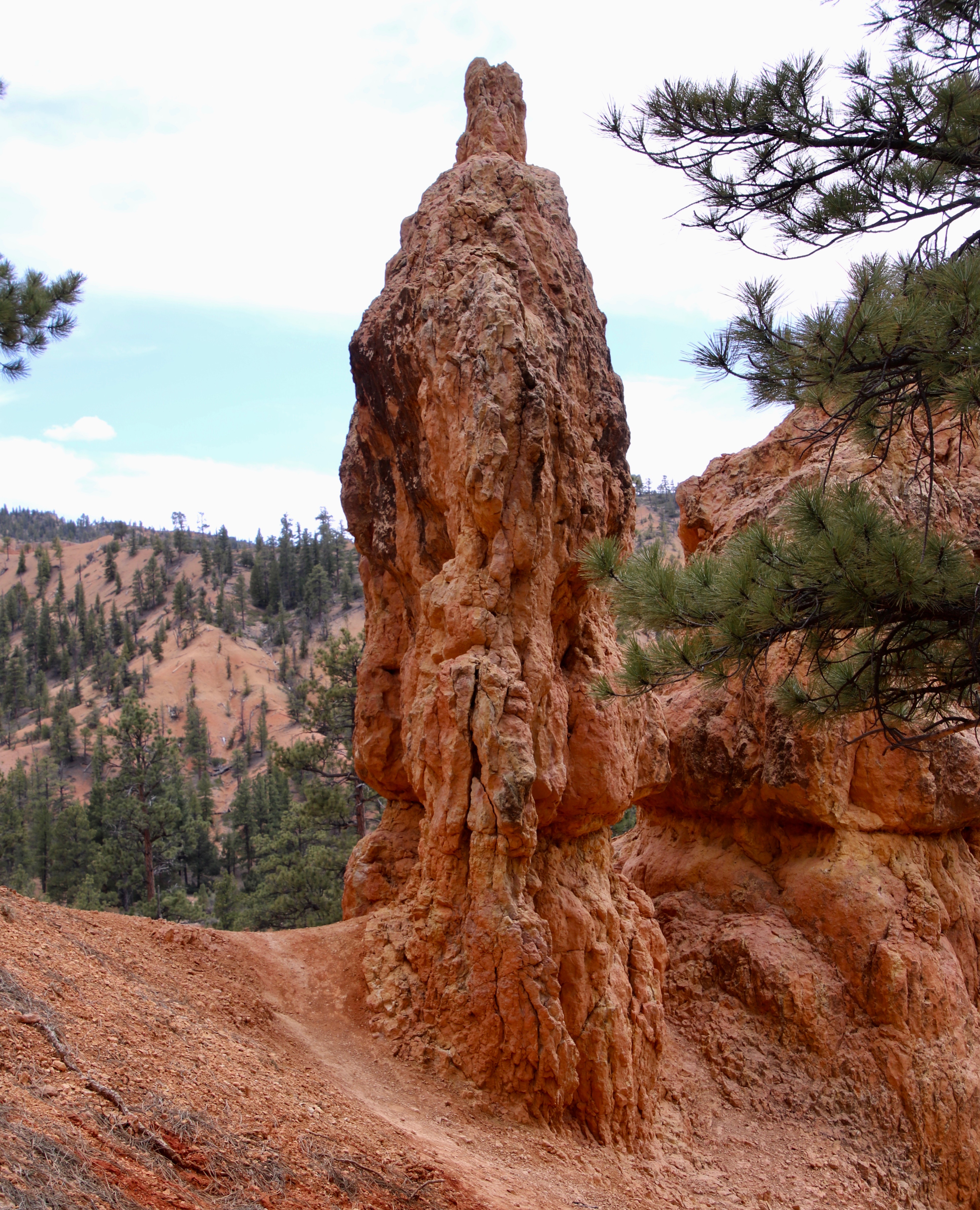
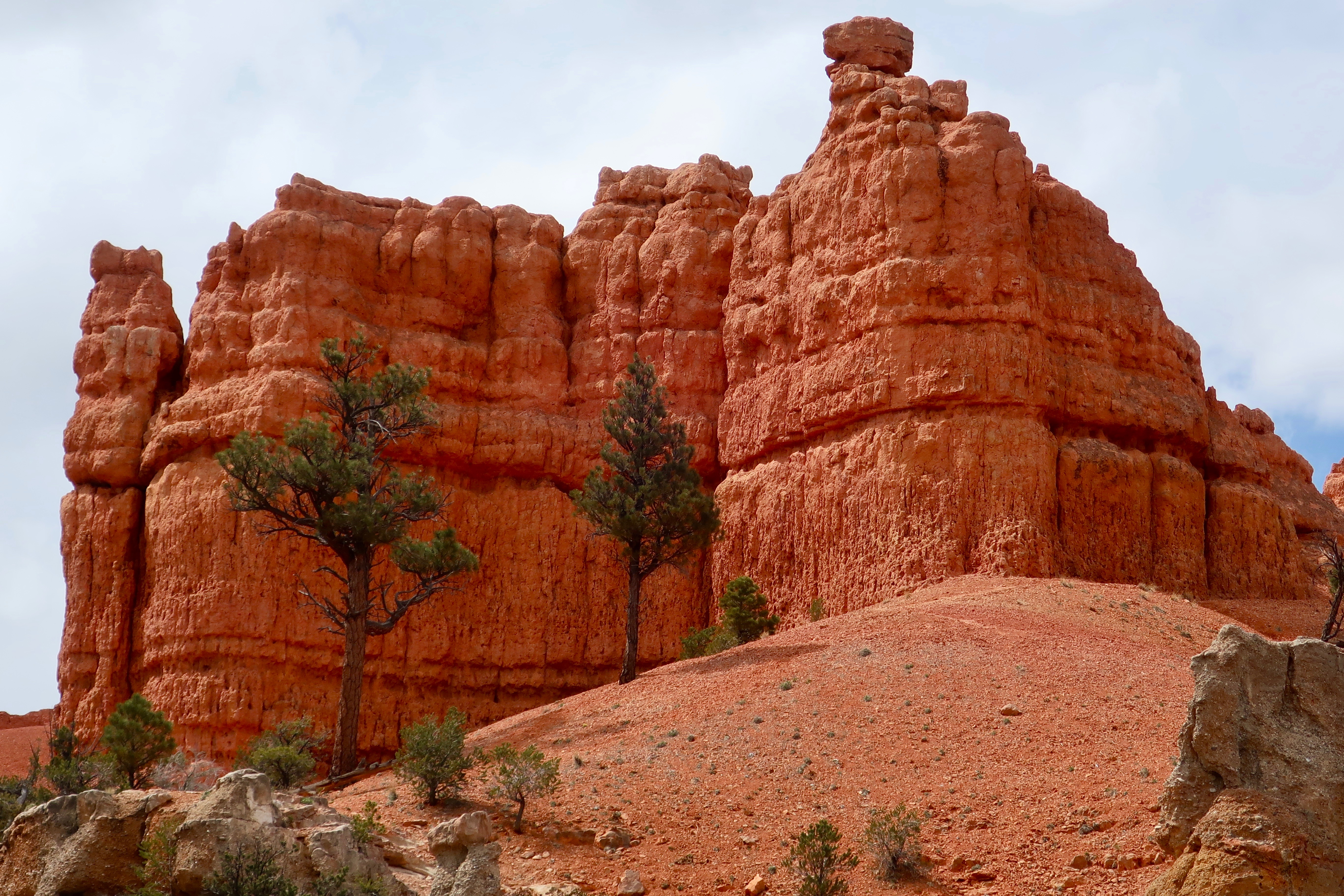
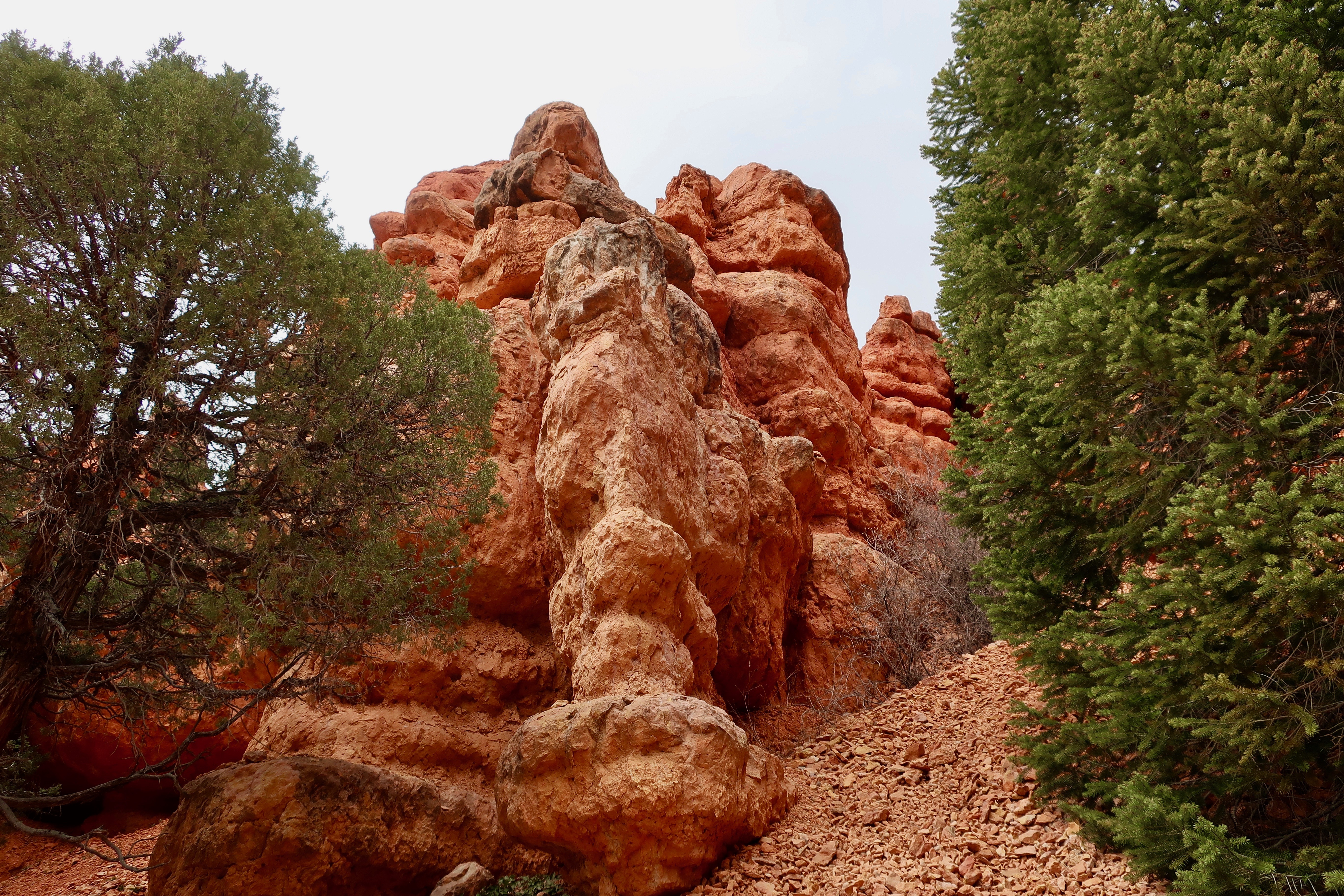
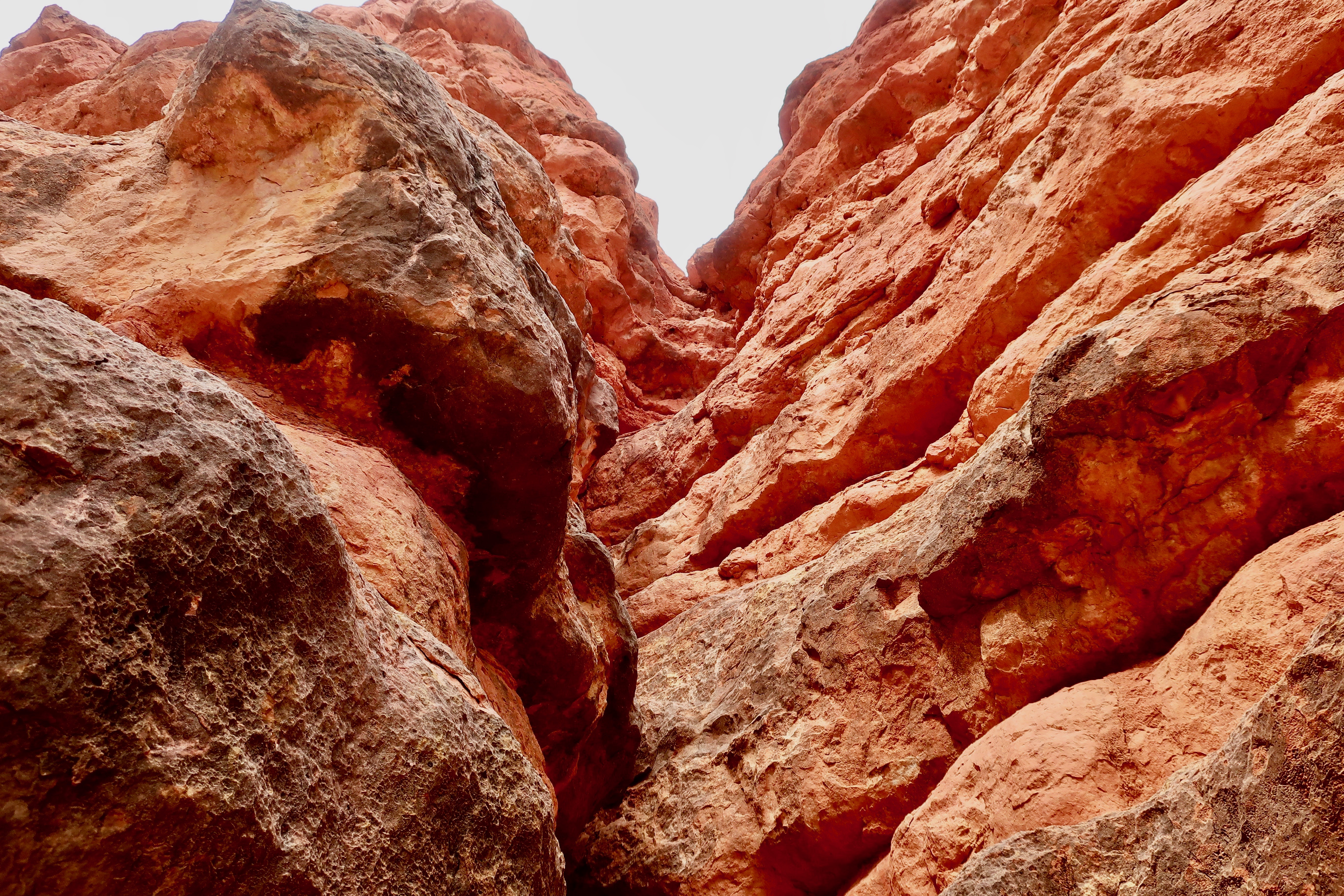
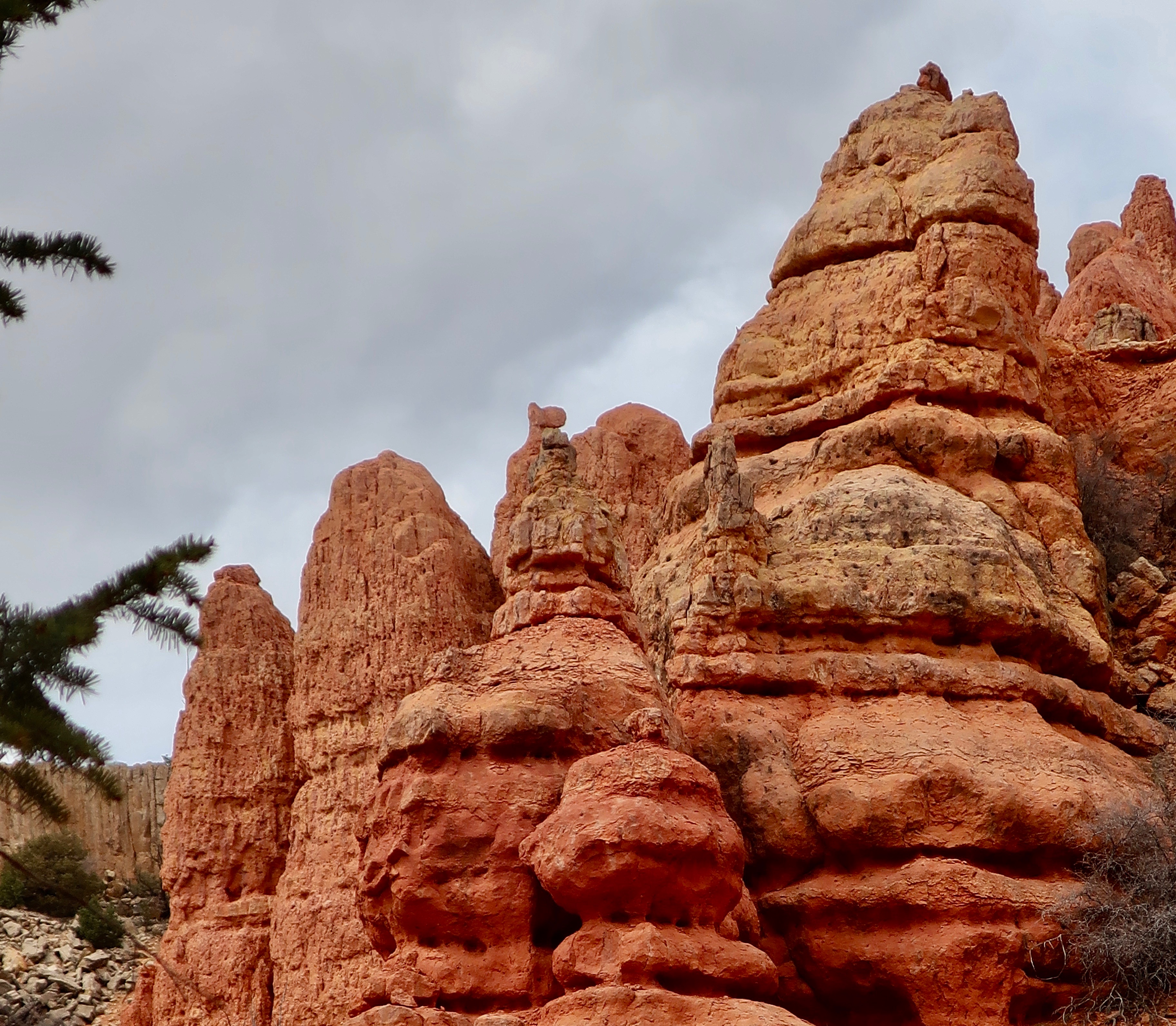
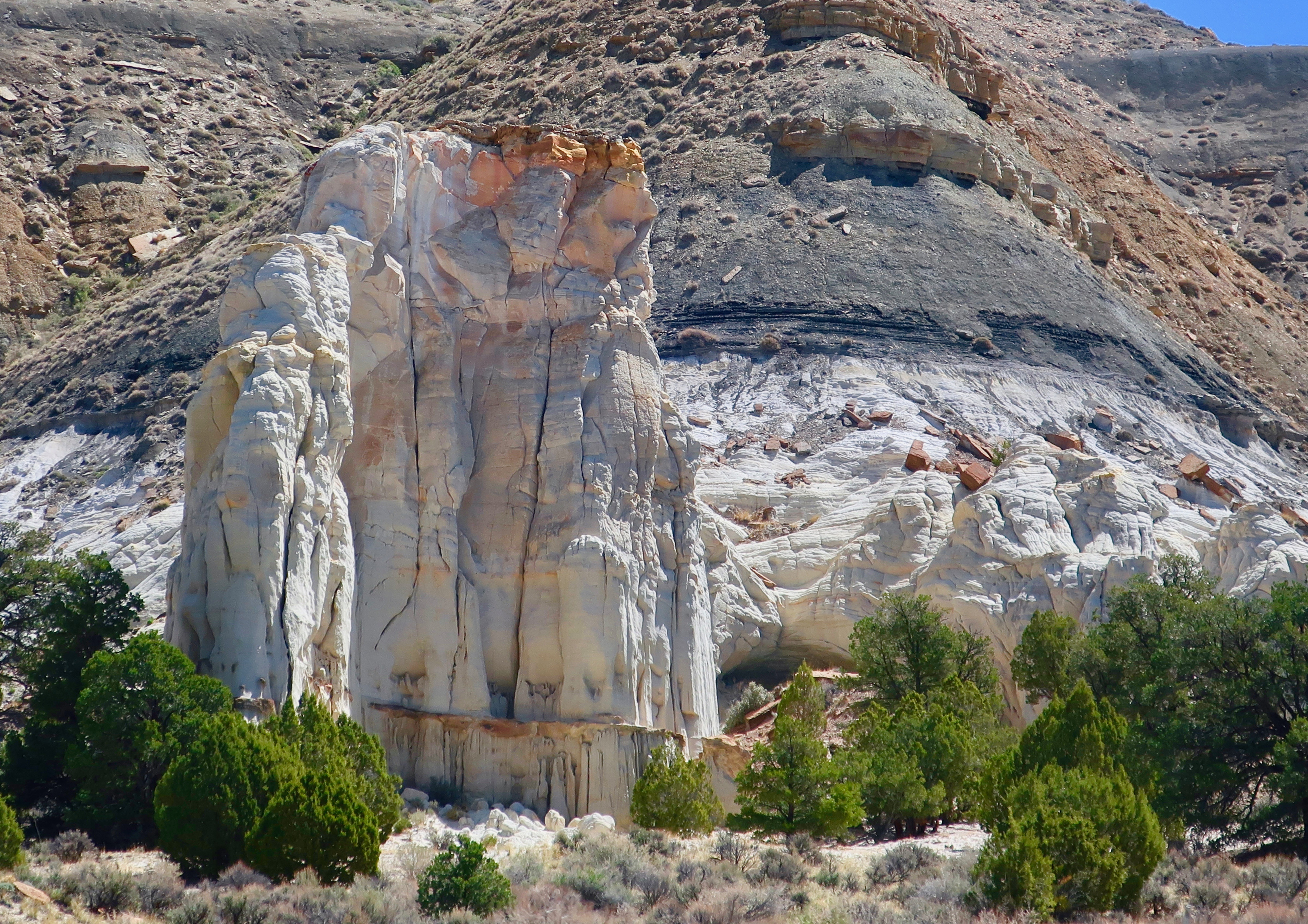
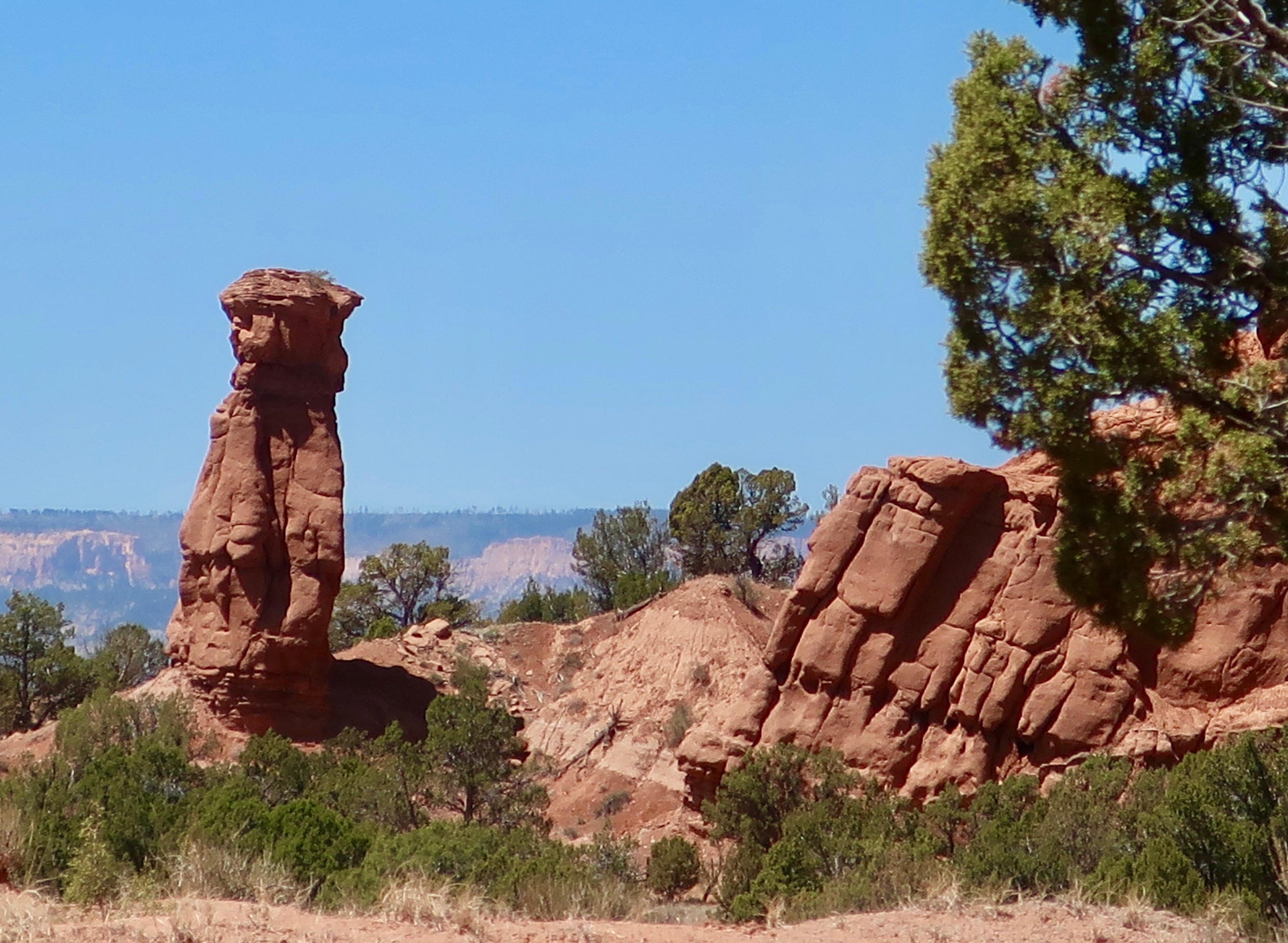
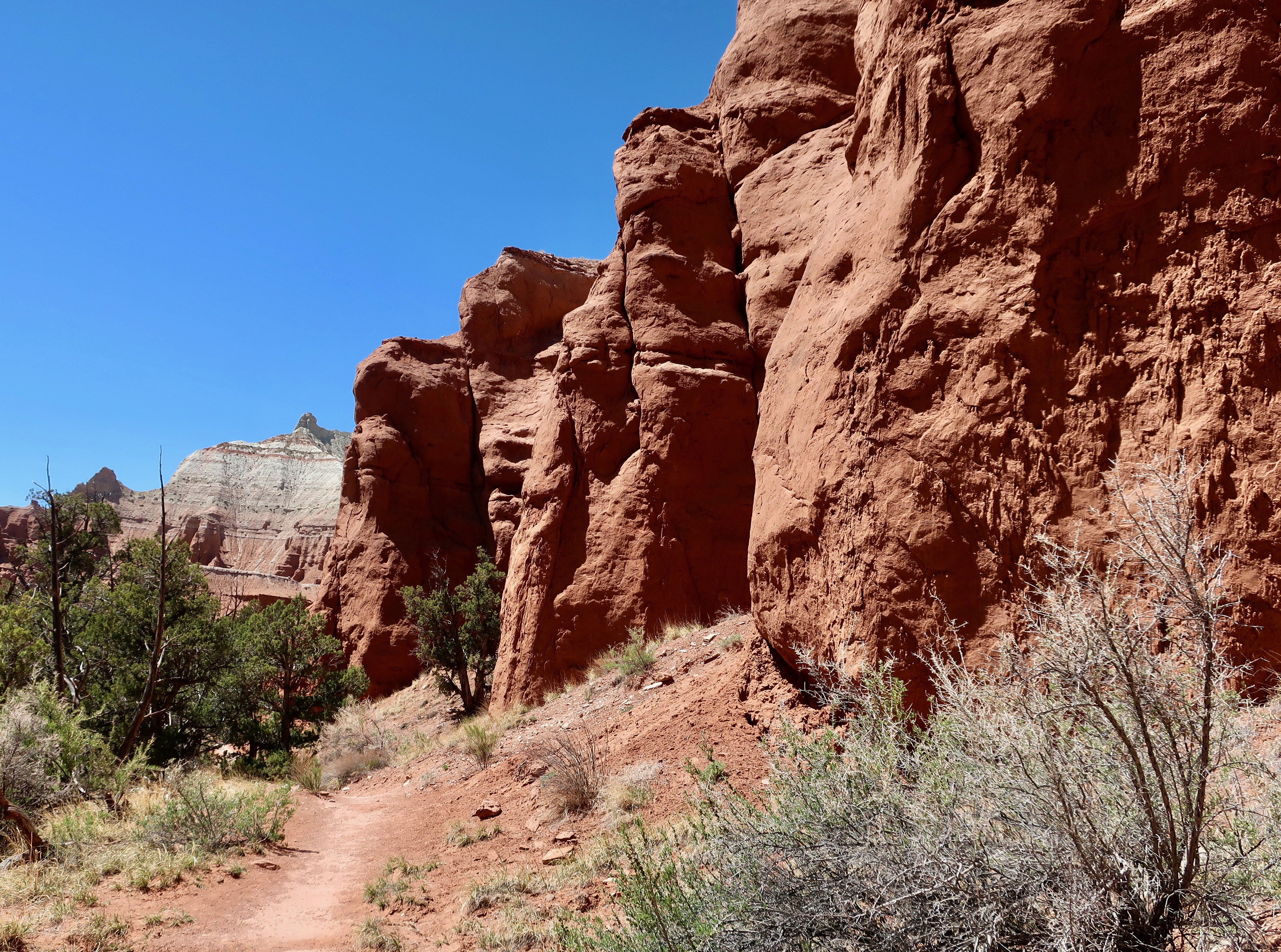
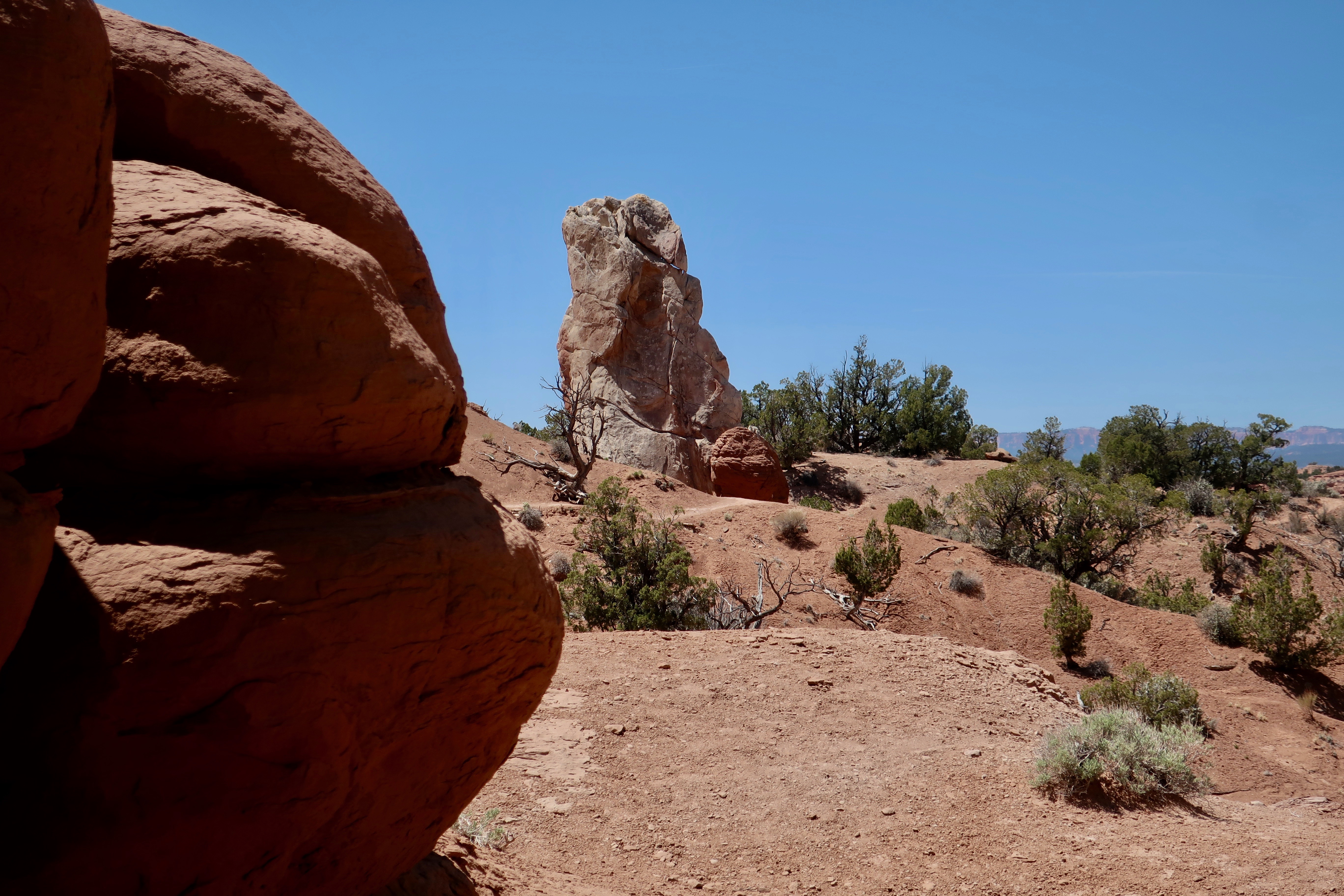
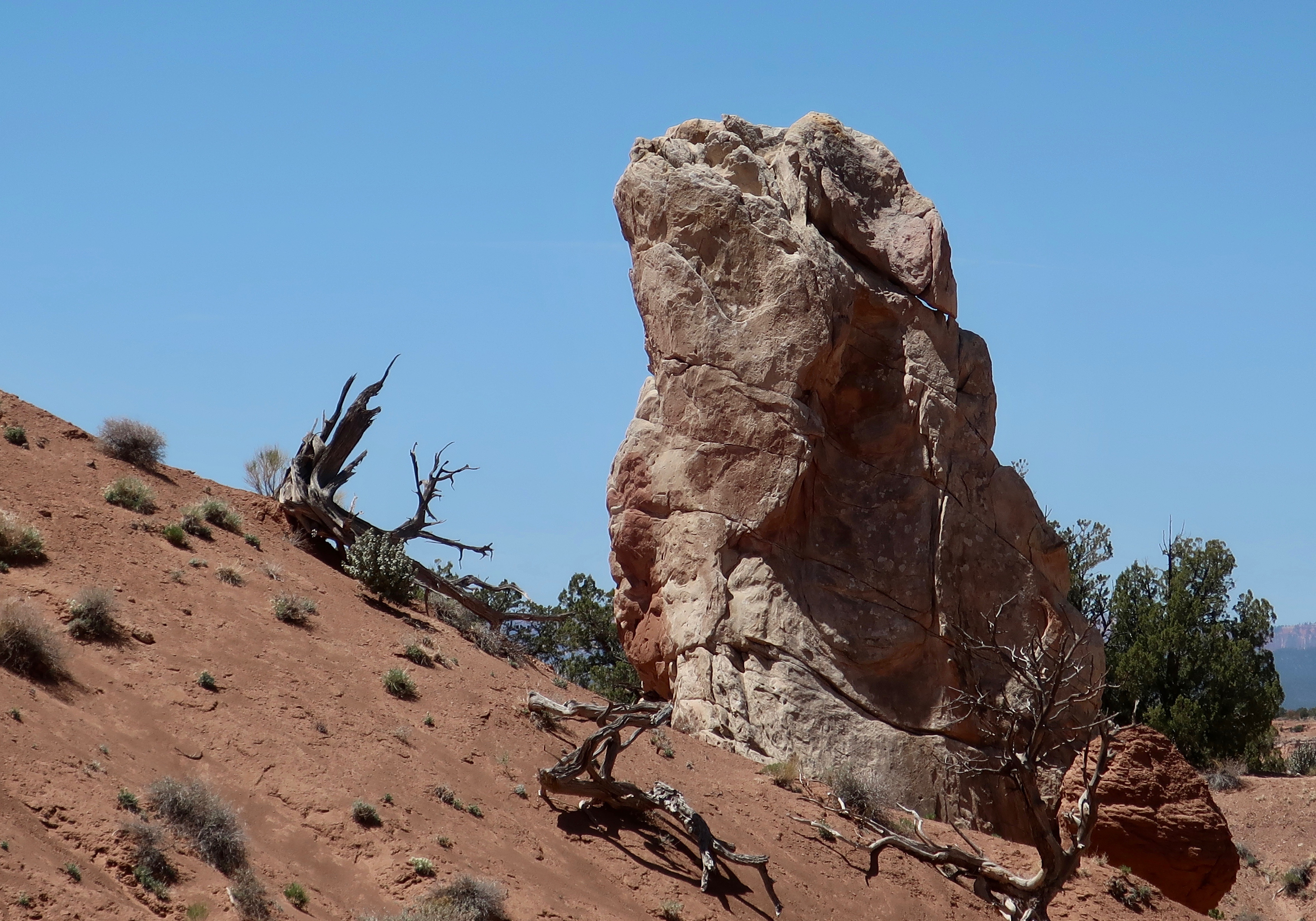
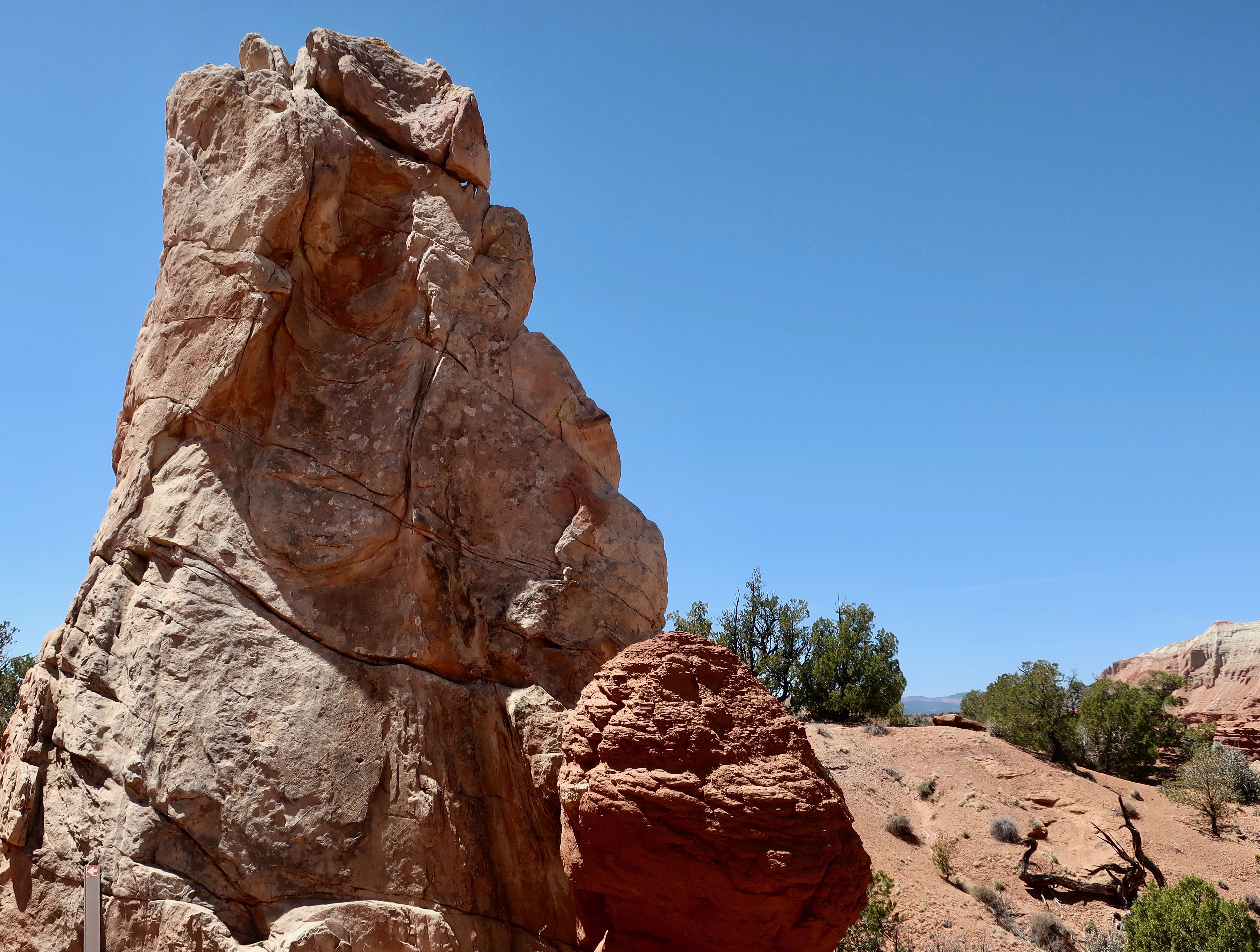
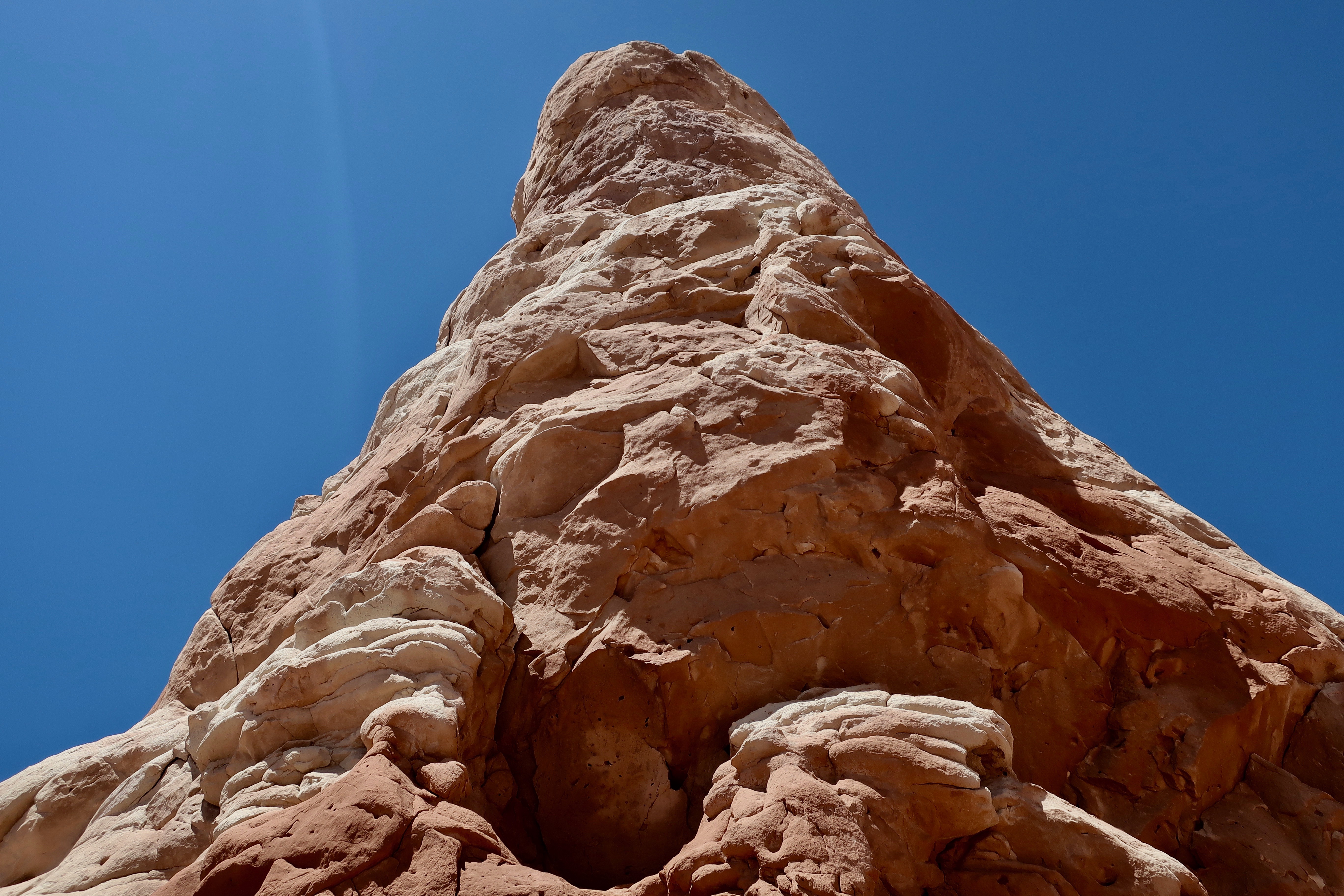
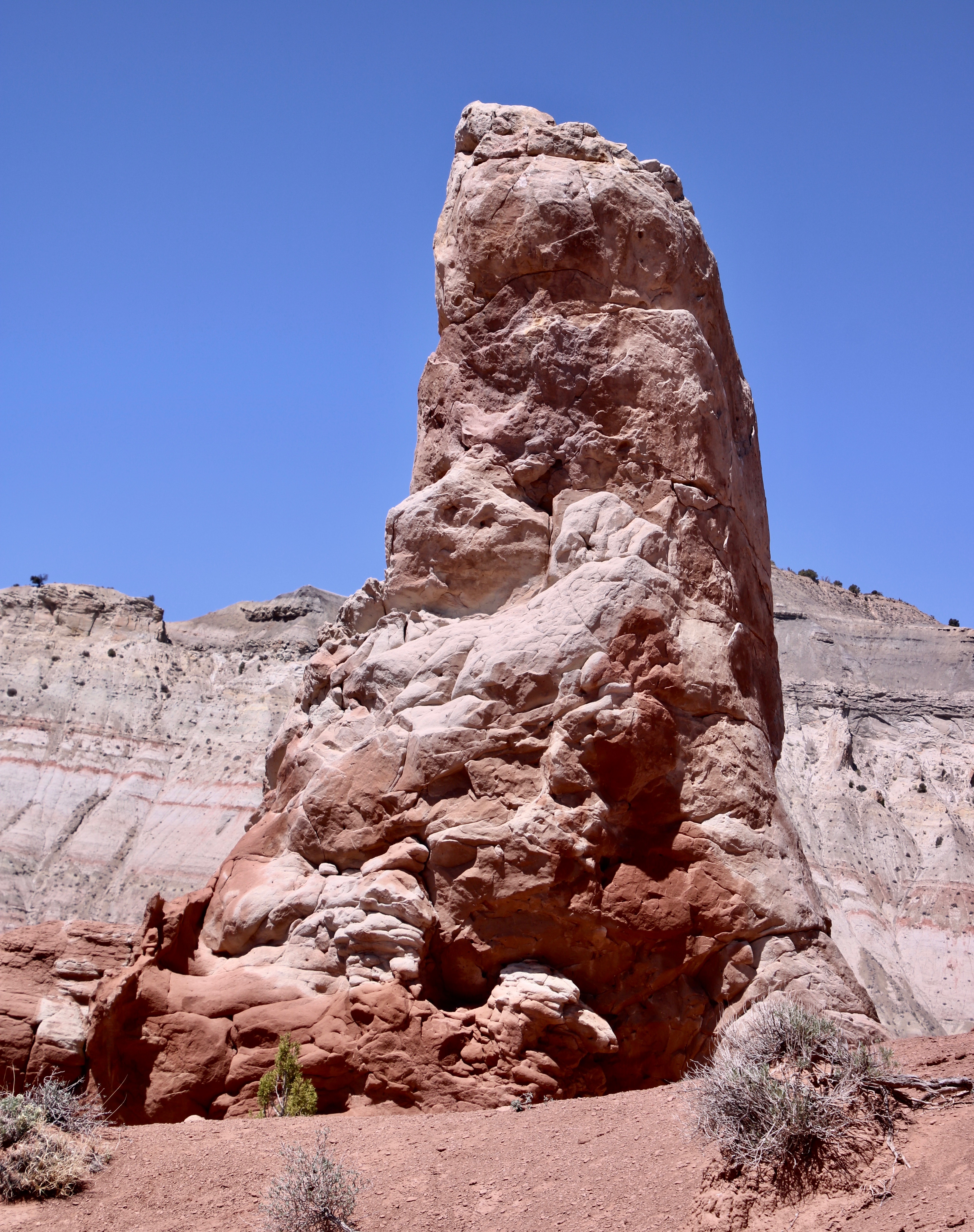
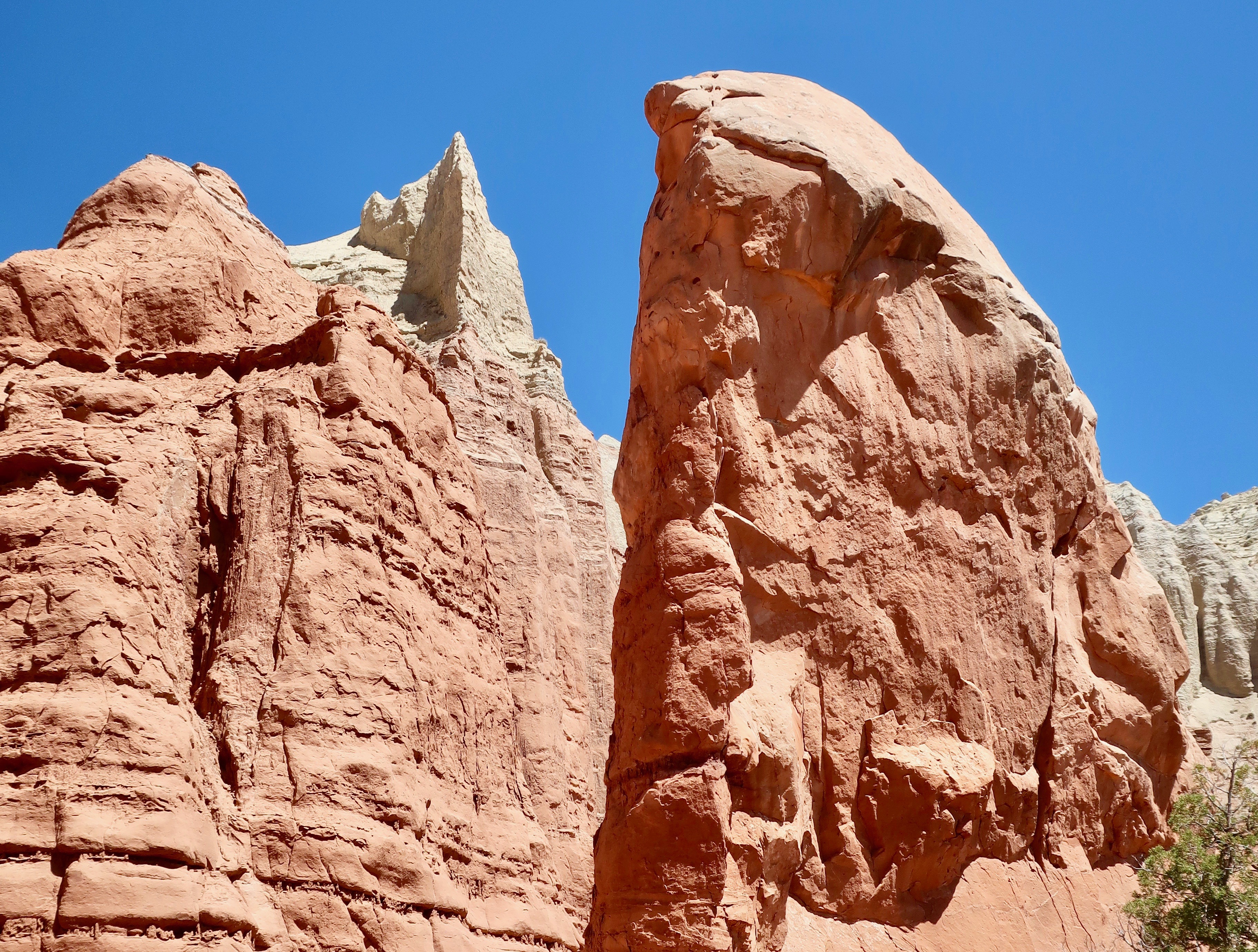
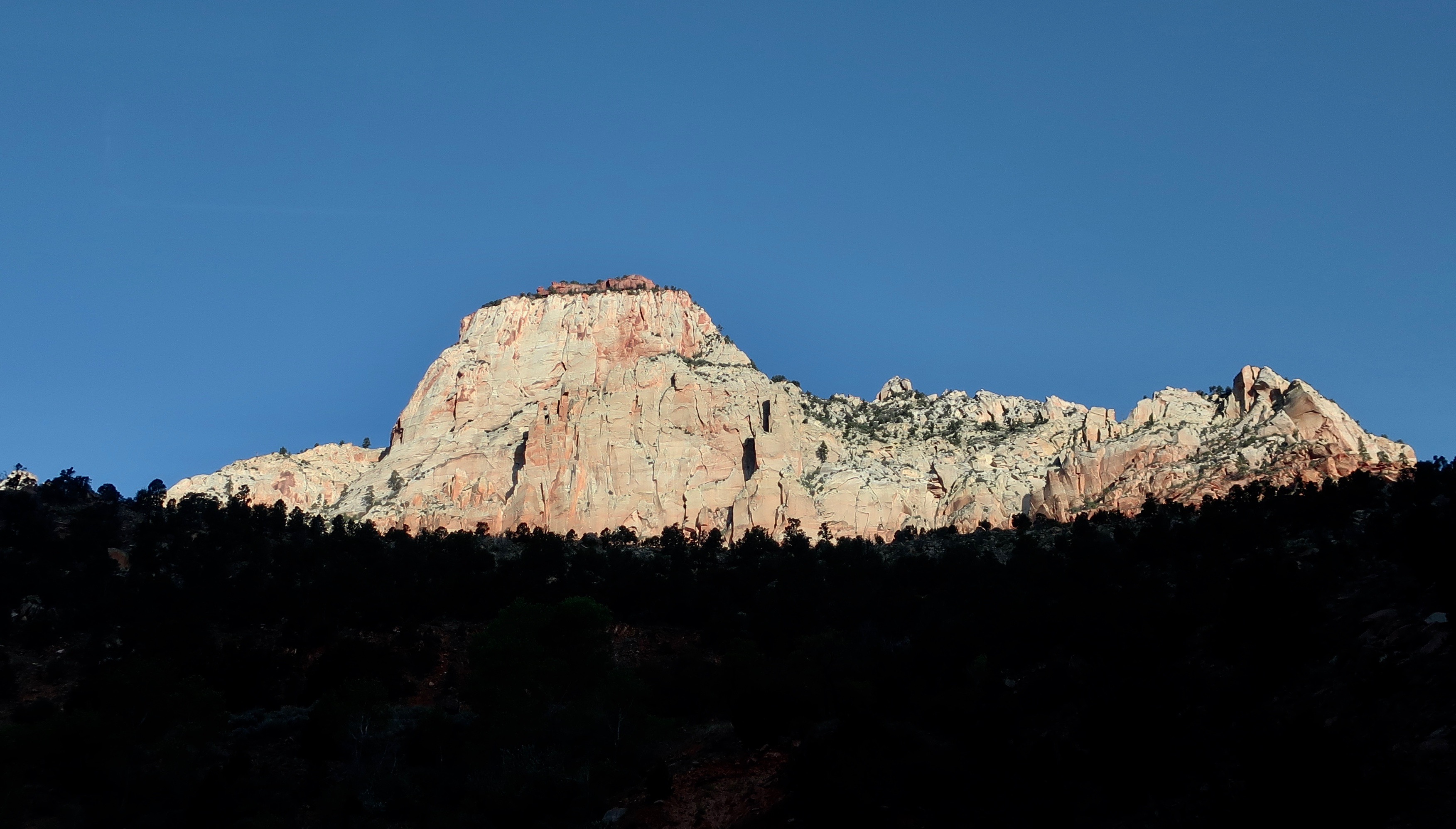
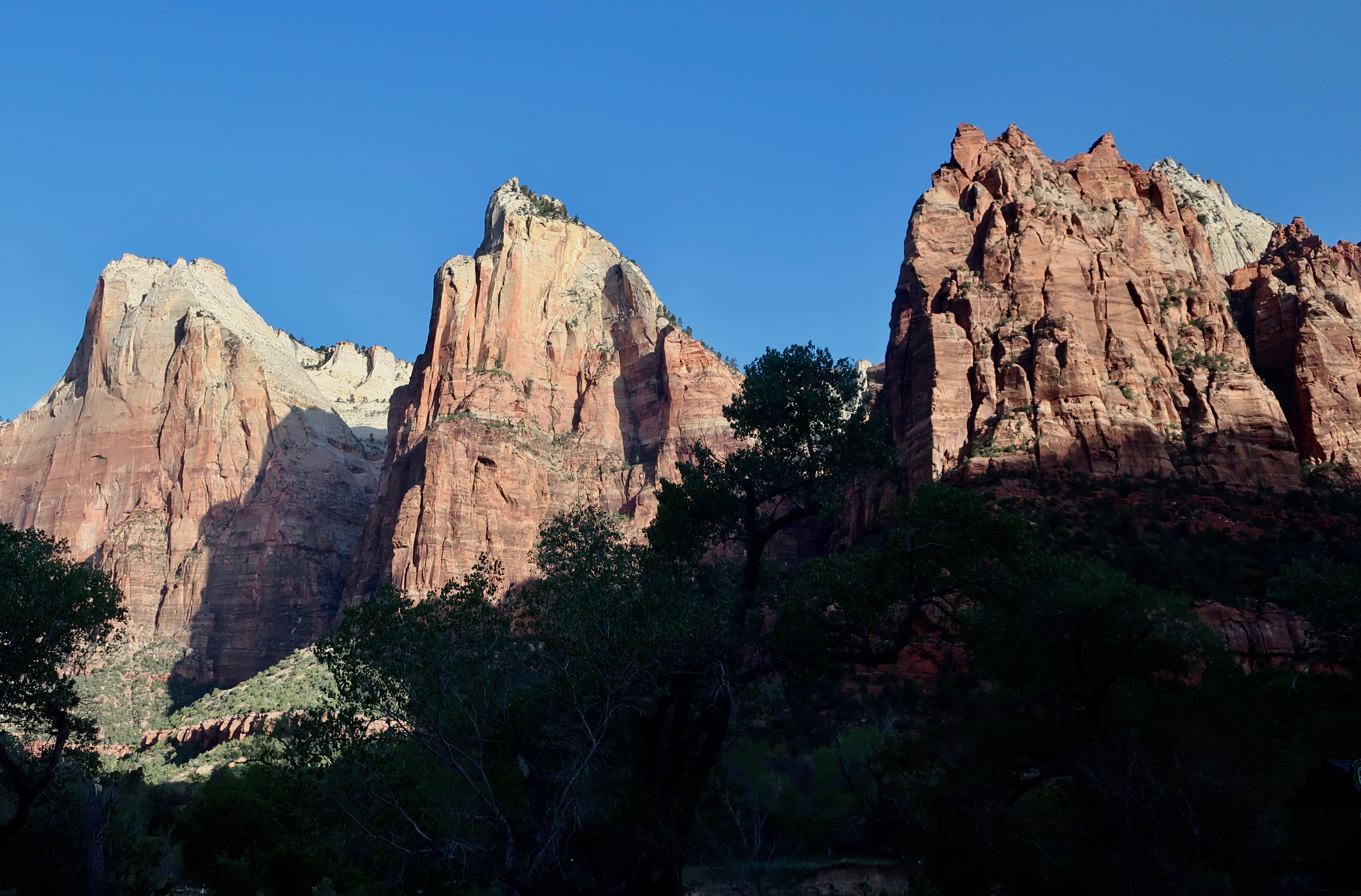
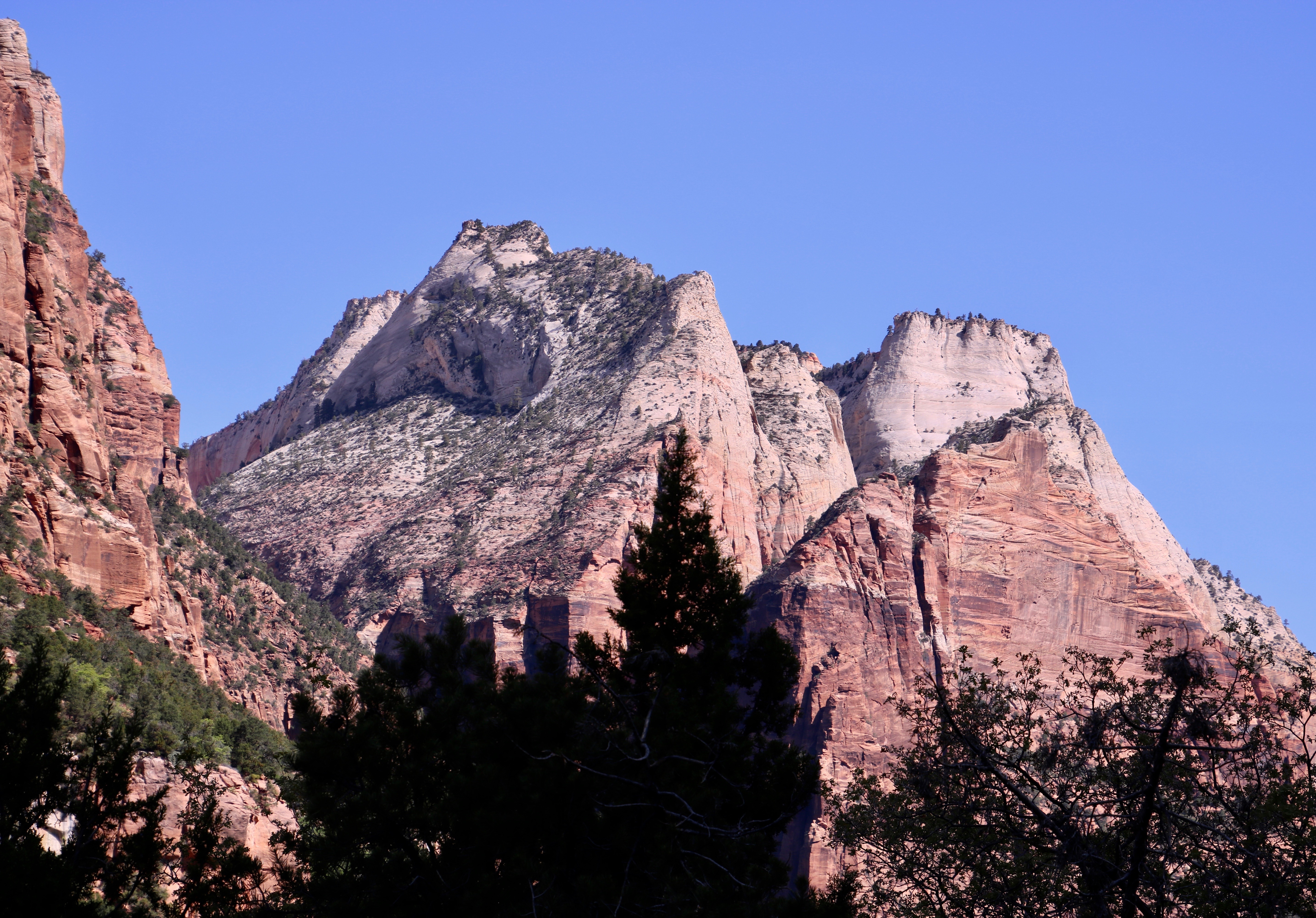
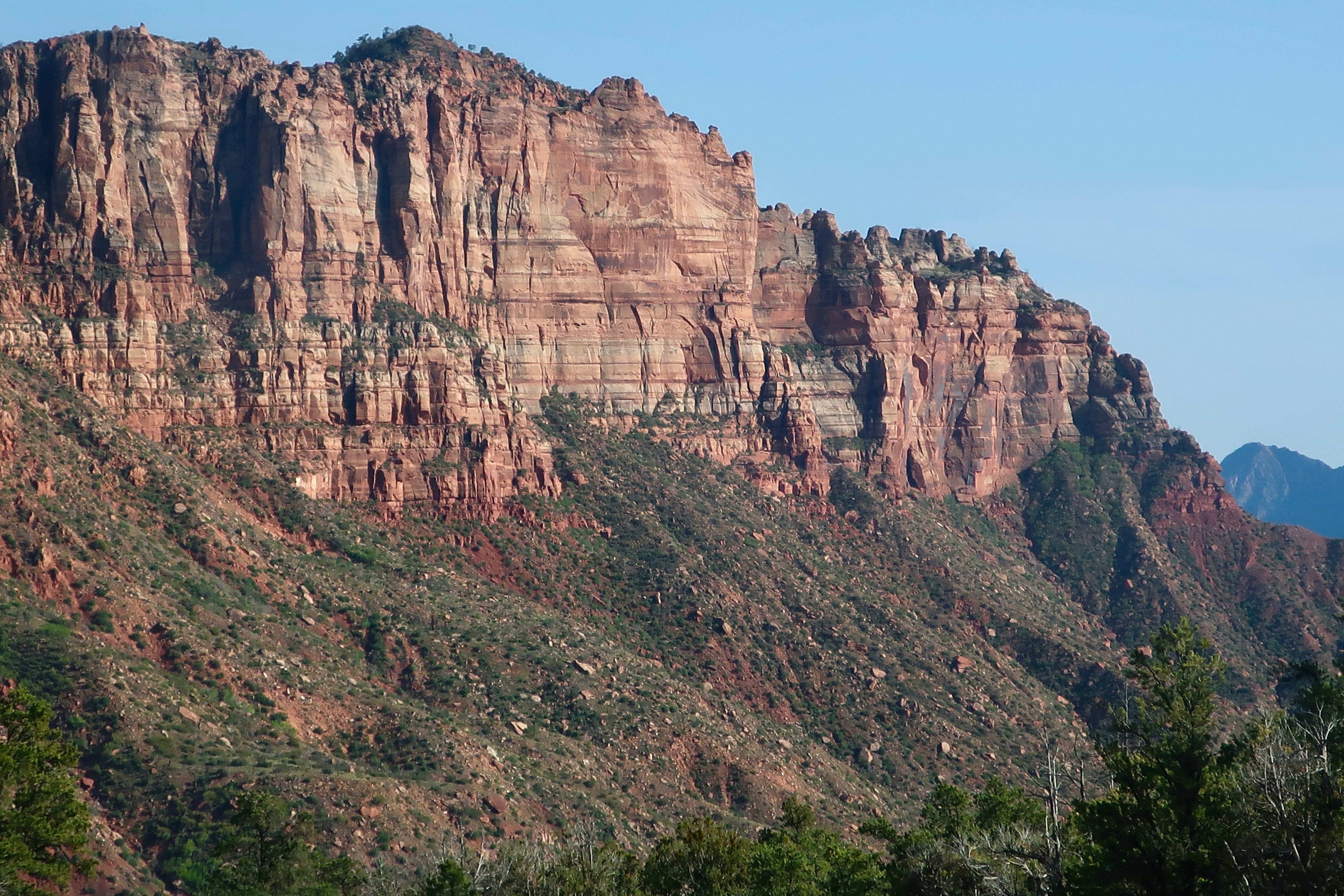
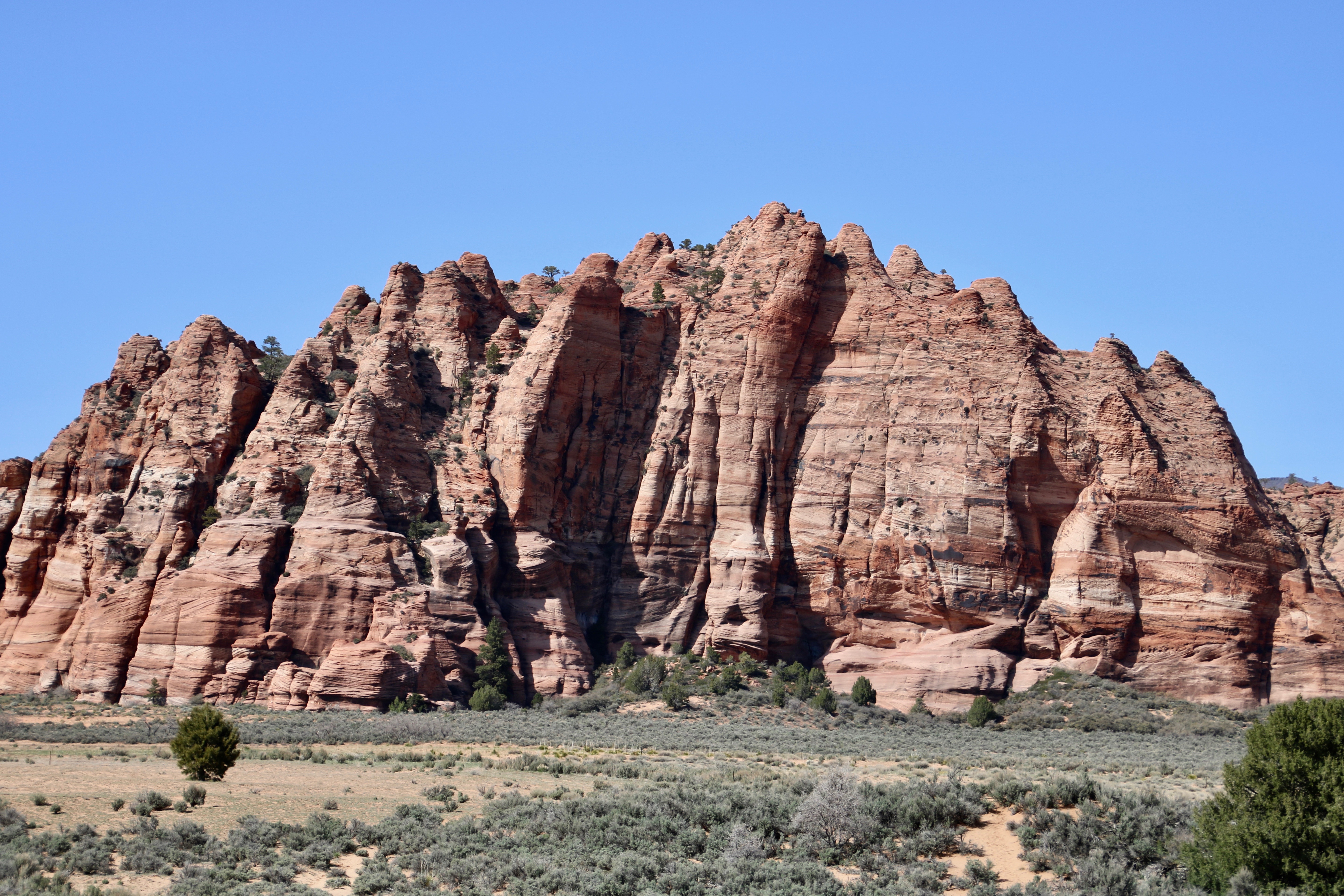
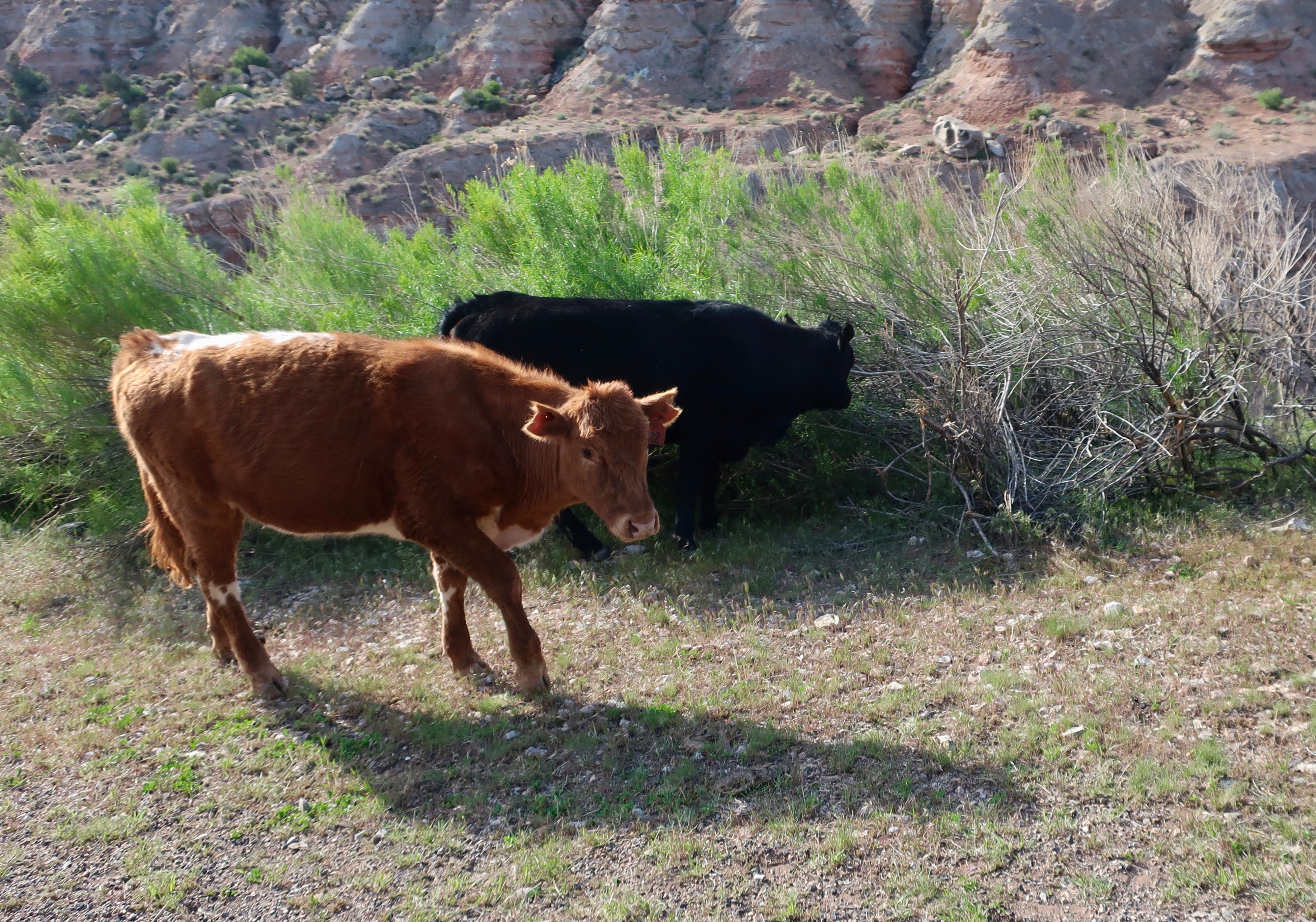
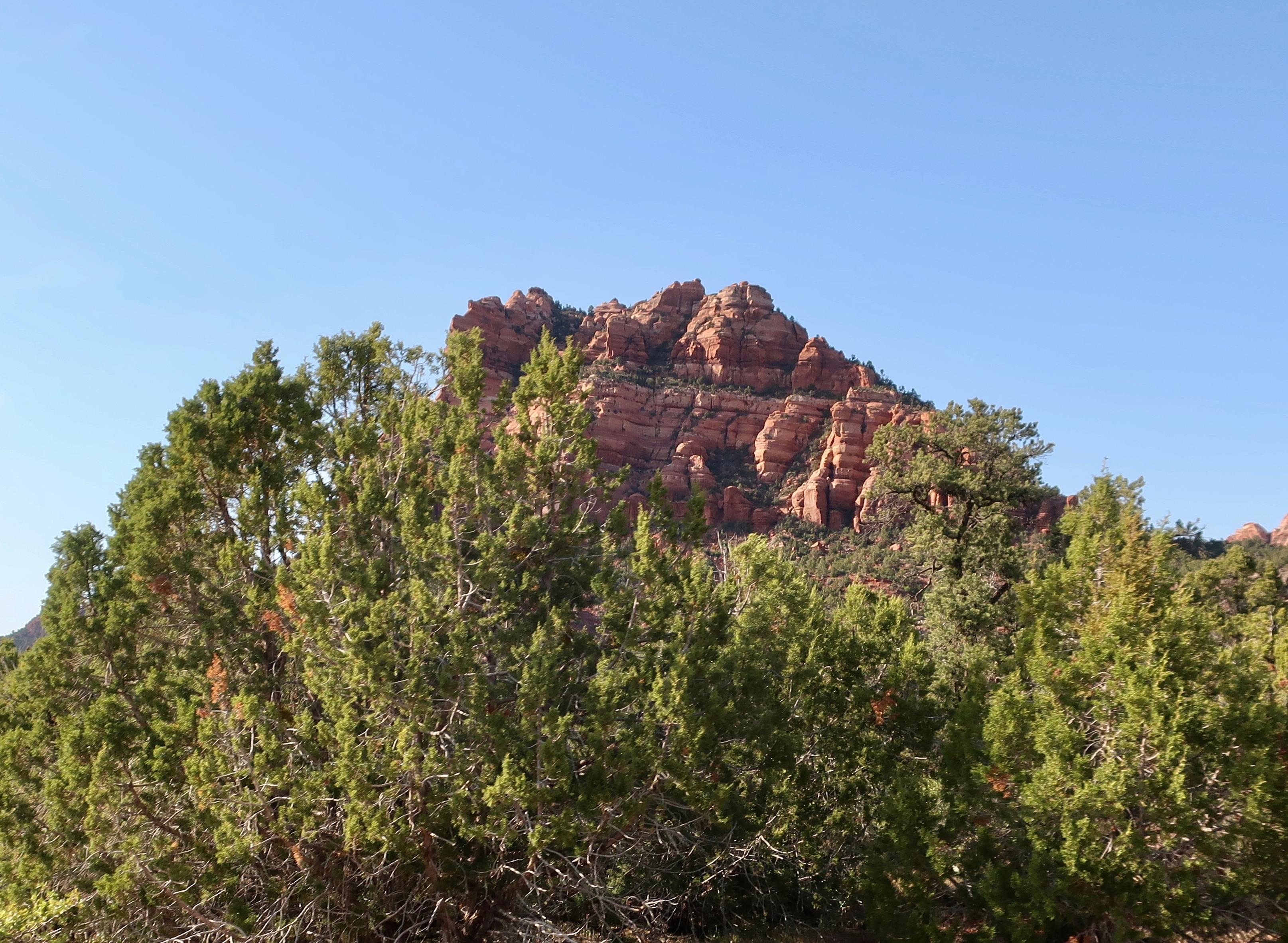
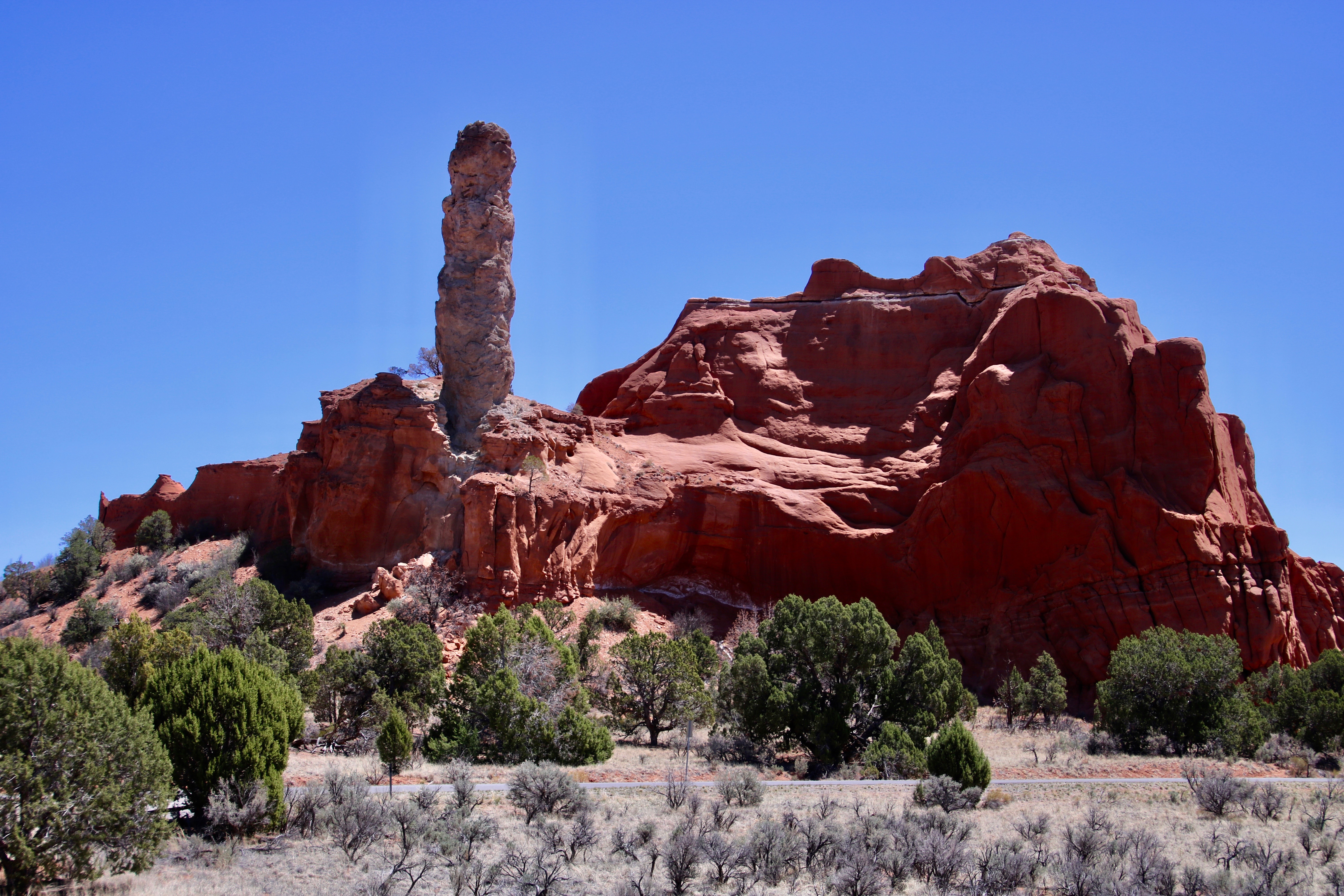
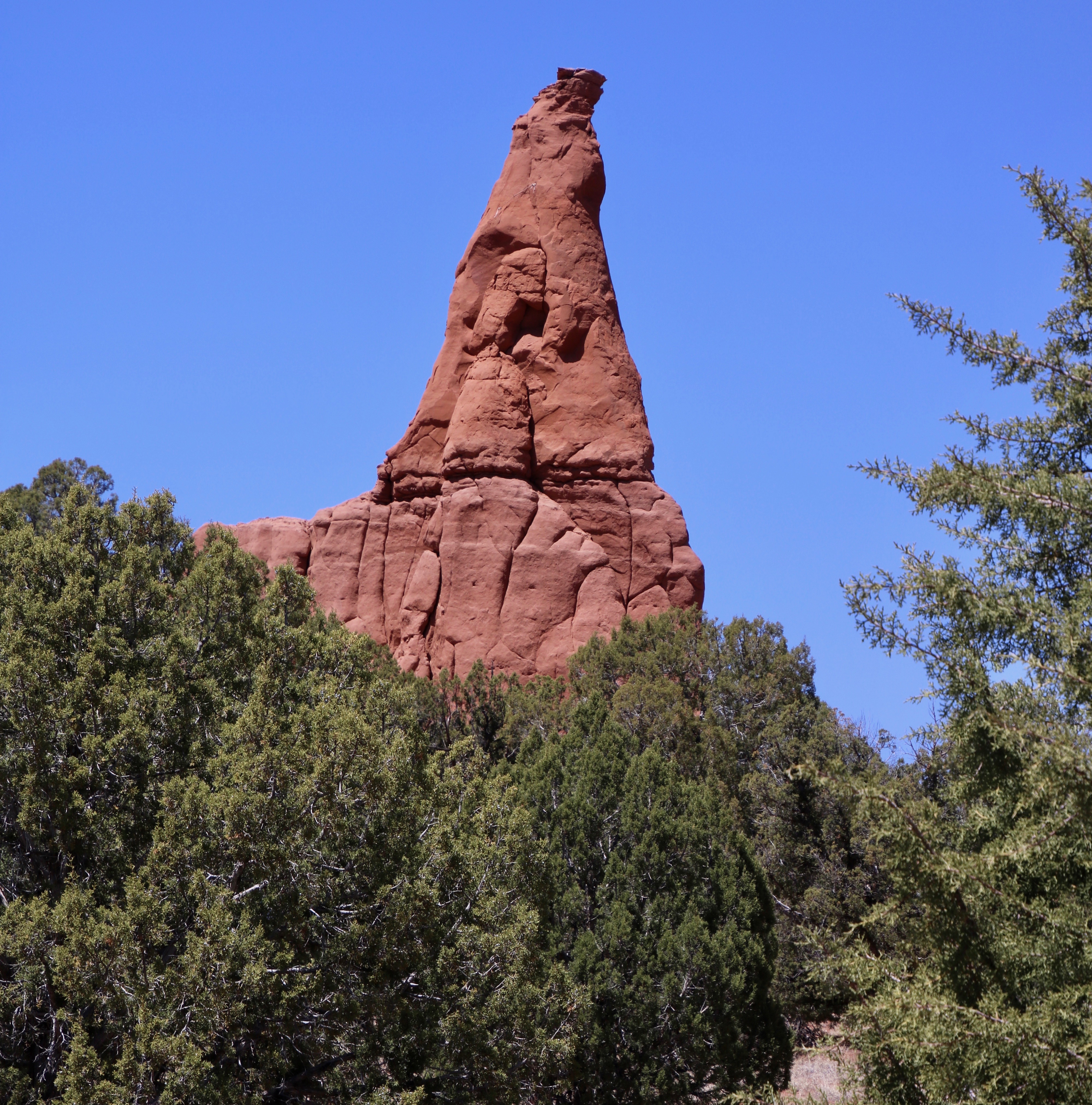
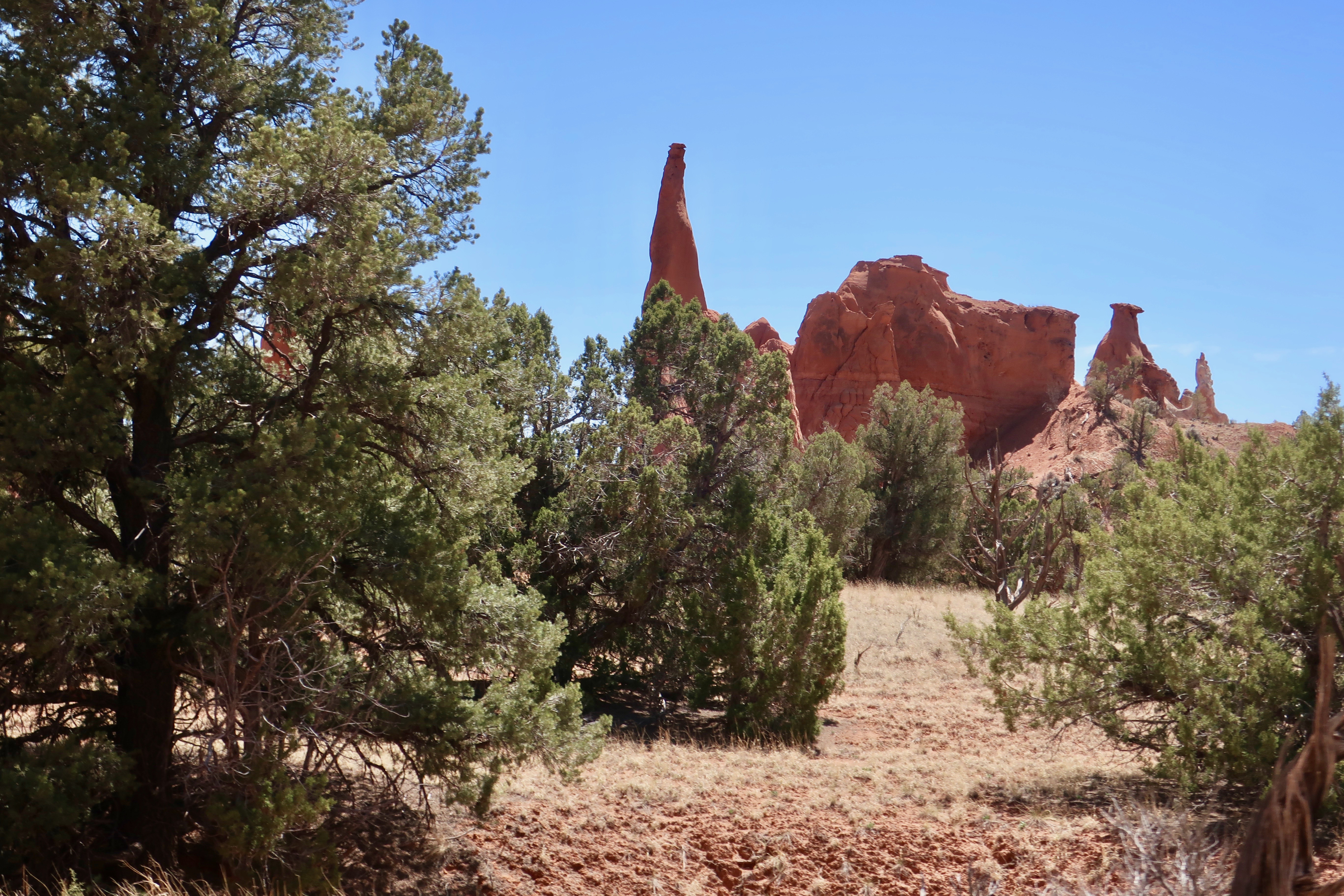
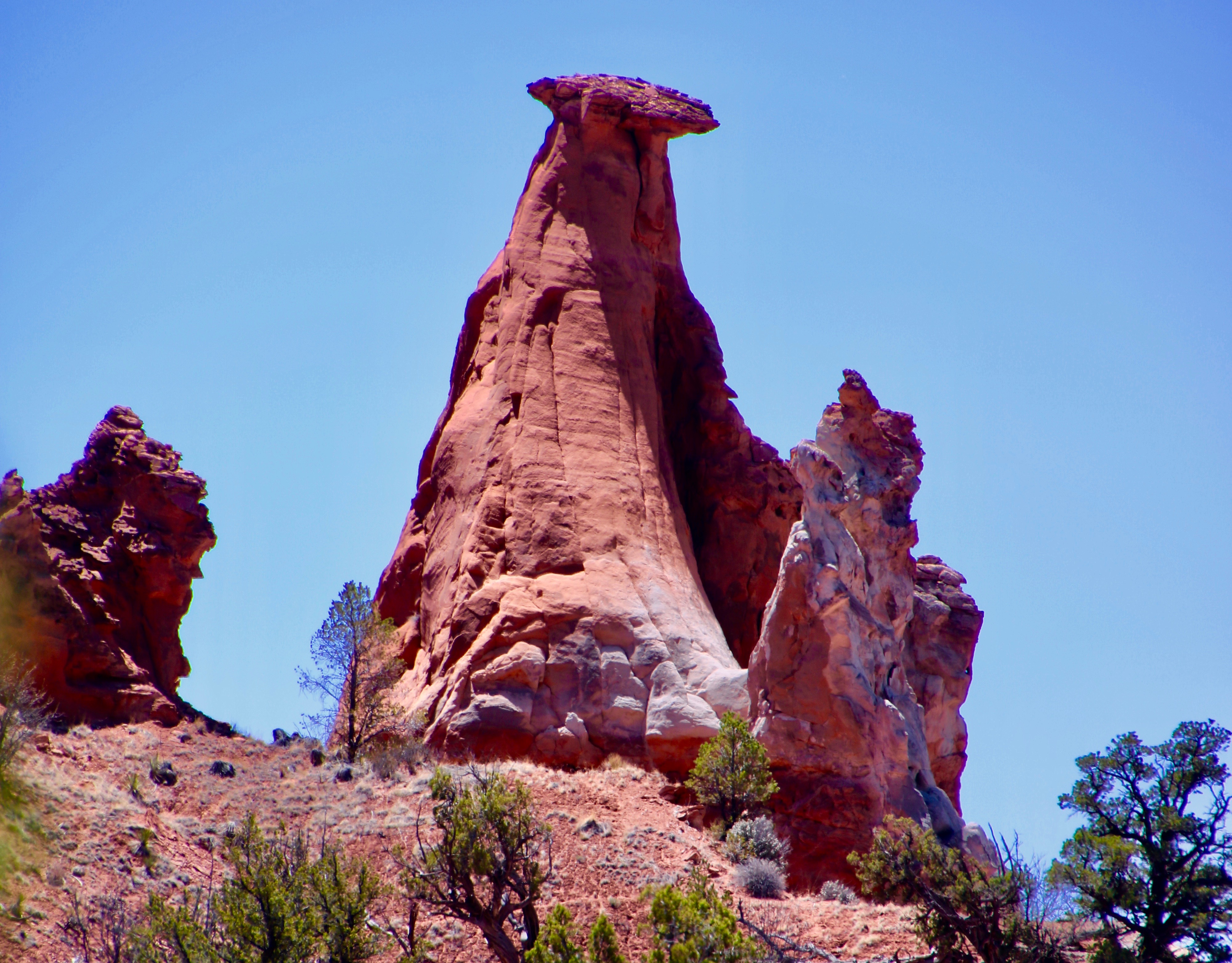
The beginning of our journey up to Kolob Terrace. It was obvious from our initial view that we were going to enjoy the ‘detour’ from Zion Canyon.I think this striking monument was Peggy’s favorite. (Photo by Peggy Mekemson.)She even took more than one photo! I always think that things like the trees in the left foreground add interest and help draw viewer’s eyes into the picture. (Photo by Peggy Mekemson.)I took at least six of this monument on Kolob Terrace featured at the top of the post! Most of the rock structures in Zion are made from sandstone, which, on its own, tends to be white. Like I mentioned in my Death Valley posts, it is oxidized iron that leads to the reds, oranges and pinks.This distant road shot gives an idea of the numerous shapes and colors of the various monuments on Kolob Terrace.Here’s an example of the variety of shapes. I always think of these rock formations as a fairy community, or maybe a troll town. (Photo by Peggy Mekemson.)Sheer cliffs like these found in Kolob Terrace will eventually be eroded by the forces of water, ice, wind and gravity. Different types of rocks erode at different speeds leading to the wonderful shapes found throughout Utah and the Southwest. Note the extensive talus slopes seen beneath the cliff.This distant formation provides an example of the erosive forces at work.A closer view of the same formation. the layer of rock on top is eroding faster than the layer beneath it. like the triangular face of the rock.This massive formation in Kolob Terrace shows a rounded character to the erosion. (Photo by Peggy Mekemson.)The Kolob Terrace road runs through national park and private land. Signs warn that you might find cattle along the way. We did. They had the grace or good sense to stay on the side of the road. I’ll conclude today’s post with a shy rock formation that is hiding among the trees….Caught it. On Friday, Peggy and I will continue to explore the beauty of the Kolob Terrace section of Zion National Park.
Our house is in the final stages of being sold. We signed off on it today. The buyers will complete their part by the end of the month. “We’re homeless,” Peggy declared. “No,” I suggested. “our home is wherever we happen to be.” So what if it happens to be 22 feet long and is pulled by a F-150 pickup.
Right now we are in Flagstaff, Arizona.It’s a lovely community filled with friendly people, great restaurants, a fascinating culture, and bookstores. The Grand Canyon is an hour’s drive north. Sedona is an hour’s drive south. A five minute trip out of town yesterday found us scrambling up and down steep canyon walls searching for thousand year old petroglyphs left behind by the Anasazi, ancestors of our modern Southwestern Native Americans.There are certainly worse places we could be.
But as delightful as this area is, we will be out of here this week. We are modern day gypsies, full-timers as they say in the RV world. The freedom of the open road is ours. We aren’t rookies at this. Once Peggy and I wandered around North America for a year. Another time it was for three years. We don’t know how long we will be this time. Our goal is something like ‘as long as we can get away with it.’ Given our combined age of 151, who knows...
Our focus will be on the wild areas of North America. Once again this will include the National Parks of the US and Canada. We’ve been to most of them, but this time we want to explore places we haven’t been, places where the vast majority of tourists aren’t. Today’s post on Mosaic Canyon is an example.
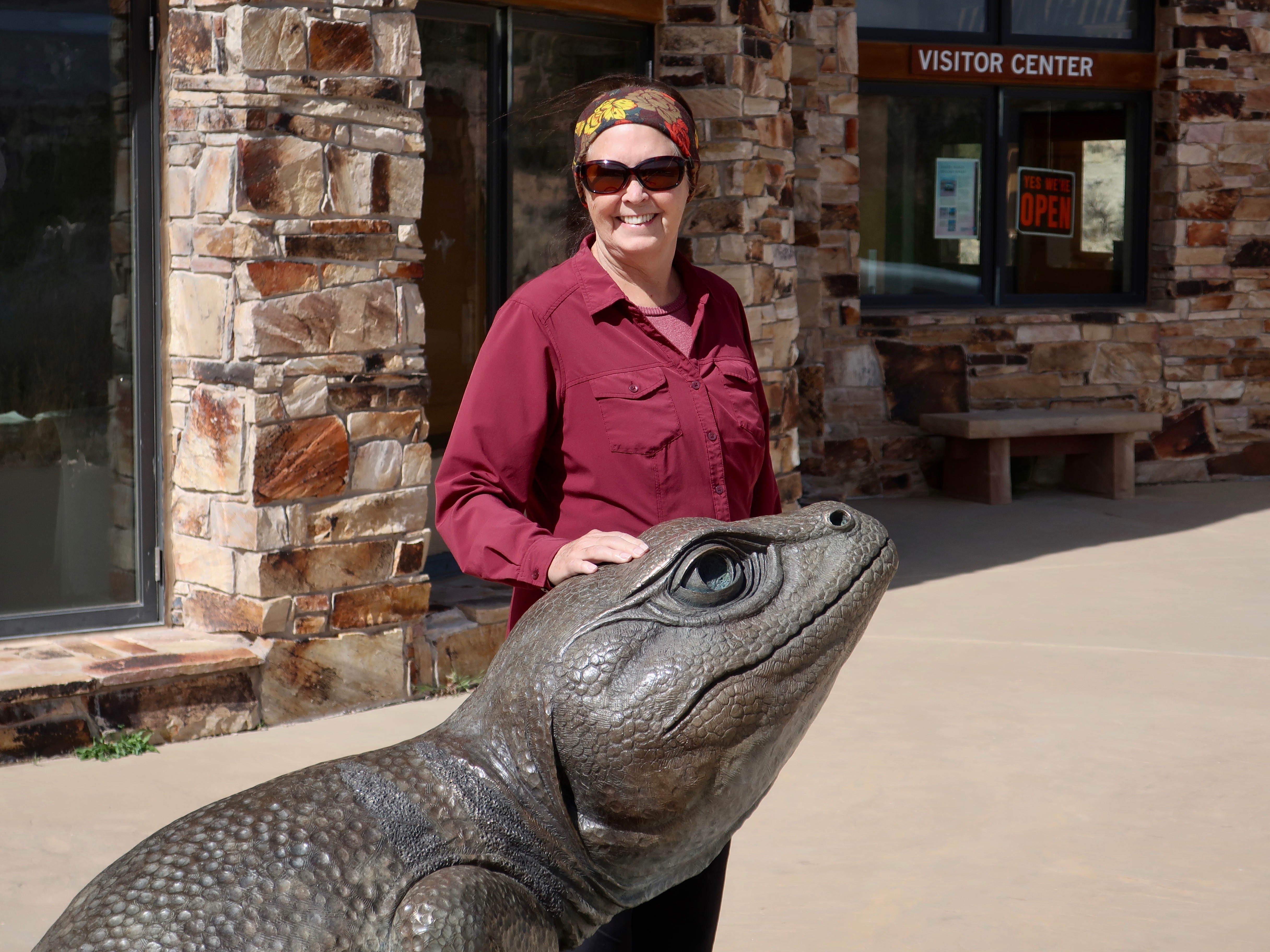
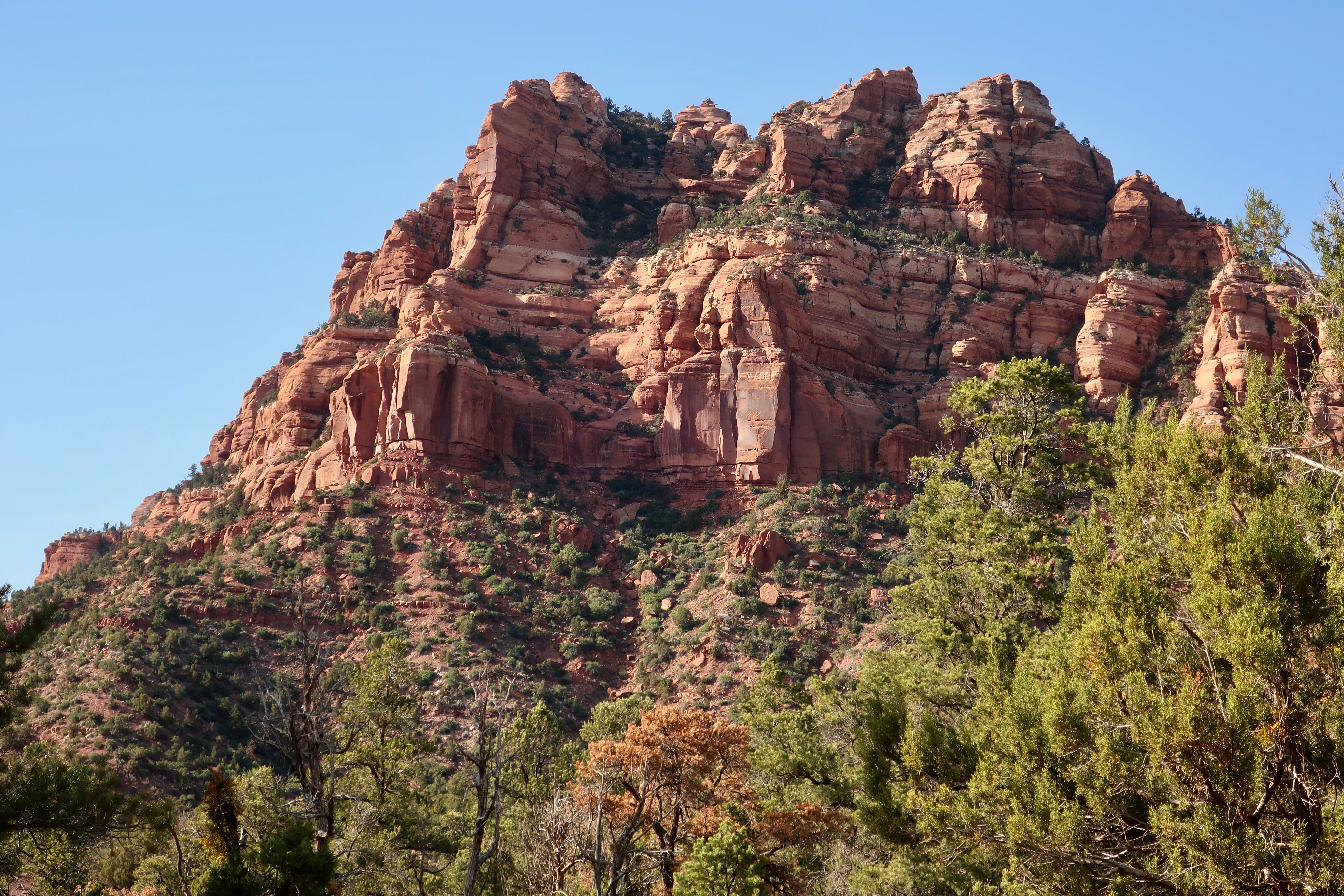
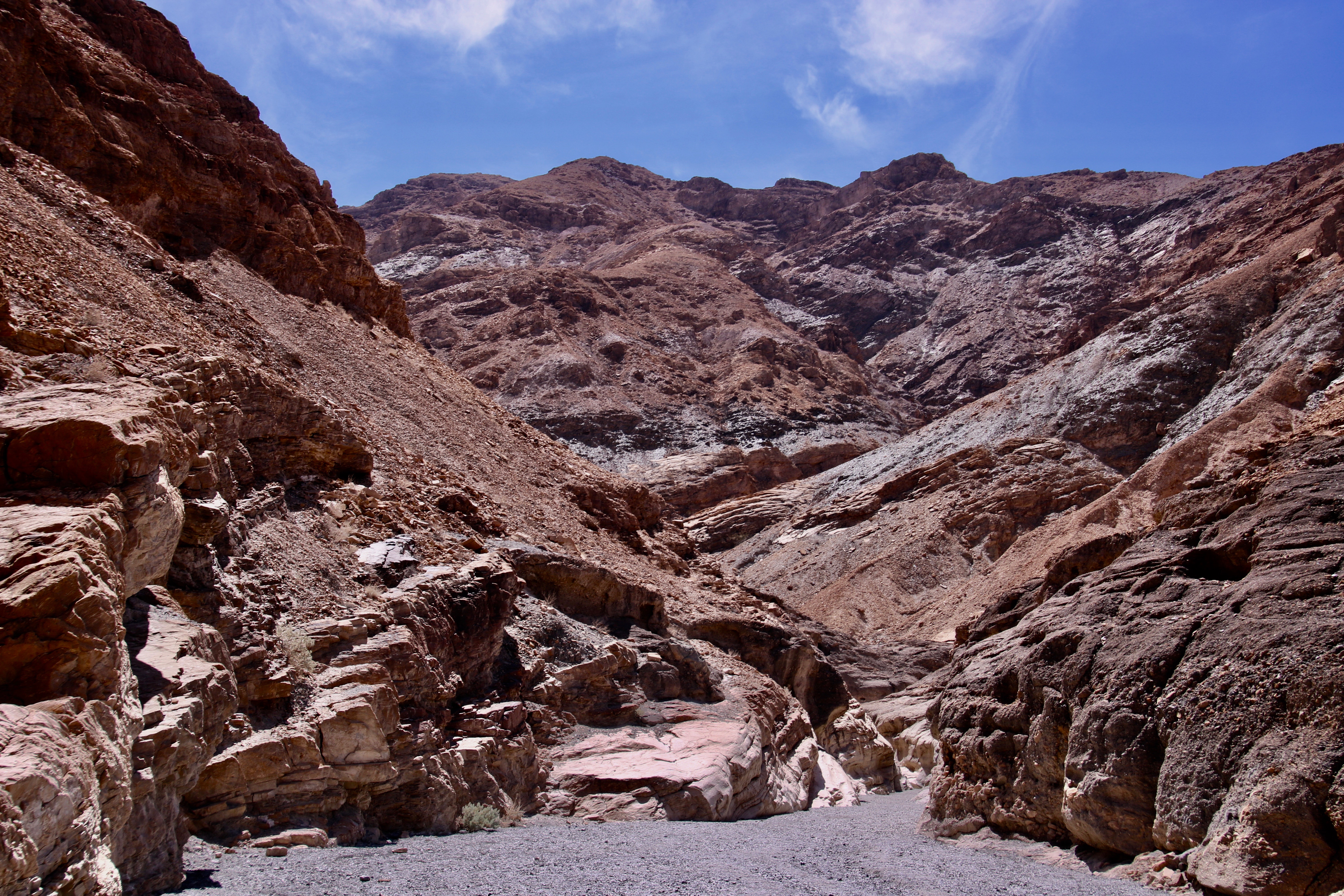
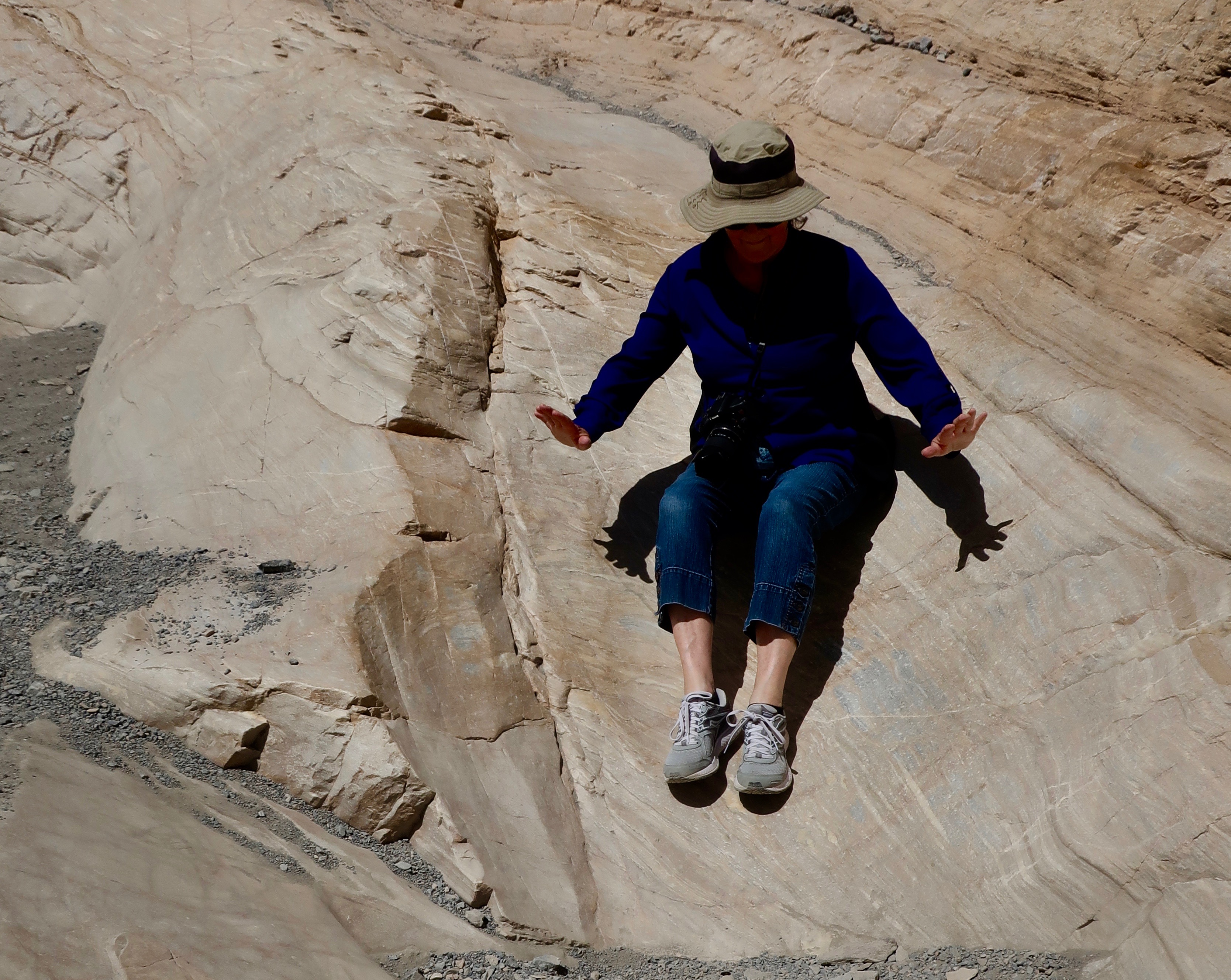
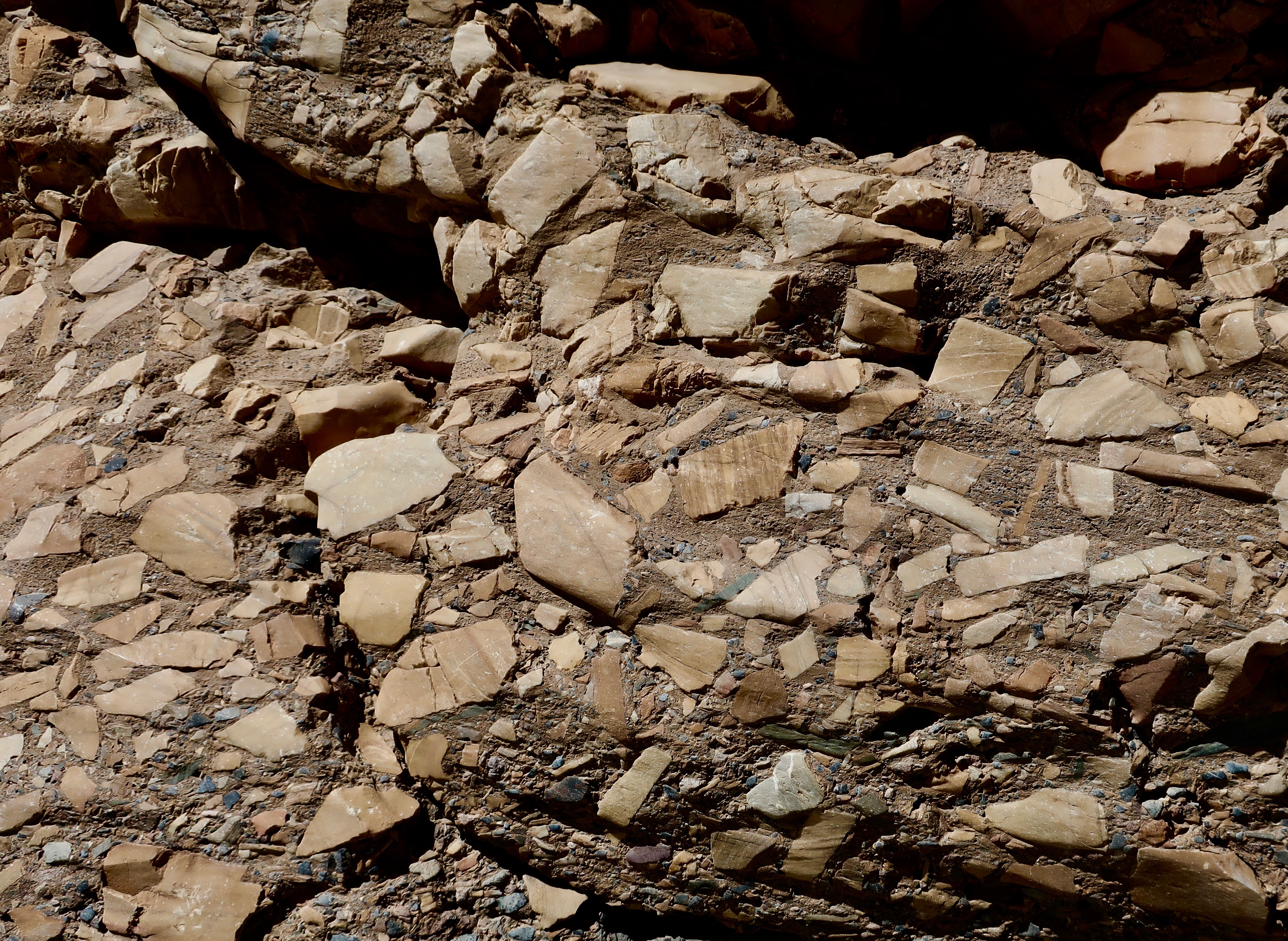
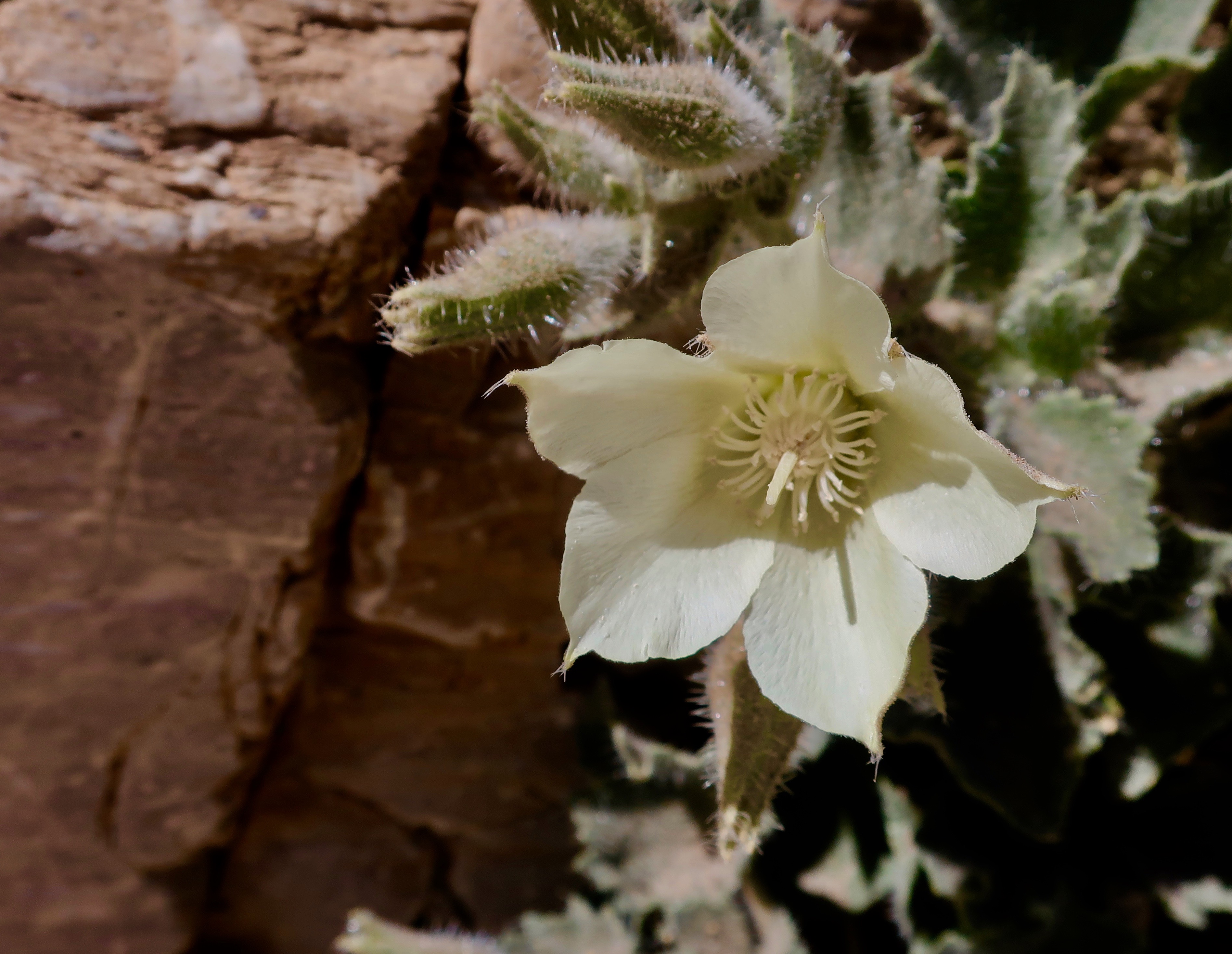
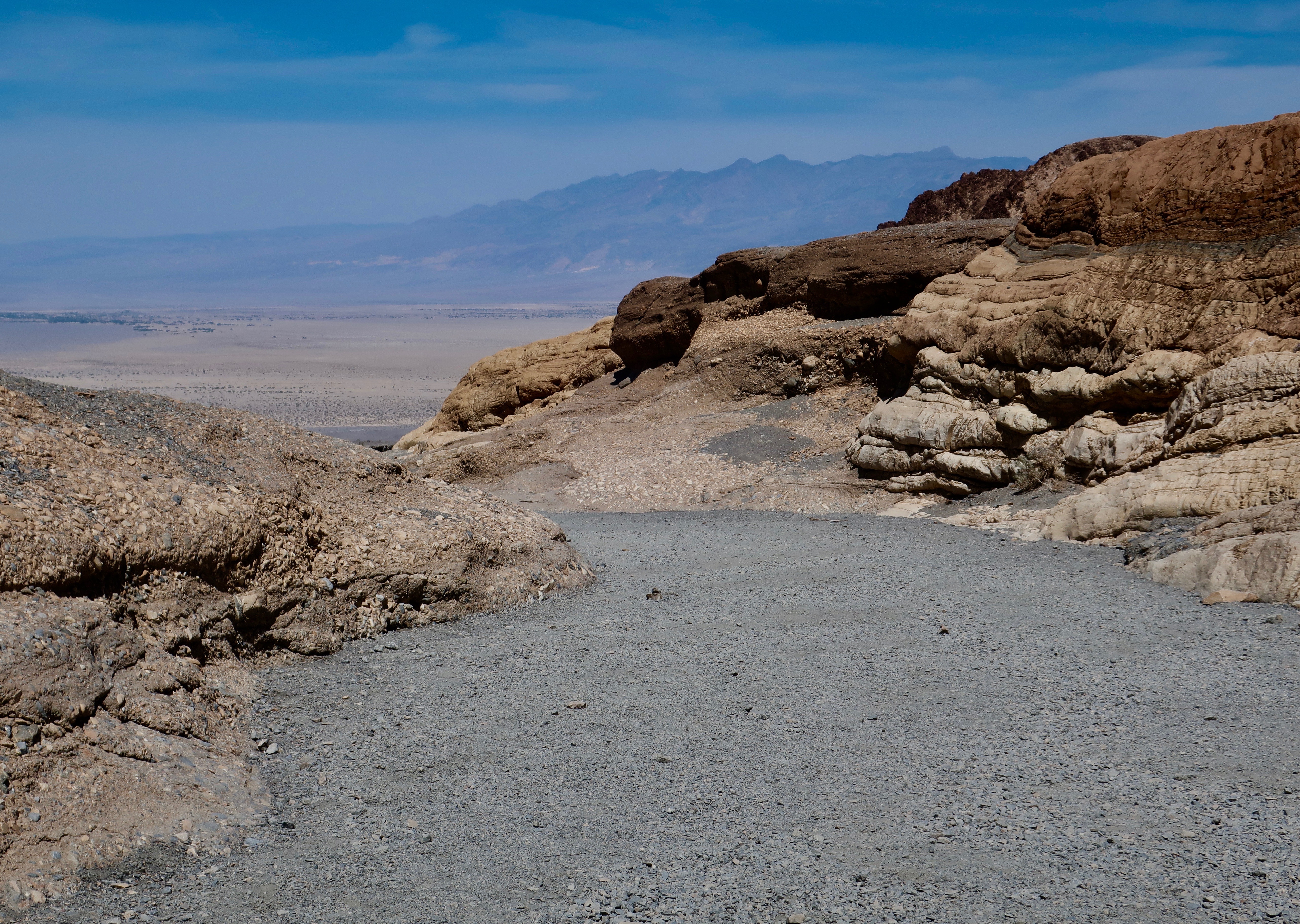
Mosaic Canyon is easy to get to. It’s just above Stove Pipe Wells, one of Death Valley’s main tourist watering holes. And it’s quite beautiful, as this photo by Peggy shows. But it isn’t advertised as one of the “must see tourists sites,” like Zabriskie Point for example. When Peggy and I visited Zabriskie, there must have been a hundred people there. We ran into a half dozen or so at Mosaic Canyon. (Photo by Peggy Mekemson.)On our way over to Mosaic Canyon, we passed by the Mesquite Flat Sand Dunes, which are always worth a photo. The sand dunes are located next to Stove Pipe Wells and are easily accessible for a hike. Note the person on top. (Photo by Peggy Mekemson.)Here is the road up to Mosaic Canyon. It’s gravel and dirt and a bit bumpy but short. (photo by Peggy Mekemson.)The entrance to the canyon is a wide wash. It quickly narrows down! You can see two of the six people we shared the canyon with. (Photo by Peggy Mekemson.)I captured this shot of the narrows.Another example. The smooth walls on the left are marble made from Noonday Dolomite.The national park site recommended walking carefully when crossing the marble because of its slickness. Peggy solved the problem by sliding down. Her shadow makes it looks like she was levitating. “I’m Mary Poppins,” she declared when she saw the photo. But where’s the umbrella?This breccia is another common rock found in Mosaic Canyon. You can see why it gives the canyon its name. We were excited to find these flowers growing in the canyon. We had missed the profusion of flowers that sometimes appear in Death Valley after a rare spring rainstorm. (Photo by Peggy Mekemson.)I took a close up. As you can see it’s pretty. But what’s with the hairy leaves. Turns out that this is a desert rock nettle, eucnide urens. If you have ever had a close encounter with nettles, you’ll know that means: ‘don’t touch!’It’s a message that bighorn sheep ignore. Apparently they love the flowers. I caught this statue of a bighorn at the visitors’ center. I could see where its metal mouth might come in handy! Eventually, we returned to the exit. Death Valley stretched out before us. We had lunch at Stove Pipe Wells and then returned to our parking lot campsite.
I’m not a huge fan of Sunset Campground at Furnace Creek. It’s a huge parking lot. The advantage is that it rarely fills up, which is not the case for the more desirable sites in the valley. I’ve used it three times over the years, mainly because my trips are never planned months in advance when registration opens up. When Peggy and I arrived, I expected that most of its 270 sites would be full. It was Easter weekend. What we quickly learned was that the campground closed for the season in four days. There were a half a dozen other vehicles in the huge area. When we left, there were two. In addition to normally being available, there are two other plusses: its close proximity to all of the services at Furnace Creek— and the views.
This was the view from our campsite.Peggy took a close up.One night we sat outside and watched the sun set in the west……and the moon rise. I’ll end my Death Valley posts with this photo. Next, we are off to Zion National Park.
The rocks at Death Valley’s Artist’s Palette are world famous for their color.
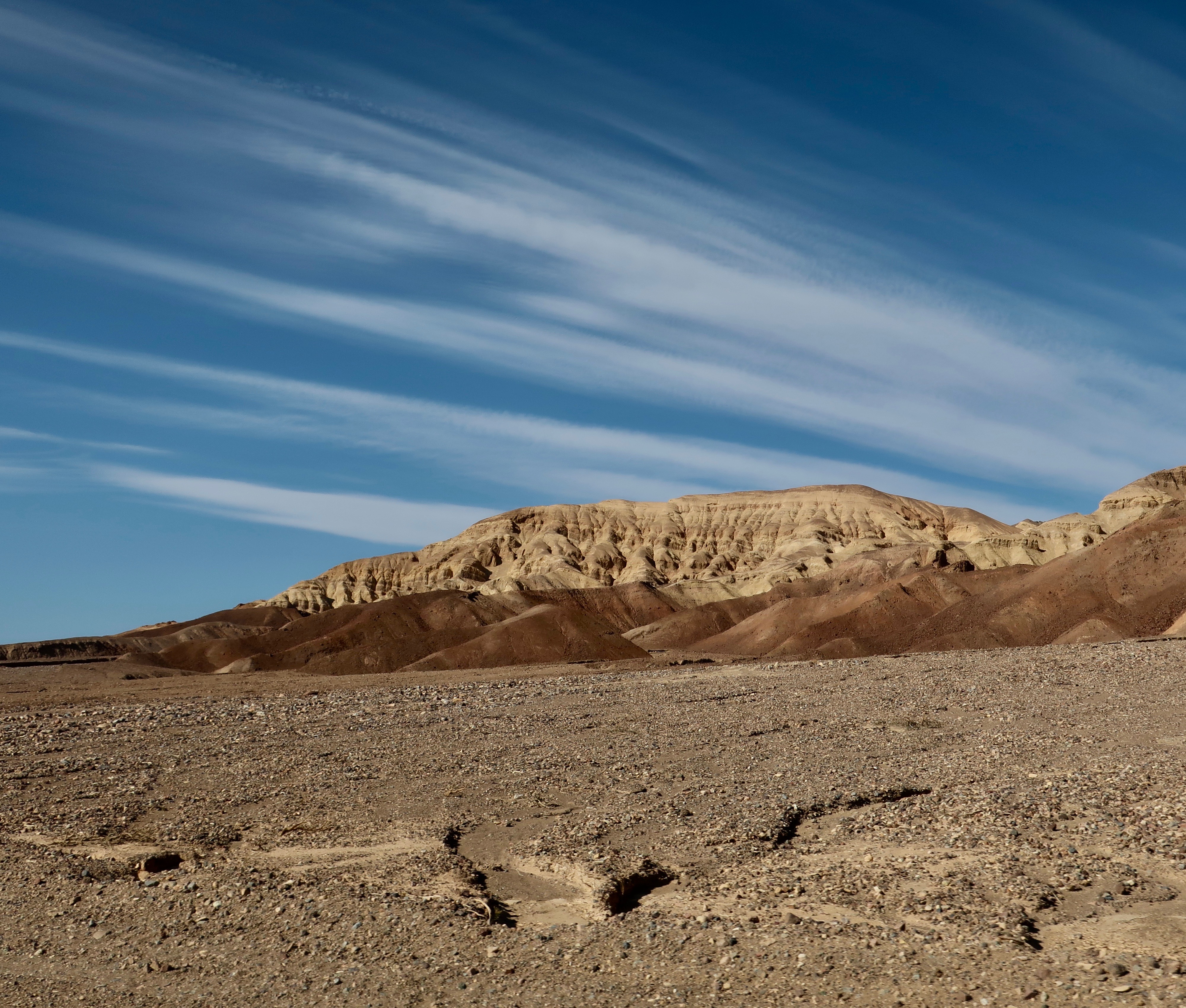
Geology is up close and personal at Death Valley. The Valley floor and sides, stripped free of most vegetation, can’t help but show their true colors. The most colorful place to check out these colors is along the paved one-way Artist’s Palette’s drive, which is near the Devil’s Golf Course, Gold Canyon, and Bad Water basin, other treasures of the Valley.
The colors you see are the result of oxidation of various metals. One example of oxidation that everyone is familiar with is the formation of rust on iron. Along Artist’s Drive, iron compounds create the red, pink and yellow you see. Mica derived from tuff, produces the green. Manganese produces the purple. (Tuff is a light, porous rock created from volcanic ash.)
A close up of the rocks at Artist’s Palette.
While visiting the Artist’s Palette overlook is the objective, the drive itself is worth the trip. I took the following photos while Peggy was driving. (It was her turn.) In addition to the scenery, there were fun curves and roller coaster ups and downs!
Road shot one.Road shot two.Road shot number three featuring the nose of Iorek the truck.
Of course the fun road also has beautiful scenery along it. Artist’s Palate has hardly cornered the market on color, as Peggy’s photos demonstrate.
Photo by Peggy Mekemson.Photo by Peggy Mekemson.Photo by Peggy Mekemson.
Now, let’s get back to the question raised in the Headline: Assuming an artist is in Death Valley has a full palette of colors, which one would he choose to paint a pupfish in love? Enquiring minds want to know.
But first, some background. You’ve probably heard of pupfish. There are several species scattered in locations around the National Park. Once upon a time they were happy residents of a huge lake that filled Death Valley. Lake Manly was a result of the Glacial Age. When the glaciers retreated to the far north and mountain tops 10,000 years ago, the lake was left to dry up and the pupfish were left scrambling for any remaining bits of water left, like individual springs. Lack of any contact created a number of subspecies.
The ones I will feature today live in Salt Creek. Their much more famous cousins live outside of the the Valley proper in what is known as Devil’s Hole, a 430 foot deep hole in the ground filled with water. What makes them so famous is that they are a critically endangered species. Today, there are less than 100 left. There were more in the 1960s but even then they were rare enough to be declared an endangered species, one of the first species to be so, seven years before the bipartisan passage of the Endangered Species Act of 1973.
Environmentalists the world over were ecstatic. The business people not so much. Nearby ranchers were limited in how much water they could pump out of the ground and developers in what land they could sell. Profits would be reduced. All that to save a tiny fish from extinction. A “Kill the Pupfish,” “Save the Pupfish” bumper sticker war ensued. National headlines were created and people across the country became aware of the pupfish. It is still a symbol of the ongoing battle between those who see objects primarily in terms of money and those who see them primarily in terms of inherent value. Being a lifelong environmentalist, I come down on the side of the pupfish, but I feel empathy for those whose livelihood was impacted.
Now join Peggy and me as we go in search of the ‘illusive’ pupfish of salt creek, whose males turn bright blue when they are in love, or is that lust. Either way, I’m glad that isn’t an infliction of human males.
A road sign some 15 minutes west of the Furnace Creek Visitor’s Center points you down a short, but bumpy dirt road to Salt Creek. The first thing you notice is that there is indeed a creek, which is a rare site in Death Valley. We were lucky to be there in April when it was still flowing. The second thing we noticed was that a well-built board walk followed along the creek.We eagerly set out with our eyes pealed on the water, searching. (Photo by Peggy Mekemson.)No fish here. But I enjoyed the dapples of bright sunlight…Again, no fish. I was stuck with admiring the ripple patterns caught by the sun. But where were the pupfish?Again, nice riparian habitat, but for what. And then…There they were. Busy male pupfish protecting their territory and looking for love! They didn’t appear blue to us, however. Maybe they weren’t ready for prime time. (Photo by Peggy Mekemson.)Right next to it was a pool absolutely teeming with the little fellows. Apparently they hadn’t received the message about being endangered. We learned that the word prolific hardly fit when describing the baby producing capacity of the females. And the males were more than willing to do their share. The literature used the word ‘millions’ when describing a season’s production. Unfortunately, when the creek dries up most of these offspring are lost. Only those that live near the spring in year around water survive— and wait for the next year so they can one again start their frenzy of propagating. (Photo buy Peggy Mekemson.)An information panel gave an artist’s rendition of a happy couple. “But where’s the blue?” went dashing through my head. Remember the old “Where’s the beef?” commercials. Okay, I admit that there is some blue, and it is on the male. The panel described the mating process. And it isn’t even R-rated. A female arrives in the males territory, swims over to him, and snuggles up to his side. They start shivering in anticipation, and zoom, she’s pregnant. Just like that. I’d say something about being premature but apparently, that’s how it’s done. “Was it good for you, honey?”
When you watch pupfish for a while they appear to be playful, dashing around, chasing each other, and plowing up the dirt with their noses. That’s where they get the name pupfish. We wished this year’s crop good luck and I took a final photo of the creek as we headed off for out next adventure: exploring Mosaic Canyon, which will be our next post.
Water is precious in the desert and the pupfish is only one of a number of animals and birds that take advantage of Salt Creek as is makes its way out into the desert to disappear into the sand.
Peggy and I were ‘getting the look’ when she snapped this photo at MacKerricher State Park just north of Fort Brag, California. The concern the seal had was whether we would come closer and disturb his snooze in the warm sun, i.e. would he have to get up and jump in the icy ocean? The answer was ‘of course not.’ I’m not happy when someone disturbs my afternoon siesta. So why should I disturb his. You know, “do unto others…”
This is the last post from our not-so-recent trip to the North Coast of California last November. Tempus Fugit. Indeed. My posts have been so rare lately they are close to being put on the endangered species list. But more on that later. MacKerricher State Park begins 3 miles north of Fort Bragg, California and continues for 9 miles up the coast. It features a wide variety of habitats ranging from sandy beaches to rocky headlands. There are tide pools, wetlands, a fresh water lake, and even a sea-glass beach. The ocean took an ugly dump and ground the glass up into attractive baubles that people like to collect. Our daughter-in-law Cammie used to turn sea glass she gathered in Alaska into beautiful jewelry.
We were at the park for a couple of hours and only walked a mile or two along the 9 mile beach. We were impressed, however. The area deserves much more of our time. I’ll let the photos that Peggy and I took speak for it. I included some of the these in an earlier post.
Looking south and capturing the sun reflecting off of the incoming tide.There was plenty of action as the waves rolled in.The bright green moss captured our attention…As did this tide pool outlined in greenThe ever-present ice plants continued the green-theme as they climbed up the ancient sand dunes in their unceasing effort to replace native plants. And be pretty.Plus there was seaweed to admire and wonder about. I’m thinking that this would make a great whip for the Devil.I wondered why someone had trimmed the roots off of this gorgeous driftwood.All too soon, it was time for us to leave. For a brief moment, my footprints were captured by the sand before the next wave rolled in. I was amused to see how they wandered, never traveling in a straight line, always willing to detour toward anything that was of interest, always ready for a new adventure— wherever it might lead. Like Peggy and I are. And that’s my next subject.
MOVING ON
As you may recall, Peggy and I are preparing to hit the road full-time in mid to late March. That’s one reason why my posts have been so few and far between. But there is more. We are also selling our house and moving East. Our daughter has an empty apartment in Virginia that we will be using for our base as we travel North America. She and her husband Clay have been lobbying for years that we should move closer to them. The apartment is small, however. We are using it as a reason to seriously downsize. It’s called donate, give away and toss. If we haven’t touched something in a couple of years, it goes. (Books and heirlooms are the exception— and even they are subject to scrutiny.) A moving pod sits outside our backdoor to collect what remains. In a few weeks it will arrive on our kid’s doorstep. We’ll take three months to get there.
We will miss our cozy home with its great views and entertaining wildlife. No doubt about it. Living out in the woods had always been a dream of mine. But it is time to move on. I turn 79 in a couple of weeks. While not necessarily old (from my perspective), it is definitely not young. My sense of humor on doing all of the work involved in maintaining five acres isn’t what it once was. And, there are more serious reminders of our age: the passing of family members and friends.
My sister died a couple of weeks ago, leaving me with a thousand happy memories and a large blank spot. She was my first baby sitter and forever friend. While we didn’t see each other often, we were always close. You may recall the posts I did on our annual pumpkin carving contests. They started in the late 90s and went on for 15 years. And you may also remember my blog on Nancy Jo and the Attack of the Graveyard Ghost, a prank my brother Marshall and I played on her when we were kids. Marsh passed away couple of years ago while staying in his RV at our house. I was with him when he died. I am now the last living member of our family. It’s a strange feeling.
A number of friends have passed on as well over the past few years. I attended a memorial/life celebration in Sacramento last weekend for one of my early backpacking Trekkers, Don Augustine. I first met Don in 1981 when he went on a hundred mile trek I was leading through the Sierras. It was a tough year with lots of snow still on the ground. I was kicking footsteps in it over a steep pass leading into the Granite Chief Wilderness when he hustled up to where I was working and offered to help. He would continue to offer a hand whenever needed for the next 40 years as both a trekker and as a volunteer. His generosity was close to legendary. His specialty was encouraging newbies as they struggled to meet the challenges of long distance backpacking and bicycling. I told a story about it to the some 200 people who had gathered to wish Don goodbye.
At the time, I had gone to Alaska as the Executive Director of the Alaska Lung Association. Don and a couple of other good friends had come up to join me on a backpacking trek I was leading across the Alaska Range. We had a particularly difficult young woman along who was always last getting into camp and whined a lot. It was the unpleasant job of our trail sweep/rear guard to walk with her and bring her in. I took my turn and by the end of the day my patience was running thin. That’s when she threw her pack on the ground and declared, “I am not going another step. I am camping right here!” I responded, “Do you see that hill crest? “Yes,” she pouted. It was maybe a quarter of a mile away. “The Trekkers are setting up camp on the other side. We can be there in 15 minutes.” “I don’t care,” she answered. “Okay,” I said, “pull out your whistle.” (We required that all of our trekkers carry one.) “I have to hike over the hill and check on the group. I saw a grizzly bear about a mile back. If you see him heading your way, blow loudly on your whistle three times and I’ll come back.” She was up in a flash, had thrown her pack on, and was leading me over the hill at a hefty pace.
I took Don aside in camp and asked if he couldn’t use a bit of his magic on the young woman. “I’ve got you covered, Curt,” he said. “I’ve got candy.” He reached into his pack and pulled out a gallon ziplock filled to the brim. (There were reasons why Don always had the heaviest pack in the group.) And Don was right. On being introduced to Don’s ziplock and his charm, the girl’s attitude improved immensely and she started hiking faster to keep up with him and his candy. It was a much better solution than my making up grizzly bear stories.
Don playing his guitar on one of our Sierra Treks. He often carried his guitar and the camp chair he is seated in. And Pop Tarts. Nancy Pape, lying down and listening, was also at the memorial.
It’s always hard to lose a family member or friend, and even more so when he or she has been close. It is like closing a chapter in your life— the laughter and good times, the tears, the adventures and so much more. But it is also an important reminder that life is short, whether you are 79 or 29. Life should be lived to the fullest whatever your age. Peggy and I believe this totally. That’s why we moved to Oregon and that’s why we are now moving on now, doing what we love to do, wandering to our hearts content. Until it is time to do something else.
We will be sharing our adventures on this blog. As always, you are invited to join us. We hope you do.
My next post on Friday will be different: It will serve as a detailed description of our house, property and the surrounding region for those who may be interested in having their own ‘home in the woods.’ –Curt and Peggy
Most people love lighthouses. And what’s not to love? They are usually found in beautiful locations, feature attractive buildings, and include an element of romance. Their location is part of the romance, but even more so, I find the life of lighthouse keepers romantic. I picture them living on the edge of the ocean, facing ferocious storms with towering waves, and working heroically to save lives in areas that are often remote, far removed from the lives most of us lead. While such a life might not seem attractive to most, I like remote. I’m not so sure about the long hours, repetitious work, and being tethered to a 24/7 job.
I’ll never have the opportunity to find out, however.
The possibility of being a lighthouse keeper in the US today is close to zero. Of the 700 lighthouses presently functioning in the country, only one has a lighthouse keeper. It is located on Little Brewster Island overlooking Boston Harbor and has been in operation since being repaired after the British blew it up during the Revolutionary War. It had originally been built in 1716 on a pile of rubble stone with candles providing the light.
The rest of America’s lighthouses have become automated. When our son, Tony, was flying helicopters for the Coast Guard off of Kodiak Island in Alaska, one of his jobs was servicing the lighthouse in Cordova. As I recall, the salmon fishing was great in the area. He loved the assignment. And we benefited at Christmas with yummy halibut and salmon. (BTW… this past week he was flying a helicopter over Antartica in his new job.)
Today, many of the original lighthouses have been turned into museums. That’s the situation with the Point Cabrillo Lighthouse which is now part of the California State Park system. The lighthouse got its official start with a party in 1909. The head lighthouse keeper invited all of the neighbors within a mile over for its official opening at midnight. It was a pea soup night with the fog so thick that the light couldn’t escape. That wasn’t a problem for the loud new fog horns that started blasting out their warning on the dot at 12, probably waking up everyone who lived further away and wasn’t invited to the party. The lighthouse operated happily until 1961 when one of the towering waves I mentioned above rolled over the top. The third order Fresnel lens wasn’t damaged, however, and the lighthouse was returned to working order until 1973 when the US Coast Guard replaced it with a rotating beacon on a metal stand and the original lens was covered.
It was volunteers that brought the lighthouse back to life. With permission from the state and approval from the Coast Guard, they rebuilt the lighthouse and other structures including the homes of the lighthouse keeper and the assistant back to their 1930 condition when electricity was brought in. The Fresnel lens was cleaned, updated, and returned to service, being one of 70 that still operate in the US.
An attractive trail leads from the right side of the parking lot to the Lighthouse. You can also hike the road, but why would you? This is a view of wind-sculpted brush along the way.Our first view of the Lighthouse. A bit of morning fog still hung over it. The Fresnel lens was shining. (Photo by Peggy Mekemson.)It didn’t last long. A few minutes later the sun came out and burned the fog away. (Photo by Peggy Mekemson.)The trail took us over to the ocean on our way to the Lighthouse. Sun lit up the waves.The Pacific Ocean crashed into an inlet. Can you spot the Cormorant?It was hiding down among the rocks. (Photo by Peggy Mekemson.)We wandered around the lighthouse, admiring it.A side view included the fog horns located on the back. (Photo by Peggy Mekemson.)Peggy focused in on the lens. It can be seen 22 nautical miles out to sea. The third order Fresnel lens is made up of four panels which contain 90 lead glass prisms and weighs 6800 pounds. It is maintained by the volunteer Point Cabrillo Lighthouse Keepers’ Association. (Photo by Peggy Mekemson.)We entered the small store and museum at the lighthouse and found this. Do you know what it is? It is whale baleen that whales use to strain their food out of ocean water.We followed the road out since it led by the attractively refurbished lighthouse keepers’ homes. One serves as a museum. Visitors can rent the other for an overnight stay.
And this brings us to the bookstore cat. The attractive, historic town of Mendocino is located a mile and a half south of Point Cabrillo. It is another one of our favorite coastal towns. One of the reasons is its excellent bookstore: The Gallery Bookshop. The store’s logo is a cat reading a book. We went there to buy books, meet friends, and visit with the cat.
Every nook and cranny of the bookstore is filled with quality books. We could spend hours there.The owner’s philosophy was posted in the window…We hadn’t seen our friend David McElroy for quite some time. David is an Alaska bush pilot and a talented poet, a combination that has always fascinated me. He was traveling with his friend Susan, who among her many accomplishments, had been the first director of the Nature Conservancy in Alaska. They originally met in 1979 when Susan had hired David to fly her while she filmed the Iditarod, the first film of the event to ever be televised nationally. They met again after David’s wife of many years (and one of Peggy’s best friends from high school, Edith Barrowclough) passed away from cancer. Susan and David were on their way to Paris and then Portugal for a few months. This sign greeted us at the bookstore door. Catsby was sitting on the counter next to the cash register when I snapped his photo.
As I have noted before when I have blogged about my favorite independent bookstores, many of them have cats. I think that they all should. Here’s what the Gallery Bookshop’s website has to say about Catsby:
“The Great Catsby joined Gallery Bookshop in the fall of 2012. He was seen wandering on the streets of a neighboring town, darting in and out of businesses. One day, he found a car with an open window and hitchhiked (without the driver’s knowledge) to the village of Mendocino. There, he was picked up by a friend of the bookshop and offered the job of bookstore cat. His duties include sleeping atop card racks, greeting dogs with a glare and a flick of his tail, and occasionally allowing customers to scratch him behind the ears. He can usually be found sitting in the window, warming himself in a patch of sunlight.”
That does it for today. My next post will be on MacKerricher State Park, which is located just north of Fort Bragg. I should note: When I find time to do it. Our life continues to be insane as we rush into creating a new lifestyle for ourselves. More on that after the post on MacKerricher.
I see a massive wave like this and I remember the wise advice of old sailors: Never turn your back to the ocean. Even now when I look at this photo, I think, run! Fortunately, I was happily ensconced on a high cliff at Pomo Bluff when this big fellow came rolling in.
I laughed when I read the information sign posted up on Pomo Bluff in Fort Bragg. Sailors, fisherman, and other boaters of yore making their way out of Noyo Harbor would go out on the overlook to check how the Pacific Ocean was behaving. It could be calm and welcoming or it could be ferocious and dangerous. Checking was an opportunity to chicken out, to remember there was a cold beer that required quaffing at the local pub. Thus the name. Modern technology and weather forecasting have reduced the need to do a visual check.
We wandered around on the Bluff, admiring the ocean, checking out ice plants, watching rowdy crows, and wondering who owned the mansion hidden behind a tall fence.
In spite of the big waves, it was a beautiful day on the ocean. We watched as the charter boat, the Telstar, made its way back into Noyo Harbor. It’s available for sport fishing and whale watching. Apparently some folks had been out to try their luck. We didn’t wonder about what they caught or saw, we wondered how their stomachs had tolerated the rolling sea. (Photo by Peggy Mekemson.)Looking back toward the entry into the protected Noyo Harbor.A close up of the sea stack seen above.Looking out to sea from Pomo Bluff. Go far enough and you will end up in Asia.Peggy captures a photo.And then goes in search of another. The sign is a common one along the coast, warning of the dire consequences of getting too close to a cliff’s sheer drop. But does this woman casually strolling along seem worried?How can one resist when the best photos are often on the edge?Such as this. (Photo by Peggy Mekemson.)Ice plants provide an attractive foreground for photos on the coast. But there is a problem. It is an invasive species that replaces native plants.I was surprised to find that the ice plant had adopted fall colors, something that I had never noticed before.This crow took a break from its aerial display of chasing other crows to steal their food, to rest among the ice plants.Peggy captured one carrying something delectable, like a long dead snail. (Photo by Peggy Mekemson.)From her perch out on the point, Peggy was also able to catch a photo of this mansion. Otherwise, it was hidden behind a tall fence.So I took a photo of it through a knothole.A seagull showed us the way. I liked its feet. (Photo by Peggy Mekemson.)And finally we came to the end. It was time to head on to our next adventure and my next post: The Point Cabrillo Lighthouse.