
Golden fields provide contrast to dark blue mountains, towering cumulus clouds and turquoise colored skies in eastern Arizona.
“…all of the golden lands ahead of you and all kinds of unforeseen events wait lurking to surprise you and make you glad you are alive to see.” – from Jack Kerouac “On the Road”
I was on my bike and out of Winslow by 7:00 the next morning. Not to demean the good folks of the community and their historic Route 66 town, but I was eager to leave my motel experience of the night behind. The broad shoulder of Interstate 40 provided a wide berth between the constant stream of large trucks and me. A slight headwind hassled me, slowing down my progress, but it was less than many I had experienced— or would experience. Mainly, I was free to gawk at the vast expanse of desert and fluffy clouds.
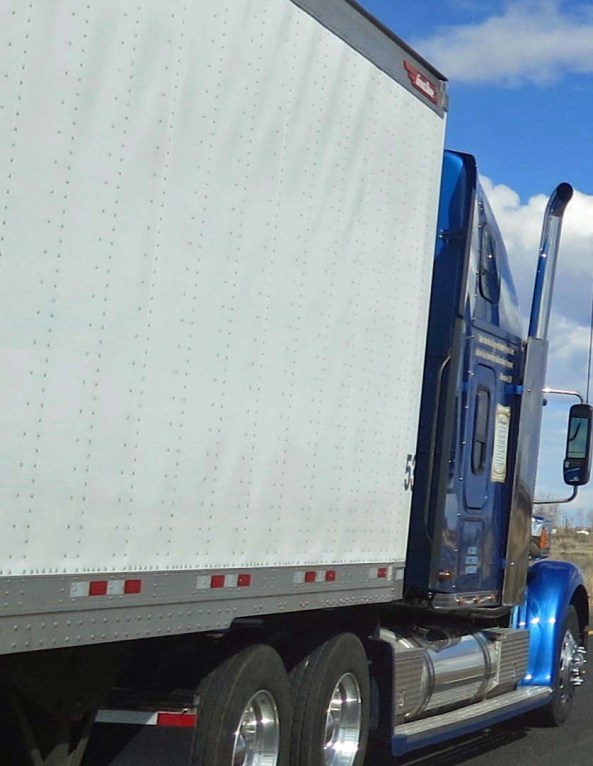
The normal view of an 18 wheeler from the perspective of a bicyclist.
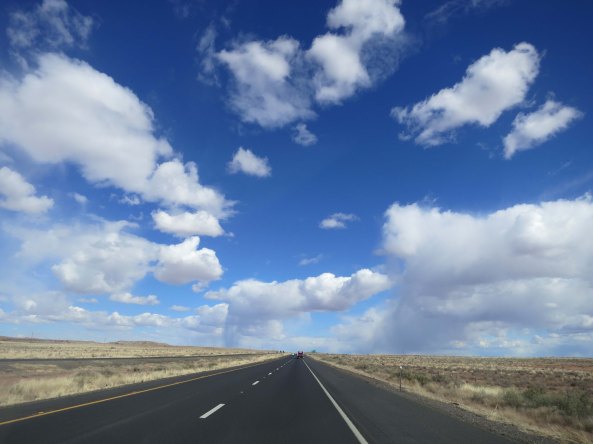
Wide open country, fluffy clouds, a broad shoulder— and for the moment, no vehicles.
One non-natural thing I gawked at was the huge Cholla coal-fired power plant belching out black smoke into the clear desert skies. My years of serving as the Executive Director of American Lung Association affiliates in California and Alaska had educated me on the tremendous health and environmental costs associated with coal-fired power plants. The long list of pollutants spewed out are related to both heart and lung diseases. Exposure can also damage the brain, eyes, skin, and breathing passages. It can affect the kidneys, nervous, and respiratory systems. As if this isn’t enough, pollutants from coal-fired plants are also a major factor in global warming and the mercury poisoning of fish. (The plant is now being decommissioned.)

The Cholla coal-fired power plant located between Winslow and Holbrook, Arizona just off Interstate 40.
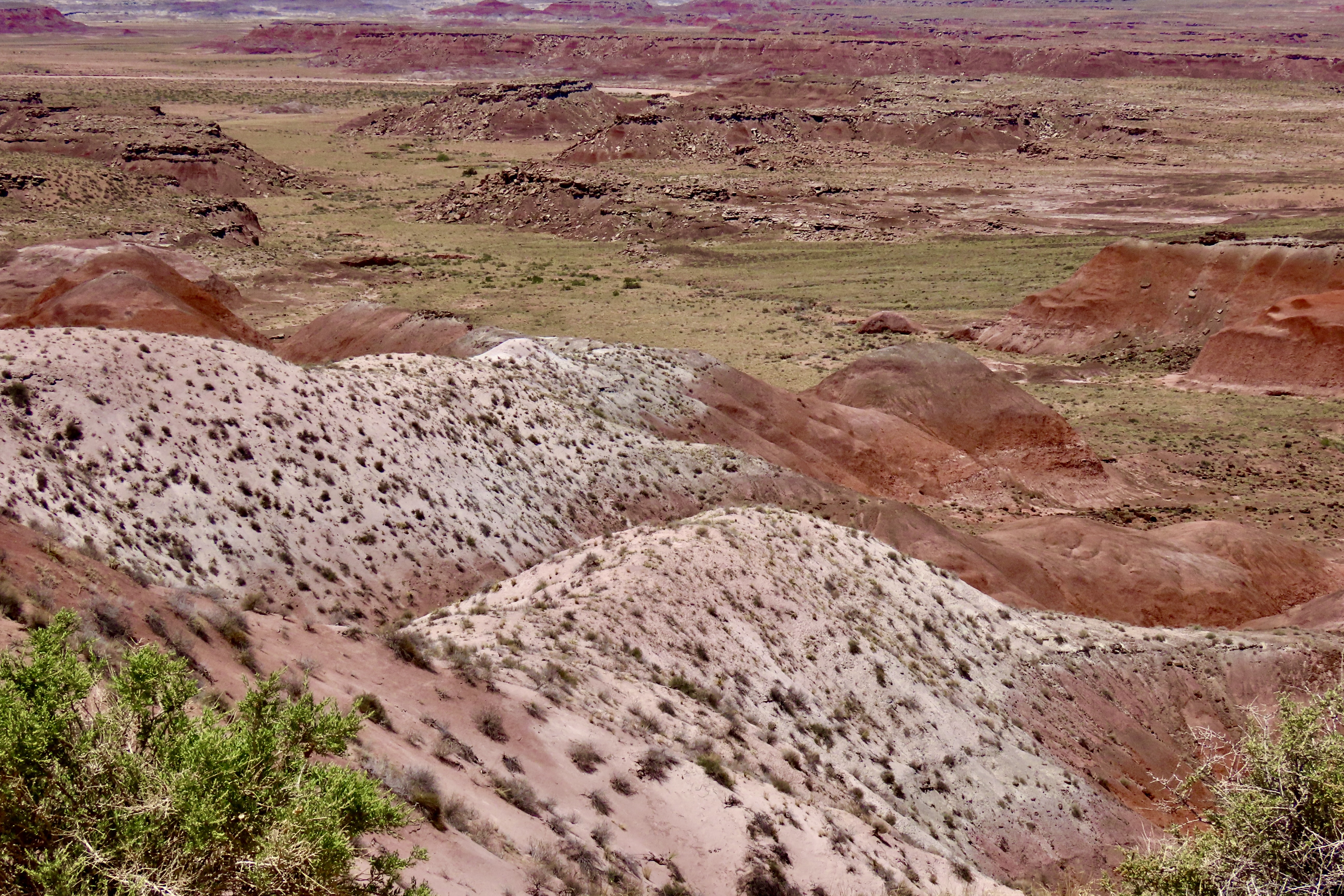
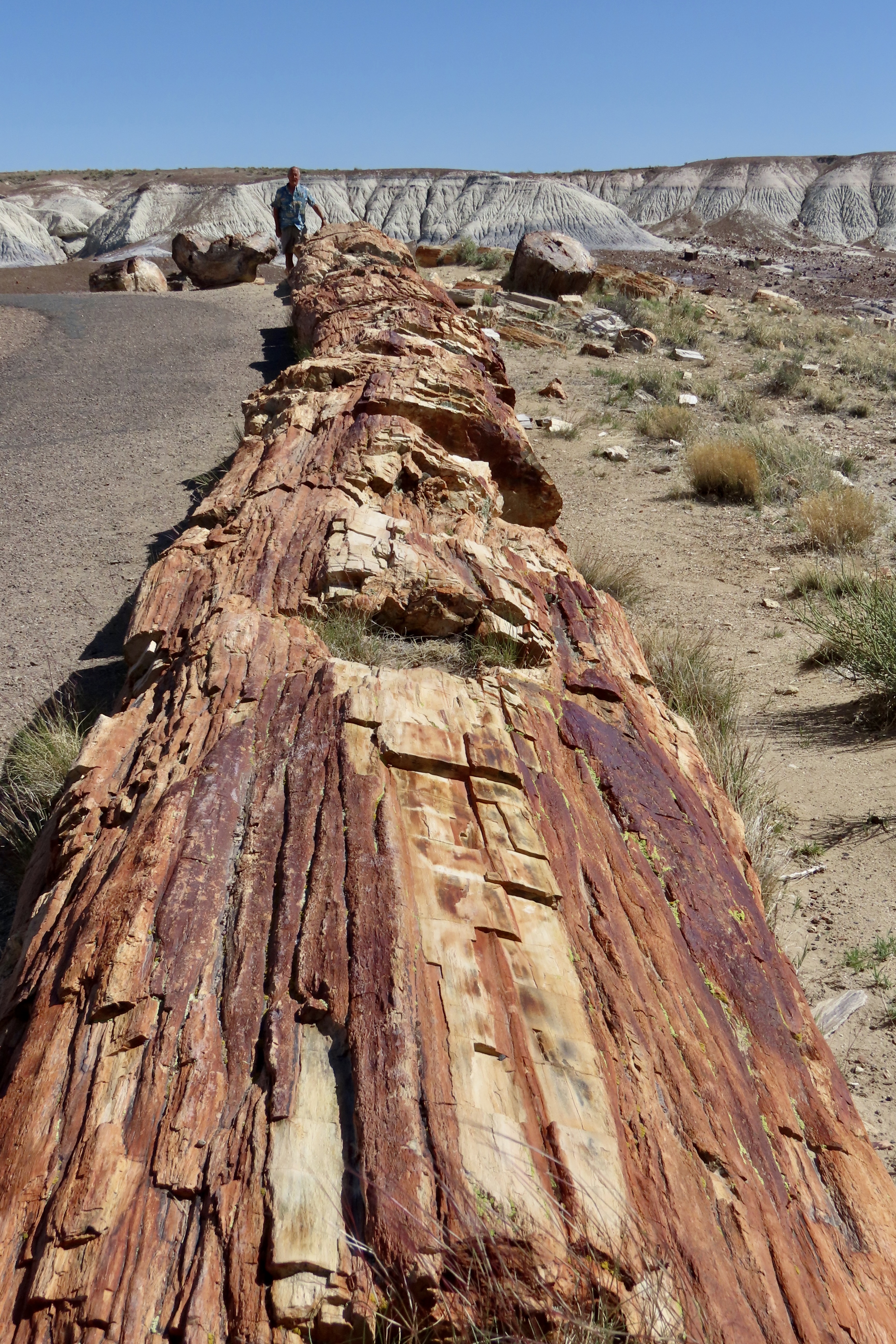
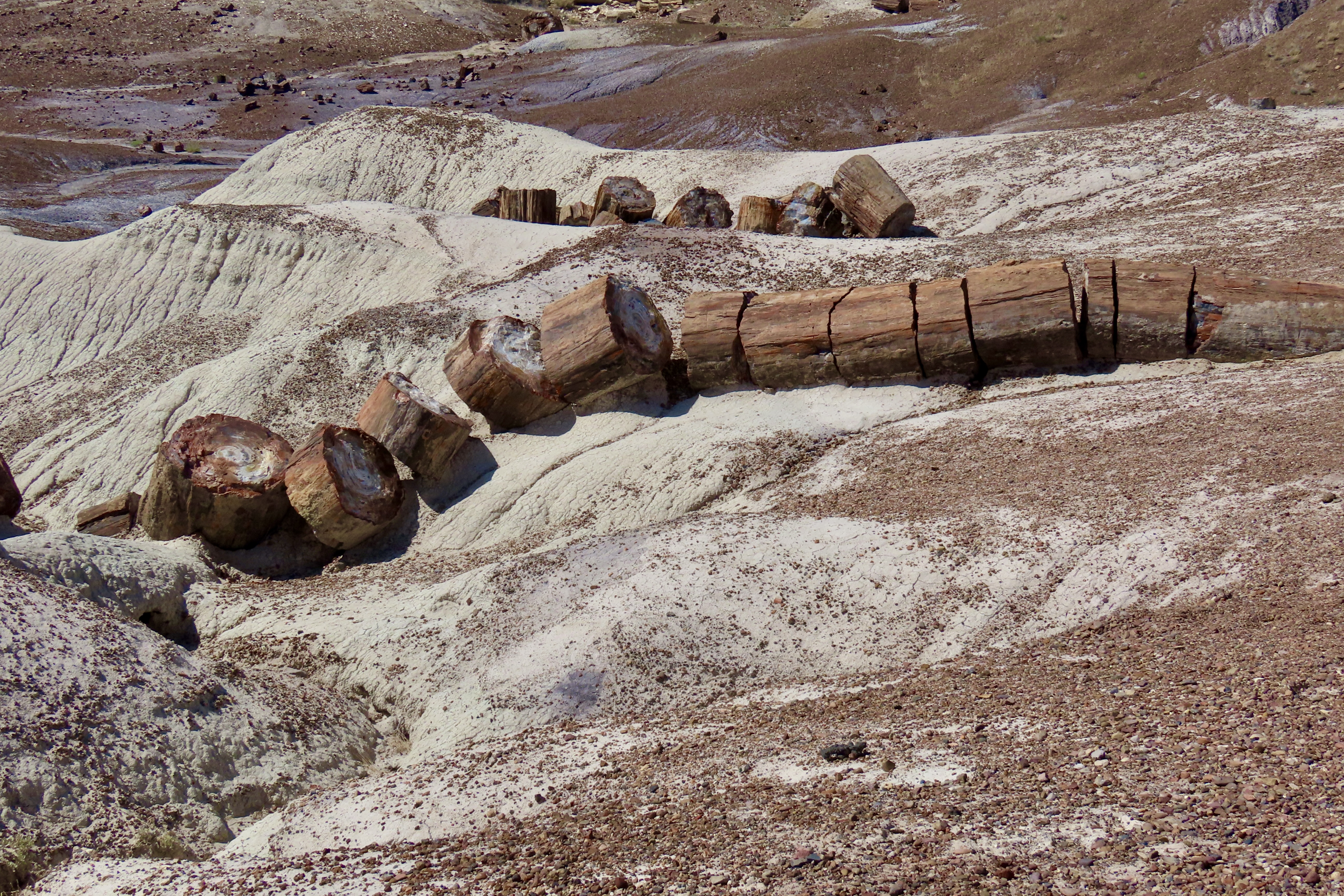
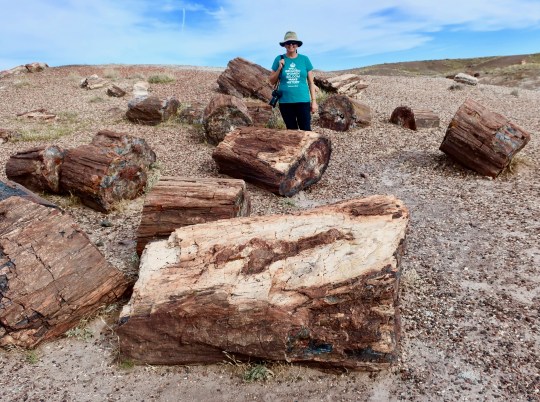
At Holbrook, I cut off of I-40 and picked up Arizona 180 with a goal of reaching Springerville, a town perched on the edge of the Rocky Mountains. I waved goodbye to I-40 and Route 66 as they set off for Albuquerque. And I said hello to petrified wood. Holbrook identifies itself as the gateway to the Petrified Forest National Park, which was set aside to preserve a 225-million-year old forest made up of stone trees. Petrified wood that exists in surrounding private lands can still be harvested, however. Another whole forest’s worth was for sale in Holbrook. The town also emphasizes its connection with dinosaurs. (Peggy and I found a bunch as we drove through.)

One of several places in Holbrook, Arizona that sells petrified wood. This photo provides an idea of how large the pieces are. You are looking at lots and lots of potential book ends and table tops!

Fossils are found throughout the area. Wild Bill serves as an attraction to get people into the shop.

This dinosaur greeted Peggy and me as we drove out of town.
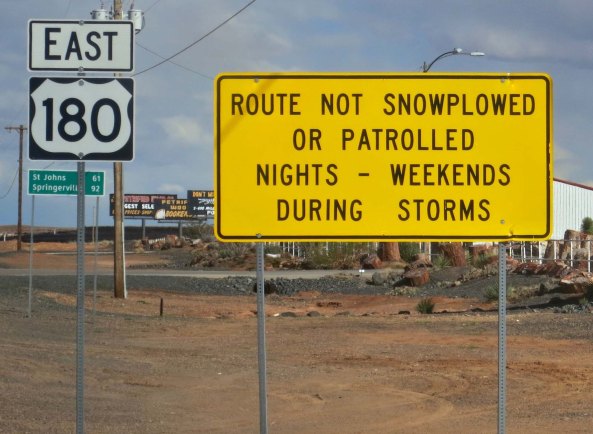
I think this sign was suggesting something about the route I had chosen.
I followed AZ 180 east on bike for around 20 miles and reached the south entrance to the National Park. Since I had been through it before, I didn’t go in, but I did take advantage of the visitor’s center to refill my water bottles— always a good idea in the desert. I also checked out the petrified wood samples.
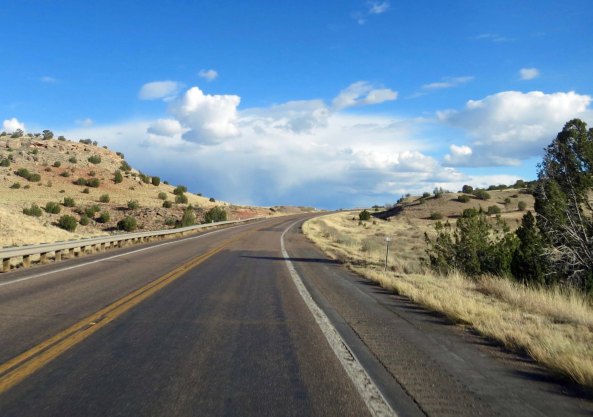
Arizona Highway 180.

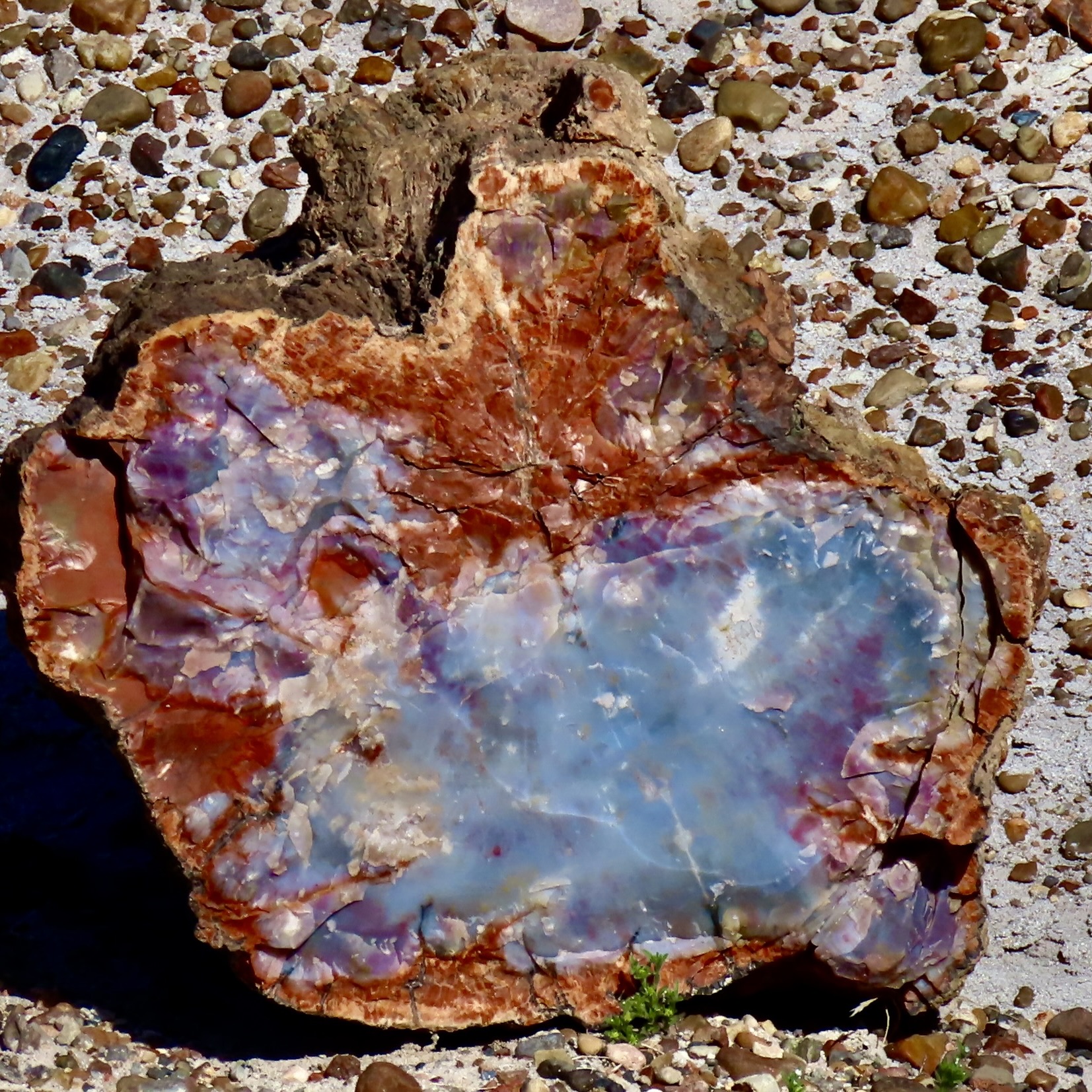
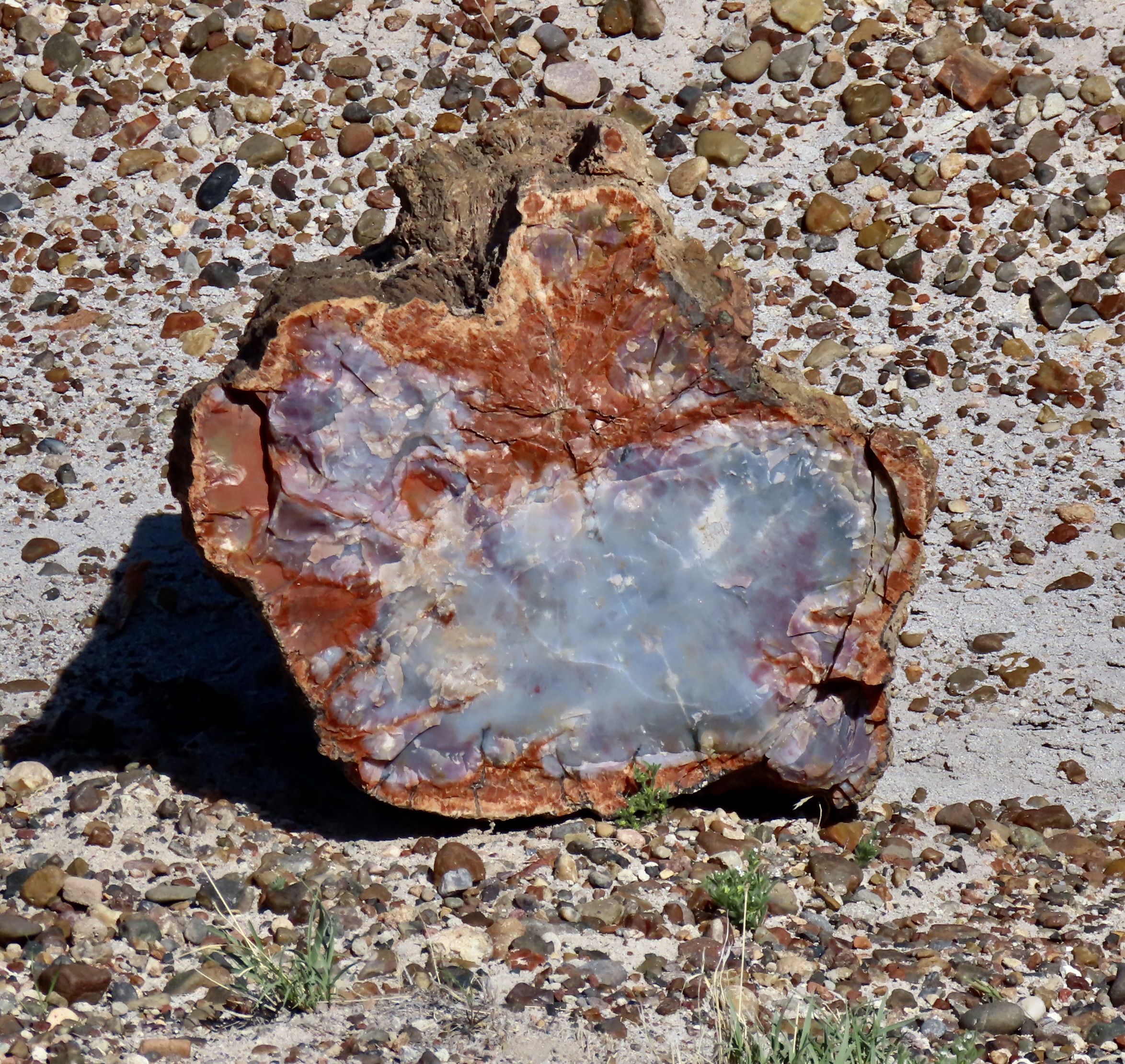
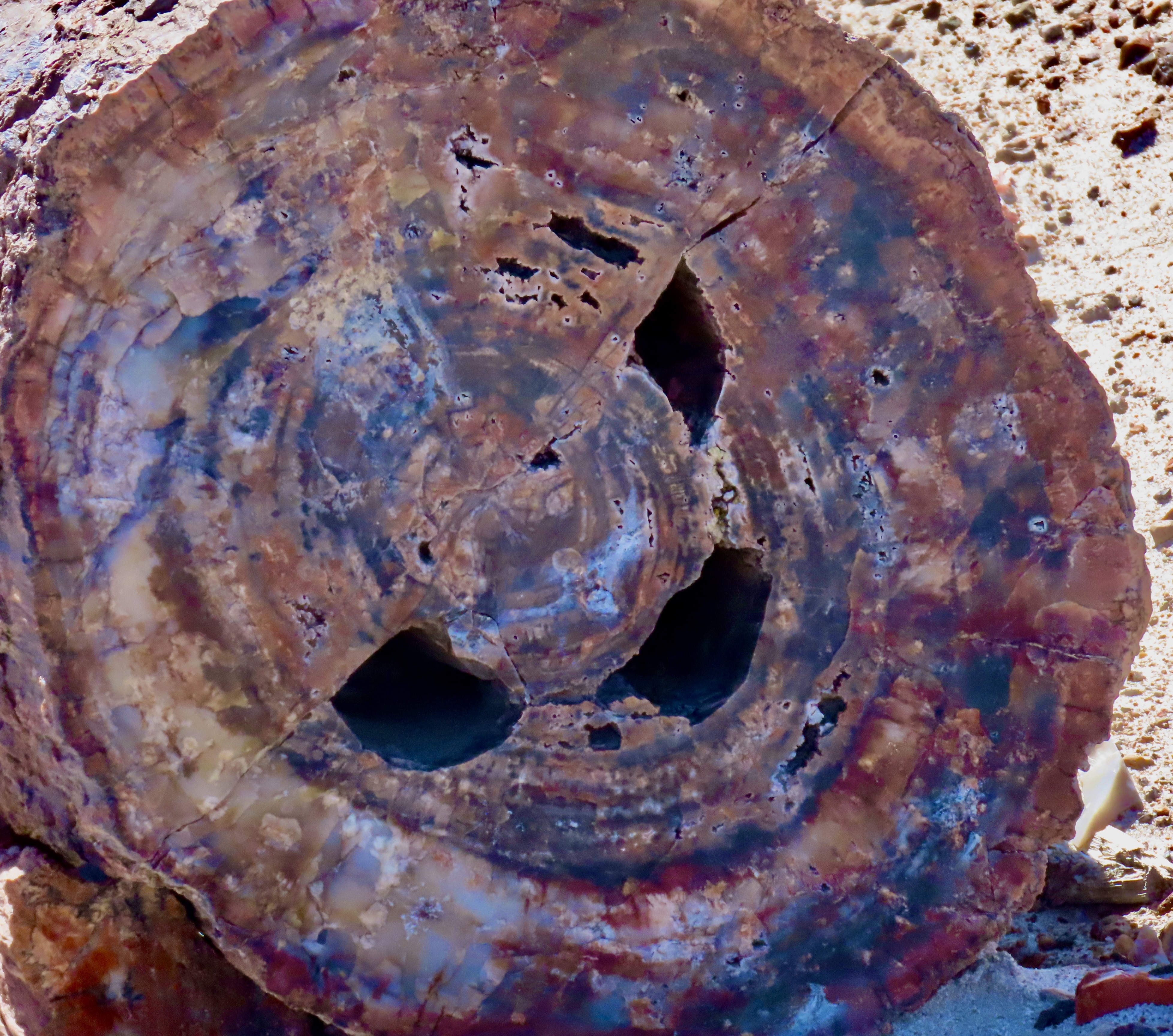
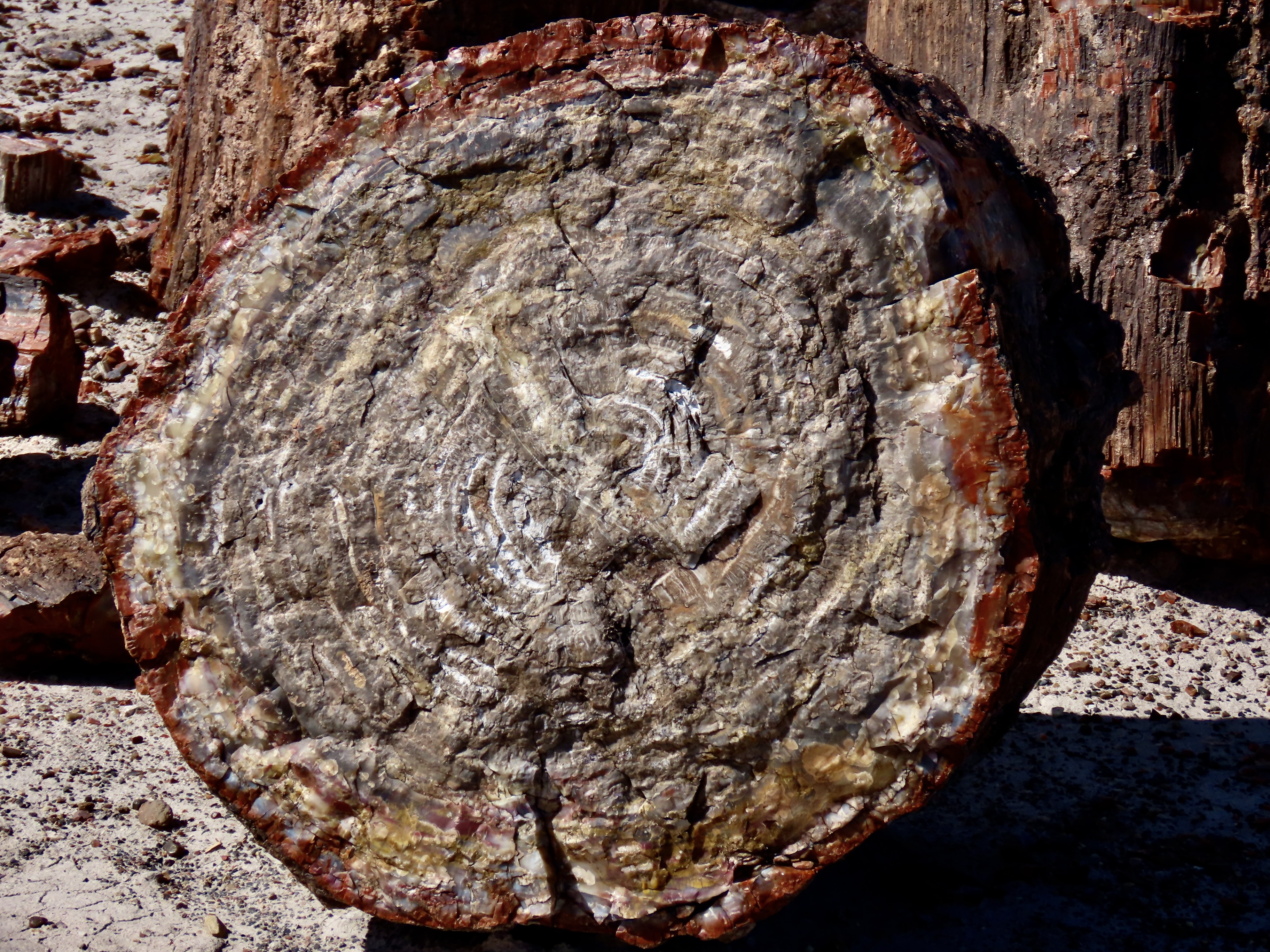
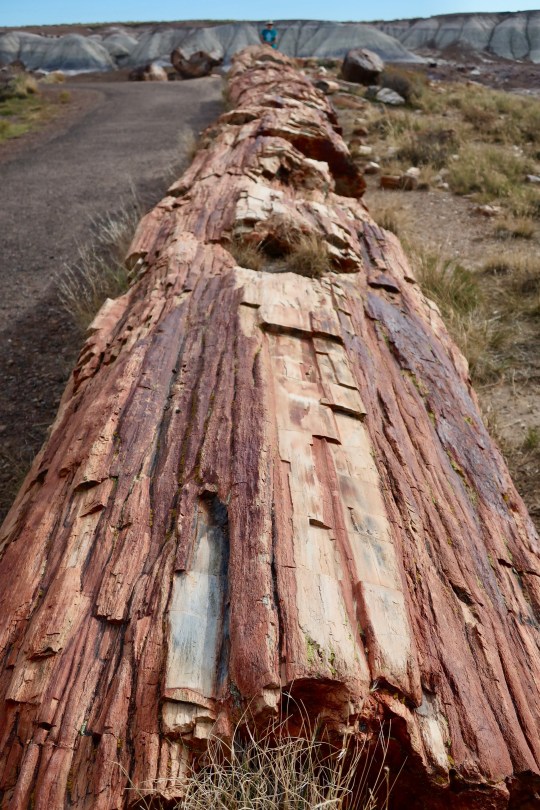
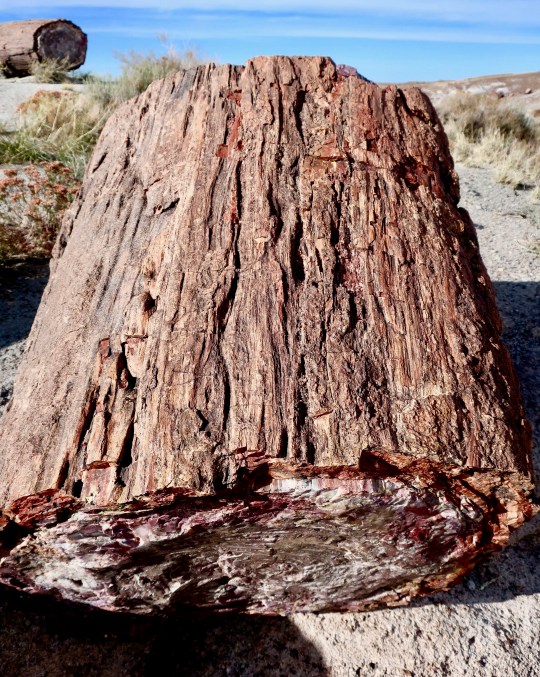
They did have petrified wood samples at the south entrance to Petrified Forest National Park. I have always been fascinated by the rocks. Look closely and you can see the tree rings.
Immediately after the park, the road turned into a jumbled nightmare that had my bike crying ‘uncle’ in five minutes sharp. I told it to man-up and peddled on. The remoteness of the desert became more remote. I noted in my journal that I saw around four vehicles per hour.
I commented on the remoteness in a letter home to my father.
The isolation has an interesting impact on folks— they either love it or desperately want to escape. I spent the night in the small town of St. John. I’d planned on biking through, but a flat tire plus 60 miles persuaded me that the bicycling gods were suggesting I stop. The next morning, I was having breakfast in a small café when a woman and her teenage daughter came in. The woman made a beeline for me in a very predator-like fashion, like a hawk sweeping in on a mouse. She had blonde hair and two of the most intense blue eyes I have ever seen. I swear, Pop, she would have had me for breakfast had I been on the menu. She quickly slipped in that she was divorced. My guess was that there were slim pickings in St. John and an available man was an available man, even when his set of wheels was a bicycle.
But I wasn’t on the menu and I was soon bicycling the easy 25 miles into Springerville. I should have biked on for another 50, but the Rockies were looming and the next 50 miles involved climbing to the top. I holed up in a local campground and found it so pleasant I stayed the next day as well.
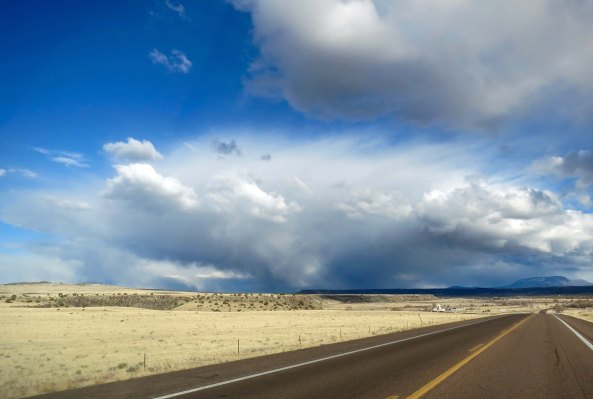
Storm clouds on the road into Springerville, Arizona.(Note: The roads were in much better condition when Peggy and I drove over them.)

Just for fun, I rendered the same scene into a black and white photo.Which do you like? Which feels more threatening?

Speaking of threatening, I had little trouble transforming this cloud into a demon.

The region around Springerville is one of the major volcanic areas in the US, as the mounds of lava suggest.

One expects to find barbed wire fences in the west. What made this one fun was that it was capturing tumble weed as it rolled across the plains.
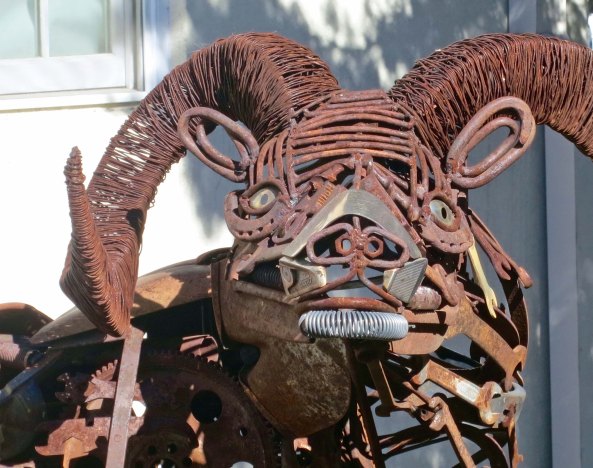
Peggy and I decided to visit the local museum in Springerville and check out its featured display on Casa Malpais, a prehistoric ceremonial site of the Mogollon Culture that was occupied between 1240 and 1350 CE. What we found was much more, including Rambo, a desert Big Horn Sheep. I thought Rambo would fit right in at Burning Man. (Photo by Peggy Mekemson.)

As expected, we did find an excellent display of artifacts from Casa Malpais.

What was totally unexpected was a Rembrandt sketch.

This photo provides an example of how full the museum was.
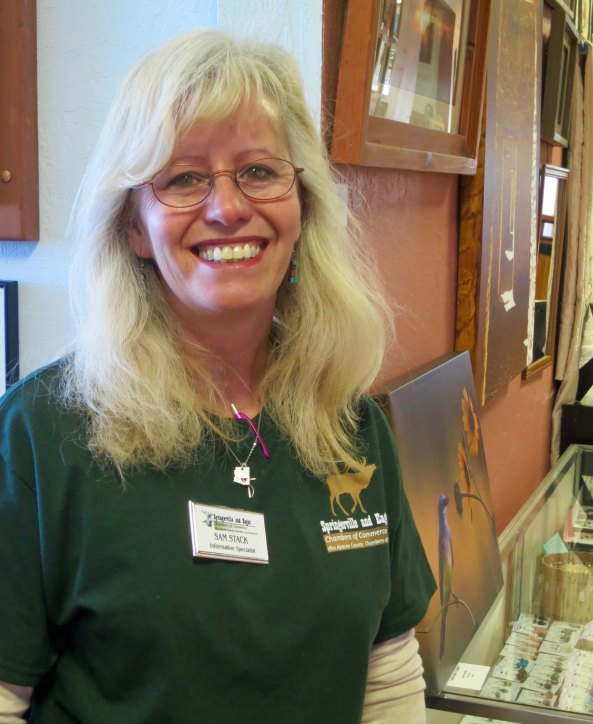
As Peggy and I retraced my bike route over the past couple of months and visited local museums along the way, we were struck by how friendly, knowledgeable and helpful local staff were. Sam Stack at the Springerville Museum is an excellent example.
NEXT BLOG: It is up and over the Rocky Mountains where I bicycle 90 plus miles, stop off at Pie Town, and am impressed by a Very Large Array of radio telescopes that search for ET and are unlocking the early history of the Universe.
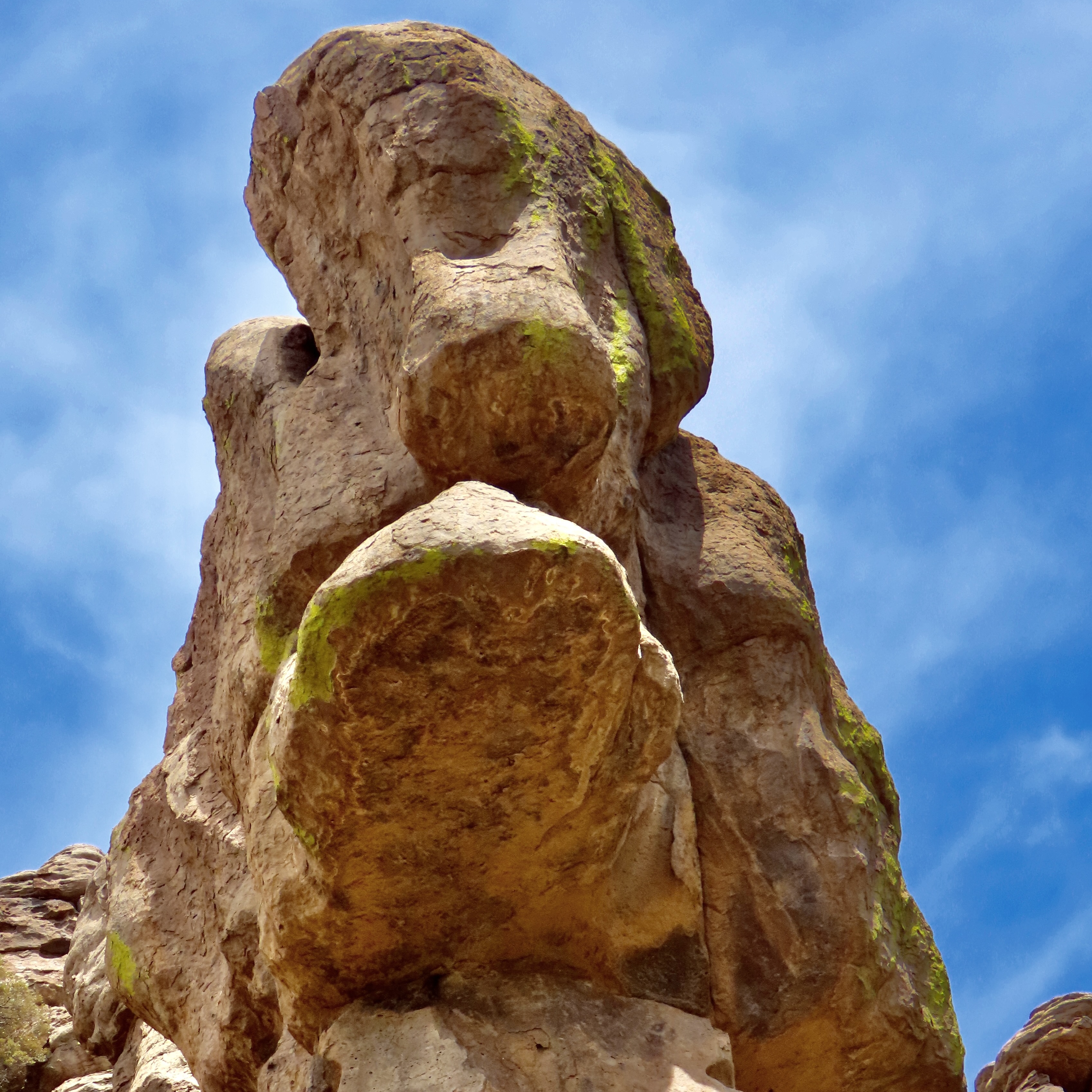
























 Wandering through Time and Place