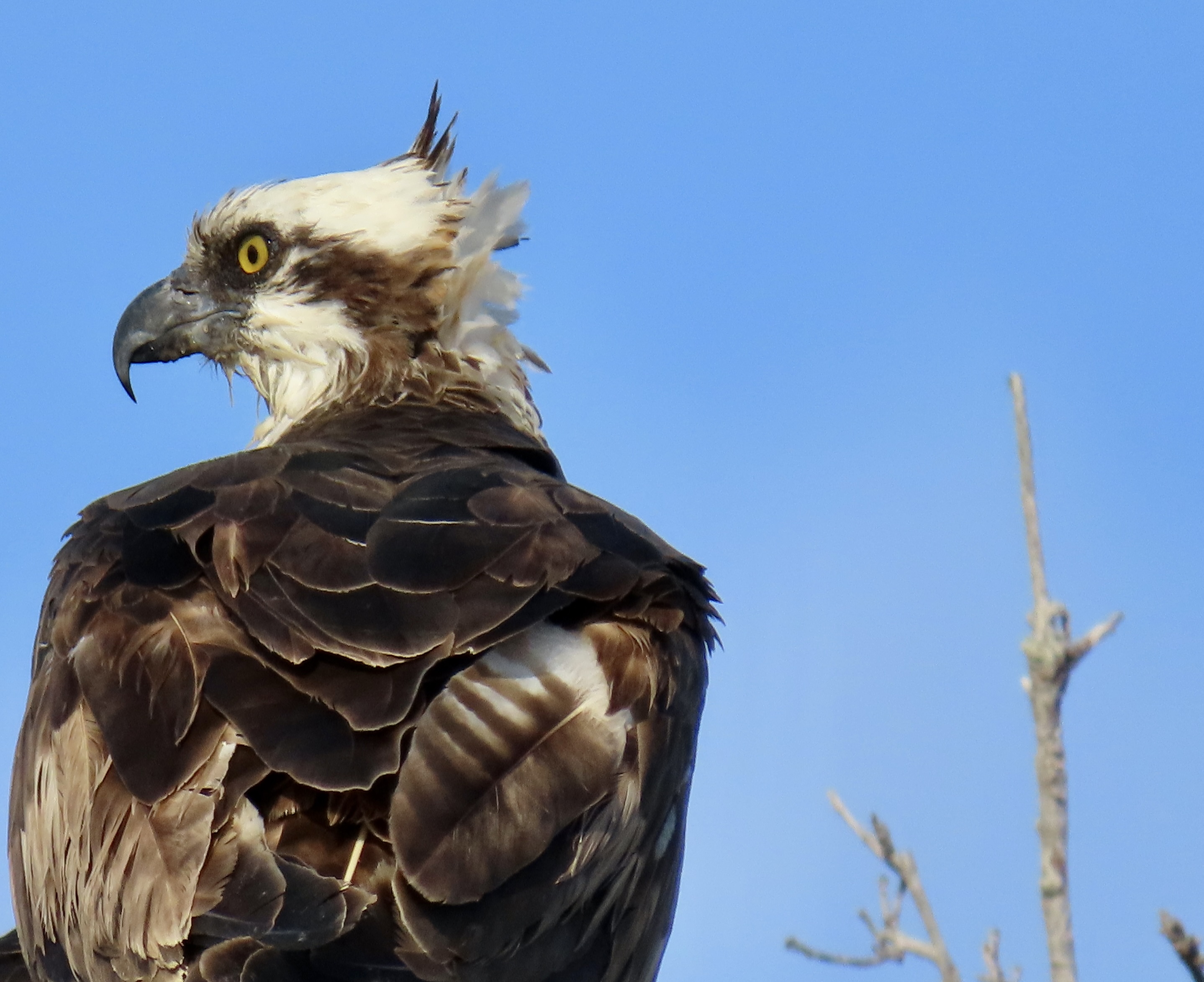
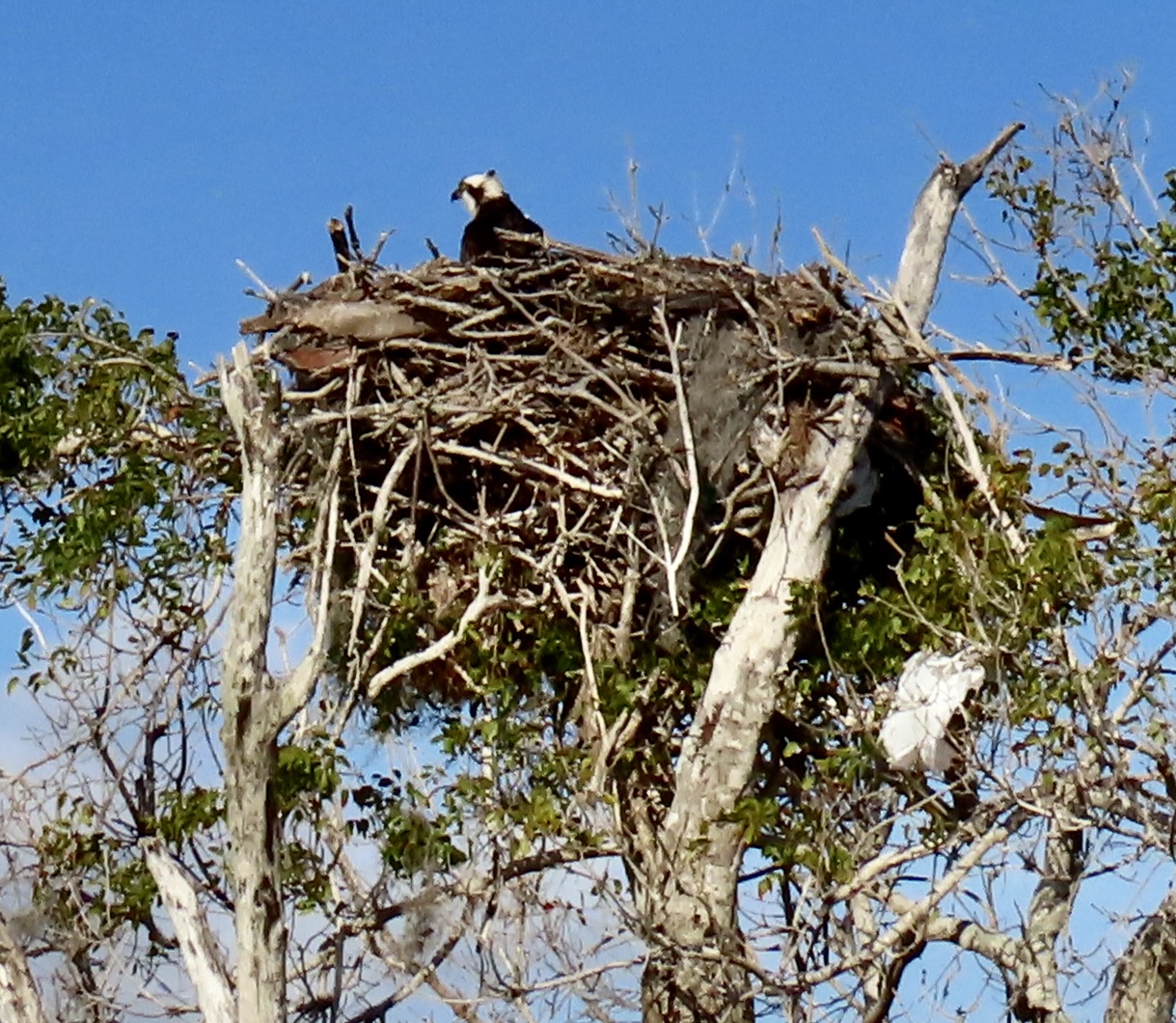
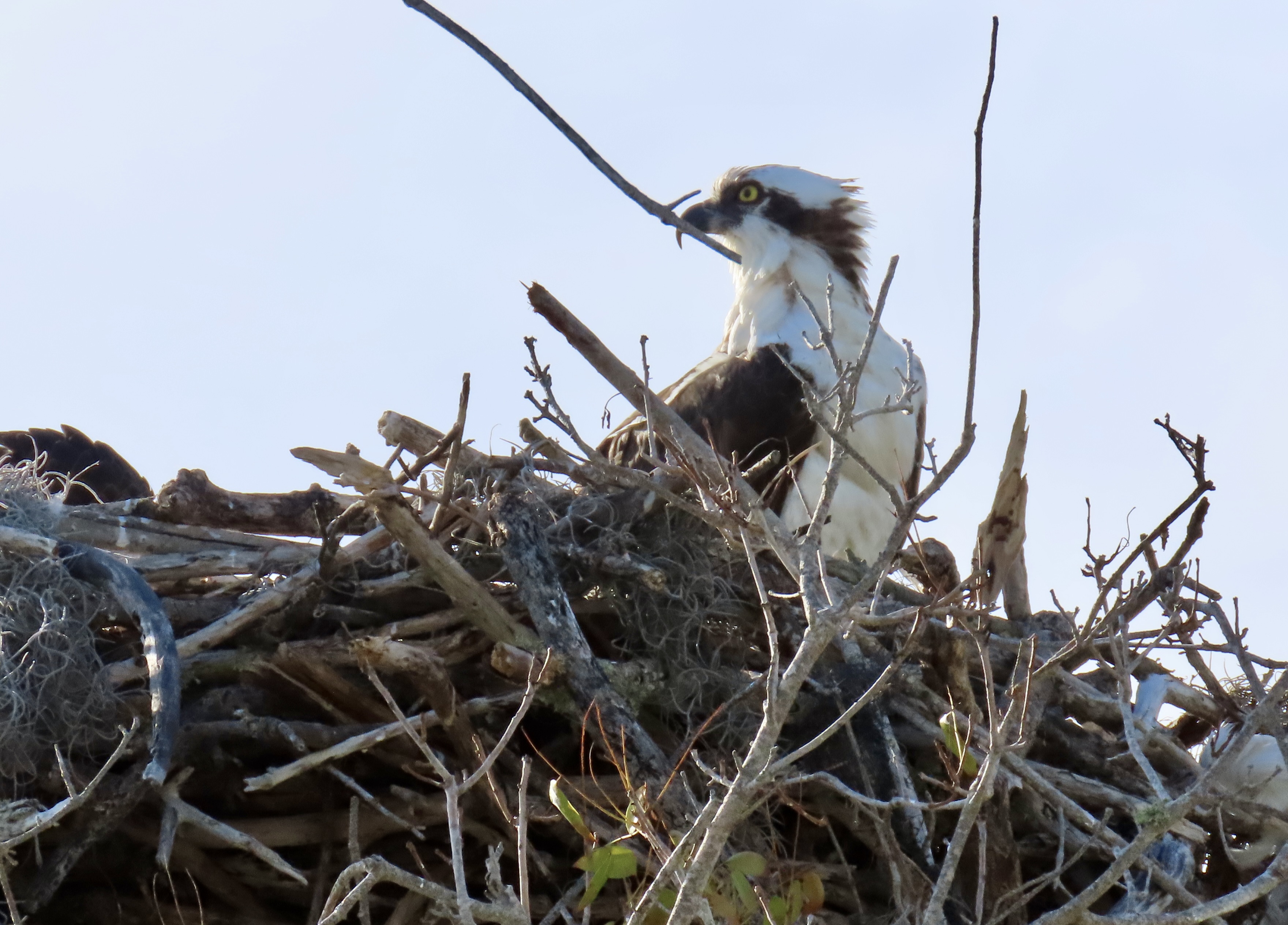
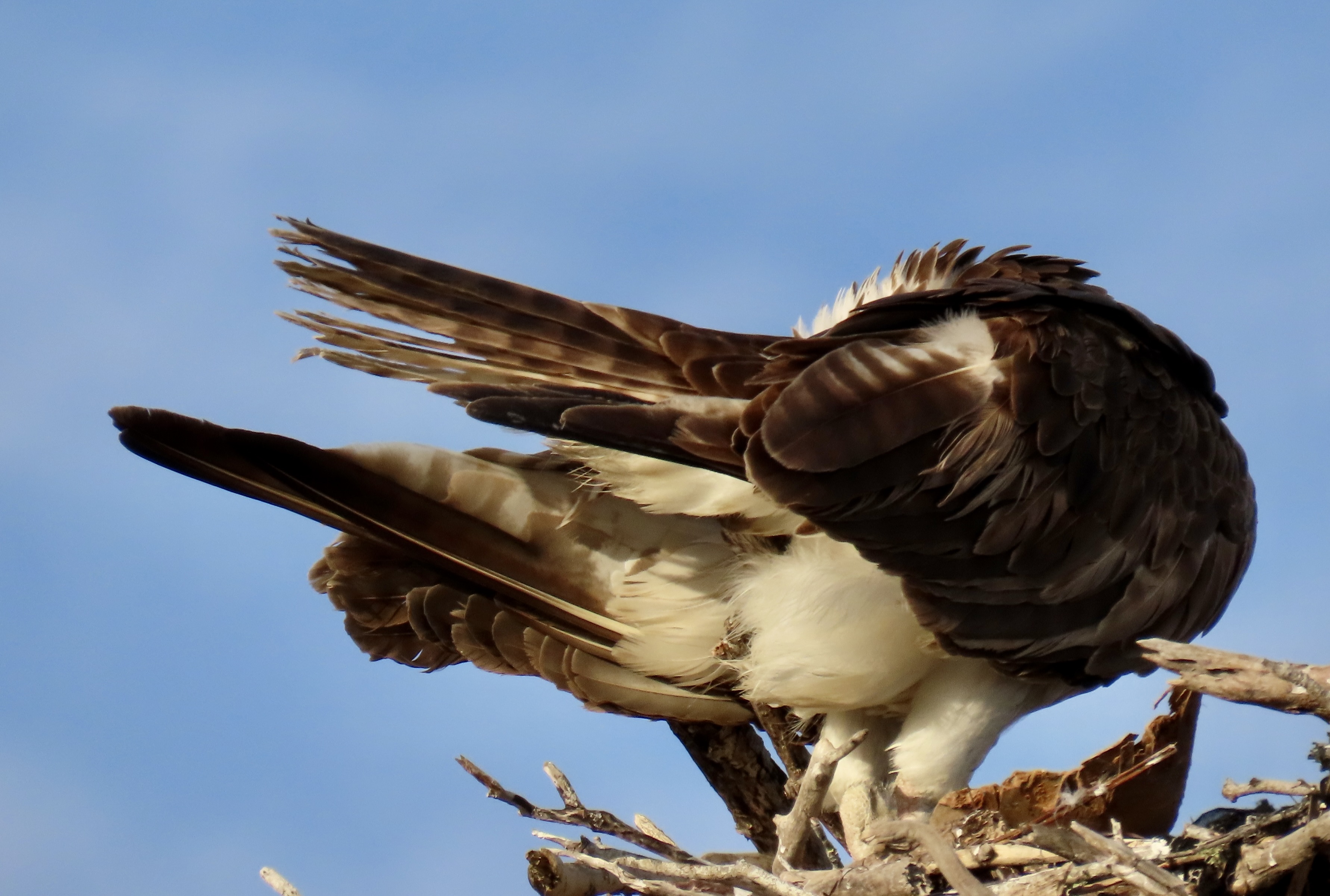
A large nest with two Osprey was located near our camp in Everglades National Park. The wind was playing with this fellow’s feathers.
At the beginning of February, Peggy and I drove down to Florida to visit with our son Tony, his wife Cammie and their three boys: Connor, Chris and Cooper. Afterwards, we drove down to Everglade City in southeast Florida where we explored the 10,000 Island area of the Everglades and Big Cypress National Preserve. There were birds galore, alligators, and even crocodiles! We then crossed the state and drove down to Flamingo in Everglades National Park where we went glamping, i.e. stayed in a tent camp with floors, electricity and comfortable beds.
Peggy discovered an osprey nest nearby when she was searching for a restroom. The one in our glamp-camp was closed for cleaning. She came back to our tent quite excited— to say the least. It was imperative that we go check it out, immediately! We decided to have lunch near the nest so we could watch the osprey come and go. Peggy had seen a chick being fed on her first foray. Unfortunately, we didn’t get to see it. “Teach me to head for a restroom without my camera!” Peggy groused. But there was plenty of other action as the ospreys watched us, preened, and remodeled their nest.
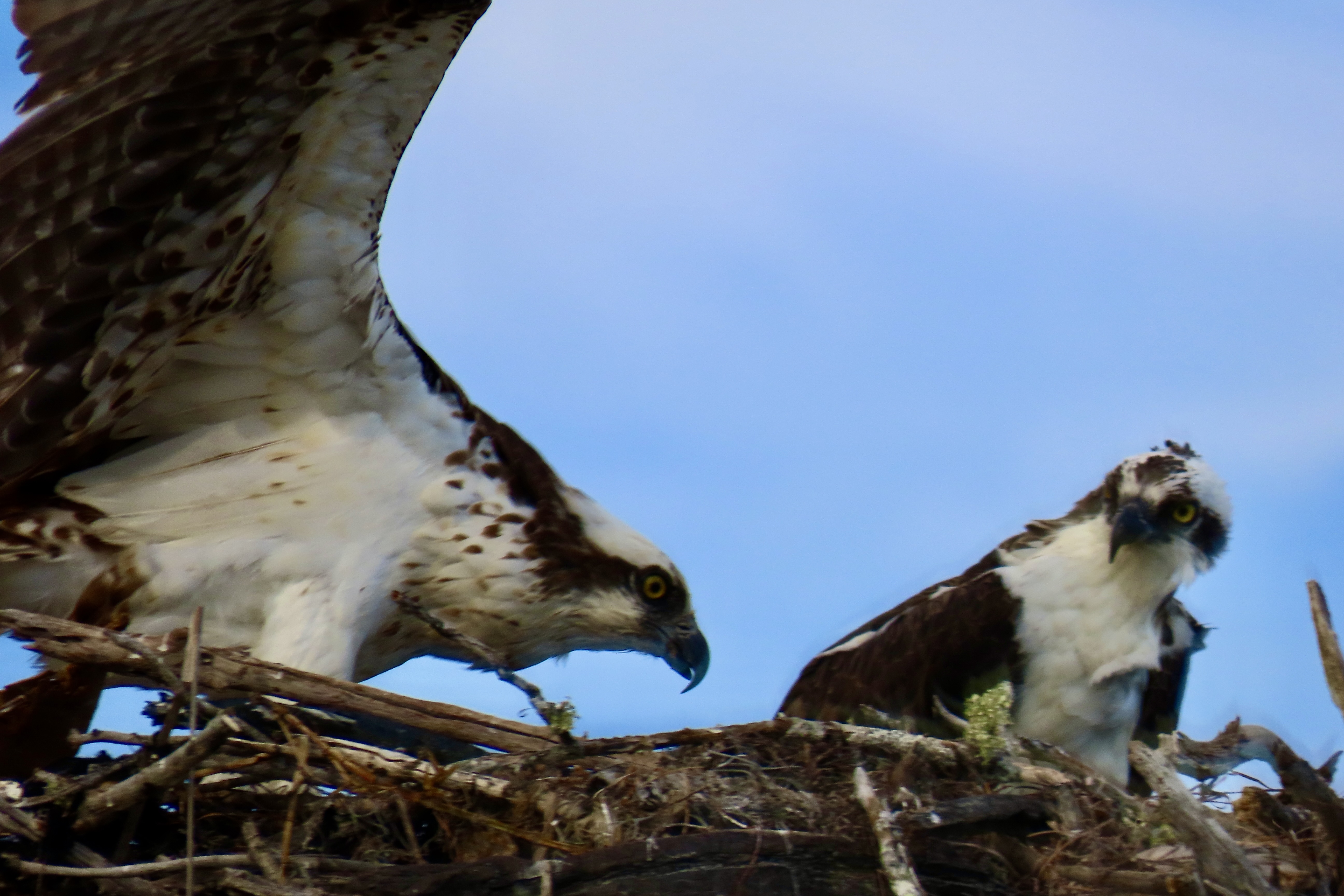
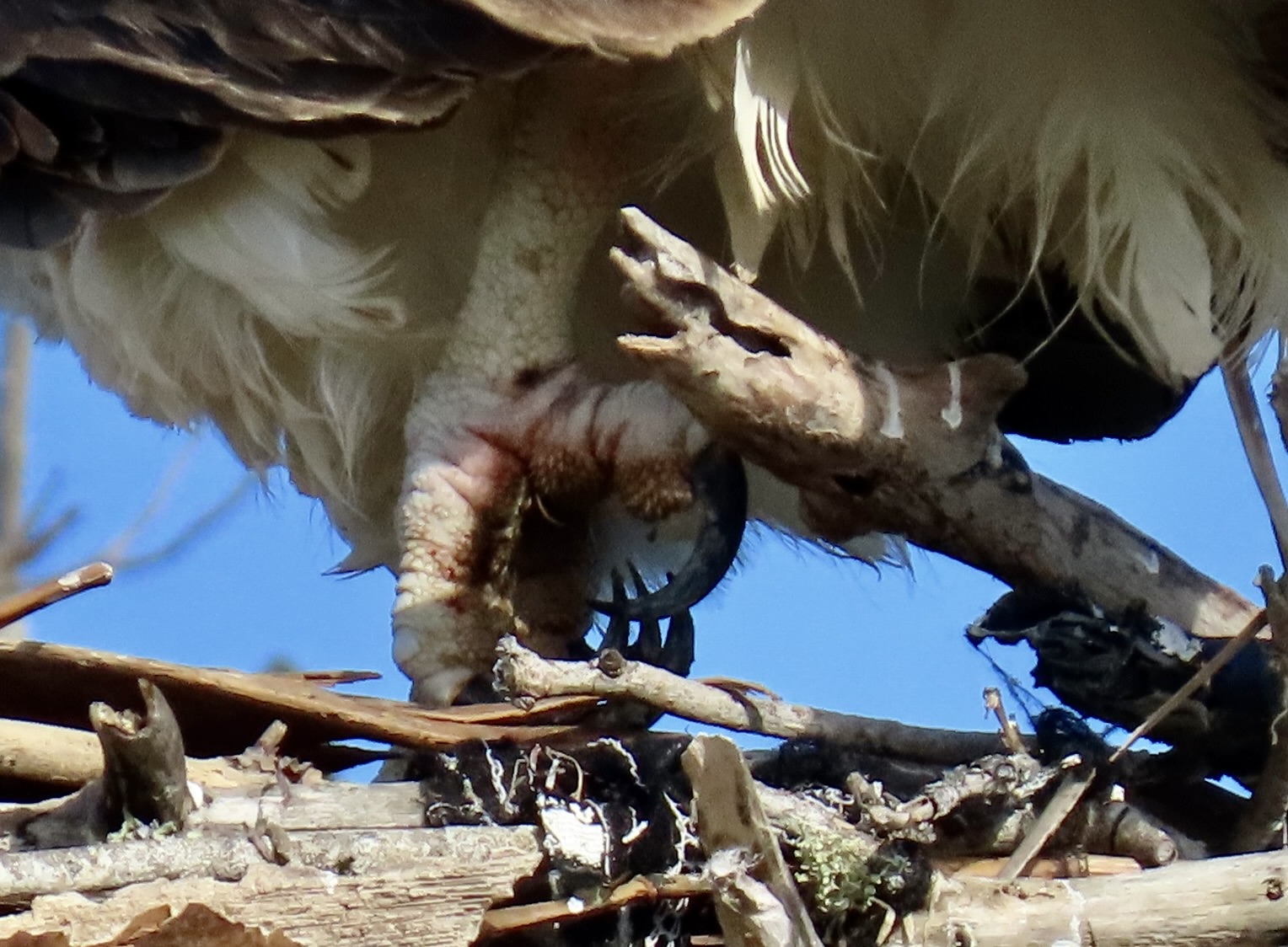
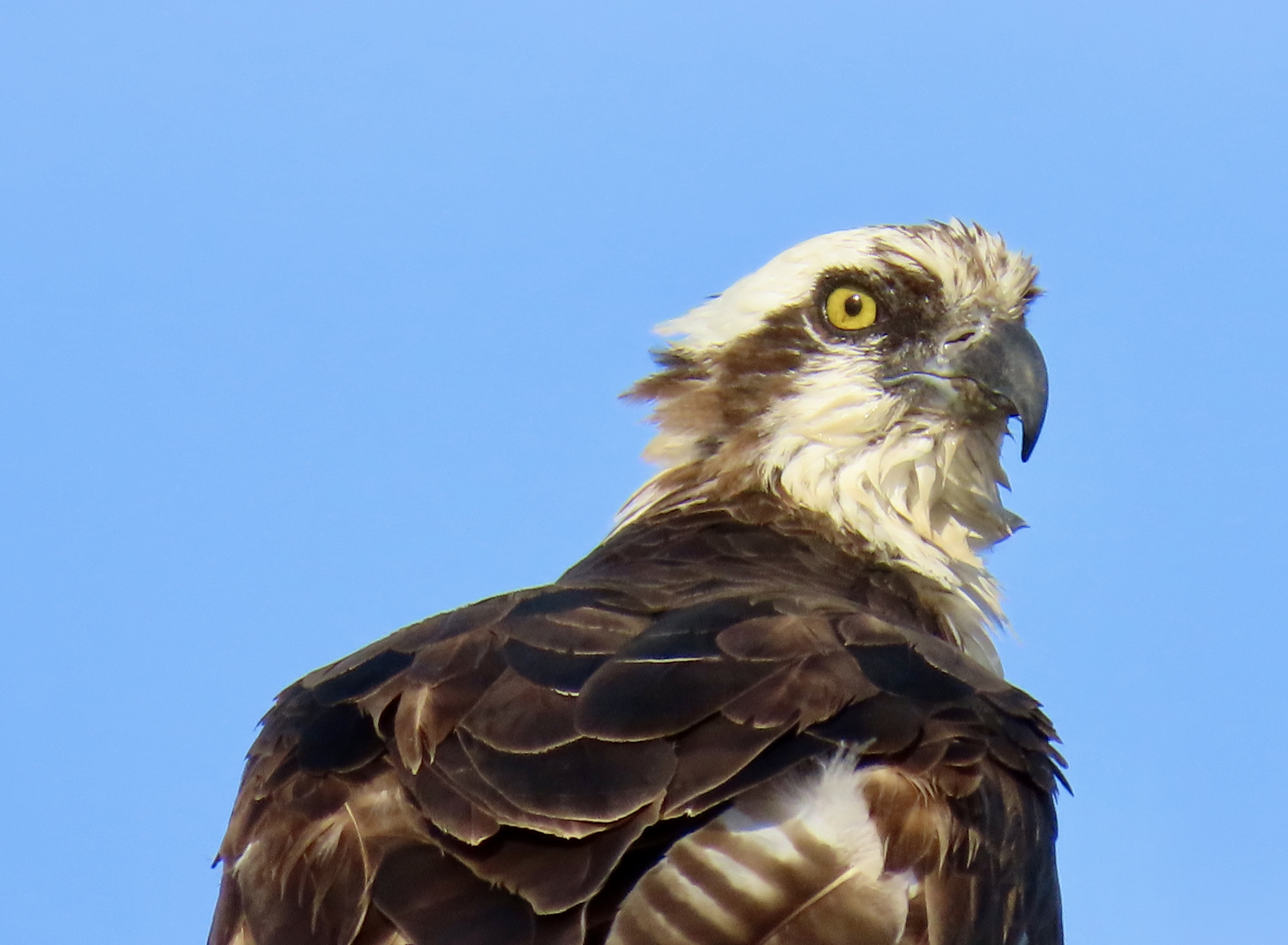
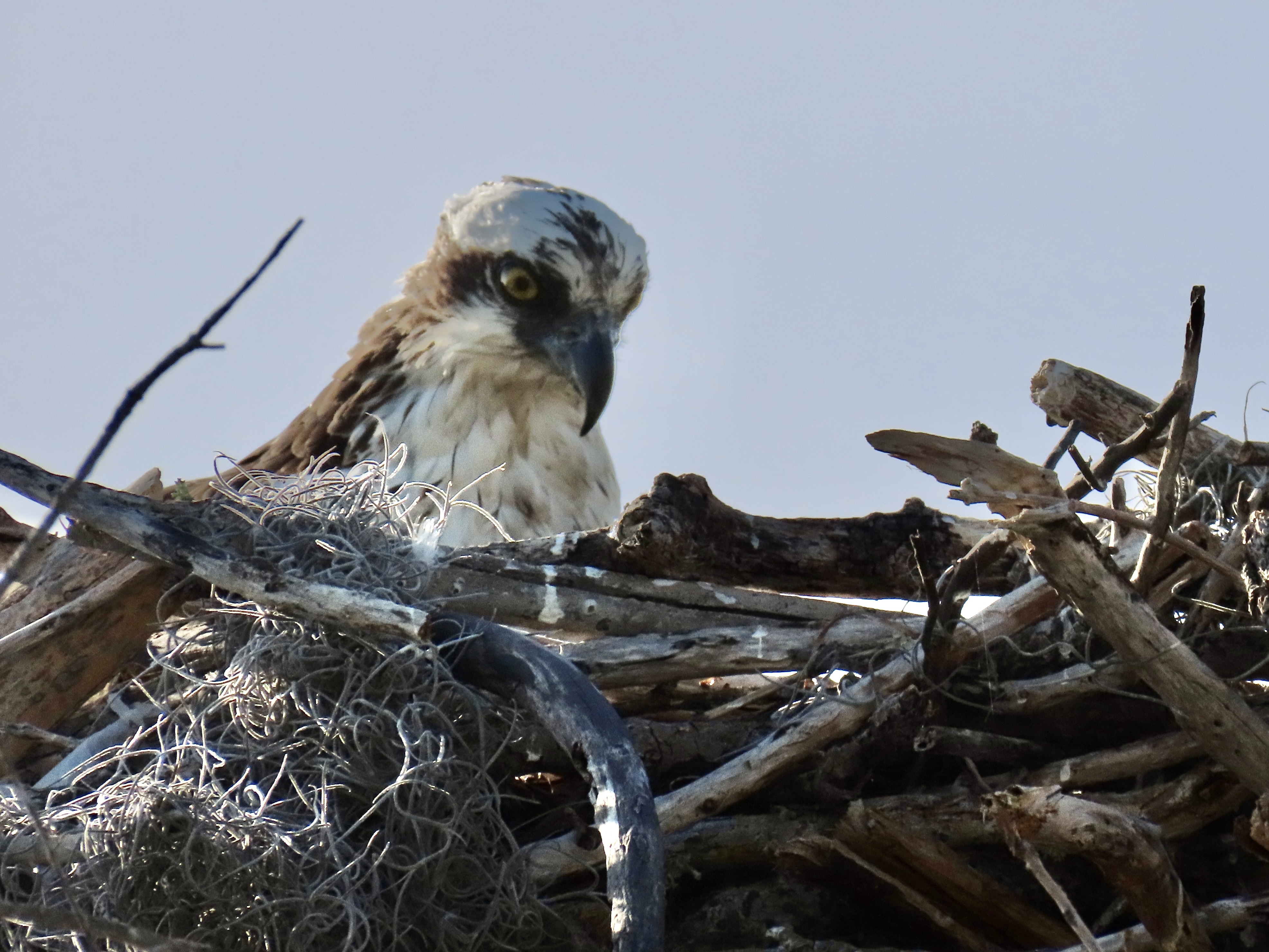
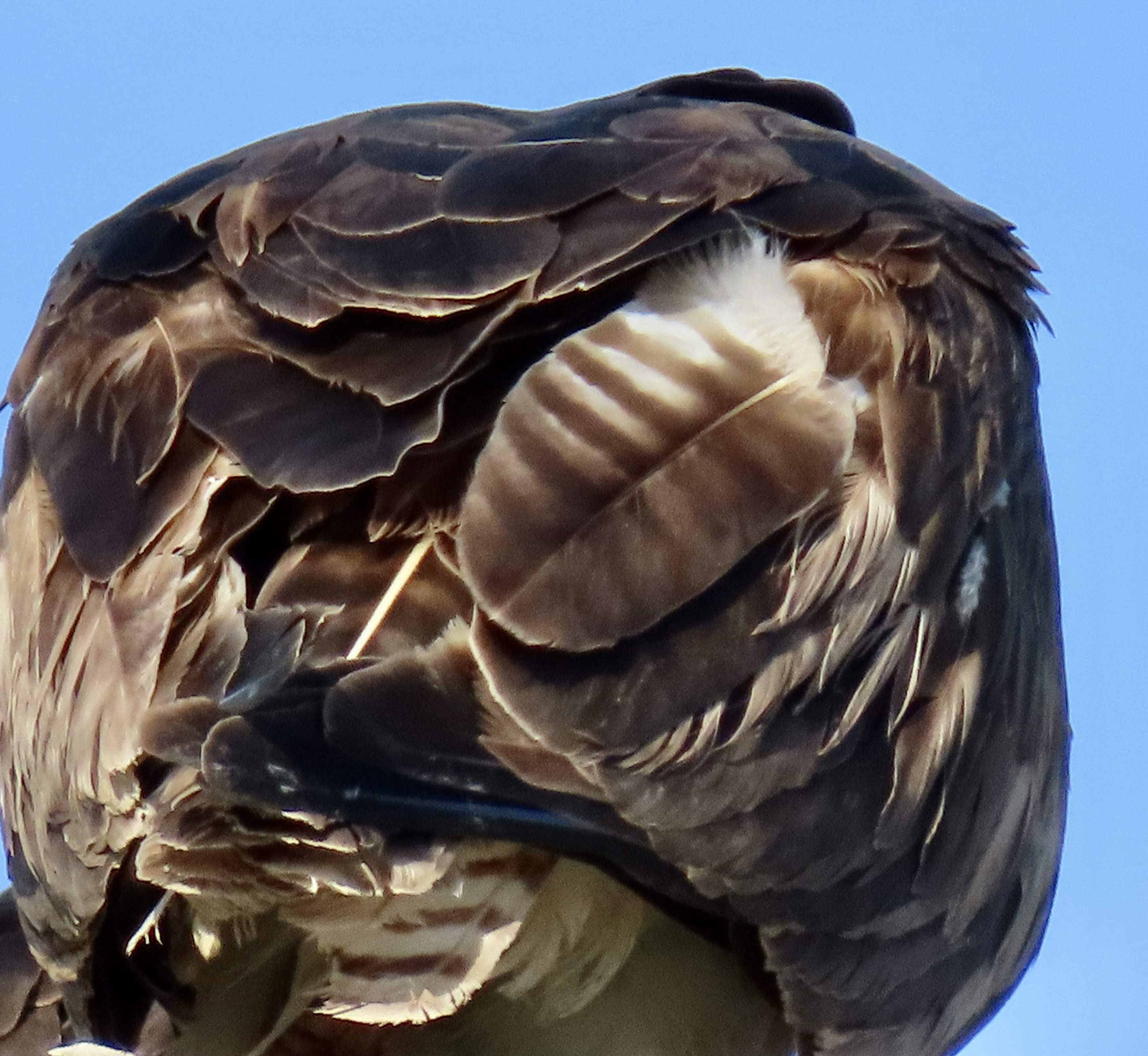
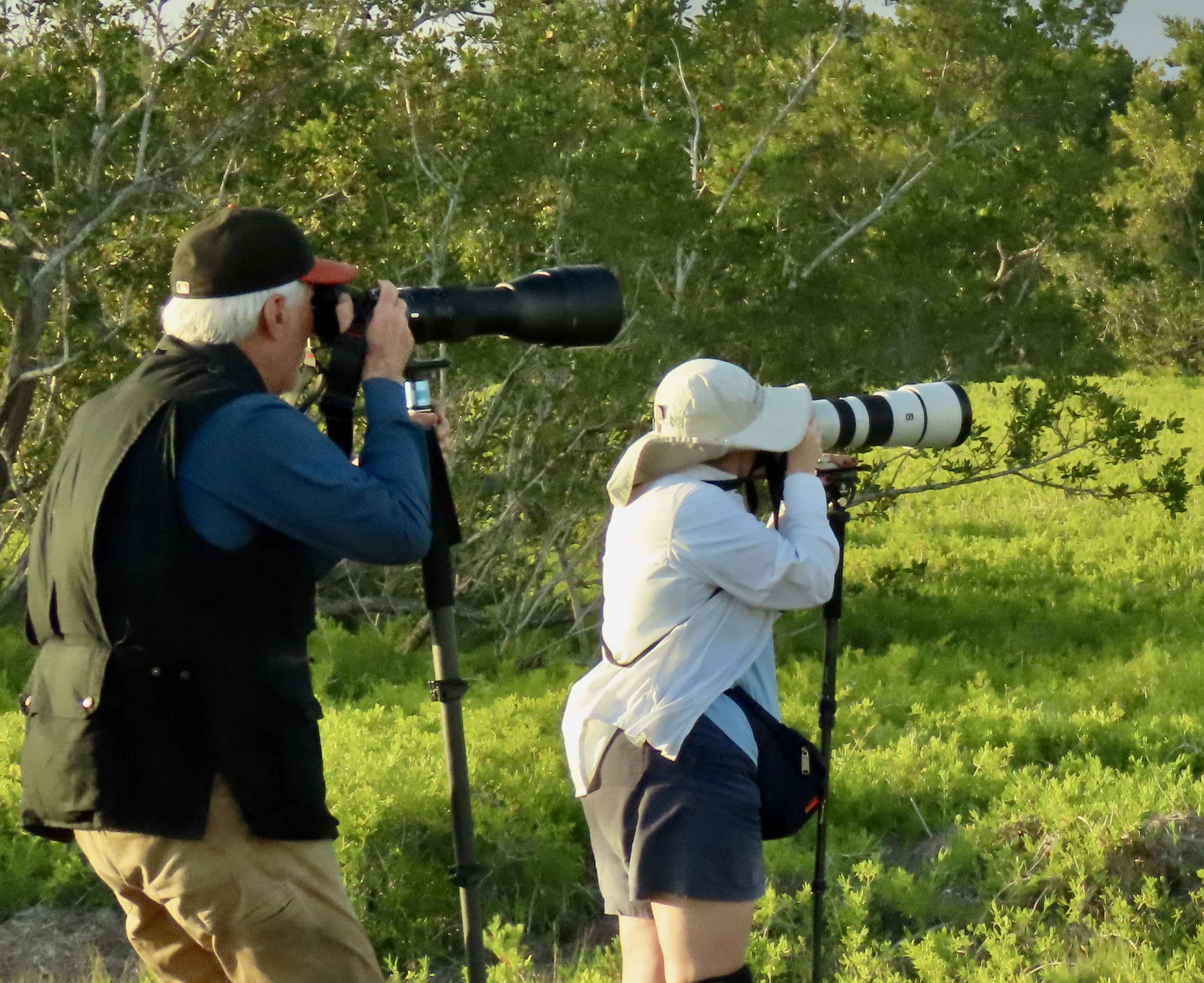
The female Osprey lands on the nest. Her ‘necklace’ gives her away. Had I been faster in refocusing, I could have captured her large wing span. The black streak that extends down from the beak to the wing is an identifying factor for osprey. Its partner watched as she landed. The birds mate for life and can live 15-20 years.The size of the nest suggested that the two Osprey had been using it for several years.I’ve always been excited to see osprey. Besides their beauty, they are superb hunters. Watching one dive feet first from 30 to 100 feet up in the air to capture a fish is a sight one never forgets. These fierce looking talons are specialized for catching fish. That they are sharp, is obvious. Not so obvious is the fact that Osprey are unusual in possessing a reversible outer toe that enables them to hold a fish with two toes in front and two behind. Note the pads. They are barbed to help them grip their slippery catch. We were amused to learn that an Osprey lines up its fish head first to reduce wind resistance.Given their strict fish diet, it isn’t surprising that Osprey always build their nests near water including rivers, lakes and the ocean. Somewhat more surprising is that they are found on every continent except Antartica. If conditions are right, they may live in the same area year round, but if not, they migrate and have been known to fly as far as 4200 miles. Their history as a species dates back over 11 million years.Some remodeling was going on. While the birds weren’t particularly worried, they did keep an eye on us. Sometimes, it seemed like they were posing.One peered over the edge of the nest at us. Or maybe it was checking its chicks.A tail shot…Eventually they ignored us and started to preen…Which is always fun to photograph. And then a van showed up and disgorged a group of photographers with serious cameras. They scared the Osprey. I kept my small, light weight camera with its mega digital lens that I easily hold in one hand to myself. Grin. That’s it for today. Friday’s safari post will be on zebras.





 Wandering through Time and Place