Today, Peggy and I are continuing our series on 25 of America’s world renown national parks in celebration of Americas 250 birthday. This is our third and final post on Yellowstone National Park. We are wrapping it up with Mammoth Hot Springs, and what a place to end! The beauty of this area is hard to describe, but we like to say it has a wow-factor of 10. All photos, unless otherwise noted, are taken by either Peggy or me.
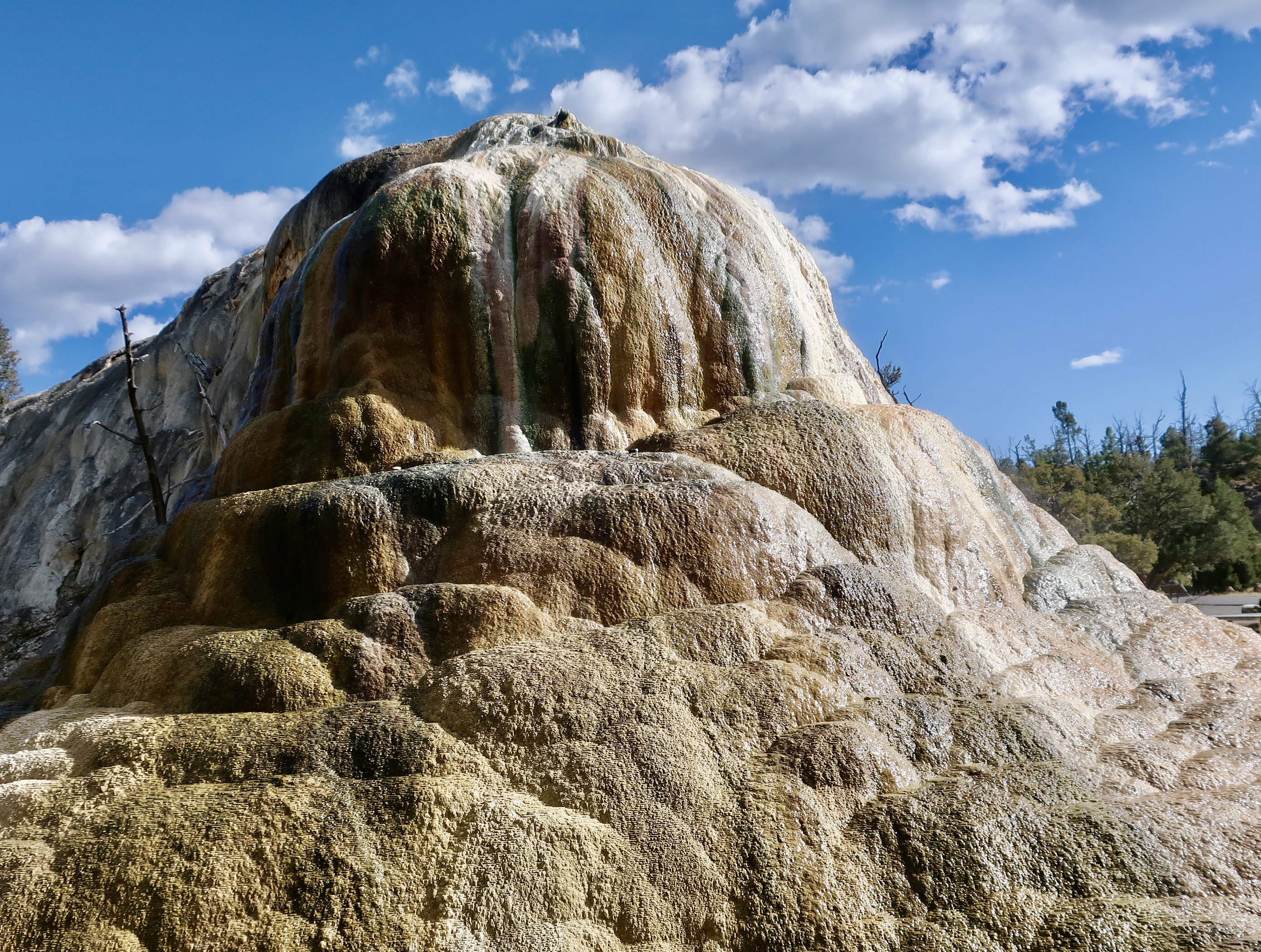
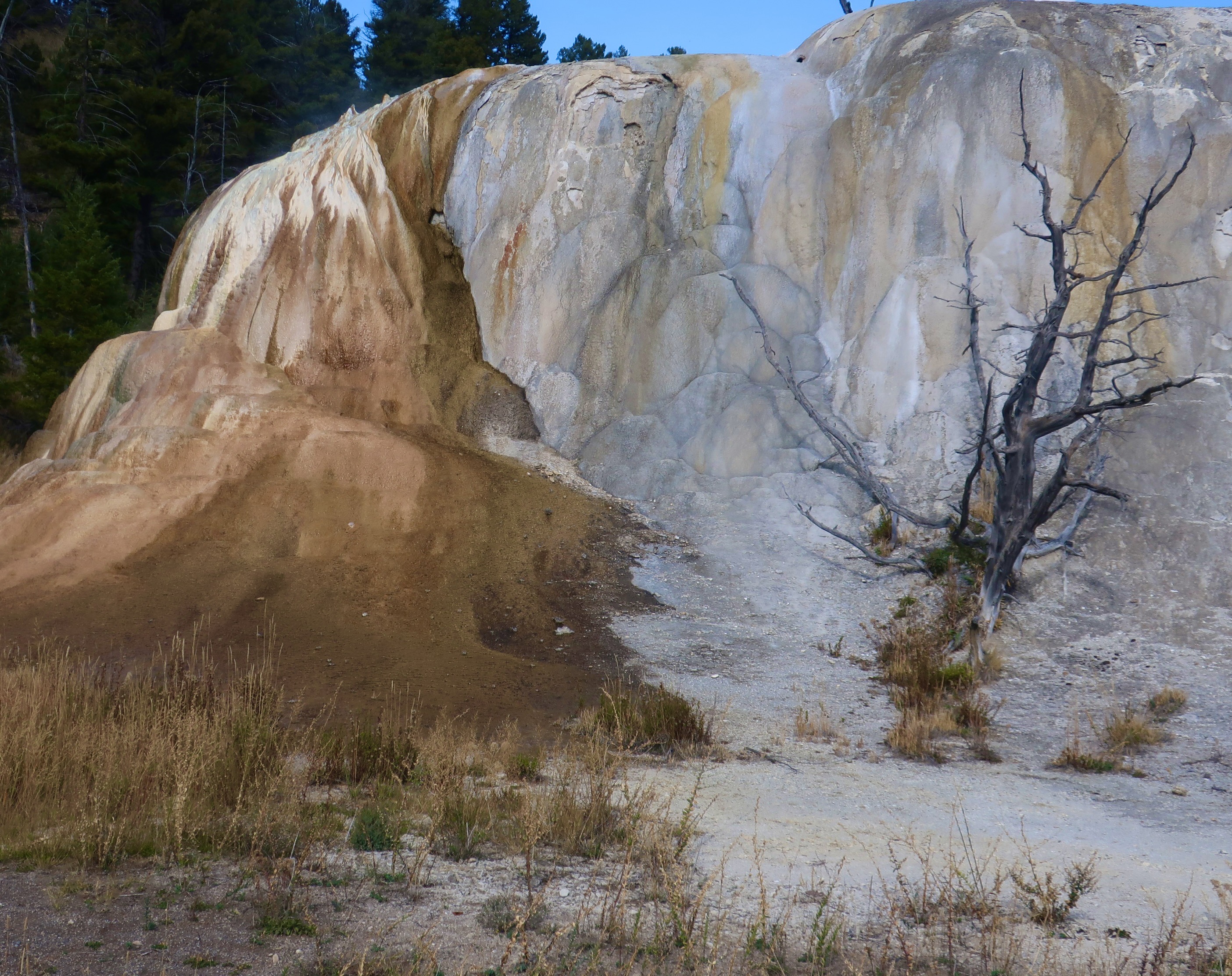
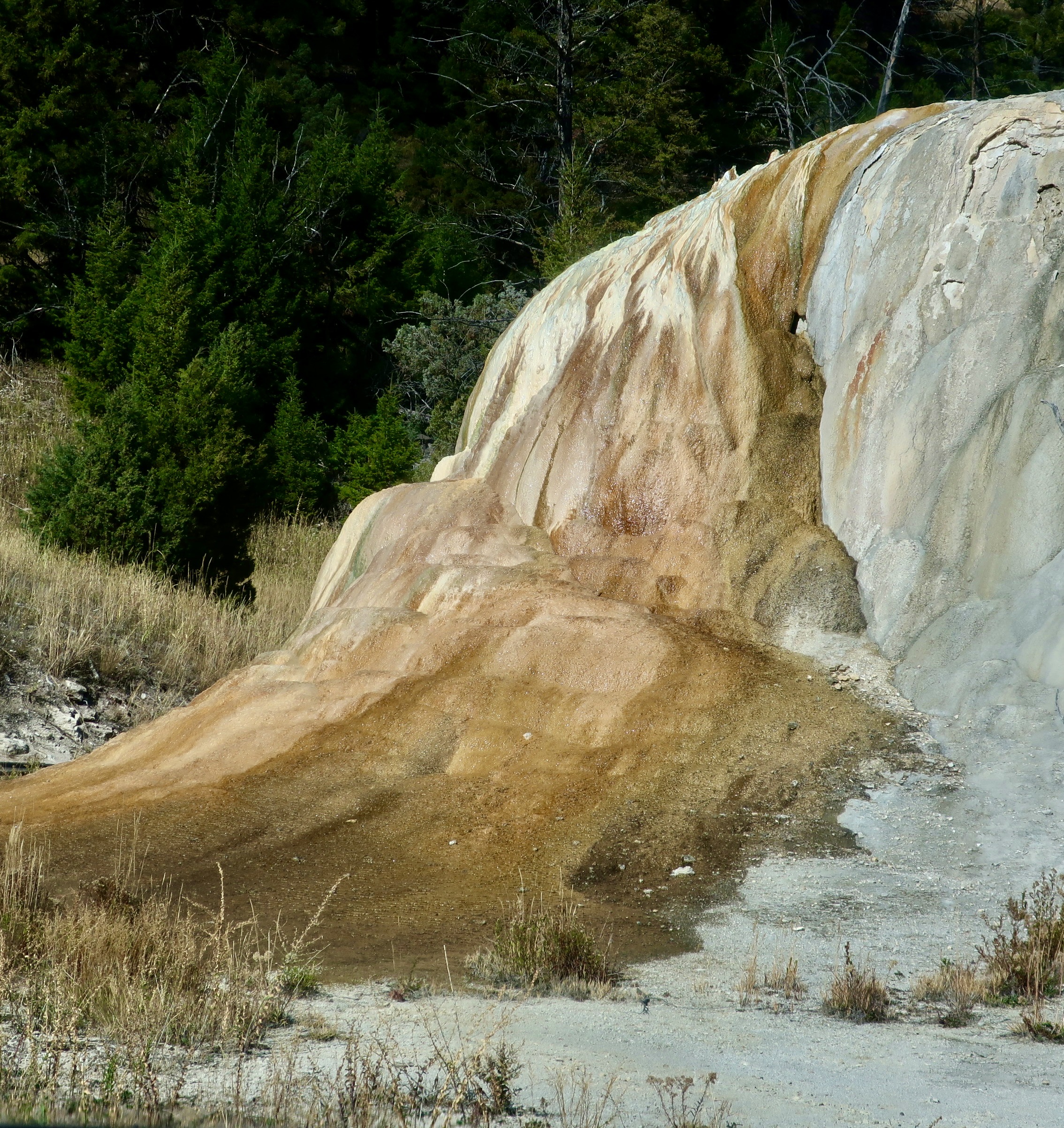
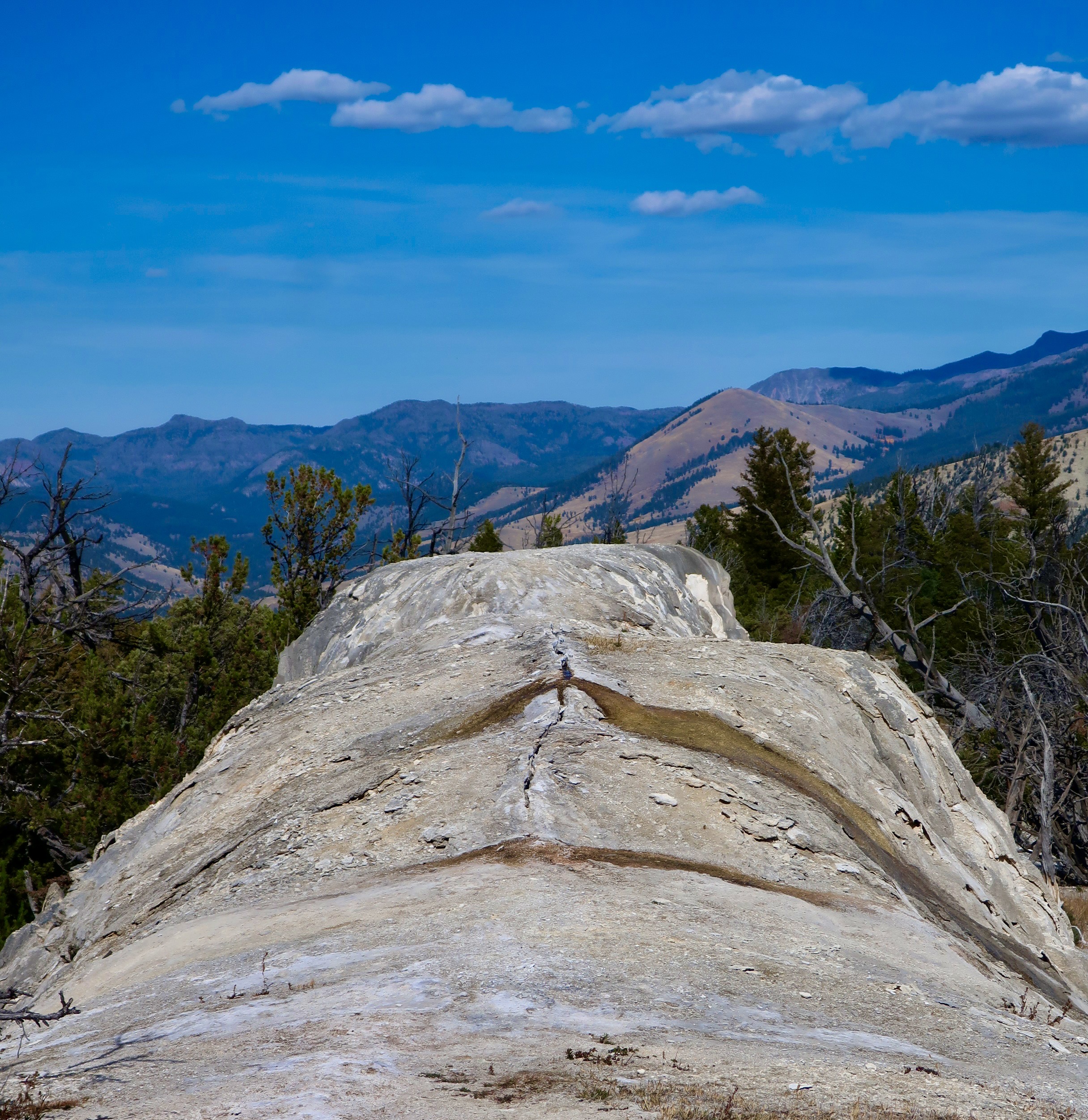
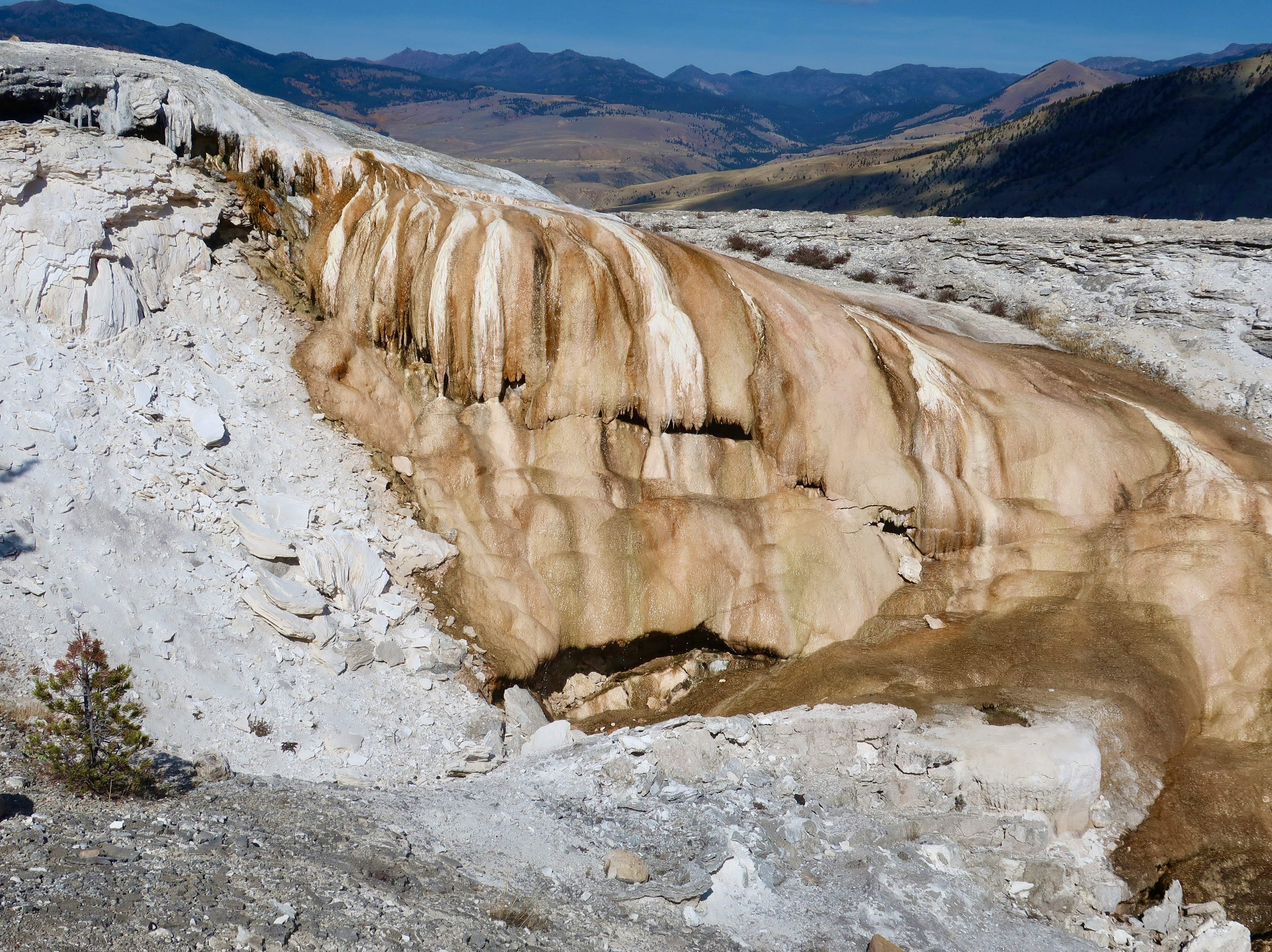
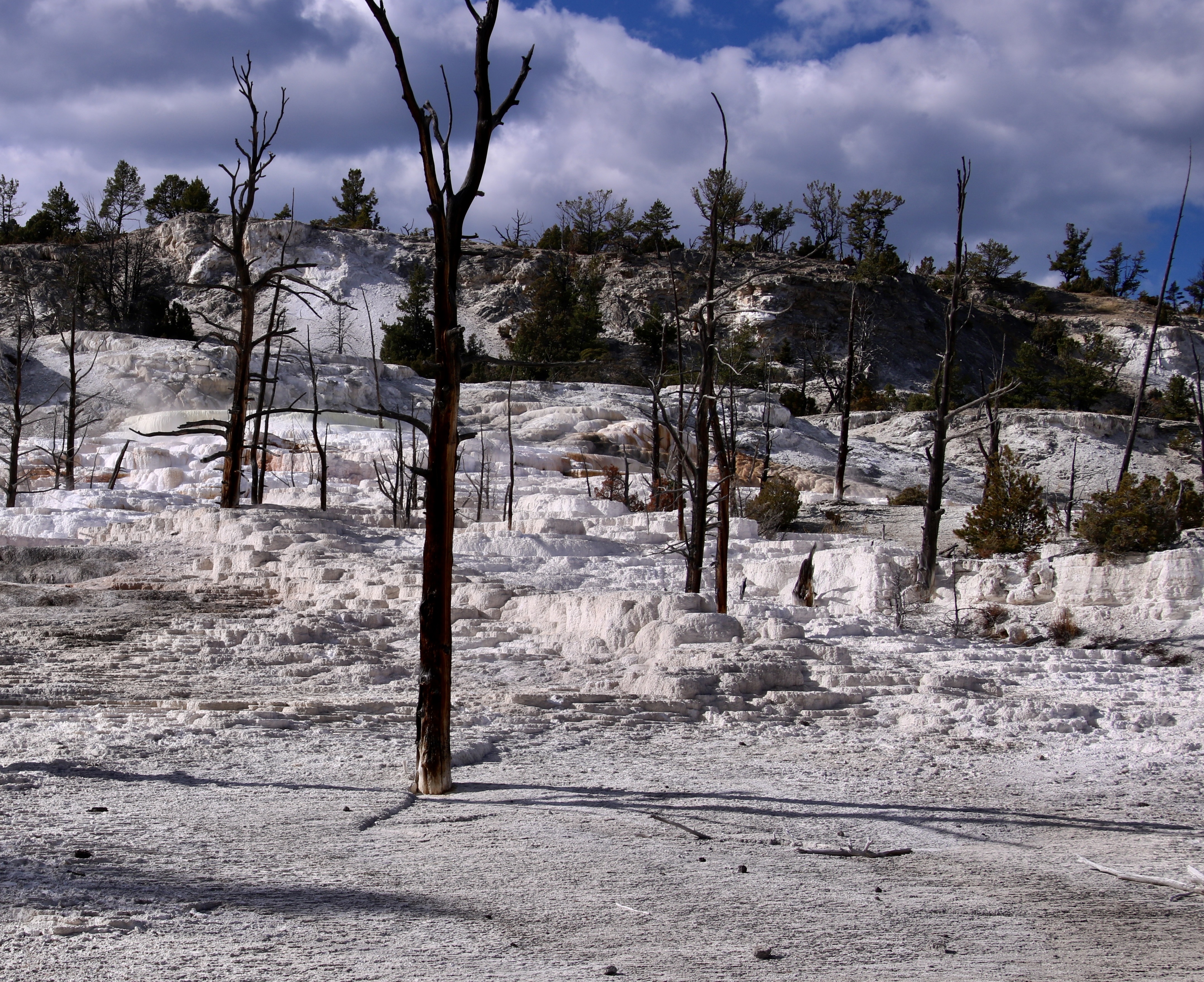
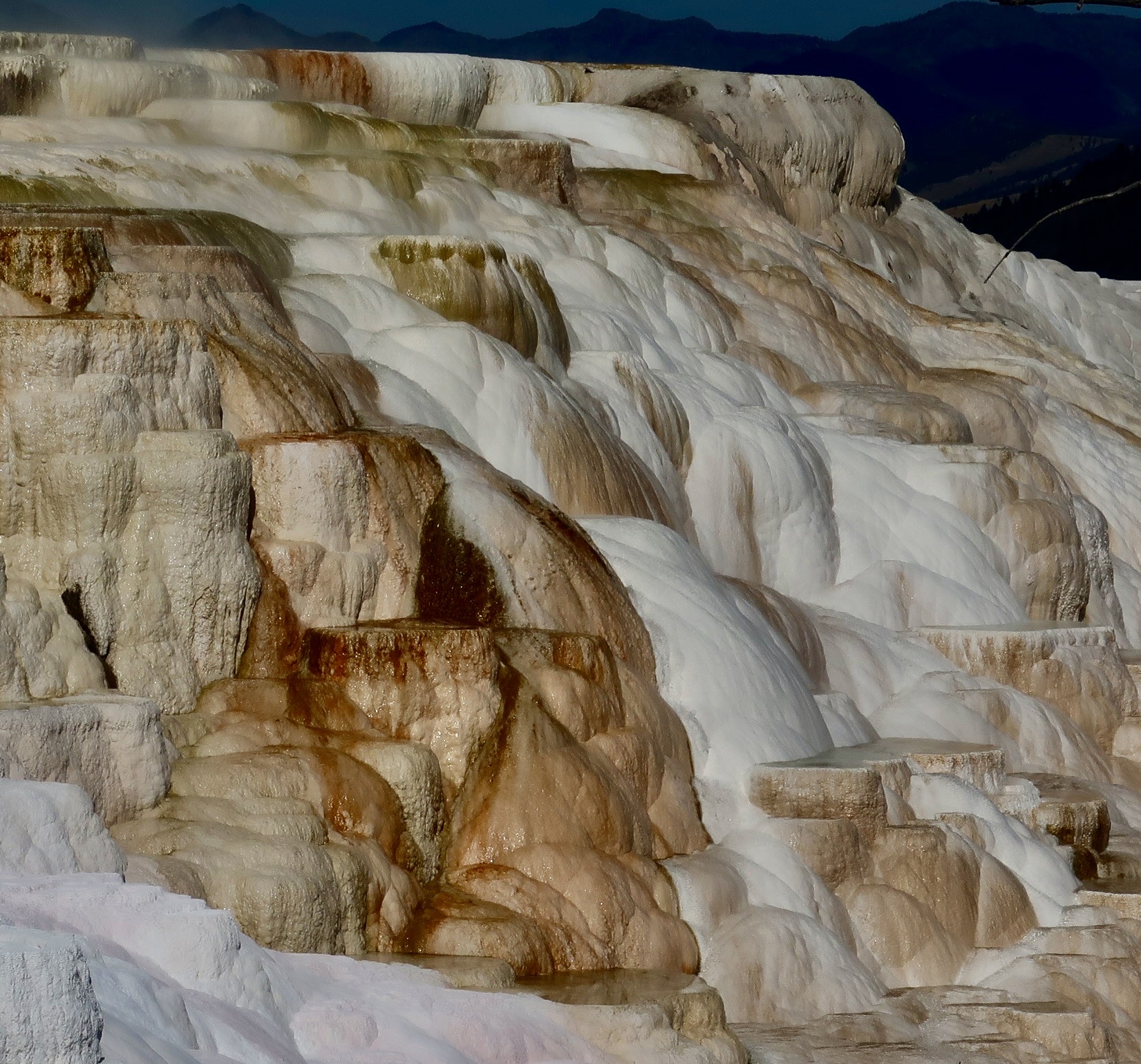
I had a debate with myself over which photo to kick this post off with. It came down to Canary Spring or White Elephant’s Back. I ended up choosing the elephant. Why…I like elephants. We took this photo in Zimbabwe, Africa on our photo safari there three years ago.The sides of White Elephant’s Back features two of the prominent colors you will see throughout Mammoth Hot Springs: White and orange. What caught our attention about this photo was its impressionistic coloring and the stark, dead stump in front. When trees and travertine come in conflict, the trees lose.A closer look. White is the natural color of travertine, the basic rock that makes up Mammoth Hot Springs. The orange is also travertine. But here, it has been colored orange by trillions of tiny micro-organisms called thermophiles that live in the hot springs and reflect different colors based on the temperature of the water. We loved the contrast between the white and orange of the ridge, and dark green of the forest behind it. The fall’s golden grass in front of the forest wasn’t shabby either.This is the elephant’s back that gives the structure its name. It doesn’t take much imagination to see the humped shoulders and head of an elephant. What caught my attention, however, was the fissure (crack). Heated water carrying high amounts of dissolved calcium carbonate emitted from such cracks was, and continues to be, responsible for building White Elephant’s Back and all of the other fascinating structures you will see at Mammoth Hot Springs.
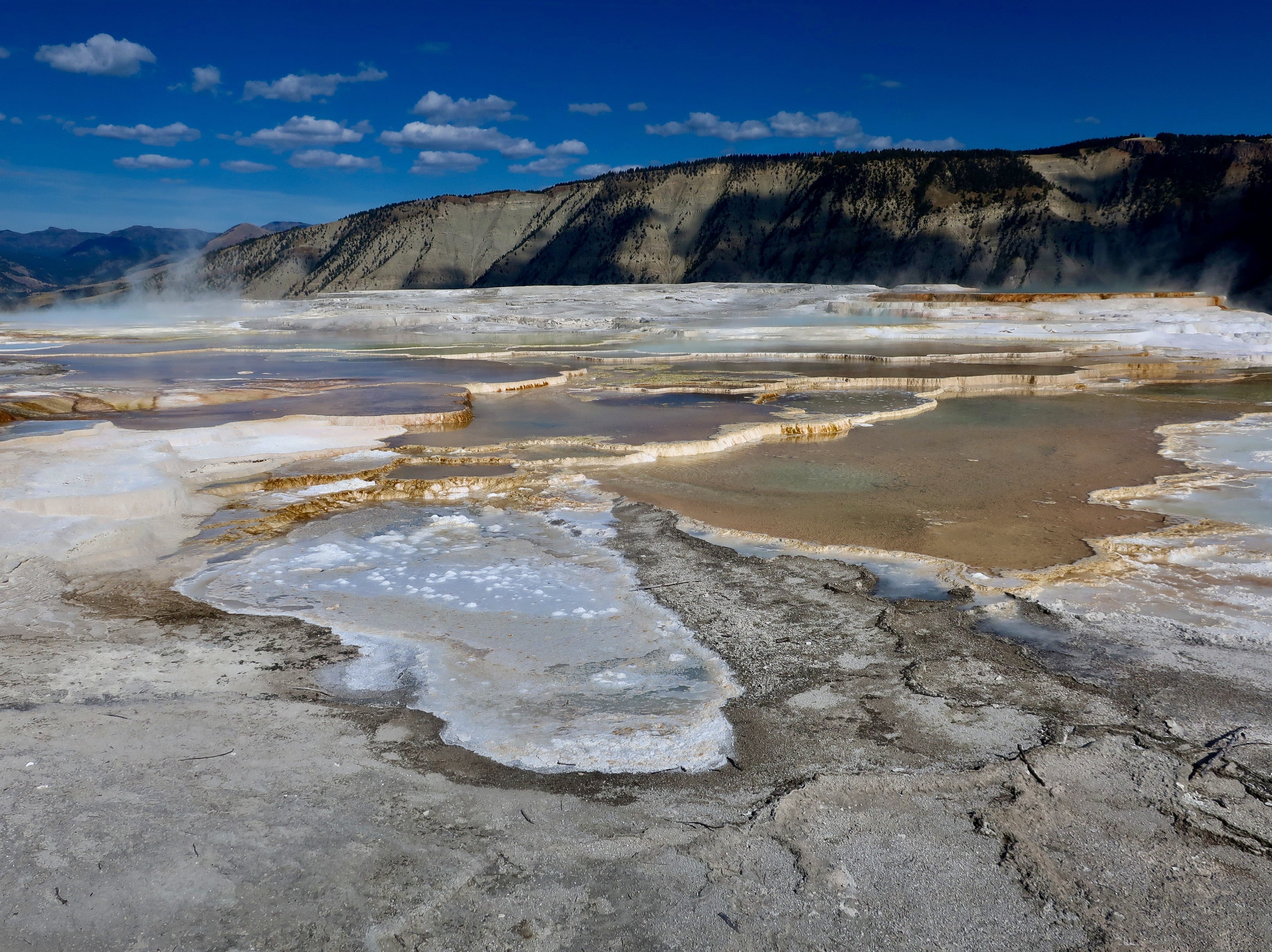
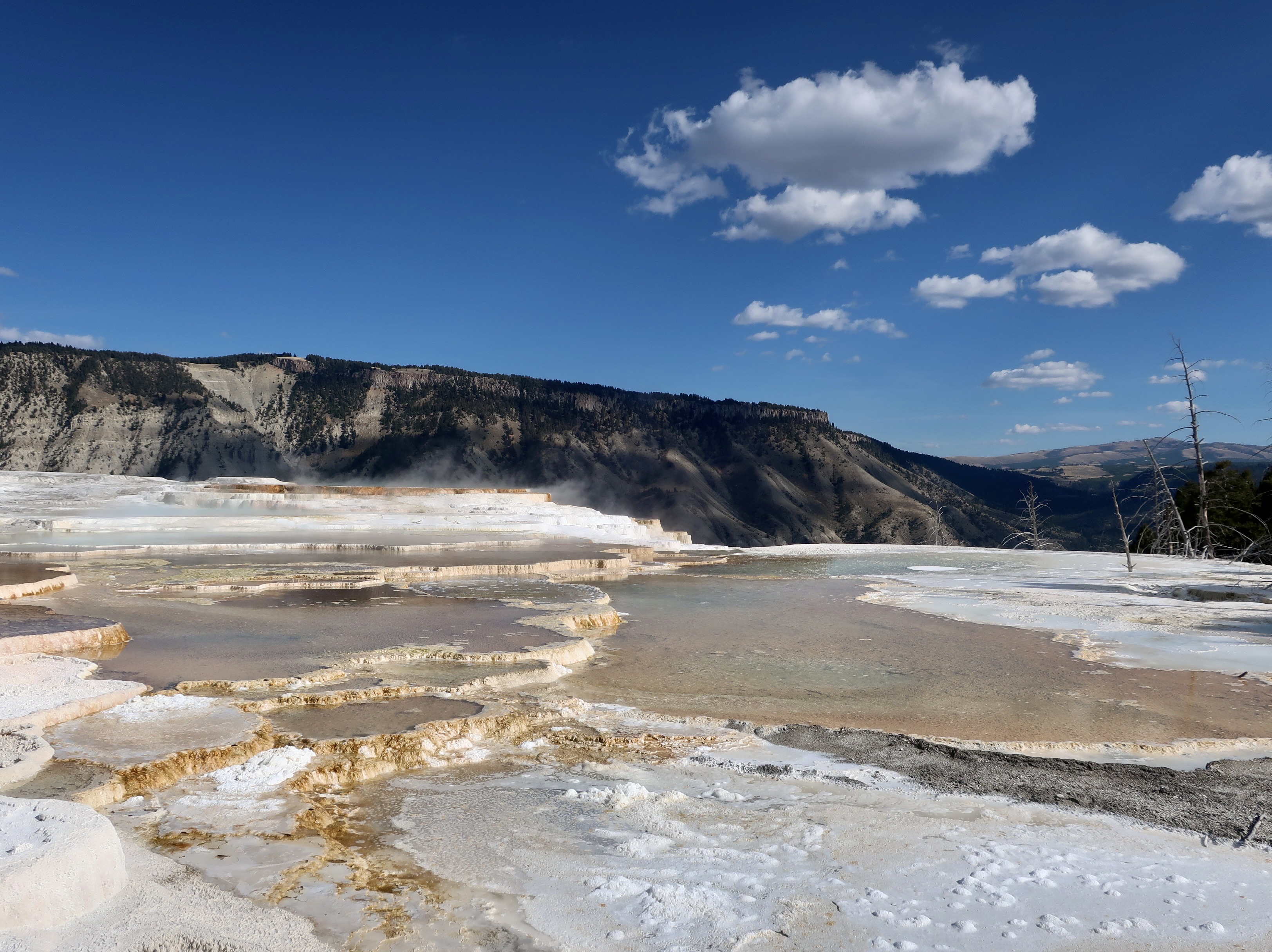
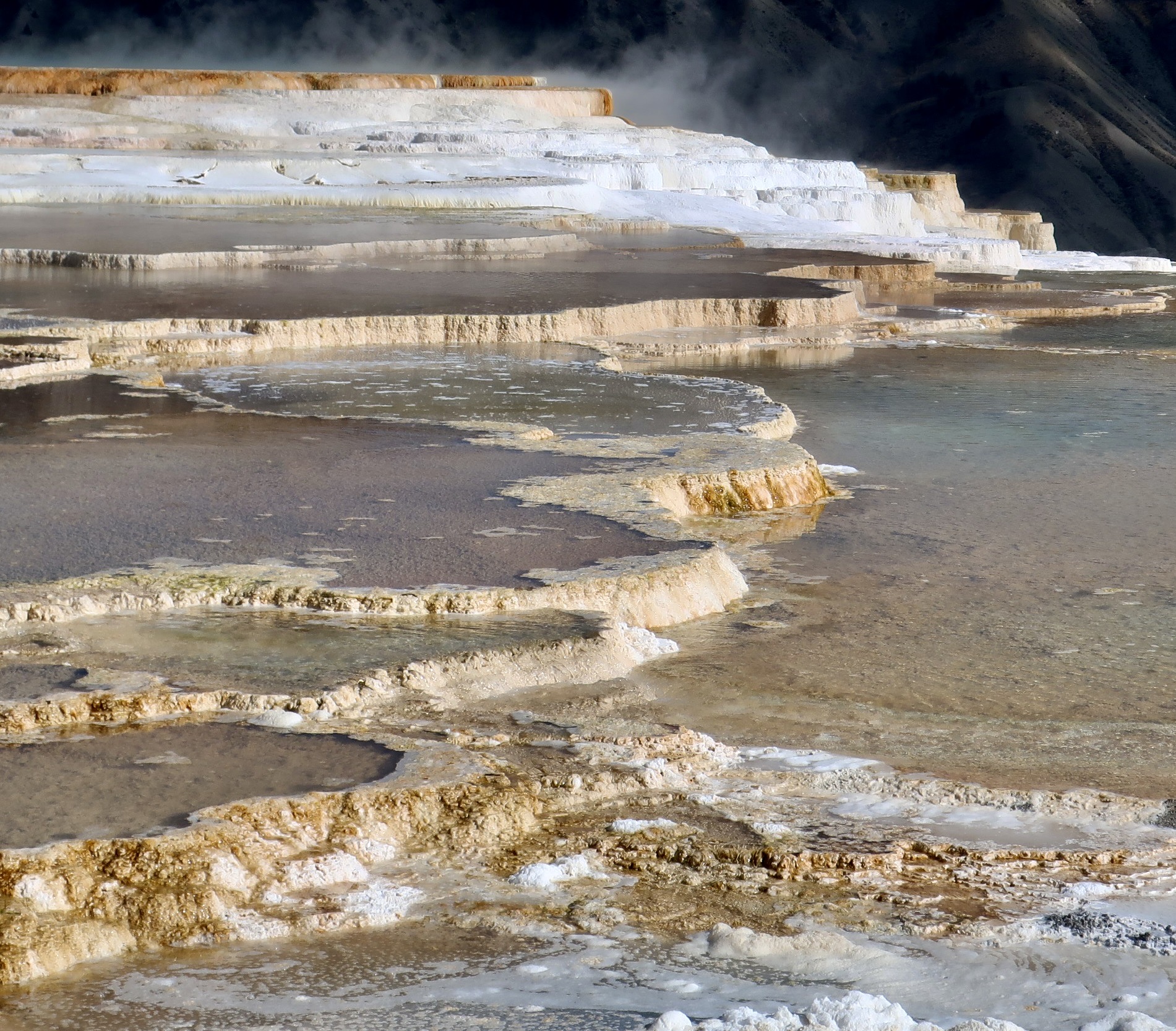
Here’s how it happens. The super volcano underlying Yellowstone National Park, and related magma based rocks under Mammoth Hot Springs, are located fairly close to the surface (2-3 miles/3-5 kilometers). Earthquakes generated by a major fault zone that travels from Norris Hot Springs up through Mammoth Hot Springs and north has created fractures in the limestone rock above it. These fissures allow water from the Norris Hot Springs and from the surrounding mountains to seep down close to the magma based rocks where it is super-heated and forced back upwards. As it passes through the limestone, the heated, acidic water dissolves the limestone into calcium carbonate, which it then carries to the surface. When it reaches the surface, the water cools and the calcium carbonate precipitates out of the water forming travertine, the chalky white rock of the terraces.
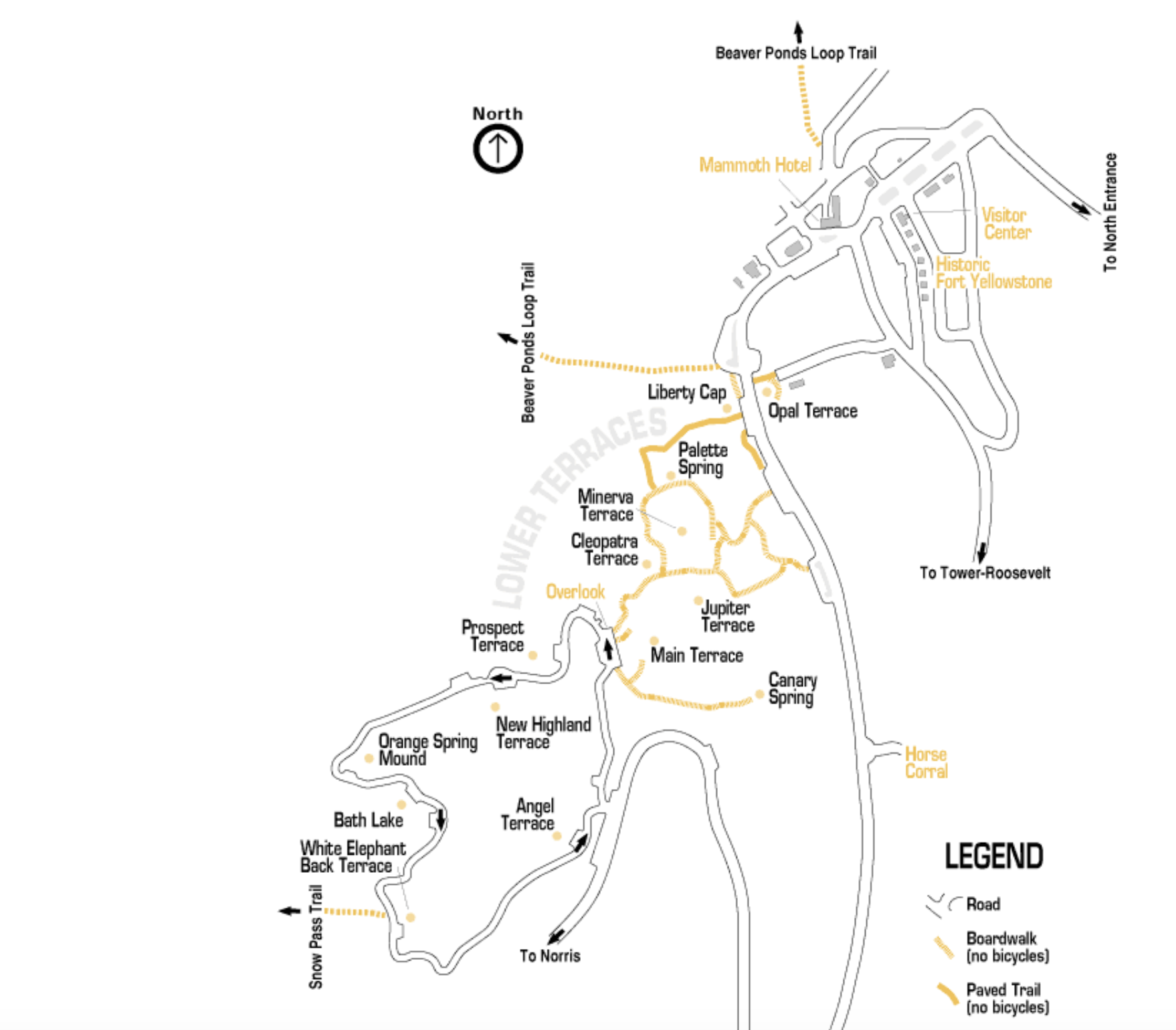
A national park map of Mammoth Hot Springs
It’s interesting to note where the lime came from. Some 330 to 359 million years ago when Montana and Wyoming were located down near the equator before plate tectonics moved them north, vast inland seas covered the area several times. These seas were teaming with sea life that left their shells and skeletons behind to eventually become the lime.
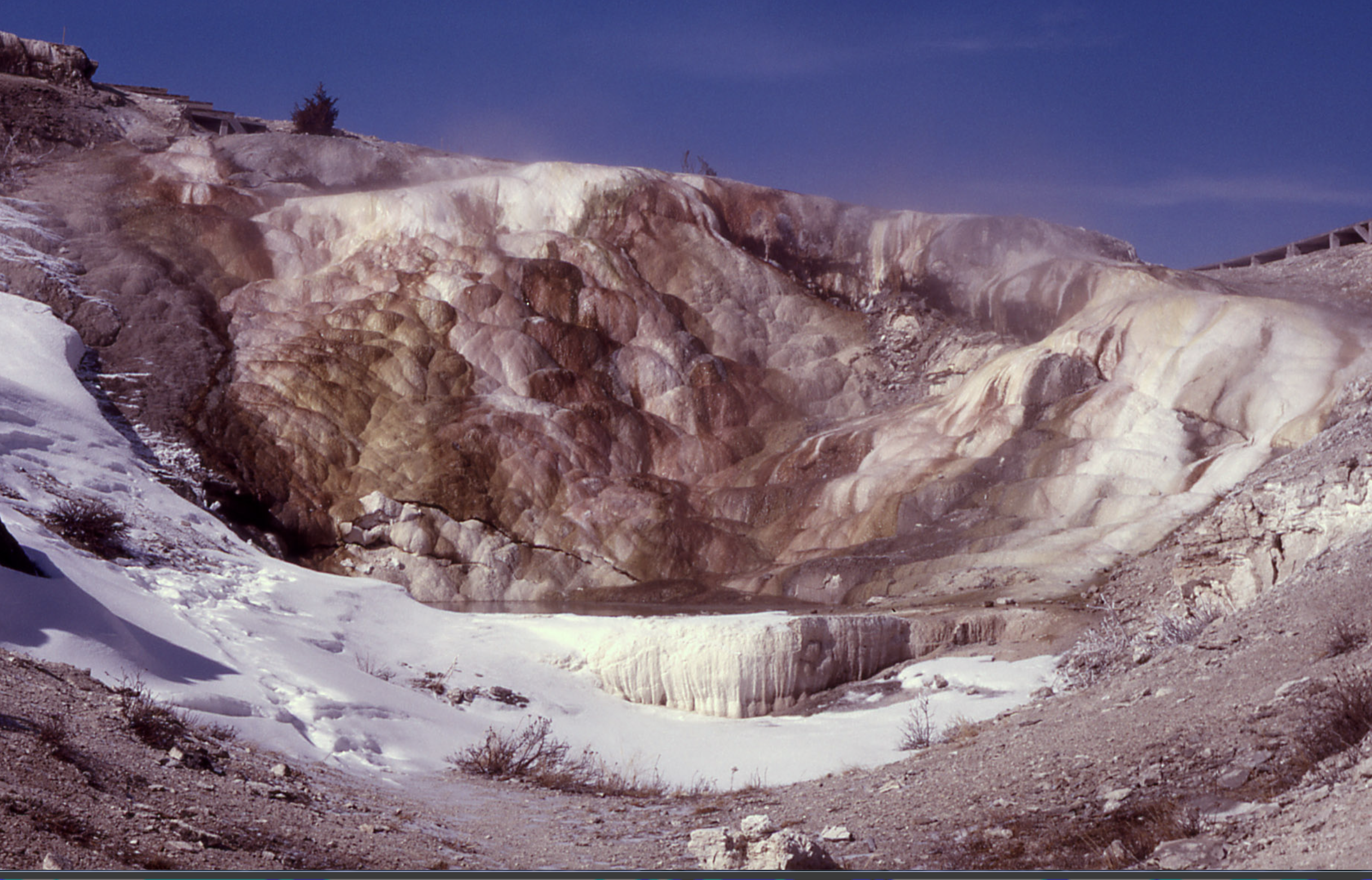
Water coming out of a fissure running the length of the White Elephant Back flows both ways, gradually building the ridge you see today. The formation of Mammoth Hot Springs’ various structures is a dynamic process. Constant small earthquakes close some fissures and open others. That (combined with the speed that the calcium carbonate precipitates out and creates new travertine) means that the Mammoth Hot Springs that you see today may look substantially different in 60 years (or much less). Take the case of Cupid Springs…
This is what Cupid Hot Spring looked like when Peggy and I visited Yellowstone in 2022.A national park photo shows what Cupid Spring looked like in 1963.
Now, on to some of the other major sites of Mammoth Hot Springs.
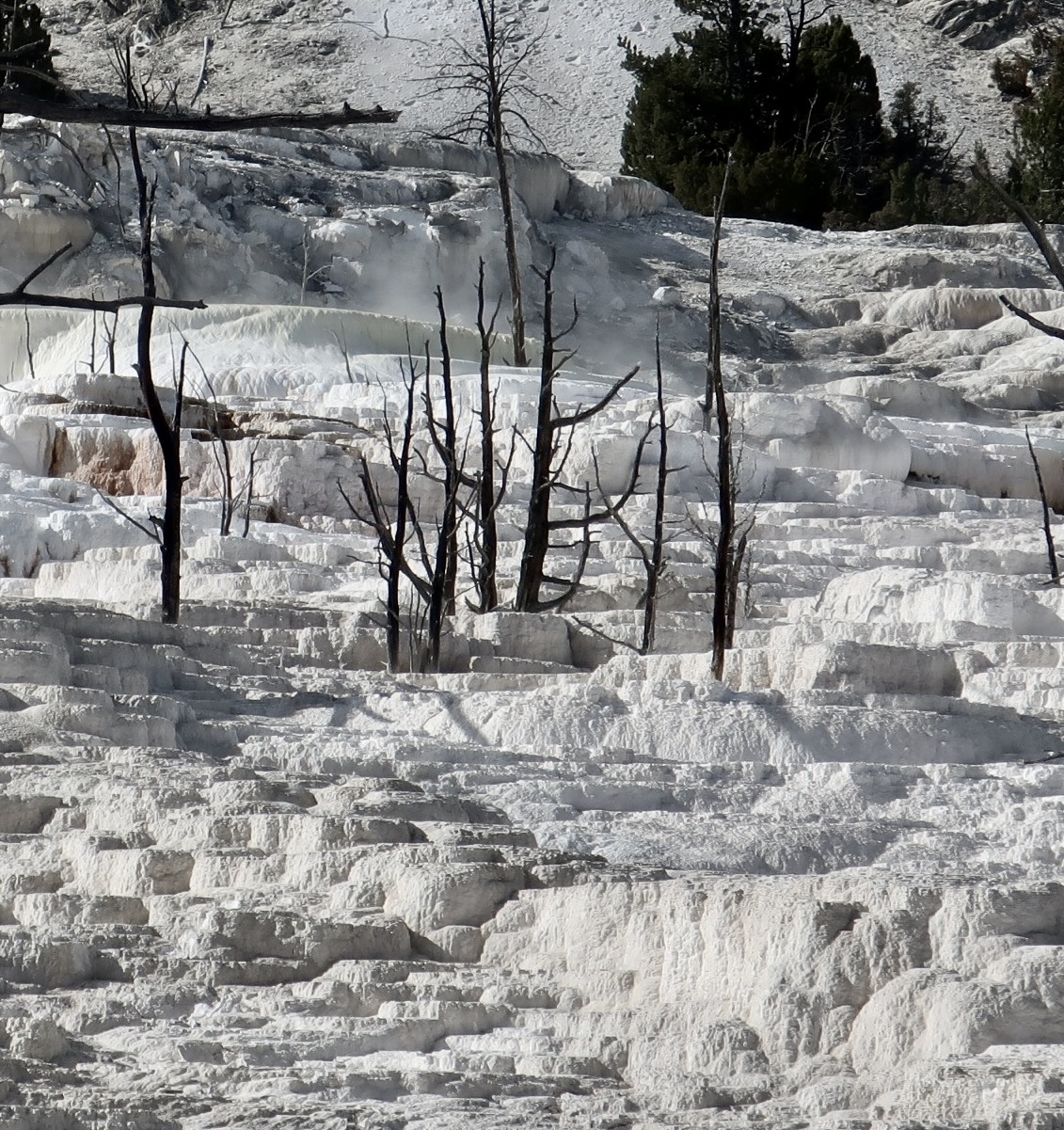
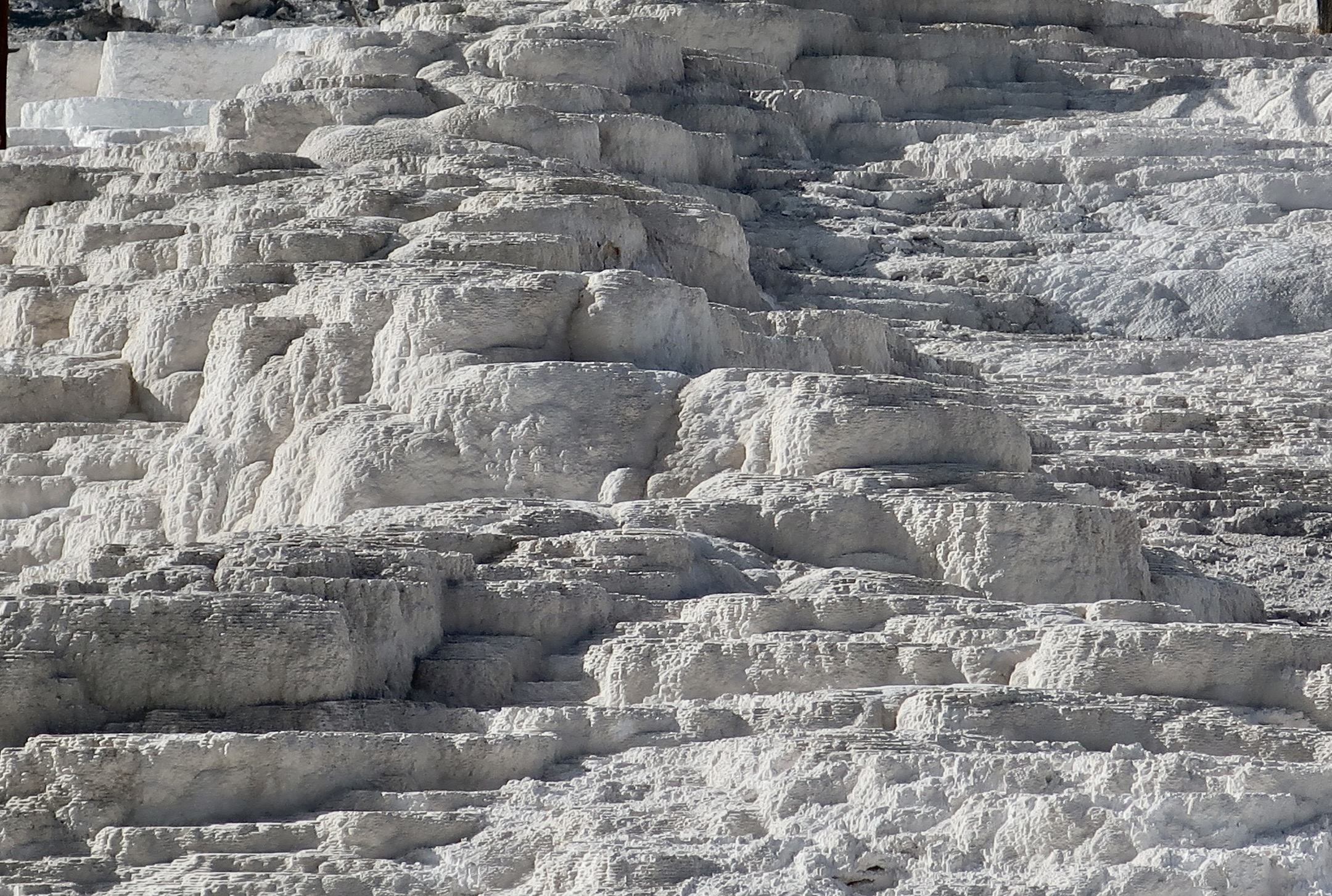
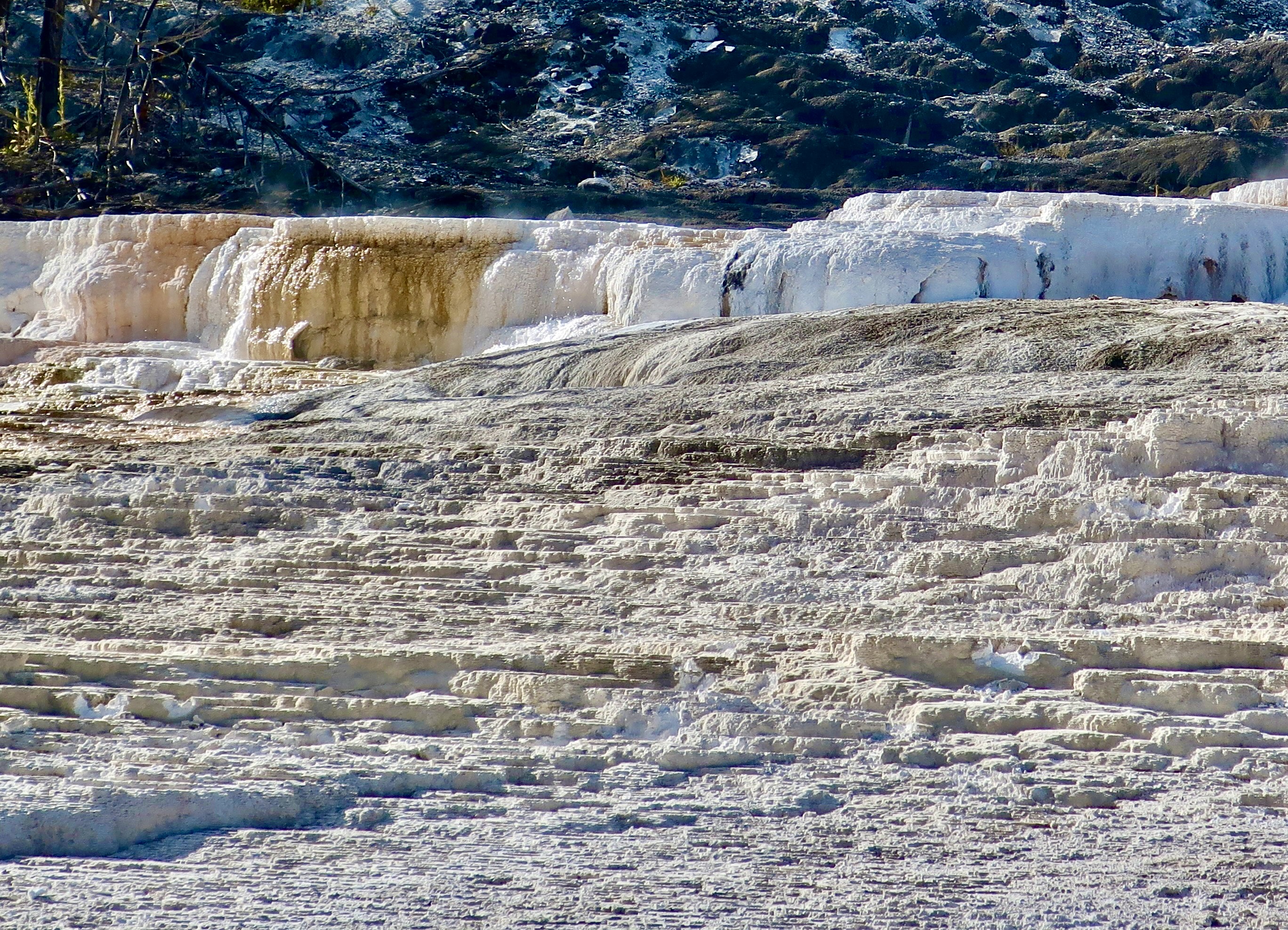
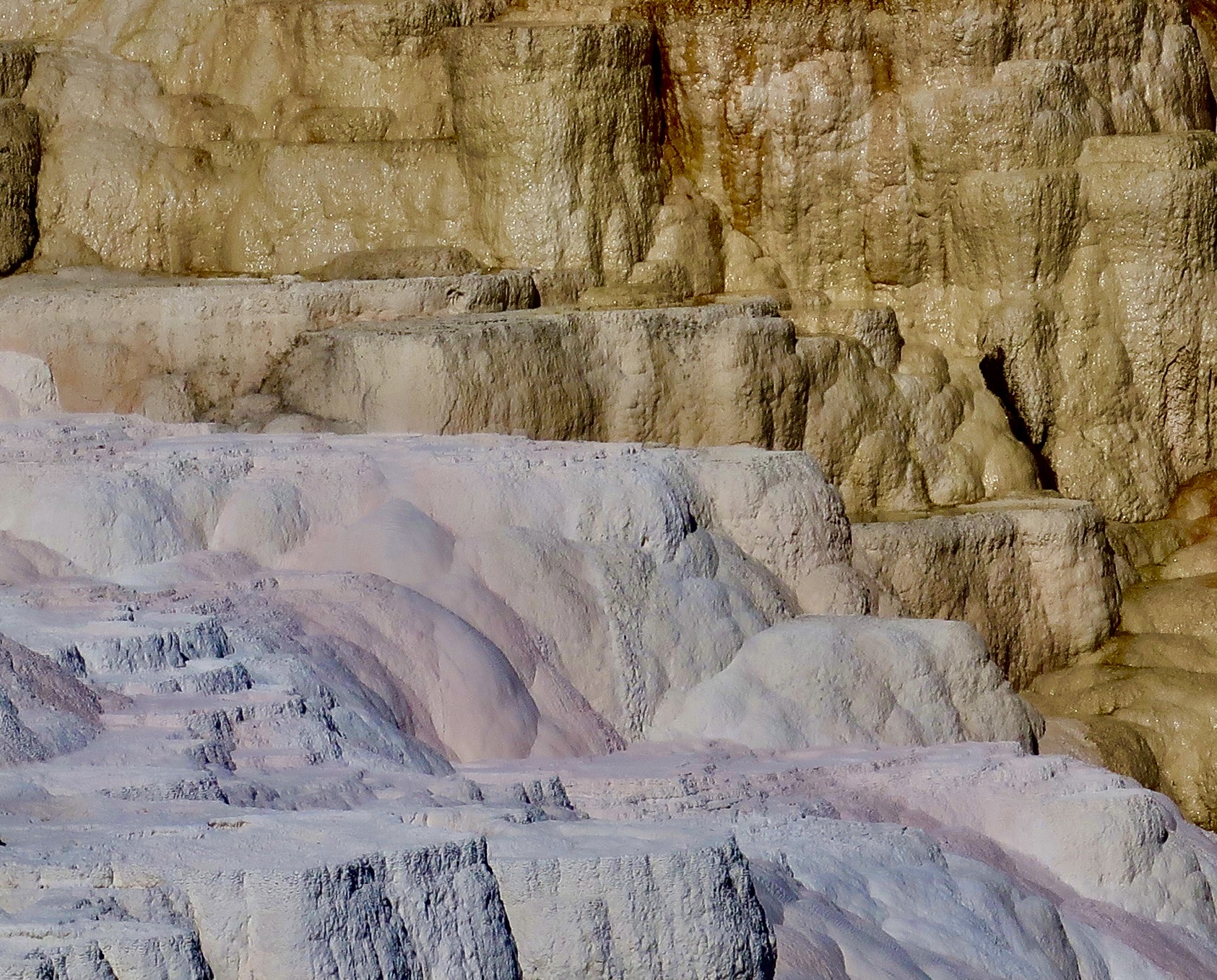
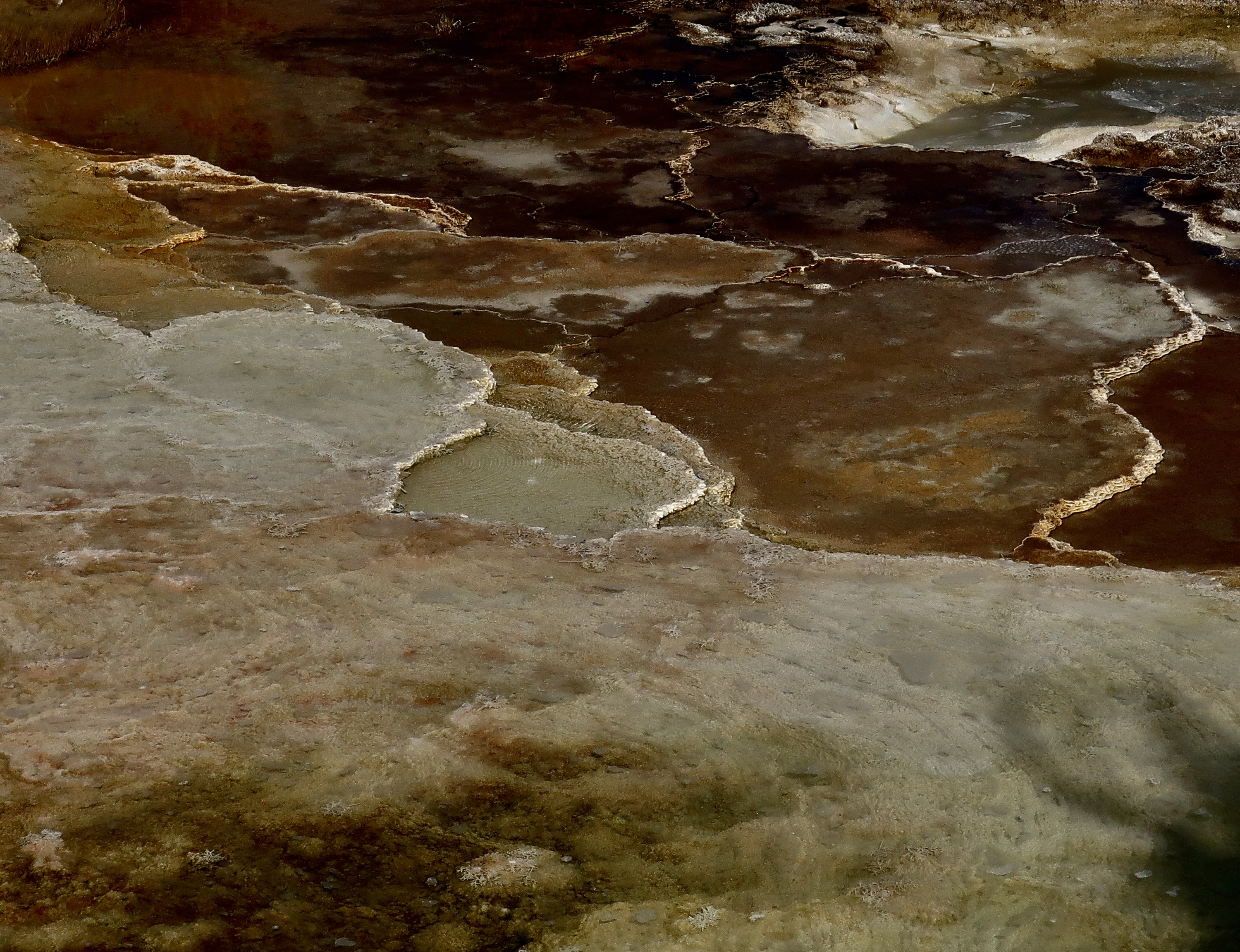
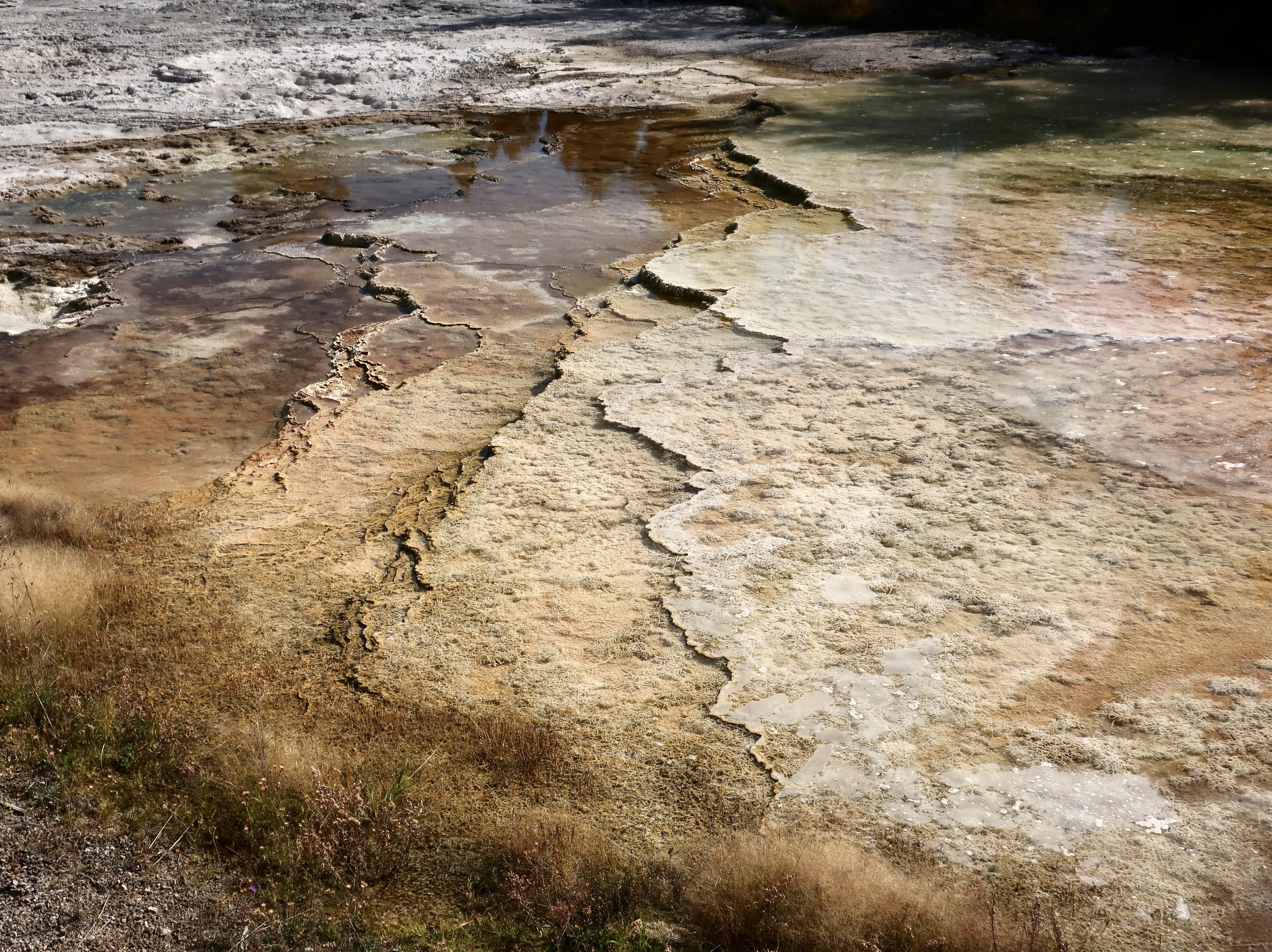
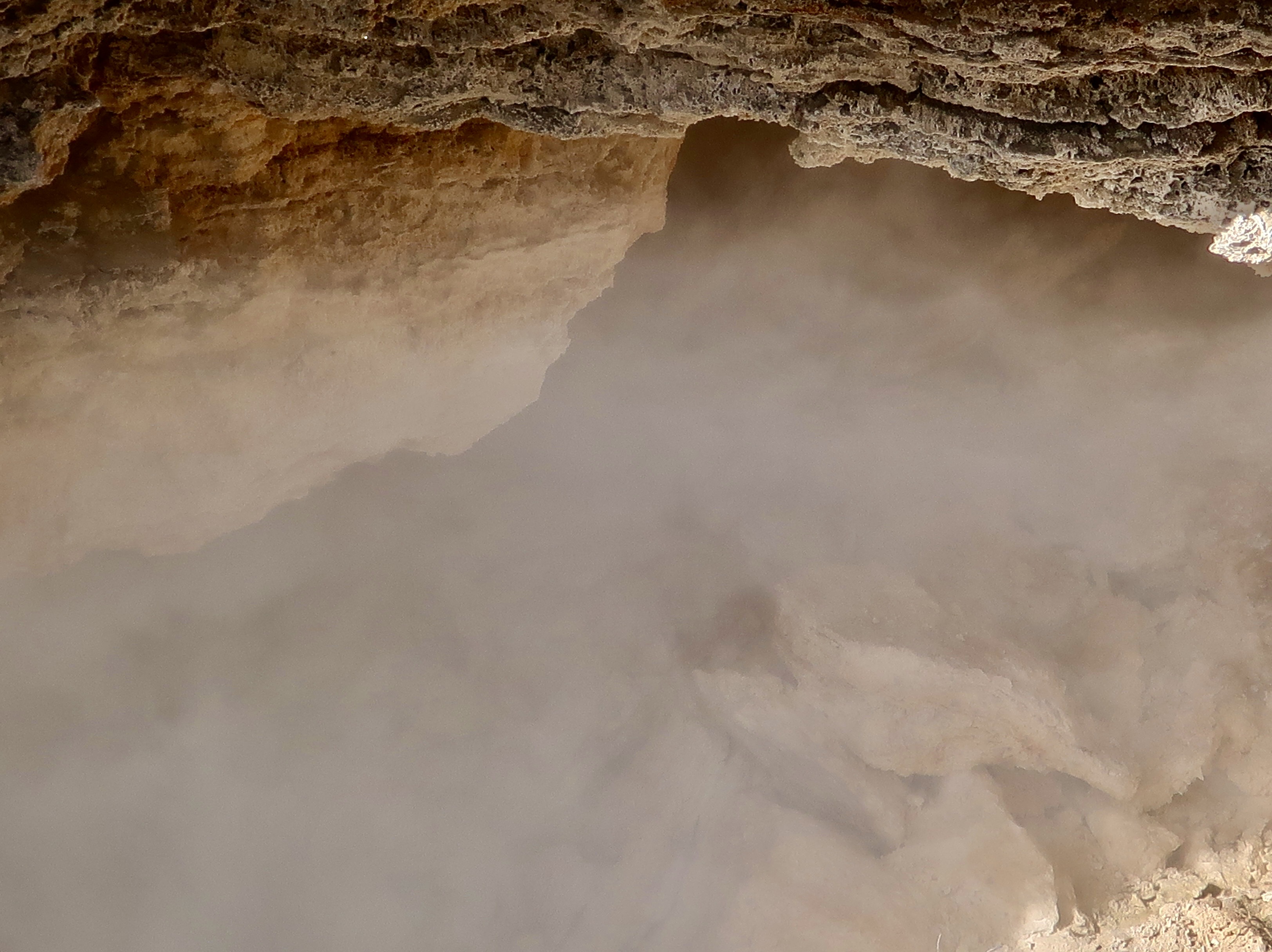
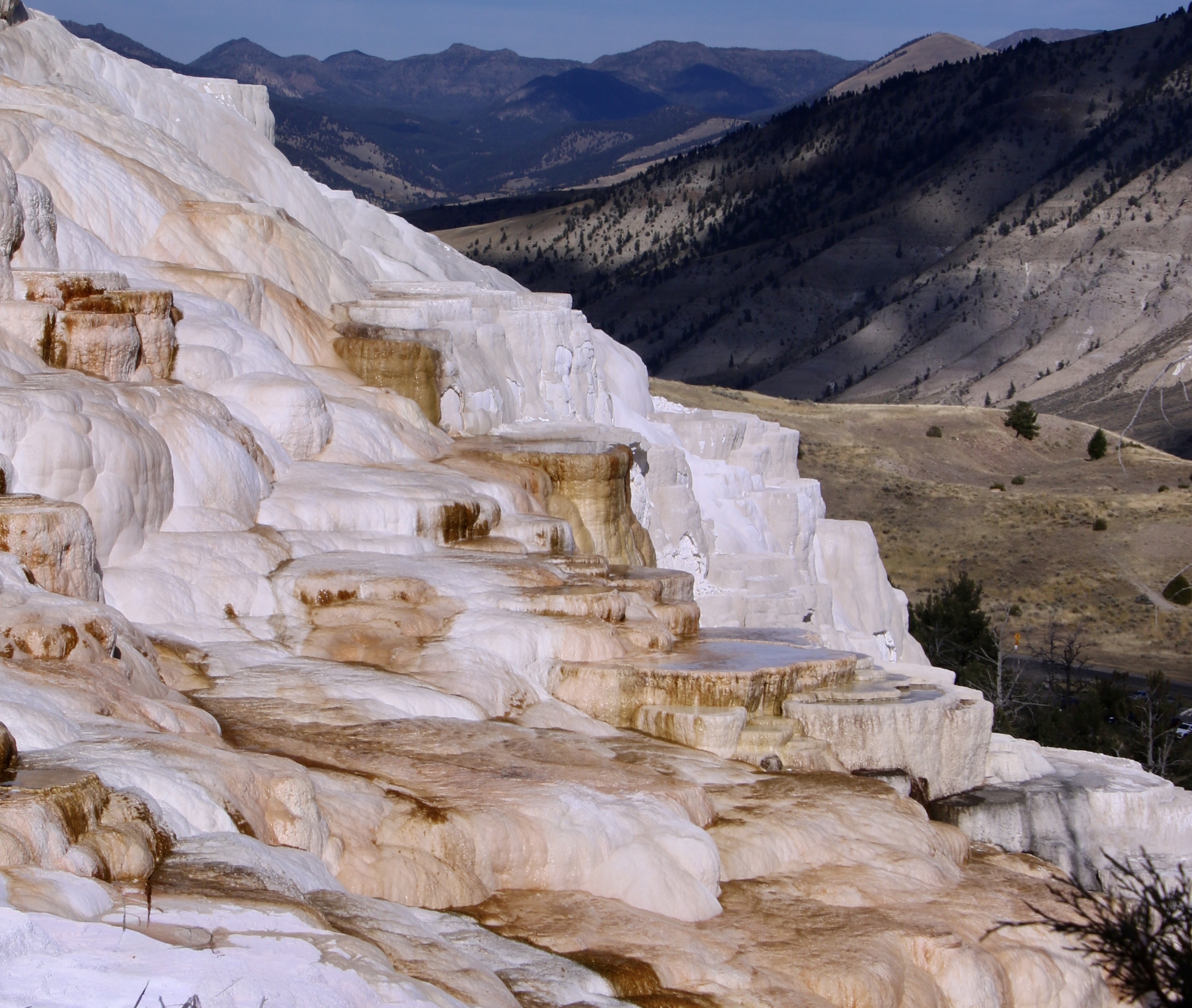
This is Angel Terrace where the naturally white travertine dominates. Note the dead trees. In the not too distant past, they were happy and healthy. Steam from an active spring is seen at the top.Another example.We liked the way the travertine was working its way down the slope.Various colors were showing here.A dramatic contrast.This is a view of the broad Lower Terrace where a number of different hot springs are at work. There are over 100 in total at Mammoth.Closer…And closer. The water works its way over terraces toward the edge of the cliff. The natural dams and shallow pools are created by the calcium carbonate as it precipitates out and creates the ledges. I think these are Dryad Hot Springs.Heading down. The brown color caught our attention. As did the texture of the travertine.A nearby hot spring was obscured by steam. I really liked the way the upper edge stood out above the steam. But, for sheer color and beauty, the prize goes to…Canary Spring.And this seems an appropriate place to wrap up our posts on Yellowstone National Park. It really is an incredible national park. If you’ve never visited, add it to your bucket list! And if you’ve been… Well, be like Peggy and me and go again. And again.
Number 4 on our series of 25 world renown national parks will be Redwood National Park in California.
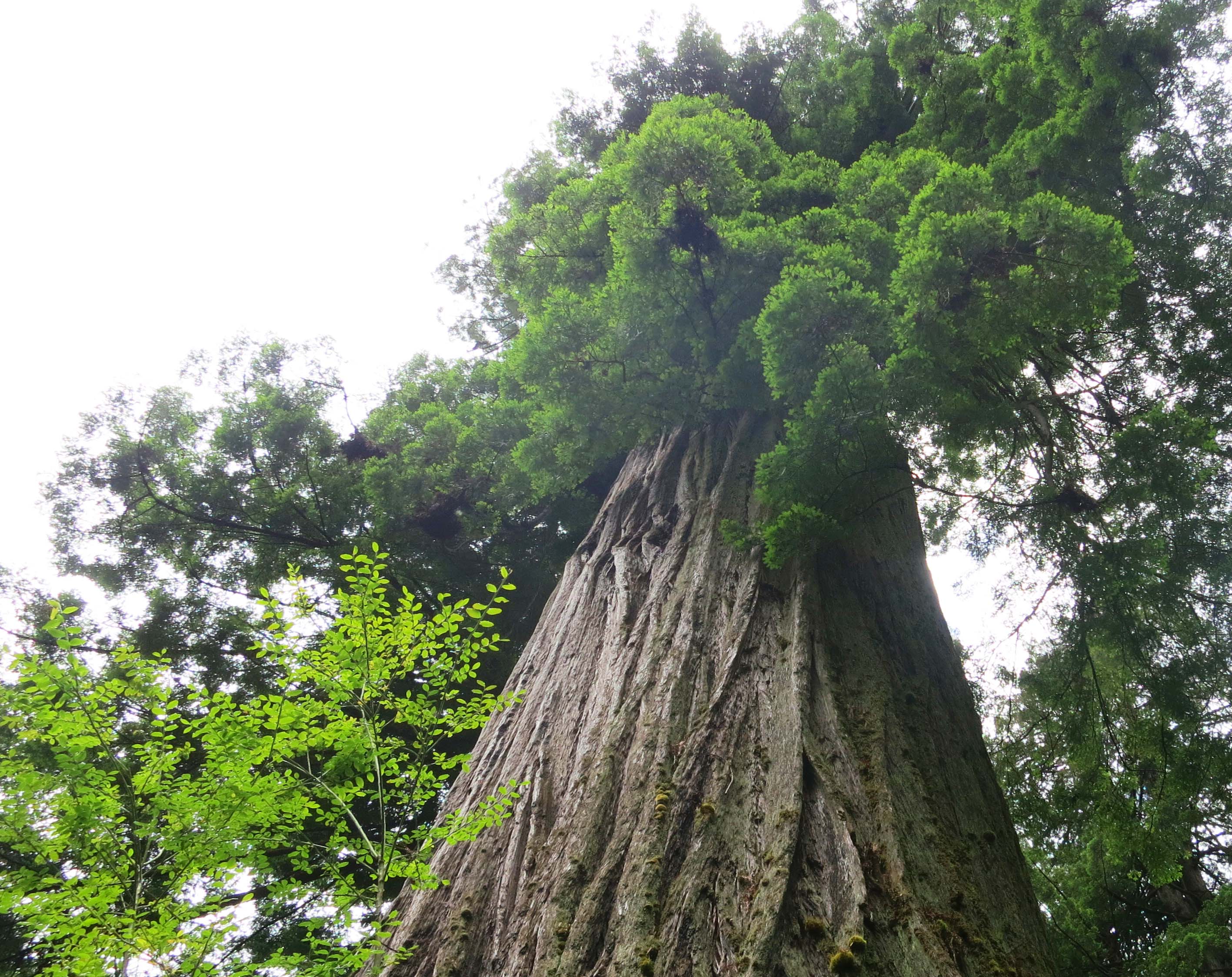
How could one not feel awe when confronted by giant redwoods in their cathedral like setting.
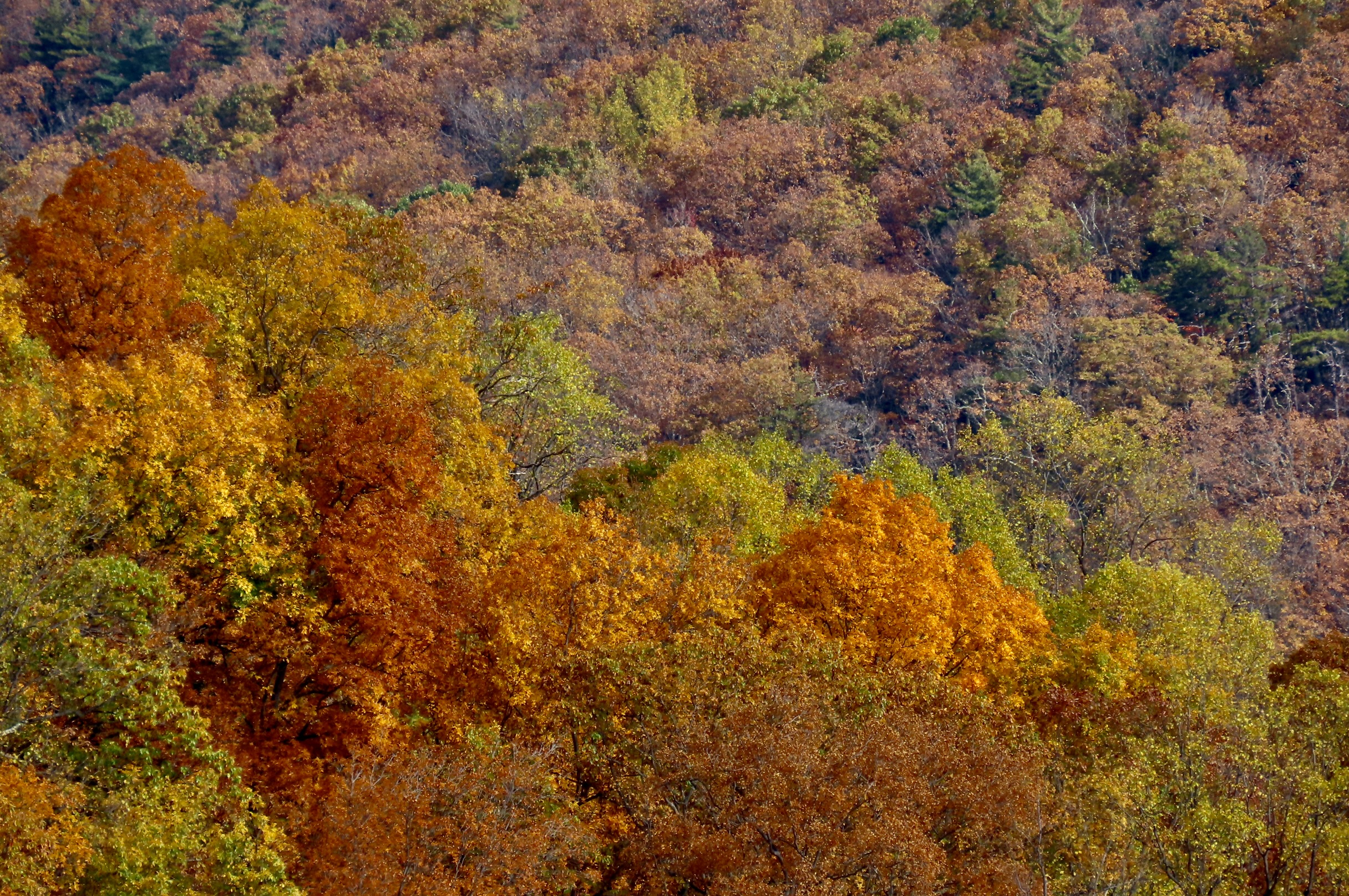
But first, I have two other posts in mind. Number one is another national park visit. Peggy is off exploring the Caribbean with our daughter Tasha this week, so I am on my own. (Always an excuse to run off and play.) I decided to travel south 40 miles from our home in Virginia and explore Skyline Drive through Shenandoah NP in hopes that I would catch some fall colors. My next post will share the results.
In number two, we will return to our travels this summer and begin our exploration of Northern Ireland, which took us from the urban centers of Belfast and Dublin, to the dramatic coast of Northern Ireland, to an idyllic and isolated country house where our only companions were sheep.