When …—… Saved Lives: The Marconi Telegraph Station at Point Reyes


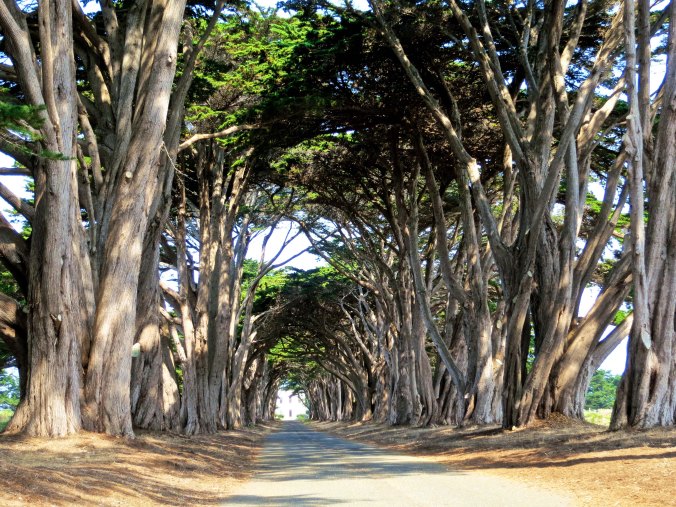
1 Tunnel of Cypress Trees at Marconi-RCA wireless site Point Reyes

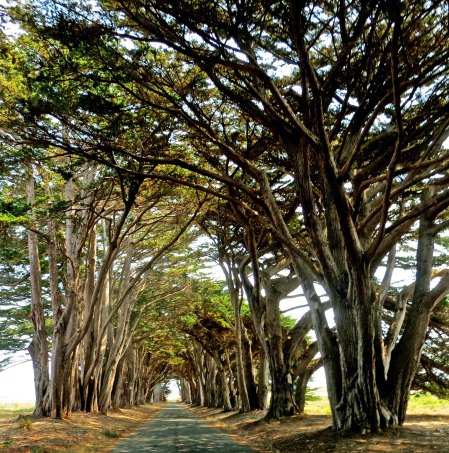
This tunnel of cypress trees leading into the Marconi-RCA wireless receiving station at Point Reyes National Seashore in California is considered one of the most beautiful tree tunnels in the world.

Do you recognize the dits and dahs? I memorized what they meant for a Boy Scout badge back in the Dark Ages, back before satellites and modern communication systems came to connect almost anyone, anywhere, anytime. Here’s a clue: the three dots stands for S, and the three dashes for O. Think SOS: Save Our Ship. You will recognize the whole alphabet spelled out in dits and dahs as Morse Code, named after the American inventor Samuel Morse, who developed it in 1838.

Morse Code

Morse Code

Combined with telegraph lines and operators, it revolutionized communication. Getting the quickest message between points A and B no longer required finding the fastest horse or train. Seconds instead of days or weeks became the rule for sending important communications over long distances.

What Morse did for land based communication, Guglielmo Marconi did for oceans. His claim to fame was being the prime inventor of wireless communication using radio waves. He started at the young age of 21, working in his attic in Italy with his butler Mignani. (I am reminded of the young Steve Jobs, sans butler, working out of his garage in Palo Alto.) Like Jobs, Marconi was an entrepreneurial genius as well as an electronics wizard, or geek, if you prefer. He began by sending a message across his attic in 1894 to ring a bell. By 1902, he’d cornered the market on sending wireless messages using Morse Code across the Atlantic Ocean.

Ships at sea and their passengers were among the primary beneficiaries of the new technology. “Surprise, you are a new father. Send money,” could now be transmitted immediately instead of weeks down the line. There was also a safety factor. For the iceberg bound Titanic, it meant that 30% of its passengers were saved— instead of none.

By 1914, Marconi had extended his operation to the Pacific Ocean and built sending and receiving stations in the Marin County towns of Bolinas and Marshall north of San Francisco. (Because of interference, sending and receiving stations had to be separated.) During and immediately after World War I, military concerns combined with a touch of nationalism, and, I suspect, a generous dollop of old-fashioned greed, led to the take over of Marconi’s American operation and its transformation into RCA, the Radio Corporation of America.

A Mural in Olema, California that provides a look at what the community looked like when it served as the sending station of Marconi telegraph. The blue surfboard represents a bit of artist creativity. (grin)

A mural in Olema, California just north of San Francisco that provides a look at what the community looked like when it served as the Pacific Ocean telegraph sending station for Marconi-RCA telegraph. The blue surfboard represents a bit of artist creativity. (grin)
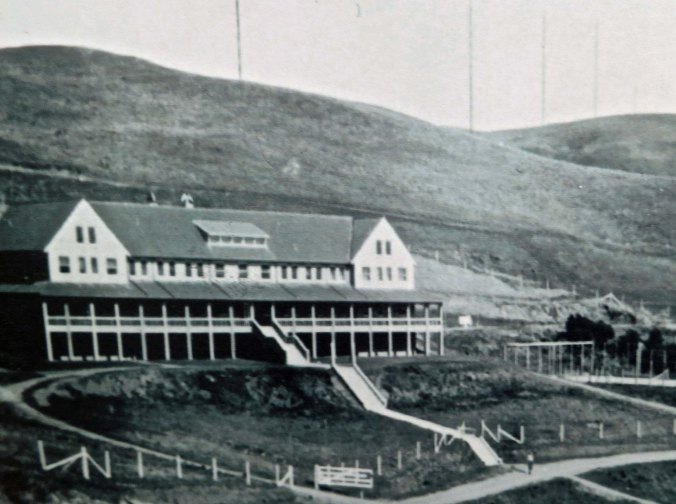
An early photo of the Marconi receiving site in the small town of Marshall on Tomales Bay.

An early photo of the Marconi receiving site in the small town of Marshall on Tomales Bay. Workers lived in the hotel.

The hotel as it looks today as part of the Marconi Conference Center.

The hotel as it looks today as part of the Marconi Conference Center.

6. Old Highway 57 and Highway 1 in Marshall

Old Highway 57, the dirt road, once serviced the Marshall Marconi wireless receiving site. Modern Highway 1 is seen below along with Tomales Bay. The distant hills are part of Point Reyes National Seashore.
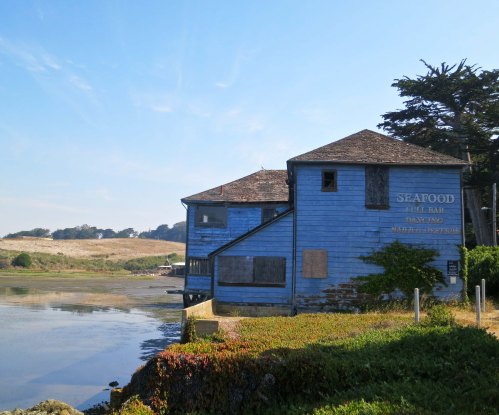
7 Old 1873 Seafood restaurant in Marshall Ca

Historic Marshall included this old/now deserted seafood restaurant built in 1873.
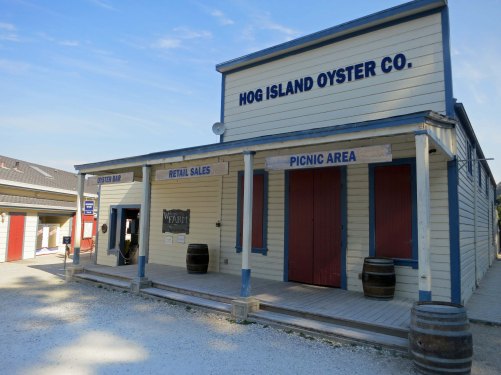
Today, Marshall is know for its oysters and kayak eco-tours.

Today, Marshall is known for its oysters and kayak eco-tours.
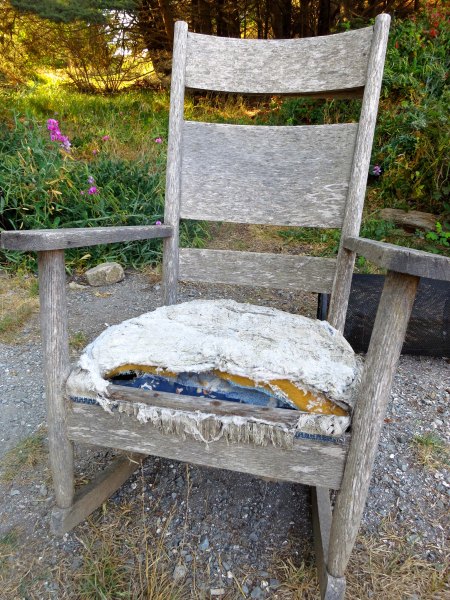
I hound this old rocking chair sitting alone Highway one. All it needed was an old codger to sit in it.

I found this old rocking chair sitting along Highway 1. All it needed was an old codger to sit in it.

In 1929, the Marshall operation was moved to Point Reyes. It was still there actively receiving messages when I first started visiting the National Seashore in the late 60s and early 70s. A forest of receiving antennas and no trespassing signs announced its presence. Most of the communication with American ships involved in the Vietnam War passed through the facility. On July 12, 1999, the station sent its last message. Dits and dahs had been made obsolete by bits and bytes.

I was drawn there on my August trip up the North Coast of California by a statement I had found on the Net stating that the cypress trees at the entrance formed one of the most beautiful tree tunnels in the world. Even though I had driven by the facility dozens of times over the years, I had never noticed. Shame on me. When I drove up, a group of amateur photographers with expensive cameras were busily proving the point. I joined the queue with my small Cannon S-100.

I was also blessed with a touch of serendipity. A display sign announced that the Maritime Radio Historical Society was featuring a display on telegraph use in Marconi’s impressive Art Deco headquarters. I drove down under the tunnel of trees and walked through the building’s open door. An hour later I emerged with the distinctive sound of a telegraph keys clattering away in my ears and enough information for a dozen blogs.
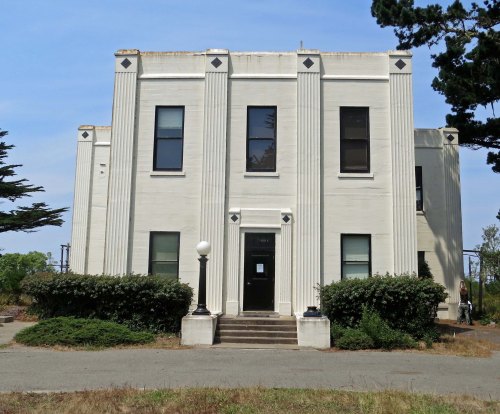
The lovely art deco building built by Marconi-RCA for its telegraph receiving station at Point Reyes National Seashore.

The lovely art deco building was built by Marconi-RCA for its telegraph receiving station at Point Reyes National Seashore.
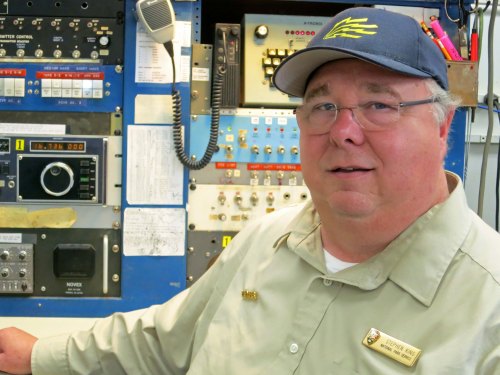
Steven King, a volunteer with the Marine

Steven King, a volunteer with the Maritime Historical Radio Society and the Point Reyes National Seashore spent most of an hour explaining how the Marconi-RCA wireless receiving station worked during its heyday.

12 Telegraph call letters for ships at Marconi-RCA wireless site Point Reyes

Every ship at sea had its own call sign for receiving telegraphs. These were left when the last telegraphs were sent out in 1999.
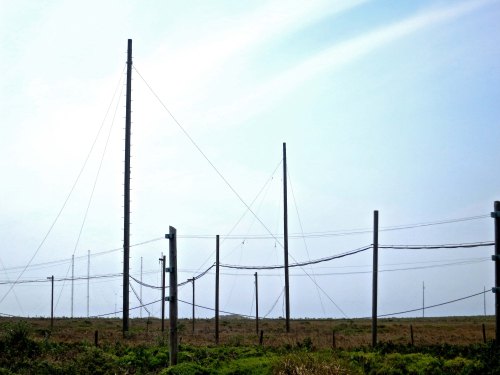
A view of the telegraph receiving antennas as they look today.
A view of the telegraph receiving antennas as they look today.

This tunnel of cypress trees leading into the Marconi-RCA headquarters receiving station at Point Reyes National Seashore in California is considered one of the most beautiful tree tunnels in the world.

I had a final opportunity to drive under the beautiful bower of trees as I returned to the highway.

NEXT BLOG: I head north for the small town of Bodega to explore where Alfred Hitchcock’s movie The Birds was filmed and discover a church that was photographed by Ansel Adams.
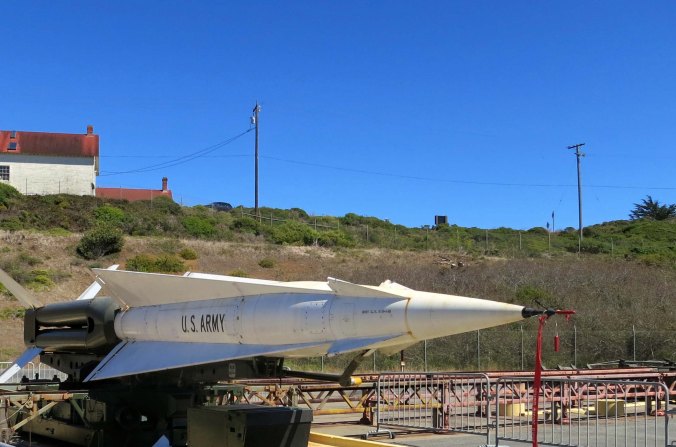
What to Do When a Nike Missile Is Pointed at You… Surrender.

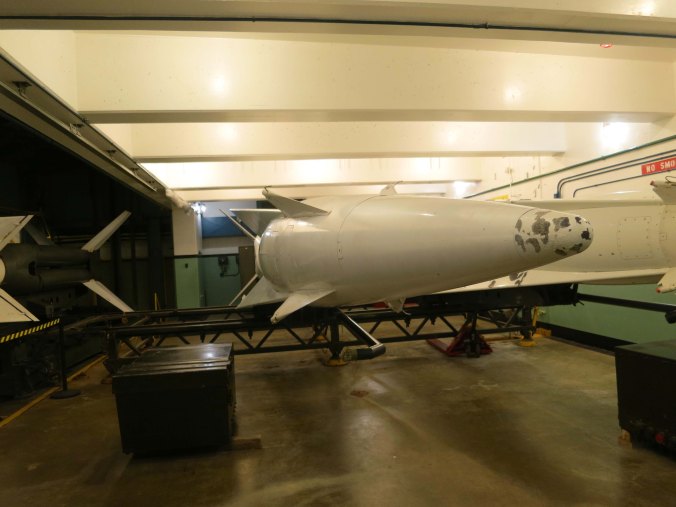
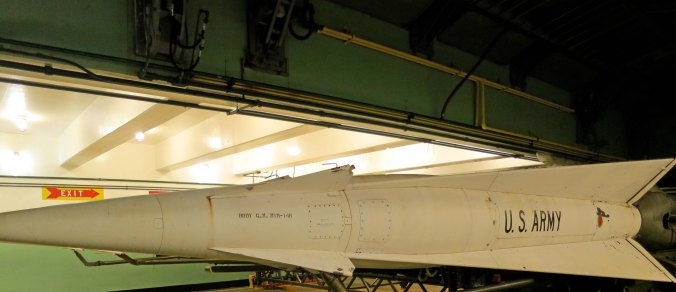
This Nike missile came out of the ground and was pointed at me when I was visiting Golden Gate National Recreation Area just north of San Francisco. I quickly moved aside and snapped its photo.

This Nike missile came out of the ground and was pointed at me when I was visiting Golden Gate National Recreation Area just north of San Francisco. I quickly moved aside and snapped its photo. Missiles were raised skyward before being fired.


I heard a whirring sound just before the large metal gates clanked open. A Nike missile rose ominously out of the ground. It was pointed at me. “I surrender,” I said to the missile as I slowly raised my hands. It seemed like the wise thing to do. Not very long ago (1953-1979), back in the disturbing days of the Cold War, this deadly weapon had been loaded with a nuclear warhead two-three times as powerful as the atom bombs America had dropped on Japan at the end of World War II. It still spoke of destruction, but now it was defanged. It had become a museum piece, a shell of its former self, a relic of our very scary past.

SF-88 is located in what is now the Golden Gate National Recreation Area just across the Golden Gate Bridge from San Francisco. It was one of 300 Nike missile sites across the US built as a last line of defense against Soviet bombers carrying nuclear weapons. It now serves as the only restored Nike site in America.

I visited the museum as part of my August trip up the North Coast of California. When I arrived, two park rangers sat outside enjoying the sun. I put one to work; he volunteered to take me on a personal tour of the underground facility. We climbed down the stairs with our footsteps echoing into a large room filled with missiles. After describing how the massive weapons were to be used, he suggested I try pulling one on its track. I couldn’t believe how easily it moved; I felt like I had super powers. He explained that the system was designed for getting the missiles up and ready to fire in 15 minutes. Several million lives depended on quick action.

Each of the 300 Nike missile sites around the US had several Nike missiles ready to fire off in 15 minutes to take down Russian bombers.

Each of the 300 Nike missile sites around the US had several Nike missiles ready to fire off in 15 minutes to take down Russian bombers approaching the country.

4. One of the Nike missiles at SF-88

A view of one of the missiles. They were large enough I couldn’t capture the full missile within the confines of its underground bunker.

I easily moved one of the Nike Missiles.

I easily moved one of the Nike Missiles along the track toward its launching station.

5.The Nike missiles at SF-88 would rise through these gates

These gates would open in preparation for a launch of the Nike Missiles.

The Nike missiles at SF-88 were intended to target Russian bombers 90 mile off the coast from the Golden Gate. The nuclear warheads were to assure that none got through. The greatest fear was that they might be carrying 50-megaton Tsar Hydrogen bombs, the mother of all bombs. The Russians had built one and blown it up as a warning to the US. To put things in perspective, it had 1,350–1,570 times the explosive power of the atom bombs that destroyed Hiroshima and Nagasaki.

“The Tsar Bomb,” the park ranger explained, “would be exploded a few thousand feet up in the air above San Francisco.” All people living in the region would be killed. There would no longer be a San Francisco, an Oakland, a San Jose, a Berkeley, or any of the other communities located in the Bay Area. Neither would there be any birds, mammals, reptiles, trees, grass, or other life left living. A chill settled over me as I recalled I was a student at Berkeley during the 60s, at the height of the Cold War.

I thought even the smaller Nike weapons would be devastating to the region. The prominent west winds would bring deadly radiation from the explosions raining down on the Bay Area and points east. “What would it matter?” the ranger asked. What indeed. Once a nuclear war started, the US and Russia had enough nuclear weapons to wipe out life on earth— several times over.

Having heard enough bad news, I climbed out of the bunker leaving the ranger to explain doomsday to another group of visitors that had arrived. I was outside by myself when Nike Missile came rumbling up from its underground hideout. No one had told me it was part of the tour.

The gates as seen from above. I don't know, but I suspect they would have been camouflaged during the Cold War.

The gates as seen from above. I don’t know, but I suspect they would have been camouflaged during the Cold War.

I heard a whirring sound, the gates clanked open, and the missile arose out of its bunker.

I heard a whirring sound, the gates clanked open, and the missile arose out of its bunker.

What would have been lost during a nuclear war.

A view of the Golden Gate Bridge and San Francisco from the Golden Gate National Recreation Area. The Nike missile site is over the hill from where I took this photo.

NEXT BLOG: I visit the Marconi Station at Point Reyes National Seashore where Morse Code messages were once sent out to all ships at sea in the Pacific Ocean— and are still sent out to the sunken Titanic in the Atlantic.


Hostile Spirits from another Realm… A Return to the Grand Canyon

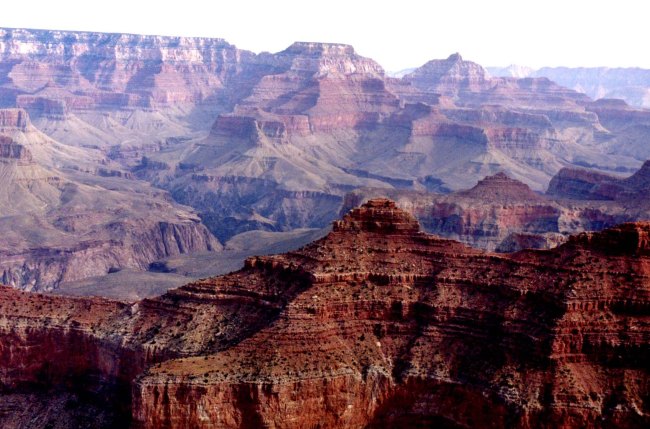
The Grand Canyon is filled with spectacular rock wales that constantly take your breath away. But do they harbor hostile spirits?

The Grand Canyon is filled with spectacular rock walls that constantly take your breath away. But do they harbor hostile spirits?

It’s time for another blog on my backpacking adventures. This one concludes my Grand Canyon series. In my last tales about the Grand Canyon I journeyed several thousand feet into the Canyon and then several thousand feet out with a 60-pound pack on my back. I confessed to having doubts about the journey along the way. My trips in and out of the Canyon weren’t over yet, however…

A friend was to join me on my next trip into the Canyon but wouldn’t be flying in for several days. (This was in my pre-Peggy days.) I took advantage of the time to explore the volcanic mountains that loom over Flagstaff. Seventeenth Century Franciscan missionaries had named the San Francisco Peaks in honor of the Order’s founder. I put my Ford Ranger in four-wheel drive and followed a winding dirt road up the tallest one, Humphreys Peak, until I found a suitable place to pull off and set up camp.

White fir provided shade and shelter while a small creek gurgling down the mountain provided water. Humphrey’s Peak tops out at over 12,633 feet and can be seen from much of Northern Arizona. Native Americans from the surrounding areas consider it sacred. I spent a week wandering around exploring on foot.

I kept an eye out for bad weather, though. Occasional spring snowstorms in the area have been known to catch and kill unwary hikers and campers. The Hopi have another explanation for these unfortunate incidents. Kachina spirits, Hopi Gods, are said to appear during such storms. Apparently, their intentions aren’t friendly.

Fortunately I saw neither snow nor malicious Kachinas during my brief stay and dutifully appeared at the Flagstaff airport on time to pick up my friend M. She was all smiles and stylishly dressed like an LL Beam model. I could see she was a little nervous. Backpacking isn’t exactly her thing and packing into the Canyon can be rather daunting, even for veterans— as I have noted. M is always game for a new experience though, so she threw her shiny new equipment into the back of my pickup and off we went.

We drove out to the trailhead at Hermit’s Rest and prepared for our descent. A large sign warned that thieves had been breaking into cars. We were supposed to take our valuables with us and lock up our vehicle. It was not the type of sign that encourages confidence. I locked the doors and camper shell, checked twice, and wished my truck well.

This wasn’t the first time outlaws had worked the area. Hermit Trail in its earlier guise had been known as Horse Thief Trail. Apparently for good reason. Stolen horses would disappear down the trail never to be seen again. The Santa Fe Railroad improved on the path in the early 1900s and turned it into a tourist route. Fleecing local ranchers turned to fleecing out-of-state tourists. But those days are history. Bright Angel is today’s trail of choice into the Canyon and the horse thieves have long since ridden off into the sunset. The Hermit Trail is now simply one more minimally maintained route.

While it doesn’t match the Tanner Trail in terms of difficulty, it was still a challenging descent. I must say that M managed her first day much better than I had. At the end of the day we discovered one of the Park Services solar and wind outhouses that guaranteed to fossilize your leavings. We camped up wind and out of sight.

I was eager to share the beauty and isolation of some of the side canyons the next morning. We took a short hike and soon found ourselves in the midst of towering, awe-inspiring cliffs. M’s reaction was much different from what I expected. Dangerous spirits inhabited the area and we were disturbing them. We needed to leave quickly.

On one level, I could understand her unease. In our twenties, we had both been significantly influenced by Carlos Castaneda’s journeys through the Sonoran Desert. Don Juan had taught his young apprentice that mysterious and powerful beings from different realms inhabit remote regions. Some of these beings were really bad dudes, prepared to pounce on the unwary. Given my own pantheistic views, it wasn’t hard to populate the Canyon with spirits. But I had spent years wandering in isolated wilderness areas and had yet to meet a spirit that had caused me any damage, or for that matter, even stopped to chat.

I shared my perspective and was met with a rather cool response. Apparently I lacked the necessary perception to understand the danger. I had the irreverent thought of ‘out of sight, out of mind’ but kept it to myself. M was serious. After her bout with Castaneda, she had moved from Iowa to Texas where she was introduced to the work of George Gurdjieff and his pupil, Peter Ouspensky. Gurdjieff was an early 20th Century mystic who taught that the vast majority of humanity is asleep, little more than robots. Given proper training, however, individuals can awaken and reach higher levels of consciousness. I assumed that it was at these higher levels that one became aware of the evil spirits. Gurdjieff called his training the Fourth Way in honor of Buddhism. He, Ouspensky, and other followers set up esoteric schools to teach people the path to awakening.

One such follower was Robert Burton. Burton was working as an elementary school teacher in the San Francisco Bay Area during the 60s when Gurdjieff and Ouspensky caught his attention. In 1970 he persuaded a number of his acquaintances that he was a person of higher conscious, the stuff that gurus are made of. By 1973 he and his group had purchased property near the small town of Oregon House in the Sierra Nevada Foothills and were clearing land to establish a Fellowship to propagate Gurdjieff’s teaching and grow wine grapes. M and her husband moved from Texas to California to join Burton in his efforts.

By the time I met M in the late 70s she had left her husband and Oregon House, but was still an avid follower of Gurdjieff and Ouspensky. I suspect she was continuing to financially support and participate in the Fellowship. When she learned of my interest in Castaneda, she gave me a couple of books on the Fourth Way and suggested that there was a local discussion group I might enjoy joining.

In some ways, I was a good candidate for what Burton was offering. Eastern traditions, especially Zen Buddhism, had a strong appeal. Meditation gave me the same sense of wholeness and connection that wandering in the woods did. I wanted to believe that humans were capable of reaching higher levels of consciousness, of becoming more civilized in the broadest sense of the word. Self-actualization, to utilize Maslow’s term, seemed like a highly desirable goal and I always had myself on some self-improvement plan or the other. I need lots.

Burton had drawn a number of bright, well-educated, and accomplished individuals around him. In ways, his success at recruiting followers was quite similar to that of Bhagwan Shree Rajneesh who had set up shop in Oregon. Both had strong appeal to people who were seeking meaning in life that they weren’t finding in post Vietnam, post Watergate, super-materialistic America. While M had been finding answers with Burton, another friend of mine had placed herself at the feet of the Bhagwan.

The acceptance of a teacher or guide is a legitimate and time-honored tradition in many Eastern oriented practices. Ultimately, however, I lack the capacity of becoming a true believer. Regardless of the appeal, I am not willing to commit the trust required to place myself in another person’s hands. This means I can never quite understand the value that people derive from joining someone like Burton or the Bhagwan. You have to go there to get it and I won’t make the trip.

Anyone interested in gaining significant control over my mind frightens me, regardless of his or her motivation or whatever benefits will supposedly accrue. The best of folks, from my personal experience and historical reading, have flaws. Assigning someone god-like status hides these flaws. Rational, humanistic justification of action is not required. God or Whatever wills it. A multitude of bad things can hide out under this umbrella. Every day brings new examples.

So I had passed on M’s original suggestion to join a discussion group on Gurdjieff and Ouspensky and now found myself unable to recognize dangerous spirits from another realm. I honored M’s concerns, though, and we returned to camp. Our afternoon was spent capturing the beauty of the Canyon with watercolors.

As we hiked out the next day I found myself fretting over another type of bad spirit, the very corporeal local type that breaks into unattended vehicles. Cresting the Rim, I expected to see window glass strewn all over the ground next to my pickup. There was none. It turns out in my paranoia about locking the truck, I had forgotten to roll up my windows. Fortunately, nothing was missing and nothing had been disturbed. I returned M to the Flagstaff Airport and drove southeast. It was time for another adventure— encountering elk and the spirit of Geronimo while backpacking through the Gila Wilderness of southern New Mexico.

NEXT BLOG: I’ll get to the Gila Wilderness eventually, but next up, I am returning to my recent trip up the Northern California Coast. And I answer a serious question… What do you do when someone points a Nike missile at you?

Adios Puerto Vallarta, Hasta Luego

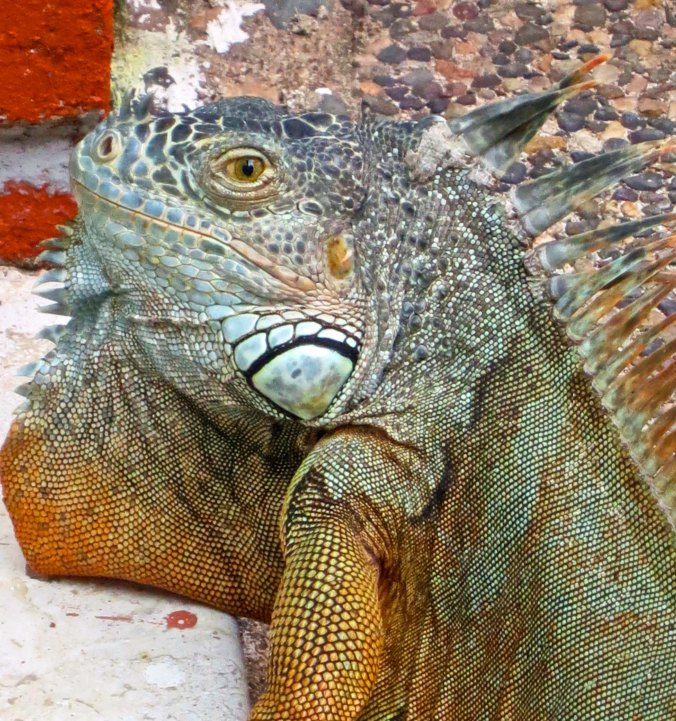
No doubt about it, the highlight of our visit to Puerto Vallarta, Mexico this year was our visit by Senior Iggy, the Iguana.

No doubt about it, the highlight of our visit to Puerto Vallarta, Mexico this year was our visit by Senior Iggy, the Iguana.

It was time to say goodbye to Puerto Vallarta. We packed up our clothes, laptops, dock kits, etc., and were wondering where we would find space for the goodies we had bought. Like most experienced travellers, we carry minimum luggage. Space is at a premium. Somehow, we always seem to have a few square inches to spare, however. Our Kindles help; a travelling library is no longer required.

Checkout was at 10:00. The plane was leaving at 3:30. Translate: Lots of time to kill. We headed over to the hotel’s open-air restaurant that overlooks Banderas Bay. Maybe some dolphins would entertain us. We didn’t see any, but Angel, the headwaiter, spotted us and came hurrying over. Peggy has befriended him over the years. I am in charge of generous tips. The combination assures excellent service.

 Peggy and Angel at Krystal Hotel in Puerto Vallarta

Peggy and our waiter, Angel, at the Krystal Hotel.

While we missed seeing any dolphins during breakfast, we found this father-son look-a-like team rather amusing.

While we missed seeing any dolphins during breakfast, we found this scene rather amusing. I wonder who the boy’s father is? (Grin)

As always, we had enjoyed our two weeks— one with friends and one on our own. We had eaten several good meals, sat out on the beach, watched beautiful sunsets, appreciated the art, and enjoyed the wildlife, including Senior Iguana, who had stopped by for a visit. Walking three to five miles a day and limiting ourselves to one major meal meant we might go home skinnier than we came. That would be a first.

Much of the art on the Malecon encourages interaction, much like Burning Man art. Here I am with our friends Ken and Leslie Lake.

Much of the art on the Malecon encourages interaction, much like Burning Man art. Here I am with our friends Ken and Leslie Lake.

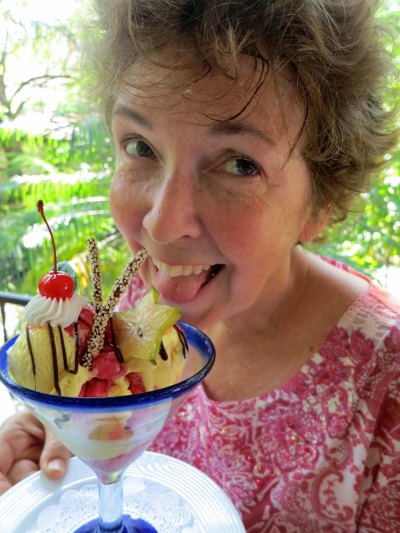
Numerous good restaurants in Puerto Vallarta always tempt us. Peggy chomps down on a tropical creation.

Numerous good restaurants in Puerto Vallarta always tempt us. Peggy chomps down on a tropical creation.

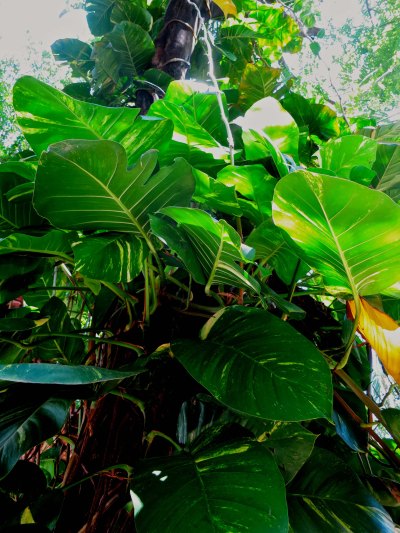
Tropical look in Puerto Vallarta

Speaking of the tropics, this plant certainly had a tropical look.

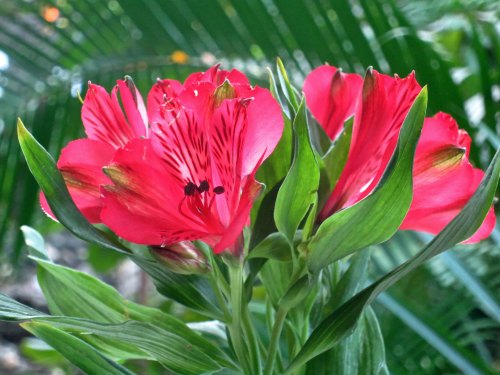
7 Tropical flowers in Puerto Valarta

As did this flower.

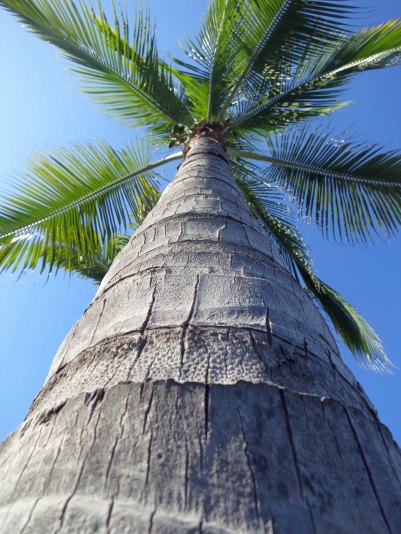
 Palm tree in Puerto Vallarta

And this palm tree.

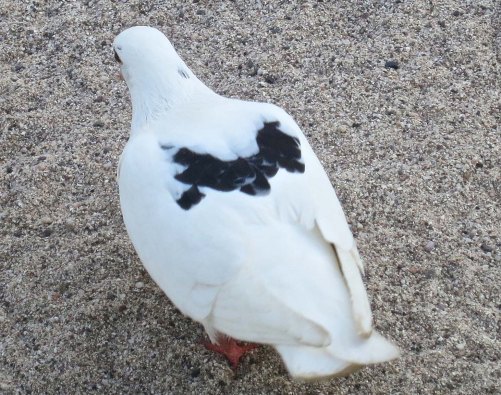
Pigeon with flying symbol on back in Puerto Vallarta

Pigeons are  found everywhere but this fellow with his unusual ‘flight patter’ on his back caught my attention. I must have chased after him for ten minutes with my camera.

A view of our hotel. When we started going to Puerto Vallarta, the Krystal stood side by side with one-two story buildings. Now surrounding skyscrapers have destroyed the ambience.

A view of our hotel. When we started going to Puerto Vallarta, the Krystal stood side by side with one-two story buildings. Now it is surrounded by skyscrapers. So much for ambience.

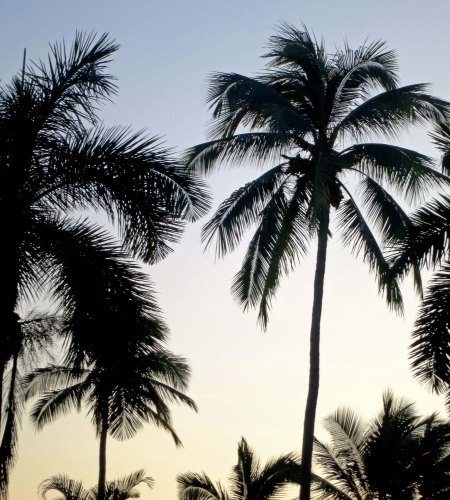
We would head out to the beach every evening to catch the sunset. I liked the silhouette of these palm tress created by the setting sun.

We headed out to the beach every evening to catch the sunset. I liked the silhouette of these palm tress that was created by the setting sun.

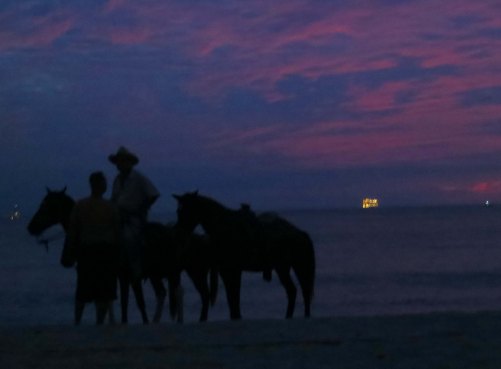
14 Cowboy and cruise ship in Puerto Vallarta

Old and new Puerto Vallarta: A cowboy stops to talk with someone as a cruise ship disappears into the distance.

Counting up left over pesos is always part of our departure ritual. Peggy’s responsibility is to then go out and spend them. She darted across the street to the furniture-plus store while I worked on writing in the hotel’s lobby. I now have another blog in the Grand Canyon series (you will see it on Friday), and Peggy has two new colorful cereal bowls.

Finally, after what seemed like a long, long time, we grabbed a cab for the short ten-minute ride to the airport. And here I have something important to report— the security-check was a pleasure. What?? No way!!! Peggy and I work really hard to make TSA officials in the US laugh. On rare occasions, we even get a glimmer of a grin. I think TSA has a no-smile rule, like the guards at Buckingham Palace. But here, the agents were actually smiling on their own, like they enjoyed their jobs, like they were happy to see visitors, like they recognized the odds of us being terrorists were infinitesimally small. Back in the US they probably would have been fired.

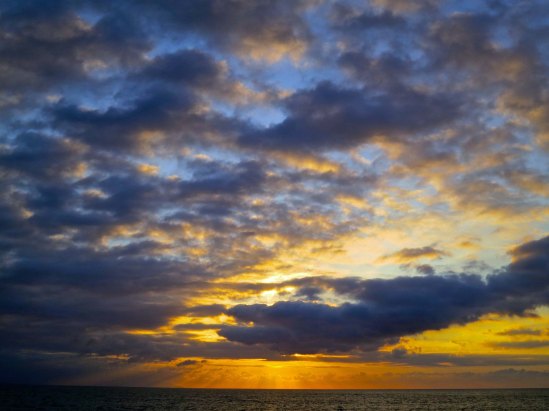
15 Sunset in Puerto Vallarta

A final Puerto Vallarta sunset.

NEXT BLOG: Back to the Grand Canyon and hostile spirits from another realm.

Shape Shifting and Art in Puerto Vallarta— or, On Becoming Your Favorite Animal

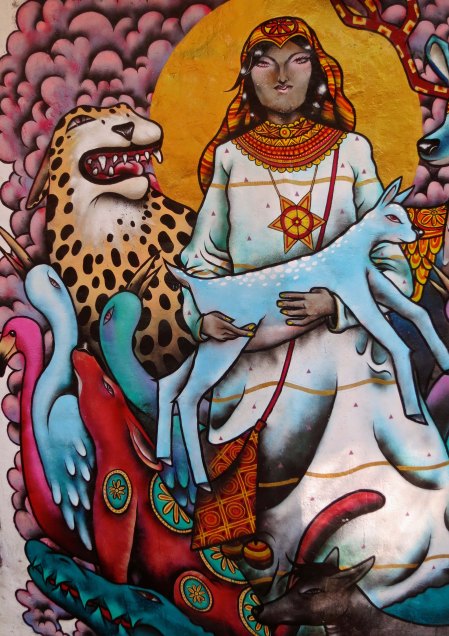
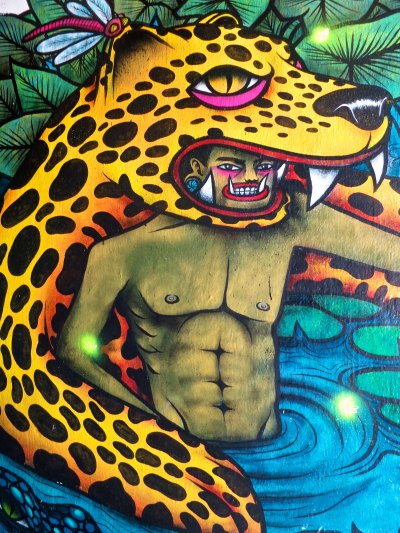
1. Mystical mural of animals in Puerto Vallarta

Shamans choose their animals to shape shift into based on certain characteristics. The Jaguar is powerful and dangerous, the deer and rabbit fleet of feet, the bird fleet of wing, and the coyote clever.

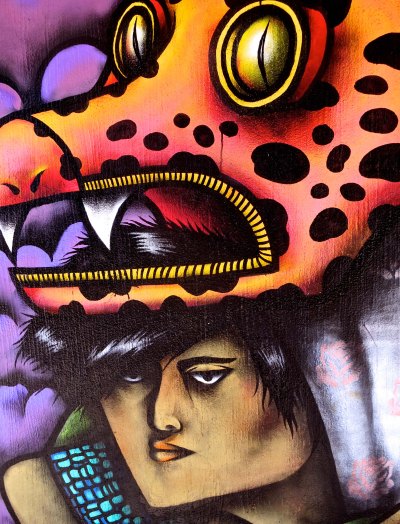
Shamanistic traditions around the world often involve shape shifting. The shaman enters a trance and adopts the form and/or spirit of an animal, for healing, travel to another world, or more sinister purposes. Often the switch is made with the aid of a hallucinogenic drug, such as peyote. This is the drug of choice among the Huichol Indians of Mexico and is frequently portrayed in their art. In addition to works produced by indigenous people for sale in Puerto Vallarta, I also found a number of murals that illustrated the indigenous tradition of shape shifting.

2. Shape shifting mural mask in Puerto Vallarta

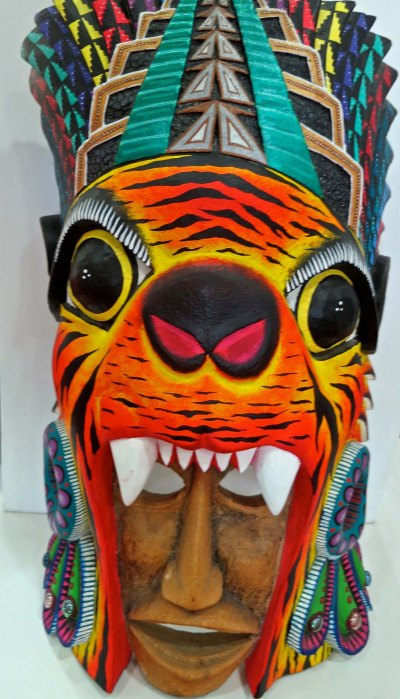
Masks are reflective of shape shifting. Jaguars are a common animal of choice, as in the Puerto Vallarta Mural, and…

This Oaxaca mask.

This Oaxaca mask.

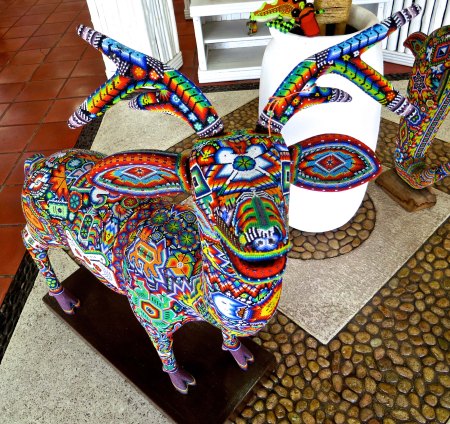
Deer are fast, a good choice if you have to get somewhere in a hurry. This Huichol deer is covered with beads that make up symbols that relate to the Huichol's belief system.

Deer are fast, a good choice if you have to get somewhere in a hurry. This Huichol deer is covered with beads that make up symbols that relate to the Huichol’s belief system. That’s peyote on his forehead.

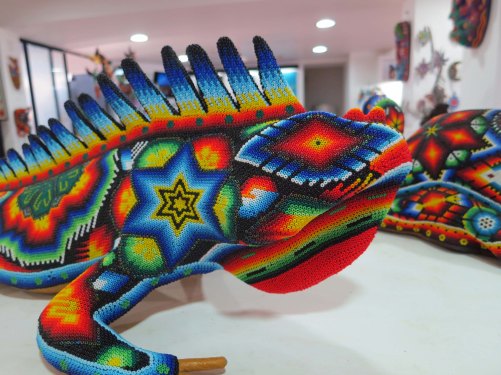
I haven't heard of iguanas being a choice for shape shifting. Maybe that's why this Huichol piece looks sad.

I haven’t heard of iguanas being a choice for shape shifting. Maybe that’s why this Huichol piece looks glum. Or is that my imagination working overtime?

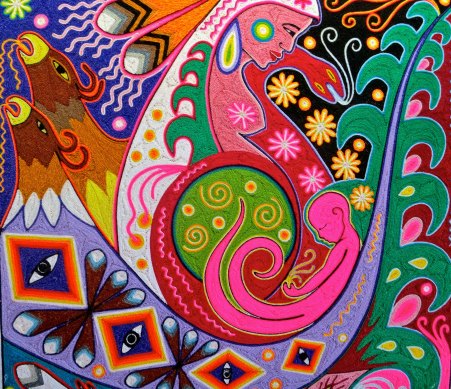
In this Huichol string painting, I couldn't help but believe that even the baby was shape shifting. A squid, perhaps?

In this Huichol string painting, I couldn’t help but believe that even the baby was shape shifting. A squid, perhaps? The mother-to-be seems to prefer a snake form.

While almost all Huichol creations reflect the tribe’s belief system, much of the art created in Oaxaca is created solely for the beauty and pleasure it brings, often with a sense of humor attached. The same can be said for Puerto Vallarta’s murals.

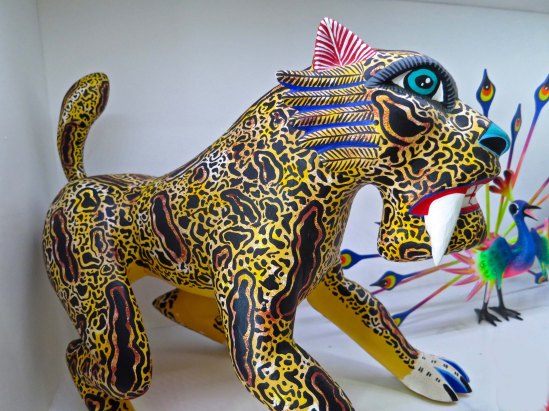
There is no apparent shape shifting in the Oaxaca saber toothed tiger. Or in the peacock behind it.

There is no apparent shape shifting in the Oaxaca saber toothed tiger. Or in the peacock behind it.

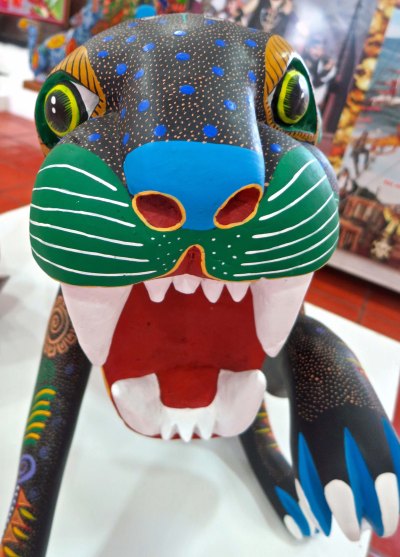
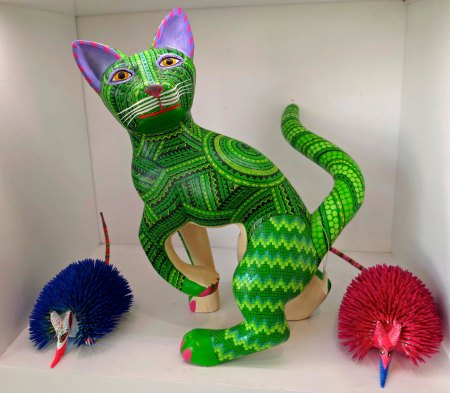
Another Oaxaca cat with big teeth.

Another Oaxaca cat with big teeth.

And here we have Felix Domesticatus.

And here we have the domestic version is his “feed me now” pose.

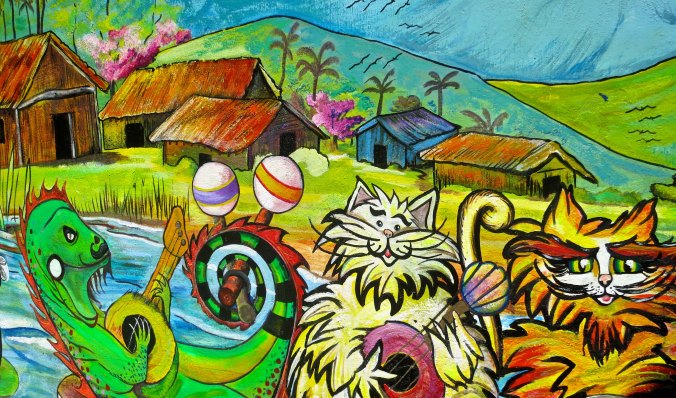
Cool cats, perhaps— as jazz musicians were once referred to as, and a musical iguana were the subject of this mural we found on the Rio Cuale.

Cool cats, perhaps— as jazz musicians were once called, and a multi-talented iguana, were the subject of this mural we found on the Rio Cuale.

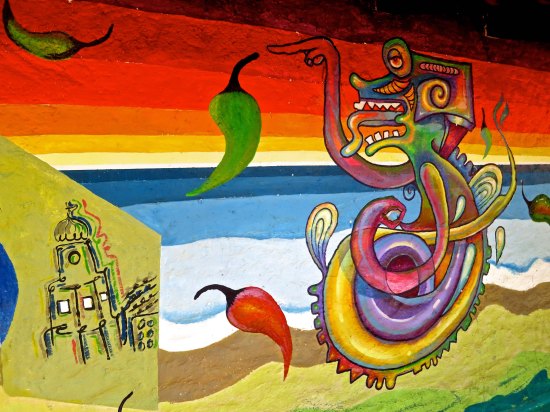
An iguana of a different stripe? This is one pointing to one of life's great pleasures: hot peppers.

An iguana of a different stripe? This is one pointing to one of life’s great pleasures: hot peppers. Apparently they are hot enough to shake Puerto Vallarta’s Cathedral.

Shape shifting is a thing of dreams in our minds as well. We imagine what it might be like to be a hawk soaring across the sky, or a cheetah running with the wind. I’ve been reading a book on lucid dreaming, just for fun. If you aren’t familiar with the concept, it has to do with consciously being aware that you are dreaming and doing things you can’t normally do in life, like walk through walls, or take off flying whenever you wish. Basically, you control what happens in the dream.

The book, A Field Guide to Lucid Dreaming, even has a section on shape shifting. “Before you go to sleep,” the book directs, “decide what person, beast, or object you want to transfer into.” Say you want to try being a tiger. Imagine it before you go to sleep. When you awake in your dream, “feel the sensations a tiger would feel. Stand on all fours and feel your teeth getting sharp.” Good advice (grin). Once you become a skilled Oneironautic, you might actually make it happen according to the book.

Feel your teeth growing and becoming sharper!

Feel your teeth growing and becoming sharp!

Now, I confess I am a little skeptical. At least I haven’t suddenly become awake in my dreams and decided to become a yappy Chihuahua. That’s not saying it isn’t worth a try. I do on occasion change the course of a dream from a bad ending to a good ending. I actually get up and run away from the monster instead of lying there in a semi-paralyzed stupor as he starts to devour me from the toes up. It’s a start, but not enough. I dearly want to be that hawk winging across the sky or the Cheetah charging along at 35 miles per hour. How about you?

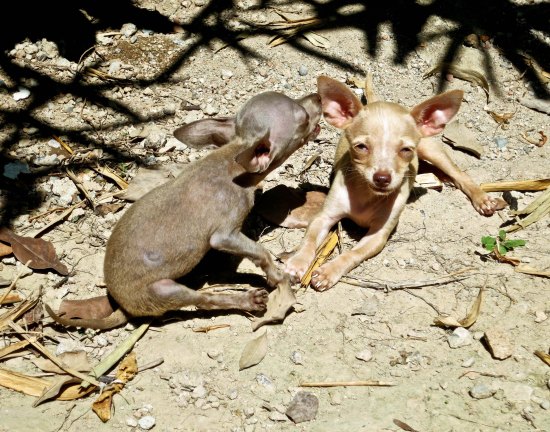
Is there a Chihuahua in your future. Even though Senior Pooch pretended to be deaf, he couldn't avoid having his numerous faults listed, again and again.

Is there a Chihuahua in your future. I found these guys playing along the Rio Cuale. My thought:  Even though Senior Perro pretended to be deaf, he couldn’t avoid having his numerous faults reiterated— again. Don’t you just love the look on his face?

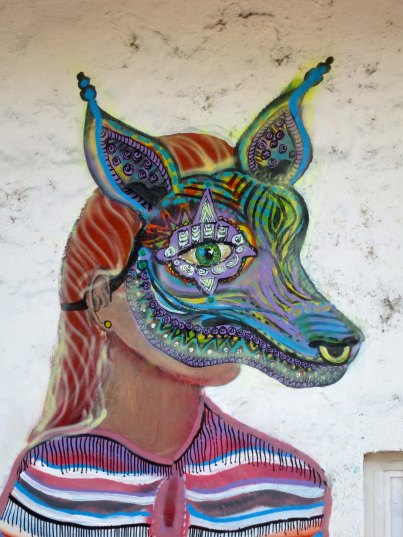
Or possibly you have something more elegant in mind, as reflected in this Puerto Vallarta Mural.

Or possibly you have something more elegant in mind with a ring in your nose, as reflected in this Puerto Vallarta Mural.

NEXT BLOG: Peggy and I say goodbye to Puerto Vallarta

The Markets of Puerto Vallarta— Where Hustle Is the Name of the Game

Beach vendor in Puerto Vallarta Mexico.

The old vendor’s face, wrinkled with decades of toil, was backlit by a strong sun.

The old man waved beaded bracelets and necklaces as us. We were having lunch at la Palapa and a tasty red snapper was demanding my attention. I couldn’t have cared less about the beads. In fact, I was irritated by the interruption— by the constant interruptions as one after another street/beach vendor rudely shook his or her wares at us, demanding our attention and dollars.

But the face of the old man— the deep wrinkles and lines, the scraggly whiskers, the cloudy eyes: the character— it caught me. I broke out my camera and ten pesos. I wasn’t going to buy trinkets; I was paying for a likeness, a reflection of life and how hard it can be, but also capturing a certain beauty, won by years of struggle.

2. Blanket vendor in Puerto Vallarta

A blanket vendor also insisted on showing us her wares as we ate lunch. The bright sun behind her made photography difficult but it helped capture the rich colors of her blankets.

Puerto Vallarta is a tourist town. Its primary source of income is the thousands of people who are disgorged weekly from airplanes and giant cruise ships. The challenge, from a purely economic perspective, is how to sort the visitors from their cash before they leave, to get a piece of the action. Hustle is the name of the game, from the small girl selling Chiclets for pennies to the timeshare salesperson selling future vacations for 25 thousand dollars. The small girl has only her haunted eyes to push her product; the timeshare salesman has a whole arsenal of half-truths and a tenacity that would put a tick to shame.

(While I write this post, I realize that it will be published on Black Friday, the day that America’s merchants are desperately hoping to sort Americans from their cash. When I turn the TV on, it is one continuous ad— marketers rudely shaking their products in our faces with half-truths that would put a timeshare salesman to shame.)

An hour of relaxing on the beautiful Banderas Bay beach in front of the Krystal Hotel is like an hour lesson in basic capitalism. Beach vendors are specialists. Whether you need a shirt, a dress, a hat, a ring, a necklace, a tattoo, a trip, a cigar, a massage, a woodcarving, a drink, dark glasses, a blanket, or food (or not), someone will be there to sell it to you. The hat man has hats perched on top of his head as high as they will go. The blanket sales vendor a stack of blankets a yard thick. The henna tattoo guy comes at you with a book of tattoos to pick from. Will it be a Harley or a harlot? A polite, no gratias, usually sends them all on their way, at least for the moment. But show a bit of interest and they descend like buzzards, ready to pick your wallet, if not your bones, clean.

Peggy is the shopper in our family. She bought a small turtle, iguana, and beaded eggs from a Huichol artist, two gorgeous tablecloths at the Municipal Market, and a silver necklace from a beach vendor. Peggy had recognized the beach vendor from years past.

3. Huichol artist ion the Rio Cuale in Puerto Vallarto

Ernesto, a Huichol artist, has a bright smile for us whenever we stop by. If he doesn’t have what we want, he makes it for us. The brightly decorated eggs (lower-center) are covered with Huichol symbols and will be decorating our son’s Christmas tree.

Peggy checks out a new table cloth she is buying. The day before we had checked it out and Peggy had mentioned she wanted the edges sewn. The young woman took the tablecloth home that night and did the work.

Peggy checks out a new table-cloth she is buying. The day before we had checked it out and Peggy had mentioned she wanted the edges finished. The young woman took the tablecloth home that night and did the work— on three table cloths. We ended up buying two.

5. Felix the beach vendor in Puerto Vallarta

Felix, as in Felix the Cat, displays his bracelets and necklace pendants on the beach in front of the Krystal Hotel.

“Do you remember my name?” he asked. “It’s Felix, like in Felix the Cat. Meow.” I particularly liked the meow and meowed back. While Felix was entertaining us with his patter, he had opened his box of silver jewelry. Peggy showed a spark of interest in two necklaces. “Which do you like?” Peggy asked, turning to me. Felix knew he had her. “I’ll sell you both for 1400 pesos,” he offered. “Too much,” Peggy responded. “How much will you pay?” he asked. We had entered the negotiation stage. The general rule of thumb is about 50% of the asking price. Vendors double the price, and add a bit for profit. We ended up only buying one and paying too much. Felix left with a large smile.

Large public markets are a step up from the beach in terms of sheer quantity. A walk through the Municipal Market (Mercado Municipal) will introduce you to dozens of vendors, each with his or her own space packed to the ceiling. All are trying to entice you in. “I make you good deal.” “Half price.” “Almost free.” “Look will cost you nothing.” “Two for one happy hour cost.” And on and on, over and over. One vendor on the Rio Cuale asked, “Want to buy some junk?” It was a welcome and humorous change.

6. Vendors stall at the Mercado in Puerto Vallarta

Vendors stalls at the Municipal Market next to the Rio Cuale are stuffed to the ceiling with items designed to capture a tourist’s attention. It quickly becomes overwhelming unless you are shopping for something specific.

The market is two stories high and must contain at least a hundred stalls… each with one or more vendors eager for you to check out their goods.

The market is two stories high and must contain at least a hundred stalls… each with one or more vendors urging you to check out their goods.

My friend Ken Lake and I were wandering through the market at the seaport while Peggy and Leslie were having massages when we received a different offer. Ken was using the line, “We have to wait for our wives,” to put off vendors.

A rather short and squat, older woman responded, “Who needs wives? I have a sister. Only $50. I have two sisters, one for each of you.”

“For $50,” I asked as Ken made a hasty retreat. “No, no. $50 each,” she insisted as the eyed the rapidly disappearing Lake. “You could have two at once. Much fun.” She said laughing. “Mañana,” I responded as I hurried to catch my friend before he disappeared.

The most intriguing market, it turns out, was right across from our hotel. We had visited years earlier and I hadn’t been impressed. This time was different. Peggy, Ken and Leslie had gone across the road for a visit while I was working on a blog. She came back saying I had to go. Turns out, the place is a huge furniture market, with the furniture being made on site. But that’s only the beginning. It’s an interior decorators dream, packed with thousands of items. I walked around in awe for two hours, going from room to room. And there was no pressure to buy. Not one salesperson approached us unless we had a question. I was so appreciative I was tempted to buy a 20 foot table as a thank you.

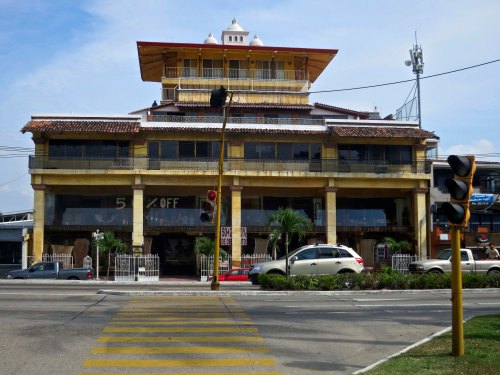
The furniture store as seen across the street from our hotel. It must have has several thousand feet of display space.

The furniture store as seen across the street from our hotel. It must have has several thousand feet of display space.

8. Large table at furniture store in Puerto Vallarta

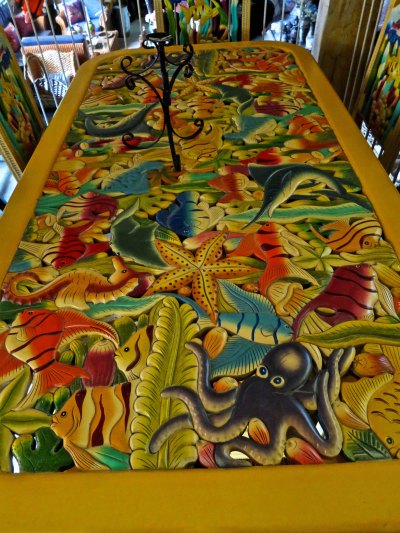
This large slab of wood is destined to be turned into a table! Can you imagine the size of the house you would need to accommodate it? Do you own a castle?

I would love to have a table like this. You would never be at a lack for conversation when you had guests over.
I would love to have a table like this. You would never be at a lack for conversation when you had guests over. The chairs were equally delightful.

Peggy came and rooted me out of one of the rooms I was wandering through to look at this chest.

Peggy came and rooted me out of one of the rooms I was wandering through to look at this chest.

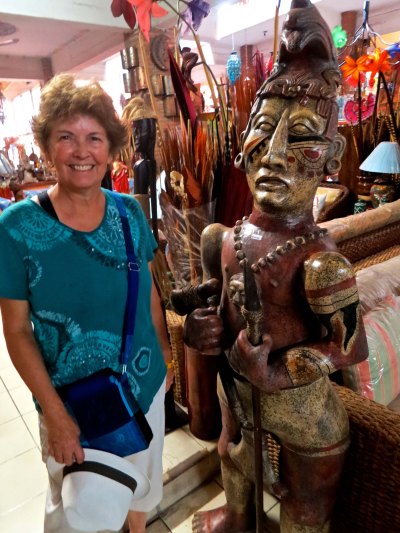
12. Peggy and scuplture at Puerto Vallarta furniture store

I took advantage of the break to have her pose in front of one of the warrior statues that were found throughout the store…

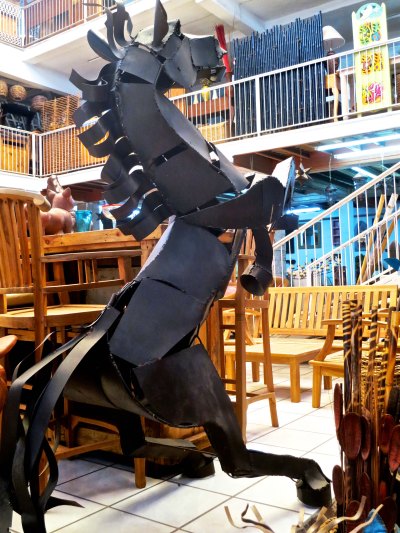
10. Life sized horse at Puerto Vallarta furniture store

There was also this full sized horse. It must have gone with the 20 foot table and the castle to put it in.

And these frogs.

Along with these musical frogs.

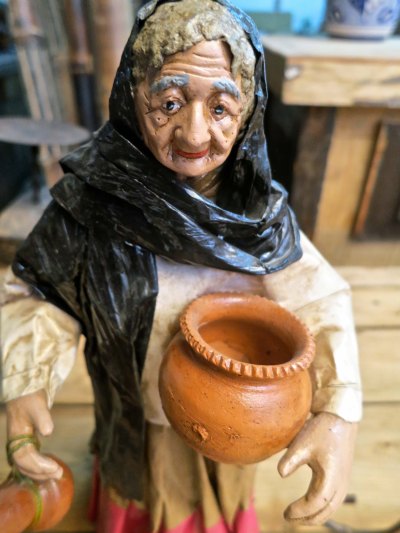
13. Old woman at furniture store in Puerto Vallarta

For all of the large pieces in the store, there were dozens of smaller works. This old woman with her wrinkles reminded me of the old vendor I kicked off this post with. It’s a fitting place to end.

NEXT BLOG: The fine art of shape shifting in Mexico. Jaguars are really popular when it comes to turning yourself into an animal. What would you become?


Folks in Puerto Vallarta Take the Dead Seriously… Sort of

Catrina hound in Puerto Vallarta Mexico

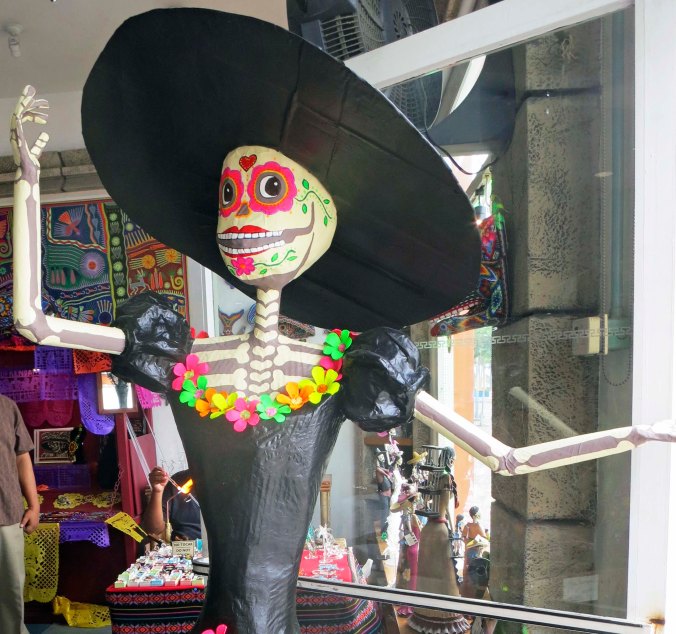
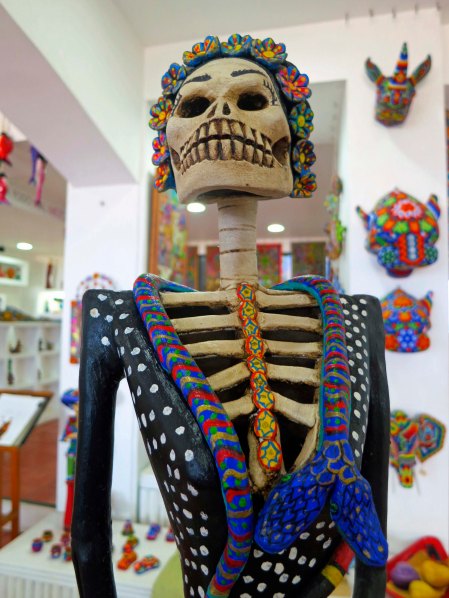
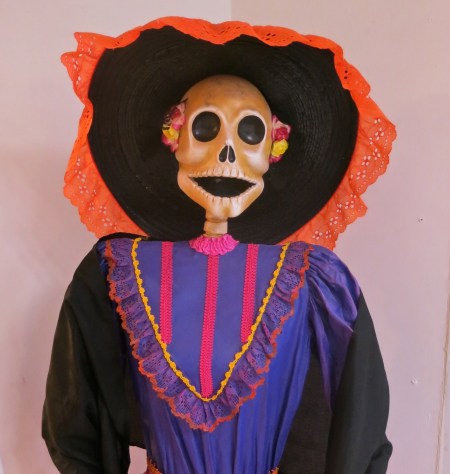
The charming Catrina has come to symbolize the Day of the Dead. Each artist creates his or her own version. I thought the heart and flowers added a special touch.

Come November 1st, people in Mexico prepare to entertain their dead ancestors. El Día de los Muertos, or, the Day of the Dead, has arrived. Home altars are set up; special foods are left out for the dearly departed; and people get ready to party with grandpa, even though he is no longer around. Why not? If you’d been moldering away in a grave for twenty years— or even a day as far as that goes, wouldn’t you be ready for a little fun, a bottle of tequila, and a six-pack of cerveza?

From a more serious perspective, the Day of the Dead allows people to get together and remember friends and family who have passed on. The tradition dates back to the ancient times of the Aztecs. More recently, the Catholic Church adopted it, as it often has with indigenous beliefs, to expand the flock and keep them faithful. The government, in hopes of promoting national unity, declared the day a national holiday.

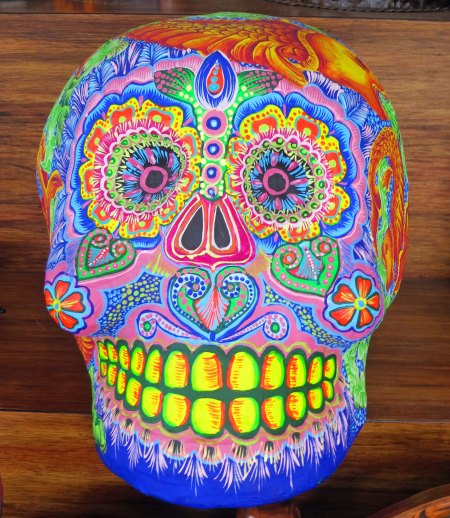
Not far behind the church and the state, Mexican businesses quickly figured out that El Día de los Muertos was a cash cow waiting to be milked. Almost any market you enter in Puerto Vallarta offers Day of the Dead items for purchase. Among the most popular are skulls.

Skull art found in Puerto Vallarta.

Skulls are found for sale everywhere in Puerto Vallarta. This fine example is a from Oaxaca. The shop person told me that all of the paint brushes used in Oaxaca art are made from human hair.

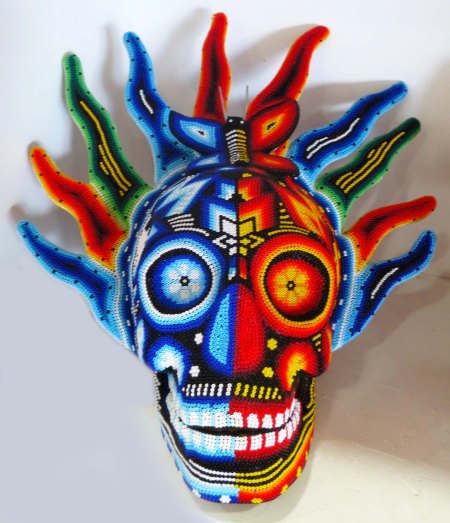
Okay, this skull is wild! The art is created by laying lines of beads into wax, a process used by the Huichol indians.

Okay, this skull is wild! The art is created by laying lines of beads into wax, a process used by the Huichol indians.

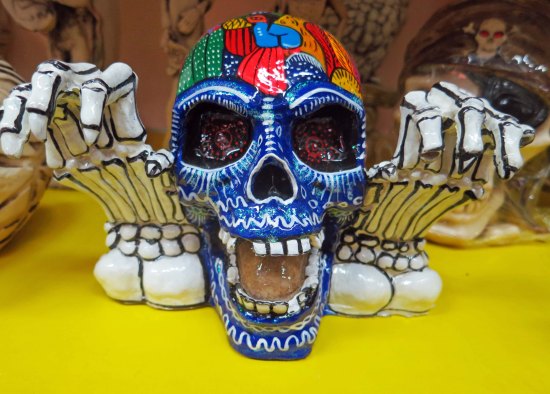
Skull art found in Puerto Vallarta.

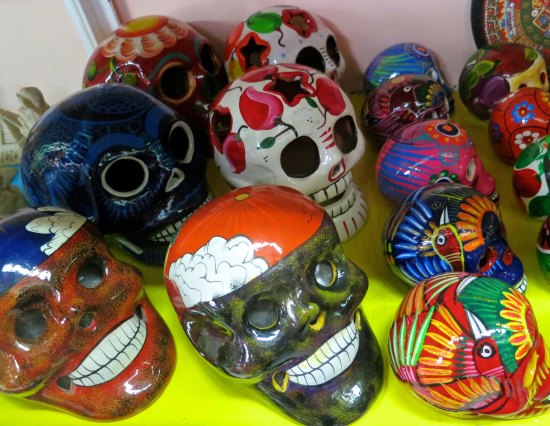
Ceramic skulls are much more common in markets, and much less expensive.

An army of skulls found in the Municipal Market of Puerto Vallarta.

An army of skulls found in the Municipal Market of Puerto Vallarta.

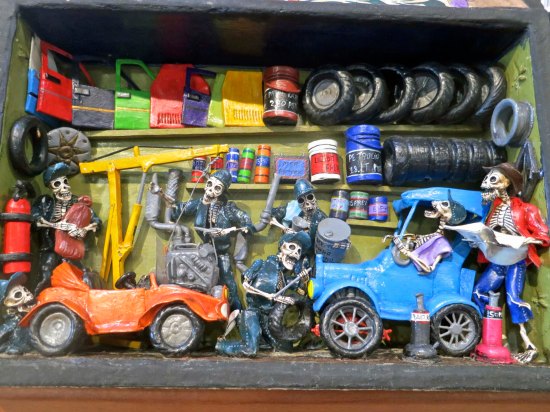
Miniature box art for the Day of the Dead found in Puerto Vallarta.

Miniature box art also captures the spirit of The Day of the Dead. This is a scene in an auto mechanic’s shop. Everyone, it appears, is having a good laugh. Maybe they are discussing the bill.

Dealing with the spirits of the dead is worldwide. When I was a little boy growing up next to a graveyard and sleeping outside in the summer, I encouraged our three cats and two dogs to sleep on the small cot with me. They were my protection from the denizens of the dark. It didn’t matter that there was barely room for me. As a Peace Corps Volunteer in Liberia, I quickly learned that the spirits of the newly dead were particularly dangerous. An all night wake, with lots of rum and much wailing, was required to send the restless spirit on his or her way. My first night in Gbarnga, I heard people screaming and beating drums without a clue about what was happening. It was a long night.

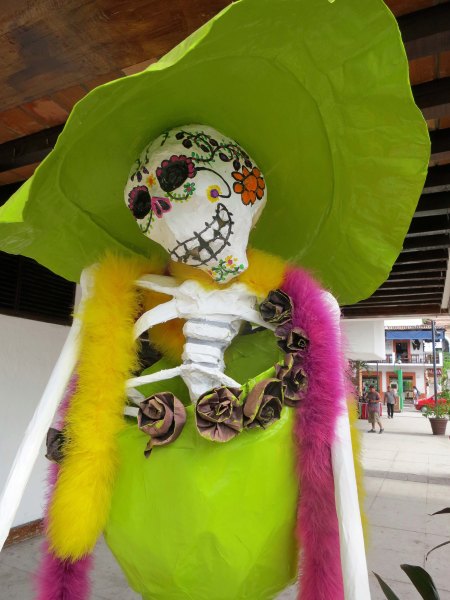
We arrived in Mexico a few days too late to rub elbows with the dead, but we ran into Catrina in a number of locations. This lovely skeleton-woman with her stylish look and clothes has come to symbolize the Day of the Dead and Mexico’s willingness to laugh at death. She started off in the early 1900s as something of a satirical comment on Mexico’s one-percenters of the time, and their desire to wear the latest and most expensive of European fashions. She served as a reminder that regardless of our social status in life, we all end up in the same condition: dead. I salute the people of Mexico for their sense of humor about the subject.

Judging from the number and variety of Catrinas we found, I surmised that Puerto Vallarta's visitors bureau had sponsored a Catrina contest for the Day of the Dead.

Judging from the number and variety of Catrinas we found, I surmised that Puerto Vallarta’s visitors bureau had sponsored a make your own Catrina contest for the Day of the Dead.

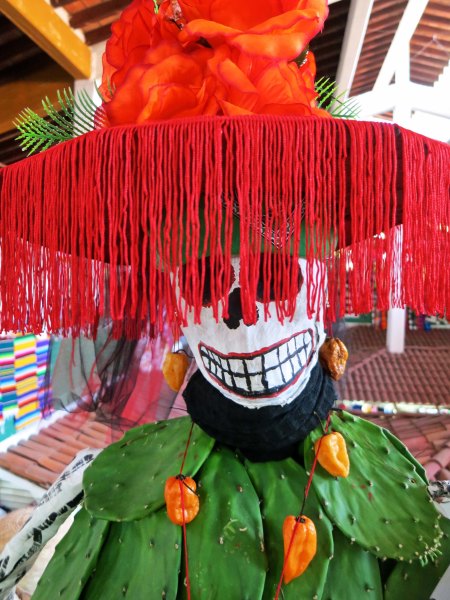
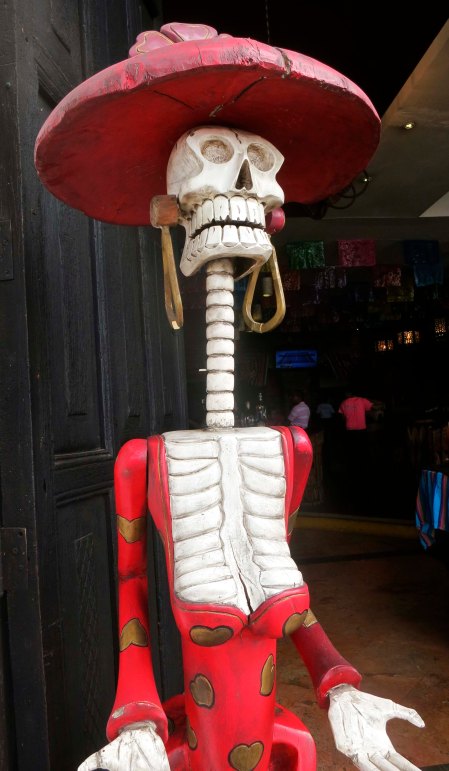
We found this Catrina with her frilly hat at the Municipal Market.

We found this Catrina with her frilly hat, hot pepper necklace, and cactus blouse at the Municipal Market.

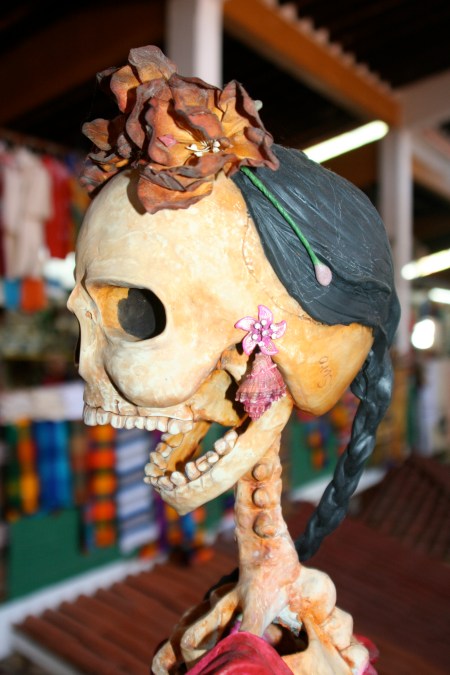
We found this realistic Catrina at the same location in the Municipal Market on a previous visit to Puerto Vallarta.

And this realistic Catrina at the same location in the Municipal Market on a previous visit to Puerto Vallarta. Note the snazzy ear rings.

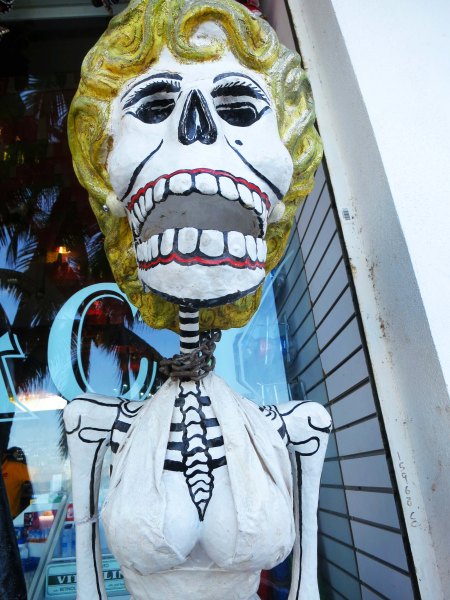
I wondered if this blond bombshell with her generous boobs wasn't a Marilyn Monroe Catrina.

I wondered if this blond bombshell with her generous boobs wasn’t a Marilyn Monroe Catrina.

I don't think I have ever seen a plunging neckline plunge this much.

I don’t think I have ever seen a plunging neckline plunge this much. And isn’t the red hat something! I’m thinking this lady is someone’s Valentine.

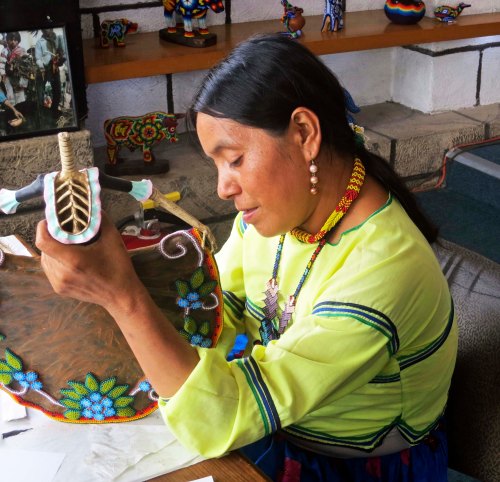
A Huichol artist worked on creating a Catrina in one of the shops we visited.

A Huichol artist worked on creating a Catrina in one of the shops we visited. I added my pesos to her tip jar and snapped a photo.

Miniature Catrinas, such as this one, and their male counterparts are created to sell to people who don't have have room, or the money, to buy a big one. Many are quite beautifully made with fine attention to detail.

Miniature Catrinas, such as this one— and their male counterparts, are created to sell to people who don’t have the room or money to buy a big one. Many are quite beautifully made with fine attention to detail.

The Puerto Vallarta airport featured a number of Catrina's, including this one.

This gal greeted us at the Puerto Vallarta airport as we were flying back to Oregon.


NEXT BLOG: “Want to buy some junk? Almost free.” words of a vendor as we passed his booth. The markets of Puerto Vallarta carry everything from tourist trinkets to valuable folk art.

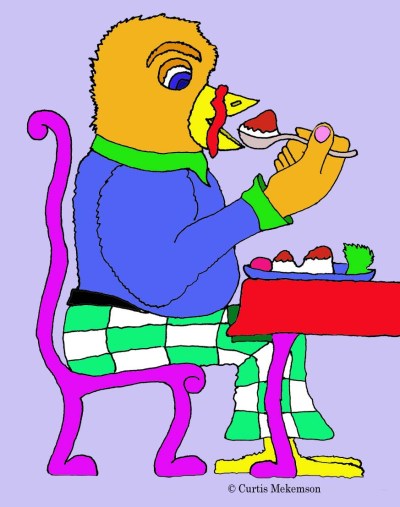
A miracle of the modern culinary arts: the self stuffing turkey. Happy Thanksgiving. The turkey above is from one of the cards I used to create before writing and blogging took over my life. While we celebrate family and friends here in the US, I also want my friends in Europe and other parts of the world who have suffered so much recently to know that my thoughts are with you. Every day. –Curt

A miracle of the modern culinary arts: the self stuffing turkey. Happy Thanksgiving.     The turkey above is from one of the cards I used to create before writing and blogging took over my life.    While we celebrate family and friends here in the US, I also want my friends in Europe and other parts of the world who have suffered so much recently to know that my thoughts are with you. Every day. –Curt


Strange Art, Wild Nature, and Bounteous Beauty… Puerto Vallarta’s Malecon

Unique, often humorous art, along Puerto Vallarta’s Malecon is one of several attractions that make the walkway appealing.

Unique, often humorous art, is one of several attractions that make a stroll along Puerto Vallarta’s Malecon a must-do activity each time I am in the city. How could anybody resist this flying/swimming whatever?

Puerto Vallarta’s Malecon, or walkway, along Banderas Bay is special. Most cities would offer up their top five attractions— or their Chamber of Commerce president, to have it. Beautiful sunsets, cascading pelicans, and waves rolling in from the Pacific are only part of the appeal. Interesting/fun art, views of the town, and the charm of the Malecon itself capture locals and visitors alike.

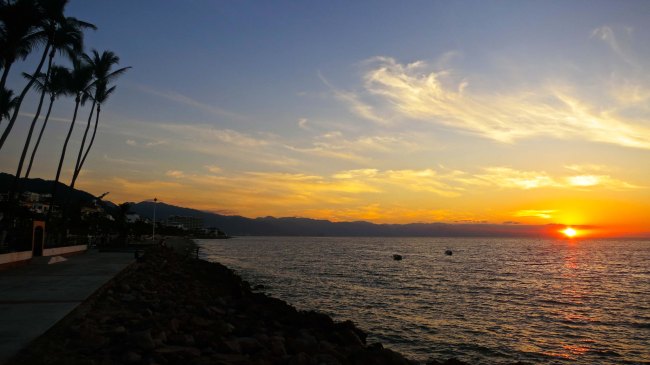
Looking south from the northern section of the Malecon as the sun sets over Puerto Vallarta and Banderas Bay.

Looking south from the northern section of the Malecon as the sun sets over Puerto Vallarta and Banderas Bay.

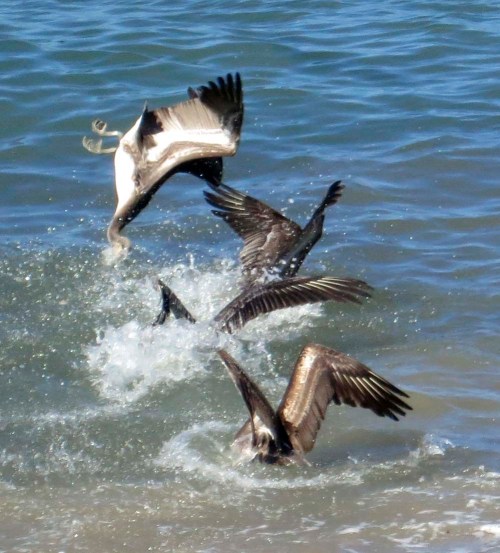
Pelicans join a feeding frenzy as they dive into Banderas Bay after a school of fish. The upside down guy made me laugh.

A photo of pelicans in a feeding frenzy from two years ago as they dive into Banderas Bay after a school of fish. The upside down guy made me laugh. Now that is dedication!

A number of sculptures adorn the walk including the Eggplant man…

A number of sculptures adorn the walk including the Eggplant Man, who just happens to be eating an eggplant. His substantial girth captured a bit of the Puerto Vallarta in reflection.

…Long Nose,

I wasn’t sure whether this was an octopus with one tentacle or a creature with a long nose that featured suction cups. “The better to smell you with, my dear.”

…this sea monster with a large mouth. (Check out his tongue and the hand pointing where food is supposed to go.)

This smiling sea monster with a large mouth featured a tongue with directions as to where it hoped tasty tourists might go.

…these graceful dancers,

A taste of the beauty and grace of Mexico…

and this beautiful sculpture that suggests that two heads are better than one.

…and a suggestion that two heads are better than one.

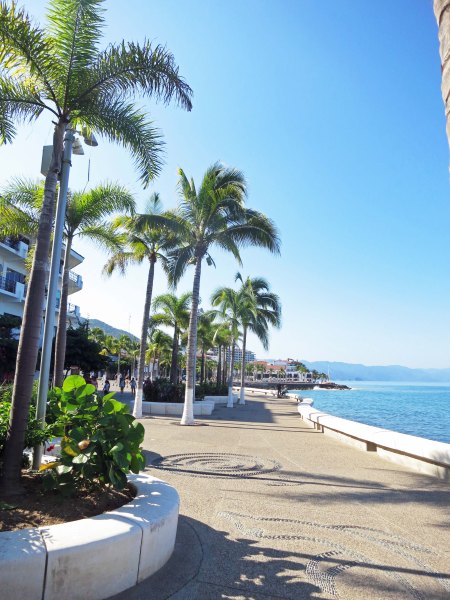
Even without the art and the bay, the Malecon is a very attractive walkway.

Even without the art and the bay, the Malecon is  very attractive. Note the designs built into the walkway.

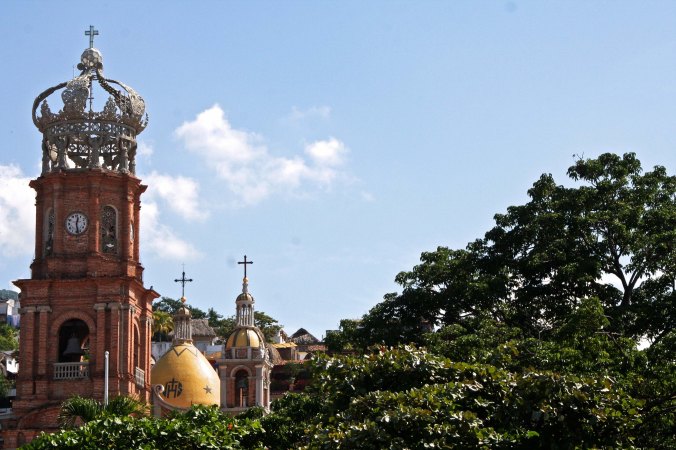
Puerto Vallarta’s iconic cathedral is one of many sights looking inland from the Malecon.

Puerto Vallarta’s iconic cathedral is one of many views looking inland from the Malecon.

For those more into partying or shopping, a walk on the non-ocean side of the Malecon provides countless opportunities for mischief. Senior Frogs and many other bars line the non-ocean side of the walkway. Shops selling everything from tourist trinkets to humorous folk art compete for your attention. Or, you can get serious and spend the kid’s inheritance on something large and silver.

Peggy has her photo taken with Senorita Frog on the landside of the walkway.

Peggy holds hands with Senorita Frog on the landside of the walkway.

A flying cow serves as an enticement to one of the many bars.

A flying cow serves as an enticement to one of the many bars. From the expression on her face, I doubt that she is drinking milk.

Anybody want to buy a great ape? This big fellow is decorated with thousands of beads, Huichol Indian style. The shop was packed full of Huichol art. Peggy bought a small turtle. Apparently the ape was a little large to carry home on the plane.

Anybody want to buy a great ape? This big fellow is decorated with thousands of beads, Huichol Indian style— and a Corona hat. The shop was packed full of Huichol art. Peggy bought a small turtle. Apparently the ape was a little large to carry home on the plane.

I found this three foot alligator in Old Town Puerto Vallarta, but similar silver gifts are available along the Malecon. Armed guards were outside and inside the store.

I found this three foot alligator in Old Town Puerto Vallarta, but similar silver gifts are available along the Malecon. Armed guards were outside and inside the store. And no, we didn’t spend the kid’s inheritance on it. That money goes to our travels. (grin)

Peggy and I usually choose to walk on the ocean side. The ubiquitous vendors found along the bay front of Puerto Vallarta apparently aren’t allowed to push their wares on the Malecon north of the town center. Normally the sales pitches don’t bother us. It comes with the territory, and the people are only trying to make a living. Still, an occasional break is appreciated. Our tolerance for hassling doesn’t extend to timeshare sales people, however. Their approach bares a striking resemblance to that of used-car salesmen.

South of town center as you approach the Rio Cuale and Old Town on the Malecon, your opportunity to obtain ‘bargains’ increases exponentially. Our friend Lesley Lake made the mistake of allowing a bracelet vendor put a bracelet on her wrist. She ended up buying four. These guys are good. When they get you, you’re got.

Our friend Leslie made the mistake of showing interest in a hawker’s bracelets on the lower Malecon and ended up buying four. He was one happy salesman.

The vendor has Leslie. She won’t get away.

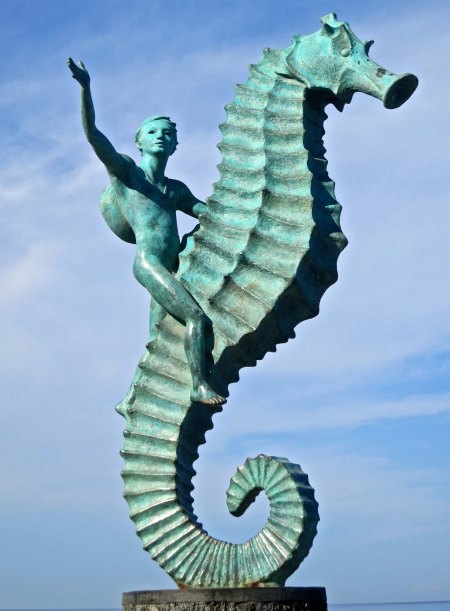
It is appropriate to end this blog on Puerto Vallarta’s Malecon with the statue of a boy on a seahorse, the symbol of Puerto Vallarta.

It is appropriate to end this blog on Puerto Vallarta’s Malecon with the adopted symbol of Puerto Vallarta, a statue of a boy wearing naught but a sombrero while riding a seahorse. Seems it might get a little rough, to me.

NEXT BLOG: Folks in Mexico take dead people seriously— sort of.

The Abbeys of Cotswold… Henry VIII Said, “Get the Lead Out!”… by Peggy Mekemson

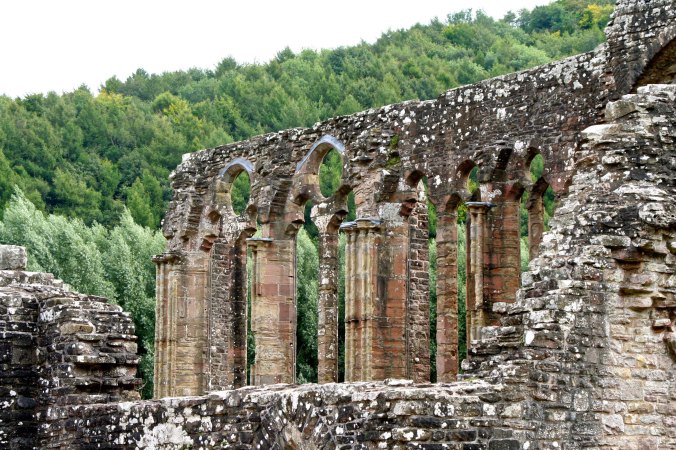
Graceful columns found when stepping inside the ruins of Tintern Abbey.

Graceful columns found when stepping inside the ruins of Tintern Abbey.

Between 1536-1540 (depending on which brochure I read) King Henry VIII declared the Dissolution of the Monasteries during the Protestant Reformation and his break from the Catholic Church. Armies scoured the country— leaving most monasteries in ruin as soldiers took the lead to make cannon balls. Jane and I visited four very different abbeys that had existed at that time and earlier.

Malmesbury, believed to be the oldest inhabited town in England, has a 12th Century abbey. The original spire and tower both collapsed well before the Reformation. Only the nave remained and became part of the active Abbey as part of the Reformation. It is believed that the first King of England is buried nearby while his coffin resides inside the church.

The contrast between the active church and the remaining walls was interesting. Part of the old monastery grounds now houses the Abbey House Gardens (previous garden blog).

The contrast between the active church and the remaining walls was interesting. Part of the old monastery grounds now houses the Abbey House Gardens (previous garden blog).

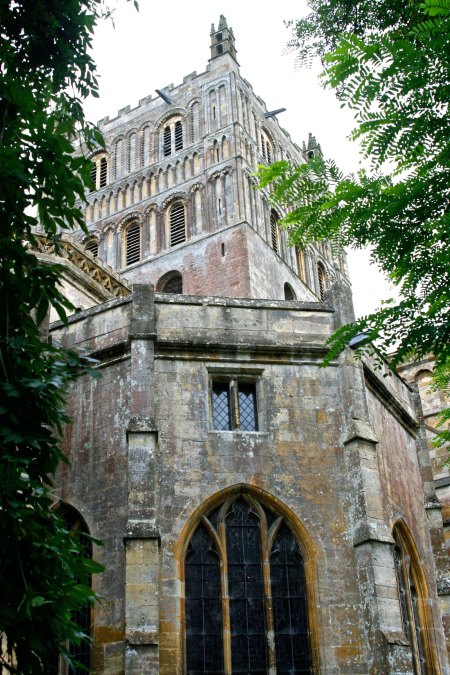
Tewkesbury Abbey survived the dissolution of the monasteries in 1540 when the townspeople bought it from King Henry VIII for the sum of 453 pounds. Although the original church was consecrated in 1121, the current Abbey is 900 years old. It is considered one of the largest parish churches in England.

The armies of King Henry VIII destroyed the churches primarily for the lead. The people of Tewkesbury paid the King the value of the lead and saved the church.

The armies of King Henry VIII destroyed the churches primarily for the lead. The people of Tewkesbury paid the King the value of the lead and saved the church.

The roof bosses were indeed stunning.

The roof arches were indeed stunning.

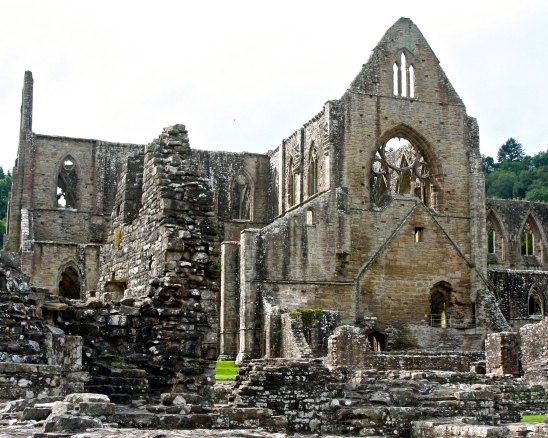
Tintern Abbey, on the border of Wales and Gloucestershire, captivated me! The Cistercian Abbey was founded in 1131 and was a religious center between 1136-1536 at which time it was surrendered to the King’s “marauding visitors.” The lead was taken and 400 years of decay began. There was partial reconstruction begun in 1914. The CADW (a part of the Welsh government dedicated to preserving historic environmental and heritage sites) took over in 1984.

Our first view of the ruins of Tintern Abbey.

Our first view of the ruins of Tintern Abbey.

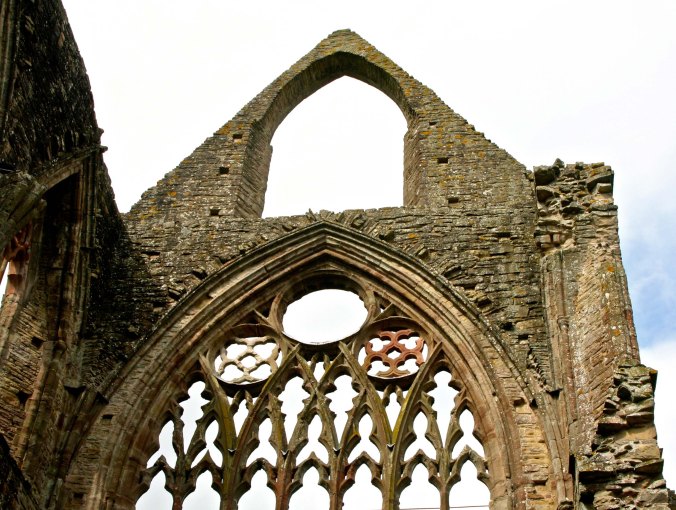
The following photos reflect the beauty of the area surrounding the ruins and the stunning views within the ruins.

Tintern Abbey in England

Wall ruins of Tintern Abbey in England

Tintern Abbey grand hallway

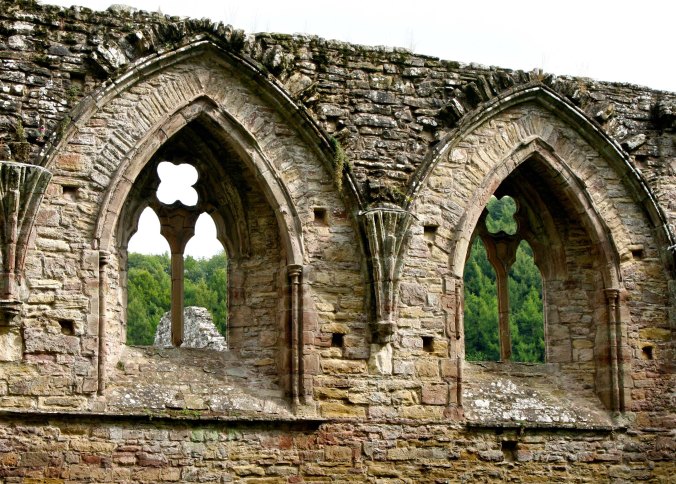
The two small windows in the middle are the only training original windows in Tintern Abbey.

The small windows in the middle are the only remaining original windows in Tintern Abbey.

Tintern Abbey window view in England

Tintern Abbey windows looking out on forests

Tintern Abbey sky view

My last photo of the Tintern Abbey ruins.

My last photo of the Tintern Abbey ruins.

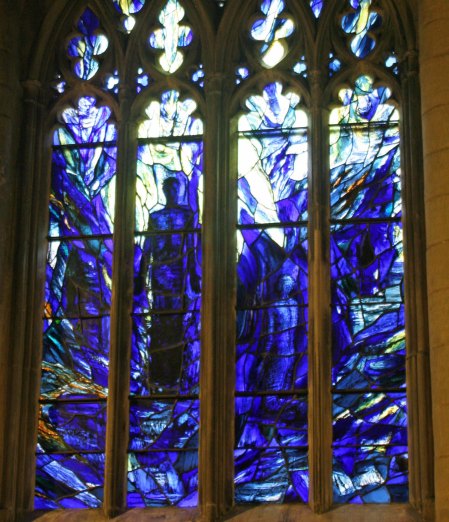
Our last stop was Gloucester Cathedral. Here, our volunteer guide, a wonderful storyteller, greeted us. During the Reformation, this was one of 6 abbeys designated by King Henry VIII as the cathedrals for the new Church of England. No damage was done. Apparently, the historic connections to the monarchy saved it. Our guide’s stories of the stained glass windows were particularly absorbing. The windows reflected the history of the cathedral and religious stories and included several modern stained glass art work.
A front view of Glouchester Cathedral.

A front view of Glouchester Cathedral.

An early stained glass window featuring a knight.

An early stained glass window featuring a knight.

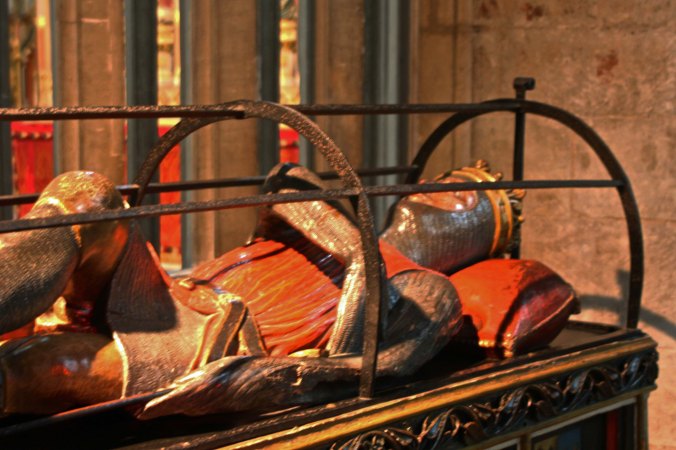
A knight's tomb inside the Cathedral.

A knight’s tomb inside the Cathedral.

One of the modern stained glass windows.

One of the modern stained glass windows.

I have to admit that I was most fascinated by the stories of the filming of Harry Potter in the cathedral! We walked the halls used in several scenes. I watched the movies on my return so that I could compare Hogwarts School scenes with what I saw.

One of the halls of used for 'Hogsworts' in Harry Potter.

One of the halls used for ‘Hogwarts’ School of Wizardry’ in Harry Potter.

Downton Abbey to Harry Potter… and all the marvelous sites in between. It was quite the photographic adventure! This is my last blog on the Cotswolds. Thanks so much for joining me on the tour. —Peggy

The Day of the Iguana… Adventures in Puerto Vallarta

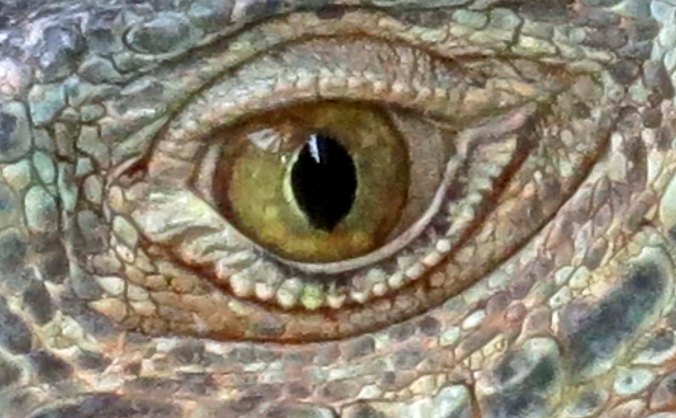
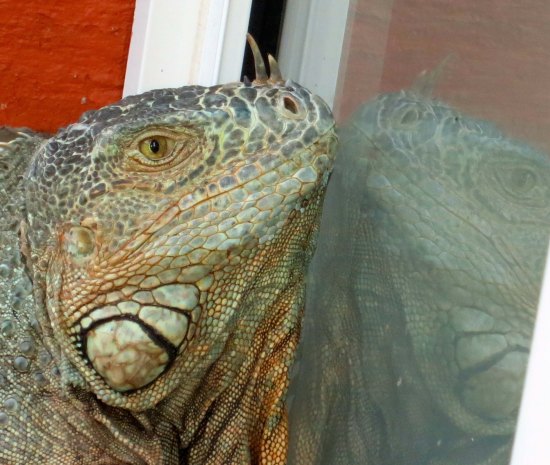
As the iguana stared balefully back at me, his eye seemed to grow.

As the iguana stared balefully back at me, his eye seemed to grow.


Peggy and I are in Puerto Vallarta, Mexico. While she works on her next Cotswolds post, I decided to slip one in on Puerto Vallarta.

I was home alone when I heard the scratching on our door. Peggy had gone off with our friends Ken and Leslie in hopes of finding Wi-Fi in the hotel lobby. I had wished them luck. The Internet is an on again/off again proposition here at the Krystal Hotel in Puerto Vallarta.

I looked up, thinking maybe the maid had come early, or the pool man. But usually they knock and shout “Ola.” No one was there. I went back to writing. I was editing Peggy’s blog on the villages of the Cotswolds.

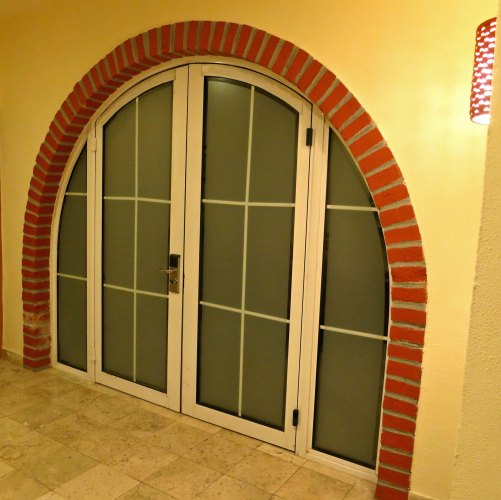
SCRATCH, SCRATCH, SCRATCH. “What the…?” I thought, looking up again. The villa has these large, arch-shaped doors made of frosted glass that let in light but not prying eyeballs. Off to the right I spotted what appeared to be large, scary head staring at me through the opaque glass. I recognized it.

The doorways to our villa in Puerto Vallarta were arched. The iguana appeared in the lower right window.

The doorways to our villa in Puerto Vallarta were arched. The iguana appeared in the lower right window.

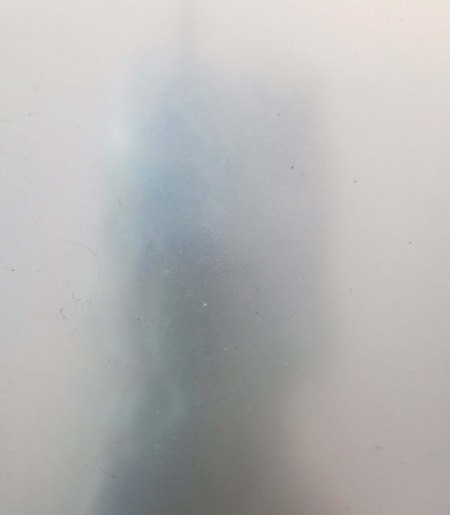
The head of the iguana appearing through frosted glass reminded me of the Creature from the Black Lagoon.

The head of the iguana appearing through frosted glass reminded me of the Creature from the Black Lagoon.

“Aha!” went racing through my mind, “Senior Iguana is here for a visit.” I rushed over to the door and opened it, wondering if he would come in. It would be amusing to watch Peggy, Ken and Leslie’s reaction to finding a large lizard hanging out on the floor of our living room. Maybe I could entice him up onto the couch with a banana.

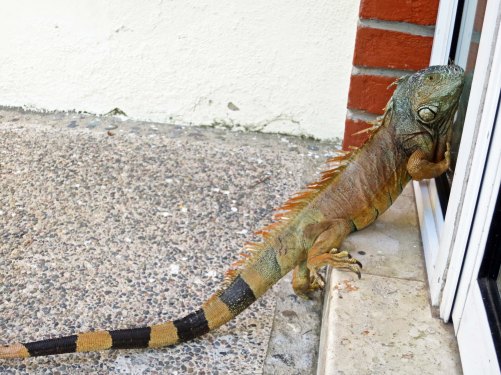
I found the Puerto Vallarta iguana outside scratching at our window. Was it asking to come in?

I found the Puerto Vallarta iguana outside scratching at our window. Was it asking to come in?

“Ola, Buenos Dias Senior Iggy. Welcome!” I proclaimed. Senior Iggy stared up at me balefully and said not a word. Maybe he didn’t like being called Iggy. He went back to scratching the window with his long claws.

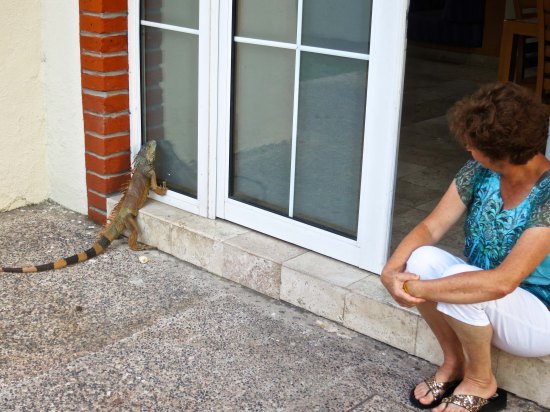
I went inside and retrieved a banana. Back outside I sat down on the porch step, peeled the banana, and tossed a piece to the iguana. He ignored it, like he was ignoring me. It was then that I noticed that Iggy was staring at the window, not through it. He had found true love in a perfect reflection of himself. What’s a puny banana in comparison?

I discovered the iguana was admiring its reflection in the window and wondered if it was breeding season and the large Puerto Vallarta lizard believed he had found true love— or possibly a rival.

I discovered the iguana was admiring its reflection in the window and wondered if it was breeding season and the large Puerto Vallarta lizard believed he had found true love— or possibly a rival.

I was still sitting on the doorstep when Ken, Leslie and Peggy returned. I heard them laughing with one of the gardeners when they spotted me sitting with the iguana. “They are good to eat,” the gardener told them. “They taste like chicken.” Naturally. My friends approached quietly, not wanting to scare Iggy.

“Don’t worry, the iguana is in love.” I doubt that a brass band would have disturbed him. Ken, Leslie, and Peggy each sat down on the porch step where I had been to admire our new best friend. We went inside with the iguana still staring at himself, deeply in love, or perhaps lust. He was still there when we left 45 minutes later, but had departed when we returned in four hours, undoubtedly heart-broken.

Peggy sat where I had and admired the iguana as he tried to reach his reflection.

Peggy sat where I had and admired the iguana as he tried to reach his reflection.

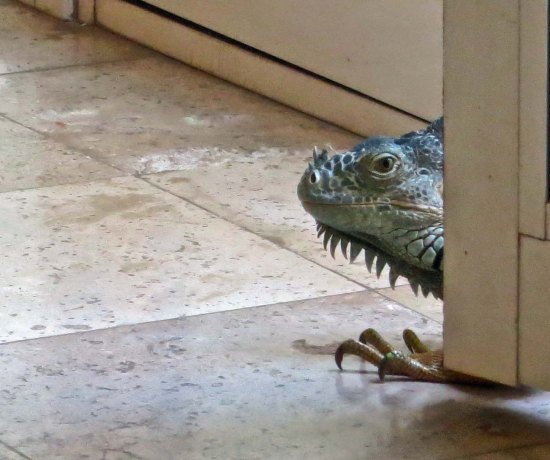
Two days later Peggy and I noticed that another iguana was outside, this time at the door leading to our pool. “Do you think he will come in if we open the door this time?” Peggy asked. “One way to find out,” I responded. Sure enough, a few minutes later we saw a head peaking in. And then the whole iguana followed. Peggy quickly jumped up and closed the door to our bedroom. We might find an iguana in our living room and kitchen amusing. Sleeping under our bed or in our shower would be another issue. He (I am assuming it was a male) wandered around looking for the beautiful girl iguana he knew lived in our villa. He stopped to eat a couple of mosquitos, his big tongue lashing out. (“Go big fellow!” we urged.) Finally, I opened the front door. Off he went.

We left the door open to see if the iguana would come inside searching for the other iguana. We were thrilled to see his head appear…

We left the door open to see if the iguana would come inside searching for the other iguana. We were thrilled to see his head appear…

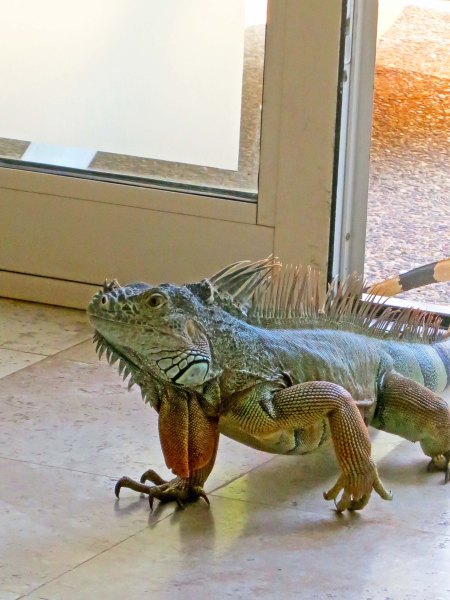
…Soon to be followed by the rest of the iguana.

…Soon to be followed by the rest of the iguana.

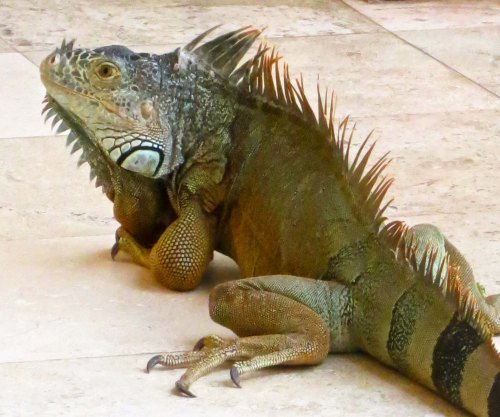
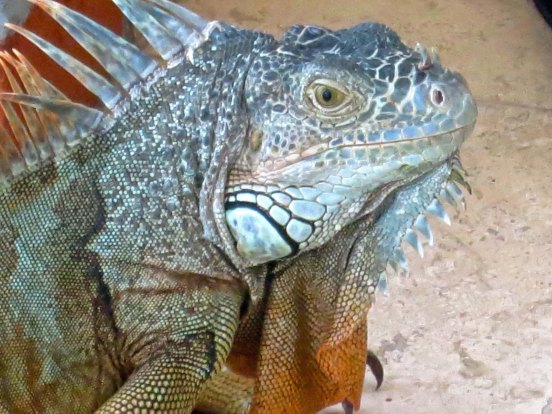
The iguana settled onto the floor and checked us our. He looked much less beat up than the first iguana that had come to visit. Note the size of the claws.

The iguana settled onto the floor and checked us out. He looked much less beat up than the first iguana that had come to visit. Note the size of the claws.

He was truly a handsome specimen.

He was truly a handsome specimen.

Iguanas are common in Puerto Vallarta. We often spot them on the Rio Cuale, big fellows hanging out in the trees above the river— and this isn’t the first time we have spotted them at our villa. Their images are captured in everything from tourist trinkets to expensive art. They even played a major role in Puerto Vallarta’s top industry: tourism.

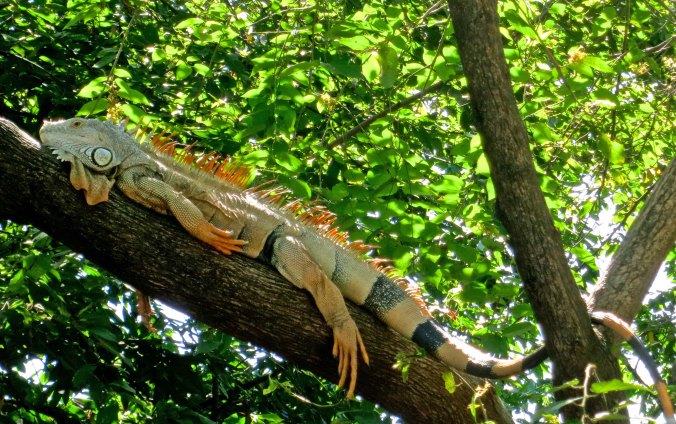
This big fellow was taking his afternoon siesta in a tree next Puerto Vallarta’s attractive River Cuale.

This big fellow was taking his afternoon siesta in a tree next Puerto Vallarta’s attractive River Cuale.

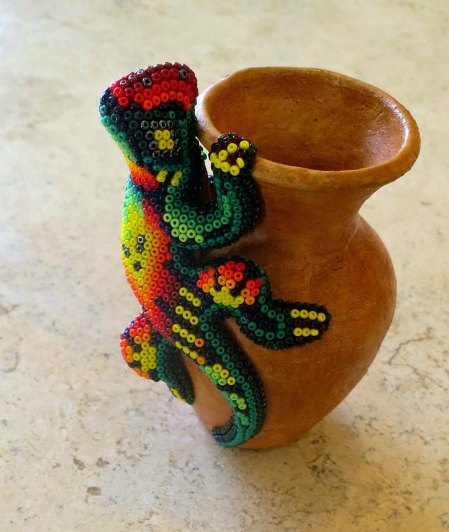
This small vase with a beaded iguana was made by our friend, Ernesto, a Huichol Indian, for our grandson Ethan whom he had met two years ago.

This small vase with a beaded iguana was made by our friend, Ernesto, a Huichol Indian, for our grandson Ethan whom he had met two years ago.

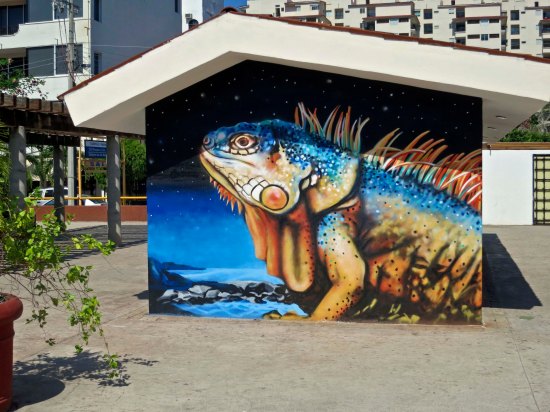
We found this large mural of an iguana in Old Town Puerto Vallarta.

We found this large mural of an iguana in Old Town Puerto Vallarta.

In 1964, Hollywood director John Huston brought his all-star cast of Richard Burton, Ava Gardner, and Deborah Kerr to the area to film The Night of the Iguana (thus the title of this blog), which was based on a play written by Tennessee Williams in 1961. To add a little spice, Burton, who was still married, brought along his future wife, Elizabeth Taylor. Hollywood had discovered Puerto Vallarta, and, because of the scandal between Dick and Liz, the world did as well.

Richard Burton and Elizabeth Taylor had adjoining houses connected by a bridge when they were in Puerto Vallarta for filming The Night of the Iguana in 1964.

Richard Burton and Elizabeth Taylor had adjoining houses connected by a bridge when they were in Puerto Vallarta for filming The Night of the Iguana in 1964.