It’s 4 AM and a Bear Is Standing on Top of Me… A Sierra Trek Tale

Oregon Black Bear

Black Bears are much smaller than either brown or grizzly bears, but this doesn’t mean they aren’t scary. This one was cruising our neighborhood in Oregon and  tipped over the heavy Webber Grill on our porch. Our daughter, Tasha, was sleeping in the bedroom next to the grill. “Curtis!” she screamed. Later, our neighbor captured the bear’s photo on a surveillance camera.


I’ve been re-blogging older posts while my laptop is at the doctors with memory problems. Today it’s time for another Sierra Trek Tale. Next week, I’ll get back to the first Sierra Trek but today we are jumping ahead five years to the first trek I led into the back country of Yosemite where bears rule.


Bears like me, or at least they haven’t eaten me. They’ve had numerous opportunities over the years. It goes with the territory of backpacking throughout North America for over four decades. My scariest encounters, as it turns out, were also my first.

By the fifth year of the Sierra Trek, I had worked my way southward from Lake Tahoe into Yosemite National Park. Since we were utilizing a new route from Yosemite to Kennedy Meadows, I had to preview it. (Plus it was another excuse to head out into the wilderness and be paid for it.)

My friends Ken Lake and Tom Lovering joined me on the first three days from the Yosemite Valley floor to Tuolumne Meadows. Day one found us climbing several thousand feet out of the Valley and camping above the Little Yosemite Valley. The bears dropped by for a visit on our first night in the Park.

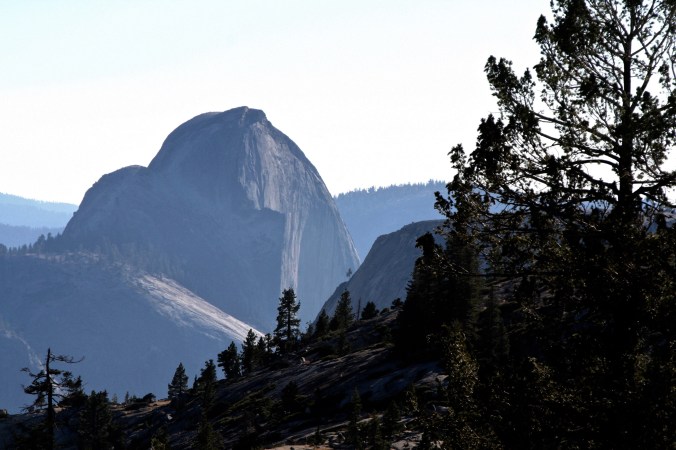
Half Dome, Yosemite. Little Yosemite Valley is on the other side.

Half Dome, Yosemite. Little Yosemite Valley is on the other side.

After carefully hanging our food bags from a cable provided by the park service and burying the left over fake freeze-dried raspberry cobbler (it was made from apples), we trundled ourselves off to our sleeping bags. The problem was we buried the food a little too close to Lake. I think Tom may have been up to his usual mischief.

The next morning, a very excited Ken asked if we had seen the bears in our camp the previous night. Neither of us had and we attributed his sighting to an overactive imagination. Believe me, if a bear had been digging up food next to my head, my two companions would have known about it, immediately.

Day two was tough. What I hadn’t counted on was the amount of snow still left on the ground. We spent most of out time slipping, sliding and slogging through it. By three in the afternoon, Tom was ready to set up camp right in the middle of a snowfield. Ken and I threatened to leave him with the bears and he committed to another hour. Fortunately, that night was bear free. They would have found little resistance from the three of us.

Eventually, we made it into Tuolumne Meadows where I was faced with another challenge: hiking over 70 miles of snow-covered trails by myself while Ken and Tom returned to Sacramento and work. The journey was fraught with opportunities for breaking a leg, or losing the trail, or being washed away when crossing streams raging with water from melting snow. None of the above was a desirable outcome for someone hiking alone.

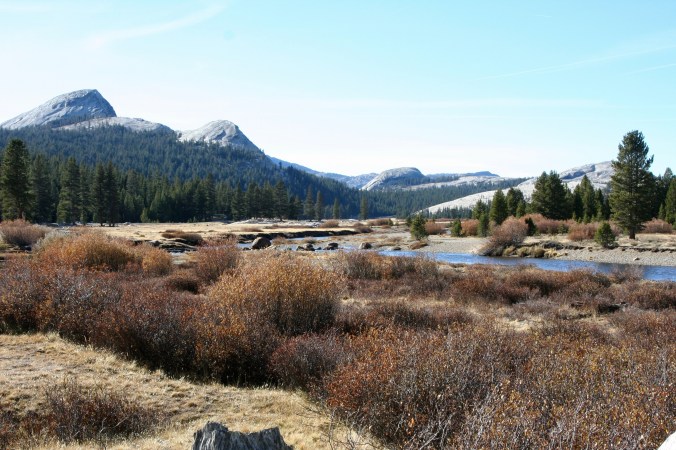
Tuolumne Meadows in the summer.

Tuolumne Meadows in the summer.

My other option was to return to Sacramento with Ken and Tom, which was not acceptable. I had a week off to wander in the woods and I was going to wander in the woods for a week. I compromised by heading back over the mountains toward Yosemite Valley. My fractured logic concluded that it was better to break a leg and get lost where I had been than where I was going. I also promised myself to be really careful. This included keeping my food from bears.

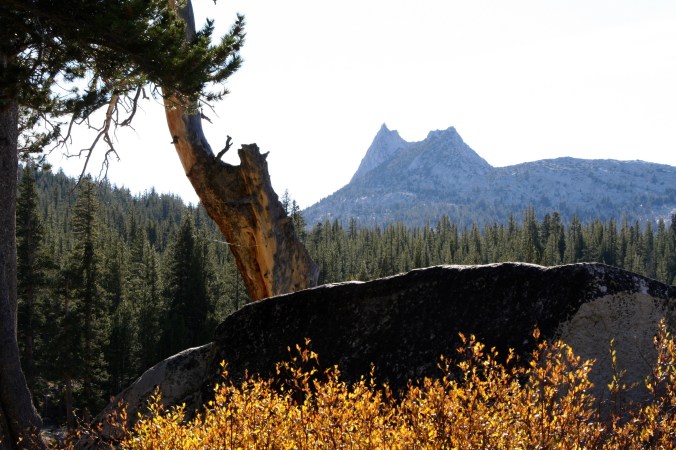
Hiking out of Tuolumne Meadows took me back around Cathedral Peaks shown here.

Hiking out of Tuolumne Meadows took me back around Cathedral Peaks shown here.

The first day was non eventful and the second idyllic. I was exploring new country, doing what I most love to do. As evening approached, I found a delightful campsite on the Cathedral Fork of Echo Creek. Amenities included a babbling brook to put me to sleep, a flat space for my sleeping bag and a great food-hanging tree with the perfectly placed limb. A hot dinner topped off by tea spiced up with a shot of 151-proof rum and I was ready for sleep.

I carefully hung my food bags at the recommended 12 feet off the ground and 9 feet away from the tree trunk and then snuggled down in my sleeping bag. As was my habit at the time, I slept out in the open, only using my tent when rain threatened.

It was somewhere around 4 am and very dark when I awoke with a pressure on my chest. I couldn’t see very far but I didn’t have to. Approximately five inches away from my face was a long black snout sniffing at me. It was filled with grinning teeth and topped off by a pair of beady eyes that were staring at me with a hungry look.

I let out a blood-curdling scream and vacated the premises.

As I flew in one direction, the equally surprised young bear that had been standing on me flew in the other. I don’t even remember getting out of the bag. The next thing I knew I was standing up, yelling and shining my flashlight into the woods where not one, but two pairs of orange eyes were staring back at me. I lost it. Never have so many rocks been hurled with so much vigor in such a short period of time. The bears wisely decided to head off over the mountain.

But the damage was already done. My camp was a disaster area. My carefully hung food was scattered all over the ground with literally every meal torn open and sampled. All I had left was a chunk of cheese and it had one large bear bite out of it. I hid the cheese under a heavy rock.

As a further insult, one of the bears had chomped down on my plastic rum bottle and all of the rum was gone. I couldn’t even drink. With that option eliminated, I policed the area, crawled back in my bag and went back to sleep. When I awoke in the morning it was obvious that the bears had come back into camp to clean up anything they had missed. Once again the previous night’s trash decorated my campsite. At least the bears let me sleep this time. And they had missed my cheese.

So I ate it for breakfast, cleaned the area again, packed up my gear and hiked 18 miles into the Yosemite Valley to resupply. But my week wasn’t over; neither were my bear experiences. And the summer had only begun. (I’ll get back to these stories in the future after I am finished with my series on the first Sierra Trek. You won’t want to miss the time a bear grabbed me by the head.)

NEXT BLOG: A return to my photo series on Burning Man.


Fort Mifflin: A Tale of Death, Heroism and a Flag…

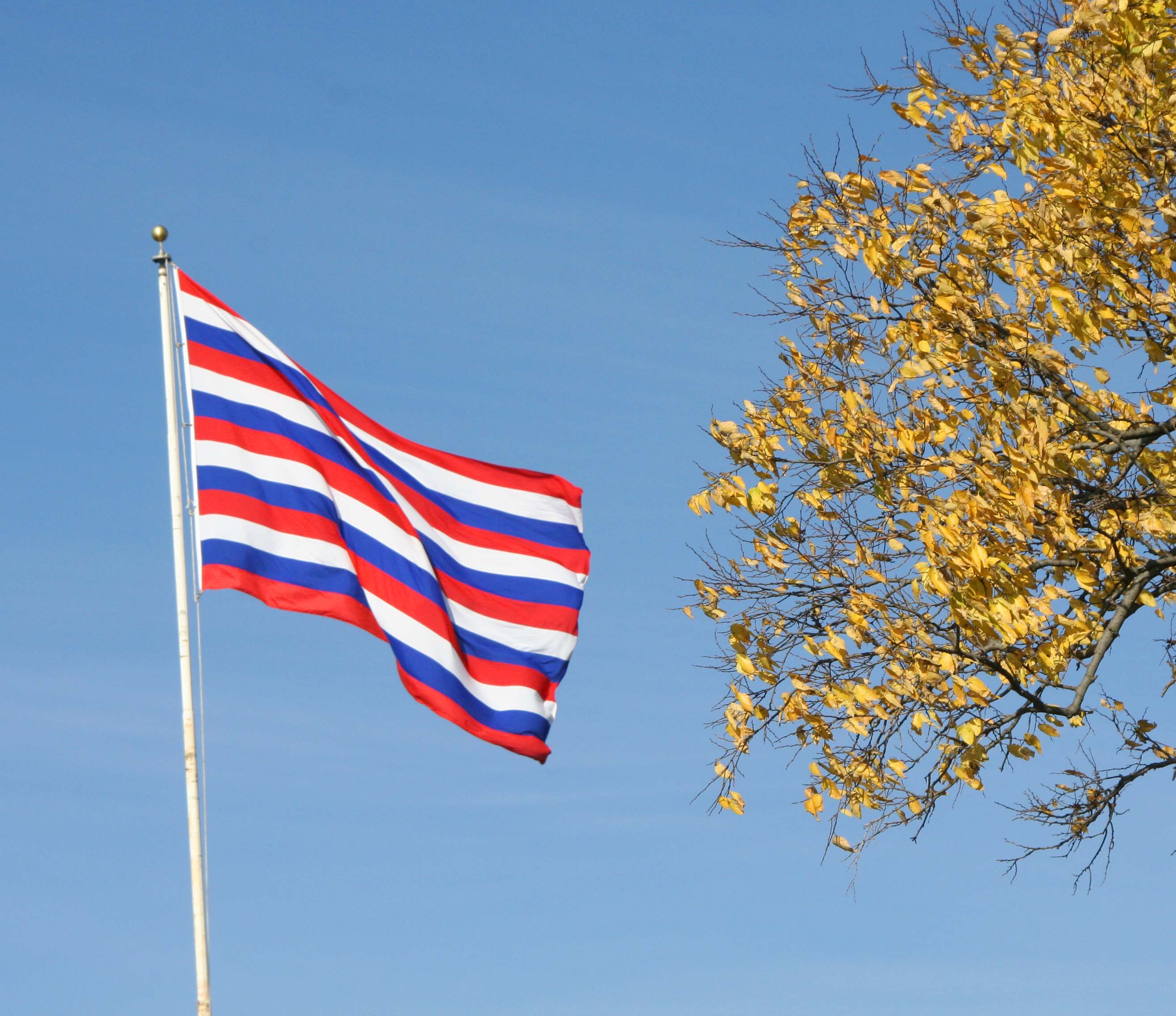
Fort Mifflin Flag.

The flag that flew over Ft. Mifflin during the Revolutionary War. The Stars and Stripes had yet to be designed.

Every so often I like to repost this blog I did on America’s Revolutionary War. Since I have been writing about Revolutionary Boston and my laptop is off at the doctors, I thought I would return to Revolutionary Philadelphia today. 

In the fall of 1777, 240 years ago, all that stood between the British and the likely defeat of the American Revolution was a small fort on the Delaware River. It is a chapter in American History that is little known and rarely told.

General Howe had overcome Washington’s troops at Brandywine and then occupied Philadelphia, sending America’s young government fleeing. An effort by Washington to counter-attack the British in early October and drive them out of the city failed. If the British Navy could resupply General Howe before winter set in, there was a very good chance he would catch the ever-illusive Washington and end the Revolution. There would be no United States of America.

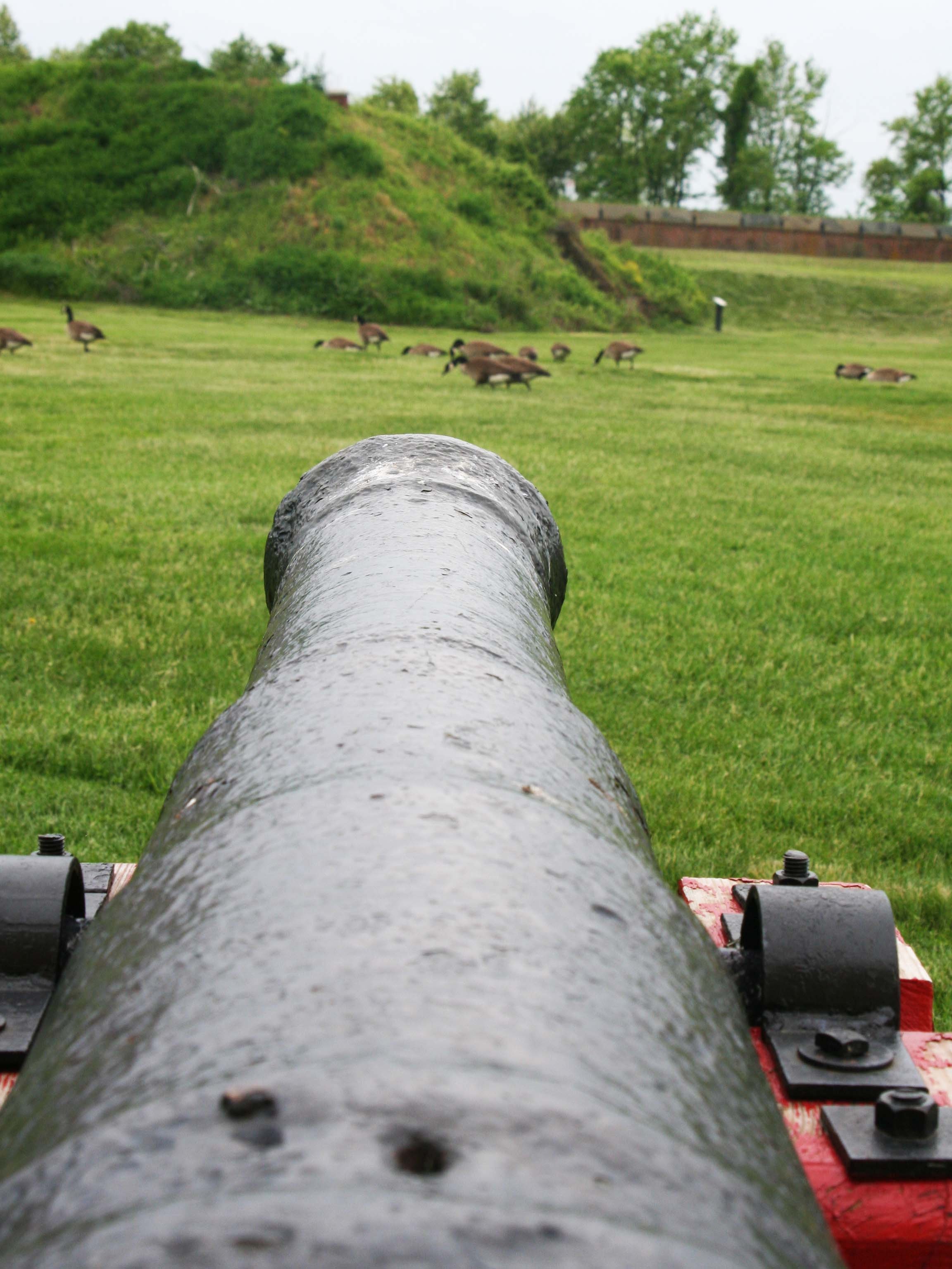
Ft. Mifflin Pa.

A canon’s view across the tiny Ft. Mifflin focusing in on Canadian Geese. The mound was a bunker for storing munitions.

But Howe had a problem. The tiny Fort Mifflin with a circumference of 3600 feet and a contingent of 250 men was blocking the Navy’s 250 ships and 2000 troops from entering Philadelphia. It had been for six weeks. A concerted strike by British land batteries was initiated on November 10 and a massive bombardment by land and sea was planned for November 15.

The Fort, being blasted apart by the land batteries, did what little it could to prepare.  Under Washington’s orders, 286 fresh troops from Connecticut and 20 artillerymen from the Second Continental Artillery under Captain James Lees were slipped into the Fort on the 13th.  The night of the 14th was spent desperately making repairs to the shattered walls.

On the morning of fifteenth, five British Warships including the sixty-four-gun Flagship Somerset appeared out of the mist below the fort. Of equal, if not more concern, the British had taken advantage of a high flood tide and pulled the converted and armed East Indian merchant ship Vigilant and the gun-sloop Fury within pistol range of Mifflin’s northwest corner.

As the sun rose, the ships and land batteries opened fire in a bombardment that sent over 1000 cannonballs per hour crashing into the fort. It was the heaviest naval bombardment of the Revolutionary War.

Joseph Plumb Martin, a young private from Massachusetts, was there during the battle and captured the sheer terror of the experience some years later in his book Ordinary Courage. “They mowed us down like corn stalks,” he reported.

“I saw five artillerists belonging to one gun cut down by a single shot, and I saw men who were stooping to be protected by the works, but not stooping low enough, split like fish to be broiled.”

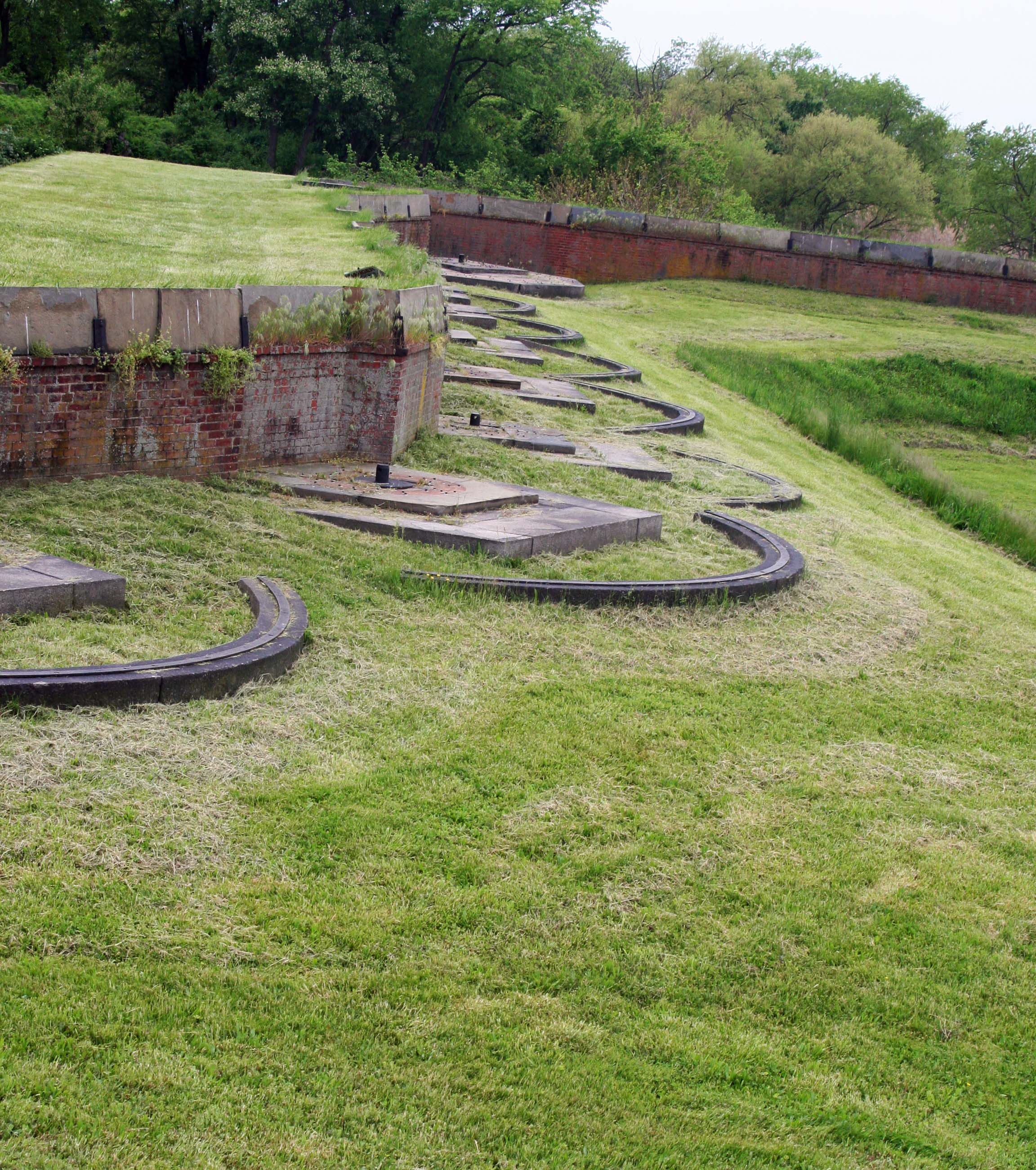
Gun emplacements at Ft. Mifflin.

Gun emplacements along the walls at Ft. Mifflin.

While protection from the onslaught was nonexistent, one section of the fort was more exposed than any other according to Jeffery Dowart in his book, Fort Mifflin of Philadelphia, an Illustrated History. The northwest corner was directly under the guns of the Vigilant and Fury. Time and again these ships sent broadsides smashing into the ramparts manned by Captain Lees’ Company while British Marines posted in the masts of the ships fired down on the exposed artillerists.

“Every man who tried to serve the cannon on the battery’s angle was either killed or wounded,” Dowart reported.

At the height of the bombardment a decision was made to hoist a signal and request help from the galleys and floating batteries above the fort. A volunteer was requested to climb up the flagpole with the signal flag as the cannonballs hurtled in from all directions.

Joseph Plumb Martin had a vivid memory of the event. “…a sergeant of the artillery offered himself; he accordingly ascended to the round top and pulled down the (fort’s) flag to affix the signal flag to the halyard. The enemy, thinking we had struck (surrendered), ceased firing in every direction and cheered.”

“Up with the Flag!” was the cry from our officers in every part of the fort. The flag was accordingly hoisted and the firing was immediately renewed. The sergeant then came down and had not gone a half-rod from the foot of the staff when he was cut in two by a cannon-shot.”

Several galleys, floating batteries, and a frigate did come down river to aid the beleaguered fort but heavy fire from the British Warships drove them back.

At some point in early afternoon the fort ran out of ammunition and was totally at the mercy of the British guns. The end was only hours away. Under cover of darkness, the fort was evacuated. As the final group left around midnight, the flag was still flying.

Howe received his much-needed supplies in Philadelphia but time was running out. After two failed efforts at penning Washington down, he returned to Philadelphia while Washington moved on to Valley Forge for his winter encampment. Other battles would determine the future of the Revolution.

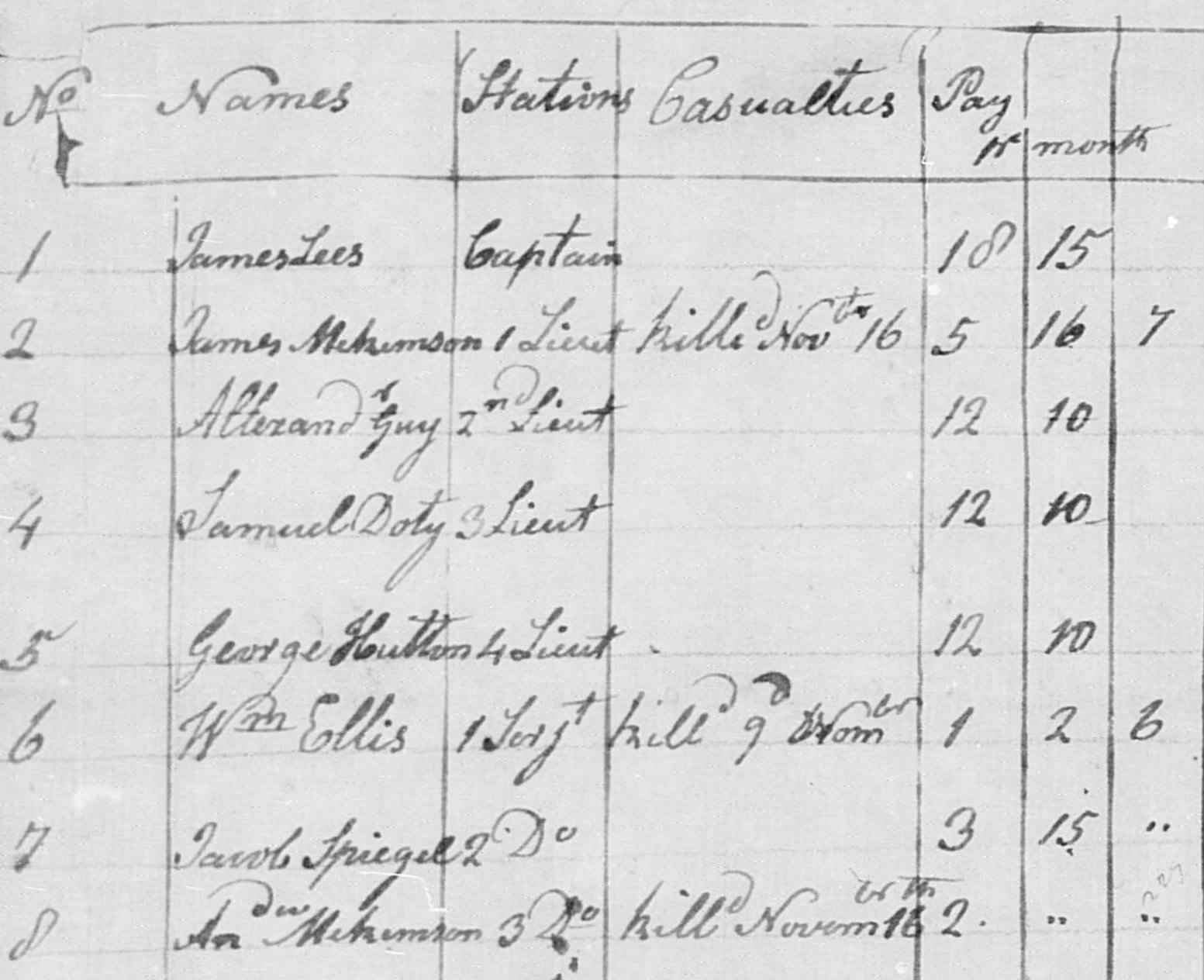
The November 1777 payroll for Captain Lees’ Company. Note #2 and 8.

When I became involved in genealogy nine years ago, I discovered that my Great, Great, Great, Great, Great Grandfather, Andrew Mekemson had arrived in America from Ireland in the 1750s with six sons and one daughter. All six sons ended up fighting in the Revolutionary War. Four were involved in the battle over Fort Mifflin. My sixth cousin, Bill Makemson, shared a flyer researched and distributed by Fort Mifflin that presented a different perspective on the flag incident described by Joseph Plumb Martin. Following is a direct quote:

“During the siege and battle of Fort Mifflin, November 10-15, 1777, the flag was kept flying despite the British bombardment, one of the most stupendous in US History. Although at one point the British cannonballs were falling into the fort at the rate of 1,000 per hour, the American garrison heroically rose to the challenge and kept the flag flying. Two brothers from Pennsylvania, Sergeant Andrew Mackemson and Lieutenant James Mackemson, were both killed in re-raising the shot torn flag. The fort was finally evacuated by the remnants of the defenders, but was never surrendered to the British. The Fort Mifflin Flag was still flying at the end.”

Andrew and James were brothers of my Great, Great, Great, Great Grandfather Joseph Mekemson. They were both part of Captain Lees’ Second Continental Artillery Company that entered the fort on November 13. James was second in command. Andrew was the Sergeant of Joseph Martin’s memory. Both brothers would have also been involved in the devastating battle with the Vigilant and the Fury.

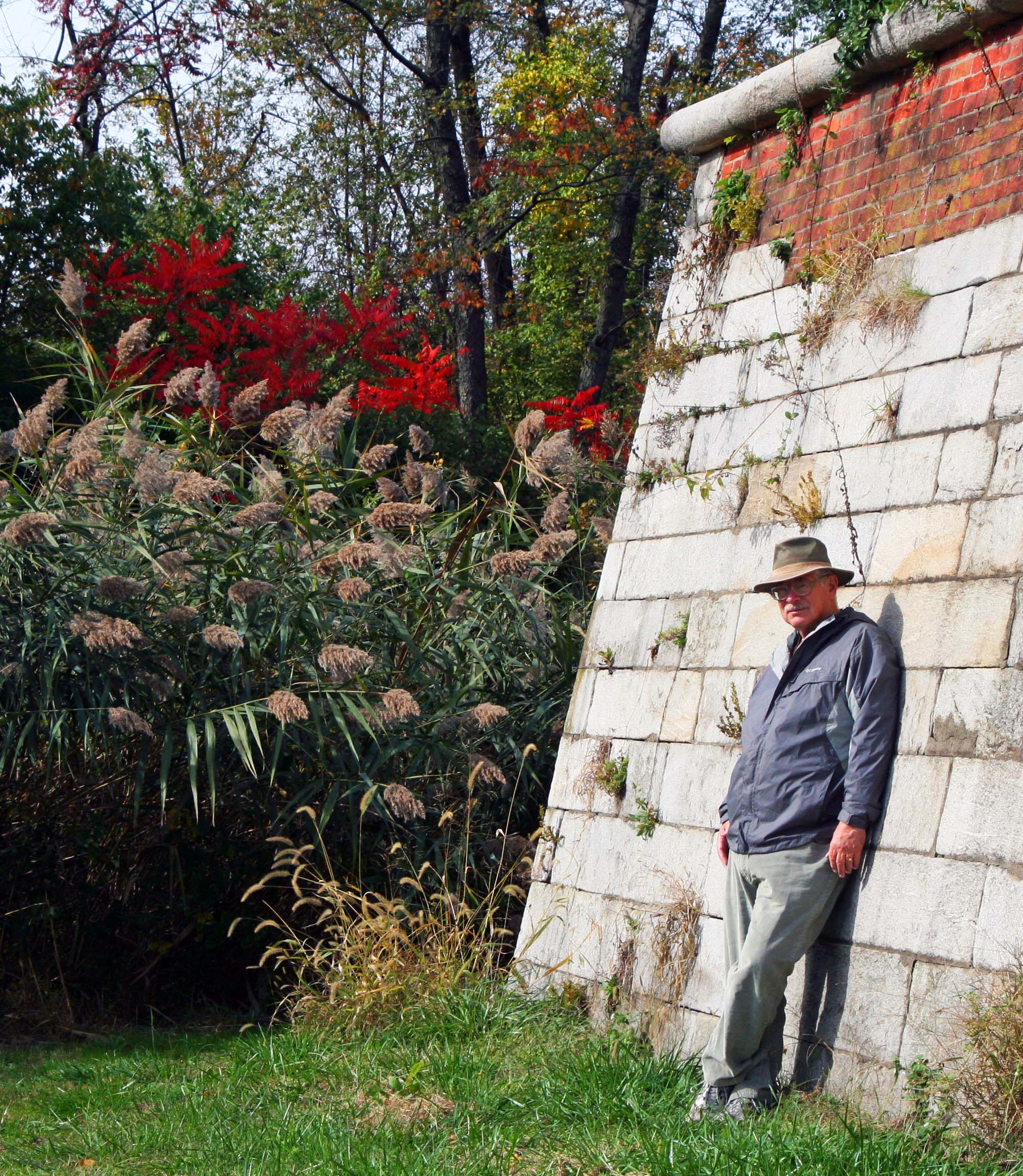
I am standing below the walls of Ft. Mifflin feet away from where the British ships

I am standing below the walls of Ft. Mifflin feet away from where the British ships Vigilant and Fury poured cannon fire onto the position defended by Andrew and James Mekemson.

Two other brothers, Thomas and William, joined the fight as well. Each served on the Floating Battery Putnam under Captain William Brown. The Putnam was one of the floating batteries to respond to Fort Mifflin’s signal for help.

Captain Brown had been appointed as the first Marine Captain in the Pennsylvania Navy and sent out to recruit more marines. He was in charge of the marines on the PA Navy’s Flagship Montgomery and then helped organize Washington’s crossing of the Delaware on Christmas Day 1776. He and his marines then went on to participate in the battles of Trenton and Princeton. It was the first joint marine/army operation in the nation’s history.

Documents from the Pennsylvania archives show that all four Mekemson or Makemson brothers (James, Andrew, Thomas and William) had joined Captain Brown by the time of Washington’s battle at Trenton and night march to Princeton. They may have been with him even earlier at the Delaware crossing. By September the brothers had split with James and Andrew moving on to their destiny with Captain Lees and Fort Mifflin.

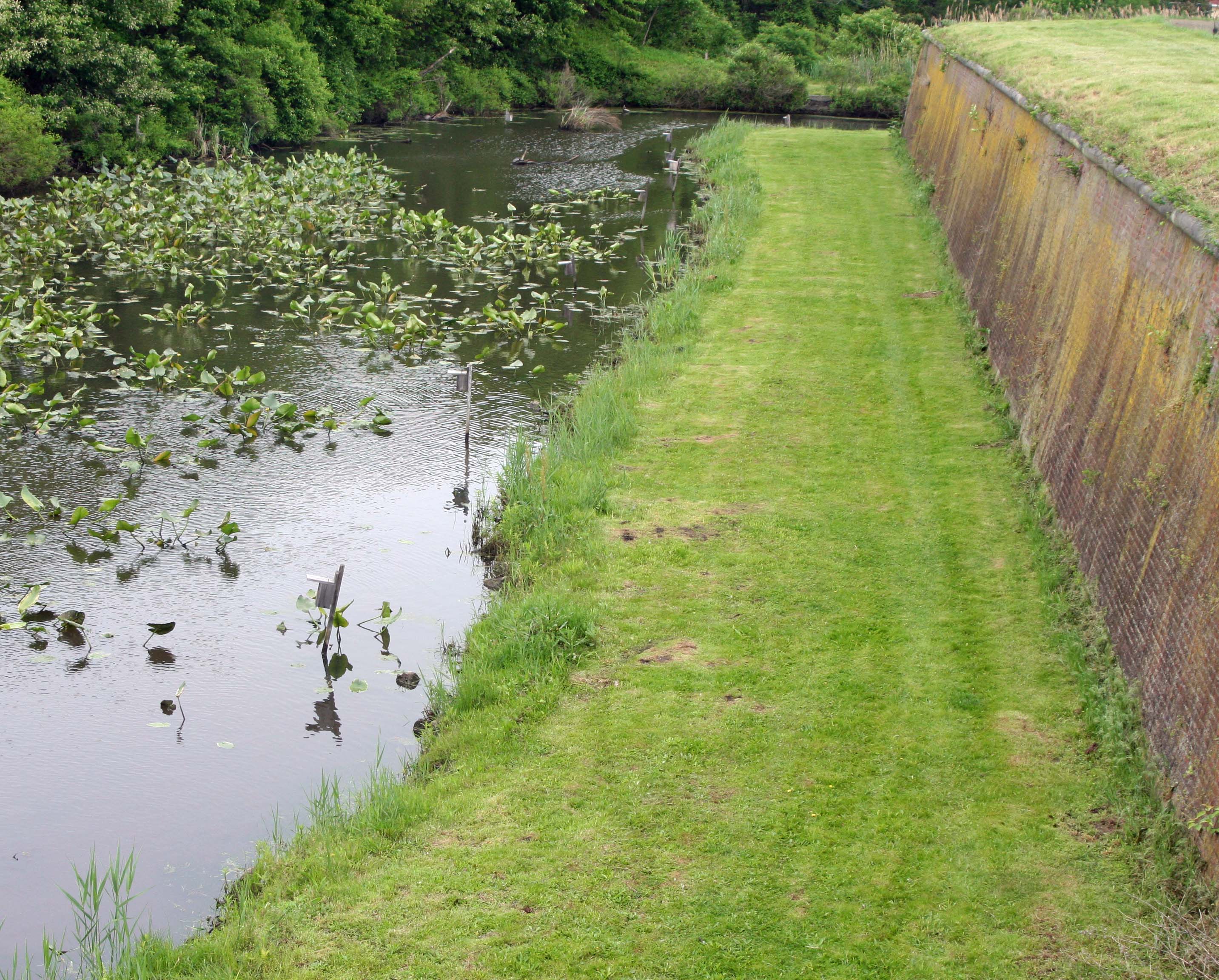
Today, a beautiful moat filled with plants and wildlife surrounds Ft. Mifflin. I like to think of it as a fitting memorial to James, Andrew and the other men who fought against overwhelming odds and gave their lives so the young republic could live.

Today, a beautiful moat filled with plants and wildlife surrounds Ft. Mifflin. I like to think of it as a fitting memorial to James, Andrew and the other men who fought so bravely against overwhelming odds and gave their lives so the young republic could live.

Ten Favorite Burning Man Activities… Updated!

The classic female nude has always been a favorite subject of artists. This beautiful woman was over 50 feet tall and was one of a series of three at Burning Man.

The classic female nude has always been a favorite subject of artists. This beautiful woman was over 50 feet tall and was one of a series of three at Burning Man. Art, more than anything else, has been pulling me back to Burning Man since 2004.

With two laptops down and this one heading for the doctor, I have to revise my publishing schedule for the next week. I’m reaching back into my archives and pulling out three former posts that are at least in the spirit of what I have promised. Today is on Burning Man. I’ll follow up with an historical blog on Philadelphia’s Fort Mifflin and then a backpacking tale that includes bears, lots of them.

I may be totally off the Internet for the next week. If I don’t respond immediately, that’s the case. 

It’s time to buy tickets for Burning Man again, which is always a harrowing experience. At least it has been for the past several years. I made my first trip to Burning Man in 2004 and have been back numerous times since. I can’t resist. It is one of the most unique events I have ever attended. Following are some of the reasons why. Today kicks off a Friday series on Burning Man I will be running over the next couple of months during the ticket sale time that feature favorite photos from my archive of thousands. Enjoy!

I should probably name this blog Curt Mekemson’s Ten Favorite Burning Man Activities. When it comes to Burning Man, things get personal. One person’s preferences might very well be another person’s boring, with just the right teen-age emphasis followed by, “Was that guy actually there?”

For example, I don’t like loud music but there are camps at Burning Man with humongous speakers that blast out ear shattering decibels 24/7. Fine, it’s their thing and they have lots of fans, not to mention some of the best DJs in the world. Many Burners list these venues among their top choices. They joyfully dance the night away, literally. I like stopping by but my ears soon send me scooting for quieter locations— like the opposite side of the Playa.

Dancing and music are an integral part of Burning Man. The event attracts some of the top DJs in the world who spin their tunes for free at Burning Man.

Dancing and music are an integral part of Burning Man. The event attracts some of the top DJs in the world who spin their tunes for free at Burning Man. The hanging speakers give an idea of the volume that can be generated.

I don’t run around naked at Burning Man, either. That would be scary— for both me and anybody looking in my direction. But I have no objection to other people being nude. Some Burners are quite attractive while others are at least, uh, colorful. I assume all are enjoying some form of liberation, or at least a bit of exhibitionism.
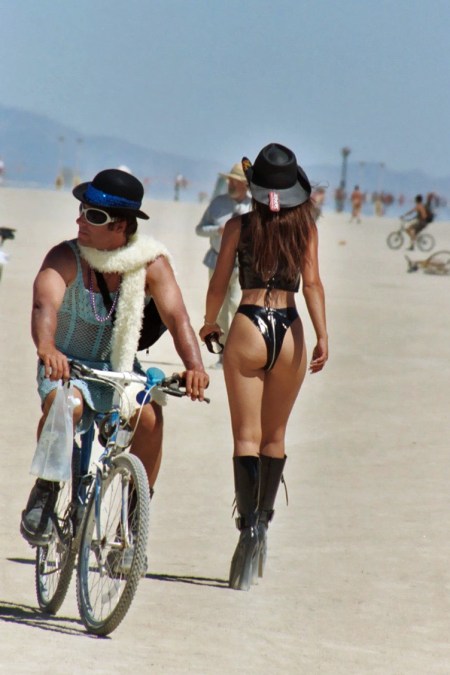
Outrageous costumes make people watching at Burning Man a number one activity. The guy 'looking the wrong way' helped make this photo. Note the platform shoes on the woman. She wears them well.

Outrageous costumes make people watching at Burning Man a number one activity. The guy ‘looking the wrong way’ helped make this photo. What was he thinking? Note the platform shoes on the woman. She wears them well.

The thing about the Burning Man experience is that it depends on the individual. My recommendation for new participants is to come with an open mind and explore. If you want to get naked, go ahead; but you don’t have to and most don’t. Your experience can be as radical or conservative as you wish to make it.

So, having established my parameters, here is my top-ten list of things to do at Burning Man (assuming one can finagle a ticket). They aren’t in order of preference.

1. Attend the Burn: First, you will want to visit the Man during the week. There are usually a number of activities taking place that reflect the year’s theme. Plus you can often climb up into the base and enjoy some of the best views available of Black Rock City! The burning of the Man on Saturday night is the climax of the week where everything and everyone comes together. Hundreds of fire dancers and drummers kick off the event and are followed by an elaborate ceremony where the Man is set on fire.  Things start with a bang, literally, as rockets explode and light up the sky. The Man then moves toward his ultimate demise, slowly. His last seconds are met by silence from 70,000 people, possibly the only time when Burning Man is quiet, followed by oohs and ahs building to a crescendo as he comes crashing down, completing his annual sacrifice. Don’t worry, like Frosty the Snowman and the Phoenix Bird, he’ll be back. The burn is only part of the show, however. Elaborate costumes, giant mutant vehicles, and total  bedlam compete for attention.
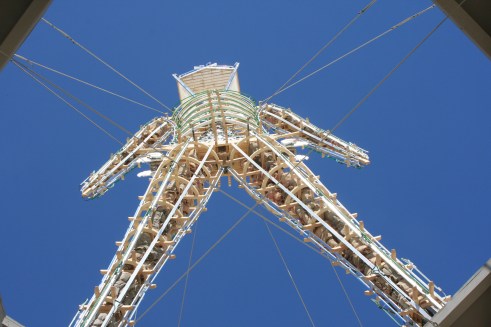
 

For six days the Man serves as a gathering point on the Playa and as a landmark for lost Burners. On Saturday night he burns in what has become one of the world’s best known New Age rituals.

Burning Man's roots go back 27 years to the burning of an 8 foot tall statue on Baker Beach in San Francisco. Today's man stands some 40 feet tall and rests on a 60 foot pedestal. The wooden man and his fiery demise symbolizes the annual event that takes place in the remote Black Rock Desert of Nevada.

Burning Man’s roots go back 31 years to the burning of an 8 foot tall statue on Baker Beach in San Francisco. Today’s man stands some 40 feet tall and rests on a 60 foot pedestal.
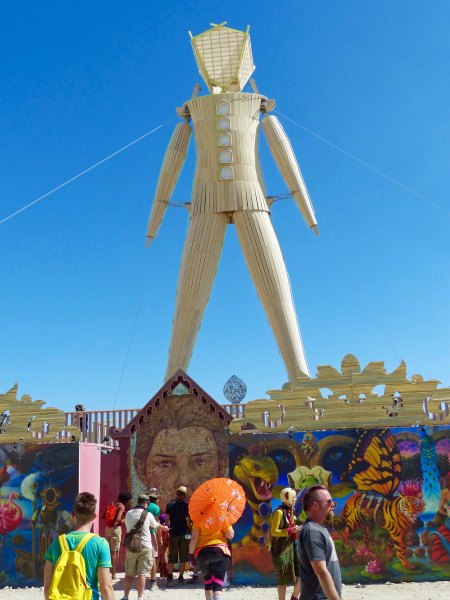
My friend Don Green took this photo of the Fun House entrance that was built around the Man in 2015.
My friend Don Green took this photo of the Fun House entrance that was built around the Man in 2015.

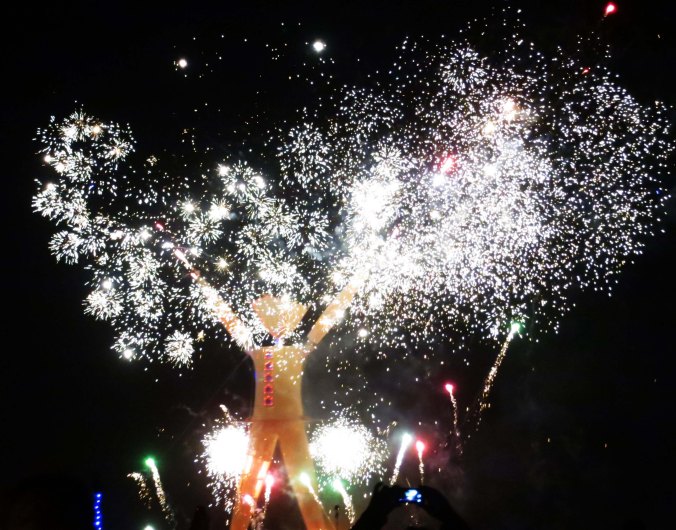
The night sky is lit up by fireworks during the burning of the Man at Burning Man 2014.

Suddenly the night sky and the Man are lit up by fireworks. The burn is about to begin.

A close up of the Man burning at Burning Man 2014.

Don Green captured this photo of the Man Burning.

The Burning of the Man on Saturday night gives the event its name.

Huge flames light up the night.

People perch on El Pulpo Mechanico at Burning Man and watch as the Man burns.

People perched on El Pulpo Mechanico at Burning Man and watched as the Man burned. Even the mutant vehicle, El Pulpo Mechanico, seemed entranced.

2. Enjoy the People: I don’t know where one could find a more interesting cast of characters than Burning Man. But then again, there aren’t many places where you are encouraged to be yourself and pursue ‘radical self-expression’ in a region where temperatures top 100 and 60 mph windstorms kick up massive dust storms that create zero visibility. Tribes, events and volunteering create numerous situations where it is easy to meet people and make friends. While Burning Man preaches involvement, you are also totally free to wander around and simply observe.
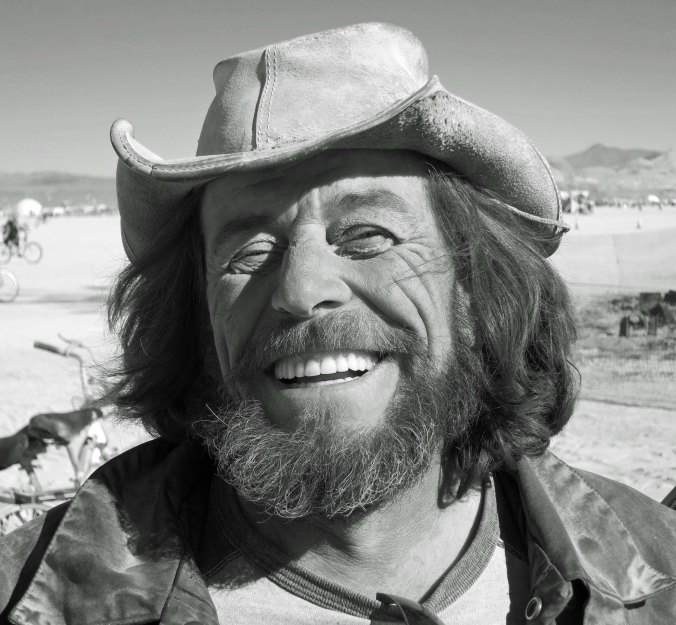
The folks who come to Burning Man represent a broad spectrum of people representing all ages and occupations— from broke college students to billionaires. this fellow is a veteran Burner who works with the Department of Public Works that helps build Black Rock City.
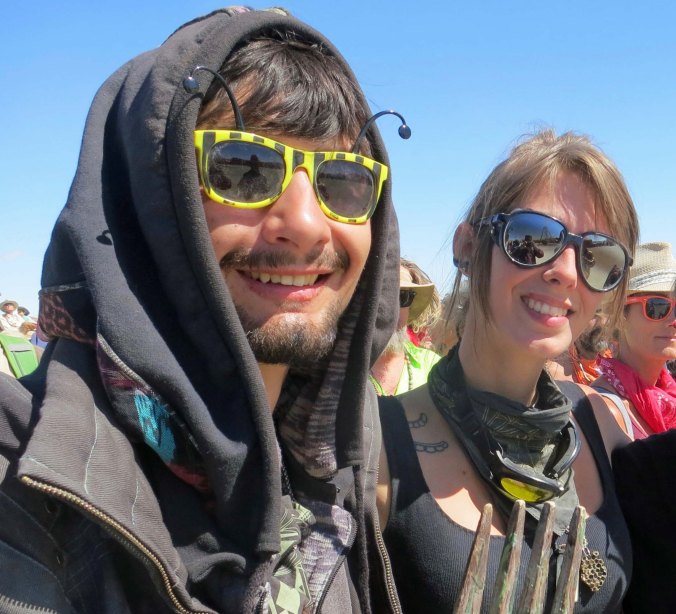
The folks who come to Burning Man represent a broad spectrum of people from all ages and occupations— from broke college students to billionaires. This fellow is a veteran Burner who works with the Department of Public Works that helps build Black Rock City.

This young couple stood next to me as we watched a burning piano be tossed 50 or so yards up the Playa. Glasses form an important part of Burner's costumes.

This young couple stood next to me as we watched a burning piano be tossed 50 or so yards up the Playa.

Costumes are an integral part of Burning Man and some people such as my friend Ken (aka Scotty) Love to dress up.

Costumes are an integral part of Burning Man and some people such as my friend Ken (aka Scotty) love to dress up. Scotty, BTW, is Ken’s Burning Man name. Almost everyone has one. Mine is Outlaw.

3. Appreciate the Art: Burning Man art comes in all forms, from monumental to small, from sculpture to painting to performance. Most of the major pieces and performances take place on the Playa or along the Esplanade. But there are many smaller pieces (and performances) found throughout the camp and at the Center Camp Cafe. Much of the art is interactive. Be sure to check out the playa sculptures at different times of the day. Many of the pieces are schizophrenic with radically different day and night personalities. And many are making there way into communities around the world.
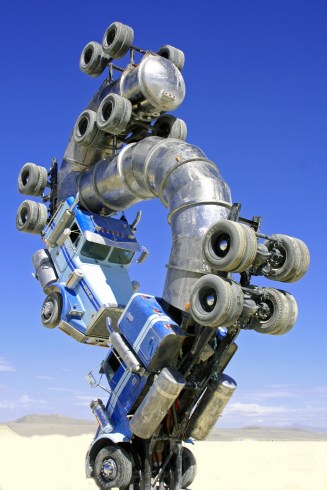
Burning Man has become a major center for what is happening in today’s art world. Selecting a piece to represent what is happening in the Nevada desert is close to impossible. These two oil tankers welded together and stacked on top of each other, meld environmental concern with art, two of Burning Man’s major themes.
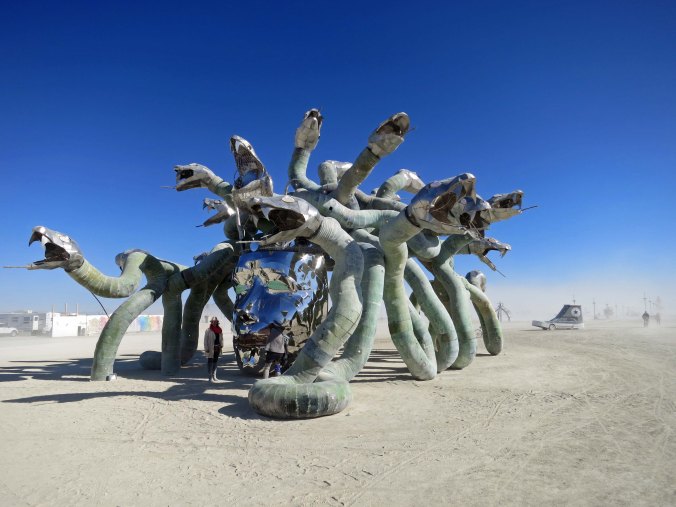
Medusa with her snake hair was one of my favorite sculptures in 2015.

Medusa, with her writhing snake hair, was one of my favorite sculptures in 2015.

Burning Man Fantasy sculpture

Monumental sculptures, many you can climb on, are among the most popular art works at Burning Man.

4. Save Time for the Desert: The Black Rock Desert and surrounding mountains are beautiful. Look around. Once the Playa was part of the huge Lake Lahontan, which was over 500 hundred feet deep. Mammoths wandered the lake’s shore. Early morning and late evening provide the best times for desert viewing. An early morning walk, while Burning Man more or less sleeps, is the best time to appreciate what the desert has to offer. Embrace rather than dread the weather. When else in your life will you experience a massive dust storm or see a desert rainbow?
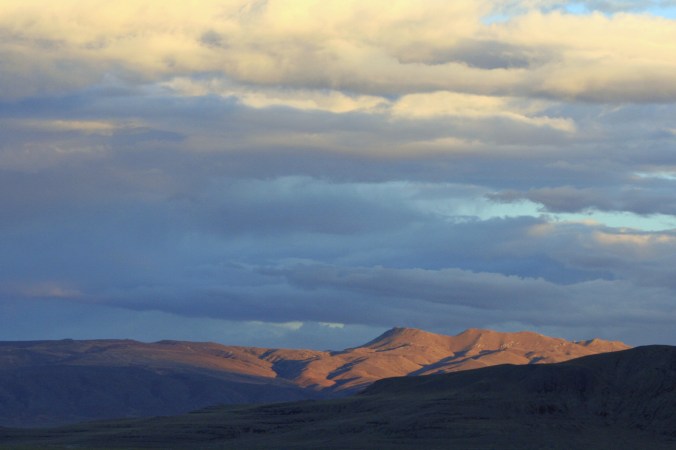
The evening sun bathes the surrounding mountains at Burning Man in soft light.

The evening sun bathes the surrounding mountains at Burning Man in soft light.

I think Burning Man  fails to emphasize (or assigns to footnote status) one of the event’s most spectacular assets… the beauty of the Black Rock Desert.

A massive dust storm crosses the Playa and hides the camp.

4. Visit the Temple: The folks who build the Temple deserve a huge vote of thanks from all of us. Visiting is both an aesthetic and spiritual experience. To start with, the temples are gorgeous, with each year’s building a unique creation. Thousands of written messages are left on the walls to honor loved ones who have died or to give thanks for blessings. The messages are both sincere and touching. Take along a pen or a marker if you wish to honor or thank someone who has had a significant impact on your life. On Sunday night the temple burns, sending messages skyward in what I can only describe as a sacred experience.

The Temple of Promise at Burning Man 2012.

The Temple of Promise at Burning Man 2015.

The Temple of Grace at Burning Man 2014.

The Temple of Grace at Burning Man 2014.

The Temple burns on Sunday Night. Unlike the Burning of the Man which is a bit on the rowdy side, Burners watch silently and respectfully as the Temple Burns.

The Temple burns on Sunday Night. Unlike the Burning of the Man which is a bit on the rowdy side, Burners watch silently and respectfully as the Temple is consumed by flame.

5. Check out Camp Center Cafe, Often: Whether you want to perform, show off your costume, pick up the latest news, attend a show, enjoy art, have a cup of coffee, meet friends, have your fortune told, apply pasties, watch people or just hang, Camp Center Cafe is the place to go. It’s open 24 hours a day. Something is always going on. I visit two to three times daily. Be sure to watch the costume contest and the talent show.
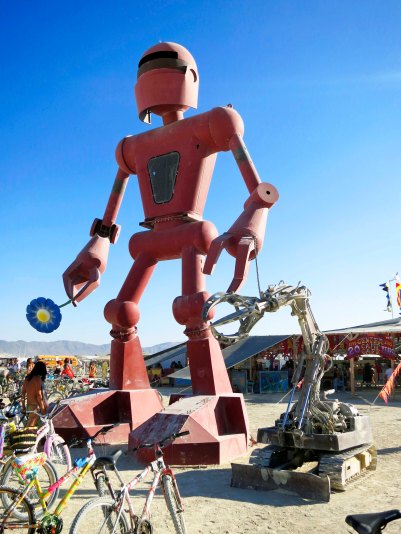
This robot with his dog and a flower was in front of the Center Camp Cafe. He would raise the flower up to his nose and sniff it.

This robot with his dog and a flower was in front of the Center Camp Cafe. He would raise the flower up to his nose and sniff it. Each year Center Camp Cafe features a major sculpture.
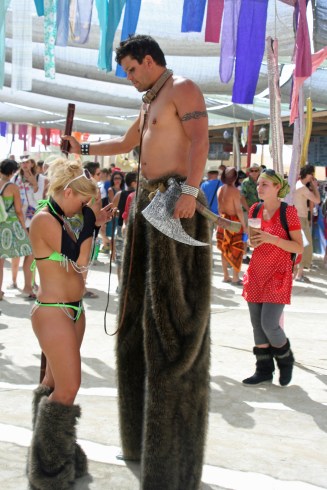
“Yes Master.” Camp Center is a great place to watch people, show off your costume, and live out your fantasies… and it is always entertaining.

A show of some kind of the other is pretty much guaranteed when you visit the Center Camp Cafe. Here couples practice partner yoga. Are the two guys center-right twins?

A show of some kind of the other is pretty much guaranteed when you visit the Center Camp Cafe. Here couples practice partner yoga. Are the two guys on the floor center-right twins?

Center Camp is also a prime location for Burning Man art.

Center Camp is also a prime location for Burning Man art.

6. Stroll or Bike The Esplanade: This is Burning Man’s other major center of action. It provides the border between the Camp and the Playa. It is a theater, circus and walkway all in one. Stop by and watch people pummel each other with foam sticks in the Thunder Dome, enjoy a troop of fire dancers, go roller-skating, play games, try out a balloon ride, hear how loud music can actually get, dance, watch a movie, become lost in a maze, meditate… etc.

Hundreds of people lined up for an opportunity climb into the sky on this balloon ride that was offered on the Esplanade. Entertainment along the Esplanade varies from dancing, to roller skating, to circuses. Once there was even a booth that would spank you, assuming you needed it.
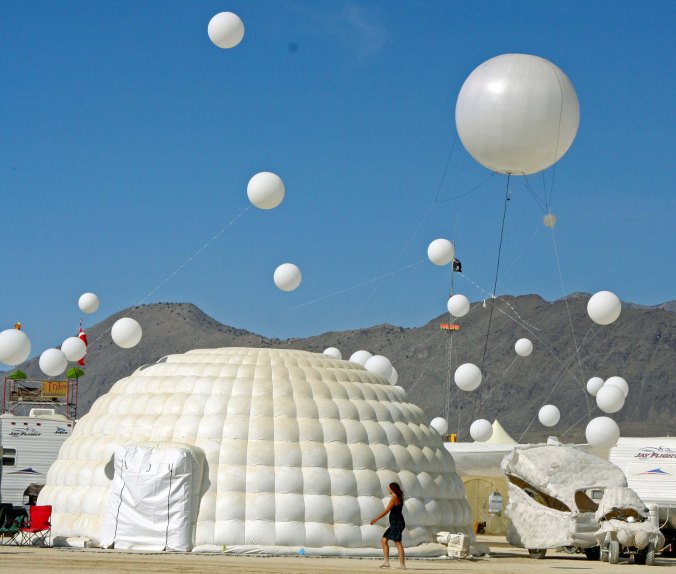
Major tribes with hundreds of members build elaborate camps along the Esplanade.
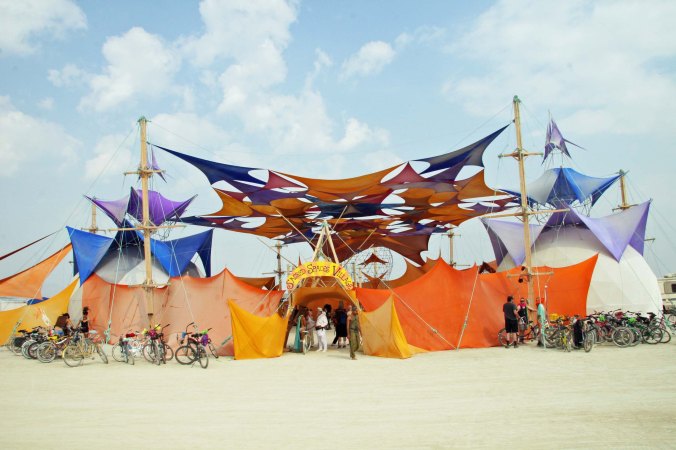
Major tribes , some with hundreds of members, build elaborate camps along the Esplanade.

A number of impressive buildings including the Sacred Spaces building are found along the Esplanade at Burning Man.

Another example.

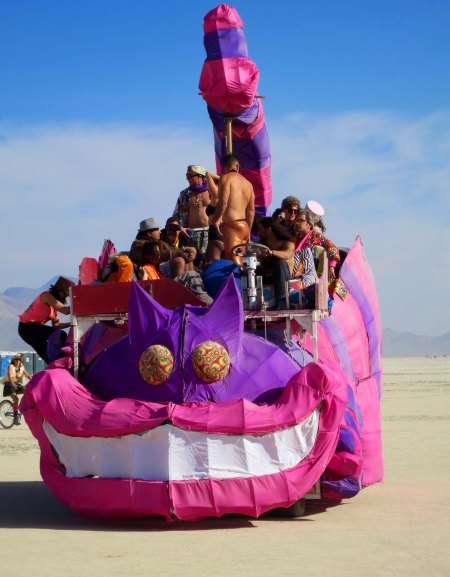
7. Check out and/or Ride on Mutant Vehicles: Undecorated vehicles are restricted to camp. If you are going to drive you have to decorate. What’s not to love about a giant, wooly mammoth or a cat car with fur? Mutant Vehicles at Burning Man come in all shapes, forms and sizes. Some people spend weeks/months creating their fantasy transportation systems and even bicycles are elaborately decorated.  Various vehicles become dance floors, spout fire, look ferocious and even appear friendly. A polite request may land you a ride.

The Cat Car is a perennial favorite at Burning Man. This year she had a makeover and was looking quite snazzy.

The Cat Car is a perennial favorite at Burning Man. This year she had a makeover and was looking quite snazzy.

The tusks on they mammoth are what make this art car one of my favorite mutant vehicles at Burning Man. People sit inside the rib cage. The driver climbs into the head.

The tusks on they mammoth are what make this art car one of my favorite mutant vehicles. People sit inside the rib cage. The driver climbs into the head.
Where's Alice?

Where’s Alice?

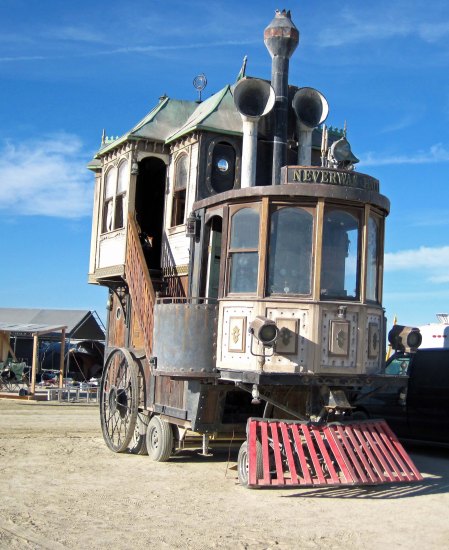
Never Was Haul resembles a Victorian House that has been converted to a steam engine train.

Never Was Haul resembles a Victorian House that has been converted to a steam engine train.

A rhino even more massive than its counterpart in East Africa.

A rhino even more massive than its counterpart in East Africa.

8. Join a Tribe, or not: Tribes are the major social units at Burning Man and there is a tribe for almost any inclination. Many feature theme camps based on the year’s theme and welcome visitors. You can also form your own. Let’s say you are a purple alien from outer space and can’t find a tribe. Create the Purple Alien from Outer Space Tribe. Odds are there are other purple aliens who will want to join. It’s doubtful that anyone will even recognize that you are an alien. They will just think, “Oh, he’s got a neat costume,” and want to take your picture.

The Peripatetic Bone, held here by Boots and featuring his leather vest, has his own tribe… the Horse-Bone Tribe. He has been visiting Burning Man for years and was even married there to Bonette, a few years ago.

9. Go out into the Night: The Burning Man night is magical. Everyone and thing includes some kind of lighting system including art, people, bikes and mutant vehicles. Most blocks provide entertainment. Is it going to be pole dancing, jazz or vodka creations that capture your imagination? You will think you have entered a different universe.
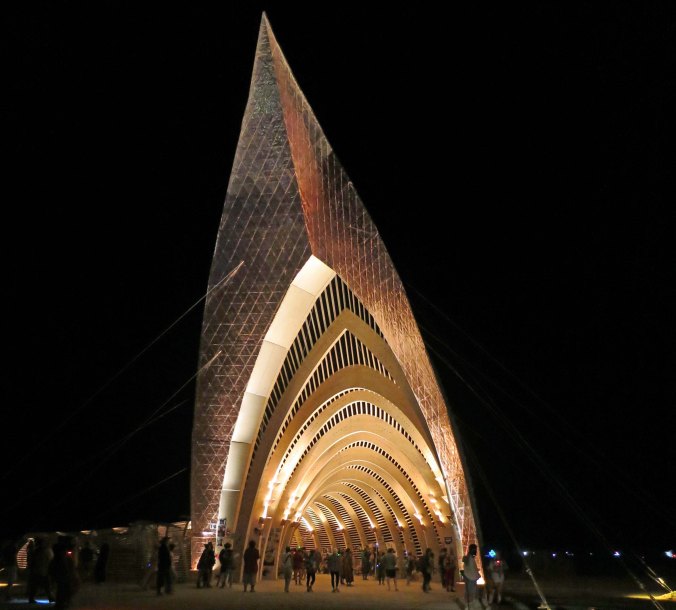
The front of the Temple at night.

The Temple of Promise at night.

A large group attended an evening discussion on the issue of violence against women.

R-evolutuion lit up at night. Here, a large group attended an evening discussion on the issue of violence against women.

Burning Man dragon created by Flaming Lotus Girls for Burning Man.

A fiery dragon.

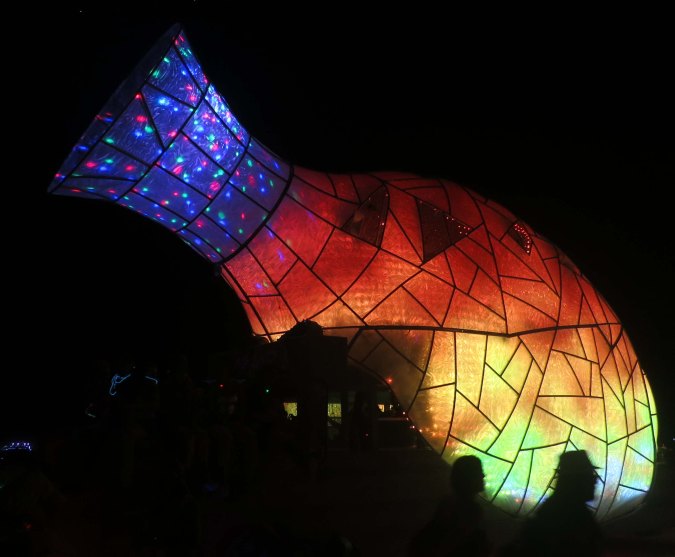
Burning Man mutant vehicle. Photo by Curtis Mekemson.

And a mutant vehicle vase.

10. Peruse the Catalogue: You are given a catalogue when you arrive that includes literally hundreds of things you can do at Burning Man ranging from attending a lecture on solar power to having your breasts painted. The various tribes sponsor these events for free as part of Burning Man’s gift-giving culture. You can practice yoga, learn the samba, improve your fire twirling skills, watch a show, and even improve your sex life, regardless of which way you lean. You can also drink. The catalogue lists dozens of bars featuring everything from Bloody Marys to craft beers. One year I found a casket that featured beer spouts.  Drinks are free; bring your own cup. One of the first things I do after setting up camp is to go through the catalogue and check off things I might want to do. Hmmm, I wonder what bondage is like? (Just kidding… but there are opportunities to learn about it, and practice.)

Burning Man may be the greatest show on Earth. Bring along your imagination, sense of humor, and willingness to experience new things.

If you’ve enjoyed this post, are planning on going to Burning Man for your first time, want to learn more about the event, or want to reminisce about past events, I invite you to join me on Fridays for the next couple of months.

Bears, Rattlesnakes, Heart Break, and Ham Cheddarton… The Sierra Trek: Part 3

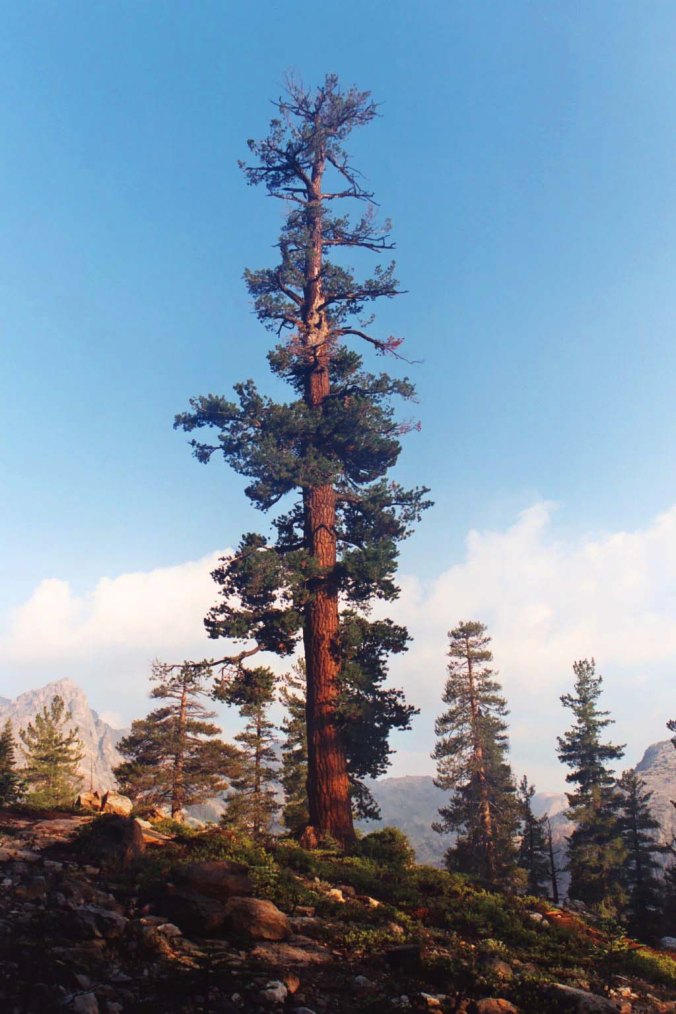
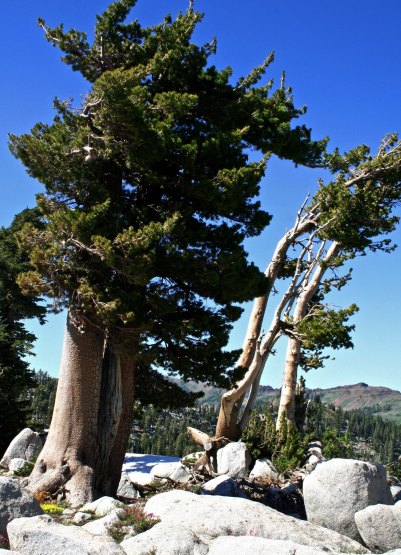
Beauty in the Sierra Nevada Mountains comes in many forms, such as this Red Fir giant I found on Seavey Pass.

Beauty in the Sierra Nevada Mountains comes in many forms, such as this Red Fir giant I found on Seavey Pass along the Pacific Crest Trail.


In my last post about the Sierra Trek, I noted that the clock was ticking. We had a route that threatened to be covered in horse poop, a sponsor who believed that backpacking 100 miles in 9 days was insane, a barely edible meal of Ham Cheddarton for a quarter of our dinners, and 60 people, aged 11-70, ready to follow us across the mountains.
 It was now time for Steve and me to go out and check the route, to get a feel for how much trouble we were actually in! We had agreed to split the preview: Steve would backpack the first third of the route from Squaw Valley to Robinson Flat while I backpacked the second third from Robinson Flat to Forest Hill. We’d cover the final third the weekend before the Trek.

A note about today’s photos: As I mentioned previously, the photos for this series on the first Sierra Trek are all taken from later treks.


Steve had never backpacked alone and I had only been out by myself three times. It promised to be an adventure. In addition to reducing the odds that we would lose 60 people in the woods, we also needed to check out potential camps, water availability, and the difficulty of the trail. I wanted to develop a feel for what we would be putting our participants through.

Nervous is the best word to describe my mood as I packed up. Jo Ann was heading off for a clothes-buying spree in San Francisco. I told her to enjoy herself, threw my backpack in the back of my Datsun truck, picked up Steve, and drove to Squaw Valley. We made a brief stop in Auburn to recruit my father-in-law’s Springer Spaniel, Sparky. I felt the trip might be a little rough on my basset hound, but wanted some doggy companionship. I left Steve weaseling a free ride up the Squaw Valley tram and headed for Robinson Flat, a camping area on the Western side of the Sierra.

Some experiences burn themselves into your soul. This was one. The beauty and the variety of the wilderness captured me. I was starting at around 7000 feet in the heart of red fir and Jeffrey pine country and dropping into the Sierra Foothills where incense cedar and ponderosa pine provided shade.

Along the way I would descend into river canyons filled with inviting pools and scramble out to follow hot, dry ridges. Besides Sparky, a coyote, two skunks, several deer, a porcupine, and numerous birds provided entertainment. I also met my first bear, a big brown fellow that came ambling out of the brush and increased my heart rate twofold. Even the ever-curious Sparky took one sniff and made a quick retreat behind me. Then she growled.

Being alone enhanced and intensified the experience. The days were exciting but the nights bordered on scary. After the bear, I imagined all types of creatures sneaking up on us as we slept. Sparky was even more nervous. I loaned her my new Pendleton shirt to sleep on. She had chewed it to rags when I woke up in the morning. I didn’t have the heart to scold her. Had I known what she was up to, I might have joined her.

This photo taken near Sonora Pass illustrates both the distances and possible solitude of hiking in the Sierras.

This photo taken near Sonora Pass illustrates both the distances and possible solitude of hiking in the Sierras. You can see the trail as it comes into the photo (bottom left), and works its way  down the slope. Look carefully and you will see it on the distant ridge.  The small dot on the ridge is one of my trekkers. Can you find the pass? (Look for the sharp switchback.)

It was the physical challenge that made the deepest impression. I was strong but out of shape. Even had I been better prepared, I wasn’t psychologically ready for the experience of hiking 10-15 mile days with a 50-pound pack on my back. Nor was the territory gentle. I was hiking in and out of 1000 foot plus deep canyons following steep, winding trails that had challenged the 49ers in their endless search for gold. Once I found myself lost on a brush choked mountain and had to fight my way free.

Participants start out squeaky clean on the trek. You can always tell backpackers who have only been out for a day.

Treks are hard. Period. Not one has ever been as hard as my first one, but that doesn’t mean they are easy. You start out squeaky clean, like Marvin, and then the days begin to take their toll.

After several days, they may resemble Marvin here, who I believe is surrendering to mosquitos.

This is Marvin after several days. I believe he is surrendering to mosquitos.

As I approached Forest Hill, temperatures climbed to a scorching 105 degrees. To top it off, I was breaking in a new pair of German-made Lowa boots. All of the backpacking literature of the day emphasized sturdy foot ware and it didn’t get much sturdier than Lowa. Considering my feet blister at the mere sight of a boot, they were not happy campers. By the third day I had blisters on top of blisters and my feet resembled a hyperactive moleskin factory.

But, I made it. I proved to myself I could do it and that the Trek was possible. With the proof came an incredible high. I hiked into Forest Hill singing.

Steve showed up about an hour later. He was beaming and jumped out of the truck to grab me while Sparky did much wagging of tail. The three of us did a little dance and Steve and I both tried to talk at once as we told our stories. Steve had seen ‘migrating’ rattlesnakes and lots of bear scat. He peed around his camping area to mark his territory and warn the bears to stay out. They did. The second day a hawk had ‘chased’ him down the trail for miles. I wondered what Steve had been smoking. But now he was on the same natural high I was. We were ready to Trek.

I couldn’t wait to share my experience with Jo Ann. I hurried home, dropping off a tired Sparky and a pooped Steve. I burst into the house full of enthusiasm. In comparison to my bubbling nosiness, Jo was funeral quiet. I made enough noise for both of us and suggested we head out to Chuck’s, our favorite steakhouse. After three days of backpacking food, I was hungering for a mouth-watering T-bone. We were in the middle of our first Scotch when Jo Ann looked at me miserably and announced she had something to tell me.

“Curt,” she confessed, “I didn’t go to San Francisco over the weekend. I went to Los Angeles and spent the weekend with a man I met at a workshop last month.”

My world stopped. My heart broke.

There was no Trek, no future, no me. The steak in my mouth turned to sawdust and my stomach became a tight, heavy knot. Jo Ann went on to tell me about the psychiatrist she had met at a conference in San Francisco and how she was scared about losing me, about how she still loved me. Maybe, but something broke that night, something that could not be mended.

I had to get out of town, to think, to recreate myself.

The next morning Jo dropped me downtown. I called Steve, Nancy and Nan into my office, closed the door and gave them enough details so they would know why I was leaving. In addition to being employees, they were all friends. It was hard for me not to break down. I promised that I would be back in time for the Trek and discussed what needed to be done in my absence. Steve’s primary job would be to review the last section of the trail. He drove me to the airport.

My choice of where to go was determined by the first airplane leaving Sacramento. It was a Western Airlines flight to Seattle and I was on it. It was Tuesday, 12 days before the Trek.

Lonely and confused I walked the dark, rainy streets of Seattle. I missed Jo desperately and had a hard time imagining the future. I hit the bars and drank. It wasn’t that I was naïve. I knew people could grow apart as well as together, and that we had grown apart. Nor was I innocent. I had been tempted more than once in the ever-present world of sexual attraction: a hand touched here, a smoldering glance there. My world was one filled with bright, attractive women. But I had really believed I was married for life.

I had started drinking at a bar early on Friday afternoon when the words of a Jimmy Buffett song caught my attention. “I spent four lonely days in a brown ugly haze and I just want you back by my side.” I returned to my motel and called Jo. She was on the next flight to Seattle. We grabbed a ferry and headed over to Victoria where we had spent happier times. Maybe it would work.

Back at Lungland on Monday things were iffy. On the down side of things, Steve hadn’t previewed the last section of the trail. Who knows why? Our last three days would be potluck. The good news was that our generous food donation from Lipton had arrived, umpteen boxes of it. It was scattered all over the floor of our volunteer room.

I opened the first box, Ham Cheddarton. Oh well, can’t win them all. I had known the trekkers would be stuck with at least two meals of the stuff. So I opened the next box, Ham Cheddarton. Luck of the draw, I hoped. I opened the third box, Ham Cheddarton. Soon boxes were opened everywhere and they were all Ham Cheddarton. A warehouseman at Lipton had figured out a clever way of moving his unsellable product and we were it. We were faced with giving the trekkers Ham Cheddarton every night. We would be killed. Steve called his Lipton contact in Chicago and pleaded our case. He agreed to switch 50% of our food; we’d only be 50% killed.

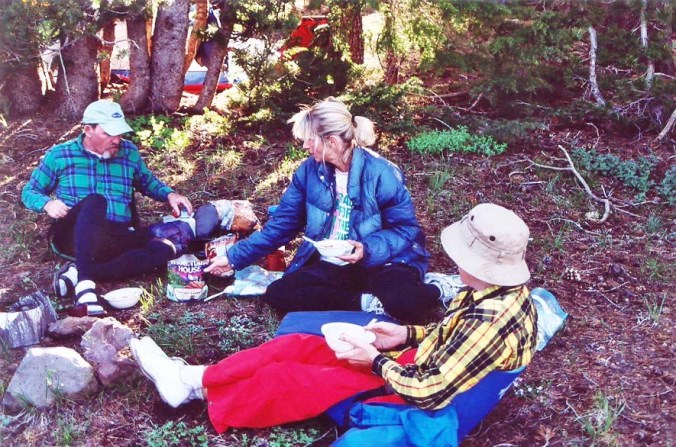
From the very beginning, I divided my participants into food groups of 3-4 people. That way, cooking equipment and responsibilities can be divided up. We've tried many foods over the years. Mountain House, shown here, has been consistently good.

From the very beginning, I divided my participants into food groups of 3-4 people. That way, cooking equipment and responsibilities could be divided up. We’ve tried many foods over the years. Mountain House, shown here, has been consistently good.

When we are lucky, trout can be added as a supplement.

When we are lucky, trout can be added as a supplement. My son-in-law Clay had sacrificed himself to mosquitos to capture this fellow. A little butter, a little spice— mmm good!

Saturday came fast, faster than a speeding bullet, faster than Superman could even dream of flying. Suddenly it was just there. There was no sleeping on Friday night. I had to pack and I had to worry. I had to worry a lot. There was no way I had enough time to worry, so I was still worrying when I met my support crew at a small restaurant just outside of Squaw Valley at 7:00 AM. The first Sierra Trek was about to get underway…

NEXT BLOGS: Friday, Burning Man in photos; Monday, a wrap up on historic Boston; Wednesday, the next episode of the Sierra Trek


Paul Revere Still Rides… Boston Part 2

This sculpture of Paul Revere

This sculpture of Paul Revere outside of the Old North Church in Boston commemorates Revere’s ride on April 18, 1875 to warn Colonials that General Thomas Gage’s troops were on their way to Lexington and Concord.


Listen my children and you shall hear /Of the midnight ride of Paul Revere, /It was on the 18th of April, in Seventy five, /Hardly a man is now alive/ Who remembers that famous day and year. —Henry Wadsworth Longfellow

By 1860, when these lines were penned, very few people indeed would have remembered the ride, so Longfellow was free to report the facts as he saw them, even though they were a bit “alternative.” As a dedicated abolitionist, he wanted to use his poem to alert the citizens to prepare for the impending struggles ahead in holding the nation together and in freeing the slaves, as well as recognize Revere’s heroism.  The last lines of the poem urged:

In the hour of darkness and peril and need, /The people will waken and listen to hear /The hurrying hoof-beats of that steed, /And the midnight message of Paul Revere.

 I can’t help but wonder if the 150,000 people who gathered on Boston Commons Saturday as part of the Women’s March to protest Donald Trump’s treatment of women and policies on healthcare, the environment and education hadn’t heard echoes of the hurrying hoof-beats. 

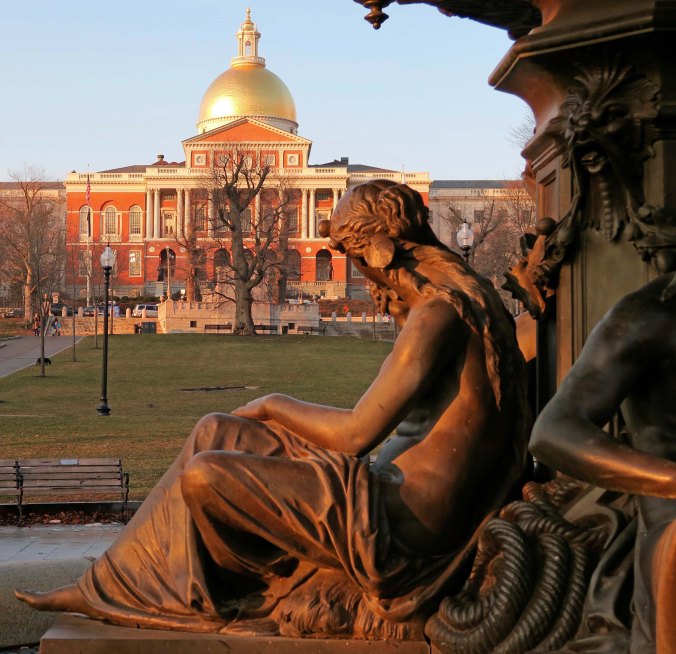
When Peggy and I walked across the Boston Commons three weeks ago, it was a quiet day except for fat squirrels wanting to become fatter. Back in 1775 when Paul Revere made his mad dash, British troops were camped out here. On Saturday, an estimated 150,000 gathered between here and the Massachusetts Statehouse for the Women's March. I thought the woman's statue was appropriate for this photo.

When Peggy and I walked across the Boston Commons a few weeks ago (shown above with the Massachusetts Statehouse), it was a quiet day except for fat squirrels wanting to become fatter. Back in 1775, British troops were camped out on the Commons. On Saturday, an estimated 150,000 people gathered here for the Women’s March.

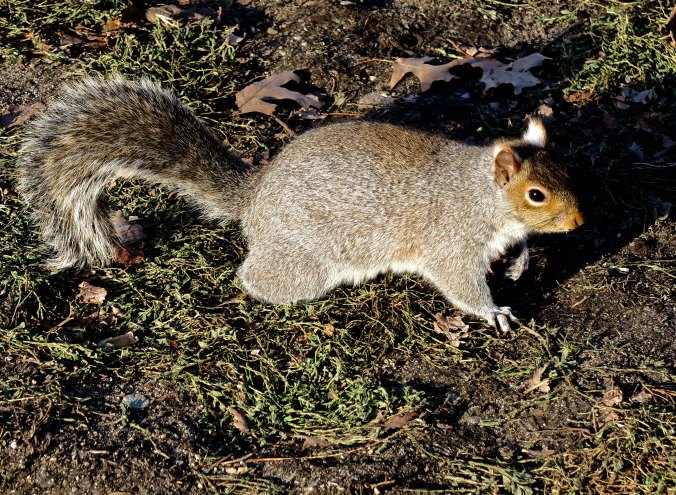
A fat squirrel.

A fat squirrel occupies the Commons much more successfully than the British soldiers who suffered from a lack of food.

Longfellow was inspired to write the poem the day after climbing the steeple of the Old North Church where lanterns were hung to warn that British soldiers were moving toward Lexington and Concord.

Steeple of the Old North Church in Boston, Massachusetts that played an important role in the beginning of the Revolutionary War.

The Old North Church steeple where two lanterns were hung to warn that General Gage’s Redcoats were on the move by sea. (Photo by Peggy Mekemson.)

The Old North Church in Boston, Massachusetts.

A view of the back of the Old North Church. Peggy and I visited on a grey day when we experienced both rain and snow. And it was even colder than it looks!

Front view of Old North Church in Boston, Massachusetts.

A front view of the Old North Church.

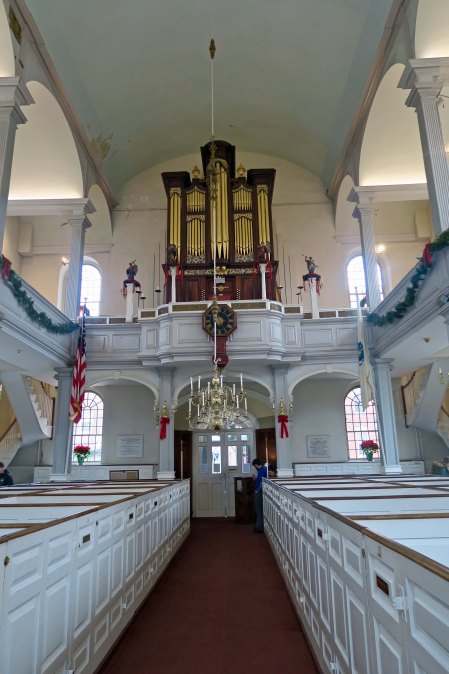
Looking toward the back of the Old North Church.

Looking toward the back of the Old North Church. The stairs leading up to the steeple where the lanterns were displayed is behind the organ pipes.

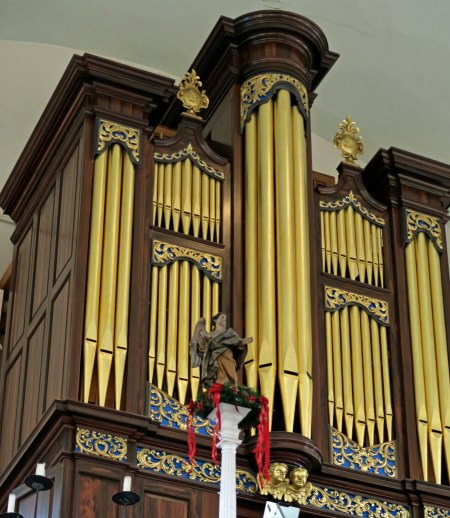
Organ pipes at Old North Church in Boston.

A close up of the organ pipes. I am assuming the angel is Gabriel.

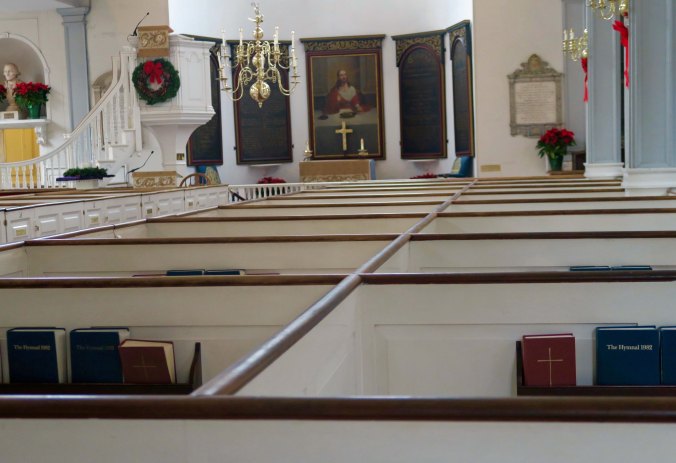
Looking across box pews toward the altar at the Old North Church in Boston.

Looking toward the front of the church. In 1775 the church was Anglican. Today it is Episcopalian, the American equivalent. Note the interesting box pews.

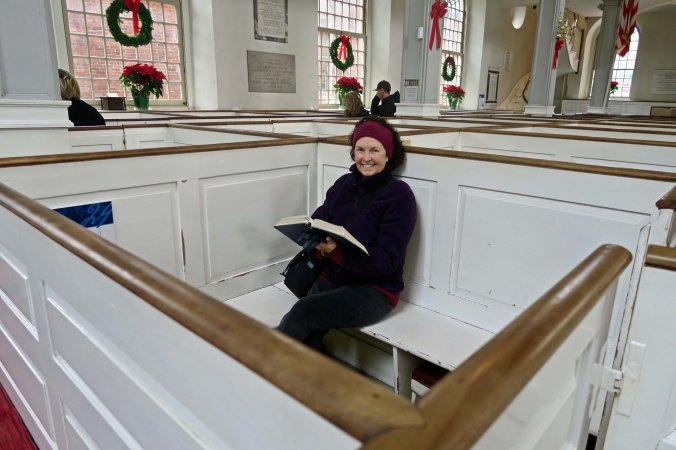
Peggy sits in one of the pews holding a hymnal. Today, the pews are based on first come-first serve. But in 1775, the pews were 'owned' by their occupants and passed down through families. One of the guides told us that the cost for one the pews was the equivalent of what a middle class family might earn in a year today. Not cheap.

Peggy sits in one of the pews holding a hymnal. Today, the pews are based on first come-first serve. But in 1775, the pews were ‘owned’ by their occupants and passed down through families. One of the guides told us that the cost for a pew was the equivalent of what a middle class family might earn in a year today. Not cheap.

On the 200th anniversary of Paul Revere's ride, President Gerald Ford hung a third lantern in the Old North Church to inspire hope, peace and prosperity.

On the 200th anniversary of Paul Revere’s ride, President Gerald Ford hung a third lantern in the Old North Church to inspire hope, peace and prosperity.

The British had two objectives: one to arrest the Colonial leaders, John Hancock and John Adams, who were in Lexington at the time— and two, to go on to Concord and seize gunpowder that the Colonialists were storing in case the disagreement with Britain came down to war. Thomas Gage, the commanding general of the British forces in Boston, had been very secretive about his plans, but not secretive enough.

The plans were discovered, two lanterns were hung in the Old North Church, and Revere along with two other riders set out on their midnight rides. Hancock and Adams escaped and hundreds of militia from surrounding towns, known as Minute Men for their readiness to fight on a moment’s notice, grabbed their muskets and streamed toward Lexington and Concord. A shot was fired in Lexington and a battle ensued. It is still debated whether the British or the Colonialists fired first.

While the British won the first round, they marched on to Concord where they were met by a much larger group of Minute Men. Another battle started and the British decided it was time to return to Boston. Somewhat in disarray, the British troops hurried along the road as the ‘rebels’ took potshots at them in their hasty retreat. The Minute Men had proven that they could effectively fight against the much better trained British troops.

While the Declaration of Independence was still a year off, the Revolutionary War was underway.

Another view of Paul Revere on his ride to warn that the Redcoats were coming.

Another view of Paul Revere on his ride to warn that the Redcoats were coming.

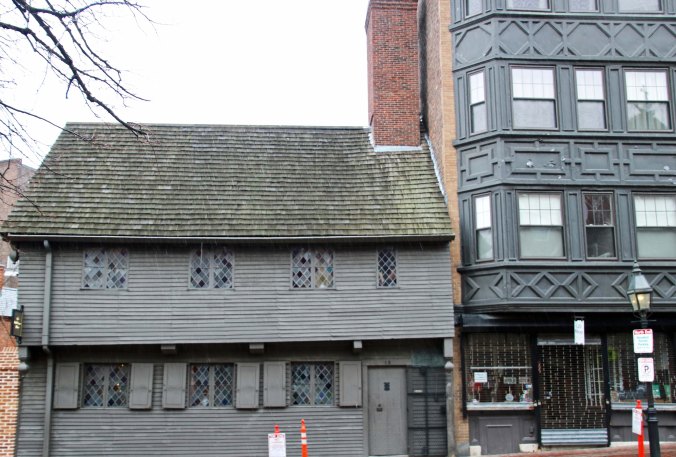
Paul Revere's home on the Freedom Trail in Boston, Massachusetts.

Paul Revere’s home, snuggled up to a taller building, is a few blocks away from the Old North Church. (Photo by Peggy Mekemson.)

Another view of Revere's home.

Another view of Revere’s home. Revere was a noted silversmith of his time and a successful businessman.

The poem that made Revere a household name for generations of Americans following its publishing date in 1861.

The poem that made Revere a household name for generations of Americans.

Paul Revere's tombstone in the Granary Graveyard, a place where will visit in our blog next week.

Paul Revere’s tombstone in the Granary Graveyard, a place we will visit in our blog next week.

NEXT BLOGS:

Wednesday: Back to the Sierra Trek for the route preview, heart-break, a trip to Canada, and 20 cases of Ham Cheddarton.

Friday: The first 2017 post on Burning Man. Part one of a series of photographic essays selected from several thousand photos Peggy, I and several friends have taken at the event since 2004.

Three Hundred Cups of Tea and The Toughest Job… More Tales from West Africa

Three Hundred Cups of Tea and the Toughest Job by Asifa Kanji and David Drury


Peggy, who is President of Friends of the Ruch Library, came home from a Jackson County Library meeting this summer and told me that two Returned Peace Corps Volunteers had just given a program at the Ashland Library on a book they’d written about their experience in Mali, West Africa. She also had their names, David Drury and Asifa Kanji, and contact information.

Given the book I’d written about my Peace Corps adventures in Liberia, it caught my attention.  I called immediately and reached David. Asifa was off in Hawaii attending to business. Within a few minutes we had a picnic set up for Lithia Park in Ashland. We’d bring the wine. (For those of you who aren’t familiar with Ashland, it’s the first town you come to when following I-5 north from California into Oregon. The community is renowned for its Shakespeare Festival.)

By the end of lunch, we were on our way to becoming friends and had exchanged books. Asifa and David’s books, Three Hundred Cups of Tea and The Toughest Job, are combined under one cover. My book is The Bush Devil Ate Sam. 

I immediately took their books home and begin reading them. I was fascinated. Both are good writers, have a great sense of humor, and have interesting stories to tell.

I joined the Peace Corps when I was 22, right after I graduated from UC Berkeley in 1965. David and Asifa joined almost 50 years later in 2012 when David was 60 and Asifa 57. They had to have vastly different experiences from mine, I thought. And yes, there were differences. I certainly didn’t have a cell phone or access to the Internet. They still weren’t invented. And David worked in a cybercafe! In 1965, I would have been running to the dictionary for a definition— and not finding it.

But in the end, I was more impressed by the similarities of our experiences than the differences. Working in an impoverished third world country while struggling to accomplish something in a totally different culture is slow arduous work, and often unsuccessful. Both of their book titles reflected this. Asifa’s 300 cups of tea was the number of cups you had to drink with someone to get their attention. Patience and, I might add, a strong bladder were called for. David’s book got right to the point; it was the toughest job he had ever had.

If you want a good tale that will transport you into another world with both compassion and humor, I recommend David and Asifa’s book. It’s available here on Amazon.

The Bush Devil Ate Sam, Tree Hundred Cups of Tea, and the Toughest Job: Books on Peace Corps Experiences in West Africa

If you are among my blog followers in Southern Oregon, Asifa, David and I will be doing a program featuring tales from West Africa on this coming Saturday, January 20 at the Ruch Library from 2:00 to 3:30 p.m. You are invited! The address for the library is 7919 Highway 238 (one block past the Upper Applegate River intersection if you are coming in from Jacksonville on 238).

From An Ex-Ice Hockey Player, to a Ballerina, to a Witch: Meet the Sierra Trek Participants

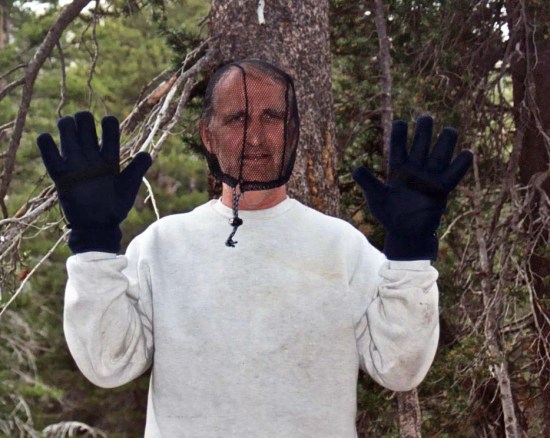
I didn't have a clue what to expect when we started recruiting for the first Sierra Trek. What I quickly found out was that people from all ages and walks of life wanted to hike across the mountains. What I learned one 30 years was that three things determined the success of the program: The people, the challenge, and the beautiful country. That participants were raising money for a good cause was a plus. This is Darth Cathy, who joined us on the 4th year, I believe. Actually Cathy is wearing a a dark mosquito net. Her career was that of an IRS agent.

I didn’t have a clue what to expect when we started recruiting for the first Sierra Trek. What I quickly found out was that people from all ages and walks of life wanted to hike across the mountains. This is “Darth” Cathy (grin), who joined us on the 4th year. Actually Cathy is wearing a dark mosquito net. Her career (now retired) was that of an IRS agent.


In my last blog about the Sierra Trek, I persuaded my Board of Directors to support the concept. I then hired Steve to help put the event together and we had located a 100-mile route across the Sierra Nevada Mountains. It was the beginning of July and the Trek was to take place in the mid-August. The clock was ticking.

A note about today’s photos: As I mentioned previously, the photos for this series on the first Sierra Trek are all taken from later treks. Today’s photos are from the mountains west of Lake Tahoe in the Granite Chief and Desolation Wilderness areas.


Our first challenge was whether we could recruit participants. Were there people in the Sacramento area crazy enough to go on a nine-day, 100-mile backpack trip up and over mountains?

The answer was a resounding yes. Steve was able to get an article published in the Sacramento Bee. All participants had to do was raise funds for the Lung Association. Naively, we failed to suggest experience would be valuable, set an age limit, or ask for a minimum amount of pledges. People came out of the proverbial woodwork! We held an orientation session at the Sacramento Municipal Utility District auditorium with close to 100 people in attendance.

Among them were a 16-year old ballerina with legs of steel and a 250-pound, fifty-four year old ex-ice hockey player who had also had a career defusing bombs in South America. At the time, he was dodging the IRS. Four little 11-year old boys came as inseparable buddies and I wondered what kind of baby-sitting service their parents assumed we were providing. There was busty Sunshine who had a skinny partner named Bilbo. (Decades before the movie trilogy, people were already entranced with Lord of the Rings and The Hobbit. I was.) Lovely Lisa was 19 years old and a perfect 10.

Another woman, who claimed to be a witch, informed me, “I’ll be over to bite you around midnight on the Trek.” And no, she never came over to bite me; but had I encouraged it, I am pretty sure it could have been arranged. We had a 40-year-old teacher from Auburn who would never sit down during the day because she claimed she would never get up, and a 45-year-old teacher from Davis who claimed he could carry his weight in booze, and probably did. There was also a young man named Dan with flaming red hair who wore moccasins, juggled and played a harmonica as he walked down the trail.

And there was Orvis.

Three weeks before the Trek, an elderly, white-haired gent with a long flowing beard and twinkling eyes walked into my office and announced he wanted to go. His name was Orvis Agee. He was 70 years old and a carpenter. He couldn’t have weighed over 100 pounds fully dressed and soaking wet. I made a snap decision.

“Uh,” I said searching for a gentle way of telling him I thought he might be too old for the Trek, “this is going to be a very difficult trip. Do you have any backpacking experience?”

“Well,” he announced proudly, “I went on a 50 mile trip with the Boy Scouts last year.” That was 20 miles farther than I had ever backpacked. “And,” he added as he warmed to the subject, “I’ve climbed Mt. Shasta several times since I turned 60.” I had never climbed Mt. Shasta or any other mountain of note. Mainly over the past ten years I had been sitting around becoming chubby.

“Welcome to the Sierra Trek,” I eked out. What else could I say? (Seventeen years later at age 87, Orvis would do his last Trek with me. It was Peggy’s first trek. He had personally raised the Lung Association well over $100,000.)

People from all walks of life joined our treks over the years. Many would come again and again. Nancy Pape, who is an interior decorator, first joined us in 1977. 40 years later, she still calls me each year to see if I am going on a backpacking trip she can join. She's family.

People from all walks of life joined our treks over the years. Many would come again and again. Nancy Pape, who is an interior decorator, first joined us in 1977. 40 years later, she still calls me each year to see if I am going on a backpacking trip she can join. On this particular trip she took a hand full of pills and choked on them. Another long-term trekker, Ken Lake, gave her the Heimlich Maneuver and quite possibly saved her life.

Here's Ken, enjoying a quiet moment. Peggy's sister, Jane, and I hired Ken to run our first 500 mile bike trek in 1977 and help out with programs. Prior to going to college, he had been a helicopter pilot in the Vietnam War. He, along with his wife Leslie, are also part of our extended family.

Here’s Ken, enjoying a quiet moment. Peggy’s sister, Jane, and I hired Ken to run our first 500 mile bike trek in 1977 and help out with programs. Prior to going to college, he had been a helicopter pilot in the Vietnam War.

Bill Braun, shown here with Peggy, is one of my all time favorite trek characters. Bill's job was that of chief mechanic on the huge container ships. He, along with Cathy, often helped Orvis down the trail in his later years, once leading him by hand when he couldn't see because of cataracts! Bill and Cathy working together to help Orvis would eventually lead them to get married.

Bill Braun, shown here with Peggy, is one of my all time favorite trek characters. Bill’s job was that of chief mechanic on huge container ships. He, along with Cathy, often helped Orvis down the trail in his later years, once leading him by hand when he couldn’t see because of cataracts! Their work together in helping Orvis would eventually lead them to get married.

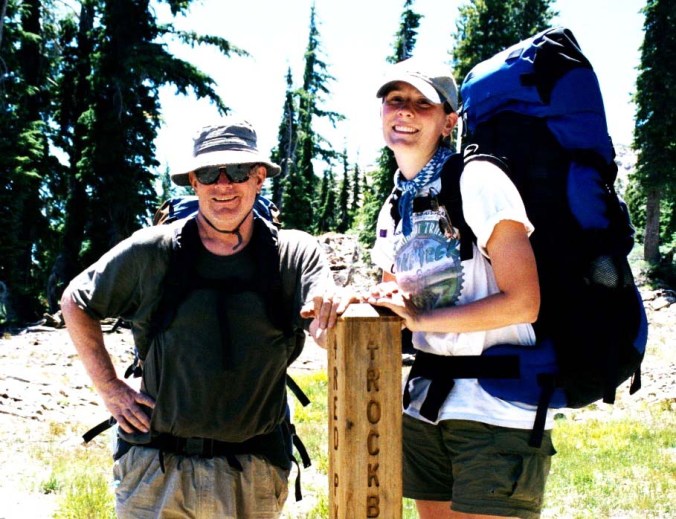
Speaking of family, this is our daughter Tasha standing with me in the Desolation Wilderness next to a trail sign. She went on several treks with us.

Speaking of family, this is our daughter Tasha standing with me in the Desolation Wilderness next to a trail sign. She went on several treks with us. And no, she isn’t seven feet tall. She was standing on a rock.

And our son, Tony. When he graduated from Annapolis, I promised to take him on a 100 mile trip including climbing Mt. Whitney. He jumped at the opportunity.

And our son, Tony. When he graduated from Annapolis, I promised to take him on a 100 mile trip including climbing Mt. Whitney. He jumped at the opportunity.

As the Trekkers rolled in, Steve and I focused our energies on the next task. What were we going to feed the mob that we would apparently be leading through the mountains? Breakfast and lunch could be pulled off the shelves in the local grocery stores. Dinner was the problem. Freeze dried food was in its early stages of development and somewhat expensive for my budget.

There was another possibility. Lipton had a lightweight, off-the-shelf dinner, which was inexpensive and sold through grocery stores. The meals came in four flavors and featured tiny amounts of turkey, chicken, beef and ham with gourmet names attached. I bought all four and Jo and I did a taste test. Except for the Ham Chadderton, they were actually decent. The Chadderton resembled something a bird might regurgitate and tasted slightly worse. “What the heck,” I thought, “three out of four isn’t bad.”

Steve suggested that he call Lipton’s headquarters back east and see if we could get the food donated. We would offer to ‘test market’ and publicize their food for the growing backpacking market. Lipton bought it. We had our dinners, and Steve had earned his $16 for the day.

We also wanted a backpacking store as a sponsor. An outdoor store would provide some much-needed credibility and be a valuable source of advice and recruits. I did a scientific search by looking in the Yellow Pages and picking out the first store I came to, Alpine West. It was only a few blocks away at 10th and R Street so I walked over. A bushy bearded, hippie-like character in his mid-twenties was behind the cash register.

“Excuse me,” I asked, “is the owner or manager in?”

“I am the owner,” was the somewhat terse reply. “What can I do for you?”

I did a quick regrouping, “Hi, my name is Curt Mekemson and I am the Executive Director of the local Lung Association,” I said as I offered my hand. He gave me a ‘what donation are you about to ask for look’ but took my hand and introduced himself as Tom Lovering. I explained what we were going to do.

“That’s insane,” Tom had replied with an assuredness that would have intimidated Attila the Hun. It certainly intimidated me. What do you say when the expert you are seeking advice from tells you flat-out that the idea you are already implementing is crazy.

“Um, it’s been nice chatting with you.” Or, “I’d really appreciate it if you didn’t tell anyone.”

I opted for the “Why do you say that?” wanting to know how far out on the limb I had crawled. I quickly learned that the event we were planning was the equivalent of the Bataan Death March. People might do it but they were going to be miserable and say nasty things about the Lung Association and me for the rest of their lives.

After having said all of that, Tom agreed to sponsor and promote the Trek through his store. I left feeling a little confused. Did he want people to say nasty things about him and Alpine West?

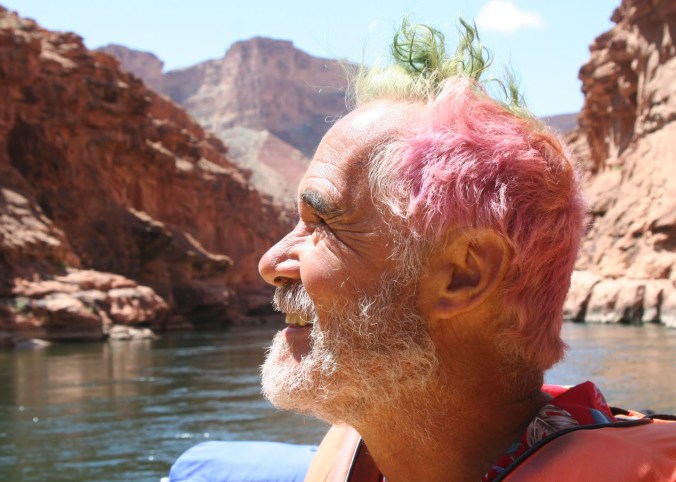
Tom and I would go on to having numerous adventures. And he remained as wild as ever. Here is on a trip down the Colorado River that Peggy and I went on with him a few years ago.

Tom and I would go on to having numerous adventures. And he has remained as wild as ever. Here he is on a trip he led down the Colorado River that Peggy and I went on with him a few years ago.

Back at Lungland, the clock was ticking. The Trek was three weeks away and then two. It was time to go out and preview the route. Given Tom’s pessimistic assessment of our adventure, Steve and I felt the preview was all the more critical. We agreed to a long weekend where each of us would hike three days of the route. The final three days were saved for the following weekend just before the Trek. Could we plan things any tighter? There was no room for error…

We took our second trek south through the Desolation Wilderness, which is just south of the Granite Chief Wilderness and both west of Lake Tahoe. Here I am checking out the terrain.

We took our second trek south through the Desolation Wilderness, which is just south of the Granite Chief Wilderness and both west of Lake Tahoe. Here I am checking out the terrain.

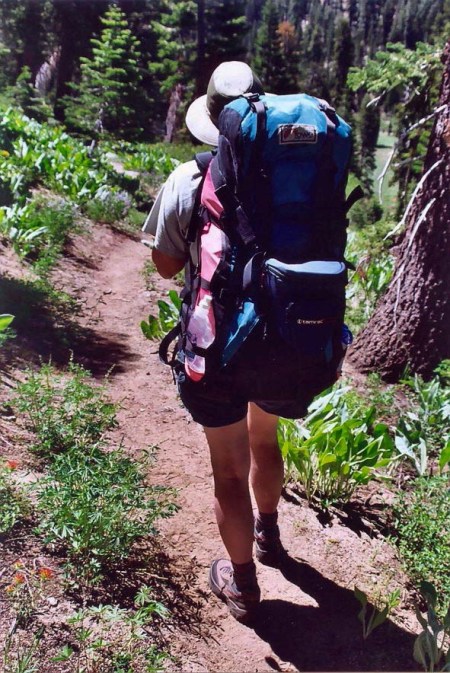
And here's Peggy hiking down one of the trails in the Granite Chief Wilderness. The pack looks almost as big as she is.

And here’s Peggy hiking down one of the trails in the Granite Chief Wilderness. The pack looks almost as big as she is.

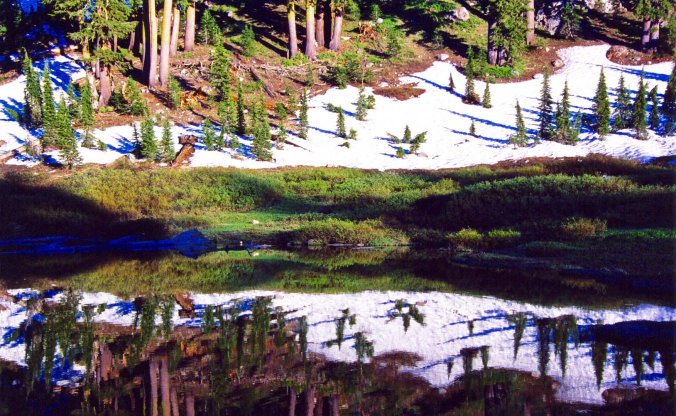
There is a series of four small lakes in the Desolation Wilderness called the 4 Q Lakes because of their shape. I took this reflection shot from my favorite camp location.

There is a series of four small lakes in the Desolation Wilderness called the 4 Q Lakes because of their shape. I took this reflection shot from my favorite camp location.

Flipped 90 degrees, it reminded me of an African mask.

Flipped 90 degrees, it reminded me of an African mask.

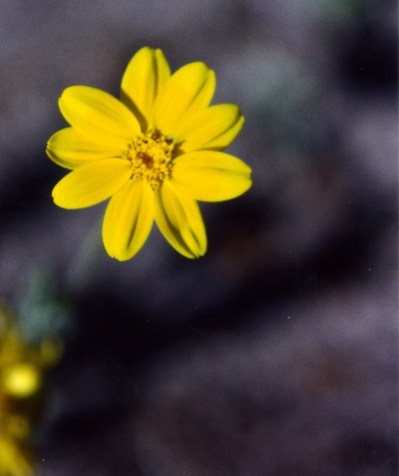
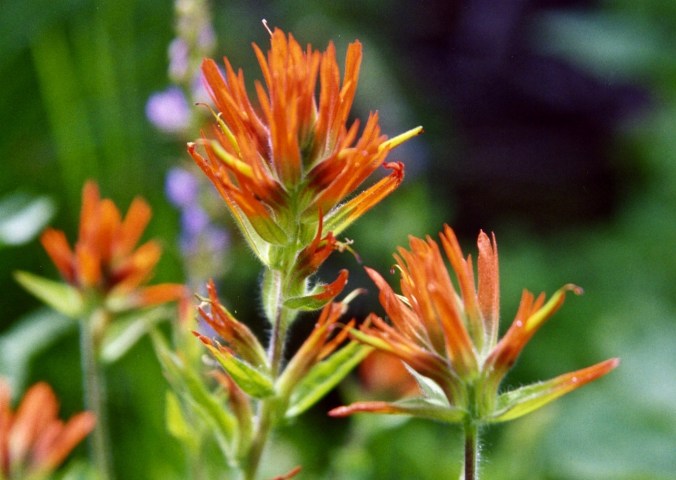
One of my favorite memories of Orvis was his expertise on flowers. Trekkers were always asking him for their names. I didn't know this one on our first trek so I asked Orvis. "Oh, that's a DYC," he told me. I dutifully told other trekkers it was a DYC. At the end of the Trek , I asked Orvis if the DYC stood for anything. He got a twinkle in his eye and said, "Dam yellow composite."

One of my favorite memories of Orvis was his expertise on flowers. Trekkers were always asking him for their names. I didn’t know this one on our first trek so I asked Orvis. “Oh, that’s a DYC,” he told me. I dutifully told other trekkers it was a DYC. At the end of the Trek , I asked Orvis if the DYC stood for anything. He got a twinkle in his eye and said, “Dam yellow composite.”

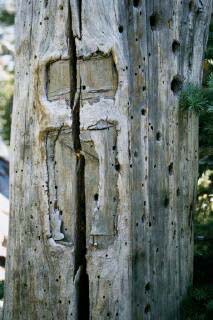
I'll conclude today with this tree blaze from the Desolation Wilderness. One of the joys of wilderness travel is finding old, long since forgotten trails and following them. Early sheepherders, ranchers, foresters, mountain men and explorers often marked their trails by cutting into the bark of trees. Many of the blazes would last for years and years, such as this one.

I’ll conclude today with this tree blaze from the Desolation Wilderness. One of the joys of wilderness travel is finding old, long since forgotten trails and following them. Early sheepherders, ranchers, foresters, mountain men and explorers often marked their trails by cutting into the bark of trees. Many of the blazes would last for years and years, such as this one.

NEXT BLOGS

Tomorrow: A review of Three Hundred Cups of Tea and The Toughest Job, a book by two Returned Peace Corps Volunteers, Asifa Kanji and David Drury, on their experience as Volunteers in Mali, West Africa.

Friday/Saturday: The first of my photographic essays on Burning Man in preparation for the 2017 event.

Monday: Back to Boston and the Freedom Trail

Boston: A Cradle of Liberty Where Freedom Still Rings Out

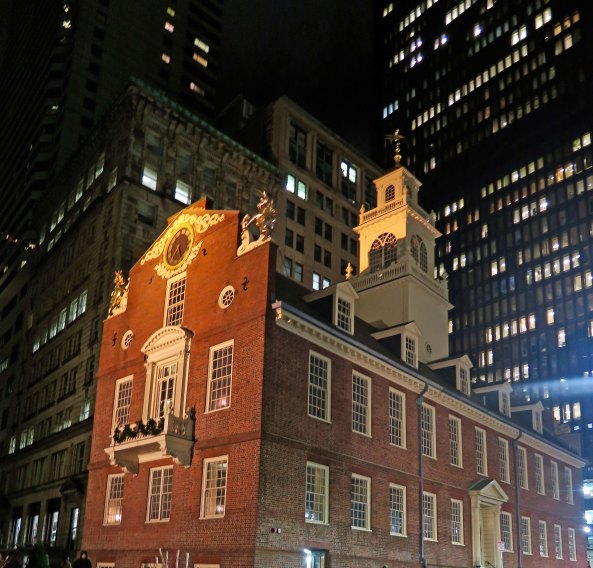
Boston's Old State House has been a symbol of American liberty for over 300 years.

The Declaration of Independence was first read to Bostonians in 1776 from the balcony of the Old State House (shown at night above). John Adam’s bright and articulate wife, Abigail, wrote to her husband that as soon as the Declaration was read… “three cheers rended the air.” She went on to report, “Thus ends the royal authority in this state.”

A fierce desire for independence and freedom has existed in Boston dating back to its very beginning in 1630 when the city was granted a charter to self-govern. Britain’s decision to limit the city’s freedom and tax its citizens starting in the 1760s led to protests that ended in the Revolutionary War and American independence. Beginning in the early 1800s, a strong abolitionist movement opposing slavery grew up in the Boston that would play a key role in leading to the Civil War and the emancipation of slaves. When Peggy and I visited the city in December, we were able to visit a number of sites that reflected Boston’s historical contributions to liberty in America, but we also found ample evidence that the call to freedom still rings out in the city.

My experience in Boston combined with the fact that Donald Trump will be inaugurated as President this week led me to ponder some the most powerful statements that underlie our nation’s commitment to freedom and equality. Here are my favorites:

We hold these truths to be self-evident, that all men are created equal, that they are endowed by their Creator with certain unalienable Rights, that among these are Life, Liberty and the pursuit of Happiness. —US Declaration of Independence

Four score and seven years ago our fathers brought forth on this continent, a new nation, conceived in Liberty, and dedicated to the proposition that all men are created equal. —Abraham Lincoln’s Gettysburg Address.

Congress shall make no law respecting an establishment of religion, or prohibiting the free exercise thereof; or abridging the freedom of speech, or of the press; or the right of the people peaceably to assemble, and to petition the Government for a redress of grievances. —The First Amendment of the US Constitution

Slightly different but reflecting America’s original openness to immigration, and I might note, recognizing that we are a nation built by and with immigrants…

Give me your tired, your poor, your huddled masses yearning to breathe free, the wretched refuse of your teeming shore. Send these, the homeless, tempest-tossed to me, I lift my lamp beside the golden door! —Quote on America’s Statue of Liberty

These are words of wisdom from the folks who “made America great,” and have inspired generations of people in the U.S. and around the world. It is my hope that our new president will take these words to heart  in his efforts to “make America great again.”


Neither Peggy nor I had been to Boston before, which is a bit surprising considering the importance of Boston to the nation’s history— and to my own. My Great Grandfather to the umpteenth on my mother’s side arrived there in early 1630s from England, when the city was founded. Ultimately, we are all immigrants.

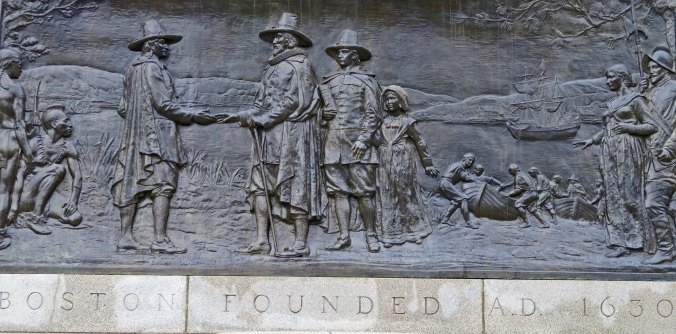
Boston Commons plaque that commemorates the founding of Boston, Massachusetts in 1630.

This plaque located on Boston Commons commemorates the founding of Boston in 1630. My Great Grandfather to the umpteenth is helping pull the boat in. (Just kidding.)

It was ‘love at first sight’ when we arrived. I had managed to find us an affordable hotel in the center of the city. Most of Revolutionary Boston was within walking distance and I am a big fan of Revolutionary War history. The red brick Freedom Trail was a short 10 minutes away. “Just follow the yellow brick road” was bouncing around in my mind. Instead of skipping off to Oz on yellow bricks with encouragement from Munchkins, however, the red bricks of the Freedom Trail connected us with many historical sites central to America’s struggles for freedom and equality.

Today, I want to share some of the things we saw in Boston that seem particularly relevant to this week in American history. Next Monday, I’ll be more focused on Boston’s Revolutionary history.

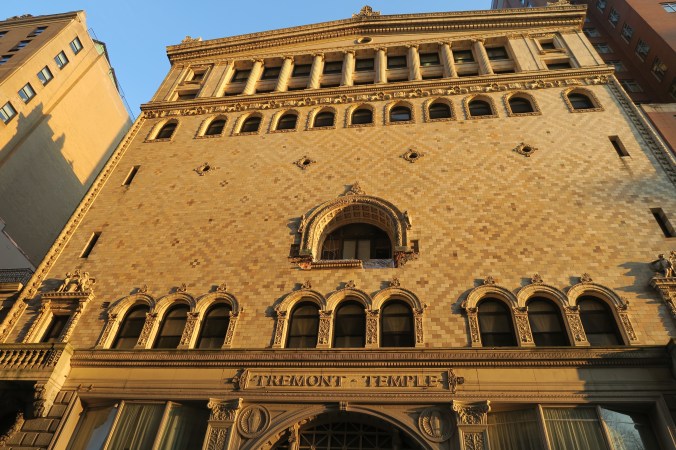
The Tremont Temple in Boston, Massachusetts.

I photographed the Tremont Temple because I thought it was a unique building…

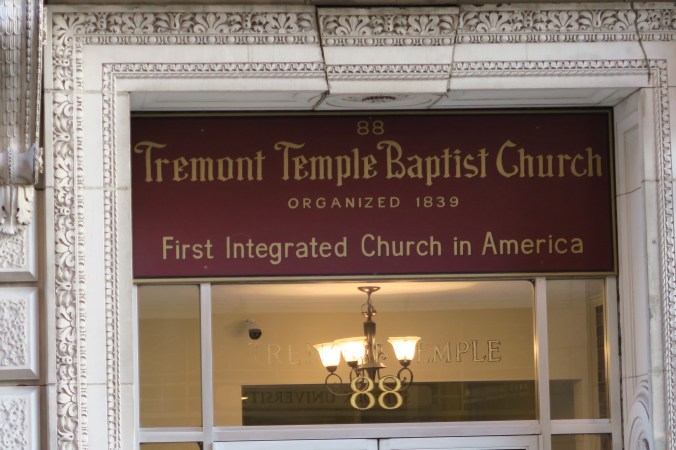
Tremont Baptist Church was the first integrated church in America.

Not having a clue that it was a Baptist Church, or that it was the first integrated church in the U.S. It is a fitting photo to commemorate the week of Martin Luther King’s birthday.

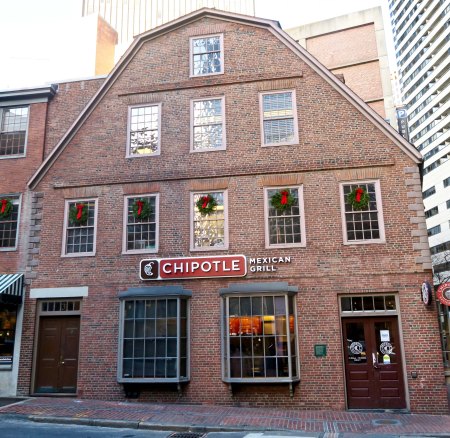
I normally wouldn't take a photo of a Chipotle Restaurant, but this one happens to locate in the Old North Bookstore Building where Harriet Beecher Stowe's novel "Uncle Tom's Cabin" was published, which was both a classic of the Abolition Movement and a key factor in leading to the Civil War and the emancipation of slaves.

I normally wouldn’t take a photo of a Chipotle Restaurant, but this one happens to be located in the Old North Bookstore Building where Harriet Beecher Stowe’s novel “Uncle Tom’s Cabin” was published. The book was both a classic of the Abolition Movement and a key factor in leading to the Civil War and the emancipation of slaves.

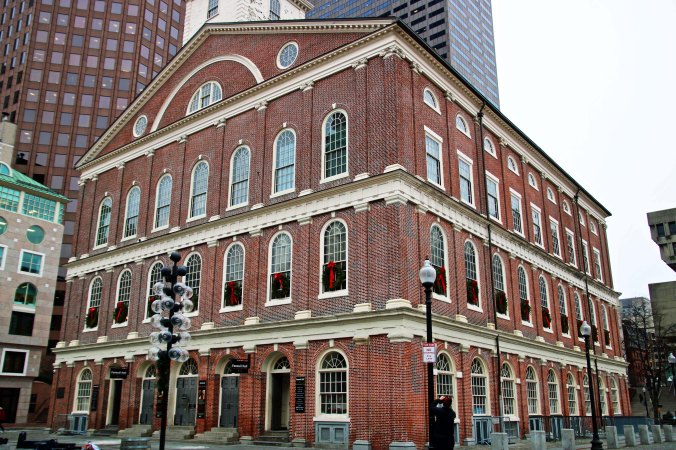
Historic Faneuil Hall located in Boston, Massachusetts

Faneuil Hall is located just across the street from the Old State House. It was from this building that the fateful words were uttered, “No Taxation without representation.”  Maybe today’s declaration would be focused on the ultra-wealthy and declare “No representation without paying your fair share of taxes.” (Photo by Peggy Mekemson.)

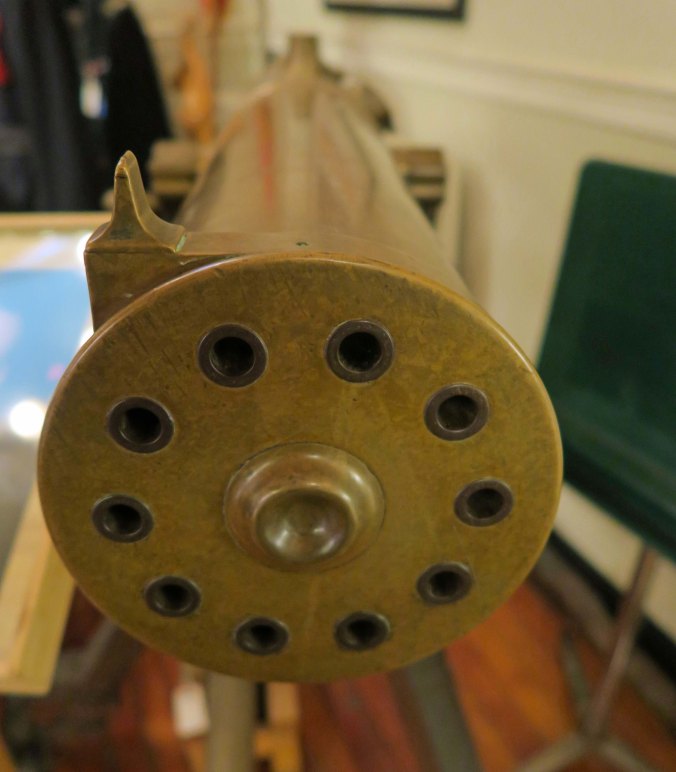
We found this Gatling Gun in the military museum on the third floor of Faneuil Hall. While it may seem strange to include it here, it's inventor, Richard Gatling, believed that by employing increasingly deadly weapons that the size of armies could be reduced and that deaths due to combat and disease could be reduced as well. History has taught us a much different lesson, one that should be considered in any discussion of renewing the nuclear arms race.

We found this Gatling Gun in the military museum on the third floor of Faneuil Hall. While it may seem strange to include it here, the inventor, Richard Gatling, believed that by employing increasingly deadly weapons, the size of armies could be reduced and deaths due to combat and disease could be lowered. He also believed it would show us the futility of war. History has taught us a much different lesson. Millions upon millions have died because of the ever-increasing sophistication of weapons. And now our new president is talking about renewing the nuclear arms race…

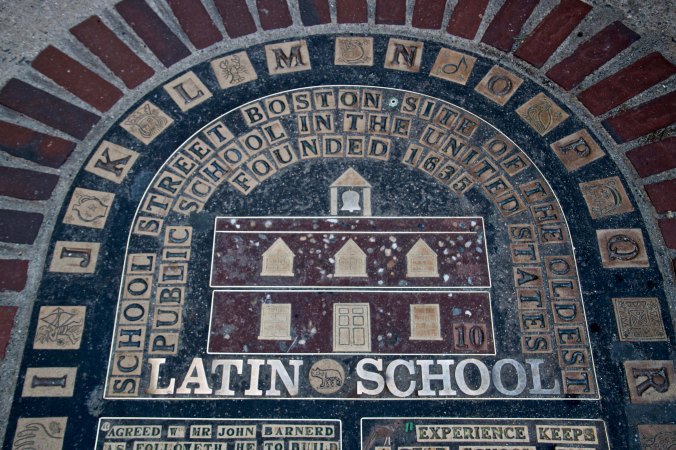
This plaque on School Street notes where the Latin School stood. Founded on April 23, 1635, it is the oldest public school house in America. People such as Benjamin Franklin, Samuel Adams and John Hancock attend the school. Public education in America may become a thing of the past under Betsy DeVos, his new Secretary of Education, who will gut public schools in favor of private schools whose motivation is either profit or the promotion of a particular belief system,.

This plaque on School Street notes where the Latin School stood. Founded on April 23, 1635, it was the first public school in America. People such as Benjamin Franklin, Samuel Adams and John Hancock attended the school. Public education in America may become a thing of the past under Betsy DeVos, Trump’s new Secretary of Education, who’s proposed voucher system will gut public schools in favor of private schools whose primary motivation is profit or promoting a particular belief system. (Photo by Peggy Mekemson.)

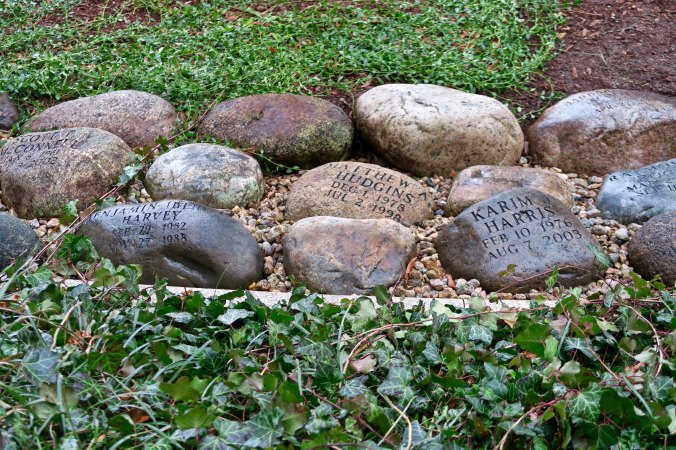
Peggy and I wondered what the significance of theses rocks were when we were on our walk. The we come on the plaque featured below.

Peggy and I wondered what the significance of theses rocks were we found on our walk. Then we came upon the plaque featured below.

The Boston Peace Garden.

The Boston Peace Garden.

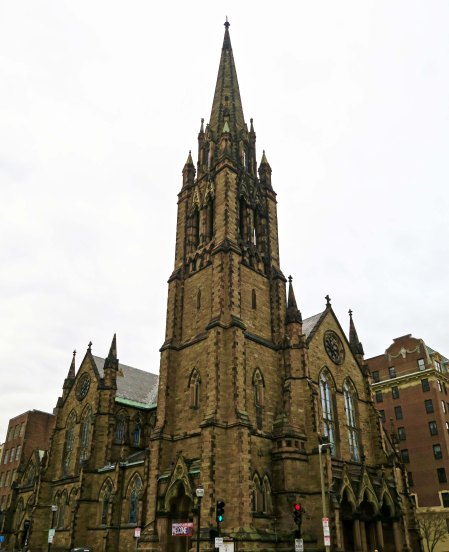
Peggy and I walked over to Newbury Street where the New England Genealogical Society is located. Along the way we came across the very impressive First Church of the Covenant that has long been a leader in promoting social justice.

We walked over to Newbury Street where the New England Genealogical Society is located. Along the way we came across the very impressive First Church of the Covenant that has long been a leader in promoting social justice.

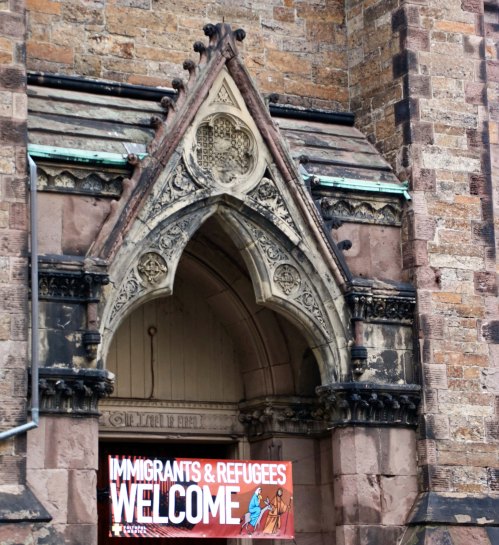
This banner was stretched above its door...

This banner was stretched above its door…

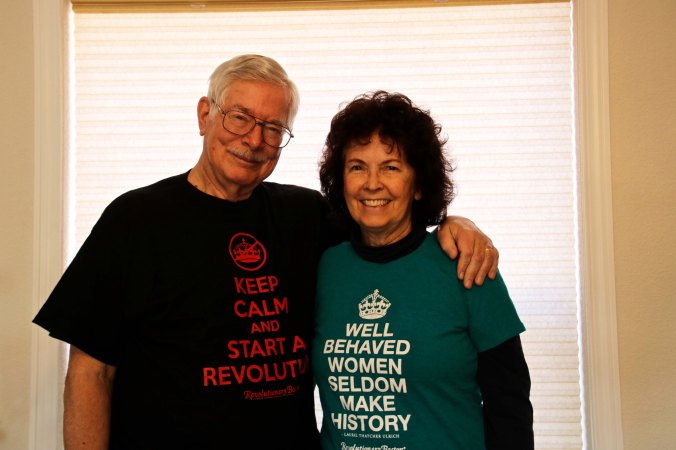
Peggy and I found these T-shirts featured in Boston's Old State House where freedom still rings.

Peggy and I found these T-shirts featured in Boston’s Old State House.We decided that they would serve as an appropriate conclusion to this blog.

NEXT BLOG: Back to the Sierra Trek


Sunset Bay: Up Close and Personal… The North Coast Series

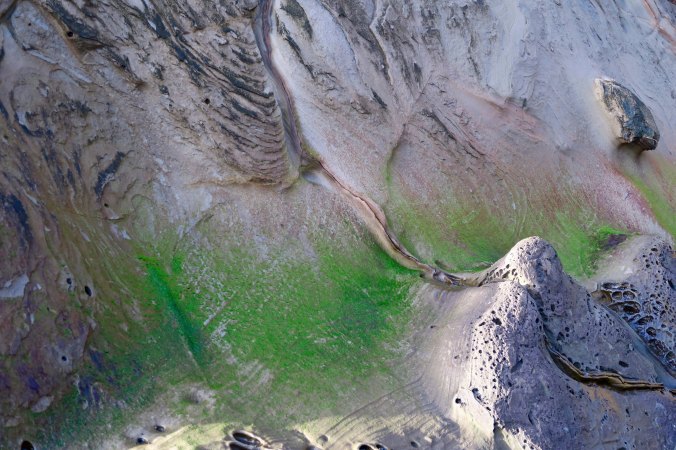
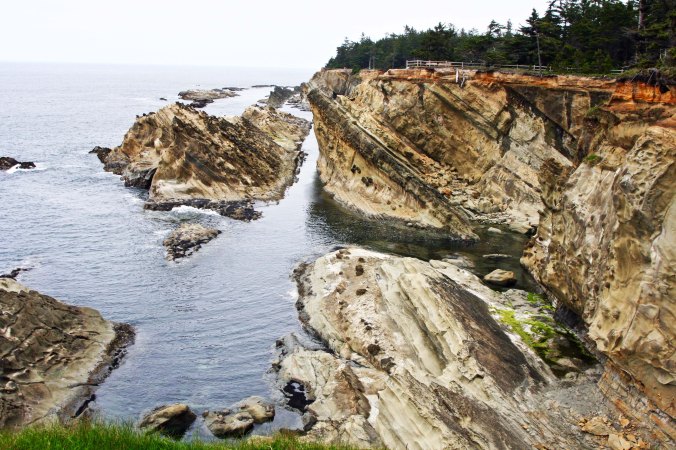
Millions of years ago, Sunset Bay was part of a large delta where layer after layer of silt, sand, and marine deposits were laid down over eons creating sedimentary rocks. Once flat, these layers were tilted upward by plate tectonics as the Pacific plate crashed into and sank under the North America continent.

Millions of years ago, Sunset Bay was part of a large delta where layer after layer of silt, sand, and marine deposits were laid down over eons, creating sedimentary rocks. Once flat, these layers were tilted upward by plate tectonics as the Pacific plate crashed into and sank under the North America continent. Varying layers of hard and soft rock attacked by waves, wind, storms and salt crystals have created beautiful rock sculptures like this one.


Landscape photography is known for its grand views. I enjoy those views, always, but I am also intrigued by small things that catch my eye, a leaf perhaps, or a rock. Today I am going to focus more on the ‘up close and personal’ part of Sunset Bay and Shore Acres State Parks on the Oregon coast as well as touch on the geology of the area. This is my Friday photographic essay. Enjoy.


Sedimentary rock warn down by waves at Sunset Bay State Park on the Oregon Coast.

A close up of the tilted sedimentary rock shown in the opening photo. The holes in the rock at the right, BTW, are created by growing salt crystals from salt left behind by tides and waves. Algae grows on the sides of the holes and limits the growth of the crystals, thus creating the rounded shapes.

Another view. The white rocks have broken free from on of the tilted layers of sedimentary rock.

I found this view of the weathered sedimentary rocks at Sunset Bay fascinating. The late afternoon sun added the color. The white rocks had broken free from one of the sedimentary layers.

Sedimentary layers of rocks create tracks into Sunset Bay on the Oregon Coast.

Here, the sedimentary layers stretch out along the beach creating a ‘path.’

Coastline of Shore Acres Park on the Oregon Coast near Coos Bay, Oregon.

The next door Shore Acres State Park provides a different perspective on the erosive forces of nature on the tilted sandstone and siltstone rocks.

Erosion at Shore Acres State Park on the Oregon Coast.

A different perspective of the Shore Acres coastline.

Concretion rock found in Sunset Bay on the Oregon Coast near Coos Bay.

This weird rock is known as a concretion. Calcite forms around a small object such as a broken shell. Layer after layer is applied (think pearl in an oyster) until you get a rock like this.

Concretions found on the beach of Sunset Bay on the Oregon Coast.

If one is good, more are better, right?

Ancient spruce roots at Sunset Bay on the Oregon Coast near Coos Bay.

I figured this was just driftwood on the beach until I did some research. Apparently, this is the root system of an ancient spruce. A massive earthquake struck approximately 1200 years ago and sank major portions of the coast, covering local forests with water. The earthquake was the result of plate tectonics where the Pacific Plate is crashing up against and sinking under the North American continent. Known as the Cascadia Subduction Zone along the Oregon coast, this geological region is still active today and is threatening a major earthquake in the not too distant future. Coastal communities are all involved in disaster planning. We are told that if the Applegate Dam above our house breaks, flood waters will crest right about where we live, even though we are high above the river.

Just for fun, I found this ivy leaf adding a splash of green to the beach.

Just for fun, I found this ivy leaf adding a splash of green to the beach.

A rock added a dash of color...

A rock added a dash of yellow…

A rock with a barnacle found on Sunset Bay on the Oregon Coast.

Another yellow rock, which is part of an exposed sedimentary layer, displays a single barnacle.

Barnacles attached to a rock at Sunset Bay State Park on the Oregon Coast.

This one had a whole tribe of barnacles.

Sea anemones found in a tide pool at Sunset Bay on the Oregon Coast near Coos Bay.

Ever since I was a little kid visiting with my grandparents on the Central California coast, I have been unable to resist tide pools. These are sea anemones— an oldster and a youngster. The tentacles carry a toxin that is injected into prey such as a small fish. The prey is then moved to the center and stuffed into its mouth, which also serves as its anus, a fact I am sure you were just dying to learn!

Seaweed on the beach at Sunset Bay on the Oregon Coast.

This seaweed exists in the intertidal zone and is built with dense root system to grab onto rocks and withstand crashing waves. Recent storm had succeeded in breaking this one free. Tracks show that a seagull has stopped by to check it out. I also liked the reflection captured by water that barely covers the sand.

Another reflection shot, which includes seagulls.

Another reflection shot, which includes seagulls.

Seagull at Sunset Bay on the Oregon Coast near Coos Bay.

And a seagull up close with a touch of attitude that says feed me! Check out the knobby knees.

Dead tree with impressing root system on Sunset Bay near Coos Bay on the Oregon Coast.

Peggy has roots. This magnificent tree has been on the beach for a while.

Downed tree with roots reaching skyward on the beach at Sunset Bay State Park.

Another view.

Natural root sculpture food at Shore Acres State Park on the Oregon Coast.

I’ll use this fantastic creature that lives next door in Shore Acres State Park to wrap up today’s photo essay blog. I’ve used this jumble of roots in a previous blog.

Monday’s Blog: Revolutionary Boston and its message for today. Peggy and I were just there and walked the Revolutionary Trail. “Listen my children and you shall hear of the midnight ride of Paul Revere.” —Longfellow

Wednesday’s Blog: The Sierra Trek Part 3— Meet the incredible cast of characters that sign up to go; travel with Steve and me as we preview the route and Steve pees around the camp to scare away bears.

Friday’s Blog: It’s time to start thinking about Burning Man! Sign up is in February. For the next few weeks, I’ll be digging into my archive of thousands of Burning Man photos taken over a ten-year period for my Friday photograph essays.

My apologies to all of my blog friends for my slowness in responding to comments and tardiness in reading blogs over the past month. I will catch up. After a month of travel and visiting family (including five grandsons) on the East Coast, Peggy and I returned to some of the same weather that many of you have been facing. Our property was buried under two feet of snow. As a result, much of my time has been spent shoveling snow off of driveways and roofs, dealing with power outages and frozen pipes, and trying to persuade a roaring creek that it does not want to run down our driveway. Some fun! We are beginning to see the light at the end of the tunnel, however. Or at least the dirt under the snow.

Curt


What Do Burning Down a Bank and the Sierra Trek Have in Common? … The Sierra Trek: Part 2

Waterfall and pool on Five Lakes Creek in the Granite Chief Wilderness area behind Squaw Valley, California.

The Granite Chief Wilderness behind Squaw Valley, home of the 1960 Winter Olympics, is an area of rugged terrain and natural beauty. This pool on Five Lakes Creek was an open invitation for a dip on a hot summer day. (Photo by Peggy Mekemson.)


The vision part of being a visionary is always the easy part, as any visionary will tell you. It is the execution of the idea that separates the mouse from the moose. In my first blog on the Sierra Trek, I told how Steve Crowle and I had come up with the crazy idea of raising money for the non-profit I was executive director of by running a 9-day, 100-mile backpack trip in the Sierra Nevada Mountains of California. I had six weeks to plan and run the event. It would have been a major undertaking even if I had six months!

A note on photos: I didn’t take any pictures during the first Sierra Trek. It was before I became interested in photography, plus I had my hands full shepherding 63 people across the mountains— as you will learn. The photos in this blog and in the rest of the series were taken on later Treks and on personal trips in the Sierra’s and other California mountain ranges where we trekked. They will give you an idea of why I fell in love with backpacking and the Sierras. 


My first challenge on the trek was selling it to Board of Directors. Running a backpack trip as a fundraiser was a huge leap from sending out Christmas seals. At 29, I was close to the youngest Lung Association Executive Director in the nation in 1974 and I had already ruffled some feathers. A research doctor from UC Davis was foaming at the mouth because I wanted our organization to focus on prevention programs as opposed to medical research. What would he think of me running off to the woods on a backpack trip?

Leading a group of people through rugged terrain for long distances was a bit more scary than sending out Christmas Seals. Here we are looking south from the Granite Chief Wilderness to the Desolation Wilderness, a route we followed several times on the Sierra Trek.

Leading a group of people through rugged terrain for long distances was a bit more scary than sending out Christmas Seals. Here we are looking south from the Granite Chief Wilderness to the Desolation Wilderness, a route we followed several times on the Sierra Trek. Snow would often be a challenge on our adventures.

“You want to do what?” with a decided emphasis on the first and fifth words is the best way I can describe the Board’s reaction to my proposal. It was easy to translate: “Why would a 29-year-old executive director with less than a year of experience under his belt, want to risk his career on such a harebrained idea?”

I echoed wild Steve, “Why not?”

Actually I had a great Board. Once the members were convinced that this was something I really, really wanted to do, their final response was “OK, go for it!” I called Steve immediately. I had a wide range of responsibilities ranging from administration to program to fundraising. I would have a limited amount of time to devote to the project and I didn’t know anyone else who was crazy enough to take on the challenge.

I had originally talked Steve into replacing me as Executive Director of Sacramento’s Ecology Information Center with a sales pitch that included, “Look, I have this great job where you work 60 hour weeks, have a Board that likes to scream at each other, and has a starting salary of $200 per month. Are you interested?” Minus a screaming Board of Directors, organizing the Trek wouldn’t be all that different.

Steve had a bright, curious mind and was knowledgeable on environmental issues. He also seemed to have unlimited energy and was built like a bear. It had served his well as Executive Director of EIC. In addition to overseeing the Center’s ongoing projects, he had immediately set out to develop a community garden downtown. Initially known as the terra firma Garden and later as the Ron Mandela Garden, it would provide inner city residents with a touch of nature for over 30 years— all the way until the State of California decided to grow buildings on the site.

The downside about Steve was that he existed on the edge. I later learned that one of his friends who he recruited to volunteer on the Trek frequently flew to Columbia and returned with his cargo holds filled with pot. Steve was a ‘person of interest’ to the FBI.

A year after the Trek, Steve called me and told me that the FBI had showed up on his doorstep. My immediate thought was that they had tied Steve to the Colombia operation or that some of the terra firma/Mandela gardeners were growing marijuana. Steve’s concern was that his radical youth was catching up with him. He had been a little too close to the fire when the Bank of America had been burned down in Santa Barbara in 1970 as a protest against the Vietnam War. “And what were you doing with those matches?” Mr. Crowle. (Steve told me the Santa Barbara story a few years ago before he passed away.)

Actually, the FBI had bigger fish to fry. Apparently one of his gardeners had gone from farming her plot to plotting an assassination. Young Lynette Fromme grew up in Southern California where she was a star performer in a children’s dance group, performing at such venues as the Lawrence Welk Show and the Whitehouse.

At 19, a strong disagreement with her dad sent her scurrying off to Venice Beach where she found comfort from an older man, Charles Manson. She soon found herself one of Manson’s clan, taking care of an aging George Spahn at his ranch where the ‘family’ hung out. It was Spahn who gave Lynette her nickname “Squeaky,” because, as legend has it, she squeaked each time he tried to grope her.

Squeaky missed out on the murderous rampage the family undertook in 1969 killing Sharon Tate among others, but she remained intensely loyal to Charles, defending him to the press and anyone else who would listen. After Manson’s conviction and sentence to a lifetime in prison, she moved to Stockton where two of the people she was living with, James and Lauren Willett, mysteriously ended up dead.

Abandoning Stockton, Squeaky moved to Sacramento and rented an apartment with another Manson groupie, Sandra Good. The two of them adopted a new life style and persona as ‘nuns’ in Manson’s latest crusade, saving the earth. Manson even gave them new names with Squeaky becoming ‘Red’ and Sandra becoming ‘Blue.’ It was with her new name, persona, and purpose that Squeaky took up gardening at the Mandela Garden. Steve knew her, of course (she liked his intense eyes), but knew nothing about her background.

It was with her new purpose of ‘saving the earth’ that she left her apartment on the fateful morning of September 5, 1975 and strolled over to Capitol Park where she got within a few steps of the visiting President Gerald Ford before pointing her Colt 45 at him, creating immediate pandemonium. She later claimed she was “just trying to get the President’s attention.” She did. Three months later she found herself convicted of an attempted assassination and in prison.

As for Steve, he informed the FBI that he didn’t have a clue as to who Fromme was or what she was up to other than being a gardener. Like Pangloss, he went back to cultivating his garden.

But all of this was in the future. My phone call to Steve went something like the following:

“How would you like to go backpacking and get paid for it?” I asked.

“Give me a hard question,” Steve responded.

“Are you willing to work for two dollars an hour?” I casually threw in as fine print.

“That,” he replied, “is the question.”

I went on to explain that while the Board members had approved of the concept, they weren’t particularly enthusiastic about spending large sums of money to see if it worked. I could just barely squeeze out the minimum wage of the day for two months to see if we could pull it off. Steve, after ample groaning, allowed that it would supplement what he was earning at the Center and took the job.

My next responsibility was to come up with a name. While thinking of backpacking 100 miles in nine days the word trek popped in to my mind. So I looked it up in the dictionary. “A long, arduous journey” was the definition. That seemed appropriate, and since we were doing our long, arduous journey through the Sierra Nevada Mountain range, I decided to call it the Sierra Trek.

Where to go posed a more serious challenge. I came up with three criteria: one, it had to be 100 miles long; two, it needed be in our territory; and three, the trail should be easy to follow. The hundred miles was a given, and ‘being in our territory’ seemed feasible since several of ALASET’s (the American Lung Association of Sacramento-Emigrant Trails) nine counties encompassed a significant portion of the Northern Sierra.

The clinker in our selection process was the ‘easy to follow.’ I had nightmares of having Sierra Trekkers lost all over the mountains with Steve and me scrambling to find them. We’d be lucky if we could avoid becoming lost. Serendipity stepped in and helped out. I was reading the Sacramento Bee when I came across our solution.

The horse people were planning their annual 100-mile horse race across the Sierra Nevada, the Tevis Cup Race. The event started in Squaw Valley and ended in Auburn. Horses had to follow substantial trails, I reasoned. Squaw Valley had been the sight of the 1960 Winter Olympics and would provide an internationally known resort to kick off our event.

A trail sign for the Tevis Cup Trail behind Squaw Valley, California.

A trail sign marking the Tevis Cup horse race. The same route is now used for a 100-mile ultra marathon run across the mountains.

Auburn was one of the main foothill communities in the Association’s territory and would make an ideal ending place. The trail had the added advantage of being an early trail used by pioneers. We could use the historical angle and tie in with our name. My major concern was following a trail filled with horse poop.

Steve made contact with the woman in Auburn who was organizing the Tevis Cup Race. “Yes, the trail is easy to follow.” They marked it with yellow ribbons and the ribbons would still be up for our Trek. As for my concern about horse manure, “There should be plenty of time between the race and your trek for the manure to dry out.”

“Fine,” I said to Steve when he reported back, “our Trekkers will be shuffling down trails in dry horse shit up to there ankles.” On the other hand, I thought, we can tell them to follow the horse droppings if the ribbons run out. The important thing was we had a route and could begin publicizing the event. Steve and I agreed to preview the route in advance of the Trek to pin down campsites and reduce the possibility of nasty surprises.

So now, we had a route and a name. It was time to recruit participants, obtain food, and preview the route— all of which I will include in my next blog, where I will also learn a very valuable lesson from a 70-year old.

The Granite Chief Wilderness in the Sierra Nevada Mountains north of Lake Tahoe.

One of my favorite Granite Chief Wilderness views. Lake Tahoe, Squaw Valley, and Alpine Meadows are on the other side of the mountain. The flowers are called Mule Ears. (Photo by Peggy Mekemson.)

Another field of mule ears in Granite Chief.

Another field of mule ears in Granite Chief. The trail wound its way through here.

A close up of the Mule Ears blooming. There are few places in the Sierra's that can match the display of flowers in the Granite Chief Wilderness,

A close up of the Mule Ears blooming. There are few places in the Sierra’s that can match the display of flowers in the Granite Chief Wilderness.

Washington Lilies found in the Granite Chief Wilderness area behind Squaw Valley.

These Washington Lilies are found on the trail as it makes its way through the Granite Chief Wilderness down toward Five Lakes Creek.

Mariposa Lilies found in dry areas behind Squaw Valley.

As are these Mariposa Lilies…

And Tiger Lilies.

Tiger Lilies.

Indian Paint Brush found in Granite Chief Wilderness behind Squaw Valley, California.

And Indian Paint Brush.

Lichens add color along the trail as well.

Lichens add color along the trail as well.

Snag found in the Granite Chief Wilderness north west of Lake Tahoe, California.

This old snag provided a different type of photo-op…

Lodge Pole Pines found in the Granite Chief Wilderness of the Sierra Nevada Mountains.

As did these weathered Lodge Pole Pines.

Little Needle Lake in the Granite Chief Wilderness.

Little Needle Lake is a short three-mile hike from the top of Squaw Valley. I enjoyed the reflection here. At night there is an amazing chorus of frogs. I’ve often camped beside the lake.

Five Lakes Creek in the Granite Chief Wilderness area behind Alpine Meadows ski area.

Five Lakes Creek flows along quietly here and provides and invitation to cool off in the middle of summer. Earlier it can be roaring with snow melt and icy water.

Peggy provides an example of how the creek should be enjoyed on a hot August afternoon.

Peggy provides an example of how the creek should be enjoyed on a hot August afternoon.

Canny on Five Lakes Creek near Diamond Crossing in the Granite Chief Wilderness.

The final photo of the day. Five Lakes Creek drops into a canyon a few miles below where Peggy enjoyed her cooling off. The top photo on this post provide a closeup. I often camped Treks at Diamond Crossing near here. (Photo by Peggy Mekemson.)