I am continuing to dip back into my archives for armchair travel in the time of Covid-19. This is my third post in a series of five on Venice where Peggy and I travelled in 2013.
Remember the old Frank Sinatra hit song “Love and Marriage Go Together Like a Horse and Carriage.” Venice’s canals and gondolas are like that. It is hard to imagine one without the other. Also, it is hard to imagine gondolas without tourists. I suspect that most of them are docked in this time of Covid-19. In fact, satellite photos show the canals to be surprisingly clean. Even jellyfish have returned to take advantage of the tourist free waters! While Venetians may miss the tourist dollars, they, too, are appreciating their tourist free city. The government is searching for ways to reduce the dependence on tourist dollars— and the number of tourists. Gondolas aren’t about to go away, but there may be far fewer of them in the future.
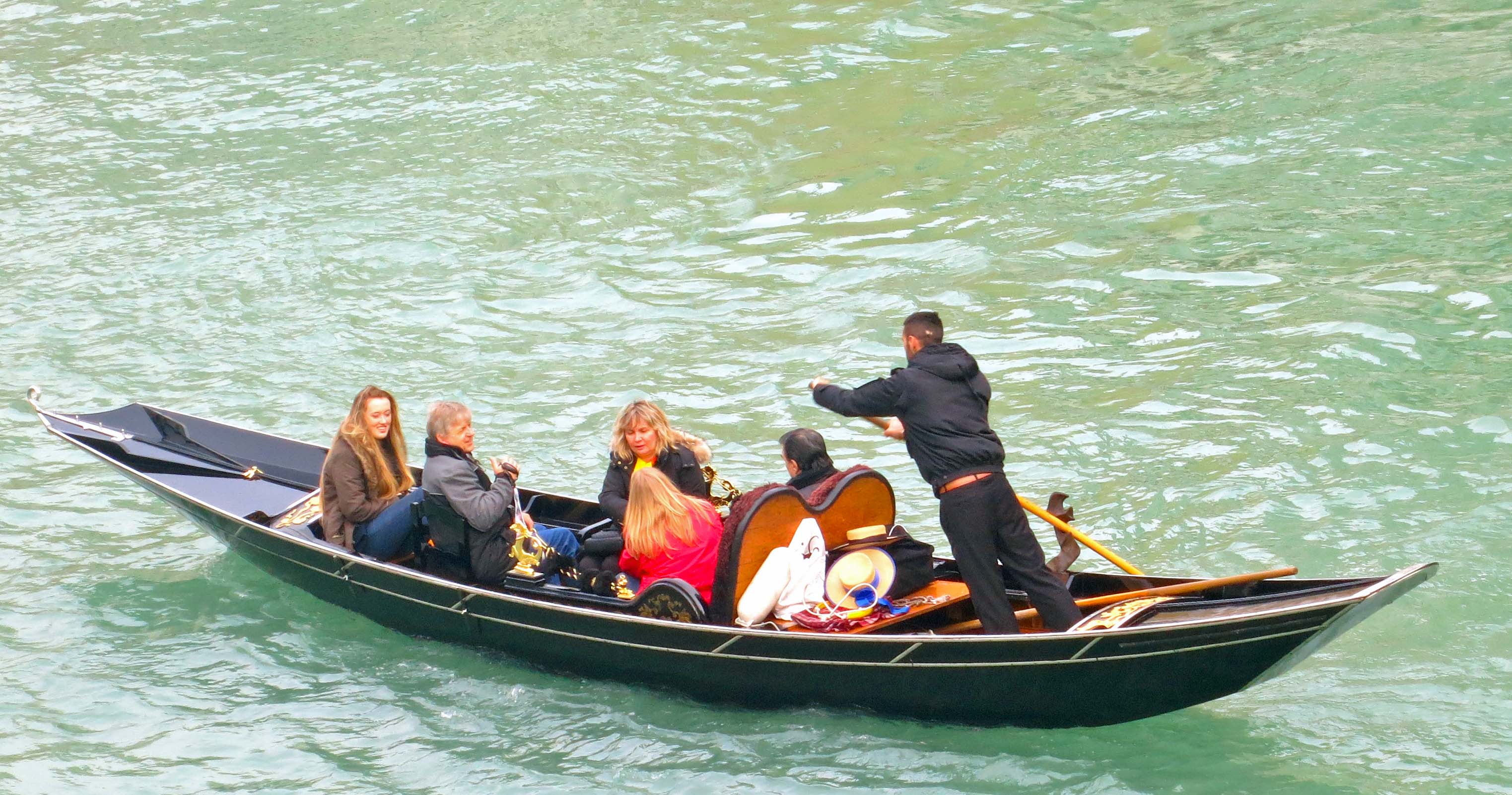
I shot this photo from the Rialto Bridge looking down on the Grand Canal.
It is impossible to think of Venice without thinking of canals and romantic gondolas with singing gondoliers. Or possibly your vision of Venice is of fast boats with roaring engines and good guys/bad guys chasing each other with guns blazing as depicted in any number of movies.
A gondolier works his boat on cold, rough waters in the Grand Canal as his passengers enjoy the ride, bundled up in warm clothes.
We were in off-season, however. Only a few hardy tourists braved the cold for gondola rides and no movies were being made. The canals had reverted to their primary role as transportation corridors, a role which they have played for a thousand years.
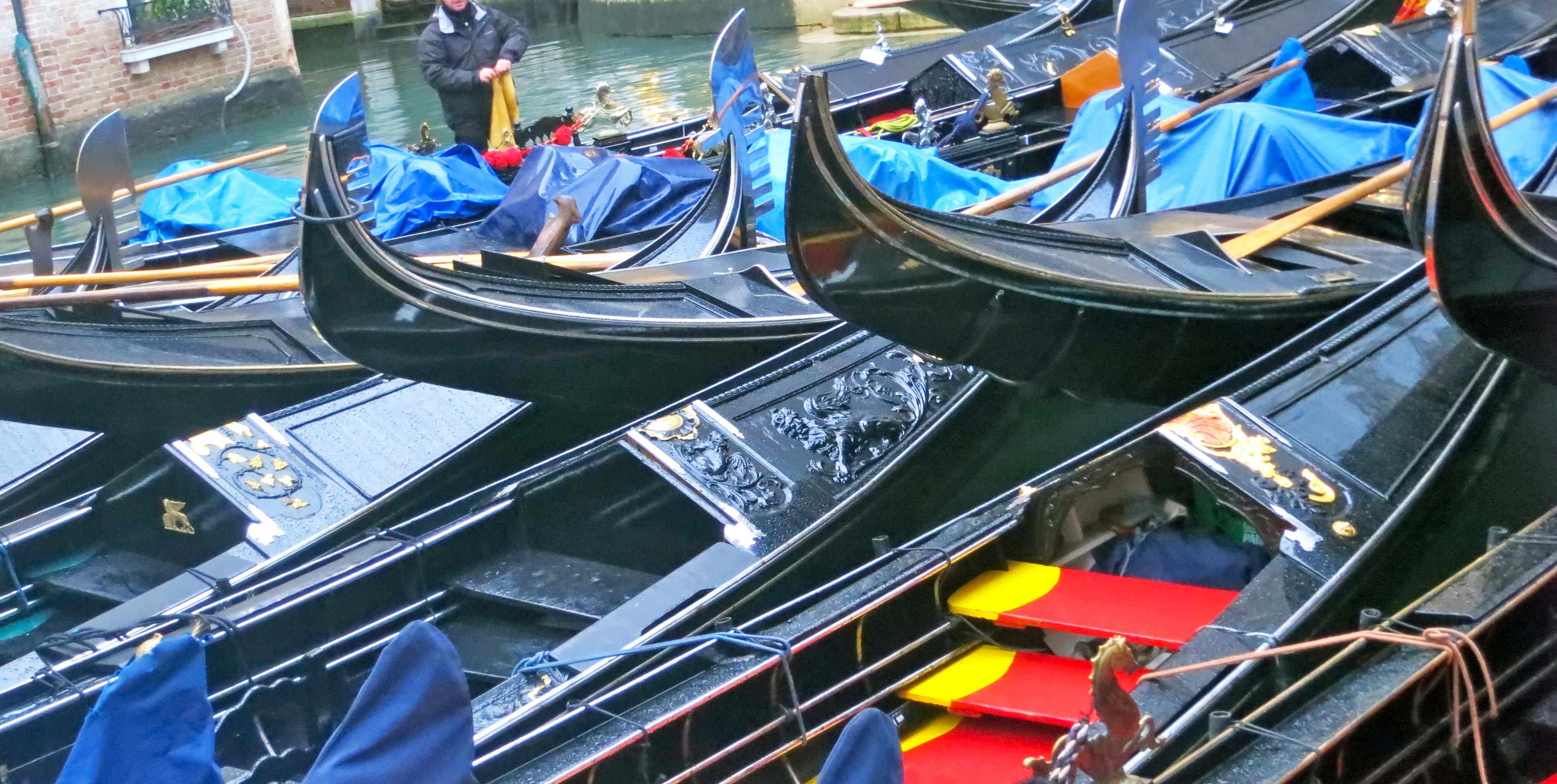
This is a sight you wouldn’t see during the summer when these gondolas would be filled with tourists. I thought of the gathered gondolas as a gondola parking lot. You may note that they are all black. You can thank a 17th Century Doge for that. He mandated that they all be painted the same color.
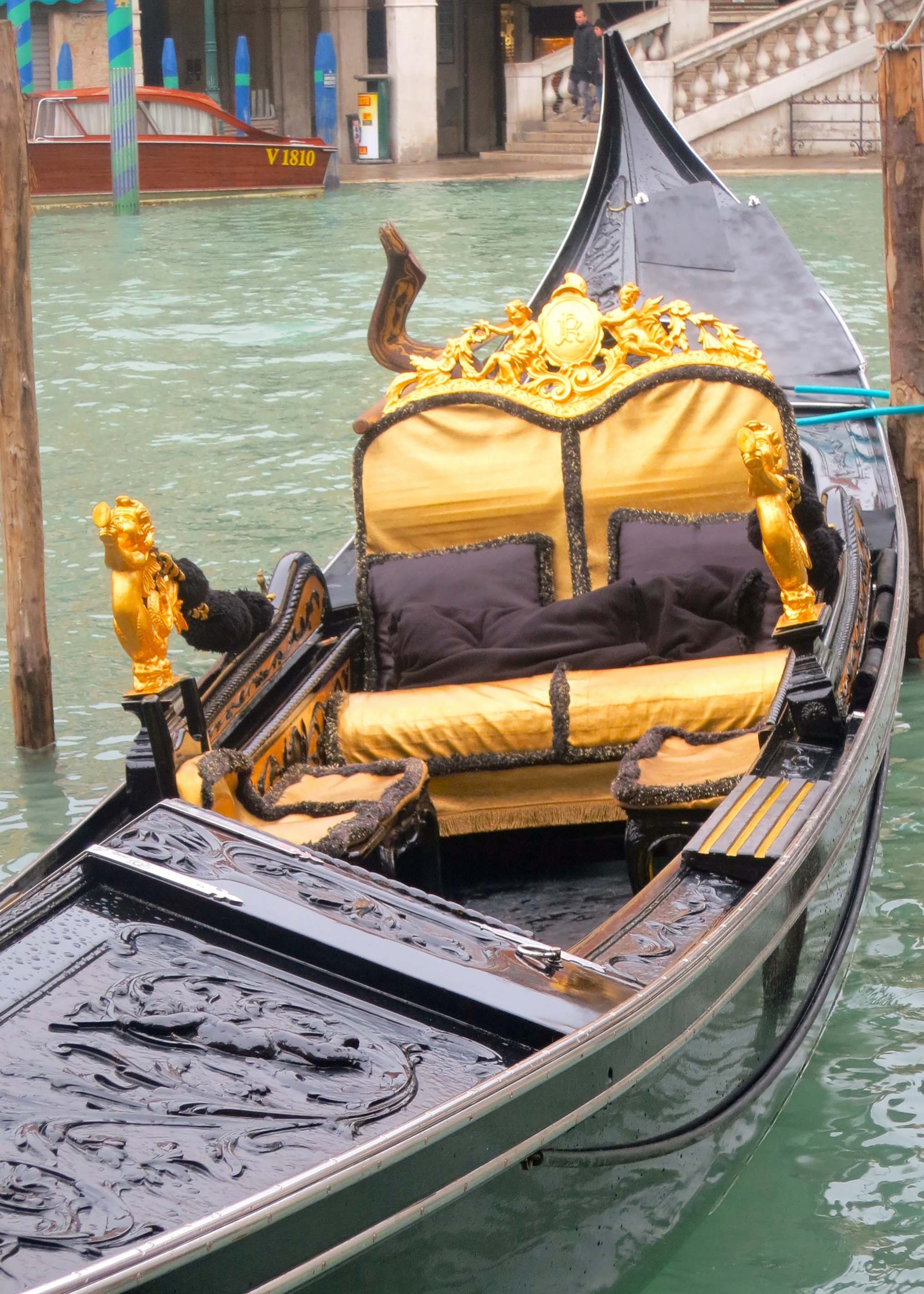
Luxury accommodations gondola style. Expect to pay big bucks/euros for a ride in this one.
Peggy took this photo of parked gondolas looking from Venice proper across at the island of La Giudecca. (Photo by Peggy Mekemson)
We chose to walk on the carless streets that parallel the canals and cross over them on bridges that have as much personality of the canals and provide intriguing glimpses of life along the canals. The highlight of our journey was the famous Rialto Bridge and the Grand Canal but the smaller canals, known as rivers, provided more intimate views.
This photo shows the famed Rialto Bridge that served for centuries as the only bridge across the Grand Canal, which snakes its way through Venice as the major transportation corridor.
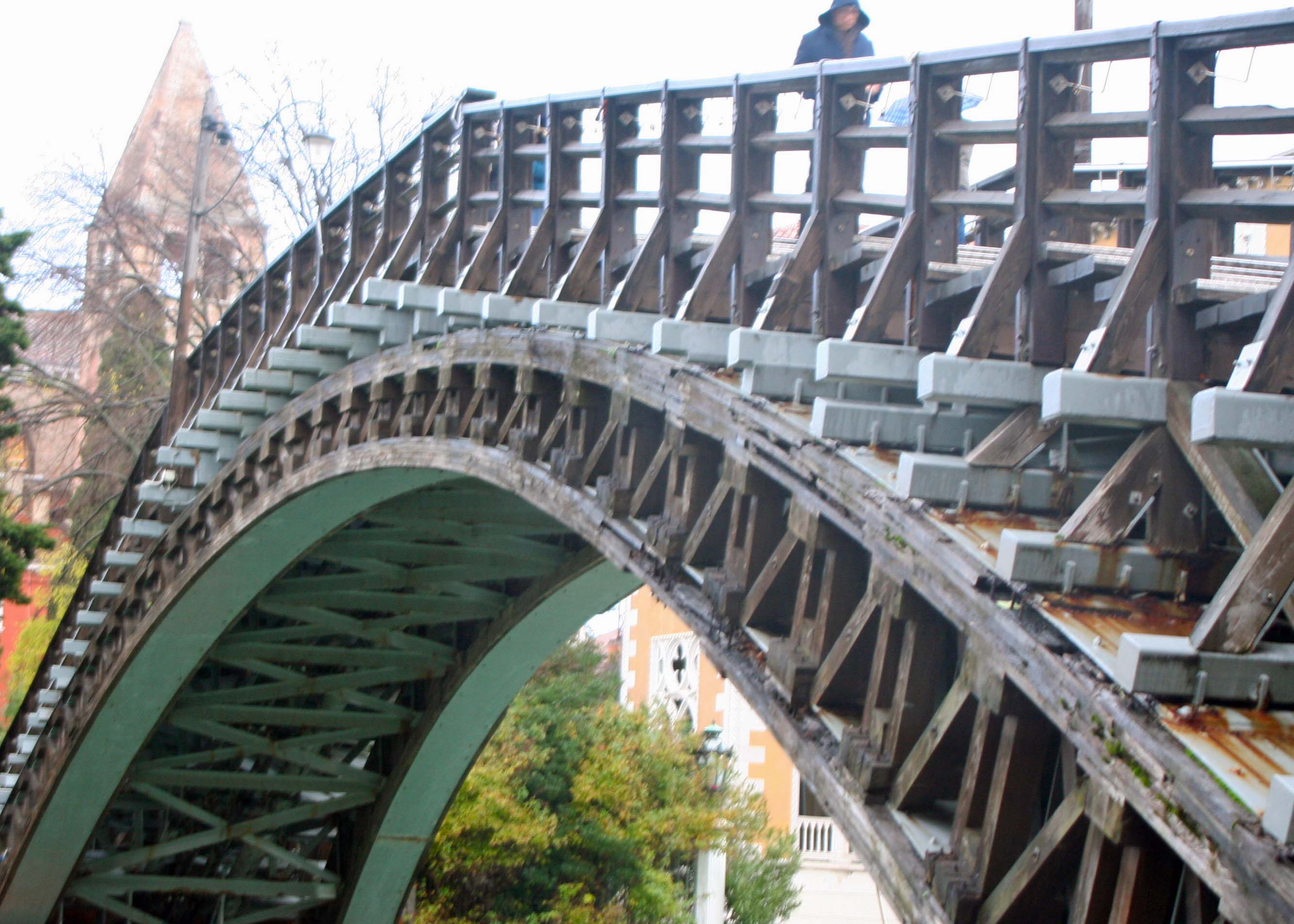
The more recent Accademia Bridge across the Grand Canal has a totally different look and construction. (Photo by Peggy Mekemson.)
I took this photo from the other side of the Accademia Bridge to capture the parked gondolas and the boat taxi that is crossing under the bridge.
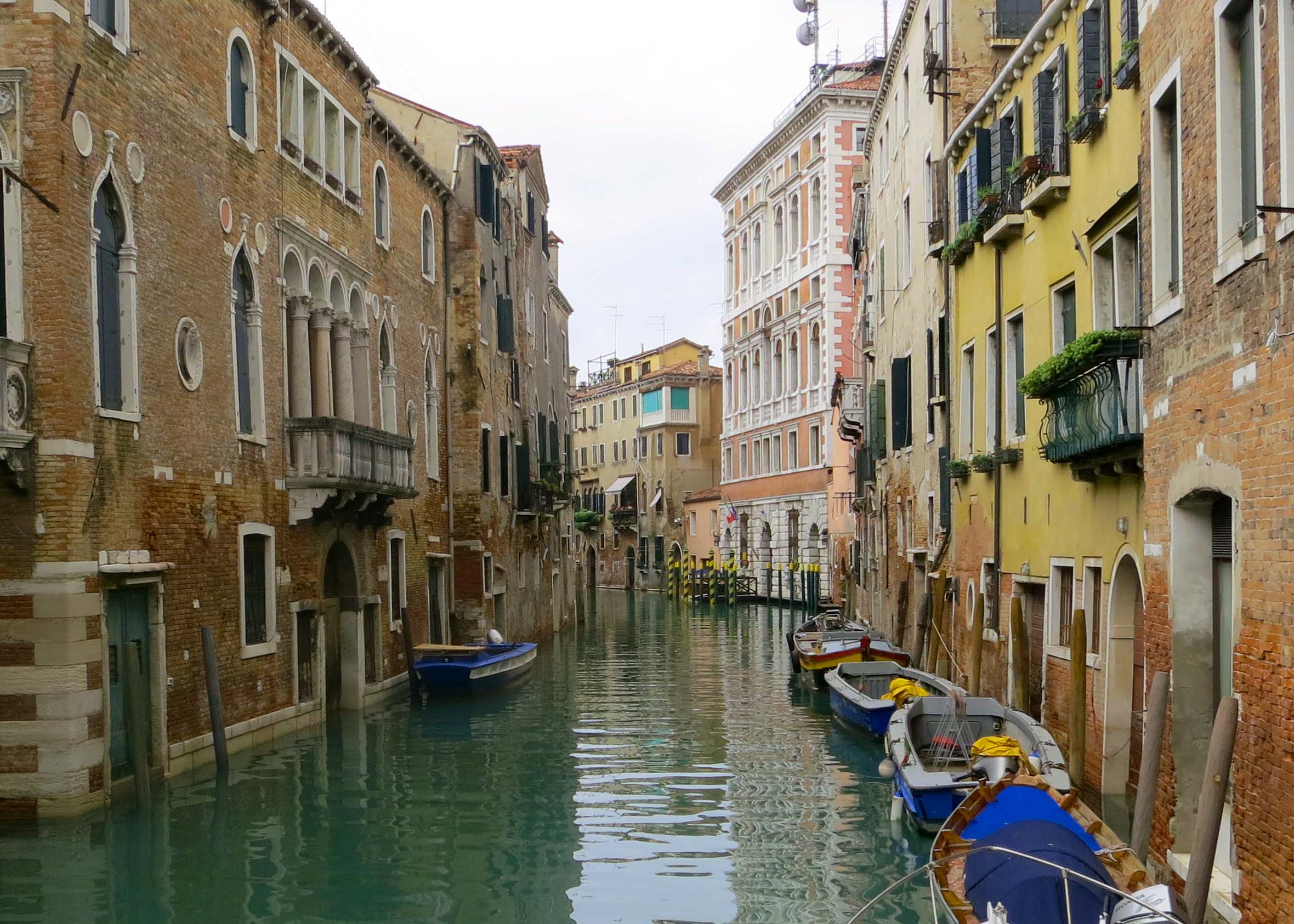
Smaller canals, known as rivers in Venice, provide a more intimate view of life in the city. The buildings here were built by wealthy Venetians when Venice was a major world power controlling trade between the East and the West. Houses then, as now, were a symbol of wealth and power.
Peggy captured this interesting entrance way. I assume it would have been taller in the early years before sinking and global warming.
Flower/plant boxes are found throughout the city. I liked how these were next to the canal.
I’ll conclude with this reflection shot. Think of this as how Venice might look with far fewer tourists. (Photo by Peggy Mekemson.)
Peggy and I return to Venice today as part of our Armchair Travel in the Time of Covid-19 series. Among other things we walk on water, check out a winged lion, and learn about the Saint who was shipped to Venice in a pork barrel. Again, this is adapted from earlier posts I did when visiting the Mediterranean in 2013.
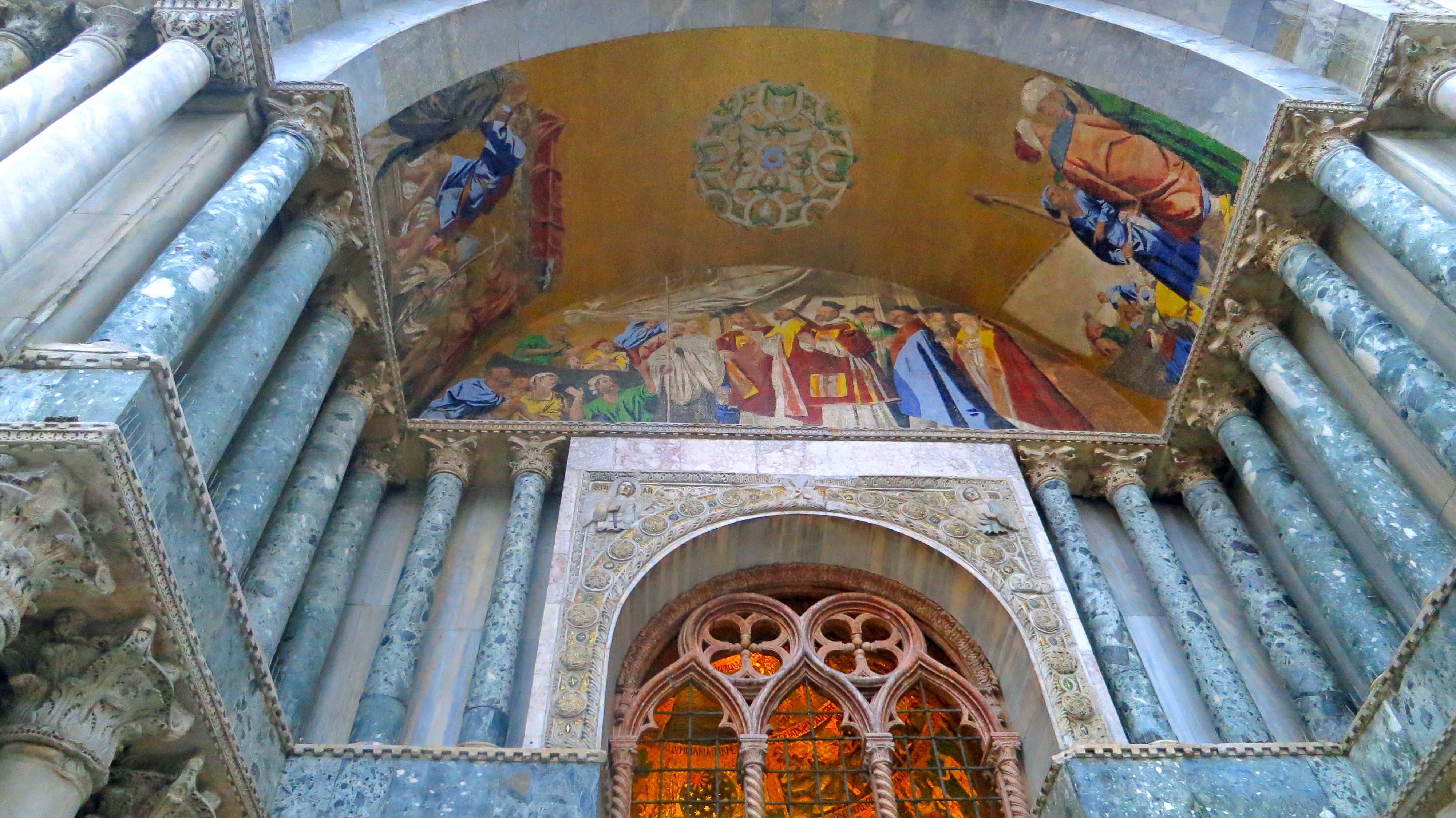
St. Mark’s Basilica is a beautiful church that dominates St. Mark’s Square in Venice.
Being eager to begin our exploration of Venice we picked up a water taxi from the cruise port. It retraced our earlier route from a sea-level perspective and deposited us near a large statue of Victor Emmanuel. He served as the first king of Italy when the various Italian city-states were united in the mid 1800s.
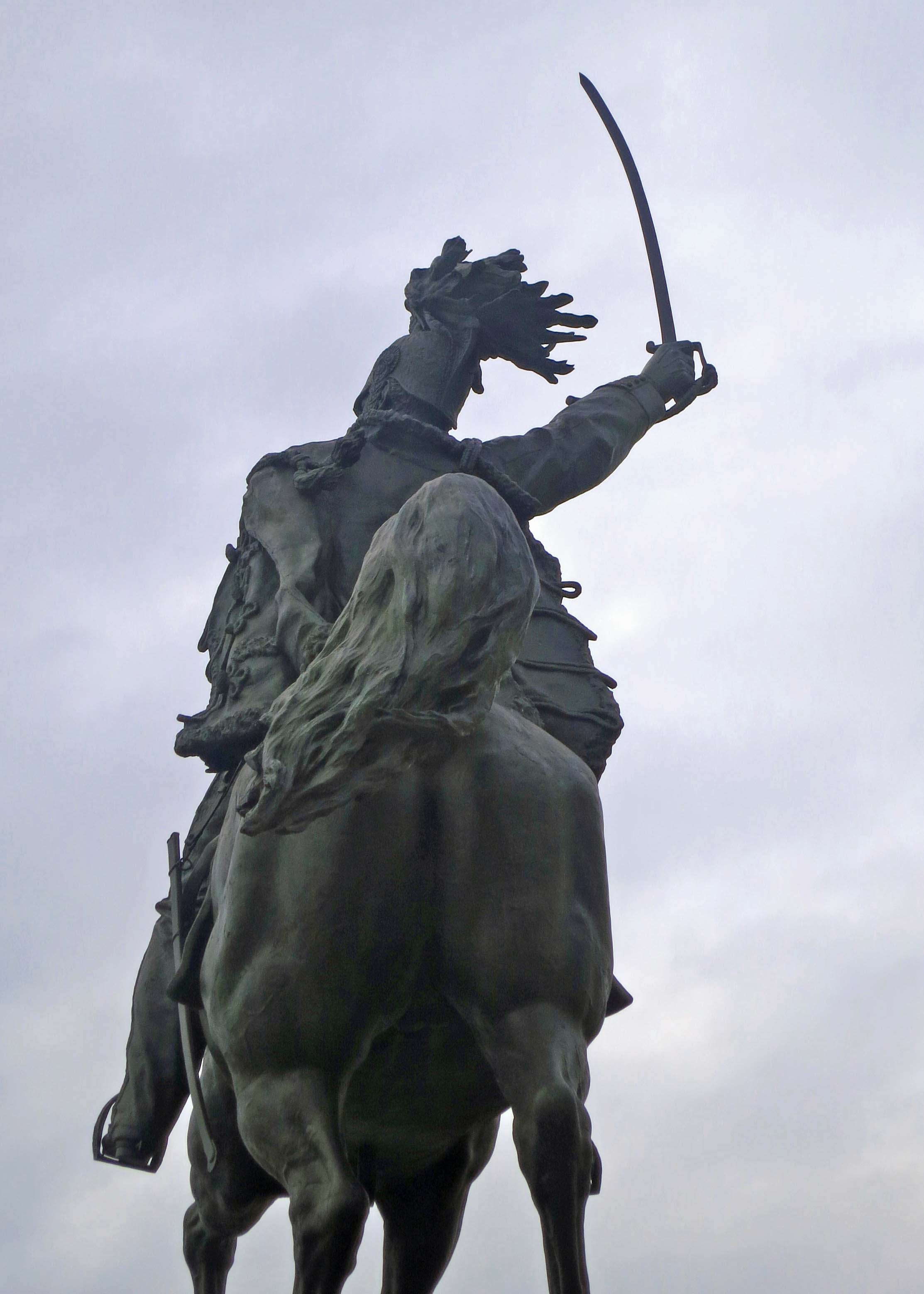
I took this photo of King Emmanuel charging into battle with his sword raised and horse’s tail flying.
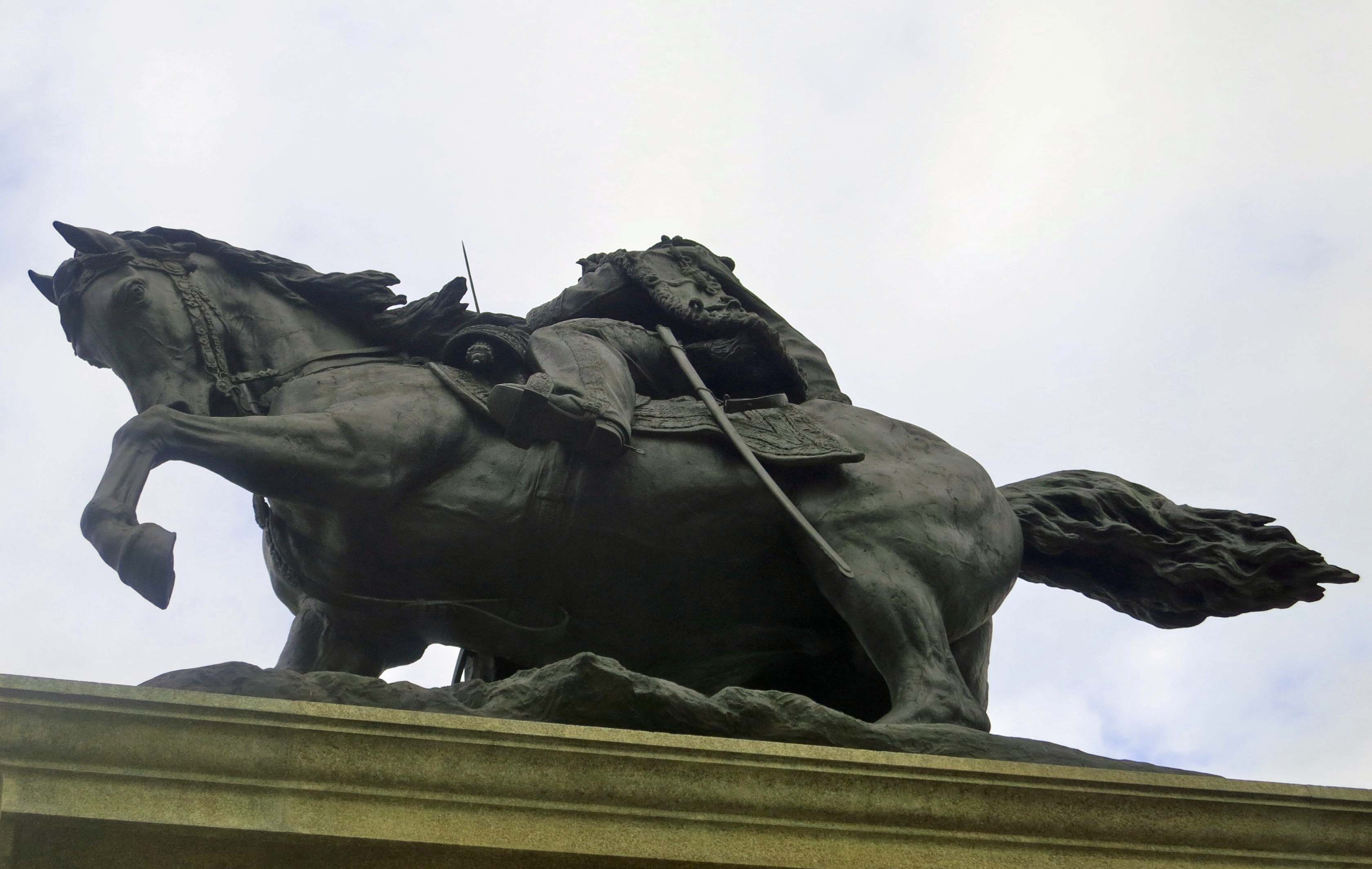
Another photo of Emmanuel’s imposing horse on the waterfront monument in Venice.
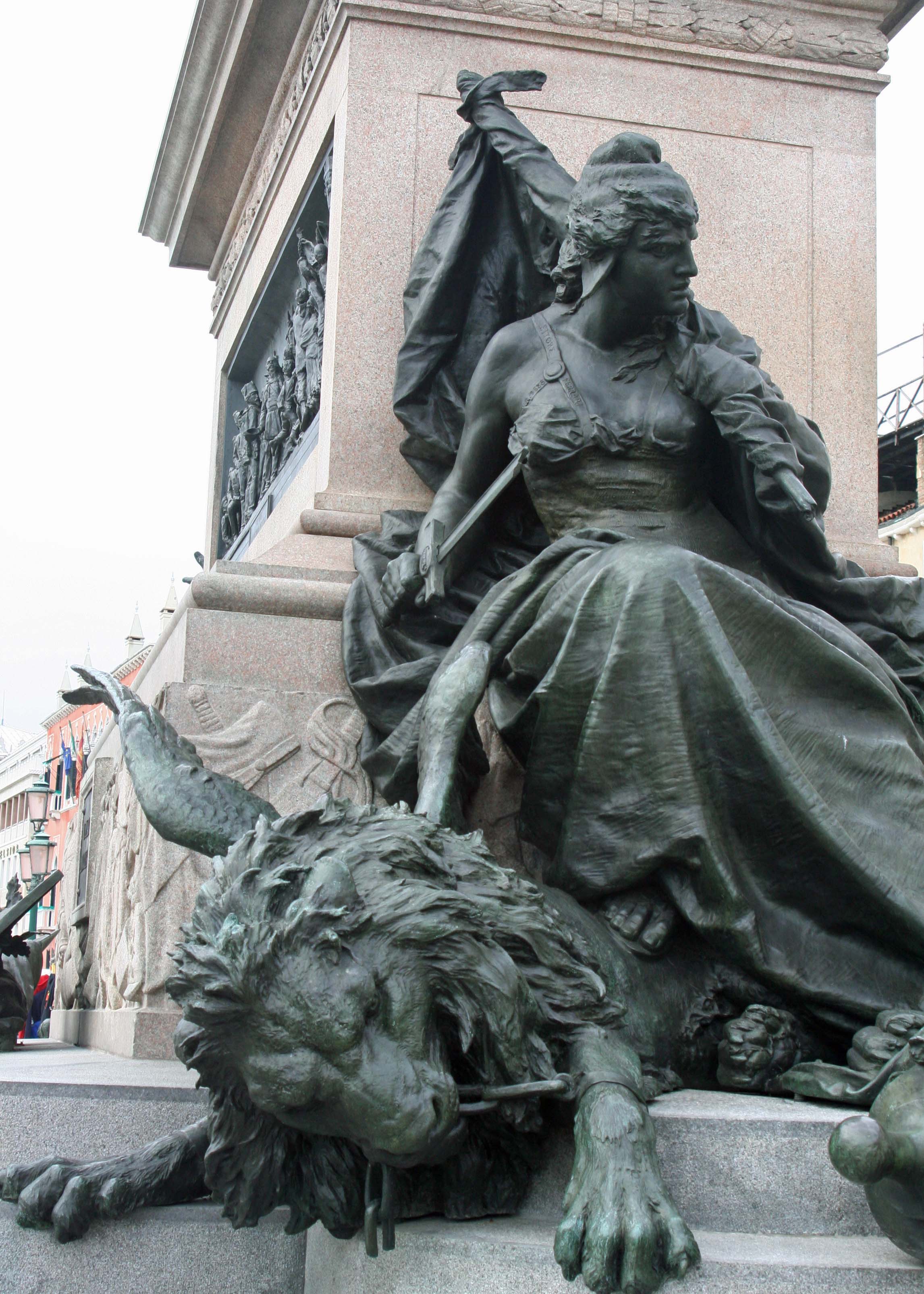
In addition to an imposing horse and Victor, the statue features Venice, represented as a woman, and St. Mark, represented as a winged lion, book-ending the monument. On one end, the lion bites through the chains of Austrian oppression while Venice looks on in a tattered dress; on the other end he roars in victory and Venice is clothed in an expensive dress.
While St. Mark the lion chews through the chains of Austrian oppression,Venice looks depressed and disheveled in this photo of the Victor Emmanuel statue in Venice. (Photo by Peggy Mekemson.)
St. Mark, with his representational lion, is the protector of Venice. The lion can be found almost everywhere. Mark— of Matthew, Mark, Luke and John— supposedly came through the region when it was a swamp and gave his blessing. This justified two Venetian merchants turning into grave robbers and stealing the body from Alexandria in 828 AD. They slipped Mark into a pork barrel for transport. Muslims consider pork unclean so the barrel was unlikely to be checked by the local officials.
Mark made it safely to Venice in his smelly container, was presented to the Doge of Venice, and was subsequently buried under what would become St. Mark’s Basilica located on St. Mark’s Square, which was our objective for the day.
Along the way we would pass by the Bridge of Sighs and the Doge’s Palace. We would also walk on water. Actually we walked on tables that are placed in the square to help people avoid the Adriatic Sea, which is a regular visitor. Between Venice sinking some nine inches per century, high tides, and global warming, floods have become a serious problem for the city.
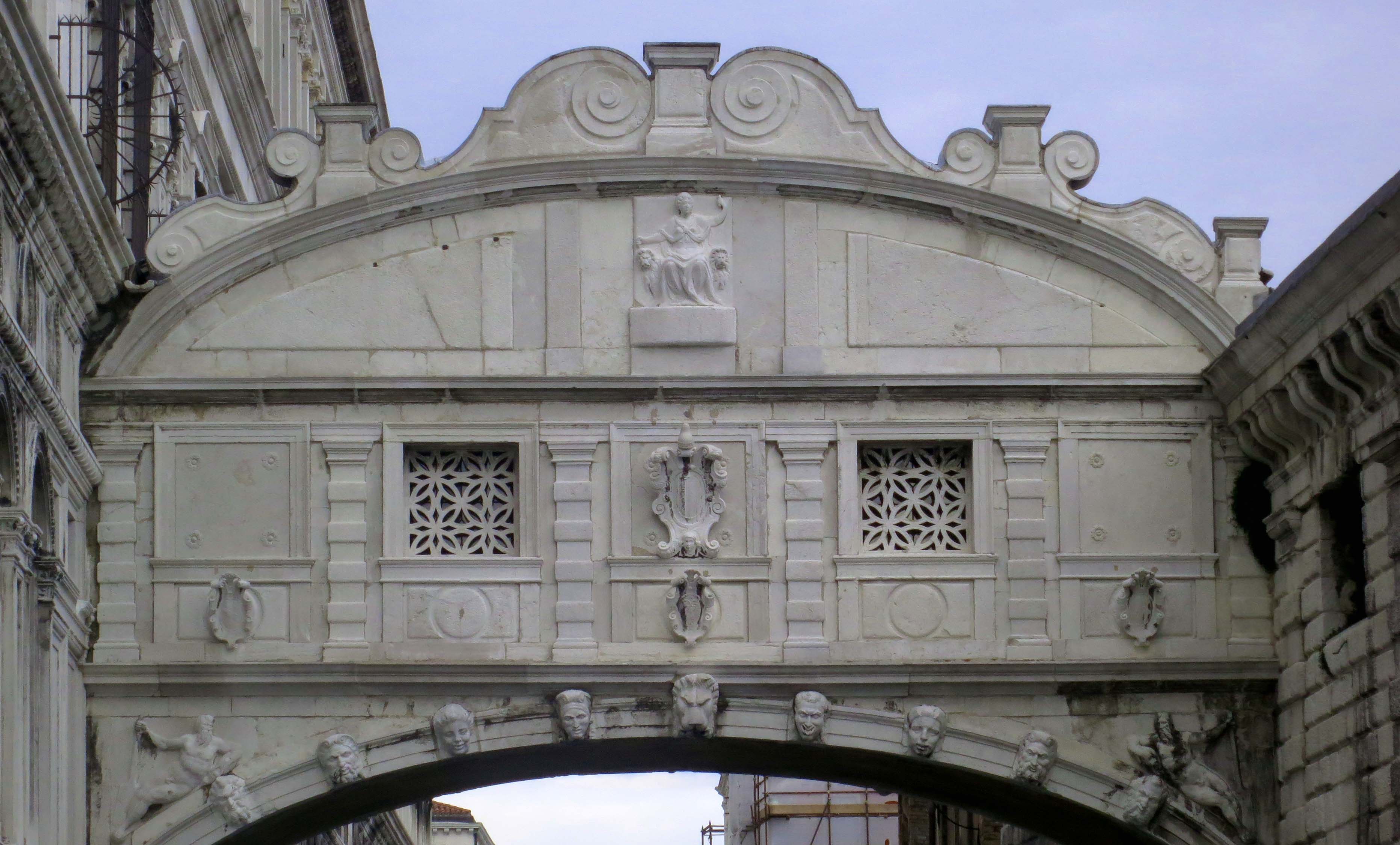
Peggy, Kathi Saage and Frances Dallen pose in front of the Bridge of Sighs. They aren’t sighing but they are cold. A gondolier lurks in the background. I suspect he was cold as well.
The Bridge of Sighs was so named because prisoners, condemned in the Doge’s Palace, would have their last look at freedom as they crossed the bridge from the Palace to the prison. Supposedly they sighed. It took a poet, Lord Byron, to give the bridge its name.
The Doge’s Palace once served as the center of government for Venice and was home of the Doge, the most powerful man in Venice at the time and therefore one of the most powerful men in the western world. Today the palace is a museum filled with magnificent art. (Photo by Peggy Mekemson.)
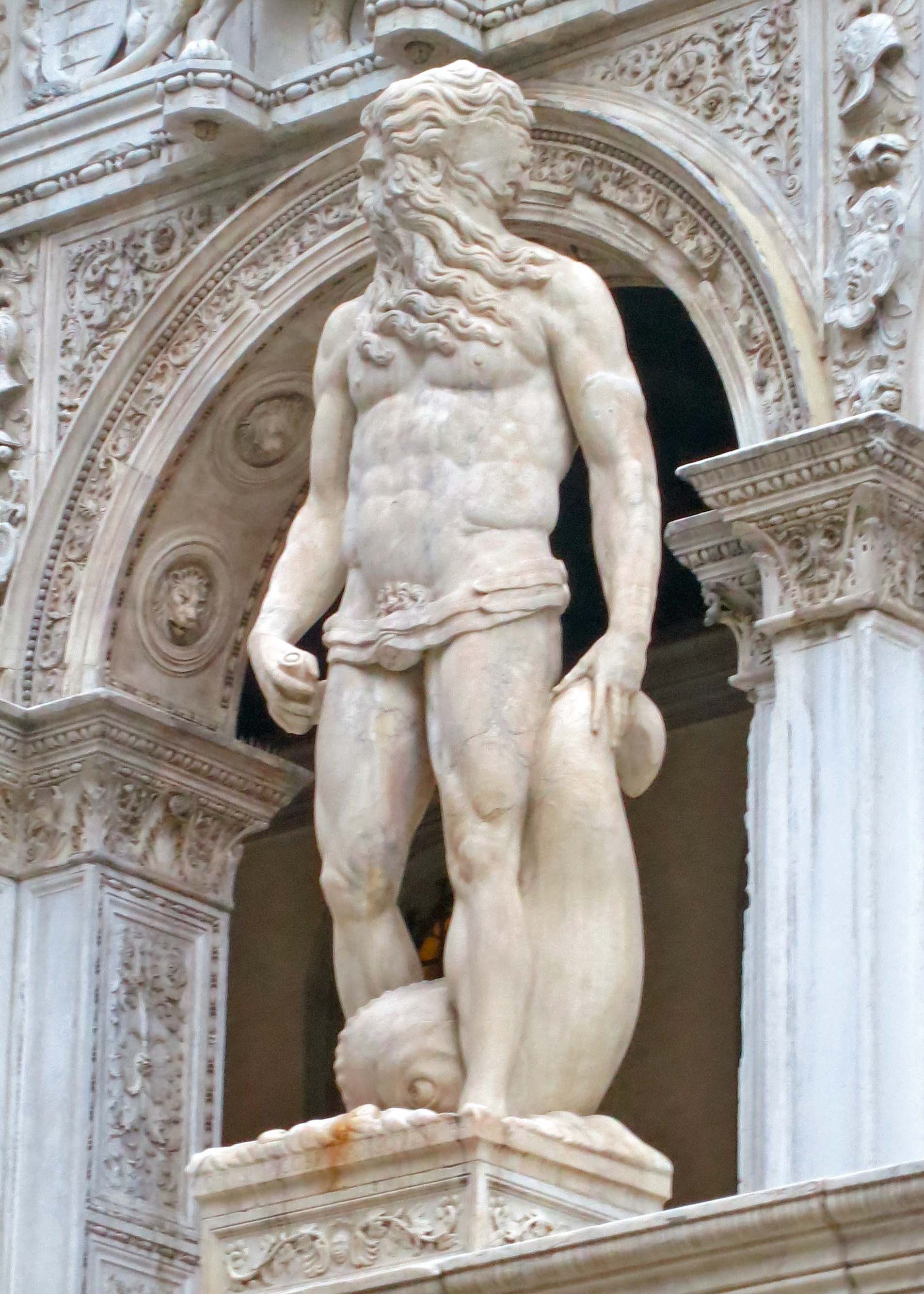
A rather furry Neptune, symbol of Venice’s sea power, welcomes visitors to the Doge’s Palace.
A view of the inner courtyard of the Doge’s Palace in Venice.
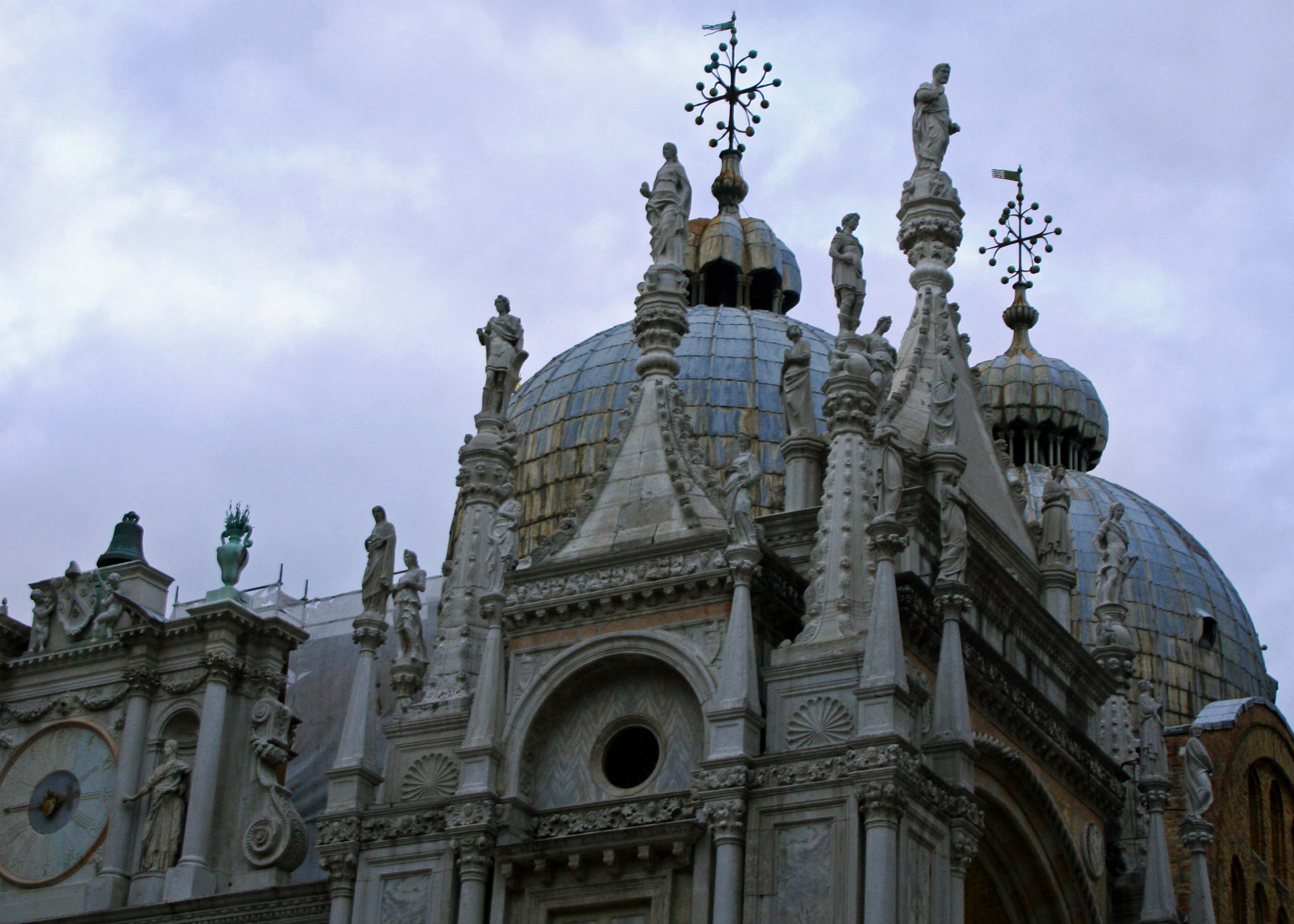
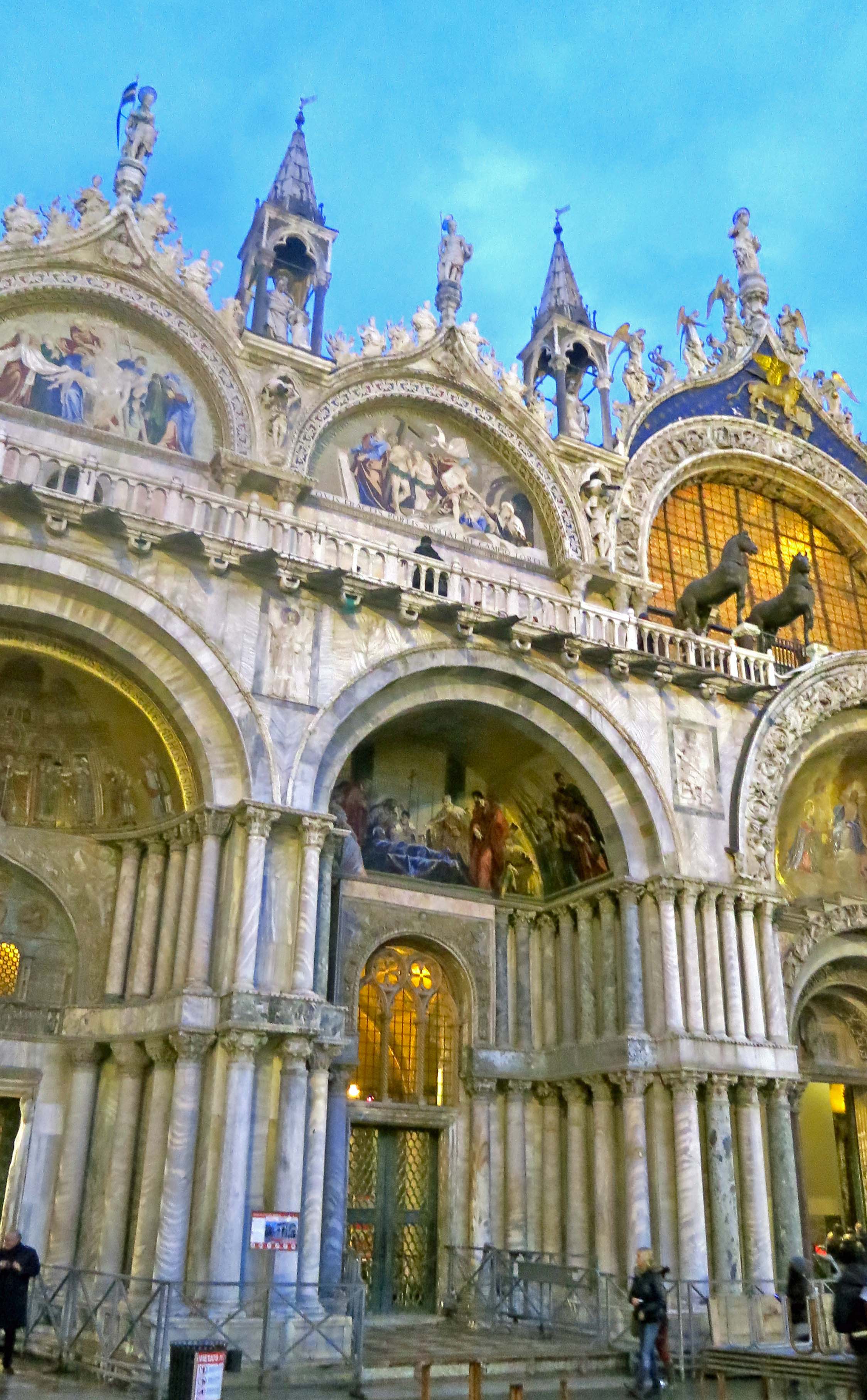
St. Mark’s Basilica, located next to the Doge’s Palace is Byzantine in appearance. (Photo by Peggy Mekemson)
An evening view of the colorful St. Mark’s Basilica in Venice. The bronze horses on the upper right were stolen from Constantinople during the Fourth Crusade when Venice was supposed to be helping Constantinople, not plundering it. But then, if your church is built on the stolen bones of a Saint, why not? (grin)
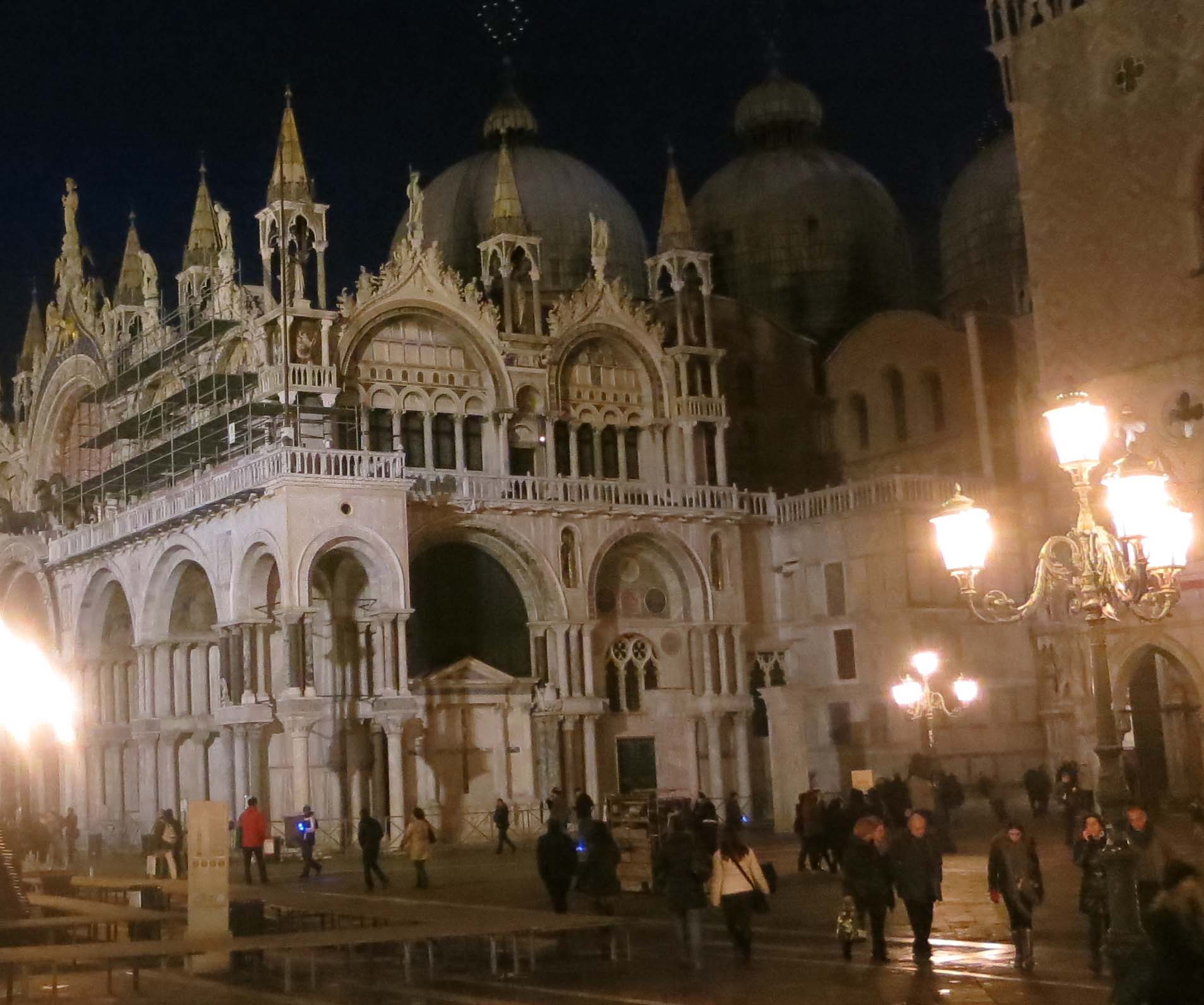
St. Mark’s Basilica and street lamps by night.
The Campanile is a prominent St. Mark’s Square and Venice landmark. In 1902 it came tumbling down and had to be replaced.
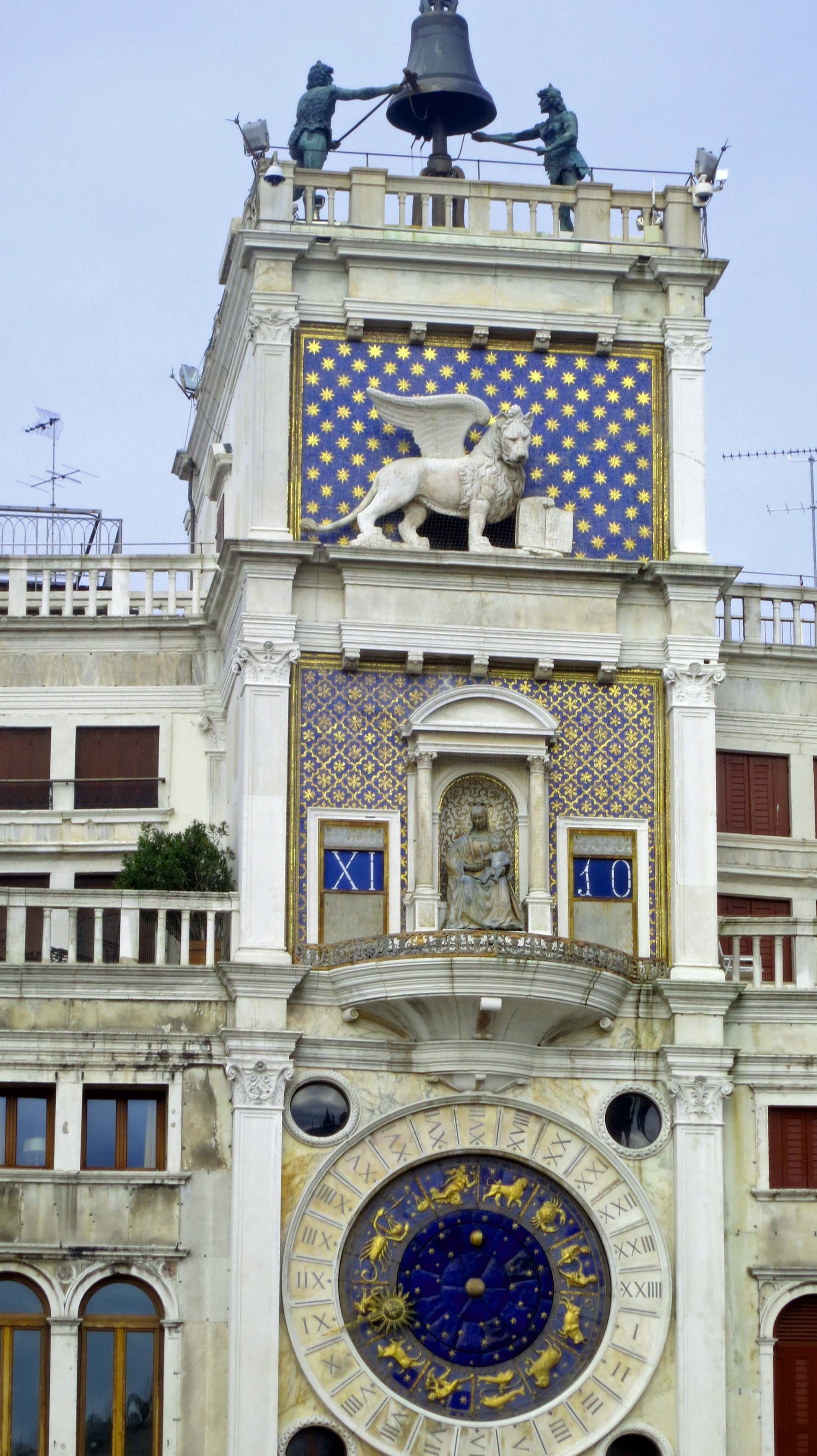
This clock tower is another well-known landmark in St. Mark’s Square. Note the winged lion and the digital clock with Roman Numerals. The bronze bell ringers on top and the astrological clock at the bottom are also impressive.
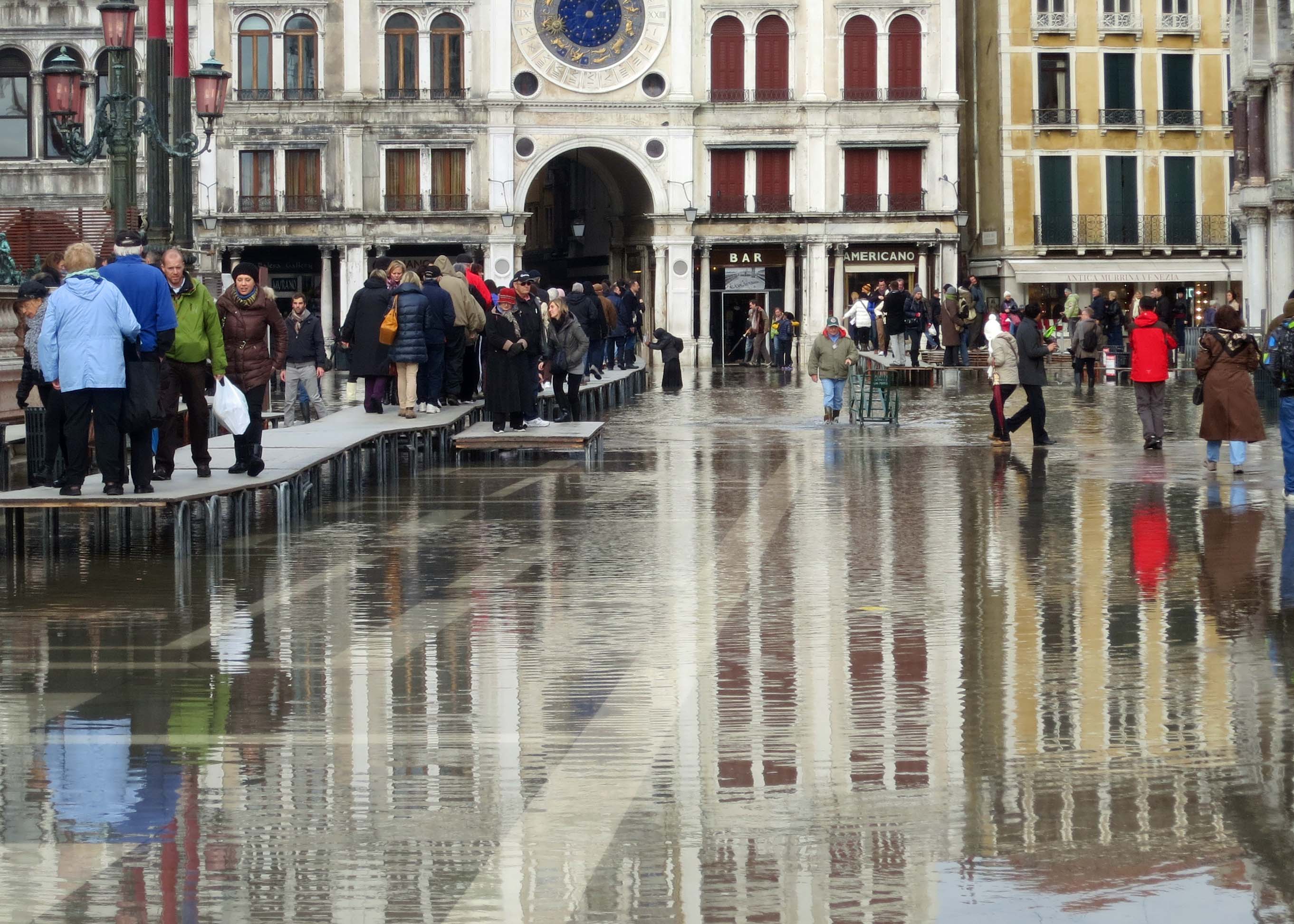
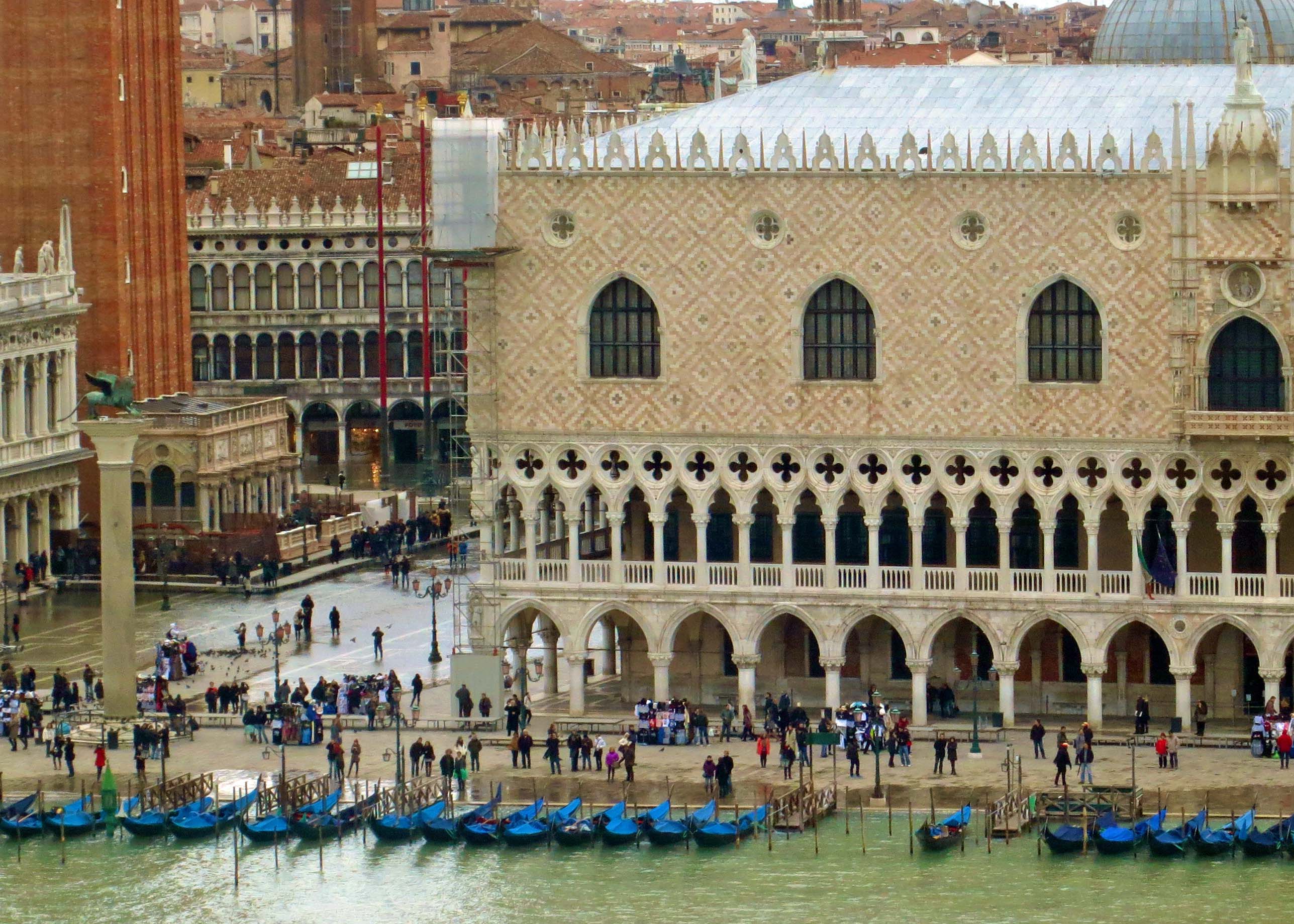
As I mentioned, Venice is subject to frequent floods. Global warming has added to this problem. This shot, taken just below the Clock Tower in St. Mark’s Square, shows people using the table walkways and walking over the water.
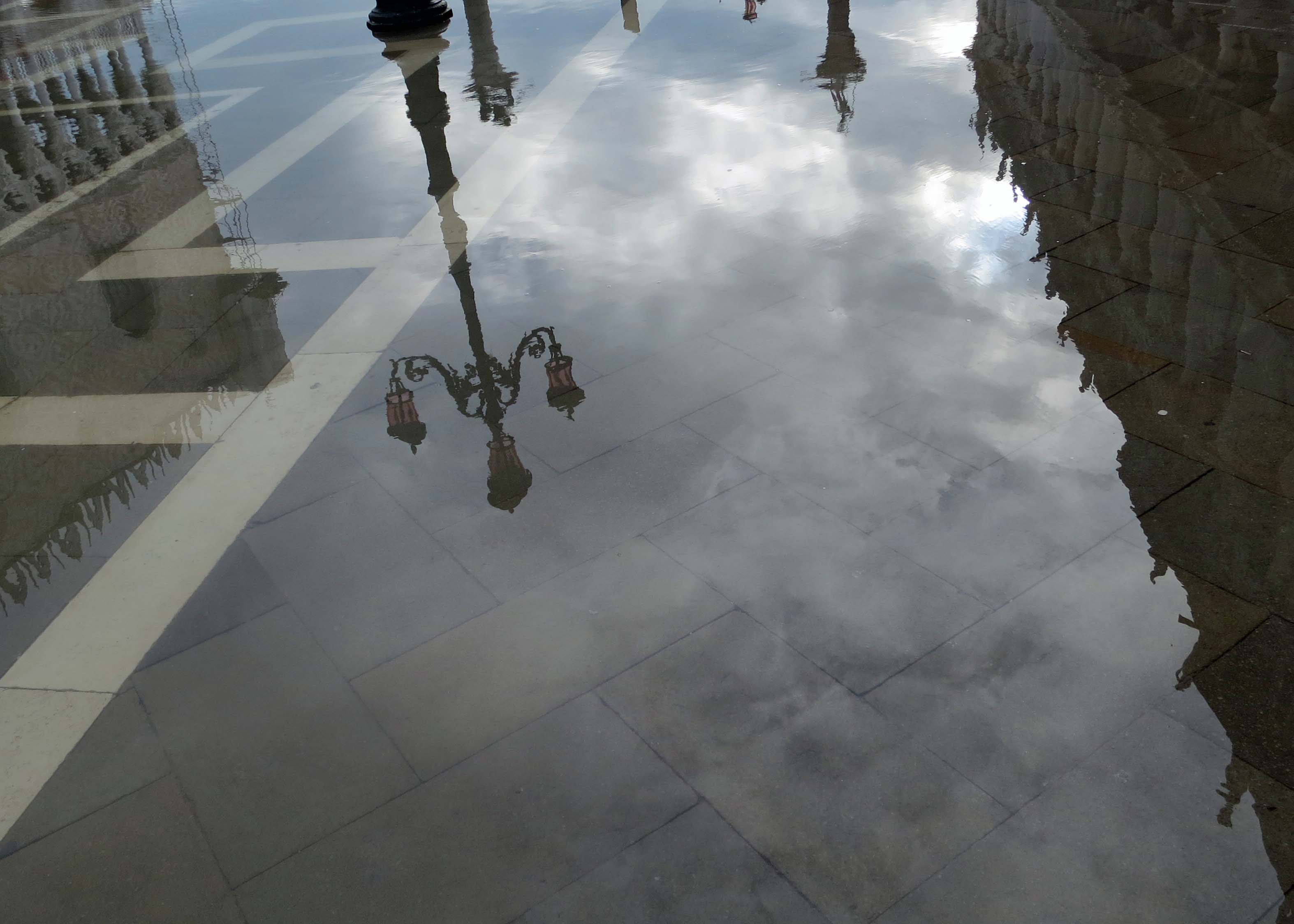
I’ll close with this flood photo I took in St. Mark’s Square that reflects both lamp posts and walls located in the Square.
FRIDAY’S POST: We will visit the famed canals of Venice.
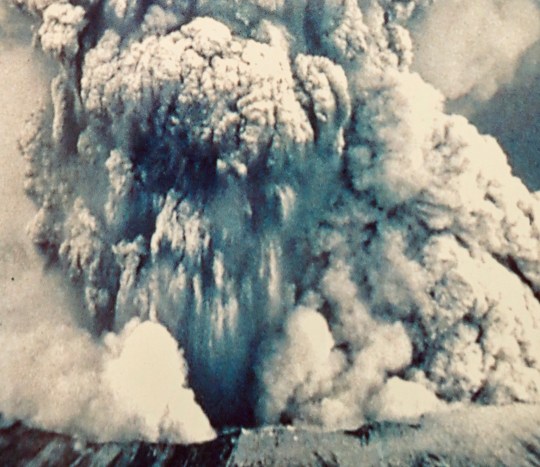
A photo of Mt. St. Helens erupting on display at the National Monument.
In 1980, the American Lung Association of Washington invited me to help plan a 500 mile bike trek to Mt. St. Helens as a fund raiser. At the time I was serving as the national consultant to the American Lung Association on long distant backpacking and bike treks as fundraisers. I had created the concept and written the how-to manual. I flew up to Seattle and worked with the staff in planning the trek. As often happened with events I helped organize, they invited me to go along. Tempting. The trek covered a lot of beautiful country and looked like great fun, but I was supposed to be in Alaska helping to organize a backpack trek across the Kenai Peninsula around the same time. The rest is history.
On May 18, several weeks before the trek was to take place, Mt. St. Helen’s blew her top. It was fortunate that it hadn’t happened in the middle of the event! ALA Washington quickly arranged another route. This isn’t the end of the story, however. I was flying to Alaska six weeks after the explosion and the pilot flew us over the mountain. The devastation was incredible. It has lived in my mind ever since. In 2013, Peggy and I took another trip up to Alaska, this time driving the Alaska Highway. On the way back we stopped off at Mt. St. Helens. I did a post at the time. In honor of the 40th Anniversary of the eruption, I am reposting it today.
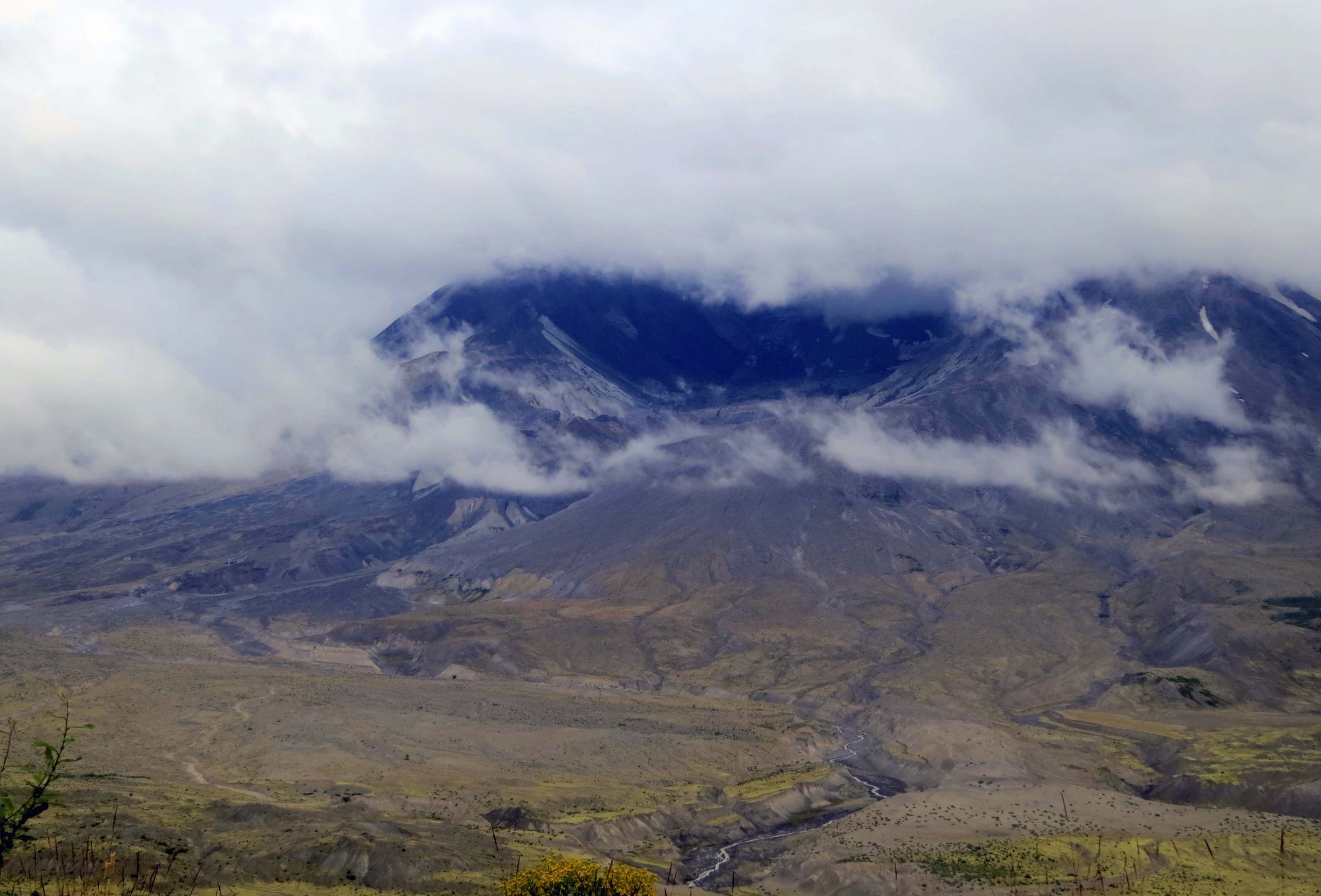
Mt. St. Helens in August, 2013. Peggy and I were looking down into the crater from the Johnston Ridge Observatory.
It was in early July 1980 and I was flying north to help plan a hundred-mile fundraising backpack trek in Alaska. The pilot deviated from his route to show us Mt. St. Helens.
It was total devastation, a scene from Dante’s Hell.
A month and a half earlier, on May 18, Mt. St. Helens had blown her top, literally. On May 17 the mountain had stood 9677 feet tall; on May 19 it stood at 8,364 feet. The mountain had a history of being the most active volcano in the Cascade Range of volcanoes— mountains that dominate the skyline of the northwestern part of the US and are part of the ring of fire that stretches around the edges of the Pacific Ocean.
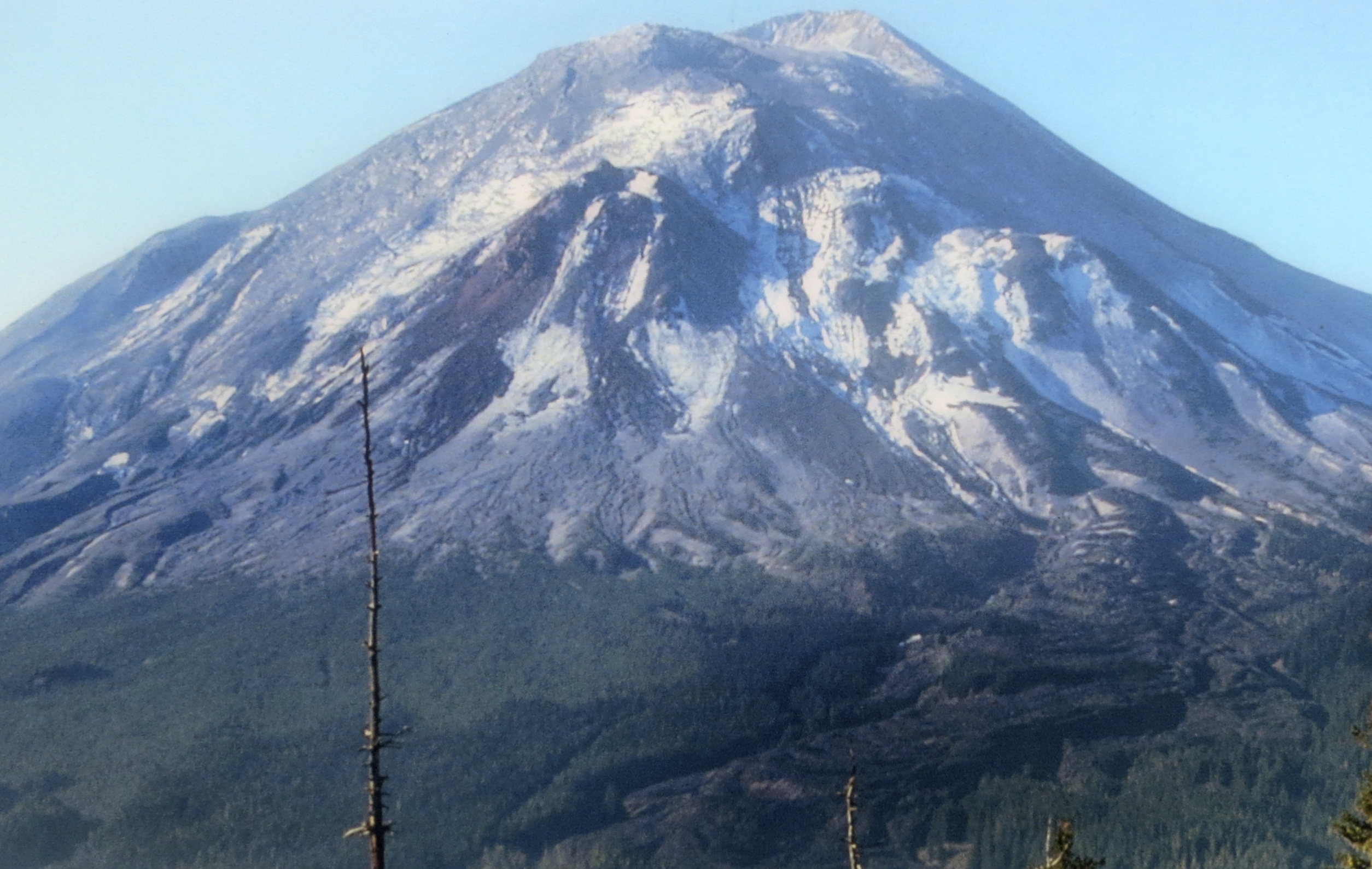
This photo on display at the Mount St. Helens National Monument shows the mountain before the explosion.
Another photo at the Monument shows Mt. St. Helen four months after the eruption.
Peggy and I call the Cascade Range home, now. In fact I have climbed two of the mountains, Shasta and Lassen, and we see a third, Mt. McLoughlin, every time we drive the 30 miles into town for groceries. Normally we think of the mountains as dormant and a beautiful addition to our region. But all are capable of awakening. And all are capable of spewing disaster.
Weeks before Mt. St. Helens blew up, she had been showing signs of an imminent explosion. Couched between the two major urban areas of Portland and Seattle, the area had become a mecca for tourists, volcanologists and, of course, the media. Worldwide attention was guaranteed.
The explosion, when it came, was much more devastating than had been expected. A huge, lateral blast sent a cloud of dense, super hot steam filled with debris rolling down the mountain at 300 miles per hour and devastating an area of 230 square miles. Next to the volcano nothing was left. Starting at about seven miles, thousands of trees were snapped off at their base and laid down pointing outward. Further out, a narrow zone of trees had been left standing but the trees were scorched beyond recovery.
The side of the mountain that was blown away added to the disaster. Crushed rock and melted glacial ice joined with downed trees and rushed into Spirit Lake and down the Toutle River travelling at speeds up to 150 miles per hour. Hummocky deposits between 150 and 620 feet high were left behind.
Today, Mt. St. Helens stands as a National Monument to educate people about volcanoes and the recuperative power of nature. Three visitor centers tell the story extremely well. Peggy and I have driven by the area several times and promised ourselves each time that we would visit. Finally, on our trip back from Alaska, we succeeded.
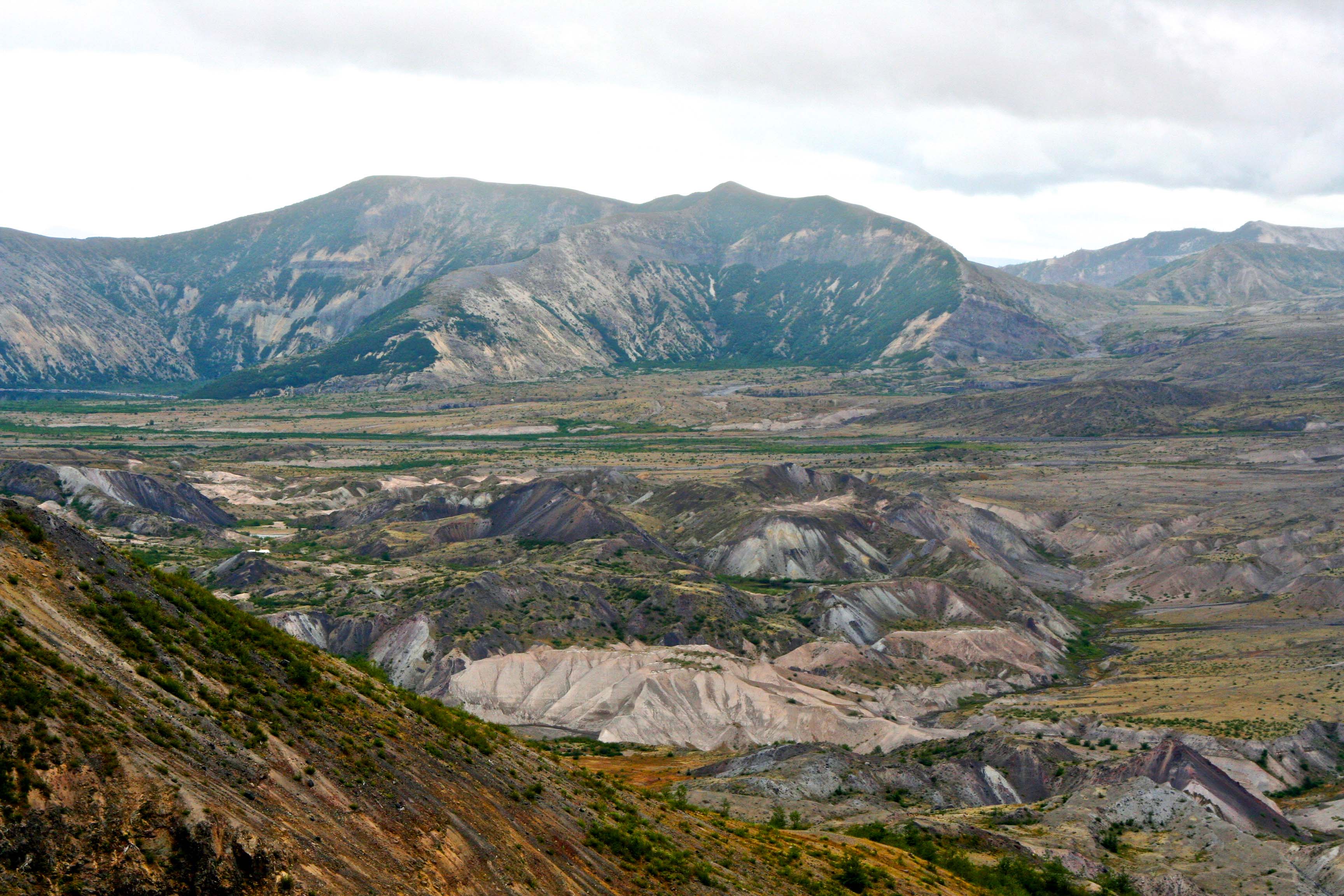
Looking down at the valley floor in front of Mt. St. Helen, the Toutle River carves through debris left behind by the eruption. The debris reaches a depth of over 300 feet in places. (Photo by Peggy Mekemson)
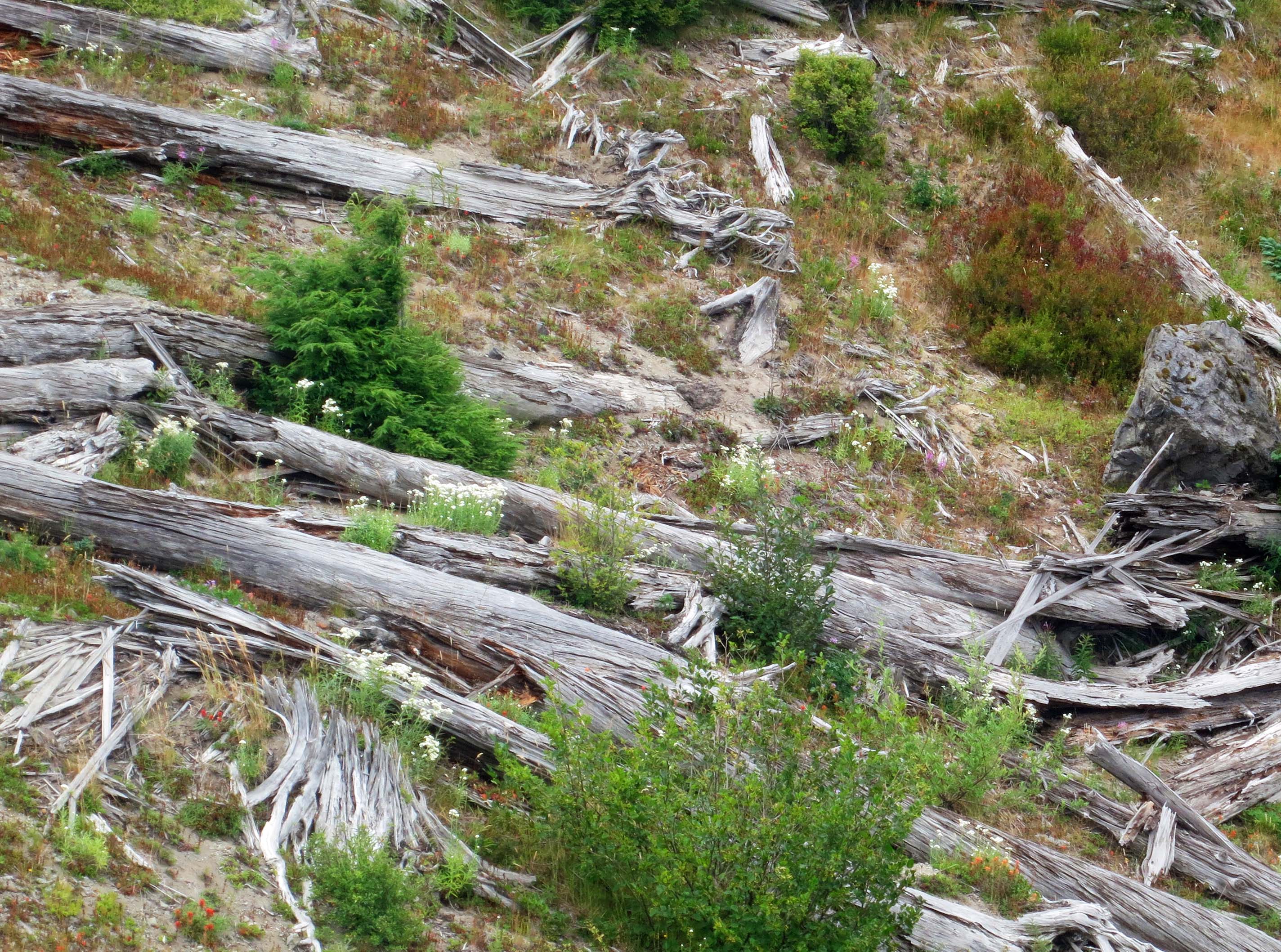
Thousands of trees were literally blown down by the eruption. Many can still be seen today.
This stump shows how the trees were ripped off from their bases by the blast.
Looking northeast (left) from Johnson Ridge, Spirit Lake can be seen at the base of another ridge. Once, it was a beautiful resort area. One of the biggest stories at the time of the explosion was how Harry Truman, an elderly man who owned a lodge at the lake, refused to leave and died when the avalanche buried the lake.
Jimmy Carter, who was President at the time, flew over the area in a helicopter and described it as a moonscape. I flew over it in a passenger jet and came to the same conclusion. (Photo by Peggy Mekemson.)
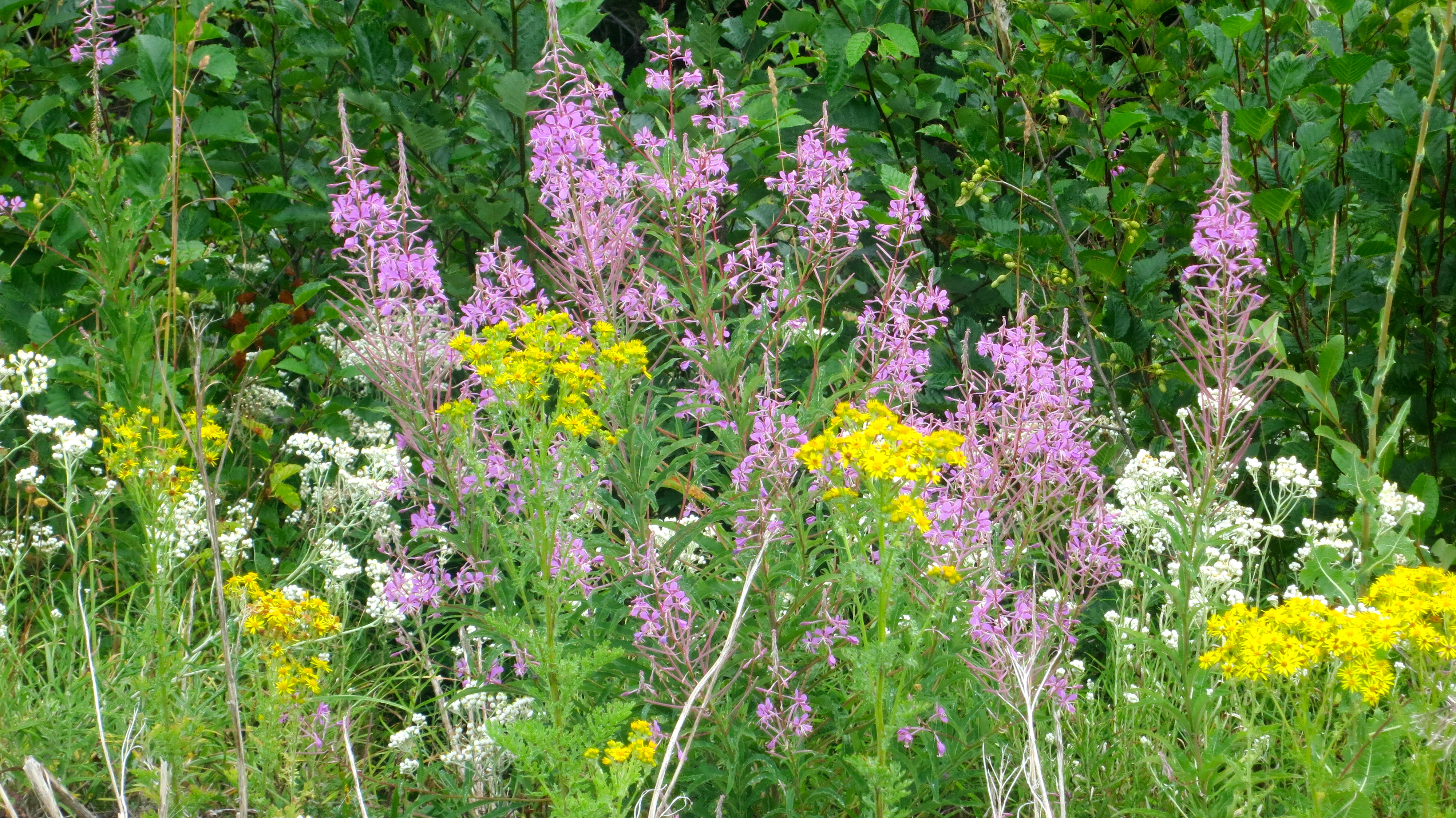
The recuperative power of nature is half the story about Mt. St. Helens. It is recorded that fireweed, the pinkish red flower here, was growing out of the ash 20 days after the explosion.
I felt the young tree growing out of a stump at Mt. St. Helens provided the best example of nature on the rebound. (Photo by Peggy Mekemson.)
As we drove off down the ridge into the mist, I couldn’t help but wonder when Mt. St. Helens would choose to explode again. It will happen. (Photo by Peggy Mekemson)
As I pulled this post up from my archives for today’s post, I couldn’t help but wonder, ironically, if the dramatic drop in 22.5 million tons of tourists (assuming 30 million tourist times 150 pounds) visiting Venice because of the pandemic will slow the city’s date with destiny as it sinks into the sea at the rate of nine inches per century. Peggy and I arrived by cruise ship, a mode of travel I had religiously avoided for most of my life. But the opportunity to visit many locations in the Mediterranean at one time was a temptation I couldn’t resist.
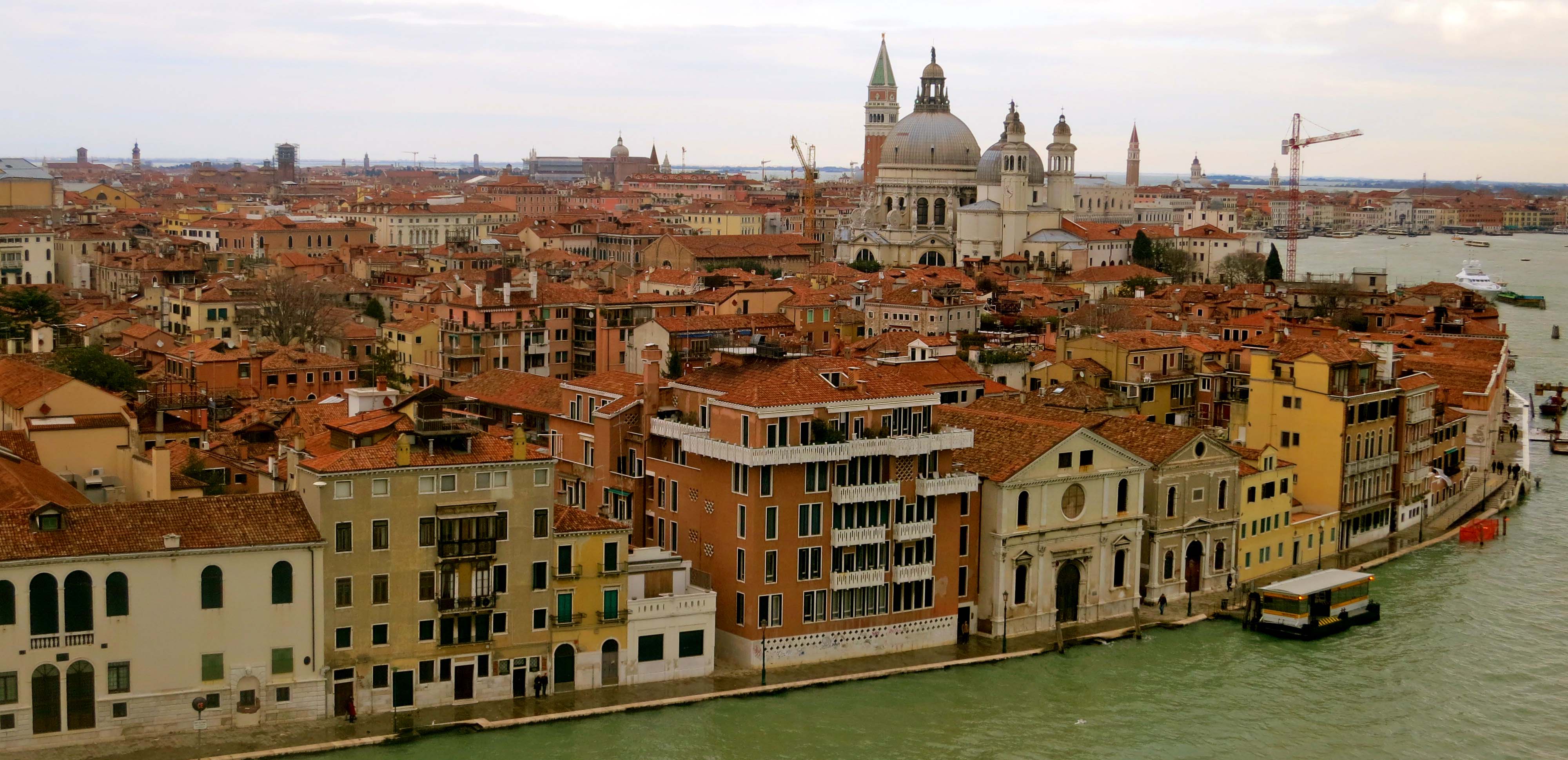
Perched on the top deck of the Crown Princess, it was easy to see that Venice is an island, a relatively small island. Built on a marsh, it is sinking into the sea at about 9 inches per century. Vivaldi, BTW, once offered music lessons at the Hotel Metropole on the right.
We approached Venice by sea, as mariners have for the past thousand years. I was perched on the top deck of the Crown Princess looking down on the fabled island city. Icy winds turned my traveler’s curiosity into a minor act of courage. A warm bar beckoned. But I was motivated. There were photos to be taken and adventures to plan. My next five blogs will be devoted to the city. Today’s blog is on my crow’s nest view. I will then write about visiting the area around St. Mark’s Square, admiring the city’s famed canals, getting “lost” among Venice’s confusing streets, and going window shopping.
Venice is justly famed for its canals… and for the bridges over the canals. Each seems to have a different personality.
Altogether, there are some 25 miles of canals. Each one invites exploration. The building just visible on the right is the city’s naval museum. Venice was once one of the world’s greatest sea powers. The lack of crowds reflects that tourist season was drawing to a close as winter approached.
The presence of gondolas suggested we were getting near the center of Venice’s greatest tourist attraction…
And we arrived. The building on the right is the Doge’s Palace. Next to it is the beginning of St. Mark’s Square… the center of Venice.
Looking down on St. Mark’s Square. The Campanile is on the left reaching toward the sky and St. Mark’s Basilica is on the right, behind the Doge’s Palace. Snow capped mountains are in the distance. Walkways kept people’s feet dry as water covered the square.
I found this building, the Emporio Dei Sali, interesting. Once it housed salt. Now it is home to one of Venice’s best rowing clubs.
This photo looks back toward the Campanile. The opening on the right is the beginning of the Grand Canal. The church with the onion dome is La Salute, which was built as an offering of thanks at the end of the plague of 1630 when one-third of the City’s population died.
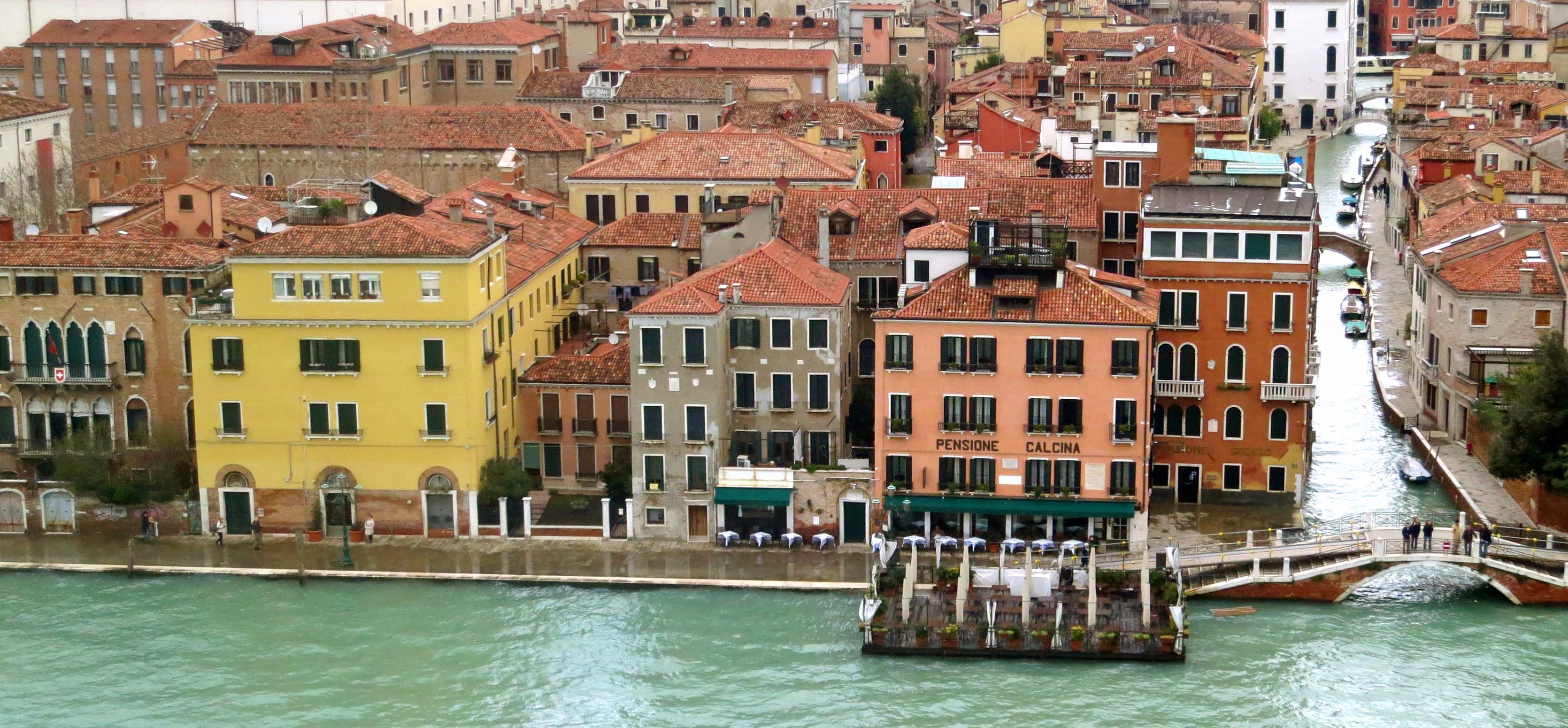
A final view from my crow’s nest perspective. The hotel Pensione Calcina was once home to limestone sellers.
NEXT BLOG: The many attractions of St. Mark’s Square (which we admire from walkways as it floods).
I’ve been avoiding writing about Covid-19 directly. There is more than enough out there without me adding my two cents worth— to say the least. But an incident happened to Peggy and me the other day when we were out shopping while wearing our masks that deserves a brief post.
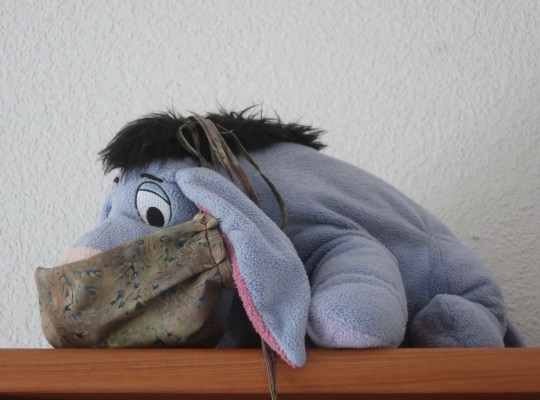
Eeyore demonstrates how to turn a face mask into a feed bag. After I carefully explained to him that its purpose was to protect others from Covid-19— not himself— he plaintively asked if he couldn’t do both. I told him to go for it. The poor fellow has to eat. Lots. I understand.
Peggy and I were shopping at Home Depot a couple of days ago, buying what I needed to make a gate for our shrub garden. We had worn our face masks while we shopped and then worn them back to the truck while we were loading our purchases into the back. A man in his 60s was parked next to us and digging through his car trunk. It was stuffed to the brim and looked like it hadn’t been cleaned or organized in 10 years. He spotted us and quickly started sifting through the mess and came up with a black sweatshirt. He held it over his nose and mouth and pretended to shoot us.
Peggy was stunned and I was angry. I was sorry I didn’t have my black cowboy hat along so I could slap it on my head and pretend to shoot him back.
But I didn’t have my hat and wouldn’t have done it anyway. What we don’t need during this pandemic is more tension and confrontations. For all I knew, he had a gun in his trunk and may have pulled it out. It was probably an irrational fear— odds are, he was just being a smart ass— but people have been shot lately over the mask issue. And I thought of the armed men who invaded the Michigan Statehouse a couple of weeks ago demanding that the state be reopened. People marching around with military-grade, semi-automatic weapons and screaming, or just standing silently, are scary. And they mean to scare us and to intimidate us. They aren’t freedom fighters, or true patriots, or heroes; they are bullies.
The real heroes are the men and women working in hospitals and serving as first responders in the fight against Covid-19.
We all want to see America up and running again. We all want to see the world up and running. It has to happen. The point is: It can be done in a reasonable and relatively safe way. We have all the information we need. It involves widespread testing, identification of those who have the disease, voluntary isolation with support, and tracing the contacts of the people with Covid-19. For the effort to work effectively in the US, it needs to be carried out on the national level with national funding. A small portion (estimated around 5%) of the two-plus trillion dollars voted by Congress for economic relief will cover the cost. Countless lives saved and a healthy economy will be the likely results. With true leadership, we can return to a relatively normal life while we wait for the more permanent solution of a vaccine. Prevention works.
Eeyore and Bone, both true patriots (and citizens of the world), prepare to ride across the country for a discussion with the President on how to cope with Covid. (Red, white and blue masks courtesy of Peggy Mekemson.)
Fake has taken on an interesting connotation today that has little to do with its original meaning. When Peggy and I visited Turkey in 2013 it was a different era, however. We were amused when a store was offering genuine fake watches at a price that matched. I almost bought one because of the honesty, which I’m sure was the idea. On Wednesday, we visited the impressive ruins of Ephesus. Today I will take you to Kusadasi, the land of expensive rugs and real fakes as I continue to dig into my archived blogs for armchair travel in the time of Covid-19.
Dozens of Turkish rugs were scattered on the floor in Kusadasi, Turkey, thrown out in a frenzy of encouraging us to buy.
The rugs were flying, quite literally, and landing on the floor in front of us. Twenty minutes earlier they had been neatly rolled up at the back of the room. Now five Turkish rug salesmen were expertly flipping them out onto the floor, a new one every ten seconds. We had been wined; we had been dined; we had been educated. Now the final push was on, the push to get us alone in a room where more multi-thousand dollar rugs would be thrown at us in hopes we would eagerly pull out our credit card with the highest limit.
Part of the show was an interesting demonstration in the craft of carpet weaving. Fine rugs can take over a year to complete.
Peggy was ready. The falling rugs had hypnotized her. Her eyes were glazing over and she was levitating out of her seat as a handsome dark-eyed Turk wooed her with fine words. The last time I had seen that look we had ended up with a timeshare in Mexico. This time I was fortified, however. When the salesmen was passing out drinks to soften us up, I was one of two from our tour group of 30 who ordered arak or raki, the unsweetened Middle-Eastern anise drink with the smell of turpentine and the kick of a mule.
I admit the rugs were beautiful works of art, but I was arak strong. Our cabin in the woods of Southern Oregon did not need a Turkish carpet. “I’m sorry,” Peggy explained to her new best friend. “My husband doesn’t want a rug.” I was truly the bad guy in this scenario and the salesman gave me the look to prove it before he sidled off to corner another victim… oops, I mean client.
Buying a rug in Kusadasi is reputedly the quintessential Turkish experience and a whole industry is set up to make sure you do. The cruise industry is a major partner in this endeavor. Lectures on bargaining and quality are given on board the ship before arrival. Lists are provided of safe, preferred shops (i.e. those that share their profit with the ship). Our tour guide hurried us through ancient Ephesus sergeant-like to make sure we would make it to the shop on time. Tours are tightly scheduled. Each tourist needs the opportunity to buy a carpet. Everyone profits. For the cruise ship this can mean a 50-60 percent kickback.
I hurried Peggy out with the promise of lunch and the opportunity to buy presents for the grandkids. Her brother John and his wife Frances stayed to buy a carpet, however, and ended up with two. Later we celebrated with them in their rambling Texas home as they rolled their children’s inheritance out on the floor.
Dozens of small shops were located in a modern Turkish bazaar near the port. It was touristy but fun. Since we were one of the last ships of the season, Peggy found numerous bargains to make up for carpet we didn’t buy.
Truth in advertising. (grin)
As we wandered through the shops of Kusadasi, I was attracted by the wealth of colors.
This plate closeup is another example of the rich colors, intricate patterns, and fine craftsmanship found in the shops of Kusadasi.
Frances eagerly unrolls John’s and her new silk carpet in their Texas home.
A closer look at the family heirloom. It really is beautiful and John assures me they bargained for a good price.
MONDAY’S POST: We are off to Venice where we walk on water.
I am adding to my armchair travel series today as Peggy and I continue to shelter at home hiding out from Covid-19. For today’s post I went traveling back in time through my blog archives and landed in the ancient Graeco-Roman of Ephesus, Turkey. It is located across the Aegean Sea from Athens. Peggy and I traveled there in 2013 along with her brother John Dallen, his wife Frances, and their/our friends Lee and Kathy Saage.
The Greek Goddess Nike, with wings all aflutter, hands over the wreath of Victory to Rome, which is appropriate since Rome took over Greek Ephesus and turned it into the second largest city in the Roman Empire. Note the muscular arms. Not even iron-pumping Arnold Schwarzenegger would mess with this woman.
Artemis, The Greek Goddess of the hunt, chastity, virginity and fertility was big in Ephesus. (Somehow, being the Goddess of chastity and virginity— while also being the Goddess of Fertility— doesn’t compute.) Her temple, built in the sixth century BC, was considered one of the Seven Wonders of the Ancient World. Each May, the local Greeks would honor her with a Festival of Roses, which brings Mother’s Day to mind. As part of the festival they would sacrifice a number of bulls to encourage fertility. Modern time Mother’s Day has dropped this part of the ceremony.
Artemis is looking rather weird, to say the least. She looks like she is offering a hug. If so, I pass.
Artemis is only a part of the Ephesus’ family of powerful women. Before the Greek Goddess Artemis became top female in the area, the Hittite mother-goddess Kubaba and the Anatolian goddess Cybele had reigned supreme. Amazons, the large warrior women who thought of men mainly as a source for making baby girls, were also known to frequent the region.
Following Artemis, the Virgin Mary was reputed to have spent her last days in Ephesus. A German mystic dreamed it and there is some historical support. Various modern Catholic Popes have backed up the supposition and Pope John Paul II declared the site where she supposedly died to be a shrine for Christian pilgrimages. Muslims, who call her Mother Mary, also make pilgrimages to the area. It stands on a hill above Ephesus.
Ephesus is located on the western coast of modern-day Turkey. We took a tour bus out to the site with a very talkative tour guide who shared with us that Santa Claus originated in Turkey, as well as a number of facts about Ephesus. The city had been an important part of Ionian Greece and included such luminaries as the Greek philosopher Heraclitus. In case you’ve forgotten your philosophers, Heraclitus, whose nickname was the Obscure, claimed that only change is permanent. “You never step in the same river twice,” he said.
This was certainly true of the Meander River. Ephesus was located on its banks and the curvy waterway kept moving to new locations, forcing Ephesus to move. And yes, the Meander River happens to be where our word meander comes from. I am rather fond of meandering.
It was the Romans who brought Ephesus to its height around 100 AD with a population of over 250,000, making Ephesus the second largest city in the Roman Empire. Most of the ruins featured below came from that period.
The iconic Ionic Greek column with its simple scroll like top is said to have originated in Ephesus.
This handsome, regal-looking Ephesus cat conveniently posed for me in front of another Ionic column.
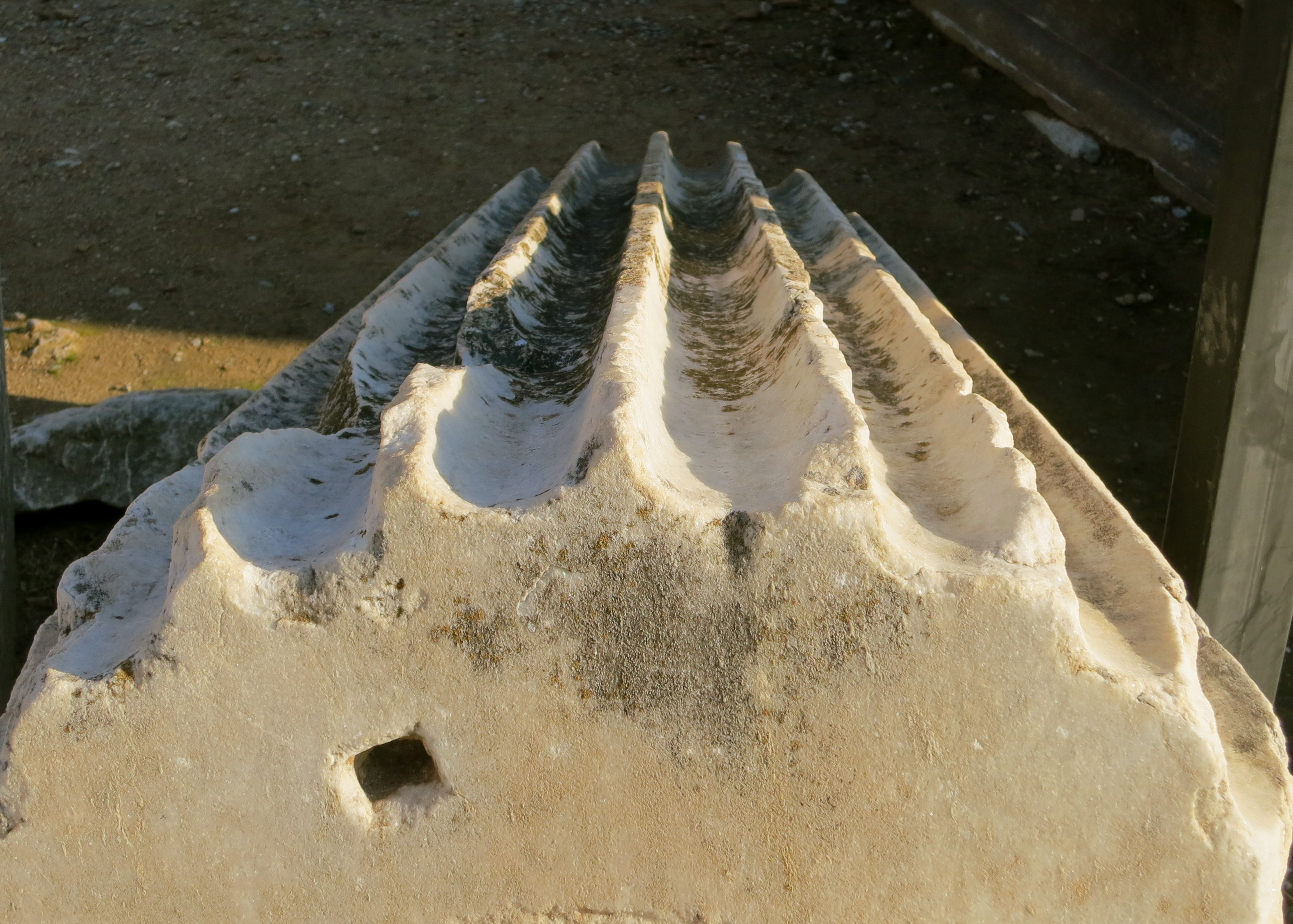
Greek and Roman columns, BTW, did not come in one long section. They came in chunks like this column and were then put together.
The most impressive use of columns among the existing ruins of Ephesus is in the beautiful Library of Celsus, which happened to be the third largest library in the ancient world and contained over 12,000 books. People provide perspective on size.
I took this photo while standing in front of the Library of Celsus and shooting upward. The column on the left is 40 feet tall.
The Library of Celsus used ‘leafy’ Corinthian columns shown here as opposed to the Ionic columns shown above.
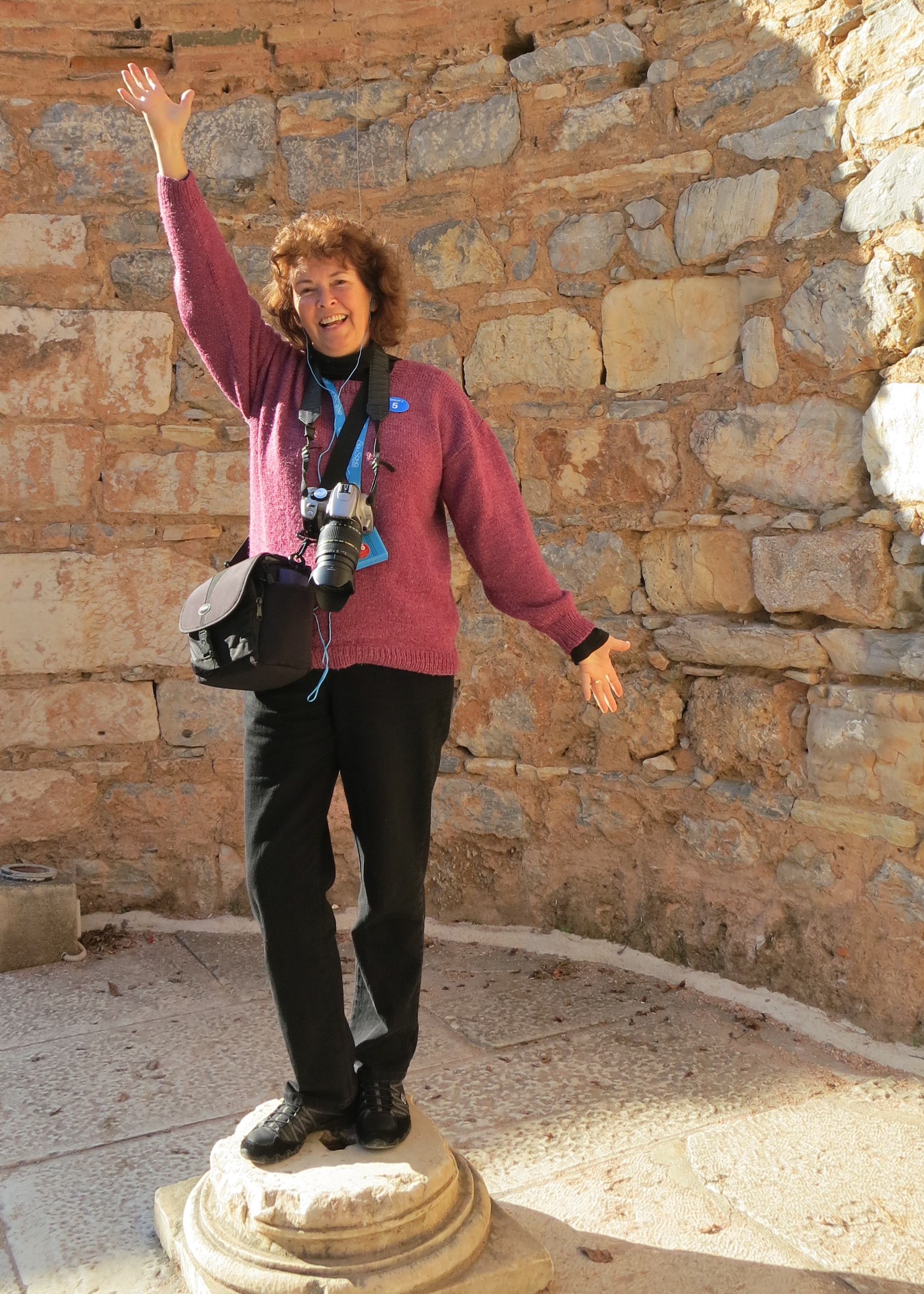
Peggy, another powerful woman, poses on a pedestal inside the Library of Celsus that may have once accommodated the Greek goddess Athena. I didn’t tell Peggy she was dancing on the grave of Celsus.
Unless you were wealthy in Ephesus, you used the common toilets shown here where you could line up with your buddies and discuss the day’s news while taking care of business. The men’s toilet house could accommodate up to 40 people at once. Water flowed constantly under the toilets to remove wastes and deposit them in the Meander River.
Speaking of plumbing, these clay pipes ran underneath the city of Ephesus and provided a sophisticated means of supplying water as well as removing wastes.
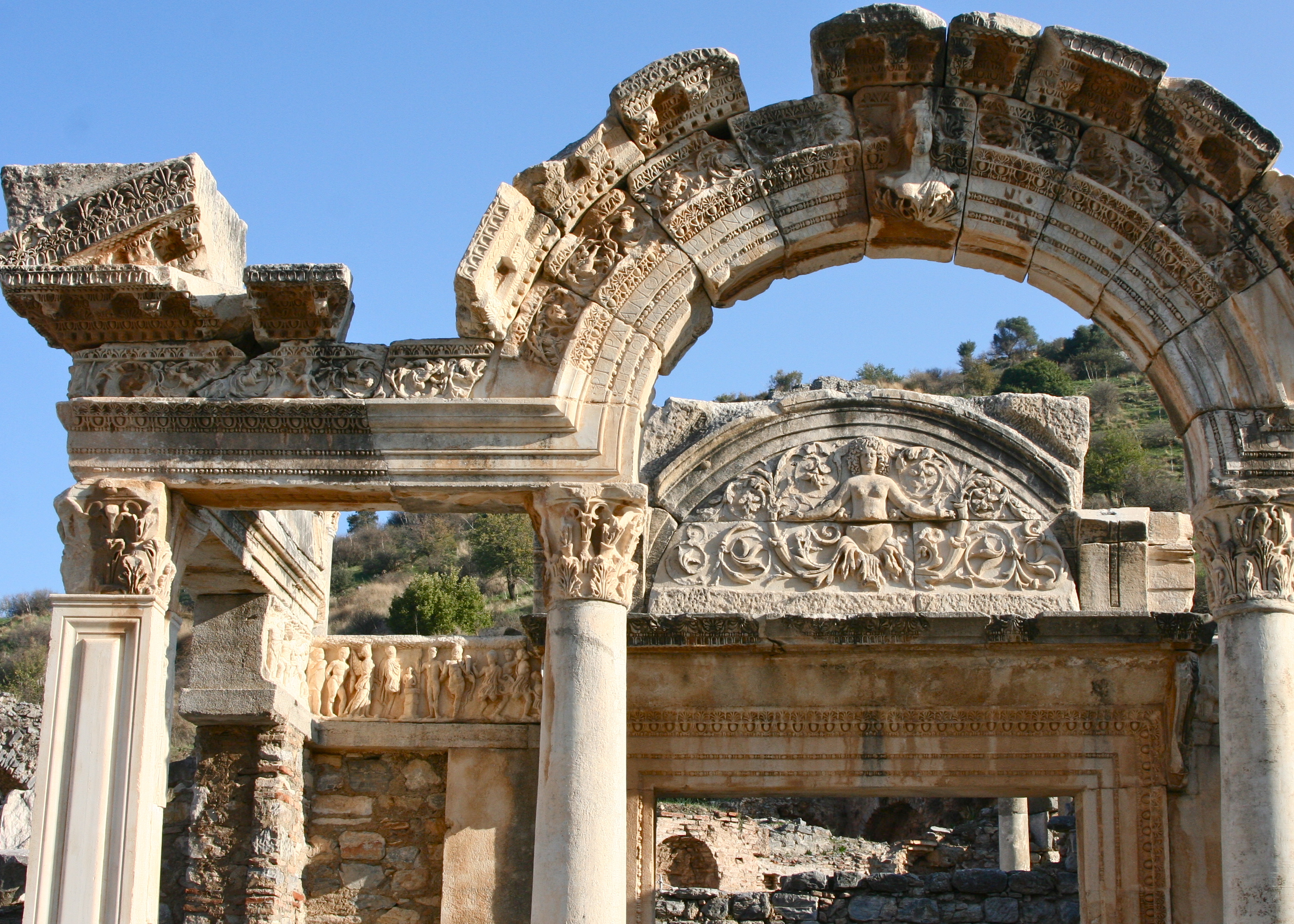
This is Hadrian’s Temple. Hadrian (76-138 AD), one of the greatest of Roman emperors, was known for his building projects, the most famous being Hadrian’s Wall in England. Hadrian loved everything Greek— including the young man, Antinous. The woman shown on the second arch was likely Medusa, whose hair was made of writhing snakes and whose mere glance could turn a man to stone. How much more powerful can you get? (Photo by Peggy Mekemson)
Sailors arrived in Ephesus from all over the Mediterranean and not many could read or write. Our guide told us this was a visual aid for finding the local brothel. Walk this way.
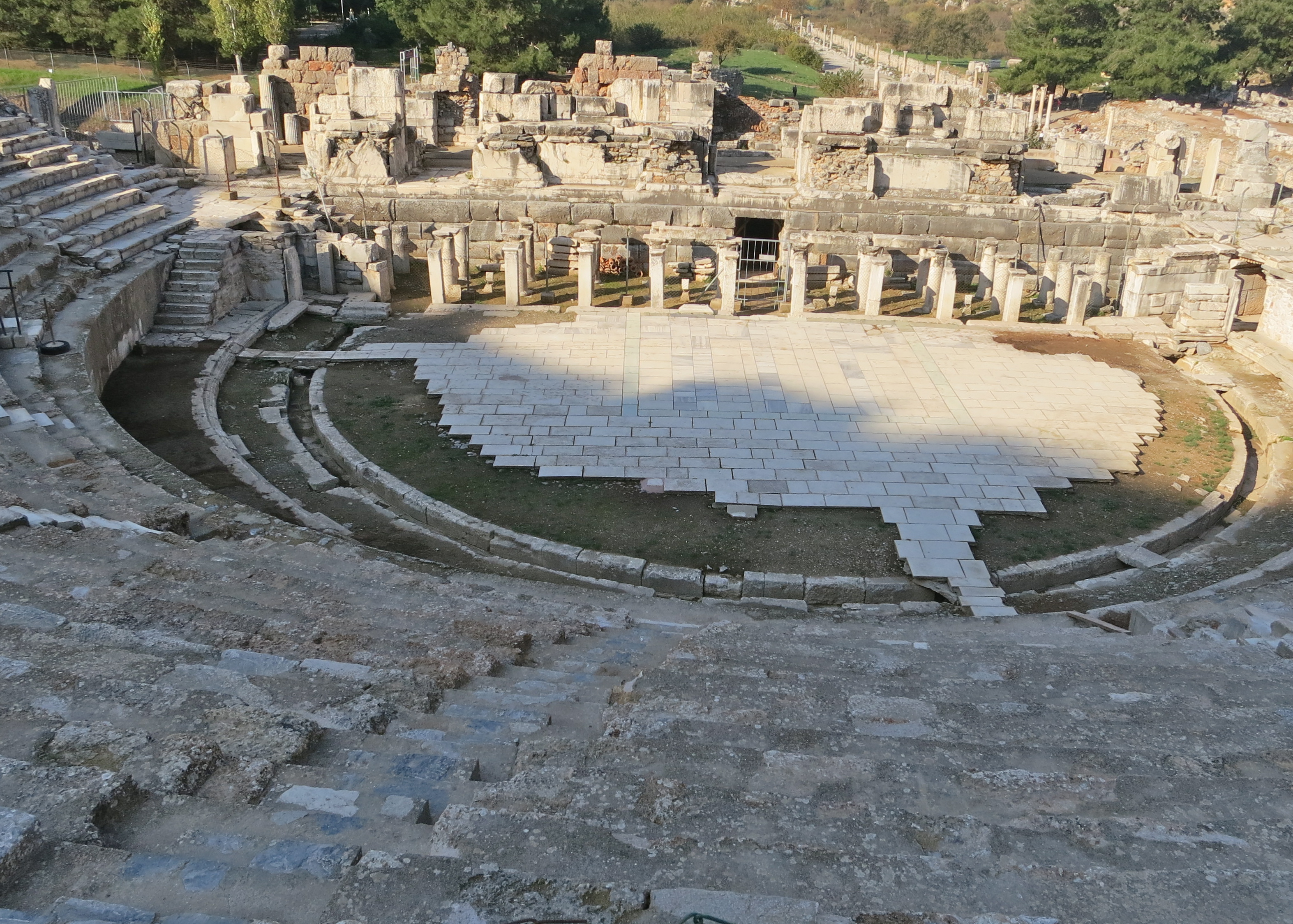
The Great Theater of Ephesus provided seating for 25,000 people. Acoustics are excellent. Modern performers have included Sting and Diana Ross. Ancient performers included St. Paul, who apparently caused a riot.
It’s showtime! Peggy and I, John and Francis Dallen and Lee Saage are ready. Bring on the gladiators. (Photo by Kathy Saage.)
NEXT BLOG: Since we are in Turkey, my next post will explore the city of Kusadasi, where Peggy lusts after a Turkish rug and her brother buys two.
Peggy and I have found a number of ways to maintain our sanity and sense of humor in this time of Coronavirus. I will share a few today. We laugh a lot. If that doesn’t work, there is always wine!
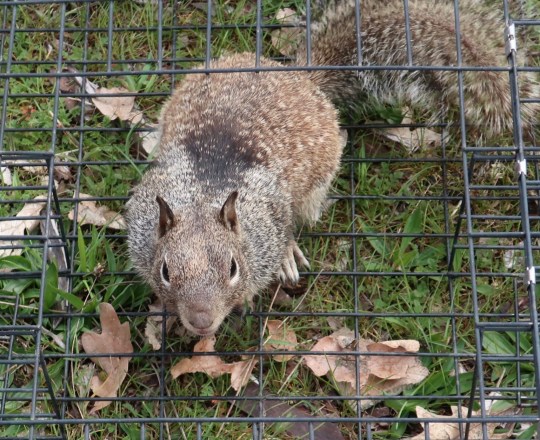
Help, let me out!
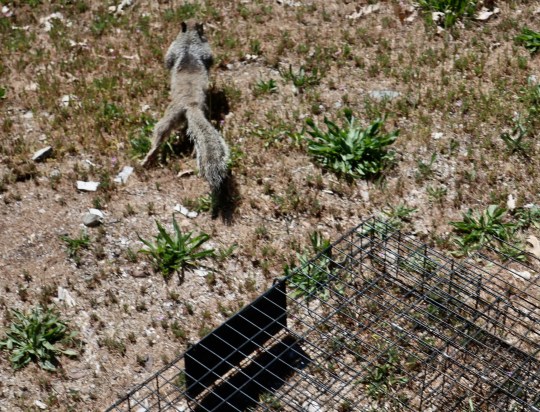
Number 1: Catching ground squirrels. In the world of dastardly rodents, few are more dastard than the ground squirrels. We have a catch and release program. Of course these criminally inclined rodents steal birdseed, but that isn’t what gets them banned. They can chomp though a garden faster than Superman can leap a tall building. And even worse, they see nothing wrong with climbing up in our vehicles and chewing on wires! “Some fun,” they think.
Plus they have an attitude. I spotted this fellow a couple of years ago sitting on our deck banister munching sunflower seeds. When I politely asked him if he had been over at the bird feeder, he gave me the paw. And they lie. “I have never stolen your sun flower seeds,” this one claimed. “I am the greatest ground squirrel alive. The tree squirrels did it!” I pointed out to him that he had at least 40 seeds stuffed into his cheeks. “That’s not true,” he proclaimed. “Fake news!”Jail break! We turn the squirrels loose in the forest across the river where there are no sun flower seeds, no gardens and no engine wires to chew on. Squirrels have to make a living the old fashioned way— eating grass. BTW: You would not want to go up against this guy in the five yard dash. “Free at last!” I heard him exclaim as he disappeared into the blackberries. I wished him good luck in his new life.
Squirrely advice to their Chief. Courtesy of my T-shirt. Note the cheeks. (Grin)
Number 2: Learning about nature.We took you on a nature walk in our last post, so there is no need to dwell on it here. I did want to share one more thing, however: How to spot deer beds. I’m pretty sure it is a critical skill.
This is what a deer bed looks like in the woods. Not much, you say. They scratch out a hole for themselves by moving dirt around with their hooves. It takes a minute or so. Once you learn to spot them, they are fairly obvious. Even more obvious…Here’s what a deer bed looks like at our house. BTW, I’m not sure you can get more pregnant that Floppy. She has been restless the past two days. I suspect she will have her fawn within the next week. The bed has been in constant use since we moved here ten years ago.Buckus leapus, who shows promise of being at least a three-pointer, made his own bed. When I suggested that he not rearrange our rocks, he gave me the look, but proceeded to lie down. And aren’t those legs gorgeous! “Great for jumping over the barriers you put up to keep me out of the garden,” he muttered to himself.
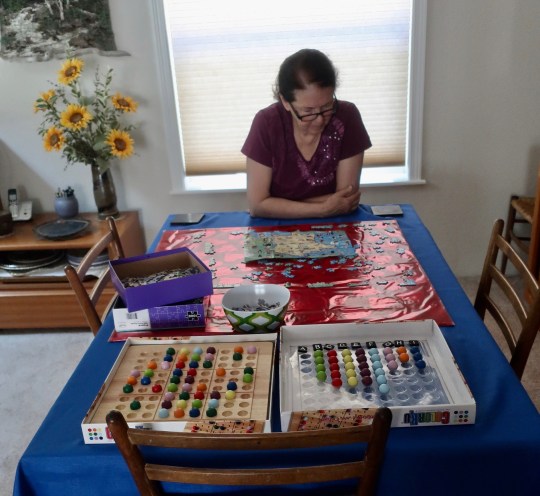
Number 3: Working puzzles. While lots of businesses have suffered during this pandemic, I can pretty well guarantee it hasn’t been the puzzle industry. It there is one item hotter than toilet paper, it’s puzzles. Peggy is the addict in our family. I’ll put in a piece on occasion, but mainly to show support. She sits down and there isn’t a peep for an hour. If she disappears, the first place I look is the puzzle table.
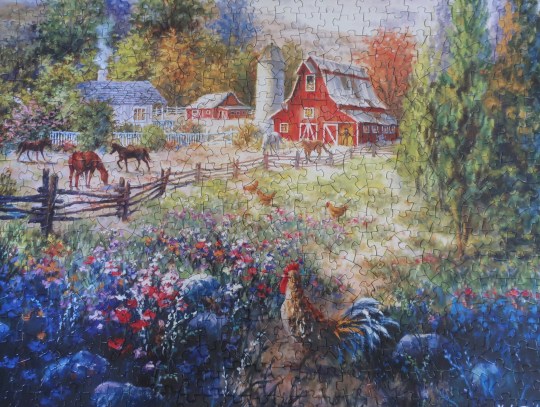
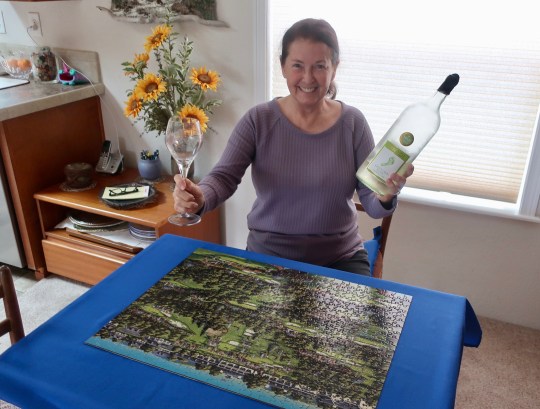
Peggy lost to the world. Our dining room table was drafted into service for the duration. The puzzle in front is a colored marble seduko that our friends Tom and Lita sent us. I play this one but Peggy is a whiz. She finishes a square and five minutes later calls out, “Done!” Tom suggested we compete. Ha!She has completed a lot of puzzles, each one with its different challenges. With this one, it was the head of the rooster.She did this puzzle to honor our canceled trip to Europe this summer.Of all the puzzles, this was by far the toughest. I heard lots of complaints coming from the puzzle room. Peggy even threatened the puzzle by telling it she was going to tear it apart and put it back in the puzzle box.But, with a little help from a friend, she finished it! And then, of course, she needed a glass to celebrate.
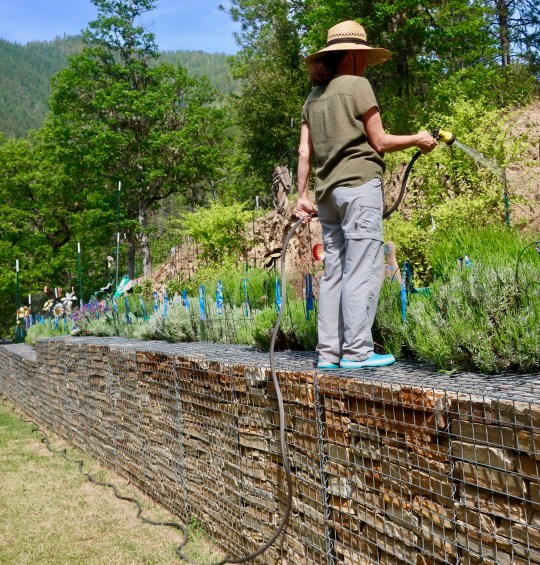
Number 4: Watching flowers grow. Our flowers are deliriously happy. Normally, they just get started and off we go on another adventure. They would turn us into the SPCP, the Society for the Prevention of Cruelty to Plants— if we gave them access to a phone. Not this year. I’ve put in 10 new trellises and moved at least 11.32 tons of dirt and rock— as least it seems like it. I’m the muscle in this operation. Peggy is the gardener. She is out every day futzing with her babies: planting them, talking to them, and watering them. We both work at trying to keep Buckus leapus out.
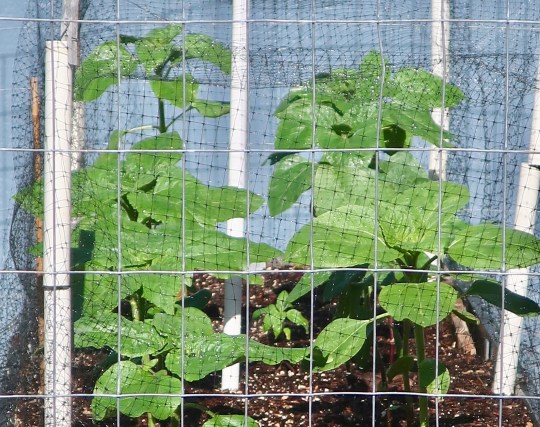
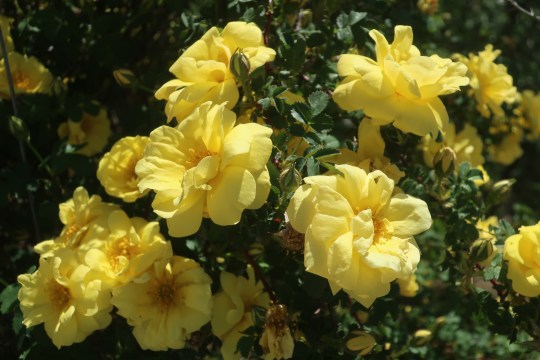
Peggy standing on top of our Gabion Cage deer barrier giving plants an extra shot of water.Remember when I posted about sitting in the sunroom and watching sunflower plants grow while I was writing…Here’s what they look like now. Happy plants! The barriers on barriers are to keep the ground squirrels and the birds out.Lots and lots of happy plants. This is the first of the lavender. Soon it will be blooming all around our house with thousands of bees and butterflies to keep it company.And of course our pioneer rose which now has more flowers than I can count.I’ve been learning more about this rose since my last post. It is deeply connected to our local history and worth a post on its own. And it is rooted in the history of the west. Another name it goes by is the Yellow Rose of Texas!
The four activities listed above are only the beginning of how we have maintained our sanity and sense of humor during the age of coronavirus. Here are a few other things we do while ‘sheltering at home.’
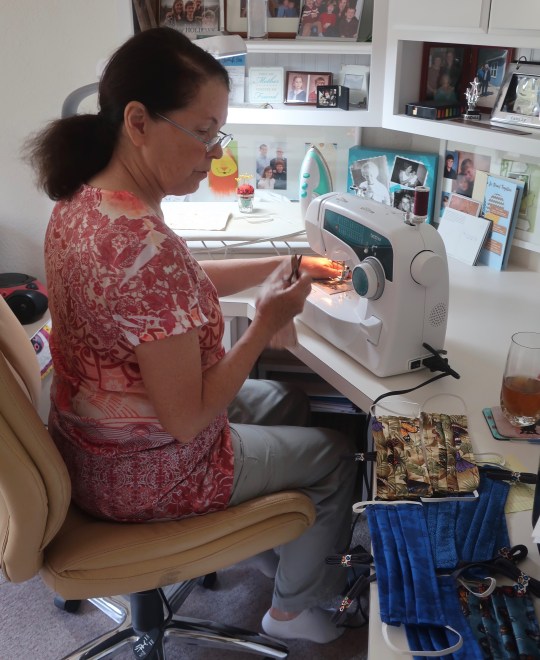
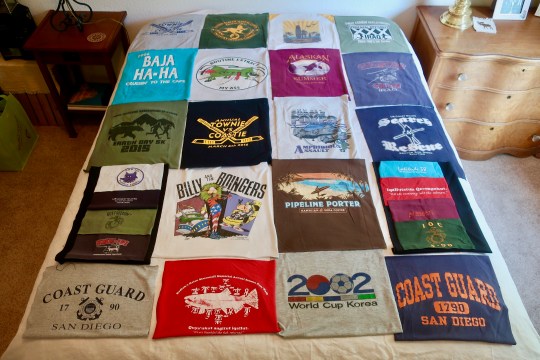
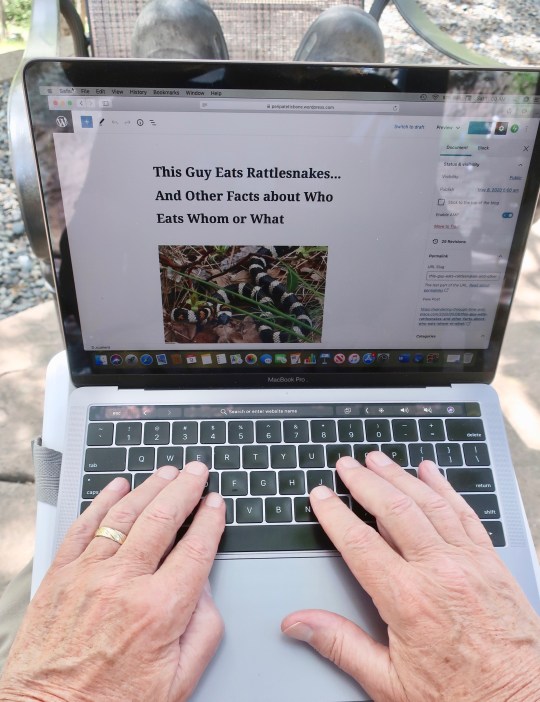
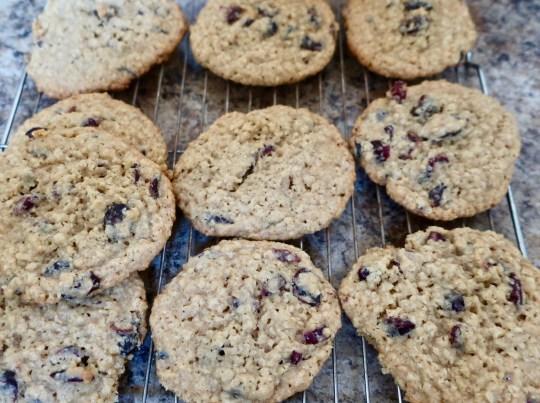
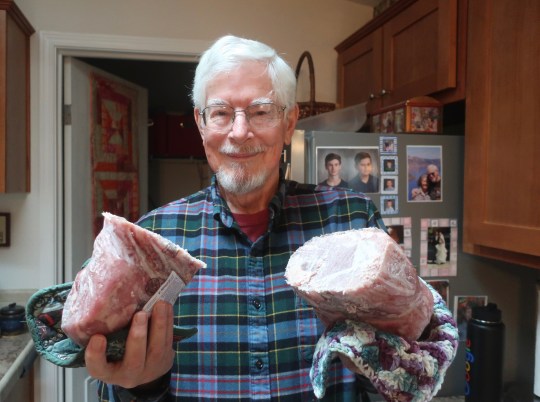
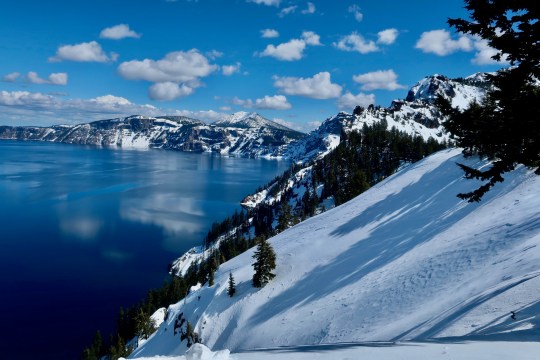
Peggy makes masks. Lots of them— enough to outfit us, our kids and grandkids, and her brother, sister and spouses.And quilts. Our son Tony sent us some of his favorite T-shirts for Peggy to turn into a quilt. She is making another one for our son-in-law Clay that features tractors and barns. I blog. Sometimes it feels like a full time job! Those are my crocks peaking over the top of the screen.Peggy bakes oatmeal-cranberry cookies. Healthy, right! My job is to test them right after they come out of the oven. I know… it’s hard work but somebody has to do it. And I make sure the freezer is full. This is a pork roast I cut in two. I turned the first half into a rather tasty lima bean soup. The other half is waiting for me to turn it into pulled pork.Peggy is kept busy sending and receiving Marco Polos from our kids and grandkids.Both Peggy and I are avid readers. This is what I am working through in non-fiction. I always try to include science, history, current events, something for the soul, and a book on writing. My fiction is sci-fi and fantasy. I am totally about escapism! Especially now. Peggy loves mysteries.It feels like a thousand years ago when Peggy and I were at Crater Lake, our last adventure out. And yet, it was only March 20th. Like all of you, we are eager to hit the road again. But we will wait until it is relatively safe. To do otherwise will endanger our lives and those of others. Stay healthy, and stay sane.The Last Word. This ground squirrel was about to escape into the forest. But before he did, he stopped, looked up me, and growled, “Come just a little closer so I can bite you.'”
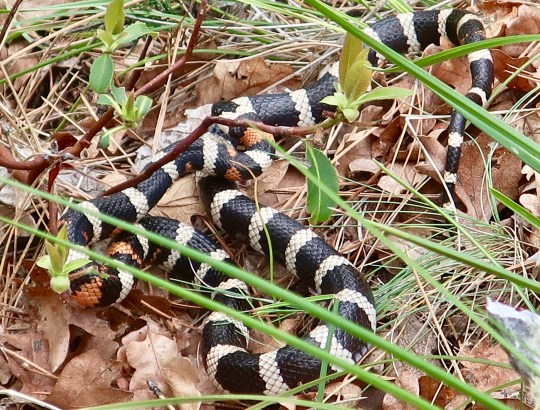
Peggy and I hiked up the mountain behind our house in search of cougars and bears, and came upon this colorful California kingsnake. It cooperated with a striking pose, so to speak. We had been following along behind it as it slithered along for about 20 feet. I think the pose was meant to say, “Go away!” When that didn’t work, it hid his head.
I’ve eaten rattlesnake but it has never been a part of my regular diet. Nor do I eat rattlesnakes whole or squeeze them to death. The California kingsnake regards this as normal behavior. They are said to have the strongest constriction power of any snake of similar size and can eat another snake almost as big as they are. (You wouldn’t want to meet one the size of a boa.) I assume they also use this ability on the other prey they like to eat including rodents, birds, lizards, and frogs. One valuable attribute that they have in relation to eating rattlesnakes is that they are more or less immune to the venom. A final tidbit I picked up in my research: The guys win their lady’s love by vibrating rapidly. I wonder if this leads to a shaky relationship.
The kingsnake stretched out to about 4 feet. They can grow up to six. Imagine this fellow swallowing a 2-3 foot rattlesnake! We followed along at a respectful distance.
We weren’t looking for the snake. Peggy and I had hiked up the mountain to check out some possible cougar scat (poop) and see if anyone was home at the bear cave. We were also looking for other signs of wildlife and anything else that caught our fancy— like the weird trees and pretty flowers I have already shared. I am sure that you are thinking now, “Oh joy, Curt is going the share poop with us.” And you are right.
But first the bear cave. It isn’t that we have ever found a bear in it. But it looks like a bear should live there and we found bear tracks in the snow heading toward the cave this past winter. As you may recall, Peggy refused to walk over with me to check it out. This time we found fresh bear scat on a trail up the mountain nearby and Peggy immediate burst into song, The bear went over the mountain. I told her it was wishful thinking, that maybe the bear had come down the mountain. None-the-less, we checked out the cave and no one was home. Peggy insisted that I throw rocks inside just to make sure. I’ve never quite understood the logic of this. If I were a bear and got awakened from a deep sleep by a rock, I’d be grumpy. I’d come roaring out of the cave wanting to bite someone.
The ‘bear’ cave looking dark and ominous. It’s actually an old gold mine. Our neighbor, Mooey, who is a part time gold miner, cut a trail up to the cave. “I always throw rocks into it.” he told us.”
And now for the scat. Our fascination with it may have you scratching your head why— especially if you have a dog or a baby. The fact is, if you are interested in what animals are visiting your neighborhood or live in the wild areas you visit, scat is an important clue, and sometimes the only clue. Many animals are nocturnal and others have figured out that the less people know about their presence, the better off they are. Cougars fit into the latter category.
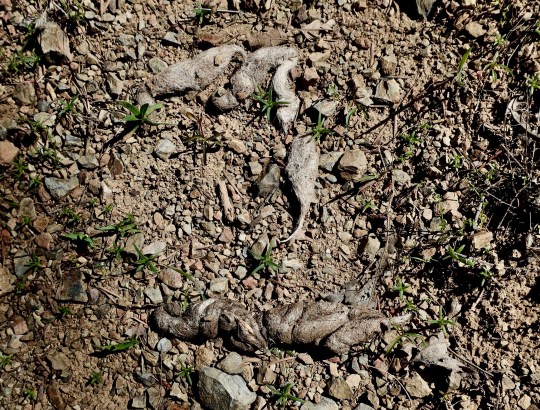
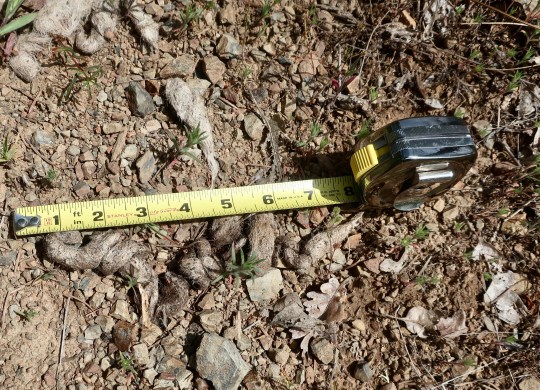
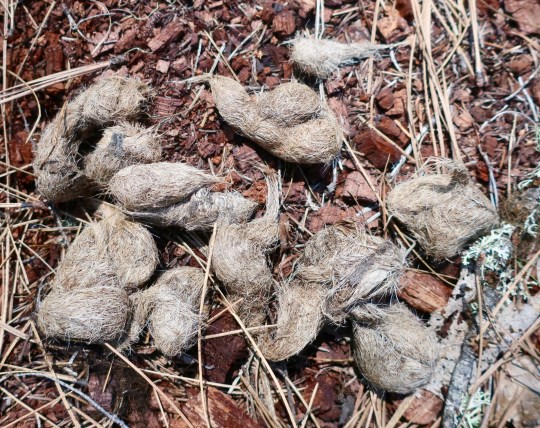
We were hiking up the hill when we came on this scat. Just looking at it we learned two things. One, it was a carnivore. Two, it was likely left by different animals at different times. The color suggests the different times. The scat on top is older. It also appears that the scat on the bottom was left by a larger animal.Check out the fur? This was definitely a meat-eater. I think the fur is from a deer.The lower scat was about 7 inches in length. The upper closer to 4. (And doesn’t everyone carry a tape in his pocket to measure scat?)
So what are we looking at. Given who lives in our area, I would say either a cougar, a coyote or a bob cat. The size, especially of the lower scat, suggests cougar. If it’s deer fur, as it appears to be, it is one more clue suggesting a cougar. On Wednesday we were hiking up another trail near our house, the Mule Mountain Trail, and definitely came across cougar scat.
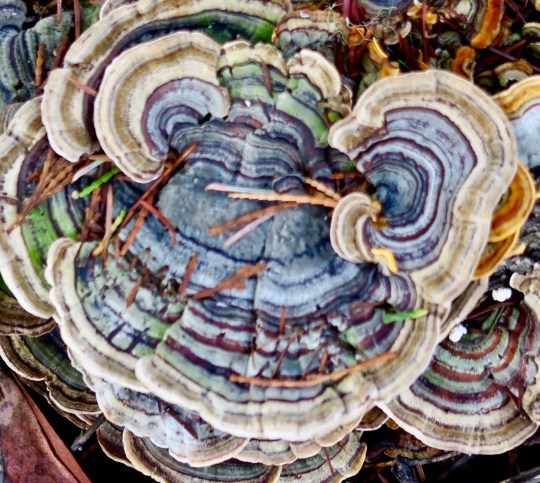
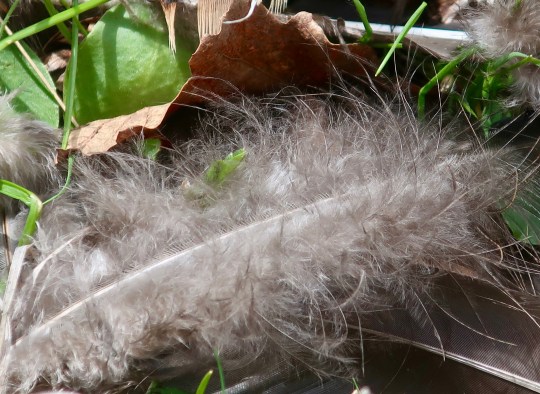
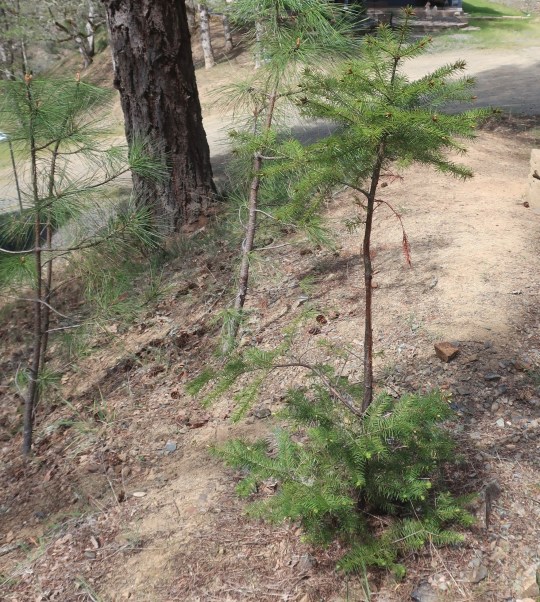
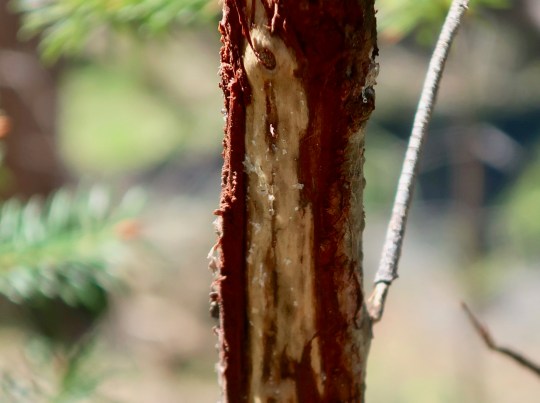
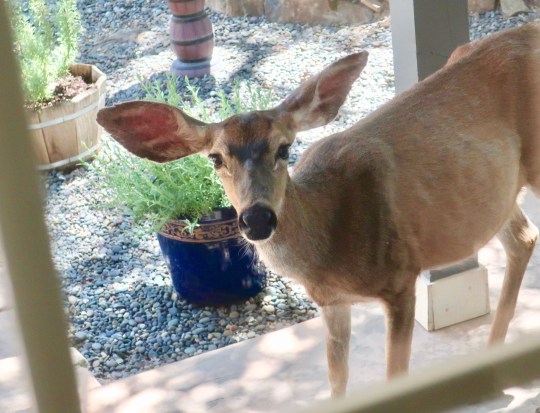
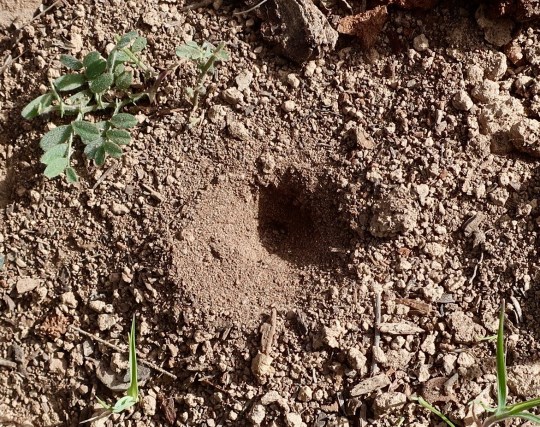
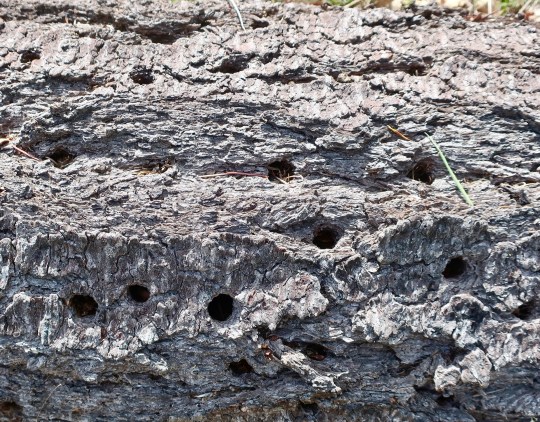
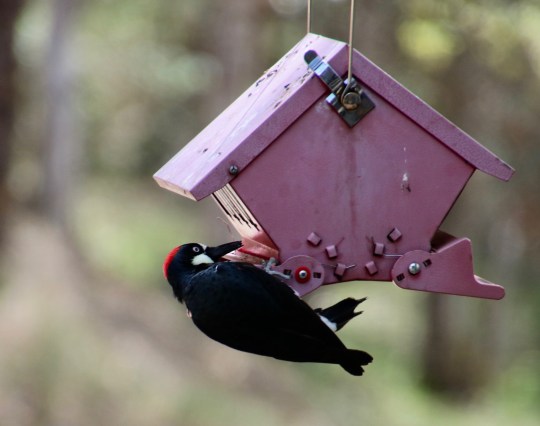
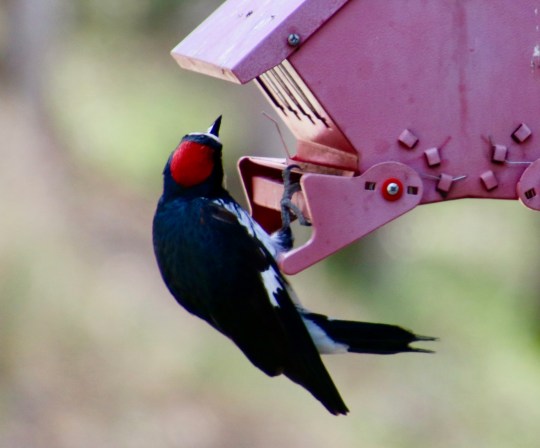
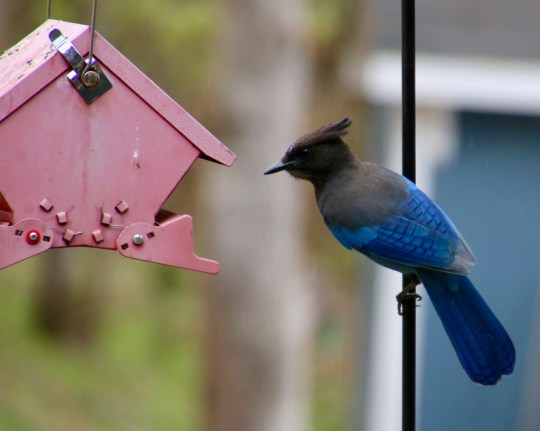
This scat was larger and chunkier— definitely cougar. Once more, the fur looks like deer.But enough on poop. This shelf fungus seems to have an opinion on the subject.Turkey was also the menu out in the woods. The feathers suggest a real feast. There were enough for at least two turkeys. Once again, the cougar, the bob cat, or the coyote was at work. Or maybe two of them. These are turkey tail feathers…And this feather make me think of my down sleeping bag!Let’s hear it for the herbivores. Someone stripped this poor little Douglas fir, leaving a top and a bottom and nothing in between. Ouch. Nothing like being flayed. I’d say a porcupine is the likely culprit. A buck might do this to remove velvet from his antlers, but it is still too early. Last year one of them did in our hammock. It is also possible that a deer did this for lunch, yanking off the tender young needles of the tree with the bark following— all down the hatch!“You blame us for everything!” I had just written the caption for the photo above when Floppy appeared and stared accusingly at me through the window. It’s not true. I also blame the ground squirrels around here. As you will discover in my next post. Here’s an interesting bit of nature. The insect that made this hole is an antlion, a ferocious little bug that digs the holes to trap ants. It sits in the bottom and waits for someone to fall in and then kicks up dirt on a potential victim to speed up the process. It’s a slippery slope, almost impossible to escape from. I am reminded of the monster in Star Wars that Jabba the Hut hoped would eat Luke, Hans and Chewy.Any idea who did this? You are looking at an acorn tree. The birds that drilled these holes are acorn woodpeckers. There can be thousands of such hole in a single tree filled with acorns. Usually they all belong to the same commune of woodpeckers that live together as a family, interbreed, raise the kids jointly and maintain the tree. My commune friends from the 60s and 70s would consider them soulmates.Acorn woodpeckers also like sunflowers! Check out the clown face on this one.The red cap is definitive of the acorn woodpecker. This is a female. The red goes down to the white forehead on the male.Steller jays also love sunflower seeds, but it’s a reach…They flap their lower wing to maintain balance. They’d be ruler of the bird feeder if it wasn’t for the acorn woodpeckers. No one wants to get in a fight with someone who can peck holes in wood!Over ten species of birds are regular visitors to the birdfeeder and provide endless entertainment. These are mainly goldfinches waiting for their turn. I’ll close today with a final photo of the kingsnake. I looked down and its head was missing! At first I thought he was in the process of slithering off. But he remained still. Later, I read that kingsnakes sometimes hide their heads when in danger. It hardly seems like appropriate behavior for somebody who eats rattlesnakes!
NEXT POST: Other ways we’ve been amusing ourselves in the Age of Coronavirus
I ran out of time to do today’s post on our hike up into the Rogue River-Siskiyou National Forest behind our house in search of bears, cougars and snakes. Oh my. The best laid plans of mice and moose— you know how that goes. There were chores to do. So, I decided to pull a post from 2014 I did on kayaking a small lake that’s about 8-miles from our home. I’ve blogged on Squaw Lake since. You may have seen photos but each trip is different. It is quite beautiful. Enjoy.
Peggy paddling our inflatable Innova Kayak on Little Squaw Lake. (Her hair has grown like umpteen inches since— grin.)
Since Squaw Lake is only a few mile from our home, we can easily head up there when we have a couple of hours to spare.
Paddling under cloudy skies, we thought it might rain.
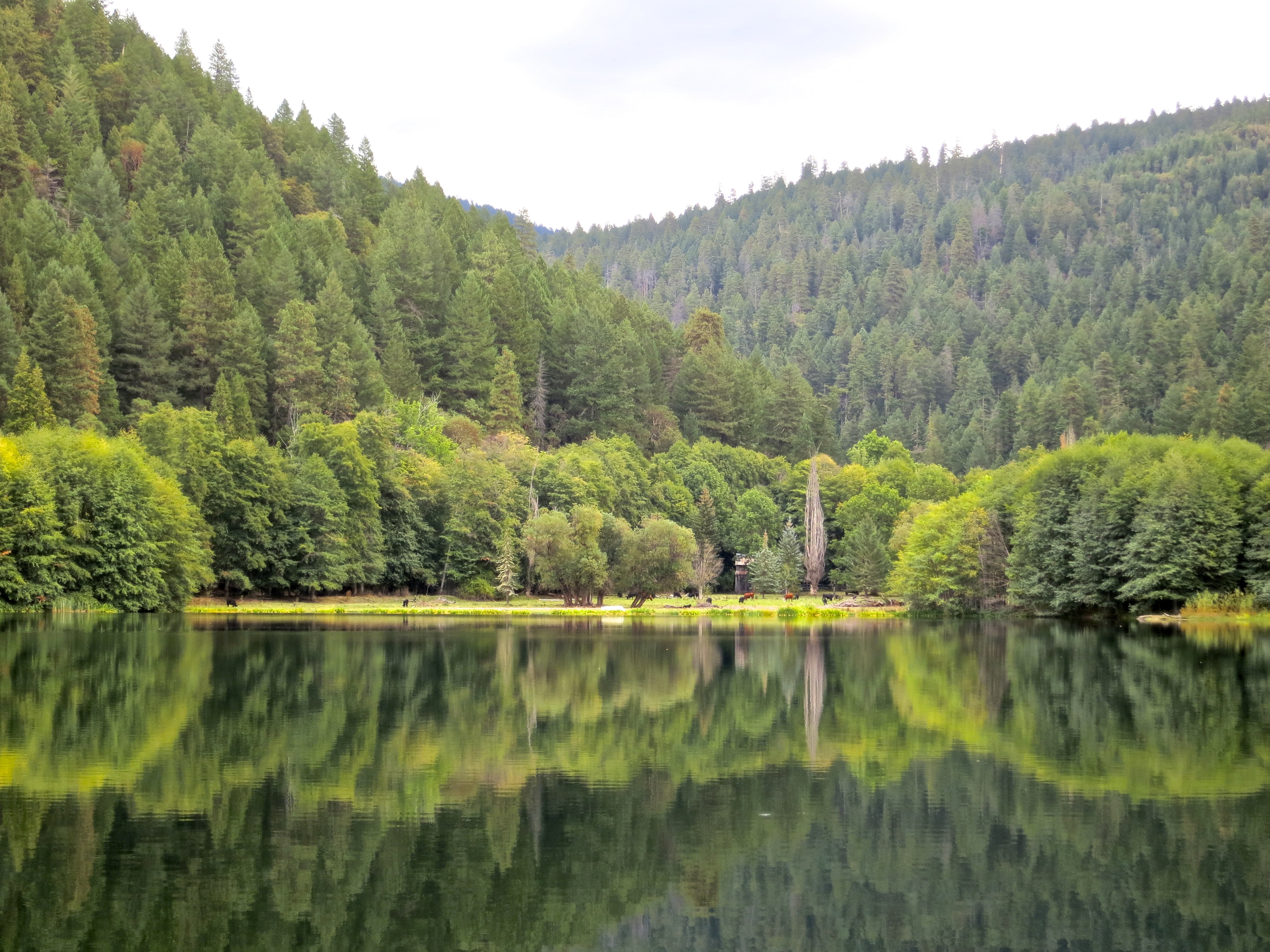
But then the sun came out, allowing for this very green reflection shot.
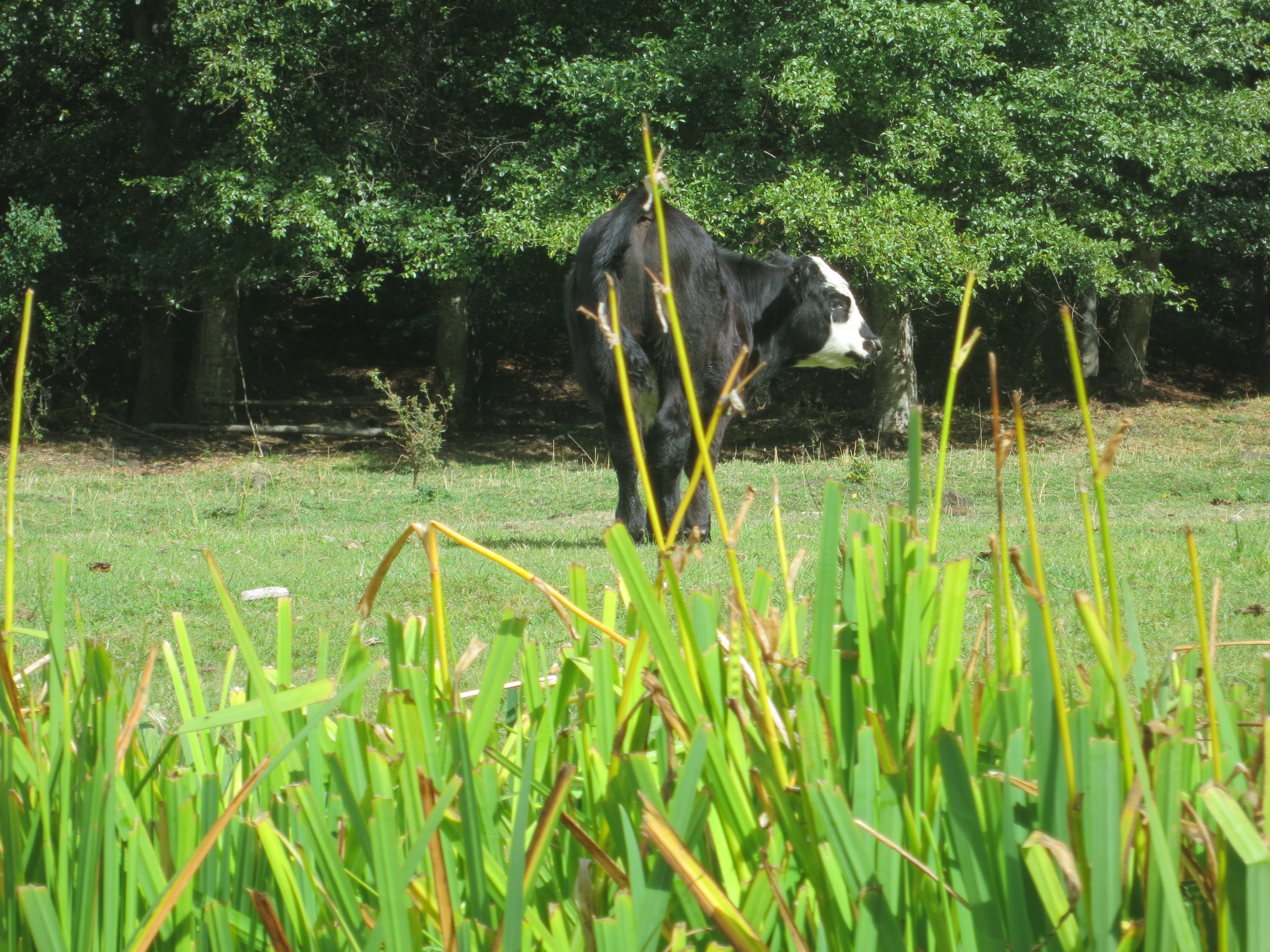
We kayaked up to the end of the lake and caught this photo of a young steer, who also seemed happy to see the sun.
Towering cumulus clouds dominated the horizon and spoke of a later thunder and lightning storm. We would be off the lake by then. Peggy and I have been caught out on much larger lakes during storms. Dangerous. Once, in Prince Albert National Park north of Saskatoon, Canada, we barely made it back to shore.
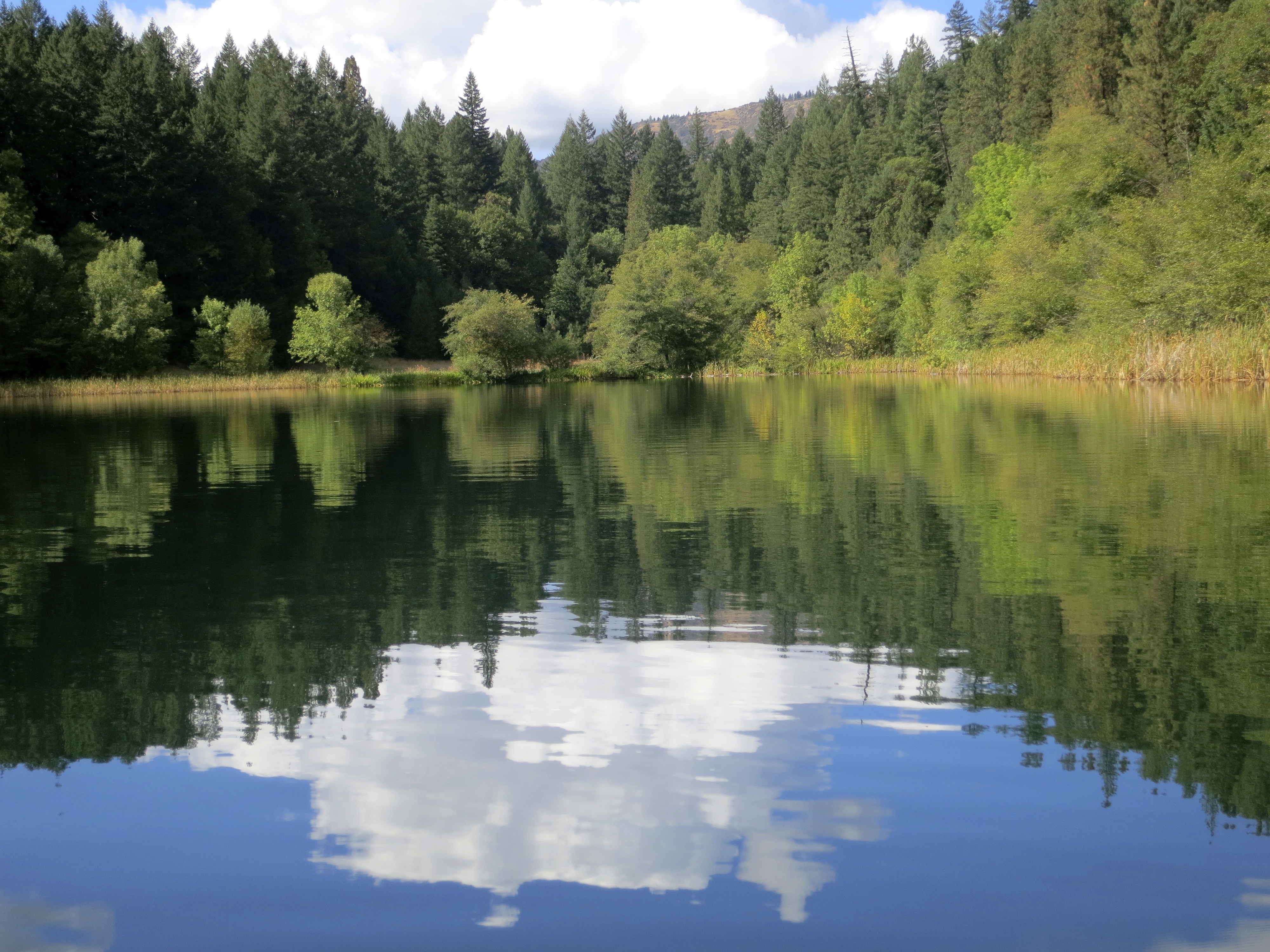
The clouds were reflected in the lake.
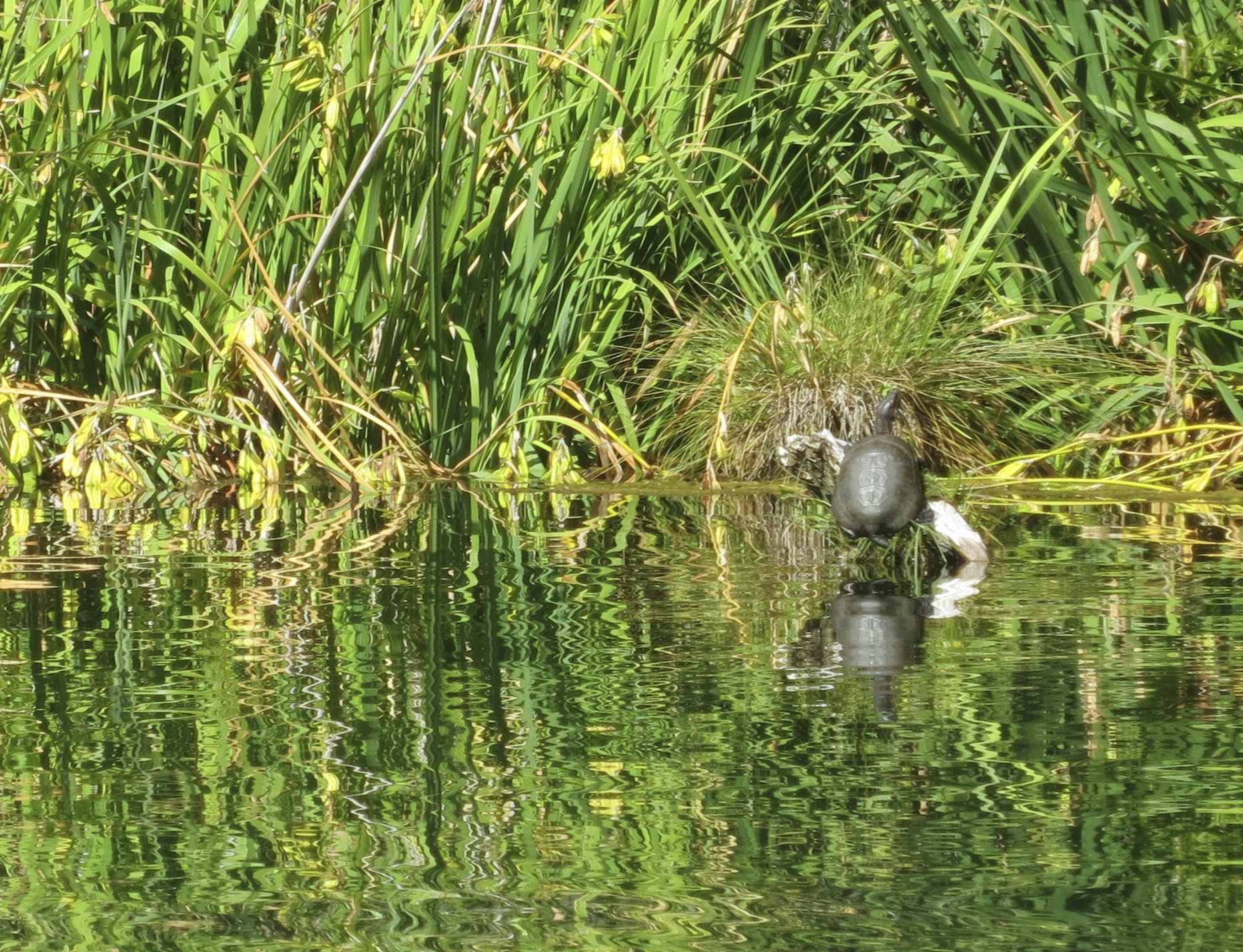
A curious turtle, blending into the green, checked us out.
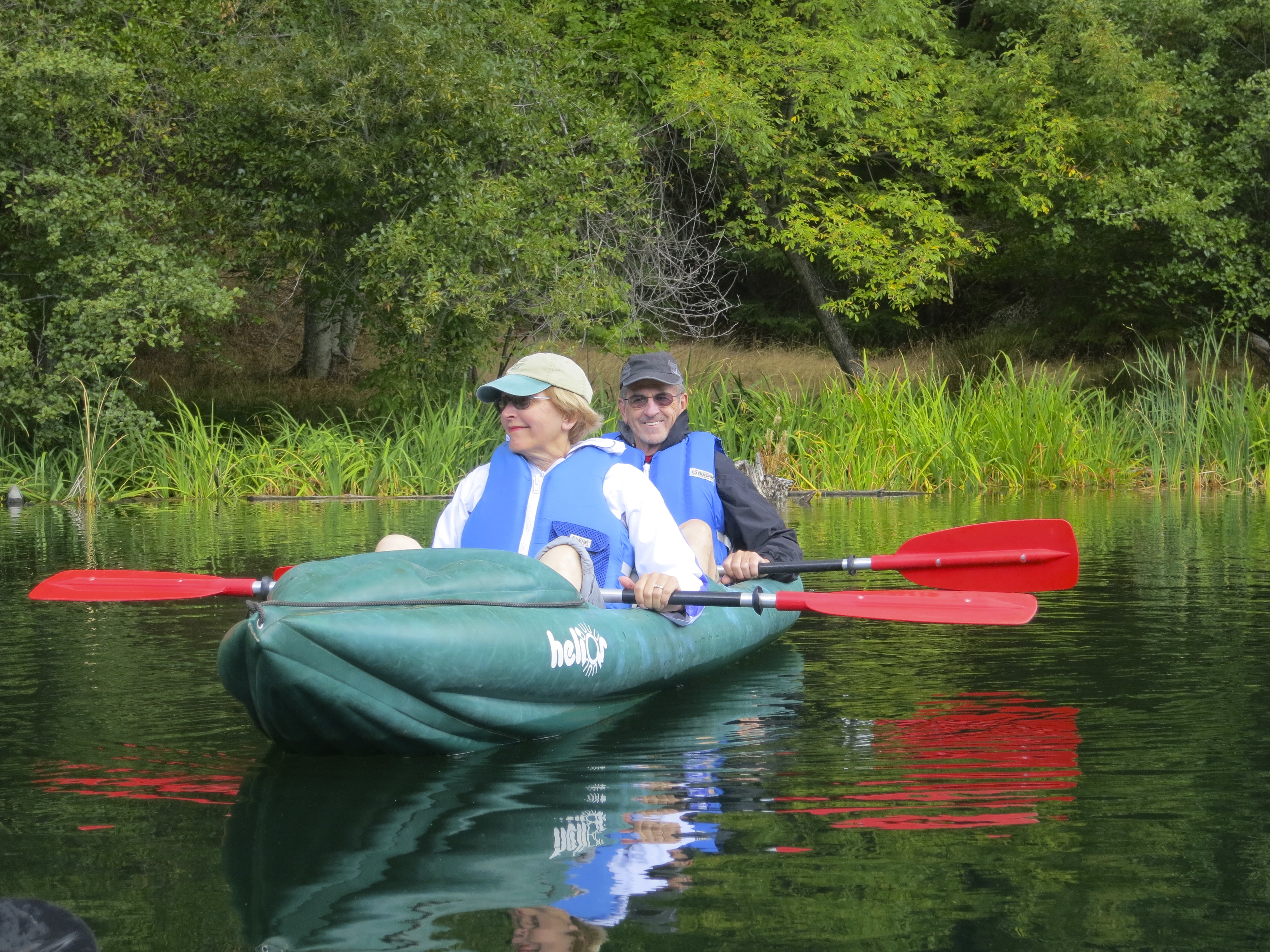
Peggy’s sister, Jane Hagedorn and her husband Jim, joined us. We often take friends and family up to Squaw Lake. Its small size make it an ideal location for beginning kayakers.
A final photo capturing the beauty and peace of the lake. Ripples from a fish that had just jumped are on the lower right.
I don’t know if you kayak, but it is hard to find a more peaceful experience than kayaking on Squaw Lake. We hope to be back there soon. (Look for another post!) We are also planning a trip to Klamath Lake where you can follow ancient trails through the tules once used by Native Americans. That, plus the fact that large numbers of water fowl stop there in the spring and fall, makes it another favorite of ours. And finally, if you are ever in our neck of the woods, we would be glad to take you kayaking on Squaw Lake.
FRIDAY’S POST: The blog on our trip up the mountain, assuming I’m not distracted again!














































 Wandering through Time and Place