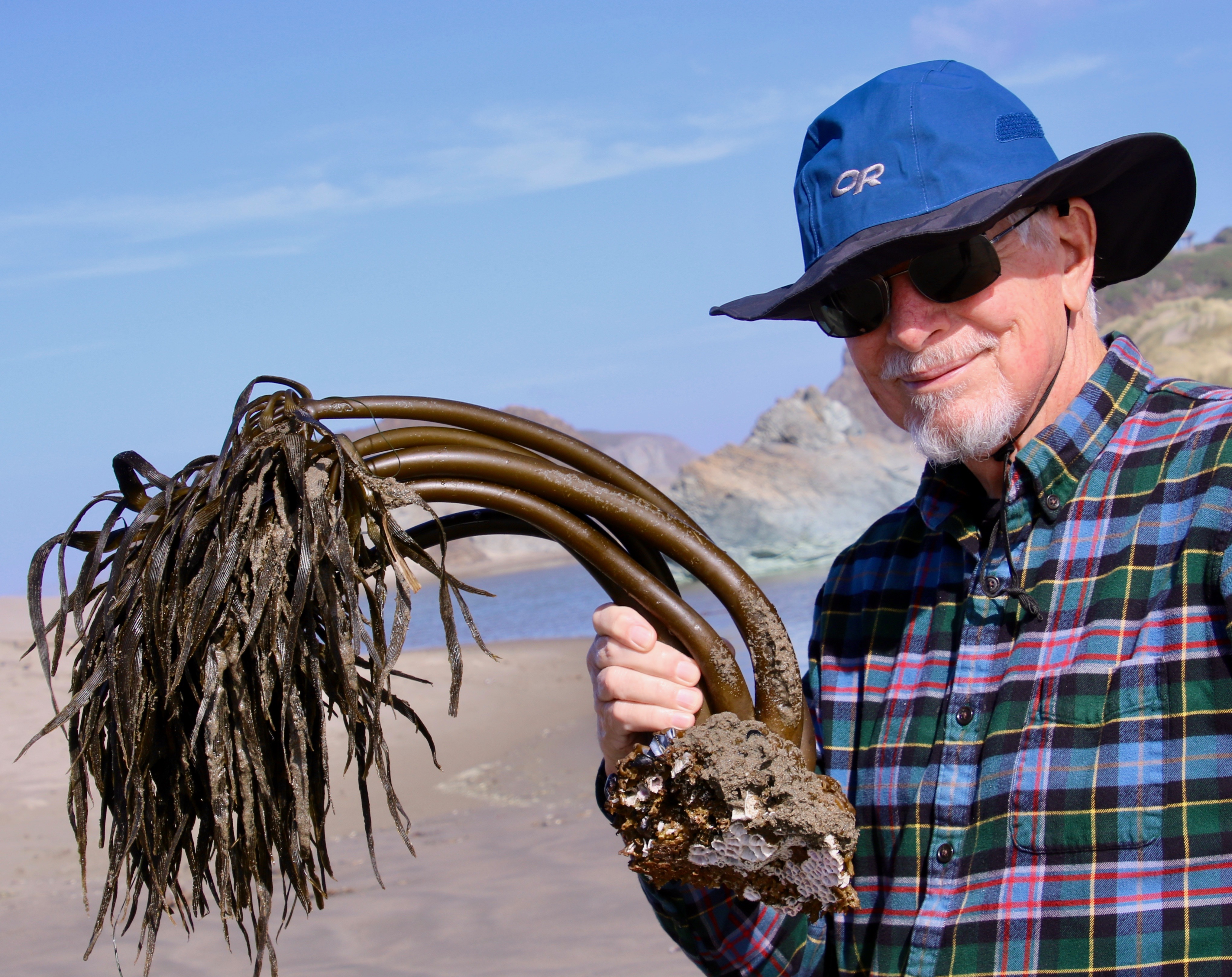
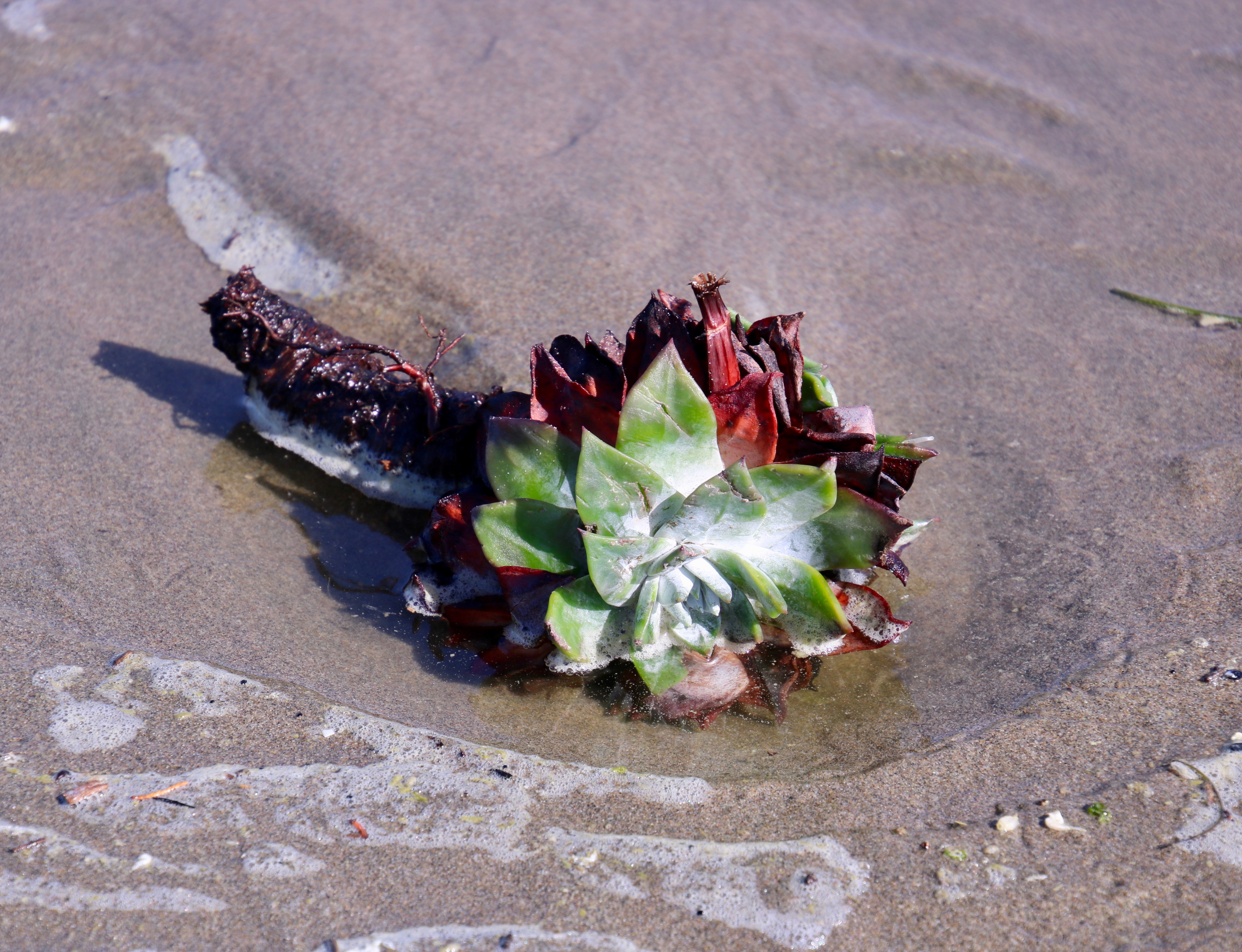
Only a guy with a little Devil in him would offer his sweetheart a bouquet of sea palms washed ashore by a turbulent ocean. She wasn’t too impressed. (Photograph by Peggy but the words are all mine.)
If place names are any judge, the Devil does get around. There are literally dozens if not hundreds of locations in the US named after him. New England seems to win the prize for the most, which is understandable since the Puritans were among its first settlers. They saw Hell in just about everything.
The Oregon Coast has more than its share of Devilish locations, however. There are 10 places along the coast alone that bear his name. Among them are the Devil’s Punch Bowl, Cauldron and Churn and various body parts including his Elbow and Backbone. I was reminded of the various cathedrals in Europe that stock up on the bones of saints to impress the holy and solicit their offerings.
Peggy and I dropped by his Kitchen on our visit last week to Bandon, Oregon. I’d been there before and speculated in a blog on how the Kitchen got its name. The answer provided by the sign-board seemed a little prosaic in comparison to my speculation. It had to do with the cold waters of the ocean bringing a rich brew of nutrients to the surface that were eaten by plankton, that were eaten by small fish, that were eaten by bigger fish, that were eaten by still bigger fish, that were eaten by seals, otters, and a whole host of seabirds, not to mention people and anything else that could sink their teeth into them.
Possibly if you were on the receiving end of this long chain of being eaten, you might think that the Devil was involved.
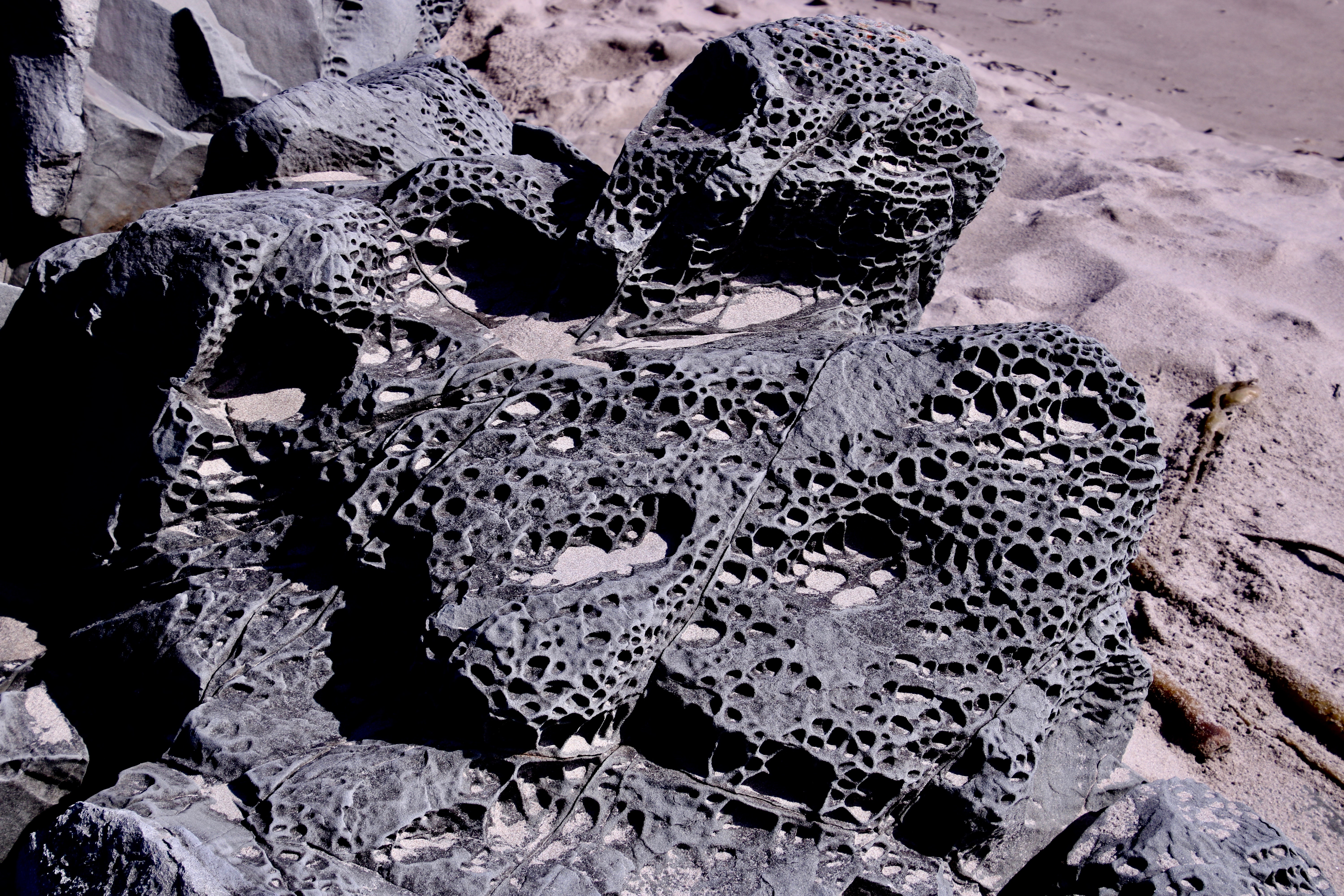
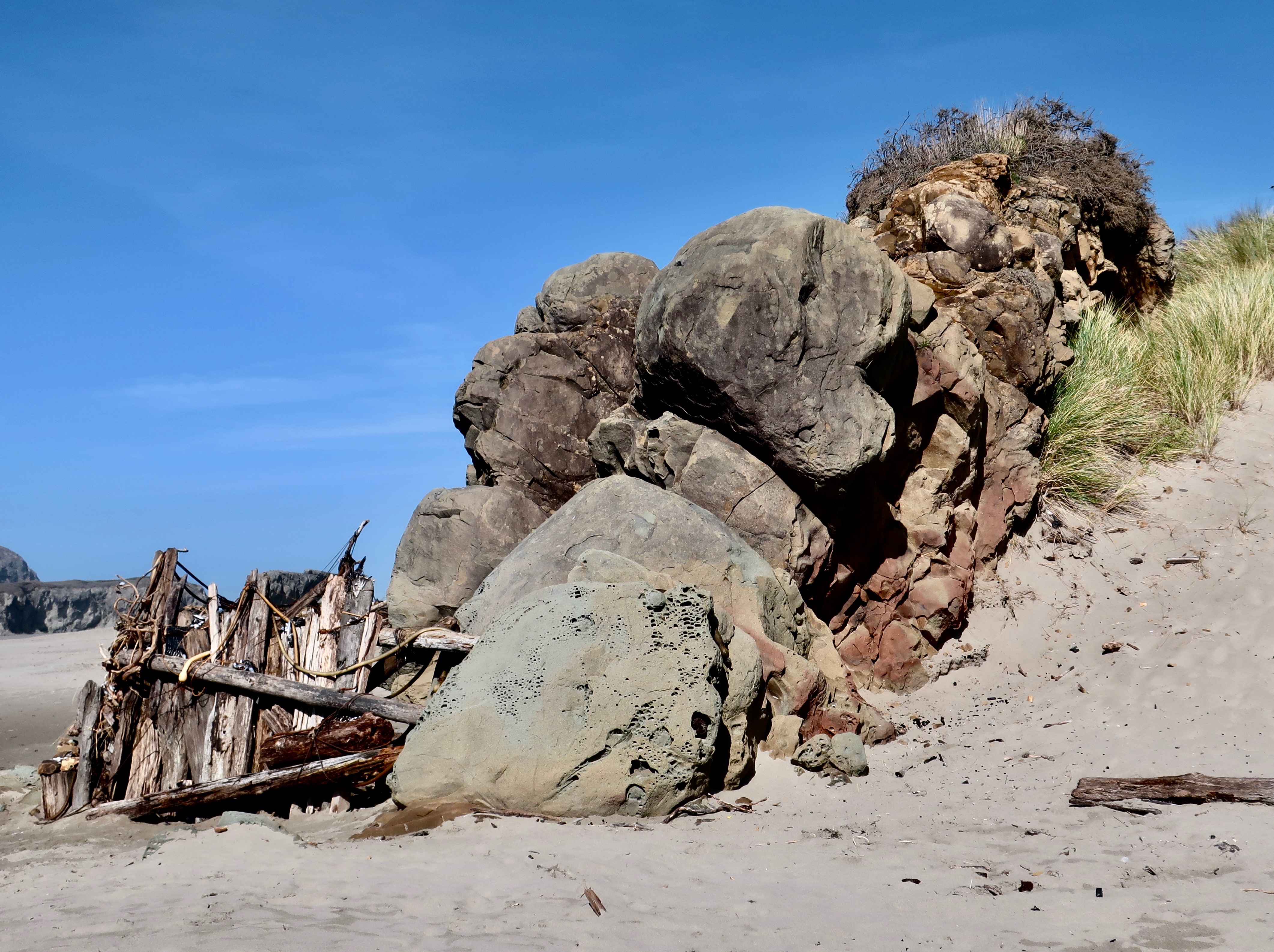
I’d still go with a Devil rock like this. Stare at it long enough after imbibing in your favorite mind altering drug and who knows what you might see. After a mere two glasses of wine I saw four sets of dead eyes staring back at me. (Photo by Peggy Mekemson.)This large crooked rock towered above the Devil rock above. That’s kelp buried in the sand to the right of it.
Mainly, Peggy and I saw a beautiful beach with some great sea stacks, crashing waves, impressive homes, driftwood, a quiet stream, and two driftwood forts that had either been built by energetic kids eager to fight pirates or adults reliving their childhood. I could see our son Tony enthusiastically joining his three sons on such a project.
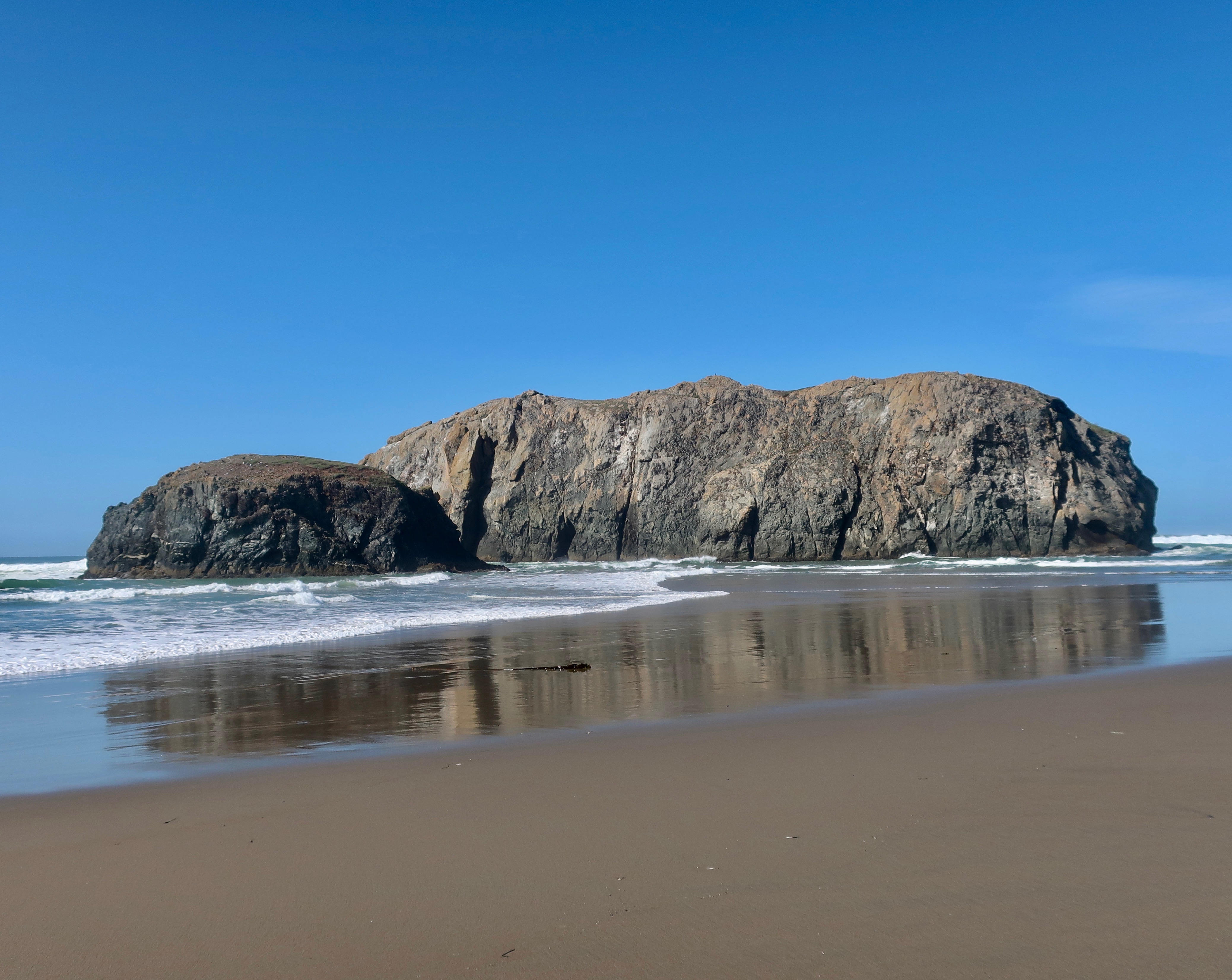
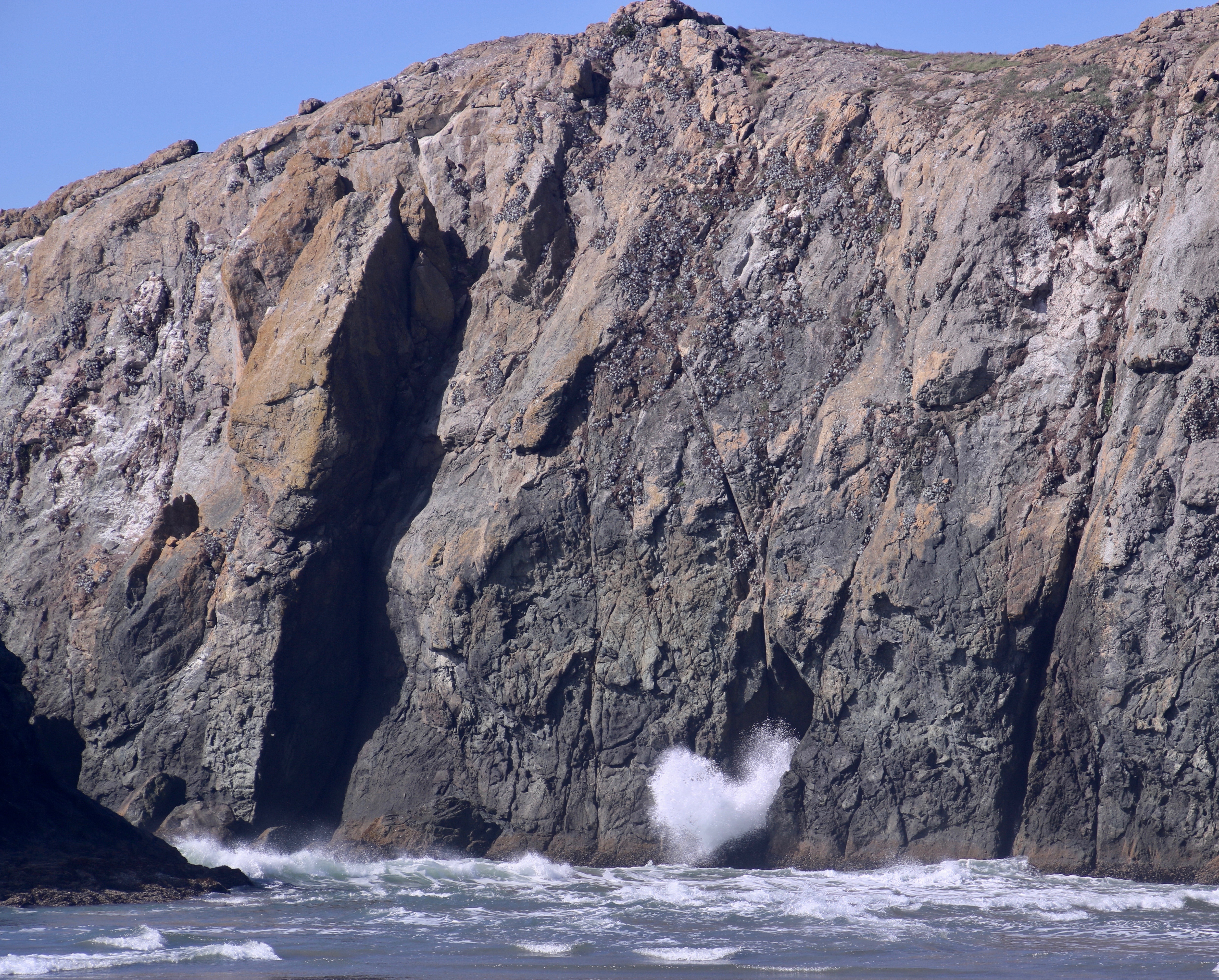
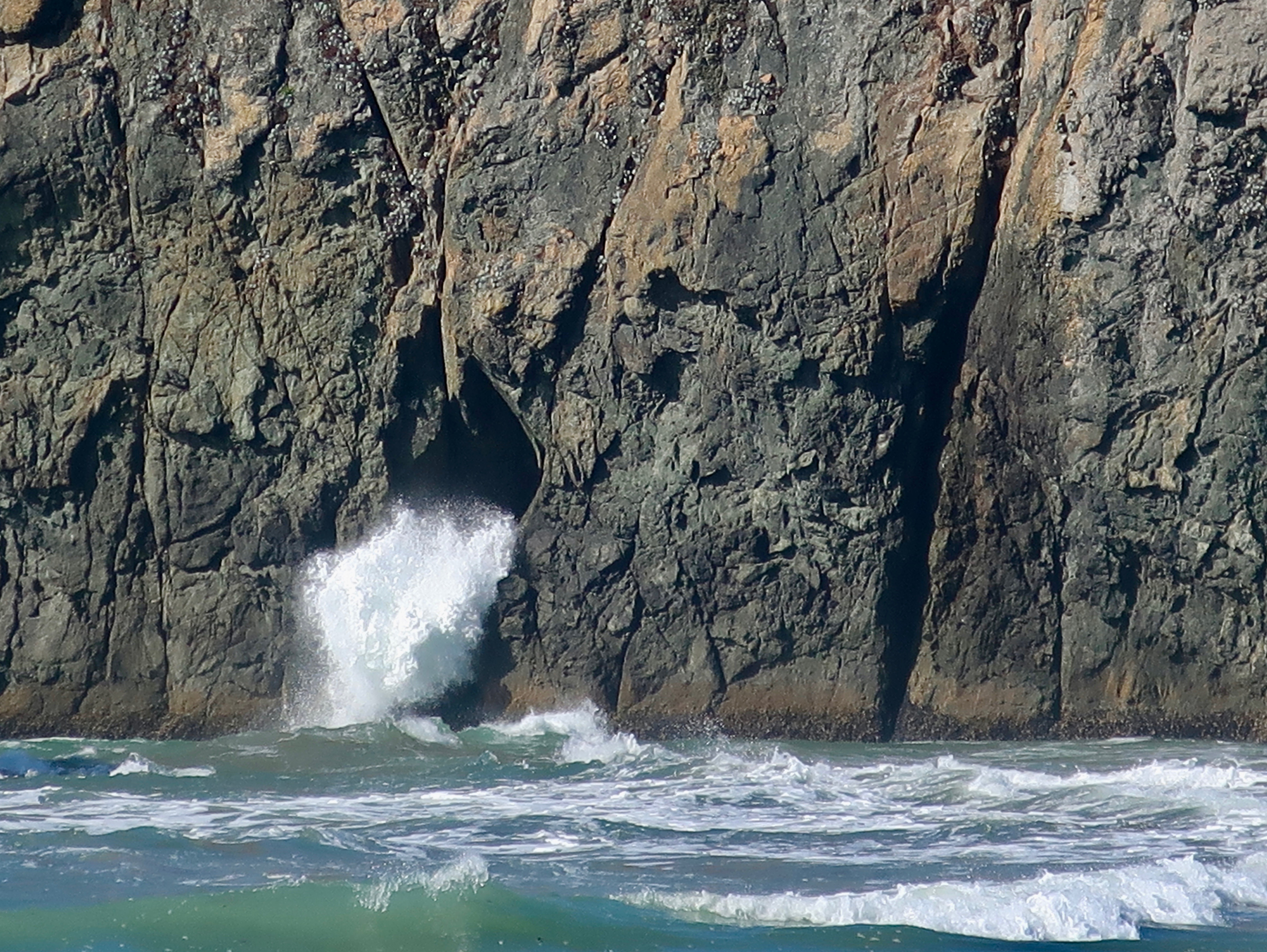
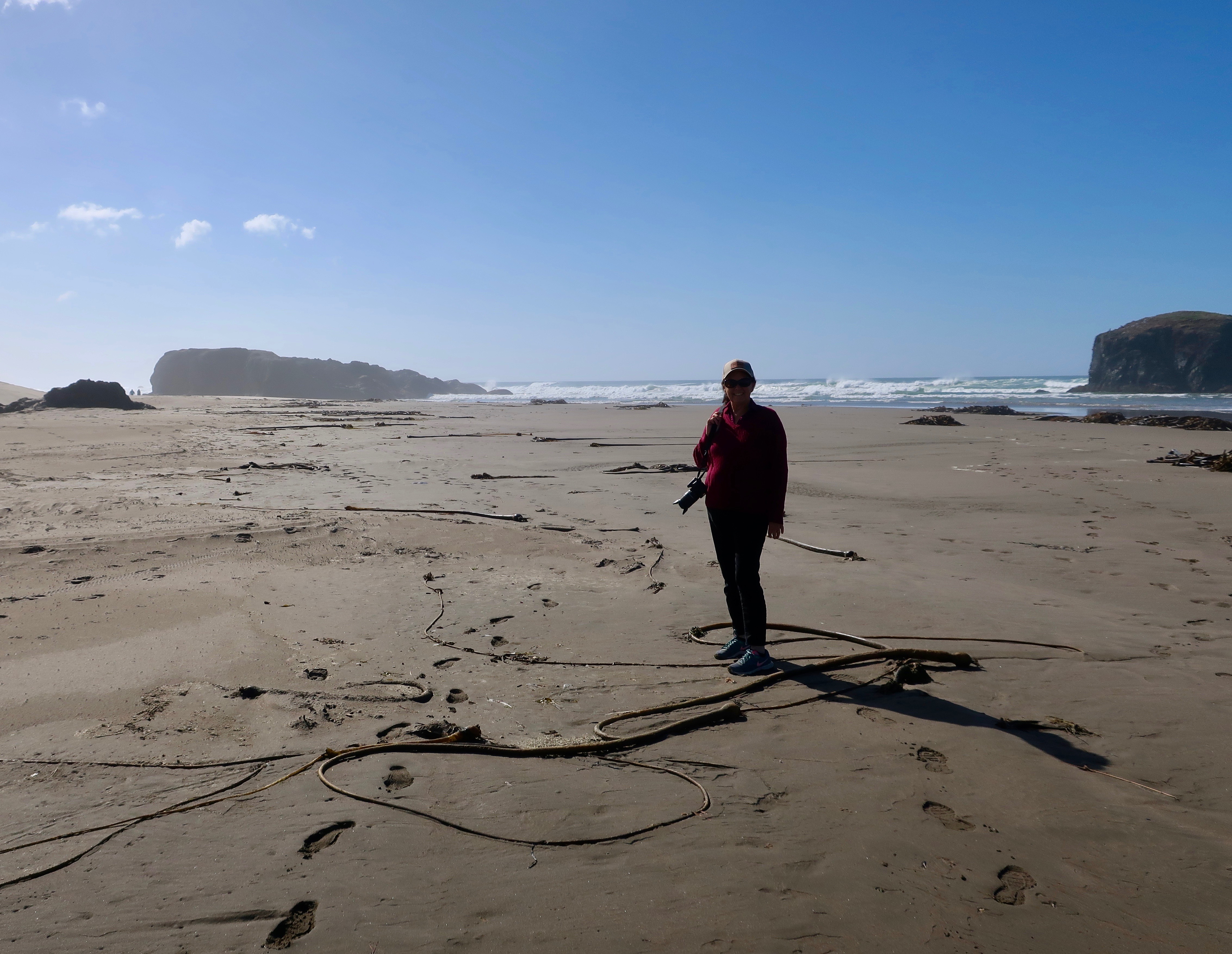
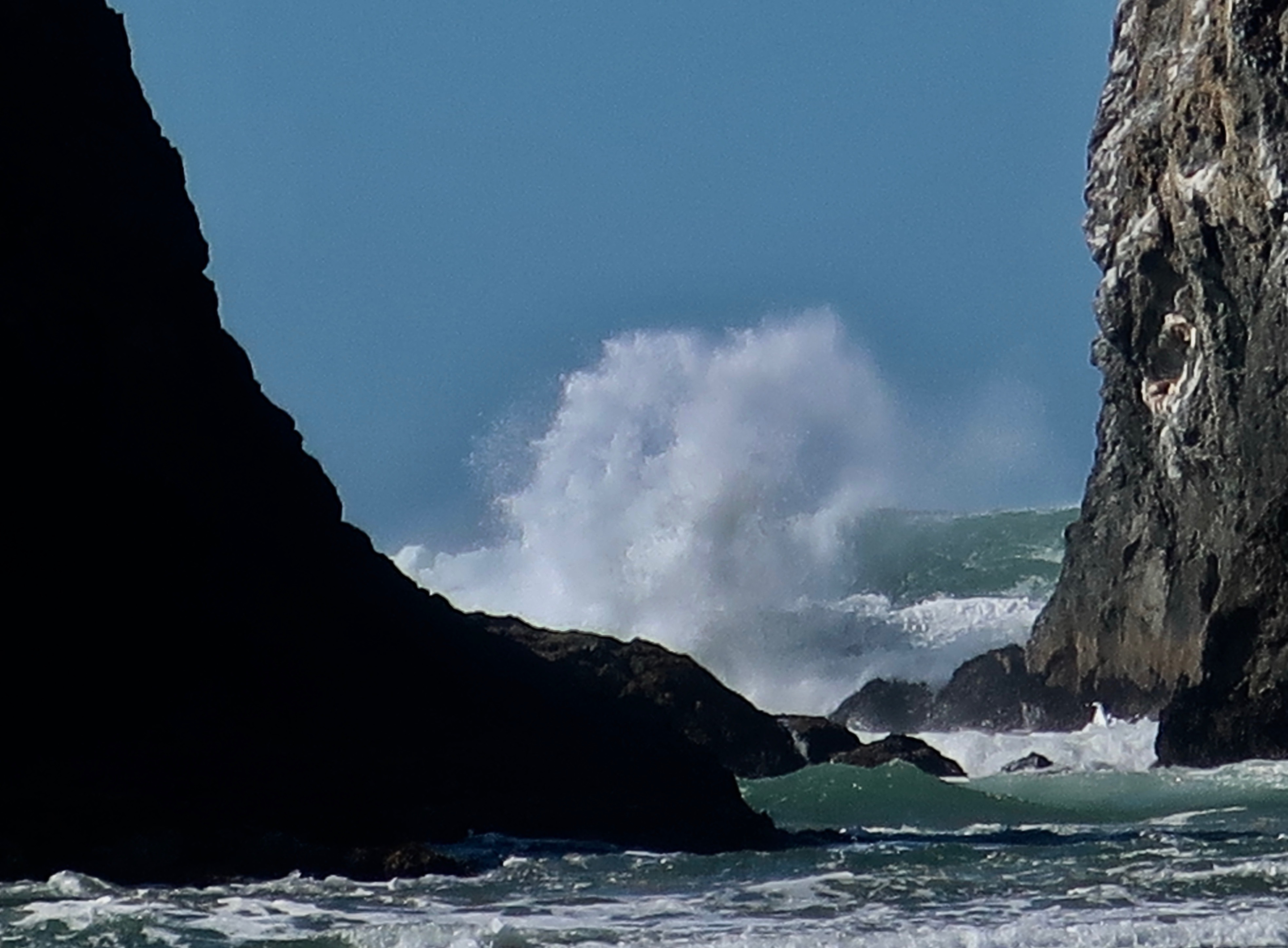
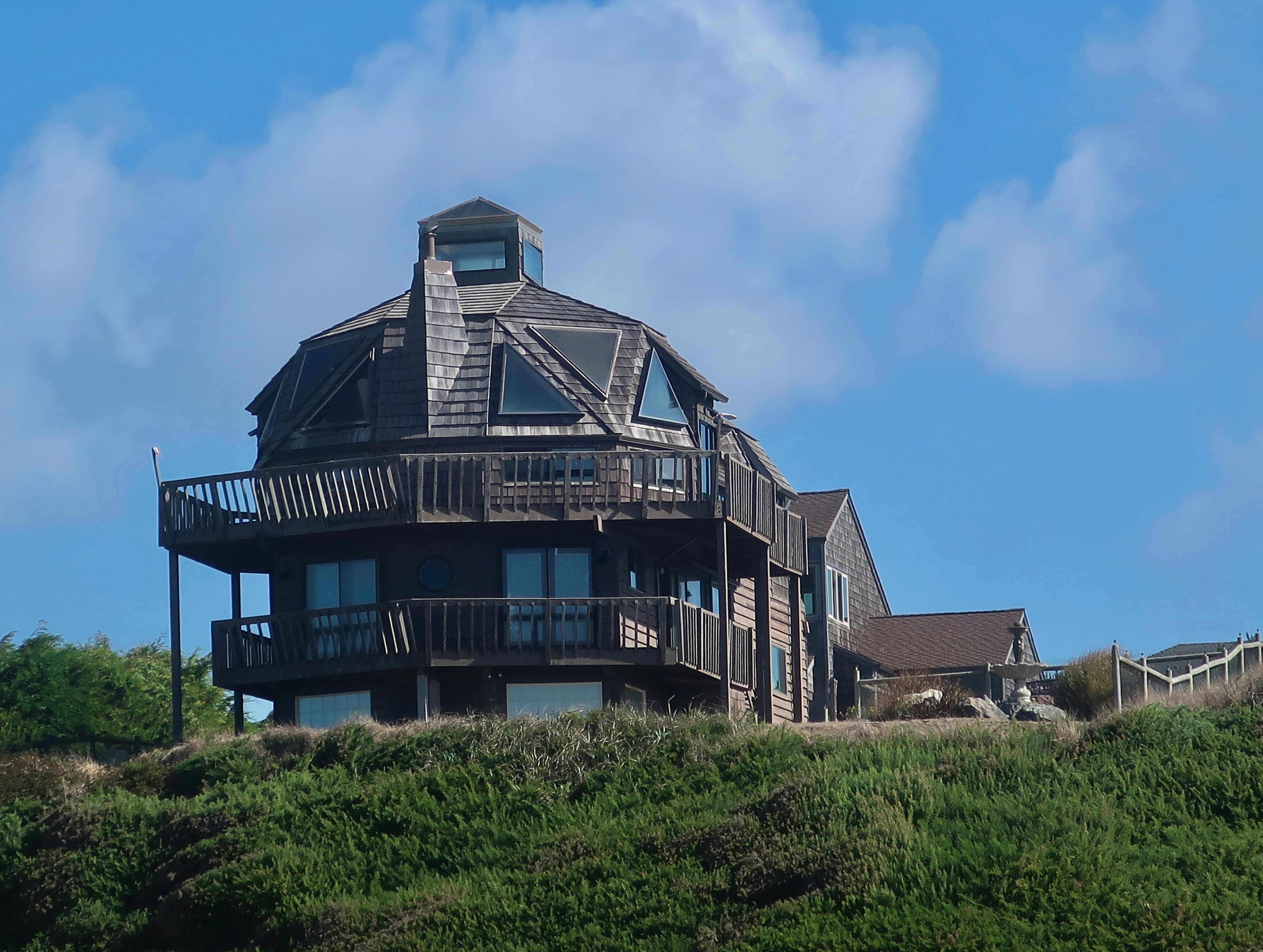
The large sea stack just off the coast from Devil’s Kitchen is known as Haystack Rock.Peggy discovered that a cave ran all the way through the massive rock and allowed the ocean to flow through. It is one of many such caves in the rocks off the coast of Bandon. (Photo by Peggy Mekemson.)I took a close up. At a really low tide, you could probably walk through to the other side.One thing, we had no problem social distancing on the beach at Devil’s Kitchen, as Peggy demonstrates. We were still carrying our masks, however.It had been storming the day before and waves were still crashing ashore.Some very impressive homes had been built on the cliffs above the beach. I figured this house could easily accommodate a large family with a dozen kids, or maybe 20. I’m a small-house type of person but with a dozen kids, I would definitely want this one!And another oneI was even more impressed by the rock in front of the house. I’d almost feel safe in case of a Tsunami. This section of the coast is threatened by a giant one as the Juan De Fuca Oceanic Plate continues it dive under the North American Continental Plate and threatens a massive earthquake. The last really big one with a rating of over 9 on the Richter scale was in 1700 and they are known to occur every 300-500 years. It could be a hundred years from now. Or tomorrow. I’d blame the Devil.This driftwood fort was not quite as fancy as the houses but a heck of a lot less expensive. A mom and three kids were playing in it. “Can I take a photo?” Peggy asked. The answer was, “Of course.” You can barely see the family. (Photo by Peggy Mekemson.)I found this driftwood fort just around the corner. It had been decorated with rocks and kelp.It was built at the base of an impressive rock.While on the subject of driftwood, I though this piece set off by ocean grass was rather attractive.
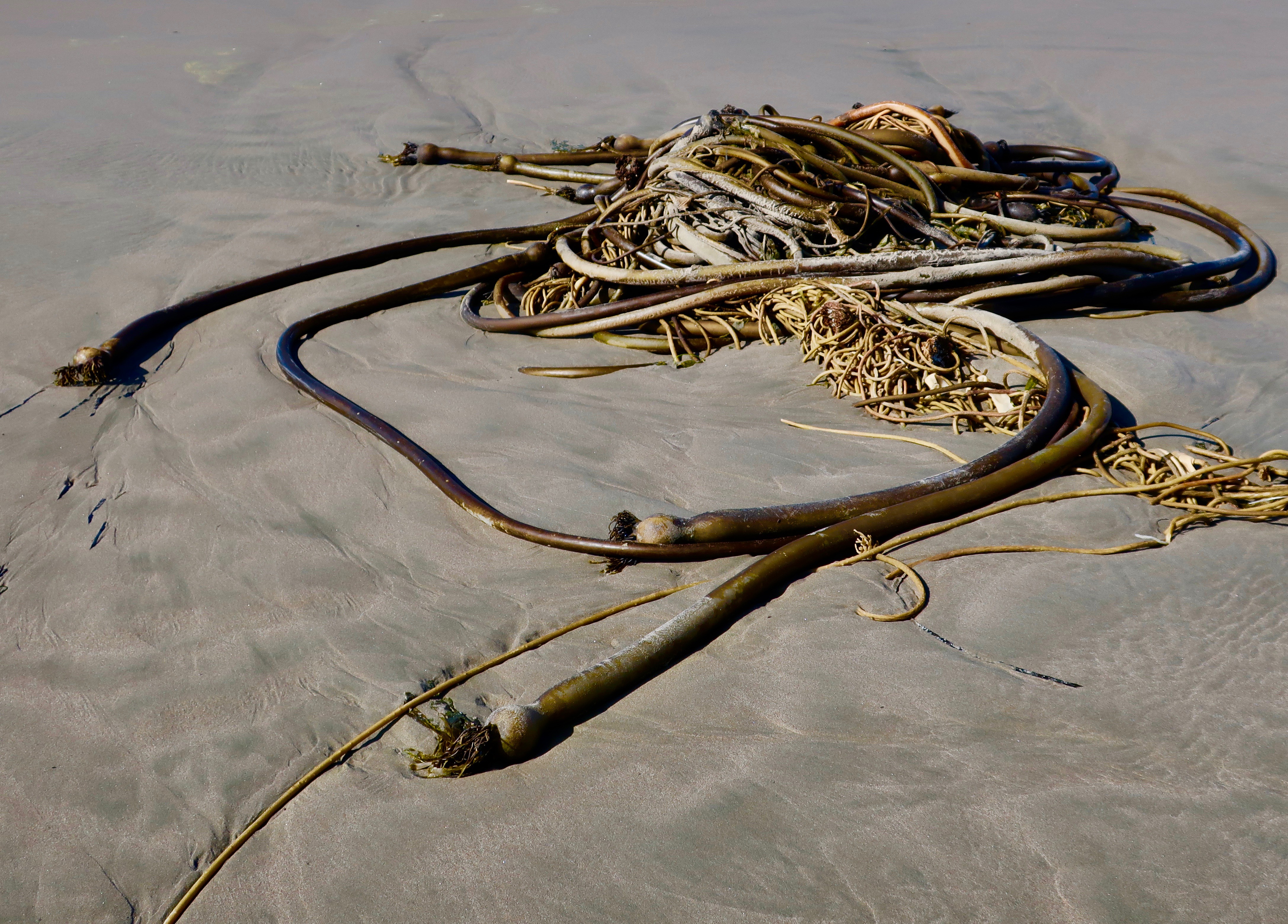
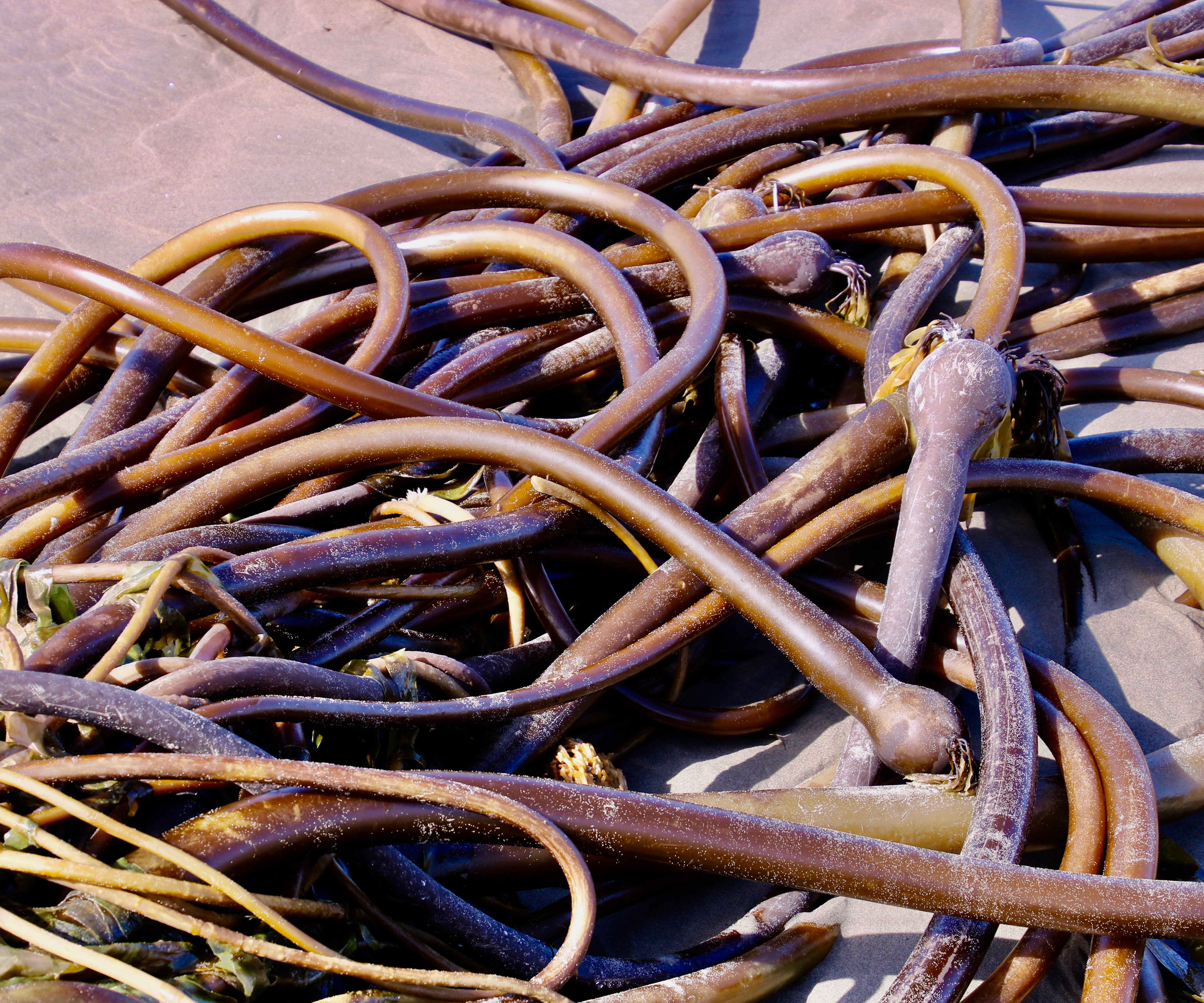
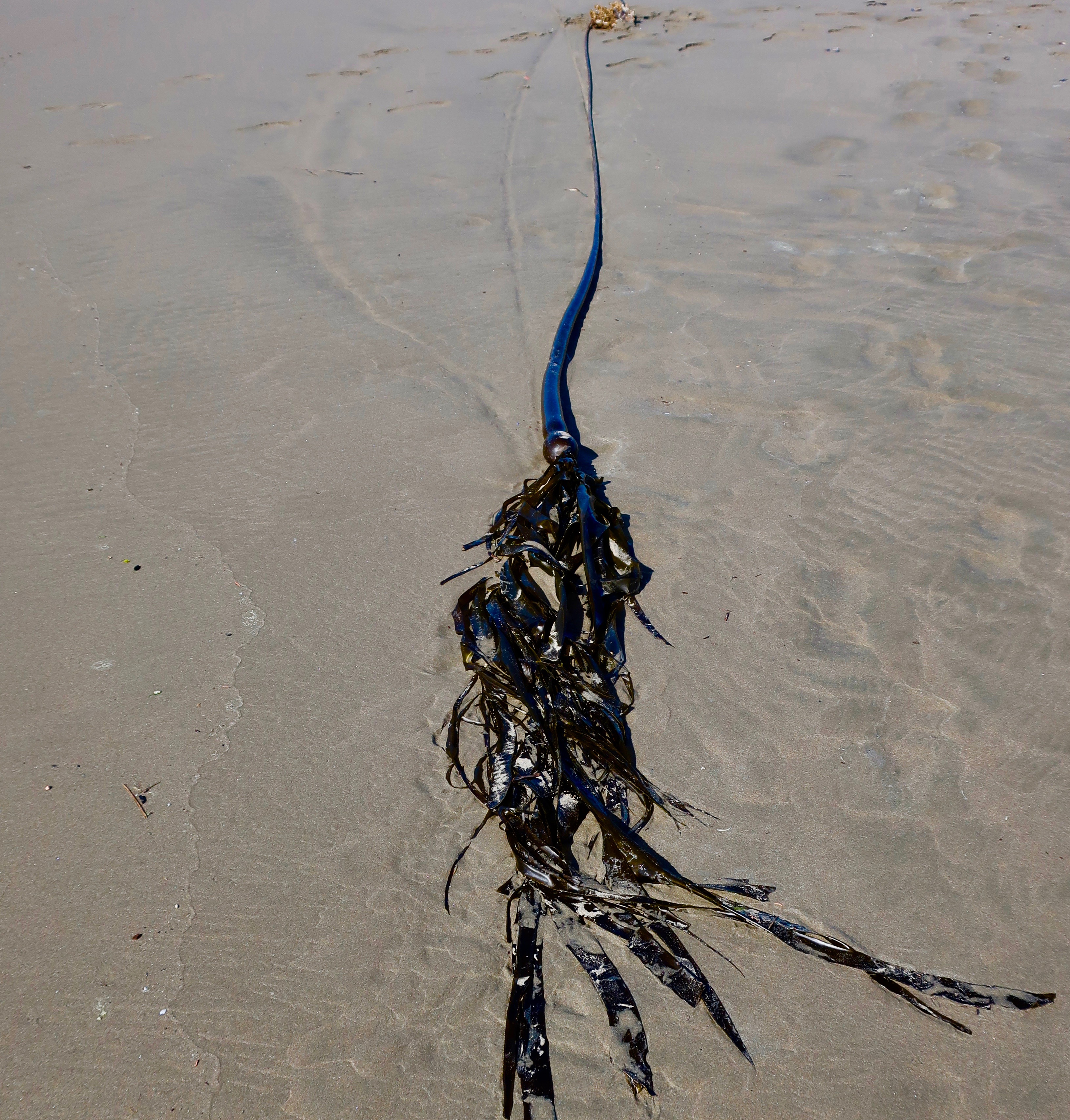
Piles of kelp and other sea treasures had been ripped away from their firm attachments to rocks by the stormy seas the day before and were left behind on the beach.
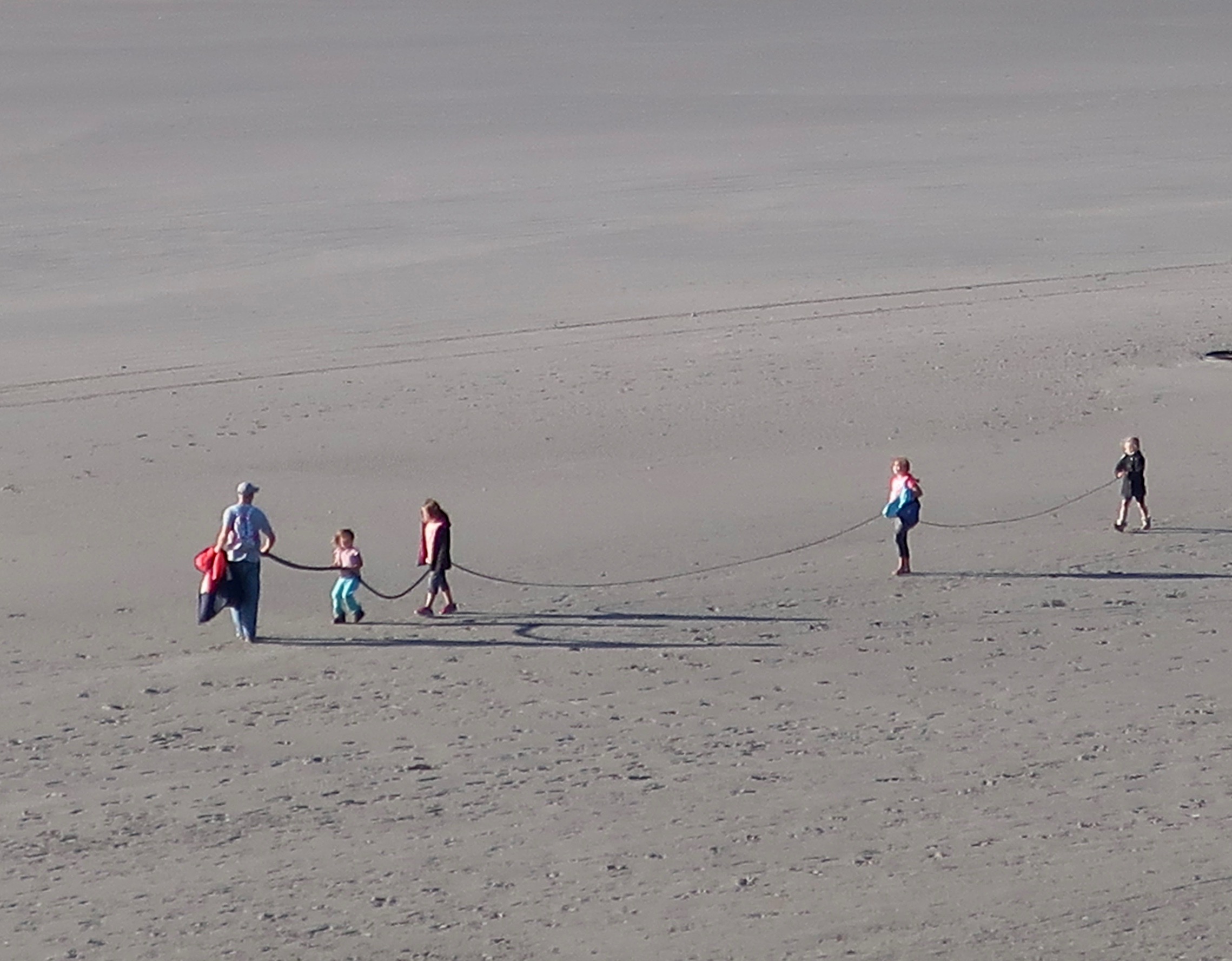
Piles of kelp like this were found strewn over the beach at Devil’s Kitchen and other beaches along the coast neat Bandon.Peggy took this close up of the kelp.This photo gives an idea of the length of the kelp plant from where it is attached to a rock on the ocean floor up to its leaves.This shot I took of a family carrying a kelp gives an even better idea!Here’s another use for kelp that I confess I have tried on occasion— using it as a whip. It is so tempting! And also a bit devilish. Get thee behind me Satan.Kelp wasn’t the only thing ripped from the rocks. Peggy was charmed by this plant and took its photo. Note the roots. All of these plants had ways of attaching themselves to rocks that resist all but the most powerful of ocean waves.Like these mussels and barnacles we found on the Devil’s Kitchen beach, for example. I think that the mussels had been harvested by seabirds.I’ll conclude today with this impressive pile of kelp backed up by the Pacific Ocean and Haystack Rock.
NEXT POST: We will be traveling up to the next beach north, Face Rock with its marvelous sea stacks.
We returned to one our favorite go-to places on the Oregon Coast last week, Bandon by the Sea. The area features the wave-tossed Pacific Ocean, magnificent rock sculptures known as sea stacks and a charming town. (Photo by Peggy Mekemson.)
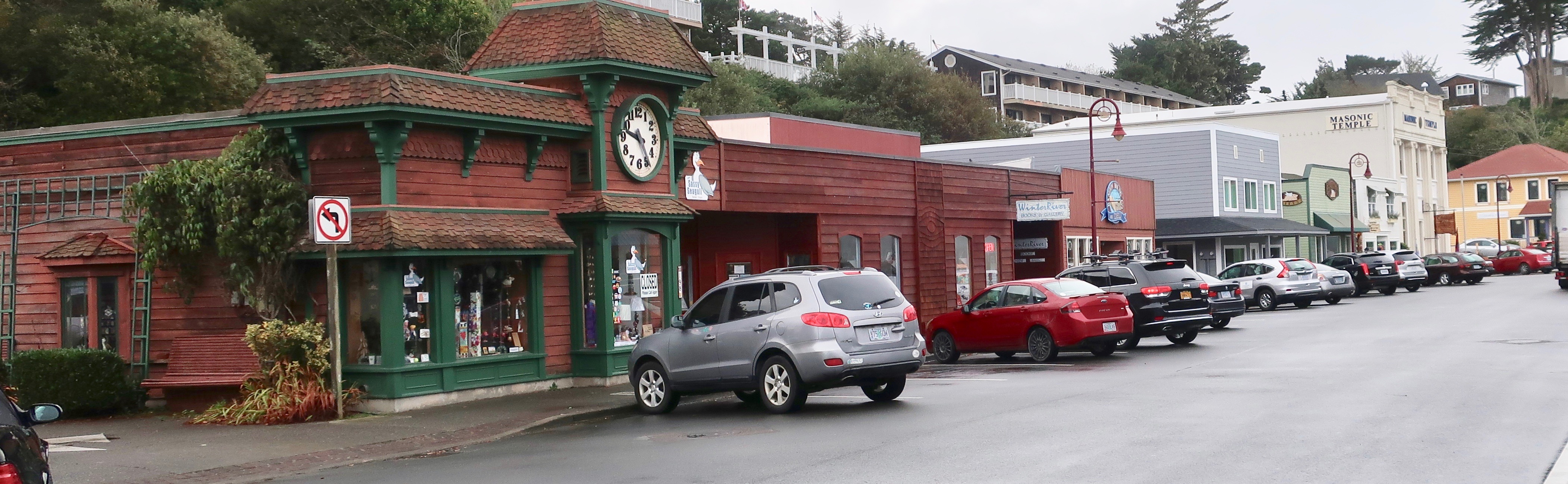
I’ve blogged about Bandon before. And will undoubtedly do so again. The coast with its crashing waves and towering rock sculptures calls to us. And the town is charming. It comes with good restaurants, fun art, cranberries, cheese, and a bookstore—no town should be without one. While Winter River Books is small and doesn’t include a book-store cat, it is well-stocked for its size.
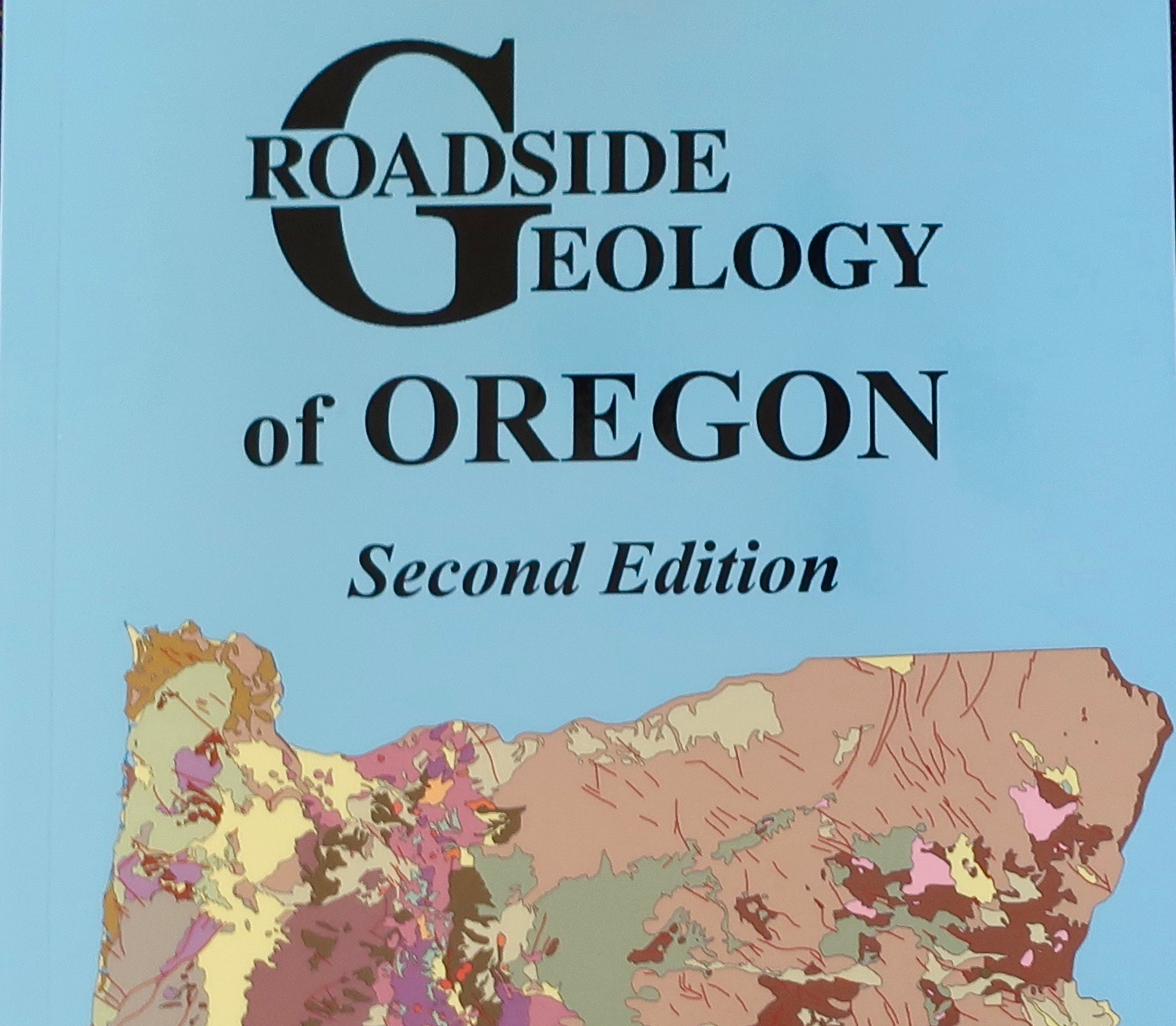
One of the books I bought was the “Roadside Geology of Oregon” by Marli Miller, a professor of earth science at the University of Oregon in Eugene. Our library includes a number of books from this series on other states as well. If you have ever found yourself curious about the rock formations you are seeing beside the road, these books make wonderful traveling companions.
I am going to do three posts on Bandon this time. The first is on art in Bandon. Next will be the Devil’s Kitchen State Park. There are interesting houses hanging out on the cliff, sea stacks, and forts made of driftwood. I am also going to take a look at what the recent storm tossed up, mainly kelp, piles and piles of it, plus a bouquet of sea palms for Peggy. I’ll conclude the series with a visit to Face Rock State Park and its famous name sake. While there, I will include a number of other sea stacks/rock sculptures that we admire and can never get enough of. As always, our cameras were quite busy!
The art of Bandon: Not surprisingly, it comes with an ocean emphasis.
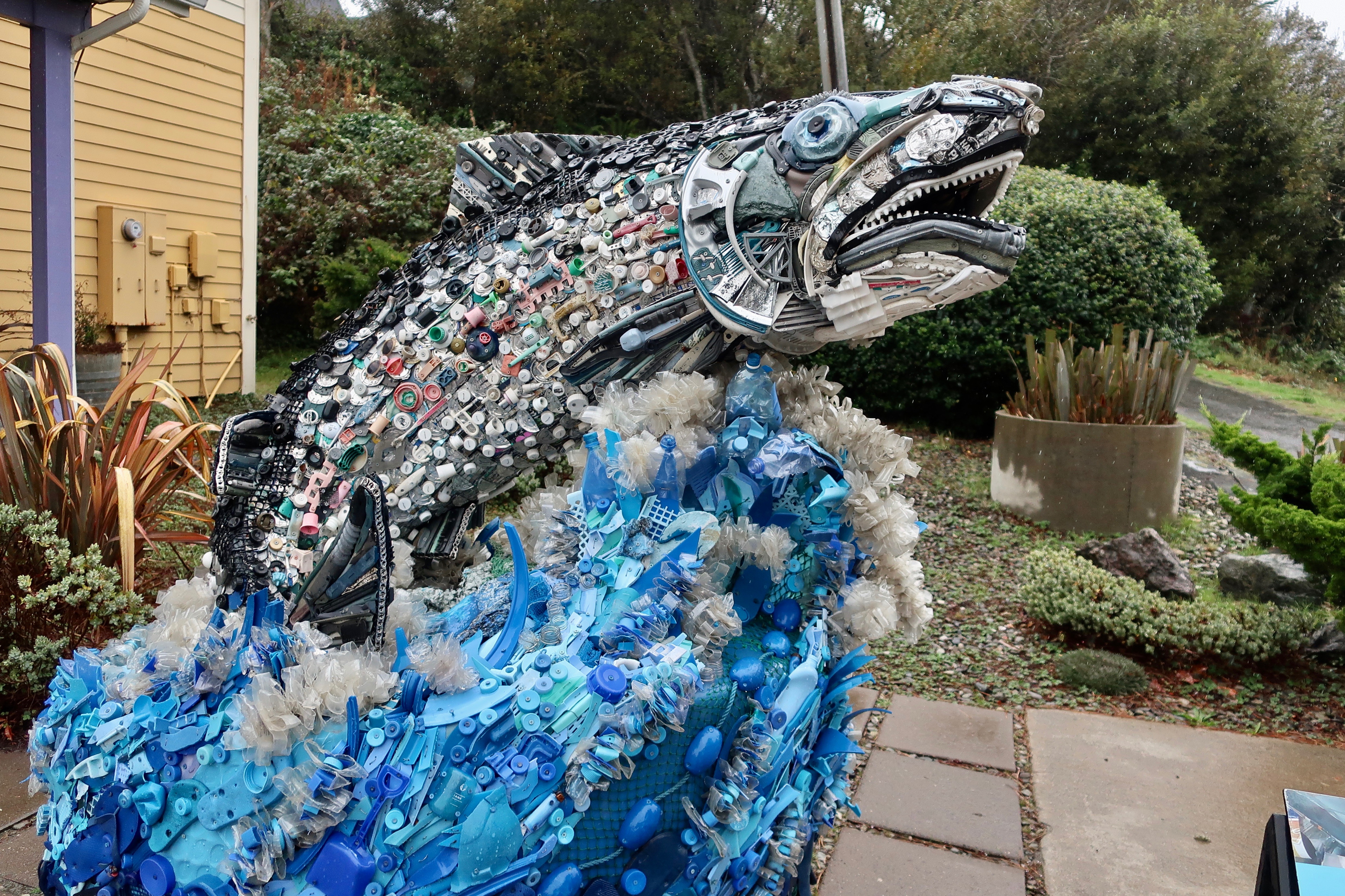
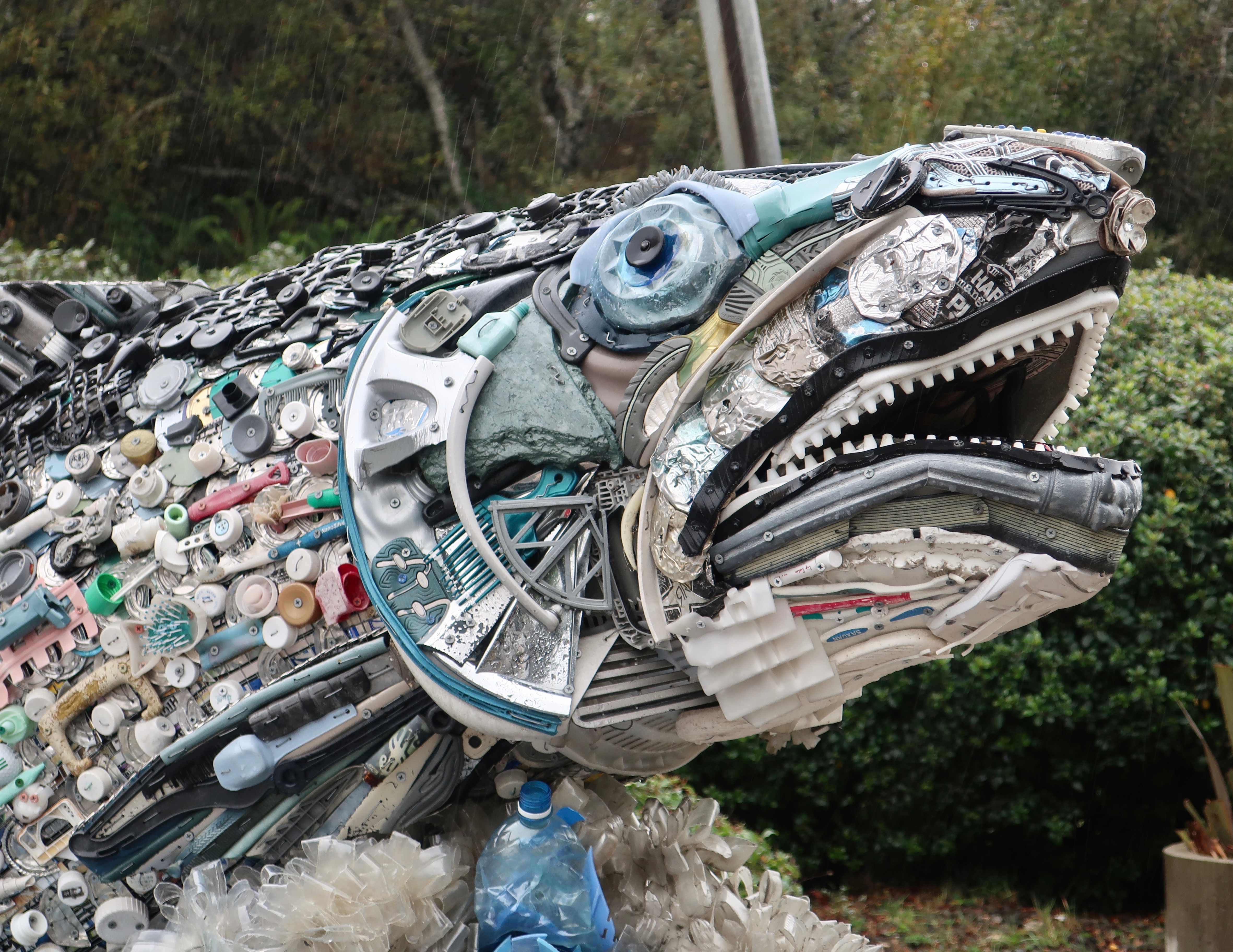
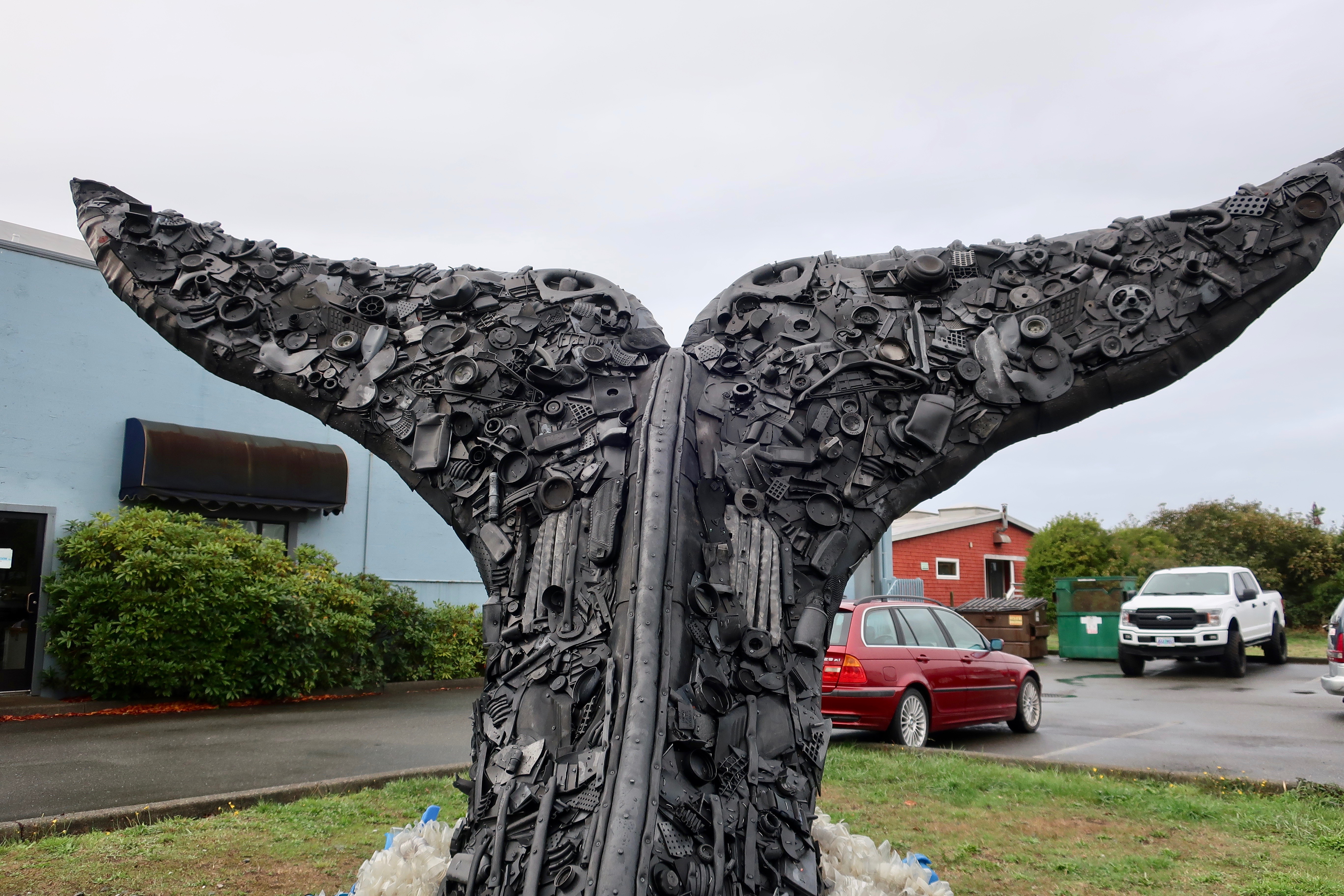
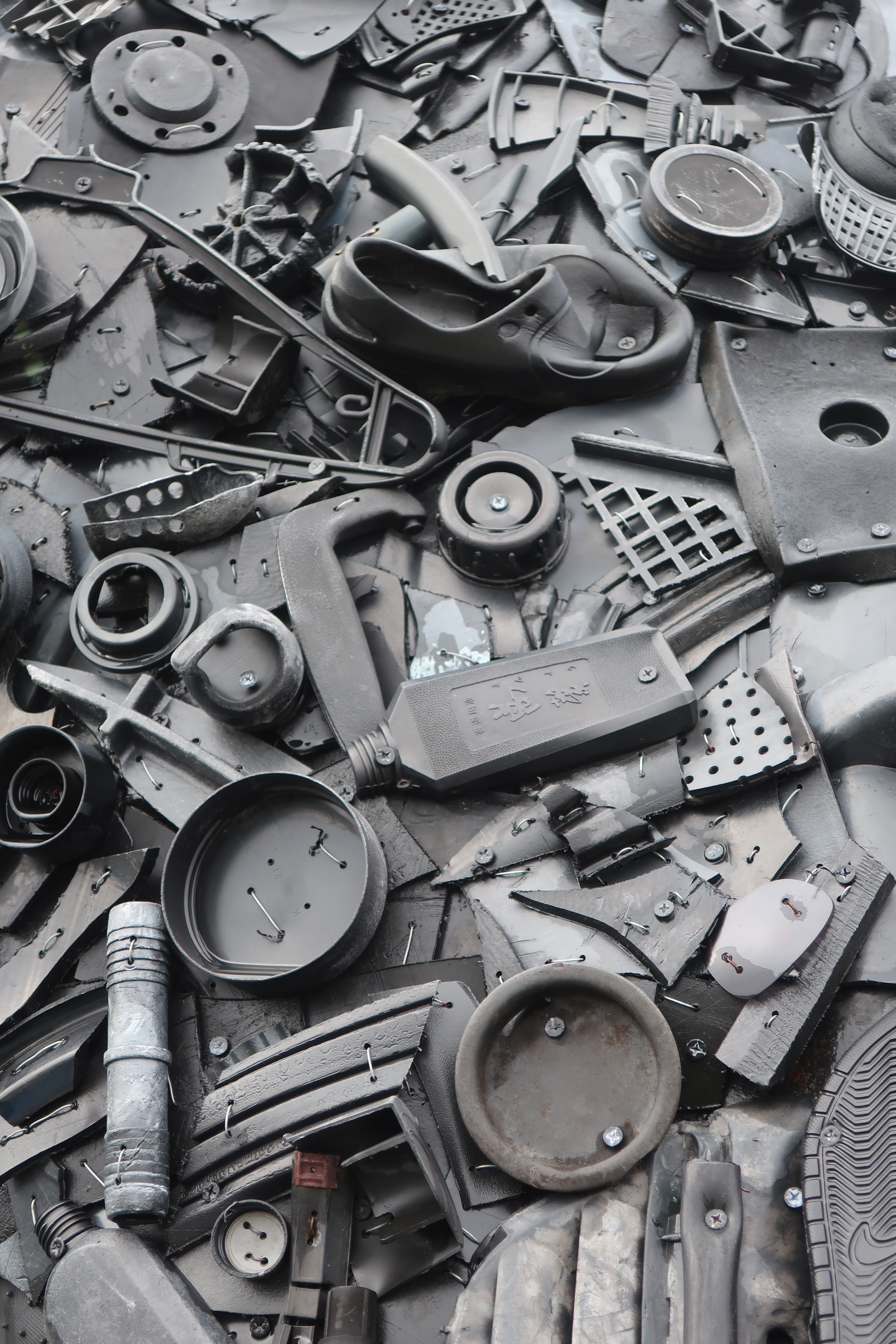
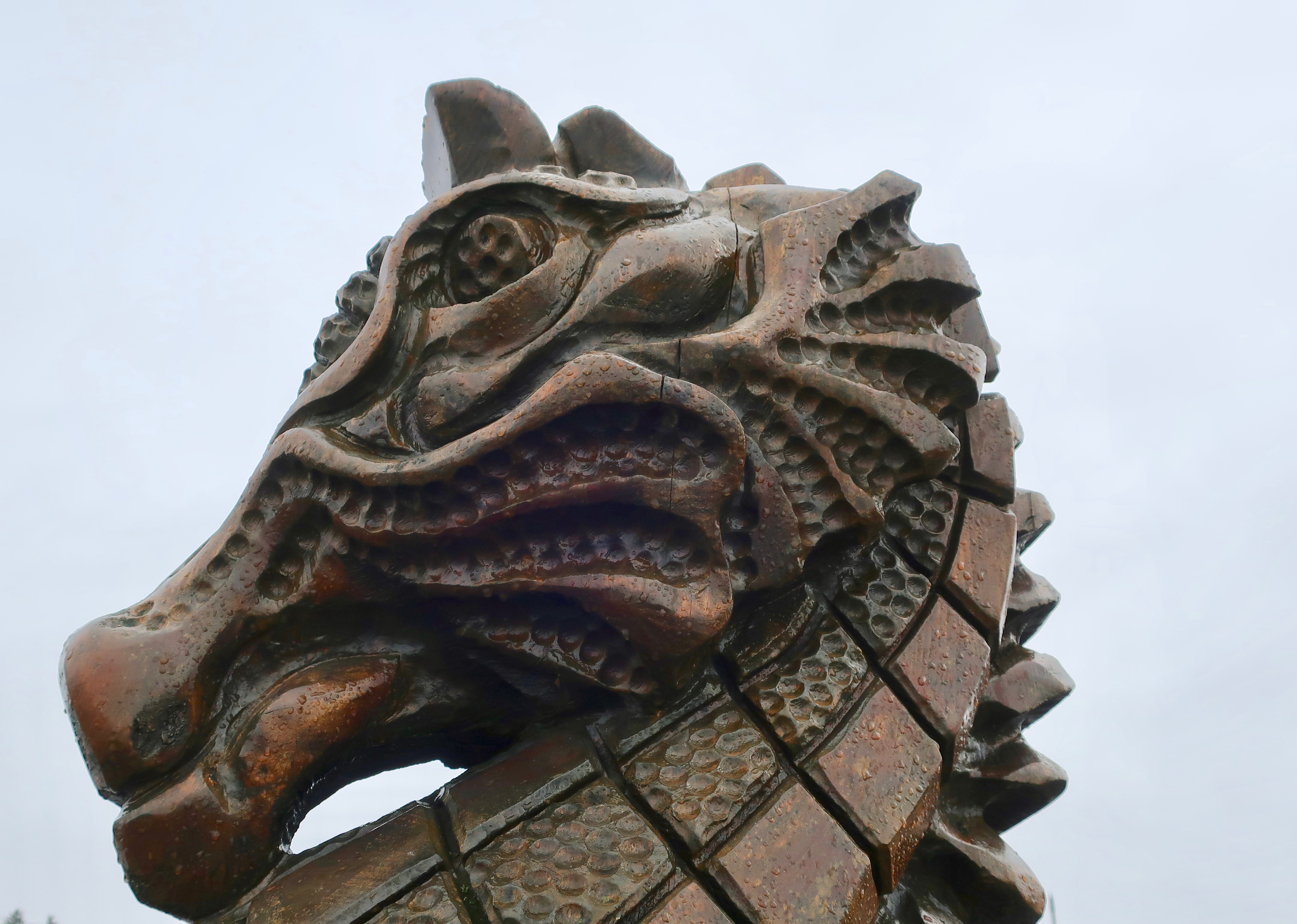
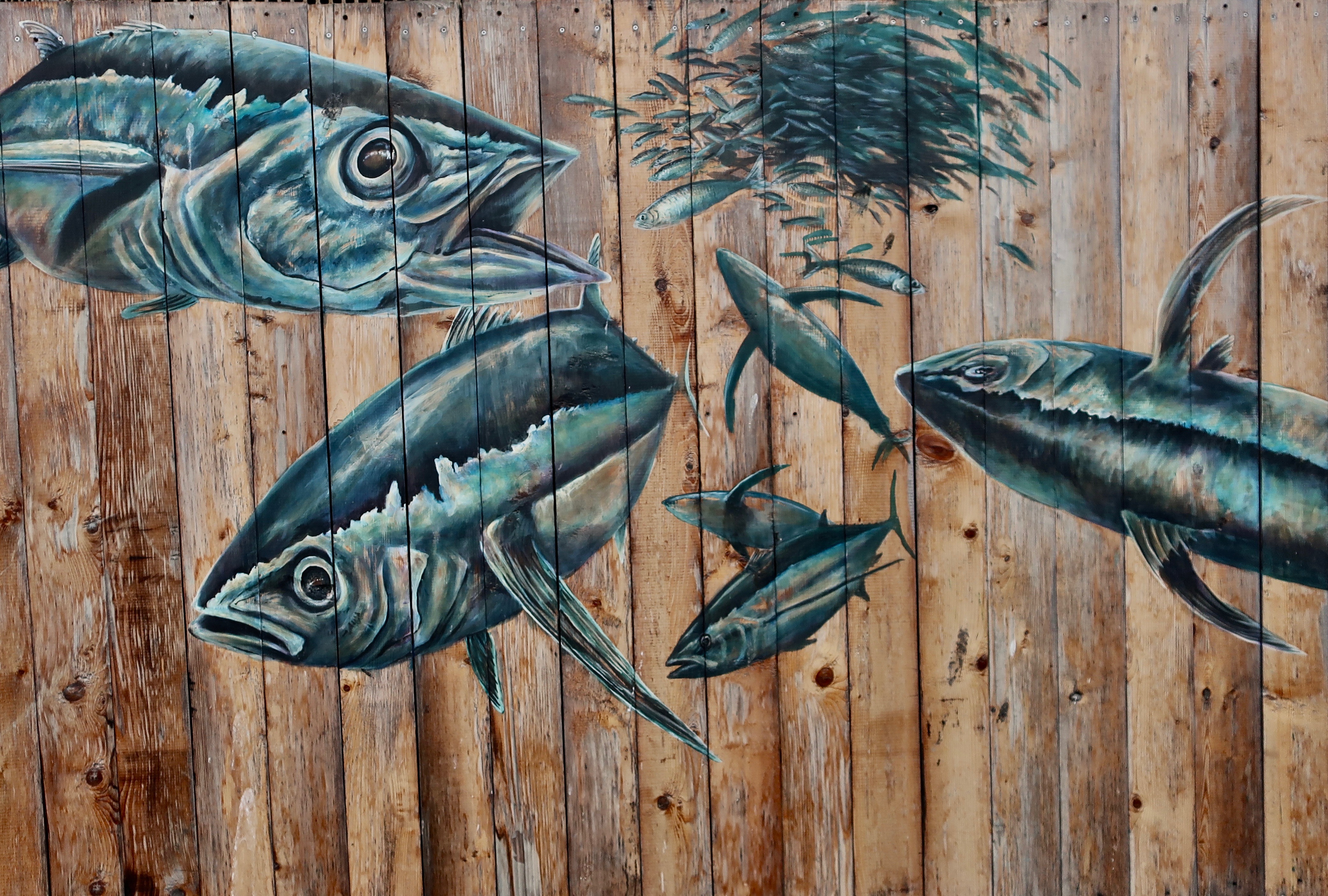
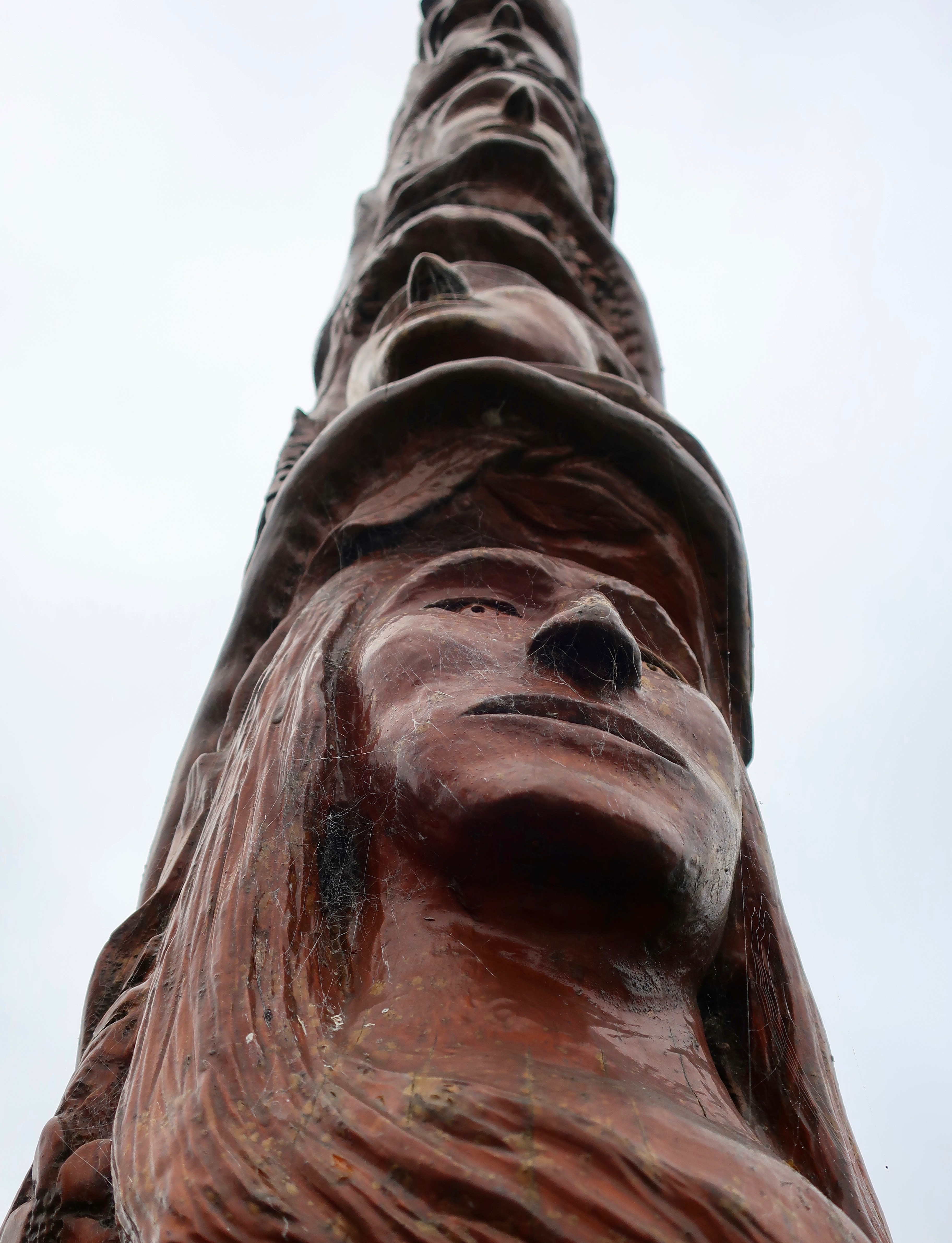
Meet Nora the Salmon. She is one of a number of sculptures in Bandon made out of trash collected on the beach and created by Washed Ashore, a nonprofit dedicated to raising awareness about all of the garbage we are pouring into our oceans around the world.A close up. Nora is a fun sculpture with sharp teeth and a serious message.Henrietta the Rockfish, another fun sculpture by Washed Ashore, was decked out in her Covid-19 mask, bringing us two messages at once.And finally there is Grace the Humpback whale whose tail tells a tale of trash.A close up. An information board next to Grace listed a few of the items used in the sculpture. Included: water bottles, hat visors, a toilet seat, golf balls, a cooler, a steering wheel, flip flops, toy wheels, boots, and an umbrella handle. But enough trash talk, there are a number of other art works scattered throughout Bandon. These are from along the Boardwalk.I’ve always been intrigued by this carved wooden sculpture of an octopus with its waving arms.And this carved seahorse. I immediately thought of a merry-go-round. Like so many cities and towns today, Bandon has its share of murals.This dramatic totem pole was a next door neighbor to the two fish murals shown above.Main Street, Old Town Bandon, is filled with small shops and restaurants. We always walk along the sidewalk and find something of interest. The book store is a must. But there is also great chocolate to devour, good food to experience, and craft beer to drink. There is also a toy store that Peggy finds irresistible in her ceaseless efforts to spoil our grandchildren. While she was checking out games, I found this crow. I thought a close up of its beak appropriate for Halloween. I’ll conclude today with this wild looking fish that was part of a mural. It was my fave!
NEXT POST: Peggy and I visit the Devil’s Kitchen State Park where the ocean crashes against the rocks, interesting homes hang out on the cliffs, forts are made of driftwood, and storm-fared kelp is tossed up on the shore.
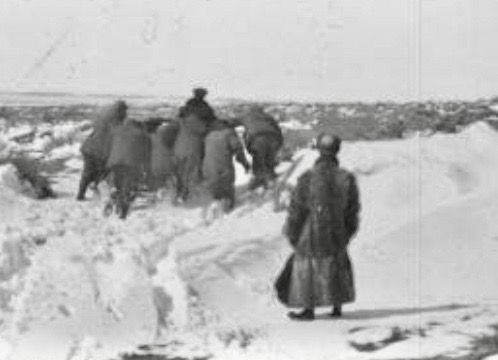
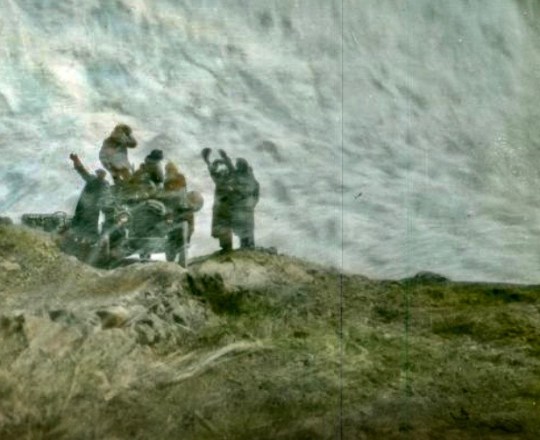
When George Schuster arrived in Valdez, Alaska for the next phase of the 1908 Great Auto Race, he quickly arranged to borrow a horse and sleigh to check out the beginning of the route. You are looking at it.
It was George Schuster’s turn to drive as the Thomas Flyer was loaded onto a freighter to be shipped to Valdez, Alaska. The race committee had envisioned the racers making their way from Valdez across Alaska following dog sled trails and frozen ice covered rivers to Nome where they would cross the frozen Bering Strait into Siberia. There was a slight problem. The race committee had made its decision while sitting in Paris without a clue about what driving across Alaska in March would entail! Or whether the Bering Strait would be frozen. None of them had ever been to the remote Territory that America had bought from Russia in 1867 for $7.2 million. All they knew was it looked good on a map. Who needs roads?
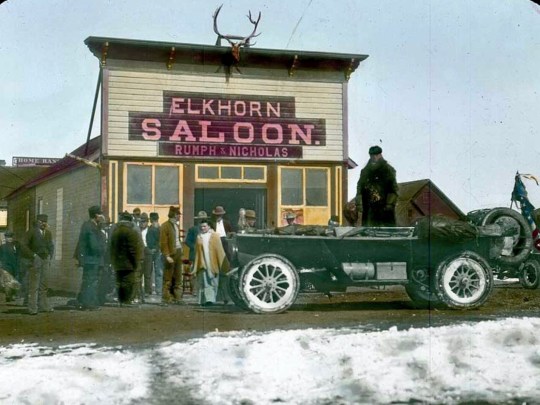
The Flyer had a substantial lead when it left San Francisco— the three remaining competitors were several states behind still making their way across America. Schuster intended to maintain that lead. He arrived in Valdez with the whole population out to greet him. The Flyer was the first car to make it to the town and most residents had never seen one.
The whole town turned out to greet George Schuster and his team when the Thomas Flyer arrived in Valdez, including a brass band, seen on the right.
George wasted little time basking in the glow of his new role as driver. He immediately borrowed a horse and sled to check out the beginning of the route. He found it was impossible and concluded that the only way the vehicles could get across Alaska would be if the cars were taken apart and shipped by dog sled. The Great Auto Race would have been turned into an early day Iditarod, which in itself, is an undertaking of massive proportions— even in modern times.
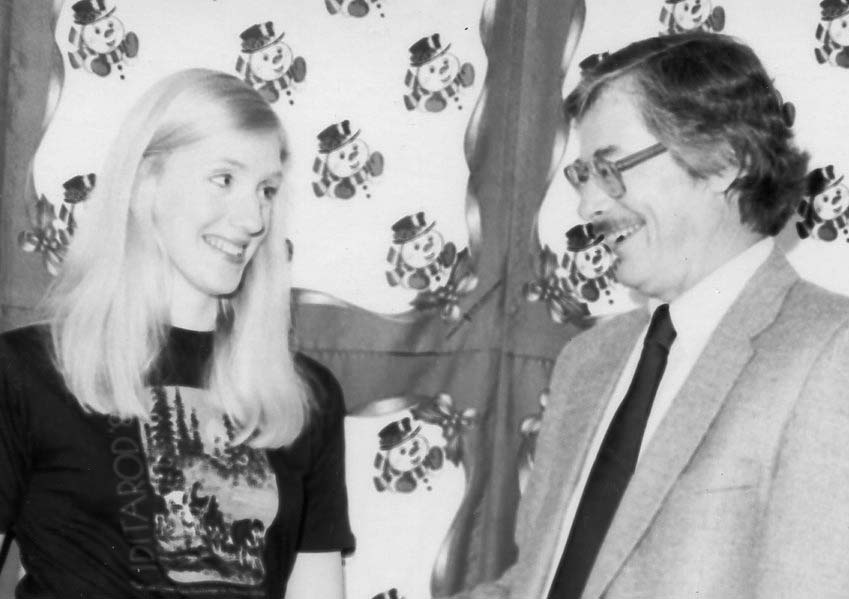
Having lived in Alaska for three years, I was a fan of the 1000 mile Iditarod. When Libby Riddles became the first woman to win the race in 1985, I drove her around Anchorage following her victory to make various media appearances. Here I am with Libby. I picked her up at the airport where she was just returning from having done a Vogue Magazine photo shoot. She regaled me with tales of the race, and her dogs.
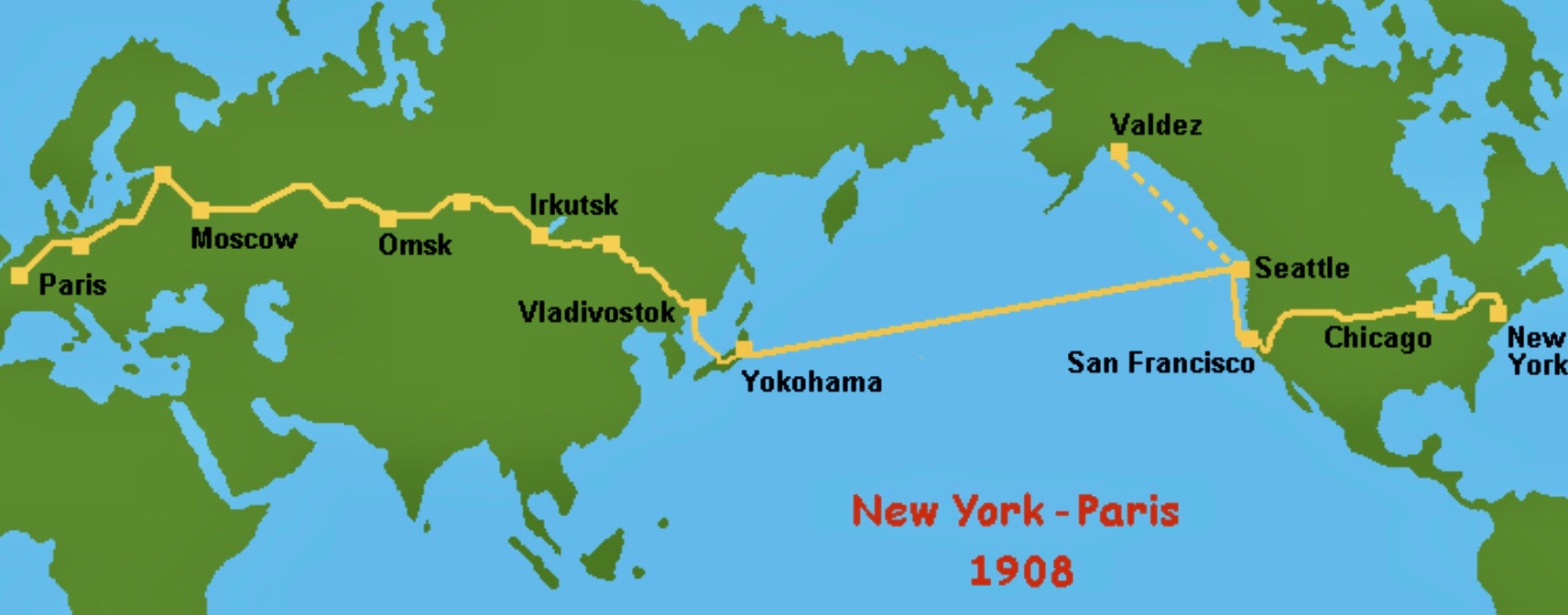
Once again the route was changed. Return to the lower 48, the race committee told Schuster, and ship to Japan on a freighter and then on another one to Vladivostok, Russia. Which he did. The next day, the Flyer team and Flyer were on a boat heading south from Alaska. His challenge when he arrived in Seattle was that the other three cars were now ahead of him on their way to Asia.
The third, and final, 1908 Great Auto Race route from NYC to Paris.The Thomas Flyer makes its way across Japan.
The Race Committee decided to award Schuster with an extra 15 days for his lost time in checking out Alaska. The Italian Zust and the French Dion would have to beat him to Paris by two weeks to win the race. The Protos would have to beat him by a month! Lieutenant Koeppen’s car had broken down in Utah and he had shipped it to the West Coast via rail and on to Vladivostok for repairs. Unlike Goddard, he had asked permission. And there was some confusion over the rules. Instead of disqualifying him, the race committee chose to penalize him an extra 15 days for the rail trip and for skipping Japan.
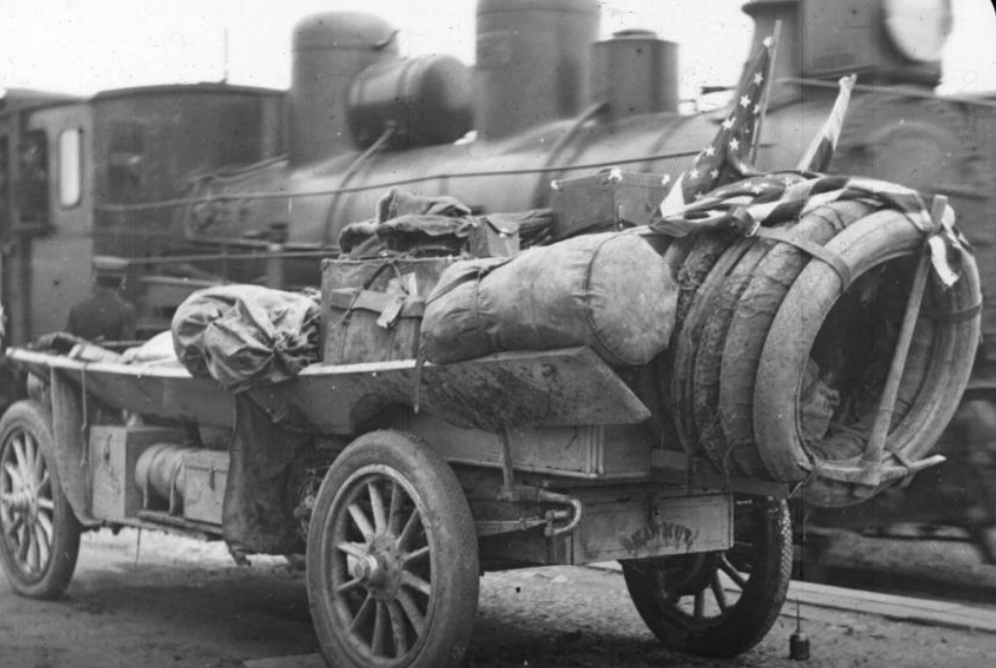
The four competitors met up in Vladivostok where they were confronted by Russian officials who advised them to take the Trans-Siberian Railway to Europe. They would be “met on the road by Chinese brigands, Manchurian tigers, fever, plague, pestilence, famine—to say nothing of the mud after three months of rain, mosquitoes as big as locusts and other similar delights,” the Russians warned. It seems that the owners of the De Dion-Bouton company took them at their word. Or maybe the race appeared unwinnable or too expensive. Whatever the reason, the De Deon was withdrawn. Now there were three competitors: The American Thomas Flyer, the Italian Zust and the German Protos.
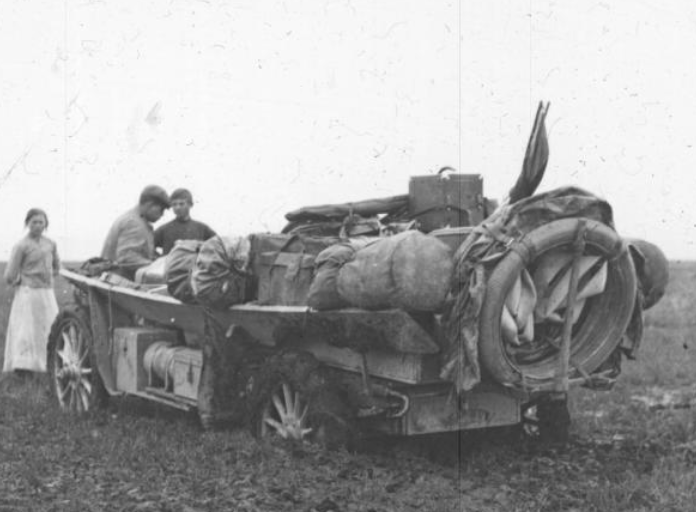
The racers apparently avoided the brigands, tigers, fever, plague, pestilence, and famine, but there was plenty of mud— they kept getting stuck. And, I imagine, encountered the locust-sized mosquitoes when they were digging out.
Thomas Flyer next to a Trans-Siberian locomotive.Flyer stuck in the mud. One of many times.The Flyer team rescuing the Protos from the mud. Koeppen broke out the champaign afterward to celebrate the good sportsmanship of the Americans.
When they reached Europe, they were finally rewarded with a decent road system. The race became a down-to-the-wire sprint between the Americans and the Germans. The Italian Zust was still in Siberia, likely stuck in the mud, some 3,000 miles behind. ER Thomas sent Schuster a telegraph urging him to turn the driving over to Monty Roberts, the race car driver who had driven the Flyer from NYC to Wyoming. “This made me so mad I could have eaten nails,” Schuster would later write. His response at the time would have been more colorful. After everything that he had been through with the Flyer in Siberia, his tense no-thank-you reply to Thomas was that he would be driving the car across the finish line. Period. Which he did.
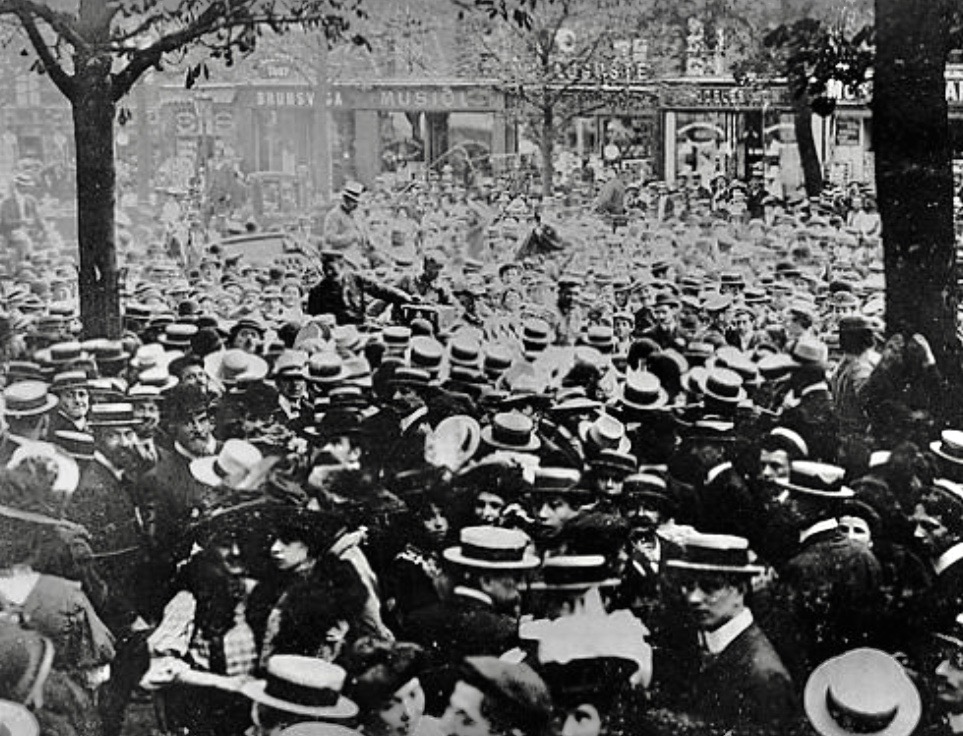
The Protos had arrived four days earlier. Given the 30 day penalty, it was still 26 days behind the Flyer, however— a fact that really irritated the Kaiser. The Americans rolled into Paris on the evening of July 30 to crowds shouting, “Vive le car Americain!” There was one last challenge. The lights on the Flyer had gone out and Schuster was driving after dark. A policeman stopped the car and threatened to arrest him on the spot. A quick-thinking Parisian threw his bicycle with a light onto the car. The policeman relented and Schuster drove on to the finish line. And fame. He’d even be invited to meet with Teddy Roosevelt on his return.
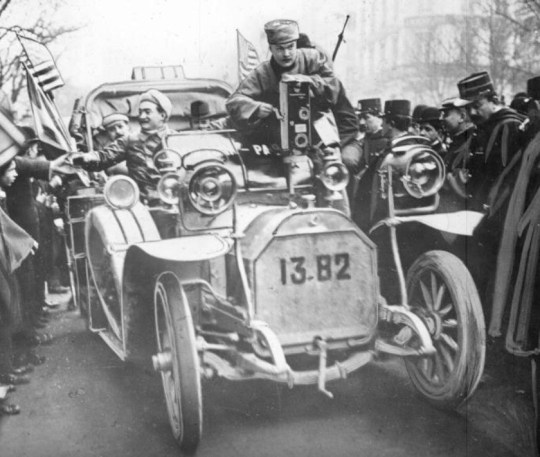
A large crowd was on hand in Paris to greet the Thomas Flyer team when they arrived in Paris and crossed the finish line.
The win had a significant impact on America. For one, it showed that American automobiles could match the best coming out of Europe at the time. The successful drive across America also proved that the car could become a serious form of transportation, something other than a rich man’s toy. And finally, it created a demand for better roads in America. Asphalt was invented in 1910, and the Lincoln Highway, Americas first cross-country road, was started in 1912.
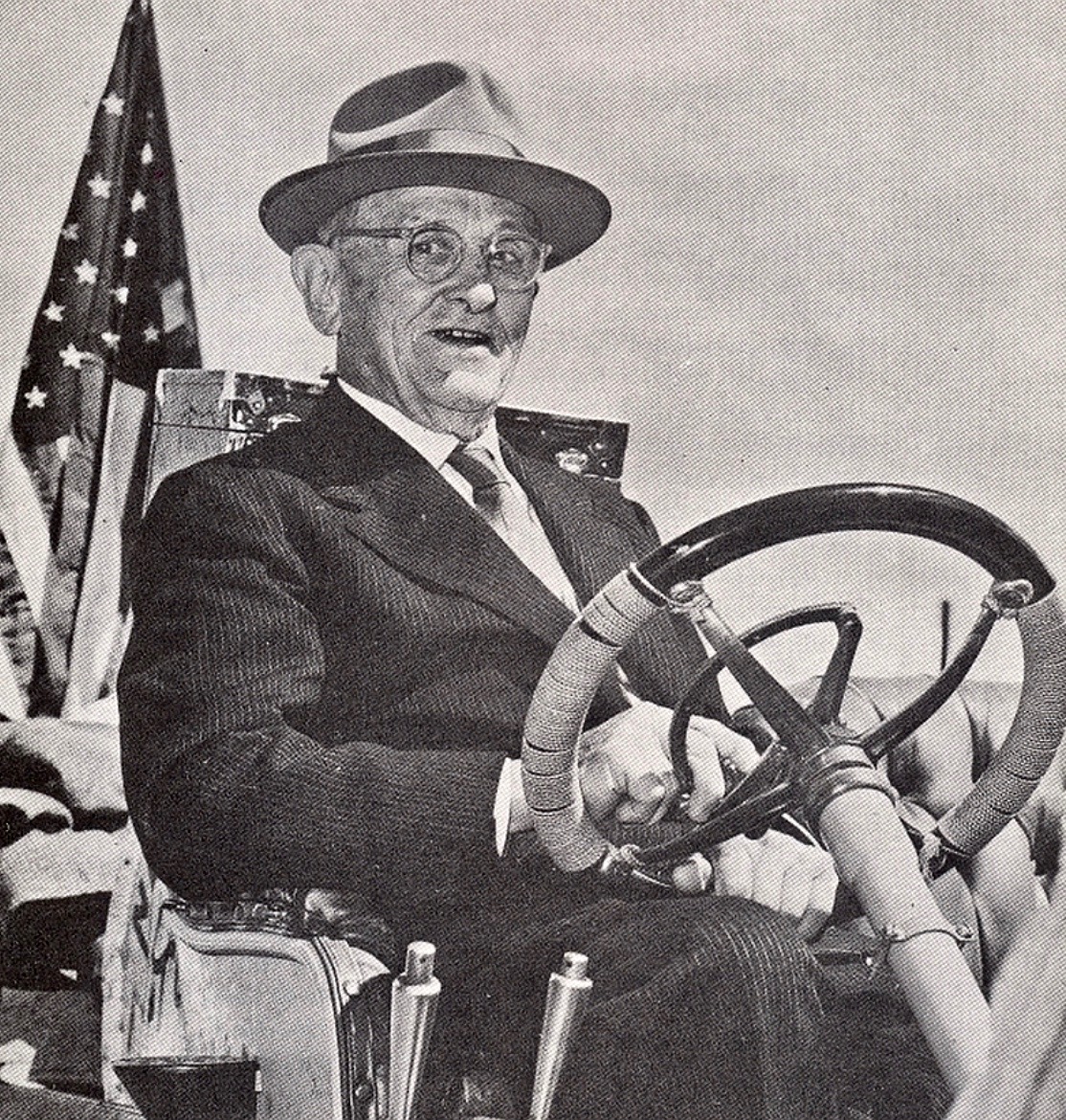
Schuster was promised a life-long job with the E.R. Thomas company for his role. Unfortunately, the company went out of business in 1912. (Schuster would live on to 99.) When the company went belly up, the Flyer was sold and more or less disappeared. It was granted a second life in 1963 when Bill Harrah of the gaming empire tracked it down for his classic car collection and returned it to its pre-race condition. He even brought Schuster out to verify that it was the Flyer that the won the race. (Schuster recognized some of the on-road repairs he had made.) The Flyer became part of the donation that the Harrah family made to the National Automobile Museum in Reno, Nevada. It was there that I found the vehicle and was inspired to do this series.
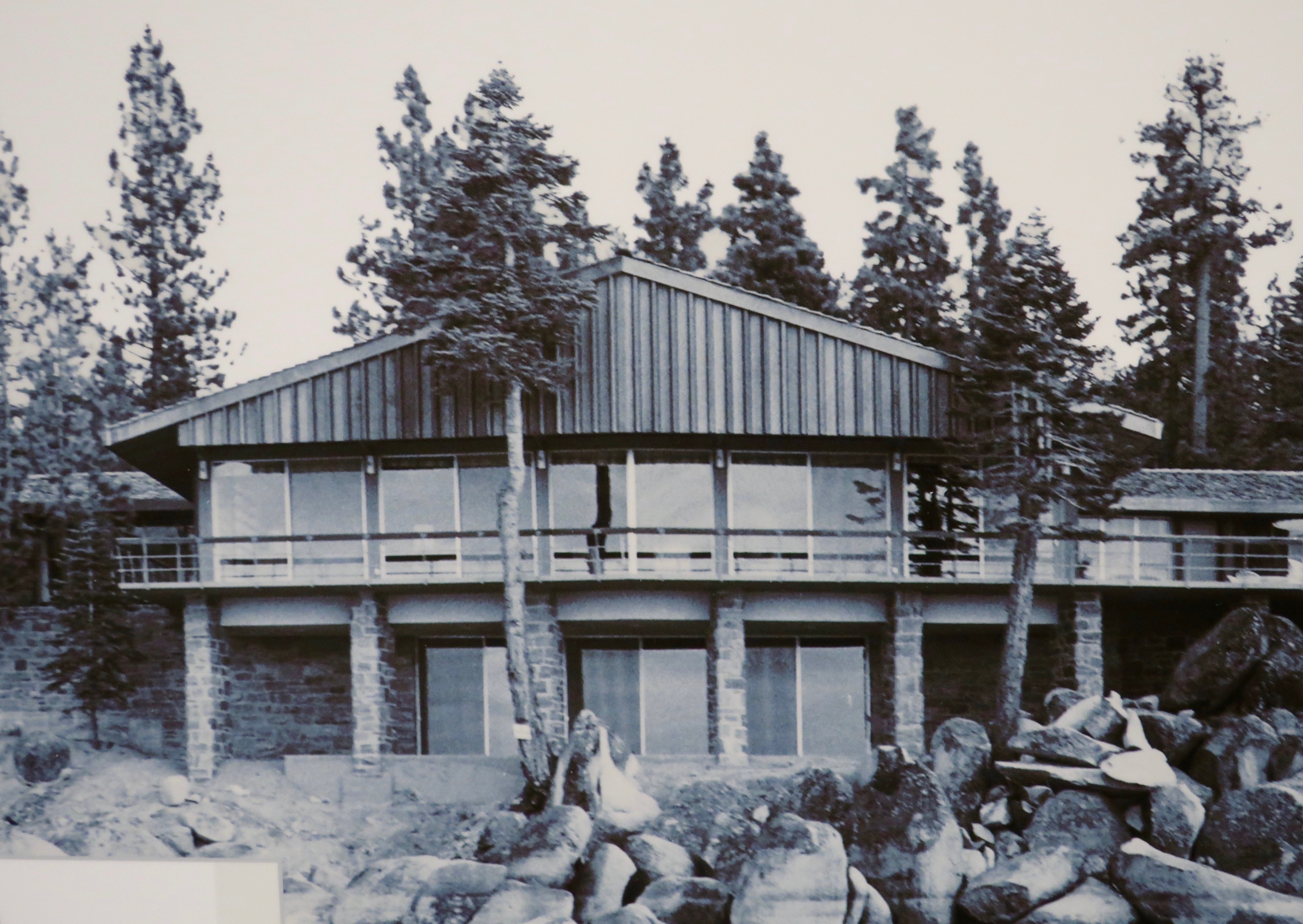
A young George Schuster.Schuster at 92 driving the Flyer that Bill Harrah had brought back to life.A slight aside. This photo of Bill Harrah’s home at Lake Tahoe in 1963 was part of a display on him at the National Automobile Museum. I recognized it immediately. While he was working on the Flyer, I was delivering cleaning to the stars that stayed at his home when they were performing at his casino. I don’t remember hearing about the Flyer at that time but I do remember Liza Minelli bouncing down the stairs in her baby doll pajamas to answer the door. What 20 year old wouldn’t. She was 17 at the time.A final view of the Thomas Flyer in the National Automobile Museum to wrap up this series.
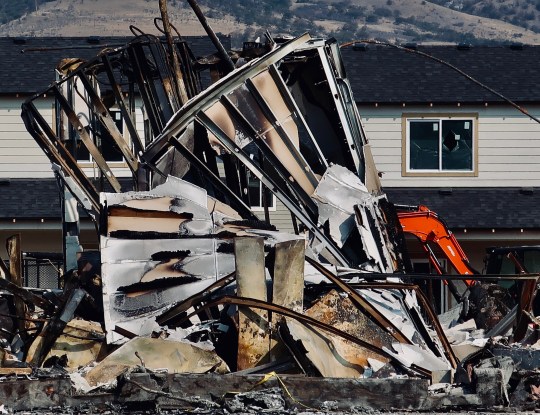
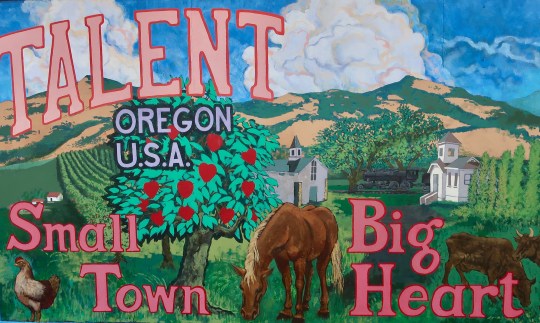
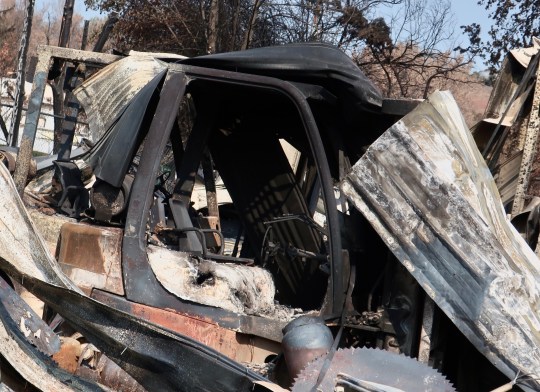
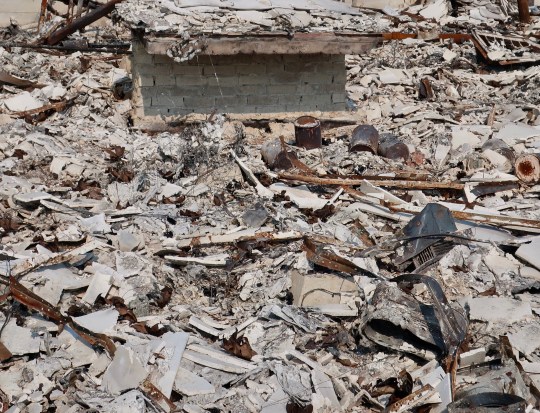
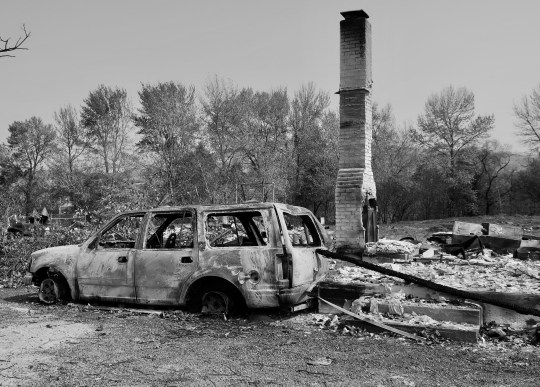
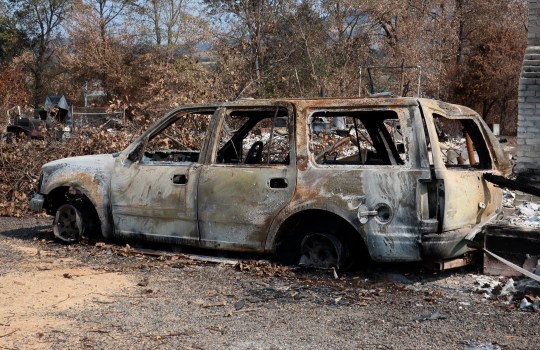
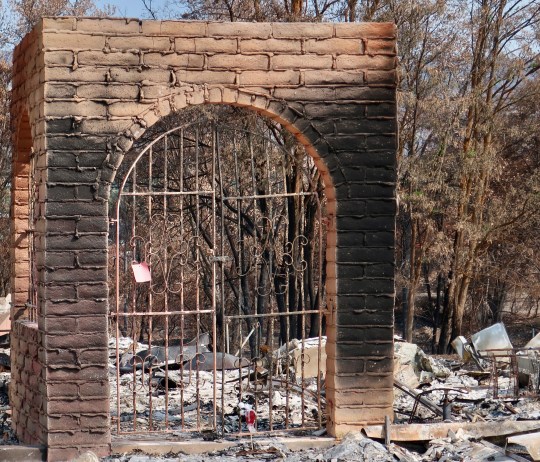
I went for a drive Saturday through the small towns of Talent and Phoenix, Oregon. It was heartrending. Today’s post features photos of the devastation caused by the Almeda Fire.I found this sign just across the road from the above photo.
When Donald Trump came to California two weeks ago to comment on the devastation caused by raging wildfires in California, Oregon, and Washington, he was asked about the impact of global warming on the fires. Here is his response:
Well, I don’t think science knows, actually… When trees fall down after a short period of time, they become very dry — really like a matchstick… And they can explode. Also leaves. When you have dried leaves on the ground, it’s just fuel for the fires… It’s a management issue… It’ll start getting cooler… You just watch.
Peggy and I don’t buy the ‘It’ll start getting cooler” argument, but we do take forest management seriously. We spent $20,000 this past year doing what we could to fireproof our property. And it didn’t involve ‘sweeping the floor’ as the President recommended a couple of years ago, cleaning up the leaves and fallen branches. We had forty, 80-100 foot trees cut down on our five-acres removed. They were dead as in d.e.a.d. Ten years ago when we moved in, they were happy and healthy. The years of drought and excessive heat killed them. As it has millions of trees across the west. Yes, good forest management is important, but all the management in the world will not save forests when drought combines with 100° F heat, high winds and fire. Nor will it save towns, as Talent and Phoenix learned.
Peggy and I prepared for fire, obviously. We lived in a forest. Fire comes with the territory. We spent countless hours working outside and doing what we could to reduce the danger. But we were also prepared to vacate the premises, to ‘get out of Dodge,’ to skedaddle! When a level two warning is issued, we will be packed and out of here. Forget level three. We have lists. Things are organized so we can grab and go. The greater the danger the less we will grab. Quivera the RV is packed and ready right down to clothes, tooth brushes and tooth paste, everything we need to live. If our house burns down, it will be sad, but not tragic. “We’ll just buy a new RV (sorry Quivera) and hit the road,” Peggy says.
People who live in towns and cities have different expectations. Homes burn down, yes, but not towns. Back before all of the codes designed to prevent fires were adopted and before modern fire departments came into being, they did. But not today. Except they do. Ask the residents of Talent and Phoenix, or Santa Rosa, or Paradise or numerous other small towns and cities that have been caught in the paths of raging fires over the past few years.
Peggy and I know the communities of Phoenix and Talent well. I was born in Ashland where the fire started. Until recently, our doctor’s office was in Talent. (It still stands about 200 yards away from where I took the top photo.) One of my great grandfathers and a great, great grandmother are buried in Phoenix. She came across the country in a wagon train. I fear, but don’t know for sure, that the graveyard was wiped out.
The fire came on fast and ferocious. So fast that people were literally running down the street, leaving everything behind. “It came like a huge wave,” an 82 year old woman stated. A man reported that he had been working when he heard the first warning. He dropped what he was doing, jumped in his truck, and broke speed limits heading for his home so he could save his cat. He was too late.
My Saturday drive was heartrending as I looked at the devastation. The following photos capture just a small portion of what I saw.
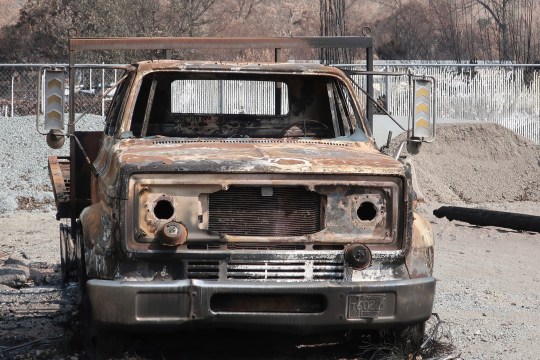
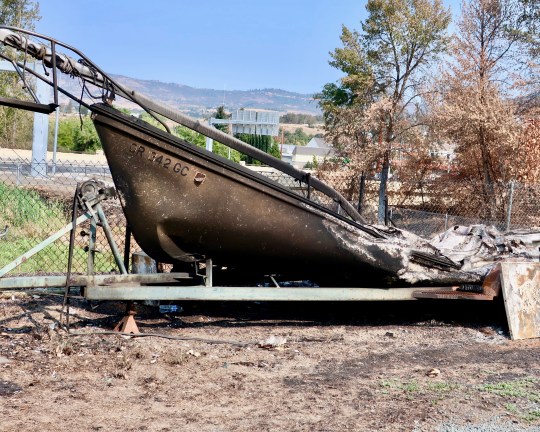
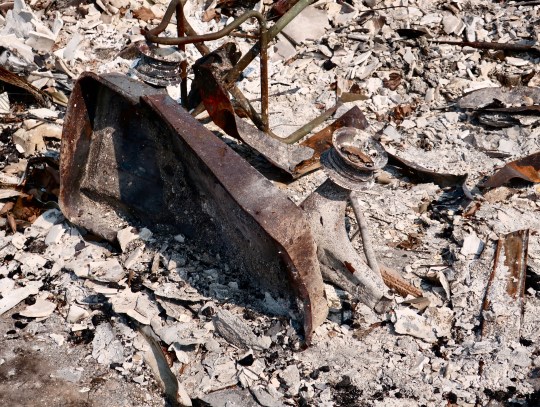
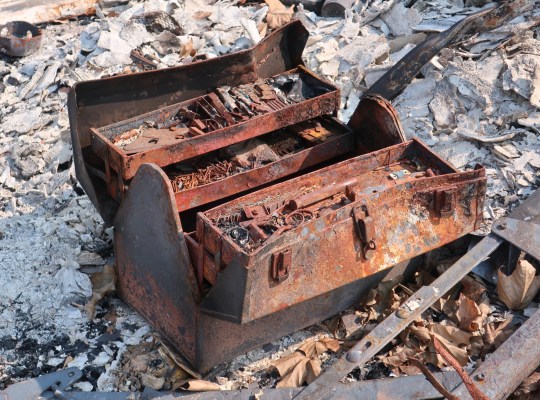
Some areas were totally devastated. This photo and the following two close ups give an idea of the furnace-like heat of the fire.Note how the roof here was literally melted. Also, I am amazed that the propane containers didn’t blow up. Safety valves must have released the gas and allowed it to burn off.Like in most of the fire damage, it is difficult to determine exactly what you are looking at. You can spot a seat in the cab of this vehicle and a large saw blade.This photo gives an example of just how totally things were destroyed.Here, a chimney was left standing.A burned out car was in front of the chimney. I rendered it in black and white. Shades of grey were how I felt.Here’s the car by itself.And how about this truck.I thought this photo was interesting in that it showed a totally destroyed car but in the background is a Rite Aid the fire didn’t touch. I parked my truck in front of the store. It was open and doing business. It has always amazed me how a fire will destroy one property and not touch the one next to it.A boat that will never sail again…A bed mattress that will never be slept on…A child’s wagon that will never be pulled…A tool box with tools that will never be used…And a doorway to nowhere…Wasn’t sure what this was but it looked a little evil to me, like what we can expect from global warming…And this was simply sad.I will use this car lot for my final photo of the damage done by the fire that ravaged Talent and Phoenix. It came on fast and furious, torching anything that got in its path. There was no time to move these cars. There was barely time to get out and survive.
Global warming is real. Extreme weather will not go away by denying its existence, or by claiming “It will get cooler.” Fires will continue to rage, hurricanes will become more frequent and more powerful, polar ice will melt and the seas will rise. Expect more floods, droughts, tornadoes and other types of extreme weather. We owe it to ourselves, children, grandchildren and future generations to do everything humanly possible on a national and international level to reverse this trend. Playing ostrich and burying our heads in the sand is not the answer.
My posts are few and far between. Part of the reason is the times. There is just too much happening now between the pandemic, the fires, and the election. As noted before, these are scary times, more scary than any other time in my 77 years. The other is that I love research and the Great Race has me fascinated. Just when I think I have exhausted my resources I find another article or more photos. This time it was 350 photos of the race stored in the Henry Ford Museum, a virtual treasure trove. Most of the photos in today’s post are from the museum.
Leaving Nebraska, the flat terrain and rolling hills of the Great Plains gave way to the mountain, deserts and distant vistas of the West while the roads became little more than dirt paths.
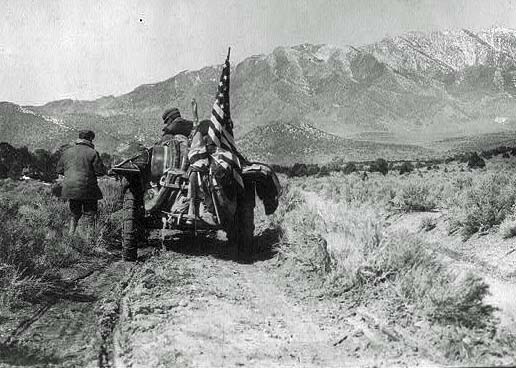
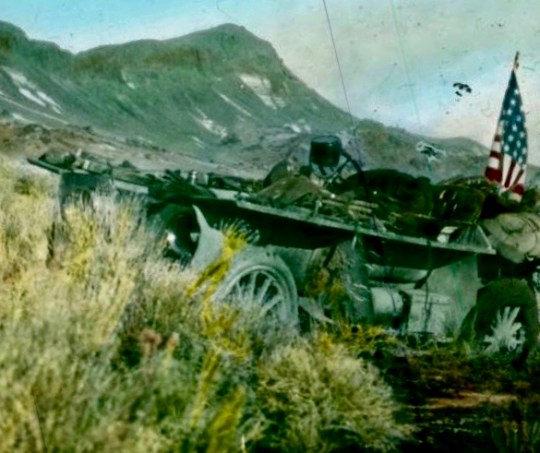
As the participants rolled out of Nebraska, they experienced their first real taste of the ‘Wild West.’ The unending farmlands of the Midwest gave way to the drier, open lands and vast vistas of Wyoming, Utah, and Nevada. The terrain also changed. The flat and rolling plains the automobilists had been driving through across the Great Plains turned to towering mountains and deserts. The Rockies, the Great Basin and Death Valley lay ahead. Towns and cities became farther apart. People fewer. The already poor roads the racers had been following became little more than tracks in the dirt.
When there weren’t any roads or railroad tracks to follow, participants in the Great Race were left with following emigrant trails.
The animals also got wilder and bigger. The Zust team claimed they were surrounded by a pack of 50 or so wolves that circled their car yipping with anticipation on a dark and stormy night in Wyoming. Blowing the horn and using the spotlight didn’t discourage the hungry predators. They kept circling closer. It was only when the team broke out their rifles and shot several that the wolves decided that they hadn’t been invited to dinner. Local townspeople gathered up the hides the next day and sold them for the bounty paid by the government. The wolves’ taste for an occasional cow would lead to their eventual eradication in the West.
Not everyone made it to the Rockies. Baron Godard, who had driven another car from Peking to Paris in 1907, met his match in Iowa. Between being bogged down in mud and snow, getting lost, and having serious car problems, he decided to ease his journey west by loading his Moto-Bloc onto a train and shipping it to the coast. “San Francisco, here I come!” It broke the rules.
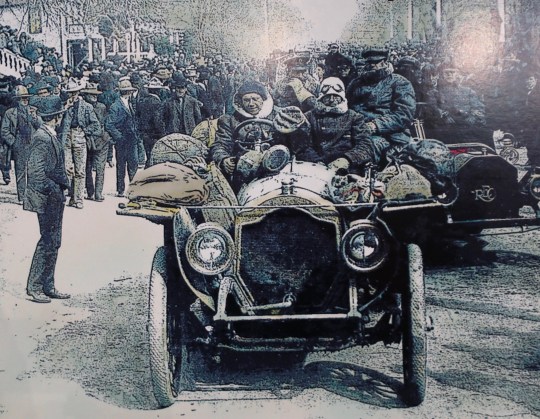
Baron Godard, in the Moto-Bloc in Paris before leaving for the US and the Great Race, shakes hands with well-wishers. Since the Baron had come in second the year before in a race between Peking and Paris, he had high hopes for his NYC to Paris race. They ended in Iowa. An early movie is being filmed here.
A photographer caught the Baron loading the Moto-Bloc onto the rail car. “Quit the race, sell the car, and return home,” the manufacturer telegraphed him. The French, who had started with three entries, were down to one. The greater glory of France now depended on G. Bourcier de St. Chaffray driving the French De Dion-Bouton— which is quite a mouthful to say.
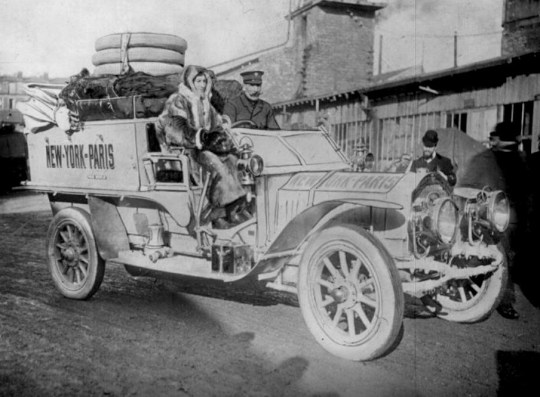
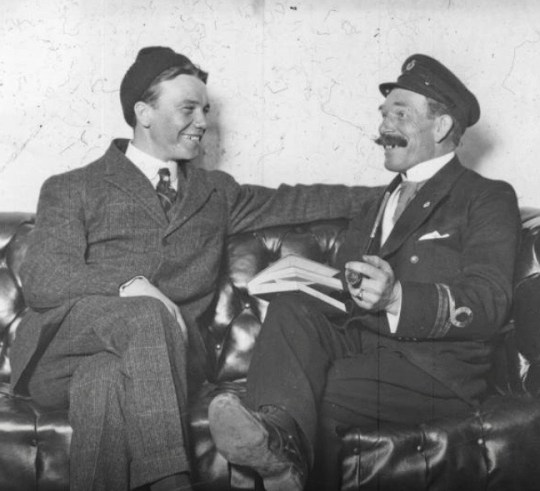
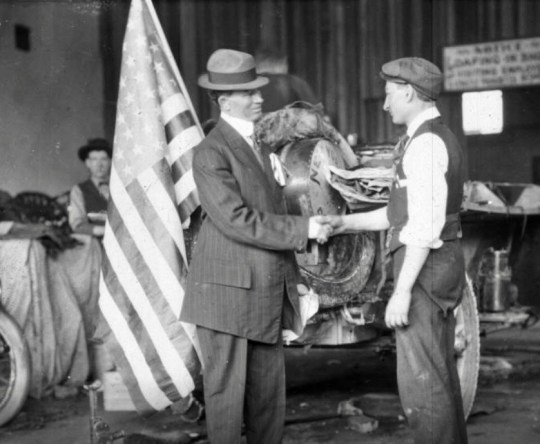
The De Dion-Bouton leaves the Puteaux, France factory outfitted for the Great Race. I believe G. Bourcier de St. Chaffray is driving and Hans Hansen is his passenger. Hans would join the Thomas Flyer team after a hot argument with G. Bourcier that almost came to a Western shootout! Their fast draw was thwarted, however, by the fact the pistols were buried deep under all of the gear.Monty Roberts, the driver of the Flyer, and Hans Hansen share a laugh.
The Thomas Flyer team had other ideas about who would win the glory. When they reached Cheyenne, Wyoming, the Flyer was a week ahead of its nearest competitor, the Zust. The De Dion was in third. And the Protos fourth. Given the quality of the vehicle, Monty Robert’s driving ability, and George Schuster’s mechanical talent— not to mention sheer determination— the team had been ahead for most of the race. It was a position they had every intention of keeping. The car was about to lose its driver, however. Monty had other race commitments back east and in Europe. He hoped to rejoin the team when it entered Europe to drive over better roads and, I imagine, harvest the fame of crossing the finish line first. E. Linn Mathewson, a Thomson Flyer car dealer, took over the driving from Cheyenne to Ogden, Utah. Harold Brinker, an auto racer out of Denver, drove the car into San Francisco. Schuster would take over then.
The Thompson Flyer receives a grand welcome in Cheyenne.
E. Linn Mathewson steering the Thomas Flyer. I think that’s a “What have I gotten myself into?” look.
Linn Mathewson shaking hands with his replacement, Harold Brinker, in Ogden, Utah.
Getting into the spirit of the West, George bought a Colt six-shooter pistol before leaving Cheyenne. Who knew what lurked out in the wilds of Wyoming? Wolves or outlaws, perhaps? Best to be prepared.
There would be snow drifts to push the Flyer through…
Brush and mud to conquer…
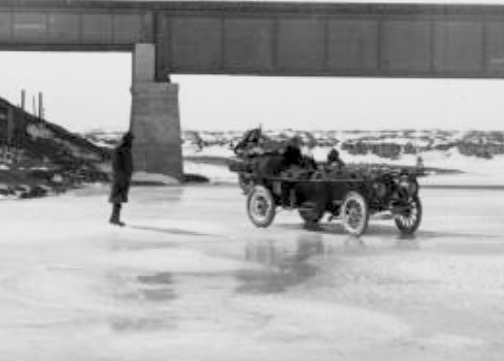
Ice covered rivers to cross with hopes of not ending up on the bottom…
And high passes to climb over. It’s no surprise that the teams would need a drink when they reached a town!
Peggy and I had followed the route of the race in Nebraska from Grand Island to North Platte where we spent the night at Buffalo Bill’s ranch as the Flyer had in 1908. We then continued to follow the route to Ogallala where we detoured to follow the Oregon Trail, which early pioneers had used in the 1840s, 50s and 60s. (Posts coming.) I was eager to check out the route that ancestors on both sides of my family had travelled looking for a better life— either by farming in the Northwest or striking it rich in California. So, we missed Cheyenne. We rejoined the race route for a brief time, however, between Rock Springs and Fort Bridger, Wyoming, when the Oregon Trail dipped south.
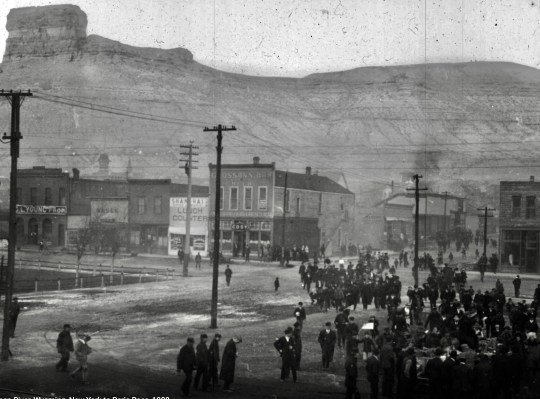
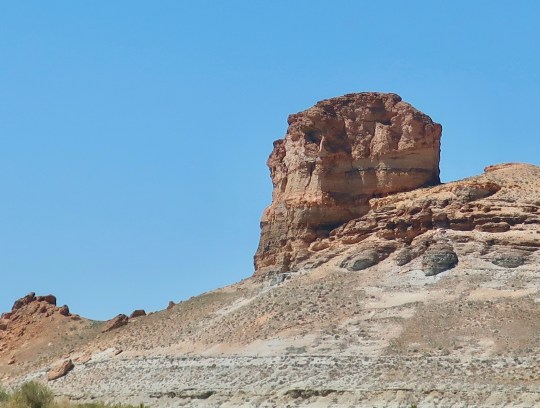
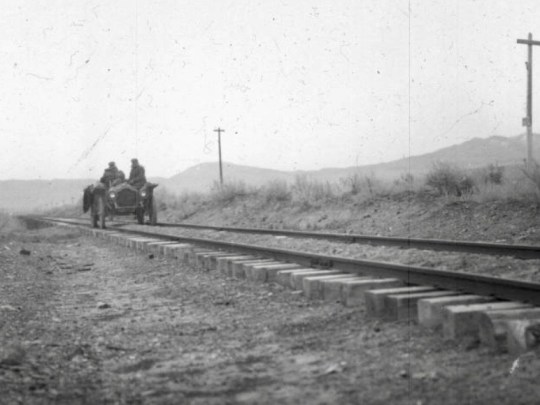
The Thomas Flyer parked in front of Buffalo Bill’s home on the North Platte River.Crowds were out to greet the Thomas Flyer’s arrival in Green River, Wyoming. People were still hurrying over to welcome the team. Note the prominent rock in the background…Peggy and I took its photo when we briefly rejoined the route between Rock Springs and Fort Bridger.Driving over the railroad ties in Utah, the Flyer was in for a bumpy ride. Another problem was that the railroad spikes tore up the tires.
Ely, Nevada was the next point where our summer road trip crossed paths with the race route. We passed through the town on our way east when we were following Highway 50, the “Loneliest Road in America.” (Another post.) Ely feels like it is in the middle of nowhere. And it is. It would have felt much more so in 1908. The Flyer had made its way south from Wendover, Utah following what is now Highway 93 (more or less) to Ely and then continued southwest across the Nevada desert following today’s Highway 6 (more or less) to Tonopah.
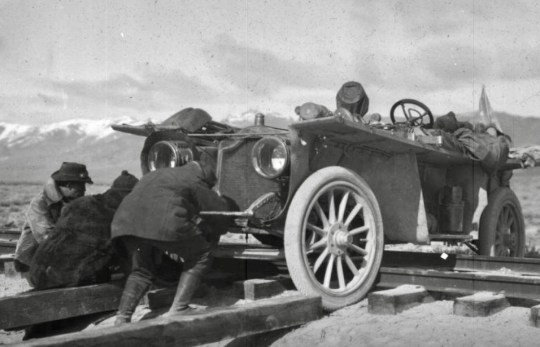
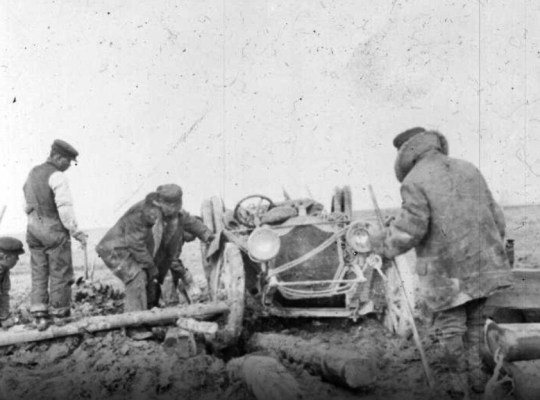
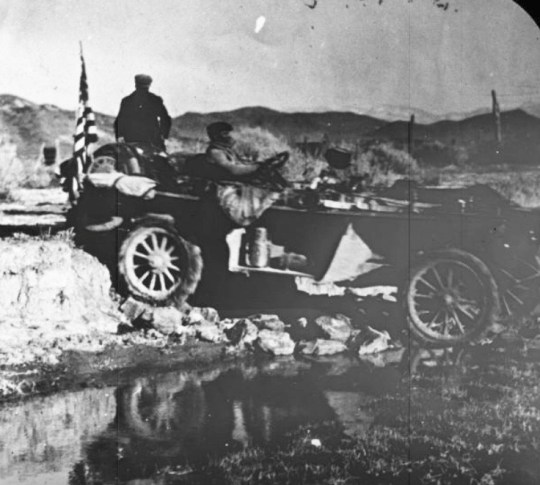
The Flyer team used railroad ties and brute force to get across the Western Pacific railroad in Nevada. They appear to be lifting the Flyer to get it onto the borrowed ties.And here, they use logs to get the car out of Nevada mud. Peggy and I know from our years of attending Burning Man in the Nevada’s Black Rock Desert that there isn’t a heck of a lot of rain in Nevada, but when it does rain, the mud is no joke. The 24/7 event comes to a grinding halt.And, as always, the car attracted attention wherever it was. This photo is taken in Cerry Creek, a small town north of Ely.
Along the way, it passed by what would become Nevada’s Extraterrestrial Highway. Think UFOs. I’ve been interested in flying saucers ever since I saw one in 1969. The participants in the Great Race didn’t report seeing any, however. Darn. (As an aside, I found it interesting that both the Pentagon and Japan’s military have set up task forces in the past couple of months to track UFOs. A little Twilight Zone music might be appropriate here.) But back to the race.
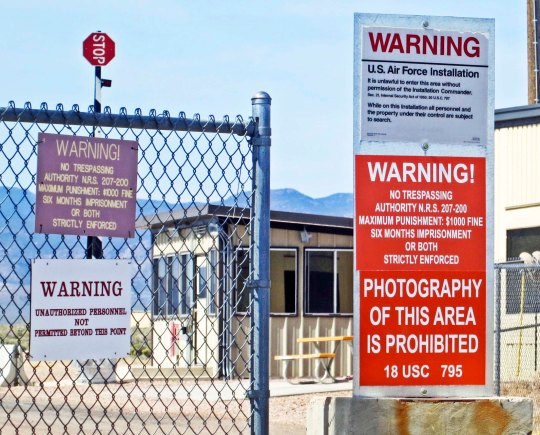
Peggy and I drove down the Extraterrestrial Highway and visited Area 51. We weren’t invited in. But then we weren’t arrested for taking photos either. (Post here on our visit.)
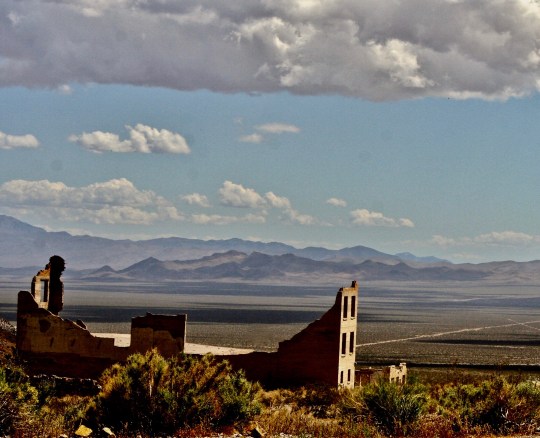
It was in Tonopah and the town of Goldfield 27 miles to the south that we first learned of the Great Race. In fact, we’ve driven the route followed by the Flyer from Tonopah south through Goldfield, the now ghost town of Rhyolite, and across Death Valley many times. I’ve actually ridden my bicycle over most of the route the race followed through Death Valley and on to Bakersfield, California.
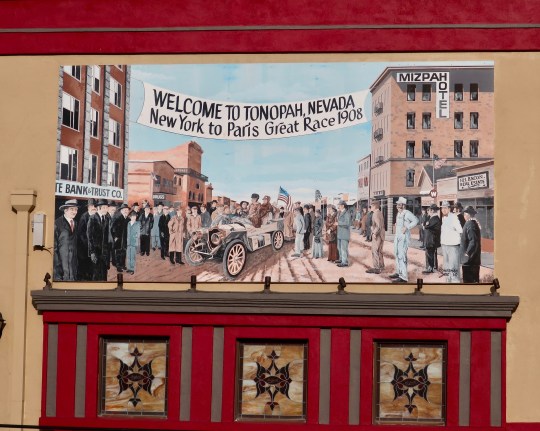
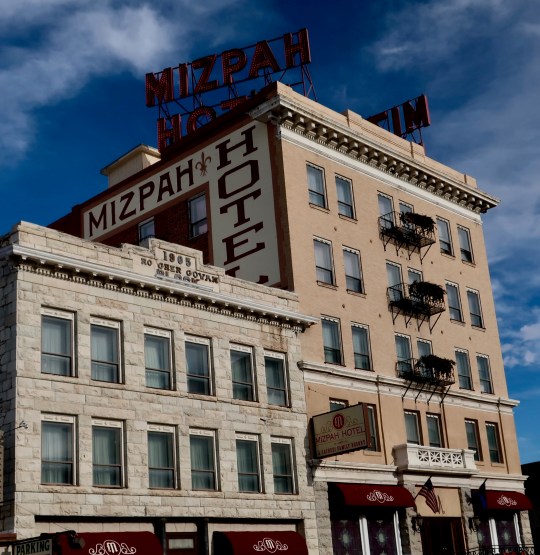
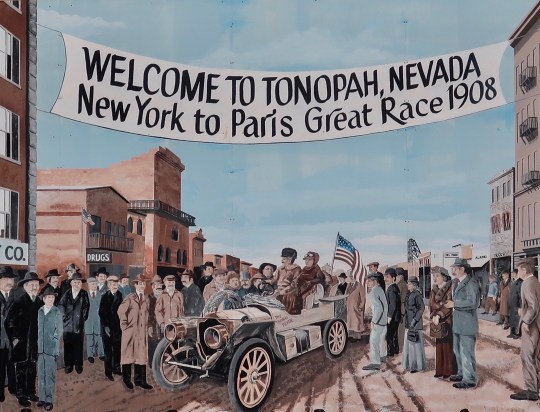
I kicked this series off with a photograph of a mural depicting the arrival of the Flyer in Tonopah. The scene was looking south. Note the Mizpah Hotel.It still stands.
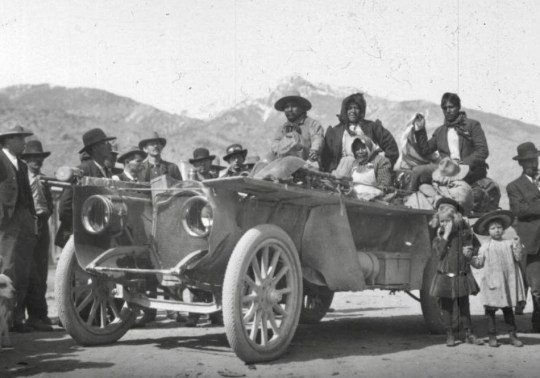
When the Flyer was late in arriving in Tonopah, several residents drove out the road to see if there was a problem. They found the Flyer broken down and Schuster sleeping in a bunkhouse. (Another version of the story has him walking toward Tonopah.) He was roused out, given a ride to town, borrowed parts from a Thomas Flyer owned by a local doctor, fixed the car, and arrived to a jubilant welcome. Pretty much the whole town greeted the team.
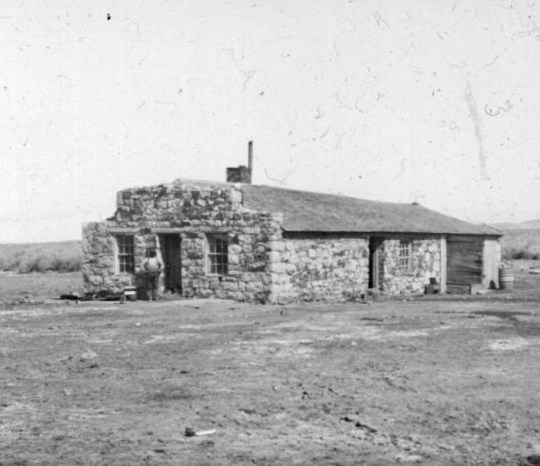
The Flyer was attempting to cross this quicksand filled creek on the Warms Springs Ranch when it got into trouble outside of Tonopah. This building still stands on the Ranch.
Cowboys and miners shooting their pistols into the air welcomed them to Goldfield. It was a cast of characters. There is still a cast of characters living there! (And a speed trap.) Crossing Death Valley, the Flyer had to put on balloon tires to get through the deep sand. Stovepipe Wells offered its only water.
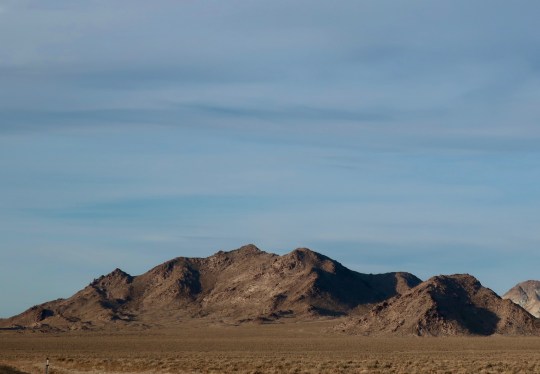
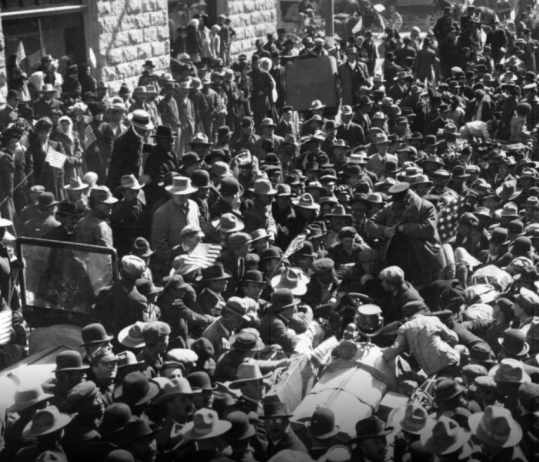
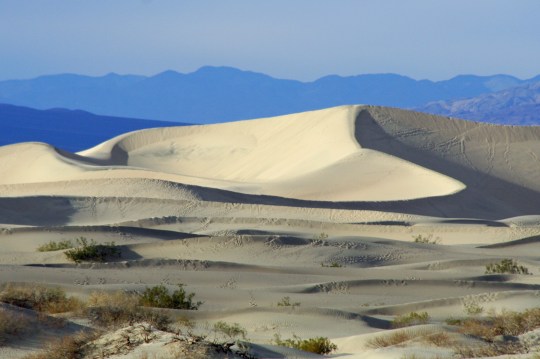
This would have been a view the team had as they left Tonopah for Goldfield. The Flyer was almost buried by the crowd that gathered in Goldfield.The Thomas Flyer passed through the Town of Ryolite just before entering Death Valley. Today it is a ghost town.We took this photo of sand dunes in Death Valley from Stovepipe Wells. There was no lack of sand for the Flyer to negotiate through. I was glad for the paved highways when I rode my bike across the Valley.
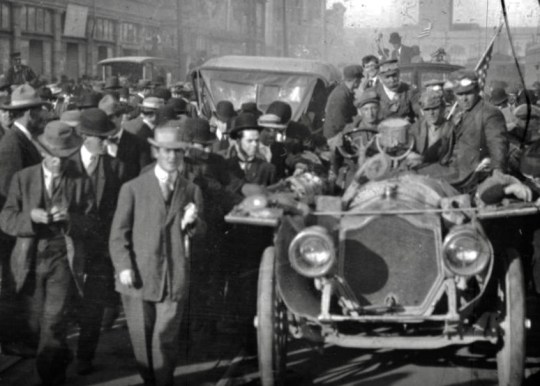
The Thompson Flyer rolled into San Francisco on March 24th, the first car to travel across America in the winter. The team was given a hero’s welcome. Factories blew their whistles and cars honked their horns. Its nearest competitor, the Zust, was still 700 miles away. The first phase of the race was over for the Flyer. Schuster was now to become the driver. He was eager to get to Alaska for the next phase of the race.
Market Street in San Francisco was packed for the arrival of the Thomas Flyer.
NEXT POST: Schuster travels to Valdez, Alaska to check out the next section of the race and the route is once again changed. Cars will be shipped to Japan and then on to Vladivostok, Russia where their next challenge will be crossing Mongolia and Siberia.
The boys are now hanging out together. A situation that will change as their interest in the girls makes a quantum leap in the next couple of months. This buck’s antlers were still covered in velvet and growing when we left on our road trip in June. Now they are ready to do battle to win true love, or at least a quickie.
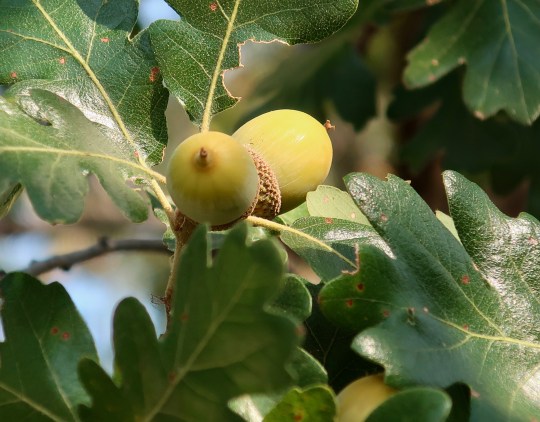
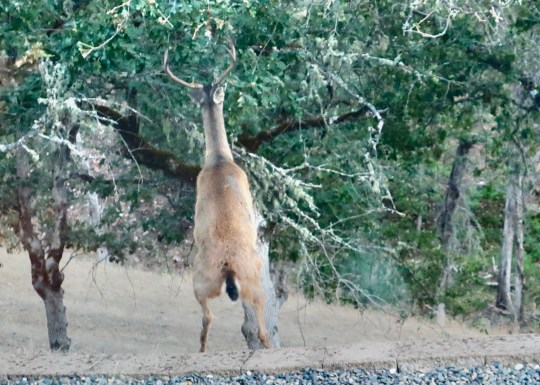
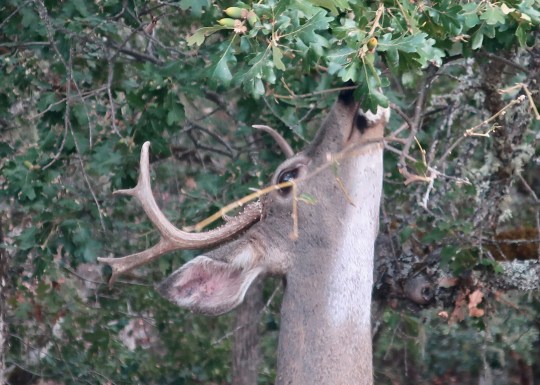
Since I am still working on my next post on the 1908 Great Race, I decided to throw in a quick update on life here on Oregon’s Upper Applegate River. First, fall has arrived. Leaves are beginning to turn and the white oaks have produced a bumper acorn crop— a fact that has the deer all but climbing the trees.
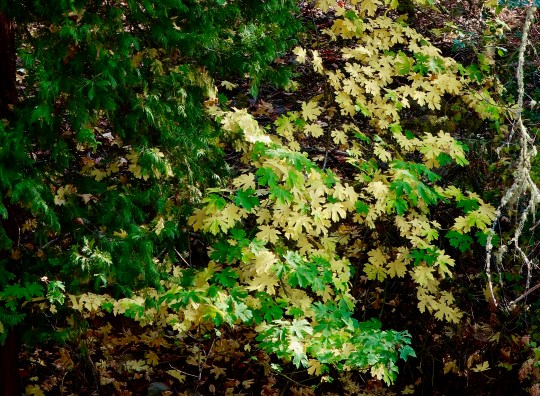
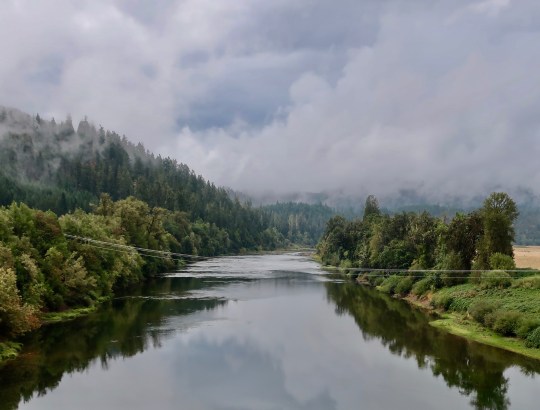
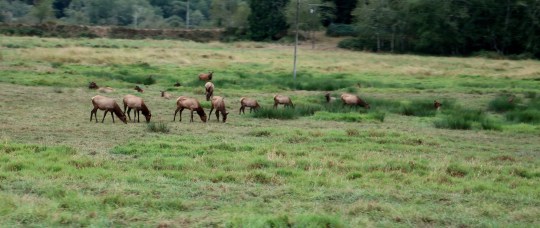
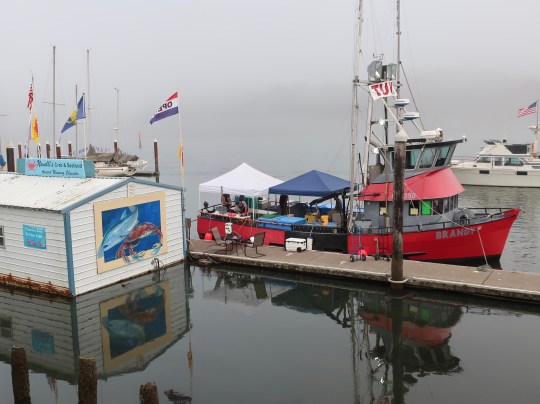
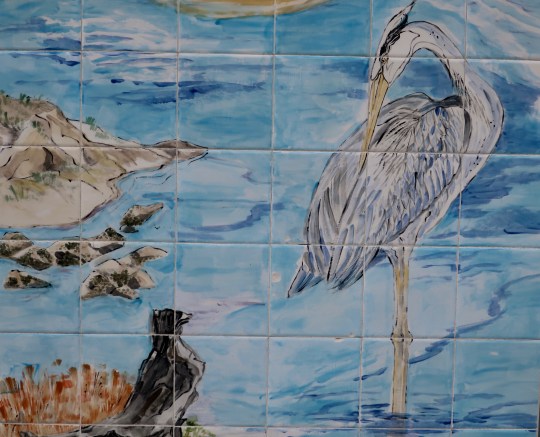
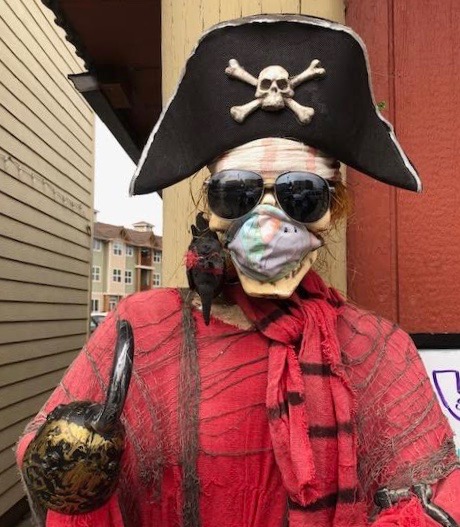
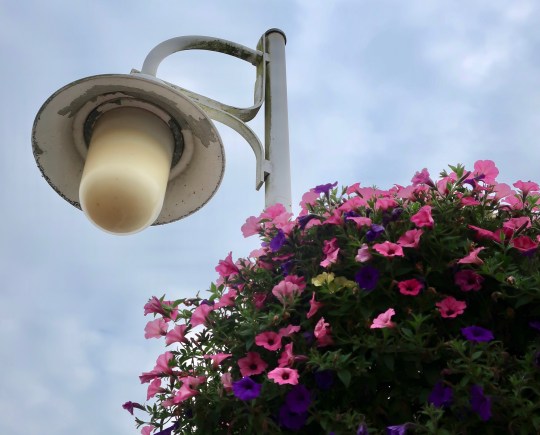
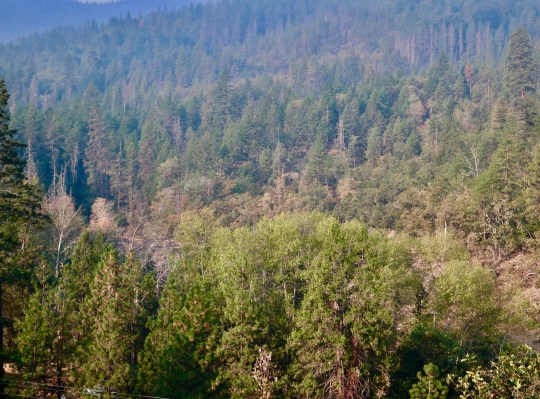
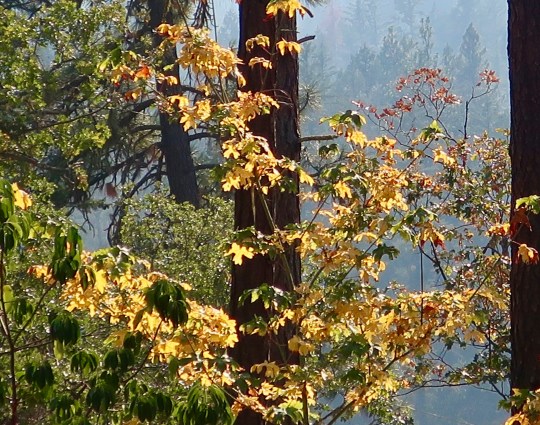
The big leaf maple trees growing down in our canyon are adding a splash of yellow.The plump, white oak acorns here are delicious this year according to squirrels, deer, turkeys, woodpeckers and bears.The deer start with the acorns that are easy to reach…And then up they go, standing on their hind legs…It’s quite a reach.Meanwhile, the kids have been growing up. The spots are just about gone. This one is all legs.The birdbath continues to serve as the local watering hole. It’s time to refill!The bird feeder continues to attack the attention of various and assundry animals. It still hasn’t totally recovered from the time in June when the huge black bear used it for tether ball practice. BTW, we haven’t seen him since our neighbor threw firecrackers at him. He left us some scat, however. BIG scat. But what the heck is this animal? Is that a large mouth?Turns out it was the hind foot on this fellow!The forest fires continue to have a major impact on our area. The towns of Phoenix and Talent, which lost approximately 2500 home and businesses, were totally devastated and are still under evacuation orders. While our home was never under a direct threat, the air pollution has been some of the worst in the world. This is what it was like a week ago looking down toward the Applegate River in front of our property, a couple of hundred yards away. Rather than poison our lungs, we decided to escape to Florence on the Oregon coast.The closer we got, the cleaner the air became. This is the Umqua River. My dad lived near here in the 70s. Rain clouds, not smoke! A welcome sight.A creek along the way. Driving to and from the coast is almost as good as being there.Even the elk seemed happy to be breathing clean air. This herd can almost always be found along Highway 38 near Reedsport.Florence is one of our go-to places on the Oregon Coast. We like to stay at the Siuslaw Marina campground because it is an easy walk into its historic town. It was packed with RVs, a sign of the times. This is at the Marina where the Brandy was selling freshly caught tuna off the boat at $3.00 each. Fog was rolling in.There are always seals to amuse us. This one was tracking through the water like an arrow shot from a bow. The old pilings from days gone-by add a touch of mystery.Some of the pilings even came with character. Looks a bit like Wile-e-Coyote.Possibly a giraffe with a furry tail.Here the pilings provide foreground for Florence’s iconic bridge.This one provides a convenient location for a cormorant to dry its wings. A sand dune provides the backdrop. Oregon Dunes National Recreation Area starts just south of Florence.Florence has a considerable amount of art for a small town. Most of it reflects local sea life, like this octopus…This great blue heron…And this seal.Peggy and I were impressed with the fact that most people, and this pirate, were wearing Covid-19 masks. (iPhone photo by Peggy Mekemson.)The Marina has an attractive walkway complete with lamps and hanging baskets leading into the town. After five days of breathing clean air, it was time to head home and see what the smoke and fires were doing.I’m happy to report that the smoke had cleared out. Some. Compare this picture looking down on the cottonwoods growing along the Applegate River to the same photo above.A final view of our big leaf maples turning a fall-ish color. Looking beyond the maple, you can still see the smoke hanging in our valley. We aren’t out of the woods yet, so to speak.
NEXT POST: We will rejoin the Great Automobile Race of 1908 as it makes its way to San Francisco.
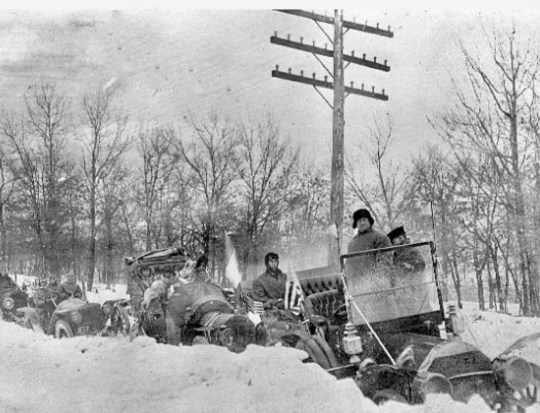
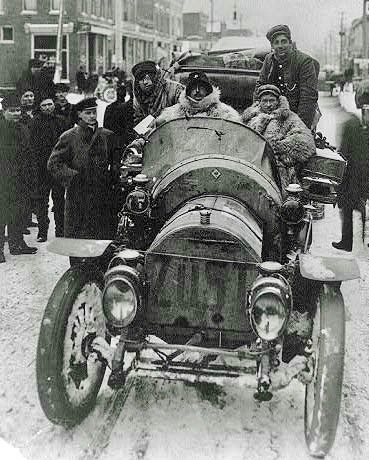
The race had barely started when the automobiles were caught in a blizzard that dumped 2-3 feet of snow on the roadway. In this photo, the Thomas Flyer breaks trail for the other racers. In the beginning, the various racers took turns leading.
I ended my first post on the 1908 Great Race from New York City to Paris with the six competitors zooming down Broadway on their way out of New York City as a crowd of 250,000 roared them on. Their original route had already been changed by the organizers. Instead of driving half way across the US and then up though Canada to the Bering Strait, they would work their way across the nation and then take a boat up to Valdez where they would continue the Alaska portion of the race over dog sled trails and ice-covered rivers.
But first they had to get across the US starting in winter, no small task considering no one had ever accomplished it. Roads would be rough to non-existent. There were no maps or gas stations, or asphalt— it had yet to be invented. In some areas the drivers would be forced to drive over railroad tracks, a guaranteed bumpy ride! Remember the ads when automobile manufacturers would show how good the shocks on their cars were by driving down railroad tracks with an egg balanced on a spoon? You would have to fast forward to the 60s and 70s for that level of suspension.
Problems began immediately. The one-cylinder, small French Sizaire-Naudin dropped out of the race on the first day at mile 96 with a broken differential. The remaining five vehicles soon found themselves plowing through two feet or more of snow in a blizzard. Except in cities, no handy-dandy horse drawn snow plows were around to clear roads. George Schuster, the mechanic for the Thomas Flyer, walked ahead of his vehicle poking a stick into the snow to measure its depth. Or maybe he was looking for the road!
The Thomas Flyer fights to get out of a snow drift.
The slow progress came to a dead halt in Dismal Hollow outside of Auburn, New York. The name alone suggests a horror-story-level disaster. The cars became hopelessly bogged down as night approached. Fortunately, horses hired by the Italian Zust team came to the rescue of the automobilists, as they were known then, and pulled them out.
The Italian Zust. Clothing suggests just how cold it was.
At first, the teams worked together, taking turns at leading. That didn’t last long. It was a race, after all. You can imagine how the Americans, or the Germans or the Italians reacted when the driver of the French de Dion, St. Chaffray, ordered them, “When you wish to go ahead to a city, you ask me.” Right.
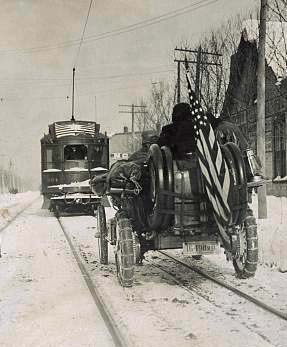
The Europeans were soon complaining that the Americans had unfair advantages. When the Thomas Flyer had a problem, dozen of patriotic volunteers jumped in to eagerly help out for free. When the European cars hit a glitch, they had to pay. “They even charge us to sleep on the ground,” one of the drivers whined. A more legitimate complaint in terms of the race outcome was that the railroad and trolley companies favored the Flyer in allowing track usage. Out West, the Union Pacific even scheduled the Flyer to use its tracks like it would a train.
When roads were impassable or non-existent, the racers often resorted to using train tracks. The rules were that the riders couldn’t actually ride on the rails. They had to bump their way over the railroad ties.Trolley lines sometimes substituted for railroads in the cities.
My sense is that the great advantage the Flyer had was George Schuster, however. For one, he had the ability to fix any problem the car had. Each night he would tune the engine and work on whatever else was needed to get the car ready for the next day. The competition complained to the race committee that Schuster had rebuilt the whole car. Possibly. But the complaint was rejected. One of the nightly chores that all of the car mechanics performed was draining the radiator so it wouldn’t freeze. Anti-freeze had been developed but it was used in making bombs, not protecting cars on cold nights
Schuster’s support in keeping the vehicle operating went far beyond his mechanical abilities, however. If someone had to walk 10 miles in a freezing weather to get gas or a part, he did it. If the car needed rescuing from a snow drift or was stuck in a gully, he figured out how to free it. He was dedicated to doing whatever it took to keep the Flyer running.
I suspect a fair amount of money exchanged hands when the racers reached Chicago. Many felt that the cars would be lucky to get out of New York and even E.R. Thomas, the manufacturer of the Flyer, never expected his vehicle would get beyond the Windy City. T. Walter Williams, the New York Times reporter assigned to the Thomas Flyer, bailed out when the cars arrived in Chicago. “It’s insanity” he proclaimed. And it was. But all five cars made it to Chicago and continued on. Snow continued to plague the drivers as they made their way across the Midwest. And when they finally got through the snow, they were faced with hub-deep mud. Lots of it. Tensions soared.
When the De Dion got stuck in a snowbank and Hans Hendricks Hansen, who claimed he had piloted a Viking Ship to the North Pole solo, couldn’t get it out, St. Chaffray exploded. The men decided a duel was in order and went scrambling to find their pistols. Fortunately, they were buried deep in the gear and St. Chaffray had time to decide that it would be better to fire Hansen than to kill him— or be killed by him. Hansen joined the Thomas Flyer, pledged allegiance to the American flag it flew, and swore that he could walk to Paris faster than St. Chaffray could drive there.
Our recent 8,000-mile journey around the US was bound to cross the route of the Great Race. It happened in Nebraska as we followed US 30 along the South Platte River. The racers had been following what would become Highway 30 through Illinois, Iowa and Nebraska. We joined the highway in Kearny and followed it on to North Platte where we stayed at Buffalo Bill’s ranch. Signs along the road proudly proclaimed it had been part of the Oregon Trail and the Lincoln Highway, America’s first transcontinental highway. Before that, it had served as a major path for Native Americans and mountain men. When the route had passed through Omaha on entering Nebraska, the Flyer team met Buffalo Bill who had invited them to stay at his ranch on the North Platte.
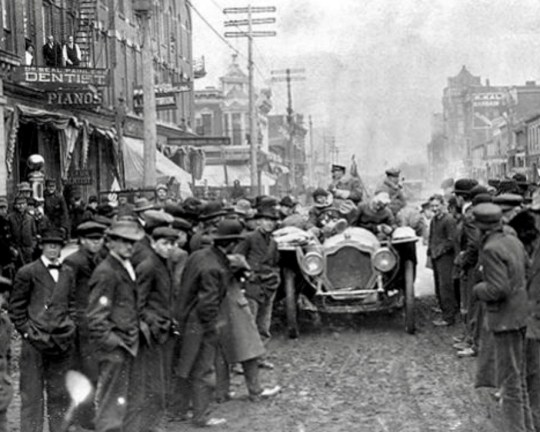
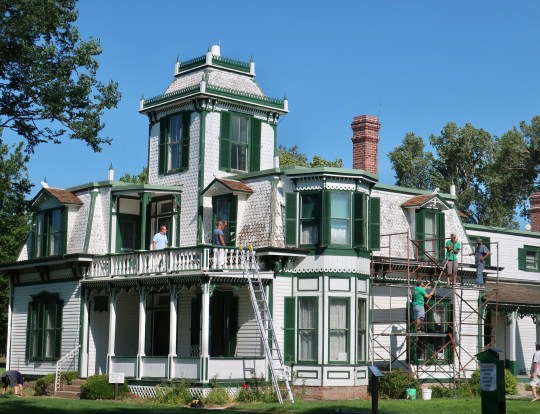
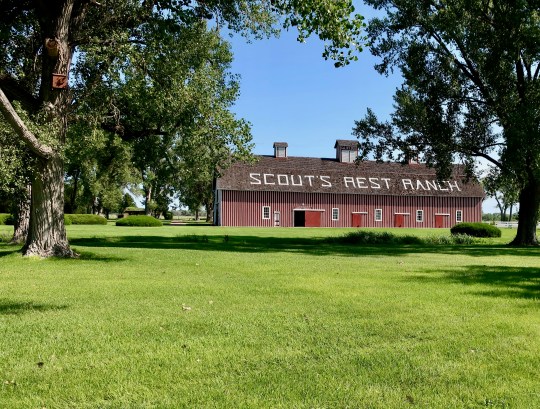
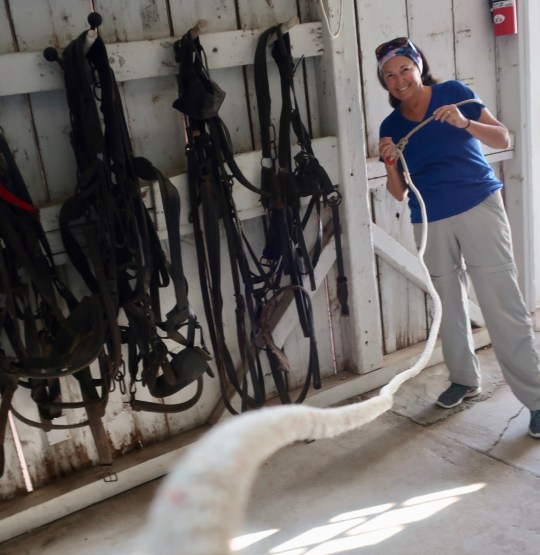
I took this photo of US 30 on Peggy’s and my recent trip around the country. Take away the pavement and add a foot of mud, it might look similar to what the 1908 racers found in making their way across Nebraska.Whenever the racers came to a major town, the citizens would be out to greet them in force. This is Grand Island Nebraska. Only four of the cars made it this far. A high school student eager to shoot an action shot caught this photo of the race in the small town of Gibson, Nebraska. He even got a wave!Buffalo Bill invited the racers to stay at his home in North Platte. Pretty fancy digs for a buffalo hunter! The house was being repainted when Peggy and I visited it.Buffalo Bill’s barn, Scout’s Rest, would have been standing as well when the racers came through in 1908. (Photo by Peggy Mekemson.)The barn is packed full of memorabilia from Buffalo Bill’s road show which traveled the world featuring cowboys and Indians and personalities like Annie Oakley. This poster promoted his show in Australia. Note the fancy rope work! I got so excited…… That I lassoed myself a filly! Boy did she put up a fight!I’ll conclude today’s post with a photo of the Flyer making its way through hub-deep mud. Some fun!
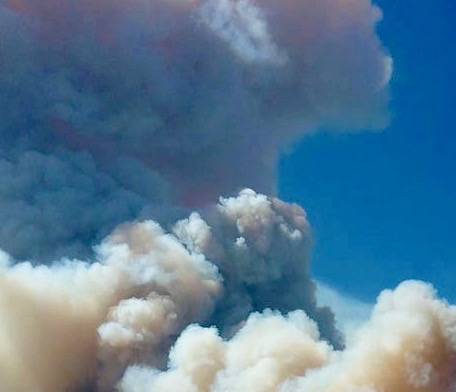
I glanced out our window Wednesday and saw a massive plume of smoke looming over the mountains. If fire came over the ridge, Peggy and I were packing up and getting out. Fires can travel fast! (Photo from Peggy’s iPhone.)
It’s a bit hard to focus on my Great Race series.
On Tuesday, our whole county was on a Level 1 fire alert, “Dangerous fires are lurking in the area.’ Level 2 is ‘Pack what you need and prepare to leave.’ Level 3 is ‘Get out now.’ The sheriff’s office called to urge everyone in the county to stay off the roads unless they were being evacuated. Portions of Ashland and Medford plus all of the communities of Talent and Phoenix were under a Level 3 alert. I-5, the major north-south freeway for the West Coast had been closed near Ashland. Truckers had abandoned their big rigs on the road.
We had started our morning with a power outage. Extreme winds were playing havoc with the power grid in Oregon as well as creating extreme fire danger. I walked up to where we park Quivera, our small RV, and brought her down to the house. At a minimum we could make coffee. At maximum we could power up the van’s generator and turn on the air conditioner. Temperatures around here have been soaring over 100 degrees F. Fortunately, the power was back on around 10 AM. I quickly filled the bathtub so we would have an emergency supply of water. We have our own well and pump. No power, no water, no toilet. Quivera works in a pinch— and then there is the mountain side. Years of backpacking have trained us. Our shovel is handy…
At about two, we saw a huge plume of smoke southeast of our home boiling up above the mountains where Peggy and I had backpacked two years ago. We watched nervously and discussed putting together our emergency evacuation packet of necessities and a few treasures— like Bone and Eeyore (grin). If the flames topped the mountains we’d be out of here. Bye, bye. The fires can move at incredible speeds. Where we’d go was something of a question since so many areas in California and Oregon are burning. But with Quivera, at least we would have our vacation home with us.
The plume was back yesterday. I did a quick internet search and discovered it was the Slater Fire that had started in Northern California on Monday night. It has now crossed the border into Oregon and burned over 120,000 acres. Fortunately for us (not so much for others), it is not moving in our direction. So far.
This is what the plume looked like on the other side of the ridge. A person took this photo near the Seiad Valley. Peggy and I backpacked into it on the PCT 2 years ago.
We are used to fire danger in our area since our home borders on national forest land. Four years ago, we had to evacuate under a level 3 alert. Towns and cities have always seemed safer. Not this time. Talent and Phoenix, which had been under the level 3 alert, were devastated on Tuesday night. Hundreds of homes and businesses were destroyed, including possibly our doctor’s office. National news coverage showed footage of the fire. It looked like a war zone.
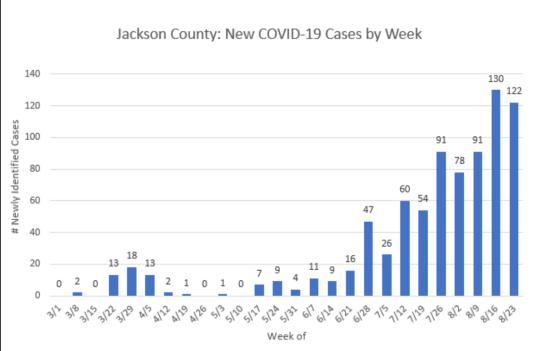
Meanwhile, the pandemic hasn’t slowed down. Jackson County which started off with one of the lowest rates of Covid-19 in the state, now has one of the highest. We’ve been moving backwards in our reopening status. Our masks won’t be disappearing anytime soon.
A chart showing our local Coronavirus rate. And we didn’t even have Sturgis!
And then there is the incredibly weird political situation America finds itself in. I cringe each time I read the news. Each day there are new revelations on the national level. And then there is the local scene. Peggy and I were at the Bi-Mart in Medford on Monday doing our weekly shopping when a guy came in wearing a Trump mask. He asked the woman checking people in if the store carried ammunition for his assault rifle. Who knows what his motivations were, but we kept our distance. Have I mentioned that these are scary times?
A halloween Trump mask very similar to the one the man was wearing in Bi-Mart as he looked for ammunition.
NEXT POST: I’ll get back to the Great Race— assuming the fires, Covid-19, and all of the scary people out there behave.
A mural in Tonopah, Nevada that features the town’s welcome of the Thomas Flyer, America’s entry in the New York City to Paris Automobile Race of 1908.
Peggy and I are now back at home in Oregon after our ten week 8,000 mile road trip around the US in our small RV. It was weird out there in the Age of Coronavirus— but interesting. As much as possible, we stayed off of freeways and traveled by backroads, many of them significant to America’s history. One such road we followed was a portion of US 30 across Nebraska following the South Platte River. The route was once a path for Native Americans and mountain men. Later, it became a section of the Oregon Trail that pioneers and gold seekers followed in the mid-1800s on their way west in search of wealth or a new life. In 1913, it became part of America’s first transcontinental road, the Lincoln Highway.
I was excited to learn that it was also a section of route that the 1908 Great Automobile Race from New York City to Paris followed through Nebraska. I had first developed an interest in the race when I learned about it in the remote Nevada towns of Tonopah and Goldfield where it had been the biggest thing to happen to them since the discovery of gold. My interest was peaked considerably last summer when I found America’s original entry, the Thomas Flyer, in the National Automobile Museum in Reno, Nevada. Since then I have read several articles on the race and discovered a treasure trove of photos from the Library of Congress. It’s a story that has been told many times but is worth retelling, which I will do over my next 3-4 posts. I figure it will serve as a kick-off for my posts on our road trip!
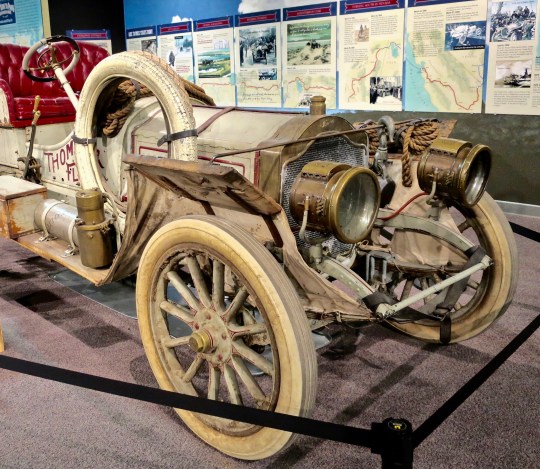
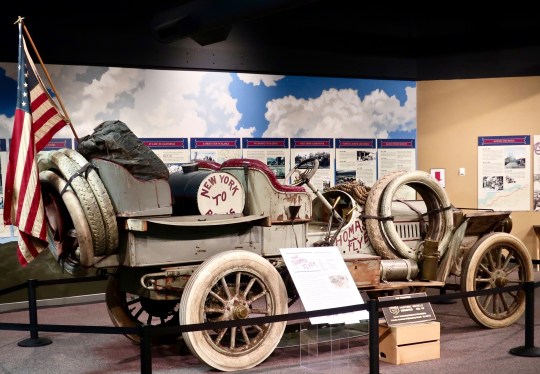
America’s entry in the Great Automobile Race from NYC to Paris in 1908, the Thomas Flyer, is on display at the National Automobile Museum in Reno, Nevada.
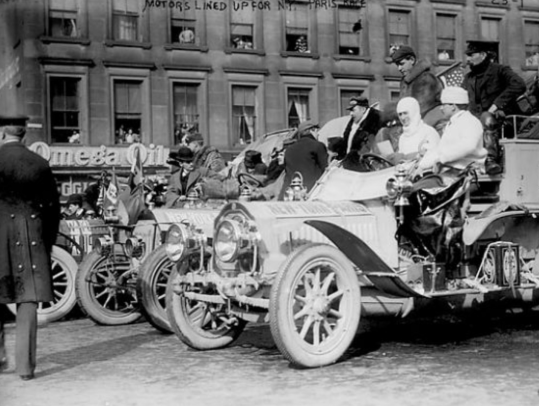
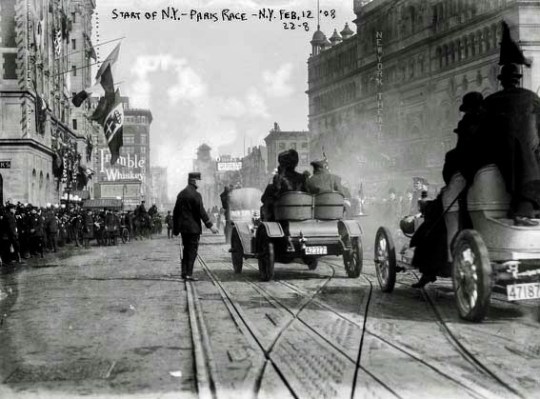
It was cold and windy in New York City on Lincoln’s Birthday, February 12, 1908. The quarter of a million people lined up along Broadway were bundled up in their warmest clothes as they waited anxiously for the starter’s gun that would kick off a 22,000-mile (35,405 kilometer) race over land and sea from New York to Paris. It was a challenge involving men and autos that had never been undertaken before— and still goes unmatched.
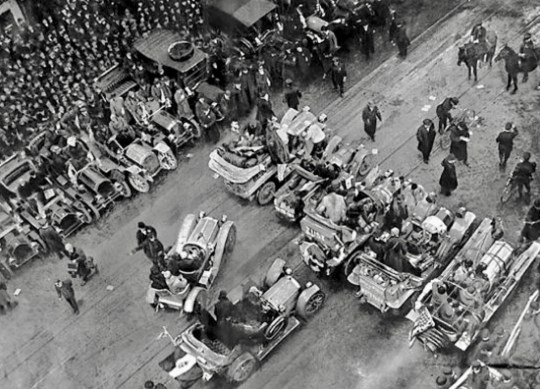
An estimated 250, 000 people (and their autos) were lined up along Broadway to watch the beginning of the Great Race.
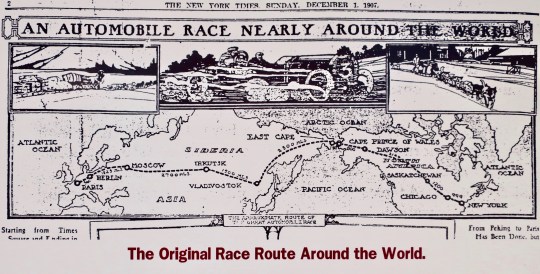
The route, as planned, would take drivers across the US, through Canada into Alaska, across the Bering Strait, over Siberia and then through Russia and Europe to Paris. By starting in February, the organizers hoped that the rivers and dog sled trails in Alaska as well as the Bering Strait would still be frozen so the racers could use them as roads.
The original route as shown in a December 1, 1907 New York Time’s article. It would change substantially as the reality of driving through Alaska in winter or spring became apparent.
The New York Times and the Paris newspaper Le Matin were sponsoring the race. The winner was to receive a 1400-pound trophy (not quite something for your mantle), and undying fame. Thirteen cars had been entered but only six made it to the starting line: three from France, one from Germany, one from Italy and one from the US. The US had come close to not having an entry at all. The pioneers of America’s nascent automobile industry didn’t think the race was doable. Or possibly they didn’t want to compete against the better-known European car makers and risk defeat. I suspect the latter.
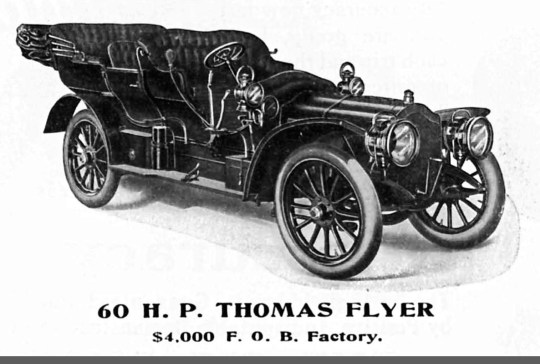
The ER Thomas Motor company out of Buffalo, NY came to the rescue a week before the event. It diverted a deluxe $4,000 Thomas Flyer that was meant to be sold in Boston. It was a stock, 60-horsepower touring car. Modifications were minimal. Three extra gas tanks were added to give the Flyer a capacity of 125 gallons. There would be no convenient gas stations along the way. You went to a hardware store, filled a bucket up from a metal barrel and poured it into your tank— if you could find gas.
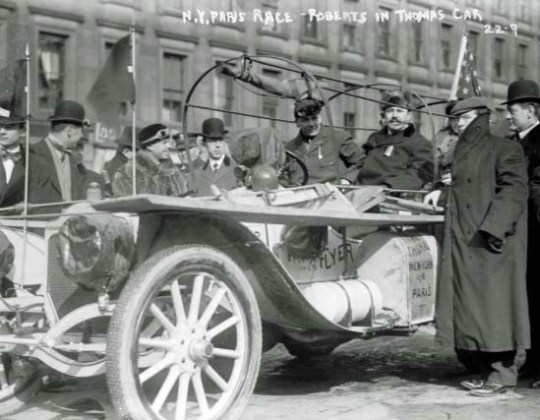
An ad for the original stock ER Thomas Flyer. BTW, the $4,000 would translate into over $100,000 in today’s dollars.The Thomas Flyer at the beginning of the race with its extra boards and ‘wagon train’ top. Monty Roberts is behind the wheel. The vehicles lacked windshields since the glass was considered dangerous if it broke, a likely occurrence.
Holes were cut in the floorboards to allow heat from the engine to provide some warmth. Long boards were attached to the side to aid in getting the car out of snow and mud. A covered wagon-like top had been jury-rigged to fit over the top and provide protection from snow, hail and rain. It was soon abandoned— full speed ahead and damn the weather! The Flyer, like all of the other vehicles was loaded down with chains, ropes, spare parts and tools. Each vehicle would travel with its own mechanic.
Thomas called his lead mechanic and road tester, George Schuster, the day before the race and asked him to go along. George knew how to handle adversity. He had been raised in a family with 21 kids. More to the point, he could fix almost anything on the spot, an early day Macgyver. Still, it’s hard to fathom being asked to participate in such an epic event less than 24-hours before it starts. It takes me that long to prepare for a weekend get-a-way!
Here’s how I imagine the phone call going:
“Um, Hi George, this is ER, can you spare a moment?”
“Sure Boss, what’s up?”
“I know this is short notice but could you show up in New York City tomorrow morning and go along on this 22,000-mile automobile race between New York and Paris? It shouldn’t take much more than six months but it’s going to be a tough trip. No one has ever driven across the US in winter. Heck, only 12 people have driven across it in summer. Who knows what the conditions will be like in Alaska and Siberia? You might want to carry a gun. One thing is for sure, there aren’t many paved roads and, in some areas, there won’t be any roads at all— or maps. You may have to drive down the railroad tracks or follow pioneer trails. I expect there will be lots of breakdowns for you to fix. We’ve even scheduled from eight p.m. to midnight each night for you to work on the Flyer and get it ready for the next day. It starts at five. Oh, and one more thing, I’ve asked Monty Roberts to drive. You know Monty, he’s something of a media hound and will take all of the credit but I am sure he will appreciate your ability to keep the car running. My love to your wife and kids. See you tomorrow.”
The European entries included a De Dion, Moto-Bloc, and Sizaire-Naudin from France. Germany was represented by a Protos and Italy by a Zust. If these names sound unfamiliar to you, it’s because none of them are around today, nor have they been for decades. Their builders had only been in the automobile business for a few years and horses were still considered a more reliable means of travel. The cars were assembled the old-fashioned way, by hand, piece by piece. Henry Ford had yet to invent the assembly line.
Considerable national pride was involved in the race. For example, 600 workers had been pulled together to work on the German Protos under the encouragement of Kaiser Wilhelm II. There was nothing stock about the vehicle. The Kaiser wanted to win for the greater glory of Germany and to promote German industry. I read in one account that Teddy Roosevelt, who was President at the time, also pressured American automobile manufacturers to participate. It’s hard to imagine a race starting in New York and crossing the country without US participation. Given Roosevelt’s personality, he probably would have been ‘biting at the bit’ to drive had he not been President.
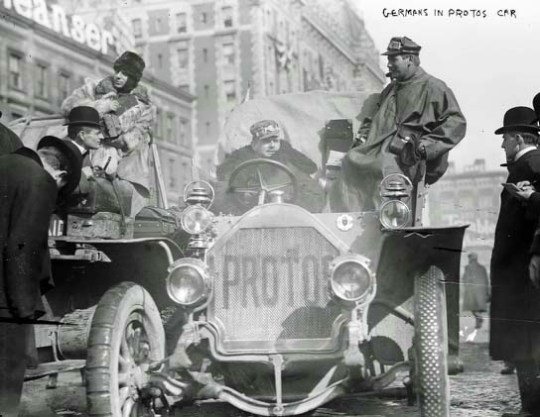
The German Protos with its driver Han Koeppen lined up for the start of the race.
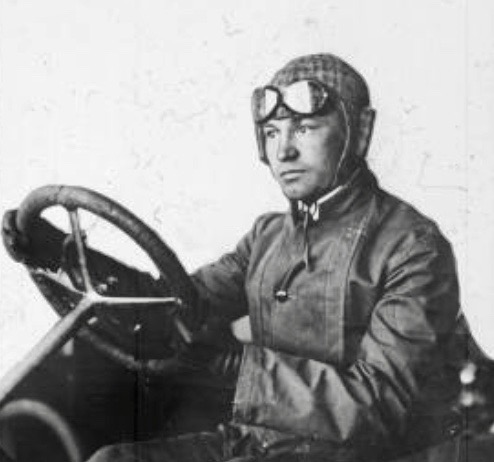
As you might imagine, an international cast of characters and adventurers had assembled to drive and maintain the vehicles. I’ve already introduced Roberts who was in it for the fame. But he was also one of the few Americans who had actually trained for the 13-year-old sport of auto racing. The driver of the French Moto-Bloc, Charles Godard, had participated in the similar but considerably shorter Peking to Paris race the year before. It had been the first time he had ever driven a car. The driver of the German Protos seemed a bit more prosaic to me. Hans Koeppen was an aristocratic lieutenant in the German Army who hoped his participation would bag him a promotion to captain.
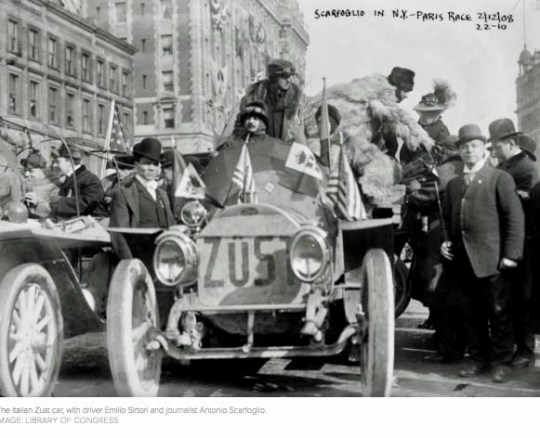
The Zust.
Antonio Scarfoglio, a 21-year-old Italian poet and journalist, was part of the Zust team. His father, a prominent Italian newspaper editor, had refused to let him go until Antonio had threatened to take a motorboat across the Atlantic, a much more dangerous adventure. The driver of the French De Dion, G. Bourcier de St. Chaffray, knew a bit about just how dangerous. He had once organized a motorboat race from Marseille to Algiers where every boat sank. The captain of his team, the Norwegian Hans Hendrick, had been more successful at sea. His claim to fame was having piloted a Viking boat to the North Pole. Solo.
The vehicles were lined up and ready to go!
The drivers were lined up and eager to go at 11:00 AM. George B. McClellan Jr., son of the prominent Civil War general and then mayor of NYC had been given the honor of starting the race. But he was late. The Mayor was rarely on time. At 11:15, Colgate Hoyt, a railroad financier, grabbed the gold-plated gun and shot it into the air. The race was on!
And the racers were off down Broadway!I’ll close with a final photo of the Thomas Flyer on display at the National Automobile Museum in Reno, Nevada.
Peggy and I are wrapping up our travels around the US. This post features the hazards of our road trip and Massacre Rocks State Park along the Oregon Trail in Idaho.
We were greeted by this ferocious beast at Massacre Rocks SP. (Photo by Peggy Mekemson.)
Peggy and I have been on numerous road trips over the years, a quarter of million miles worth according to the odometers on our two small RVs. But nothing can match how strange this summer has been. Let me start by noting our 8,000 mile journey has taken us through 18 states (plus the Navajo Nation) that have had the not-so-coveted designation of being Covid-19 hot spots. I start each morning by feeling my forehead and breathing a sigh of relief when it is cool. If I were you, I wouldn’t come within 600 feet of us. Or 6 miles. Screw the 6-foot rule. When we get home we are going to self-quarantine for 6 months. Or at least 6 days.
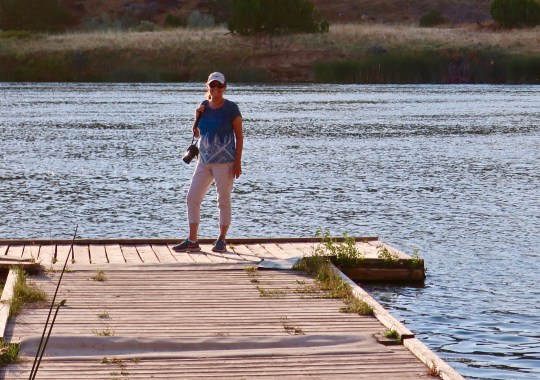
Peggy demonstrates just about the right amount of distance to stay away from us after our journey through 18 states noted for their Covid-19! She is standing out on a floating pier on the Snake River, enjoying the beauty of the area.
There were some potential Covid-19 hotspots we have avoided, however. Peggy and I crossed off South Dakota even though we wanted to visit the Bad Lands and I would have found the motorcycle rally in Sturgis interesting. It’s kind of a Biker’s Burning Man. Hanging out with 250,000 Harley fanatics who were reluctant to wear masks and liked to party in crowded bars didn’t seem particularly wise, however.
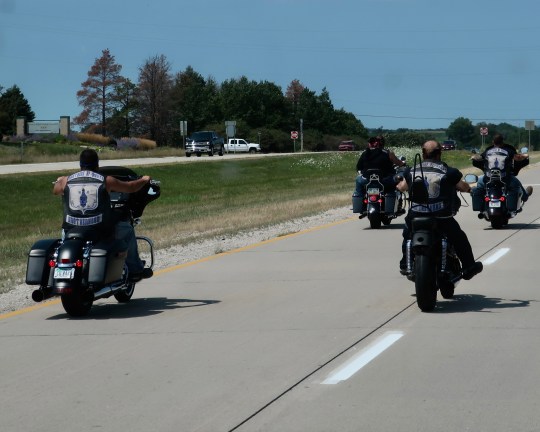
The Brothers of Morte (death), wearing leather jackets with an image of a skull with a candle burning out zoomed around us on their bikes heading for Sturgis. The message somehow seemed appropriate for the huge gathering during a highly contagious pandemic.
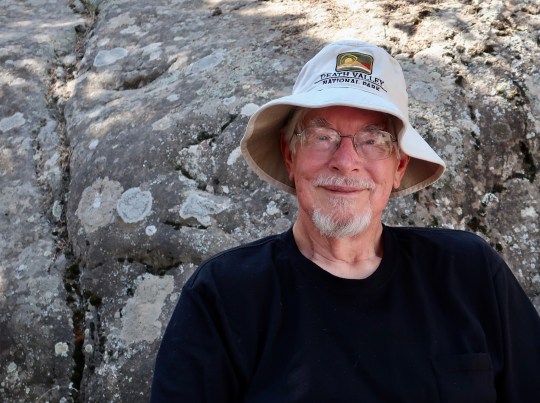
But Covid-19 has been only one of several potential disasters out here on the road this summer. For example, it’s 108° F outside now. That’s miserable, and it can be dangerous. But what if we were in Death Valley? It’s a go-to place for Peggy and me. We’ve been there many times. Earlier this week, it saw a whopping 130 degrees F (54.5 C)! It was the hottest place on earth at the time and was recorded as one of the four top temperatures ever documented. I put on my Death Valley hat in honor of the occasion. Why whine about 108?
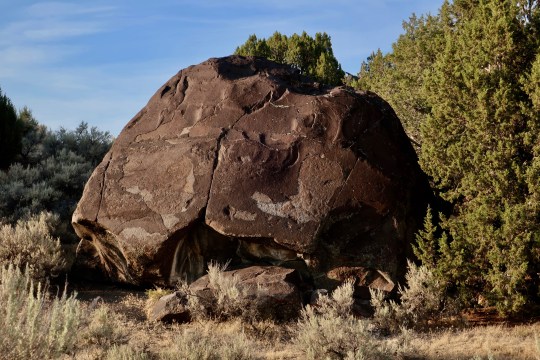
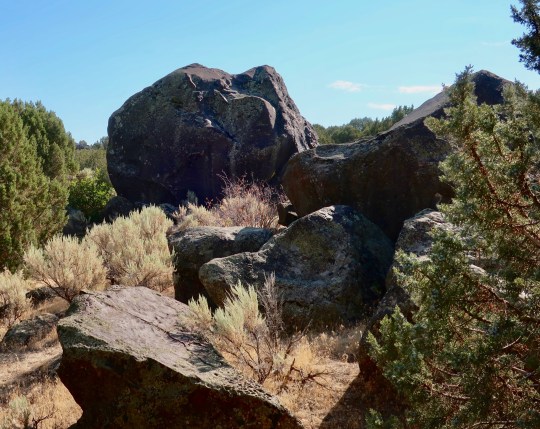
Here I am with my Death Valley hat on in front of a large granite rock that dominated our camp site at Massacre Rocks State Park. (Photo by Peggy Mekemson.)
Lightning storms and forest fires come with the excessive heat and are once again devastating the West. Two years ago I was dodging fires as I backpacked 750 miles down the PCT. They’re back with a vengeance now, roaring through Northern California and causing deadly fire tornadoes. I’m ever so glad I am not out on the trail. Fires are much easier to dodge in Quivera the Van than on foot. And we have air-conditioning.
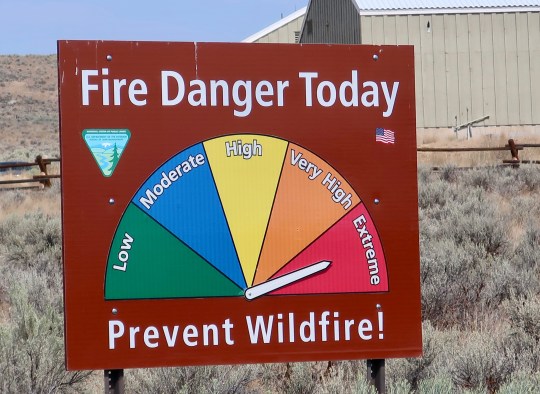
Peggy and I noted this sign as we drove up to the Oregon Trail Interpretive Center in Baker City, Oregon. We spotted a wild grass fire in the distance.
But how about dodging hurricanes? In mid-July, our kids rented a lovely house on the Outer Banks of North Carolina to celebrate Peggy’s 70th Birthday. It was the primary reason for our road trip and a fun way to bring our families together and make up for the family trip on the Rhine River Peggy had planned. Europe won’t let us near the continent.
Our grandkids were a little surprised, however, to see their 77 year old grandfather and 70 year old grandmother risking their necks out body surfing and riding boogie boards with them. “Older” people aren’t supposed to behave that way. It was the crowded beach that worried me, however. That and the dark clouds that hung on the horizon. A week later the Outer Banks had to be evacuated due to the threat from Hurricane Isaias. We dodged the bullet by a week.
The waves were fun and the beach was gorgeous on the Outer Banks but the crowds with their potential coronavirus and the dark clouds with their threat of severe weather were worrisome.
That was minor in comparison to the derecho that roared across Iowa. On August 8th, Peggy and I had driven across the state, laughing about how corn was the scenery. I’d stopped taking photos after 20 pictures. We were camping just across the border that night when a thunderstorm came through that rocked our van and lit up the night sky. We thought of it as entertainment without a clue about the massive storm that was brewing. When we pulled out in the morning, clear skies graced our road west. On the 10th, we were at Buffalo Bill’s Ranch enjoying a beautiful day on the North Platte when the derecho ripped across Iowa and wiped out 40% of the state’s corn crop.
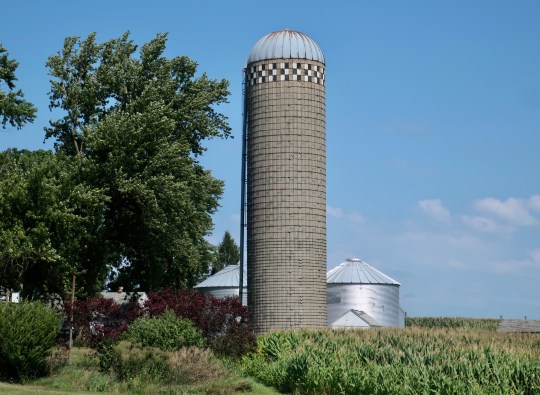
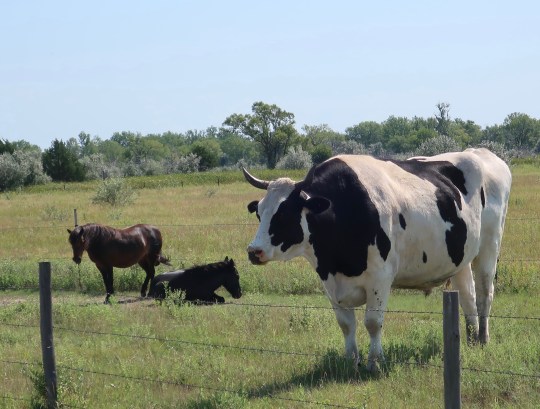
I took this peaceful photo featuring a silo and corn two days before the derecho had devastated 40% of Iowa’s corn crop.We were unaware of the derecho in Iowa as we wiled away the day at the Buffalo Bill Ranch on the North Platte River. Our only worry was the big bull nearby. (The horses were miniatures but the bull was still the biggest one I have ever seen!)
While dodging all of these potentials disasters, why visit a place known as Massacre Rocks? The answer is simple. How could we not? Peggy and I had been following the Oregon Trail since we left Nebraska and Massacre Rocks State Park on the Snake River in Idaho is a noted location along the way. As the name suggest, it is symbolic of one of the challenges faced by the pioneers, attacks by hostile natives. I suspect we would be hostile too if a stranger rode into town and wanted to steal our property.
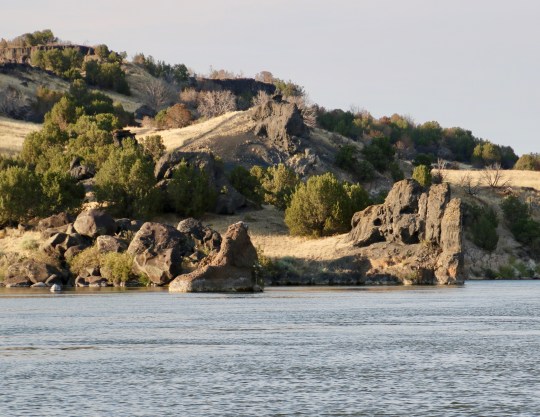
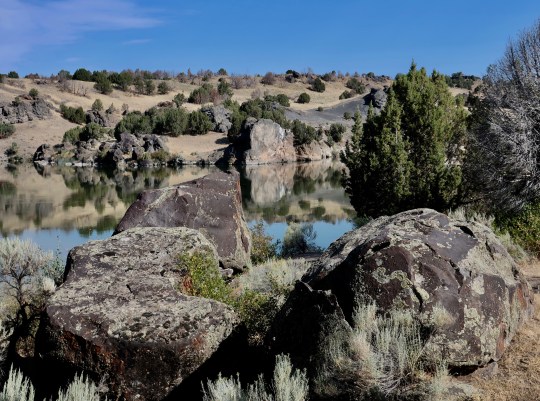
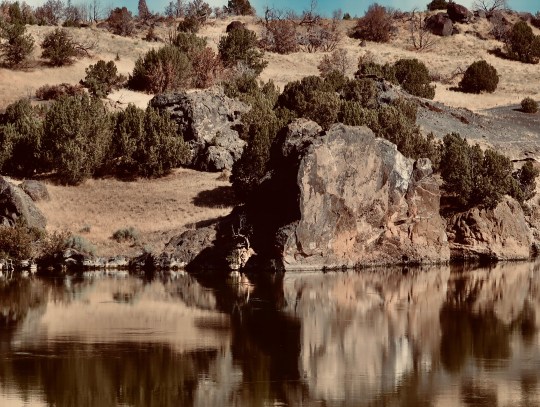
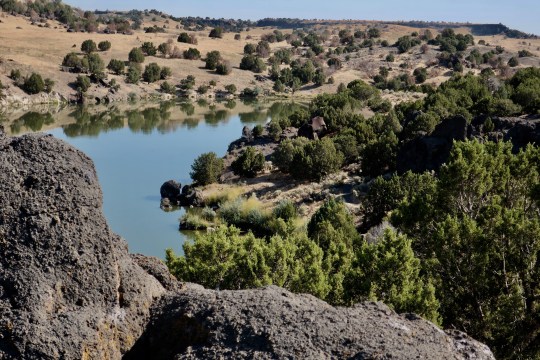
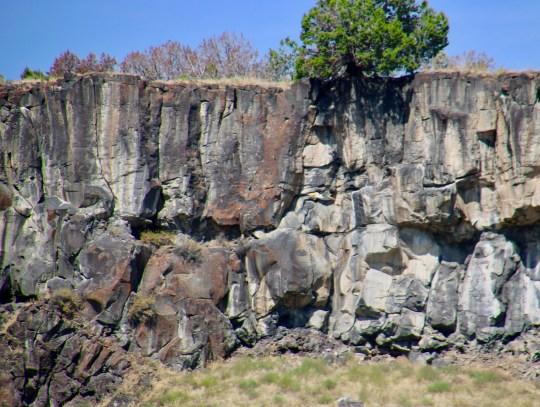
The name is something of a misnomer, since the attacks on wagon trains took place a few miles away. The pioneers were not happy with all of the large rocks in the area, however. They provided an ideal place to organize and ambush or to shoot arrows from behind. Peggy and I, on the other hand, were not worried about anyone shooting arrows at us and found the rocks and the river quite beautiful. I think you will agree…
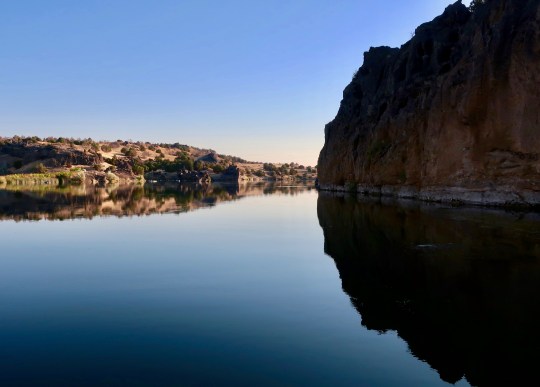
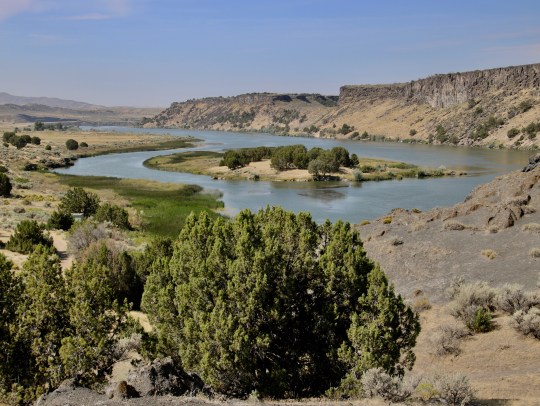
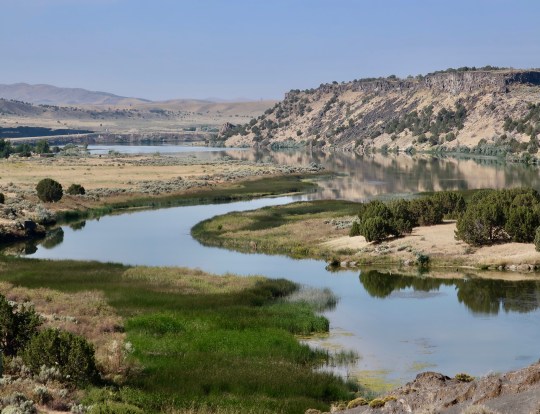
Peggy and I pulled into the park and checked out the river. We met the cottontail featured above and hiked out onto the small pier. These gorgeous cliffs were along the way.Peggy captured this photo of the cliff as we walked down and the following three photos from the pier.A different look at the cliff. (Photo by Peggy Mekemson.)Looking down the river from the pier. (Photo by Peggy Mekemson.)A view across the river. (Photo by Peggy Mekemson.)
While Peggy stayed in camp captured by a book she was reading, I went for a hike the next morning. Following are several photos I took.
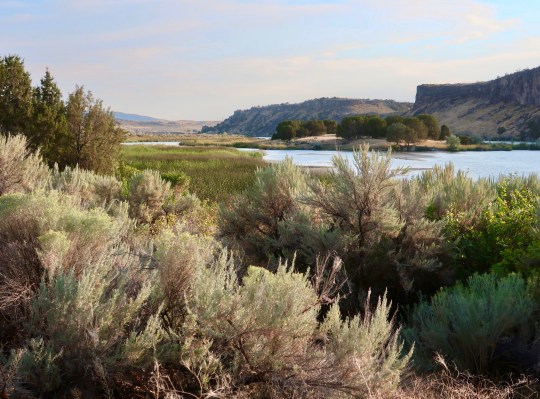
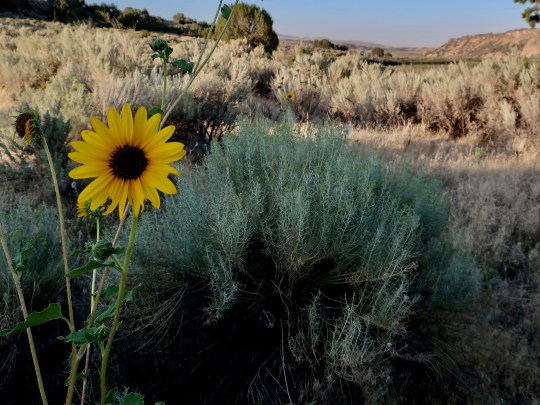
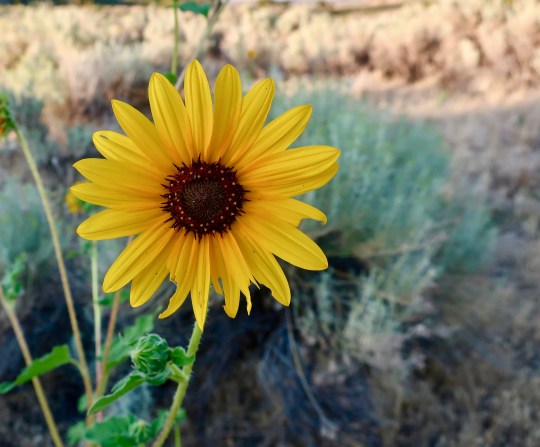
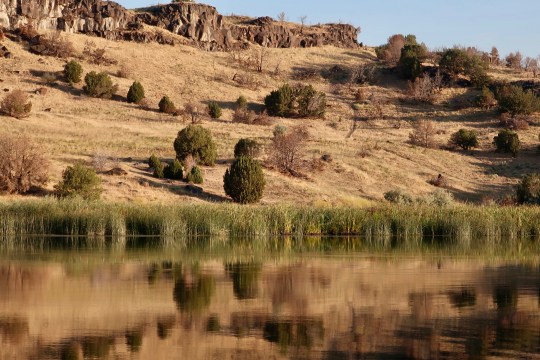
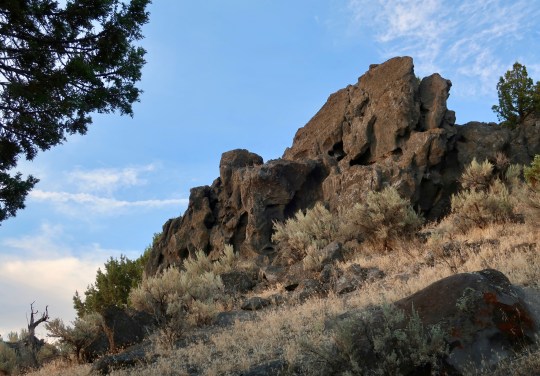
Early morning view from the floating pier.Downriver view across a field of sage. And another view featuring silver sage.Like sage, telegraph weeds and their bright flowers are a common plant of the West.This member of the sunflower family got its name because it grew in abundance along the disturbed ground created by building the first telegraph lines across America.I was treated to a different view hiking up the river. Cattail reflections seemed impressionistic.True to its name, the park was filled with impressive rocks.I took advantage of Apple Photo to create this old-fashioned look.Another upriver view.A number of impressive rocks were also found away from the river.
That evening Peggy joined me as I repeated the walk I had done in the morning.
Peggy caught this interesting view of one of two islands in river at the park.I took a side view that emphasized the cattails.A cap rock made of lava dominated the heights on the opposite side of the river.A close up. (Photo by Peggy Mekemson.)The setting sun bathed the Snake River in light…And, for my final photo, provided a soft look for the opposite side of the river.
NEXT POST: The Great 1908 Auto Race from New York to Paris.













































 Wandering through Time and Place