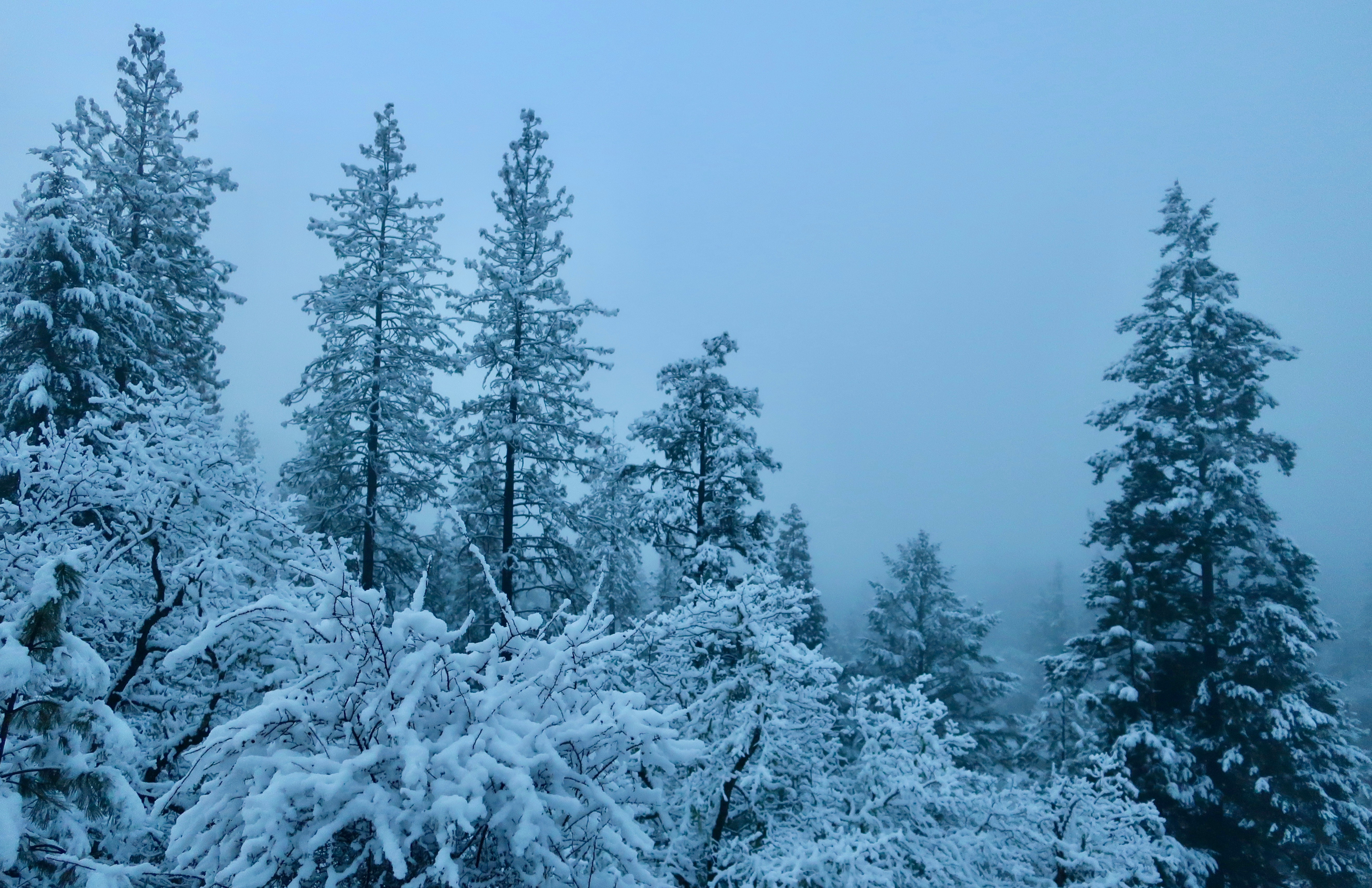
We woke up this morning to this view out our window. Our White Christmas had arrived. Peggy and I decided we had to share it with you. Hope this day finds you, your family and friends having a Happy Holiday. Curt and Peggy
We woke up this morning to this view out our window. Our White Christmas had arrived. Peggy and I decided we had to share it with you. Hope this day finds you, your family and friends having a Happy Holiday. Curt and Peggy
With Christmas a mere three days away, it’s time for my annual Christmas post. (Shamelessly borrowed from the weird Christmas cards and letters I create for family and friends— plus past posts.)
Have you heard? There are some glitches in the Christmas present supply chain this year!
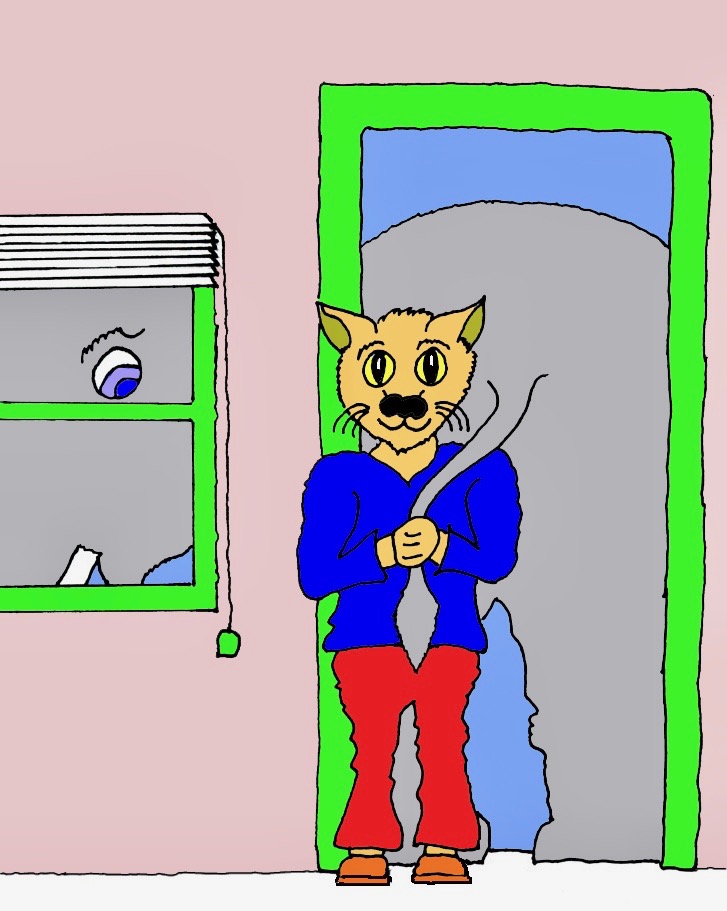
They started with us. Our kids are coming to join us for the holidays, which means we have been pressed for time. We decided to send Old Tom the Cat out to buy presents. What could possibly go wrong?
Meanwhile, more serious trouble is brewing at the North Pole. Blitzen was plying his red-nosed friend with eggnog and rum to make his red nose shine brighter when suddenly Rudolph had a coughing fit. Blitzen leapt six-feet away, donned his face mask and whipped out his vaccination card, waving it around like people use crosses to scare away vampires. (Does that work?) Millions of children were depending on his flying companions and him to deliver Santa and his bag of gifts to their roofs. This was no time for risks!
Santa was even more worried. He might lose his guide. The last time that happened on a foggy night, he had depended on GPS and ended up on Mars. He decided on a back-up plan…
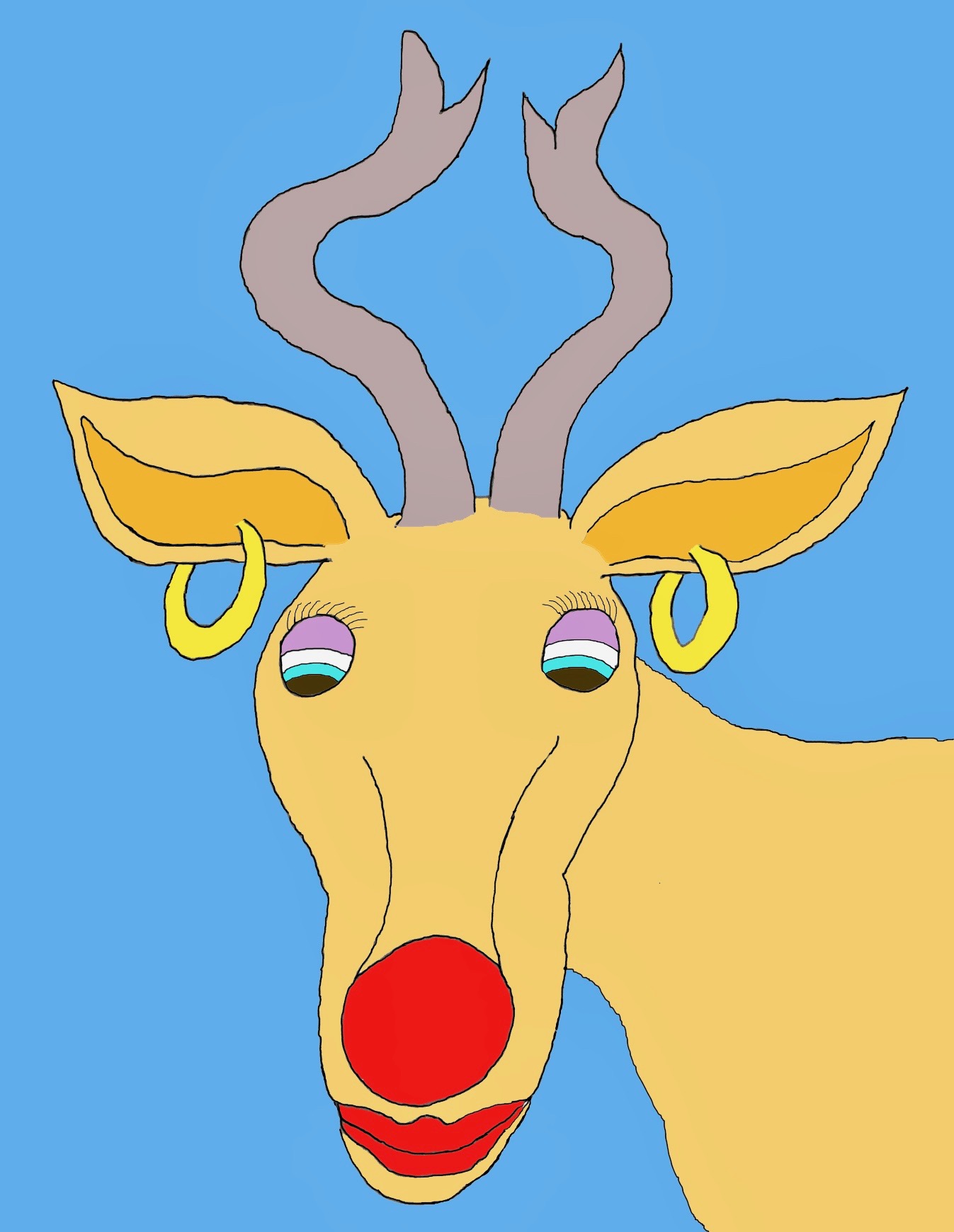
Even that didn’t resolve Santa’s concerns. Rudette and Rudolph are quite close. They even share the same stall and who knows what else. When one gets sick; the other is likely to as well. Santa decided to be 100% safe. He would recruit a back up to the back up. He searched the Northlands far and wide for someone to guide his sleigh. And got lucky…
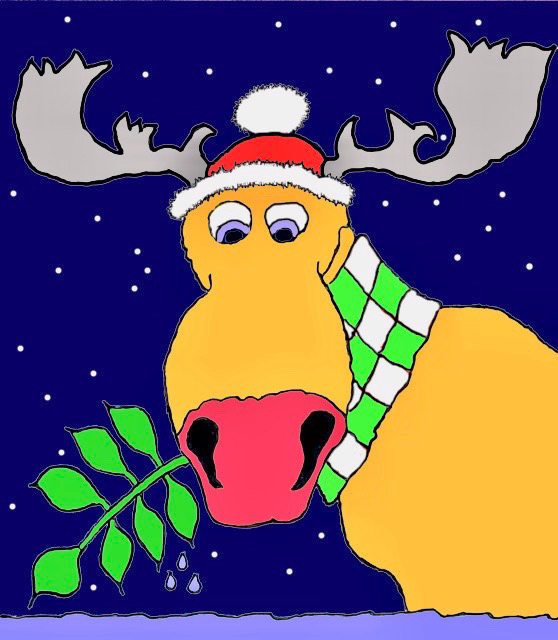
So rest assured kids, Santa and his eight reindeer plus someone with a shiny nose will deliver your presents this year. In Santa’s immortal words:
HO! HO! HO!
Oh yeah, and Merry Christmas to All and to All a Good Night… Plus a Happy and Healthy 2022!
CURT and PEGGY

Peggy and I had decided to revisit an old favorite of ours, the Palomarin Trail that enters Pt. Reyes National Seashore from the south. We had driven down to Bolinas and were on our way out the narrow, pothole-filled road that leads to the trailhead when we saw a series of poles, lined up like they were standing at attention in ranks. I knew immediately what they were.

In 1914, decades before the likes of Elon Musk and his techie cohorts started working on worldwide wireless technology, Guglielmo Marconi, the inventor of the wireless radio, had built a huge, wireless radio station near Bolinas to send Morse Code messages flying across the Pacific Ocean, setting up the first-ever communication system between ships at sea and land. A small parking lot was connected to a walking trail that wound its way past the historic poles and toward the ocean. We were easily diverted from our original intent of hiking the Palomarin Trail.
The pole-filled field was doing double-duty as a cow pasture and a herd of cattle insisted on checking us out— up close and personal. It was lunch time and they may have thought we were sneaking alfalfa past them. The Morse Code in the title, BTW, spells C -.-. O —, W .–, in case you were wondering. And boy, that takes me back to my Boy Scout days in the 50s when memorizing Morse Code was essential to working your way up through the ranks.
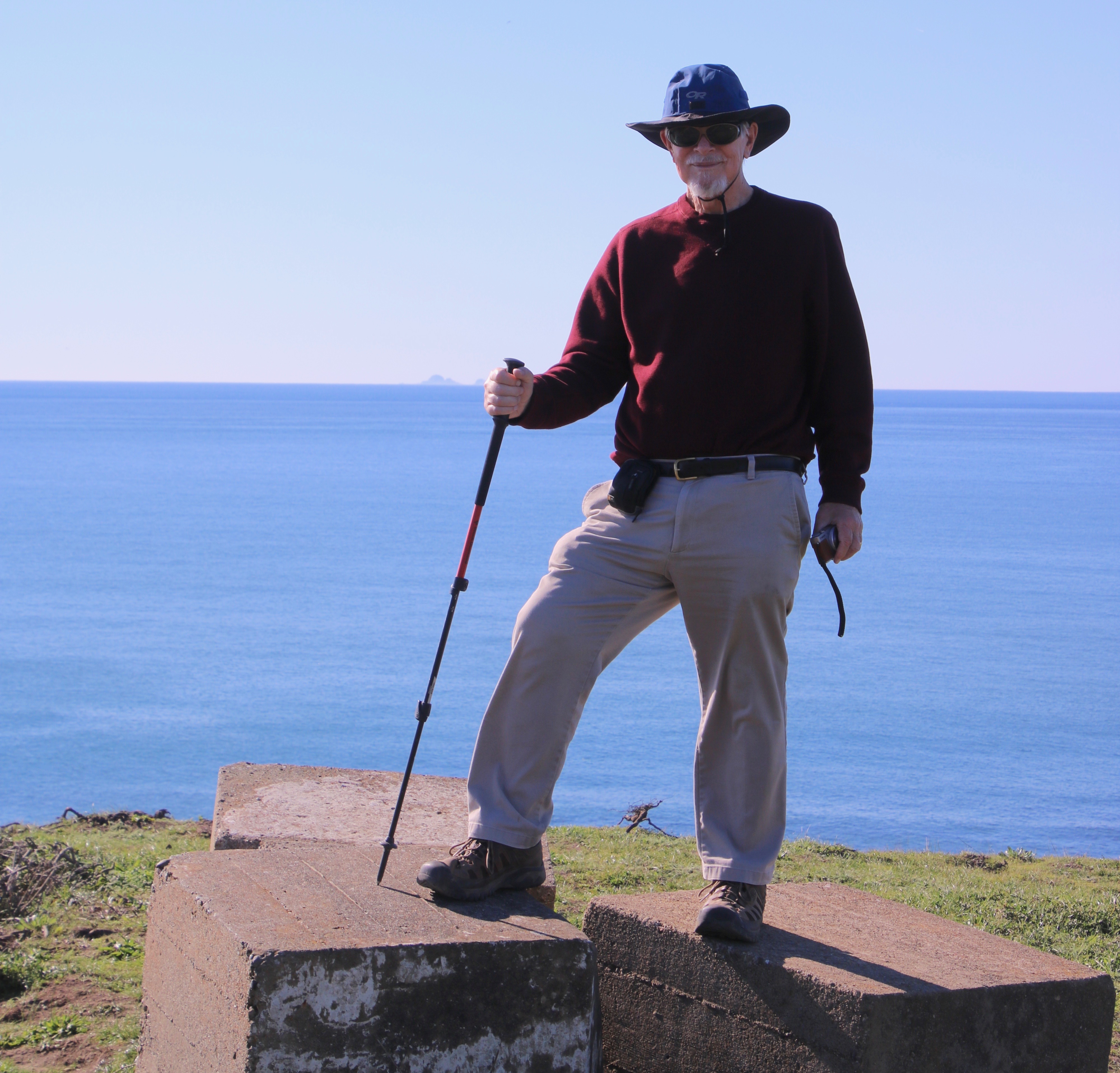
We checked out the poles, talked with the cattle, and had a pleasant walk out to the coast with both Peggy and me taking photos.


Afterwards, we stopped off in Bolinas for lunch. It’s another favorite coastal town of mine. One reason is the fact that the locals refuse to have signs leading into the town from Highway 1 for tourists to follow. Whenever Cal Trans puts one up, it’s torn down. I think that Cal Trans has finally given up. At least I didn’t see any signs. It has always been a fun, quirky town with its own unique cast of characters. Last time when Peggy and I visited with our friends Ken and Leslie Lake, we came on a bookstore without staff. A sign said “Take any book you want and leave whatever you think the book is worth to you in the cash box.” It was a very Bolinas type of thing.
While I’m on Bolinas stories, I’ll mention that it was also the site of my first ‘Hippie’ experience. I’d stopped in the town in 1968/69 and decided to do a little sunbathing on its infamous nude beach, which I had read about in the San Francisco Chronicle. It was a time before Google listed “The Best Nude Beaches in Marin County,” a time when the Protestant ethic still reigned supreme among America’s middle class. I confess I was a little nervous about getting naked, but it was the sunburn that left a lasting memory!

Having featured cattle today, it is only right that I should feature a horse as well. It’s a requirement of the Old West. The day after our Bolinas walk found Peggy and I hoofing it along the Bear Valley Trail. It connects the Visitor’s Center with the ocean in an 8-mile round trip. We were feeling our oats, so to speak, when we came across a pair of real hoofers, i.e. horses. A woman was walking one and stopped to chat. As it turns out the horses were part of ‘San Francisco’s Finest.’ It was a police horse, a proud member of the mounted patrol that can often be found patrolling Golden Gate Park. They’ve been at it continuously since 1864. The horses were out for a play day on the Bear Valley Trail.
Peggy, who likes horses, insisted on snuggling up to it and I dutifully snapped a photo on our iPhone. I, on the other hand, am not a horse person. It isn’t their size, their looks, or their personality, all of which I find pleasing. It’s their smell, and the fact that they often leave prodigious piles of poop along hiking trails. Have you ever seen a sign that says “Clean up after your horse?” I’m not sure what it is about their smell, but it clings to you. I wonder if cowgirls and cowboys think of it as perfume?

That does it for today. I’ll wrap up our recent visit to Pt. Reyes in my next post. Then it will be off to Fort Bragg and Mendocino.

I was wrapping up my day at the Lung Association in Sacramento when the building started moving shortly after 5 p.m. on October 17th, 1989. Peggy and I were at the very beginning of our relationship. You might say, it was off to a shaky start. “Is this the big one?” leapt into my mind as I ran outside. But buildings weren’t falling or people screaming. “Not this time,” we thought, relieved.
Had you been one of 62,000 baseball fans crammed into Candlestick Park for the World Series, or worse, commuting home from work in the Bay Area, your perspective would have been substantially different. A major 6.9 earthquake had ripped into the Santa Cruz Mountains along the San Andreas Fault south of the stadium. Nearby freeways collapsed including a section of the Bay Bridge, numerous buildings were destroyed or damaged, 63 people were killed and 3,757 injured by what became known as the Loma Prieta Earthquake.

Eighty-three years before the Loma Prieta earthquake, an even greater one shook the Bay Area. Blame plate tectonics. The San Andreas Fault, marks a distinct boundary as the Pacific Plate grinds its way north past the North American Plate, building pressure until an earthquake erupts. At 7.9 on the Richter Scale, the energy released from the 1906 San Francisco Earthquake equaled blowing up an estimated 6,270,000 tons of TNT!
Earthquake Trail, found next to the Visitors’ Center at Pt. Reyes National Seashore, commemorates the event. Peggy and I were there last week and went for a walk along the trail. Like San Francisco, Pt. Reyes felt the full fury of the earthquake as portions of the land moved north as much as 20 feet.

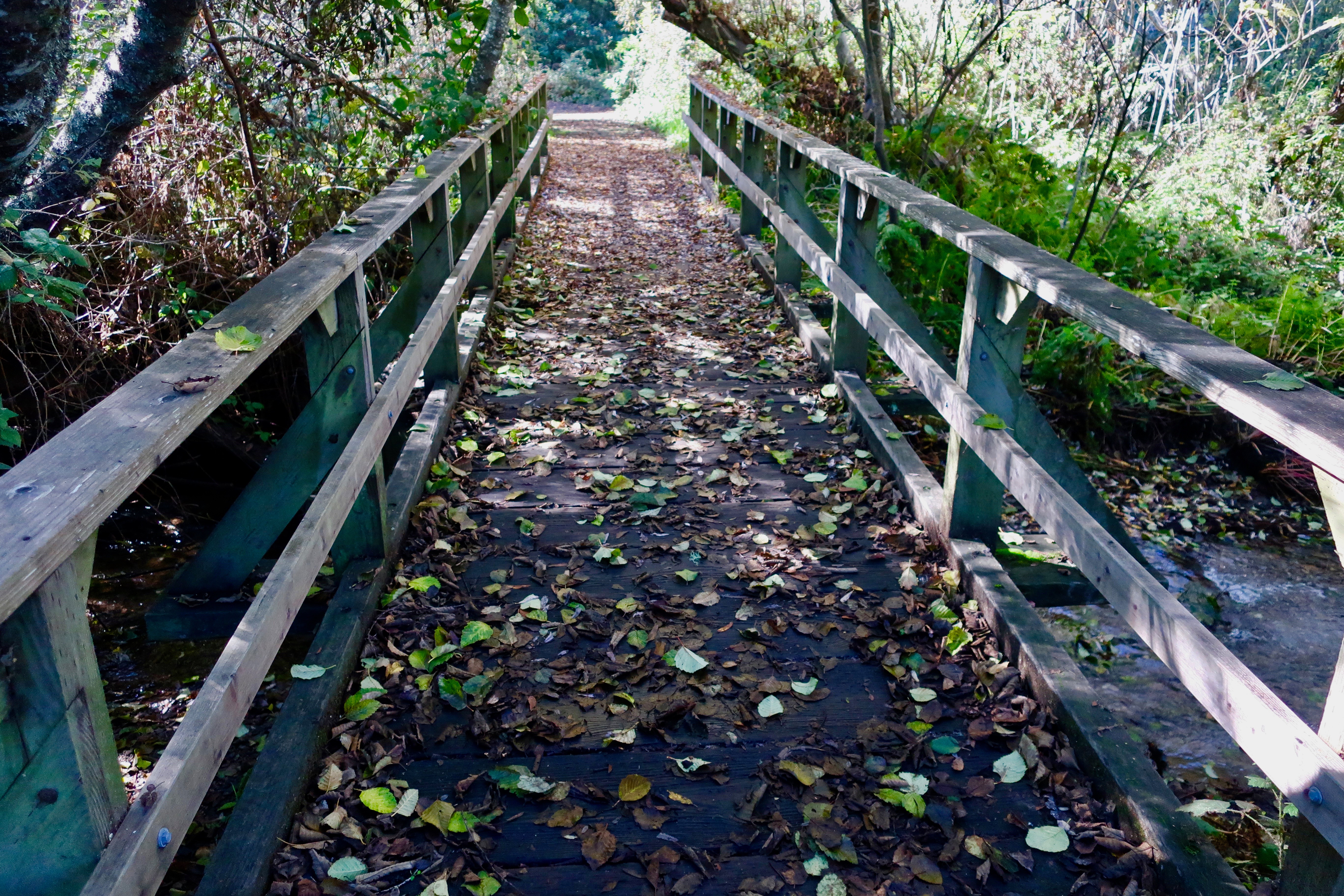
The trail is easy to hike and is well marked with information signs. Its bucolic, serene beauty makes the damage done by the 1906 earthquake hard to imagine, however.



NEXT POST: More photos from around Pt. Reyes National Seashore and our maiden three week voyage with Iorek the Truck and Serafina the trailer.
I’ve been tardy in the world of blogging lately. My apologies. Other things have demanded my attention: Important things like learning to back up a trailer (a work in progress), or make the trailer’s hotspot work so we can have decent internet, or figure out what the hundreds of buttons (a slight exaggeration) in our new Ford 150 do. And a gazillion other things. Like the naming of the trailer…
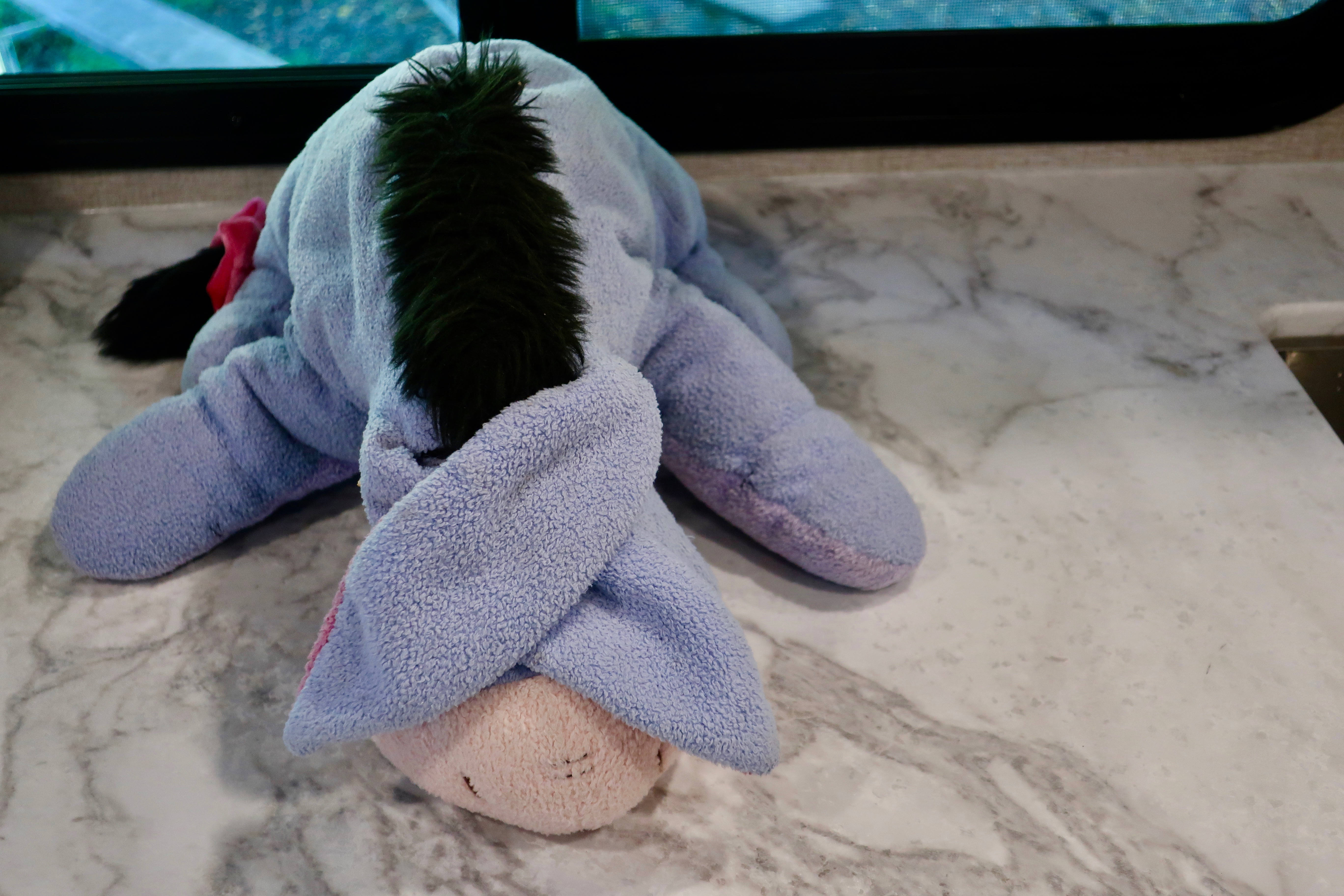
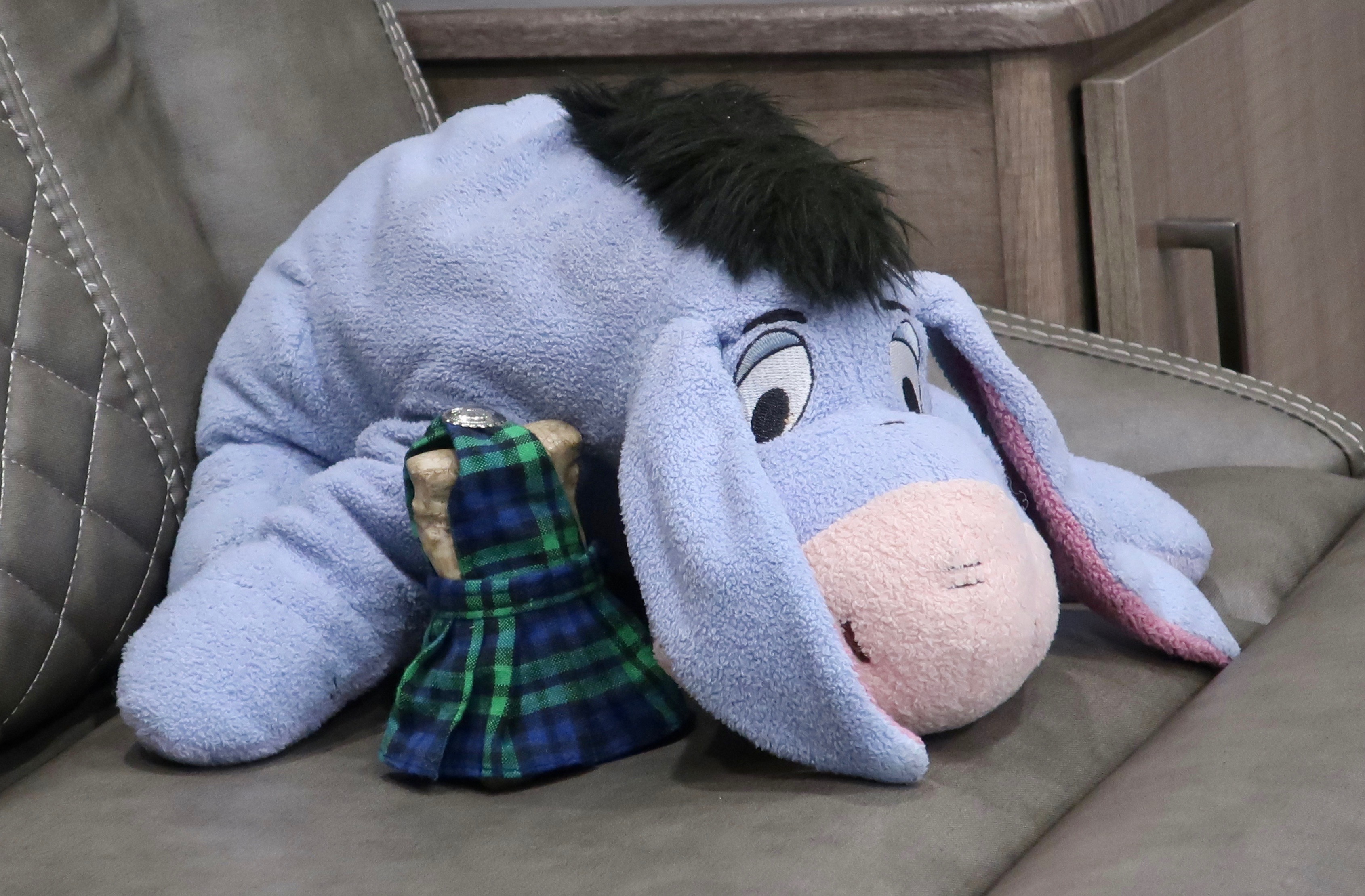
Names are important, right? They provide recognition. Everyone, or just about everyone, recognizes Eeyore, for example. And if you read this blog, the odds are, you know Bone. But did you know Bone and Eeyore are the best of buddies? They’ve been traveling with us together for over a quarter of million miles on North America’s highways and byways over the past 20 years. They became good friends when Eeyore saved Bone from hanging in Tucson. He’d robbed a bank, cheated at cards and hung out with ladies of the night.
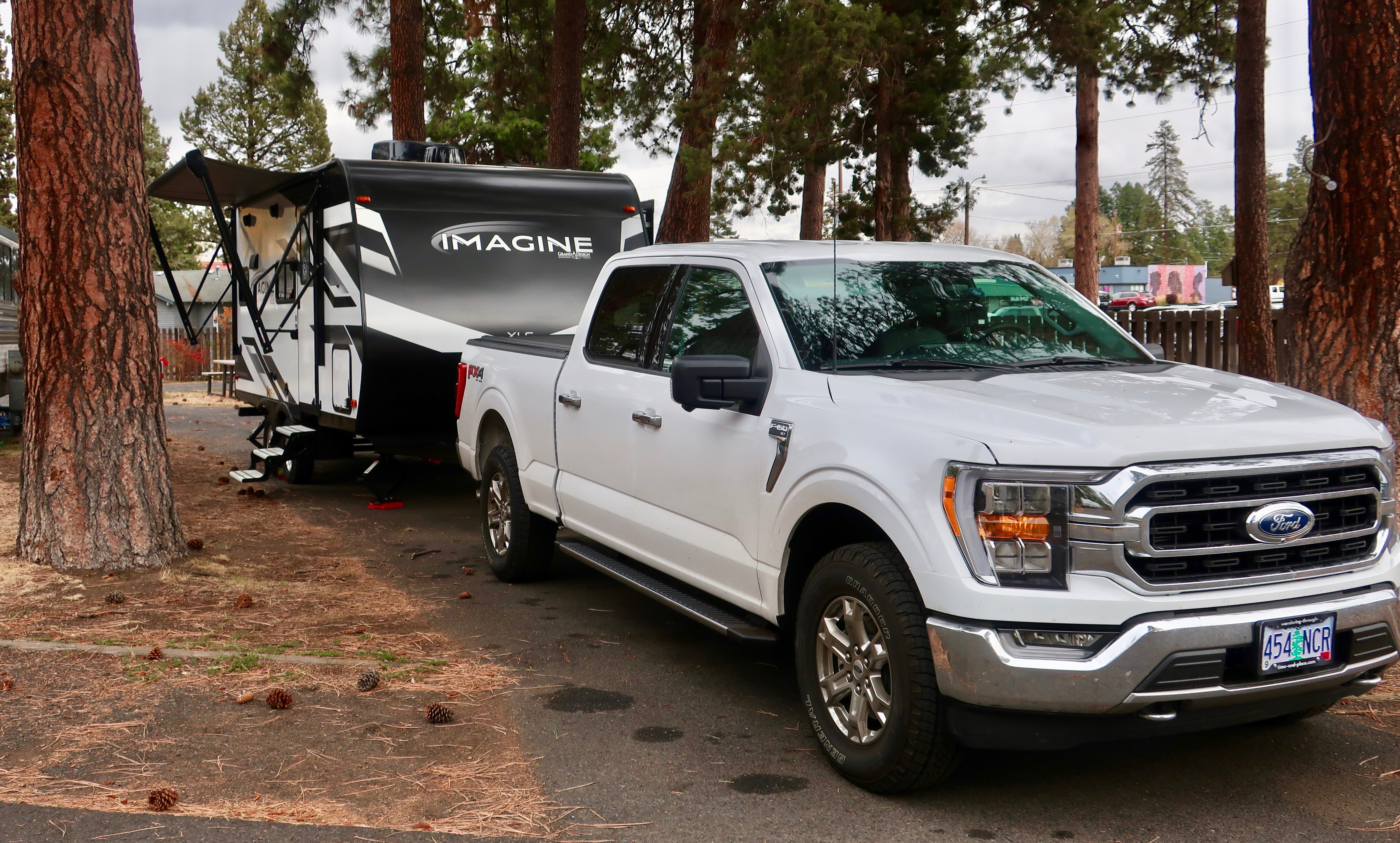
Naming characters like Eeyore and Bone is natural, but how many of you also name your vehicles? We always have and recently we were faced with the challenge of naming two: our new Ford 150 pickup and our new Imagine trailer. The truck was easy. It is big, strong, and white like a polar bear. Iorek (pronounced Yorek), a king of the polar bears in The Golden Compass, immediately popped into our minds.

The trailer has proven to be more difficult. We wanted something that suggested wandering. After all, this blog’s title is Wandering Through Time and Place. My Pacific Crest Trail backpacking name was Wanderer. One thing was clear. The name for the trailer had to represent a strong, independent female personality who loves roaming to provide a fitting partner for Iorek. The two of them are hitched.
Peggy suggested that maybe we should just go with Wanderer. But we wanted something more exotic. Remember, our first travel van was named Xanadu after the ancient summer capital of Kublai Khan. The second was Quivera, in honor of a mythical Native American city of gold that the Spanish Conquistadors could never find because it moved around— a lot, apparently.
“Go for a character out of Greek (or Roman) mythology,” our son Tony urged. And certainly there were strong Roman/Greek goddesses who wandered. Think of Diana, the Roman Goddess of the Hunt (Artemis in Greek Mythology), who spent a lot of time traipsing around in the woods. Like Peggy. My kind of woman. Or Persephone, who split her time between Hades and the outer world, creating the seasons as she moved. Then there was Medusa. But her nasty habit of turning people to stone disqualified her. She was a sweetheart in comparison to Pandora, however, who opened her box and set free all of the horrors of the world. What are a few stoned people in comparison to that? The treasure trove of Greek and Roman mythology encouraged me to check out mythological figures in other cultures. I found a number of promising leads but none quite clicked with us.
We were also open to historical figures. A ‘legendary but possibly historical character’ out of Ireland’s ancient history caught my attention. Muirisc was given land by her father, the 66th high king of Ireland, between 300 and 200 BCE, in what is now County Mayo. According to Wikipedia, “She was known as a sea captain and a warrior who ‘ruled o’er hardy sailors and great men’ and was famed as much for being ‘daring’ and ‘bold’ as she was for her beauty.”
A wandering sea captain queen famed for her beauty, daring, and boldness— How could Iorek help but be charmed? But I don’t think “being ruled o’er’ was part of his agenda. (I’ve never been much on that, myself.) And he had someone in mind. “Serafina” we heard him whisper. She too was a queen, the queen of a clan of witches that live around Lake Enara in Finland. Like Iorek, she knows about extreme cold weather, and also like him, is a character in the Golden Compass. Both shared responsibility for helping and protecting young Lyra in her battles against totalitarian evil. They were a team.
It was hard to argue against Iorek’s logic. He’s the one, after all, who has to pull her along the highways and byways of North America. Plus, I like the way her name rolls off the tongue: srr-aa-FEE-na. And maybe, just maybe, she will jump on her broom and park herself in campground spots that are particularly tight!

It’s not hard for Peggy and me to imagine a life of wandering. After all, we full-timed it for four years in our two Pleasure Way vans, Xanadu and Quivera. The first time we took a year off from work and travelled in Xanadu. The second time, we celebrated Peggy’s retirement with three years of exploring North America in Quivera. We are veterans of the open road, you might say, with a quarter of million miles crisscrossing the continent behind us.
But wandering with a trailer is a totally different kettle of fish, a virgin experience as our friend Leslie Lake would say. She also likes to note that virgin experiences are few and far between at our age and should be treasured.
I tend to agree but had serious second thoughts when Peggy and I mistakenly turned into a tiny parking lot yesterday and had to turn the trailer around while dodging parked cars. It quickly ramped up from virgin experience to Halloween nightmare. “Turn the other way!” my faithful traveling companion yelled at me from safely outside the truck as I was backing up. “No, the other way!” she yelled. Hmmm. After two or three times of that, pardon my French, I was beginning to wonder how many frigging ways a trailer can turn. And yes, I am well aware that the truck goes one direction and the trailer the other when you are backing up.
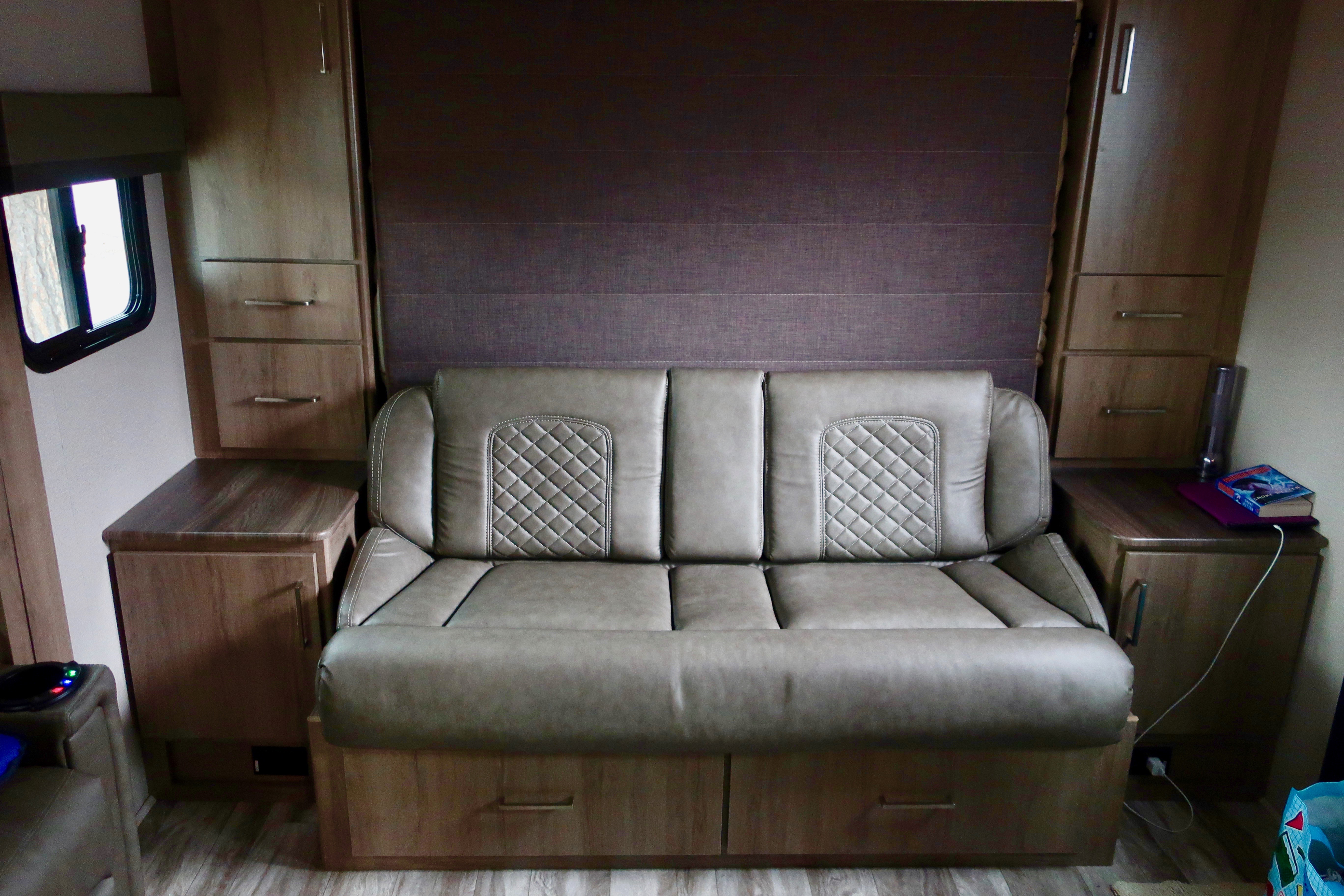
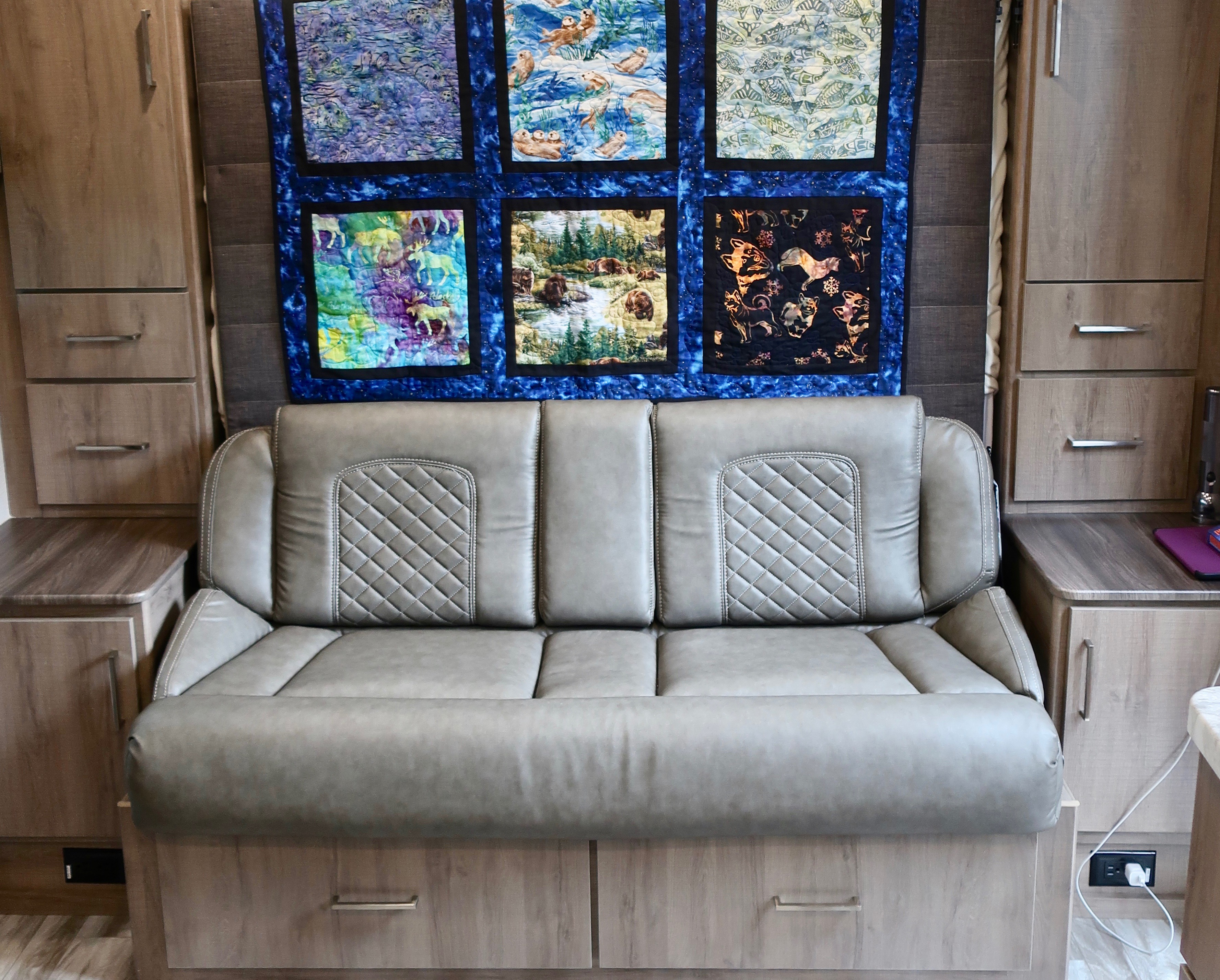
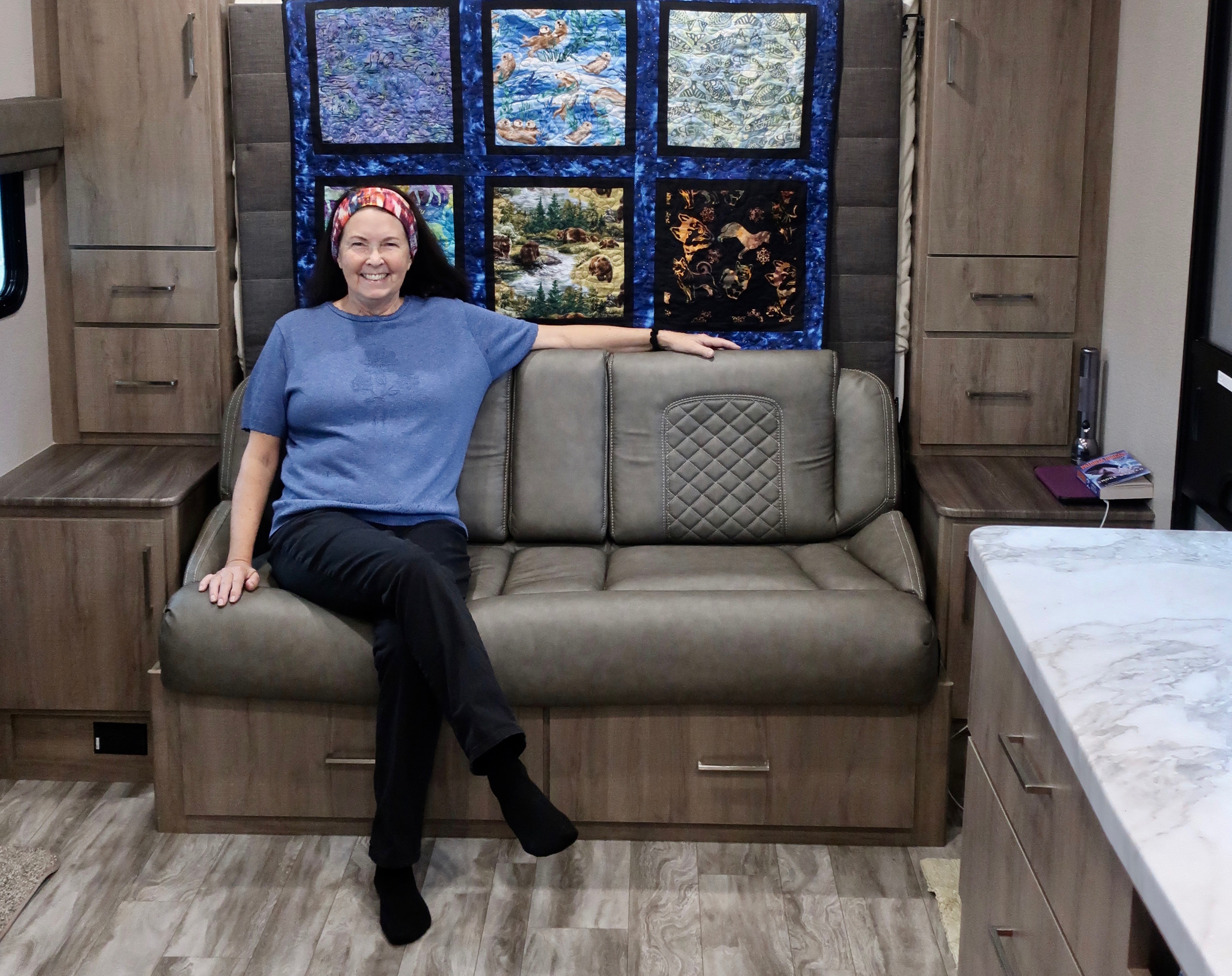
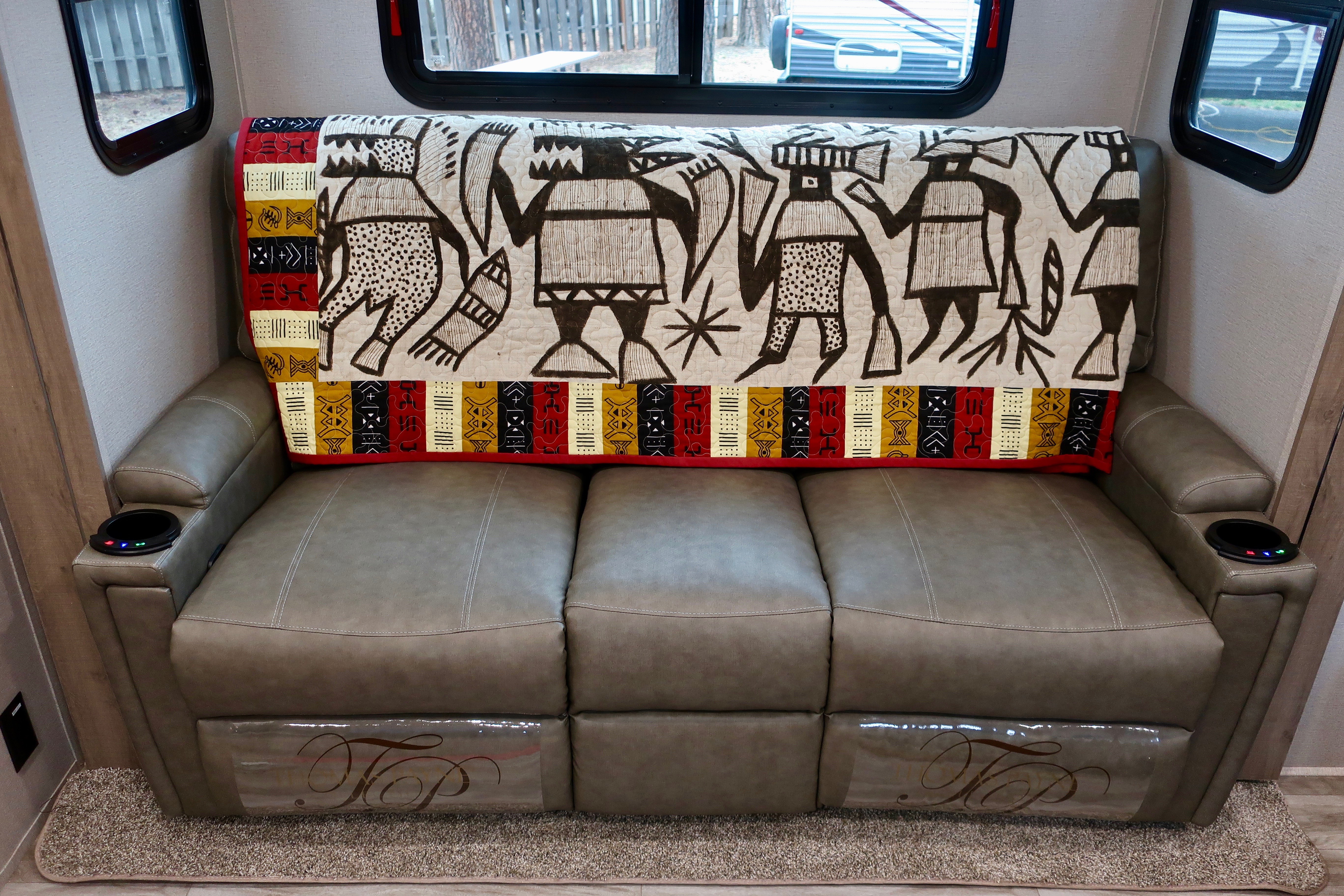
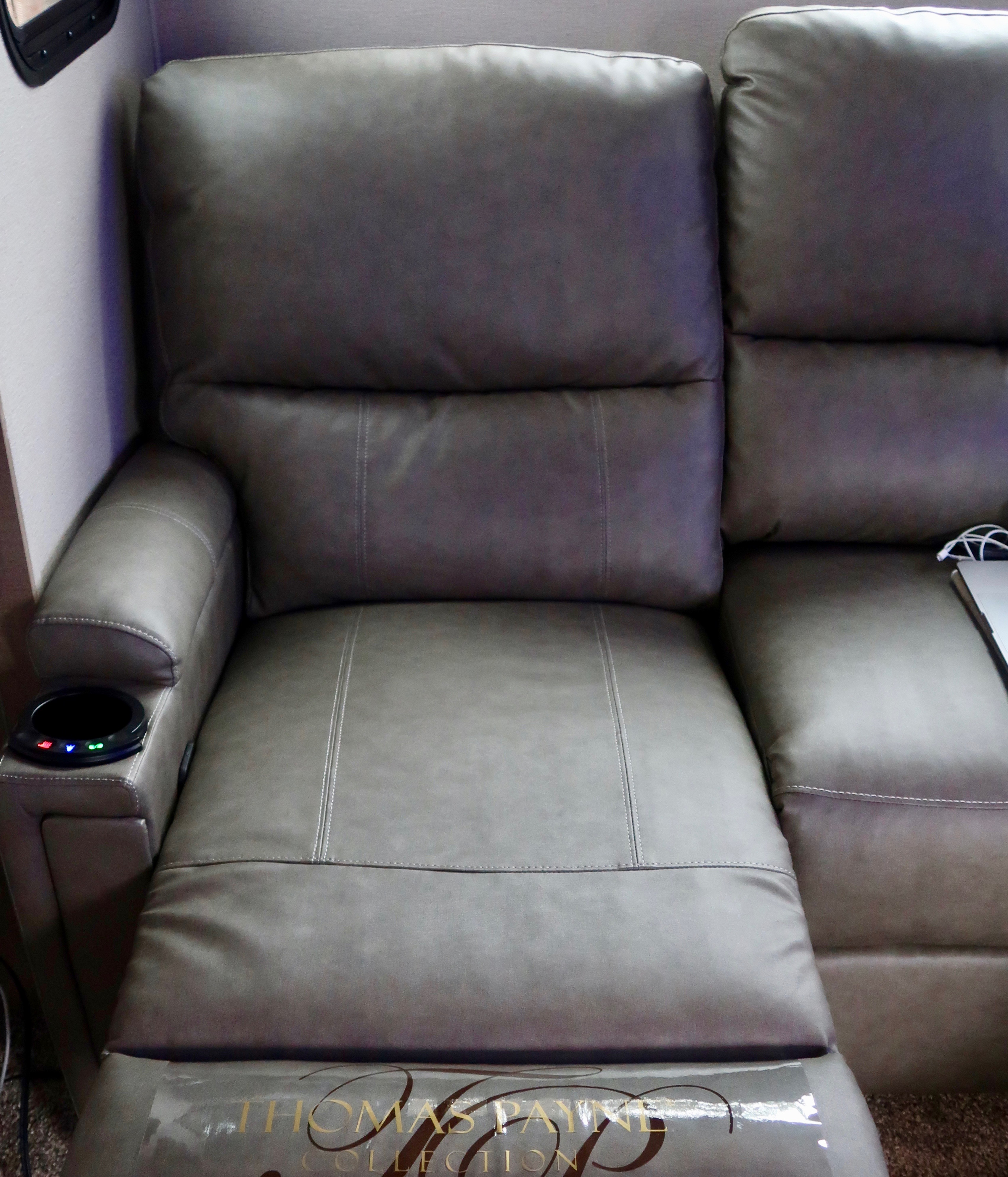
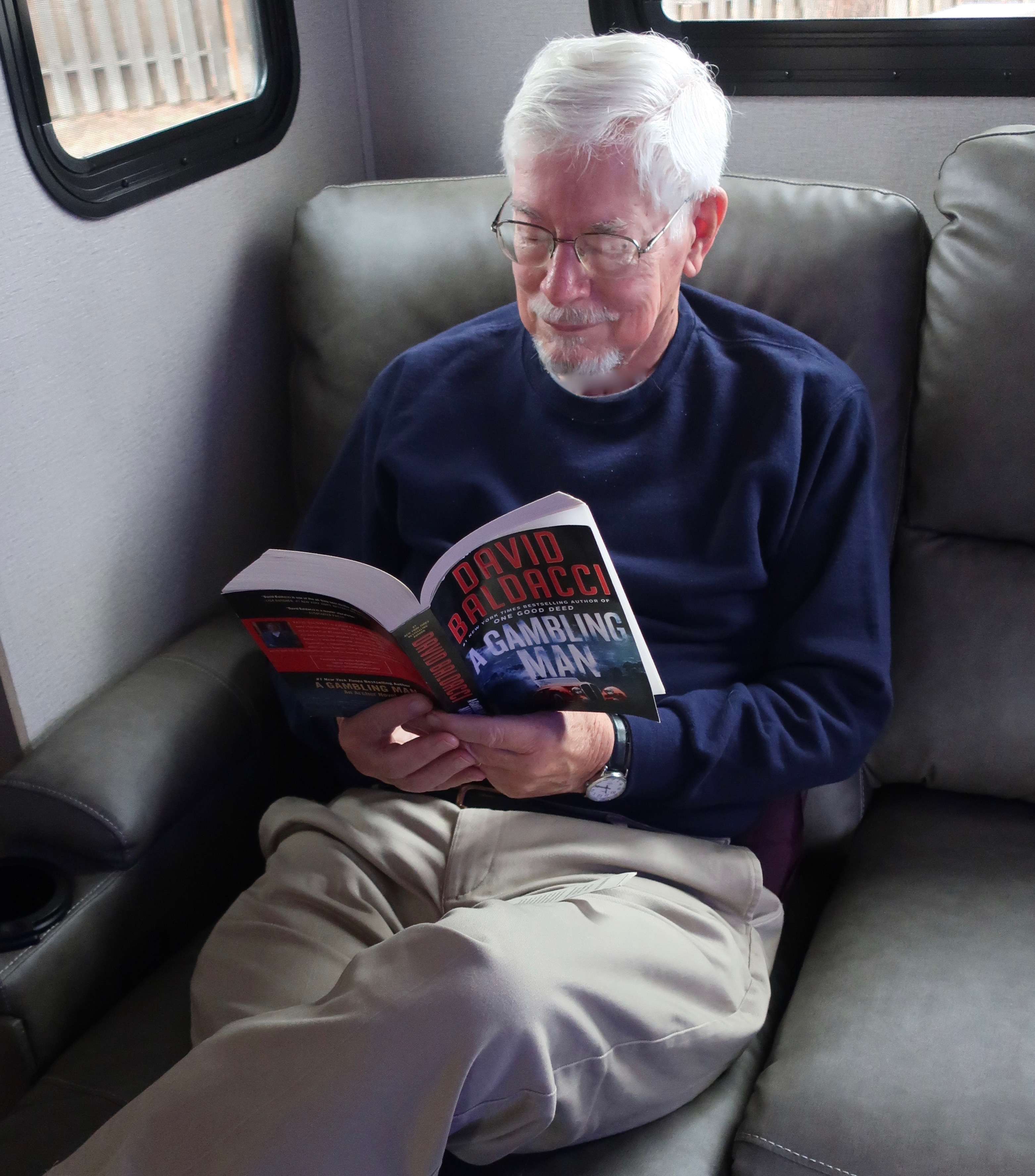
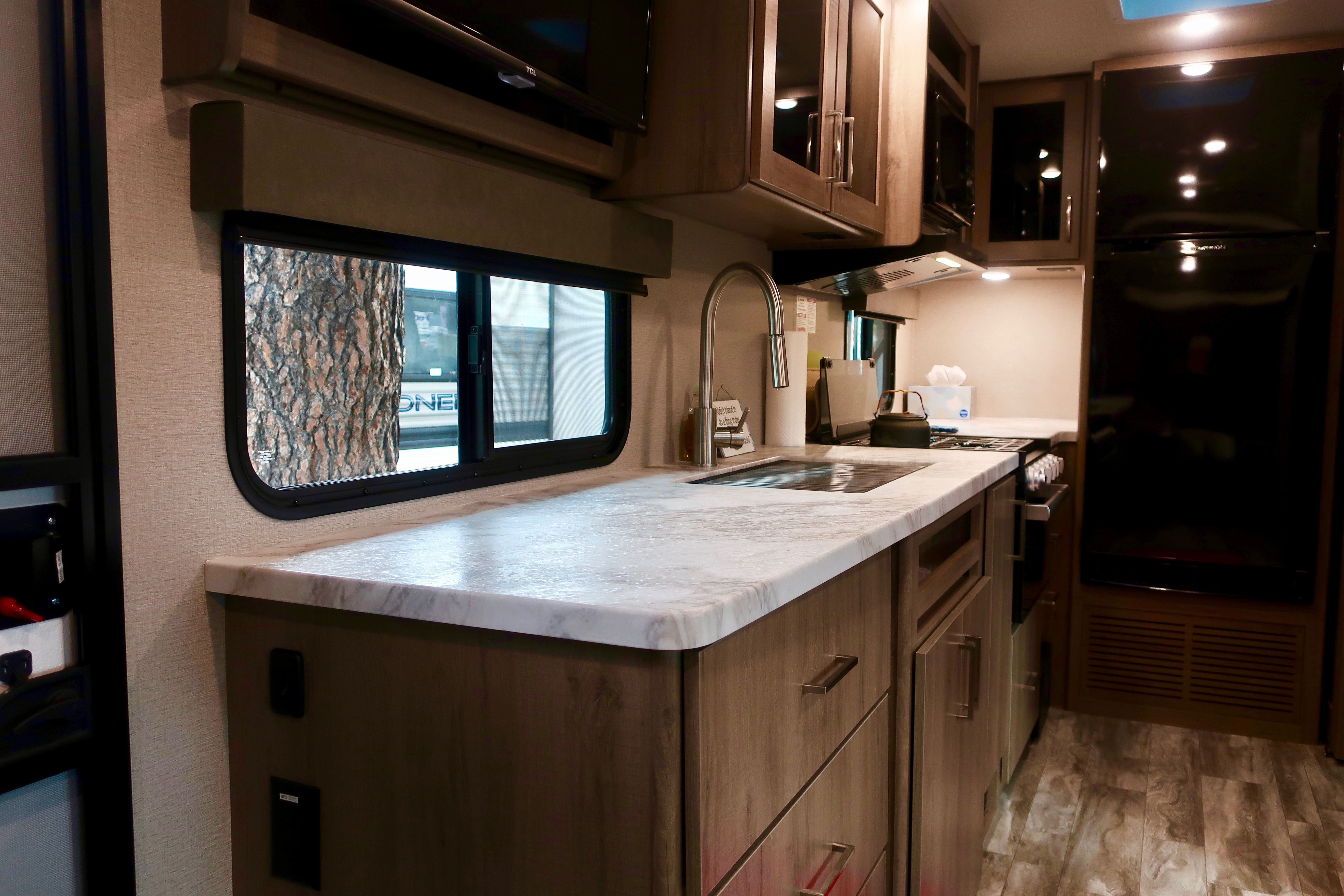
Aside from a very steep learning curve, we are really enjoying our new, tiny home and pickup. I decided to share a few photos of the Imagine 17 MKE. We haven’t named her yet, but the truck’s name is Iorik (pronounced Yorik). If you aren’t familiar with Iorik, he was the large, armored polar bear in the book/movie, The Golden Compass.
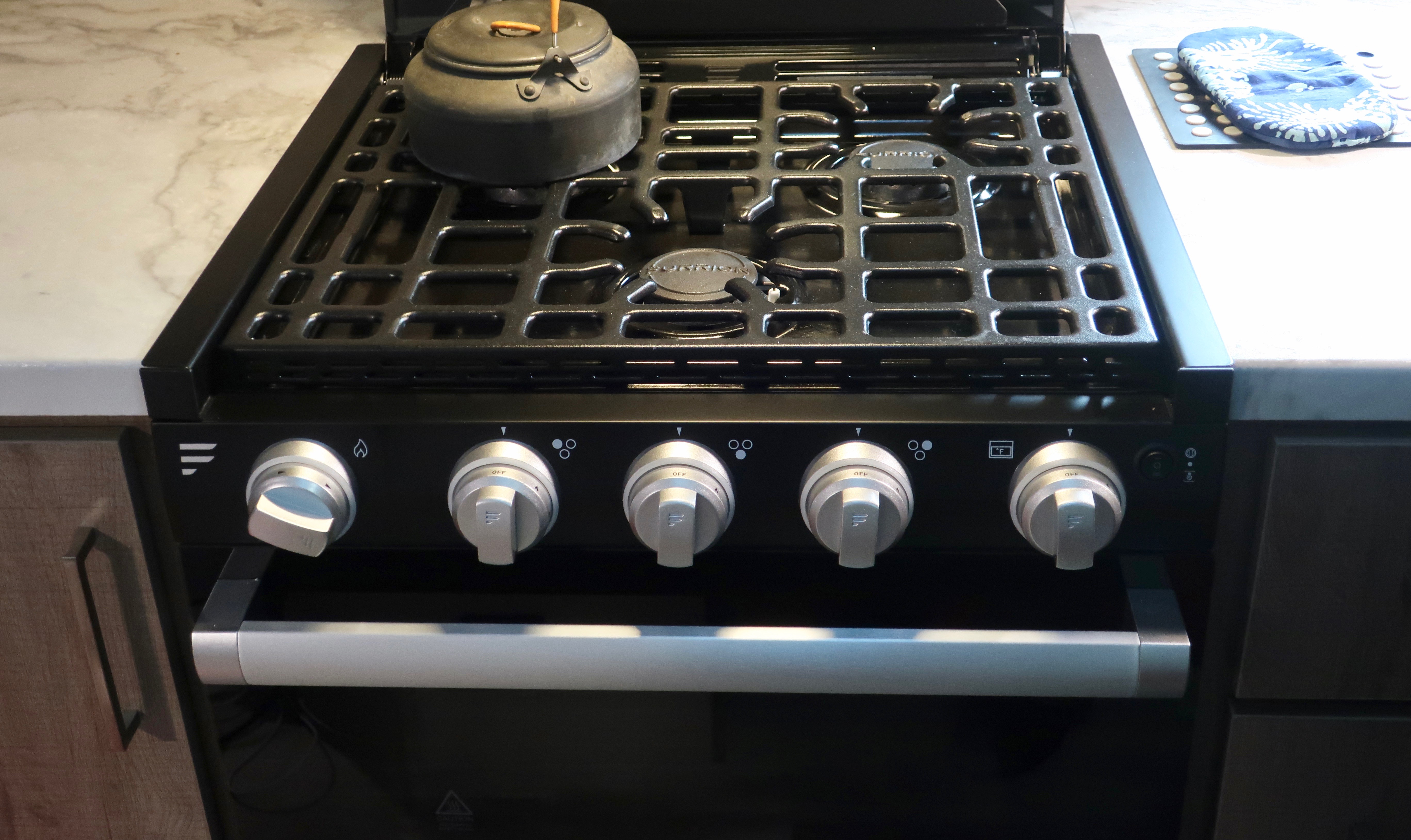
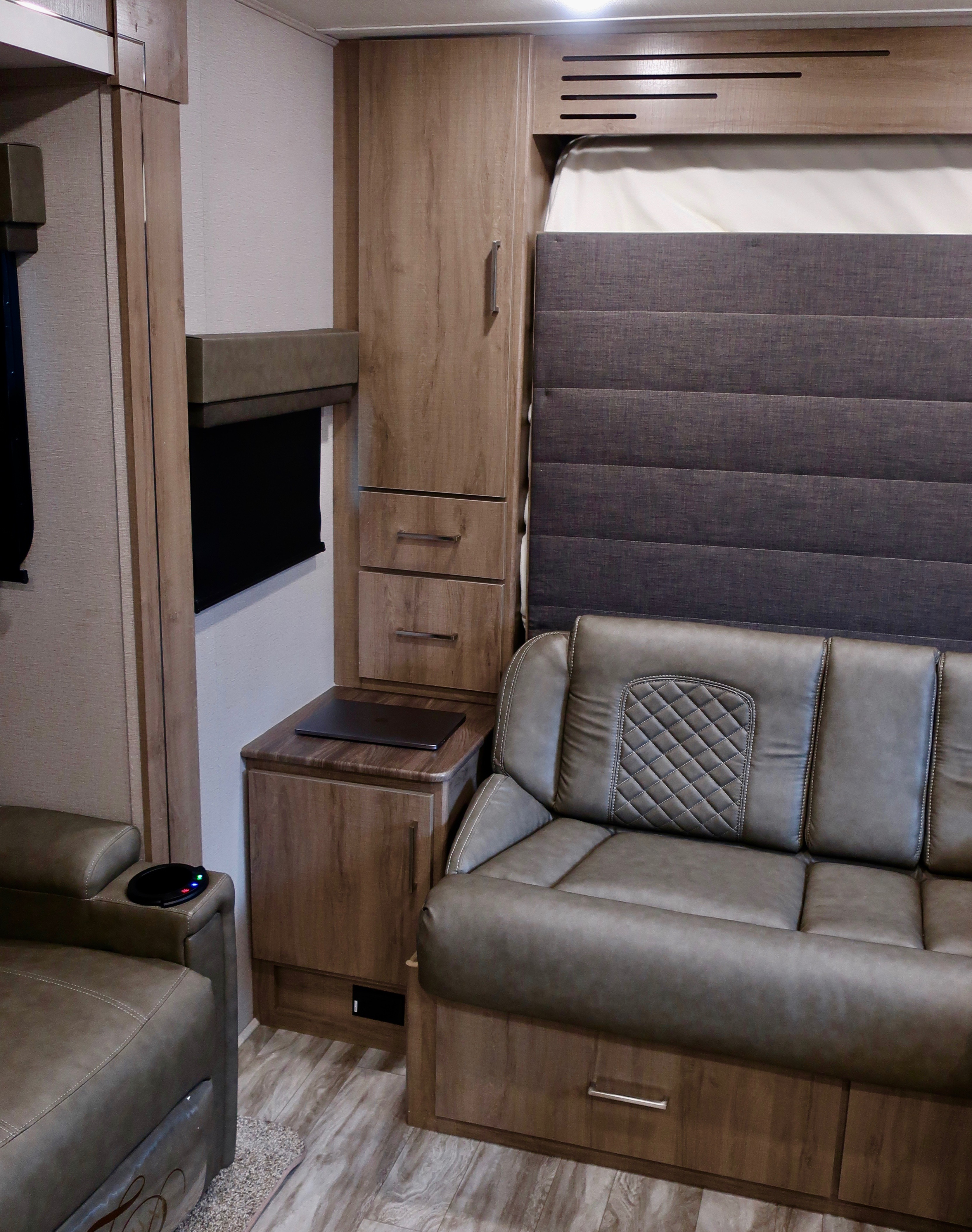
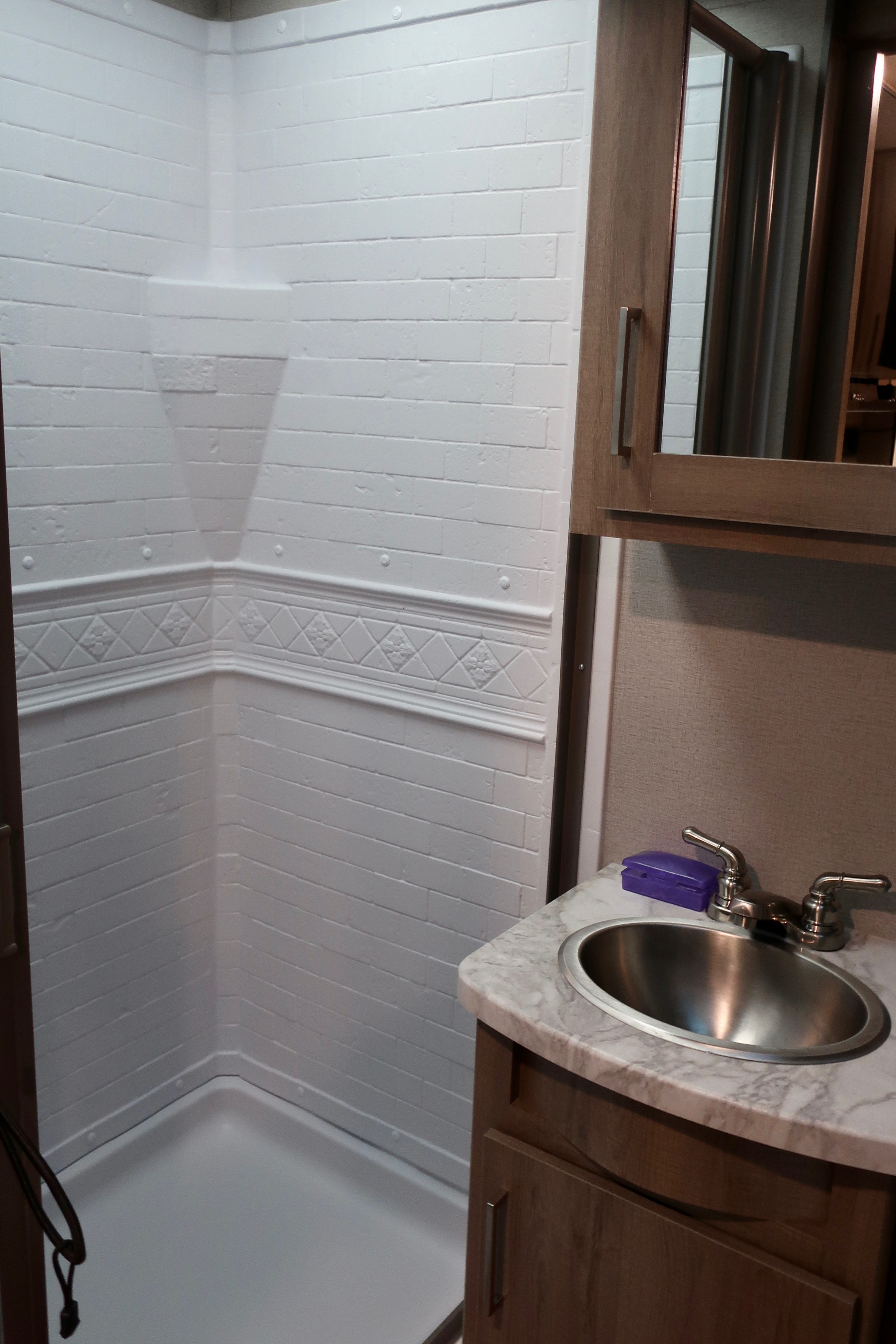
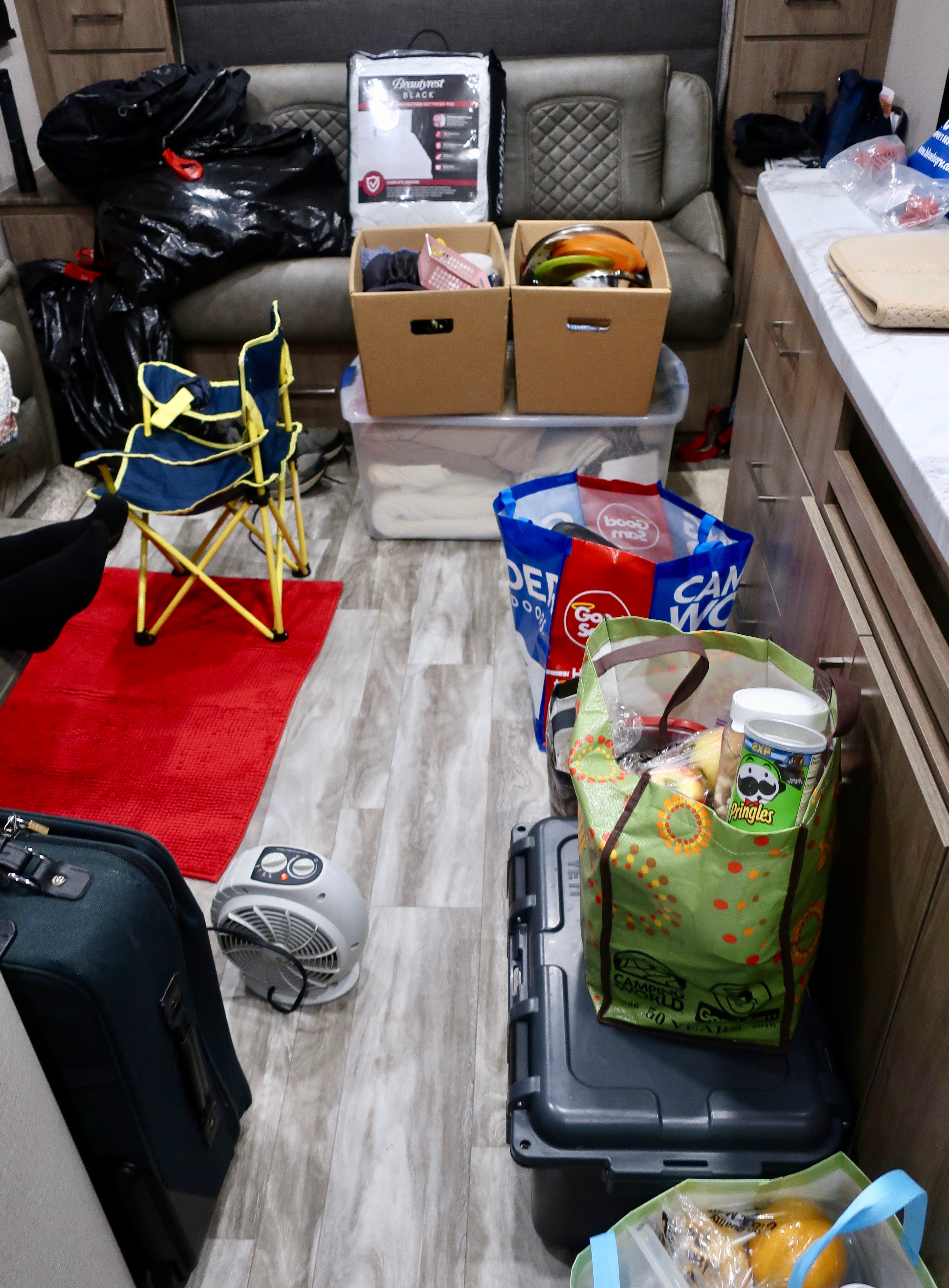
If you live out in the boondocks, like Peggy and I do, communication can be something of a challenge. Our only solution has been to reach up into the sky and hope that the sky gods are listening. As a result, our house is starting to look like a military installation out in the Nevada desert.
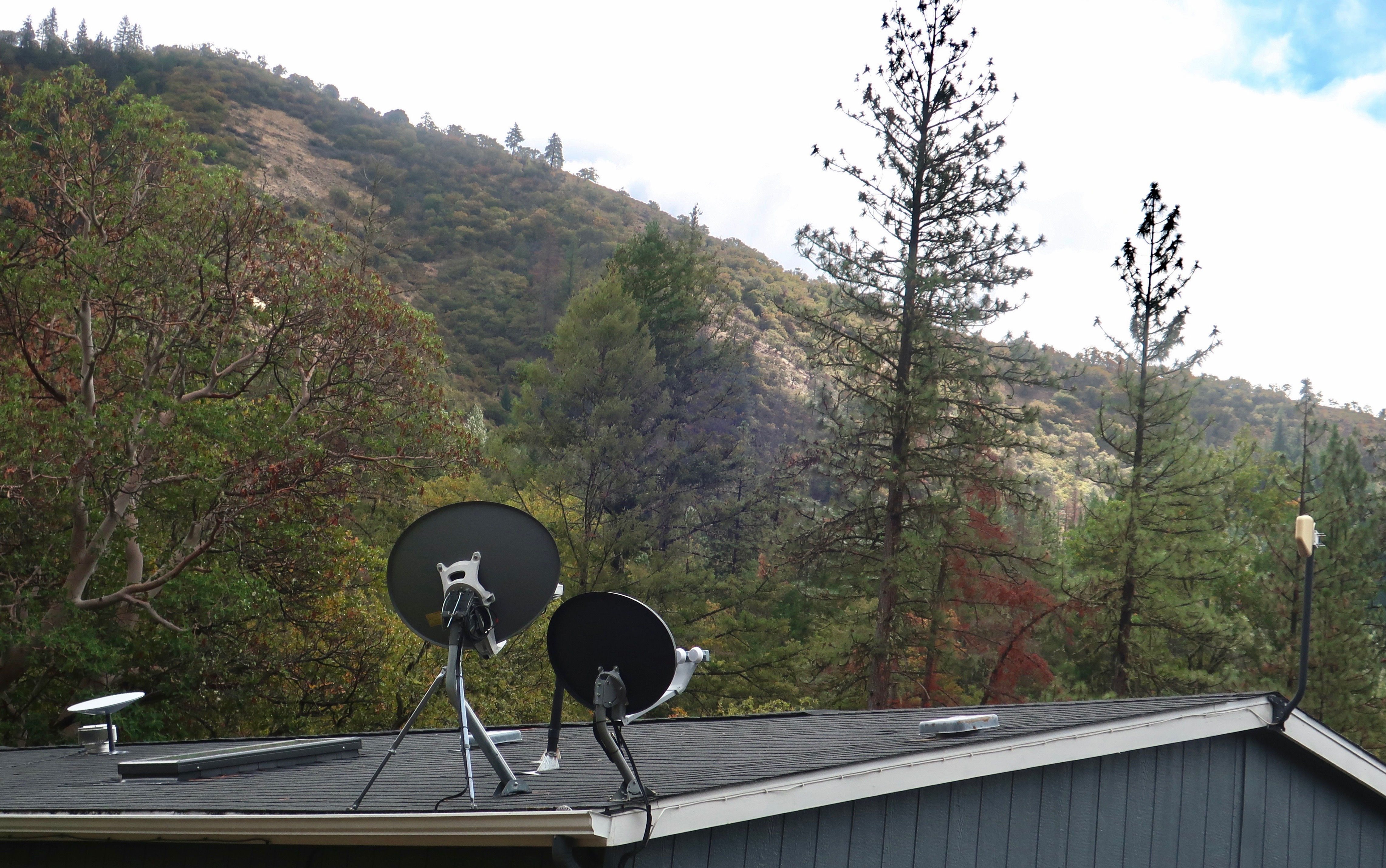
This past summer I was becoming increasingly irritated at the service we received from Hughes. Slow to start with, it was getting worse. Several of our neighbors had switched to Viasat and argued it was much better. I did my research and was prepared to make the leap. That’s when Clay suggested that I check out Elon Musk’s Starlink. If it served our area, I might be able to sign up as a Beta tester. It promised internet services at speeds several times faster than either Hughes or Viasat at a similar cost. Plus it included unlimited data. I went online and discovered that our latitude was one of the first to be served. So I signed up, made a deposit, and waited.
A few weeks ago, a large box showed up on our doorstep. Unlike Hughes and Dish, who sent technicians out, I would be on my own with Starlink. I was a wee bit nervous. As you may recall, things mechanical and I don’t get along. It isn’t that I can’t do them. Owning a house in the woods for 11 years has certainly taught me that; its just that I prefer to do other things like writing, photography, cooking, traveling, reading, watching movies, hiking, backpacking, kayaking, pulling star thistle and scrubbing out toilets— you get the picture. People like Clay and my friend Tom, on the other hand, take great joy in fixing things. When Tom comes to visit, he brings a tool box with high hopes of finding something. Clay insists that I have a list for him. Even Peggy gets a gleam in her eyes when she is holding a power tool.
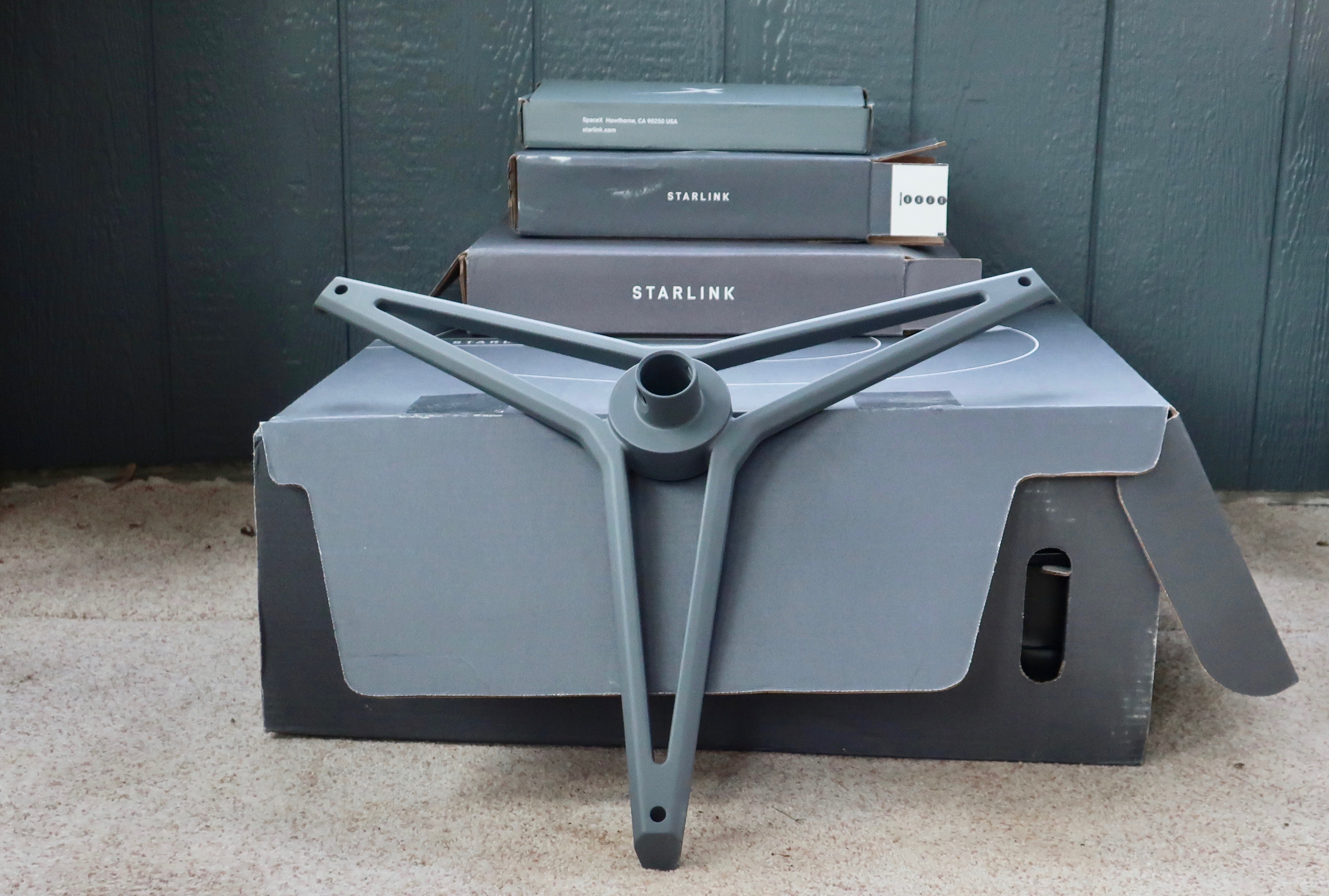
Before the box arrived, our first chore was to download an app to our iPhone and wander around the yard with the camera on and the phone pointed toward the sky to find the best, obstruction-free place to set the satellite. Did I mention we live in the boondocks, in a forest, with lots and lots of trees. South was fine. It’s where our other satellite dishes are pointed. The Starlink dish, however, likes north. Heres what our north looks like:
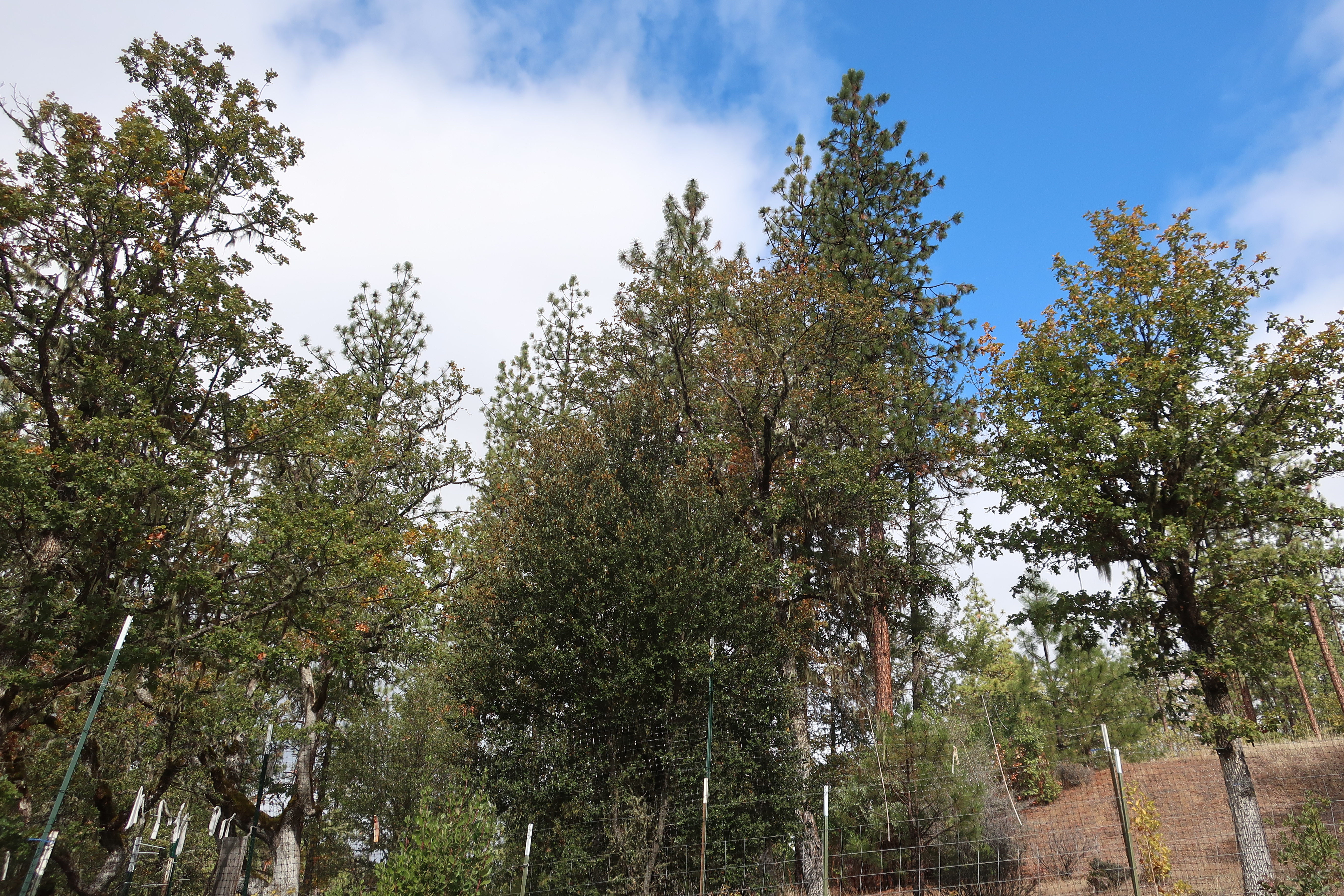
The app was not happy. It kept telling me to move to another location until I ran out of locations. I talked with my friends Bryan, who lives up the hill from where we live, and Jeff, who lives down the hill. Both had received Starlink dishes a couple of weeks before we got ours. Both told me that the app had told them the same thing. They had ended up placing their dishes in the least obstructed locations they could find. I decided to do the same thing:
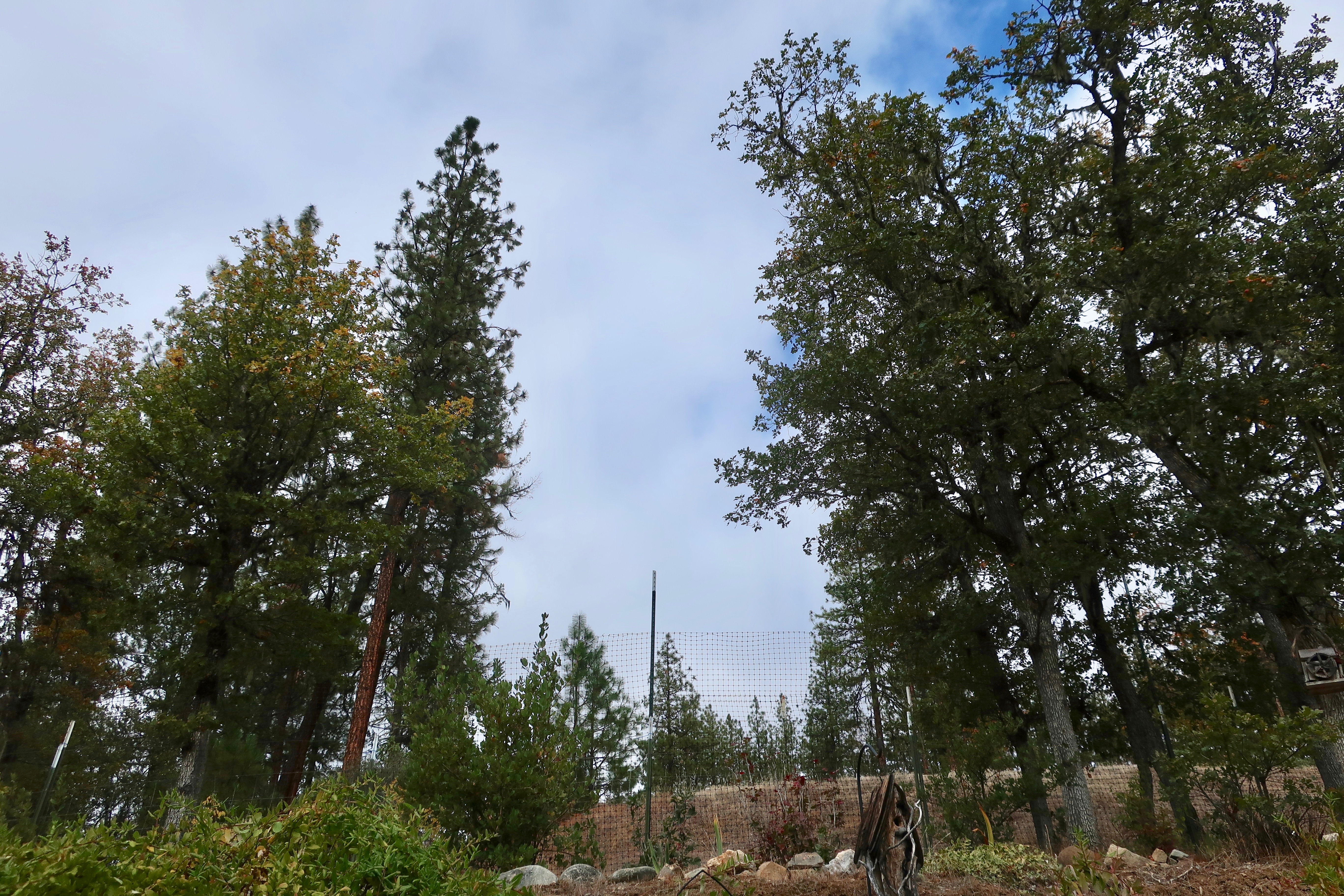
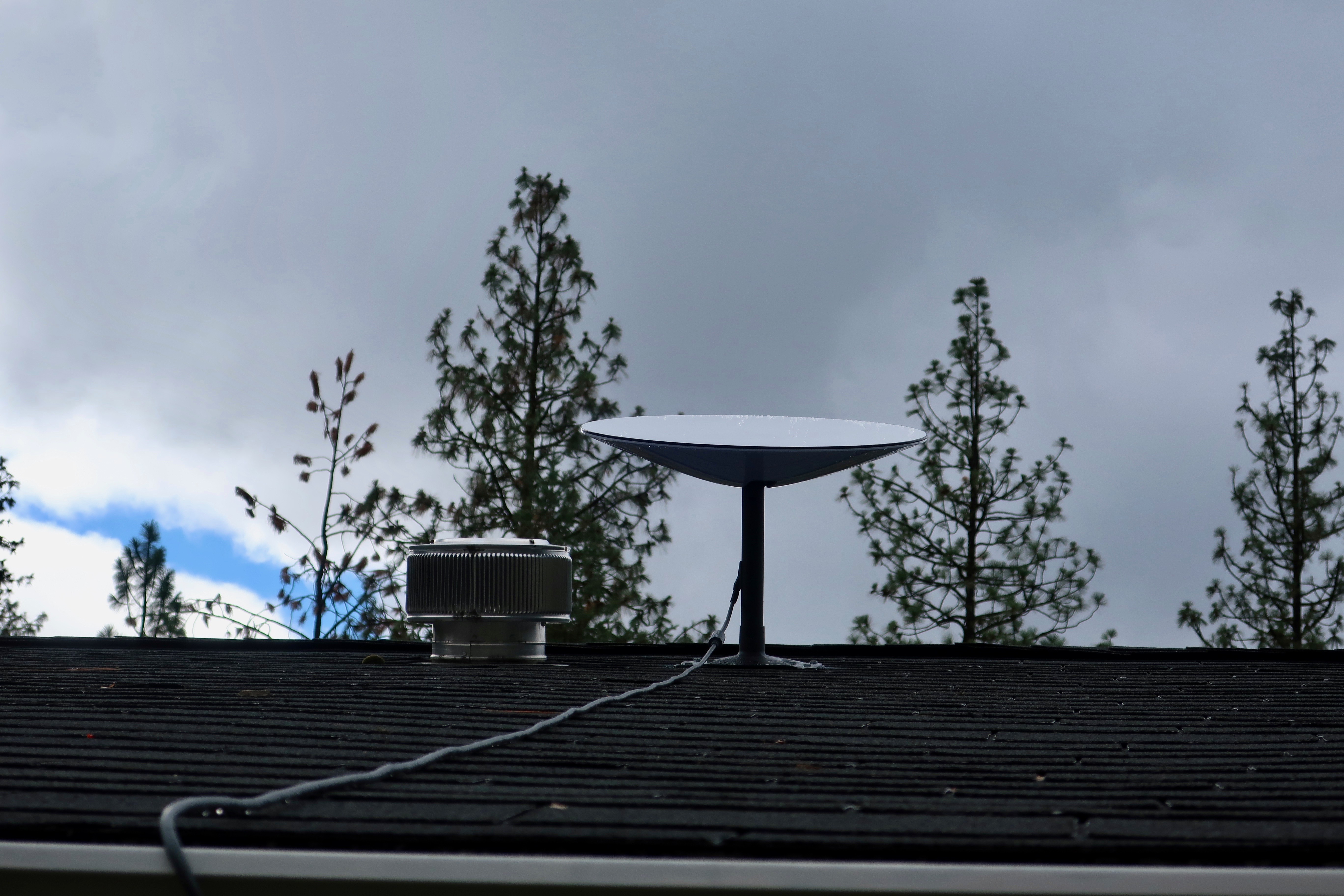
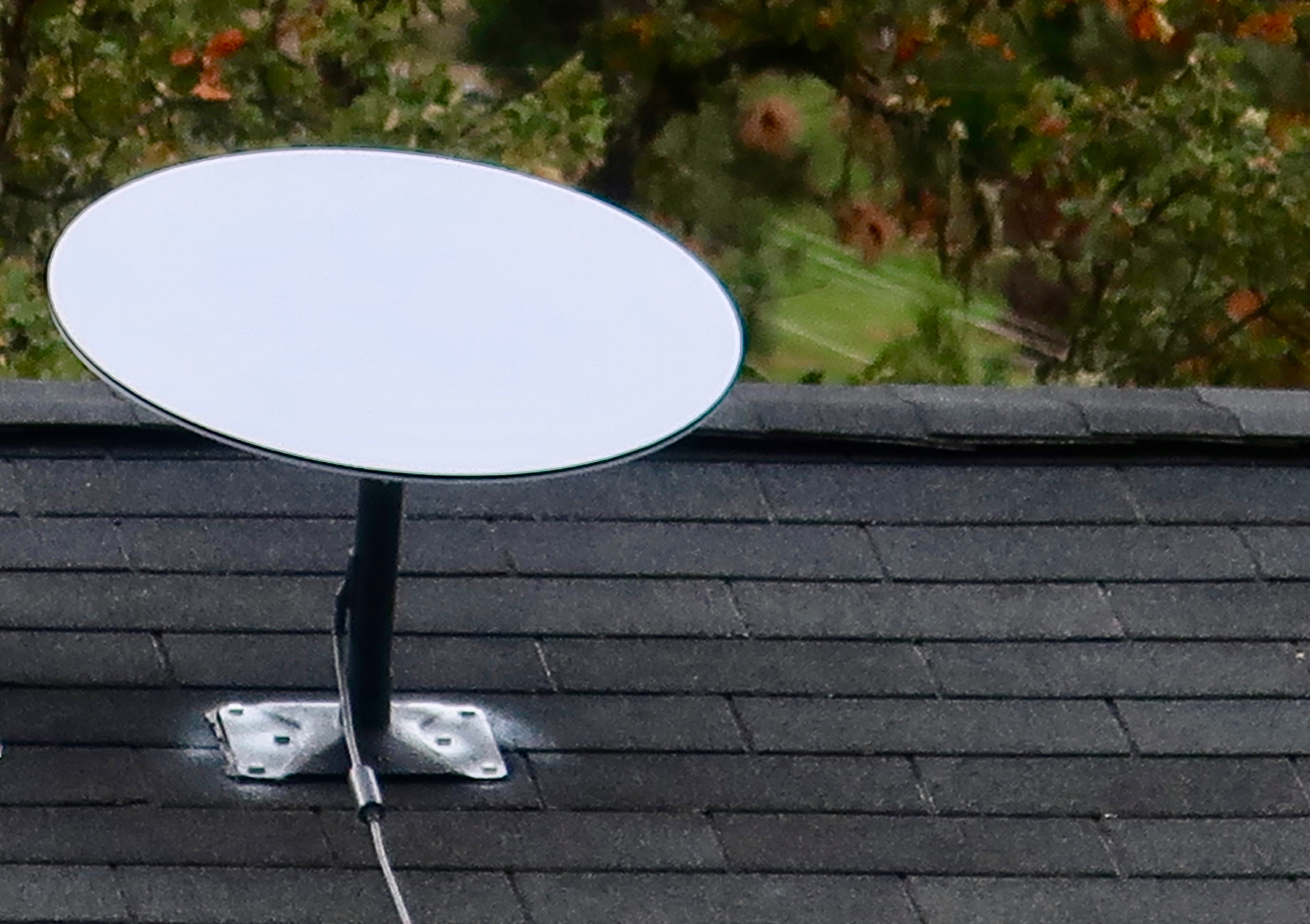
And I found this. Call it a window of opportunity. A small window. To take advantage, I would have to place our dish up on the roof.
Now—to backtrack a little— I opened the box. The dish came with a stand, a hundred foot long ethernet cable, a modem and a router. It was designed to be placed on the ground. It even came all plugged together, almost idiot proof. All I would need to do was drill a hole in the side of our house, which was scary enough, but was something I could handle, or sic Peggy on.
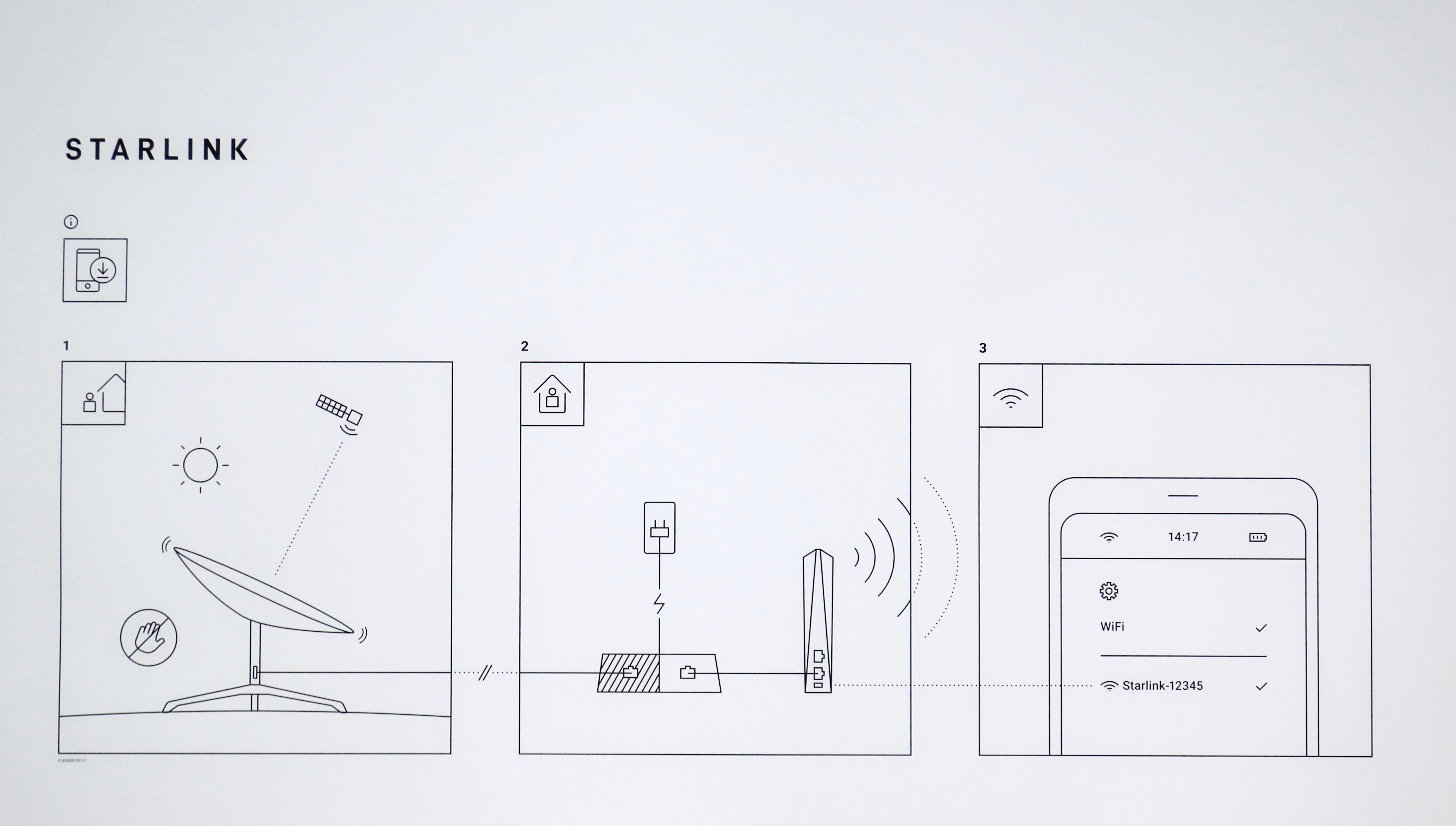
It was drilling holes in the roof that I found disturbing. They can be injurious to your house. Water can seep through and and do all sorts of nasty damage. Some people might also question the wisdom of a 78 year-old wandering around on a roof. They are probably the same people who questioned my wisdom in celebrating my 75th birthday by backpacking 750 miles on the Pacific Crest Trail, much of it by myself. No, I was not worried about being up on the roof. Try perching on a narrow trail by yourself with a thousand foot drop below you in a strong wind with a forest fire rapidly approaching.
I did what any modern fix-it person does and went looking for YouTube videos. There were plenty, of course. The secret was simply find the roof studs for screwing the mount into and seal the hell out of the holes. Okay, I could handle that. I bought extra outdoor sealant just in case. But I also opted for back up if needed. I called Joel, a roofer and really nice guy who had replaced a skylight for us. He quickly volunteered. He’s also waiting for a Starlink dish. And I checked in with Bryan, our uphill neighbor, who had already installed his Starlink dish on the side of his house and is quite handy. And then I waited again. Starlink had sent us everything we needed for the ground version, but it had another package for roof installation.
It arrived a few days ago and included a roof volcano mount, six large screws and (lo and behold) a tar-based super sticky sealant and directions how to use it. Elon Musk leaves little to chance. Okay, I said to myself— “Self, you can do this.” I gathered all of the tools I would need, loaded them into a garden apron Peggy loaned me, and up I went, like Santa sans reindeer. Peggy held the ladder and did whatever worrying that needed to be done. I am pleased to say that my mounting effort was a success. At least so far. Next, I affixed the cable along our eaves and came to my last scary task, drilling a large hole in the side of our house.
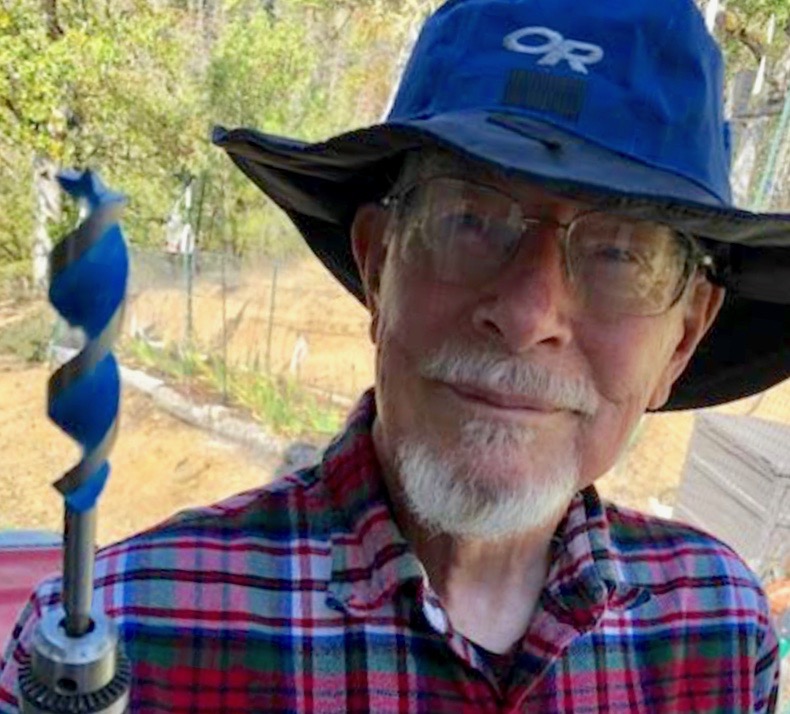
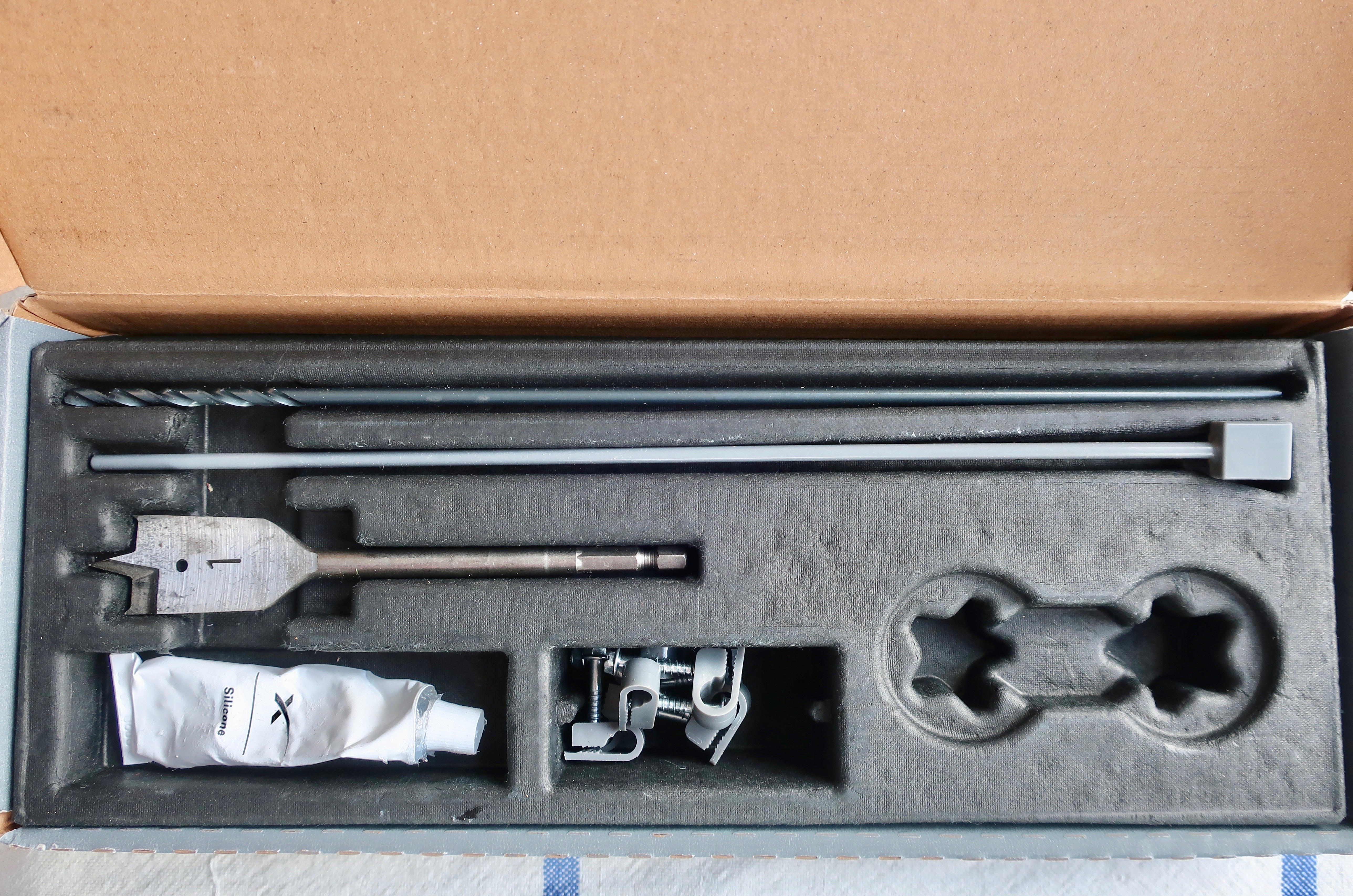
This drill exactly matched the size of the hole I had to create, but my first problem was that I needed to drill smaller holes before the large bit would enter the siding. Whatever. Except the sky was darkening, the wind picking up, and a possible downpour about to erupt. I drilled my smaller holes and quickly realized that my bits weren’t long enough to make it through the wall. Even the big bit. Measurements were called for as to where we would need to drill from the other side. Peggy demanded her turn with the drill and eventually, we had holes on both sides that would accommodate the cord. A wire that I had adapted for the purpose showed our two holes were exactly aligned. Exciting huh? Well, it was for us. Believe me.
Here’s the ironic part. Just as I was finishing up, a Fed-Ex truck drove down our road. It delivered another package from Starlink. It included everything I needed to drill the hole in our wall. At least I was able to use the patches it sent to cover the holes and the silicon sealant.
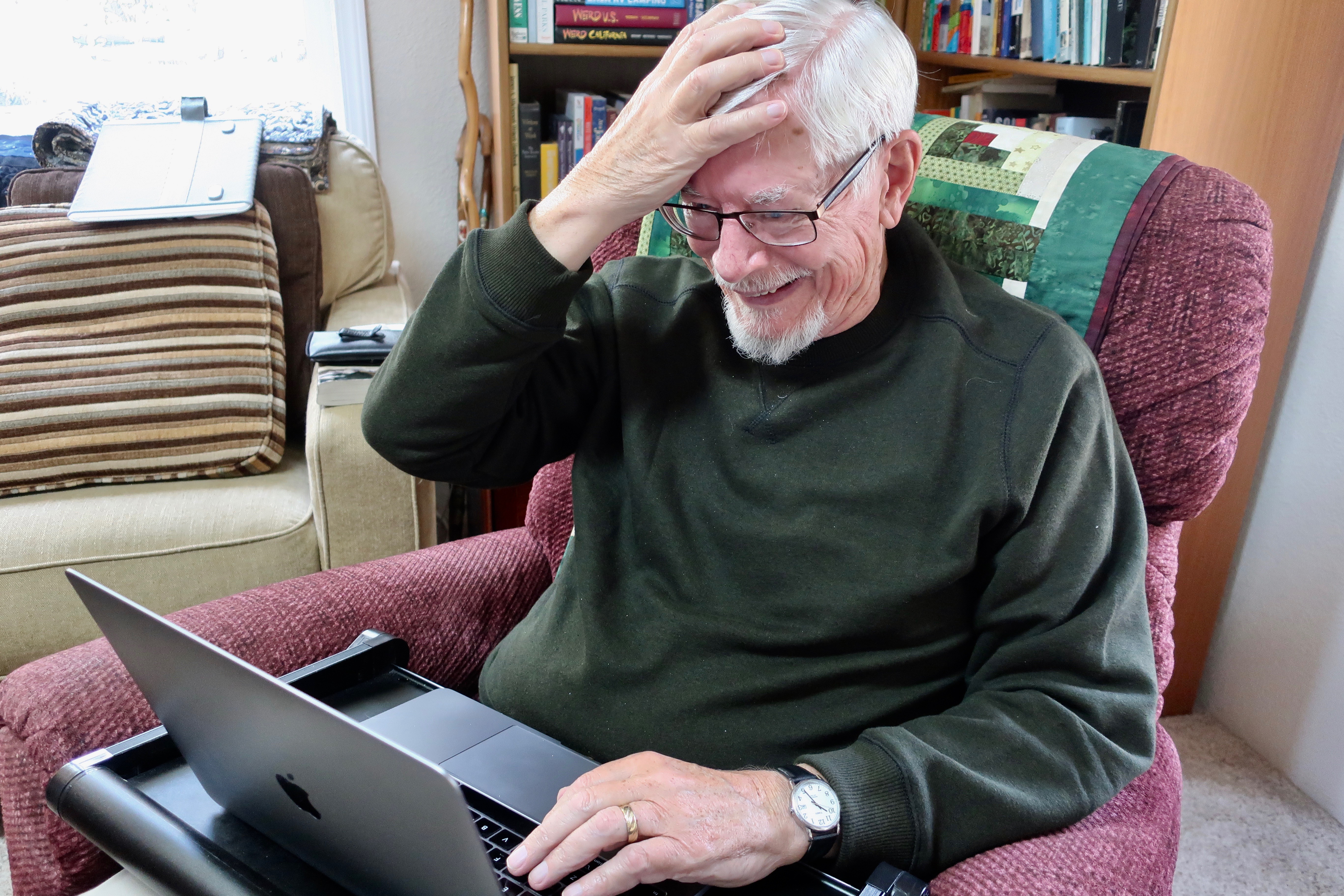
This and That is a good title for today’s post. When you have taken a break from blogging, like I have, things accumulate. I thought I would do a little catching up today.
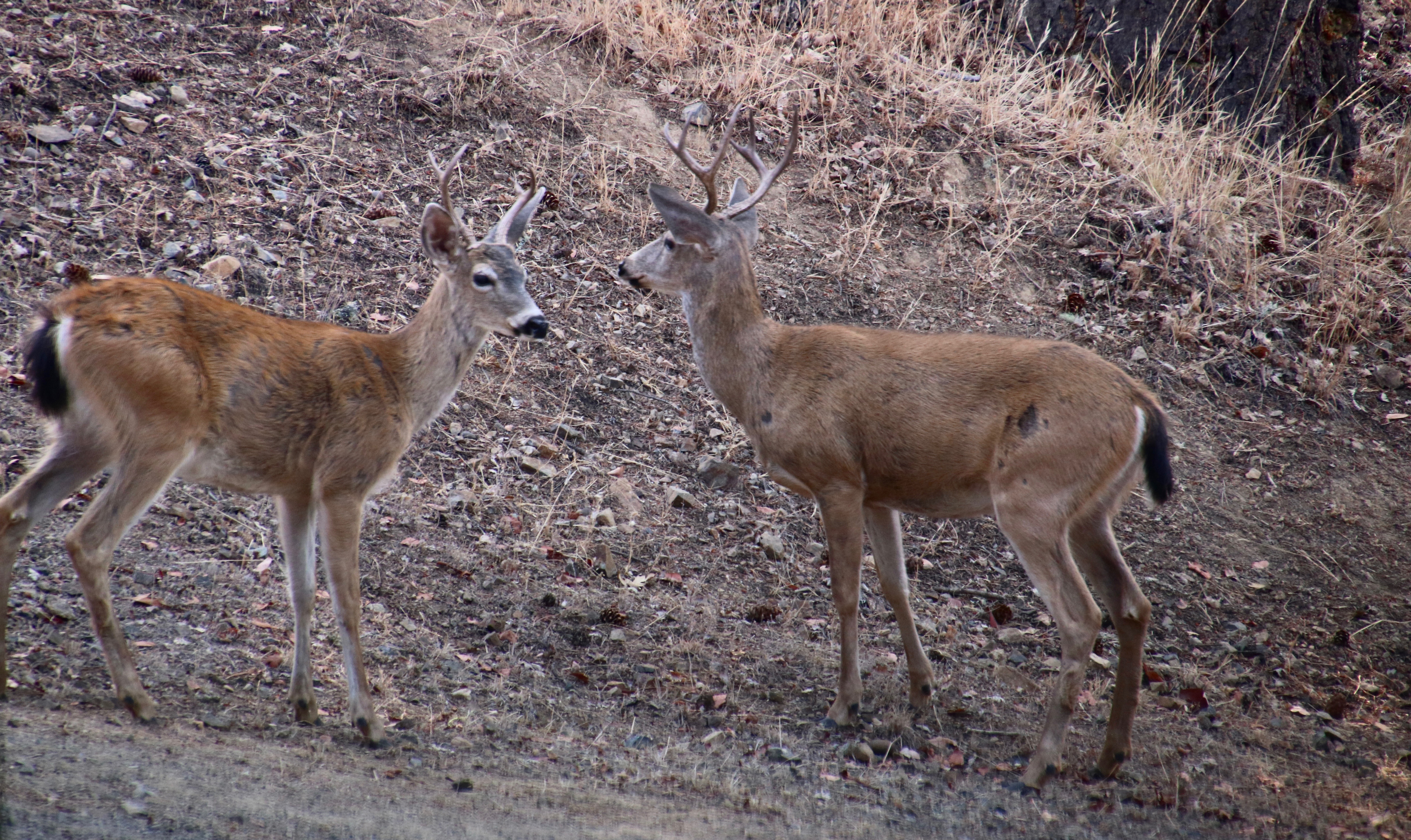
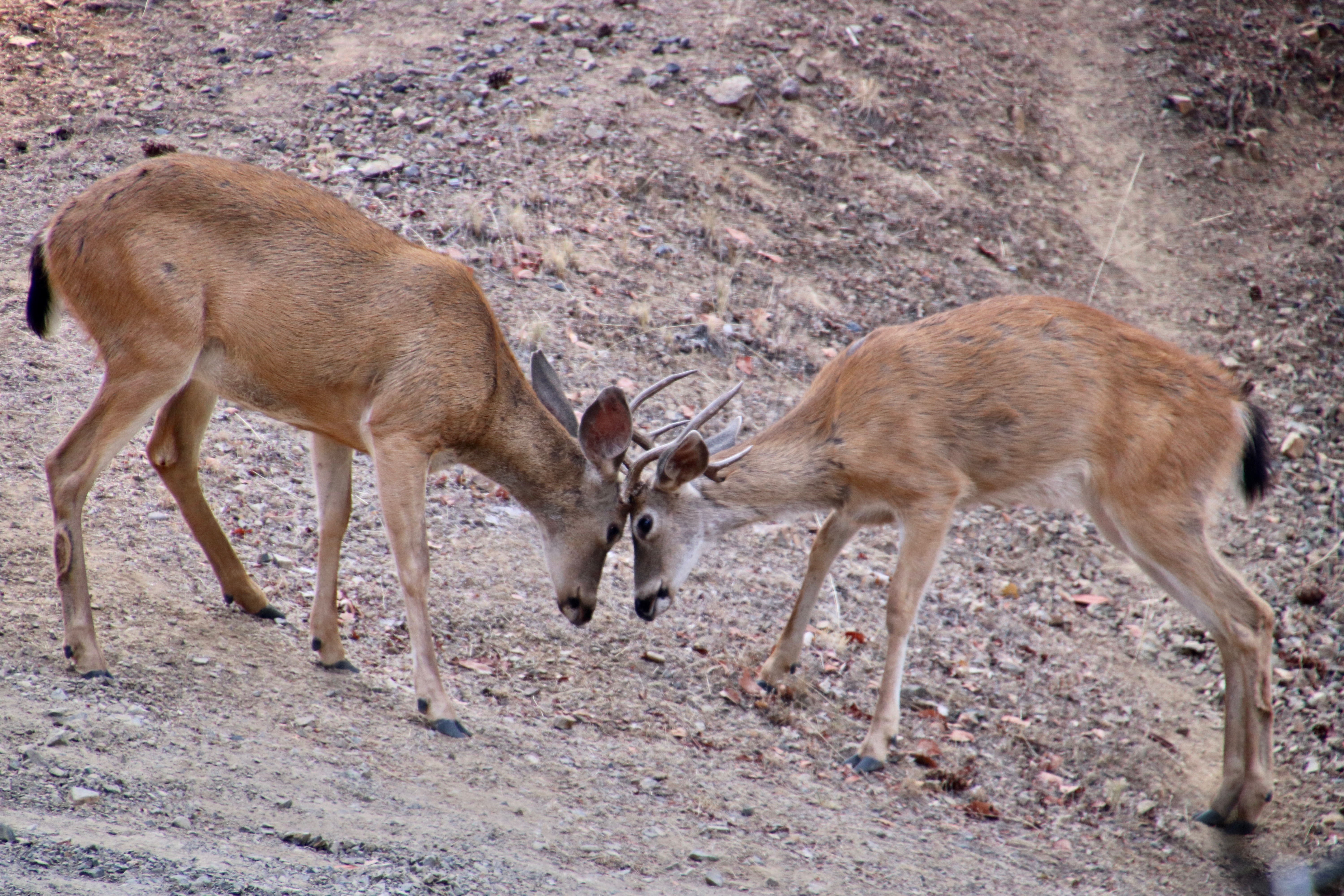
You know it’s October when the local bucks start testing their mettle with each other over who gets to snuggle up with the local does. These two decided to put on a performance in our backyard. They didn’t do any damage to each other, at least when Peggy and I were watching, but it seemed like a great way to poke out an eye. This morning we watched a doe cross our deck followed by three bucks: a spike, a forked horn, and a three pointer. I wondered what the doe was thinking. Was it, “Wow, look at me and all the guys tagging along.” Or was it, “Damn, I wish those idiots would go somewhere else.” I suspect it was the latter. While mating season is a true passion for the bucks, it’s more like being worn down for the does. At least that’s my assumption after watching them frolic for ten years. Maybe if the bucks had to help take care of the babies…
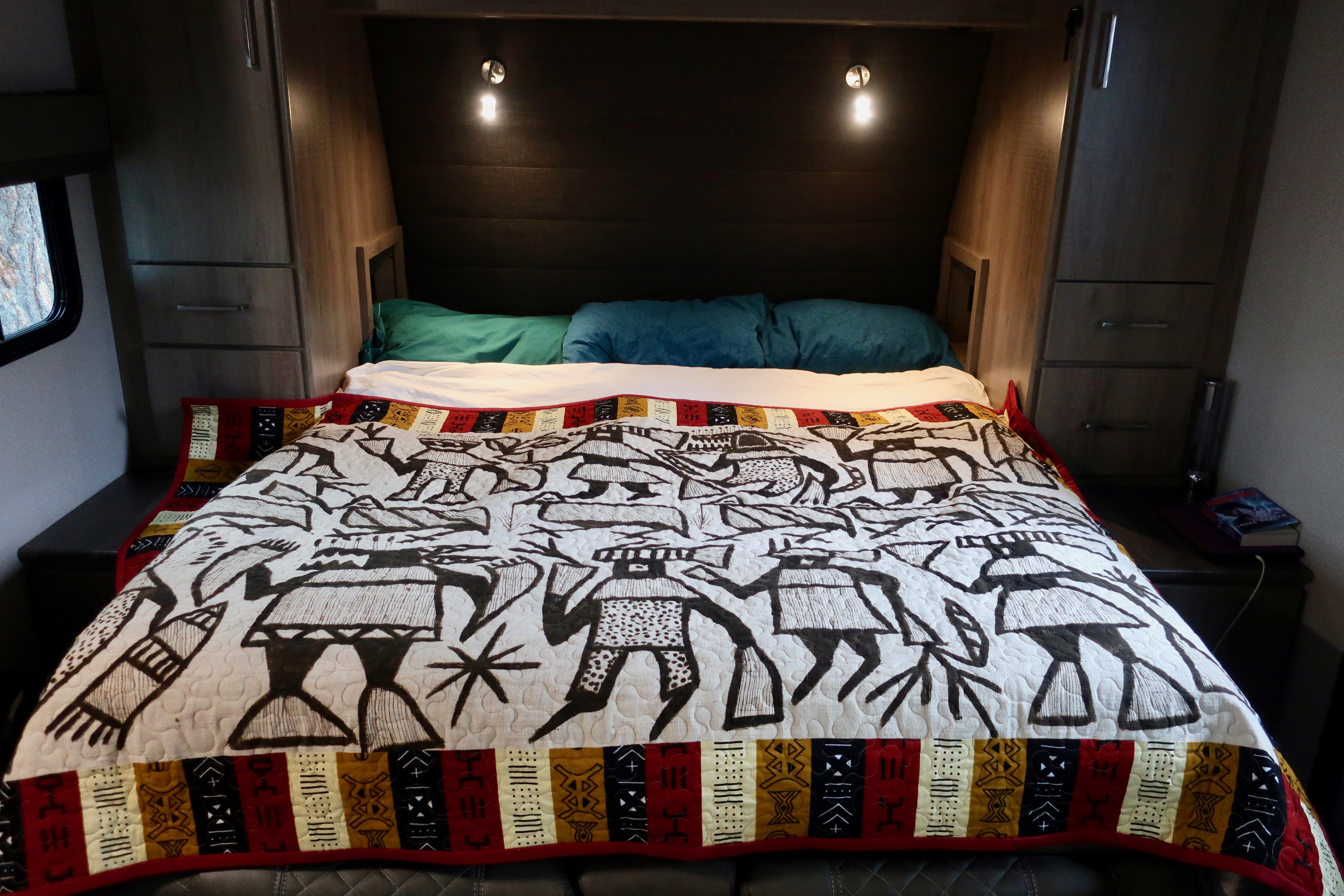
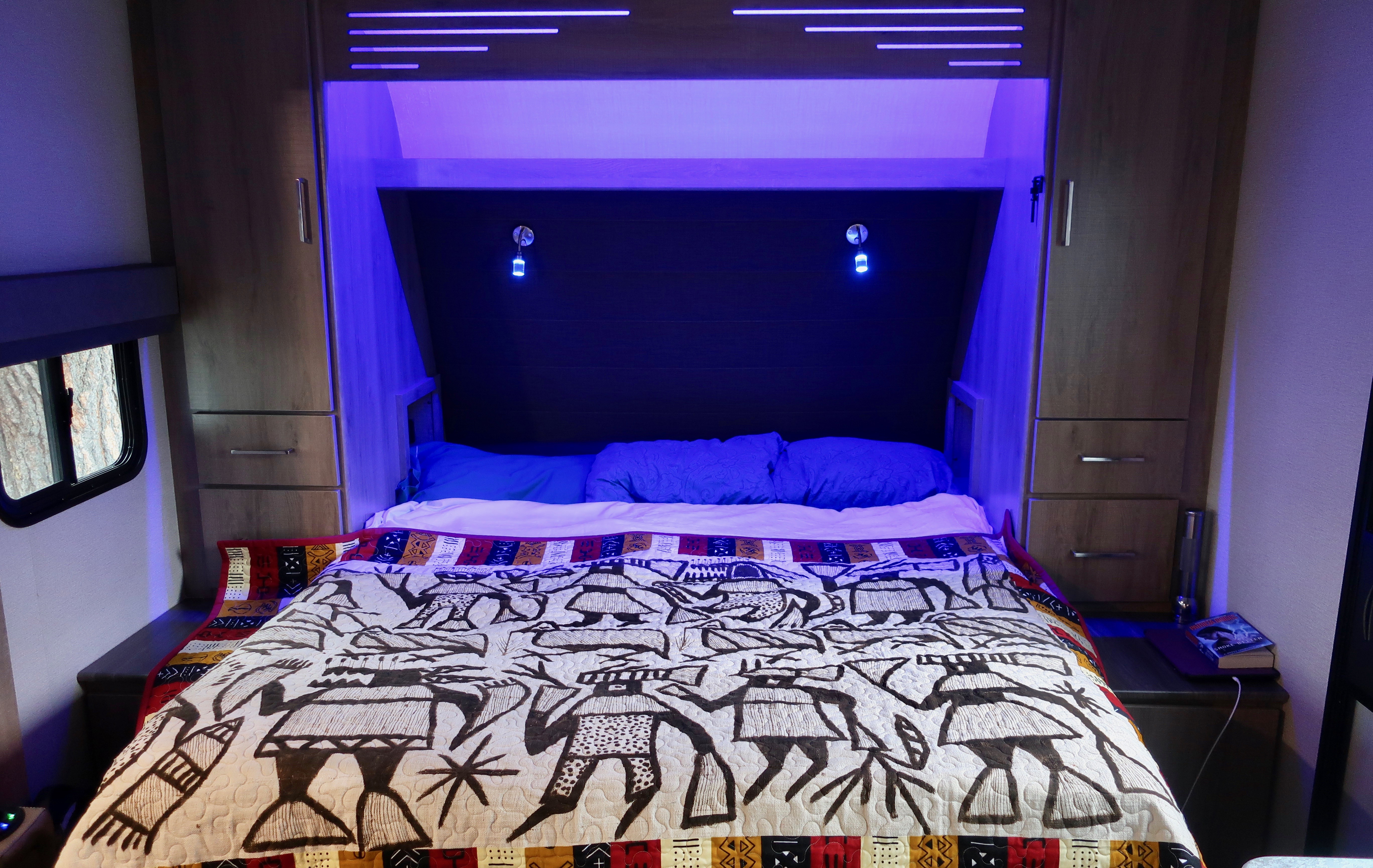
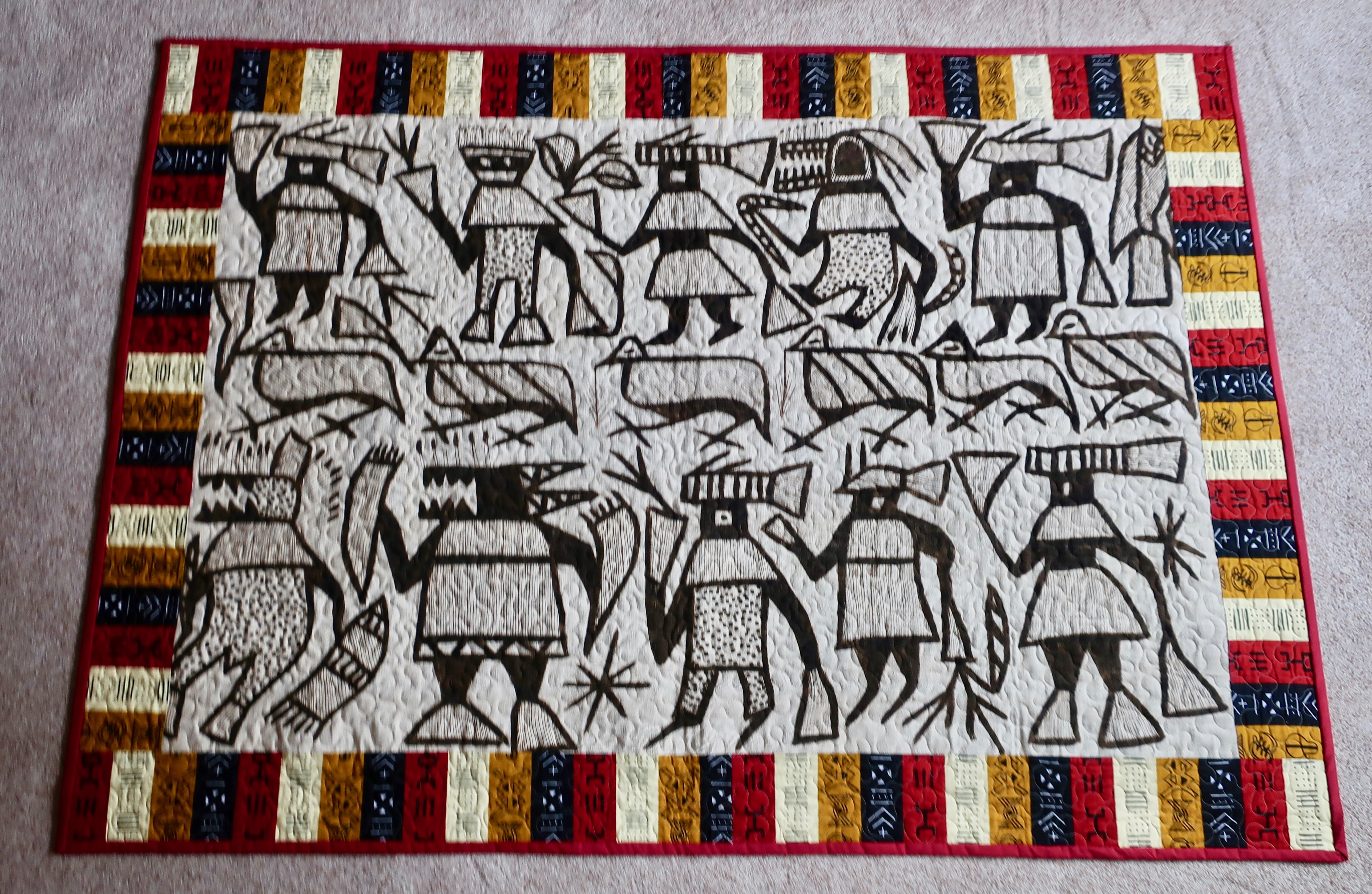
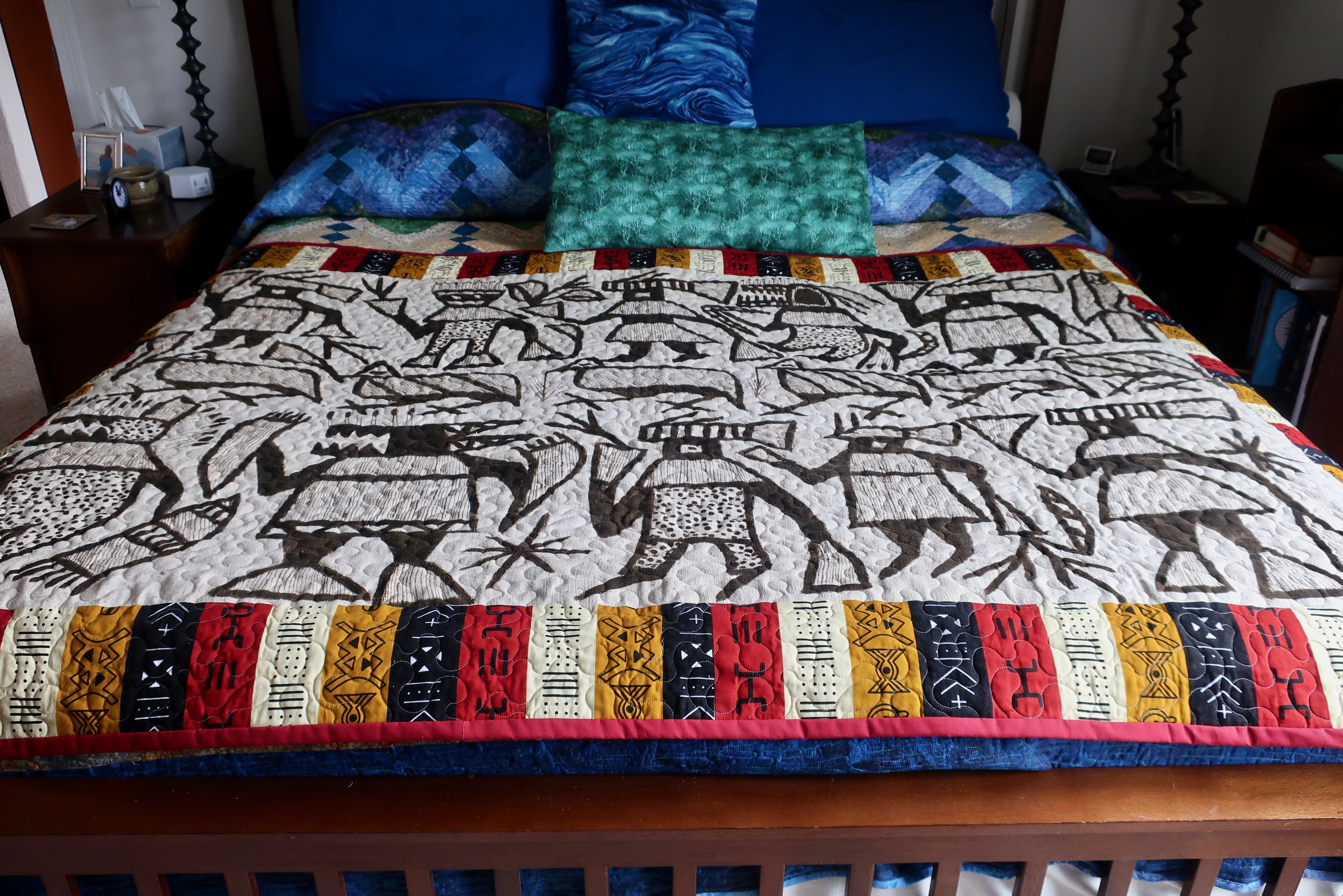
Several months ago my friend Linda from the blog, Lagniappe, mailed me a fascinating country cloth piece that she had picked up in Liberia, West Africa where we had both lived— me in the mid-60s and Linda in the early 70s. I put it out to admire for a while and then decided it would make a great quilt. Fortunately, Peggy is quite talented when it comes to putting quilts together. The results are quite gorgeous. Many thanks for your generous gift, Linda. And thank you Peggy. It will live on our bed in the trailer.
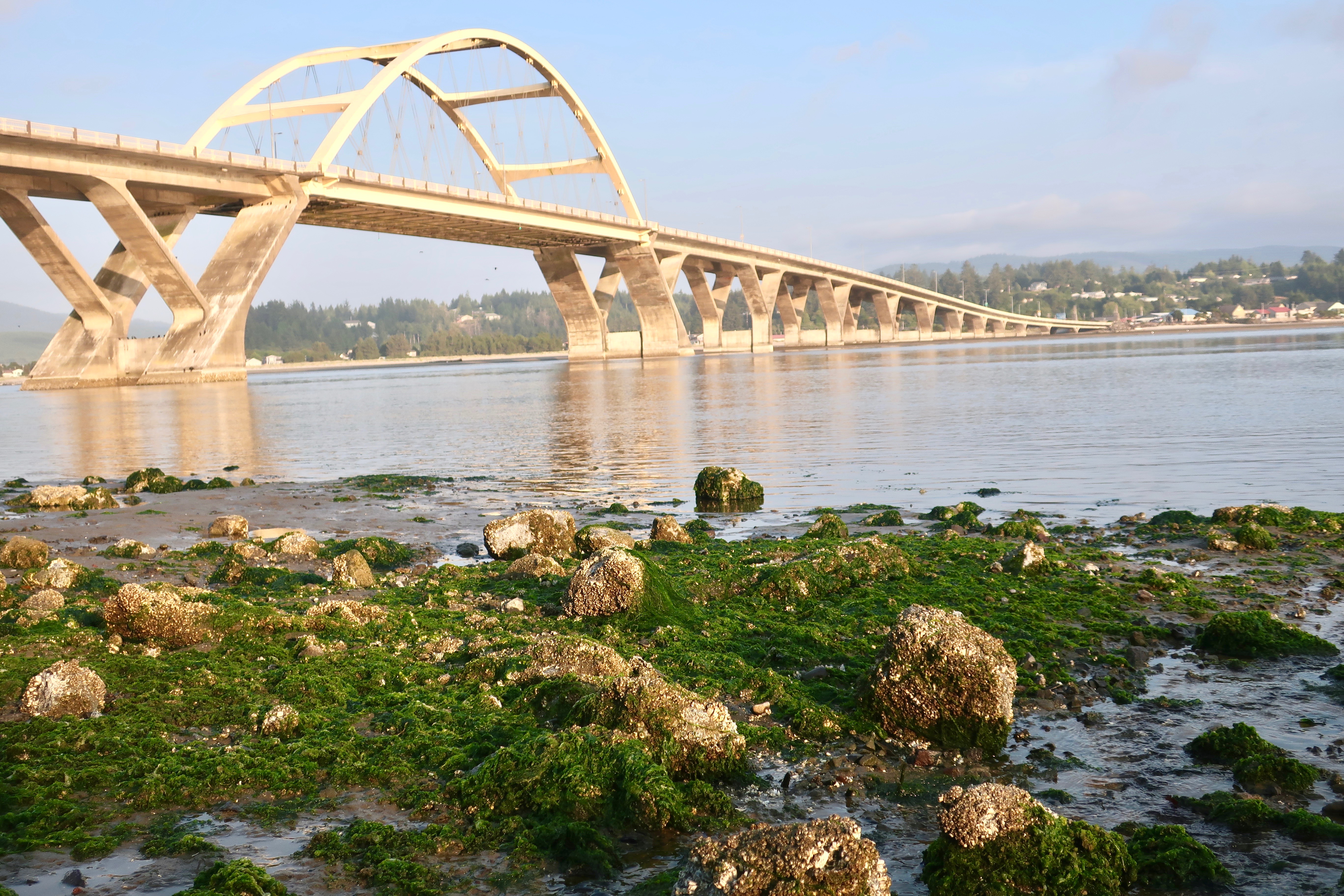
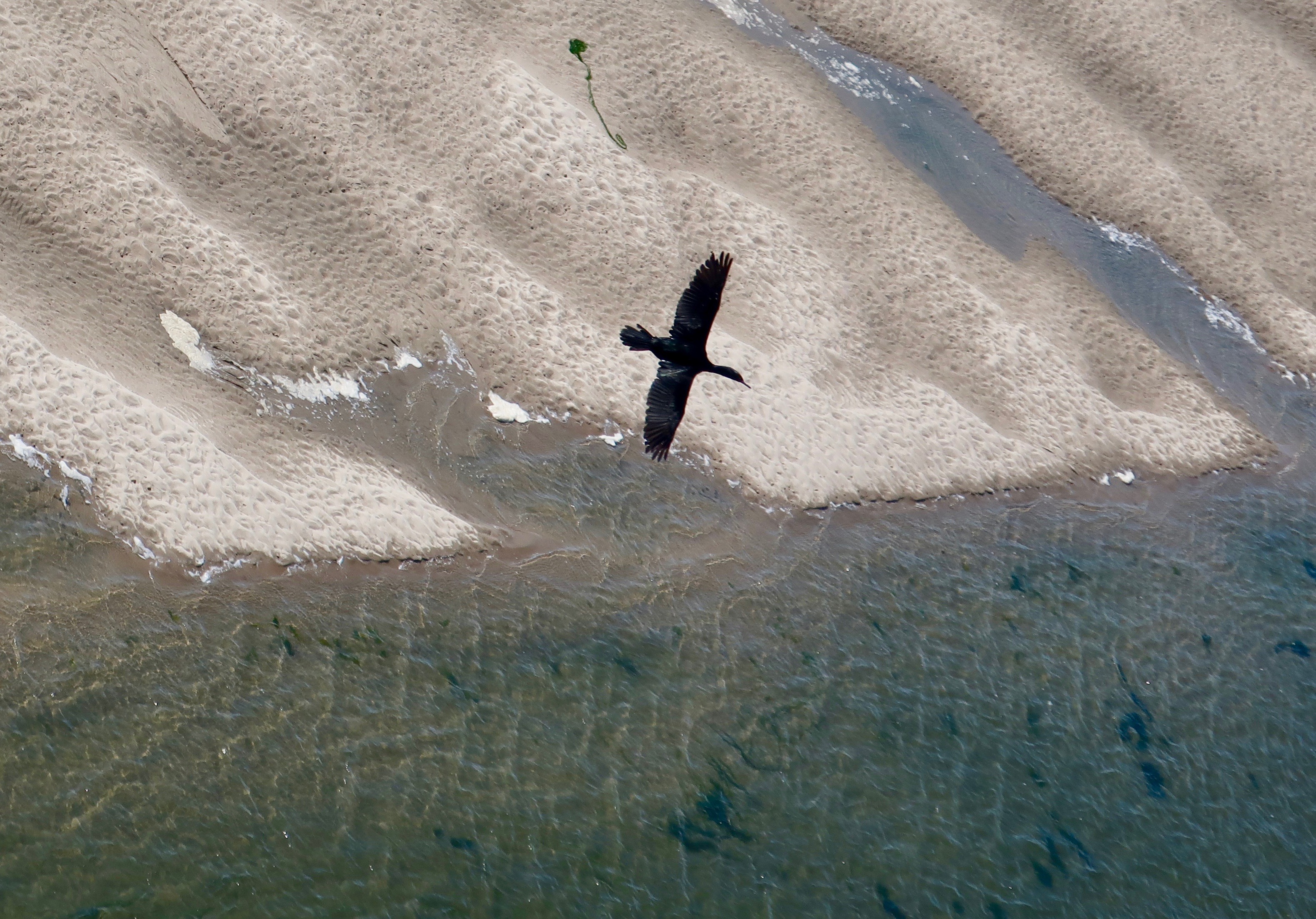
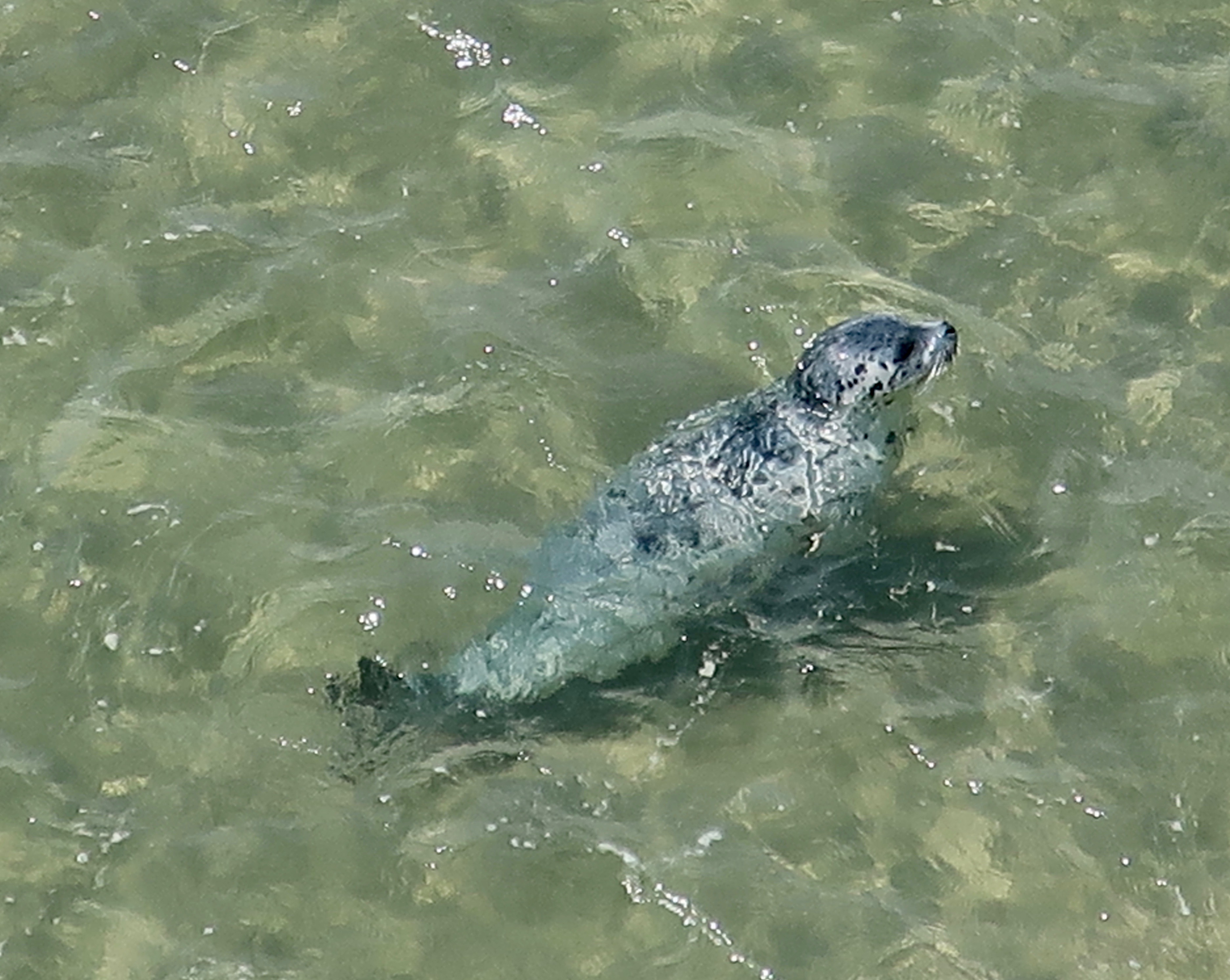
On our last trip to the Oregon Coast we stayed in a KOA at the base of the Alsea Bridge in the town of Waldport. Peggy and I took a number of photos of the bridge plus we walked across it, admiring the sand at low tide on our journey south and seals on our journey north. I’ve been meaning to do a post on it ever since Peggy and I went kayaking in the area.
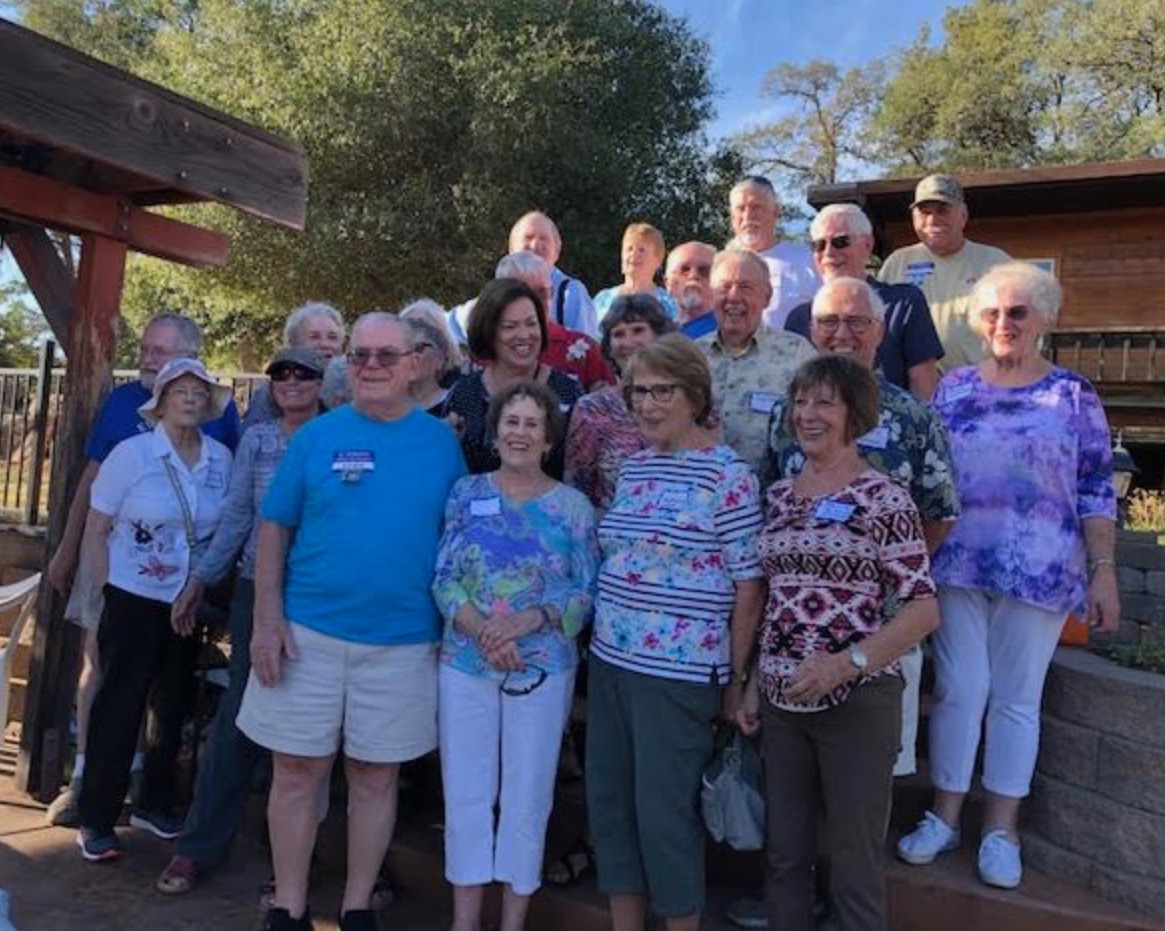
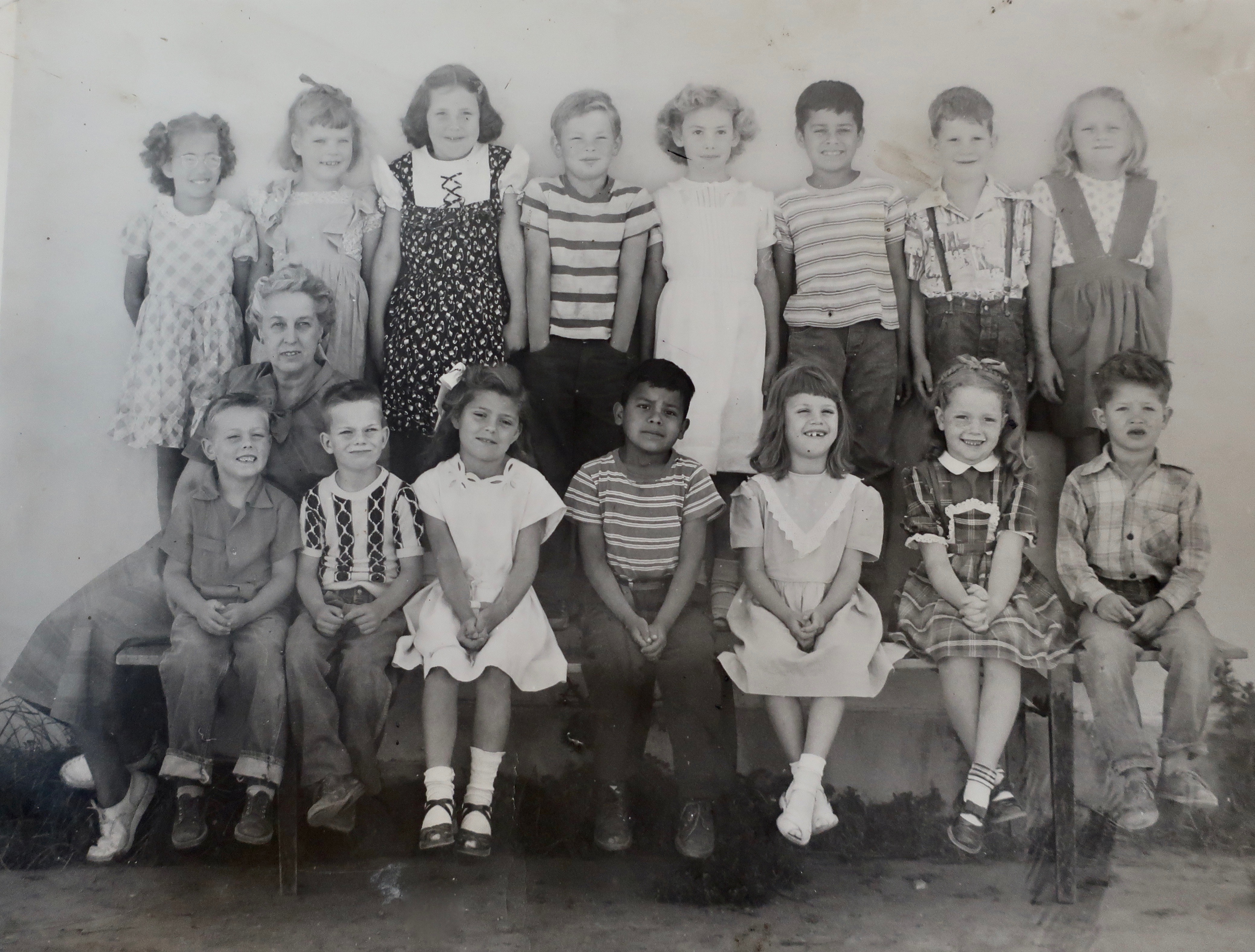
Early in September, Peggy and I went to my 60th High School Reunion in Placerville, Ca. Not surprisingly, there were a lot of old folks there.
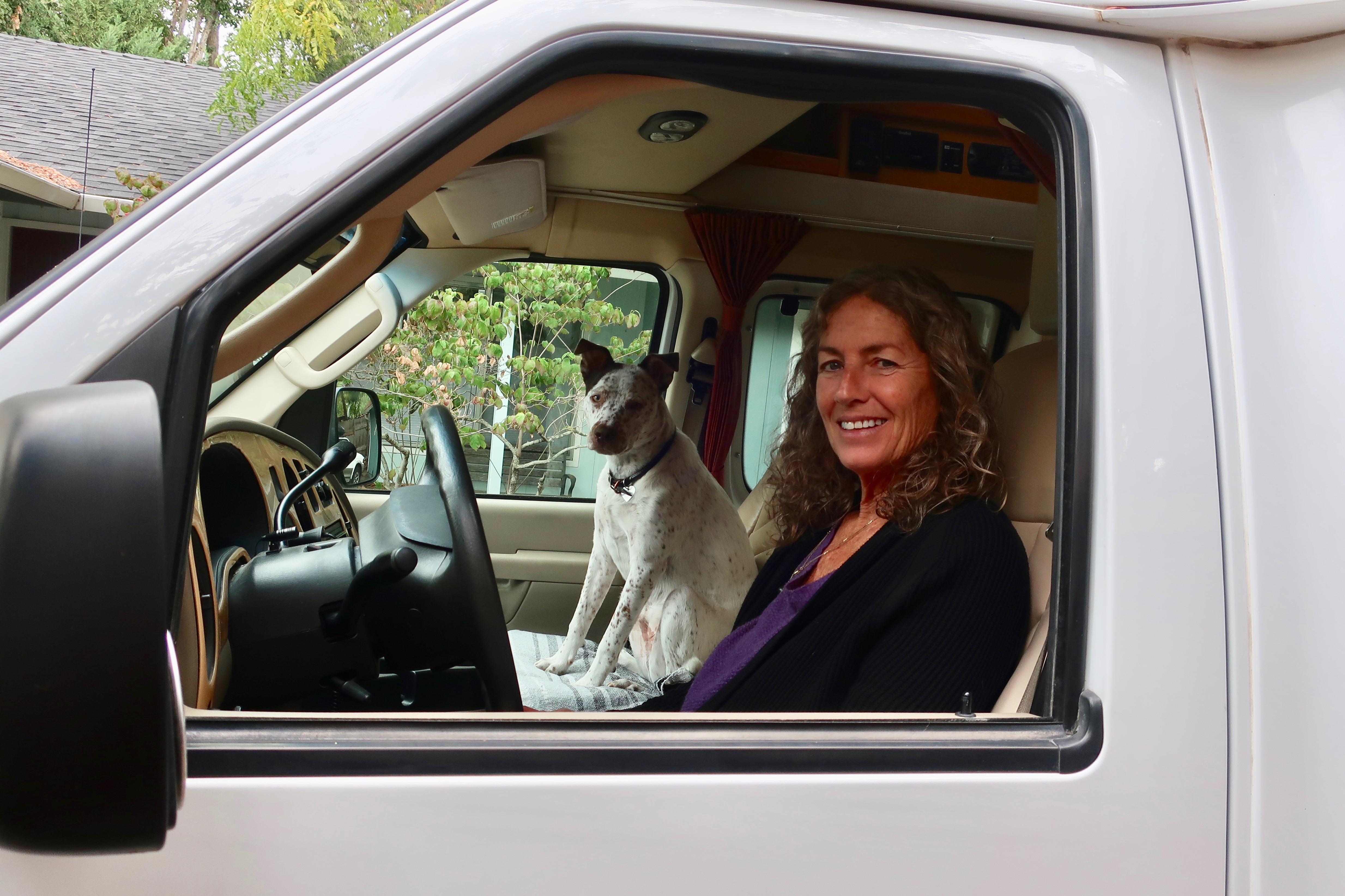
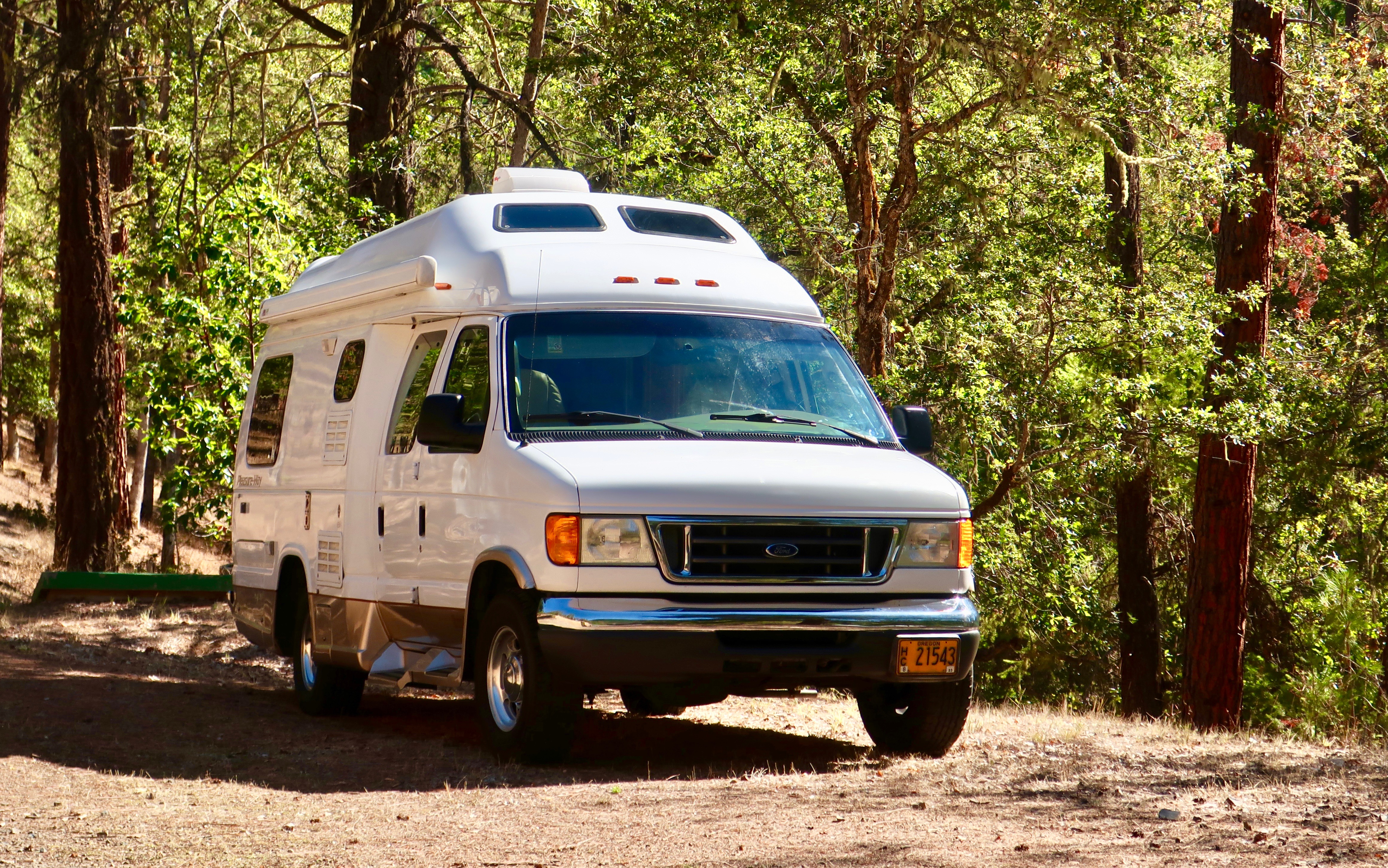
On Friday, we said a sad goodbye to our small RV, Quivera. We had had numerous adventures in her including making our way across the US several times, going to Alaska twice, and Burning Man at least five times. We retraced my 10,000 mile Bike Trek around North America in her with Peggy driving the whole time so I could take photos and make notes. Last summer, we hightailed it across the nation at the height of the pandemic so Peggy could attend a 70th birthday party organized by our kids on the Outer Banks of North Carolina. Three summers ago, Peggy used her as a backup vehicle for me as I did my 750 mile backpack trek down the PCT to celebrate my 75th. Quivera has found a great new home with Terry and her dog Benny in Ashland, Oregon, however. And has many more adventures ahead. As do we. Grin.
I’ve been a fan of Jimmy Buffet’s ever since I went to see him and his band, The Coral Reefer’s, at Harrah’s Lake Tahoe in the early 1980s. As I recall, we even had a ‘reefer’ (or three) in preparation for the concert. By we, I mean Tom Lovering, his Aussie buddy, Trevor, and me. It was a guy’s night out. Cheese Burger in Paradise and Son of a Son of a Sailor are still floating around in my mind. As is Margaritaville.
I’ve been thinking about another one of his songs from that era, Changes in Latitude, Changes in Attitude, over the past three months I’ve been taking a break from blogging. These lyrics in particular struck a chord:
Oh, yesterdays are over my shoulder,
So I can’t look back for too long.
There’s just too much to see waiting in front of me,
and I know that I just can’t go wrong
with these changes in latitudes, changes in attitudes…
I could hardly blame you for thinking, “At 78, there is a lot more over Curt’s shoulder than there is waiting in front of him.” But Peggy and I don’t view things that way. Life is an adventure to be lived— one day at a time— for as long as you can. So, when Peggy casually mentioned to me a few weeks ago that she was ready to wander again, I was right there with her. We did that in 1999/2000, taking a year off from work to travel extensively in North America for a year. And we did it again in 2008 when Peggy retired. That time it was for three years.
There is something incredibly freeing about life on the road, as many of you who read this blog know from your own travels. Each day brings something new to see, to experience and to learn. Everyday life and concerns fade into the background. While we have travelled using just about every mode of transportation possible over the years (minus the four-legged type), our North American road trips were accomplished in two different Pleasure Way vans, Xanadu and Quivera.
Our goal this time will be to do a more thorough job of exploring North America than we have in the past— traveling relatively short distances to the next interesting/beautiful location, settling in for 1-3 weeks, and exploring the surrounding country. It will require a slightly different approach. We are buying a small trailer and have already bought a new pickup to pull it. The trailer will serve as our base. The pickup will serve as our exploration vehicle. It even comes with 4-wheel drive and off-road capacity! The trailer is designed for either living in campgrounds with hookups or boondocking (living off the grid) with solar power.
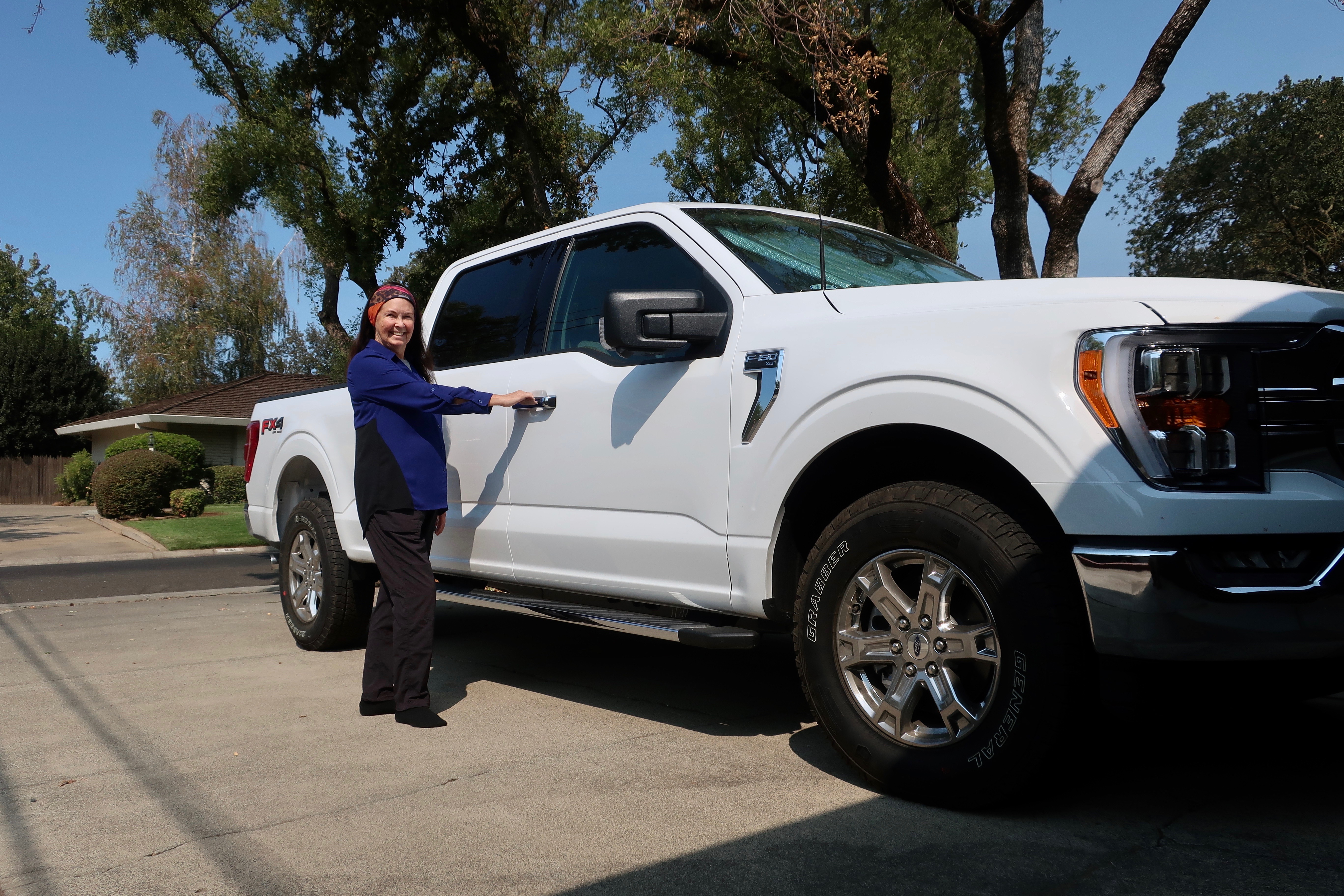
As for our schedule, we have yet to decide how long we will be on the road each outing before we return to our home base. Neither have we decided where each trip will take us but we are thinking warmer when it is cold up north and cooler when it is hot down south. Both Canada and Mexico will be included in our plans depending on conditions. Our goal will also be to avoid some of the worst problems associated with global warming. Anyway, I’ll keep you posted as our plans develop. And, of course, you will be invited to travel with us as I blog along the way.
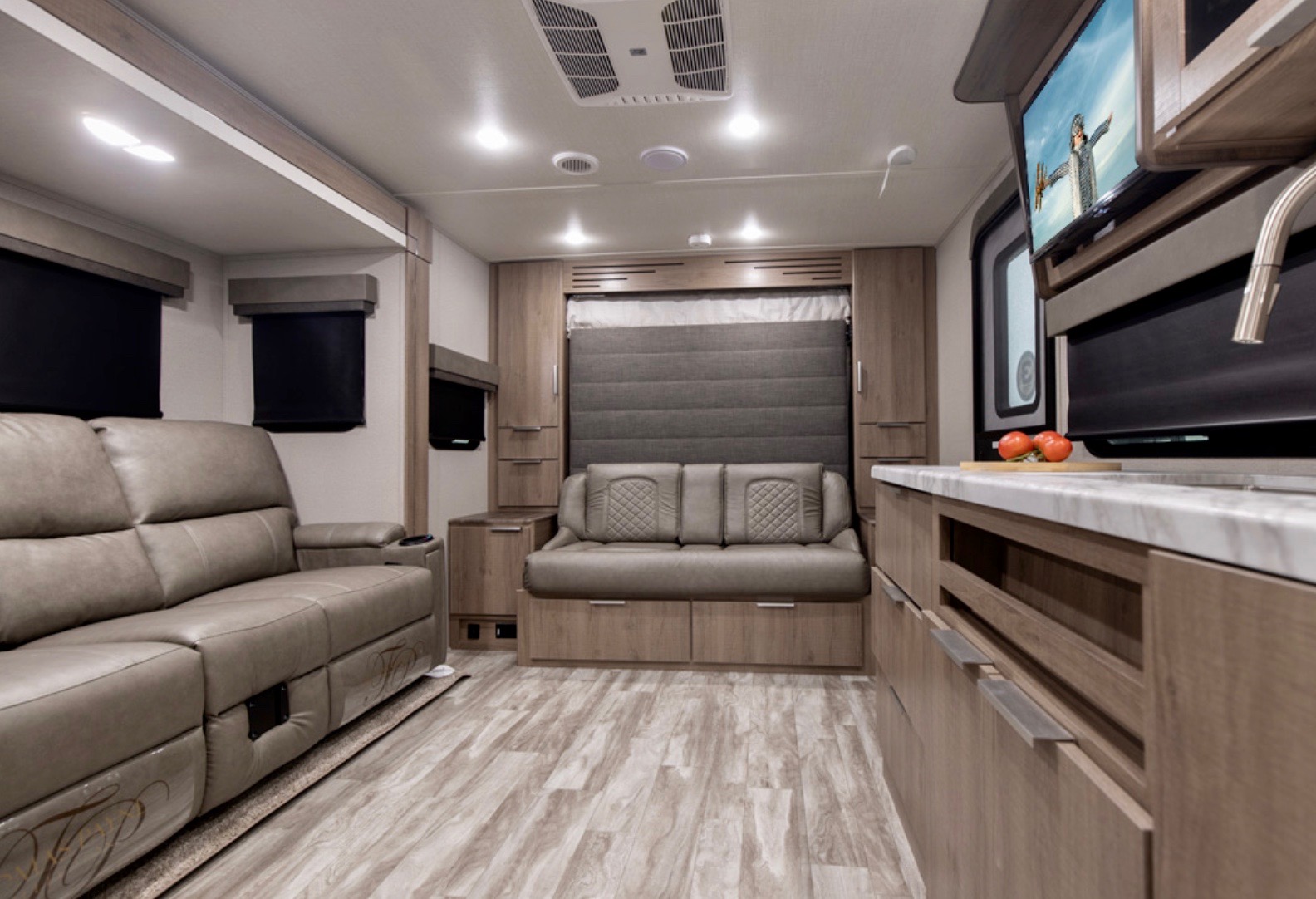
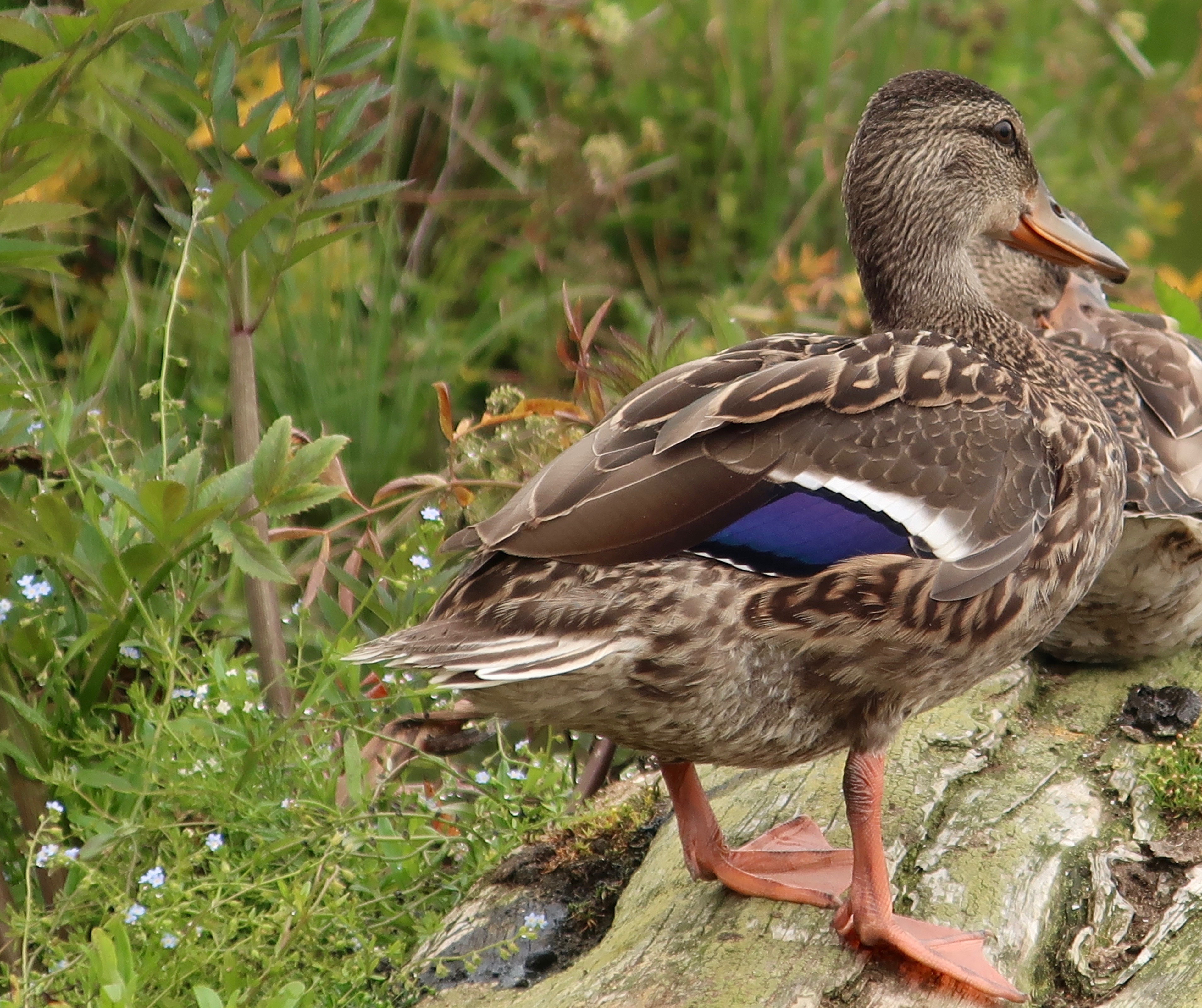
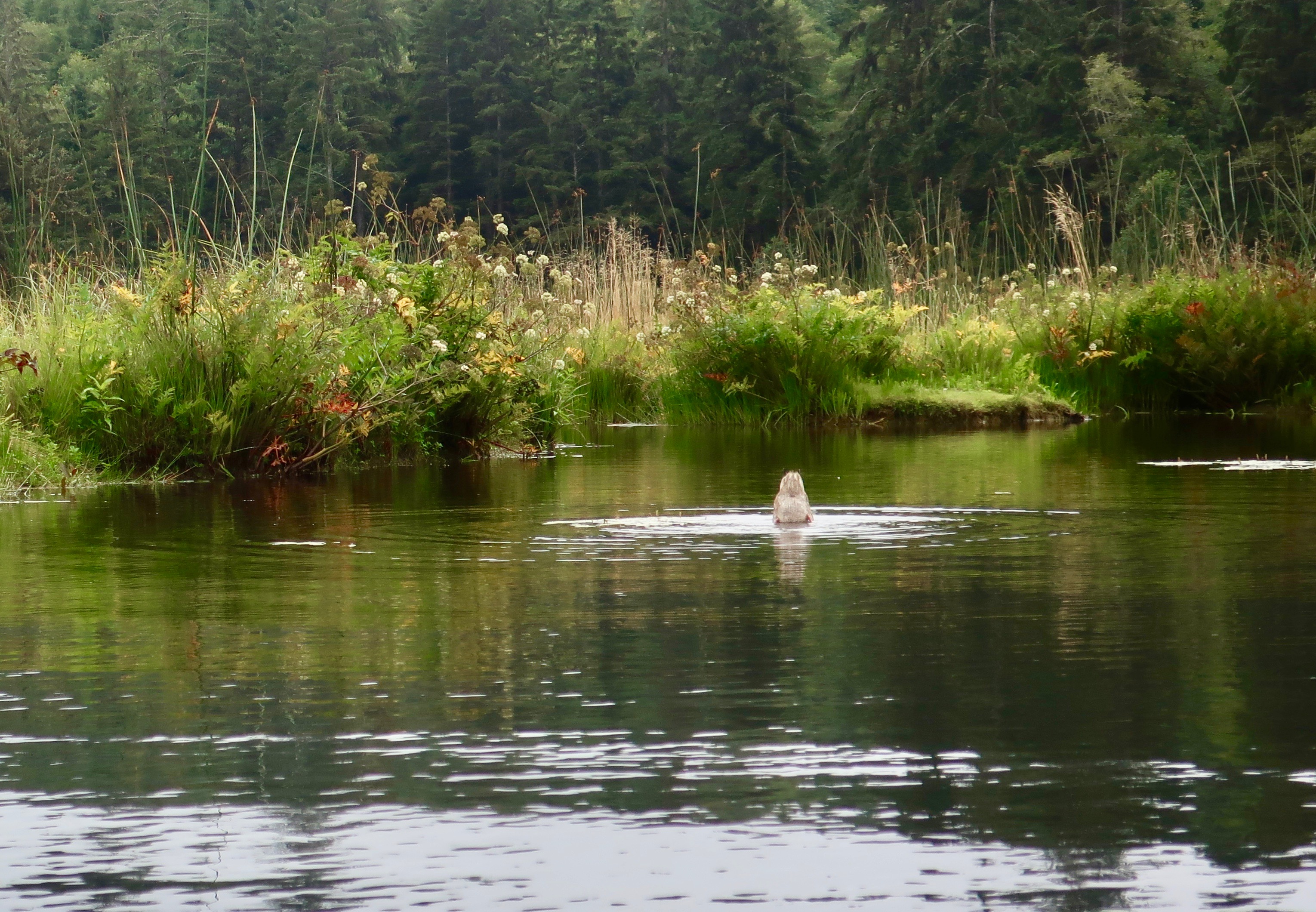
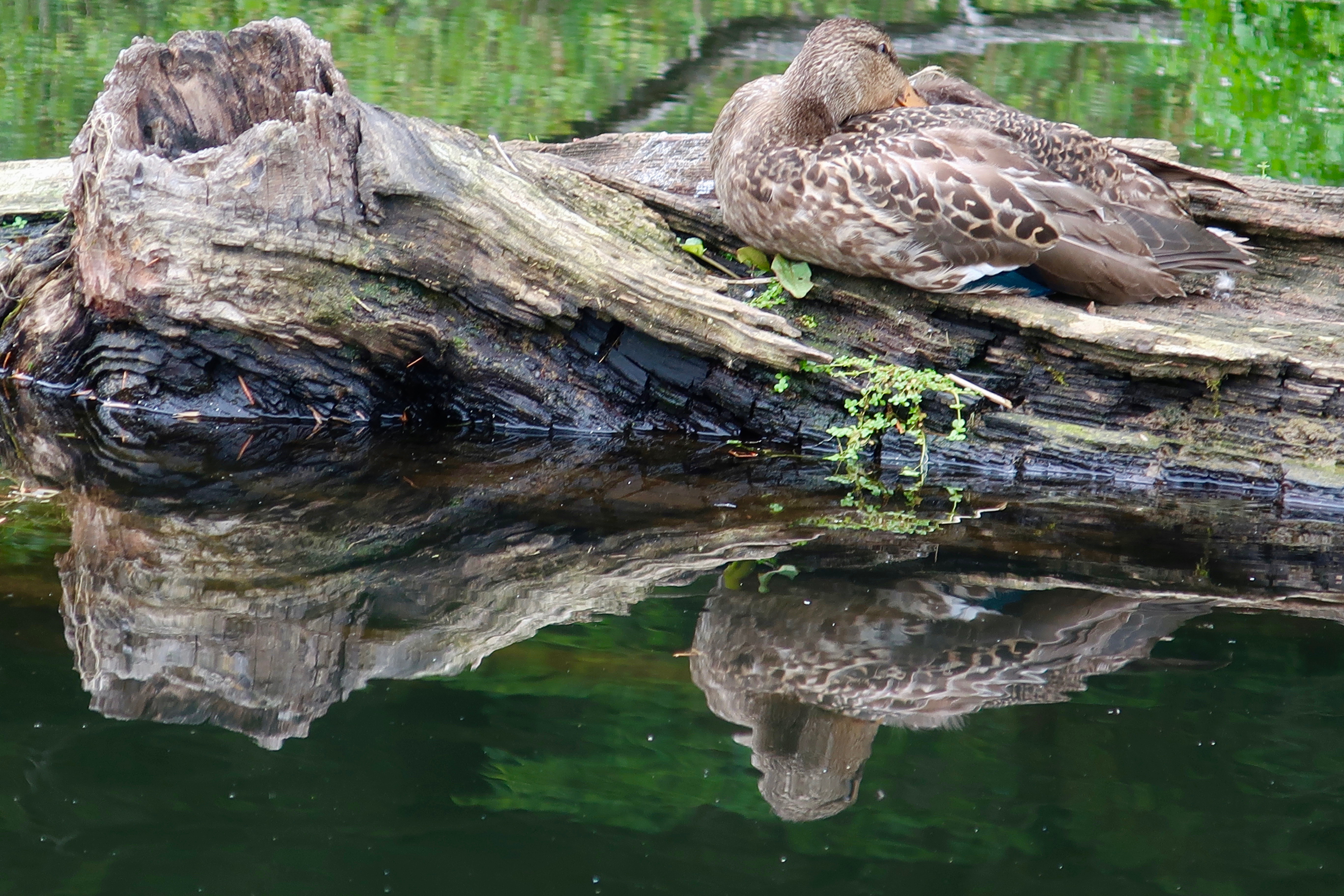
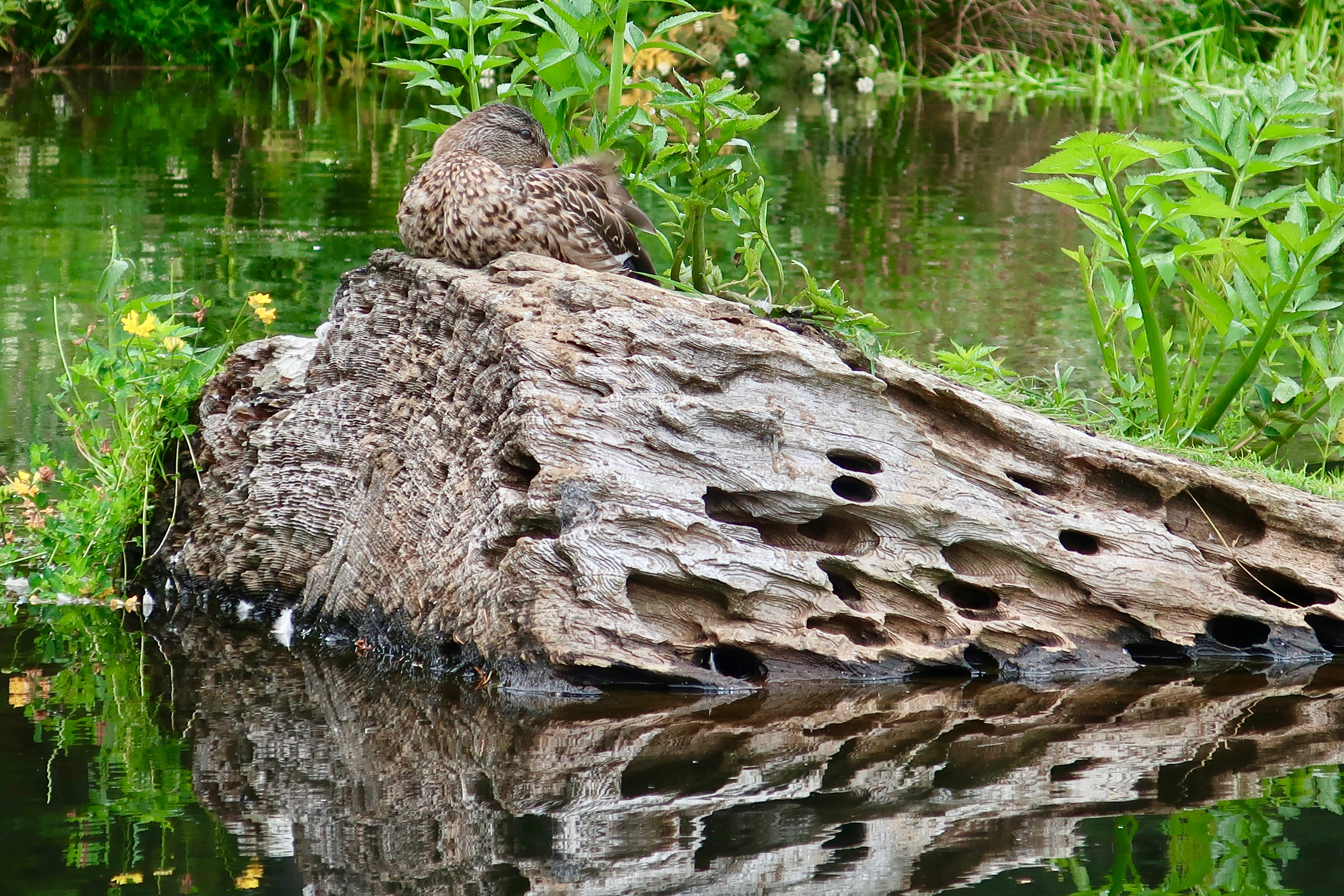
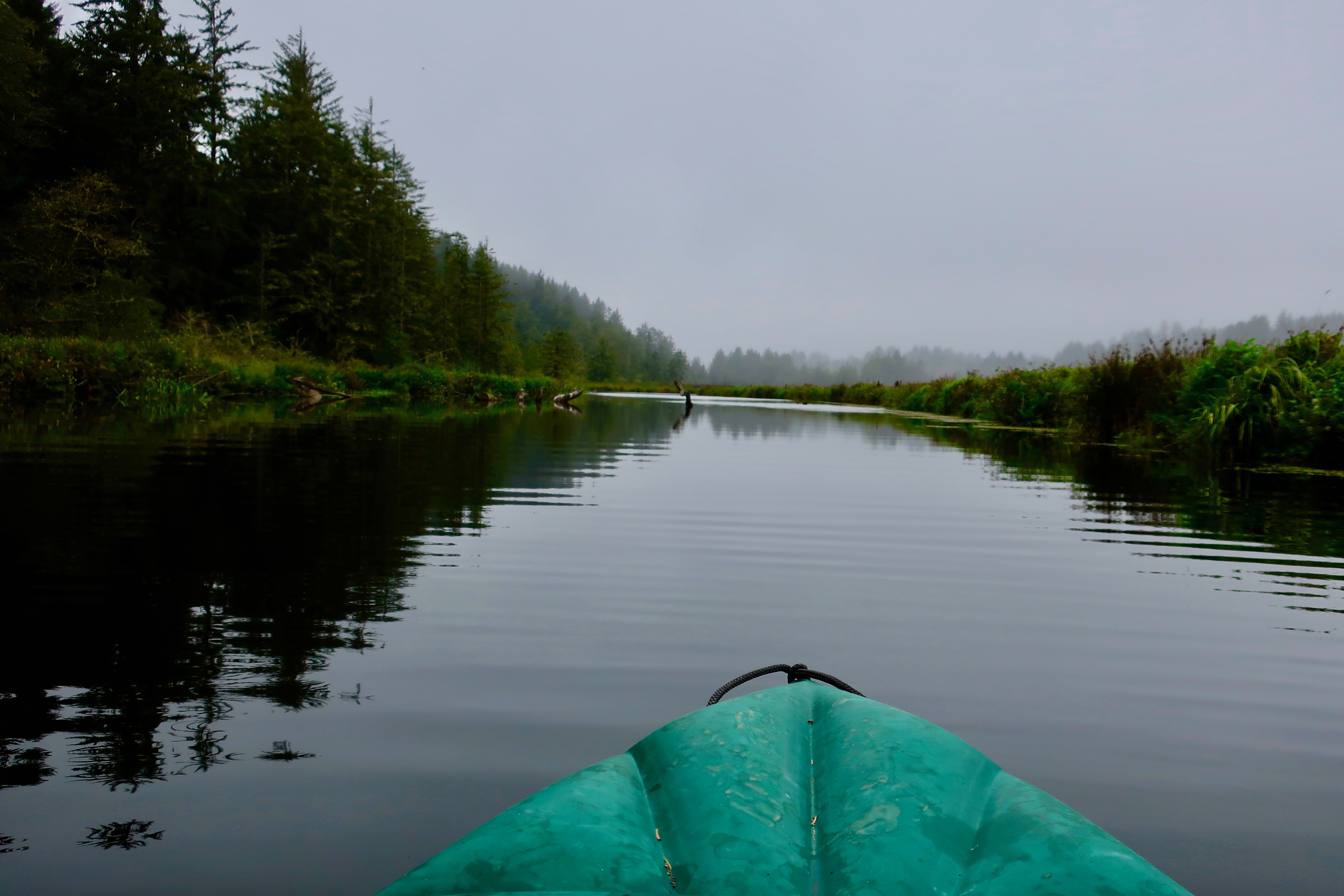
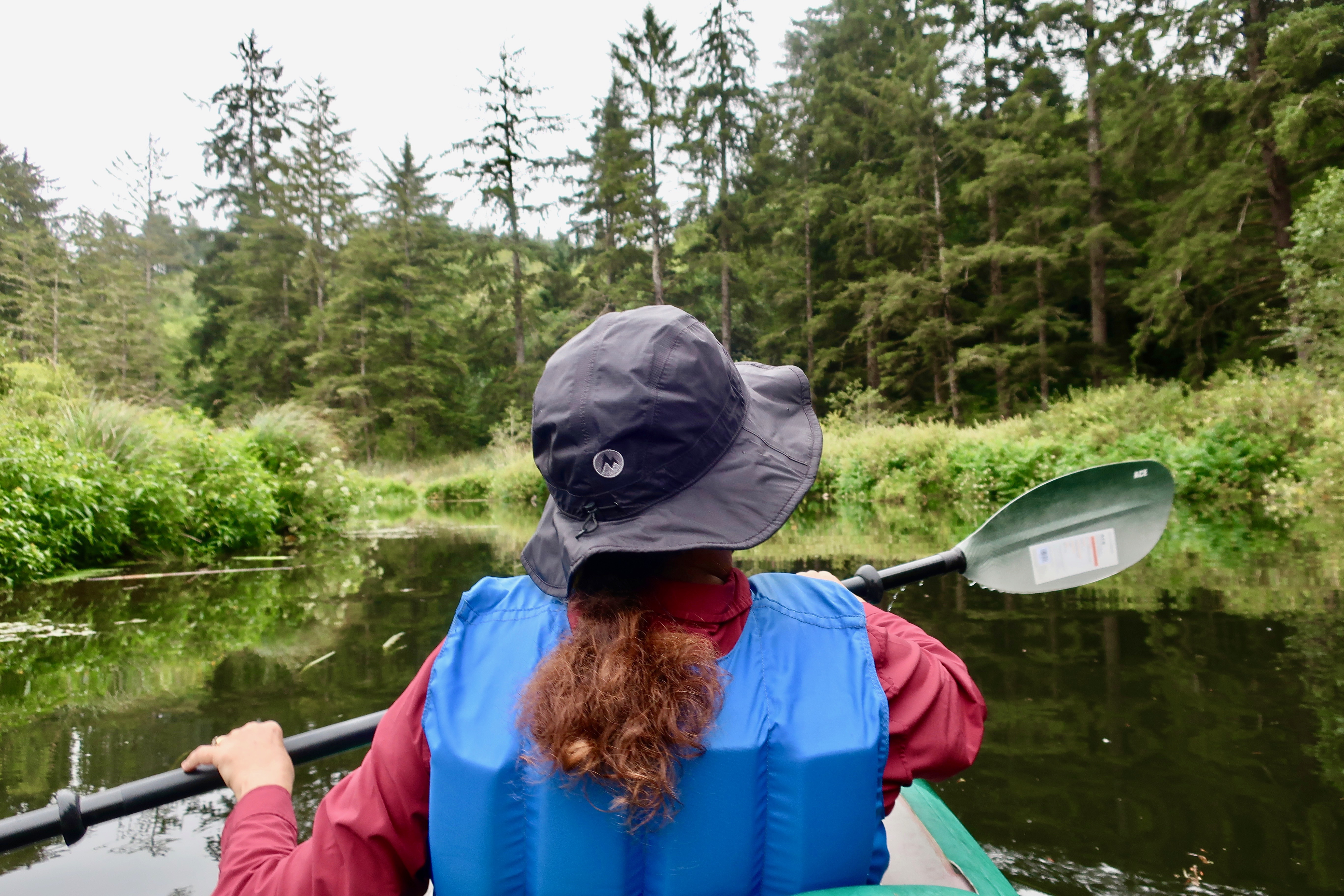
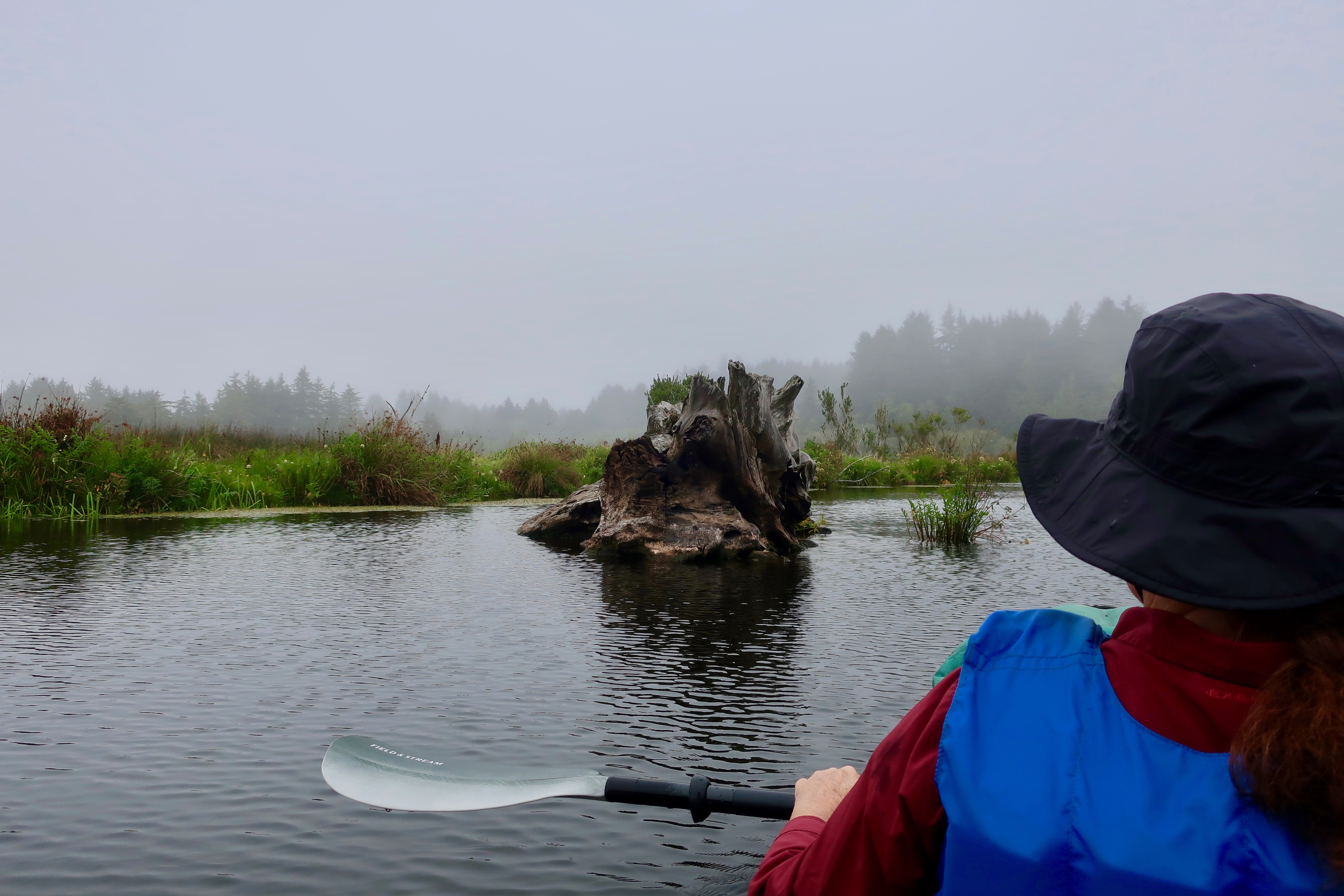
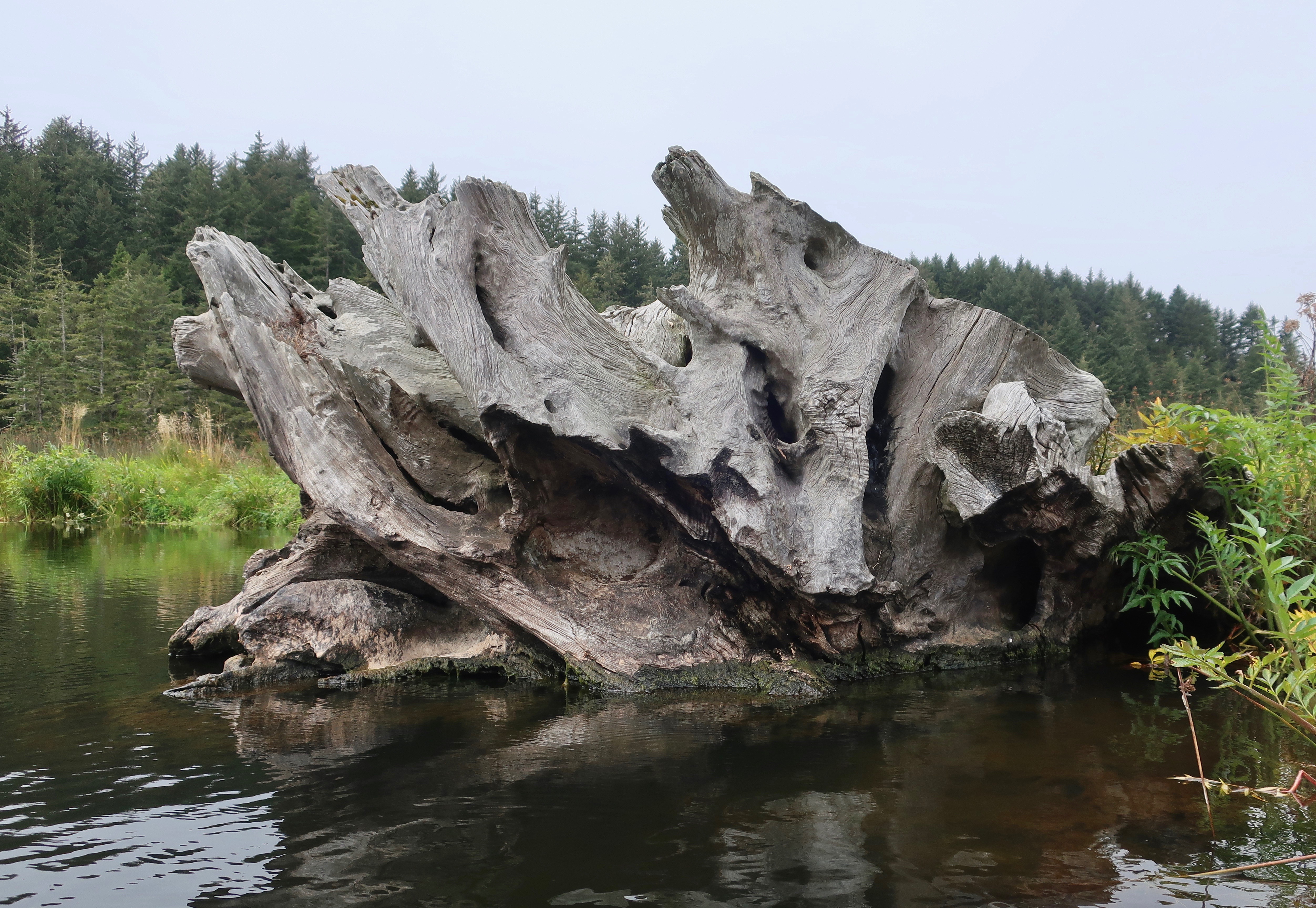
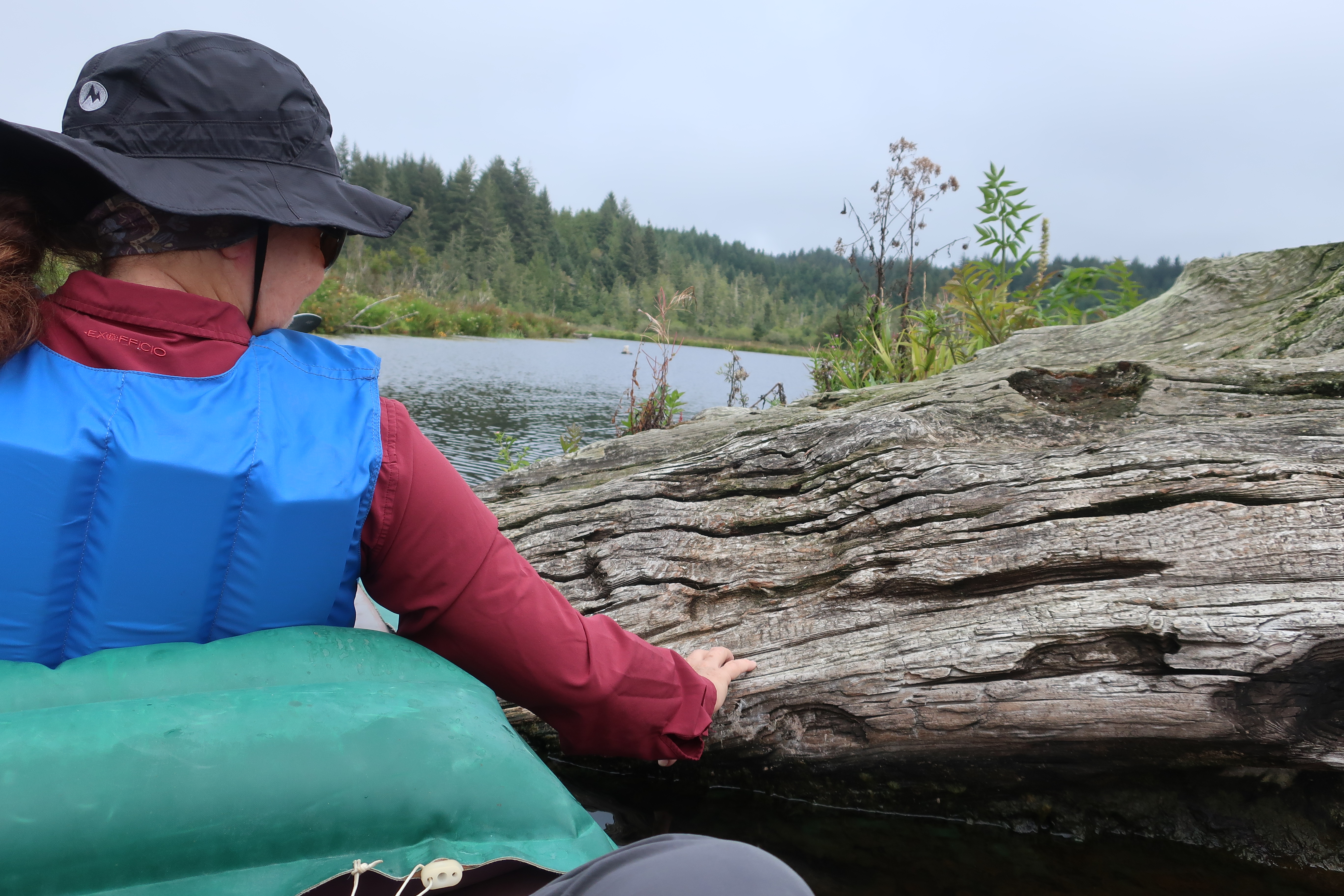
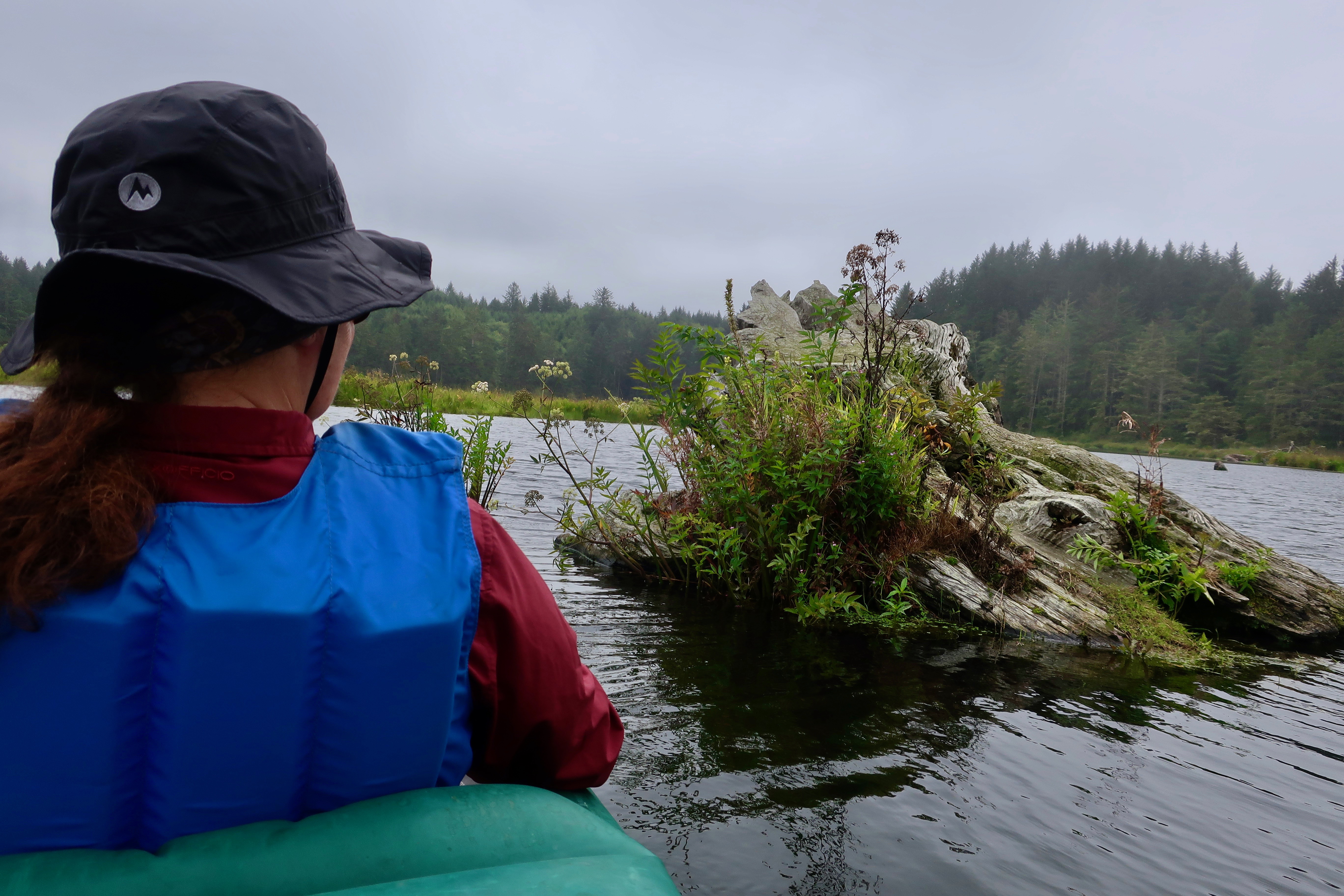
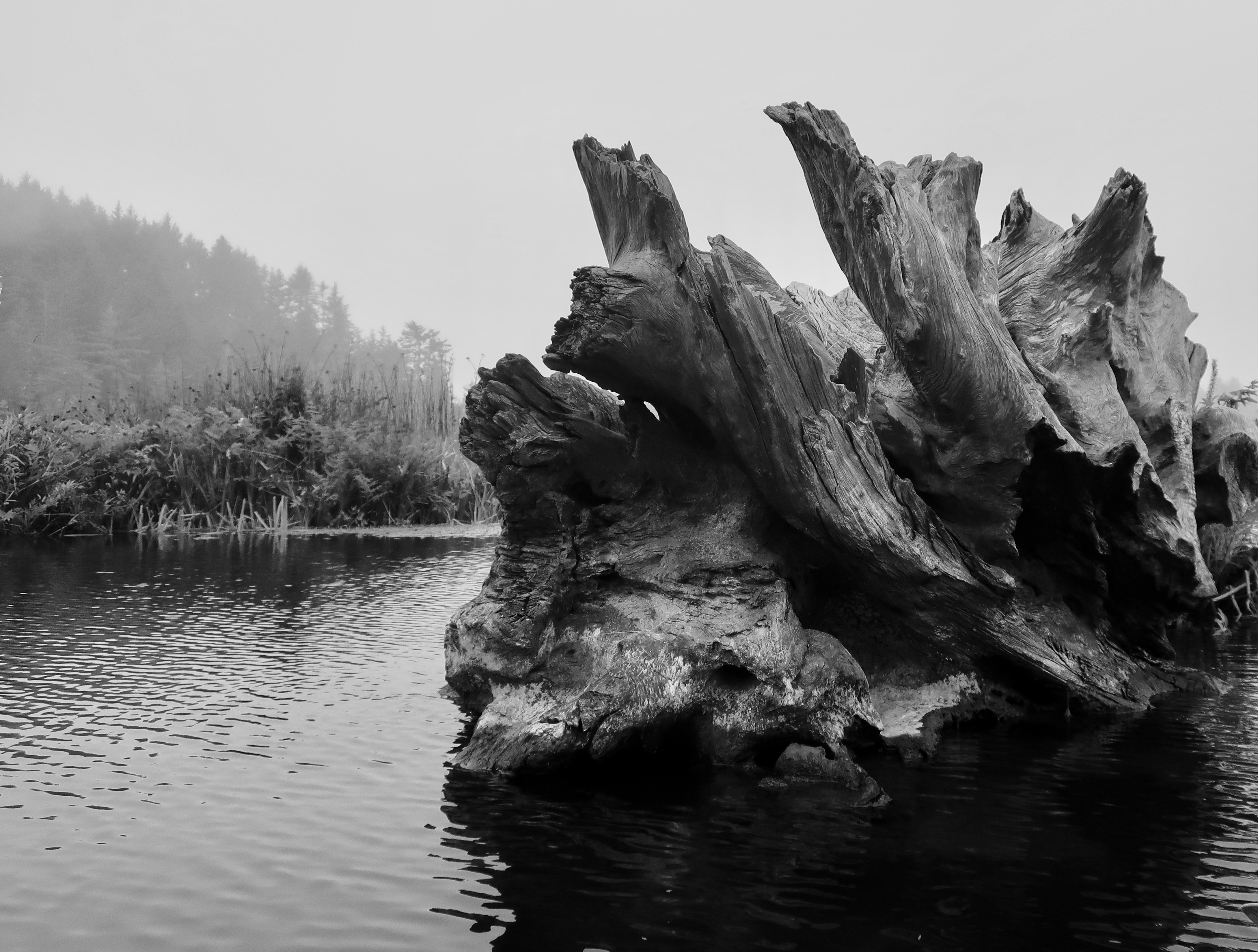
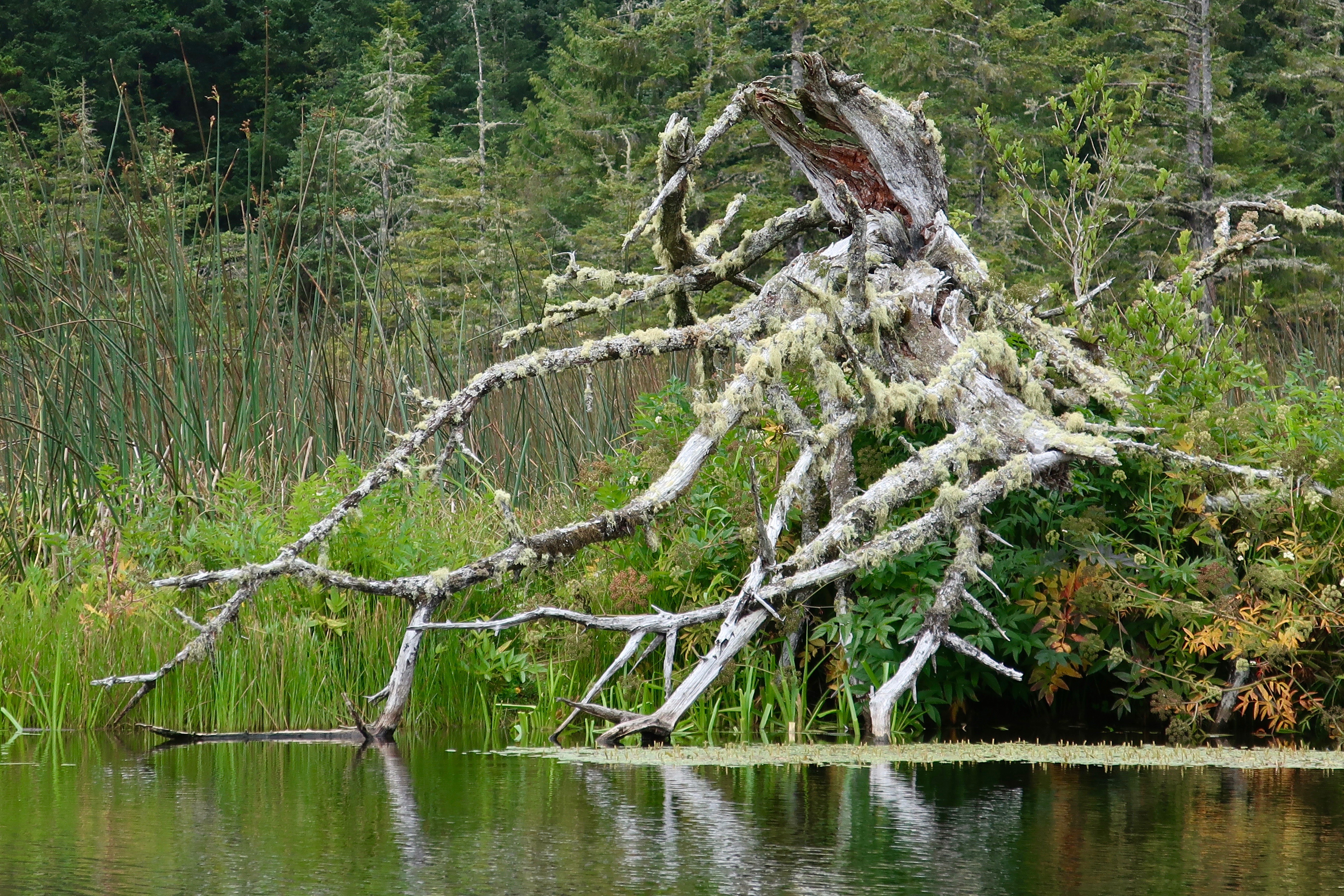
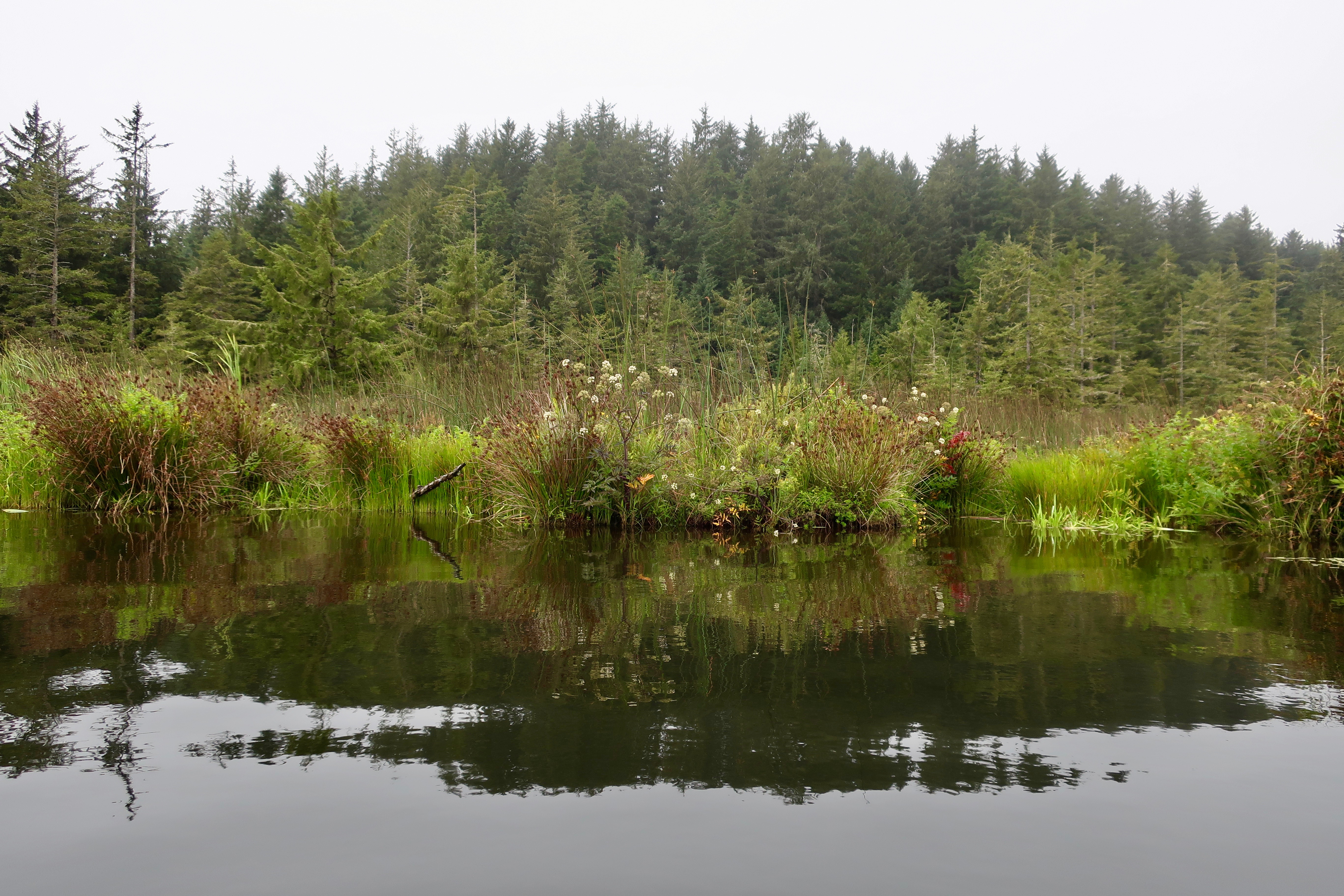
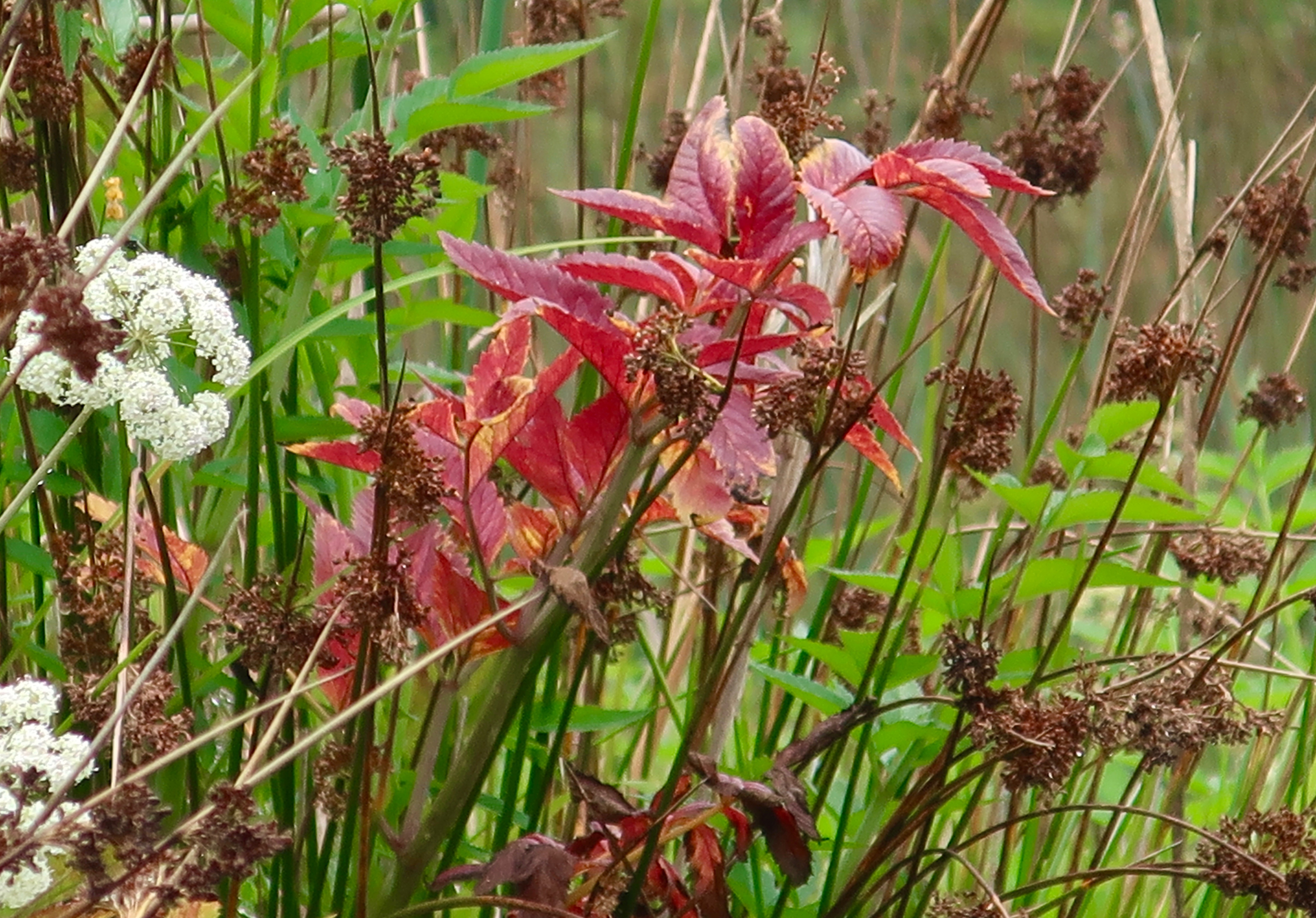
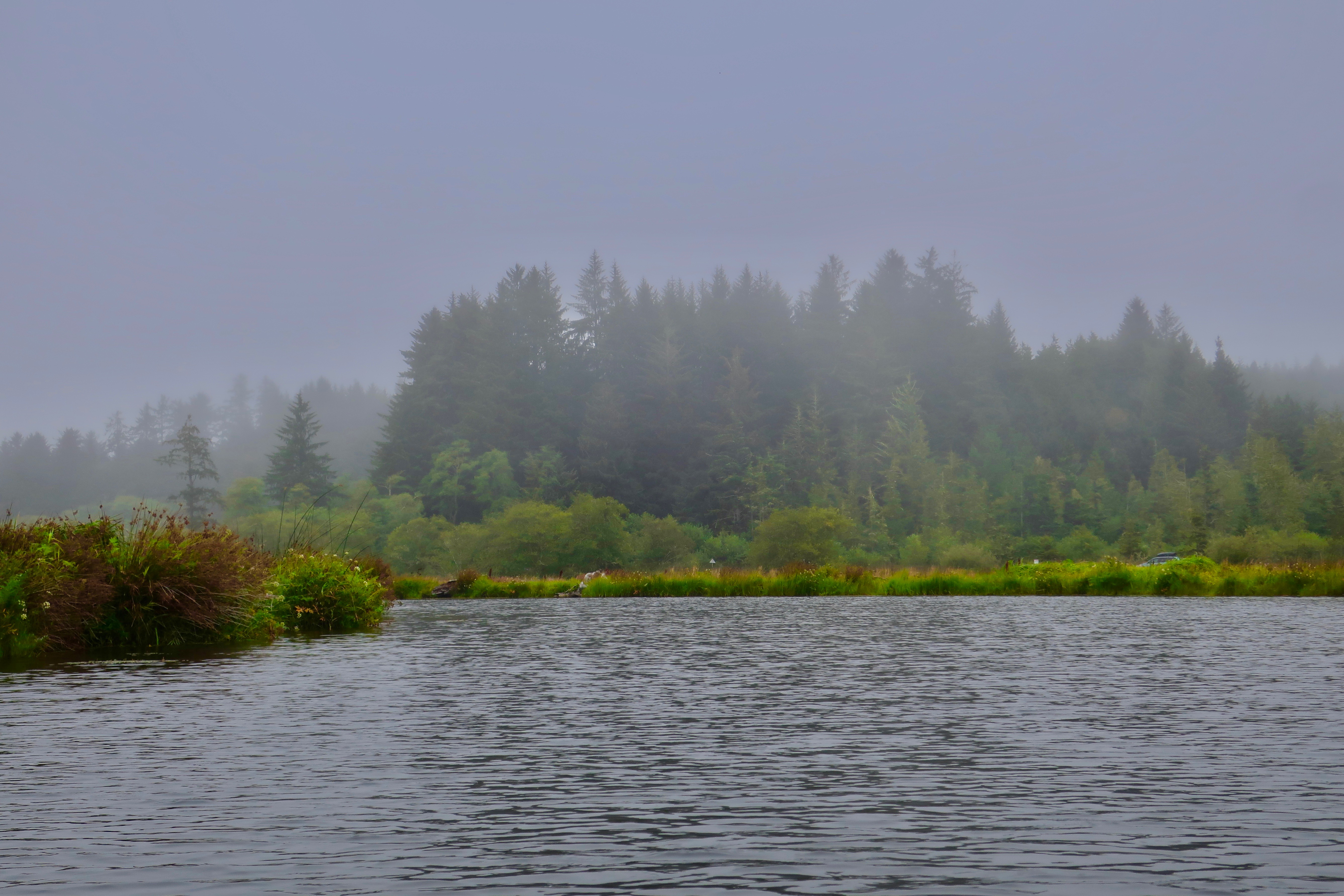
This is one my occasional blogs I am posting as I have taken a break from blogging over the summer. Next up, I will do a post on the impressive Alsea Bridge across Alsea Bay in Waldport. Let me just say here, Oregon takes its bridges seriously. After that I’ll touch on what Peggy and I have decided over the summer. It will include our being on the road much more exploring North America. Change is in the wind.
 Wandering through Time and Place