An Old Dog Learns New Tricks in Alaska: California’s Proposition 99

Alaska's strong anti-tobacco legislation in the early 80s would help inspire California's Proposition 99 in the late 80s.

The Alaska Lung Association Board recruited me to serve as its Executive Director in 1983. By then I had learned I don’t do boss well. Wisdom would have been ‘just say no,’ but I jumped at the opportunity. I wanted to go play in the woods.

I soon found I was up to my lungs in tobacco politics.

The organization was involved in a major legislative battle to pass a statewide smoke-free law. In addition to requiring restaurants to set aside smoke-free areas and public meetings to be smoke-free, it eliminated smoking in public and private workplaces.

The fight for non-smoker’s rights ‘had come a long ways, baby,’ to quote an old cigarette ad,  but it hadn’t come that far. If we succeeded, Alaska would have the strongest statewide law in the nation.

Heart, Lung and Cancer had taken on an Alaskan size challenge. The incidence of tobacco use in the state was high and Alaska was a do-your-own-thing kind of place. Individual freedom was stitched into the state’s psyche with steel thread.

Telling Alaskans when and where they could smoke might get us shot.

I knew that a majority of the Association’s resources and every skill I had picked up in community organizing and lobbying would be called upon. I also knew we couldn’t succeed by ourselves. We set out to expand our small coalition of Heart, Lung and Cancer, develop a hard-hitting case statement, initiate a media campaign, and triple our lobbying efforts.

One lobbying technique was particularly effective. Alaska’s small population meant the Doctors on our Board and in the Thoracic Society knew every doctor in the state. They committed to contacting the physicians of the individual legislators and having them make personal calls urging support.

When doctors are committed to prevention, they can be a powerful force for public health.

I found myself spending a lot of time in Juneau, the State Capitol, and on the phone talking to Legislators. One call to a rather crusty Senator from the bush was particularly amusing.

“If you had called six months ago I would have told you to go to hell Curt,” he informed me. “But I had a heart attack and my Doctor made me quit smoking. If I can’t smoke, I don’t see why anyone else should be able to either.” It reminded me of my early involvement with GASP in Sacramento.

I laughingly thanked him for his support and was about to hang up when he told me he had another story to share.

“About a month after I quit smoking I noticed my urine really smelled bad. It worried me so I decided to call my doctor. ‘Doc,’ I said, ‘since I’ve stopped smoking my urine has started to stink something terrible.’”

“Do you know what he said to me?” the Senator asked, letting the tension build. I confessed I didn’t have a clue.

“The Doc said, ‘Senator, your urine has always smelled terrible. You couldn’t smell it because you smoked.’”

Working in Alaska did have a particular flair.

After several months of intense effort the bill was ready for floor consideration. I tallied up our committed votes and knew we could win. There was one final hurdle; the Chair of the Senate Finance Committee was holding the bill hostage. She would only let it out of the committee if we agreed to remove the private workplace.

It was one of those damned if you do damned if you don’t type decisions and the clock was ticking. If I said no the bill would die for the year. We could come back but we would have to start all over. If I said yes our legislation was substantially weakened. I made a command decision and said yes.

Legislation is almost always a matter of compromise and we would still have one of the strongest statewide laws in the nation. I also believed that time was on our side. Once Alaskans became used to breathing smoke-free air they would demand more.

The bill made it out of committee that morning and through the Legislature that afternoon. We were in business, almost.

Legislation is a two-part process, passage and implementation. If the agency charged with implementation doesn’t like the law or has other priorities, your victory can be rather shallow. Fortunately, the Department of Natural Resources had been assigned the responsibility. The staff was on our side but very, very busy.

I offered to save them some work and draft the implementation guidelines for consideration by their legal counsel. Surprisingly, they agreed. It was like turning the fox loose in the henhouse.

Needless to say, the Department came up with very strong and clear guidelines. Some of the weaker sections of the law had even been strengthened.

A few months later I was out in Nome on Lung business and needed lunch. Nome is where the Iditarod sled dog race ends and is about as close to the end of the earth as one can go. I walked into a very rustic restaurant. “Smoking or nonsmoking?” the waiter asked. Several nonsmoking signs were dutifully posted.

Maybe, in the overall scheme of things, the fact that a small restaurant in remote Alaska had a nonsmoking section in 1984 was not of great significance, but it meant a lot to me… and it spoke strongly of the future of the non-smokers’ rights movement

A primary reason for our success had been the strong coalition we had put together. It seemed a shame to let it disband. I suggested we take on another challenge, doubling the tax on cigarettes from $.08 to $.16 and using a portion of the funds to support anti-tobacco and other health education efforts.

The Healthy Alaska Coalition, fresh off of its victory, eagerly agreed. So did the Lung Board. Our challenge this time was that Alaska hadn’t passed any new taxes in years. Quite the opposite, the State gave money back to its residents each year from oil revenues.

As it turned out, passing the tax was relatively easy in comparison to our smoke-free legislation. Again, the Coalition deserved much of the credit. We were even able to add strong Native American backing since their leadership felt the health promotion opportunities provided through the revenues would be valuable.

Another reason for our success on both bills was a lack of opposition from the tobacco industry. Perhaps Alaska was too far off and had too small a population to be of much concern. As far as I know, only one legal firm received a small retainer to represent tobacco industry interests.

Two years later when I was working to push similar tax legislation through the California Legislature, the tobacco lobbyists outnumbered the Legislators, or at least they seemed to. But that’s a story for another blog.

My Alaska experience had reconfirmed my belief in the power of the non-smokers’ rights movement. And, of equal importance, it had introduced the germ of a new idea: using tobacco tax dollars to fund anti-tobacco programs. I was an old dog who had learned new tricks.

I was prepared to participate in creating California’s Proposition 99… but didn’t know it.

A Phone Call Forces Me to GASP: California’s Prop 99

The roots of California's Proposition 99, the Anti-Tobacco Initiative, reached back into the 1970s when the American Lung Association of Sacramento teamed up with GASP, the Group Against Smokers' Pollution, to pass one of the nation's first non-smoking ordinances. (GASP would eventually become Americans for Nonsmokers' Rights.)

The path that led me into the tobacco wars had enough twists and turns to scare a contortionist snake out of his skin. There are lots of stories. Two are particularly relevant to the creation of California’s Proposition 99, the Anti-Tobacco Initiative.

I was recruited to become Assistant Director of the American Lung Association of Sacramento in 1971. The organization wanted my environmental expertise, not my anti-tobacco fervor. In fact I smoked a pipe. I loved my pipe. “No problem,” the Executive Director told me. He, his secretary and almost everyone else in the organization smoked. It was almost required.

One day in 1972 I was sitting in my office counting Christmas Seal Dollars and happily puffing away when I got the call that would lead me to sacrifice my pipe and eventually advocate that Prop 99 include nonsmokers’ rights.

“Mr. Mekemson” the caller began, setting off a red flag. I always get nervous when someone calls me Mr. Mekemson.

“Yes, this is Curtis,” I replied. “What can I do for you?”

“My name is Alice Fox, Mr. Mekemson. Some friends and I would like to meet you.”

Alice Fox, Alice Fox, Alice Fox… the name raced through my mind. I had heard about her recently. Then it came to me. I had read about Alice in the Sacramento Bee. She was leading a charge to shut down a nude beach on the American River. But why would Alice call me. I was a Seventies type of guy.

“Exactly what would you like to meet about,” I asked. Now was the time to be very careful.

“Some friends and I would like to talk with you about how tobacco smoke impacts our health,” she replied.

I relaxed. I was on safe ground. “There is a great deal of information that smoking causes lung disease,” I responded in a positive tone. “I would be glad to send you some pamphlets on the medical evidence. I also have a brochure that provides tips on quitting.”

“No,” a somewhat exasperated Alice Fox shouted in my ear, “we don’t smoke. It is other people’s smoke that makes us sick.”

There was a pregnant pause on my end of the phone. If Alice heard me coughing, it may have been because I had swallowed my pipe. Not knowing what to say, I stumbled into agreeing to have lunch with her the following week.

The die was cast. But first I tried to persuade my boss, Larry Kirk, that he should go. He was, after all, the Executive Director.

“No way,” Larry said with a nervous laugh as he took a deep drag. They had specifically asked for me and I was stuck with it. There was nothing to do but square my shoulders, put my pipe aside, and dutifully go forth for Mother Lung.

I expect the nonsmokers smelled the pipe smoke on me 20 feet away. We met at a small restaurant in the old Public Market at 13 and J Street. The Market would eventually morph into a Sheraton Hotel.

“We are so glad you were willing to meet with us,” Ed Randal, their leader greeted me. “We are having a difficult time persuading people that second-hand smoke makes us sick.”

He handed me his card. It read, “I don’t smoke but I chew. If you don’t blow your smoke on me, I won’t spit on you.”  I immediately understood why Ed might have difficulty selling his cause.

“Not too subtle,” I noted.

“We can’t afford to be,” was the response. Over the next hour I was educated as to why. Gradually, I became convinced that second-hand smoke did indeed make them sick. They all had compelling stories.

I also came to understand something of the frustration they felt in convincing society in general and smokers in particular that second-hand smoke was an issue. In 1972 it was a message far ahead of its time. Most smokers assumed they could smoke whenever and wherever they pleased. I know I did. The vast majority of nonsmokers went along with the idea. It took guts to challenge the norm.

I also had an ‘aha’ experience. I started out being resentful about leaving my pipe behind but over the hour my attitude began to change. These folks shouldn’t have to breathe my pipe smoke.

How many other people had my thoughtlessness harmed?

The question had a strong impact on me. Eventually it would lead me to give up smoking. This was something that neither my knowledge of health effects nor my responsibility as a health professional had been able to accomplish.

As a result, I became convinced that we had a powerful new weapon in our fight against lung disease. If I used myself as an example, “Please don’t smoke around me” was as effective in discouraging tobacco use as it was in protecting the nonsmoker.

Somewhat to my surprise, I volunteered to help Ed, Alice and Company in their effort. An organization called GASP, the Group Against Smoking Pollution, had been set up in Berkeley and the local folks wanted to establish a chapter in Sacramento. I offered the Lung Association for meetings and myself as staff backup. Before we broke up for the day, we had agreed on holding a general membership meeting the next month.

I can’t say that Larry was enthusiastic about my offer or conclusions. A surprising number of Lung Execs smoked and were no more prepared to accept nonsmokers’ rights than smokers in the general public. Mainly they saw their role with tobacco as discouraging young people from starting to smoke.

But Larry had hired me as his assistant because he respected my instincts and judgment. Reluctantly, he agreed to have Lung support GASP. But it would be my baby, not his.

So we set about organizing a meeting. Alice and Ed corralled their friends and I had a small article placed in the Bee. We came up with an agenda and refreshments. I warned our organizing committee not to expect much the first time out. Ten people and a few ideas for expanding membership would be a roaring success.

Fifteen minutes before the meeting was to start the room was packed. Apparently, I was the only one surprised. As we went around the room for introductions two things became apparent. First, this was a broad-based group of people. We had health professionals, a couple of lawyers, several business people, housewives, a househusband, an electrician, and others.

Second, everyone had stories to tell and they were ecstatic they had empathetic listeners. I felt like I was in the middle of a revival, which is often the atmosphere created by grassroots organizations.

Once we worked through the preliminaries and had a semblance of order, I facilitated a brainstorming session on what we might do to create awareness of non-smokers’ rights in Sacramento. If my pipe smoking was to be limited, I might as well have company.

The ideas came fast and furious. We should arm nonsmokers with fans to blow smoke back at smokers. We should print up and distribute thousands of the “I don’t smoke but I chew,” cards. We should picket grocery stores, clothing stores and restaurants. We should create an ordinance.

“Whoa,” I interjected, abandoning my facilitator’s role. “Let’s talk about the ordinance.”

Sacramento would be one of the first cities in the nation (or world) advocating such a law.

“Our chances of winning are slim,” I began, thinking out loud, “but that may not matter. The effort will generate great media coverage, probably more than all the other activities combined. Think of the awareness we will create.”

The idea was greeted with enthusiastic support. The newly formed Sacramento Chapter of GASP had a mission.

“I can take a stab at drafting the ordinance,” one of the attorneys volunteered.

“I know a reporter who will support us,” another offered.

“Anything you need,” another called out. We would not lack volunteers. As for myself, I agreed to set up meetings with members of the City Council. I knew most of them from my work in the environmental movement and had worked on several of their campaigns. We were off and running.

The ordinance seems rather tame now, but it was radical for its time. We targeted grocery stores, retail stores, restaurants and movie theaters. It was still the era when a newly purchased suit might smell like cigarette smoke and a harried shopper might inadvertently lose her ashes in the vegetable bin at the grocery store.

It didn’t take long for things to heat up. As we suspected, the press had a field day. Reporters didn’t necessarily agree with us, one of the smokiest atmospheres in town was the local newsroom, but controversy is the bread and butter of the media business. Imagine a smoker having to wait until he got outside of a grocery store to light up.

Each time the media ran a story, awareness increased. We were achieving our objective. Non smokers were learning it was okay to say “Yes, I do mind if you smoke,” and people who suffered adverse reactions from second-hand smoke were learning they weren’t crazy. We took every opportunity to educate the public and pound home our message to decision-makers.

And then a funny thing happened on the way to the forum. We won. A majority of City Council became convinced, as I had, that a significant number of nonsmokers were adversely affected by second-hand smoke.

Of equal importance, the local grocery store chains and clothing merchants let the decision-makers know they would prefer smoke free environments.

And finally, we had minimal opposition from the tobacco industry. It was several years before the industry fully realized the threat posed by the non-smokers right’s movement, or how dedicated the non-smokers’ rights advocates were, or how effective a small group of people can be in making change.

Sacramento had become a leader in the anti-tobacco movement and would continue to be over the next quarter of a century. While I moved on to other issues, the local Lung Association under the leadership of Jane Hagedorn and her Board of Directors became one of the strongest advocates for a smoke-free society in the United States.

Ten years later I would rejoin the Tobacco Wars, this time in Alaska.

One Million Lives and 86 Billion Dollars Saved… California’s Proposition 99

In the late 80s the tobacco industry mounted an "unprecedented campaign," to defeat California's Proposition 99, an initiative designed to increase the California tax on cigarettes by $.25 and devote a substantial portion of the funds to discouraging tobacco use. The Tobacco Institute recognized that the initiative posed one of the greatest threats to tobacco consumption it had ever encountered.

My friend Ken Lake sent me an article from the Sacramento Bee a few weeks ago. It reported on the latest results from California’s Proposition 99, a massive tobacco use prevention effort kicked off by a tobacco tax initiative passed by California voters in the late 80s.

According to the California Department of Health Services, an estimated one million lives and 86 billion dollars in health care costs have been saved because of prevention programs funded by the tax. California now has the second lowest incidence of tobacco use in the nation and the state is virtually smoke-free. It has the lowest incidence of cancer for 6 of the 9 cancers caused by tobacco use. Fewer teens smoke in California than any other state.

These figures are remarkable. How many times in history has a single act saved one million lives? How often do health care costs go down instead of up? And there is more, much more.

Tobacco use is the single most preventable cause of death and disease in America and a major factor in preventable death and disease worldwide. The revolution in disease prevention that took place in California is a revolution that has reverberated throughout the United States and around the world, a fact recognized by both the National Centers for Disease Control and Prevention and the World Health Organization.

As a result, the million lives and billions of dollars saved in California can be multiplied several times over on a national and global basis. Prevention works.

Credit for the success of Proposition 99 in the quarter of century since its inception goes to a cast of hundreds, if not thousands. Certainly the Tobacco Control Section of the California Department of Health Services and its dedicated staff have been critical but dozens of organizations, hundreds of staff people and thousands of volunteers have also played key roles.

In the beginning, however, in the very, very beginning, it was a handful of people in Sacramento who put the effort together and made the critical decisions that would allow Proposition 99 to become the revolution in prevention it has become.

I was privileged to be one of those people.

Over the next two months I will do a series of blogs that provide an inside look at what happened during Prop 99’s first critical months starting in September of 1986. It’s a story of how and why a small group of friends decided to take on one of the worlds most powerful, amoral industries in the cause of preventing the death and crippling disease caused by tobacco use.

It’s a good story, worth telling on its own merits. Greed, power politics, human emotion and sacrifice are all included. There’s even some humor. But I also want to make the point that a few dedicated and knowledgeable individuals can make a significant difference. It’s an important message for today’s world where ideology, ambition and greed triumph over working together in the common interest.

In my next blog I will tell the story  of Prop 99’s beginning and how I became involved. Believe me, I did not start out to become an anti-tobacco warrior.

My Eyes, Ears, Nose and Mouth Are Clogged with Dust and 5000 People Don’t Have a Clue Where Camp Is… Surviving Burning Man

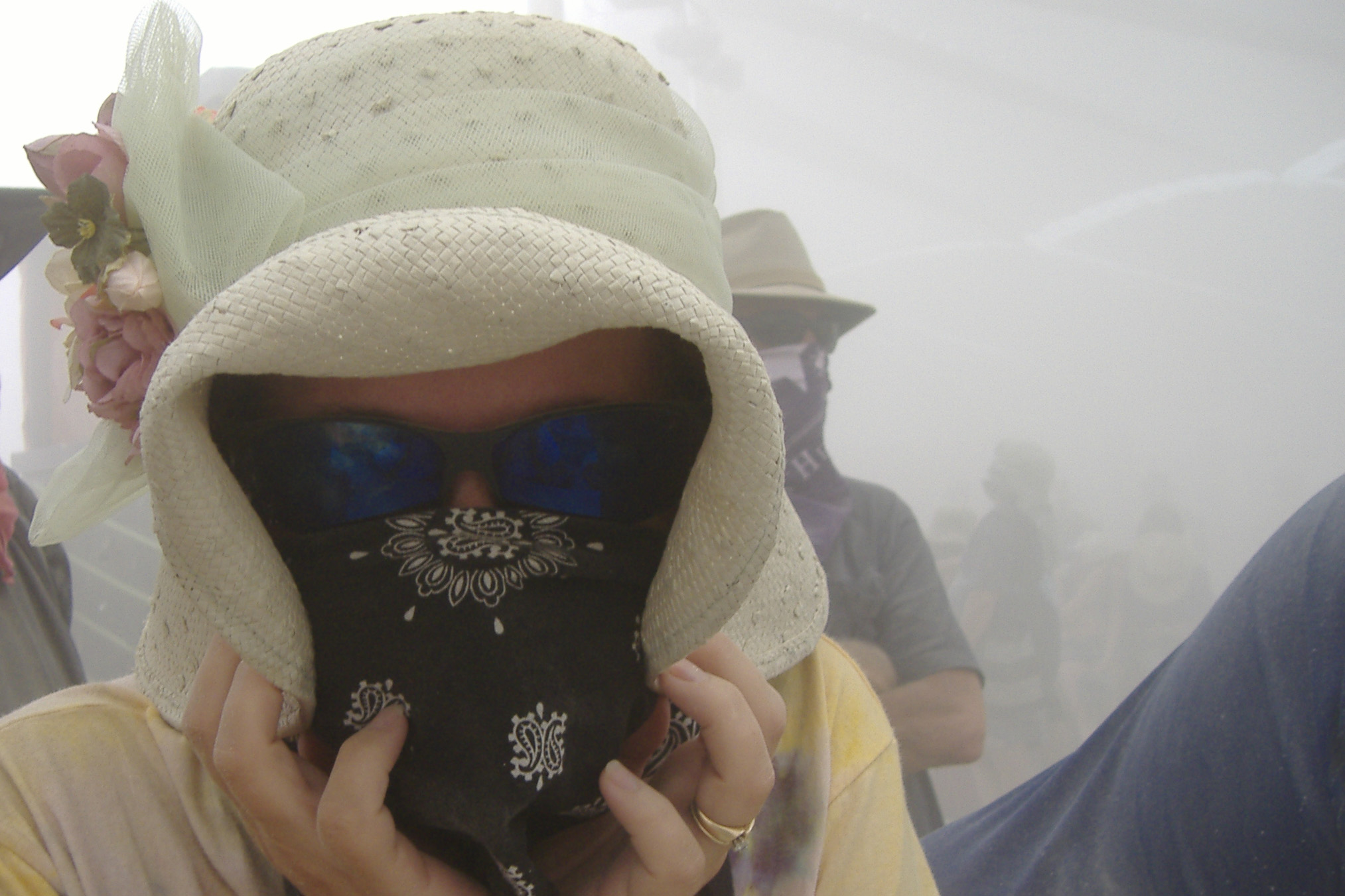
Radical Self-Reliance is the primary catch phrase at Burning Man. This is my "Bring on the dust storm" outfit. A painter's mask works better but when your Burning Man name is Outlaw...
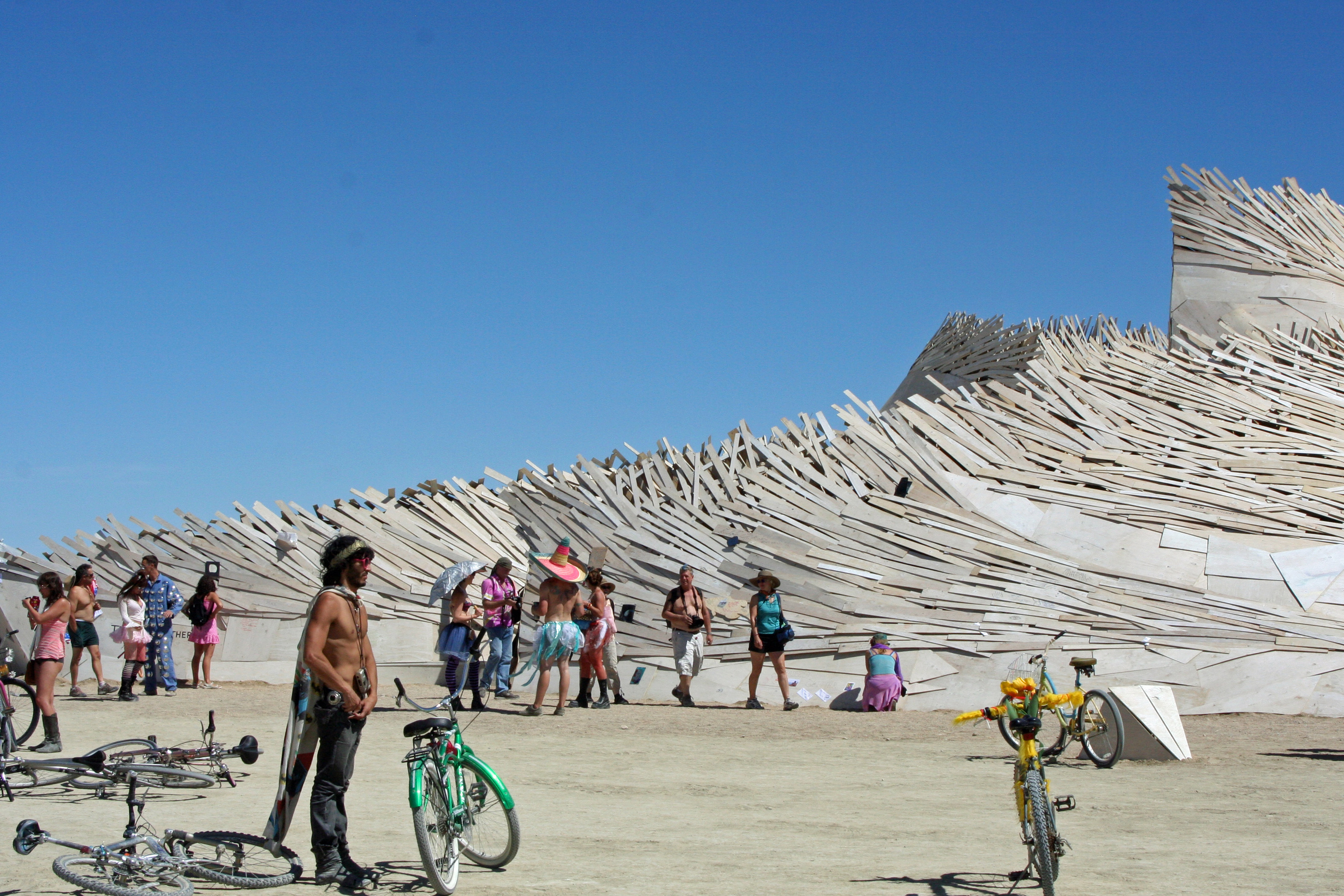
Surprise! The Black Rock Desert is a desert. Temperatures climb to over 100 degrees in the day and massive dust storms create zero visibility. It is all part of the experience of Burning Man. Veteran Burners call it ‘fun.’ They whine when it doesn’t happen.

After six years I still have doubts. But I guarantee it will be more ‘fun’ if you are adequately prepared

Last year I failed to take my advice. It was a beautiful evening for Burning Man. Temperatures were moderate, the sky was clear and a beautiful sunset bathed the surrounding mountains. A major event was scheduled on the far side of the Playa. The umpteen thousand square foot MEGATROPOLIS was to be burned

I joined fellow members of the Horse-Bone Tribe and a long line of Burners as we trekked across the Playa to the site. There were great fireworks, an impressive fire and all of the other hoopla that goes along with a Burning Man event.

My wife Peggy, our friend Beth and I had just started back when the massive dust storm hit. Everything disappeared.

“Which way do we go?” Peggy asked.

Unfortunately, I had left my goggles, my dust mask and my sense of direction back at camp. I didn’t have a clue. All we had going for us were 5000 other people caught in the same storm.

Someone in a large mutant vehicle filled with madly gyrating dancers yelled, “Center Camp is that way!” and we started trudging in the suggested direction, all of us, lemmings marching to the outer edge. What followed was weird, a Hieronymus Bosch scene scripted by Edgar Allen Poe and directed by Salvador Dali.

Sixty mile an hour winds battered us with dust. Visibility climbed from zero to a hundred feet and back to zero. Other Burners and mutant vehicles became ghostly reminders that we weren’t alone. The three of us held on to each other; being lost together was better than being lost alone.

Time slowed down, almost seeming to stop. At one point a cyclist zipped past going in the opposite direction. “Center Camp is that way,” he said, pointing in the direction we had come from. I was prepared to believe him. Up was down, north was south and east was west.

A thick coating of dust covered my glasses and trickled into my eyes. It clogged my nose, coated my mouth and stuffed my ears. Our clothes and skin became a muted Playa Gray. A full day of hiking and biking collaborated with my 67 years and began to sap my energy. Walking became work. I was not having ‘fun.’

Then, for a brief second, the wind shifted. I caught a glimpse of Black Rock City’s most prominent landmark, the Man. He was exactly the opposite of where I expected him to be and we were further from camp than when we started. But I was ecstatic.  Now I could orient myself and get us back to our camp.

Eventually we made it home, two hours after we left the burn. A box of baby wipes, several sneezes, eyewash, ear swabs and a cold beer repaired most of the damage. Exhausted, I fell in to a restless sleep. Giant dust devils pursued me through the night.

Under any circumstances, our trek through the dust storm would have been challenging. I could have done without dust in my eyes, nose and mouth, however. I now carry my goggles and dust mask whenever I leave camp. Lesson learned.

Radical self-reliance is the primary catch phrase of Burning Man. You are expected to take care of yourself. That means we bring our own food, our own water, our own shelter and all of the necessities required to survive for a week in a harsh desert environment.

Niceties matter as well. You can choose to shower by running along naked behind the water truck or you can choose to clean up in a more private manner.

Burning Man provides an excellent list of what to bring. Newbies and veterans alike will benefit from visiting. I return to it each year.

http://www.burningman.com/preparation/event_survival/radical_self_reliance.html

Being seen at night is one of the most important survival tools at Burning Man. We invited our grandkids to decorate us for this blog with glow sticks. Mom, they decided, needed spiky hair.

Here's how Tasha looked when she and the kids finished. Note how easy she is to see in the dark.

Our grandkids somehow thought I would look good as a chained man with cat whiskers.

While it's impossible to persuade six and three year olds to hold still for night time photos, I liked the sense of movement that Peggy caught.

The Great Tree Race

My grandson demonstrates his tree climbing skills on a large madrone.

“I can climb that tree, Grandpa,” my six-year old grandson announced proudly to me yesterday. It’s a refrain I’ve heard frequently over the past week from the visiting six-year old. His three-year old brother has similar ambitions, if not abilities. Their father is building them a tree house in Tennessee. It’s the ultimate dream of all impassioned tree climbers.

I remember when my dad (Pop) built a tree house for my older brother Marshall and me in the graveyard next to our house.

I’ve posted earlier blogs about the graveyard’s jungle-like nature. It’s potential as a playground was impossible to ignore. Young Heavenly Trees made great spears for throwing at each other.

That game ended when we impaled Lee Kinser’s hand. Neither Lee nor his parents were happy about this development and our efforts to master spear throwing were brought to an immediate halt. But a greater challenge remained.

Two incense cedars dominated the Graveyard. From an under five-foot perspective, they were gigantic, stretching some 75 feet skyward. The limbs of the largest tree started 20 feet up and provided scant hope for climbing. As usual, Marshall found a risky way around the problem.

Several of the huge limbs came tantalizingly close to the ground at their tips and one could be reached by standing on a convenient tombstone. Only Marshall could reach it; I was frustratingly short by several inches.

Marsh would make a leap, grab the limb and shimmy up it hanging butt-down until the limb became large enough for him to work his way around to the top. Then he would shimmy up to the tree trunk, four to five Curtis lengths off the ground. After that he would climb to wonderfully mysterious heights I could only dream about.

Eventually I grew tall enough to make my first triumphant journey up the limb. Then, very carefully, I climbed to the heart-stopping top, limb by limb. All of Diamond Springs spread out before me. I could see the school, and the mill, and the woods, and the hill with a Cross where I had shivered my way through an Easter Sunrise Service. I could see the whole world.

Except for a slight wind that made the tree sway and stirred my imagination about the far away ground, I figured I was as close to Heaven as I would ever get

By the time I finally made it to the top, Marshall had more grandiose plans for the tree. We would build a tree house in the upper branches. Off we went to the Mill to liberate some two by fours. Then we raided Pop’s tool shed for a hammer, nails, and rope.

My job was to be the ground man while Marshall climbed up to the top. He would then lower the rope and I would tie on a board that he would hoist up and nail in. It was a good plan, or so we thought.

Along about the third board, Pop showed up. It wasn’t so much that we wanted to build a tree house in the Graveyard that bothered him, or even that we had borrowed his tools without asking. He even seemed to ignore the liberated lumber.

His concern was that we were building our house too close to the top of the tree on thin limbs that would easily break with nails that barely reached through the boards. After he graphically described the potential results, even Marshall had second thoughts.

Pop had a solution though. He would build us a proper tree house on the massive limbs that were only 20 feet off the ground. He would also add a ladder so we could avoid our tombstone-shimmy-up-the-limb route.

And he did. It was a magnificent open tree house of Swiss Family Robinson proportions that easily accommodated our buddies and us with room to spare. Hidden in the tree and hidden in the middle of the Graveyard, it became our special hangout where we could escape everything except the call to dinner. It became my center for daydreaming and Marshall’s center for mischief planning. He, along with our friends Allen and Lee, would plan our forays into Diamond designed to terrorize the local populace.

It also became the starting point for the Great Tree Race. We would scramble to the top and back down in one on one competition as quickly as we could. Slips were a common hazard. Unfortunately, the other boys always beat me; they were two to three years older and I was the one most susceptible to slipping. My steady diet of Tarzan comic books sustained me though and I refused to give up.  Eventually, several years later, I would triumph.

Marshall was taking a teenage time-out with our grandparents who had moved to Watsonville down on the Central Coast of California. Each day I went to the Graveyard and took several practice runs up the tree. I became half ape. Each limb was memorized and an optimum route chosen. Tree climbing muscles bulged; my grip became iron and my nerves steel.

Finally, Marshall came home. He was every bit the big brother who had been away at high school while little brother stayed at home and finished grade school. He talked of cars and girls and wild parties and of his friend Dwight who could knock people out with one punch.

I casually mentioned the possibility of a race to the top of the Tree. What a set up. Two pack-a-day sixteen-year old cigarette smokers aren’t into tree climbing but how can you resist a challenge from your little brother.

Off we went. Marsh didn’t stand a chance. It was payback time for a million big brother abuses. I flew up and down the tree. I hardly touched the limbs. Slip? So what, I would catch the next limb. Marsh was about half way up the tree when I passed him on my way down. I showed no mercy and greeted him with a grin when he arrived, huffing and puffing, back at the tree house.

His sense of humor was minimal but I considered the results a fitting end to The Great Tree Race and my years of close association with the Grave Yard.

Quirky Burning Man

This strange 20-foot tall Alice in Wonderland type rabbit is a great introduction to the quirkiness of Burning Man. Photo by Tom Lovering

Burning Man is wonderfully quirky. Want proof? Walk 50 yards down any road.

I love it. Where else can you get a cold brew from a beer tap drilled in to the side of a coffin or discover an army of Barbie Dolls in their birthday suits.

Walking down one of Black Rock City's many roads, I came upon an army of Barbie Dolls in their birthday suits. Who knows what they were up to...

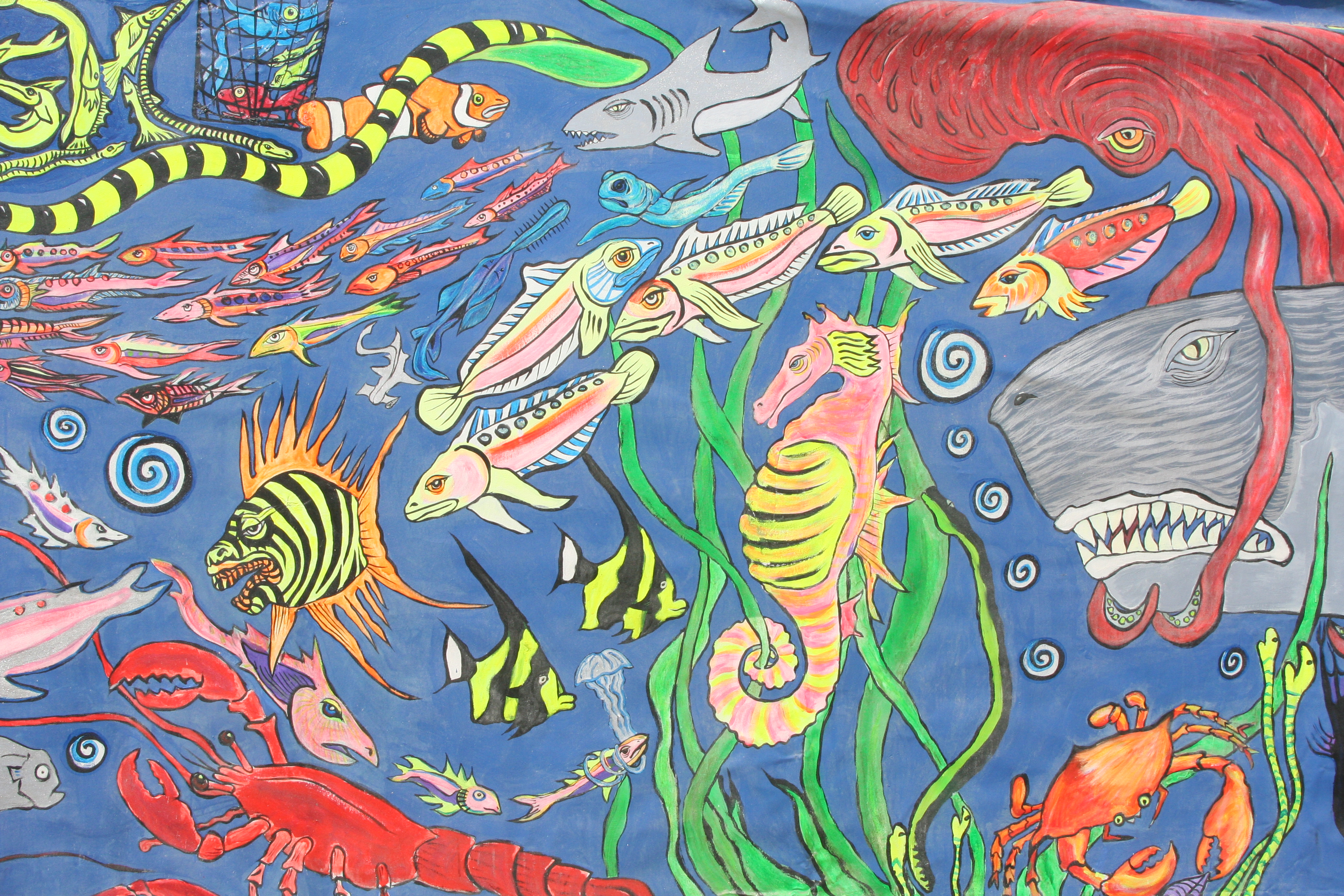
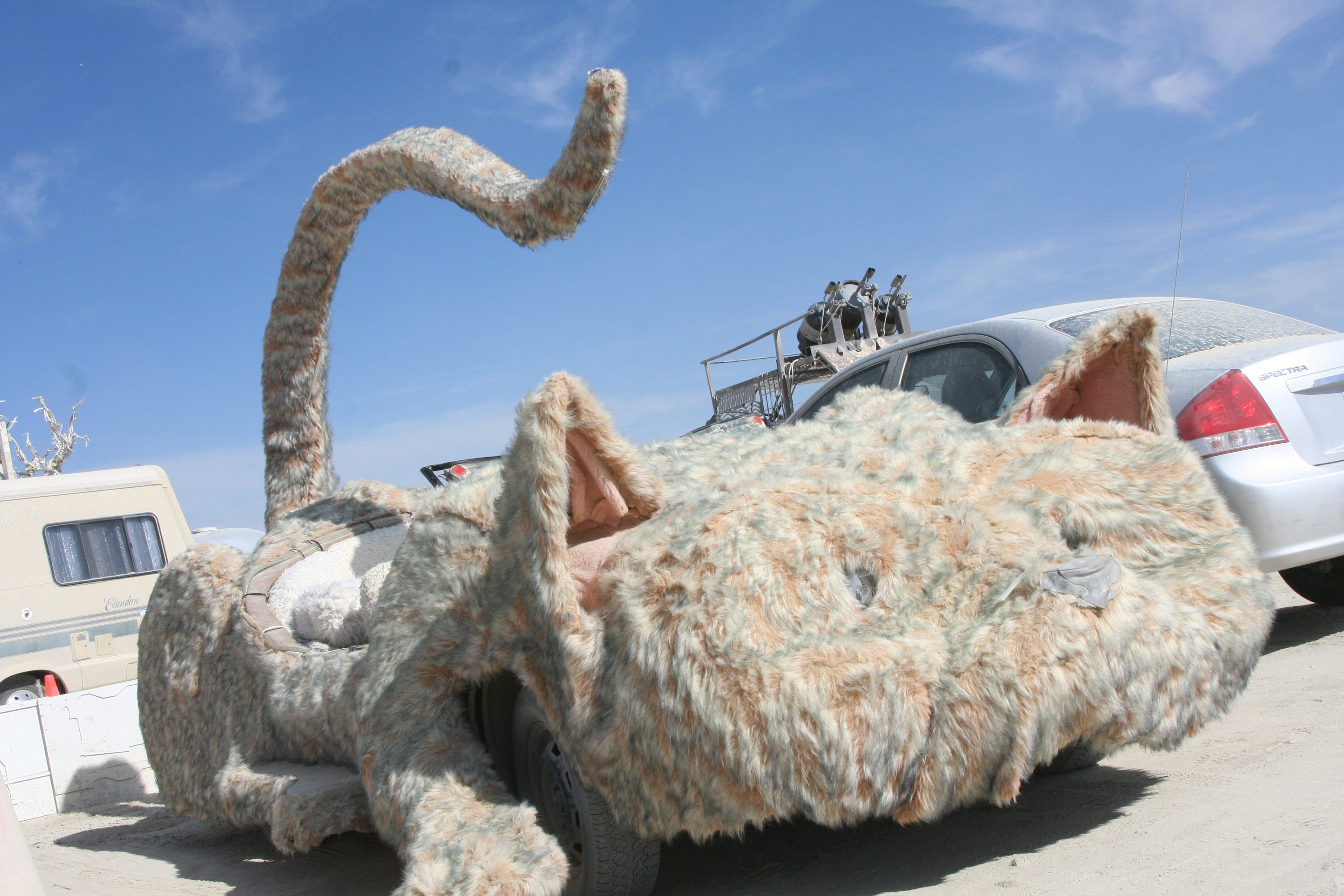
People wear quirky clothes, drive quirky vehicles and create quirky art. Check out the expressions on the fish below and on the Pitch Fork Man. Or what about the Cat Car? Or how about, uh, twin cats???

Murals are common at Burning Man. I love the expression on the striped fish and how the octopus is hitching a ride on the whale.

Pitch Fork Man is the very definition of quirky.

The Cat Car has always been one of my favorite mutant vehicles.

Here kitty kitty.

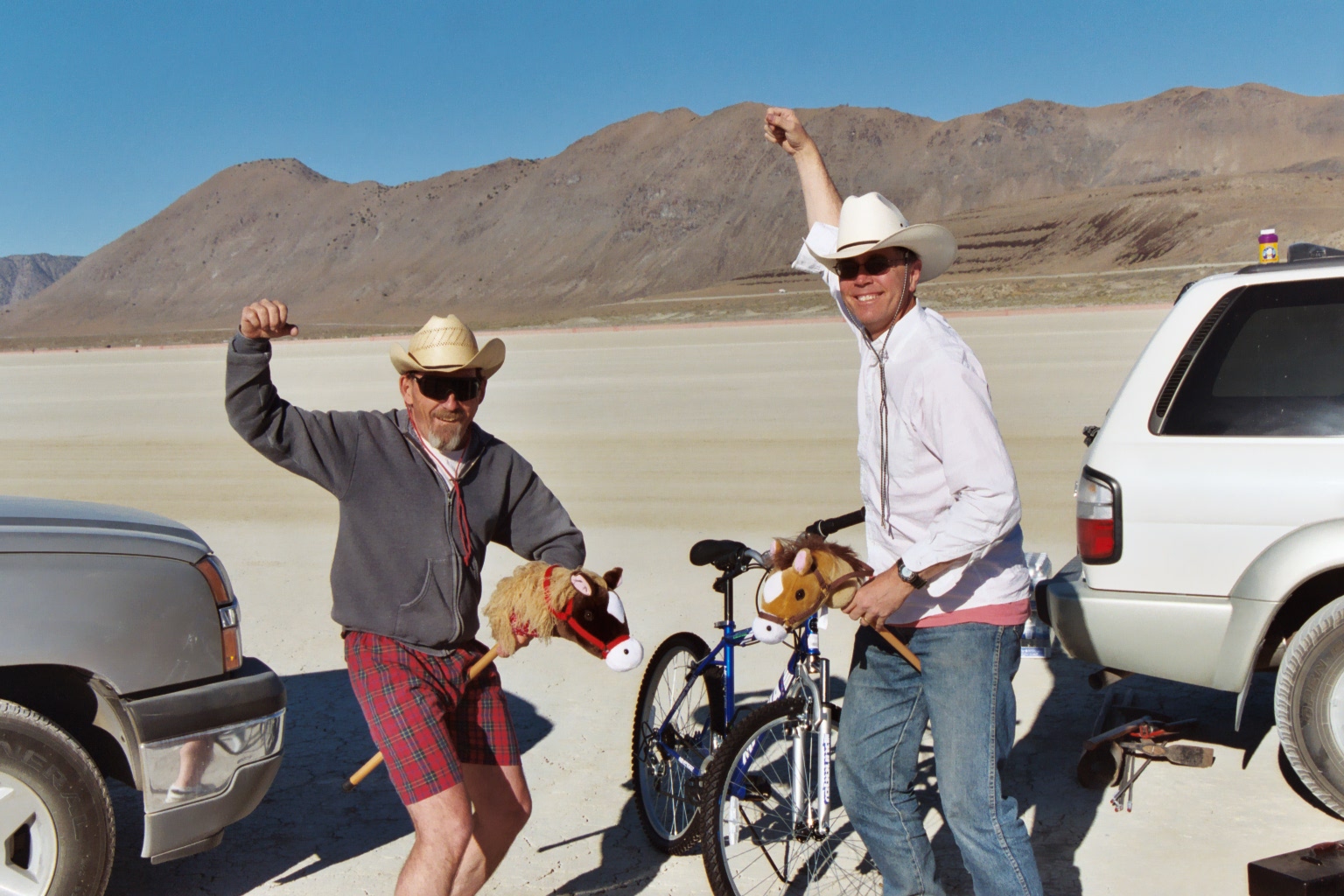
Naturally, Bone fits right into the environment. Grown men riding around on stick horsies also qualify. We are, after all the Horse-Bone Tribe.

Burning Man is a Bone kind of event. He is definitely quirky. Here, he plays unicorn on a horse's nose.

Grown men playing cowboys on toy horses also qualify as strange.

Here are a few more of my favorite examples of Burning Man quirkiness.

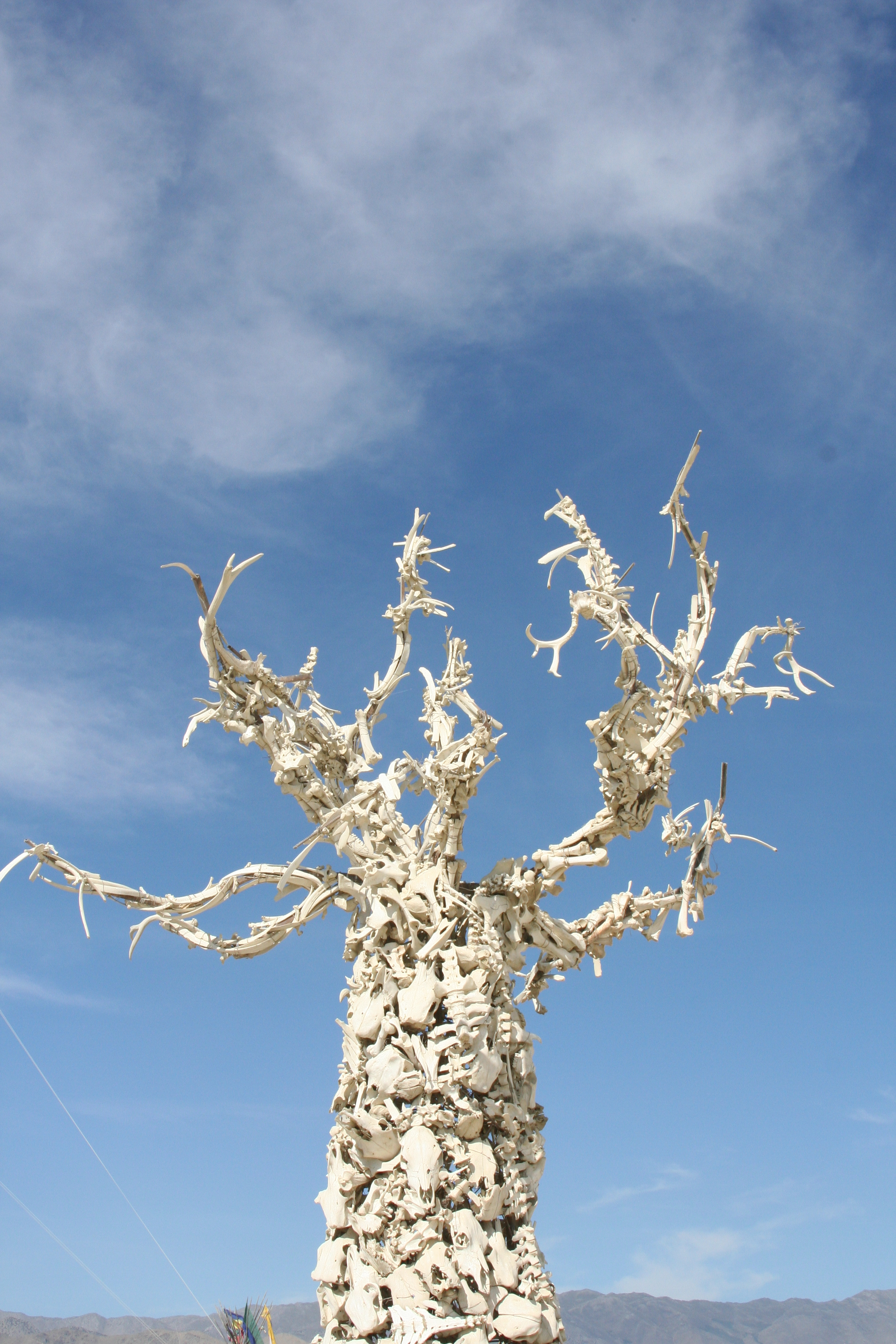
A tree made completely of bones.

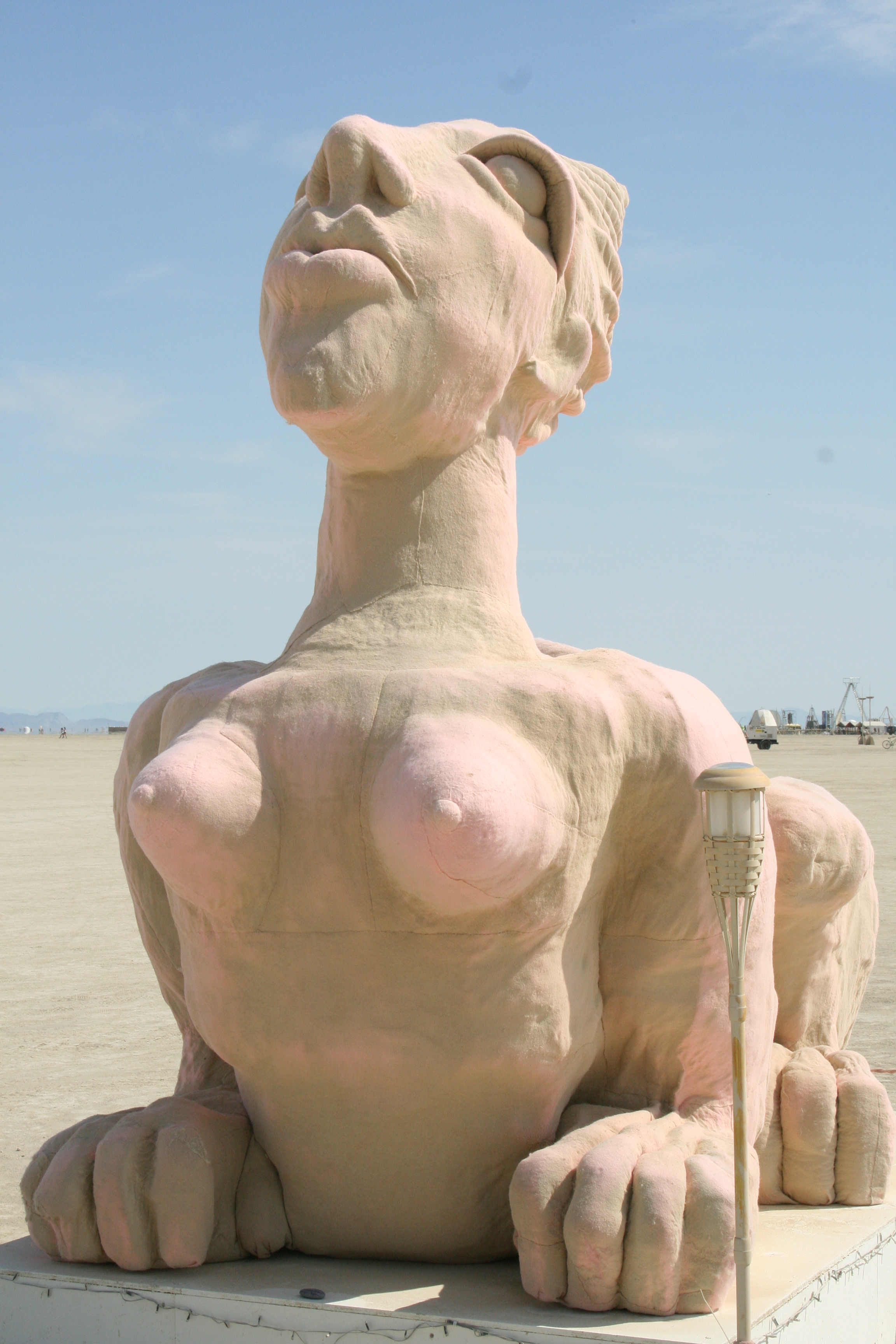
The Suave Sphinx.

Desert mirage... a bar with its own outhouse being pulled by a tractor through the remote playa . We climbed on board and took advantage. Photo by Tom Lovering.

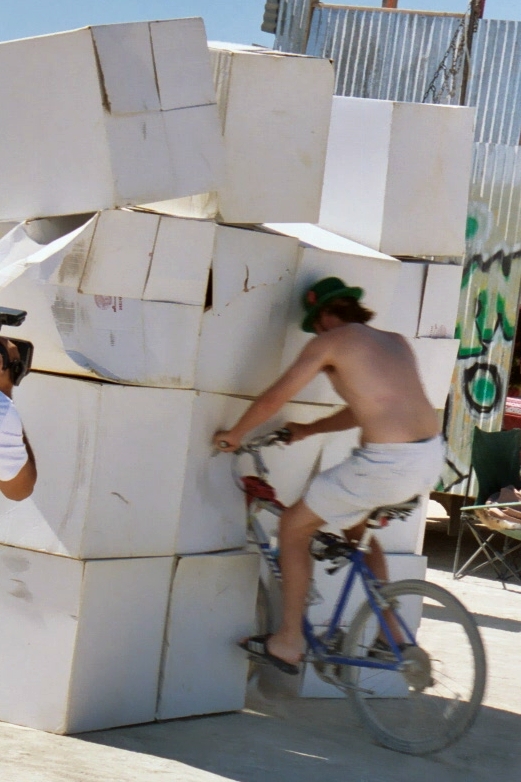
Man crashing bike into empty boxes. The boxes were set up specifically for that purpose.

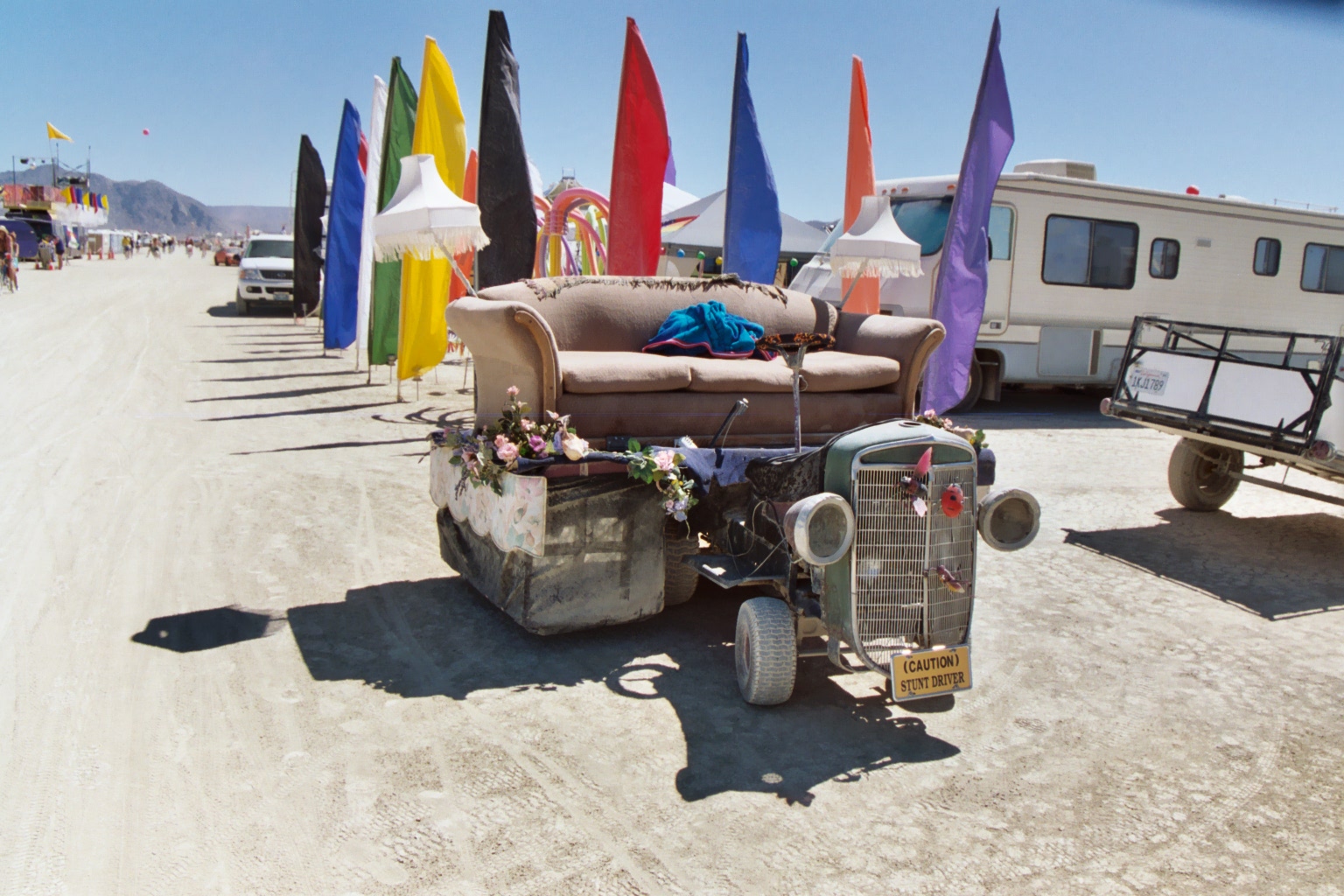
Couch Car.

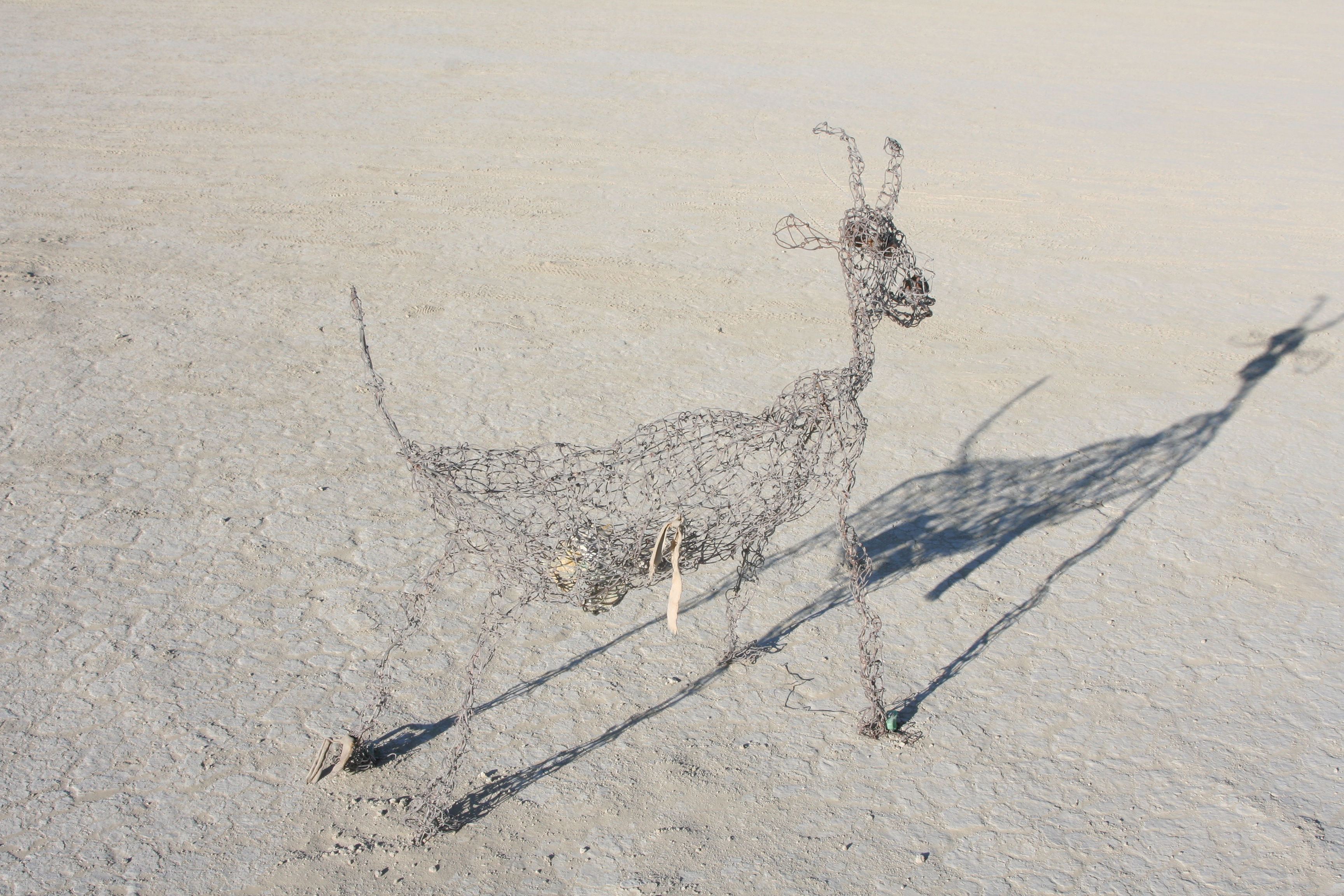
See through goat with shadow. Note garbage in stomach.

One Tribe focuses on capturing images of Burning Man and then putting them together in photo collages. I thought this collage did an excellent job of capturing the quirkiness of Burning Man.

And of course there is nothing quirky about me. I am the one on the left.

The Bhagwan Shree Rajneesh and Robert Burton: Gurus of a Different Ilk

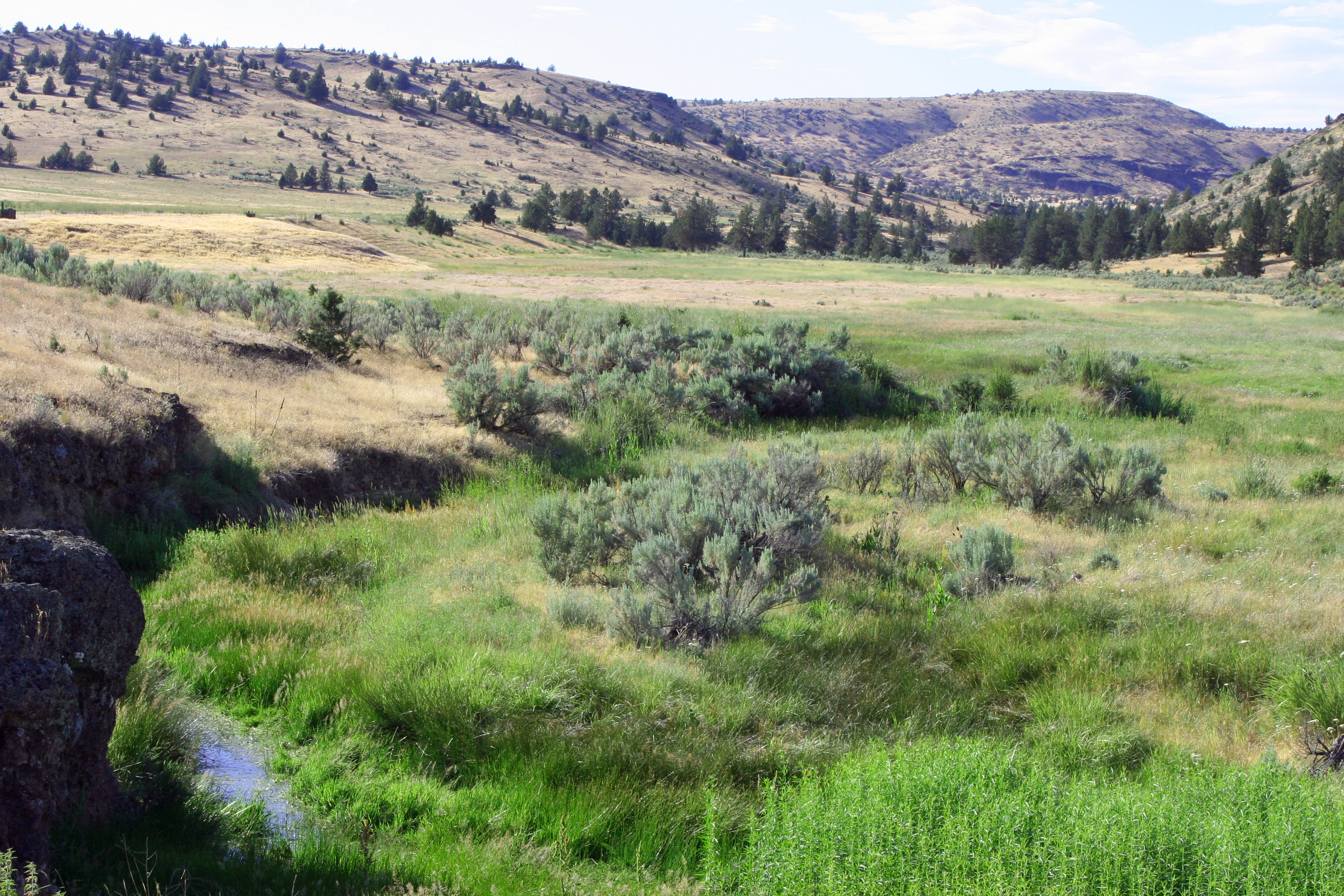
The country surrounding Antelope Oregon is as beautiful as it is remote.

We stopped in the Oregon community of Antelope last week and my thoughts turned to the Bhagwan Shree Rajneesh. The town is located in a remote region of eastern Oregon. It’s a cowboy and sagebrush kind of place. Belonging means you display an American Flag out front and a horse out back.

It's a cowboy and sagebrush type of place where water in precious.

The small community is not where you would expect to find people wearing saffron-colored robes and practicing meditation at the feet of a guru from India who specialized in owning Rolls Royce cars and dispensing enlightenment.

But that is exactly what happened in the early 80s when the Bhagwan appeared with his legion of devotees and bought the sprawling 60,000-acre Big Muddy Ranch, soon to be renamed Rajneeshpuram. As might be expected, the two dramatically different cultures immediately clashed with each other.

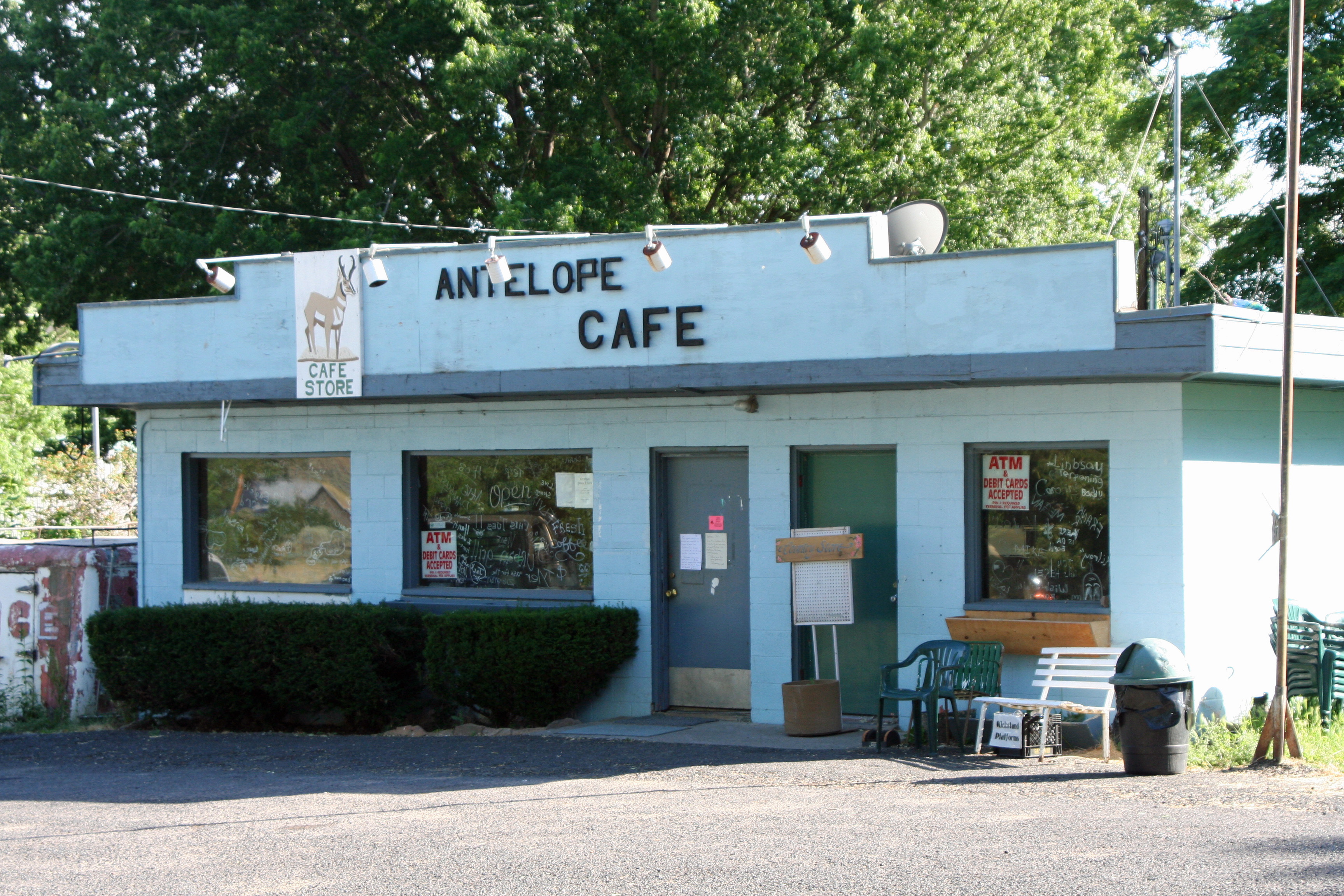
Not surprisingly, the rural nature of the small community of Antelope as represented by the town's only Cafe and the culture represented by the saffron robed members of the Bhagwan's commune were bound to clash.

The utopian dream of the Rajneeshans ended abruptly in 1985 with the arrest of the Bhagwan, the sale of Rajneeshpuram and the scattering of the flock. Bad things had happened including food poisoning attempts at local restaurants and internal wiretapping of commune residents.

Regardless of the scandals, many of the people who came to Rajneeshpuram to find enlightenment still swear by their experience 25 years later. The dark side of what happened is blamed on overzealous staff, not the Bhagwan.

I have a friend who went off to Rajneeshpuram in the 80s and still retains her commune name and connections today. Her mother and father were initially distraught by their daughter’s decision and shared their anguish with me.  They had pursued their own radical paths as young people, however, and eventually came to accept their daughter’s decision.

Having your own Guru in the 70s and 80s was an in-thing that the rich and famous, young people, and mystically inclined signed up for in droves. Another friend of mind tried to recruit me to the secret world of George Gurdjieff and Peter Ouspensky.

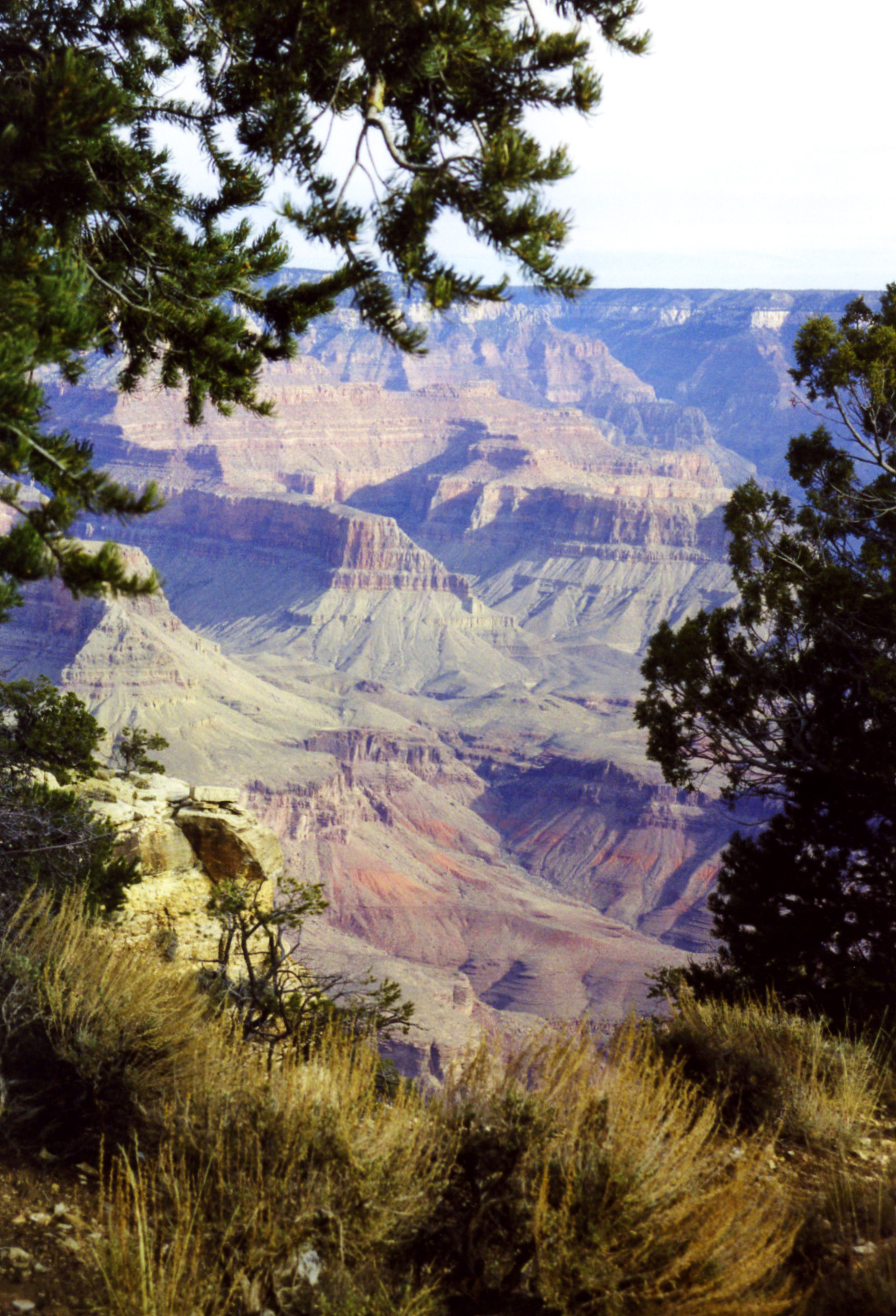
I took her backpacking down into the Grand Canyon once and was eager to share the beauty and isolation of the numerous side canyons. We took a short hike and soon found ourselves in the midst of towering, awe-inspiring cliffs.

M’s reaction was much different than I expected. Dangerous spirits inhabited the area and we were disturbing them. We needed to leave quickly.

On one level, I could understand her unease. In our twenties, we had both been influenced by Carlos Castaneda’s journeys through the Sonoran Desert. Don Juan had taught his young apprentice that mysterious and powerful beings from different realms inhabit remote regions. Some of these beings were really bad dudes, prepared to pounce on the unwary.

Given my African introduction to pantheism, it wasn’t hard to populate the Canyon with spirits. But I had spent years wandering in isolated wilderness areas and had yet to meet a spirit that had caused me any damage, or for that matter, even stopped to chat.

It wasn't hard to imagine the beautiful and remote canyons of the Grand Canyon being inhabited by ancient spirits.

I shared my perspective and was met with a rather cool response. Apparently I lacked the necessary perception to understand the danger. I had the irreverent thought of ‘out of sight, out of mind’ but kept it to myself.

M was serious. After her bout with Castaneda, she had moved from Iowa to Texas where she was introduced to the work of George Gurdjieff and his pupil, Peter Ouspensky.

Gurdjieff was an early 20th Century mystic who taught that the vast majority of humanity is asleep, little more than robots. Given proper training, however, individuals can awaken and reach higher levels of consciousness. I assumed that it was at these higher levels that one became aware of the malevolent spirits.

Gurdjieff called his training the Fourth Way. He, Ouspensky, and other followers set up esoteric schools to teach people the path to awakening.

One such follower was Robert Burton. Burton was working as an elementary school teacher in the San Francisco Bay Area during the 60s when he became captivated by Gurdjieff and Ouspensky. In 1970 he persuaded a number of his acquaintances that he was a person of higher conscious, the stuff that gurus are made of.

By 1973 he and his group had purchased property near the small town of Oregon House in the Sierra Nevada Foothills and were clearing land to establish a Fellowship to propagate Gurdjieff’s teaching and grow wine grapes. M and her husband moved from Texas to California to join Burton in his efforts.

By the time I met M in the late 70s, she had left her husband and Oregon House but was still an avid follower of Gurdjieff and Ouspensky. I suspect she was continuing to financially support and participate in the Fellowship. When she learned of my fascination with Castaneda, she gave me a couple of books on the Fourth Way and suggested that there was a local discussion group I might enjoy joining.

In some ways, I was a good candidate for what Burton was offering. Eastern traditions, especially Zen Buddhism, had a strong appeal. Meditation gave me the same sense of wholeness and connection that wandering in the woods did.

I wanted to believe that humans were capable of reaching higher levels of consciousness, of becoming more civilized in the broadest sense of the word. Self-actualization, to utilize Maslow’s term, seemed like a highly desirable goal and I always had myself on some self-improvement plan or the other. I need lots.

Burton had drawn a number of bright, well-educated and accomplished individuals around him. In ways, his success at recruiting followers was quite similar to that of the Bhagwan. Both had strong appeal to individuals who were seeking meaning in life that they weren’t finding in post Vietnam, post Watergate, super-materialistic America. The acceptance of a Teacher or Guru for help in finding the way was a legitimate and time-honored tradition in many Eastern oriented practices.

Ultimately, I lack the capacity of becoming a true believer, however. Regardless of the appeal, I am not willing to commit the trust required to place myself in another person’s hands. This means I can never quite understand the value that people derive from joining someone like Burton or the Bhagwan.

You have to go there to get it and I won’t make the trip.

Anyone interested in gaining significant control over my mind frightens me, regardless of his or her motivation or whatever benefits will supposedly accrue. The best of folks, from my personal experience and historical reading, have flaws.

Giving someone god-like status hides these flaws… both from the giver and the getter. Rational justification of action is not required. God or Whatever wills it. A multitude of bad things can hide out under this umbrella. Every day brings new examples.

So I had passed on M’s original suggestion to join a discussion group on Gurdjieff and Ouspensky and now found myself unable to recognize dangerous spirits from another realm. I honored M’s concerns, though, and we returned to camp. We spent our afternoon painting watercolors of the Canyon and hiked out the next day.

No bad spirits captured my soul, at least as far as I know.

Is the World’s Best Basic Hamburger to Be Found at Hudson’s Hamburgers in Coeur d’Alene Idaho?

A hamburger can't get much more basic.

We ate at Hudson’s Hamburgers in Coeur d’Alene, Idaho yesterday. Sunset Magazine recommended it as being one of the top five hamburger joints in the West. Turns out it has also been recognized in the Wall Street Journal, USA Today, and Gourmet Magazine.

Coeur d'Alene Idaho is a delightful town to visit.

What make a hamburger so good it is recognized as one of the best in the nation? We decided to find out.

The answer, at least for Hudson’s, is buried in the past. Hudson’s has been in existence since 1907 and apparently its approach to hamburger making hasn’t changed since.

An early view of Hudson's Hamburgers. Note the prices!

A small counter with 13 seats greeted us when we walked in the door. There were no tables. People stood patiently waiting for counter seats.

A view of the limited counter space. What you see is what is available.

How much more old-fashioned can you get?

We lucked out. Two seats on the far end of the counter opened up almost immediately. They provided an excellent view of the action. Staff consisted of three people. Two worked as waiters… taking orders, delivering food, preparing take out orders and serving as cashiers. No credit cards were accepted.

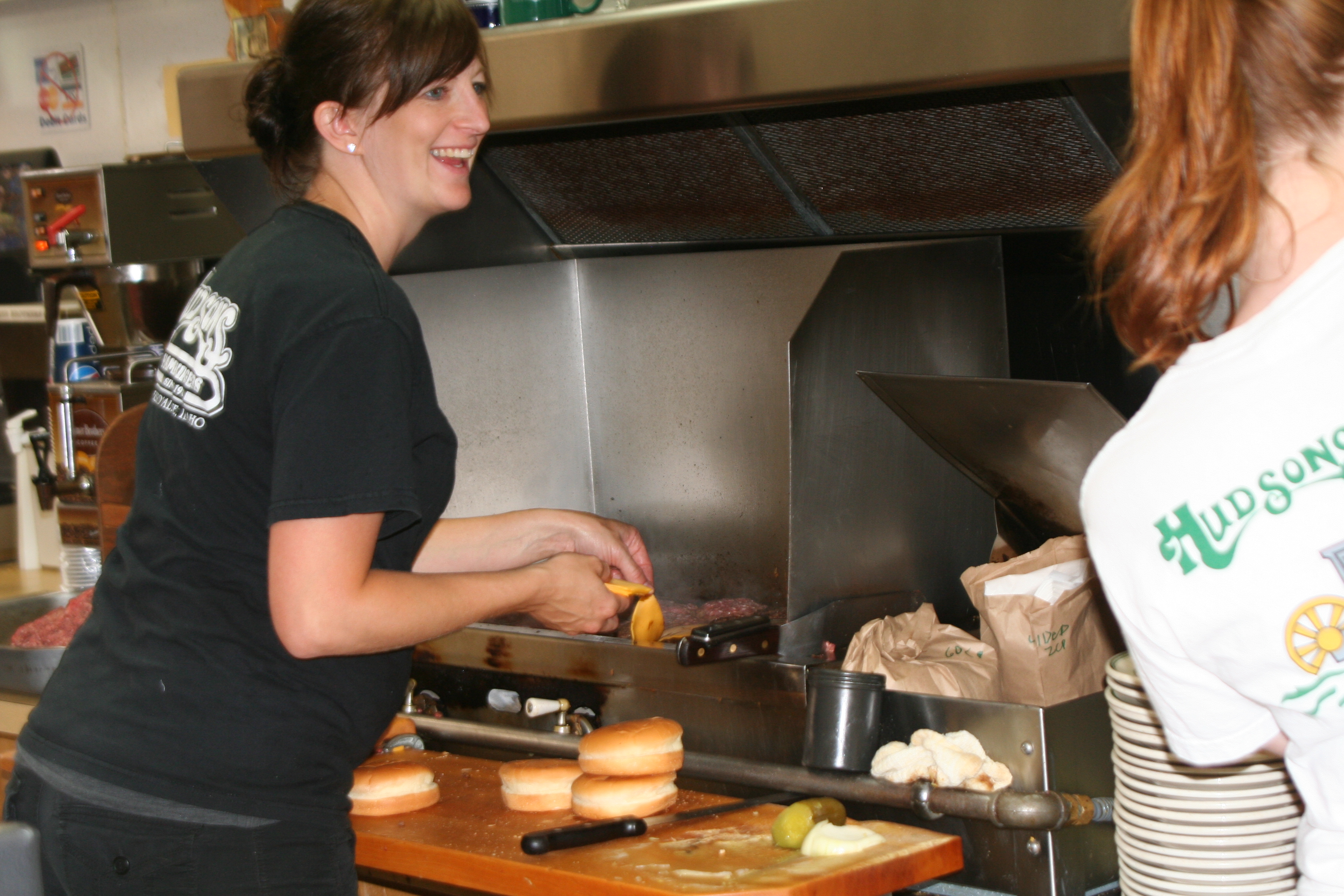
The single cook was a master of efficiency. She created her works of art directly in front of us. There was no separate kitchen. It was public performance without a net.

A large pan of raw hamburger was on her left. She wore a plastic glove on her right hand and held a spatula in her left. She would reach into the pan and grab a handful of hamburger, slap it onto the table, squish it flat with the spatula and flip it onto the grill.

The chef made cooking hamburgers look easy, and made it look like fun.

Options included single hamburgers with or without cheese or double hamburger with or without cheese, pickles and onions. There were no tomatoes and no lettuce much less any of the other numerous additions from guacamole to bacon and bleu cheese we have come to associate with gourmet burgers.

Buns, cheese, pickles and onions appeared precisely when needed. Pickles and onions were cut up almost as fast as the eye could watch… zip, zip, zip, zip. Each hamburger received four pickle slices and one onion slice… assuming that is what you ordered. Which is what we did.

“We’ll have two single cheese burgers with pickles and onions and two glasses of ice tea,” I told the waiter.  He had appeared as soon as we sat down. Later we added a piece of coconut cream pie.

Our cheeseburgers appeared with the speed that would have shamed McDonald’s, but that’s where any similarity with America’s ubiquitous fast food joints ended. We added the three condiments provided (mustard, ketchup and Hudson’s own concoction) and took our first bite.

And then our second and third. I was left with only one question. How could something so simple taste so good? Our total cost for the two of us: $11.03.

Peggy stands outside of Hudson's Hamburgers. Just beneath the restaurant name is the announcement that no credit cards are excepted. Hudson's wants old-fashion money for their excellent old-fashioned hamburgers.

A Touch of the Sacred: The Temples of Burning Man

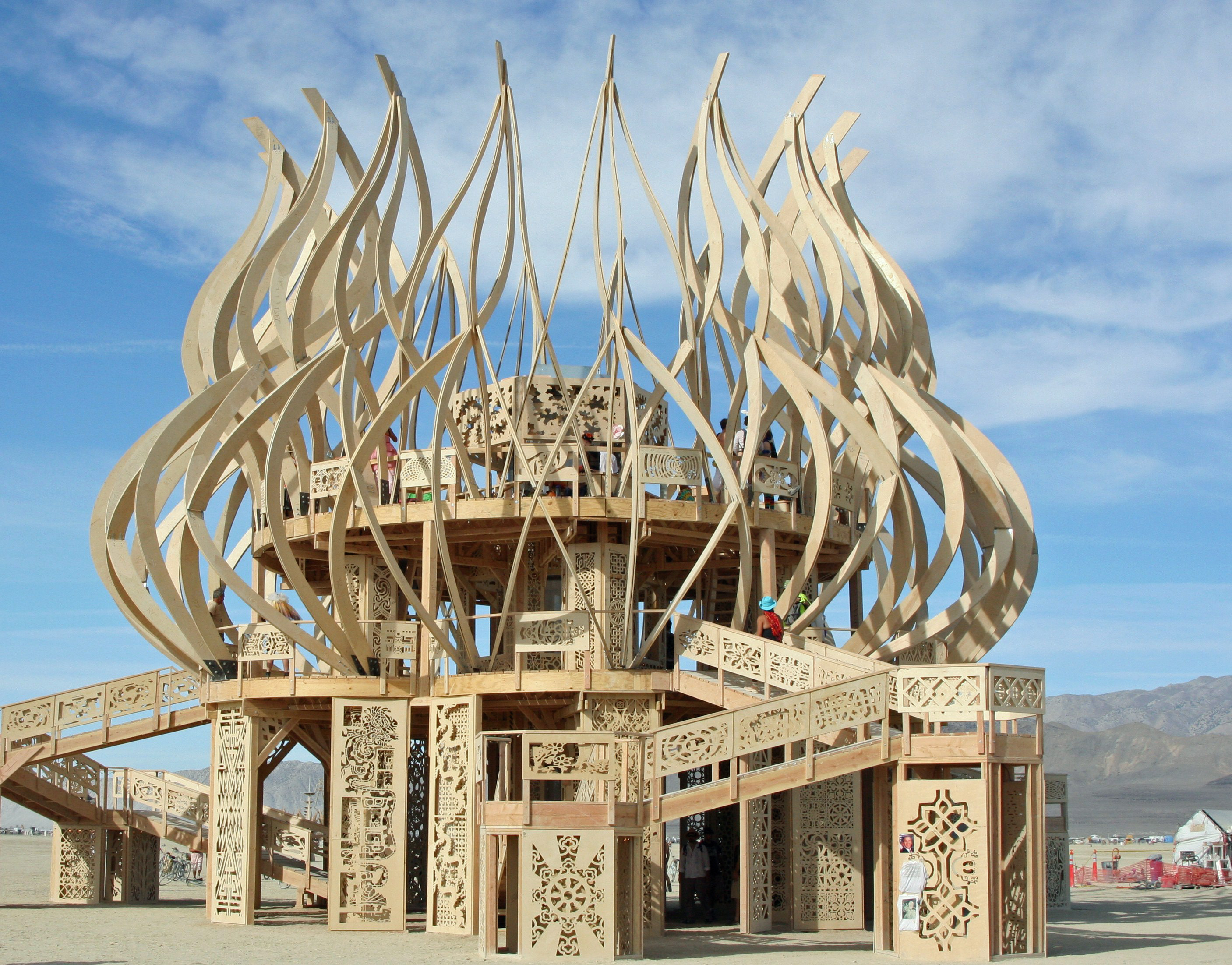
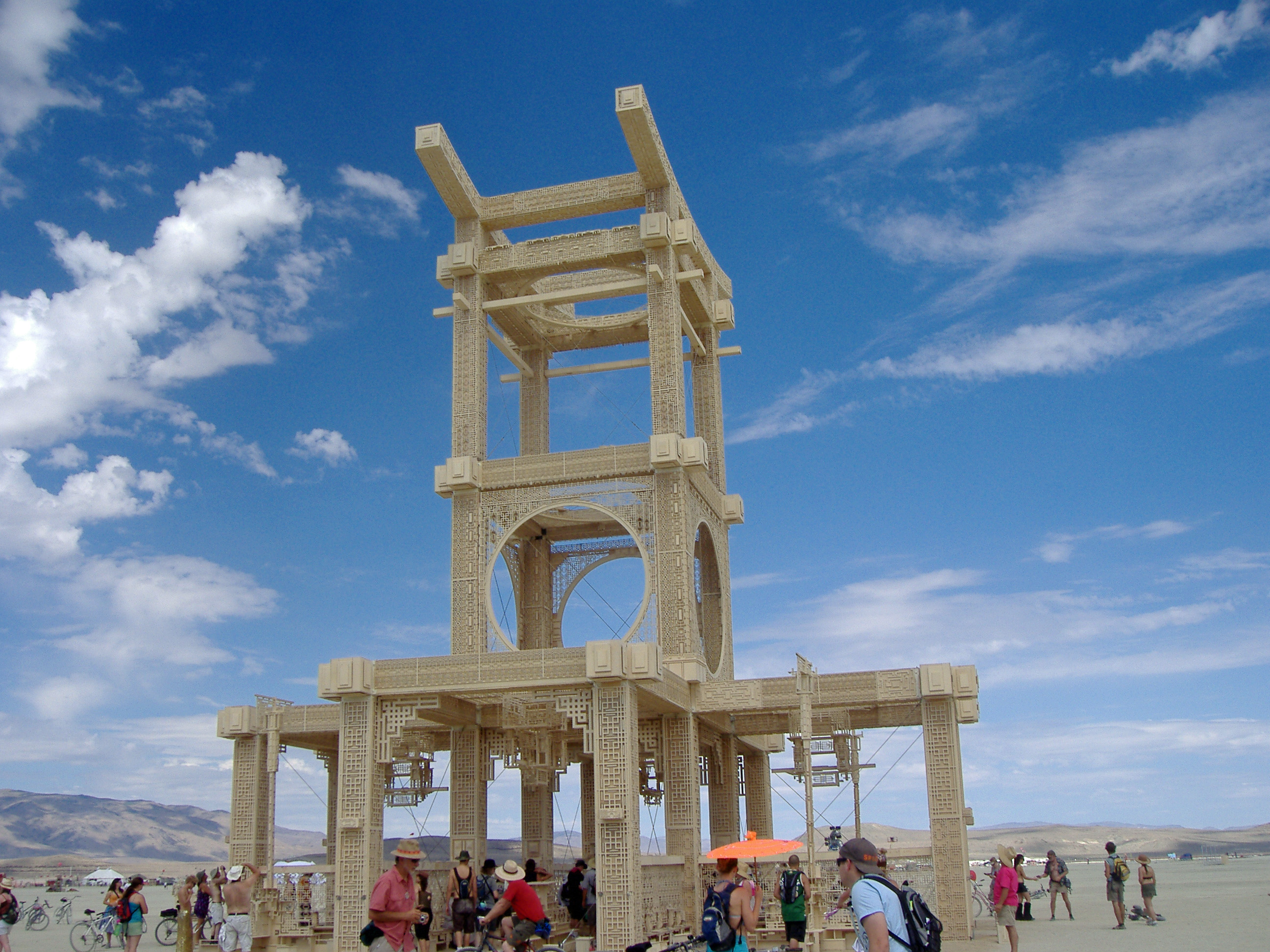
Each year a temple is built at Burning Man where people go to leave messages honoring loved ones. The temples are burned down on Sunday night releasing the messages to the sky.

The reasons for visiting Burning Man are as numerous and complex as the people who go. For many, a sacred element is involved. One aspect of this is a visit to the Temple.

The Temple is where people go to leave messages for loved ones who have passed on and to give thanks for blessings received. It is also a place for love letters, philosophical observations and whimsical statements. Literally thousands of people participate annually.

The Temple is also a labor of love and one of the most beautiful and unique buildings put up each year at Burning Man. It is burned on Sunday night when the thousands of messages are released into the sky.

I make a point each year of visiting the Temple to read and honor the messages that have been left behind. But I also visit to pay homage to the volunteers who donate thousands of hours and tens of thousands of dollars necessary to build the structure.

The following photos are designed to capture the uniqueness of the temples and the diversity of the messages.

Panels like these covered the temple shown above and demonstrate the care put into building each years structure.

2010's temple resembled a huge sand dune. People gather here to read and leave messages.

The temple from 2006.

This provides an idea of the number and types of messages left at the temple.

Another example of the variety of messages left and how the surfaces of the temple are used.

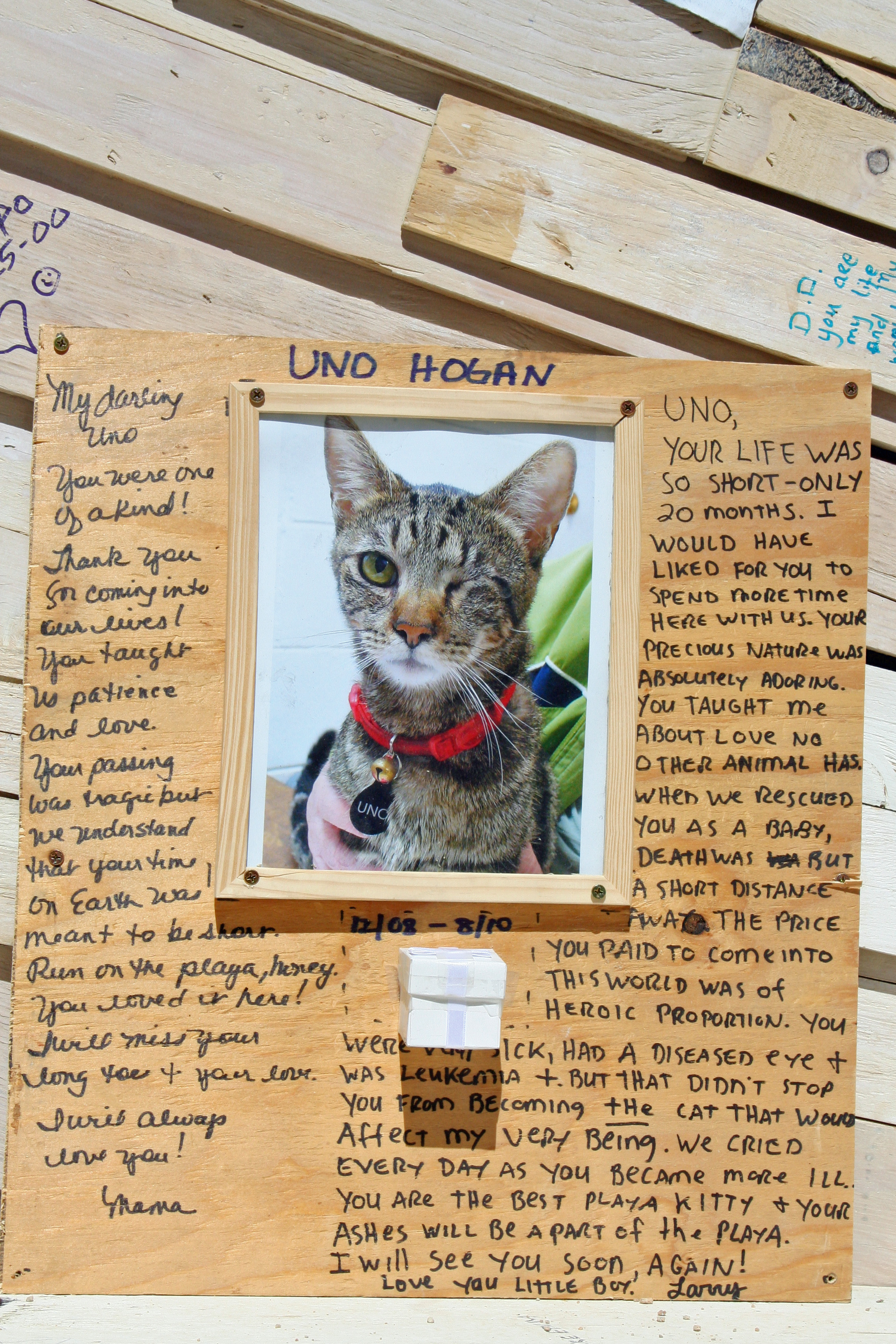
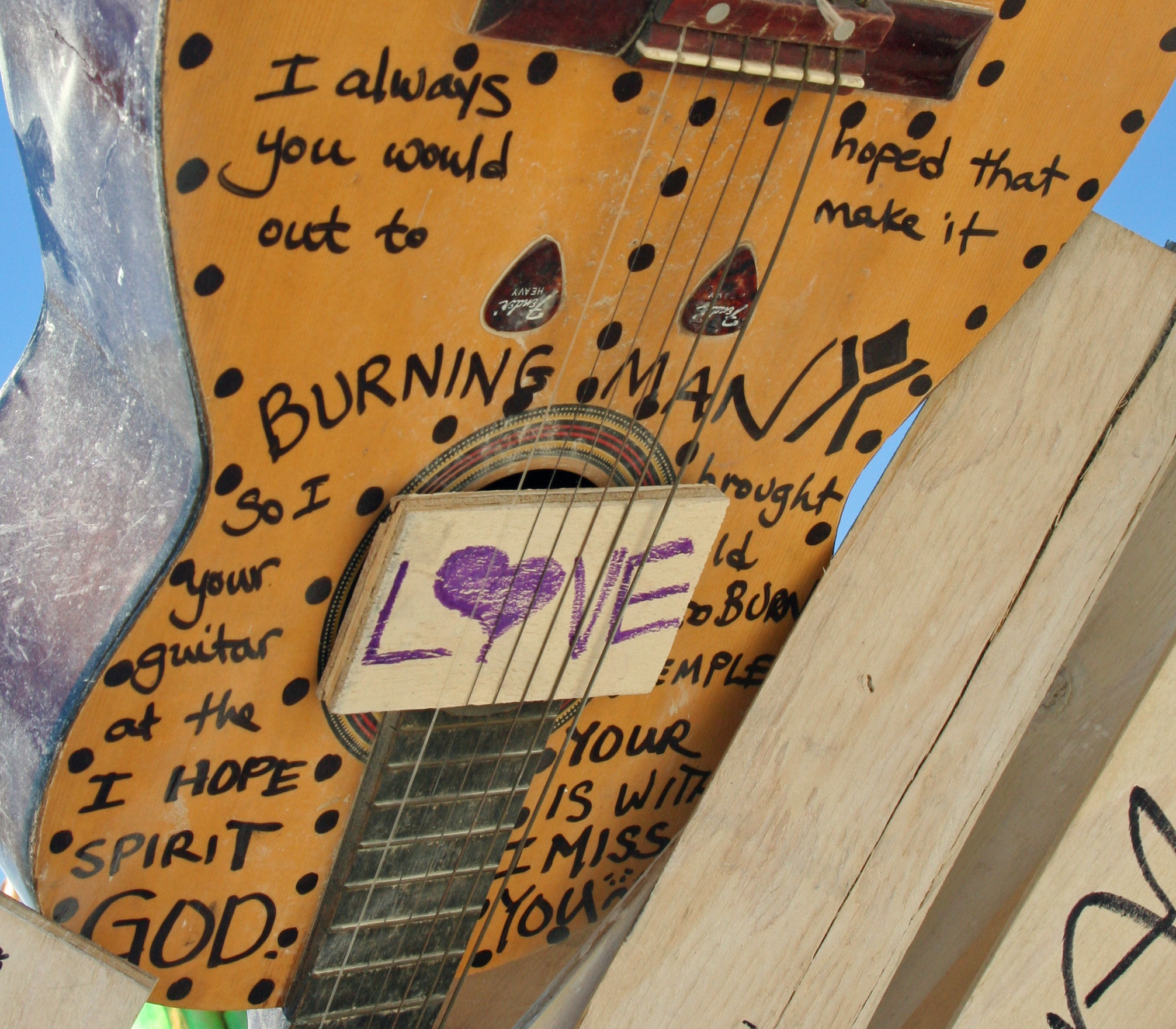
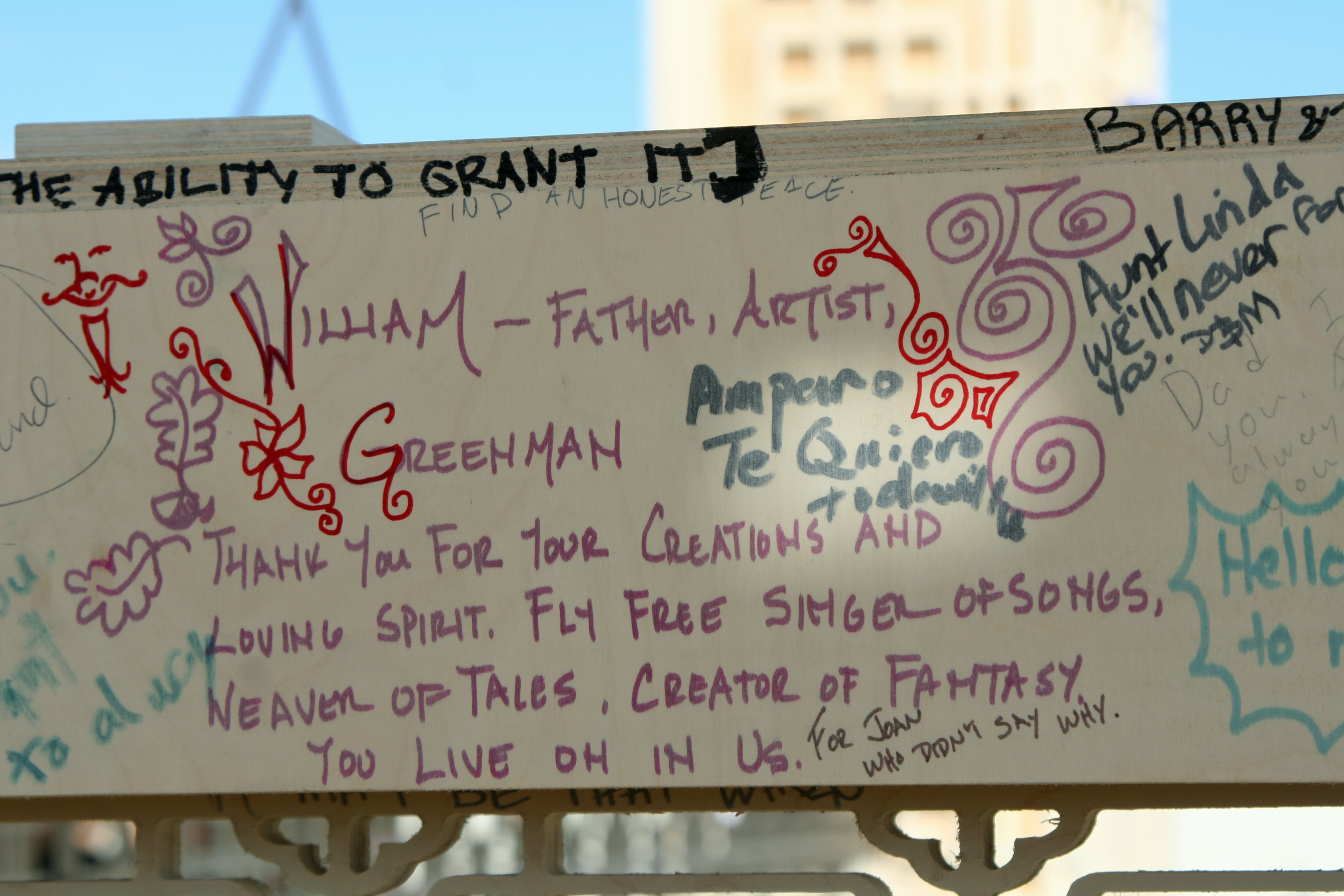
The following messages I found particularly touching or humorous.

It isn't unusual for people to leave messages about pets.

Or to leave pictures or items such as this guitar.

Fly free, Singer of Songs...

I couldn't resist this message...

A final temple shot. Photo by Ken Lake

Advanced Whip Cracking??? Hey, It’s Burning Man.

There is always something new to experience at Burning Man. Last year, in 2010, this colorful balloon ride was added.

Getting to Black Rock City is always a challenge. First, we have the drive to Burning Man’s remote location in the northern Nevada desert. Upon arrival, we are greeted by a desert traffic jam.

Next, Burning Man makes sure we have paid. A friendly volunteer enters our small RV. Is someone hiding out in the bathroom? Nope. What about under the bed?

At $300 a ticket, give or take fifty dollars, the motivation to cheat is tempting.

But so is the desire to catch cheaters. I can’t help doing the math. Forty five thousand people times $300 equals 13.5 million dollars! That’s a lot of motivation.

While the tickets sound expensive, they aren’t, considering what you get. For me, the price of admission buys a seven-day ringside seat to one of the greatest shows on earth. Others see it as an opportunity to strut their stuff, to live out their fantasies.

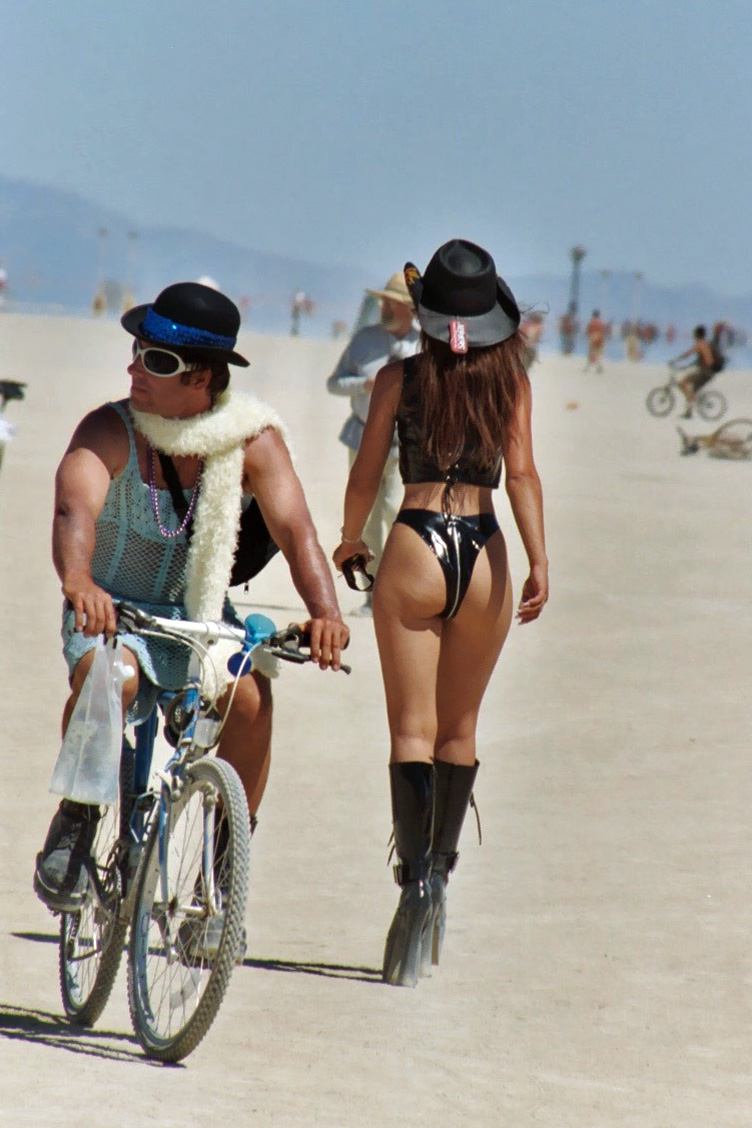
Outrageous costumes make people watching at Burning Man a number one activity. The guy ‘looking the wrong way’ helped make this photo. Note the platform shoes on the woman. She wears them well.

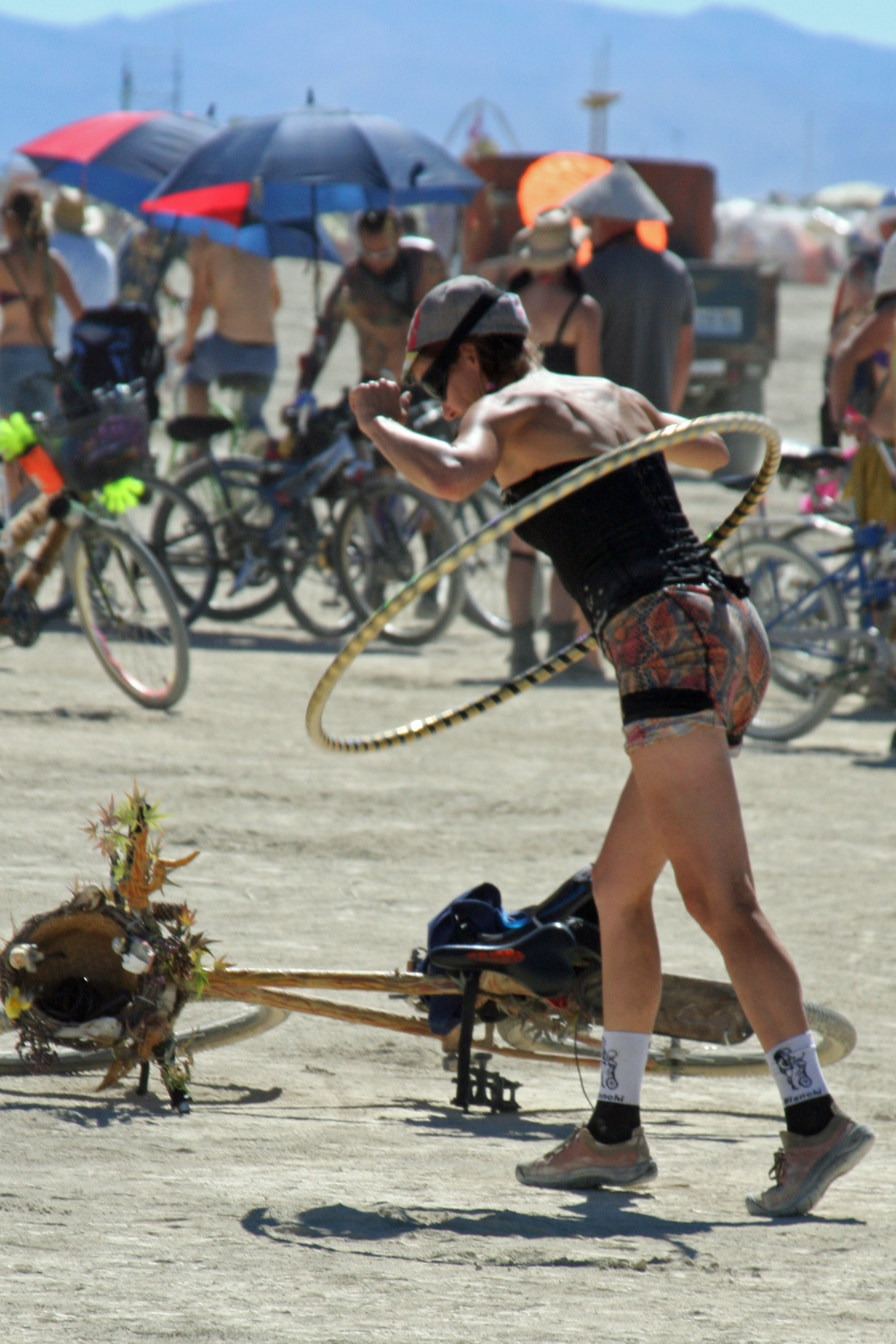
A young woman works on mastering the hula hoop while her steed waits patiently. Later she will probably be part of a performance. Participation is highly encouraged at Burning Man.

Go ahead, put on that outrageous costume. People will beg to take your photo. Get out there and prove that hula-hoops are sexy, or that you can twirl fire, or sing, or beat drums, or wear pasties, or whatever.

You may even have an audience. Does it really matter?

Once past the ticket station, we are welcomed to Burning Man. Virgin Burners receive a hug and ring the bell… even in the wee hours. Not being virgins, we get the welcome package: a cheerful greeting, a map of Black Rock City and the Program.

The map is a critical. It shows where the porta potties are. Oh, and it also shows where the major Tribes live, where people can camp, and where Center Camp is located. It’s also the key to finding your friends… or not getting hopelessly lost.

Earlier I blogged about the guy who returned to his camp and found his car, tent and gear had been stolen. He hitched a ride to San Francisco. A week later Burning Man called him. They had found his car, tent and gear… right where he had left them. He’d simply forgotten the location.

Burning Man is that big and that confusing, especially when people steal the street signs for souvenirs, or a dust storm produces zero visibility, or you imbibe a bit too much and it’s 2 o’clock in the morning. Or all three things happen at once.

Dust storms can drastically reduce visibility, not to mention get in your eyes, nose, ears, vehicles, etc. Luna, aka Peggy my wife, bundles up against a dust storm as it roars through Center Camp. Photo by Ken Lake

Having completed our official duties, we zip in to Black Rock City, find a campsite, stake out our territory (literally) and set up camp. It’s time to turn on the walkie-talkies. Other members of the Horse-Bone Tribe will soon be joining us.

Playtime has arrived. If the hour is right, somewhere between 12:01 AM and 11:59 PM, a cold beer is in order. So is figuring out what we want to do. There is a week to plan, or at least the next hour. The options seem limitless.

As I write this blog, I am leafing through 2009’s Program. It is 95 pages long and lists 950 different events participants are invited to attend. They are all free and there is something for everyone.

The breadth of activities is difficult to capture but here are a few examples.

  • Critical Stilts: Stilt walk around the Playa, hitting stilt bars.
  • The Big Bang: The Black Rock City Roller Girls. It’s survival of the fittest on skates.
  • Geology of the Black Rock Desert: Learn about the landforms surrounding the Playa.
  • Lunacy: Honor the full moon by allowing your inner lunatic to emerge.
  • Cat Show and Tell: Share what makes your kitty the most special cat in the Universe.
  • Spudcraft: What will you create: a potato hat or a potato creature? Spuds supplied. (These guys also have a spud cannon.)
  • Rubber Chicken Social: Celebrate the bouncy barnyard fowl. Drink to it.
  • Ask a Physicist: Questions about the nature of reality and modern physics.

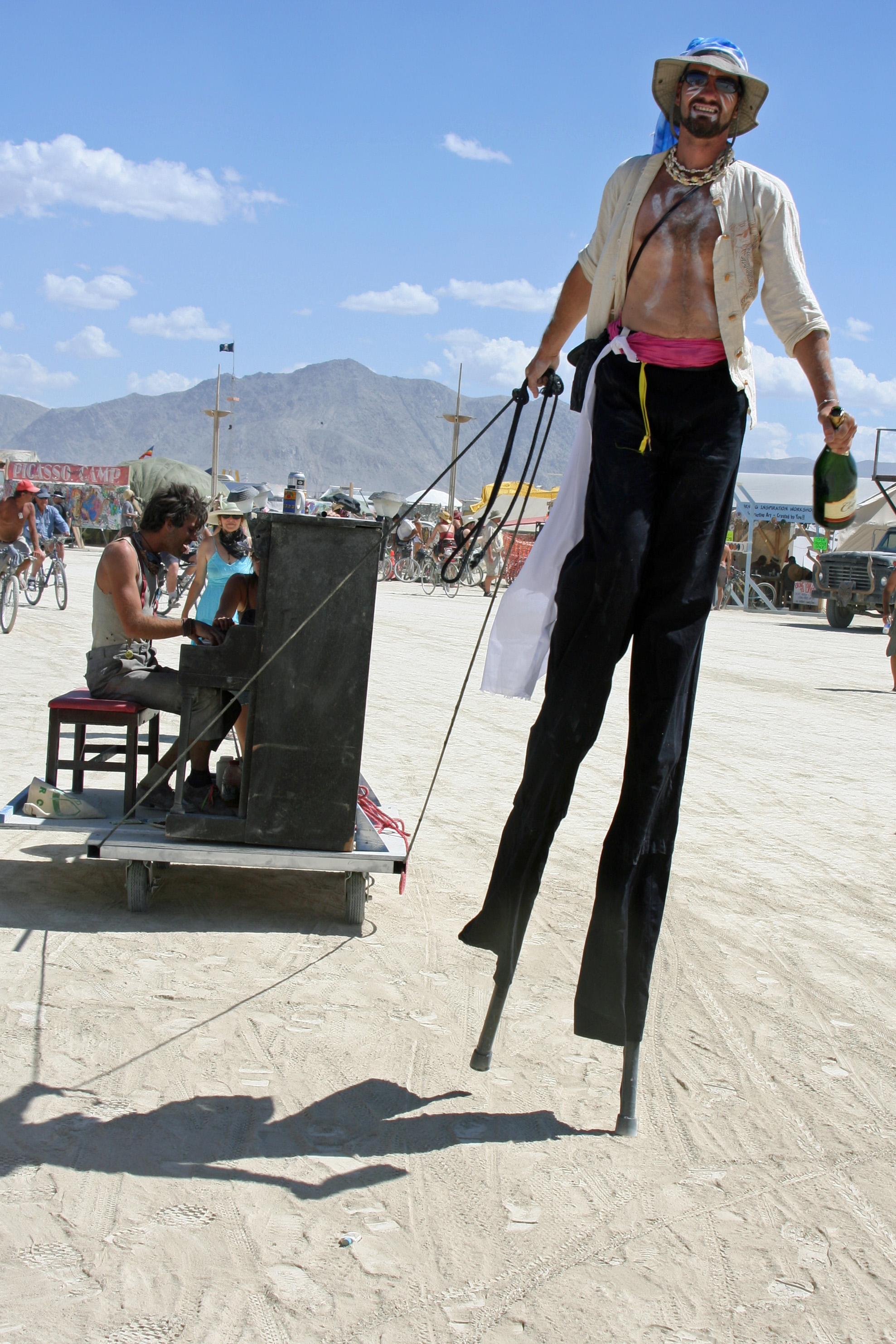
If it were possible to choose a scene that represents Burning Man, this might be it: a man on stilts pulls a piano while another guy plays the piano. I forget the song but it may very where have been classical music.

Modern technology, science, and environmental issues are emphasized at Burning Man. One site might feature alternative energy sources while another focuses on cutting edge physics.

Advanced Whip Cracking caught my attention on the Program. I bought a bullwhip once as a joke when I worked in Alaska. I’d break it out on the long dark days of winter to inspire my staff. It amused them. It amused the bank employees across the street even more. Since it was dark, we could see into each other’s offices. The employees would line up at the windows to watch me. Apparently, no one cracked the whip in their office. But back to Burning Man.

The Program lists a dozen ways to practice yoga and a few hundred ways to party. Or you can attend AA. You can write music, or cite poetry, or attend a film festival. Need a costume. You can pick one up for free. There are dozens of venues to view or practice fire art. Like to dance? There are opportunities ranging from the Tango to the Hokey Pokey. Lessons are provided. Parades go on 24/7. Dress up like a bunny or put on your little red dress and parade away.

There are also the adult only activities. They are carefully marked on the Program to protect the innocent. You can learn the art of sensual massage, get naked, or have your body painted. And that’s only a start. I’m much too young to attend such events.

My preference is to check out the visual art, watch and listen to performing artists, play at photography, and hang out with members of the Horse-Bone Tribe. I am also completely happy wandering around and admiring the multitude of costumes and mutant vehicles.

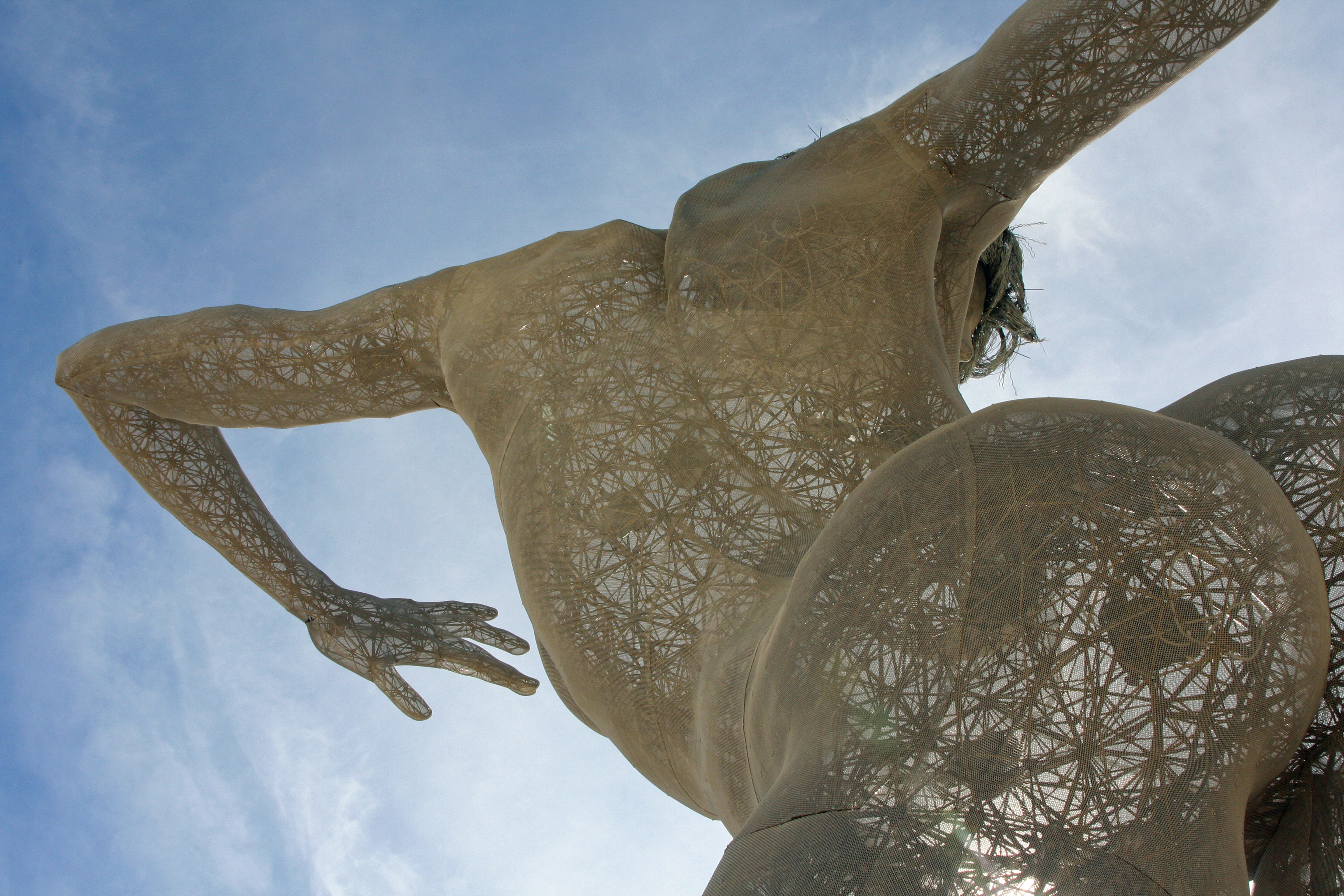
The 2009 Program listed 184 unique works of art created for Burning Man that year. This giant sculpture of a nude woman was placed on the Playa last year. One of my favorite activities is exploring and photographing the art… sometimes from unique angles.

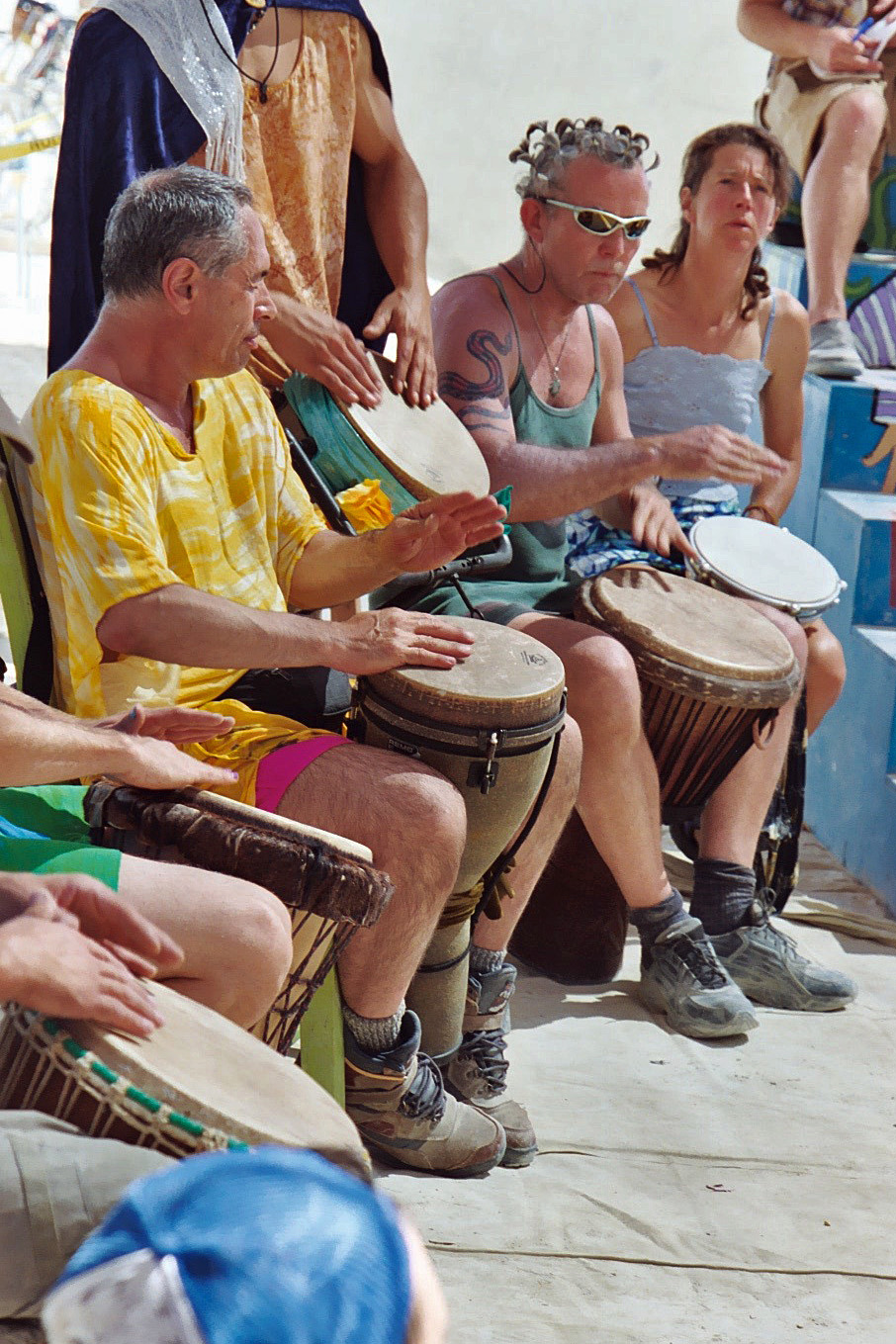
The performing arts easily match the visual arts in Black Rock City. Impromptu jam sessions can be found at Center Camp almost any hour of the day.

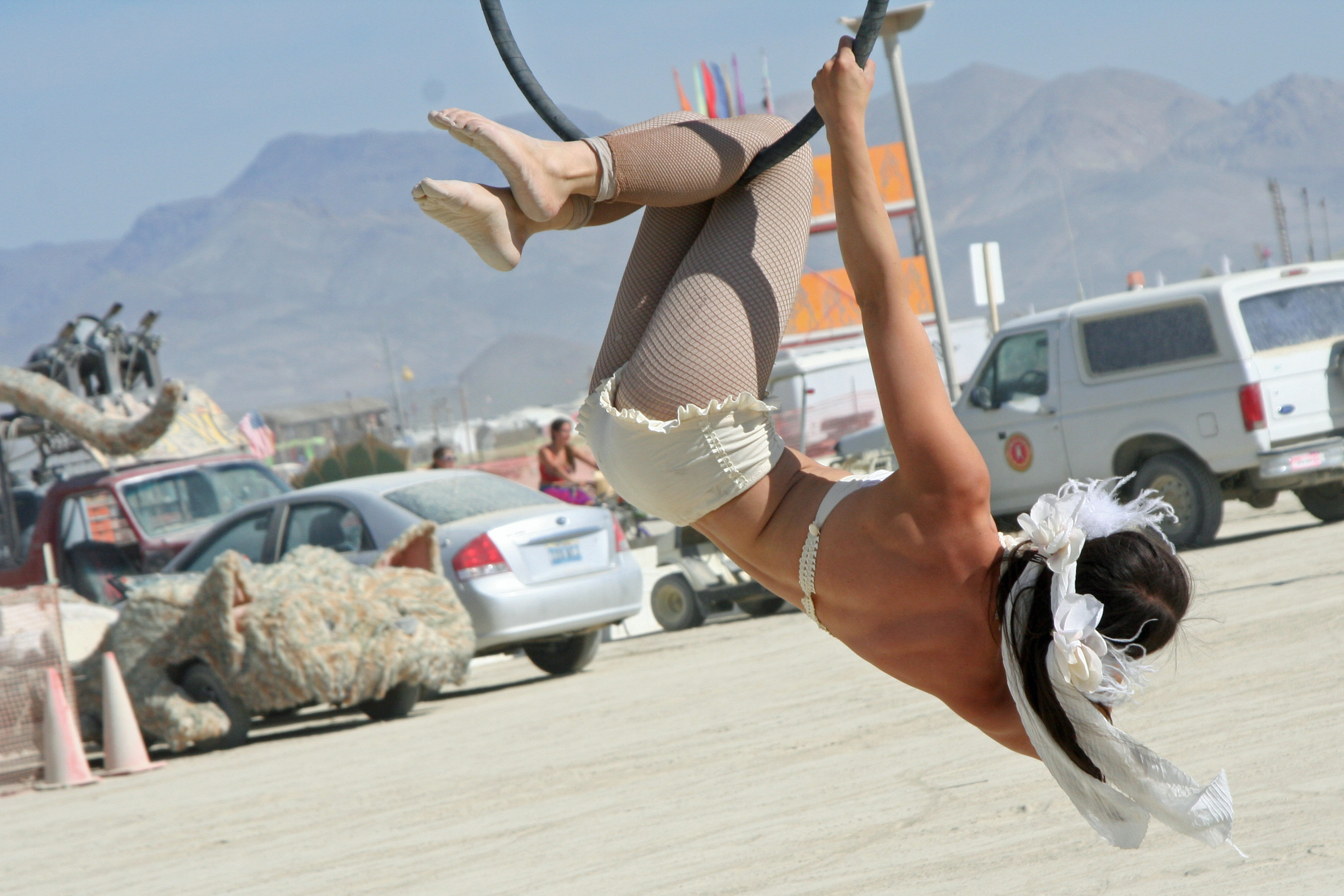
A trapeze artist does her thing. Watch out Ringling Brothers. Circus type performances are common.

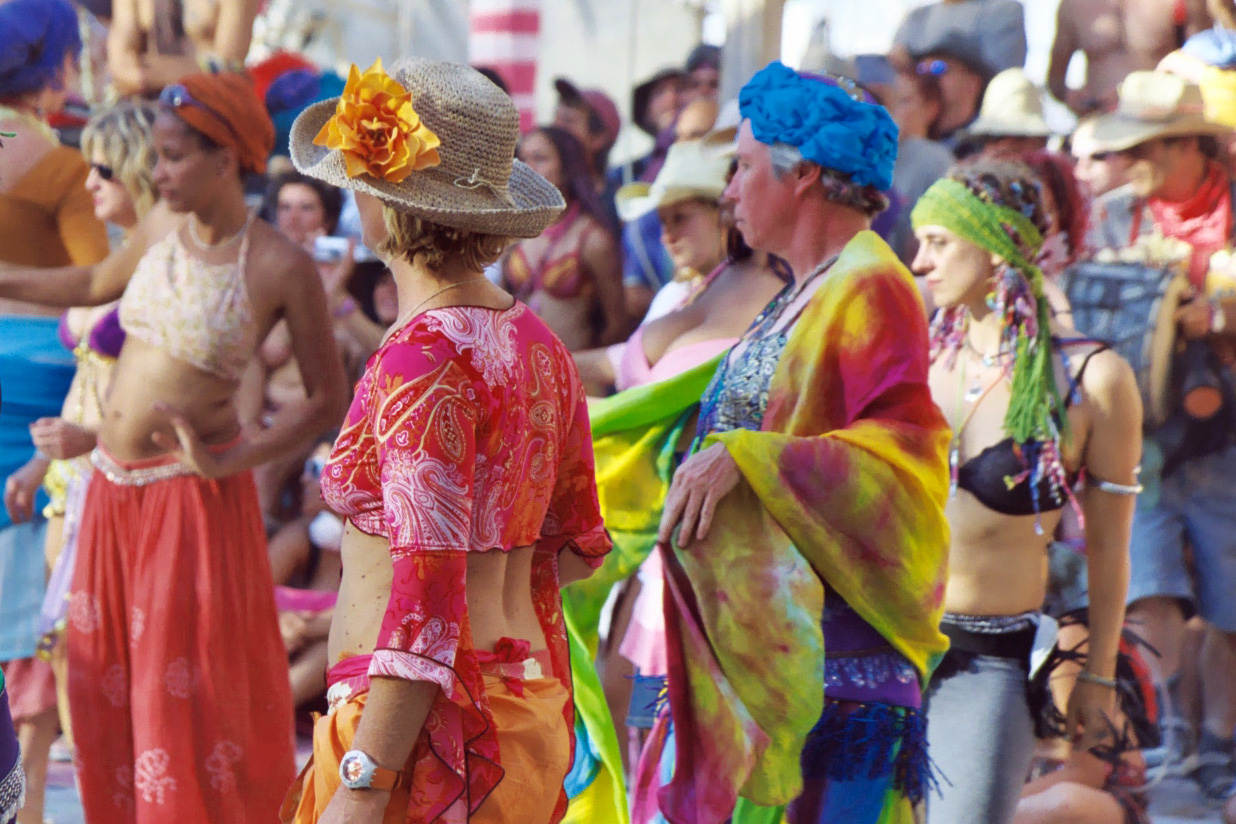
I liked the bright colors displayed by this troupe of Belly Dancers. I also felt the age range is indicative of Burning Man. All age groups are represented.

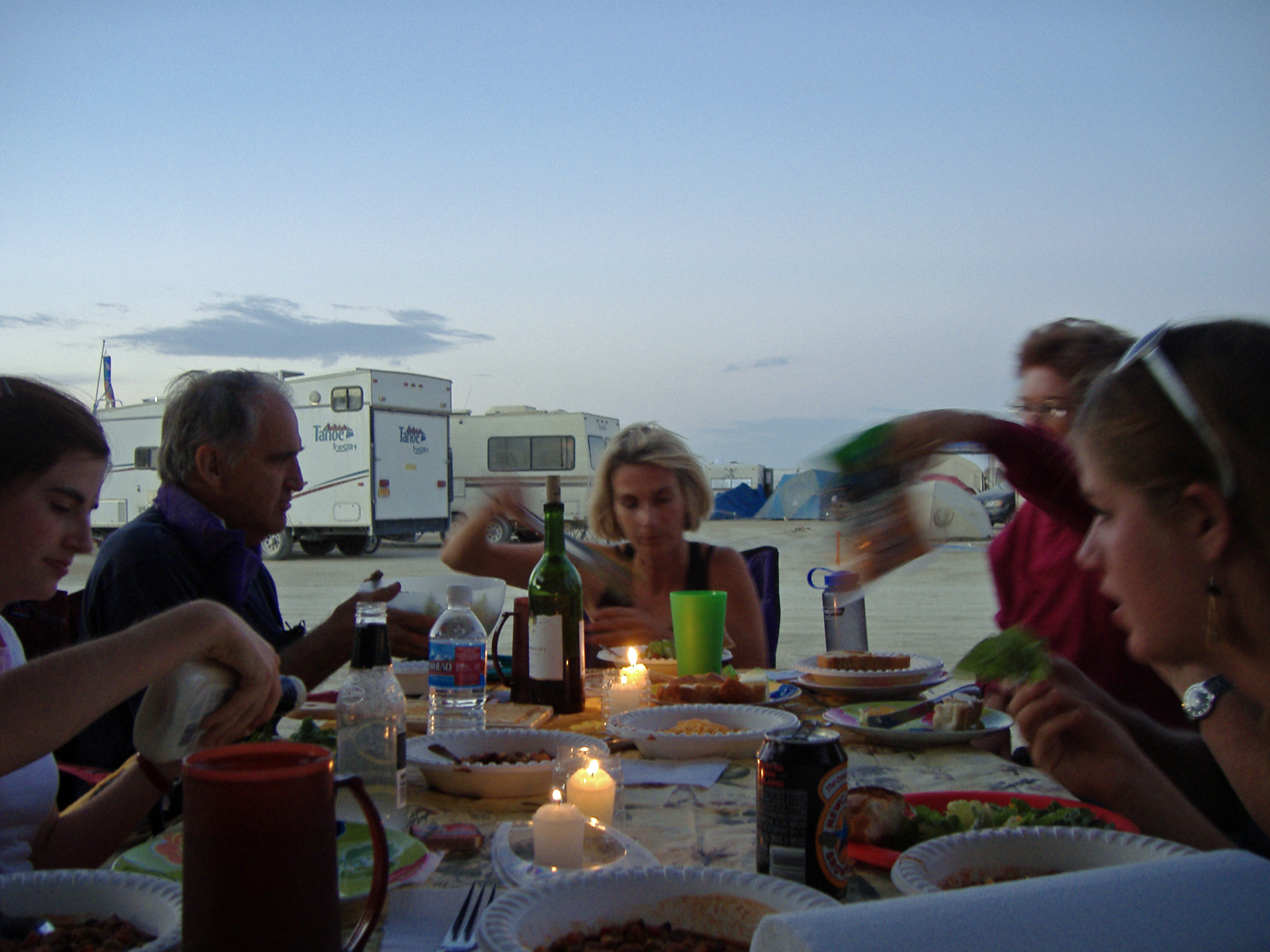
While we scatter during the day and again at night, members of the Horse-Bone Tribe always get together at dinner time. Photo by Ken Lake

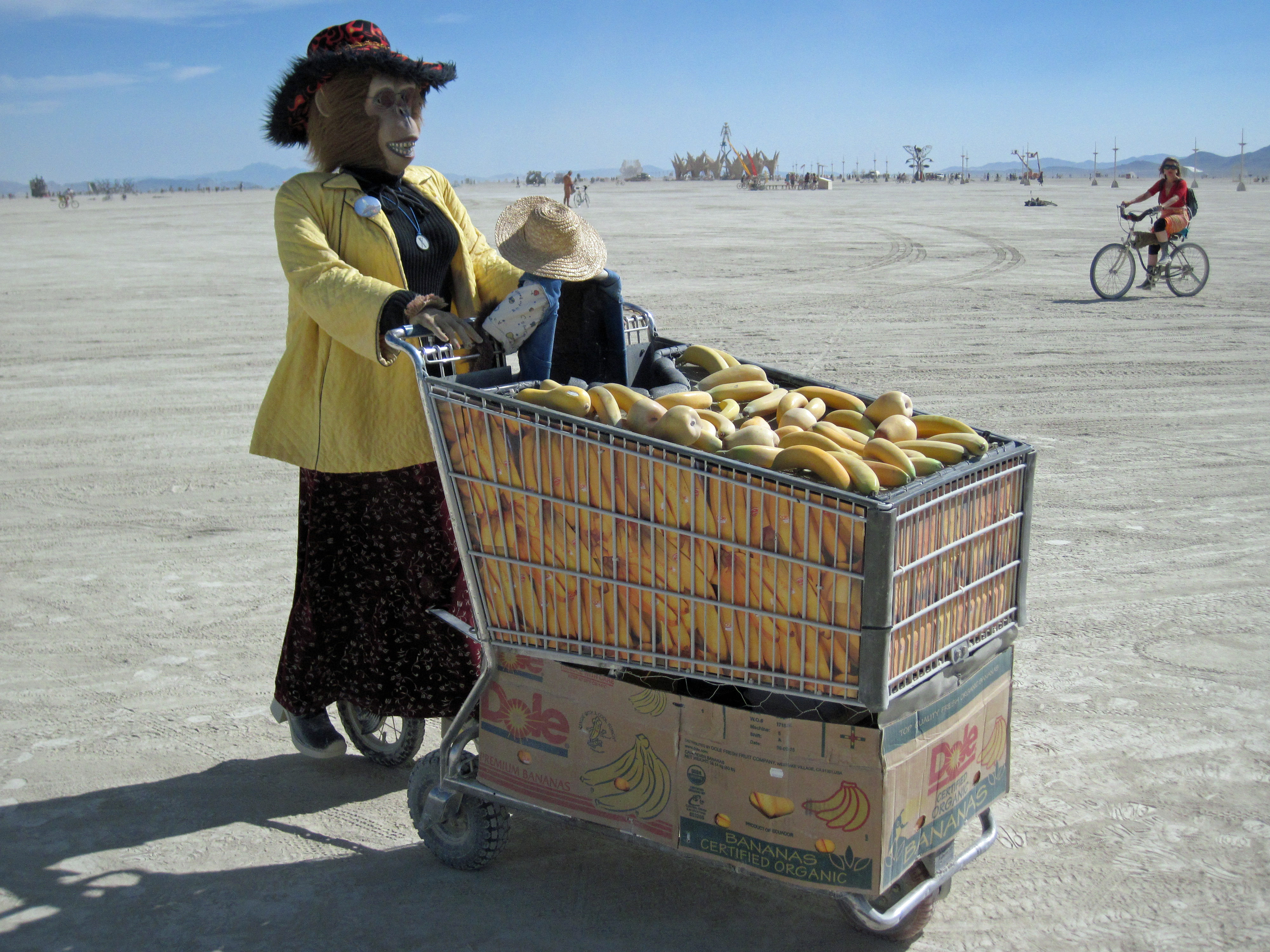
Walking around and appreciating costumes can be a full-time occupation. This ape was handing out bananas to Burners, or ‘gifting’ as it is called at Burning Man. Photo by Tom Lovering

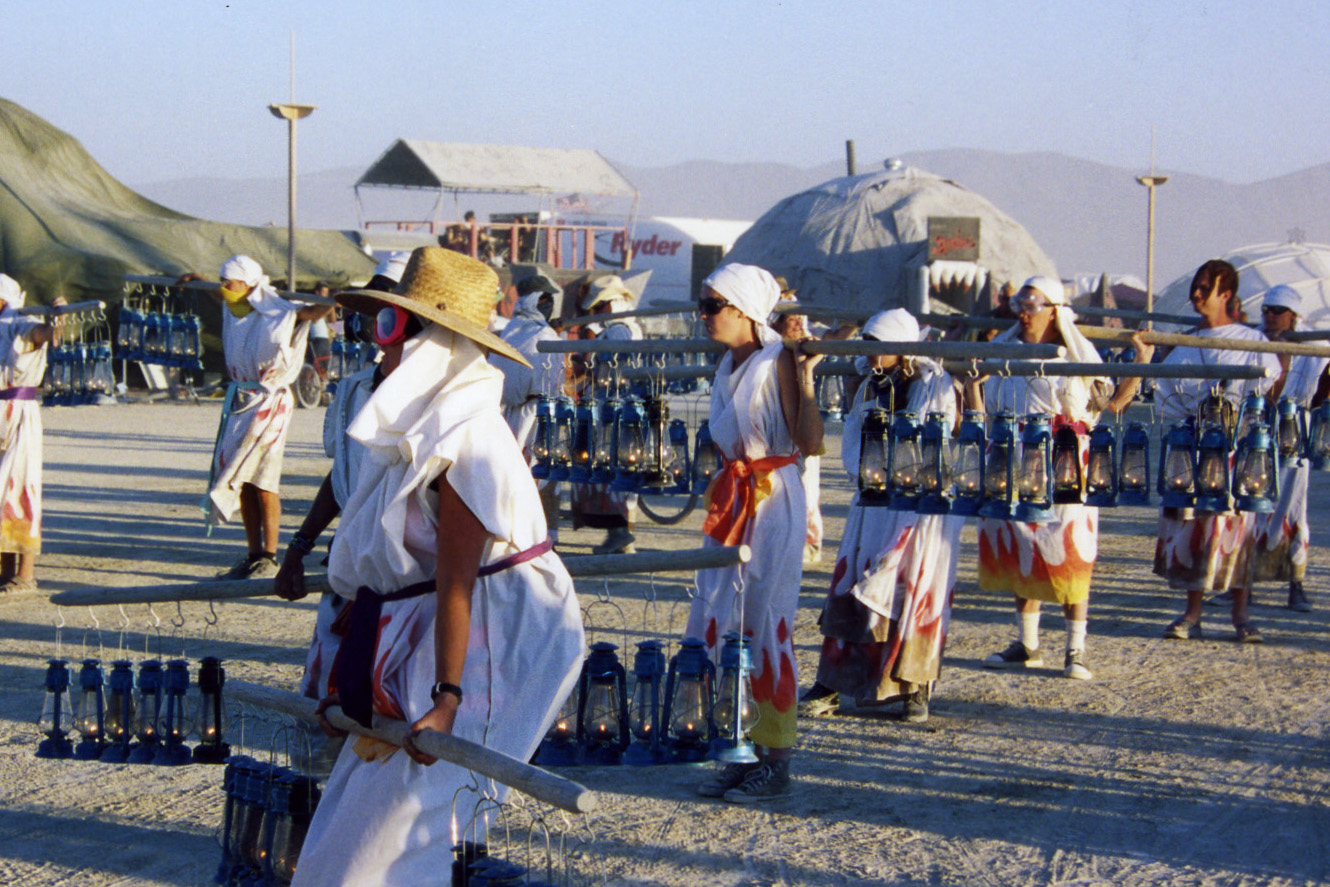
Volunteering is big. Become a Ranger and help maintain order. Volunteer to pick up trash, or moop as it is called on the Playa. Help light the hundreds of lanterns each evening.  Work as a coffee barista at Center Camp.

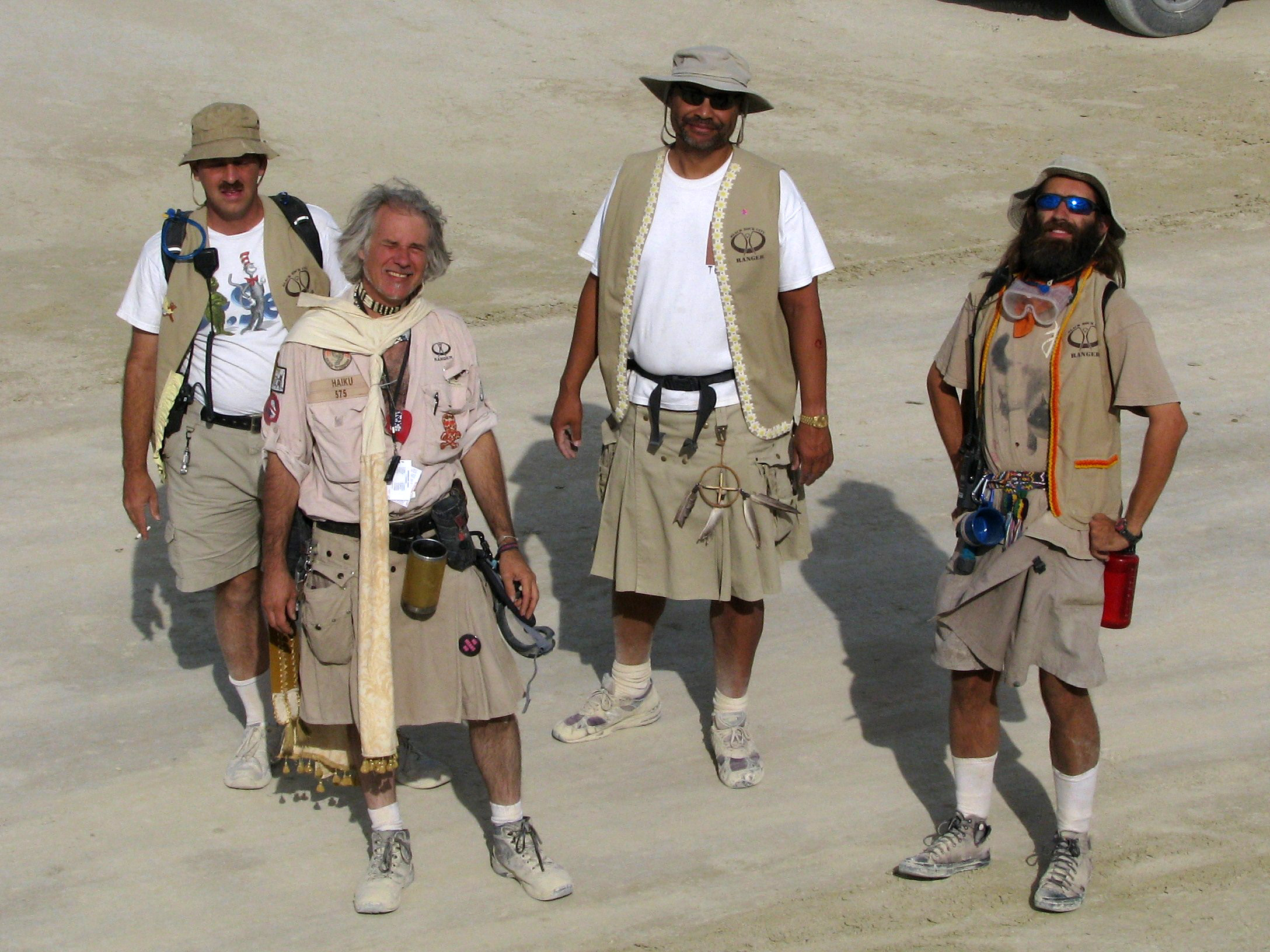
Volunteer Rangers. These guys are available to help when needed and patrol Black Rock City day and night. Photo by Don Green

As the evening approaches, volunteer lamplighters gather to distribute lamps to posts located throughout the Playa.

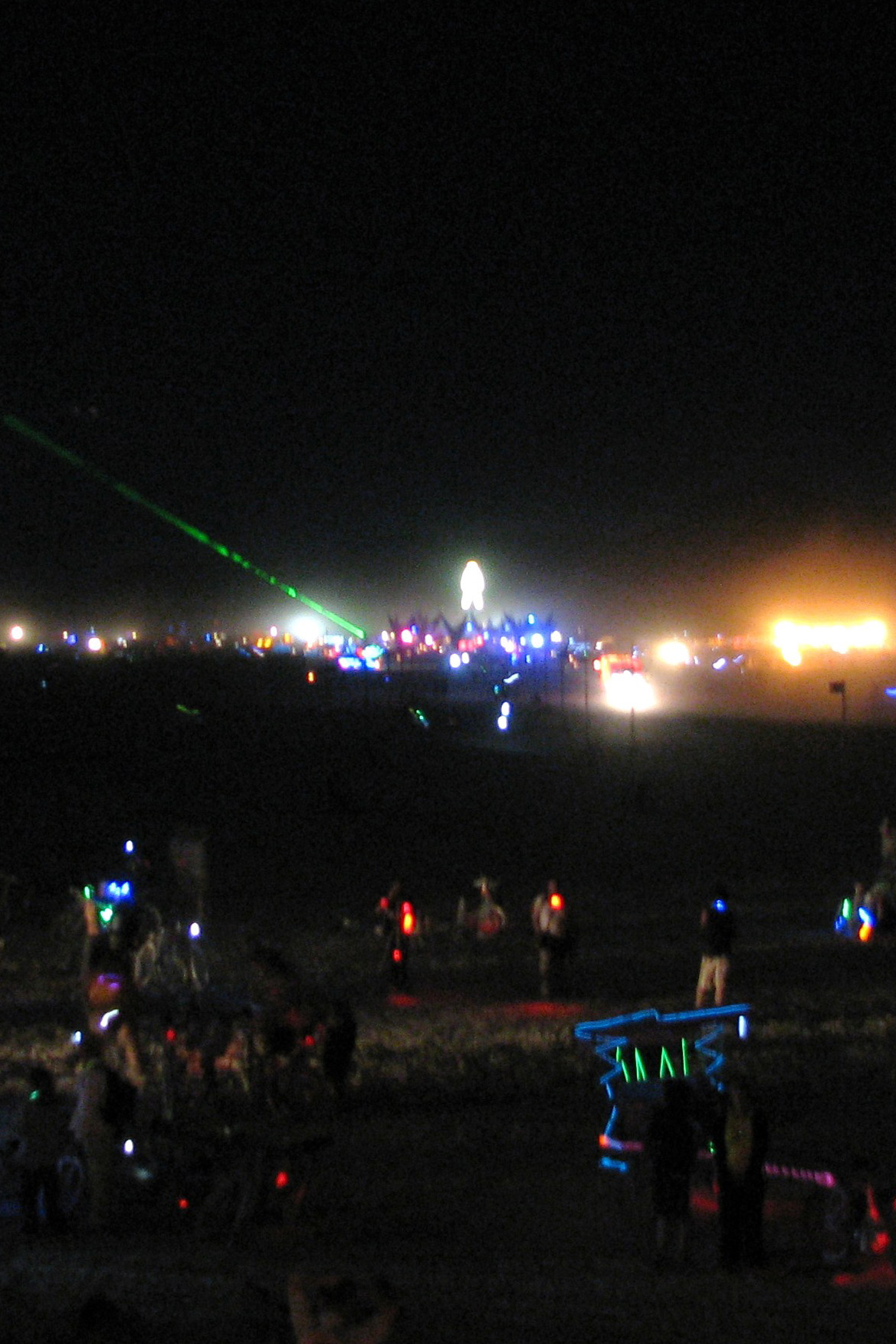
Fascinating at any time of the day, Burning Man becomes a surrealistic fantasy world at night. Fire breathing dragons and fire spouting art light up the sky. Dozens of creatively lit mutant vehicles cross back and forth across the Playa, as do thousands of light decorated bicycles. The glow stick industry must make a fortune. Even people become walking light shows. Dozens of venues along the Esplanade invite exploration. Watch a circus, see Godspell, climb on a giant teeter-totter, visit a maze or gyrate to music. Join a crowd watching a troupe of fire dancers work its magic on the Playa.

At night, Burning man becomes a kaleidoscope of fire and color… a very different world from what we are used to, almost magic. Photo by Don Green

Burning Man is not for everyone. It’s too big, it’s too dusty, it’s too hot, it’s too noisy, it’s too sexy, it’s too alternative. But if anything I have written has appeal, give this extravaganza in the Black Rock Desert serious consideration. Whatever you come away with, you will never forget the experience.

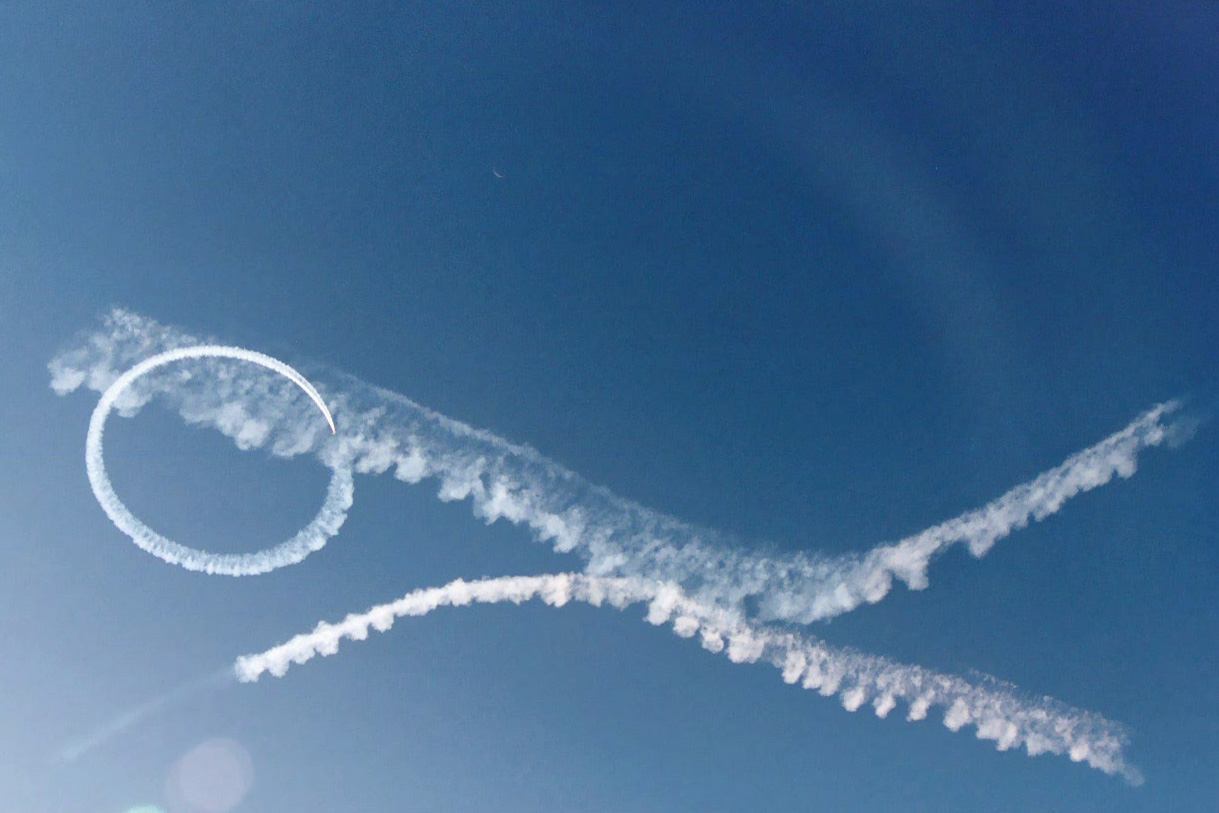
Tired of looking down? Look up. Something is almost always happening in the skies over Burning Man. Here, a sky writer completes the man. Sky divers are also a common site. There are even occasional military jets that zoom over. Hmmm… wonder if they are lost?

If you enjoyed this post, you might want to check out my five reasons for going to Burning Man in 2014.