Rome’s Vatican… The Hundred Acre Home of One Billion Catholics

Cloudy skies provide a dramatic backdrop for St. Peter's Basilica with its magnificent dome designed by Michelangelo.

Cloudy skies provide a colorful backdrop for St. Peter’s Basilica with its magnificent dome designed by Michelangelo. This photo is taken while standing in St. Peters Square. Look closely, and you will see ant-like people waiting to enter.

I felt awe when I entered St. Peter’s Basilica. The massive dome designed by Michelangelo is higher than a football field is long. Bernini’s bronze, seven-story canopy looms over the altar where the Pope holds services. Every nook and cranny is filled with world-renowned art such as the Pieta. All combine to inspire a sense of the sacred.

Our hotel in Rome, the Giulio Cesare, was within a mile of the Vatican. We walked over twice, getting mildly lost both times. It didn’t matter. Rome is chock-full of fascinating architecture and tantalizing history.

The first time we went via the Tiber River, passing by the Castle St. Angelo and its neighboring bridge, the Pont St. Angelo. Eventually this brought us to the broad avenue leading up to St. Peter’s Square and Basilica. Mussolini built the avenue to provide visitors with a better view of the church. He also gave the 100-acre Vatican its independent nation status. Today the Vatican serves as the religious center for some one billion Catholics.

The Victor Immanuel Bridge reflected in the Tiber River of Rome.

The Victor Immanuel Bridge reflected in the Tiber River of Rome.

Peggy, her brother John and his wife Frances stand in front of the Tiber River and the Pont St. Angelo (the Bridge of Angels)

Peggy, her brother John and his wife Frances stand in front of the Tiber River and the Pont St. Angelo (the Bridge of Angels). The bridge was once the Bridge of Emperor Hadrian and dates from the Roman Empire.
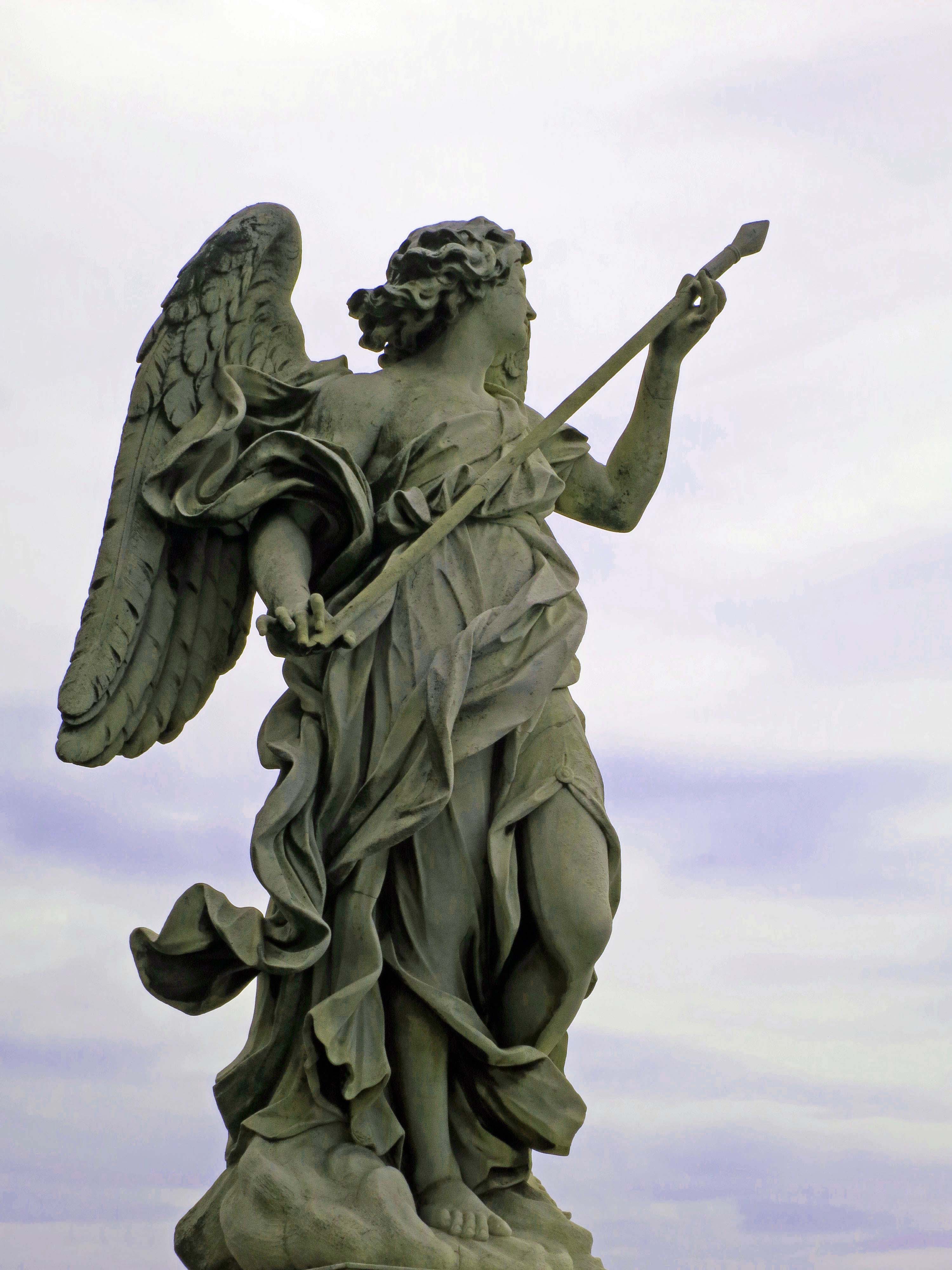
The Pont St. Angelo received its name during the Renaissance when Bernini oversaw a project to line it with angels representing Christ's crucifixion.

Pont St. Angelo received its name during the Renaissance when Bernini oversaw a project to line the bridge with angels reminding the faithful of Christ’s crucifixion. This one carries a lance representing the spear used by a Roman Soldier to jab Christ in the side. 

The rounded Castle St. Angelo stands next to the bridge. Built originally as a mausoleum for Emperor Hadrian, it would later become a prison and then fort. Today it serves as a museum.

The rounded Castle St. Angelo stands next to the bridge. Built originally as a mausoleum for Emperor Hadrian, it would later become a prison and then fort. Today it serves as a museum. St. Michael stands on top of the castle with sword drawn to fight off the plague. (Photo by Peggy Mekemson.)

A view of St. Peter's Square featuring Bernini's columns that enclose the square.

A view of St. Peter’s Square featuring a portion of Bernini’s Colonnade. Statues of 10 foot tall saints line the top.

Another perspective of St. Peter's Square. This is taken from the Basilica looking back. The boulevard built my Mussolini is in the distance. Bernini's Colonnade opens out, welcoming the faithful.

Another perspective of St. Peter’s Square. This is taken from the Basilica looking back. The boulevard built by Mussolini is in the distance. Bernini’s Colonnade opens out, welcoming the faithful.

OObelisk in St. Peter's Square

This obelisk, seen in the previous picture, dominates St. Peter’s Square. Once upon a time it resided in Egypt, but its home in Rome predates that of the Vatican when it stood over Nero’s race track where Christians were persecuted and Peter was crucified upside down.
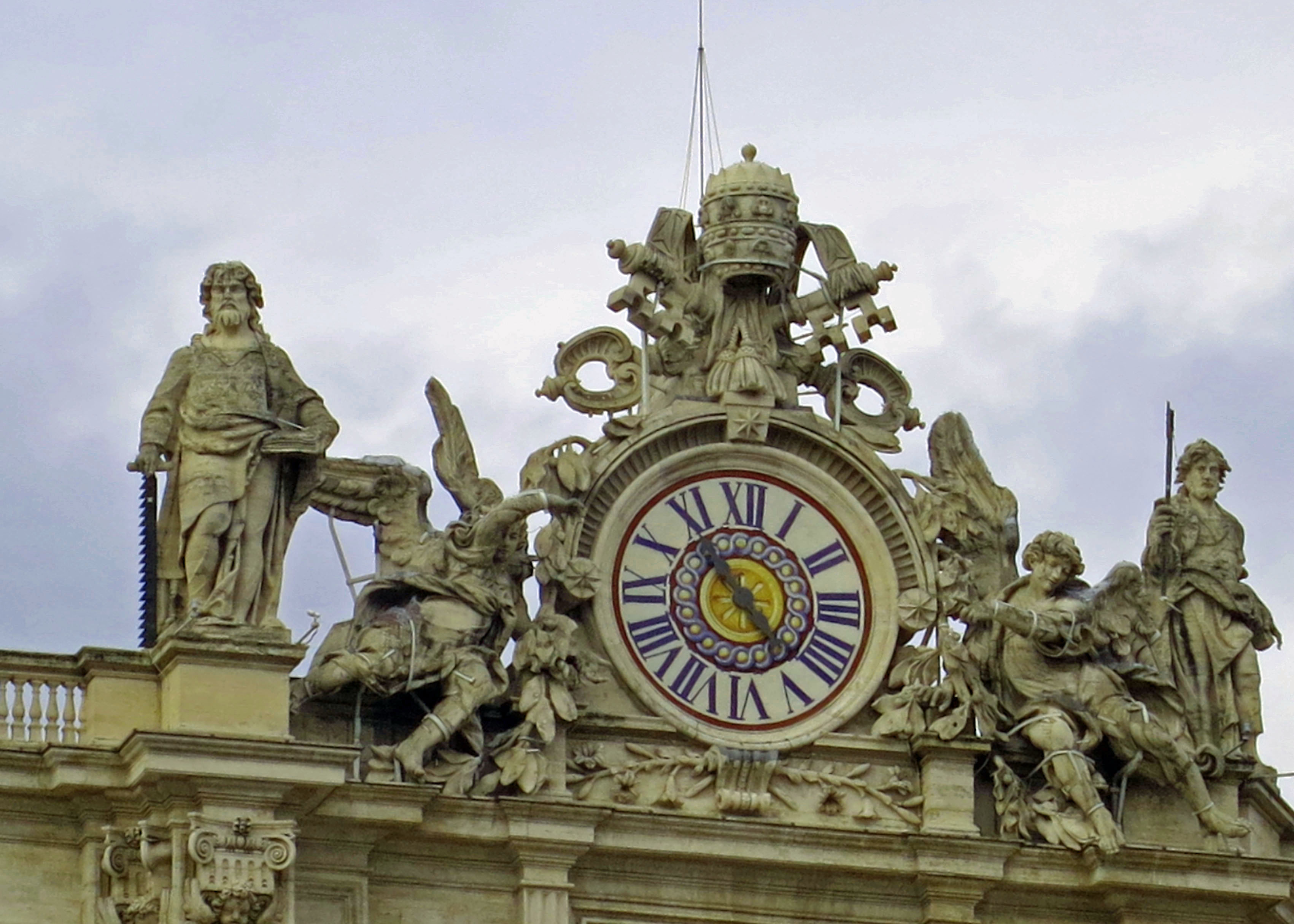
The top of St. Peter's Basilica, like Bellini's Colonnade, features saints, and each side of the Basilica has a large clock. The saint on the left is Simon the Zealot. You can tell your saints by the tools they carry. Simon was a carpenter and is show with his saw. Peter is always shown with his keys to Heaven. The keys, BTW, are found throughout the Basilica. Check out the top of the clock.

The top of St. Peter’s Basilica, like Bellini’s Colonnade, features saints. The saint on the left is Simon the Zealot. You can tell your saints by the tools they carry. Simon was a carpenter and is shown with his saw. Simon was called the Zealot because he left his wife and kids to follow Jesus. (Photo by Peggy Mekemson)

No blog on the Vatican would be complete without showing the changing of the Swiss Guard, the Pope's mercenaries.

No blog on the Vatican would be complete without showing the changing of the Swiss Guard with their pikes and colorful uniforms. (Photo by Peggy Mekemson.)

Lamp on St. Peter's Square.

This lamp from St. Peter’s Square is here because I like it. You’ll see it peeking out on the left hand corner of St. Peter’s Basilica at the beginning of this blog.

I conclude this blog with this shot I took of the massive columns on the front of St. Peter's Basilica. I felt it provided an interesting perspective on the size of the church.

I will conclude with this shot I took of the massive columns on the front of St. Peter’s Basilica. I felt they provided an interesting perspective on the size of the church.

NEXT BLOG: I will take you inside of  St. Peter’s Basilica and provide a brief tour of the Vatican Museum.

The Wolf, the Woodpecker and Rome… Mediterranean Ports

Romulus and Remus, the mythological founders of Rome, chow down on breakfast.

Romulus and Remus, the mythological founders of Rome, chow down on breakfast. I found this particular bas-relief near the Forum in Rome.

What better place to start my blogs about Rome than its founding? The story of Romulus and Remus has something for everyone. Think about this, but not too hard. (Grin)

Romulus and Remus were born of a Vestal Virgin who was impregnated by Mars. (It’s always good to have a convenient god around when ‘Who’s your Daddy?’ is in question.) Mom, knowing she is going to be punished… Vestal Virgins were supposed to stay virgin, places the babies in a basket and sends them floating down the Tiber. So far we are we are on familiar ground, or make that water.  Think Moses. Then things get a little weird.

A she-wolf named Lupus finds the twins and carries them off to her den, indubitably by the nape of their necks. She opts not to eat them and soon the greedy little guys are slurping away. Picus, the Woodpecker, helps out. It makes for a more balanced diet. Picus, unfortunately, rarely gets credit for his help. I found dozens of images on Google of Lupus feeding the kids but none of Picus flying in with a bug.

Eventually, life returns to normal. A poor shepherd finds the two twins in Lupus’s den and raises them as his own children. (How Lupus and Picus felt about this change of fortune is not reported. I suspect they appreciated not having to get up several times a night.) As these myths usually go, the kids grow up, discover their heritage, and hurry off to punish the person responsible for doing in mom.

Justice is served and the twins decide to found Rome. But things get nasty. They argue over which hill to build the city on. Romulus solves the problem by killing Remus and naming the city after himself. Otherwise, Rome might be Reme. After many more adventures, Romulus dies and ascends to Heaven, thus ending the story.

Bronze relief of Romulus, Remus and Lupus in Venice.

I took this photo of the well-fed kids in Venice. SPQR, by the way, stands for the Senate and the People of Rome. Mom does not look happy in either of the two photos.

NEXT BLOG: We go for a walk on the Tiber and find the Vatican. It wasn’t lost.

The Tombs of Tarquinia: An Etruscan City of the Dead… Mediterranean Ports

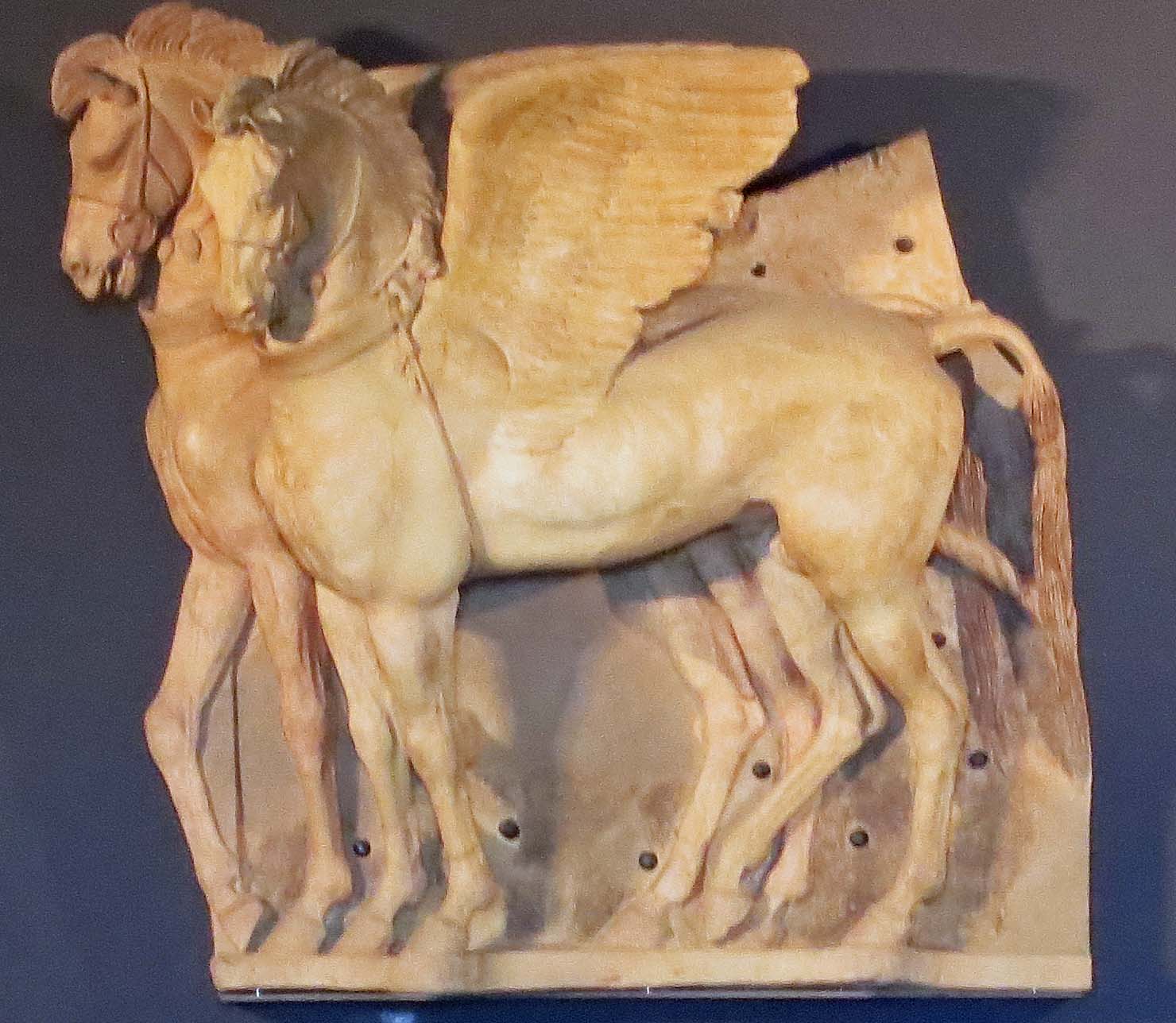
Winged Horses of Tarquinia

This beautiful pair of winged horses was found in a temple near the Etruscan tombs of Tarquinia. They are housed in the National Museum of Tarquinia. I immediately thought of Pegasus, the winged horse of Greek Mythology.

The Crown Princess sailed through the Tyrrhenian Sea into Rome’s port of Civitavecchia during the night. We had to make a decision; would we explore the region around the port or would we take the train into Rome.

Since we had flown into Rome at the beginning of our trip and already visited the major sites, Peggy and I, along with her brother John and wife Frances, decided to stay local. Our other two travelling companions, Kathi and Lee, opted for the hour train ride into Rome.

I had read in Rick Steve’s book on Mediterranean Ports about the Etruscan town of Tarquinia with its necropolis of 6000 tombs dating from 700-200 BC. I was eager to explore it. The Etruscans were precursors to the Romans… i.e. ancient. Also, in this age of movie vampires, werewolves and other creatures of the night, how could we resist visiting a city of the dead?

We scarfed down a quick breakfast onboard, grabbed the shuttle to town, and were soon knee-deep in cab drivers offering tours. Ninety euros bought the four of us a trip to the tombs and a visit to the National Museum of Tarquinia. Thirty minutes later we had made the short trip north of the port and were preparing to visit our first tomb.

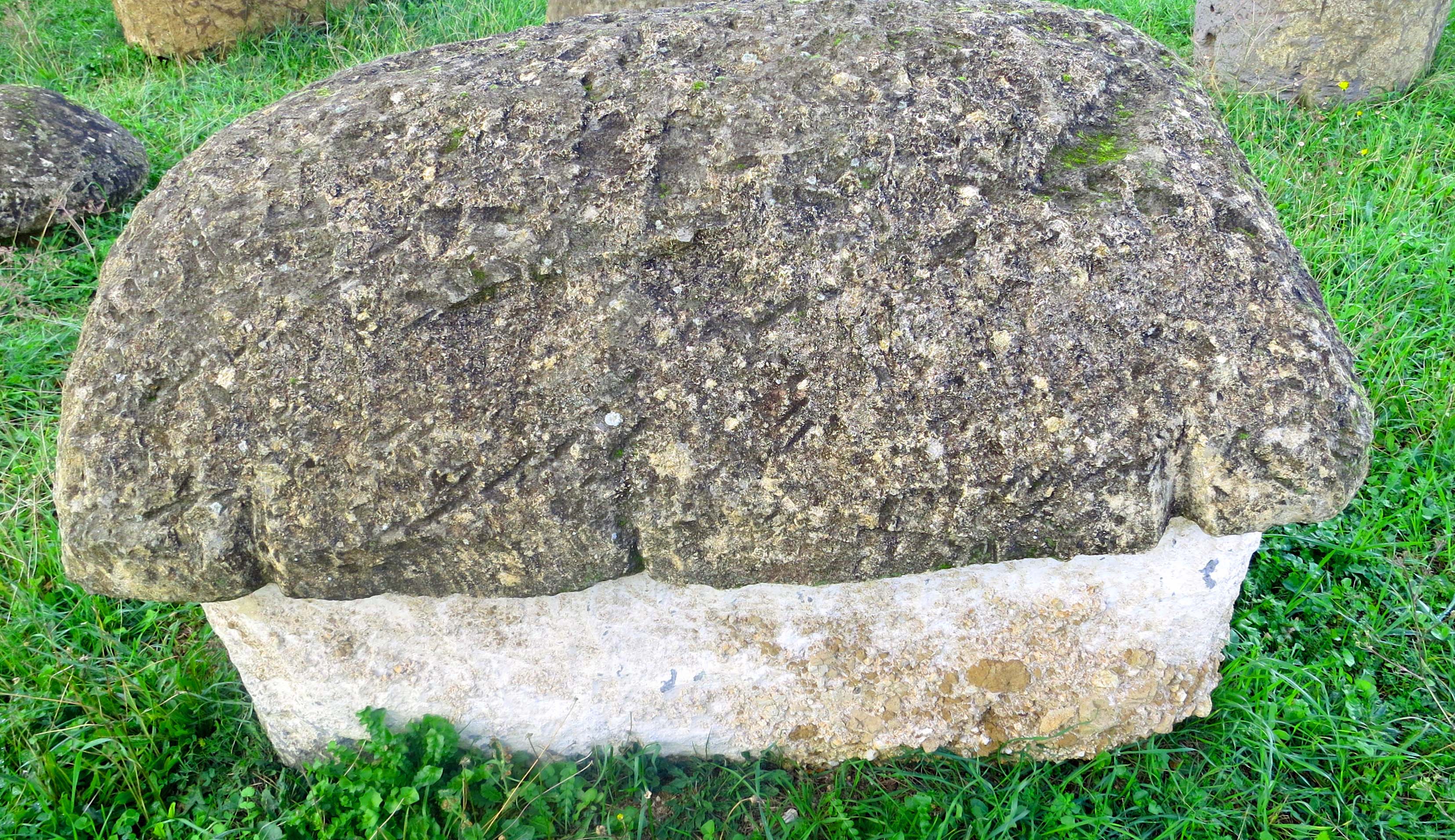
Walking out to the site, we passed a number of large mushroom and hut shaped stone objects that had served as funerary urns for cremated bodies. Apparently these strange-looking urns, as well as more sophisticated sarcophagi (coffins), were found buried in the tombs.

These funerary urns found in Tarquenia were used for cremated remains and buried in tombs. The contrast of the green grass, dark clouds and bright sun made a colorful photo.

These funerary urns found in Tarquinia were used for cremated remains and buried in tombs. The contrast of the green grass, dark clouds and bright sun made a colorful photo.

This type of funerary urn shaped like a house was apparently for the remains of women.

This type of funerary urn shaped like a house was apparently for the remains of a woman. The more ‘mushroom’ shaped urns were for men.

The tombs were dug into stone and covered by small mounds, creating what might best be described as a bumpy hill. A number of the burial sites contained elaborate paintings.  Small, modern buildings covered the stairs leading down into tombs. We switched on lights for our trip into the darkness. The tombs were sealed to protect the paintings. Miniature windows provided viewing for one person at a time. It was best to be first in line, rather than last and left alone with the dead… especially when the automatic lights shut off.

This photo shows one of the 2500 year old mounds beside the small modern that covers the stairs down to the tomb.

This photo shows one of the 2500 year old tomb mounds beside the small modern building that covers the stairs leading down into the tomb.

Stairs into an Etruscan tomb in Tarquinia

Peggy and Frances follow the stairs leading down into an Etruscan tomb.

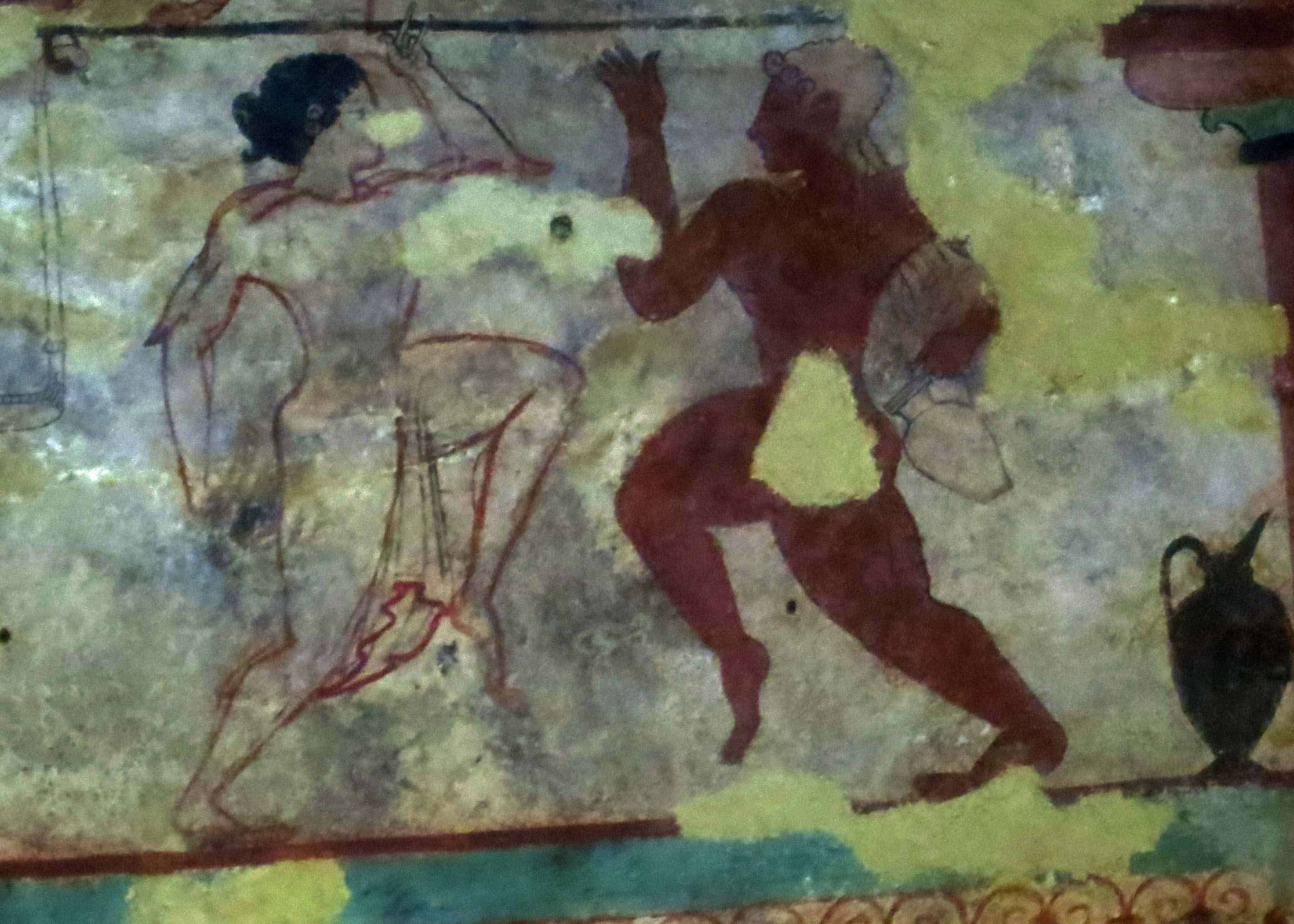
The paintings provided a fascinating look into early Etruscan life. The Etruscans, it seems, believed that the soul remains with the body after death.  The dead were stuck in their tombs for a long, long time. Make that eternity. With this in mind, people did what they could to make the tombs pleasant places to live. Family and friends were painted on the walls, as were parties and dancing and music and feasts and sex. Who could ask for more? At least that’s what the living hoped. The dead were dangerous if they started wandering around outside. Best they have fun in their own little underground houses.

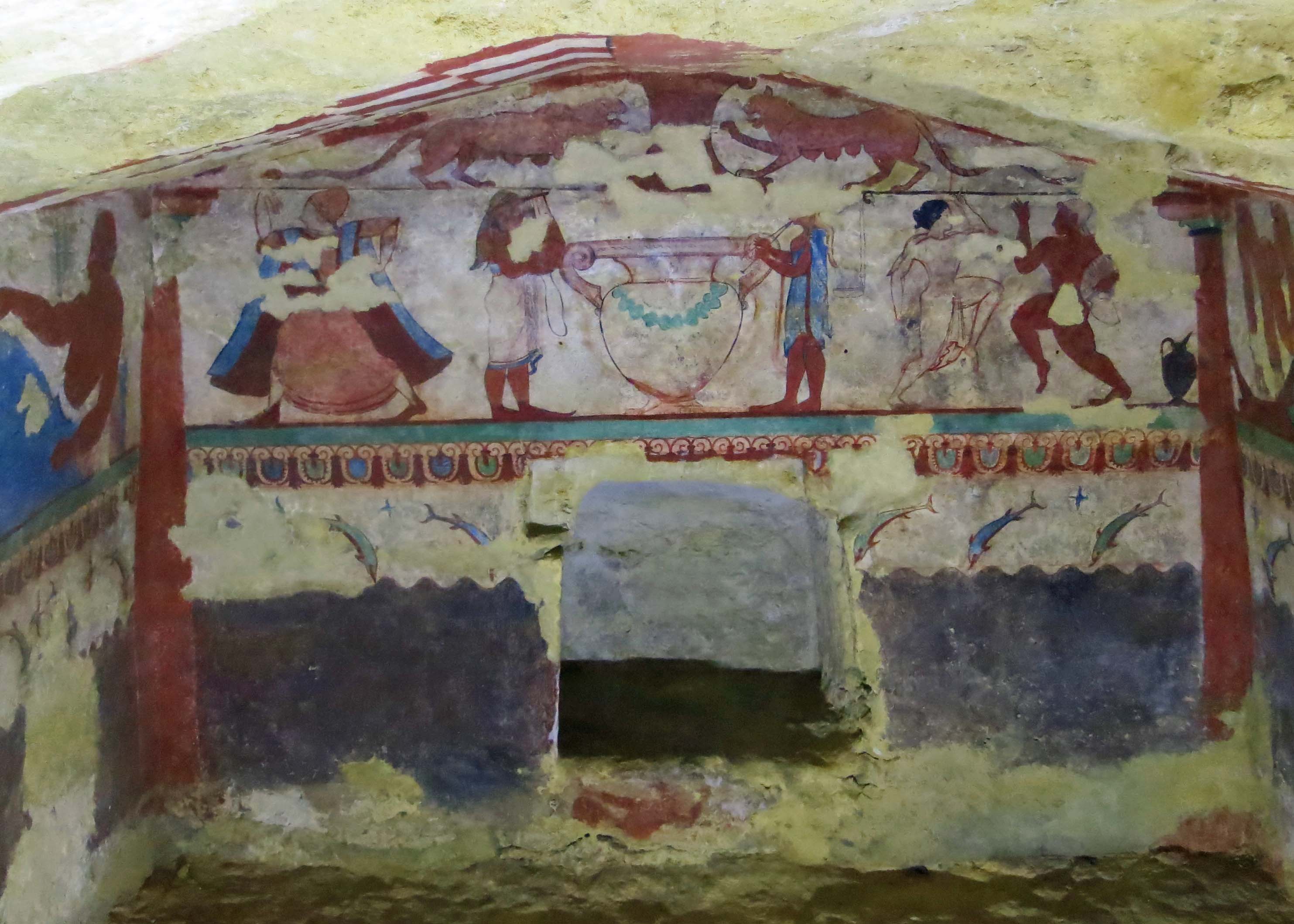
The following examples are from the Lioness House.

This photo is taken looking at the tomb of the Lions through the small window proved for visitors. Note the musicians, dancers and lions.

This photo is taken looking at the tomb of the Female Lions through the small window provided for visitors. Note the musicians, dancers, dolphins, lions and door to a second room.

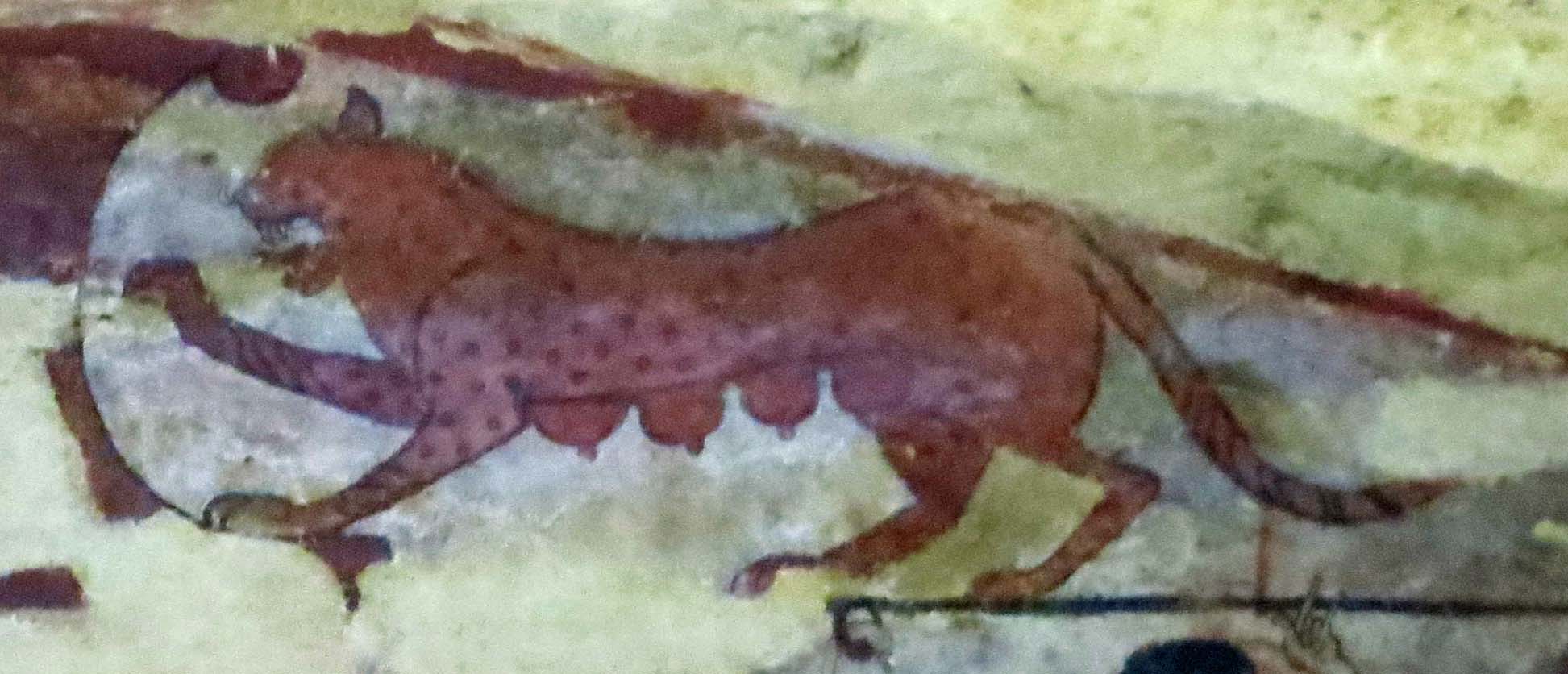
A close up of the lioness. The lioness obviously has nursing cubs. I would call her a Leopard.

A close up of the lioness. Hopefully, she has nursing cubs. I would call her a leopard because of her spots.

Dancers in Tarquinian Tomb

One of my favorite subjects in the tomb painting is the two dancers on the right. They seem to be having a great time.

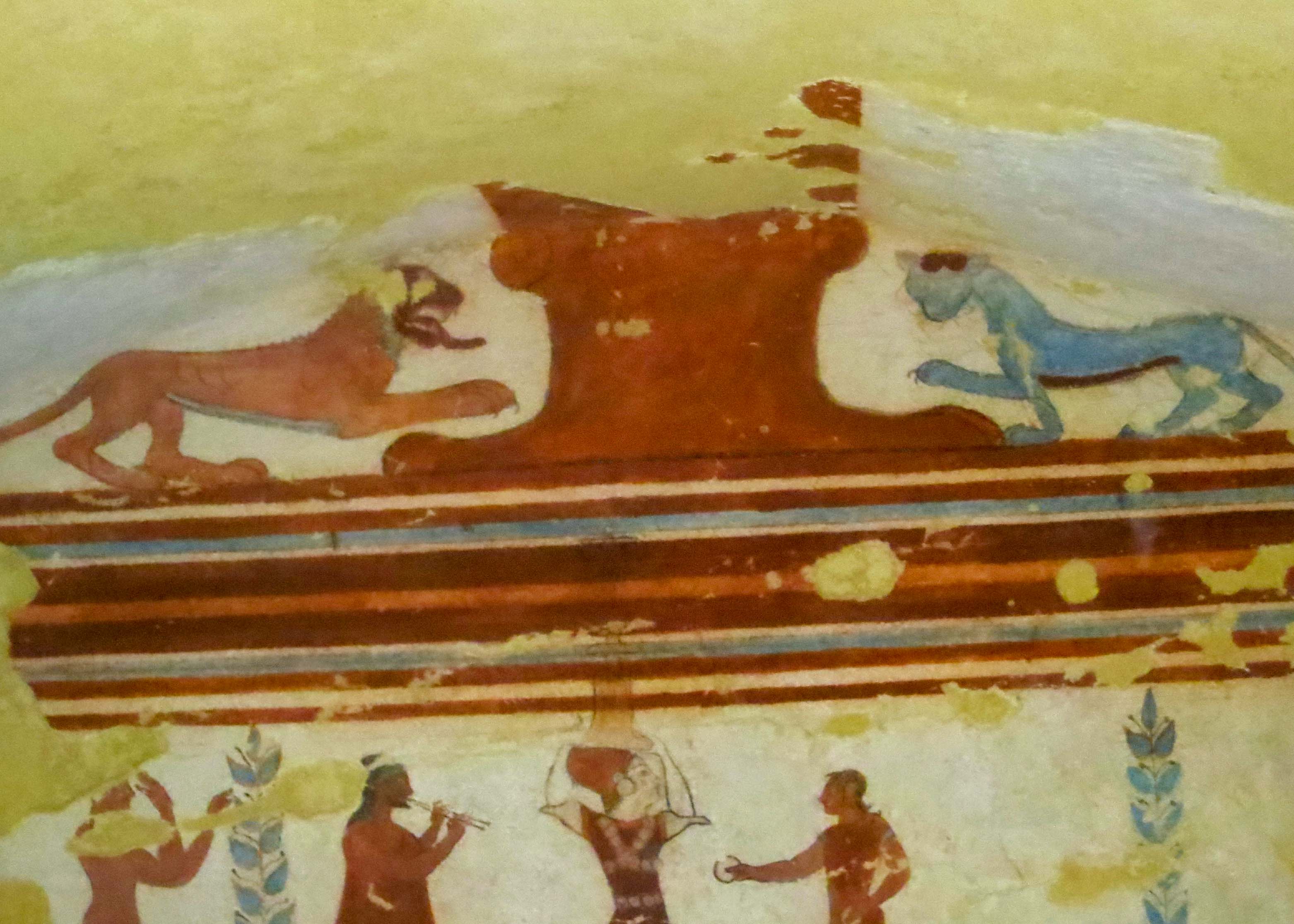
I found this painting from another tomb particularly amazing. It looked like the lion on the right was wearing shades... a cool cat.

I found this painting from another tomb particularly amusing. It looked like the blue lion on the right is wearing shades; he is one cool cat.

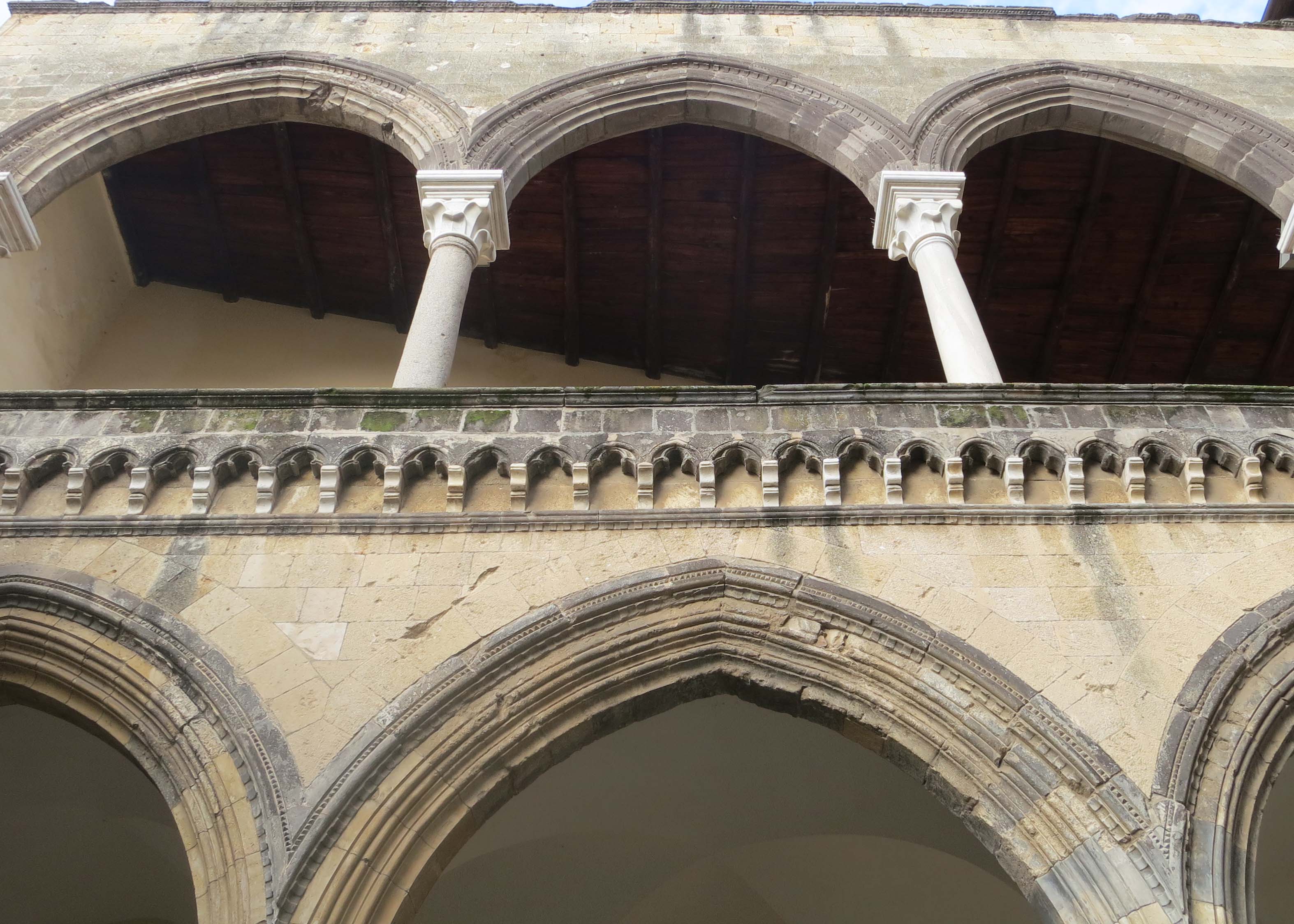
Visiting the National Museum of Tarquinia finished off our tour. It is housed in a handsome building, the Palazzo Vitelleschi, which was begun in 1436 and completed around 1490.

The National Museum of Tarquinia is housed in the which was built between

The National Museum of Tarquinia is housed in the Palazzo Vitelleschi which was built between 1436-1490.

This Etruscan sarcophagus from the Tarquinian tombs was one of many at the National Museum. (Photo by Peggy Mekemson)
This Etruscan sarcophagus from the Tarquinian tombs was one of many at the National Museum. The person on top supposedly looked like the dead person inside. Also check out the winged guys on the side and the feet on the bottom. (Photo by Peggy Mekemson)
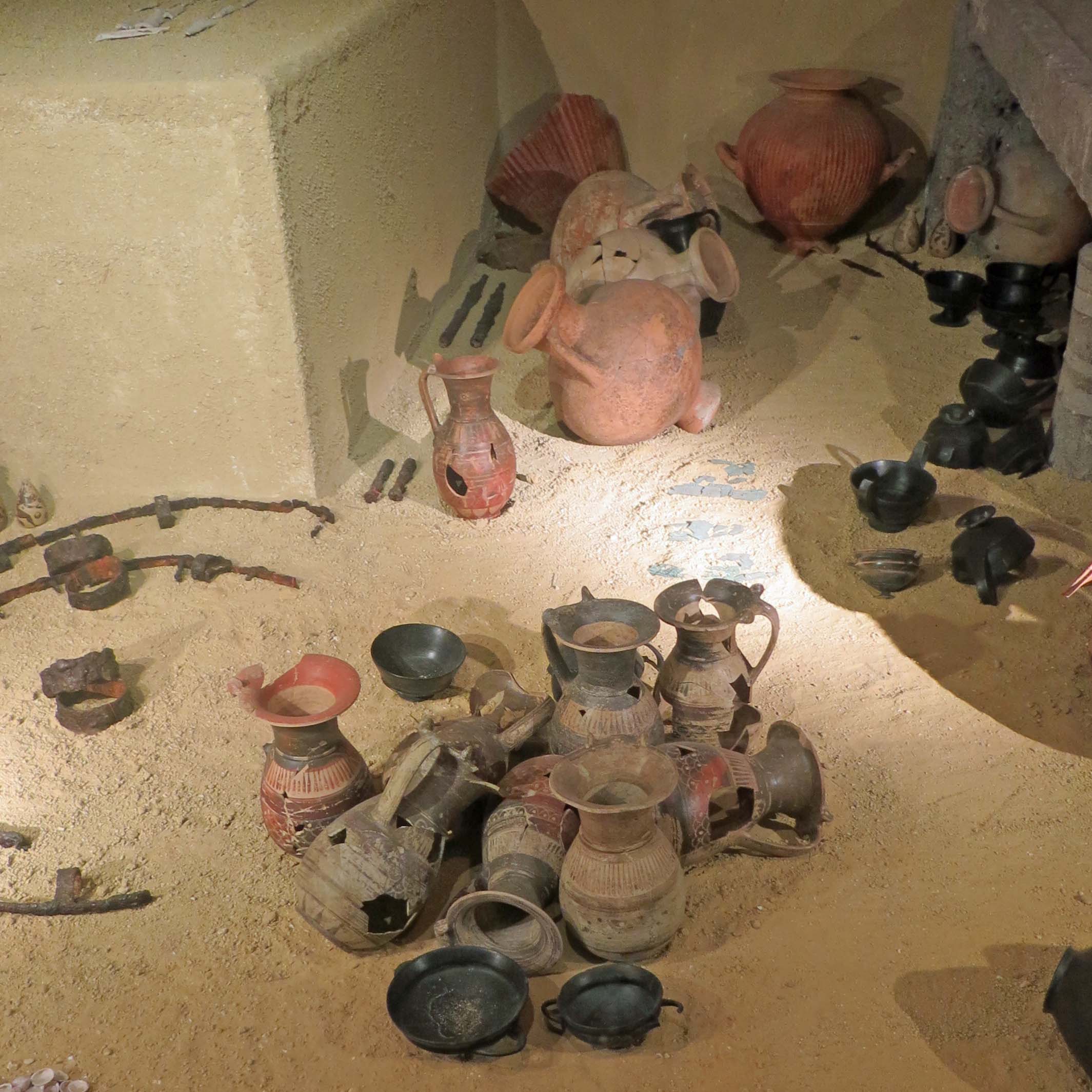
This pottery taken from an Etruscan Tomb was on display at the National Museum of Tarquenia.

This pottery taken from an Etruscan Tomb was on display at the National Museum of Tarquinia.

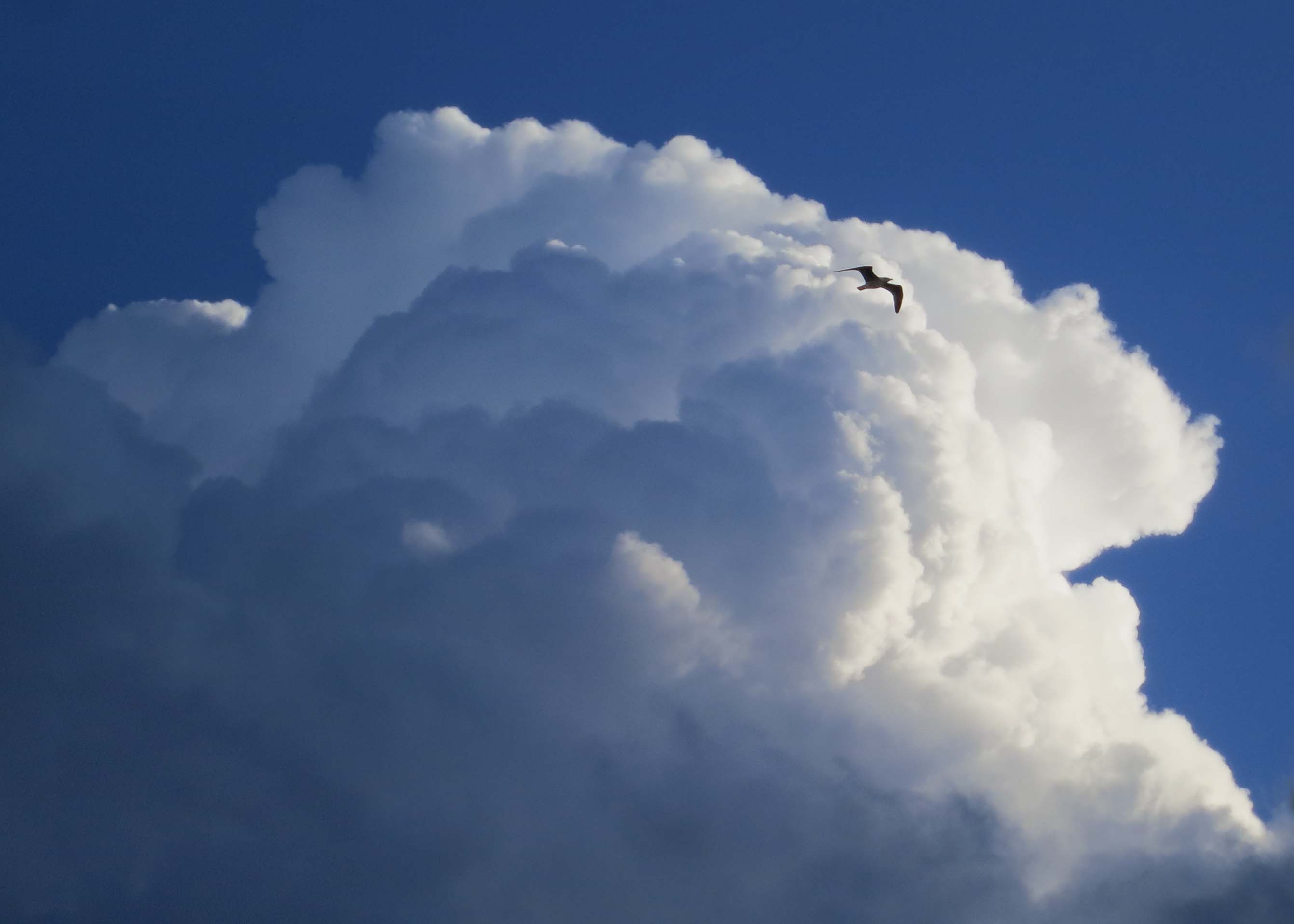
Back on ship we were treated to a beautiful display of clouds highlighted by seagulls.

Back on ship we were treated to a beautiful display of clouds highlighted by soaring seagulls.

NEXT BLOG: We begin our visit to Rome by walking along the Tiber River and stopping off at the Vatican.

A Soap Opera Myth and the Sculptures of the Archeological Museum of Naples

A closeup of the Farnese Bull sculpture at the Archeological Museum of Naples.

A closeup of the Farnese Bull sculpture at the Archeological Museum of Naples.

Dirce, the wife of King Lycus of Thebes, had been bad. She hated her niece Antiope who had succumbed to the charms of Zeus, ran away in embarrassment, and gave birth to the twins Amphion and Zethus. (When you couldn’t explain who the father was in early Greek mythology, you always blamed a god.)

Lycus went after Antiope and brought her back to Thebes, abandoning the twin boys along the way. Lycus then gave Antiope to his wife who treated the young woman cruelly. Meanwhile the twins were raised by shepherds, grew up, discovered who their mom was, and found out about Dirce’s bad behavior. This brings us to the Farnese Bull sculpture above where Amphion and Zethus are tying Dirce to the bull’s horns for punishment.

And here you thought soap operas have twisted plot lines. Believe me when I say there is much more to the story.

Several other sculptures found in the Archeological Museum of Naples also reflect early Greek myths and Roman interpretations. Atlas holds up the sky, a brooding Hercules shows off the skin of the Nemean Lion he was required to kill as the first of his 12 Labors, and Achilles carries the body of the young Troilus, a Prince of Troy he killed.

Atlas holds up the sky as a punishment form Zeus. This early sculpture would help define our concept of Atlas.

Atlas holds up the sky as a punishment from Zeus. This early sculpture would help define our concept of Atlas. The symbols on the globe are signs of the Zodiac.

Hercules shows off the pelt of the Nemean Lion he was required to kill as the first of his 12 Labors.

Hercules shows off the pelt of the Nemean Lion he was required to kill as the first of his 12 Labors.

Achilles shoulders the body of the dead boy Troilus he had killed in relation to the Trojan War.

Achilles shoulders the body of the dead boy Troilus he had killed in relation to the Trojan War.

Beyond these mythological sculptures, several others caught my attention including the bronzes found in Herculaneum, a humorous dog, a rather infamous satyr and goat, a powerful bas-relief and the River God Tiberinus.

This is a bronze statue that was recovered from the house of Julius Caesar's uncle in Herculaneum.

This is a bronze statue that was recovered from the house of Julius Caesar’s uncle in Herculaneum, which had been buried by the Mt. Vesuvius eruption in 79 AD.

Proof that the Romans had a sense of humor.

Proof that the Romans had a sense of humor.

I found this bas-relief quite powerful but I will leave the interpretation up to you. For example, what about the spear intruding from the neck of the ghostly toga?

I found this bas-relief quite powerful but I will leave the interpretation up to you. For example, what about the spear extruding from the neck of the ghostly toga?

Satyr and goat have a tete-a-tete plus in this infamous sculpture found at the Archeological Museum of Naples.

Satyr and goat have a tete-a-tete plus in this infamous sculpture found at the Archeological Museum of Naples. (Photo by Peggy Mekemson)

Since we will be traveling to Rome next on Traveling Through Time and Space, I thought I would conclude with the God of the Tiber River. Tiberinius.

Since we will be traveling to Rome next on Traveling Through Time and Space, I thought I would conclude with the God of the Tiber River, Tiberinus. That’s quite some cornucopia. I was also amused by his arm rest.

The Glory of the Ancient World… Pompeii and the Archeological Museum of Naples

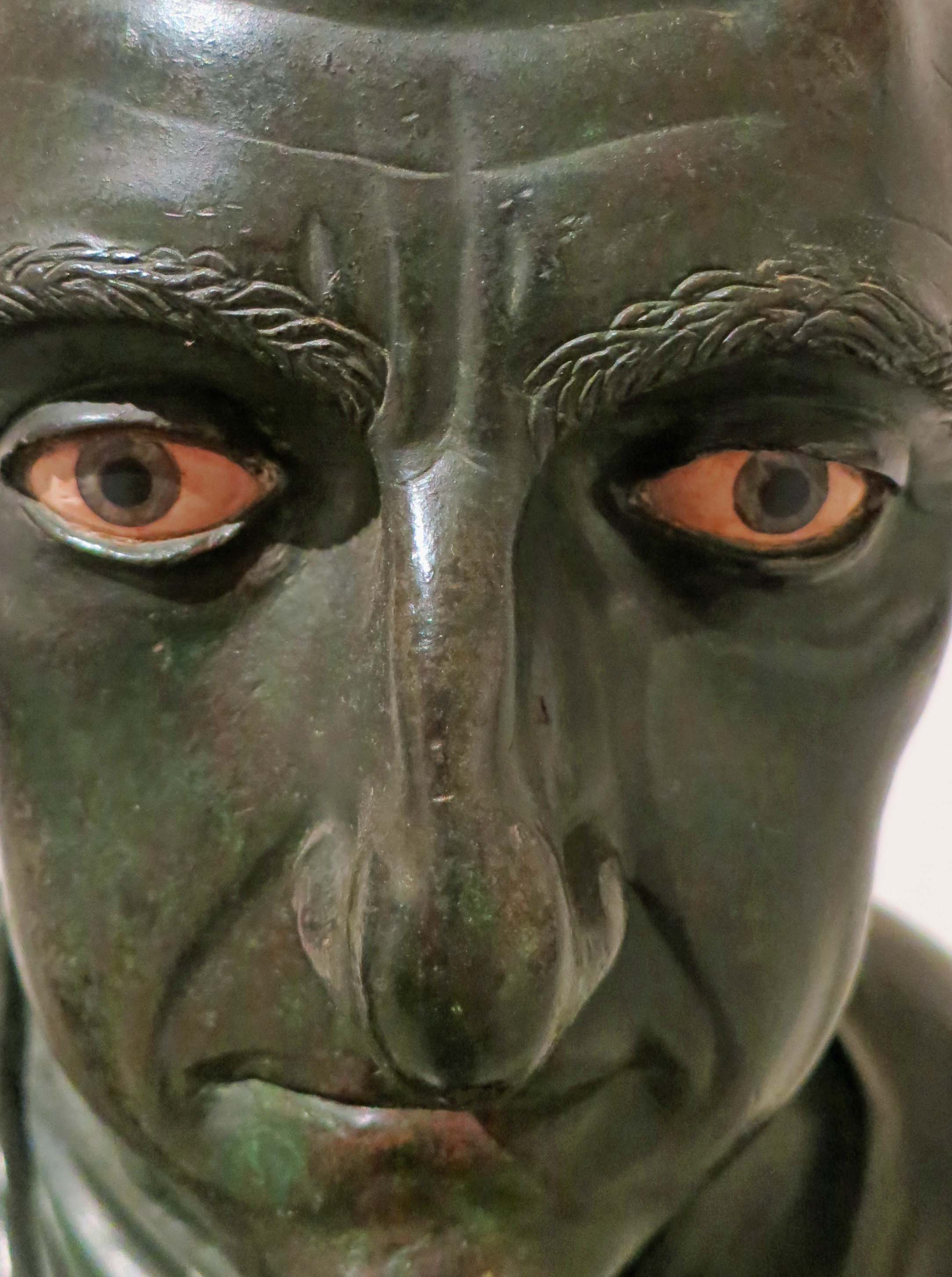
It is impossible not to feel the intensity of this face which tops a bronze statue recovered from the Herculaneum home of julius Caesar's father-in-law.

It is impossible not to feel the power of this face with its intense blue eyes. Several bronze statues like this one were recovered from the Herculaneum home of Julius Caesar’s father-in-law.

It would be a thousand years and the Renaissance before the Western World would once again see great art like that created by the Greek and Roman civilizations. And there are few places where this art has been better preserved than in Pompeii and its sister city of Herculaneum, both buried by the eruption of Mt. Vesuvius in 79 AD.

The Archeological Museum of Naples is a must see for anyone interested in art.

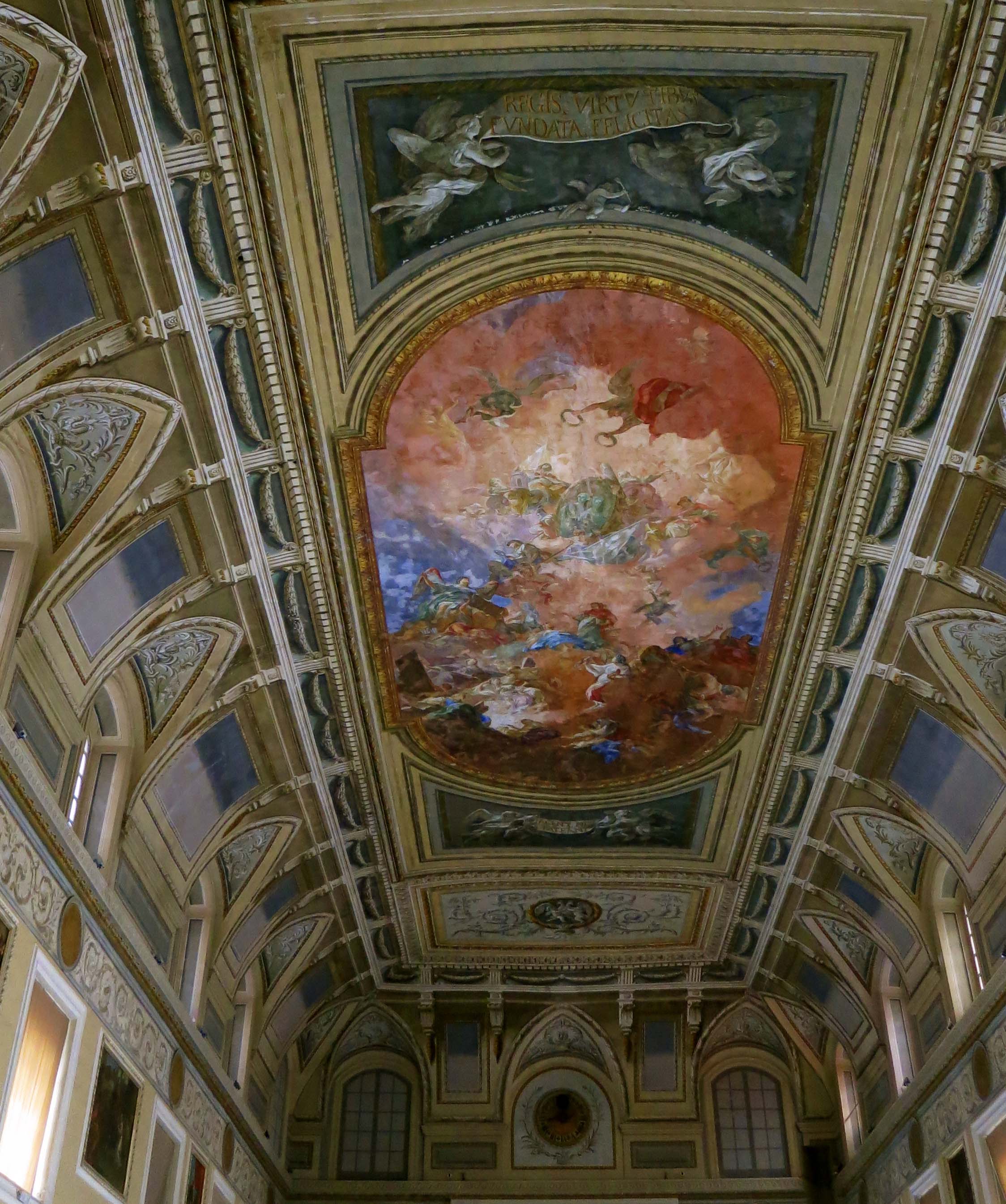
The Archeological Museum of Naples is a must see for anyone interested in the history of art. The building, itself, is worth a visit.

Peggy and I, along with our travelling companions, visited the Archeological Museum of Naples after our tour of Pompeii. Many of the art treasures taken from Pompeii and Herculaneum, as well as other locations in ancient Rome, are on display at the museum. Some of these pieces, like the Farnese Bull, (unearthed in Rome 1546 AD) served as inspiration for Renaissance artists such as Michelangelo.
The Farnese Bull is the tallest ancient marble statue ever found. Michelangelo helped restore it by adding the dog. Photoshop and I added the blue background to better display the piece.

The Farnese Bull, where Dirce is punished by being tied under a bull, is the tallest marble statue ever found from the ancient world. Michelangelo helped restore it by adding the dog. Photoshop and I added the blue background. (It was a lot of work but I figured what the heck… if Michelangelo could go to all of that effort…) (grin)

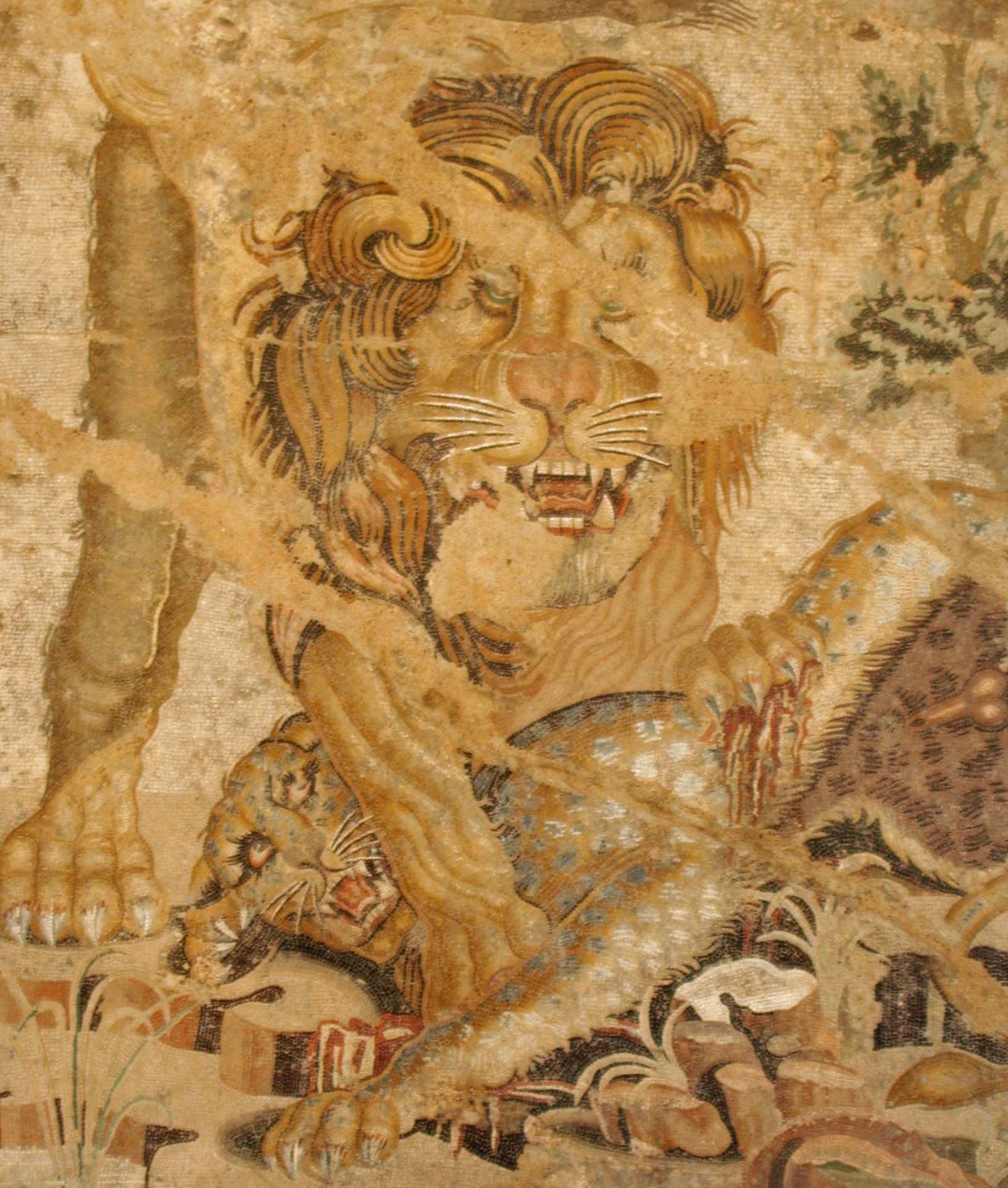
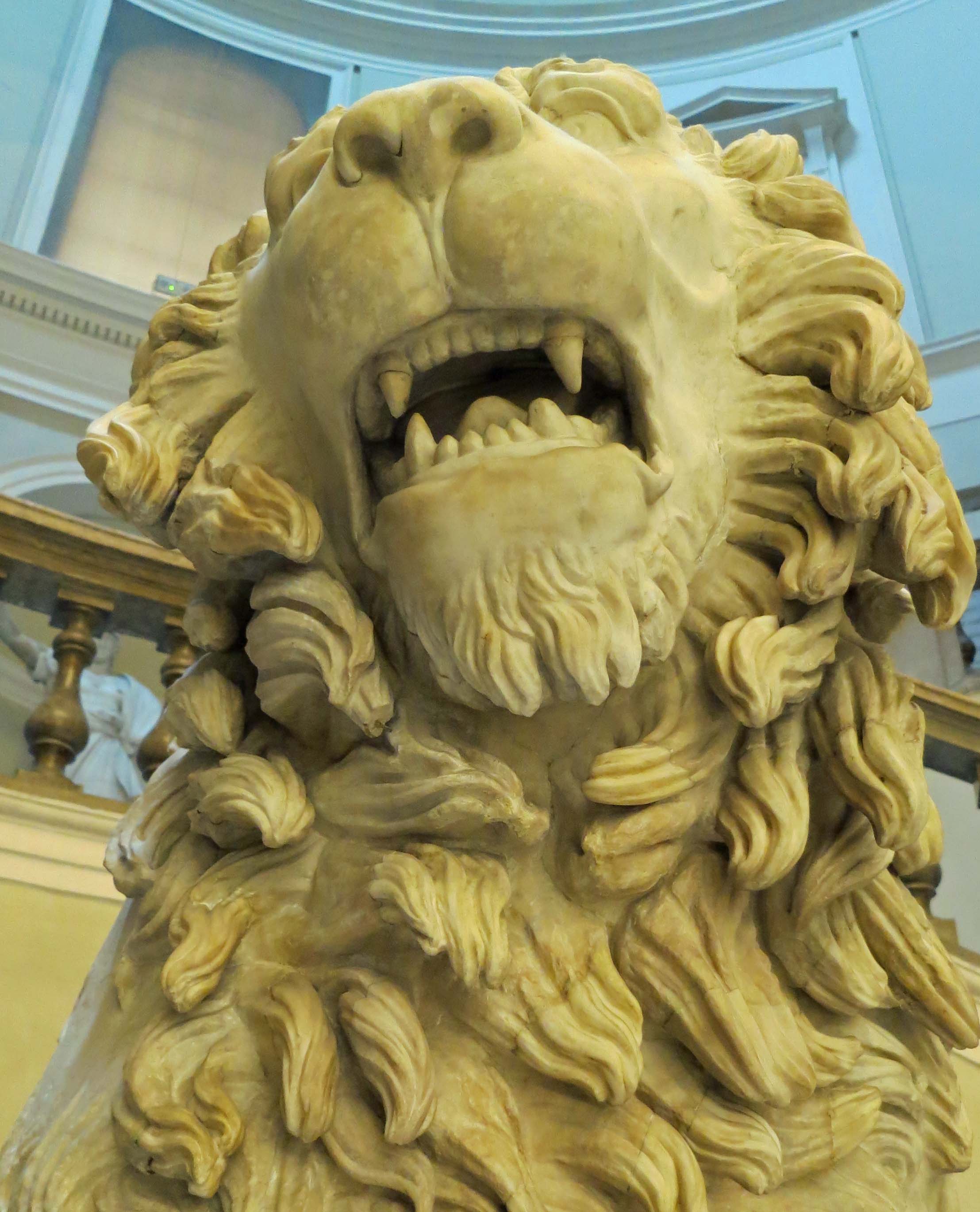
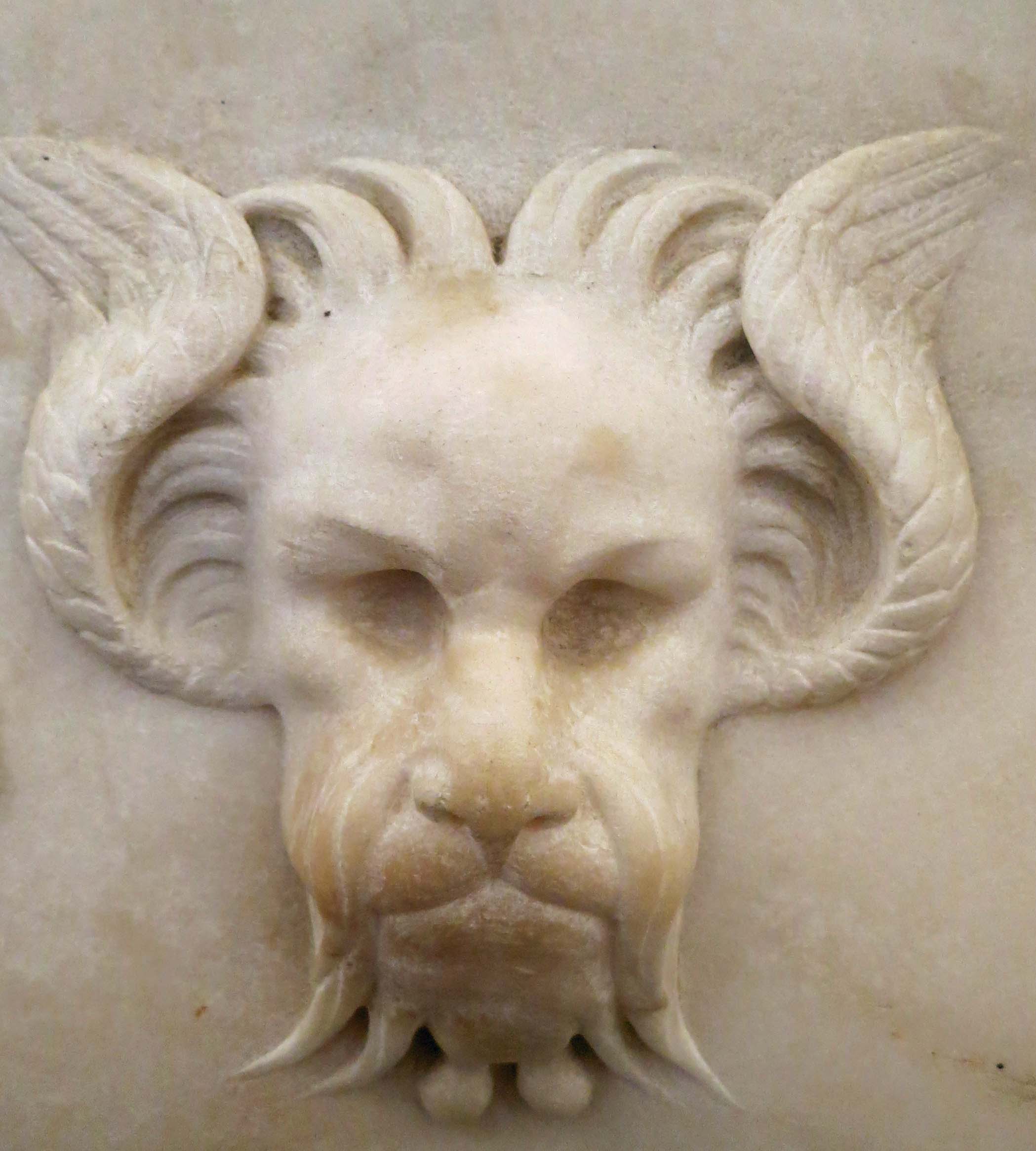
While sculptures made of marble and bronze have a long life span, paintings and, to a degree, mosaics are much more fragile. It was in the preservation of these latter two art forms that we owe a special vote of thanks to Pompeii and Mt. Vesuvius. The following four lions are good examples of the mosaics, paintings and sculptures found at the Archeological Museum.
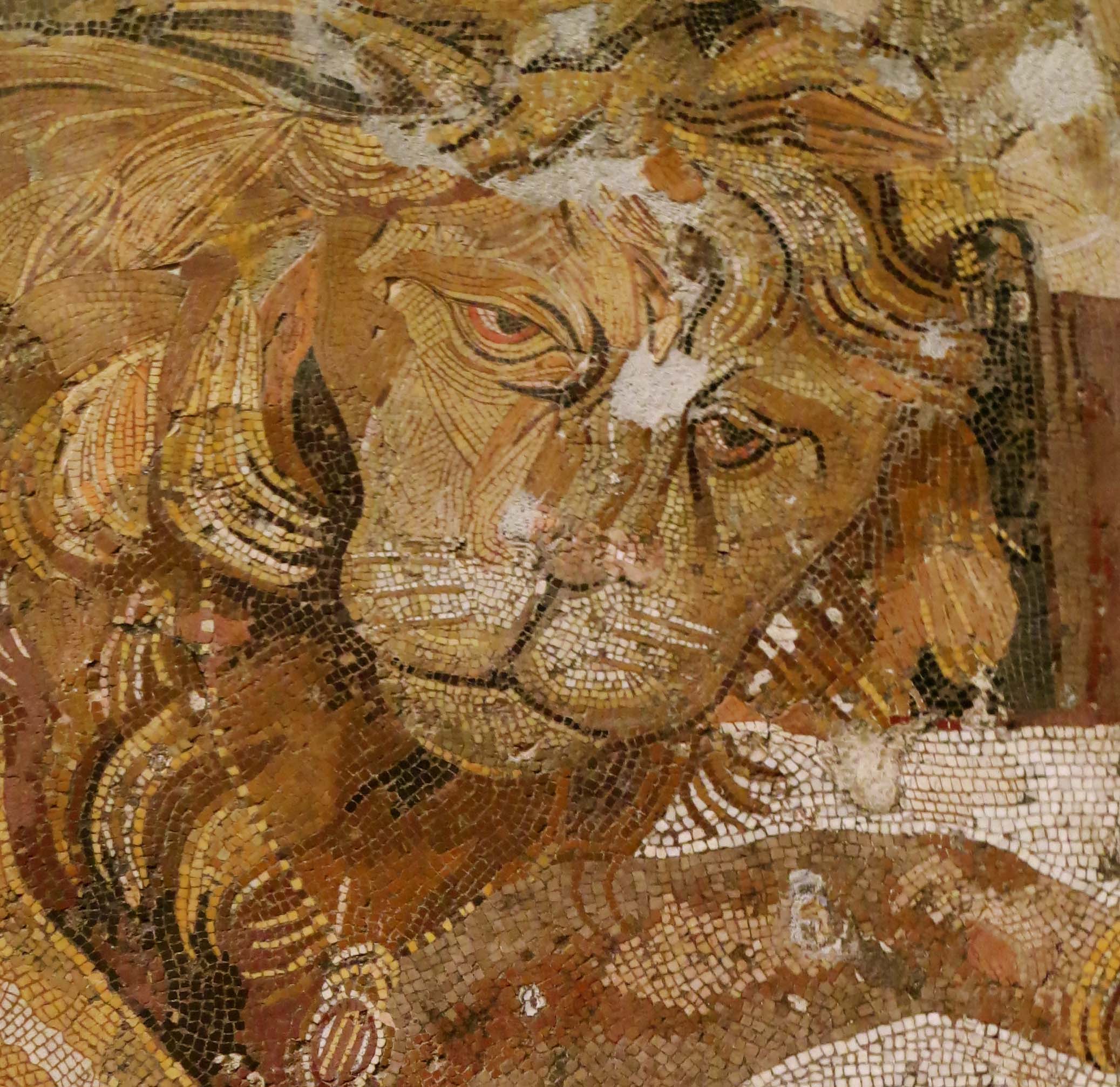
Mosaic lion from Archeological Museum of Naples.

Isn’t this a wonderful mosaic lion… complete with necklace? He almost looks friendly, and definitely wise. Or maybe he just has a hangover.

This painted lion at the Archeological Museum from a mural doesn't look nearly as friendly.

This painted lion with his wild hairdo and conquered leopard, doesn’t look nearly as friendly. (Photo by Peggy Mekemson)

This big guy representing sculpture, definitely looks like someone you would not want to meet on a dark night.

This big guy representing sculpture, definitely looks like someone you would not want to meet on a dark night.

I am not sure that this head with wings is a lion but I had to fit him in somewhere. I felt there was a slight resemblance to the Cowardly Lion in the Wizzard of Oz.

I am not sure that this bas-relief sculpture is a lion but I had to fit him in somewhere. I felt there was a slight resemblance to Bert Lahr as the Cowardly Lion in the Wizard of Oz.

Following are more examples of the types of painted murals and mosaics found in Pompeii and Herculaneum.
Pompeii mosaic

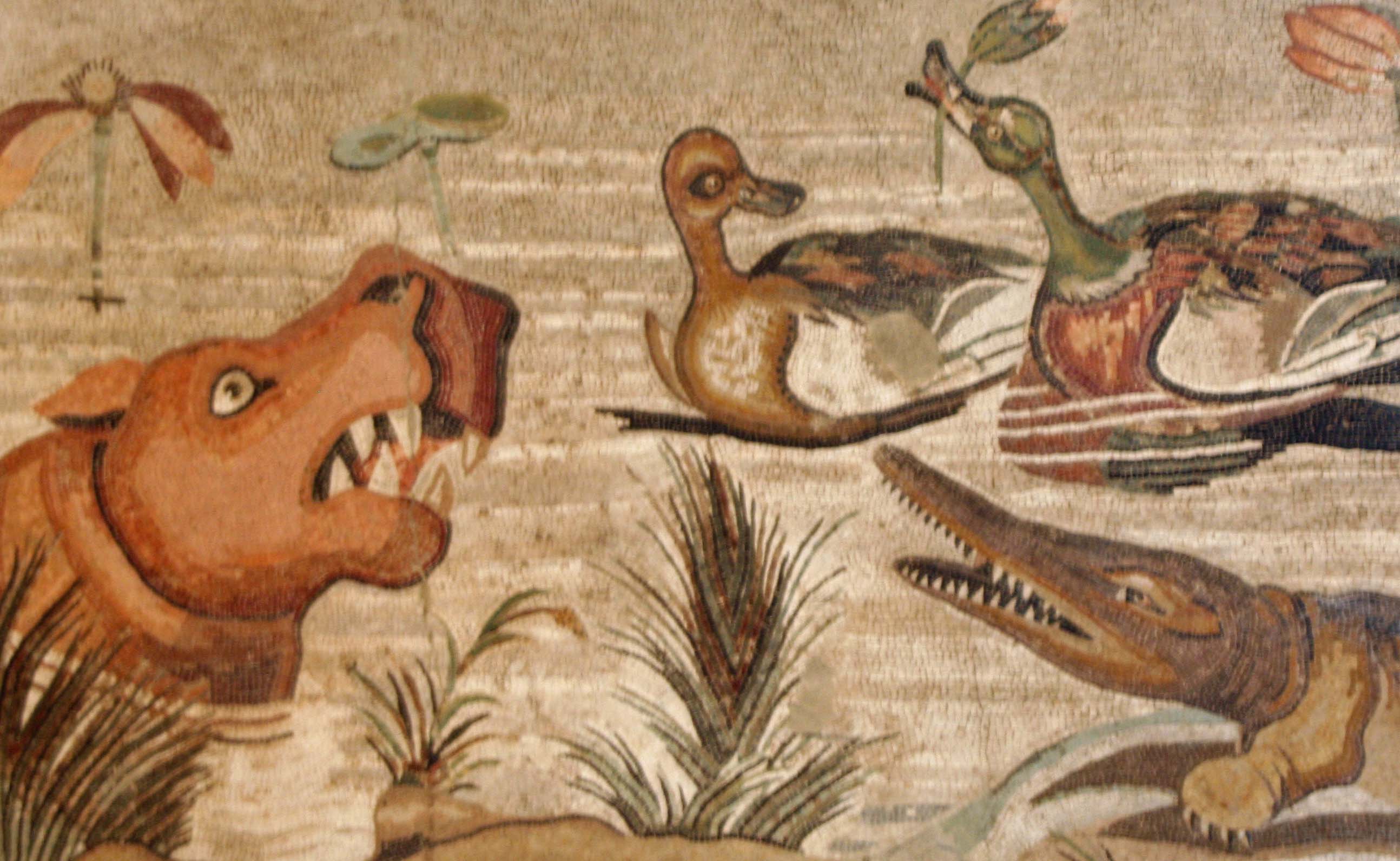
This great hippo with canine teeth, the smiling crocodile, and what may be a Mallard offering food to his lady-love was one of my favorite mosaics at Naples’s Archeological Museum. (Photo by Peggy Mekemson)

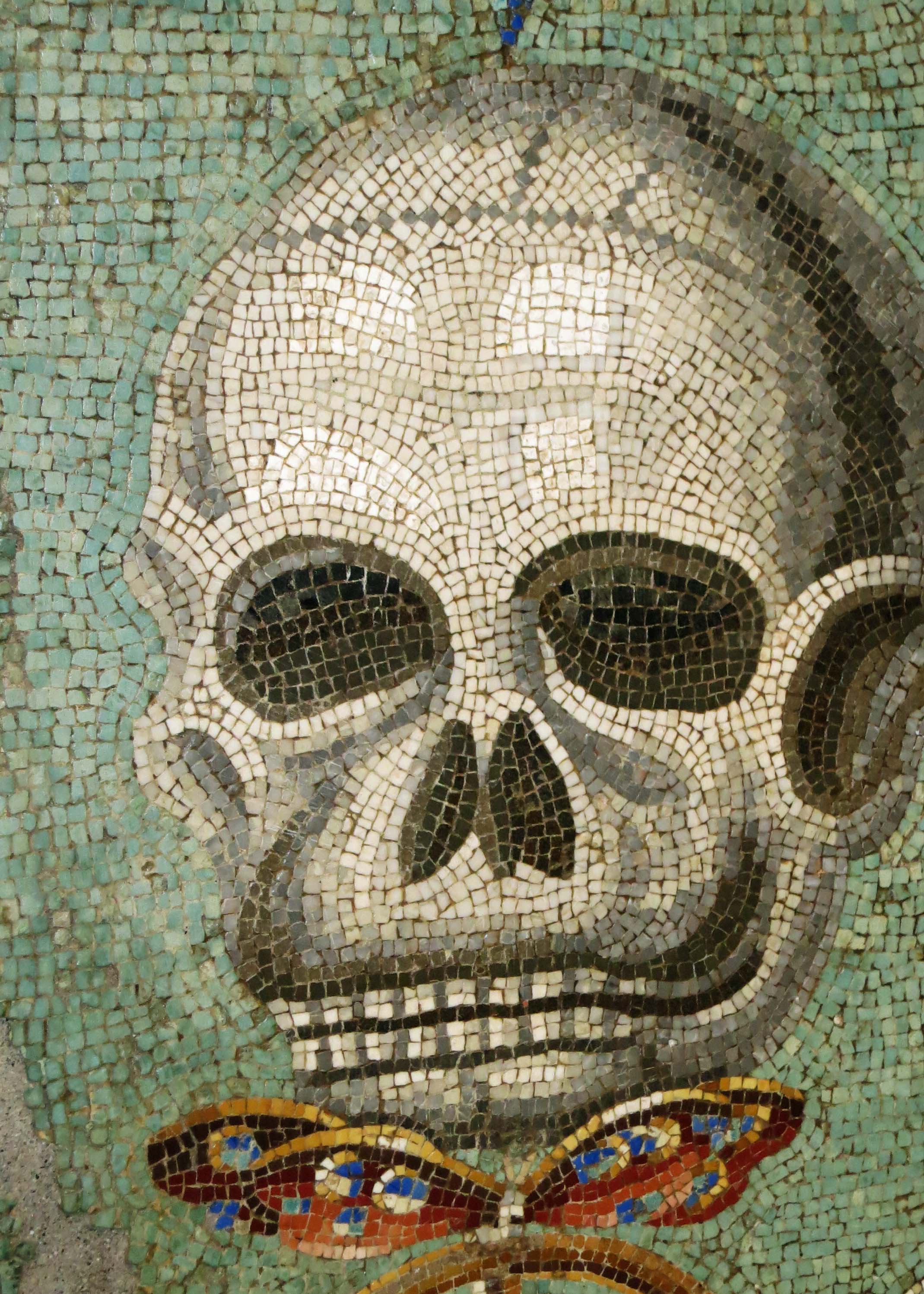
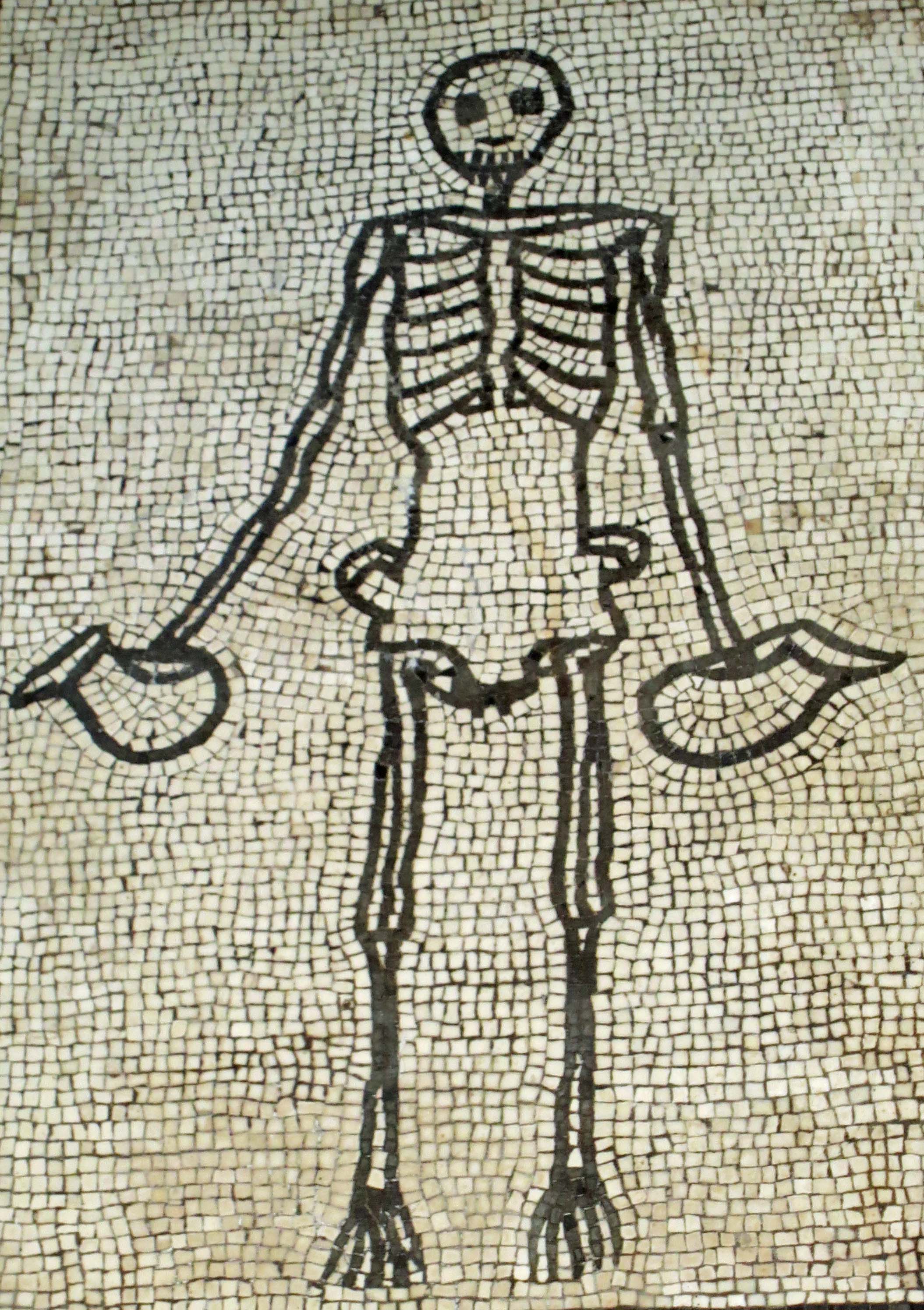
Mosaic skull at the Archeological Museum of Naples

Mosaic worked well for this Pompeii skull with his butterfly collar.

And who wouldn't want this Lady skeleton outside to greet trick-or-treeters on Halloween? I figured it was a lady from the hips.

And who wouldn’t want this smiling lady skeleton outside to greet trick-or-treaters on Halloween? I figured it was a lady from the hips.

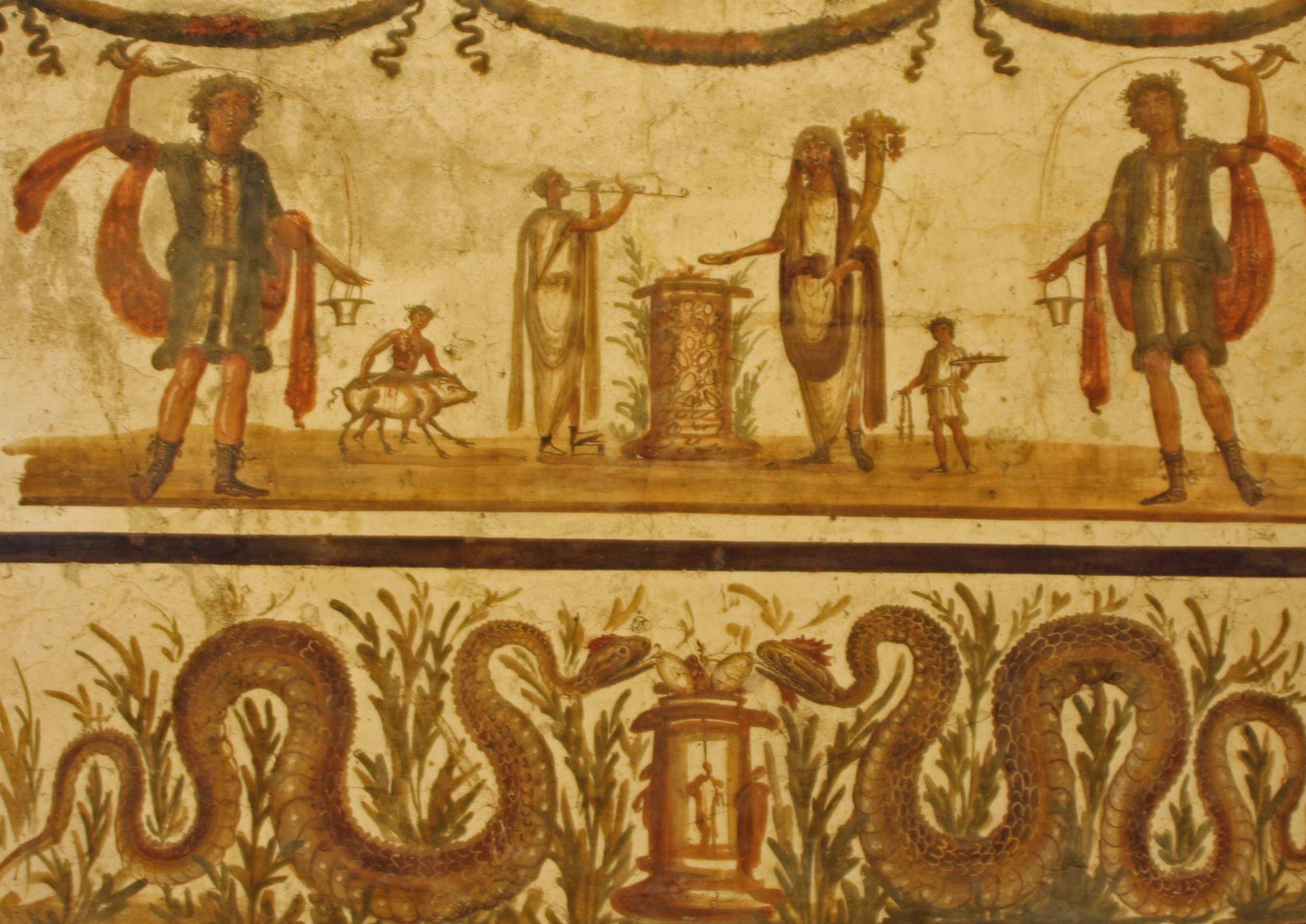
Pompeii mural

Check out the wine pouring technique of these two sons of Mercury. They were often found in murals in homes and had the responsibility of helping protect the inhabitants. The snakes were also common on murals as bringers of abundance.. (Photo by Peggy Mekemson)

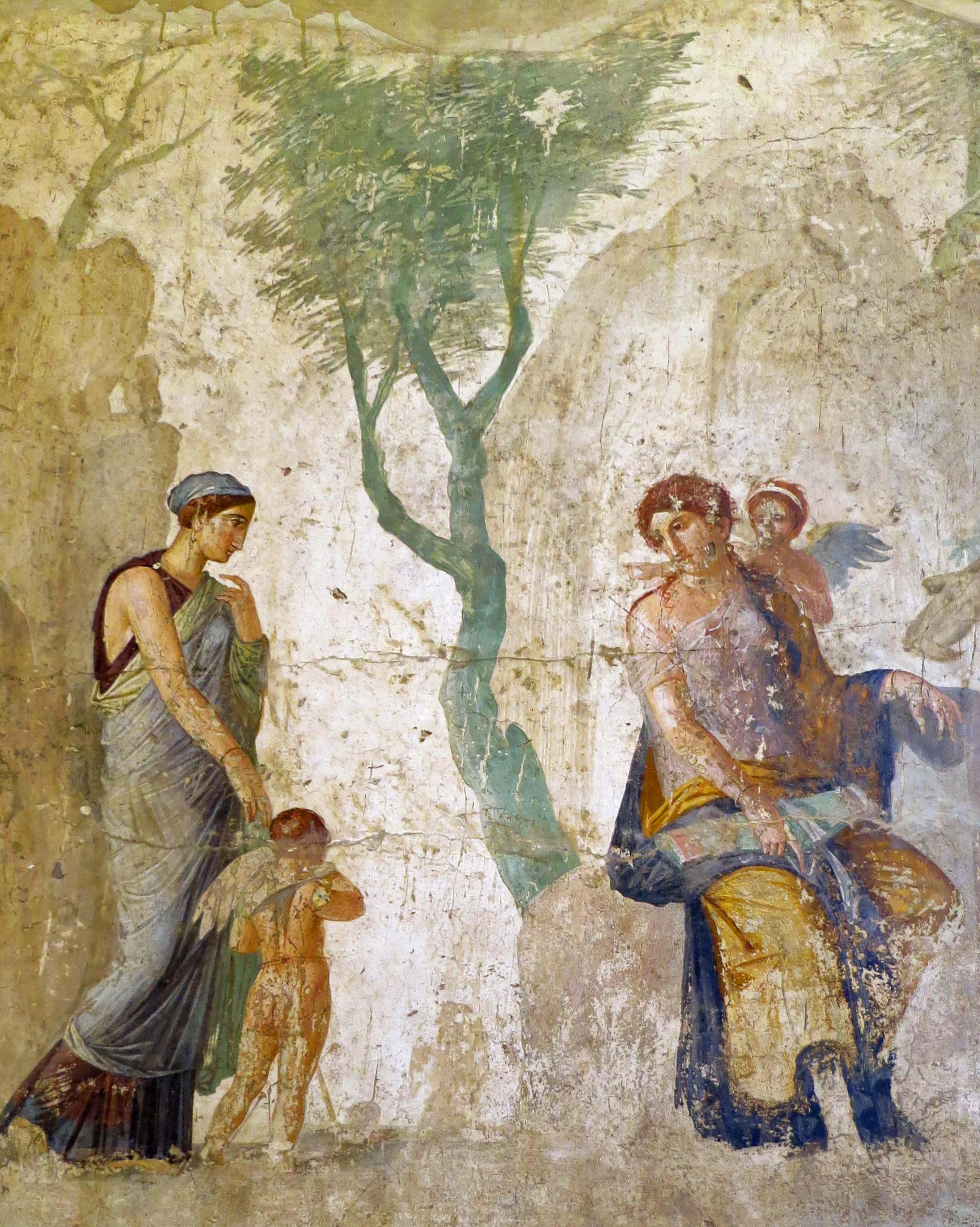
Pompeii painting

Paintings as sophisticated as this one would not be found again until the Renaissance, over a thousand years later.

I will explore several of the great sculptures found in the Archeological Museum of Naples in my next blog. Here Peggy admires a very big bust.

I will feature several more of the great sculptures found in the Archeological Museum of Naples in my next blog. Here Peggy admires a very big bust of a man missing his brain.

When A Deer Looks In Your Window…

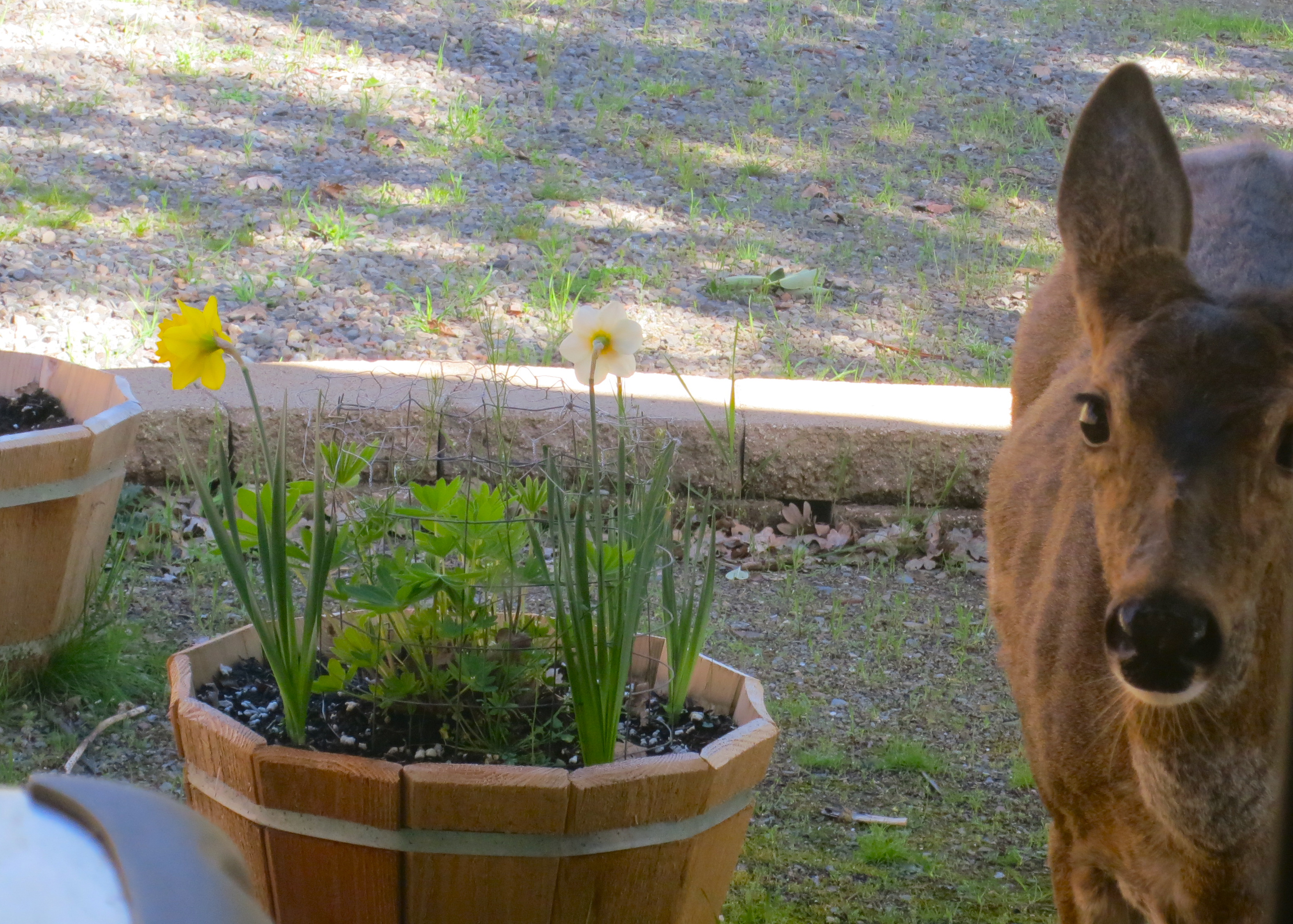
Oregon Black Tail Deer

I was working on my blog when this deer appeared at my window, five feet away. 

I was working on my blog about the Archeological Museum of Naples this morning when I looked up and saw a black tail deer staring in the window. She was about five feet away. I think she wanted to know what I was doing inside on a beautiful spring day.

Fortunately I had my camera next to me so I snapped her picture. Soon after she and two of her companions had bedded down in our back yard and were sniffing the daffodils.

Deer proof daffodil

A friend had given us daffodil bulbs and promised the deer wouldn’t eat them. So far, so good.
I decided she was right. What was I doing inside on a beautiful spring day? So I shut down my MacBook, grabbed my camera and went for a walk. The Archeological Museum could wait another day. I decided to blog about our home here in Southern Oregon.

Our front yard this morning on a beautiful spring day.

Our front yard this morning on a beautiful spring day.

Our back yard this morning.

Our backyard this morning.

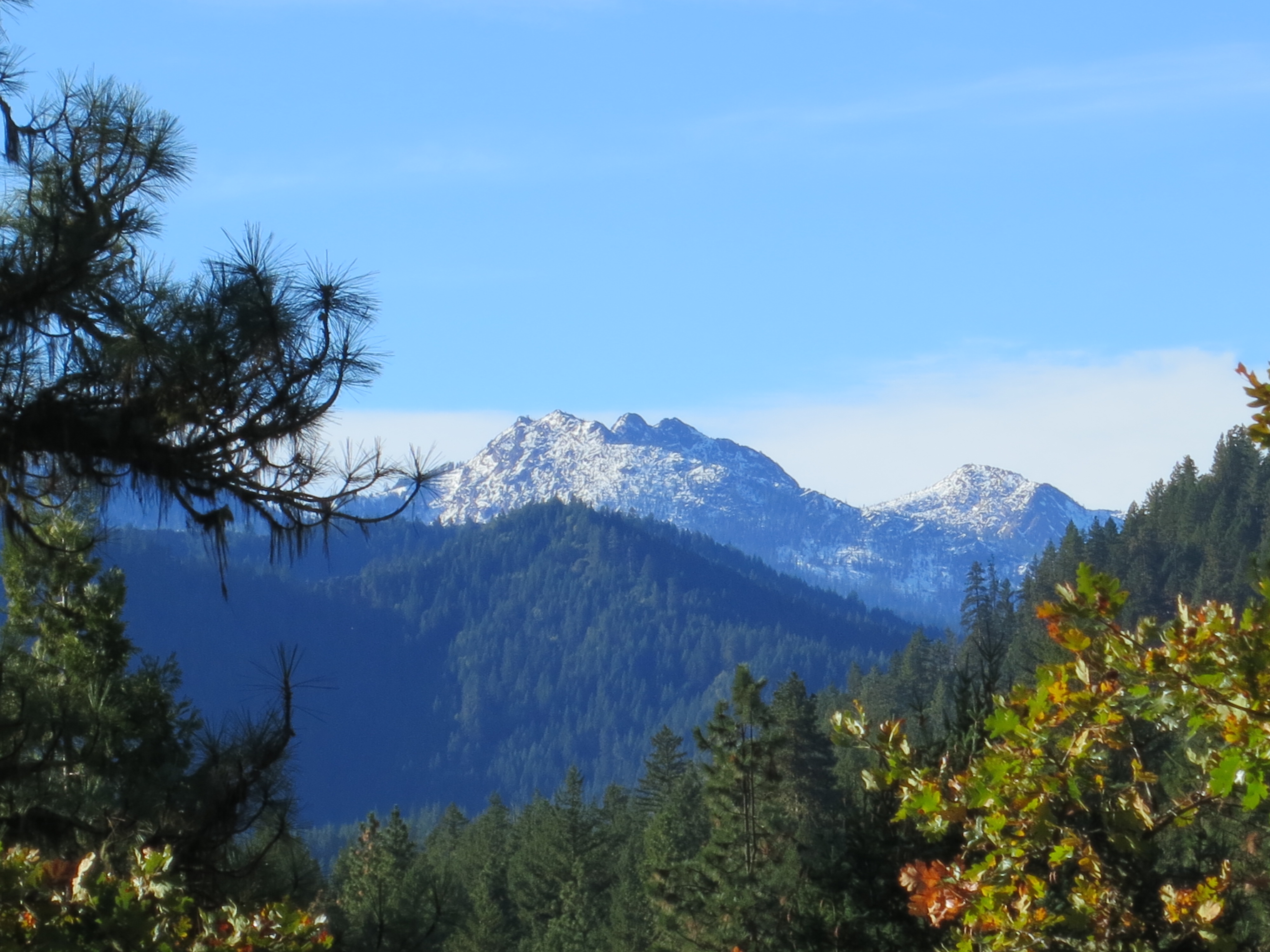
We live about 30 miles west of Medford and five miles north of the California border, out in the woods, so to speak.  The Red Buttes of the Siskiyou Mountain Range and the beautiful Applegate River are out front. Our property borders on close to a million acres of national forest land and wilderness in back.

Red Buttes of Siskiyou Mountains on Southern Oregon border.

The view of the Red Buttes from our patio and front room. They are still snow-covered.

Applegate River

The beautiful Applegate River flows through our front yard. This is a fall picture.

Our elevation is 2000 feet, just high enough for three or four snowstorms that always manage to melt off in a day or two. Our five acres are totally wooded and include Ponderosa Pines, White Oaks, Red Cedars, Madrone, and Douglas Fir. A small spring provides water for the wildlife in summer.

Deer, fox, skunks and a multitude of squirrels consider our property home. An occasional bear drops by and my neighbors tell me that a cougar comes down off the mountain on occasion. A couple of months ago a coyote checked us out.

Yesterday we watched a Red Tailed Hawk pick up a small ground squirrel. (Peggy squealed so loud in delight, the hawk dropped the squirrel.) Last fall I watched a Golden Eagle grab a snake in our front yard.  A pair of Bald Eagles nest near by and a large Pileated Woodpecker makes the forest ring with his pounding. Numerous species of birds either live here year around or migrate through in the spring and fall.

If I seem to be in love with the area, I am. Peggy and I moved here two years ago after wrapping up a three-year exploration of North America in a 22-foot RV. I don’t think we’ll be moving again. (grin) Here are some more photos taken at various times of the year.

A large Douglas Fir covered with a fresh coating of snow lives in our front yard.

A large Douglas Fir covered with a fresh coating of snow lives in our front yard.

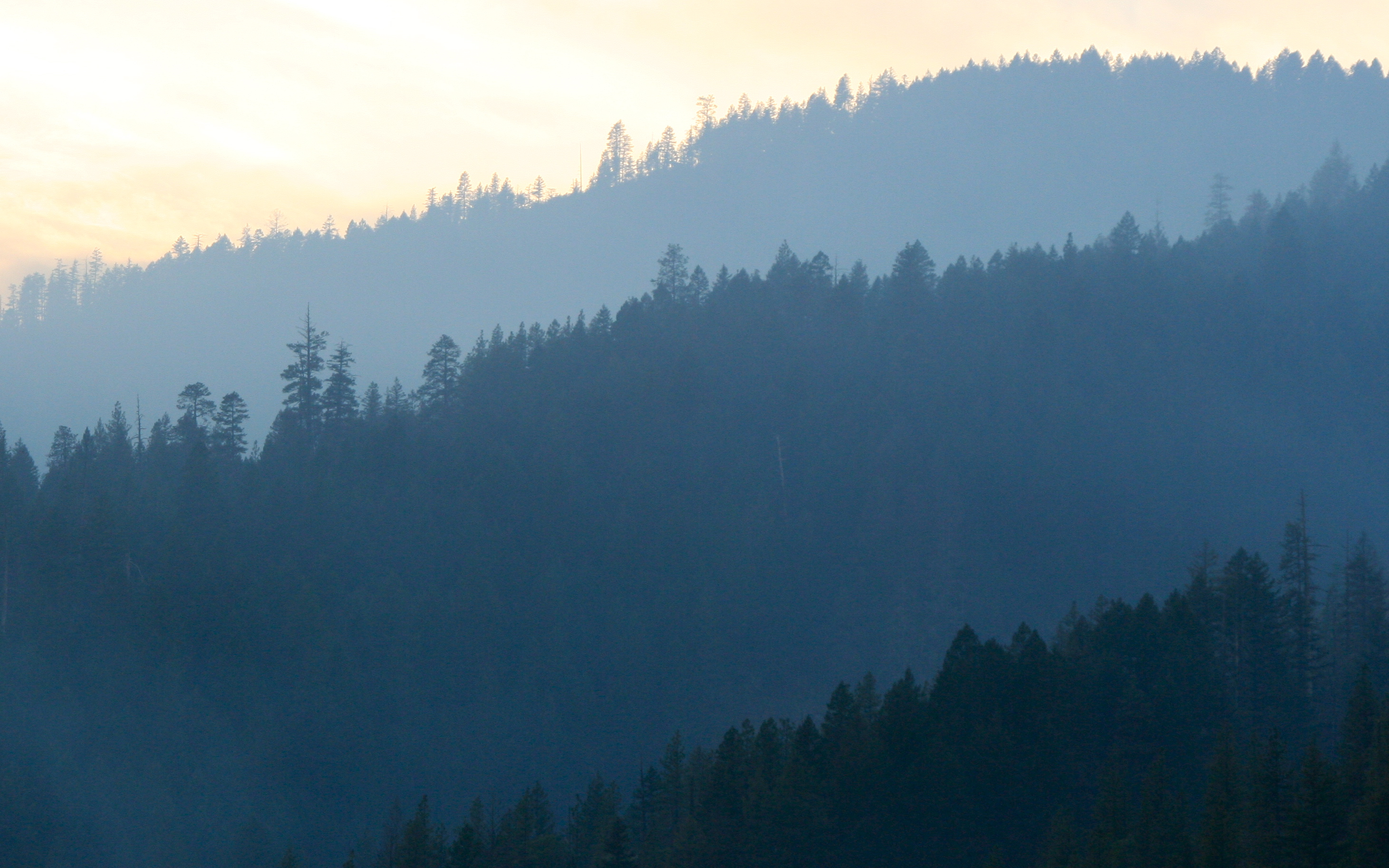
Southern Oregon Forest

Another view of the Oregon forest from our bedroom.

One of the bucks that considers our property part of his territory.

One of the bucks that considers our property part of his territory. This is a fall photo.

Interesting clouds over Red Buttes

Sunset over the Red Buttes.

NEXT BLOG: Back to Naples and the Archeological Museum (Unless it is too nice outside.)


Pompeii: Where Ruins Aren’t Quite Ruins… Seaports of the Mediterranean

The walls and streets of Pompeii are amazingly well preserved.

The walls and streets of Pompeii are amazingly well preserved.

The magic of Pompeii is in how well it has been preserved. There are fewer ruins among the ruins. I know that sounds strange. But most ruins require considerable imagination to reconstruct the original site. This isn’t true of Pompeii. Many of the streets, walls and buildings are found in close to the same condition they would have been found in 79 AD before being covered by the eruption of Vesuvius. The preservation of bodies, as shown in my first blog on Pompeii, is even more impressive. Thousands of storage and cooking vessels have also been found along with paintings, mosaics and sculptures giving us a detailed look into early Roman life. While much of what has been found in Pompeii can still be found there, much has also made it into museums around the world.

Today I am going to conclude my visit to Pompeii with a stop at the Basilica, the city’s center of government, and the market area, which has become a temporary repository of storage containers, bodies and other items found in Pompeii. (I will also slip in a few more of my favorite photos Peggy and I took but didn’t find a home on my other blogs.)

Thousands of artifacts have been found in Pompeii. Many, like these storage vessels, have found a temporary home in the area that once was the city's market area.

Thousands of artifacts have been found in Pompeii. Many, like these storage vessels, have found a temporary home in the area that once was the city’s market area. (Photo by Peggy Mekemson)

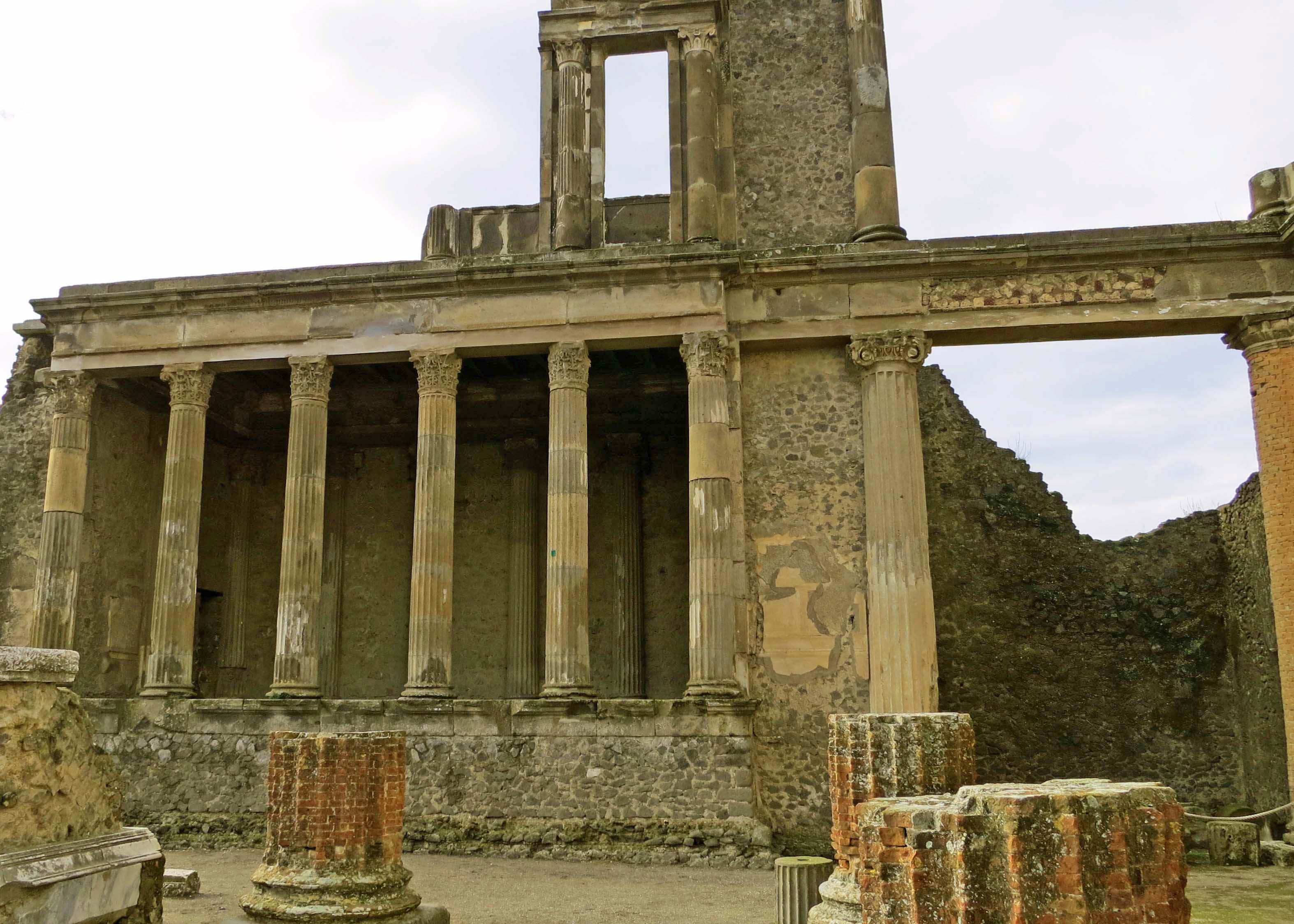
The Basilica in Pompeii was the center of government. It is centrally located next to the market and Jupiter's Temple.

The Basilica in Pompeii was the center of government. It is centrally located next to the market and Jupiter’s Temple.

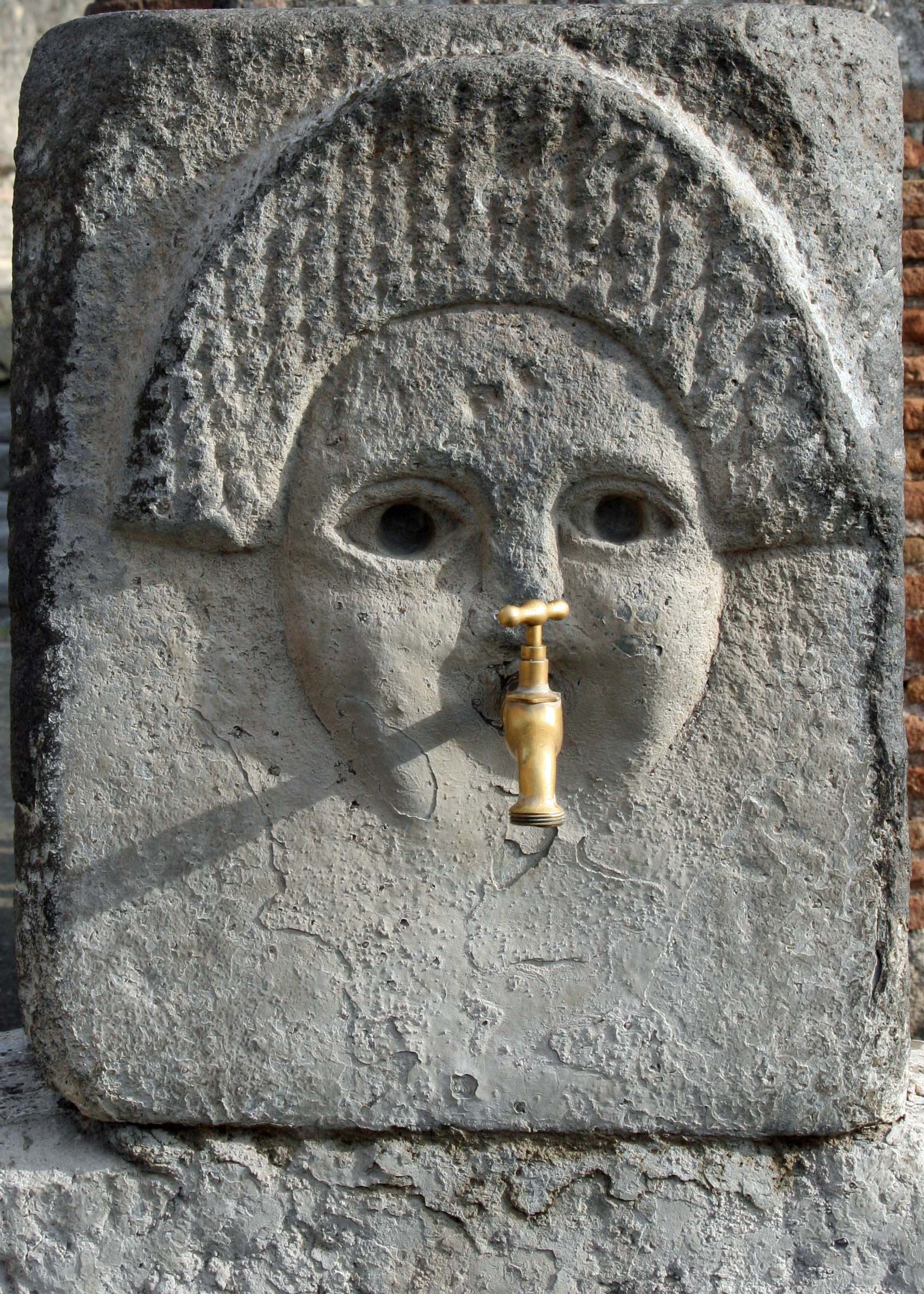
This combination fo ancient and modern in one of the fountains found along the street was amusing. (Photo by Peggy Mekemson)

This combination of ancient and modern in one of the fountains found along the street was amusing. (Photo by Peggy Mekemson)

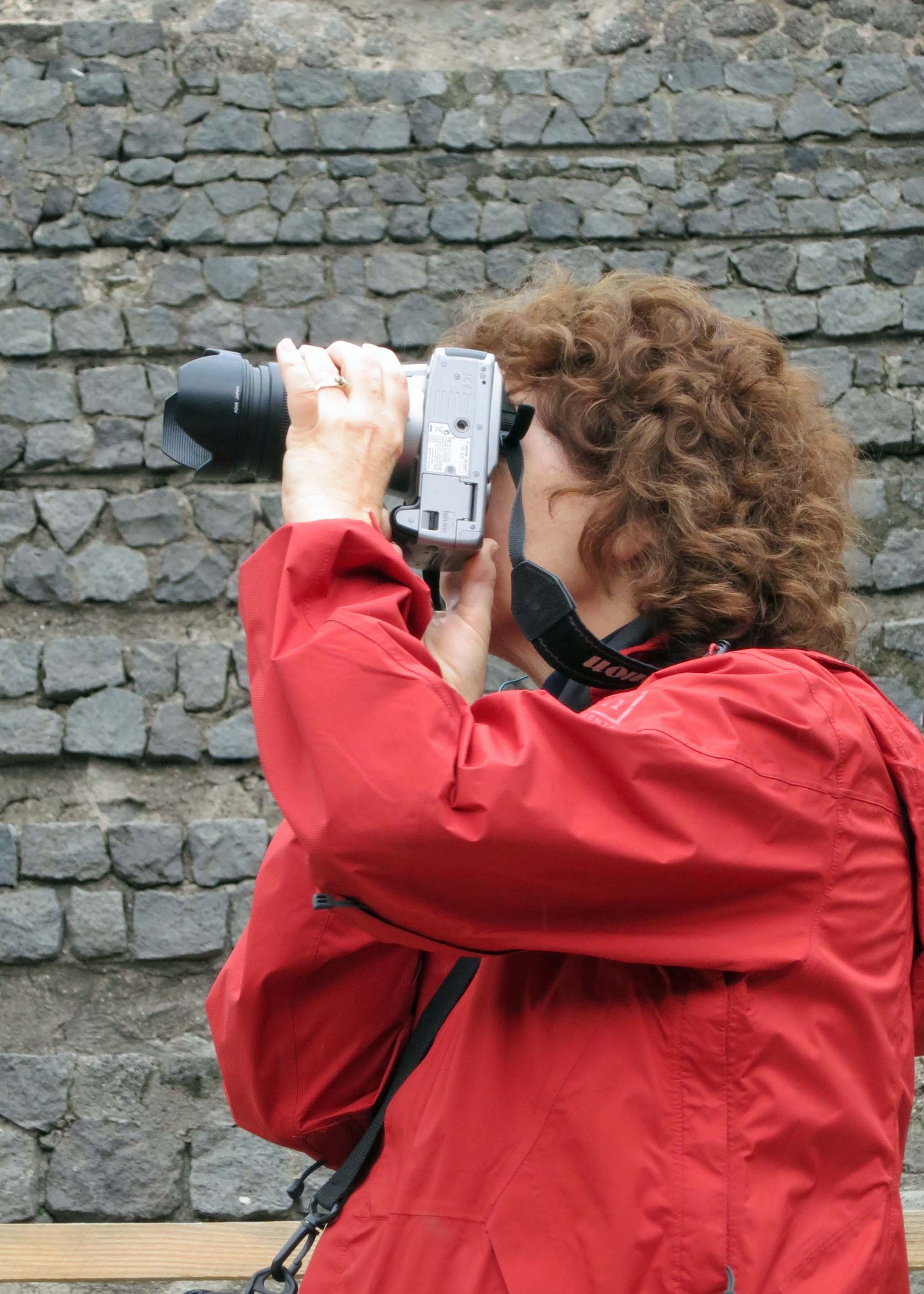
Since I use so many of Peggy's pictures, occasionally I like to throw in a photo of her taking photos.

Since I use so many of Peggy’s pictures, occasionally I like to throw in a photo of her taking photos. This was along one of Pompeii’s walls.

I found the detail in this Pompeii wall decoration impressive.

I found the detail in this Pompeii wall decoration impressive. It had a plastic cover to protect and preserve it.

I'll close with this shot of Pompeii ruins looking more like ruins. (grin)

I’ll close with this shot of Pompeii ruins looking more like ruins. (grin)

NEXT BLOG: We visit the excellent Archeological Museum of Naples.

A Visit with the Gods of Pompeii… Seaports of the Mediterranean

I liked this view of the Temple of Jupiter with it's stair step columns. A massive earthquake had destroyed the temple in 62 AD. It was still being rebuilt in 79 AD when covered by volcanic rock from Mt. Vesuvius.

I liked this view of the Temple of Jupiter in Pompeii with its stair-step columns. A massive earthquake had destroyed the temple in 62 AD. It was still being rebuilt in 79 AD when it was covered by volcanic rock from Mt. Vesuvius.

It is impossible to visit the ancient cities of the Mediterranean without thinking about the importance of the all-too-human early gods.

Back before they were relegated to the status of myths, they were as alive and real to the people as say Christ might be to today’s faithful Christians. A primary difference was their misbehavior. They became involved in feuds, had affairs, became jealous, drank too much, etc. Other than the fact they were immortal and extremely powerful, they might be a neighbor… or live even closer to home. (Grin)

If they liked you, they could be your best buddy… make you healthy, wealthy and wise. But if they disliked you, watch out! They were like the little girl who had a little curl right in the middle of her forehead. “When she was good, she was very, very good, but when she was bad, she was horrid.” ( From a poem by Henry Wadsworth Longfellow)

So it isn’t surprising that the ancient folks of the Mediterranean spent a great deal of energy and money trying to stay on the good side of their gods. Some of the world’s greatest art was created in their honor and whole herds of castrated animals were sacrificed and cooked to keep them smiling. Interestingly, the smoke from the cooking meat seemed to satisfy the gods. Mere mortals consumed the flesh. As the old saying goes, “Man is nothing, if not practical.”

The Romans, who lacked creativity, obtained their gods wholesale from the Greeks, only changing their names to sound more Latin. Zeus with his fiery lightning bolt became Jupiter, his wife/sister Hera, became Juno, and his daughter Athena, who sprang fully armed from his head and gave him a headache, became Minerva. And of course there was a whole pantheon of other gods.

Each of these gods had a role to play. If you wanted to kick someone’s tail, Jupiter was your ‘man.’ Juno could help you through a difficult childbirth. If you needed more wisdom, and who among us doesn’t, Minerva was there for you. There was no one stop shopping like today’s church goers enjoy.

The gods did gain more power as they aged, however. They took on the roles, and sometimes personalities, of the earlier gods they replaced. Juno, for example, was responsible for both “loosening a bride’s girdle” and protecting the money of the Roman Empire. In her latter role she was the patron Goddess of the Royal Mint.

Mt. Vesuvius provides the background for this photo of Jupiter's Temple, which he shared with Juno and Minerva.

Mt. Vesuvius provides the background for this photo of Jupiter’s Temple, which he shared with Juno and Minerva. The arch on the left was built to honor the Roman Emperor Tiberius (14-37 AD) (Photo by Peggy Mekemson)

This view of the right side of Jupiter's Temple in Pompeii shows the arch of the the Roman Emperor Nero, known for fiddling around while Rome burned.

This view of the right side of Jupiter’s Temple in Pompeii shows the arch of the Roman Emperor Nero, known for fiddling around while Rome burned. (Photo by Peggy Mekemson)

A final photo of Jupiter's Temple, which I liked because of the massive, almost brooding sense, it gave to the columns.

A final photo of Jupiter’s Temple, which I liked because of the massive, almost brooding feel, it gave to the columns.

Jupiter, Juno and Minerva were worshipped as a triad in both Pompeii and Rome. Possibly it saved time and money. There was also a temple to Mercury in Pompeii. His earlier persona had been that of the super fast Greek God Hermes who carried messages for the gods and had wings on his feet. He was also the god of getting rich, luck, trickery and thievery. Hmmm.

Apollo seems ready to take off and deliver a message in this photo of him overlooking his temple. Obviously, he is stripped down for action.

Apollo seems ready to take off and deliver a message in this photo of him overlooking his temple. Obviously, he is stripped down for action.

Dark clouds hover above Apollo's Temple caught in the sunlight. (Photo by Peggy Mekemson.)

Dark clouds hover above Apollo’s Temple caught in the sunlight. (Photo by Peggy Mekemson.)

In this fun perspective by Peggy, Apollo seems to reach out and grasp one of the columns in his temple.

In this fun perspective by Peggy, Apollo seems to reach out and grasp one of the columns in his temple.

NEXT BLOG: I will spend one more day wandering the streets of Pompeii including a stop off at the Basilica, Pompeii’s seat of government.

The Ghosts of Pompeii… Seaports of the Mediterranean

Buried under a pyroclastic flow of molten rock in 79 AD, the ruins of Pompeii have been well preserved. A large harbor on the Tyrrhenian Sea was located where the grass is now seen.

Buried under a pyroclastic flow of molten rock in 79 AD, the ruins of Pompeii have been well preserved. A large harbor on the Tyrrhenian Sea was located where the grass on the far right is now seen. Today, the sea is two miles away.

I have wandered through many ruins in my life ranging from the Anasazi cliff dwellings of the southwestern US to the Hindu temples of Bali. In all of these  locations, you can feel the presence of  ancient inhabitants… if you allow your imagination to run a little wild.

Nowhere, however, have I had a sense of people going about their everyday life as I did in Pompeii. The explosion of Mt. Vesuvius in 79 AD froze the city in time. It was easy for me to visualize the dead bodies cast in plaster and found throughout the city, coming to life at night, like the animated characters in Toy Story.

In my imagination, chariots raced up and down the streets, citizens stopped to relax in the public baths, bakers produced mouth-watering bread, satisfied customers raved about the girls at the Lupanare, worshippers stopped to pay their respects to Jupiter and Apollo, and people lined up for the Pompeii equivalent of fast-food. I could almost hear the clash of weapons as gladiators practiced at the gladiator school.

Today I will take you on a walk through the streets of Pompeii where all of these activities took place on the day before Mt. Vesuvius blew its top.

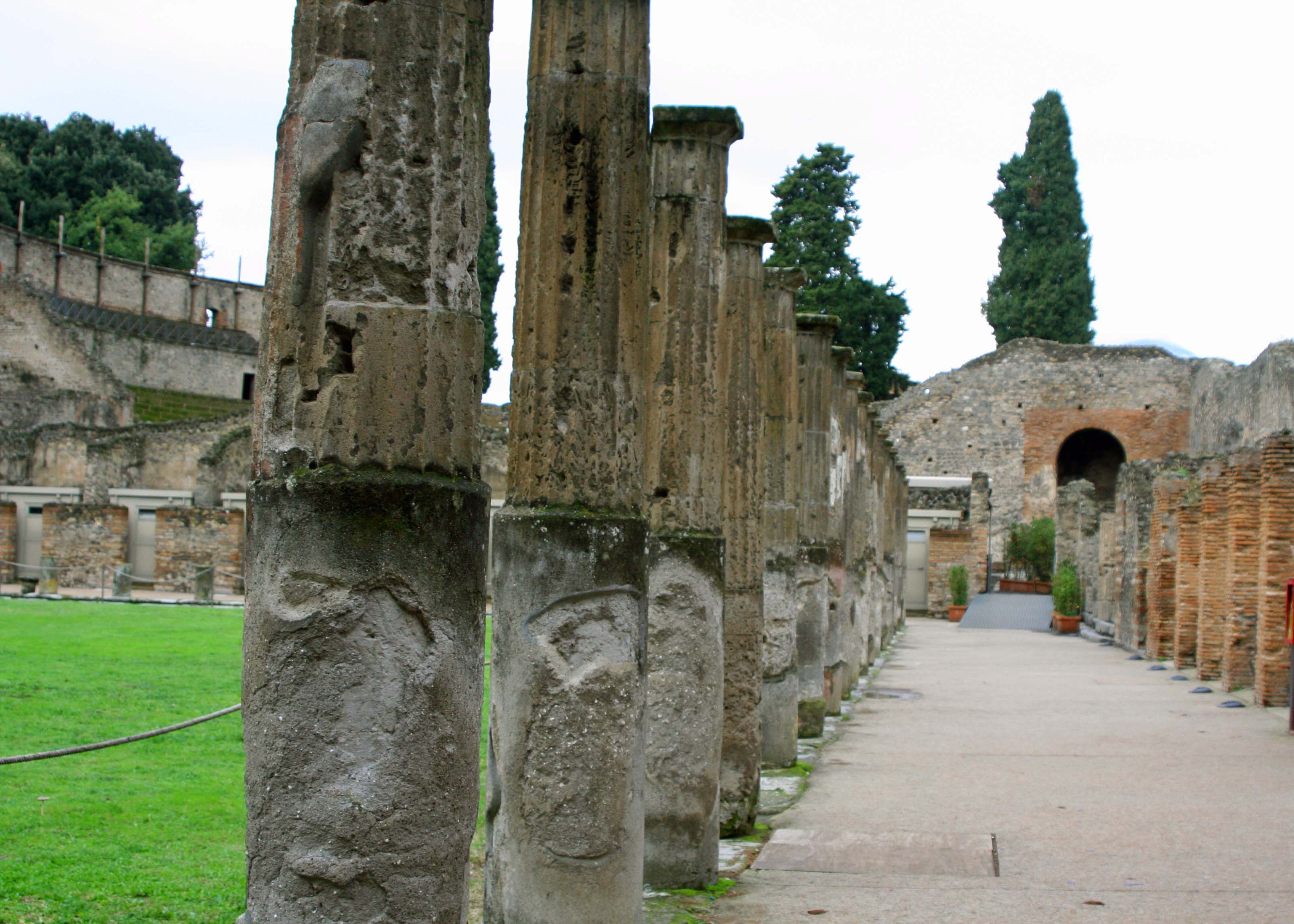
The clash of wooden weapons reverberated through the air as gladiators practiced on the field at the left. The hundred or so gladiators who trained at pompeii were housed in rooms on the right.

The clash of wooden weapons reverberated through the air as gladiators practiced on the field at the left. The hundred or so gladiators who trained at Pompeii were housed in rooms on the right. (Photo by Peggy Mekemson)

Pompeii's theater, which could seat 5000 people, is located just beyond the gladiator school. Seats were separated by price and class. Poor folks got the nosebleed seats.

Pompeii’s theater, which could seat 5000 people, is located just beyond the gladiator school. Seats were separated by price and class. Poor folks got the nosebleed seats.

Streets in Pompeii were paved with large granite stones. The deep tracks were made by chariots, all of which had a standardized wheel base. As for the stones on top, you are looking at a crosswalk or stepping stones. These allowed people to avoid horse droppings, and, even more interesting, to cross the roads when the streets were flooded to remove horse droppings and other waste.

Streets in Pompeii were paved with large granite stones. The deep tracks were made by chariots, all of which had a standardized wheel base. As for the stones on top, you are looking at a cross walk or stepping-stones. These allowed people to avoid horse poop, and, even more interesting, to cross the roads when the streets were regularly flooded to remove horse droppings and other waste.

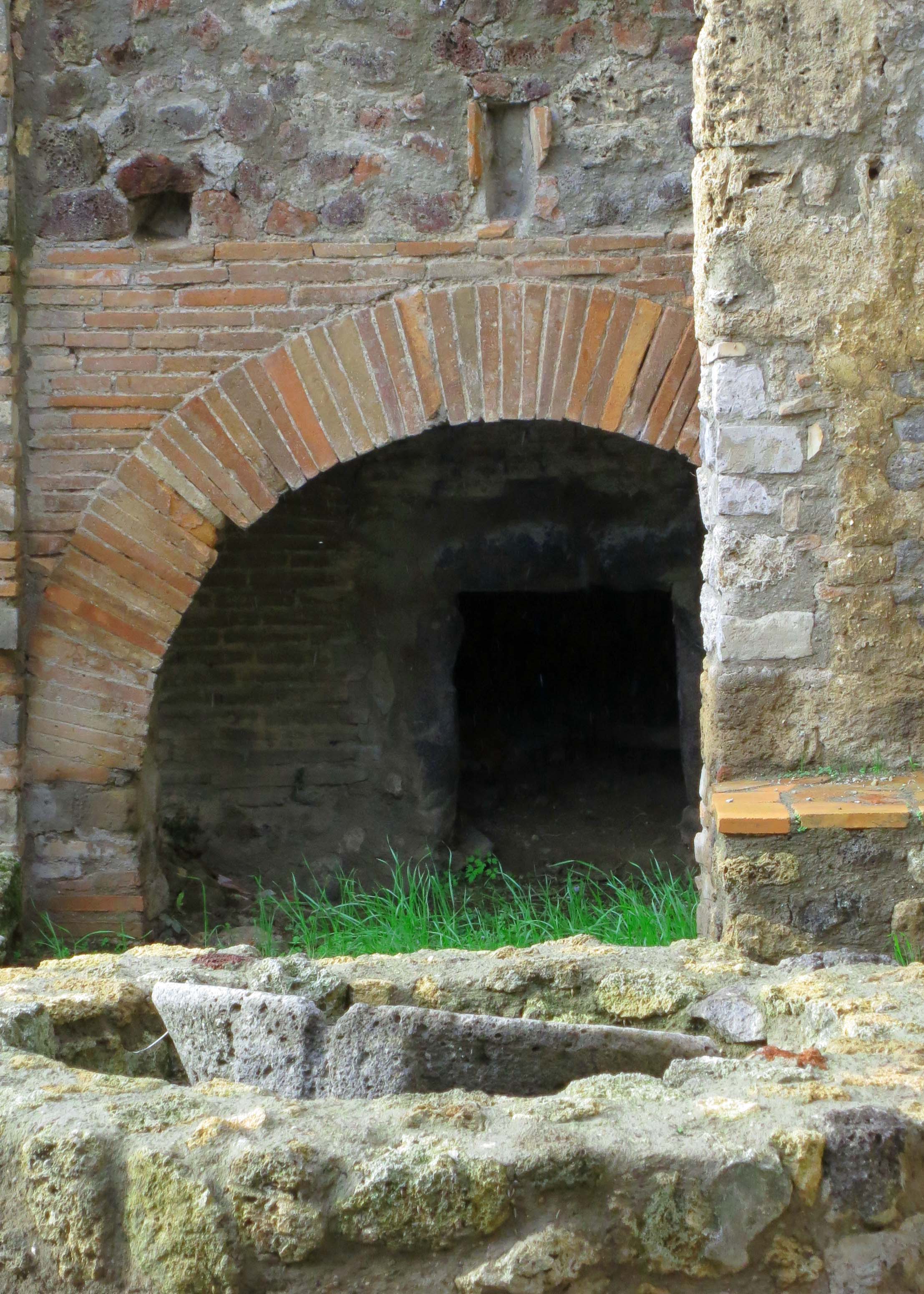
Large ovens such as this were used for baking bread. Can you smell it? The round object in front was used for grinding grain. Small rocks were included in the flour for free. I suspect dentists would be delighted.

Large ovens such as this were used for baking bread. Can you smell it? The round object in front was used for grinding grain. Small rocks were included in the flour for free. I suspect dentists would be delighted.

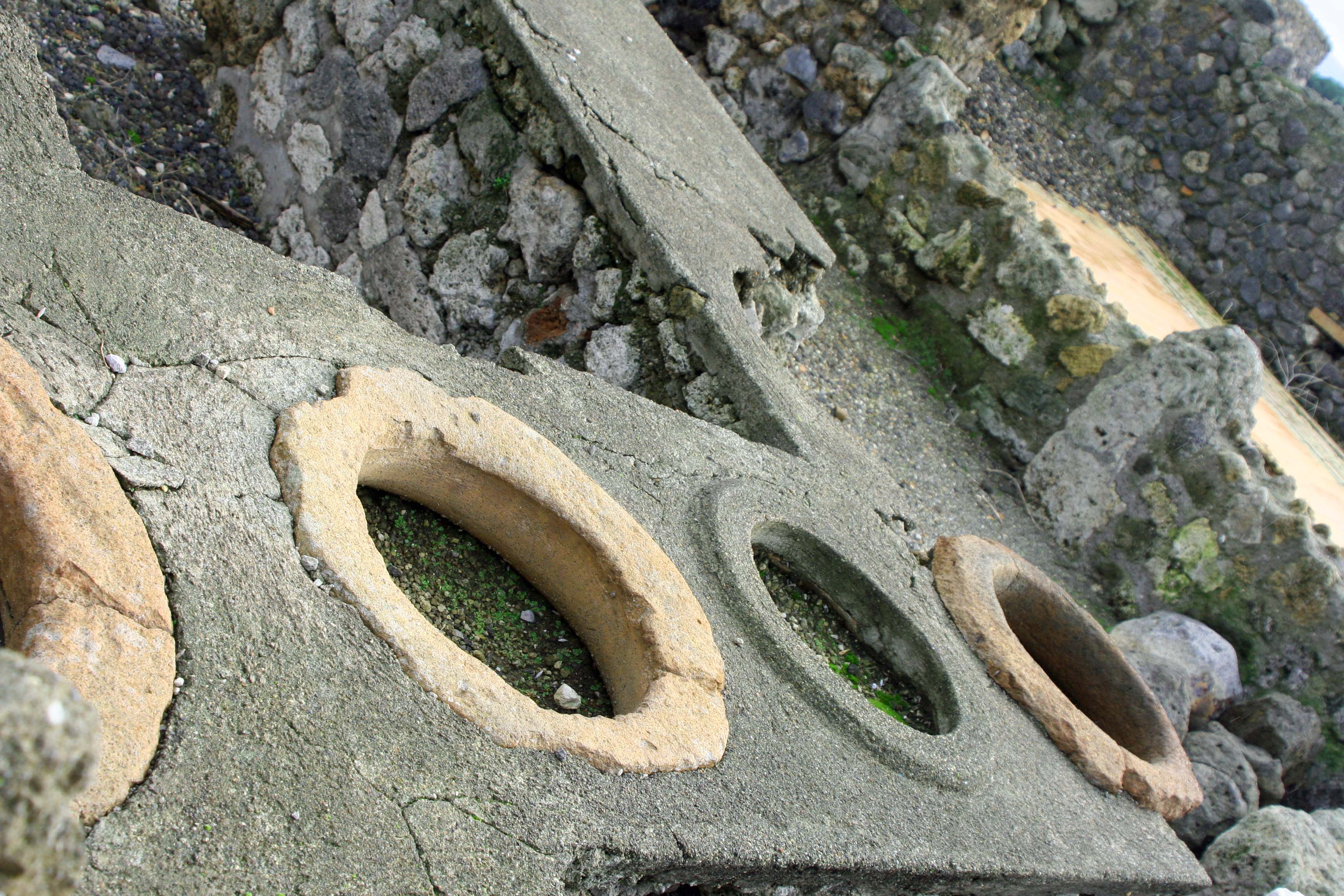
Fast food, anyone? These large circles held pots of hot food. The residents of Pompeii could get a quick bit to eat here... just like we do at McDs.

Fast food, anyone? These large circles held pots of hot food. The residents of Pompeii could get a quick bite to eat here… just like we do at McDs. (Photo by Peggy Mekemson.)

A typical Pompeii street scene featuring stepping stones, sidewalks, and shops. It amazed me how well the city was laid out.

A typical Pompeii street scene featuring stepping-stones, sidewalks, and shops. I was amazed by how well the city was planned.

Every Roman city had public baths for men and women. The baths at Pompeii are among the best preserved. Each bath came with heated floors and hot, warm and cold water. They were also extensive decorated. This bath had murals on the walls.

Every Roman city had public baths for men and women. The baths at Pompeii are among the best preserved. Each bath came with heated floors and hot, warm and cold water. They were also extensively decorated. This bath had murals on the walls.

Even the ceilings of the baths at Pompeii were decorated. Note the details. Each circle contains a different subject.

Even the ceilings of the baths at Pompeii were decorated. Note the details. Each circle contains a different subject including nudes, a shield and a chalice. (Photo by Peggy Mekemson)

I found the reliefs on this wall particularly interesting.

I found the reliefs on this wall particularly interesting.

This close up of the wall featuring a father and child in Pompeii, shows a 3-D effect.

This close up from the wall, which features a father and child in Pompeii, shows a 3-D effect.

I close with what, at first, appears to be abstract art but was actually a coiled snake. It had an interesting story. Our guide told us snakes were painted on the walls to keep men from urinating on them. Apparently peeing on the snake brought bad luck.

I close with what, at first, appears to be abstract art but was actually a coiled snake. It had an interesting story. Our guide told us snakes were painted on the walls to keep men from urinating on them. Apparently peeing on a snake brought bad luck. (Photo by Peggy Mekemson)

NEXT BLOG: I will visit with the gods of Pompeii, plus the market, the forum and the basilica.

Five Reasons to Travel… Wandering Through Time and Place

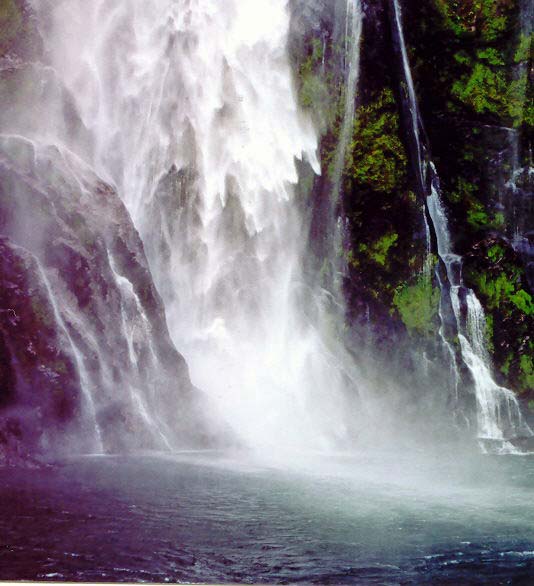
A whole world waits for us outside our door... including this waterfall in Milford Sound, New Zealand.

A whole world waits for us outside our door… including this waterfall in Milford Sound, New Zealand.

“Twenty years from now you will be more disappointed by the things you didn’t do than by the ones you did do. So throw off the bowlines, sail away from the safe harbor. Catch the trade winds in your sails. Explore. Dream. Discover.”  Mark Twain

“Not all those who wander are lost.”  J. R. Tolkien

I love wandering, whether it is out my back door or across the world. And, I enjoy sharing my adventures; it is one of the reasons I write this blog. But there’s another: I believe travel enriches our lives. I hope in some small way to encourage those who read my blogs to “explore, dream and discover…”

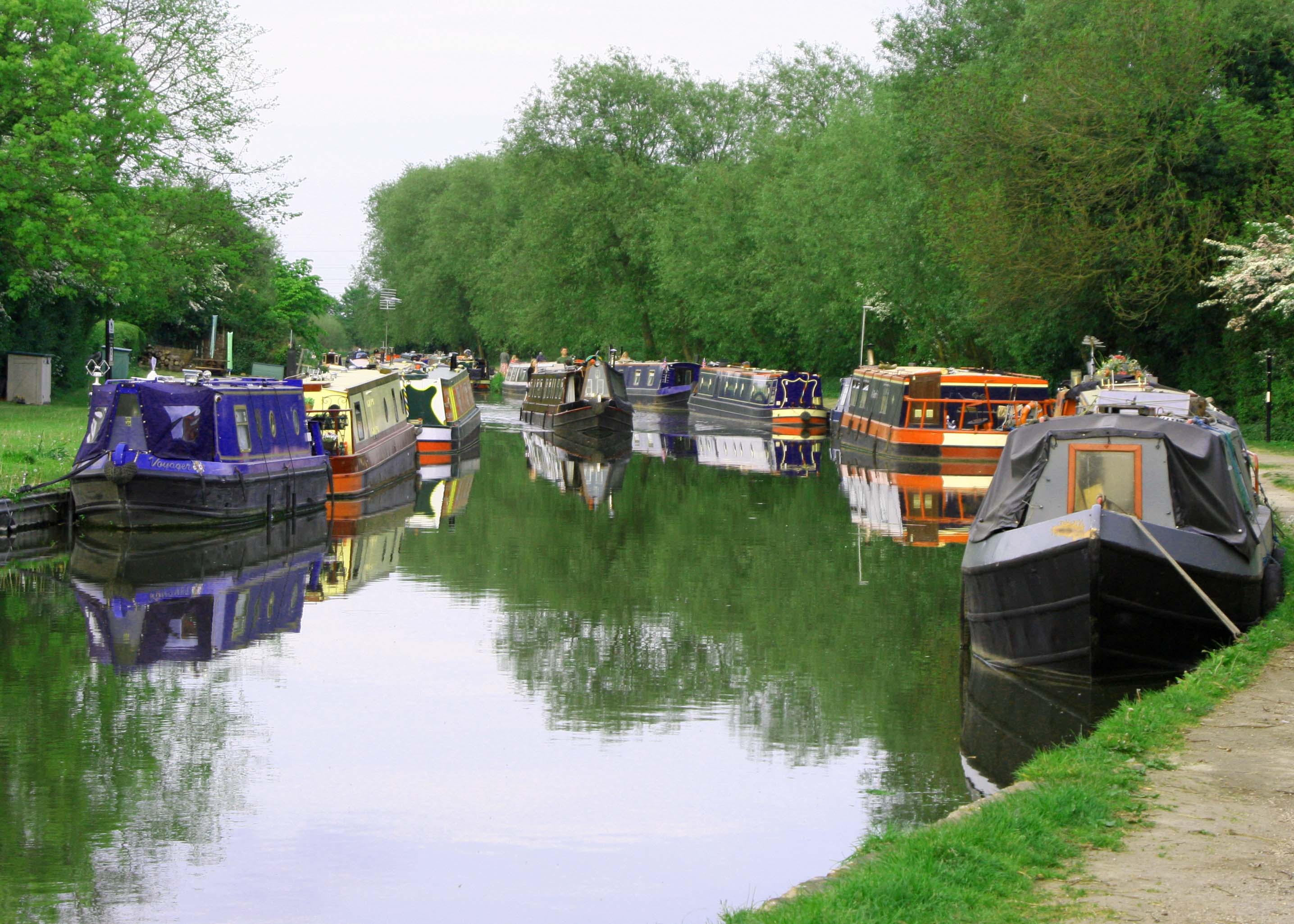
Maneuvering a 60 foot long Narrow Boat through the Trent and Mersey Canal in England two summers ago was a very different but equally rewarding experience.

Wandering can take many forms. Two summers ago Peggy and I along with Peggy’s sister Jane and husband Jim spent a week maneuvering a 60 foot long Narrow Boat through the Trent and Mersey Canal in England. It was challenging at first, but we quickly adjusted to the beauty and peace of the trip, not to mention the great English pubs.

Here are my top five reasons for travel:

1. Life is an adventure. There is a big world out there to explore. Seeing it on TV or in the movies is one thing. Getting out and experiencing it is totally different. You can watch a TV special about a person walking down a jungle trail and seeing a python in a tree, or, you can walk down a jungle trail and see the python yourself. The first experience you will forget tomorrow; the second you will remember for a lifetime.

 “Avoiding danger is no safer in the long run than outright exposure. Life is either a daring adventure or nothing.”  Helen Keller

“We live in a wonderful world that is full of beauty, charm and adventure. There is no end to the adventures we can have if only we seek them with our eyes open.”  Jawaharlal Nehru

“Once you have traveled, the voyage never ends, but is played out over and over again in the quietest chambers. The mind can never break off from the journey.” Pat Conroy

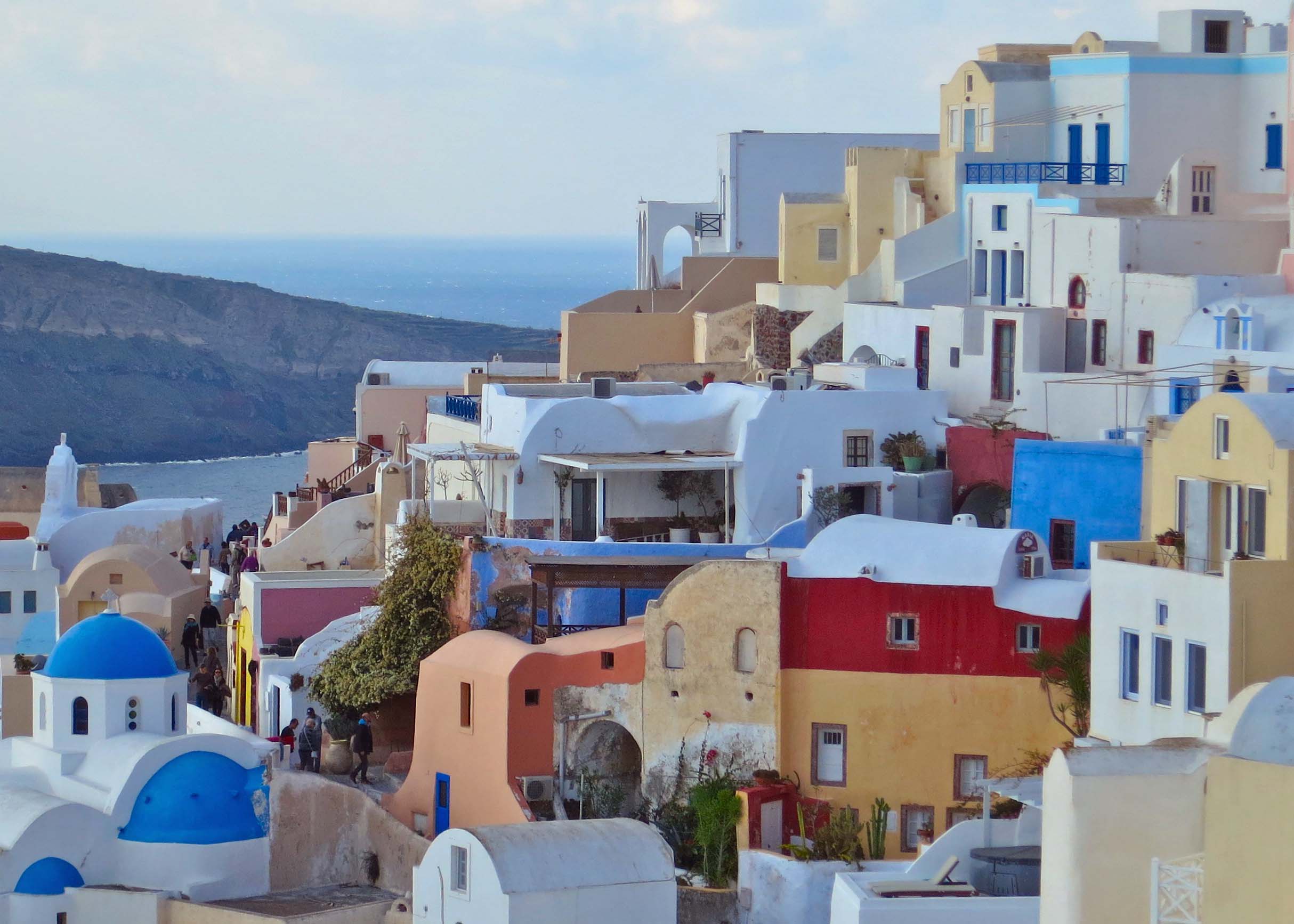
There are millions of beautiful photos of the Greek Island of Santorini, but none can match going there.

Travel can be to exotic locations like Santorini…

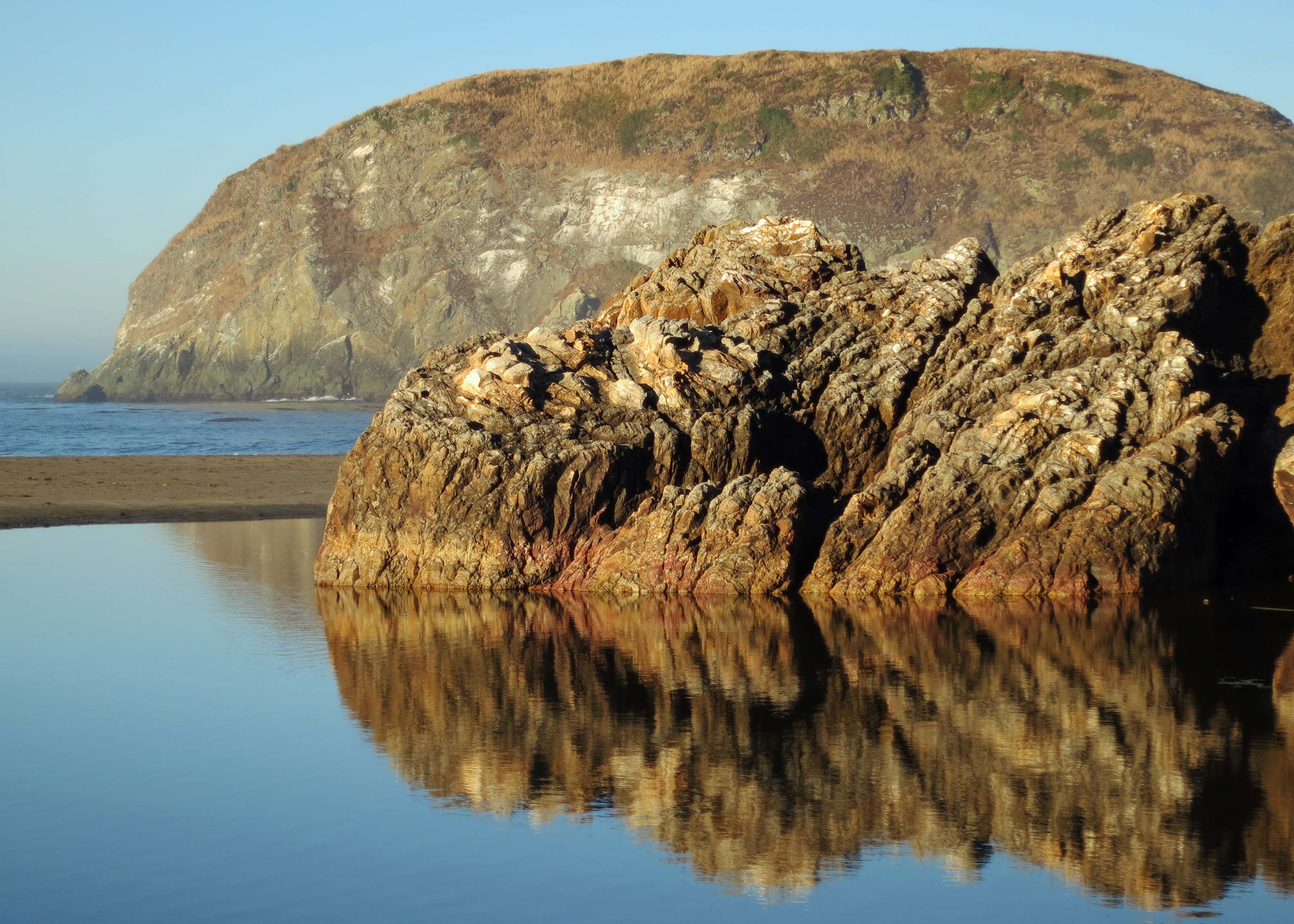
One doesn't have to travel far. We all have places nearby where we can escape to for a day or a week. This is on the Oregon Coast three hours away from my home.

Or close to home. We all have places nearby where we can escape to for a day or a week. This is on the Oregon Coast three hours away from where I live.

2. We all need to escape on occasion. Life can be hectic. We get lost in our day-to-day existence. Traveling breaks the chain. It recharges our batteries. Even planning a trip eases the tedium by giving us something to dream about.

“One of the gladdest moments of human life is the departure upon a distant journey into unknown lands. Shaking off with one mighty effort the fetters of habit, the leaden weight of routine, the cloak of many cares and the slavery of home, man feels once more happy.”  Richard Burton

As a 22-year old, I spent two years living in West Africa as a Peace Corps Volunteer. Living in and learning about another culture expands our view of the world.

As a 22-year old, I spent two years in West Africa as a Peace Corps Volunteer. The experience had a significant impact on my life and taught me to appreciate what other cultures have to offer. Here I am admiring a Kpelle bridge.

Learning about other cultures teaches us more about our own. The Peace Corps experience helped me understand that even my father had a slightly different culture than I did. He is in his 80s in this photo.

Learning about other cultures helped me understand my own better. It even provided me with new insights about my father, Herb Mekemson. This photo was taken of him in his 80s. (I believe it was taken by my niece, Marian Heintz, who now works as a master potter in Tennessee.)

3. Travel challenges and changes our understanding of the world. Not only do we learn about other places and other cultures, we learn more about our own. When I returned from serving for two years as a Peace Corps Volunteer in Africa, I realized that even my father had a slightly different culture than mine. He had been raised in a different time, had different experiences, and even had different beliefs. There was much I could learn from him, just as I did from the Kpelle people of Liberia.

“Travel is fatal to prejudice, bigotry, and narrow-mindedness.”  Mark Twain

“The world is a book and those who do not travel read only one page.”  St. Augustine

 “The whole object of travel is not to set foot on foreign land; it is at last to set foot on one’s own country as a foreign land.”  G.K. Chesterton

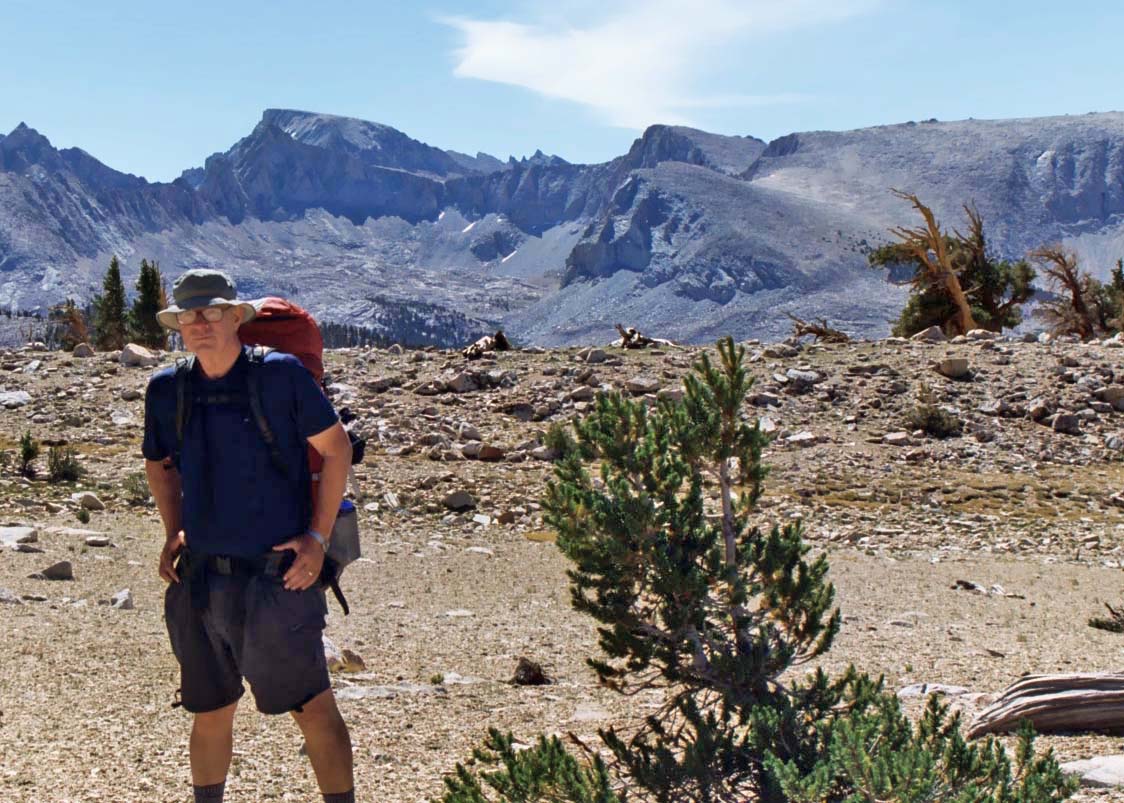
For my 60th Birthday, I chose to backpack 360 miles from Lake Tahoe to Mt. Whitney in California. Whitney is behind me in the photo.

To celebrate my 60th Birthday, I chose to backpack 360 miles from Lake Tahoe to Mt. Whitney in California. Whitney is behind me in the photo. People who had been backpacking with me for over 30 years joined me along the route.

The perspective from the top of the 14,505 foot (4,421 meters) Mt. Whitney, the highest peak in the contiguous United States. Over the years I have taken many people to the top of this magnificent mountain including my son, Tony, and my nephew Jay, who was 16 at the time.

The perspective from the top of the 14,505 foot (4,421 meters) Mt. Whitney, the highest peak in the contiguous United States. I have taken many people to the top of this magnificent mountain including my wife, Peggy, son, Tony, and my nephew Jay, who was 16 at the time.

4. Travel can also change how we view ourselves and how we perceive the world around us. For 20 years of my life, I took people on hundred mile backpack trips. Few of these people had ever backpacked 100 miles and some had never backpacked at all. The sheer physical challenge of hiking up and over mountains for nine days while dealing with weather, insects and wildlife created an adventure they would never forget. For many, it was a life-altering event. It changed their perspective of who they were and what they could accomplish. Any journey can change how you view yourself and the world… but you have to be open to learn from the experience.

“All journeys have secret destinations of which the traveler is unaware.” Martin Buber

“One’s destination is never a place, but a new way of seeing things.”  Henry Miller

“To my mind, the greatest reward and luxury of travel is to be able to experience everyday things as if for the first time, to be in a position in which almost nothing is so familiar it is taken for granted.”  Bill Bryson

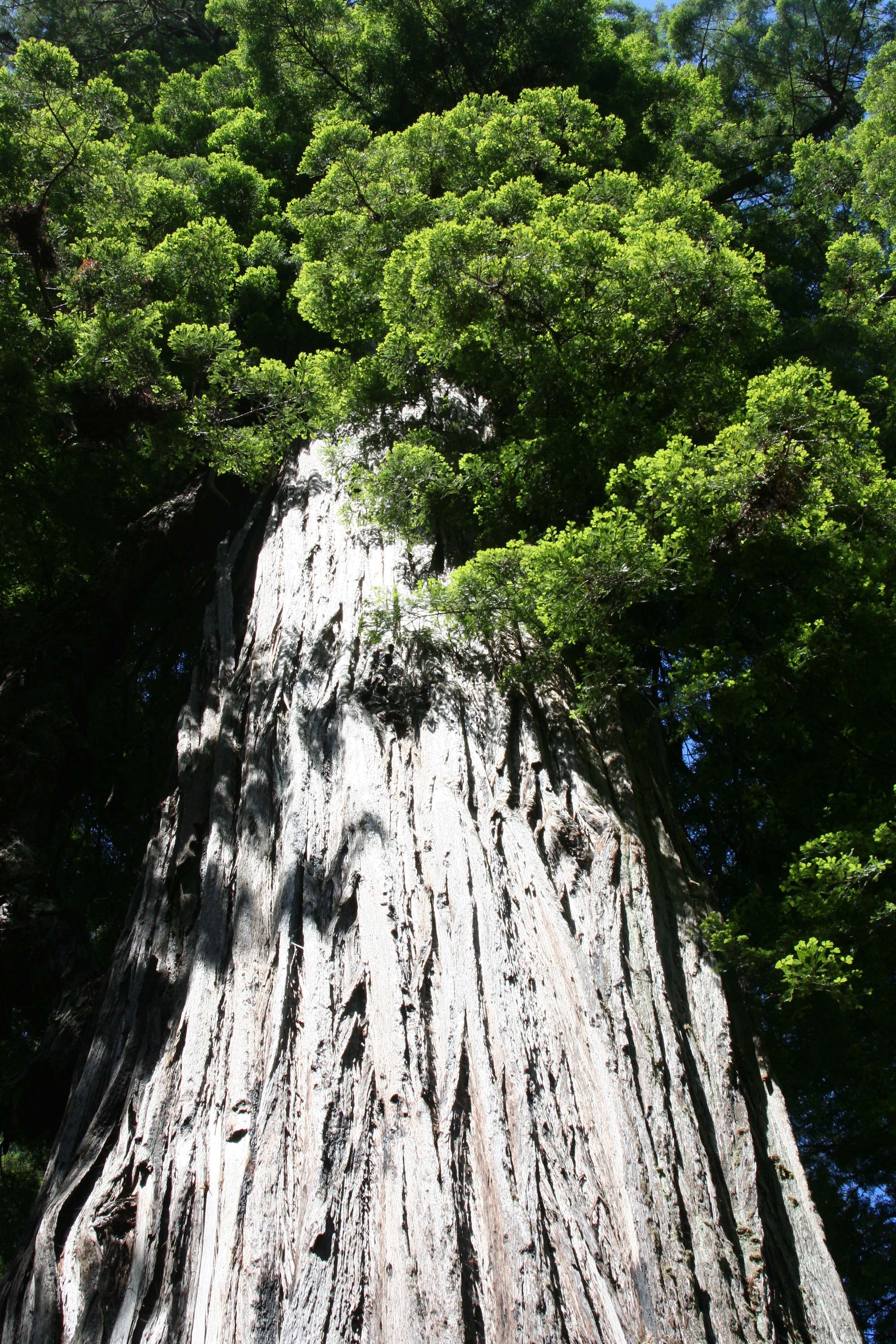
A towering Redwood on the north coast of California.

A towering Redwood on the north coast of California.

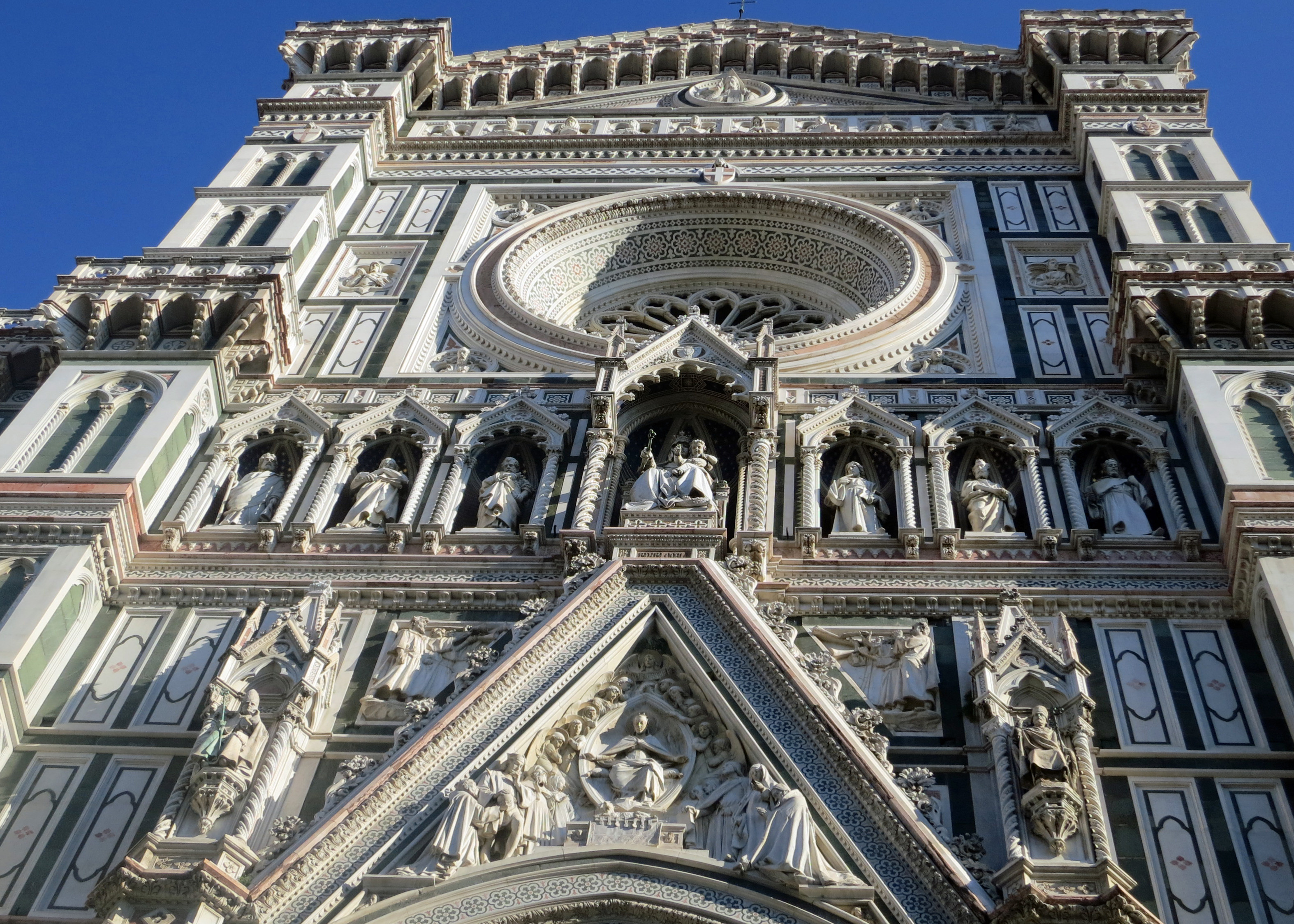
A towering cathedral in Florence Italy.

A towering cathedral in Florence, Italy.

5. Great beauty exists in the world. Whether it is a towering redwood on the northern coast of California or a towering cathedral in Florence, beauty is found wherever you wander. It can be as small as a raindrop on a flower, or as large as a waterfall cascading into Milford Sound, New Zealand. One doesn’t have to travel thousands of miles to find this beauty, however. It waits outside your door. Be like Bilbo Baggins: grab your pack and go charging after Gandalf. Treasures beyond your imagination await you.

“Man cannot discover new oceans unless he has the courage to lose sight of the shore.”  Andre Gide

“Without new experiences, something inside of us sleeps. The sleeper must awaken.”  Frank Herbert

“Two roads diverged in a wood and I took the one less traveled by.” Robert Frost

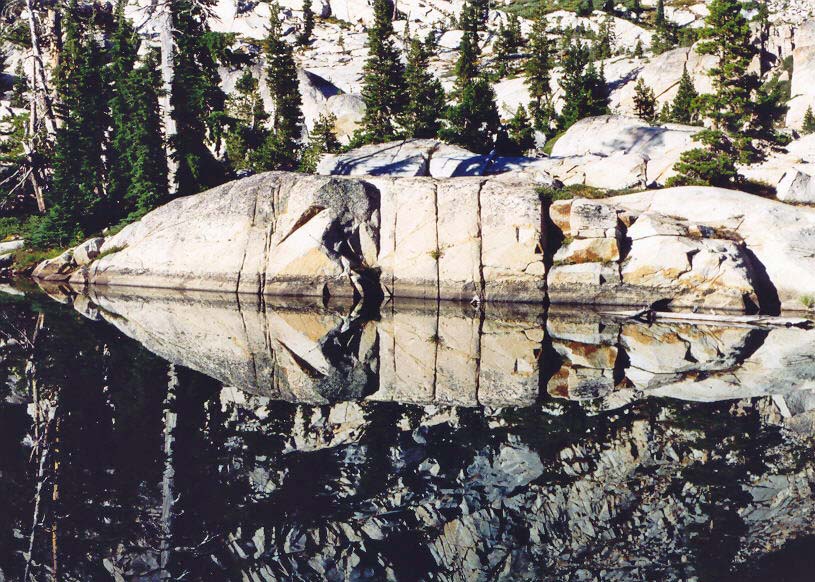
There are always delightful surprises waiting for you when you wander. I took this photo of Four Q lakes in the Desolation Wilderness near Lake Tahoe for its reflection. Only after the photo was processed did I see the mask.

There are always delightful surprises waiting for us when we wander. I took this photo of Four Q Lakes in the Desolation Wilderness near Lake Tahoe for its reflection. Only after the photo was processed did I see the mask.

I have spent 70 years traveling the road “less travelled by.” And I shall continue. No regrets.

“Our battered suitcases were piled on the sidewalk again; we had longer ways to go. But no matter, the road is life.” Jack Kerouac