The Beautiful Sunsets of Banderas Bay, Puerto Vallarta

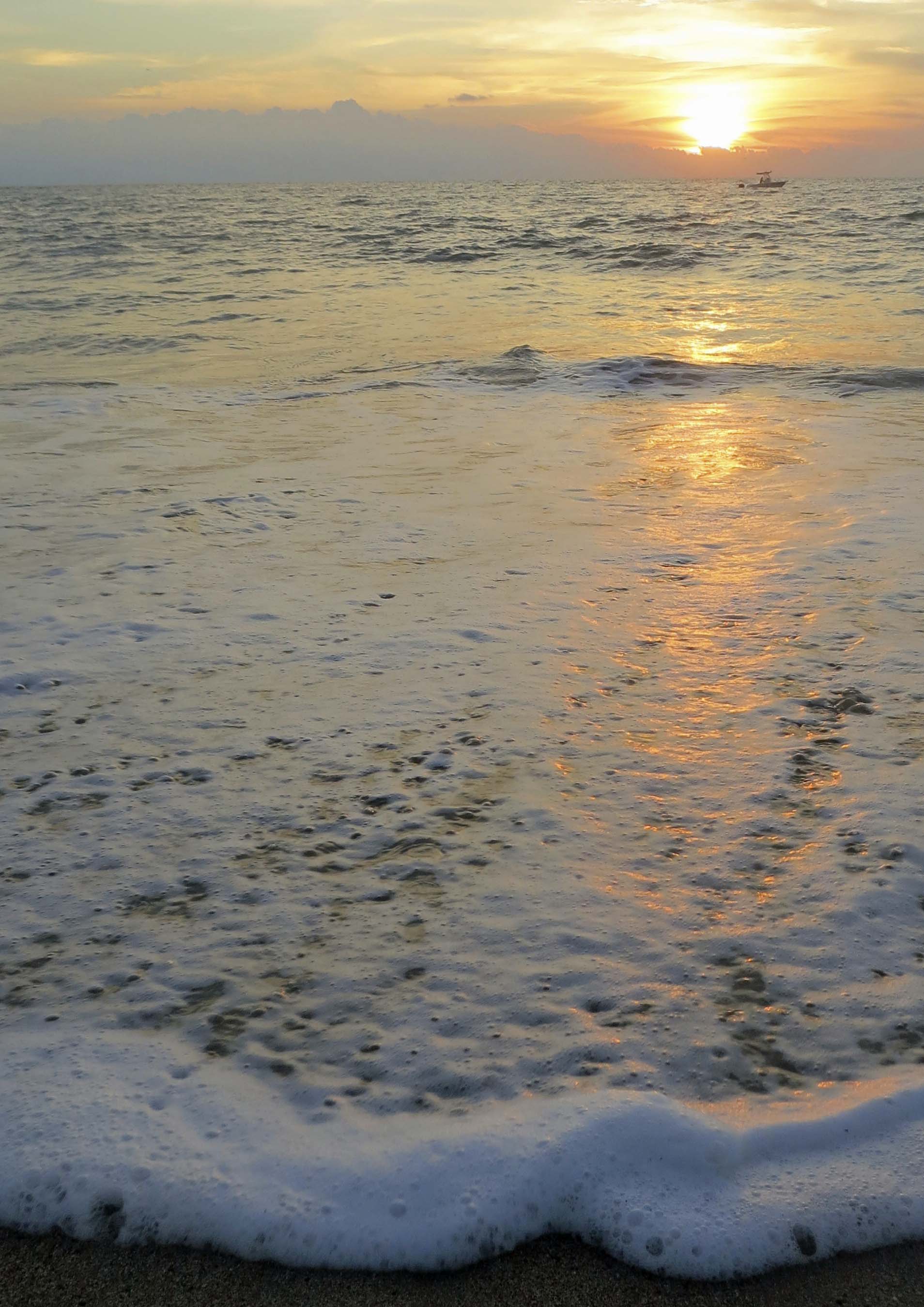
Sunset over Bandaras Bay, Puerto Vallarta. (Photo by Peggy Mekemson.)

Palm trees and sunsets seem to be made for each other. (Photo by Peggy Mekemson.)

My father, who was a talented landscape photographer and painter, always discussed sunsets with a certain disdain. “Post card art,” he would sniff.  When I sorted through his thousands of slides after he passed away, however, what did I find: dozens if not hundreds of sunset photos. Apparently, the old fellow had been as addicted to sunsets as I am.

Scenic sunsets beg to be photographed… even more so when warm tropical breezes and palm trees are involved. Peggy and I found ourselves out on the beach every evening in Puerto Vallarta waiting for the show to start, and we were never disappointed. I’ll let the photos tell the story.

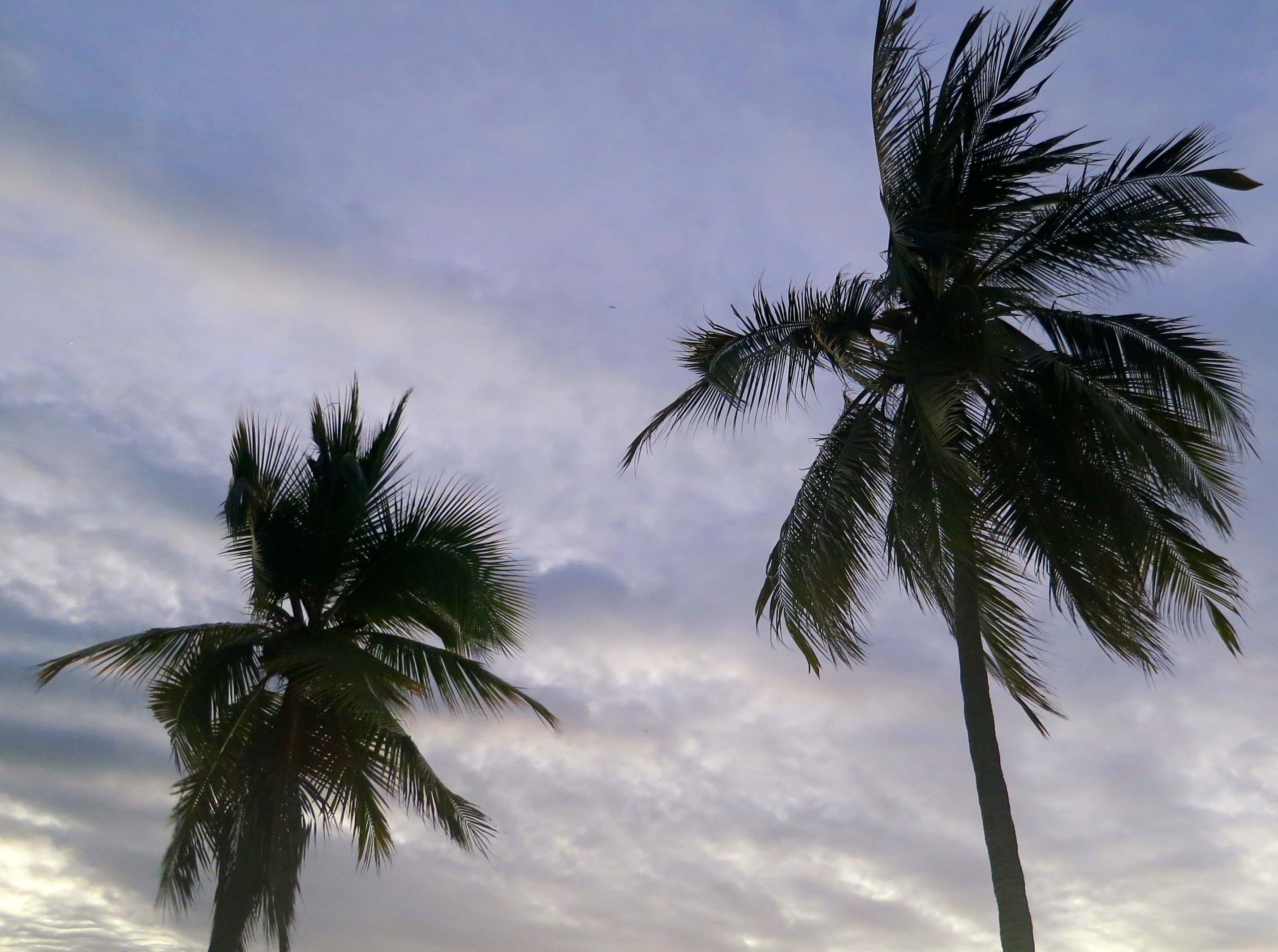
Palm trees outlined against the sky in Puerto Vallarta. Photo by Curtis Mekemson.)

I caught these two palms outlined against the sky with just a hint of color in the clouds.

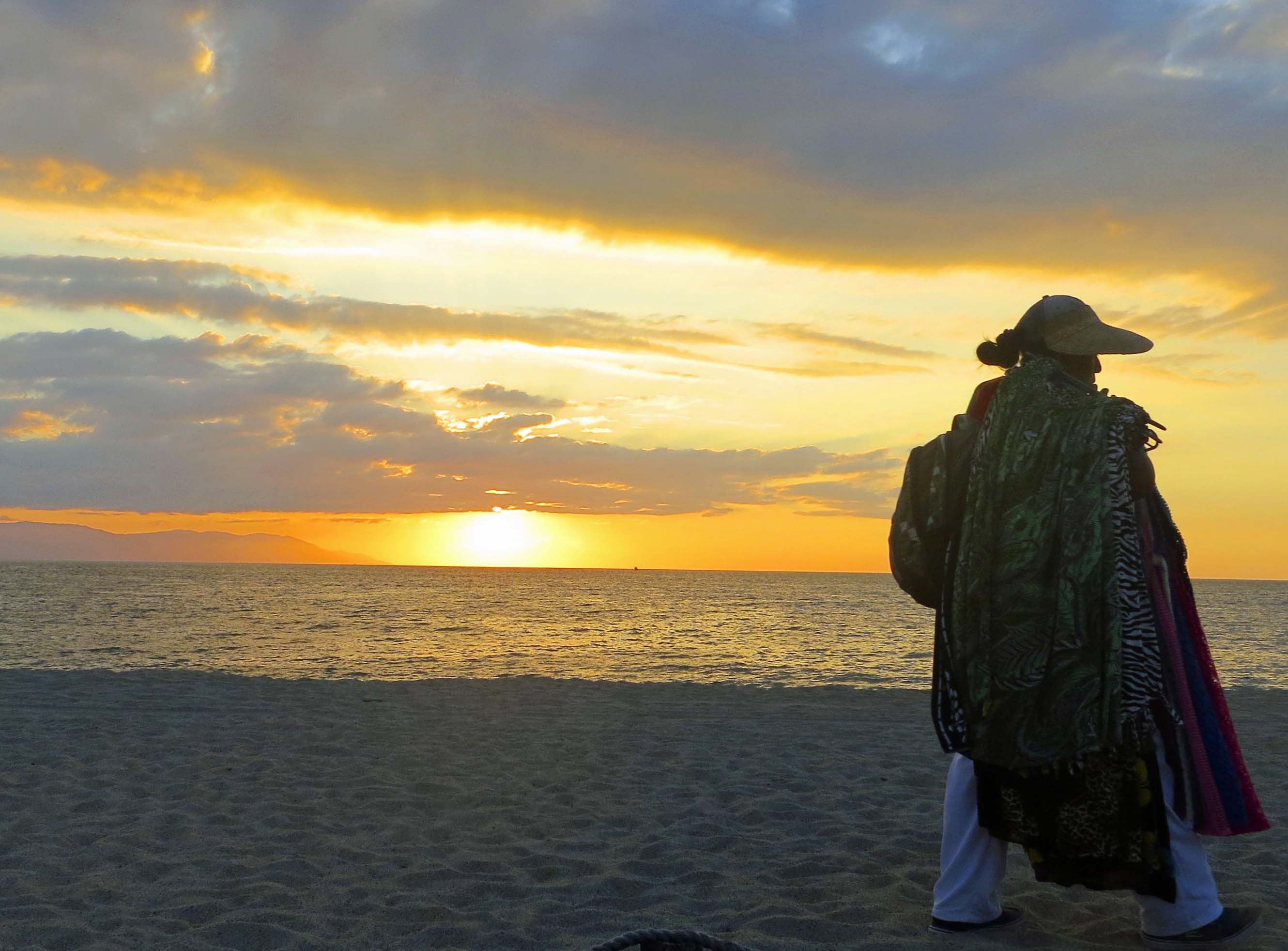
Puerto Vallarta beach vendor outlined by setting sun. Photo by Curtis Mekemson.)

After a long day of work, a beach vendor heads home just as the sun drops behind the horizon.

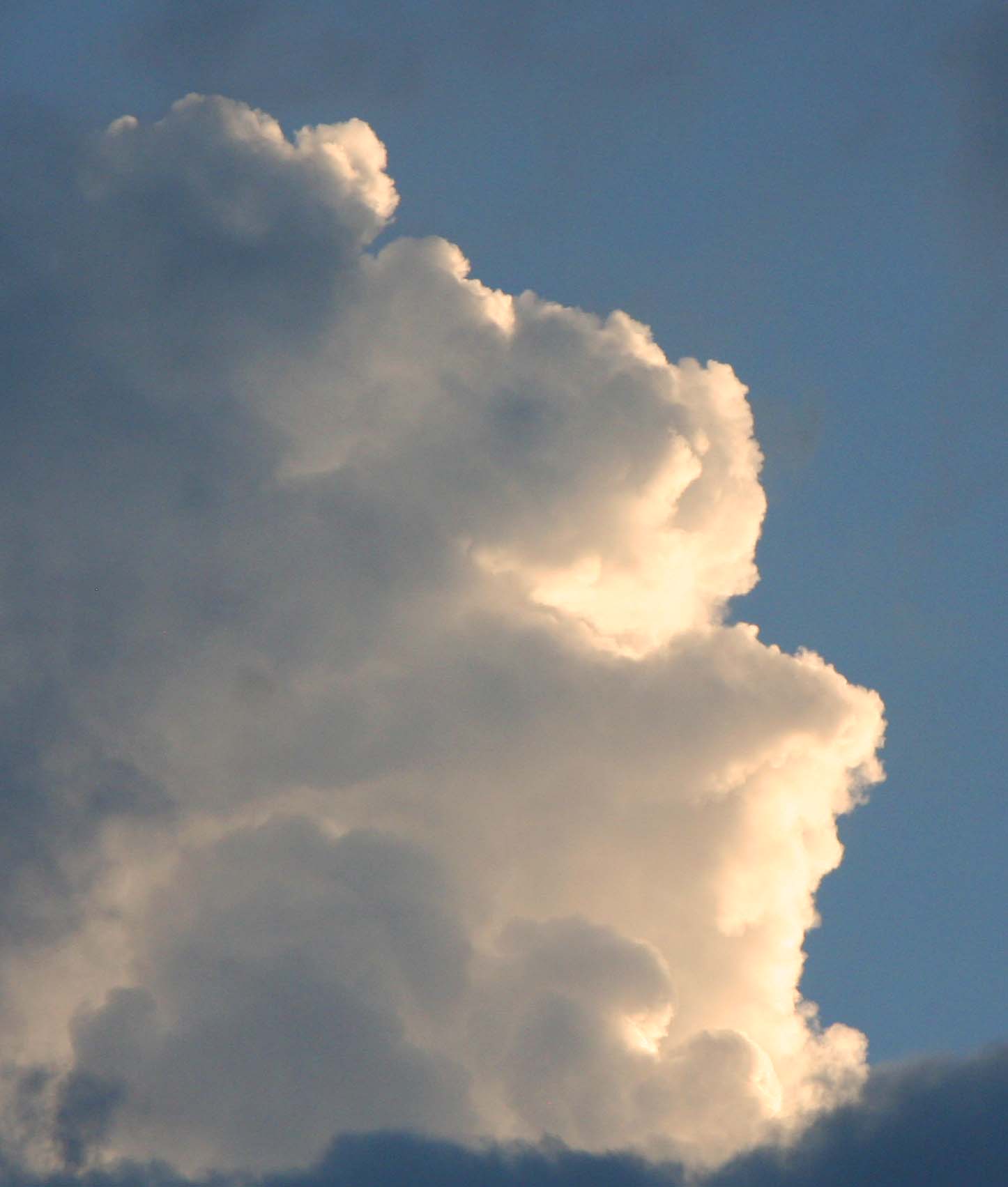
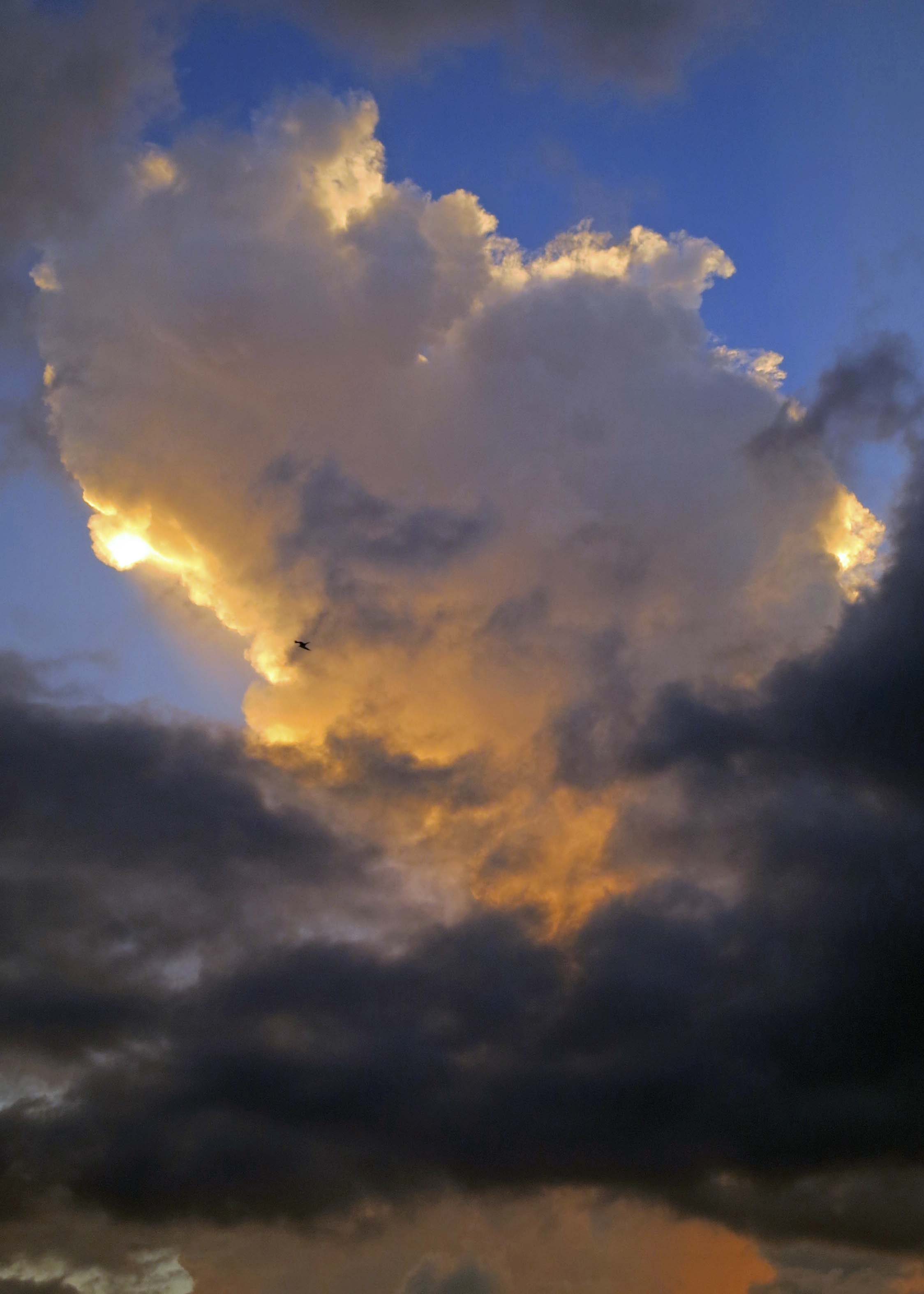
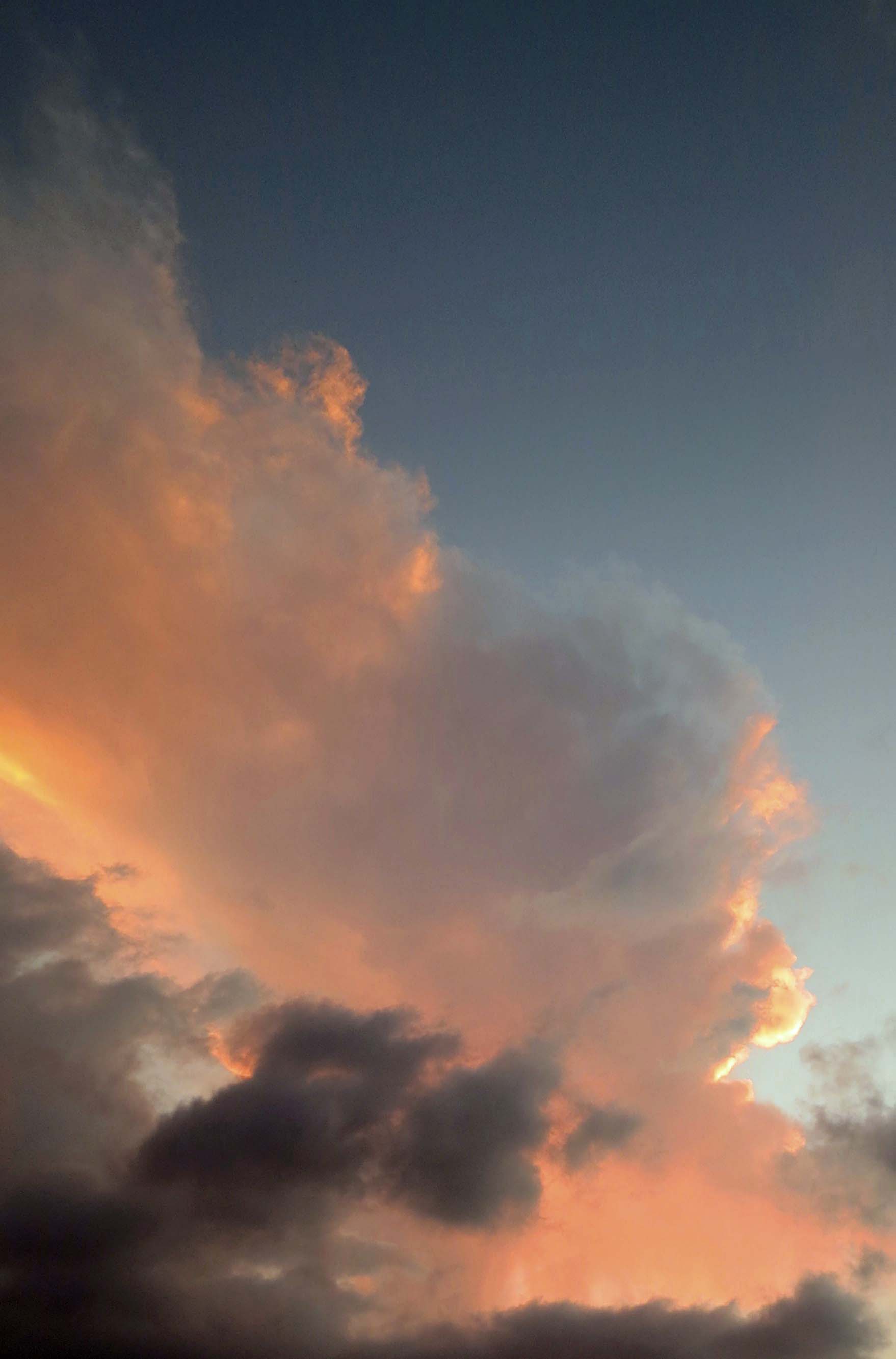
Clouds always add drama to sunsets. We watched as this impressive cumulous cloud changed from white, to golden, to pink. (Photo by Peggy Mekemson.)

Clouds always add drama to sunsets. We watched as this impressive cumulus cloud changed from white, to golden, to pink. (Photo by Peggy Mekemson.)

Cumulous cloud in Puerto Vallarta. (Photo by Curtis Mekemson.)

Cumulous cloud in sunset at Puerto Vallarta. (Photo by Curtis Mekemson.)

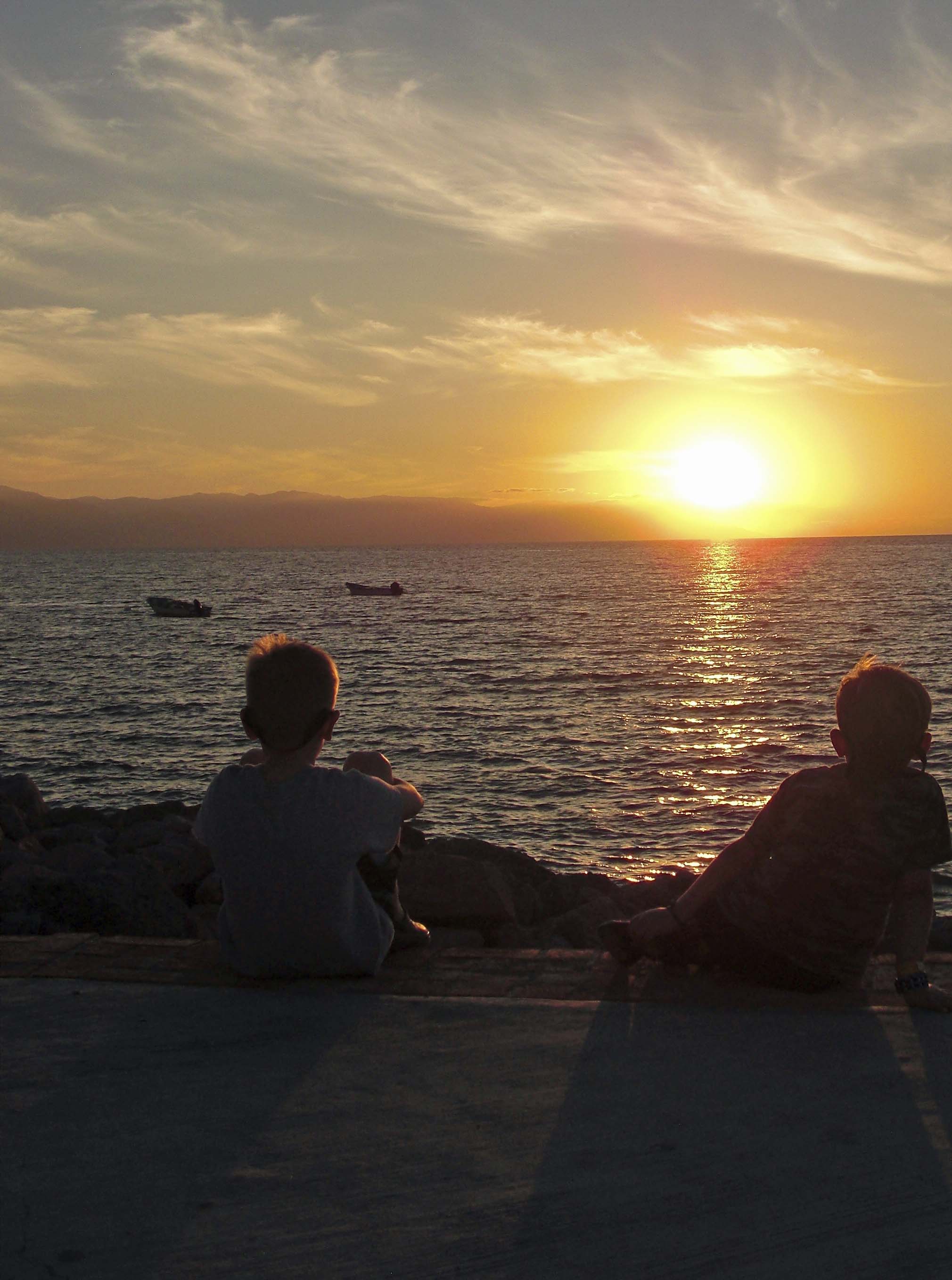
Our grandkids Ethan and Cody joined us in downtown Puerto Vallarta to catch the sunset. (Photo by Natasha Cox.)

Our grandkids Ethan and Cody joined us in downtown Puerto Vallarta to catch the sunset. (Photo by Natasha Cox.)

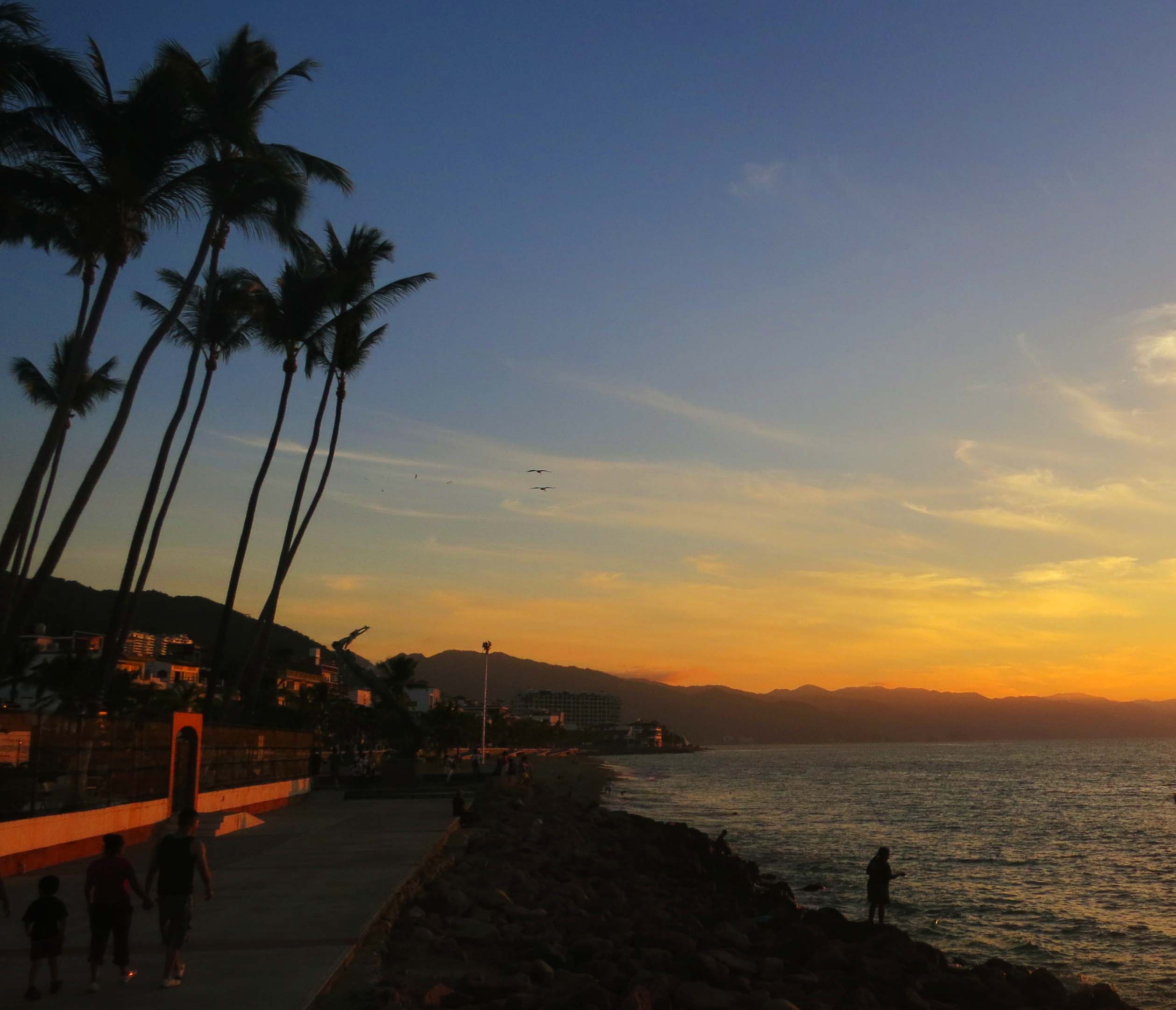
Sunset along Malecon in Puerto Vallarta. (Photo by Curtis Mekemson.)

Another shot from the same perspective looking down Puerto Vallarta’s beach front across Banderas Bay.

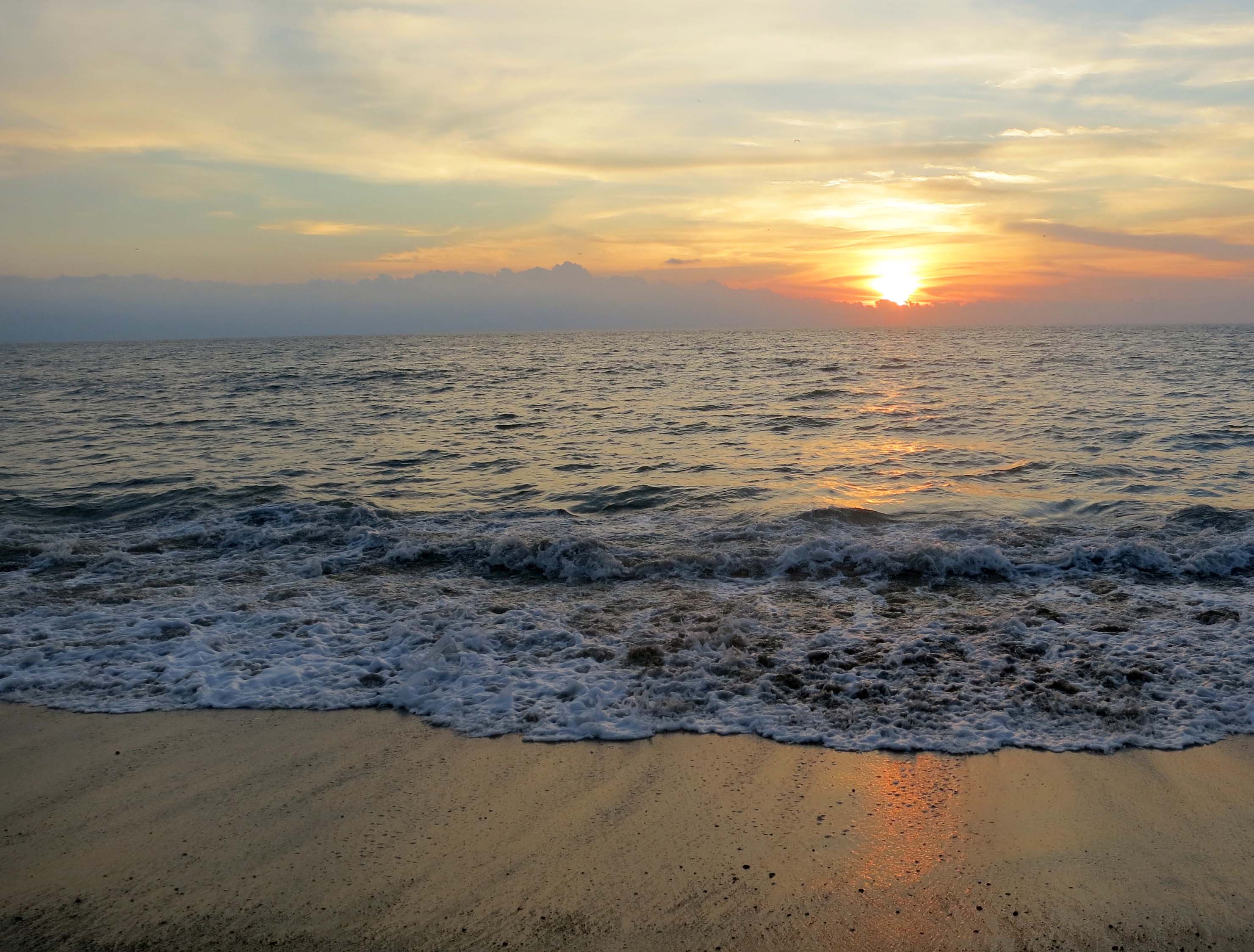
Puerto Vallarta beach sunset. (Photo by Curtis Mekemson.)

I took this photo with my camera inches above the sand. Think of it as a crab’s perspective on the sunset.

Sunset photo capturing sand, sea and sky in Puerto Vallarta. (Photo by Curtis Mekemson.)

Another view.

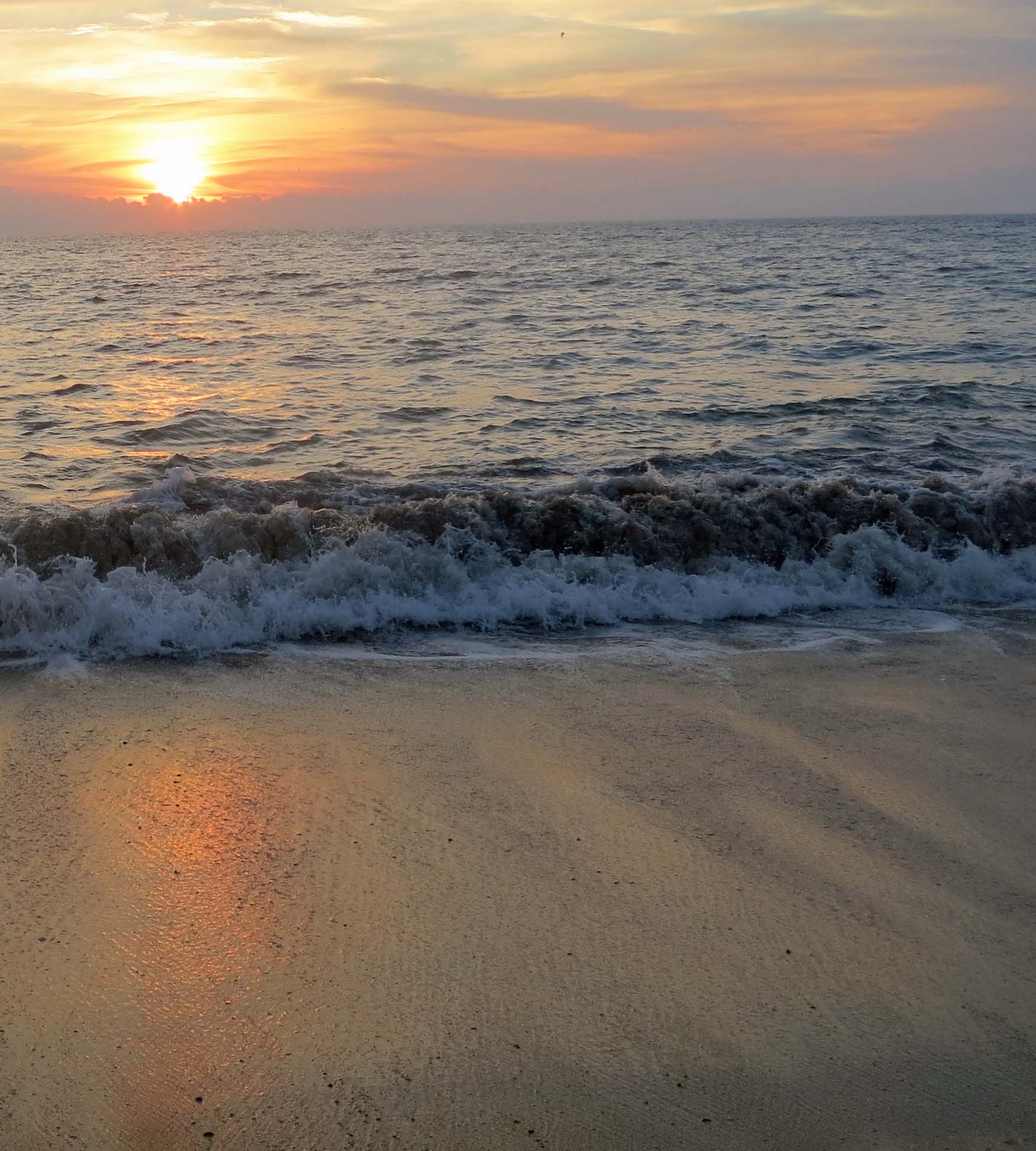
Puerto Vallarta sunset photo on Banderas Bay. (photo by Curtis Mekemson.)

Sea foam adds its own twist to sunset photos on the beach.

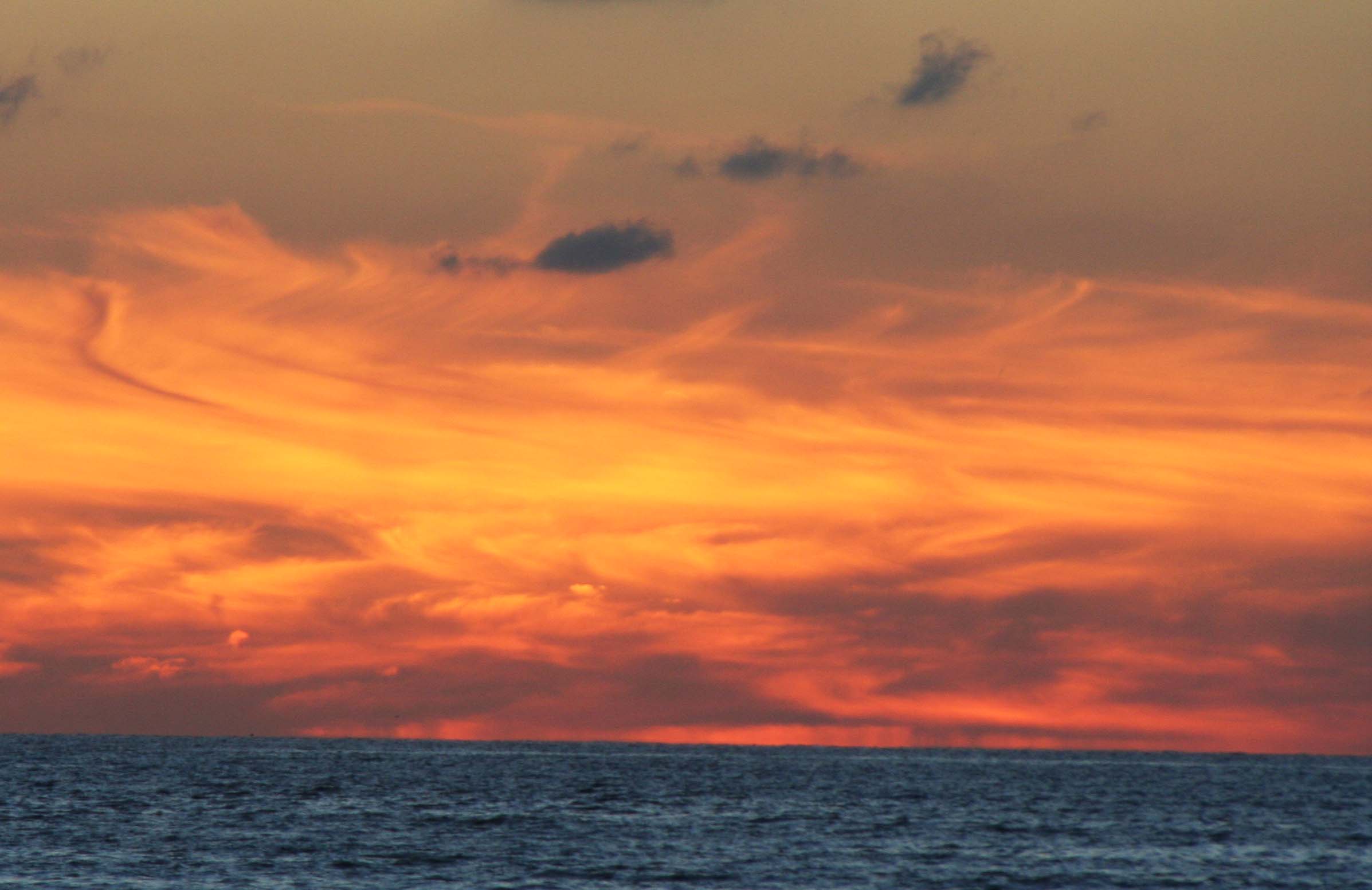
Sometimes the colors of a sunset are so vivid they seem unreal. (Photo by Peggy Mekemson.)

Sometimes the colors of a sunset are so vivid they seem unreal. (Photo by Peggy Mekemson.)

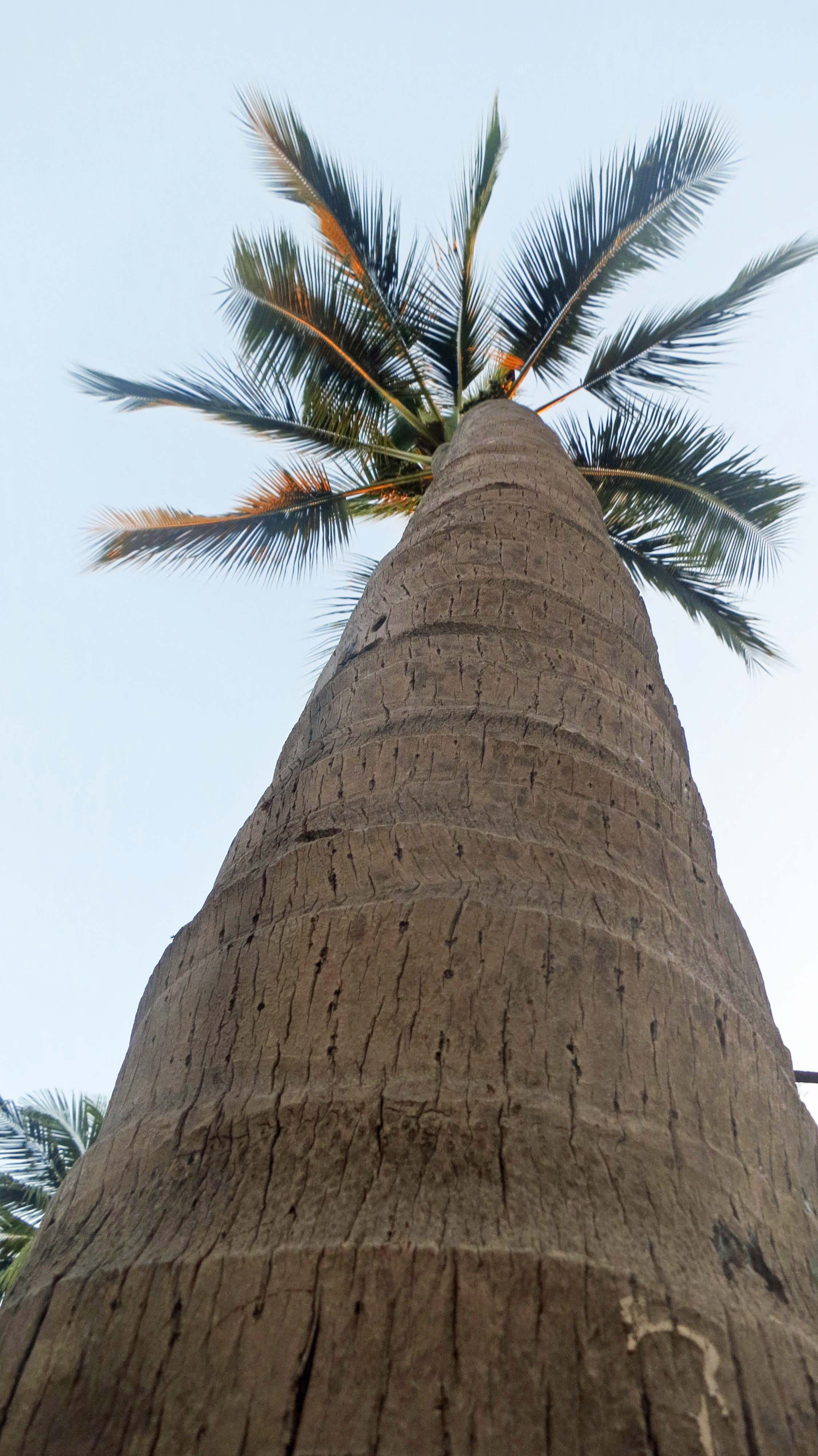
Palm tree view in Puerto Vallarta. (Photo by Curtis Mekemson.)

Just for fun, I’ll conclude this post with a non-sunset photo. I gave you the sea from the perspective of a crab. This is a palm tree from the perspective of an iguana.

NEXT BLOG: I will wrap up my Puerto Vallarta series with a few photos I couldn’t fit into my posts including a whale and one small boy catching a very big fish.

Puerto Vallarta’s Iconic Church… Our Lady Of Guadalupe

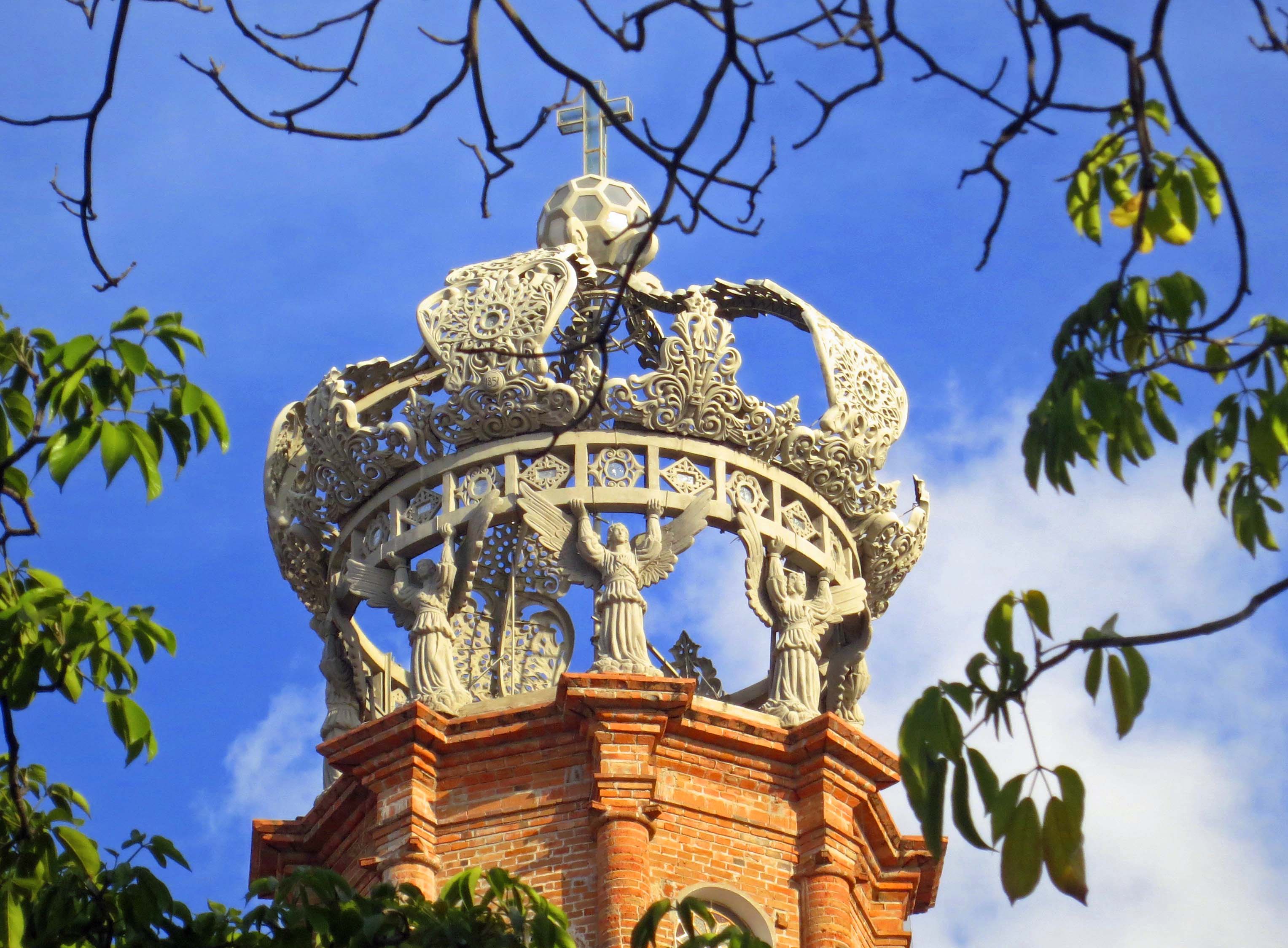
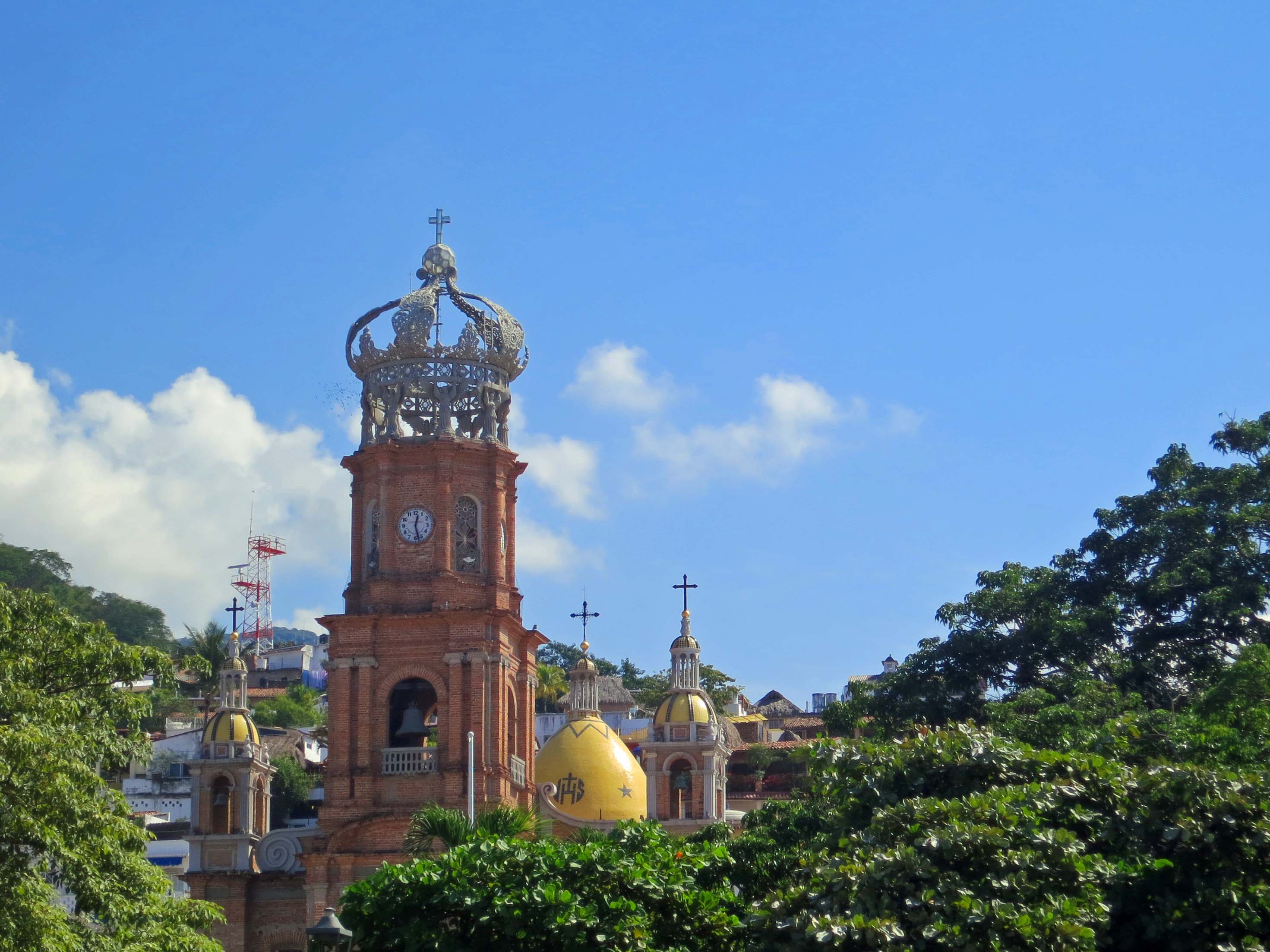
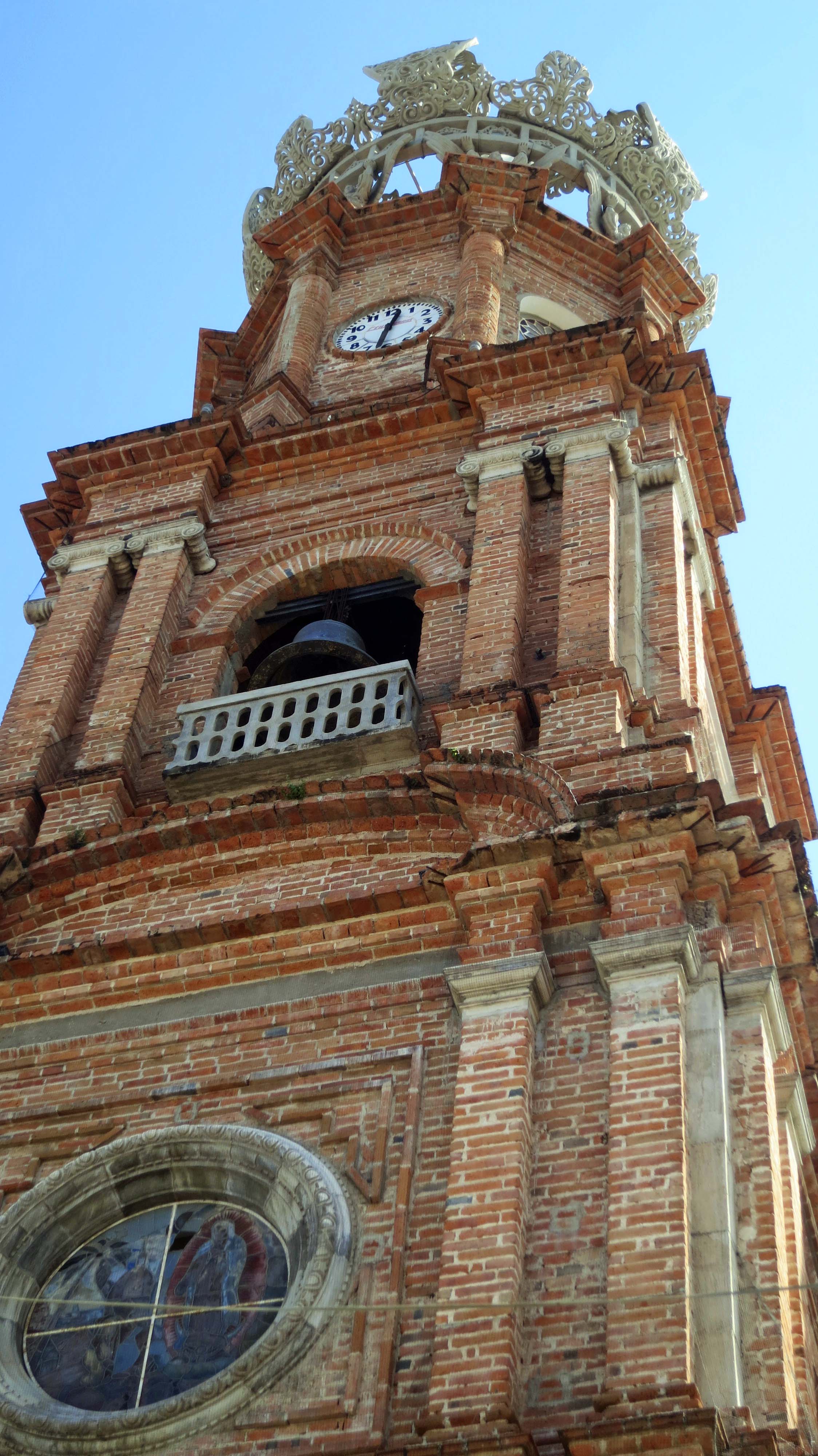
Photo of crown of the Church of Our Lady of Guadalupe in Puerto Vallarta,  Mexico. Photo by Curtis Mekemson.

The crown of Puerto Vallarta’s iconic Church of Our Lady of Guadalupe.

Juan Diego had a vision on December 9, 1531 according to the Catholic Church: the Virgin Mary, i.e. Our Lady of Guadalupe, met him on a hilltop near Mexico City and asked that a church be built on the site to honor her. To prove her identity, she cured Juan’s uncle of an incurable disease and had him take flowers bundled in his cloak to the local bishop. When Juan opened the cloak for the bishop, an image of the Virgin was embedded in it.

The Virgin got her church and Our Lady of Guadalupe has been big in Mexico ever since. Pope John Paul II declared her the Empress of Latin America in 1999. Juan Diego was canonized in 2002. He’s now a saint. As for the cloak, it is enshrined in the Basilica of Our Lady of Guadalupe in Mexico City. It is the most visited shrine to the Virgin Mary in the world. Millions of people stop by to pray and ask for blessings.

Thus it isn’t surprising that the people of Puerto Vallarta decided to name their church after the Lady when they built it in the early 1900s. The beautiful structure has become an icon for the city of Puerto Vallarta. We were there in early December for Our Lady of Guadalupe’s Feast Day. The church was packed with events and people.

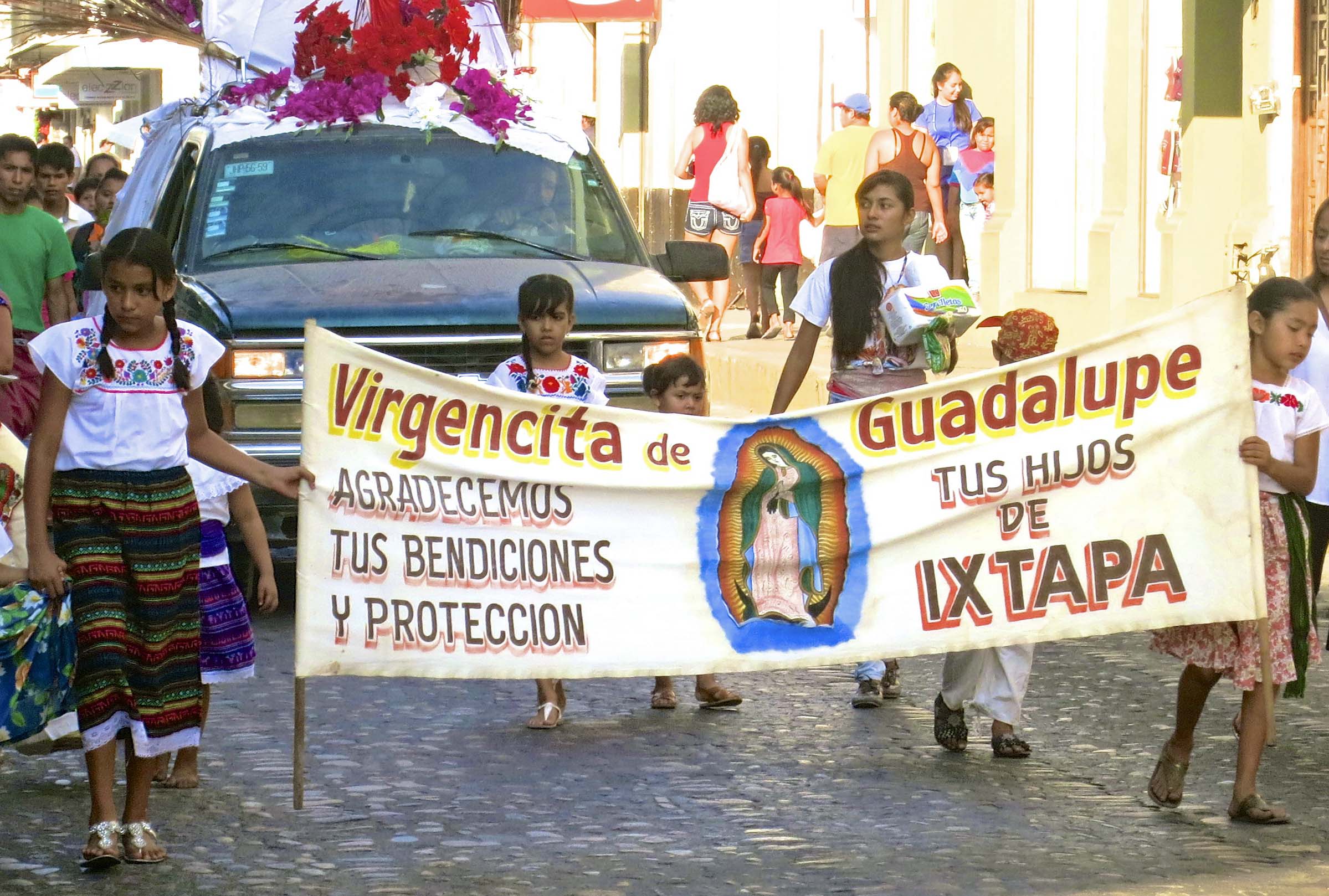
Parade to honor Our Lady of Guadalupe in Puerto Vallarta, Mexico. Photo by Curtis Mekemson.

A number of activities were planned around the feast day of Our Lady of Guadalupe including this parade. The painting in the middle depicts the image on Juan Diego’s cloak.

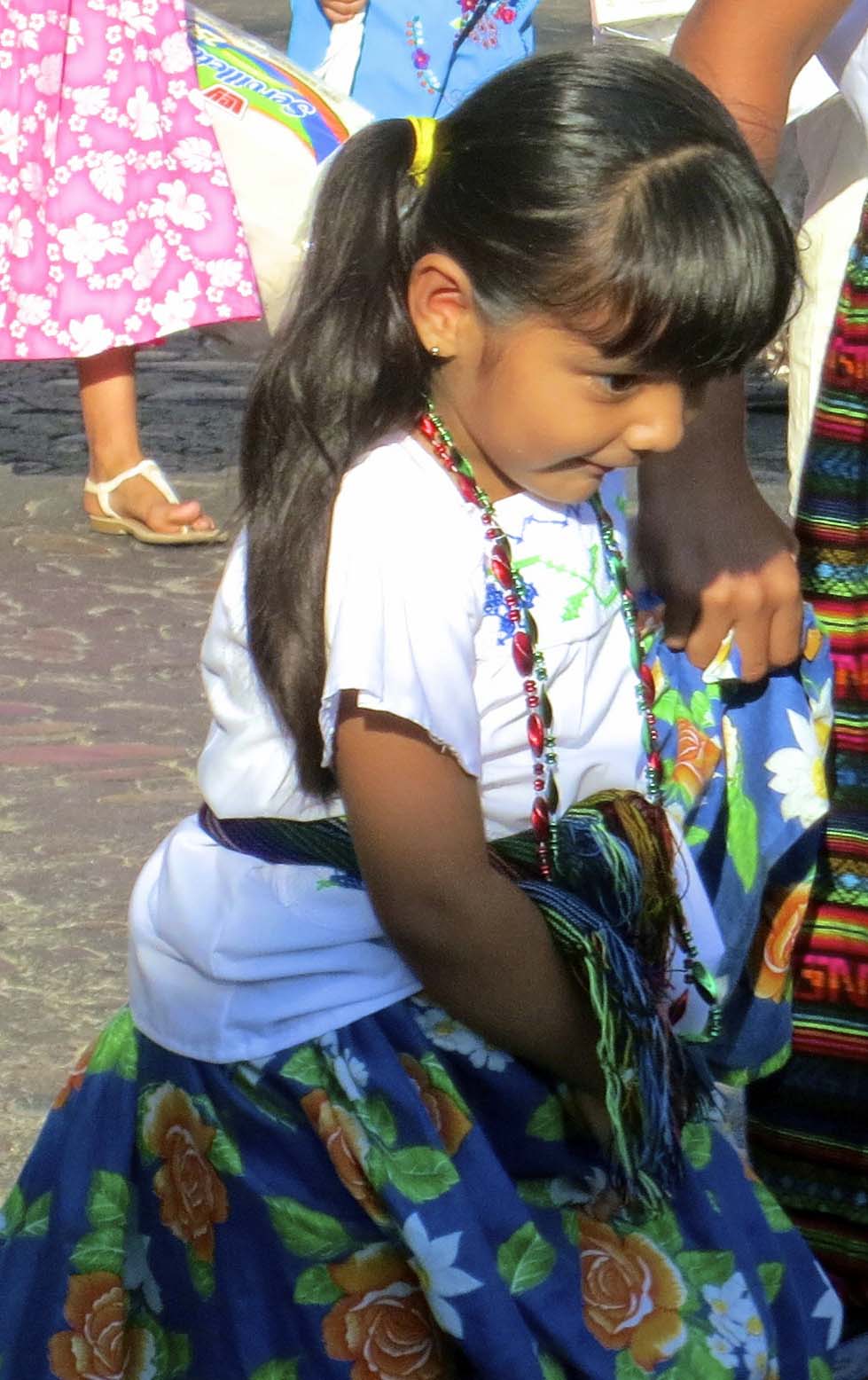
This young lady was part of the parade. She seemed to take her role quite seriously.

This shy young lady was part of the parade. She seemed to take her role quite seriously. But is that the beginning of a smile?

The parade turned the corner and made its way up to the church. (Photo by our daughter Natasha Cox.)

The parade turned the corner and made its way up to the church. (Photo by our daughter Natasha Cox.)

Bell ringer at Our Lady of Guadalupe Church in Puerto Vallarta Mexico. Photo by Curtis Mekemson.

The church bell-ringer did his job, calling the faithful to church.

Inside Church of Our Lady of Guadalupe in Puerto Vallarta. Photo by Curtis Mekemson.

The number of events made it difficult to get inside and photograph the church. The first time I stopped by, a hearse was parked outside. I thought, um no, not a good time. This photo was of a Quinceanera, I believe, a 15-year-old girl’s coming out celebration.

Following are several more photos of the church.

Peggy caught this photo. (Photo by Peggy Mekemson.)

Peggy shot this photo. (Photo by Peggy Mekemson.)

Looking up at the Church of Our Lady of Guadalupe in Puerto Vallarta, Mexico. Photo by Curtis Mekemson.

Looking up at the Church of Our Lady Of Guadalupe.

Puerto Vallarta mural depicting Our Lady of Guadalupe Church in Puerto Vallarta, Mexico.Photo by Curtis Mekemson

One of many depictions we found of the church in Puerto Vallarta murals.

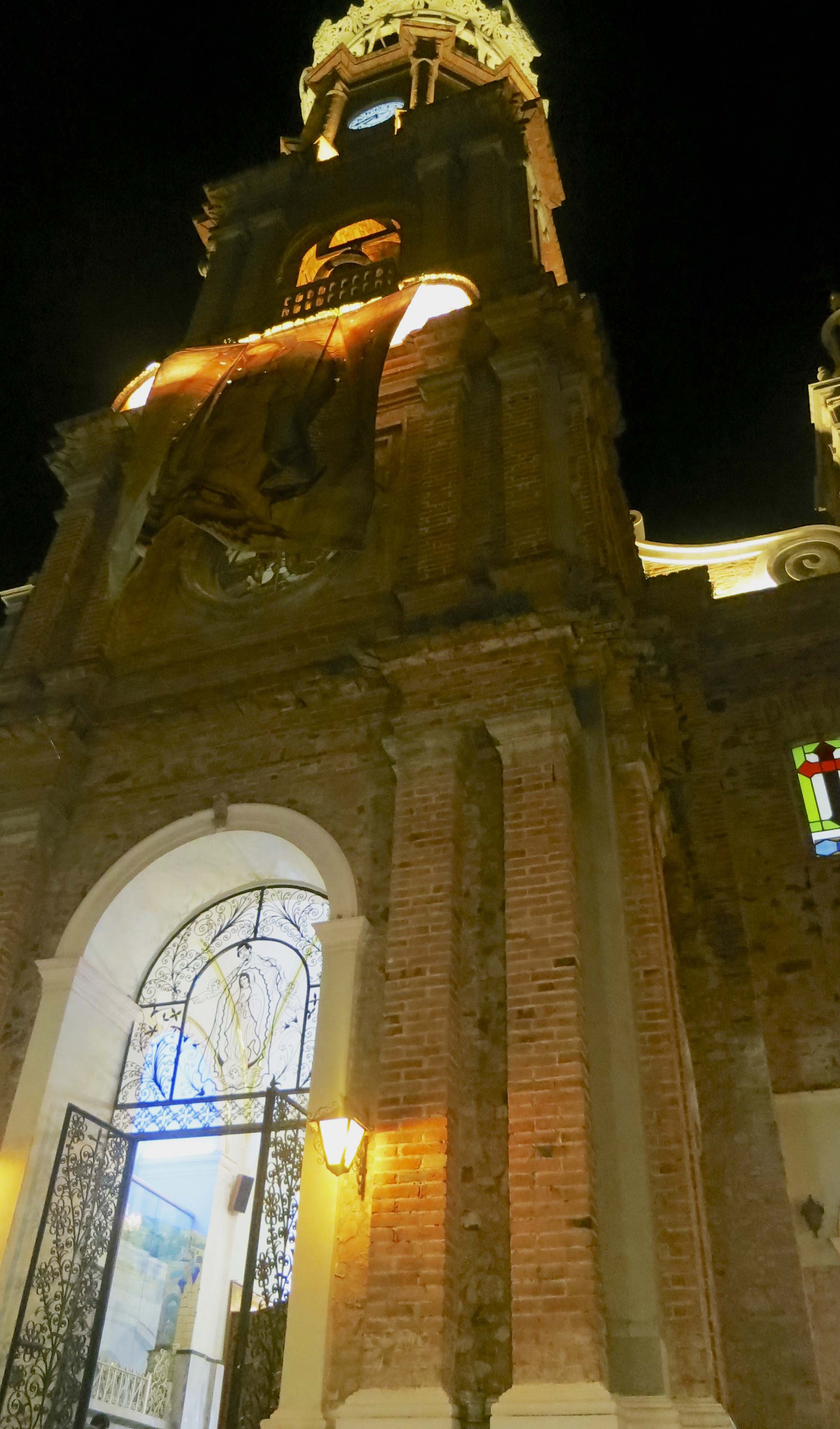
The Church of Our Lady of Guadalupe in Puerto Vallarta, Mexico at night. Photo by Curtis Mekemson.

The church at night.

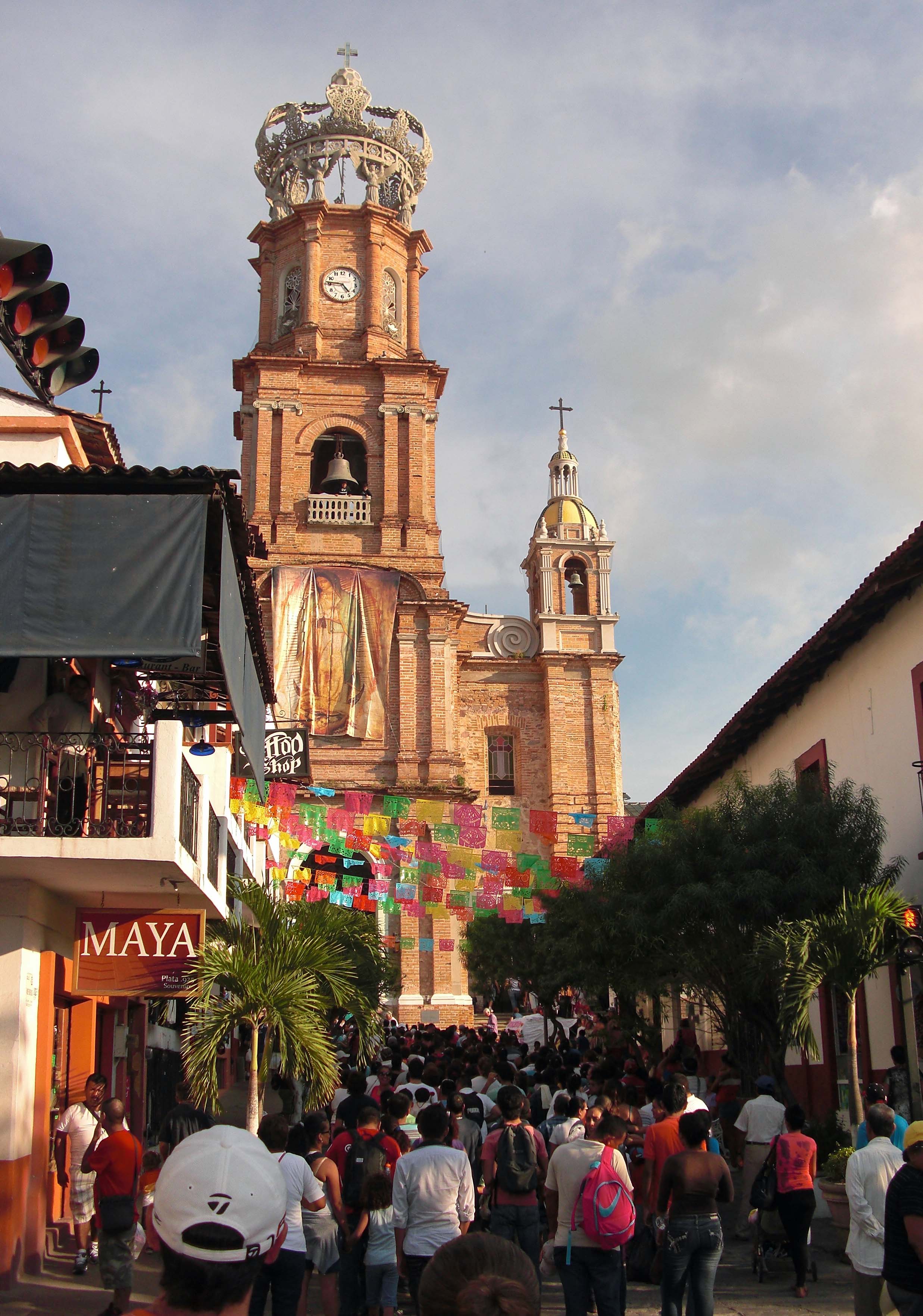
A view of the Church of Our Lady of Guadalupe through stree decorations in Puerto Vallarta. Photo by Curtis Mekemson.

Looking up at the church through street decorations.

View of the Church of Our Lady of Guadalupe in Puerto Vallarta, Mexico through the trees. Photo by Curtis Mekemson.

A final view of the church through the trees.

NEXT BLOG: The tropical sunsets of Banderas Bay and Puerto Vallarta.

Puerto Vallarta Walkabout…

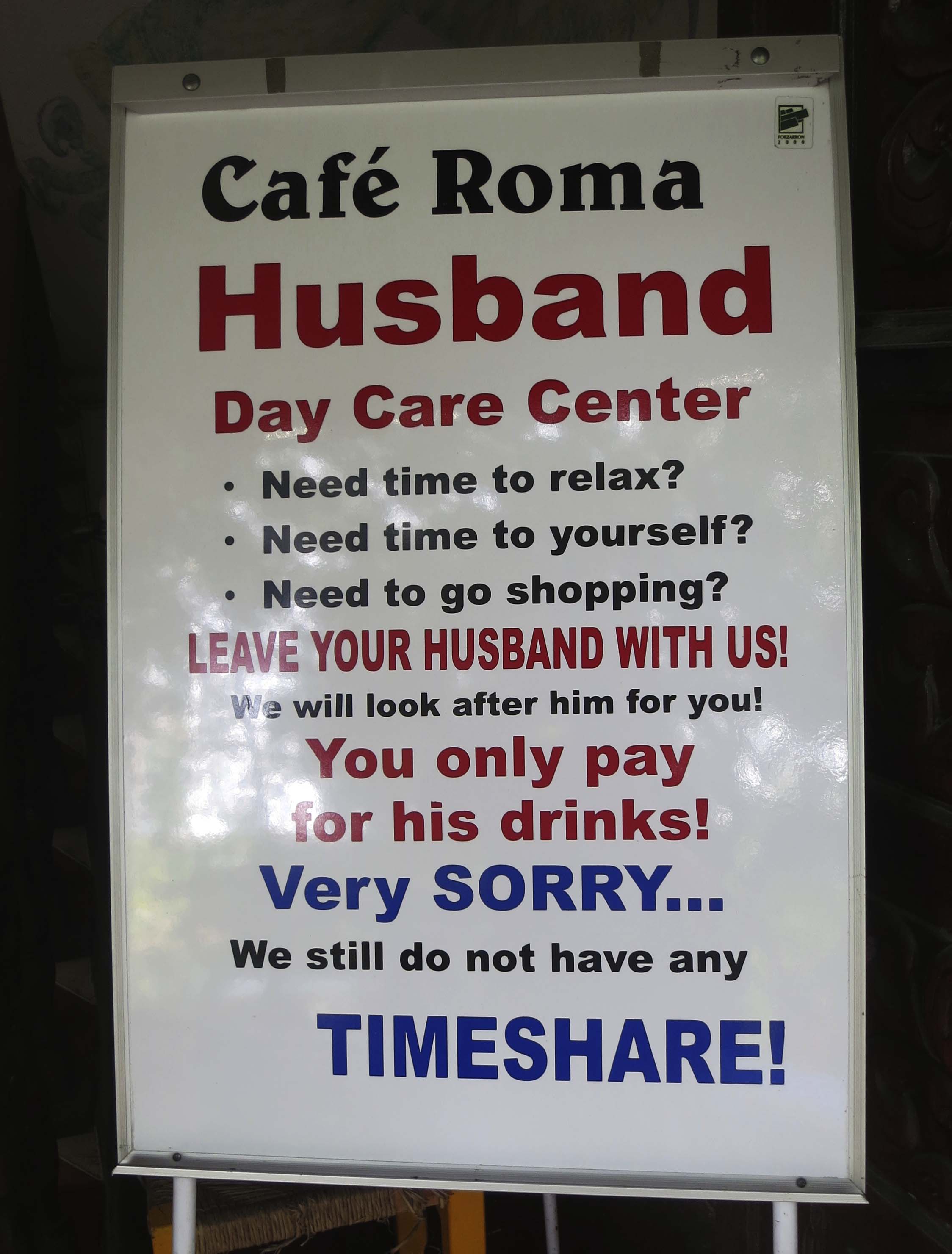
Husband day care center in Puerto Vallarta, Mexico. Photo by Curtis Mekemson.

You never know what you might find when wandering around a city. I was particularly impressed that this obvious tourist venue didn’t push timeshares. (And no, Peggy didn’t drop me off.)

Australia’s aborigines have it right. Going on a walkabout is good for the soul. (If this subject interests you, I highly recommend Bruce Chatwin’s Songlines.)

I am also one hundred percent convinced that a walkabout is the best way to see a city. Nothing– not cars, taxis, trains, busses or even bicycles, can match walking.  Everything else is too fast. “Wow,” you think, “that’s great…” and it’s gone.

But if you are walking you can stop and savor, you can admire, touch, smell, and even listen to a city. So Peggy and I walk… whether we are wandering the streets of Rome, New York City, or Puerto Vallarta. Following are some of the sights we saw along the way on our recent visit to PV.

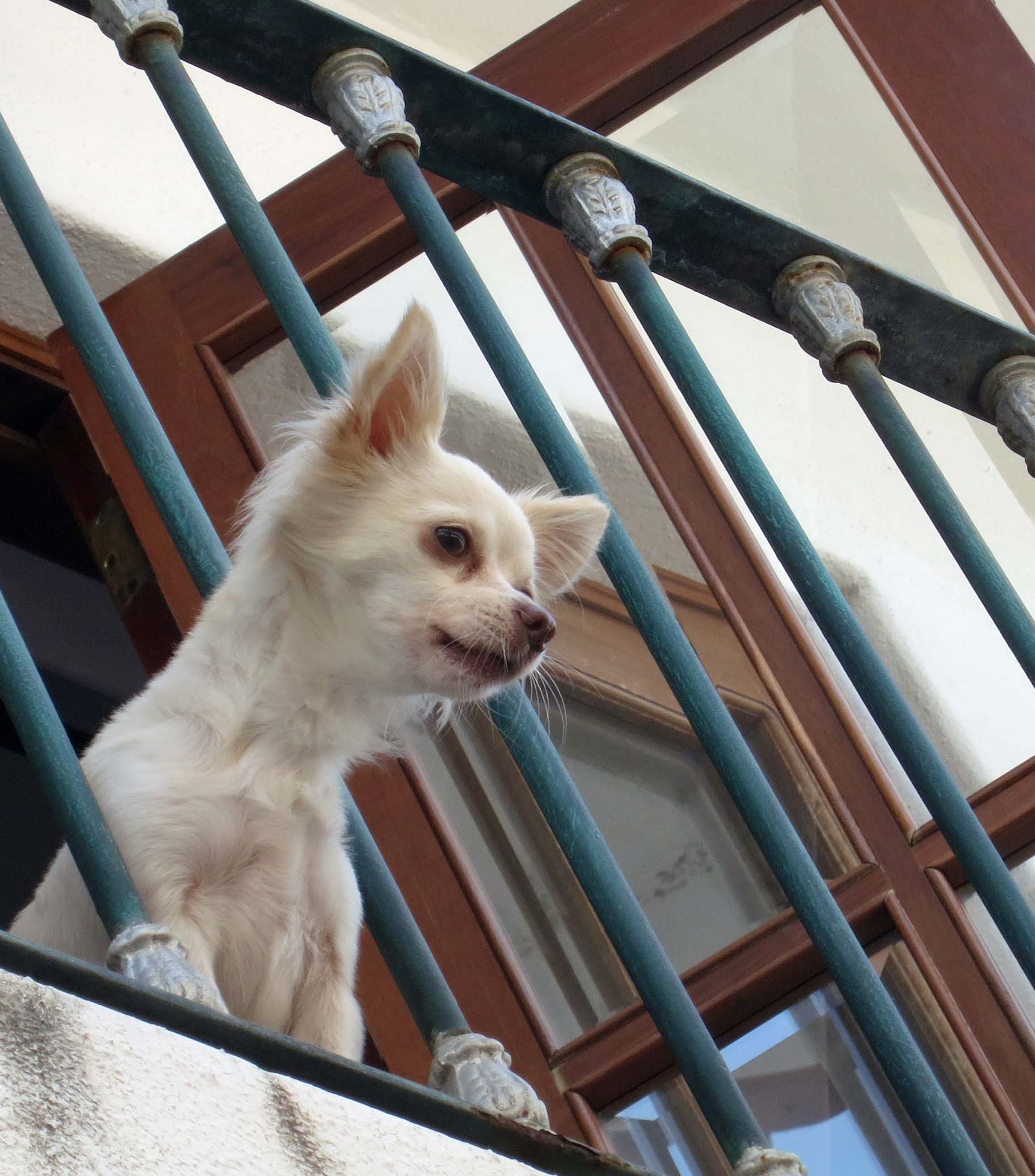
This resident checked us out. Apparently we didn't pass muster. he immediately started barking. I could still here him two blocks away.

This resident dog checked us out. Apparently we didn’t pass muster. He immediately started barking. I could still hear him two blocks away.

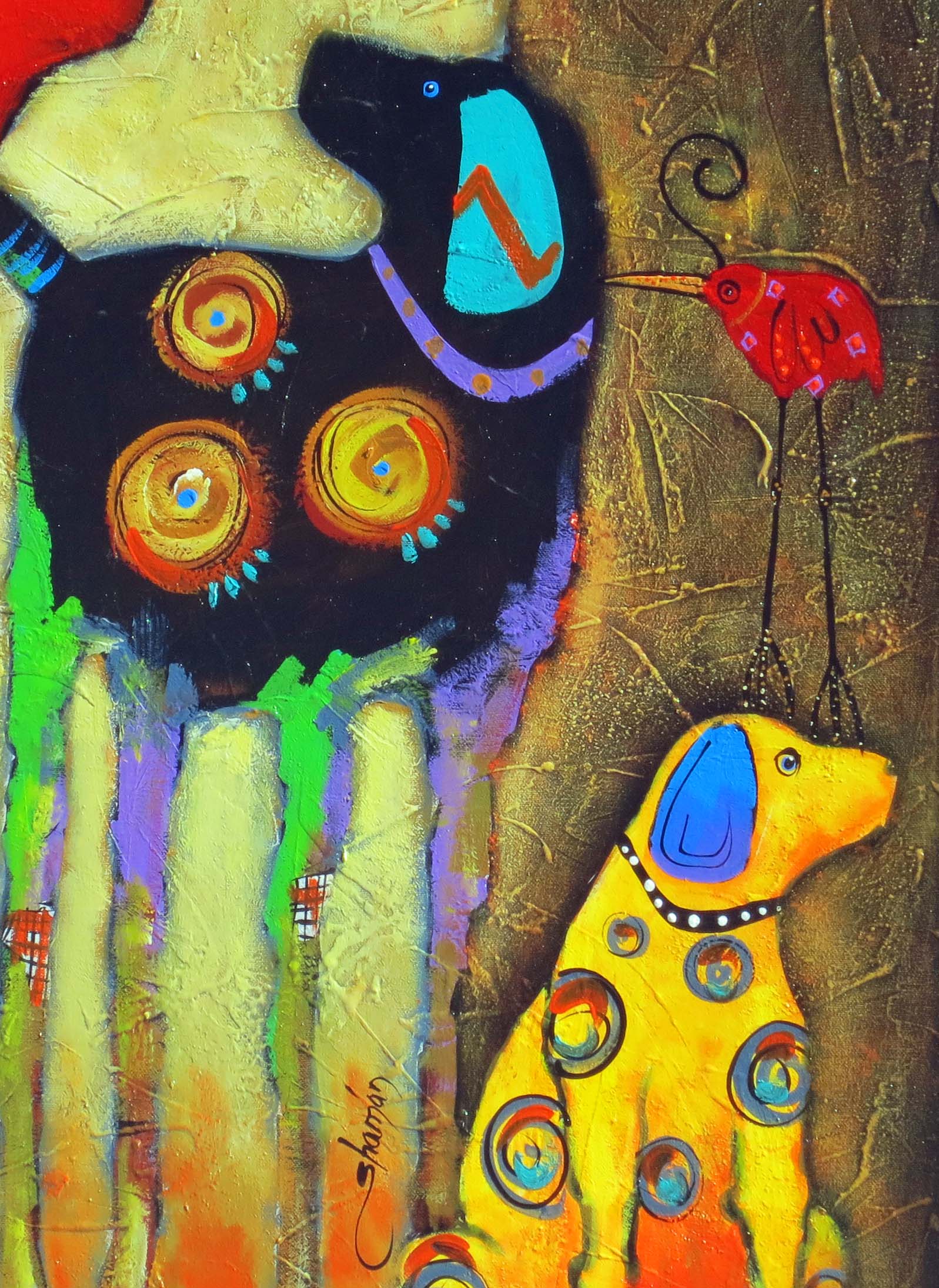
Art on the Malecon of Puerto Vallarta. Photo by Curtis Mekemson.

These dogs, created by an artist on the Malecon, were more colorful, and quieter. I also liked the red bird, but who knows what it was up to. Picking off fleas???

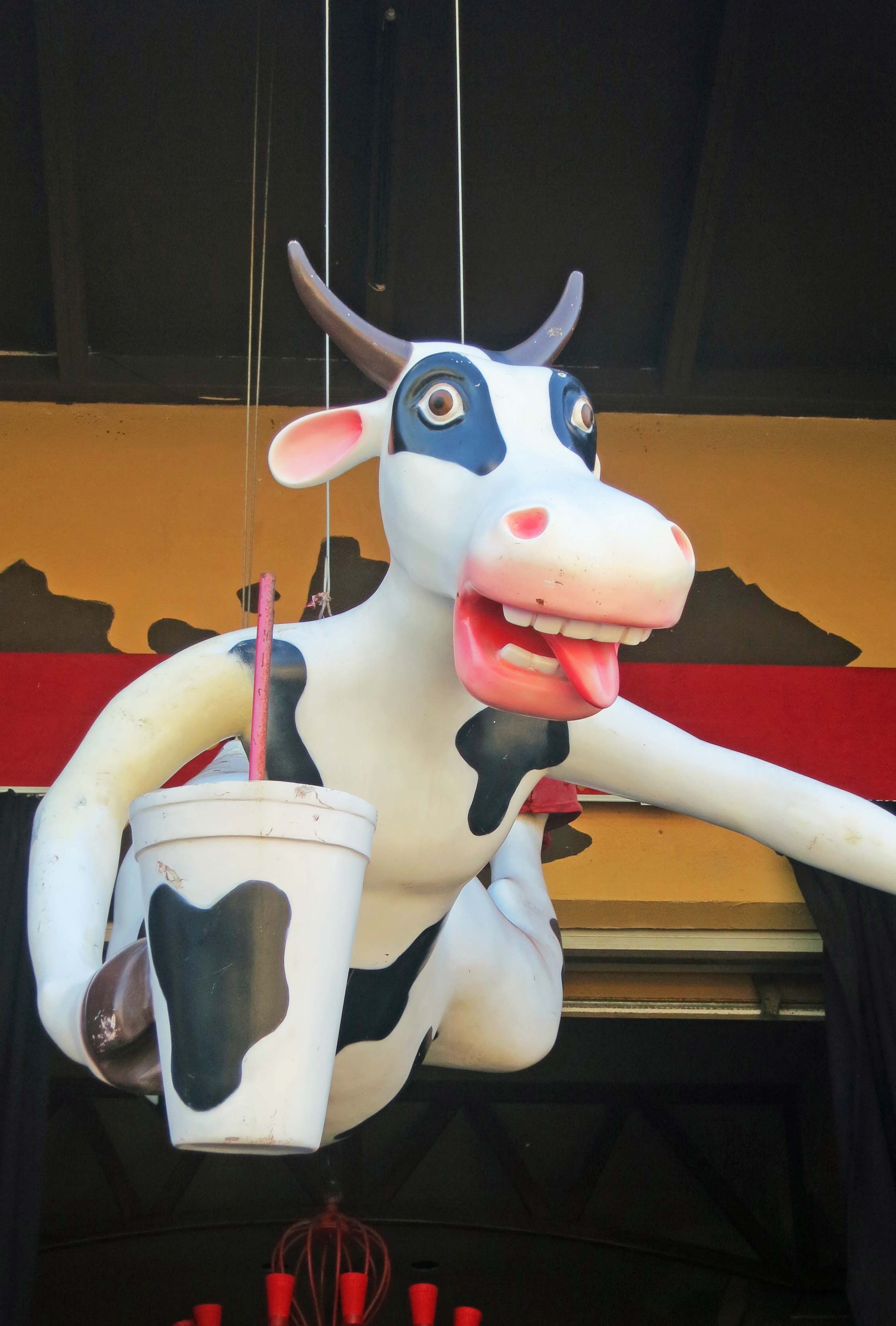
The flying cow of Puerto Vallarta. Photo by Curtis Mekemson.

Also under the category of strange was this flying cow.

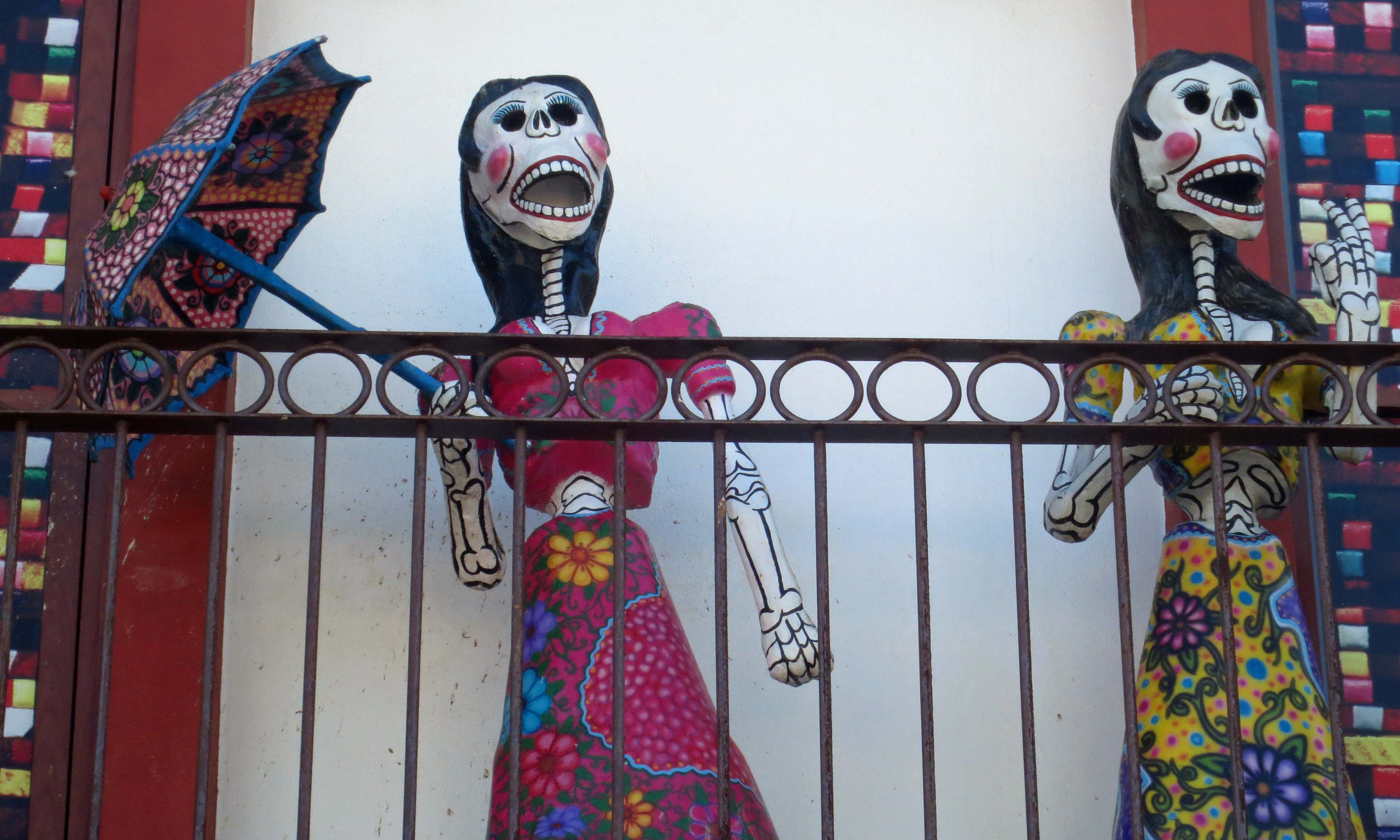
As were these two cuties.

As were these two cuties. Day of the Dead skeletons are common throughout Mexico. BTW, I swear I did not position my camera to catch the railing circles in such prime locations. I only discovered this fortuitous positioning when I went to post the photo.

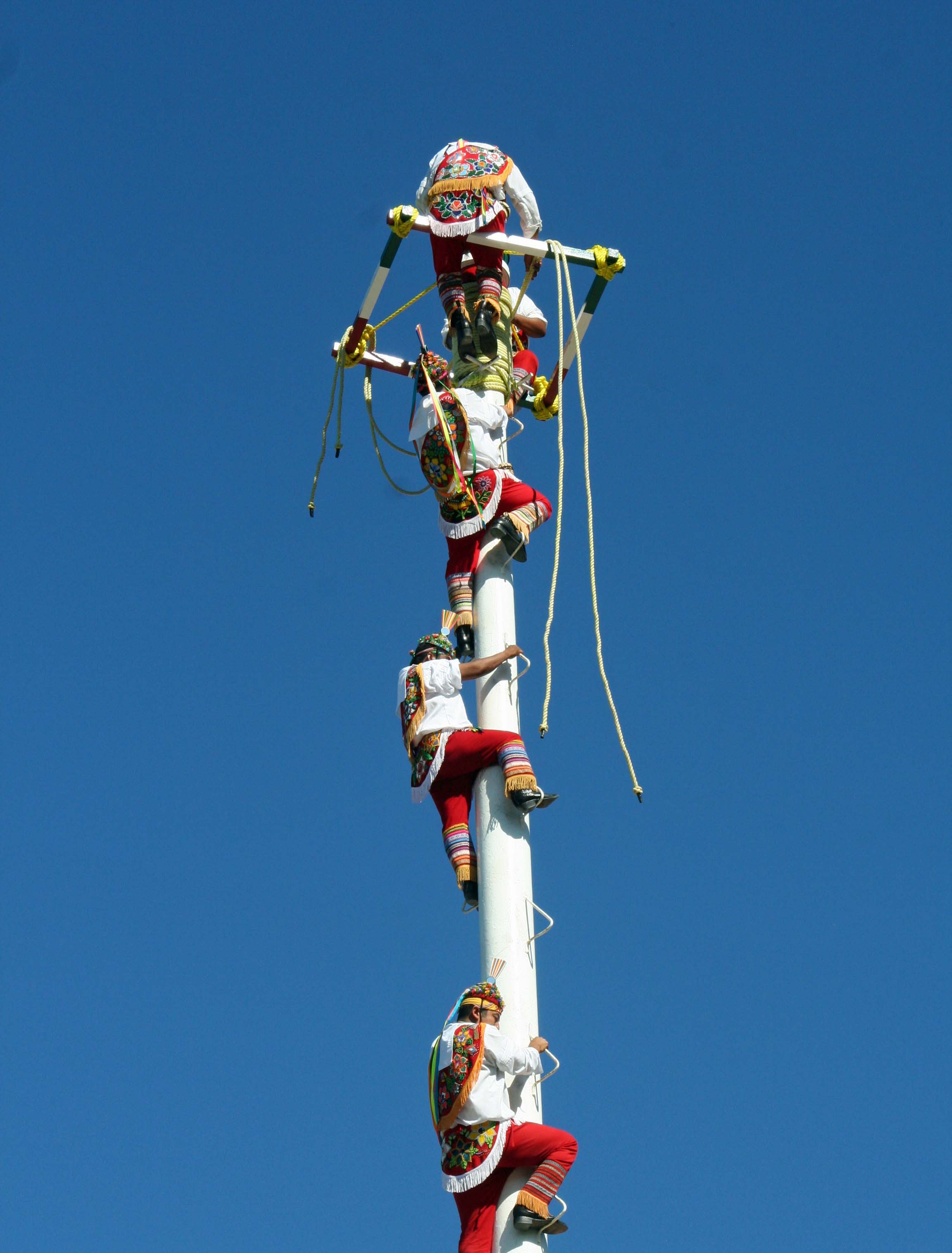
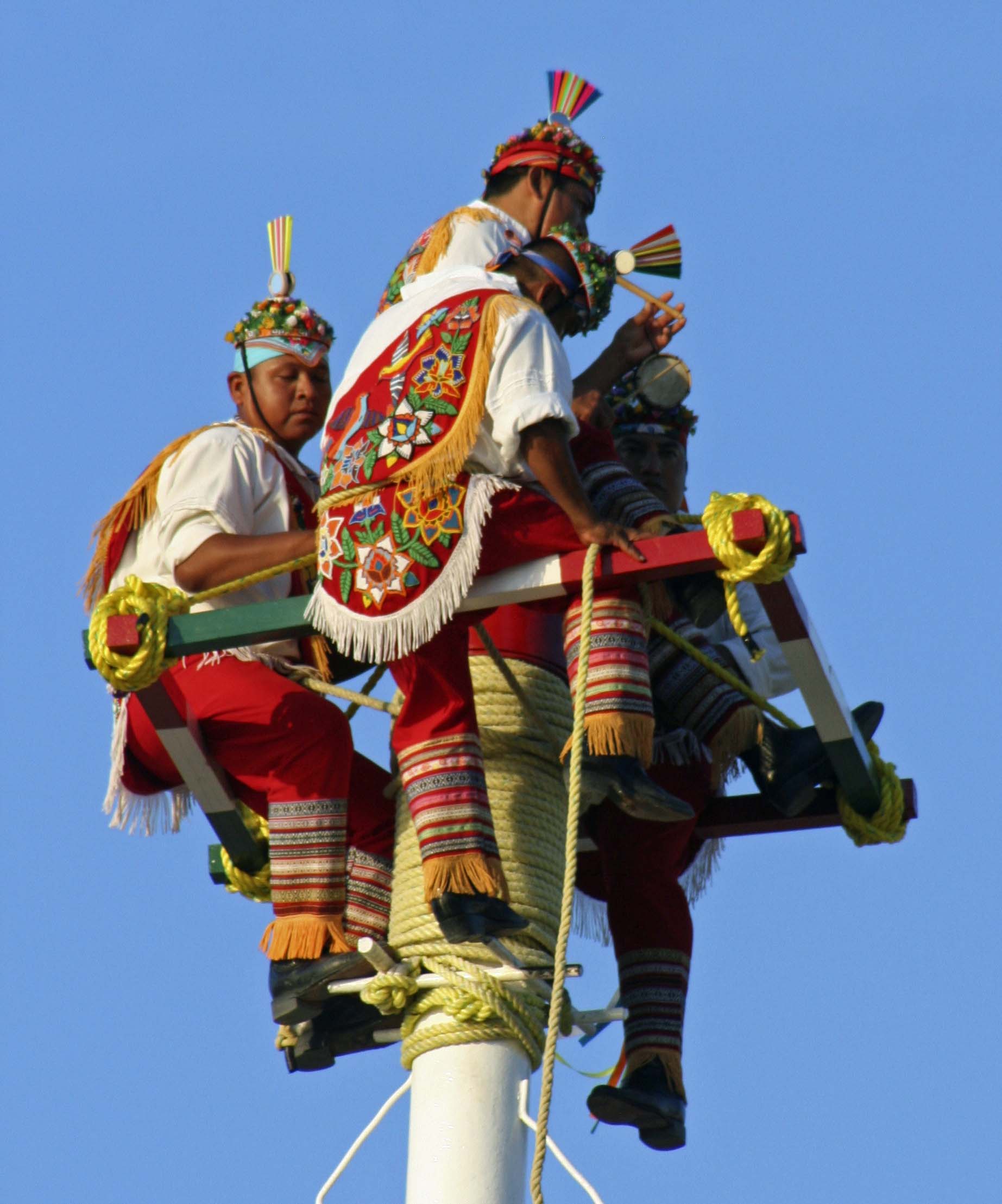
The bird men of Puerto Vallarta. Photo by Curtis Mekemson.

Then there are the Bird Men of Puerto Vallarta who climb up a hundred foot pole… (Photo by Peggy Mekemson.)

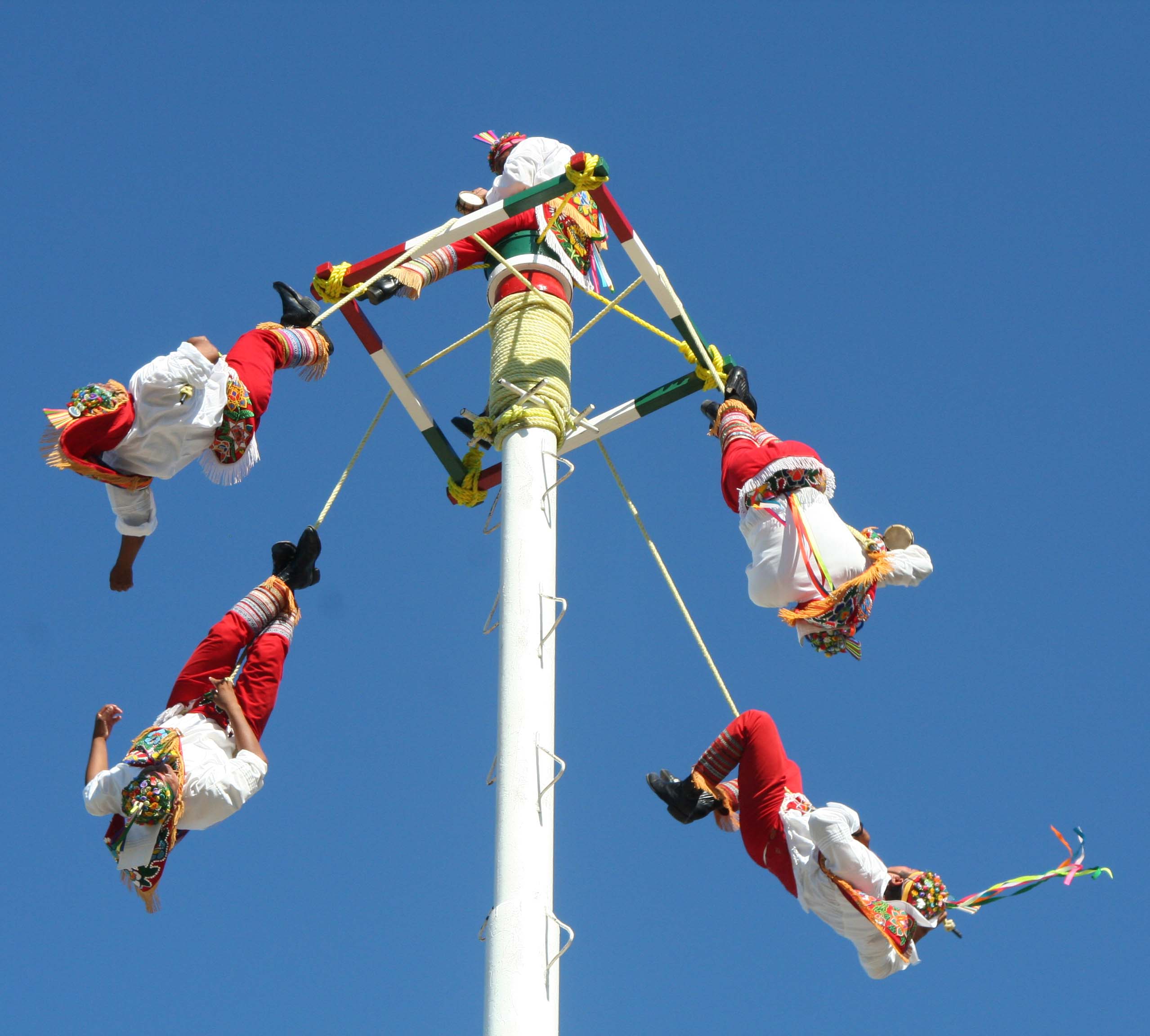
Bird men of Puerto Vallarta. Photo by Curtis Mekemson.

And tie themselves to ropes. The man in the center plays a flute and beats on a drum. (Photo by Peggy Mekemson.)

And then fall off backwards, twirling around the pole in ever larger circles until they reach the ground, or their rope runs out. (just kidding.) The people who perform this aerial feat every hour or so indigenous performers demonstrating an ancient cultural tradition of the Totonac tribe. (Photo by Peggy Mekemson.)

They then fall off backwards, twirling around the pole in ever larger circles until they reach the ground, or run out of rope. (Just kidding on the rope running out.) The people who perform this aerial feat are indigenous performers demonstrating an ancient cultural tradition of the Totonac tribe. (Photo by Peggy Mekemson.)

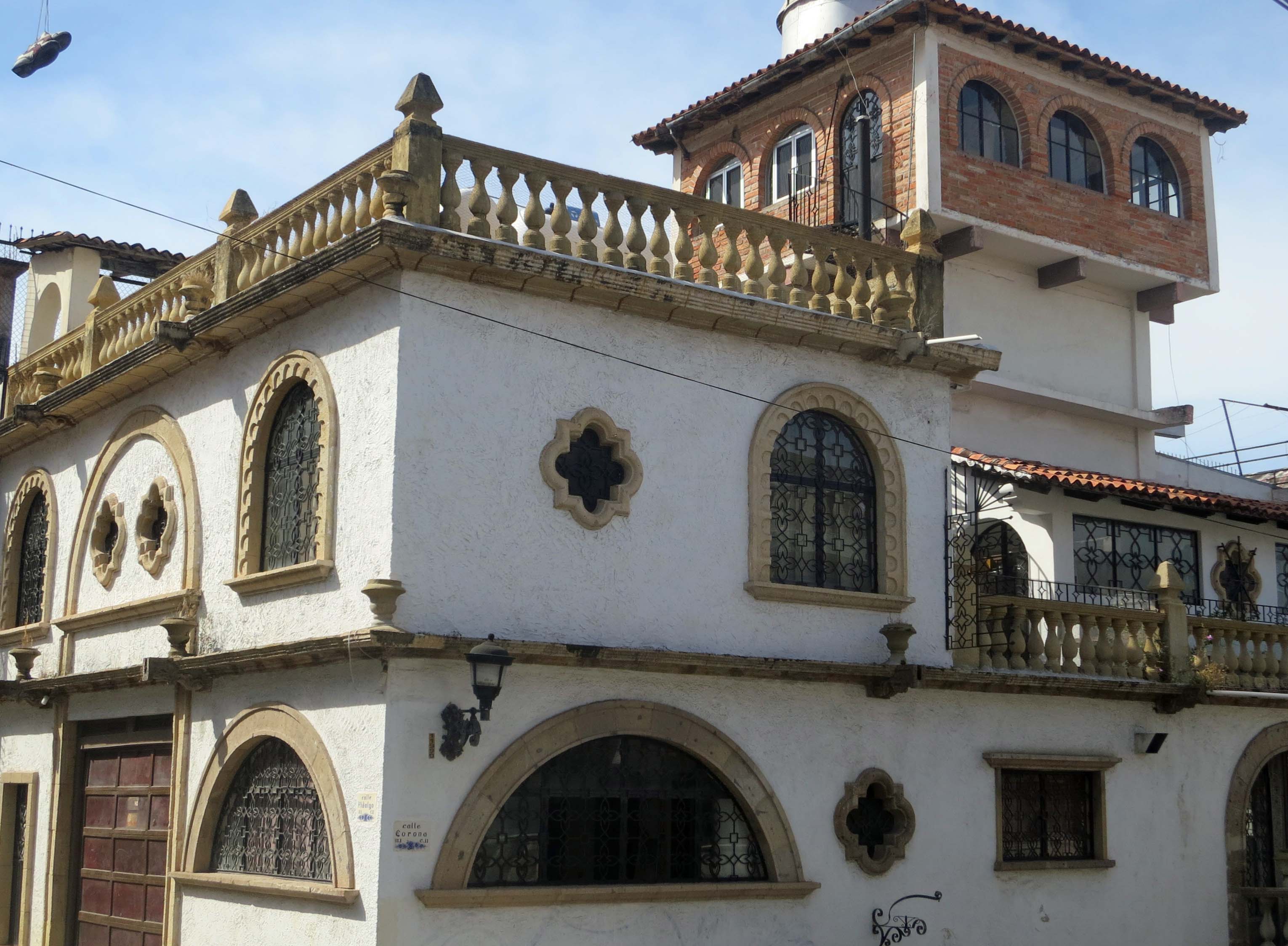
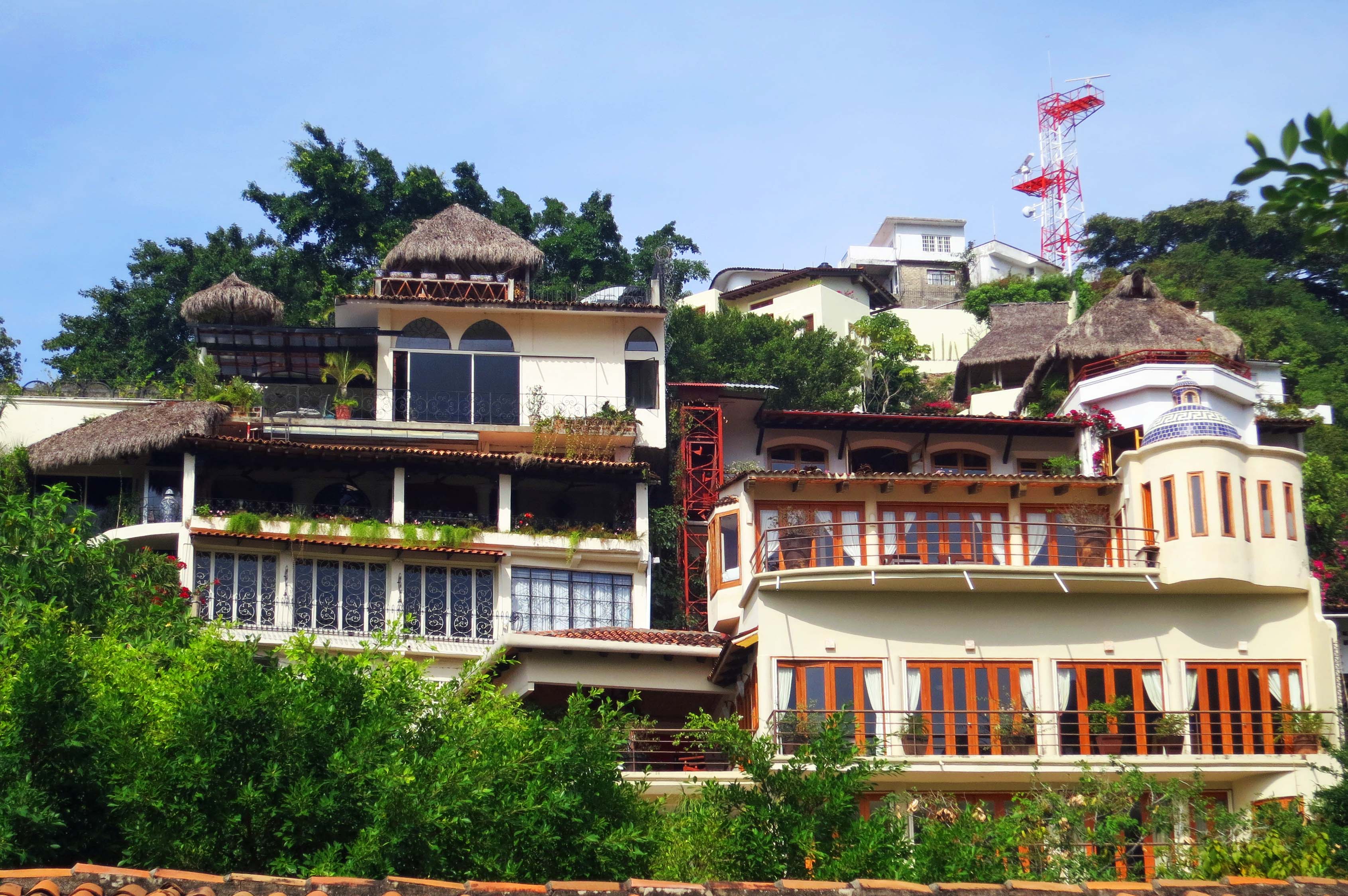
Puerto Vallarta home. Photo by Curtis Mekemson.

One thing we always check out is architecture. Peggy and I both like the adobe and tile look of Mexico and the Southwest of the US. It seems that Puerto Vallartans like to add something extra on top of their homes, like the small room. Another thing: note the shoes hanging off the power line in the upper left hand corner, undoubtably thrown there by  a teenager. Is this behavior worldwide?

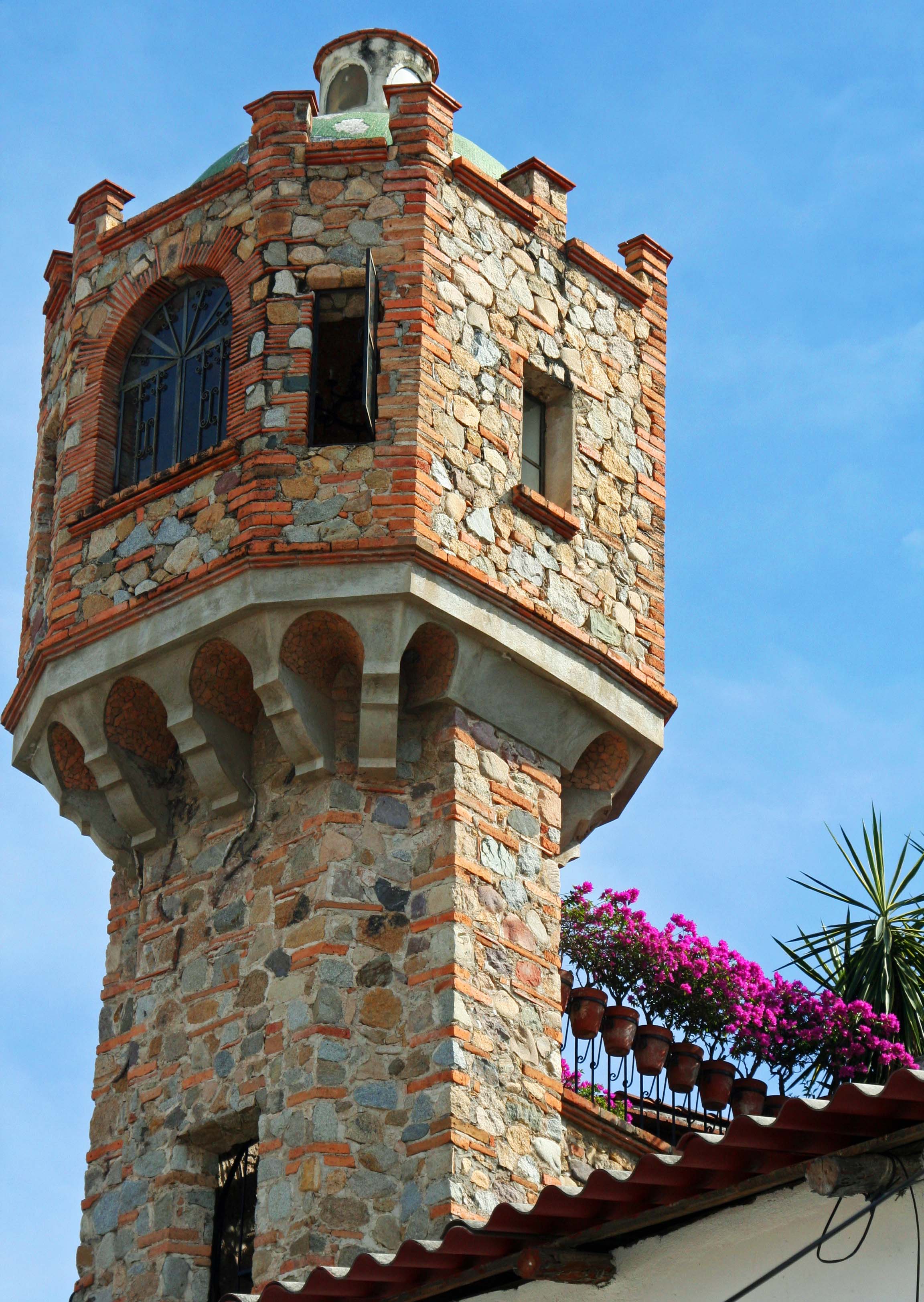
Another 'topper' we found. (Photo by Peggy Mekemson)

Another ‘topper’ we found. (Photo by Peggy Mekemson)

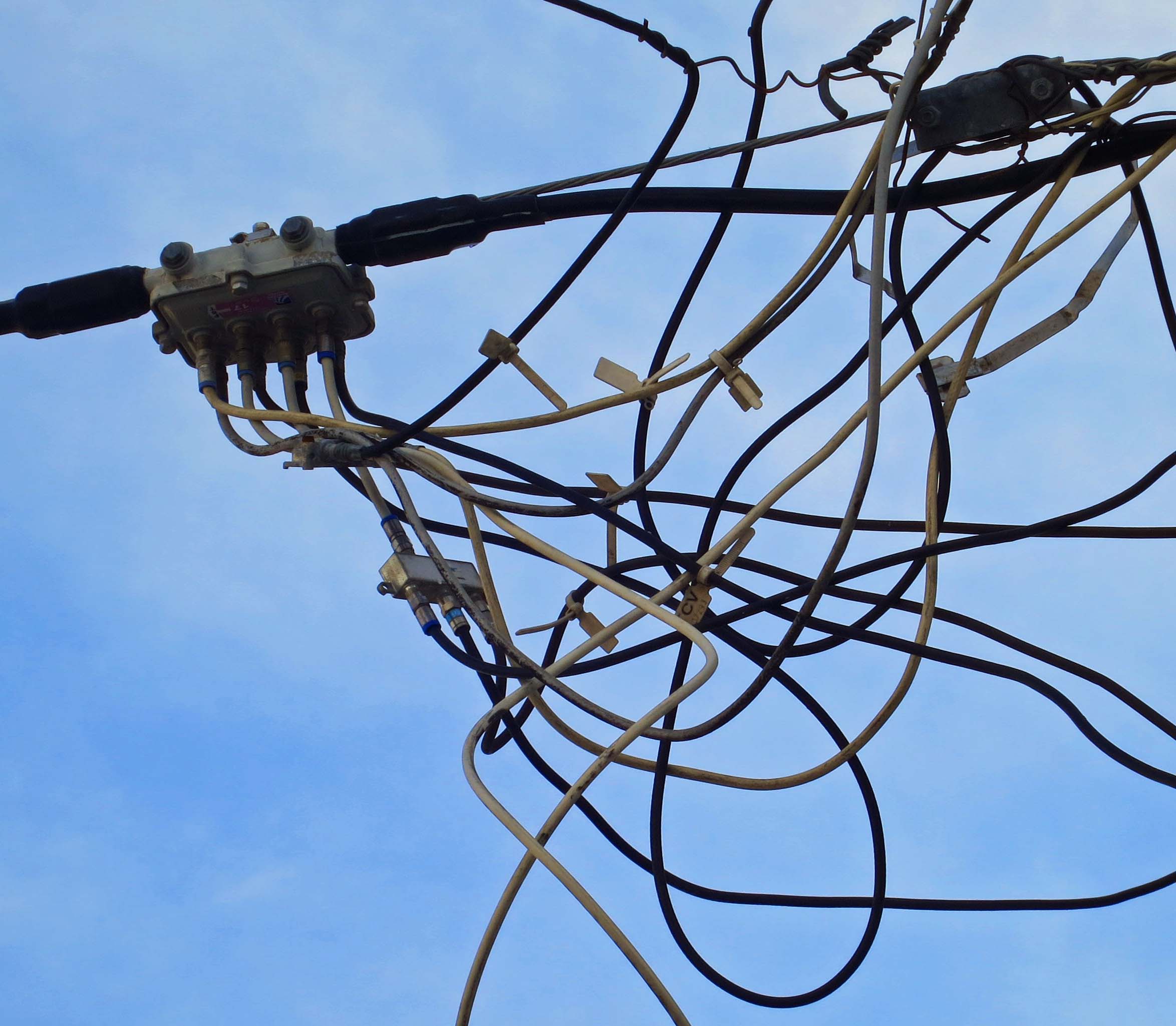
Speaking of power lines, it is almost impossible to take a photo in Puerto Vallarta without them. They run willy-nilly everywhere.

Speaking of power lines, it is almost impossible to take a photo in Puerto Vallarta without them. They run willy-nilly everywhere.

Burton and Taylor homes in Puerto Vallarta. Photo by Curtis Mekemson.

If I remember my geography right, these two houses were where Richard Burton and Elizabeth Taylor hung out during the filming of the Night of the Iguana.

Tourist shop in Puerto Vallarta. Photo by Curtis Mekemson.

While there are expensive, high-end shops in Puerto Vallarta, the majority are open-air tourist meccas like this one. It seems like there are hundreds of them. The young woman on her cellphone would normally be outside soliciting people to come in and look around.

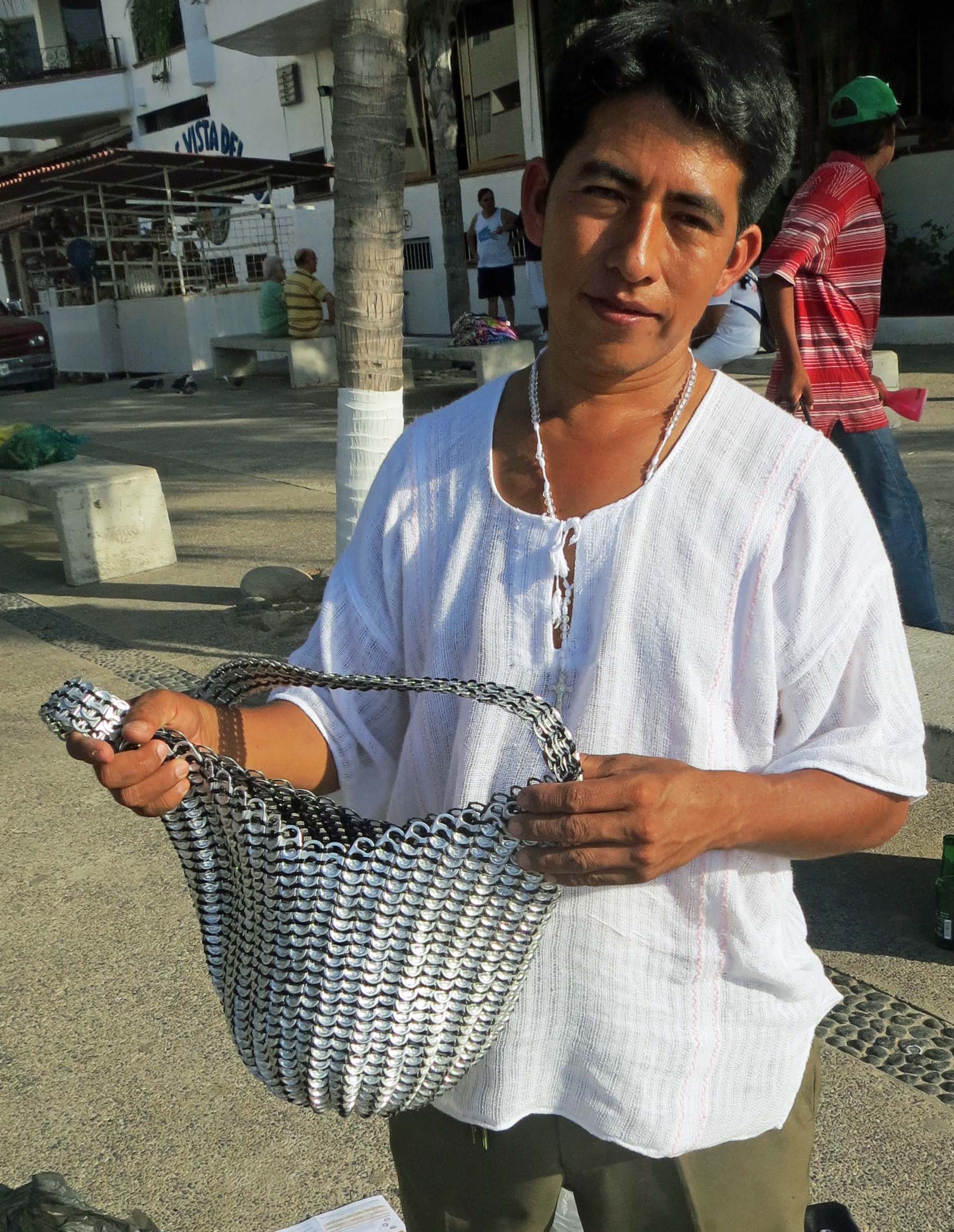
Puerto Vallarta craftsperson. Photo by Curtis Mekemson.

Crafts people and artists are common along the Malecon. This young man featured purses and jewelry made from beer and soda can pop tops.

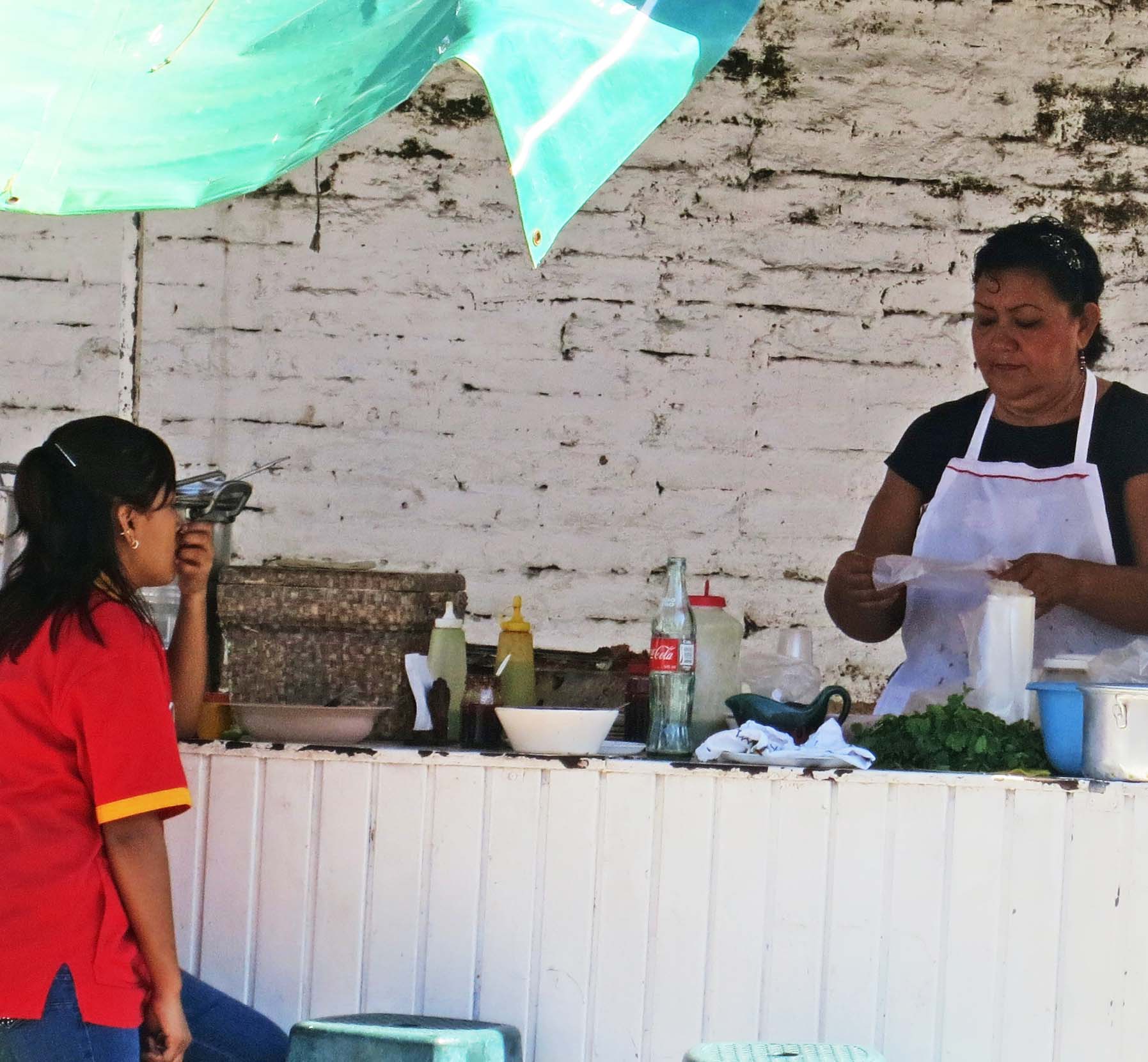
Street vendor selling food in Puerto Vallarta. Photo by Curtis Mekemson.

Street vendors selling food are also common.

I already took you on a tour of Puerto Vallarta's fantastic sculptures. Murals are also common in the city. (Photo by Peggy Mekemson.)

I already took you on a tour of Puerto Vallarta’s fantastic sculptures. Murals are also common in the city. (Photo by Peggy Mekemson.)

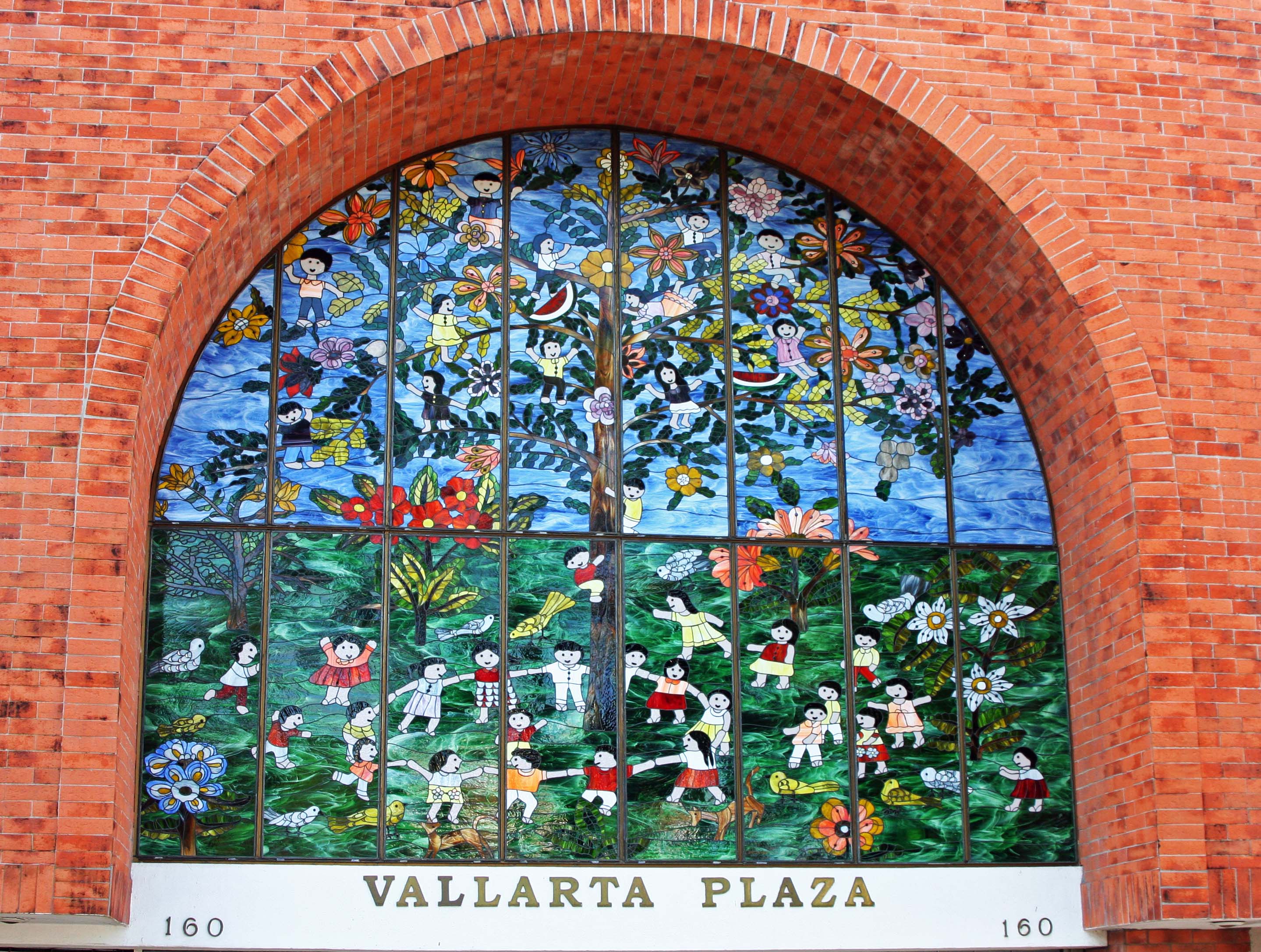
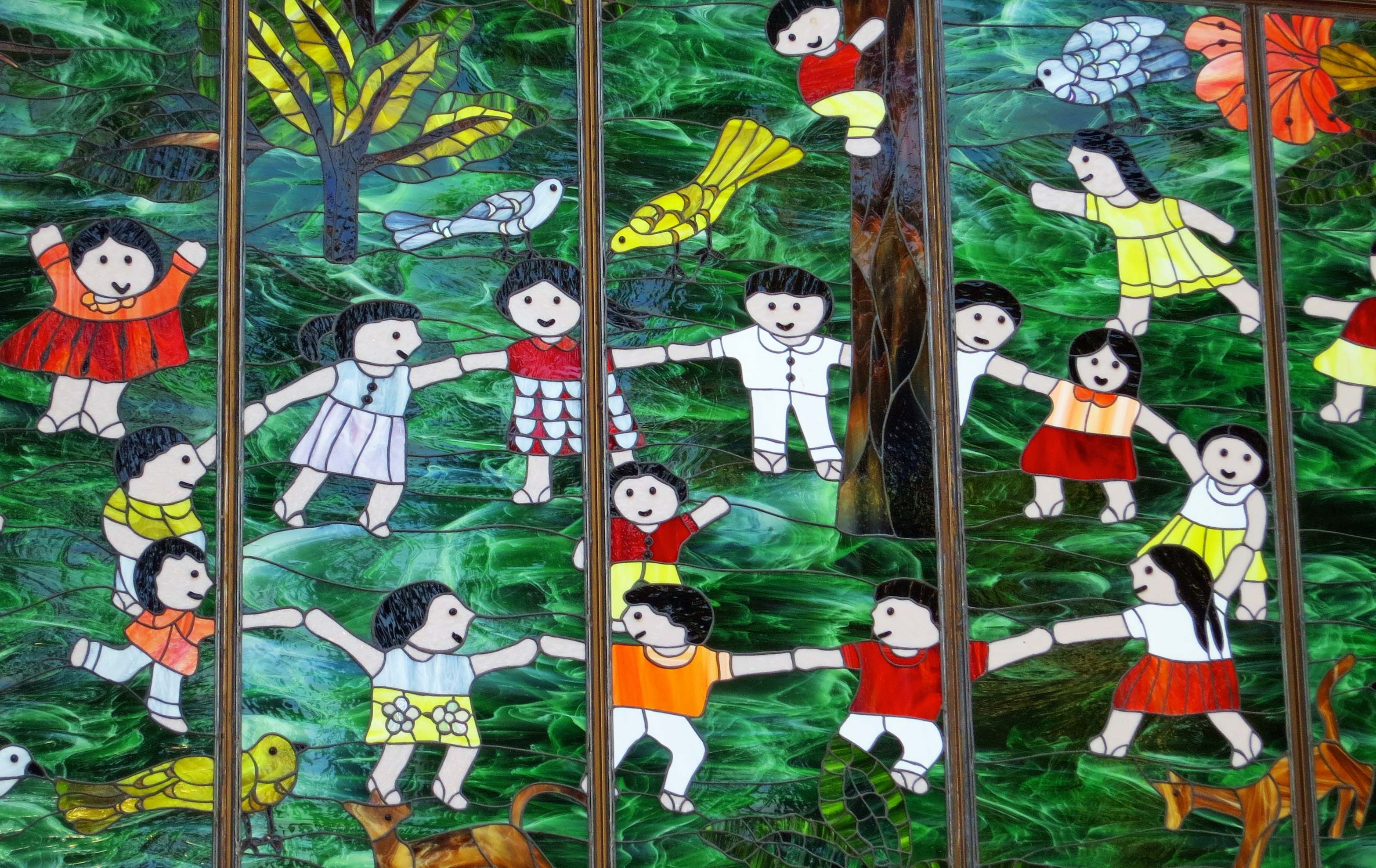
Puerto Vallarta mural. Photo by Curtis Mekemson.

A close up showing children in a ring dance. Ring around Rosita?

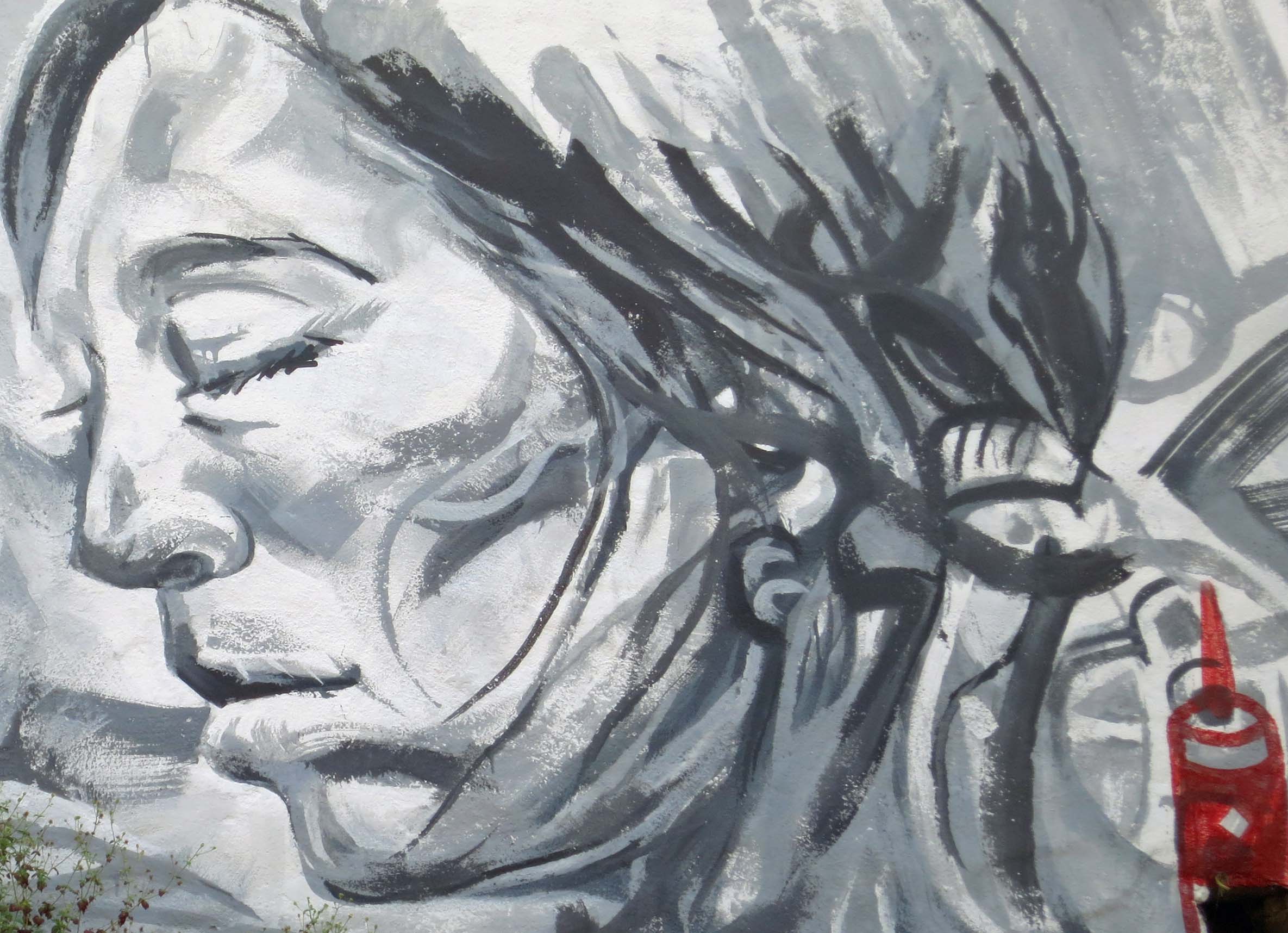
Puerto Vallarta mural featuring indigenous person. Photo by Curtis Mekemson.

While most Puerto Vallarta murals feature ceramics, I found this painting of an indigenous person quite impressive.

The artist's Cafe also featured an impressive mural. (Photo by Peggy Mekemson.)

The Artist’s Cafe also featured an impressive mural. (Photo by Peggy Mekemson.)

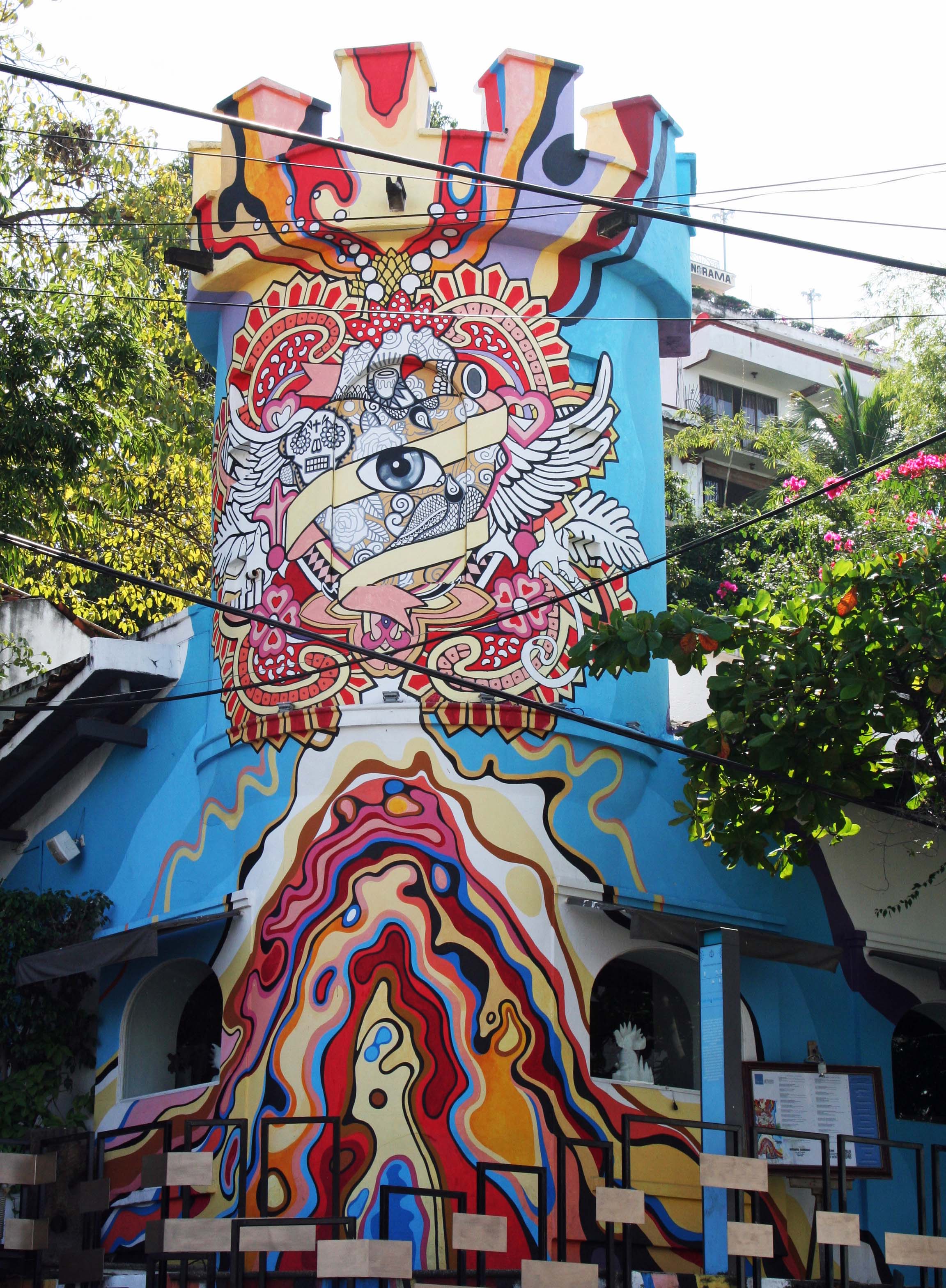
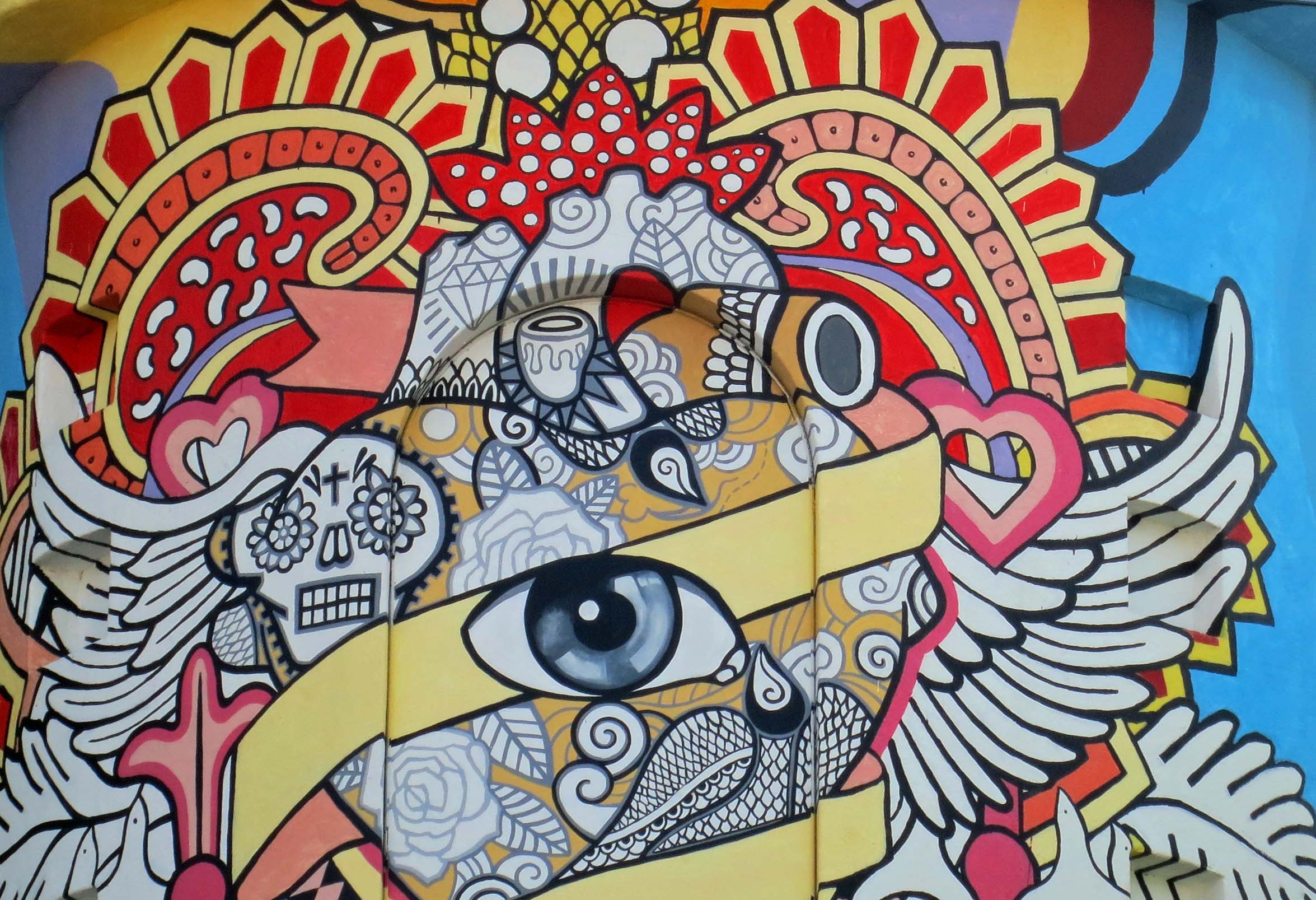
Artist's Cafe mural in Puerto Vallarta. Photo by Curtis Mekemson.

A close up of the mural on Artist’s Cafe.

Puerto Vallarta mural featuring iguana. Photo by Curtis Mekemson.

One mural incorporated a pair of iguanas including this handsome fellow.

My favorite mural, and in fact my favorite art piece was a 196 by 9 feet mural designed by

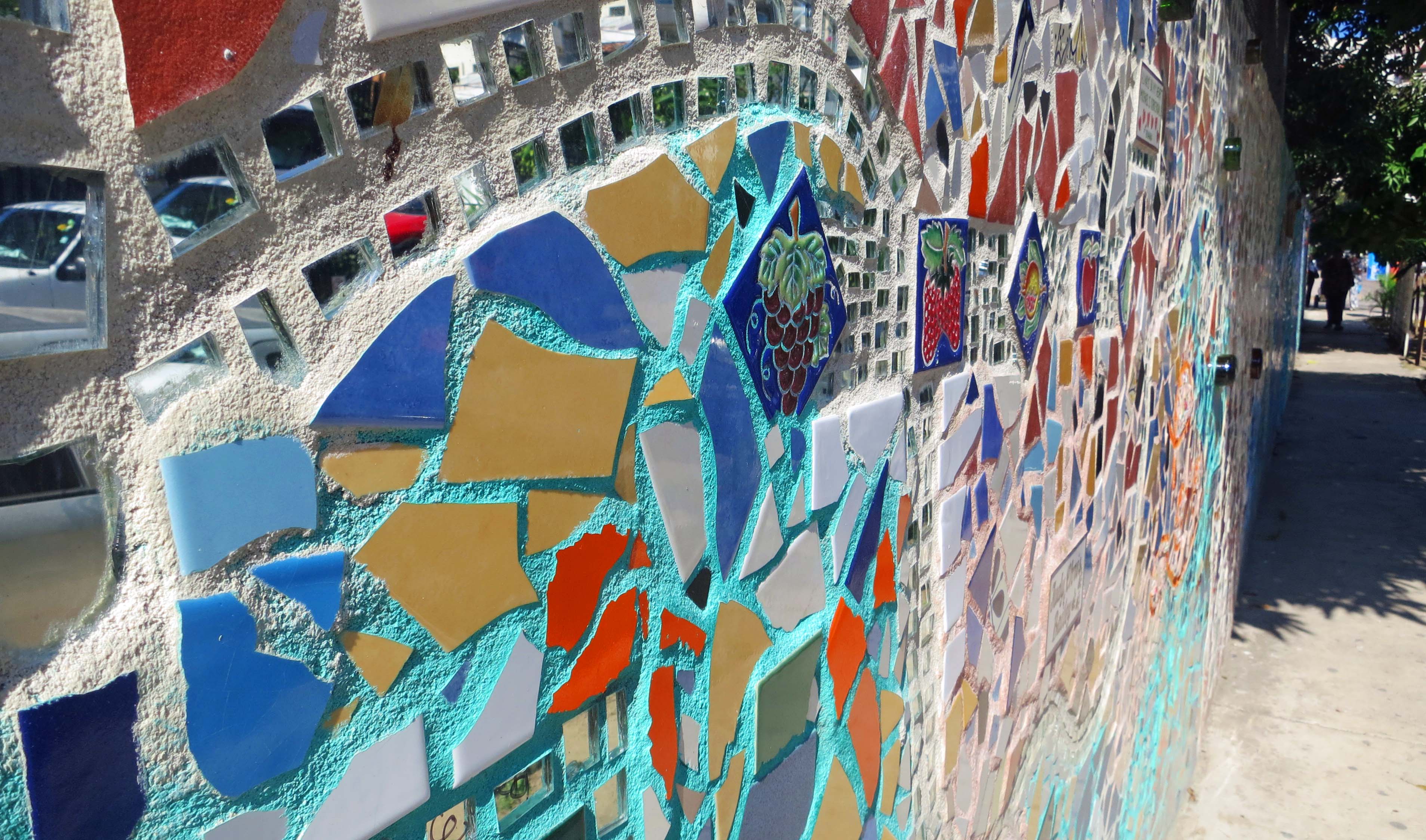
My favorite mural, and in fact my favorite art piece in Puerto Vallarta, is a 196 by 9 feet mural designed by Natasha Moraga. I understand it is under threat of removal by the government. Why, I don’t know, but it would be tragic.

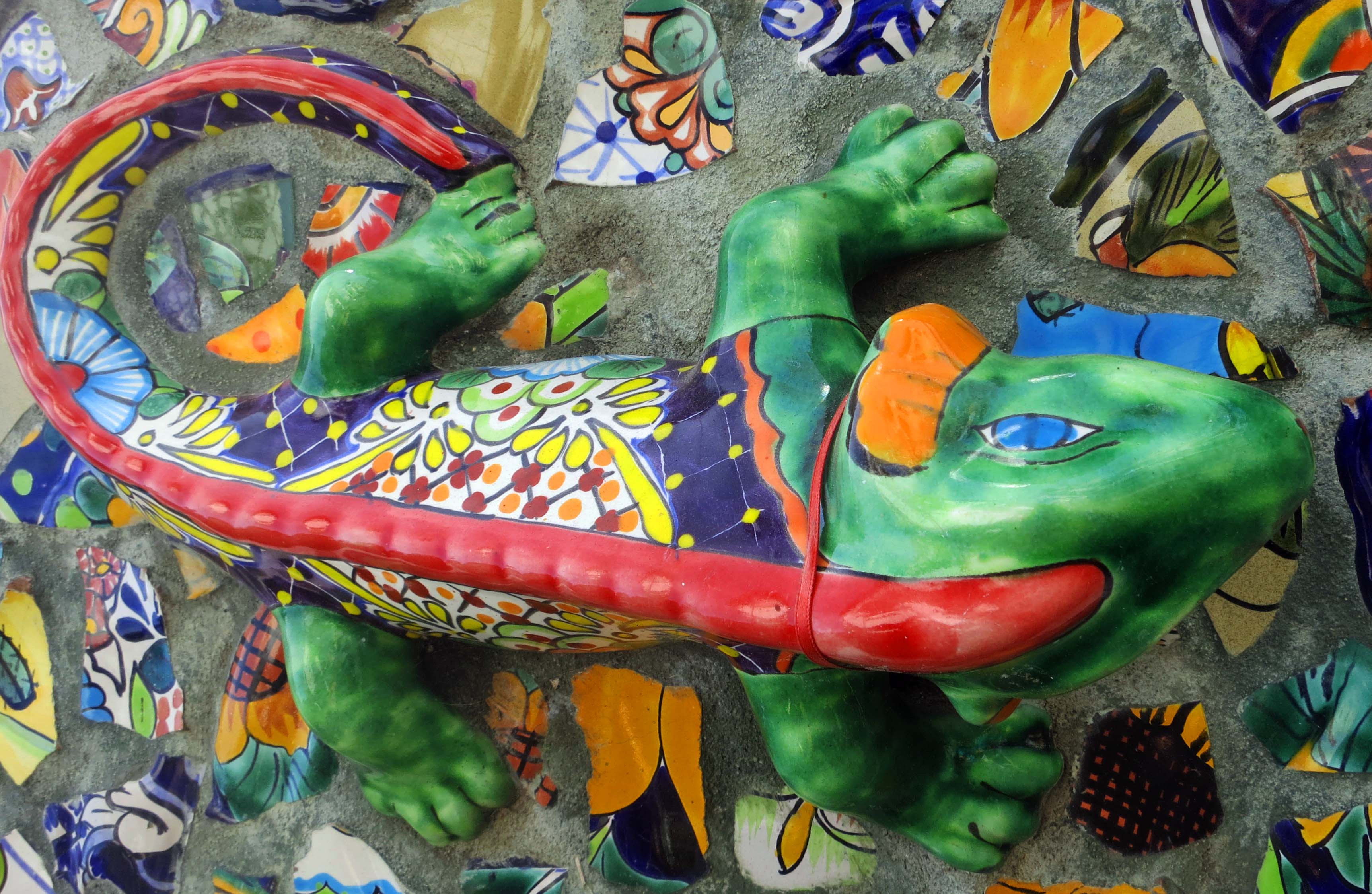
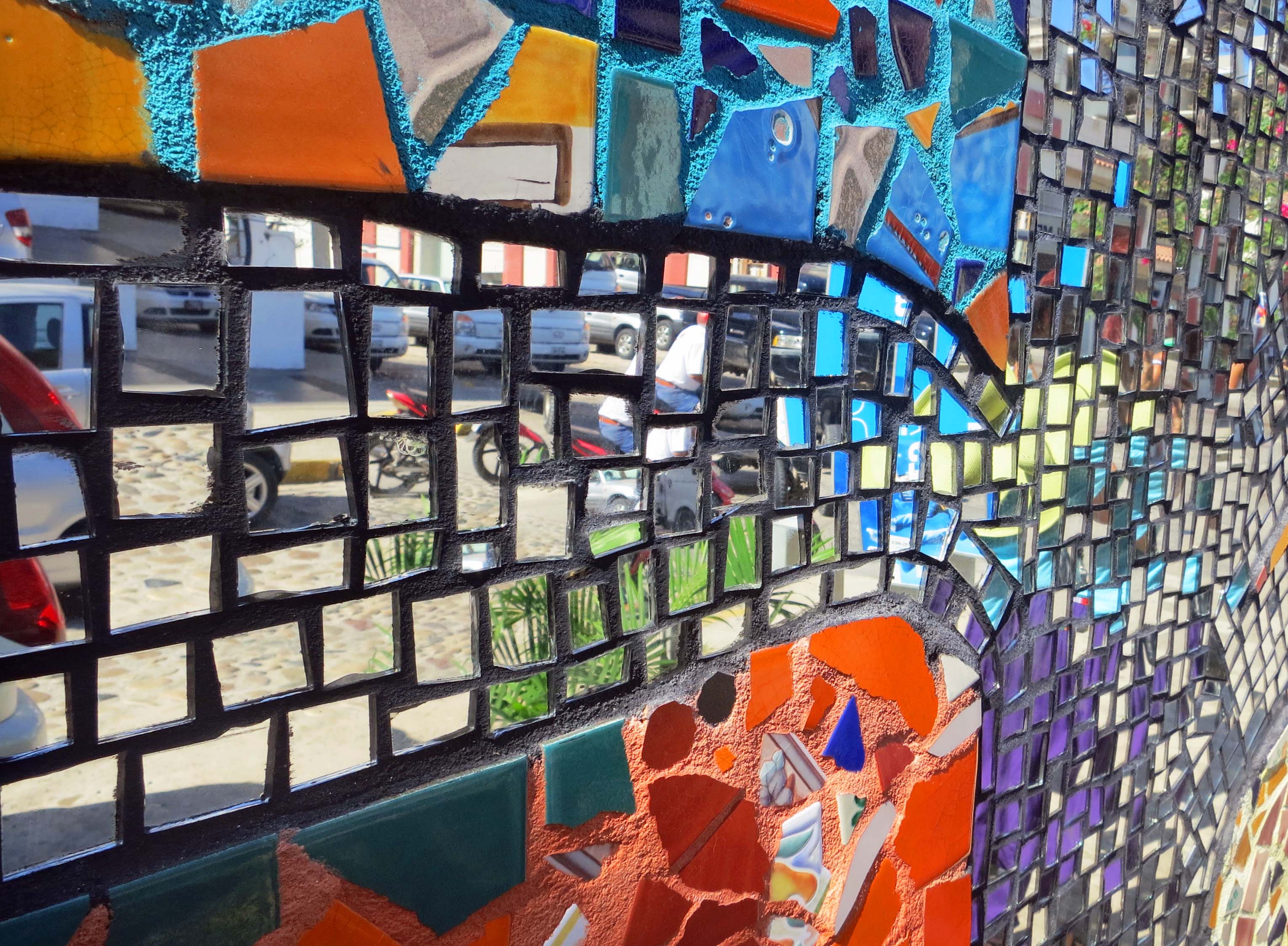
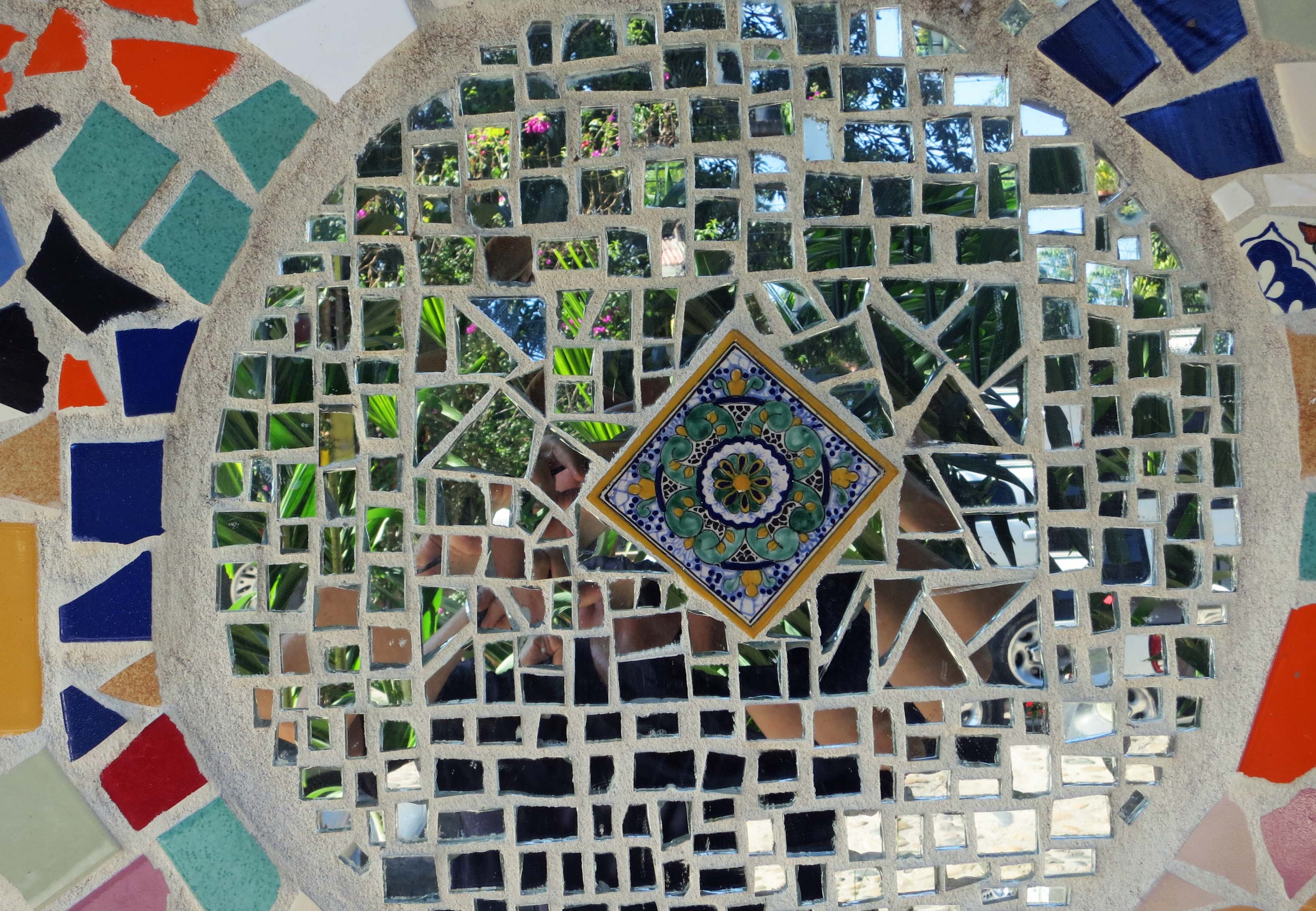
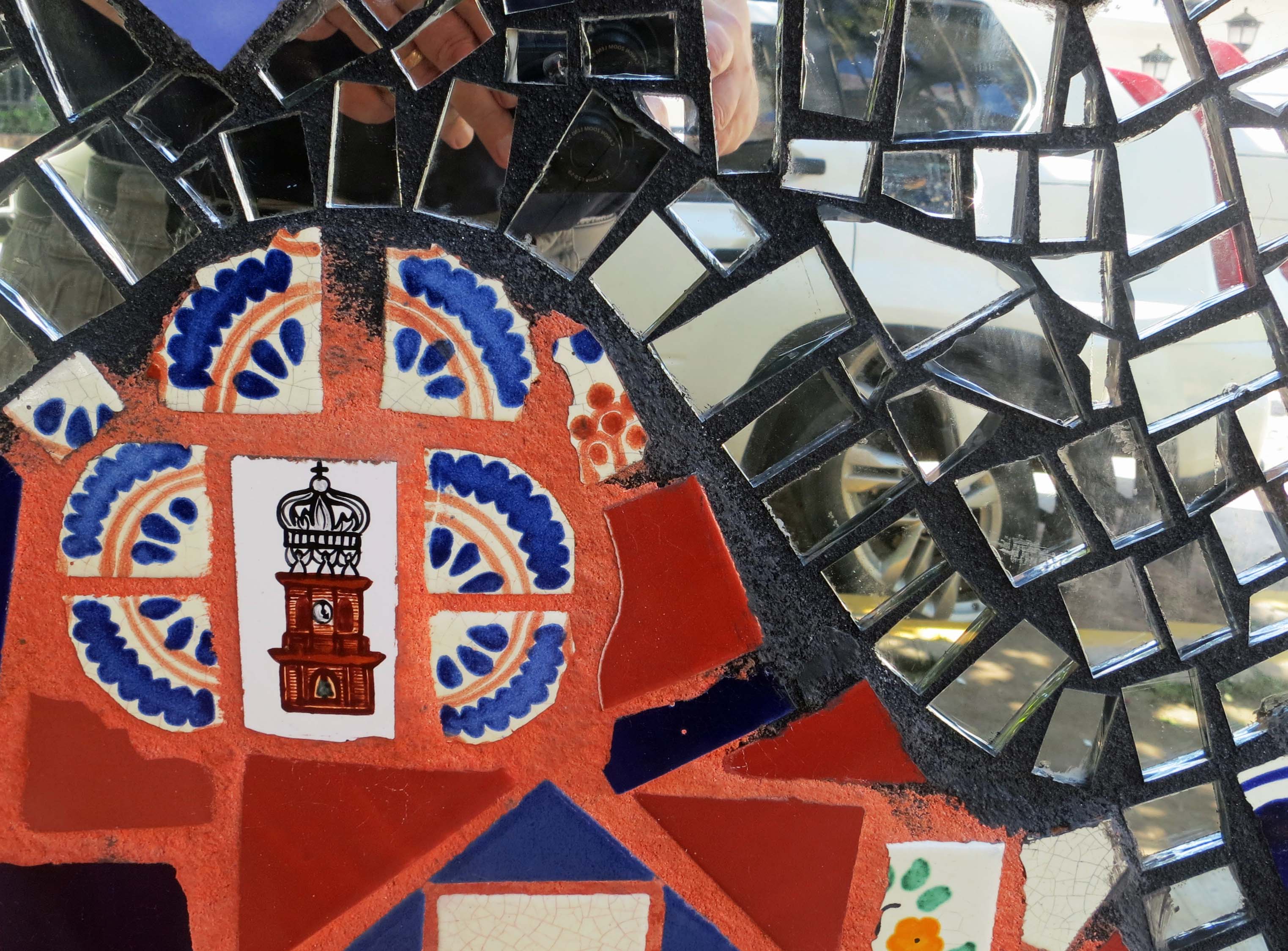
Made with tile and glass, the mural uses mirrors to reflect the street scene behind it, an effort that adds both beauty and interest.

Made with tile and glass, the mural uses mirrors to reflect the street scene behind it, an effort that adds both beauty and interest.

Wall mural by Natasha Moraga in Puerto Vallarta. Photo by Curtis Mekemson.

Numerous patterns and scenes are incorporated into the mural. This was one of my favorites.

Puerto Vallarta wall mural. Photo by Curtis Mekemson.

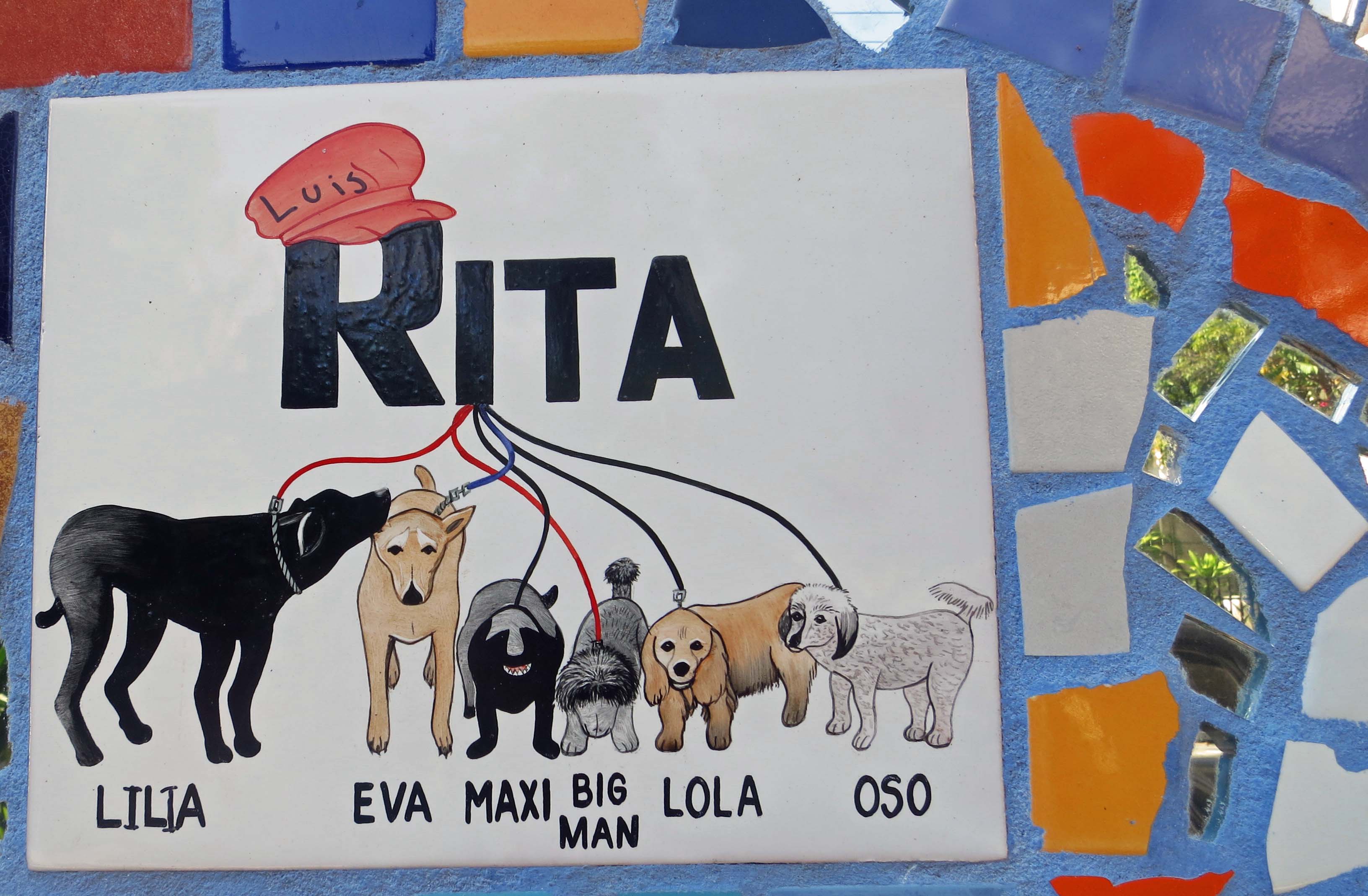
Major contributors are honored with their own tiles. This one was amusing. It appears Luis Rita has a house full of dogs.

Most murals we found in Puerto Vallarta feature a rendition of the town's primary landmark,

Most murals we found in Puerto Vallarta feature a rendition of the town’s primary landmark, the Church of Our Lady of Guadalupe, which I will feature in my next blog.

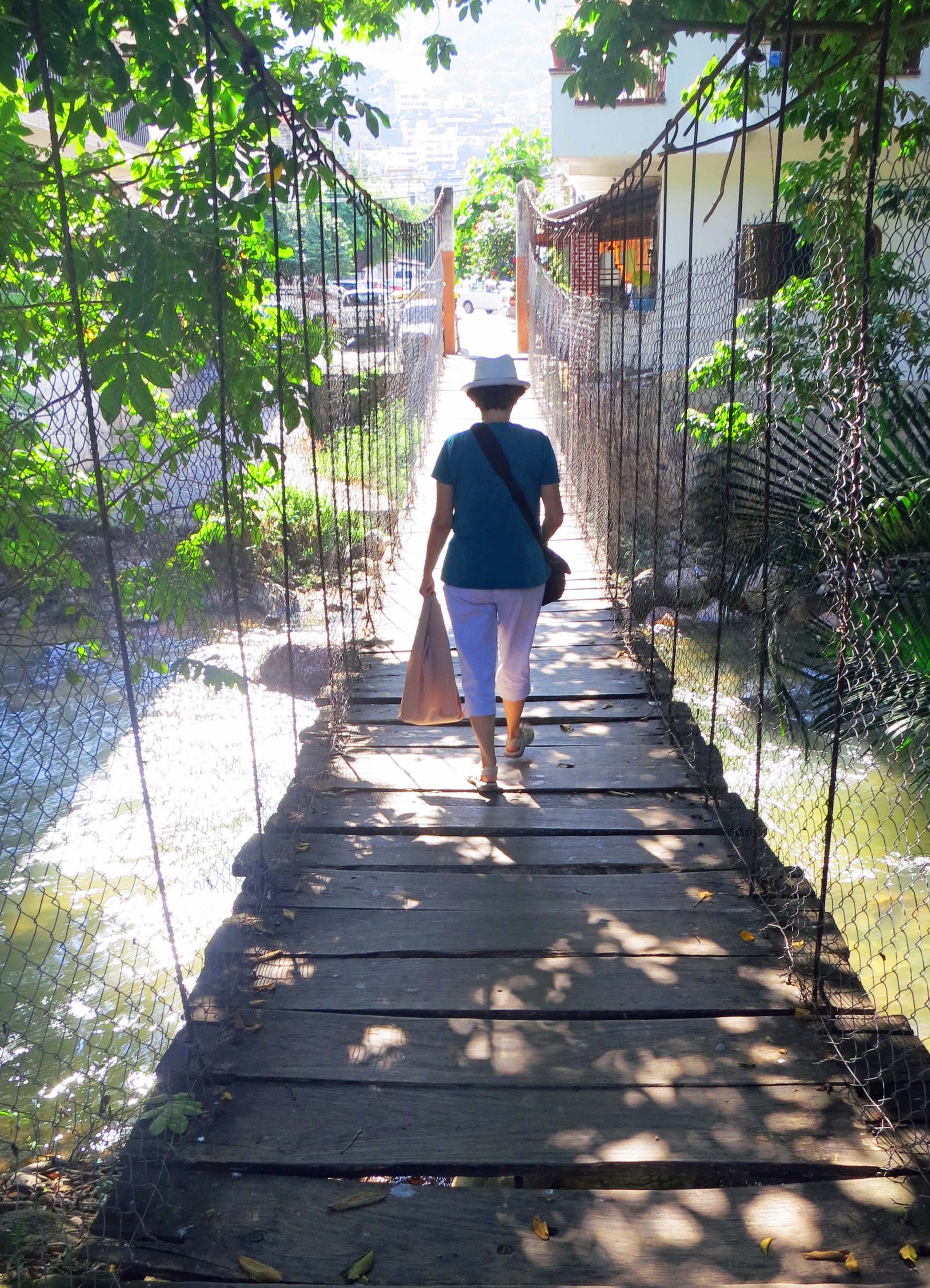
Puerto Vallarta's swinging bridge. Photo by Curtis Mekemson.

I’ll use this photo of Peggy crossing a swinging bridge as my last photo of our Puerto Vallarta walkabout. And believe me, the bridge does swing.

NEXT BLOG: Puerto Vallarta’s beautiful Church of Our Lady of Guadalupe.

One Hundred Thousand Thank-Yous… for One Hundred Thousand Views

Bone proudly displays his life jacket in preparation for his trip down the Colorado River

The first blog series I ever wrote was on an 18 day rafting trip down the Colorado River through the Grand Canyon that Peggy and I made, along with Bone… featured above wearing his life vest.

I reached the hundred thousand mark on blog views Saturday. While this hardly reaches the definition of viral, it is a significant milestone for me, and I want to thank each and every one of you who have joined Peggy and me on our journeys. So here you have it:

THANK YOU x 100,000

I first started blogging right after I had attended the San Francisco Writer’s Conference in 2010.

I had learned at the conference that publishers no longer did publicity for your book unless you were a really, really big name… such as J. K. Rowling, or the President, or a mass murderer. It didn’t seem to matter which. In fact the odds of a new writer even picking up an agent or publisher were pretty close to zero unless he or she met the above qualifications.

But, we were told, there was a dim light at the end of a very long tunnel. The Internet was changing how the book industry functioned, just like it had changed how the music industry functioned, and every other business it touched. Think about travel agents. When was the last time you used one?

We now had the power to market our own books. We also had another way of capturing the interest of an agent or a publisher. It all revolved around building a following on the Internet, or a platform as the book people called it.

It wasn’t like blatant advertising; it was more like letting people get to know you while you got to know them. If they liked you and liked how you expressed yourself, maybe they would buy your book. Or, conversely, if agents or publishers saw that you had a large audience of potential readers, they would be more likely to take your book on as a project.

And there was more– as advertisers like to say on late night television– we could use the Internet to self-publish our own books. All of the gatekeepers of the publishing industry: the agents and editors and publishers and bookstores, could be circumvented.  Self-publishing was becoming respectable; it was no longer the dirty word of the vanity press days. And there was scrumptious ice cream on top of the apple pie; we could expect to receive 50-85% of the revenues generated by our book as opposed to the 10-15% traditional publishers returned.

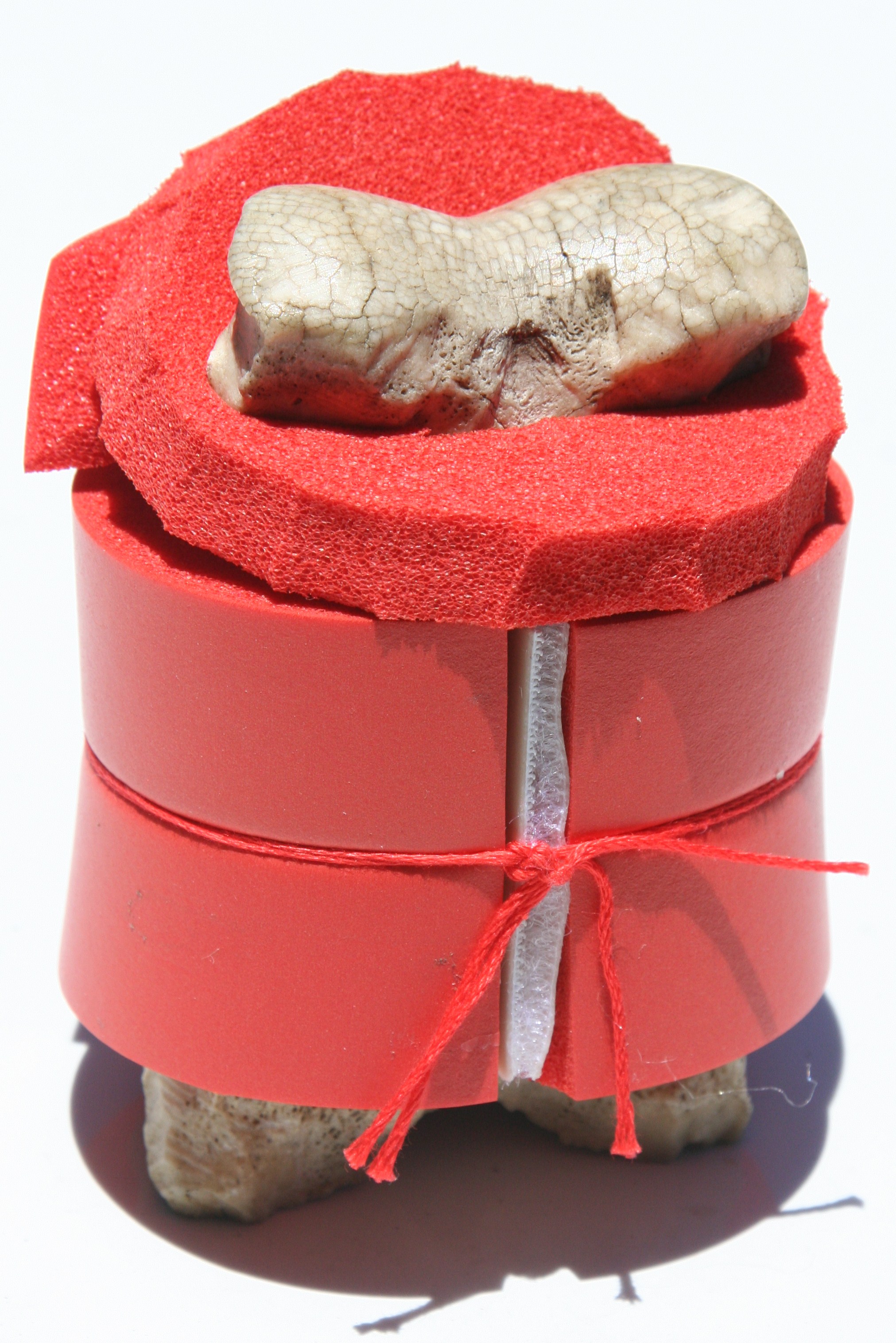
So I went home and started blogging. My first post was titled On Being Squirrelly. It featured the start of an 18-day private trip down the Colorado River through the Grand Canyon that Peggy and I took along with and Bone. His photo kicks off this post. Bone, for the uninitiated, is a horse bone I found while backpacking in the Sierra Nevada Mountains in 1977. Like the infamous Gnome, he has been travelling the world ever since.

What I quickly learned at the beginning of my efforts was that I really enjoyed blogging. It was a way to share Peggy and my adventures plus feature our photographs. It was also a way to make new friends and enjoy the blogs they produced. Blogging became an end in itself. (None of this means I have forgotten my original purpose. Within the next couple of months you should have the opportunity to purchase the book on my African Peace Corps’ adventures. Woo hoo!)

Word Press makes blogging easy, a fact that I truly appreciate. I also enjoy the statistics; besides being fun, they provide me with an overview of how I am doing in the world of blogging. Here are a few highlights in addition to the 100,000 plus hits:

  • People from 176 countries around the world have checked out my blog. The top ten in order of numbers are the US, Canada, United Kingdom, France, Germany, Australia, India, Netherlands, Italy and Spain.
  • My top blogs have been about Burning Man. Most popular this year was Truth and Beauty, the post I did about the magnificent 60-foot statue of a woman. My National Park Series has also drawn a consistently high readership. The most all-time popular was on the California Redwoods. The trip Peggy and I took through the Mediterranean was also quite popular. The top post there was on the beautiful and unique churches of the Greek Island of Santorini.
  • The most consistent readership my blog received, I am glad to say, was when I was posting chapters from the book on my Peace Corps’ experience.
  • My all time one-day readership was 1,019 when Word Press ‘Freshly Pressed’ my blog on Burning Man’s Mutant Vehicles.
  • And, saving the best for last, I have 700 plus followers. My thanks to each of you with special hugs going to those who comment on my blog regularly.
A side view of the sculpture, Truth Is Beauty by Marco Cochrane at Burning Man 2013.

The Burning Man sculpture Truth is Beauty.

Redwood

This 1500 year old redwood is located in Redwoods National Park on the northern coast of California.

I found this church with its white rocks surreal.

I found this Santorini church with its white rocks surreal.

Burning Man mutant vehicle. Photo by Curtis Mekemson.

One of my favorite Burning Man mutant vehicles lit up at night.

NEXT BLOG: Peggy and I return to Puerto Vallarta and go on a walk-about. Join us.

Revolution, a Treasure, Dragons and Ghosts of Hollywood… San Sebastian, Mexico

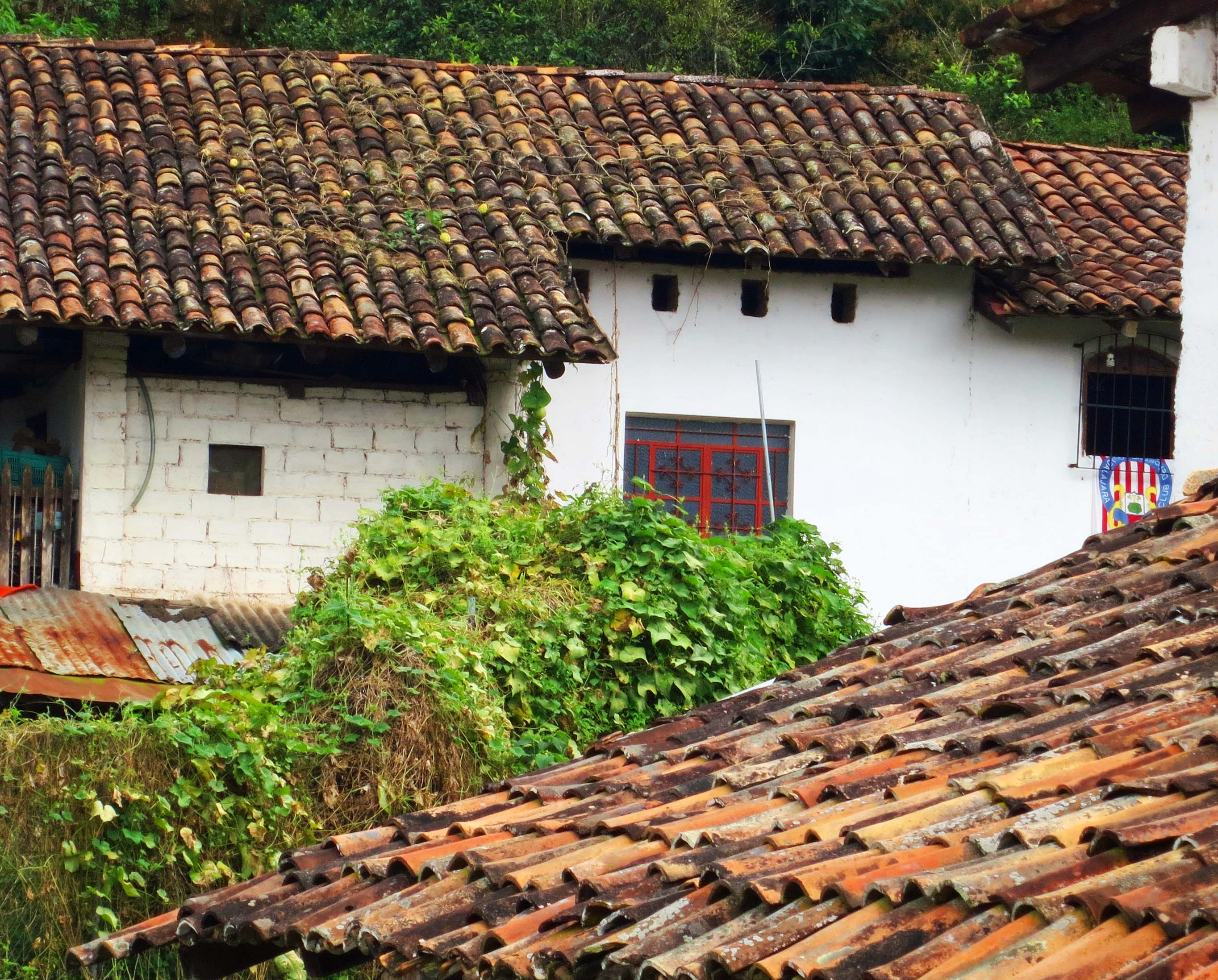
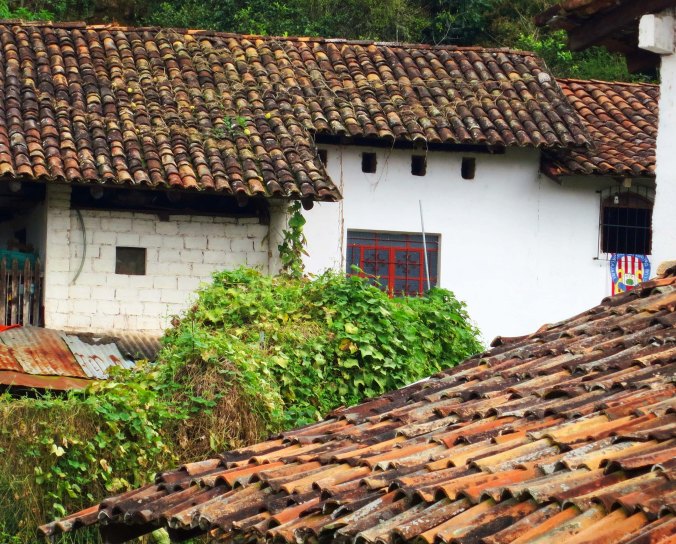
Photo of rooftops in San Sebastian , Mexico. Photo by Curtis Mekemson.

Nestled in the Sierra Madre Mountains above Puerto Vallarta, the town of San Sebastian was once a bustling silver mining town of 20,000. Now it is a quiet village of 600.

We didn’t plan on visiting San Sebastian del Oeste on Mexican Independence Day. Neither did we expect to have a guide immersed in Mexican history. It was all happenstance, a fortuitous occasion. As our bus climbed the steep, curvy road into the Sierra Madre Mountains above Puerto Vallarta, our talkative guide climbed on his soapbox. We learned a lot about the Mexican Revolution.

On November 20, 1910, people throughout Mexico were urged to rise up in revolt against Mexico’s autocratic president, Porfirio Diaz. Times were bad, especially for the poor, i.e. just about everybody. Ninety five percent of Mexico’s wealth was controlled by five percent of the population. Vast swaths of land were tied up in haciendas. Peasants who worked these haciendas were treated little better than slaves.

It would take over a decade but eventually the people of Mexico won massive reforms and better living conditions for themselves. Two legendary figures, Pancho Villa and Emiliano Zapata, rose out of the conflict. Both would be assassinated but their names and legacy would live on into modern times as heroes of the common man and symbols of freedom, not only in Mexico but also around the world.
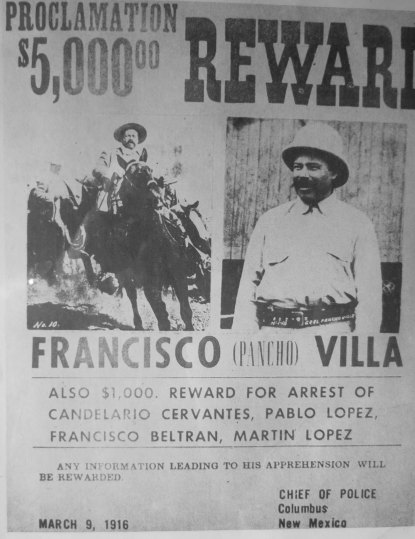
Pancho Villa's raid across the border into New Mexico to resupply military supplies made him a wanted man in the US and sent General John Pershing rushing into Mexico to capture him. Pershing and his troops spent a year chasing Villa through the mountains but never captured him. Pershing returned to the US to lead American troops in World War I.

Pancho Villa’s raid across the border into New Mexico for military supplies made him a wanted man in the US and sent General John Pershing charging into Mexico on horseback in hot pursuit. Pershing and his troops spent a frustrating year chasing Villa through the mountains but never caught the illusive patriot/bandit. Pershing returned to the US to lead American troops in a more successful World War I effort.

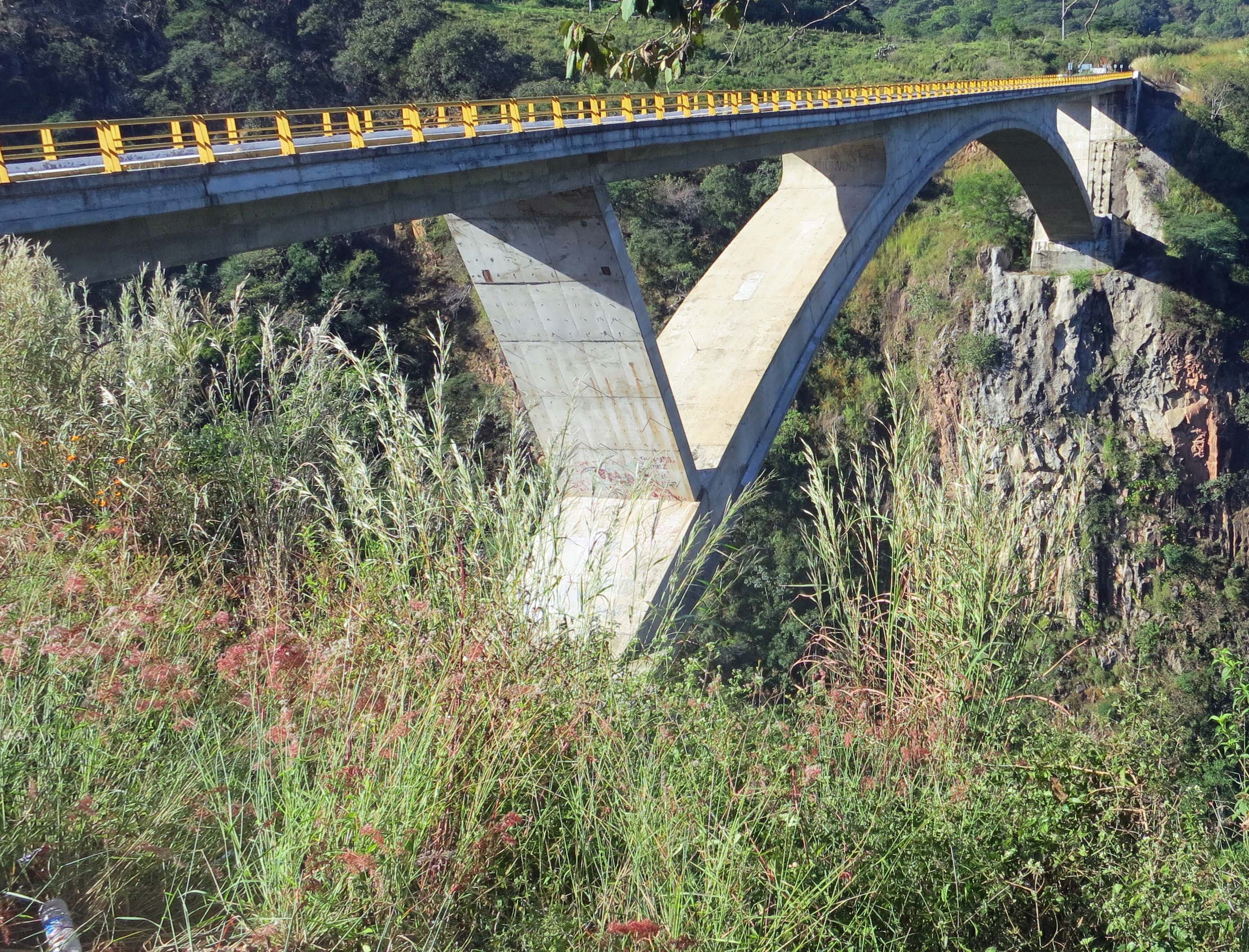
Our bus passed by cornfields, crossed over a high bridge and stopped. It was apparently a Kodak moment. The bridge was famous for cutting a couple of hours off the journey to San Sebastian. The old road made its way tortuously in and out of the canyon. Once it had been a burro trail, used to bring salt up from Puerto Vallarta, which was known as Las Peñas at the time. The salt was used in the smelting process to help break silver and gold out of the rich ores in the region.
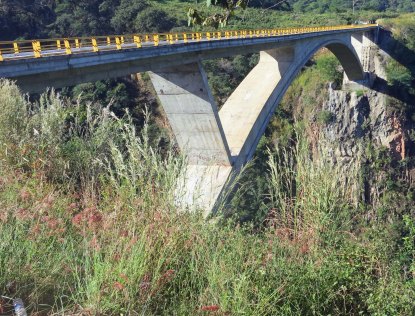
Photo of bridge over deep canyon on the road to San Sebastian, Mexico. Photo by Curtis Mekemson.

Our dutiful tourist picture of the bridge on the road to San Sebastian.

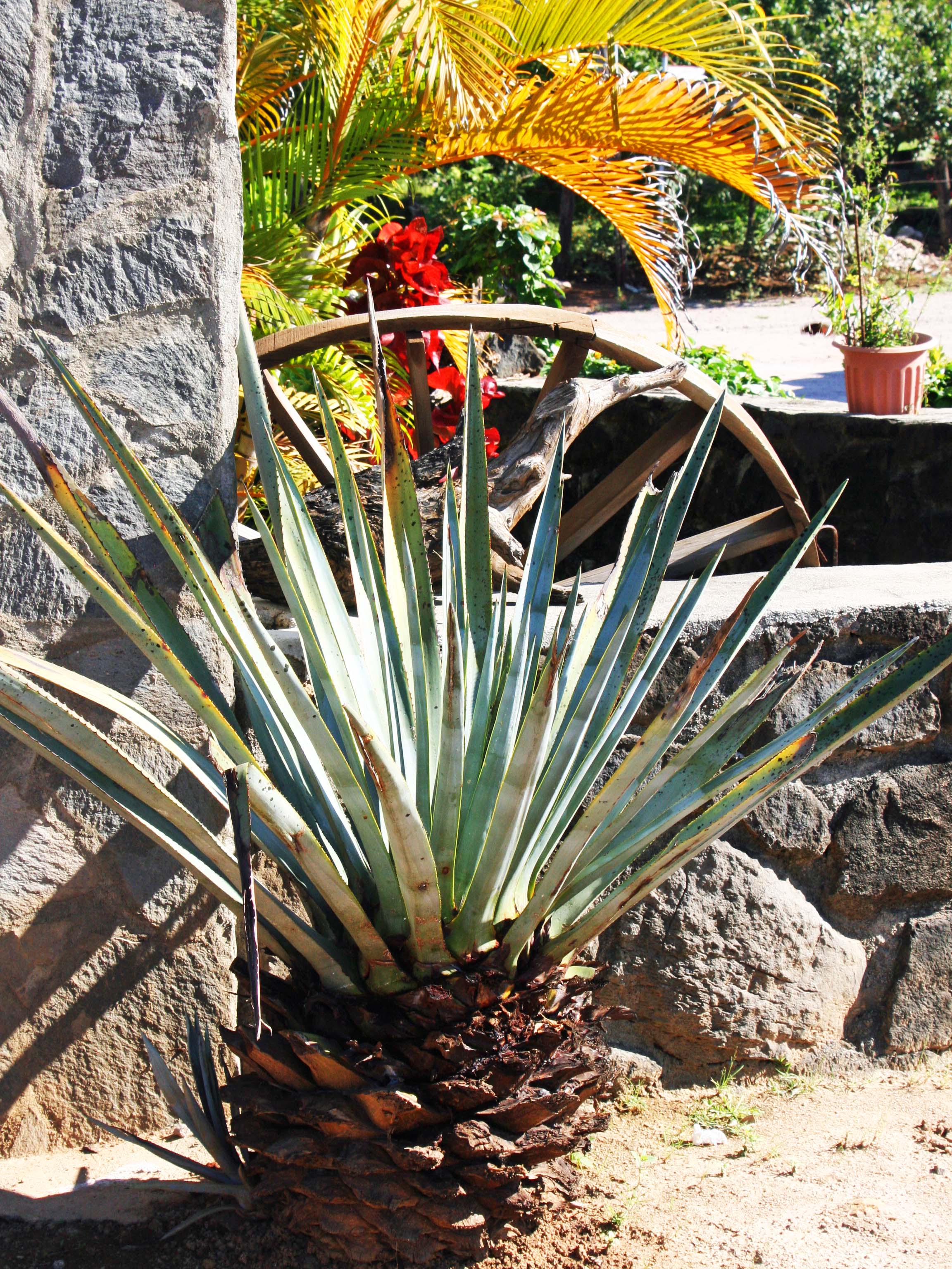
Peggy and I dutifully took photos of the bridge. More importantly, we took advantage of the available restrooms. We’d consumed lots of coffee waiting for the bus. The next stop was a tequila factory where we sampled the wares, checked out an agave plant, and bought a bottle of orange-flavored tequila that made vanilla ice cream taste like you had died and gone to Valhalla, or some other yummy place. I am ever so glad we didn’t discover how good it tasted until just before we left Mexico.  Otherwise I would have consumed gallons of ice cream and been charged double for the airplane ride home.
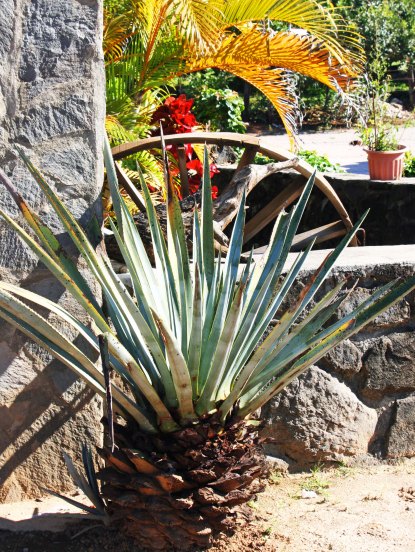
The agave plant, shown here, is the source of tequila. (Photo by Peggy Mekemson.)

The agave plant, shown here, is the source of tequila. (Photo by Peggy Mekemson.)

Tequila distillery on the road to San Sebastian, Mexico. Photo by Curtis Mekemson.

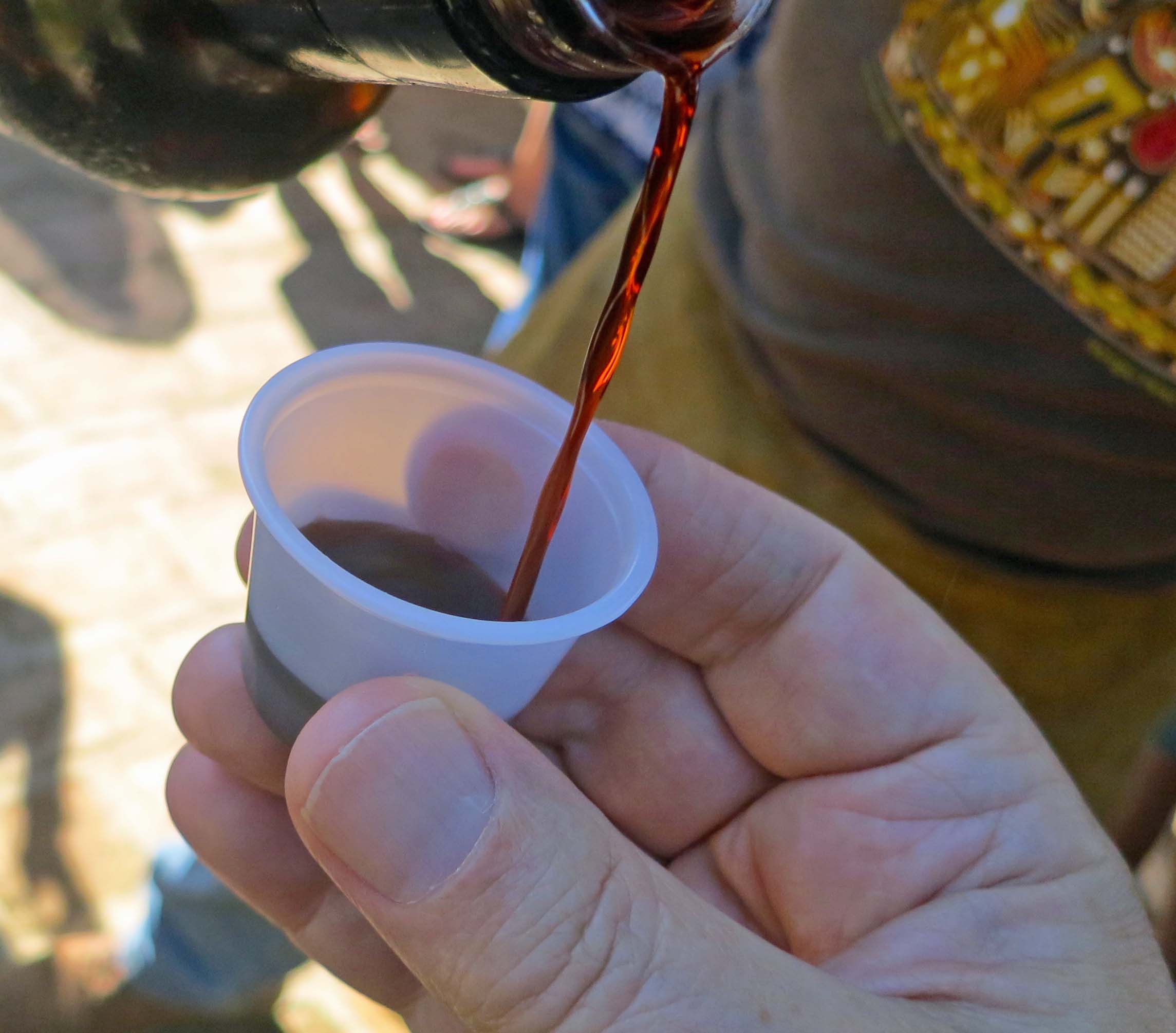
Our host at the tequila distillery displays his wares. The first time I ever drank tequila I was a senior at UC Berkeley and the potent liquor came in a small barrel like the one above. I spent my night in a hallucinogenic haze. The next morning marked the beginning of the Free Speech Movement and the 60’s student revolution. Could there have been a correlation between the two? (grin)
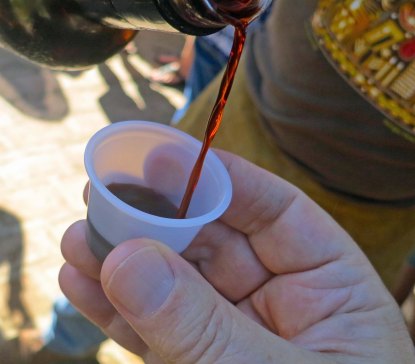
Sampling tequila on the road to San Sebastian, Mexico. Photo by Curtis Mekemson.

This time I was more cautious.

Mexican Independence Day Parade. Photo by Curtis Mekemson.

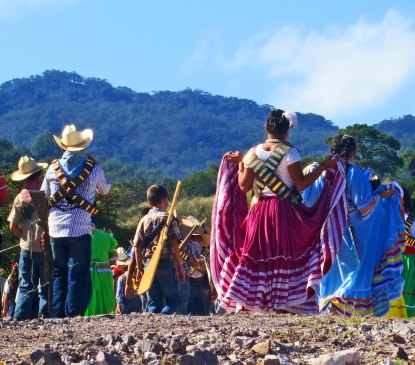
We were in the midst of sampling when a Mexican Independence Day Parade passed. Check out the wooden rifle of the young boy.

The most interesting stop on our journey to San Sebastian was to visit Hacienda Jalisco, one of the old haciendas whose history was related to the silver mining. You can still see the smelters. The hacienda’s thick walls provided protection for storing the treasure of silver before it was sent onward. Burros carried it to Guadalajara, Mexico City, and finally Vera Cruz, where it was shipped out once a year to Spain, maybe. Getting to Spain assumed that pirates didn’t relieve the treasure ships of their glittery cargo in the Caribbean.

Hacienda Jalisco’s silver mining history came to an abrupt end with the Revolution of 1910 but another type of silver, the silver screen, awaited its future. Discovered and restored by the American expatriate Bud Acord in the 1960s, the hacienda was to become a favorite hangout of John Huston, Elizabeth Taylor and Richard Burton during and after the filming of the Night of the Iguana.  Today it happily continues to serve as a B&B. Brochures describe it as romantic. There is no electricity and rooms are lit by lantern at night. You might sleep in the same room where Burton and Taylor pursued their scandalous, extramarital affair.
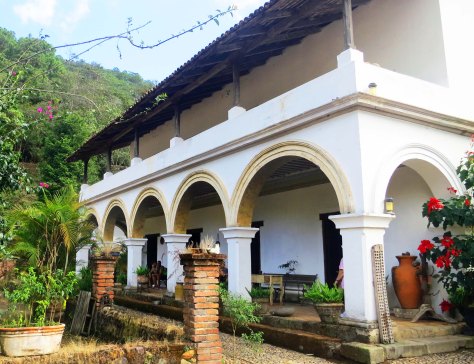
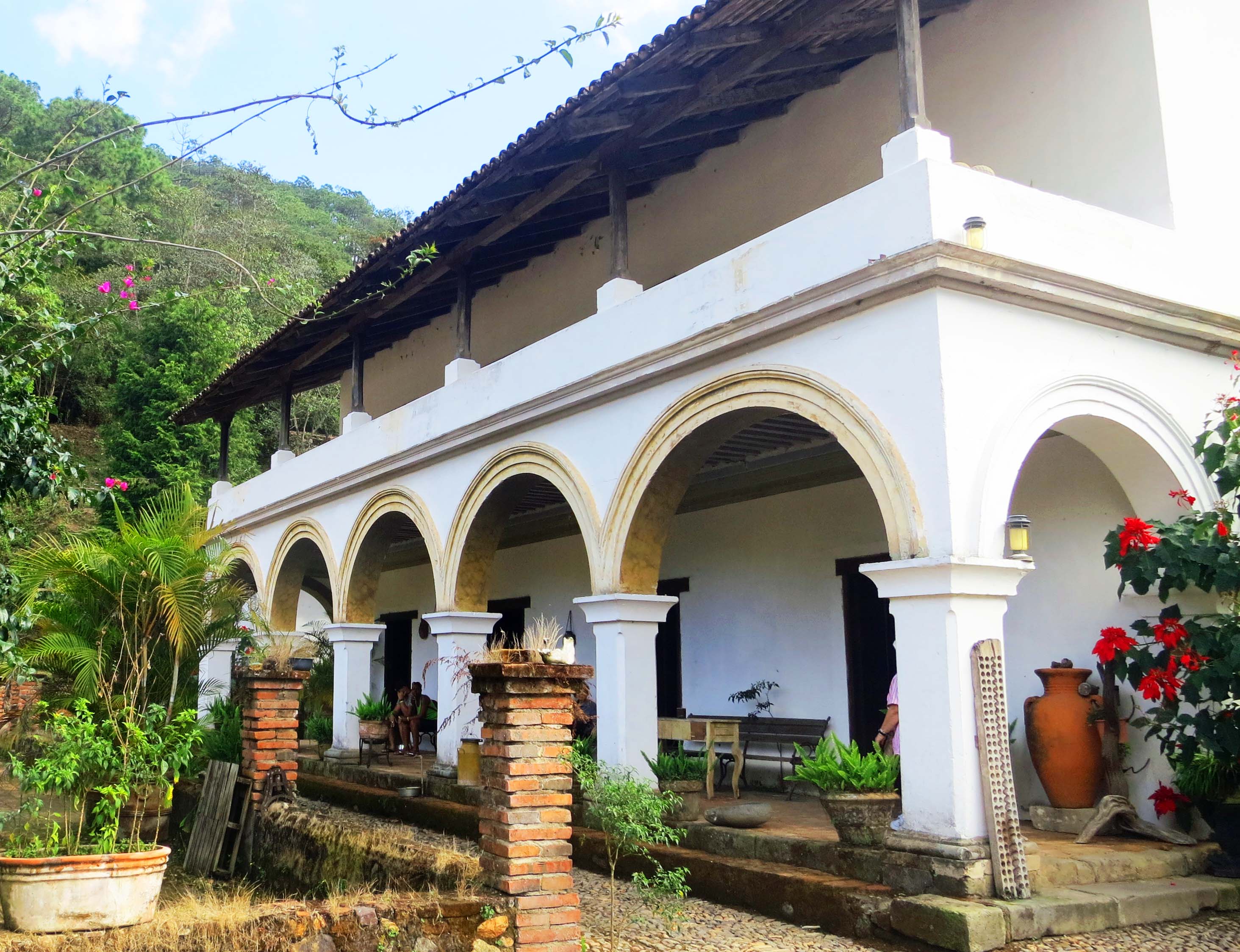
Hacienda Jalisco near San Sebastian, Mexico. Photo by Curtis Mekemson.

The Hacienda Jalisco as it looks today.

Adobe wall and tile roof at Hacienda Jalisco near San Sebastian, Mexico. Photo by Curtis Mekemson.

I captured a bit of Old Mexico with this adobe wall and tile roof.

Part of the silver smelter at Hacienda Jalisco. (Photo by Peggy Mekemson.)
Part of the silver smelter at Hacienda Jalisco. (Photo by Peggy Mekemson.)

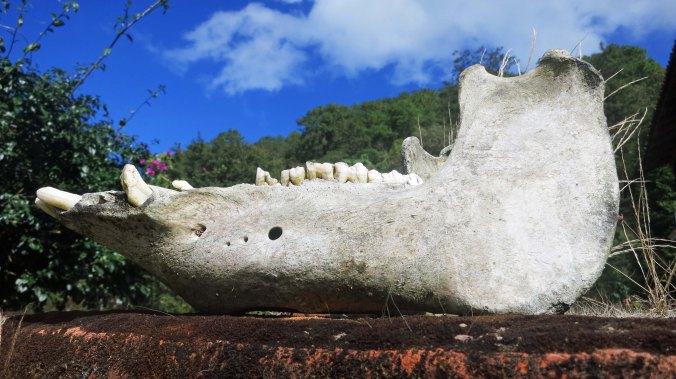
Jawbone of a boar. Photo by Curtis Mekemson.

While I found this jawbone of a boar interesting…
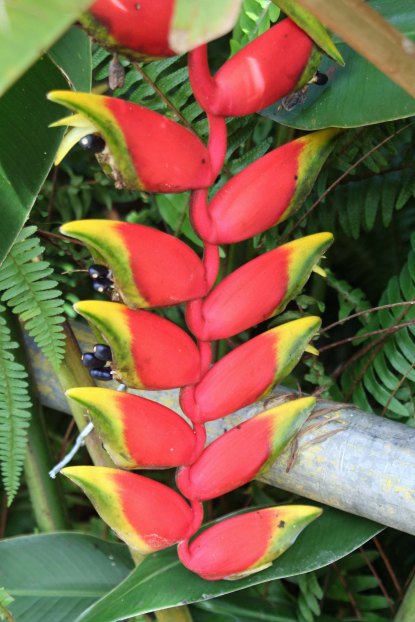
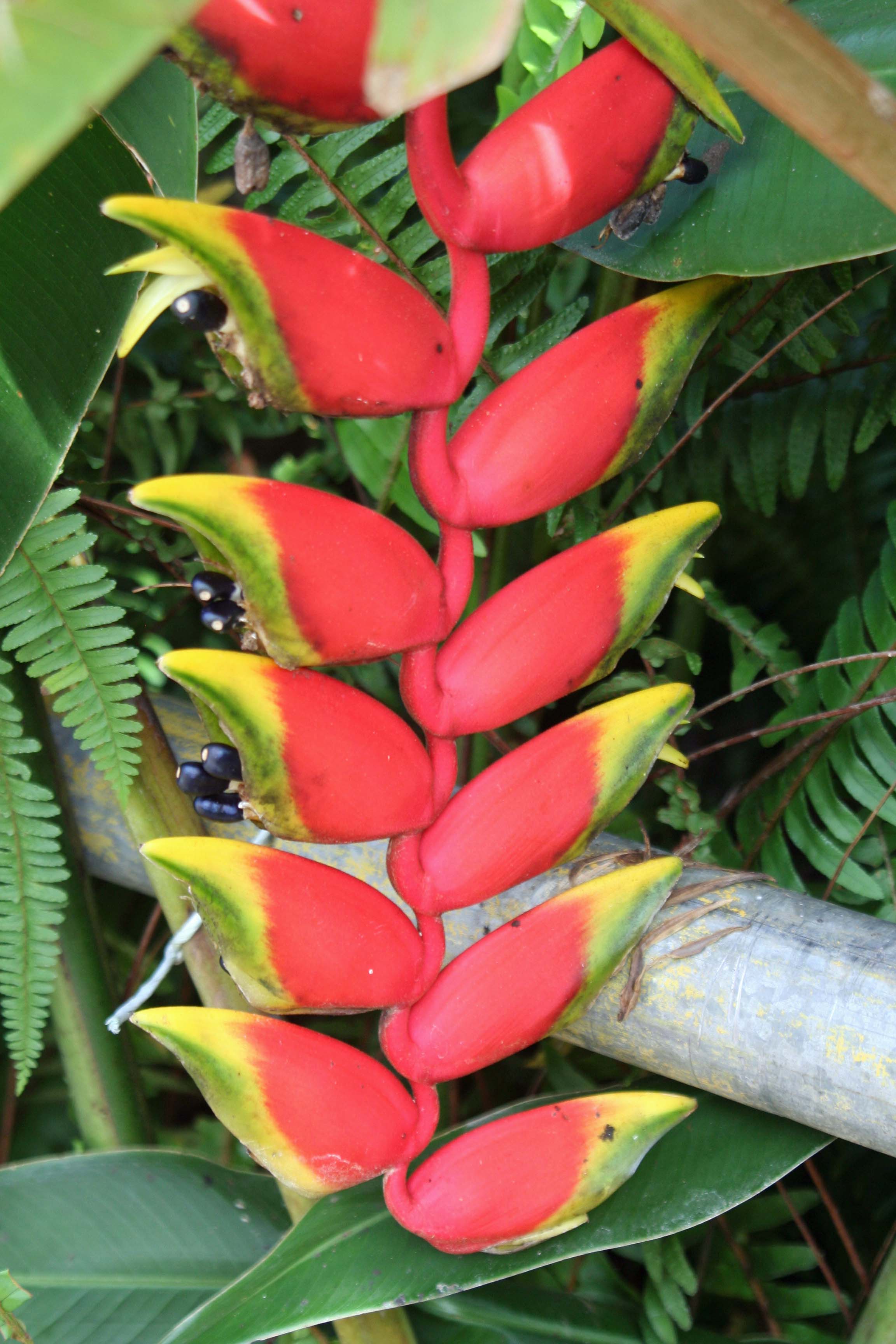
Peggy preferred to photograph flowers that adorn the Hacienda.

Peggy preferred to photograph flowers that adorned the Hacienda. (Photo by Peggy Mekemson.)
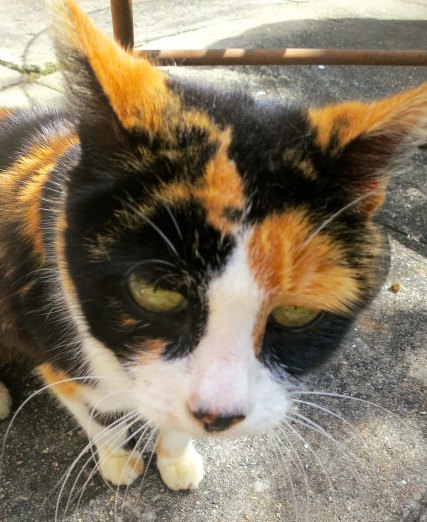
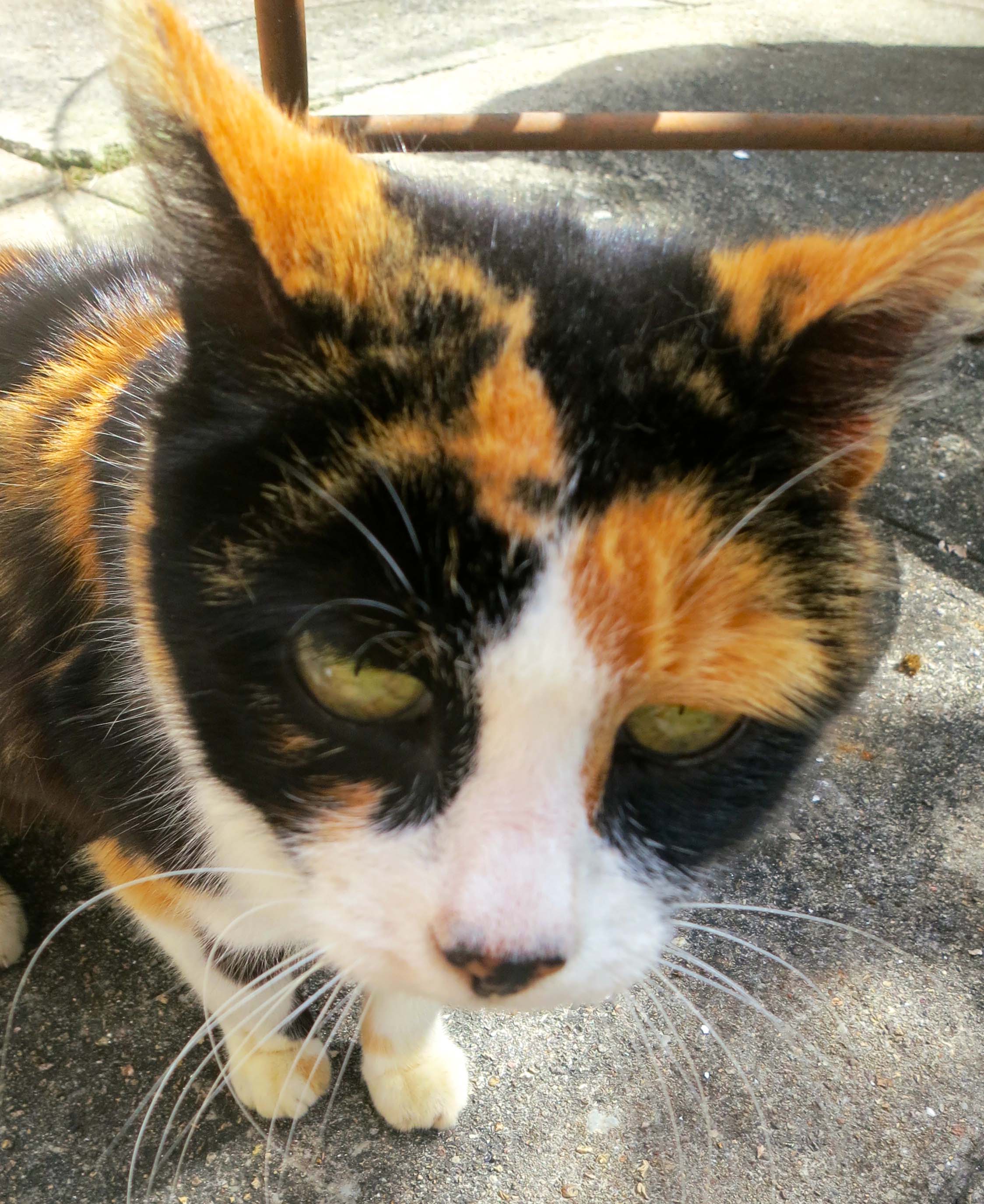
Photo of Hacienda Jalisco cat by Curtis Mekemson.

We both liked Gato.

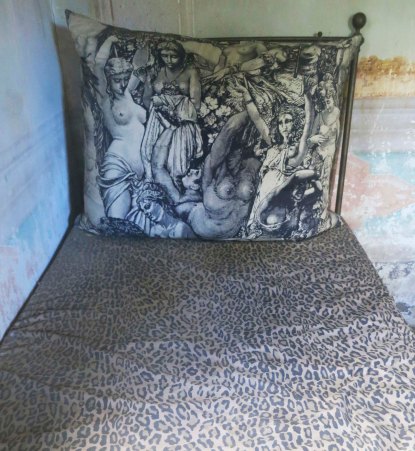
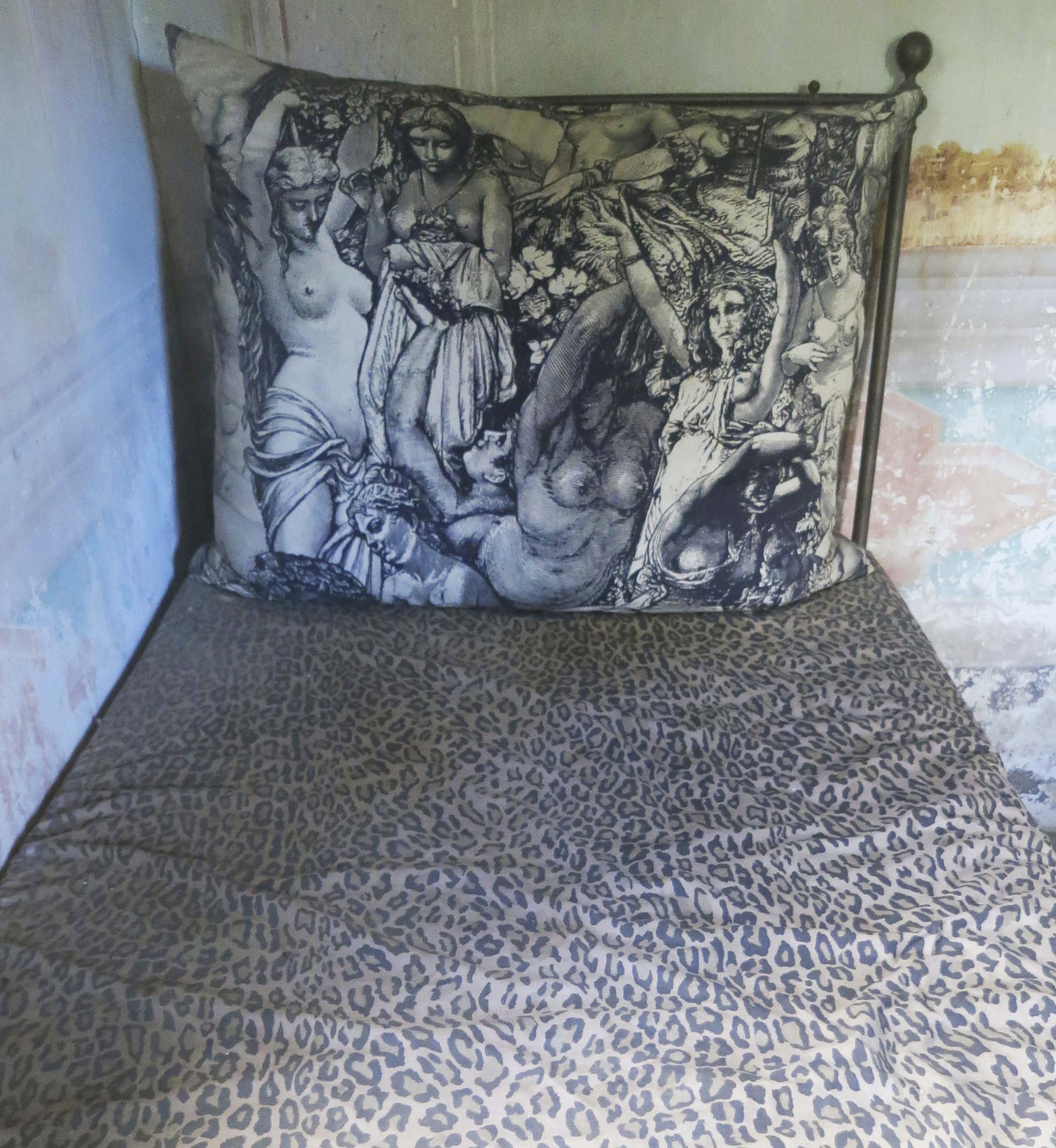
This antique bed with its wild pillow was rather interesting. Wonder if it dated to the days of Richard and Liz?

You could almost hear the springs of this antique bed squeak given its wild pillow. I wonder if the ghosts of Elizabeth and Richard ever stop by for a midnight tryst?

Our final stop before San Sebastian was at a coffee plantation that shared a building with a coffin maker.
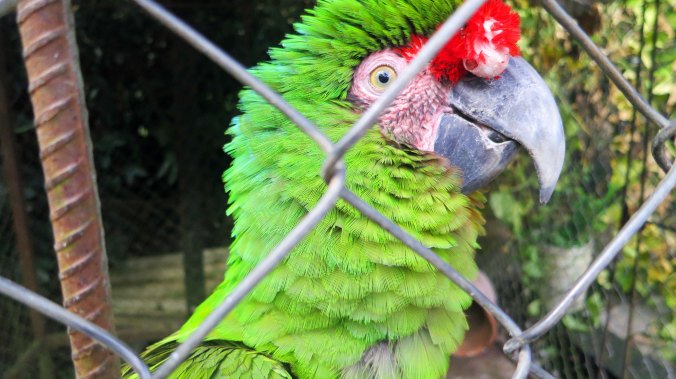
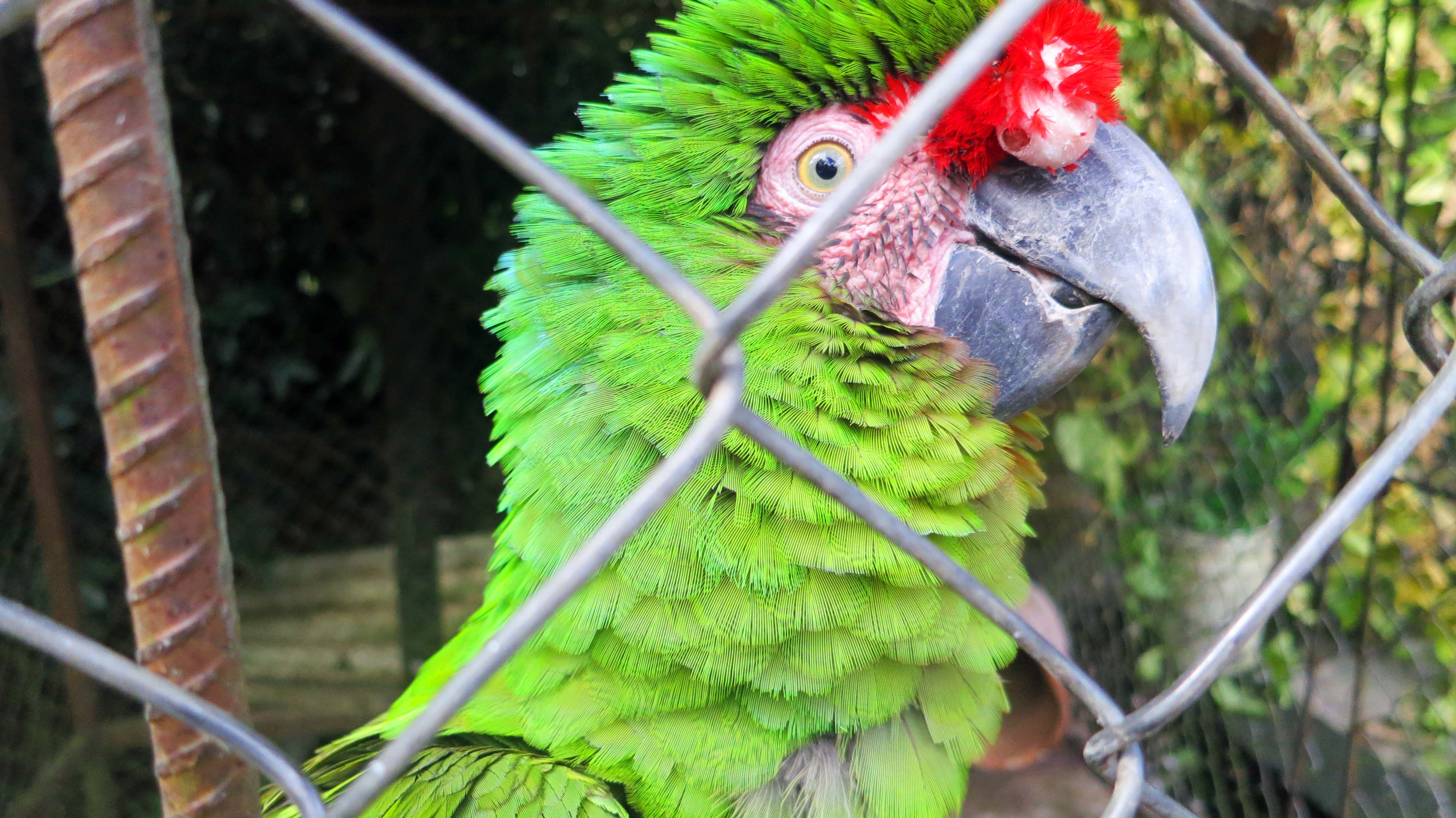
Photo of parrot at San Sebastian coffee plantation by Curtis Mekemson.

Peggy and I admired this guy as we drank our coffee and contemplated our ultimate demise.

Our son Tony made it to San Sebastian before we did. He bought a sailboat while living in San Diego, sailed it to Puerto Vallarta with his girlfriend Cammie (and our nephew Jay), took the bus up to San Sebastian (without Jay), went on a horseback ride to a remote waterfall, and asked Cammie to marry him. You can’t get much more romantic! We were eager to see the town.

Treasure seeking Spaniards settled San Sebastian in 1605. To put this into perspective, Jamestown, the first British settlement in North America, was founded in 1607. First Spain and then Mexico continued to pull silver from its surrounding mines up until the Revolutionary era of 1910-20. Once a bustling community of 20,000 importing luxury items from far away Europe, San Sebastian is now a quiet community of 600 surviving off of agriculture and a small tourist trade. Peggy and I liked it.

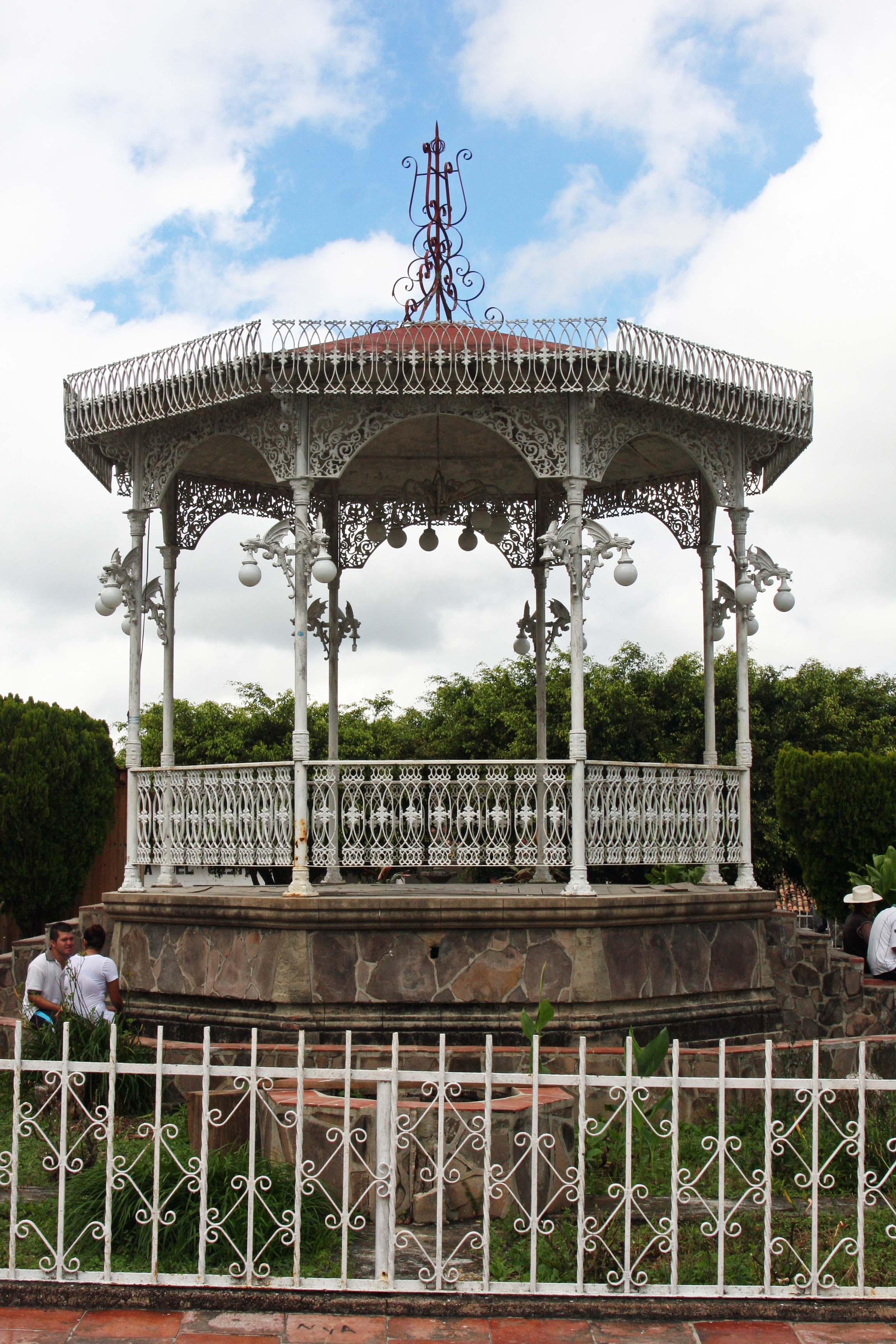
An attractive bandstand dominates the central plaza (Revolution Square) and provides views of the surrounding town and countryside. We had just missed the Independence Day celebration so Peggy and I had a pleasant lunch, walked through the town, visited the impressive Church of Saint Sebastian, and stopped to watch a local craftsperson weave a basket so quickly we could barely see her hands move. I could happily spend a week, or several in the town and surrounding area.
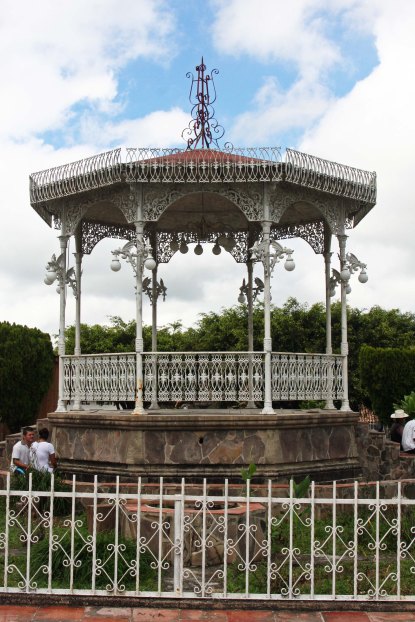
San Sebastian Bandstand. Photo by Curtis Mekemson.

An attractive bandstand dominates Revolution Plaza in San Sebastian. (Photo by Peggy Mekemson.)

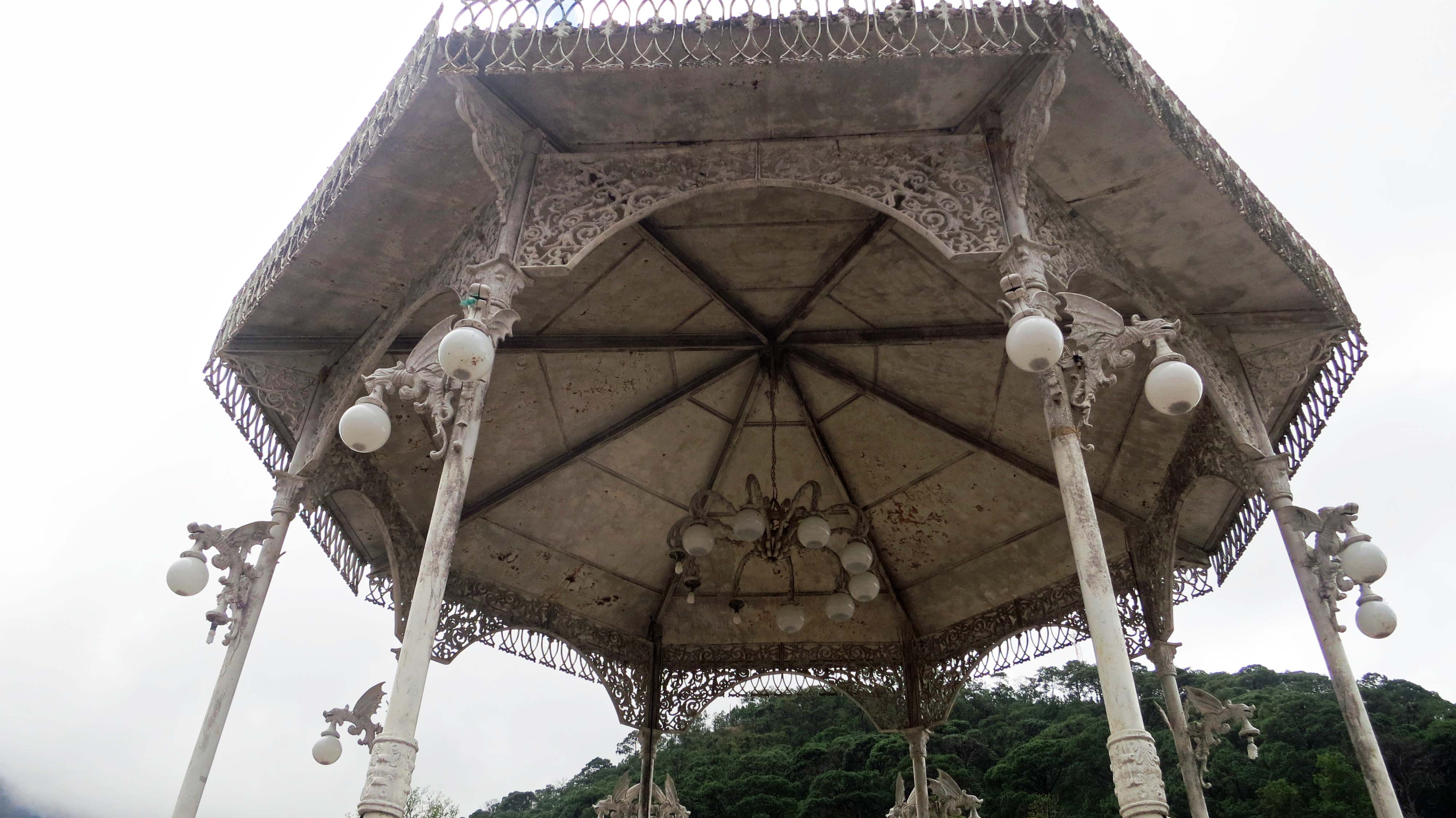
Photo by Curtis Mekemson.

Looking up at the bandstand.

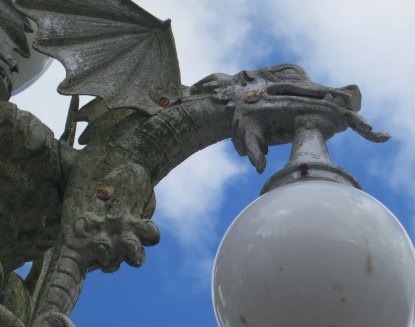
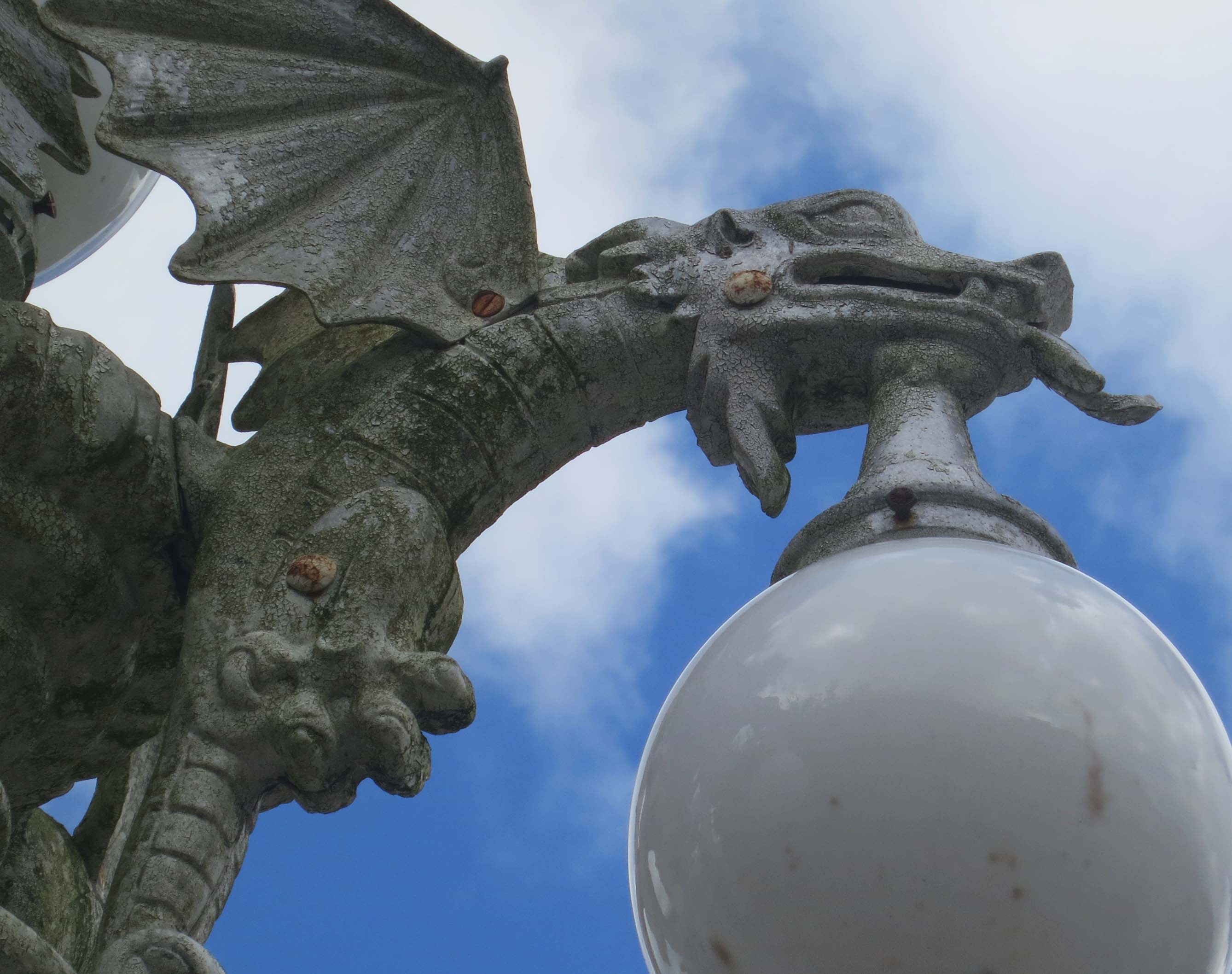
Dragons of San Sebastian. Photo by Curtis Mekemson.

Dragons, like this fellow, decorate the bandstand and plaza.

Views of the town, including this view of the Church Of San Sebastian were available from the bandstand. (Photo by Peggy Mekemson.)
Views of the town, including this view of the Church Of San Sebastian were available from the bandstand. (Photo by Peggy Mekemson.)

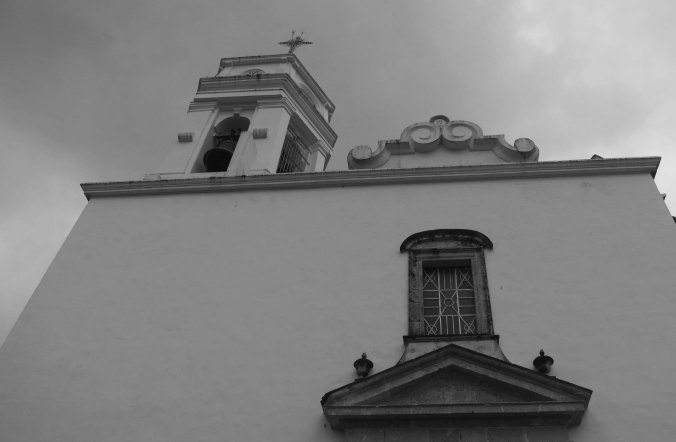
The Temple of Saint Sebastian in San Sebastian, Mexico. Photo by Curtis Mekemson.

A black and white rendition of the church under cloudy skies.
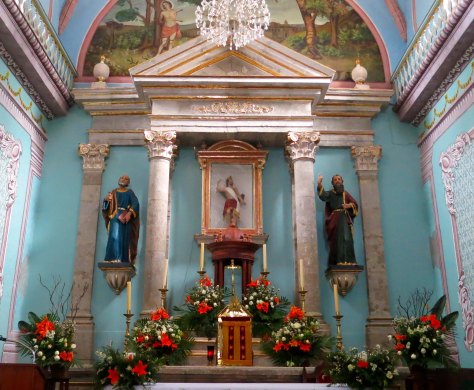
Inside Temple of Saint Sebastian in San Sebastian, Mexico. Photo by Curtis Mekemson.

An inside view of the church showing the altar. Saint Sebastian, who is normally depicted full of arrows, is pictured on the upper left. Sebastian is considered the patron saint of sports. Do you think this includes archery? (Bad Curt.)

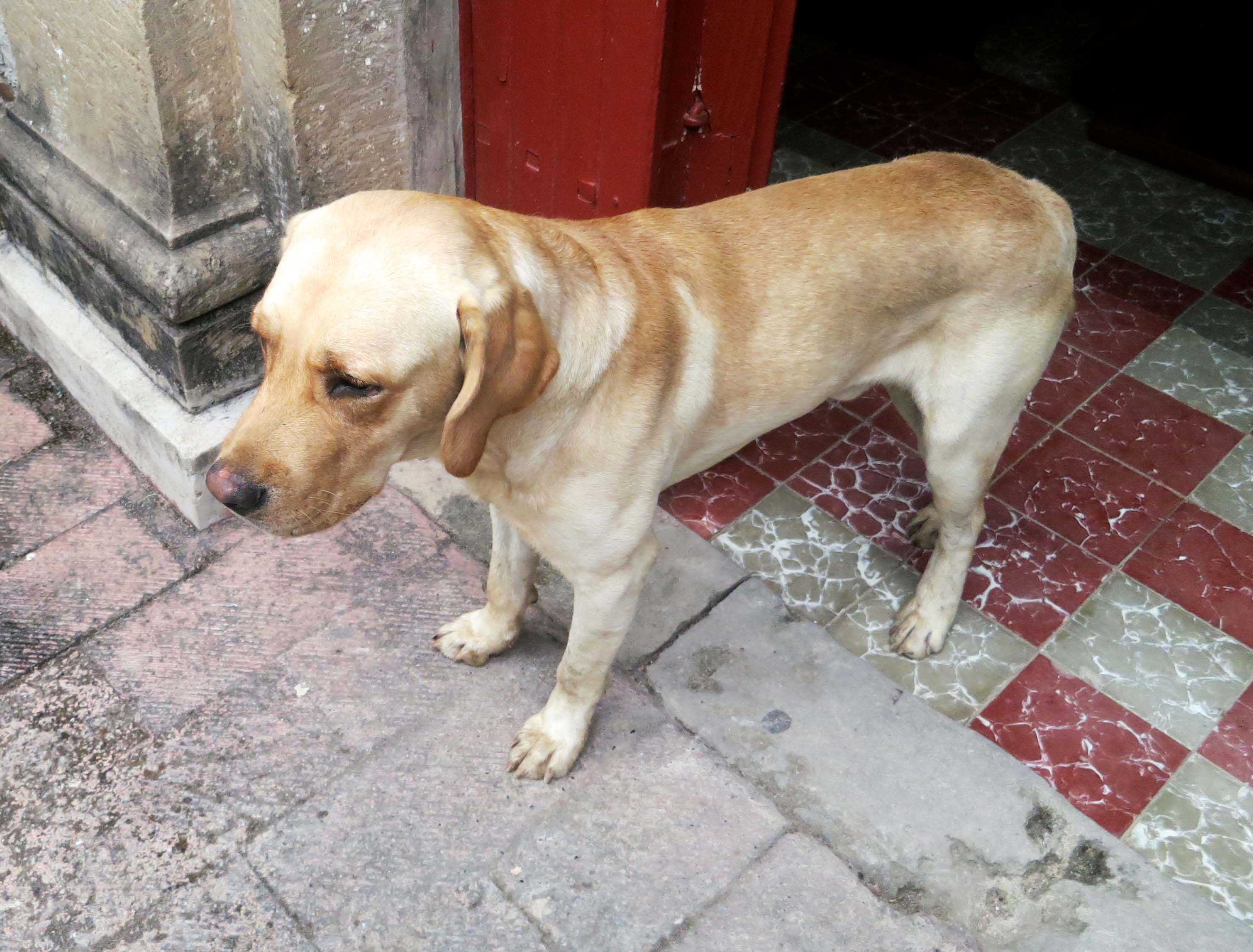
San Sebastian Church dog. Photo by Curtis Mekemson.

This was the only local we found in the church. He was lying in the central aisle when we entered the church and then walked out with us.
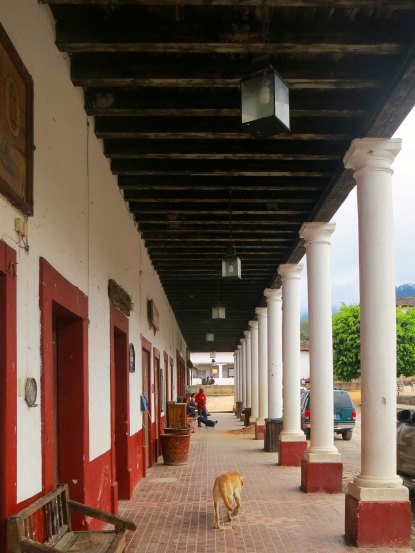
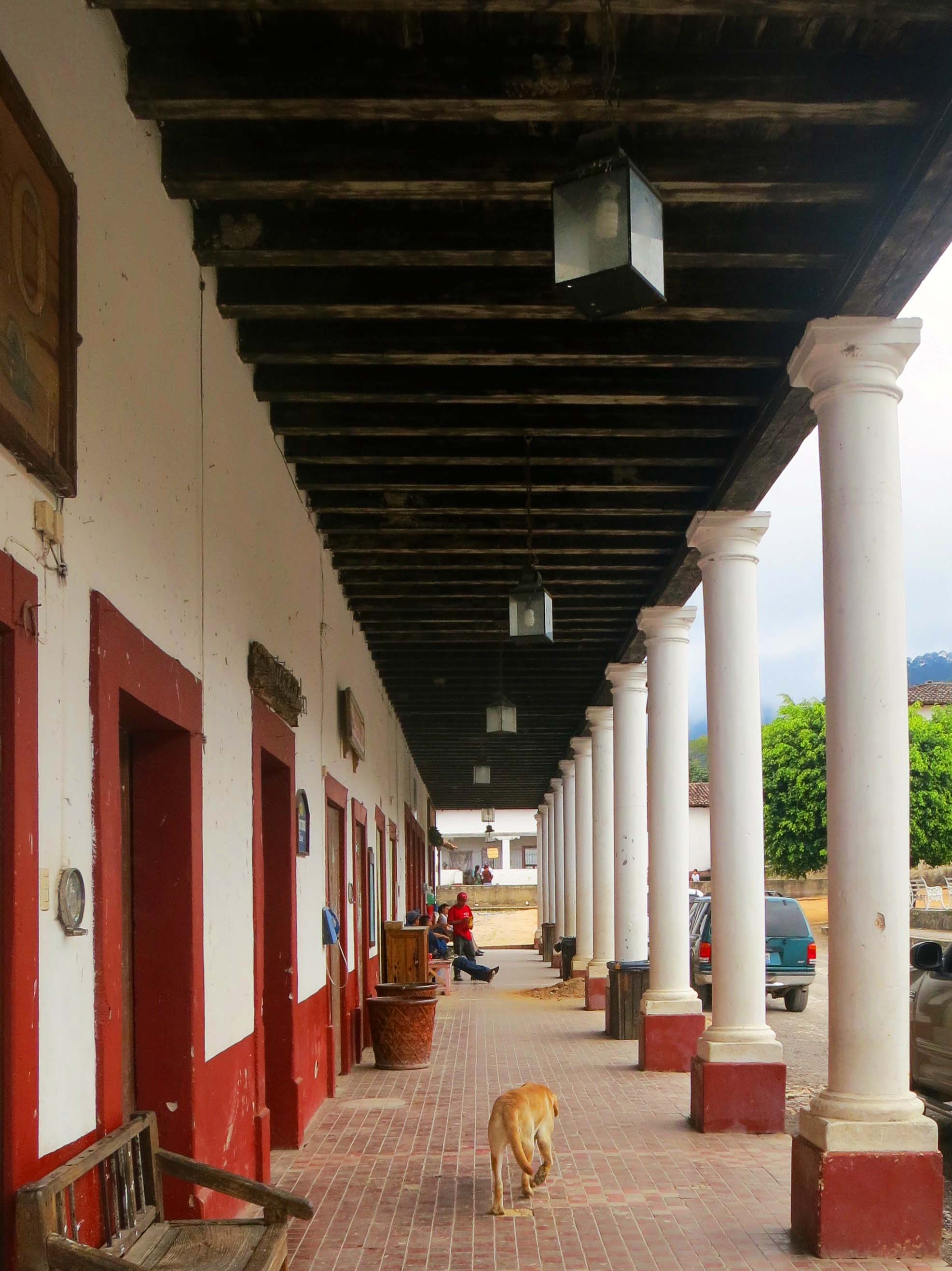
Walkway of building facing Revolution Square in San Sebastian, Mexico. Photo by Curtis Mekemson.

Later we saw the dog making his way along the walkway of one of the buildings facing the plaza.
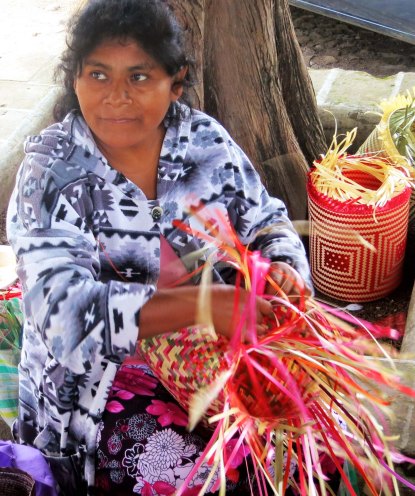
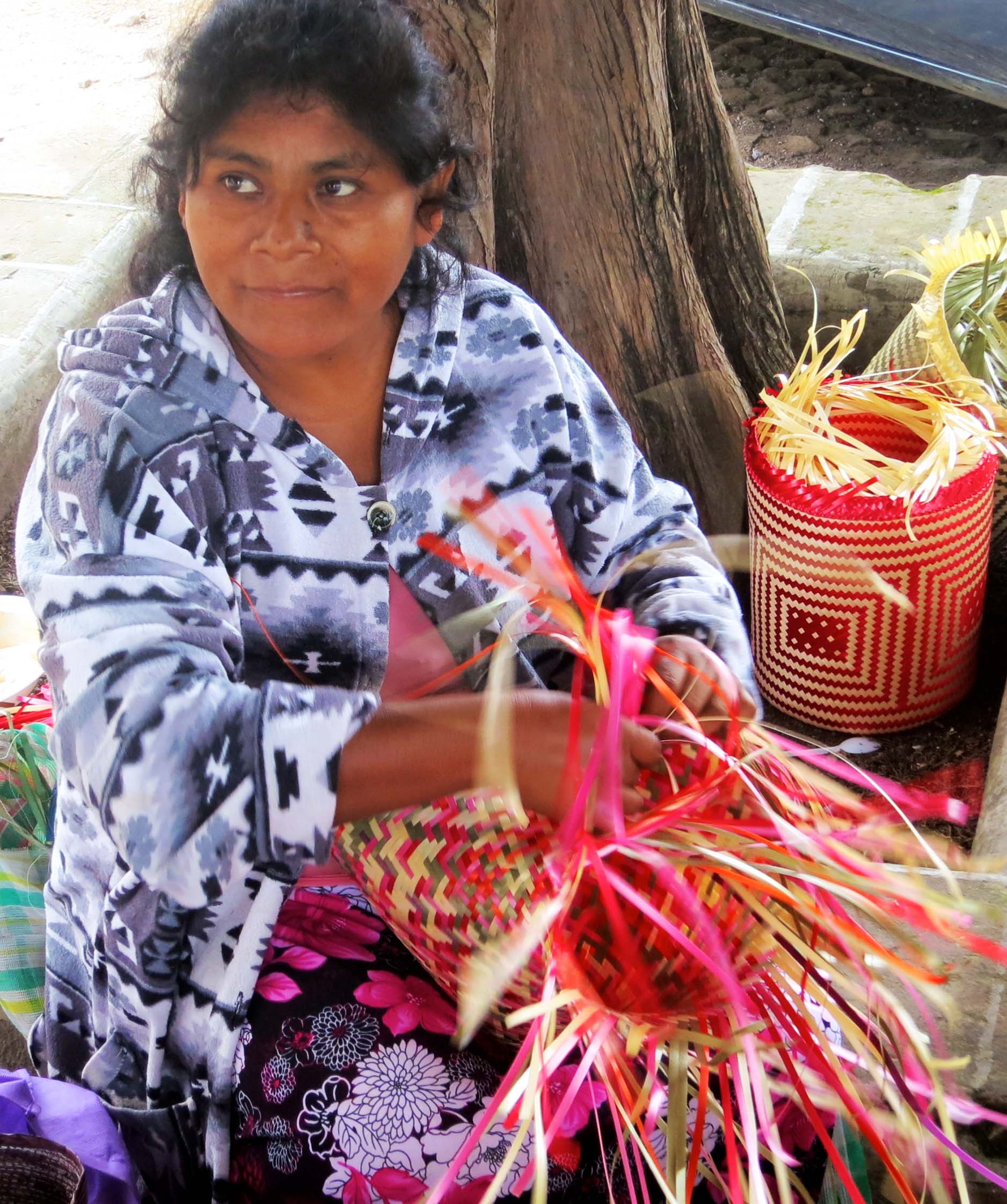
Basket weaver in San Sebastian, Mexico. Photo by Curtis Mekemson.

The hands of this basket weaver flew so fast I could hardly follow what she was doing. 
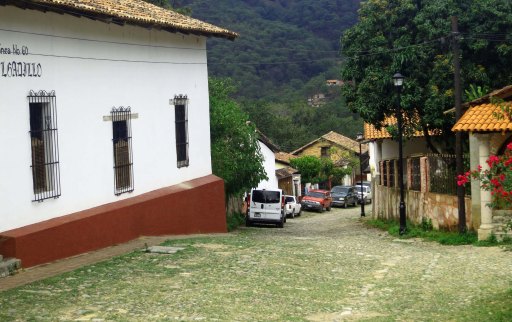
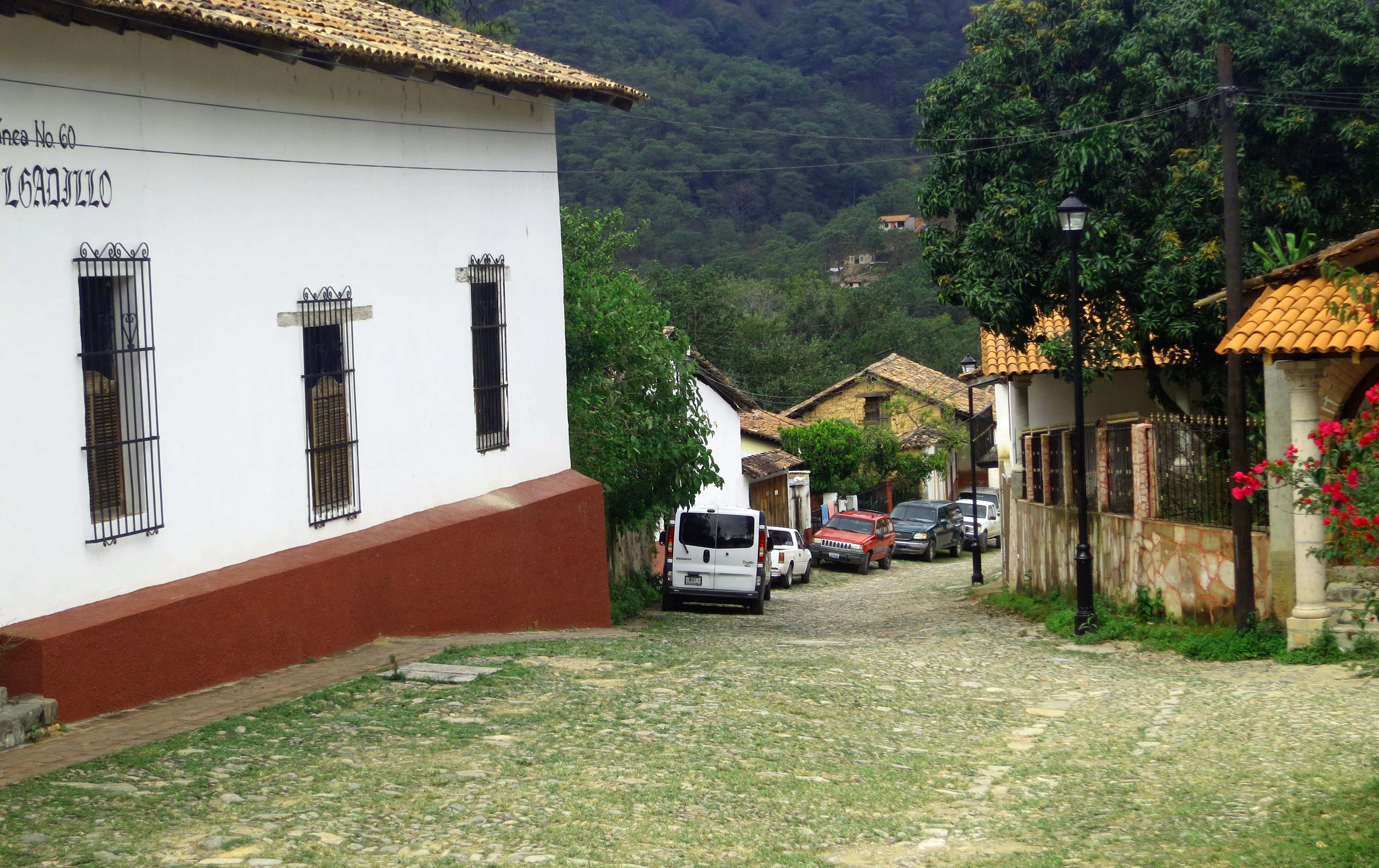
San Sebastian, Mexico side-street. Photo by Curtis Mekemson.

One of the side-streets in San Sebastian that Peggy and I wandered along.
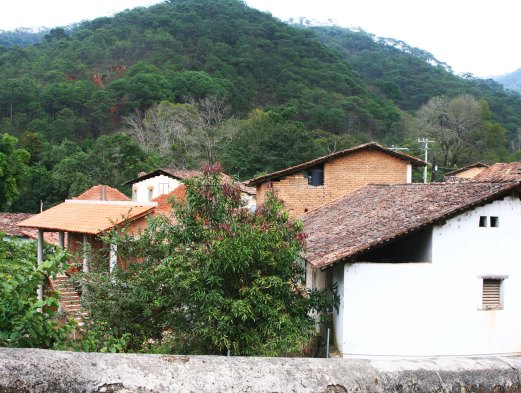
Altogether, San Sebastian is a gem of a community nestled among the Sierra Madre Mountains. If you make it to Puerto Vallarta, it is well worth the day trip to see it. (Photo by Peggy Mekemson.)

Altogether, San Sebastian is a gem of a community nestled among the Sierra Madre Mountains. If you make it to Puerto Vallarta, it is well worth the day trip to see it. (Photo by Peggy Mekemson.)

NEXT BLOG: One Hundred Thousand Thank You’s for One Hundred Thousand Views.
Part II: A Walk on the Wild Side of Southern Oregon… from the Mail Box

Numerous ferocious animals are found along our mailbox route, including Charlie who barks more in a minute that the minute has seconds.
Ferocious animals are found along our mailbox route, including Charlie, who barks more in a minute that the minute has seconds.
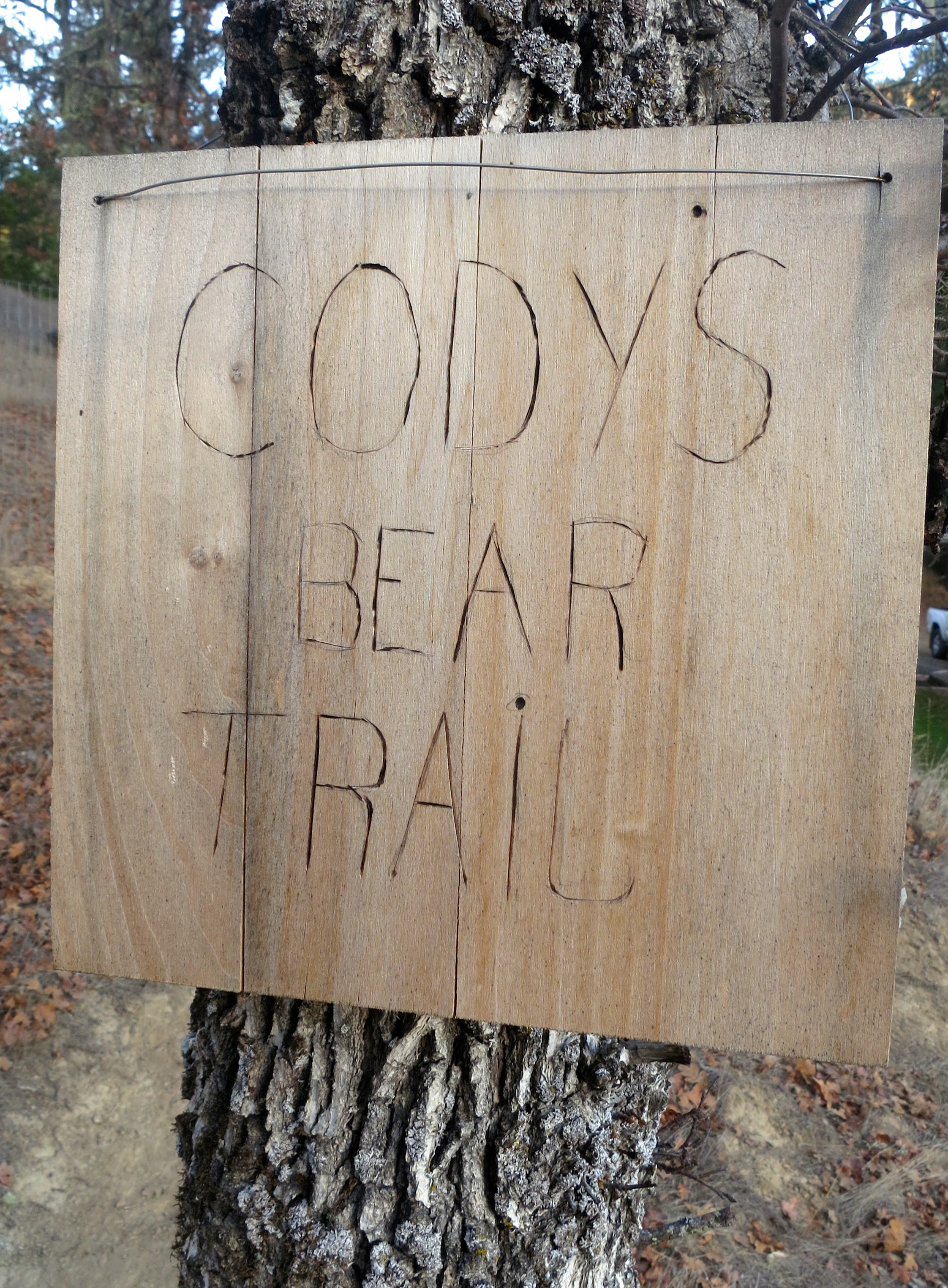
I took you along for a walk to my mailbox in the last post. We hiked over Cody’s Bear Trail, went looking for a wayward skunk, and found the deer herd that believes it is the true owner of our property. Maybe it is. We then detoured through the Klamath National Forest, rejoined our neighborhood road and arrived at the mailbox.

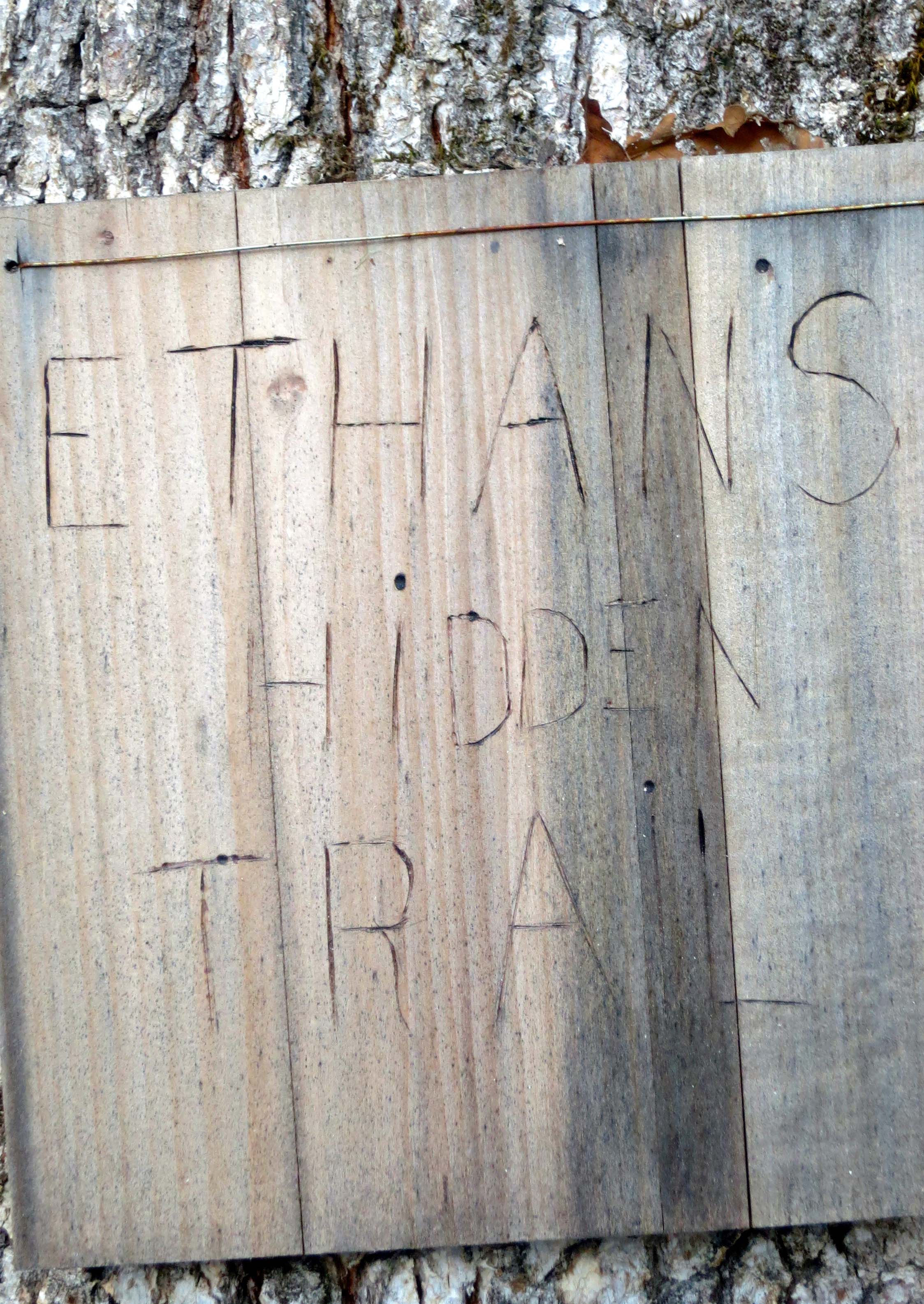
Today we are completing the trip. We will walk along the Upper Applegate Road, check out the Applegate River, visit with one tiny and two huge dogs, and finish our hike on Ethan’s Hidden Trail. The total walk to and from the mailbox, with detours, is a mile and a half.

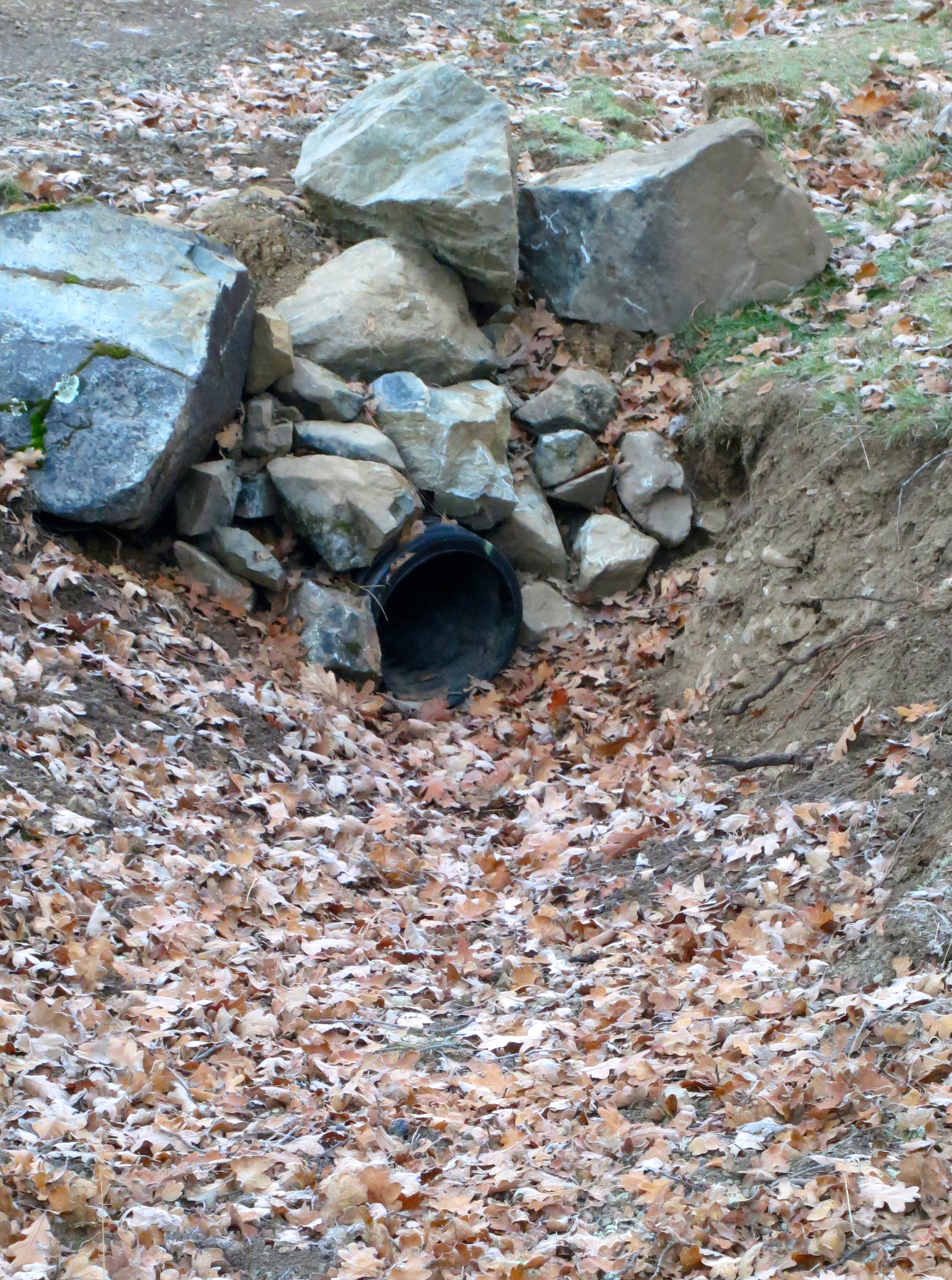
But first I have to report on two new developments. One, I found the skunk. He is a magnificent creature, by far the biggest skunk I have ever seen. I’d gone down after dark to collect our garbage can on the main road. And there he was, waddling. In fact he waddled right into our front road culvert. He is one culvert-loving skunk.  I am surprised he fit.

Two, I received an award from the Word Press blog Animal Couriers. I love these people. They transport people’s pets all over Europe but also throughout the world. And they do a lot with rescued animals. They’re good folks. Was the award for my great humanity, good looks, fine intelligence and quick wit? No, sigh. It was for my “off the wall” comments on their blog. So there you have it, in case you haven’t noticed before: I am an off the wall type of guy. I like it.

Upper Applegate Road, Southern Oregon. Photo by Curtis Mekemson.

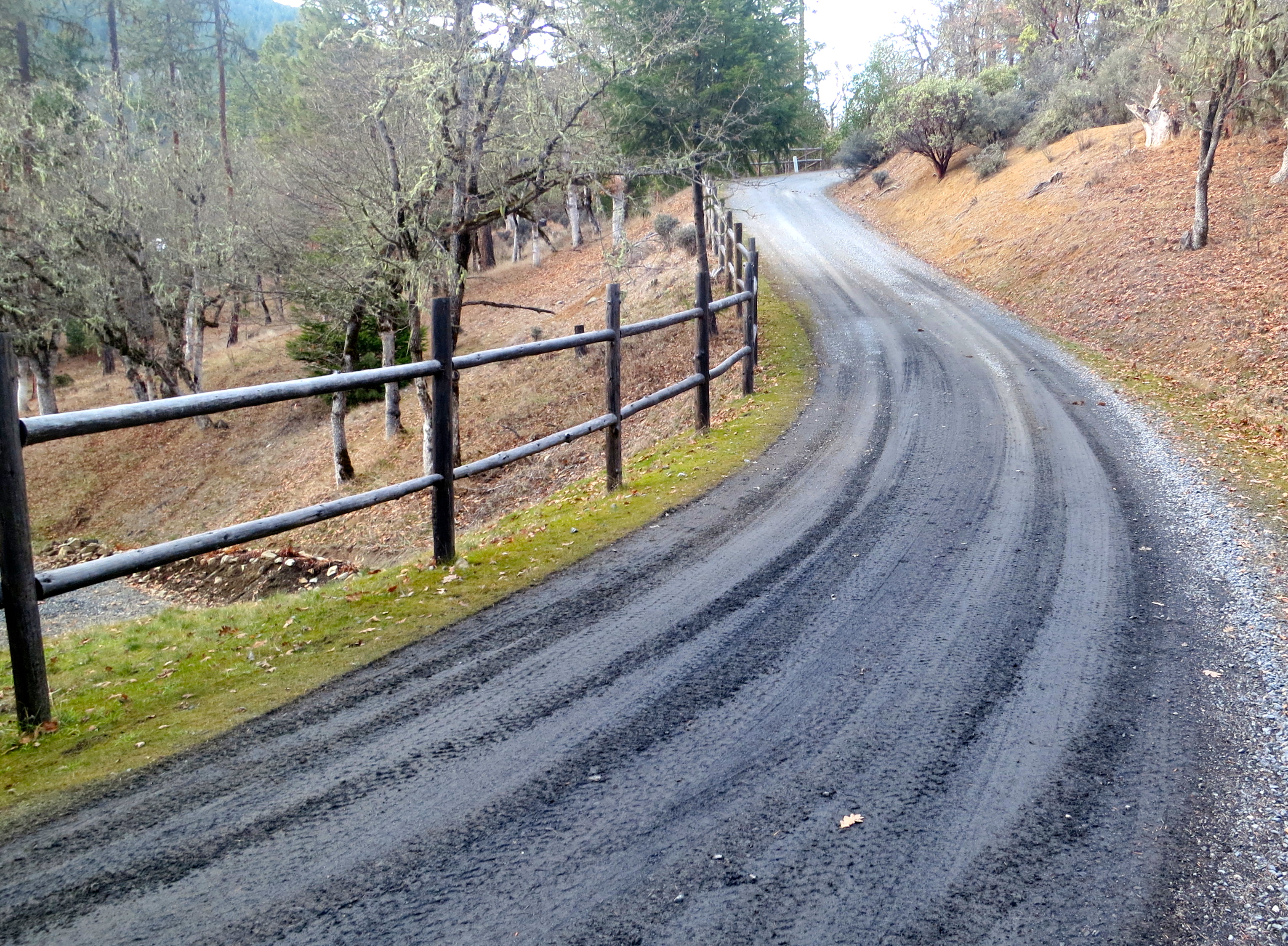
On leaving the mailbox, our counterclockwise journey takes us along Upper Applegate Road. It’s my kind of highway. At night, I can drive the whole 13 miles without meeting another car. Charlie the Dog lives up the road on the right. Our river property is just above the grove of trees.

Trail on Upper Applegate River in Southern Oregon. Photo by Curtis Mekemson.

I quickly leave the road. There is the Applegate River to explore. Besides, if I had been born to walk on roads, I would have been born with wheels.

There is this sign... but I am sure they can't mean me. Plus I haven't met the owner to ask for permission in my three years of living here.

There is this sign… but I am sure they can’t mean me. Plus I haven’t met the owner to ask for permission in my three years of living here.

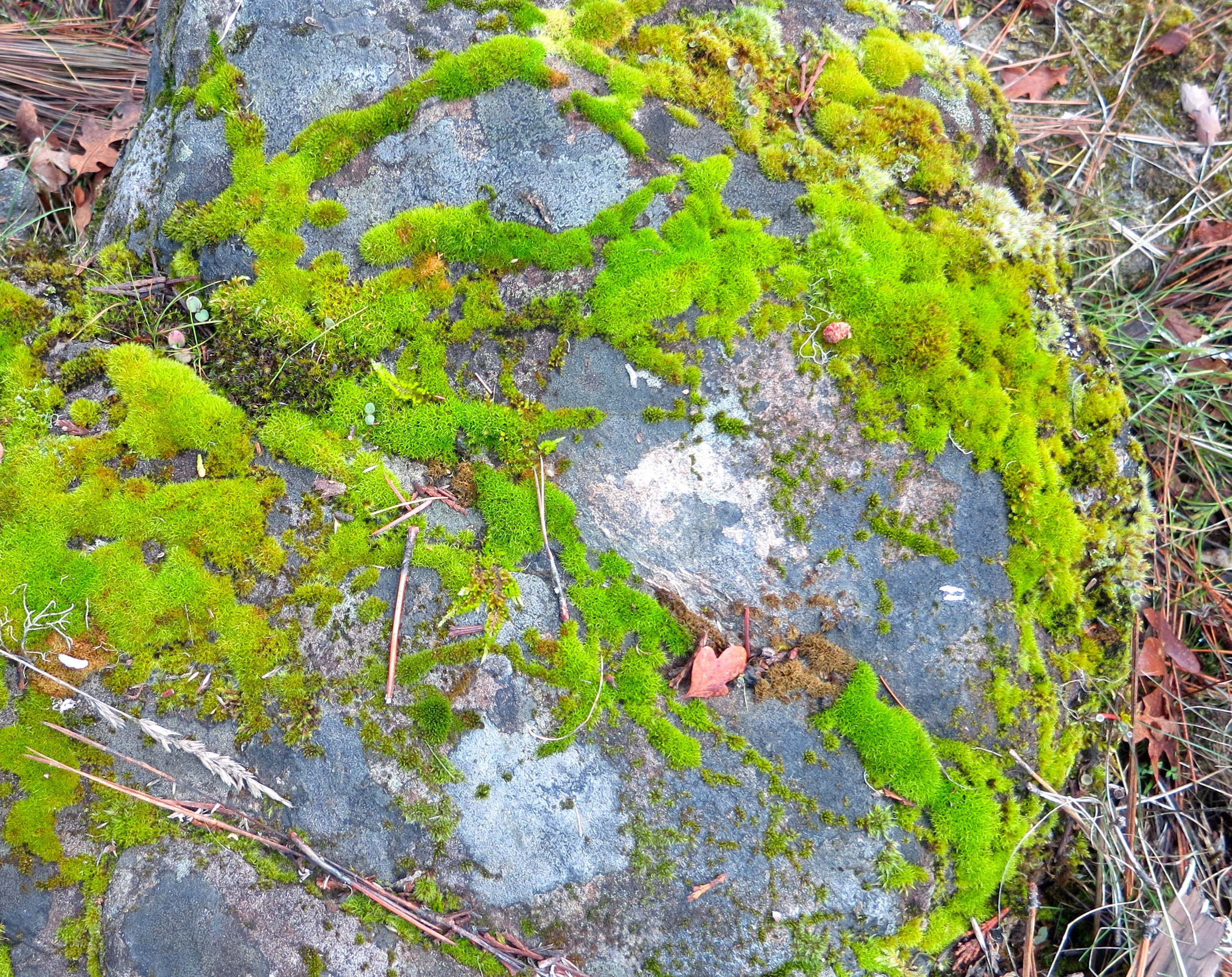
River rock covered in moss on Applegate River in Oregon. Photo by Curtis Mekemson.

I learned a long time ago that beauty surrounds us, if we are willing to see it. This river rock covered in moss is an example.

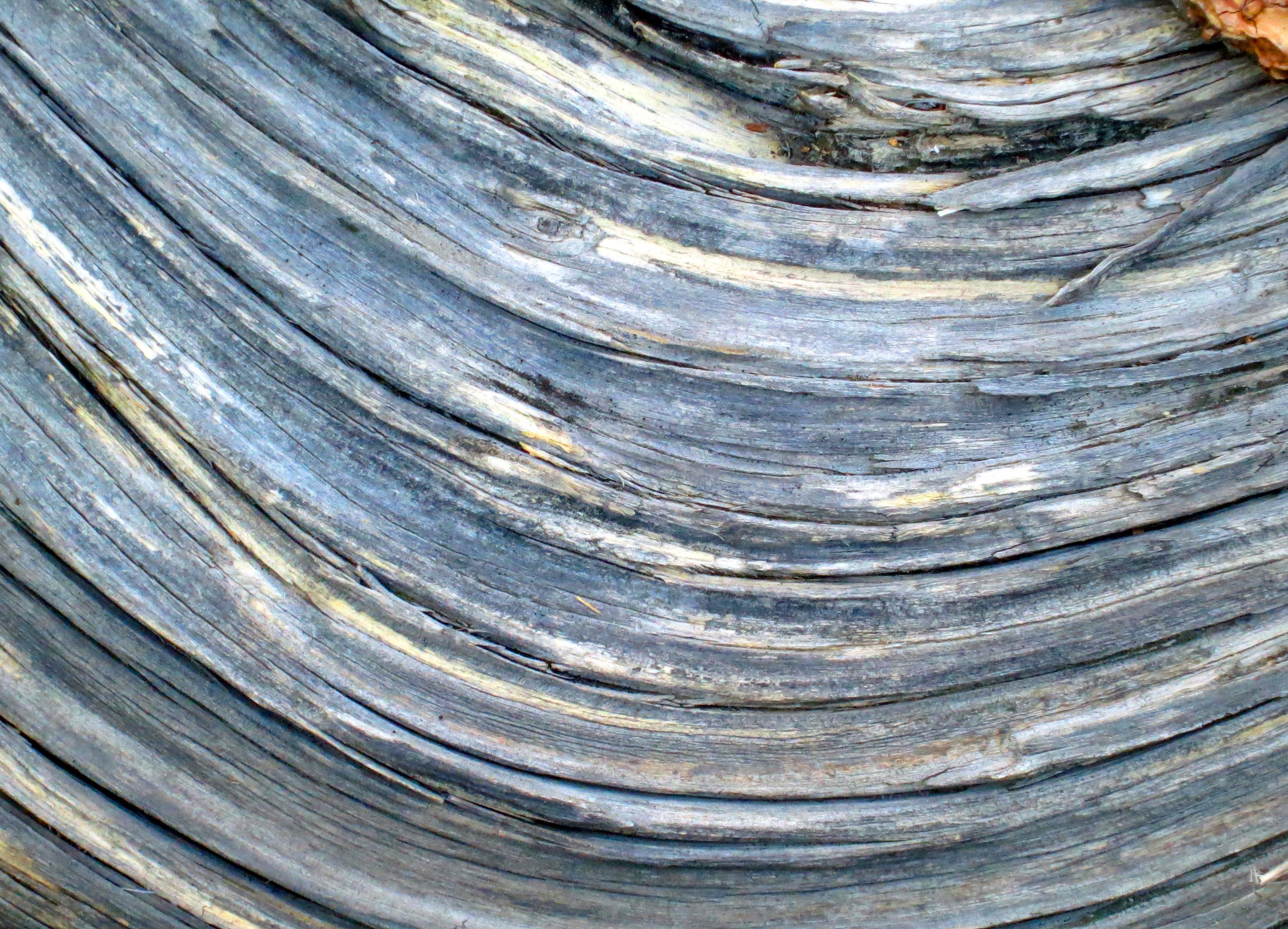
Wood grain photo on Applegate River in Oregon. Photo by Curtis Mekemson.

Another example: grains in wood. I found this long-dead limb just beneath the no-trespassing sign.

Applegate river in winter. Photo by Curtis Mekemson.

And here is the Applegate River. It is running low now because we haven’t had much rain but that doesn’t detract from its beauty.

Manzanita growing on Applegate River in Southern Oregon. Photo by Curtis Mekemson.

Recognize this bush? It’s smooth skin is the primary clue. This is manzanita. In the spring it hosts small pink flowers that smell oh so sweet. In the fall it sports bright red berries.

Manzanita Flowers. Photo by Curtis Mekemson.

A photo of manzanita flowers I took last spring.

Oregon Red Cedar. Photo by Curtis Mekemson.

We return to the road, walk past Charlie’s house, and come to this magnificent red cedar that marks our property line.

Granite rocks on Applegate River in Southern Oregon. Photo by Curtis Mekemson.

Before we head up Ethan’s Trail back to our house, we’ll make a quick detour onto the river property we co-own with out neighbors. We have to scramble over granite rocks to get there.

Applegate River. Photo by Curtis Mekemson.

But the journey is worth it.

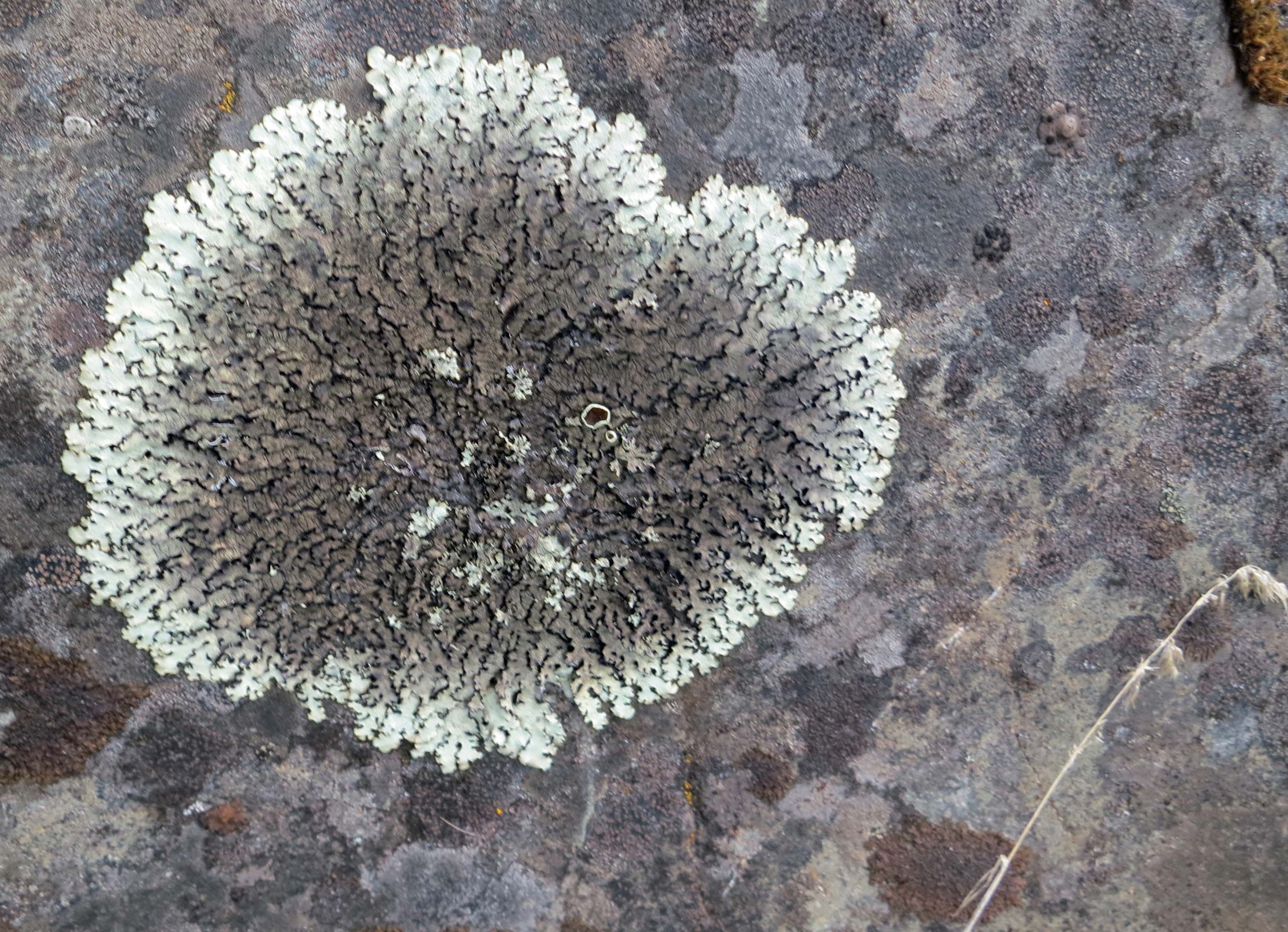
Lichen on rock along Applegate River. Photo by Curtis Mekemson.

Walking back from the river I find this lichen…

Pool of frozen water on rocks next to Applegate River in Southern Oregon. Photo by Curtis Mekemson.

This small pool of water that was frozen over and offered a fun reflection. The pine needle on the left side provides a perspective on the size of the pool.

I also found this site of a feast. Poor birdie.

I also found this site of a feast. Poor birdie.

We have now arrived at our front road. Our sunroom is hiding behind the oak tree on the left. Ethan's Hidden trail starts in the trees on the right. I found the skunk about fifteen feet below where I took the photo.

We have now arrived at our front road. Our sunroom is hiding behind the oak tree on the left. Ethan’s Hidden Trail starts in the trees on the right. I found the skunk about fifteen feet below where I took this photo.

As I head over for Ethan's Trail more neighbor dogs come out to greet. These are A guard dogs and regard everybody but their master with suspicion. I think Griz is finally starting to like me. I've told him waht a good boy he is at least a thousand times.

As I head over for Ethan’s Trail more neighbor dogs come out to greet me. These monsters are Anatolian guard dogs and regard everybody but their master with suspicion. I think Griz is finally starting to like me. I’ve told him what a good boy he is at least a thousand times. He actually wagged his tail.

His brother Omni, on the other hand, has that look that says come across the fence so I can eat you. He lost his eye as a puppy.

Omni didn’t. He has that look that says come across the fence so I can eat you. He lost his eye as a puppy and has been irritated about it ever since.

Ethan's trail

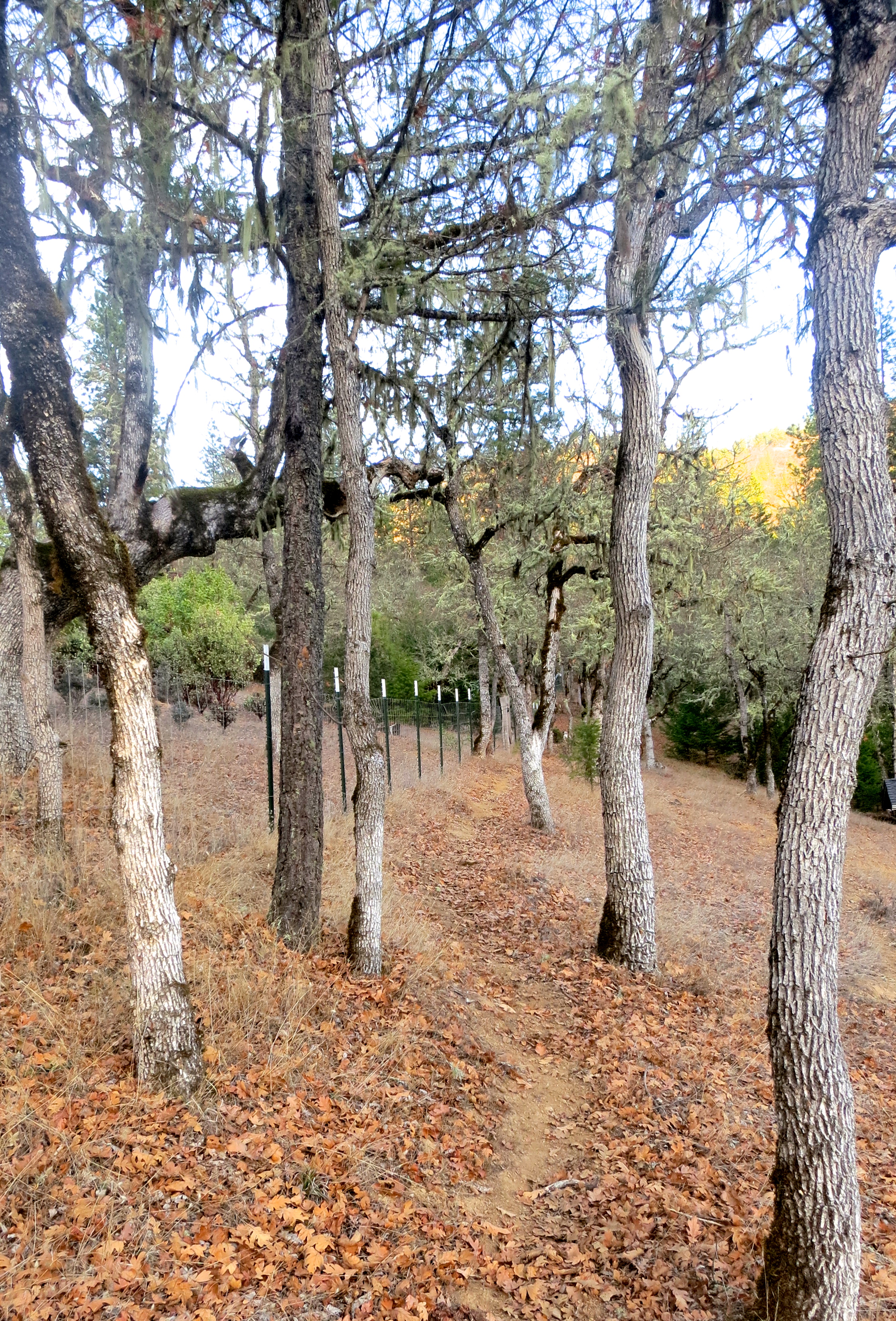
Applegate Valley trail through ponderosa Pines and Douglas Fir. Photo by Curtis Mekemson.

While Cody’s Bear Trail makes its way through White Oaks, Ethan’s Hidden Trail wanders through Madrone, Ponderosa Pines and Douglas Firs on the opposite side of our canyon.

Blackberry vines growing in the Applegate Valley of Southern Oregon. Photo by Curtis Mekemson.

Blackberries fill the canyon. By August these vines are loaded with fruit that the deer help us harvest, delicately.

When we can see our pump house, we are almost home. An interesting aside... When we bought the property we noted that the ceiling of the pump house was filled with outlets. "What the heck?" we thought. And then the light dawned. We were in rural Oregon. The pump house had been used for growing pot. I tease Peggy that If our retirement funds ever run out, I am going to become a pot farmer.

When we can see our pump house, we are almost home. An interesting aside… when we bought the property we noted that the ceiling of the pump house was filled with outlets. “What the heck?” we thought. And then the light dawned. We were in rural Oregon. The pump house had been used for growing pot. I tease Peggy that if our retirement funds ever run out, I am going to become a pot farmer. She smiles indulgently.

Madrone tree in Southern Oregon. Photo by Curtis Mekemson.

Finally, when we arrive at the large Madrone that provides our back yard with shade on hot summer days, we are home. The smooth skinned Madrone is related to the Manzanita. Thanks for coming along on the Mailbox walk.

NEXT BLOG: I will return to our pre-Christmas visit to Puerto Vallarta where Peggy and I will visit the small town of San Sebastian located high in the Sierra Madre Mountains.

A Walk on the Wild Side of Southern Oregon… to the Mail Box: Part I

Applegate River in Applegate Valley, Oregon. Photo by Curtis Mekemson.

Peggy and I always stop to admire the Applegate River. Here it reflects the afternoon sky and trees along our mailbox walk.

It’s a new year– a time for resolutions, a time for planning. Right? I mean, right! My laptop is poised and ready for action. But wait, my mind isn’t here. It’s outside wandering around in the woods with the deer and squirrels and foxes and bears.

Why should this be so tough? I love planning. I’ve been doing it forever. I still have plans I developed in high school bouncing around somewhere. I was doing MBO before Peter Drucker invented it. I have plans on top of plans. If I don’t control me, no one will. Or worse, someone else might.

But today, this third day of 2014, my mind just isn’t into planning. Fortunately, I am even better at rationalizing than I am at planning. One of my resolutions is more exercise. Isn’t it everybody’s? It’s on my list every year, regardless of the results. So I will go exercise. I’ll be resolute instead of wishy-washy. I will walk to our mailbox.

Join me as I take a walk on the wild side.

Applegate Valley, Oregon. Photo by Curtis Mekemson.

We will start our trip to the mail box following Cody’s Bear Trail. Each of our grandchildren (5 boys) has his own trail. Cody’s happens to be the trail the bear follows when it comes to visit.Last time Bear came by, he tipped over my grill.

Applegate Valley,Oregon deer trail. Photo by Curtis Mekemson.

The five-year old Cody and I could have named it Deer Trail, instead. (It’s more like a deer freeway.) But that lacks the pizzaz of Bear Trail.

Coming off Cody's Trail, I smelled a skunk. Was our culvert occupied again. Last summer, I had to replace the culvert. My 76-year-old friend Tuffy was removing the last few feet of the old culvert with a backhoe, when the fattest skunk I have ever seen came waddling out and disappeared into the blackberries where the foxes live...

Coming off Cody’s Trail, I smelled a skunk. Was our culvert occupied again? Last summer, I had to replace the culvert. My 76-year-old friend Tuffy was removing the last few feet of the old culvert with a backhoe, when the fattest skunk I have ever seen came waddling out and disappeared into the blackberries where the foxes live…

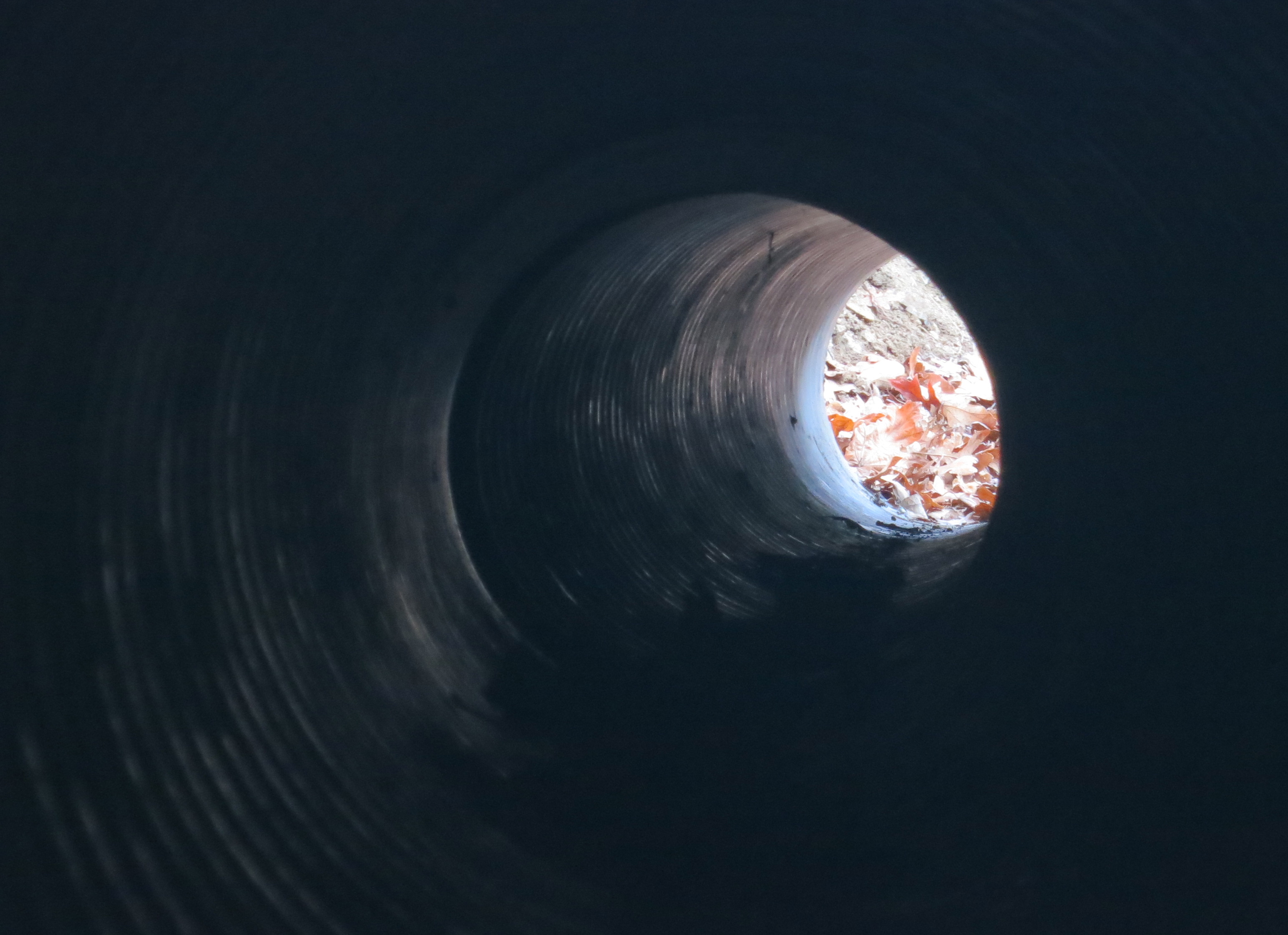
I got down on my knees and looked into the culvert. I wanted a skunk photo for this blog. Peggy hates it when I poke my head into the culvert; she's afraid I'll be sprayed. No worry, the pipe was empty.

I got down on my knees and looked into the culvert. I wanted a skunk photo for this blog. Peggy hates it when I poke my head into the pipe; she’s afraid I’ll be sprayed and she’ll have to live with me. No worry, the culvert was empty.

Looking back down the road past the culvert toward our house. I would have followed the road if I hadn't used Cody's trail.

Looking back down the road past the culvert toward our house. I would have followed the road if I hadn’t used Cody’s trail.

Blacktail deer herd in Applegate Valley, Oregon. Photo by Curtis Mekemson.

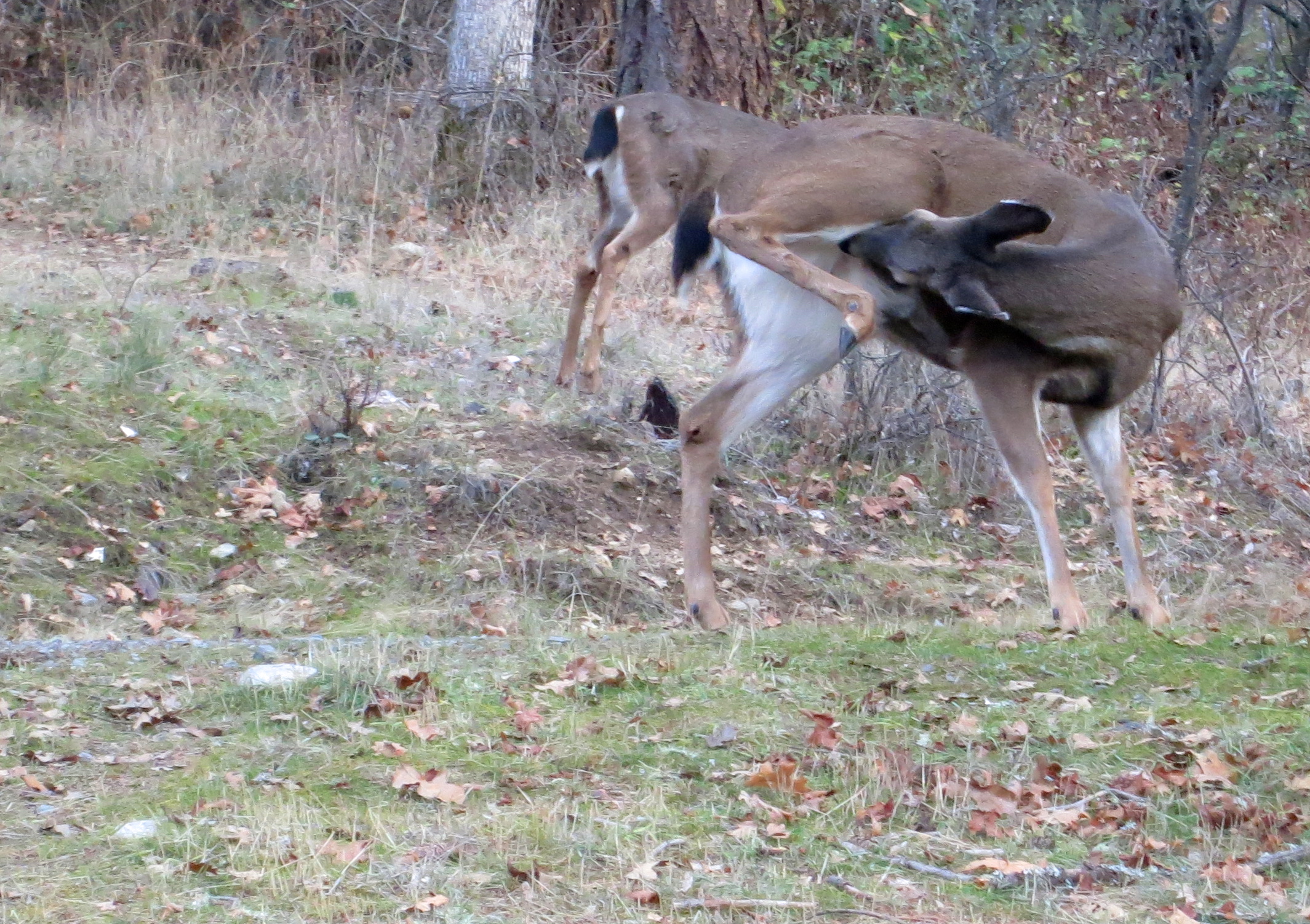
Ten members of the local Blacktail deer herd were present, however. They were curious about whether Peggy had left them any apples. I caught four of the deer in various poses.

Blacktail deer scratches belly in Applegate Valley, Oregon. Photo by Curtis Mekemson.

One doe had an irresistible itch on her belly.

Now I am faced with another choice. Do I walk up the neighborhood road past our fence, or do I cut through the woods?

Now I am faced with another choice. Do I walk up the neighborhood road past our fence, or do I cut through the woods?

My preference is always for the woods. Our property line on the back is the Klamath National Forest.

My preference is always for the woods. Klamath National Forest provides our back property line.

Hobbit Tree in Applegate Valley, Oregon. Photo by Curtis Mekemson.

So I head up the trail past the Hobbit Tree.

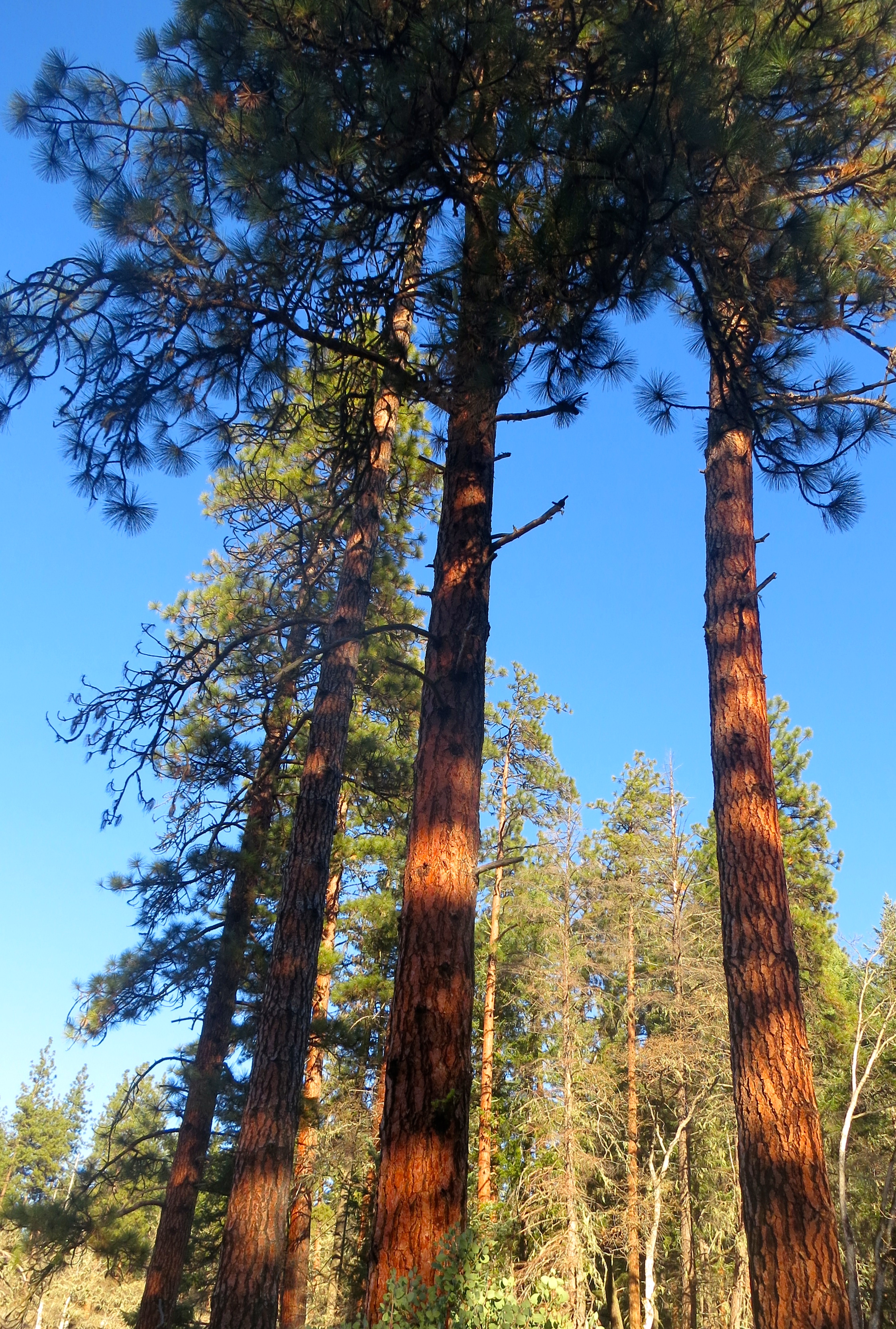
Ponderosa Pines in Applegate Valley, Oregon. Photo by Curtis Mekemson.

And past the Ponderosa Pines…

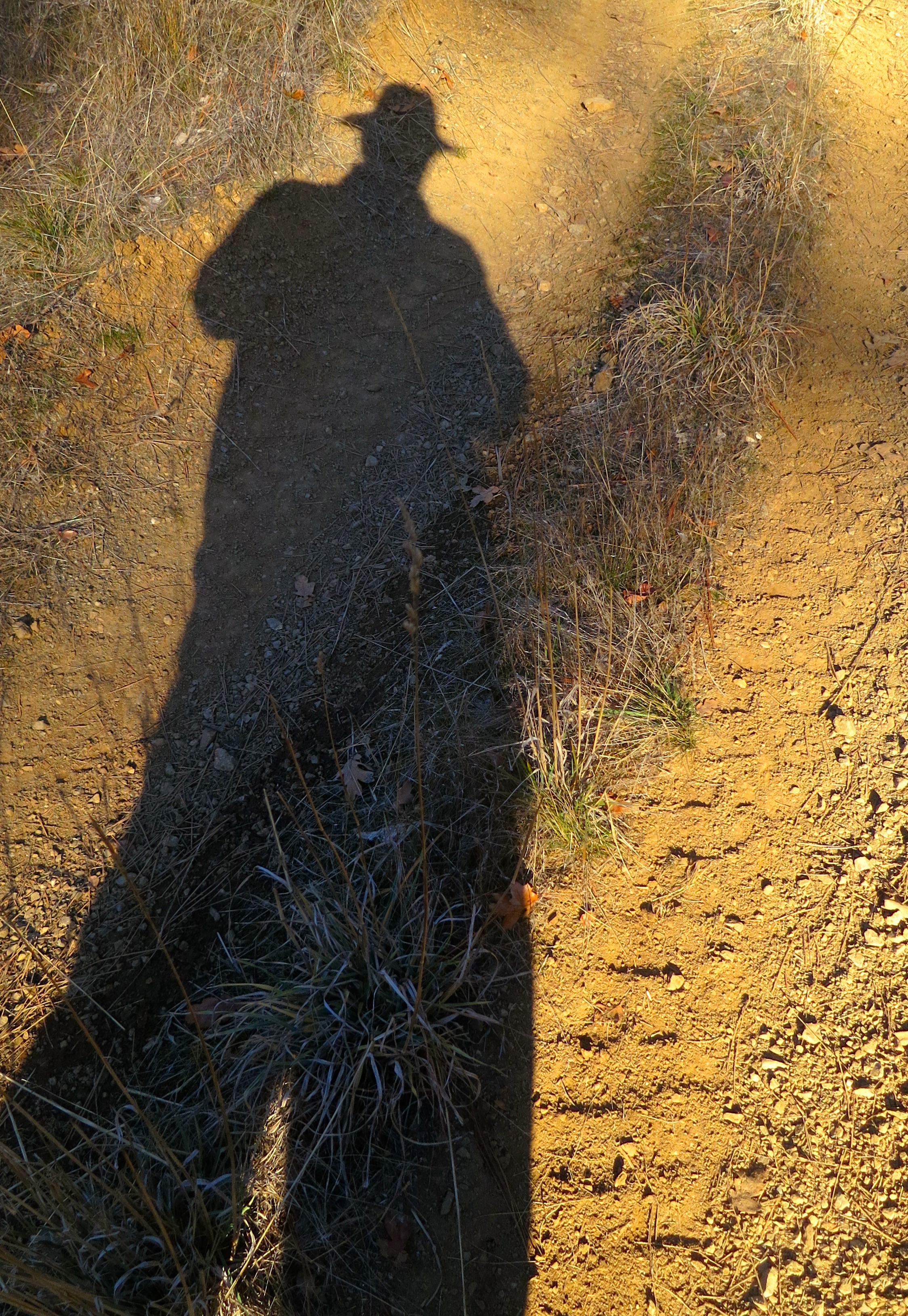
Just "me and my shadow strolling down the avenue."

Just “me and my shadow strolling up the avenue.”

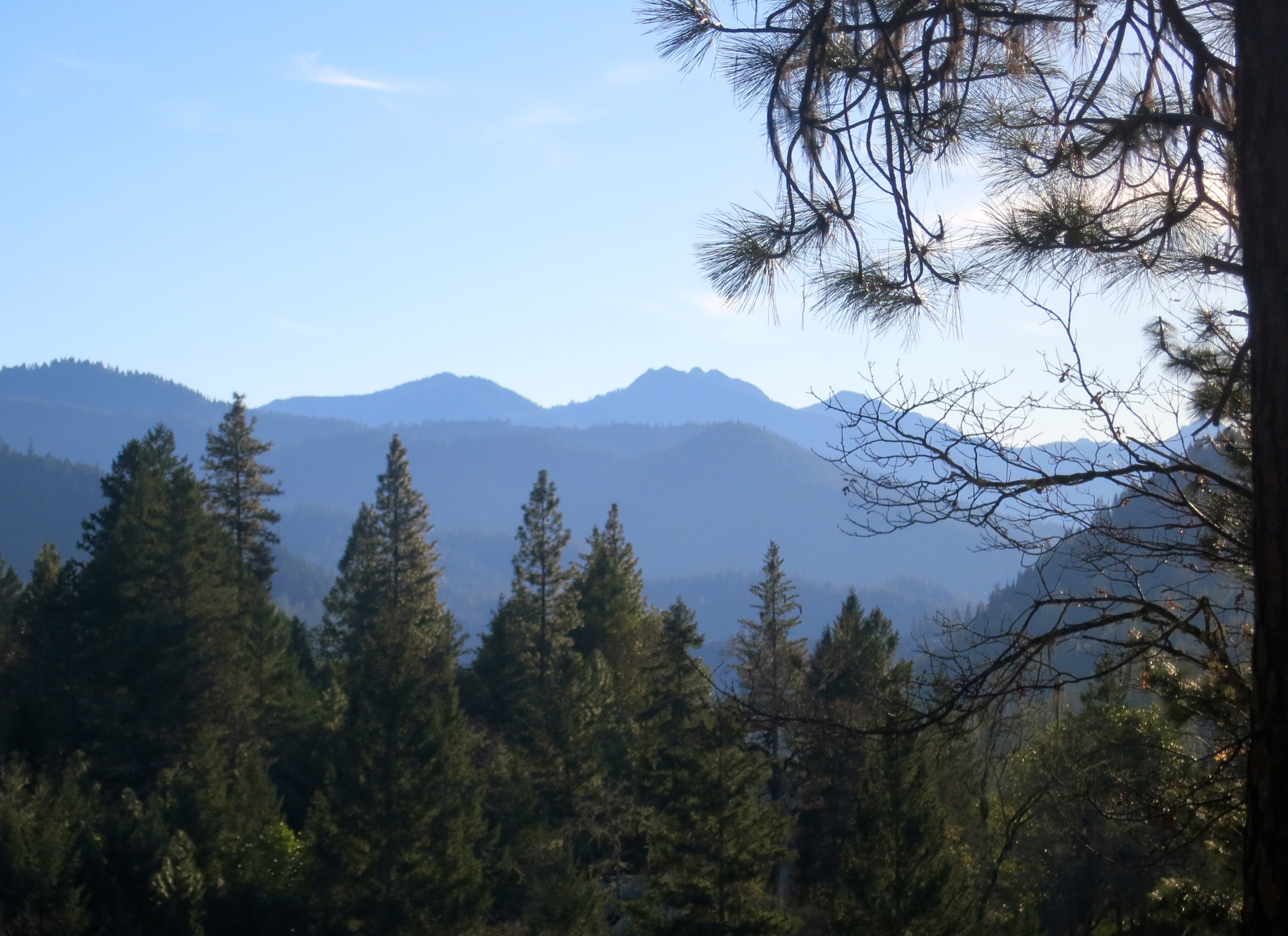
View of Red Buttes from Upper Applegate Valley, Oregon. Photo by Curtis Mekemson.

There is a small knoll at the top of the mailbox walk where I can look south toward the Red Buttes (looking quite blue) in California.

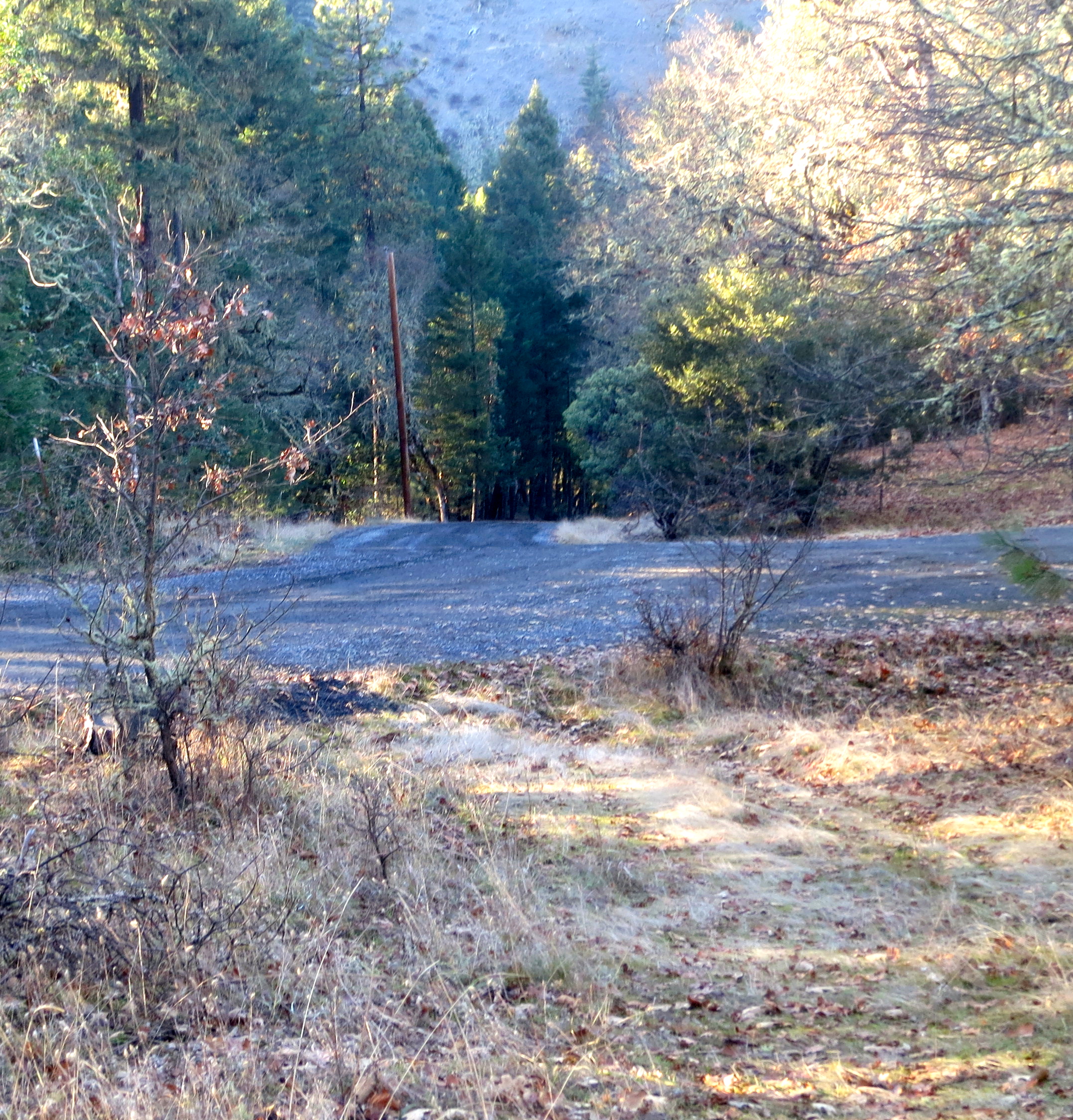
Now it's time we leave the woods and rejoin the neighborhood road.

Now it’s time we leave the woods and rejoin the neighborhood road.

A week ago this road was a sheet of ice.

A week ago this road was a sheet of ice.

And the goal! Our mailbox is on the right just across the Upper Applegate Road.

And the goal! Our mailbox is on the right just across the Upper Applegate Road.

My reward– a new Scientific American.

My reward– a new Scientific American. “Our Unconscious Mind, It exerts a profound influence: Shaping decisions, molding behavior, and running our lives.” Hmmm.

NEXT BLOG: We walk along the beautiful Applegate River, meet the neighborhood dogs, and follow Ethan’s Hidden Trail as we return to our home from the mailbox walk.

Puerto Vallarta’s Ubiquitous Public Art… A Walk Along the Malecon

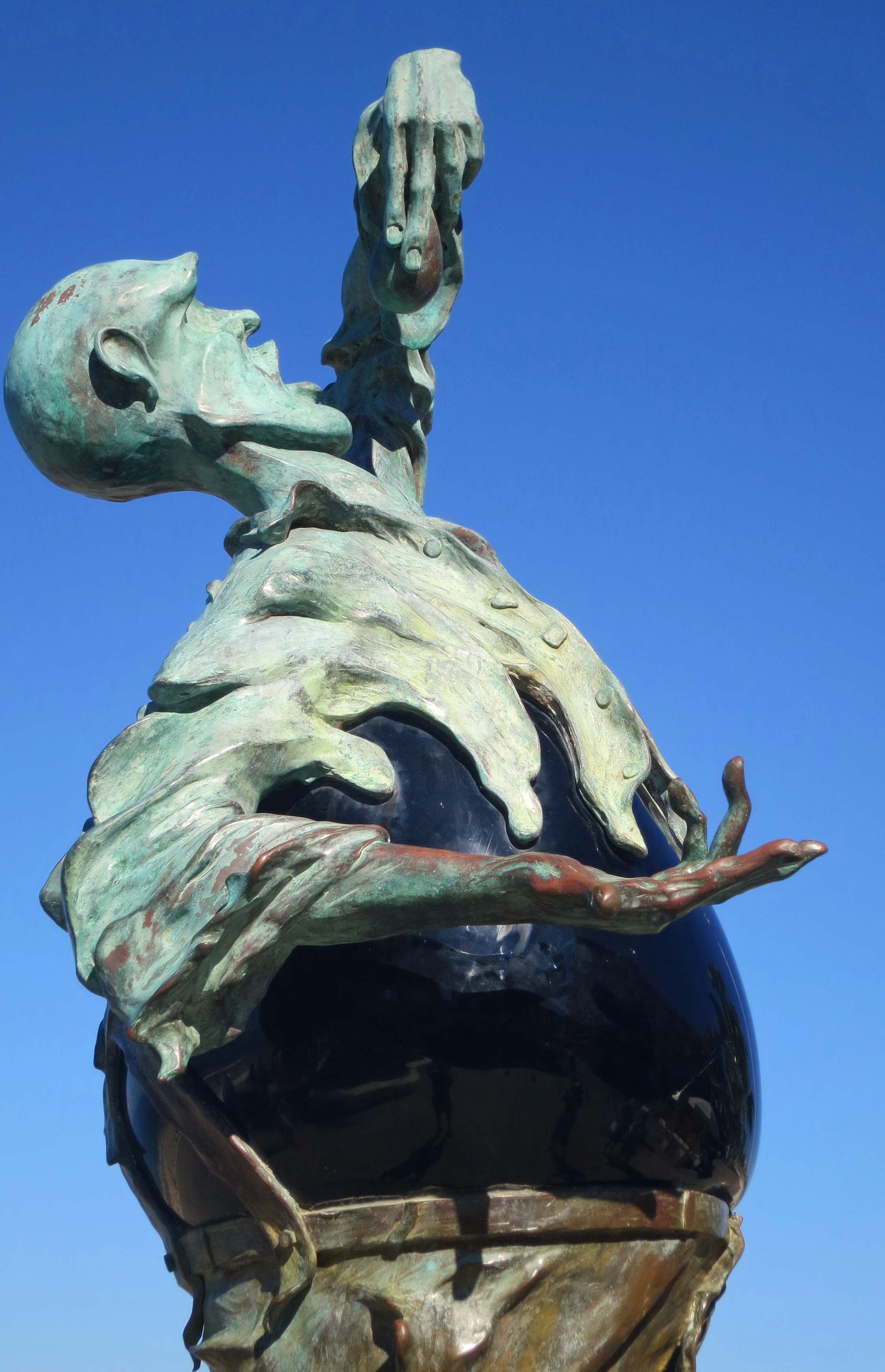
The Rock Eater (El Sulti Comepiedras) on the Malecon of Puerto Vallarta. Photo by Curtis Mekemson.

One of the more amusing works along the Malecon is the 7.8 foot Rock Eater created by Jonas Gutierrez in 2006. The magician, made from bronze with a huge obsidian belly, dangles a rock in front of his mouth.

One way I judge a community is by the quality and extent of its public art– mainly because it shows pride in the community. Other obvious indicators include parks, libraries, sports venues,  performance centers and museums. Each of these suggests a community has moved beyond mere survival mode and is striving to provide its residents with a quality life.

Schools, public transportation, affordable health care, sanitation, electricity, good government, and a fair legal system are essential but more basic.

Underlying all of this is a healthy economy. Puerto Vallarta’s is tourist-based. Huge cruise ships come in two or three days a week and disgorge thousands of passengers. The airport is always busy. Taxis dash about frantically. Hotels, restaurants and tours fill up, providing jobs and money to fuel the economy.

There are hundreds of small shops and individuals selling everything from trinkets to expensive art to visitors. Everyone in Puerto Vallarta, so it seems, is an entrepreneur– from the oily timeshare salesperson who buries you under a flood of words to the little girl who shyly offers you Chiclets.

Puerto Vallarta also has a thriving art community. It is easy to spend a day wandering in and out of galleries. At some point, the community decided that supporting public art projects would benefit both locals and visitors. Today, major works are found throughout Puerto Vallarta.

Nowhere are these art works more visible and accessible than on the Malecon, Vallarta’s beautiful walkway that separates the main part of the community from Banderas Bay. A short 30-45 minute stroll along the esplanade provides an introduction to some 20 works that invite you to admire and, in some instances, climb or sit on the art.

Rock Eater sculpture in Puerto Vallarta by Jonas Gutierrez. Photo by Curtis Mekemson.

A side view of the Rock Eater.

Photo of Puerto Vallarta Millennia sculpture by Curtis Mekemson.

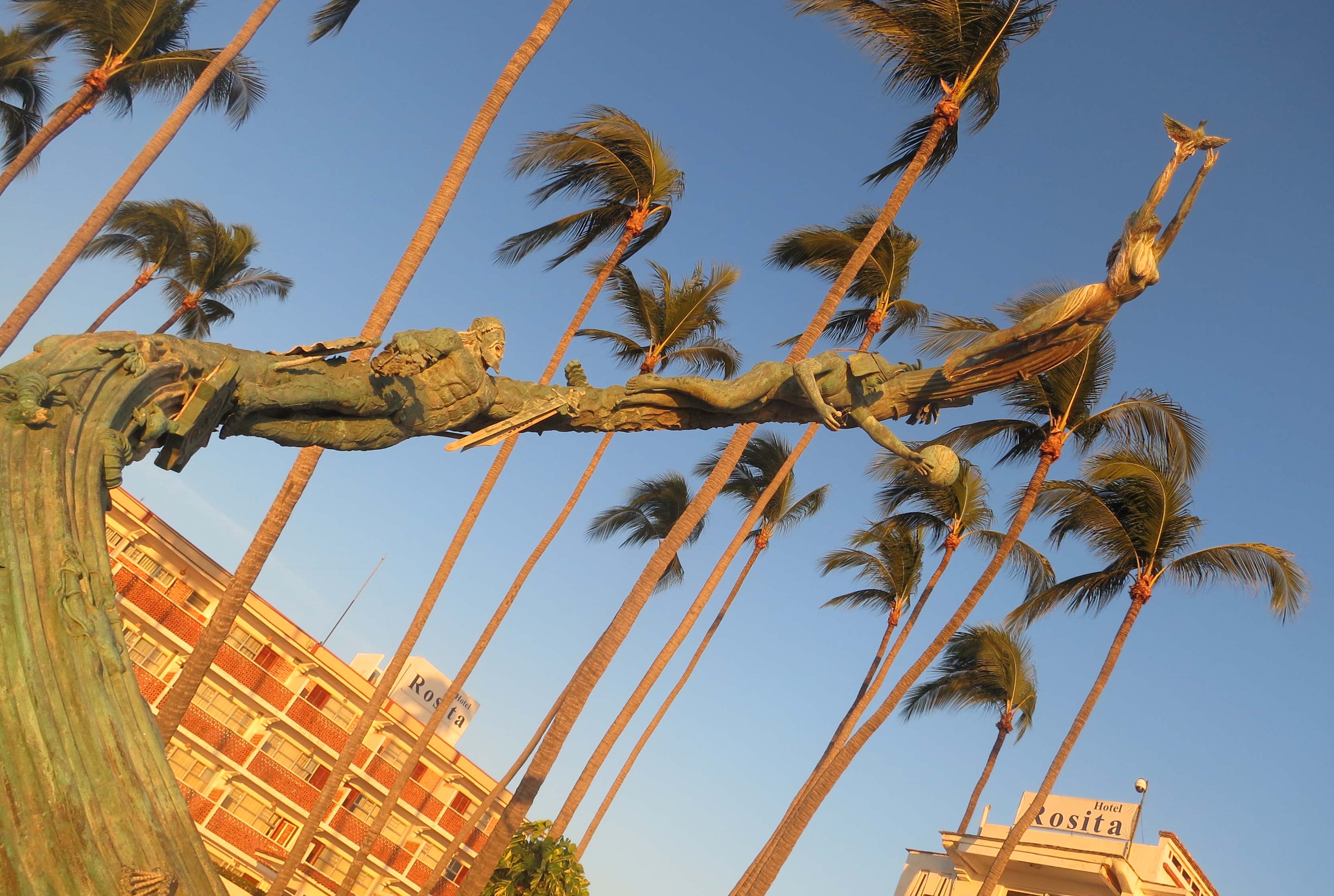
Millennia was created by Mathis Lidice in 2001 to celebrate the new millennium and is packed full of symbolism relating to the passage of time.

Photograph of Puerto Vallarta's Millennia Statue by Curtis Mekemson.

The top figure on the Millennia sculpture is a woman with a dove, symbolizing a hope for world peace. I find it humorous that giant Frigate Birds often consider the woman and dove a convenient roost.

If searching for whimsical art is your thing, you will find the Rotunda del Mar by Alejandro Colunga a real treat. This series of surreal creatures was created in 1997 and, according to its sculpture, they were “made so they could be used and abused.” Our grandkids Ethan and Cody took full advantage of the offer.

Photo of Rotunda del Mar sculpture in Puerto Vallarta by Curtis Mekemson.

Peggy provides perspective on one of the creatures created by Colunga.

Photo of Rotunda del Mar in Puerto Vallarta by Curtis Mekemson.

Another perspective.

Rotunda del Mar sculpture in Puerto Vallarta. Photo by Curtis Mekemson.

Imagine blowing this nose… These chairs were quite comfortable.

And how about this chair. It was made to accommodate either one very large person, or... (Photo by Peggy Mekemson.)

And how about this chai? It was made to accommodate either one very large person, or… (Photo by Peggy Mekemson.)

...three smaller people including our grandkids Ethan and Cody and Our daughter, Natasha. (Photo by Peggy Mekemson.)

…three smaller people including our grandkids Ethan and Cody and Our daughter, Natasha. (Photo by Peggy Mekemson.)

Sculpture by Alejandro Colunga in Puerto Vallarta, Mexico. Photo by Curtis Mekemson.

Not sure what this creature is but I am sure it meets the definition of whimsical.

Rotunda sculpture of an octopus in Puerto Vallarta. Photo by Curtis Mekemson.

I’ll conclude Colunga’s work with the octopus.

Sculpture in Puerto Vallarta by Sergio Bustamante in 1990. Photo by Curtis Mekemson.

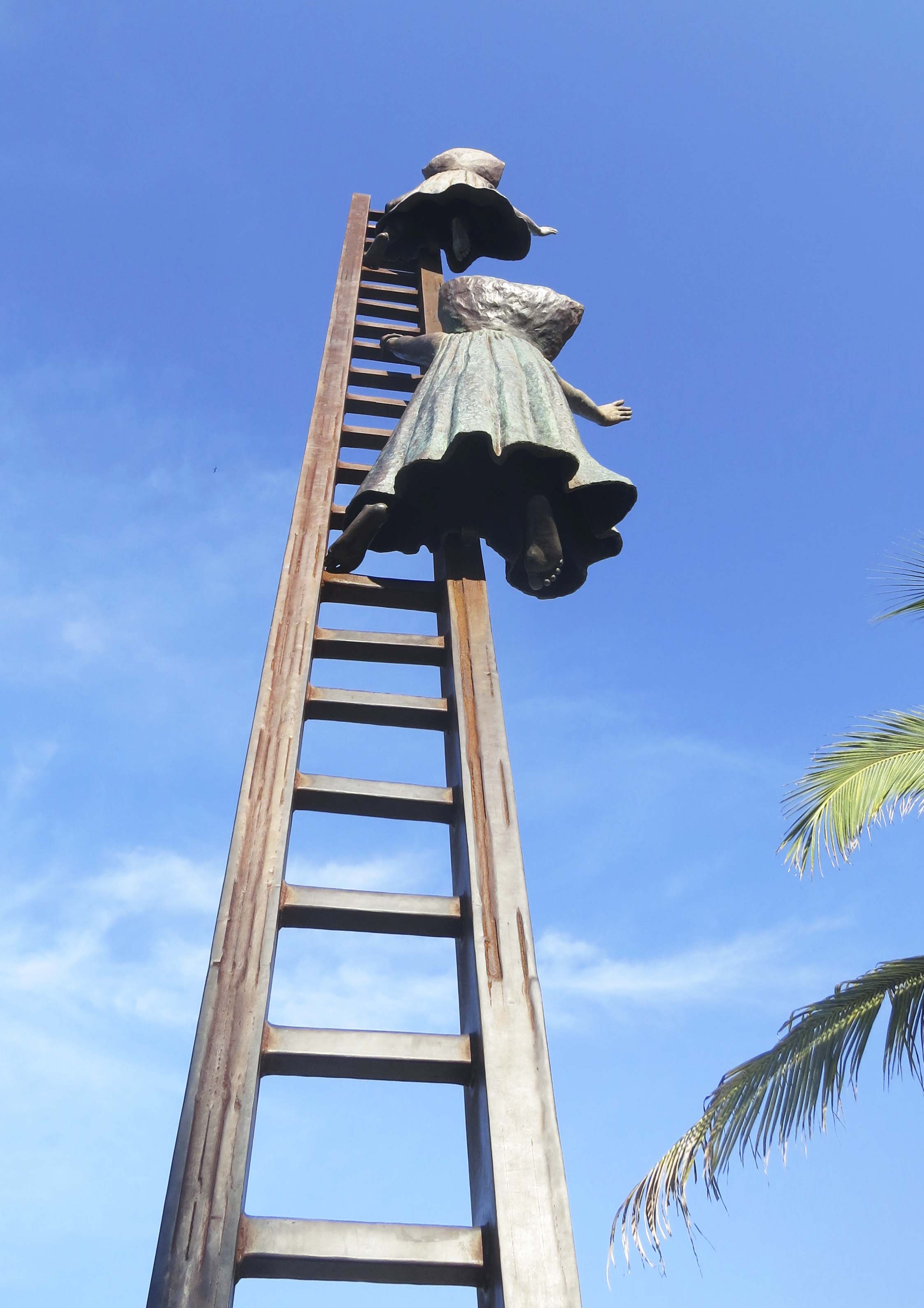
How about this face and what is she yelling at? It is part of a sculpture by Sergio Bustamante in 1990.

Sculpture in Puerta Vallarta by Sergio Bustamante. Photo by Curtis Mekemson.

As for the subject of her yelling, it’s her two children climbing up the ladder. According to the artist, the kids are searching for knowledge.

Photo of Triton Nereida sculpture in Puerto Vallarta by Curtis Mekemson.

Leave it to the Italian/Mexican artist Carlos Esprino to introduce Roman/Greek mythology to Puerto Vallarta. In this sculpture, the merman Triton, son of Neptune, courts the illusive sea-nymph Nereida. Triton’ s trident was missing for a while. (Photo by Peggy Mekemson.)

A closeup of Triton. You can see the love in his eyes. Or is that lust?

A closeup of Triton. You can see the love in his eyes. Or is that lust?

Seahorse sculpture in Puerto Vallarta. Photo by Curtis Mekemson.

This iconic sculpture of a boy riding a seahorse by Rafael Zammaripa is frequently used in photos representing Puerto Vallarta.

Photo of Puerto Vallarta sculpture Nostalgia by Ramiz Barquet. Photo by Curtis Mekemson.

These two lovers come with a story. It begins with the artist, Ramiz Barquet, falling in love with Nellie Galvan Duque as a young man. The two-part company and raise separate families only to be reunited many years later. A romantic walk the two took along the Malecon is the subject of this sculpture titled Nostalgia.

Sculpture of Vallarta Dancers by Jim Demitro. Photo by Curtis Mekemson.

This graceful rendition of the Mexican Hat Dance by the American artist Jim Demetro was inspired by a visit he made to Puerto Vallarta where he saw it being performed on the Malecon.

Dancing Dolphins sculpture in Puerto Vallarta, Mexico. Photo by Curtis Mekemson.

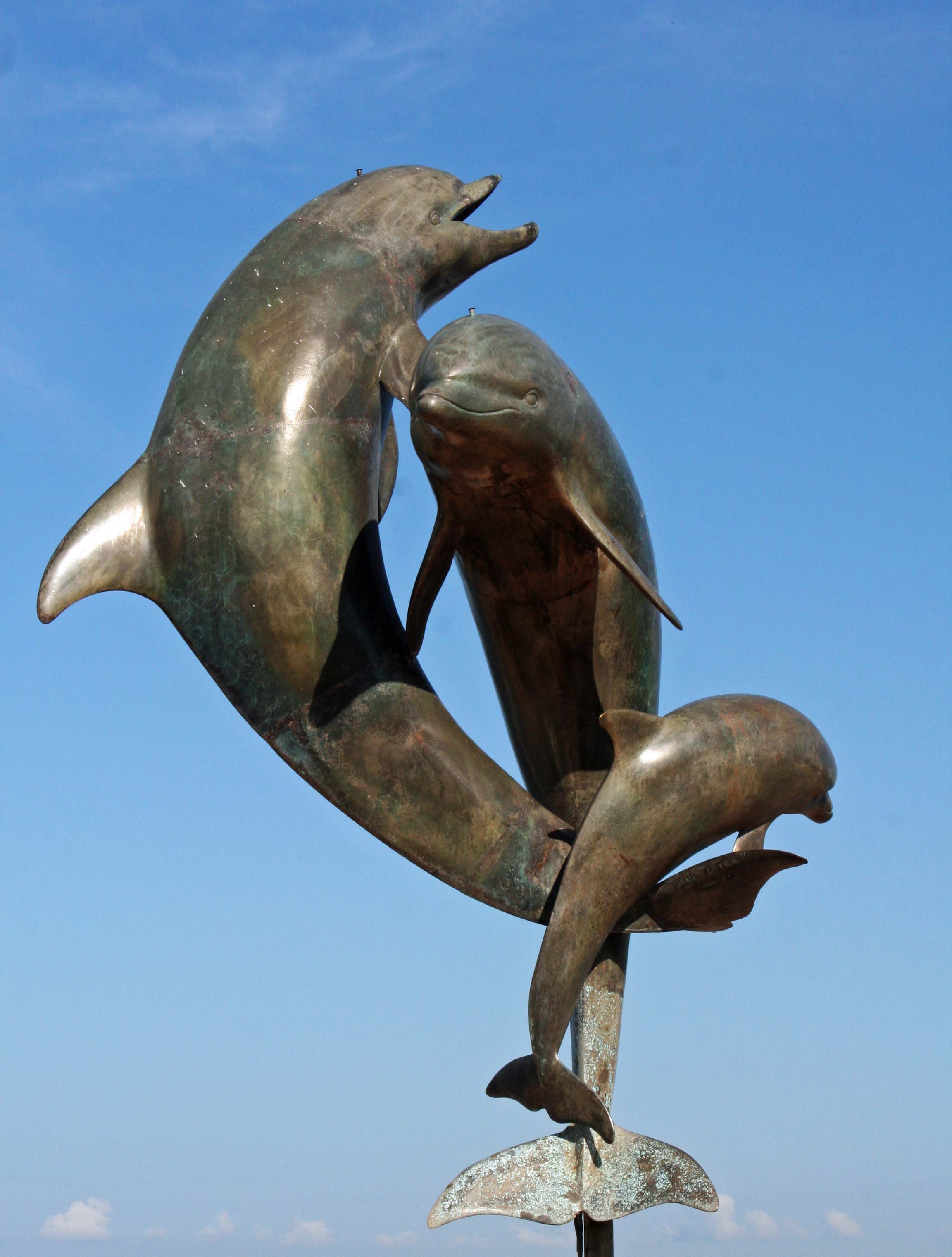
These dancing dolphins were also created by an American artist, James “Bud” Bottoms and were donated to Puerto Vallarta by her sister city, Santa Barbara, California.

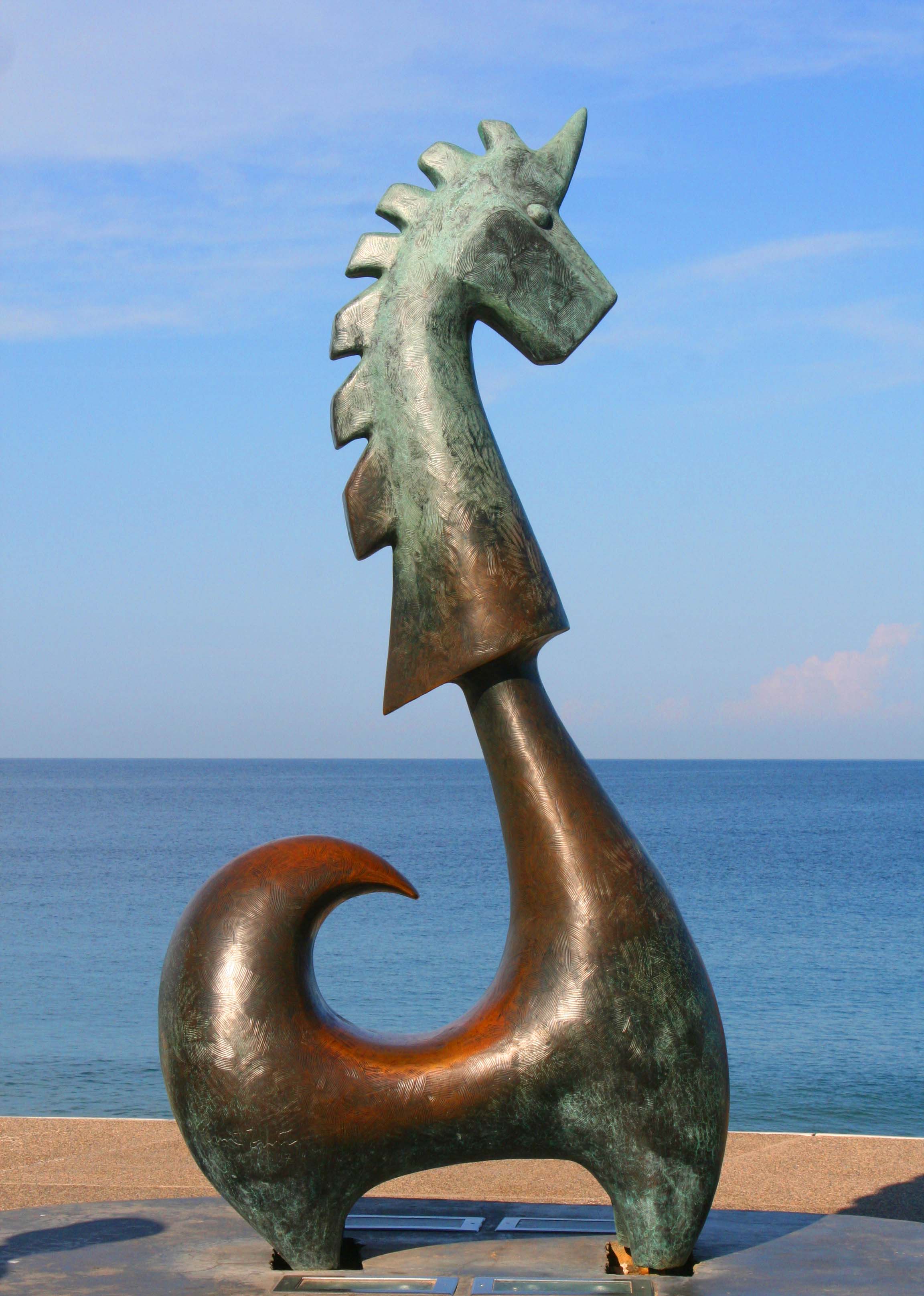
This Unicorn by Anibal Riebeling supposedly brings people good luck. (Photo by Peggy Mekemson.)

This Unicorn by Anibal Riebeling supposedly brings people good luck. (Photo by Peggy Mekemson.)

And what's an ocean without sea urchins? These were created by Blu– one of those guys with a single name. (Photo by Peggy Mekemson.)

And what’s an ocean without sea urchins? These were created by Blu– one of those guys with a single name. (Photo by Peggy Mekemson.)

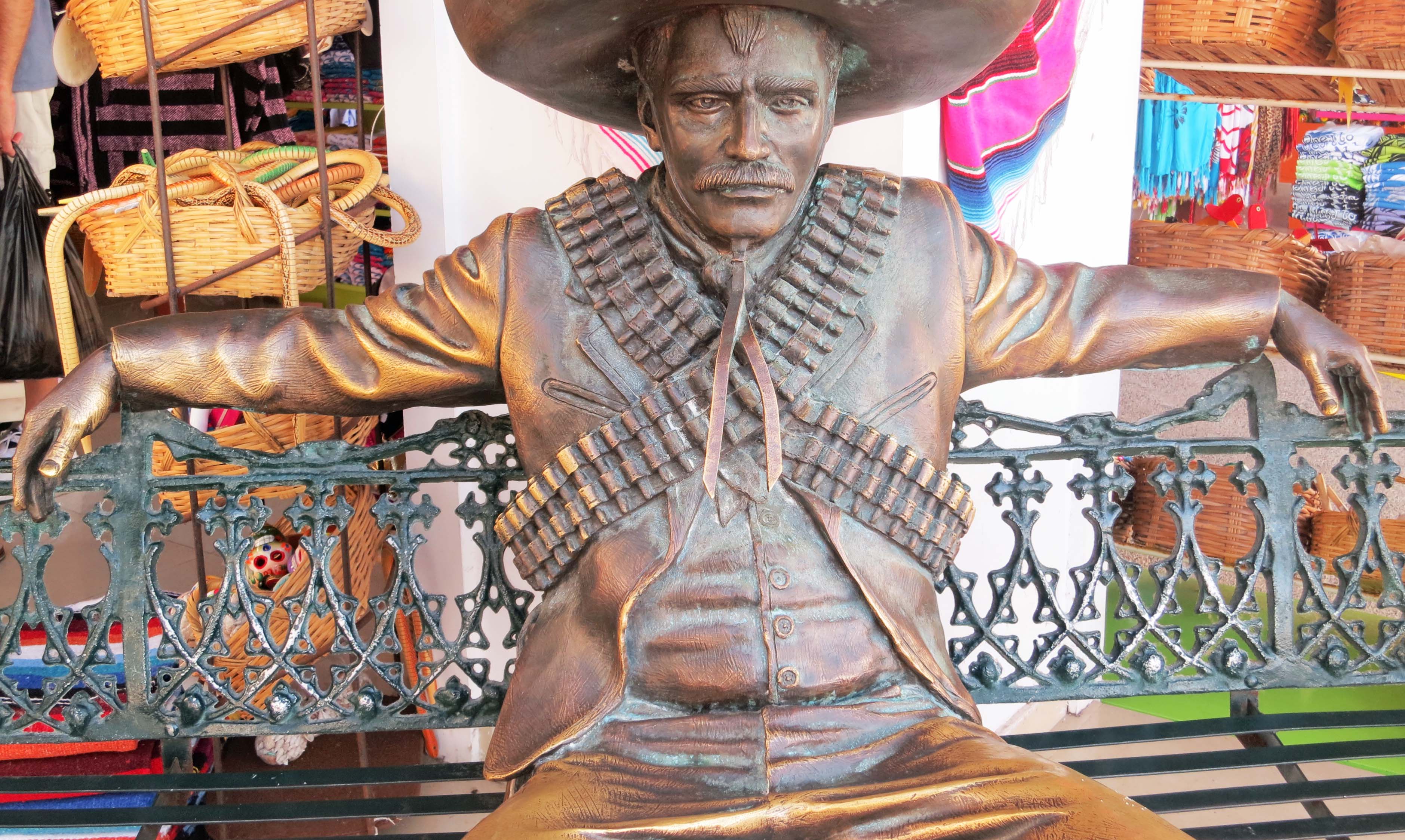
The last photo of the day is a sculpture of Pancho Villa, the Mexican Revolutionary. In my next blog Peggy and I visit the small mountain community of San Sebastian and learn about the 1911 Revolution from our guide. Puerto Vallarta sculpture of Pancho Villa. Photo by Curtis Mekemson.

The Bovine Trio, Other Weird Creatures, and I Wish you Happy Holidays…

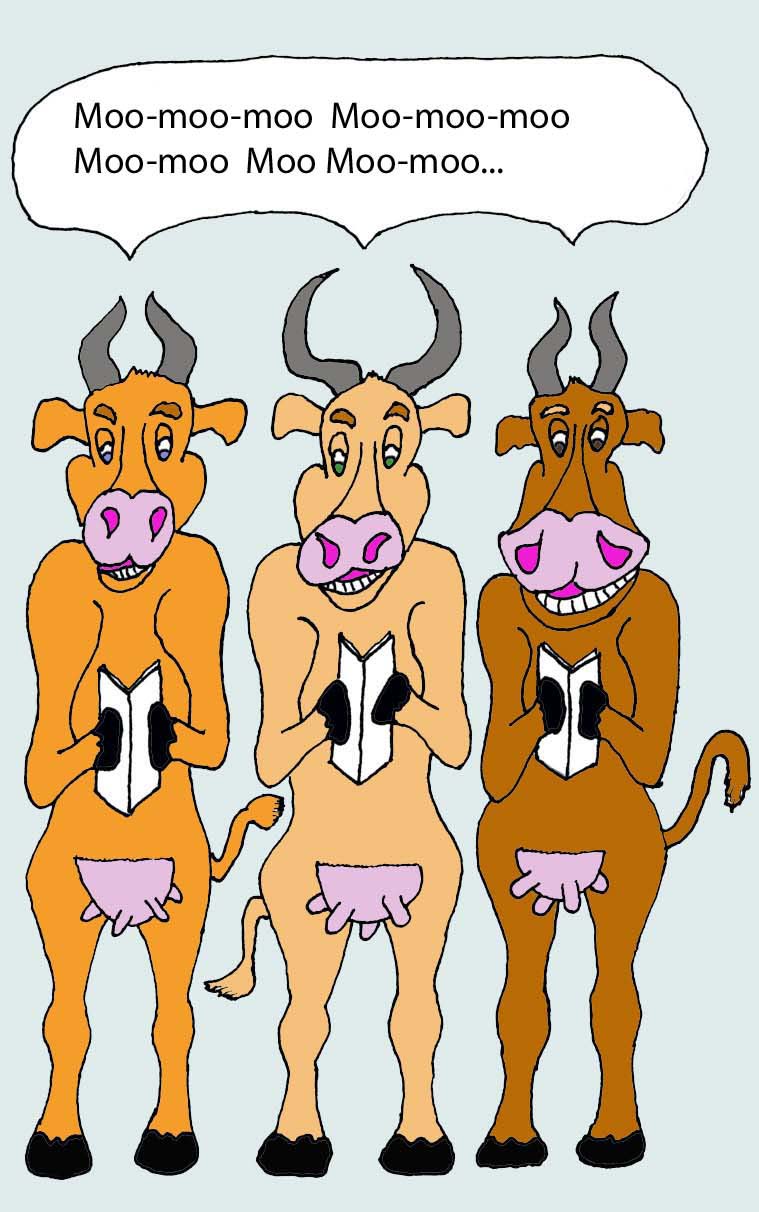
Moo'd music. Xmas Card by Curtis Mekemson.

Straight from Las Vegas, the fabulous Bovine Trio brings you moo’d music for Christmas.

I’ve always liked to send cards on the strange side– strange enough that they are hard to find. So I started making my own for family and friends. In the spirit of the season, I decided to share some of these cards with my blogging friends. Welcome to my wild (and, um copyrighted) collection. Enjoy.

You met my singing cows above. Like most chorus girls, they are slightly under-dressed. In addition to their obvious assets, they bring new meaning to the old phrase, hoofing it. They happen to be singing Jingle Bells, BTW. Here’s another carol you will be familiar with.

Silent Knight, Holy Knight Xmas Card by Curtis Mekemson.

Silent Knight, Holy Knight

Food is big over the holidays. Everyone has their favorite dishes. Mine is turkey with all of the trimmings! So here, in honor of holiday food, meet Tom.

Turkey dressing for Christmas dinner card by Curtis Mekemson.

Turkey dressing for Christmas dinner.

Turkey self-stuffing Xmas Card by Curtis Mekemson.

A miracle of modern culinary art– the self-stuffing turkey.

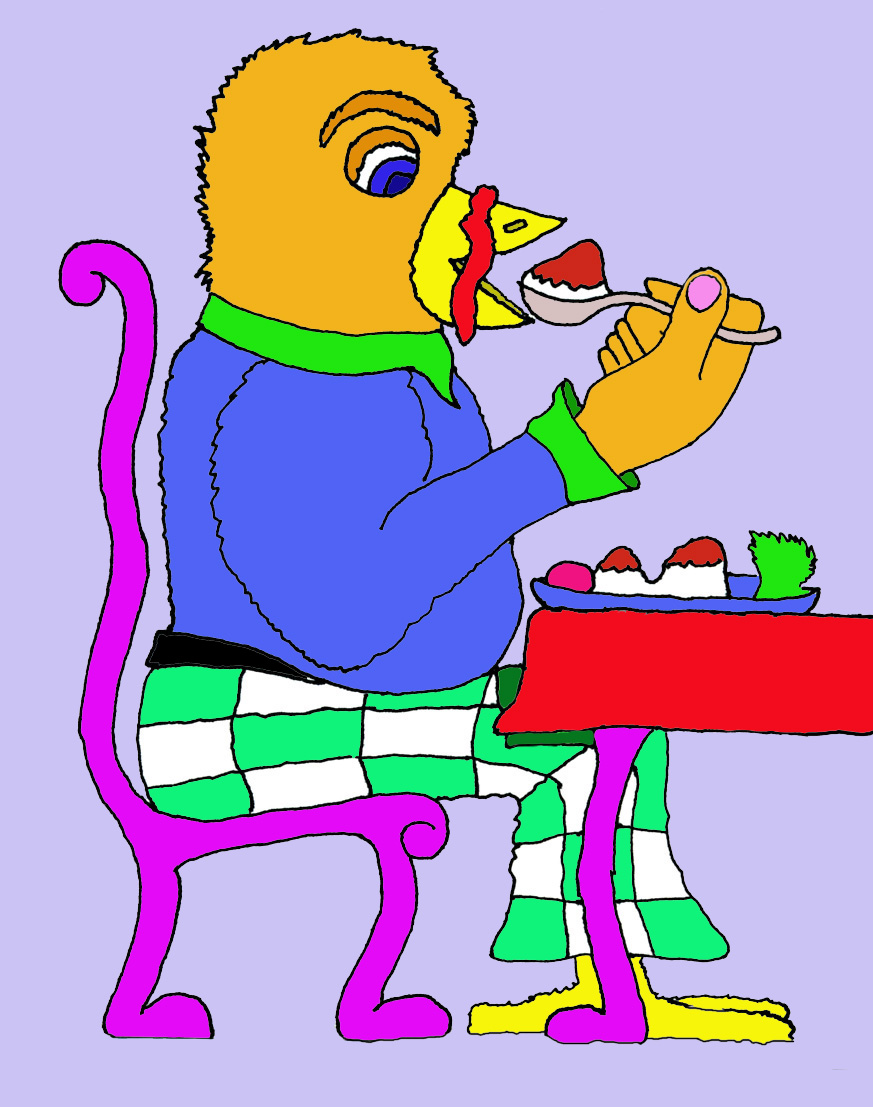
I will close my section on food with a few choice words from Chef Van Duck.

Christmas cards by Curtis Mekemson.

Chef Von Duck quacks up over bad yoke on Xmas morning.

Then we have Santa’s famous reindeer, who could ask for more faithful, hardworking companions. And what about the most famous reindeer of all– Rudolph with his famous nose. Did I say his? I recently learned a shocking secret.

Rudolph as a girl reindeer card by Curtis Mekemson.

Rudolph is a girl.

Male reindeer lose their antlers by December. Females keep theirs until spring. Have you ever seen a picture of Santa’s reindeer without antlers. Conclusion: Rudolph and all of Santa’s reindeer are girls. Here’s another Rudolph fact that the Christmas industry likes to downplay. Working conditions at the North Pole aren’t always the best…

Rudolph the Red Nosed Reindeer on strike. Xmas card by Curtis Mekemson.

Red nosed reindeer goes on strike.

But here is even bigger news– Santa hired a strike breaker.

Monty the mauve nosed moose Xmas Card by Curtis Mekemson.

Monty the Mauve Nosed Moose.

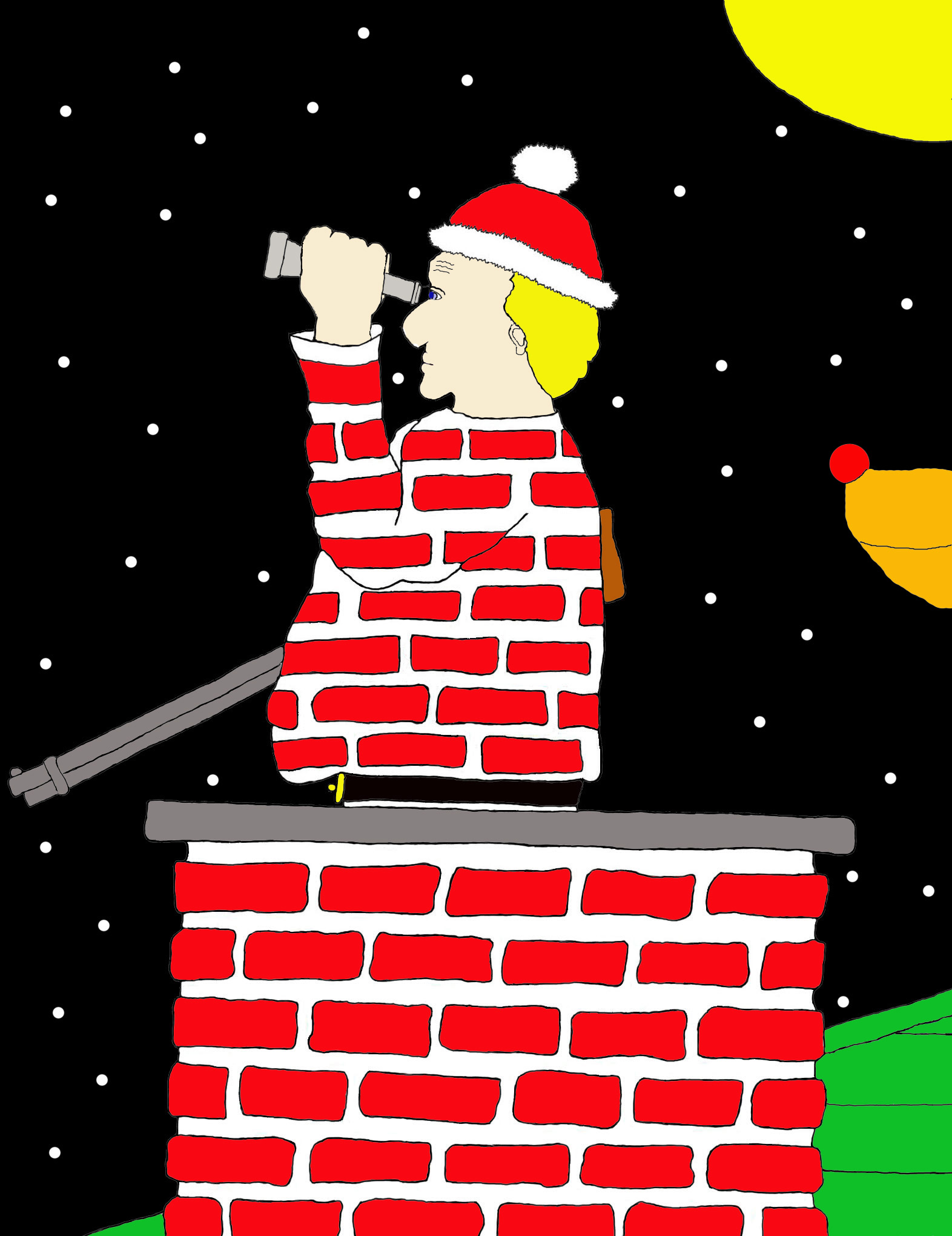
And finally… can you stretch your mind far enough to imagine a reindeer hunting season.

Christmas cards by Curtis Mekemson.

Carefully disguised hunter is about to get a flying lesson, free.

Beyond its religious significance, Christmas is about giving, right. Well maybe it’s a little about getting. But how often do you find yourself wishing you just had a few more days to prepare? Wouldn’t it be great if you could send the cat out to buy those hard-to-find gifts? Bad idea.

Christmas cards by Curtis Mekemson.

You never know what the cat might drag home.

So, I’ll just make a few suggestions for last-minute gifts…

Christmas Cards by Curtis Mekemson.

A box of Christmas Quackers.

A gift for the guy who has everything?

Dolly duck

Dolly duck

And finally…

Christmas Cards by Curtis Mekemson.

Primitive monster shows great presents of mind.

It’s a custom at Christmas to wish for world peace, right. One of Santa’s elves wishes we would hurry up and get it.

Christmas cards by Curtis Mekemson.

Santa’s elf displays an advanced case of missile toe.

As for Frosty the Snowman, he is wishing for an end to global warming.

Christmas cards by Curtis Mekemson.

Here lies Frosty the Snowman, victim of a premature meltdown.

And that’s it for my holiday Blog… Everyone in our household, including Peggy, me and the cow wish you and your family the absolute best for the holidays and 2014– Curt

Christmas Cards by Curtis Mekemson.


Peyote, Shamanistic Vision and Art… The Huichol Indians of Mexico

Huichol work of art representing the journey to gather Peyote. Photo by  Curtis Mekemson.

Peggy and I bought this Huichol yarn art painting several years ago. Yarn is pressed into beeswax to make the painting. This piece represents the Huichol’s annual journey to the sacred mountain of Wirikuta to gather peyote, which is central to their religion.

My fascination with indigenous art was piqued again on our recent trip to Mexico. The Huichol Indians, one of the last tribes in North America that has preserved pre-Columbian cultural traditions, are noted for their brightly colored bead and yarn art.

You can’t miss their work as you stroll down the streets and through the markets of Puerto Vallarta. What most casual visitors don’t realize, however, is that the art incorporates shamanistic visions inspired by peyote. Each piece provides an insight into the religion and mythology of the Huichol.

For example, the round buttons in the center of the painting above represent peyote. Just to the left of the peyote is the plant solandra, also with hallucinogenic qualities. The deer serve as intermediaries with the gods and the eagle serves as a messenger. Below the deer on the right is maize. To the left of the maize is what I believe is a prayer arrow with eagle feathers attached and to the left of that another arrow that has been shot into the base of a peyote plant. The wiggly lines represent communication that is taking place– between everything.

The Huichol, as they are known in Spanish, or the Wixaritari, as they call themselves, live in the Sierra Madre Occidental Range of Mexico. Each year, representatives of the tribe make a journey of several hundred miles to the sacred mountain of Wirikuta in central Mexico where they gather peyote.

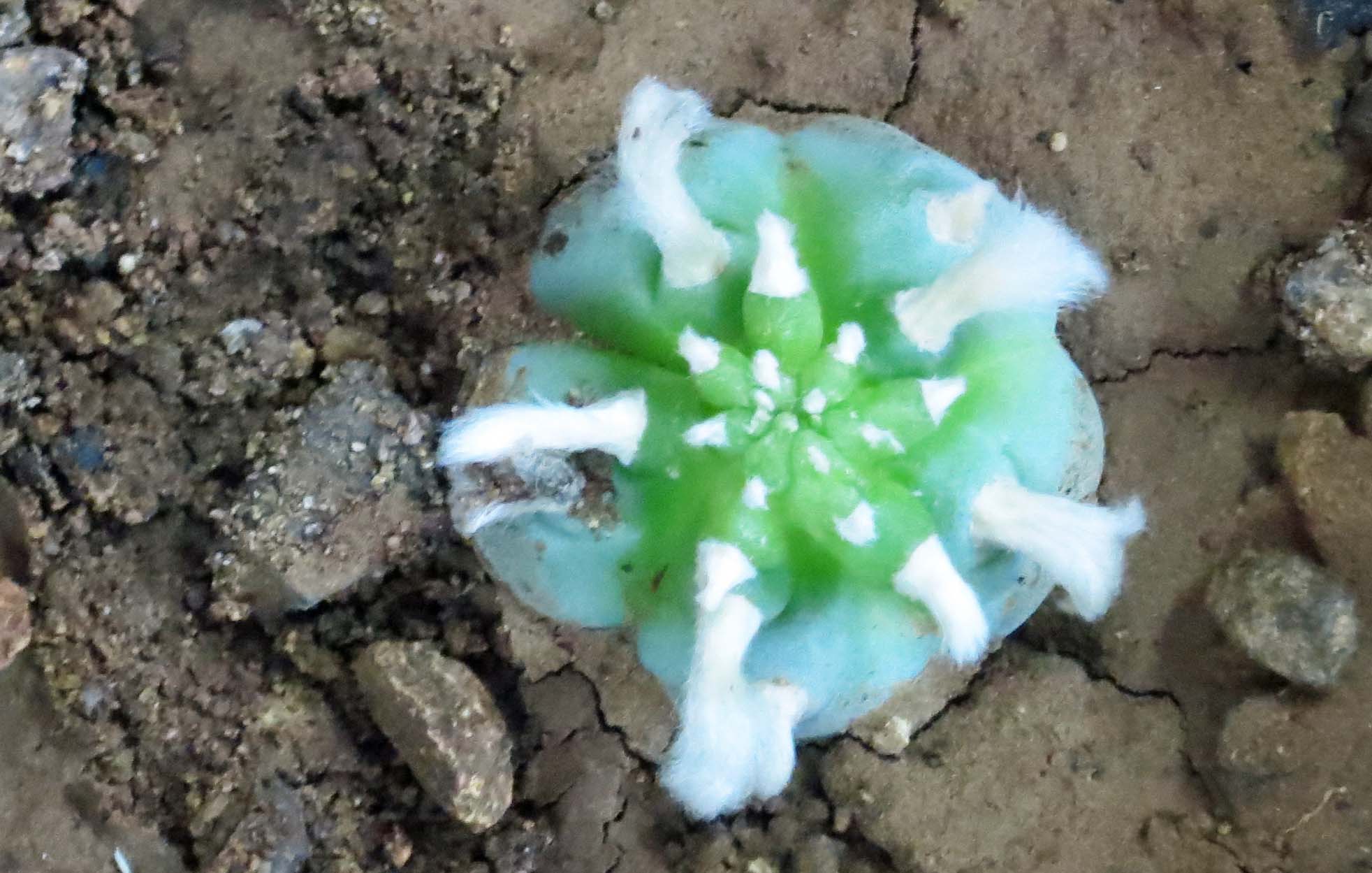
Peyote is a small cactus with psychoactive alkaloids, particularly mescaline, which can create hallucinogenic reactions similar to those created by LSD. (If you’ve been around for a while, you will immediately think of Timothy Leary and the 60s.)  Effects include alterations in the thinking processes, sense of time, and self-awareness. Colors are said to appear brilliant and intense. Synesthesia, where senses interact, may also occur. An example of the latter is seeing colors when listening to music.

Peyote photo taken by Curtis Mekemson in Mexico.

The peyote plant is a small, spineless cactus that contains mescaline, a hallucinogenic drug. 

Huichol Shamans use the peyote to enter a trance where they communicate with the gods of the Huichol people. The shamans then make small yarn paintings known as Nierikas that represent the visions they experienced. The paintings are left as offerings to the gods in caves, temples and streams.

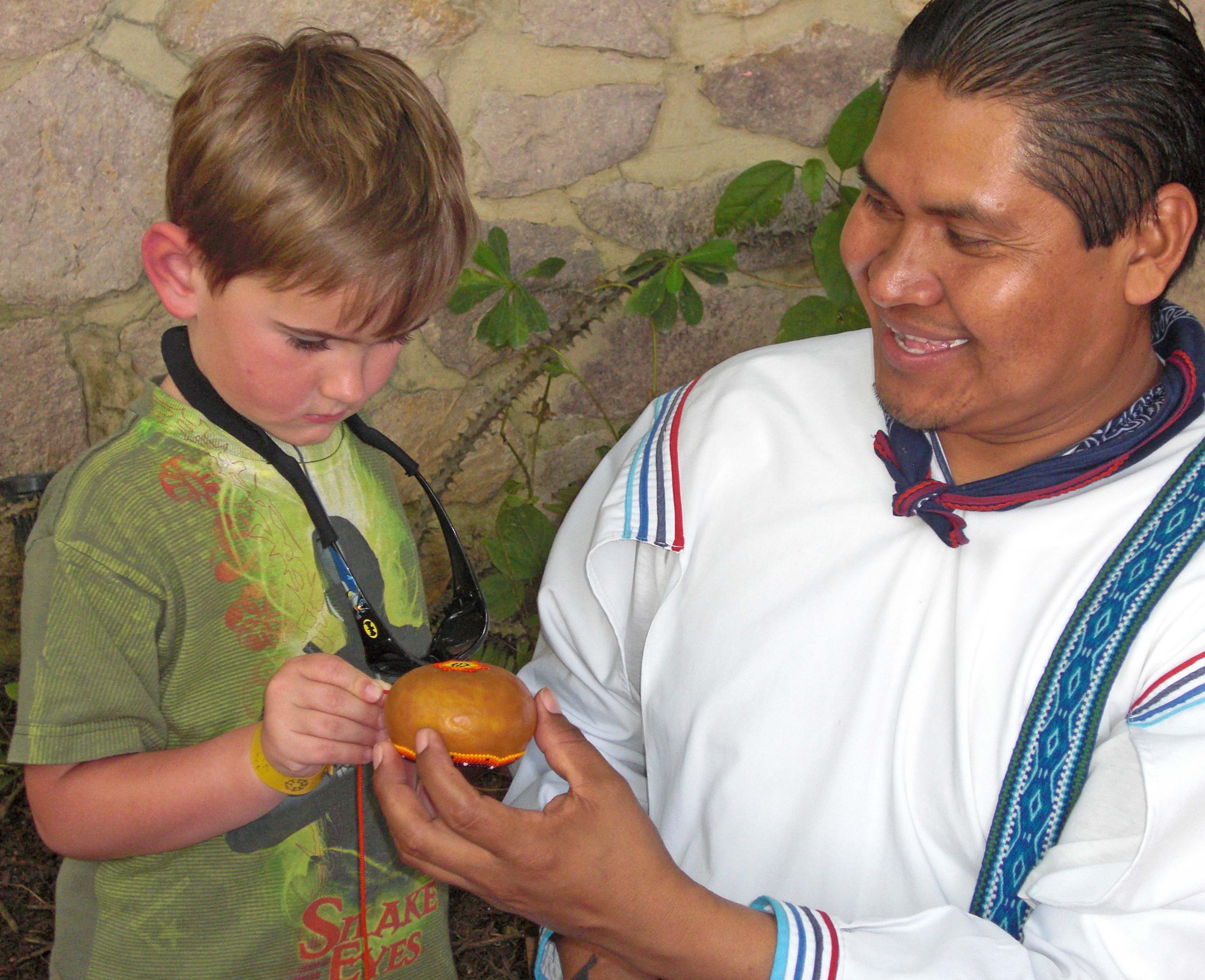
The Nierikas serve as the foundation for the Huichol art found in Puerto Vallarta, Guadalajara, and other urban locations. We have bought several pieces of the art, as has our daughter, Tasha. Our favorite Huichol artist for small bead art, Ernesto, maintains a table along the Rio Cuale. This year he took time to let our grandson, Cody, press some beads into a piece he was working on.

Ernesto shows lets our grandson Cody press beads onto a gourd covered with beeswax. (Photo by Ethan's mom, Natasha.)

Ernesto shows our grandson Cody how to press beads onto a gourd covered with beeswax. (Photo by Ethan’s mom, Natasha.) 

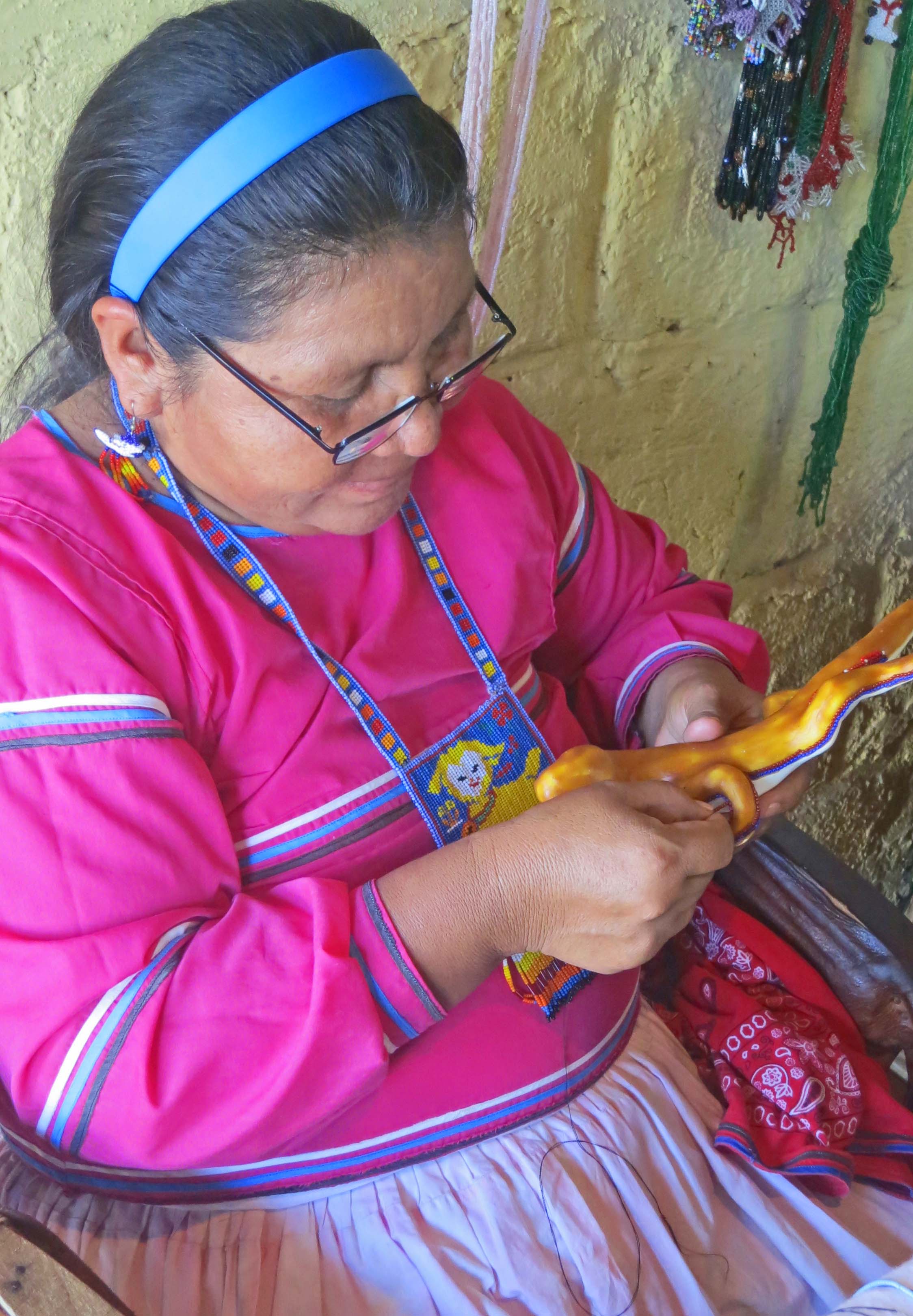
Huichol woman works on a bead art sculpture in Mexico. Photo by Curtis Mekemson.

In this photo, a Huichol woman works on another bead art sculpture.

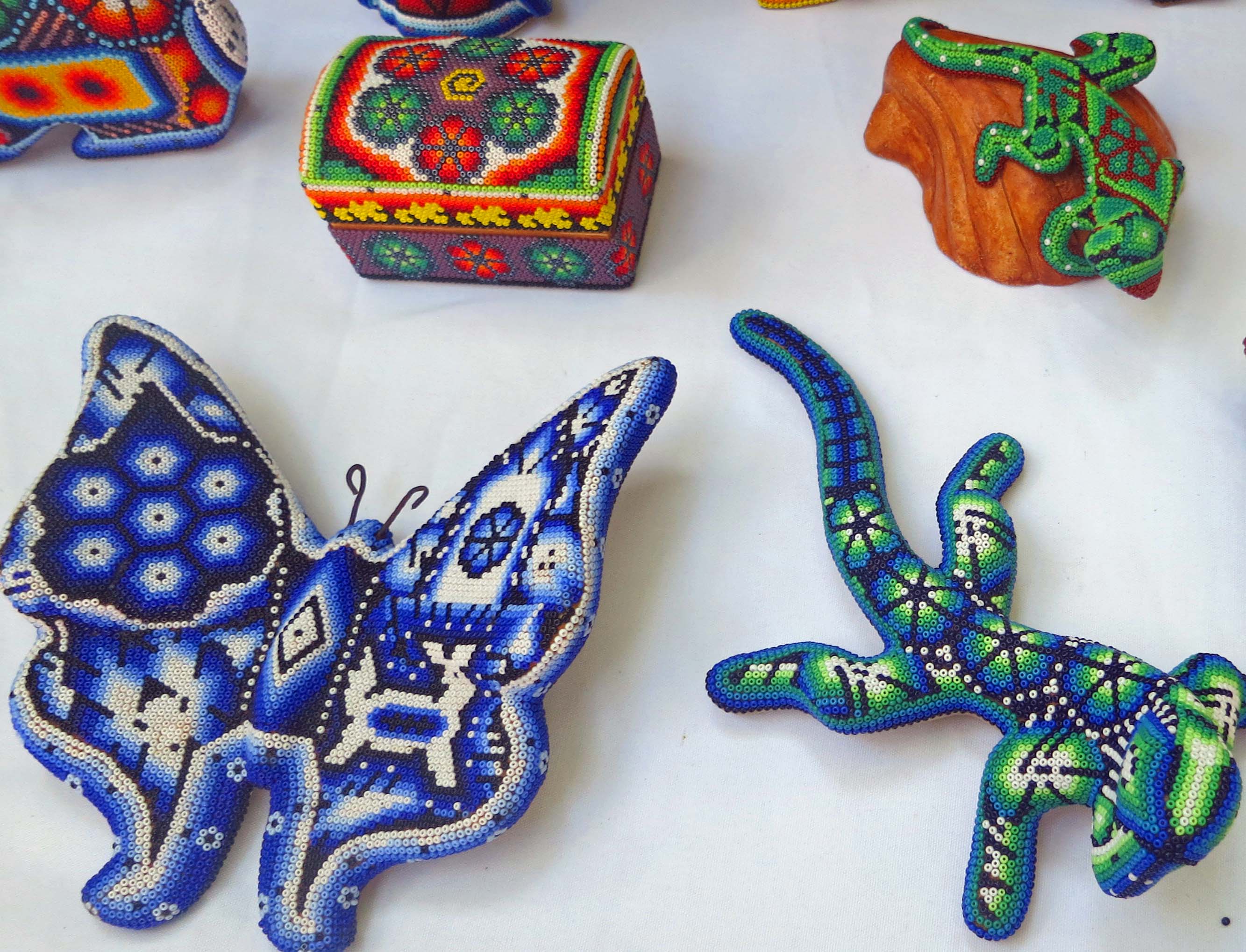
Beaded Huichol art. Photo by Curtis Mekemson.

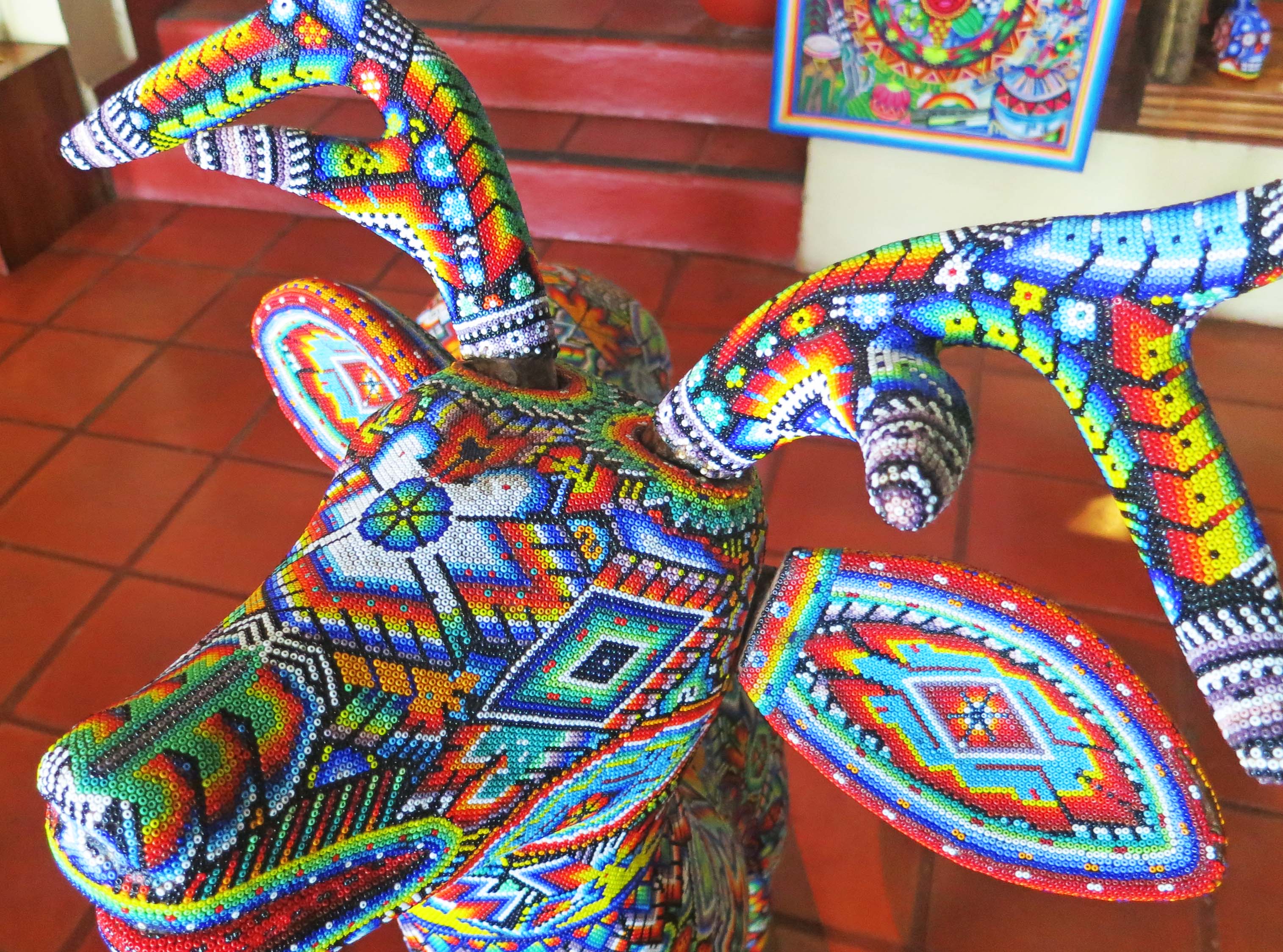
Beaded Huichol art can range in size from these small pieces created by Ernesto to much larger sculptures such as the deer shown below. Beaded art, like the yarn art, includes symbols of the Huichol Indians’ religion. The salamander, with peyote buttons marching down its back, helps bring rain.

Photograph of Huichol deer by Curtis Mekemson.

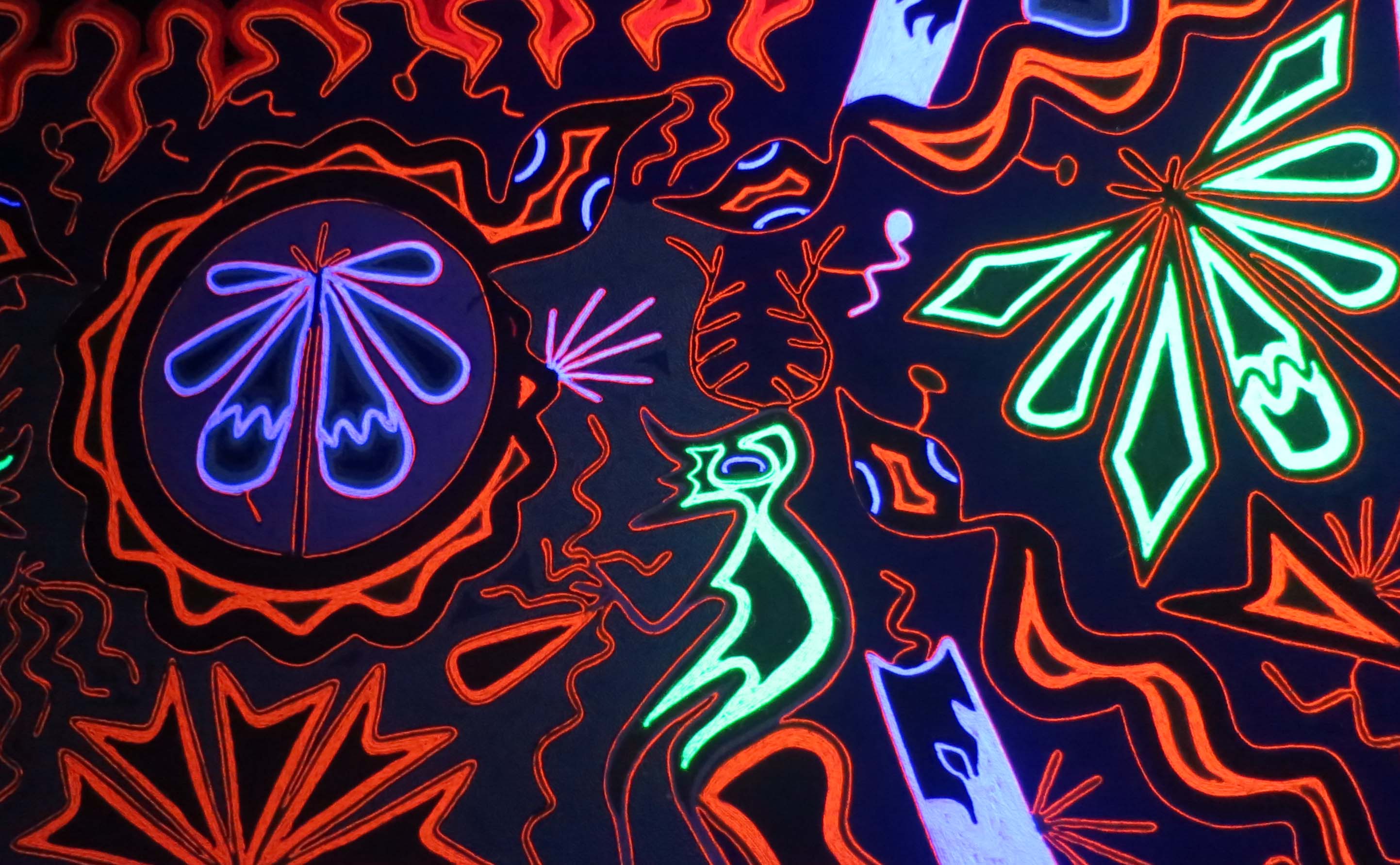
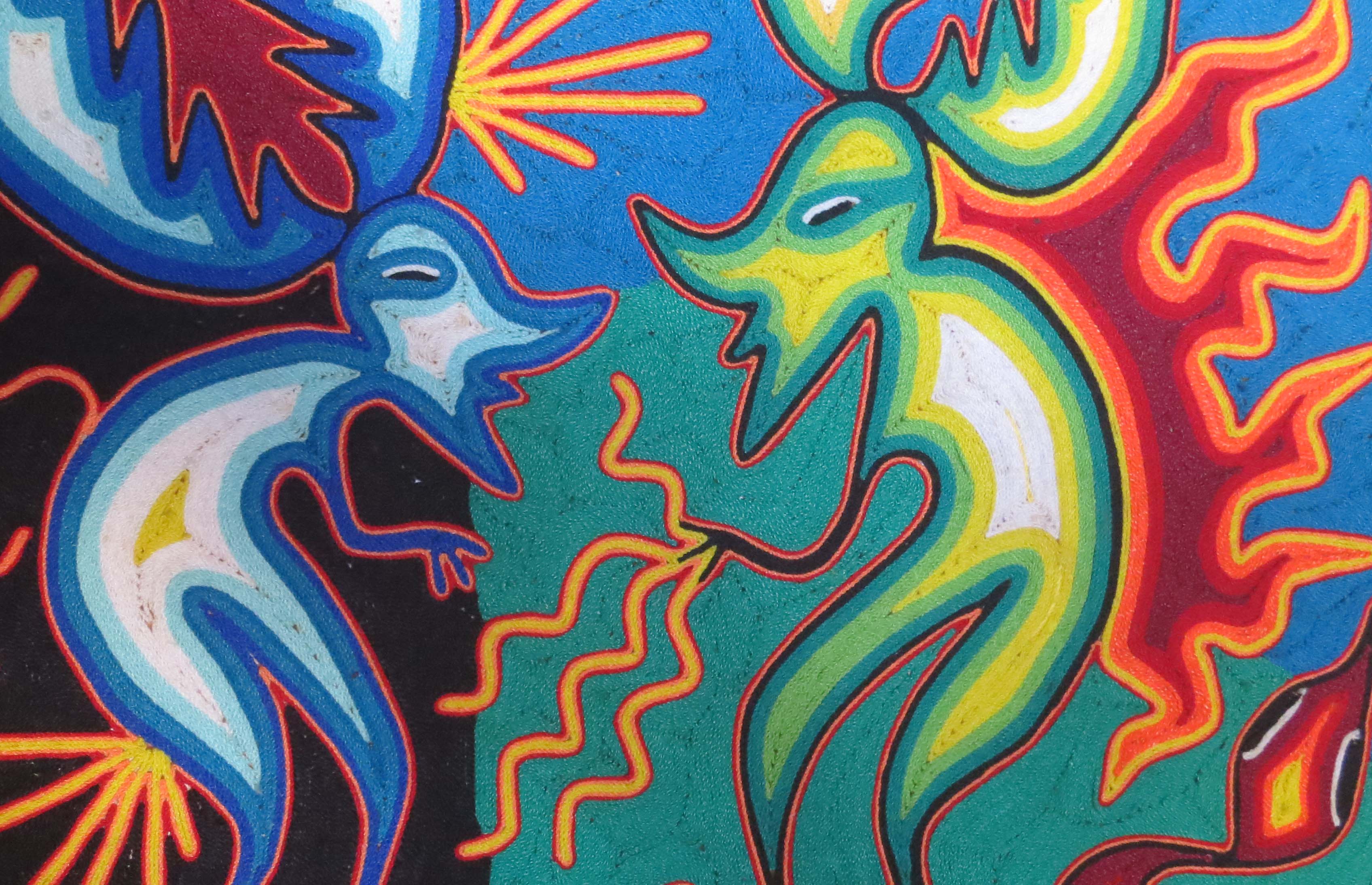
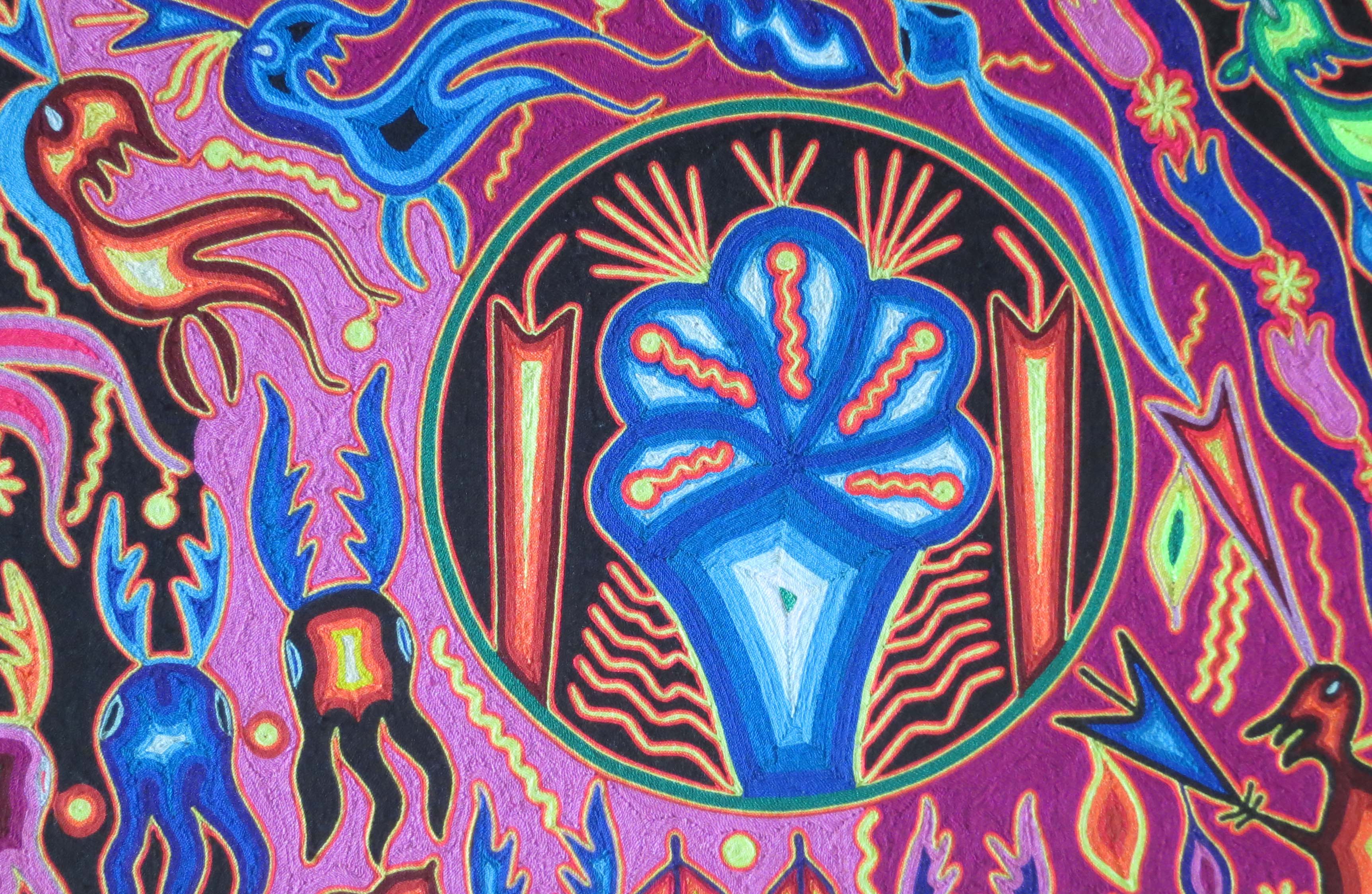
I’ll conclude today’s blog with several examples of Huichol yarn art which demonstrate the vibrant colors and spiritual figures seen by shamans while in trance.

Huichol art representing shamanistic visions. Photo by Curtis Mekemson.

Deer person in center represents a shaman.

Deer people representing shamans in Huichol art. Photo by Curtis Mekemson.

Huichol yarn art photo by Curtis Mekemson.

NEXT BLOG: I hope you are enjoying this journey into Mexico. I will be taking a break from blogging over the next couple of weeks to celebrate the season. Peggy and I would like to wish each of you Happy Holidays. –Curtis