A Crow’s Nest View of Venice… Sea Ports of the Mediterranean

Perched on the top deck of the Crown Princess, it was easy to see that Venice is an island, a relatively small island. Plopped down on a marsh, it is sinking into the sea at about 9 inches per century. Vivaldi, BTW, once offered music lessons at the Hotel Metropole on the right.

Perched on the top deck of the Crown Princess, it was easy to see that Venice is an island, a relatively small island. Built on a marsh, it is sinking into the sea at about 9 inches per century. Vivaldi, BTW, once offered music lessons at the Hotel Metropole on the right.

We approached Venice by sea, as mariners have for the past thousand years. I was perched on the top deck of the Crown Princess looking down on the fabled island city with a sea gull’s perspective. Icy winds turned my traveler’s curiosity into a minor act of courage. A warm bar beckoned. But I was strong. There were photos to be taken and adventures to plan. We would be in Venice for the next day and a half and there was much to see. My next five blogs will be devoted to the city. Today’s blog is on my crow’s nest view. I will then write about visiting the area around St. Mark’s Square, admiring the city’s famed canals, getting “lost” among Venice’s confusing streets, and going window shopping.

Venice is justly famed for its canals... and for the bridges over the canals. Each seems to have a different personality.

Venice is justly famed for its canals… and for the bridges over the canals. Each seems to have a different personality.

Altogether, There are some 25 miles of canals. Each one invites exploration. The building just visible on the right is the city's naval museum. Venice was once one of the world's greatest sea powers.

Altogether, there are some 25 miles of canals. Each one invites exploration. The building just visible on the right is the city’s naval museum. Venice was once one of the world’s greatest sea powers.

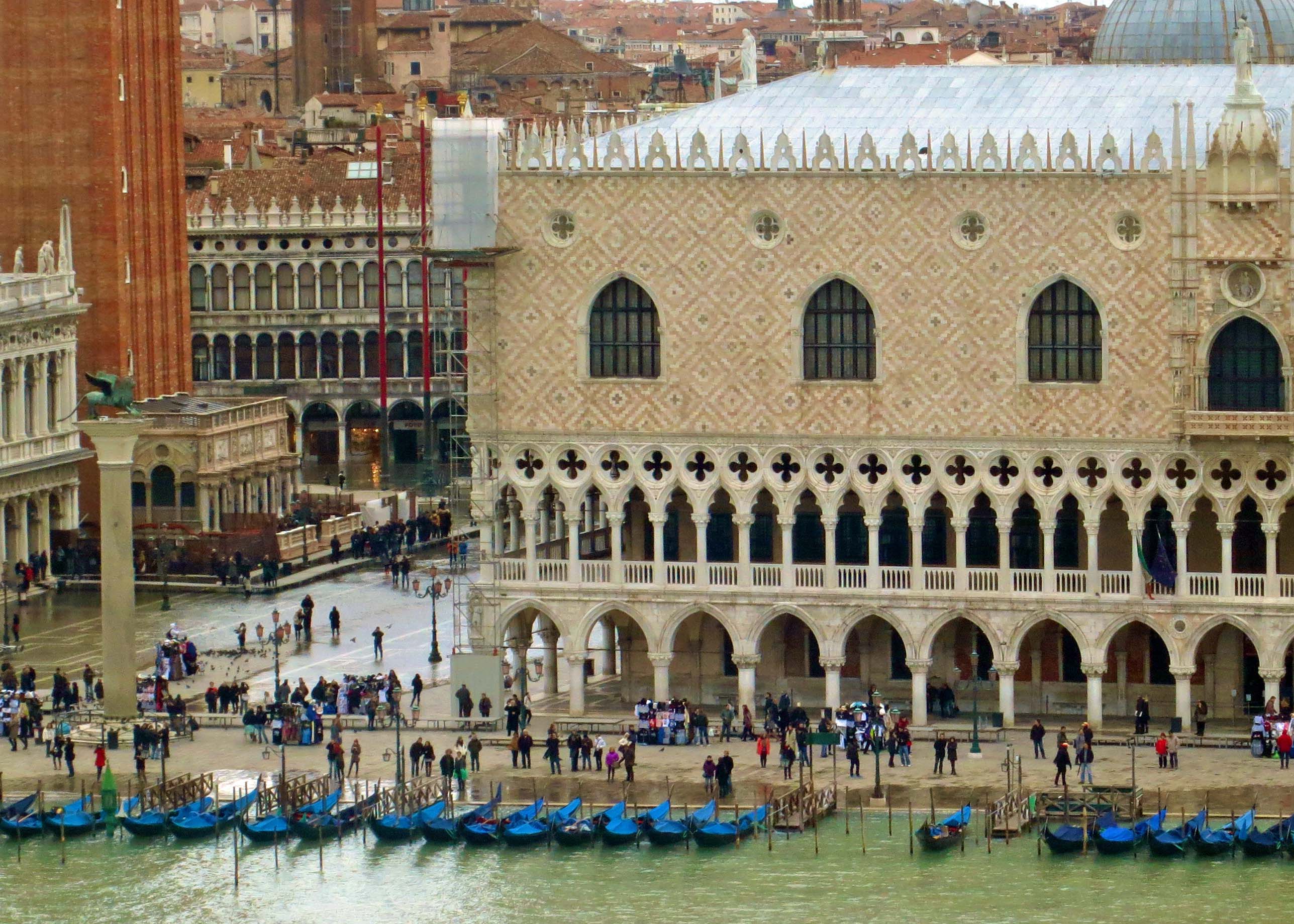
The presence of gondolas suggested we were getting near the center of Venice's greatest tourist attraction. The statue in the foreground is that of  Garibaldi, the man responsible for uniting the various city states of Italy in...

The presence of gondolas suggested we were getting near the center of Venice’s greatest tourist attraction…

And we arrived. The building on the right is the Doge's Palace. Next to it is the beginning of St. Mark's Square... the center of Venice.

And we arrived. The building on the right is the Doge’s Palace. Next to it is the beginning of St. Mark’s Square… the center of Venice.

Looking down on St. Mark's Square. The Campanile is on the left, St. Mark's Basilica is on the right behind the Doges Palace.

Looking down on St. Mark’s Square. The Campanile is on the left and St. Mark’s Basilica is on the right, behind the Doge’s Palace. Snow capped mountains are in the distance. 

I found this building, the Emporio Dei Sali, interesting. Once it housed salt. Now it is home to one of Venice's best rowing clubs.

I found this building, the Emporio Dei Sali, interesting. Once it housed salt. Now it is home to one of Venice’s best rowing clubs.

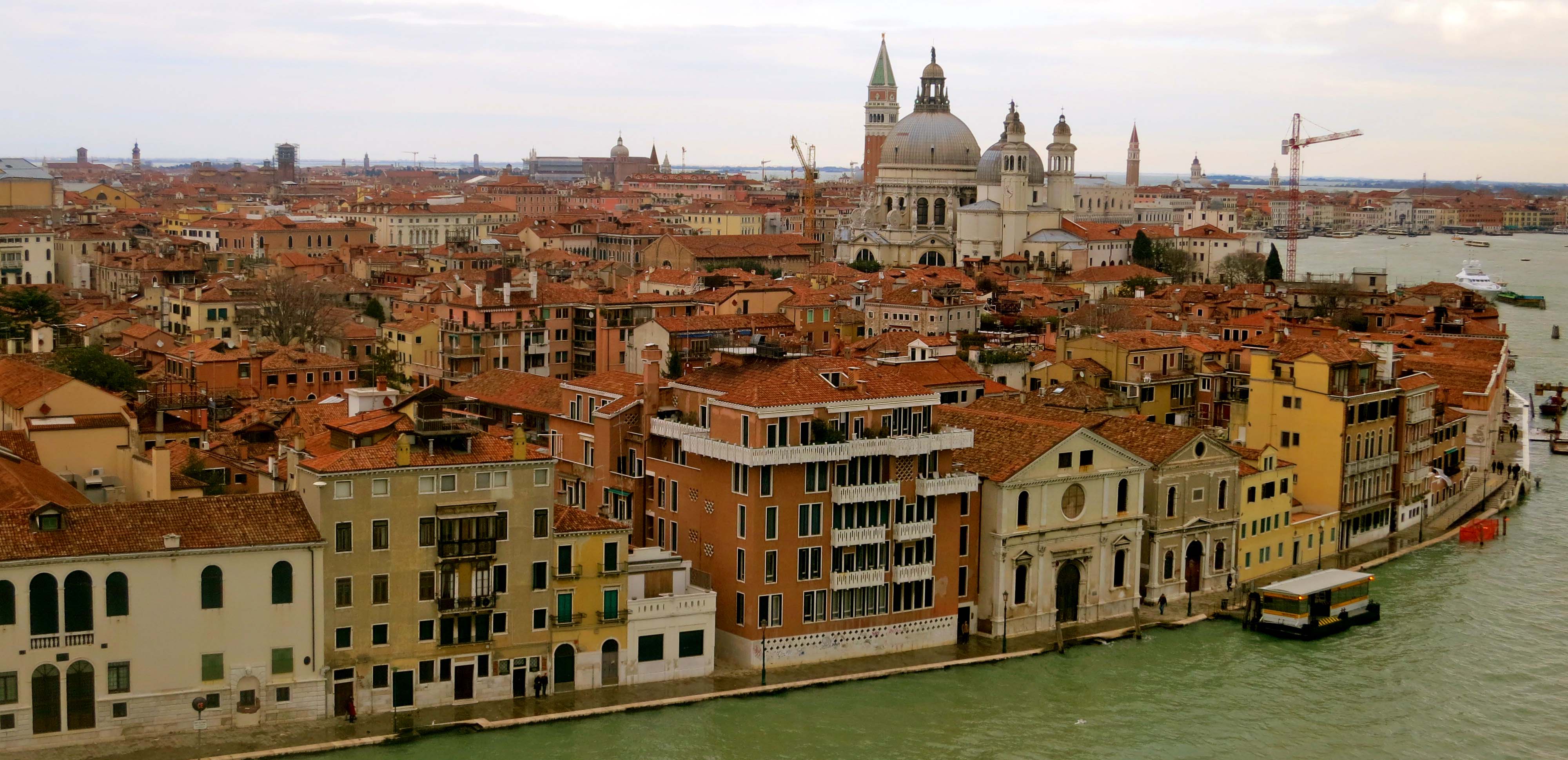
This photo looks back toward the Campanile. The opening on the right is the beginning of the Grand Canal. The church is La Salute, which was built as an offering of thanks at the end of the plague of 1630 when one third of the City's population died.

This photo looks back toward the Campanile. The opening on the right is the beginning of the Grand Canal. The church with the onion dome is La Salute, which was built as an offering of thanks at the end of the plague of 1630 when one-third of the City’s population died.

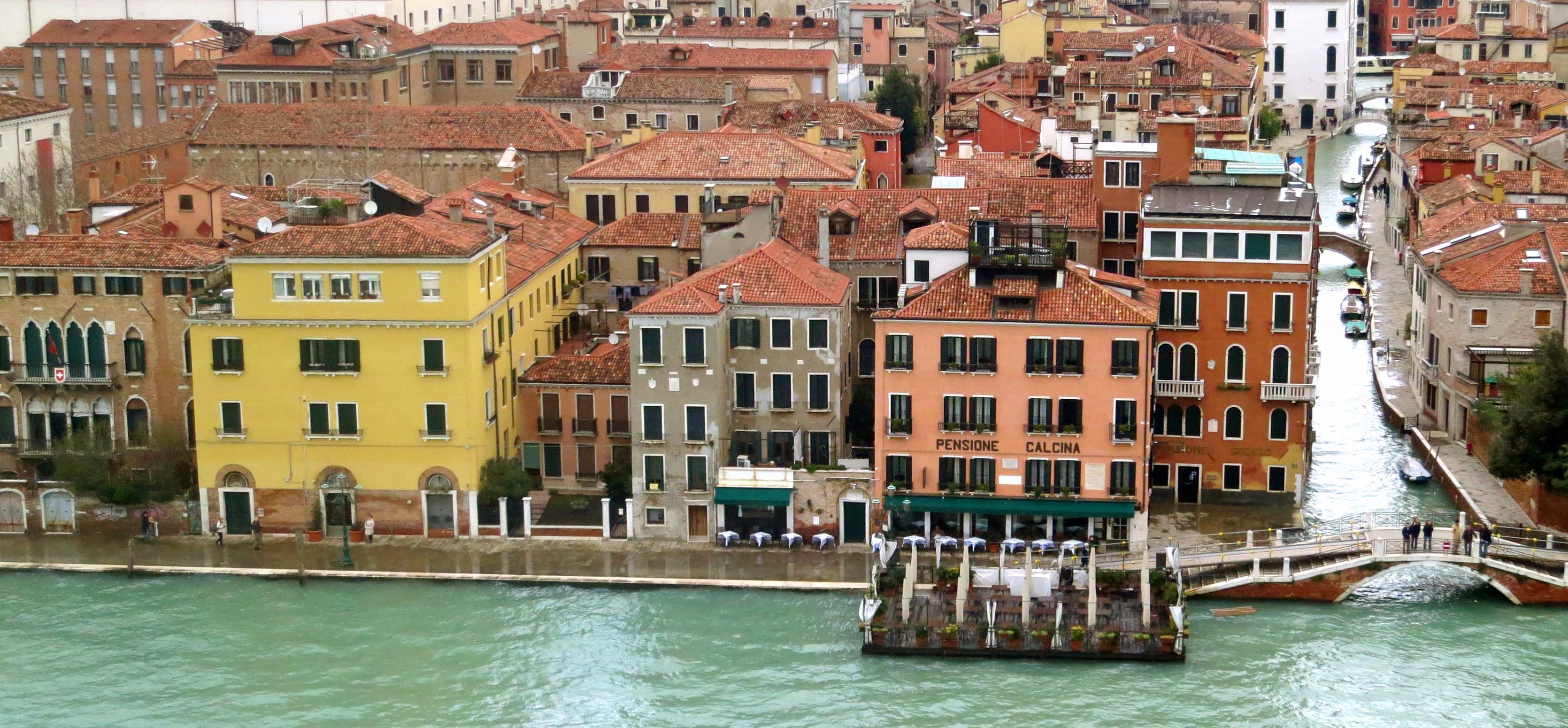
A final view from my crow's nest perspective. The hotel Pensione Calcina was once home to limestone sellers.

A final view from my crow’s nest perspective. The hotel Pensione Calcina was once home to limestone sellers.

NEXT BLOG: The many attractions of St. Mark’s Square as it floods beneath the Adriatic Sea.


UFOs, Savage Bears and Cat Houses… On the Road in Nevada

 Guests are greeted by a grizzly when they enter Tonopah Station on Highway 95 in Nevada.

Guests are greeted by a grizzly when they enter Tonopah Station on Highway 95 in Nevada.

We rolled the dice at Tonopah Station to see if we would win a free room. It’s been a tradition at the old motel for as long as Peggy and I have been travelling up and down Highway 95 through western Nevada. Neither of us came up with the required three matches so we forked over 60 bucks.

We rolled the dice at Tonopah Station. Three matches meant a free room. Lady Luck looked the other way.

We rolled the dice at Tonopah Station. Three matches meant a free room. Lady Luck looked the other way.

The motel is filled with memorabilia of the Wild West including the grizzly bear above. It is also filled with the characters that live in the old mining town and stop by to gamble, have a drink or eat at the Café… where Missy waited on us.

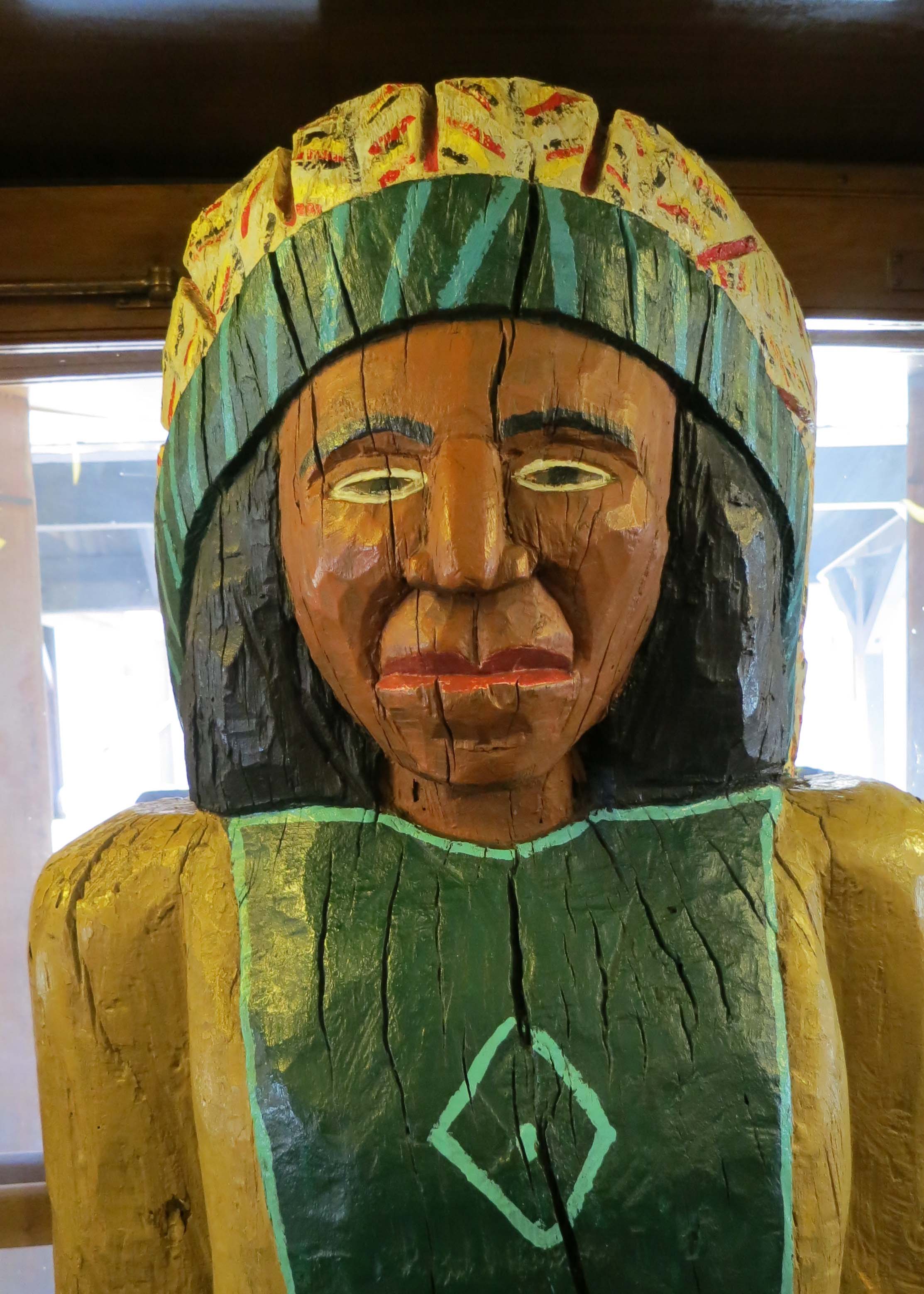
Betty Boop, the Mona Lisa, and this wooden Indian were all part of the decorations at the Tonopah Station.

Betty Boop, the Mona Lisa, and this wooden Indian were all part of the decorations at the Tonopah Station.

As was the old add for a radiator shop.

As was the old ad for a radiator shop.

But towns are an exception for Nevada. Most of the land is made up of the Big Empty. There is raw beauty hiding out in the deserts. It’s available to anyone who is willing to wander. Most people zip through the state on freeways at 70 MPH plus on their way somewhere else (anywhere else) or spend their time in Las Vegas or Reno investing hard-earned cash in Nevada’s economy.

A common view in Nevada of empty roads and distant vistas, which are often quite scenic.

A common view in Nevada of empty roads and distant vistas, which are often quite scenic. But where’s the UFO?

This photo includes a view of the Sierra Nevada Mountains from Highway 95.

This photo includes a view of the Sierra Nevada Mountains from Highway 95.

Over the years I have travelled over most of Nevada’s (paved) back roads. I’ve even ridden across the state on a bicycle. It’s wide-open country filled with mountains, valleys and distant vistas. Much of the state is made up of government-owned lands with a substantial share dedicated to military purposes like bombing jackrabbits.

Once upon a time, Nevada was even used for atom bomb tests. I can still remember getting up at 4 am in the 1950s at our home in the Sierra Nevada foothills and watching as the whole eastern sky was lit up by an atomic bomb blast. Those days are long gone, however. Today Nevada is fighting against becoming the nation’s nuclear waste dumpsite.

Driving down Highway 95 provides other views besides old mining towns, military installations and wild beauty. An occasional cat house makes an appearance… usually consisting of a beat up trailer under a fancy sign. Prostitution is legal in Nevada. The ultimate prize for sightseers however, is an illusive UFO. This is the land of Area 51 and the Extraterrestrial Highway. Peggy and I keep our eyes peeled.

Prostitution is still legal in Nevada and several "cat houses" are located along Highway 95.

Prostitution is still legal in Nevada and several “cat houses” are located along Highway 95.

An early day gift certificate? Tokens were commonly offered for services at early day Nevada whore houses. I found this sample at the Clark County Museum.

An early day gift certificate? Tokens were commonly offered for services at early day Nevada whore houses. I found this sample at the Clark County Museum.

A word of warning about driving down 95; watch your speed when driving through small towns. Our friend Ken Lake, who is traveling with us along with his wife Leslie, made the mistake of speeding up just before the sign that said he could. It cost him BIG. He was grumpy for hours. Ken claims he was following me, which is true, but I drive a pickup truck from Oregon, not a yuppie car from California. (Grin)

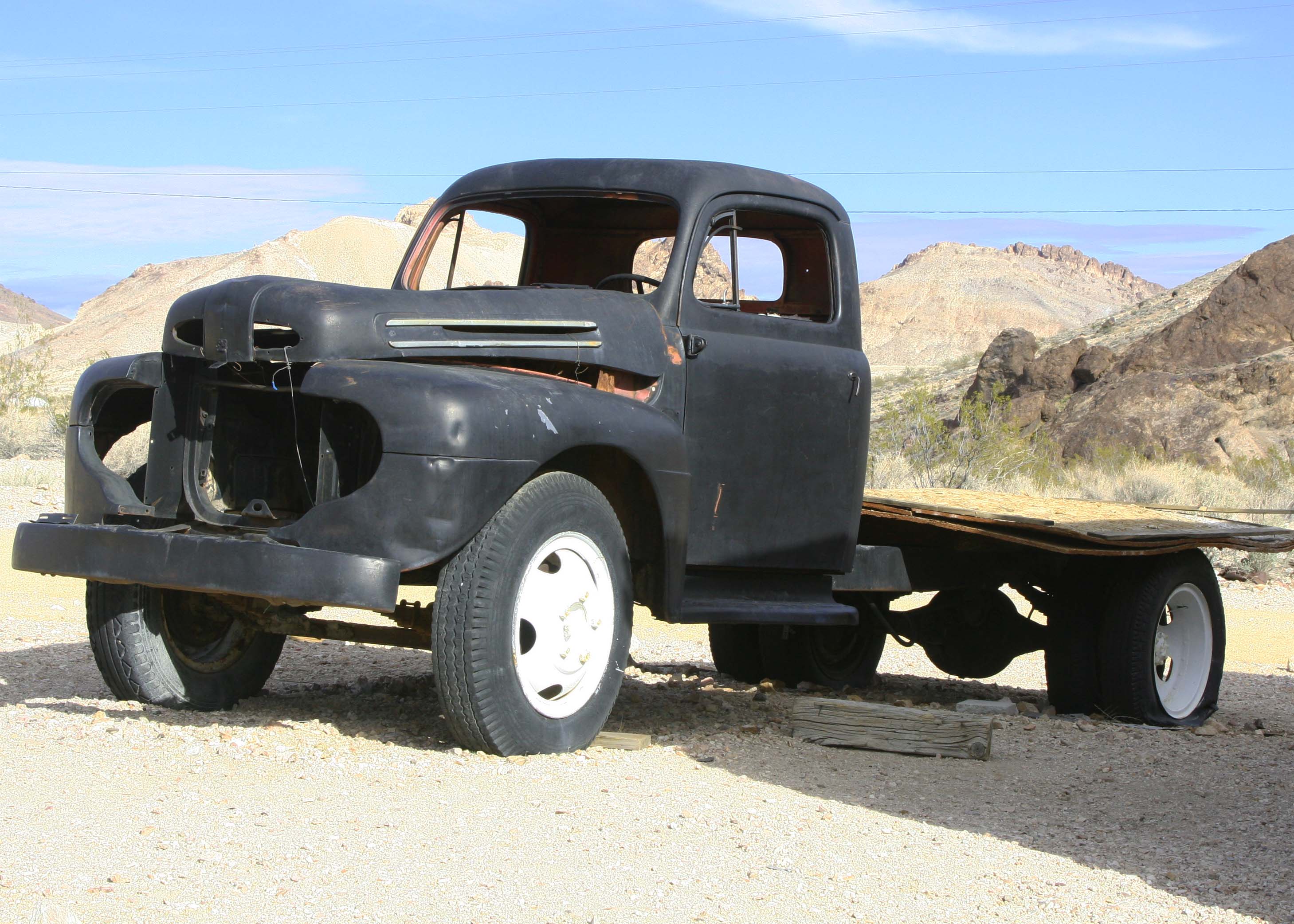
Outside of Reno and Las Vegas, trucks rule in Nevada. (I found this one in the ghost town of Ryolite.)

Outside of Reno and Las Vegas, old trucks rule in Nevada. (I found this one in the ghost town of Ryolite.)

NEXT BLOG: Glitzy Las Vegas

Gargoyles and Other Oddities of Dubrovnik… Seaports of the Mediterranean

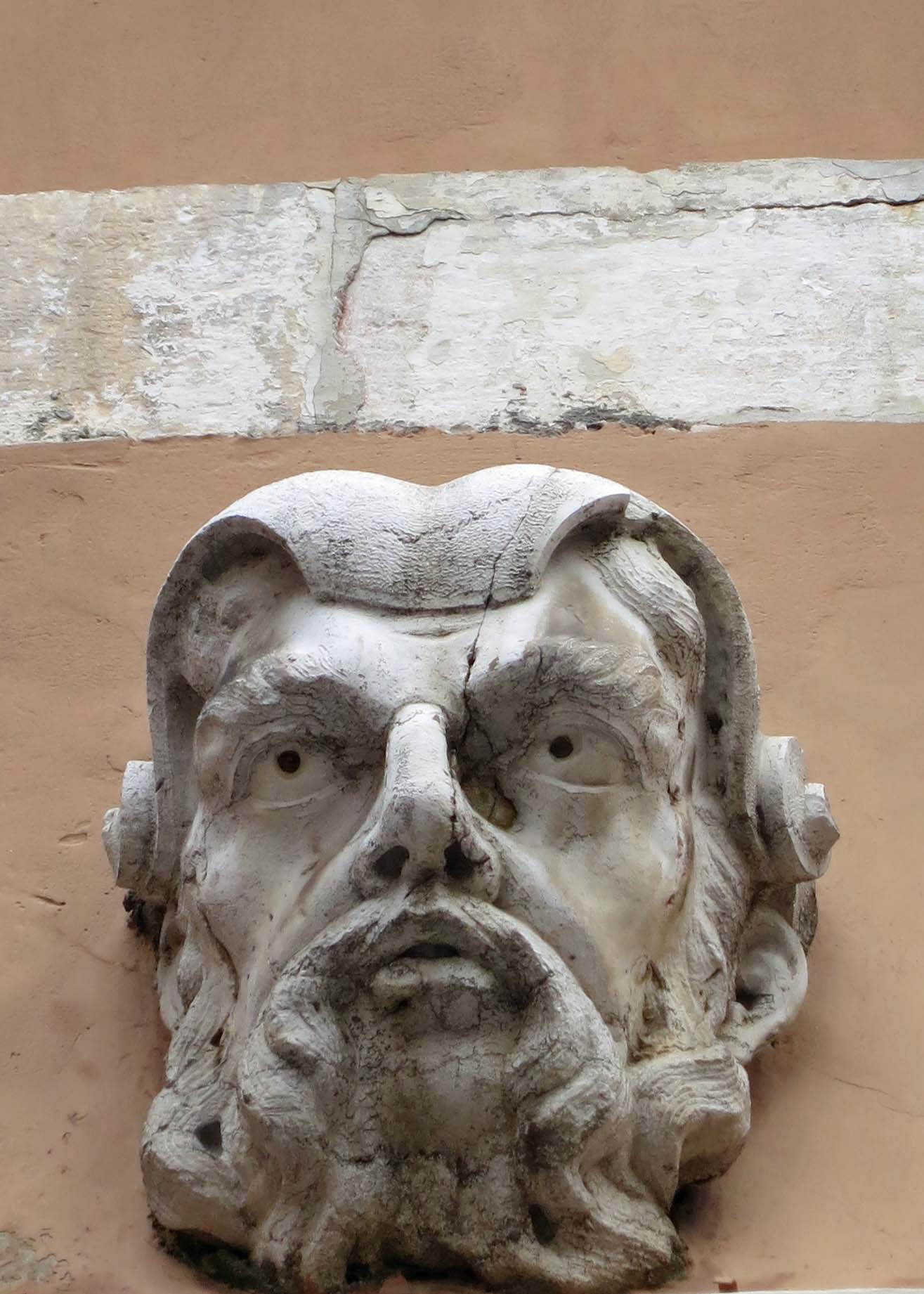
I found this marvelous gargoyle about a foot off the Stradun connected the the Franciscan Monastery.

I found this marvelous gargoyle about a foot off the Stradun connected the Franciscan Monastery in Dubrovnik, Croatia. Check out the great mustache!

Weird amuses me… and few things are weirder than a gargoyle. During the middle ages, no decent cathedral would be caught without them. In addition to piping water away from the building, they served as reminders to the faithful that evil lurked in the world, an evil that could only be overcome by attending church and donating money. Their cousins, grotesques, were also found on churches. Equally ugly and portentous, they didn’t carry water.

Whenever I get near a gargoyle or grotesque, I can’t help myself; I have to take its photo.

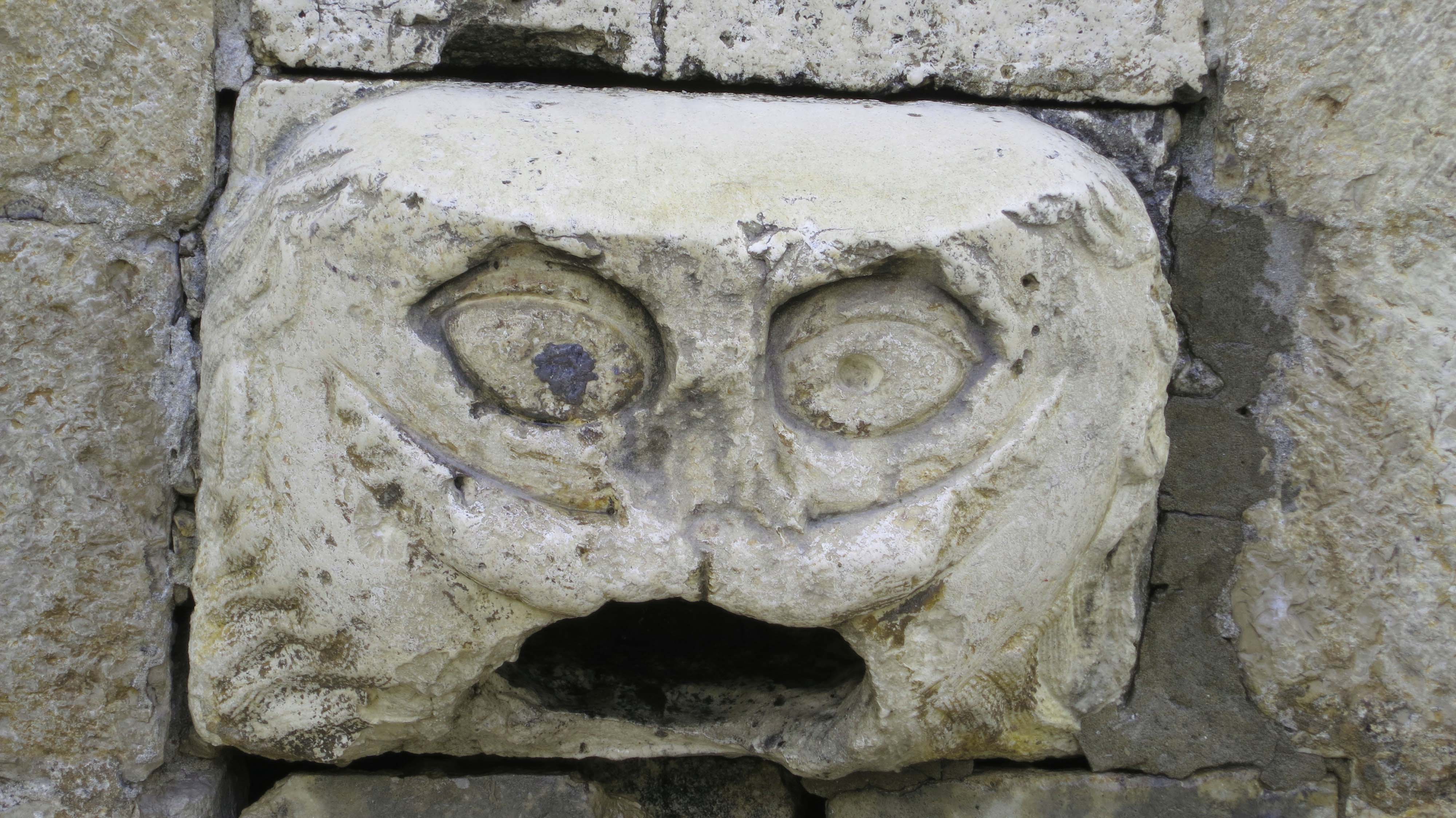
Peggy caught this Dubrovnik gargoyle. Possibly it represents one of the winds.

Peggy caught this Dubrovnik gargoyle. Possibly it represents one of the winds.

I took this closeup of the Dubrovnik gargoyle Peggy photographed above. Note the water dribbling down its chin.

I took this closeup of the Dubrovnik gargoyle Peggy photographed above. Note the water dribbling down its chin.

We found examples of grotesques in the cloister of the Franciscan Monastery of Dubrovnik on top of columns. (Photo by Peggy Mekemson)

We found examples of grotesques in the cloister of the Franciscan Monastery of Dubrovnik on top of columns. (Photo by Peggy Mekemson)

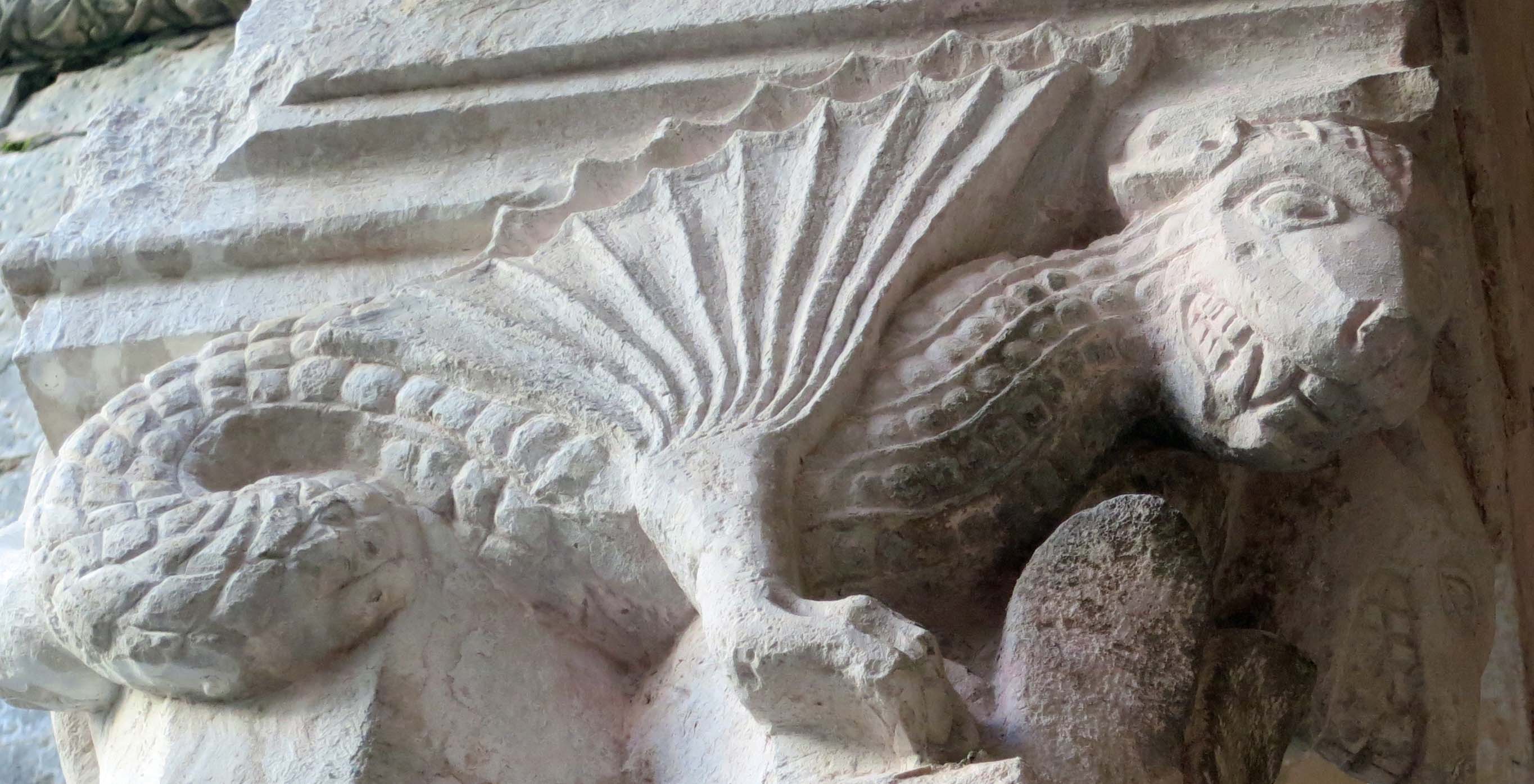
Dragons were a popular subject for both gargoyles and grotesques. What could be more scary. We found this specimen with his fine set of choppers in the Franciscan Monastery.

Dragons were a popular subject for both gargoyles and grotesques. What could be more scary. We found this specimen with his fine set of choppers in the Franciscan Monastery.

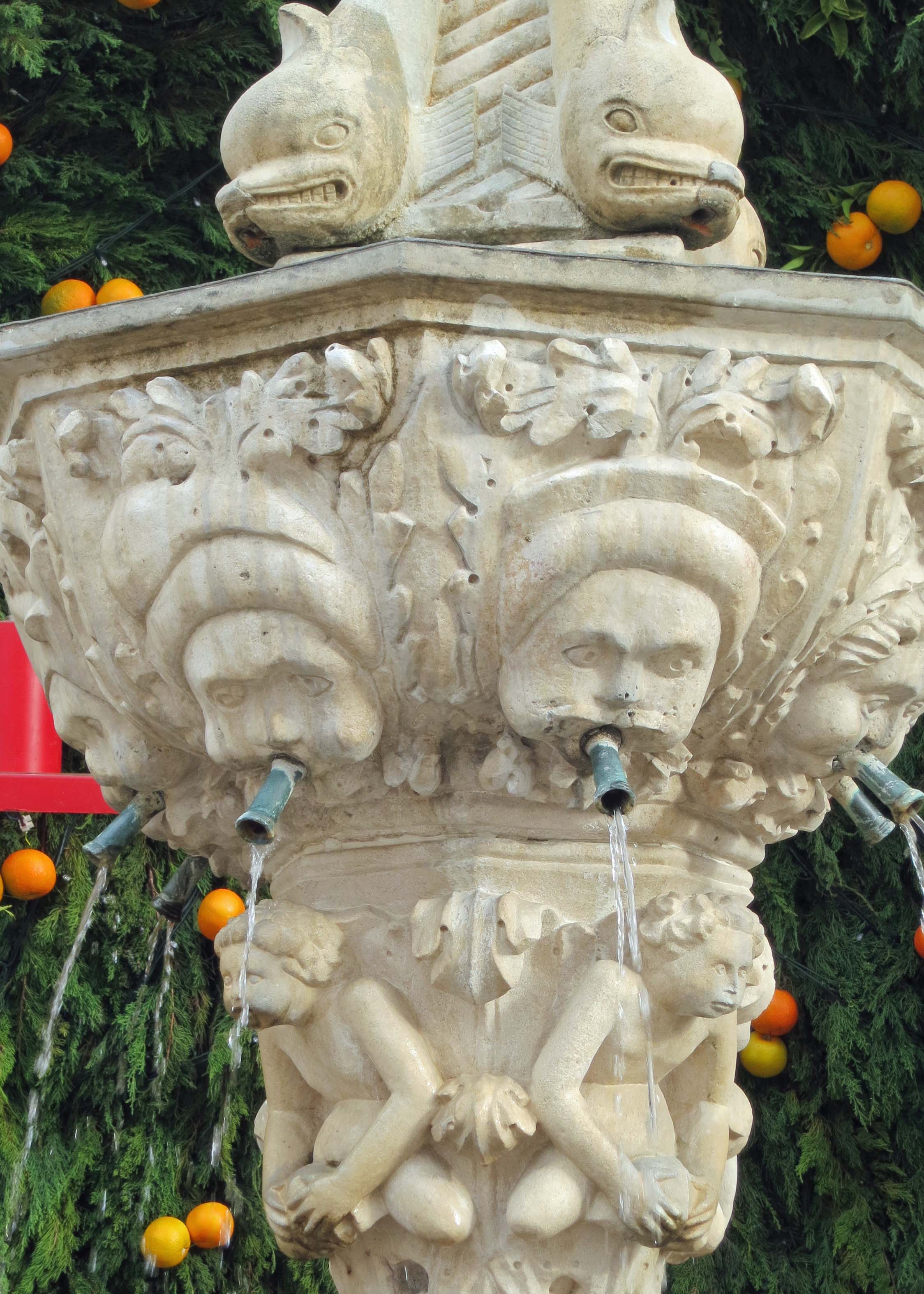
I have also found that fountains in Europe often host strange-looking beings. While the wealthy in pre modern times might have water piped into their homes, the common folks obtained their water from community fountains. Dubrovnik built an aqueduct system in the mid 1400s to bring water to the city and then located two public fountains on the Stradun: big Onofrio’s Fountain located near the Pile Gate and little Onofrio’s Fountain found next to the clock tower in Lutz Square.

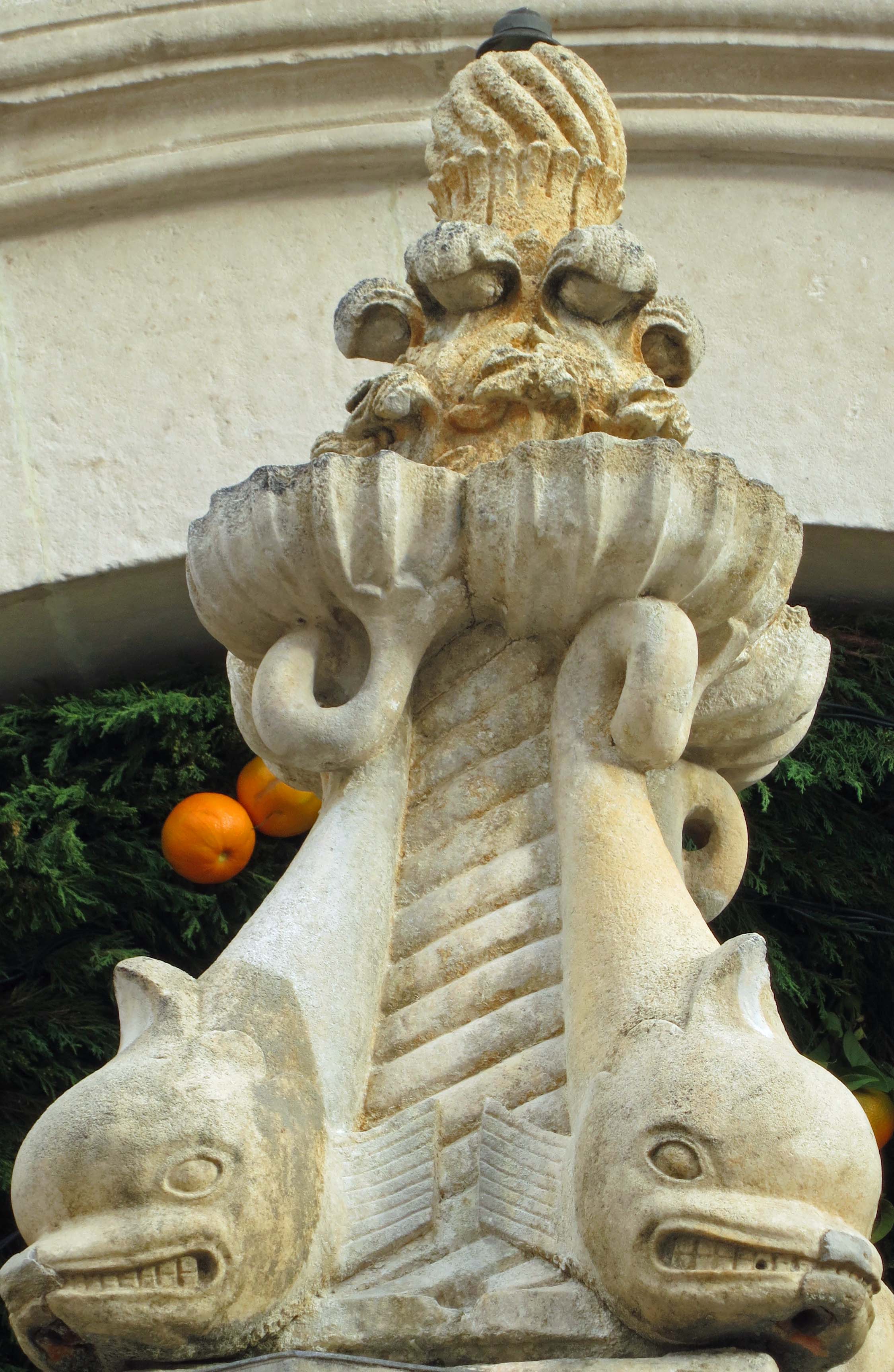
The top of Little Onofrio's Fountain with its ferocious looking fish. The fountain is located near the clock tower in Dubrovnik, Croatia.

The top of Little Onofrio’s Fountain with its ferocious looking fish. The fountain is located near the clock tower in Dubrovnik, Croatia.

Another view of Little Onofrio's Fountain.

Another view of Little Onofrio’s Fountain. The oranges, BTW, were part of Dubrovnik’s Christmas decorations.

Big Onofrio's Fountain located near the Pile Gate had 16 sides and each side featured a different mask with a spout coming out of its mouth. This was a cow mask.

Big Onofrio’s Fountain located near the Pile Gate had 16 sides and each side featured a different mask with a spout coming out of its mouth. This was a cow mask.

Something I find even stranger than gargoyles, grotesques or fountain inhabitants are relics… bits and pieces of saints or other holy items kept around in reliquaries as items of worship.  The Dubrovnik Cathedral has a particularly impressive set including a supposedly genuine piece of the Cross of Jesus, Baby Jesus’ swaddling clothes and various body parts of St. Blaise.

All of these items are reputedly capable of performing miracles and it is something of a miracle they exist. How they were obtained is usually rooted in the murky past. Pieces of the swaddling clothes were provided to women having difficult births. No matter how many pieces were cut out of the cloth, so it is said, the cloth returned to its original form.

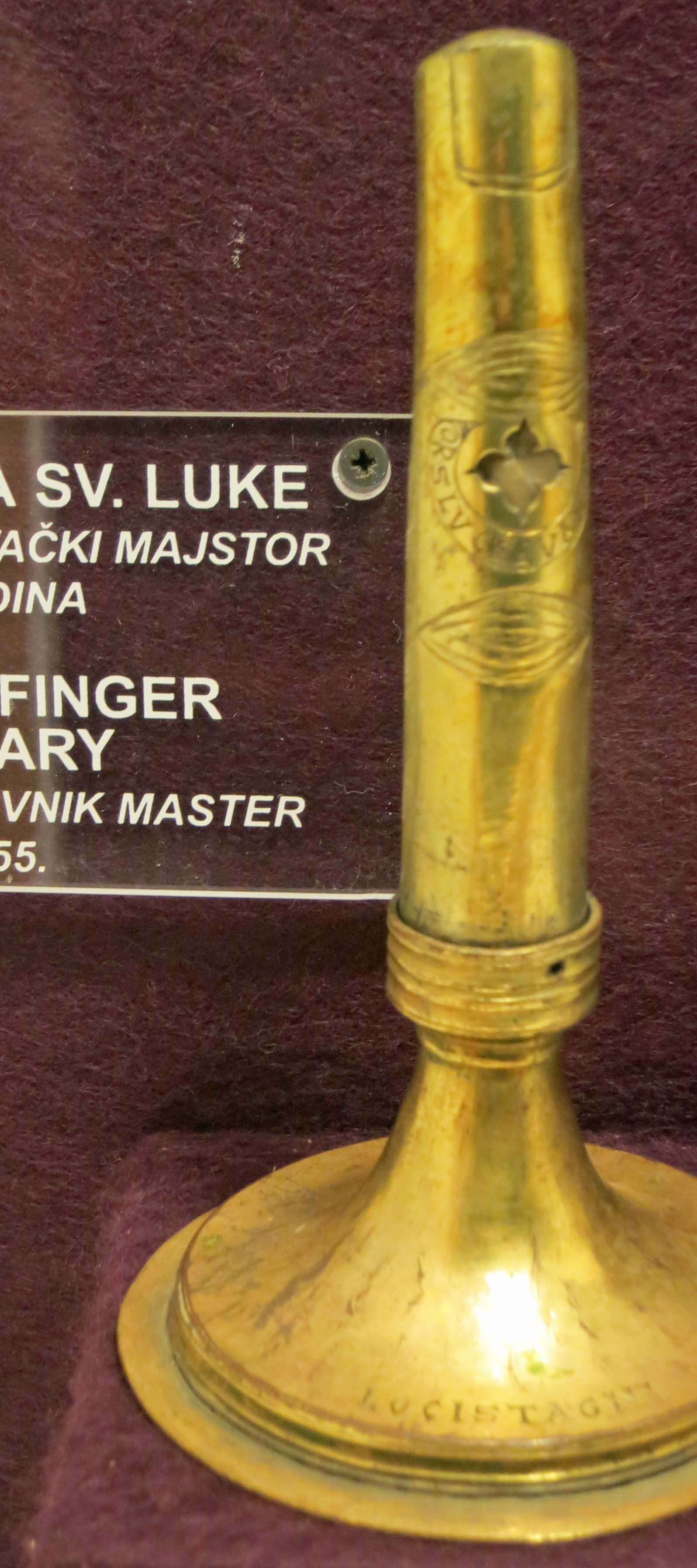
I came across St. Luke's finger in the small museum found in the Franciscan Monastery in Dubrovnik. The finger is encased in the gold reliquary. I know people take these items seriously but I can only find them strange.

I came across St. Luke’s finger in the small museum found in the Franciscan Monastery in Dubrovnik. The finger is encased in the gold reliquary. I know people take these items seriously, but I can only find relics strange.

NEXT BLOGS… Next week I will be travelling to Las Vegas to celebrate one of the Big O birthdays. That’s Big O as in Oh S****, I can’t believe I am this old. Anyway… I may opt out of blogging depending on the amount of time I play. If I do get up blogs they will be on the journey through the Nevada desert and the bright lights of the city. Did you know that Las Vegas is lit up with 15,000 miles of neon tubing? Peggy just read that in the Smithsonian Magazine. The following week I will be back with blogs about Venice and Burning Man 2013.

Walking the Streets of Dubrovnik… Seaports of the Mediterranean

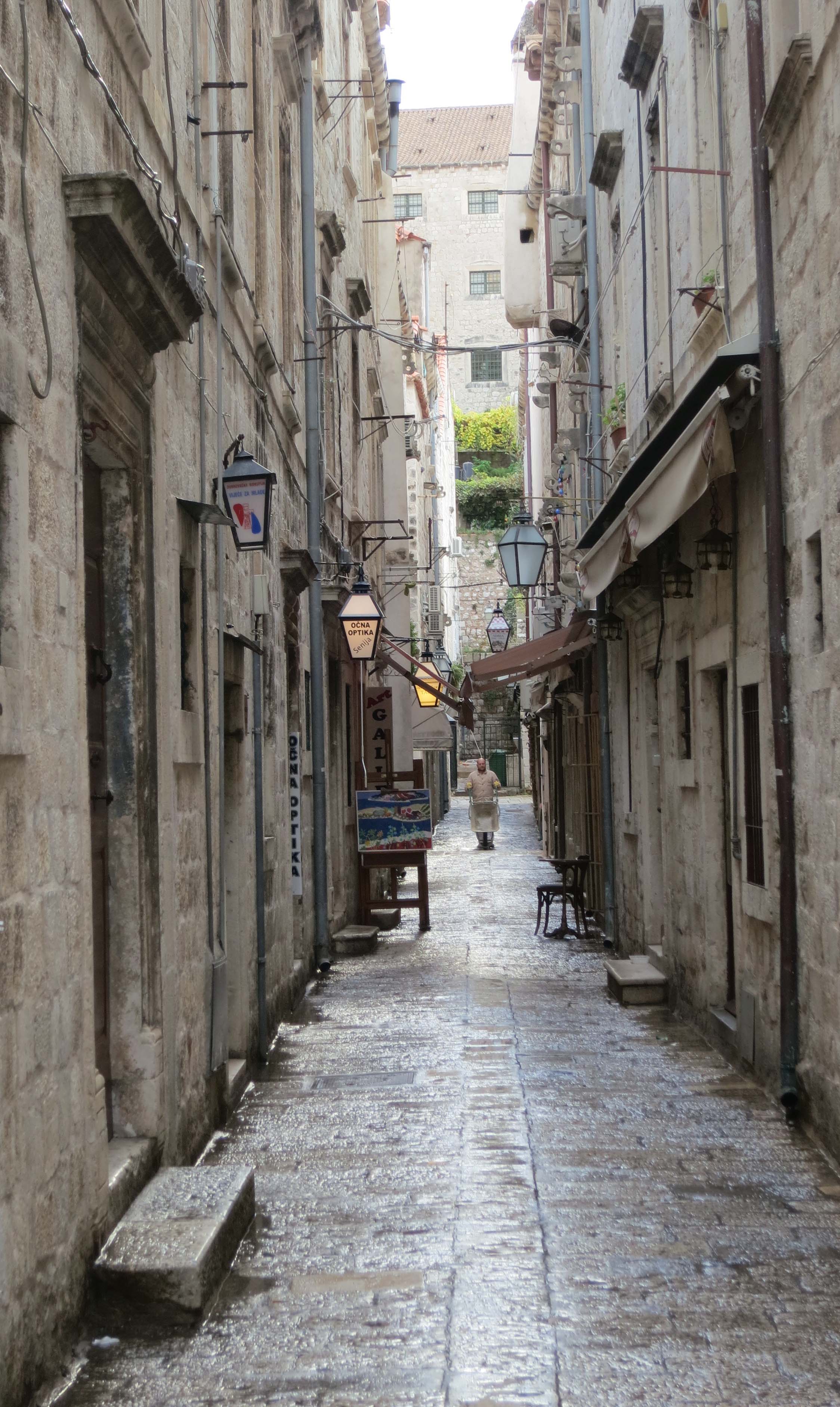
The Stradun, Dubrovnik's main thoroughfare, lit up by sun after a rain storm.

The Stradun, Dubrovnik’s main thoroughfare, wet after a rain storm.

Luck was with us… the rain held off while we were on the walls of Dubrovnik and waited for us to descend to the Stradun, the city’s main thoroughfare. Lunch and pizza occupied most of the downpour. Afterwards we were treated to shiny, wet streets.

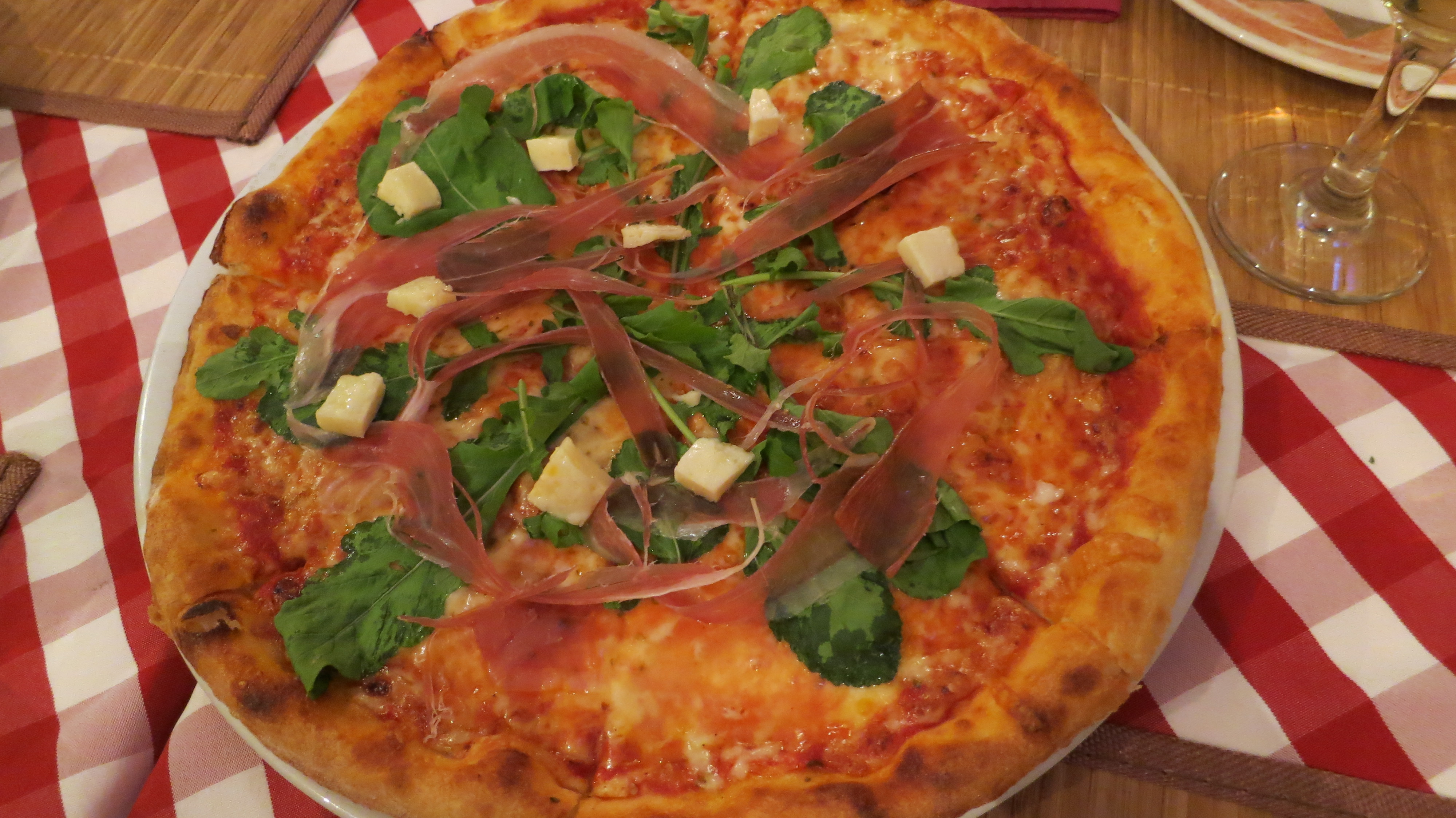
Our pizza, Croatian style.

Our pizza, Croatian style.

In its first life the Stradun had been a winding canal separating Dubrovnik’s Roman and Slav populations. The canal was filled in during the Eleventh Century and brought the two populations together. A devastating earthquake took out most of the town in 1667 and Dubrovnik rebuilt the road to its present straight alignment.

Narrow pedestrian ways shoot off in both directions from the Stradun and invite exploration. Plazas anchor both ends of the street. Since we arrived in December, Dubrovnik was preparing for the holidays. Two Christmas trees competed for our attention in Luza Square. I found one outlined by a window in the old Customs House to be particularly dramatic.

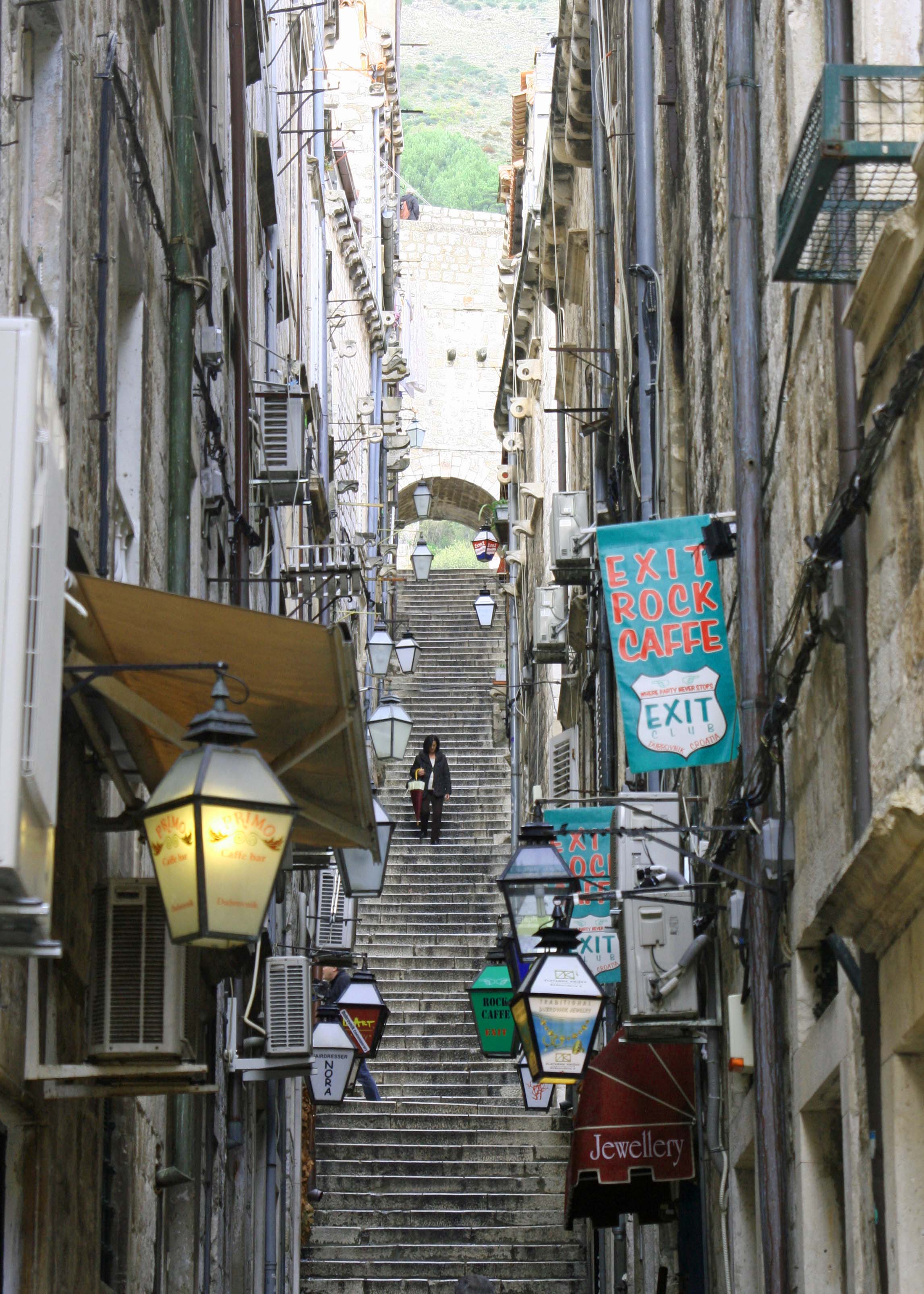
Walkways such as this and the one below branch off from the Stradun in Dubrovnik, Croatia and invite exploration.

Walkways such as this and the one below branch off from the Stradun in Dubrovnik, Croatia and invite exploration.

Dubrovnik walkway.

Dubrovnik walkway.

We visited Dubrovnik in December and found the city preparing for the holidays. In this picture,a Christmas tree is gracefully outlined by a window in Sponza Palace, the old custom house.

We visited Dubrovnik in December and found the city preparing for the holidays. In this picture,a Christmas tree is gracefully outlined by a window in Sponza Palace, the old custom-house.

Another photo of Sponza Palace, the Christmas Tree and Dubrovnik's clock tower.

Another photo of Sponza Palace, the Christmas Tree and Dubrovnik’s clock tower.

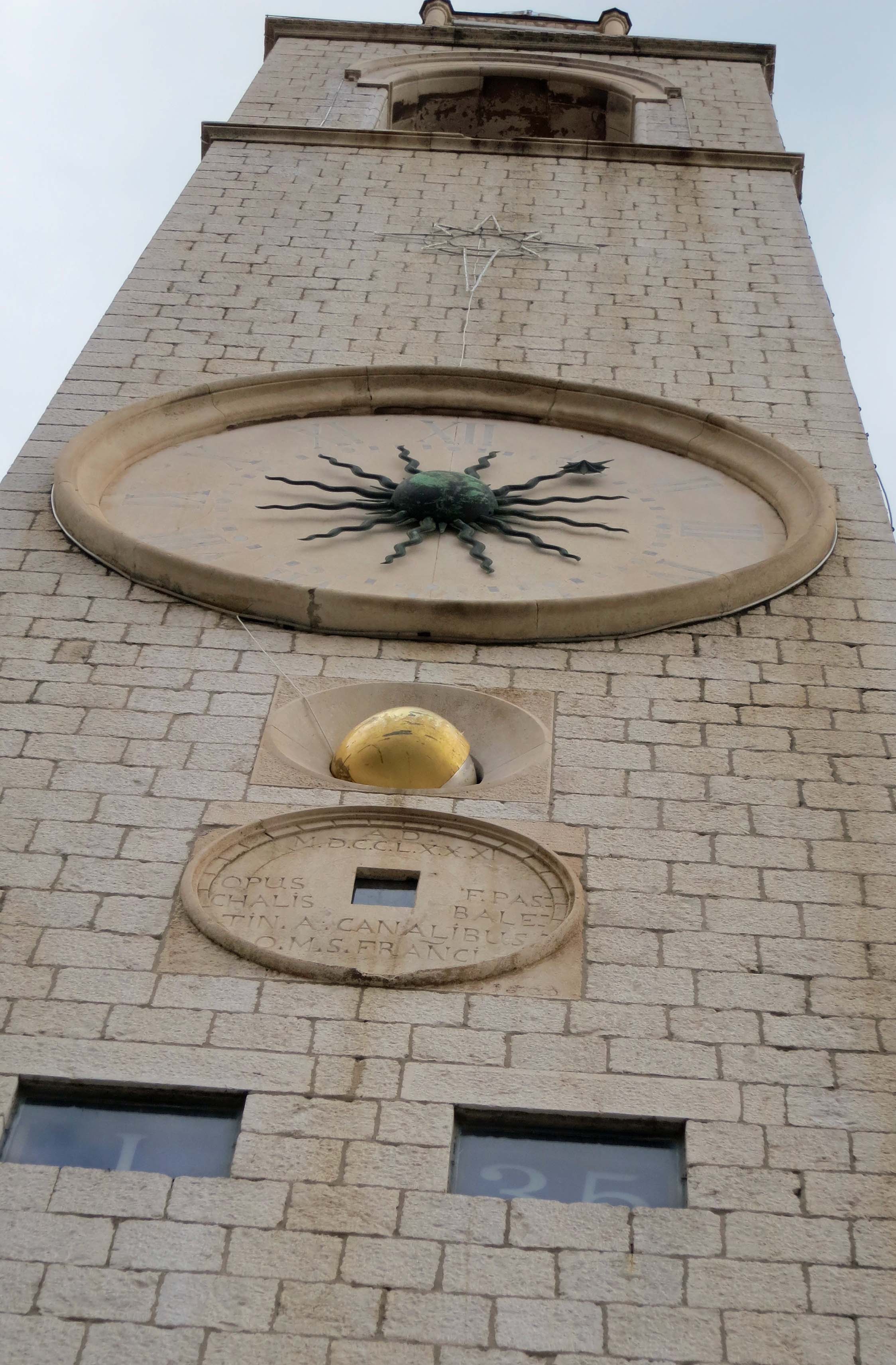
The town’s bell tower and clock, St. Blaise’s Church and Orlando’s Column and are also prominent features of Luza Square. Both St. Blaise and Orlando symbolize Dubrovnik’s fierce sense of independence.

A close up of the Dubrovnik clock tower.

A close up of the Dubrovnik clock tower. A digital clock at the bottom adds a touch of modernization.

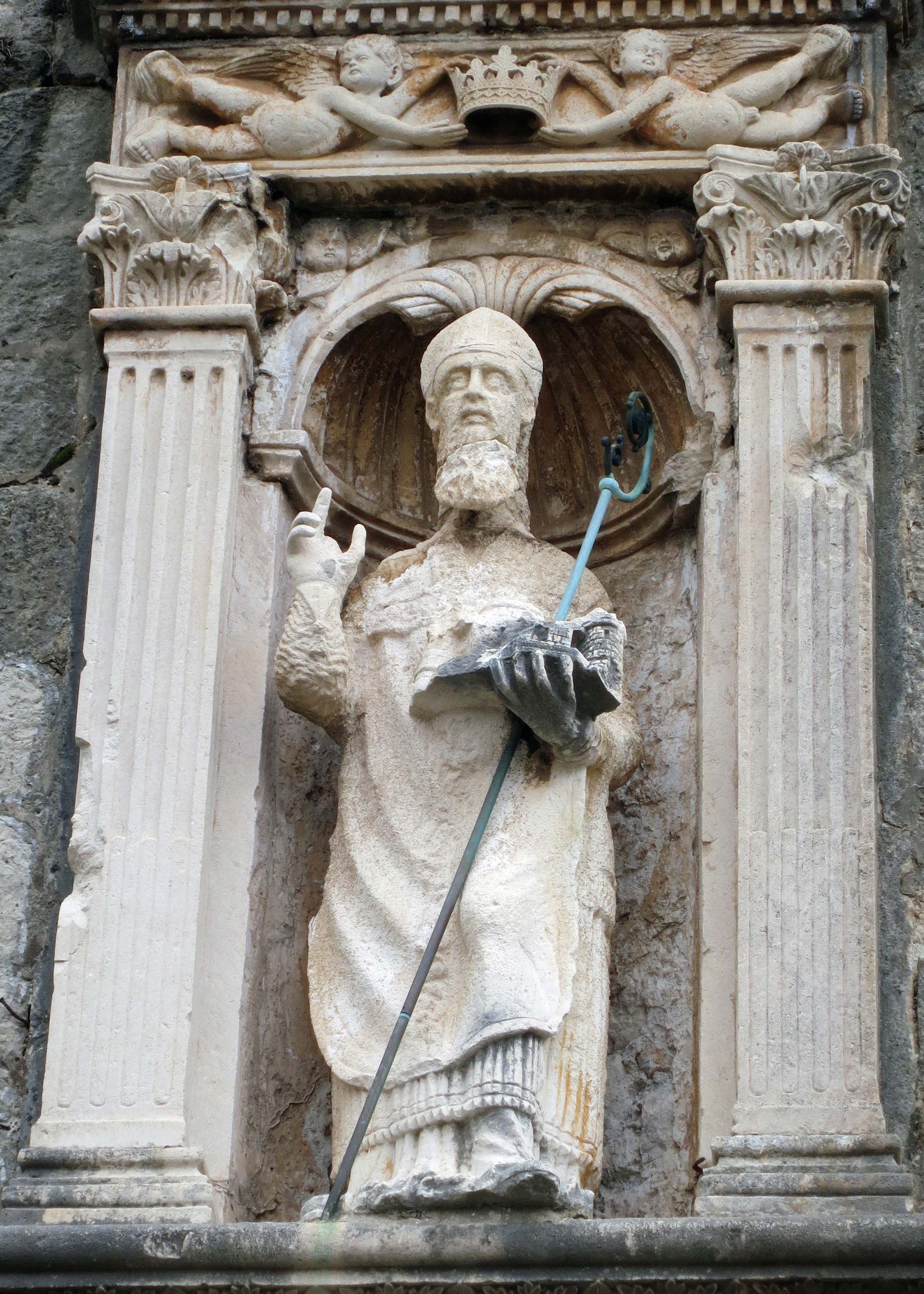
St. Blaise was an early third century Christian Martyr from Armenia who was so holy that wild animals were said to drop by his cave for a blessing. The Romans used steel combs to flay off his skin and then beheaded him. Since the combs resembled those used for carding wool, Blaise became the Patron Saint of the wool trade. Go figure.

He earned the everlasting gratitude of Dubrovnik by appearing in a vision to a local priest to warn of an imminent invasion by the Venetians in 971. Ever since, the locals have loved St. Blaise and disliked Venice. They celebrate his birthday by parading various parts of his body through the city on February 3.

St. Blaise, the Patron Saint of Dubrovnik, holds a model of the city in his hand. This particular statue is found in the Pile Gate at one of the city's main entrances. (Photo by Peggy Mekemson)

St. Blaise, the Patron Saint of Dubrovnik, holds a model of the city in his hand. This particular statue is found in the Pile Gate at one of the city’s main entrances. (Photo by Peggy Mekemson)

Orlando is known as the legendary knight Roland in Northern Europe. The story is that he rescued Dubrovnik from a siege by the Saracens in the Eighth Century. The fact that the dates of Roland’s life don’t match those of Orlando doesn’t seem to matter. He wasn’t from Venice. Also of note… his arm was used as the standard measure of cloth in Dubrovnik.

The Orlando column in Luza Square. (Photo by Peggy Mekemson.)

The Orlando column in Luza Square. (Photo by Peggy Mekemson.)

The Pile Gate, Franciscan Monastery, and Onofrio’s Fountain are located at the other end of the Stradun. The fountain is a subject of my next blog. The Monastery houses a peaceful cloister and a small but interesting museum that features a pharmacy that opened in 1317 and St. Luke’s finger.

The Franciscan Monastery in Dubrovnik.

The Franciscan Monastery in Dubrovnik caught in the sunlight.

In 1337 the Franciscans opened one of the first phamacies in Europe as part of their commitment to provide medical care.

In 1317 the Franciscans opened one of the first pharmacies in Europe as part of their commitment to provide medical care.

NEXT BLOG: I look at Gargoyles, St. Luke’s finger and other oddities of Dubrovnik.

A Bird’s Eye View of Dubrovnik… Sea Ports of the Mediterranean

One of my favorite views into Dubrovnik, this one features the Church of St. Blaise on the left with it's mandatory statue of the saint holding a model of the city.

One of my favorite views into Dubrovnik, this one features the Church of St. Blaise on the right with its statue of the saint holding a model of the city. Note the mechanical bell-ringer in the steeple on the left.

Walking the medieval walls that surround Dubrovnik provides a bird’s eye view across the roofs and down into the city. And what a view it is. Red tile roofs, narrow walkways, and imposing churches invite the visitor to pause and admire the unusual beauty of this town perched on cliffs above the Adriatic Sea.

Twenty years ago most of this beauty was destroyed as Yugoslavia lobbed shells into the city from surrounding hills. Dubrovnik held out, Croatian troops lifted the siege, and the residents proudly rebuilt their city. Today the only reminders of the siege are a few ruins that have yet to be rebuilt and bright red tiles that have yet to mellow with age.

Today’s blog is best reflected through photographs that Peggy and I took. Enjoy.

Looking down on Dubrovnik is like looking down on a sea of red. This photo is taken from Minceta Tower, the highest point on the wall. The Adriatic stretches across the top and the city's port is on the top left.

Looking down on Dubrovnik is like looking down on a sea of red. This photo is taken from Minceta Tower, the highest point on the wall. The Adriatic stretches across the top and the city’s port is on the top left.

This view of red tile roofs and cloudy skies features Dubrovnik's Cathedral on the left.

This view of red tile roofs and cloudy skies features Dubrovnik’s Cathedral on the left. (Photo by Peggy Mekemson)

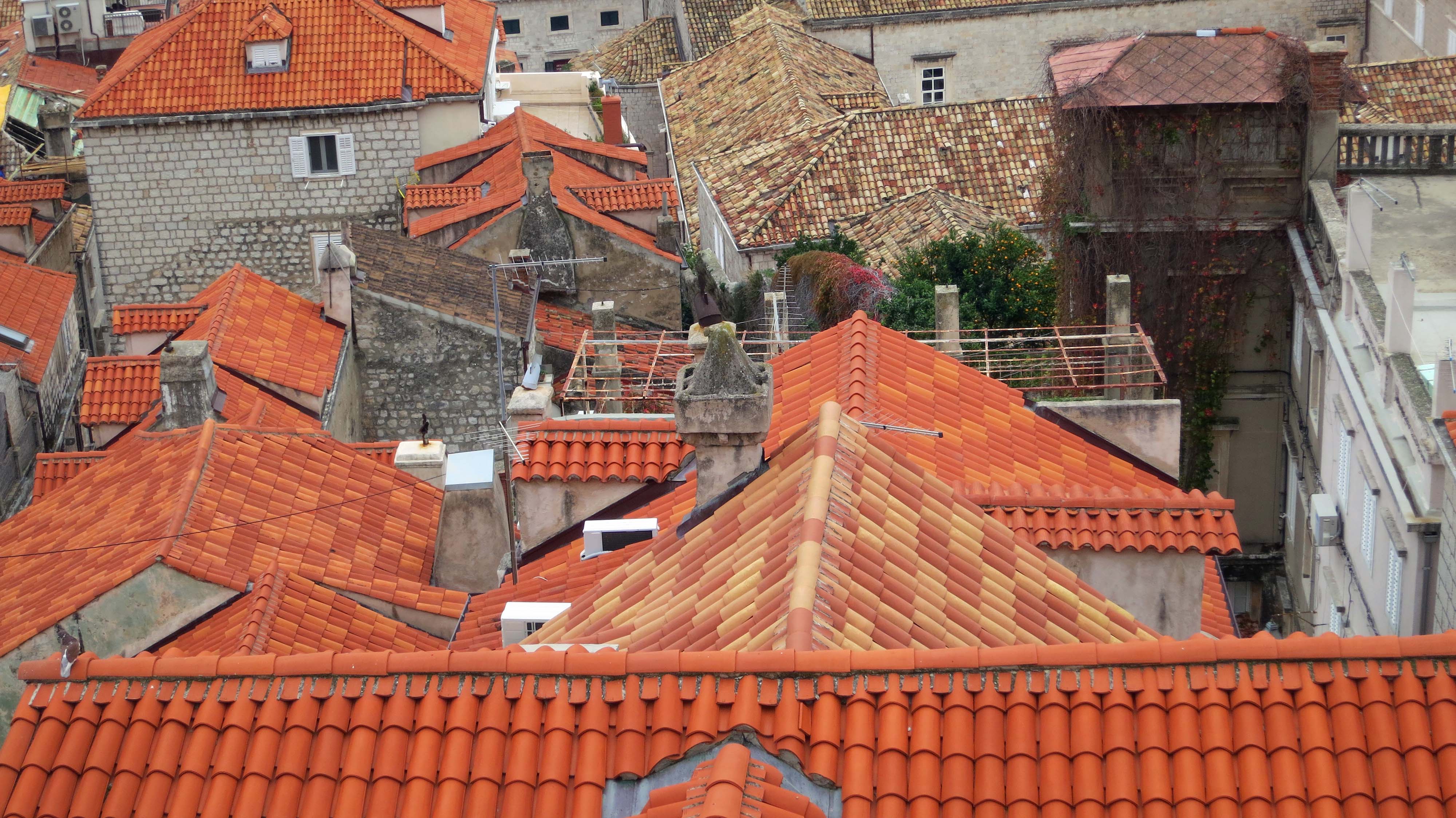
The contrast between new and older tiles is captured here. Many of the newer tiles represent repairs made after the Siege of Dubrovnik in 2000-2001. The trellis in the middle covers a garden, of which many are found through out the city nestled between buildings.

The contrast between new and older tiles is captured here. Many of the newer tiles represent repairs made after the siege of Dubrovnik in 2000-2001. The trellis in the middle covers a garden, of which many are found throughout the city nestled between buildings.

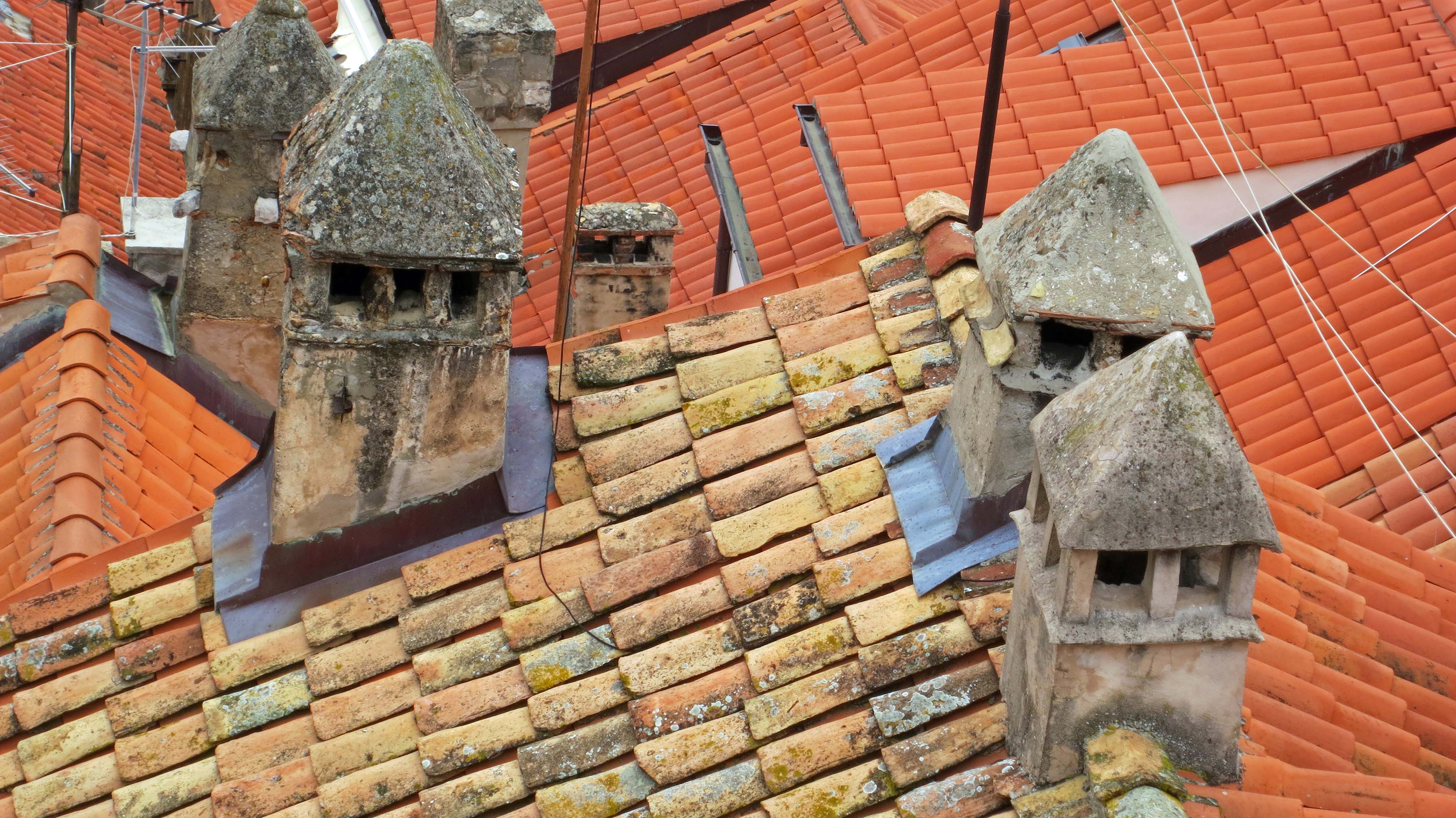
Another view of old and newer tiles in Dubrovnik. This one features chimneys.

Another view of old and newer tiles in Dubrovnik. This one features chimneys.

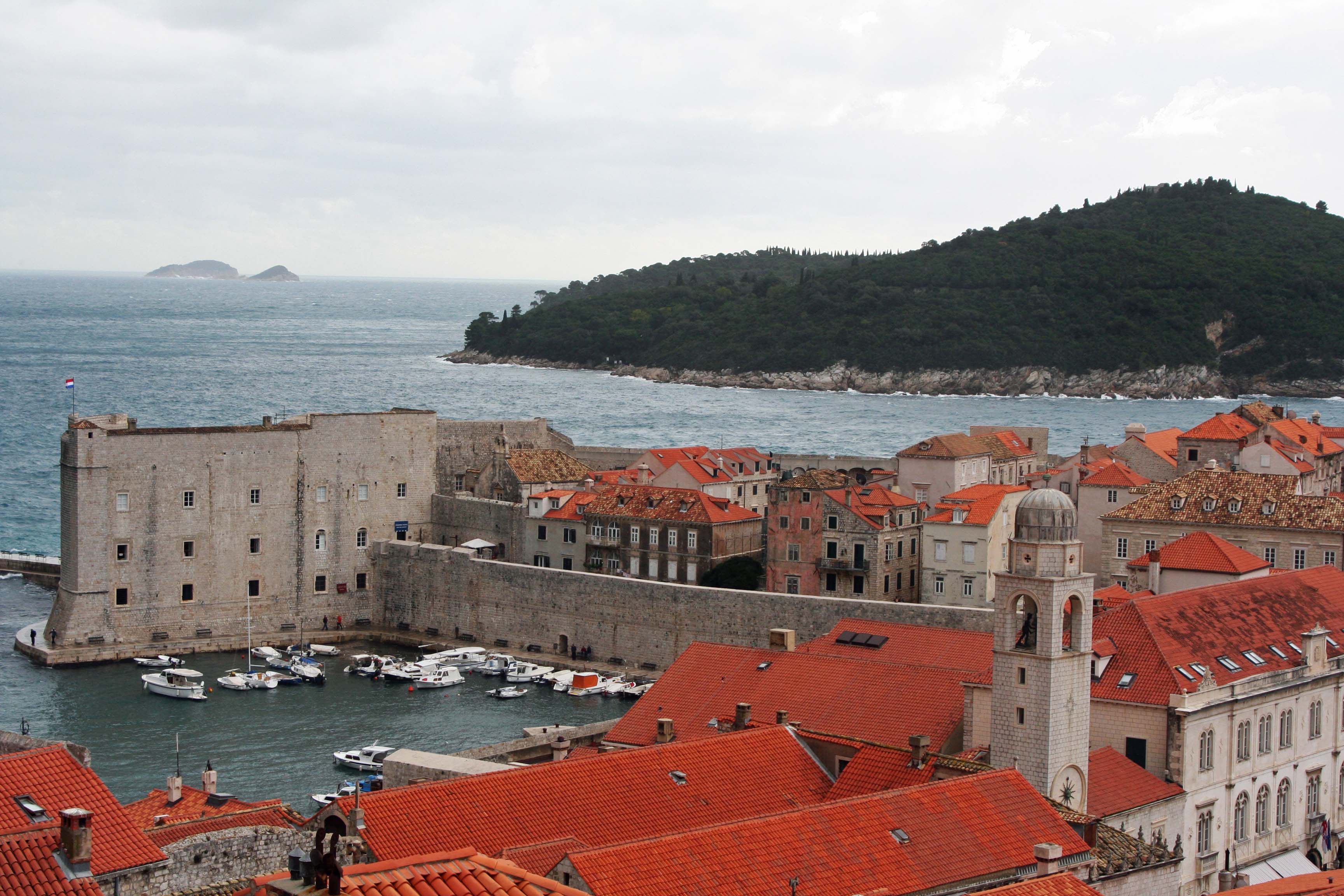
A view looking down on Dubrovnik's port and St. John's fortress that guarded the  harbor against Venetian invasion during the Middle Ages. The towns clock tower is on the right. (Photo by Peggy Mekemson)

A view looking down on Dubrovnik’s port and St. John’s fortress (now an aquarium and museum) that guarded the harbor against Venetian invasion during the Middle Ages. The town’s clock tower is on the right. Lokrum Island is at the top of the picture. (Photo by Peggy Mekemson)

Peggy's view of an abandoned building.

Peggy’s view of an abandoned building.

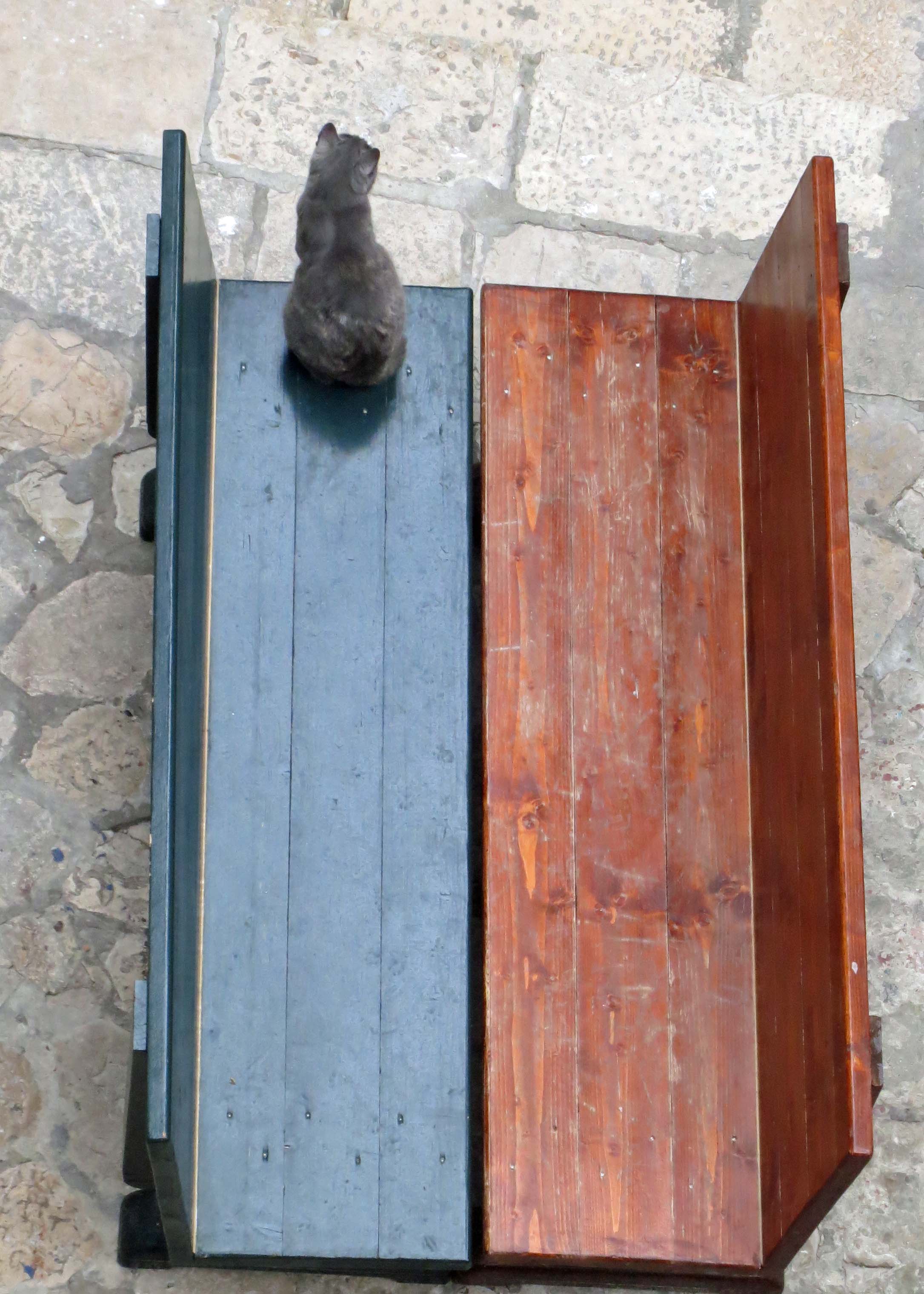
My obligatory cat photo from Dubrovnik. I loved the contrast of the two benches that had been shoved together.

My obligatory cat photo from Dubrovnik. I loved the contrast between the cat and the two benches that had been shoved together.

A view down the Stradun, Dubrovnik's main street. The Franciscan Monastery is on the left.

A long view down the Stradun (Dubrovnik’s main street) looking toward the clock tower. The Franciscan Monastery is on the left.

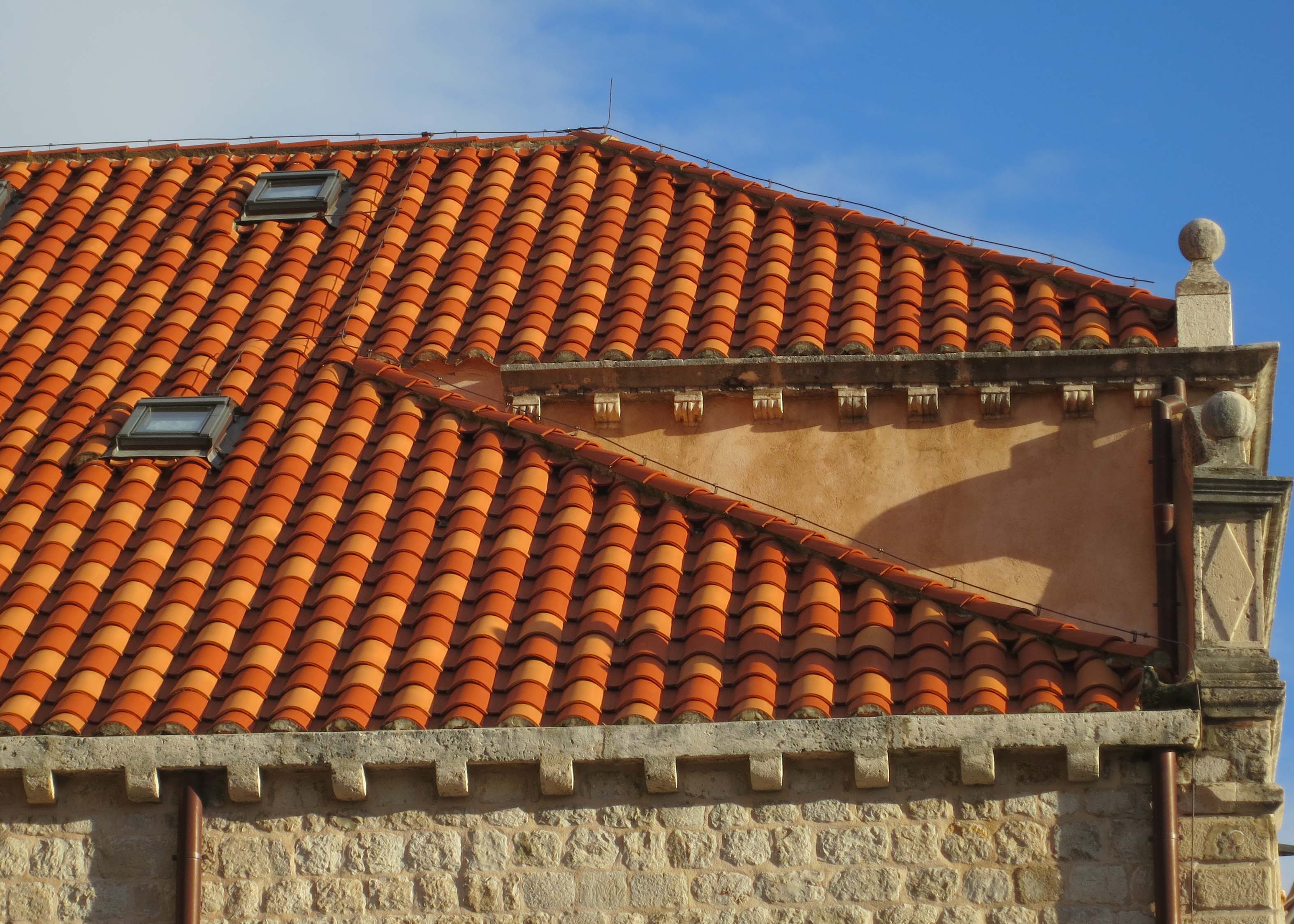
I like this view because it shows what Dubrovnik's red tile roofs look like in the sunlight!

I like this view because it shows what Dubrovnik’s red tile roofs look like in the sunlight!

A final view of Dubrovnik taken from the walls. This photo was shot through a window of one of the city's many guard towers.

A final view of Dubrovnik taken from the walls. This photo was shot through a window of one of the city’s many guard towers.


NEXT BLOG: Our tour of Mediterranean Ports  continues as we climb down from the walls surrounding Dubrovnik and walk through the city.


The Fabulous Walls of Dubrovnik… The Mediterranean Cruise

The walled city of Dubrovnik is known as the Pearl of the Adriatic. The walls around the city are listed as a World Heritage Site.

The walled city of Dubrovnik is known as the Pearl of the Adriatic. The walls around the city (seen on the right) are listed as a World Heritage Site. The Adriatic Sea is at the top of the photo.

OK, I’m in love. This walled city of Croatia on the Adriatic Sea is gorgeous.  Once upon a time Dubrovnik was a major sea power in the Mediterranean Sea. At another time it was the first nation in the world to provide official recognition for the fledgling United States of America fighting for independence.

As recently as 1991 it was under a devastating siege by Yugoslavian forces that laid waste to much of the city’s renowned beauty.  Today it has rebuilt most of what was destroyed and is once again a major draw for visitors from around the world. It’s easy to see why.

This is one of four blogs I am going to write about Dubrovnik. First up is a look at magnificent medieval wall that surrounds the city and provides visitors with outstanding views of the Adriatic Sea and surrounding country. Second I will turn inward and look down from the walls on the city and its colorful tiled roofs. Third we will visit the city from street level. Finally, I want to feature some intriguing gargoyles we found in Dubrovnik. (Have I used enough superlatives?)

Any visit to Dubrovnik should include a walk around the mile plus (6,360 feet) wall that surrounds and protects the city. Considered to be one of the great fortification systems of the Middle Ages, the walls were named a World Heritage site in 1979. Reaching a maximum height of 82 feet, the walls were never breached during the 12th through the 17th century… providing five hundred years of peace and prosperity for the residents of Dubrovnik.

A fast walker can easily do the walk in an hour or so but plan on a more leisurely 2-3 hour stroll. You’ll need the extra time for photography, or just staring in awe.

This photo of the walls was taken from Minceta Tower, the highest spot on the walls.

This photo of the walls was taken from Minceta Tower, the highest spot on the walls. (Photo by Peggy Mekemson)

This photo provides a great perspective on why enemies would have thought twice... or maybe a dozen times, before attacking Dubrovnik.

This photo provides a great perspective on why enemies would have thought twice… or maybe a dozen times, before attacking Dubrovnik.

If the walls weren't enough to discourage an invasion of Dubrovnik, the Fort of St. Lawrence stood on an opposite peninsula. (Photo by Peggy Mekemson)

If the walls weren’t enough to discourage an invasion of Dubrovnik, the Fort of St. Lawrence stood on the opposite peninsula. BTW, is it just my imagination (admittedly wild) or does the fort look like it is resting on the back of a turtle? (Photo by Peggy Mekemson)

Another view of the Fort of St. Lawrence in Dubrovnik. It was a stormy day as shown by the waves from the Adriatic Sea breaking on the rocks.

Another view of the Fort of St. Lawrence in Dubrovnik. It was a stormy day as shown by the waves from the Adriatic Sea breaking on the rocks.

This photo looks up toward Minceta Tower, the highest point on the walls of Dubrovnik.

This photo looks up toward Minceta Tower, the highest point on the walls of Dubrovnik. The flag of Croatia is seen on the left.

Another perspective on the wall protecting Dubrovnik.

Another perspective on the wall protecting Dubrovnik.

A cannon's perspective looking out from the walls of Dubrovnik.

A cannon’s perspective looking out from the walls of Dubrovnik.

I liked this photo by Peggy with its dark sky, grey wall and red roof.

I liked this photo by Peggy with its dark sky, grey wall and red roof.

A statue of St. Blaise, the Patron Saint of Dubrovnik, looks out on the Adriatic Sea under a watch tower protecting the city from harm. (Photo by Peggy Mekemson)

A statue of St. Blaise, the Patron Saint of Dubrovnik, looks out on the Adriatic Sea and protects the city from harm. (Photo by Peggy Mekemson)

A final view of Dubrovnik wall. (Photo by Peggy Mekemson)

A final view of Dubrovnik wall. (Photo by Peggy Mekemson)


NEXT BLOG: A journey around the walls of Dubrovnik looking down into the city.


Corfu: Are We Still in Greece…? The Mediterranean Cruise

A view of Corfu with its multi-colored buildings and tree covered hills. I took this photo looking down from the Old Fort.

A view of Corfu on a misty day with its multi-colored buildings and tree covered hills. The city had a more European look than the other Greek islands we had visited. I took this photo looking down from the Old Fortress.

“The sea is high again today, with a thrilling flush of wind. In the midst of winter you can feel the inventions of spring.” Lawrence Durrell

“Yes, it’s an excellent book,” George Yohalem responded to my question. “Just don’t tell your mother I recommended it.”

George, along with his wife Betty, owned the Pioneer Bookstore in Placerville, California. It was a favorite hangout of mine during my senior year in high school and George had become something of a mentor, helping to guide my 17-year-old mind to a number of good books.  He and his wife had retired to the foothills of California after long careers in Hollywood where George had worked as a screenwriter/producer and Betty an actress.

The book I had picked up was “Justine” by Lawrence Durrell. The above quote is the first line in the book and Durrell is describing Corfu. He had lived there from 1935-40 and fallen in love with the island. “Justine” became my initial venture into serious literature and definitely my first venture into erotic literature… thus George’s caution. The book transfixed me, not so much by the sex (well, maybe a little) but by the sheer mastery of the language. I was picked up and dropped into Corfu and then Alexandria… the main setting for “Justine” and the other three books in the Alexandria Quartet. It was magic.

Durrell wasn’t the only author to find Corfu a touch exotic. Homer had the ship wrecked Odysseus land on the island during his long journey and Shakespeare used it for the setting of Prospero’s magical realm in The Tempest. In Corfu’s long history Corinthians, Romans, Venetians, French and English had occupied the island as a gateway to both the East and West. At one point, the feared pirate Barbarossa laid siege to Corfu and succeeded in enslaving a substantial portion of its population.

Corfu’s location in the Ionian Sea sets it apart from its Greek cousins Santorini and Mykonos in the Aegean Sea. We found no more sparkling white washed buildings perched on treeless terrain. Corfu is an island covered with over a million olive trees and its buildings are multi-hued with a well-lived-in look. Two massive forts serve as bookends for its main town, also known as Corfu. We wandered through its winding narrow streets, visited an Asian museum housed in a colonial British mansion, checked out a Greek Orthodox Church, and climbed the steep hill to the top of the Old Fortress overlooking the town.

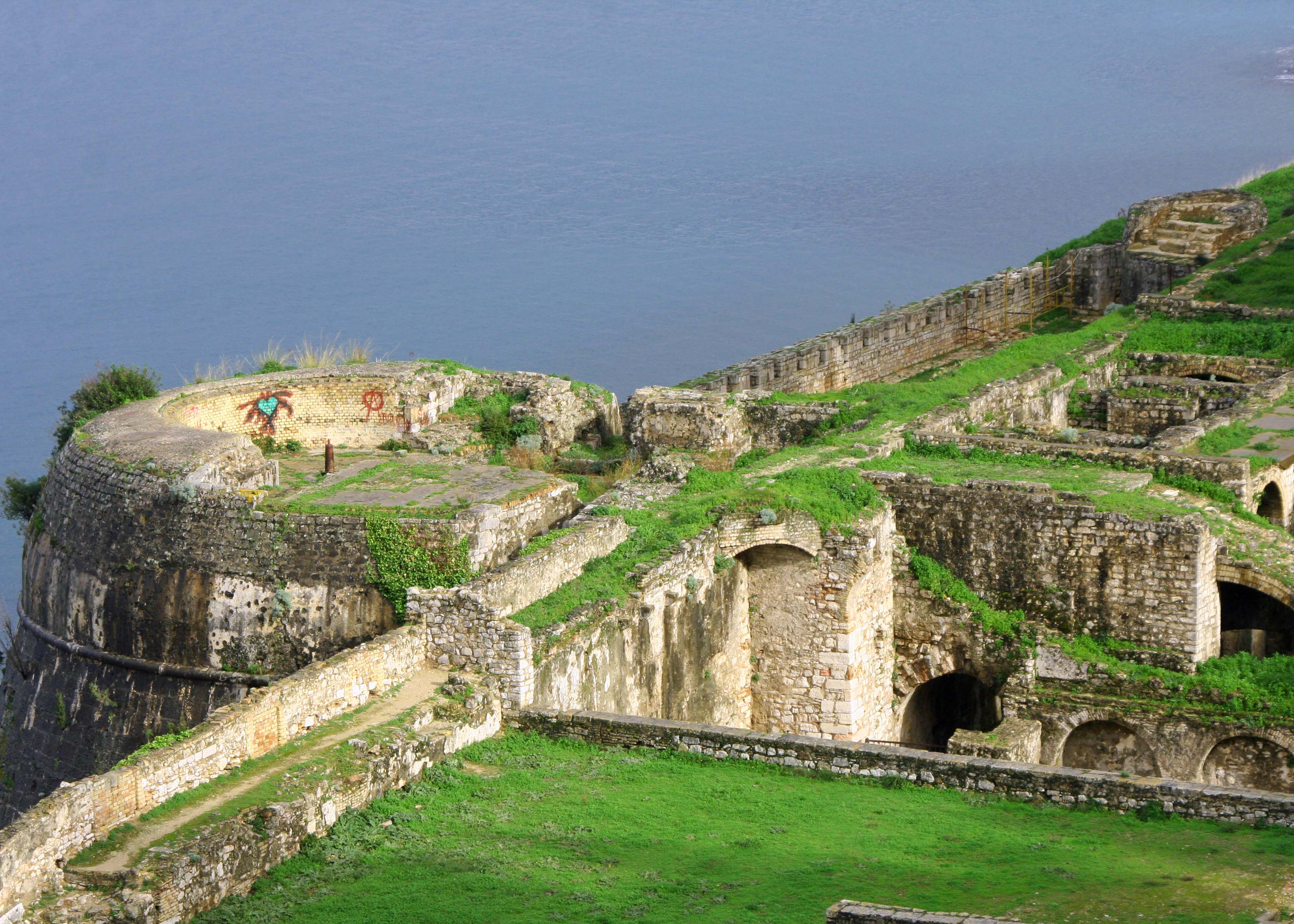
The most magical place for me in Corfu was the Old Fortress. Dating back to ancient times, the Venetians updated it in the Fourteenth Century. In this photo, Kathi Saage walks around a corner of one of the tunnels leading through the fort.

The most magical place for me in Corfu was the Old Fortress. Dating back to ancient times, the Venetians updated it in the Fourteenth Century. In this photo, Kathi Saage walks around a corner of one of the tunnels leading through the fort.

I loved how the fort seems to be an organic part of the hill.

I loved how the fort seems to be an organic part of the hill.

This photo and the next, both by Peggy, also capture the ancient feel of the Old Fortress on Corfu.

This photo and the next, both by Peggy, also capture the ancient feel of the Old Fortress on Corfu.

This probably served as a a gun placement in the fort.

This building probably served as a gun placement in the fort. The clock tower peaks out on the right. (Photo by Peggy Mekemson)

The clock tower located on the Old Fortress of Corfu.

The clock tower located on the Old Fortress of Corfu. It was a stormy day.

A final view of the Old Fort. (Photo by Peggy Mekemson)

A final view of the Old Fort looking Irish green. (Photo by Peggy Mekemson)

A Corfu Street scene. Once again we enjoyed the narrow, car-free streets as we did time and again in Europe.

A Corfu street scene. Once again we enjoyed the narrow, car-free streets as we did time and again in Europe. Peggy’s brother John and his wife Frances served as my models.

Another view of Corfu buildings with their shutters and balconies.

Another view of Corfu buildings with their shutters and balconies.

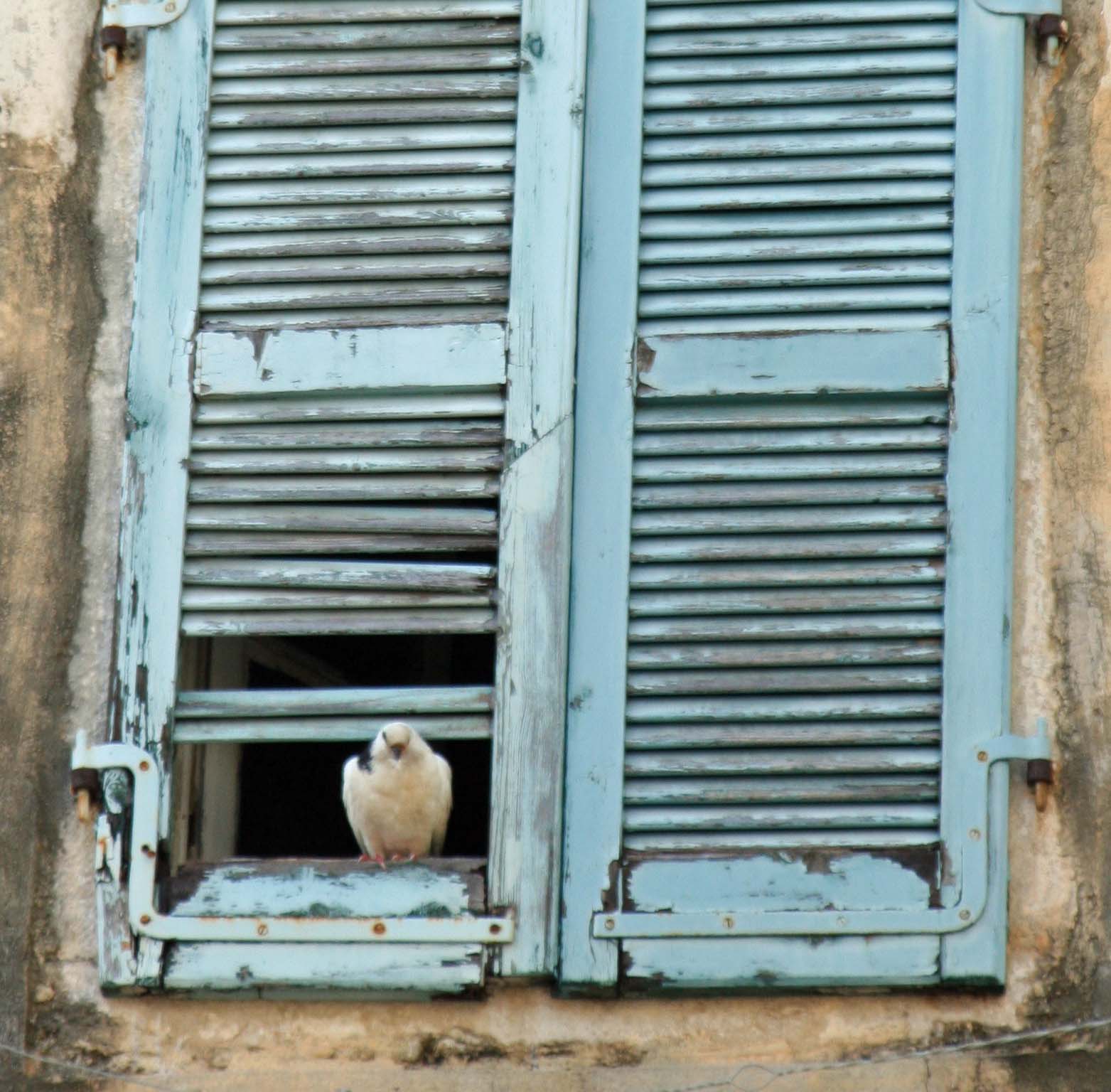
Peggy found this pigeon hanging out on the broken shutters of an abandoned building.

Peggy found this pigeon hanging out on the broken shutters of an abandoned building.

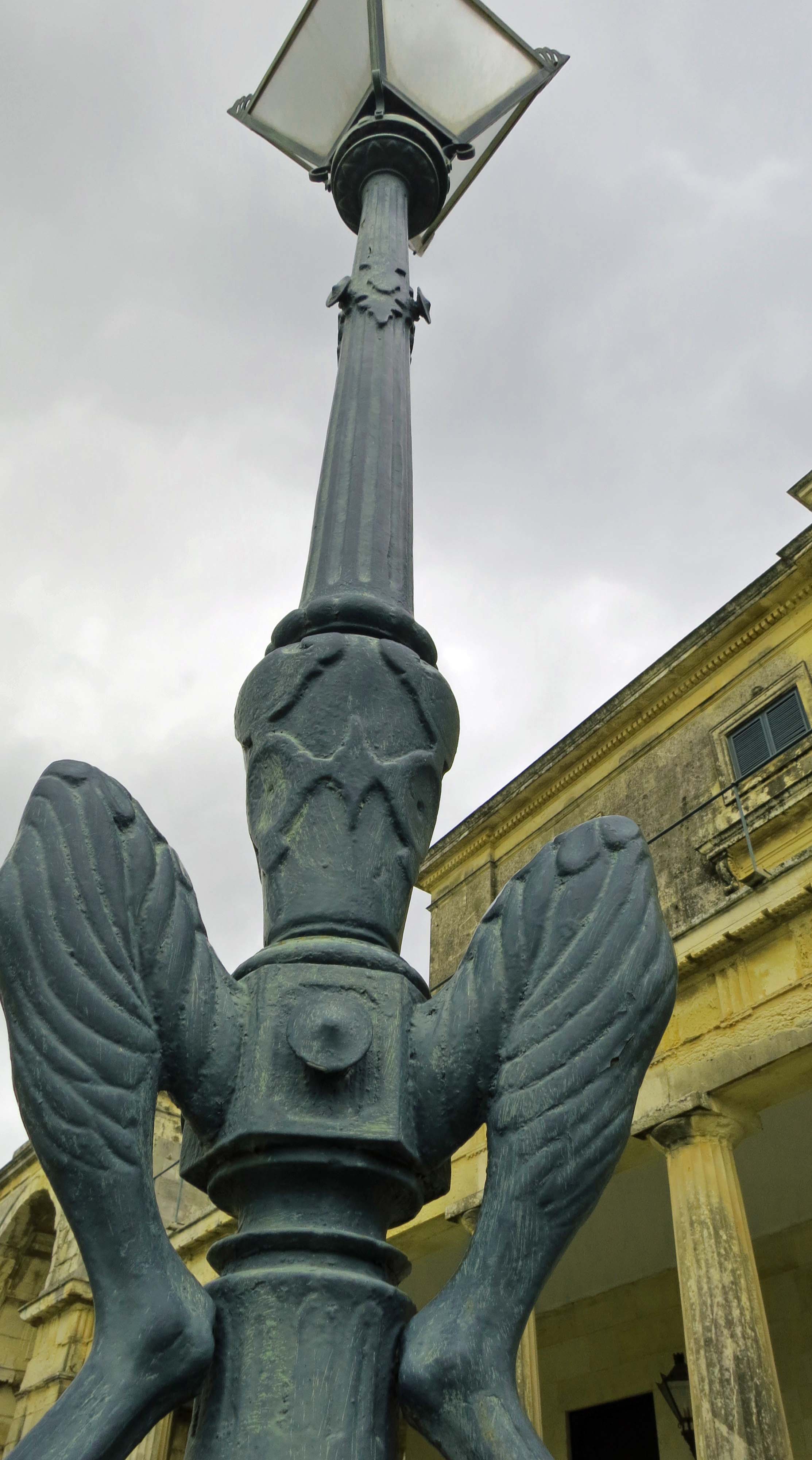
Lamp posts don't get much strange than the one we found outside of Corfu's Asian Museum located in an old British mansion.

Lamp posts don’t get much more strange than the one we found outside of Corfu’s Asian Museum located in an old British mansion. Does it qualify as art, or just weird?

The Asian Museum, BTW, includes an excellent collection of art, as represented by this painting.

The Asian Museum, BTW, includes an excellent collection of art, as represented by this painting.

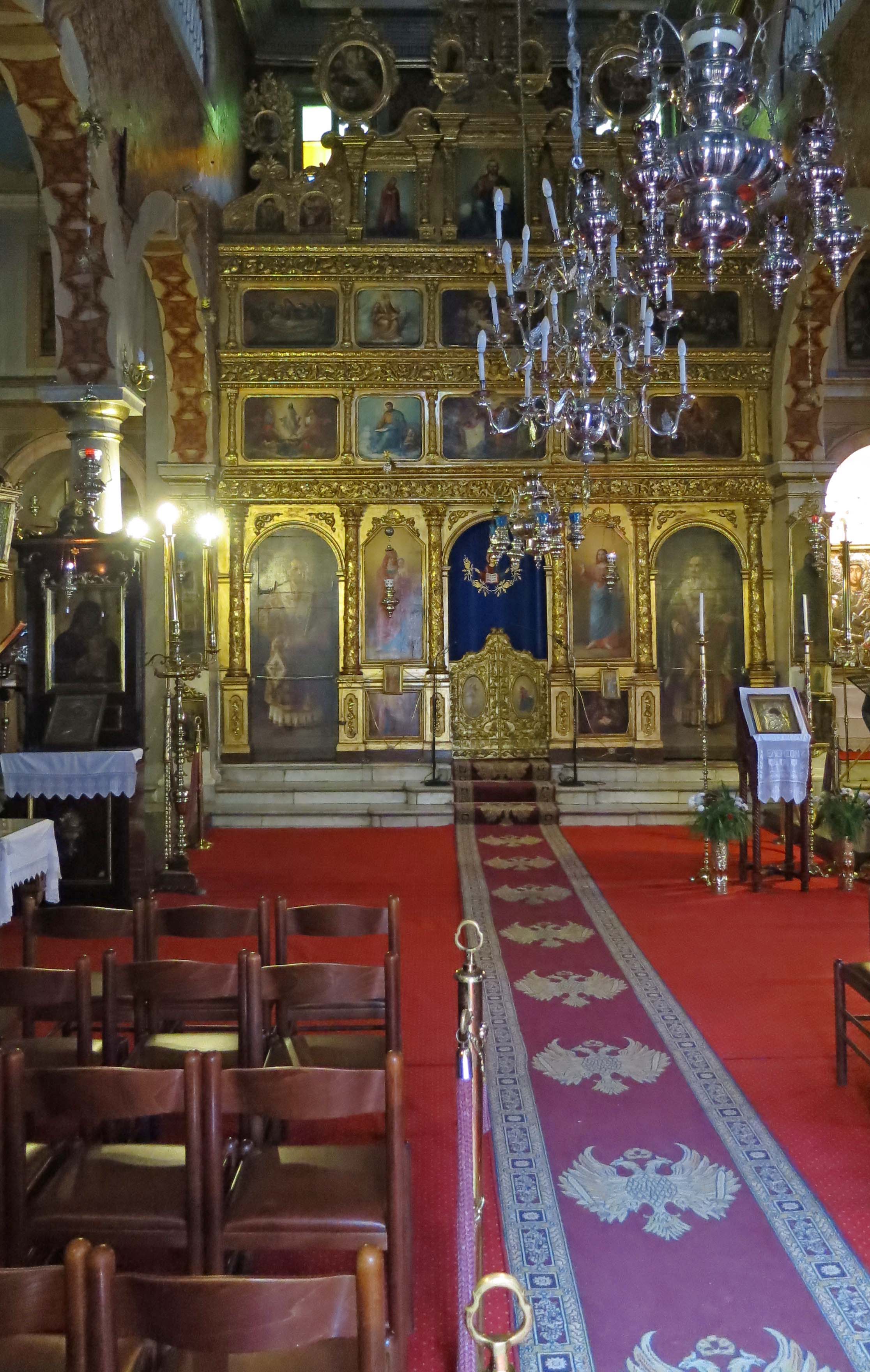
The adventure involved in travel is experiencing new sites and cultures. This was a beautiful Greek Orthodox Church we walked into.

Part of the adventure in travel is experiencing new sites and cultures. This was a beautiful Greek Orthodox Church we wandered into.

There are some things that I am almost guaranteed to photograph when I travel…

Gargoyles...

Gargoyles…

ColorfulfFruit markets...

Colorful fruit markets…

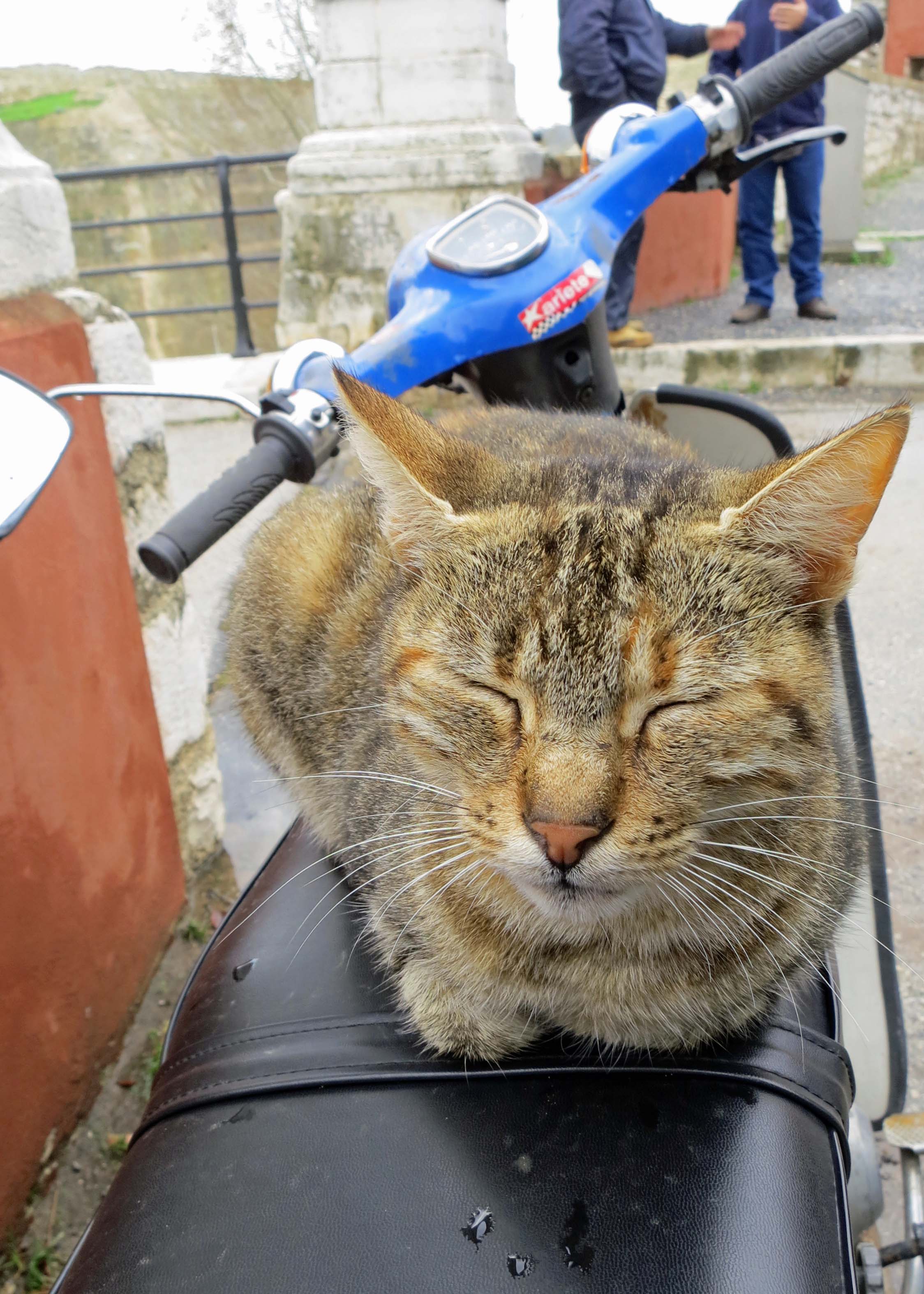
My obligatory cat photo. I caught this guy sleeping on the seat of a motor bike at the entrance to the Old Fort on Corfu. It may be a new definition of contentment.

And animals… I caught this guy sleeping on the seat of a motor bike and catching some rays at the entrance to the Old Fortress on Corfu. It may be a new definition of contentment.

A final view of Corfu. This one captures our ship, the Crown Princess, in the background.

A final view of Corfu. This one captures our ship, the Crown Princess, in the background.

A BREAK… A few days ago I spent three hours on an Internet queue hoping to get two of the 40,000, 2013 Burning Man tickets made available to the general public.  I succeeded! Once again Peggy and I will be attending this unique event in the remote Nevada desert. In celebration, I will post some of my favorite Burning Man photos on my next blog. If you have been following me for a while, some of the photos will be familiar.

In the blog after, I will return to our exploration of the Mediterranean with one of my three favorite stops: Dubrovnik in Croatia. You won’t want to miss this beautiful walled city.

Athens and A Splitting Headache: Greek God Style… The Mediterranean Cruise

The massive Temple of Zeus located near the base of the Acropolis.

The massive Temple of Zeus located near the base of the Acropolis.

We like our gods to have a touch of humanity. The Greek gods had more than their share. They would party on Olympus, chase after the opposite sex, and constantly intervene in human affairs. They could be jealous, revengeful and petty but they could also be generous and protective. It was good to have one on your side.

The replica of the Parthenon in Nashville, Tennessee has a replica of what the statue of Athena located in the historic Parthenon may have looked like.

The replica of the Parthenon in Nashville, Tennessee has a fully sized model of what the statue of Athena located in the historic Parthenon may have looked like. I think the spear alone would have given Zeus a headache.

Each Greek city-state would choose a god to be its special protector. With Athens, it was Athena. Both the Parthenon and the Erechtheion on the Acropolis (featured on my last blog) were built in her honor. Athena, according to Greek mythology, sprang fully grown and armed from the head of Zeus. Not surprisingly, Zeus had a massive headache prior to her birth. You might call it a splitting headache. His son, Hephaestus, god of the forge and blacksmiths, took his mighty chisel and split opened Zeus’s head, thus releasing Athena and relieving Zeus.

Zeus was also honored in Athens with a massive temple located near the base of the Acropolis. In addition to being the king of the gods and father of Athena, he was a notorious womanizer. He married his sister Hera, who was constantly trying to thwart his womanizing ways. One of Zeus’s more famous trysts was with the renowned beauty Leda. Zeus seduced her in the guise of a swan, so the story goes. It was a favorite subject of Renaissance Painters. One result of the seduction was that Leda went home and laid an egg, from which the even more beautiful Helen of Troy was hatched.

Our guides took us to see the Zeus temple and then on to visit site of the 2004 Summer Olympics. We stopped off to watch the changing of the guards in front of the Prime Minister’s official seat of government and hurried on to a very expensive restaurant that our guides had selected.  I assume they received a handsome kickback. Sadly, our time was running out and we returned to the ship. Other sites would have to wait for another time.

A side view of the Temple of Zeus in Athens looking grey against grey skies.

A side view of the Temple of Zeus in Athens looking grey against grey skies.

Another photo of the Zeus Temple in Athens. This one features the upper part of the columns with their Corinthian tops.

Another photo of the Zeus Temple in Athens. This one features the upper part of the columns with their tops decorated in the Corinthian style.

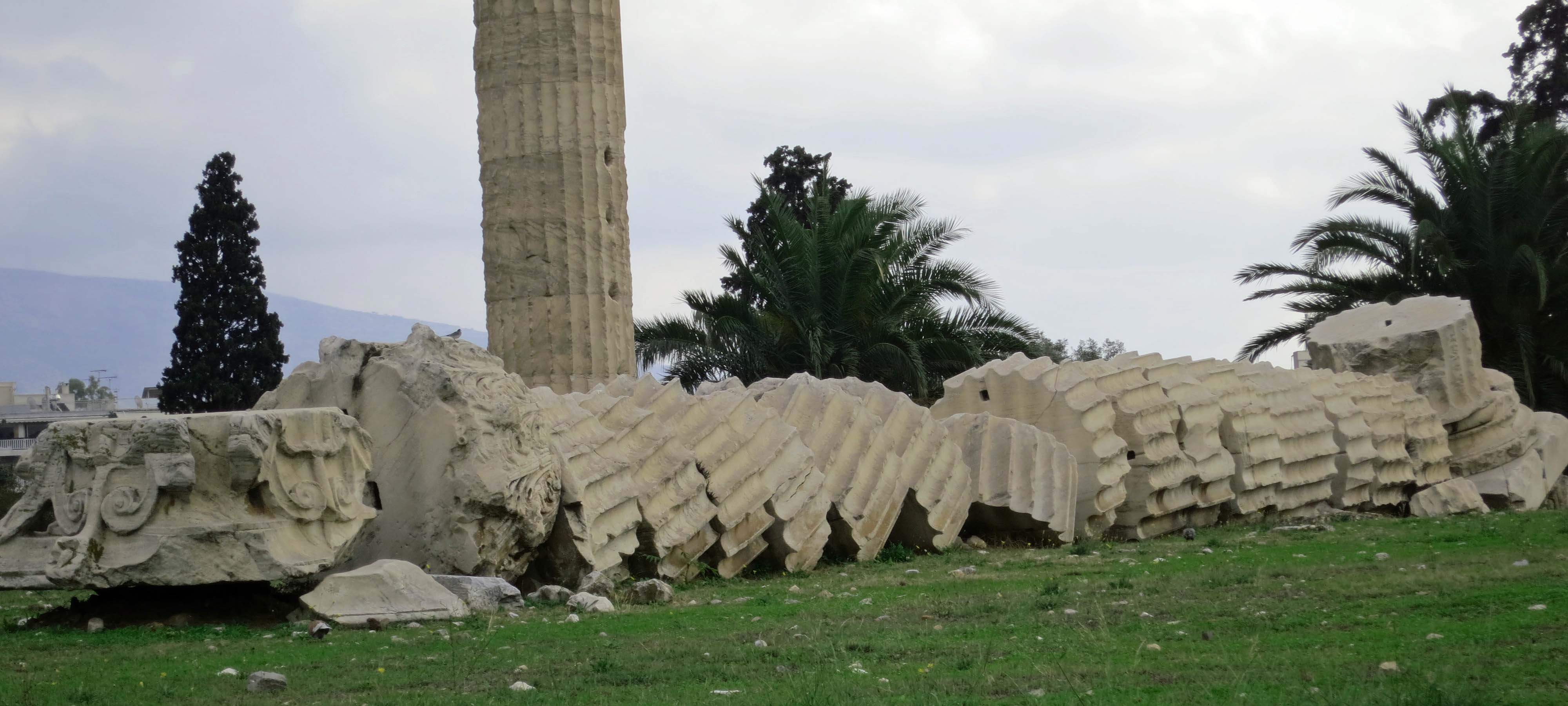
In 1852 a storm topped one of the massive columns from the Temple of Zeus and it has remained there ever since.

In 1852 a storm topped one of the massive columns from the Temple of Zeus and it has remained there ever since.

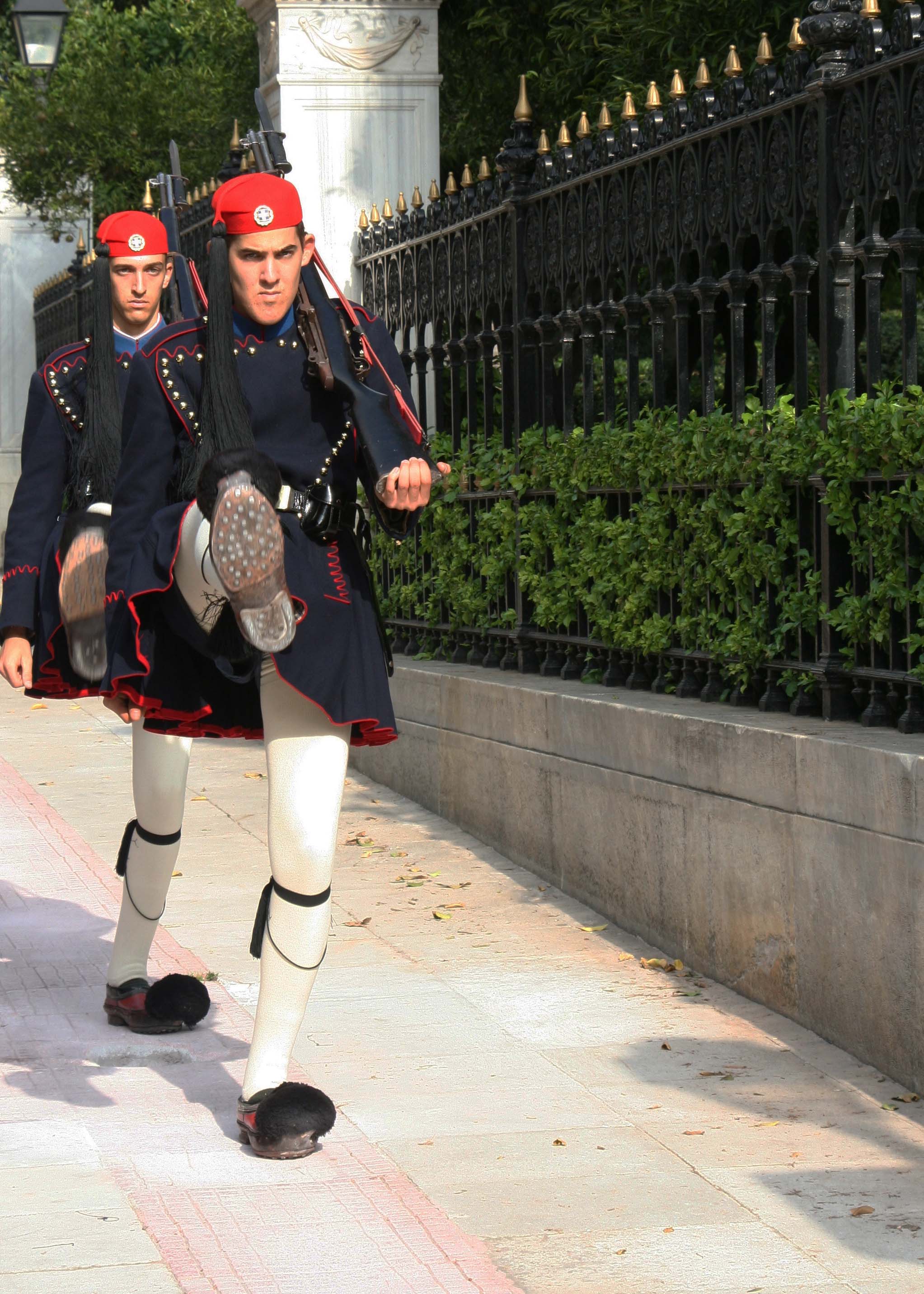
We watched as guards high stepped their way through the Changing of the Guards at the Prime Ministers seat of government.

We watched as guards high stepped their way through the Changing of the Guards at the Prime Ministers seat of government. (Photo by Peggy Mekemson)

I found the choice of shoes, um, interesting.

I found the choice of shoes, um, interesting. At least the guards were guaranteed warm toes on a cold night.

The site of the 2004 Summer Olympics in Athens features a statue of a discus thrower winding up to throw.

The site of the 2004 Summer Olympics in Athens features a statue of a discus thrower winding up to throw.

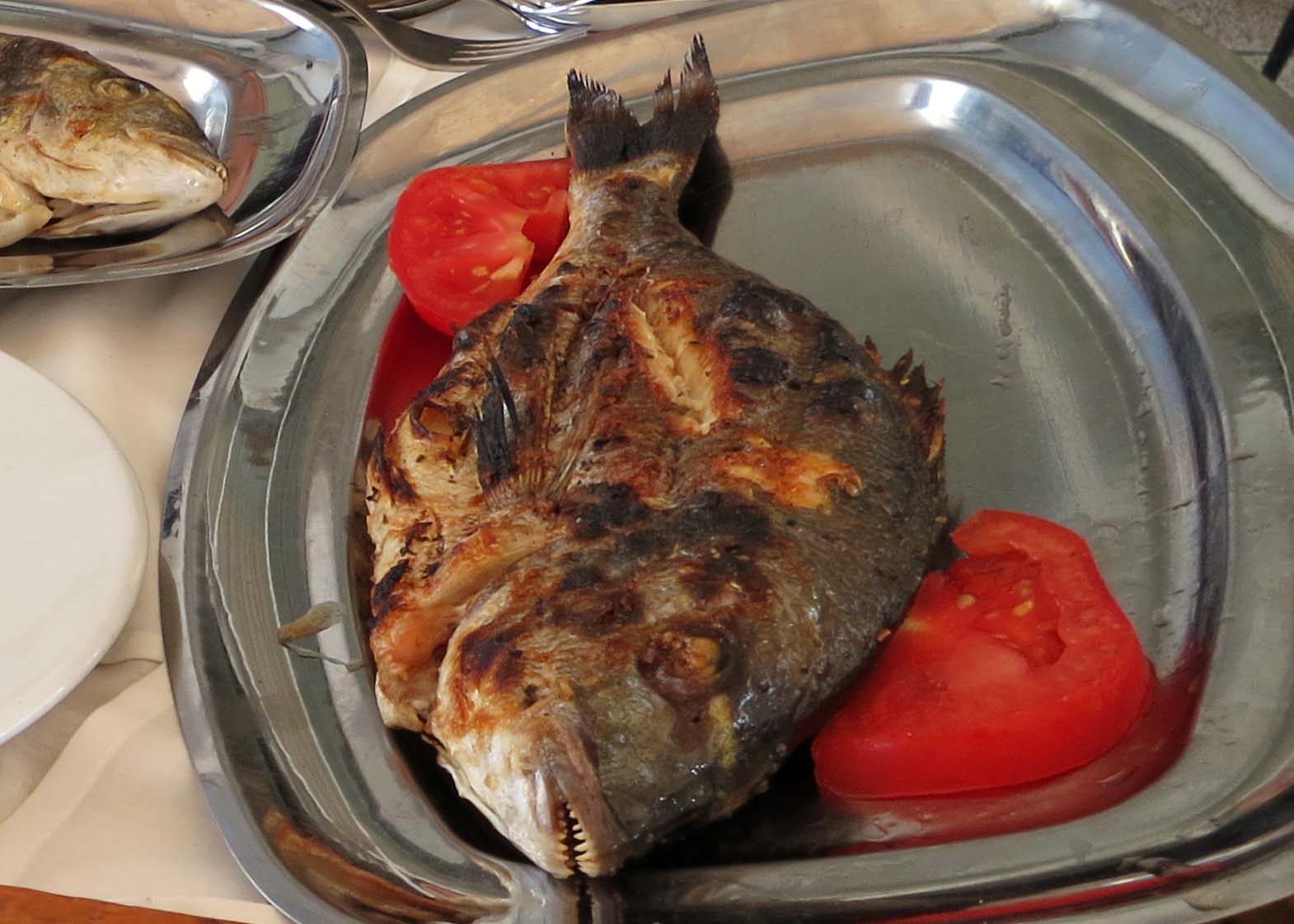
One of several courses from our expensive Greek lunch.

One of several courses from our expensive Greek lunch.

Peggy and I and pose with our two Greek guides.

Peggy and I and pose with our two Greek guides.

NEXT BLOG: We journey to the enchanting Greek Island of Corfu on our Mediterranean Cruise adventure.

Athens… The Cradle of Democracy and Unrest… The Mediterranean Cruise

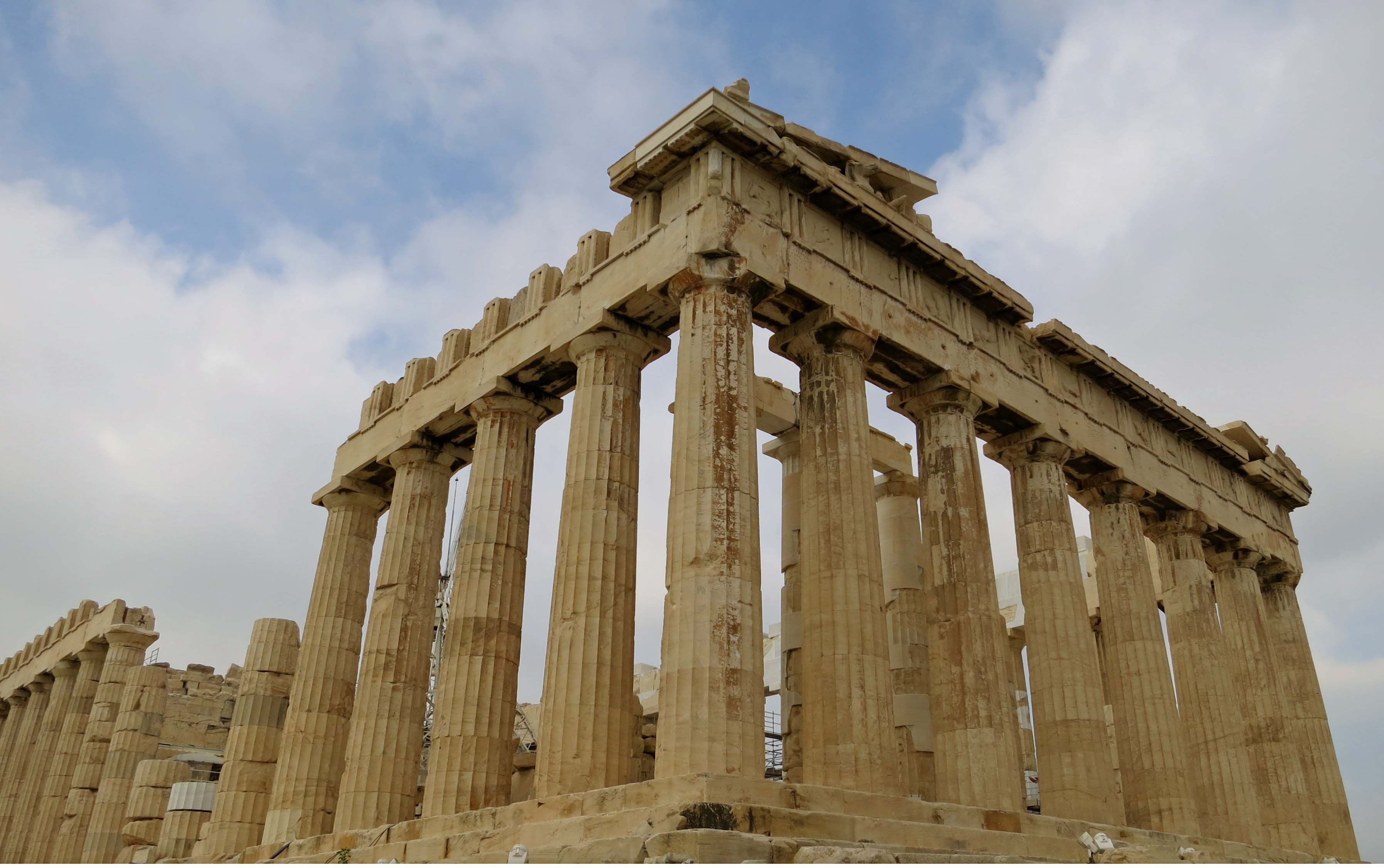
The Acropolis with its graceful Parthenon shown above is probably the wold's most famous historic site.

The Parthenon, standing proudly on the Acropolis in Athens, Greece, is probably the wold’s best known historic site.

Athens was grumpy. Several years of extravagant spending by the Greek government and its citizens had come home to roost with the worldwide financial crisis of 2009. The European Union had required steep austerity measures in Greece as the price of a pulling the nation back from the brink of fiscal chaos. Nothing was sacred from spending cuts including social services, wages and pensions. A massive influx of impoverished immigrants and a nascent neo-Nazi movement added to the country’s woes. Everyone was expected to make sacrifices to help solve the crisis.

Since sacrifices are best made by someone else, there had been massive strikes and violence in the country.

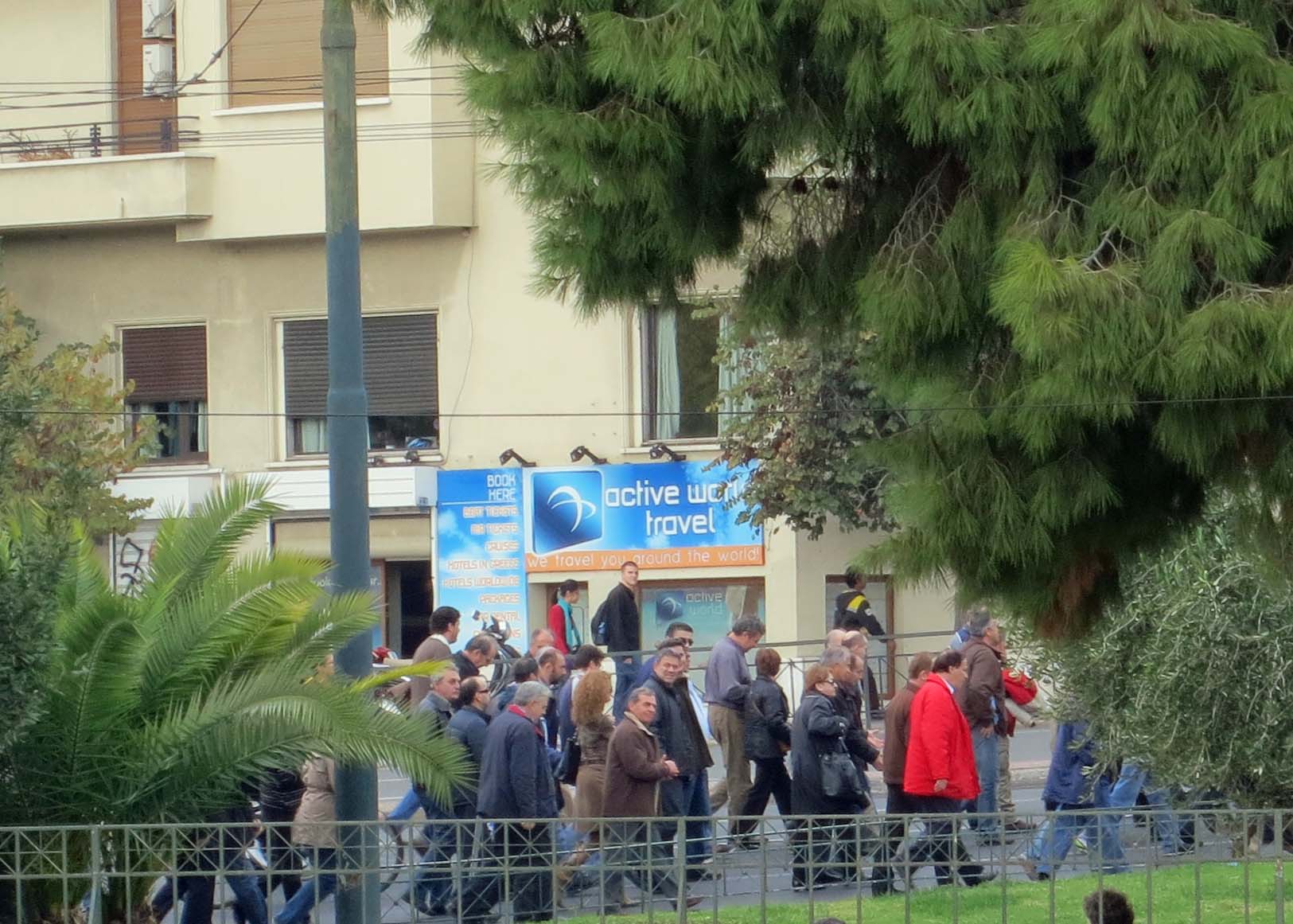
Standing near the Temple of Zeus, we watched as yet another group of protestors hit the streets of Athens.

Standing near the Temple of Zeus, we watched as yet another group of protestors hit the streets of Athens.

We didn’t know what to expect but had decided to see Athens on our own. Tours offered by the cruise line were very expensive. It helps assure a healthy profit margin. There is neither encouragement nor support for independent exploration. No handy-dandy sheets are handed out saying this is what you should do if you want to see such and such on your own.

Normally our self-guided tours worked great but Athens proved to be challenging.

From the moment we stepped off the ship, taxi drivers offering tours inundated us. Tourism had dropped with the fiscal crisis and was dropping even farther with the end of the tourist season. The air of desperation turned to rudeness when it was discovered we were planning to use public transit. Finding the right bus stop and the right bus turned out difficult, however. When we finally did find the bus it was pulling out of the bus stop. Out of frustration I turned to a taxi driver. We were able to hire two taxis for an all day tour for the six of us that was substantially less than the cruise tours.

Was it worth all the hassle? Absolutely.

Much of who we are in the West evolved from what happened in the City State of Athens between 500 and 350 BC. We visited the cradle of democracy and walked where Socrates, Plato and Aristotle had walked. We climbed up the Acropolis and admired the Parthenon and other buildings that have been a major inspiration for Western architecture for 2000 years. We watched the changing of the guard at the Prime Minister’s residence, visited the site of the Athens 2004 summer Olympics and concluded out tour with an expensive but excellent Greek meal.

If you are a history buff, as I am, having your photo taken with the Parthenon as a backdrop is a true privilege.

If you are a history buff, as I am, having your photo taken with the Parthenon as a backdrop is a true privilege. (Photo by Peggy Mekemson)

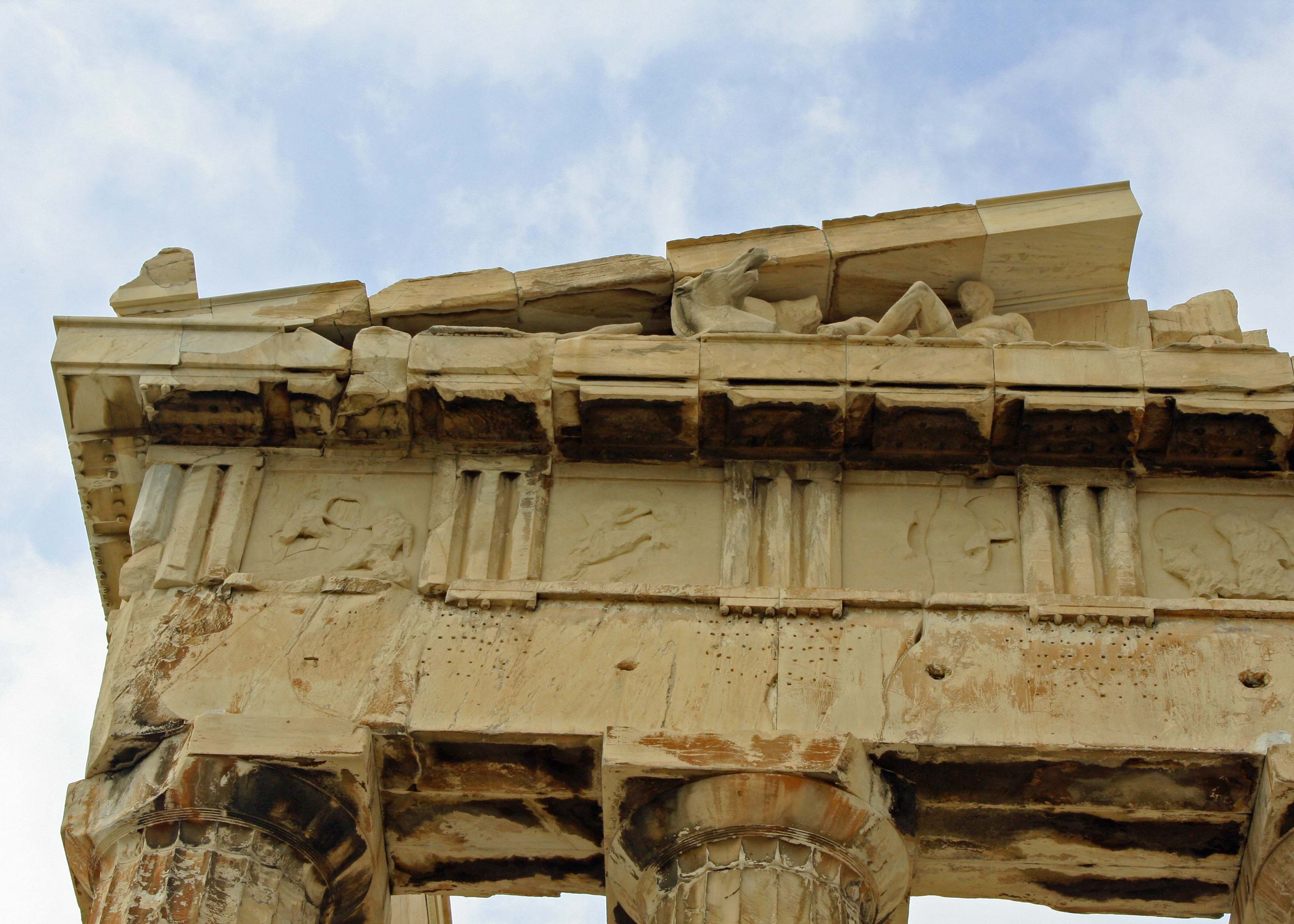
This corner shot shows one of the few statues that remain of many that once decorated the Parthenon. (Many can be found in the British Museum.)

A close up of the corner  shown behind me above features one of the few statues that remain of many that once decorated the Parthenon. (Many can be found in the British Museum.)

Extensive renovation work is being done on the Parthenon, as well as other buildings on the Acropolis. ( Photo by Peggy Mekemson)

Extensive renovation work is being done on the Parthenon, as well as other buildings on the Acropolis. ( Photo by Peggy Mekemson)

A full-scale replica of the Parthenon as it would have looked like originally can be found in Nashville, Tennessee. We stopped by to check it out after our Mediterranean tour while visiting with our daughter and her family.

A full-scale replica of the Parthenon as it would have looked like originally can be found in Nashville, Tennessee. We stopped by to check it out after our Mediterranean tour while visiting with our daughter Natasha and her family.

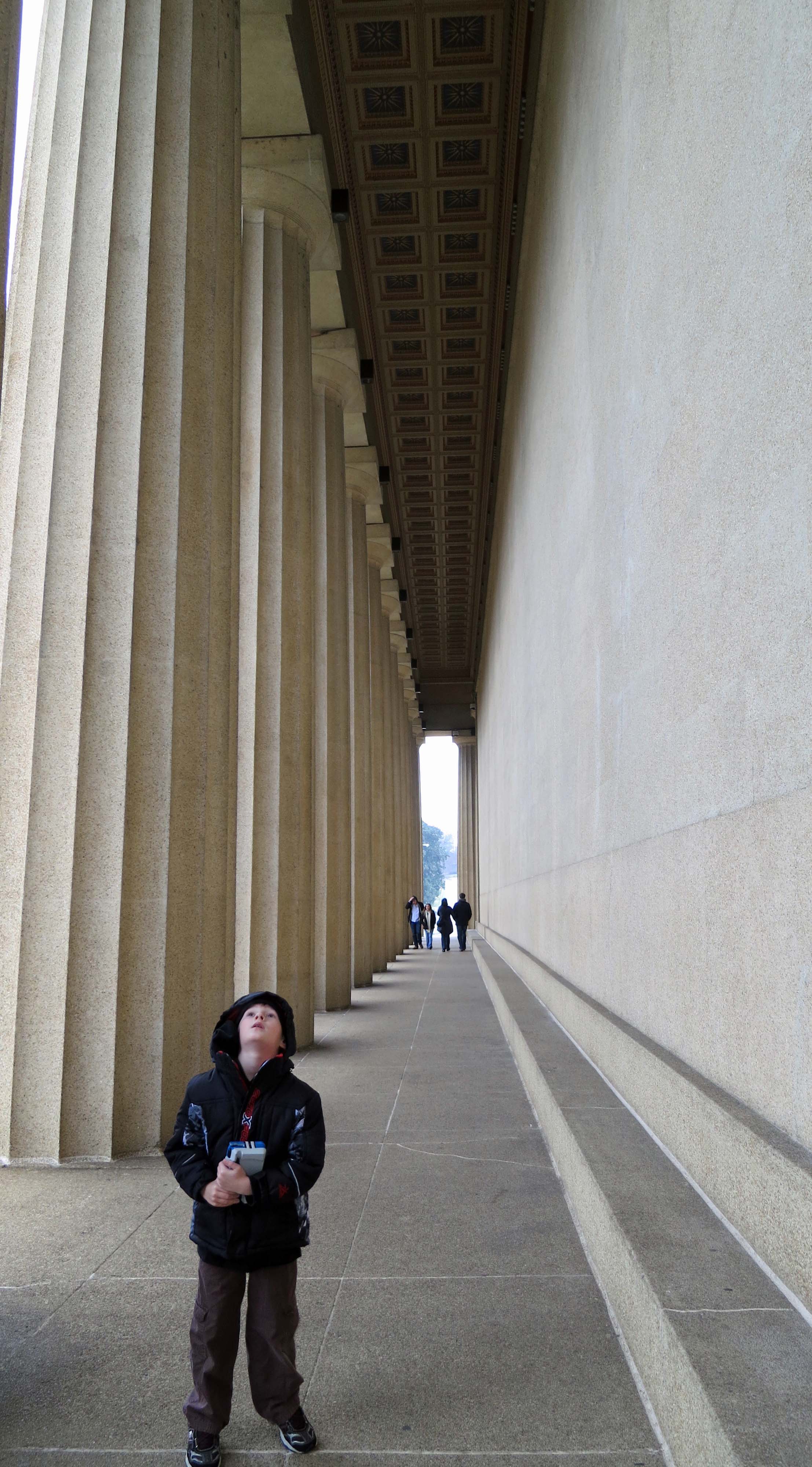
My grandson Ethan provides an interesting perspective in this Nashville photo on the original size of the Parthenon.

My grandson Ethan provides an interesting perspective in this Nashville photo on the original size of the Parthenon.

Another impressive building on the Acropolis is the Erechtheion. An olive tree decorates the front of the building.

Another impressive building on the Acropolis is the Erechtheion. An olive tree decorates the front of the building.

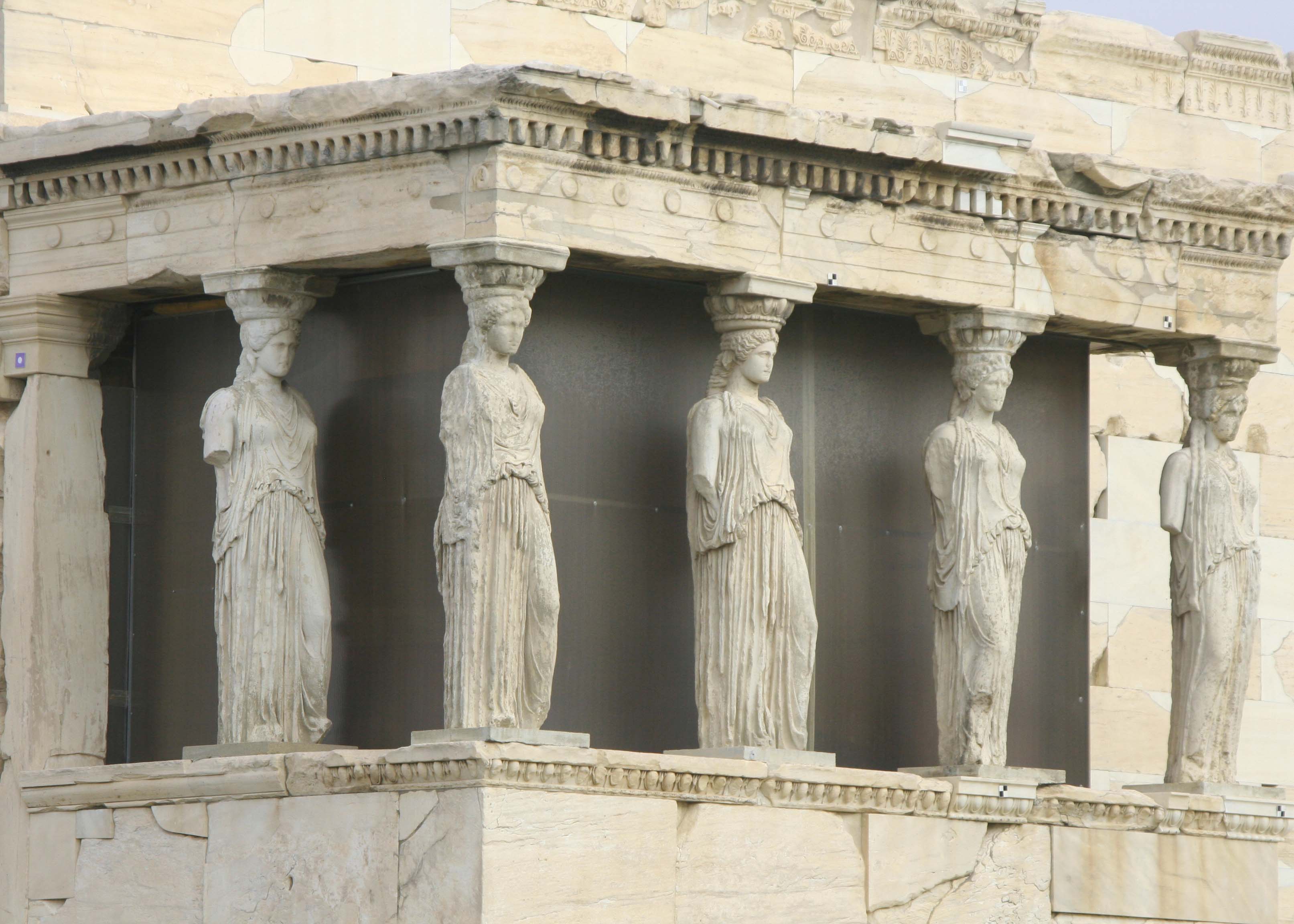
Another important building on the Acropolis is the Erechtheion, which includes the Porch of the Caryatids, lovely Greek maidens who have been turned into graceful columns.

the Erechtheion  includes the Porch of the Caryatids, lovely Greek maidens who have been turned into graceful columns. (Photo by Peggy Mekemson)

A close up of the Elechtheion, windows, and an olive tree representing Athena's gift to Athens.

A close up of the Erechtheion, windows, and an olive tree representing Athena’s gift to Athens.

This is a shot looking upward at the end of the Erechtheon opposite the Porch of the Caryatids.

This is a shot looking upward at the end of the Erechtheion opposite the Porch of the Caryatids.

Looking upward at the Temple of Nike on the Acropolis.

A final view: The Temple of Nike on the Acropolis.

NEXT BLOG: We continue our exploration of Athens with a visit to the huge temple of Zeus, see the site of the 1904 Olympics, watch guards do the kick step and eat fish and moussaka for lunch. Note, in order to make more time for other writing projects, I will be blogging on our Mediterranean Cruise Adventure on Monday, Wednesday and Friday.

Getting Lost on the Greek Island of Mykonos… The Mediterranean Cruise

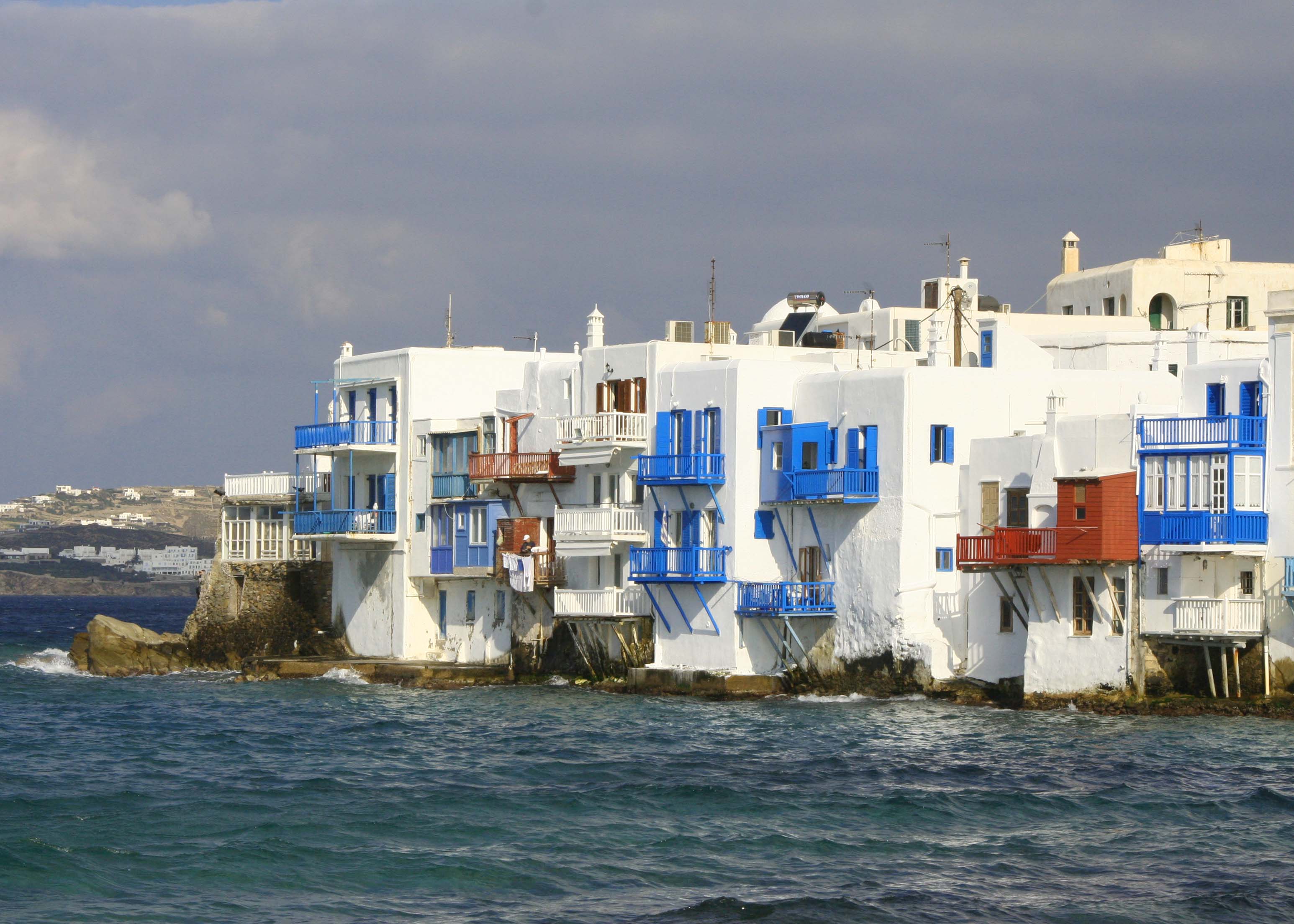
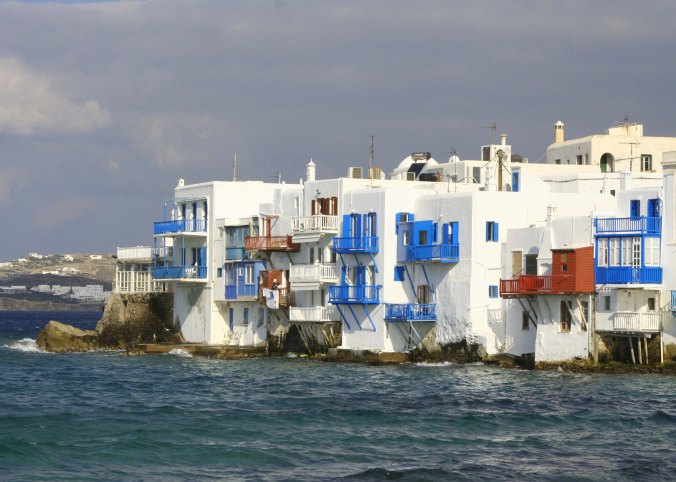
The area known as Little Venice is one of many charming sites on Mykonos.

The area known as Little Venice is one of many charming sites on Mykonos. (Photo by Peggy Mekemson)

The maze-like town of Mykonos (Chora) was designed to discourage invasion. It was easy for invaders to get lost in the narrow, winding streets that ran into other narrow, winding streets that ran into other narrow, winding streets.

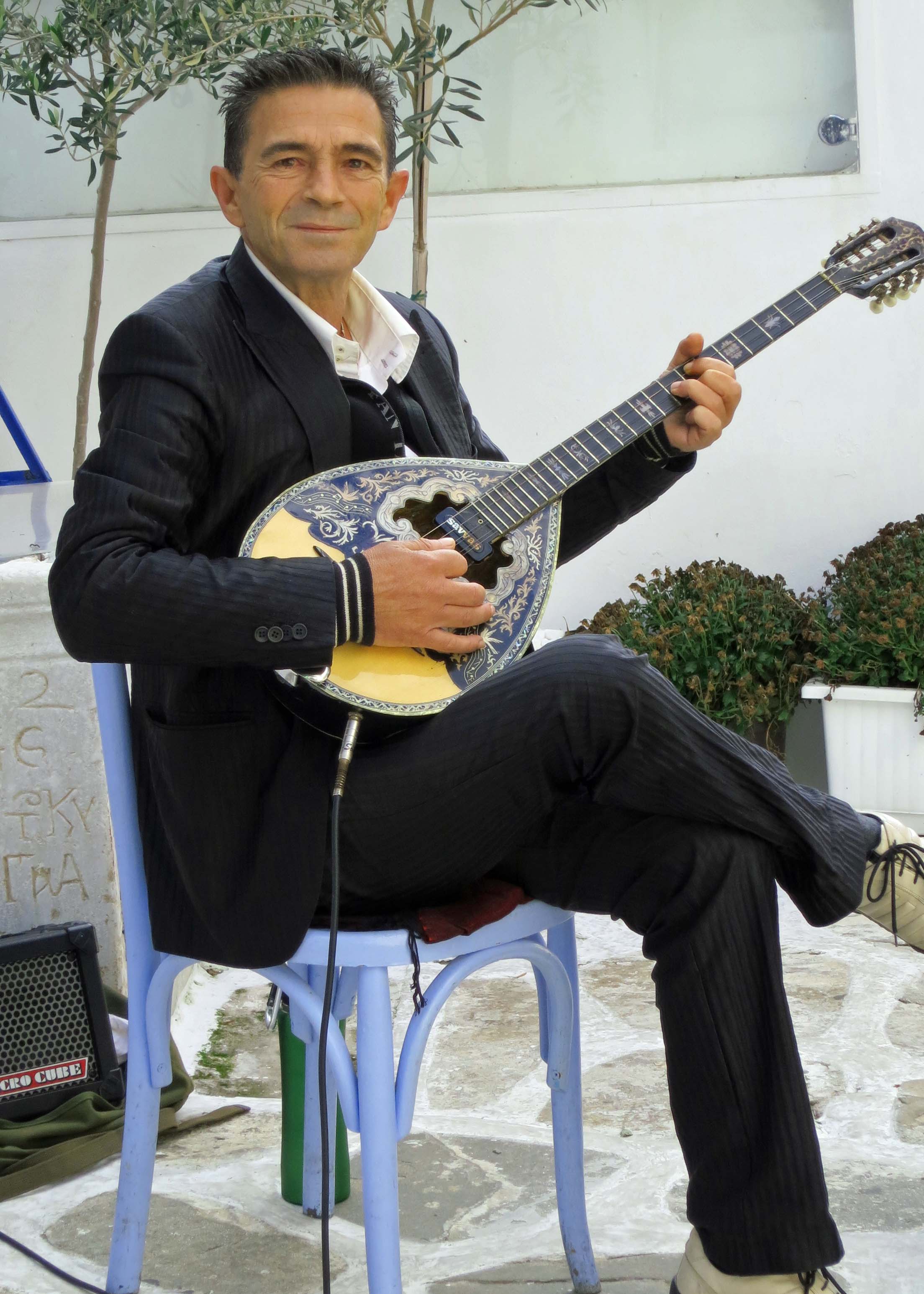
Modern day invaders, otherwise known as tourists, also find it easy to get lost. But that’s half the fun. Except for finding a restroom when you really, really need it, there is no danger. You can easily spend an hour or several wandering along the town’s crooked roads and paths. There are beautiful white buildings slathered in stucco to admire, shops to explore, and cats to photograph. You may even find a Greek musician playing the bouzouki, a mandolin-like instrument that produces what most people think of as Greek music.  Picture Zorba dancing.

White is the common color for buildings on Mykonos, Santorini and other islands of the Cyclades in the Aegean Sea.

White is the common color for buildings on Mykonos, Santorini and other islands of the Cyclades in the Aegean Sea.

One of the main streets in Myconos.

One of the main streets in Mykonos. This road is freeway size in comparison to most routes through the town.

Routes through Mykonos are much more likely to look like this.

Routes through Mykonos are much more likely to look like this. Note the blue trim used to add color to windows and doors.

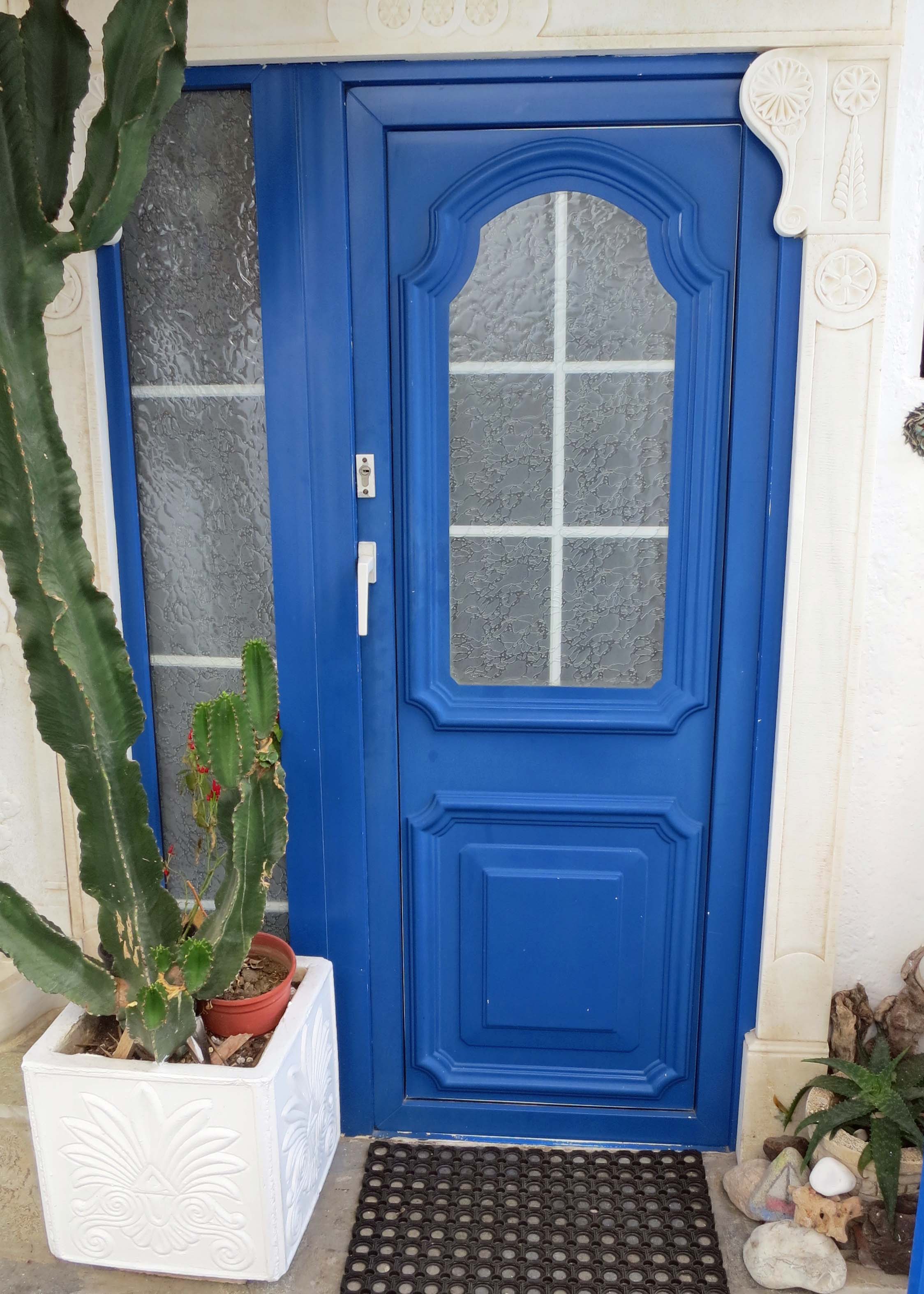
This blue Mykonos door is decorated by a cactus.
This blue Mykonos door is decorated by a cactus.

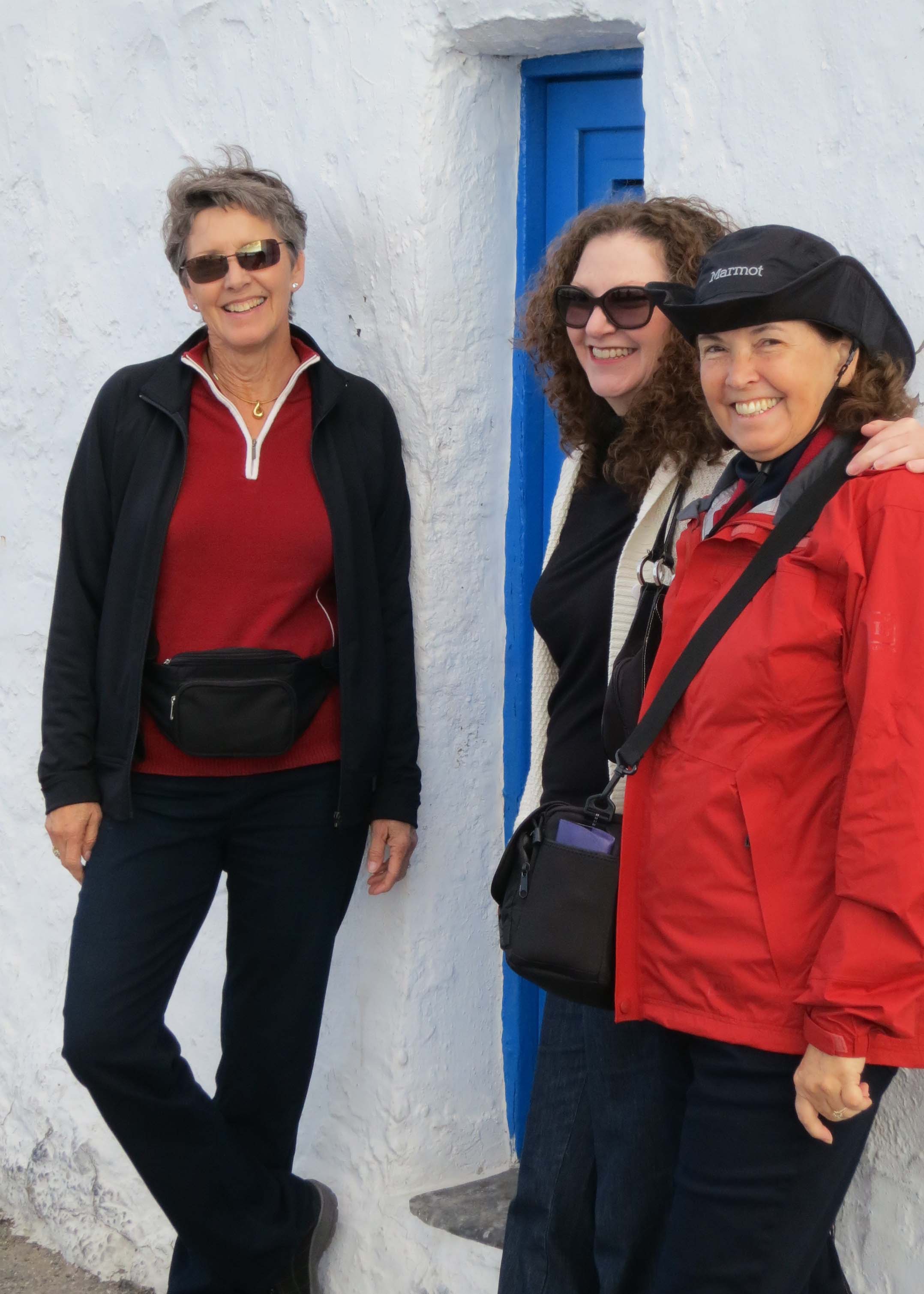
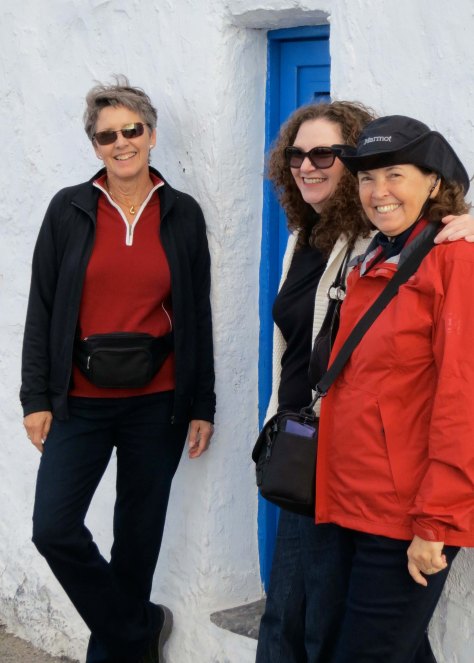
My wife Peggy on the right and two of our traveling companions, Kathi and Frances stand in front of another blue door.

My wife Peggy on the right and two of our traveling companions, Kathi and Frances stand in front of another blue door.

Bougainvillea seems to be the flower of choice in Mykonos.

Bougainvillea seems to be the flower of choice in Mykonos.

A street musician entertained us by playing his

A street musician entertained us by playing his bouzouki…
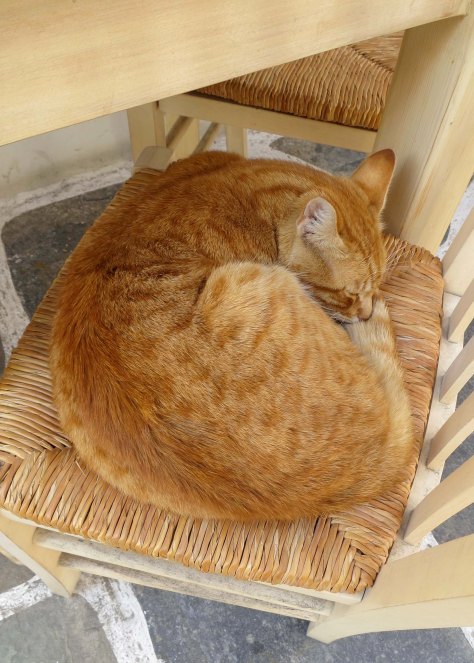
And a cat confiscated a cafe chair for its mid day snooze.

And a cat confiscated a cafe chair for its mid day snooze.

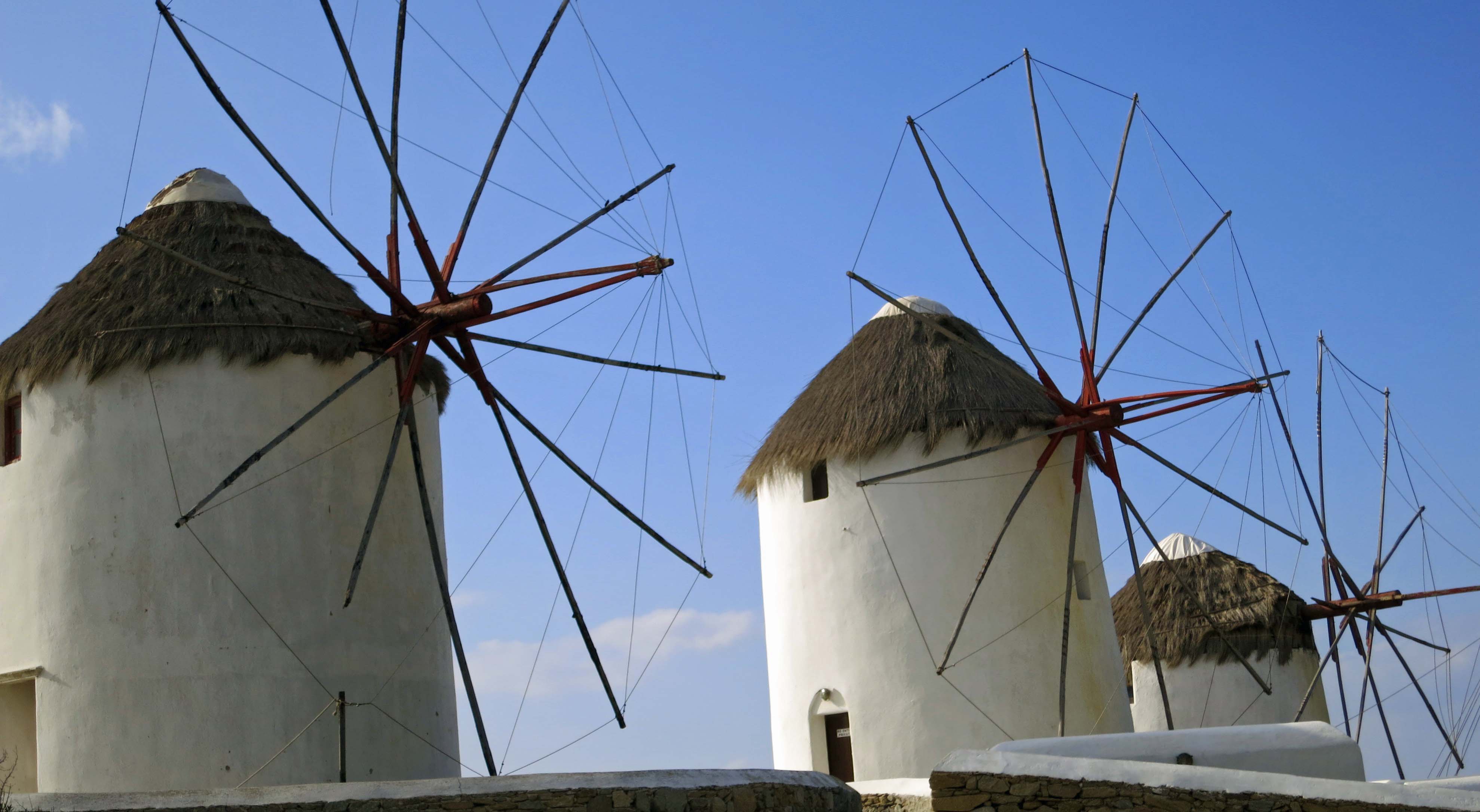
We managed to get both lost and separated. There was no hope of finding each other in the labyrinth, but fortunately we had a plan. We would meet at the island’s famous windmills. Long since retired, five of them remain hunkered down on a ridge south of town. Mykonos is noted for its winds. The locals even have names for them based on their intensity: bell-ringer, chair thrower, and knock you off your horse. We experienced a brief example of chair thrower but fortunately missed knock you off your horse.

The windmills used cloth sails to capture the winds and run mills for grinding grain. Local bakeries then turned the grain into sea biscuits, aka hardtack, which is flour and water baked several times into a consistency of hardness just this side of rock. The value of sea biscuits is they are basically indestructible. Before modern refrigeration, they were used on long sea voyages. Throw in a lime plus a generous dollop of rum and it was dinner. Producing these ‘delicacies’ was the island’s main industry.
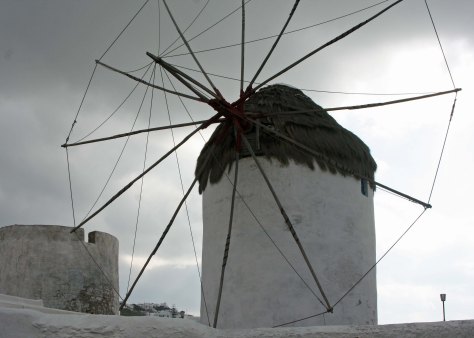
One of the windmills of Mykonos. Dark clouds brought brief rain and a "throw a chair" wind.

One of the windmills of Mykonos. Dark clouds brought brief rain and a “chair thrower” wind. (Photo by Peggy Mekemson)

Three of the five windmills.

Three of the five windmills.

Following the coastline back into town we came upon Little Venice (pictured above), a community where sea captains of yore built mini-mansions perched on the ocean edge. Since it neither looks like Venice nor has canals, my thoughts are its name derived from its proximity to water. Either that or a real estate agent was involved. The community is quite colorful, however. I’d be glad to call it home.

Mykonos has some 70 churches to meet the needs of its 7000 residents, which seems a little like a lot. I am reminded of the number of Baptist churches found in the rural South of the United States. I once estimated there was one for each family. The Mykonosians had a unique use for their churches, however. They enshrined the bones of their dead relatives in the walls. I doubt the Baptists do this but it might give new meaning to the old saying, “the family that prays together, stays together.”

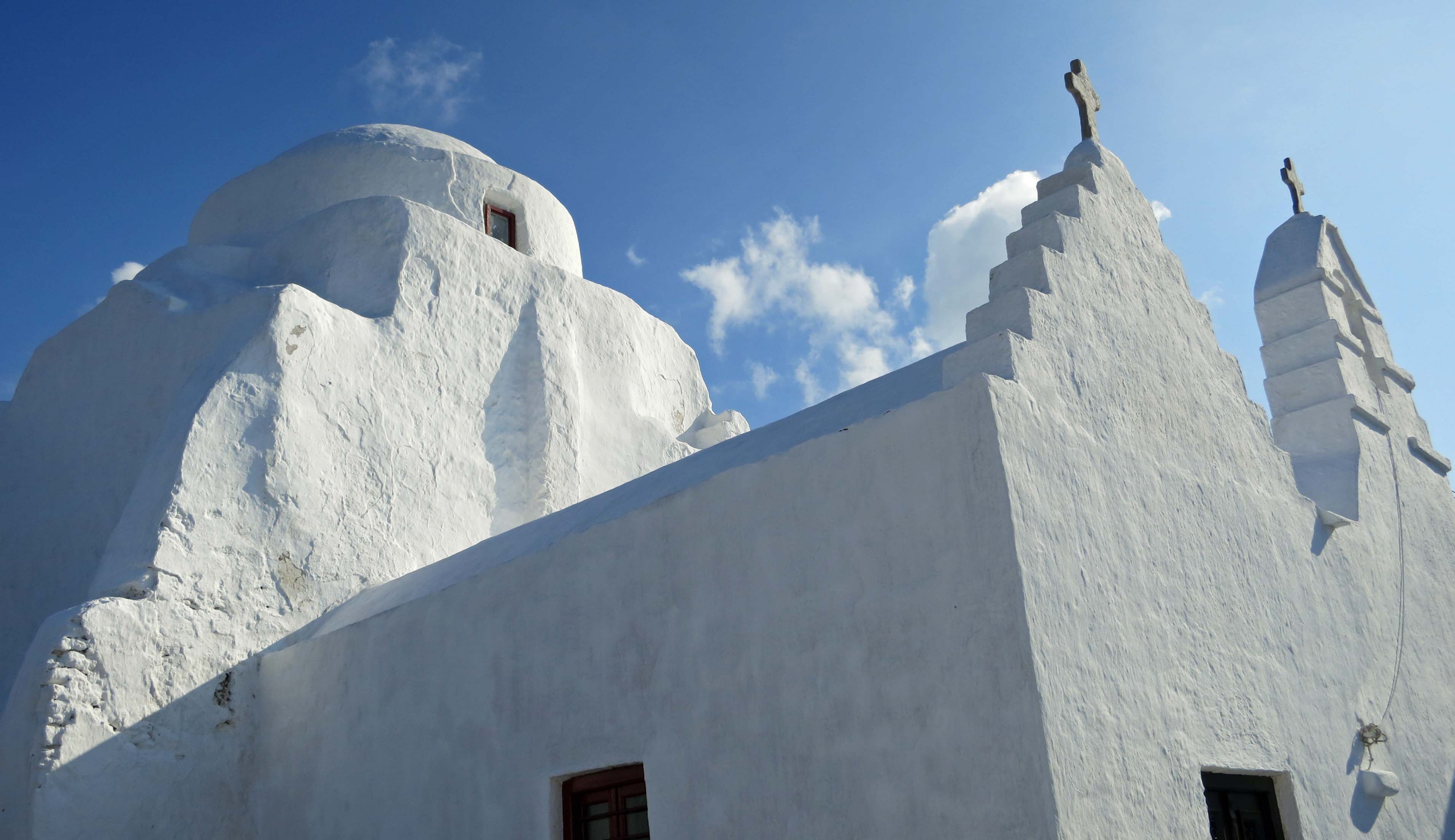
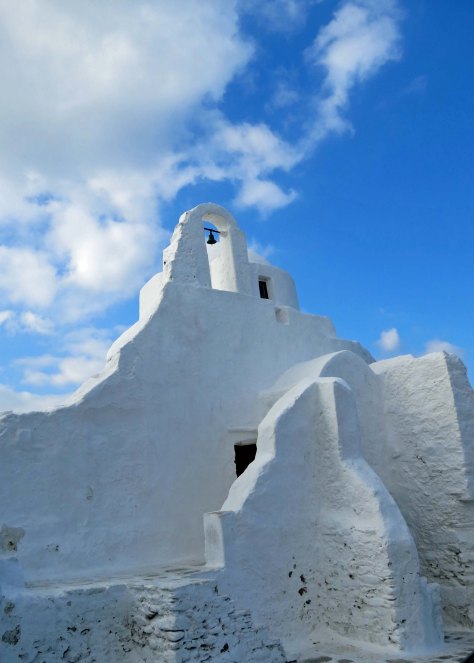
Scrunched between Little Venice and the harbor is the Church of Panagia Paraportiani, the most unusual church on the Mykonos. Once upon a time five different chapels existed side by side. Then they morphed together into what has become one of the most photographed sites on the island, with reason. We contributed our share of picture-taking.

The Church of

The Church of Paraportiani of Mykonos.
Another view of the church.

Another view of the church.

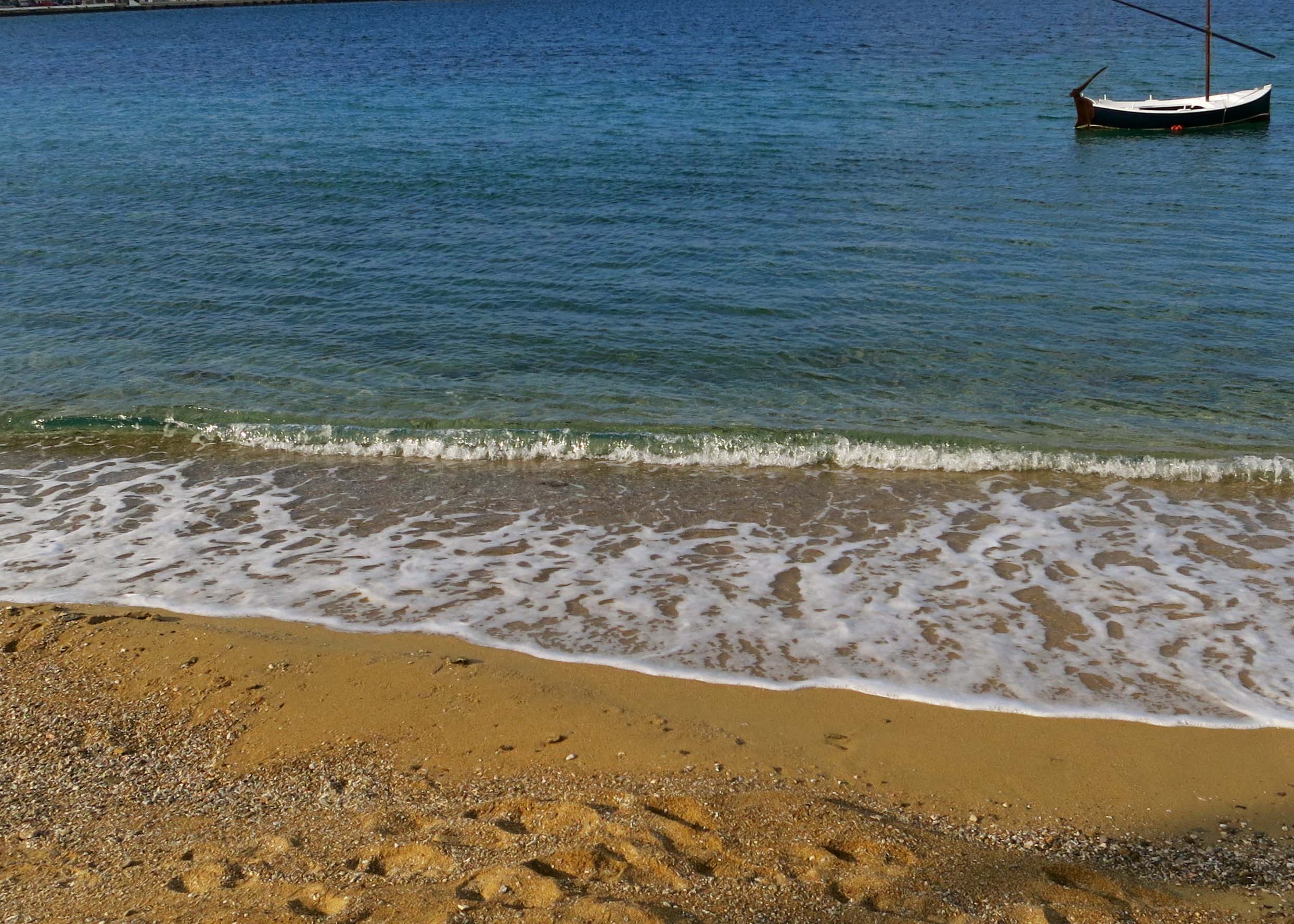
The small harbor area of Mykonos definitely fits the description of picturesque. It was our last stop (except for lunch) on our way back to the ship. That’s where we met Petros the Pelican that I wrote about in my last blog. Unfortunately, it was Sunday and the local fishermen had taken the day off. We satisfied ourselves with admiring the boats. The area also features a small beach that would be crammed with sun worshippers in the summer. Now all it featured was golden sand and blue sea.
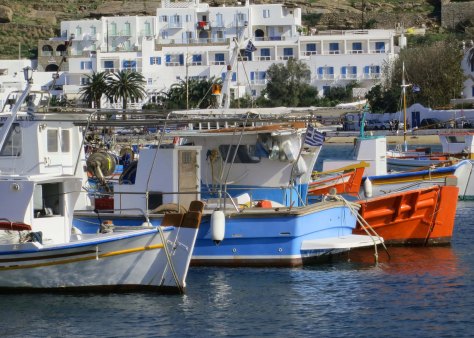
Idle fishing boats in the Mykonos harbor.

Idle fishing boats in the Mykonos harbor.

The golden sands and blue waters of the Aegean Sea of the small beach in Mykonos.

The golden sands and blue waters of the Aegean Sea of the small beach in Mykonos.


NEXT BLOG: We continue our Mediterranean cruise adventure and visit Athens, Greece.