A Rabid Wolf Wandered through Camp: The Wind River Mountains of Wyoming

The Wind River Mountains of Wyoming are a premier destination site for backpackers. A number of years ago I took six months off to backpack various locations in the western United States and added the area to my itinerary.

Mountain men were there first.

Place names such as Sublette County, Fremont Lake and the Bridger Wilderness recall these larger than life characters who were kept busy between the 1820s and 60s pursuing beavers, exploring the west, keeping their scalps, serving as guides, working as frontier entrepreneurs, and, in the case of John C. Fremont, running for President.

Many were also great storytellers and participated enthusiastically in the creation of their own legends.

One of the most popular locations for weaving tall tales was the Annual Fur Rendezvous that brought the various trappers together with suppliers out of St. Louis.

Six of the Rendezvous were held near the small town of Daniel, which is located on the Upper Green River 11 miles from Pineville. I stopped by and tried to imagine what the river valley would be like filled with over 1000 trappers, Indians, suppliers, missionaries, and wayward journalists.

The Mountain Men pursued their dangerous and often lonely profession during the winter when the fur pelts were at their best. The two to three-week Rendezvous in the summer was an opportunity to sell their furs, catch up with friends, gossip and resupply for another winter. It was also an excuse to party.

‘Whiskey,’ pure alcohol watered down and then flavored with tobacco, was passed around in a cooking kettle. Horse racing and shooting contests soon deteriorated to drunken debauchery. Old journals report the results.

One new guy was baptized by having a kettle of the alcohol poured over his head and lit on fire. A rabid wolf wandered through the camp and bit people at will. Several trappers were witnessed playing poker on a dead man’s body

A contract between William Ashley, the creator of the Rocky Mountain Rendezvous, and the trading firm of Jedediah Smith, David Jackson and William Sublette listed some 50 different items to be delivered to the Mountain Men.

Many of these items such as gunpowder, lead, beaver traps, and butcher knives related to their work. There were also cooking kettles, flour, sugar, allspice, dried fruit, coffee, grey cloth, and washing soap for every day living. Some items such as beads, ribbons, rings, bracelets and calico were probably trade goods for the Indians

As one might expect, ‘fourth proof rum’ (80 % pure), regular tobacco and the more high quality Smith River Tobacco were included for long, lonely nights. Slaves were producing the Smith River Tobacco in Virginia at the time.

Reviewing what the Mountain Men carried with them into the mountains led me to look at my own backpacking list. It appears life is more complicated today. My list contains over 60 items and I rarely travel for more than seven to ten days without checking back into civilization!

But then again, the Mountain Men apparently didn’t worry about such niceties as toilet paper and toothpaste, not to mention maps and reading material. They also shot much of what they ate.

Wednesday’s Blog: “There’s a Beaver Standing on My Tent.” I have my own mountain man experience.

Billy the Kid and Geronimo

Do kids still play cowboys and Indians?

Not likely… they have other interests like mutant super heroes, androids, and vampires. Plus there is the issue of being politically correct. Native Americans are no longer the enemy. Rightfully so.

But I grew up listening to the Lone Ranger on the radio. As soon as I learned to read I turned to Western writers like Luke Short, Max Brand and Zane Grey. By the time I hit high school, Bonanza was the rage on TV and my Sunday evenings were devoted to watching cowboy justice dispensed from the Ponderosa Ranch.

Years later I had an extra six months of play time so I decided to explore the Wild West of my youthful imagination in greater detail. After wandering through Zane Grey country for a couple of weeks, I found myself in the Gila Wilderness near Silver City, New Mexico. Legend lives in this area.

Henry McCarty, aka Kid Antrim, aka William Henry Bonney, aka Billy the Kid initiated his life of crime here in the 1870s stealing butter from the local ranchers. And then he got serious; he was caught with a bag of stolen Chinese laundry. His buddy Sombrero Jack had given it to him to hide.  The local sheriff decided to lock Billy up for a couple of days as a lesson that crime doesn’t pay but the Kid escaped through the chimney.

Two years later, at 16, he would kill his first man. Five years and some 11-21 murders after that (depending on press reports), he would be shot down by Sheriff Pat Garret. Billy liked to twirl his guns and enjoyed the polka… a real fun guy.

Of even more interest to me, the Chiricahua Apache, Goyathlay (one who yawns), better know as Geronimo, had roamed the region killing pioneers and hiding out from American troops for 25 years.

It was said that he could disappear behind a few blades of grass and walk without leaving footprints. In the 1880s, it took one-quarter of America’s military might, some 5000 men, to track him down. Geronimo was shipped off to a reservation but ended up finding God and riding in Teddy Roosevelt’s inaugural parade. Years later, Prescott Bush, the father of George H. and grandfather of George W., would allegedly steal his skull for Yale’s secret Skull and Bone Society.

I remember as a young kid jumping off a roof and yelling Geronimo. My friends and I patterned our behavior after World War II paratroopers who would leap out of airplanes shouting his name.

My primary purpose for being in Silver City was to use it as base for backpacking. I chose Cliff Dwellings National Monument as my jumping off point. People of the Mogollon Culture had called the area home between 1280 – 1300 CE and their cliff houses still stand some 700 years later, silent testimony to the value of building with stone. As to where the Mogollon went after their brief stay, it’s a mystery.

Like Geronimo and the Mogollon Indians I planned to disappear into the wilderness.

(Next blog: A Cow Elk Woos Me.)

On Cruising the Caribbean with Your 90-Year Old Mother-in-Law

I never tire of postcard like sunsets. Cruising is a great way to enjoy them.

“You can’t take your knife,” Peggy reminds me. It is a two-inch long Swiss Army knife with a tiny blade, screwdriver, scissors, a toothpick, tweezers and a nail file: in other words a deadly weapon. We are going on a cruise. I feel warm all over knowing that the Transportation Security Agency is on guard.

Even more critical, we can’t take alcohol. TSA could care less but the cruise line is obsessed. Buckets of profit will be lost if we bring our own. Terrible things are threatened.

My son-in-law Clay has carefully researched the issue. Cruise lines are more paranoid about sniffing out booze than TSA is at sniffing out bombs. If you sin by as much as an ounce, Mr. Nice Guy Cruise Ship turns into a raging monster of the deep. You’ve heard of people being thrown overboard, right? Even Clay, who had contemplated filling a shampoo bottle with bourbon, is daunted.

Our ship, The Navigator of the Sea, sails out of Fort Lauderdale. We are scheduled for a five night, six-day cruise that takes in the Cayman Islands and Cozumel. Twenty-five family members are joining us including two Bahamian cousins. Peg’s mom, Helen, is generously picking up the tab in celebration of having survived 90 years.

We park the RV at the dock and then wait for our immediate family to arrive from the airport. Clay, our daughter Tasha, their two kids and Helen are flying in from Tennessee. Our son Tony, his wife Cammie and their son joined them in South Carolina.

Eventually, the bus arrives. Ethan, Cody and Connor tumble off and make a beeline for Peggy. Grandma is sugar and spice and all things nice. Grandpa, apparently, is chopped liver. Helen and the kids give me a big hug, however. Eventually, the Grandkids, willing to leave Grandma for five seconds, do as well.

Tasha and Clay look stressed. Their day started at 5 AM in Hendersonville. Travelling with a two-year old, a five-year old and a ninety-year old is challenging, to say the least, and there is tough competition for which of the three provides the greatest challenge.

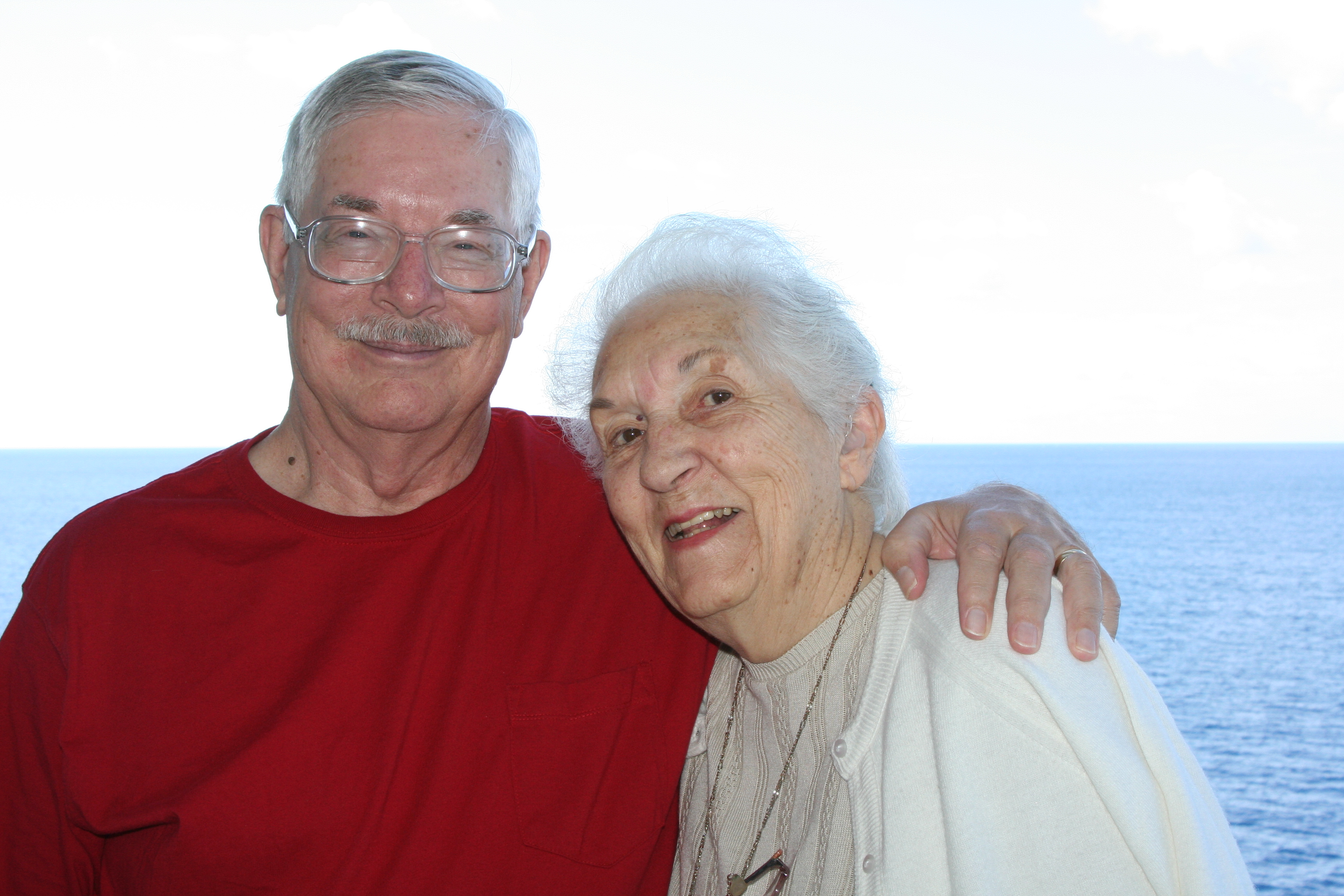
Helen, I and the beautiful blue sea in a mandatory cruise photo.

Helen has reached the wonderful age where she says whatever comes to mind. Damn the torpedoes and full speed ahead. For example, she announces in an awed voice, “Wow, that guy is fat!” And he is; he just doesn’t want to hear it. Unfortunately, her observations also apply to the TSA workers whose sense of humor is right up there with zombies’.

“Grandma,” Tasha whispers in desperation, “behave or they are going to strip search you.” The admonition has little effect. Fortunately, we make it through the gauntlet with clothes in tact.

On board, the rest of Peggy’s family joins us. It takes a brave man to go to sea with 18 in-laws, especially one who has been on family probation for 20 years. Focusing on damage control, Peggy has already announced that I won’t wear a tie on formal dinner night. (I have an image to maintain.) The first evening is smooth sailing, however; casual attire is recommended. I specialize in casual.

Nighttime presents a different challenge. Helen has her own room. There is a very good chance she will wake up not knowing where she is or why she is there, which might prove interesting on a moving ship surrounded by deep water. (Her younger sister and proposed roommate thought about the implications and stayed home.)

To counter the possibility of Great G’Ma going for a midnight dip, Peggy has located us in the next room with an adjoining door. The door will be left open a crack and we will leave a light on. The thought of my ninety-year old Mother-in-law suddenly appearing in our bedroom absolutely guarantees my best behavior. I threaten to go to bed fully clothed.

When I think of Helen, ‘Grand Dame’ comes to my mind. And she is, a Southern Lady with charm, intelligence and a great sense of humor. But Helen looming over our bed at 2 AM in her white nighty is something else, an apparition. “Where am I,” the ghost asks plaintively? I shake Peggy awake (none too gently) to supply the answer.

The big event of the cruise is a family talent show. Peggy and her siblings, Jane and John, have organized the production to say thank you to their mom. The cruise line assigns us to the “Dungeon” for the party. It’s a dimly lit bar in the bowels of the ship filled with fake skeletons playing dead instruments. The children dash off to explore its darkest corners.

I drink.
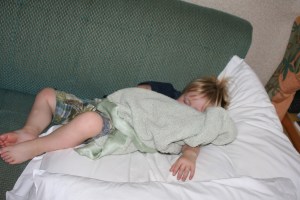
Connor steals a quick snooze in his Great Grandmother's room.

Other than Toddler Connor re-tuning Peggy’s guitar and the great grandkids and Helen eating the mint candy Bingo markers, everything comes off smoothly. It’s a success. There is poetry, rap, guitar playing, singing, games and a stiff bourbon for Great G’Ma.  The show is capped off by a stirring rendition of the Hokey Pokey played by Peggy, sang by the adults and danced by the grandkids. Even the two-year olds join in, sort of.

With the talent show over, we return to the major cruise ship activity, eating. At dinner, we are expected to consume as many calories in one meal as we normally would over two days of eating breakfast, lunch and dinner on shore. “Here, have another plate of prime rib,” our waiter urges.

But beware, it isn’t the fat-induced heart attack that will get you; dangerous bugs lurk in dining areas. Recent on-board epidemics have sent passengers dashing en masse to their toilets. It’s great for the disaster-oriented media but bad for the guests and bad for the tourist industry.

Cruise ships have retaliated by placing numerous anti-bacterial hand sanitizer dispensers backed up by smiling Kung Fu masters at each dining room entrance. I am suspicious of the omnipresent, noisy greeters and dutifully sterilize myself. (Who knows what a liquid gel guaranteed to kill millions of germs on contact will do to a human.)

Fortunately we avoid any major health crisis involving toilets. Even more happily, we avoid the fate of our sister cruise ship, Splendor, which is shut down off the Baja by an engine fire while we are cruising. Our son, Tony, who flies helicopters for the Coast Guard out of San Diego, is particularly grateful he is sailing in the Caribbean as opposed to rescuing passengers in the Pacific.

As for the rest of our cruise, we do the normal cruise ship activities that have been around since time immemorial: attend shows, play miniature golf, read, gamble and go on shore excursions. Each family is assigned to two days of being entertained by Helen. “Who get’s the short straw today,” she asks every morning. Truth is we enjoy our valued time with the feisty oldster and her humorous observations.

I do have a comment on shore excursions. Any traditional culture that can survive up to 12,000 cruise passengers per day is purely coincidental. On Cayman Island, Jimmy Buffet’s Margaritaville is as good as it gets.

Our nephew Jay comes over on the last afternoon to share photos of a quest he just had in Iceland. We’ve been close ever since he went on a 60-mile backpack trip with me that included climbing Mt. Whitney. He is developing into a talented photographer. As the closing picture fades away we gather up the rug rats and dutifully trot off to consume our final 5000 calories and say our goodbyes.

It has been a fun, family filled adventure. My thanks to Helen for making it possible and to Peggy for organizing the trip. Bone, who has become allergic to custom agents, stayed home. But it was truly a Bone-type event.
Read about Bone falling in love with Bonette in the next blog, 'An Itinerant Idler.'

The Mekemson Ghost of Fort Mifflin

I am on a ghost hunt. It’s the season. The eerie creatures are known to hang out at Fort Mifflin, which is located next to Philadelphia International Airport on the Delaware River. It’s one of the hottest ghost watching spots in America and has been featured on the popular TV series, “Ghost Hunters.”

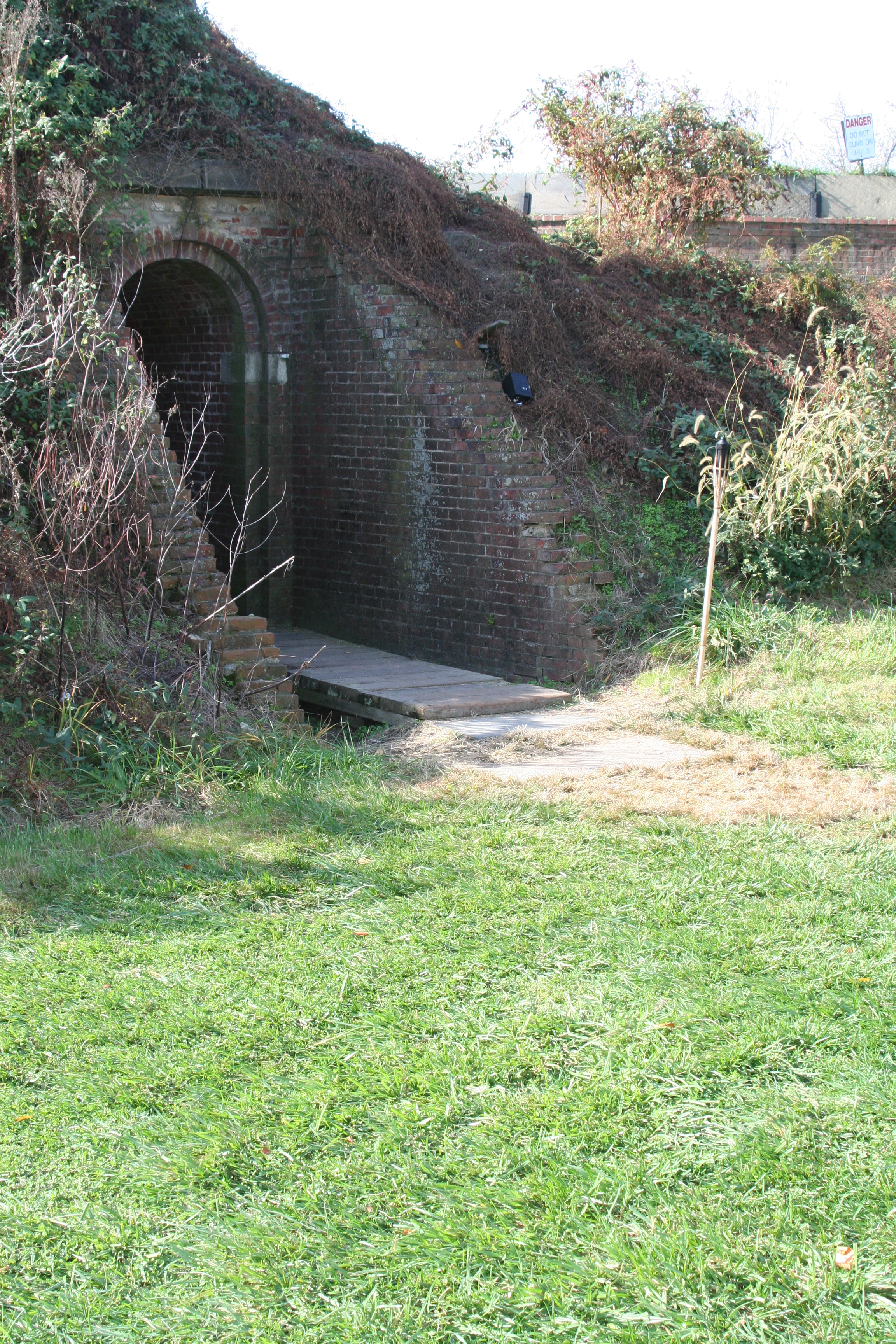
The entrance to the ghostly ammunition magazine taken during the day.

We are scheduled for a nighttime tour by lantern.

Peggy and I decide to do a reconnaissance during daylight hours but a police vehicle blocks the road. A dozen or so media crews are pointing their cameras into the airport at a large UPS cargo plane. It has just flown in from Yemen and is being searched for ink cartridge bombs. We are caught in the midst of a “credible terrorist threat” as President Obama describes it.

Ghosts can’t be nearly as scary… can they?

By 6:30 the police car has moved but the TV crews are still on watch. We wind our way through the circus. Dusk has arrived at the Fort.  The tour is scheduled to start as soon as it is fully dark. Make that pitch black; there is no moon.

Our guide gathers us and his lantern immediately blows out. “It’s only the wind,” he explains. “I don’t believe in ghosts. I don’t hunt them and they don’t hunt me.”

His disclaimer comes with a ‘but.’ He works at the Fort, and occasionally ‘things’ happen. There are unexplained footsteps on stairs. Doors close and latch on their own. Voices are heard in the next room. A woman screams like she is being murdered. The police are called but can’t find anyone, or thing. A man walking on the rampart disappears into thin air.

Our guide relates story after story as we make our way through the candle lit buildings of the fort. Other staff, volunteers and visitors have also experienced strange phenomena. More than one visitor has left on the run and even the guide has packed up and gone home on occasion.

We arrive at the Fort’s ammunition magazine, a bush covered hill that resembles an ancient burial mound. A bright torch outlines the dim opening. We enter and walk down a narrow, dimly lit corridor that opens out to a large, arched bunker. A single candle creates dancing shadows on the far wall.

“I’ve never felt anything in here,” the tour leader relates. “It’s dead space,” he quips and repeats himself in case we missed his humor. For others, the story has been different. Tourists speak of a wonderful guide who was waiting for them in the bunker. He was dressed as a Revolutionary soldier and vividly described the horrendous battle that took place on November 15, 1777. Which is great, except the Fort had no such guide…

I stare hard into the corner where he supposedly stood, trying to create something out of nothing. But there are only the dancing shadows. Peggy tries to take a photo but the camera freezes and refuses to work. As she struggles with it, the last of our tour group disappears down the narrow corridor, leaving us alone with the flickering candle.

We hurry after the group. There is no one outside the magazine, only the glowing torch and the dark night. “I think I saw them heading down a side corridor,” Peggy says. With more than a little reluctance, we dutifully troop back inside. Peggy’s corridor is a bricked in wall. I am starting to feel spooked.

“Maybe we should go back to the bunker,” she suggests.

“No,” I reply and head for the entrance. Just as we arrive, the shiny torch makes a poof sound and goes out, leaving us with nothing but dark. The hairs on the back of my head stand at attention. Peggy and I decide it’s time to vacate the premises.

Fortunately we find our group.

Halloween experiences don’t get much better. But this isn’t the end of the story. On my next blog I will report on why our theoretical ghost may have been a very real ancestor… Andrew or James Mekemson.

The Mummy of Carlisle, PA and other Scary Halloween Stories

Carlisle Mummy Cradles Bone

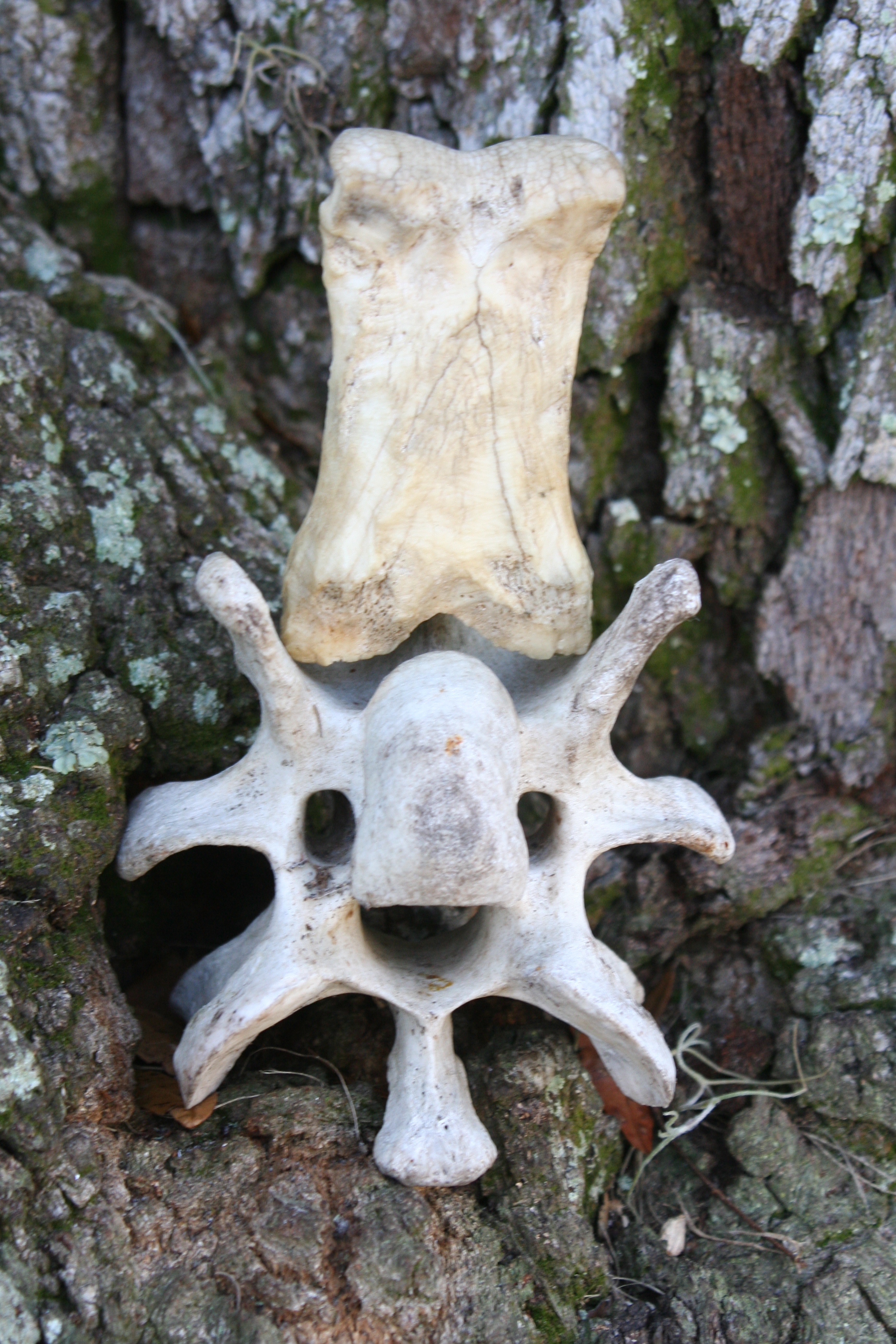
A well-preserved Mummy is parading around outside the van. Bone is excited. He wants his photo taken with the fearsome creature. After all, what is a mummy but gauze, skin and bone.

It’s not quite Halloween but I wouldn’t tell that to the folks at the Western RV Village. The campground is packed with people here to celebrate. And it is filled with ghosts and goblins and ghouls, not to mention the mummy, witches and innumerable graveyards.

Halloween is serious business in central Pennsylvania. People decorate for the event like they do for Christmas in other places.

I whined to the campground manager that Peggy and I were missing our annual pumpkin carving contest in Sacramento with my sister Nancy and her husband, Jim. It’s been going on for 20 years. “Why don’t you join the children in their contest,” she suggested. I gracefully declined.

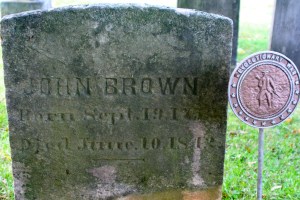
Old Graveyards are key to Halloween stories and Genealogical research. This grave is located in Newville/Big Springs PA. John Brown fought in the Revolutionary War and was the Uncle of my Great, Great, Great Grandmother Mary Brown Mekemson.

We are engaged in a Halloween like activity, however, searching through old graveyards looking for long dead people. My Great, Great, Great Grandmother Mary Brown Mekemson was born near here in the town of Big Springs (now Newville). Her Grandfather, James, arrived in the area in 1750, back when the US was still part of England.

The Browns trace their lineage back to John Brown, the Scottish Martyr. He was shot down in front of his wife and children in the late 1600s for insisting that Christ, not the King of England, was his Ruler.  His epitaph notes he was “butchered by Clavers and his bloody band, raging most ravenously o’re all the land.”

The early Scottish Presbyterians didn’t think much of Bloody Clavers but they liked their alliteration and poetry.

Legend tells that the Ghost of John Brown visited Clavers to predict his doom the night before he was killed in battle. Revenge and justice.

Ghosts have become big business in modern-day America, in case you haven’t noticed. They are no longer limited to their once a year appearance on Halloween. Having one or more on the premise can mean big bucks. Historic communities that depend on tourist revenue are required to have several.

Next week, in honor of the season, Peggy and I will visit one of the most famous ghost haunts in America, Fort Mifflin, located just outside of Philadelphia. It was the sight of an important battle of the Revolutionary War where 400 men held off the might of the British Navy while George Washington escaped to Valley Forge. Lots of patriots died. It is also the sight of all sorts of spooky business and has been featured on the popular SyFy channel TV show, Ghost Hunters.

More to the point, from my perspective, four Mekemson boys, brothers of my fourth Great Grandpa, Joseph, were involved in the battle. Two were killed saving the flag according to family stories and a flyer distributed by the Fort. One was cut in half by a cannon ball, which anyone would agree is a rather gory end that should justify ghost status. Maybe Uncle Andrew will make an appearance on our visit. I’ll let you know in next week’s blog, “The Mekemson Ghosts of Fort Mifflin.”

Bone whispers in skeleton's ear about upcoming visit to Fort Mifflin.

Un-cool in Paducah Kentucky

I once spent time here in the late 60s when I was working out of Atlanta as a college Peace Corps Recruiter. It was a slow week. None of the young people, it seemed, wanted to leave the area.  And they certainly didn’t want to traipse off to West Africa where I had served as a Volunteer. We were on the edge of the Old South.

It felt like the edge of nowhere. I hung out at the motel and read Faulkner.

One of the Paducah murals on its Ohio River frontage. Flatboats like these are how my ancestors arrived in Kentucky during the 1790s.

Times change. The historic waterfront on the Ohio River has been filled with murals depicting the town’s colorful history and many of the old buildings have been reclaimed to their former glory.  A previous slum in Lower Town has morphed into a thriving arts community. There is an excellent museum on quilting.

As for the isolation, the good folks of Paducah are now only a mouse-click away from anywhere in the world.  Cell phones are ubiquitous and young people in town can whip out a text message faster than a male dog can mark his territory.

Peggy was complaining the other day about how technology dominates our lives. I think she meant my need to be on the Internet since I have never heard a squeak from her about our Verizon connection to mom, kids, grandkids and various other family members.

Actually, Peggy is as addicted to the Internet as I am. It’s just that her computer didn’t crash like mine did in Kona, Hawaii three weeks ago. I was not happy. My plan of blogging regularly disappeared like the Gecko climbing up our screen door.

I felt a tang of guilt about the blog but watching sunsets, drinking beer, swimming with sea turtles, avoiding fiery lava, and pursuing ancient Hawaiians took precedence over replacing the computer. As did being lost in dust storms at Burning Man in the remote Nevada desert the following week.

“You need to buy an Apple,” Tom Lovering admonished me at Burning Man. He took me over to Center Camp to demonstrate how wonderful his computer was while scantily clad women strolled by. “You need to buy an Apple,” my son Tony had admonished me weeks earlier in San Diego as the two-year-old Connor pounded on my leg with a truck that sang Old McDonald.

How could I resist?

I made the leap as Peggy and I dashed through Salt Lake City on our way east to celebrate Peggy’s Mom’s 90th birthday. I had been a PC man since I had purchased one 30 years earlier in Anchorage, Alaska.

“You are finally cool,” Tom Emailed me. If only I had known what it takes.

I decided to do a blog from Estes Park, Colorado because, well, a cool person would probably blog from there.

I fired up my shiny new Apple MacBook Pro. And got a zero with a line through it. Apparently I was not meant to be cool. The technician at the Apple Store in Boulder hooked up a diagnostic tool to my computer and then disappeared into his back room. He came out 30 minutes later with a new laptop.

“You’ve broken a record for our store,” he told me. “We have never seen an Apple crash its hard drive in three days.”

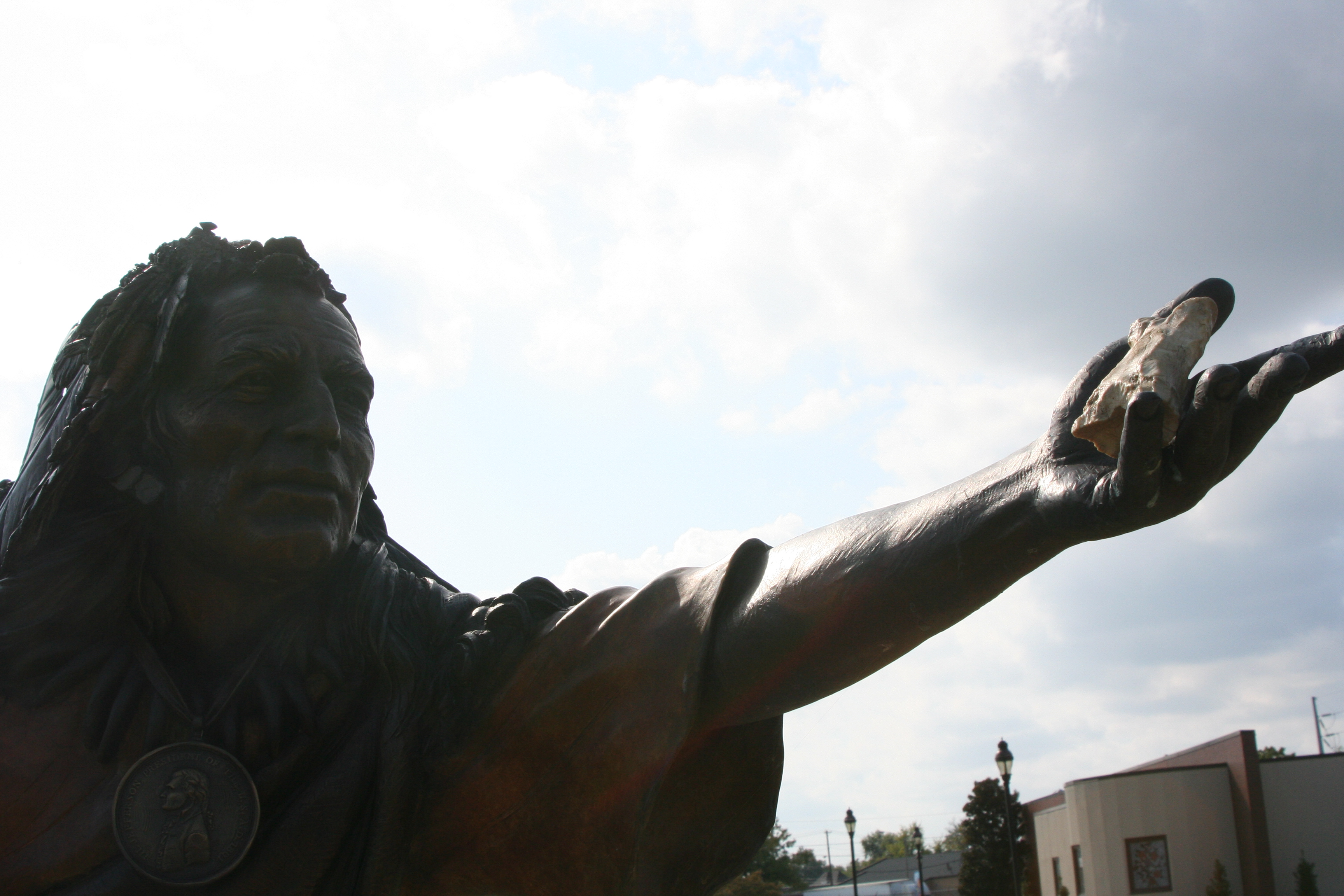
Native American sculpture on the lawn of the quilt museum... checking out Bone.

Thus you are hearing from the slightly un-cool Curt in Paducah, Kentucky. While I have temporarily left our trip down the Colorado River, I shall return to the subject. There are raft-eating rapids to face, oh my. But next I will blog about looking for dead people.