Peggy and I are wrapping up our visit to Yellowstone today from our journey around the US last fall with pictures of a few of the many scenic views found in the park. All photos are taken by either Peggy or me unless otherwise noted.
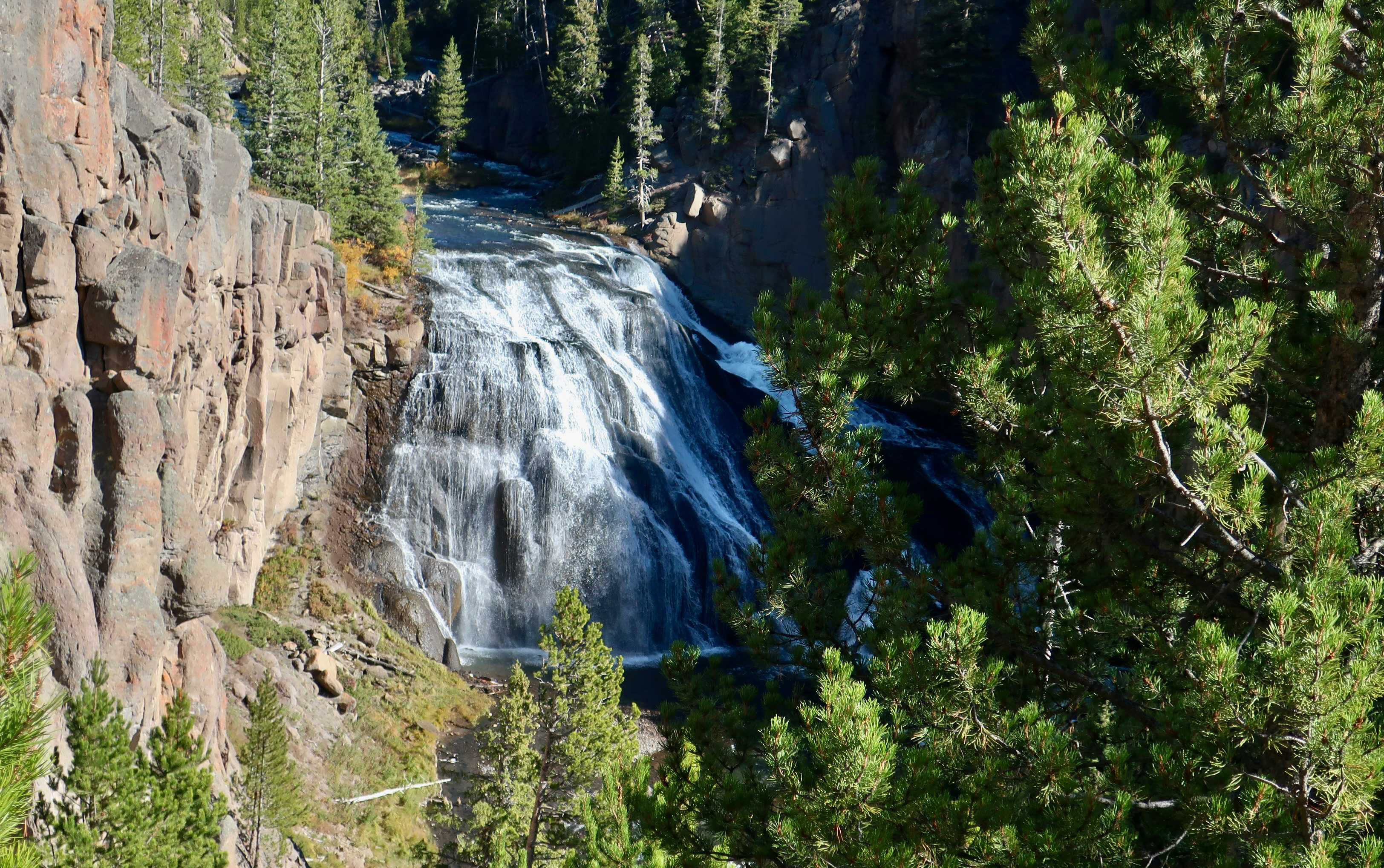


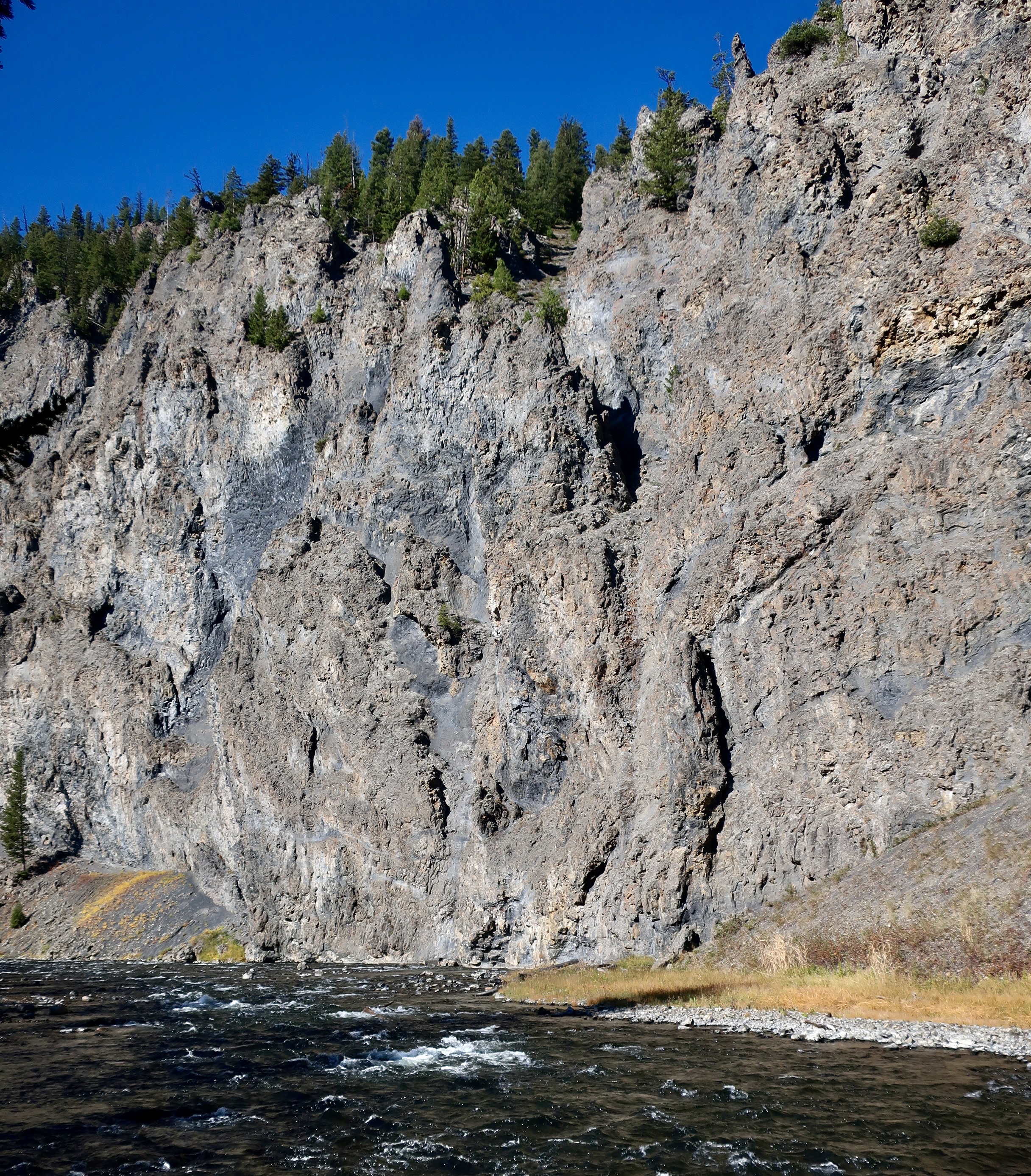


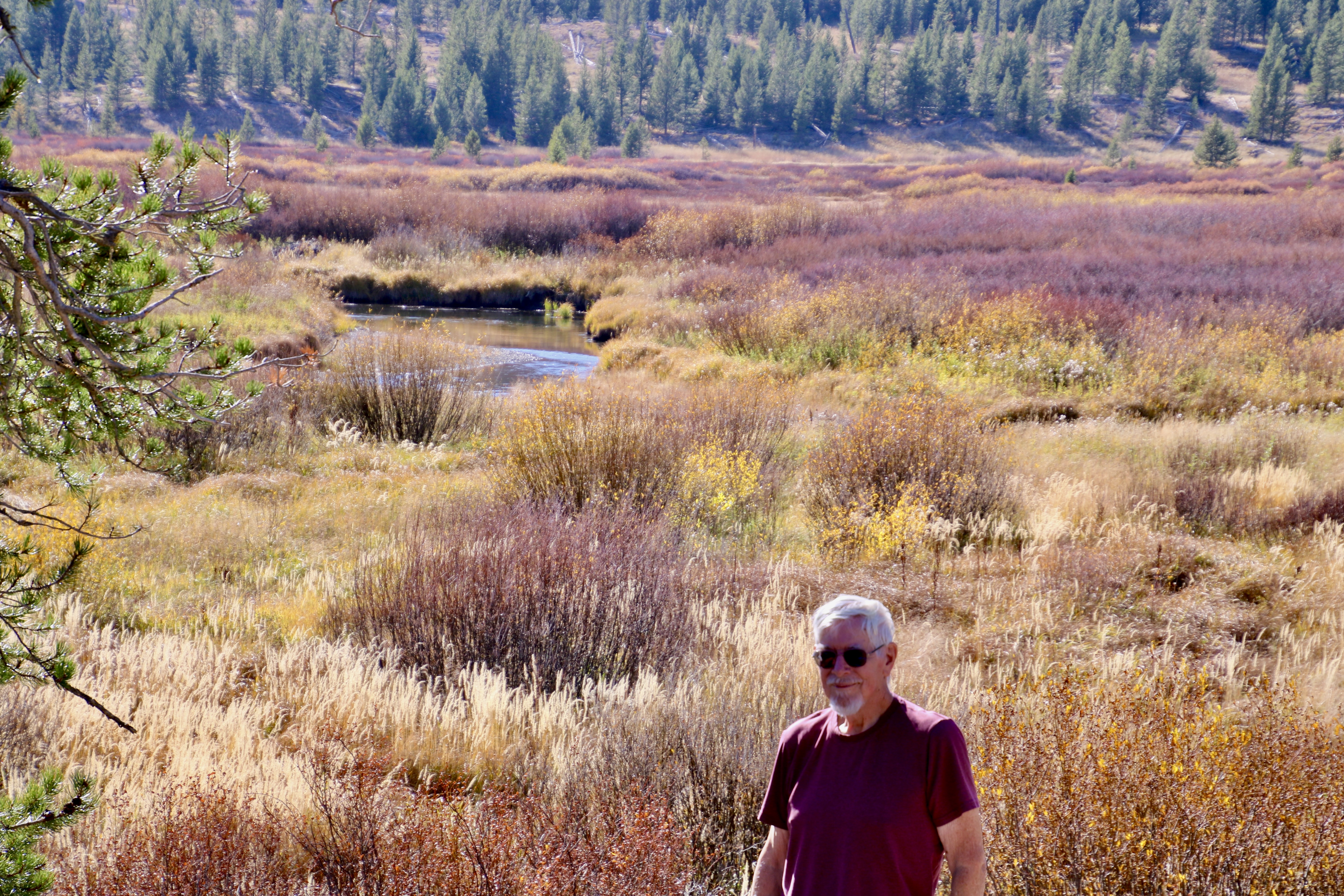

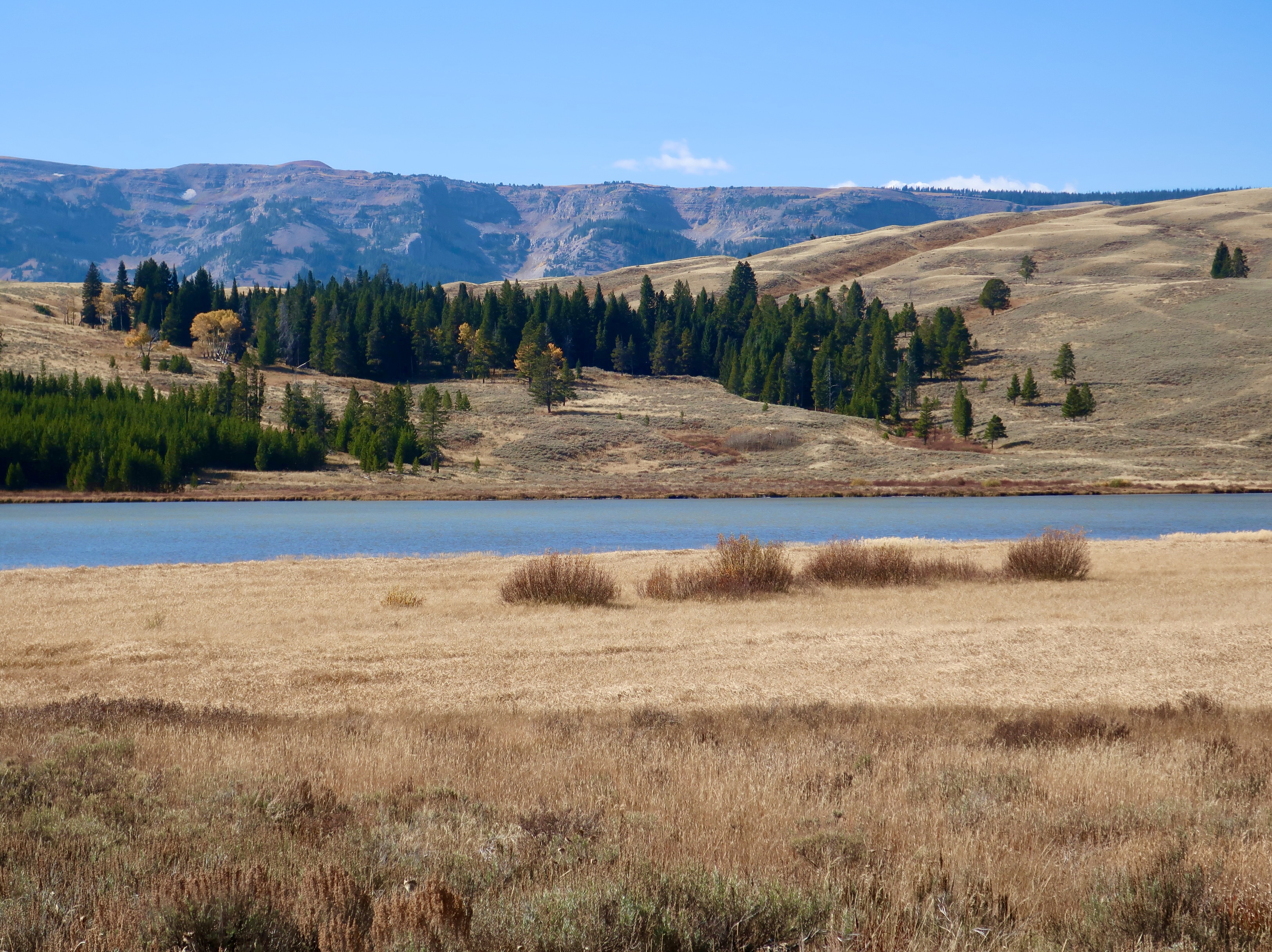


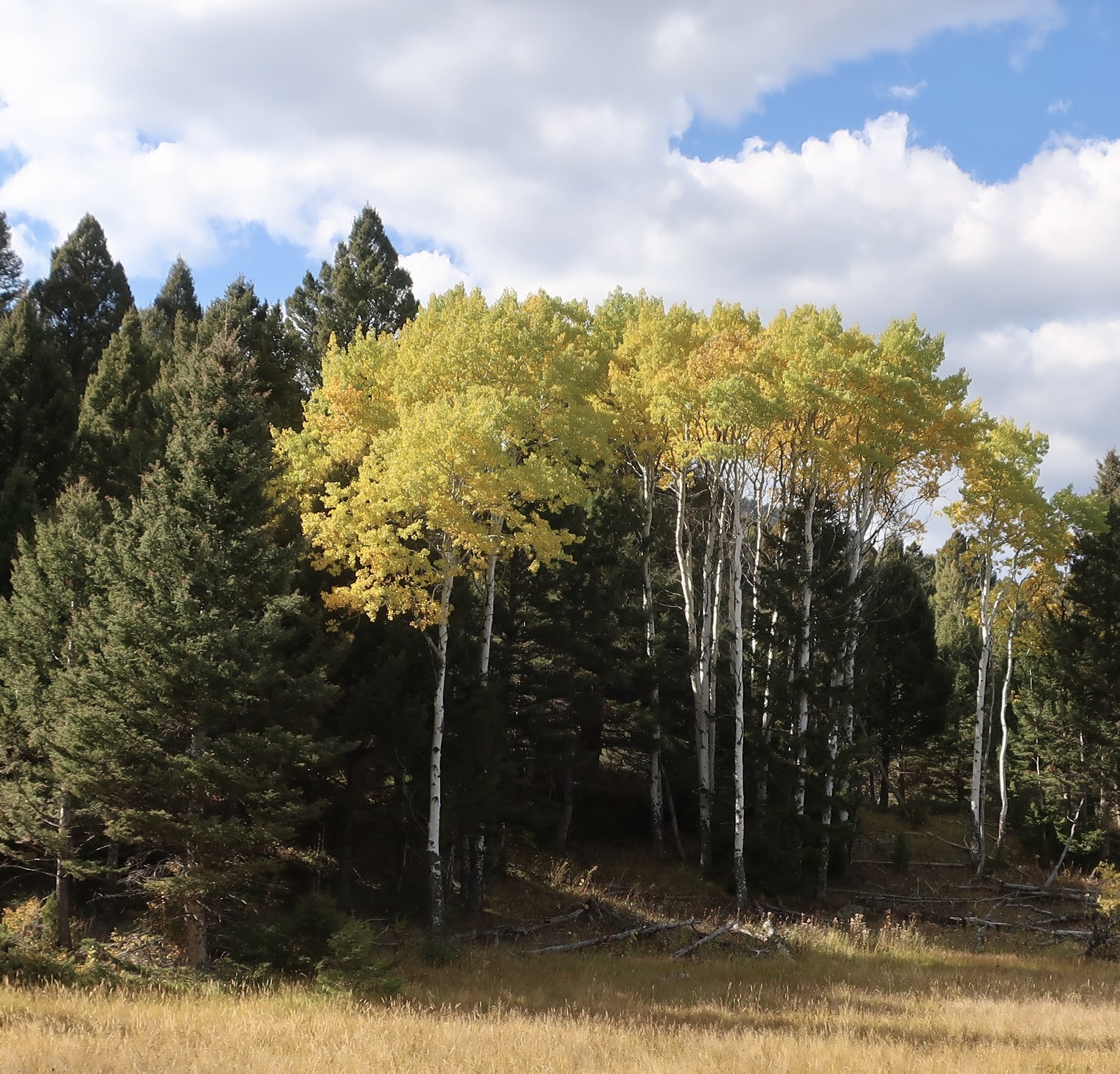
Peggy and I are wrapping up our visit to Yellowstone today from our journey around the US last fall with pictures of a few of the many scenic views found in the park. All photos are taken by either Peggy or me unless otherwise noted.
Today, Peggy and I are continuing our exploration of Yellowstone National Park, which we visited as part of our four month, 12,000 mile exploration of the US between September and December this past year. All photos in this post were taken by either Peggy or me unless otherwise noted.
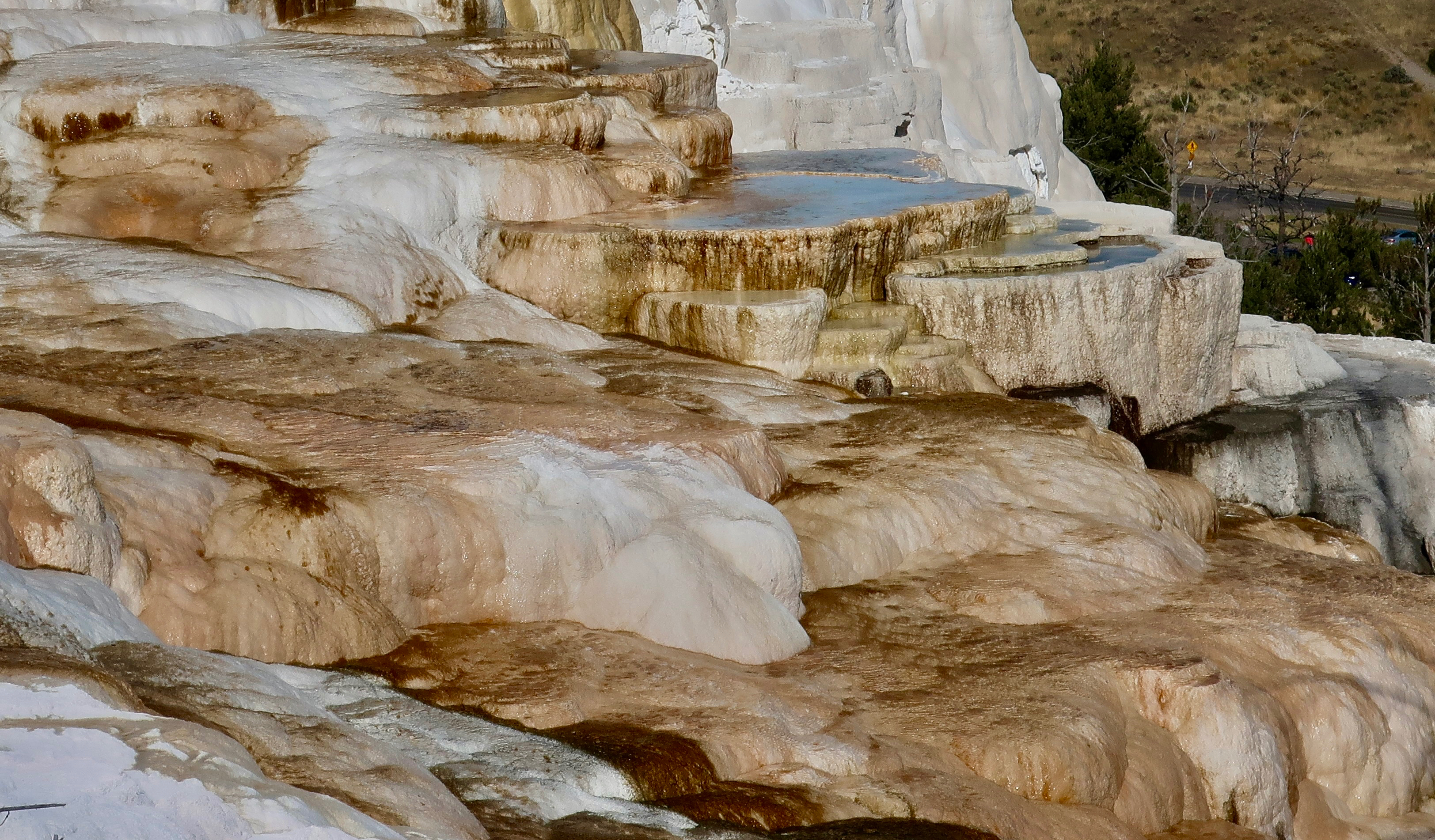
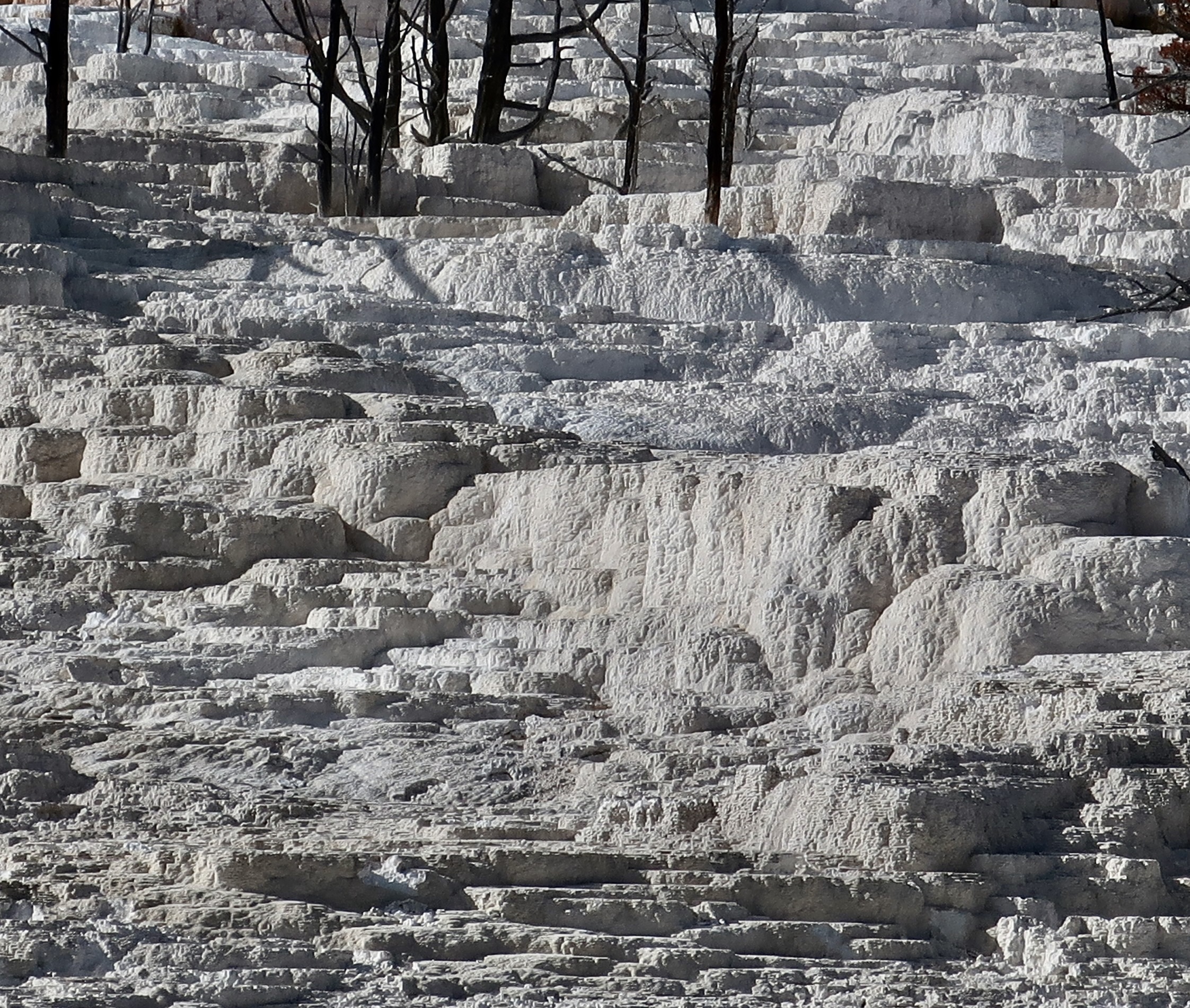
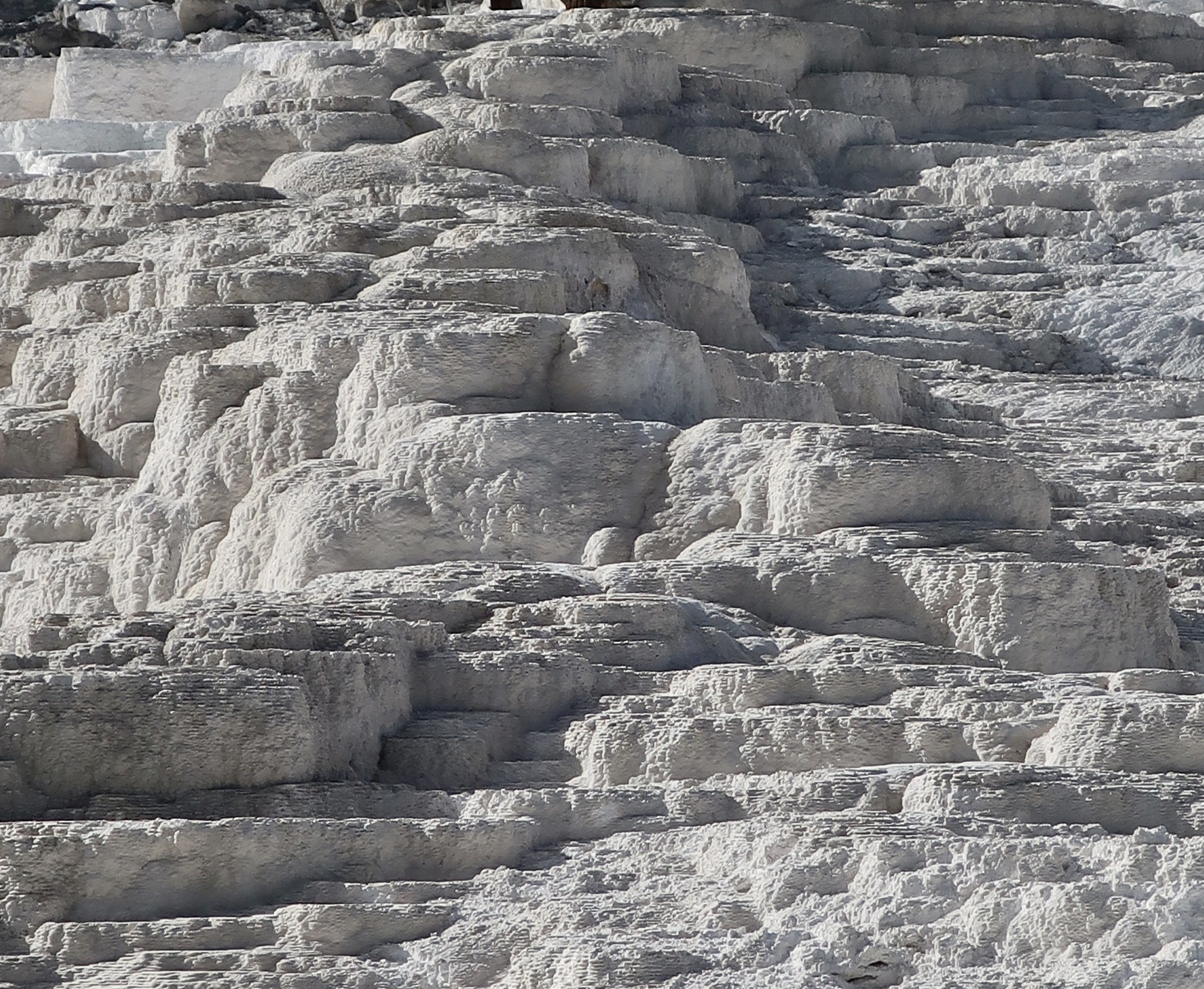
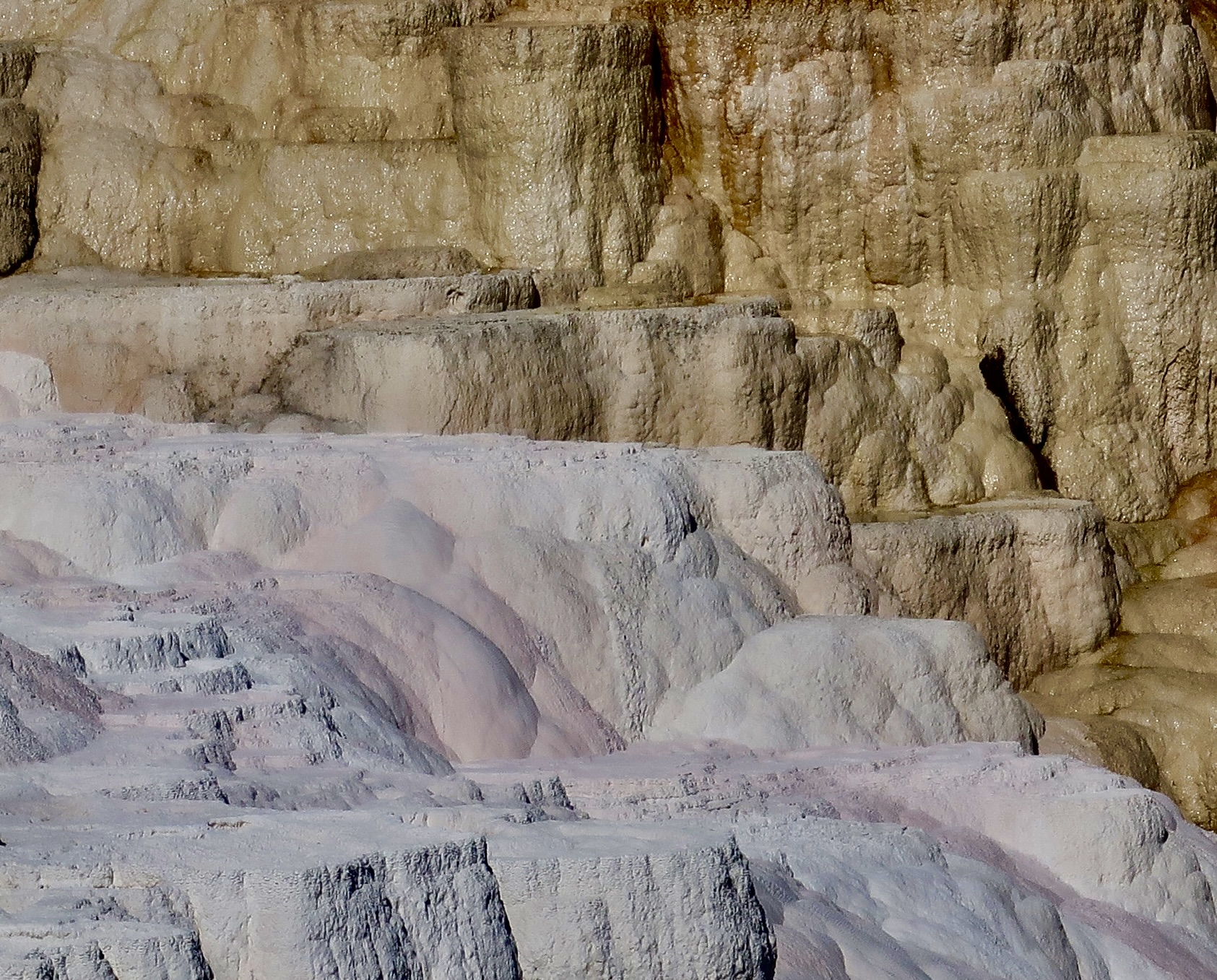
Located 50 miles north of Old Faithful, the travertine terraces of Mammoth Hot Springs are one of the most unique and beautiful of Yellowstone’s hydrothermal created landscapes. The terracing is a result of underlying limestone. Hot water dissolves the limestone and deposits it on the surface. The bright colors, like the colors of the hot springs in the Yellowstone Caldera to the south, are created by thermophiles, tiny microorganisms that thrive in the hot springs. Different types of thermophiles have different tolerance for the heat and come in different colors based upon their exposure to sunlight. Those that can tolerate the most heat live deep in the pools and tend toward blue and green. The ones living on the cooler outer edges are more in the brown and yellow range.
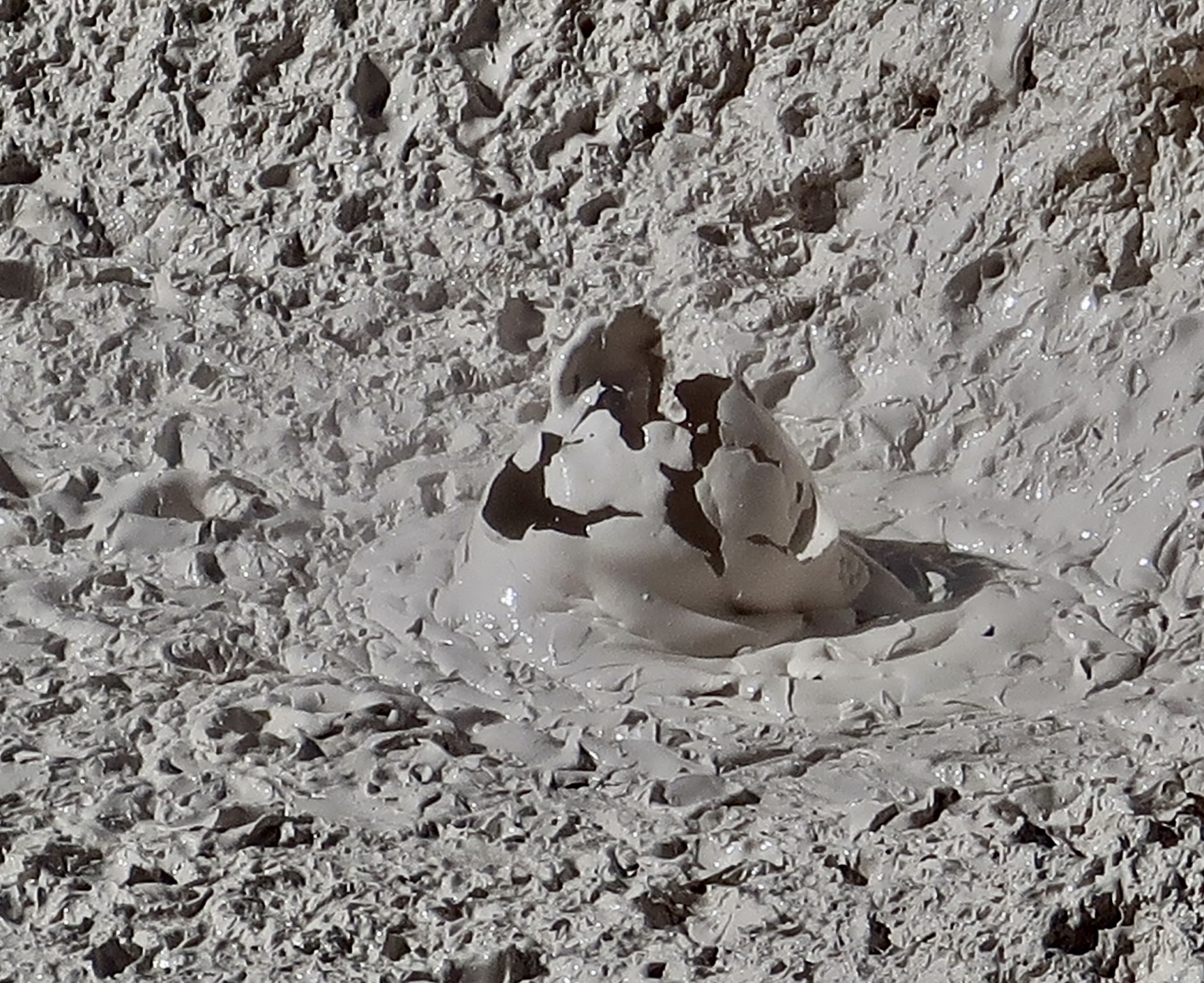
Peggy and I took a day to drive up from where we were camped in the town of West Yellowstone to visit Mammoth Hot Springs. On the way up we saw a lot of great scenery that I will feature in another post and two hydrothermal features I haven’t covered in this series yet: mud pots and fumaroles.


And now it’s time to visit the terraces of Mammoth Hot Springs. A convenient road takes you around the terraces. Walkways off the road take you to the lower terraces. The following photos were taken from the walkways.

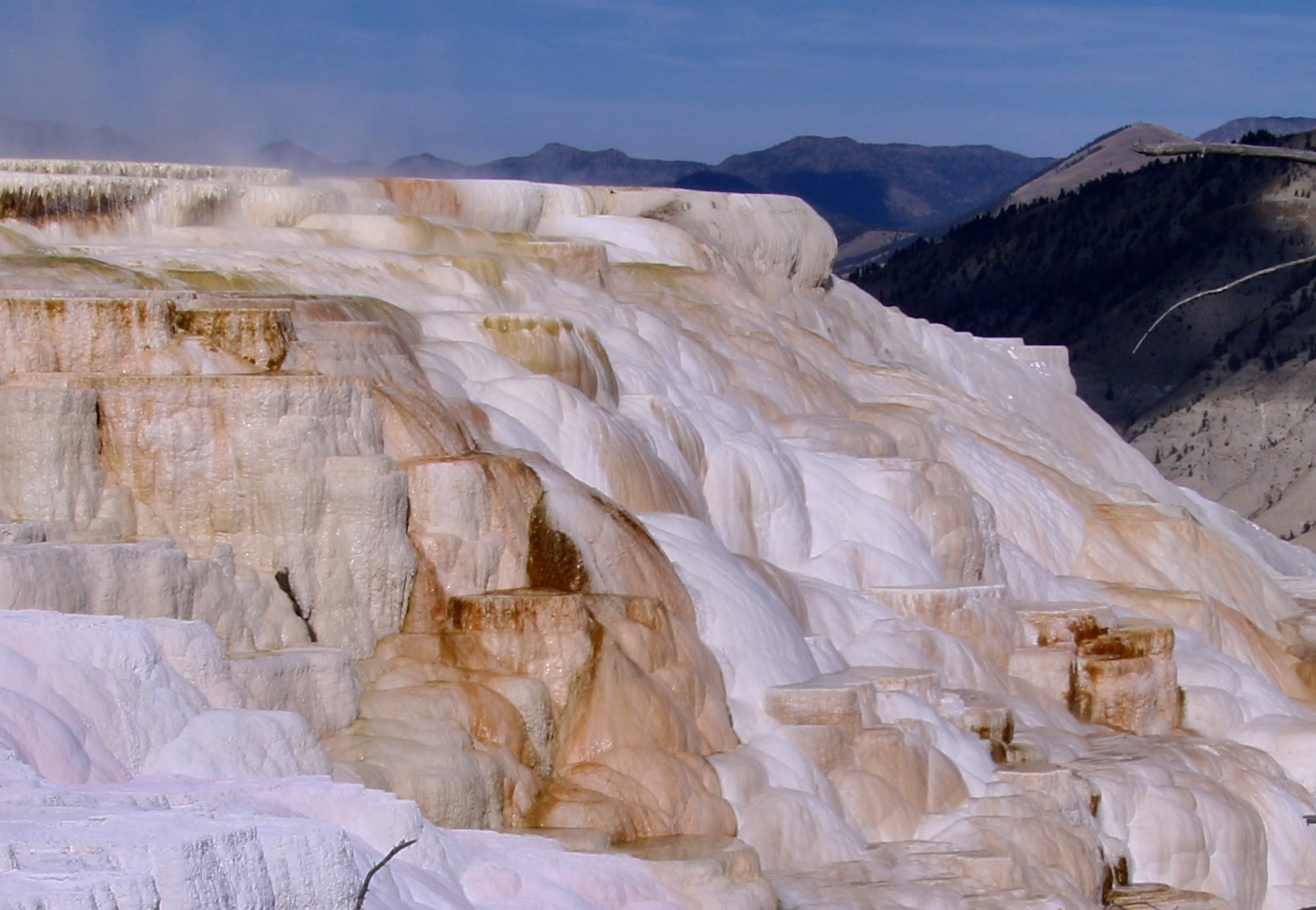


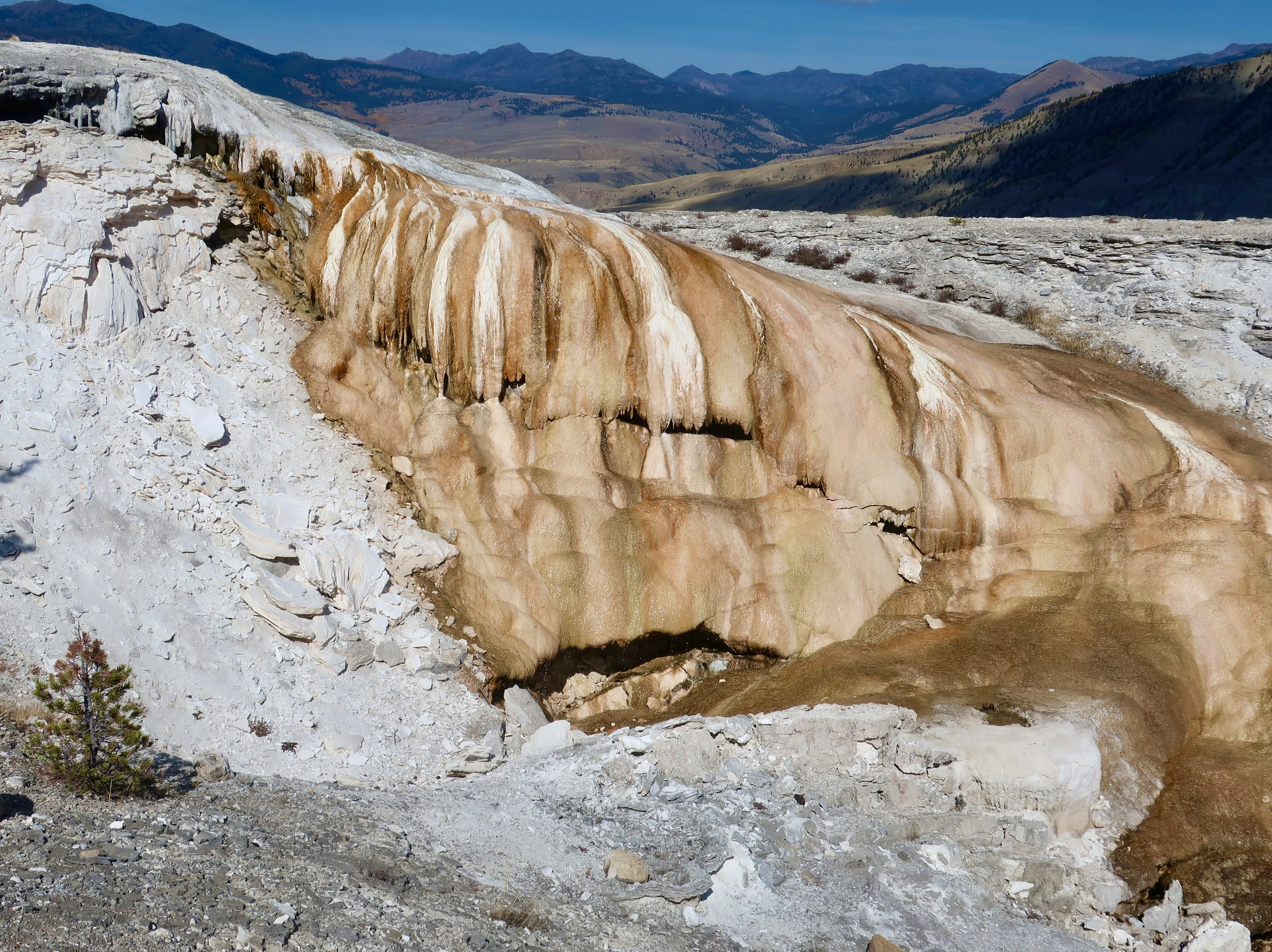

The road snakes around the upper terrace. There are several pullouts that allow close up views of the various formations.


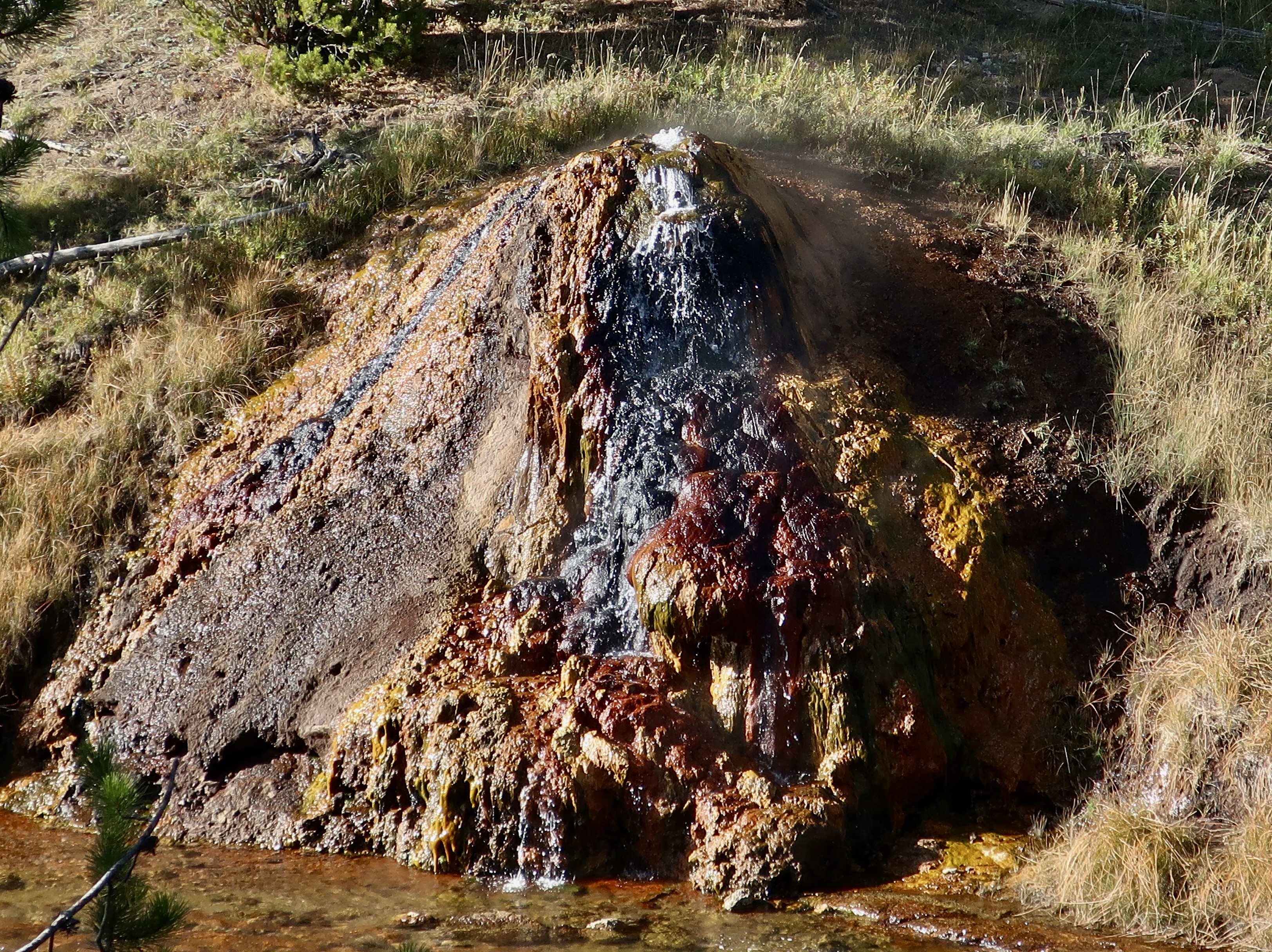
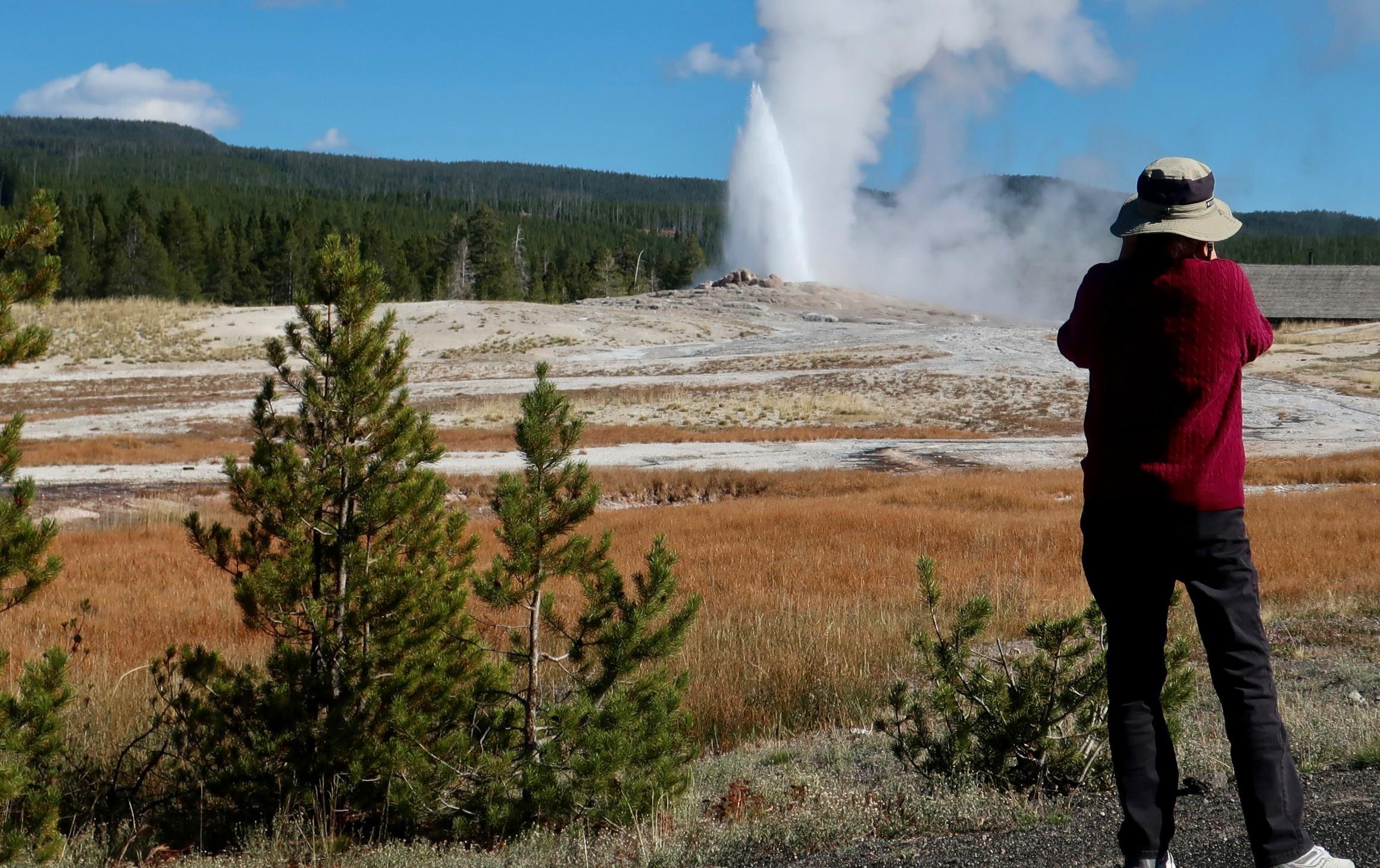
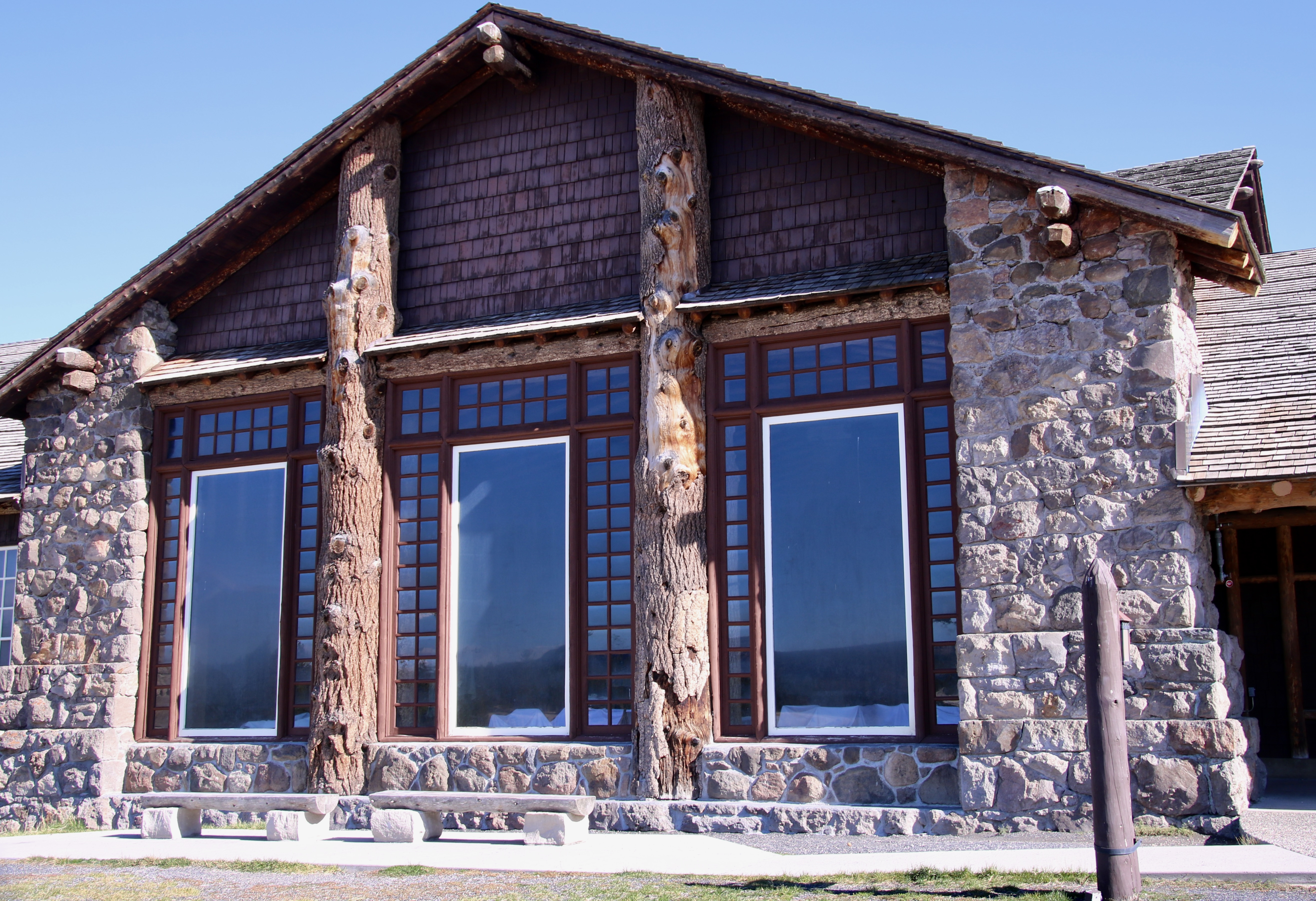
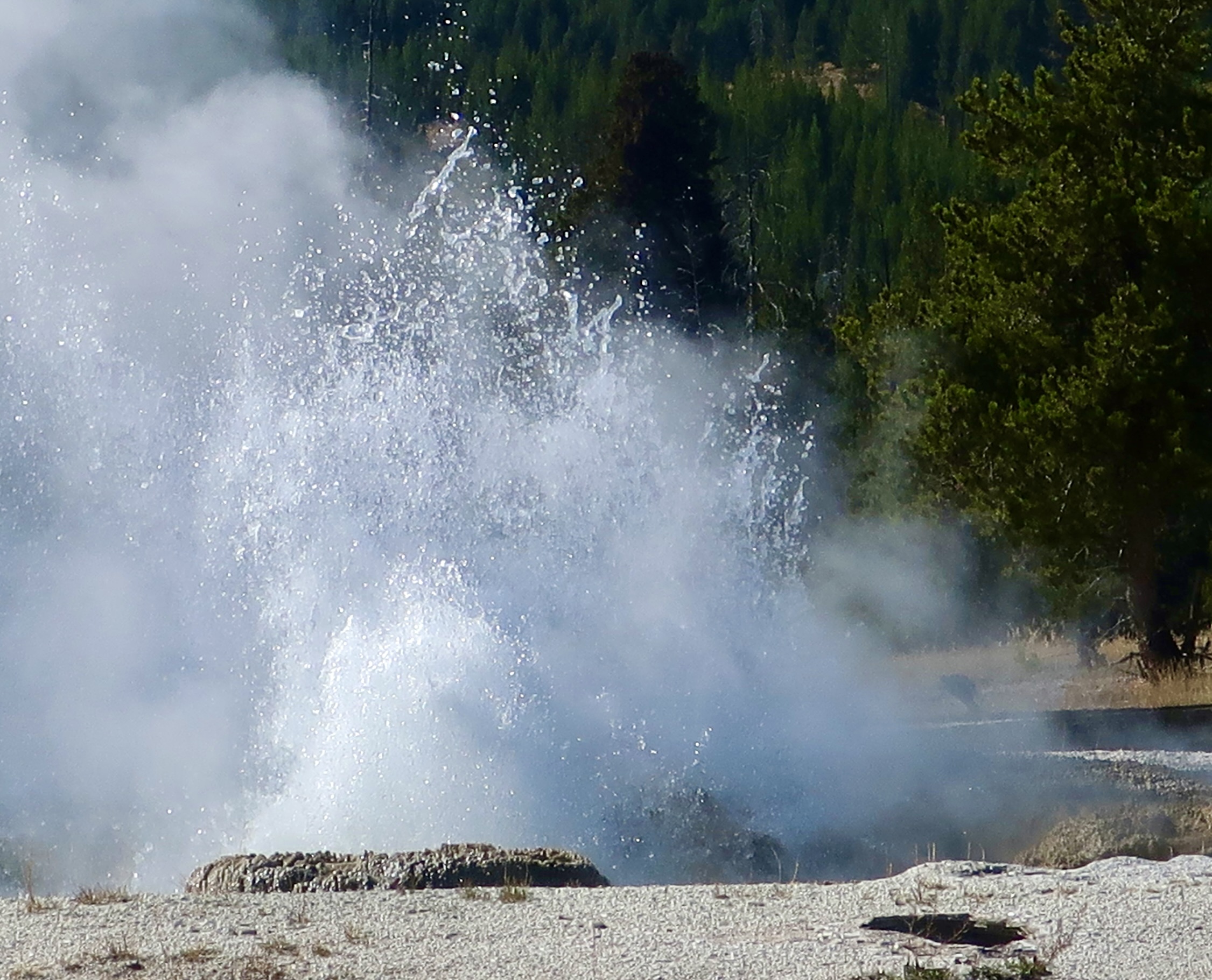
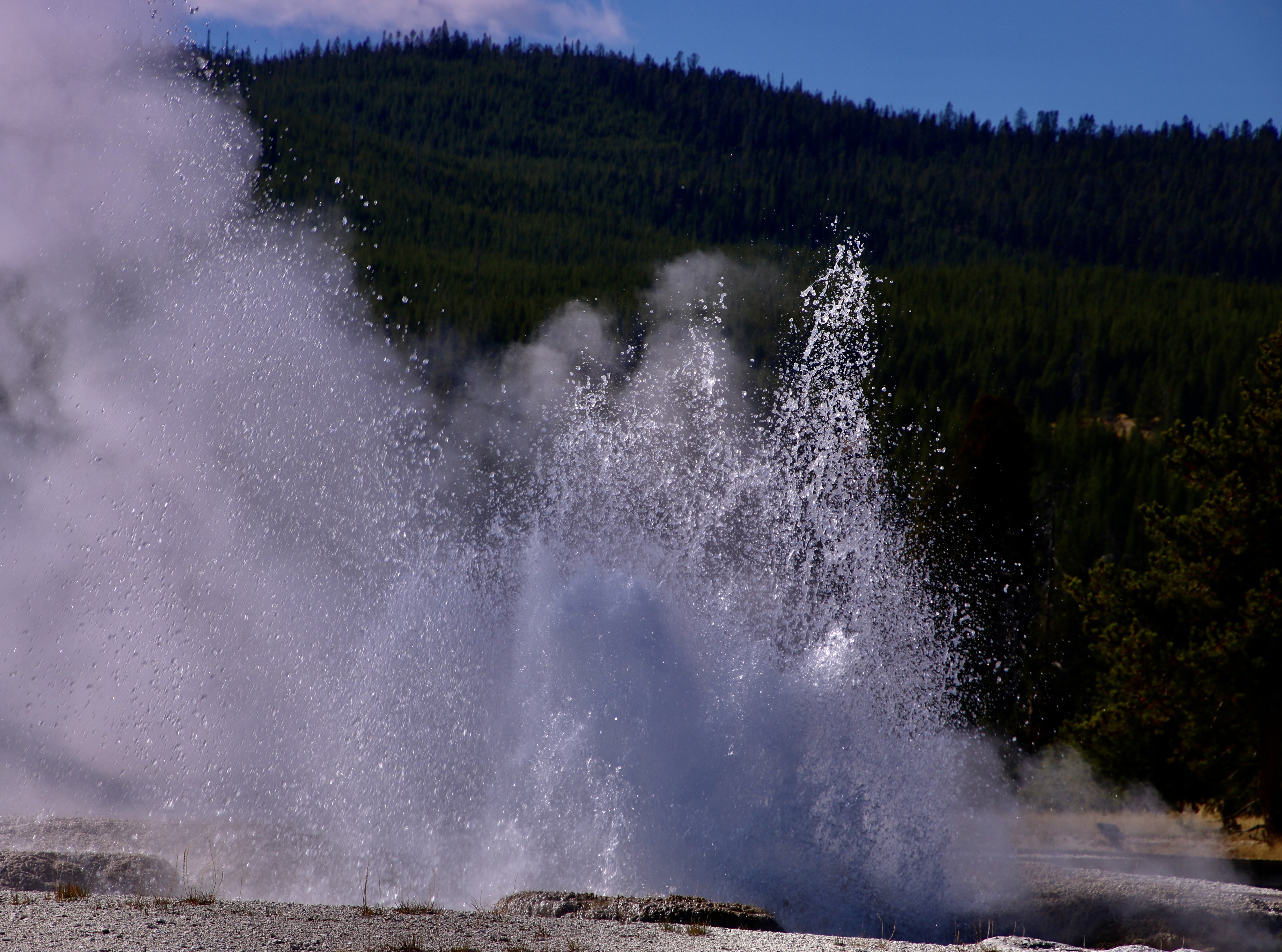
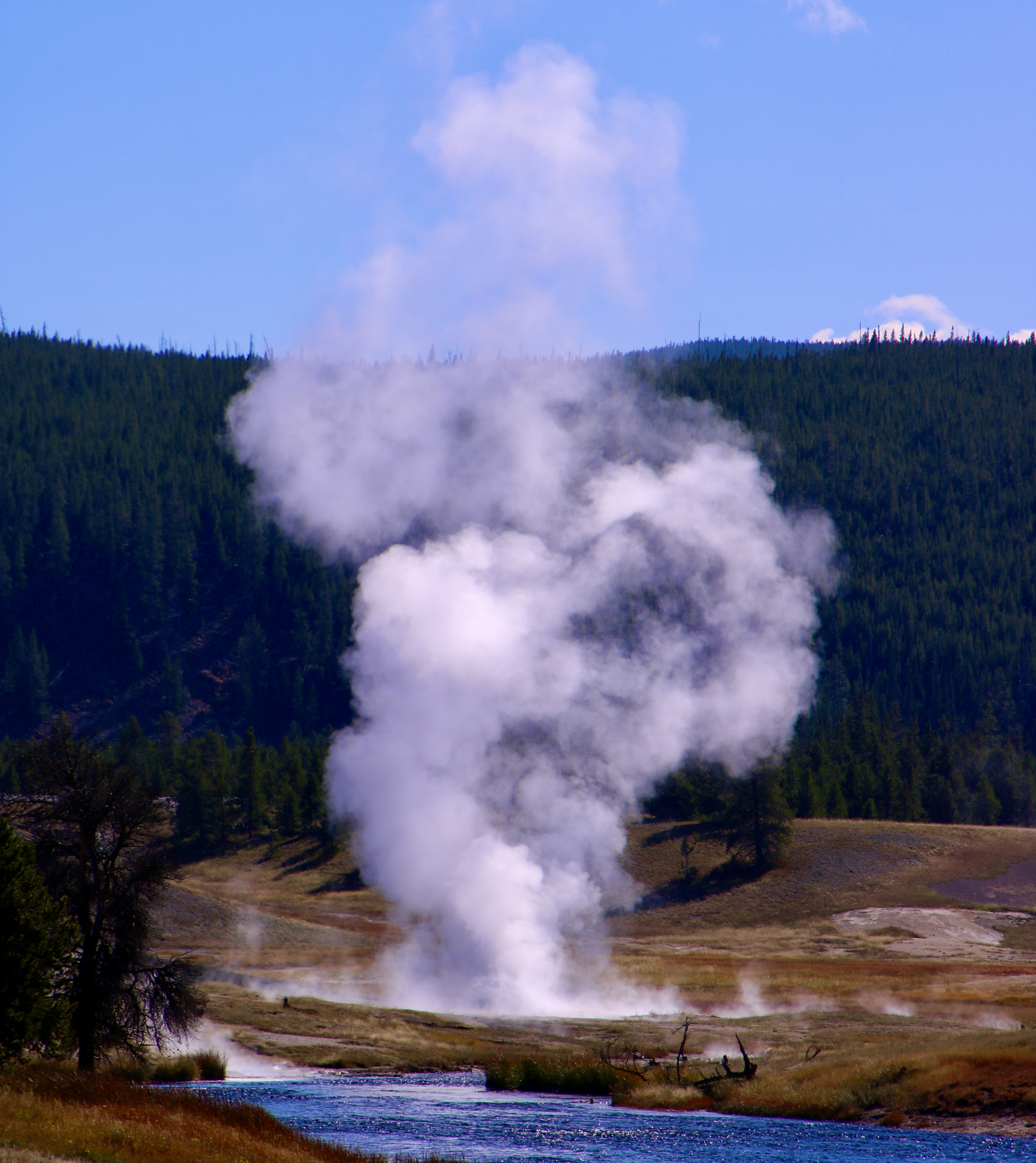
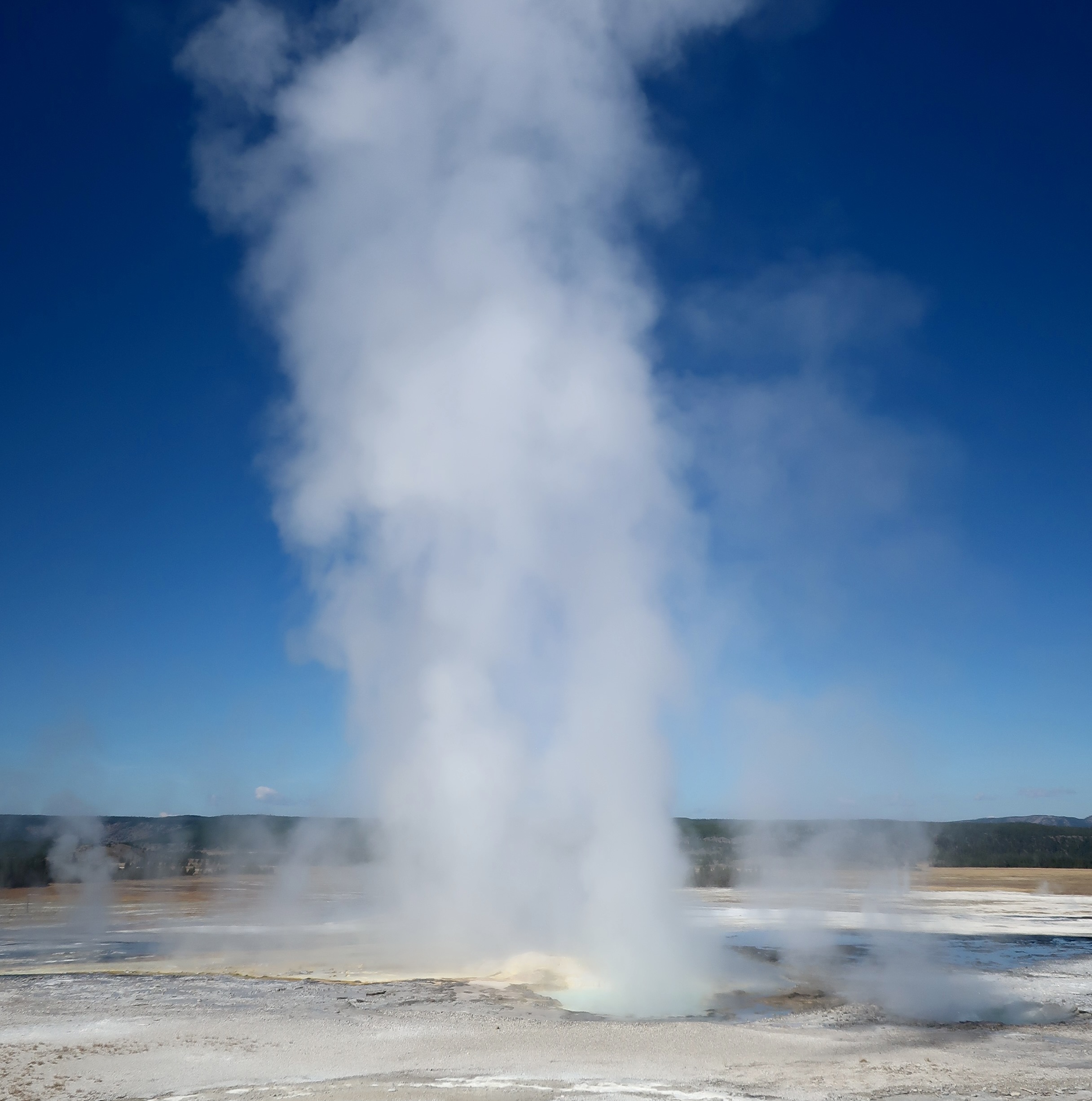
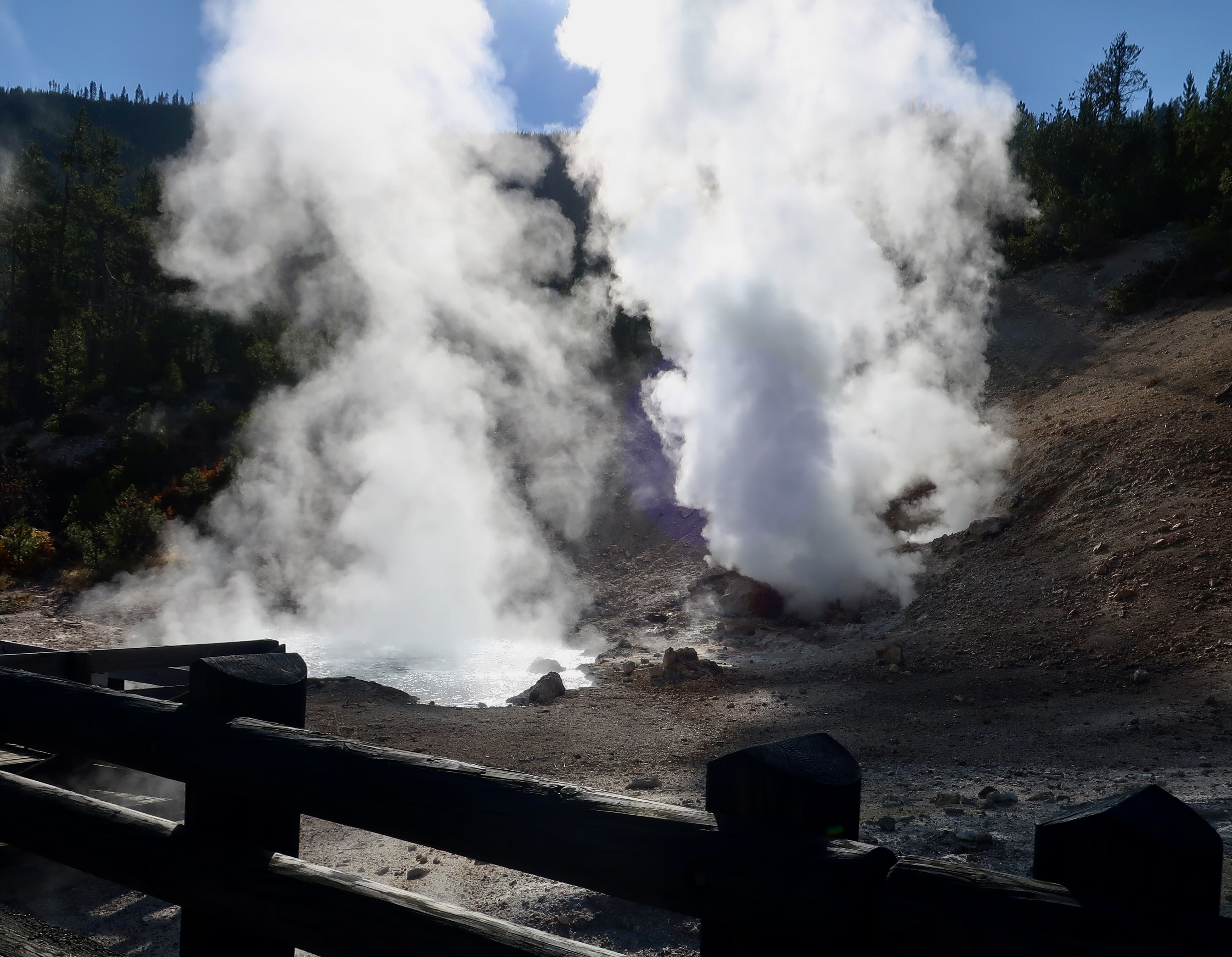
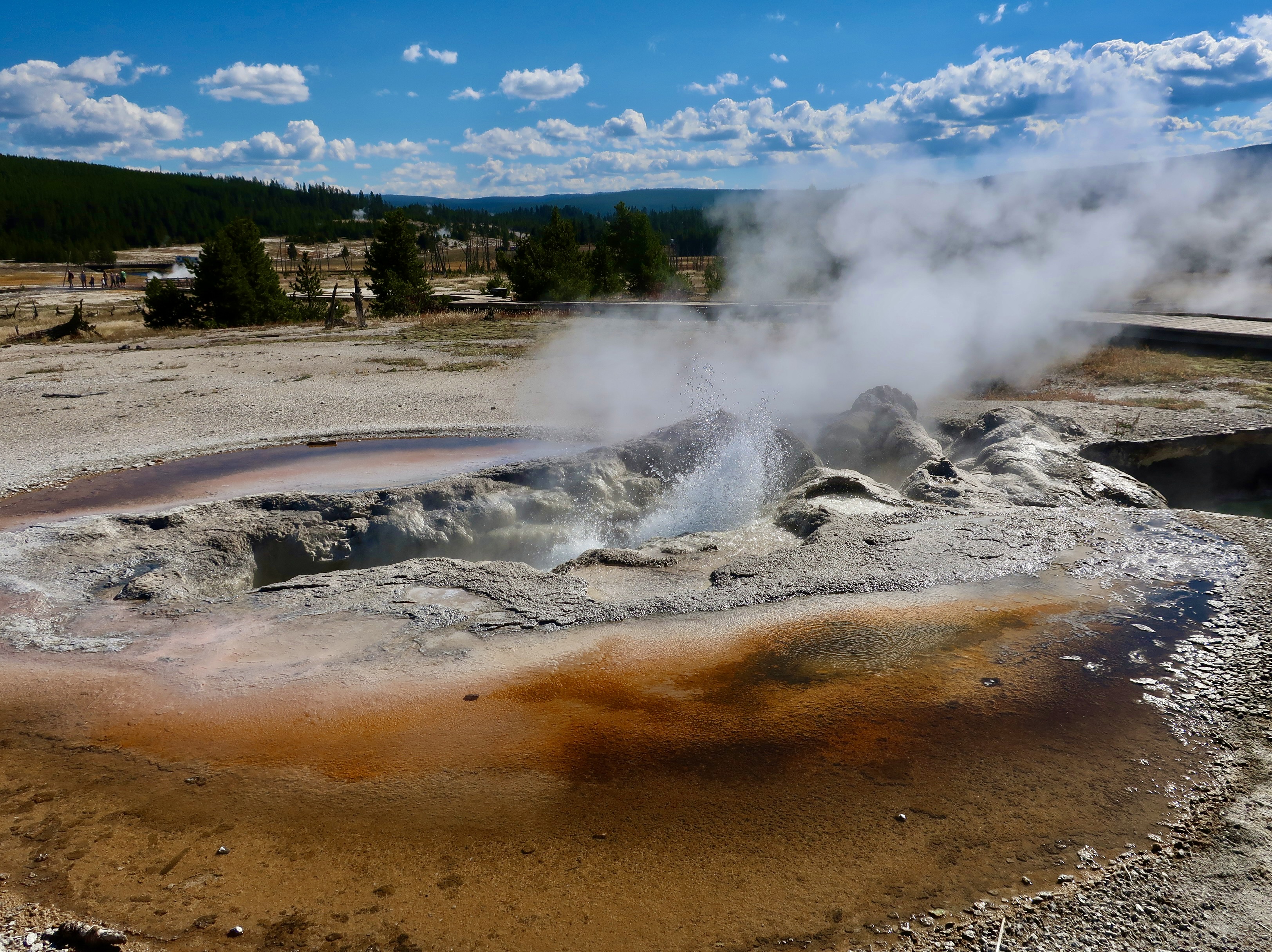
Erupting geysers are one of Yellowstones best known features. In fact, half of the world’s active geysers are located in the National Park. Peggy and I photographed lots of them when we visited last fall on our four month trip around the US.
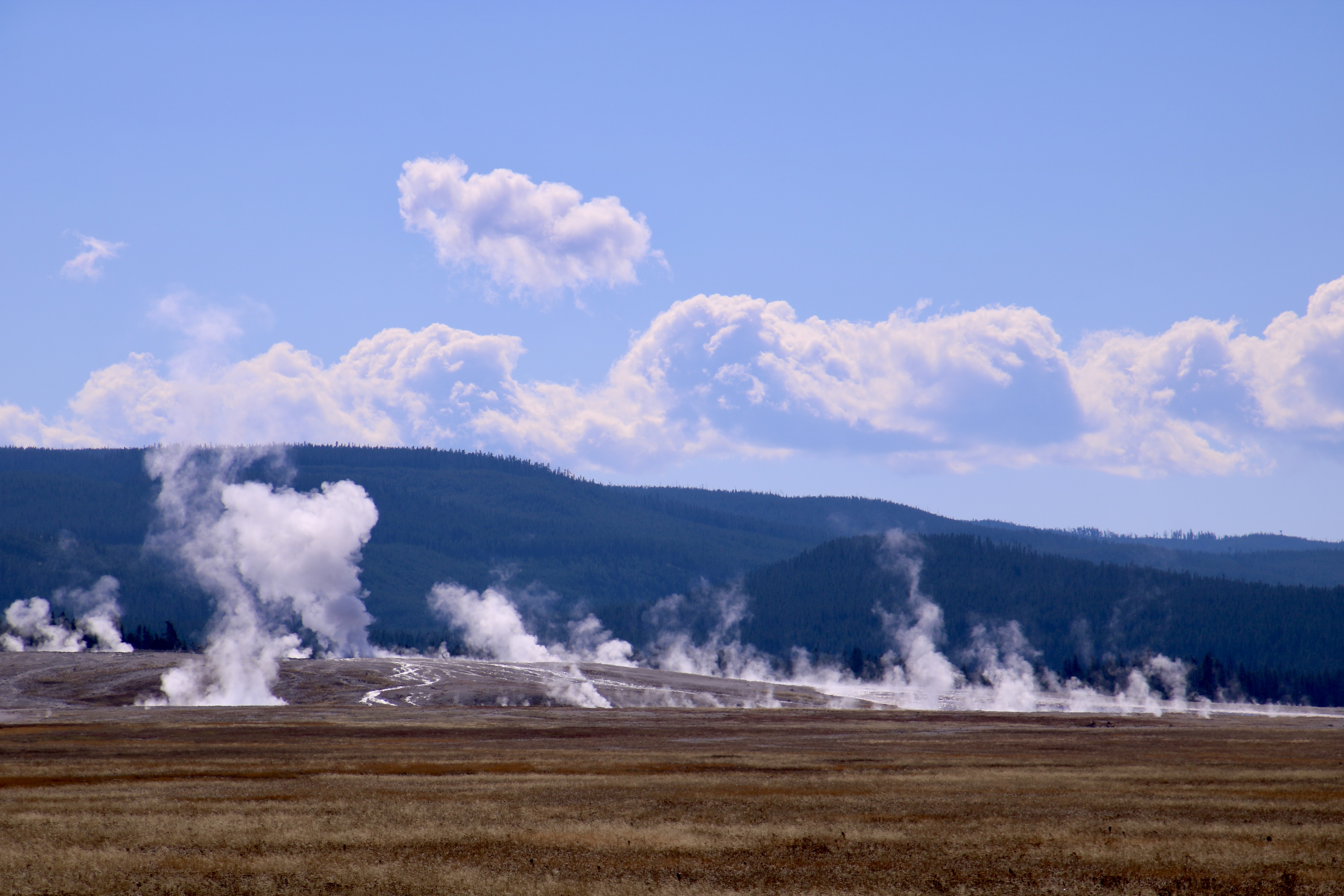
The reason behind Yellowstones record breaking number of geysers is that much of the park is located in a giant caldera, a collapsed volcano. Semi-molten rock exists in some areas as close as 2-5 miles below the surface. This extremely hot rock heats ground water flowing near it and creates Yellowstone’s hydro-thermal features including geysers, hot springs, fumaroles and mud pots. We featured hot springs two weeks ago. Today is the geysers’ turn. They erupt when the super hot boiling water creates pressure in channels leading to the surface that erupts as steam out of a vent. As the pressure is released the geyser subsides until the process is repeated. They come in all sizes. The most famous is Old Faithful, given its name due to the regularity of its eruptions.
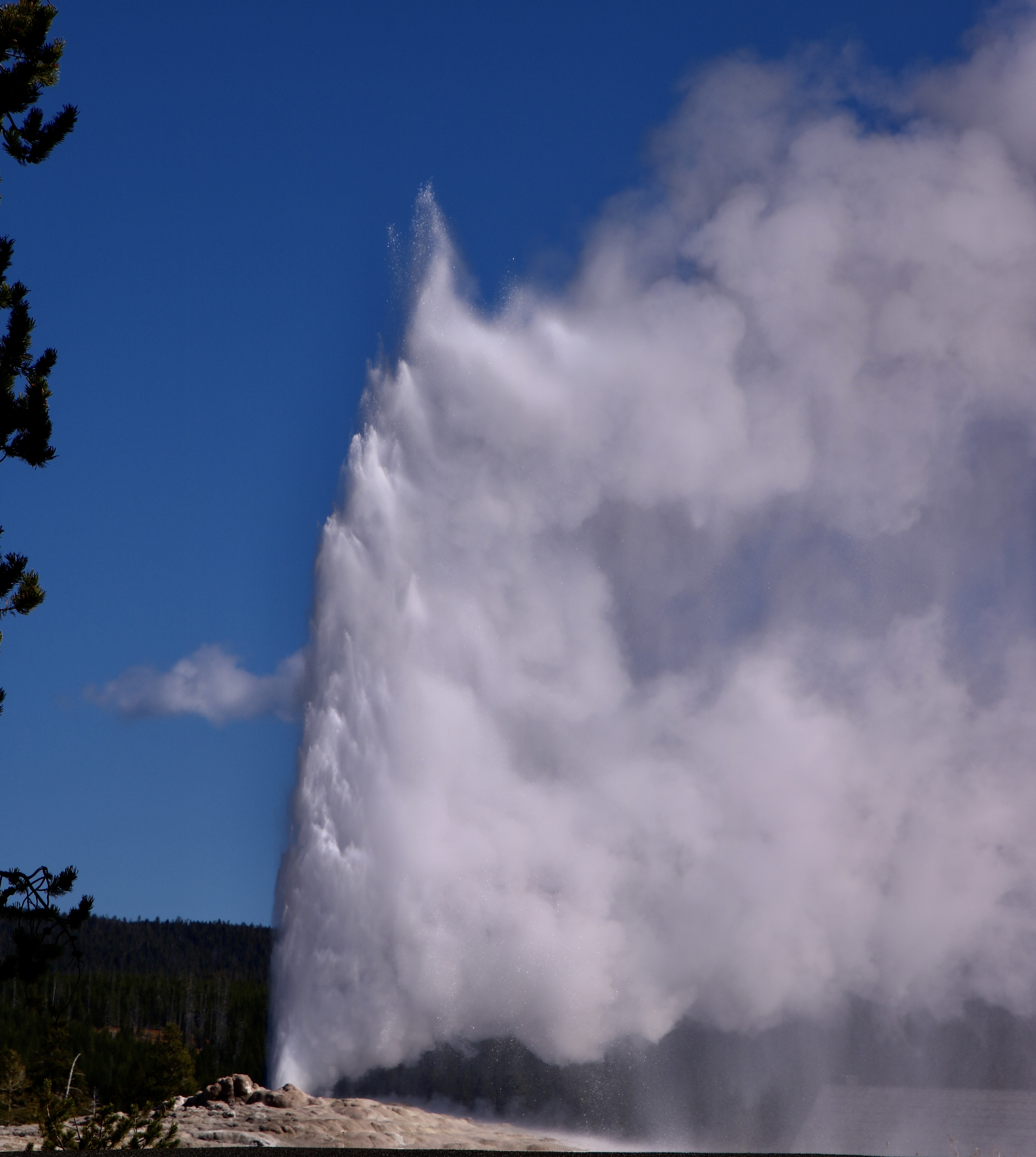
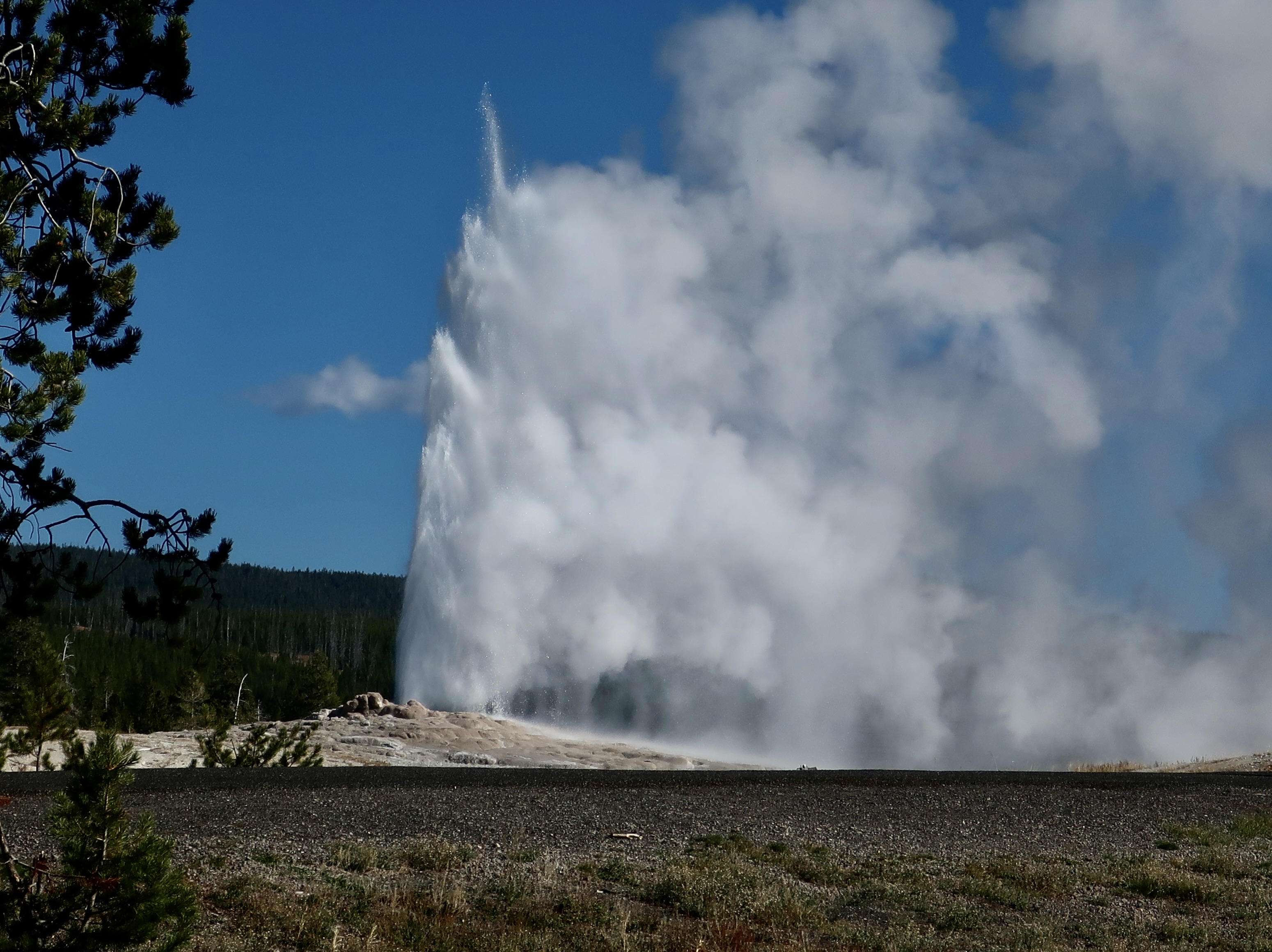
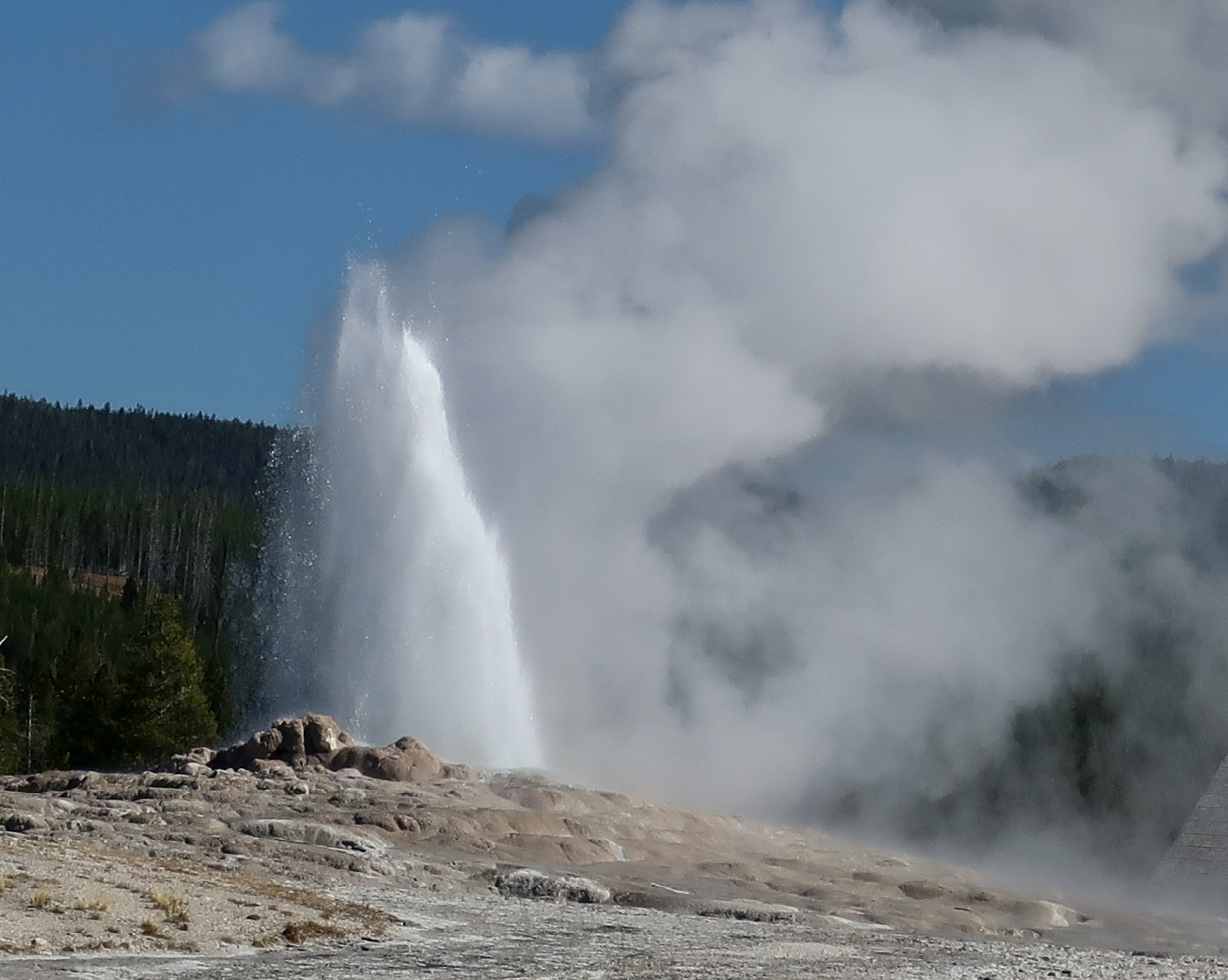
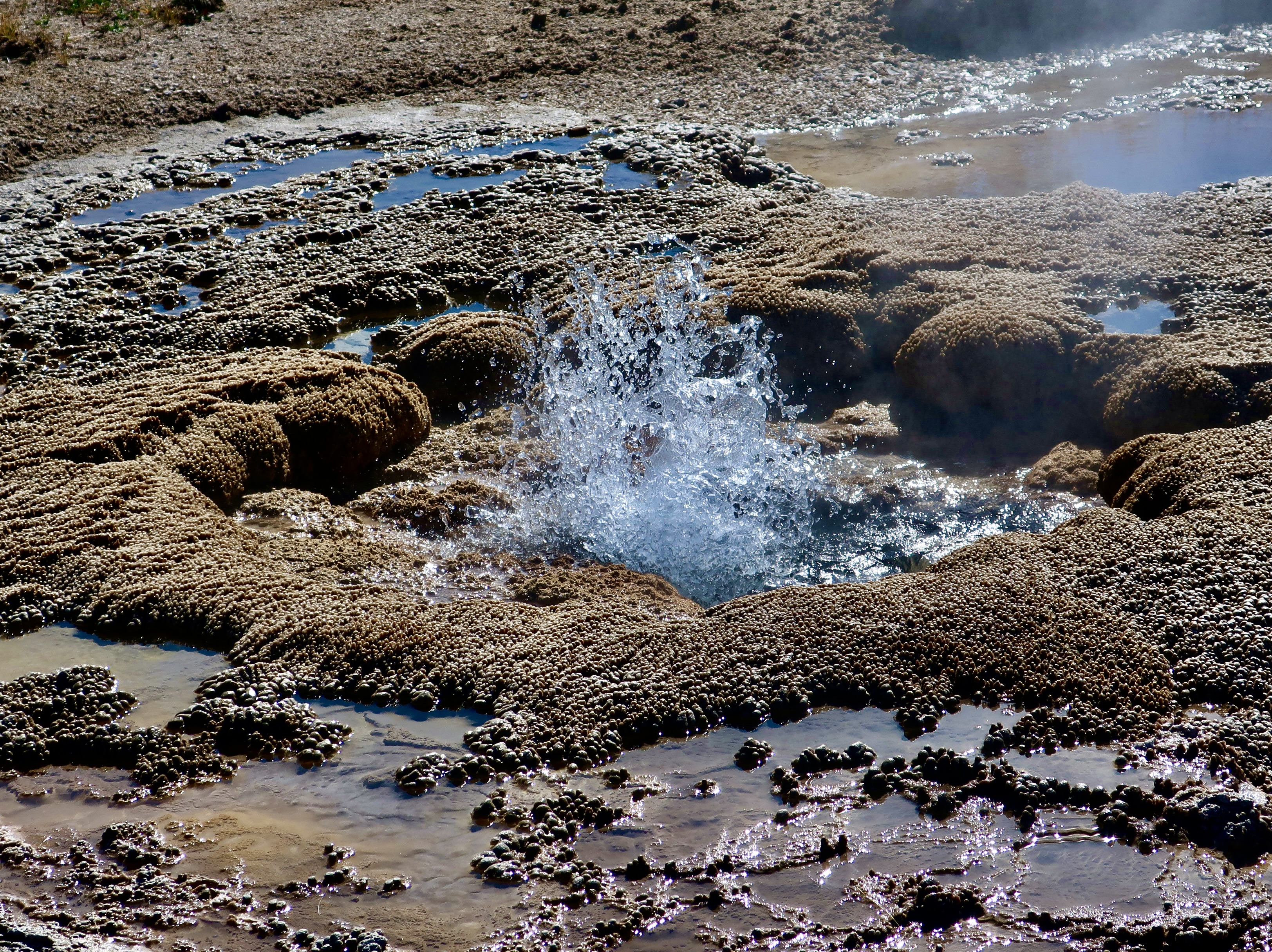

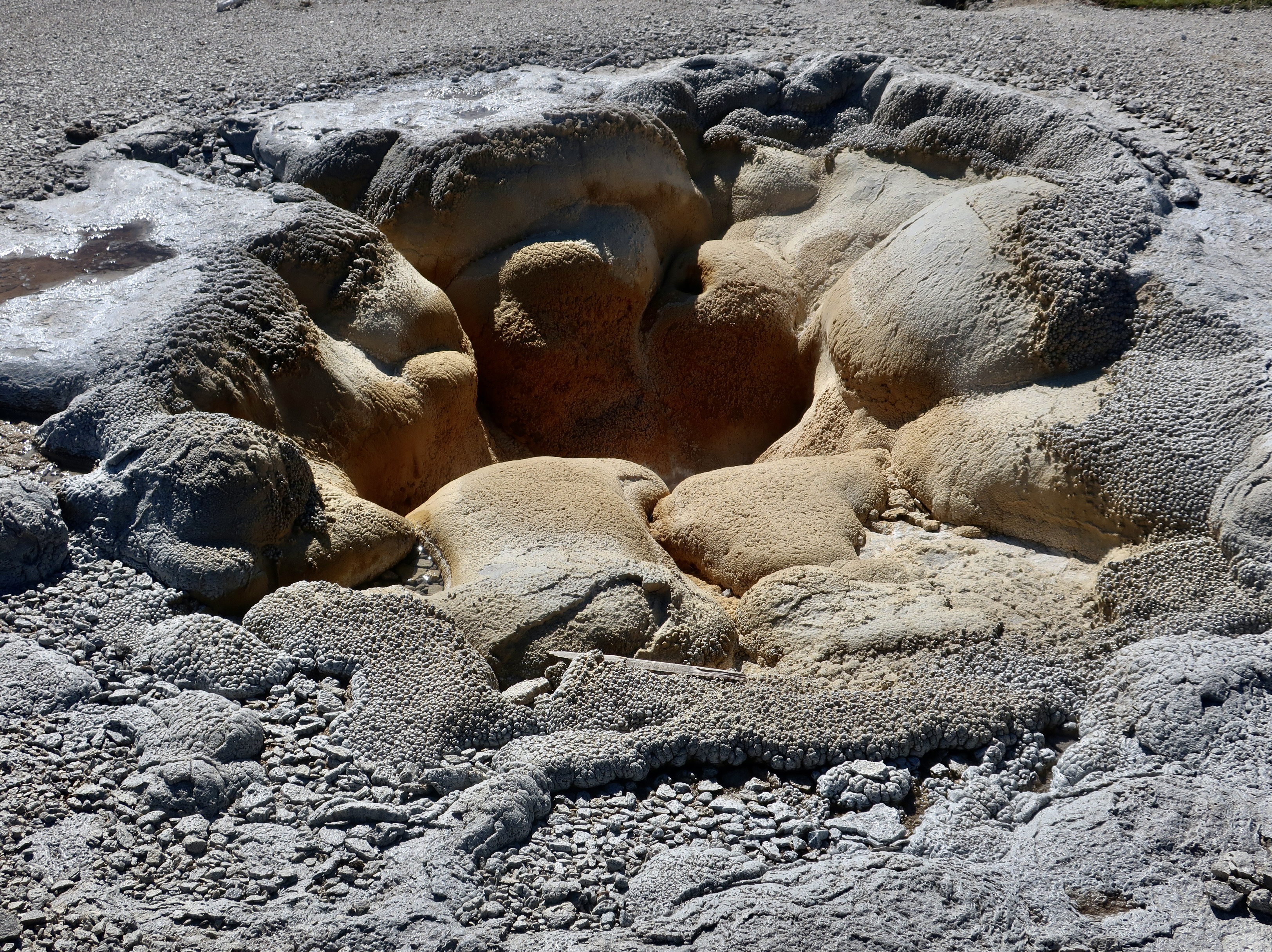
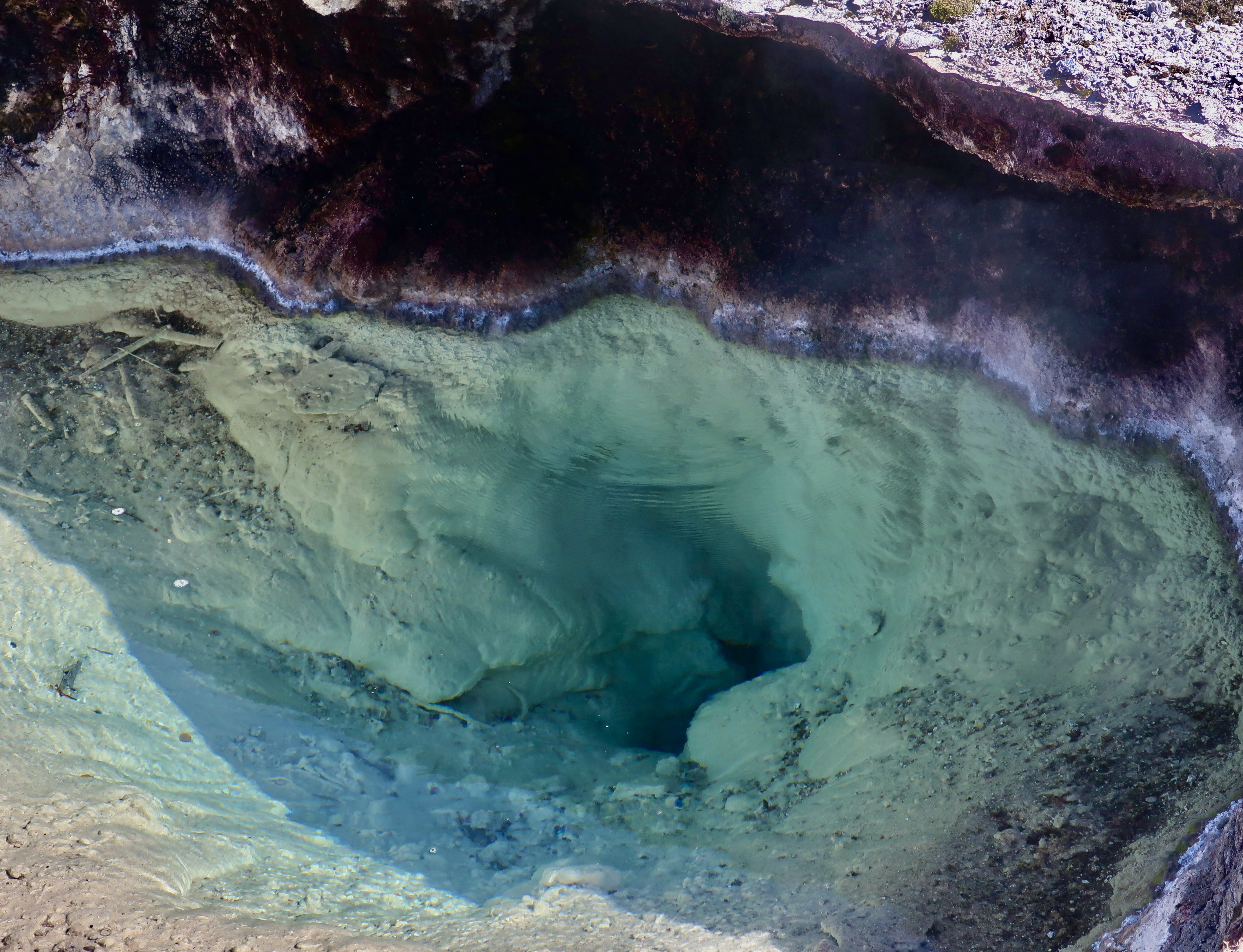
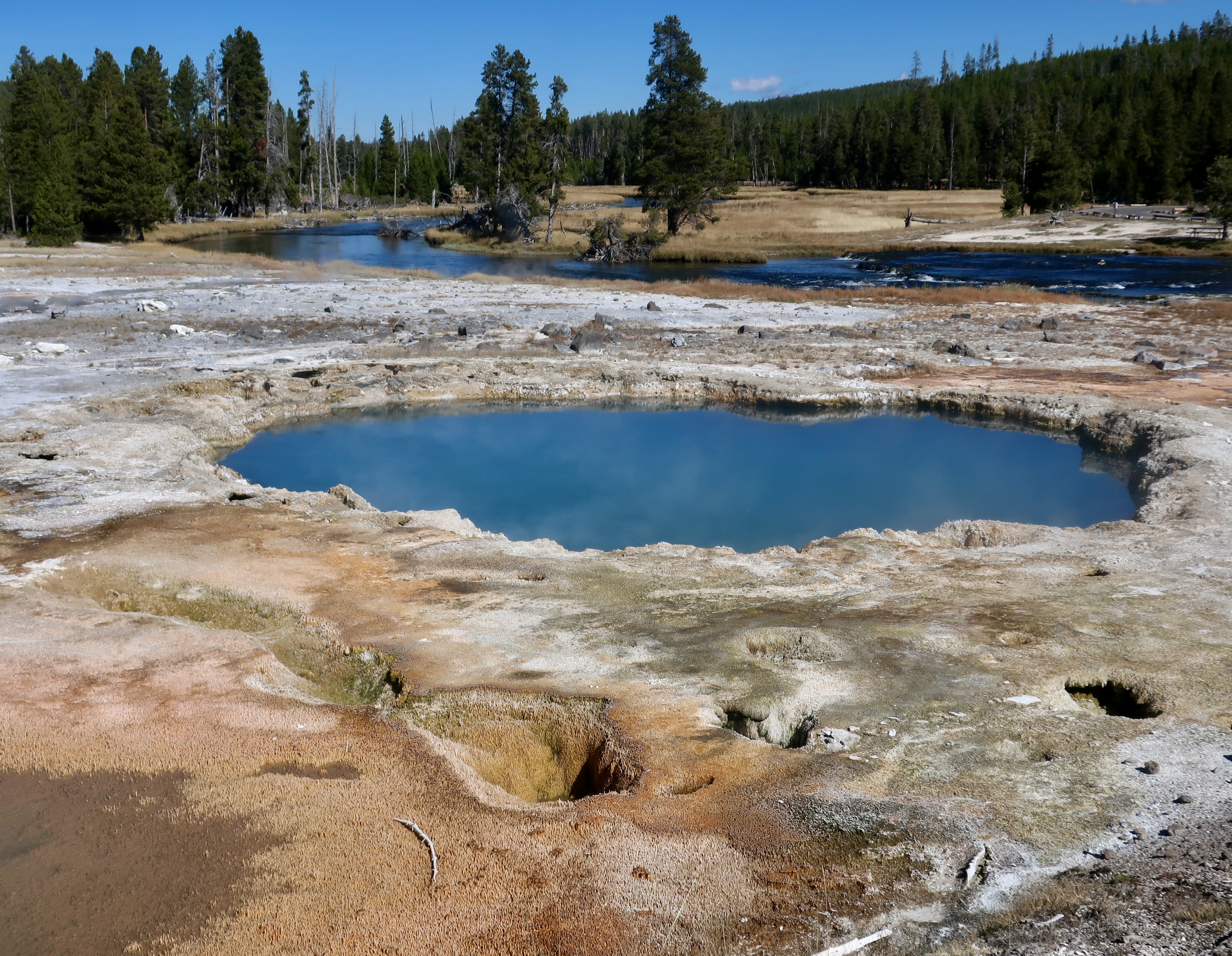
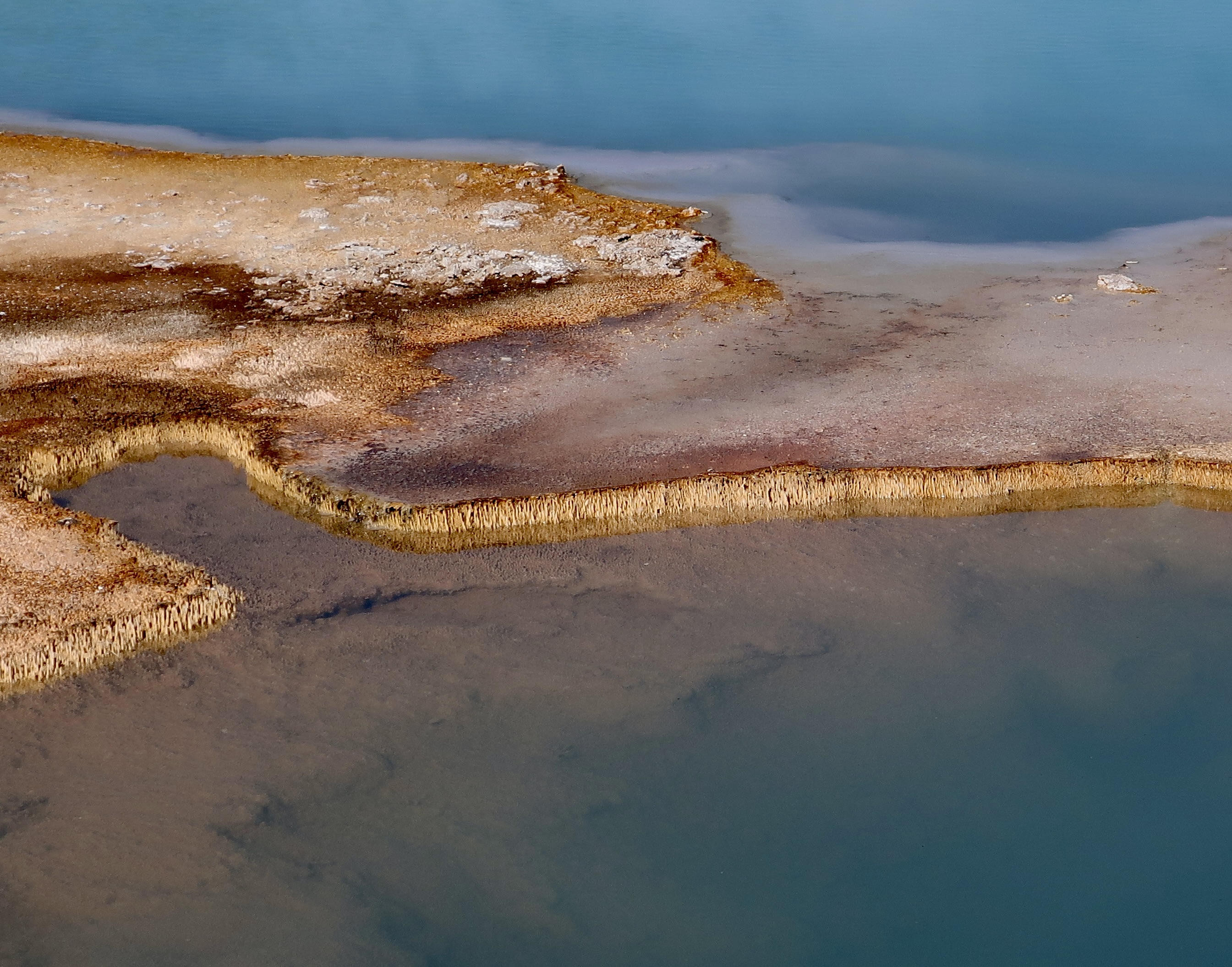
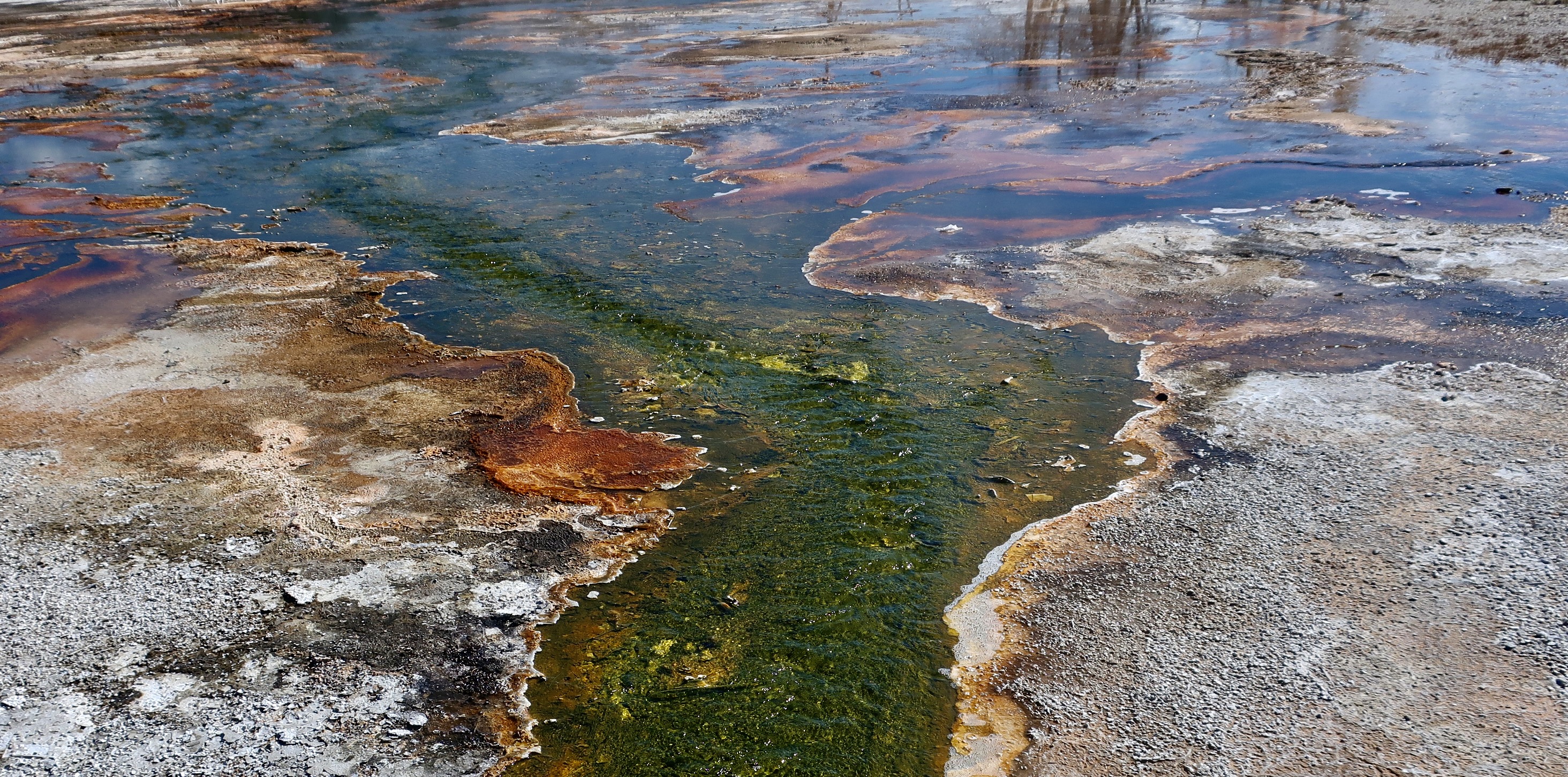
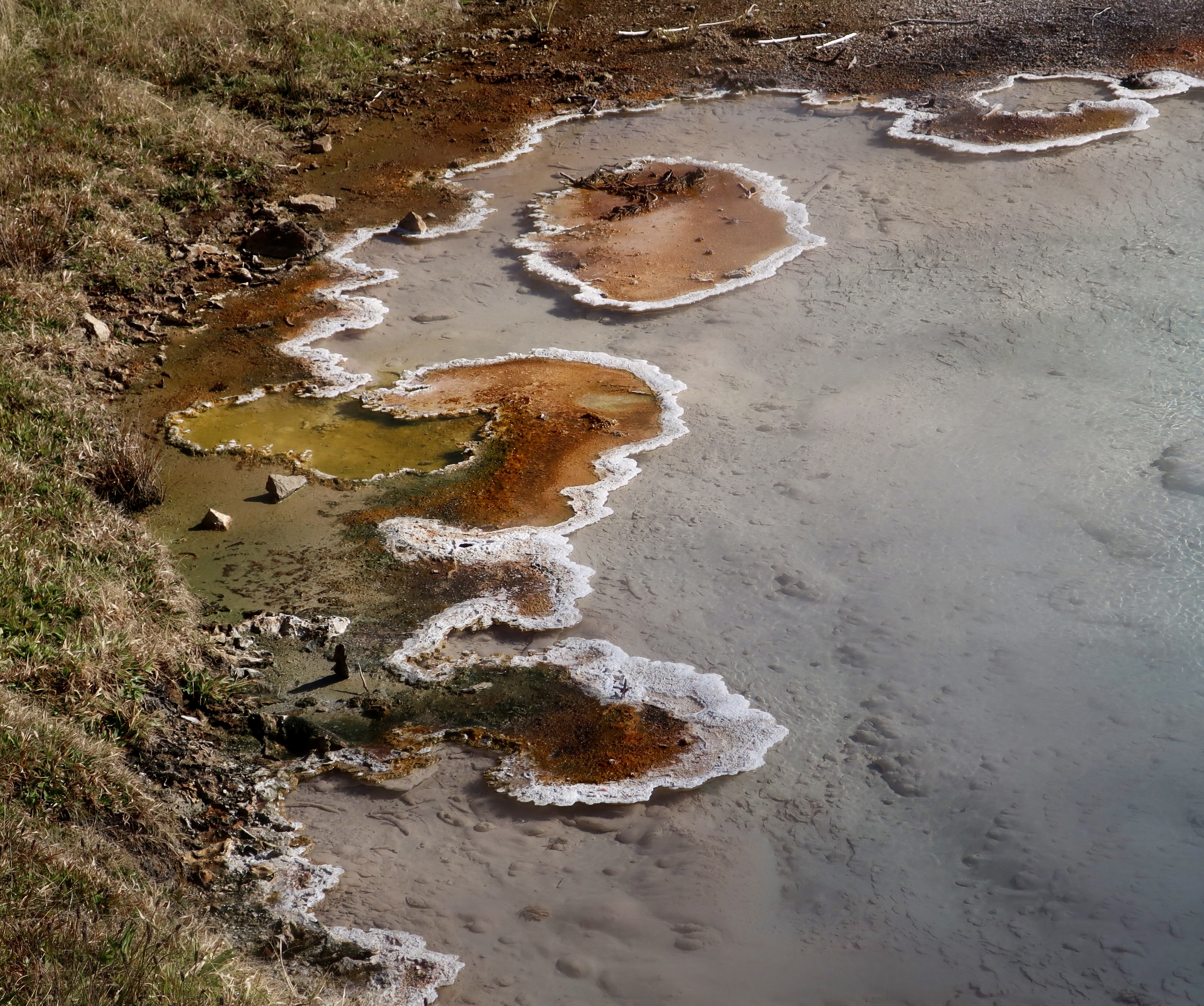
Beautiful scenery, abundant wildlife, and incredible geology. Yellowstone has it all. There is a reason why it became America’s first National Park in 1872. I’ll be focusing on the geology today. Yellowstone sits on top of one of the world’s largest volcanoes. Believe me, when I say, we wouldn’t want to see it blow. The proximity of the lava to the surface is the reason behind all of its hydrothermal features. For one, Yellowstone has more active geysers than the rest of the world combined according to information in the Visitor Center. The geysers are slated for another post; today it is all about hot springs. Peggy and I were captured by their vibrant colors and unique structures. The photos in this post were taken by both of us. We visited this past fall when we were in the middle of our 12,000 mile tour. It was my third visit. Peggy once spent an idyllic summer working there when she was going to college.








We were down in Big Bend National Park in Texas when it came time to write our annual Christmas letter. The park features beautiful scenery, interesting culture, cacti, and lots of geology. It also features fossils from the Age of Dinosaurs, including a monster crocodile. The crocodile reminded me of one of the characters I created for Christmas Cards, Old Croc. He made it into my Christmas letter and today’s post.

There was also a large leg bone from a duck billed dinosaur. Bone couldn’t resist having his photo taken with it.

Peggy and I celebrated Christmas in 1999 at Big Bend. Not having a Christmas Tree, we used a hanging macrame. Our visit to Big Bend was before Christmas this year, but Peggy was still fired up with her passion for decorating. We found some hand-crafted Mexican Christmas ornaments for sale next to the Rio Grande. Bone, of course, insisted on joining the party. As did Bone’s traveling companion, Eeyore. We visited Peggy’s brother John and his wife Frances after Big Bend. Frances, knitted a Christmas scarf for Bone and donated a ribbon for the donkey.

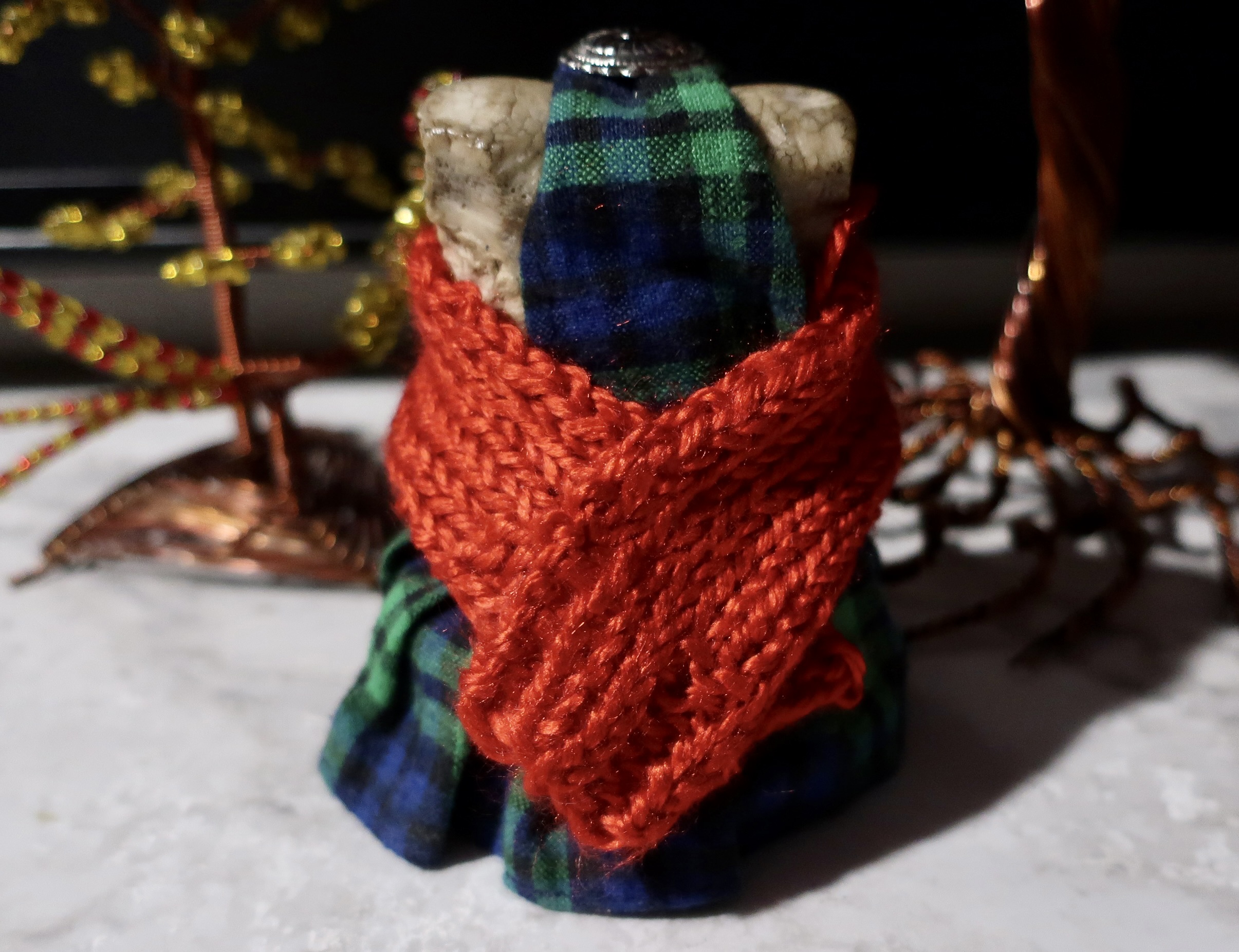
Just in case you are new to this blog and have never met Bone, a friend of mine, Tom Lovering and I found him in a field of corn lilies when we were backpacking along the Tahoe-Yosemite Trail in 1977. He has been traveling with us ever since. In addition to Tom and me, a number of other people have carried him over the past 45 years on numerous adventures. He has visited over 50 countries. Among his many adventures are a 10,000 mile bicycle trip, a journey in the back of a truck the length of Africa, climbing mountains, and deep sea diving. He has travelled on the Amazon, attended a Presidential Press Conference, and been blessed by the Pope in St. Peter’s square. Four years ago he backpacked with me 750 miles down the PCT in celebration of my 75th Birthday, meeting numerous through-hikers along the way.
Peggy, I, Bone, and Eeyore want to wish you and your family a joyful Christmas and a great 2023.
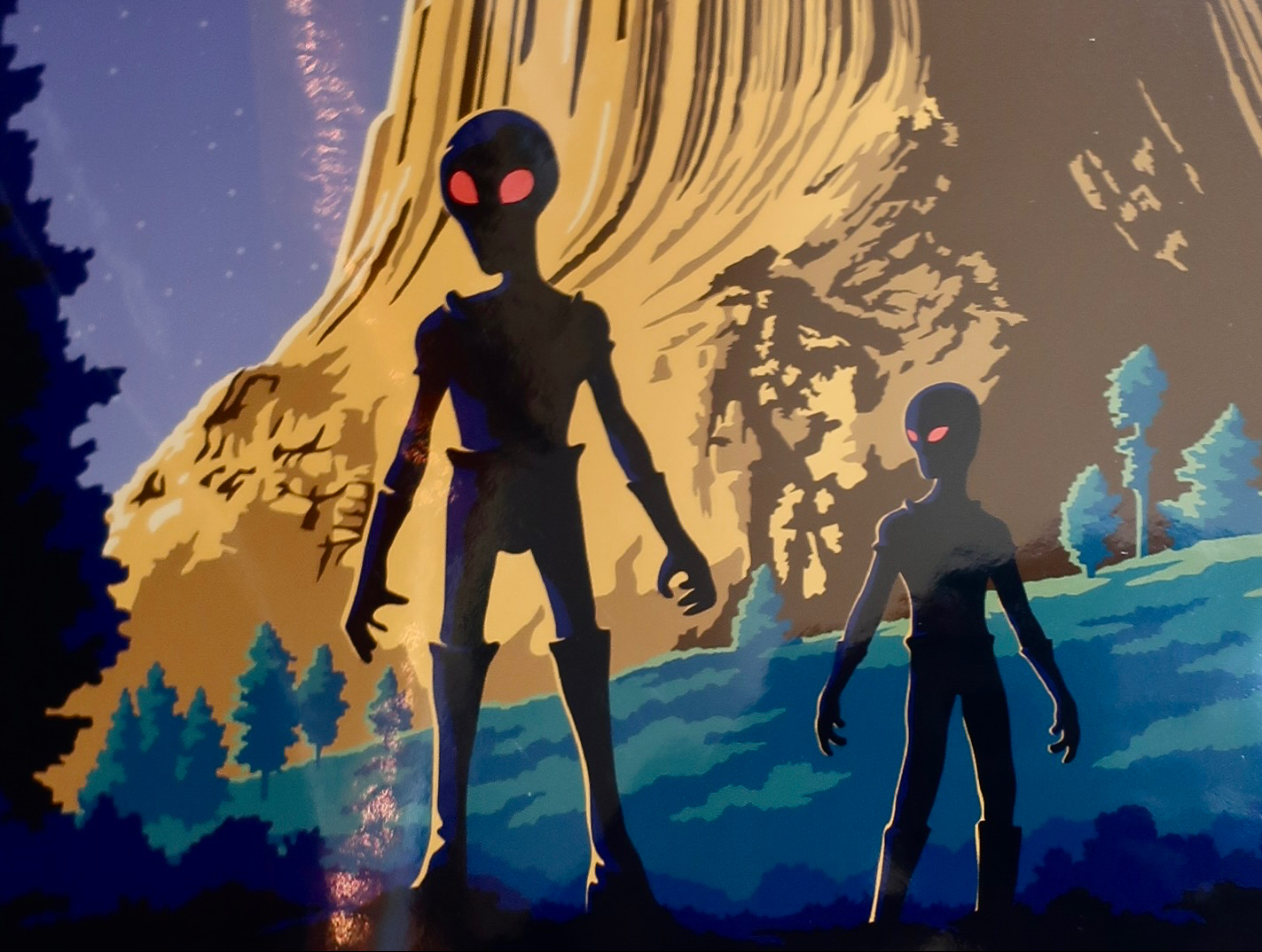
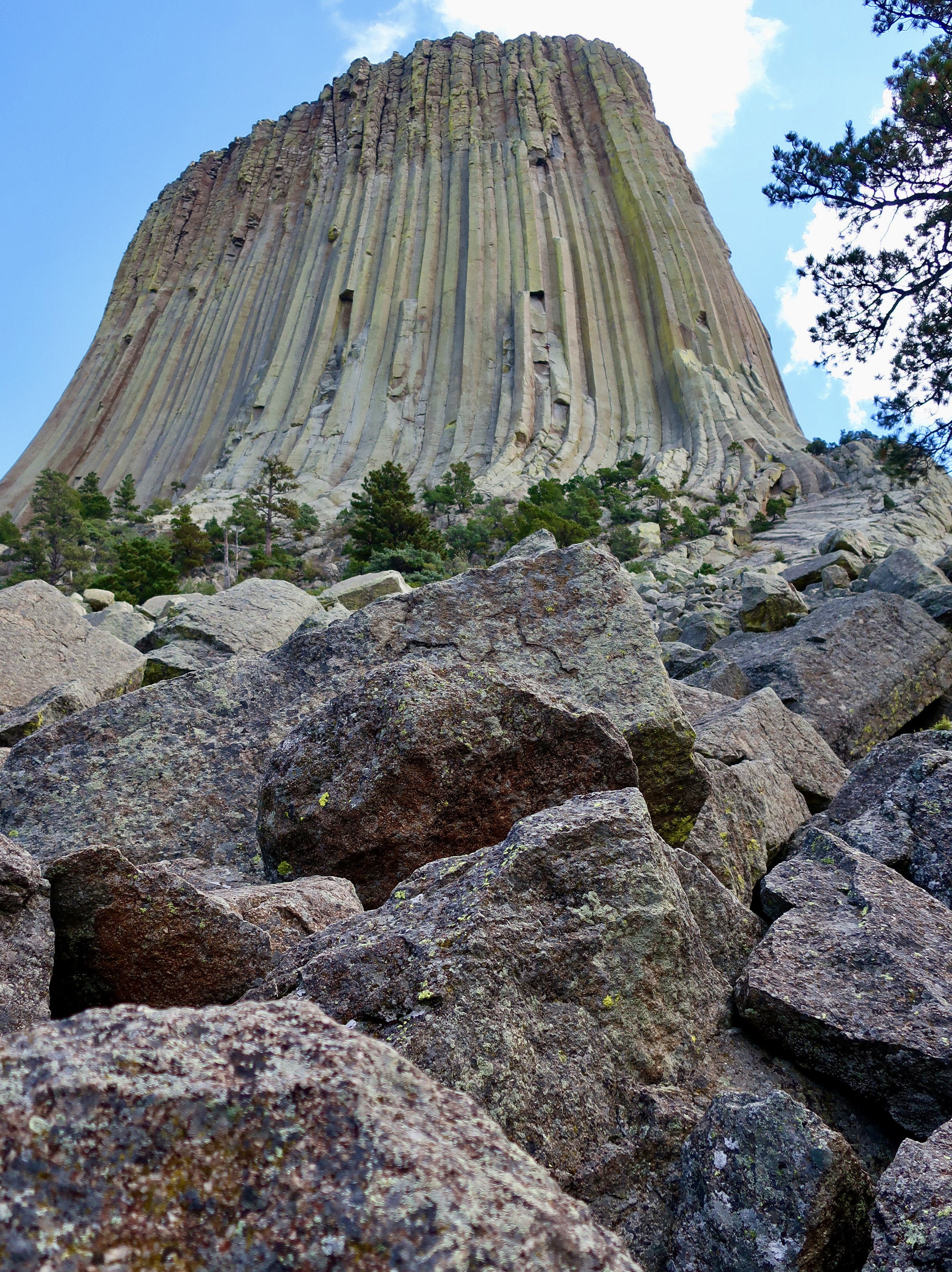
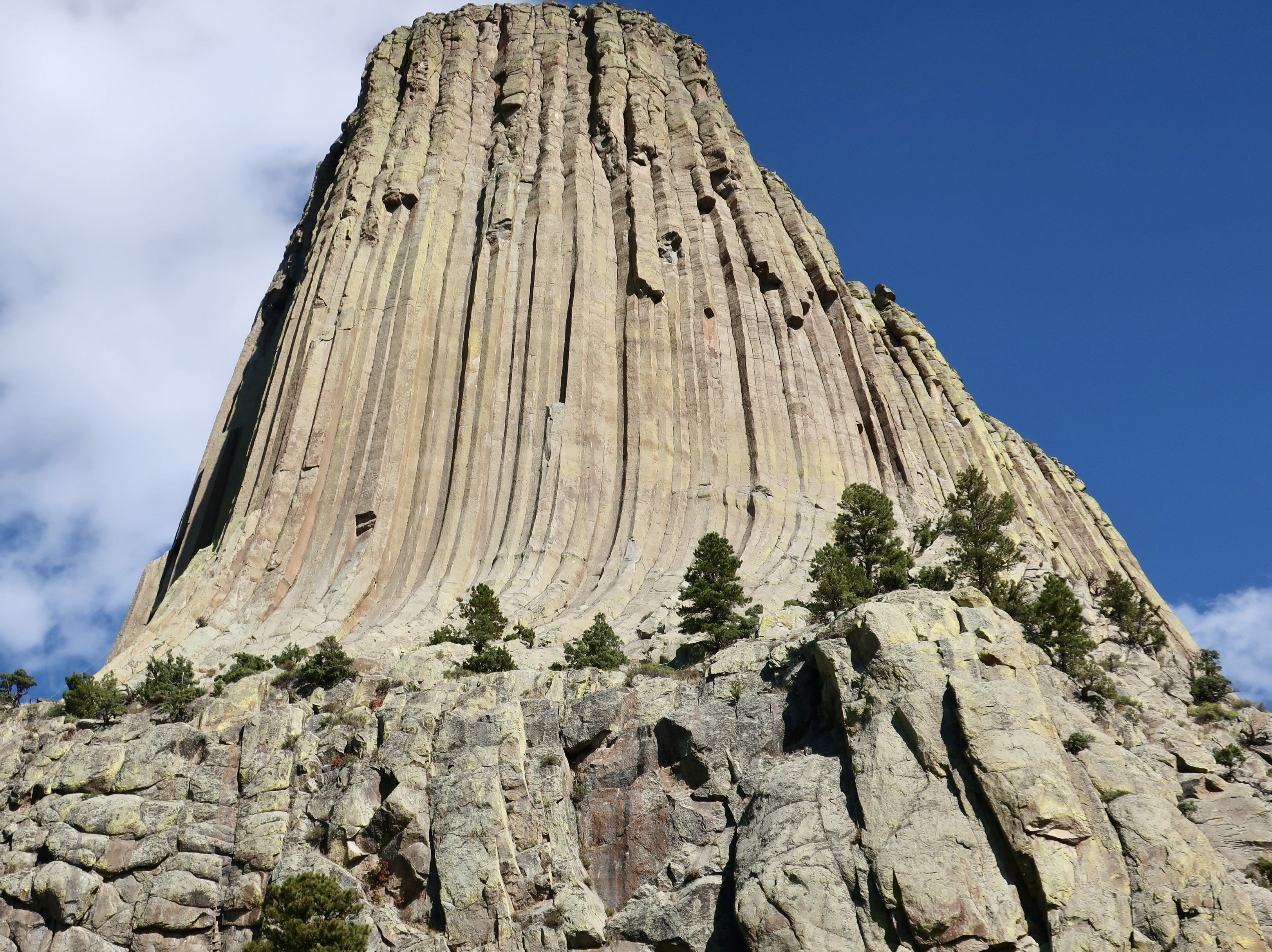
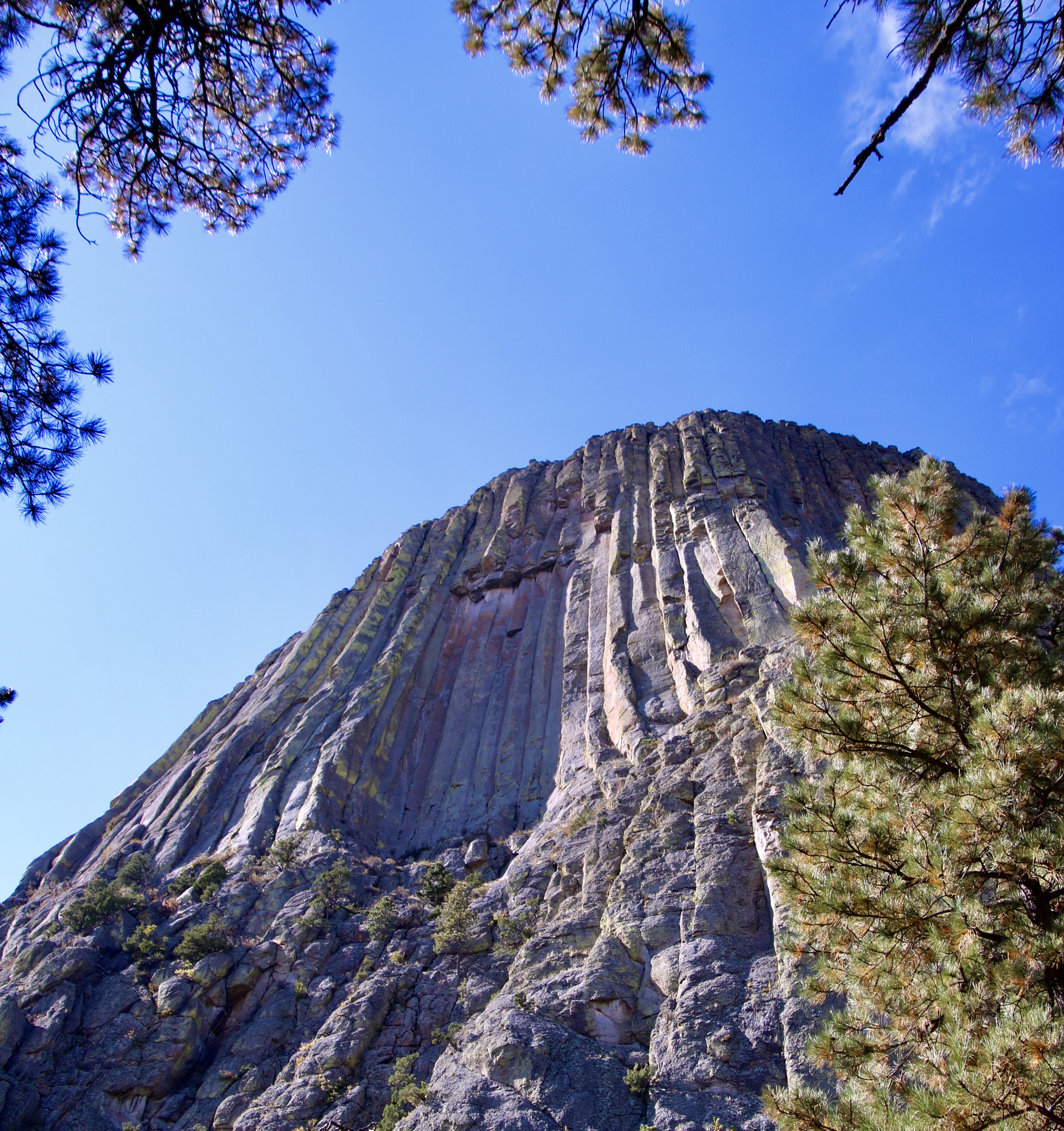
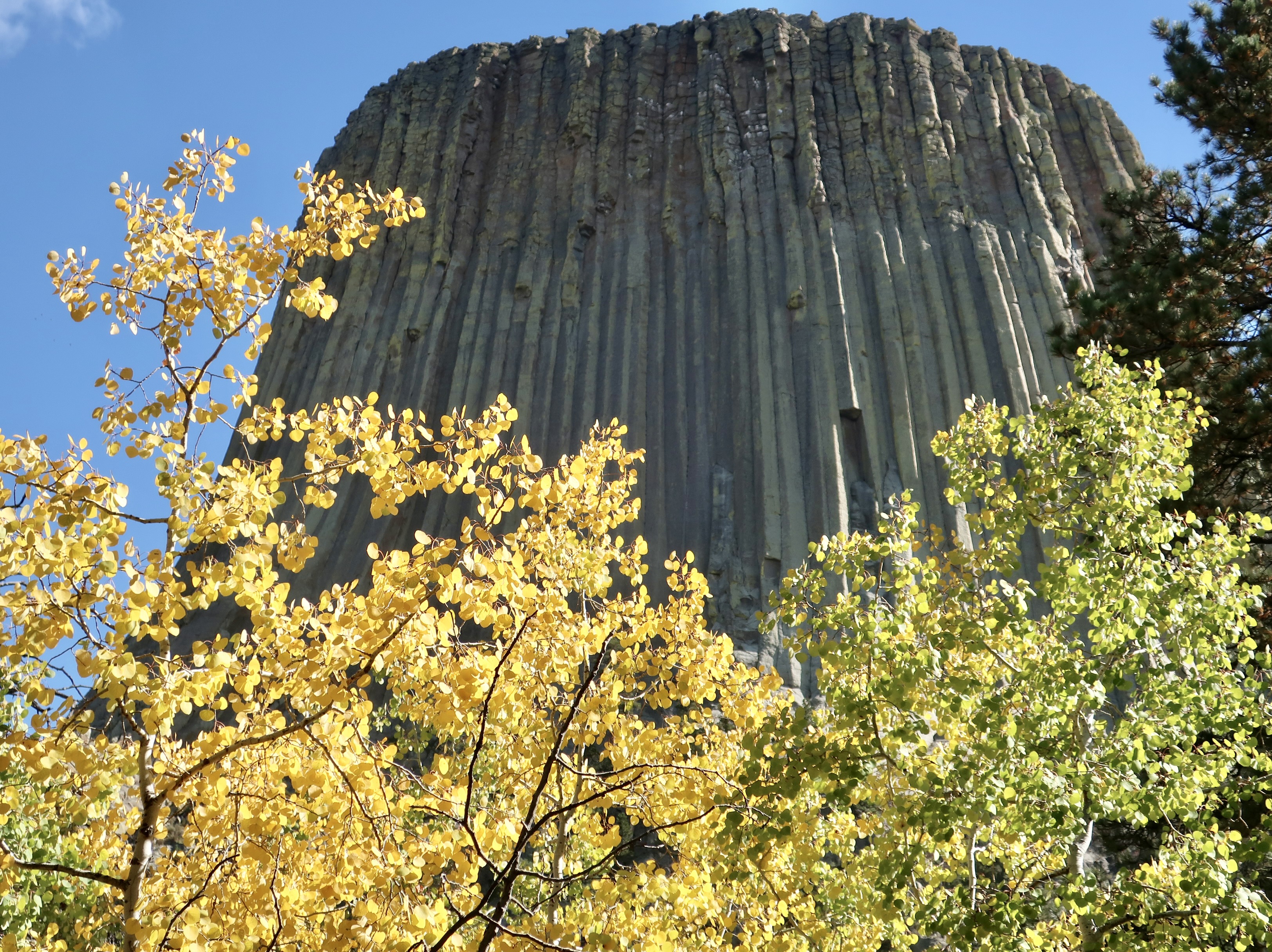
Devil’s Tower is special in a number of ways. Volcanic columns have always captured my imagination. The first I ever encountered were at Devil’s Postpile in the Eastern Sierra Nevada Mountains when I was backpacking down the John Muir Trail in the 80s. Since then, Peggy and I have seen several, including one when we recently visited Yellowstone. Most are formed when a surface flow of lava starts to cool and contract. As it contracts, it cracks into the multi-sided columns seen at both Devil’s Postpile and Devil’s Tower.
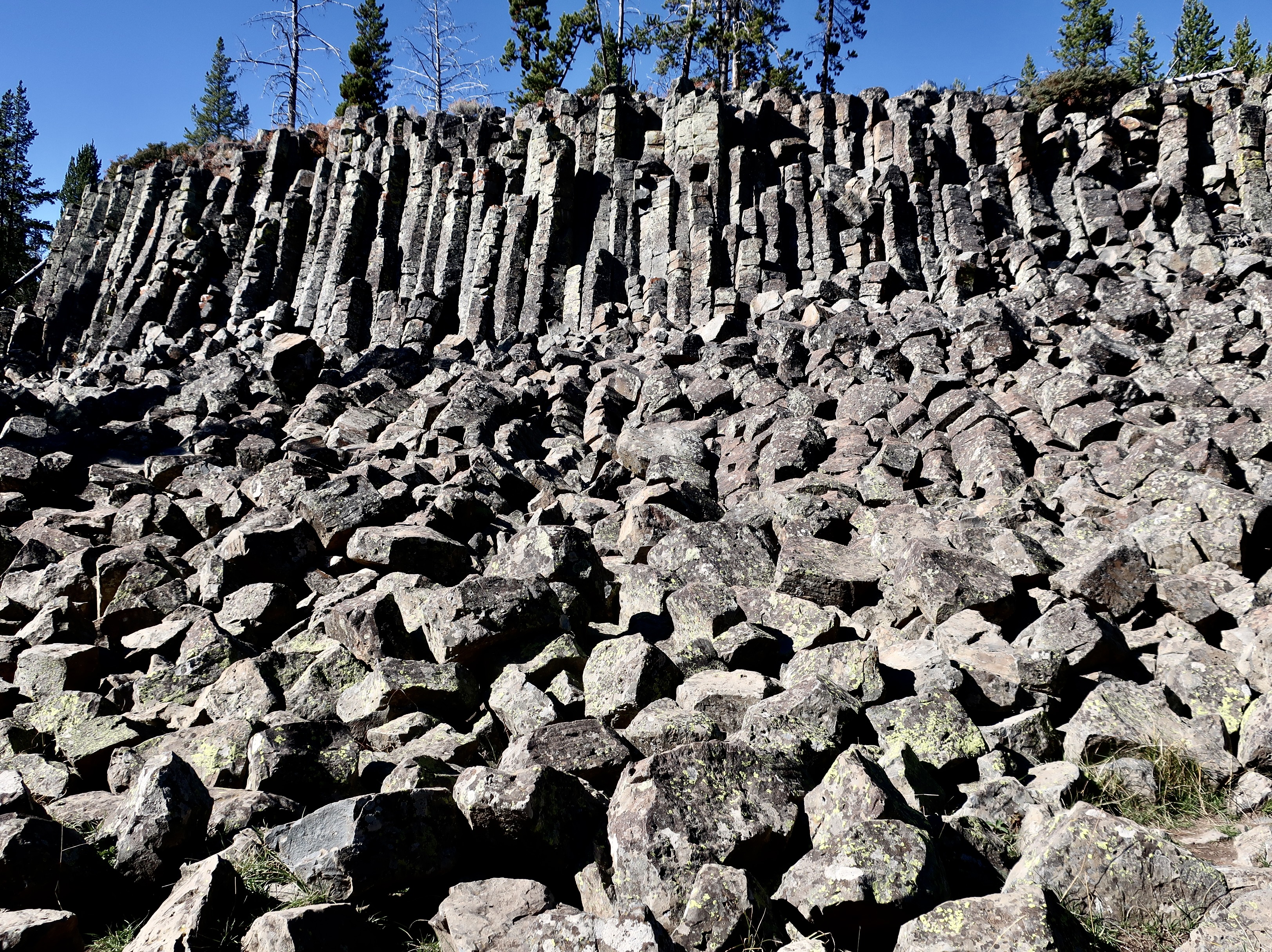
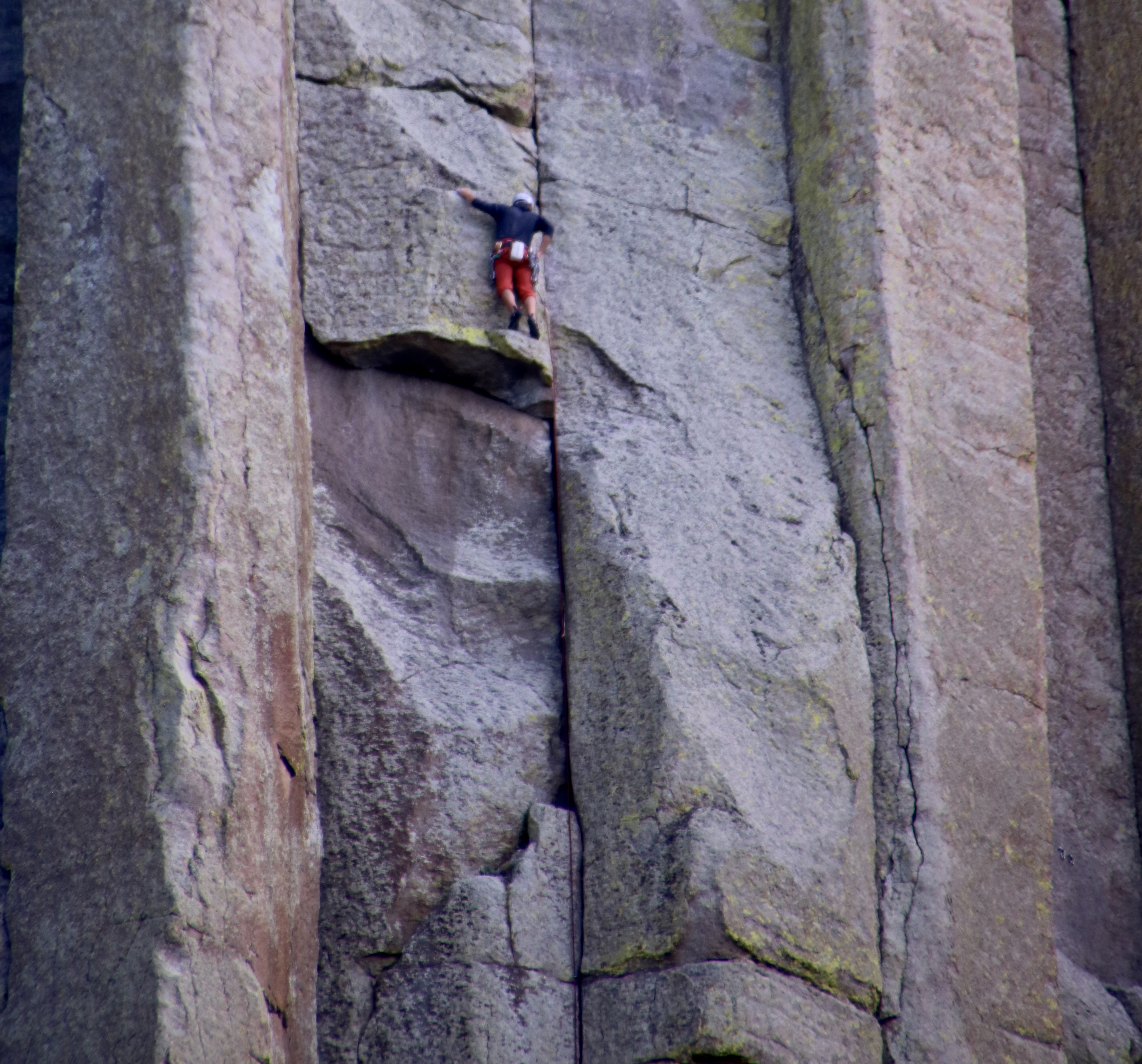
A significant difference is that Devil’s Tower was formed under the surface of the earth instead of as a volcanic flow on top. There are a couple of theories. One is that it was formed by lava forcing its way up through sedimentary rocks below the surface. The other is that it was formed as a plug in a tube that supplied lava to a volcano. In either case, the lava cooled much more slowly than it would have on the surface. The result was that the columns are both wider and longer. In fact, with widths up to 20 feet, and heights up to 600 feet, the columns are the widest and the tallest in the world. Formed approximately 50 million years ago, erosion has cut away the surrounding rock over the past several million years, exposing the edifice we see today. It’s a continuing process.
Devil’s Tower reaches 867 feet (264 meters) into the sky and is one of the most prominent landmarks in the Western US. It’s no surprise that Theodore Roosevelt declared it America’s first National Monument on September 24, 1906. Millions of visitors have since made their way to the natural wonder located in a remote section of northeastern Wyoming.
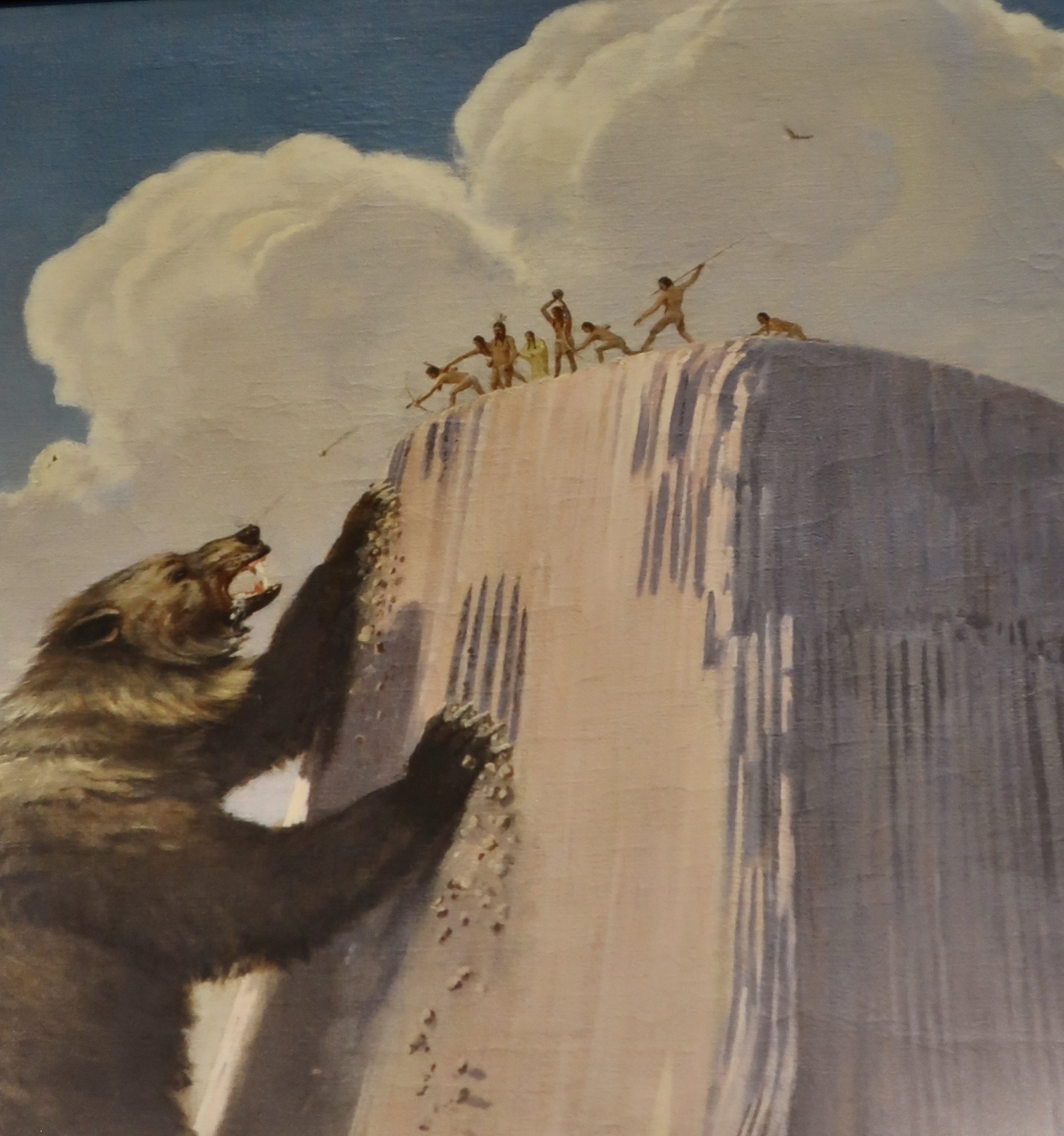
Hundreds of years before Roosevelt became one of America’s first and greatest conservationists, however, American Indian tribes in the area had already recognized how special the tower was and considered it sacred. They still do today. As Peggy and I explored the tower, we found hundreds of colorful cotton prayer flags and medicine bundles that tribal folks had tied to the limbs. Visitors are requested to honor the sacred nature of the flags and not to disturb or take photos of them.
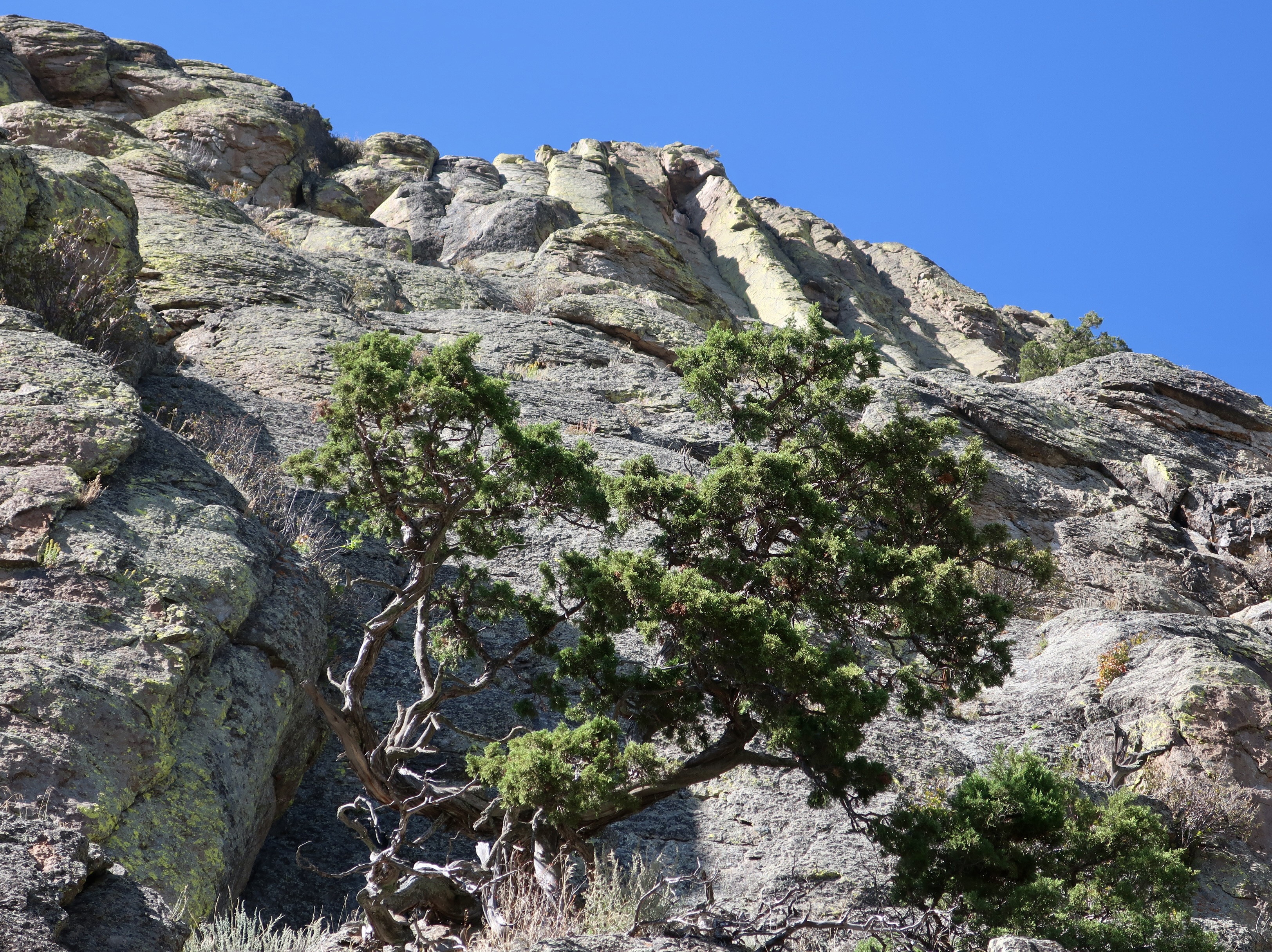
The tribes are also lobbying for a name other than Devil’s Tower, which seems entirely reasonable given their beliefs. Their consensus is Bear’s Lodge. The huge rocks that have broken off from the tower over the eons would seem to make an excellent location for bears to hang out and hibernate. Grizzlies and black bears were common in the area before being wiped out to make the world safe for cows. Local ranchers apparently had little sense of humor that bears liked an occasional beef or lamb dinner. Rare.
A number of impressive views of Devil’s Tower are available when driving into and out of the monument. We stopped several times to take photos. These are three of our favorites.
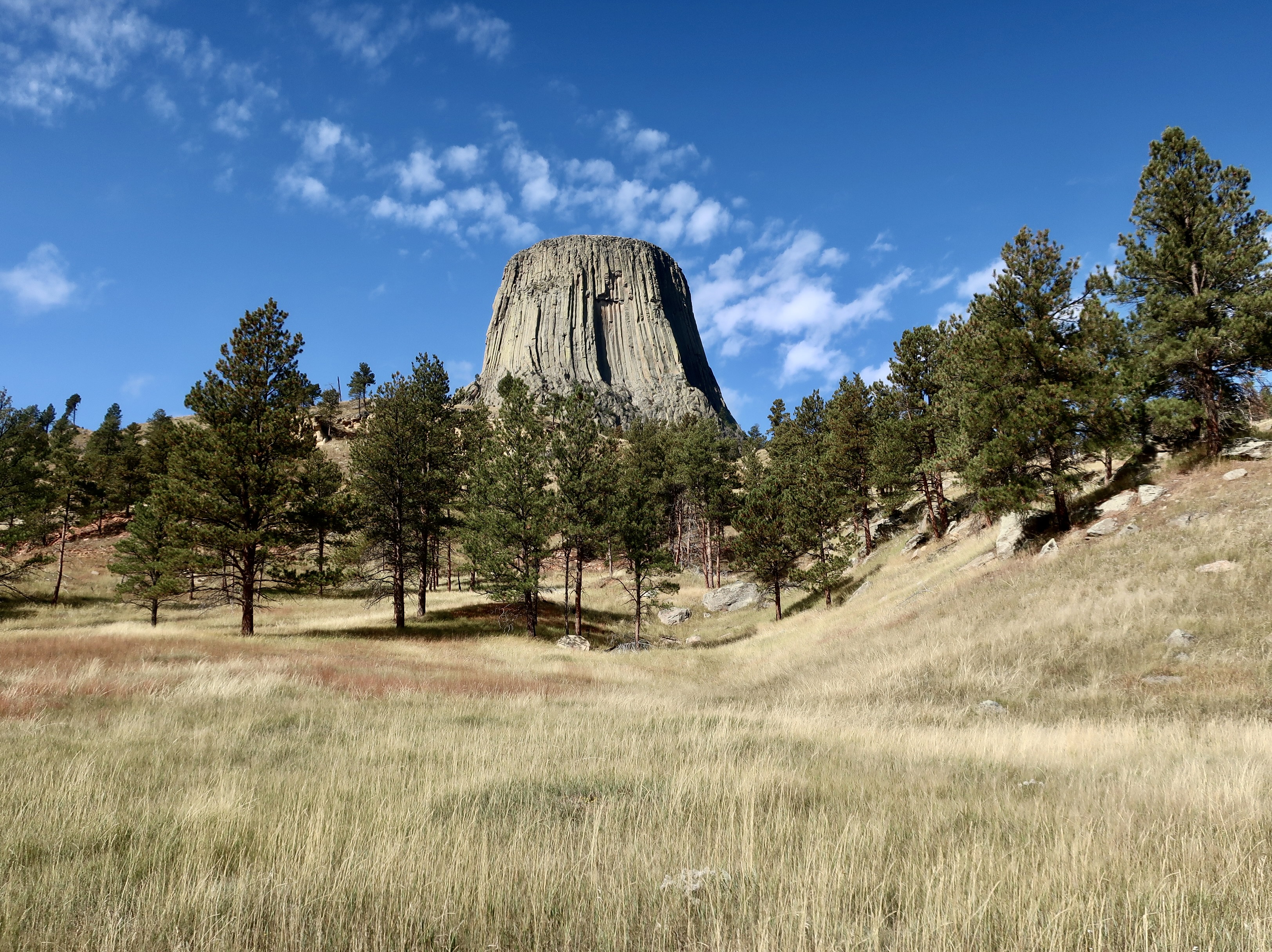
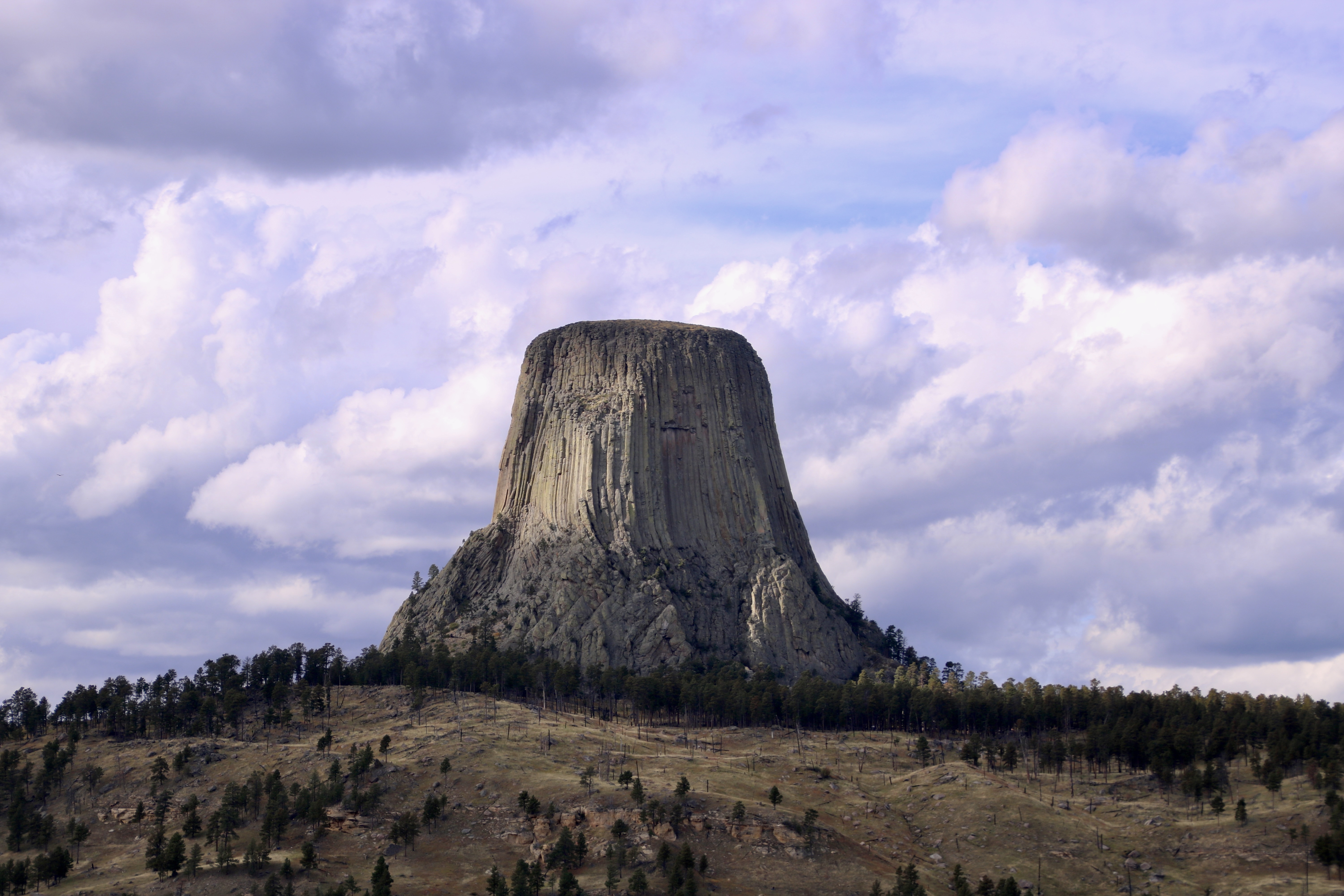
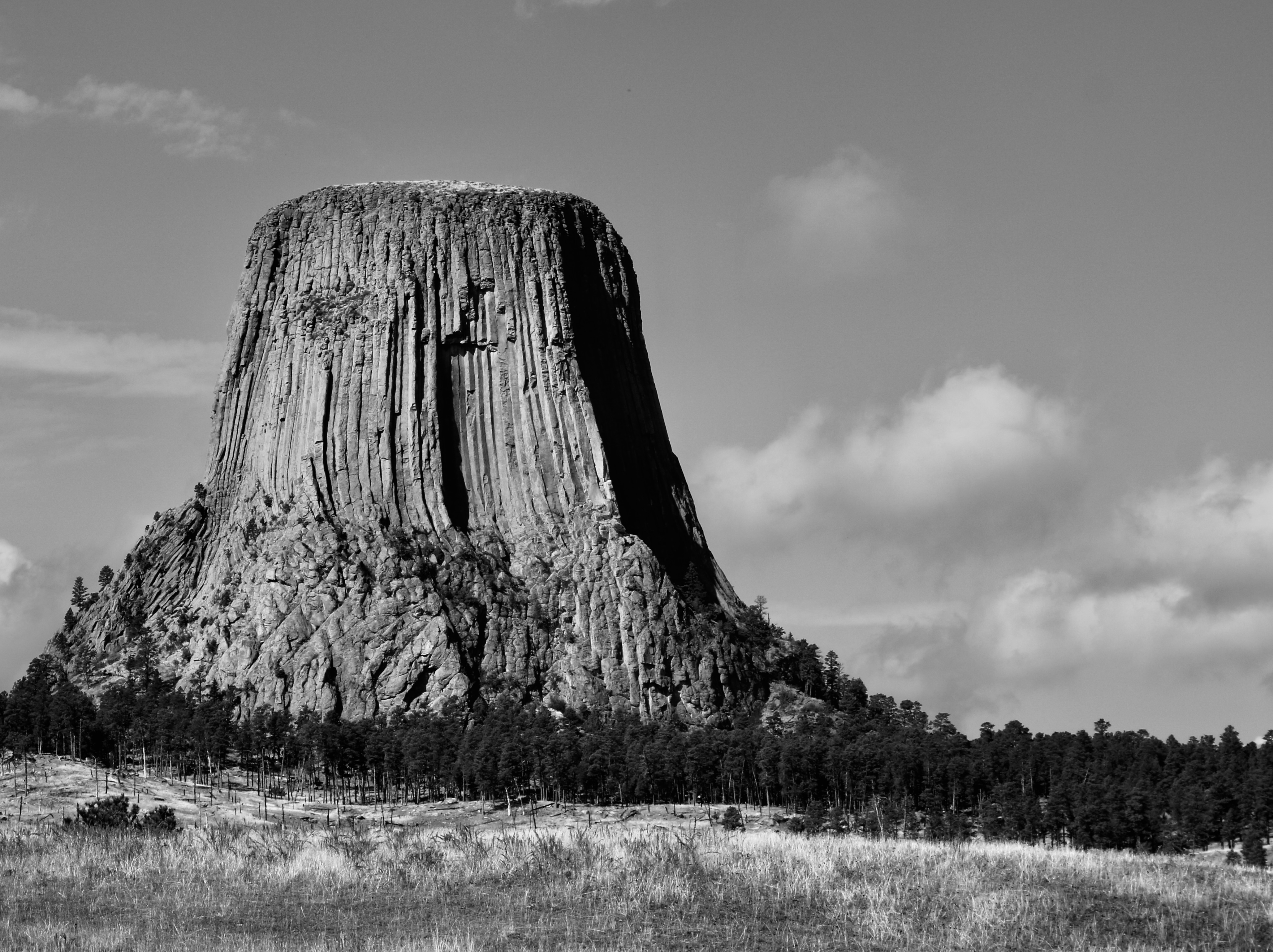
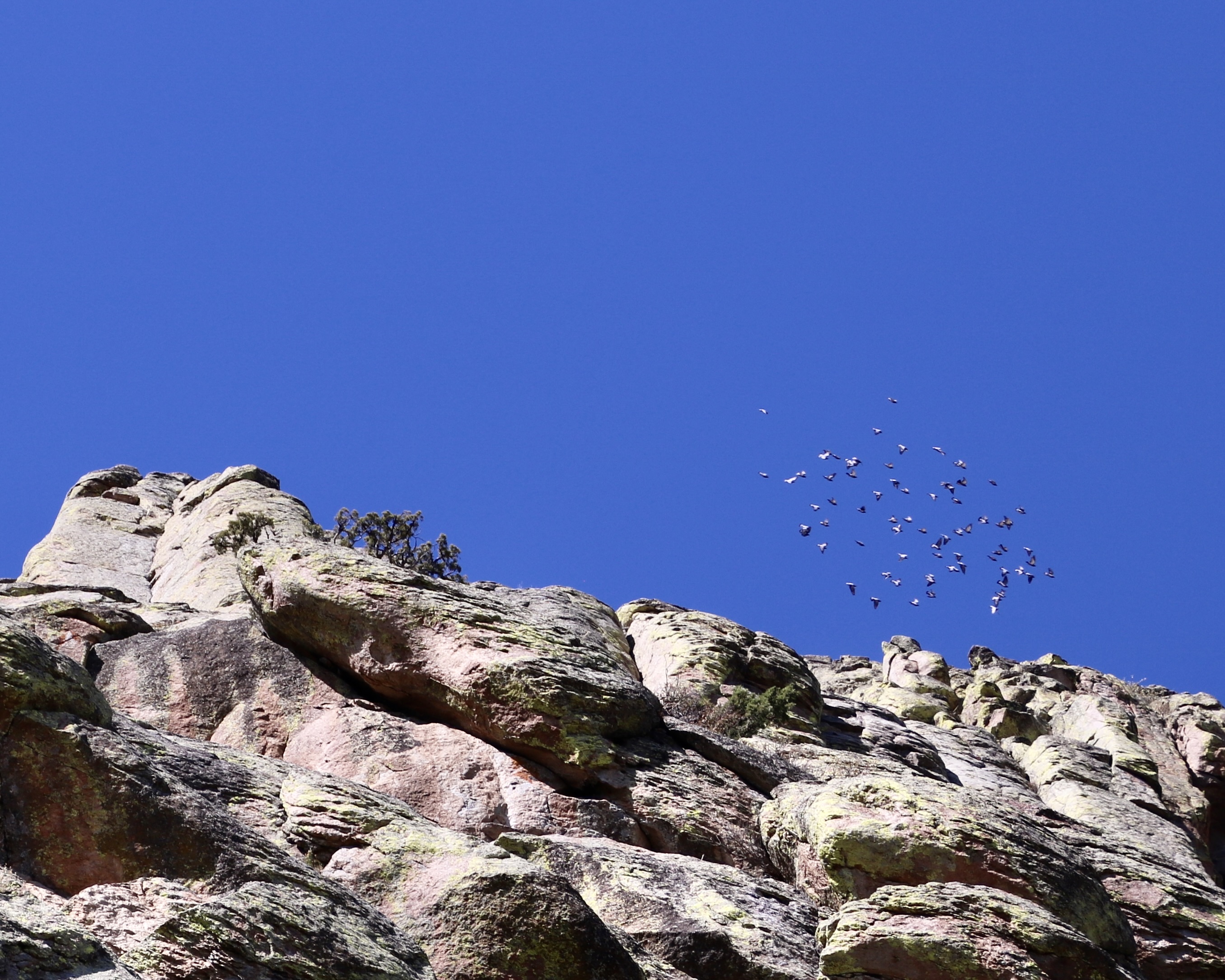
The real treat was when we arrived at the Visitors’ Center, however. After a quick perusal of the displays and books, we went for a mile walk around Devil’s Tower that starts and ends at the Center. The hike was easy and all of the views were spectacular. They varied significantly. Peggy and I urge you to go for the walk if you visit the National Monument. All the photos, BTW, are taken by Peggy and me unless otherwise noted.
Peggy and I are driving into Big Bend National Park today, which is at the very southern tip of western Texas. The last time we were here, we celebrated Christmas in 1999 as part of a year-long sabbatical we took from work to explore North America. This time we are celebrating out 30th Anniversary. Talk about an adventure! I was on the edge of turning 50 and Peggy was 42 when we were married in 1992. We’ve had an incredible life together, and, amazing to both of us, we are still out wandering the world. We will be off the grid for at least part of this trip. See you next week. And thanks for visiting.

Peggy and I want to wish you and your families a Happy Thanksgiving. Enjoy your day!
The card is from a series of Christmas, Thanksgiving and Birthday cards I created and copyrighted a while back. I’ll introduce you to the self-stuffing turkey at Christmas. Grin.
First, let me note that the two aren’t related. Scary is not a synonym I would use to describe our blogging friends. Adventuresome, fun loving, good people and friends are the words I would choose. I have been both surprised— and grateful— for the friendships Peggy and I have developed online during my 12 years of blogging. Over the past two weeks we visited with three that I will feature today: Alison and Don Armstrong from British Columbia and Crystal Trulove from Oregon.
HAPPY HALLOWEEN
It is Halloween, however. It is only right that I recognize the day with ‘scary’ photos Peggy and I have taken over our past two months as we’ve wandered across North America.


BLOGGING FRIENDS
No tricks here, it was all treats as we met up with blogging friend last week…


OTHER FRIENDS
The Northwest is a great place to live. Not surprisingly, we visited with other friends over the past couple of weeks (and still are) who live in Washington and Oregon. So far this has included:

Our niece, Christina, and her two beautiful dogs, Zoe, the princess on the left, and Bella, the empress dowager, on the right. Christina, in addition to being a relative, is a good friend, so good that she zipped down from her home in Tumwater, Washington to help us pack when we were moving from Oregon to Virginia.


Zoe is more than willing to join in, or even lead in barking, but she is more interested in having her ball thrown. This is her, “Get with it; throw my ball,” look.


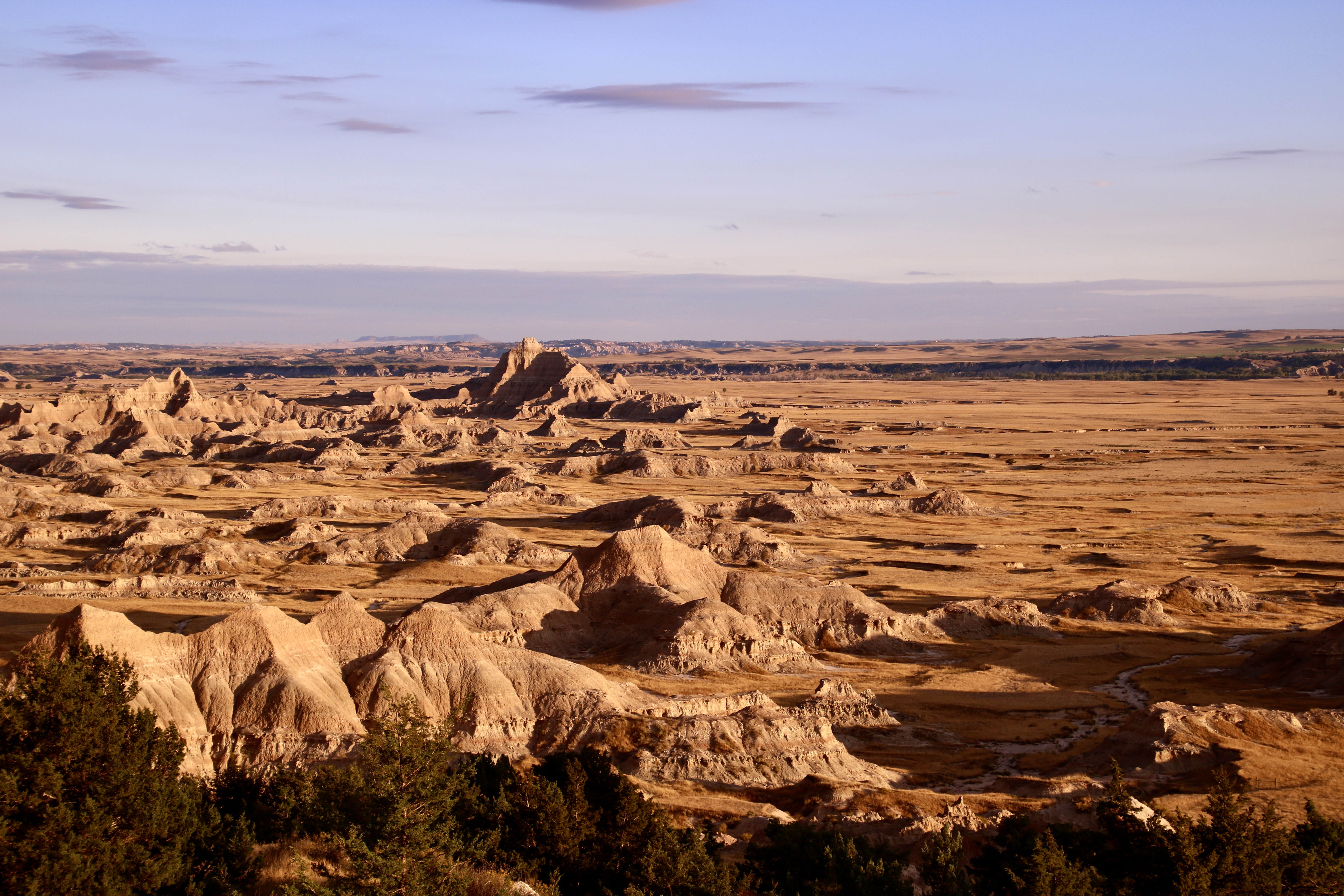
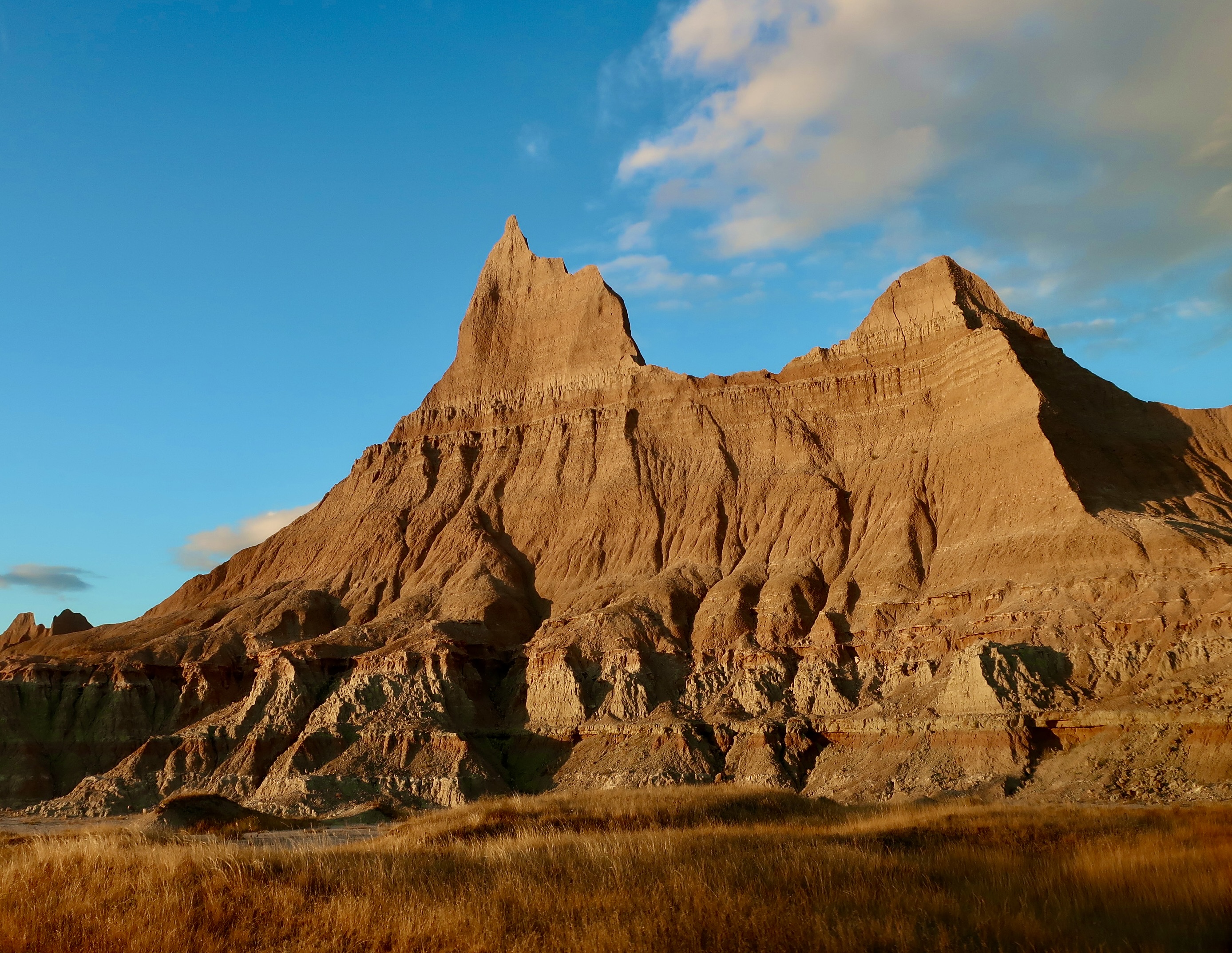
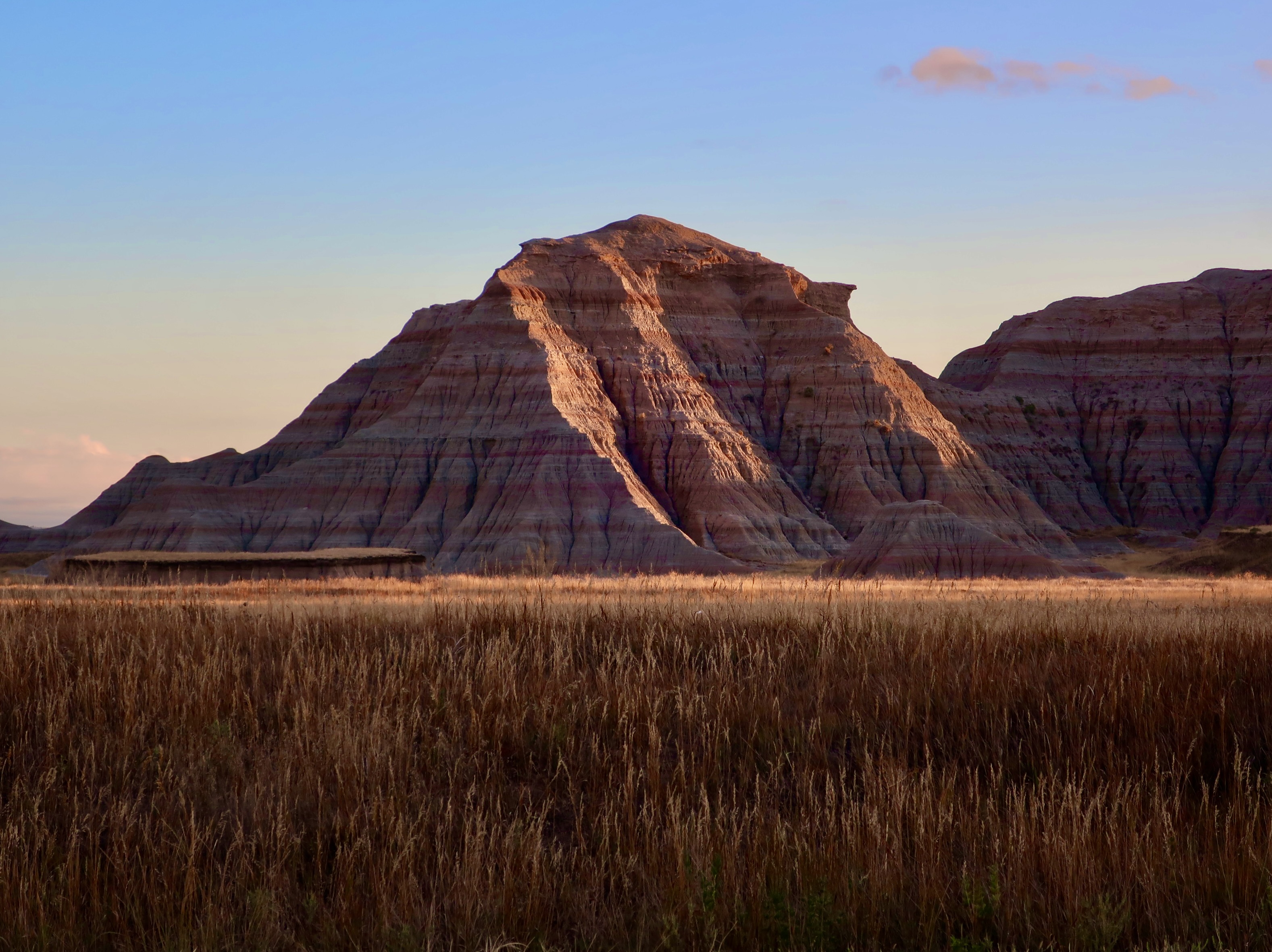
I was cooking beef pot-roast in our insta-pot and time was running out. I had miscalculate the time it would take and we were going to miss the Badlands at sunset. “Go ahead,” Peggy told me. She knew how much I wanted to catch the colors. “I’ll finish up here. We can eat when you get back.” My sweetie didn’t have to offer twice. I was out the door and into the truck. The sunset was quite impressive and the food tasted delicious when I returned. Following are some of the photos I took. Enjoy.





Next week we will be returning to our summer trip up the Rhine River. Please join Peggy and me along with our kids and grandkids as we explore the Rhine, castles, colorful towns, the Black Forest and a couple of impressive cities.
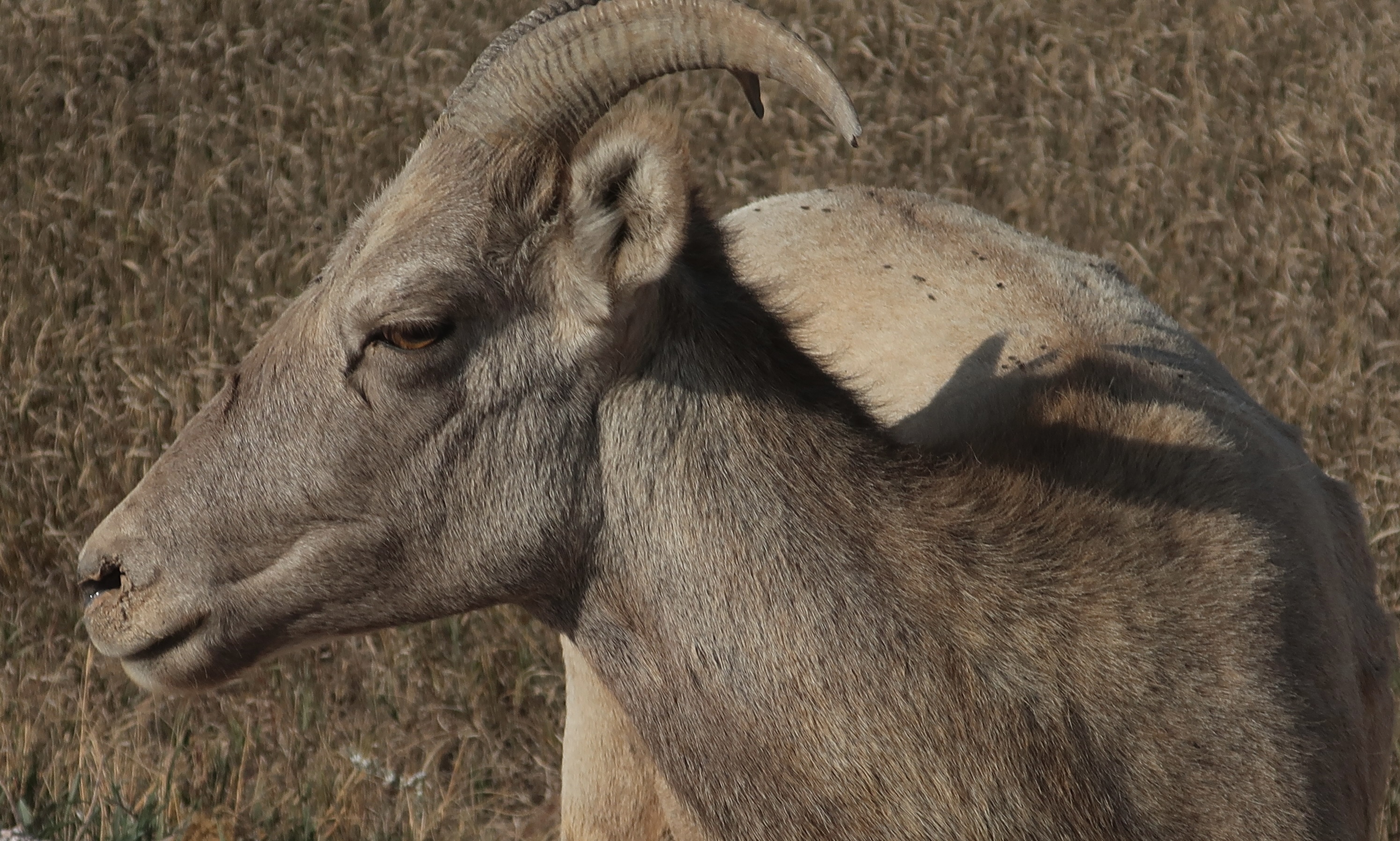
Sage Road in Badlands National Park is known for its easily accessible wildlife population. We drove out it during our recent stay near the Badlands to see what we could find. This fellow, along with a few other bighorn sheep, was hanging out along side the gravel road. Its look seemed to say, “Don’t mess with me.” Big horn sheep were first re-introduced to the Park 1922 with more being added later. The park’s herd now numbers near 250.


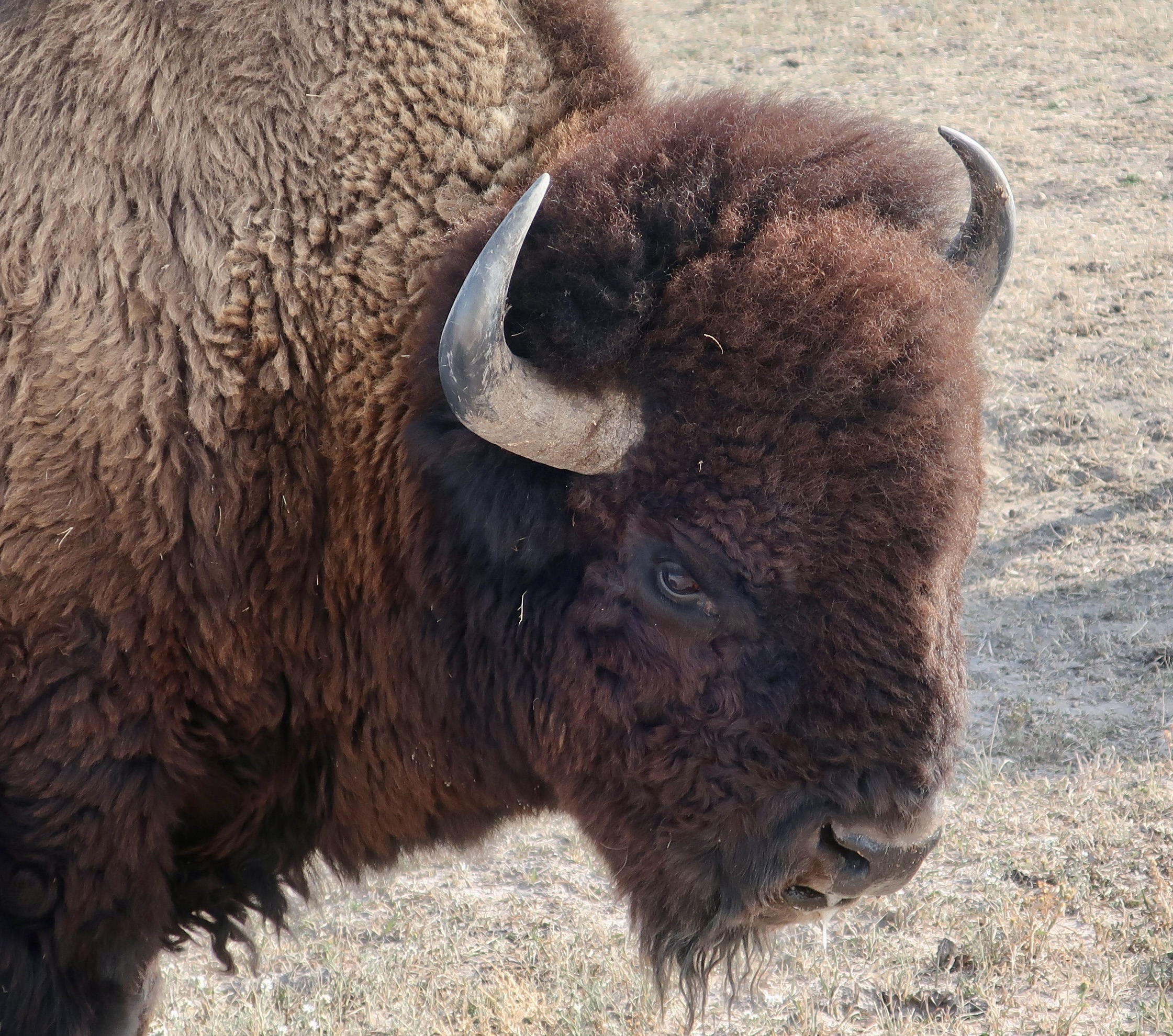
We also found a few buffalo along the way. The National Park website, which is where I found the details on the wildlife included in today’s post, gives the buffalo’s scientific name as Bison, bison, bison, i.e. they are of the genus Bison, of the species bison, and the subspecies bison. Buffalo was derived from the French “bœuf,” meaning buffalo, and given to the large creatures by early French fur trappers. The Lakota name for bison is tatanka. Bison were incredibly important to the Lakota and other Native Americans of the Great Plains who carefully used every part of the buffalo they killed. An estimated 30 million roamed the area prior to the arrival of Euro-Americans who hunted the buffalo almost to extinction for their hides and tongues. An even darker reason is given for the slaughter: The US government wanted to disrupt the Indigenous people’s way of life to make way for the Euro-Americans. One way of doing this was killing off the vast herds of buffalo that the natives depended on to live.

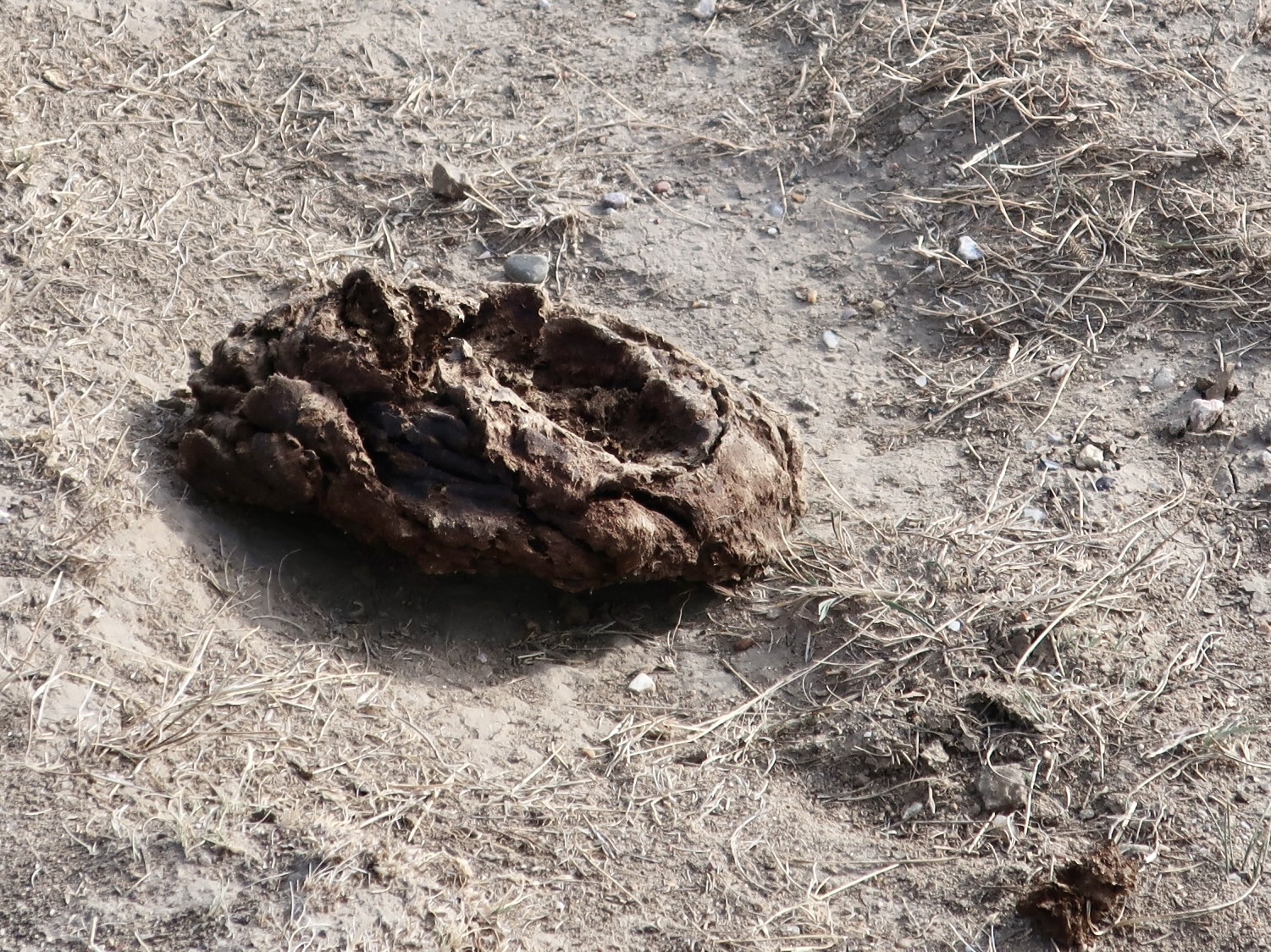
It’s Fat Bear Week, as anybody who hangs out in social media is probably aware. The prairie dogs of the Badlands want you to know that they consider it discrimination that there is no Fat Prairie Dog Week. When their size is taken into consideration, they are willing to take on any bear when it comes to putting on the pounds/ounces!

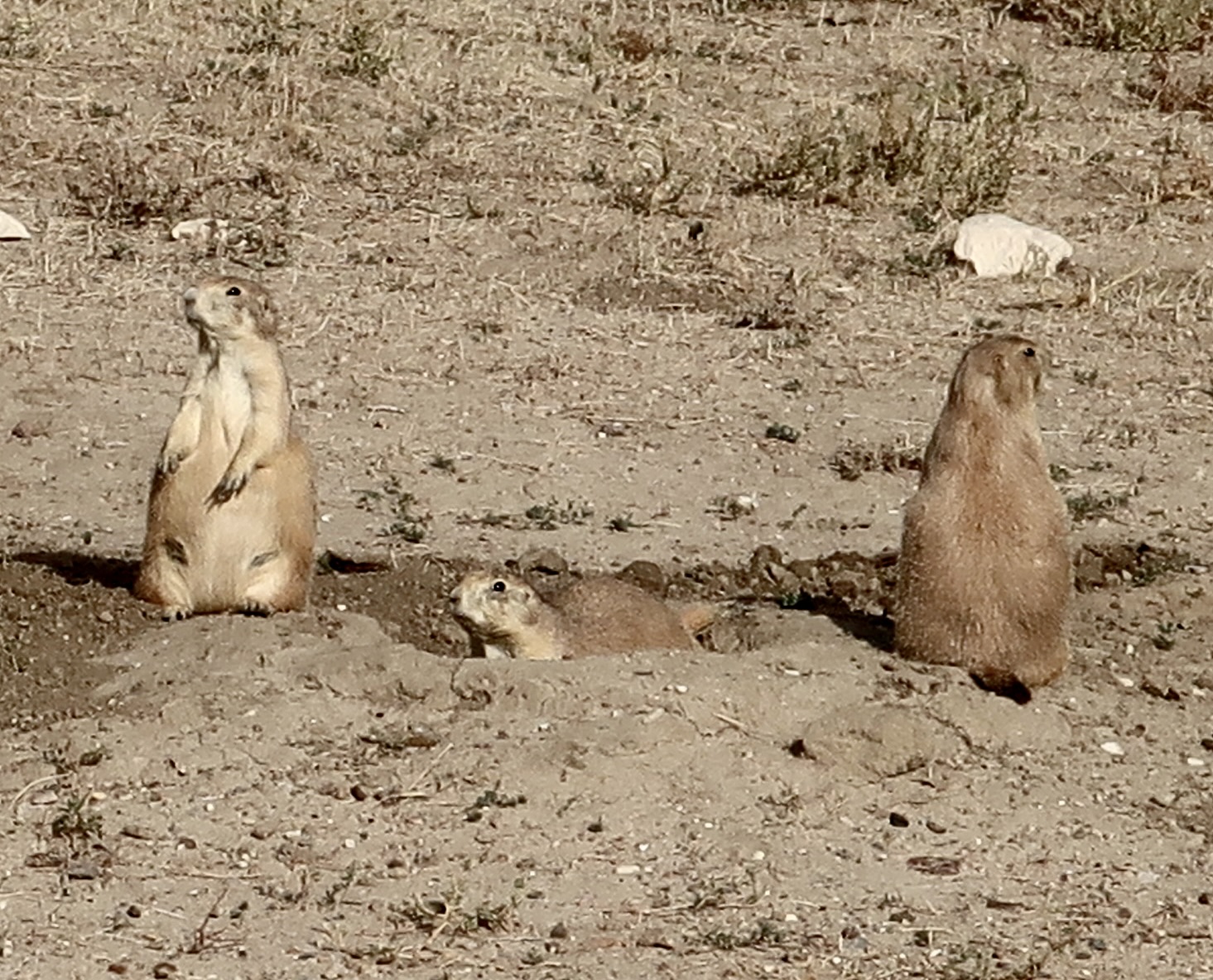
There is a Prairie Dog Town located along Sage Road. Park publicity and a pull-off guarantees that tourists will arrive in significant numbers to capture photos of the fat, furry squirrels. Sharp whistles warn of the two legged visitors. Here’s a fascinating fact that I read on the Badlands NP website: An estimated 5 billion prairie dogs once lived on the Great Plains in their underground boroughs. The largest of their historic towns has been estimated to cover over 25,000 square miles (64,749 kilometers)! For perspective, that’s larger than West Virginia and 9 other smaller states in the US or Croatia and 23 other smaller countries in Europe.
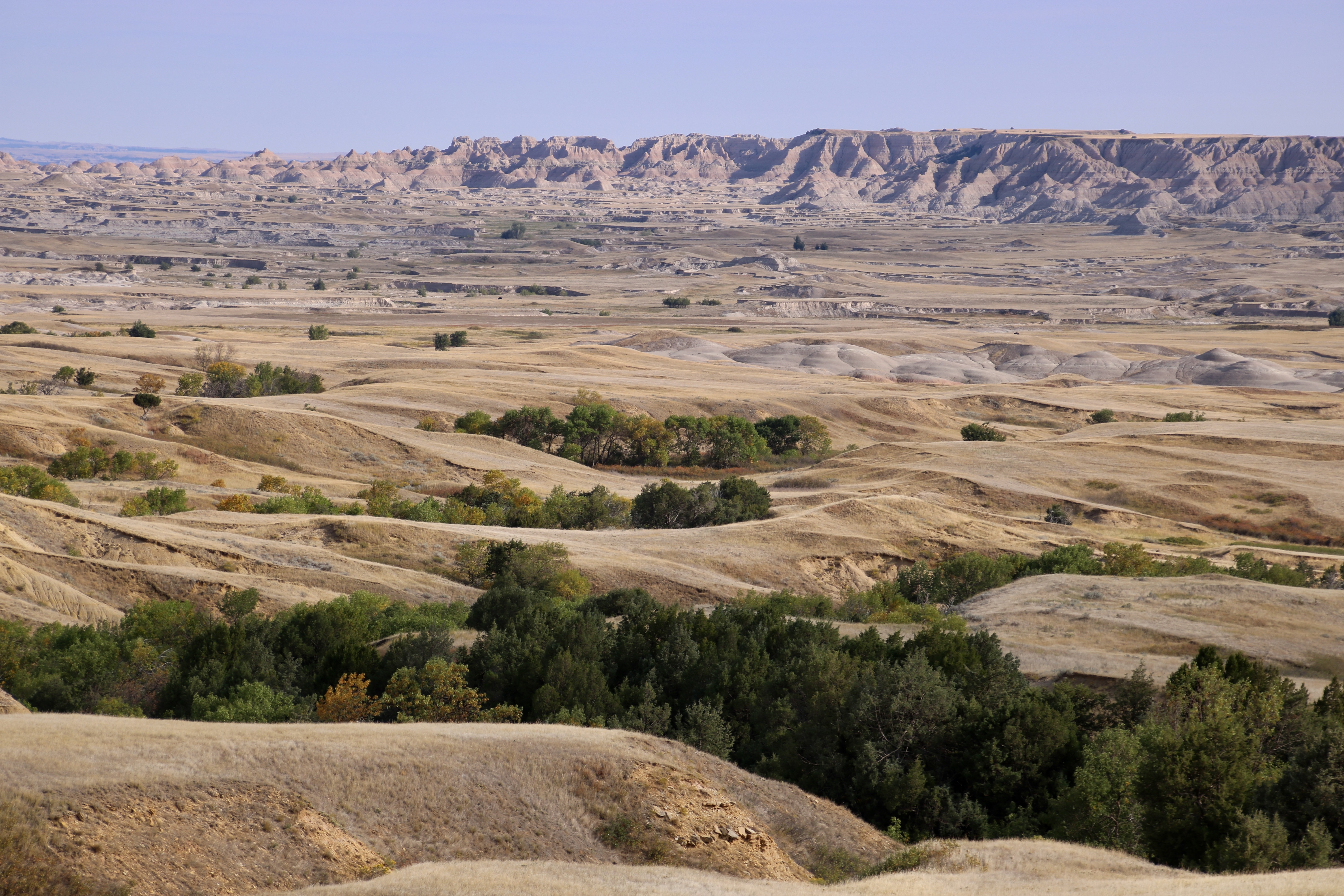
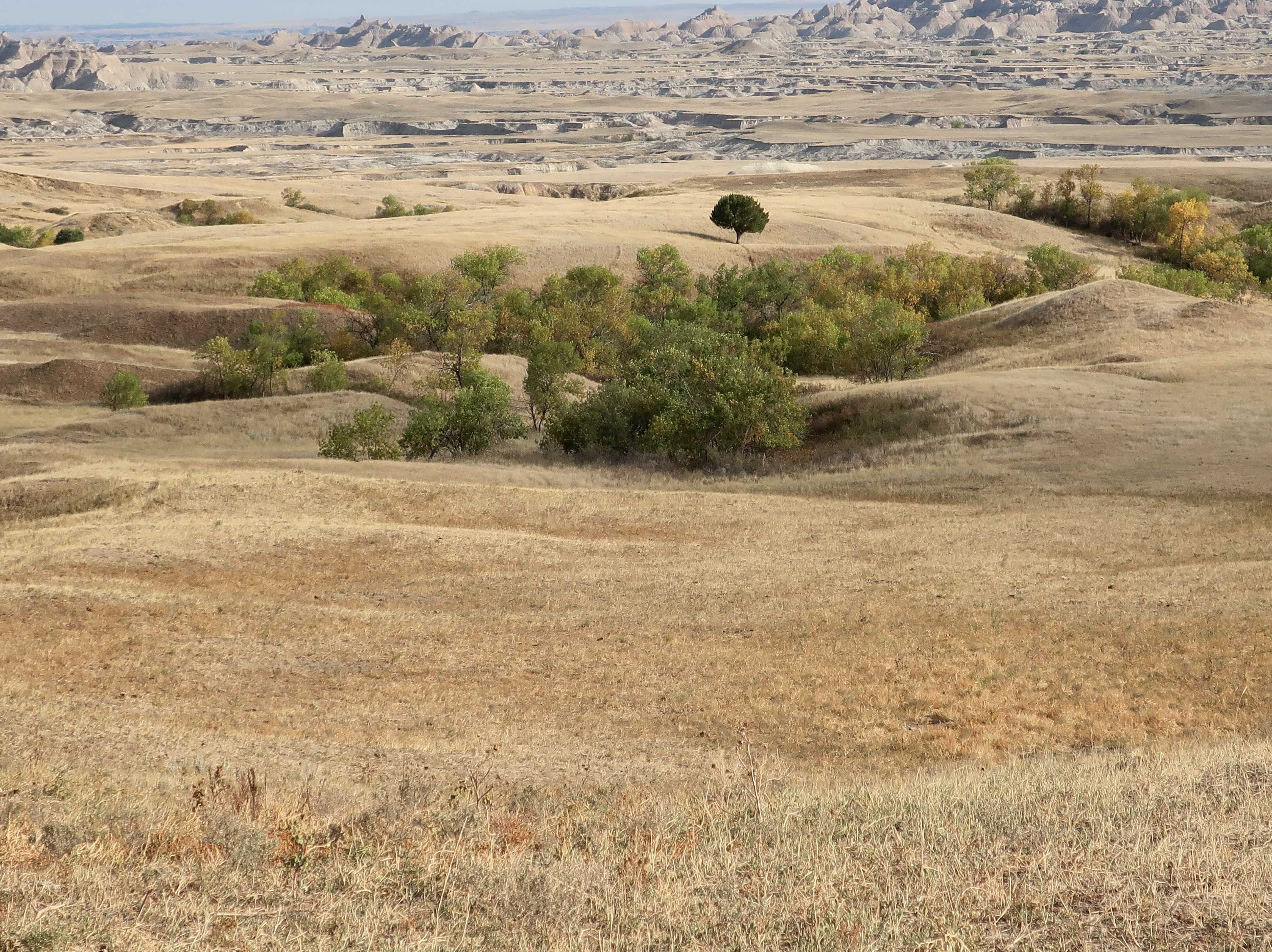
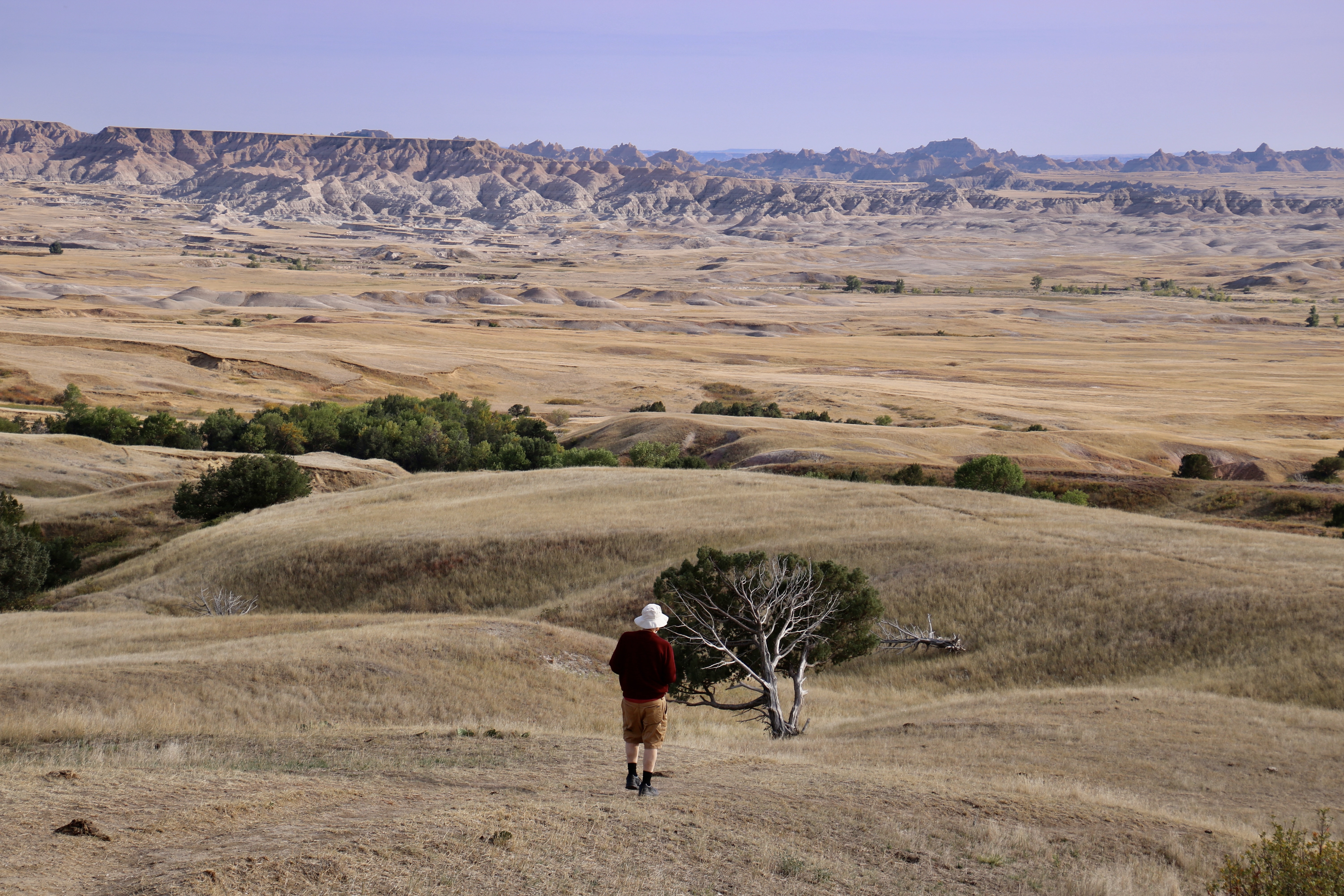
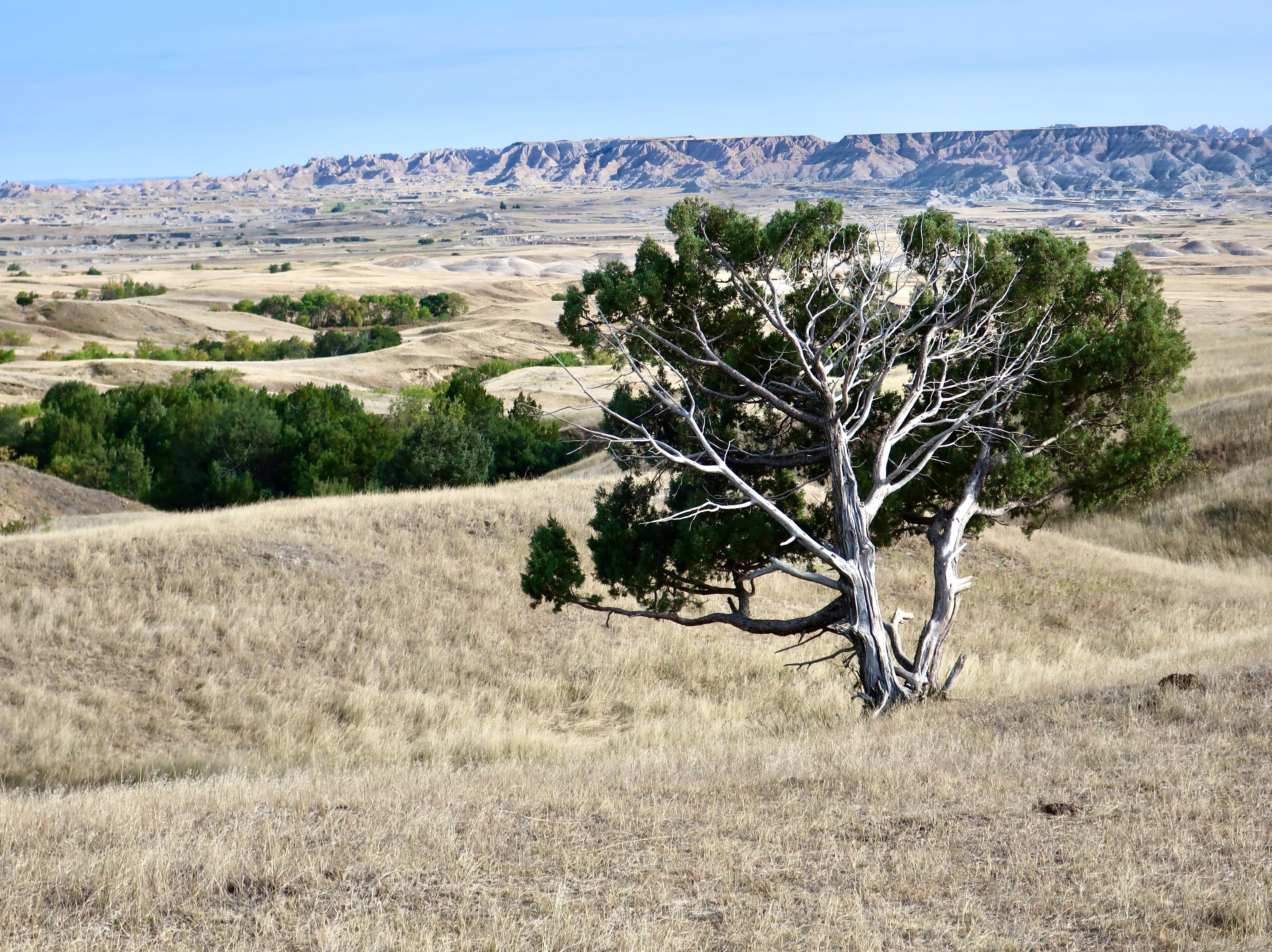
Beyond wildlife, Sage Road shows a different type of beauty than that found along the Loop Road, which runs along the Wall and through the badlands seen in the distance.