Visiting Grand Canyon National Park by Car, Mule and Helicopter

Grand Canyon National Park is one of the world’s greatest natural wonders.

“Golly, what a gully,” President William Howard Taft was heard to mutter when he first saw the Grand Canyon.

Teddy Roosevelt was more profound: “Leave it as it is. You cannot improve on it. The ages have been at work on it, and man can only mar it.”

Both of these thoughts are rumbling through my brain as I think about the 18 days Peggy and I are about to spend rafting 280 miles down the Colorado River.

Few people come away from the Grand Canyon untouched and we are no exception. Its vastness, beauty, and geology have pulled us back time and again, as have its natural and cultural history.

There are many ways to explore the Canyon. For the vast majority of people, some five million a year, this involves a drive up to the South Rim and a quick tour of the most popular overlooks. If that is all the time you have, it’s worth the journey, believe me.
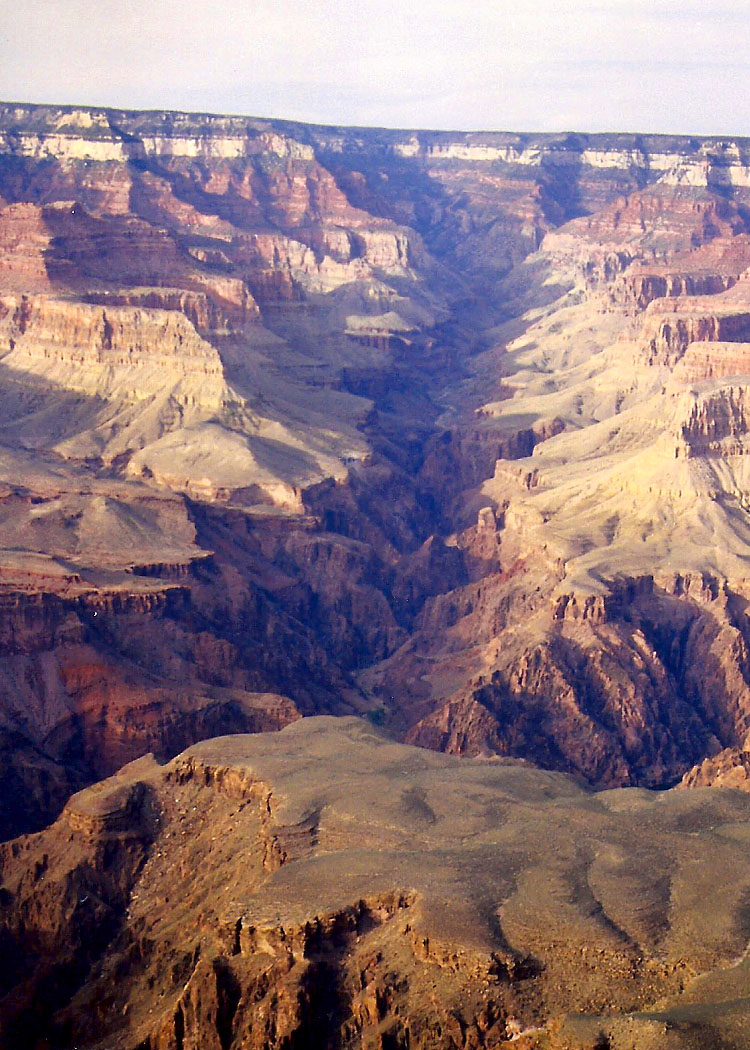
Numerous overlooks along the South Rim provide breathtaking views into the Canyon. This a view up Bright Angel Canyon. North Rim, also worth a journey, is at the top. You can hike from South Rim to North Rim, which I have.

Sitting on the edge for an hour or two enhances the experience several times over. Hanging out on the rim for a few days while roughing it at a campground or luxuriating in one of the lodges, is even better.

I once spent a pleasant night in the El Tovar Lodge courtesy of Nancy Reagan. Snow forced her and her large entourage to cancel a visit there in November 2001. Peggy, the kids, and I were camping out in a large tent at the Park’s Mather Campground. The foot of snow on our tent and 18 degrees F temperature had provided us with more than enough “roughing it.” We gladly took advantage of Nancy’s misfortune and the discounted vacant rooms.

For those wanting for a bird’s eye view, a helicopter trip is a tempting option. After three tours of duty in Iraq flying helicopters for the Marines and being shot at, our son Tony decided to try his hand at flying tourists over the Grand Canyon. He took Peggy and me on a thrilling ride into Havasupai Canyon… to the music from Star Wars, if I recall correctly. (Tony now flies helicopters for the Coast Guard out of Kodiak, Alaska.)

Beyond these sedentary approaches to the Canyon lie more challenging adventures. Even a half hour hike down one of the more popular trails provides a trip through millions of years of history, incredible views and the heart-pounding thought that only a few feet separate you from a thousand foot tumble.
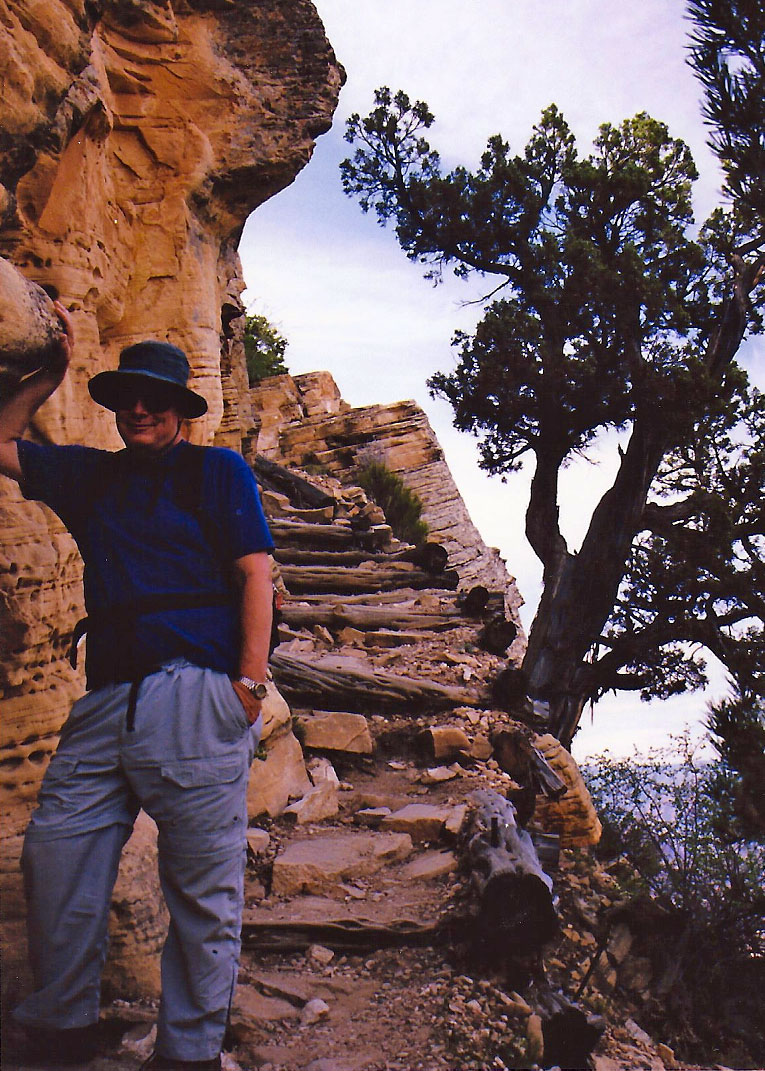
There are several trails down into the Canyon with Bright Angel and Kaibab being the most popular and the ones recommended by the Park Service. I prefer less travelled, mule free trails. But it also means the trails are less maintained.

Longer hikes and especially backpacking trips provide a perspective that only a small percentage of Canyon visitors ever have.

If you want to visit the inner canyon but fear you’re lifetime warranty will expire hiking out, check out the sure-footed mules that carry tourists in and out of the Canyon. It’s an experience your rear will remember for years. Mine did.
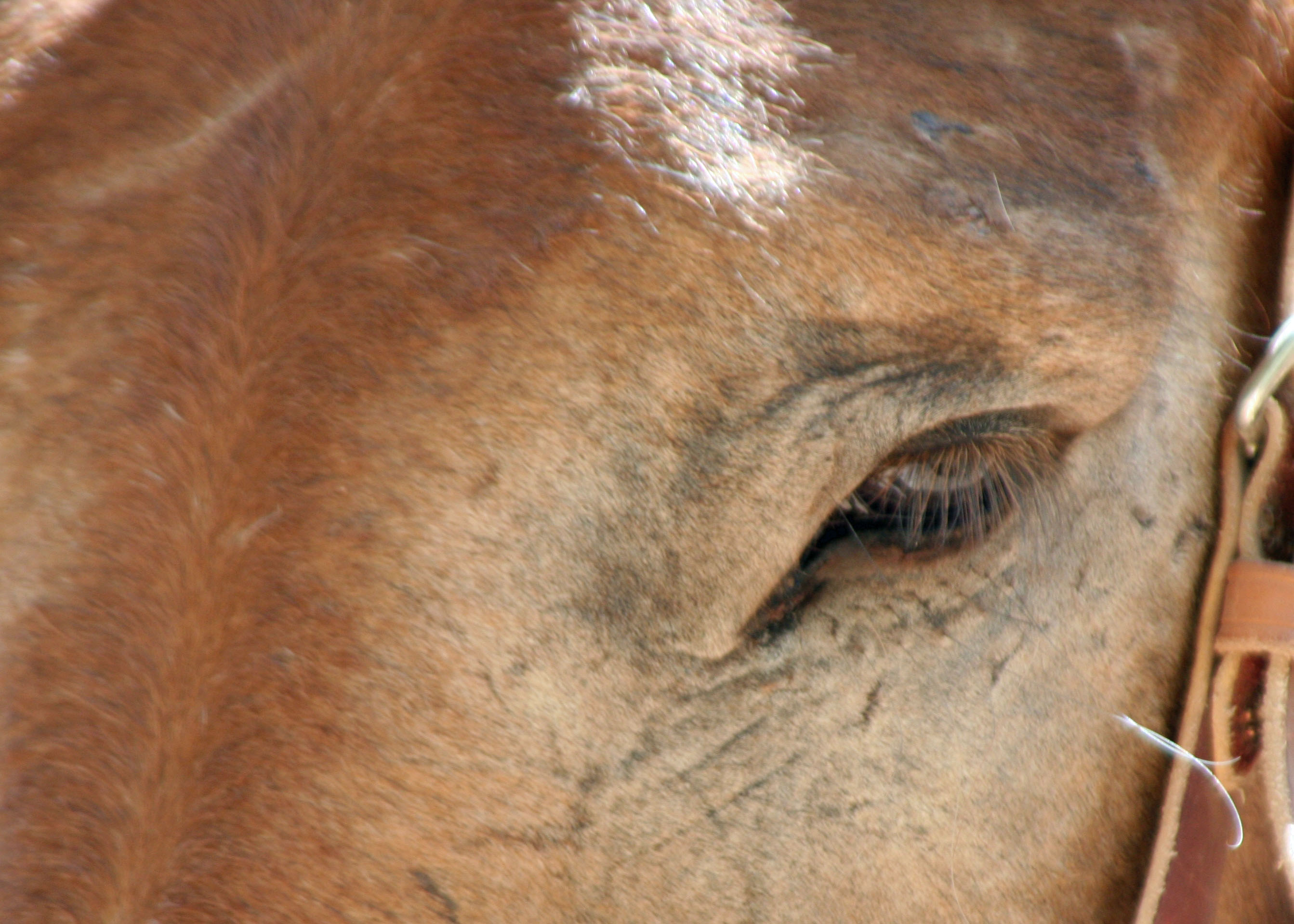
Don’t you dare climb on my back.

Charlie, that was the mule’s name, did not like me. There was a 200-pound weight limit and I was at 195. I wore light tennis shoes and clothes to the weigh-in and hit 199. I wore my backpacking shoes on the trip; it pushed me over the limit.

Charlie knew I was cheating. He immediately whipped his head around and tried to bite me. Failing that, he walked as close to the edge as he could and provided me with a front-row seat of my ultimate demise. Only my knowledge that mules don’t commit suicide kept me in the saddle.

My most challenging journeys have been six backpack trips into the Canyon, including a week alone. I will feature that particular misadventure in my next blog. But, in the mean time, here are more photos from the Rim.

I rolled my window down to photo this Mule Deer and she tried to stick her nose in my window. There are reasons for all of the signs that urge “Don’t Feed the Wildlife.”
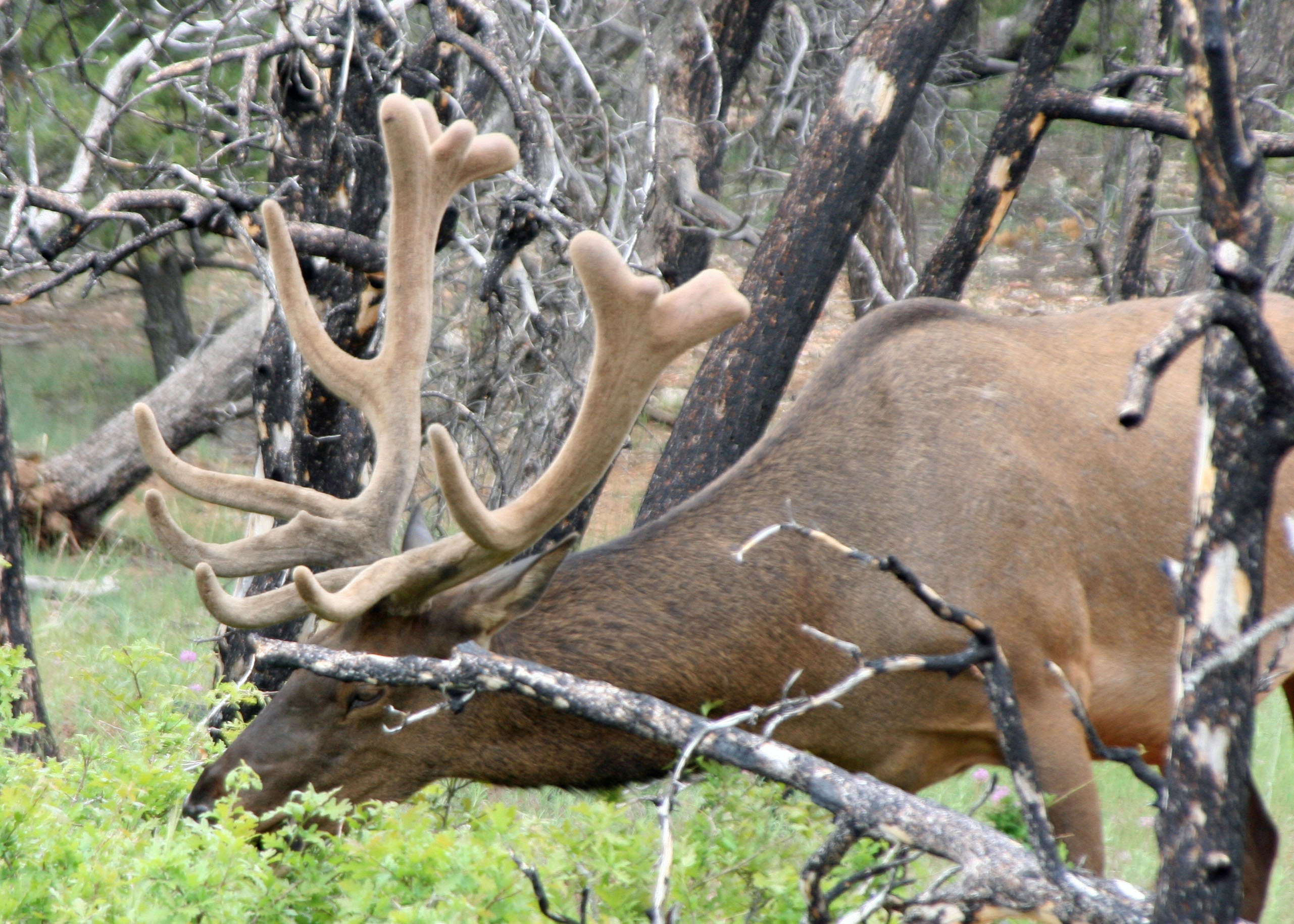
This elk was a magnificent fellow but he wouldn’t come out in the open for me.

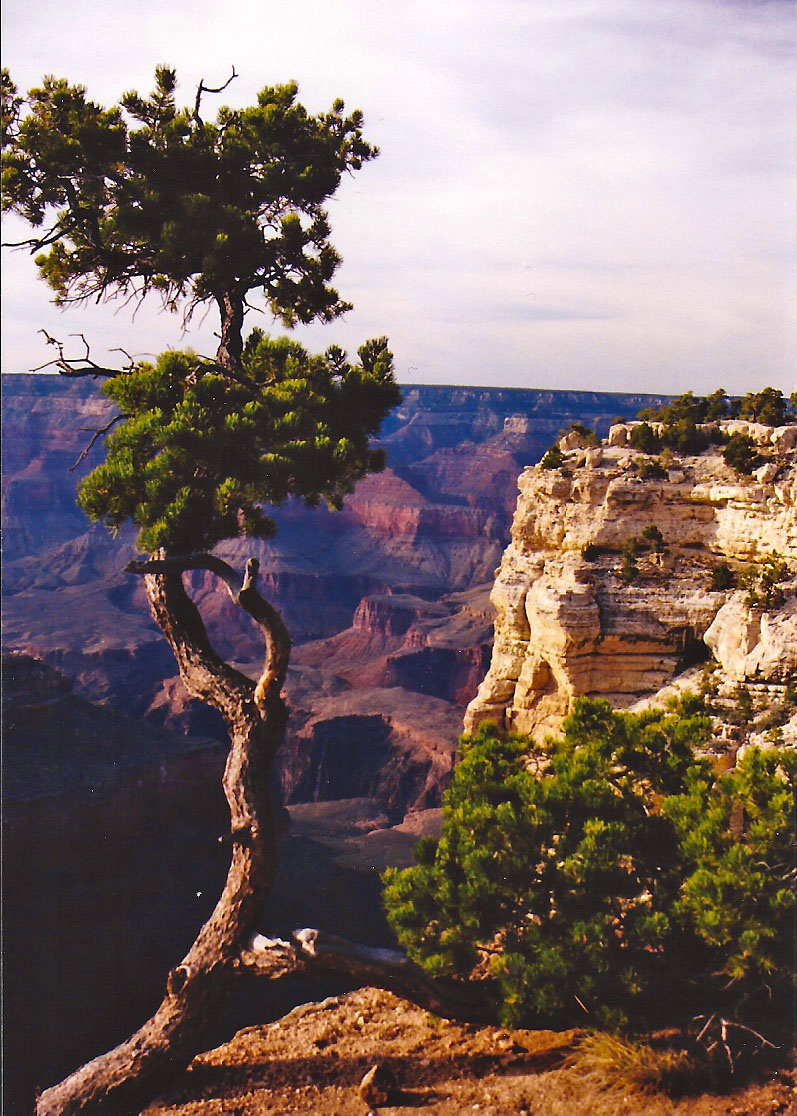
More views to encourage a visit to the Grand Canyon.
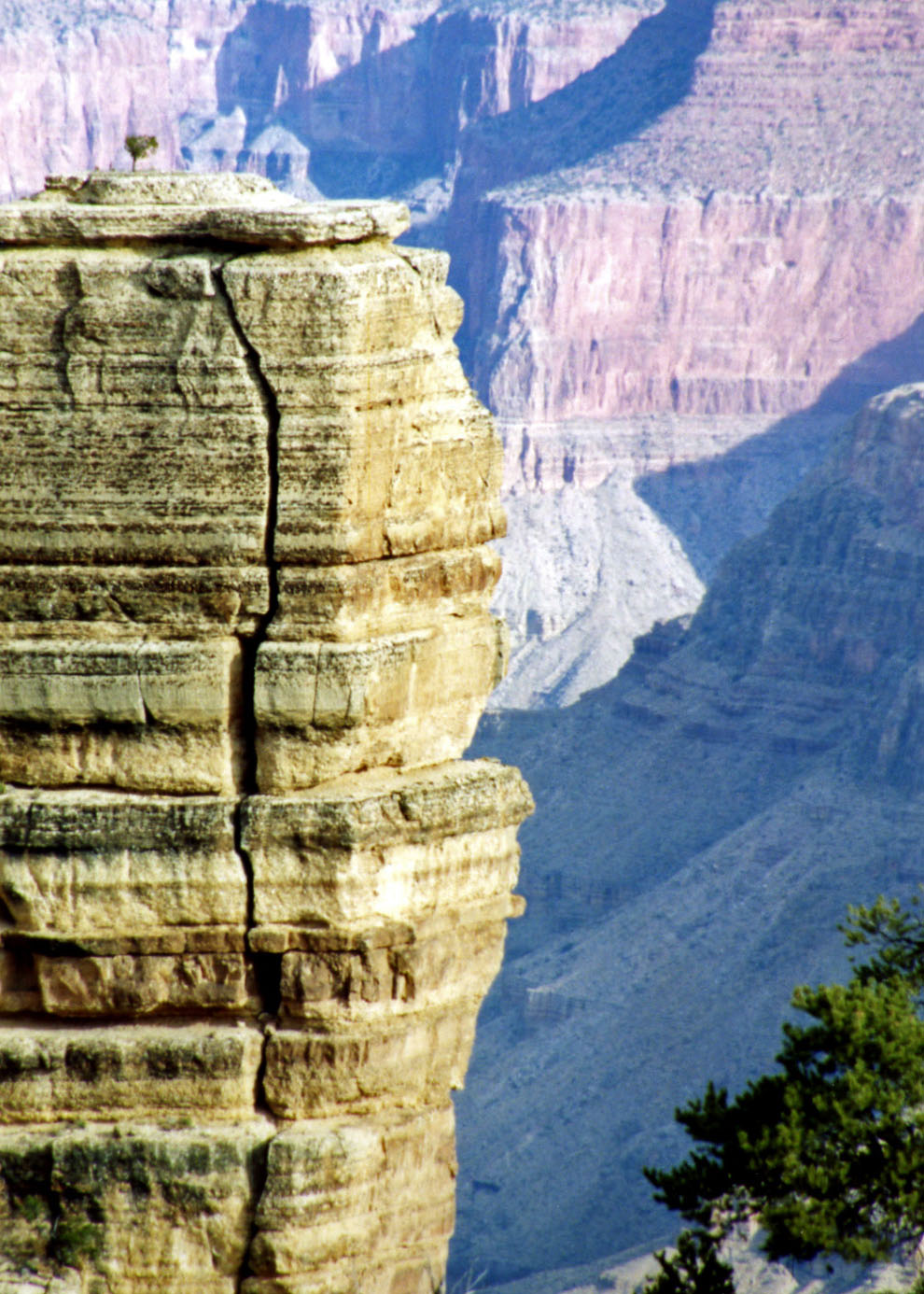
Early morning and late afternoon sun provide the best colors. Time your visit to include both if you can.

Another view looking down that demonstrates the rich colors.
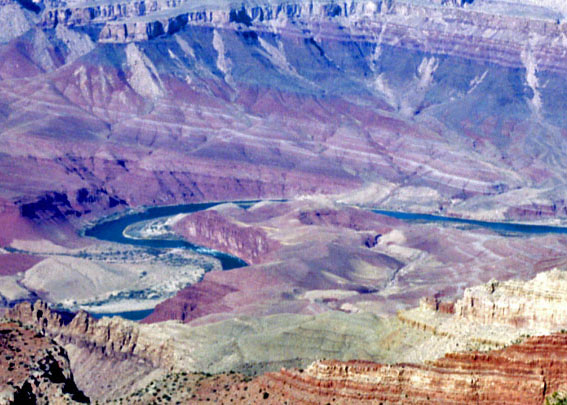
I’ll be backpacking into the heart of the Grand Canyon down the Tanner Trail in my next blog. A  Sierra Club member insisted I hike an easier, well maintained trail.
A Grand Adventure… Exploring the Grand Canyon by Raft

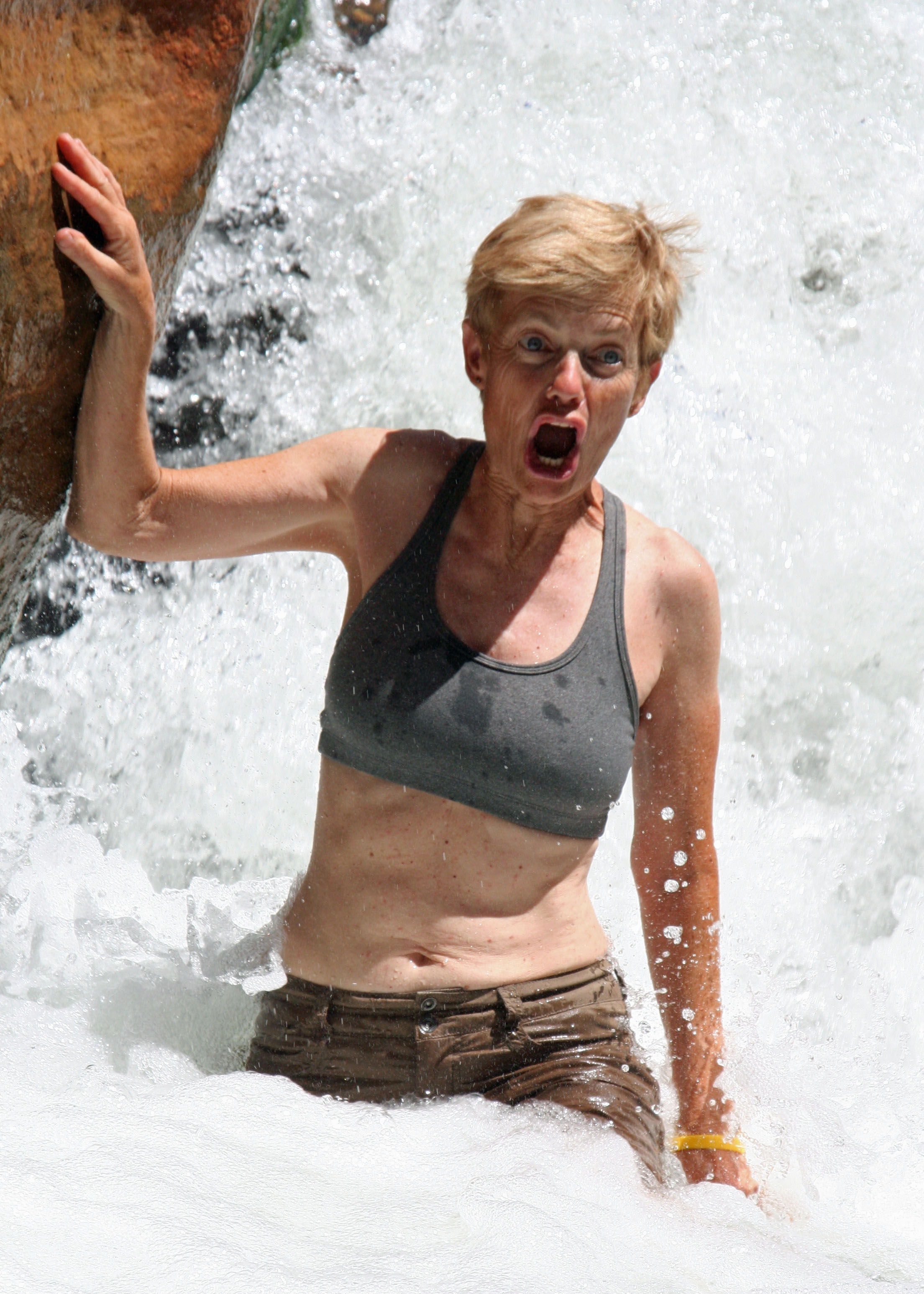
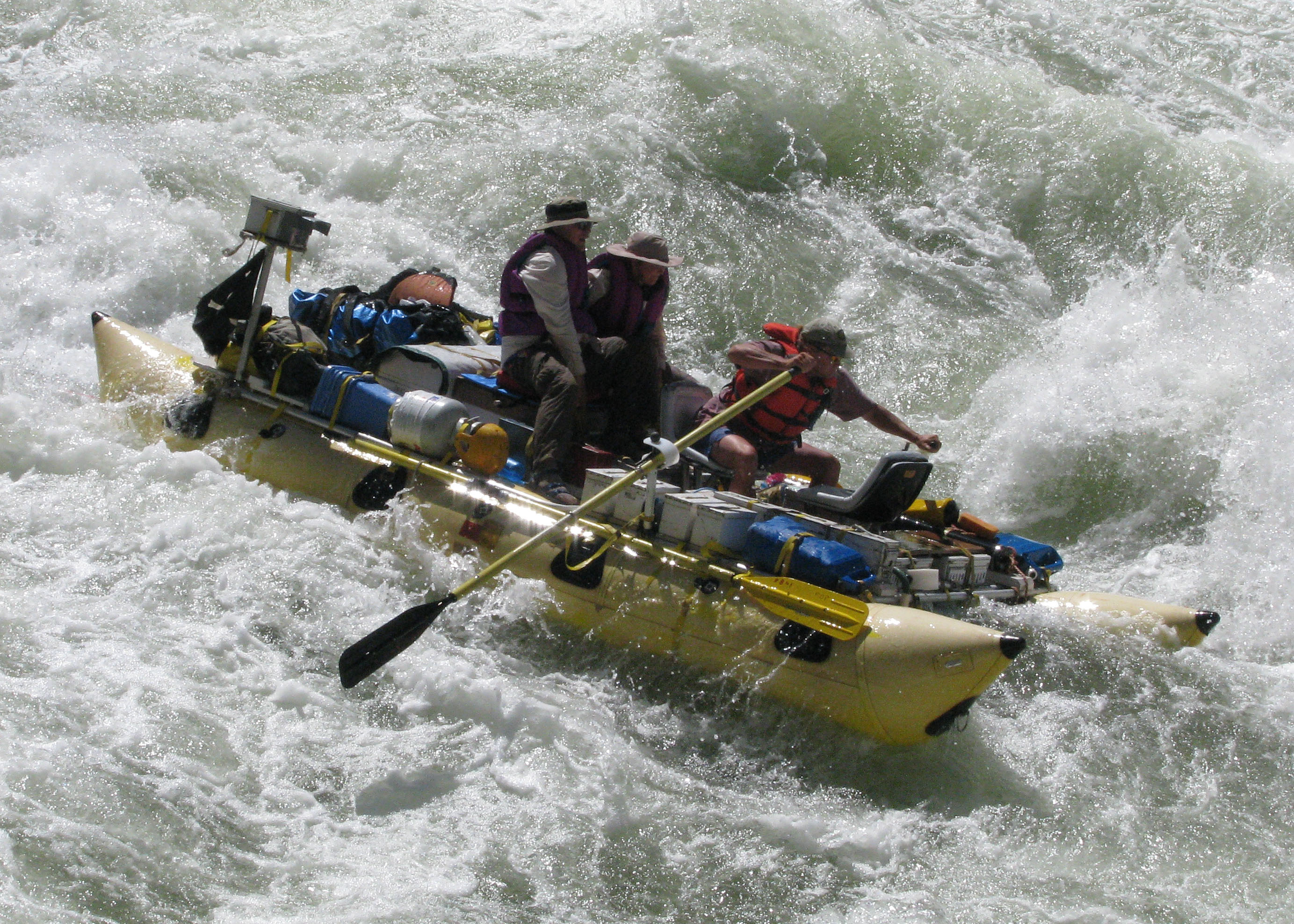
With Steve at the oars, Peggy and I enter the infamous Lava Rapids on the Colorado River, a perfect ten… that’s 10 as in rapids don’t get any more serious. A few seconds later we disappear under the water. (Photo by Don Green)

Today I begin my series on rafting the Colorado River through the Grand Canyon. Since it happened a couple of years ago, I am traveling back in time. In fact I kicked off this blog with the trip, some 181 posts ago.

I never finished the series. Other things happened: like having grandbabies born, going to Burning Man, looking for long dead people (otherwise known as ancestors), etc. So I will start with reposting my early stories so everyone can begin, so to speak, on the same page. (Grin)

This series will encompass more than my trip down the river, however. It is meant to be a celebration of the Grand Canyon, possibly the greatest natural wonder in the world. I have been back to the Canyon repeatedly in a time span that dates back over forty years.

Peggy takes a photo looking down into the Grand Canyon. Three feet forward and she will have a thousand feet to learn to fly.

I have wandered the South and North Rim, camped in all of the Rim campgrounds, and stayed at the magnificent El Tovar Hotel. Once I spent Christmas week at Bright Angel Lodge with a view overlooking the Canyon. I’ve been into the Canyon by mule, on foot and helicopter… as well as raft.
Several times I have explored the inner Canyon on weeklong backpack trips. I will feature one in this series.

Our Grand Canyon river adventure started with a phone call. Tom Lovering left an urgent message. I had to immediately stop whatever I was doing (Peggy and my three-year road trip around North America) and climb on-line to sign up for the Grand Canyon Colorado River permit lottery.
Apparently the permits are hard to obtain, somewhat harder than walking out of a casino with a million dollars.

I am immune to Tom’s last minute schemes but the charming Peggy who loves water, loves rivers, and loves sunshine immediately jumped on-line and did the necessary clicking. Early the next morning we received an Email from the National Park Service saying we had won. It took me a lot longer to persuade Tom than it did for the NPS people to inform us.

I am not, by nature, a white water man. I put running rapids right up there with dangling on rock cliffs, playing Kamikaze on ski slopes, and riding the latest death-defying roller coaster at Four Flags.  My approach to outdoor adventure is more in the nature of planned risk taking than thrill seeking. Consequently, I had only been on two real white water rafting trips.

The first was with Tom on the Mokelumne River in California in the 70s. Within five minutes he had dumped us into something known as Dead Man’s Hole. “Paddle!” he screamed. River rats love to give their favorite rapids scary names such as Satan’s Pool and Suicide Bend. They can wax eloquently for hours over the qualities of these death-dealing anomalies. Our detour “was a learning experience,” Tom explained as we emptied the water out of the raft and lungs. “Next time you’ll paddle harder.” Yeah, yeah.

My second white water trip was on the Middle Fork of the American River. This time I was travelling with Mark Dubois, his wife Sharon Negri and a friend, Bonnie Holmes.

Mark, sometimes known as the Gentle Giant, once chained himself to a rock in the bottom of the Stanislaus River to stop the Army Corps of Engineers from flooding the canyon with water. He also co-founded Friends of the River, an organization dedicated to saving the wild rivers of the west.

Our trip was rather mellow up until we came to a large rapid. Mark was having us do such things as close our eyes and lean backwards out of the raft with our hair touching the water so we could ‘listen’ to the river. He’s a spiritual type guy, one with nature. Apparently Nature had rejected me.

“Now, Curt,” he directed as we approached the rapid known as Guaranteed to Drown or some other similar name, “I want you to climb out of the raft and float down it.”

“I know, I know,” I groused as I rolled out of the raft into the icy waters. “It’s a learning experience.”

And that’s how I classify our trip down the Colorado, a learning experience. But I know it will be more. Every time I have visited the Grand Canyon over the years, I have come away with a feeling of awe and reverence. How could a trip through the Canyon’s inner core be any different?

So please join my friends and me over the next few weeks. I think you’ll enjoy the ride.

Here I am. They actually let me row. It had something to do with the lack of any nearby rapids.

This is how Jamie, one of our experienced boatmen, handled that section of the river.

Here are some of the folks that travelled with us on our 18 day trip down the Canyon. In this photo they have reversed their life preservers to look like giant diapers and are floating down the beautiful little Colorado River, one of many scenic stops along the way. They are about ten feet away from going over a waterfall.

You will meet some interesting characters on the trip, such as Steve…

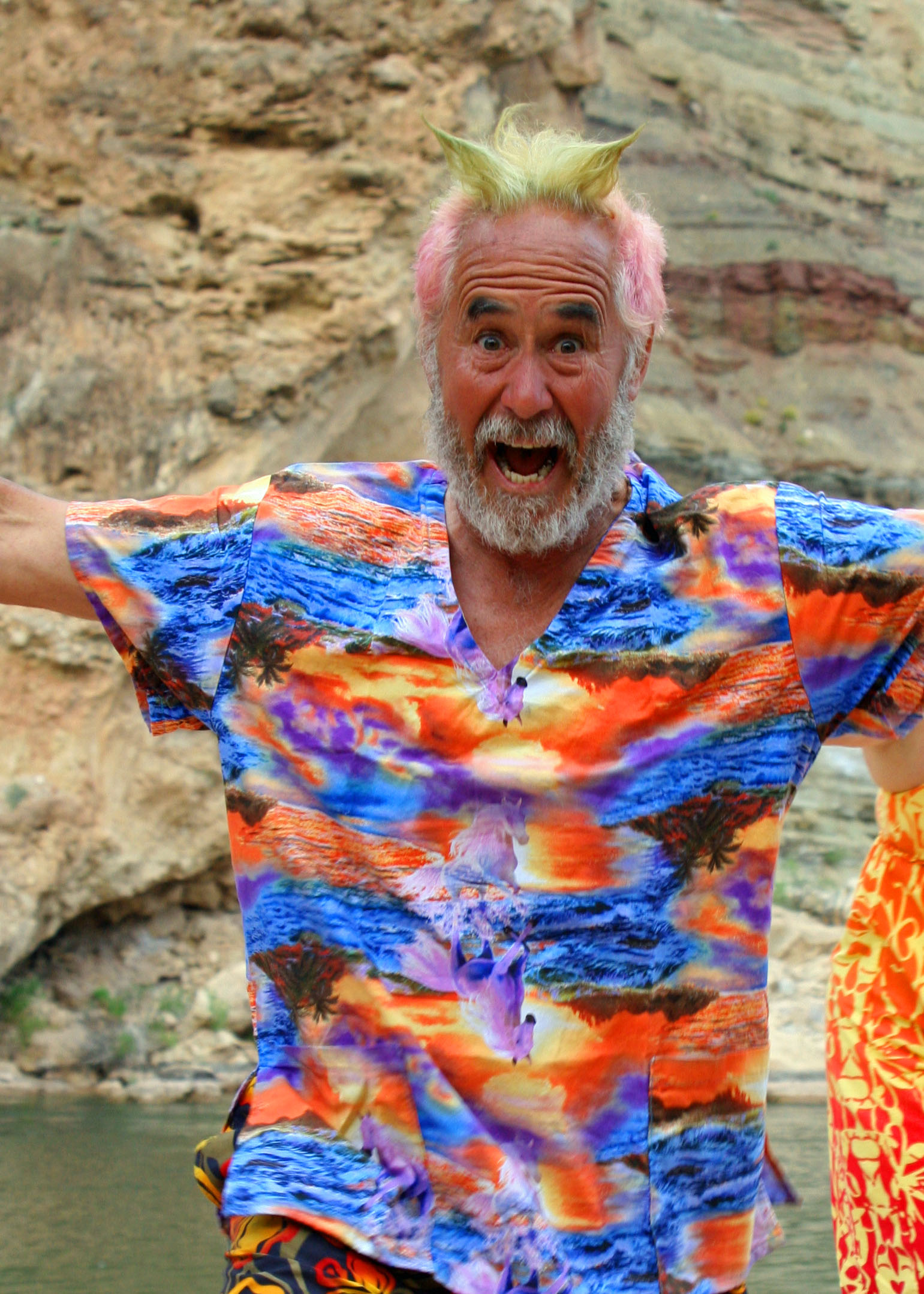
And our fearless leader Tom Lovering. Are you brave enough to spend 21 days on the river with this man?

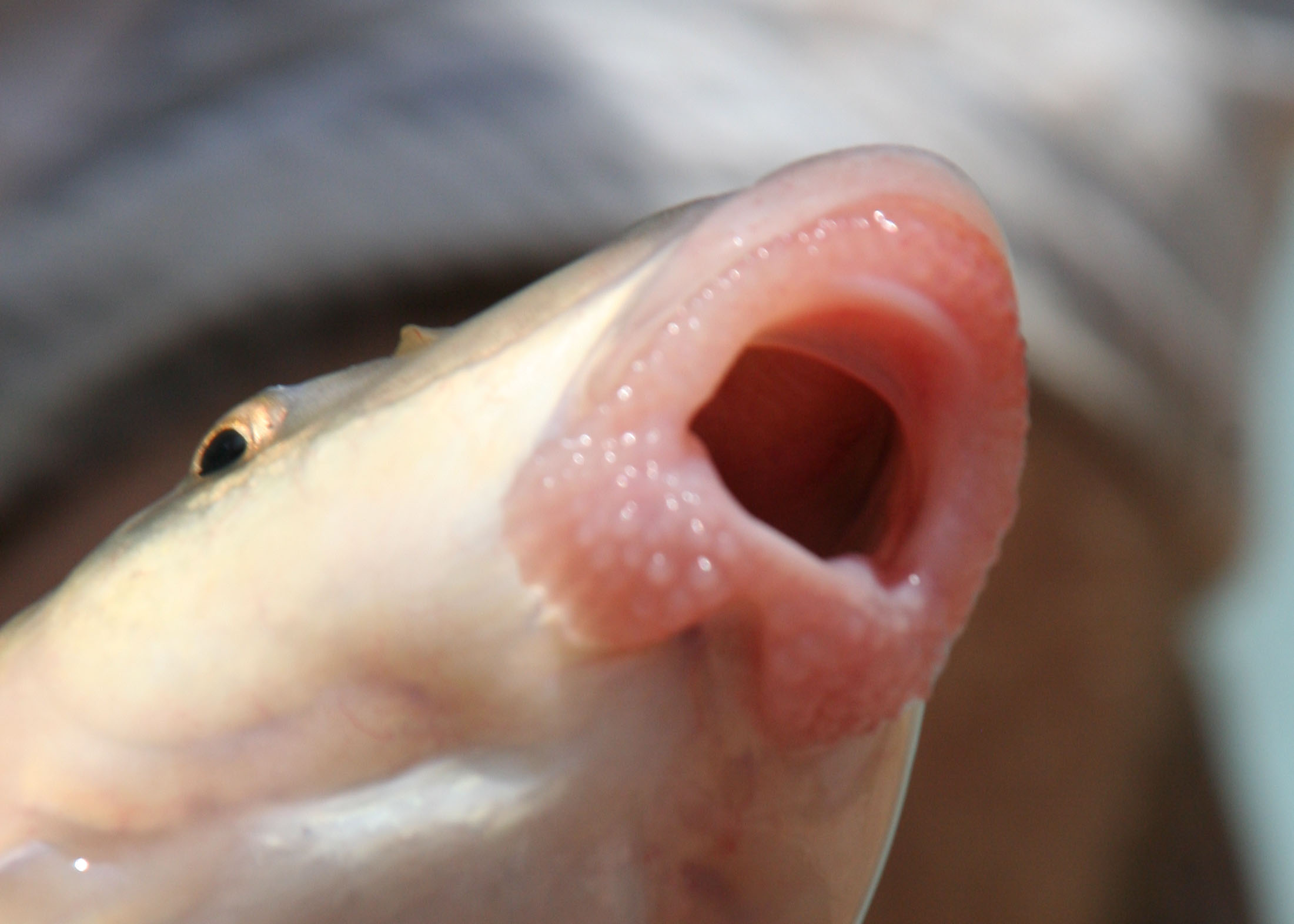
Even this Grand Canyon fish was amazed by our choice of leader.

We had 21 days on the Colorado River and 21 days of incredible scenery. Views such as…

Scenes along the River…

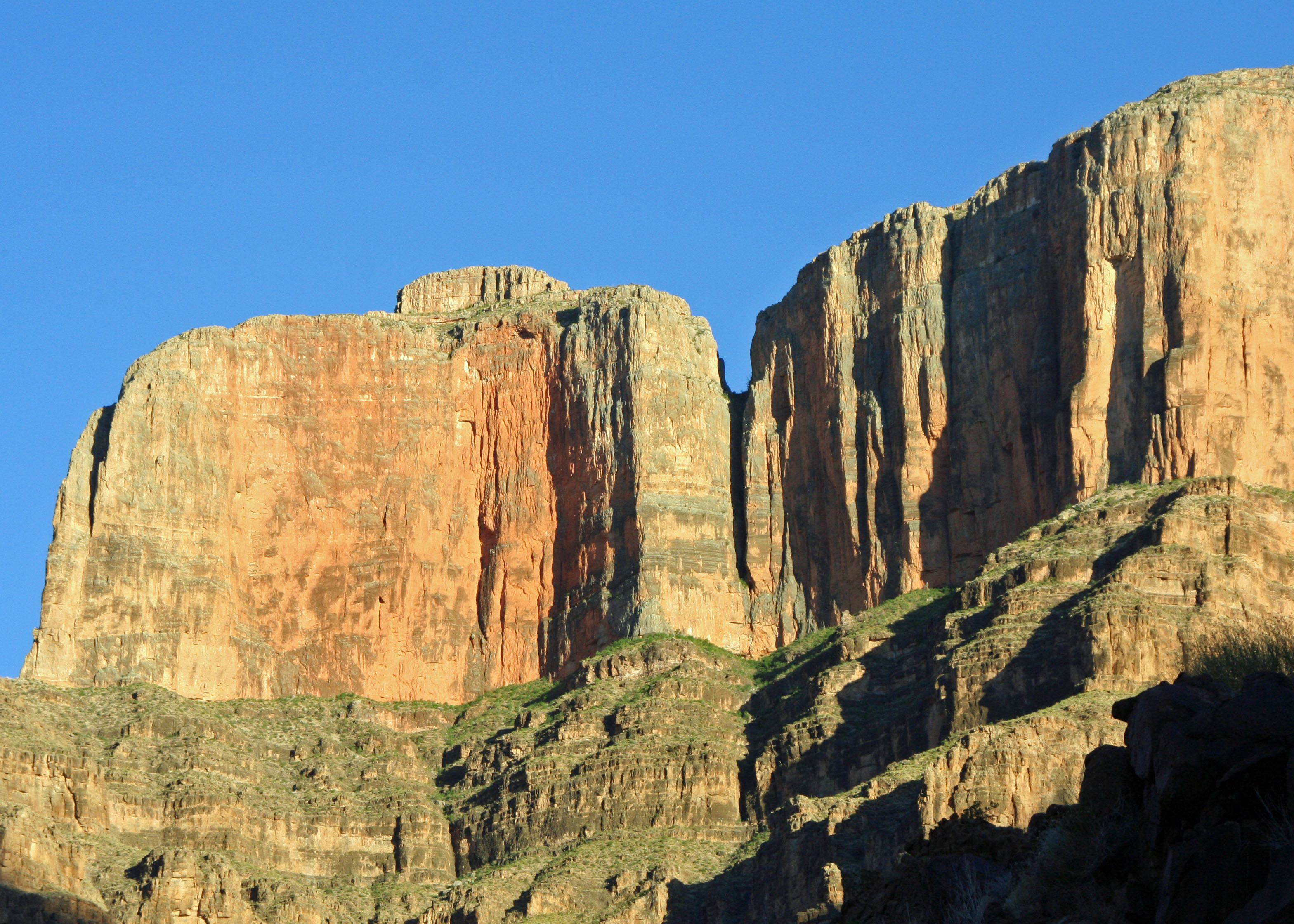
Magnificent cliffs…

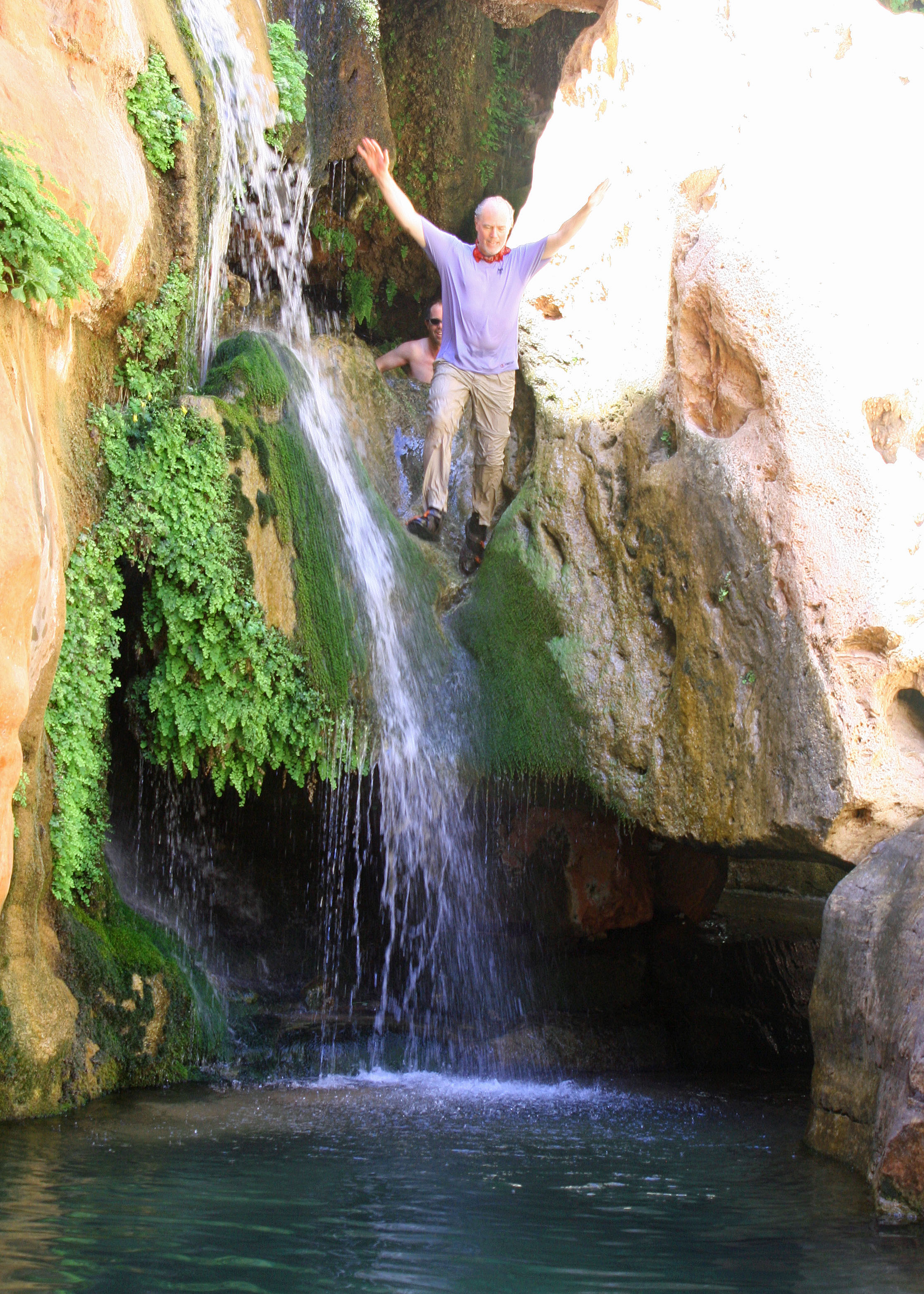
Plunging waterfalls…

And beautiful wild flowers.

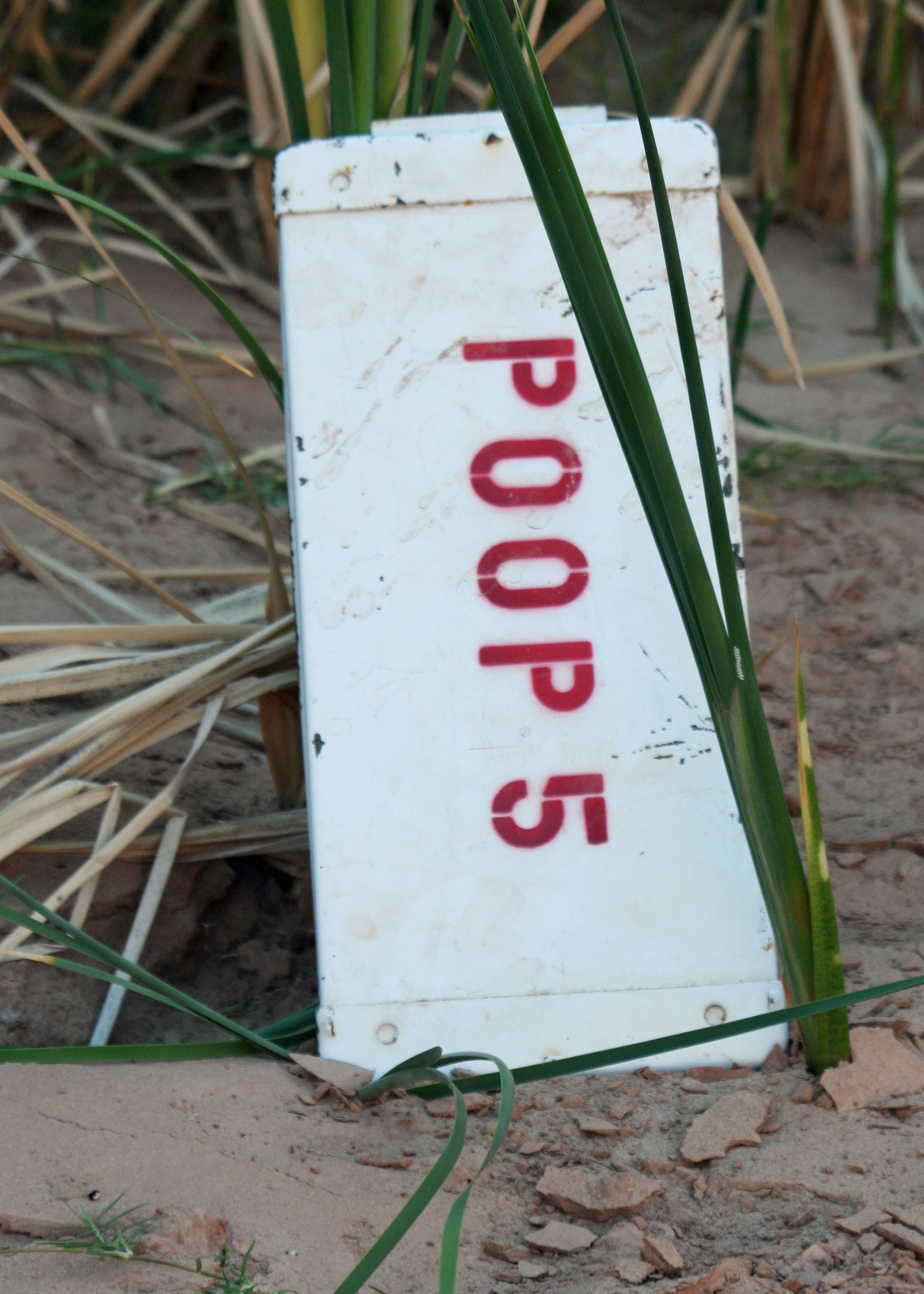
You will learn how to poop in the woods…

Dance in a line with too much wine…

Take refreshing baths…

And leap from high places.

Join us.

An Alaskan Poet and a Saguaro… Organ Pipe Cactus National Monument

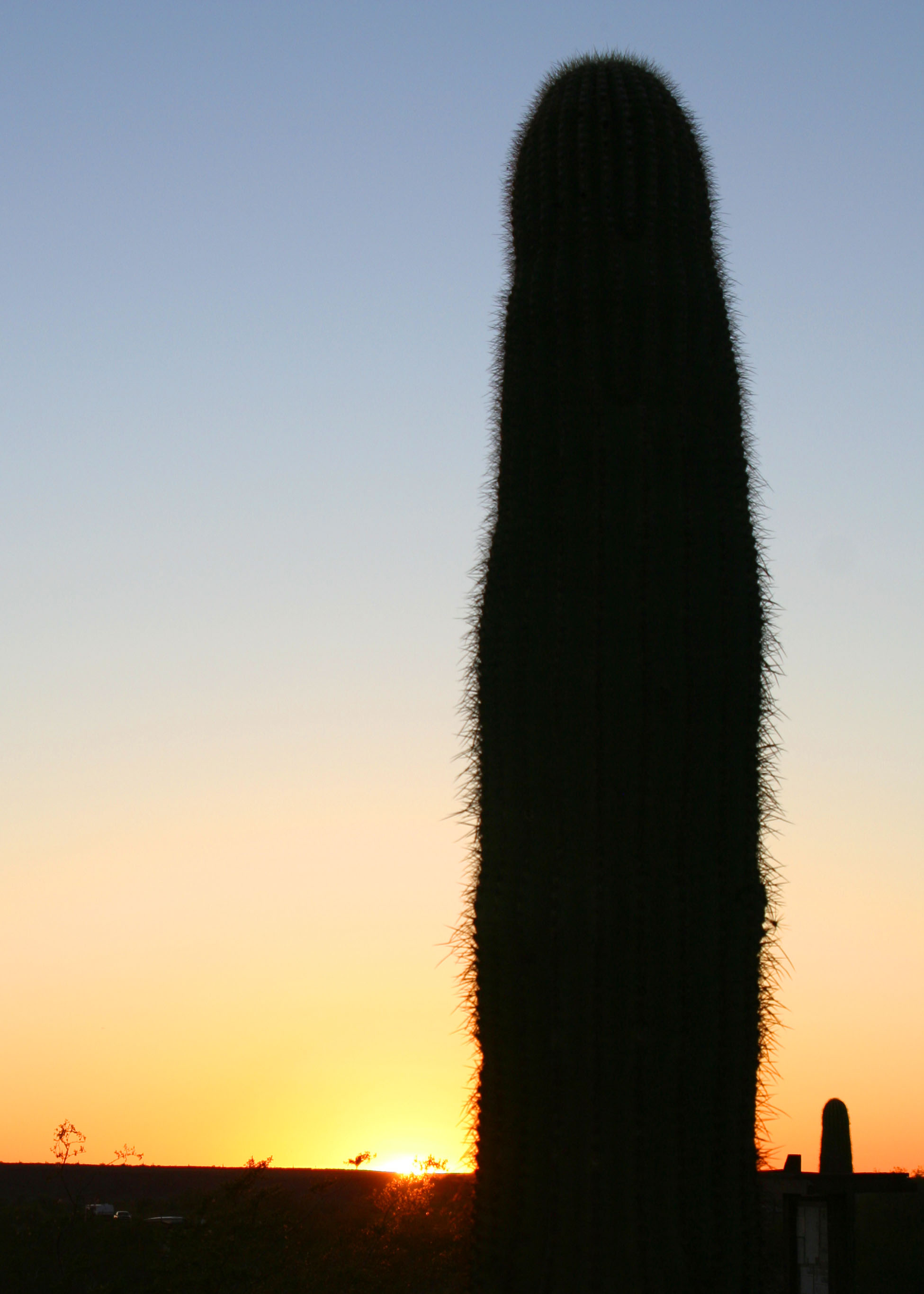
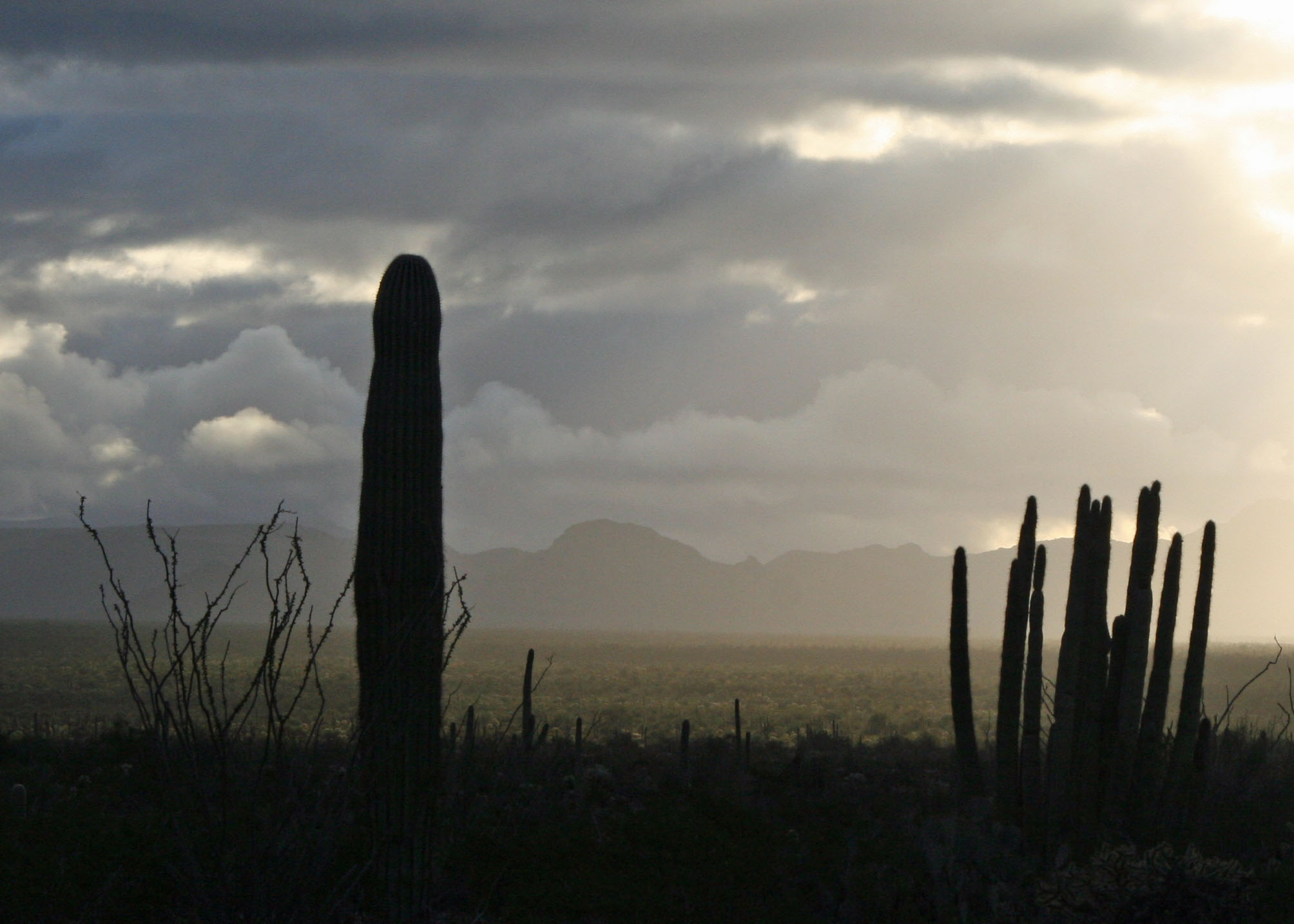
An “armless” saguaro at Organ Pipe National Monument is outlined by the sun’s setting rays.

David McElroy and his wife Edith Barrowclough came down from Alaska recently to visit Peggy and me at our home in Southern Oregon. Edith went to high school with Peggy in Port Clinton, Ohio. David is an Alaskan Bush Pilot and a published poet, which makes for an interesting combination.

In addition to the high school connection, our son Tony now flies helicopters for the Coast Guard out of Kodiak, Alaska and I once lived in Alaska. We also share a love of wandering. We told stories, visited a local winery, and ate Thai food in Jacksonville. Edith and Dave are good folks; we enjoyed the visit.

David left us a special present. He downloaded several unpublished poems from his computer to my MacBook. One, about a desert walk, reminded me of similar walks that Peggy and I have taken at Organ Pipe Cactus National Monument and other locations throughout the Southwest.

I decided to post David’s poem today (with his permission) and illustrate it with our photos from Organ Pipe. The National Monument is located in Southern Arizona on the border with Mexico. (My pardon for the skipped lines… I fought for two hours trying to turn off Microsoft’s paragraph function. Grrrr. Maybe one of  my readers can give me the solution. I am sure somebody will say, “It’s simple Curt…”

Desert Walk

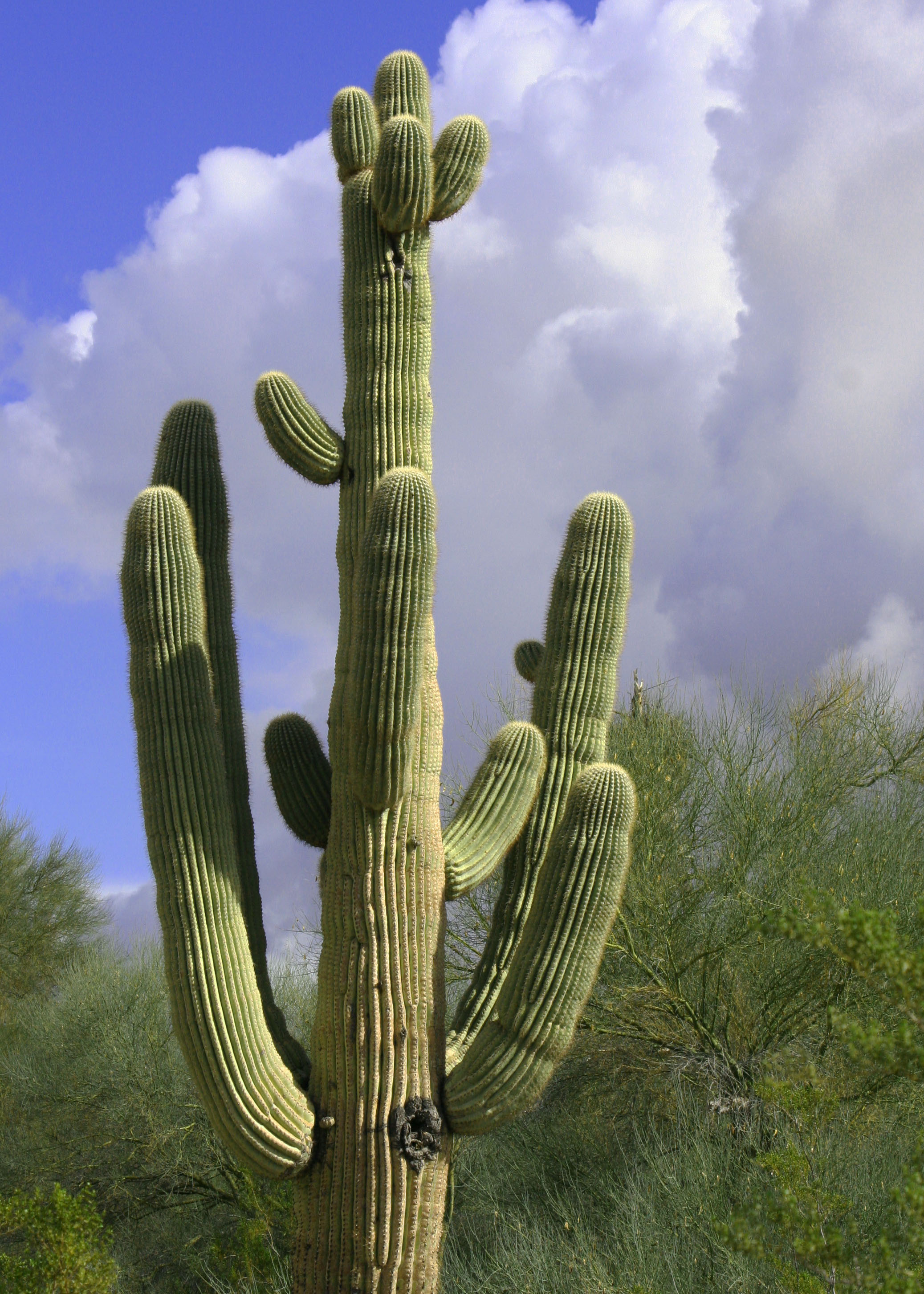
Armless saguaro too young to wave

much less salute but old enough

for sex open their white flowers

to night and pollinating bats

that might, that must, come by.


Except for grasses, Mesquite

and most plants here hang seedpods,

a rich feed ripening for two kinds of doves,

these little rats along the trail,

cottontails, and ducks in the creek.


And so the need for hanging hawks,

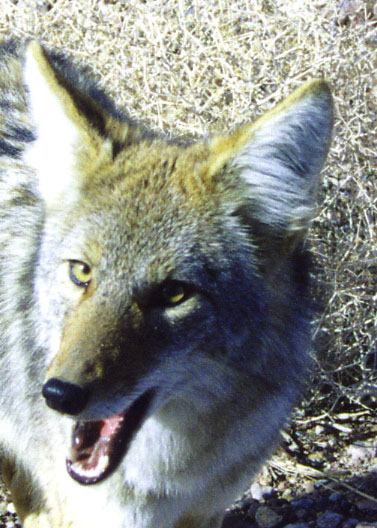
owls that burrow, coyotes wafting

like dust through creosote brush,

and in the heat among cactus thorns

snakes sewing the needles of themselves.


Lush rock in low sun, green cattails,

the beat up tin of water over gravel,

hopeful saguaro ruler straight–

over a hill, around a bend,

the land composes a scene of itself.


And the woman on whom nothing is lost

aims her camera with one hand,

and with the other in complete confidence

passes the cup she’s been holding

over her shoulder to the hand


in the desert behind her which is mine.

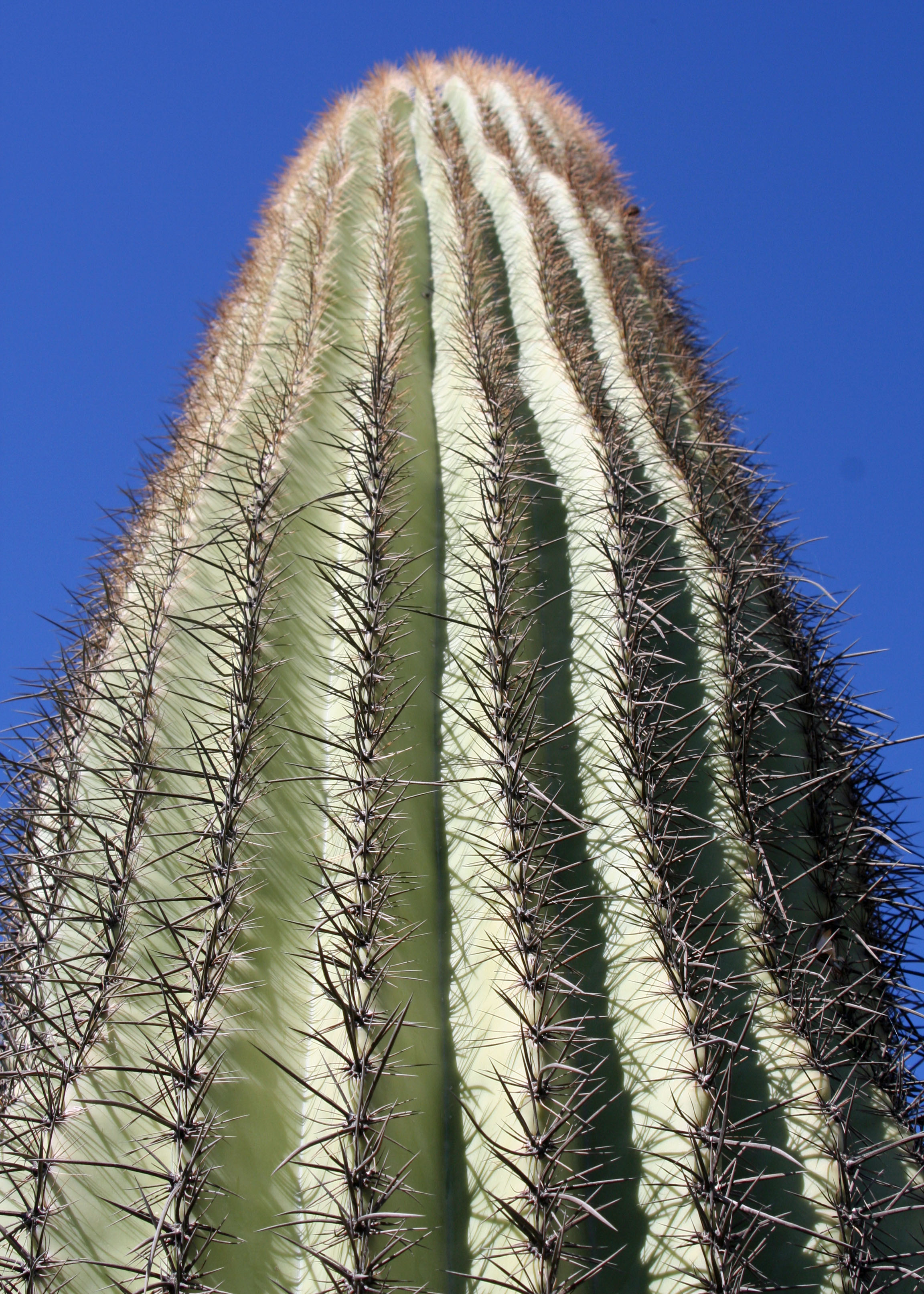
A saguaro “ruler straight.” Note the thorny protection. Peggy and I, and I am sure David and Edith, are quite careful when walking among cacti.

I prefer my saguaros with arms. It gives them more personality.

Check out the wild ‘gesture’ of the saguaro to the right and behind. The power lines are running to the headquarters of Organ Pipe National Monument.

A coyote went “wafting like dust through creosote brush.” I took this photo at Death Valley National Park.

The desert Bighorn Sheep is another inhabitant of Organ Pipe National Monument, although rarely seen. I caught this big fellow hanging out near Lake Mead.

An organ pipe cactus is on the left in this scene from Organ Pipe National Monument. The cactus in front is a cholla. The cactus behind it is a barrel cactus.

A view across Organ Pipe National Monument showing the desert and rugged mountains. Peggy and I were out on an early morning walk.

One concern from anyone traveling to the National Monument is its location on the Mexican Border and the drug issue. I pulled this photo of the border fence at Organ Pipe off of the web. There has to be a better solution than building fences between nations. It reminds me of the Berlin Wall.

On a happier note, I’ll conclude with another photo from our early morning desert walk featuring saguaro and organ pipe cacti. The cactus on the left with the skinny (and spiked) limbs is an ocotillo.

The Wonderful World of Birds’ Bills… On the Road

I love pelicans. They have that ‘put together by a committee’ look. Check out the sharp hook on his bill. I took this photo in Baja California near Cabo San Lucas.


A wonderful bird is the pelican, His bill will hold more than his belican.

Dixon Lanier Merritt

Whenever I see a pelican, Dixon Merritt’s poem pops into my mind unbidden. Birds’ beaks, or bills if you prefer, are wonderful adaptations to their environment.

As I write this blog from my home in southern Oregon, a Rufous Hummingbird has his beak buried deep in our feeder while a Black Headed Grosbeak worries sunflower seeds on the hill behind him. The hummingbird’s beak is long and delicate, designed to capture nectar in the hidden recesses of flowers. The grosbeak’s beak is short and stubby, perfect for cracking open seeds.

I photographed the Brown Pelican in Baja California near Cabo San Lucas. Peggy found the Snowy Egret there as well. The rest of the birds featured in this blog are from Florida except for my final picture of Brown Pelicans. Few places can match Everglades National Park when it comes to unique bird life with interesting bills.

Peggy captured this Snowy Egret on film on the same Baja trip we found the pelican. Both Egrets and Herons have spear like bills. I like the way the Egret’s shadow allows his feet to be seen.

Speaking of spear like bills, how would you like to be on the receiving end of this one? I took this photo of a Great Blue Heron in Florida. While we normally think of Great Blue Herons eating frogs, fish and baby alligators, they are also quite fond of small rodents. I have often watched them patiently stalk mice on the Bodega Bay Headlands of Northern California. Their strike is lightning fast.

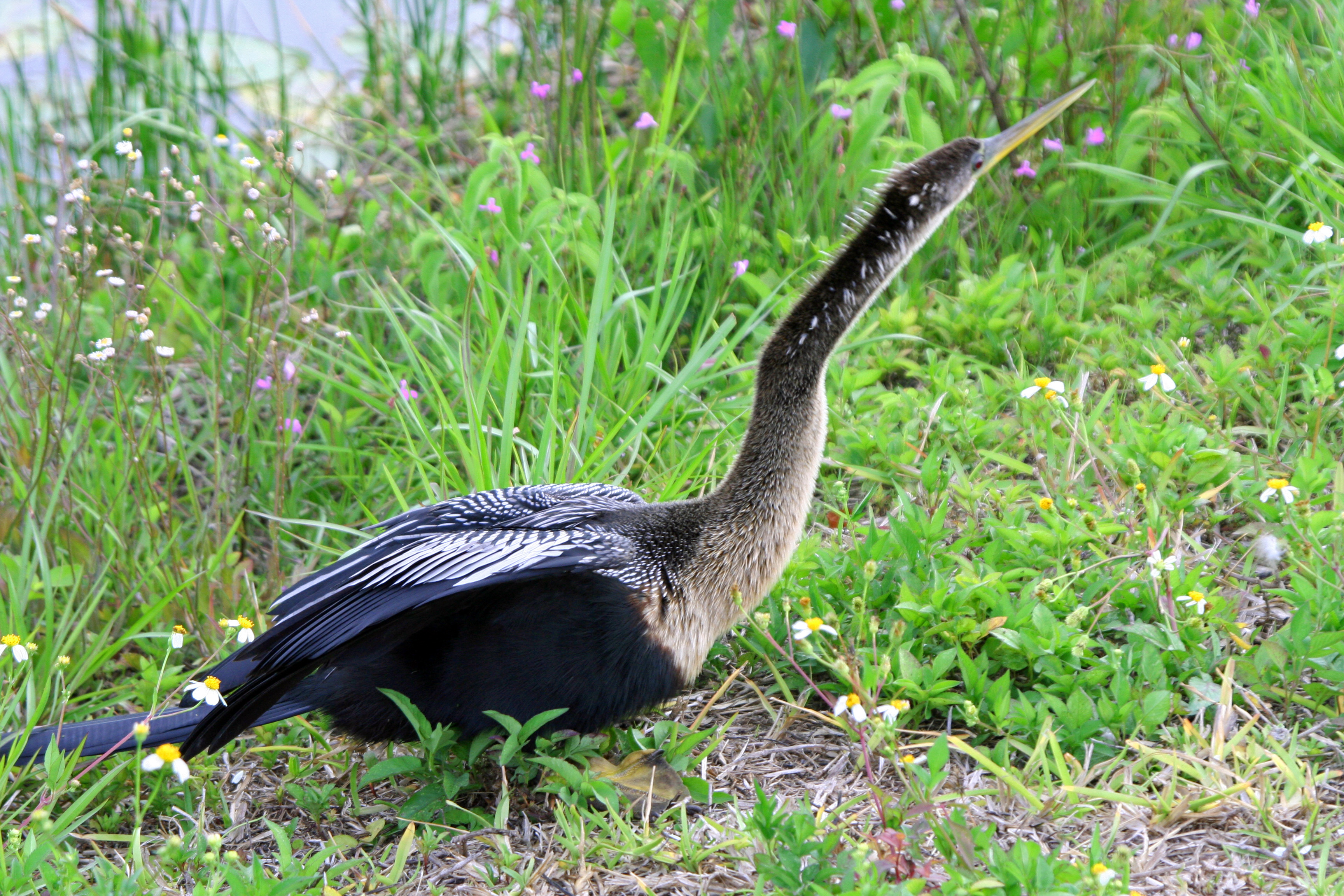
This Anhinga in Everglades National Park is obviously eyeing something in the grass next to it. Like Cormorants, Anhinga are designed to catch their dinner while diving and are well designed to do so.

A more typical picture of an Anhinga, drying its wings after a dive.

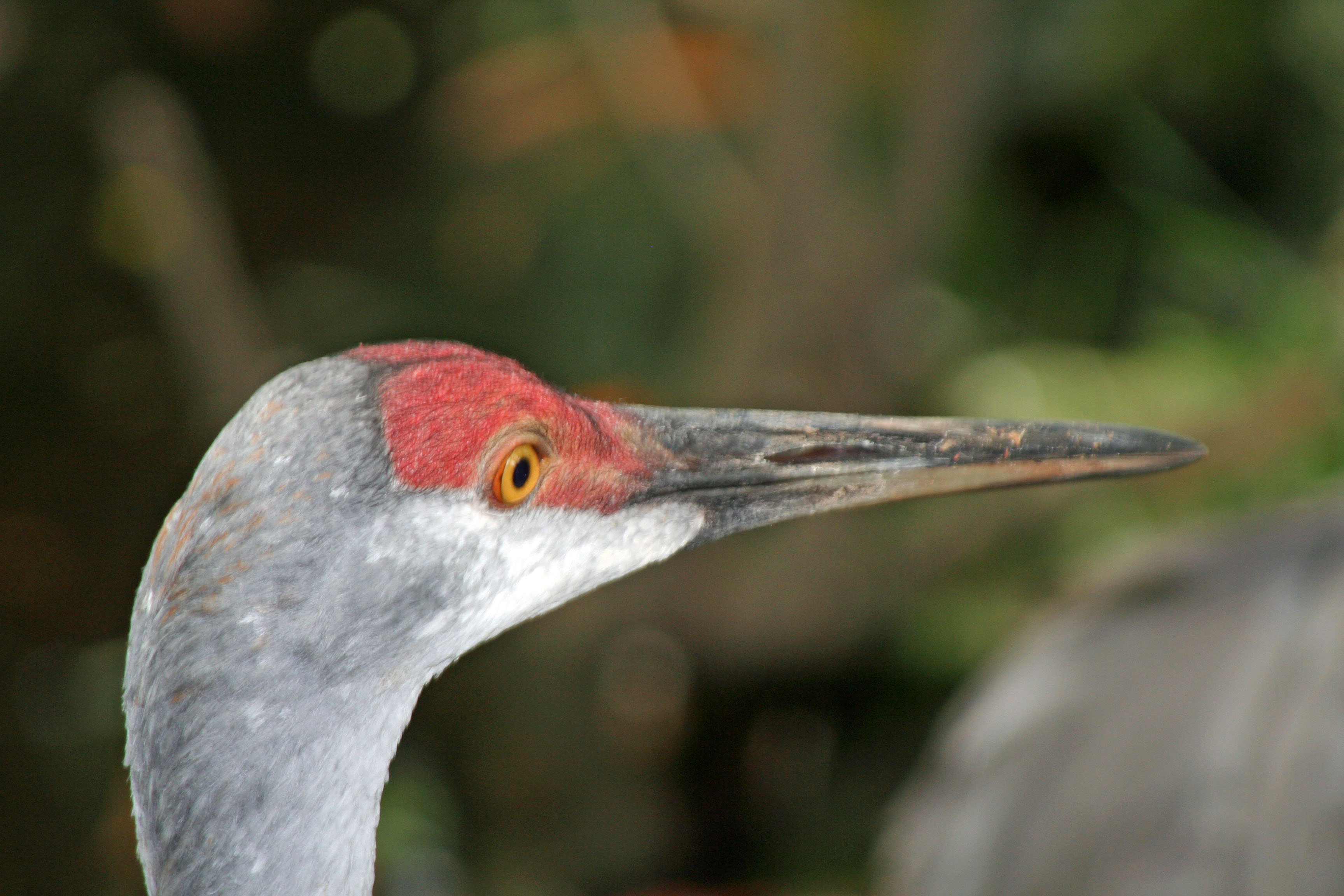
This Sand Hill Crane and four buddies came strolling into our camp in Central Florida.

When one thinks Florida and Everglades, it is natural to think of Flamingos. It’s hard to find more colorful beaks.

In my last blog I featured Black Vultures in Everglades National Park. This one looks pensive. Again, note the hooked bill designed for tearing flesh off of dead things.

White Ibis are common in the Everglades. They use their long curved bill to probe mud.

This guy is a little fuzzy but any collection of photos featuring birds beaks needs to include the Spoonbill, another resident of the Florida Everglades.

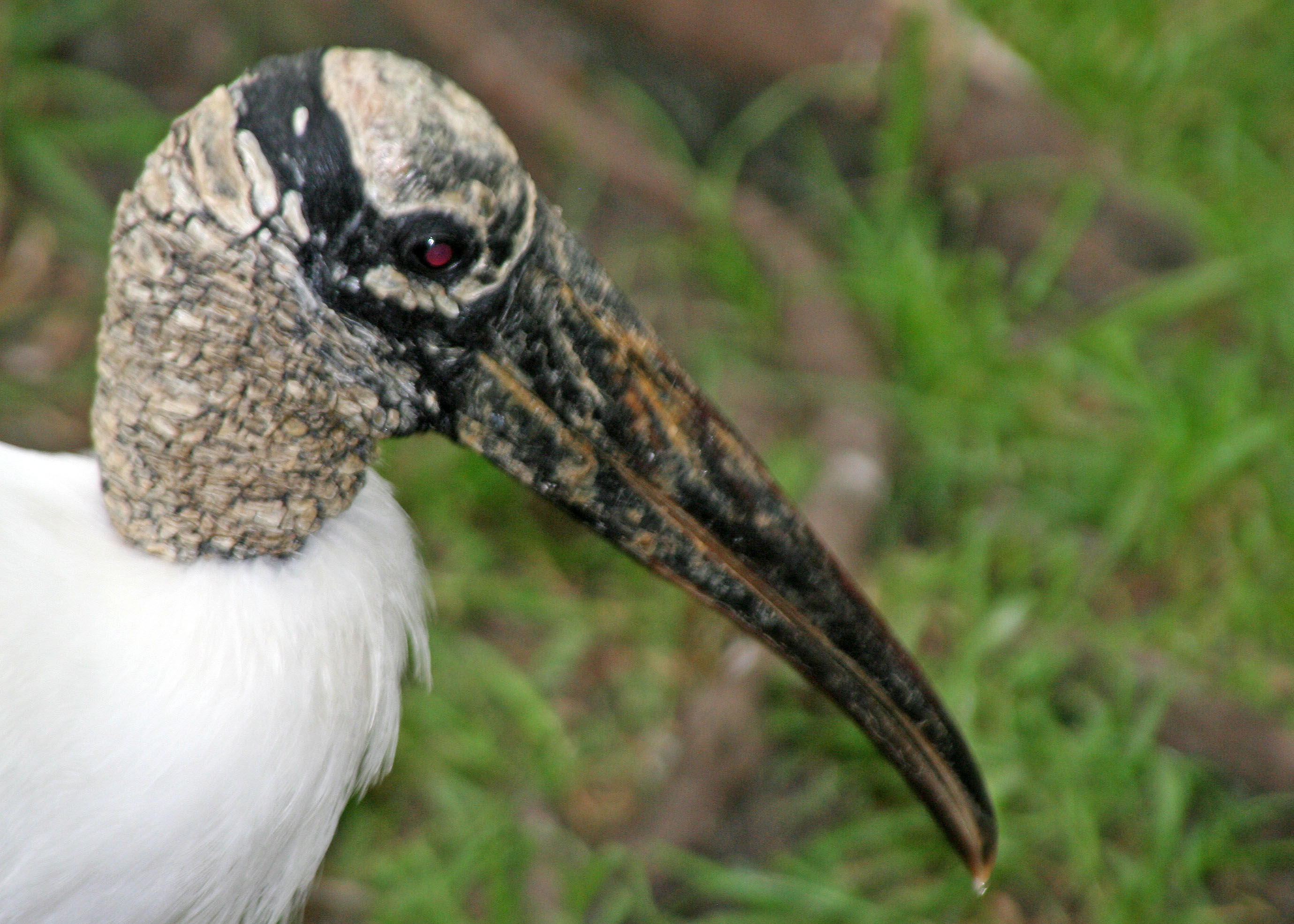
The mottled head and beak of a Wood Stork, also photographed in the Everglades.

I’ll close with my favorite bird. I took this shot of Brown Pelicans just south of Santa Barbara, California.

The Handsome Black Vulture… Everglades National Park

A Black Vulture appears to take a bow after cleaning out a camper’s food.

The warning signs at Flamingo Campground in Everglades National Park were clear: Food Must Be Properly Stored. The best place was in the trunk of your vehicle.

The folks from New Jersey apparently didn’t get the message, or more likely, chose to ignore it. Signs were posted everywhere. They left their picnic table packed with a weeks worth of food as they drove off.

I glanced over from our campsite five minutes later. The trees over the table had turned black. Fifty or so vultures were contemplating dinner. What happened next wasn’t pretty. If you have ever watched hyper five-year-olds tear into Christmas presents you get the picture. Food wrapping paper flew everywhere.

I walked over and shouted at the invading forces. They flew up into the trees. As I walked back to our site they returned to their feast. I tried again. This time they croaked angrily at being interrupted and walked away instead of flying. As I strolled after them another group landed on the table. An exploding bag of potato chips elicited a chorus of delight.

I gave up. You have to know when you are defeated. I once tried to rescue an ice chest from a bear at Tuolumne Meadows in Yosemite National Park. A family from Iowa had left it outside their camper. The bear stood up on his hind legs and growled at me.  He was huge. I told the bear he was welcome to the ice chest and the Iowans.

I left the Black Vultures with a similar message. Later that night I heard the family from New Jersey arrive back at their camp. They let loose a torrent of obscenities that even a writer couldn’t imagine. Their camp looked like New Orleans after Katrina. The family was laughing the next morning, however. One of the joys of travel is having stories to tell when you get back home and they had a doozy.

Usually Black Vultures eat carrion. You can spot them throughout the Southeast wherever roadkill is found. But they are also quite willing to clean out a camper, gather at the local municipal dump or even eat an occasional calf. They are birds of opportunity.

Like buzzards, they have bald heads to make reaching into dead things easier. Imagine how messy feathers would become. They also have large ripping beaks and are noted for peeing on their legs to keep cool. Given all this you may find it surprising I think they are quite handsome. But check out their photos below.

Black Vultures are monogamous and share incubation responsibilities. They don’t build nests but are known to lay their two eggs in caves, on rocks or even in old buildings. Bits of broken glass, bright plastic, bottle caps and other baubles are used to decorate the area. They value privacy and may scout an area for days to assure its isolation. Young vultures often stay with their parents for years in a social group.

In addition to the Southeast, they are found throughout Central and South America. With global warming they are expanding into the north.

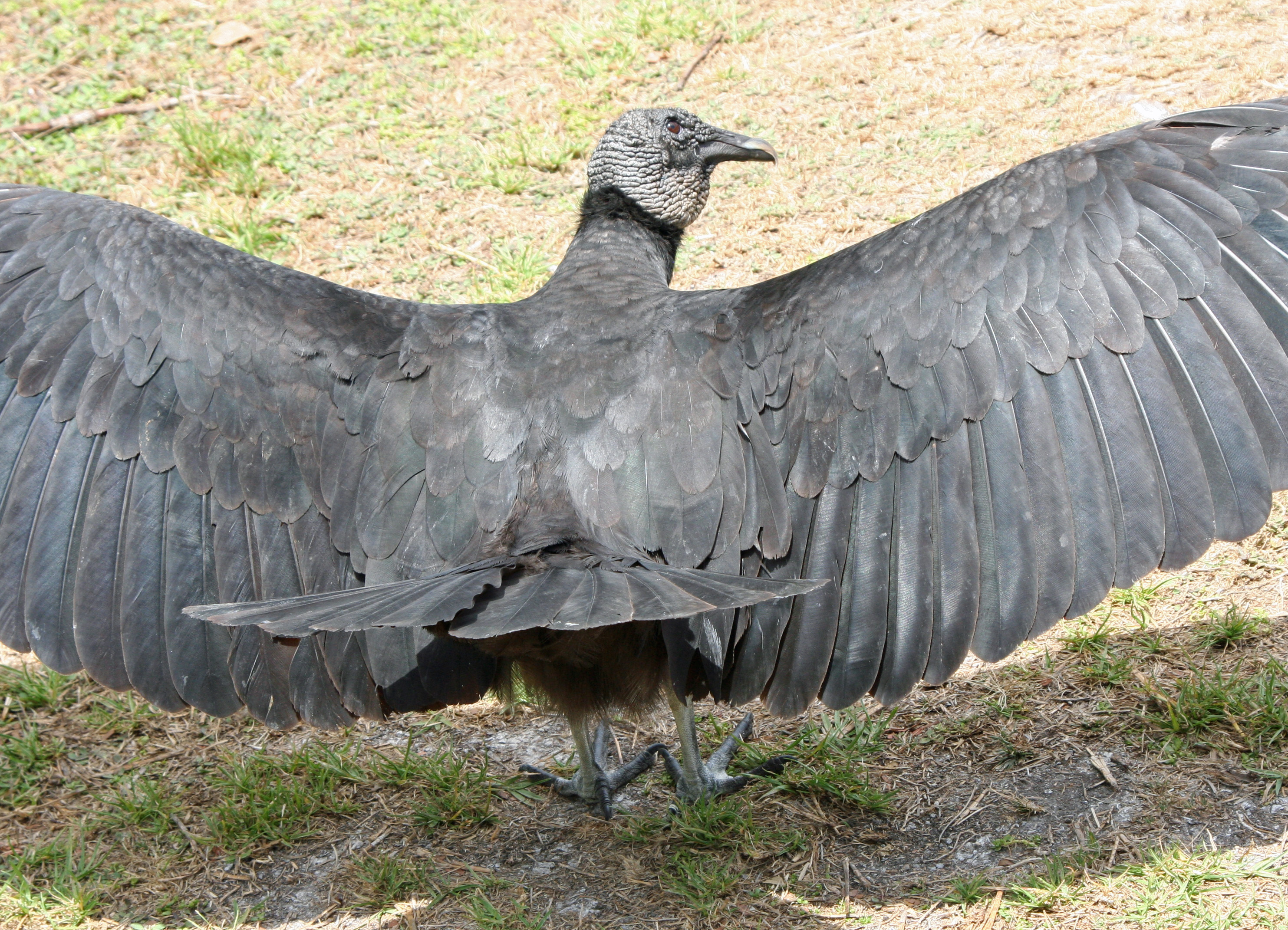
One reason given for Black Vultures assuming this pose is to dry out their feathers. I often seen buzzards perched in trees in the West with wings spread like this before beginning to fly on damp mornings. The wingspan of mature Black Vultures is around five feet.

This is the same Black Vulture shown above with his wings folded. He looks well fed to me. Note his large feet.

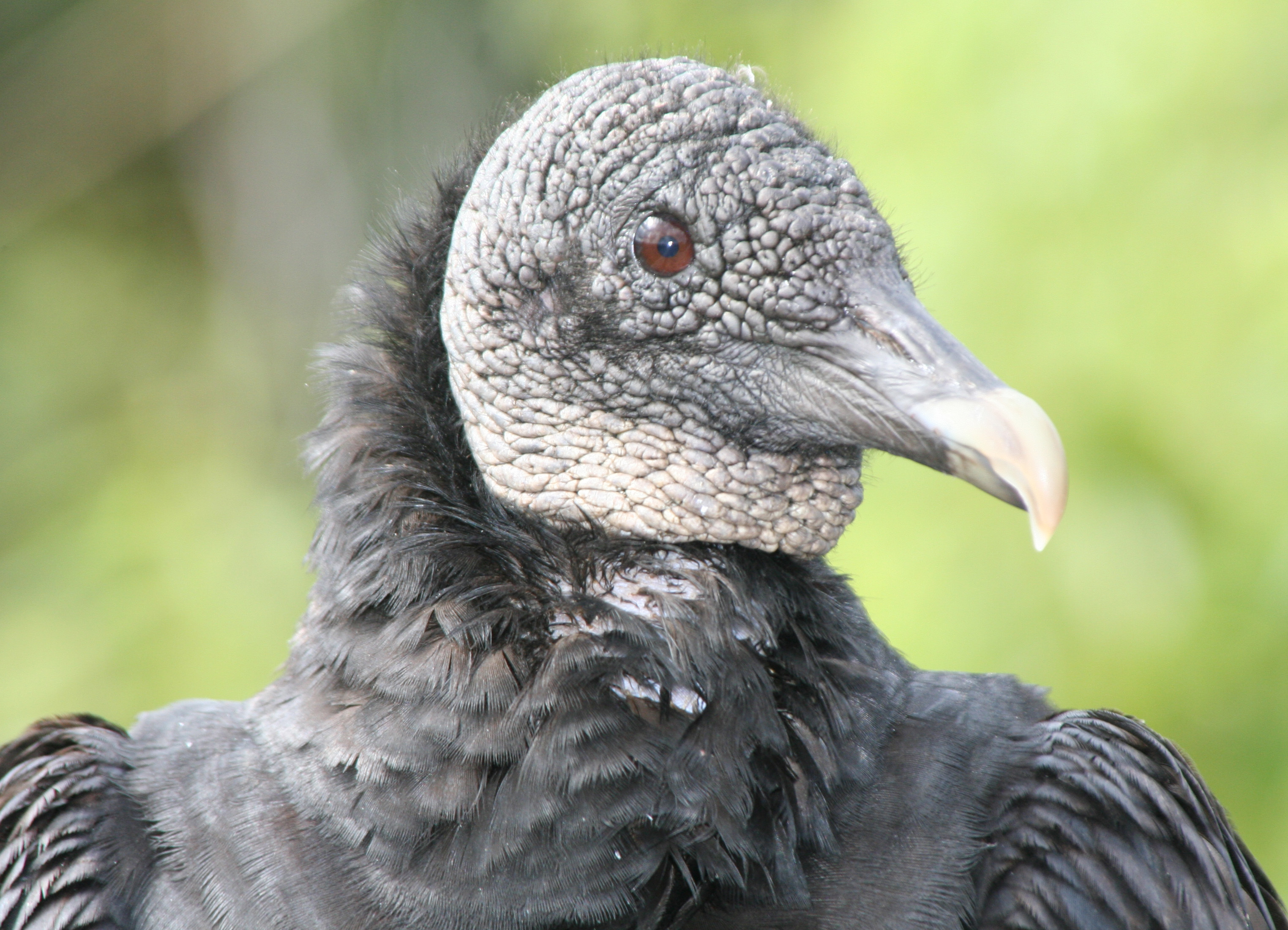
I found this Black Vulture along the Anhinga Trail in Everglades National Park.

The vulture waited patiently while I took photos. Maybe he was contemplating my food value. Note the large, ripping beak. It is easy to understand how this guy would make short work of either a dead cow or a bag of potato chips. In my next blog I will feature specialized beaks from other Everglades birds.

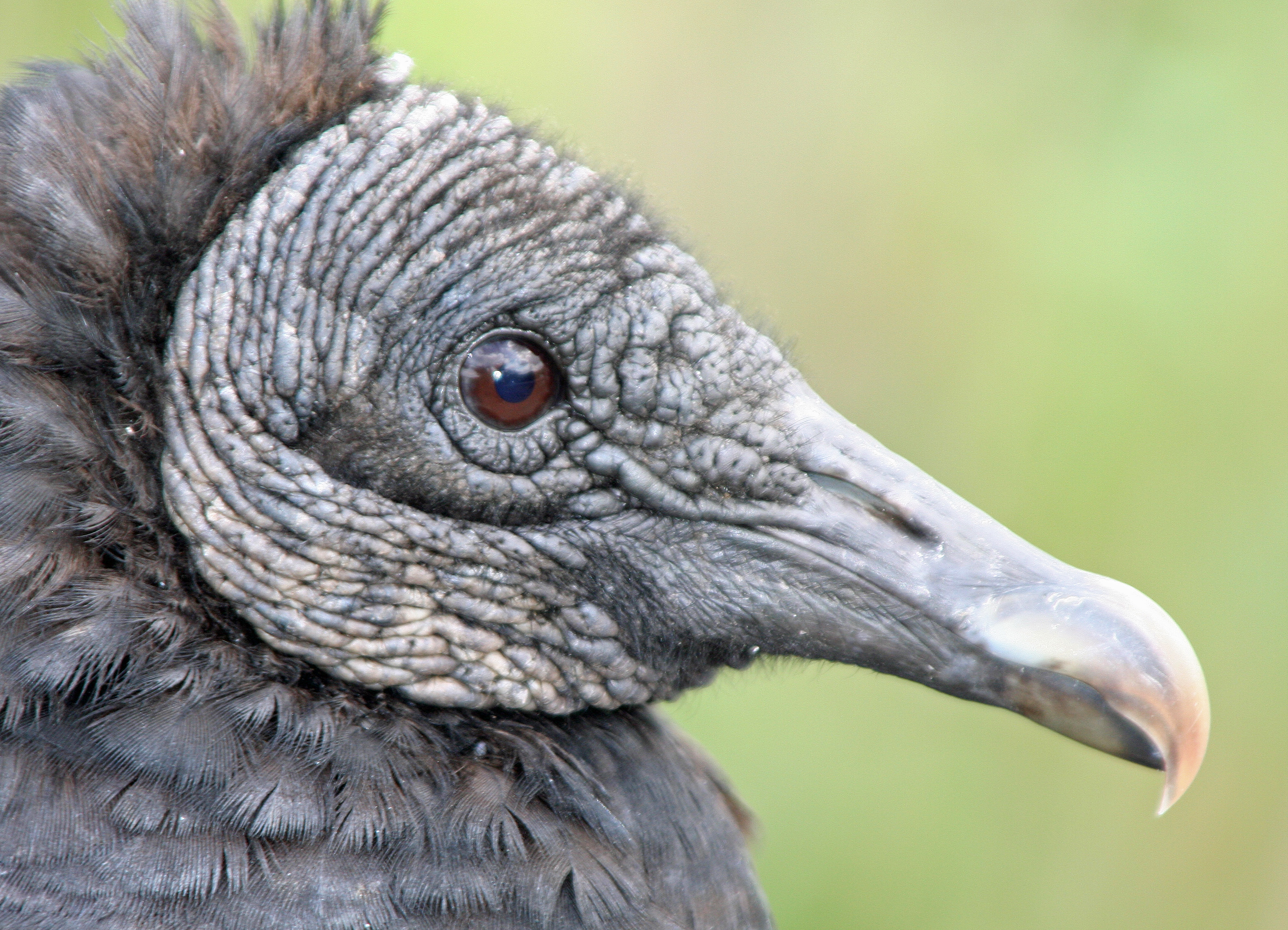
A closed eyelid gave this Black Vulture an eerie appearance. While my readers may not agree with my handsome designation, I am sure that everyone will agree that these birds have a striking appearance.

Gators and Glades… The National Park Series

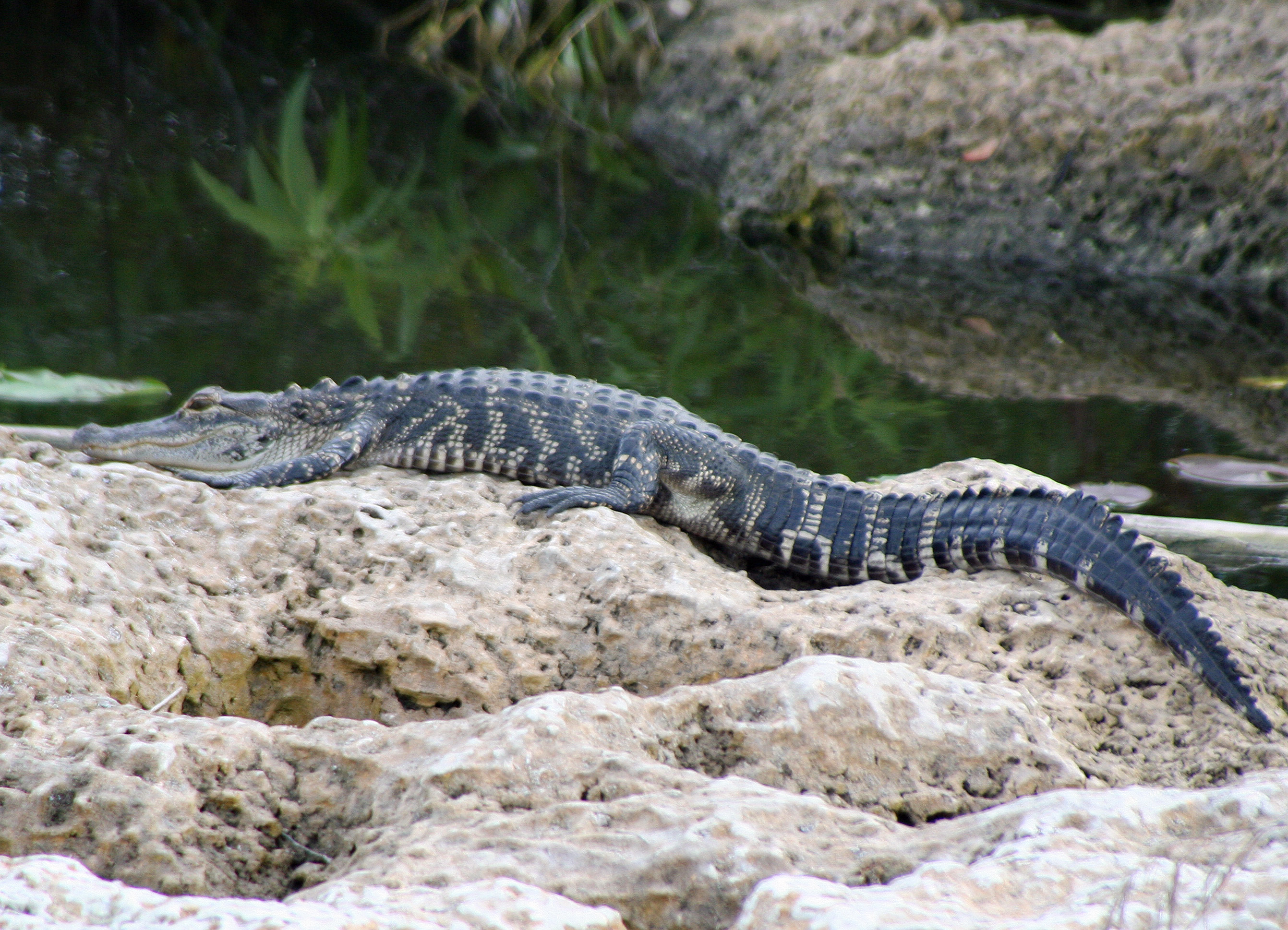
The ancestors of this alligator, photographed in Florida’s Everglades National Park, roamed the earth some 150 million years ago.

I’ve been following the blog Serenity Spell by FeyGirl that explores the natural world of Florida. It is well written and includes great photos, in-depth information, and a strong ecological philosophy. I highly recommend it.

FeyGirl’s posts have reminded me of my own experiences in the Everglades National Park and other Florida wetlands.

My brother Marshall, a 72-year-old homeless man with a pickup truck and a bank account, likes to hide out in remote Florida campgrounds six months out of the year and read books. Catching up with him has taken me into places where tourists rarely tread. Trust me, Marshall does not hang out at Disneyworld or Epcot Center.

Peggy’s parents, John and Helen, also lived in Central Florida for years and John, in his 70s and 80s at the time, loved to take us for hikes and point out anhinga, alligators, cottonmouths and other Florida wildlife.

Given all this, I decided to write about the Everglades this week. I’ll start with alligators, move on to a handsome vulture and end with some very impressive bird beaks.

The photographer in me loves alligators. They are big (up to 1000 pounds), like to sunbathe and don’t see any reason to run away. With over a million residing in Florida, they are also easy to find. During dry season they congregate where water is found and actually enlarge wet areas by digging out “gator holes.”

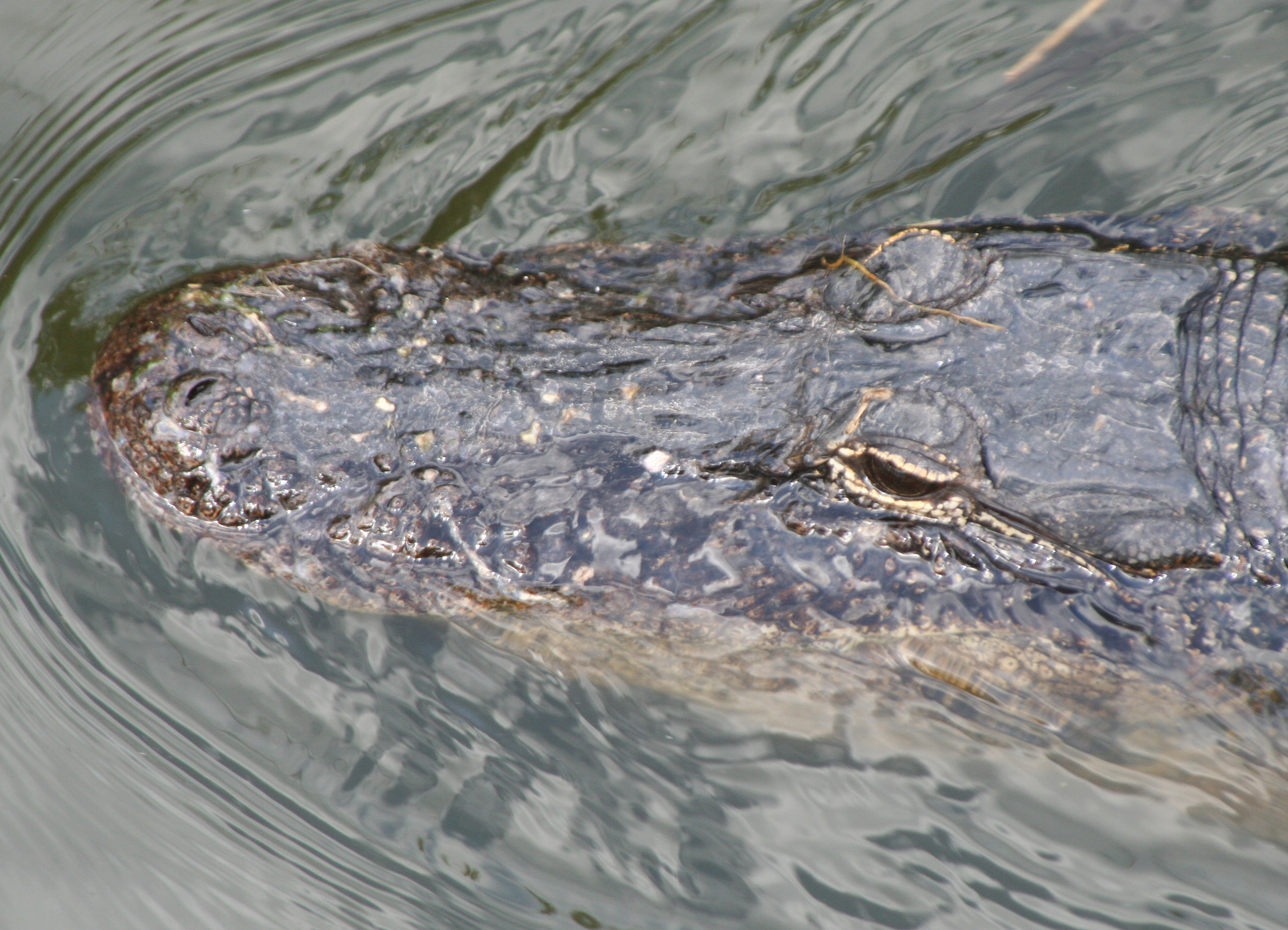
What makes them so photogenic, however, is their exotic look. It comes from having been around for 150 million years and surviving the demise of dinosaurs. I am particularly fond of photographing them as they slither through the water. It captures them at their primitive best.

I begin photographing this alligator at some distance and ended when it was a few feet away. He went about his own business and I went on about mine.

The most surprising fact for me about alligators is that the females make such good mothers. They start by building nests two-three feet high of plant debris and dirt.  They then lay 30 to 50 eggs and patiently guard the nest for 70 days until the babies hatch. The sex of the babies is determined by how warm the nest is. Cooler produces females, hotter produces males.

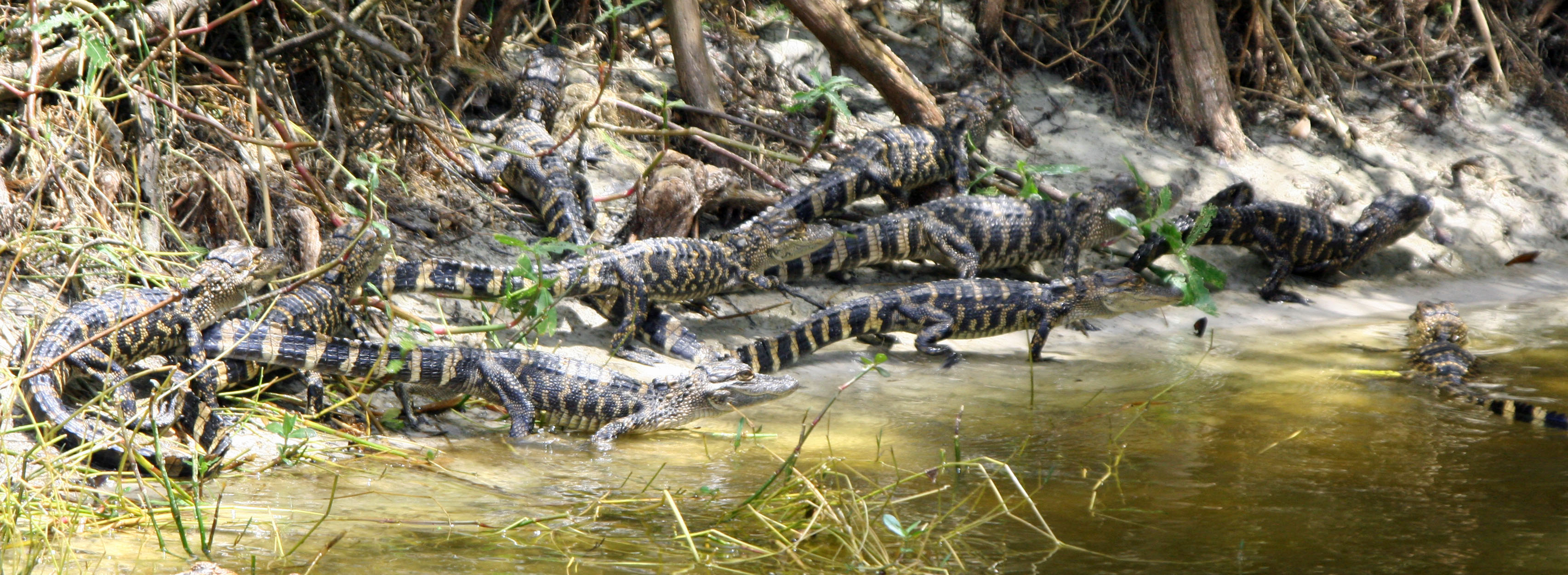
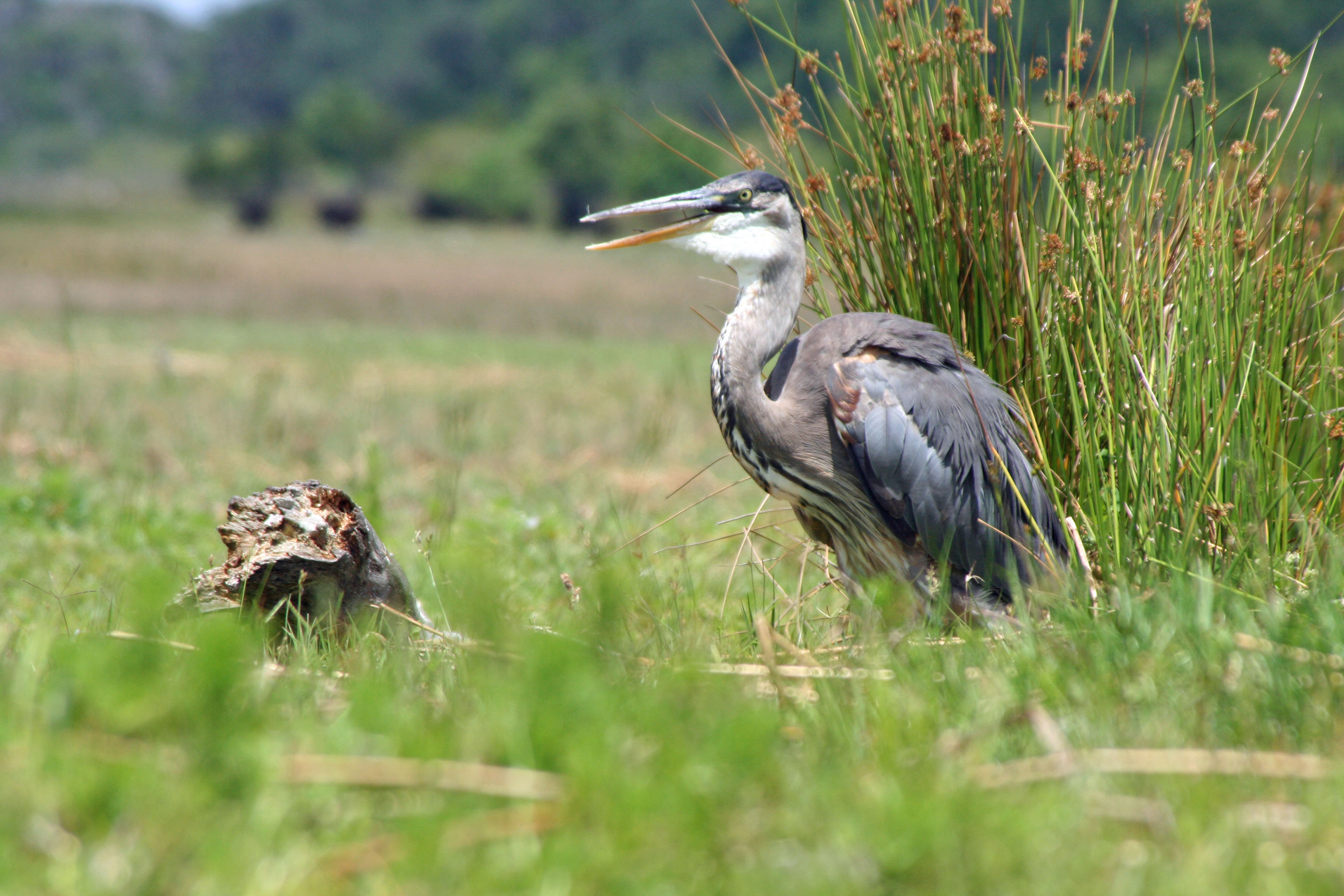
Mom’s job isn’t over with the hatching. She hangs out and protects her babies for another year. Lots of things including other alligators, fish, raccoons and even Great Blue Herons find baby alligators tasty. Later, when the babies grow up, they return the favor by eating the same creatures that wanted to eat them. What goes around comes around.

The protective coloration of these young alligators makes them difficult to see. Mom is hiding out near by on guard duty against predators.

One predator that is fond of eating baby alligators is the Great Blue Heron. Peggy photographed this one about 50 yards away from where the pod of young alligators was located.

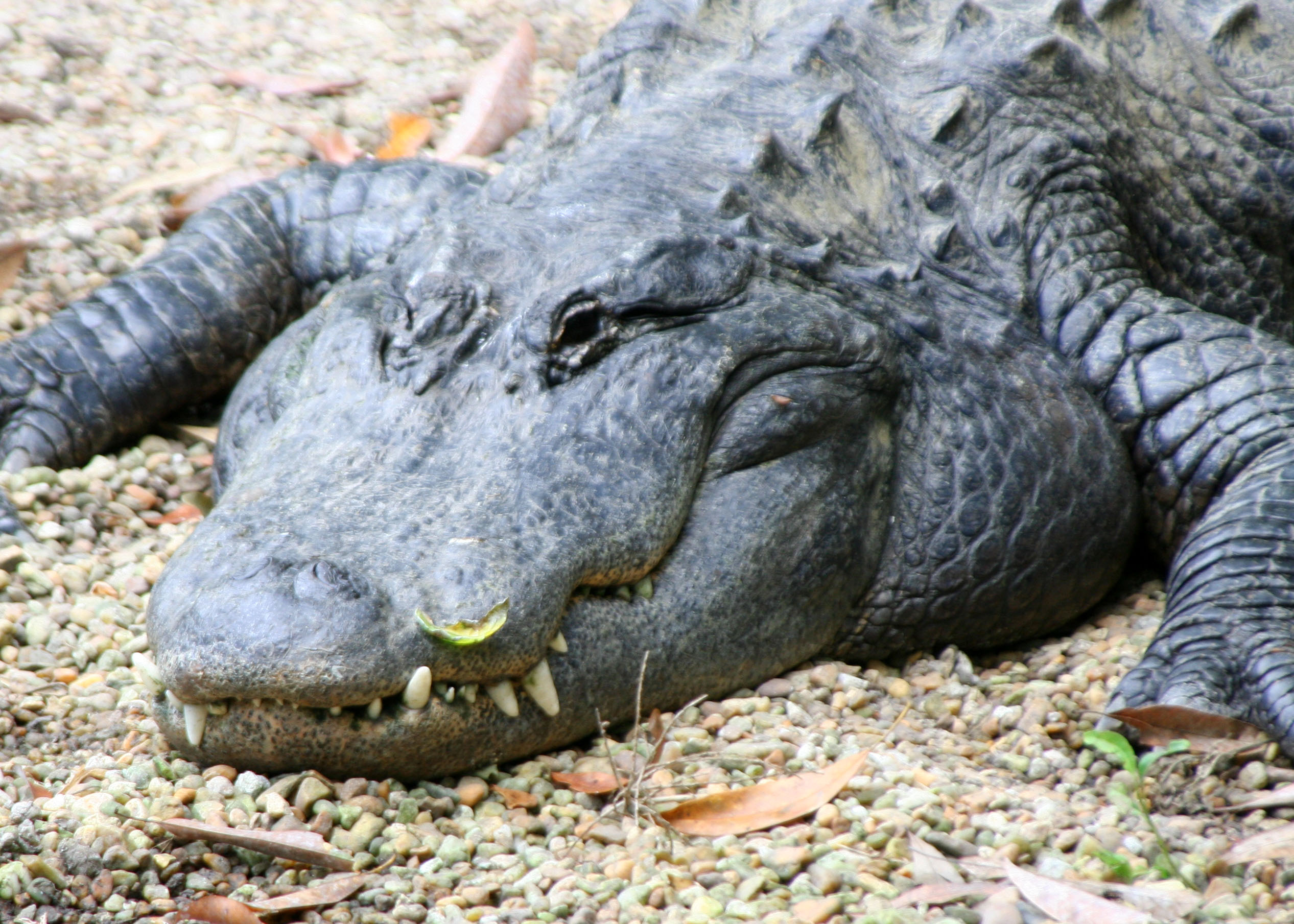
While alligators normally don’t eat people, they are dangerous. Any animal that weighs several hundred pounds, has 80 sharp teeth and a bite to die for deserves respect. Ask a dog. Their collars are frequently found in the stomachs of alligators that live in close proximity to people. Alligators rarely catch cats. The dog sees the alligator as something to bark at and chase off of the property. The cat sees the alligator as a reason for climbing a tree. It’s best to error on the side of cats.

Reptiles that can weigh several hundred pounds, have mouths full of teeth, and jaws with crushing power deserve respect.

Our traveling mascot, Eeyore the Donkey, hides out in the van when we go out to photograph alligators.

As one might expect, alligators are particularly aggressive during breeding season and while protecting nests. Also, feeding alligators is both dangerous and illegal. A Florida man learned this lesson the hard way a few days ago and lost his hand.

Having put in the cautionary label, respect not fear is the key word. These ancient reptiles are fascinating to see and safe to visit as long as common sense and caution are used. The Anhinga Trail at the Royal Palm Visitor Center in Everglades National Park provides a safe, excellent introduction to alligators as well as Florida’s unique bird life. Winter is the best time to visit.

We caught this alligator doing what alligators love to do, sunbathe. I took this photo on the Anhinga Trail next to the Royal Palm Visitor Center at Everglades National Park. I love the way the gator’s body conforms to the rock.

Newspaper Rock: 2000 Years of Indian Rock Art… All the News that’s Fit to Peck

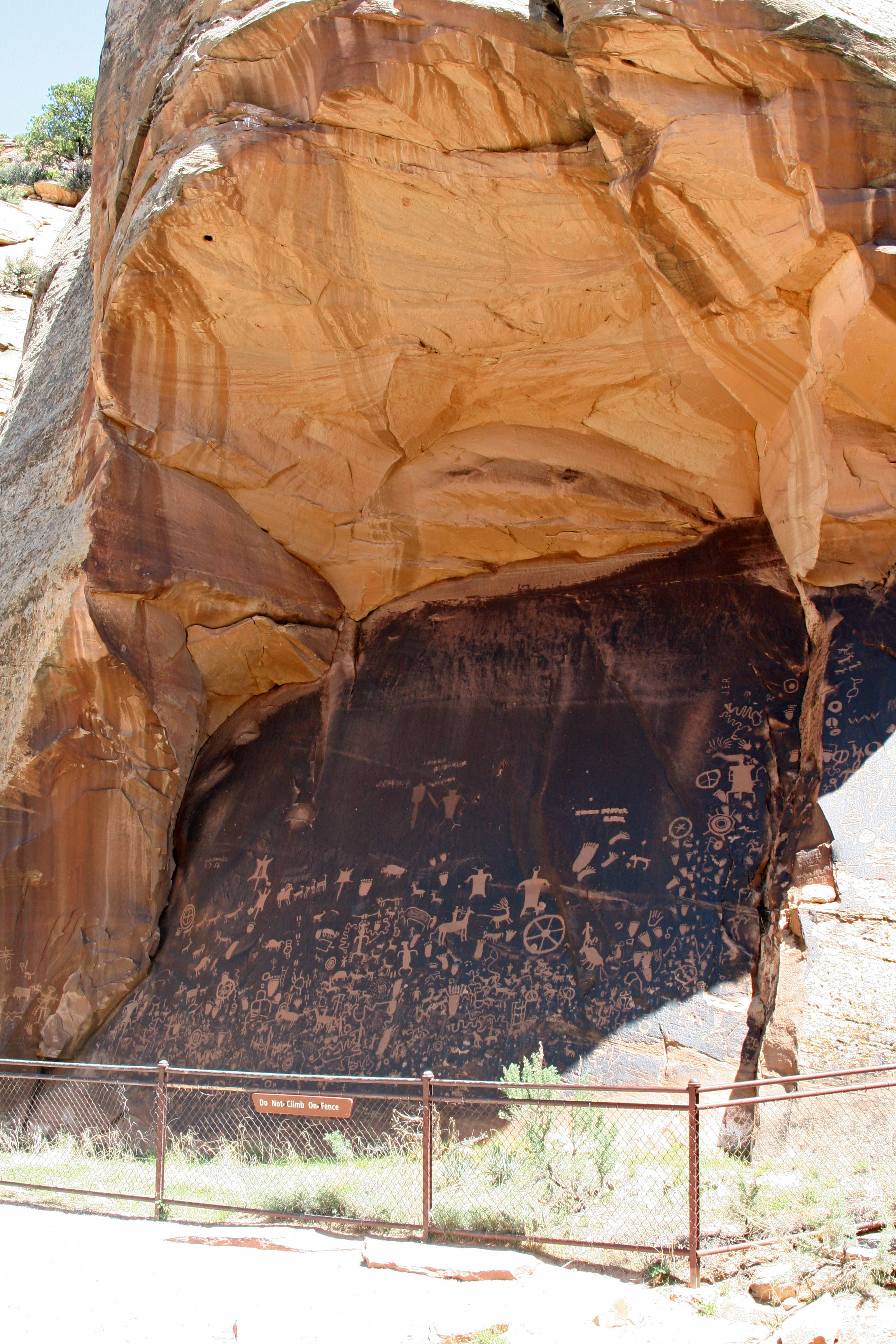
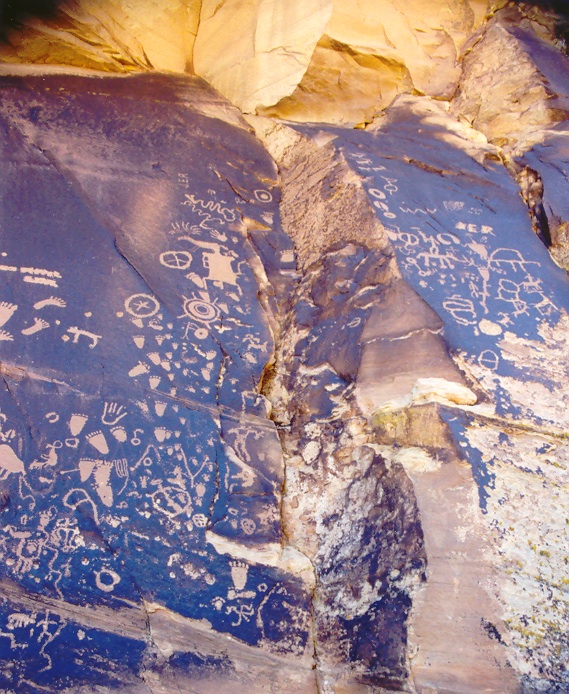
Newspaper Rock is filled with Indian rock-art that has been created over a period of 2000 years. This is my version of the headlines.

Sometime around when the historic Jesus was pounding the pavement of Jerusalem seeking recruits, Native Americans began pecking away at Newspaper Rock, creating petroglyphs. What they were trying to say is still something of a question mark. Guesses range from the mundane to the mysterious.

For example, was the guy shooting the buck in the rear a mystical symbol to give the hunter luck, or was it a recording of the event. “Shot big buck. Everyone is invited over for venison stew.”

Some images appear quite clear in intent. This Native American in sitting on a horse and using his bow and arrow to shoot a big buck. Hollywood would call it an action shot.

Like modern graffiti, some rock-art was likely meant to say, “I was here” or “This is the territory of clan such and such…” a no trespassing and no hunting sign. Enter at your own risk.

One interesting question is whether there was any purposeful art in rock-art? Did the creator peck away for the sheer joy of pecking away and creating a masterpiece?

In Navajo the rock is called Tse’ Hane or “rock that tells story.”

We can’t be sure when the individual petroglyphs were made. As I’ve noted before, Indian rock-art is very hard to date. The relative thickness of the rock varnish, the use of bow and arrows, the availability of horses, and the petroglyphs’ resemblance to other rock-art being created in the same era are all used as clues.

The National Historic Marker at the site notes that Archaic, Basket Maker, Fremont, Pueblo and Navajo cultures added their stories to the rock. In more modern times, pioneers even became involved.

Unfortunately, the tradition continues today. All too often people can’t resist adding their own names, marring and destroying the original petroglyphs at various sites. Think of spray-painting your name on the stained glass windows of the Cathedral Notre-Dame in Paris for comparison.

What’s fascinating about Newspaper Rock is the sheer number of petroglyphs included and the time frame over which they were created. I am also impressed with the variety of animals represented. For example, I can’t recall seeing flying squirrels or rabbit tracks in other rock-art sites Peggy and I have visited.

Newspaper Rock is located on Utah’s highway 211 which serves as the south entrance to Canyonlands National Park and is south of Moab. The following photos are a few examples of what you can expect to see. I take total responsibility for the interpretations.

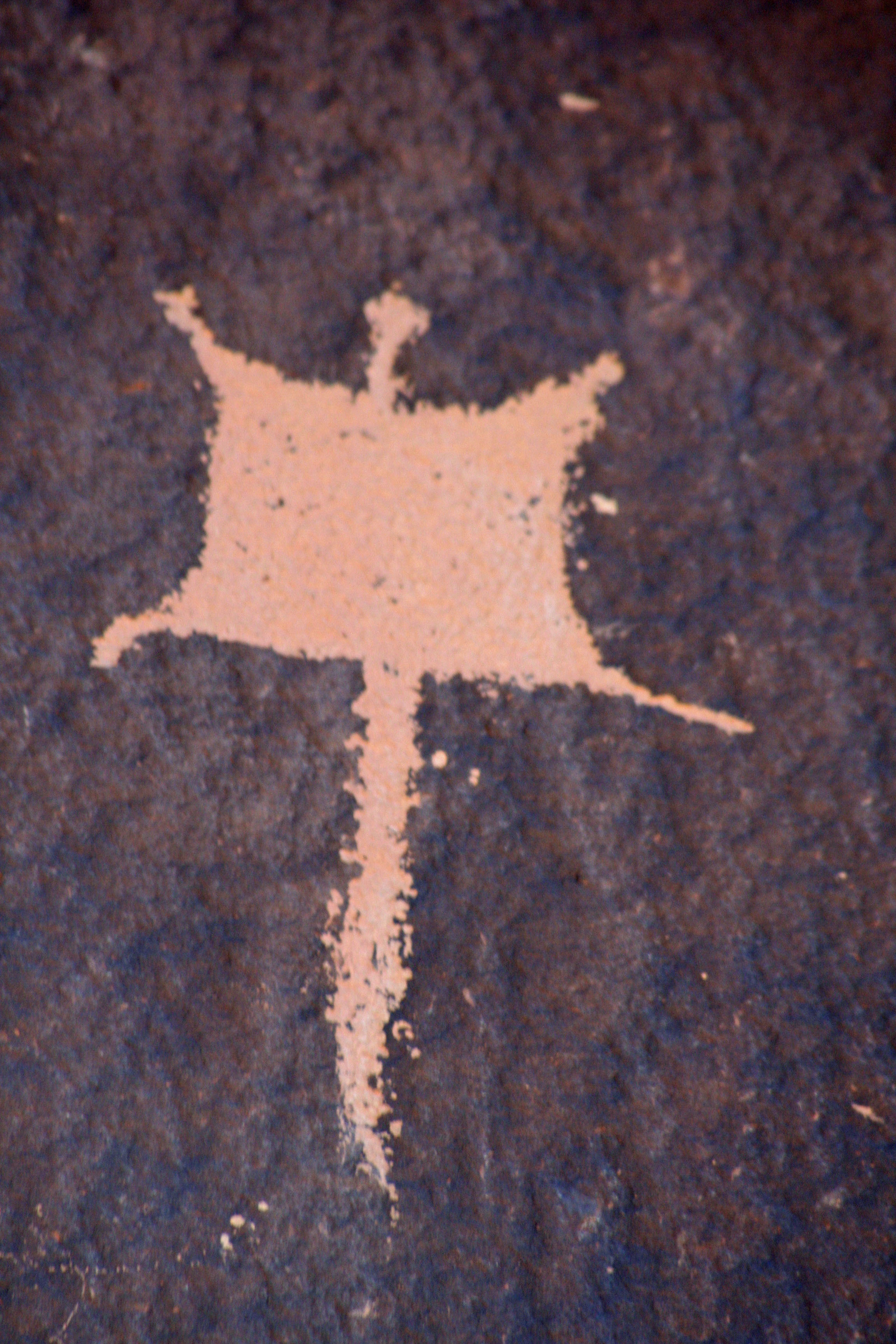
A flying squirrel sails across the sky at Newspaper Rock.

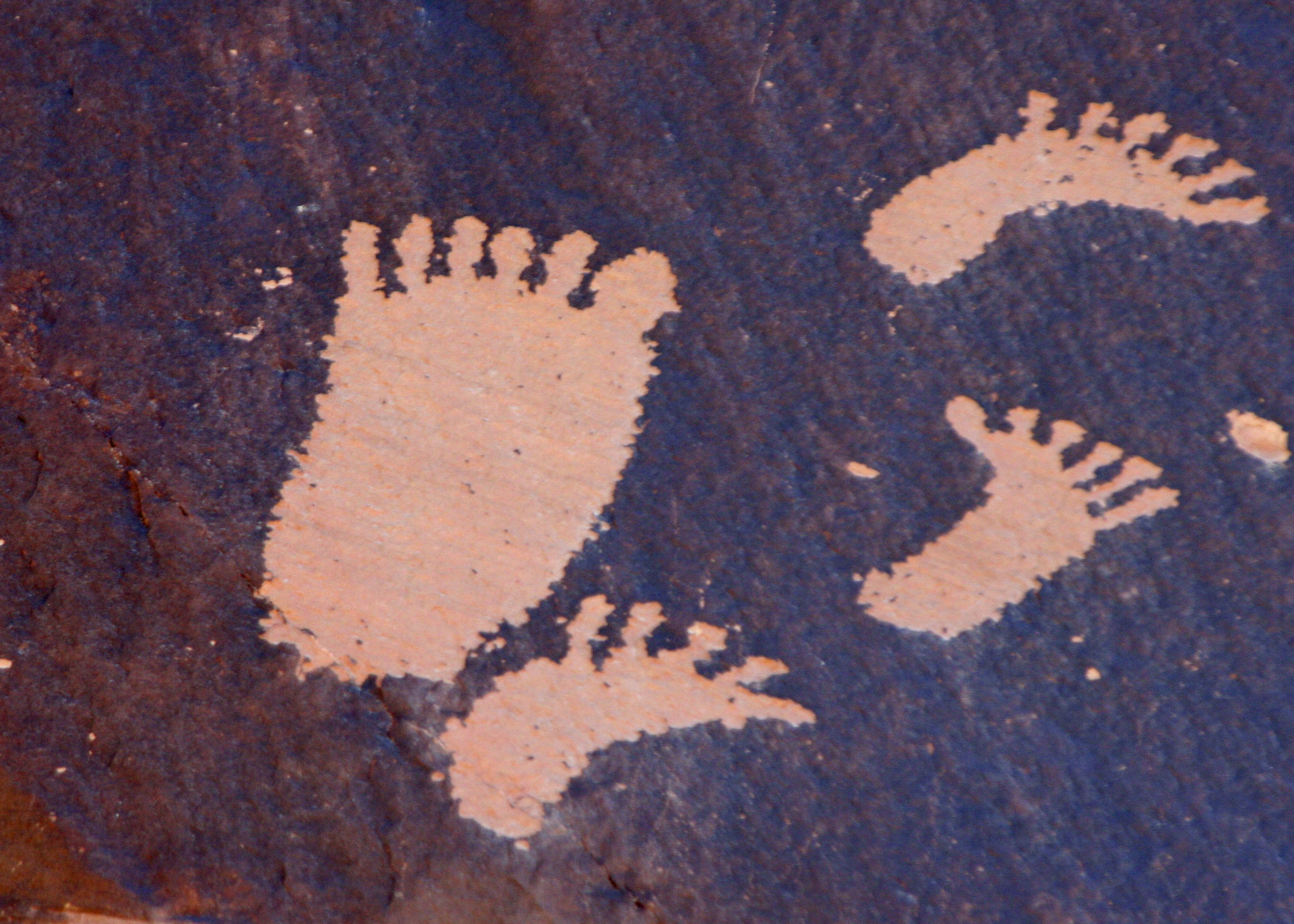
Big foot, bear foot, bird foot and a screaming ladder.

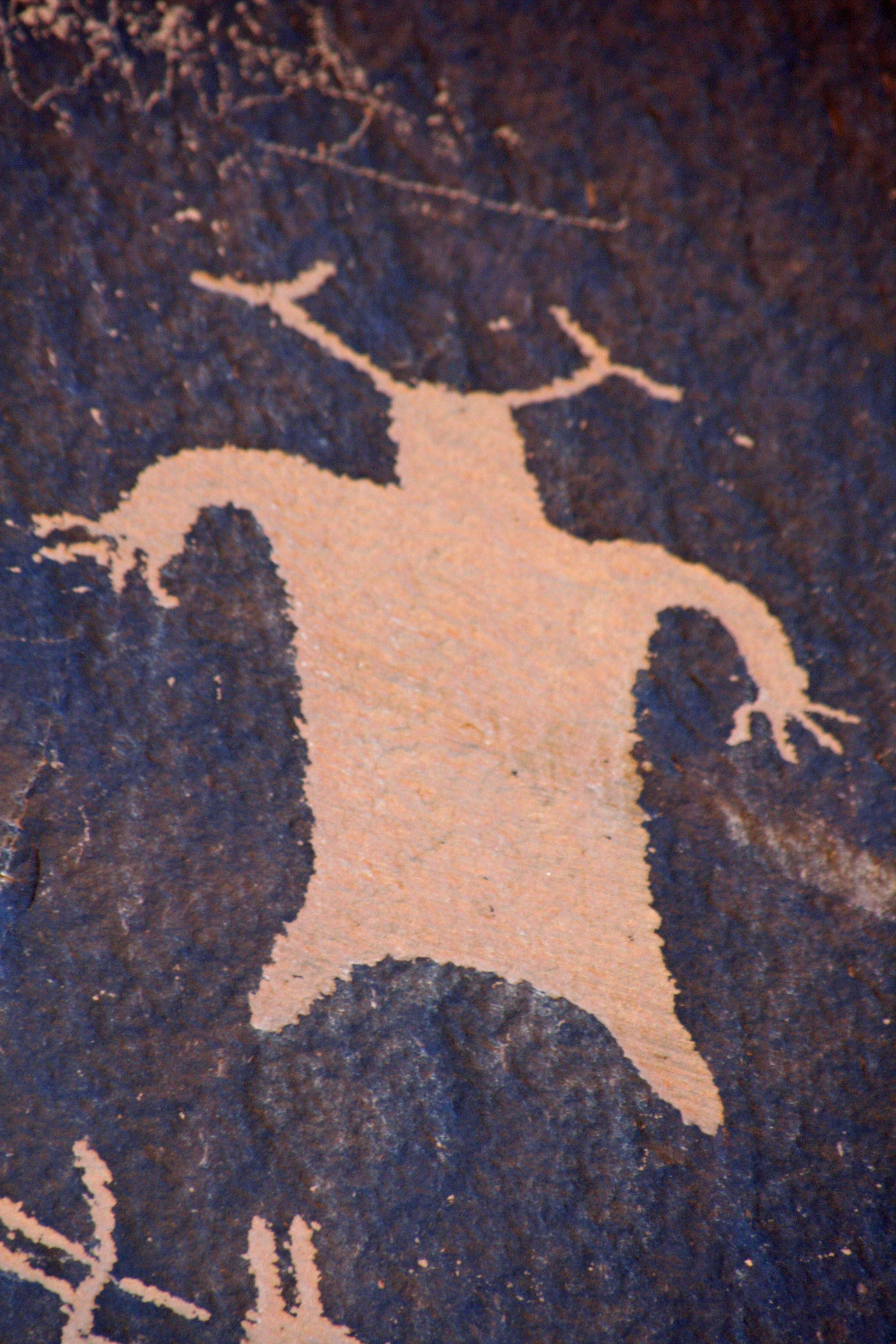
What little kids expect to find hiding under their bed at night.

A bow-legged trick rider?

A bow-legged trick rider? Yeehaw!

This represents the richness of wildlife found on Newspaper Rock. I see deer, a buffalo, big horn sheep, a bear and a lizard. I don’t have a clue what the long creature on the left with the strange legs is. Any guesses?

I’ve included this photo to illustrate how crowded the petroglyphs are on Newspaper Rock. Note the rabbit tracks working their way upward on the upper-right center.

Buffaloed?

Bear with me. (grin)

A picture of the complete Newspaper Rock site. The fence has been added to discourage people from defacing the petroglyphs.

My favorite photo. I like the contrast between the orange sandstone and dark rock varnish.

Where the Colorado and Green Rivers Meet… Canyonlands National Park

A gargoyle-type rock perches above the Colorado River in Canyonlands National Park.

I have a weakness for gargoyles. Their grotesque features appeal to my sense of humor. Or is that warped sense of humor? Whether I am touring a medieval cathedral or visiting Gotham City, they leap out and capture my imagination. Thus I was delighted when I came across a gargoyle-type rock hanging out above Canyonlands National Park.

Canyonlands is where the Green and Colorado Rivers meet. The down-cutting erosive power of these two rivers combined with the uplift of the Colorado Plateau and six million years of time are responsible for the breathtaking multitude of canyons and rock formations found in the Park.

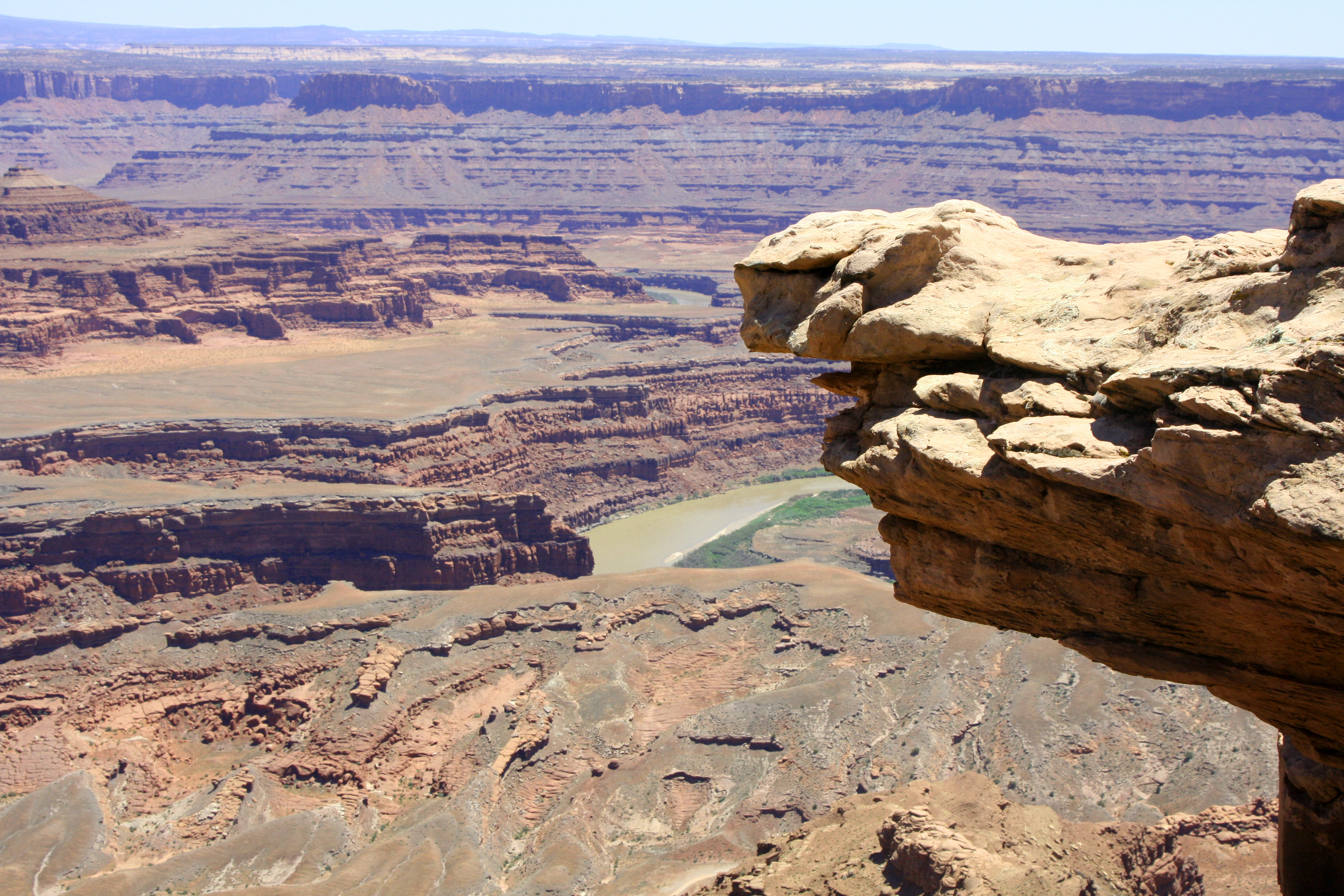
A trip out the park road to Island in the Sky provides views of both basins and other prominent park features. A detour to Dead Horse Point State Park off of the main road shows the Colorado River doubling back and almost meeting itself in a major meander known as the Gooseneck.

The Colorado River winds around and almost meets itself at Gooseneck. This photo is taken from Dead Horse State Park and is looking down into Canyonlands.

Flowers, twisted juniper trees, wildlife and distant mountains add to the scenery.

Both Canyonlands and Arches National Park are easy day trips out of Moab in southeastern Utah. Sego Canyon with its fascinating examples of Indian rock art that I blogged about recently is also within easy driving distance.

One of the Southwest’s best known Indian rock art sites, Newspaper Rock, is located on the southern road into Canyonlands National Park. I will feature the site in my next blog.

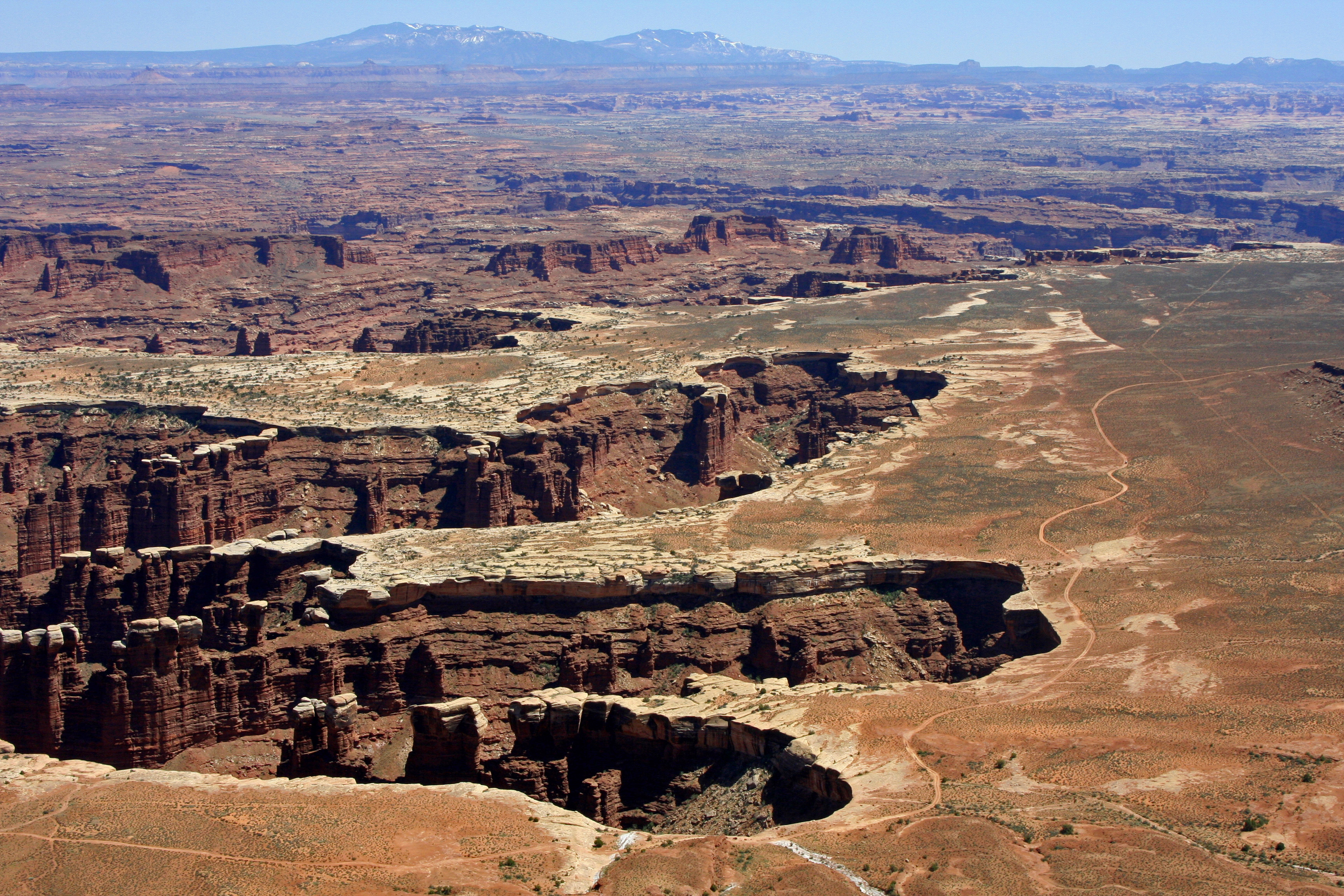
Finger like canyons working downward to the Colorado River gradually cut away at the harder rock of White Mesa. This picture is taken from Grand View Point at the end of Island in the Sky Mesa. The maze-like canyons that disappear into the distance provide multiple reasons for the Parks name.

Flowers, like this Indian Paintbrush, add a dash of color to Canyonlands.

Junipers, even young ones, tend to look old, but this guy has obviously been around for a while.

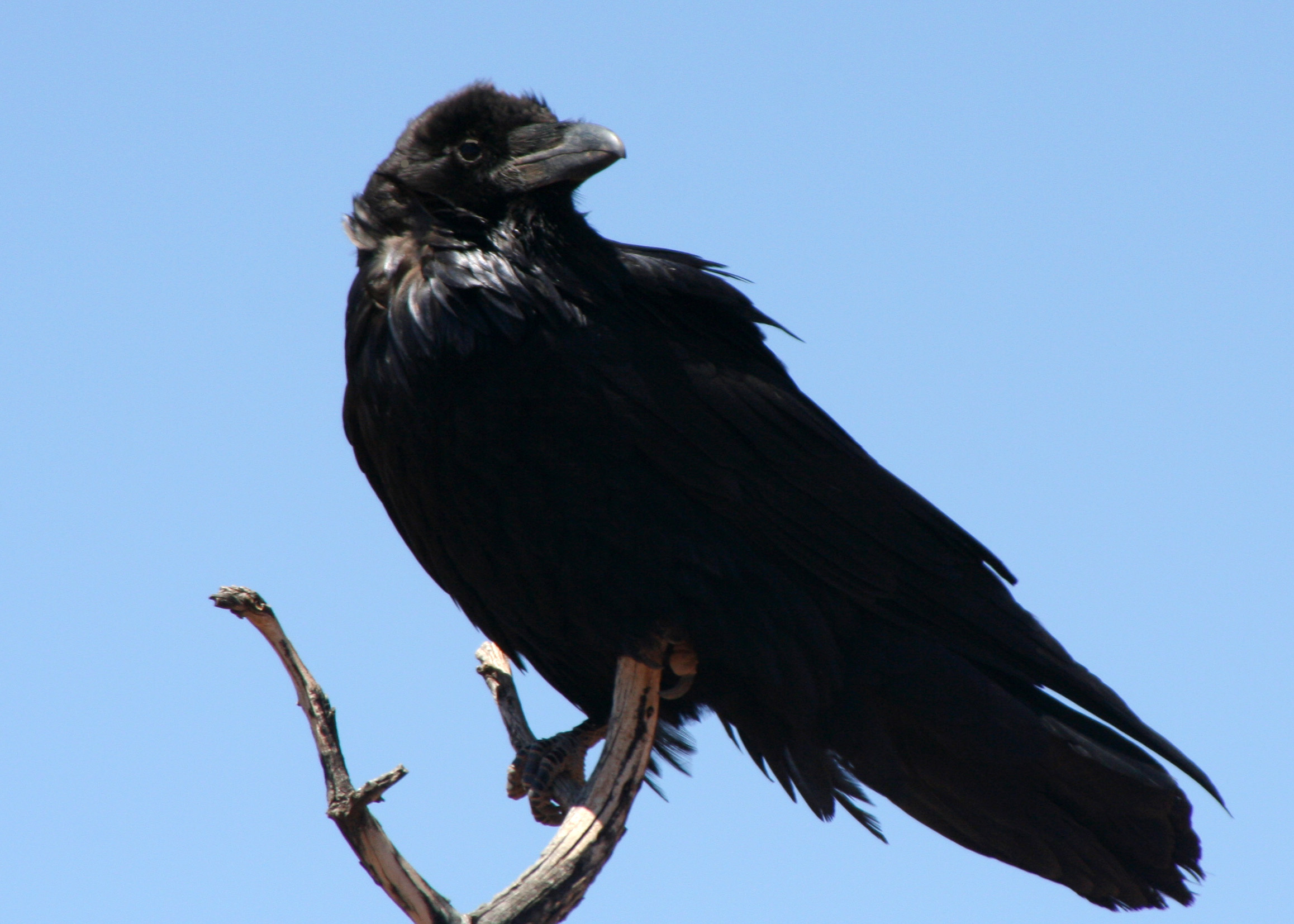
Raven has a special place in Native American lore. His tricky ways, croaky voice, and ability to survive in extreme conditions give him a special position in the bird kingdom.

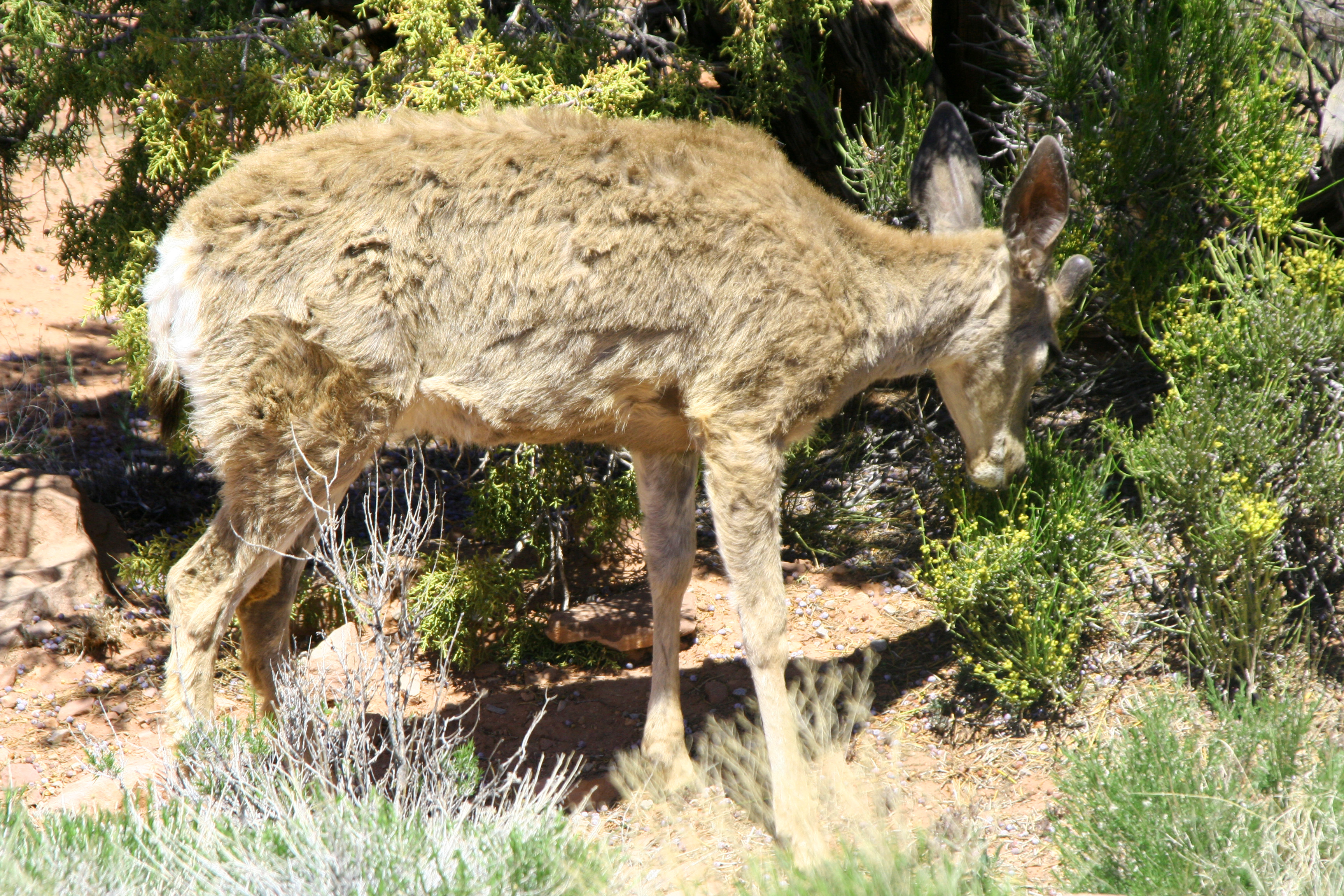
Spring is sprung but this young buck is still wearing his winter coat. While it may not be the height of fashion, it’s warm.

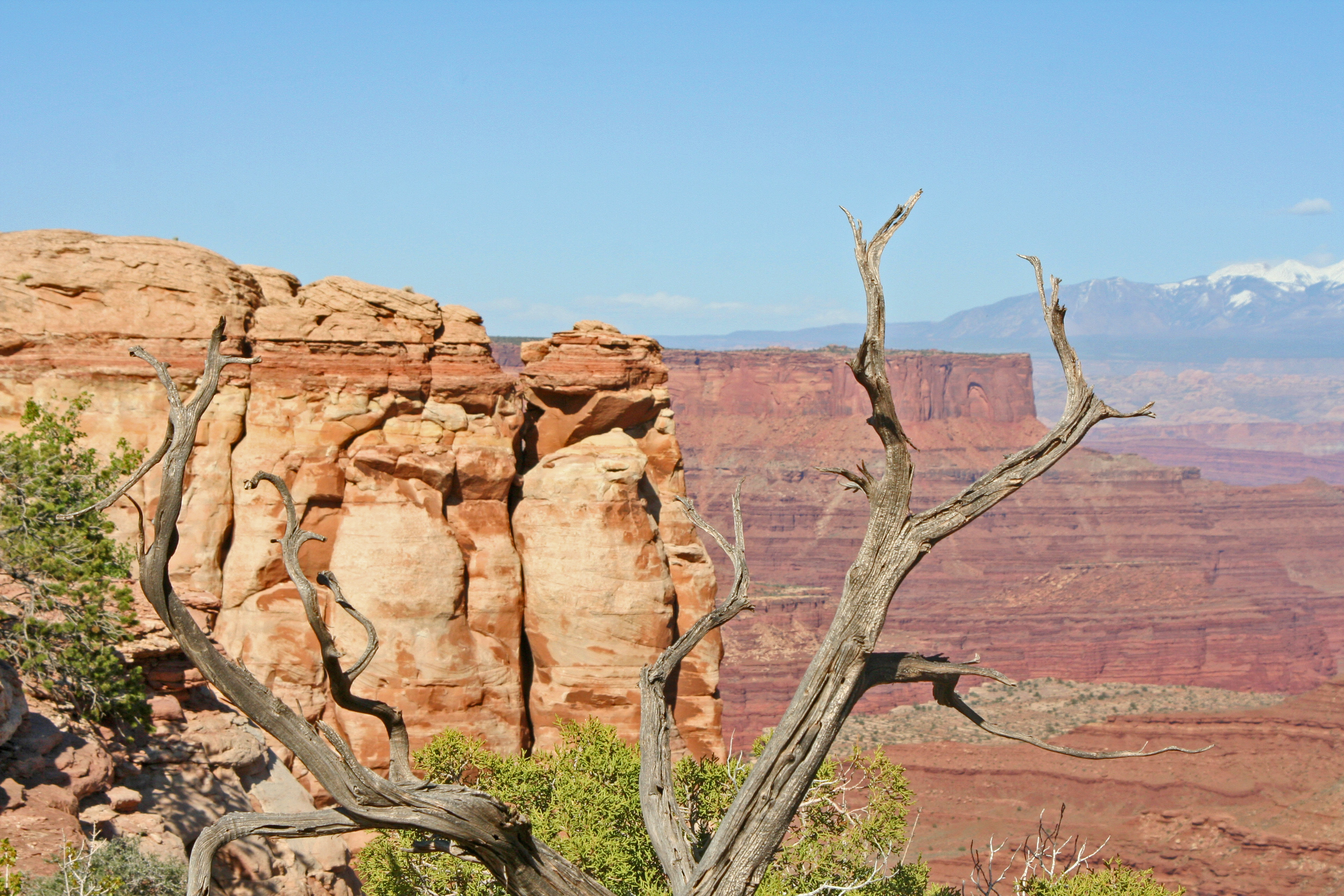
Distant snow-covered mountains, multi-colored rock cliffs, deep canyons and picturesque trees are all part of the Canyonlands National Park scenery.

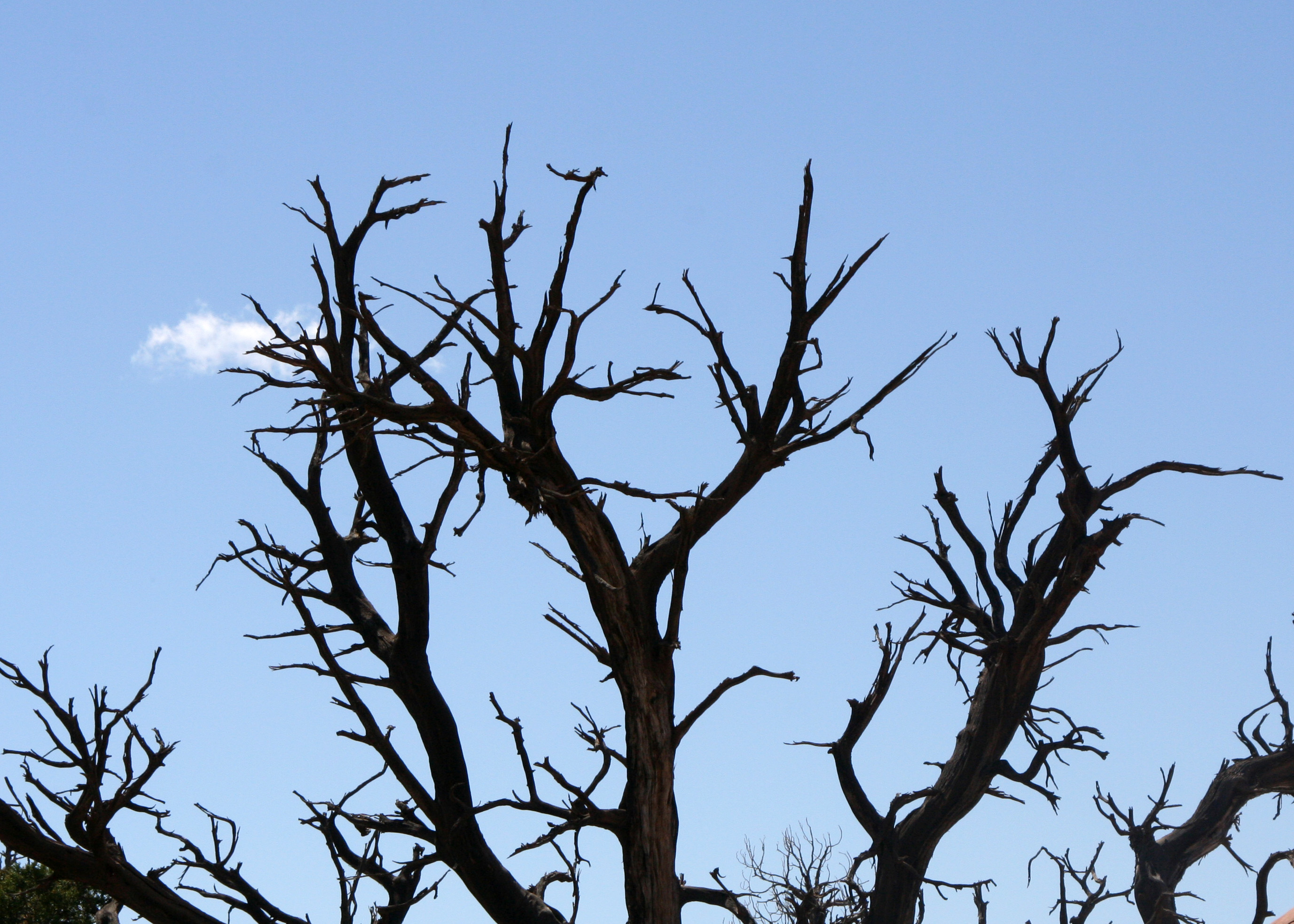
Stark tree.

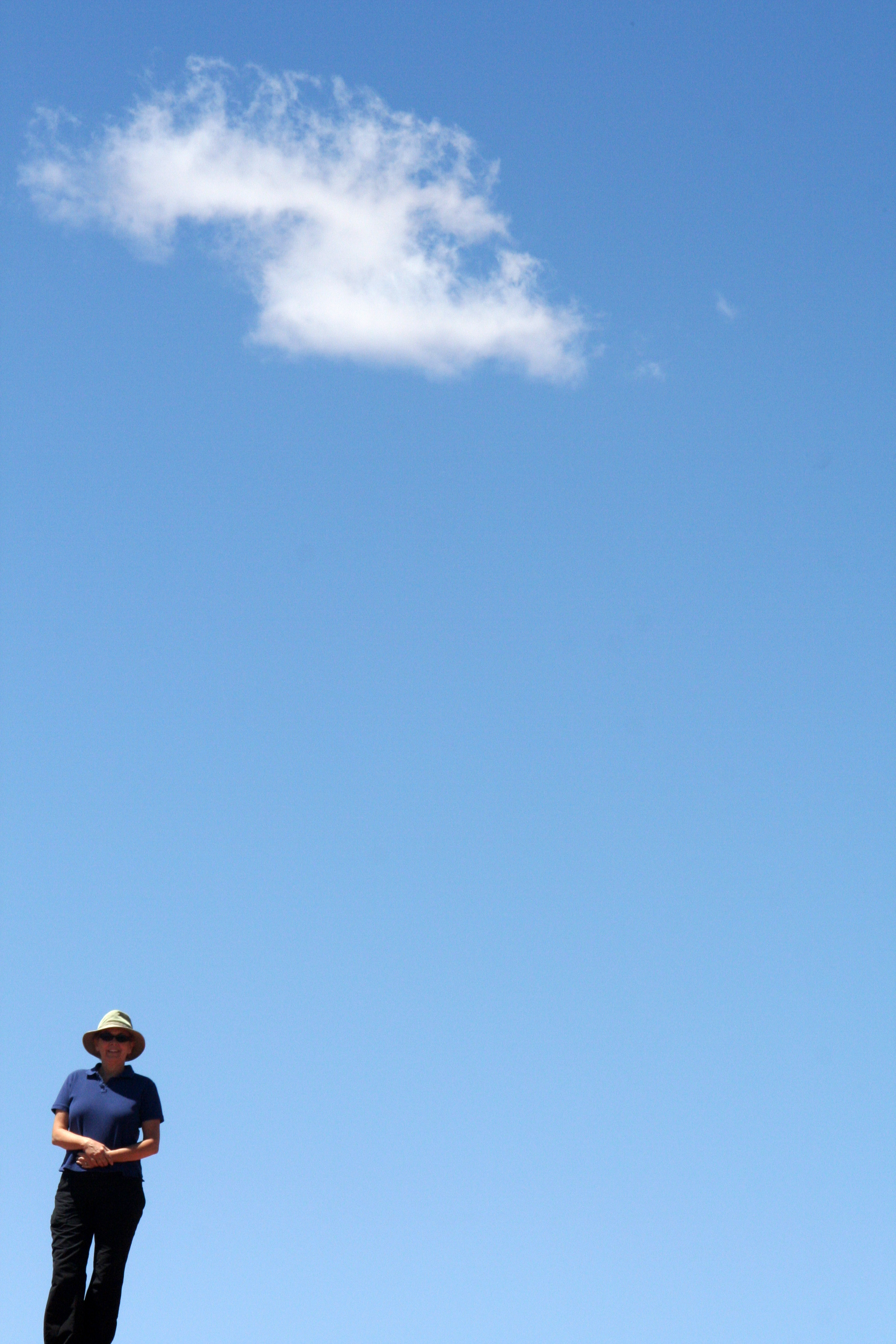
It is easy to lose yourself in the vast open spaces of the Southwest. My wife Peggy and Cloud prove the point.

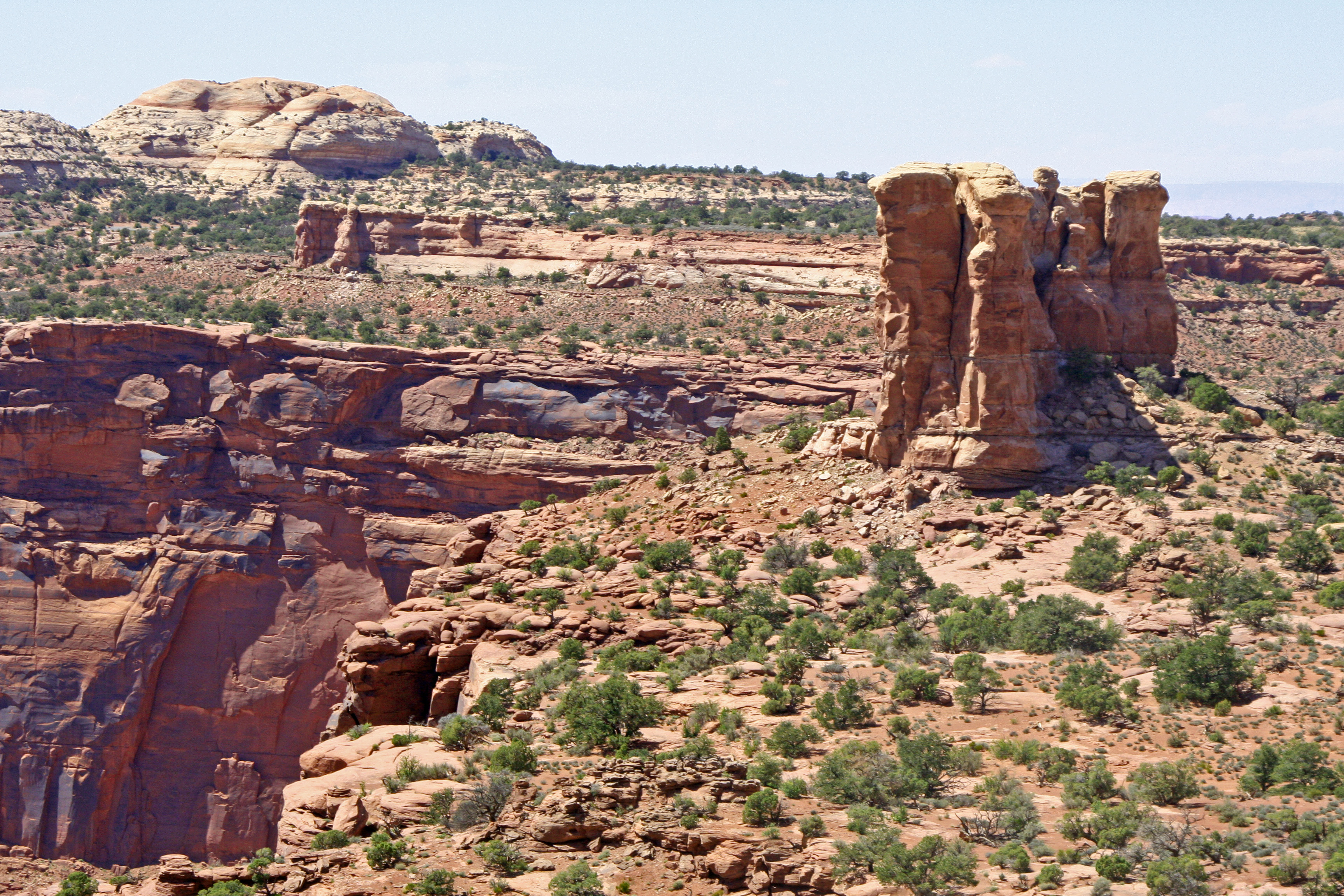
The semi-arid climate, erosive forces of nature, and geology of Canyonlands National Park and the Southwest combine to create unique natural sculptures.

If my memory serves me correctly, these two sculptures are called the Beehives.

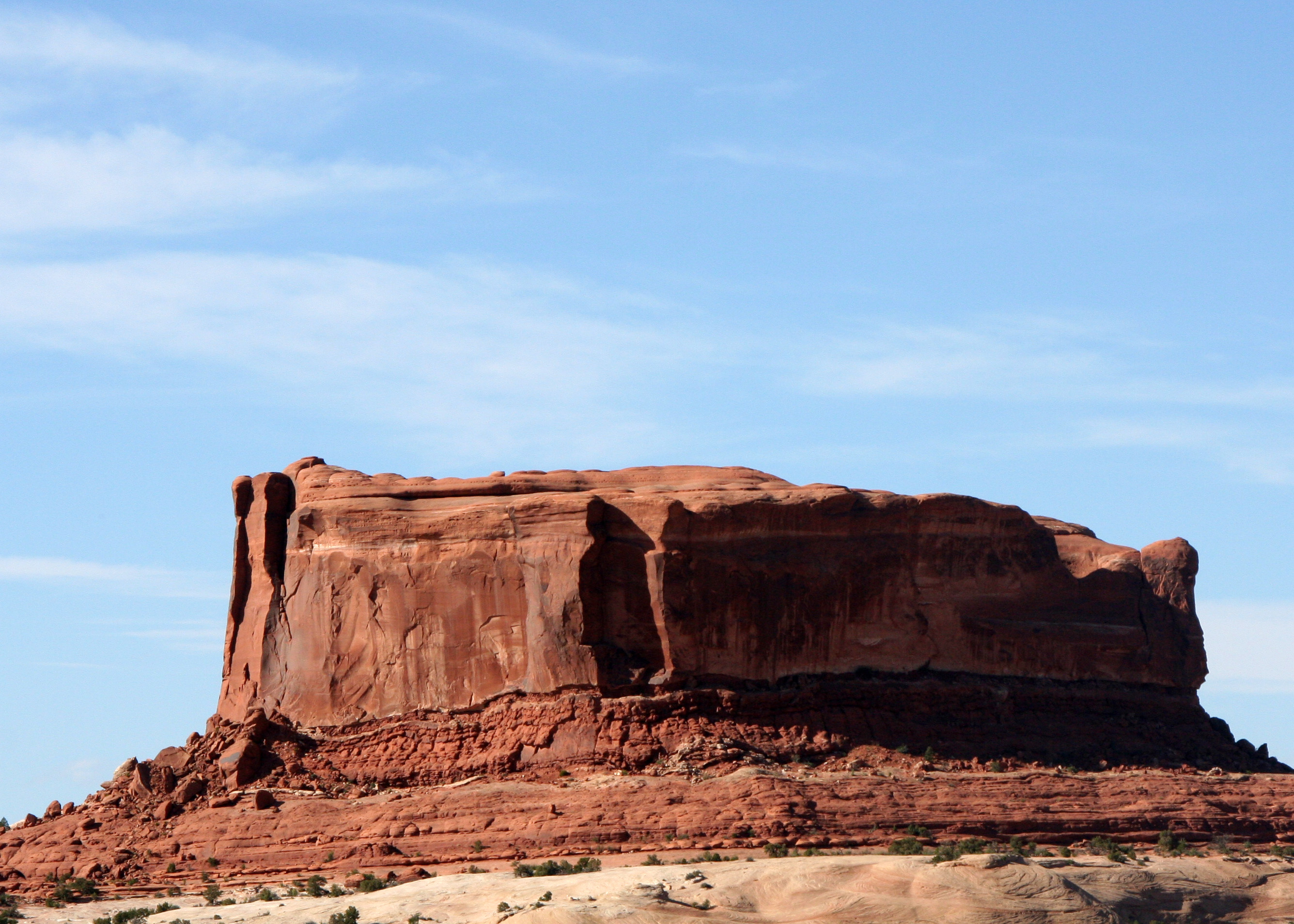
This massive monument of sandstone greets visitors at the north entrance to Canyonlands National Park.

Cub Creek Petroglyphs… Dinosaur National Monument

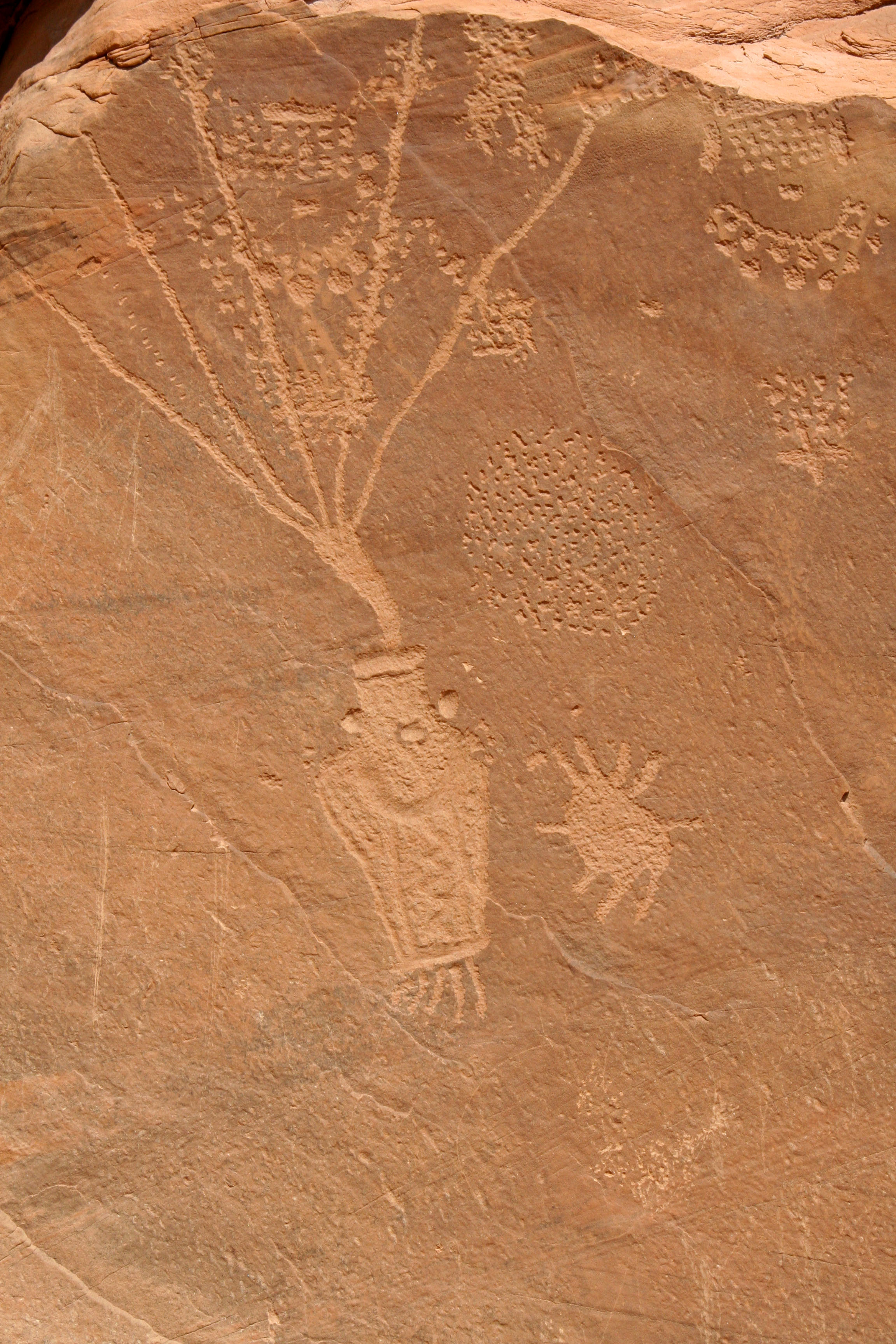
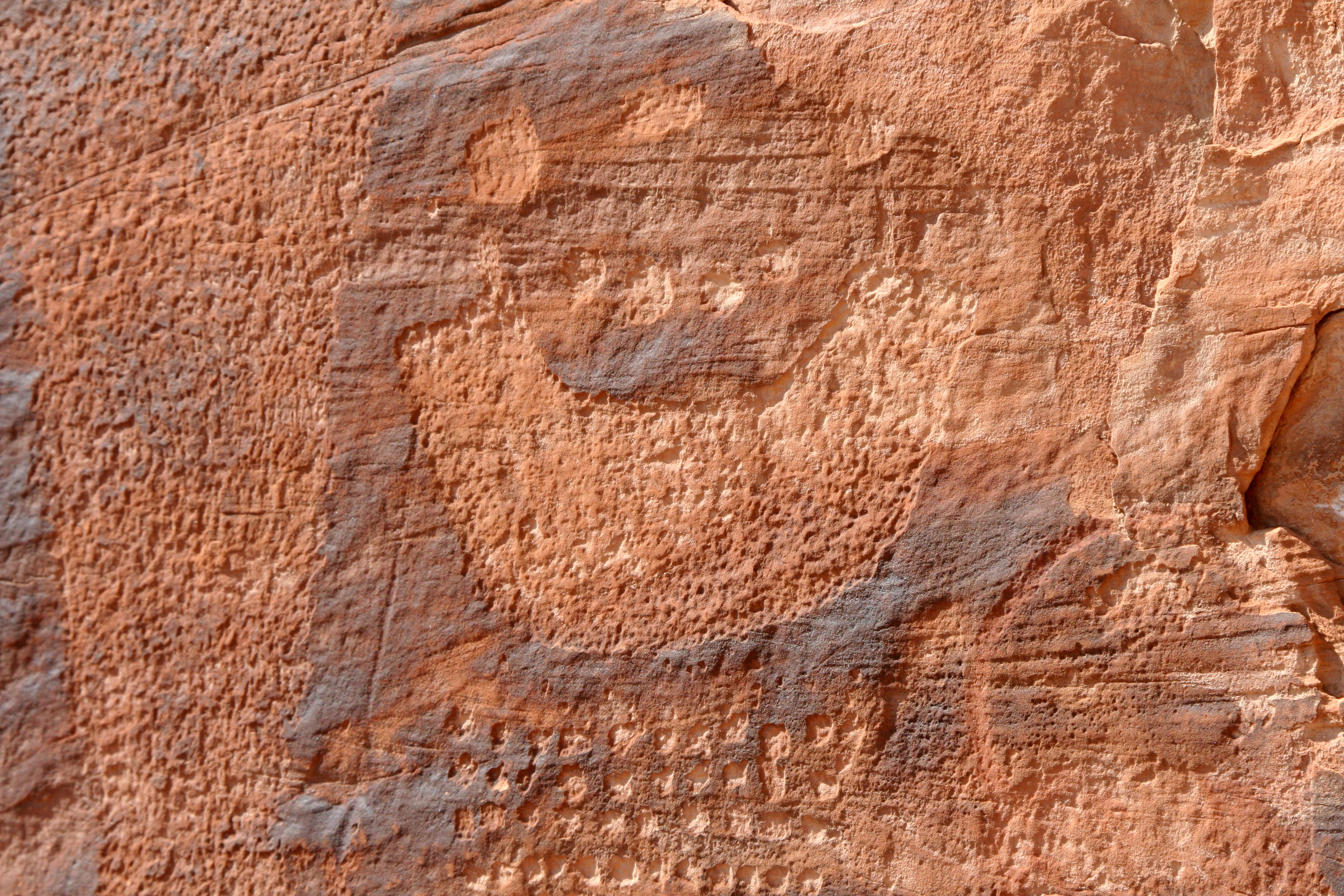
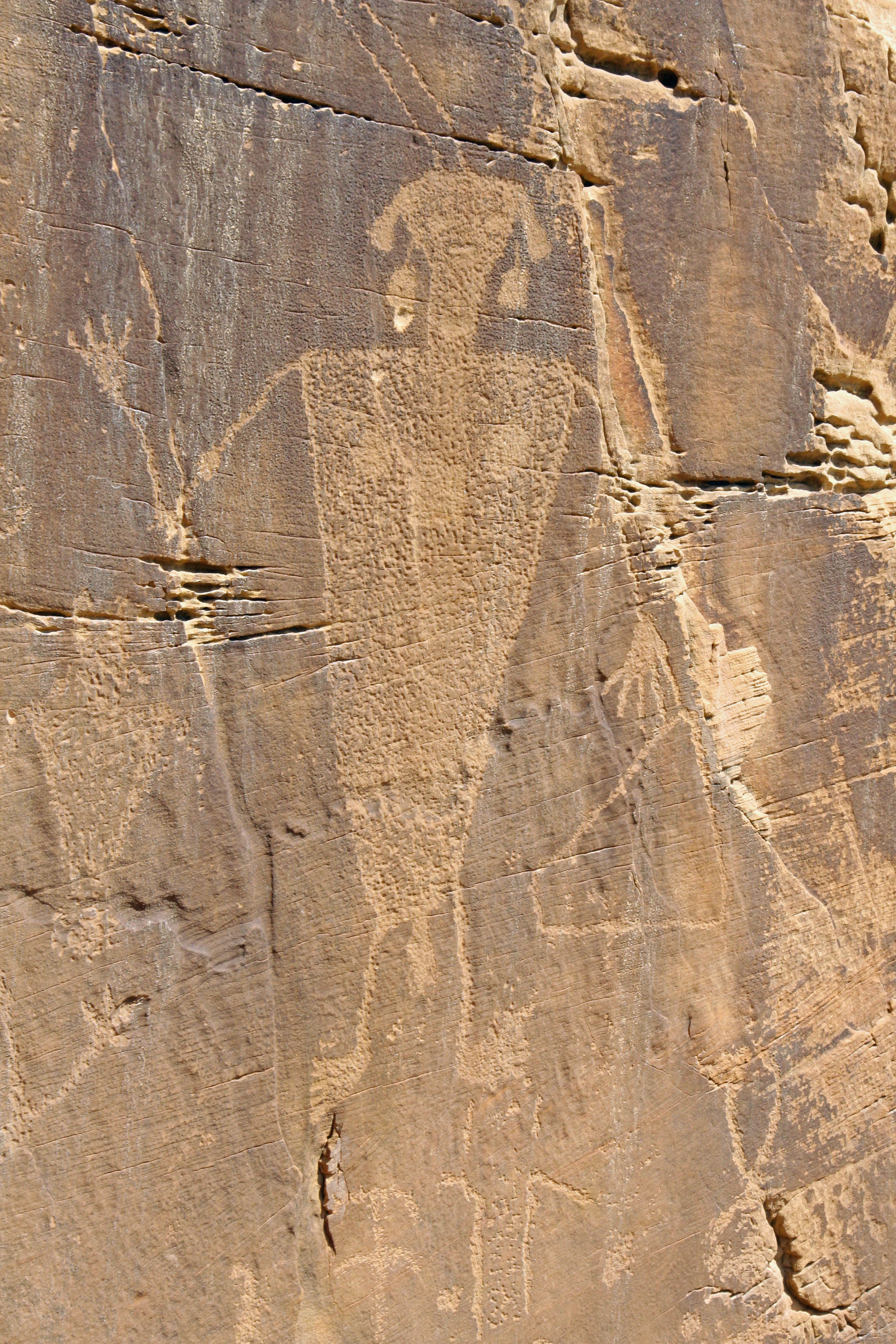
Like much Indian rock-art, Cub Creek petroglyphs in Dinosaur National Monument raise intriguing questions. It would be fascinating to know the story behind this unique anthropomorphic figure. What do the lines stretching toward the sky represent?

Peggy and I crossed over the Green River in Dinosaur National Monument and followed the road toward the cabin of Josie Basset Morris, the tough old pioneer woman who had worked her way through five husbands and finally discovered she preferred living alone.

The river, mountains and distant vistas entertained us along the way. Two prominent landmarks, Elephant Toes and Turtle Rock, lived up to the names the early settlers had bestowed on them. I found the big toes particularly amusing.

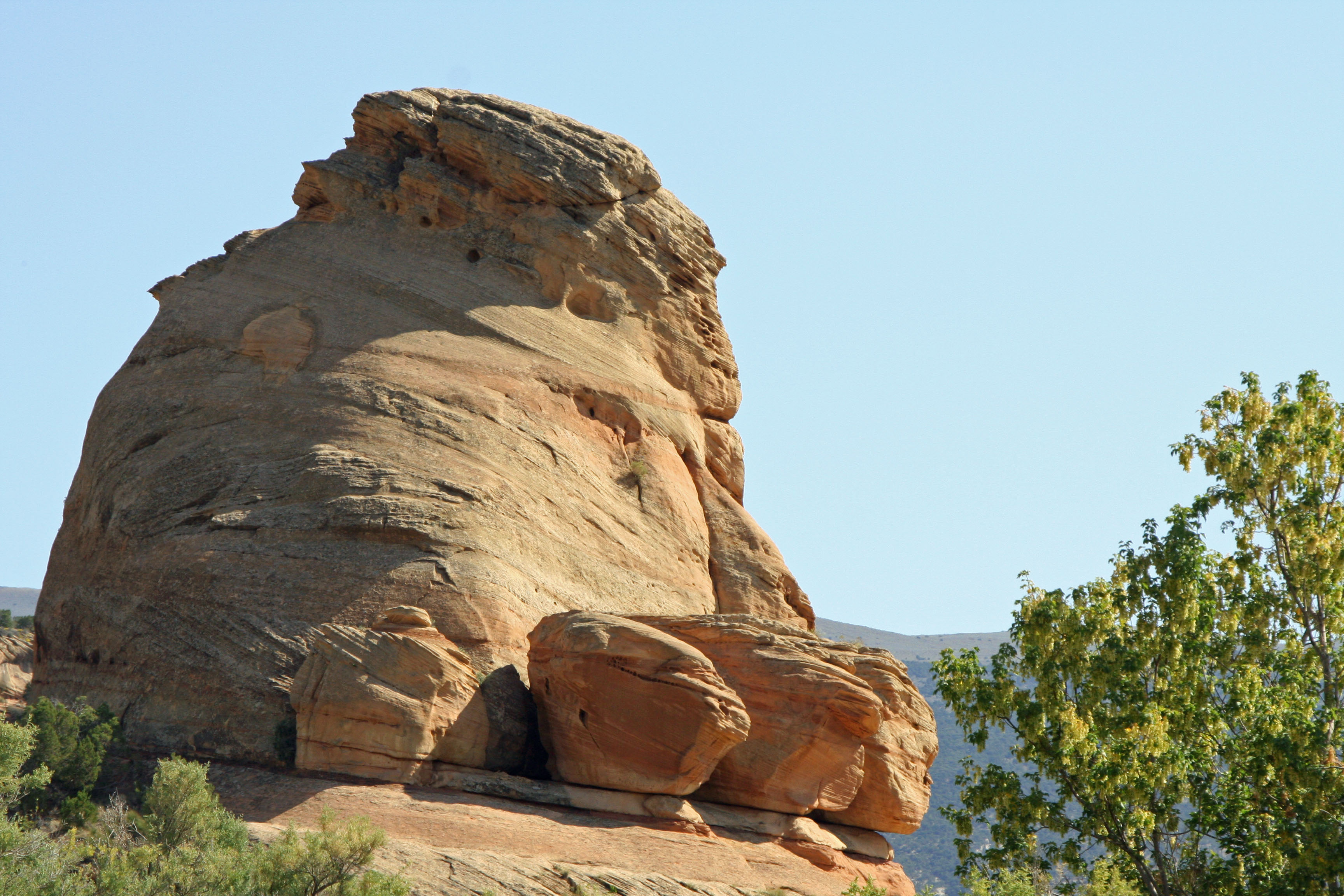
Elephant Toes Rock in Dinosaur National Monument along the Cub Creek Road. 

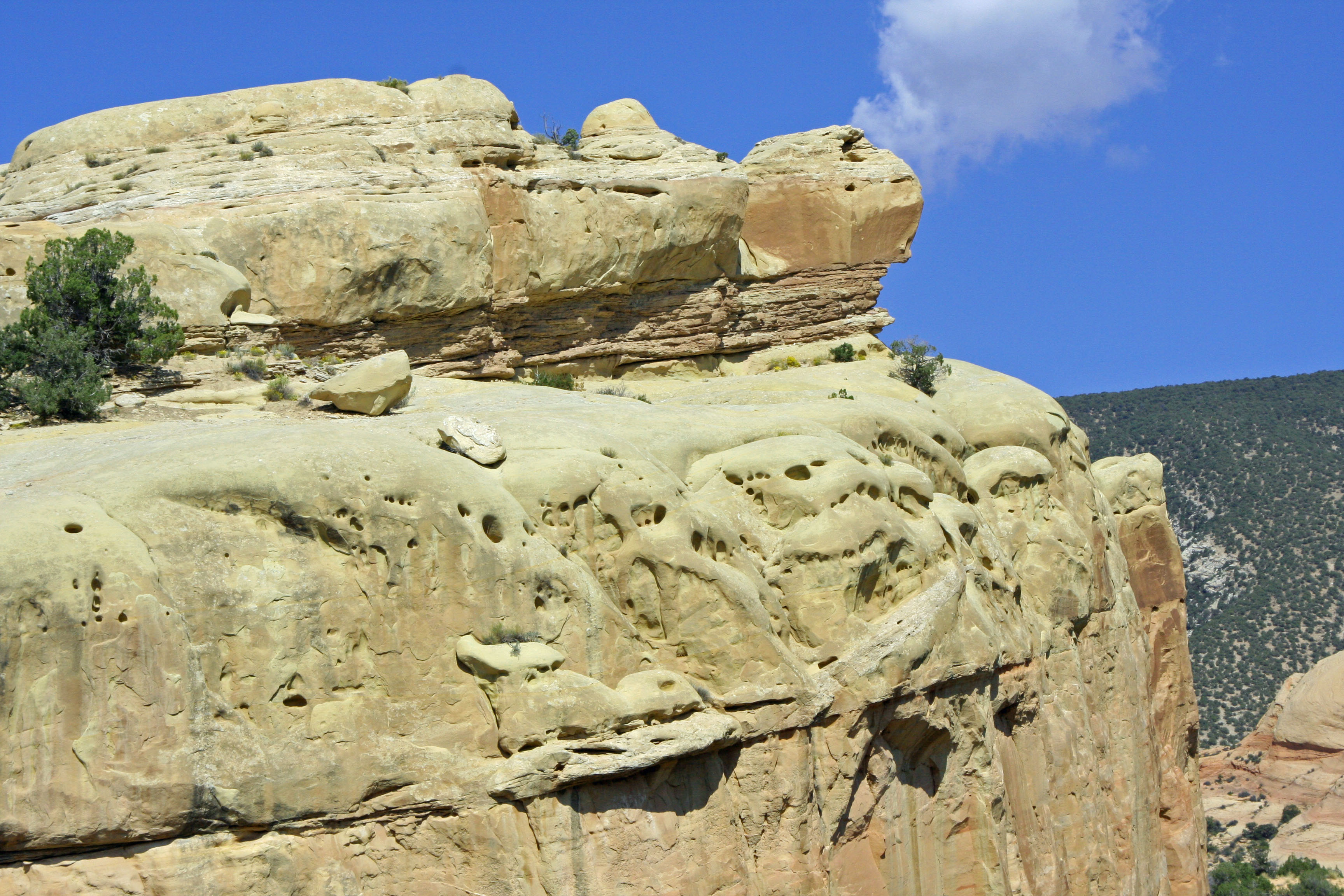
While not  as humorous as Elephant Toes, the turtle of Turtle Rock is easy to see. Both Native Americans and pioneers were quick to see and name familiar figures in the landscape.

The true surprise on our way to Josie’s, however, was the Indian rock-art. Huge six-foot lizards had been pecked into the cliff faces high above the Cub Creek Valley. One can only wonder if the Native Americans of the Fremont Culture had somehow made the correlation between dinosaur bones found throughout Dinosaur National Monument and really big lizards. Or did small lizards so prominent in desert environment serve as the models?

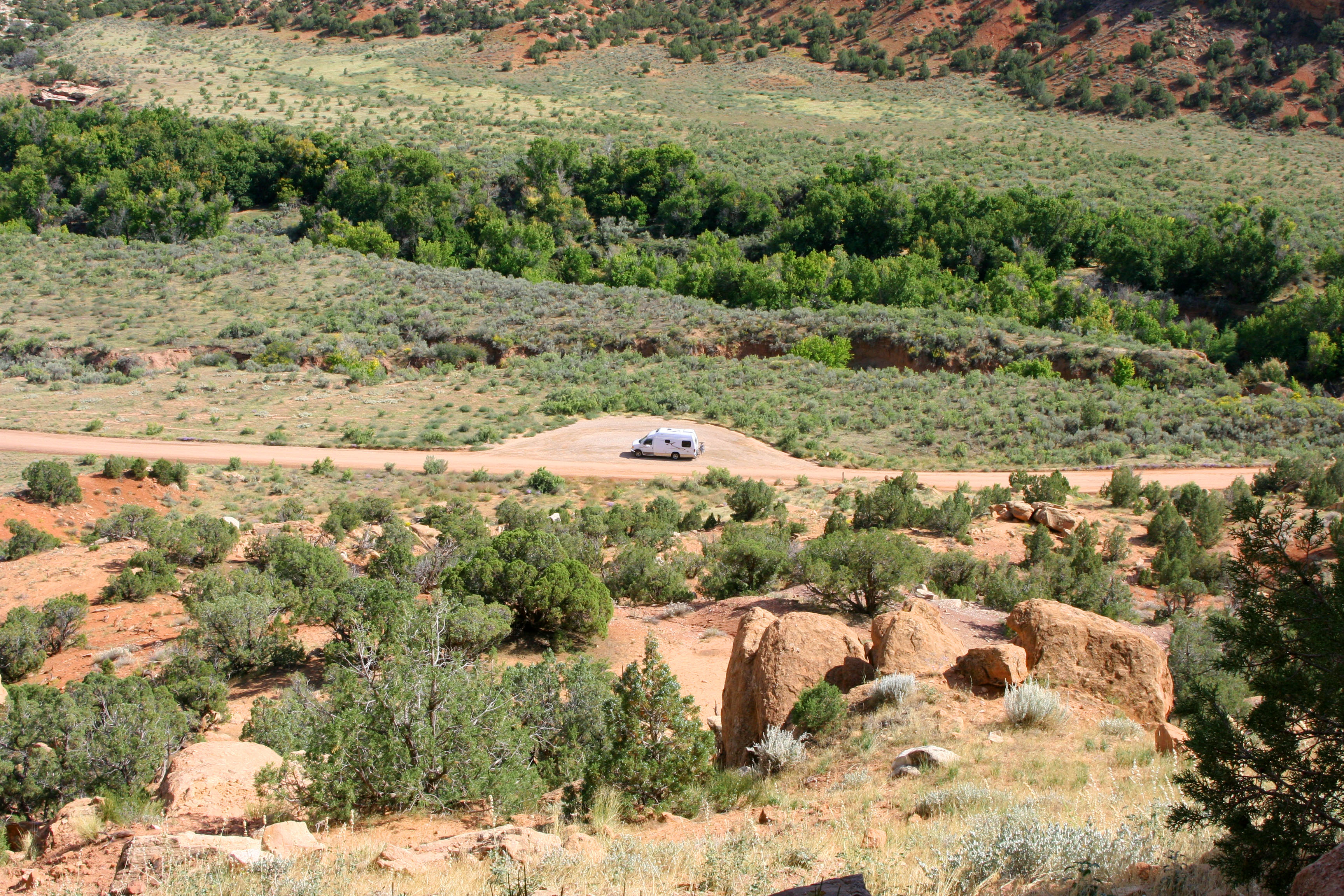
Our van, Quivera, provides perspective on how high up in the cliffs the Cub Creek petroglyphs are.

Giant, six-foot long, rock-art lizards work their way up the rock face at Cub Creek. Are they representative of the dinosaur bones Native Americans found at Dinosaur National Monument?

Or did the giant petroglyph lizards represent the small lizards so prominent in the arid regions of the West?

Numerous other petroglyphs also demanded our attention. We even found a partial image of Kokopelli, the hunch backed flute player found in ancient rock-art from Mexico to Canada and whose image has been applied on everything from jewelry, to blankets, to pottery in today’s gift shops throughout the West. Kokopelli was both a musician and trickster god, but mainly he was a fertility deity known for his for his bad behavior. Watch out fair maidens one and all.

My wife Peggy admires a small section of the numerous petroglyphs found at the Indian rock-art site on Cub Creek in Dinosaur National Monument.

A partial petroglyph of the flute playing Kokopelli is found at the Cub Creek Indian rock-art site. Odds are he is luring young maidens with his music.

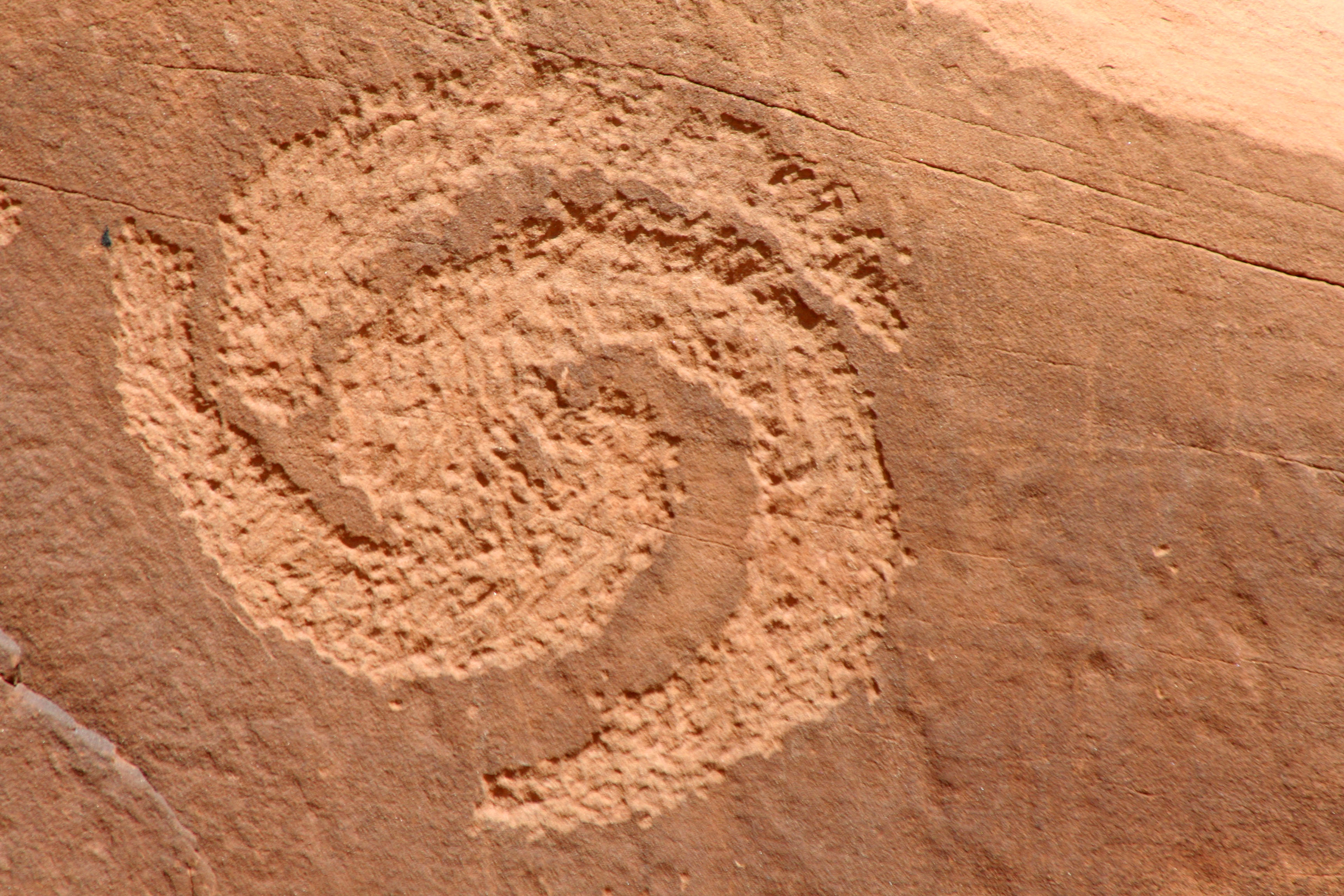
Geometric forms are common in rock-art. This galaxy-like representation caught my attention.

I selected this particular photo because it demonstrates how dark rock varnish has been chipped away in the petroglyph process to reveal the lighter colored rock underneath.

An early day smiley? This guy appears to me to be all mouth and legs but it’s creator likely had something else in mind.

Greetings Earthlings. Check out the dangling ear rings and necklace on this guy. Jewelry apparently was quite important to early Native Americans and may have represented an individuals importance or clan. You will probably note the prominent anatomy as well. Genitalia was often included on Indian rock-art until the Spanish Missionaries informed the natives that such display was sinful.

I call this petroglyph Big Boy.

A Jurassic Playground… Dinosaur National Monument

Dinosaur National Monument is located on the border between Colorado and Utah on the southeast flank of the Unita Mountains. This photo featuring the Green River was taken near our campsite. Yellow Rabbit Bush provides a splash of yellow.

While Dinosaur National Monument lacks the grandeur of some of it’s better-known cousins, it has an armload of subtle beauty, two gorgeous rivers, and a super abundance of dinosaur bones that attract world-renowned paleontologists like bears to honey.

It also has a fine collection of Indian rock-art and at least one eccentric pioneer. I’ll save the rock-art for my next blog but I’ll introduce the pioneer now. Her name was Josie Basset Morris. She lived to be 90 years old, divorced four husbands, buried a fifth, and spent the majority of her life living alone in the backcountry of what is now Dinosaur National Monument.

She was one tough old coot.

During Prohibition, she was known for making a fine apricot brandy. In her 60s she was arrested and acquitted for cattle rustling, twice.

Peggy and I went to visit the log cabin that she had built and lived in for 50 years. Natural features compensated for what it lacked in modern amenities such as electricity, running water and a phone. An ice-cold spring provided water, a hidden box canyon served as a corral, and river bottom dirt supplied fertile ground for fruit trees and other crops. 

Apparently she lived quite well. But what about the tough times? I am guessing she lived off of homemade booze and rustled filet mignon.

Peggy stands next to the log cabin that Josie Basset Morris lived in for 50 years and provides a five-foot, six-inch perspective on the size of the cabin.

A photo of Josie at her cabin in the early 50s. (Photo from Google images.)

Earl Douglass was working for the Carnegie Museum out of Pittsburg PA when he discovered the dinosaur bones in 1909. He was looking for more recent mammal fossils. The dinosaurs roamed the area in Jurassic times, some 100 million years ago. He spent several years digging bones, packing them up and shipping them off to Pittsburg where you can now see them reassembled at the museum.

Or you can visit the Douglass Quarry at Dinosaur National Monument and see how paleontologists dig up the bones. Some 1400 have been exposed and labeled at the Quarry. It’s an incredible site. It was closed when Peggy and I visited due to disrepair but fortunately I had visited it before.  Funding from the Obama Administration has since allowed this treasure to be reopened to visitors from around the world.

Peggy and I satisfied our desire to see dinosaur bones by scrambling around on the hillside near the Quarry and stopping off at the Visitor Center. The Peripatetic Bone was impressed with his ancient relatives.

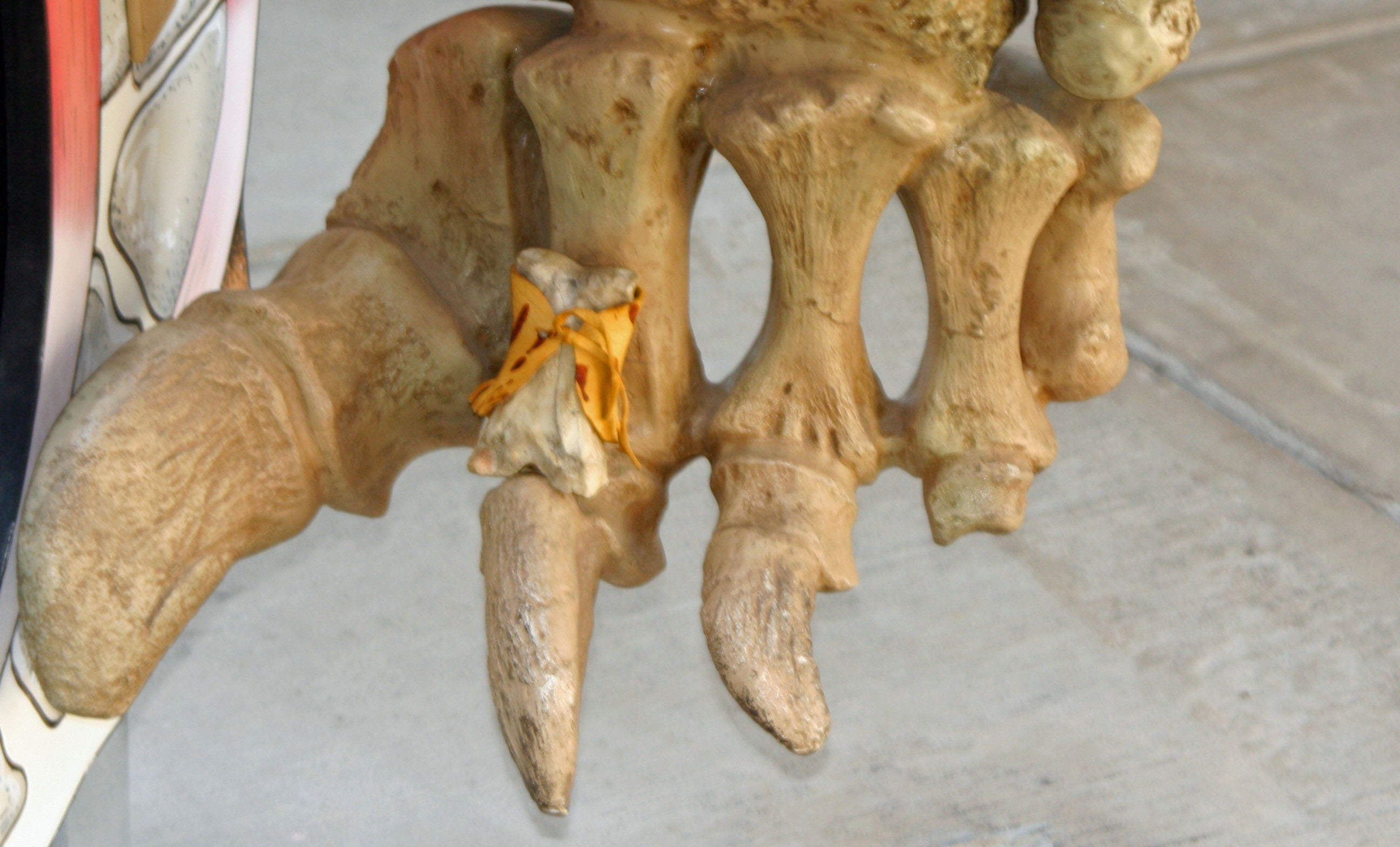
The Peripatetic Bone was quite impressed with the size of his ancient relatives. Here he rests on dinosaur toes at the Dinosaur National Monument Visitor Center.

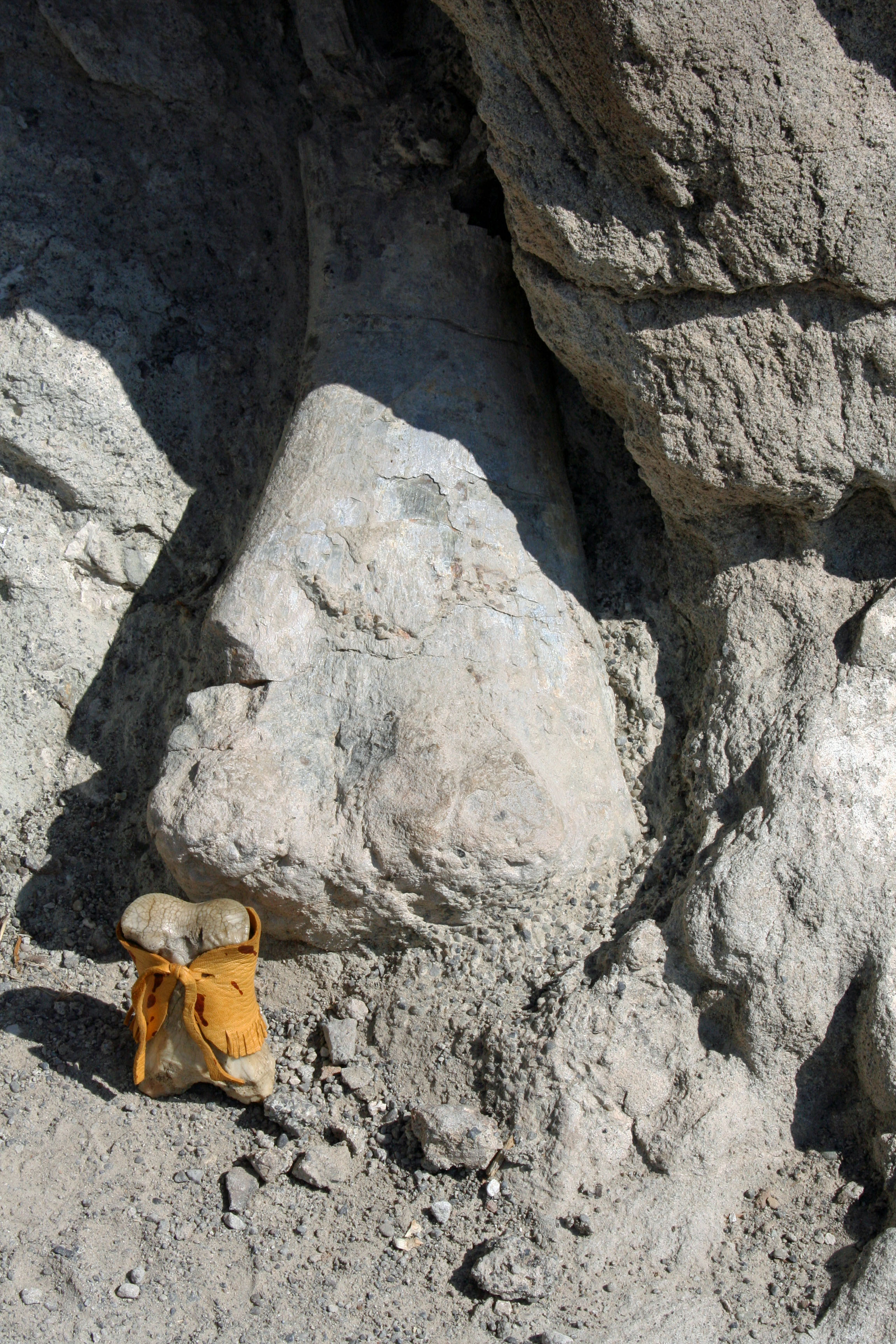
Since the Douglass Quarry was closed we scrambled up the hillside to find where a dinosaur bone had been exposed in the hillside.

We camped on the Green River and looked out on the surrounding mountains. Dinosaur National Monument is located on the southeast flank of the Unita Mountain Range, which is a part of the Rockies. Both the Green River and its sister, the Yampa, make my river running friends drool.

The River was wide and calm where we camped, however. Fremont Cottonwoods provided shade and rabbit bush a dash of yellow. I wandered around with my camera and enjoyed the beauty. 

Next blog: The Petroglyphs of Dinosaur National Monument.

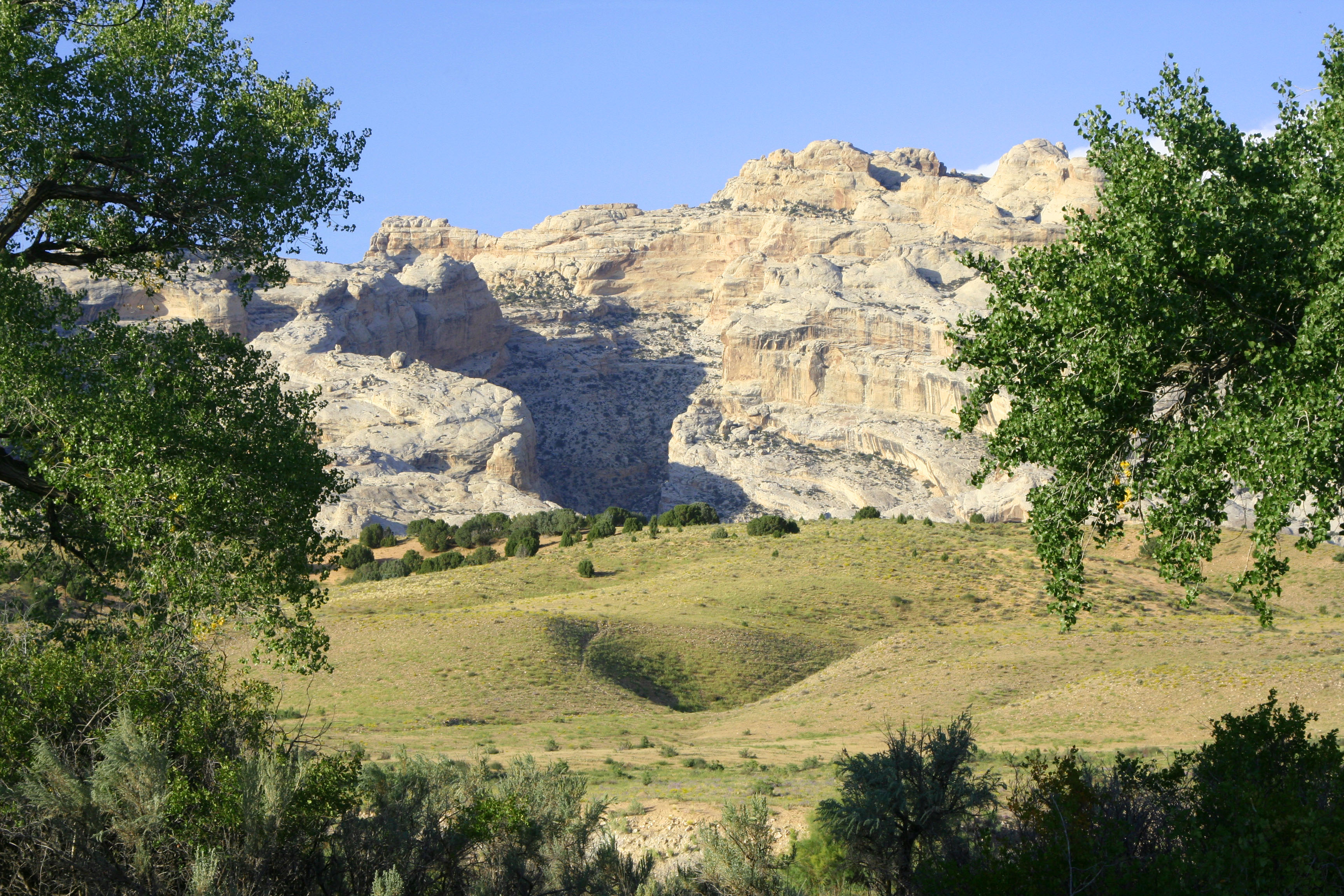
View from our campsite on the Green River in Dinosaur National Monument.

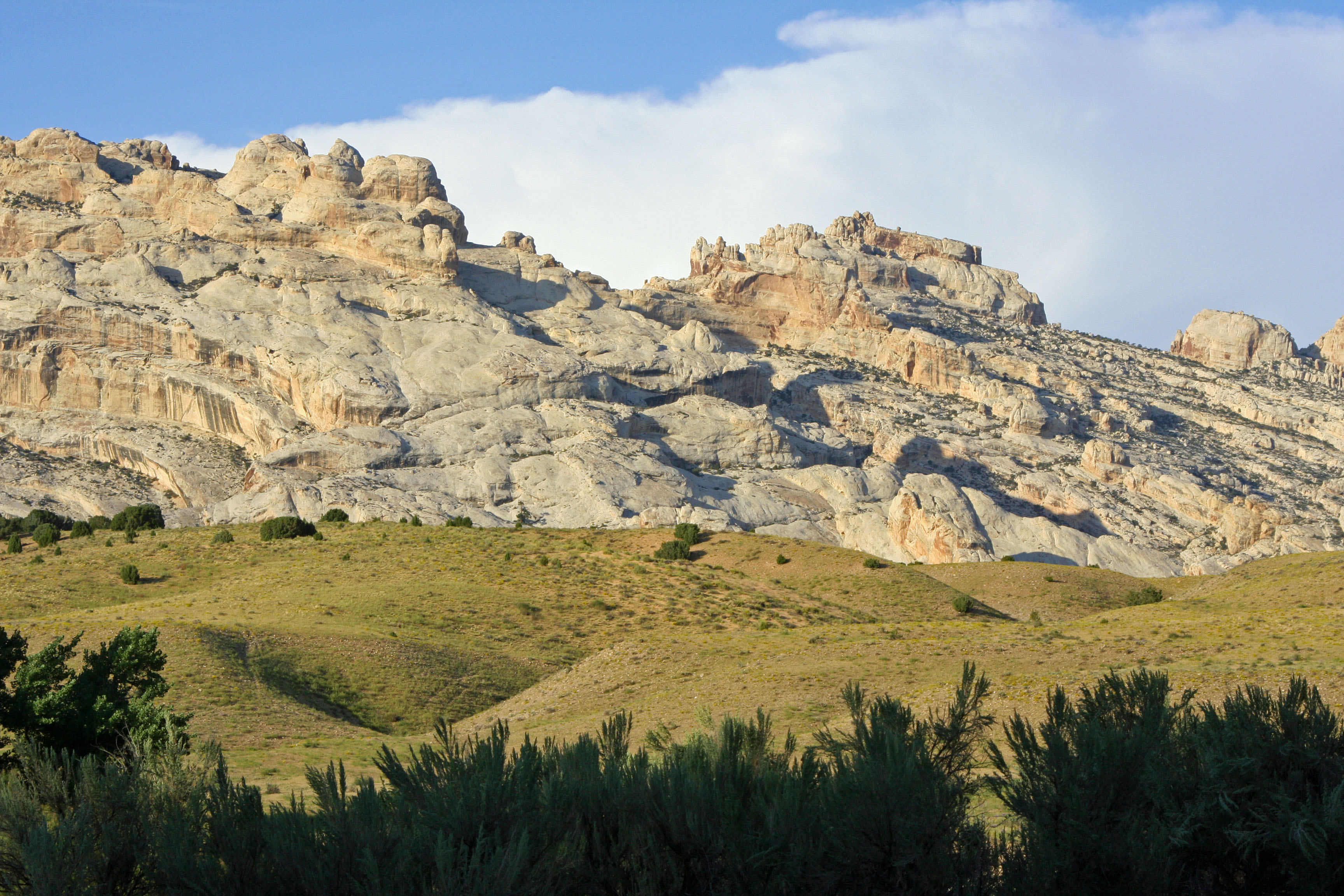
A close up of the mountains shown in the Dinosaur National Monument photo above.

Another view of the mountains from our campsite on the Green River in Utah. This photo is set off by Fremont Cottonwood Trees.

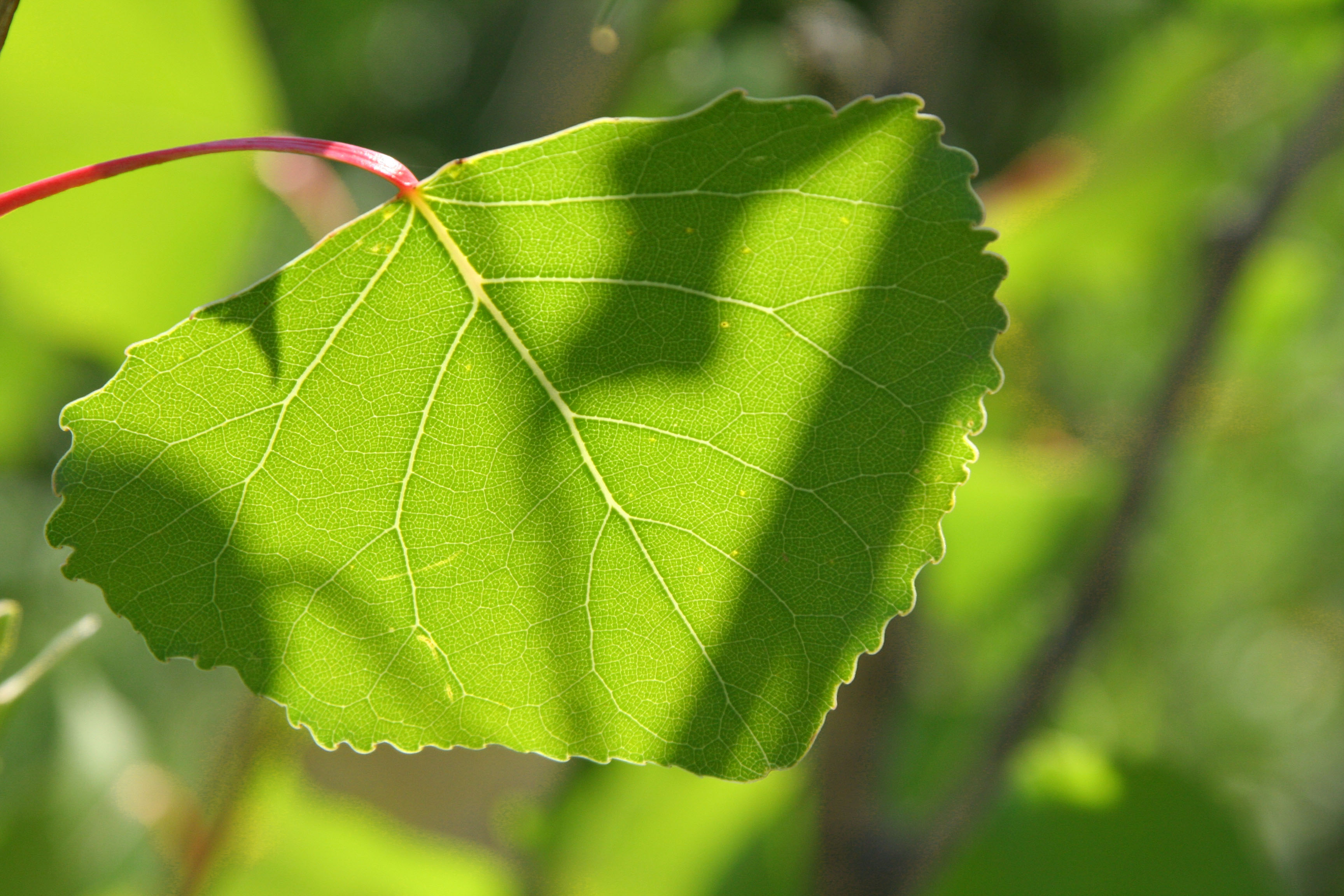
The leaf of a Fremont Cottonwood tree backlit by the sun.

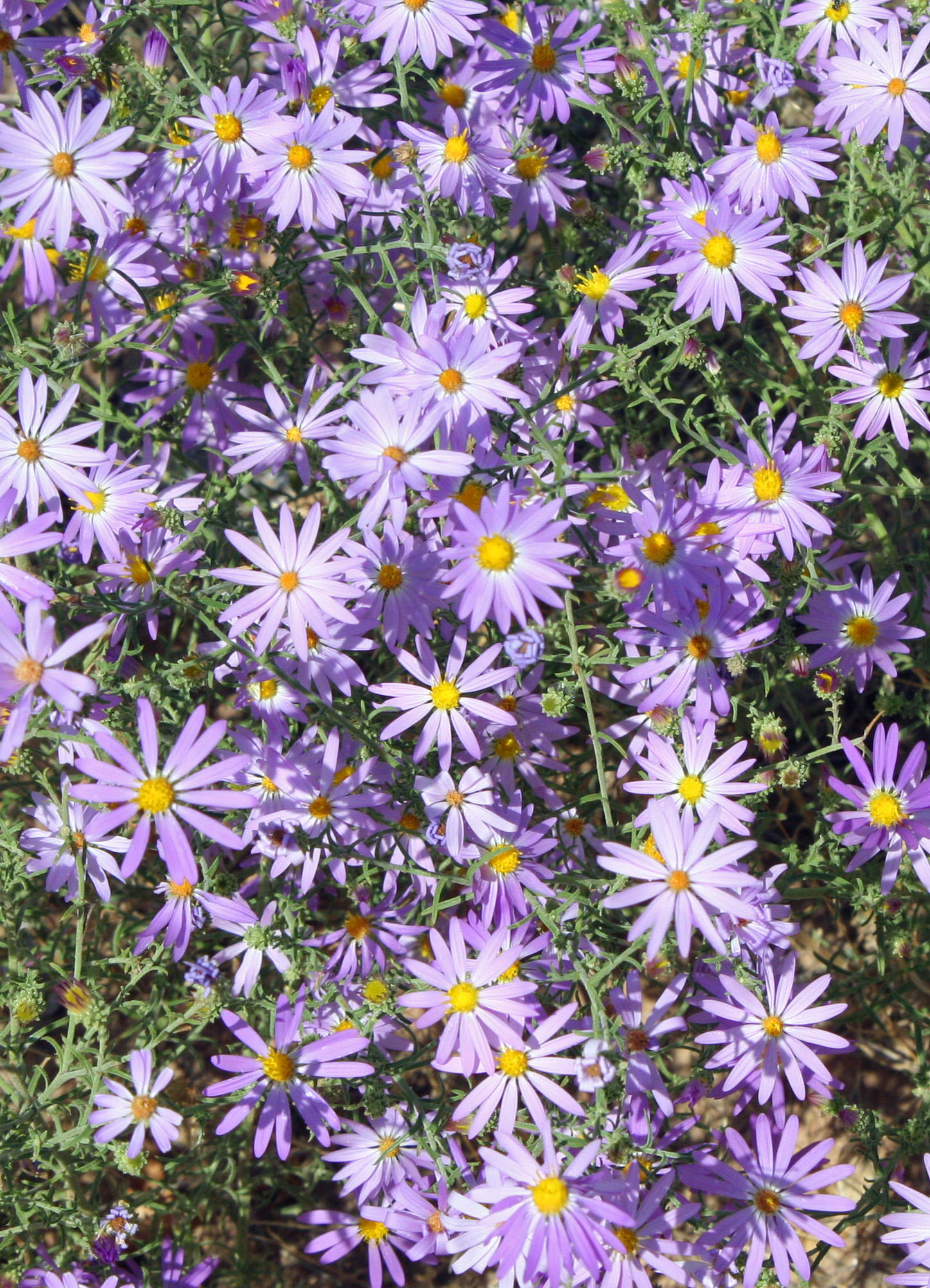
Flowers decorating the road into Dinosaur National Monument.