When Lightning Strikes… Tales of Wilderness Survival

Towering cumulus clouds are beautiful and lightning storms are exciting, but they can also be dangerous and deadly. Numerous forest fires are created by lightning strikes each year and there are approximately 50 lighting caused fatalities annually in the US alone.


When you have spent as much time as I have wandering in the woods, there are bound to be situations that qualify as more tenuous, or scarier than others. I’ve already written about some of these, like the time I woke up in the middle of the night with a bear standing on me. Over the next few weeks I am going to relate other incidents on my Wednesday posts— assuming I haven’t disappeared into the wilderness again, which is always a strong possibility.
I’ll start by going back in time with my first three stories, back to when I was still shooting things. My first tale is about being caught in a lightning storm. The second relates to being lost in a snow storm. The third is about encountering Patty Hearst, aka Tanya, and her gun-toting SLA buddies on an early season fishing expedition in the Sierras. Let’s get started…


I grew up in the country where hunting and fishing were common. So, it isn’t surprising that I returned to the sports in the 70s. Actually, desperation drove me to the action. It isn’t that I was particularly enamored with catching or killing things. The meat I got from the local butcher tasted much better than anything I could shoot out in the woods. Freshly caught fish are good for breakfast, particularly when backpacking food is the option, but the process of gutting, cooking and cleaning up detracts seriously from the experience, especially when your objective is to get out on the trail. My general philosophy is live and let live unless necessity intervenes. Starvation qualifies, as does discouraging some large creature with big teeth and sharp claws that regards me as dinner.

No, my desperation had to do with my need to escape into the woods on a regular basis. I think of it as going home. It’s what led me to create the Trek program for the American Lung Association, and it’s what led me back to the hunting and fishing.

I am not sure whether I recruited my old friends from elementary and high school days (Bob Bray, Hunt Warner and Chuck Lewis) to go on expeditions or that they recruited me, but it wasn’t very long after I returned to Sacramento that the value of trout season and deer season became apparent: Fishing in the spring and hunting in the fall extended serious outdoor time by another four months. And then there was bonding, the old tribal ritual of going off into the woods with your friends on adventures. Generous allotments of beer consumed around the campfire helped.

Normally our trips involved little more than lots of good exercise and an occasional hangover. I enthusiastically joined in the efforts to entice fish with a Panther Martin lure, but usually avoided shooting anything. Killing a deer meant dragging it back to camp, hanging it up by the feet, gutting it, and skinning it— all of which was much more work than it was worth from my perspective, not to mention the deer’s. I had enough of that helping my friends. Occasionally I would shoot near a buck that was foolish enough to appear in my sights. I figured it was my job to remind him he was only a leap away from the stew pot.

The truth is, deer don’t have to worry about me— and they know it. This buck in one of many that stop by our house to visit.

I photographed this doe yesterday as she rested between flower pots in our back yard. The last couple of weeks, five or six have been hanging out around our house trimming the grass, eating Peggy’s rosebush, and sleeping in the shade.

On three occasions our expeditions became a little more adventuresome than we had bargained for. The first involved a much too close encounter with lightning.

Bob, Hunt and I were deer hunting north of Interstate 80 in the Tahoe National Forest on a high ridge. As usual, we were spread out, the theory being we might jump a deer and send it blundering into another member of our party. Usually bucks are too clever for this ploy. They send their does out into the line of fire while they sneak out the back door. This was apparently one of those days, thankfully. The car was at least two miles away down in a steep canyon. We’d be forever dragging a deer to it. I was wandering along, blissfully thinking of absolutely nothing when the distant sound of thunder caught my attention.

Seemingly out of nowhere, a huge, dark, cumulus cloud had appeared and was ominously working its way in our direction. I sat down on an old white fir stump and watched as it turned a ridge north of us into a battle zone of thunder and lighting. Having a front row seat was highly entertaining and, as it turned out, extremely foolish. Ten minutes later the storm hit our ridge. I was literally surrounded; Blinding flashes were instantly followed by ear-splitting booms. There was no counting 1000-1, 1000-2 to see how far away the lightning was. (Seven seconds is a mile.) It was right there. Pieces of tree were flying through the air and my hair was standing on end with electricity— or maybe it was fright. I was as frightened as I have ever been in my life. I knew I had to get off the ridge, and quickly.

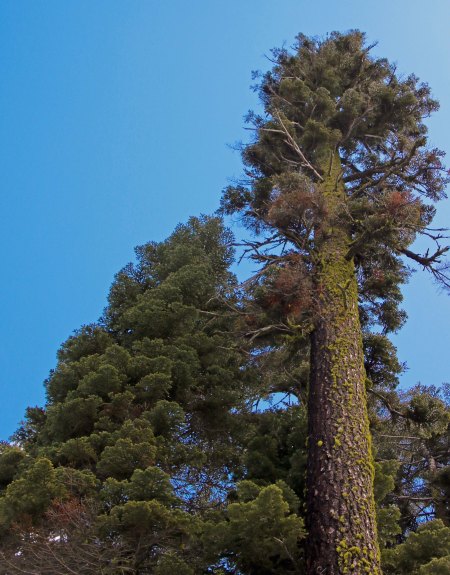
I don’t exactly remember my run down the mountain but I do believe I broke some kind of world record for the two-mile dash. As did Bob and Hunt. We quickly climbed inside the truck to relative safety and called it a day. An ambulance met us as we were leaving. We read in the paper the next day that a hunter had decided to hide out under a tall Jeffrey Pine. Lightning had struck the tree and killed him. It could have been any of us.

Next Blogs: 1) Back to Burning Man; 2) Pt. Lobos Part II; 3) Wilderness survival: It was a dark and stormy night.


Bone Is Found— but he is still just a bone… Part III

George, the Bush Devil from my book, “The Bush Devil Ate Sam,” checks out Bone. NO, George, Bone is not edible!


This is the third and final post on how Bone was discovered. In last Wednesday’s post my fellow backpackers and I had ended up at the resort on Echo Lake after coming out of the Desolation Wilderness. We had celebrated the first part of our journey with lunch and a beer or three…


My system complained about the third beer as we hiked on across Highway 50 and up to Benwood Meadow where we stopped for the night, some 34 miles from where we had started.

Our fourth day started out as a typical backpack day: we climbed. It was gentle at first and then became more serious. Once again snow-covered large segments of the trail. We spread out and searched for tree blazes. I scrambled over a particularly steep section and found myself in a high meadow.

Something half buried in a field of young corn lilies caught my eye. A few days earlier it would have been covered with snow. Curiosity led me to detour through the still soggy ground. Mud sucked at my boots.  My treasure turned out to be a disappointing, short, squat bone. Gnaw marks suggested it had been part of someone’s feast. I was about to toss it when a devious thought popped into my mind.

“Trash,” I hollered at Tom and held up the bone. We had a game where if one person found a piece of trash, the other person had to carry it out. But first you had to catch the other person.

Tom sprinted down the trail with me in pursuit. Unfortunately, we had made it over the mountain and our route ranged from flat to downhill. Tom was very fast. We had traveled two miles and were almost to Showers Lake before he stopped, concerned about leaving our companions too far behind. Very reluctantly, he took the bone and stuffed it in his pack.

“How can you classify a bone as trash,” he whined. I figured Tom would toss his new traveling companion as soon as I was out of sight.

X marks the spot where Bone was found, resting in a high mountain meadow. (Map from the Tahoe-Yosemite Trail book by Thomas Winnett.)

It was a pleasant hike down to Carson Pass on Highway 88, and relatively dry since we were on a south-facing slope. Kit Carson had come through here in February of 1844 along with John C. Fremont. It wasn’t pleasant then. The snow was deep and food was limited. The mountain men ended up dining off of their horses, mules and the camp dog. The dog apparently went quite well with pea soup. Later, the trail they discovered would become a major entry point for the 49ers rushing west to find gold. (Eventually, the trail cut through Diamond Springs, the foothill town where I was raised.)

There was nary a bar, restaurant or gas station near the pass so we hiked on another three miles to Lake Winnemucca. Rain was threatening and I set up my tube tent, a large sheet of plastic shaped into a round tunnel. It wasn’t particularly sturdy, but it was light and dry. Tom, on the other hand, was carrying a luxurious three-season tent. He stacked the women in head to toe and ended up smelling April’s feet all night.

The next day was all downhill— down to Fourth of July Lake, down to Summit City Canyon, and down to Camp Irene on the Mokelumne River. After dropping 4000 feet in 14 miles I found myself bone-tired again.

Camp Irene provided an attractive campsite but turned out to be rattlesnake country. I had discovered the perfect toilet spot, dug my cat hole, and was baring my behind when one buzzed at me. It’s amazing how fast you can pull up your pants. I was lucky the snake didn’t bite me on the butt. I grabbed a stick and chased him away with a couple of sharp prods for good measure. He was lucky I was something of a nature boy. Otherwise he would have been smashed. The next time I did any serious bathroom duty was when I was parked on a flush toilet at Lake Alpine the next day.

Climbing out of Camp Irene is a challenge. The 4000 feet we dropped the day before in 14 miles we were now expected to re-climb in six. Low clouds filled the canyon. It wasn’t raining but it was cold and damp. Somewhere in the mist a male grouse made its familiar ‘whump, whump, whump’ sound, working to attract a female companion. I empathized. Dripping wet Buck Bush grabbed at our legs.

To stay warm and dry we broke out our rain gear. Lynn moved from being cold and miserable to shivering and not caring. She was on the edge of hypothermia, a very dangerous state. The body loses its ability to maintain warmth and the rational mind ceases to function. Coordination spirals downward. It is very easy to die.

Tom and I acted quickly. I fired up my Svea gas stove and Tom had Lynn stand over it wearing her cagoule, a dress like poncho. We positioned the stove carefully. While this wasn’t a solution to hypothermia found in survival guides, it worked. (The recommended solution is to break out your sleeping bag and crawl in naked with the victim.) Within minutes, Lynn was ready to tackle the rest of the mountain.

Hypothermia can strike fast but it can also be quickly cured— assuming of course you catch it in time. Tom was next. “Curt,” he called plaintively from off in the brush where he had gone to pee. I rushed over and begin laughing. He had managed the first half of his chore but couldn’t zip his pants up. His mind was working fine but his coordination had gone south. He was all thumbs. I called Lynn over to help as I returned to the trail chuckling. There are some chores a trek leader doesn’t need to handle.

We hiked the rest of the way into Alpine Lake without difficulty. Since our ride wasn’t coming until the next day, we rented a one-room cabin to share. Rain poured down outside as we relived our adventures and made up tall tales way into the night. Our journey was winding down, but it wasn’t over.

I was shaking the dirt out of my pack at home when the bone fell out. Apparently, I had been carrying it all the way from Winnemucca Lake. “Darn Lovering,” I thought to myself, “I am going to get even.” I decided to keep the bone. There would be an opportunity on a future trip to slip it back into Tom’s pack. I would have revenge!

And that’s it, the story of Bone’s discovery. It started like so many things in our lives often do, as a non-event. Bone didn’t come up as a subject during our night in the cabin. Naked jumping ladies, lost trails, swollen rivers, gorgeous country, rattle snakes, the physical challenge, hypothermia and even the upside-down map were the stories of legend, not a small, insignificant bone that came from who knows what.

But time has the power to rewrite history. When Tom opened his suitcase in Japan at the beginning of a two-year exploration of Asia, Africa and Europe, he found a surprise, the bone. I had my revenge, and the bone became Bone. When I moved to Alaska and was unpacking my boxes, who should fall out but Bone. The tales goes on and on and on…

The Bush Devil has travelled with me since 1967 and Bone since 1977, a combined total of 90 years.

Bone on his pedestal.

From the Sublime to the Weird… Burning Man Murals and Paintings

T-Rex looking for dinner at Burning Man back when the playa was an ocean.

As you might expect, mural art and paintings at Burning Man reflect the event. Much of the art has a mystic feel about it with both Eastern and Western influences. Surrealism also seems to have found a home at Burning Man. Then there is the fun— bordering on strange— art that always appeals to my sense of weird. Following are examples of what I see as I ride my bike or walk around Black Rock City and out in the Playa.

I am going to start with what I call Chakra art that takes its inspiration from Eastern mysticism. A Chakra, simply put, represents seven levels of awareness or spiritual power in the human body that work their way up your spine starting with basic urges and ending with higher consciousness. Meditation is the primary tool that mystics use to reach the higher levels.

Chakra art doesn’t get much clearer than this. Beyond the primary chakra points are a multitude of secondary points. This fellow also comes with an aura.

Maybe you can even get high enough to earn a halo. This one features several languages.

An eagle and a buzzard have arrived here.

This mural portrays a woman meditating. Off to the left is a chakra.

Mandalas are aids in meditation. I feel like this one could take me into infinity.

Of course there is much more to eastern mysticism and myths than meditation and chakras. Traveling farther east to China, we have this magnificent dragon.

What I call Nature art focuses on our deep connection with all life on earth and has a more Western/shamanistic feel to it that is more reflective of what we find in Native American, First Nation, and South American native traditions, as well as other animistic cultures throughout the world.

A shaman sits in a meditative pose while jaguars peer out of the jungle and a snake circles his body. I was amused to see that he is wearing a watch.

This painting also makes me think Shaman.

I am fascinated with the art at Burning Man that combines people and the natural world.

Another example.

How about this for a hair do?

This woman is morphing into an owl, or vis-versa.

Bird eyes.

A touch of green.

The tree of life and death with the left side representing nature and the right side our industrial civilization (sort of like a page out of Dante’s Inferno).

Surrealism is, well, Daliesque.

Mr. Surreal, himself.

A surreal landscape featuring Burning Man founders, I believe, along with several Burning Man icons such as El Pulpo Mechanico looming in the background.

A surreal dragonfly.

And a sort of surreal painting featuring lips, a red candelabra, light fixtures and speakers as UFOs, and apparently people worshipping all of the above.

I will conclude with several paintings/murals that fit my description of fun, funky, and possibly weird.

This mural should easily qualify as weird.

As does this painting of ‘children’ playing.

Peggy stands next to a giant rabbit. One of the events at Burning Man includes a thousand or more people dressing up like rabbits and parading around Black Rock City.

How about ostriches with people heads?

One year Burning Man had a circus theme that led to the creation of all kinds of strange circus art.

My favorite from the circus art.

The fish were fun, especially the one on the right with the teeth.

This was strange…

As was this beetle.

I’ll conclude with another favorite of mine: a 3-D Bossy.

NEXT BLOGS:

Monday: It’s back to the Oregon coast to visit a cave filled with sea lions, plus another lighthouse.

Wednesday: Bone is found and a rattlesnake threatens to bite me on the butt.

Friday: Burners and their costumes at Burning Man.


Raging Rivers, Kamikaze Mosquitoes and Naked Ladies Jumping… How Bone Was Discovered: Part II

Bone contemplates a book on the Tahoe-Yosemite Trail and the high mountain meadows he loves. I used this book by Thomas Winnett on several early Treks that I led between Lake Tahoe and Yosemite.


This is second in a series of Blogs on how Bone was found in the Sierra Nevada Mountains. Go here for the first one.

I watched regrettably as April and Lynn headed out. I would miss the inspiration. Soon, however, my mind was more than occupied with route finding. The trail had disappeared under the snow.

Velma Lakes where we parted company with April and Lynn. I took this shot in the evening on another trip.

Tom pulled out his map and compass to establish our general direction. We searched for ancient tree blazes left behind by early foresters, cattlemen and sheepherders. We also watched for ducks where the snow had melted. I’m not talking about fowl that quack and taste good in orange sauce. Ducks, in trail finding terminology, are piles of stone set up to show the way. With a little imagination, they can look like their namesake. Caution is advisable. The people creating the ducks may have had a different destination in mind, or perhaps they were lost.

Tree blazes were the primary way of marking routes by the early explorers of the Western mountains. The short rectangle on top and longer one on the bottom mean ‘this is the trail.’ Blazes were normally within sight of each other.

These are duck ducks, Mallards to be specific. They are not trail ducks. Following them might get you lost, or wet. Check out the eye on the male. He was not happy with my waking him up.

This is a trail duck. The three rocks in the middle are what a normal trail duck looks like. I added a rock on each side to create a Sierra Trek duck so Trekkers would know what to follow. I borrowed these rocks from Peggy’s rock garden and put them on our railing. I had strict instructions to return them to where I found them. BTW, three ducks in a row mean danger to Boy Scouts. We rarely had Boy Scouts follow us.

This is an example of a duck in use. A trail splits. The duck tells you to use the left one. I borrowed our backyard and deer trails for this.

An hour later we found ourselves more or less where we were supposed to be, on the edge of the Rubicon River. A student of ancient Roman History undoubtedly named the stream. Like Julius Caesar, we were faced with crossing it. In a month or so it would be a tame creek inviting a refreshing dip but now it was a roaring river, filled with icy water from quickly melting snow fields.

I entered with trepidation and was almost washed off my feet. Facing up-stream, I used a walking stick to give myself a third leg. Water crept up to my knees and beyond. It was cold; I have short legs. The force was incredible. I set each foot carefully and moved crab-like, searching for solid ground between slippery rocks.  I’d undone my pack belt so I could shuck the pack if I were knocked over. Swimming in freezing water with 50 pounds on your back is hazardous to your health. In a few minutes that stretched out forever I was across. Tom and Terry also made it without incident.

We plopped down on a convenient log to catch our breath and munch down on GORP (good old raisins and peanuts). It was a quick meal. A thick swarm of mosquitoes dive-bombed us with kamikaze abandon.  Slap one and five more landed, gleefully licking off our bug repellent before plunging in their proboscises. We were driven to put on our packs and scurry up the trail. Fortunately, Rockbound Valley is relatively flat and we were able to escape. Stopping was not an option as we hoofed it for the next four miles, crossing the Rubicon two more times before we began our labored ascent up aptly named Mosquito Pass.

Life slowed down immediately as we began climbing. The blood sucking hoards caught up. Near the top, we were confronted with a different challenge, more snow. Eight hours of hot sun had turned it to mush. We spent as much time sliding as we did climbing. It was slow, hard, slogging work. And it was dangerous. Running water, partially exposed boulders and tree trunks melt snow from the ground up and create hidden cavities. More than once we plunged through up to our knees.

Ignoring the danger, Tom and I laughed our way down the other side, glissading in our boots. Control was minimal. Camp was in sight. Terri came along at a much more sedate and careful pace.

There was nothing about Lake Aloha that made me think Hawaii. It was a strange Dali-like creation with a convoluted shoreline and innumerable Rorschach type islands. What’s more, mini-icebergs decorated its surface. Bright white on top, they turned an icy blue under the water. All I could think was cold. Plowing through snow on our way around the lake to camp added freezing to my thoughts.

That night, we built a small campfire to fight off the chill. Terry wandered off to bed. Tom was slightly melancholy. He looked off into the distance over my shoulder.

“I was married on that peak,” he announced to the night. I turned around and stared across Lake Aloha at the towering Pyramid Peak, the centerpiece of the Crystal Range. It was bathed in moonlight. Several years earlier, Tom had met and fallen in love with Hilde, a slight, attractive blonde who shared his love of the wilderness. They decided to get married on the mountain. Mom, wedding party and friends were invited to share their 9983 feet “I do.”

The marriage didn’t last long and Tom was reluctant to talk about it. The fire burned down to glowing embers. We shared the silence in memory of lost love.

This map from the Tahoe-Yosemite Trail book shows our route from Velma Lakes to Upper Echo Lake. The red trail shows the actual route. The dotted trail shows the route we picked to Lake Aloha because of the deep snow going up past Dicks Lake.

I was up early the next morning and eager to hit the trail. My body was starting to adjust and feel good. More importantly, the resort at Echo Lake was calling. A quick breakfast and we were off. I took the lead with Tom following and Terry trailing. Soon we had climbed out of Lake Aloha, hiked past Lake Margery  and worked our way across Haypress Meadows where cattlemen once harvested grass for winter feed. As we began our descent into Echo Lake, I left my companions behind. The vision of cold beer and a hamburger drove me on. Short shorts may have been a factor as well. Lynn and April were supposed to rejoin us at the Echo Lake Resort.

There was a decision to make when I reached Echo Lake. I could continue to follow the Tahoe-Yosemite Trail around the upper and lower lakes or I could call the Lodge from a phone located at the end of Upper Lake. It would send a boat taxi to pick me up for five bucks. The trail was hot and filled with day hikers. I made the phone call. A half hour later, the throbbing of the motorboat’s engine caught my attention as it worked its way up the lake. Soon it arrived, coughing slightly. The boat slowed and bumped into the pier. My ‘taxi driver’ was a 16-year old plus teenager who had managed to snag a great summer job.

“Hop on,” he told me. An elderly couple was along for the ride. I nodded at them. I was halfway between the boat and the pier when I heard a commotion.

“Over here, Curt,” a familiar voice shouted. I looked up. A few yards away alders had hidden another pier. Two very attractive and very naked women were jumping up and down to get my attention. They succeeded. It was April and Lynn. They had come over on an earlier boat and were working in a little sunbathing while waiting for us. The young boatman and the old man were all eyes. The elderly woman looked thoroughly irritated and glared at all of us, especially her husband.

“Uh, I think I’ll stay here,” I told my driver.

“Can I stay too?” he asked and grinned at me. The elderly man wisely stayed silent.

I joined the girls as the boat coughed its way back toward the resort. Tom showed up soon afterwards. We were waiting for Terry and the women were dressed when the ranger showed up.

“There has been a complaint about naked women jumping up and down over here,” he told us.

“Boy, I wish I would have seen them,” Tom responded. I am not sure the ranger bought our story but he wandered off in search of other criminals.

The same boatman picked us up and told me that the first thing the elderly woman did when she got back was to complain loud and long about the perverted people across the lake. She even cornered a ranger. My new young friend speculated that the ranger came looking for us as an excuse to escape. “Or maybe he wanted to see the naked ladies,” I noted.

I happily downed a hamburger and a beer, or maybe it was two. But we still had a few miles to go before camp, so I didn’t want to eat or drink too much. Backpacking is hard enough as is—alcohol and a stuffed tummy makes it harder.

Be sure to check in next Wednesday and learn how Bone was found!

Three more photos from the journeys that Bone has been on since his discovery.

Riding an elephant in Nepal. Bone is hard to see but he is resting on the elephant’s head. He is being held by Mary Johnson who had taken Bone along for good luck. Many people have travelled with Bone over the years.

Iguanas chat with Bone in the South Pacific, where he was taken on a diving expedition by Jose Kirchner.

Bone sits in the sand at twilight on the edge of the Tasman Sea on the South Island of New Zealand. He was traveling with Peggy and me.

NEXT BLOGS

Friday: It’s back to Burning man with some very Burning Man-like murals and paintings.

Monday: A cave filled with sea lions on the Oregon coast and another beautiful lighthouse.

Wednesday: Bone is found! Hypothermia threatens! A rattlesnake tries to bite me on the butt!


All’s Well that Ends (grin)… The Sierra Trek Series

Treks have always been about adventure. In addition to the physical and mental challenge, there is a more important element of experiencing nature on a very personal level, both the beauty and the wonder. Imagine, for example, coming on this Aspen that bears have climbed and used as a marking tree to establish their territory.

This is my last post on the first Sierra Trek series. Last week left us in the American River Canyon, waiting while the US Bureau of Reclamation blasted rocks off the hill sides in preparation for building the Auburn Dam. (The discovery of an earthquake fault zone under the dam would lead to its not being built.) Today I will take us on into Auburn, California where the 100 mile backpack trip ended.

As in the previous posts, I have selected photos from other Treks since I don’t have any from the first. There are several other areas in California I would lead Treks besides the Sierras. These photos are from the Trinity Alps. 

Another photo of a bear tree in the Trinity Alps of California. And yes, those are claw marks.

Early the next morning we had an important decision to make: whether to wade across the American River in water up to our belly buttons and then follow the river or climb up and along the steep canyon following alternative trails. I let the Trekkers vote and they voted to cross the river. One woman was deathly afraid, however, and broke down in hysterics. She was the same person who had, at first, refused to ride the Squaw Valley tram. We offered to carry all of her gear and even carry her, all to no avail. Finally, I decided we would all hike the canyon route. I was not about to split our group again. (It was the only time in my years of leading Treks that I ever allowed participants to vote while on the trail. Treks, I decided, were not a democracy.)

This shot of the Trinity Alps provides a great perspective on why the mountain range was given its name. (Photo by Peggy Mekemson.)

A view from farther away. These are rugged mountains that provide challenging, beautiful backpacking opportunities.

Our last night was fifty-fifty on the plus and minus scale. On the plus side, I knew that we had succeeded. Our Trekkers, except for the two or three who were now riding in the jeep, had made it— survived if you will. We had managed to solve each of the crises we had faced along the trail. I could say goodbye to the Trekkers the next day knowing that I had put everything I had into getting them through the nine days. On the minus side, Steve had taken a few of the ‘cool’ Trekkers to camp away from the main group. I hated seeing this, it was a really bad decision, but it was already a done deal by the time I came into camp as rear guard. I could have hiked up the canyon and insisted the group rejoin us, but I just didn’t have the energy to do it, physically or mentally.

The Trinity Alps includes a number of impressive waterfalls.

Another…

And another.

Sunday, we hiked into Auburn Fairgrounds as a group with the Trekkers in high spirits, singing the Ham Cheddarton song. They had a bar-b-que chicken feast to look forward to and then they were going home— home to hot showers, clean clothes and loved ones. They had enough tales to fill the next week and possibly their lifetime. As we approached the fairgrounds, our Auburn volunteers and several Board members were there to cheer our arrival.

I didn’t know how things would end. At best, I hoped our Trekkers would recognize that even though we had made enough mistakes to fill a book (or at least a long chapter), we had tried as hard as we humanly could to rectify them. And I had learned, boy had I learned. Mainly, I felt relief. I was going back to focus on our mail fundraising campaigns with a vengeance.

What took me by surprise was the response as Trekkers started to leave.

“Thanks, Curt, for the most incredible experience in my life. Where are we going next year?”

“You and Steve were great, Curt. I would like to help with next year’s planning.”

And on and on. People were excited about their experience. It was one of the most difficult things that they had ever done, and they had succeeded. They left feeling better about themselves, and that feeling translated over to us and the Lung Association. Instead of the negative comments I expected, and in some ways deserved, we were getting rave reviews. While not everyone was eager for next year’s adventure, most were asking, even demanding that we repeat it.

I left that day not quite convinced but leaning toward doing another Trek. One thing was for sure, my experience had matched that of the Trekkers. The event had been one of the most difficult things I had done in my life from both a physical and mental perspective. I came out of the Trek with a new confidence in myself and a new understanding of what I was capable of accomplishing— and an increased love of the wilderness.

One final amusing note: that night as I took my first shower in nine days, I reached around behind me to wash my fanny and it wasn’t there. It had disappeared. Between the trail review work, my trauma with Jo, and the Trek, I had lost 20 pounds in two weeks.

This is Sapphire Lake, one of a series of high alpine lakes in the Trinity Alps.

A reflection shot along a trail climbing up into the mountains.

Peggy caught this luscious scene along a small creek where we refilled our water bottles. (Photo by Peggy Mekemson.)

While this rock caught my attention.

I am the fan of the small as well as the large when out in the woods. This is a shelf fungus.

A dandelion. Have you ever picked one of these and blew on it to watch the seeds go flying off?

And a butterfly on a Leopard Lillie.

EPILOGUE

The Sierra Trek turned out to be a success. We hadn’t raised a lot of money on our adventure, but special events rarely do the first time. What we had raised in abundance were new volunteers, the life blood of volunteer organizations. These were people who, because of their Trek experience, would develop a deep commitment to our organization.

I had several ideas on how to increase our returns and reduce our risks. In the future, we would set a pledge minimum and charge a registration fee. I would also set an age limit of 18 unless the minor was accompanied by a responsible adult. There would be no more 11-year-olds wandering in the woods by themselves. This wasn’t a negative comment on the Mouseketeers, they had been great, but the nature of the Trek made it much more of an adult kind of event. I would also limit group size to 20, and eventually 15, making the event much more manageable and reducing its environmental impact. And finally, our veterans would become the backbone of the program, providing advice and help in planning, organizing, and leading Treks.

From a personal perspective, my “far-out excuse for escaping to the woods” succeeded beyond my wildest hopes. I happily spent the next 25 years of my life leading wilderness adventures. When I worked it right, I could spend most of my summers out in the woods, especially when I supplemented official Lung events with personal outings. Treks also became an important annual event for many of the participants. Eighteen years after I had told Orvis he might be too old to Trek, he was still backpacking. He did his last trip with us when he was 88 years old. Altogether, he had raised the organization well over $100,000. That Trek also happened to be Peggy’s first long distance backpack experience. “How can I complain with Orvis out here?” she had told me with a grin, and hiked up another mountain.

I went on to create bike treks, winter treks, and canoe treks. I also pushed the Trek Program nationwide with the American Lung Association, persuading the organization that the events were valid fundraisers, and becoming the national consultant on Treks. For a while, Treks became one of the top special events for ALA. Charlie had been right that night we had laid our sleeping bags out under the stars at our Last Chance campground and he had declared: “What an experience. I can’t believe I am out here. Someday, people will be doing these Treks all over the nation!”

Having created the Sierra Trek in 1974, I had turned trekking into a national fund-raising  event for the American Lung Association by 1981. This is a photo of me on the cover of the American Lung Association’s national magazine.

If Someone Steals your Spouse or Cow, Who Do You Call? The Lightning Man!

The Bush Devil is a powerful figure within traditional Liberian Culture. This is a Bush Devil of the Grebo Tribe that visited a Peace Corps Haight-Ashbury Party Liberia circa 1967.


I was in serious need of inspiration over the weekend when it came to today’s post. I had a bad case of blogger’s block. And then I was hit by a thought— why not throw in a chapter from my book. Other than the promo I run in the upper right hand corner, it’s been a long time since I’ve done anything with “The Bush Devil Ate Sam” on this blog. If you are new to The Bush Devil Ate Sam and enjoy this chapter, the book is available on Amazon.


Sam, the young man who worked for us in Liberia, was enamored with western culture. It fired his imagination. He spent hours listening to the Kingston Trio get Charlie off the MTA and dove into peanut butter and jelly sandwiches like a frog dives into water. Still, for all of his excitement about things modern, ancient African was an integral part of who he was. He had the scars to prove it. They marched down his chest in two neat rows.

“How did you get those,” Jo (my former wife) asked with ten percent concern and ninety percent curiosity.

“I can’t tell you,” Sam replied with obvious nervousness as Jo’s eyebrows rose. “But I can tell Mr. Mekemson.”

Aha, I thought, Sam and I belong to the same organization, the Men’s Club! Actually, Sam belonged to a very exclusive men’s organization, the Poro Society, which I wasn’t allowed to join. Its functions were to pass on tribal traditions, teach useful skills, and keep errant tribe members in line. Everything about the organization was hush-hush. Tribal members who revealed secrets could be banned and even executed.

Political power on the local level was closely tied to membership in the Poro Society. On the national level, President Tubman assumed leadership of all Poro Societies in Liberia. Tribal women had a similar secret organization called the Sande Society, which prepared young women for adulthood and marriage. A controversial aspect of the Sande initiation ceremony was female genital mutilation— cutting off the clitoris.

Sam got off easy.

He had been to Bush School the previous summer and learned how to be a good Kpelle man. Graduation to adulthood consisted of an all-consuming encounter with the Poro Society’s Bush Devil. It ate him— metaphorically speaking. Sam was consumed as a child and spit out as a man. The scarification marks had been left by the devil’s ‘teeth.’ It seemed like a tough way to achieve adulthood, but at least it was fast and definitive.

The Bush Devil was a very important tribal figure who was part religious leader, part cultural cop and part political hack. Non-Kpelle types weren’t allowed to see him. When the Devil came to visit outlying villages, a frontman preceded him and ran circles around the local Peace Corps Volunteer’s house while blowing a whistle. The Volunteer was expected to go inside, shut the door, close the shutters and stay there. No peeking.

We did get to see a Grebo Devil once. The Grebo Tribe was less secretive, or at least more mercenary. Some Peace Corps Volunteers had hired the local Devil for a Haight-Ashbury style African party. It was, after all, 1967, the “summer of love” in San Francisco and the “Dawning of the Age of Aquarius.” Along with several other Volunteers, we hired a money bus to get to the party. Had we been thinking, we would have painted the bus with Day-Glo, like Ken Kesey’s bus, Further.

The Devil was all decked out in his regalia. His persona was somewhere between a voodoo nightmare and walking haystack. Grebo men scurried in front of him with brooms, clearing his path and grunting a lot. We stayed out of the way and took pictures.

Another area where Sam showed his tribal side was his fear of the newly dead. A person’s spirit was considered particularly powerful and dangerous right after he or she died. Later, the spirit would move away into the bush and fade. But first it had to be tamed with appropriate mourning, an all-night bash. One didn’t take chances. When Sam worked late for us after someone had died, he would borrow a knife and a flashlight in case he had to fight off the malevolent ghost on his way home. I had grown up next to a graveyard and was sympathetic with his concern.

Juju, or African witch doctor medicine, was another area where African reality varied from modern Western reality. Late one evening, in the middle of a tropical downpour, one of my high school students appeared on our doorstep very wet and very frightened. Mamadee Wattee was running for student body president. His opponent had purchased ‘medicine’ from a Juju man to make him sick.

It was serious business; people were known to die in similar circumstances. Had the opposition slandered Mamadee or stuffed the ballot box, I could have helped, but countering a magic potion wasn’t taught at Berkeley, at least not officially. I took the issue to Mr. Bonal, the high school principal, and he dealt with it. Mamadee stayed well and won the election.

The use of Juju medicine represents the darker side of tribal culture. Human body parts derived from ritual human sacrifice are reputed to be particularly effective in creating potions. Cannibalism may be involved. On the lighter side, my students once obtained a less potent ‘medicine’ and buried it under the goal post on the football (soccer) field with the belief that it would cause the other team to miss goals. Apparently, it wasn’t potent enough; the other team won.

Mamadee was also the reason behind our introduction to the Lightning Man. When Jo and I went on vacation to East Africa, we left Mamadee with $50 to buy a 50-gallon drum of kerosene. When we returned, there was neither kerosene nor $50, but Mamadee was sitting on our doorstep. Someone had stolen the money and Mamadee was extremely upset. Fifty dollars represented a month’s income for a Kpelle farmer. Mamadee’s father, a chief of the Kpelle tribe, was even more upset and wanted to assure us that his son had nothing to do with the missing fortune. It was a matter of honor. He offered to have Mamadee submit to the Lightning Man to prove his innocence.

The Lightning Man had a unique power; he could make lighting strike whoever was guilty of a crime. If someone stole your cow or your spouse, zap! Since we were in the tropics, there was lots of lightning. Whenever anyone was struck, people would shake their heads knowingly. Another bad guy had been cooked; justice had been served.

We didn’t believe Mamadee had taken the money, and even if he had, we certainly didn’t want him fried, or even singed. We passed on the offer. The Chief insisted on giving us $50 to replace the stolen money.

Another Liberian Peace Corps Volunteer in a similar situation chose a different path. Here’s how the story was told to us. The Volunteer had just purchased a brand new $70 radio so he could listen to the BBC and keep track of what was happening in the world. The money represented close to half of the Volunteer’s monthly income. He had owned his new toy for two days when it disappeared.

“I am going to get my radio back,” he announced to anyone who would listen and then walked into the village where he quickly gathered some of his students to take him to the Lightning Man. Off he and half the town went, winding through the rainforest to the Lighting Man’s hut. The Volunteer took out five dollars and gave it to the Lighting Man. (Lighting Men have to eat, too.)

“I want you to make lighting strike whoever stole my radio,” he said.

The Volunteer and his substantial entourage then returned home. By this time, everyone in the village knew about the trip, including, undoubtedly, the person who had stolen the radio.

That night, there was a tremendous thunder and lightning storm. Ignoring for the moment that it was in the middle of the rainy season and there were always tremendous thunder and lightning storms, place yourself in the shoes of the thief who believed in the Lightning Man’s power. Each clap of thunder would have been shouting his name.

In the morning, the Volunteer got up, had breakfast and went out on his porch. There was his radio.

NEXT BLOGS:

Wednesday: I wrap up the Sierra Trek series.

Friday: A look at several major art installations at Burning Man.

Monday: Astoria: A return to the Oregon Coast.

How to Take a Bath in the Woods… The Sierra Trek Series

Many trees take on a certain beauty when they die that matches whatever beauty they had when alive. I often find myself stopping to admire them and frequently photograph them. I couldn’t help but wonder what gave this tree its twisted look. The canyon in the background leads up to Muir Pass.

I am returning to the Sierra Trek today. I told the story in my last post about how our second day had included hiking 16-miles without water, confronting a 6-foot rattlesnake, discovering that one of my participants was lost, and having to deal with a minor rebellion. I was not having fun. I ended on a more positive note, discovering that the lost Trekker wasn’t lost. If you missed that post, or any of the others about the Trek, I’ve listed them at the bottom of this post.

Not having any photos of that first Sierra Trek adventure, I have been posting photos from other backpacking trips I have made up and down the Sierras. Today, I am focusing on the beauty of trees and wood grains that hold their beauty long after they have died.


I found this unusual knot that resembled a duck when I was climbing over a pass in the Desolation Wilderness near Lake Tahoe.

With Dick, the lost Trekker, back in camp, I declared a layover day and turned around to go retrieve the two people I had left behind at Duncan Creek. Along the way I met the rest of the Trekkers and told them that our lost party had found himself.

“I am beginning to understand what it means to be a manic-depressive,” I told Charlie. My life over the past three weeks had been one constant roller coaster. I allowed myself a slight glimmer of hope that we had made it beyond the low point of our adventure.

The other Trekkers had made it to Robinson Flat the day before without a hitch and I now had everyone back together again. A layover day gave all of us, including me, a chance to recoup. People were able to wash clothes, take baths, read, and just lounge around, swapping lies about their terrible ordeals. Even the Four Mouseketeers were back in high spirits. I came over a hill and found them gathered around one of my older female participants as she sat in the middle of a tiny stream without a stitch of clothes on. They were struggling to appear cool and carry on a conversation while she bathed. I sent them scampering back to camp. At least I had answered my earlier question as to what kind of babysitting services we were providing.

Nan, one of my staff members from the Lung Association in Sacramento, showed up with resupply about midday, including food, cold beer, sodas— and Jo Ann. It was good of Jo to come, but we were uncomfortable. Still, I was glad to share my adventures and frustrations to date with her. I left out any references to hiking and holding hands with Lisa. After Nan and Jo departed and I had people settled in for the evening, I headed over the hill, loaded my pipe with Balkan Sobranie pipe tobacco, and settled in for a smoke. I hadn’t totally abandoned my pipe (adult pacifier?) at that point and needed the solace it provided. I must have sat there for an hour staring up at the stars, alone in my thoughts, sad.

But the sun was shining the next morning, as it usually does in the summer Sierra. I felt glad to be out in the woods and happy to be alive. My body was beginning to tone up and I could almost hear my pampered fat cells screaming in protest.

We hit the trail early. I took over leadership since we were now covering a section of the route I had previewed. It felt good being up with the hotdogs, all younger than I was by a decade. The miles sped by as we maintained our three to four-mile an hour pace. Of course, we were egging each other on. As the old man of the group at 29, I had to prove that the kids couldn’t outrun me. My only problem was blisters. My feet were still doing battle with the new Lowa boots, and the boots were winning. Since I couldn’t ignore the blisters in the same way I was ignoring the piteous cries of my fat cells, I kept slapping on moleskin. There wasn’t much bare skin left.

Camp that night was at an old mining area called ‘Last Chance.’ Obviously, some disgruntled forty-niner had named it as his dreams of wealth were fading. The area was a major checkpoint on the Tevis Cup Horse Race. Veterinarians tested horses to see if they could continue on. It is used for the same purpose today for long distance runners on the Western States 100-mile ultra-marathon. I wandered around and carried out a similar check with the Trekkers. There were a couple of people I assigned to the jeep for a day or two and several whose feet I patched up. I was becoming quite the expert on blisters. People were in an amazingly good mood.

I found this beauty near Benson Lake Pass near the northeastern corner of Yosemite National Park.

I set up camp next to Charlie, which involved unrolling my ground cloth, ensolite pad, and sleeping bag. We were sleeping out in the open at the time, which I almost always did unless weather forced me into my emergency tube tent. We lay there, looking up at the sky and contemplating the myriad of stars the clear Sierra night made available.

“What an experience,” Charlie offered. “I can’t believe I am out here. Someday, people will be doing these Treks all over the nation.”

My thoughts were more along the line of “Thank God we made it through another day.” But things were definitely getting easier as Steve and I adjusted to our group and the group adjusted to its long hiking days. The next day even found several of us trotting along the trail in sheer joy with Orvis trotting right along with us. We still had our share of challenges though.

Food was one. I spent a lot of time listening to complaints about Ham Cheddarton, which the Trekkers were eating every other day. They had even composed a little ditty about the meal and where I might put it. It sounded rather uncomfortable. At least they were developing a sense of humor. Three young people from Auburn had the most legitimate gripe. I discovered they had broken their stove and were eating the goop with cold water. I turned down their ‘generous’ offer to sample a bite and loaned them my stove. (We had three in our cook group so cooking wasn’t a problem, but my stove never quite recovered from the experience.)

This old stump might be a bit frightening at night. I found it in the Granite Chief Wilderness behind Squaw Valley.

Keeping the troops clean provided another interesting challenge. Some people simply didn’t bother. I suspect our Four Mouseketeers weren’t overly concerned about missing a bath or two. But nobody was squeaky clean. People have a way of deteriorating in unison on the trail. Even the most conscientious develop a certain look, a certain patina. You don’t really recognize this state of deterioration until you arrive back at civilization and meet disgustingly clean people at trailheads.

There are numerous approaches to bathing in the woods. The one I developed on the first Trek and have used most often since is the yellow bucket routine. It simply involves going down to the lake or stream, filling my collapsible plastic bucket with water, and disappearing into the woods.

Like in real estate, location is everything. At a minimum, wilderness ethics require that I be far enough away from the lake or river to avoid getting soap in the water, even biodegradable soap. Beyond that, I tend to wander around searching for the perfect site. I like to find a spot where my bucket won’t tip over. Few things irritate me more than to be standing out in the woods naked and see my bath water go happily splashing off down the hill. It’s been known to make me forget my bath for the day. It’s doubly irritating if I have already soaped up. Having something smooth to stand on is another requirement. My tender feet do not appreciate pine cones and other sharp objects. Being greedy, I also like a view. I actually find such places on rare occasions.

As with location, water temperature plays an important role in determining bathing pleasure. Early season, snow-melt streams guarantee a fast bath with minimal attention to detail. I’ve developed headaches from really cold water. When the water is icy and I am feeling particularly wimpy, I boil up a pot of water and add it to the bucket.

I found this ancient tree blaze in the Desolation Wilderness and could only wonder who had used it to mark their way several decades earlier. Insects and woodpeckers had also marked this wood, telling another story. Speaking of bugs…

The true bane of outdoor bathing, however, is insects. A bare butt in the woods is like a huge neon billboard announcing your presence. You can almost hear the clarion call go out:

Major target located in northeast quadrant. Proceed at once to location. No invitation is necessary, BYOB. (Bring Your Own Beaks)

A half-dozen or so mosquitoes almost always come with the territory. It’s when they swarm in the hundreds that bathing becomes impossible. I’ve mastered the 30 second bath for such occasions. This involves dumping the bucket of water over my head and then whipping myself dry with a towel to keep the mosquitoes off. And no, there is nothing kinky about this. Depending on where I am backpacking, I have also had black flies come after me with a knife and fork, no-see-ums disappear up my nose, and horse flies hit me repeatedly on top of the head kamikaze style. The latter are about as easy to kill as an enraged grizzly bear. When my flying friends aren’t enough to keep me amused, there is usually an ant around to bite me on the toe, or some more tender location that falls under the TMI category, too much information.

Many backpackers today have switched to using lightweight, backpacking showers that they fill up with water and place out in the sun so can enjoy a hot bath. The showers make washing and rinsing much easier and also solve the problem of cold water. But they can’t do anything about the insects.

This old pine reflects the tough life it had led existing on a high granite ridge in the southern Sierra.

Probably the easiest solution to bathing is to just jump into a convenient lake or river. Again, you can’t use soap because it damages the water supply. Truly lazy or tired Trekkers may jump in with their clothes on, thus rinsing their clothes as well as their body. By now, I am sure the reader is beginning to grasp why backpackers gradually become scruffier as the trip progresses.

One issue that is always present is the question of privacy. Do you slip off into the woods by yourself or do you shed all of your clothes and jump into the lake regardless of who is present. The latter range from folks who jump in and make lots of noise, to more shy folks who quietly slip in business like. Our first Trek, a true 70’s type event, incorporated all types. I already mentioned the woman and her coterie of the Three Mouseketeers. She would have preferred a private bath but had to put up with her youthful admirers.

Two of our Trekkers, who I will call Y and Z, were definitely of the Hippie Generation when it came to bathing. Y was an amply endowed woman who floated in a most interesting way, but it was her boyfriend Z, who drew the most attention. Orvis, at 70, still had a fine appreciation of the female body and could be depended on to check out the action at the local swimming hole. We were camping on the middle fork of the American River when he came up to me with an impish grin on his face.

“Did you see Z, Curt?” he asked with wonder in his voice. “His dong goes all the way to his knees!” I just started laughing and couldn’t stop. I couldn’t help myself. But I also made an innocent trip by the swimming hole. Sure enough, Z, who was a skinny guy, had equipment that would have sent a mare running in the opposite direction.

A final photo to wrap up today’s post. I found this tree near Mt. Whitney.

Have you missed one of my posts on the Sierra Trek? Here they are in the order I’ve written them.

1.  A Far-Out Excuse for Escaping to the Woods…

2. What Do Burning Down a Bank and the Sierra Trek Have in Common?

3. From an Ex-Ice Hockey Player, to a Ballerina, to a Witch…

4. Bears, Rattlesnakes, Heart Break, and Ham Cheddarton…

5. It Takes a Worried Man…

6. A Pot Smoking Orgy in the Mountains?

7. 16 Miles without Water: A Rattlesnake, a Lost Trekker, and a Rebellion…

NEXT BLOGS:

Burning Man’s Really Tall Women

Something Fishy

Backpacking in 106 degree F weather, plus the Sheriff comes to visit

16 Miles without Water: a Rattlesnake, a Lost Trekker, and a Rebellion… The First Sierra Trek

"Climb the mountains and get their good tidings. Nature's peace will flow into you as sunshine flows into trees. The winds will blow their own freshness into you, and the storms their energy, while cares will drop off like autumn leaves." –John Muir

“Climb the mountains and get their good tidings. Nature’s peace will flow into you as sunshine flows into trees. The winds will blow their own freshness into you, and the storms their energy, while cares will drop off like autumn leaves.” –John Muir


As the physician who had threatened to tell the media I was running a ‘pot smoking orgy’ in the mountains packed up to leave, my thoughts turned to the challenges of our second day’s route. We were facing a hike where the first water and possible campsite were 16 miles down the trail. Considering how much fun I had getting our Trekkers through seven miles on day one, I was not excited about day two. We had one access point approximately half way where a road crossed our trail. Steve and I planned to have the jeep there to resupply the Trekkers with water for the second part of their journey.

Today’s photos are focused on the mountains of the High Sierra. These towering peaks of granite are topped off by Mt. Whitney at 14,505 feet (4421.0 m). John Muir loved the Sierras and returned to them again and again. “The mountains are calling and I must go,” he declared. It is a passion I share. In honor of Muir’s love for mountains and wilderness, I am using a different quote of his for each photo. These quotes were gathered by the Sierra Club.


I did a 360 mile trip down the Sierras to celebrate my 60th birthday. Mt. Whitney is in the Background.

“Keep close to Nature’s heart… and break clear away, once in a while, and climb a mountain or spend a week in the woods. Wash your spirit clean.” –John Muir (Here I am, keeping “close to Nature’s heart.” Mt. Whitney is in the background.)


When the Trekkers were packed and ready to go, I called them together for a final briefing. I reminded them of how difficult the day would be and then gave them very specific instructions:

“If the jeep isn’t there when you arrive at the road, wait for it.” It would not be the last time in Trek history my directions would go unheeded.

As per plan, I sent Steve on ahead as trail leader while Charlie and I provided rear guard support. In retrospect, I should have recalled that this was the section of the trail that the hawk had ‘chased’ Steve for miles, apparently all 16. Far from being a gentle ridge walk, we were climbing in and out of small canyons over hot, dusty trails. By the time we had covered five miles I was beginning to worry and by six, I knew had to come up with an alternative. Otherwise many of our folks would be making a dry camp out on the trail.

I had quickly discovered that the walkie-talkies from Bob-of-No-Name didn’t work because of all the canyons. My only solution was to hustle up to the front of the line and catch the Trekkers before they left the jeep. I dubbed Charlie as primary rear guard and took off moving as fast as my short legs would go, passing the majority of our group along the way. When I arrived at the jeep, Steve was there with 15 people. “Damn,” I thought, “some of the Trekkers have already gone on.” Maybe I could catch them.

“Hey Steve,” I jumped in as he greeted me, “it’s time for Plan B.”

“Which is…” he asked grinning?

“We need to send the Trekkers by road into Robinson Flat with jeep back up. It’s only about 5 miles by road versus 10 by trail plus the jeep can provide water along the way and shuttle people if necessary. But first, how long ago was it when the rest of the Trekkers left the jeep?”

“I don’t know,” Steve confessed. He’d had a group of Trekkers walking on his tail and let them pass (thus breaking one of our cardinal rules). Even worse, Steve Locke didn’t know either. Apparently 15 of the Trekkers had arrived before the jeep and chosen to go on. Another five had actually waited, loaded up with water and then taken off, approximately 30 minutes before I arrived.

“Great,” I responded. Thanks to Steve letting people go ahead, we now had 20 people out on the trail in front of us without a leader— and 15 with limited water.

"In God's wildness lies the hope of the world - the great fresh unblighted, unredeemed wilderness. The galling harness of civilization drops off, and wounds heal ere we are aware." –John Muir 

“In God’s wildness lies the hope of the world – the great fresh unblighted, unredeemed wilderness. The galling harness of civilization drops off, and wounds heal ere we are aware.” –John Muir (Here you are looking from the top of Mt. Whitney east toward Lone Pine and the Owens Valley. The road winds through the Alabama Hills where many Westerns have been filmed.)

This photo looks north from Mt. Whitney into the heart of the High Sierras.

“This grand show is eternal.”  –John Muir  (This photo looks north from Mt. Whitney into the heart of the High Sierras with mountains as far as you can see.)

Day two, which had started with the doctor and his ‘pot smoking orgy,’ had gone from bad to worse. I made a command decision. Steve would continue on with Plan B as I had outlined it, moving the remaining Trekkers via road to Robinson Flat. I would continue along Red Star Ridge and provide backup for the group who had chosen to hike another 8 miles without water access.

I had little doubt about what type of foul mood my wayward charges would be in and who they would blame for their predicament. (It certainly wouldn’t be themselves for failing to wait for the jeep.) We would camp on Duncan Creek and hike the two miles into Robinson Flat the next morning.

“No one is to budge from Robinson Flat until I get there,” I instructed with the fervid hope my instructions would be followed this time.

First, however, I had to go back and retrieve Charlie. I wanted to personally be sure that all of our other Trekkers made it to the jeep. I asked Crowle and Locke to hold everyone. I found Charlie a mile or so back the trail with another broken pack. Boy, were we having fun. If my learning curve got any steeper, I was going to fall off.

“I’ll hike on with you Curt to provide support and company,” Charlie insisted.

I knew I was tired and could only imagine how he must feel given his extra 25 years and 50 pounds. I was beginning to realize that older people are often tougher than young people half their age with twice their strength. The journey we were on was as much psychological as it was physical. Maybe more so.

The clearest way into the Universe is through a forest wilderness. (Treks down and across the Sierras are tough for everyone, but especially so for people without experience. It always seems that there are more mountains to climb and more canyons to drop into.)

“The clearest way into the Universe is through a forest wilderness.” –John Muir

"Between every two pine trees there is a door leading to a new way of life." –John Muir

“Between every two pine trees there is a door leading to a new way of life.” –John Muir (Over the years, I have known numerous people who have decided to change their lives while backpacking for a week through the Sierras.)

"Another glorious day, the air as delicious to the lungs as nectar to the tongue." –John Muir (The same photo as above a couple of hours later as alpen glow colors the ridge. This is in the Dusy Basin near Bishop.) 

“Another glorious day, the air as delicious to the lungs as nectar to the tongue.” –John Muir (The same photo as above a couple of hours later as the setting sun colors the ridge. This is in the Dusy Basin near Bishop.)

We initiated phase two of our journey around 2:00 p.m. In a little over 30 minutes we caught our four eleven-year-olds, who we had nicknamed the Four Mouseketeers, crawling along at a pace that a turtle would find embarrassing.

“Joe is really slow,” one of the urchins informed me.

Yeah, I thought to myself, and you guys are so glad he is because it provides all of you with an excuse to move at the same pace.

After about an hour of moving along at ‘Joe speed,’ Charlie plaintively informed me he wasn’t going to make it into camp if he couldn’t move faster. Having determined that three of our Mouseketeers really were good hikers, I assigned them to Charlie and took Joe on as my personal challenge. The experience was similar to moving my Basset Hound down the trail after he spent a full night of digging. Joe would go a quarter of a mile and stop, plopping down onto the dusty trail. We had managed about a mile of this when I came on Charlie again, standing beside the trail and pointing off to the left.

“Careful, Curt,” he began, “there is a huge timber rattler coiled up there.”

Adrenaline gave me a spurt of energy I didn’t know I had. Huge was hardly an adequate description. The snake was as thick as my wrist and about six feet long. Joe, either out of exhaustion or not caring, came to a shuffling halt mere inches away from the poised pit viper and kicked dirt into its face.

“Um, Joe,” I whispered trying to sound calm and not wanting to frighten him or the snake into precipitous action, “if you will look down to your left, you will see a snake. Don’t move.”

Had I received such instructions, I would have been 20 feet down the trail in one prodigious leap. Joe, on the other hand, looked down at the huge, coiled rattler, said ‘oh,’ and shuffled on down the trail. The snake didn’t budge; Joe was not food, friend or foe. We left the snake guarding the trail.

"Man must be made conscious of his origin as a child of Nature. Brought into right relationship with the wilderness he would see that he was not a separate entity endowed with a divine right to subdue his fellow creatures and destroy the common heritage, but rather an integral part of a harmonious whole." (Granite rules in the Sierras and reminds us of our place in the world.)

“Man must be made conscious of his origin as a child of Nature. Brought into right relationship with the wilderness he would see that he was not a separate entity endowed with a divine right to subdue his fellow creatures and destroy the common heritage, but rather an integral part of a harmonious whole.” –John Muir

"Everybody needs beauty as well as bread, places to play in and pray in, where nature may heal and give strength to body and soul alike." Few chunks of granite are more beautiful and famous than Half Dome in Yosemite.

“Everybody needs beauty as well as bread, places to play in and pray in, where nature may heal and give strength to body and soul alike.” –John Muir (Few solid chunks of granite are more beautiful or famous than Half Dome in Yosemite.)

"Another glorious Sierra day in which one seems to be dissolved and absorbed and sent pulsing onward we know not where. Life seems neither long nor short, and we take no more heed to save time or make haste than do the trees and stars. This is true freedom, a good practical sort of immortality."

“Another glorious Sierra day in which one seems to be dissolved and absorbed and sent pulsing onward we know not where. Life seems neither long nor short, and we take no more heed to save time or make haste than do the trees and stars. This is true freedom, a good practical sort of immortality.” –John Muir

Charlie went on ahead with his three charges and I continued to herd my half dead companion. It was after dark when I heard the stream that I knew meant camp. It was an extremely welcome sound; Joe and I had been traveling for at least 30 minutes by flashlight. Charlie was waiting for us outside camp.

“We have a problem Curt…” he began for the second time that day, although the day had already stretched out forever and I hadn’t known one minute when the ubiquitous problem did not exist. As supportive as Charlie had been, I had thoughts of killing the messenger.

“What’s it this time,” I asked, struggling to keep the grump and whine out of my voice.

“One of the Trekkers is lost and the rest of the Trekkers are ready to string you up from a tree,” he reported matter-of-factly. But then, it wasn’t his neck. “I’ve calmed them down by telling them all you have done today,” he went on. “Now they are just going to give you the silent treatment.”

I am not a praying type of person but I looked up at the sky and said, “God, get me back to Sacramento and I promise I will go back to running Christmas Seal Campaigns with my 80-year-old, lady volunteers and be perfectly happy.” The odds against any future Trek program had just hit 1000 to 1.

Before going to bed, I insisted that the Trekkers gather around so I could learn what I could about the missing person, Dick. Silent treatment or not, I needed to think through an action plan for the next day. Dick was the school teacher who had claimed he could carry his weight in booze. He had been hiking alone and hadn’t talked to anyone about leaving the route. The Trekkers could only give me an approximation of where they had last seen him.

I decided to get folks up early in the morning. I would high-tail-it the two miles into camp and see if Dick had shown up at Robinson Flat. If not, I would check with the ranger station and help organize a search party. Two of my strongest hikers would stay behind in camp in case Dick showed up there. Charlie would bring the rest of the Trekkers on to Robinson Flat.

"When one is alone at night in the depths of these woods, the stillness is at once awful and sublime. Every leaf seems to speak." –John Muir (I sometimes backpack by myself in the wilderness and spend nights with nothing but myself and nature. I highly recommend the experience.)

“When one is alone at night in the depths of these woods, the stillness is at once awful and sublime. Every leaf seems to speak.” –John Muir (I sometimes backpack by myself in the wilderness and spend nights with nothing but myself and nature. I highly recommend the experience.)

I was exhausted and couldn’t go to sleep but somewhere in the wee hours I must have dozed off because I woke with a start as Charlie lobbed pebbles at my sleeping bag. I was up and packed in a zip. After a few words of encouragement to the troops, who had made a miraculous recovery over night, I was bounding off up the trail like a hare with the hounds of hell in hot pursuit. Just as I came into camp, Dick came hoofing in from the opposite direction. I didn’t know whether to kiss or to kill him, but he was too ugly for the former and possibly too tough for the latter.

I settled for, “Are you okay Dick?”

“Sure,” he replied in a why-wouldn’t-he-be tone.

“What happened,” I demanded, allowing my irritation to surface.

“I got thirsty,” Dick explained. “I could see French Meadow Reservoir at the bottom of the ridge so I hiked down to get a drink. When I got there, I was tired so I set up camp.”

My irritation boiled over.

“Why didn’t you tell someone you were leaving? Didn’t you realize we would be worried sick and mounting a search and rescue effort?” I was on a roll and Dick was on the receiving end of a great deal of frustration I was feeling. Fortunately, guilt had driven him to get up before dawn and make his way to Robinson Flat as quickly as he could. It might have been worse, much worse.

The crisis was over, but I still had chores. First up was to go back and collect the rearguard I had left at Duncan Creek. I could have sent Steve but I needed the down time. As I hiked, I made my second command decision of the day. Even though we had only hiked for two days, the group could use a layover day. Hell, I could use a layover day. In fact, I needed a layover day. I deserved a layover day. The next day could wait for its turn. What else could go wrong? Hah!

"God does not appear, and flow out, only from narrow chinks and round bored wells here and there in favored races and places, but He flows in grand undivided currents, shoreless and boundless over creeds and forms and all kinds of civilizations and peoples and beasts..." (Wise words in these troubling times of division.)

“God does not appear, and flow out, only from narrow chinks and round bored wells here and there in favored races and places, but He flows in grand undivided currents, shoreless and boundless over creeds and forms and all kinds of civilizations and peoples and beasts…” –John Muir (Wise words in these troubling times of division.)

"It took more than three thousand years to make some of the trees in these Western woods -- trees that are still standing in perfect strength and beauty, waving and singing in the mighty forests of the Sierra. Through all the wonderful, eventful centuries ... God has cared for these trees, saved them from drought, disease, avalanches, and a thousand straining, leveling tempests and floods; but he cannot save them from fools -- only Uncle Sam can do that." (Something to think about as 'Uncle Sam' moves to eliminate the Environmental Protection Agency.)

“It took more than three thousand years to make some of the trees in these Western woods — trees that are still standing in perfect strength and beauty, waving and singing in the mighty forests of the Sierra. Through all the wonderful, eventful centuries … God has cared for these trees, saved them from drought, disease, avalanches, and a thousand straining, leveling tempests and floods; but he cannot save them from fools — only Uncle Sam can do that.” (Something to think about as ‘Uncle Sam’ moves to eliminate the Environmental Protection Agency and the regulations that protect these forests from destruction.)

"Then it seemed to me that the Sierra should be called, not the Nevada or Snowy Range, but the Range of Light. And after ten years of wandering and wondering in the heart of it, rejoicing in its glorious floods of light, the white beams of the morning streaming through the passes, the noonday radiance on the crystal rocks, the flush of the alpenglow, and the irised spray of countless waterfalls, it still seems above all others the Range of Light." (With 50 years of wandering the Sierra Nevada Mountains behind me, I agree.)

“Then it seemed to me that the Sierra should be called, not the Nevada or Snowy Range, but the Range of Light. –John Muir (With 50 years of wandering the Sierra Nevada Mountains behind me, I agree.)

NEXT BLOGS:

Friday: An amazing octopus and rhino. More on the mutant vehicles of Burning Man.

Monday: Sully and his airplane.

Wednesday: Sierra Trek: The layover day where all sorts of interesting things happen.

A Pot Smoking Orgy in the Mountains? No Way… The First Sierra Trek: Part 4

The high Sierras are chockfull of beautiful alpine lakes. Except for very dry years, water is rarely a problem. Often the opposite is true, especially when it comes to crossing creeks and rivers filled with rushing snowmelt.

The high Sierras are chockfull of beautiful alpine lakes. Except for very dry years, water is rarely a problem. Often the opposite is true, especially when it comes to crossing creeks and rivers filled with rushing snowmelt. Obviously, that wasn’t a problem here.


In my last blog about the Sierra Trek, I wrote about how we had survived the first day. Often, as I have learned from over 30 years of experience, that’s the toughest part. But on the first Sierra Trek, it was only the beginning of my problems…

A reminder, the photos I am using are from other Treks I have led over the years. I am sticking with my water theme today, given all of the water problems I had on days one and two of Sierra Trek I. 

Steve, Lisa and I set up camp on the opposite side of a small stream from our Trekkers. I am not sure why. Maybe Steve and I were subconsciously escaping from what we had created, but I suspect we just wanted a good night’s sleep. The Trekkers were noisy and the burbling brook served as nature’s sound maker.

I made my evening rounds before turning in. We had divided the Trekkers into food groups of four and I went from group to group checking for problems. Overall, people seemed in good spirits. There were a few sore ankles and knees, but blisters were the problem that elicited the most complaints. I dispensed sympathy and mole skin. I also gave everyone a preview of the next day and warned that it was going to be tough. My last words were to remind people that 9:00 PM was quiet hour. I wanted everyone fresh for the next challenge.

If there was noise, we didn’t hear it. We were zonked out from exhaustion. Early the next morning we were up in the dark, wolfing down our quick breakfast of instant oatmeal, and throwing our gear together when Charlie arrived. He looked serious.

“We have a problem Curt,” he started without preamble. God, I hate those words. My vivid imagination had a stove blowing up, or a Trekker cutting herself, or one of Steve’s migrating rattlesnakes finding a warm sleeping bag. Or maybe the IRS had arrived to grab Charlie and we were to be held as accomplices.

“What’s up?” Steve threw in, cutting short my growing list of possible disasters.

“We had a doctor from Sacramento come in and camp next to us last night,” Charlie reported. “He says he is going back to Sacramento and tell the press that the Lung Association is running a pot-smoking-orgy in the mountains.”

“Oh hell,” Steve said. I seconded his thought and added a few of my own with much more colorful words. A blown-up stove I could deal with. A cut I could bandage. A rattlesnake I could chase off and frequently have. But what do you do with a physician who has infected his butt with his head. Beg? It took absolutely zero imagination to figure out what the Trek’s future and my career with Lungland would look like one day after ‘pot-smoking-orgy’ made the headlines.

“I tried to reason with him but it was impossible,” Charlie threw in as if he were reading my mind and wanted to dash any hope I had. Just then Orvis came tramping into our camp. Uh-oh I wondered, is the other shoe about to drop? Orvis could backpack at 70 because he had never consumed alcohol or smoked in his life. He was almost as pure as his white beard that decorated his chest. I couldn’t imagine him being very tolerant of misbehavior.

“The man is lying,” Orvis said angrily and forever earned my undying love. “I was there the whole night and no such thing happened. If he goes back to Sacramento and talks to the press, I’ll go back to Sacramento and talk to the press and we’ll see who they believe!”

I wasn’t quite as sure about Trekker behavior as Orvis. It was the seventies after all and we had recruited some interesting characters. I had heard the teenagers giving each other a hard time the night before during my rounds.

“Hey Suzy, why don’t you come over here check out my sleeping bag?” But the response had been, “Why don’t you take your sleeping bag and stuff it?” I had also had a discussion with our younger kids about the Trek not being an appropriate place for tobacco. Who knows what the doctor had seen or had thought he had seen?

“Look, I have an idea,” I said to the small crowd that had gathered around our cook stove.  “I want you to go back to the camp and tell everyone to gather near the rock which is about ten yards away from the Doctor’s camp. Tell them I am going to read them the riot act and I want them to look dejected and apologetic whether they feel that way or not. It’s show time.”

My helpers dispersed to do their job and I carefully thought through what I was going to say. At the appropriate time, I marched over to the rock looking like my dog had just been killed and climbed up on the rock. It was Sunday morning and ever after my lecture was known as the ‘sermon on the mount.’ Sixty expectant but properly humble faces looked up at me. I could see that the doctor had also stopped his activities and glued his attention on what we were up to.

“Last night we made a serious mistake.” I started, making sure the doctor could hear me. “It has come to my attention that there was misbehavior in camp which may have included the use of marijuana. I want to apologize to all of you for not being in camp myself and to let you know I will be from now on. I also want you to know that such activity jeopardizes not only this Trek but the possibility of any events like it in the future. I know that you have all worked hard to be here and that you have worked hard to raise money to fight lung disease and support medical research. I want your word that no such further activities will take place on this Trek.”

Charlie, Steve and company had done their work well. “We’re sorry.” “It won’t happen again.” “You have our word on it,” and similar statements were heard from all sides with everyone looking more serious than I have seen any Trekkers look since. I then dismissed the group to break camp.

As I walked away the doctor made a beeline for me and held out his hand.

“I am Doctor so and so,” he announced. “Although things were out of control last night, it appears you have them under control now and probably won’t have any more problems. Good luck on your trip.”

I thanked him for his concern and breathed an audible sigh of relief. He wandered back to his campsite, undoubtedly pleased with his power and influence while I moved away to avoid expressing my thoughts about his ancestry. The next challenge was how we were going to get our Trekkers through the day. It promised to be a doozy— sixteen miles with very limited water. It left little time to contemplate what might have happened had the misplaced medic carried out his threat.

Continuing on with my theme of alpine Sierra lakes, trials like these that wander along the edge are a delight to hike.

Continuing on with my theme of alpine Sierra lakes, trails like these that wander along the edge are a delight to hike.

Alpine lake along the John Muir Trail.

The views aren’t bad either.

Usually, crossing outlets can provide a bit of a challenge, as Ann Nash demonstrates.

Usually, crossing outlets can provide a bit of a challenge, as Ann Nash demonstrates. We spend a lot of time on logs over water. Often it is much scarier than this! Imagine a roaring river below you.

Ann had a nice view of logs...

Ann had a nice view of water soaked tree trunks under the water.

Reflections are also common and can detract from your concentration.

Reflections are also common and can detract from your concentration.

How about rain drops falling on the water...

How about rain drops falling on the water…

Small ponds like this are always a favorite of mine. Mosquitoes can be a problem, though.

Small ponds like this are always a favorite of mine. So, I will conclude with this photo.

NEXT BLOGS: On Friday I will feature more of Burning Man’s colorful mutant vehicles. Next Monday, we will look at the actual airplane that crash landed on the Hudson River. On Wednesday, I’ll return to the Sierra Trek where we cover 16 miles without water, a person is lost, a giant rattlesnake forces me off the trail, and I face a mini-rebellion. Some fun!

Bears, Rattlesnakes, Heart Break, and Ham Cheddarton… The Sierra Trek: Part 3

Beauty in the Sierra Nevada Mountains comes in many forms, such as this Red Fir giant I found on Seavey Pass.

Beauty in the Sierra Nevada Mountains comes in many forms, such as this Red Fir giant I found on Seavey Pass along the Pacific Crest Trail.


In my last post about the Sierra Trek, I noted that the clock was ticking. We had a route that threatened to be covered in horse poop, a sponsor who believed that backpacking 100 miles in 9 days was insane, a barely edible meal of Ham Cheddarton for a quarter of our dinners, and 60 people, aged 11-70, ready to follow us across the mountains.

 It was now time for Steve and me to go out and check the route, to get a feel for how much trouble we were actually in! We had agreed to split the preview: Steve would backpack the first third of the route from Squaw Valley to Robinson Flat while I backpacked the second third from Robinson Flat to Forest Hill. We’d cover the final third the weekend before the Trek.

A note about today’s photos: As I mentioned previously, the photos for this series on the first Sierra Trek are all taken from later treks.


Steve had never backpacked alone and I had only been out by myself three times. It promised to be an adventure. In addition to reducing the odds that we would lose 60 people in the woods, we also needed to check out potential camps, water availability, and the difficulty of the trail. I wanted to develop a feel for what we would be putting our participants through.

Nervous is the best word to describe my mood as I packed up. Jo Ann was heading off for a clothes-buying spree in San Francisco. I told her to enjoy herself, threw my backpack in the back of my Datsun truck, picked up Steve, and drove to Squaw Valley. We made a brief stop in Auburn to recruit my father-in-law’s Springer Spaniel, Sparky. I felt the trip might be a little rough on my basset hound, but wanted some doggy companionship. I left Steve weaseling a free ride up the Squaw Valley tram and headed for Robinson Flat, a camping area on the Western side of the Sierra.

Some experiences burn themselves into your soul. This was one. The beauty and the variety of the wilderness captured me. I was starting at around 7000 feet in the heart of red fir and Jeffrey pine country and dropping into the Sierra Foothills where incense cedar and ponderosa pine provided shade.

Along the way I would descend into river canyons filled with inviting pools and scramble out to follow hot, dry ridges. Besides Sparky, a coyote, two skunks, several deer, a porcupine, and numerous birds provided entertainment. I also met my first bear, a big brown fellow that came ambling out of the brush and increased my heart rate twofold. Even the ever-curious Sparky took one sniff and made a quick retreat behind me. Then she growled.

Being alone enhanced and intensified the experience. The days were exciting but the nights bordered on scary. After the bear, I imagined all types of creatures sneaking up on us as we slept. Sparky was even more nervous. I loaned her my new Pendleton shirt to sleep on. She had chewed it to rags when I woke up in the morning. I didn’t have the heart to scold her. Had I known what she was up to, I might have joined her.

This photo taken near Sonora Pass illustrates both the distances and possible solitude of hiking in the Sierras.

This photo taken near Sonora Pass illustrates both the distances and possible solitude of hiking in the Sierras. You can see the trail as it comes into the photo (bottom left), and works its way  down the slope. Look carefully and you will see it on the distant ridge.  The small dot on the ridge is one of my trekkers. Can you find the pass? (Look for the sharp switchback.)

It was the physical challenge that made the deepest impression. I was strong but out of shape. Even had I been better prepared, I wasn’t psychologically ready for the experience of hiking 10-15 mile days with a 50-pound pack on my back. Nor was the territory gentle. I was hiking in and out of 1000 foot plus deep canyons following steep, winding trails that had challenged the 49ers in their endless search for gold. Once I found myself lost on a brush choked mountain and had to fight my way free.

Participants start out squeaky clean on the trek. You can always tell backpackers who have only been out for a day.

Treks are hard. Period. Not one has ever been as hard as my first one, but that doesn’t mean they are easy. You start out squeaky clean, like Marvin, and then the days begin to take their toll.

After several days, they may resemble Marvin here, who I believe is surrendering to mosquitos.

This is Marvin after several days. I believe he is surrendering to mosquitos.

As I approached Forest Hill, temperatures climbed to a scorching 105 degrees. To top it off, I was breaking in a new pair of German-made Lowa boots. All of the backpacking literature of the day emphasized sturdy foot ware and it didn’t get much sturdier than Lowa. Considering my feet blister at the mere sight of a boot, they were not happy campers. By the third day I had blisters on top of blisters and my feet resembled a hyperactive moleskin factory.

But, I made it. I proved to myself I could do it and that the Trek was possible. With the proof came an incredible high. I hiked into Forest Hill singing.

Steve showed up about an hour later. He was beaming and jumped out of the truck to grab me while Sparky did much wagging of tail. The three of us did a little dance and Steve and I both tried to talk at once as we told our stories. Steve had seen ‘migrating’ rattlesnakes and lots of bear scat. He peed around his camping area to mark his territory and warn the bears to stay out. They did. The second day a hawk had ‘chased’ him down the trail for miles. I wondered what Steve had been smoking. But now he was on the same natural high I was. We were ready to Trek.

I couldn’t wait to share my experience with Jo Ann. I hurried home, dropping off a tired Sparky and a pooped Steve. I burst into the house full of enthusiasm. In comparison to my bubbling nosiness, Jo was funeral quiet. I made enough noise for both of us and suggested we head out to Chuck’s, our favorite steakhouse. After three days of backpacking food, I was hungering for a mouth-watering T-bone. We were in the middle of our first Scotch when Jo Ann looked at me miserably and announced she had something to tell me.

“Curt,” she confessed, “I didn’t go to San Francisco over the weekend. I went to Los Angeles and spent the weekend with a man I met at a workshop last month.”

My world stopped. My heart broke.

There was no Trek, no future, no me. The steak in my mouth turned to sawdust and my stomach became a tight, heavy knot. Jo Ann went on to tell me about the psychiatrist she had met at a conference in San Francisco and how she was scared about losing me, about how she still loved me. Maybe, but something broke that night, something that could not be mended.

I had to get out of town, to think, to recreate myself.

The next morning Jo dropped me downtown. I called Steve, Nancy and Nan into my office, closed the door and gave them enough details so they would know why I was leaving. In addition to being employees, they were all friends. It was hard for me not to break down. I promised that I would be back in time for the Trek and discussed what needed to be done in my absence. Steve’s primary job would be to review the last section of the trail. He drove me to the airport.

My choice of where to go was determined by the first airplane leaving Sacramento. It was a Western Airlines flight to Seattle and I was on it. It was Tuesday, 12 days before the Trek.

Lonely and confused I walked the dark, rainy streets of Seattle. I missed Jo desperately and had a hard time imagining the future. I hit the bars and drank. It wasn’t that I was naïve. I knew people could grow apart as well as together, and that we had grown apart. Nor was I innocent. I had been tempted more than once in the ever-present world of sexual attraction: a hand touched here, a smoldering glance there. My world was one filled with bright, attractive women. But I had really believed I was married for life.

I had started drinking at a bar early on Friday afternoon when the words of a Jimmy Buffett song caught my attention. “I spent four lonely days in a brown ugly haze and I just want you back by my side.” I returned to my motel and called Jo. She was on the next flight to Seattle. We grabbed a ferry and headed over to Victoria where we had spent happier times. Maybe it would work.

Back at Lungland on Monday things were iffy. On the down side of things, Steve hadn’t previewed the last section of the trail. Who knows why? Our last three days would be potluck. The good news was that our generous food donation from Lipton had arrived, umpteen boxes of it. It was scattered all over the floor of our volunteer room.

I opened the first box, Ham Cheddarton. Oh well, can’t win them all. I had known the trekkers would be stuck with at least two meals of the stuff. So I opened the next box, Ham Cheddarton. Luck of the draw, I hoped. I opened the third box, Ham Cheddarton. Soon boxes were opened everywhere and they were all Ham Cheddarton. A warehouseman at Lipton had figured out a clever way of moving his unsellable product and we were it. We were faced with giving the trekkers Ham Cheddarton every night. We would be killed. Steve called his Lipton contact in Chicago and pleaded our case. He agreed to switch 50% of our food; we’d only be 50% killed.

From the very beginning, I divided my participants into food groups of 3-4 people. That way, cooking equipment and responsibilities can be divided up. We've tried many foods over the years. Mountain House, shown here, has been consistently good.

From the very beginning, I divided my participants into food groups of 3-4 people. That way, cooking equipment and responsibilities could be divided up. We’ve tried many foods over the years. Mountain House, shown here, has been consistently good.

When we are lucky, trout can be added as a supplement.

When we are lucky, trout can be added as a supplement. My son-in-law Clay had sacrificed himself to mosquitos to capture this fellow. A little butter, a little spice— mmm good!

Saturday came fast, faster than a speeding bullet, faster than Superman could even dream of flying. Suddenly it was just there. There was no sleeping on Friday night. I had to pack and I had to worry. I had to worry a lot. There was no way I had enough time to worry, so I was still worrying when I met my support crew at a small restaurant just outside of Squaw Valley at 7:00 AM. The first Sierra Trek was about to get underway…

NEXT BLOGS: Friday, Burning Man in photos; Monday, a wrap up on historic Boston; Wednesday, the next episode of the Sierra Trek