The Bigger Sacramento Book Club (BSBC)… 26 Years and Counting


Books read by the BSBC of Sacramento

This bookshelf includes about half of the books the BSBC has read during its 26 years of existence.

Three things happened when I climbed off my bicycle in Sacramento during the second week of September in 1990. First, I met Peggy and promptly fell in love. (It took me five seconds; Peggy was more like five months. She liked the look of a guy in tight bicycle shorts who had just biked 10,000 miles but was a little concerned about the sanity of a guy who would do such a thing. Rightfully so.)

Two, I was seriously hassled for being one week late. Mind you, I had just travelled for six months on a solo journey around North America. An extra seven days didn’t seem like a big deal. To be fair, however, time is different for someone sitting in an air-conditioned office eight hours a day than it is for someone sitting on the back of a bicycle and peddling 50–100 miles a day through every type of terrain and weather North America has to offer.

Here I am biking up a mountain in Nova Scotia with 60 pounds of gear.

Here I am biking up a mountain in Nova Scotia with 60 pounds of gear. I had already biked 5000 miles. Time slows down in such circumstances.

The third thing that happened is the subject of today’s post. My friend Ken Lake informed me that a meeting of the Bigger Sacramento Book Club, more fondly known as the BS Book Club, or simply the BSBC was coming up. Ken had started the book club and recruited me as a member in the fall of 1988, a few months before I started my bike odyssey.

I love this photo of Ken because it makes him look like a Druid Elder, or someone out of Lord of the Rings. I think the look on his face reflected that the 49ers were losing.

I love this photo of Ken because it makes him look like a Druid Elder, or someone out of Lord of the Rings. I think the look on his face reflected his disapproval of a SF Giant’s play.

The BSBC reads a wide variety of books based solely on the tastes of whoever is selecting the book.

The BSBC reads a wide variety of books based solely on the tastes of whoever selects the book.

The rules, Ken had explained, were simple. Members of the BSBC would rotate having the book club meet at their homes. The host would pick the book, provide the main course, and supply whatever alcohol was to be consumed. Other members would provide hors d’oevres, salad, veggies, dessert and breads— plus any insights they had on the book.

BSBC is only partially about books. This particular meeting featured a beer tasting. Dinners are often planned around whatever food was featured in the book.

BSBC is only partially about books. This particular meeting featured a beer tasting. Dinners are often planned around whatever food is featured in the book.

So far it sounded like a standard dinner/book club. And then Ken mentioned the other rule: You didn’t have to read the book. Maybe you ran out of time or couldn’t struggle your way through the first chapter. Fine. It was after all, the BS Book Club. You didn’t even have to confess. I laughed and signed on the imaginary dotted line. I even remember the first meeting. The book was To Kill a Mockingbird by Harper Lee. One of our members hadn’t read the book but had brought Cliff Notes. We gave him an appropriately hard time. When he insisted on discussing the motif, things got even more raucous. It set the tone for future meetings.

Another shelf of our books. BTW, I highly recommend the book just to the left of Lake Woebegone Days. (grin)

Another shelf of our books. BTW, I highly recommend the book just to the left of Lake Wobegone Days. (grin)

So, even though I was still wearing my bike clothes, wasn’t sure where I was going to live, and didn’t own a car, I told Ken that of course I would be at BSBC. And could I please bring something that didn’t require cooking.

It was a while before I was ready to choose a book and host the book club, however. Living with a former girlfriend while pursuing Peggy made things a little, um, awkward. Finally, I obtained my own apartment in downtown Sacramento and hosted my first ever BSBC, on a couch and folding chairs. People ate off their laps. The book was an old favorite of mine: A Confederacy of Dunces by John Kennedy Toole. If you haven’t read it and enjoy offbeat humor, add it to your list.

The first book I selected for the BSBC to read.

The first book I selected for the BSBC to read.

By 1992 membership had settled down to five couples, the same five couples who are members today. It’s an interesting mix of people including two teachers, a physician, two prevention specialists, a principal, a judge, an office manager, a pilot/man of many trades, and me— a person of even more trades. (Most of us are semi-retired now.) Our politics range from sort of out there to moderate. It’s amazing we have hung out together as a book club, not to mention as couples for a quarter of a century. I once mentioned the odds against all of us still being married to the same person. “We could never get divorced,” one of the couples responded. “We don’t know who would get book club.”

They were semi-serious.

The five couples of the BSBC on the steps of John Muir's home, now a museum, in the Bay Area.

The five couples of the BSBC on the steps of John Muir’s home (now a National Historic site) located in the Bay Area.

To date, BSBC has read 217 books and two magazine collections. We have also watched five movies and been on three side trips that didn’t involve reading or watching anything. That’s a total of 227 meetings.

These days it is more difficult to get together. One couple lives in France six months out of the year, another has moved to the Bay Area, and Peggy and I are living in Oregon. But we still manage. BSBC has priority.

I asked Ken and his wife Leslie why they thought the book club has survived for so long. The essence of their reply was that BSBC’s long continuity reflects the depth of the friendships that have evolved over time and the informality of our approach to books. The club is as much, or possibly more, of a social gathering than it is a discussion of books. Ken described our meetings as “free flowing within a structure of friendship.” And free flow they do. A full hour’s discussion on the book out of a four-hour evening means people really liked the book.

A final shelf.

A final shelf.

For fun today, I’ve posted photos of Peggy and my BSBC bookshelves that contain about half of the books we have read over the years. If you look at these shelves closely, you will see the breadth of books we read. They reflect the very different tastes in books of ten different people. We all end up reading in genres that we normally wouldn’t. We are constantly being introduced to new authors and new ideas. And that, along with the friendships, is what our book club is about.

Strong friendships have developed over the years in BSBC. The photo features LaReene Sweeney and I.

Strong friendships have developed over the years in BSBC. This photo features LaReene Sweeney and me.

Once a year, the BSBC comes to our house in Oregon for 2-3 days. A couple of years ago we took them kayaking on Squaw Lakes. In this photo Ken Lake hides his paddle so it looks like his wife, Leslie, is doing all the work.

Once a year, the BSBC comes to our house in Oregon for 2-3 days. A couple of years ago we took them kayaking on Squaw Lakes. In this photo Ken Lake hides his paddle so it looks like his wife, Leslie, is doing all the work.

“The Bush Devil Ate Sam” Is Now Published…

Facebook Bush Devil

The Bush Devil Ate Sam is now available on a number of sites worldwide as an eBook including Amazon, Apple, Barnes and Noble, Kobo— plus several others you can find by visiting my author’s page. It will also soon be available as a print on demand book on several sites including Amazon and Barnes and Noble for those of you who prefer a printed version.

In the meantime, you can Email me at cvmekemson@gmail.com for printed and signed books. I have two versions, an original ‘beta’ copy with a few mistakes for $10 plus shipping, and a revised copy for $13 plus shipping. Tell me which book you would prefer and provide your address. We will mail it to you along with an invoice (as long as the books last).

Sam and I cut back weeds with machetes in front of our house in Gbarnga, Liberia. Our outhouse is off to the left.

Sam and I cut back weeds with machetes in front of our house in Gbarnga, Liberia. Our outhouse is off to the left.

Ready to eat monkey meat in Ganta, Liberia.

Monkey meat anyone?

The "Bush Devil" featured on the cover of my book was created by Freddy the Carver shown here. Freddy was a leper who lived in a leper colony in Ganta, Liberia circa 1965.

The “Bush Devil” featured on the cover of my book was created by Freddy the Carver shown here. Freddy was a leper who lived in a leper colony in Ganta, Liberia circa 1965.


For those of you who aren’t familiar with the book, here is a brief summary of what it is about:

In 1965 I left the chaotic world of UC Berkeley and the student revolution of the mid 60s to become a Peace Corps Volunteer in the even stranger world of Liberia, West Africa. When I arrived, descendants of freed slaves from America ruled the country with an iron grip while the tribal people were caught in a struggle between modern culture and ancient Africa.

I quickly discovered that being a Peace Corps Volunteer was anything but dull. Army ants invaded our house. Students strolled into class with cans of squirming termites for breakfast, and Sam, the young man who worked for me, calmly announced that the scars running down his chest were the teeth marks of the Poro Bush Devil.

On the teaching front, my seniors took top national honors in social studies, but the national government determined a student government I created to teach democracy was a threat to Liberia’s one party state. My students were to be arrested; I was told to pack my bags.

These and many other stories are included in The Bush Devil Ate Sam. If you enjoy my blog, I think you will like the book. I conclude with an epilogue that traces the history of Liberia since I served in the country including the recent Ebola crisis. The book is designed to capture both the humor and challenges of serving as a Peace Corps Volunteer.

Half of the profits from this book will be donated to Friends of Liberia, a nonprofit organization that has been in existence since 1980 and is made up of Returned Peace Corps Volunteers, people who have served on missions in Liberia, experts on international development, and Liberians. The goal of the organization is “to positively affect Liberia by supporting education, social, economic and humanitarian programs.”

To say that I am excited (or maybe relieved?) about finally publishing the book is a gigantic understatement. (Grin) I had no idea about how much work was involved. Now I get to jump into marketing. Woohoo. Last week, I held my first book signing in Sacramento, California (75 people attended). Today is my blog’s turn. A whole series of other activities are to follow. And of course, I get to start on my next book. It’s going to be on Burning Man.

One bit of fun news. I recently received an Email from Steven Spatz, the president of BookBaby. BookBaby is the largest distributer of eBooks in the US and I worked with the company in publishing my book. He wanted to feature The Bush Devil Ate Sam on his blog as a perspective on the range of books BookBaby produces. Go here to see what Steven had to say.

My thanks to each of you who purchase a book and a special thanks to those of you who helped me pick out the name of the book several months ago. One request, if you do the download from Amazon, please do the review. It impacts how Amazon places the book.

Book signing in Sacramento. I am off in the corner working.

Book signing in Sacramento. I am off in the corner working. (Photo by Wayne Cox, my nephew.)

The main street of Gbarnga, Liberia in 1966 where I served as a Peace Corps Volunteer.

The main street of Gbarnga, Liberia in 1966 where I served as a Peace Corps Volunteer.

A Ground-Floor Environmentalist— from Earth Day I… and On


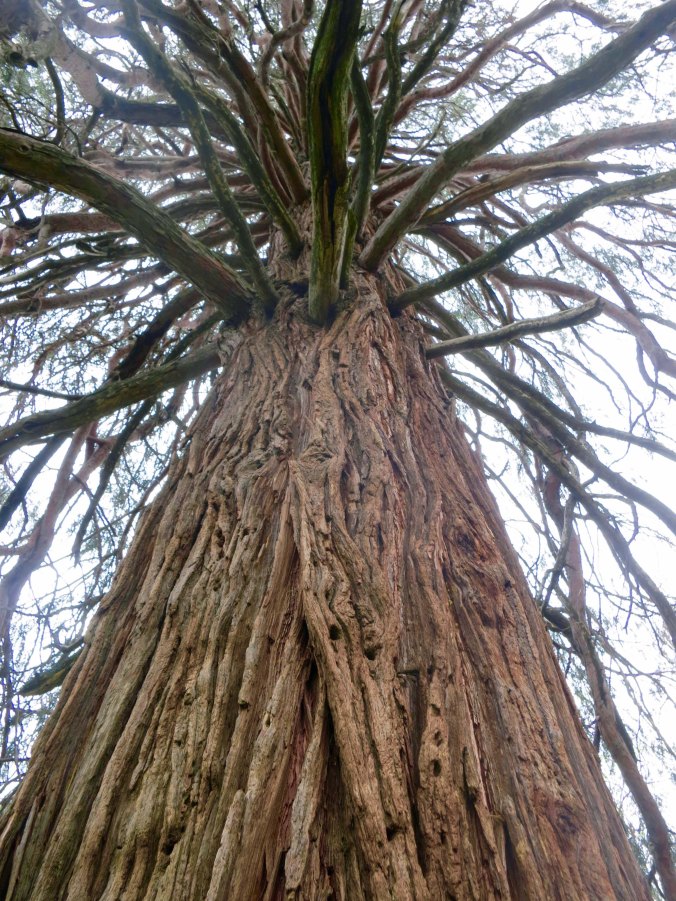
A final view of the 1500 year old rightfully named Big Tree in Prairie Creek Redwoods State Park.

Before the beginning of the environmental movement, many people believed that trees such as this 1500 year old redwood should be cut down to provide homes, jobs and decks.

Peggy and I drove down to Sacramento, California on Thursday. She wanted to visit her mom. I came down to do an oral history interview for the Environmental Council of Sacramento (ECOS). The organization has been protecting Sacramento’s environment for so long it had forgotten its childhood.

I think ECOS wanted to catch up with me while I am still around. (Yikes!) Or at least while I had my memory left. Fortunately I have a long memory, or at least notes, and I was there for the organization’s birth.

My connection with the environmental movement started on April 22, 1970. For those of you not familiar with the date, it was Earth Day I. At the time I was running Peace Corps’ Northern California and Nevada’s Public Affairs office out of Sacramento. It was a great job, but I was getting tired of the recruitment business— I’d been at it for three years. So, I was easily distracted away from my recruitment booth at the University of California Davis that day.

Earth Day was my type of happening. UC Davis puts on great fairs. It probably has to do with an event it calls Picnic Day. Picnic Day is a rite of spring event with roots as deep as humankind. The birds are singing, flowers are blooming, and the snow is melting in the mountains; let’s have a party! All of the departments become involved, put on shows, put up displays, and do silly things.

Earth Day was like that but it also incorporated a vitally important message.

Somehow we had forgotten where we came from in our rush toward progress and the good life, in our deification of the dollar, in our maximizing of profits, and in our greed. In the process we were chopping down our forests, polluting our streams, poisoning our air, destroying our last remaining wilderness areas, and saying goodbye forever to innumerable species whose only evolutionary mistake was to get in our way.

We had forgotten that birds can make music as beautifully as any stereo, that peace and balance can be found in the wilderness, and that somehow, in some yet unfathomable way, our fate might be tied to that of the pup fish. It seemed okay that the last Brown Pelican was about to fly off into the sunset forever so we could squeeze one more bushel of wheat from our crops, and that it was appropriate for the last of the great Redwoods, silent sentinels who had maintained their vigilance for over 4000 years, to die for our patio with a lifespan of 20 years.

“Once you have seen one redwood, you have seen them all,” Ronald Reagan would proclaim.

Rachel Carson, in her landmark book Silent Spring, had sounded a clarion call to a Holy Crusade: saving the earth. Others, too, were raising the alarm. Earth Day I was an expression of growing concern. Its message struck a deep chord within my soul. The years I had spent wandering in the woods while growing up, my exploring of the rainforest around Gbarnga, Liberia during Peace Corps, and my hiking in the wilderness as a backpacker, all came together in a desire to join the environmental movement and help save the wilderness. (The urge, I cheerfully admit, was closely connected to my desire to disappear into the woods as much as possible.)

How to go about pursuing a career in saving the wilderness wasn’t all that clear, though. My occupations to date had been political science major, teacher and Peace Corps recruiter. None of those spelled environmentalist. I committed myself to look around, however, and to be ready for any opportunities that came my way.

Serendipity or synchronicity, being what they are, an opportunity arose immediately. I read an article in the Sacramento Bee about an Ecology Information Center (EIC) that was being organized in Sacramento as a response to Earth Day I. The organization was forming different committees to focus on a variety of environmental issues and was seeking volunteers. Lights went off in my head as I was struck by one of my brainstorms. What if I went in and volunteered to set up a committee that would focus on environment and politics, two of my passions of the moment? Certainly the environmental movement in Sacramento needed a political arm and would benefit from a focused effort. I further reasoned that EIC would have a tough time turning down a full-time volunteer.

A church out in Carmichael, a suburb in Sacramento, had donated the Center some free space so I took a break from the recruitment business and drove out to see what I could learn. When I walked in, two people were in a hot debate, almost yelling at each other. My presence seemed to make little difference. It was my introduction to the world of grass-roots organizations.

“I’ll come back another time,” I announced and turned to leave. This was not a situation I needed to be in.

“Oh, we’re sorry,” the young woman half of the debate announced and sounded like she meant it.

“Yes, please stay. We’re finished with our discussion,” the older man added, obviously a little embarrassed.

I hesitated and walked back in. The man introduced himself as Chuck Wiederhold. The young woman was Katie Easterwood and they had been arguing over the direction of the Center. Chuck felt the organization’s primary direction should be environmental education while Katie was more into environmental action. She was specifically interested in implementing a major recycling project in Sacramento modeled after one she had initiated at American River College. They both seemed like bright, capable people and Katie was particularly impressive at 18 years of age. The two of them were founding members of the organization and on the Board.

“I am interested in another area,” I said with a smile, throwing another option into the mix and wondering how long it would be before the two were yelling at me. I outlined my thoughts on creating a committee that would focus on electing environmentally concerned people to the City Council and Board of Supervisors. I added that I was willing to work full-time as a volunteer and outlined my background. The Director of Peace Corps Public Affairs for Northern California and Nevada sounded more grand that it was. Apparently my resume, or possibly my willingness to work full-time for free, impressed them— more than I had intended.

“I have an even better idea,” Chuck had announced with Katie’s concurrence, “why don’t you consider becoming EIC’s Executive Director.”

There it was, just like that. After a 15 minute discussion based on a whim, I was being offered the opportunity to become a card-carrying environmentalist, a leader in Sacramento’s fledgling environmental movement. I was in on the ground floor.

Three months later, I was up to my ears in garbage. Katie’s idea to run a once a month, community wide recycling drive was underway. Ten thousand families were dropping off tons of newspapers, cans and bottles at six sites we had set up throughout Sacramento City and County. EIC was running an operation that involved 300 volunteers and 15 rental trucks with one wildly enthusiastic young woman and one totally exhausted executive director, who was receiving a whopping $100 a month in compensation. Twenty-four hours after starting, we stored our last bundle of newspapers in a vacant building in Old Sacramento (later to become Frank Fat’s restaurant) and limped off to sleep. Shortly afterwards, the Board doubled my salary to $200 per month.

As crazy as the recycling drives were, I managed to become involved in other environmental issues. One of the most memorable was Proposition 18, a 1970 California Initiative spearheaded by the Tuberculosis and Respiratory Disease Association of California (later to become the Lung Association). Proposition 18, as it turned out, would serve as the foundation to ECOS.

The TB folks had gone a long way toward conquering tuberculosis and were looking around for other challenges. Since they were experts in matters pertaining to the lungs, it made sense to tackle other lung diseases. Research was showing that smoking and air pollution were two major causes of lung disease. Proposition 18, the Clean Air Initiative, was designed to raise money from the motor vehicle fuel tax and license fees to control automobile caused air pollution and develop mass transportation alternatives.

In Sacramento, a coalition of organizations ranging from the League of Women Voters to the American Association of University Women, the Audubon Society and Sierra Club had joined the TB Association in its effort. It was a natural for EIC to join as well. I was soon attending meetings and helping out with the campaign.

The highway interests (with money provided by the oil companies) defeated Proposition 18, but the coalition had worked well together. I had enjoyed the opportunity of working with leaders from other community-based groups and knew I would miss the interaction. At our wrap up session after the November election, someone suggested we should maintain the coalition. I jumped on the idea. There were a wide range of environmental issues that would benefit. It was one thing for EIC to make a point; it was something else when the Tuberculosis Association or League of Women Voters spoke out on the same issue.

Pulling together a variety of organizations to support environmental issues recognized a central tenet of the ecology movement. Solutions to environmental problems demand multi-faceted approaches. Everything is related. Urban sprawl encourages extensive automobile use, which, in turn, leads to air pollution. Reducing urban sprawl supports mass transit and has the added advantage of protecting valuable farmland and rapidly disappearing natural areas. It was clear as we talked that coalition members were excited about the potential of working together and believed we could make a difference in the quality of life in Sacramento.

“I move we create an ongoing organization,” I offered. The motion was immediately seconded and support was unanimous. We decided to call our organization the Environmental Council of Sacramento, ECOS. Each organization could have two representatives. Membership would be open to any organization concerned with improving and protecting Sacramento’s environment. Kris Corn, the young woman from the Tuberculosis Association who had headed up the Clean Air Initiative, was selected as the first president.

ECOS continues to function in Sacramento today as one of the longest continuing community environmental coalitions in the nation. I worked closely with the organization for several years and am proud of my early involvement. I am even more proud of what the organization has been able to accomplish in the 45 years since.

On the Edge of Radicalism— UC Berkeley’s Free Speech Movement: Part II

Jack Weinberg looks out the window of a police car on Sproul Plaza on the Berkeley Campus.

Jack Weinberg looks out the window of a police car on Sproul Plaza on the Berkeley Campus. He had been arrested for signing up students to support the Civil Rights Movement. Jack was the person who coined the rally cry of the 60s: “Never trust anyone over 30.” (Photo was on the front of Berkeley’s literary magazine, Occident.)

I came back to Berkeley in the fall of 1964 with a new living arrangement. Before summer break, two of my dorm-mates, Cliff Marks and Jerry Silverfield, had agreed to share an apartment with me for our senior year. Landlords had a captive student population to exploit so prices were high. We ended up with a small kitchen, bathroom, living room, and bedroom. Things were so tight in the bedroom that Cliff and I had a bunk bed. He got the top. I would later wonder why this was superior to dorm life. We had more responsibility and less privacy.

We christened the apartment by consuming a small barrel of tequila Cliff had brought back from his summer of sharpening Spanish skills in Mexico. While Cliff, Jerry and I were recovering from our well-deserved headaches, the Administration moved decisively to eliminate on-campus political activities. There would be no more organizing of community-oriented demonstrations from campus, no more collecting of money from students to support causes, and no more controversial speakers on campus without administrative oversight and control. The Bancroft-Telegraph entrance free speech area was out of business, closed down, caput. That incredible babble of voices advocating a multitude of causes would be heard no more.
The Administration’s actions were a testament to the success of the Civil Right’s struggle taking place in the Bay Area. It wasn’t that the activists wanted change; the problem was that they were achieving it. Non-violent civil disobedience is a powerful tool. Base your fight on moral issues; use the sit-in and the picket line to make your point. When the police come, don’t fight back; go limp. If they beat you over the head, you win. Sing songs of peace and justice; put a flower in the barrel of the weapon facing you. It is incredibly hard to fight against these tactics.

As the protests in the surrounding community became more successful, the power structure being attacked struck back. Calls were made to the Regents, the President of the University system, and the Chancellor at Berkeley. ‘Control your students or else’ was the ominous message. One of the people making the threats was William Knowland, owner of the Oakland Tribune and a former Republican Senator from California who had been a strong supporter of McCarthyism. The Tribune was one of the targets of the anti-discrimination campaign.

The Regents, President and Chancellor bowed to the pressure. Some members of the Administration undoubtedly agreed with Knowland and saw the protesters as part of an anarchic left-wing plot. Others may have believed that the students’ effectiveness would bring the powers that be down on the university. Academic freedom could be lost. Some likely felt that the activities were disruptive to the education process and out-of-place on a college campus.
One thing was immediately clear; the Administration woefully underestimated the reaction of the leaders of the various organizations and large segments of the Campus population to its dictum. Maybe the administrators actually believed the message they had received from their student leadership the previous fall or maybe they just needed to believe: the outside pressure was so great it didn’t matter how students reacted.

But react they did. These were not young adults whose biggest challenge had been to organize a pre-football game rally. Some, like Mario Savio, had walked the streets of the South and stared racism in the face, risking their lives to do so. That summer while I was driving a laundry truck over the Sierras, three of their colleagues had been shot dead and buried under an earthen dam near Philadelphia, Mississippi. Many had cut their political eye teeth four years earlier in the anti House Un-American Activities Committee demonstrations in San Francisco and had participated in the numerous protests against racial discrimination since. They understood the value of demonstrations, media coverage and confrontation, and had become masters at community organization. They were committed to their beliefs and were willing to face police and be arrested if necessary.
The Administration wasn’t nearly as focused. Mainly liberal in nature and genuinely caring for its students, it utilized a 50’s mentality to address a 60’s reality. Its bungling attempts to control off-campus political activity combined with its inability to recognize the legitimacy and depth of student feelings would unite factions as diverse as Young Republicans for Goldwater with the Young People’s Socialist League and eventually lead to the massive protests that would paint Berkeley as the nation’s center of student activism and the New Left. Over the next three months I would spend a great deal of time listening, observing and participating in what would become known world-wide as the Free Speech Movement. As a student of politics, I was to learn much more in the streets than I did in the classroom.

What evolved was a classic no win, up-against-the-wall confrontation. The Administration would move from “all of your freedoms are removed,” to “you can have some freedom,” to “let’s see how you like cops bashing in your heads.” The Free Speech leaders would be radicalized to the point where no compromise except total victory was acceptable. Student government and faculty solutions urging moderation and cooperation would be lost in the shuffle. Ultimately, Governor Pat Brown would send in the police and Berkeley would take on the atmosphere of a police state.

The process of alienation that had started for me with the student leader conference in 1963 continued to grow, but I never made the leap from issue to ideology. It was no more in my nature to be left-wing than it had been to be right-wing. However, I would journey across the dividing line into civil disobedience.

Within hours of the time that Dean Katherine Towle sent out her ultimatum to campus organizations, the brother and sister team of Art and Jackie Goldberg had pulled together activist organizations ranging in orientation from the radical to conservative and a nascent FSM was born. Shortly thereafter the mimeographs were humming and students were buried in an avalanche of leaflets as they walked on to campus. I read mine is disbelief. The clash I had foreseen a year earlier had arrived. There was no joy in being right.

Mimeographed sheet on Free Speech Movement from the files of Curtis Mekemson.

Hastily run off mimeograph sheets such as this one kept students up-to-date on what was happening with the Free Speech Movement. It seems terribly quaint in the age of the Internet and cellphones.

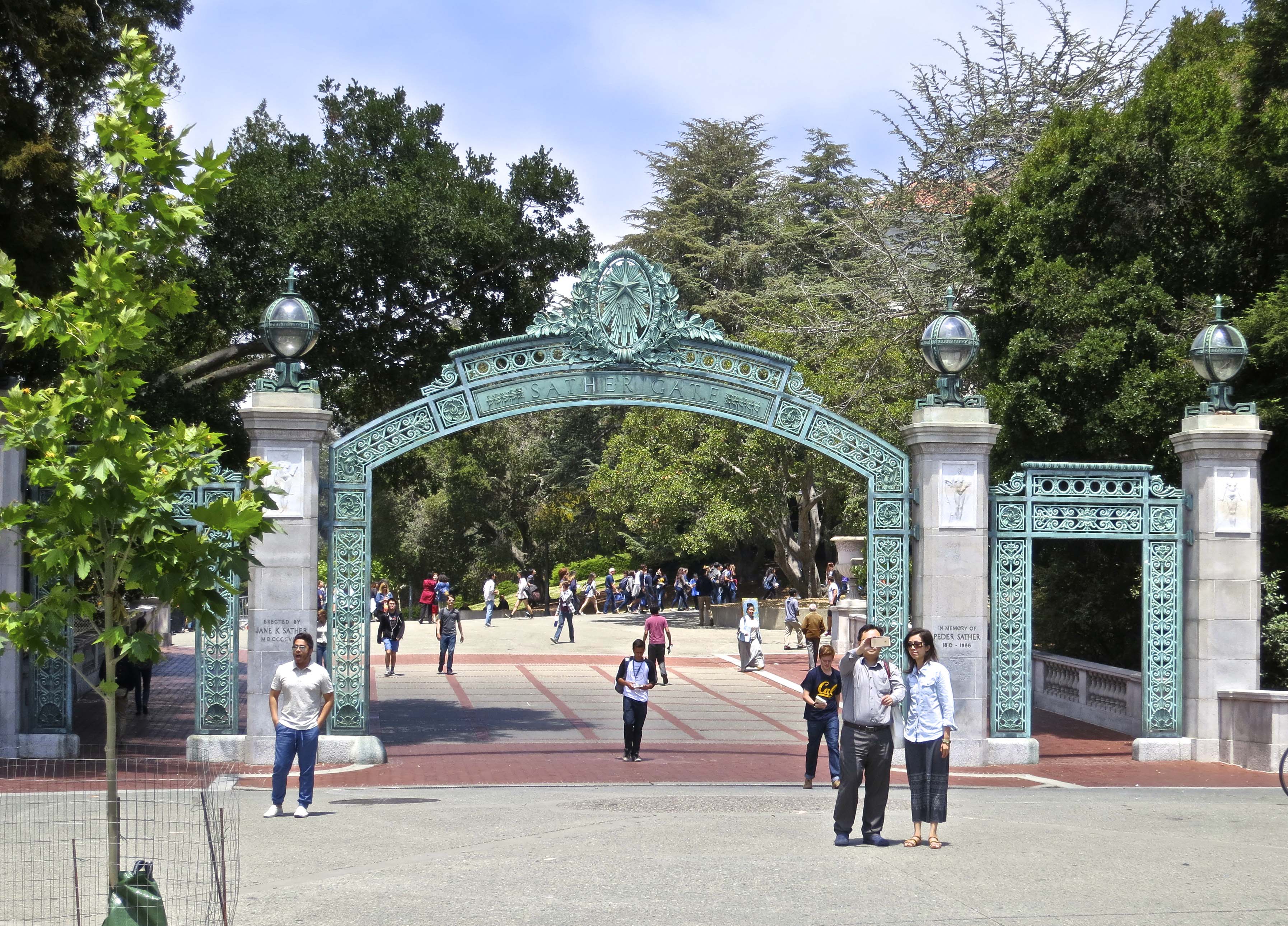
As soon as it became apparent that the Administration had no intention of backing off from its new rules, the FSM leadership determined to challenge the University. Organizations were encouraged to set up card tables in the Sather Gate area to solicit support for off campus causes. I had stopped by a table to pick up some literature when a pair of Deans approached and started writing down names of the people manning the table. Our immediate reaction was to form a line so we could have our names taken as well. The Deans refused to accommodate us. The Administration’s objective was to pick off and separate the leadership of the FSM from the general student body.

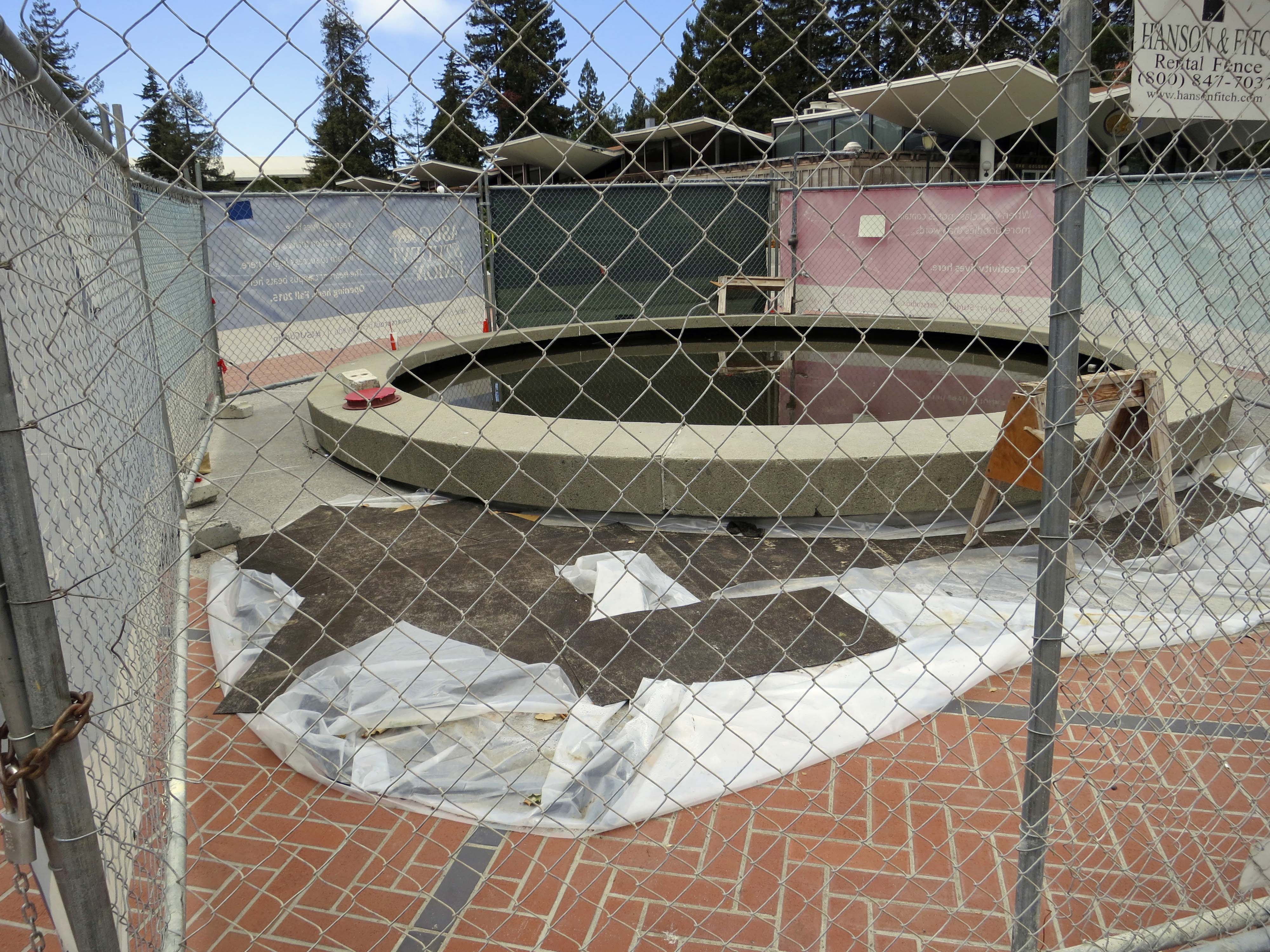
A few days later, on October 4, I came out of class to find a police car parked in Sproul Plaza surrounded by students. The police, with encouragement from the Administration, had arrested Jack Weinberg, a non-student organizer for CORE (Congress of Racial Equality) who had been soliciting support for his organization. Someone had found a bullhorn and people were making speeches from the top of the police car while Jack sat inside. I situated myself on the edge of the fountain next to the Student Union and idly scratched the head of a German Short Haired Pointer named Ludwig while I listened. Ludwig visited campus daily and played in the water. He’d become a Berkeley regular.

Eventually I stood up and joined those on the edge of the crowd thereby becoming a part of the blockade. It was my first ever participation in civil disobedience. It was a small step. There would be plenty of time for more critical thinking if the police showed up in force. I did duty between classes and took breaks for eating and sleep. Eventually, after a couple of days, the FSM negotiated a deal with the Administration. Jack was booked on campus and turned loose, as was the police car. A collection was taken up to pay for minor damages the police car had sustained in the line of duty while serving as a podium. I threw in a dollar. Weinberg, by the way, was the one who coined the rallying cry of youth in the 60s: “Never trust anyone over 30.”

The situation did not improve. Each time a solution seemed imminent, the Administration would renege or the FSM would increase its demands. In addition to the right to organize on campus, the disciplining of FSM leaders became a central issue. Demonstrations took place almost daily and were blasted in the press, which wasn’t surprising considering the local press was the Oakland Tribune. I learned a great deal about media sensationalism and biased reporting. One day I would sit in on a very democratic and spirited discussion of the pros and cons of a specific action and the next day I would read in the Tribune or San Francisco Examiner that I had participated in a major insurrection of left leaning radicals who were challenging the very basis of law and order and civilized society.

Older adults, looking suspiciously like plain-clothes policemen or FBI agents, became a common occurrence on Campus. It was easy to become paranoid. If we signed a petition, demonstrated, made a speech or just stood by listening, would our pictures and names end up in some mysterious Washington file that proclaimed our disloyalty to the nation? These weren’t idle thoughts. A few years earlier people’s careers had been ended and lives ruined because someone had implied they were soft on communism. J. Edgar Hoover was known for tracking Civil Rights’ leaders and maintaining extensive files on every aspect of their lives. While we weren’t up against the KGB, caution was advisable. We looked warily at those who didn’t look like us. One day a small dog was making his way around the edge of the daily demonstration, sniffing people.

“See that Chihuahua,” a friend whispered in my ear. I nodded yes. “It’s a police dog in disguise. Any moment it is going to unzip its front and a German Shepherd will pop out.”

The wolf in sheep’s clothing was amongst us. It was a light moment to counter a serious time. And we were very serious. I sometimes wondered when the celebrated fun of being a college student would kick in.

One day I was faced with a test more serious than any I had ever faced in the classroom. On Friday, December 3, 1964, FSM leaders called for a massive sit in at Sproul Hall. Once again communication had broken down and the Administration was back peddling, caught between students and faculty on the one side and increasing pressure from the outside on the other. I thought about the implications of the sit-it and decided to join. It was partly on whim, and partly because I had a need to act. For three months I had listened to pros and cons and watched the press blatantly misrepresent what was happening on campus. I was angry, knowing that the public had little option but to believe we were being manipulated by a small group of radicals and had no legitimate concerns.

It was not wrong to utilize an edge of campus for discussing the central issues of the day, or for organizations to raise funds for supporting various causes, or even to recruit students to participate in efforts to change the community. It didn’t disrupt my education. I was free to stop and listen, to join in, or pass on. What it did do was irritate powerful, established members of the community. And for that reason, our freedoms had been curtailed.

Maybe if enough students joined together and the stakes were raised high enough, the Administration would listen, the press would dig a little deeper, and our basic freedoms would be returned. I told my fiancé I was going inside and then joined the thousand or so students who had made similar decisions. It was early in the afternoon and we were in high spirits. I believed it would be hard for the Administration to claim 1000 students were a small group of rabble-rousers bent on destroying the system. And I was right. They claimed we were a large group of rabble-rousers bent on destroying the system.

Inside I was treated to one of the more unique experiences of my life. The sit-in was well-organized. Mario Savio and other FSM leaders gave us directions on what to do if the police arrived. There were clear instructions that we were not to block doorways. The normal business of the University was not to be impeded and we were not to be destructive in any way. Floors were organized for different purposes. The basement was set aside as the Free University where graduate students were teaching a variety of classes. These included normal topics such as physics and biology and more exotic subjects such as the nature of God. One floor was set aside as a study hall and was kept quiet. Another floor featured entertainment – including old Laurel and Hardy films.

After administrators left, the Dean’s desk became a podium for speech making. I felt compelled to participate. There was a long line of speakers. We were required to take off our shoes so the desk wouldn’t be damaged. The real treat though was an impromptu concert by Joan Baez. I joined a small group sitting around her in the hallway and sang protest songs. The hit of the night was “We Shall Overcome.” It provided us with a sense of identification with struggles taking place in the South. I felt like I belonged and was part of something much larger than myself. Mainly I walked around and listened, taking extensive notes on what I saw and felt. Later I would sit in the Café Med and write them up. They would become the basis of talks I would give back home over the Christmas break.

Along about midnight I started thinking about my comfortable bed back in the apartment. The marble floors of Sproul Hall did not make for a good night’s sleep and it appeared the police weren’t coming, at least in the immediate future. Yawning, I left the building and headed home. I would come back in the morning.

I did, but I came back to a semi-police state. Berkeley was an occupied campus. Armed men in uniforms formed a cordon around the Administration Building where students were being dragged down the stairs and loaded into police vans. Windows had been taped over so people or media could not see what was transpiring inside. The great liberal governor of California had acted to “end the anarchy and maintain law and order in California.”

I am sure Laurel and Hardy would have seen something to laugh about. Dragging kids down stairs on their butts while their heads bounced along behind could easily have been a scene in one of the old Keystone Cop films. The Oakland police weren’t nearly as funny as the Keystone Cops, however. As for Clark Kerr, President of the University, he felt we were getting what we deserved and argued that the FSM leaders and their followers “are now finding in their effort to escape the gentle discipline of the University, they have thrown themselves into the arms of the less understanding discipline of the community at large.”

An aging copy of the Daily Cal, Berkeley's student newspaper, announces the arrests at Sproul Hall on December 4, 1964.

An aging copy of the Daily Cal, Berkeley’s student newspaper, announces the arrests at Sproul Hall on December 4, 1964.

Later Kerr claimed he had an understanding with Governor Brown to let the students remain in Sproul Hall over night. He would talk with the protesters in the morning in an effort to end the sit-in peacefully. But Brown reneged on the agreement. One report was that Edwin Meese, Ronald Reagan’s future Attorney General and, at the time, Oakland’s Deputy DA and FBI liaison, had called Brown in the middle of the night with the claim that student’s were destroying the Dean’s office.

I had participated in the “destruction,” i.e. stood on the Dean’s desk in my socks. Either the DA had received an erroneous report or he had deliberately lied to the Governor. My sense was that the right-wing of American politics, which Meese represented, had much more to gain from violent confrontations than it did from negotiated settlements.

The campus came to a grinding halt and a great deal of fence-sitting ended. Whole departments shut down in strike. Sproul Hall plaza filled with several thousand students in protest of the police presence. When the police made a flying wedge to grab a speaker system FSM was using, we were electrified and protected the system with our bodies. It was the closest I have ever come to being in a riot; thousands of thinking, caring students teetered on the edge of becoming an infuriated, unthinking mob. Violence and bloodshed, egged on by police action, would have been the result. Kerr, Brown, Knowland and company would have had the anarchy they were claiming, after the fact. A few days later we were to come close again.

Kerr, in a series of around the clock meetings with a select committee of Department Chairs, had arrived at a compromise he felt would provide for the extended freedom being demanded on campus while also diffusing the outside pressure to crack open student heads. Sit-in participants arrested in the Sproul Hall would be left to the tender mercies of the outside legal system and not disciplined by the University. Rights to free speech and organization on campus would be restored as long as civil disobedience was not advocated.

Kerr and Robert Scalapino, Chair of the Political Science Department, presented the compromise to a hastily called all-campus meeting of 15,000 students and faculty at the Greek Theater. There was to be no discussion and no other speakers. When Mario Savio approached the podium following the presentation, he was grabbed by police, thrown down, and dragged off the stage. Apparently he had wanted to announce a meeting in Sproul Plaza to discuss Kerr’s proposal. Once again, Berkeley teetered on the edge of a riot. We moved from silent, shocked disbelief to shouting our objections. Mario, released from the room where he was held captive, urged us to stay calm and leave the area. We did, but Kerr’s compromise had become compromised.

A full meeting of the Academic Senate was to be held the next day and the whole campus waited in anticipation to hear what stand Berkeley’s faculty would take. We knew that most faculty members deplored the presence of police on campus and the violent way they had responded to the nonviolent demonstrators. Dragging Mario off the stage had not helped the Administration’s case. Some departments such as math, philosophy, anthropology and English were clearly on the side of FSM while others including business and engineering were in opposition.

My own department of political science was clearly divided. Some professors believed that nonviolent civil disobedience threatened the stability of government. Others recognized how critical it was for helping the powerless gain power. To them, having large blocks of disenfranchised, alienated people in America seemed to be a greater threat to democracy than civil disobedience.

The Senate met on December 8 in Wheeler Hall. Some 5000 of us gathered outside to wait for the results and listen to the proceedings over a loud speaker.

To the students who had fought so hard and risked so much, and to those of us who had joined their cause, the results were close to euphoric. On a vote of 824-115 the faculty voted that all disciplinary actions prior to December 8 should be dropped, that students should have the right to organize on campus for off-campus political activity, and that the University should not regulate the content of speech or advocacy. Two weeks later, the Regents confirmed the faculty position.

We had won. Our freedom of speech, our freedom to organize, and our freedom to participate in the critical issue of the day were returned. While we were still a part of the future so popular with commencement speakers, we were also a part of the now, helping to shape that future.

NEXT BLOG: The aftermath of the Free Speech Movement and a 50-year perspective on the results.

1964— The Free Speech Movement at UC Berkeley… A Student Revolution: Part I

Wrinkled and showing signs of age, this is the original sign I carried in December of 1964 when the police occupied UC Berkeley and participants in the Sproul Hall Sit-in were arrested.

Wrinkled and showing signs of age, this is the original sign I carried in December of 1964 when the police occupied UC Berkeley and participants in the Sproul Hall Sit-in were arrested.

A large celebration is taking place at the University of California, Berkeley on October 4th to mark the 50th anniversary of the Free Speech Movement, one of the world’s most important student revolutions. From 1963-65 I was a student at Berkeley and had a front row seat. Unfortunately, I can’t attend the celebration this weekend due to prior commitments. To honor the event and share my perspective, however, I will use earlier writings I have done on the Free Speech Movement to post three blogs over the next three days.

In the fall of 1963, I transferred from Sierra College, a small community college in the Sacramento Valley of California, to the University of California at Berkeley. Sierra was like driving down a country road on a lazy summer day; Berkeley was like being caught on a six-lane Los Angeles freeway during rush hour.

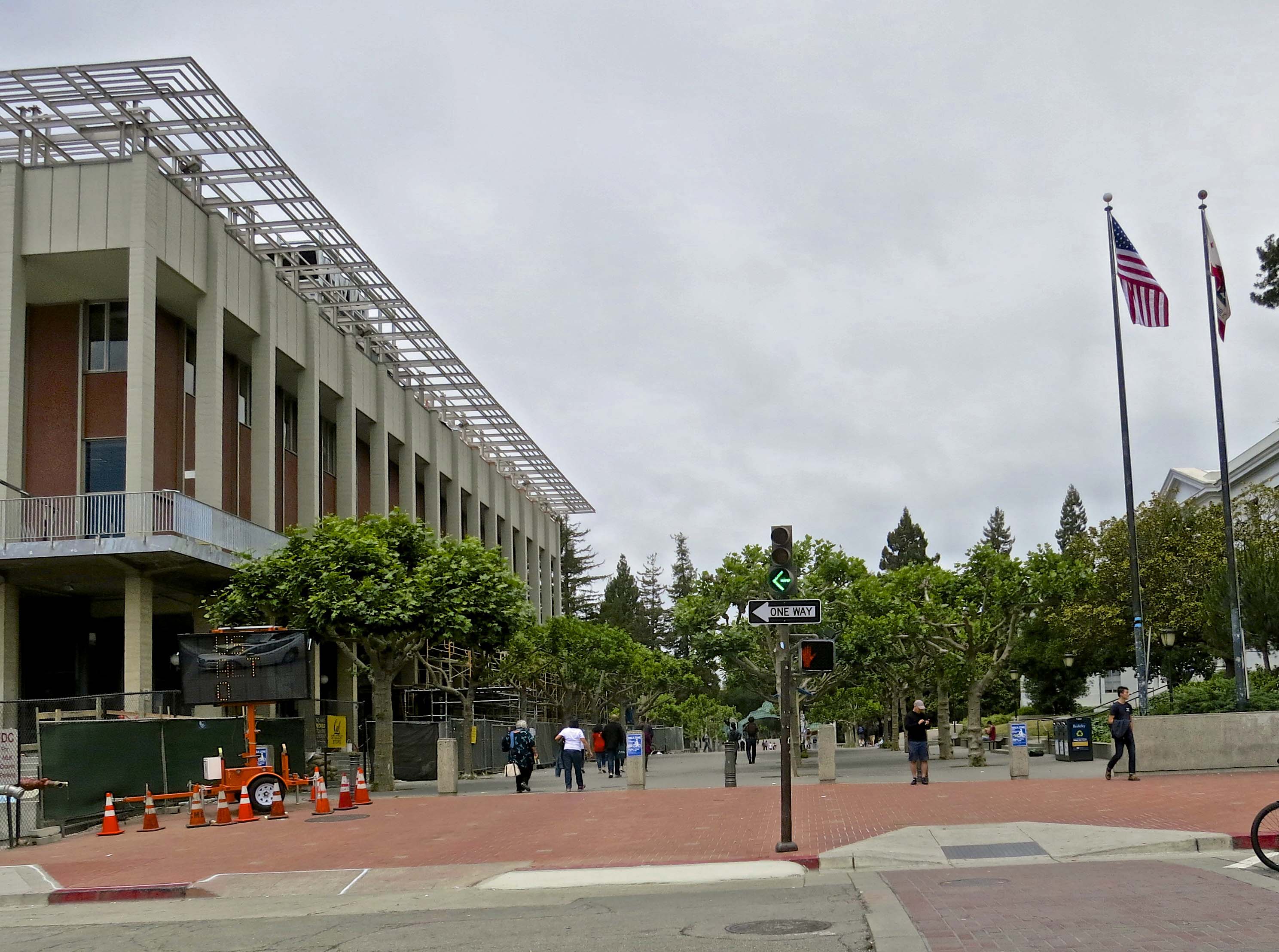
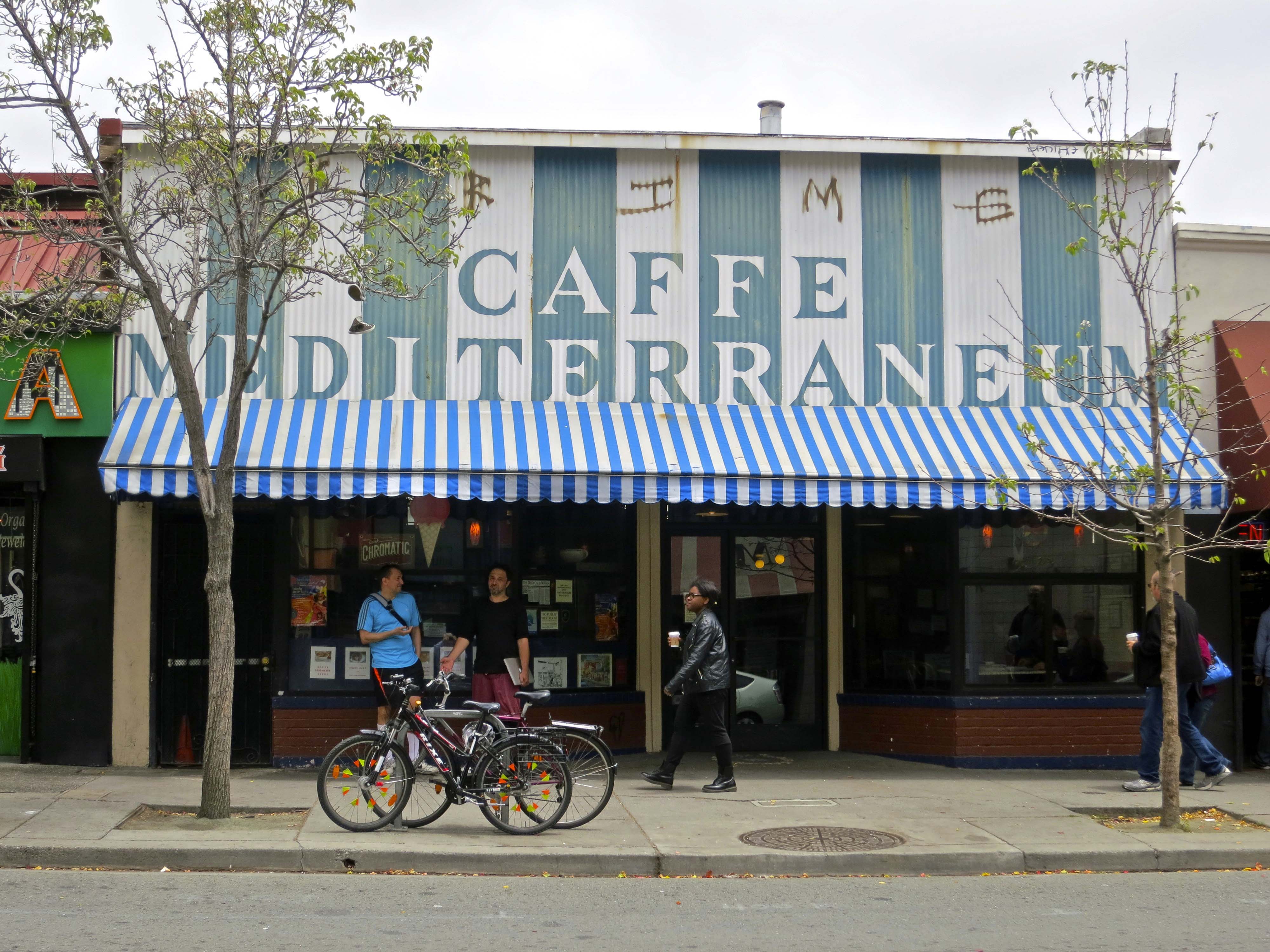
Telegraph Avenue became my mecca. Exotic smells emanated from a dozen different ethnic restaurants while numerous languages assaulted my ears. I quickly discovered the Café Mediterraneum. In an era before Starbucks made coffee houses safe for middle-class America, Café Med was an original. It was a microcosm of the Berkeley I would come to love, filled with offbeat characters, esoteric discussions and great coffee. I became addicted to both the cappuccino and atmosphere. I would grab my coffee and climb the narrow wooden stairs in back for a coveted balcony seat where I would watch the ebb and flow of the city’s unique flotsam.

A quick jaunt across Telegraph produced another treasure, Cody’s bookstore. Started on a shoestring by the Cody family in the 50s, it had become one of America’s premier bookstores by the mid-sixties. I saved my explorations for Saturdays when there was time to indulge my passion for books. I would disappear inside and become lost to everything except the next title.

I was equally fascinated by the ever-changing kaleidoscope of soapbox oratory provided at the south entrance to the campus on the corner of Bancroft and Telegraph. During any given hour, a dozen speakers could be found there espousing as many causes. I considered it high entertainment and would sit on the steps of the Student Union and listen during breaks from my studies. Over one lunch period, I reported in a letter home, I listened to a student who had spent her summer working in the South registering voters, a black South African talking about apartheid, a socialist railing against the evils of capitalism, a capitalist railing against the evils of socialism, and a Bible thumper detailing out the many paths Berkeley students were following to hell.

Many of the speakers urged that there was more to college life than studies, football and parties. Change was in the wind and we should be part of it. Work for fair housing in Berkeley; oppose the unfair hiring practices at Safeway; sign up to help on a political campaign. Join CORE, SNCC, SLATE, SDS, YAF or a world of other acronyms. I struggled to take it all in, absorb it through my pores. It certainly wasn’t Kansas, Dorothy, nor was it Sierra College or the small Sierra foothill town of Diamond Springs where I was raised. I attended classes at Berkeley that had more students than the total population of Diamond and were close in size to matching Sierra’s full student body.

To simplify my first year I opted to live in a college dorm. I would have a room, a bed and regular meals. The University assigned me to Priestly Hall, which was ideally located a block away from campus and a block away from Telegraph Avenue. As for life at Berkeley, I wanted it all. There were student politics to jump into, classes to master, a love life to support, bookstores to explore, cappuccino to consume, and a thousand causes to sort out. Moderation was not an option.

It was easy to be overwhelmed. I was assigned 15 books in one class and actually thought I was expected to buy and read each one in detail. I was a fast reader but not that fast, nor that wealthy. It would take a year to master the art of skimming, buying old books, using commercially prepared notes and pursuing all of the other tricks of the trade that getting a higher education entailed. For all of that, there was an excitement to the classes. I might be sharing my professor with a thousand other students but he or she might also be a person who was a confidante of Presidents.

I had been student body president at Sierra and gamely jumped into student politics at Berkeley. The dormitories were new, so the residents were new. They hadn’t had time to get to know each other. The fact that I was a community college transfer made little difference. Within a week of my arrival, I was president of Priestly Hall.

Student politics seemed dull and almost frivolous compared to the real thing, though. What truly fascinated me about Berkeley was the palpable sense of being involved in the events of the day. I was drawn toward these issues and the call to action tweaked my interest. Limiting the future of a person because of his or her skin color, sex, or religion went beyond being counterproductive. It was stupid; we all lost. But I wasn’t ready to take up a picket sign. This was my first year at Berkeley and my hands were full with studying.

I did strike one tiny tap hammer blow against Berkeley’s depersonalized approach to undergraduate education, however. Our dorm was expected to participate in the annual Ugly Man Contest. Its purpose was to raise money for charity by having someone or thing really ugly as the dorm’s representative in competition with other dorms, fraternities and sororities. People would vote by donating money (normally pennies) to their favorite ugly man. In addition to being pure fun, it was on the top of the Dean’s list as an acceptable student activity.

I proposed that our ‘Ugly Man’ be an unfortunate Joe College Student whose computer card had been lost by the Administration. Consequently, he no longer existed. Early computers used punched cards to contain data and had become ubiquitous in our lives. They came with the warning “do not fold, spindle or mutilate.”

We made up a casket and wandered about campus in search of poor Joe. It was a small thing but it reflected a growing unease I had about the alienation that happens when numbers became more important than individuals. Apparently the student body wasn’t ready for the message. A popular bartender, selected by a fraternity as its ugly man candidate, walked away with the prize.

While my concerns about assembly line education were evolving, the administration was monitoring off-campus student activism with growing concern. The University perceived its primary objectives as carrying out research and preparing young people to become productive members of American society. There was little room in this view for students seeking social and political change— in Mississippi, in Oakland or on campus.

But the world was changing. A young President in Washington was calling on the youth of America to become involved and had created the Peace Corps to encourage involvement. Racial equality seemed attainable in the United States, and people the world over were yearning for and demanding freedom. It was easy for idealistic young Americans to believe we were at the dawning of a new age and natural to want to be involved in the transformation.

Had the students restricted their political efforts in the early and mid sixties to the far off South, the eruption of conflict on the Berkeley Campus may not have taken place. But they chose local targets as well. When the students marched off campus to picket the Oakland Tribune, Sheraton Hotel, United Airways and Safeway over discriminatory hiring practices, they were challenging locally established businesses with considerable power. Not surprisingly, these businesses felt threatened and fought back. Rather than deal with the existing discrimination, they demanded that the University, local authorities, the state government and even the federal government do whatever was necessary to reign in the protesters.

Their arguments for the crackdown were typical of the times. A few radical off-campus agitators with Communist connections were working in conjunction with left leaning professors to stir up trouble. The participating students lacked mature judgment and were naively being led astray. The vast majority of students were good law-abiding kids who just wanted to get an education, party, and get a paycheck.

The University was caught between the proverbial rock and a very hard place. The off-campus political activism was creating unwanted attention. Public dollars could be lost and reputations tarnished. There was a justifiable fear of reprisal from the right. The ugliness of McCarthyism was still alive and well in America. Only a few years before the House of Un-American Activities Committee (HUAC) had held hearings in San Francisco in its ceaseless search for Commies. UC had been a target.

HUAC created a deep paranoia and distrust within society and may indeed have constituted the most un-American type of activity ever perpetrated on the American public. Clark Kerr and others had worked hard to protect and restore the academic freedom on campus that loyalty oaths and other McCarthy-like activities had threatened. Student activism might refocus right-wing attention on the Berkeley Campus.

My greatest insight into the mindset of the Administration was when the Dean of Students called student leaders together to discuss the growing unrest on campus. Our gathering included members of the student government and presidents of the resident halls, fraternities and sororities. Noticeable in their absence were student representatives from off campus organizations such as CORE, SNCC, Young Democrats, Young Republicans and other activist groups. We sat in a large room in a huge square; there must have been at least 40 of us. I was eager to participate and imagined an open discussion of the issues.

The Dean welcomed us, thanked us for agreeing to participate, and then laid the foundation for our discussion. A small group of radical students was disrupting the campus and organizing off-campus activities such as picketing and sit-ins that were illegal in nature. While the issues being addressed were important, there were other, more appropriate means available for solving them that did not involve Berkeley. The Administration had been extremely tolerant so far but was approaching a point where it might have to crack down for the overall good of the University.

The Administration wanted our feedback as student leaders. What did we think was happening, how would our constituencies react to a crack down, and how could we help defuse the situation? We were to go around the room with each student leader expressing his or her view. I expected a major reaction— hopefully a protest or at least a warning to move cautiously, to involve all parties in seeking some type of amenable agreement.

The first student leader stood up. “The radical students are making me extremely angry,” he reported. “I resent that a small group of people can ruin everything for the rest of us. The vast majority of the students do not support off-campus political action. I believe the student body would support a crackdown by the Administration. You have my support in whatever you do.”

I could not believe what I was hearing. Was the guy a plant, preprogrammed by the Administration to repeat the party line and set the tone for everyone else? If so, he was successful. The next person and the next person parroted what he had said. I began to doubt myself. Normally, I am quite good at reading political trends and sensing when a group leans toward supporting or opposing an issue. My read on what was happening at Bancroft and Telegraph was that the majority of the students were empathic with and supportive of the causes the so-called radical students were advocating.

The Martin Luther Kings of the world were heroes, not bad guys, and their tactics of nonviolent civil disobedience were empowering the powerless. Sure, the majority of the students were primarily concerned with getting through college. To many, an all night kegger and getting laid might seem infinitely more appealing than a sit-in. But this did not imply a lack of shared concern. Or so I believed. Apparently, very few of the other participants shared in my belief. Concerns were raised but no one stopped and said, “Damn it, we have a problem!”

As my turn approached I felt myself chickening out. I was the new kid on the block, wet behind the ears. What did I know? Acceptance in this crowd was to stand up and say, “Yes, everything you are talking about is true. Let’s clamp down on the rabble rousers and get on with the important life of being students.” And I wanted to be accepted, to be a part of the establishment. I stood up with shaking legs.

“Hi, my name is Curt Mekemson and I am the president of Priestly Hall,” I announced in a voice which was matching my legs, shake for shake. This was not the impression I wanted to make. As others had spoken, I had scribbled some notes on what I wanted to say. “I believe we have a very serious problem here, that the issues are legitimate, and that most students are sympathetic. I don’t think we should be cracking down but should be working together to find solutions. Now is not the time to further alienate the activists and create more of a crisis than we presently have. I believe it is a serious mistake to not have representatives from the groups involved in organizing off campus activities here today.”

I was met with deadly silence. A few heads nodded in agreement, but mainly there were glares. “Next,” the Dean said. No yea, no nay, no discussion. I was a bringer of bad tidings, a storm crow. But it wasn’t ‘kill the messenger.’ It was more like ‘ignore the messenger,’ like I had farted in public and people were embarrassed.

After that, my enthusiasm for student government waned. I should have fought back, fought for what I believed in, fought for what I knew deep down to be right. But I didn’t. I was still trying to figure out what to do with 15 books in Poly Sci 1. I had a relationship to maintain on campus and a mother fighting cancer at home. The dark, heavy veil of depression rolled over my mind like the fog rolling in from the Bay. Finally I decided that something had to go and that the only thing expendable was my role as President of the dorm. So I turned over the reins of power to my VP and headed back to Bancroft Library. Politics could wait.

Without student government concerns, Berkeley became more doable and even fun. I disappeared into the library for long hours whipping out term papers, devouring books and becoming a serious student. The end of my first semester approached. Christmas vacation was coming. There would be a break in the endless studies and a time for long walks in the woods. Maybe I could get my head around what was happening on campus and where I fit into the scheme of things.

One crisp fall day in November I came blinking out of the library to a brilliant sun and a hushed silence. Students and faculty were emptying out of classes; a young woman with long dark hair was standing on the library steps, tears streaming down her face.

“What’s wrong?” I asked.

“They’ve shot the President in Dallas,” she replied as her voice broke.

John F. Kennedy was dead. It was November 23, 1963. The young president who was standing up against racism in the South, the man who had created the Peace Corps, who called for international justice and inflamed people’s hopes worldwide, had been shot down in the streets of Dallas. And with his death, some of the hope he had created died with him; it died on the Berkeley Campus that day and it died in me. Each of us lost something of the dream that things could be better, that we as individuals could be better. School stopped and we headed for the nearest TVs, newspapers and radio stations. Time and again we watched the car speeding away with the wounded President, watched Walter Cronkite announce that the President was dead and watched as Lyndon Johnson was sworn in. It was a day etched into the collective memory of our generation.

Thanksgiving arrived and Christmas followed. The battle between the Administration and the student activists continued during the spring semester while I focused on studies. On March 3, 1964, I turned 21 and became, according to law, an adult. Soon I would have to decide what I was going to do with my adult life.

NEXT BLOG: 1964: On the edge of radicalism

Dog Stew, A Rattlesnake Bite and Hypothermia… Reblog

This is the fifth and final of a series of Blogs on how the Peripatetic Bone was found in the Sierra Nevada Mountains. I will respond to comments when I return from Burning Man.

It was a pleasant hike down to Carson Pass on Highway 88 and relatively dry since we were on a south-facing slope.

Kit Carson came through here in February of 1844 along with John C. Fremont. It wasn’t pleasant then. The snow was deep and food was limited. They ended up dining off of their horses, mules and the camp dog. The dog apparently went quite well with pea soup. Later, the trail they discovered would become a major entry point for the 49ers and run through the foothill town of Diamond Springs where I was raised.

There was nary a bar, restaurant or gas station near the Pass so we hiked on another three miles to Lake Winnemucca. Rain was threatening and I set up my tube tent, a large sheet of plastic shaped into a round tunnel. It wasn’t particularly sturdy, but it was light and dry.

Tom, on the other hand, was carrying a luxurious three-season tent. He stacked the women in head to toe and ended up smelling April’s feet all night.

The next day was all downhill: down to Fourth of July Lake, down to Summit City Canyon, and down Summit City Creek to Camp Irene on the Mokelumne River. After dropping 4000 feet in 14 miles I found myself bone tired again. Camp Irene provided an attractive campsite but turned out to be rattlesnake country.

I had discovered the perfect toilet spot, dug my cat hole and was baring my behind when one buzzed at me. It’s amazing how fast you can pull up your pants. I was lucky the snake didn’t bite me on the butt.

I grabbed a stick and chased him away with a couple of sharp prods for good measure. He was lucky I was something of a nature boy. Otherwise he would have been smashed. The next time I did any serious bathroom duty was when I was parked on a flush toilet at Lake Alpine.

Backpacking out of Camp Irene is a challenge. The 4000 feet we dropped the day before in 14 miles we were now expected to re-climb in five. Low clouds filled the canyon. It wasn’t raining but it was cold and damp. Somewhere in the mist a male grouse made its familiar ‘whump, whump, whump’ sound, working to attract a female companion. I empathized. Dripping wet Buck Bush grabbed at our legs.

To stay warm and dry we broke out our rain gear. Lynn moved from being cold and miserable to shivering and not caring. She was on the edge of hypothermia, a very dangerous state. The body loses its ability to maintain warmth and the rational mind ceases to function. Coordination spirals downward. It is very easy to die.

Tom and I acted quickly. I fired up my Svea and Tom had Lynn stand over it wearing her cagoule, a dress like poncho. We positioned the stove carefully. While this wasn’t a solution to hypothermia one found in survival guides, it worked. (The recommended solution is to break out your sleeping bag and crawl in naked with the victim.) Within minutes, Lynn was ready to tackle the rest of the mountain.

Hypothermia can strike fast but it can also be quickly cured… assuming of course you catch it in time. Tom was next.

“Curt,” he called plaintively from off in the brush where he had gone to pee. I rushed over and begin laughing. He had managed the first half of his chore but couldn’t zip his pants up. His mind was working fine but his coordination had gone south. He was all thumbs. I called Lynn over to help as I returned to the trail chuckling. There are some chores a trek leader doesn’t need to handle.

We hiked the rest of the way into Alpine Lake without undo difficulty. Since our ride wasn’t coming until the next day, we rented a one-room cabin to share. Rain poured down outside as we relived our adventures and made up tall tales way into the night. Our journey was winding down, but it wasn’t over.

I was shaking the dirt out of my pack at home when the bone fell out. Apparently I had been carrying it all the way from Winnemucca Lake. “Darn Lovering,” I thought to myself, “I am going to get even.” I decided to keep the bone. There would be an opportunity on a future trip to slip it back into Tom’s pack. I would have revenge!

And that’s it, the story of Bone’s discovery. It started like so many things in our lives often do, as a non-event. Bone didn’t come up as a subject during our night in the cabin. Naked jumping ladies, lost trails, swollen rivers, gorgeous country, rattle snakes, the physical challenge, hypothermia and even the upside-down map were the stories of legend, not a small, insignificant bone that came from who knows what.

But time has the power to rewrite history. When Tom opened his suitcase in Japan at the beginning of a two-year exploration of Asia, Africa and Europe, he found a surprise, Bone. I had my revenge. When I moved to Alaska and was unpacking my boxes, who should fall out but Bone. The tales go on and on…

Bone Is Found, but Not Before the Naked Ladies Jump… Reblog

This is the fifth and final of a series of Blogs on how the Peripatetic Bone was found in the Sierra Nevada Mountains. I will respond to comments when I return from Burning Man.

I was up early the next morning and eager to hit the trail. My body was starting to adjust and feel good. More importantly, the resort at Echo Lake was calling. A quick breakfast and we were off.

I took the lead with Tom following and Terry trailing. Soon we had climbed out of Lake Aloha, passed Margery Lake and worked our way across Haypress Meadows where cattlemen once harvested grass for winter feed.

As we began our descent into Echo Lake, I left my companions and the Desolation Wilderness behind. The vision of cold beer and a hamburger drove me on. Short shorts may have been a factor as well. Lynn and April were supposed to rejoin us at the Echo Lake Resort.

There was a decision to make when I reached Echo Lake. I could continue to follow the Tahoe-Yosemite Trail around the upper and lower lakes or I could call the Lodge from a phone located at the end of Upper Lake. It would send a boat taxi to pick me up for five bucks. The trail was hot, dusty and filled with day hikers and I was ready to take a break from backpacking; I made the phone call.

A half hour later, the throbbing of the motorboat’s engine caught my attention as the boat worked its way up the lake. Soon it arrived, coughing slightly. The boat slowed and bumped into the pier. My ‘taxi driver’ was a 16-year old plus teenager who had managed to snag a great summer job.

“Hop on,” he told me. An elderly couple was along for the ride. I nodded at them. I was halfway between the boat and the pier when I heard a commotion.

“Over here, Curt,” a familiar voice shouted. I looked up. A few yards away alders hid another pier. Two very attractive and very naked women were jumping up and down to get my attention.

They succeeded.

It was April and Lynn. They had come over on an earlier boat and were working in a little sunbathing while waiting for us. The young boatman and the old man were all eyes. The elderly woman looked thoroughly irritated and glared at all of us, especially her husband.

“Uh, I think I’ll stay here,” I told my driver.

“Can I stay too?” he asked and grinned at me. The elderly man wisely stayed silent.

I joined the girls as the boat coughed its way back toward the resort. Tom showed up soon afterwards. We were waiting for Terry when the ranger showed up.

“There has been a complaint about naked women jumping up and down over here,” he told us.

“Boy, I wish I would have seen them,” Tom responded. I am not sure the ranger bought our story but he wandered off in search of other criminals.

The same boatman picked us up and told me that the first thing the elderly woman did when she got back was to complain loud and long about the perverted people across the lake. She even cornered a ranger. My new young friend speculated that the ranger came looking for us as an excuse to escape. “Or maybe he wanted to see the naked ladies,” I noted.

We made it to the resort ourselves and celebrated our brief return to civilization with a cold beer (or three). My system complained about the third as we hiked on across Highway 50 and up to Benwood Meadow where we stopped for the night, some 34 miles from Meeks Bay.

Our fourth day started out as a typical backpack day; we climbed. It was gentle at first and then became more serious. Once again snow-covered large segments of the trail. We spread out and searched for tree blazes. I scrambled over a particularly steep section and found myself in a high meadow.

Something half buried in a field of young corn lilies caught my eye. A few days earlier it would have been covered with snow. Curiosity led me to detour through the still soggy ground. Mud sucked at my boots.  My treasure turned out to be a disappointing, short, squat bone. Gnaw marks suggested it had been part of someone’s feast. I was about to toss it when a devious thought popped into my mind.

“Trash,” I hollered at Tom and held up the bone. We had a game where if one person found a piece of trash, the other person had to carry it. But first you had to catch the other person.

Tom sprinted down the trail with me in pursuit. Unfortunately, we had made it over the mountain and our route ranged from flat to downhill. Tom was very fast. We had traveled two miles and were almost to Showers Lake before he stopped, concerned about leaving our companions behind. Very reluctantly, he took the bone and stuffed it in his pack.

“How can you classify a bone as trash,” he whined. I figured Tom would toss his new travelling companion as soon as I was out of sight.

Next: Dog stew, a rattlesnake bite and hypothermia.

Raging Rivers, Kamikaze Mosquitoes and Marriage on a Mountain… Reblog

This is the third of a series of Blogs on how  Bone was found in the Sierra Nevada Mountains. I will respond to comments when I return from Burning Man.

I watched regrettably as April and Lynn headed out. I would miss the inspiration. Soon, however, my mind was more than occupied with route finding. The trail had disappeared under the snow.

Tom pulled out his map and compass to establish our general direction. We searched for ancient tree blazes left behind by early foresters, cattlemen and sheepherders. We also watched for ducks where the snow had melted.

I’m not talking about fowl that quack and taste good in orange sauce. Ducks, in backpacking terminology, are piles of stone set up to show the way. With a little imagination, they can look like their namesake. Caution is advisable. The people creating the ducks may have had a different destination in mind, or perhaps they were lost.

An hour later we found ourselves more or less where we supposed to be, on the edge of the Rubicon River. A student of ancient Roman History undoubtedly named the stream. Like Julius Caesar, we were faced with crossing it. In a month or so it would be a tame creek inviting a refreshing dip but now it was a roaring river filled with icy water from quickly melting snow fields.

I entered with trepidation and was almost washed off my feet. Facing up-stream, I used a walking stick to give myself a third leg. Water crept up to my knees and beyond. I have short legs. The force was incredible. I set each foot carefully and moved crab-like, searching for solid ground between slippery rocks.

I’d undone my pack belt so I could shuck the pack if I was knocked over. Swimming in freezing water with 50 pounds on your back is hazardous to your health. In a few minutes that stretched out forever I was across. Tom and Terry also made it without incident.

We plopped down on a convenient log to catch our breath and munch down on GORP (good old raisins and peanuts). It was a quick meal. A thick swarm of mosquitoes dive-bombed us with kamikaze abandon.  Slap one and five more landed, gleefully licking off our bug repellent before plunging in their beaks.

We were driven to put on our packs and scurry up the trail. Fortunately, Rockbound Valley is relatively flat and we were able to escape. Stopping was not an option as we hoofed it for the next four miles, crossing the Rubicon two more times before we begin our labored ascent up aptly named Mosquito Pass.

Life slowed down immediately as we began climbing. The blood sucking hoards caught up. Near the top, we were confronted with a different challenge, more snow. Eight hours of hot sun had turned it to mush. We spent as much time sliding as we did climbing. It was slow, hard, slogging work. And it was dangerous. Running water, partially exposed boulders and tree trunks melt snow from the ground up and create hidden cavities. More than once we plunged through up to our knees.

Ignoring the danger, Tom and I laughed our way down the other side, glissading in our boots. Control was minimal. Camp was in sight. Terri came along at a much more sedate and careful pace.

There was nothing about Lake Aloha that made me think Hawaii. It was a strange Dali-like creation with a convoluted shoreline and innumerable Rorschach type islands. What’s more, mini-icebergs decorated its surface. Bright white on top, they turned an icy blue under the water. All I could think was cold. Plowing through snow on our way around the lake to camp added freezing to my thoughts.

That night, we built a small campfire to fight off the chill. Terry wandered off to bed. Tom was slightly melancholy. He looked off into the distance over my shoulder.

“I was married on that peak,” he announced to the night. I turned around and stared across Lake Aloha at the towering Pyramid Peak, the centerpiece of the Crystal Range. It was bathed in moonlight.

Several years earlier, Tom had met and fallen in love with Hilde, a slight, attractive blonde who shared his love of the wilderness. They decided to get married on the mountain. Mom, wedding party and friends were invited to share their 9983 feet “I do” in the Desolation Wilderness.

The marriage didn’t last long and Tom was reluctant to talk about it. The fire burned down to glowing embers. We shared the silence in memory of lost love.

Next: Bone Is Found… but not before the Naked Ladies jump.

A Pounding Heart and a Sprained Ankle… Reblog

This is the second of a series of Blogs on how the Peripatetic Bone was found in the Sierra Nevada Mountains. I will respond to comments when I return from Burning Man.

I awoke with a Mountain Jay screeching at me from the safety of his perch in a Lodgepole Pine. A faint light announced the morning, but the sun still hid behind the mountains on the east side of Lake Tahoe. It was frosty cold and I burrowed into my bag, pretending for a few more moments that I didn’t have to get up. Nature drove me out.

I could ignore the faint light, I could ignore the Jay and I could even ignore the stirrings of my companions but I couldn’t ignore my insistent bladder. Among muttered good mornings I wandered off into the woods and peed on a willow near where I had seen a coyote the evening before. I was marking my territory.

Back in camp Tom had his stove going. Lynn smiled at me. She, too, was a tall, good-looking woman. Terry had yet to emerge from her cocoon and April had replaced me out in the woods.

I heard a kersplash in Stony Ridge Lake and turned to watch as ripples spread out and announced a trout had snatched its buggy breakfast. Briefly I regretted that I had left my fishing pole at home. The sun was now bathing the peaks above us in gentle light; ever so slowly it worked its way down the mountain.

Instant coffee, instant oatmeal and a handful of dried fruit made up breakfast. All too soon it was time to pack my gear and urge my still stiff muscles up the trail.

The troops were in high spirits. The sheer beauty of Desolation Wilderness demanded it. Our backpacking day would take us up to Phipps Pass, down in to the Velma Lakes, across to the Rubicon River, up Rockbound Valley, over Mosquito Pass and end at Lake Aloha, some 13 miles from Stony Ridge Lake. We took a few minutes to make sure our camp was clean.

Almost immediately we began to climb. Flashes of blue lupine, multi-colored columbine and cheerful monkey flowers eased our way along the switch back trail. My pace of travel provided ample opportunity for appreciation. I caught a brief smell of mint at one point and wild onion at another.

We passed by two more small lakes and began our ascent of Phipps Pass. By this point I had moved in to granny gear and could hear my heart pounding in its cage, wanting to escape. Each step was a test of will. I kept moving. I had long since learned that the difficulty of starting outweighed the benefits of stopping. One step at a time I reached the top. A spectacular view rewarded my effort.

Peaks still buried under snow stretched off into the distance. The Sierra is a baby mountain range, the child of plate tectonics. Once, ancient seas covered the area. Volcanic activities left behind vast pools of subterranean granite. Crashing continental and oceanic plates lifted the granite into spectacular fault-block mountains, steep on the east and gentler on the west. The Ice Age brought glaciers that carved peaks, scooped out basins and left behind rocky moraines.

We stopped to catch our breath and enjoy the view.  Soon we would begin our descent toward the Velma Lakes but first we worked our way around Phipps Peak. A series of lakes came into view. Tom and I immediately began to debate which was which.

“And you expect us to depend on your trail finding skills?” Lynn asked. Tom whipped out his topographic map.

“See,” he said decidedly, allowing a note of triumph to enter his voice. While we were the best of friends, this didn’t eliminate an element of alpha male competition between us. He, after all, was the owner of an outdoor-wilderness store, and I, after all, was the leader of wilderness treks. I glanced at his map and an impish grin filled my face.

“Your map is upside down, Tom.” Oops.

We did agree that my decision to detour from the Tahoe-Yosemite Trail and go through Rockbound Valley was a good one. Heavy snow still covered the northern and eastern side of the mountains. It was unlikely to melt by the time of the Trek.

The Trekkers would have enough challenge backpacking 13 miles on their second day out. They didn’t need to slog through five miles of snow while muttering unprintable thoughts about me.

We started our descent into the Velmas carefully. It is hard not to think, “Oh boy, down hill!” after a hard climb. But going down is much tougher on your body than climbing. Stepping down is a form of free fall. Velocity and weight are focused on the joints of your legs and feet. Adding a 40-50 pound pack increases the problem.

It is easy to twist a knee or sprain an ankle, especially at the beginning of the season. And that was what happened. By the time we reached Middle Velma, April was limping.

“I stepped on a loose rock and slipped,” she explained in obvious pain.

While April soaked her foot in the cold lake water and broke out an Ace Bandage, Tom and I mulled over whether to go on or hike out. We arrived at a compromise. Lynn would hike out with April to Emerald Bay and the two of them would stay at a motel. They would rejoin Tom, Terry and me at Echo Lake some 18 miles down the trail.

Next: Raging rivers, kamikaze mosquitoes and marriage on a mountain

The Story of How Bone Was Found… Reblog

While Peggy and I are at Burning Man, I am reposting the story of how Bone was found. This is the first of the series. I will respond to comments when I return from Burning Man.

Backpacking in the Desolation Wilderness… Or, How to Forget You Are Being Divorced

It was the summer of 1977 and my wife JoAnn was divorcing me. Apparently I lacked in stability or at least in the desire to pursue the Great American Dream. She was right of course. I had absolutely zero desire to tie myself to an eight-hour a day job and a large house in the suburbs. None of this made the divorce easy. I was prepared to spend my life as a happily married man.

To keep my mind occupied, I was working on the route for the Fourth Annual Sierra Trek, a challenging nine-day 100-mile backpack trip in the Sierra Nevada Mountains that I had created as a pledge-based fund-raiser for the American Lung Association in Sacramento.

“So what’s your problem?” my friend Tom Lovering asked over a beer at the Fox and Goose Restaurant. He’d been-there-done-that with divorce and dated a number of women since. Tom owned Alpine West, an outdoor/wilderness store in Sacramento, and sponsored the Sierra Trek.

I had persuaded him to go backpacking with me for six days to preview part of the new route. Our plan was to start near Meek’s Bay, Lake Tahoe and work our way southward 70 miles following the Tahoe-Yosemite Trail.

Tom had invited his girlfriend, Lynn, and Lynn was bringing along her friend Terry. Terry was nice, not my type.

“I have a friend named April who wants to go backpacking,” Tom offered. “Why don’t I invite her to go as well? Maybe you two will hit if off.”

The implication was that this would help me get over my wife.  Actually, I had already met the woman who was going to help me recover but I humored Tom.

A friend drove the five of us up to Meeks Bay. April was gorgeous and Tom was right. I followed her long legs and short shorts up the trail. My gloomy focus on the Soon-to-Be-Ex faded like a teenager’s blue jeans.

Hot feet and screaming fat cells were even more potent in forcing me to live, or at least suffer, in the moment. As usual I’d done nothing to physically prepare for the first backpack trip of the year and I was paying the price.

We climbed a thousand feet and traveled six miles to reach our first night’s destination at Stony Ridge Lake. I crashed while Tom broke out some exotic concoction of potent alcohol.

After consuming enough of his ‘medicine’ to persuade my fat cells they had found Nirvana, I fired up my trusty Svea stove and started cooking our freeze-dried dinner. It wasn’t hard. Boil water, throw in noodles, add a packet of mystery ingredients, stir for ten minutes and pray that whatever you have created is edible. That night it didn’t matter.

Afterwards, we headed for our beds. The next day would be long. I slid into my down filled mummy bag and looked up at what seemed like a million stars. There were no city lights or pollution to block my view and the moon had yet to appear.

I traced an imaginary line from the Big Dipper and found the North Star. It seemed far too faint for its illustrious history. A shooting star briefly captured my attention. Thoughts of divorce, short shorts, the next day’s route, a rock digging into my butt, and sore feet jostled around in my mind for attention.

Sleep finally crept into the bag and captured me.

Next: A pounding heart and a sprained ankle.