A Wild Ocean and Crashing Waves… The Oregon Coast

Rainbow created in waves crashing along the Oregon Coast at Depoe Bay. Photo by Curtis Mekemson.

A moment of sun creates a rainbow in waves crashing along the Oregon Coast.

A winter storm on the Oregon Coast is a sight to see. In fact, motels along the coast promote storm watching. Here’s one such pitch: “Sit back and relax in your cozy room by the fireplace and watch through your huge picture window as furious waves pound the rocks below.” And furious they are.

A storm was raging when I drove down the coast a few weeks ago. In between torrential rainfall, the sun would peek out, and I would stop to admire the crashing waves. I didn’t have a huge picture window, so I admired the waves as they were meant to be admired, up close and personal. Following are several photos I took.

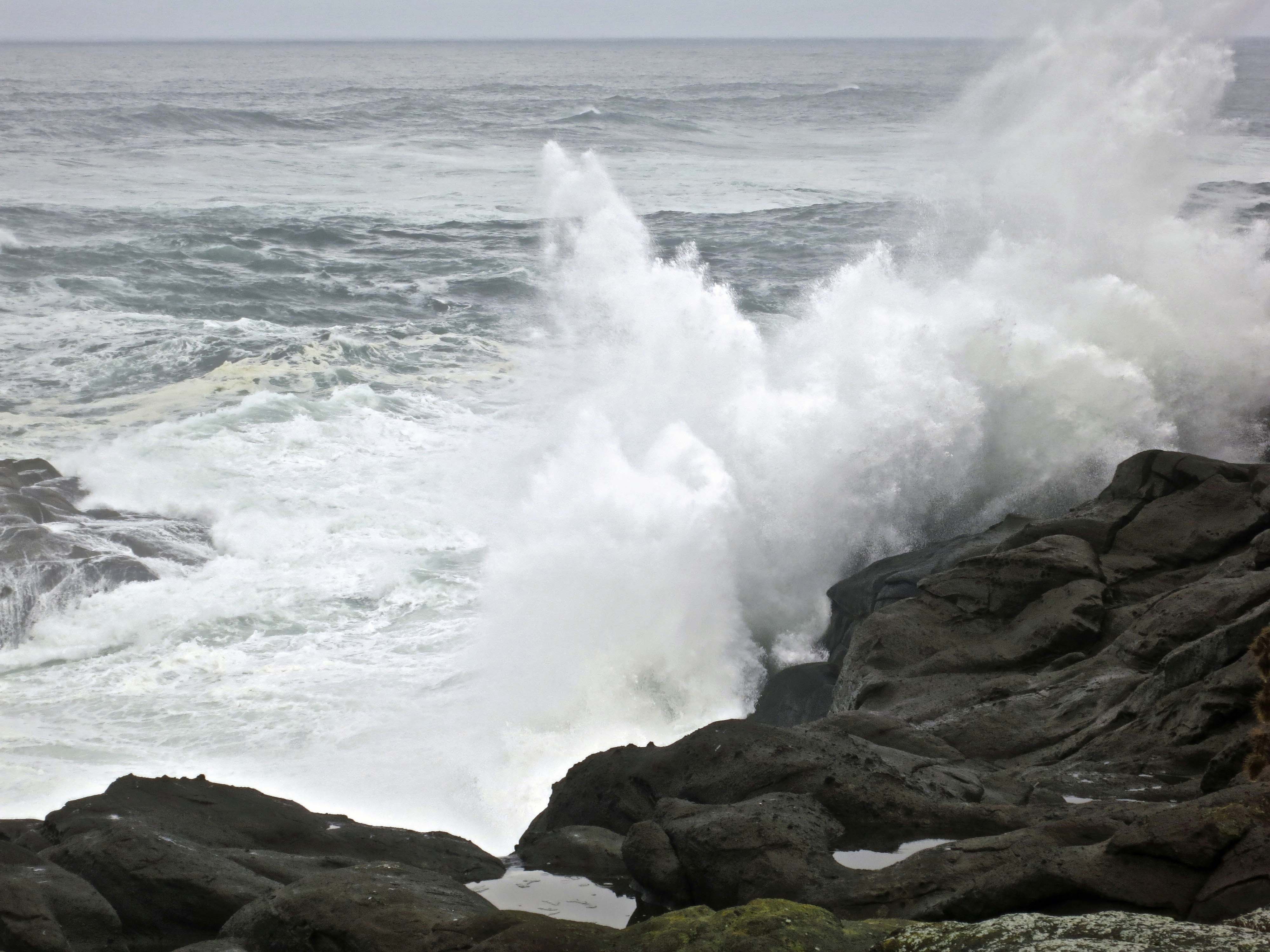
Dramatic waves crash ashore on the Oregon coast. Photo by Curtis Mekemson.

Very few shows are as dramatic as ocean waves during a storm.

Powerful waves crash ashore on the Oregon coast. Photo by Curtis Mekemson.

Rules numbers 1 and 2 when enjoying waves like these: Keep a distance, and never, never turn your back.

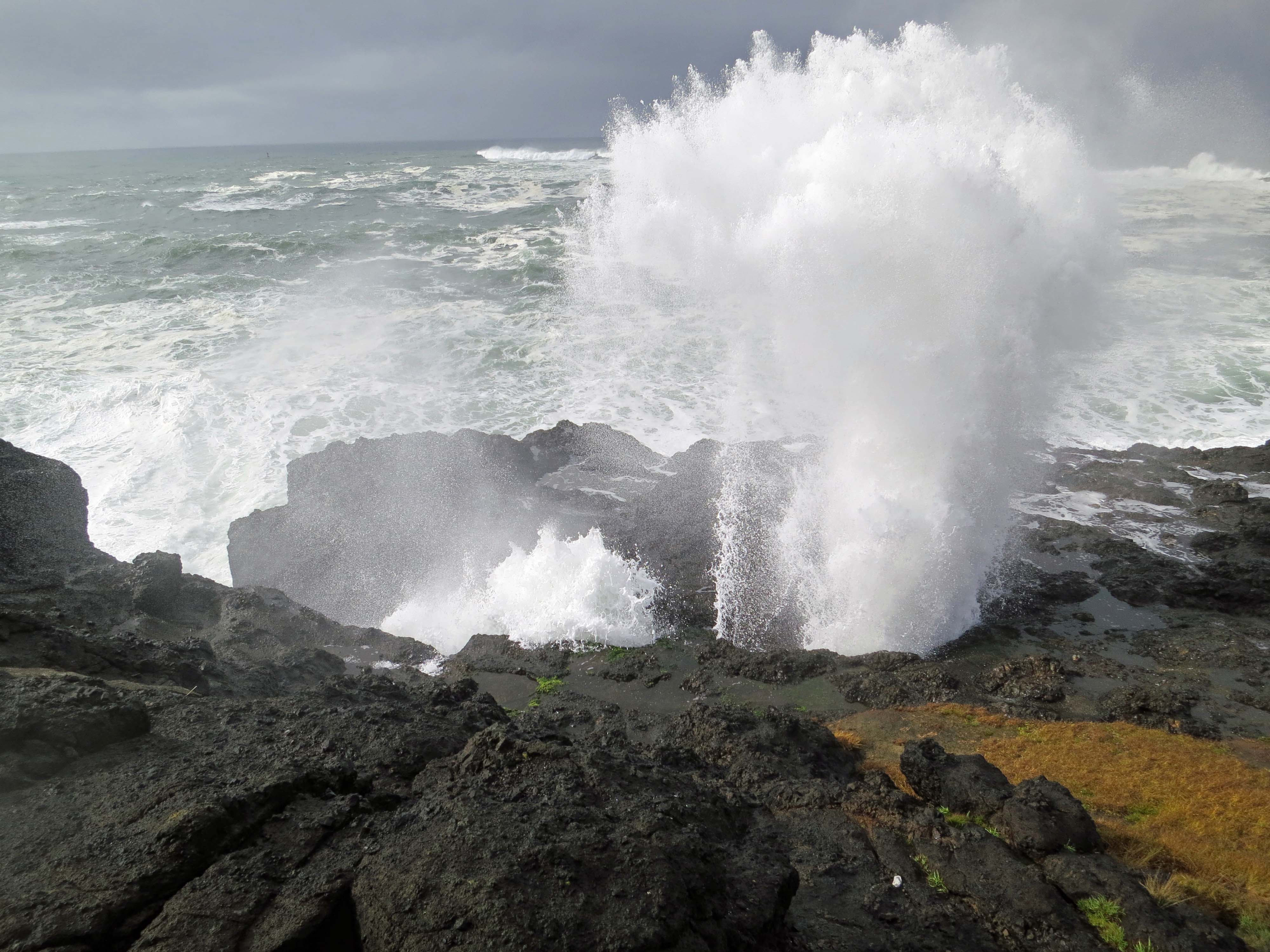
Spouting Horns at Depoe Bay shoot waves into the air. Photo by Curtis Mekemson.

One of the best know spots for watching waves on the Oregon Coast is in the community of Depoe Bay where the ocean shoots through lava tubes and is thrown high into the sky through what is known as the Spouting Horns.

View of Spouting Horns at Depoe Bay on the Oregon Coast. Photo by Curtis Mekemson.

Another view of the Spouting Horns. I could almost see a ghostly face staring back at me.

View of waves thrown into the air at Spouting Horns, Depoe Bay, Oregon. Photo by Curtis Mekemson.

And a third view.

Wave retreats at Depoe Bay, Oregon. Photo by Curtis Mekemson.

The wave’s energy expended by crashing against the rocks, the water flows back into the ocean.

The Devi's Churn on the coast of Oregon. Photo by Curtis Mekemson.

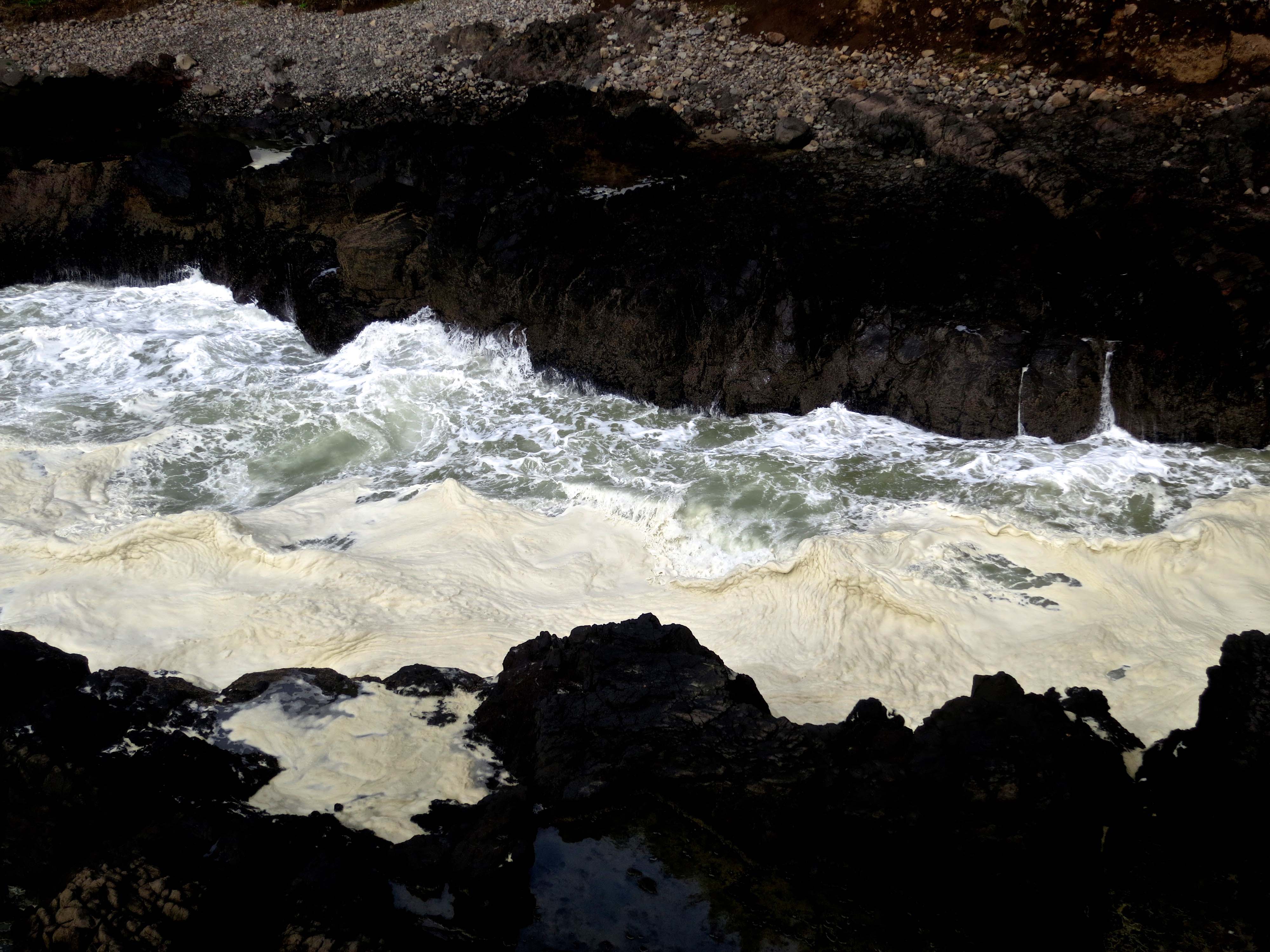
It’s known as the Devil’s Churn. Waves come driving in from the ocean and are forced up a narrow channel, turning the water into a frothy, whipped cream like texture.

Devil's Churn on Central oregon coast showing whip cream like texture of waves. Photo by Curtis Mekemson.

A close up of Devil’s Churn showing the whip cream like texture of the waves.

Devil's Churn on Oregon coast whips waves into a froth. Photo by Curtis Mekemson.

The Churn at work.

A final view of the Devil's Churn.

A final view of the Devil’s Churn. Next blog: A hangar large enough to accommodate eight blimps in Tillamook, Oregon.


Kayaking the Beautiful Squaw Lakes of Southern Oregon… An Interlude

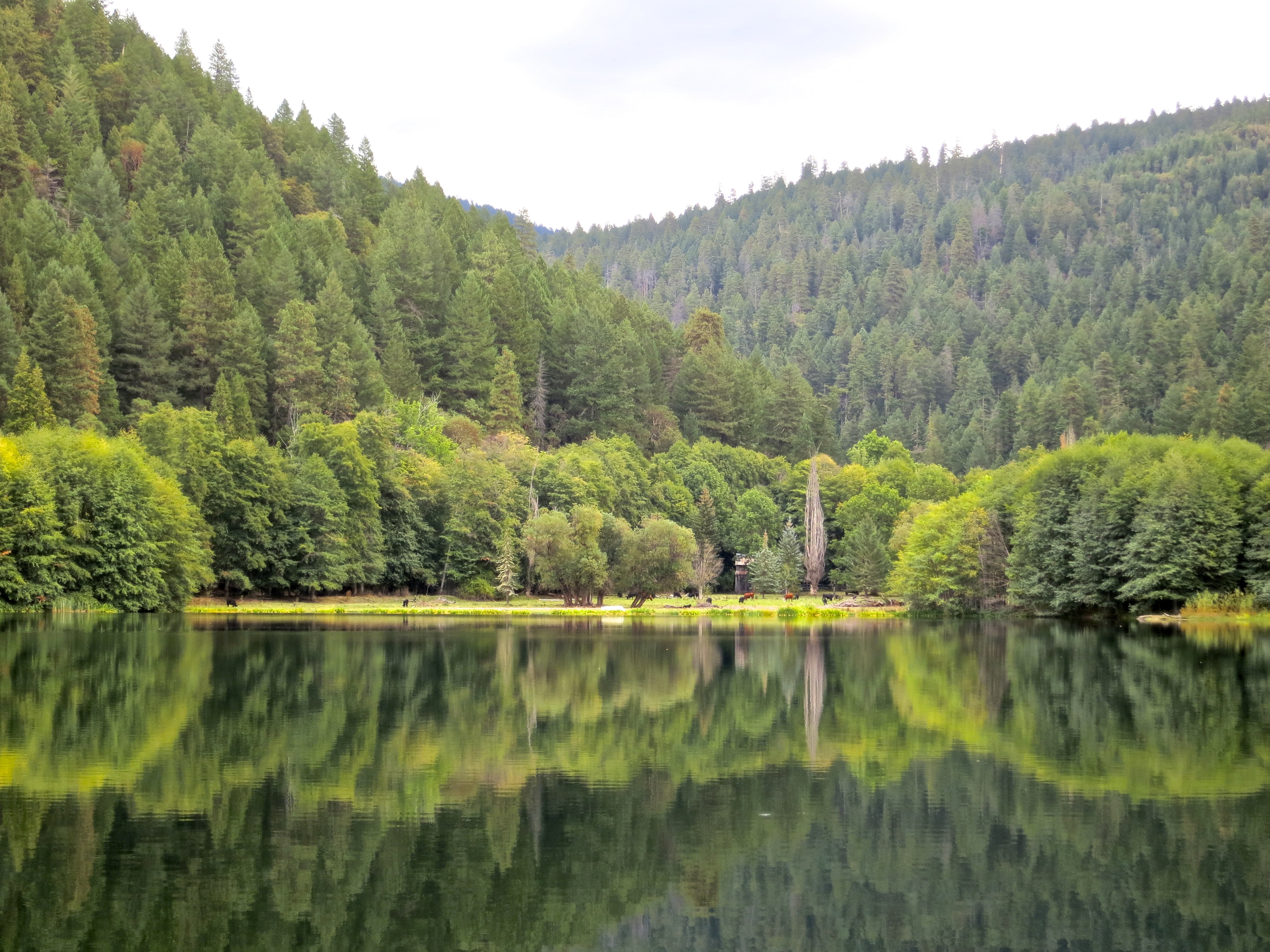
Kayaking on Squaw Lake, Oregon. Photo by Curtis Mekemson.

Peggy paddling our inflatable Innova Kayak on Little Squaw Lake.

We went kayaking yesterday at a small lake near our house. It’s about seven miles away southeast of Applegate Lake. We can easily head up there when we have a couple of hours to spare. I am not done with my Burning Man series but thought you might enjoy this interlude. When I complete Burning Man, I am going to blog about a weeklong sea kayak trip Peggy and I took this summer off of Vancouver Island, British Columbia.

Reflection shot on Squaw Lake in southern Oregon.

Paddling under cloudy skies, we thought it might rain.

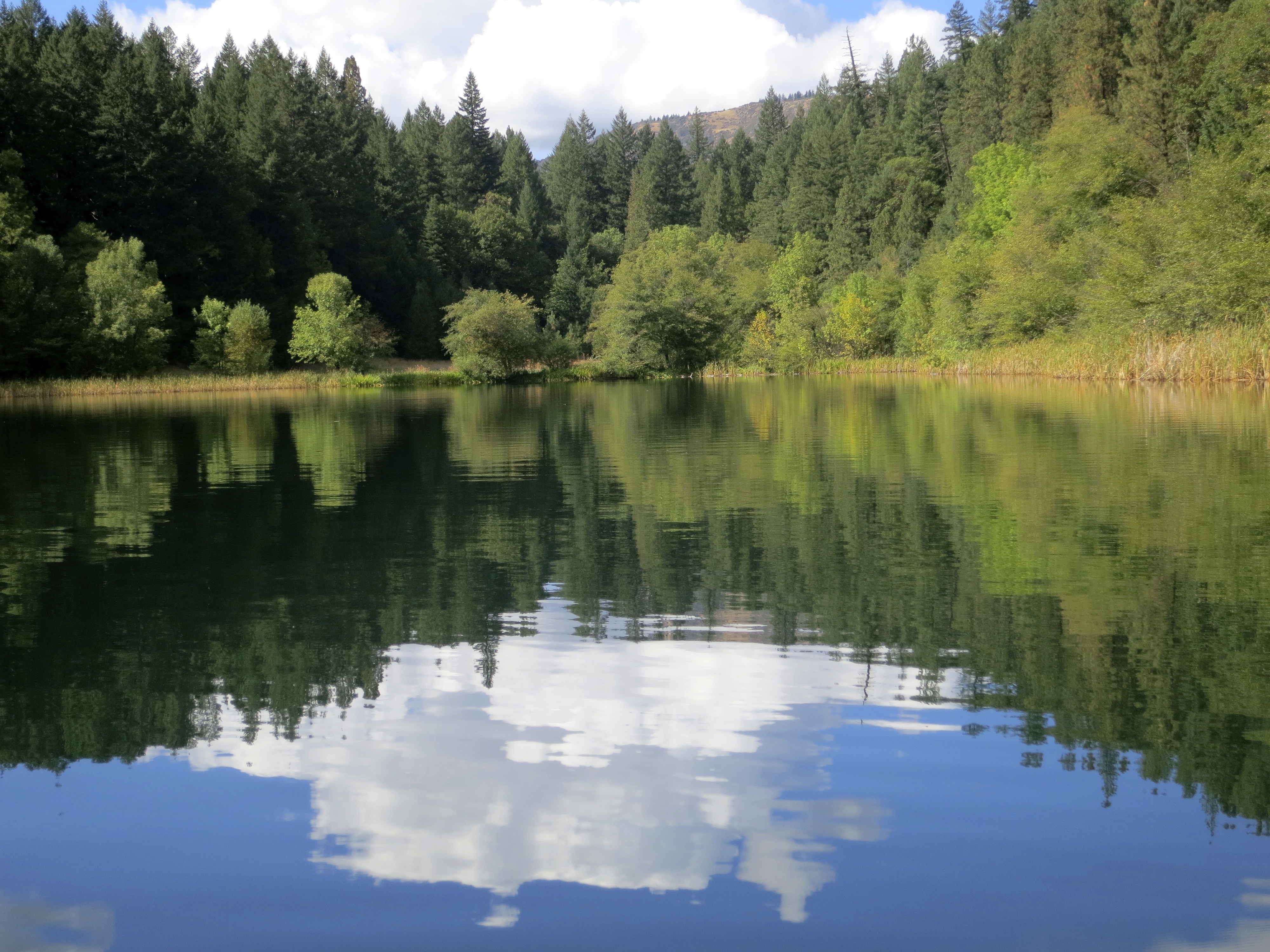
Kayaking on the small Squaw Lake in southern Oregon provides beautiful refection shots. Photo by Curtis Mekemson

But then the sun came out, allowing for this very green reflection shot.

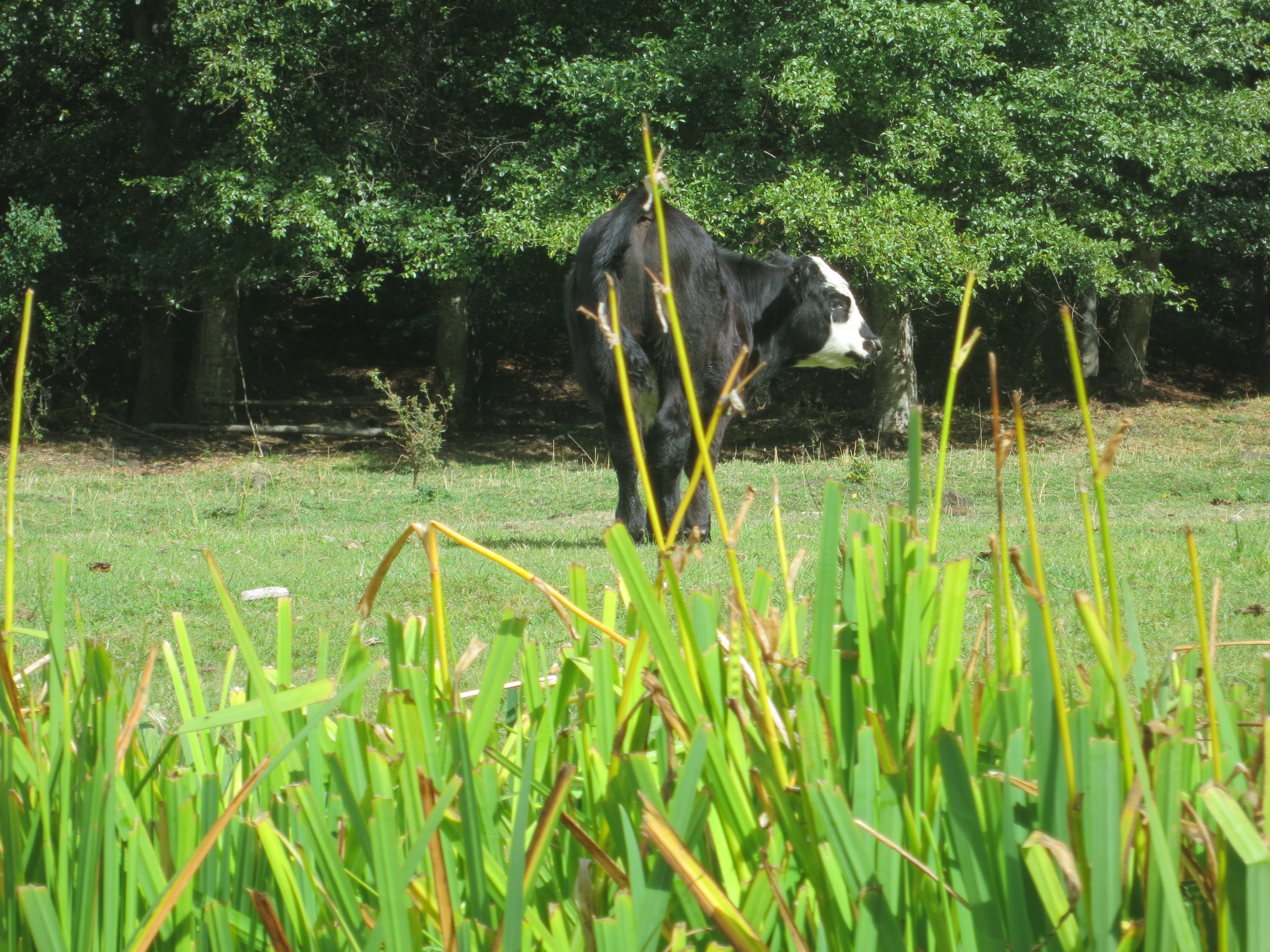
Young steer next to Squaw Lake in Southern Oregon. Photo by Curtis Mekemson.

We kayaked up to the end of the lake and caught this photo of a young steer, who also seemed happy to see the sun. 

Cumulous clouds dominate the horizon at Squaw Lake in southern Oregon.

Towering cumulus clouds dominated the horizon.

Cumulous clouds reflected in Squaw Lake of Southern Oregon near Applegate Lake. Photo by Curtis Mekemson.

And were reflected in the lake.

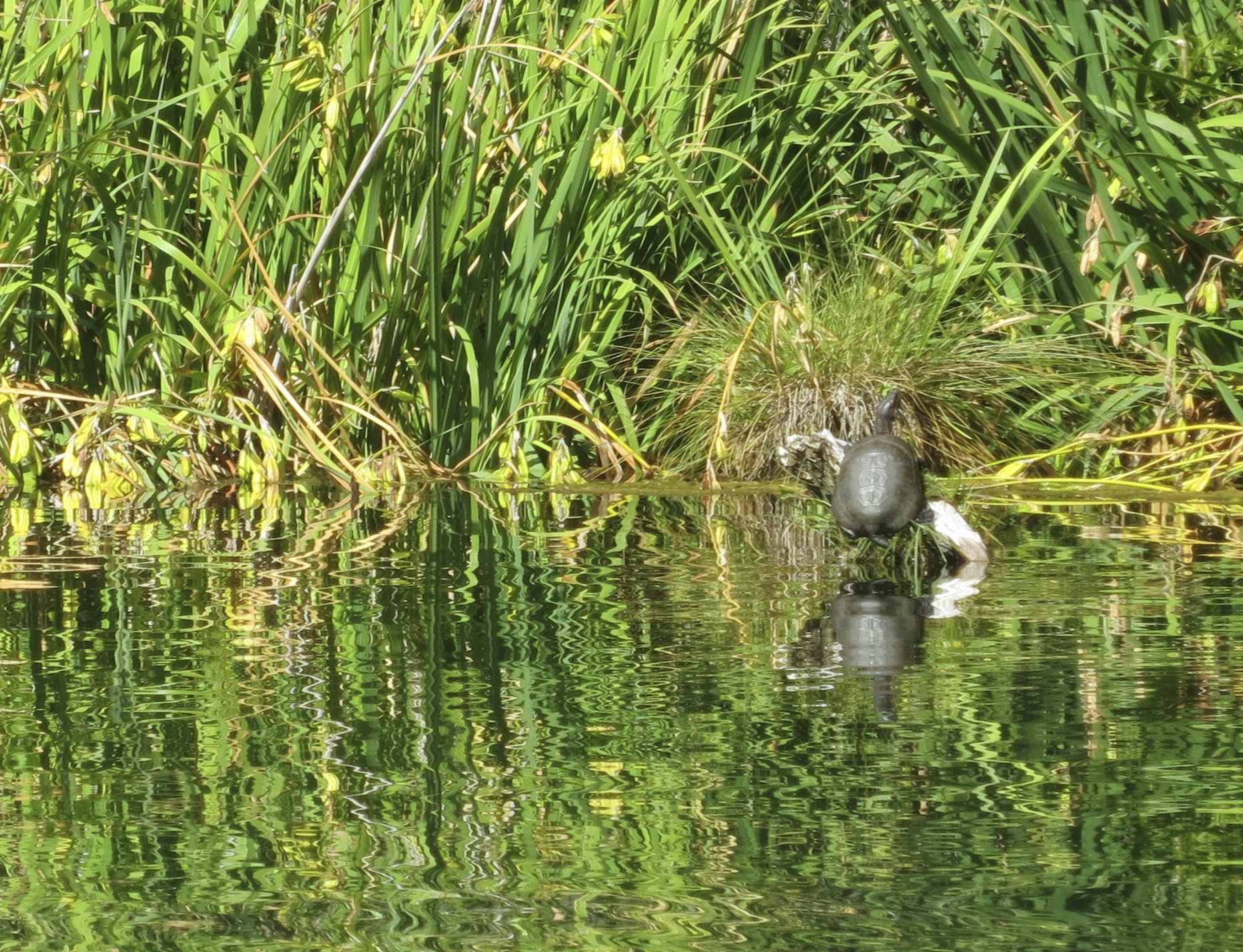
Turtle sunning on Squaw Lake in Southern Oregon near the California border. Photo by Curtis Mekemson.

A curious turtle, blending into the green, checked us out.

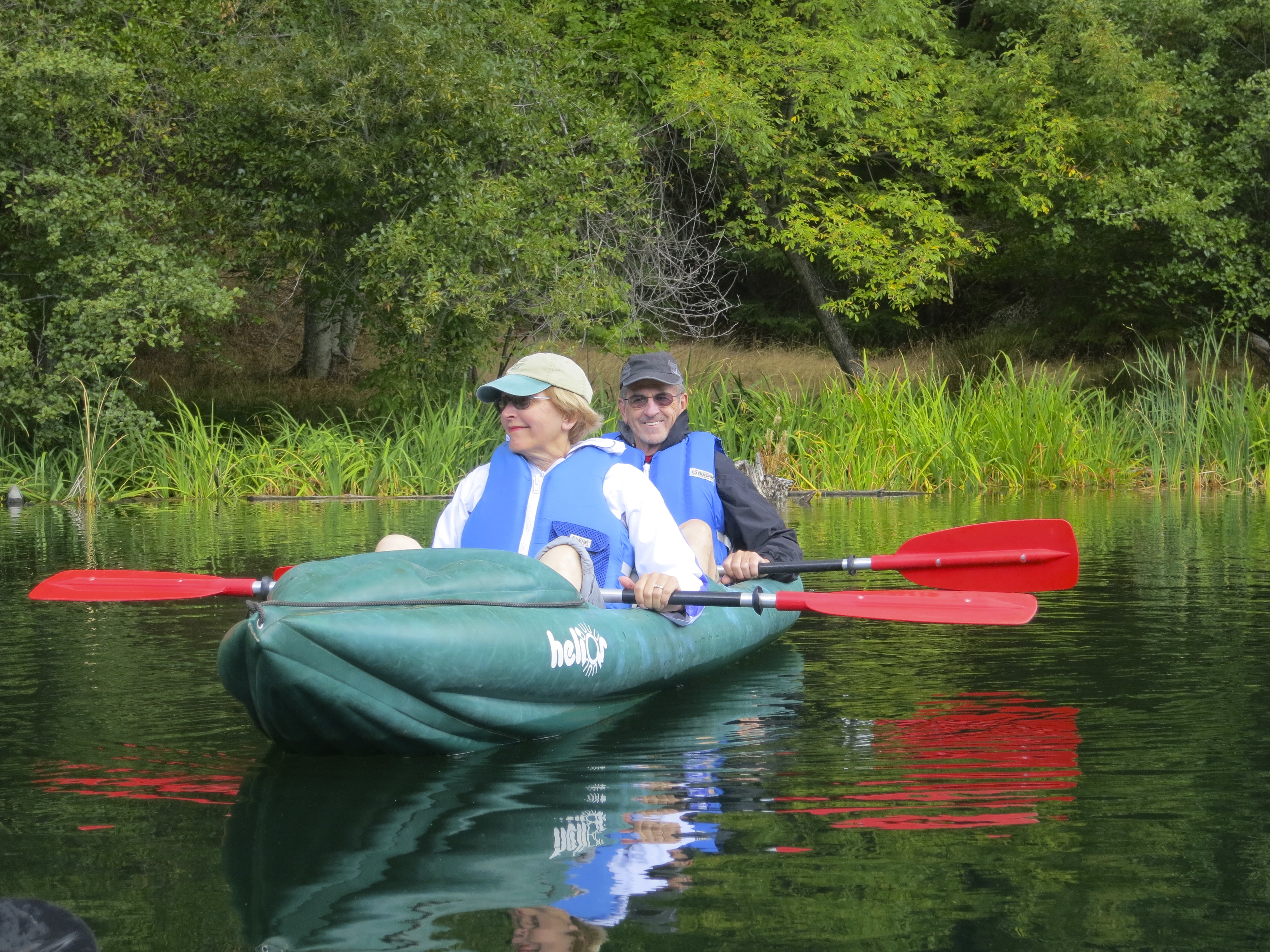
Jane and Jim Hagedorn kayaking on Squaw Lake in Southern Oregon. Photo by Curtis Mekemson.

Peggy’s sister, Jane Hagedorn and her husband Jim, joined us. We often take friends and family up to Squaw Lake. Its beauty and small size make it an ideal location for beginning kayakers.

Photo of Squaw Lake in Southern Oregon. Photo by Curtis Mekemson.

A final photo capturing the beauty and peace of the lake. Ripples from a fish that had just jumped are on the lower right. Next blog: Back to Burning Man.

The Chicken Whisperer…

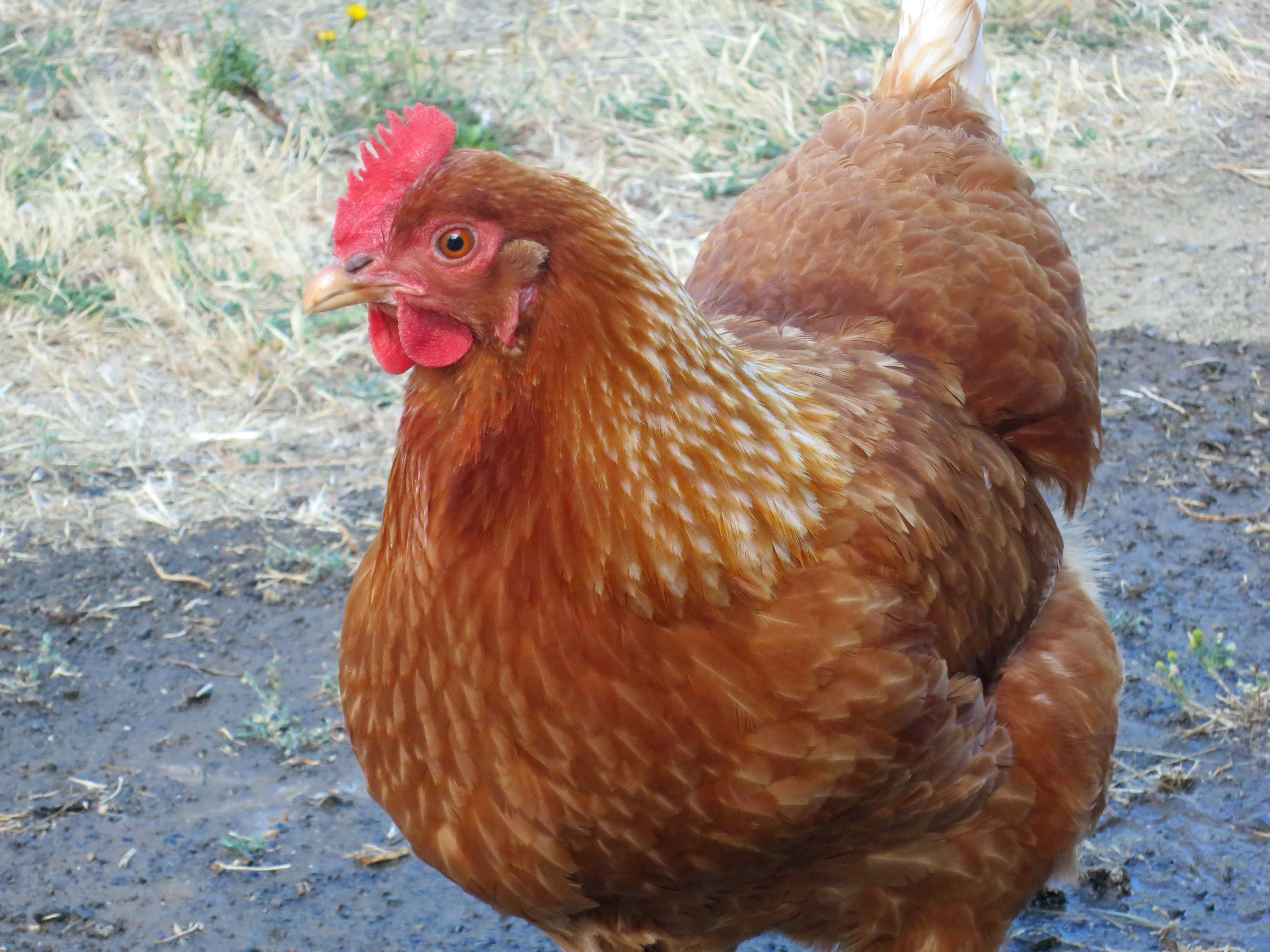
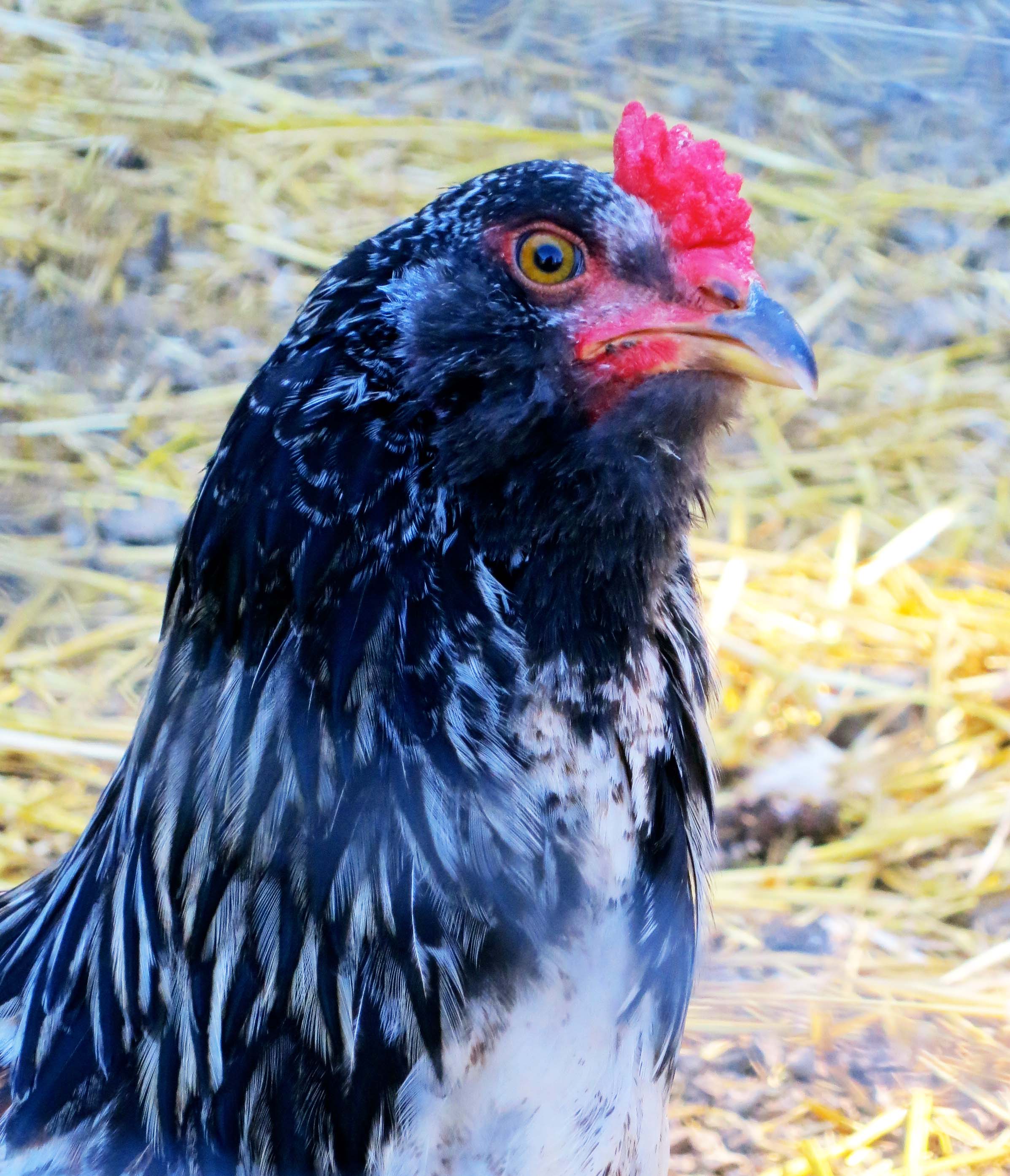
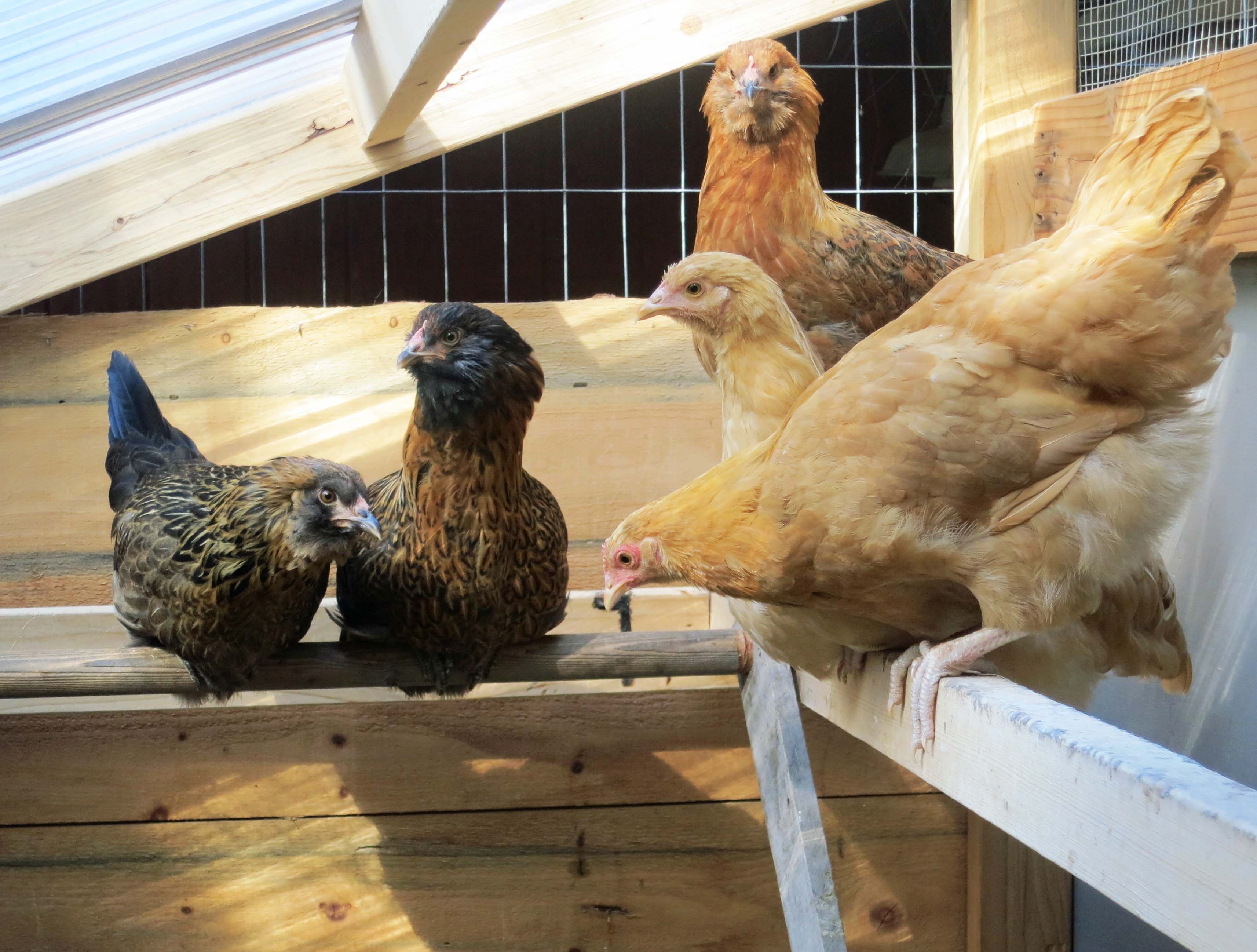
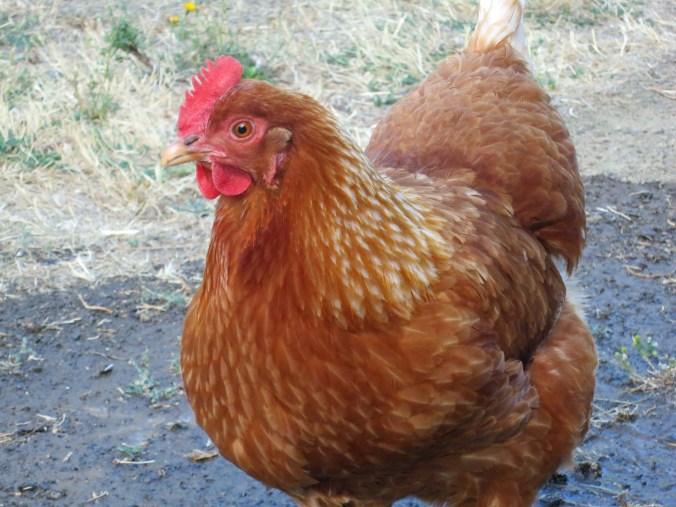
Golden Sex Link Chicken. Photo by Curtis Mekemson.

Boss Hen in all of her feathered glory.

Cluck cluck cluck? Cluck cluck cluck cluck. “Who are you? You are not Bryan,” Boss Hen observed suspiciously. Clearly she was upset. She pecked at my shoe. Cluck cluck! “Take that!” Or maybe it translated “Not edible.” I was still learning Chickenese. Edibility, I discovered, was Boss Hen’s primary criteria for judging everything.

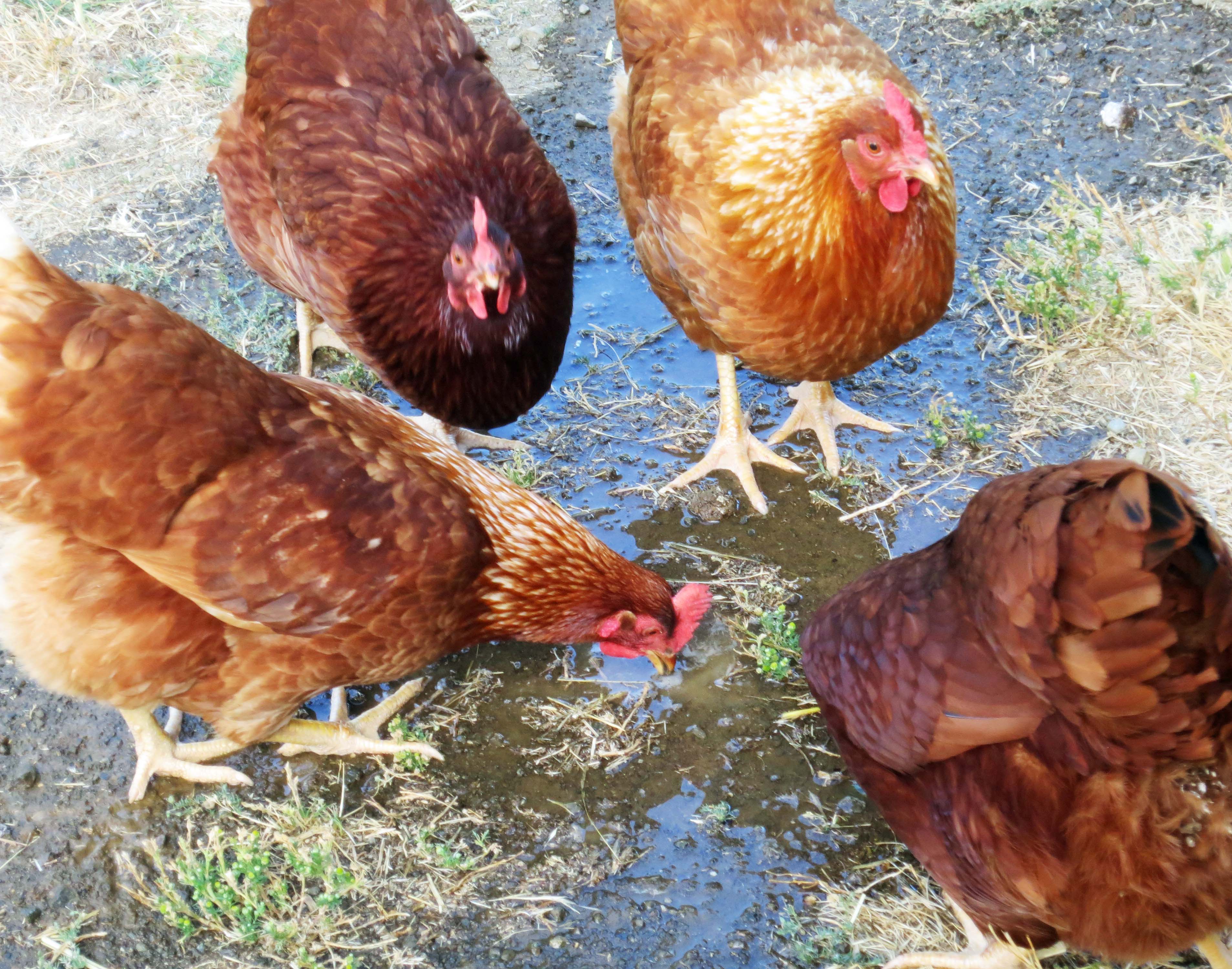
I threw out a handful of chicken scratch (coarsely ground corn), which chickens regard as dessert. I was immediately forgiven for ‘not being Bryan.’ Boss Hen and her three cohorts— the Gang of Four, as I came to know them— begin pecking away at the ground and softly clucking about what a great guy I was.
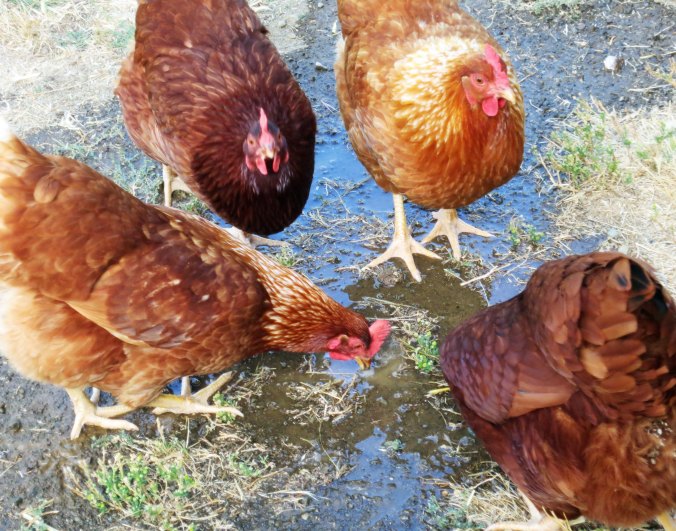
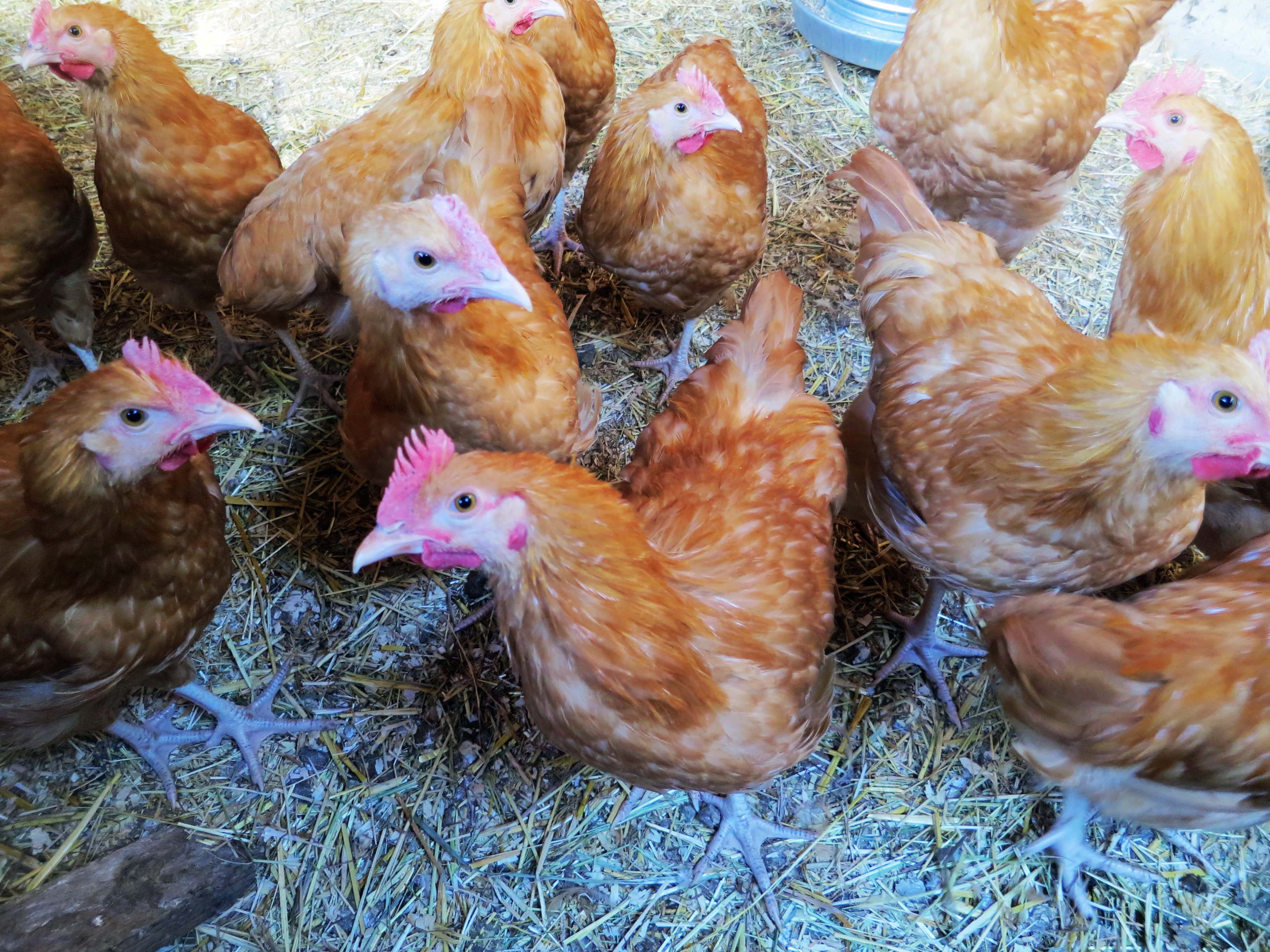
Four golden sex linked chickens.

The Gang of Four, rulers of the roost.
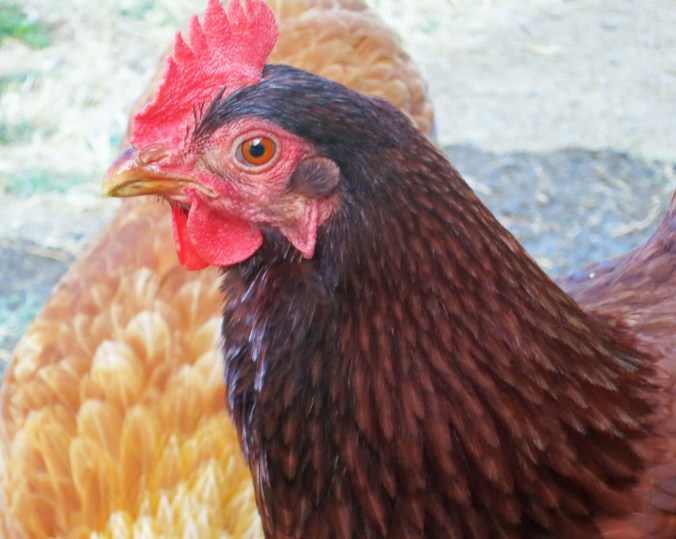
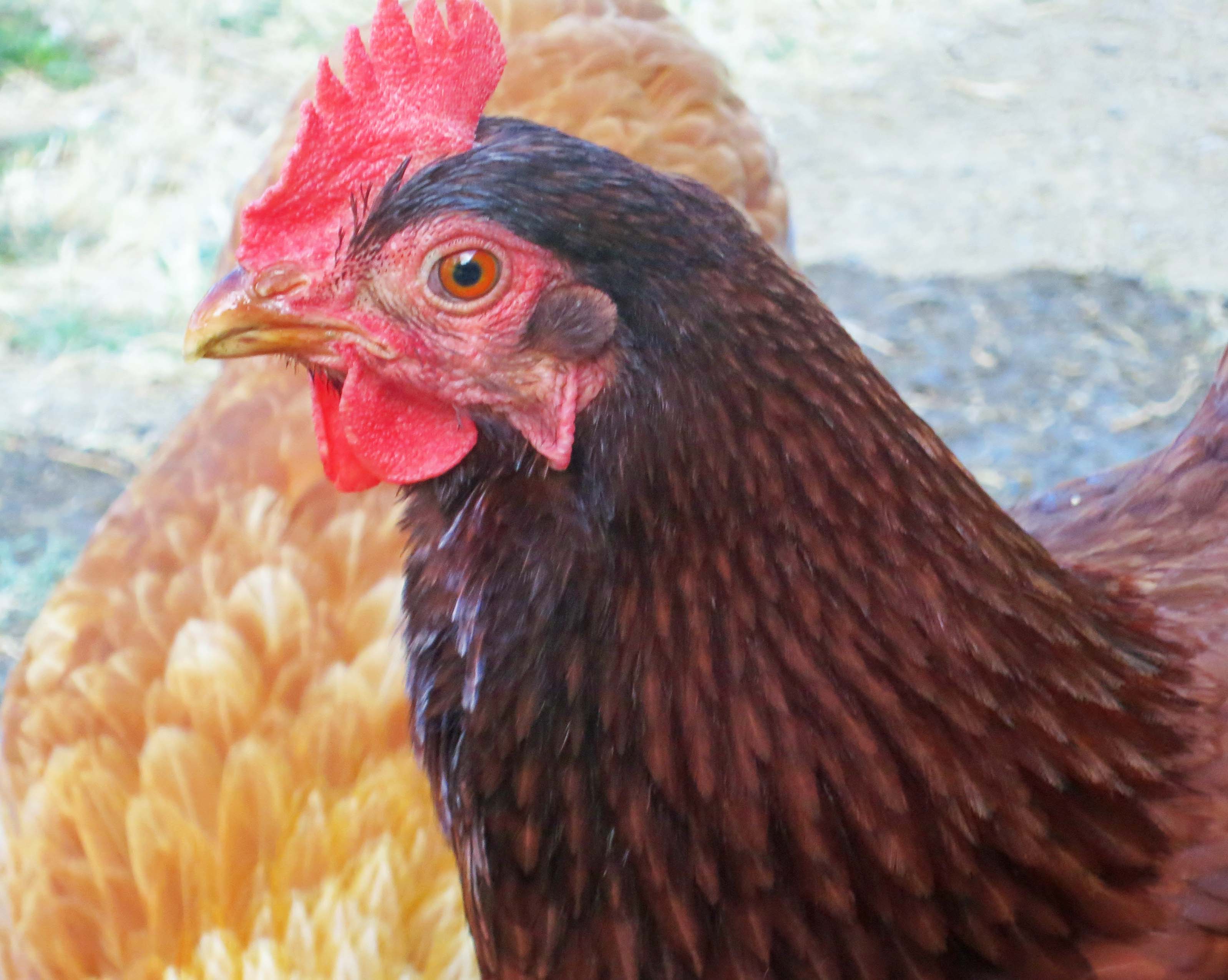
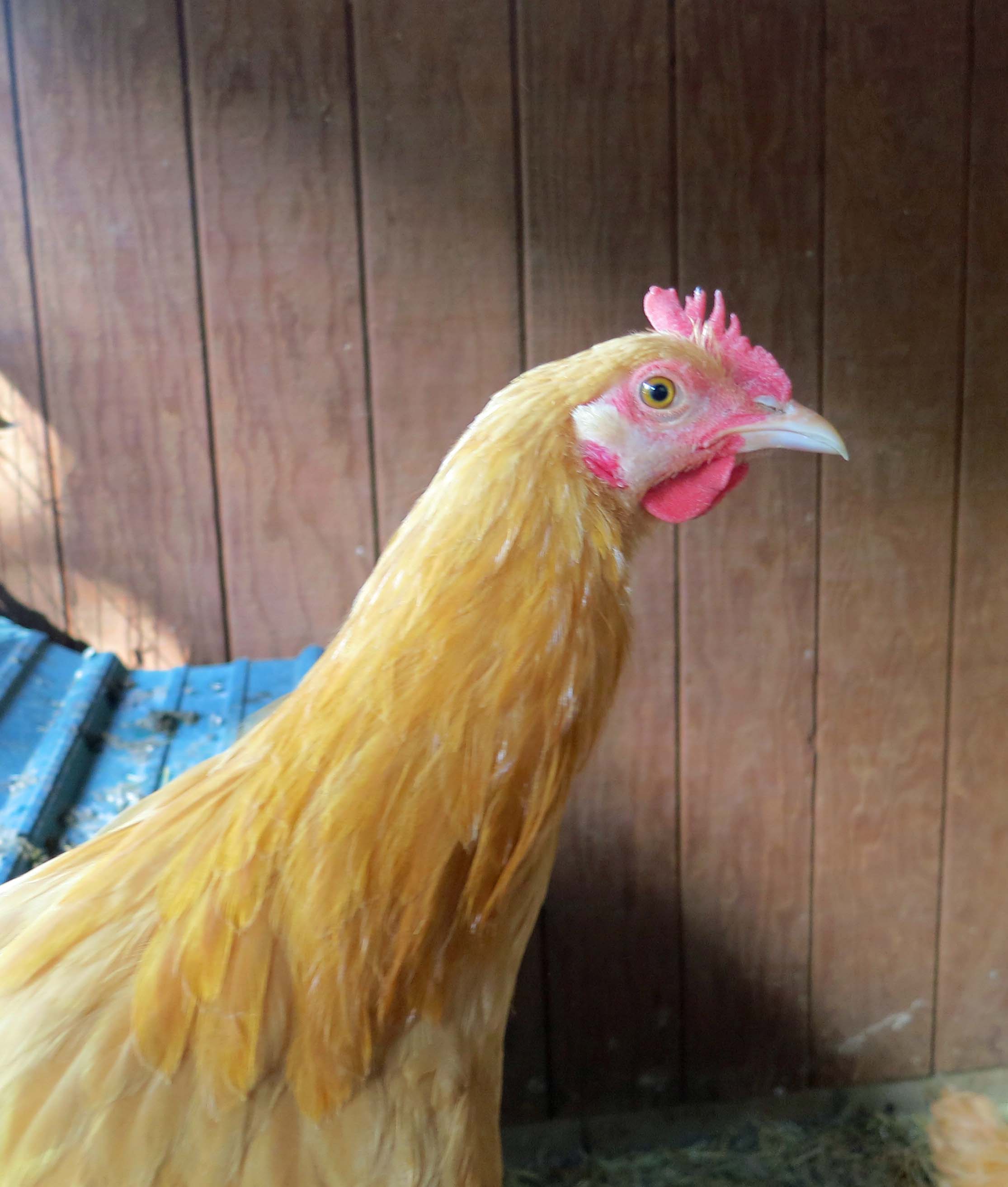
Portrait of a gang member.

Portrait of a gang member.

Our neighbor Brian had requested that I care for his chickens for a week while he and his family went for a vacation on Vancouver Island in western Canada. Of course I said yes, but I had reservations. My knowledge of chickens was limited to brief encounters as a child and as a Peace Corps Volunteer. Would Bryan arrive home and find that his fowl friends had fed the neighborhood fox?

Our family had raised a few chickens for eating. I had a vague memory of the experience, mainly of chopping off heads, sort of what you would expect a seven-year old boy to remember. But I also recall that my sister Nancy refused to eat them. She had given the chickens names and followed them around, turning over rocks so they could catch any lurking bugs. “I will not eat my pets,” she had insisted stubbornly. My perspective had been that chicken and dumplings are chicken and dumplings: mmm, mmm good.

My three Peace Corps chicken memories were more vivid. First, a Peace Corps staff member had shown up during training in California with a crate of live chickens, a hatchet, a large pot, and a box of matches. “Here’s dinner,” he had announced casually. We were left to work out the details. Second, I returned to my home in Gbarnga, Liberia after a trip and discovered a chicken roosting on our stove. It had pooped all over the kitchen. I gladly ate her. Finally, there was the rooster who crowed under our window at 5:00 a.m. each morning and then ran like hell because I kept a bucket of water ready to throw on him. I’ve blogged about these adventures. You can follow the links for the complete stories.

The rooster in Liberia convinced me that chickens are relatively intelligent birds. A February 2014 article in Scientific American confirmed this. The article reported that, “The birds are cunning, devious, and capable of empathy. And they have sophisticated communication skills.” A rooster, for example, will squawk a special warning to hens and chicks if he spots a hawk flying over. The same rooster alone in the chicken yard with a competing rooster doesn’t utter a peep, but takes evasive measures, leaving his unsuspecting competition alone with the plunging hawk. Bye, bye.

My wife Peggy and I went up to Bryan’s for instructions on Chicken Care 101 before he left. He introduced us to his brood. One pen contained the Gang of Four, all egg laying, another six younger hens, and a hormone-driven, teen-age rooster who couldn’t stop crowing about his intentions. The second pen was filled with young roosters destined to being eaten. We were to watch the chickens’ water and food, which wasn’t a problem. Bryan had labeled the food bags. But he also wanted us to let the Gang of Four and their cohorts out each morning to wander about the yard to supplement their diet. Fine, I could handle that, but what about getting them back in the pen at night?

“Not a problem,” he assured us. “The chickens will return to the pen on their own at dusk.”

“And if they don’t?” I insisted. Apparently I was to take his blue plastic bucket, throw in a couple of handfuls of scratch, and then walk into the pen while shaking the bucket. The hens and rooster would follow. I’d be the Pied Piper of Chickendom. Yeah, right. Our instructions in place, Bryan left on vacation. We were left with the chickens, his undying gratitude, and whatever eggs the chickens laid.

I’ve already described my encounter with the Gang of Four on the first morning. The younger hens had made a dash for the cover of a low-limbed Douglas fir where they liked to hang out. The randy teenage rooster took advantage of the moment to pin one of the young hens to the ground— squawk. It was over in five chicken-clucking seconds. The Gang of Four ignored the ruckus. Any time the rooster approached them, they kicked his tail feathers half way across the yard.
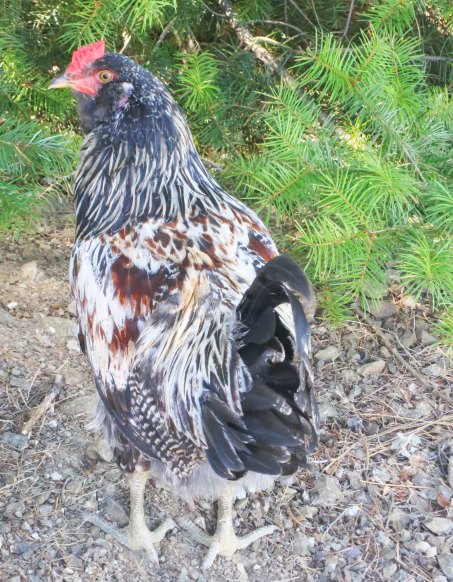
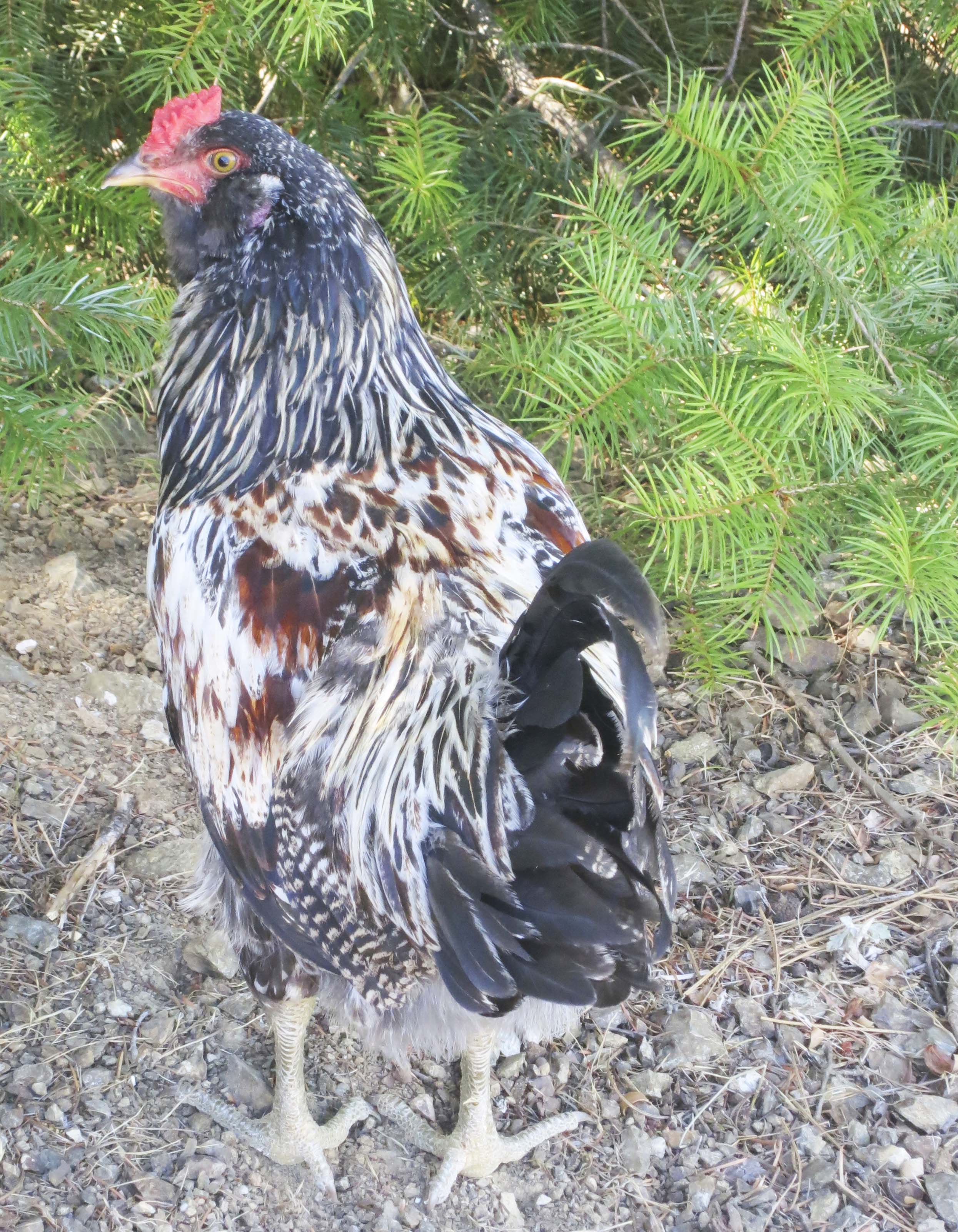
The rooster was quite handsome. And he knew it. Here, he was about to go under the Douglas fir where the young hens were hiding out.
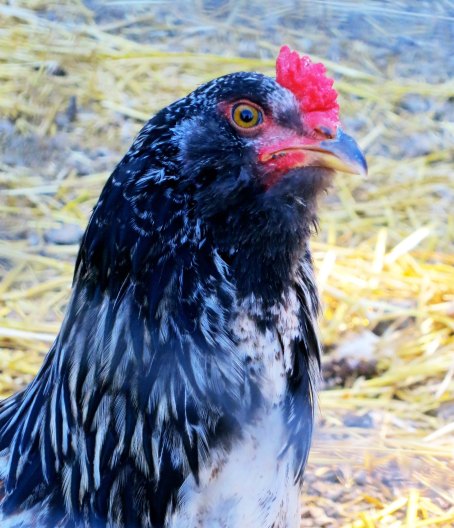
The rooster was quite handsome. And he knew it. Here, he was about to go under the Douglas fir where the young hens were hiding out.

A close up of the rooster dude.

A close up of the cool rooster dude.

Letting the chickens out was a no-brainer; getting them back in lived up to my worst fears. When I arrived that evening, the four older hens were happily pecking away in the chicken pen as advertised. Everyone else was still out and about, taking advantage of unsupervised time. I dutifully went to the garage, put scratch in Bryan’s blue bucket, and started shaking it near where the younger chickens were hanging out. Being teenagers, they ignored me. Not so the Gang of Four. They came rushing out of the pen. Great. Now everyone was milling about outside.

I shook the plastic bucket and headed for the pen. The Gang of Four and three of the younger hens actually followed me. I sent a brief prayer wafting skyward to whatever god the chickens worshipped and threw a handful of scratch on the ground for thanks. More importantly, the scratch would occupy the girls inside while I worked on enticing the hens and rooster still outside.

Squawk squawk squawk squawk! Cluck, cluck, cluck!” “Oh no you don’t! No, no, no!” A skirmish was going on under the Douglas fir. Feathers were flying. Damn, I thought, the fox has arrived. I dropped the bucket and ran for the tree. Three hens burst out from under the limbs, dashed for the pen, flew up the ramp, and disappeared into the coop. Boy were they fast. Their nemesis— the rooster— followed in hot pursuit. So much for my fox theory. I laughed out loud. Lust had corralled the remaining chickens. I threw the gate closed.

Only two chores remained. Bryan had asked that I make sure that the chickens were locked up safely in their coop, not just the pen. The fence that surrounded and covered the pen showed a large dent. Apparently some animal was trying to break in during the night.

I made a shooing motion at the chickens and everyone except the Gang of Four made for the coop. Boss Hen looked up at me expectantly and clucked. She couldn’t be shooed but maybe she could be bribed. I walked over to the coop and threw a handful of scratch in the small door. About half missed and fell on the porch.
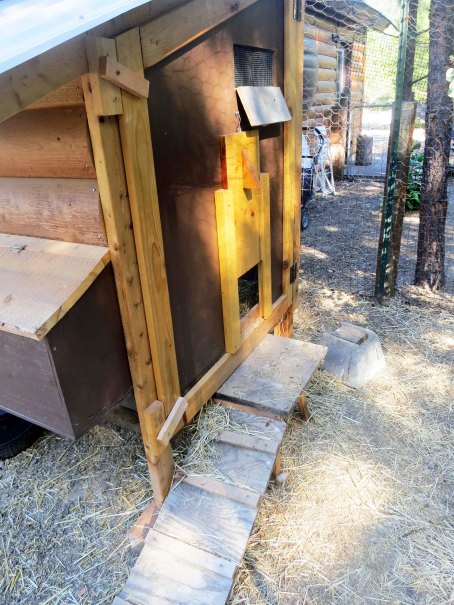
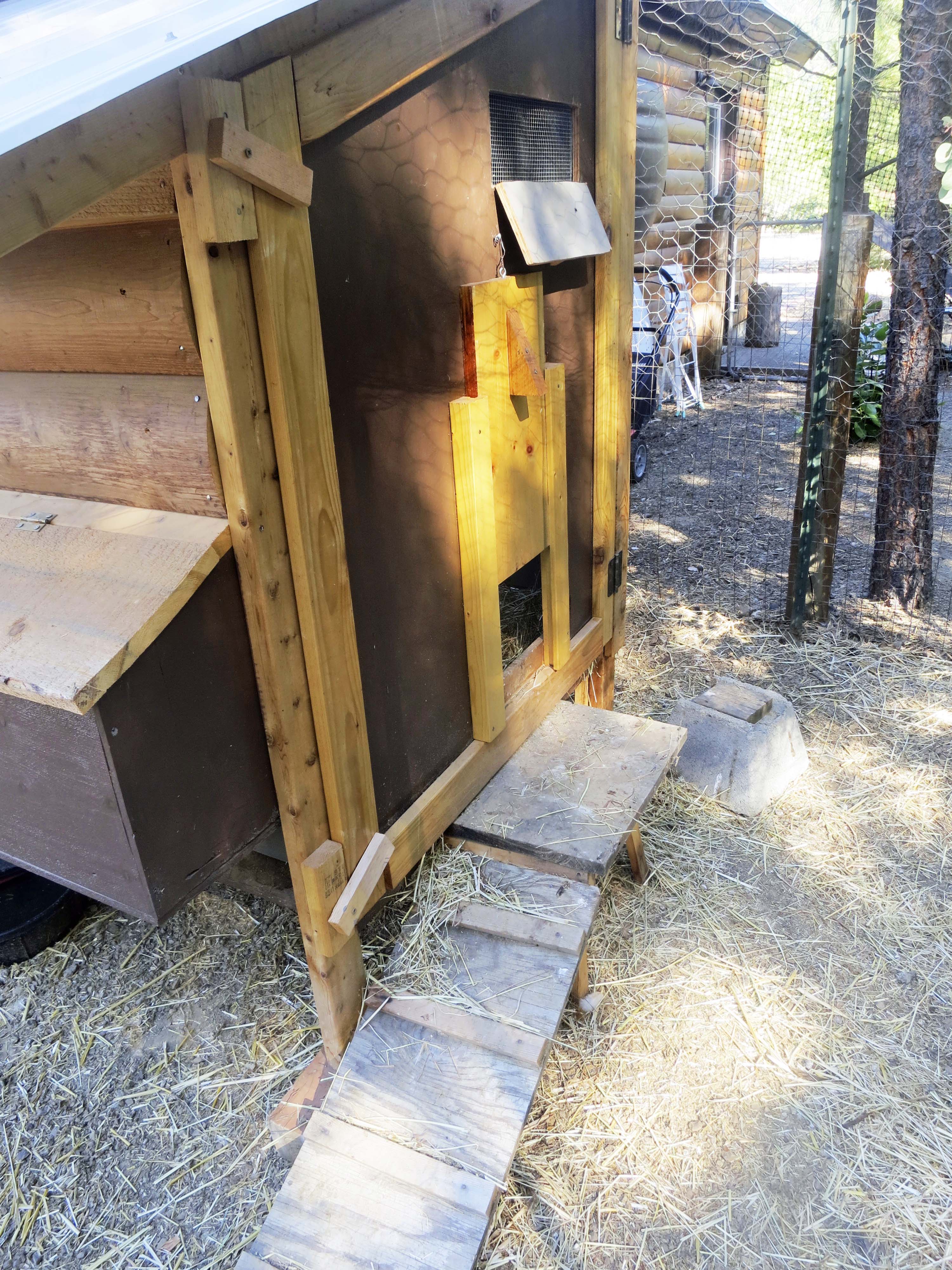
A close up of Bryan's chicken coop. The box on the side is for egg-laying.

A close up of Bryan’s chicken coop. The box on the side is for egg-laying.

The four large hens rushed over and began pecking away. The rhythm sounded familiar: — — .-. . / … -.-. .-. .- – -.-. …. Could it be Morse code? Could the Gang of Four be pecking out “More scratch.”? Nah, I decided, even though the hens looked hopefully at the blue bucket. Finally, they decided that the bucket was empty and rushed into the coop to clean up anything the rooster and hens had missed. I shut the door and breathed a huge sigh of relief.

My final chore was to check in on the roosters next door who were destined for a date with a chopping block in the near future. I opened the door carefully to make sure none escaped. They were a handsome group of youngsters. They looked up at me curiously. Their food and water was fine, so I decided to share a bit of Hobbesian Philosophy.
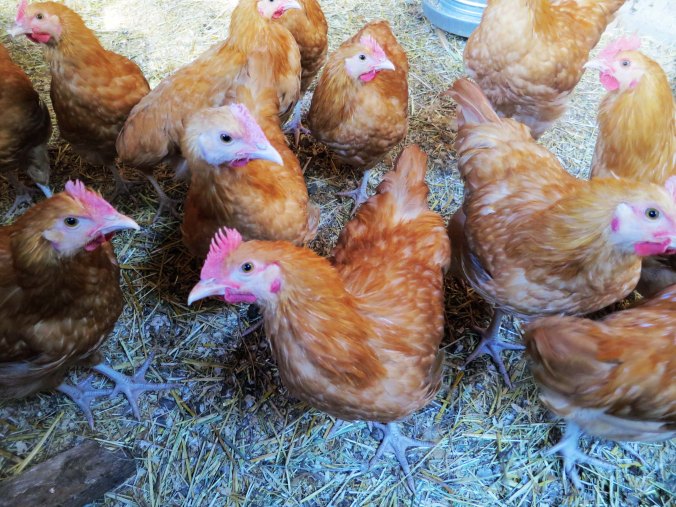
The young roosters listened carefully to my sage advice.
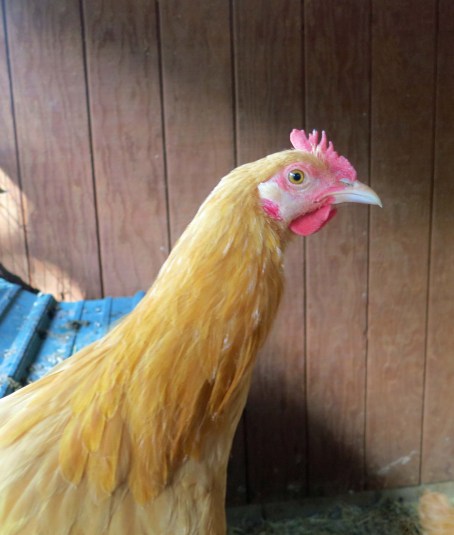
The young roosters listened carefully to my sage advice.

I warned this young fellow that sticking his neck out might be hazardous to his health.

I warned this young fellow that sticking his neck out might be hazardous to his health.

“Life is nasty, brutish and short, guys,” I told them. I didn’t have the heart to tell them just how short their life would be. “I would advise you to live in the moment, to take advantage of the time you have.”

“So, send in the chicks,” one clucked to unanimous agreement. The guys spent their day watching the hens in the yard and crowing about true love, or at least a quickie. One of the Gang had actually flown up to check them out. I wasn’t sure whether she was interested in a specific rooster or all of them. I told the youngsters I would think about their request and headed home for a well-earned beer.

Thus ended my first day of being a chicken farmer. There would be several more adventures during the week, but by the end the chickens and I had developed a working relationship. As for the Gang of Four, we had become close. Any time I showed up, they came running and clucking, filling me in on the latest news and gossip. I had become more than a source of scratch; I had become their friend— a Chicken Whisperer.
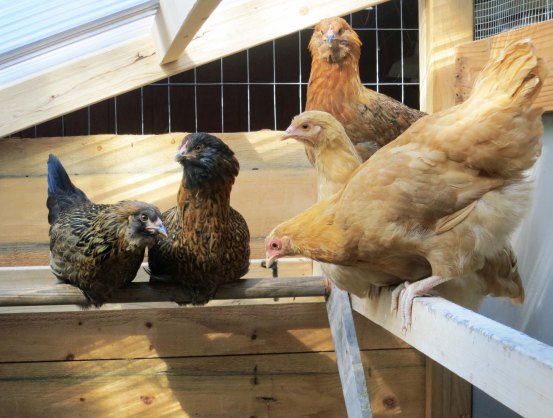
An inside view of Bryan's chicken coop, which he built, BTW. The exotic looking chickens here are supposed to lay blue eggs.
An inside view of Bryan’s chicken coop, which he built, BTW. The exotic looking chickens here are supposed to lay blue eggs.

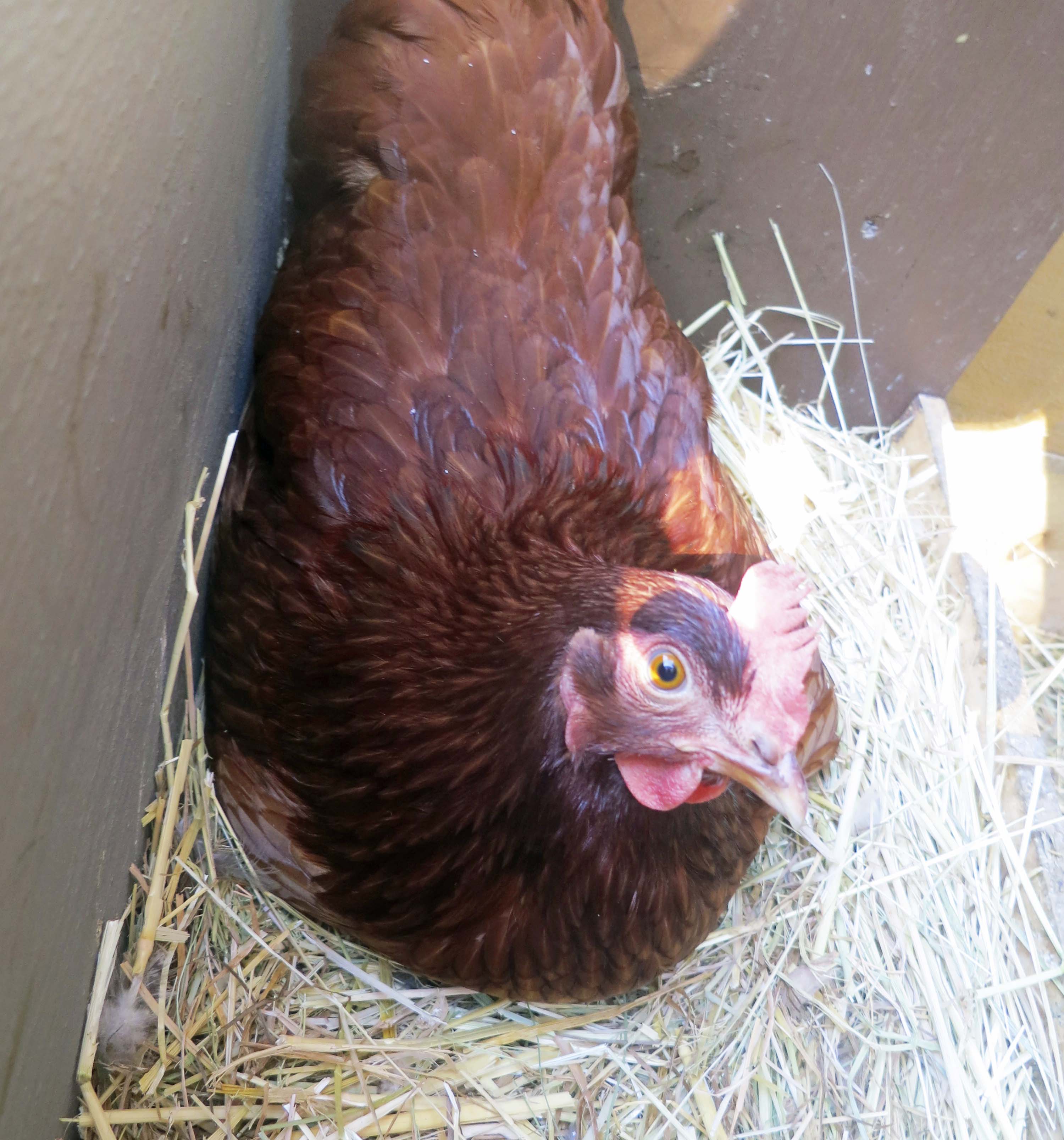
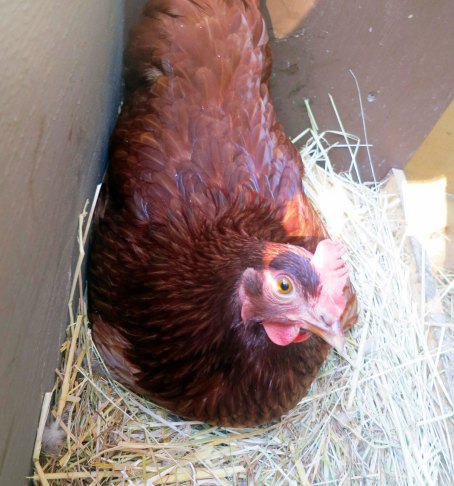
I caught this member of the Gang of Four laying an egg. I don't think she was happy about being photographed.

I caught this member of the Gang of Four laying an egg. I don’t think she was happy about being photographed.

Part of our pay for taking care of the chickens. The Gang laid between three and four eggs a day.
Part of our pay for taking care of the chickens. The Gang laid between three and four eggs a day.

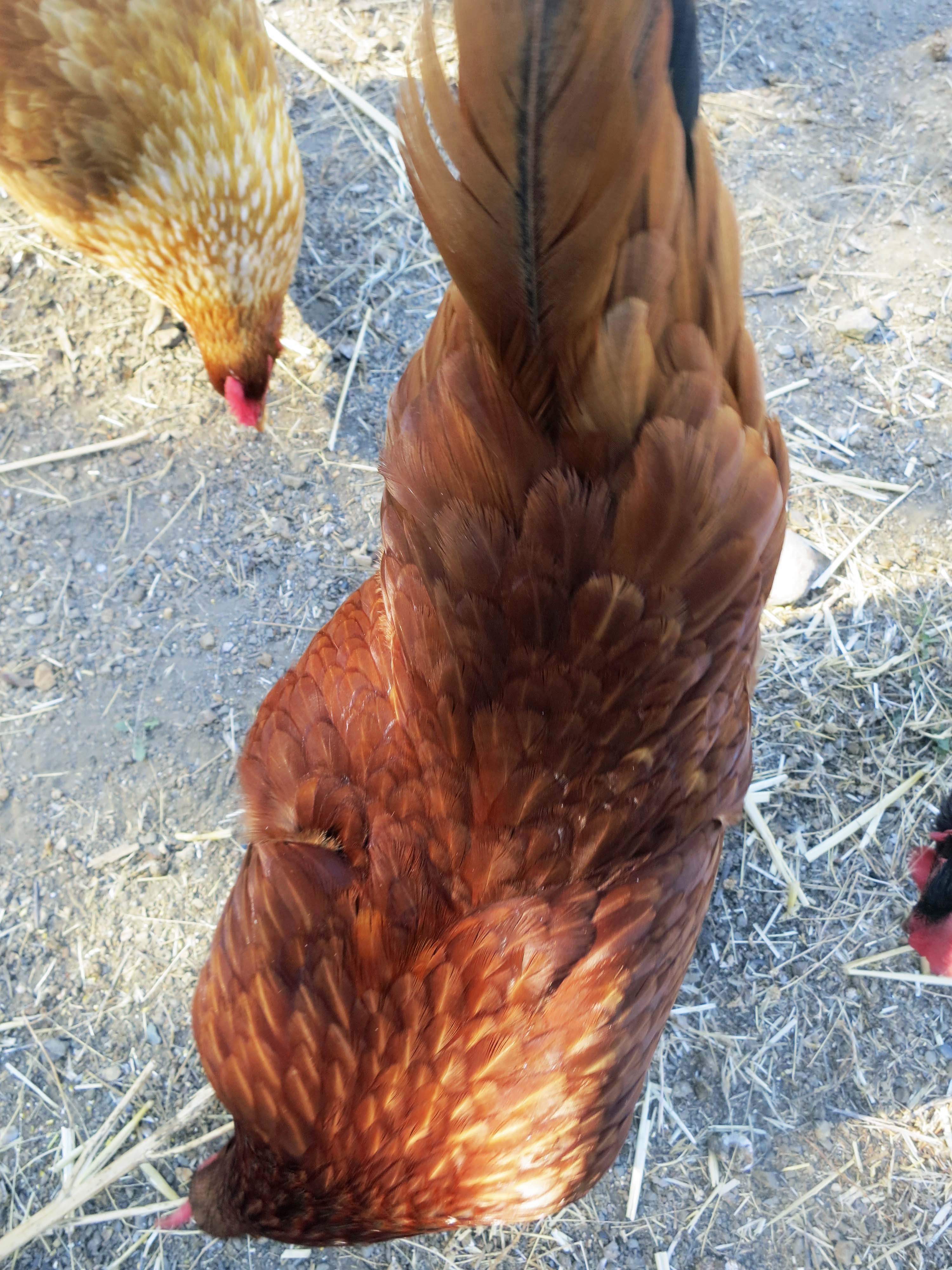
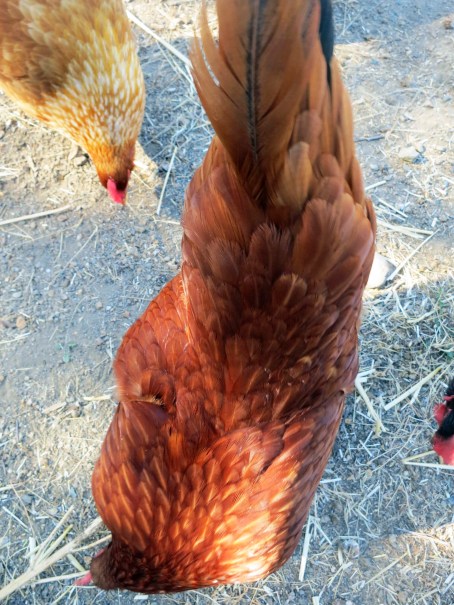
It's only appropriate that I conclude this blog with a bird's eye view of Boss Hen.

It’s only appropriate that I conclude this blog with a bird’s-eye view of Boss Hen in her favorite position of pecking up scratch.

NEXT BLOG: Peggy and I are off again. No surprise there, eh. This time we are heading for Port McNeill on the northern coast of Vancouver Island, British Columbia for a week-long kayak trip out among the Orca Whales. We will then dash home and go to Burning Man. That should provide an interesting contrast— moving from the cool and wet ocean to the hot and dry desert! All this means there will be lots to blog about but no time to blog, not to mention no Internet. I do hope to get one blog up on Mt. Rainier National Park, where we were last week, and another up on some of my favorite Burning Man pictures. Maybe. 🙂 Thanks for stopping by, friends. See you in September if not sooner. –Curt
A Journey Underground… Oregon Caves National Monument

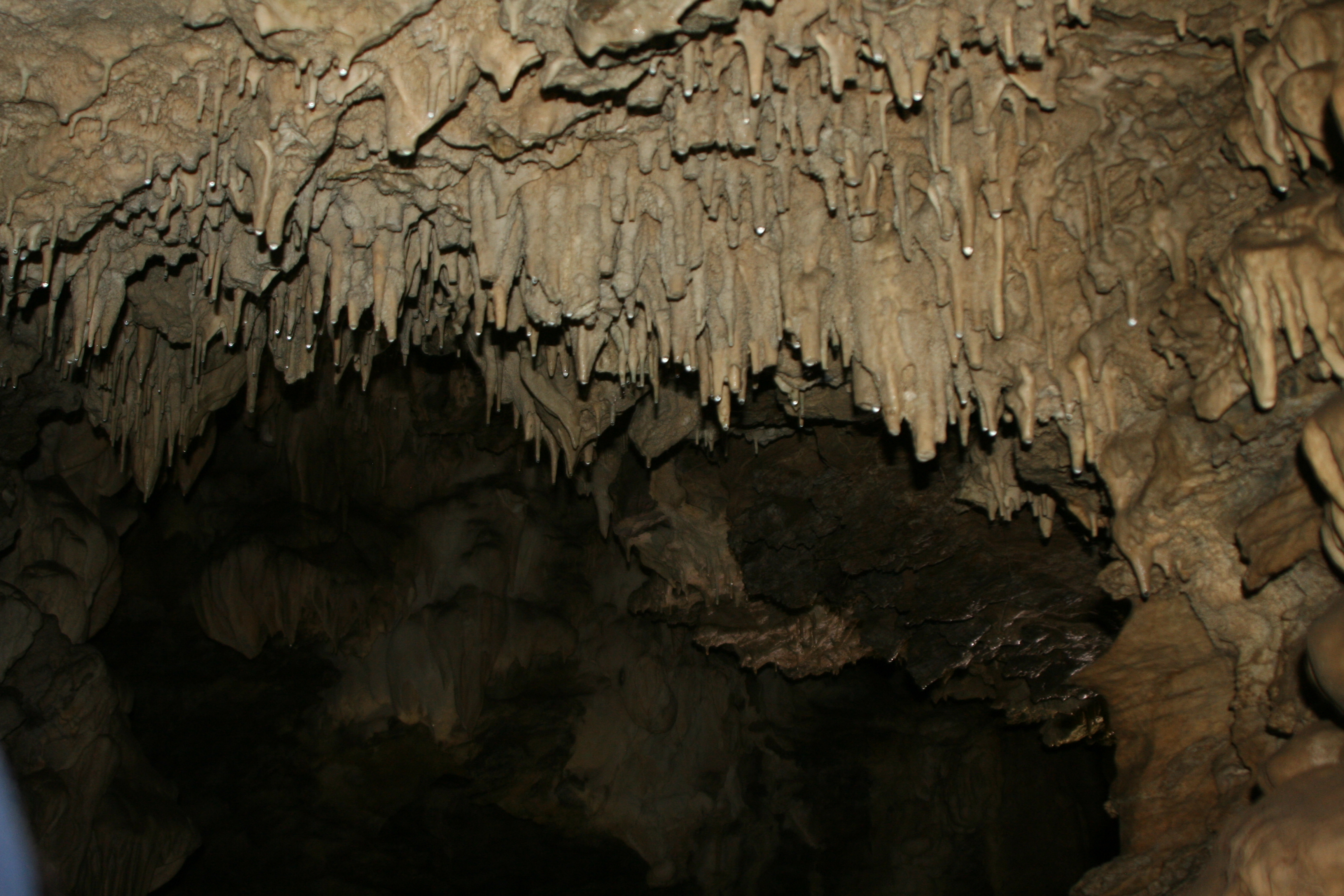
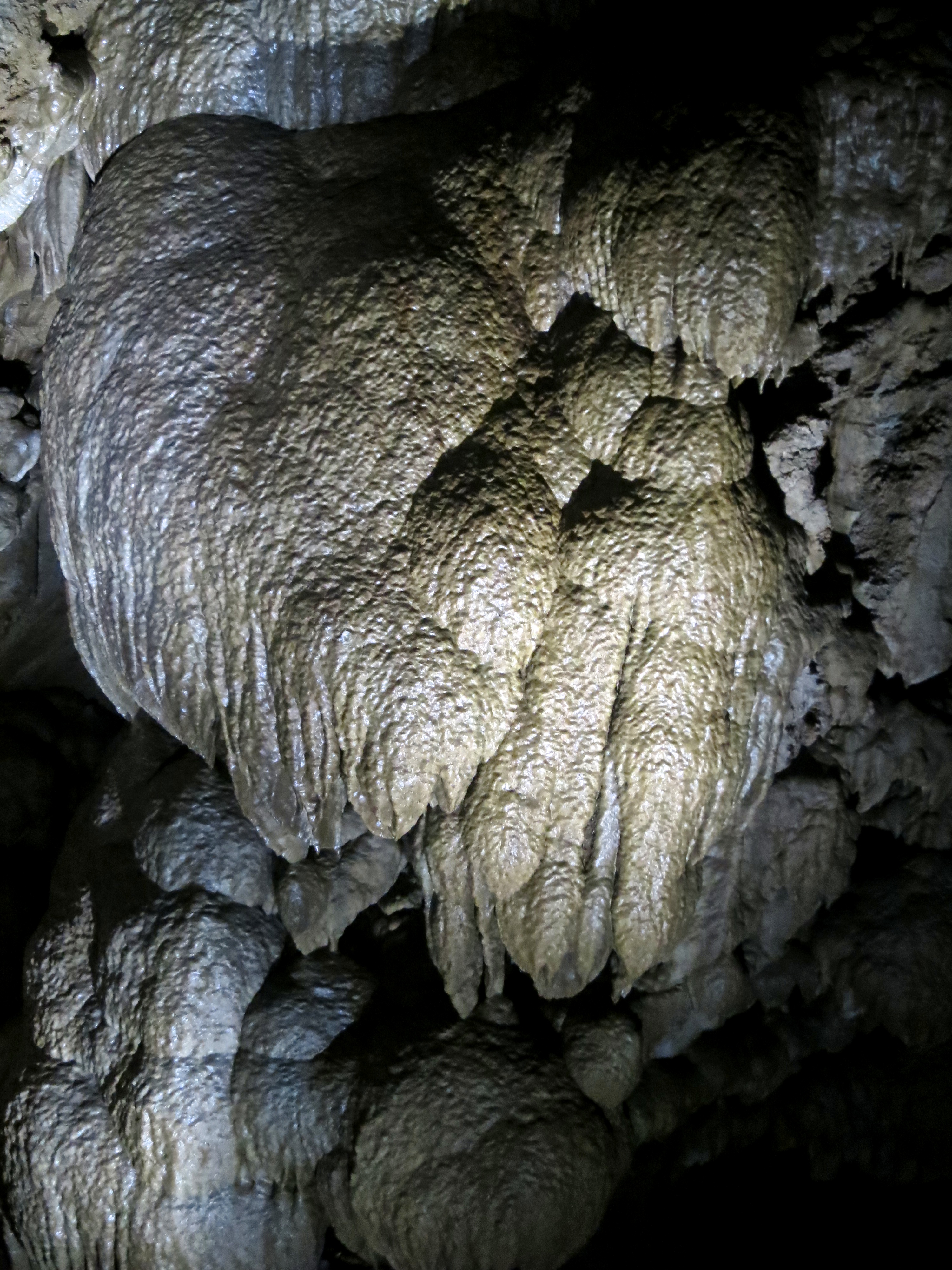
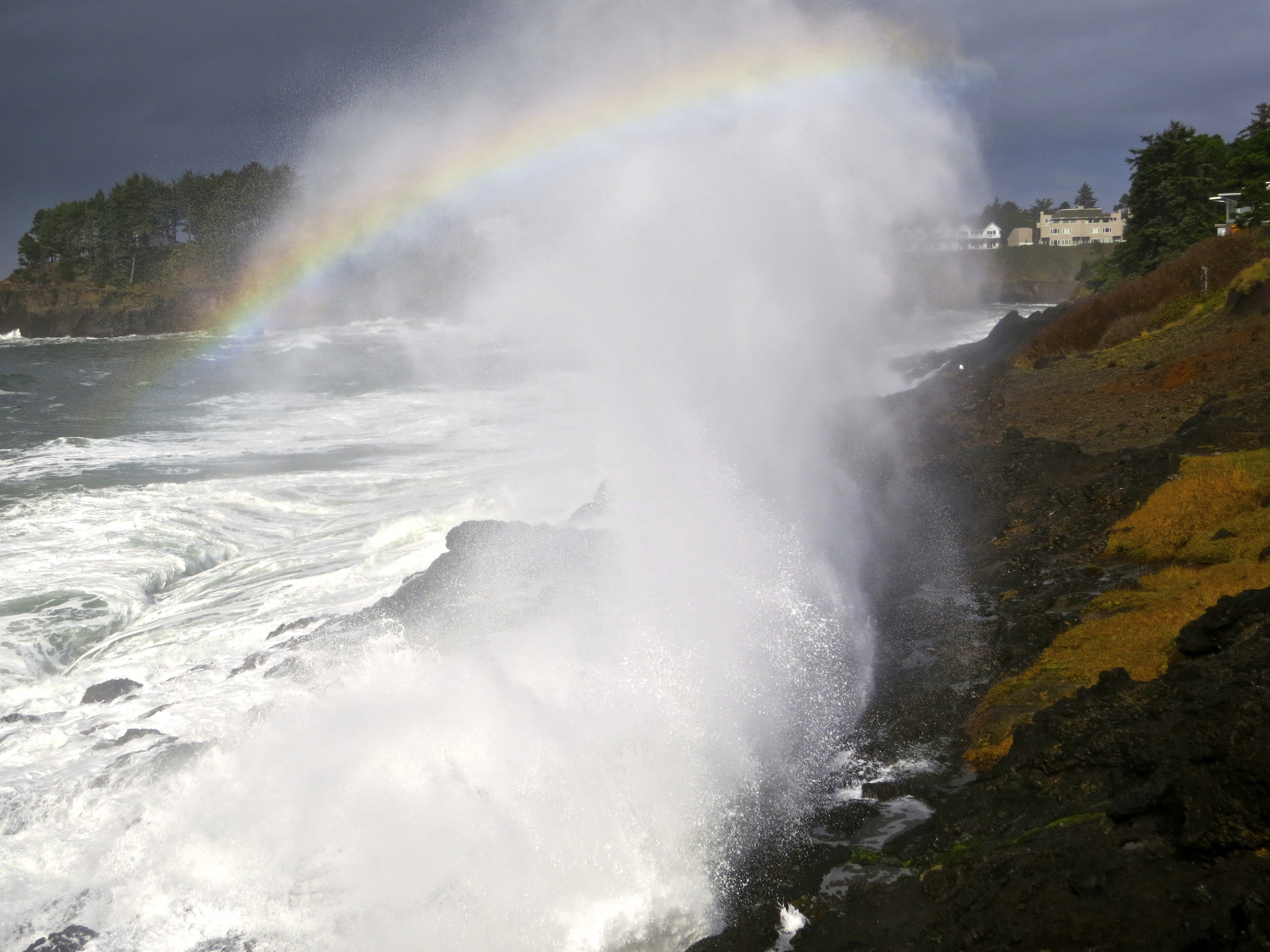
Rock formations in Oregon Caves National Monument.

Unusual rock formations created by minerals from dripping water led the Oregon Caves to be set aside as a national treasure in the early 1900s.

Claustrophobia: A fear of confined places

Acrophobia came up in my blog about Mt. Whitney. No surprise there, thousands of feet are between the hiker and a rather unfortunate landing. Splat! It’s a reasonable fear. Claustrophobia is just as real as fears go, but more irrational. The odds of being squished in a tight space— unless you are Indiana Jones or a misplaced wookie caught in a starship’s garbage disposal unit— are between slim and none. Don’t sweat it, right?

Try telling that to someone who is claustrophobic. I suggest you don’t stand between her and the exit. I get it. I am not particularly fond of enclosed spaces myself, whether they are physical or mental. I don’t like driving through tunnels and I hate freeway construction where imposing cement barriers shrink down to your vehicle’s width and provide a view of what hell is like. And that’s even before the gigantic truck comes barreling down on you and breathes fire up your tail pipe because you insist on driving 45 MPH in a 45 MPH zone. At least I can take my revenge when they put up plastic cones instead of cement barriers, as Peggy might tell you. Crunch. Curt strikes another blow for freedom.
Where does this leave me with caving, or spelunking, as the sophisticates call it? How do I feel about getting down on my belly and crawling through a space my skinny fourteen-year-old body would have gotten stuck in several hundred feet under ground? Not a problem; it’s not on my to-do list. But for some unfathomable reason, the standard well-known cave tours don’t bother me. In fact, I find them fascinating. Stalactites and stalagmites tickle my fancy and stir my imagination.

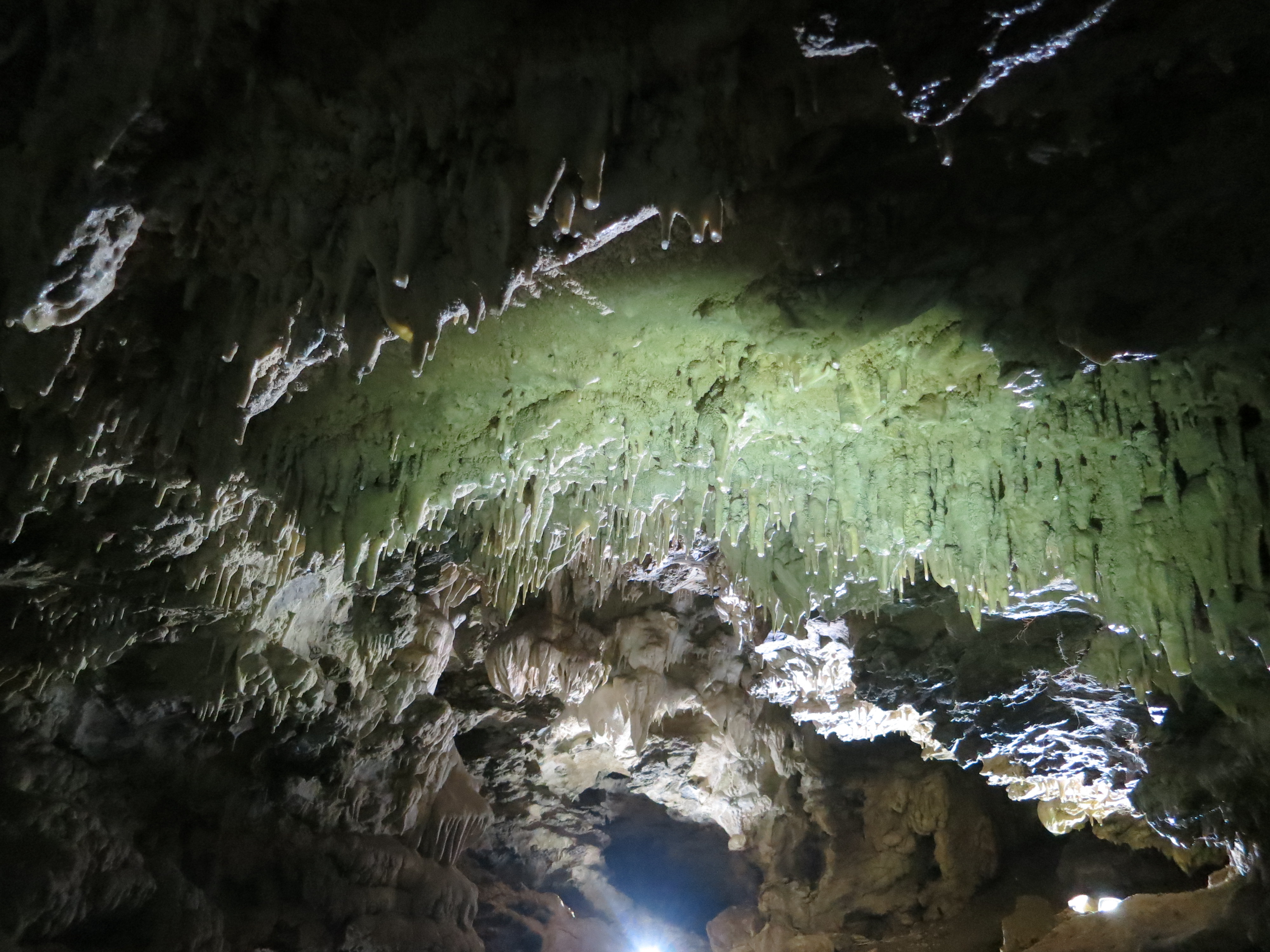
Photo showing how stalactites grow in Oregon Cave National Monument.

These small stalactites show tiny drops of mineral laden water that come down from a tube in the center of the stalactite. They will add about an inch of growth in a thousand years. (Photo by Peggy Mekemson.)

This photo from Oregon Cave National Monument shows the development of stalactites (coming down) and stalagmites (coming up). Eventually they meet, as demonstrating on the left. (Photo by Peggy Mekemson.)

This photo from Oregon Cave National Monument shows the development of stalactites (coming down) and stalagmites (going up). Eventually they meet, as demonstrated on the left. (Photo by Peggy Mekemson.)

So when Peggy suggested we head off to the Oregon Cave National Monument for her birthday a couple of weeks ago, I readily agreed. We’d been talking about it ever since we moved to Oregon. Except for the last few miles of the road that shot up a mountain and redefined the meaning of curves, the hour and a half drive was quite pleasant.

A ranger greeted us and gave us the bad news. We should expect a two-hour wait. He also wanted to know if we had been in any eastern caves in the last five years. If so— no go. White nose syndrome was wiping out eastern bats. So far their western cousins had lucked out. It had been six years since we had visited Mammoth Cave in Kentucky. We were in by a cat’s whisker.

Our wait turned out to be just over an hour. There was barely time for lunch and a look through the visitor’s center before we found ourselves at the cave entrance shivering from a blast of 44˚ F air. “Cave’s breathe,” our guide stated. He also told us about the 500 narrow stairs we would be negotiating and the low ceilings. I would be bent over double with my size 14 shoes balanced precariously on wet slippery rocks. I looked enviously at a small girl who would be standing up straight with her feet resting solidly on the narrow stone steps. She gave me an impish grin.

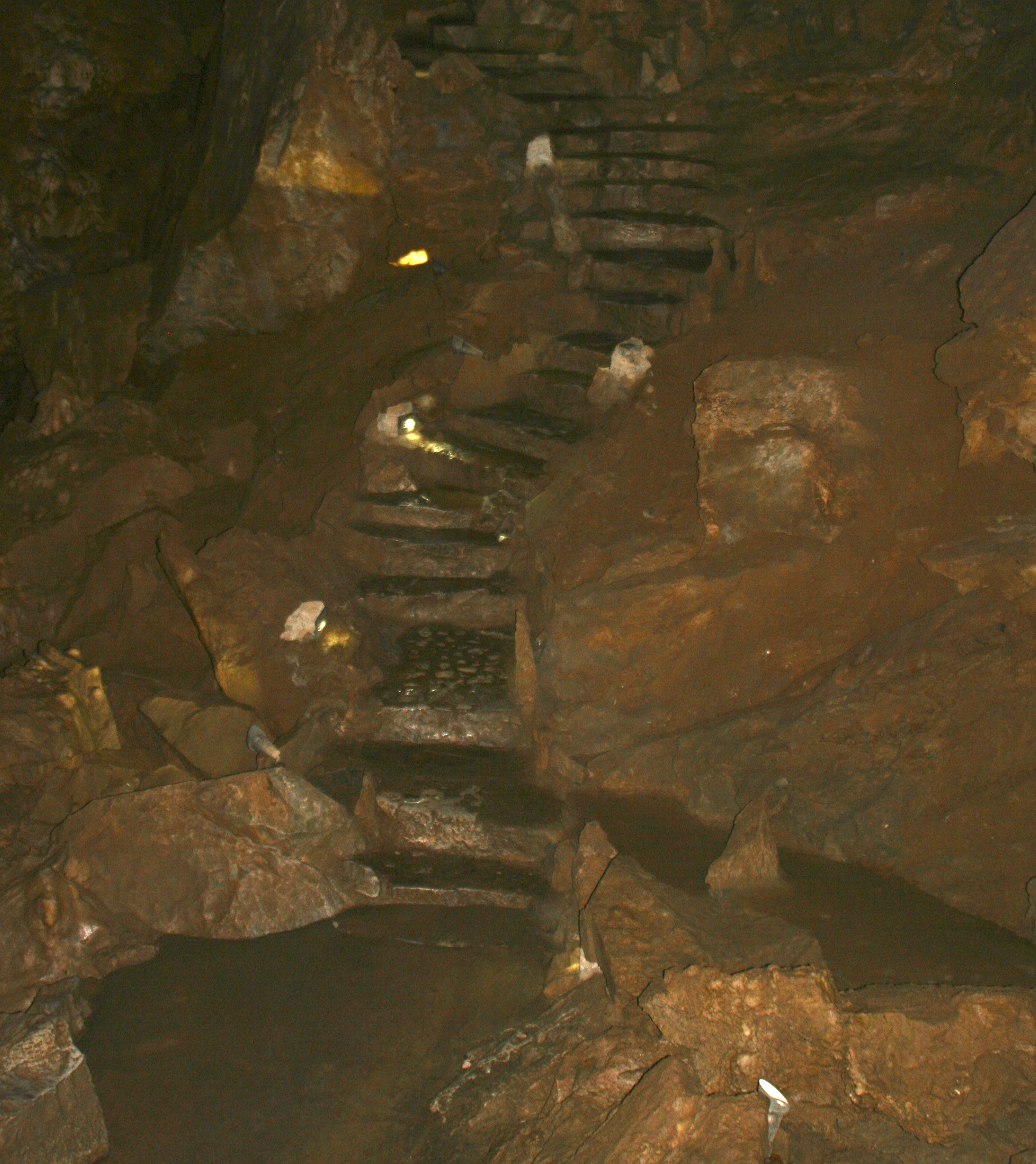
Stone steps in Oregon Caves National Monument

Dimly lit stone steps make their way up from what is known as Ghost Cave. The narrowest ones were about half the depth of my size 14 shoes. (Photo by Peggy Mekemson.)

The Oregon Caves are somewhat unusual in that they are made out of marble. Once upon a time they were a coral reef far out in the Pacific. Plate tectonics sent the Pacific Plate diving under North America and scraped off portions of the ocean floor some 100 million years ago, adding new land to the continent. The tremendous heat and pressure involved changed the lime into marble. Folding, faulting and water created the caves.

This map shows the location of Oregon Caves National Monument.

This map shows the location of Oregon Caves National Monument. (Center Right)

Lit up stalactites in Oregon Caves National Monument.

Artificial lighting adds to the magic of caves.

Another example of the impact of lighting. The rock on the left had been signed by all of the members of a geology class that had visited in the 1800s. Strict rules are now in place to protect the cave.

Another example of the impact of lighting. The rock on the left had been signed by all of the members of a geology class that had visited in the 1800s. Strict rules are now in place to protect the cave.

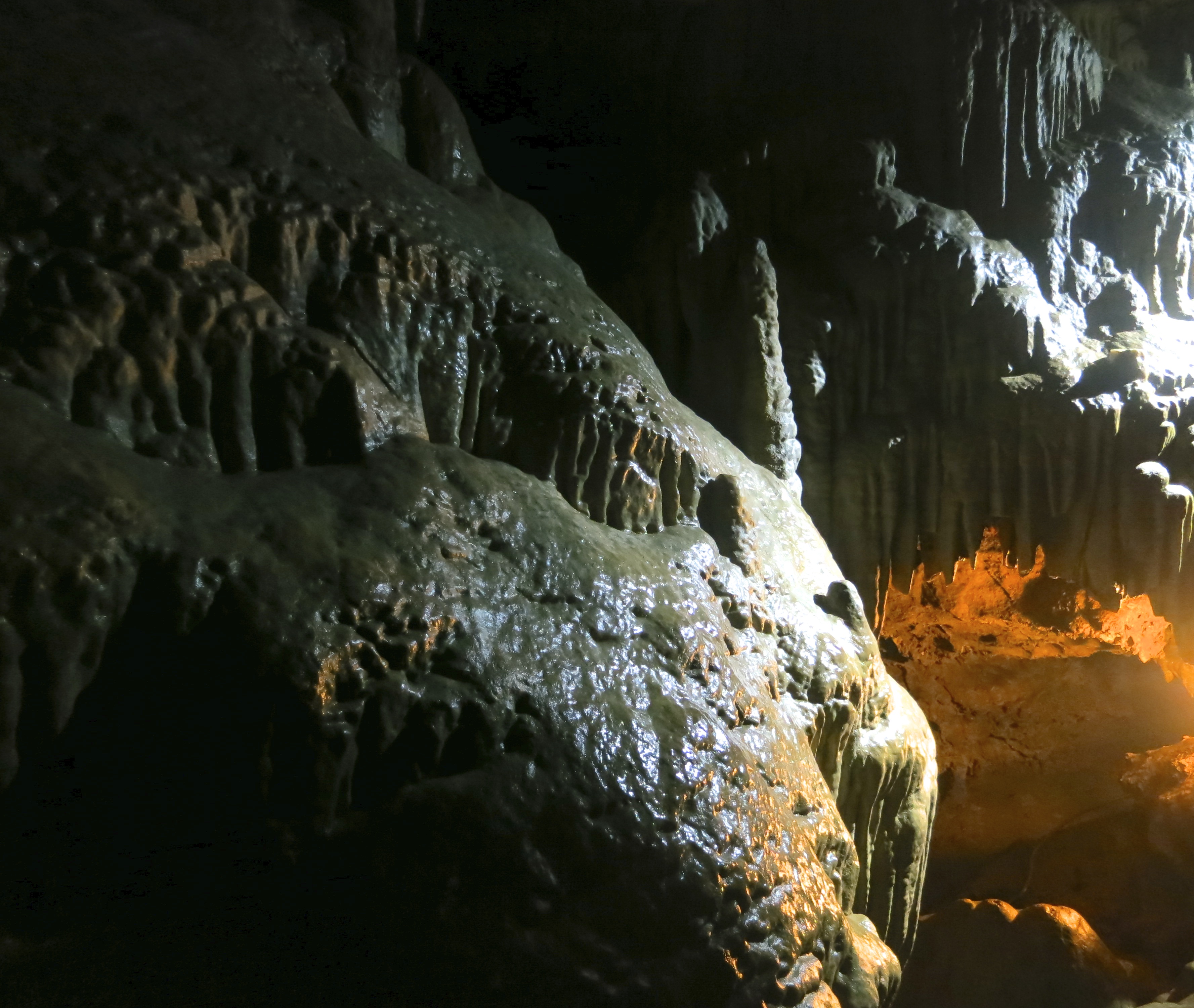
Unusual stone structure in Oregon Caves National Monument.

This unusual structure caught my camera’s attention.

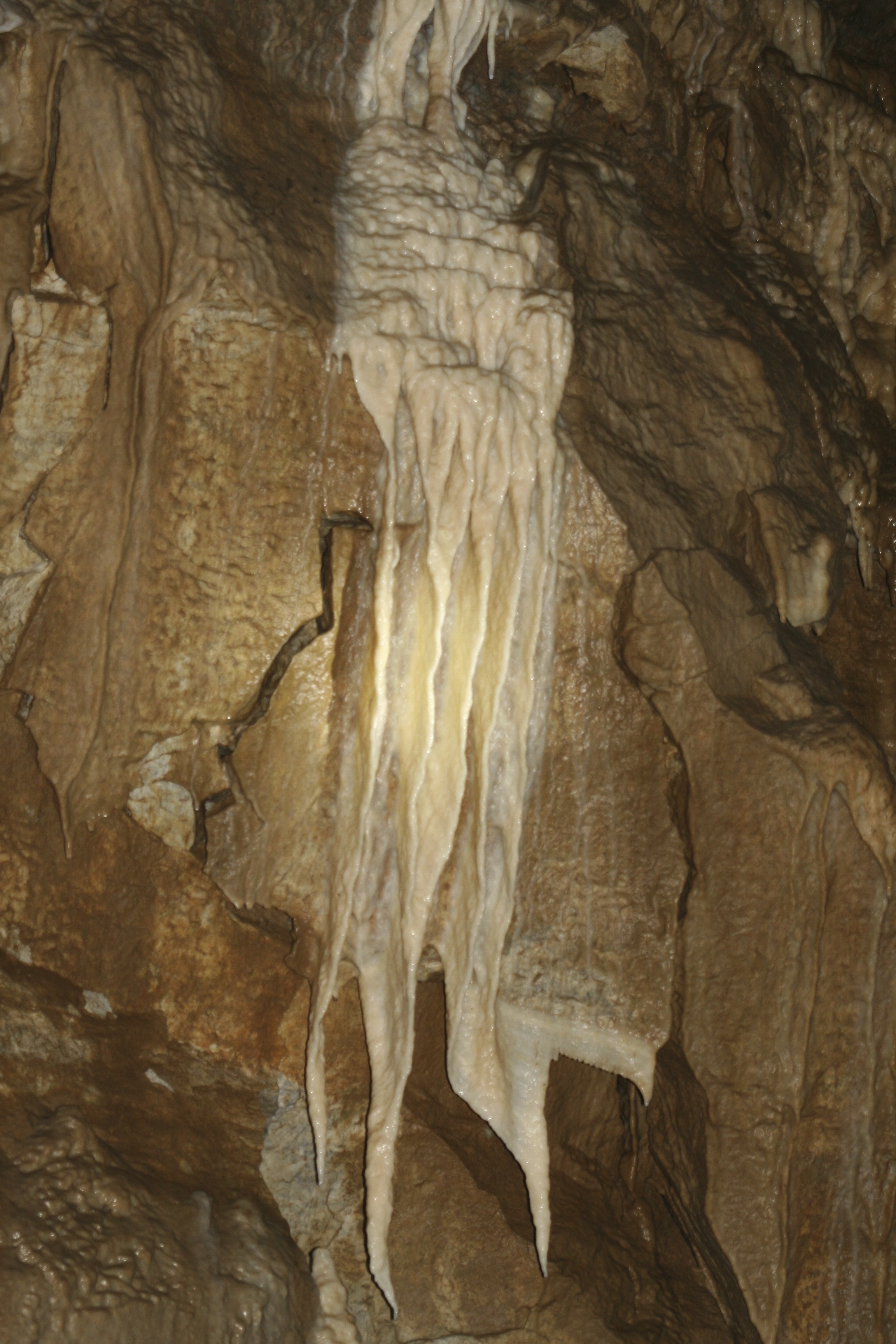
Ghostly rock waterfall at Oregon Caves National Monument.

Peggy captured this ghostly rock waterfall. (Photo by Peggy Mekemson.)

Cave exit at Oregon Caves National Monument.

A view of where we came out from our 90 minute tour.

Standing on top of the mountain that contains Oregon Caves National Monument.

Tour over, Peggy and I stand on top of the mountain that contains the caves. This photo gives a perspective on the surrounding countryside.

NEXT BLOG: Peggy and I are headed off for a brief hiking tour at Mt. Rainier National Park for the next several days so I may be out of computer range. When I come back I will report on my recent experience as a chicken farmer: The Chicken Whisperer.

Into the Red Butte Wilderness… Backpacking at 71

Old Growth Cedar in Red Buttes Wilderness of Northern California and Southern Oregon.

There is much to be impressed with in the Red Buttes Wilderness, including magnificent old growth trees such as this cedar.

I know a bit about backpacking (mild understatement). A few years back, in 1974 to be exact, I was working as the Executive Director of the American Lung Association in Sacramento. The organization needed a new source of funding; I needed an excuse to play in the woods. So I combined the two. I proposed to my Board of Directors that I lead a nine-day, hundred mile backpack trip across the Sierra Nevada Mountain Range with the participants raising money to fight lung disease.

So what if my longest backpack trip ever had been 30 miles.

“You are crazy,” the board said. “You are crazy,” my friend in the backpacking industry said. It was like I had inherited a parrot.

And they were right. The only point they missed was just how crazy. Sixty-one people aged 11-71 showed up– many who had never worn a backpack in their lives. One immediately claimed she was a witch and would be over to bite me in the middle of the night. And how was I to know that my co-leader had participated in burning down a bank in Santa Barbara, or that my go-to guy in emergencies was a Columbian drug runner, or that the big fellow who got me through the toughest days was an explosive experts on the lam from the IRS. You can’t make these things up, folks! But this is a story for later this summer. It’s one you won’t want to miss.

Lets just say by the time I walked into the foothill town of Auburn, California nine days later on deeply blistered feet in 104-degree weather, I had persuaded myself that the money raised from Christmas Seals was more than adequate to support our organization, forever.

But then a strange thing happened. These people who I had almost killed and who had come close to killing me, started coming up one by one and demanding to know where we were going next year. I heard things ranging from, “This was the greatest experience in my life” to “I have lots of ideas for fundraising.” It took them several months to persuade me…

But persuade me they did. I would go on to add bike treks in Sacramento and eventually take the program nationwide where I became the national trek consultant for the American Lung Association. Millions of dollars were raised to prevent lung disease and thousands of people were introduced to long distant backpacking and bicycling as a result. More importantly, from my perspective, I got to play in the woods. For 30 years, I spent a part of each summer leading wilderness expeditions. And when I wasn’t leading treks, I was off backpacking by myself or with friends.

Founder of the American Lung Association Trek Program, Curtis Mekemson.

A much younger me gracing the front of the American Lung Association’s National Bulletin in my role as founder of ALA’s Trek Program.

Sadly, my last backpacking trip was seven years ago. Life happens, right? Peggy and I bought a small RV and decided to wander North America for three years; our kids started producing grand babies; we bought our property in Oregon and travelled to Europe and Alaska. I took up blogging and decided to write a book.

It was all good, but I missed backpacking– a lot. And there’s this thing. Our home looks out on the beautiful Red Buttes of the Siskiyou Mountains of Southern Oregon and Northern California. The mountains spoke to me, over and over and over. Finally I could no longer ignore their call. Peggy and I decided to hit the trail. So last week, we did.

Red Butte mountains of the Siskiyou Range.

The Red Butte Mountains as they appear from our house in spring through the lens of our camera. How could we not set out to explore them?

We planned a short trip: three days and 14 miles. It was to be something of a test to see how well we would do. After all, we had aged seven years. At 71, I couldn’t expect my body to behave the same way it had at 21, or 31, or 41, or 51, or 61. And even Peggy, a young woman of 64, was nervous.

I immediately pulled out maps and begin planning a route. I was like a little kid on Christmas morning (or Peggy at the chocolate store in Central Point). Had I been a dog, I would have been wagging my tail like my basset hound, Socrates, used to at the sight of a hotdog.

This forest service map shows the location of the Red Buttes Wilderness. The X marks the approximate location of our home.

This forest service map shows the location of the Red Buttes Wilderness. The X marks the approximate location of our home.

I planned out our route on a US Forest Service Topo Map. We followed the Butte Creek Trail to Azalea Lake.

I planned out our route on a US Forest Service Topo Map. We followed the Butte Creek Trail to Azalea Lake. I wrote in the small, circled numbers which I will refer back to.

A close up of the map shows the beginning of our hike. "T" marks the trailhead where we parked the truck. Topo lines reflect the steepness of the trail. The closer together, the steeper!

A close up of the map shows the beginning of our hike. “T” marks the trailhead where we parked the truck. Topo lines reflect the steepness of the trail. The closer together, the steeper! We started by hiking down into the canyon following the well switch backed trail. Down in the beginning, meant up in the ending. (grin)

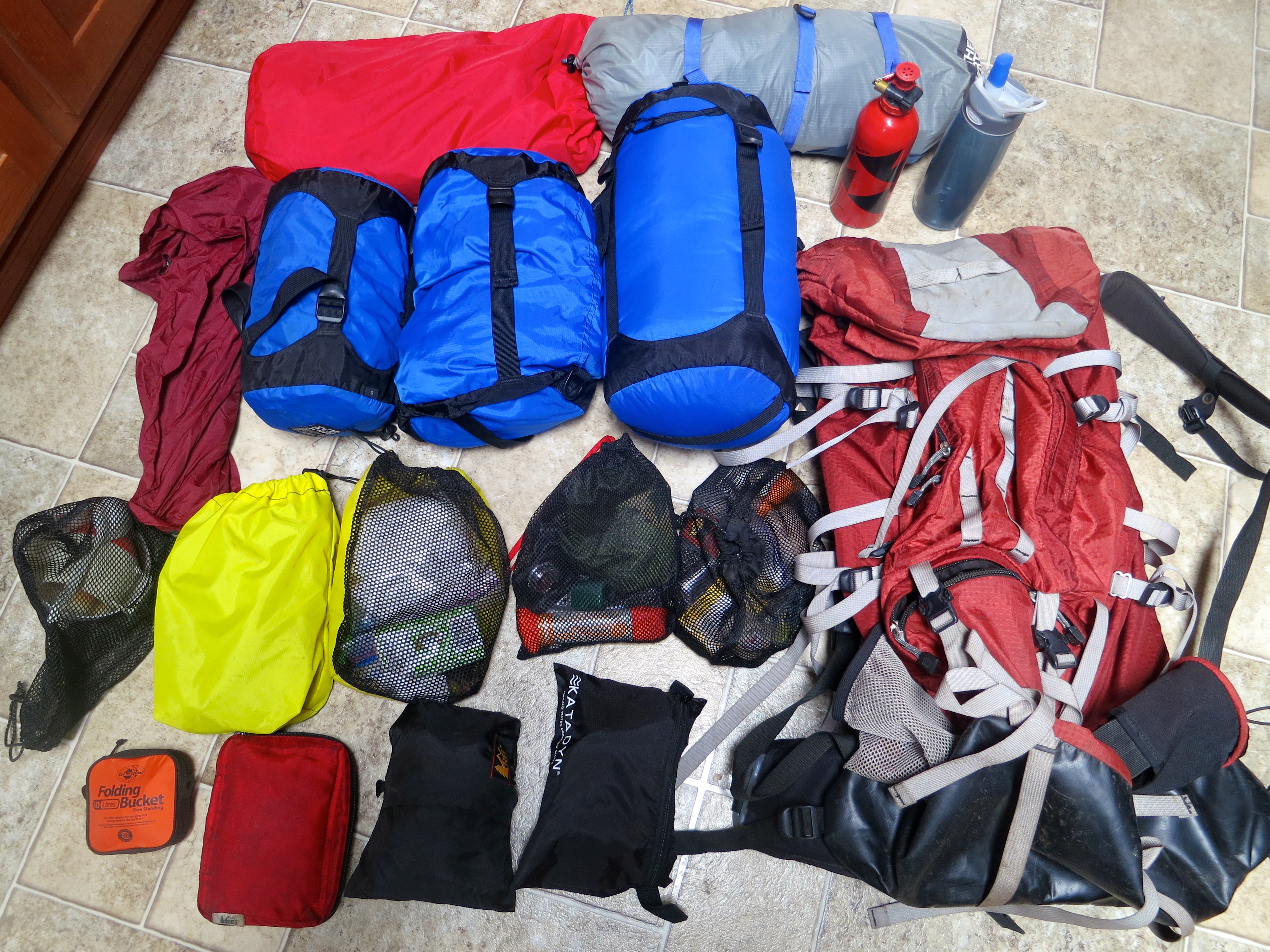
Next came the gear. It was hiding out on shelves, in drawers, and long ago packed boxes. Would my MSR white gas stove still cook? Would the Katadyn Filter still pump safe water? And possibly even more important, would our Therm-A-Rest air mattresses still be filled with air in the morning? When you are disappearing into the backcountry, you can’t be too careful.

Here's my gear and backpack. The larger bags are tent, sleeping bag and pad, food, and clothes. Smaller bags are organized according to function: kitchen, bathroom, first aid, etc.

Here’s my gear and backpack. The larger bags are tent, sleeping bag and pad, food, and clothes. Smaller bags are organized according to function: kitchen, bathroom, first aid, etc. Total weight with food, fuel and water: 35 pounds.

Go light is the mantra of anyone who carries his house on his back. Fortunately, the backpacking industry is constantly developing lighter equipment, such as this fully functional folding bucket.

Go light is the mantra of anyone who carries his house on his back. Fortunately, the backpacking industry is constantly developing lighter equipment, such as this fully functional folding bucket.

There was the inevitable last-minute trip to REI. And Peggy and I even drove up to check out the trailhead on Mother’s Day. (Now, before all of you moms get excited, she got breakfast in bed first and we took a picnic lunch that we ate on a grassy knoll with a grand view. Peggy even managed to spot a hungry mountain lion disappearing into the forest. Maybe it was coming to join us for lunch. What more could a mom ask for?)

Peggy enjoying her Mother's Day Picnic. We saw the mountain lion a couple of hundred yards down the road on our way out.

Peggy enjoying her Mother’s Day Picnic. We saw the mountain lion a couple of hundred yards down the road on our way out.

And how was the trip? Forget for the moment that it was cold and rained much of the time. Forget that we were dead tired and went to bed at 7:00 PM. Forget that the trail came close to disappearing in the brush and we spent a fair amount of energy crawling over and around downed trees that blocked the trail. And forget about the noise we heard in the middle of the night that sounded like Bigfoot pounding on a tree trunk with a large limb. And why should you forget? I just got out my thesaurus. The trip was wonderful, beautiful, invigorating, marvelous, educational, and stunning. We laughed our way through the whole adventure.

I’ll let our photos tell the story.

Butte Creek trail in the Red Butte Wilderness.

After following switch backs down the dry mountain side, we came upon the verdant canyon of the Butte Fork of the Applegate River with its almost rainforest feel. (This and the following three photos are located near #1 on the map.)

Butte Creek trail in the Red Buttes Wilderness.

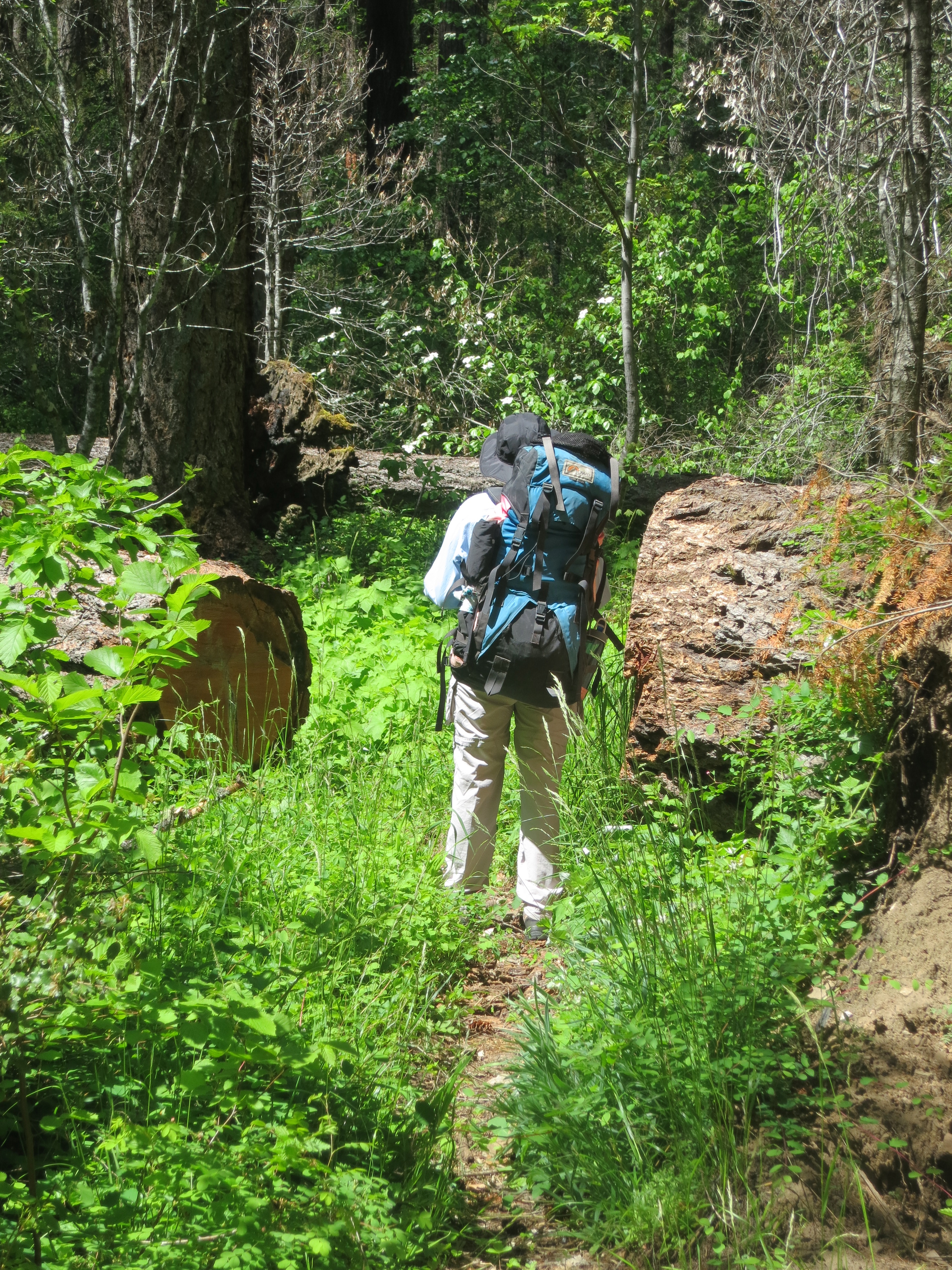
In 2012 the Ft. Goff fire had swept through the area. While the forest was relatively unharmed, some large trees had fallen across the trail and since been cleared to make way for hikers.

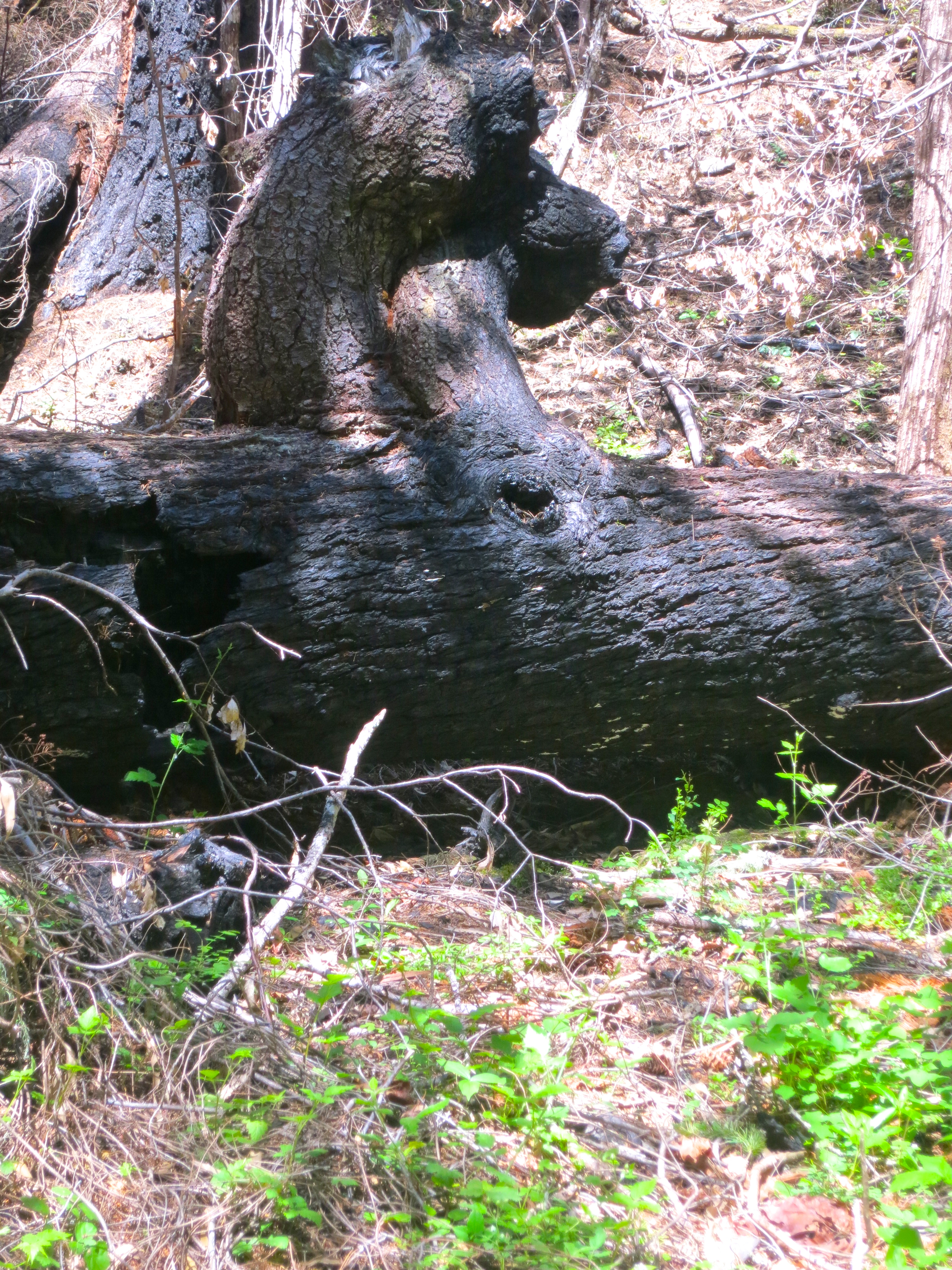
Smokey the Bear tree in the Red Buttes Wilderness.

We loved this tree poking its limb up in the middle of the fire area. Peggy at first saw a unicorn but I saw Smokey the Bear… reminding people to be careful with fire.

Horsetail fern growing in the Red Butte Wilderness.

We found this horse-tail fern growing in the canyon. Pioneers reputedly used this plant for scrubbing out pans.

CCC Cabin in the Red Buttes Wilderness area of Northern California and Southern Oregon.

An old cabin made out of red cedar shakes was built by the Civilian Conservation Corps in the 30s and then used by the forest service for storing fire fighting tools. (Located at #2 on the map.)

Roof of cedar shake cabin in Red Butte Wilderness area.

The hand-hewn cedar shake roof.

Chinquapin forest in Red Butte Wilderness.

Not far above the cabin, we came across a chinquapin forest. I had seen chinquapin bushes but never trees.

Chinquapin nuts, encased in these spine covered shells, are apparently quite tasty.

Chinquapin nuts, encased in these spine covered outer shells, are apparently quite tasty.

Flowering dogwood in the Red Butte Wilderness.

The trail at this elevation also featured beautiful flowering dogwood.

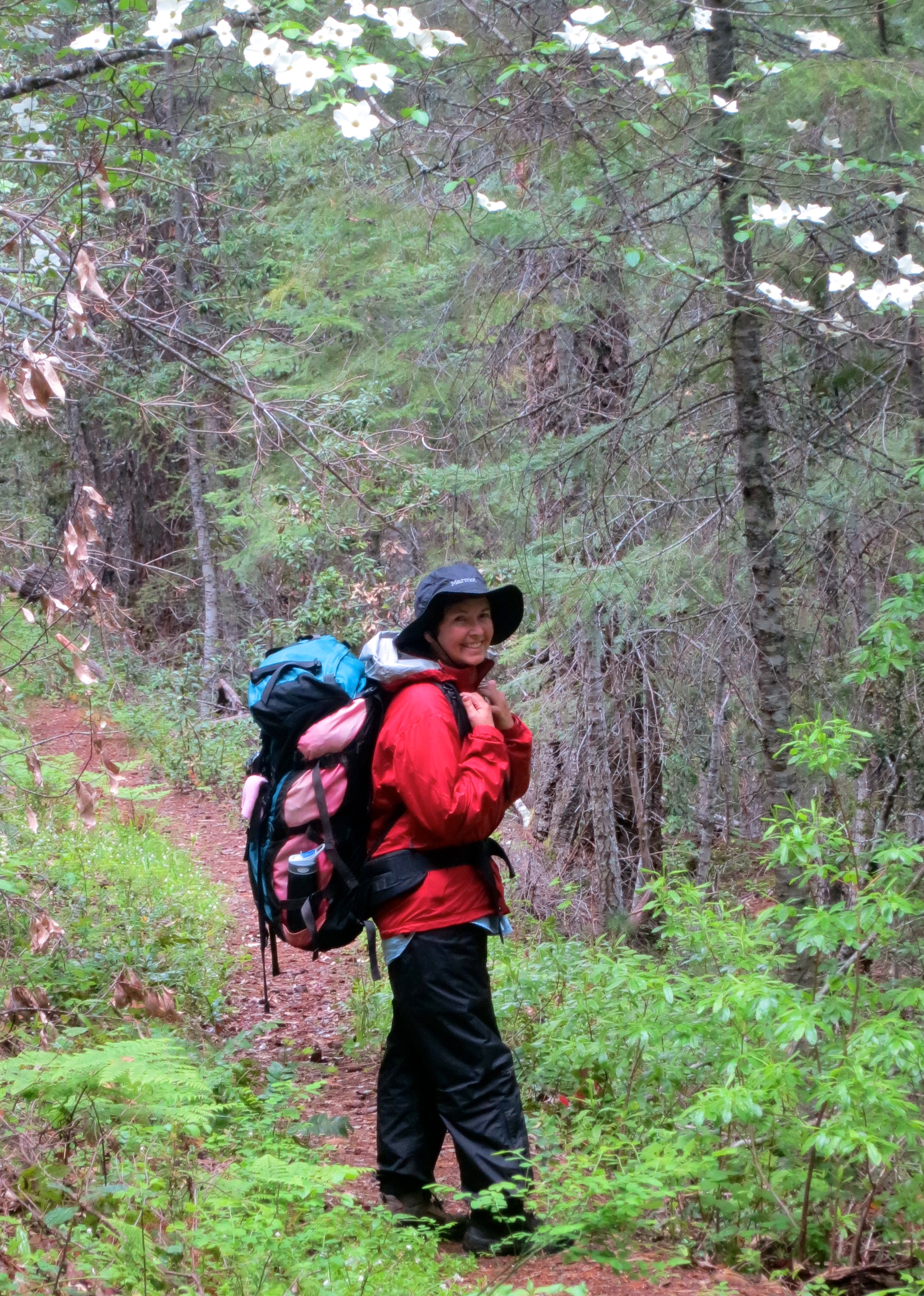
Peggy Mekemson hikes along the Butte Fork Trail through the Red Buttes Wilderness of Northern California.

Here, Peggy poses under a bower of it. I was going to point out that her pack weighed 32.5 pounds. She quickly corrected me. It was 32.8 pounds.

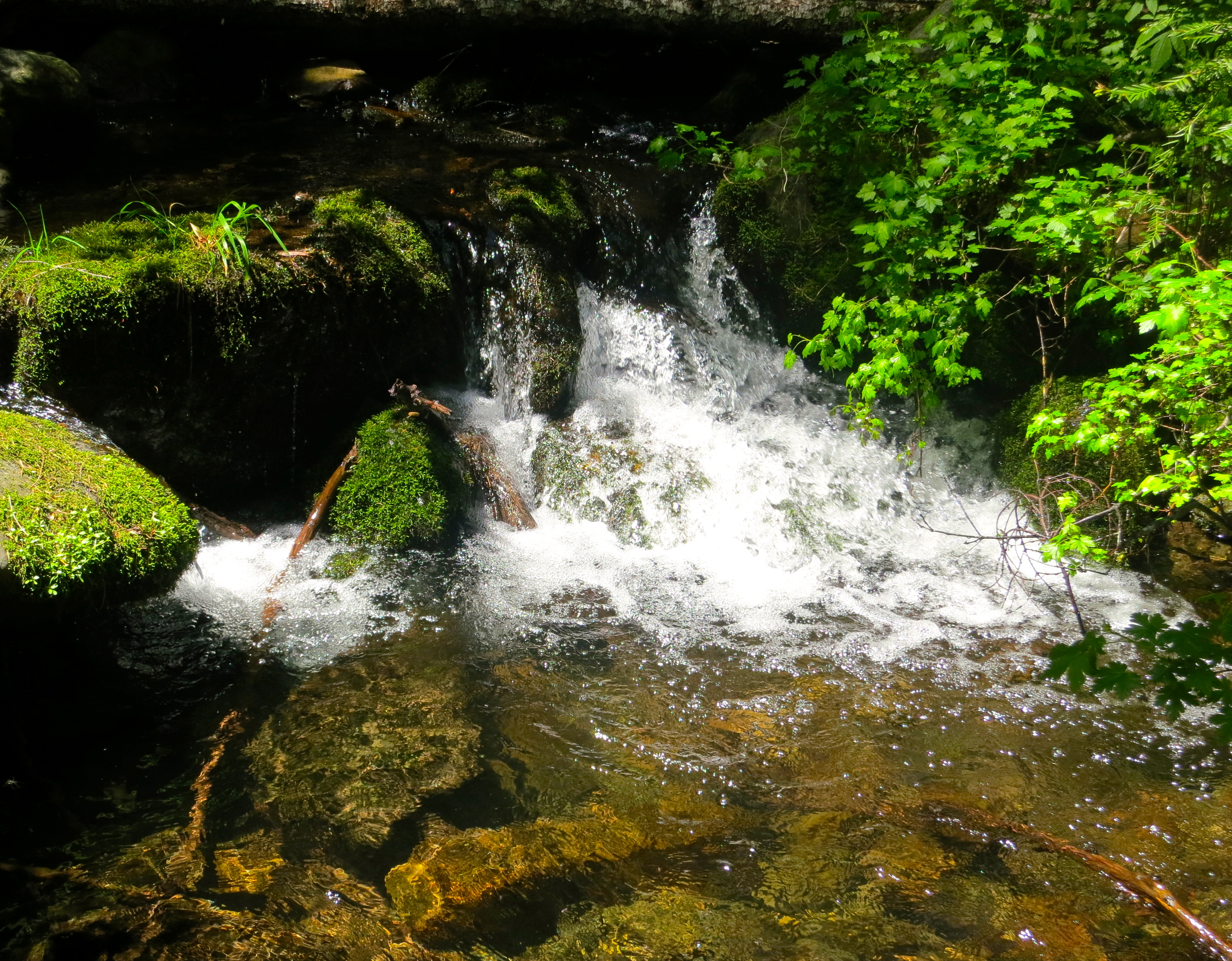
Small creek in Red Butte Wilderness area.

We had been hiking across dry slopes for quite some time. It was getting late, we were tired, and I was beginning to feel a bit of a grump coming on when we heard this creek. “I hear camp,” I told Peggy. (#3 on the map)

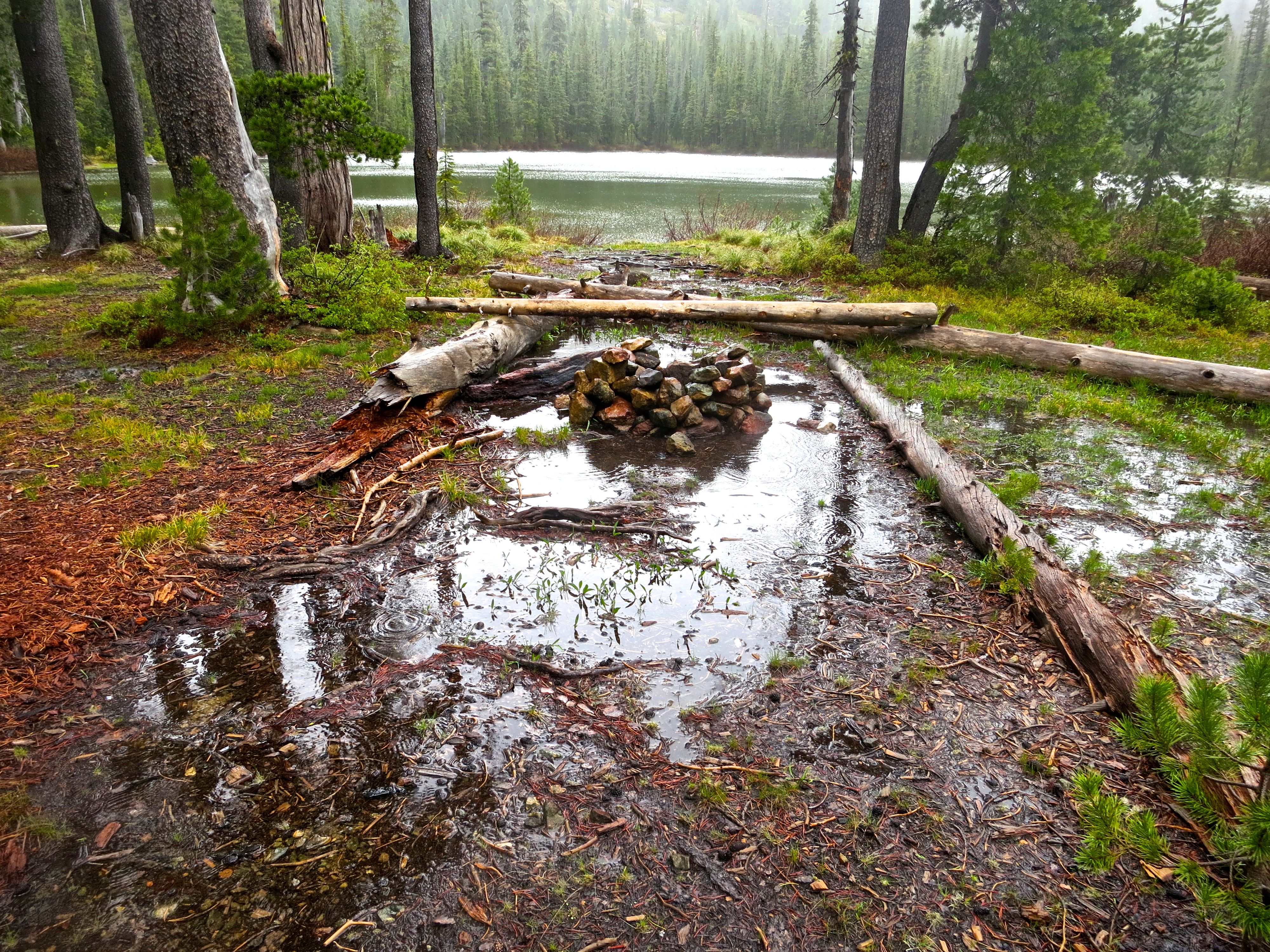
Camping out in the Red Buttes Wilderness.

There was barely room for our small North Face tent. But it was home. (Shortly after this photo it started raining.)

Old growth forest in the Red Buttes Wilderness.

This was our view looking up from our campsite. The Red Butte Wilderness includes some of the most impressive old growth forest I have ever seen including pine, fir and cedar trees.

Massive sugar pine tree in the Red Buttes Wilderness.

Peggy caught me standing next to one of the massive sugar pines. (Photo By Peggy Mekemson.)

Gravesite in Red Butte Wilderness.

This beautiful mound of rocks is found on my map at # 4. It’s a grave for three people buried here by family members after their plane crashed on July 28, 1945.

Burial site of airplane crash victims in Red Butte Wilderness.

The grave marker shows that Sylvan Gosliner, Ruby May Gosliner and Alma Virgie Pratt are buried here. Remnants of the plane can still be found in the canyon below.

Tree torn apart for bugs in Red Butte Wilderness.

Someone had a grand time ripping this rotting tree apart for it bugs. Was it a bear? Or how about Bigfoot? We found a large pile of scat (poop) nearby.

Cedar Grove in the Red Buttes Wilderness.

Cedar Grove is aptly named for its magnificent cedars. (Found at #5 on the map.)

Corn Lilies in red Butte Wilderness.

We also found corn lilies growing nearby in a meadow where the Goff Trail joins the Butte Fork Trail.

Trillium growing in Red Buttes Wilderness.

As we did this trillium.

Tree blaze carved into a cedar tree in the Red Buttes Wilderness.

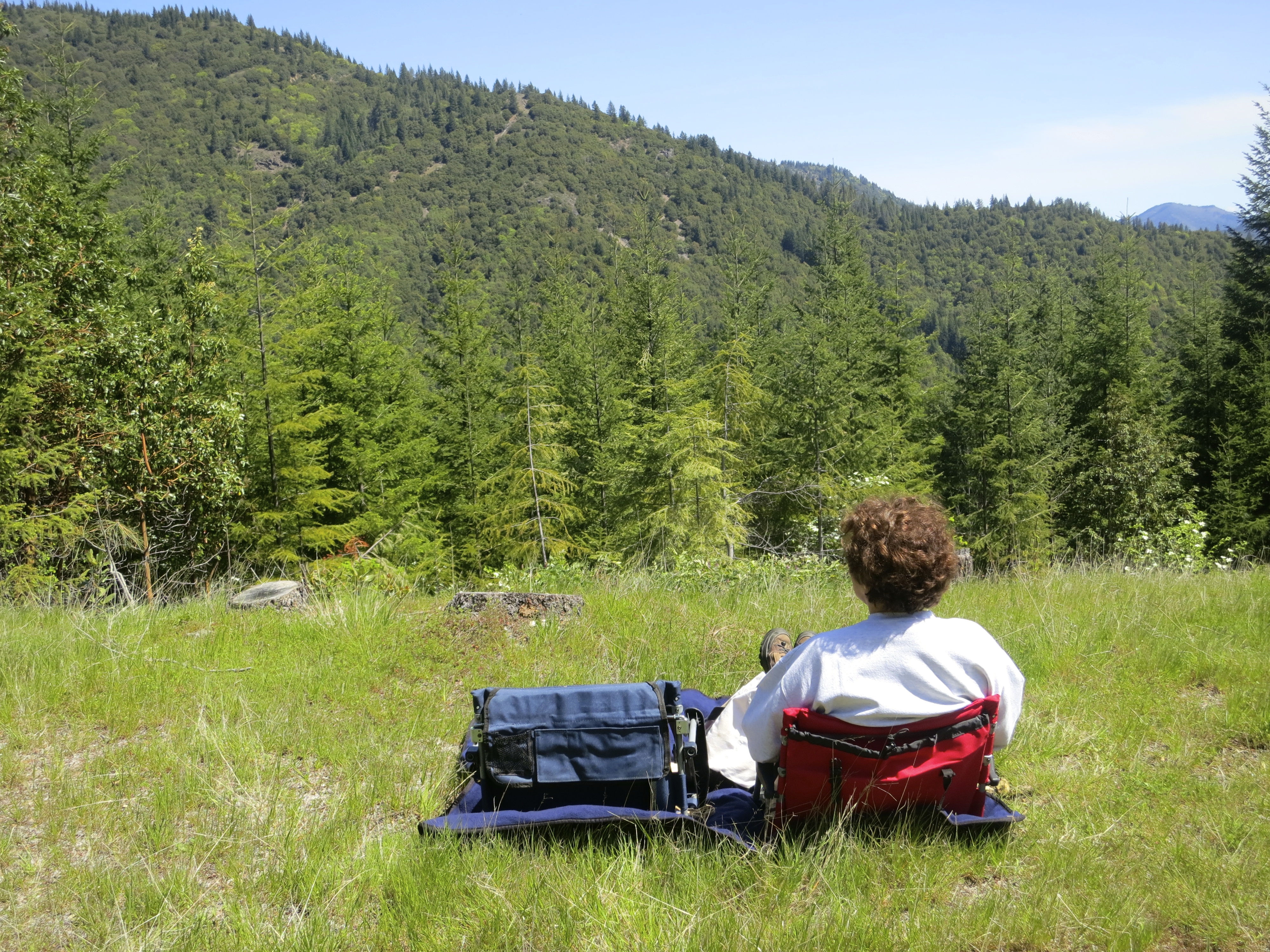
Ever hear the phrase, “Where in the blazes are we?” Foresters, cowboys and other outdoors people used to mark their trails by cutting out this symbol in a tree, which is known as a blaze. I’ve followed them through forests from Maine to Alaska, often over trails that have long since grown over.

Curt Mekemson backpacking in the Red Butte Wilderness.

It was a tad wet in the cedars, as this photo by Peggy demonstrates.  The bottle on the left is filled with wine, BTW. It helps assure that Peggy will follow me up the mountain. (grin)

Peggy Mekemson stands on trail in Red Buttes Wilderness.

The trail between the cedars and Lake Azalea almost disappeared on one occasion. Peggy is standing on it.

Azalea Lake in Red Buttes Wilderness.

We finally reached Azalea Lake. Have I mentioned it was wet out?

Curtis Mekemson camping in the Red Buttes Wilderness.

We found a drier, more protected camp farther away from the lake and settled in. I’ve carried the coffee cup backpacking for 45 years. Once it spent the winter buried under 20 feet of snow. (Photo by Peggy Mekemson.)

Azalea Lake in the Red Buttes Wilderness.

The sun rewarded our trip the next morning by providing a lovely view of Lake Azalea. It was time to pack up and head back for civilization.

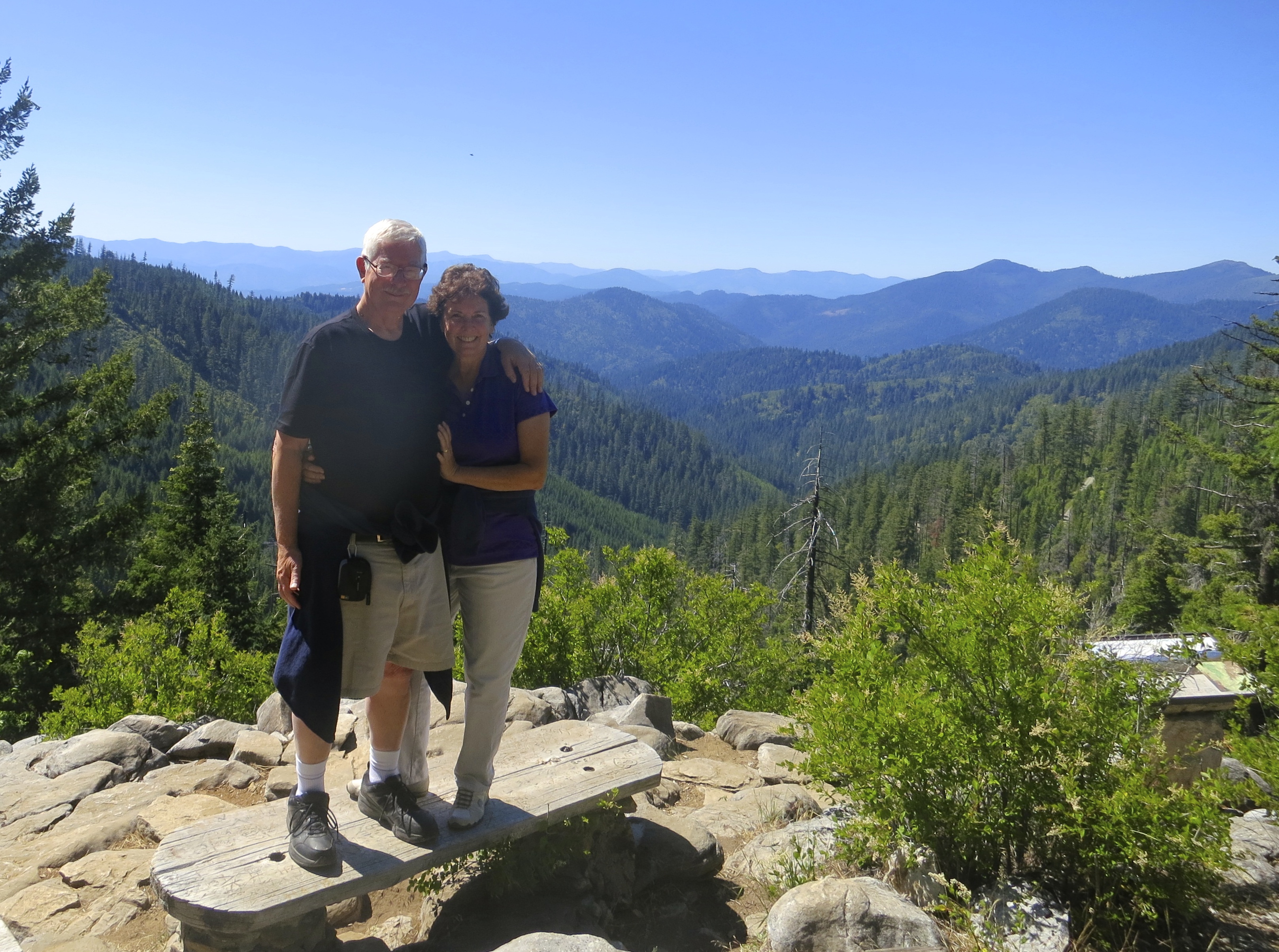
Curtis and Peggy Mekemson in Red Buttes Wilderness.

Selfie of two happy campers at trails end who have seen some beautiful country and proven to themselves that they can still put on backpacks and disappear into the wilderness.


There’s This Bigfoot Trap Near Our House…


Bigfoot trap found above Applegate Lake in Southern Oregon.

The world’s only known Bigfoot trap. (Photo by Peggy Mekemson.)

I’ve blogged about Bigfoot before. How could I not when the world’s only known Bigfoot trap is four miles from our home on the Applegate River in Southern Oregon?

My wife Peggy and I went out and revisited the trap just before we took off for Nevada three weeks ago. Since we were heading out to explore ghost towns, the Extraterrestrial Highway, Area 51, Death Valley and Las Vegas, I figured that searching for Bigfoot would put us in the right frame of mind.

We added looking for morel mushrooms as part of our Big Foot hike. They reputedly grow in the area. From my experience so far, however, I am beginning to believe they are even more difficult to find than the Big Hairy Guy and UFOs combined. Our carpenter, who was building us a pole barn while we were in Nevada, assured me of the morel’s existence. He had found one so big it was featured in the local newspaper and on Paul Harvey. “Morels yes, Bigfoot no,” he told us.
Our carpenter, Larry Baleau, shows off the huge morel mushroom he found while out identifying wildflowers.  (Photo by Bob Pennell of the Medford Tribune.)

Our carpenter, Larry Belau, shows off the huge morel mushroom he found while out identifying wildflowers. (Photo by Bob Pennell of the Medford Tribune.)

I am not quite so emphatic about Bigfoot’s existence. Our front window looks out on Bigfoot Country. There have been a number of reported “sightings” over the years. One led to the building of the Bigfoot trap.

It isn't hard to imagine Bigfoot prowling around in the forest when you look out our front window on a misty morning.

It isn’t hard to imagine Bigfoot prowling around in the forest when you look out our front window on a misty morning.

It all started when Perry Lovel, a miner living on the Applegate River, discovered 18-inch long human-like tracks in his garden that were six feet apart. His tale captured the imagination of Ron Olsen, a filmmaker from Eugene who headed up an organization known as the North American Wildlife Research Team. Ron decided to catch Bigfoot– allegedly for scientific purposes. I suspect he had other motivation as well. Imagine owning the rights to the movie?

This image of a big foot appropriately marks the beginning of the Bigfoot trail.

This image of a big foot appropriately marks the beginning of the Bigfoot trail. It is proof that the US Forest Service has a sense of humor.

Anyway, Ron and his group built a sturdy 10 by 10 foot box trap located a mile or so above Perry’s garden. A raised, heavy steel gate was added to provide Bigfoot with access to the trap. Meat was then placed inside and connected to a lever that released the gate, which came crashing down with all the subtlety of a guillotine.

Bigfoot trap door.

Looking up at the heavy trapdoor that was supposed to capture Bigfoot.

Ron then built a ramshackle cabin a couple of hundred yards down the hill and hired a miner to hang out and monitor the trap. He was given a tranquilizer gun and a very large pair of handcuffs. You get the picture. I assume the miner also stocked in a year’s supply of booze. Make that a six-year supply, since that is how long the trap was maintained.

Remains of cabin where miner lived who was supposed to tranquilize Bigfoot if he was caught in the Bigfoot trap in southern Oregon.

All that remains of the miner’s cabin is a pile of old boards, limbs and tar paper.

But was the effort successful? In a way, yes. The miner actually captured two grumpy bears who were under the mistaken impression they were getting a free lunch, not realizing there is no such thing. But Bigfoot didn’t take the bait. Here are my thoughts on why.

The only way they might have captured Bigfoot was if he were rolling around on the ground laughing so hard he couldn’t escape. If he exists, this larger than life character is far too intelligent to get caught in anything as obvious as the trap that Ron built. Otherwise there would be much more definitive proof of his existence beyond a few photos of dark blurs disappearing into the woods.

Since I was about to visit Area 51 in Nevada, I had a final whimsical thought: maybe Bigfoot is an alien. That would explain lots of things. (Grin) We didn’t find Bigfoot, and we didn’t find any morel mushrooms, but there were other strange things along the way…

Selfie of Curtis Mekemson.

What’s more strange than me taking a selfie?

Ferns growing near Applegate River in Southern Oregon.

And how about these alien looking plants. Actually, they are young ferns. (Photo by Peggy Mekemson.)

Shelf mushroom found near Applegate Lake in Southern Oregon.

We didn’t find any morels, but I did find this shelf mushroom growing on a dead tree.

My greatest find: as Peggy and I were hiking out from the Bigfoot trap, I found this image staring out at me from the bark on a Madrone tree. I'm thinking maybe Bigfoot had his own approach to taking a selfie.

My greatest find: as Peggy and I were hiking out from the Bigfoot trap, I found this image staring out at me from the bark on a Madrone tree. Maybe Bigfoot has his own approach to taking a selfie.

NEXT BLOG: The journey to Nevada begins and we admire the mystical and majestic Mt. Shasta and stop off at beautiful Burney Falls.

Ghost Bird… An Unusual Photo

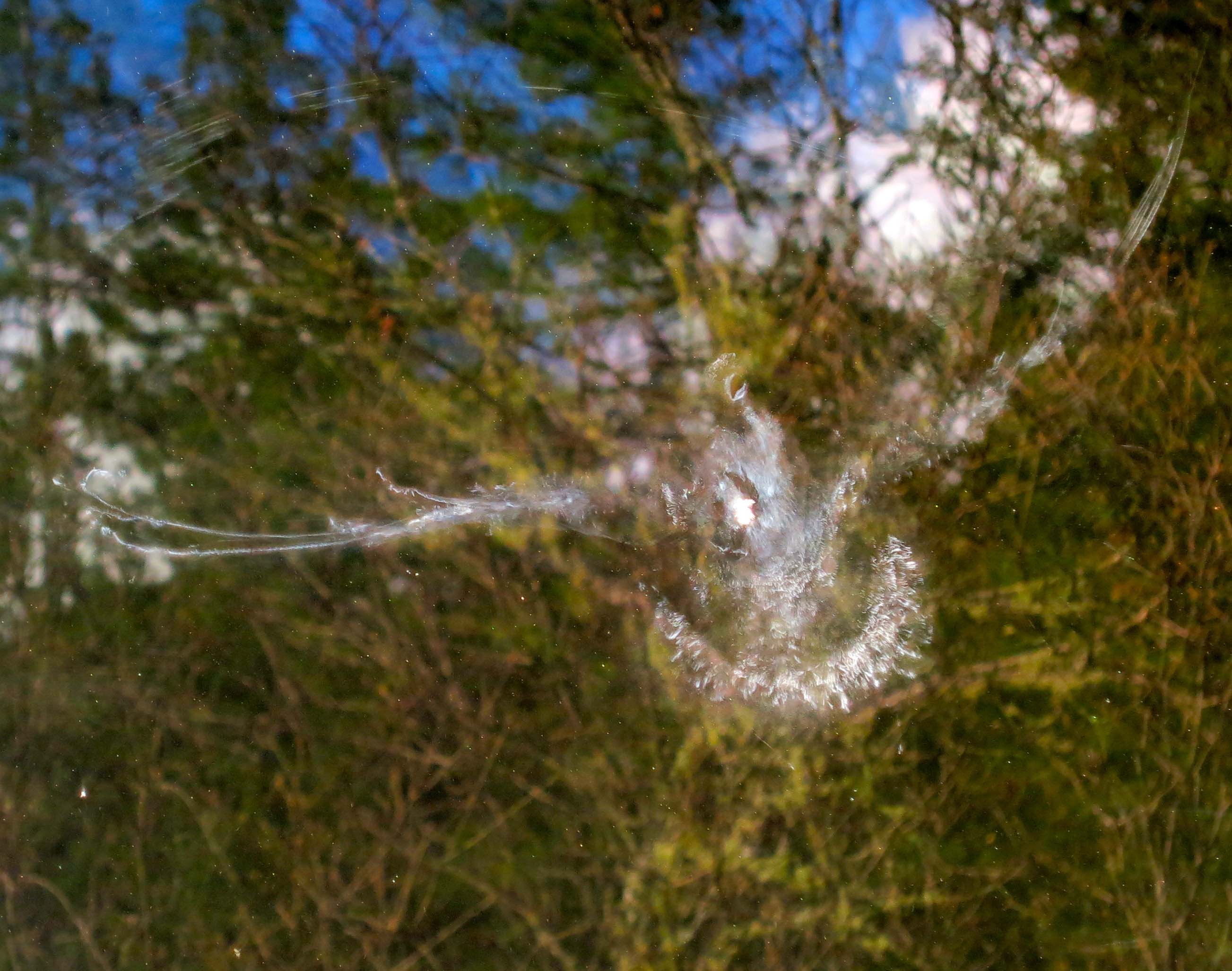
Mourning dove leaves ghost-like impression on window. Photo by Curtis Mekemson.

A crash-landing Mourning Dove left its impression on a window of our home on the Applegate River in Southern Oregon. It looks like a ghost bird hovering outside.

“This can’t be good,” Peggy commented from her office. I suspected that the deer were chowing down on her flowers and walked in to watch. Instead, neatly imprinted on her window, was the image of a bird with a 16-inch wingspan. It looked like a ghost. The Mourning Doves now had something to mourn about. One of them had taken a beak-dive into our window. I grabbed my camera– like what else was there to do– and recorded the crash landing from inside and outside of the house.

Black tail deer visits the Mekemson house in Southern Oregon. Photo by Curtis Mekemson.

What I expected to see– a hungry black tail deer lusting after Peggy’s flowers.

Impression left by dove after crashing into a window. Photo by Curtis Mekemson.

What I saw instead. I took this photo from the outside looking in with our trees being reflected in the window. Note the eye. Eerie, isn’t it?

I fully expected to find one very dead birdie on the ground, but none was to be found. Peggy and I are hoping that the dove picked itself up after the incident and flew off, a wiser bird with a headache.

Since I decided to put up a blog between blogs today, here are a few more photos from yesterday that I took while Peg and I hiked a section of the Sterling Mine Ditch Trail. The trail follows an historic 26-mile ditch that was built in 1870s to carry water to Sterling’s hydraulic mining operation outside of Jacksonville, Oregon. Its relatively flat nature makes it an excellent beginning of the season trail. Backpacking season is coming soon and Peggy and I have to get in shape! In the next couple of months we hope to explore the Red Butte mountains that look down on our home and I have a 40-mile hike along the Rogue River planned.

Peggy and I have looked out on the Red Buttes since we moved here three years ago. Now it is time to meet them up-close and personal. Recent snows may delay our backpacking trip.

Peggy and I have looked out on the Red Buttes since we moved here three years ago. Now it is time to meet them up-close and personal. Recent snows may delay our backpacking trip.

Peggy will be floating down the Rogue River in late May with our friends Tom and Beth Lovering. Since I need the exercise, I am going to hike the 40-mile backpacking trail that follows the river. (Photo by Peggy Mekemson)

Peggy will be rafting down the Rogue River in late May with our friends Tom and Beth Lovering. Since I need the exercise, I am going to hike the 40-mile backpacking trail that follows the river. (Photo by Peggy Mekemson)

Photo of the Sterling Mine Ditch Trail in Southern Oregon taken by Curtis Mekemson.

The historic 26-mile Sterling Mine Ditch Trail wanders through a variety of terrains ranging from dry, brush covered slopes to cool, pine and madrone filled valleys.

Shooting Stars found along the Sterling Mine Ditch Trail in Southern Oregon.

Early spring flowers, including Shooting Stars, added color along the trail.

Oregon Grape flower found along the Sterling Mine Ditch Trail in Southern Oregon.

We also found this impressive Oregon Grape flower, which happens to be the state flower of Oregon. Later in the summer these flowers turn into berries that wildlife find quite tasty and supposedly make good jelly.

Old tree stump along the Sterling Mine Ditch Trail in Southern Oregon.

A rotting tree stump caught our attention for a moment. You can see tunnels left by insects as they feasted off of the wood.

A vine-twisted madrone tree found on the Sterling Mine Ditch Trail.

Our most interesting find of the day. Peggy and I love Madrone trees and their silky, almost sensuous bark. But we have never seen one twisted like this. Close inspection showed that it had been caused by a vine that had worked its way up the tree.

NEXT BLOG: My choice for the title of the book on my Peace Corps experience.

Dinosaurs Still Roam the Earth… Or At Least They Do in Ashland, Oregon

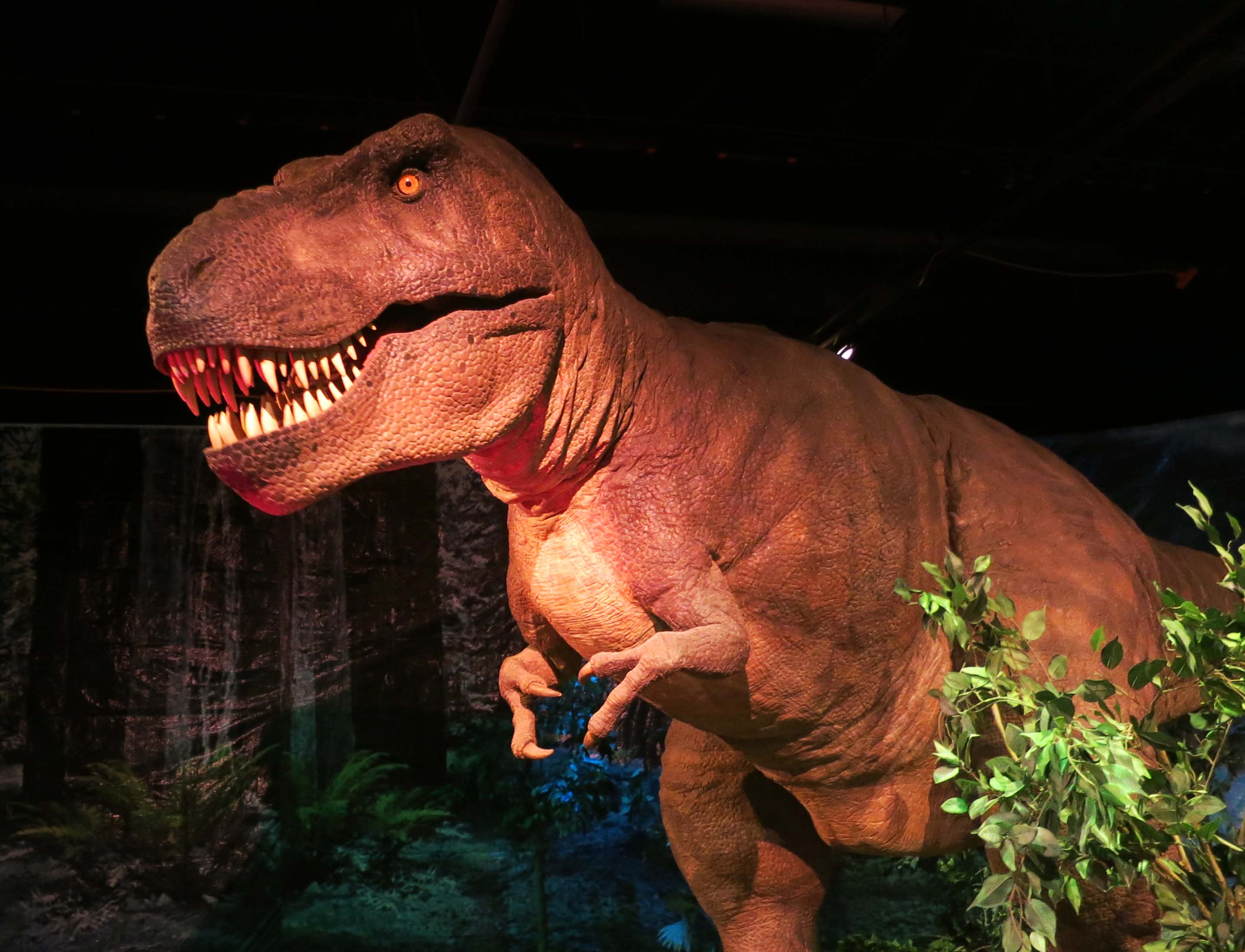
Robotic Tyrannosaurus at the Science Works Museum in Ashland, Oregon. Photo by Curtis Mekemson.

A large T-rex dinosaur rules the Science Works Museum in Ashland, Oregon.

If you are a fan of the Bard of Avon, odds are you are familiar with the Oregon Shakespeare Festival that takes place annually in the small city of Ashland in Southern Oregon. The town has a lot going for it. (And no, I am not talking about the fact I was born there.) For example, there is the yearly chocolate festival that draws chocoholics like moths to flame, a film festival, a number of good restaurants, Southern Oregon University, an historic downtown filled with unique shops, and views of two mountain ranges (the Cascades and the Siskiyous).

I’ve come to expect all of this from Ashland, which is about 30 miles from my home on the Applegate River. What I didn’t expect were the dinosaurs. Peggy and I read about them in the Medford Tribune. They are living at Ashland’s Science Works Museum, which is chock full of entertaining hands-on science experiments guaranteed to entice youngsters– and at least two adults; Peggy and I had to try everything.

Who can resist dragging his fingers across a plasma ball and attracting electricity?

Who can resist dragging his fingers across a plasma ball and attracting electricity?

The dinosaurs are life-size robotic creatures that look and behave like the real things. They growl and roar and flash their teeth. Their eyes track you wherever you go. Scary. How could we not make the trek to Ashland?

Science Works has created a separate, forest-like enclosure for its three dinosaurs. We could hear them growling as we approached. A little girl clung tightly to her mom’s hand and refused to enter the area, understandably. Two saurornitholestes and a large tyrannosaurus rex greeted our arrival.

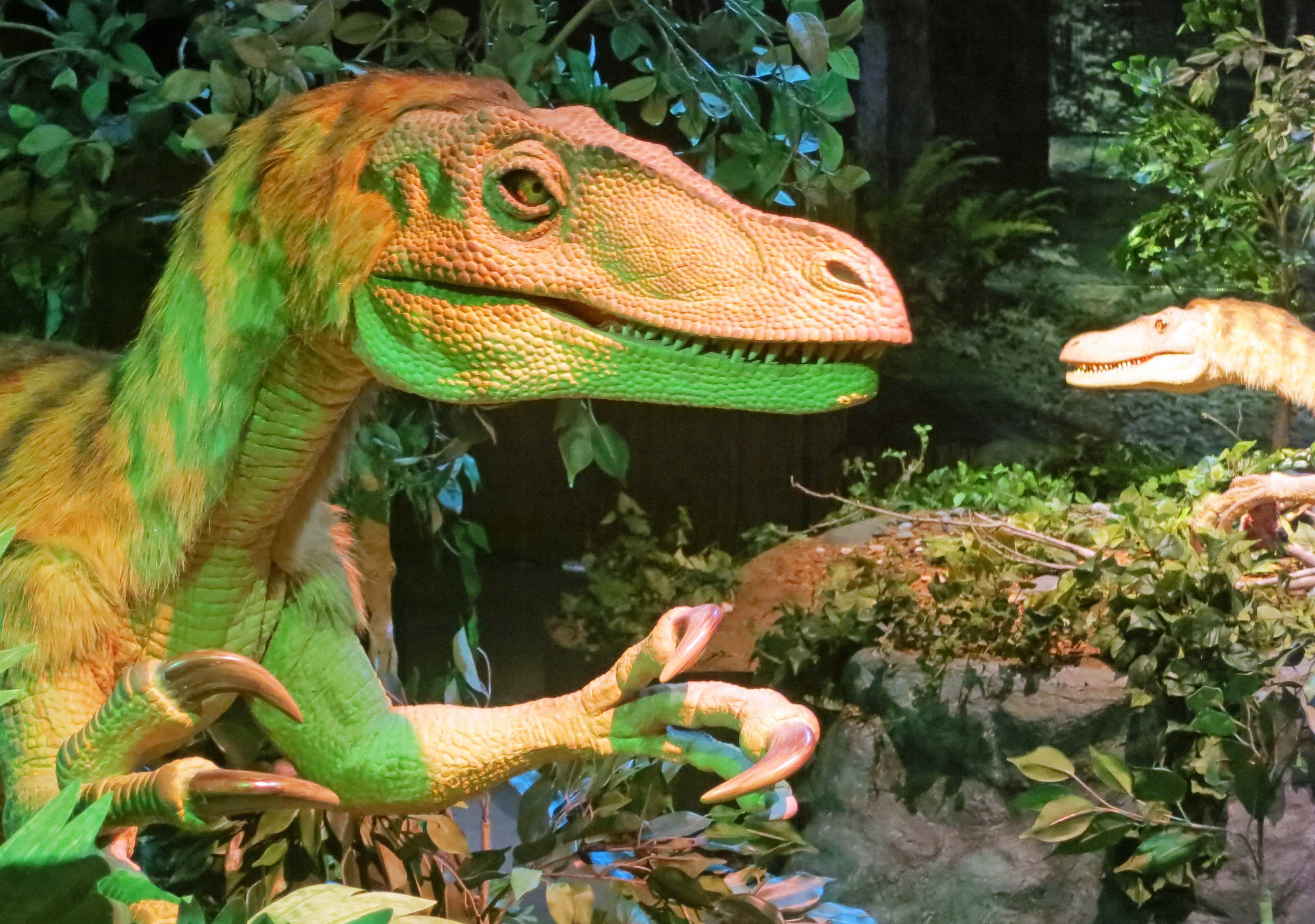
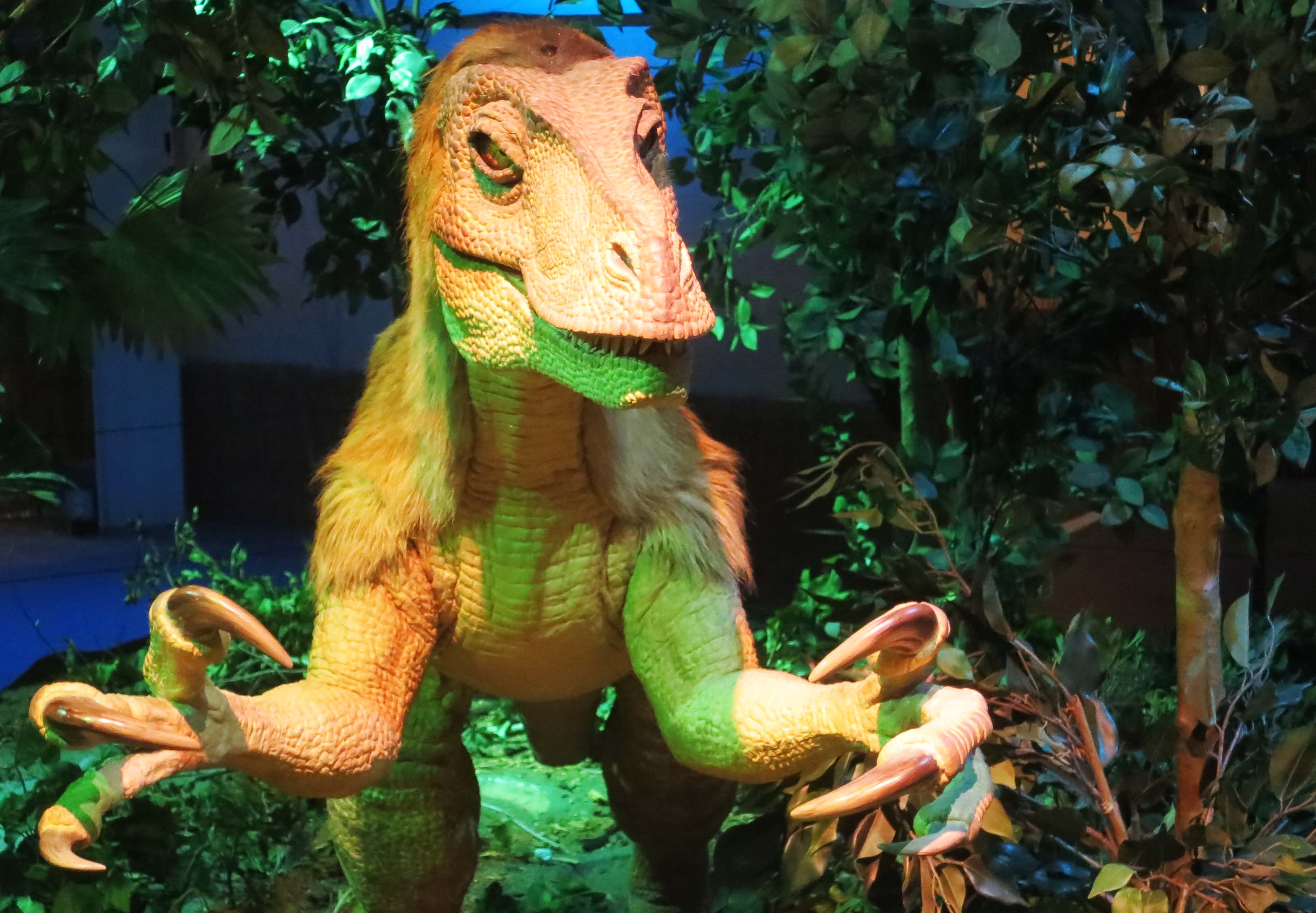
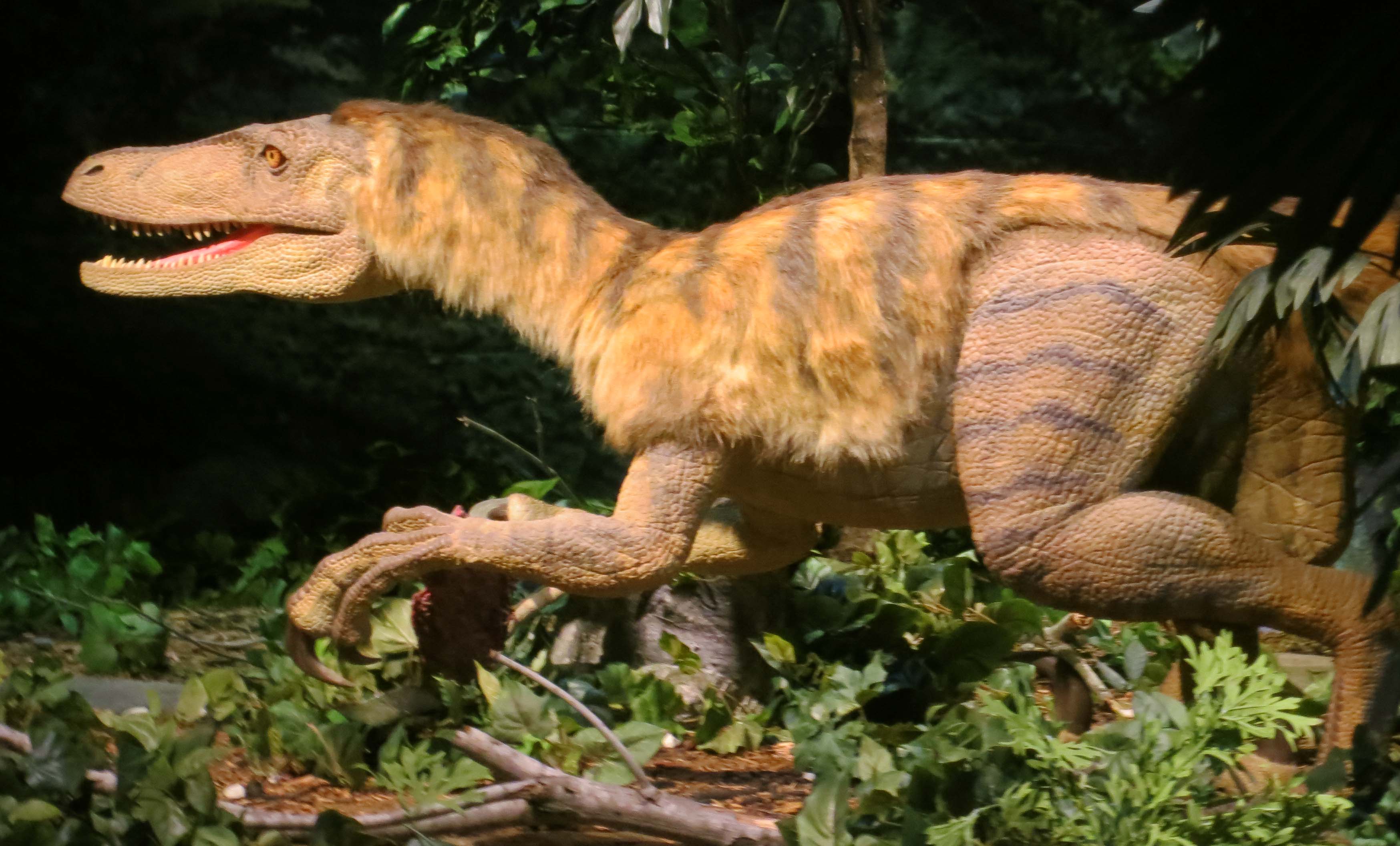
A sauro shows his claws while a second looks on. These large raptors were hypothesized to have had feathers. So from here on out I will refer to them as Bird-Ds (bird dinosaurs) to avoid the long name.

A sauronrnitholestes shows his claws while a second looks on. These large raptors were hypothesized to have had feathers. So from here on out I will refer to them as Bird-Ds (bird dinosaurs) to avoid the long name.

But you would probably give it a try.

Bird-D hissed at us and stood up on his hind legs. Was it time to run?

I don't think you could out run Bird-D.

I suspect we wouldn’t get far.

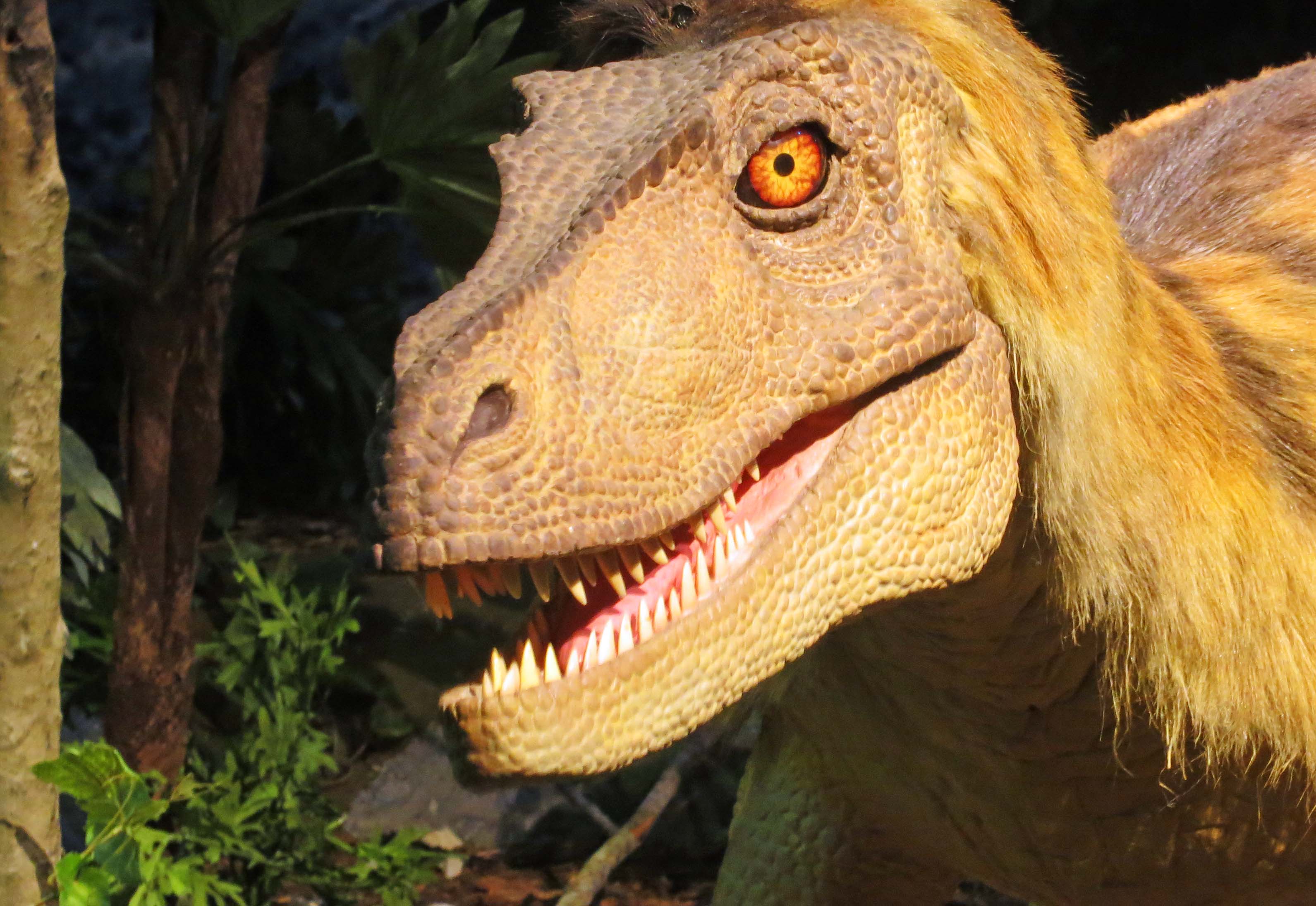
A close up. Is he smiling. Is it a selfie?

A close up. Is he smiling in anticipation. Is it a selfie?

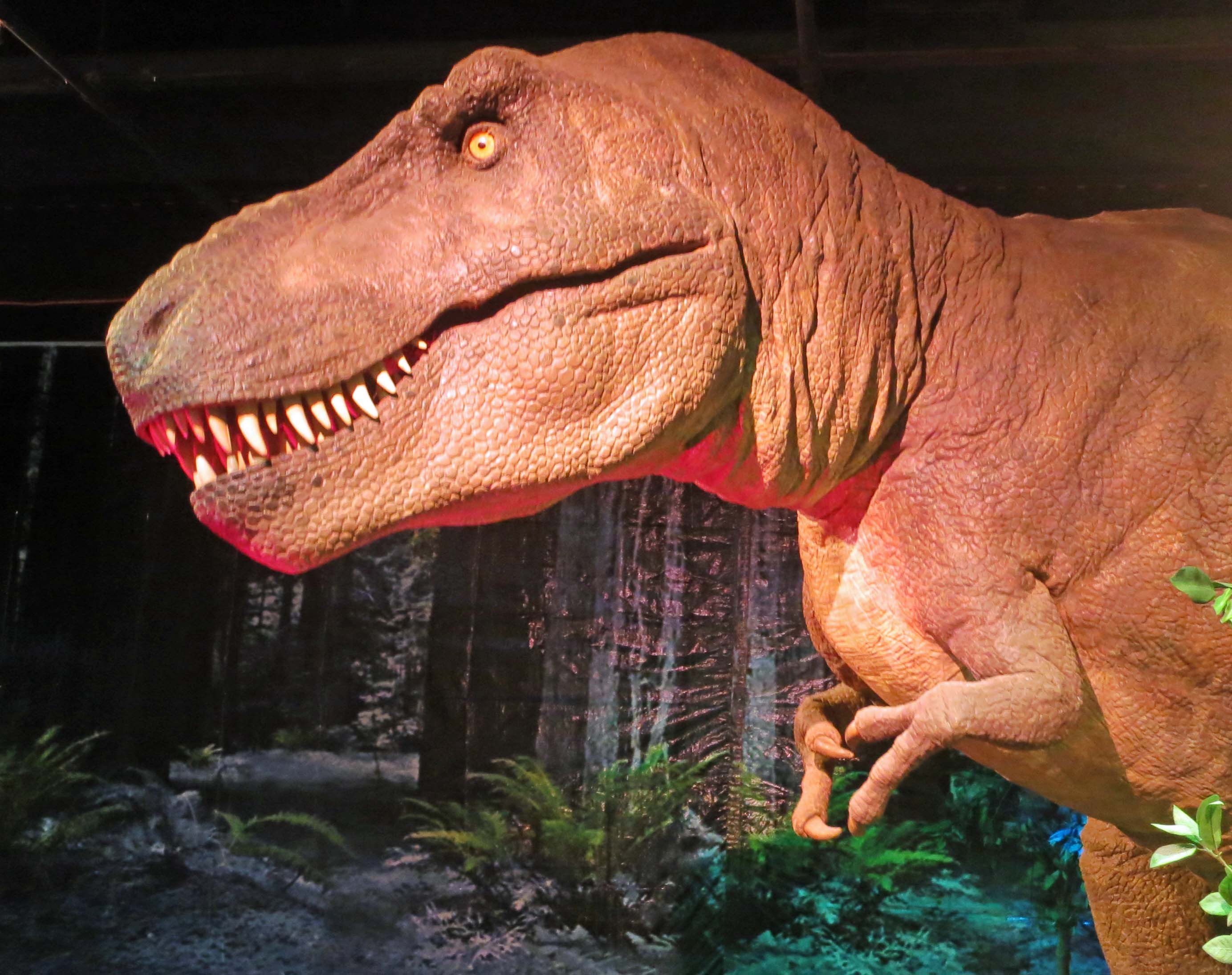
Meanwhile T. Rex lurks next door. Note the beautiful detail on his skin.

Meanwhile T. Rex lurks next door. Note the beautiful detail on his skin.

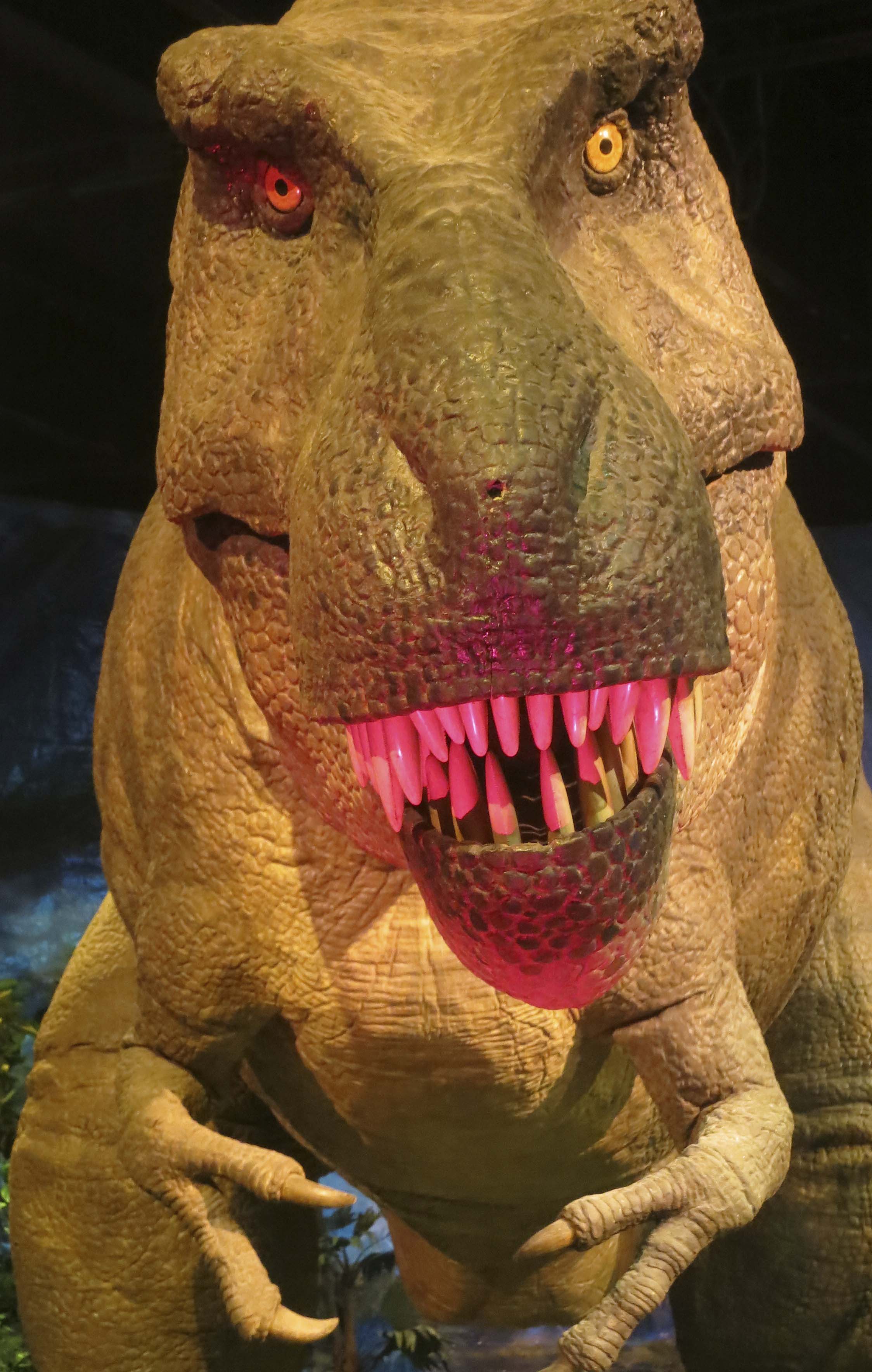
 Another selfie? And why are his teeth blood-red?

Another selfie? And why are Rex’s teeth blood-red?

T. Rex takes an interest in Peggy. Watch what happens next.

He takes an interest in Peggy. Watch what happens next.

We would love to take our grand kids to see this exhibit. I suspect they would jump a lot farther than Peggy. 🙂 A little pre-education might be necessary.

Next Blog: Your suggestions on my book title have been rolling in. They have been quite thoughtful and helpful. The decision will be revealed!

A Rocky Beginning to Date Day… The Crater Rock Museum in Oregon

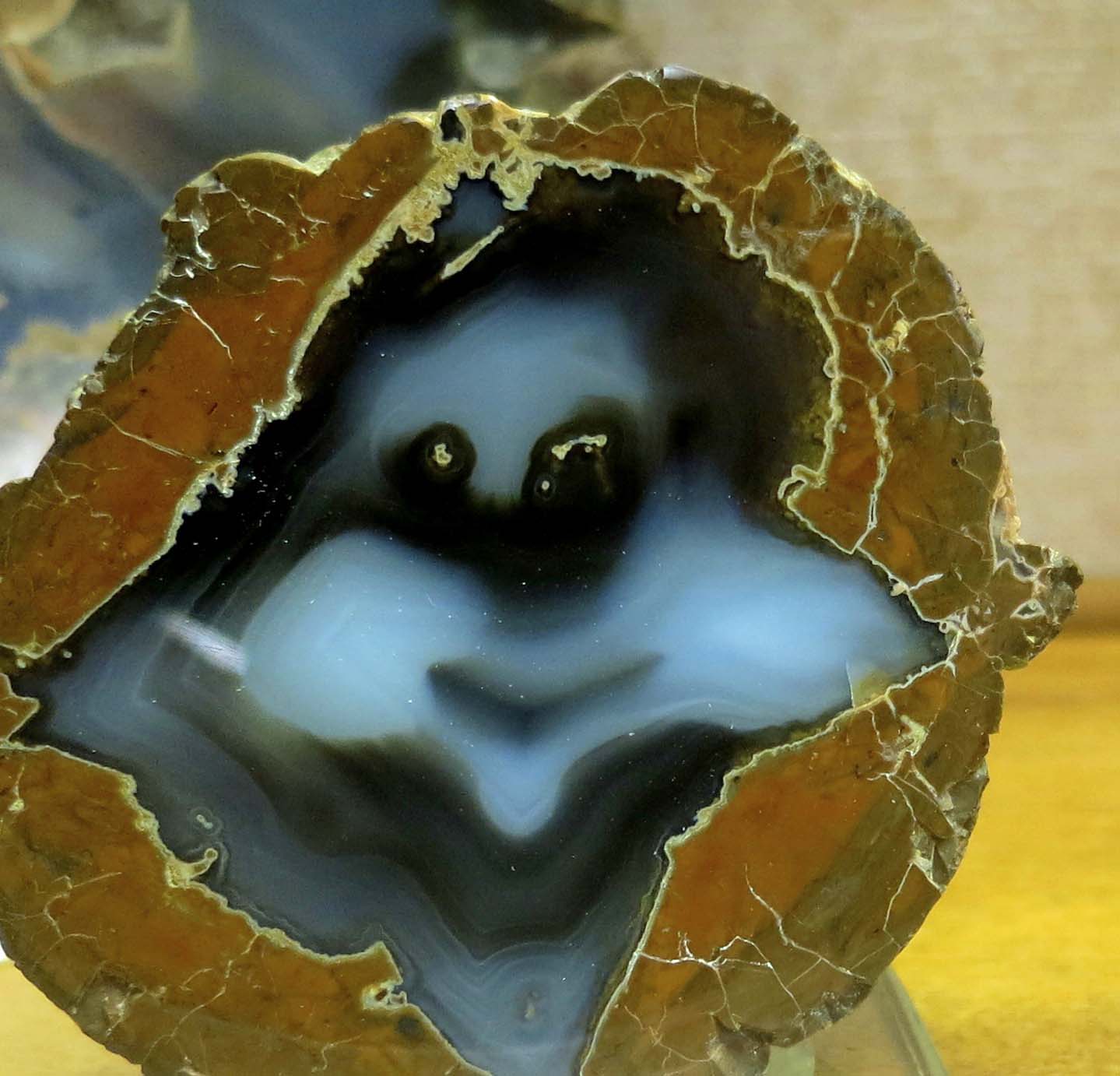
A thunder egg displaying Caspar the Friendly Ghost at Crater Rock Museum in Central Point, Oregon. Photo by Curtis Mekemson.

Imagine cutting open a thunder egg rock and finding Caspar, the Friendly Ghost, staring out at you. Caspar is one of the best known rocks at the Crater Rock Museum.

Date Day is a long-standing tradition in the Mekemson household. It began as Date Night in 1990. Peggy and I had just met and, shall we say, taken an interest in each other. But there were innumerable roadblocks to our blooming romance. Two teenagers were at the top of the list. (Tasha was dedicated to protecting her mom from the strange man. Smart girl.She made Peggy a sweatshirt that said “Don’t mess with the mama.”) But the list went on– jobs, family, friends, etc. We decided to declare Wednesday night ours, which was easier said than done. It took a lot of training. The kids and friends were actually easy. It was other family members and jobs that were resistant.

“What do you mean you can’t come to the family dinner on Wednesday night?” Peg’s sister, Jane, demanded.

“But Wednesday night is the only night I can meet,” the PTA President objected. (Peggy was principal of the school.)

In the end we prevailed. “I know, I know,” Jane would sigh dramatically, “it’s Date Night.” And the PTA Board would unanimously declare, “It’s Date Night!” as did all of the other committees and boards and family and bosses and friends. Once in a while we would make an exception, but it was rare.

Having worked so hard to train everyone, we decided to continue the tradition, even after we were married. And we still do– 24 years later. The major difference is that after we retired, we turned Date Night into Date Day. Why skimp on a good thing? Altogether, we have had over a thousand date night/days. What we do isn’t nearly as important as simply being together, but we use the day to explore new areas, peruse bookstores, go to movies, eat out, etc. Play is the operative word here.

Last Wednesday, our Date Day had a rocky start; we went to the Crater Rock Museum. It’s about 30 miles from where we live just off of Interstate 5 in Central Point, Oregon. Peggy and I had driven by the road to the museum several times and each time we would comment that we needed to visit. A new acquisition, Pterry the Pterosaur, moved Crater Rock to the top of our places-to-explore list. Pterosaurs were large flying reptiles that existed from 228-66 million years ago. Pterry now graced the ceiling of the museum.

We quickly discovered that the museum had much more than Pterry. There was Caspar, the Friendly Ghost, who resided in a thunder egg, a collection of student works of the world-famous glass artist, Dale Chihuly, Native American artifacts, and one of the finest collections of rocks and minerals in the western United States, all beautifully displayed. There was even a poignant reminder of why I exist; check out the photo on COPCO.

Pterry, a 60 million year old plus, pterosaur, swoops down from the ceiling of the Crater Rock Museum.

Pterry, a 60 million year old plus, pterosaur, swoops down from the ceiling of the Crater Rock Museum like a B-52 Bomber.

Close up of Pterry the Pterosaur at the Crater Rock Museum in Central Point, Oregon. Photo by Curtis Mekemson.

A close up of Pterry’s rather impressive mouth full of teeth. I prefer flying creatures to be much smaller and without teeth. Think sparrow.

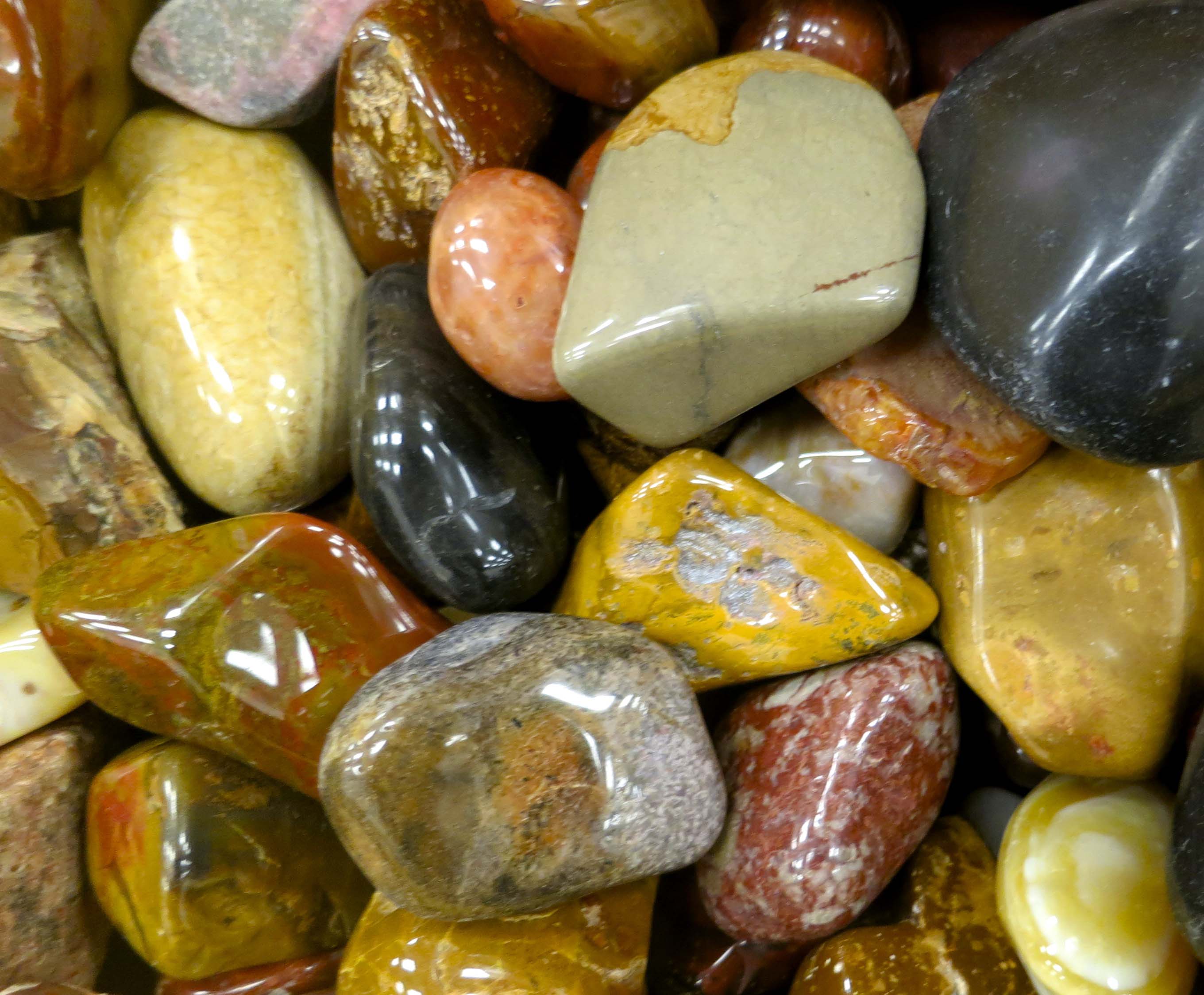
Polished agates at the Crater Rock Museum in Central Point, Oregon. Photo by Curtis Mekemson.

Who doesn’t love agates that have been tumbled and polished. Rock hounds have been gathering them off of Oregon beaches for decades.

Glass sculpture created by student of Dale Chihuly on display at the Crater Rock Museum in Central Point, Oregon. Photo by Curtis Mekemson.

I had expected to find beautiful rocks at the Crater Rock Museum; it sort of goes with the name. What I hadn’t expected were student works of the world-famous glass artist, Dale Chihuly.

Student art work of Dale Chihuly at the Crater Rock Museum. Photo by Curtis Mekemson.

Peggy and I are great fans of Chihuly, having first come across his works in Nashville, Tennessee.

Woven glass sculpture by student of Dale Chihuly at the Crater Rock Museum in Central Point, Oregon. Photo by Curtis Mekemson.

A final work by one of Chihuly’s students featuring woven glass.

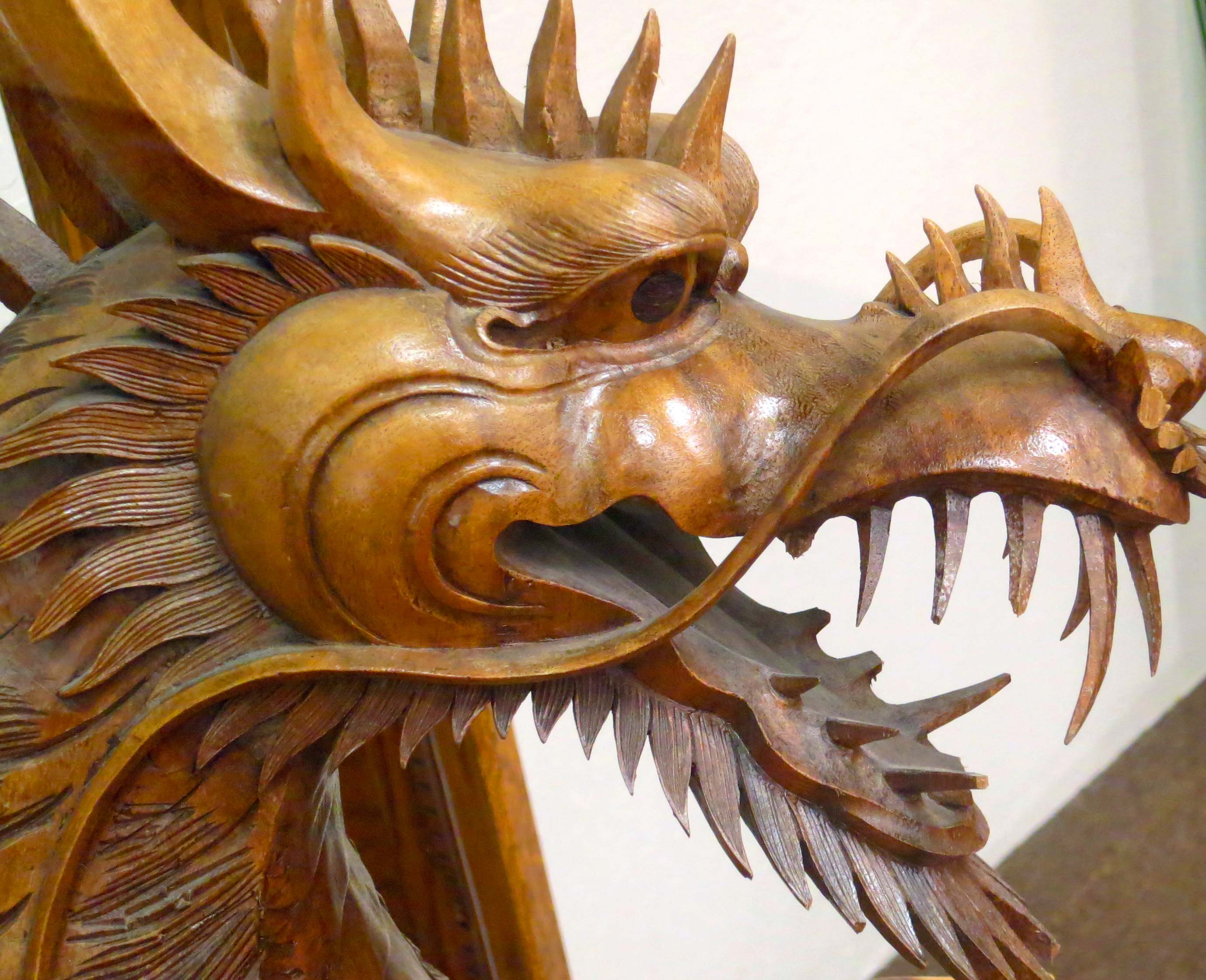
Dragon at Crater Rock Museum  in Central Point, Oregon. Photo by Curtis Mekemson.

Nor was I expecting to find this dragon at the museum.

Suchomimus at the Crater Rock Museum in Central Point, Oregon. Photo by Curtis Mekemson.

This Suchomimus (meaning crocodile mimic) was keeping Pterry company. He was apparently a teenager some 100 million years ago– approximately 36 feet long and weighing upwards to 4 tons.

Dinosaur poop on display at the Crater Rock Museum in Central Point. Oregon.

This might be an appropriate place to throw in this rock. Can you guess what it is? My bet is little boys are fascinated with it and little girls say, “Ooh gross!” To enquiring minds that want to know: it’s petrified dinosaur poop.

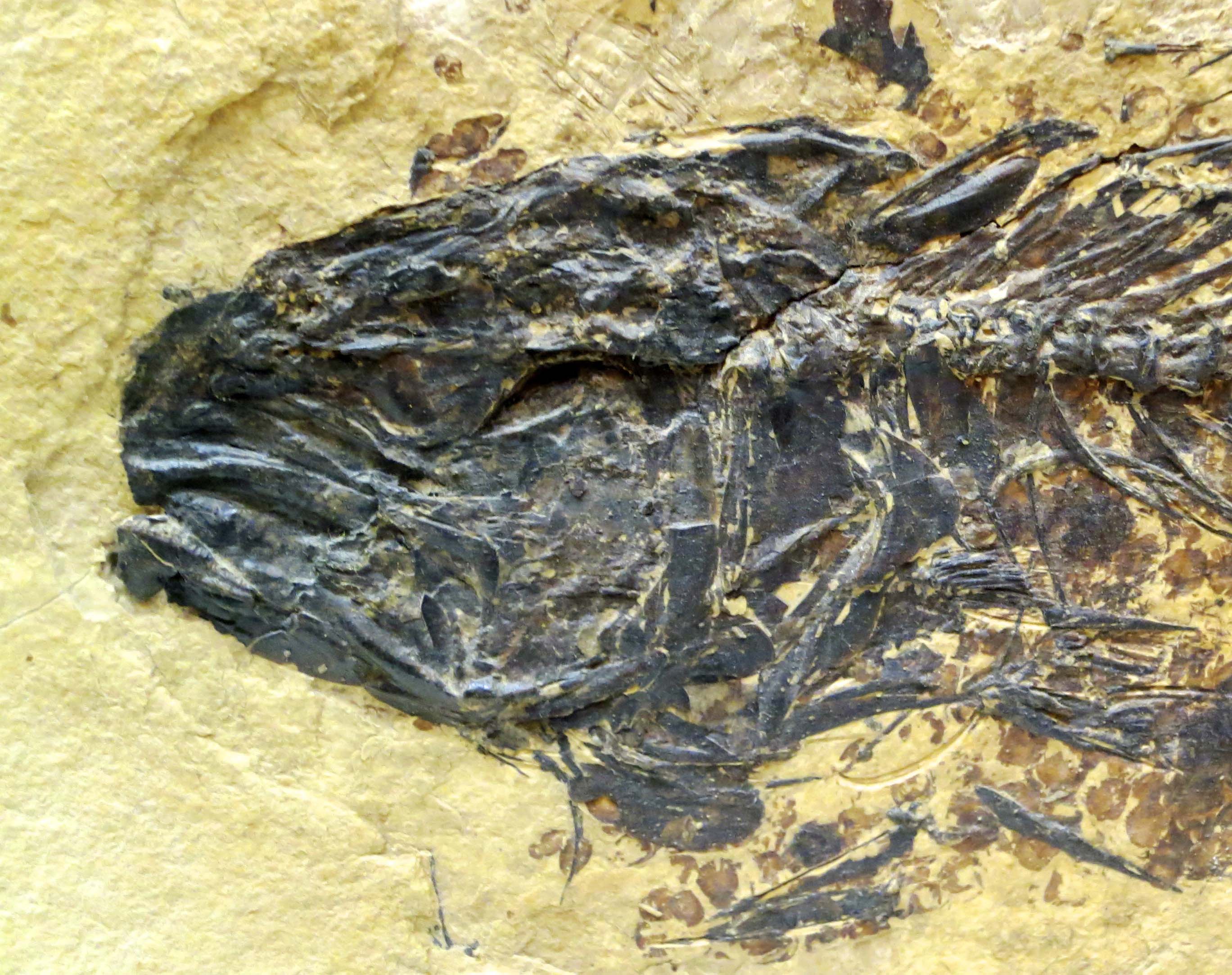
Fossil fish at the Crater Rock Museum in Central Point, Oregon. Photo by Curtis Mekemson.

I was impressed by this fossil fish. Check out its eye. It looks like he was having a bad day. Or maybe he was just bad.

Speaking of bad, check out the canines on this Saber toothed kitty.

Speaking of bad, note out the canines on this Saber Toothed Cat. The canines could reach up to 19 inches in length. It’s beyond me to imagine how they could drop their jaws far enough to sink their teeth into anything. Maybe they just scared their prey to death. BTW: these guys are closely related to your favorite kitty.

Large geode and Peggy Mekemson at the Crater Rock Museum in Central Point, Oregon.

Geodes can be large, as this photo with Peggy shows.

Geode at Crater Rock Museum in Central Point, Oregon. Photo by Curtis Mekemson.

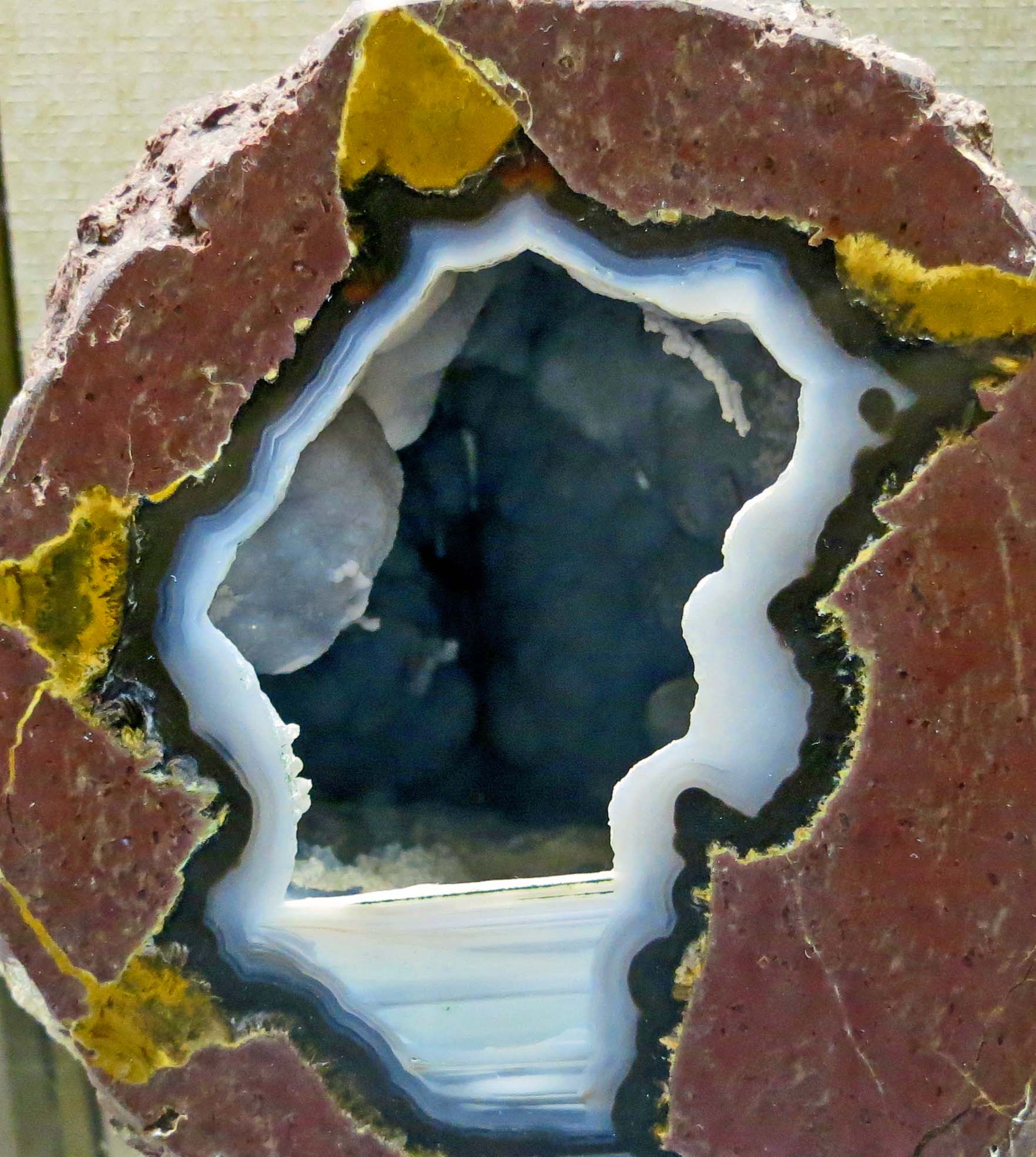
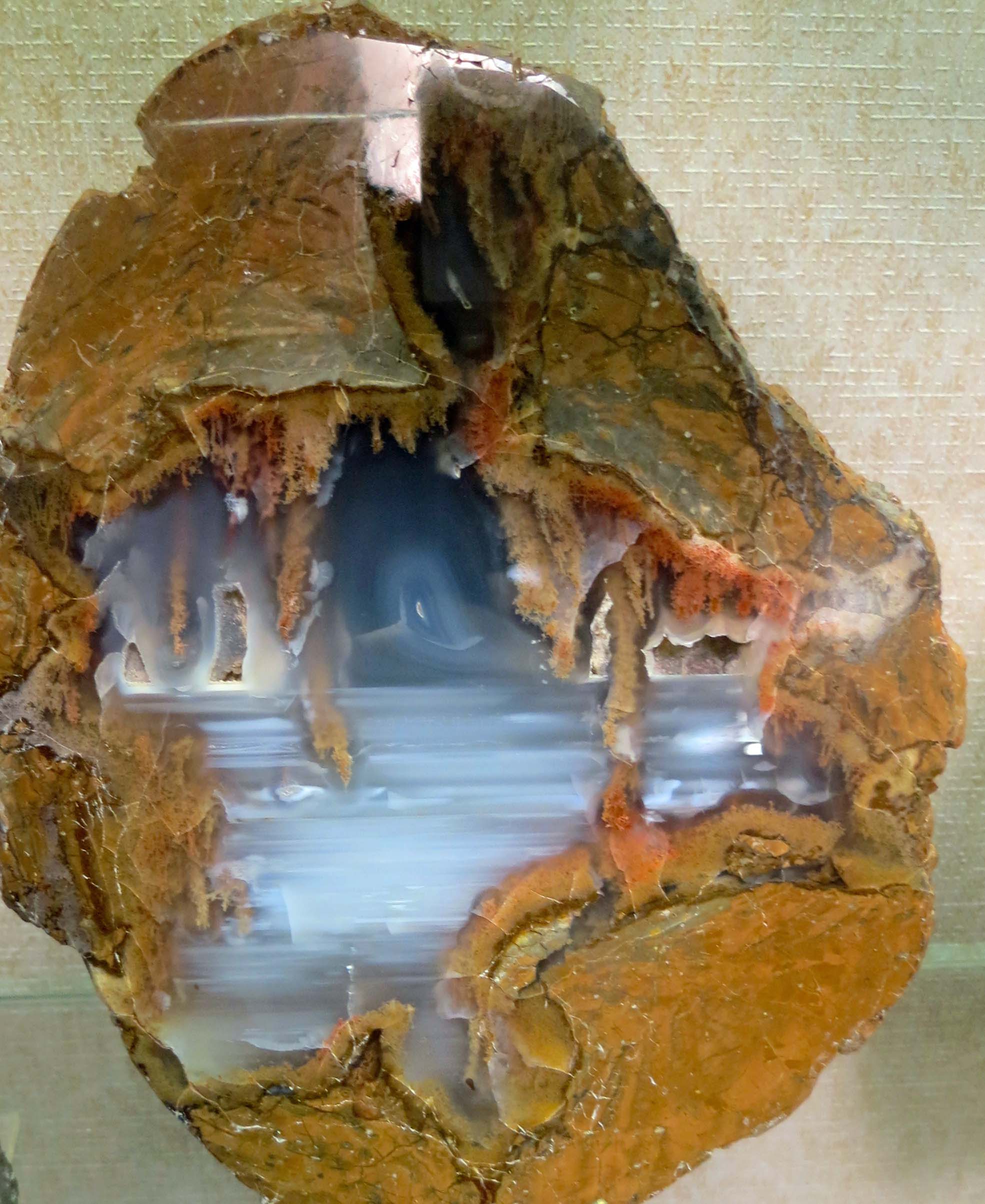
The difference between geodes and thunder eggs, I was to learn, is that geodes have an empty center while the core of thunder eggs is solid.

Geode rock at Crater Rock Museum. Photo by Curtis Mekemson.

So this would be another geode…

Thunder egg titled the Swam Thing at Crater Rock Museum in Central Point, Oregon. Photo by Curtis Mekemson.

And here we have a thunder egg. The ‘scenes’ inside of thunder eggs can be absolutely amazing, as was shown by Caspar at the beginning of the blog and in this one titled “the Swamp Thing” by the folks at Crater Rock.

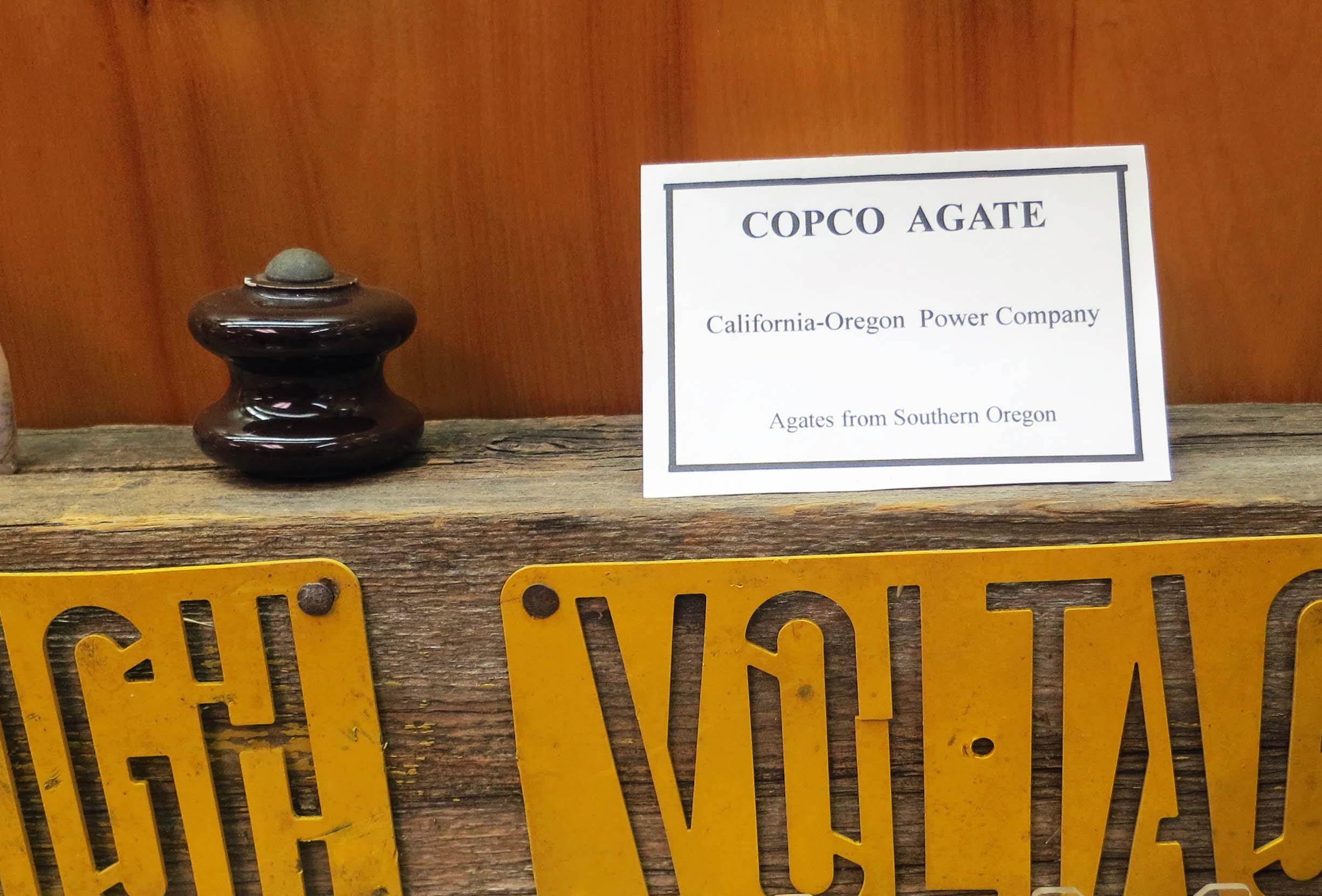
I promised a brief tale about my beginnings. My dad worked for COPCO in the 30s stringing power lines across Northern California and Southern Oregon. He was on top of a 50-foot pole one morning and his ground man was teasing him about a date he had the night before. He turned to make a retort and came in contact with the 11,000 volt line. Zap, he was an Oregon fried pop. Months later he was staying at a boarding house in Medford and still recovering when he met my mother, who was also staying there. Without the accident, he wouldn't have met her and I wouldn't be here typing this blog.

A high voltage tale:  My dad worked for COPCO in the 30s. He was on top of a 50-foot pole one morning and his ground man was teasing him about a date he had the night before. He turned to make a retort and came in contact with the live 11,000 volt line. Zap. Months later he was staying in Medford and still recovering when he met my mother. Without the accident, he wouldn’t have met her and I wouldn’t be writing this blog.

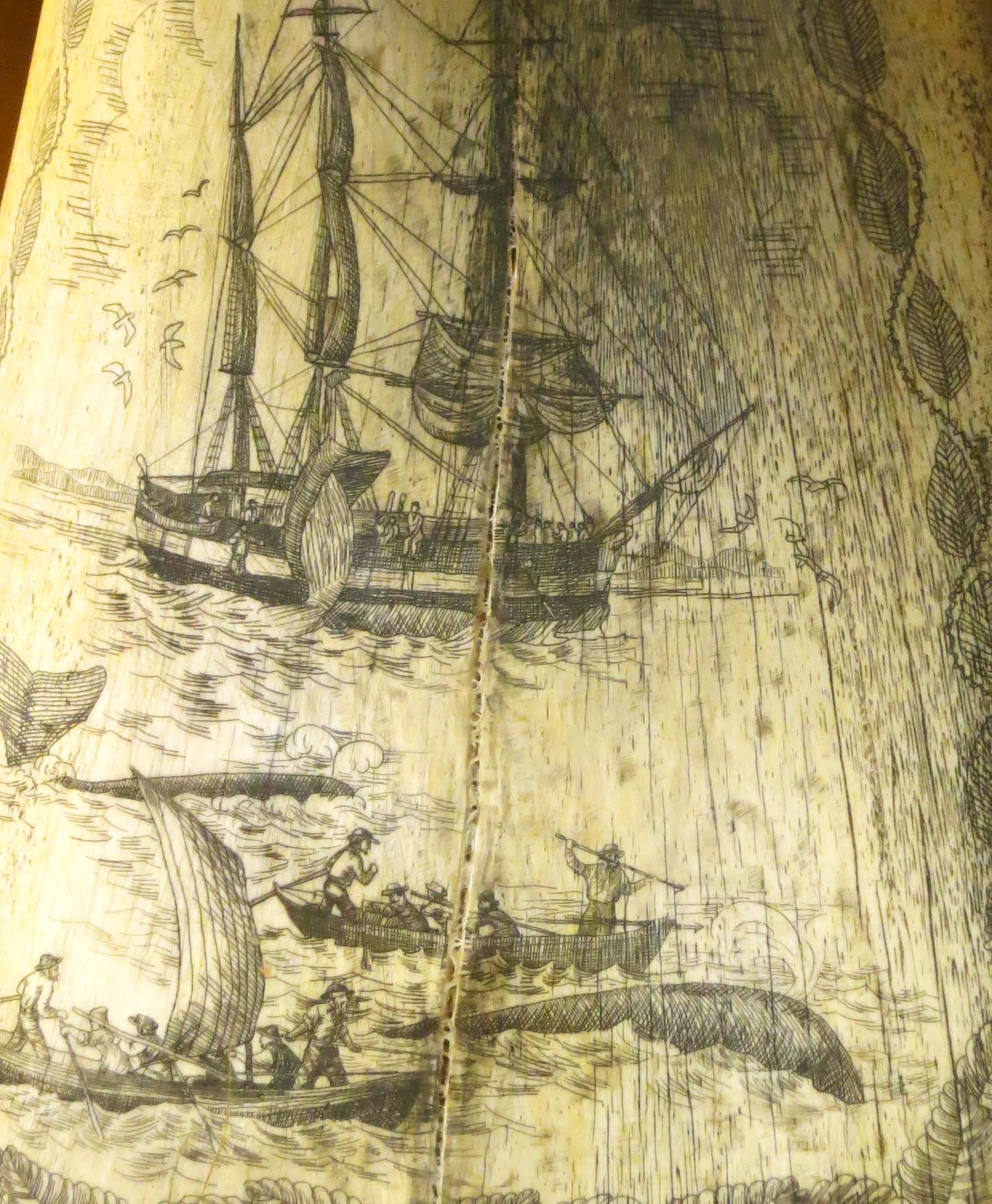
Scrimshaw collection at Crater Rock Museum in Central Point, Oregon.

“Thar she blows.” The museum also has a significant scrimshaw collection, donated by David Holmes of Harry and David. The Harry and David plant is in Medford.

Petrified wood at Crater Rock Museum in Central Point, Oregon. Photo by Curtis Mekemson.

Petrified wood can vary dramatically depending on the minerals that have replaced the wood fibers.

Petrified wood found at the Crater Rock Museum in Central Point, Oregon. Photo by Curtis Mekemson.

Here is another example of petrified wood.

Crystals at the Crater Rock Museum in Central Point, Oregon. Photo by Curtis Mekemson.

It seems appropriate to conclude this post with a photo of crystals, always a top draw at any rock show.

Next blog: I intend to start a three-part series on the tragedy of Liberia, West Africa, where I served as a Peace Corps Volunteer from 1965-67.

Baby Goats and a BIG Dog… Just Too Cute to Ignore

Baby goat photo by Curtis Mekemson.

I don’t normally ooh and ah over babies, but this kid is one cute dude. Oops, make that a dudette. She is as soft as she looks.

Peggy and I were still unpacking from our Sacramento-Reno trip when our neighbor Jim came zipping down our driveway on his ATV. Jim’s a big guy, and gruff, as in Billy Goat Gruff. But he loves animals and is a super neighbor.

He owns four very large Anatolian Shepherd dogs that weigh up to 150 pounds each and have a bark guaranteed to wake you from a deep sleep. There’s the bear bark, the deer bark and the ‘what the heck’ bark. In the morning they often perform like a barbershop quartet, howling in harmony. All of the other neighborhood dogs join in.

Anatolian Shepherds

Two of Jim’s Anatolians, Griz and Omni.

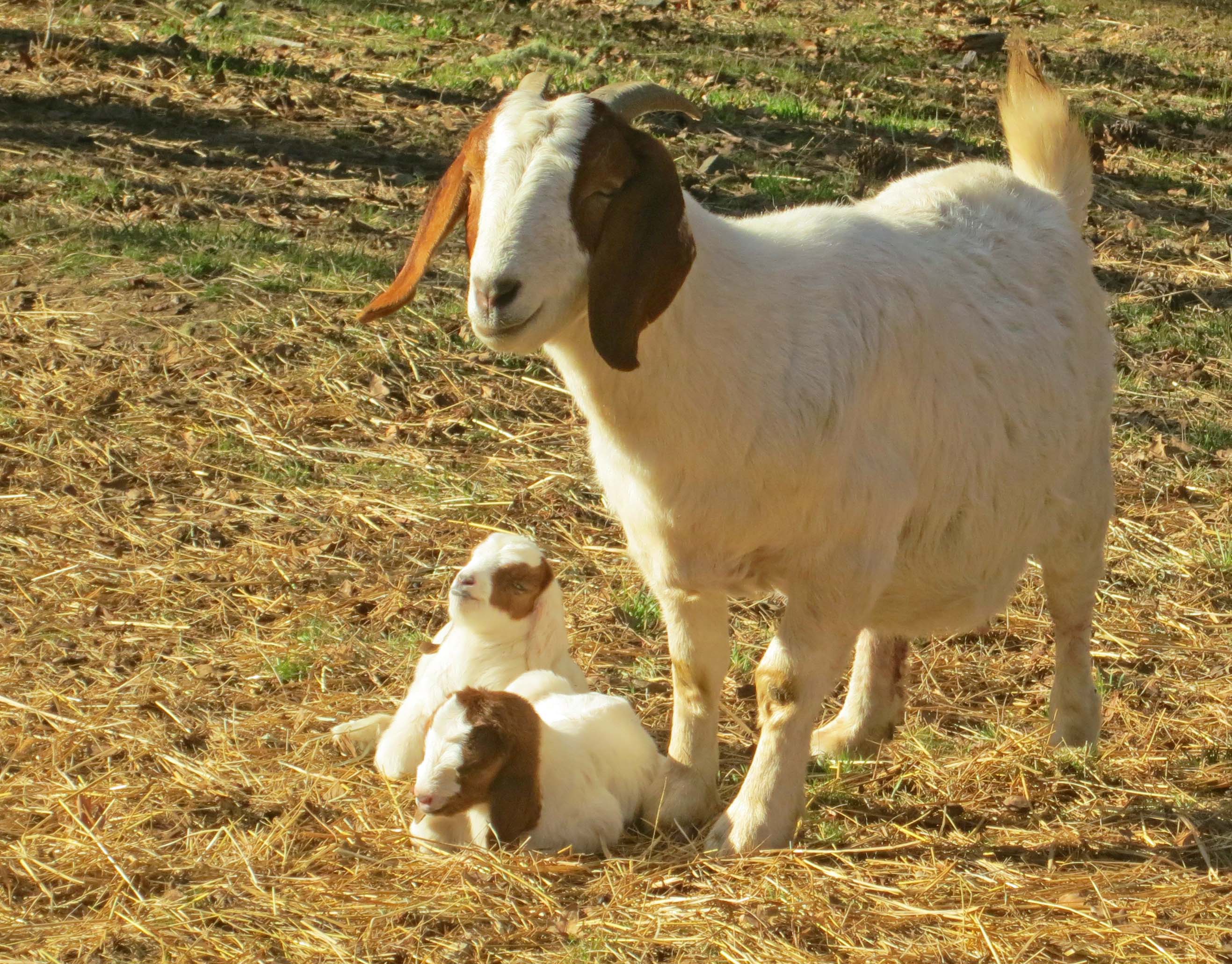
Jim was excited. One of his nanny goats had given birth to twins the week before, when we were gone. The other nanny had a pair of kids the night before. They were less than a day old. The elder Anatolian, Boy, had adopted the baby goats. Jim wanted us to come and see them– at once. I am surprised he didn’t whip out cigars. Given it was almost dark and we had driven all day, we opted out.But we promised we would be over the next day to admire his brood of Boer goats. I think you’ll agree; the visit was worth it.

Mother goat and kids. Photo by Curtis Mekemson.

Mom and day old kids.

Baby goat.

This little tyke with his droopy look reminds me of Eeyore.

Photo of a baby goat by Curtis Mekemson.

Here’s trouble.

Anatolian shepherd dog and baby goat. Photo by Curtis Mekemson.

“Hi there shorty.” Anatolian Shepherds were originally bred to protect herds from large predators that lived in central Turkey. They have a fearsome reputation. Boy, has adopted the baby goats as part of his herd. He hardly seems ferocious. In fact he cleans their butts. What a dad!

Anatolian Shepherd dog and baby goat.

“And where do you think you are going?” The baby goats have determined that Boy’s boyhood reminds them of Mom’s udders. Boy is quick to retreat.

Standoff between 150 pound Anatolian Shepherd and baby goat. Photo by Curtis Mekemson.

And is rewarded with a ” Baaaad dog!” for his lack of cooperation. Have you ever seen a dog look more unhappy?

"Stop hassling the big doggie, dear."

“Stop hassling the big doggie, dear.”

Baby goats line up for Mom's milk. Photo by Curtis Mekemson.

Modeling good behavior, the one week olds line up for an afternoon snack. 

Baby goats preparing to nap. Photo by Curtis Mekemson.

Having had their snack, it is now time for their afternoon nap.

NEXT BLOG: Sacramento’s wild American River Parkway– a community treasure. I’ll conclude this post with a final photo of one of the baby goats snuggling down in the sunshine.

Baby goat sleeping. Photo by Curtis Mekemson.